Unlock possibility with the Science of Writing

The reality is…writing is hard. It’s hard to learn, it’s hard to teach, it’s hard to do.

Natalie Wexler, author of The Knowledge Gap and The Writing Revolution, says, “Writing is the hardest thing we ask students to do.” Fortunately, we have decades of research that shows us how best to teach and learn how to write, known as the Science of Writing. As an educator your job is to make this hard task easier and more fulfilling for students. And our job is to help you.

Why writing matters: Connection, expression, and better reading comprehension

Without writing, there would be no need for reading, and of course, writing is a part of literacy.

Through writing, students can express their ideas, connect with others, and deepen and communicate their understanding of what they are reading and thinking.

Having strong writing skills ensures students can engage fully in all settings, share their opinions and information, tell stories, and have a voice.

What is the Science of Writing?

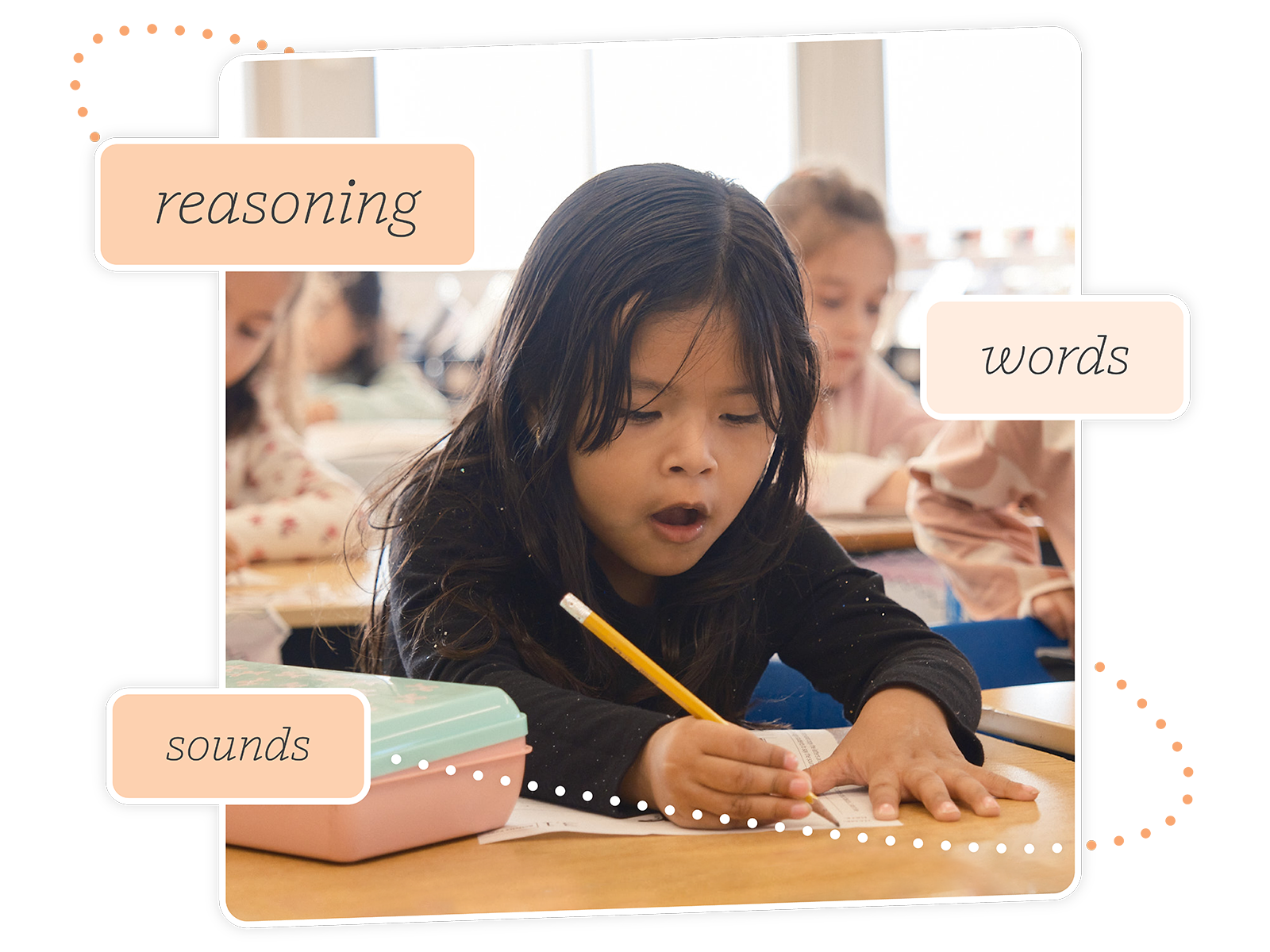
Learning to write (and read) isn’t natural but it can be taught—and research shows us how. Like the Science of Reading, the Science of Writing is the collection of research and evidence-based practices that explains how writing develops along with the teaching strategies that help students develop into skilled writers.

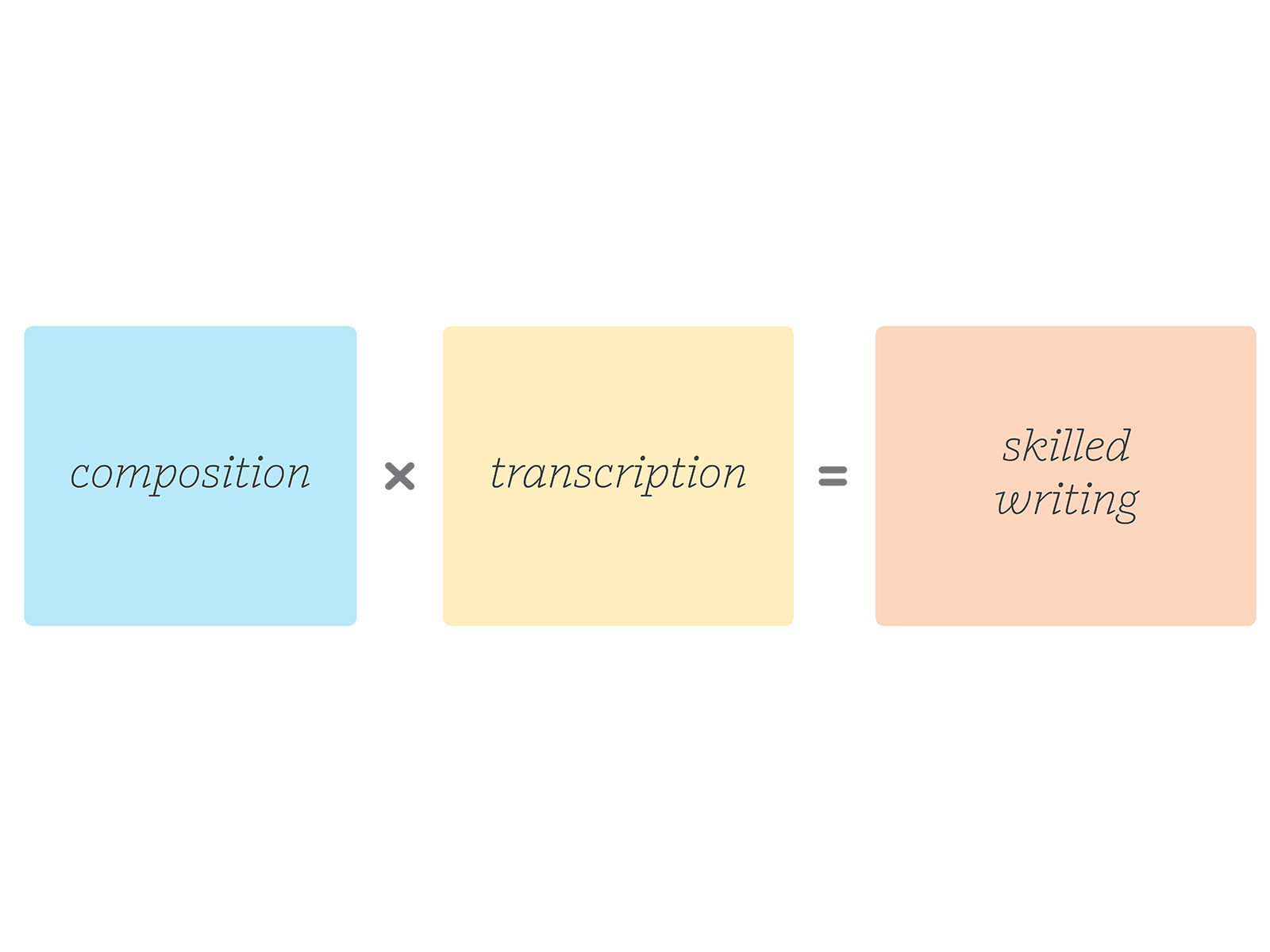
Writing proficiency involves mastering the use of a complex set of skills that must be taught explicitly, again just like reading proficiency. The Simple View of Writing breaks down these processes into transcription and composition, and provides us with a framework for guiding instruction.

The relationship between reading and writing

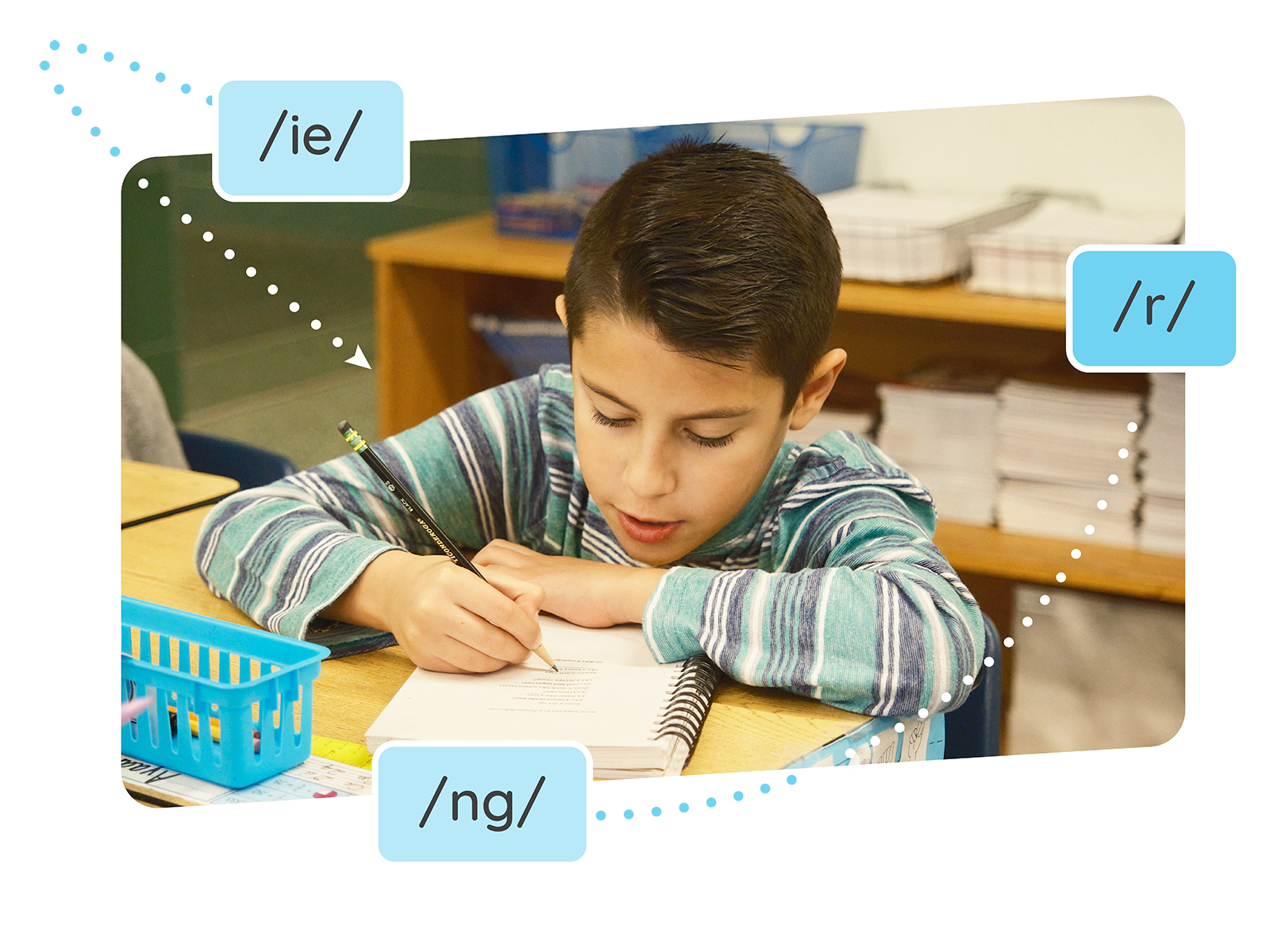
Reading and writing reinforce and support each other. When reading, students are exposed to vocabulary, grammar, and syntax. And when writing, students can get more practice to improve the fluency and efficiency of their handwriting, and apply their knowledge of spelling and their understanding of vocabulary, grammar, and syntax.

Readers use comprehension skills such as summarizing, predicting, and making inferences to help them create meaning as they read. Writers use those same skills to develop a piece of writing that is clear and concise for the reader.

The benefits of applying reading skills and strategies when writing

  • If you teach students decoding skills, then they become better spellers.
  • If students learn strategies for planning, drafting, and revising during composition, then their reading comprehension improves.
  • If students have word and vocabulary knowledge, then they’re better at expressing their ideas in writing.
“Steve Graham and Michael Hebert (2010) carried out a meta-analysis of more than 100 studies in which students wrote about text. They found that writing in various ways about what one had read improved comprehension and learning, and it did so better than reading alone, reading and rereading, or reading and discussing.”

—Tim Shanahan, Ph.D.

Distinguished Professor Emeritus, University of Illinois at Chicago (UIC); Literacy researcher and writer

Oral language and writing

Oral language is the foundation for literacy, and its development begins in infancy. As their oral language develops, children learn how to string words into phrases and sentences, which progresses into telling stories and answering questions in detail. And as they listen to stories, children develop vocabulary and understanding of syntax and grammar. All of these build a foundation for writing.

Are you ready to transform your district with the Science of Reading and Writing?

We’re ready to help. Speak with a product expert to learn more.

The curriculum effect

Research shows that students learn primarily through their interactions with teachers and content. Materials influence students directly, and they influence the way teachers teach. They are an essential part of the equation, with a proven and direct impact on outcomes. According to the Johns Hopkins Institute for Education Policy report Hiding in Plain Sight, “Research suggests that, in the aggregate and for specific instructional programs, changing from ‘business-as-usual’ to a high-quality curriculum, or from a low-quality to a high-quality curriculum, can boost student achievement.” The report calls this overall impact “the curriculum effect.” 

Individual studies cited in Hiding in Plain Sight also show that: 

  • High-quality curricula increased student achievement in reading, math, and science from the 50th to the 60th percentile and higher: “a potentially transformative impact if aggregated across an entire class, grade, or school.” (Data from David M. Steiner et al., “StandardsWork: A Narrative Research Review,” Center for Research and Reform in Education; Institute for Education Policy, Johns Hopkins University, January 2017.)
  • Access to rigorous materials increased achievement for Black and Latino students (Card & Giuliano, 2016).
  • English Language Learners acquire knowledge and vocabulary faster when using grade-level content (with supports) (Zwiers, 2008; Walqui & Heritage, 2012).
  • Math textbook choice has a significant effect on test scores (Bhatt & Koedel, 2012 & 2013; Agodini et al, 2010).

A cost-effective approach

And high-quality materials don’t have to come with sticker shock. Early evidence suggests that switching to a high-quality curriculum is not only more effective, but also more cost-effective, than other familiar school-led approaches to boosting student success.

For example, a 2015 study from the Center for American Progress found that the average cost-effectiveness ratio of switching curriculum “was almost 40 times that of class-size reduction in a well-known randomized experiment” (Boser, Chingos, and Straus, 2015). 

High quality is not defined in a vacuum—it’s all about curriculum that supports teachers in the classroom. When teachers have high-quality instructional materials, they don’t have to spend their valuable time searching for resources and creating their own materials. They know they are using materials that have been developed and reviewed by researchers, academic experts, and teachers like them. They have curriculum that works harder so they can do what they do best: teach. 

The Science of Reading and middle school

The power of the Science of Reading doesn’t end in elementary school. Evidence-based reading instruction is equally critical for developing strong, proficient readers in middle school and beyond.

What is the Science of Reading?

The Science of Reading is the robust body of research that:

  • Illuminates how the brain processes reading, providing insights into both decoding and language comprehension.
  • Breaks down the distinct components of literacy development and shows how to address those components explicitly and systematically.
  • Offers educators actionable strategies and an evidence-based road map to fluent reading.

By understanding the neurological pathways involved in—and built by—reading, educators can tailor their instruction to better meet the diverse needs of all their students.

How does the Science of Reading apply to middle school?

The Simple View of Reading and the Reading Rope are core models that illustrate the essential—and interconnected—components of successful reading and how students move through them as they build literacy. Together, the two provide a detailed map for strengthening the interdependent skills of decoding and comprehension.

Middle school students are drawing on all components of the Reading Rope as they encounter increasingly sophisticated text. They require instructional techniques that nurture advanced language comprehension skills and continue to support key fluency skills. This involves continuing to build background knowledge, deliberately targeting key areas of language comprehension that arise in the text, and reinforcing foundational skills, all in order to address the increasing language demands of their educational journey.

Science of Reading and middle school: A critical moment

The middle school years are a pivotal and transformative period in reading development—just when students are also experiencing significant cognitive, emotional, and social growth. Integrating the Science of Reading into your curriculum can help students bridge any gaps, empowering them to move from basic reading skills to complex, critical reading skills at a time when strong reading comprehension becomes essential.

The importance of challenging, grade-level texts

Middle school students are on their way to becoming skilled readers, and need a unique balance of structured and independent opportunities to explore a range of texts, gathering information as they read. Key to the Science of Reading, exposure to varied texts helps middle schoolers continue building their vocabulary and background knowledge.

Providing all students access to diverse, grade-level texts challenges them, both as readers and critical thinkers, while treating them with dignity and respect as learners.

A key period in social and cognitive development

Middle schoolers are driven by social connection. They typically thrive in learning environments that incorporate collaborative activities and peer interaction. This synergy not only supports learning, but also enhances engagement and motivation—forming a powerful cycle.

Cognitively, adolescent students are increasingly able to handle abstract concepts, prefer active learning experiences, and are energized by authentic instruction and cognitively challenging work that is connected to the world beyond the classroom.1

1Marks, H. M. (2000). Student engagement in instructional activity: Patterns in the elementary, middle, and high school years. American Educational Research Journal, 37(1), 153–184; and NMSA (2010). https://journals.sagepub.com/doi/10.3102/00028312037001153

Science of Reading-driven instruction for middle schoolers

Aligning literacy practices to the Science of Reading provides the best systematic, explicit, and engaging instruction for middle schoolers, empowering teachers to target the areas where students need the most support.

A lively middle school classroom buzzes with students eagerly raising their hands, engaged in the comprehensive language arts curriculum. Educational posters line the walls, enhancing the learning atmosphere as they face their teacher at the front.

Effective literacy strategies

To develop essential literacy and critical thinking abilities, students should concentrate on key skills through meaningful engagement with core content. The most effective method goes beyond isolated “skill-building” exercises; instead, it embraces an integrated approach that involves:

  1. Building background knowledge.
  2. Encouraging engagement with sequenced, grade-level materials.
  3. Spending dedicated time on vocabulary and word study.
  4. Interactive exercises, such as read-alouds and collaborative discussions.

Writing and reading build on each other. Through the Science of Reading, integrating evidence-based writing instruction with reading instruction offers students a holistic approach to literacy that reinforces understanding and promotes seamless expression of ideas.

Guided support and interventions

As Tim Shanahan, Ph.D., literacy expert and author, writes, “Be on the lookout for kids who are not able to decode proficiently. It doesn’t matter the source of those problems…they need to be identified.”

Through evidence-based literacy instruction and explicit, differentiated support for students who need it, educators can adapt their teaching to meet their middle school students where they are academically, socially, and developmentally—ensuring they continue to advance toward being capable, inspired, and lifelong readers and writers.

Want to change your middle schoolers’ lives with the Science of Reading?

We’re here to help! Speak with a representative to get started.

1. Scope

These Customer Terms and Conditions are a legal agreement between Amplify Education, Inc. (“Amplify”) and the local education agency or authority, school district, school network, independent school, or other regional education system (“Customer”) for the license and use of one or more of Amplify products or services (the “Products”), as specified in the receipt, price quote, proposal, renewal letter, or other ordering document containing the details of this purchase (the “Quote”). These Customer Terms and Conditions, all addenda, attachments, and the Quote, as applicable (together, the “Agreement”), constitute the entire agreement between the parties relating to the subject matter hereof. The provisions of this Agreement will supersede any conflicting terms and conditions in any Customer purchase order, other correspondence or verbal communication, and will supersede and cancel all prior agreements, written or oral, between the parties relating to the subject matter hereof.

2. Agreement Acceptance

This Agreement becomes effective at the earliest of the following: (i) issuing a purchase order, shipment request, or payment against the Quote; (ii) accessing, downloading, or using the Products; or (iii) otherwise accepting this Agreement. This term of the Agreement will be as specified in the Quote and may be renewed or extended by mutual agreement of the parties. Customer represents and warrants that: (1) Customer is of legal age to accept this Agreement; (2) Customer is authorized to accept this Agreement and to access and use the Products; and (3) Customer’s use of the Products will comply at all times with Amplify’s Acceptable Use Policy available at amplify.com/acceptable-use (“AUP”). The Customer may not access, download, or use the Products if the Customer does not agree to this Agreement.

3. License

Subject to the terms and conditions of the Agreement, Amplify grants to Customer a non-exclusive, non-transferable, non-sublicensable license to access and use, and permit Authorized School Users, as defined below, to access and use the Products in accordance with the AUP, for the duration specified in the Quote (the “Term”), and for the number of Authorized School Users specified in the Quote for whom Customer has paid the applicable fees to Amplify. “Authorized School User” means the K–12 students registered or authorized for instruction with Customer and the educators, agents and staff members who use the Products as authorized by Customer who Customer permits to access and use the Products subject to the terms and conditions of the Agreement, solely while such individual is so employed or so registered. Each Authorized School User’s access and use of the Products will be subject to the AUP in addition to the terms and conditions of the Agreement. Violations of this Agreement or the AUP may result in suspension or termination of the applicable account.

4. Restrictions

Customer may access and use the Products solely for non-commercial instructional and administrative purposes. Guidelines for such purposes may be set forth at
https://amplify.com/amplify-program-usage-guidelines/ and additional guidelines may be detailed in materials associated with the Product the Customer is accessing. Further, Customer may not, except as expressly authorized by Amplify: (a) copy, modify, translate, distribute, disclose, or create derivative works based on the contents of, sell, or otherwise exploit, the Products, or any part thereof; (b) decompile, disassemble, reverse engineer the Products, or otherwise use the Products to develop functionally similar products or services; (c) modify, alter, or delete any of the copyright, trademark, or other proprietary notices in or on the Products; (d) rent, lease, or lend the Products or use the Products for the benefit of any third party; (e) avoid, circumvent, or disable any security or digital rights management device, procedure, protocol, or mechanism in the Products; (f) use any content from the Products, including but not limited to text, images, videos, assessments, lesson plans, or code, as input or training material for any machine learning or artificial intelligence system, including large language models, neural networks, or other algorithmic models, for any purposes, commercial or non-commercial; or (g) permit any Authorized School User or third party to do any of the foregoing. Customer also agrees that any works created in violation of this section are derivative works, and, as such, Customer agrees to assign, and hereby assigns, all right, title, and interest in such works to Amplify. The Products and derivatives thereof may be subject to export control laws, restrictions, regulations, and orders of the U.S. and other jurisdictions (together, “Export Laws”). Customer agrees to comply with all applicable Export Laws, and will not, and will not permit Authorized School Users to, export, or transfer for the purpose of re-export, any Product to any prohibited or embargoed country in violation of any U.S. export law or regulation. Further, Customer represents that it is not a party subject to sanctions by the U.S. Office of Foreign Assets Control or included on any restricted party list maintained by the U.S. Bureau of Industry and Security. The software and associated documentation portions of the Products are “commercial items” (as defined at 48 CFR 2.101), comprising “commercial computer software” and “commercial computer software documentation,” as those terms are used in 48 CFR 12.212. Accordingly, if Customer is the U.S. Government or its contractor, Customer will receive only those rights set forth in this Agreement in accordance with 48 CFR 227.7201-227.7204 (for Department of Defense and their contractors) or 48 CFR 12.212 (for other U.S. Government licensees and their contractors).

5. Reservation of Rights

SUBSCRIPTION PRODUCTS ARE LICENSED, NOT SOLD. Subject to the limited rights expressly granted hereunder, all rights, title, and interest in and to all Products, including all related IP Rights, are and will remain the sole and exclusive property of Amplify or its third-party licensors. “IP Rights” means, collectively, rights under patent, trademark, copyright, and trade secret laws, and any other intellectual property or proprietary rights recognized in any country or jurisdiction worldwide. Customer must promptly notify Amplify of any violation of Amplify’s IP Rights in the Products, and will reasonably assist Amplify as necessary to remedy any such violation. Amplify Products are protected by patents (see amplify.com/virtual-patent-marking). Amplify reserves the right to update or modify the Products at any time and to discontinue the Products upon reasonable notice.

6. Payments

In consideration of the Products, Customer will pay to Amplify (or other party designated on the Quote) the fees specified in the Quote in full within 30 days of the date of invoice, except as otherwise agreed by the parties or for those amounts that are subject to a good faith dispute of which Customer has notified Amplify in writing. Customer will be responsible for all state or local sales, use or gross receipts taxes, and federal excise taxes unless Customer provides a then-current tax exemption certificate in advance of the delivery, license, or performance of any Product, as applicable.

7. Shipments

Unless otherwise specified on the Quote, physical Products will be shipped FOB origin in the US (Incoterms 2010 EXW outside of the US) and are deemed accepted by Customer upon receipt. Upon acceptance of such Products, orders are non-refundable, non-returnable, and non-exchangeable, except in the case of defective or missing materials reported to Amplify by Customer within 60 days of receipt. In such case, Customer may not return Products without Amplify’s written authorization.

8. Account Information

For subscription Products, the authentication of Authorized School Users is based in part upon information supplied by Customer or Authorized School Users, as applicable. Customer will and will cause its Authorized School Users to (a) provide accurate information to Amplify or a third-party service as applicable, and promptly report any changes to such information, (b) not share login credentials or otherwise allow others to use their account, (c) maintain the confidentiality and security of their account information, and (d) use the Products solely via such authorized accounts. Customer agrees to notify Amplify immediately of any unauthorized use of its or its Authorized School Users’ accounts or related authentication information. Amplify will not be responsible for any losses arising out of the unauthorized use of accounts created by or for Customer and its Authorized School Users. 

9. Confidentiality

Customer acknowledges that, in connection with this Agreement, Amplify has provided or will provide to Customer and its Authorized School Users certain sensitive or proprietary information, including software, source code, assessment instruments, research, designs, methods, processes, customer lists, training materials, product documentation, know-how, or trade secrets, in whatever form (“Confidential Information”). Customer agrees (a) not to use Confidential Information for any purpose other than use of the Products in accordance with this Agreement and (b) to take all steps reasonably necessary to maintain and protect the Confidential Information of Amplify in strict confidence. Confidential Information shall not include information that, as evidenced by Customer’s contemporaneous written records: (i) is or becomes publicly available through no fault of Customer; (ii) is rightfully known to Customer prior to the time of its disclosure; (iii) has been independently developed by Customer without any use of the Confidential Information; or (iv) is subsequently learned from a third party not under any confidentiality obligation. 

10. Student Data

The parties acknowledge and agree that in the course of providing the Products to the Customer, Amplify may collect, receive, or generate information that directly relates to an identifiable student of Customer (“Student Data”). Student Data may include personal information from a student’s “educational records,” as defined by the Family Educational Rights and Privacy Act of 1974 (“FERPA”). Student Data is owned and controlled by the Customer and Amplify receives Student Data as a “school official” under Section 99.31 of FERPA for the purpose of providing the Products hereunder. Individually and collectively, Amplify and Customer agree to uphold our obligations, as applicable, under FERPA, the Children’s Online Privacy Protection Act (“COPPA”), the Protection of Pupil Rights Amendment (“PPRA”), and applicable state laws relating to student data privacy. Amplify’s Customer Privacy Policy at amplify.com/customer-privacy (“Privacy Policy”) will govern collection, use, and disclosure of Student Data collected or stored on behalf of Customer under this Agreement. In addition, Amplify has entered into the data privacy agreements listed at amplify.com/privacy-security aligned with state and national templates to facilitate compliance with applicable state laws and help expedite Customer’s student data privacy documentation process. Customer is responsible for providing notice and obtaining appropriate consents under applicable laws to authorize Authorized School Users’ use of the Products, including making a copy of the Privacy Policy available to the parents or guardians of users who are under the age of 13.  

11. Customer Materials and Requirements

Customer represents, warrants, and covenants that it has all the necessary rights, including consents and IP Rights, in connection with any data, information, content, and other materials provided to or collected by Amplify on behalf of Customer or its Authorized School Users using the Products or otherwise in connection with this Agreement (“Customer Materials”), and that Amplify has the right to use such Customer Materials as contemplated hereunder or for any other purposes required by Customer. Customer is solely responsible for the accuracy, integrity, completeness, quality, legality, and safety of such Customer Materials. Customer is responsible for meeting hardware, software, telecommunications, and other requirements listed at amplify.com/customer-requirements

12. Warranty Disclaimer

PRODUCTS ARE PROVIDED “AS IS” AND WITHOUT WARRANTY OF ANY KIND BY AMPLIFY. AMPLIFY EXPRESSLY DISCLAIMS ALL WARRANTIES, EXPRESS OR IMPLIED, INCLUDING ANY WARRANTY AS TO TITLE, NON-INFRINGEMENT, MERCHANTABILITY, OR FITNESS FOR A PARTICULAR PURPOSE OR USE. CUSTOMER ASSUMES RESPONSIBILITY FOR SELECTING THE PRODUCTS TO ACHIEVE CUSTOMER’S INTENDED RESULTS AND FOR THE ACCESS AND USE OF THE PRODUCTS, INCLUDING THE RESULTS OBTAINED FROM THE PRODUCTS. WITHOUT LIMITING THE FOREGOING, AMPLIFY MAKES NO WARRANTY THAT THE PRODUCTS WILL BE ERROR-FREE OR FREE FROM INTERRUPTIONS OR OTHER FAILURES OR WILL MEET CUSTOMER’S REQUIREMENTS. AMPLIFY IS NEITHER RESPONSIBLE NOR LIABLE FOR ANY THIRD-PARTY CONTENT OR SOFTWARE INCLUDED IN PRODUCTS, INCLUDING THE ACCURACY, INTEGRITY, COMPLETENESS, QUALITY, LEGALITY, USEFULNESS, OR SAFETY OF, OR IP RIGHTS RELATING TO, SUCH THIRD-PARTY CONTENT AND SOFTWARE. ANY ACCESS TO OR USE OF SUCH THIRD-PARTY CONTENT AND SOFTWARE MAY BE SUBJECT TO THE TERMS AND CONDITIONS AND INFORMATION COLLECTION, USAGE, AND DISCLOSURE PRACTICES OF THIRD PARTIES.

13. Limitation of Liability

 TO THE EXTENT SUCH LIMITATION IS NOT PROHIBITED BY APPLICABLE LAW, IN NO EVENT WILL AMPLIFY BE LIABLE TO CUSTOMER OR TO ANY AUTHORIZED SCHOOL USER FOR ANY INCIDENTAL, SPECIAL, CONSEQUENTIAL, PUNITIVE, RELIANCE, OR COVER DAMAGES, DAMAGES FOR LOST PROFITS, LOST DATA OR LOST BUSINESS, OR ANY OTHER INDIRECT DAMAGES, EVEN IF AMPLIFY HAS BEEN ADVISED OF THE POSSIBILITY OF SUCH DAMAGES. TO THE EXTENT SUCH LIMITATION IS NOT PROHIBITED BY APPLICABLE LAW, AMPLIFY’S ENTIRE LIABILITY TO CUSTOMER OR ANY AUTHORIZED USER ARISING OUT OF PERFORMANCE OR NONPERFORMANCE BY AMPLIFY OR IN ANY WAY RELATED TO THE SUBJECT MATTER OF THIS AGREEMENT, REGARDLESS OF WHETHER THE CLAIM FOR SUCH DAMAGES IS BASED IN CONTRACT, TORT, STRICT LIABILITY, OR OTHERWISE, MAY NOT EXCEED THE AGGREGATE OF CUSTOMER’S OR ANY AUTHORIZED USER’S DIRECT DAMAGES UP TO THE FEES PAID BY CUSTOMER TO AMPLIFY FOR THE AFFECTED PORTION OF THE PRODUCTS IN THE PRIOR 12-MONTH PERIOD. UNDER NO CIRCUMSTANCES WILL AMPLIFY BE LIABLE FOR ANY CONSEQUENCES OF ANY UNAUTHORIZED USE OF THE PRODUCTS BY AN AUTHORIZED SCHOOL USER THAT VIOLATES THIS AGREEMENT OR ANY APPLICABLE LAW OR REGULATION.

14. Termination

Without prejudice to any rights either party may have under this Agreement, in law, equity, or otherwise, a party will have the right to terminate this Agreement if the other party (or in the case of Amplify, an Authorized School User) materially breaches any term, provision, warranty, or representation under this Agreement and fails to correct the breach within 30 days of its receipt of written notice thereof. Upon termination, Customer will: (a) cease using the Products, (b) return, purge, or destroy (as directed by Amplify) all copies of any Products and, if so requested, certify to Amplify in writing that such surrender or destruction has occurred, (c) pay any fees due and owing hereunder, and (d) not be entitled to a refund of any fees previously paid, unless otherwise specified in the Quote. Customer will be responsible for the cost of any continued use of the Products following termination. Upon termination, Amplify will return or destroy any Student Data provided to Amplify hereunder. Notwithstanding the foregoing, nothing will require Amplify to return or destroy any data that does not include Student Data, including de-identified information or data that is derived from access to Student Data but which does not contain Student Data. Sections 3–14 will survive the termination of this Agreement.

15. Miscellaneous

This Agreement may not be modified except in writing signed by both parties. All defined terms in this Agreement will apply to their singular and plural forms, as applicable. The word “including” means “including without limitation.” For United States-based Customers, this Agreement will be governed by  and construed and enforced in accordance with the laws of the U.S., state, commonwealth, or territory in which Customer resides based on the address set forth in the Quote, without regard to that state’s, commonwealth’s, or territory’s choice of law rules. For Customers based outside of the United States, this Agreement will be governed by the laws of the U.S., state of New York, without giving effect to the choice of law rules thereof. This Agreement will be binding upon and inure to the benefit of the parties and their respective successors and assigns. The parties expressly understand and agree that their relationship is that of independent contractors. Nothing in this Agreement will constitute one party as an employee, agent, joint venture partner, or servant of another. Each party is solely responsible for all of its employees and agents and its labor costs and expenses arising in connection herewith. Neither this Agreement nor any of the rights, interests or obligations hereunder may be assigned or delegated by Customer or any Authorized School User without the prior written consent of Amplify. If one or more of the provisions contained in this Agreement will for any reason be held to be unenforceable at law, such provisions will be construed by the appropriate judicial body to limit or reduce such provision or provisions so as to be enforceable to the maximum extent compatible with applicable law. Amplify will have no liability to Customer or to third parties for any failure or delay in performing any obligation under this Agreement due to circumstances beyond its reasonable control, including acts of God or nature, fire, earthquake, flood, epidemic, pandemic, strikes, labor stoppages or slowdowns, civil disturbances or terrorism, national or regional emergencies, supply shortages or delays, action by any governmental authority, or interruptions in power, communications, satellites, the Internet, or any other network. Each party represents and warrants that it has all necessary right, power, and authority to enter into this Agreement and to comply with the obligations hereunder.

Last Modified: February 2, 2026
Overview

With the Science of Reading at its core, Boost Reading blends compelling storytelling with research-based instructional practices to offer:

Personalized instruction across 13 different critical skill areas that adapts to each student’s needs while building on their strengths. Explicit practice in comprehension processes, phonics, and vocabulary. Extra support and scaffolds for struggling readers and English learners with demonstrated impact. An immersive game-play design that motivates students to discover that learning to read is fun.

Engagement is in the DNA: Every lesson and activity engages students through compelling storytelling and powerful narrative. Students persist longer and learn more deeply than when they are working on repetitive worksheet-like programs.

Instruction and practice: Boost Reading gives students practice as well as instruction in the key concepts they need to master. Our reading instruction and curriculum is interactive, not passive.

Emphasizes deep conceptual understanding: Backed by the latest research and designed with experts, Boost Reading focuses on ensuring that students have a deep understanding of the concepts. And those skills transfer from the program to the real world.

Boost Reading is a supplemental digital literacy instruction program that provides students with practice and explicit instruction in the underlying phonics, phonological awareness, vocabulary, and comprehension skills that are essential for fluent reading with good comprehension (e.g., Cartwright, 2010; NICHD, 2000; Oakhill, Cain, & Elbro, 2015).

The overarching goal of the program is to provide engaging individualized instruction and practice in the skills and strategies that have the most impact on literacy, while making it explicit to students that the skills they are practicing are things that good readers do while they are reading. As repetition with variety is an essential part of effective literacy instruction (e.g., Schuele & Boudreau, 2008), after a brief introduction to each activity, students are given repeated opportunities to practice these skills with varied stimuli. They receive immediate feedback for their responses and are given more explicit instruction in areas that are challenging. The instruction provided incorporates documented principles of effective instructional delivery; the activities engage students in multiple opportunities to practice critical skills at an appropriate pace with consistent feedback and prioritize student engagement and motivation, helping students to see their own growth toward reading goals (Carnine, Silbert, Kame’enui, & Tarver, 2016; Gersten, et. al., 2009; Deci, & Ryan, 2012.).

Activities build on an existing computer-based intervention that has been documented to improve the decoding skills of students in multiple experimental studies (Richardson & Lyytinen, 2014). Since learning is promoted when students use their knowledge across tasks (e.g., Merrill, 2002), generalization is encouraged through ebooks with embedded activities that reinforce skills recently practiced in related games.

Instruction is closely aligned with the English Language Arts Common Core State Standards (CSSS) for literary and informational texts and the North Carolina English Language Arts standards. The program was designed to include content that is most effective at building the word reading and comprehension skills of elementary students (e.g., NICHD, 2000; NIFL, 2008), including at-risk and struggling readers (e.g., NICHD, 2000) and English language learners (e.g., August & Shanahan, 2006). The content focuses on foundational reading skills (i.e., phonological awareness and phonics) as well as vocabulary and reading comprehension.

Research also shows that by providing students with contextualized learning experiences and rich engaging stories, narrative-centered interactive learning environments increase student interest, self-efficacy, and feelings of involvement and control in their learning  (McQuiggan, Rowe, Lee, & Lester, 2008).

Over the course of our early efficacy study, kindergarteners using Boost Reading grew an average of 16% more than kindergarteners who didn’t use Boost Reading. First graders using Boost Reading grew 23% more than first graders who didn’t.

We compared students in kindergarten through fifth grade who used Boost Reading during the 2019 fall semester to students from the same district who did not use Boost Reading, using Dynamic Indicators of Basic Early Literacy Skills, 8th Edition (DIBELS® 8th Edition) Composite Scores and Zones of Growth. We found K–5 students who used Boost Reading showed better growth on DIBELS 8th Edition Zones of Growth than those who did not use the product. Additionally, we found that the program was particularly effective for English Language Learners (ELLs). (DIBELS 8th Edition; University of Oregon, 2018)

You can view the study here.

Boost Reading allows younger students to progress through the curriculum along a pathway that best fits their developing abilities. Students are placed into the program based on prior data and the system maintains a rich profile for them as they master each skill level. Boost Reading also provides adaptive support, meaning that the degree of scaffolding, instruction, and practice adapts within each game based on student performance.

Students are served up content that’s appropriate for them within each quest. If a student struggles with a particular content set (3 failed attempts), the set is removed from the quest and presented to the student in a later quest after they’ve had more practice with the prerequisite skills.

When this happens, the teacher dashboard will indicate that the student is “stuck” through the class view and the student view.

If the teacher taps on the student’s name, they can see the specific content that the student struggled with. This allows teachers to provide additional support for the student. The progress bar will go back to green when the student has mastered the content set at a later date.

Classroom use

For younger students

Boost Reading is a supplemental reading curriculum designed to support a student’s development in key early literacy skills through play. The games in Boost Reading are meant to engage students individually on their own unique path. As a result, there are numerous ways you can use Boost Reading with your students.

We recommend you allow students to play for 10–15 minutes per session, 2–3 times a week in some of the following ways:

  • As part of a work station or literacy center
  • During reading blocks or choice time
  • With students not in intervention groups during intervention time
  • During transitions between periods (or at the start or end of school)
  • In a computer lab
  • In after-school programs
  • At home (students may use logins to practice on Boost Reading at home)

For younger students

Students propel the storyline in Boost Reading forward as they take on quests in Bookerton. This narrative is available in both English and Spanish. Students can toggle between the two languages through their settings menu.

In-Game Supports

In addition to the overall narrative, many of the games have features that support ELL students and struggling readers:

  • Many of the games have read-aloud text or are picture-based so that students can work independently, whatever their level of language proficiency.
  • Supports such as cognates are provided for vocabulary words in Boost Reading interactive Reader.
  • Boost Reading has games that cover phonics and phonological awareness, including at the syllable level, to support pre-readers who need robust instruction in these areas.
  • Boost Reading has games that provide explicit language instruction, for example connectives and anaphora, as well as strategy instruction in comprehension monitoring and morphology.
  • Boost Reading’s instructional methods (e.g., providing clear models, multiple opportunities to practice skills, feedback, cumulative review) and the skills and strategies taught in phonics, morphology, and language leverage techniques proven to help ELs learn how to read in English. Coupled with progressing Spanish-language support, Boost Reading ensures that all students can succeed, no matter what their first language is. Read more here.

Technology

Supported Devices and Network Requirements

To ensure that your hardware and network meet the minimum technical requirements for optimal performance and support of Boost Reading please see Amplify’s customer requirements page

List of IP Addresses to Allow

To make sure Boost Reading is accessible at your district, you can add the appropriate URLs to your district’s firewall allowlist. Visit the Amplify Network Access Validator to see the list of URLs and IP addresses.

Season 6, Episode 6

Leading Legislative Change, with State Senator Mimi Stewart

Mimi Stewart is a state senator from New Mexico and previously worked as a public school elementary special education teacher for thirty years, with an expertise in reading literacy. Her unique background has turned into a passion for and a history of championing educational policies as a legislator. This episode focuses on how state government and state legislation can work to improve literacy instruction. She takes us through the process of creating a piece of literacy legislation, New Mexico Senate Bill 398, which passed in 2019. Sen. Stewart also shares the latest that bill and talks about what she’s now focusing on from her place in the legislature—like changing that way we teach teachers from a university level.

Meet Our Guest(s):

Retrato de una mujer sonriente de mediana edad con un collar de turquesa y aretes a juego, un marco circular con un libro e íconos de mariposas, que simbolizan la alfabetización.

Mimi Stewart

A former teacher, Mimi Stewart represents New Mexico’s 17th district in the state Senate. She’s spent the last eight years in the state Senate. Previously, she served 20 years in New Mexico’s House of Representatives. From 1995 to 2010, Stewart served in the House while also holding her job as a teacher. By trade, Sen. Stewart is a public school elementary special education teacher, with an expertise in teaching reading. She also taught other teachers how to teach reading using science for five years. In New Mexico’s Senate, Sen. Stewart sponsored New Mexico Senate Bill 398, which requires all first graders to have a simple dyslexia screener.

Meet our host, Susan Lambert

Susan Lambert is the Chief Academic Officer of Elementary Humanities at Amplify, and the host of Science of Reading: The Podcast. Her career has been focused on creating high-quality learning environments using evidence-based practices. Susan is a mom of four, a grandma of four, a world traveler, and a collector of stories.

As the host of Science of Reading: The Podcast, Susan explores the increasing body of scientific research around how reading is best taught. As a former classroom teacher, administrator, and curriculum developer, Susan is dedicated to turning theory into best practices that educators can put right to use in the classroom, and to showcasing national models of reading instruction excellence.

Susan-Lambert_Headshot

Quotes

“Think about how many young kids in school right now we are not reaching and that have that feeling that they're dumb and they can't get it. I had one kid say to me, 'Ms. Stewart, I think there's just a secret code.' And I said to him, 'You are right. There is a secret code. It's called the alphabetic code, and you can learn that easily."

—Mimi Stewart