Amplify Tutor Fingerprinting
Website Terms of Use
Description of Site Services; Acceptance of Terms of Use
Welcome to www.amplify.com (together with any successor sites and the Site Services and Company Content (each as defined below), in whole and in part, the “Site”). The Site is operated by Amplify Education, Inc. (“Company” or “we”). The services that Company makes available on or through the Site include education-related articles, information and instructional services, purchasing functionality, support chat functionality and any other features, content, services, functionality and applications offered from time to time by Company on or through the Site (collectively, “Site Services”).
BY ACCESSING OR USING THE SITE, YOU REPRESENT AND WARRANT THAT YOU ARE OF LEGAL AGE TO ENTER INTO THIS TERMS OF USE AGREEMENT (“AGREEMENT”) AND YOU AGREE TO BE BOUND BY THE TERMS AND CONDITIONS OF THIS AGREEMENT. BY PURCHASING GOODS AND SERVICES ON THE SITE, YOU ARE ACCEPTING THE PRACTICES DESCRIBED IN THIS AGREEMENT AS WELL AS ANY ADDITIONAL TERMS OF USE THAT MAY BE ASSOCIATED WITH THE PARTICULAR GOODS AND SERIVICES YOU ARE PURCHASING.
Please read this Agreement carefully. If you are an employee or other representative of a school or other organization who is accessing or using the Site on behalf of such organization, then you are agreeing to this Agreement on behalf of yourself and such organization. We may modify this Agreement at any time in our discretion, and we may provide such modifications to you by any reasonable means, including by posting the revised version of this Agreement on the Site. You can determine when this Agreement was last revised by referring to the “LAST UPDATED” legend at the top of this Agreement. Your access to or use of the Site following any changes to this Agreement will constitute your acceptance of those changes. Notwithstanding the foregoing, any changes to this Agreement shall not apply to any dispute between you and us arising prior to the date on which we posted the revised version of this Agreement incorporating such changes or otherwise notified you of such changes. If you do not agree to be bound by this Agreement, you must not access or use the Site. Your access to and use of certain parts of the Site may require you to accept additional terms and conditions, and may require you to download certain Software or Content (each as defined below).
Jurisdictional Issues
The Site is controlled and operated by Company from the United States, and is not intended to subject Company to the laws or jurisdiction of any state, country or territory other than that of the United States. Company does not represent or warrant that the Site is appropriate or available for use in any particular jurisdiction other than the United States. In choosing to access and use the Site, you do so on your own initiative and at your own risk, and you are responsible for complying with all local laws, rules and regulations. You are also subject to United States export controls and are responsible for any violations of such controls, including any United States embargoes and other federal rules and regulations restricting exports. We may limit the Site’s availability to any person, geographic area or jurisdiction we choose, at any time and in our discretion. Not all products or services described on the Site are available in all states or territories.
Company content
The Site contains information, text, files, images, video, sounds, musical works, computer code, works of authorship, applications, and other materials and content (collectively, “Content”) of Company or its licensors (“Company Content”). The Site (including the Company Content) is protected by copyright, trademark, trade secret and other laws, and as between you and Company, Company owns and retains all rights in the Site. Company hereby grants to you a limited, revocable, non-sublicensable license, during the term of the Agreement, to access, display and perform the Company Content (excluding any computer code) solely for your personal, non-commercial use and solely as necessary to access and use the Site. Except as expressly permitted by Company in this Agreement or on the Site, you may not copy, download, stream, capture, reproduce, duplicate, archive, upload, modify, translate, create derivative works based upon, publish, broadcast, transmit, retransmit, distribute, perform, display, sell or otherwise use or transfer any Content. You may not, either directly or through the use of any device, software, online resource or other means, remove, alter, bypass, avoid, interfere with or circumvent any copyright, trademark or other proprietary notice on the Content or any digital rights management mechanism, device, or other content protection or access control measure associated with the Content.
User content
You may not access or use the Site for any commercial purpose. You are responsible for all Content that you post, upload, transmit, e-mail or otherwise make available on, through or in connection with the Site (collectively, “User Content”). Please choose carefully the Content that you make available on, through or in connection with the Site. Company does not control any Content other than Company Content, and as such you may be exposed to offensive, indecent, inaccurate or otherwise objectionable Content by accessing or using the Site. Company is not responsible or liable for any Content or the conduct of any Site user. If you become aware of any misuse of the Site, please report such misuse immediately to Company at general@amplify.com. Company reserves the right (but has no obligation) to monitor the Site, including for inappropriate Content or conduct, and to remove any Content in Company’s discretion and without liability to you or any third party.
Your proprietary rights
You retain any ownership rights that you have in your User Content. You hereby grant to Company and its affiliates, licensees and authorized users, a perpetual, non-exclusive, fully paid-up and royalty-free, sublicensable (through multiple tiers), transferable (in whole or in part), worldwide license to use, modify, excerpt, adapt, create derivative works and compilations based upon, publicly perform, publicly display, reproduce and distribute such User Content on, through or in connection with the Site and/or any other commercial or non-commercial endeavor of Company or any of its affiliates, including in connection with any distribution or syndication thereof to Third Party Services (as defined below), on and through all media formats now known or hereafter devised, for any and all purposes including promotional, marketing, trade and commercial purposes. The exercise of such rights shall not require any further permission or notice, payment or attribution to you or any third party. Company reserves the right to limit the storage capacity made available for User Content.
You represent and warrant that: (a) you own the User Content made available by you, or otherwise have the right to grant the license set forth in this Section, and (b) the posting of such User Content through or in connection with the Site does not violate the privacy rights, publicity rights, copyrights, contract rights or any other rights of any person or entity. You agree to pay for all royalties, fees and any other monies owing to any person or entity by reason of the use of such User Content.
Use of the site
You agree not to:
- Post, upload or otherwise transmit or link to Content that is: unlawful; threatening; harmful; abusive; pornographic or includes nudity; offensive; harassing; excessively violent; tortious; defamatory; false or misleading; obscene; vulgar; libelous; hateful; or discriminatory.
- Violate the rights of others, including patent, trademark, trade secret, copyright, privacy, publicity, contract or other proprietary rights.
- Harass or harm another person.
- Exploit or endanger a minor.
- Impersonate any person or entity.
- Introduce or engage in activity that involves the use of viruses, bots, worms, Trojan horses, Easter eggs, time bombs, spyware or any other computer code, files or programs that interrupt, destroy or limit the functionality of any computer software or hardware or telecommunications equipment, or otherwise permit the unauthorized access to or use of a computer or a computer network.
- Interfere with, damage, disable, disrupt, impair, create an undue burden on, or gain unauthorized access to the Site or any Account, or Company’s servers or networks;
- Restrict or inhibit any other person from using the Site (including by hacking or defacing the Site). Cover, remove, disable, block or obscure the Site (including advertisements on the Site).
- Use technology or any automated system, such as scripts or bots, to collect user names, passwords, e-mail addresses or any other data from or through the Site, or to circumvent or modify any security technology or software that is part of the Site.
- Send or cause to send (directly or indirectly) unsolicited bulk messages or other unsolicited bulk communications of any kind through the Site. If you do so, you acknowledge you will have caused substantial harm to Company, and that the amount of such harm would be extremely difficult to measure. As a reasonable estimation of such harm, you agree to pay to Company $50.00 for each actual or intended recipient of such communication.
- Modify, adapt, translate, reverse engineer, decompile or disassemble the Site.
- Solicit, collect or request any information for commercial or unlawful purposes.
- Post, upload or otherwise transmit an image or video of another person without that person’s consent.
- Use the Site to advertise, promote or engage in any commercial activity (including engaging in sales, contests or sweepstakes) without Company’s prior written consent.
- Frame or mirror the Site without Company’s express prior written consent.
- Use the Site in a manner inconsistent with any applicable law, rule or regulation.
- Use any robot, spider, site search/retrieval application or other manual or automatic device to retrieve, index, “scrape,” “data mine,” or in any way gather content of the Site or reproduce or circumvent the navigational structure or presentation of the Site without Company’s express prior written consent. Notwithstanding the foregoing, Company grants to the operators of public search engines the permission to use spiders to copy material from the Site for the sole purpose of, and solely to the extent necessary for, creating publicly-available searchable indices of such material, but not caches or archives of such material. Company reserves the right to revoke these exceptions either generally or in specific cases.
- Attempt, facilitate or encourage others to do any of the foregoing.
Company reserves the right to investigate and take appropriate legal action against anyone who, in Company’s discretion, violates this Agreement or attempts to do so, including terminating or suspending a user’s Account or access to or use of the Site, or reporting any User Content or conduct to law enforcement authorities.
You (and not Company) are responsible for obtaining and maintaining all telecommunications, broadband and computer hardware, equipment and services needed to access and use the Site, and for paying all charges related thereto.
User disputes
You are solely responsible for your interactions with other users of the Site, providers of Third Party Services (as defined below) or any other third parties with whom you interact on, through or in connection with the Site.
Purchases
Company may make available products and services for purchase through the Site, and may use third-party suppliers and service providers to enable e-commerce functionality on the Site. You may only purchase products and services that appear on the Site and that are delivered to an address located in the United States. You may only purchase products and services for personal, non-commercial use by you, your educational institution or students of your educational institution. We may limit quantities or refuse any order for any reason or no reason, including if we have reasonable cause to believe an order is for onward sale or resale other than through distribution channels approved by us. We make no promise that products or services available on the Site are appropriate or available for use in locations outside the United States, and purchasing products or services for delivery to or use in territories where their contents are unlawful is prohibited. If you choose to purchase products or services from locations outside the United States, you do so at your own risk. It is your responsibility to ascertain and obey all applicable local, state, federal and international laws (including minimum age requirements) in regard to the possession, use and sale of any product or service made available through the Site.
If you wish to purchase any product or service made available through the Site, you may be asked to supply certain information relevant to your transaction, including your credit card number, the expiration date of your credit card, your billing address and your shipping information. YOU REPRESENT AND WARRANT THAT YOU HAVE THE LEGAL RIGHT TO USE ANY CREDIT CARD(S) USED IN CONNECTION WITH ANY TRANSACTION. By submitting such information, you grant to Company the right to provide such information to third parties for purposes of facilitating the completion of transactions initiated by you or on your behalf. Verification of information may be required prior to the acknowledgement or completion of any transaction. While it is our practice to confirm orders by e-mail, the receipt of an e-mail order confirmation does not constitute our acceptance of an order or our confirmation of an offer to sell a product or service.
Details of the products and services available for purchase are set forth on the Site. All prices are displayed exclusive of all taxes and shipping/freight charges. Available payment methods, methods of shipping and shipping charges (including charges for expedited shipping, if available) are detailed on the Site. Company may also collect and remit sales tax on your purchase as required by United States law. If you are a tax-exempt entity, please enter the appropriate information where requested on your order form and we will not collect sales tax on your purchase.
Generally, credit and debit cards are not charged until we either ship the product(s) or confirm store availability (at which time you will be charged only for the products we have actually shipped along with any applicable taxes and shipping charges). However, we may pre-authorize your order amount with your credit or debit card issuer at the time you place the order, which may have an effect on your available credit line. When paying for a preorder with a debit card, you will be charged at the time you place your preorder. Please contact your credit or debit card issuer for more information. If you ordered a special delivery product, you will be charged once a delivery time is confirmed. For digitally delivered orders, your credit or debit card will be charged at the time that you initiate the download of the product.
All purchases made through the Site are made pursuant to a shipment contract. As a result, risk of loss and title for products purchased through the Site pass to you upon delivery of the products to the carrier. You are responsible for filing any claims with carriers for damaged and/or lost shipments. Please note that all shipping addresses must be compliant with the shipping restrictions contained on the Site.
Products, services and specifications
All products and services described or depicted on the Site, and all related features, content, specifications and prices, are subject to change at any time without notice. Certain weights, measures and similar descriptions are approximate and are provided for convenience purposes only. Packaging may vary from that shown. We make reasonable efforts to accurately display the attributes of our products, including the applicable colors; however, the actual color you see will depend on your computer system, and we cannot guarantee that your computer will accurately display such colors. The inclusion of any product or service on the Site at a particular time does not imply or warrant that such product or service will be available at any time. Occasionally, the manufacture or distribution of a certain product or service may be delayed for a number of reasons. In such event, we will make reasonable efforts to notify you of the delay and keep you informed of the revised delivery schedule. By placing an order, you represent that the products and services ordered will be used only in a lawful manner. All DVDs and similar products are sold for private, non-commercial home use (where no admission fee is charged), non-public performance, or classroom or instructional use only, and may not be duplicated.
Return and exchange policy
Unless otherwise specified in the terms associated with a particular product, you may return or exchange any product purchased through the Site within fourteen (14) days of receipt, by calling our customer service hotline, 1–800–823–1969, in the event that the purchased product is defective or you received the wrong product. Except for the foregoing, you may not return, cancel or exchange any product or service. Certain jurisdictions may provide additional statutory rights. Nothing herein is meant to limit your return or cancellation rights under local law. In the event that a return or exchange is due to an incorrect order or faulty product, we will be responsible for the shipping costs associated with such return. We will ship a replacement product upon receiving your defective or incorrect product and verifying the reason for the return or exchange.
Accuracy of information
We attempt to ensure that information on the Site is complete, accurate and current. Despite our efforts, the information on the Site may occasionally be inaccurate, incomplete or out of date. We make no representation as to the completeness, accuracy or currency of any information on the Site. For example, products or services included on the Site may be unavailable, may have different attributes than those listed, or may carry a different price than that stated on the Site. If an item’s correct price is higher than our stated price, we will, at our discretion, either contact you for instructions before shipping or cancel your order and notify you of such cancellation. Items in your “Shopping Bag” reflect the current price displayed on the item’s product detail page. Please note that this price may differ from the price displayed when the item was first placed in your Shopping Bag. In addition, we may make changes in information about price and availability without notice.
Chemicals, agricultural materials, and other hazardous materials
Certain products made available through the Site may include chemicals, agricultural materials or other material that may be subject to regulations or restrictions with respect to import or export, or to whom we may sell such material or where or how such material may be used. It is your responsibility to read and abide by all warning notices that accompany any products that you purchase. In addition, we reserve the right to request additional information from you, verify your identity, limit sales to certified educational or research institutions, or cancel or delay your order if required by law or if we believe it is necessary or advisable. Due to special shipping and handling requirements, freight companies routinely impose a surcharge on each package of hazardous material shipped. In such event, we will add such surcharge to your order.
Registration and account security
You may have the ability to create an account on or through the Site (an “Account”). If you submit registration information to create an Account, you represent and warrant that all information submitted to Company in connection with such registration is complete and accurate, and that you will update such information if it changes. If you create an Account, you are responsible for all use of your Account, and for maintaining the confidentiality of the information used to access your Account (including user name and password). You agree not to share your user name or password with anyone, or use anyone else’s Account at any time. You agree to notify Company immediately if you suspect any unauthorized use of, or access to, your Account (including your user name and password). You acknowledge that the reuse of your password in connection with accounts on other websites increases the risk that the security of your Account may be compromised.
Third party links and services
The Site may make available, or third parties may provide, links to other websites, applications, resources, advertisements, Content or other products or services created, hosted or made available by third parties (“Third Party Services”), and such third party may use other third parties to provide portions of the Third Party Service to you, such as technology, development or payment services. When you access or use a Third Party Service, you are interacting with the applicable third party, not with Company, and you do so at your own risk. Company is not responsible for and makes no warranties, express or implied, as to the Third Party Services or the providers of such Third Party Services (including the accuracy or completeness of the information provided by such Third Party Service or the privacy practices of any third party). Inclusion of any Third Party Service or a link thereto on the Site does not imply approval or endorsement of such Third Party Service. Company is not responsible or liable for the content or practices of any Third Party Service or third party, even if such Third Party Service links to or is linked by the Site, and even if such Third Party Service is operated by an affiliate of Company or a company otherwise connected with us or the Site
Feedback
Unless we expressly agree otherwise in writing, if you provide us with any ideas, proposals, suggestions or materials (“Feedback”), whether related to the Site or otherwise, you hereby acknowledge and agree that (a) your provision of any Input is gratuitous, unsolicited and without restriction and does not place Company under any fiduciary or other obligation; and (b) any Feedback is not confidential and Company has no confidentiality obligations with respect to such Feedback.. You hereby grant to us a world-wide, royalty-free, fully paid-up, exclusive, perpetual, irrevocable, transferable and fully sublicensable (through multiple tiers) license, without additional consideration to you or any third party, to reproduce, distribute, perform and display (publicly or otherwise), adapt, modify and otherwise use and exploit such Feedback, in any format or media now known or hereafter developed, and you hereby represent and warrant that you have all necessary rights to grant the foregoing license. We may use Feedback for any purpose whatsoever without permission or notice, compensation or attribution to you or any third party. You are and remain responsible and liable for the content of any Feedback.
Privacy
Please review the Privacy Policy for the Site, available at http://www.amplify.com/privacy, to learn about our information collection, usage and disclosures practices with respect to information collected by us through the Site. Please note that certain products or services made available by us, other than the Site, may be subject to different privacy policies. In addition, the Site’s Privacy Policy does not address, and we are not responsible or liable for, the information collection, usage and disclosures practices of any third party or Third Party Service.
Disclaimers
THE SITE, USER CONTENT, THIRD PARTY SERVICES, AND ALL PRODUCTS AND SERVICES SOLD THROUGH THE SITE (COLLECTIVELY, THE “SITE PRODUCTS”) ARE MADE AVAILABLE “AS-IS” AND “AS AVAILABLE” AND COMPANY DOES NOT GUARANTEE OR PROMISE ANY SPECIFIC RESULTS FROM USE OF THE SITE PRODUCTS. COMPANY AND ITS AFFILIATES EXPRESSLY DISCLAIM ANY WARRANTIES AND CONDITIONS OF ANY KIND, WHETHER EXPRESS OR IMPLIED, INCLUDING THE IMPLIED WARRANTIES OF MERCHANTABILITY, FITNESS FOR A PARTICULAR PURPOSE AND NON-INFRINGEMENT. IN PARTICULAR, COMPANY AND ITS AFFILIATES MAKE NO WARRANTY THAT THE SITE OR USER CONTENT OR THIRD PARTY SERVICES, OR YOUR ACCESS TO OR USE THEREOF, WILL BE UNINTERRUPTED, TIMELY, SECURE, ERROR-FREE, ACCURATE OR RELIABLE. UNDER NO CIRCUMSTANCES SHALL WE BE LIABLE FOR ANY CONSEQUENCES OF ANY UNAUTHORIZED USE OF THE SITE PRODUCTS THAT VIOLATES ANY APPLICABLE LAW OR REGULATION. CERTAIN STATE LAWS DO NOT ALLOW LIMITATIONS ON IMPLIED WARRANTIES OR THE EXCLUSION OR LIMITATION OF CERTAIN DAMAGES. IF THESE LAWS APPLY TO YOU, SOME OR ALL OF THE ABOVE DISCLAIMERS, EXCLUSIONS, OR LIMITATIONS MAY NOT APPLY TO YOU, AND YOU MIGHT HAVE ADDITIONAL RIGHTS.
Under no circumstances will Company or its affiliates be responsible for any loss or damage, including property damage, personal injury or death, resulting from use of the Site, Products, problems or technical malfunction in connection with use of the Site, Products, attendance at any Company event or the conduct of any Site users, whether online or offline. Your use of the Site, Products is solely your responsibility and at your own risk. The User Content and Third Party Services do not necessarily reflect the opinions or policies of Company or its affiliates.
Limitations on liability
IN NO EVENT WILL COMPANY OR ITS AFFILIATES BE LIABLE TO YOU OR ANY THIRD PARTY FOR ANY INDIRECT, CONSEQUENTIAL, EXEMPLARY, INCIDENTAL, SPECIAL OR PUNITIVE DAMAGES, INCLUDING LOST PROFIT DAMAGES, ARISING FROM YOUR USE OF THE SITE PRODUCTS, EVEN IF COMPANY OR ONE OF ITS AFFILIATES HAS BEEN ADVISED OF THE POSSIBILITY OF SUCH DAMAGES. NOTWITHSTANDING ANYTHING TO THE CONTRARY CONTAINED HEREIN, THE TOTAL LIABILITY OF COMPANY AND ITS AFFILIATES TO YOU FOR ANY CAUSE WHATSOEVER AND REGARDLESS OF THE FORM OF THE ACTION, WILL AT ALL TIMES BE LIMITED TO THE AMOUNT PAID, IF ANY, BY YOU TO COMPANY FOR THE SITE PRODUCTS.
Indemnity
You agree to indemnify and hold harmless Company, its affiliates, subcontractors and other partners, and each of their respective officers, agents, partners and employees, from any losses, costs, expenses (including reasonable attorneys’ fees), liabilities, claims or demands, due to or arising out of your use of the Site, your breach or alleged breach of this Agreement, your violation or alleged violation of any rights of another, or any Content that you post or otherwise submit on, through or in connection with the Site.
Termination
This Agreement remains in full force and effect while you access or use the Site. If you create an Account, you may terminate your Account at any time, for any reason, by contacting us at general@amplify.com. Company may terminate or suspend your Account and/or your access to or use of the Site at any time, for any or no reason, with or without prior notice or explanation, and without liability. Upon any such suspension or termination, your right to access and use the Site will immediately cease, and Company may immediately deactivate or delete your Account and all files and other information associated with it, and/or bar any further access to such files and other information. Company shall not be liable to you or any third party for any suspension or termination of your Account or of access to or use of the Site or any such files or other information, and shall not be required to make such files and other information available to you after any such suspension or termination. Sections 2, 5, 13, 17, 18, 19, 22, and 26 shall survive any expiration or termination of this Agreement.
U.S. export controls
All software made available in connection with the Site (“Software”) may be subject to United States export controls. No Software may be downloaded from or through the Site or otherwise exported or re-exported in violation of U.S. export laws.
Governing law
The terms of this Agreement are governed by the laws of the State of New York, U.S.A., without regard to its conflicts of law provisions, and regardless of your location.
Arbitration
EXCEPT FOR DISPUTES THAT QUALIFY FOR SMALL CLAIMS COURT, ALL DISPUTES ARISING OUT OF OR RELATED TO THIS AGREEMENT, WHETHER BASED IN CONTRACT, TORT, STATUTE, FRAUD, MISREPRESENTATION OR ANY OTHER LEGAL THEORY, WILL BE RESOLVED THROUGH FINAL AND BINDING ARBITRATION BEFORE A NEUTRAL ARBITRATOR INSTEAD OF IN A COURT BY A JUDGE OR JURY, AND YOU AGREE THAT COMPANY AND YOU ARE EACH WAIVING THE RIGHT TO TRIAL BY A JURY. YOU AGREE THAT ANY ARBITRATION UNDER THIS AGREEMENT WILL TAKE PLACE ON AN INDIVIDUAL BASIS; CLASS ARBITRATIONS AND CLASS ACTIONS ARE NOT PERMITTED AND YOU ARE AGREEING TO GIVE UP THE ABILITY TO PARTICIPATE IN A CLASS ACTION.
Arbitration procedure
Any arbitration under Section 23 above will be administered by the American Arbitration Association under its Commercial Arbitration Rules and Supplementary Procedures for Consumer-Related Disputes (“Supplementary Procedures”), as amended by this Agreement. The Supplementary Procedures are available online at http://www.adr.org/aaa/ShowPDF?doc=ADRSTG_015820. The arbitrator will conduct hearings, if any, by teleconference or videoconference, rather than by personal appearances, unless the arbitrator determines upon request by you or by us that an in-person hearing is appropriate. Any in-person appearances will be held at a location which is reasonably convenient to both parties with due consideration of their ability to travel and other pertinent circumstances. If the parties are unable to agree on a location, such determination should be made by the AAA or by the arbitrator. The arbitrator’s decision will follow the terms of this Agreement and will be final and binding. The arbitrator will have authority to award temporary, interim or permanent injunctive relief or relief providing for specific performance of this Agreement, but only to the extent necessary to provide relief warranted by the individual claim before the arbitrator. The award rendered by the arbitrator may be confirmed and enforced in any court having jurisdiction thereof. Notwithstanding any of the foregoing, nothing in this Agreement will preclude you from bringing issues to the attention of federal, state, or local agencies, and, if the law allows, they can seek relief against us for you.
Employment opportunities
Company may, from time to time, post Company employment opportunities on the Site and/or invite users to submit resumes to Company. If you choose to submit your name, contact information, resume and/or other personal information to Company in response to such employment listings, you are authorizing Company to use this information for all lawful and legitimate hiring, employment and other business purposes. Company also reserves the right, at its discretion, to forward such information to Company’s affiliates for their legitimate business purposes. Nothing in this Agreement or contained on the Site will constitute a promise by Company to review any such information, or to contact, interview, hire or employ any individual who submits such information.
Digital Millennium Copyright Act
The Digital Millennium Copyright Act of 1998 (“DMCA”) provides recourse for copyright owners who believe that material appearing on the Internet infringes their rights under U.S. copyright law. If you believe that any material residing on or linked to from the Site infringes your copyright, please send (or have your agent send) to Company’s Copyright Agent a notification of claimed infringement with all of the following information: (a) identification of the copyrighted work claimed to have been infringed, or, if multiple copyrighted works are covered by a single notification, a representative list of such works; (b) identification of the claimed infringing material and information reasonably sufficient to permit us to locate the material on the Site (such as the URL(s) of the claimed infringing material); (c) information reasonably sufficient to permit us to contact you, such as an address, telephone number, and, if available, an e-mail address; (d) a statement by you that you have a good-faith belief that the disputed use is not authorized by the copyright owner, the copyright owner’s agent or the law; (e) a statement by you that the above information in your notification is accurate and a statement by you, made under penalty of perjury, that you are the owner of an exclusive right that is allegedly infringed or are authorized to act on such owner’s behalf; and (f) your physical or electronic signature. Company’s Copyright Agent for notification of claimed infringement can be reached as follows: Copyright Agent, Amplify Education, Inc., 55 Washington Street, Brooklyn, NY 11201; Facsimile: 212-796-2311; Attn: Legal. Company’s Copyright Agent for notification of claimed infringement can also be reached electronically at: legal@amplify.com. Company reserves the right to terminate infringers’ and suspected infringers’ Accounts or their access to or use of the Site.
Notice for California residents
Under California Civil Code Section 1789.3, California users are entitled to the following consumer rights notice: If you have a question or complaint regarding the Site, please contact us by writing to Amplify Education, Inc., 55 Washington Street, Brooklyn, NY 11201 or by calling us at 212–213–8177 or sending a fax to 212–796–2311. California residents may reach the Complaint Assistance Unit of the Division of Consumer Services of the California Department of Consumer Affairs by mail at 1625 North Market Blvd., Sacramento, CA 95834, or by telephone at (916) 445–1254 or (800) 952–5210.
Other terms
This Agreement does not, and shall not be construed to, create any partnership, joint venture, employer-employee, agency or franchisor-franchisee relationship between you and Company. You may not assign, transfer or sublicense any or all of your rights or obligations under this Agreement without our express prior written consent. We may assign, transfer or sublicense any or all of our rights or obligations under this Agreement without restriction. The failure of Company to exercise or enforce any right or provision of this Agreement will not operate as a waiver of such right or provision. The Section titles in this Agreement are for convenience only and have no legal or contractual effect. References to and mentions of the word “include,” “includes,” “including,” or “e.g.” will mean “including, without limitation.” References to “discretion” will mean “sole discretion.” This Agreement operates to the fullest extent permissible by law. If any provision of this Agreement is unlawful, void or unenforceable, that provision is deemed severable from this Agreement and does not affect the validity or enforceability of any remaining provisions. Without limitation, you agree that a printed version of this Agreement and of any notice given in electronic form shall be admissible in judicial or administrative proceedings based upon or relating to this Agreement to the same extent and subject to the same conditions as other business documents and records originally generated and maintained in printed form. Company will not be responsible for failures to fulfill any obligations due to causes beyond its control.
Please contact us at legal@amplify.com with any questions regarding this Agreement.
Families and caregivers, welcome to Amplify Desmos Math K–5!
Welcome to the Amplify Desmos Math K–5 Caregiver Hub. We hope your student enjoys exploring math, working with friends to solve problems, and learning new and interesting concepts. And we hope you enjoy the math journey with them! Below are some suggestions and resources for how you can support their learning at home.
Learn more about Amplify Desmos Math.
Para la versión en español, haga clic aquí.

Caregiver Unit Resources
For every unit of the program, we’ve created a Caregiver Resource that provides a summary of key concepts, plus a problem from the lesson practice set you can work through with your student. You’ll find a Caregiver Resource for each unit, in both English and Spanish.
Unit 1: Math in Our World
Unit 2: Numbers 1–10
Unit 3: Flat Shapes All Around Us
Unit 4: Understanding Addition and Subtraction
Unit 5: Make and Break Apart Numbers Within 10
Unit 6: Numbers 0–20
Unit 7: Solid Shapes All Around Us
Unit 1: Adding, Subtracting, and Working With Data
Unit 2: Addition and Subtraction Story Problems
Unit 3: Adding and Subtracting Within 20
Unit 4: Numbers to 99
Unit 5: Adding Within 100
Unit 6: Measuring Lengths of Up to 120 Length Units
Unit 7: Geometry and Time
Unit 1: Working With Data and Solving Comparison Problems
Unit 2: Adding and Subtracting Within 100
Unit 3: Measuring Length
Unit 4: Addition and Subtraction on the Number Line
Unit 5: Numbers to 1,000
Unit 6: Geometry and Time
Unit 7: Adding and Subtracting Within 1,000
Unit 8: Equal Groups
Unit 1: Introducing Multiplication
Unit 2: Area and Multiplication
Unit 3: Wrapping Up Addition and Subtraction Within 1,000
Unit 4: Relating Multiplication to Division
Unit 5: Fractions as Numbers
Unit 6: Measuring Length, Time, Liquid Volume, and Weight
Unit 7: Two-Dimensional Shapes and Perimeter
Unit 1: Factors and Multiples
Unit 2: Fraction Equivalence and Comparison
Unit 3: Extending Operations to Fractions
Unit 4: From Hundredths to Hundred Thousands
Unit 5: Multiplicative Comparison and Measurement
Unit 6: Multiplying and Dividing Multi-Digit Numbers
Unit 7: Angles and Properties of Shapes
Unit 1: Volume
Unit 2: Fractions as Quotients and Fraction Multiplication
Unit 3: Multiplying and Dividing Fractions
Unit 4: Multiplication and Division With Multi-Digit Whole Numbers
Unit 5: Place Value Patterns and Decimal Operations
Unit 6: More Decimal and Fraction Operations
Unit 7: Shapes on the Coordinate Plane
Unit refresh videos
Unit 1
- Sub-Unit 2 – Answering the Question “Are There Enough?”
- Sub-Unit 3 – Counting and Cardinality
Unit 2
- Sub-Unit 1 – Comparing 2 Groups Using the Terms More, Fewer, and Same
- Sub-Unit 2 – Counting Objects in Different Orders
- Sub-Unit 3 – Making Groups to Represent Numerals
- Sub-Unit 4 – Comparing Written Numbers
Unit 3
- Sub-Unit 1 – Identifying Circles and Triangles in Different Sizes and Orientations
- Sub-Unit 2 – Using Positional Words to Describe the Location of Shapes
Unit 4
- Sub-Unit 1 – Adding and Subtracting Within 10
- Sub-Unit 2 – Representing Addition and Subtraction Story Problems
- Sub-Unit 3 – Finding the Values of Expressions
Unit 5
- Sub-Unit 1 – Decomposing Numbers in More Than 1 Way
- Sub-Unit 2 – Solving for Both Parts
- Sub-Unit 3 – Breaking Apart 10
Unit 1
- Sub-Unit 1 – Organizing Data to Count How Many in Each Category
- Sub-Unit 2 – Counting on to Add and Counting Back to Subtract
- Sub-Unit 3 – Representing 2 Categories of Data With Addition Equations
Unit 2
- Sub-Unit 1 – Representing and Solving Add To, Change Unknown Story Problems
- Sub-Unit 2 – Using Addition or Subtraction to Find an Unknown Part of a Total Amount
- Sub-Unit 3 – Solving Compare, Difference Unknown Problems
- Sub-Unit 4 – Making Sense of Story Problems With Different Questions
Unit 3
- Sub-Unit 1 – Finding a Difference Using the Relationship Between Addition and Subtraction
- Sub-Unit 2 – Using the Structure of Teen Numbers to Find Missing Addends
- Sub-Unit 3 – Breaking Apart Addends to Make 10 When Adding
- Sub-Unit 4 – Subtracting From Teen Numbers in Parts to Get to 10
Unit 4
- Sub-Unit 1 – Adding a Ten To and Subtracting a Ten From Multiples of 10
- Sub-Unit 2 – Representing and Writing Two-Digit Numbers
- Sub-Unit 3 – Comparing Two-Digit Numbers
- Sub-Unit 4 – Representing the Same Two-Digit Number With Different Amounts of Tens and Ones
Unit 5
- Sub-Unit 1 – Adding a Number of Tens or Ones to a Two-Digit Number
- Sub-Unit 2 – Adding a Two-Digit Number and a One-Digit Number When Composing a Ten is Necessary
- Sub-Unit 3 – Adding a Two-Digit Number and a Two-Digit Number When Composing a Ten is Necessary
Unit 1
- Sub-Unit 1 – Choosing Strategies to Add Within 20
- Sub-Unit 2 – Representing Data in a Picture Graph and Bar Graph
- Sub-Unit 3 – Finding the Difference Between 2 Categories Shown on a Bar Graph
Unit 2
- Sub-Unit 1 – Strategies to Solve Story Problems Involving Money
- Sub-Unit 2 – Decomposing a Ten When Subtracting by Place
- Sub-Unit 3 – Making Sense of Story Problems About Comparing That Use the Word More
- Sub-Unit 4 – Making Sense of One- and Two-Step Story Problems
Unit 3
- Sub-Unit 1 – Measuring the Length of an Object in Centimeters Using a Ruler
- Sub-Unit 2 – Measuring Objects in Inches and Feet
- Sub-Unit 3 – Representing Measurement Data on a Line Plot
Unit 4
- Sub-Unit 1 – Locating Numbers on Number Lines
- Sub-Unit 2 – Representing Addition and Subtraction Strategies on a Number Line
Unit 5
- Sub-Unit 1 – Composing Hundreds to Represent Three-Digit Numbers
- Sub-Unit 2 – Comparing Three-Digit Numbers
Unit 1
- Sub-Unit 1 – Representing Equal-Groups Situations With Equal-Groups Drawings
- Sub-Unit 2 – Representing Arrays With Multiplication Equations
- Sub-Unit 3 – Representing Data Using Scaled Bar Graphs
Unit 2
- Sub-Unit 1 – Determining the Area of a Rectangle Using Counting and Skip Counting
- Sub-Unit 2 – Determining the Area of a Rectangle Using Multiplication
- Sub-Unit 3 – Decomposing to Determine the Area of Rectilinear Figures
Unit 3
- Sub-Unit 1 – Using the Expanded Form and Partial Sums Algorithms to Add
- Sub-Unit 2 – Using the Expanded Form Algorithm to Subtract
- Sub-Unit 3 – Rounding Numbers to the Nearest Hundred and Ten Using Number Lines
- Sub-Unit 4 – Representing and Solving Two-Step Story Problems Involving Multiplication
Unit 4
- Sub-Unit 1 – Representing Division Situations With Equal-Groups Drawings
- Sub-Unit 2 – Representing an Equal-Groups Problem With a Division and Multiplication Equation
- Sub-Unit 3 – Using the Distributive Property of Multiplication to Multiply a One-Digit Number by a Teen Number
- Sub-Unit 4 – Decomposing Dividends to Divide
Unit 5
- Sub-Unit 1 – Writing Unit and Non-Unit Fractions
- Sub-Unit 2 – Locating Non-Unit Fractions on the Number Line
- Sub-Unit 3 – Identifying Equivalent Fractions
- Sub-Unit 4 – Comparing Fractions With the Same Denominator or Same Numerator
Unit 1
- Sub-Unit 1 – Using Factor Pairs to Determine All the Possible Side Lengths of a Rectangle With a Given Area
- Sub-Unit 2 – Finding Multiples and Common Multiples
Unit 2
- Sub-Unit 1 – Locating Fractions with Different Denominators On the Same Number Line
- Sub-Unit 2 – Using Multiples or Factors to Determine Equivalent Fractions
- Sub-Unit 3 – Comparing Fractions Using Equivalent Fractions With Common Denominators
Unit 3
- Sub-Unit 1 – Adding and Subtracting Fractions with the Same Denominator
- Sub-Unit 2 – Multiplying Whole Numbers and Fractions
- Sub-Unit 3 – Adding Fractions with Denominators of 10 and 100
Unit 4
- Sub-Unit 1 – Writing Fractions With Denominators of 10 and 100 as Decimals
- Sub-Unit 2 – Relationships Between Place Values in Multi-Digit Whole Numbers
- Sub-Unit 3 – Comparing Multi-Digit Numbers
- Sub-Unit 4 – Using the Standard Algorithm to Subtract When Decomposing is Required
Unit 5
- Sub-Unit 1 – Representing Multiplicative Comparison Situations
- Sub-Unit 2 – Converting Measurements in the Metric System
- Sub-Unit 3 – Comparing Measurements
Unit 1
- Sub-Unit 1 – Using the Layered Structure of a Rectangular Prism to Determine the Volume
- Sub-Unit 2 – Determining the Volume of a Rectangular Prism
- Sub-Unit 3 – Determining the Volume of Figures Composed of Rectangular Prisms
Unit 2
- Sub-Unit 1 – Representing Equal-Sharing Story Problems with Fractional Quotients
- Sub-Unit 2 – Representing Fractions with Equivalent Multiplication and Division Expressions
- Sub-Unit 3 – Determining the Area of a Rectangle With a Fractional Side Length
Unit 3
- Sub-Unit 1 – Representing Multiplication of 2 Unit Fractions with Diagrams
- Sub-Unit 2 – Dividing Whole Numbers by Unit Fractions
Unit 4
- Sub-Unit 1 – Multiplying Multi-digit Whole Numbers Using the Partial Products and Standard Algorithms
- Sub-Unit 2 – Dividing Multi-Digit Whole Numbers Using Partial Quotients
- Sub-Unit 3 – Representing Multi-Step Story Problems with Equations
Unit 5
- Sub-Unit 1 – Comparing Decimals
- Sub-Unit 2 – Using the Standard Algorithms to Add and Subtract Decimals
- Sub-Unit 3 – Multiplying a Whole Number and a Decimal Using the Distributive Property
- Sub-Unit 4 – Dividing Whole Numbers by Decimals Less Than 1
Access Amplify Desmos Math at home.
In addition to a print Student Edition workbook, your student will have digital access to all learning, practice, and assessment materials through the Amplify platform. The digital curriculum can be accessed in school and at home by following these instructions:
- Click the Amplify Desmos Math button.
- Select Log in with Amplify.
- Enter your student’s username and password provided by your student’s teacher.
- Select the desired grade level.
Once logged in, caregivers can view student work by opening previous assignments.
Learn how to navigate the student home page.
Materials overview
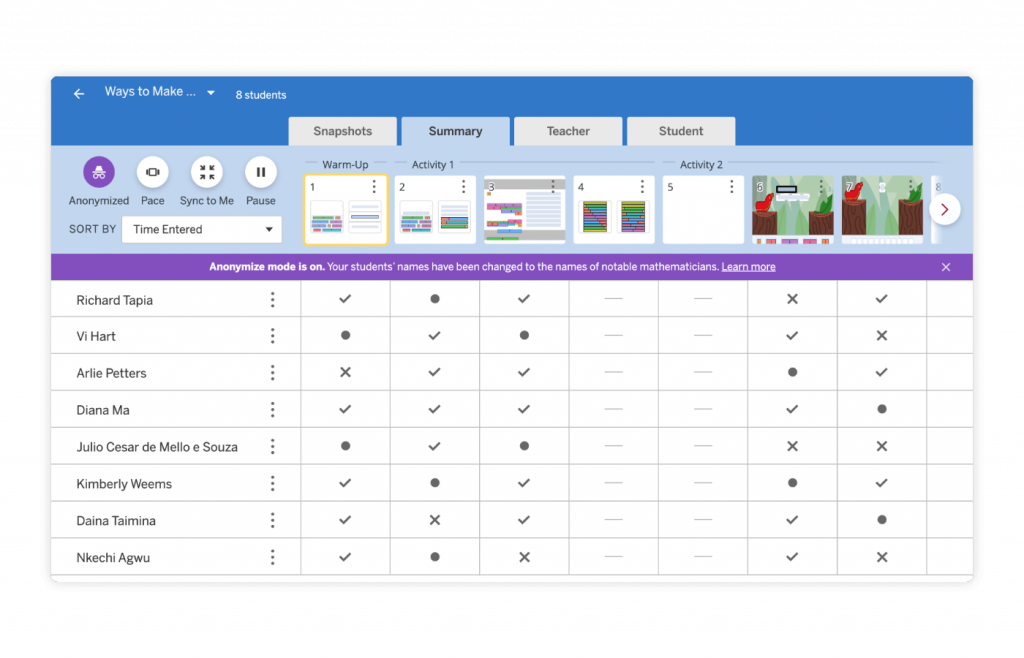
Amplify Desmos Math supports blended learning with supporting print materials and a unique digital experience. All K–5 lessons are available in a write-in Student Edition book. Many of the lessons include hands-on activities with manipulatives, tools that help students understand abstract concepts by making them tangible. Your student will also work with digital devices for an age-appropriate number of lessons.
When students use devices, teachers can monitor their work in real time, making sure they get the exact support that they need at every part of the lesson, in and outside of class.
Components of a lesson
Students in an Amplify Desmos Math classroom can be seen (and heard!) asking questions, debating answers, justifying their thinking, grappling with problems, and working together and independently.
A typical Amplify Desmos Math lesson includes:
- Warm-up: A short, attention-getting problem to pique students’ interest in the lesson.
- Activities: One to two mini-activities that challenge students’ problem-solving skills.
- Synthesis: Discussion to review and bring together the important concepts from the lesson.
- Show What You Know and Reflection: Questions for students to show what they know from the lesson. (Note: The Show What You Know lesson assessment is optional for kindergarten and grade 1.)
- Centers: Student-led activity stations that reinforce the math learned during lesson activities through interactive and often game-like formats. In kindergarten and grade 1, time for Centers is built into the last 15 minutes of every lesson.
To support, strengthen, and stretch students’ learning after the lesson, Amplify Desmos Math offers options for:
- Differentiation: Mini-Lessons, Centers, Extensions, Boost Personalized Learning, and Fluency Practice.
- Practice: Additional problems your student’s teacher may assign for classwork or homework.
Support math learning at home.
You can support your student’s math learning outside of school in many ways:
Your student’s teacher may assign practice problems at the end of each lesson for classwork or homework. If your student has already completed the practice problems for the lesson, ask them to walk you through how they solved each problem, or talk about any parts that were challenging for them. Ask your student follow-up questions to encourage the use of math language as they explain their thinking, such as, “How do you know?,” “How can you show your thinking?,” or “How would you describe that?” If students are stuck, ask support questions, such as, “What information do you know here?” or “How could you represent this problem?”
Your student’s teacher may introduce a Center game with students in the lesson or beyond the lesson. These games are aligned to the math of the unit and can be played with students outside of class. Your student’s teacher may introduce a Center game to students during or after completing a lesson, or you may need to teach the game before you play by using easy-to-follow instructions. Sign up for a free account to explore Centers and additional K–5 content in our Featured Collections.
Each unit in Amplify Desmos Math begins with a read-aloud story to engage students and provide context for the math of the unit. Elements and characters from the Unit Story then appear in lessons throughout the unit.
Kindergarten
- Unit 1 Story: The First Day of School
- Unit 2 Story: What’s in a Restaurant?
- Unit 3 Story: A Great Shape Adventure
- Unit 4 Story: Casey’s Town
- Unit 5 Story: Where is Harry?
- Unit 6 Story: Winners
- Unit 7 Story: Everybody Needs Help Sometimes
Grade 1
- Unit 1 Story: Ying’s New Town
- Unit 2 Story: Let’s Grow!
- Unit 3 Story: Impossible
- Unit 4 Story: The Collectors
- Unit 5 Story: The Day of the Wazzle-Squash
- Unit 6 Story: Side by Side
- Unit 7 Story: A Potluck for Pia
Grade 2
- Unit 1 Story: A New Class Pet
- Unit 2 Story: The Heroes of Pineapple Street
- Unit 3 Story: What Orson Imagined
- Unit 4 Story: A Seed’s Journey
- Unit 5 Story: 302 Ricotta Drive
- Unit 6 Story: Arjun the Artist
- Unit 7 Story: Where Eli Went
- Unit 8 Story: On Clementine Court
Grade 3
- Unit 1 Story: My Name Is Harper
- Unit 2 Story: Cheri’s New Home
- Unit 3 Story: The View From Up Here
- Unit 4 Story: Home Cooking
- Unit 5 Story: Coen and Obita
- Unit 6 Story: Just Stick With It, Sasha
- Unit 7 Story: Through Piho’s Eyes
Grade 4
- Unit 1 Story: I Contain Multitudes
- Unit 2 Story: One Step at a Time
- Unit 3 Story: Finny
- Unit 4 Story: Myles and the Loggerheads
- Unit 5 Story: Just for Fun
- Unit 6 Story: Special Day, Special Lei
- Unit 7 Story: Captain Bogwart’s Treasure
Grade 5
Relate math to daily activities at home, whether grocery shopping, preparing a meal, or planning for a trip to the store. Your student can help you figure out how many more apples there are than oranges in the grocery cart, show how to split a sandwich into fourths, or figure out how much change you’ll receive in exchange for a $10 bill. Encourage your student to point out ways that you use math in your daily tasks.
Remind your student that getting stuck is part of the process and a necessary—beneficial, even!—part of learning. Many students (and adults) fear making mistakes. But research shows that making mistakes helps our brains grow. When your student gets stuck on a problem, encourage them to keep trying different strategies, even if they’re not sure if they are right.
Get more information.
Have a question about Amplify Desmos Math? Visit our help library to search for articles with answers to your program questions. For additional support, please contact your student’s teacher.
Familias y cuidadores, ¡bienvenidos a Amplify Desmos Math California
K–5!
Bienvenidos al Caregiver Hub de Amplify Desmos Math California K–5. Esperamos que su estudiante disfrute explorando las matemáticas, trabajando con amigos para resolver problemas y aprendiendo conceptos nuevos e interesantes. ¡Y esperamos que ustedes disfruten de la experiencia matemática junto con ellos! A continuación, encontrarán algunas sugerencias y recursos para apoyar su aprendizaje en casa.
Obtenga más información sobre Amplify Desmos Math California.
For the English version, please click here.
Recursos de la unidad para cuidadores
Para cada unidad del programa, hemos creado un Recurso para cuidadores (Caregiver Resource), el cual ofrece un resumen de los conceptos clave, además de un problema del conjunto de práctica de la lección que usted puede resolver con su estudiante. Encontrará un Recurso para cuidadores en cada unidad, disponible tanto en inglés como en español.
- Unidad 1: Sumar, restar y trabajar con datos
- Unidad 2: Problemas de palabras de adición y sustracción
- Unidad 3: Suma y resta hasta 20
- Unidad 4: Los números hasta el 99
- Unidad 5: Sumar números hasta el 100
- Unidad 6: Medir el largo de objetos de hasta 120 unidades de longitud
- Unidad 7: Geometría y la hora
- Unidad 1: Introducción a la multiplicación
- Unidad 2: Área y multiplicación
- Unidad 3: Conclusión de la suma y la resta hasta 1,000
- Unidad 4: Relación de la multiplicación con la división
- Unidad 5: Fracciones como números
- Unidad 6: Medir longitud, tiempo, volumen líquido y peso
- Unidad 7: Figuras bidimensionales y perímetro
- Unidad 1: Factores y múltiplos
- Unidad 2: Equivalencia y comparación de fracciones
- Unidad 3: Extender las operaciones a las fracciones
- Unidad 4: De centésimas a centenas de millar
- Unidad 5: Comparación multiplicativa y medidas
- Unidad 6: Multiplicar y dividir números de varios dígitos
- Unidad 7: Ángulos y propiedades de las figuras
- Unidad 1: Volumen
- Unidad 2: Fracciones como cocientes y multiplicación de fracciones
- Unidad 3: Multiplicación y división de fracciones
- Unidad 4: Multiplicación y división con números enteros de varios dígitos
- Unidad 5: Patrones en los valores posicionales y operaciones con decimales
- Unidad 6: Más operaciones con decimales y fracciones
- Unidad 7: Figuras en el plano de coordenadas
Ingrese a Amplify Desmos Math California en casa.
Además del cuaderno de ejercicios impreso de la Edición del estudiante (Student Edition), su estudiante tendrá acceso digital a todos los materiales de aprendizaje, práctica y evaluación a través de la plataforma de Amplify. Es posible acceder al currículo digital desde la escuela o desde casa siguiendo estas instrucciones:
- Haga clic en el botón Amplify Desmos Math California.
- Seleccione Log in with Amplify.
- Ingrese el nombre de usuario y la contraseña de su estudiante que el maestro les haya proporcionado.
- Seleccione el nivel escolar deseado.
Una vez iniciada la sesión, los cuidadores pueden ver el trabajo de los estudiantes abriendo tareas anteriores.
Aprenda a navegar por la página de inicio de los estudiantes (student home page).
Vistazo general a los materiales
Amplify Desmos Math California promueve el aprendizaje mixto por medio de materiales impresos de apoyo y una experiencia digital única. Todas las lecciones en los grados K a 5 están disponibles en un cuaderno de trabajo de la Edición del estudiante. Muchas de las lecciones incluyen actividades prácticas con materiales manipulables, herramientas que ayudan a que los estudiantes hagan tangibles conceptos abstractos para poder comprenderlos. Su estudiante también trabajará con dispositivos digitales durante un número de lecciones que es apropiado para su edad.
Cuando los estudiantes usan dispositivos, los maestros pueden supervisar su trabajo en tiempo real, asegurándose de que reciban el apoyo exacto que necesitan en cada parte de la lección, dentro y fuera del salón de clase.
Componentes de una lección
A los estudiantes en un aula de Amplify Desmos Math California se les ve (¡y se les escucha!) haciendo preguntas, debatiendo respuestas, justificando su razonamiento, enfrentándose a problemas y trabajando juntos o de forma individual.
Una lección típica de Amplify Desmos Math California incluye:
- Calentamiento: Un problema breve e interesante para que los estudiantes se sientan atraídos a la lección.
- Actividades: Una o dos actividades cortas que desafíen las destrezas de los estudiantes para resolver problemas.
- Síntesis: Una discusión para revisar y consolidar los conceptos importantes de la lección.
- Demuestra lo que sabes (Show What You Know) y Reflexión (Reflection): Preguntas para que los estudiantes demuestren lo que aprendieron en la lección. (Nota: La evaluación de la lección “Demuestra lo que sabes” es opcional en kindergarten y primer grado).
- Centros (Centers): Estaciones de actividades dirigidas por los estudiantes que refuerzan los conceptos matemáticos que aprendieron durante las actividades de la lección usando formatos interactivos y, a menudo, lúdicos. En kindergarten y primer grado, el tiempo destinado a los Centros se incorpora en los últimos 15 minutos de cada lección.
Para apoyar, fortalecer y ampliar el aprendizaje de los estudiantes después de la lección, Amplify Desmos Math California ofrece opciones de:
- Diferenciación: Minilecciones (Mini-Lessons), Centros, Extensiones, Boost Personalized Learning y Fluency Practice (Práctica de la fluidez).
- Práctica: Problemas adicionales que el maestro puede asignar para trabajar en clase o como tarea.
Apoye el aprendizaje de las matemáticas en casa.
Usted puede apoyar el aprendizaje de las matemáticas de su estudiante fuera de la escuela de muchas maneras:
El maestro puede asignar problemas de práctica al final de cada lección como trabajo en clase o como tarea. Si su estudiante ya ha completado los problemas de práctica de la lección, pídale que le explique cómo resolvió cada problema o que comente las partes que le resultaron difíciles. Haga preguntas de seguimiento para fomentar el uso del lenguaje matemático mientras explica su razonamiento, por ejemplo: “¿Cómo lo sabes?”, “¿Cómo puedes demostrar tu razonamiento?” o “¿Cómo describirías eso?”. Si su estudiante no consigue avanzar, hágale preguntas de apoyo, por ejemplo: “¿Qué información de aquí conoces?” o “¿Cómo podrías representar este problema?”.
Los juegos de Centro (Center game) se alinean con las matemáticas de la unidad y se pueden jugar con los estudiantes fuera de clase. Es posible que el maestro les explique a los estudiantes cómo jugar un juego de Centro durante o después de una lección. Si no es así, usted puede enseñarle a jugar usando instrucciones fáciles de seguir. Regístrese para obtener una cuenta gratuita y explorar los Centros y el contenido adicional para grados K a 5 en nuestras Colecciones destacadas.
Relacione las matemáticas con actividades cotidianas en casa, ya sea ir de compras, preparar la comida o planear una visita a la tienda. Su estudiante puede ayudarle a calcular cuántas manzanas más hay en el carrito que naranjas, dividir un sándwich en cuatro partes o calcular cuánto cambio recibirá si paga con un billete de diez dólares. Anímelo a señalar las maneras en que ustedes usan las matemáticas en sus quehaceres diarios.
Recuerde al estudiante que bloquearse es una parte necesaria (incluso benéfica) del proceso de aprendizaje. Muchos estudiantes (al igual que personas adultas) temen equivocarse, pero las investigaciones demuestran que cometer errores ayuda a que nuestro cerebro se desarrolle. Cuando su estudiante no consiga avanzar en un problema, anímelo a seguir intentando diferentes estrategias, aunque no esté seguro de si son correctas.
Obtenga más información.
¿Tiene alguna pregunta sobre Amplify Desmos Math California? Visite nuestra biblioteca de ayuda (en inglés) para buscar artículos con respuestas a sus preguntas sobre el programa. Para obtener más ayuda, por favor comuníquese con su maestro.
Plan your professional development
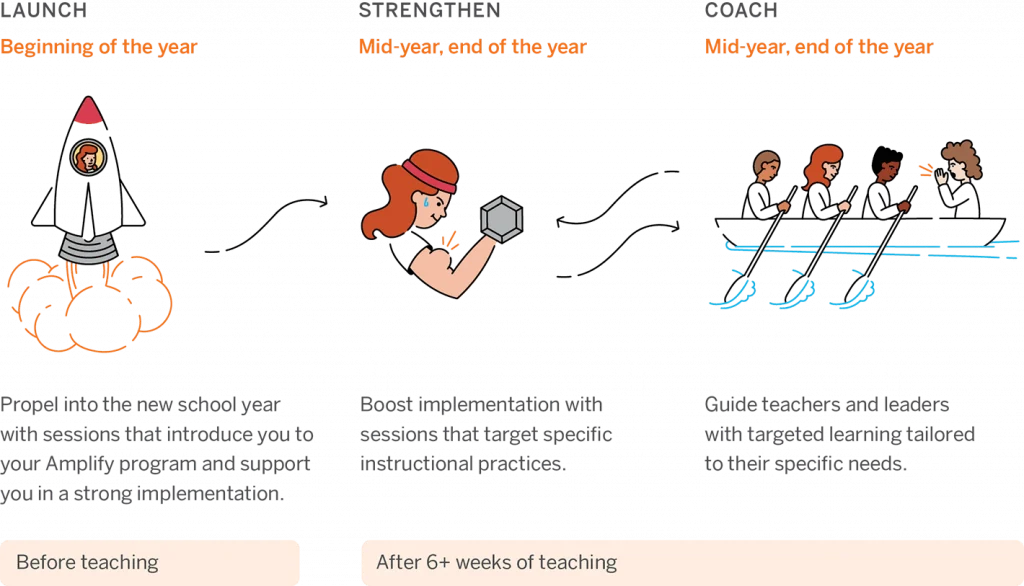
We’re excited to partner with you on your Amplify journey. Flexible professional development pathways have been designed to meet your needs.
Recommended Professional Development Plan
Our team has curated a recommended professional learning path from initial launch to continuous support. Use the Professional Development Planning Guide below to discuss the plan that best meets your school or district needs with your Account Executive.
Sessions overview
| Recommended sessions are highlighted below. |
| Audience | Title | Duration | Modality |
|---|---|---|---|
| mCLASS Texas Edition Launch | |||
| All mCLASS Texas Edition customers | Initial training | 2 half days or self-paced | Remote/Online course |
| New mCLASS Texas Edition customers | Initial training | 1 day | Onsite |
| Initial training: Train the Trainer | 1 day onsite or 2 half days remote | Onsite/Remote | |
| New mCLASS Texas Edition customers with limited time for PD | mCLASS program overview, English measures only | Half day | Onsite/Remote |
| mCLASS program overview, Spanish measures only | Half day | Onsite/Remote | |
| Experienced mCLASS Texas Edition customers | Refresher training | Half day | Onsite/Remote |
| mCLASS Texas Edition and Amplify Reading Launch | |||
| New mCLASS Texas Edition and Amplify Reading customers | Initial training with Amplify Reading overview | 1 day onsite or 2 half days remote | Onsite/Remote |
| Initial training with Amplify Reading overview: Train the Trainer | 1 day onsite or 2 half days remote | Onsite/Remote | |
| mCLASS Texas Edition and TRC Launch | |||
| New mCLASS Texas Edition and TRC customers | Initial training with TRC overview | 1 day onsite or 2 half days remote | Onsite/Remote |
| Initial training with TRC overview: Train the Trainer | 1 day onsite or 2 half days remote | Onsite/Remote | |
| Experienced mCLASS Texas Edition customers | TRC initial training | Half day | Onsite/Remote |
| TRC initial training: Train the Trainer | Half day | Onsite/Remote | |
| mCLASS Express Launch | |||
| New mCLASS Express customers | Initial training | Half day | Onsite/Remote |
| Initial training | Self-paced | Online course | |
| mCLASS Texas Edition Strengthen | |||
| All mCLASS Texas Edition customers with limited time for PD | Understanding your classroom data | Half day | Onsite/Remote |
| All mCLASS Texas Edition customers | Classroom data analysis and instructional planning | 1 day | Onsite |
| All mCLASS Texas Edition customers | Classroom data analysis and instructional planning | 2 half days | Remote |
| Classroom data analysis and instructional planning: Train the Trainer | 1 day onsite or 2 half days remote | Onsite/Remote | |
| Classroom data analysis and instructional planning | Self-paced | Online | |
| All mCLASS Texas Edition customers | Data-driven leadership practices | 1 day onsite | Onsite |
| All mCLASS Texas Edition customers | Data-driven leadership practices | 2 half days | Remote |
| Data-driven leadership practices: Train the Trainer | 1 day onsite or 2 half days remote | Onsite/Remote | |
| Data-driven leadership practices | Self-paced | Online | |
| Understanding your school or district data | Half day | Onsite/Remote | |
| Strengthening consultation session | 1-hour session | Remote | |
| All mCLASS Texas Edition customers | Strengthening consultation session package | 3 1-hour sessions | Remote |
| mCLASS Texas Edition Coach | |||
| All mCLASS Texas Edition customers | Coaching session | 1 day | Onsite |
| All mCLASS Texas Edition customers | Coaching session | Half day | Onsite/Remote |
Launch
mCLASS Texas Edition
Initial training
1 day onsite (6 hours) or 2 half days remote (6 hours)
This PD prepares participants to implement the assessment, collect reliable data using standardized guidelines, and use the targeted lessons available on mCLASS to drive differentiated instruction.
Audience: Teachers (administrators welcome), maximum 30 participants
Modality: Onsite/Remote
Initial training: Train the Trainer
1 day onsite (6 hours) or 2 half days remote (6 hours)
This PD prepares participants to implement the assessment, collect reliable data using standardized guidelines, and use the targeted lessons available on mCLASS to drive differentiated instruction. Participants receive annotated session materials to turnkey the session to colleagues.
Audience: Teachers (administrators welcome), maximum 30 participants
Modality: Onsite/Remote
mCLASS program overview, English measures only
Half day (3 hours)
This PD prepares participants to implement the English measures of the mCLASS Texas assessment and collect reliable data using standardized guidelines. Only English measures are covered in this half-day training.
Audience: Teachers (administrators welcome), maximum 30 participants
Modality: Onsite/Remote
mCLASS program overview, Spanish measures only
Half day (3 hours)
This PD prepares participants to implement the Spanish measures of the mCLASS Texas assessment and collect reliable data using standardized guidelines. Only Spanish measures are covered in this half-day training.
Audience: Teachers (administrators welcome), maximum 30 participants
Modality: Onsite/Remote
Refresher training
Half day (3 hours)
The half-day refresher training is designed for teachers and instructional leaders who are experienced with any version of DIBELS® and/or Acadience Reading and are invested in successfully implementing mCLASS Texas Edition. This session will help educators focus on what’s new to the assessment and understand mCLASS Texas Edition’s potential to impact all students through improved measures, stronger insight into students’ instructional needs, and bolstered skills-focused lessons to support instructional planning. Upon completion of this session, participants will be prepared to implement the new assessment, collect reliable data using standardized guidelines, and use the targeted lessons available on mCLASS Texas Edition to drive differentiated instruction as part of their regular classroom practice.
Audience: Teachers (administrators welcome), maximum 30 participants
Modality: Onsite/Remote
mCLASS Texas Edition and Amplify Reading
Initial training with Amplify Reading overview
1 day onsite (6 hours) or 2 half days remote (6 hours)
Take the first step in launching mCLASS Texas Edition and Amplify Reading! The initial training will help educators understand how mCLASS Texas Edition assesses the basic early literacy skills that are crucial for reading development, gain hands-on experience administering and scoring the assessment using standardized guidelines, and access the Instruction page in order to find skills-focused lessons that will support instructional planning. A high-level overview of how to get started with Amplify Reading will also be provided at the end of the training along with supplementary, on-demand resources. Upon completion of this session, participants will be prepared to implement the new assessment, collect reliable data using standardized guidelines, use the targeted lessons available on mCLASS Texas Edition to drive differentiated instruction as part of their regular classroom practice, and understand key Amplify Reading features.
Audience: Teachers (administrators welcome), maximum 30 participants
Modality: Onsite/Remote
Initial training with Amplify Reading overview: Train the Trainer
1 day onsite (6 hours) or 2 half days remote (6 hours)
Take the first step in launching mCLASS Texas Edition and Amplify Reading! The initial training will help educators understand how mCLASS Texas Edition assesses the basic early literacy skills that are crucial for reading development, gain hands-on experience administering and scoring the assessment using standardized guidelines, and access the Instruction page in order to find skills-focused lessons that will support instructional planning. A high-level overview of how to get started with Amplify Reading will also be provided at the end of the training along with supplementary, on-demand resources. Upon completion of this session, participants will be prepared to implement the new assessment, collect reliable data using standardized guidelines, use the targeted lessons available on mCLASS Texas Edition to drive differentiated instruction as part of their regular classroom practice, and understand key Amplify Reading features. Participants receive annotated session materials to turnkey the session to colleagues.
Audience: Teachers (administrators welcome), maximum 30 participants
Modality: Onsite/Remote
mCLASS Texas Edition and TRC
Initial training with TRC overview
1 day onsite (6 hours) or 2 half days remote (6 hours)
Take the first step in launching mCLASS Texas Edition and Amplify Reading! The initial training will help educators understand how mCLASS Texas Edition assesses the basic early literacy skills that are crucial for reading development, gain hands-on experience administering and scoring the assessment using standardized guidelines, and access the Instruction page in order to find skills-focused lessons that will support instructional planning. A high-level overview of how to get started with Amplify Reading will also be provided at the end of the training along with supplementary, on-demand resources. Upon completion of this session, participants will be prepared to implement the new assessment, collect reliable data using standardized guidelines, use the targeted lessons available on mCLASS Texas Edition to drive differentiated instruction as part of their regular classroom practice, and understand key Amplify Reading features.
Audience: Teachers (administrators welcome), maximum 30 participants
Modality: Onsite/Remote
Initial training with TRC overview: Train the Trainer
1 day onsite (6 hours) or 2 half days remote (6 hours)
Take the first step in launching mCLASS Texas Edition and TRC! The initial training will help educators understand how mCLASS Texas Edition assesses the basic early literacy skills that are crucial for reading development, gain hands-on experience administering and scoring the assessment using standardized guidelines, and access the Instruction page in order to find skills-focused lessons that will support instructional planning. A high-level overview of how to get started with TRC will also be provided at the end of the training along with supplementary, on-demand resources. Upon completion of this session, participants will be prepared to implement the new assessment, collect reliable data using standardized guidelines, use the targeted lessons available on mCLASS Texas Edition to drive differentiated instruction as part of their regular classroom practice, and understand key TRC features. Participants receive annotated session materials to turnkey the session to colleagues.
Audience: Teachers (administrators welcome), maximum 30 participants
Modality: Onsite/Remote
TRC initial training
Half day (3 hours)
Take the first step in launching TRC! The half-day initial training will help educators understand how TRC assesses the basic early literacy skills that are crucial for reading development, gain hands-on experience administering and scoring the assessment using standardized guidelines, and access the Instruction page in order to find skills-focused lessons that will support instructional planning.
Audience: Teachers (administrators welcome), maximum 30 participants
Modality: Remote
TRC initial training: Train the Trainer
Half day (3 hours)
Take the first step in launching TRC! The half-day initial training will help educators understand how TRC assesses the basic early literacy skills that are crucial for reading development, gain hands-on experience administering and scoring the assessment using standardized guidelines, and access the Instruction page in order to find skills-focused lessons that will support instructional planning. Participants receive annotated session materials to turnkey the session to colleagues.
Audience: Teachers (administrators welcome), maximum 30 participants
Modality: Remote
mCLASS Express
Initial training
Half day (3 hours)
Take the first step in launching mCLASS Express! The half-day initial training will help educators understand how mCLASS Express’ voice-recognition scoring generates immediate instructional recommendations for students reading below grade level. Educators will also learn how to utilize the teacher portal to assign assessments, review and correct scoring, track student growth over time, and leverage the program’s activities to create an action plan for a single classroom or across classes/grades.
Audience: Teachers (administrators welcome), maximum 30 participants
Modality: Remote
Initial training
Self-paced
Take the first step in launching mCLASS Express! The two-hour initial training will help educators understand how mCLASS Express’ voice-recognition scoring generates immediate instructional recommendations for students reading below grade level. Educators will also learn how to utilize the teacher portal to assign assessments, review and correct scoring, track student growth over time, and leverage the program’s activities to create an action plan for a single classroom or across classes/grades. As this is a self-paced, on-demand online course, participants will be able to access the course anytime, move as quickly or as slowly as needed through different sections, and revisit the course for up to one year as a refresher in the future.
Audience: Teachers (administrators welcome)
Modality: Remote
Strengthen
Understanding your classroom data
Half day (3 hours)
This PD prepares participants to understand their students’ data by utilizing the reports available on mCLASS. This session should be scheduled after the most recent benchmark window has closed so that participants can work with their own data.
Audience: Teachers (administrators welcome), maximum 30 participants
Modality: Onsite/Remote
Classroom data analysis and instructional planning
1 day onsite (6 hours) or 2 half days remote (6 hours)
This PD prepares participants to deeply understand their students’ data and create actionable instructional plans by utilizing the reports and skills-focused lesson plans available on mCLASS.
Audience: Teachers (administrators welcome), maximum 30 participants
Modality: Onsite/Remote
*This session should be scheduled after the most recent benchmark window has closed so that participants can work with their own data.
Classroom data analysis and instructional planning: Train the Trainer
1 day onsite (6 hours) or 2 half days remote (6 hours)
This PD prepares participants to deeply understand their students’ data and create actionable instructional plans by utilizing the reports and skills-focused lesson plans available on mCLASS. Participants receive annotated session materials to turnkey the session to colleagues.
Audience: Teachers (administrators welcome), maximum 30 participants
Modality: Onsite/Remote
*This session should be scheduled after the most recent benchmark window has closed so that participants can work with their own data.
Classroom data analysis and instructional planning
Self-paced
This PD is an individual seat to our self-paced, on-demand online course that contains approximately 6 hours of training. Participants will learn how to deeply understand their students’ data and create actionable instructional plans by utilizing the reports and skills-focused lesson plans available on mCLASS. Participants will access and revisit the course anytime for up to one year as a refresher. Note: The online course focuses on the English measures only.
Audience: Teachers (administrators welcome)
Modality: Online
Understanding your school or district data
Half day (3 hours)
This PD prepares participants to use their data in making schoolwide decisions. This session should be scheduled after the most recent benchmark window has closed so that participants can work with their own data.
Audience: Administrators, maximum 30 participants
Modality: Onsite/Remote
Data-driven leadership practices
1 day onsite (6 hours) or 2 half days remote (6 hours)
This PD prepares participants to use their data in making schoolwide decisions and build a schoolwide culture of data-driven instruction. This session should be scheduled after the most recent benchmark window has closed so that participants can work with their own data.
Audience: Administrators, maximum 30 participants
Modality: Onsite/Remote
Data-driven leadership practices: Train the Trainer
1 day onsite (6 hours) or 2 half days remote (6 hours)
This PD prepares participants to use their data in making schoolwide decisions and build a schoolwide culture of data-driven instruction. This session should be scheduled after the most recent benchmark window has closed so that participants can work with their own data. Participants receive annotated session materials to turnkey the session to colleagues.
Audience: Administrators, maximum 30 participants
Modality: Onsite/Remote
Data driven leadership practices
Self-paced
This PD is an individual seat to our self-paced, on-demand online course that contains approximately 6 hours of training. Participants will learn how to use their data in making schoolwide decisions and build a schoolwide culture of data-driven instruction. Participants will access and revisit the course anytime for up to one year as a refresher. Note: The online course focuses on the English measures only.
Audience: Administrators
Modality: Online
Strengthening consultation session
60 minutes
This 60-minute session will focus on a specific topic that will deepen educators’ understanding of mCLASS and equip them in driving towards stronger student outcomes. An Amplify facilitator will align with the school or district’s leadership team in advance on the topic from a menu of options that will best meet educators’ unique needs. Topics include progress monitoring, zones of growth, and a data walkthrough for leaders.
Audience: Teachers and/or administrators, maximum 30 participants
Modality: Remote
Strengthening consultation session package
3 hours
This package consists of three 60-minute sessions that can be delivered on the same day or on different days. Each session will focus on a specific topic that will deepen educators’ understanding of mCLASS and equip them in driving towards stronger student outcomes. An Amplify facilitator will align with the school or district’s leadership team in advance on the topics that will best meet educators’ unique needs. Topics include progress monitoring, zones of growth, and a data walkthrough for leaders.
Audience: Teachers and/or administrators, maximum 30 participants
Modality: Remote
Coach
Coaching session
1 day onsite (6 hours)
This PD will deepen educators’ understanding of how to utilize mCLASS in order to accelerate data-driven student outcomes. An Amplify facilitator will visit one or two school sites for one day and work with teachers and/or leaders. Prior to the visit, the Amplify facilitator will align with each school’s leadership team on their needs and customize the visit schedule accordingly.
Audience: Teachers and/or administrators, maximum 30 participants
Modality: Onsite/Remote
Coaching session
Half day (3 hours)
This PD is up to 3 hours of training and will deepen educators’ understanding of how to utilize mCLASS in order to accelerate data-driven student outcomes. An Amplify facilitator will visit one school site for a half-day and work with teachers and/or leaders. Prior to the visit, the Amplify facilitator will align with each school’s leadership team on their needs and customize the visit schedule accordingly.
Audience: Teachers and/or administrators, maximum 30 participants
Modality: Remote
Pricing
We offer the following pricing for training sessions and packages:
| Session type | Pricing |
|---|---|
| 1-day onsite session | $3,200 |
| 1-day onsite session: Train the Trainer | $3,500 |
| 2 half-day remote sessions | $1,500 |
| 2 half-day remote sessions: Train the Trainer | $2,000 |
| Half-day onsite session | $2,500 |
| Half-day remote session | $750 |
| 2-hour self-paced online course | $20 per individual seat |
| 6-hour self-paced online course | $49 per individual seat |
Please note that the prices are general ranges and may be subject to change.
Contact
Amplify welcomes the opportunity to partner with schools and districts to design professional development plans and answer your questions.
If you would like to order any of our professional development services, please contact your local Amplify sales representative or call (800) 823-1969.
Introducing Amplify Classroom

Feeling crunched for lesson-planning time? You’re not imagining it. A recent EdSurge report found that teachers get, on average, just 266 minutes of dedicated planning time a week—under an hour a day. And that’s before the meetings, paperwork, and “Got a minute?” queries start rolling in.
When teachers have so little space to craft high-quality interactive lessons, any tool that streamlines planning or teaching can make a huge difference.
Enter Amplify Classroom (formerly Desmos Classroom), launched for the 2025–26 school year and available for free! Already used by more than 300,000 teachers, this all-in-one platform brings together free resources for K–12 students; teacher guides and real-time teaching tools; and interactive lessons across math, literacy, and science—helping educators focus less on logistics and lesson plans and more on student engagement.
Interactive lessons that stick
Amplify Classroom’s free teaching resources go far beyond static worksheets or “entertaining” electronics. The platform’s library of more than 1,000 lessons features a wide range of free K–12 resources, including K–5 activities, middle school science explorations, and high school math challenges. Highlights include:
- A grade 1 math activity called Leaping Lily Pads!, in which students help a purple frog hop toward a golden crown while making connections between subtracting 1 and subtracting 2—and practicing subtracting 2 and adding 2.
- A grade 4 science activity called Food Chains, in which students create their own sequences of organisms, then line up those organisms to model how energy flows through an ecosystem, tracing that energy from start to finish.
- Literacy practice that explores how the letter “y” sounds in words like myth.
- Classic Desmos math challenges, like balancing raccoons on a seesaw against a 21-pound weight.
- Hands-on Polypad manipulatives that let students experiment with tangrams, grids, and colorful geometric shapes.
These types of activities are not just engaging in the moment. They can also set the stage for lifelong math enjoyment. “I’ve been wary about making my kids not hate math,” says kindergarten teacher Martin Joyce. “No ‘drill-n-kill.’ [Now] they’re asking if they can do math on the computer before bed!”
What you can do with these free resources
Once you create a free teacher account, you can:
- Teach more than 1,000 free interactive lessons across math, literacy, and science.
- Customize any premade lesson or build your own with the drag-and-drop editor.
- Monitor student thinking in real time with intuitive dashboards.
- Share snapshots of student work—names optional—to prompt discussion and highlight ideas.
- Control the pacing of lessons, pausing to dive deeper into a concept or syncing everyone to the same spot.
Here’s how it works in practice:
- Find a lesson. Browse by subject, grade level, or topic until you land on one that fits your plan for the day.
- Share it with your class. Assign the activity so students can join from their own devices.
- Teach and adapt in the moment. Use the dashboard to see student thinking in real time, highlight responses, and pace the lesson as you go.
Grade 5 teacher Traci Jackson saw how these K–5 activities boosted collaboration and learning in her class: “After an audible groan when the activity was paused, students made sense of ordered pairs through a purposeful Amplify Classroom experience. One student pair wrote without any prompting!”
More to explore
- Explore Amplify Classroom, the free platform for grades K–12.
- Learn how Amplify Classroom is supporting teachers across math, literacy, and science.
- Find free professional learning resources for educators and free activities for students in our Problem-Based Learning Starter Pack.
Our K–12 international education programs inspire students around the world.
At Amplify, we believe that every teacher and student deserves access to high-quality materials. That’s why we collaborate with international schools to meet their core curriculum, assessment, and intervention needs.
By providing solutions grounded in research and evidence-based practices, Amplify is making an impact on international K–12 education.
We are making an impact around the globe.
6
continents
80+
countries
900+
schools worldwide
700,000+
students globally
Amplify international education programs
The following programs are available internationally.



Amplify professional learning
From live, in-person training and coaching to online courses and virtual professional development, we offer a range of support to fit schools’ needs and educators’ busy schedules. Professional development offerings include the following:
- Launch sessions
- Strengthen sessions
- Coach sessions
- Custom packages


Custom development
We collaborate with governments and government agencies to localize and customize our high-quality instructional materials to ensure they align with specific education standards and frameworks.
Get in touch with our sales team to discuss how we can help your organization.
License our digital tools.
Explore Amplify’s digital tools and how they can make your programs more engaging and digital-forward.
Publishers can license the Amplify teaching and learning digital platform, which offers robust digital functionality—including digital manipulatives—that can transform print-based instructional programs into interactive, collaborative, and engaging digital experiences for teachers and students.
If you want to use our platform for commercial purposes, please contact our team.

Amplify international education support
Amplify aims to provide the best customer support throughout each stage of your journey, whether you are exploring our programs for the first time or are a long-term partner.
Below, you’ll find a quick guide on the international purchase process and expected timelines.
Simple steps to get your order processed quickly:
To ensure that there are no delays, we advise you to place your order 3–4 months prior to your first day of school. This should allow enough time for shipping and digital set up.

Purchasing
Our international sales team can answer your questions about our programs and services. Please fill out the form to speak with your account executive.
FILL OUT FORM

Ordering and payment
We want your purchasing experience to be as seamless as possible. Visit our customer portal to learn more about your payment options.
Please be sure to include:
- A signed PO. Don’t forget to add your PO number.
- A copy of your Price Quote.
- A copy of your Tax-Exemption Certificate.
You can also email your documents to IncomingPO@amplify.com.

Shipping physical materials
- Submit your logistics and product quantities on the Order Management Page (OMP).
- Track shipment(s) with the Shipment Status Page (SSP).

Enrollment and licensing
Please note that our team needs to review your school’s rosters for accuracy and completeness:
- This process can take up to 12 business days.
- You will be notified when the licensing process is complete!
Frequently asked questions
Payment processing time can vary, depending on chosen payment method, as well as banking institution. Please allow at least 10 business days for it to be processed. For additional support contact internationalsalessuport@amplify.com.
For digital licenses, you will need to submit your digital logistics information, which includes your school’s rosters data. Our technical onboarding team then needs to verify it for accuracy and completeness. (They might contact you, should they need any clarification.) The digital setup process can take up to four weeks to be completed. For help along the way, please use our Amplify Onboarding Hub.
To avoid delays, please submit your logistics information and product quantities on the Order Management Page as early as possible. Note that international shipping time varies from one country to another due to many factors, including different customs procedures. We are therefore unable to estimate and guarantee delivery time in each case. Amplify offers two international shipping options: 1. Your materials can be shipped from the U.S. directly to you, which will incur an international shipping and handling fee of 25% on the physical products ordered. 2. Alternatively, Amplify can ship your materials to a U.S. freight forwarder, and you can manage the shipping.
Note that setup communications will be sent to the contact person listed on the quote. This email is sometimes routed to the spam folder, so please check there as well. If you do not receive a link within five business days, please reach out to the customer care and support team.
Get support
Our dedicated team members will assist you with purchasing, order fulfillment, enrollment and licensing, and more!
Our support hours are Monday through Friday,
11 a.m.–11 p.m. GMT.

New to our programs? Our international sales support team is here to help!
Email us:


International events
Join us for an upcoming event, webinar, or podcast. You can browse all of our events by month, or use the filter to find events close to you.
Math Teacher Lounge episode: Howie Hua on making math viral

K—12 math instruction has come a long way from having students memorize times tables. Thanks to innovative instructors like Howie Hua, it’s gone all the way to TikTok. And it’s gone viral.
Bethany Lockhart Johnson and Dan Meyer recently talked to Howie Hua on Math Teacher Lounge—now a podcast!
Meet Howie Hua
Howie Hua is a lecturer at Fresno State. He teaches math to future elementary math teachers. That’s a good thing, because he doesn’t just make math “come alive.” He makes it go viral.
He has more than 32,000 followers on TikTok (@howie_hua), where his brief, punchy math explainer videos have garnered nearly 500,000 likes.
That’s why Bethany Lockhart Johnson was so excited to talk to him on the podcast, she says. “He is inviting us to think about how we ask questions in mathematics in ways that get people buzzing. His ideas and thoughts have gone viral and people are in conversation in a way that we long for them to be, out in the streets shouting about mathematics.”
(Fun fact: Hua can also throw a rifle 15 feet in the air, do a back flip, and catch it. Don’t believe us? Check out his TikTok.)
Questions are as important as answers
“I think people don’t want to watch a 20-minute YouTube video on something math-related. Maybe they just want a short one-minute explainer,” says Hua.
Even in one minute, Hua shines new light on math functions and concepts—and more.
“People want to understand what’s actually happening,” says Hua. “For example, I got so many nice comments when I explained the long division algorithm. I said, ‘Let’s visualize it.’ It’s not just connecting the permutation and the combination formulas. People want to know what’s happening rather than just ‘Use this formula to get an answer.’”
Dan Meyer shares a couple of Hua’s most popular TikToks:
- Test Talk: Reduce test anxiety by having students talk in a group about a test for five minutes before putting pencil to paper.
- How do you calculate … ? In his Mental Math Mondays series, Hua asks viewers to tell him exactly how they solve a given arithmetic problem. “One of my favorite hobbies is to listen to how people think about math,” says Hua. “So if you want to make my day, comment or stitch this video with how you would calculate 17 plus 18 in your head.”
Hua says that to ask “Hey, how would you think about this?” does more than give him insight. Asking questions helps build community, and shows people that there are many ways to arrive at an answer.
Says Hua: “It really goes to show that math is a creative subject. ‘Hey, can we find another way? What’s another way that we can do this?’ I tell my students, the beauty is in us, not the final answer.”
Join the challenge
Here’s Hua’s Math Teacher Lounge challenge for this episode:
- Walk around and find something that you can count, take a picture, and then ask around: “Hey, how would you count these?” See if their way is the same as yours—or if it blows your mind.
- Share your pictures and thoughts by tagging us (@MTLShow) and Howie (@Howie_Hua) on Twitter, and sharing them in the Math Teacher Lounge Facebook group as well.
Bonus: Did you do the daily Wordle before you read this post? You might have learned something about teaching math—listen to the podcast to find out why (and to hear why on earth Dan Meyer would start his guesses with “PYGMY”)
The Math Teacher Lounge podcast is available on all major streaming platforms and on mathteacherlounge.com. Math Teacher Lounge is presented by Amplify and Desmos. Visit Amplify’s website to find out more about Amplify Math.
Bring the world to students with a proven PreK–5 literacy curriculum
Amplify Core Knowledge Language Arts (CKLA) is the leading early literacy curriculum grounded in the Science of Reading. By combining knowledge-building and research-based foundational skills, our instruction guides educators in developing strong readers, writers, and thinkers.
With a powerful online platform and a parallel Spanish language arts curriculum, Amplify CKLA provides a comprehensive solution for PreK–5 educators and students. Para la versión en español, haga clic aquí.
Background knowledge drives results
The Amplify CKLA PreK–5 literacy curriculum equips students with rich knowledge that intentionally builds to inspire curiosity and drive results. Explore research revealing the power of our knowledge-based curriculum including a study that meets qualifications for ESSA Tier I: Strong Evidence.
Amplify CKLA serves
38,000+
Classrooms
2,700,000+
Students
50
U.S. States and D.C.
Independently and rigorously reviewed
Amplify CKLA is among the few curricula that is both recognized by the Knowledge Matters Campaign—for its excellence in intentionally building knowledge—and rated all-green on EdReports, earning green scores across all gateways.

Our approach
Grounded in the Science of Reading and following the Core Knowledge approach, the Amplify CKLA PreK–5 curriculum combines rich content knowledge in history, science, literature, and the arts with systematic, research-based foundational skills instruction.
Grounded in the Science of Reading
As the first publisher to build a curriculum based on the Science of Reading, we put research into action with explicit systematic foundational skills instruction alongside a proven knowledge-building sequence. In collaboration with education experts and practitioners, we provide powerful resources that drive real results. Explore our Science of Reading success stories.
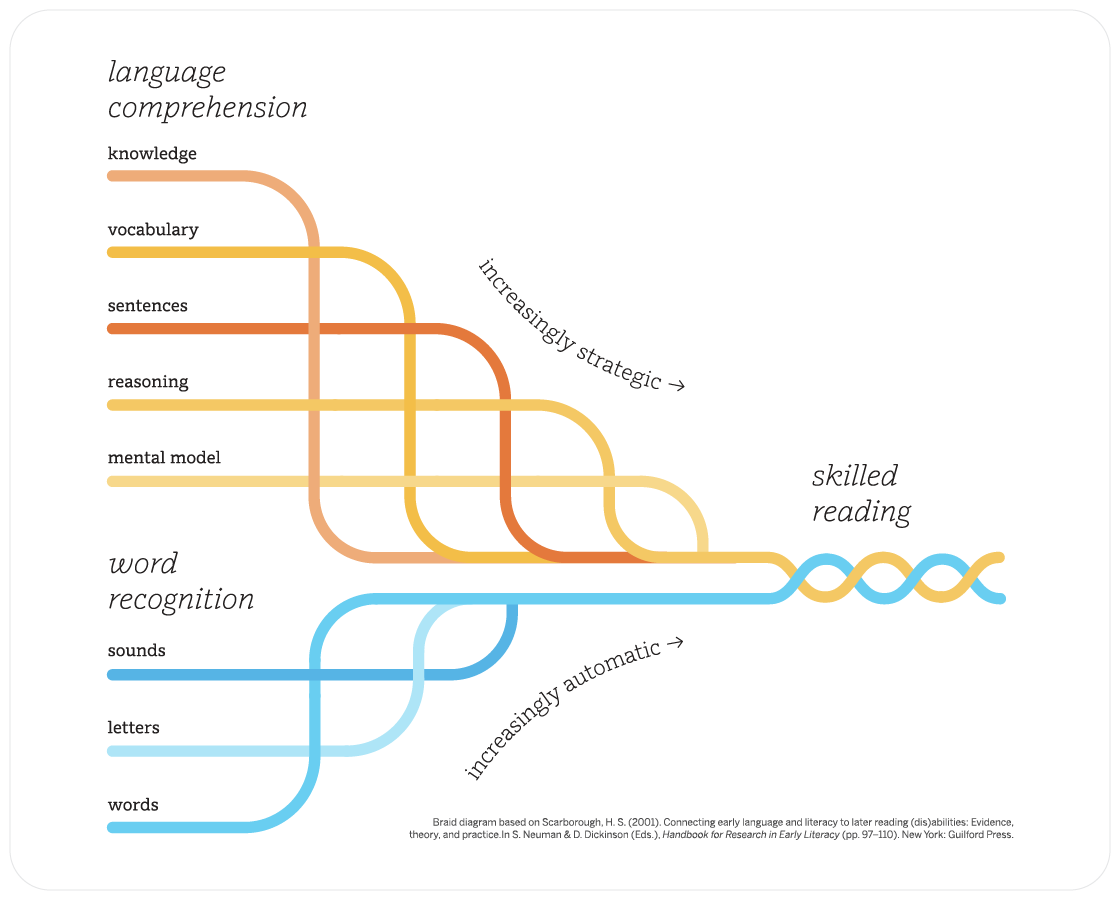
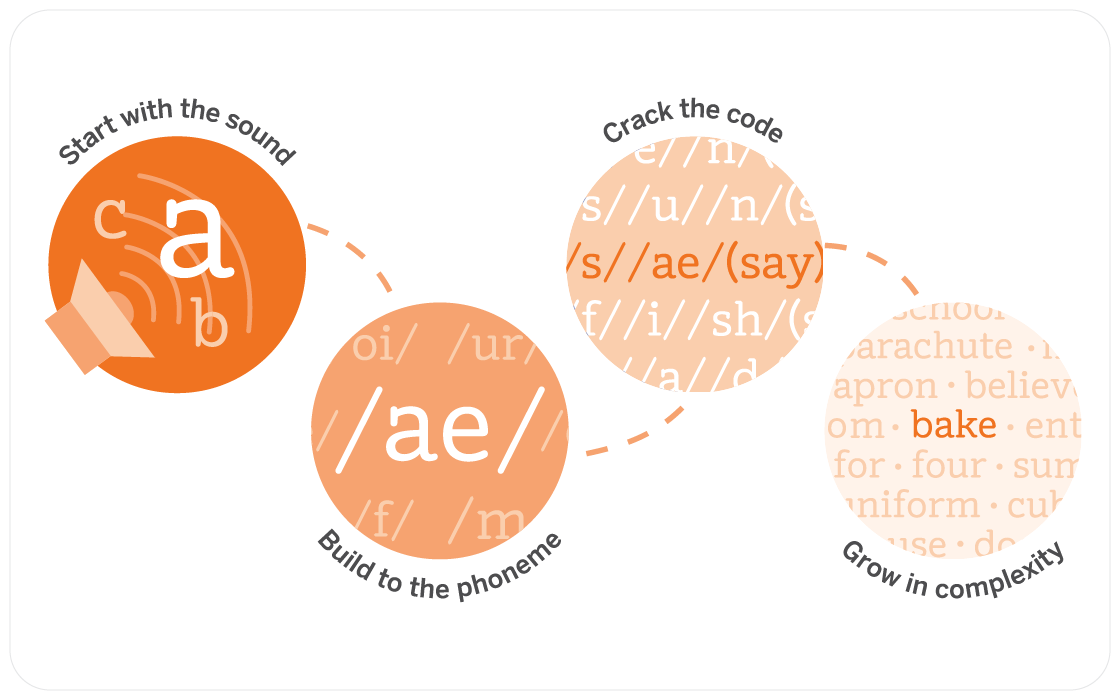
Developing foundational skills with explicit, systematic instruction
Amplify CKLA’s research-based scope and sequence progresses from simple to more complex skill development, starting with phonological and phonemic awareness. Instruction guides you in explicitly teaching the 150 spellings for the 44 sounds of English, with an intentional progression and review of skills to set your students up for success.
Following a proven knowledge-building approach
Following the Core Knowledge Sequence–a content-specific, cumulative, and coherent approach to building knowledge–students dig deeper and make connections across content areas to build a robust knowledge base for comprehending complex texts. See how the Core Knowledge curriculum is proven to improve reading scores and eliminate achievement gaps.
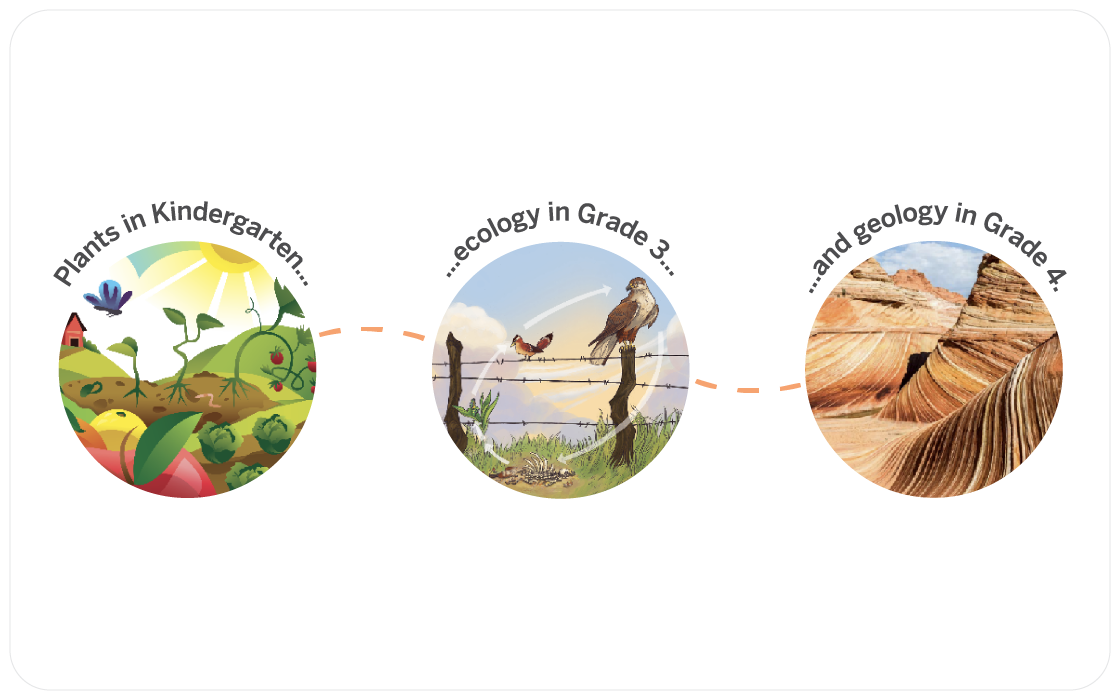

Built in partnership with the Core Knowledge Foundation
Amplify CKLA is the premier high-quality instructional materials offering for elementary language arts, built in partnership with the Core Knowledge Foundation to help students effectively develop deep content knowledge and foundational skills.
Cultivating biliteracy with parallel English and Spanish programs
Amplify Caminos is the perfect Spanish language arts partner to Amplify CKLA. The aligned programs combine rich content knowledge with systematic foundational skills instruction grounded in the Science of Reading that follows biliteracy principles, and supports multiple teaching models.


Amplify CKLA efficacy study
Tier I ESSA Evidence: Amplify CKLA knowledge-building improves achievement.
Download nowWhat’s included
The program provides engaging print and multimedia materials designed to build a robust literacy-rich foundation in every classroom.
CoreELD and companions
High-quality teacher materials
Amplify CKLA teachers effectively deliver instruction with print and digital resources, including:
- Teacher Guides with embedded differentiation.
- Formal and informal assessments.
- Ready-made and customizable lesson slides.
- Trade books and Novel Guides.
- Teacher resources and on-demand professional development.
Immersive student resources
Amplify CKLA students stay engaged with a variety of print and digital resources, including:
- Original decodables and read-aloud Big Books (K–2), Student Readers (3–5), and trade books (K–5).
- Student Activity Books with embedded assessments (K–5).
- Research units for independent research built around a trade book (K–5).
- Poet’s Journal and Writer’s Journal (write-in student readers for Grades 4–5).
- Quests for the Core to support immersive, problem-based learning in Grades 3–5.
Hands-on phonics materials
Multisensory phonics and foundational skills resources help students practice key skills using fun, varied approaches that build independence.
- Chaining Folder (K)
- Letter Cards (K–2)
- Syllable Cards (K–2)
- Image Cards (K–3)
- Blending Picture Cards (K)
- Consonant and Vowel Code Flip Books (1–2)
- Exclusive digital Sound Library
Robust digital experience
Amplify CKLA teacher and student resources are available through a digital experience platform that enhances instruction and saves you time. With everything you need in one place, you can effectively plan lessons, present content, and review student work.
- Ready-made yet customizable lesson presentation slide decks
- Dynamic live-review student tool
- Interactive and student-friendly experience
- LMS integration
- Knowledge Builder animated videos
- Recorded Read-Alouds
- Professional development website
- Real-time program support via email, live chat, and phone


English Language Learner program
Language Studio, designed for Amplify CKLA, provides WIDA-aligned daily instruction for English Language Learners to deepen their academic English.
Writing explorations program
A unique companion for Amplify CKLA, Writing Studio provides a deep dive into informational, narrative, and opinion writing to build strong, passionate writers.

Explore more programs based on the Science of Reading
All of the programs in our literacy suite are designed to support and complement each other. Learn more about our related programs:


Website Privacy Policy
Last Modified: February 2026
Update: February 2, 2026: This Privacy Policy has been updated to address additional rights for individuals in the European Union/UK.
Below is the Website Privacy Policy for the amplify.com site (“Privacy Policy”). For purposes of clarity and as further outlined below, this Privacy Policy does not apply to student data. You can visit this page to read about the principles and policy governing student data collected and maintained on behalf of our school customers.
We advise you to read this Privacy Policy in its entirety, including the jurisdiction-specific provisions in the appendix. Our Notice at Collection for California Residents is available in the Notice for our California Customers.
Who We Are / What This Privacy Policy Covers
Amplify Education, Inc. (“Amplify”) recognizes the importance of protecting the privacy and security of your personal information. This Privacy Policy describes our practices in connection with information that we may collect through your use of this website (the “Site”).
This Privacy Policy does not apply to Amplify’s handling of:
- student data or other information collected from users of Amplify’s products that support classroom instruction and learning, which are governed by our Customer Privacy Policy.
- staff or applicant data that we process in accordance with our staff or applicant privacy notice, respectively.
If you have any question as to what legal agreement or privacy policy controls the collection and use of your information, please contact us using information below in the Contact Us section.
This Privacy Policy is incorporated into and is subject to our Website Terms of Use, which governs your use of the Site.
Our Role: We are the controller of all personal information (as defined below) that we receive through our Site and can be reached by email at privacy@amplify.com or by mail at Amplify Education, Inc., 55 Washington St.#800, Brooklyn, NY, 11201.
1. What personal information do we collect?
When you visit and / or interact with our Site, we may collect the following information about you that, alone or in combination, could be used to identify you or your device (“personal information”):
- Contact Information, such as name, district / school name, professional affiliation, title / role, email address, shipping address, address and phone number.
- Account Information, such as customer user login and password.
- Demographic Information, such as age and gender.
- Information You Submit, such as information voluntarily provided on message boards, feedback sections, and other public areas of the Site.
- Site Activity Information, which is collected when you access and interact with the Site, we and our Service Providers (as defined below) may collect certain information about those visits. For example, we or our Service Providers may receive and record information about your computer and browser, including your IP address, browser type, and other software or hardware information. If you access the Site from a mobile or other device, we may collect a unique device identifier assigned to that device, or other characteristics of the device hardware, operating system and configurations for that device. On certain pages of the Site, we may use third party tools to help us look at mouse movements, clicks, keystrokes, data or text entered, and the pages you visit.
- Location Information, such as state, country and / or zip code, which we use to help us customize your experience, as well as to help us facilitate your privacy rights.
- Audio, electronic, visual, or similar information: such as customer service interactions, call recordings, chat transcripts, files you attach, and email, text, or other correspondence.
If you make a purchase through our online store, you may provide payment and other information directly to our third party e-commerce platform to complete your purchase.
We ask that you not send us, and you not disclose, any government identifiers (such as social security numbers) or information related to racial or ethnic origin, health, or criminal background on or through the Site or otherwise.
2. Where/How do we collect personal information?
Amplify may collect personal information directly from you at various points, including the following:
- Product Information and Newsletters. When you submit a request to obtain information about our products, services or other informational material or subscribe to one of our newsletters, you may be asked to submit information such as name, professional affiliation, email address, company name, address and phone and details on your query or interests in our products and services. This information is collected to help us process your request.
- Customer Support. When you submit a form to contact our customer service, you may be asked to submit information such as name, e-mail, district, customer user login and password and details on your query. In addition, some features of our Site, such as our customer live chat functionality or other customer service systems may allow you to voluntarily provide personal information to us. This information is collected to help us process your request. Please only provide what is needed to facilitate the support request.
- Product Orders. If you use e-commerce areas of our Site to order our products, we request information from you on our order form. To purchase products through the Site, you must provide contact information (such as name and shipping address) and financial information (such as credit card number). This information is used for billing purposes and to fill your orders. We will also use this information to contact you to confirm your order or to inform you of any issues or delays.
- Registration. You may be asked to submit information to use certain parts of the Site (such as posting comments on certain areas of the Site), register for an event or webinar, or view restricted content that may be available on the Site. For instance, you may be asked to provide your name, email address and event or webinar-related preferences to help us process your registration or content request.
- Public Areas and Discussion Forums. Any information you share in public areas, such as message boards or feedback sections, becomes public. Please be careful about what you disclose and do not post any personal information that you expect to keep private.
- Contests and Sweepstakes. When we run a contest or sweepstakes relating to the Site or Amplify, it will be accompanied by a set of rules. The rules for each contest/sweepstakes will specify how the information gathered from you for your entry will be used and disclosed.
As you visit or use our Site, we may collect Site activity information through cookies and similar technologies.
- Cookies, Pixels, and Other Tracking Technologies. Cookies and other tracking technologies (such as pixels, beacons, and Adobe Flash technology) are small data files that are placed on your computer or mobile device when you visit a website. They allow the website or mobile app to remember your actions and preferences over a period of time. We use the following types of cookies:
- Strictly necessary cookies – These are cookies that are required for the operation of our Site. They include, for example, cookies that enable you to log into secure areas of our Site. These cookies are not generally stored beyond the browser session and are less likely to include personal information. This category of cookies cannot be disabled.
- Functionality Cookies – We use these cookies so that we recognize you on our Site and remember your previously selected preferences. These cookies are stored on your device between browsing sessions but expire after a pre-defined period. These cookies enable our Site to “recognize” you when you use our Site, including your preferences such as your preferred language , time, and location. A mix of first party (placed by us) and third-party cookies (placed by third parties) are used.
- Analytics Cookies – These cookies help us and our Service Providers compile statistics and analytics about users of the Site, including Site Activity Information. For example, we use Google Analytics to help us understand how users interact with the Platform. Google Analytics uses cookies to track your interactions with the Site, then collects that information and reports it to us. This information helps us improve the Site so that we can better serve you. To learn more about Google Analytics, visit https://support.google.com/analytics/answer/6004245?hl=en. If you wish, you can opt-out of Google Analytics by installing the Google Analytics Opt-out Browser Add-on, available on https://tools.google.com/dlpage/gaoptout.
- Advertising Cookies – We use these cookies to collect information about your visit to our Site, the content you viewed, the links you followed and information about your browser, device, and your IP address. We sometimes share some limited aspects of this data with third parties for advertising purposes. We may also share Site Activity Information collected through cookies with our advertising partners. This means that when you visit another website, you may be shown advertising based on your browsing patterns on our Site.
For information on how to opt-out of these technologies, please see What Choices Do You Have? below.
- Social Plugins. Certain areas of our Site permit you to utilize social media functionality, such as the Facebook “Like” or Google “+1” buttons (“Social Plugins”). To use a Social Plugin, you must authorize the third-party provider of that Social Plugin, e.g. Facebook or Google, to access, collect, and/or disclose your information related to your use of that Social Plugin, subject to that company’s privacy policies, which may differ from this Privacy Policy. In addition, such providers may be able to collect information about you, including your activity on the Site, and they may notify your connections on their social networking platform about your use of the Site. Such services may also employ unique identifiers that allow your activity to be monitored across multiple websites for purposes of delivering more targeted advertising to you.
Amplify also receives information from other sources.
- Information from Other Sources. We may supplement any information we collect via this Site with information from publicly or commercially available sources.
3. How do we use personal information?
We may use any personal information and other information we collect from and about you for the following purposes and as described elsewhere in this Privacy Policy:
- To provide and manage the Site. We use the personal information we collect from and about you to provide the Site and features to you, including to measure and improve its services and features, to personalize your experience by delivering relevant content, to deliver marketing messages, to allow you to comment on content, to provide you with customer support, and to respond to inquiries. We may also use and disclose aggregate or anonymous data about your use of and activity on the Site to assist us in this regard and for any other purpose.
- To contact you. Amplify may periodically send promotional materials (e.g., newsletters) or notifications related to the Site and to Amplify’s business to the contact information you provided to us at registration.
- To improve our products and services. We may use your personal information for our business purposes, such as data analysis, audits, developing new products and services, enhancing the Site, improving our services, identifying usage trends, and determining the effectiveness of our promotional campaigns.
- For marketing and advertising. We may use your personal information to help us market our products to you or your school district.
4. To whom do we disclose personal information?
We may disclose any personal information and other information we collect from and about you for the following purposes and as described elsewhere in this Privacy Policy:
- To share with our affiliated education companies. Amplify may share your personal information with Amplify’s affiliated education companies for the purposes described in this Privacy Policy.
- To allow service providers to assist us. We may engage third party service providers, agents and partners (“Service Providers”) to perform functions on our behalf, such as analytics, credit card processing, shipping or stocking orders and providing customer service. We may disclose your personal information to such Service Providers to enable them to assist us in these efforts.
- To allow our marketing and advertising partners to assist us. We may engage marketing and advertising partners to help us market and advertise our products and services, including via digital ads sent in connection with your visit to the Site. We may disclose Site Activity information, as well as contact information and other aggregate insights to such partners to enable them to assist us in these efforts.
- To protect the rights of Amplify and our users. There may be instances when Amplify may disclose your personal information, in situations where Amplify has a good faith belief that such disclosure is necessary or appropriate in order to: (i) protect, enforce, or defend the legal rights, privacy, safety, operations, or property of Amplify, our parents, subsidiaries or affiliates or our or their employees, agents and contractors (including enforcement of our agreements, including our terms of use); (ii) protect the rights, safety, privacy, security or property of users of the Site or others; (iii) protect against fraud or for risk management purposes; (iv) comply with the law or legal process, including laws outside your country of residence; (v) respond to requests from public and government authorities, including those outside your country of residence; or (vi) allow us to pursue available remedies or limit the damages that we may sustain.
- To complete a merger or sale of assets. If Amplify sells all or part of its business or makes a sale or transfer of its assets or is otherwise involved in a merger, transfer or other disposition of all or part of its business, assets or stock (including in connection with any bankruptcy or similar proceedings), Amplify may transfer your personal information to the party or parties involved in the transaction.
5. What rights and choices do you have?
Opt-out of Marketing Communications. If you want to stop receiving promotional materials from Amplify, you can follow the unsubscribe instructions at the bottom of each email. There are certain service notification emails that you may not opt-out of, such as notifications of changes to the Site or policies. If you have additional questions, please contact us using information below in the Contact Us section.
Opt-of Cookies and Similar Tracking Technologies. There are a few ways to opt out or delete cookies.
- On Your Browser. Most browsers are initially set to accept cookies, but your browser may permit you to change your settings to notify you of a cookie being set or updated, or to block cookies altogether. Please consult the “Help” section of your browser for more information. Please note that by blocking any or all cookies you may not have access to certain features, content or personalization that may be available through the Site. Please also note that you must opt out separately on each device (including each web browser on each device) that you use to access our Site if you wish to opt out, and if you clear your cookies or if you use a different browser or device, you will need to renew your opt-out preferences.
- Interest-Based Advertising. Some advertisers and marketing companies participate in the self-regulatory programs of the Digital Advertising Alliance (“DAA”) and European Interactive Digital Advertising Alliance (“eDAA”) in connection with online interest-based advertising. DAA and eDAA provide consumers with the ability to opt out of receiving interest-based advertising from their program participants at the following links:
What Rights Do You Have?
- Please see section 3 of our supplemental disclosures: “Additional U.S. State Privacy Law Rights” for information about your U.S. privacy rights
- Please see section 4 of our supplemental disclosures: “Notice for European Economic Area and United Kingdom Customers” for information about your EU/UK privacy rights.
6. Security
Amplify uses commercially reasonable administrative, technical, personnel and physical measures to safeguard personal information in its possession against loss, theft and unauthorized use, disclosure or modification.
7. Data retention / Deletion
We will retain your personal information for the period necessary to fulfill the purposes outlined in this Privacy Policy unless a longer retention period is required or allowed by law. Even after we have deleted your personal information from our systems, copies of some information from your account may remain viewable in some circumstances – where, for example, you have shared information with social media platforms and other unaffiliated services. We may also retain backup information related to your account on our servers for some time after cancellation for fraud detection or to comply with applicable law or our internal security policies. Because of the nature of caching technology, your account may not be instantly inaccessible to others, and there may be a delay in the removal of the content from elsewhere on the Internet and from search engines.
8. Data Storage and Transfers
We are a United States Company, and our servers are hosted, managed, and controlled by us in the United States. If you are outside of the United States, we use industry standards to protect your data when it leaves your country of residence and your data will always be protected in accordance with this Privacy Policy, Applicable Laws and our Agreement regardless of the storage location.
Additionally, where we transfer your personal information to service providers outside of the United Kingdom (UK), European Economic Area (EEA), or other region that offers similar protections, we use specific appropriate safeguards to contractually obligate such service providers to protect personal information in accordance with Amplify’s commitment to privacy and security and applicable data protection laws.
If you have questions or wish to obtain more information about the international transfer of your personal information or the implemented safeguards, please contact us using the contact information below.
9. External third-party services
The Site may be linked to sites operated by unaffiliated companies, and may carry advertisements or offer content, functionality, games, newsletters, contests or sweepstakes, or applications developed and maintained by unaffiliated companies. Amplify is not responsible for the privacy practices of unaffiliated companies, and once you leave the Site via a link or enable an unaffiliated service, you are subject to the applicable privacy policy of the unaffiliated service.
10. Updates to this policy
Amplify may modify this Privacy Policy. Please look at the Last Revised Date at the top of this Privacy Policy to see when this Privacy Policy was last revised. Any changes to this Privacy Policy will become effective when we post the revised Privacy Policy on the Site. If you do not wish to be bound by the terms of the revised Privacy Policy, you must discontinue your use of the Site.
11. Contact us
If you have questions about this Privacy Policy, please contact us at:
Email: privacy@amplify.com
Mail: Amplify Education, Inc.
55 Washington St.#800
Brooklyn, NY, 11201
Phone: (800) 823-1969
Attn: General Counsel
Appendix – Supplemental Disclosures
1. Notice for our California Customers
We retain your personal information for as long as you are an active user of our Site or continue to have an account with us, and in accordance with our legal obligations (which may require us to hold information to provide financial and other reporting and to defend against potential claims). If you are a California resident, please see below for information about your rights pursuant to California law.
Personal Information We Collect |
How We Use Personal Information |
| Contact Information |
|
| Account Information |
|
| Payment Information |
|
| Information You Submit |
|
| Site Activity Information |
|
| Location Information |
|
| Inferences |
|
Some of the information described above may be considered “sensitive” under the laws of certain jurisdictions (including payment information and account login credentials (“Sensitive Information”). Whether information is Sensitive Information will depend on the laws of your jurisdiction. We only use Sensitive Information, such as payment information and account credentials for necessary or reasonably expected purposes – specifically, to provide you with our Services (i.e., fulfill purchases and to allow account logins).
Shine the Light
California’s Shine the Light law (Civil Code § 1798.83) permits California residents to request certain information regarding our disclosure of certain categories of personal information to third parties for their own direct marketing purposes in the preceding calendar year. We do not share personal information, as defined by California’s Shine the Light law, with third parties for their own direct marketing purposes.
Notice of Financial Incentive
As part of our services, there may be opportunities for you to complete surveys and questionnaires. As an incentive for completing the survey or questionnaire, you can voluntarily provide your personal information, which in turn enters you into a raffle drawing or enables us to provide you with other benefits, discounts, offers, or deals that may constitute a financial incentive under California law (“Financial Incentive”). The categories of personal information required for us to provide the Financial Incentives include: contact information and any other information that you choose to provide when you complete the survey.
Participation is voluntary and you can opt out at any time before your survey is complete.
The value of the personal information we collect in connection with our Financial Incentives is equivalent to the value of the benefit offered.
2. Additional U.S. State Privacy Law Rights
Residents of certain U.S. states have the following rights, regarding your personal information (each of which are subject to various exceptions and limitations):
- Access. You have the right to request, up to two times every 12 months, that we disclose to you the categories of personal information collected about you, the categories of sources from which the personal information is collected, the categories of personal information sold or shared, the business or commercial purpose for collecting, selling, or sharing the personal information, the categories of third parties with whom personal information was shared, and the specific pieces of personal information collected about you.
- Correct. You have the right to request that we correct inaccurate personal information collected from you.
- Deletion. You can request that we delete your personal information that we maintain about you.
- Opt-out (Do Not Sell or Share My Personal Information). Under several U.S. state privacy laws, consumers have the right to opt-out of the “sale” of their personal information (defined very broadly to include situations where we provide personal information to partners who provide advertising services to us) and the “sharing” of personal information in connection with the display of targeted advertising across third party websites. While we do not sell your personal information, we do share it in connection with our advertising efforts. Please also note that we do not knowingly sell or share the Personal Information of minors under 16 years of age.
We also honor the Global Privacy Control, a browser-based opt-out signal. We do not respond to other browser-based signals that do not meet applicable state law requirements, which may include older Do Not Track signals.
- No Discrimination. You have the right not to be discriminated against for exercising these rights.
- Appeals. You have a right to appeal decisions concerning your ability to exercise your consumer rights.
- Submission of Requests. You may exercise the above rights by emailing us at privacy@amplify.com. Note that we may deny certain requests, or fulfill a request only in part, based on our legal rights and obligations. For example, we may retain personal information as permitted by law, such as for tax or other record keeping purposes, to maintain an active account, and to process transactions and facilitate customer requests.
- Authorized Agent. You may designate an authorized agent to make a request on your behalf. When submitting the request, please ensure the authorized agent identifies himself/herself/itself as an authorized agent and can show written permission from you to represent you. We may contact you directly to confirm that you have authorized the agent to act on your behalf or confirm your identity.
- Verification. Whether you submit a request directly on your own behalf, or through an authorized agent, we will take reasonable steps to verify your identity prior to responding to your requests. The verification steps will vary depending on the sensitivity of the personal information and whether you have an account with us.
3. Notice for European Economic Area and United Kingdom Customers
As detailed at the beginning of our Privacy Policy (under the section titled “Our Role”), Amplify acts as a controller with respect to personal information collected as you interact with our Site.
Lawful Basis for Processing
We rely on the following lawful bases for our processing activities:
- Consent;
- We obtain your consent to collect and process device and usage data via cookies on our Site to understand how individuals use our Site and to help us measure the effectiveness of our advertising and marketing campaigns.
- Pursuant to a contract with the user of our Site;
- We process all categories of personal information that we collect to provide and manage our Site, including payment processing, where this is required in order for us to perform our obligations under our contract with you.
- To comply with our legal obligations;
- We process all categories of personal information that we collect to ensure the safety and security of our Site where we are complying with security requirements under data protection and cyber and information security law.
- We process all categories of personal information that we collect to comply with our legal obligations which includes, for example, to access, retain or share certain personal information where we receive a valid request from a government body, law enforcement body, judicial body regulator or similar, to deal with legal claims and prospective legal claims, and to ensure we are complying with applicable laws.
- When we have a legitimate interest in doing so, which is not outweighed by the risks to the individual. We rely on our legitimate interest to process all categories of personal information:
- to provide, manage, and improve the Site where such activities are not strictly required under our contract, including personalizing your experience on the Site.
- to ensure the safety and security of our Site where this is important but not required under the data protection law or cyber and information security laws.
- to respond to queries or otherwise communicate with you in relation to our Site and the operation of our business where this is not strictly required under a contract with you.
- internal research and certain marketing purposes (e.g. to periodically send newsletters and other promotional materials), which will not be based on Student Data or directed to K–12 students.
Your Data Subject Rights
If you are located in the EEA/UK, you have the following rights, subject to certain exceptions:
- Right of access: You have the right to ask us for confirmation on whether we are processing your personal information and access to that personal information.
- Right to correction: You have the right to have your personal information corrected.
- Right to erasure: You have the right to ask us to delete your personal information.
- Right to withdraw consent: You have the right to withdraw consent that you have provided.
- Right to lodge a complaint with a supervisory authority: You have the right to lodge a complaint with a supervisory authority.
- Right to restriction of processing: You have the right to request the limiting of our processing under limited circumstances.
- Right to data portability: You have the right to receive the personal information that you have provided to us, in a structured, commonly used, and machine-readable format, and you have the right to transmit that information to another controller, including to have it transmitted directly, where technically feasible.
- Right to object: You have the right to object to our processing of your personal information
To exercise any of these rights, contact us as set forth in the section entitled “Contact Us” above and specify which European privacy right you intend to exercise. We may require additional information from you to allow us to confirm your identity. Please note that we store information as necessary to fulfill the purposes for which it was collected, and may continue to retain and use the information even after a data subject request for purposes of our legitimate interests, including to comply with our legal obligations, resolve disputes, prevent fraud, and enforce our agreements.
Complaints
If you have any issues with our compliance, you have the right to lodge a complaint with an EEA or UK supervisory authority. We would, however, appreciate the opportunity to address your concerns before you approach a data protection regulator, and would welcome you directing an inquiry first to us. To do so, please contact us by email at privacy@amplify.com or by mail at Amplify Education, Inc., 55 Washington St.#800, Brooklyn, NY, 11201.
Free, high-quality lessons without the scavenger hunt.
Discover more than a thousand free lessons bursting with interactivity—across K–12 math, literacy, and science.


More than 300,000 teachers turn to Amplify Classroom for captivating lessons and virtual manipulatives.
Get your classroom buzzing with our powerful teaching tools.
Tailor lessons to fit your needs.
Easily customize premade lessons or create your own with our drag-and-drop lesson builder.
Share and celebrate student ideas.
Take snapshots of classwork to foster discussion and highlight student thinking.
Gain insights into student thinking.
Monitor your students’ ideas in real time so you can adapt instruction on the fly.
Control the flow of instruction.
Pace students to specific parts of the lesson, or pause to explore concepts more deeply.
What are people saying?
Martin Joyce
@martinsean
Love this #AmplifyClassroom kindergarten activity! First the octopus checks sums of 8 then the sea urchin comes out. Great job. I’ve been wary about making my kids not hate math (no drill n kill) and they’re asking can we do math on the computer before bed. Yes! Cc @ddmeyer
Traci Jackson
@traciteacher
After an audible groan b/c the activity was paused, Ss made sense of ordered pairs through a purposeful #AmplifyClassroom experience! This S pair wrote without any prompting. Great collaboration and learning in 5th grade today!
Mark Labuda
@mrmlabuda
Hands down the best virtual manipulatives I’ve ever come across.

Join our community
More than 30,000 educators share advice, lessons, wins, and more in our Amplify Classroom Educators Group. Be a part of the conversation!
Interested in learning about the benefits of being an Amplify customer?
Amplify Classroom FAQ
Amplify Classroom (formerly Desmos Classroom) is a free K–12 teaching platform that gives educators access to a library of high-quality, interactive lessons in math, literacy, and science. The platform is built with tools that promote student engagement and collaboration, while giving teachers real-time visibility into student thinking.
Amplify Classroom supports K–12 educators across math, science, and literacy. The platform offers more than 1,000 free interactive lessons, with content designed to build deeper understanding and student engagement at every grade level.
No. Teachers can create a free Amplify Classroom account and immediately access teaching tools and hundreds of lessons without a district license or subscription. Paid programs such as Amplify Desmos Math and Amplify Core Knowledge Language Arts (CKLA) also run on Amplify Classroom, and you can access that content through the same platform if your school or district subscribes to these programs.
Some schools and districts require that specific URLs be added to their allowlist before teachers can access Amplify Classroom. A full list of permitted domains can be found at amplify.com/allowlist. Teachers should share this information with their school or district IT team.
Amplify Classroom offers built-in tools that promote real-time teacher visibility and student engagement. Key features include:
- Real-time student insights: See student responses and thinking as they happen, all in one easy-to-use teacher dashboard.
- Teacher pacing controls: Pause a lesson or advance all student screens simultaneously.
- Select and sequence student work: Highlight student ideas live by selecting and sharing student work during a discussion.
- Anonymous student sharing: Display student work to the class without showing students’ real names.
- Lesson customization: Copy and edit pre-built K–12 lessons or build your own from scratch using our drag-and-drop lesson builder.
- Class management tools: Create and manage multiple classes, add co-teachers, and organize rosters.
Yes. Teachers can customize our K–12 lessons or even create lessons from scratch to meet their students’ unique needs. This includes adding things like pre-made screens, images, multiple-choice questions, graphs, and more with our drag-and-drop lesson builder.
Yes. Many teachers use Amplify Classroom to supplement their existing curriculum. The platform can be integrated into any part of a teacher’s day, with a wide library of lessons and tools for core or supplemental instruction.
For schools seeking a full core curriculum, Amplify also offers paid programs including Amplify Desmos Math and Amplify CKLA, both fully integrated into the platform.
Yes. Amplify Classroom supports signing in with Google. Teachers can import class rosters directly from Google Classroom to streamline setup. For Amplify customers, Clever integration is available for school and district rostering. You can learn more about our integrations here.
Amplify Classroom is built to facilitate compliance with applicable student data privacy laws, including FERPA, COPPA and other applicable laws related to the collection and use of student data. To provide Amplify Classroom to students, Amplify receives Student Data as a “school official” in accordance with Section 99.31 of FERPA and COPPA guidance, and operates at the direction of the school. You can read more about this in our Acceptable Use Policy and Customer Privacy Policy.
Grade K
Unit 1: Math Is…
| Lesson 1-2: Math is Exploring and Thinking | Connecting Cubes |
Unit 4: Sort, Classify and Count Objects
| Lesson 4-1: Alike and Different | So Much Sorting |
| Lesson 4-2: Sort Objects into Groups | So Much Sorting |
| Lesson 4-3: Count Objects in Groups | What’s that Shape called? Another Shape |
Unit 5: 2-Dimensional Shapes
| Lesson 5-1: Triangles | What’s that Shape called? |
| Lesson 5-2: Squares and Rectangles | Another Shape |
| Lesson 5-4: Circles | What’s that Shape called? |
Unit 6: Understand Addition
| Lesson 6-1: Represent and Solve Add To Problems | How Many Objects? |
| Lesson 6-2: Represent and Solve More Add to Problems | What does it mean to add? |
| Lesson 6-3: Represent and Solve Put Together Problems | What does it mean to add? |
Unit 7: Understand Subtraction
| Lesson 7-1: Represent Take Apart Problems | What does it mean to subtract? |
| Lesson 7-2: Represent and Take From Problems | What does it mean to subtract? |
Unit 8: Addition and Subtraction Strategies
| Lesson 8-4: Ways to Decompose 6 and 7 | Harry Explores the Ocean |
| Lesson 8-6: Ways to Decompose 8 and 9 | Harry Explores the Ocean |
| Lesson 8-7: Ways to Make 10 | Harry Explores Space |
| Lesson 8-8: Ways to Decompose 10 | Showing What We Know About 10 |
Unit 13: Analyze, Compare and Compose Shapes
| Lesson 13-1: Compare and Contrast 2-Dimensional Shapes | What’s that Shape called? |
Unit 14: Compare Measurable Attributes
| Lesson 14-1: Describe Attributes of Objects | Another Shape |
Grade 1
Unit 2: Number Patterns
| Lesson 2-5: Patterns when Representing Objects in a Group | Meeting Yara |
Unit 3: Place Value
| Lesson 3-1: Numbers 11 to 19 | Same Number, Different Ways |
| Lesson 3-2: Understand 10s | Boris’s Thimbles |
| Lesson 3-4: Represent 2-Digits | Same Number, Different Ways |
| Lesson 3-5: Represent 2-Digits in Different Ways | Same Number, Different Ways |
Unit 4: Addition within 20: Facts and Strategies
| Lesson 4-1: Relate Counting to Addition | Investigate: Game Points Meeting Yara |
| Lesson 4-5: Make a Ten to Add | Making 10 |
| Lesson 4-9: Find an Unknown Number in an Addition Equation | A Community Working Together |
| Lesson 4-10: Understand The Equal Sign | Kitten Coaster |
| Lesson 4-11: True Addition Equations | Kitten Coaster Replanting Huli |
Unit 5: Subtraction within 20: Facts and Strategies
| Lesson 5-1: Relate Counting to Subtraction | Packing a Picnic |
Unit 7: Meanings of Addition
| Lesson 7-1: Represent and Solve Add to Problems | The Kalo Plants Tutu’s Garden in Maui |
| Lesson 7-2: Represent and Solve More Add to Problems | Helping Others |
Unit 8: Meanings of Subtraction
| Lesson 8-1: Represent and Solve Take From Problems | The Kalo Plants Tutu’s Garden in Maui |
| Lesson 8-2: Represent and Solve More Take From Problems | Helping Others |
Unit 13: Equal Shares
| Lesson 13-1: Understand Equal Shares | A Bigger Part |
| Lesson 13-2: Partition Shapes into Halves | Fair and Square |
| Lesson 13-3: Partition Shapes into Fourths | Fair and Square |
| Lesson 13-4: Describe the Whole | One of the Parts, All of the Parts |
| Lesson 13-5: Describe the Halves and Fourths of Shapes | One of the Parts, All of the Parts |
Grade 2
Unit 2: Place Value to 1,000
| Lesson 2-1: Understand Hundreds | What Makes a Hundred? |
| Lesson 2-2: Understand 3-digit numbers | What’s the Value? |
| Lesson 2-3: Read and Write Numbers to 1000 | All the Ways! |
| Lesson 2-4: Decompose 3-digit numbers | A New Representation |
Unit 3: Patterns within Numbers
| Lesson 3-1: Counting Patterns | Investigate: A Mistake in Mom’s Office |
| Lesson 3-2: Patterns when Skip Counting by 5? | What’s that Number? |
| Lesson 3-3: Patterns when Skip Counting by 10s and 100s | Looking for Patterns |
Unit 4: Meanings of Addition and Subtraction
| Lesson 4-7: Represent and Solve Compare Problems | Awesome Aquariums |
Unit 5: Strategies to Add Fluently Within 100
| Lesson 5-9: Add More Than Two Numbers | How Much Money? |
Unit 7: Measure and Compare Lengths
| Lesson 7-10: Solve Problems using Length | Lengths of Jungle Animals |
Unit 8: Measurement, Time and Money
| Lesson 8-1: Understand the Value of Coins | Discovering Coins (Part I) Discovering Coins (Part 2) |
| Lesson 8-2: Solving Money Problems Using Coins | How Much Money? |
Unit 9: Strategies to Add 3-Digit Numbers
| 9-2: Represent Addition with 3-Digit Numbers | There’s Something About Berries |
| 9-3: Represent Addition with 3-Digit Numbers With Regrouping | Baking with Skunk |
Unit 11: Data Analysis
| Lesson 11-5: Understand Line Plots | Messy Measurements |
| Lesson 11-6: Show Data on a Line Plot | Bracelets and Wristbands |
Grade 3
Unit 2: Use Place Value Fluently to Add and Subtract within 1001
| Lesson 2-3: Estimate Sums and Differences | Adding Strategically |
| Lesson 2-6: Use Partial Sums to Add | What is an Algorithm |
| Lesson 2-10: Fluently Add Within 1,000 | How Would You Solve It? Determining the Sum of 2 or More Addends |
Unit 3: Multiplication and Division
| Lesson 3-1: Understand Equal Groups | Equal Groups |
| Lesson 3-3: Understand the Commutative Property | Arrays of Flavor |
| Lesson 3-7: Find the Unknown | It’s Chilli In Here! |
Unit 4: Use Patterns to Multiply by 0,1, 2, 5 and 11
| Lesson 4-6: Solve Problems Using Equal Groups | Division and Multiplication Equations |
Unit 6: Connect Area and Multiplication
| Lesson 6-1: Understand Area | Tiling Figures |
| Lesson 6-2: Count Unit Squares to Determine Area | Rectangles and Arrays Unit 2: Lesson 4: Area Hunt |
Unit 7: Fractions
| Lesson 7-5: Represent Whole Numbers as Fractions | Cat Crossing |
| Lesson 7-6: Represent a Greater Than One on a Number Line | Fractions on the Number Line |
Unit 9: Use Multiplication to Divide
| Lesson 9-1: Use Multiplication to Solve Division Problems | Relating Quotients to Familar Products |
Unit 12: Measurement and Data
| Lesson 12-10: Measure to Halves or Fourths of an Inch | How Long Is It? More Precise Measurements |
| Lesson 12-11: Show Measurement Data on a Line Plot | The Plot Chickens |
Unit 13: Describe and Analyze 2-Dimensional Shapes
| Lesson 13-1: Describe and Classify Polygons | Piho’s Shapes |
| Lesson 13-2: Classify Quadrilaterals | Rectangles, Squares and Rhombuses |
Grade 4
Unit 4: Multiplication as Comparison
| Lesson 4-1: Understanding Comparing with Multiplication | Representing “Times as Many” |
| Lesson 4-2: Represent Comparison Problems | Sticker Mania |
| Lesson 4-3: Solve Comparison Problems Using Multiplication | Going Swimming |
Unit 5: Numbers and Number Patterns
| Lesson 5-1: Understand Factors of a Number | Hamster Homes |
| Lesson 5-3: Understand Multiples | Factor or Multiple |
| Lesson 5-4: Number or Shape Patterrns | How Does it Grow? |
| Lesson 5-5: Generate a Pattern | How Does it Grow? |
Unit 6: Multiplication Strategies with Multi-Digit Numbers
| Lesson 6-2: Estimate Products | A Reasonable Answer |
| Lesson 6-4: Multiply 2-Digit by 1-Digit Factors | Counting Flowers for Lei |
| Lesson 6-5: Multiply Multi-Digit 1-Digit Factors | A Lei Making Workshop |
| Lesson 6-7: Multiply 2-Digit Factors | Double Decomposition |
Unit 9: Addition and Subtractions Meanings and Strategies with Fractions
| Lesson 9-2: Represent Adding Fractions | Pizza Problems |
| Lesson 9-3: Add Fractions with Like Denominators | Pizza Problems |
| Lesson 9-4: Represent Subtracting Fractions | Pizza Problems |
| Lesson 9-5: Subtract Fractions with Like Denominators | Pizza Problems |
| Lesson 9-6: Solve Problems Using Fractions | Pizza Problems |
Unit 10: Addition and Subtraction Strategies with Mixed Numbers
| Lesson 10-1: Understand Decomposing Mixed Numbers | Math Pizzeria |
Unit 11: Multiply Fractions by Whole Numbers
| Lesson 11-1: Represent Multiplication of a Unit Fraction by a Whole Number | Equal Groups of Fractions |
Unit 12: Decimal Fractions
| Lesson 12-2: Understand Decimal Notation | A New Way to Write Tenths A New Way to Write Hundredths |
| Lesson 12-3: Compare Decimals | Can You Compare? |
Grade 5
Unit 2: Volume
| Lesson 2-2: Use Unit Cubes to Determine Volume | Putting It Together |
| Lesson 2-3: Use Formula to Determine Volume | Putting It Together |
| Lesson 2-4: Determine the Volume of Composite Figures | Figures Made of Prisms |
Unit 3: Place Value and Number Relationships
| Lesson 3-1: Generalize Place Value | Place Value Patterns |
| Lesson 3-4: Compare Decimals | Selling Collectibles |
| Lesson 3-5: Use Place Value to Round Decimals | Which Way Down the Mountain? |
Unit 5: Multiply Multi-Digit Whole Numbers
| Lesson 5-1: Understand Powers and Exponents | Monarch Butterflies |
| Lesson 5-2: Patterns When Multiplying a Whole Number by Powers of 10 | All About that Base |
| Lesson 5-5: Use Partial Products to Multiply Multi-Digit Factors | How Do They Compare? |
| Lesson 5-6: Relate Partial Products to an Algorithm | Patrial Products Everywhere |
| Lesson 5-7: Multiply Multi-Digit Factors Fluently | Patrial Products Everywhere |
Unit 6: Multiply Decimals
| Lesson 6-1: Patterns when Multiplying Decimals by Powers of 10 | Powers of 10 Parade |
Unit 7: Divide Whole Numbers
| Lesson 7-5: Use Partial Quotients to Divide | Emptying the Water Tank |
Unit 8: Divide Decimals
| Lesson 8-1: Division Patterns with Decimals and Patterns of 10 | Powers of 10 Parade |
Unit 10: Multiply Fractions
| Lesson 10-3: Represent Multiplication of a Fraction By A Fraction | Making Food |
| Lesson 10-4: Multiply a Fraction By A Fraction | Making Food |
| Lesson 10-5: Determine the Area of Rectanges with Fractional Side Lengths | Installing Turf |
| Lesson 10-6: Represent Multiplication of Mixed Numbers | Installing Turf |
| Lesson 10-7: Multiply Mixed Numbers | Installing Turf |
Unit 13: Geometry
| Lesson 13-2: Plot Ordered Pairs on the Coordinate Plane | Bullseye! |
Grade 6
Module 1: Ratios and Rates
| Reveal Math | Amplify Classroom |
| Lesson 1: Understand ratios | Unit 2 Lesson 1: Pizza Maker |
| Lesson 2: Tables of Equivalent Ratios | Unit 2 Lesson 10: Disaster Preparation |
| Lesson 4: Compare Ratio Relationships | Unit 2 Lesson 4: Fruit Lab |
| Lesson 6: Convert Customary Measurement Units | Unit 3 Lesson 1: Many Measurements |
| Lesson 7: Understand Rates and Unit Rates | Unit 3 Lesson 6: Soft Serve |
Module 2: Fractions, Decimals, and Percents
| Lesson 1: Understand Percents | Unit 3 Lesson 9: Lucky Duckies |
| Lesson 3: Relate Fractions, Decimals, and Percents | Unit 5 Lesson 2: Decimal Diagrams and Algorithms |
Module 3: Compute with Multi-Digit Numbers and Fractions
| Lesson 1: Divide Multi-Digit Whole Numbers | Unit 5 Lesson 13: Movie Time |
| Lesson 3: Divide Whole Numbers by Fractions | Unit 4 Lesson 3: Flour Planner |
| Lesson 4: Divide Fractions by Fractions | Unit 4 Lesson 6: Fill the Gap |
| Lesson 5: Divide with Whole and Mixed Numbers | Unit 4 Lesson 6: Fill the Gap |
Module 4: Integers, Rational Numbers, and the Coordinate Plane
| Lesson 1: Represent Integers | Unit 7 Lesson 1: Can You Dig It? |
| Lesson 3: Compare and Order Integers | Unit 7 Lesson 4: Order in the Class |
Module 5: Numerical and Algebraic Expressions
| Lesson 3: Write Algebraic Expressions Lesson 4: Evaluate Algebraic Expressions | Unit 6 Lesson 8: Products and Sums Take Away (coming soon!) |
| Lesson 6: Use the Distributive Property | Unit 6 Lesson 8: Products and Sums Take Away (coming soon!) |
| Lesson 7: Equivalent Algebraic Expressions | Unit 6 Lesson 1: Weight for It |
Module 6: Relationships in Geometry
| Lesson 2: One-Step Addition Equations Lesson 3: One-Step Subtraction Equations | Unit 6 Lesson 1: Weight for It |
| Lesson 6: Inequalities | Unit 7 Lesson 7: Tunnel Travels |
Module 7: Relationships Between Two Variables
| Lesson 4: Multiple Representations | Unit 6 Lesson 16: Subway Fares Take Away (coming soon!) |
Module 8: Area
| Lesson 1: Area of Parallelograms | Unit 1 Lesson 3: Exploring Parallelograms, Part 1 Exploring Parallelograms, Part 2 |
Module 9: Volume and Surface Area
| Lesson 2: Surface Area of Rectangular Prisms | Unit 1 Lesson 10: Renata’s Stickers |
Module 10: Statistical Measures and Displays
| Lesson 1: Statistical Questions | Unit 8 Lesson 3: Minimum Wage |
| Lesson 2: Dot Plots and Histograms | Unit 8 Lesson 5: The Plot Thickens |
| Lesson 3: Measures of Center | Unit 8 Lesson 11: Toy Cars |
| Lesson 7: Interpret Graphical Displays | Unit 8 Lesson 3: Minimum Wage |
Grade 7
Module 1: Proportional Relationships
| Reveal Math | Amplify Classroom |
| Lesson 1: Unit Rates Involving Ratios of Fractions | Unit 2 Lesson 1: Paint |
| Lesson 3: Tables of Proportional Reasoning | Unit 2 Lesson 1: Paint |
| Lesson 4: Graphs of Proportional Reasoning | Unit 2 Lesson 8: Dino Pops |
| Lesson 5: Equations of Proportional Reasoning | Unit 2 Lesson 6: Two and Two |
Module 2: Solve Percent Problems
| Lesson 1: Percent of Change | Unit 4 Lesson 5: Percent Machines Lesson 12: Posing Percent Problems (coming soon!) |
| Lesson 3: Tips and Markups | Unit 4 Lesson 5: Percent Machines |
| Lesson 4: Discounts | Unit 4 Lesson 5: Percent Machines |
Module 3: Operations with Integers
| Lesson 1: Add Integers Lesson 2: Subtract Integers | Unit 5 Lesson 4: Draw Your Own Lesson 10: Integer Puzzles |
| Lesson 3: Multiply Integers | Unit 5 Lesson 10: Integer Puzzles |
| Lesson 5: Apply Integers Operations | Unit 5 Lesson 10: Integer Puzzles |
Module 4: Operations with Rational Numbers
| Lesson 1: Add Integers Lesson 2: Subtract Integers | Unit 5 Lesson 4: Draw Your Own Lesson 10: Integer Puzzles |
| Lesson 3: Multiply Integers | Unit 5 Lesson 10: Integer Puzzles |
| Lesson 5: Apply Integers Operations | Unit 5 Lesson 10: Integer Puzzles |
Module 5: Simplify Algebraic Expressions
| Lesson 2: Add Linear Expressions Lesson 3: Subtract Linear Expressions | Unit 6 Lesson 10: Collect the Squares |
| Lesson 4: Solve Inequalities Using Addition or Subtraction | Unit 6 Lesson 16: Shira the Sheep |
Module 6: Write and Solve Equations
| Lesson 1: Write and Solve One-Step Equations | Unit 6 Lesson 16: Shira the Sheep |
Module 7: Write and Solve Inequalities
| Lesson 6: Wirte and Solve Two-Step Inequalities | Unit 6 Lesson 16: Shira the Sheep |
Module 8: Geometric Figures
| Lesson 1: Vertical and Adjacent Angles | Unit 7 Lesson 4: Missing Measures |
| Lesson 2: Complementary and Supplementary Angles | Unit 7 Lesson 2: Friendly Angles |
| Lesson 3: Triangles | Unit 7 Lesson 5: Can You Build It? |
| Lesson 4: Scale Drawings | Unit 1 Lesson 1: Scaling Machines Lesson 7: Will It Fit? |
Module 9: Measure Figures
| Lesson 1: Circumference of Circles | Unit 3 Lesson 3: Measuring Around |
| Lesson 2: Area of Circles | Unit 3 Lesson 9: Area Challenges |
Module 10: Probability
| Lesson 1: Find Likelihoods Lesson 2: Relative Frequency of Simple Events Lesson 3: Theoretical Probability of Events | Unit 8 Lesson 1: How Likely? Lesson 2: Prob-bear-bilities |
Module 11: Sampling and Statistics
| Lesson 1: Biased and Unbiased Samples | Unit 8 Lesson 10: Crab Island |
| Lesson 2: Make Predictions Lesson 3: Generate Multiple Samples | Unit 8 Lesson 10: Crab Island |
| Lesson 4: Compare Two Populations | Unit 8 Lesson 10: Crab Island |
Grade 8
Module 1: Exponents and Scientific Notation
| Reveal Math | Amplify Classroom |
| Lesson 1: Powers and Exponents | Unit 7 Lesson 1: Circles |
| Lesson 2: Multiply and Divide Monomials | Unit 7 Lesson 3: Power Pairs |
| Lesson 3: Power of Monomials | Unit 7 Lesson 3: Power Pairs |
| Lesson 5: Scientific Notation | Unit 7 Lesson 9: Specific and Scientific Lesson 11: Balance the Scale |
| Lesson 6: Compute with Scientific Notation | Unit 7 Lesson 9: Specific and Scientific Lesson 11: Balance the Scale |
Module 2: Real Numbers
| Lesson 2: Roots | Unit 8 Lesson 4: Root Down |
Module 3: Solve Equations with Variables on Each Side
| Lesson 1: Solve Equations with Variables on Each Side | Unit 4 Lesson 5: Equation Roundtable |
| Lesson 2: Write and Solve Equations with Variables on Each Side | Unit 4 Lesson 5: Equation Roundtable |
| Lesson 5: Determine the Number of Solutions |
Module 4: Linear Relationships and Slope
| Lesson 1: Proportional Relationships and Slope | Unit 3 Lesson 1: Turtle Time Trials |
| Lesson 2: Slope of a Line | Unit 3 Lesson 4: Flags |
| Lesson 5: Slope-Intercept Form | Unit 4 Lesson 5: Equation Roundtable |
| Lesson 6: Graph Linear Equations | Unit 3 Lesson 4: Flags Unit 5 Lesson 5: The Tortoise and the Hare |
Module 5: Functions
| Lesson 1: Identify Functions | Unit 5 Lesson 1: Turtle Crossing Lesson 2: Guess My Rule |
| Lesson 6: Qualitative Graphs | Unit 5 Lesson 5: The Tortoise and the Hare |
Module 6: Systems of Linear Equations
| Lesson 1: Solve Systems of Equations by Graphing | Unit 4 Lesson 11: Make Them Balance |
Module 7: Triangles and the Pythagorean Theorem
| Lesson 2: Angle Relationships and Triangles | Unit 1 Lesson 12: Puzzling It Out |
Module 8: Transformations
| Lesson 1: Translations Lesson 2: Reflections Lesson 3: Rotations | Unit 1 Lesson 1: Transformers Lesson 2: Spinning, Flipping, Sliding Lesson 4: Moving Day |
| Lesson 4: Dilations | Unit 2 Lesson 1: Sketchy Dilations Lesson 2: Dilation Mini Golf |
Module 9: Congruence and Similarity
| Lesson 3: Similarity and Transformations | Unit 2 Lesson 6: Social Scavenger Hunt |
Module 10: Volume
| Lesson 1: Volume of Cylinders | Unit 5 Lesson 11: Cylinders |
| Lesson 2: Volume of Cones | Unit 5 Lesson 13: Cones |
Module 11: Scatter Plots and Two-Way Tables
| Lesson 1: Scatter Plots | Unit 6 Lesson 3: Robots |
| Lesson 2: Draw Lines of Fit | Unit 6 Lesson 4: Dapper Cats Lesson 6: Find the Fit |
| Lesson 4: Two-Way Tables | Unit 6 Lesson 11: Finding Associations |
| Lesson 5: Associations in Two-Way Tables | Unit 6 Lesson 11: Finding Associations |
Disclaimer
This document is for informational purposes only; references to third-party programs do not imply endorsement or affiliation, and all trademarks are the property of their respective owners.
Eureka Math²
Level K
Module 1: Counting and Cardinality
Topic A: Classify to Make Categories and Count
| Lesson 1: Compare objects based on their attributes. | Connecting Cubes |
| Lesson 3: Classify objects into two categories and count. | Skye’s Style |
Topic B: Answer How Many Questions with Up to 5 Objects
| Lesson 3: Sort by Same Color | Matching Groups |
Topic C: Write Numerals and Create Sets of Up to 5 Objects
| Lesson 10: Count out a group of objects to match a numeral. | Designing Shoes with Skye |
Topic E: Answer How Many Questions with Up to 10 Objects
| Lesson 19: Organize, count, and represent a collection of objects. | Investigate: Cafeteria Math |
| Lesson 20: Count objects in 5-group and array configurations and match to a numeral. | Fingers as Math Tools |
| Lesson 23: Conserve number regardless of the order in which objects are counted. | Moving and Grooving |
Module 2: Two- and Three- Dimensional Shapes
Topic A: Analyze and Name Two-Dimensional Shapes
| Lesson 1: Find and describe attributes of flat shapes. | So Much Sorting |
| Lesson 2: Classify shapes as triangles or nontriangles. | What’s That Shape Called? |
| Lesson 3: Classify shapes as circles, hexagons, or neither. | What’s That Shape Called? |
| Lesson 4: Classify shapes as rectangles or nonrectangles, with square rectangles as a special case. | Another Shape |
Module 3: Comparison
Topic C: Compare Sets Within 10
| Lesson 12: Relate more and fewer to length. | More, Fewer, or the Same Forest Friends |
| Lesson 13: Compare sets by using more than, fewer than, and the same number as. | Fingers and Counters Comparing Words |
Module 4: Composition and Decomposition
Topic A: Explore Composition and Decomposition
| Lesson 1: Compose flat shapes and count the parts. | Investigate: Casey’s Town |
| Lesson 2: Decompose flat shapes and count the parts. | How Many Objects? |
| Lesson 3: Decompose a group to identify parts and total. | How Many Objects in Pictures? |
Topic B: Record Composition and Decomposition
| Lesson 5: Sort to decompose a number in more than one way. | How Will You Count? |
| Lesson 6: Decompose a number in more than one way and record. | Harry Explores the Ocean |
Module 5: Addition and Subtraction
Topic A: Represent Addition
| Lesson 1: Represent add to with result unknown story problems by using drawings and numbers. | What Does It Mean to Add? |
Topic B: Represent Subtraction
| Lesson 8: Understand taking away as a type of subtraction. | What Does It Mean to Subtract? |
Topic C: Make Sense of Problems
| Lesson 15: Identify the action in a problem to represent and solve it. | The Bus Depot |
Level 1
Module 1: Counting, Comparison, and Addition
Topic A: Count and Compare with Data
| Lesson 2: Organize and represent data to compare two categories. | Shapes Ying Saw |
Module 2: Addition and Subtraction Relationships
Topic A: Reason About Take From Situations
| Lesson 1: Represent result unknown problems and record as addition or subtraction number sentences. | Packing for a Picnic |
| Lesson 3: Subtract 1 or subtract 1 less than the total. | What’s the Difference? Leaping Lily Pads! |
Topic B: Relate and Distinguish Addition and Subtraction
| Lesson 5: Use the Read–Draw–Write process to solve result unknown problems. | Investigate: Let’s Grow! |
| Lesson 6: Represent and solve related addition and subtraction result unknown problems. | Tutu’s Garden in Maui |
| Lesson 7: Count on or count back to solve related addition and subtraction problems. | The Kalo Plants |
Topic C: Find an Unknown Part in Change Unknown Problems
| Lesson 8: Interpret and find an unknown change. | Replanting Huli |
| Lesson 11: Represent and solve take from with change unknown problems. | Helping Others A Community Working Together |
Module 3: Properties of Operations to Make Easier Problems
Topic B: Make Easier Problems to Add
| Lesson 9: Make ten with either addend. | Making 10 Kitten Coaster |
Topic D: Reason about Ten as a Unit to Add or Subtract
| Lesson 16: Identify ten as a unit. | Same Number, Different Ways |
Module 5: Place Value Concepts to Compare, Add, and Subtract
Topic A: Grouping Units in Tens and Ones
| Lesson 2: Count a collection and record the total in units of tens and ones. | Investigate: Game Points Meeting Yara |
| Lesson 4: Represent a number in multiple ways by trading 10 ones for a ten. | It’s a Match |
| Lesson 6: Add 10 or take 10 from a two-digit number. | How Many Cubes? |
Topic D: Addition and Subtraction of Tens
| Lesson 15: Count on and back by tens to add and subtract. | Boris’s Thimbles |
| Lesson 16: Use related single-digit facts to add and subtract multiples of ten. | How Many Tens? |
Level 2
Module 1: Place Value Concepts Through Metric Measurement and Data · Place Value, Counting, and Comparing Within 1,000
Topic A: Representing Data to Solve Problems
| Lesson 3: Use information presented in a bar graph to solve put together and take apart problems. | Exploring Within 10 Ways to Make 10 |
| Lesson 4: Use information presented in a bar graph to solve compare problems. | Awesome Aquariums |
Topic C: Estimate, Measure, and Compare Lengths
| Lesson 12: Model and reason about the difference in length. | Lengths of Jungle Animals |
Topic D: Solve Compare Problems by Using the Ruler as a Number Line
| Lesson 15: Use a measuring tape as a number line to add efficiently. | Investigate: Where Am I? Time to Line Up! What’s That Number? |
| Lesson 17: Represent and solve comparison problems by using measurement contexts. | Greater Than, Less Than, or Equal to |
Module 2: Addition and Subtraction Within 200
Topic A: Simplifying Strategies for Addition
| Lesson 1: Reason about addition with four addends. | Investigate: Activities at the Block Party |
Module 5: Money, Data, and Customary Measurement
Topic A: Problem Solving with Coins and Bills
| Lesson 1: Organize, count, and represent a collection of coins. | Discovering Coins (Part 1) Discovering Coins (Part 2) |
| Lesson 2: Use the fewest number of coins to make a given value. | How Much Money? |
| Lesson 5: Use different strategies to make 1 dollar or to make change from 1 dollar. | The Toy Stand |
| Lesson 3: Solve one- and two-step word problems to find the total value of a group of coins. | The Craft Stand at the Block Party |
Topic B: Use Customary Units to Measure and Estimate Length
| Lesson 12: Identify unknown numbers on a number line by using the interval as a reference point. | In Full Bloom |
Topic C: Use Measurement and Data to Solve Problems
| Lesson 15: Use measurement data to create a line plot. | Messy Measurements |
| “Lesson 16: Create a line plot to represent data and ask and answer questions. 60 min | Bracelets and Wristbands |
Level 3
Module 1: Multiplication and Division with Units of 2, 3, 4, 5, and 10
Topic A: Conceptual Understanding of Multiplication
| Lesson 2: Interpret equal groups as multiplication. | Equal Groups |
Topic C: Properties of Multiplication
| Lesson 10: Demonstrate the commutative property of multiplication using a unit of 2 and the array model. | Arrays of Flavor |
Topic D: Two Interpretations of Division
| Lesson 15: Model division as an unknown factor problem. | It’s Chili in Here |
Module 2: Place Value Concepts Through Metric Measurement
Topic A: Understanding Place Value Concepts Through Metric Measurement
| Lesson 1: Connect the composition of 1 kilogram to the composition of 1 thousand. | Investigate: Create a Photo Gallery |
Topic C: Simplifying Strategies to Find Sums and Differences
| Lesson 13: Collect and represent data in a scaled bar graph and solve related problems. | Puppy Pile |
| Lesson 14: Use place value understanding to add and subtract like units. | Adding Your Way |
| Lesson 15: Use the associative property to make the next ten to add. | Panda Patterns |
| Lesson 16: Use compensation to add. | How Would You Solve It? |
Topic D: Two- and Three-Digit Measurement Addition and Subtraction
| Lesson 20: Add measurements using the standard algorithm to compose larger units once. | What is an Algorithm? Using Fewer Digits |
| Lesson 21: Add measurements using the standard algorithm to compose larger units twice. | Determining Sums of 2 or More Addends Adding Strategically |
Module 3: Multiplication and Division with Units of 0, 1, 6, 7, 8, and 9
Topic B: Multiplication and Division Concepts with an Emphasis on the Unit of 7
| Lesson 11: Use the break apart and distribute strategy to divide with units of 7. | Relating Quotients to Familiar Products |
| Lesson 12: Solve one-step word problems involving multiplication and division. | Division and Multiplication Equations |
Module 4: Multiplication and Area
Topic A: Foundations for Understanding Area
| Lesson 2: Recognize area as an attribute of polygons. | Investigate: Comparing Rugs Which Covers More Space? |
| Lesson 3: Tile polygons to find their areas. | Tiling Figures Area Hunt |
Topic B: Concepts of Area Measurement
| Lesson 6: Tile rectangles with squares to make arrays and relate the side lengths to area. | Rectangles and Arrays |
| Lesson 7: Draw rows and columns to complete a rectangular array and determine its area. | Area Hunt |
Module 6: Geometry, Measurement, and Data
Topic D: Collecting and Displaying Dat
| Lesson 23: Solve problems by creating scaled picture graphs and scaled bar graphs. | 2, 5, or 10? |
Level 4
Module 1: Place Value Concepts for Addition and Subtraction
Topic A: Multiplication as Multiplicative Comparison
| Lesson 1: Interpret multiplication as multiplicative comparison. | How Does It Grow? |
Module 2: Place Value Concepts for Multiplication and Division
Topic E: Factors and Multiples
| Lesson 24: Recognize that a number is a multiple of each of its factors. | Hamster Homes Factor or Multiple? |
| Lesson 25: Explore properties of prime and composite numbers up to 100 by using multiples. | A Number Game |
Module 4: Foundations for Fraction Operations
Lesson 1: Decompose whole numbers into a sum of unit fractions.
| Lesson 1: Decompose whole numbers into a sum of unit fractions. | Investigate: Building Your Own Number Line |
| Lesson 3: Decompose fractions into a sum of fractions. | Math Pizzeria |
| Lesson 4: Represent fractions by using various fraction models. | Fraction Strips Chop It |
| Lesson 5: Rename fractions greater than 1 as mixed numbers. | All Kinds of Fractions |
Topic D: Add and Subtract Fractions
| Lesson 21: Solve addition and subtraction word problems and estimate the reasonableness of the answers. | Pizza Problems |
Topic F: Repeated Addition of Fractions as Multiplication
| Lesson 32: Multiply a fraction by a whole number by using the associative property. | Equal Groups of Fractions |
Module 5: Place Value Concepts for Decimal Fractions
Topic A: Exploration of Tenths
| Lesson 1: Organize, count, and represent a collection of money. | Investigate: Different Units |
| Lesson 3: Represent tenths as a place value unit. | A New Way to Write Tenths |
| Lesson 4: Write mixed numbers in decimal form with tenths. | A New Way to Write Tenths |
Topic B: Tenths and Hundredths
| Lesson 5: Decompose 1 one and express hundredths in fraction form and decimal form. | Are They Equivalent? |
| Lesson 6: Represent hundredths as a place value unit. | A New Way to Write Hundredths |
| Lesson 7: Write mixed numbers in decimal form with hundredths. | A New Way to Write Hundredths |
Topic C: Comparison of Decimal Numbers
| Lesson 10: Use pictorial representations to compare decimal numbers. | How Can You Compare? |
| Lesson 11: Compare and order decimal numbers. | Robot Factory What’s the Order? |
Level 5
Module 1: Place Value Concepts for Multiplication and Division with Whole Numbers
Topic B: Multiplication of Whole Numbers
| Lesson 8: Multiply two- and three-digit numbers by two-digit numbers by using the distributive property. | Partial Products Everywhere |
| Lesson 9: Multiply two- and three-digit numbers by two-digit numbers by using the standard algorithm. | How Do They Compare? |
Topic C: Division of Whole Numbers
| Lesson 15: Divide three-digit numbers by two-digit numbers in problems that result in two-digit quotients. | Emptying the Water Tank |
Module 2: Addition and Subtraction with Fractions
Topic A: Fractions and Division
| Lesson 1: Interpret a fraction as division. | Investigate: Sharing Sandwiches Sharing More Sandwiches Dance Breaks |
| Lesson 3: Represent fractions as division by using models. | Making Generalizations |
| Lesson 4: Solve word problems involving division and fractions. | Division Story Problems |
Module 3: Multiplication and Division with Fractions
Topic B: Multiplication of Fractions
| Lesson 7: Multiply fractions less than 1 by unit fractions pictorially. | Investigate: Folding Paper |
| Lesson 8: Multiply fractions less than 1 pictorially. | Parts of Parts One Part of One Part Rows and Columns |
| Lesson 9: Multiply fractions by unit fractions by making simpler problems. | Messy Multiplication |
| Lesson 10: Multiply fractions greater than 1 by fractions. | Making Food Installing Turf |
| Lesson 11: Multiply fractions. | Applying Fraction Multiplication Chores at Animal Haven The Re-size-inator |
Module 5: Addition and Multiplication with Area and Volume
Topic C: Volume Concepts
| Lesson 17: Find the volume of right rectangular prisms by packing with unit cubes and counting. | Which is Largest |
| Lesson 18: Find the volume of right rectangular prisms by packing with improvised units. | Packing the Barge |
Topic D: Volume and the Operations of Multiplication and Addition
| Lesson 25: Find the volumes of solid figures composed of right rectangular prisms. | Putting It Together Figures Made of Prisms |
Level 6
Module 1: Ratios, Rates, and Percents
Topic A: Ratios
| Lesson 2: Introduction to Ratios | Pizza Maker |
Topic B: Collections of Equivalent Ratios
| Lesson 6: Ratios Tables and Double Number Lines | Fruit Lab |
| Lesson 9: Multiplication Patterns in Ratio Relationships | Disaster Preparation |
Topic D: Rates
| Lesson 16: Speed | World Records |
| Lesson 17: Rates | Many Measurements Soft Serve |
| Lesson 18: Comparing Rates | Welcome to the Robot Factory |
| Lesson 19: Unit Rates to Convert Units | Model Trains More Soft Serve |
| Lesson 20: Solving Rate Problems | Lucky Duckies |
Module 2: Operations with Fractions and Multi-Digit Numbers
Topic B: Dividing Fractions
| Lesson 6: Dividing a Whole Number by a Fraction | Flour Planner |
| Lesson 8: Dividing Fractions by Making Common Denominators | Fill the Gap |
Topic C: Dividing Fractions Fluently
| Lesson 9: Dividing Fractions by Using Tape Diagrams | Puzzling Areas |
Topic D: Decimal Addition, Subtraction, and Multiplication
| Lesson 13: Decimal Addition and Subtraction | Dishing Out Decimals |
| Lesson 16: Applications of Decimal Operations | Decimal Diagrams and Algorithms |
Topic F: Decimal Division
| Lesson 21: Dividing a Decimals by a Whole Number | Movie Time |
| Lesson 22: Dividing a Decimal by a Decimal Greater than 1 | Movie Time |
| Lesson 23: Dividing a Decimal by a Decimal Less than 1 | Movie Time |
Module 3: Rational Numbers
Topic A: Integers and Rational Numbers
| Lesson 1: Positive and Negative Numbers | Can You Dig It? |
| Lesson 3: Rational Numbers | Order in the Class |
Module 4: Expressions and One-Step Equations
Topic B: Expressions and Real-World Problems
| Lesson 9: Addition and Subtraction Expressions from the Real-World | Subway Fares |
Topic C: Equivalent Expressions Using the Properties of Operations
| Lesson 13: The Distributive Property | Products and Sums |
Topic D: Equations and Inequalities
| Lesson 17: Equations and Solutions | Five Equations |
| Lesson 18: Inequalities and Solutions | Hanging It Up Tunnel Travels |
| Lesson 19: Solving Equations with Addition and Subtraction | Weight for It |
| Lesson 20: Solving Equations with Multiplication and Division | Hanging Around |
| Lesson 21: Solving Problems with Equations | Swap and Solve |
Module 5: Area, Surface Area, and Volume
Topic A: Areas of Polygons
| Lesson 1: The Area of a Parallelogram | Exploring Parallelograms, Part 1 |
| Lesson 2: The Area of a Right Triangle | Off the Grid, Part 2 |
| Lesson 3: The Area of a Triangle | Exploring Parallelograms, Part 2 Off the Grid, Part 1 |
| Lesson 4: Areas of Triangles in Real-World Situations | Exploring Triangles |
Topic B: Problem Solving with Area
| Lesson 5: Perimeter and Area in the Coordinate Plane | Shapes on a Plane |
| Lesson 6: Problem Solving with Area in the Coordinate Plane | Letters |
| Lesson 7: Areas of Trapezoids and Other Polygons | Triangles and Parallelograms |
| Lesson 8: Areas of Composite Rigures in Real-World Situations | Pile of Polygons |
Topic C: Nets and Surface Area
| Lesson 12: From Nets to Surface Area | Renata’s Stickers |
Module 6: Statistics
Topic A: Understanding Distributions
| Lesson 2: Describing a Data Distribution | Hoops |
| Lesson 3: Creating a Dot Plot | Minimum Wage |
| Lesson 4: Creating a Histogram | The Plot Thickens |
Topic B: Mean and Mean Absolute Deviation
| Lesson 7: Using the Mean to Describe Center | Toy Cars |
Level 7
Module 1: Ratios and Proportional Relationships
Topic A: Understanding Proportional Relationships
| Lesson 1: An Experiment with Ratios and Rates | Paint |
| Lesson 2: Exploring Tables and Proportional Relationships | Two and Two |
| Lesson 4: Exploring Graphs of Proportional Relationships | DinoPops |
Topic C: Scale Drawing and Proportional Relationships
| Lesson 14: Extreme Bicycles | Scaling Machines |
| Lesson 15: Scale Drawing | Scaling Robots |
| Lesson 16: Using Scale Factor | Scale Factor Challenges |
| Lesson 17: Finding Actual Distances from Scale | Make it Scale |
| Lesson 18: Relating Areas of Scale Drawing | Tiles Will It Fit |
Module 2: Operations with Rational Numbers
Topic A: Adding Rational Numbers
| Lesson 2: Adding Integers | Floats and Anchors |
Topic B: Subtracting Rational Numbers
| Lesson 8: Subtracting Integers, Part 1 | More Floats and Anchors |
| Lesson 10: Subtracting Rational Numbers, Part 1 | Draw Your Own |
Topic E: Numberical Expressions with Rational Numbers
| Lesson 25: Writing and Evaluating Expressions with Rational Numbers | Integer Puzzles |
Module 3: Expressions, Equations, and Inequalities
Topic A: Equivalent Expressions
| Lesson 1: Equivalent Expressions | Collect the Squares |
Topic B: Unknown Angle Measurements
| Lesson 7: Angle Relationships and Unknown Angle Measures | Friendly Angles |
Topic C: Solving Equations
| Lesson 11: Dominoes and Dominoes | Keeping it True |
Topic D: Inequalities
| Lesson 18: Understanding Inequalities and Their Solutions | I Saw the Signs |
| Lesson 19: Using Equations to Solve Inequalities | Unbalanced Hangers |
| Lesson 20: Preserving and Reversing | Shira the Sheep |
| Lesson 21: Solving Two-Step Inequalities | Budgeting |
| Lesson 22: Solving Problems Involving Inequalities | Write Them and Solve Them |
Module 4: Geometry
Topic A: Constructing Geometric Figures
| Lesson 3: Side Lengths of a Triangle | Can You Build It |
| Lesson 4: Angles of a Triangle | Friendly Angles |
Topic C: Circumference and Areas of Circles
| Lesson 10: The Outside of a Cicle | Measuring Around |
| Lesson 11: The Inside of a Circle | Why Pi? |
| Lesson 14: Composite Figures with Circular Regions | Area Challenges |
Module 5: Percent and Applications of Percent
Topic A: Proportion and Percent
| Lesson 3: Percent as a Rate per 100 | Mosaics |
| Lesson 4: Proportion and Percent | More and Less |
Topic C: More of Less Than 100%
| Lesson 10: Percent Increase | All the Equations |
Topic D: Applications of Percent
| Lesson 16: Markups and Discount | 100% |
| Lesson 18: Simple Interest – Solving for Unknown Values | Percent Machines |
Topic E: Problems Involving Percent
| Lesson 20: Making Money, Day 1 | Back in My Day |
Module 6: Probability and Populations
Topic A: Calculating and Interpreting Probabilities
| Lesson 2: Empirical Probability | How Likely |
| Lesson 4: Theoretical Probability | Prob-bear-bilities |
Topic B: Estimating Probabilities
| Lesson 7: The Law of Large Numbers | Is It Fair? |
Topic C: Random Sampling
| Lesson 11: Populations and Samples | Crab Island |
Level 8
Module 1: Scientific Notation, Exponents, and Irrational Numbers
Topic A: Introduction to Scientific Notation
| Lesson 2: Comparing Large Numbers | Specific and Scientific (formerly Solar System) |
| Lesson 4: Adding and Subtracting Numbers Written in Scientific Notation | Balance the Scale |
Topic B: Properties and Definitions of Exponents
| Lesson 6: More Properties of Exponents | Circles |
| Lesson 7: Making Sense of the Exponent 0 | Power Pairs |
Topic D: Perfect Squares, Perfect Cubes, and the Pythagorean Theorem
| Lesson 18: The Pythagorean Theorem | Triangle Tracing Turtle |
| Lesson 19: Using the Pythagorean Theorem | Taco Truck |
| Lesson 23: Ordering Irrational Numbers | Root Down |
Module 2: Rigid Motions and Congruent Figures
Topic A: Rigid Motion and Their Properties
| Lesson 1: Motions in the Plane | Transformers Moving Day |
| Lesson 2: Translations | Spinning, Flipping, Sliding Moving Day |
| Lesson 4: Translations and Reflections on the Coordinate Plane | Getting Coordinated, Part 1 |
| Lesson 6: Rotations on the Coordinate Plane | Getting Coordinated, Part 2 |
Topic B: Rigid Motions and Congruent Figures
| Lesson 8: Sequencing the Rigid Motions | Transformation Golf |
Topic C: Angle Relationships
| Lesson 12: Lines Cut by a Transversal | Puzzling It Out |
Module 3: Dilations and Similar Figures
Topic A: Dilations
| Lesson 1: Exploring Dilations | Sketchy Dilations |
| Lesson 3: Reductions and More Enlargments | Dilation Mini Golf |
Topic B: Properties of Dilations
| Lesson 5: Figures and Dilations | Social Scavenger Hunt |
Module 4: Linear Equations in One and Two Variables
Topic A: Linear Equations in One Variable
| Lesson 3: Solving Linear Equations with Rational Coefficients | Equation Roundtable |
Topic D: Slope of a Line
| Lesson 16: Proportional Relationships and Slope | Turtle Time Trials |
| Lesson 17: Slopes of Rising Lines | Flags Ups and Downs |
| Lesson 18: Slopes of Falling Lines | Flags Water Cooler Ups and Downs |
Topic E: Different Forms of a Linear Equation
| Lesson 20: Slope-Intercept form of the Equation of a Line | Stacking Cups (Optional) |
| Lesson 21: Slopes and Parallel Lines | Translations |
Module 5: Systems of Linear Equations
Topic A: Solving Systems of Linear Equations Graphically
| Lesson 1: Solving Problems with Equations and Their Graphs | Make Them Balance |
Topic B: Solving Systems of Linear Equations Algebraically
| Lesson 6: Solving Systems of Linear Equations without Graphing | Line Zapper |
Module 6: Functions and Bivariate Statistics
Topic A: Functions
| Lesson 1: Motion and Speed | Turtle Crossing |
| Lesson 2: Definition of a Function | Guess My Rule |
Topic B: Linear and Nonlinear Functions
| Lesson 9: Increasing and Decreasing Functions | The Tortoise and the Hare |
Topic C: Bivariate Numerical Data
| Lesson 11: Scatter Plots | Robots Dapper Cats |
| Lesson 12: Patterns in Scatter Plots | Interpreting Scatter Plots |
| Lesson 13: Informally Fitting a Line to Data | Find the Fit (called Fit Fights in Desmos Math) |
| Lesson 14: Determining an Equation of a Line Fit to Data | Interpreting Slopes |
| Lesson 15: Linear Model | Animal Brains |
| Lesson 16: Using the Investigative Process | Scatter Plot City |
| Lesson 17: Analyzing the Modle | Scatter Plot City |
Topic D: Bivariate Categorical Data
| Lesson 18: Bivariate Categorical Data | Finding Associations |
Topic E: Volume
Algebra 1
Module 1: Expressions, Equations and Inequalities in One Variable
| Lesson 1: The Growing Pattern of Ducks | More Visual Patterns |
| Lesson 8: Solution Sets for Equations and Inequalities in One Variable | Same Position |
| Lesson 9: Solving Linear Equations in One Variable | Working Backwards Solving Strategies |
| Lesson 12: Rearranging Formulas | Subway Seats Various Variables Shelley the Snail Five Representations |
| Lesson 13: Solving Linear Inequalities in One Variable | Pizza Delivery |
| Lesson 21: Describing Variability in a Univariate Distribution with Standard Deviation | Finding Desmo |
Module 2: Equations and Inequalities in Two Variables
| Lesson 1: Solution Sets of Linear Equations in Two Variables | Subway Seats Various Variables Shelley the Snail Five Representations |
| Lesson 6: Applications of Linear Equations and Inequalities | Subway Seats Various Variables Shelley the Snail Five Representations Pizza Delivery |
| Lesson 8: Systems of Linear Equations in Two Variables | Shape It Up Lizard Lines |
| Lesson 12: Solution Sets of Systems of Linear Inequalities | Quilts |
| Lesson 13: Graphing Solution Sets of Systems of Linear Inequalities | Seeking Solutions |
| Lesson 16: Using Lines to Model Bivariate Quantitative Data | City Data |
| Lesson 17: Modeling Relationships with a Line | Penguin Populations |
| Lesson 18: Calculating and Analyzing Residuals | Residual Fruit |
| Lesson 20: Interpreting Correlation | Correlation Coefficient How Hot Is It? City Slopes |
| Lesson 21: Analyzing Bivariate Quantitative Data | Behind the Headlines |
Module 3: Functions and Their Representations
| Lesson 7: Exploring Key Features of a Function and Its Graph | Craft-a-Graph |
| Lesson 17: Piecewise Linear Functions in Context | Pumpkin Prices |
Module 4: Quadratic Functions
| Topic A: Quadratic Functions and Their Graphs | Robot Launch |
| Lesson 1: Falling Objects | Quadratic Visual Patterns |
| Lesson 2: Projectile Motion | Stomp Rockets |
| Lesson 3: Analyzing Functions That Model Projectile Motion | Stomp Rockets in Space |
| Lesson 4: Graphs of Quadratic Functions | On the Fence Plenty of Parabolas |
| Lesson 5: Solving Equations that Contain Factored Expressions | Shooting Stars |
| Lesson 11: Graphing Quadratic Functions from Factored Form | Two for One Parabola Zapper |
| Lesson 14: Solving Quadratic Equations by Completing the Square | Square Tactic |
| Lesson 27: Search and Rescue Helicopter | City Data |
Module 5: Linear and Exponential Functions
| Topic A: Arithmetic and Geometric Sequences | More Visual Patterns Sequence Carnival |
| Lesson 8: Exponential Functions | Carlos’s Fish |
| Topic A: Arithmetic and Geometric Sequences | Sequence Carnival |
| Topic A: Arithmetic and Geometric Sequences | Revisiting Visual Patterns, Part 1 |
| Lesson 18: Modeling Populations | Sorting Relationships |
| Lesson 20: Comparing Growth of Functions | Plane, Train, and Automobile Sorting Relationships |
Module 6: Modeling with Functions
| Topic A: Modeling Bivariate Quantitative Data | City Data |
| Topic B: Developing Models for Contexts | Detroit’s Population, Part 1 Detroit’s Population, Part 2 |
Amplify Science professional development
Amplify Science blends hands-on investigations, literacy-rich activities, and interactive digital tools to empower students to think, read, write, and argue like real scientists and engineers. We’ve created a wide suite of professional development offerings that will help you meet your unique needs this school year. Find out more below!

Amplify CKLA, ELA, and Science professional development has been vetted by Rivet Education’s team through a rigorous three-step process and is listed in the Professional Learning Partner Guide.

Plan your professional development
We’re excited to partner with you on your Amplify journey. Flexible professional development pathways have been designed to meet your needs.
Recommended Professional Development Plan
Our team has curated a recommended professional learning path from initial launch to continuous support. Use the Professional Development Planning Guide below to discuss the plan that best meets your school or district needs with your Account Executive.
Sessions overview
| Audience | Title | Duration | Modality | Available |
|---|---|---|---|---|
| Foundations | ||||
| K–5 instructional leaders | Administrators’ program overview | Half day | Onsite/Remote | 6/2022 |
| Administrators’ program overview for interactive classroom | Half day | Onsite/Remote | 6/2022 | |
| K–5 teachers | Initial training | 1 day onsite or 2 half days remote | Onsite/Remote | Yes* |
| Program overview | Half day | Onsite/Remote | Yes | |
| Initial training for Interactive Classroom | 1 day onsite or 2 half days remote | Onsite/Remote | 6/2022 | |
| Program overview for Interactive Classroom | Half day | Onsite/Remote | Yes | |
| 6–8 instructional leaders | Administrators’ program overview | Half day | Onsite/Remote | Yes |
| 6–8 teachers | Initial training | 1 day onsite or 2 half days remote | Onsite/Remote | 6/2022 |
| Program overview | Half day | Onsite/Remote | Yes | |
| Strengthening | ||||
| K–5 instructional leaders | Strengthening consultation session | 60 min. | Remote | 6/2022 |
| Strengthening consultation package | 3 1-hour sessions | Remote | 6/2022 | |
| K–5 teachers | Guided unit internalization | Half day | Onsite/Remote | Yes |
| Strengthening consultation session | 60 min. | Remote | 6/2022 | |
| Strengthening consultation package | 3 1-hour sessions | Remote | 6/2022 | |
| 6–8 instructional leaders | Strengthening consultation session | 60 min. | Remote | 6/2022 |
| Strengthening consultation package | 3 1-hour sessions | Remote | 6/2022 | |
| 6–8 teachers | Guided unit internalization | Half day | Onsite/Remote | Yes |
| Strengthening consultation session | 60 min. | Remote | 6/2022 | |
| Strengthening consultation package | 3 1-hour sessions | Remote | 6/2022 | |
| Coaching | ||||
| K–5 instructional leaders | Job-Embedded Coaching (JEC) | 1 day | Onsite | Yes |
| K–5 teachers | Job-Embedded Coaching (JEC) | 1 day | Onsite/Remote | Yes |
| 6–8 instructional leaders | Job-Embedded Coaching (JEC) | 1 day | Onsite | Yes |
| 6–8 teachers | Job-Embedded Coaching (JEC) | 1 day | Onsite/Remote | Yes |
Note for all workshops: Any single three-hour offering can be repeated on the same day with different audiences to make one full-day session.
*When delivered remotely, this full-day initial training session (6 hours) is split into two half-day sessions (3 hours each). Part 1 and Part 2 may be scheduled consecutively on the same day or on different days, ideally within ~2 weeks. The same participants should attend both sessions in order to receive all content. This flexible scheduling opportunity for remote sessions will be available starting 6/2022.
Launch sessions
For teachers
Initial training
1 day onsite (6 hours) or 2 half days remote (6 hours)*
Grade band: K–5 / 6–8
Grade level: K, 1, 2, 3, 4, 5, 6, 7, 8
In the first half of this session, participants learn the essentials necessary to implement Amplify Science with success. They learn to navigate the digital Amplify Science platform and become familiar with planning resources and strategies. Through a model lesson and guided reflection, participants build an understanding of the instructional approach to teaching and learning. In the second half of this session, participants dig deeper into unit resources to start planning for instruction for their first grade-level unit.
When delivered as a grade band session, Part 1 will feature an exemplar from the following units:
- K–5 workshops feature an exemplar from the grade 4 unit Energy Conversions.
- 6–8 workshops feature an exemplar from the Metabolism Core unit.
When delivered as a grade level session, Part 1 features the following units:
- K: Needs of Plants and Animals
- 1: Animal and Plant Defenses
- 2: Plant and Animal Relationships
- 3: Balancing Forces
- 4: Energy Conversions
- 5: Patterns of Earth and Sky
6–8 workshops feature one of the following units:
- Metabolism
- Ocean, Atmosphere, and Climate
- Phase Change
Available starting 6/2022.
Audience: Teachers (administrators welcome), maximum 30 participants
Modality: Onsite/Remote
*When delivered remotely, this full-day initial training session (6 hours) is split into two half-day sessions (3 hours each). Part 1 and Part 2 may be scheduled consecutively on the same day or on different days, ideally within two weeks. The same participants should attend both sessions in order to receive all content. This flexible scheduling opportunity for remote sessions will be available starting 6/2022.
Initial training for Interactive Classroom
1 day onsite (6 hours) or 2 half days remote (6 hours)*
Grade band: K–5
Grade level: K, 1, 2, 3, 4, 5, 6, 7, 8
In the first half of this session, participants learn to navigate with Amplify Science Interactive Classroom and prepare to start teaching. The session opens with a model lesson that introduces the functionality of the Interactive Classroom interface and highlights the Amplify Science instructional approach. Next, participants experience a guided navigation walkthrough that prepares them to use the full suite of Interactive Classroom features with their students. The session closes with time to reflect on implementation and a walkthrough of additional resources available to support further professional learning. In the second half of this session, participants dig deeper into unit resources to start planning for instruction for their first grade-level unit.
When delivered as a grade band session, Part 1 will feature an exemplar from the grade 4 unit Energy Conversions.
When delivered as a grade level session, Part 1 features the following units:
- K: Needs of Plants and Animals
- 1: Animal and Plant Defenses
- 2: Plant and Animal Relationships
- 3: Balancing Forces
- 4: Energy Conversions
- 5: Patterns of Earth and Sky
Audience: Teachers (administrators welcome), maximum 30 participants
Modality: Onsite/Remote
*When delivered remotely, this full-day initial training session (6 hours) is split into two half-day sessions (3 hours each). Part 1 and Part 2 may be scheduled consecutively on the same day or on different days, ideally within two weeks. The same participants should attend both sessions in order to receive all content. This flexible scheduling opportunity for remote sessions will be available starting 6/2022.
Program overview
Half day (3 hours)
Grade band: K–5 / 6–8
Grade level: 6, 7, 8
In this session, participants learn the essentials necessary to implement Amplify Science with success. They learn to navigate the digital Amplify Science platform and become familiar with planning resources and strategies. Through a model lesson and guided reflection, participants build an understanding of the instructional approach to teaching and learning.
When delivered as a grade band session, an exemplar will be featured from the following units:
- K–5 workshops feature an exemplar from the grade 4 unit Energy Conversions.
- 6–8 workshops feature an exemplar from Metabolism.
When delivered as a grade level session, the following units will be featured:
- K: Needs of Plants and Animals
- 1: Animal and Plant Defenses
- 2: Plant and Animal Relationships
- 3: Balancing Forces
- 4: Energy Conversions
- 5: Patterns of Earth and Sky
6–8 workshops feature one of the following units:
- Metabolism
- Ocean, Atmosphere, and Climate
- Phase Change
Audience: Teachers (administrators welcome), maximum 30 participants
Modality: Onsite/Remote
Program overview for Interactive Classroom
Half day (3 hours)
Grand band: K–5
Grade level: K, 1, 2, 3, 4, 5
In this session, participants learn to navigate with Amplify Science Interactive Classroom and prepare to start teaching. The session opens with a model lesson that introduces the functionality of the Interactive Classroom interface and highlights the Amplify Science instructional approach. Next, participants experience a guided navigation walkthrough that prepares them to use the full suite of Interactive Classroom features with their students. The session closes with time to reflect on implementation and a walkthrough of additional resources available to support further professional learning.
When delivered as a grade band session, the workshop features an exemplar from the Grade 4 unit Energy Conversions.
When delivered as a grade level session, the workshop features the following units:
- K: Needs of Plants and Animals
- 1: Animal and Plant Defenses
- 2: Plant and Animal Relationships
- 3: Balancing Forces
- 4: Energy Conversions
- 5: Patterns of Earth and Sky
Audience: Teachers (administrators welcome), maximum 30 participants
Modality: Onsite/Remote
For instructional leaders
Administrators’ program overview
Half day (3 hours)
Grade band: K–5 / 6–8
In this session, instructional leaders become familiar with the principles of phenomenon-based teaching and learning, and experience the instructional approach of Amplify Science units. Leaders consider their essential role supporting teachers and students with the implementation of a new science curriculum.
Available starting 6/2022.
Audience: Administrators, department chairs, coaches, maximum 30 participants
Modality: Onsite/Remote
Administrators’ program overview for Interactive Classroom
Half day (3 hours)
Grade band: K-5
In this session, instructional leaders become familiar with the functionality of Amplify Science with Interactive Classroom and are introduced to the instructional approach of Amplify Science units. Leaders consider their essential role supporting teachers and students with the implementation of a new science curriculum.
Available starting 6/2022.
Audience: Administrators, department chairs, coaches, maximum 30 participants
Modality: Onsite/Remote
Strengthening sessions
For teachers
Guided unit internalization
Half day (3 hours)
Grade band: K–5 / 6–8
Grade level: K, 1, 2, 3, 4, 5, 6, 7, 8
Prerequisite: Initial training or program overview
In this session, participants leverage a planning protocol to internalize an upcoming unit. They apply their understanding of how students engage in three-dimensional learning throughout the unit to plan for the diverse needs of their classrooms and students.
Audience: Teachers (administrators welcome), maximum 30 participants
Modality: Onsite/Remote
Strengthening consultation session
60-minute session
Grade band: K–5 / 6–8
Grade level: K, 1, 2, 3, 4, 5, 6, 7, 8
Prerequisite: Initial training or program overview
This 60-minute session focuses on a specific topic that will deepen teachers understanding of Amplify Science. An Amplify facilitator will align with the school or district leadership team in advance on the topic (chosen from a menu of options) that will best meet teachers unique options.
Topics include supporting diverse learners (for K–8 teachers), Classwork/My Work/Assign/Reporting (for 6–8 teachers), and planning an Amplify Science lesson (for K–8 teachers).
Available starting 6/2022.
Audience: Teachers, maximum 30 participants
Modality: Remote
Strengthening consultation package
3 1-hour sessions
Grade band: K–5 / 6–8
Grade level: K, 1, 2, 3, 4, 5, 6, 7, 8
Prerequisite: Initial training or program overview
This package consists of three 60-minute sessions that can be delivered on the same day or on different days. Each session will focus on a specific topic that will deepen teachers understanding of Amplify Science. An Amplify facilitator will align with the school or district’s leadership team in advance on the topic from a menu of options that will best meet teachers unique needs.
Available starting 6/2022.
Audience: Teachers, maximum 30 participants
Modality: Remote
For instructional leaders
Strengthening consultation session
60-minute session
Grade band: K–5 / 6–8
Grade level: K, 1, 2, 3, 4, 5, 6, 7, 8
Prerequisite: Administrators’ program overview
These 60 minute sessions will focus on a specific topic that will deepen instructional leaders’ understanding in Amplify Science and equip them in driving towards stronger student outcomes. An Amplify facilitator will align with the school or district’s leadership team in advance on the topic from a menu of options that will best meet instructional leaders’ unique needs.
Topics include data analysis with Admin Reports (for 6-8 leaders), and Amplify Science classroom look-fors (for K-8 leaders).
Available starting 6/2022.
Audience: Administrators, department chairs, coaches, maximum 30 participants
Modality: Remote
Strengthening consultation package
3 1-hour sessions
Grade band: K–5 / 6–8
Prerequisite: Administrators’ program overview
This package consists of three 60-minute sessions that can be delivered on the same day or on different days. Each session will focus on a specific topic that will deepen leaders’ understanding of Amplify Science. An Amplify facilitator will align with the school or district’s leadership team in advance on the topic from a menu of options that will best meet leaders’ unique needs.
Available starting 6/2022.
Audience: Administrators, department chairs, coaches, maximum 30 participants
Modality: Remote
Coaching sessions
For teachers
Job-Embedded Coaching (JEC) services: Teachers
1 day (6 hours)
Grade band: K–5 / 6–8
Grade level: K, 1, 2, 3, 4, 5, 6, 7, 8
Prerequisite: Initial training or program overview
Strengthen your implementation of Amplify Science with a coaching onsite visit for your teachers. An Amplify Science Professional Learning Specialist can visit classrooms for observation and debriefs with focused feedback and/or facilitate PLC or grade-level meetings to support teachers with planning decisions. The flexible coaching design allows for a collaborative and personalized approach to support effective program implementation.
Audience: Teachers, maximum 30 participants
Modality: Onsite/Remote
For instructional leaders
Job-Embedded Coaching (JEC): Administrators
1 day (6 hours)
Grade band: K–5 / 6–8
Prerequisite: Administrators’ program overview
In our Coaching sessions, instructional leaders engage in facilitated Professional Learning Walks (PLW)—non-evaluative classroom observations of Amplify Science classrooms that focus on building capacity to identify indicators of strong implementation of the program. Classroom look-fors focus on the use of instructional resources (material access/use and the Classroom Wall), instructional delivery (unpacking the unit phenomena and multimodal instruction), and monitoring of instruction (supporting all learners and use of the Assessment System). Leaders collaboratively analyze collected data in order to identify strengths and areas for growth specific to the implementation of Amplify Science for their teaching teams. Leaders leave with an action plan for supporting their teachers based on the analysis and reflection from the PLW.
Audience: Administrators, department chairs, coaches, maximum 30 participants
Modality: Onsite
Pricing
We offer the following pricing for training sessions and packages:
| Session type | Pricing |
|---|---|
| 2 consecutive full day onsite sessions | $4,800 |
| 1-day onsite session | $3,200 |
| 1-day remote session (2 half days) | $1,500 |
| 1-day remote coaching session | $1,200 |
| Half-day onsite session | $2,500 |
| Half-day remote session | $750 |
| 60-minute remote session | $350 |
| 3 1-hour remote sessions | $1,000 |
| Customized Amplify Science onsite or remote packages | Price will vary |
Please note that the prices are general ranges and may be subject to change.
Contact
Amplify welcomes the opportunity to partner with schools and districts to design professional development plans and answer your questions.
If you would like to order any of our professional development services, please contact your local Amplify sales representative or call (800) 823-1969.
S3-01: Science as the underdog, and the research behind it
Get ready for season 3 of Science Connections: The Podcast!
In our first episode, we unpack the research around our season theme of science as the underdog with Horizon Research, Inc. Vice President Eric R. Banilower and Senior Researcher Courtney Plumley. Eric and Courtney dive into the research they’ve found and their experiences as former educators to show how science is often overlooked in K–12 classrooms. We discuss how the science classroom compares to other subjects in terms of time and resources, how schools are a reflection of society, and what’s needed to change science and its impact on a larger scale.
We hope you enjoy this episode and explore more from Science Connections by visiting our main page!
Courtney Plumley (00:00):
We asked teachers how much science, professional development, they’ve had in the last three years, and nearly half of elementary teachers said none.
Eric Cross (00:10):
Welcome to Science Connections. I’m your host, Eric Cross. I am super-excited to be kicking off the third season with the show. This entire season will be exploring the theme of science as the underdog. And we’re gonna make the case for science, by showing how and why it can be used more effectively. In the coming episodes, we’re gonna talk about how science can be better integrated into other content areas like literacy and math, and explore some of the benefits that you might not be thinking about good science instruction. But first, science as the underdog. I bet some of you out there feel like science is the underdog in your community at school. I know I have at times. To kick off this season, I’m gonna talk to two people who really studied this question by looking at the state of science instruction across the US. Eric Banilower is Vice President of Horizon Research and Courtney Plumley is Senior Researcher at Horizon Research. Eric was the principal investigator and Courtney an author of the latest in a series of studies called “The National Survey of Science and Mathematics Education.” We’re gonna dive into the findings of their most recent report to see what the data’s showing us. Please enjoy my discussion with Eric Banilower and Courtney Plumley. Courtney, hello. And thank you so much for joining us.
Courtney Plumley (01:25):
Hi Eric. It’s nice to be here.
Eric Cross (01:26):
And Eric, welcome.
Eric R. Banilower (01:27):
We’re thrilled to be here, so thank you for having us.
Eric Cross (01:30):
I was reading through the report. Four hundred…a very thorough report, 471 pages, I think, as I got it?
Eric R. Banilower (01:37):
And that’s only one of the many reports from that study.
Eric Cross (01:40):
Yeah. You all have done your work, so I’m really excited to to talk to you about this. And on this season of the show, we’re exploring the theme of science as the underdog. And I think a lot of our listeners, we feel like science is an underdog either in their school or in their district. But you’ve actually done some research on this, in a 2018 study, “The National Survey of Science and Mathematics Education.” So I wanna talk about this report. But first I was hoping you can kind of set the stage. How did you come to work on this report, and then, big picture, what were you hoping to find out?
Eric R. Banilower (02:10):
So the 2018 study that you just mentioned was actually the sixth iteration of a series of studies dating back to 1977. And we collect data every decade or so—you know, plus or minus a few years. And really, what we’re trying to do is get a snapshot of what the science and math education system looks like in in the nation. So my role grew. I started working at Horizon in about 1998, after teaching high school for five years in California. And then going to graduate school. And right about that time, the company was doing the 2000 iteration of the survey. And I worked on it with the team here at Horizon. And then we did it again in 2012. And I had a much more prominent role in that study, and became the kind of leader of the study. And in 2018, the most recent version, we just did it again. So the goal of this study is really to kind of examine key aspects of the K–12 STEM education system. And the main audience of the work has traditionally been policy makers, researchers, and practitioners who work at the federal, state, and district level.
Eric Cross (03:30):
So this study, you took kind of a sample size, but it’s reflective of trends that we tend to see across the nation as a whole. Would that be fair to say?
Eric R. Banilower (03:38):
Yes, definitely it is. It is a random sample of schools in the country. So we start with a list of all the public and private schools in the nation, and then do a random sample of those schools, and then work really, really hard to recruit schools to agree to be in the study. And that has gotten harder every time we’ve done the study, for many understandable reasons. And then once we have schools on board, we sample teachers within schools. So we don’t even survey every teacher in a school. It’s really a sub-sample. So that we can make inferences about the nation as a whole.
Eric Cross (04:14):
Makes sense. And so Courtney, what did you find out about the time spent on science instruction in US schools?
Courtney Plumley (04:22):
So, I’m gonna talk about elementary teachers to begin with.
Eric Cross (04:26):
Because that was your past life, right?
Courtney Plumley (04:28):
I am a former elementary teacher, yeah. So that’s kind of where my head is. And that’s relatable for me. Right? So we asked teachers, like, how many days of the week or weeks of the year that they teach elementary school. And fewer than 20% teach science every day of the school year. They kind of do one or two things, for the most part. They teach a couple days a week or they teach every day of the week, but only for, like, maybe six weeks, and then they swap with social studies and they kind of do that across the school year. Which is really different from, like, math, right? We also asked elementary teachers, how often do they teach math, and it’s every day of the year. Then we also asked them how many minutes they teach when they’re teaching, and we kind of did the math to figure out, all right, if they taught science every day of the school year, how many minutes would it be in a single day, so that we could make a more comparable comparison with math and ELA. If you were to work it out, how many minutes of science an elementary teacher teaches across the year, and break it down to per day, it’s like 18 minutes for the lower elementary grades, 27 for the upper elementary grades. Which is not a lot. But it’s pretty much an hour a day in math, and 80 plus minutes in ELA. So, a lot less. And then, you know, when I was teaching, the first thing to go was always science, right? If there was an assembly, if there was early release or whatever, that was the first thing to go. So those numbers might even be higher. Just because they aren’t factoring that kind of thing in, too.
Eric Cross (06:05):
So, now I’m curious. That is something that I’ve seen just anecdotally, science being the first thing to go. I feel like I’ve seen that almost…it’s almost become a meme, that I’ve heard that so often. Just in your experience, why do you think that is that huge disparity between the two?
Courtney Plumley (06:26):
Well, I mean, when I was teaching, I was teaching third grade. I had an end-of-grade test in math and ELA for my kids. I didn’t have one in science. So the administration said, “Hey, if you’re gonna drop something, drop something that’s not tested.”
Eric Cross (06:41):
Simple as that. And Eric, you, past life: physics teacher. High school. What did you see? ‘Cause our listeners run the gamut from elementary all the way up to high school. What did you see, as far as relative science instruction in the secondary level?
Eric R. Banilower (07:00):
Sure. You know, secondary is just a whole different situation than elementary. Rght? Because you have departmentalization. I taught science. I didn’t have to teach other subjects. And students had periods, and they still do, sorry, they still have periods, even though it’s been a long time since I taught. And you know, they rotate from one class to another. So all the classes were essentially the same length. So, you know, when I was teaching, it was about 50-minute periods. So in terms of minutes of a class or minutes on a subject, it’s not really different. But what is different is what students are required to take in order to graduate high school. One of the things we asked schools about in this study was how many years of a subject do students have to take in order to graduate? And what we saw was in mathematics, over half the schools in the nation require students to take four years of mathematics to graduate. OK? And the vast majority of the rest, about 44%, require three years in science. Most schools require three years. Very few require four years. And many, or a fair number, still only require two years to graduate. So the expectation of what students are taking is lower in science than it is in mathematics.
Eric Cross (08:20):
So you were seeing the same trend in secondary, essentially.
Eric R. Banilower (08:24):
Yes.
Eric Cross (08:24):
The amount of time devoted to the instruction of science…we’re kind of seeing it mirrored just across K–12 across the board.
Eric R. Banilower (08:33):
That’s correct.
Eric Cross (08:34):
And that’s across the country. ‘Cause the sample size represents teachers from Alaska, Hawaii, the South, SoCal, everywhere. So what’s been the reaction to that number? Like 18 to 20 minutes is…I mean, it’s, it’s half of my lunch at our school. What’s been the reaction to that number since this data has been published?
Eric R. Banilower (08:58):
I don’t know, Courtney, if you want to take that…
Courtney Plumley (09:00):
It’s a lot of what you just did. Like, what??? Like, how is it possible to teach all the things you need to teach in such a little amount of time?
Eric R. Banilower (09:08):
What’s really kind of surprising to me, though — though now that I’ve worked on three iterations of the study, it no longer surprises me, but it did at first — is that these numbers really aren’t changing since we’ve started doing this study. You know, people thought maybe with No Child Left Behind and the increase in accountability, time on science might actually go down, because there was more testing in math and English Language Arts. It didn’t happen. It was pretty much constant, that this has been kind of the state of science education for a long time.
Eric Cross (09:44):
So Eric, if I’m hearing you right: The past studies, we’re not seeing an increase or a decline. This has been this way for how many years, roughly, would you say? Since it’s been studied?
Eric R. Banilower (09:54):
You know, I’d have to go back to the 1977 report to get the numbers, but I’m gonna say since then, it has not changed much, if at all.
Eric Cross (10:03):
So this has kind of been entrenched. This has been the norm for almost for the career of a teacher, almost generationally. We’re looking at anyone who’s been in the highest levels of leadership to someone just entering the classroom, this has been the way it’s always been. This is kind of for many people what they’ve only known.
Eric R. Banilower (10:20):
Right.
Eric Cross (10:21):
Kind of become the norm.
Courtney Plumley (10:21):
We didn’t even have science when I was in elementary school. We had science on a cart that came by, you know, every other week.
Eric Cross (10:28):
Was that like a food truck, but like the science version of it? It shows up and does quick science and takes off?
Courtney Plumley (10:35):
And New York was, I mean — we always watched Voyage of the Mimi. I don’t know if you ever watched that. But that’s what we watched every single time the Science on the Cart came. So it’s like a marine biology show. Ben Affleck was on it when he was a kid.
Eric Cross (10:48):
<laugh> Really? For me it was, Mr. Wizard. For some of my students, even now, Bill Nye. You know, the Bill Nye show or something would come on. So what happens when you look at less wealthy districts? Is there a relationship between community resources and science instruction, or is it pretty much equal no matter what the district resources are, the school’s resources are? Did you see any data there?
Eric R. Banilower (11:12):
Yes. We actually did a lot of disaggregating the data by community type, student demographics in the schools, to look to see whether there were areas of inequities across the country. And, you know, one of the factors we looked at was kind of a measure of socioeconomic status. You know, wealth in the community. By looking at percentage of students eligible for free or reduced-price lunch. And interestingly, in terms of time on science instruction, there is actually not a relationship between income level and how much time is spent at the elementary level on science, which actually surprised us.
Eric Cross (11:54):
Because you might have expected it to be the other way now. And granted, it’s 18 to 20 minutes, there isn’t much more to shave off off of that. But were there other differences, like when you compared those communities? Maybe it wasn’t the amount of science instruction, but was there anything else, like teacher preparedness, resources? Were there anything else that you did see discrepancies in? Or was it equal across the board?
Eric R. Banilower (12:13):
No, unfortunately there, there have been, and still are, a number of areas where community resources are related to pretty substantial differences in educational opportunities that students have. So, you know, we’re talking about the high school science requirements. One of the things that we saw was that high schools in less wealthy communities tend to offer less rigorous science courses than high schools in better-off-financially communities. So they may not be AP courses or second year advanced courses to the same extent that there are in the wealthier communities. That’s one big difference that we saw. Another one was what you were just saying about, sort of, the teachers who teach in these communities. You know, I think that for many years people have had a feeling that the best teachers go to the better off schools because it’s easier to teach there. Well, we see that the schools with the most poverty, they tend to have the newer teachers, who are just starting their career. They tend to have teachers who are less well prepared to teach their subject. And there’s a host of other differences we found. And you know, you mentioned the report being 400 pages. This other report that looks at these differences is also quite long, and, you know, identified a number of areas where there are these disparities in the system.
Eric Cross (13:43):
Well, we appreciate you synthesizing this for us, because this is super-important. And you’ve fleshed out a lot of things. And the fact that it’s driven by data, we as science teachers, we as scientists, being objective, really, really value that. Because this is actually validating a lot of the things that our listeners and myself, we experience anecdotally. But you don’t have a lot of things to network you. And sometimes, when you see this, you wonder if it’s just you, or is are other people experiencing this? And so as you start talking about this data, realizing, oh wow, this is not something in isolation. This is systemic. This is something that’s impacted. And then Eric, what you said about schools that were lower-income, that were under-resourced, and didn’t offer those advanced classes, what are some of the impacts of that, maybe downstream, of doing that? Not having those AP classes? I just kind of wanted to put that out there and ask you.
Eric R. Banilower (14:31):
You know, this is a really…this is a current debate right now, about what the goals of schooling K–12 should be. You know, are all kids meant to go to college? Should there be alternative paths? And you know, I know when I was teaching, I would have students say, “Why do I need to know this? I’m not gonna go into science. I’m not gonna study physics. Why do I need to take this?” And, you know, the answer I used to give them was, “You never know where your life is gonna end up and what opportunities you’ll have. And by having these educational experiences, you have more opportunities available to you. Whether or not you choose to go down those paths, you have opportunities. And when you don’t take this kind of coursework, you know, even if you don’t want to go to college, you limit your potential careers. Because so many careers nowadays require some technical knowledge, some knowledge of science, even if it’s not explicitly a science job. It is embedded in our society now. We are a technological and science-based society.”
Eric Cross (15:37):
It reminds me of something that I’ve told my students, that if you become a scientist, that’s awesome. I love that. But if you don’t, and you want to be a dancer or an actor or a lawyer or anything that may not be directly related to STEM, I want you to choose it because it was a choice, and not a lack of options. So as long as you’re choosing not to go in STEM, and you don’t make that decision because you can’t, or because you weren’t given the opportunity. So that’s how I’ve always had this mindset as a teacher. And I’ve explained it to my students. So if you say, “Cross, you know what I want to do, I wanna be an awesome chef,” which, you know, low-key that’s science, right? <laugh> Molecular gastronomy, we know that. But like, you be the best chef. But as long as you’re being a chef because you choose that, and you’re like, “I love science, but I don’t wanna go that direction,” we’re good.
Eric R. Banilower (16:26):
Right. And if you think about, a lot of social justice issues with pollution and climate change, and you look at which communities are more affected by some of these larger environmental problems and challenges, it tends to be the lower socioeconomic communities, the more poverty-stricken communities have worse water, have worse air quality. And so if, if people from these communities are going to make informed decisions about who they’re gonna vote for, about what policies they’re gonna support, those are science topics that you have to have some understanding in order to make informed decisions in your life.
Eric Cross (17:09):
Courtney, you were one of the Swiss Army Knife teachers. This is how I perceive it for elementary. You had to teach everything. And shout out to all of my elementary school teachers that have to be mathematicians and grammar whizzes and scientists and PE instructors and social emotional, all of those different things. you also looked at teacher preparedness. How did teachers feel about teaching science compared to other subjects like language arts and math? Did you see anything there?
Courtney Plumley (17:39):
We did, we did. And I’m glad you said, “How did they feel about it?” Because one thing that, you know, in a survey you can’t really do is capture how someone actually…how good someone actually…the quality of someone’s instruction. But you can ask them how prepared they feel. And you can even ask them like stats, like, “What did you major in in college?” You know. But you really are going on based on what what they say. So we ask them how prepared they feel to teach all the core subjects. And two-thirds of elementary teachers felt very well prepared to teach reading. They felt very well prepared to teach math. But when it comes to science, it’s less than a third felt very well prepared. And you know, like you said, when you’re teaching elementary school, you’re teaching all the subjects. But also in science, there’s usually four main instructional units in a school year. And they’re all from different science disciplines. So not only are you going on, like, “Maybe in college took a lot of bio classes, but I didn’t take any physics classes, and now I have to teach physics to my kids and I have no experience there.” So, you know, we also ask them how well-prepared they felt in these different disciplines. And the numbers are even smaller, you know. Fewer than a quarter felt very well-prepared in life science. And like 13% felt very well-prepared in physical science. So there’s definitely a big difference between how much teachers feel prepared for ELA and math versus science.
Eric Cross (19:08):
And just from a human perspective, when we don’t feel prepared for something, we’re not really gonna probably lean into it as much as we are into our strengths. Like, that’s just kind of how we are across the board.
Courtney Plumley (19:18):
Yeah.
Eric Cross (19:18):
I’m even like that with my own chores in the house. Or when I have things I need to get done, and I might not be as good at doing those things—it’s gonna be a heavy cognitive load; I’m gonna have to do some background research—I tend to find other areas to excel in. Like, I’m gonna be productive in this other area. I’m gonna really crush it here. But this other thing gets put to the back burner.
Courtney Plumley (19:36):
Totally. And the same reason I might skip science today, <laugh> ’cause it’s scary.
Eric Cross (19:41):
Yeah, exactly. But I love this book. <Laugh> Or we could do this math, and let’s really, really dive deep into it. Now, did you also look at professional development and instructional resources that are being provided?
Courtney Plumley (19:53):
We did.
Eric Cross (19:54):
And on the whole, how was the amount—and I’m seeing a trend here, so I’m kind of feeling like I know where this might go—but I wanted to ask it, did the amount of professional development and resources for science, was there much of a difference between that and other subjects?
Eric R. Banilower (20:10):
Well, I’ll start on this, and Courtney, feel free to jump in. You know, one of the things that we asked was how much kind of discretionary funding do schools devote to science and how much to mathematics? So, for consumables or equipment and supplies or computer software for teachers to use in the classroom. And it’s hard to compare, I think, across subjects because the demands for this kind of supplies, et cetera, is very different, I think, in science than it is in mathematics. Right? We have a lot of, you know, equipment for doing investigations, consumable supplies in science. And those things need to be replenished on a regular basis. It turns out, when we look at the data for school discretionary spending on this kind of stuff, the median school spends less than $2 per student at the elementary level on science, compared to over $6 for mathematics. At the high school level, it’s kind of reversed. Schools spend more money on high school science than they do on high school math. but even still, at the high school, it’s less than $7 per student. Which is not a lot of money being devoted to thinking about all the materials, supplies, chemicals, et cetera, that you need to teach science well, at the high school level. More disturbing is the fact that, you know, we were talking about inequities before, schools that serve less well-off communities spend less than schools that serve wealthier communities, by quite a big amount.
Eric Cross (21:46):
So essentially the per-student thing just kind of popped out to me: So, like, an expensive Starbucks drink is what we’re spending on science per student.
Eric R. Banilower (21:57):
At the high school level. Yes.
Eric Cross (21:58):
At the high school level. And I get those catalogs in the mail, from all of those big science companies. You can’t get much for seven bucks. At least, nothing high-level. And I know I do a lot of 99-cent store science. I go down the street, go to the 99-cent store. Thankfully we could do a lot of awesome science with just, you know, cheap things. But a lot of the higher level experiences, they’re pricey. But the experiences are so rich! And $7 at the high school level is nothing. It’s not much at all.
Eric R. Banilower (22:28):
Yeah. It is definitely, you know, kind of shocking to think about what we’re investing in our children’s future.
Eric Cross (22:37):
Now, just to put you both on the spot, ’cause I feel like that we’ve identified some…we’re seeing a trend here, we’re seeing a pattern. We’re talking about, you know, being science teachers. There’s a pattern going on here. Do you think it’s fair to characterize science as the underdog?
Courtney Plumley (22:52):
I think in elementary school, it is a fair statement. Because, like we said before, I mean they’re gonna preference math and ELA almost all the time. I mean, the other thing you’d asked a little bit ago was about professional development, too. And we do have some data on that. And we ask teachers, you know, how much science professional development they’ve had in the last three years. And nearly half of elementary teachers said none. And I know I didn’t have any science professional development. If I was gonna pick from among the catalog, I was picking one that I needed more, like math. Math and ELA. I keep making that statement, but just over and over, it’s the truth.
Eric Cross (23:31):
And going back to what you said earlier, because that’s where the accountability was, right? And that kind of came top-down.
Courtney Plumley (23:38):
Yes.
Eric Cross (23:38):
And influenced everything else.
Eric R. Banilower (23:40):
Yeah. Now, really interesting thing that we did, a year or so ago, ’cause someone asked us, you know, “Hey, could you look at this?” is we compared elementary science instructional time among states where science counted towards accountability versus states where science doesn’t count towards accountability. And at the upper elementary grades, more time was spent on science in schools in states where they had science accountability. Now I’m not arguing for adding science to accountability systems. But that’s a pretty telling piece of data.
Eric Cross (24:19):
What gets measured gets done.
Eric R. Banilower (24:20):
Yeah.
Eric Cross (24:20):
Or what was getting evaluated was getting done. And that raises, that opens up a myriad of other questions about testing, and what that reveals, and all of those different things. But at the end of the day, what you’re finding is that the things that were getting tested were the things that were getting the priority.
Eric R. Banilower (24:36):
That’s right.
Eric Cross (24:37):
How did we get to this point? And Eric, you said it goes back at least to ’77, but we look at society and we’re…I wanna say we’re post-pandemic, but we’re we’re not. but we’re trying to, we’re trying to get past that. But we’re looking at…we had innovations in biology, we have innovations right now in green energy and electric cars and all of these things that are STEM-based. We know that these are things that have moved humanity forward. And we look at the pipeline of people who are in STEM and we, we see the disparities and things like that. Why was science given less of a priority? I’m just curious. Maybe, Courtney, we could start with you, if you have any ideas. Or Eric. Either one. But how did we get here?
Eric R. Banilower (25:22):
<laugh> I think Courtney wants me to take that one. I’m older so I’ve seen more <laugh>. So, you know, I have the gray hair. She doesn’t. I think it’s complicated. And I know this sounds cliche, but but schools are a reflection of society, right? And, and so science education, you know, if you think back when Sputnik was launched, there became this great demand in America to improve and produce more scientists and engineers in response to this Cold War threat. Right? And then in the ’80s there was rising, oh, the gathering storm was an economic argument that we needed to increase science and math, you know, education and people going into those fields in order to compete economically against the global competitors. And I think that America has always produced a fair number, a large number, of high-quality scientists and engineers, you know. And we still lead the world in many ways. But where we’ve identified as a problem is who has those opportunities to go into those fields. You know, it used to be a very select, a very male-dominated, white male-dominated field. Right? And other people didn’t have the opportunity, or they were shown the way out pretty early. And we, I think, have come to realize as a country that, you know, the, the greater the diversity of thought that we can get into these discussions, the more innovative we can be and the more productive as a society we can be. And so I think we’ve had this shift in the country to, instead of thinking about just the quality for the select few, but to be thinking about the quality for everyone. And so that makes it seem like some of these challenges are greater than they used to be. And I think they’re different challenges, right? We’ve evolved as a society and I think schools have evolved.
Eric Cross (27:40):
There is a conversation I was in on a plane with a person who was a materials manager for a company that made the adhesive for sandpaper. And we were flying…I was flying to Denmark and he was flying to some other Scandinavian country. And we were just talking about it. And he came from another industry, and somehow the conversation led to science. I don’t know how that happened. But somehow I just started talking about science and I asked him about, Eric, kind of what you said about the US kind of leading the way in science innovation versus the rest of the world. And I asked him why. And he said one of the reasons why is because the heterogeneous thought. The different groups of people that are coming to a problem actually create more innovative and novel solutions. Versus when it’s more homogeneous. And everyone’s either culturally or just for whatever reason, kind of thinks a certain way. While they might have a more efficient way, the variety of solutions are not as varied and not as novel. I was reminded of that story based on what you just said. So it’s really interesting. So it seems to be that it benefits if we have more heterogeneous groups, more folks who are contributing to STEM, because that’s gonna be solving the next problem more efficiently. Or I guess maybe in my head it seems like the next we need…we do really well when we have a dragon to slay. I mean, it seems like we come together when that’s the case, right? Like, I dunno.
Eric R. Banilower (29:06):
No, I think that’s…I think that’s accurate.
Eric Cross (29:09):
Later on the season of the podcast, we’re gonna explore ways to better integrate science with other subjects like literacy and math. Were you able to study at all any more integrated approaches to science instruction? Does any of your research support that approach?
Courtney Plumley (29:25):
Not on the national survey, we didn’t study that. And it’s something that we’ve talked about before, because it’s difficult to get teachers to…we were talking about instructional time. It’s hard for teachers to put a number on it when they’re integrating, because, you know, it’s not like I have my science block from 3 to 3:30 anymore. Now it’s kind of scattered about. But it’s something that has been in the ether. We’ve been looking at it in a couple of projects. So there’s some evidence that it can be effective, especially for getting more, you know…the idea is you can get more time for science if you are integrating with other subjects. But one thing to kind of caution is like, students need to have opportunities to learn each discipline when they’re doing integrated instruction. So you don’t wanna just have, like, math in your science. Kids already know to just, like, support it. Then it’s hard to take time from math to put it into science when they’re not actually learning anything new. That’s the easy thing to do, though, is say, “Oh, my kids already know how to measure. We did that in a previous unit. So now we’ll we’ll do it as part of our science instruction.” So it’s a lot of work to make it so they’re learning something new, mathematics and science, at the same time. And it’s not really something that we think that teachers should be having to do on their own, with all the other things that teachers have to do. The last thing they need to do is be creating their own, you know, curriculum. Something that’s already…you know, it’s not straightforward. So we’ve been talking about it, we think it’s really something that instructional materials maybe need to be focusing on instead of teachers having to do that on their own,
Eric Cross (31:01):
Teachers would implement it, but asking them to create it is a whole different thing, and it’s a huge ask.
Courtney Plumley (31:08):
Yes.
Eric Cross (31:08):
Yeah. And, did I hear you right? So the ideal situation would’ve been the students learning a newer math concept, but embedded in a science kind of context? Or was that the better way? Versus, “I’m gonna take a math concept they already know and then just put it into the science setting?”
Courtney Plumley (31:26):
Well, if the idea is that you can get more science time if you’re, you know, integrating things, so you can maybe take time away from a specific math block by putting it with science, or whatever, then if the math is something that the kids already know, now you’re just taking away. I think that that has to be new in both cases, in order to justify having more time.
Eric Cross (31:49):
Right. Eric, in the secondary level, any thoughts on that? On integrating these disciplines together?
Eric R. Banilower (31:56):
I think, you know, just like at the elementary level, it can be challenging to do it well. When I taught, I taught my last couple years in a kind of school-within-a-school kind of situation, where our goal was to try to integrate science, mathematics, and language arts. And it’s hard to do that in a meaningful way. And we did not have curriculum materials given to us to help us do this. We were trying to figure out how to do this on our own, while we were teaching 200 kids a day in our subjects. Right? And five preparations. And you know, it’s a big ask of any teacher. And there are teachers who thrive on this and are great at this. And, you know, that’s one thing I wanna, make clear: our data is about the system, and we are former teachers. Almost everyone who works at Horizon is a former teacher. We have the greatest respect for teachers and what they do. And what our data is showing is are kind of like areas where the system isn’t providing teachers and their students the opportunities to do great things. I think at the high school level, there has been this idea of project-based learning where students are bringing together different skills, different ideas from across disciplines. And I think there’s, again, a lot of potential in doing that. But trying to develop those experiences so that they are doing service to the different subjects, so students are learning what they’re supposed to learn in English Language Arts, that they’re learning, important mathematics, and that this is in a science context, where they are getting to do and understand what science is and how science, as a discipline, operates…that’s just a really hard thing to develop.
Eric Cross (33:53):
So what I’m hearing—and I really appreciate the nuance in this, because it’s not a simple “Yes. Integrated is better,”—I’m hearing “Yes. Quality control.” “Yes. It needs to be written not by teachers; they’re the practitioners.” It’s “Yes. And,” not just simply binary. Which…it’s so easy to wanna chunk things and say yes or no on things. But this one seems a much more nuanced approach. And in a future episode, you mentioned project-based learning, we’re gonna try and talk to people who have thoughts on this. And I really appreciate that you talked about project-based learning, because also, how do you evaluate that? How do you evaluate whether or not it is high quality? Is this is something I see? You know, high-quality standards, highest quality science teaching, highly qualified teachers. It’s something that I see often. Now, based on all your research, this is kind of the 30,000-foot view. What advice might you have for people who are thinking about changing the way science is taught in this country? Which hasn’t changed since 1977, at least since we’ve been measuring it. Any advice for people who do want to act? Another way to ask, it might be, if you were given a magic wand, <laugh>, you have all power, what might you do if you can control the entire vertical system?
Eric R. Banilower (35:07):
Yeah, so a clarification, I do think science instruction has changed. It has evolved. I think there’s a lot of really good things going on in different pockets of the country. One of the challenges is bringing those good ideas and good practices to scale. Right? There are approximately 1.2 million teachers of science K–12 in this country. That’s a lot of people. And about 80% of those are elementary teachers who are responsible for teaching other subjects as well. So my thinking is often about, “How do we take what we know and that we’ve learned through decades of research is effective, and impact a large number of teachers, and therefore a large number of students?” And you know, Courtney I think has hinted at this already. And you’ve mentioned it too, Eric, is that teaching is a profession, right? And it’s a craft. But in no other profession do practitioners have the expectation that they’re developing their own tools and methods for their work. I know when I was in my teacher preparation program, and it’s still extremely common, one of the assignments perspective teachers are given is to develop a unit and develop a lesson, right? You don’t have doctors being asked to develop new treatments and new tests to use. Their job is to get to know their patient, assess what’s going on, and then using research-based methods to develop a plan of action, right? And I think that analogy works really well in education and is a way that we could have a scalable approach for kind of raising the floor across the country for the quality of science education. Giving teachers research-based materials, high-quality instructional materials, that they can then use and adapt to meet the needs of their students, would allow them to focus on getting to know their students, seeing what their strengths are, seeing where they have room for growth, and using the materials they’re given to help those students progress. And I think that is definitely a way where we could have a big impact at a large scale.
Eric Cross (37:39):
Courtney, same question: Magic wand, all power. You can change systems from the elementary perspective. What would you do? I’m assuming part of it’s gonna be changing that 18 to 20 minute time. But even for that to happen, what would you do? What would you change?
Courtney Plumley (37:57):
Well, I don’t know. Like, for it to change, I don’t know the answer to that. But yes, increasing the time would be great. And like Eric was saying, giving teachers— ’cause again, I’m coming in, not enough probably background in science—and then, you know, when I was, when I was teaching, we had one set of textbooks for the entire grade. Six classes, right? Like, share them. But third graders aren’t gonna read textbooks anyway, right? So instead I’m going to the teacher store. I’m pulling things off the shelf. And like, “OK, yeah, sure, I’ll use this.” And nowadays, teachers are going to Teachers Pay Teachers or whatever. Because I didn’t have anything good to use. So like Eric is saying, if I had instructional materials that were good instructional materials that were gonna teach my kids, that they were gonna be engaged, that they weren’t sitting and listening to science, but they were doing science, you know, and I had professional development to actually help me do it? That’s what I think we need to have. And I mean, I know there are some people out there that are working on that, but it’s not a lot. I mean, if you look at Ed Reports, they rate how well-aligned science curriculum are to standards. And there are two right now that have Ed Reports green lights. There’s Amplify and there’s OpenSciEd. You know, so there’s not much out there for teachers to use. And, so it’s hard. It’s hard. Where am I gonna go and get this stuff if it doesn’t exist? And so I’m making it up by myself. Which we already said is not the best use of teachers’ time, when they’ve got so many other demands on their time.
Eric Cross (39:27):
Eric and Courtney, listening to both of your responses, it created a visual in my mind. And Eric, I loved your analogy of…I started thinking of a chef, a welder, and a farmer. And I thought about the chef saying like, “You’re a great chef! Now, can you go farm, and make your own food, so that you can cook it?” Or the welder who has to make his own welding tools and go smelting. You know, making the different rods. I’m not a welder. But you know, all those different parts. Or the farmer who has to build his own tractor and innovate all that stuff. You’re absolutely right, the way you articulated that. And then Courtney, you essentially said, “Give them the tools and then teach them how to use it so they can go and actually be effective with it, because you’re in front of kids doing so many different things.” There’s only so much time in the day, and teachers want to do these things; they want to, but you end up having to triage when you’re asked to. Going back to Eric’s analogy, if you’re in the ER, but you’re also creating the vaccines and you’re also doing the research on which types of vaccines are gonna be the most effective, that’s, that’s a lot to ask. And so, I appreciate both your responses on that. Now, last question, what are you both working on now? This report came out in 2018. What’s, what’s next on the horizon? Actually literally, that’s no pun intended. <laugh> What’s next? <laugh> What’s next for, for you both? What are you working on?
Eric R. Banilower (40:42):
Well, you know, we would love to do another national survey, in a few years. We have to get funding to do it. And you know, that’s always something that takes effort and isn’t a guarantee. We’ve written grants to do these studies in the past, and there’s also the dealing with the reality of the situation. I think a lot of schools, still coming off the tail end of dealing with Covid, are overwhelmed. And we’ve had a hard time, I mentioned before, recruiting schools, and it gets harder every time, just ’cause they have so much on their plate. And I couldn’t see going to a school now and saying, “Hey, one more thing. Do you mind?” So I think we have to kind of wait a little bit for things to settle down before we can do another one of these studies. It just doesn’t seem feasible right now. But we’d love to in the not-too-distant future. Other than that, Courtney and I actually work on some projects together and some projects not together. One of the things that we’re working on together is a study of a fifth grade science curriculum that was developed by Okhee Lee at NYU and her colleagues, that is both aligned with the NGSS and purposely designed to support multilingual learners in developing both their science knowledge and skills as well as their language skills. And we’ve been working with the crew at NYU to study this curriculum and try to figure out, how well it’s working and under what circumstances. So that’s been a really interesting project that’s going on right now.
Courtney Plumley (42:26):
I recently worked on a report with the Carnegie Corporation in New York that actually I think, compliments what we’ve been talking about a lot. It’s about the status of K–12 education in the US—or science education in the US! <Laugh>—and so as part of that report we interviewed like 50 science education experts across the country. We surveyed teachers, people in the university settings, researchers, and everything to kind of get a little bit more update of the state of science education right now. And so a lot of the things we’ve been talking about, we still are talking about with the people in this report four years later. So, work in progress. <Laugh>
Eric Cross (43:09):
And again, going back to 1977, based on what Eric was saying earlier, we’re looking at these large systems, these systemic changes don’t happen overnight.
Eric R. Banilower (43:20):
That’s right.
Eric Cross (43:21):
It’s very slow-moving.
Eric R. Banilower (43:22):
That’s right. I would say there is progress. I think we’ve learned a lot. We are getting better. Are we there yet? No, we’re not happy with where we are. But I think, you know, I think it’s important to be hopeful about the direction things are going in.
Eric Cross (43:37):
Well-said. I agree. Courtney. Eric, thank you so much for unpacking that report that speaks to, that validates what so many teachers across the country are experiencing. And thank you for your advocacy for high-quality science education and your passion for supporting teachers and being that voice from a data-driven perspective of what teachers experience and then advocating for solutions for them. It’s super-encouraging for me, and I know it’s gonna be really encouraging for a lot of our listeners. So thank you.
Eric R. Banilower (44:10):
Thank you for having us.
Courtney Plumley (44:12):
Yeah. Thank you, Eric.
Eric Cross (44:15):
Thanks so much for listening to my conversation with Eric Banilower, Vice President of Horizon Research, and Courtney Plumley, Senior Researcher at Horizon Research. For much more, check out the show notes for a link to the 2018 National Survey of Science and Mathematics Education. And please remember to subscribe to Science Connections wherever you get podcasts, so that you’re not missing any of the upcoming episodes in Season three. Next time on the show, we’re gonna start laying out the road map for using science more effectively. And we’ll start by looking at the how and the why of integrating literacy instruction.
Susan Gomez Zwiep (44:49):
When we look at Science First and build language development around it, the experience tends to be more authentic and organic.
Eric Cross (44:58):
That’s next time on Science Connections: The Podcast. Thanks so much for listening.
Stay connected!
Join our community and get new episodes every other Wednesday!
We’ll also share new and exciting free resources for your classroom every month!


Meet the guests
Eric R. Banilower is a Vice President at Horizon Research, Inc. (HRI), and has worked in education for over 30 years. Eric was previously a high school physics and physical science teacher before he joined HRI in 1997, where he has worked on a number of research and evaluation projects. Most recently, he has been the Principal Investigator of the 2012 and 2018 iterations of the National Survey of Science and Mathematics Education, a nationally representative survey focusing on the status of the K–12 STEM education system.

Courtney Plumley is a Senior Researcher at Horizon Research, Inc. She began her career in education as an elementary school teacher before starting at HRI in 2009. In her time at HRI she has worked on many K-12 STEM research and evaluation projects. Most recently, Ms. Plumley has worked with Carnegie Corporation of New York on mapping the landscape of K-12 science education in the US and is managing the field test for the OpenSciEd elementary materials.

About Science Connections
Welcome to Science Connections! Science is changing before our eyes, now more than ever. So…how do we help kids figure that out? We will bring on educators, scientists, and more to discuss the importance of high-quality science instruction. In this episode, hear from our host Eric Cross about his work engaging students as a K-8 science teacher.
You might also like:


Welcome, Arkansas educators!
We are excited to introduce Amplify Core Knowledge Language Arts (CKLA) 3rd Edition, now an Arkansas-approved HQIM core literacy program within Amplify’s literacy suite. For more than a decade, Amplify CKLA has transformed classrooms nationwide with its intentional knowledge building and systematic skills instruction.
Rest assured that Amplify CKLA 2nd Edition remains a robust, trusted option, and our high-quality professional development and ever-growing PD Library of resources continue to be available to all CKLA partners.
Whether you’re continuing with the 2nd edition or exploring the 3rd, you’ve chosen a proven and research-based curriculum designed for lasting impact. Together, let’s write the next chapter in the Science of Reading.
A correlation of the Arkansas English Language Arts Standards to Amplify CKLA 3rd Edition is now available!

Amplify ckla servers
150,000+
Classrooms
4,000,000+
students
50+
us states and d.c.
Our approach
Improve outcomes with a program built on decades of research, that meets the strongest ESSA Tier I criteria.
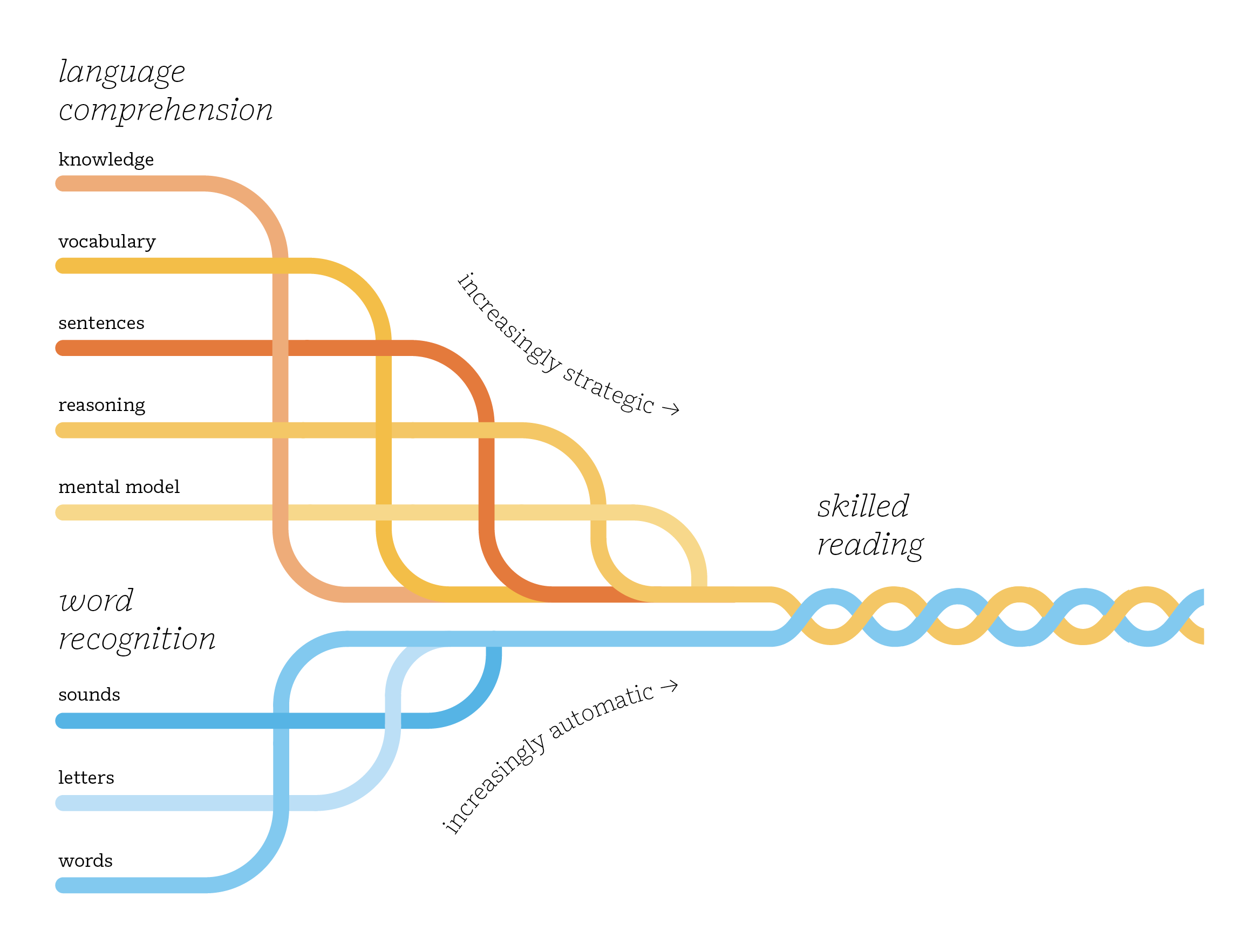
Grounded in the Science of Reading
As the original Science of Reading program, Amplify CKLA puts research into action with explicit, systematic foundational skills instruction and a proven knowledge-building sequence. In collaboration with education experts and practitioners, we provide powerful resources that deliver real results.
Background knowledge drives results for Arkansas students
Amplify CKLA follows the Core Knowledge Sequence, a content-specific, cumulative, and coherent approach to knowledge building. This approach improves reading scores and closes achievement gaps by establishing a robust knowledge base that strengthens comprehension.
In Amplify CKLA 3rd Edition, we’ve enriched our Knowledge Sequence with a wider range of perspectives and high-quality texts in new and enhanced units.
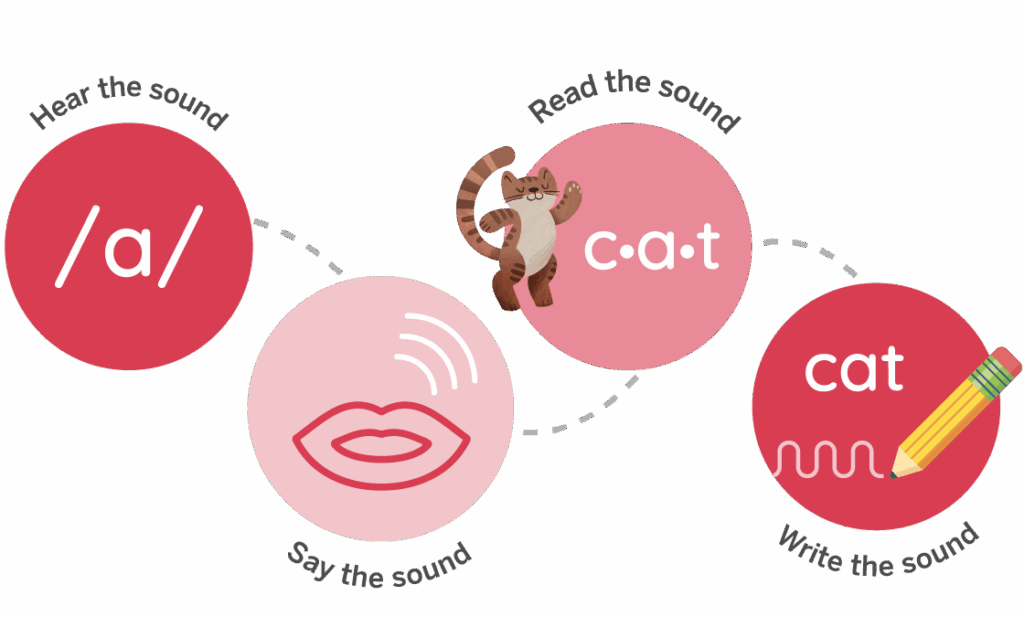
Build foundational skills for long-term success.
Students progress from simple to complex skill development, starting with phonological and phonemic awareness. Instruction in Grades K–2 explicitly teaches the 150 spellings for the 44 sounds of English, following an intentional progression to ensure student success.
In our 3rd Edition, we’ve added dedicated Grade 3 foundational skills instruction that can either support core lessons or function as an intervention, based on student needs.
Daily writing deepens learning.
Grounded in the Science of Writing—the research on how kids learn to write—instruction is explicit, daily, and woven into the curriculum’s rich content. It covers both transcription (handwriting and spelling) and composition (organizing ideas into narratives) with high-impact activities like sentence-level combining and expanding, and pre-writing exercises. Writing and reading instruction are integrated, so students simultaneously strengthen their communication skills, comprehension, and confidence.


High-quality texts
Amplify CKLA students are immersed in a variety of texts—complex read-alouds, decodable chapter books, trade books, and content-rich readers—that reflect varying experiences and backgrounds, and connect to learning goals.
Readers are 100% decodable for Grades K–2, empowering students to directly apply what they’ve learned. Novel Study units for Grades 3–5 offer a mix of contemporary and classic literature, and Culminating Research Units in every grade include a set of authentic texts and trade books.
Reach all learners with differentiated support.
Scaffolds and challenges, developed in collaboration with education experts, make content available to every student—including multilingual and English learners. With strategies embedded right in the curriculum, teachers can deliver in-the-moment, individualized instruction to meet all student needs.
For a dedicated English language development program aligned to Amplify CKLA, explore Language Studio.

What’s included
The comprehensive resources in Amplify CKLA 3rd Edition support effective literacy instruction in every classroom.


Easy-to-use teacher materials
Amplify CKLA teachers are empowered to deliver effective instruction with the following print and digital resources:
- Teacher Guides (K–5)
- Assessment Guides (K–5)
- Authentic texts and trade books (K–5)
- Knowledge Image Cards (K–2)
- Knowledge Flip Books (K–2, digital)
- Ready-made and customizable Presentation Screens (K–5, digital)
- Remediation and intervention resources (K–5)
- On-demand professional development (K–5, digital)
Immersive Amplify CKLA student resources
Amplify CKLA students stay engaged with the following print and digital resources:
- Decodable readers (K–2)
- Student Readers and novels (3–5)
- Student Activity Books (K–5)
- Poet’s Journal and Writer’s Journal (3–5)
- eReaders (K–5, digital)
- Sound Library featuring articulation videos and songs (K–2, digital)
- Skill-building practice games (K–5)


Rich literary experiences
The high-quality texts in Amplify CKLA foster students’ curiosity, reflect the wide variety of their backgrounds and experiences, and help them learn to read with confidence.
- Trade Book Collections (K–5) inspire student research in each grade’s Culminating Research Unit.
- Classic and contemporary literature (3–5) delights students in Novel Study Units.
- Increasingly complex Student Readers (K–5) develop students’ literacy across grades.
Hands-on phonics materials
Multisensory phonics and foundational skills resources engage students with fun, varied approaches that promote mastery and build independence.
- Chaining Folders and Small Letter Cards (K)
- Read-Aloud Big Books (K–1)
- Large Letter Cards (K–2)
- Sound Cards (K–2)
- Image Cards (K–3)
- Blending Picture Cards (K)
- Consonant and Vowel Code Posters and Spelling Cards (1–2)
- Sound Library (K–2, digital)
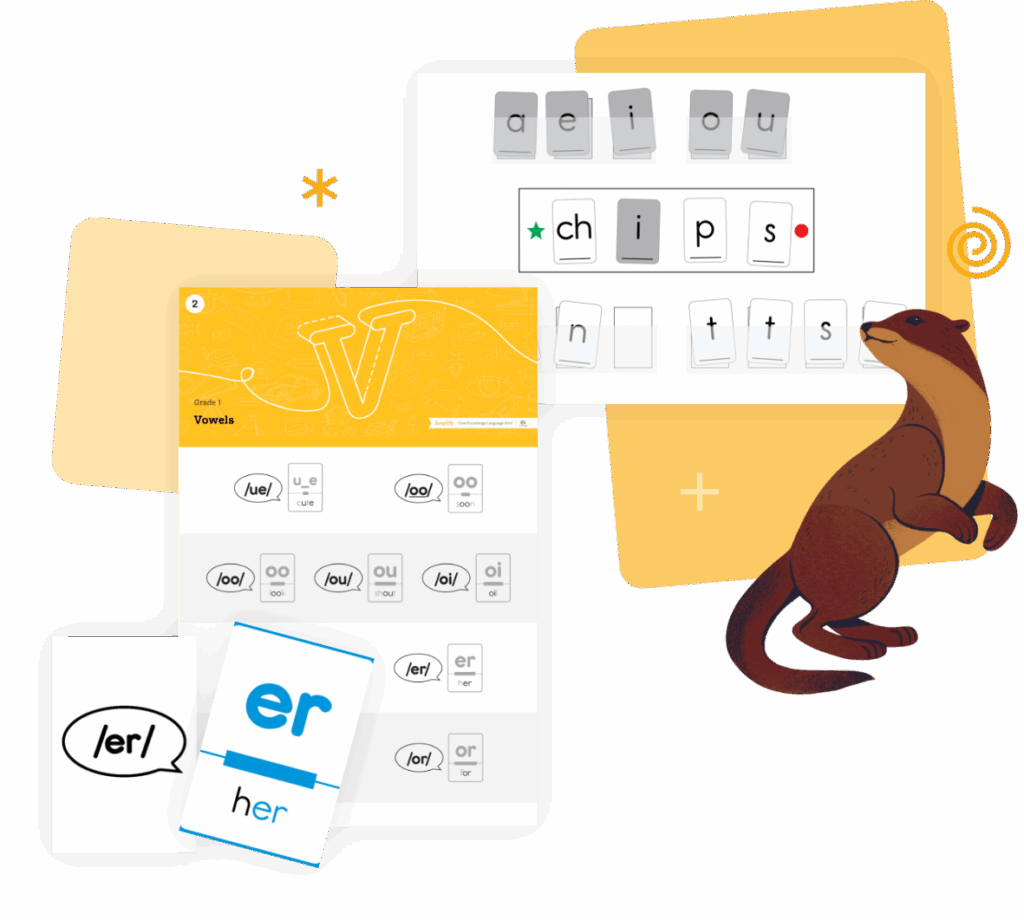
All-in-one digital platform
Our comprehensive platform simplifies your day-to-day tasks and makes it easier to plan and deliver lessons.
- Ready-made and customizable Presentation Screens
- Auto-scored digital assessments
- Standards-based reporting
- Assignable skill-building games
- Sound Library
- eReaders
Professional Development
We look forward to working alongside our Arkansas partners to build a strong foundation in Amplify CKLA. Our dedicated professional development team will continue collaborating with the ADE to provide job-embedded, on-site support that aligns with the Arkansas ELA standards and the Science of Reading.

A true Science of Reading early literacy suite for Grades K–5
Amplify has combined the critical elements of a Science of Reading system: assessment, core curriculum, personalized learning, and intervention. Based on 20 years of experience with the Science of Reading, this complete system saves you time and aligns your literacy practices.
- Assess with mCLASS®: A universal and dyslexia screener, powered by DIBELS® 8th Edition
- Instruct with Amplify CKLA: Core curriculum to build foundational skills and knowledge
- Practice with Boost Reading: Personalized learning program to extend and reinforce core
- Intervene with mCLASS Intervention: Staff-led Tier 2 and 3 intervention for intensive support
Language Studio: Multilingual and English learner support
Language Studio is Amplify CKLA’s dedicated K–5 program for multilingual and English learners. Through daily 30-minute lessons, it strengthens reading, writing, speaking, and listening skills while reinforcing core instruction. This tailored support empowers students to confidently access grade-level content as they develop academic English.

Explore more programs in Amplify’s literacy and biliteracy suite.
All of the programs in our literacy suite and our biliteracy suite are designed to support and complement each other. Learn more about our related programs:

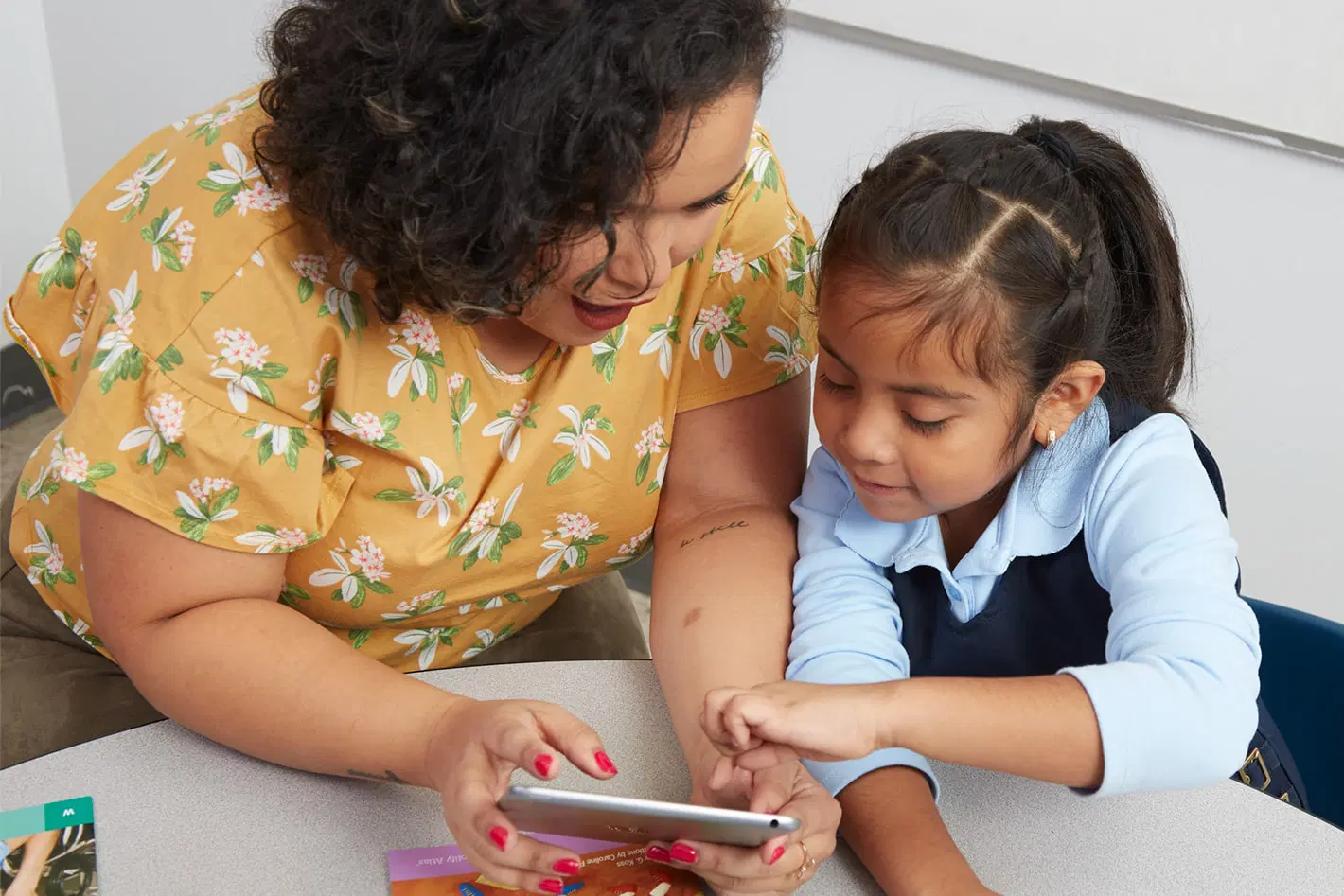
Get a demo
Fill out this form and your Account Executive Paige Benoy will contact you to set up a demo, send samples, or answer questions about Amplify CKLA.
Paige Benoy
Arkansas Account Executive
pbenoy@amplify.com
Texas ELAR Literacy Adoption
The next chapter in the Science of Reading
Introducing Amplify CKLA 3rd Edition, a K–5 core literacy program within Amplify’s literacy suite. For more than a decade, Amplify CKLA has transformed classrooms nationwide with its intentional knowledge building and systematic skills instruction. Available for the 2025–2026 school year, the 3rd Edition builds on this successful foundation to better support all students in becoming confident readers, writers, and thinkers. Together, let’s write the next chapter in the Science of Reading.

Amplify CKLA serves
150,000+
Classrooms
4,000,000+
Students
50
U.S. States and D.C.
Our approach
Improve outcomes with a program built on a decade of research, and that meets the strongest ESSA Tier I criteria.

Grounded in the Science of Reading
As the original Science of Reading program, Amplify CKLA puts research into action with explicit, systematic foundational skills instruction and a proven knowledge-building sequence. In collaboration with education experts and practitioners, we provide powerful resources that deliver real results.
Background knowledge drives results
Amplify CKLA follows the Core Knowledge Sequence, a content-specific, cumulative, and coherent approach to knowledge building. This approach improves reading scores and closes achievement gaps by establishing a robust knowledge base that strengthens comprehension.
In Amplify CKLA 3rd Edition, we’ve enriched our Knowledge Sequence with a wider range of perspectives and high-quality texts in new and enhanced units.

Build foundational skills for long-term success.
Students progress from simple to complex skill development starting with phonological and phonemic awareness. Instruction in Grades K–2 explicitly teaches the 150 spellings for the 44 sounds of English, following an intentional progression to ensure student success.
In our 3rd Edition, we’ve added dedicated Grades 3–5 foundational skills instruction that can either support core lessons or function as an intervention, based on student needs.
Daily writing deepens learning.
Grounded in the Science of Writing—the research on how kids learn to write—instruction is explicit, daily, and woven into the curriculum’s rich content. It covers both transcription (handwriting and spelling) and composition (organizing ideas into narratives) with high-impact activities like sentence-level combining and expanding, and pre-writing exercises. Writing and reading instruction are integrated so students simultaneously strengthen their communication skills, comprehension, and confidence.


High-quality, diverse texts
Amplify CKLA students are immersed in a variety of texts—complex read-alouds, decodable chapter books, trade books, and content-rich readers—that reflect varied experiences and connect to learning goals.
Readers are 100% decodable for Grades K–2, empowering students to directly apply what they’ve learned. Novel Study units for Grades 3–5 offer a mix of contemporary and classic literature, and Culminating Research Units in every grade include a set of authentic texts and trade books.
Reach all learners with differentiated support.
Scaffolds and challenges, developed in collaboration with education experts, make content available to every student—including multilingual and English learners. With strategies embedded right in the curriculum, teachers can deliver in-the-moment, individualized instruction to meet all student needs.
For a dedicated English language development program aligned to Amplify CKLA, explore Language Studio.

What’s included
The comprehensive resources in Amplify CKLA 3rd Edition support effective literacy instruction in every classroom.
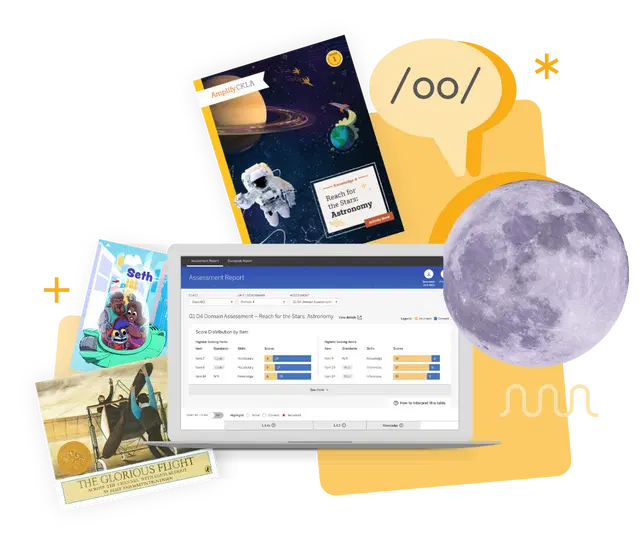

Easy-to-use teacher materials
Amplify CKLA teachers are empowered to deliver effective instruction with the following print and digital resources:
- Teacher Guides (K–5)
- Assessment Guides (K–5)
- Authentic texts and trade books (K–5)
- Knowledge Image Cards (K–2)
- Knowledge Flip Books (K–2, digital)
- Ready-made and customizable Presentation Screens (K–5, digital)
- Remediation and intervention resources (K–5)
- On-demand professional development (K–5, digital)
Immersive Amplify CKLA student resources
Amplify CKLA students stay engaged with the following print and digital resources:
- Decodable readers (K–2)
- Student Readers and novels (3–5)
- Student Activity Books (K–5)
- Poet’s Journal and Writer’s Journal (3–5)
- eReaders (K–5, digital)
- Sound Library featuring articulation videos and songs (K–2, digital)
- Assignable Practice Games (K–5)


Rich literary experiences
All of the high-quality, diverse texts in Amplify CKLA connect to the curriculum, fostering your students’ curiosity and helping them learn to read with confidence.
- Trade Book Collections (K–5) inspire student research in each grade’s Culminating Research Unit.
- Classic and contemporary literature (3–5) delight students in Novel Study Units.
- Increasingly complex Student Readers (K–5) develop students’ literacy across grades.
Hands-on phonics materials
Multisensory phonics and foundational skills resources engage students with fun, varied approaches that promote mastery and build independence.
- Chaining Folders and Small Letter Cards (K)
- Read-Aloud Big Books (K–1)
- Large Letter Cards (K–2)
- Sound Cards (K–2)
- Image Cards (K–3)
- Blending Picture Cards (K)
- Consonant and Vowel Code Posters and Spelling Cards (1–2)
- Sound Library (K–2, digital)
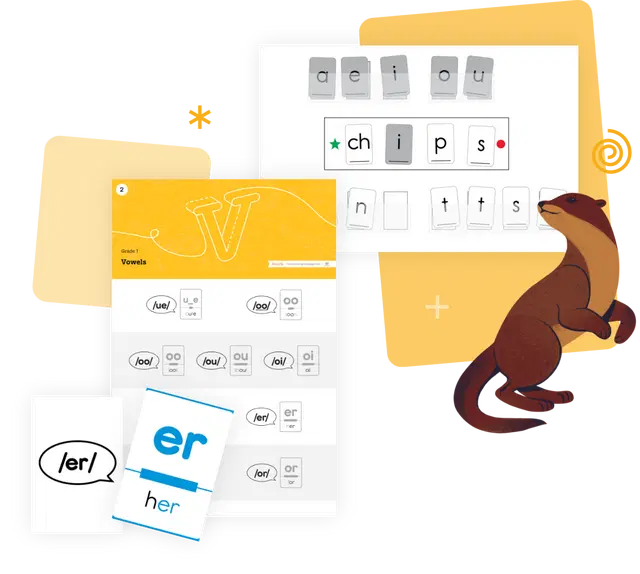
All-in-one digital platform
Our comprehensive platform simplifies your day-to-day tasks and makes it easier to plan and deliver lessons.
- Ready-made and customizable Presentation Screens
- Auto-scored digital assessments
- Standards-based reporting
- Assignable Practice Games
- Sound Library
- eReaders
Professional Development
Move beyond traditional program training with Amplify’s digital PD Library, designed to fully support your shift to the Science of Reading and Amplify CKLA. Deepen your understanding with:
- Program and planning resources
- Model lesson videos from real classrooms
- Guidance on using Amplify’s literacy suite to provide multi-tiered support


Ready to continue your learning journey?
We also offer live, tailored professional learning sessions by expert partners to expand your Science of Reading expertise, strengthen implementation, and improve student outcomes.
A true Science of Reading early literacy suite for Grades K–5
Amplify has combined the critical elements of a Science of Reading system: assessment, core curriculum, personalized learning, and intervention. Based on 20 years of experience with the Science of Reading, this complete system saves you time and aligns your literacy practices.
- Assess with mCLASS®: A universal and dyslexia screener, powered by DIBELS 8th Edition
- Instruct with Amplify CKLA: Core curriculum to build foundational skills and knowledge
- Practice with Boost Reading™: Personalized learning program to extend and reinforce core
- Intervene with mCLASS Intervention: Staff-led Tier 2 and 3 intervention for intensive support
Language Studio: Multilingual and English language learner support
Language Studio is Amplify CKLA’s dedicated K–5 program for multilingual and English language learners. Through daily 30-minute lessons, it strengthens reading, writing, speaking, and listening skills while reinforcing core instruction. This tailored support empowers students to confidently access grade-level content as they develop academic English.
Explore more programs in Amplify’s literacy and biliteracy suite.
All of the programs in our literacy suite and our biliteracy suite are designed to support and complement each other. Learn more about our related programs:

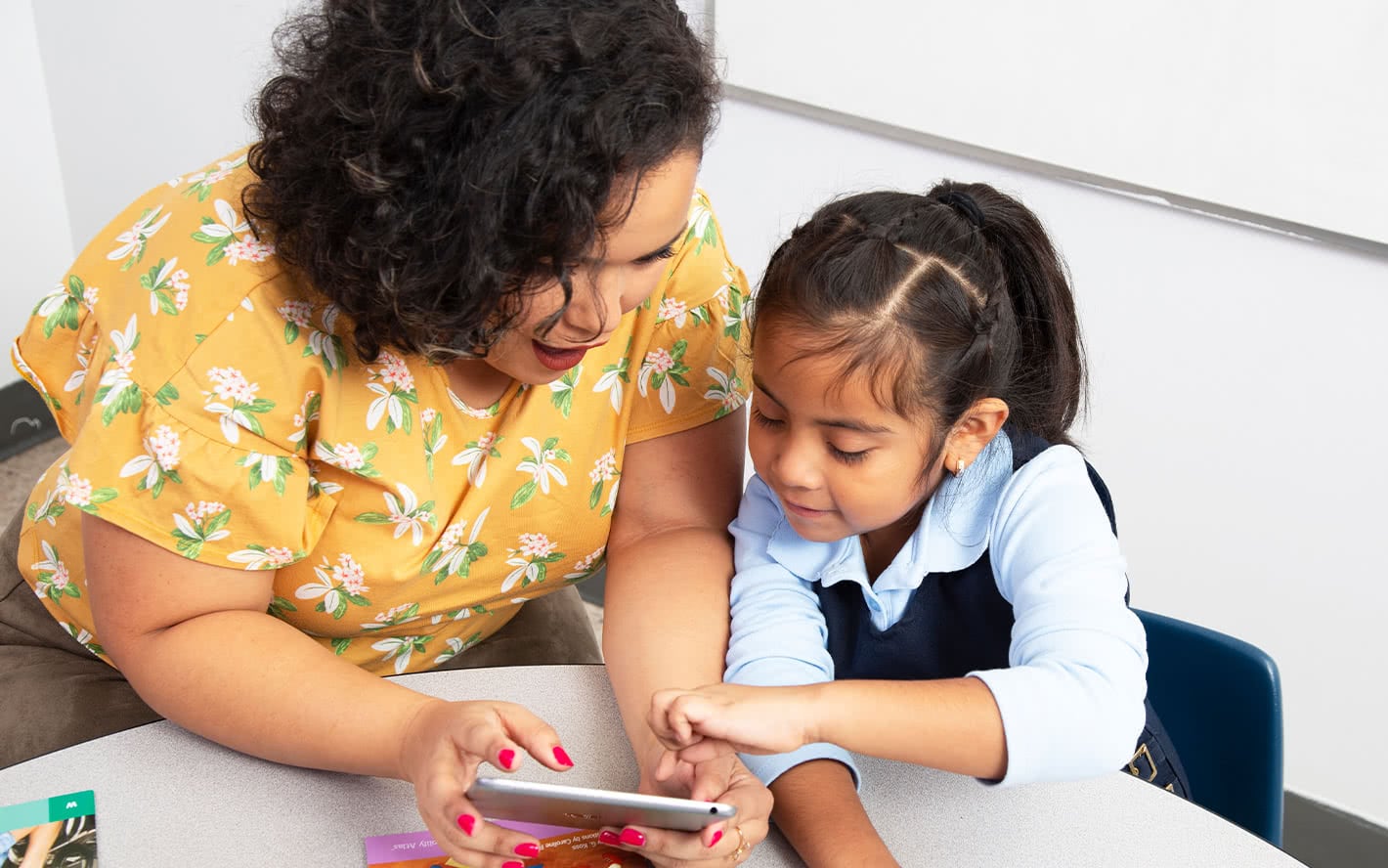
Welcome, Oak Park USD, to the next chapter in the Science of Reading, with Amplify CKLA 3rd Edition!
For more than a decade, Amplify CKLA has transformed classrooms nationwide with its intentional knowledge building and systematic skills instruction.
Scroll down to learn how CKLA is uniquely designed to help all your students make learning leaps in literacy.
Our approach
Improve outcomes with a program that’s built on a decade of research and meets the strongest ESSA Tier I criteria.
Grounded in the Science of Reading
As the original Science of Reading program, Amplify CKLA puts research into action with explicit, systematic foundational skills instruction and a proven knowledge-building sequence. In collaboration with education experts and practitioners, we provide powerful resources that deliver real results.
Background knowledge drives results
Amplify CKLA follows the Core Knowledge Sequence, a content-specific, cumulative, and coherent approach to knowledge building. This approach improves reading scores and closes achievement gaps by establishing a robust knowledge base that strengthens comprehension.
In Amplify CKLA 3rd Edition, we’ve enriched our Knowledge Sequence with a wider range of perspectives and high-quality texts in new and enhanced units.
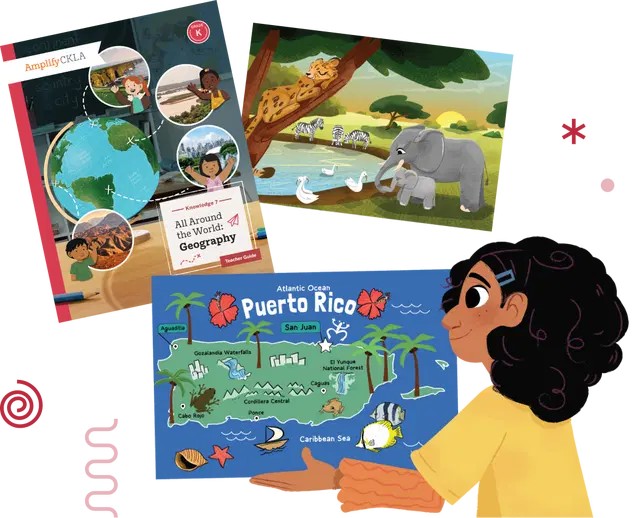
Build foundational skills for long-term success.
Students progress from simple to complex skill development starting with phonological and phonemic awareness. Instruction in Grades K–2 explicitly teaches the 150 spellings for the 44 sounds of English, following an intentional progression to ensure student success.
In our 3rd Edition, we’ve added dedicated Grade 3 foundational skills instruction that can either support core lessons or function as an intervention, based on student needs.
Daily writing deepens learning.
Grounded in the Science of Writing—the research on how kids learn to write—instruction is explicit, daily, and woven into the curriculum’s rich content. It covers both transcription (handwriting and spelling) and composition (organizing ideas into narratives) with high-impact activities like sentence-level combining and expanding, and pre-writing exercises. Writing and reading instruction are integrated so students simultaneously strengthen their communication skills, comprehension, and confidence.
High-quality, diverse texts
Amplify CKLA students are immersed in a variety of texts—complex read-alouds, decodable chapter books, trade books, and content-rich readers—that reflect varied experiences and connect to learning goals.
Readers are 100% decodable for Grades K–2, empowering students to directly apply what they’ve learned. Novel Study units for Grades 3–5 offer a mix of contemporary and classic literature, and Culminating Research Units in every grade include a set of authentic texts and trade books.
Reach all learners with differentiated support.
Scaffolds and challenges, developed in collaboration with education experts, make content accessible to every student—including multilingual and English learners. With strategies embedded right in the curriculum, teachers can deliver in-the-moment, individualized instruction to meet diverse student needs.
For a dedicated English language development program aligned to Amplify CKLA, explore Language Studio.
What’s included with Amplify CKLA
The comprehensive resources in Amplify CKLA 3rd Edition support effective literacy instruction in every classroom.
Easy-to-use teacher materials
Amplify CKLA teachers are empowered to deliver effective instruction with the following print and digital resources:
- Teacher Guides (K–5)
- Assessment Guides (K–5)
- Authentic texts and trade books (K–5)
- Knowledge Image Cards (K–2)
- Knowledge Flip Books (K–2, digital)
- Ready-made and customizable Presentation Screens (K–5, digital)
- Remediation and intervention resources (K–5)
- On-demand professional development (K–5, digital)
Immersive Amplify CKLA student resources
Amplify CKLA students stay engaged with the following print and digital resources:
- Decodable readers (K–2)
- Student Readers and novels (3–5)
- Student Activity Books (K–5)
- Poet’s Journal (3–5)
- eReaders (K–5, digital)
- Sound Library featuring articulation videos and songs (K–2, digital)
- Skill-building practice games (K–5)
Rich literary experiences
All the high-quality, diverse texts in Amplify CKLA connect to the curriculum, fostering your students’ curiosity and helping them learn to read with confidence.
- Trade Book Collections (K–5) inspire student research in each grade’s Culminating Research Unit.
- Classic and contemporary literature (3–5) delight students in Novel Study Units.
- Increasingly complex Student Readers (K–5) develop students’ literacy across grades.
Hands-on phonics materials
Multisensory phonics and foundational skills resources engage students with fun, varied approaches that promote mastery and build independence.
- Chaining Folders and Small Letter Cards (K)
- Read-Aloud Big Books (K–1)
- Large Letter Cards (K–2)
- Sound Cards (K–2)
- Image Cards (K–3)
- Blending Picture Cards (K)
- Consonant and Vowel Code Posters and Spelling Cards (1–2)
- Sound Library (K–2, digital)
All-in-one digital platform
Our comprehensive platform simplifies your day-to-day tasks and makes it easier to plan and deliver lessons.
- Ready-made and customizable Presentation Screens
- Auto-scored digital assessments
- Standards-based reporting
- Assignable skill-building games
- Sound Library
- eReaders
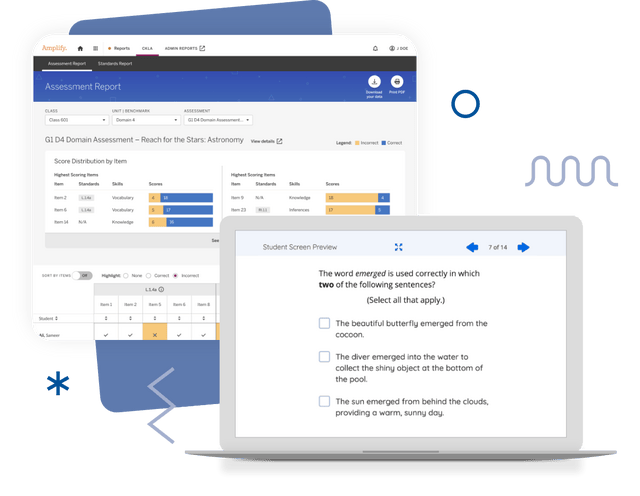
Professional development
Move beyond traditional program training with Amplify’s digital PD Library, designed to fully support your shift to the Science of Reading and Amplify CKLA. Deepen your understanding with:
- Program and planning resources
- Model lesson videos from real classrooms
- Guidance on using Amplify’s literacy suite to provide multi-tiered support
Language Studio: Multilingual and English language learner support
Language Studio is Amplify CKLA’s dedicated K–5 program for multilingual and English language learners. Through daily 30-minute lessons, it strengthens reading, writing, speaking, and listening skills while reinforcing core instruction. This tailored support empowers students to confidently access grade-level content as they develop academic English.
Curriculum Maps
- Curriculum Maps by Grade and Strand:
Amplify CKLA serves
150,000+
Classrooms
4,000,000+
Students
50
U.S. States and D.C.
The next chapter in the Science of Reading
Introducing Amplify CKLA 3rd Edition, a K–5 core literacy program within Amplify’s literacy suite. For more than a decade, Amplify CKLA has transformed classrooms nationwide with its intentional knowledge building and systematic skills instruction. Available for the 2025–2026 school year, the 3rd Edition builds on this successful foundation to better support all students in becoming confident readers, writers, and thinkers. Together, let’s write the next chapter in the Science of Reading.
Amplify CKLA serves
150,000+
Classrooms
4,000,000+
Students
50
U.S. States and D.C.
Our approach
Improve outcomes with a program built on a decade of research, and that meets the strongest ESSA Tier I criteria.
Grounded in the Science of Reading
As the original Science of Reading program, Amplify CKLA puts research into action with explicit, systematic foundational skills instruction and a proven knowledge-building sequence. In collaboration with education experts and practitioners, we provide powerful resources that deliver real results.
Background knowledge drives results
Amplify CKLA follows the Core Knowledge Sequence, a content-specific, cumulative, and coherent approach to knowledge building. This approach improves reading scores and closes achievement gaps by establishing a robust knowledge base that strengthens comprehension.
In Amplify CKLA 3rd Edition, we’ve enriched our Knowledge Sequence with a wider range of perspectives and high-quality texts in new and enhanced units.
Build foundational skills for long-term success.
Students progress from simple to complex skill development starting with phonological and phonemic awareness. Instruction in Grades K–2 explicitly teaches the 150 spellings for the 44 sounds of English, following an intentional progression to ensure student success.
In our 3rd Edition, we’ve added dedicated Grades 3–5 foundational skills instruction that can either support core lessons or function as an intervention, based on student needs.
Daily writing deepens learning.
Grounded in the Science of Writing—the research on how kids learn to write—instruction is explicit, daily, and woven into the curriculum’s rich content. It covers both transcription (handwriting and spelling) and composition (organizing ideas into narratives) with high-impact activities like sentence-level combining and expanding, and pre-writing exercises. Writing and reading instruction are integrated so students simultaneously strengthen their communication skills, comprehension, and confidence.
High-quality, diverse texts
Amplify CKLA students are immersed in a variety of texts—complex read-alouds, decodable chapter books, trade books, and content-rich readers—that reflect varied experiences and connect to learning goals.
Readers are 100% decodable for Grades K–2, empowering students to directly apply what they’ve learned. Novel Study units for Grades 3–5 offer a mix of contemporary and classic literature, and Culminating Research Units in every grade include a set of authentic texts and trade books.
Reach all learners with differentiated support.
Scaffolds and challenges, developed in collaboration with education experts, make content available to every student—including multilingual and English learners. With strategies embedded right in the curriculum, teachers can deliver in-the-moment, individualized instruction to meet all student needs.
For a dedicated English language development program aligned to Amplify CKLA, explore Language Studio.
What’s included
The comprehensive resources in Amplify CKLA 3rd Edition support effective literacy instruction in every classroom.
Easy-to-use teacher materials
Amplify CKLA teachers are empowered to deliver effective instruction with the following print and digital resources:
- Teacher Guides (K–5)
- Assessment Guides (K–5)
- Authentic texts and trade books (K–5)
- Knowledge Image Cards (K–2)
- Knowledge Flip Books (K–2, digital)
- Ready-made and customizable Presentation Screens (K–5, digital)
- Remediation and intervention resources (K–5)
- On-demand professional development (K–5, digital)
Immersive Amplify CKLA student resources
Amplify CKLA students stay engaged with the following print and digital resources:
- Decodable readers (K–2)
- Student Readers and novels (3–5)
- Student Activity Books (K–5)
- Poet’s Journal and Writer’s Journal (3–5)
- eReaders (K–5, digital)
- Sound Library featuring articulation videos and songs (K–2, digital)
- Assignable Practice Games (K–5)
Rich literary experiences
All of the high-quality, diverse texts in Amplify CKLA connect to the curriculum, fostering your students’ curiosity and helping them learn to read with confidence.
- Trade Book Collections (K–5) inspire student research in each grade’s Culminating Research Unit.
- Classic and contemporary literature (3–5) delight students in Novel Study Units.
- Increasingly complex Student Readers (K–5) develop students’ literacy across grades.
Hands-on phonics materials
Multisensory phonics and foundational skills resources engage students with fun, varied approaches that promote mastery and build independence.
- Chaining Folders and Small Letter Cards (K)
- Read-Aloud Big Books (K–1)
- Large Letter Cards (K–2)
- Sound Cards (K–2)
- Image Cards (K–3)
- Blending Picture Cards (K)
- Consonant and Vowel Code Posters and Spelling Cards (1–2)
- Sound Library (K–2, digital)
All-in-one digital platform
Our comprehensive platform simplifies your day-to-day tasks and makes it easier to plan and deliver lessons.
- Ready-made and customizable Presentation Screens
- Auto-scored digital assessments
- Standards-based reporting
- Assignable Practice Games
- Sound Library
- eReaders
Professional Development
Move beyond traditional program training with Amplify’s digital PD Library, designed to fully support your shift to the Science of Reading and Amplify CKLA. Deepen your understanding with:
- Program and planning resources
- Model lesson videos from real classrooms
- Guidance on using Amplify’s literacy suite to provide multi-tiered support
A true Science of Reading early literacy suite for Grades K–5
Amplify has combined the critical elements of a Science of Reading system: assessment, core curriculum, personalized learning, and intervention. Based on 20 years of experience with the Science of Reading, this complete system saves you time and aligns your literacy practices.
- Assess with mCLASS®: A universal and dyslexia screener, powered by DIBELS 8th Edition
- Instruct with Amplify CKLA: Core curriculum to build foundational skills and knowledge
- Practice with Boost Reading™: Personalized learning program to extend and reinforce core
- Intervene with mCLASS Intervention: Staff-led Tier 2 and 3 intervention for intensive support
Language Studio: Multilingual and English language learner support
Language Studio is Amplify CKLA’s dedicated K–5 program for multilingual and English language learners. Through daily 30-minute lessons, it strengthens reading, writing, speaking, and listening skills while reinforcing core instruction. This tailored support empowers students to confidently access grade-level content as they develop academic English.
Explore more programs in Amplify’s literacy and biliteracy suite.
All of the programs in our literacy suite and our biliteracy suite are designed to support and complement each other. Learn more about our related programs:
Plan your professional development
We’re excited to partner with you on your Amplify journey. Flexible professional development pathways have been designed to meet your needs.

Recommended professional development plan
Our team has curated a recommended professional learning path from initial launch to continuous support. Use the Professional Development Planning Guide below to discuss the plan that best meets your school or district needs with your Account Executive.
Sessions overview
Launch
Amplify ELAR Texas 6–8 Comprehensive initial training for teachers
2 days consecutive (6 hours per day, 12 hours total)
Prepare to implement and support Amplify ELAR Texas instruction in your schools! Learn how Amplify ELAR Texas supports students through rigorous and engaging instruction. Participants will navigate the Amplify ELAR Texas platform, learn to give feedback on student work, and explore how to use the embedded supports and the Reporting app to monitor student progress. Participants will engage in multiple opportunities to practice components of Amplify ELAR Texas and leave confident to begin teaching.
Audience: Teachers and coaches, maximum 30 participants
Modality: Onsite
Amplify ELAR Texas 6–8 Initial training for teachers
1 day (6 hours)
Prepare to implement and support Amplify ELAR Texas instruction in your schools! Learn how Amplify ELAR Texas supports students through rigorous and engaging instruction. Participants will navigate the Amplify ELAR Texas platform, learn to give feedback on student work, and explore how to use the embedded supports and the Reporting app to monitor student progress. Participants will leave with an action plan to begin teaching Amplify ELAR Texas.
Audience: Teachers and coaches, maximum 30 participants
Modality: Onsite
Amplify ELAR Texas 6–8 Initial training for teachers
2 half days (3 hours per day, 6 hours total)
This full day initial training session (6 hours) is split into two half-day sessions (3 hours each). Part 1 and Part 2 may be scheduled consecutively on the same day or on different days, ideally within ~2 weeks. The same participants should attend both sessions in order to receive all content about key components of Amplify ELAR Texas, which includes learning how to navigate, teach, and monitor student progress.
Audience: Teachers and coaches, maximum 30 participants
Modality: Remote
Amplify ELAR Texas 6–8 Initial training for instructional leaders
Half day (3 hours)
This training will provide district and school-level instructional leaders with an overview of Amplify ELAR Texas so that they can support their staff in implementing Amplify. Learn basic navigation and gain an understanding of Amplify’s approach to reading, writing, and language instruction. Participants will then have the opportunity to choose how to best support teachers by either developing a school-wide implementation plan or learning strategies for effective classroom observations.
Audience: Ideal for instructional leaders, principals, and district staff who oversee the implementation of the new curriculum, maximum 30 participants
Modality: Onsite/Remote
Amplify ELAR Texas 6–8 Getting started package
Participants will review the foundational elements of the program, including the structure of materials, and engage in a structured planning process. This 90 minute consultation session will focus on the upcoming unit participants are preparing to teach. This package includes 90 minutes of remote PD and two 60 minute follow-up remote sessions.
Audience: Teachers, coaches, and/or instructional leaders, maximum 30 participants
Modality: Remote
Strengthen
Amplify ELAR Texas 6–8 Enhancing observations for leaders
Half day (3 hours)
Prerequisite Training: Initial training for leaders
Elevate your program knowledge to support colleagues with effective ELAR implementation! Practice analyzing Amplify ELAR Texas lessons and identify key instructional elements and next steps. Participants will be prepared to analyze data and enhance classroom observations.
Audience: Ideal for instructional leaders, principals, and district staff who oversee the implementation of the new curriculum, maximum 30 participants
Modality: Onsite/Remote
Amplify ELAR Texas 6–8 Enhancing planning and practice
Half day (3 hours)
Dig into one unit to unpack standards, assessments, and student engagement. Through backward planning, this session guides teachers to think deeply about learning outcomes and key moments of formative assessments. Teachers will leave this session with a detailed plan of a unit of their choice, that includes learning outcomes, key assessment moments, and aligned instructional strategies.
Audience: Ideal for new or experienced Amplify ELAR Texas teachers or coaches, maximum 30 participants
Modality: Onsite/Remote
Amplify ELAR Texas 6–8 Analytic Reading
Half day (3 hours)
Participants will learn how analytic reading functions in Amplify ELAR Texas and which teacher moves support students as they tackle complex texts. Participants will learn how to facilitate a close reading session to support key reading routines and promote academic discourse and the type of collaboration that drives analysis and deepens understanding.
Audience: Ideal for new or experienced Amplify ELAR Texas teachers, maximum 30 participants
Modality: Onsite/Remote
Amplify ELAR Texas 6–8 Supporting all learners
Half day (3 hours)
Participants will learn how to effectively use embedded and differentiated supports and the Classwork app to support all students, including English language learners (ELL), students with learning disabilities, struggling readers, and writers, and advanced students.
Audience: Ideal for new teachers or instructional leaders who want to learn more about included supports in Amplify ELAR Texas, maximum 30 participants
Modality: Onsite/Remote
Amplify ELAR Texas 6–8 Data-informed instruction
Half day (3 hours)
Prerequisite: 4–6 weeks of student data in Amplify’s Reporting app. It is recommended that teachers are in at least Unit B.
Participants will review their own student data using the Reporting and Classwork apps and align embedded supports to specific student needs. The goal of this session is to become proficient in turning Amplify ELAR Texas data into differentiated and targeted instruction. Note: This course can be combined with the Supporting All Learners session to make a full day of training.
Audience: Ideal for teachers or support staff who want to learn how to use student data to inform instruction and provide differentiation, maximum 30 participants
Modality: Onsite/Remote
Amplify ELAR Texas 6–8 Strengthening consultation session
1 hour
This 60-minute session will focus on a specific topic that will deepen educators” understanding in Amplify ELAR Texas and equip them with the tools needed to drive stronger student outcomes. An Amplify facilitator will align with the school or district leadership team in advance of the session on the topic (chosen from a menu of options) that will best meet educators unique needs. The menu includes sessions on engagement, pacing, and grading/assessment.
Audience: Teachers and coaches, maximum 30 participants
Modality: Remote
Amplify ELAR Texas 6–8 Strengthening consultation package
3 1-hour sessions
This package consists of three 60-minute sessions that can be delivered on the same day or on different days. Each session will focus on a specific topic that will deepen educators’ understanding in ELA and equip them with the tools needed to drive stronger student outcomes. An Amplify facilitator will align with the school or district leadership team in advance of the session on the topic (chosen from a menu of options) that will best meet educators’ unique needs. The menu includes sessions on engagement, pacing, and grading/assessment.
Audience: Teachers and coaches, maximum 30 participants
Modality: Remote
Coach
Amplify ELAR Texas 6–8 Coaching session
2 days consecutive (6 hours per day, 12 total)
Strengthen your implementation of Amplify ELAR Texas with an onsite Coaching visit for your teachers and/or leaders. Participants can choose from a variety of topics that include, but are not limited to: lesson modeling and debrief (conducted by an Amplify coach), grade-level planning, classroom observations, and leadership consultation. The flexible onsite coaching design allows for a collaborative approach to support effective program implementation.
Audience: Teachers, coaches, and/or instructional leaders, maximum 30 participants
Modality: Onsite
Amplify ELAR Texas 6–8 Coaching session
1 day (6 hours)
Strengthen your implementation of Amplify ELAR Texas with an onsite Coaching visit for your teachers and/or leaders. Participants can choose from a variety of topics that include, but are not limited to: lesson modeling and debrief (conducted by an Amplify coach), grade-level planning, classroom observations, and leadership consultation. The flexible onsite coaching design allows for a collaborative approach to support effective program implementation.
Audience: Teachers, coaches, and/or instructional leaders, maximum 30 participants
Modality: Onsite/Remote
Amplify ELAR Texas 6–8 Coaching session
Half day (3 hours)
Strengthen your implementation of Amplify ELAR Texas with a Coaching session for your teachers and/or leaders. Participants can choose from a variety of topics that include, but are not limited to lesson modeling and debrief (conducted by an Amplify coach), grade-level planning, classroom observations, and leadership consultation. The flexible coaching design allows for a collaborative approach to supporting effective program implementation.
Audience: Teachers, coaches, and/or instructional leaders, maximum 30 participants
Modality: Onsite/Remote
Pricing
We offer the following pricing for training sessions and packages:
| Session type | Pricing |
|---|---|
| 2-day onsite session | $4,800 |
| 1-day onsite session | $3,200 |
| 1-day remote session (2 half days remote) | $1,500 |
| Half-day onsite session | $2,500 |
| Half-day remote session | $750 |
| 1-hour remote session | $350 |
| Remote getting started package | $1,000 |
| 3 1-hour remote sessions | $1,000 |
Please note that the prices are general ranges and may be subject to change.
Contact
Amplify welcomes the opportunity to partner with schools and districts to design professional development plans and answer your questions.
If you would like to order any of our professional development services, please contact your local Amplify sales representative or call (800) 823-1969.
The next chapter in the Science of Reading
Introducing Amplify CKLA 3rd Edition, a K–5 core literacy program within Amplify’s literacy suite. For more than a decade, Amplify CKLA has transformed classrooms nationwide with its intentional knowledge building and systematic skills instruction. Available for the 2025–2026 school year, the 3rd Edition builds on this successful foundation to better support all students in becoming confident readers, writers, and thinkers. Together, let’s write the next chapter in the Science of Reading.
Amplify CKLA serves
150,000+
Classrooms
4,000,000+
Students
50
U.S. States and D.C.
Our approach
Improve outcomes with a program built on a decade of research, and that meets the strongest ESSA Tier I criteria.
Grounded in the Science of Reading
As the original Science of Reading program, Amplify CKLA puts research into action with explicit, systematic foundational skills instruction and a proven knowledge-building sequence. In collaboration with education experts and practitioners, we provide powerful resources that deliver real results.
Background knowledge drives results
Amplify CKLA follows the Core Knowledge Sequence, a content-specific, cumulative, and coherent approach to knowledge building. This approach improves reading scores and closes achievement gaps by establishing a robust knowledge base that strengthens comprehension.
In Amplify CKLA 3rd Edition, we’ve enriched our Knowledge Sequence with a wider range of perspectives and high-quality texts in new and enhanced units.
Build foundational skills for long-term success.
Students progress from simple to complex skill development starting with phonological and phonemic awareness. Instruction in Grades K–2 explicitly teaches the 150 spellings for the 44 sounds of English, following an intentional progression to ensure student success.
In our 3rd Edition, we’ve added dedicated Grades 3–5 foundational skills instruction that can either support core lessons or function as an intervention, based on student needs.
Daily writing deepens learning.
Grounded in the Science of Writing—the research on how kids learn to write—instruction is explicit, daily, and woven into the curriculum’s rich content. It covers both transcription (handwriting and spelling) and composition (organizing ideas into narratives) with high-impact activities like sentence-level combining and expanding, and pre-writing exercises. Writing and reading instruction are integrated so students simultaneously strengthen their communication skills, comprehension, and confidence.
High-quality, diverse texts
Amplify CKLA students are immersed in a variety of texts—complex read-alouds, decodable chapter books, trade books, and content-rich readers—that reflect varied experiences and connect to learning goals.
Readers are 100% decodable for Grades K–2, empowering students to directly apply what they’ve learned. Novel Study units for Grades 3–5 offer a mix of contemporary and classic literature, and Culminating Research Units in every grade include a set of authentic texts and trade books.
Reach all learners with differentiated support.
Scaffolds and challenges, developed in collaboration with education experts, make content available to every student—including multilingual and English learners. With strategies embedded right in the curriculum, teachers can deliver in-the-moment, individualized instruction to meet all student needs.
For a dedicated English language development program aligned to Amplify CKLA, explore Language Studio.
What’s included
The comprehensive resources in Amplify CKLA 3rd Edition support effective literacy instruction in every classroom.
Easy-to-use teacher materials
Amplify CKLA teachers are empowered to deliver effective instruction with the following print and digital resources:
- Teacher Guides (K–5)
- Assessment Guides (K–5)
- Authentic texts and trade books (K–5)
- Knowledge Image Cards (K–2)
- Knowledge Flip Books (K–2, digital)
- Ready-made and customizable Presentation Screens (K–5, digital)
- Remediation and intervention resources (K–5)
- On-demand professional development (K–5, digital)
Immersive Amplify CKLA student resources
Amplify CKLA students stay engaged with the following print and digital resources:
- Decodable readers (K–2)
- Student Readers and novels (3–5)
- Student Activity Books (K–5)
- Poet’s Journal and Writer’s Journal (3–5)
- eReaders (K–5, digital)
- Sound Library featuring articulation videos and songs (K–2, digital)
- Assignable Practice Games (K–5)
Rich literary experiences
All of the high-quality, diverse texts in Amplify CKLA connect to the curriculum, fostering your students’ curiosity and helping them learn to read with confidence.
- Trade Book Collections (K–5) inspire student research in each grade’s Culminating Research Unit.
- Classic and contemporary literature (3–5) delight students in Novel Study Units.
- Increasingly complex Student Readers (K–5) develop students’ literacy across grades.
Hands-on phonics materials
Multisensory phonics and foundational skills resources engage students with fun, varied approaches that promote mastery and build independence.
- Chaining Folders and Small Letter Cards (K)
- Read-Aloud Big Books (K–1)
- Large Letter Cards (K–2)
- Sound Cards (K–2)
- Image Cards (K–3)
- Blending Picture Cards (K)
- Consonant and Vowel Code Posters and Spelling Cards (1–2)
- Sound Library (K–2, digital)
All-in-one digital platform
Our comprehensive platform simplifies your day-to-day tasks and makes it easier to plan and deliver lessons.
- Ready-made and customizable Presentation Screens
- Auto-scored digital assessments
- Standards-based reporting
- Assignable Practice Games
- Sound Library
- eReaders
Professional Development
Move beyond traditional program training with Amplify’s digital PD Library, designed to fully support your shift to the Science of Reading and Amplify CKLA. Deepen your understanding with:
- Program and planning resources
- Model lesson videos from real classrooms
- Guidance on using Amplify’s literacy suite to provide multi-tiered support
Ready to continue your learning journey?
We also offer live, tailored professional learning sessions by expert partners to expand your Science of Reading expertise, strengthen implementation, and improve student outcomes.
A true Science of Reading early literacy suite for Grades K–5
Amplify has combined the critical elements of a Science of Reading system: assessment, core curriculum, personalized learning, and intervention. Based on 20 years of experience with the Science of Reading, this complete system saves you time and aligns your literacy practices.
- Assess with mCLASS®: A universal and dyslexia screener, powered by DIBELS 8th Edition
- Instruct with Amplify CKLA: Core curriculum to build foundational skills and knowledge
- Practice with Boost Reading™: Personalized learning program to extend and reinforce core
- Intervene with mCLASS Intervention: Staff-led Tier 2 and 3 intervention for intensive support
Language Studio: Multilingual and English language learner support
Language Studio is Amplify CKLA’s dedicated K–5 program for multilingual and English language learners. Through daily 30-minute lessons, it strengthens reading, writing, speaking, and listening skills while reinforcing core instruction. This tailored support empowers students to confidently access grade-level content as they develop academic English.
Explore more programs in Amplify’s literacy and biliteracy suite.
All of the programs in our literacy suite and our biliteracy suite are designed to support and complement each other. Learn more about our related programs:
Amplify Science professional development
Amplify Science blends hands-on investigations, literacy-rich activities, and interactive digital tools to empower students to think, read, write, and argue like real scientists and engineers. We’ve created a wide suite of professional development offerings that will help you meet your unique needs this school year. Find out more below!
Amplify CKLA, ELA, and Science professional development has been vetted by Rivet Education’s team through a rigorous three-step process and is listed in the Professional Learning Partner Guide.
Plan your professional development
We’re excited to partner with you on your Amplify journey. Flexible professional development pathways have been designed to meet your needs.
Recommended professional development plan
Our team has curated a recommended professional learning path from initial launch to continuous support. Use the Professional Development Planning Guide below to discuss the plan that best meets your school or district needs with your Account Executive.
Sessions overview
| Audience | Title | Duration | Modality | Available |
|---|---|---|---|---|
| Launch | ||||
| K–5 instructional leaders | Administrators’ program overview | Half day | Onsite/Remote | Yes^ |
| TK teachers | Transitional kindergarten program overview | Half day | Onsite/Remote | Yes |
| K–5 teachers | Initial training | 1 day onsite or 2 days remote |
Onsite/Remote | Yes*^ |
| K–5 teachers | Program overview | Half day | Onsite/Remote | Yes |
| Interactive Classroom consultation | 90 min. | Remote | Yes | |
| 6–8 instructional leaders | Administrators’ program overview | Half day | Onsite/Remote | Yes |
| 6–8 teachers | Initial training | 1 day onsite or 2 days remote |
Onsite/Remote | Yes* |
| 6–8 teachers | Program overview | Half day | Onsite/Remote | Yes |
| Strengthen | ||||
| K–5 instructional leaders | Strengthening consultation session | 60 min. | Remote | 6/2022 |
| Strengthening consultation package | 3 1-hour sessions | Remote | 6/2022 | |
| K–5 teachers | Guided unit internalization | Half day | Onsite/Remote | Yes |
| K–5 teachers | The Assessment System | Half day | Onsite/Remote | Yes |
| Supporting all learners with complex texts | Half day | Onsite/Remote | Yes | |
| Writing in science | Half day | Onsite/Remote | Yes | |
| Supporting English learners | Half day | Onsite/Remote | Yes | |
| Strengthening consultation session | 60 min. | Remote | 6/2022 | |
| Strengthening consultation package | 3 1-hour sessions | Remote | 6/2022 | |
| 6–8 instructional leaders | Strengthening consultation session | 60 min. | Remote | 6/2022 |
| Strengthening consultation package | 3 1-hour sessions | Remote | 6/2022 | |
| 6–8 teachers | Guided unit internalization | Half day | Onsite/Remote | Yes |
| 6–8 teachers | The Assessment System | Half day | Onsite/Remote | Yes |
| Supporting all learners with complex texts | Half day | Onsite/Remote | Yes | |
| Writing in science | Half day | Onsite/Remote | Yes | |
| Supporting English learners | Half day | Onsite/Remote | Yes | |
| Engineering Internships | Half day | Onsite/Remote | Yes | |
| Science Seminar | Half day | Onsite/Remote | Yes | |
| Strengthening consultation session | 60 min. | Remote | 6/2022 | |
| Strengthening consultation package | 3 1-hour sessions | Remote | 6/2022 | |
| Coach | ||||
| K–5 instructional leaders | Job-Embedded Coaching (JEC) | 1 day | Onsite | Yes |
| K–5 teachers | Job-Embedded Coaching (JEC) | 1 day | Onsite/Remote | Yes |
| 6–8 instructional leaders | Job-Embedded Coaching (JEC) | 1 day | Onsite | Yes |
| 6–8 teachers | Job-Embedded Coaching (JEC) | 1 day | Onsite/Remote | Yes |
| Note for all workshops: Any single three-hour offering can be repeated on the same day with different audiences to make one full-day session. | ||||
| *When delivered remotely, this full-day initial training session (6 hours) is split into two half-day sessions (3 hours each). Part 1 and Part 2 may be scheduled consecutively on the same day or on different days, ideally within ~2 weeks. The same participants should attend both sessions in order to receive all content. This flexible scheduling opportunity for remote sessions will be available starting 6/2022. | ||||
^Session will be available for IC customers after June 1, 2022.
Launch
For teachers
Initial training
1 day onsite (6 hours) or 2 half days remote (6 hours)*
Grade band: K–1 / K–5 / 6–8
Grade level: K, 1, 2, 3, 4, 5, 6, 7, 8
In the first half of this session, participants learn the essentials necessary to implement Amplify Science with success. They learn to navigate the digital Amplify Science platform and become familiar with planning resources and strategies. Through a model lesson and guided reflection, participants build an understanding of the instructional approach to teaching and learning. In the second half of this session, participants dig deeper into unit resources to start planning for instruction for their first grade-level unit.
When delivered as a grade band session, Part 1 will feature an exemplar from the following units:
- K–1 workshops feature an exemplar from the grade 1 unit Animal and Plant Defenses.
- K–5 workshops feature an exemplar from the grade 4 unit Energy Conversions.
- 6–8 workshops feature an exemplar from the Metabolism Core unit.
When delivered as a grade level session, Part 1 features the following units:
- K: Needs of Plants and Animals
- 1: Animal and Plant Defenses
- 2: Plant and Animal Relationships
- 3: Balancing Forces
- 4: Energy Conversions
- 5: Patterns of Earth and Sky
6–8 workshops feature one of the following units:
- Metabolism
- Plate Motion
- Force and Motion
Interactive Classroom customers: Select K-5 grade band or K, 1, 2, 3, 4, 5 grade level sessions (available starting 6/2022)
Audience: Teachers (administrators welcome), maximum 30 participants
Modality: Onsite/Remote
*When delivered remotely, this full-day initial training session (6 hours) is split into two half-day sessions (3 hours each). Part 1 and Part 2 may be scheduled consecutively on the same day or on different days, ideally within two weeks. The same participants should attend both sessions in order to receive all content. This flexible scheduling opportunity for remote sessions will be available starting 6/2022.
Interactive Classroom consultation
90 minutes
Grade band: K–5
Prerequisite: Initial training or program overview
In this remote consultation session, participants prepare to leverage Amplify Science’s new K-5 Interactive Classroom experience. The session includes a walkthrough of new digital features available to teachers and an opportunity for participants to experience these enhancements through modeled activities from an exemplar K-5 unit. The session closes with time for participants to explore the digital features and ask questions to support their planning.
*This session is designed for experienced Amplify Science users who are new to adding Interactive Classroom.
Audience: Teachers, maximum 30 participants
Modality: Remote
Program overview
Half day (3 hours)
Grand band: K–1, K–5, 6–8
Grade level: K, 1, 2, 3, 4, 5, 6, 7, 8
In this session, participants learn the essentials necessary to implement Amplify Science with success. They learn to navigate the digital Amplify Science platform and become familiar with planning resources and strategies. Through a model lesson and guided reflection, participants build an understanding of the instructional approach to teaching and learning.
When delivered as a grade band session, an exemplar will be featured from the following units:
- K–1 workshops feature an exemplar from the grade 1 unit Animal and Plant Defenses.
- K–5 workshops feature an exemplar from the grade 4 unit Energy Conversions.
- 6–8 workshops feature an exemplar from Metabolism.
When delivered as a grade level session, the following units will be featured:
- K: Needs of Plants and Animals
- 1: Animal and Plant Defenses
- 2: Plant and Animal Relationships
- 3: Balancing Forces
- 4: Energy Conversions
- 5: Patterns of Earth and Sky
6–8 workshops feature one of the following units:
- Metabolism
- Plate Motion
- Force and Motion
Interactive Classroom customers: Select K-5 grade band or K, 1, 2, 3, 4, 5 grade level sessions
Audience: Teachers (administrators welcome), maximum 30 participants
Modality: Onsite/Remote
Transitional kindergarten program overview
Half day (3 hours)
Grade level: TK
In this session, participants dive into exploring and planning for the first TK unit, Wondering About Noises in Trees. They engage with model activities, experience key instructional routines, and plan how they’ll implement this flexible curriculum in their classrooms. Participants collaborate to build a deep understanding of the TK instructional approach and structure. They will leave ready to start instruction in their classrooms, and take away a suite of additional resources to support their preparation for other TK units.
Audience: Teachers (administrators welcome), maximum 30 participants
Modality: Onsite/Remotewelcome), maximum 30 participants
Modality: Onsite/Remote
For instructional leaders
Administrators’ program overview
Half day (3 hours)
Grade band: K–5 / 6–8
In this session, instructional leaders become familiar with the principles of phenomenon-based teaching and learning, and experience the instructional approach of Amplify Science units. Leaders consider their essential role supporting teachers and students with the implementation of a new science curriculum.
Interactive Classroom customers: Select K-5 grade band session (available starting 6/2022)
Audience: Administrators, department chairs, coaches, maximum 30 participants
Modality: Onsite/Remote
Strengthen
For teachers
The Assessment System
Half day (3 hours)
Grade band: K–5 / 6–8
Prerequisite: Initial training or program overview
In this session, participants learn about the structure and purpose of the varied formative and summative opportunities in the Amplify Science Assessment System. Participants experience and analyze a sample formative assessment, deepen their understanding of unit learning progressions, and acquire strategies for collecting, analyzing, and responding to student assessment data. Collaborative reflections and discussions support participants’ understanding of the relationships among different types of assessments and their unit’s learning goals.
Audience: Teachers (administrators welcome), maximum 30 participants
Modality: Onsite/Remote
Supporting all learners with complex texts
Half day (3 hours)
Grade band: K–5 / 6–8
Prerequisite: Initial training or program overview
In this session, participants learn strategies to support all students as they access the complex texts in Amplify Science units. They explore the connections among the ways professional scientists read and how Amplify Science lessons build students’ capacity as science readers. The workshop includes a model reading sequence, collaborative problem-solving around common student reading challenges, and planning time for upcoming reading lessons in participants’ units.
Audience: Teachers (administrators welcome), maximum 30 participants
Modality: Onsite/Remote
Writing in science
Half day (3 hours)
Grade band: K–5 / 6–8
Prerequisite: Initial training or program overview
K–5: In this session, participants develop an understanding of how the Amplify Science writing approach supports students to engage in science practices, make sense of science ideas, and develop as writers. Participants experience an example multimodal instructional sequence that demonstrates the connections among informal daily writing and the more structured formal scientific explanations and arguments students write in each Amplify Science unit. They dig into resources for analyzing student writing then apply their learning to plan for supporting student writing in their unit.
6-8: In this session, participants develop an understanding of how the Amplify Science writing approach supports students to engage in science practices, make sense of science ideas, and develop as writers. Participants experience an example instructional sequence that demonstrates the varied purposes for frequent small, informal writing opportunities in multimodal science instruction, then they analyze how each core unit’s culminating Science Seminar experience works as a scaffold to support students as they write sophisticated scientific arguments. The session closes with a guided reflection on strategies for supporting student writing.
Audience: Teachers (administrators welcome), maximum 30 participants
Modality: Onsite/Remote
Supporting English learners
Half day (3 hours)
Grade band: K–5 / 6–8
Prerequisite: Initial training or program overview
In this session, participants explore strategies to support English learners’ ability to do, talk, read, write, visualize, and construct arguments like scientists. By engaging in model activities, participants deepen their knowledge of the critical role that language and literacy play in developing scientific understanding. Participants become familiar with the research-based principles underlying the embedded supports and strategies in Amplify Science, which aid in students’ development of disciplinary literacy in science.
Audience: Teachers (administrators welcome), maximum 30 participants
Modality: Onsite/Remote
Guided unit internalization
Half day (3 hours)
Grade band: K–5 / 6–8
Grade level: TK, K, 1, 2, 3, 4, 5, 6, 7, 8
Prerequisite: Initial training or program overview
In this session, participants leverage a planning protocol to internalize an upcoming unit. They apply their understanding of how students engage in three-dimensional learning throughout the unit to plan for the diverse needs of their classrooms and students.
Audience: Teachers (administrators welcome), maximum 30 participants
Modality: Onsite/Remote
Engineering Internships
Half day (3 hours)
Grade level: 6, 7, 8
Prerequisite: Initial training or program overview
In this session, participants explore and plan for the first Engineering Internship of their grade-level course. Participants are oriented to the Futura Workspace and other digital tools used with students in the internship experience. Participants also dive deeper into how students apply science concepts from core units to construct design solutions, learning engineering concepts and practices throughout the process.
Workshop will feature one of the following units:
- Metabolism Engineering Internship
- Plate Motion Engineering Internship
- Force and Motion Engineering Internship
Audience: Teachers (administrators welcome), maximum 30 participants
Modality: Onsite/Remote
Science Seminar
Half day (3 hours)
Grade band: 6–8
Prerequisite: Initial training or program overview
This session focuses on the culminating Science Seminar sequence at the end of the grades 6–8 core units, in which students apply the conceptual understanding built throughout the unit to engage in argumentation about a unique but related phenomenon. Participants experience a Science Seminar sequence from an exemplar unit as students do, then dive into a unit at their grade level to internalize the Science Seminar sequence and plan for instruction.
Audience: Teachers (administrators welcome), maximum 30 participants
Modality: Onsite/Remote
Strengthening consultation session
60-minute session
Grade band: K–5 / 6–8
Grade level: K, 1, 2, 3, 4, 5, 6, 7, 8
Prerequisite: Initial training or program overview
This 60-minute session focuses on a specific topic that will deepen teachers understanding of Amplify Science. An Amplify facilitator will align with the school or district leadership team in advance on the topic (chosen from a menu of options) that will best meet teachers’ unique options.
Topics include:
- Supporting Diverse Learners: Exploring the resources (for K–8 teachers)
- Supporting Diverse Learners: Leveraging and Building upon Embedded Supports A: Teacher modeling and student discourse (for K–8 teachers)
- Supporting Diverse Learners: Leveraging and Building upon Embedded Supports B: Multimodal instruction
- Planning an Amplify Science lesson (for K–8 teachers)
- Unit kits and materials prep (for K–5 teachers)
- Grading with Amplify Science (for K–8 teachers)
- Analyzing Student Work (for K–8 teachers)
Available starting 6/2022.
Audience: Teachers, maximum 30 participants
Modality: Remote
Strengthening consultation package
3 1-hour sessions
Grade band:K–5 / 6–8
Grade level:K, 1, 2, 3, 4, 5, 6, 7, 8
Prerequisite:Initial training or program overview
This package consists of three 60-minute sessions that can be delivered on the same day or on different days. Each session will focus on a specific topic that will deepen teachers understanding of Amplify Science. An Amplify facilitator will align with the school or district’s leadership team in advance on the topic from a menu of options that will best meet teachers’ unique needs.
Available starting 6/2022.
Audience:Teachers, maximum 30 participants
Modality: Remote
For instructional leaders
Strengthening consultation session
60-minute session
Grade band: K–5 / 6–8
Grade level: K, 1, 2, 3, 4, 5, 6, 7, 8
Prerequisite: Administrators’ program overview
These 60 minute sessions will focus on a specific topic that will deepen instructional leaders’ understanding in Amplify Science and equip them in driving towards stronger student outcomes. An Amplify facilitator will align with the school or district’s leadership team in advance on the topic from a menu of options that will best meet instructional leaders’ unique needs.
Topic available for summer 2022: Amplify Science classroom look-fors (for K-8 leaders).
Available starting 6/2022.
Audience: Administrators, department chairs, coaches, maximum 30 participants
Modality: Remote
Strengthening consultation package
3 1-hour sessions
Grade band: K–5 / 6–8
Prerequisite: Administrators’ program overview
This package consists of three 60-minute sessions that can be delivered on the same day or on different days. Each session will focus on a specific topic that will deepen leaders’ understanding of Amplify Science. An Amplify facilitator will align with the school or district’s leadership team in advance on the topic from a menu of options that will best meet leaders’ unique needs.
Available starting 6/2022.
Audience: Administrators, department chairs, coaches, maximum 30 participants
Modality: Remote
Coach
For teachers
Job-Embedded Coaching (JEC) services: Teachers
1 day (6 hours)
Grade band: K–5 / 6–8
Grade level: K, 1, 2, 3, 4, 5, 6, 7, 8
Prerequisite: Initial training or program overview
Strengthen your implementation of Amplify Science with a coaching onsite visit for your teachers. An Amplify Science Professional Learning Specialist can visit classrooms for observation and debriefs with focused feedback and/or facilitate PLC or grade-level meetings to support teachers with planning decisions. The flexible coaching design allows for a collaborative and personalized approach to support effective program implementation.
Audience: Teachers, maximum 30 participants
Modality: Onsite/Remote
For instructional leaders
Job-Embedded Coaching (JEC): Administrators
1 day (6 hours)
Grade band: K–5 / 6–8
Prerequisite: Administrators’ program overview
In our Coaching sessions, instructional leaders engage in facilitated Professional Learning Walks (PLW)—non-evaluative classroom observations of Amplify Science classrooms that focus on building capacity to identify indicators of strong implementation of the program. Classroom look-fors focus on the use of instructional resources (material access/use and the Classroom Wall), instructional delivery (unpacking the unit phenomena and multimodal instruction), and monitoring of instruction (supporting all learners and use of the Assessment System). Leaders collaboratively analyze collected data in order to identify strengths and areas for growth specific to the implementation of Amplify Science for their teaching teams. Leaders leave with an action plan for supporting their teachers based on the analysis and reflection from the PLW.
Audience: Administrators, department chairs, coaches, maximum 30 participants
Modality: Onsite
Pricing
We offer the following pricing for training sessions and packages:
| Session type | Pricing |
|---|---|
| 2 consecutive full day onsite sessions | $4,800 |
| 1-day onsite session | $3,200 |
| 1-day remote session (2 half days) | $1,500 |
| 1-day remote coaching session | $1,200 |
| Half-day onsite session | $2,500 |
| Half-day remote session | $750 |
| 90-minute remote session | $500 |
| 60-minute remote session | $350 |
| 3 1-hour remote sessions | $1,000 |
| Customized Amplify Science onsite or remote packages | Price will vary |
Please note that the prices are general ranges and may be subject to change.
Contact
Amplify welcomes the opportunity to partner with schools and districts to design professional development plans and answer your questions.
If you would like to order any of our professional development services, please contact your local Amplify sales representative or call (800) 823-1969.
Phonological awareness games
In Cut It Out, students isolate individual phonemes by listening to a beginning, middle, or ending sound and choosing a picture of the word containing the sound in that position.
Skills
Phonological awareness
- Blending at the compound word, syllable, onset-rime, and phoneme level
Standards covered
- CCSS.ELA-LITERACY.RF.1.2.C — Isolate and pronounce initial, medial vowel, and final sounds (phonemes) in spoken single-syllable words.
- CCSS.ELA-LITERACY.RF.K.2.D — Isolate and pronounce the initial, medial vowel, and final sounds (phonemes) in three-phoneme (consonant-vowel-consonant, or CVC) words.1 (This does not include CVCs ending with /l/, /r/, or /x/.)
In Gem & Nye, students blend sounds into words, starting with compound words and syllables and then moving to beginning (onset) and ending (rime) sounds and finally individual phonemes, to identify the picture of the word the Soundbots say when blended together.
Skills
Phonological awareness
- Blending at the compound word, syllable, onset-rime, and phoneme level
Standards covered
- CCSS.ELA-LITERACY.RF.1.2.B — Orally produce single-syllable words by blending sounds (phonemes), including consonant blends.
- CCSS.ELA-LITERACY.RF.K.2.B — Count, pronounce, blend, and segment syllables in spoken words.
- CCSS.ELA-LITERACY.RF.K.2.C — Blend and segment onsets and rimes of single-syllable spoken words.
In Wordbots, students practice segmenting words into their onsets and rimes to determine which Startbots and Endbots form a stimulus word.
Skills
Phonological awareness
- Segment at the compound-word and onset-rime level
Standards covered
- CCSS.ELA-LITERACY.RF.K.2.C — Blend and segment onsets and rimes of single-syllable spoken words.
- CCSS.ELA-LITERACY.RF.K.2.B — Count, pronounce, blend, and segment syllables in spoken words.
In Zoom Boom, students practice rhyming by listening to a word and identifying the picture of the word that rhymes with it.
Skills
Phonological awareness
- Rhyming
Standards covered
- CCSS.ELA-LITERACY.RF.K.2.A — Recognize and produce rhyming words.
Phonics Games in Amplify Reading: K–2
In Curioso Crossing, students practice accurate and automatic word recognition by identifying the correct spoken word to guide their Curioso safely throughout the land.
Skills
Phonics – Early Decoding; Advanced Decoding
- Read high-frequency irregular words, regular words, words with inflected endings, two-syllable words, words with prefixes and suffixes, and multi-syllable words
Standards Covered
- CCSS.ELA-LITERACY.RF.K.3.B — Associate the long and short sounds with the common spellings (graphemes) for the five major vowels.
- CCSS.ELA-LITERACY.RF.1.3.B — Decode regularly spelled one-syllable words.
- CCSS.ELA-LITERACY.RF.1.3.C — Know final -e and common vowel team conventions for representing long vowel sounds.
- CCSS.ELA-LITERACY.RF.1.3.E — Decode two-syllable words following basic patterns by breaking the words into syllables.
- CCSS.ELA-LITERACY.RF.1.3.F — Read words with inflectional endings.
- CCSS.ELA-LITERACY.RF.2.3.A — Distinguish long and short vowels when reading regularly spelled one-syllable words.
- CCSS.ELA-LITERACY.RF.2.3.C — Decode regularly spelled two-syllable words with long vowels.
- CCSS.ELA-LITERACY.RF.2.3.D — Decode words with common prefixes and suffixes.
- CCSS.ELA-LITERACY.RF.2.3.F — Recognize and read grade-appropriate irregularly spelled words.
- CCSS.ELA-LITERACY.RF.K.3.C — Read common high-frequency words by sight (e.g., the, of, to, you, she, my, is, are, do, does).
- CCSS.ELA-LITERACY.RF.1.3.G — Recognize and read grade-appropriate irregularly spelled words.
In Food Truck, students practice “chopping” blends, ending sounds (rimes), and whole words into beginning sounds (onsets), ending sounds, and individual letters to create orders for their hungry goblin customers. The difficulty of words and segmenting tasks increases with each level as customers order more sophisticated “dishes.”
Skills
Phonics – Early Decoding
- Decode and spell words with common rime families
Standards Covered
- CCSS.ELA-LITERACY.RF.K.3.A — Demonstrate basic knowledge of one-to-one letter-sound correspondences by producing the primary sound or many of the most frequent sounds for each consonant.
- CCSS.ELA-LITERACY.RF.K.3.B — Associate the long and short sounds with the common spellings (graphemes) for the five major vowels.
- CCSS.ELA-LITERACY.RF.K.3.D — Distinguish between similarly spelled words by identifying the sounds of the letters that differ.
- CCSS.ELA-LITERACY.RF.K.2.E — Add or substitute individual sounds (phonemes) in simple, one-syllable words to make new words.
- CCSS.ELA-LITERACY.RF.1.3.B — Decode regularly spelled one-syllable words.
In Grumpy Goblins, students learn sound-spelling correspondences for consonant digraphs and vowel teams by listening to a sound from a goblin and feeding it the piece of toast with the corresponding letter or combination.
Skills
Phonics – Letter Combinations
- Sound-spelling correspondences for consonant digraphs and vowel teams
Standards Covered
- CCSS.ELA-LITERACY.RF.K.3.B — Associate the long and short sounds with the common spellings (graphemes) for the five major vowels.
- CCSS.ELA-LITERACY.RF.1.3.A — Know the spelling-sound correspondences for common consonant digraphs.
- CCSS.ELA-LITERACY.RF.2.3.B — Know spelling-sound correspondences for additional common vowel teams.
In Hangry Goblins, students practice letter-sound combinations by feeding individual letter sounds, consonant digraphs, blends, and vowel teams to goblins that become more and more “hangry” until they are given the letters that match their demands.
Skills
Phonics – Letter Sound Correspondence
- Sound-spelling correspondences for individual letters and letter combinations
Standards covered
- CCSS.ELA-LITERACY.RF.K.3.A — Demonstrate basic knowledge of one-to-one letter-sound correspondences by producing the primary sound or many of the most frequent sounds for each consonant.
- CCSS.ELA-LITERACY.RF.K.3.B — Associate the long and short sounds with the common spellings (graphemes) for the five major vowels.
- CCSS.ELA-LITERACY.RF.1.3.A — Know the spelling-sound correspondences for common consonant digraphs.
- CCSS.ELA-LITERACY.RF.2.3.B — Know spelling-sound correspondences for additional common vowel teams.
In Picky Goblins, students practice sound-spelling correspondences for individual letters by listening to a sound from a goblin and feeding it the piece of toast with the corresponding.
Skills
Phonics – Letter-Sound Correspondence
- Sound-Spelling Correspondences for single letters
Standards Covered
- CCSS.ELA-LITERACY.RF.K.3.A — Demonstrate basic knowledge of one-to-one letter-sound correspondences by producing the primary sound or many of the most frequent sounds for each consonant.
- CCSS.ELA-LITERACY.RF.K.3.B — Associate the long and short sounds with the common spellings (graphemes) for the five major vowels.
In Read All About It, students practice reading sentences with words that include the sound-spelling correspondences, word features (e.g., prefixes/suffixes), and phonics rules (e.g., vowel consonant long e, syllable patterns) they learned and practiced in other games.
Skills
Phonics – Early Decoding; Advanced Decoding
- Read grade level text accurately
Standards Covered
- CCSS.ELA-LITERACY.RF.K.3 — Know and apply grade-level phonics and word analysis skills in decoding words.
- CCSS.ELA-LITERACY.RF.K.4 — Read emergent-reader texts with purpose and understanding.
- CCSS.ELA-LITERACY.RF.1.3 — Know and apply grade-level phonics and word analysis skills in decoding words.
- CCSS.ELA-LITERACY.RF.1.4 — Read with sufficient accuracy and fluency to support comprehension.
- CCSS.ELA-LITERACY.RF.2.3 — Know and apply grade-level phonics and word analysis skills in decoding words.
- CCSS.ELA-LITERACY.RF.2.4 — Read with sufficient accuracy and fluency to support comprehension.
In Rhyme Time, students practice with different rime families (words that end with the same sounds and rhyme) and decode words in these families by swapping the first letter sounds of words while the ending sounds remain constant.
Skills
Phonics – Early Decoding
- Decode words with common rime families
Standards Covered
- CCSS.ELA-LITERACY.RF.K.3.A — Demonstrate basic knowledge of one-to-one letter-sound correspondences by producing the primary sound or many of the most frequent sounds for each consonant.
- CCSS.ELA-LITERACY.RF.K.3.B — Associate the long and short sounds with the common spellings (graphemes) for the five major vowels.
- CCSS.ELA-LITERACY.RF.K.3.D — Distinguish between similarly spelled words by identifying the sounds of the letters that differ.
- CCSS.ELA-LITERACY.RF.K.2.E — Add or substitute individual sounds (phonemes) in simple, one-syllable words to make new words.
- CCSS.ELA-LITERACY.RF.1.3.B — Decode regularly spelled one-syllable words.
In Tongue Twist, students practice with different rime families (words that end with the same sounds and rhyme) and build words by changing the ending sound (rime) while the beginning (onset) sounds, consonant blends, and consonant digraphs remain constant.
Skills
Phonics – Early Decoding
- Decode words with common rime families
Standards covered
- CCSS.ELA-LITERACY.RF.K.3.A — Demonstrate basic knowledge of one-to-one letter-sound correspondences by producing the primary sound or many of the most frequent sounds for each consonant.
- CCSS.ELA-LITERACY.RF.K.3.B — Associate the long and short sounds with the common spellings (graphemes) for the five major vowels.
- CCSS.ELA-LITERACY.RF.K.3.D — Distinguish between similarly spelled words by identifying the sounds of the letters that differ.
- CCSS.ELA-LITERACY.RF.K.2.E — Add or substitute individual sounds (phonemes) in simple, one-syllable words to make new words.
- CCSS.ELA-LITERACY.RF.1.3.B — Decode regularly spelled one-syllable words.
In Word City, students identify and manipulate beginning, middle, and ending letter sounds to assemble word chains that form buildings.
Skills
Phonics – Early Decoding
- Letter-sound correspondence
- Decoding and spelling regular words
Standards Covered
- CCSS.ELA-LITERACYRF.K.3.A — Demonstrate basic knowledge of one-to-one letter-sound correspondences by producing the primary sound or many of the most frequent sounds for each consonant.
- CCSS.ELA-LITERACYRF.1.3.A — Know the spelling-sound correspondences for common consonant digraphs.
- CCSS.ELA-LITERACYRF.1.3.B — Decode regularly spelled one-syllable words.
- CCSS.ELA-LITERACYRF.1.3.C — Know final -e and common vowel team conventions for representing long vowel sounds.
- CCSS.ELA-LITERACYRF.2.3.B — Know spelling-sound correspondences for additional common vowel teams.
Microcomprehension Games in Amplify Reading: K–2
In Because This, That, students learn how common text structures give clues to meaning by rearranging sentences to identify cause and effect or problem and solution.
Skills
Microcomprehension
- Text Structure: Organize sentences using sequence/chronological order
Standards covered
- CCSS.ELA-LITERACY.RI.1.3 — Describe the connection between two individuals, events, ideas, or pieces of information in a text.
- CCSS.ELA-LITERACY.RI.1.8 — Identify the reasons an author gives to support points in a text.
- CCSS.ELA-LITERACY.RI.2.3 — Describe the connection between a series of historical events, scientific ideas or concepts, or steps in technical procedures in a text.
- CCSS.ELA-LITERACY.RI.2.8 — Describe how reasons support specific points the author makes in a text.
In Connect It!, students practice using different types of conjunctions (temporal and causal, for example) to combine two clauses into a coherent sentence.
Skills
Microcomprehension
- Syntactic awareness – connectives
Standards covered
- CCSS.ELA-LITERACY.L.2.3 — Use knowledge of language and its conventions when writing, speaking, reading, or listening.
In Message in a Bottle, students build their awareness of syntax and the impact word order has on meaning by unscrambling scraps of lost messages to reconstruct sentences.
Skills
Microcomprehension
- Syntactic awareness
Standards covered
- CCSS.ELA-LITERACY.L.1.1 — Demonstrate command of the conventions of standard English grammar and usage when writing or speaking.
- CCSS.ELA-LITERACY.L.2.1 — Demonstrate command of the conventions of standard English grammar and usage when writing or speaking.
In Mind the Gap, comprehension levels are assessed through a modified cloze exercise in which students make selections to fill in the blanks of a text where approximately every seventh word has been omitted.
Skills
Microcomprehension
- Reading fluency
- Syntactic awareness
- Inference
- Comprehension monitoring
Standards covered
- CCSS.ELA-LITERACY.CCRA.R.1 — Read closely to determine what the text says explicitly and to make logical inferences from it; cite specific textual evidence when writing or speaking to support conclusions drawn from the text.
- CCSS.ELA-LITERACY.CCRA.R.10 — Read and comprehend complex literary and informational texts independently and proficiently.
In Show Off, students learn how common text structures give clues to meaning, using cues from illustrations to rearrange sentences in the correct sequential or chronological order.
Skills
Microcomprehension
- Text structure: Organize sentences using problem/solution and cause/effect
Standards covered
- CCSS.ELA-LITERACY.RI.1.3 — Describe the connection between two individuals, events, ideas, or pieces of information in a text.
- CCSS.ELA-LITERACY.RI.1.8 — Identify the reasons an author gives to support points in a text.
- CCSS.ELA-LITERACY.RI.2.3 — Describe the connection between a series of historical events, scientific ideas or concepts, or steps in technical procedures in a text.
- CCSS.ELA-LITERACY.RI.2.8 — Describe how reasons support specific points the author makes in a text.knowledge of one-to-one letter-sound correspondences by producing the primary sound or many of the most frequent sounds for each consonant.
In Sloppy Scrolls, students practice the art of comprehension monitoring, or ensuring that they continually build and check a mental model of what they read. In the game, students are introduced to a world of enchanted scrolls that have lost their magic: they contain inconsistencies, and no longer make sense. The students must attempt to identify the inconsistencies by tapping the sentences that don’t match the rest of the passage. To increase the challenge of the game, some of the passages are presented without errors.
Skills
Microcomprehension
- Comprehension Monitoring
Standards Covered
- CCSS.ELA-LITERACY.RL.2.10 — By the end of the year, read and comprehend literature, including stories and poetry, in the grades 2-3 text complexity band proficiently, with scaffolding as needed at the high end of the range.
In Storyboard, students practice making inferences by completing a storyboard that integrates relevant background knowledge missing from a given sentence.
Skills
Microcomprehension
- Inference
Standards covered
- CCSS.ELA-LITERACY.RL.K.1 — With prompting and support, ask and answer questions about key details in a text.
- CCSS.ELA-LITERACY.RI.K.1 — With prompting and support, ask and answer questions about key details in a text.
- CCSS.ELA-LITERACY.RL.1.1 — Ask and answer questions about key details in a text.
- CCSS.ELA-LITERACY.RI.1.1 — Ask and answer questions about key details in a text.
In Super Match, students work on developing cognitive flexibility, or the ability to track multiple elements simultaneously, by completing interactive puzzles that associate pictures and words across multiple dimensions (e.g., color and category, or starting sounds and category).
Skills
Microcomprehension
- Cognitive flexibility
Standards covered
- CCSS.ELA-LITERACY.L.1.5.A — Sort words into categories (e.g., colors, clothing) to gain a sense of the concepts the categories represent.
- CCSS.ELA-LITERACY.L.1.5.B — Define words by category and by one or more key attributes (e.g., a duck is a bird that swims; a tiger is a large cat with stripes).
- CCSS.ELA-LITERACY.RF.1.3 — Know and apply grade-level phonics and word analysis skills in decoding words.
In Unmask That, students build their understanding of anaphora, a tool authors use to avoid repetition, by linking pronouns to their antecedents in text.
Skills
Microcomprehension
- Syntactic awareness – anaphora
Standards covered
- CCSS.ELA-LITERACY.L.1.1 — Demonstrate command of the conventions of standard English grammar and usage when writing or speaking.
- CCSS.ELA-LITERACY.L.2.1 — Demonstrate command of the conventions of standard English grammar and usage when writing or speaking.
Comprehension Games in Amplify Reading: K–2
In Best Buddy, students examine character traits to determine which school club provides the best fit for their fictional friends.
Skills
Comprehension – Key Ideas and Details
- Character Traits
Standards Covered
- CCSS.ELA-LITERACY.RL.1.3 — Describe characters, settings, and major events in a story, using key details.
- CCSS.ELA-LITERACY.RL.2.3 — Describe how characters in a story respond to major events and challenges.
In Book Club, students compare and contrast two books on the same topic or theme to determine which book best meets the needs of a character in the game.
Skills
Comprehension – Integration of Knowledge and Ideas
- Compare and Contrast Texts
Standards covered
- CCSS.ELA-LITERACY.RI.1.9 — Identify basic similarities in and differences between two texts on the same topic (e.g., in illustrations, descriptions, or procedures).
- CCSS.ELA-LITERACY.Rl.2.9 — Compare and contrast the most important points presented by two texts on the same topic.
- CCSS.ELA-LITERACY.RL.2.9 — Compare and contrast two or more versions of the same story (e.g., Cinderella stories) by different authors or from different cultures.
In Debate-a-Ball, students practice identifying the best evidence to support a claim. Students pick an animal avatar to compete with an automated opponent in debates on familiar topics. To win, students must put forward the best evidence to support each claim more frequently than their opponents. They are taught to identify evidence that is factual and strongly related to the claim.
Skills
Comprehension – Integration of Knowledge and Ideas
- Evaluate evidence
Standards covered
- CSS.ELA-LITERACY.RI.2.8 — Describe how reasons support specific points the author makes in a text.
In Picture This, students complete the illustrations for a story by identifying words that describe its setting, characters, problems, and solutions.
Skills
Comprehension – Key Ideas and Details
- Story Elements/Plot
Standards covered
- CCSS.ELA-LITERACY.RL.1.1 — Ask and answer questions about key details in a text.
- CCSS.ELA-LITERACY.RL.1.3 — Describe characters, settings, and major events in a story, using key details.
- CCSS.ELA-LITERACY.RL.2.1 — Ask and answer such questions as who, what, where, when, why, and how to demonstrate understanding of key details in a text.
- CCSS.ELA-LITERACY.RL.2.3 — Describe how characters in a story respond to major events and challenges.
In Storybox, students choose settings, situations, and solutions to send characters on different adventures, using details and context to help them resolve problems and complete the story.
Skills
Comprehension – Key Ideas and Details
- Story Elements/Plot
Standards covered
- CCSS.ELA-LITERACY.RL.K.3 — With prompting and support, identify characters, settings, and major events in a story.
In Tube Tales, students learn the attributes of different genres and practice identifying them in brief texts.
Skills
Comprehension – Craft and Structure
- Text schema
Standards covered
- CCSS.ELA-LITERACY.RL.2.10 — By the end of the year, read and comprehend literature, including stories and poetry, in the grades 2-3 text complexity band proficiently, with scaffolding as needed at the high end of the range.
- CCSS.ELA-LITERACY.RI.2.5 — Know and use various text features (e.g., captions, bold print, subheadings, glossaries, indexes, electronic menus, icons) to locate key facts or information in a text efficiently.
- CCSS.ELA-LITERACY.RI.2.10 — By the end of year, read and comprehend informational texts, including history/social studies, science, and technical texts, in the grades 2-3 text complexity band proficiently, with scaffolding as needed at the high end of the range.
In What’s the Big Idea, students examine pictures, picture sequences, and short passages to practice differentiating the main idea from story details.
Skills
Comprehension – Key Ideas and Details
- Main idea
Standards covered
- CCSS.ELA-LITERACY.RI.K.2 — With prompting and support, identify the main topic and retell key details of a text.
- CCSS.ELA-LITERACY.RI.1.2 — Identify the main topic and retell key details of a text.
- CCSS.ELA-LITERACY.RI.2.2 — Identify the main topic of a multiparagraph text as well as the focus of specific paragraphs within the text.
Vocabulary Games in Amplify Reading: K–2
In Punchline!, students learn how words can have multiple meanings by channeling their inner comedian to crack homonym-based jokes.
Skills
Vocabulary
- Multiple-meaning words
Standards covered
- CCSS.ELA-LITERACY.L.2.4.A — Use sentence-level context as a clue to the meaning of a word or phrase.
In Shades of Meaning, students differentiate the nuances in similar words — first by ordering them from weakest to strongest, largest to smallest, or least to greatest; then by putting them into sentences that further clarify their meaning.
Skills
Vocabulary
- Shades of meaning
Standards covered
- CCSS.ELA-LITERACY.L.1.5.D — Distinguish shades of meaning among verbs differing in manner (e.g., look, peek, glance, stare, glare, scowl) and adjectives differing in intensity (e.g., large, gigantic) by defining or choosing them or by acting out the meanings.
- CCSS.ELA-LITERACY.L.2.5.B — Distinguish shades of meaning among closely related verbs (e.g., toss, throw, hurl) and closely related adjectives (e.g., thin, slender, skinny, scrawny).
Amplify Reading: K–2’s Integrated eReader
eReader Overview
Amplify Reading: K–2 has a new library of over 25 fiction and non-fiction ebooks and an adaptive algorithm that unlocks each book at the exact right point in a reader’s development. Moreover, they contain familiar interactions from the games so that students move seamlessly from text-embedded-in-games to games-embedded-in-text, maximizing their sense of growing competency.
The eReader also provides optional supports for its readers. From the settings icon on the title page of each book, students can turn on sentence numbering, read aloud functionality, and reveal words, as well as adjust the text size.
Student Experience
When students are ready for a text, it will appear as one of their quest steps.
When readers first unlock a new book, they read through it without interruption (with read-aloud support if appropriate).
In the second read, students discover embedded activities that repeat the familiar iconography of a game they previously mastered.
At the end of the book, additional activities evaluate students’ comprehension.
Achievements in books are part of the same overall reward system: helping your Curioso grow, just like achievement in skill-building games. Mastery of the content is reflected in the teacher dashboard within the given skill.
How teachers are using Amplify Reading
Independent study/rotation stations
Amplify Reading is a personalized, differentiated program designed to keep students engaged and on task in independent study. The program is most effective when used for a minimum of 45 minutes per week.
Other common uses
We designed the program to be flexible enough to fit any classroom model. Amplify Reading is browser-based, so it works on Chromebooks, iPads, laptops, desktops, and even iPhones. It can also be used at home to extend learning beyond the classroom.
Welcome, Salem-Keizer School District, to the next chapter in the Science of Reading, with Amplify CKLA 3rd Edition!
Amplify Core Knowledge Language Arts® (CKLA) is approved by the Oregon Department of Education.
Truly built on the Science of Reading, Amplify CKLA helps Oregon teachers implement the Oregon English Language Arts and Literacy Standards by translating the science of reading into manageable, engaging, and effective classroom practices. For more than a decade, Amplify CKLA has transformed classrooms nationwide with its intentional knowledge building and systematic skills instruction.
Scroll down to learn how CKLA is uniquely designed to help all your students make learning leaps in literacy.
Our approach
Improve outcomes with a program that’s built on a decade of research and meets the strongest ESSA Tier I criteria.
Grounded in the Science of Reading
As the original Science of Reading program, Amplify CKLA puts research into action with explicit, systematic foundational skills instruction and a proven knowledge-building sequence. In collaboration with education experts and practitioners, we provide powerful resources that deliver real results.
Background knowledge drives results
Amplify CKLA follows the Core Knowledge Sequence, a content-specific, cumulative, and coherent approach to knowledge building. This approach improves reading scores and closes achievement gaps by establishing a robust knowledge base that strengthens comprehension.
In Amplify CKLA 3rd Edition, we’ve enriched our Knowledge Sequence with a wider range of perspectives and high-quality texts in new and enhanced units.
Build foundational skills for long-term success.
Students progress from simple to complex skill development starting with phonological and phonemic awareness. Instruction in Grades K–2 explicitly teaches the 150 spellings for the 44 sounds of English, following an intentional progression to ensure student success.
In our 3rd Edition, we’ve added dedicated Grade 3 foundational skills instruction that can either support core lessons or function as an intervention, based on student needs.
Daily writing deepens learning.
Grounded in the Science of Writing—the research on how kids learn to write—instruction is explicit, daily, and woven into the curriculum’s rich content. It covers both transcription (handwriting and spelling) and composition (organizing ideas into narratives) with high-impact activities like sentence-level combining and expanding, and pre-writing exercises. Writing and reading instruction are integrated so students simultaneously strengthen their communication skills, comprehension, and confidence.
High-quality, diverse texts
Amplify CKLA students are immersed in a variety of texts—complex read-alouds, decodable chapter books, trade books, and content-rich readers—that reflect varied experiences and connect to learning goals.
Readers are 100% decodable for Grades K–2, empowering students to directly apply what they’ve learned. Novel Study units for Grades 3–5 offer a mix of contemporary and classic literature, and Culminating Research Units in every grade include a set of authentic texts and trade books.
Reach all learners with differentiated support.
Scaffolds and challenges, developed in collaboration with education experts, make content accessible to every student—including multilingual and English learners. With strategies embedded right in the curriculum, teachers can deliver in-the-moment, individualized instruction to meet diverse student needs.
For a dedicated English language development program aligned to Amplify CKLA, explore Language Studio.
What’s included with Amplify CKLA
The comprehensive resources in Amplify CKLA 3rd Edition support effective literacy instruction in every classroom.
Easy-to-use teacher materials
Amplify CKLA teachers are empowered to deliver effective instruction with the following print and digital resources:
- Teacher Guides (K–5)
- Assessment Guides (K–5)
- Authentic texts and trade books (K–5)
- Knowledge Image Cards (K–2)
- Knowledge Flip Books (K–2, digital)
- Ready-made and customizable Presentation Screens (K–5, digital)
- Remediation and intervention resources (K–5)
- On-demand professional development (K–5, digital)
Immersive Amplify CKLA student resources
Amplify CKLA students stay engaged with the following print and digital resources:
- Decodable readers (K–2)
- Student Readers and novels (3–5)
- Student Activity Books (K–5)
- Poet’s Journal (3–5)
- eReaders (K–5, digital)
- Sound Library featuring articulation videos and songs (K–2, digital)
- Skill-building practice games (K–5)
Rich literary experiences
All the high-quality, diverse texts in Amplify CKLA connect to the curriculum, fostering your students’ curiosity and helping them learn to read with confidence.
- Trade Book Collections (K–5) inspire student research in each grade’s Culminating Research Unit.
- Classic and contemporary literature (3–5) delight students in Novel Study Units.
- Increasingly complex Student Readers (K–5) develop students’ literacy across grades.
Hands-on phonics materials
Multisensory phonics and foundational skills resources engage students with fun, varied approaches that promote mastery and build independence.
- Chaining Folders and Small Letter Cards (K)
- Read-Aloud Big Books (K–1)
- Large Letter Cards (K–2)
- Sound Cards (K–2)
- Image Cards (K–3)
- Blending Picture Cards (K)
- Consonant and Vowel Code Posters and Spelling Cards (1–2)
- Sound Library (K–2, digital)
All-in-one digital platform
Our comprehensive platform simplifies your day-to-day tasks and makes it easier to plan and deliver lessons.
- Ready-made and customizable Presentation Screens
- Auto-scored digital assessments
- Standards-based reporting
- Assignable skill-building games
- Sound Library
- eReaders
Professional development
Move beyond traditional program training with Amplify’s digital PD Library, designed to fully support your shift to the Science of Reading and Amplify CKLA. Deepen your understanding with:
- Program and planning resources
- Model lesson videos from real classrooms
- Guidance on using Amplify’s literacy suite to provide multi-tiered support
Language Studio: Multilingual and English language learner support
Language Studio is Amplify CKLA’s dedicated K–5 program for multilingual and English language learners. Through daily 30-minute lessons, it strengthens reading, writing, speaking, and listening skills while reinforcing core instruction. This tailored support empowers students to confidently access grade-level content as they develop academic English.
Curriculum Maps
- Curriculum Maps by Grade and Strand:
Amplify CKLA serves
150,000+
Classrooms
4,000,000+
Students
50
U.S. States and D.C.
Amplify Caminos program overview
¡El futuro es bilingüe! | The future is bilingual!
Amplify Caminos is a research-based core curriculum essential for Spanish literacy and grounded in the Science of Reading.
View our Caminos Program Guide to find our approach to foundational skills by year, skills practice with student readers and writing, and how Caminos supports teachers meeting the needs of all students with embedded differentiation.
Amplify Caminos offers a robust and authentic elementary Spanish language arts program for grades K–5 that promotes
biliteracy and helps teachers inspire students as they become confident readers, writers, and thinkers in Spanish.
Amplify Caminos offers a robust and authentic elementary Spanish language arts program for grades K–5 that promotes
biliteracy and helps teachers inspire students as they become confident readers, writers, and thinkers in Spanish.
View the video below to learn more about Amplify Caminos.

Using the program’s two strands, Caminos Conocimiento and Caminos Lectoescritura, teachers develop student
comprehension in Spanish through a program rich in background knowledge and foundational skills activities. The texts students encounter include authentic Spanish literature that honor Spanish language development and build diverse content knowledge in social studies, science, literature, and the arts.
Amplify Caminos is designed to support a variety of bilingual and dual language instructional models to meet your student’s biliteracy needs. Combined with its English language partner, Amplify Core Knowledge Language Arts (CKLA), Amplify Caminos provides a comprehensive biliteracy solution.

Amplify Caminos delivers rich, authentic experiences.
With a robust digital experience and expanding library of online materials, Amplify Caminos provides everything needed to support, challenge, and engage your students. From digital Teacher Guides to lesson projectables, we provide all the tools needed to successfully deliver every lesson.
How Amplify Caminos works with Amplify CKLA
Through direct instruction, both Amplify Caminos and Amplify CKLA develop reading, writing, speaking, and listening skills in their respective languages. Together, the programs empower educators to effectively foster biliteracy with:
- Intentional knowledge building that connects topics throughout the program.
- Increased metalinguistic awareness from students exploring the similarities and differences in each language while strengthening their knowledge across both.
- Equitable instruction using high-quality Spanish and English decodable readers that provide students with opportunities to apply skills learned, and foster each students’ growing competency in reading.
Demo Access
Explore the CKLA Teacher Digital Resources
First, watch the quick navigation video to the right. Then, follow the directions below.
- Go to: learning.amplify.com or click the Access CKLA Teacher Digital button below
- Select Log in with Amplify.
- Enter this username: t1.salem_keizer_3e_cam@demo.tryamplify.net
- Enter this password: Amplify1-salem_keizer_3e_cam
- Click the CKLA button
- Select your desired grade level from the Program drop down
Follow the directions below to access the Student Resource Site:
- Go to: learning.amplify.com or click the Access CKLA Student Digital button below
- Select Log in with Amplify.
- Enter this username: s1.salem_keizer_3e_cam@demo.tryamplify.net
- Enter this password: Amplify1-salem_keizer_3e_cam
- From the main page, click the backpack in the top right corner.
- Click on the grade level to select your desired grade.
Welcome, Tigard-Tualatin School District, to the next chapter in the Science of Reading, with Amplify CKLA 3rd Edition!
Amplify Core Knowledge Language Arts® (CKLA) is approved by the Oregon Department of Education.
Truly built on the Science of Reading, Amplify CKLA helps Oregon teachers implement the Oregon English Language Arts and Literacy Standards by translating the science of reading into manageable, engaging, and effective classroom practices. For more than a decade, Amplify CKLA has transformed classrooms nationwide with its intentional knowledge building and systematic skills instruction.
Scroll down to learn how CKLA is uniquely designed to help all your students make learning leaps in literacy.
Our approach
Improve outcomes with a program that’s built on a decade of research and meets the strongest ESSA Tier I criteria.
Grounded in the Science of Reading
As the original Science of Reading program, Amplify CKLA puts research into action with explicit, systematic foundational skills instruction and a proven knowledge-building sequence. In collaboration with education experts and practitioners, we provide powerful resources that deliver real results.
Background knowledge drives results
Amplify CKLA follows the Core Knowledge Sequence, a content-specific, cumulative, and coherent approach to knowledge building. This approach improves reading scores and closes achievement gaps by establishing a robust knowledge base that strengthens comprehension.
In Amplify CKLA 3rd Edition, we’ve enriched our Knowledge Sequence with a wider range of perspectives and high-quality texts in new and enhanced units.
Build foundational skills for long-term success.
Students progress from simple to complex skill development starting with phonological and phonemic awareness. Instruction in Grades K–2 explicitly teaches the 150 spellings for the 44 sounds of English, following an intentional progression to ensure student success.
In our 3rd Edition, we’ve added dedicated Grade 3 foundational skills instruction that can either support core lessons or function as an intervention, based on student needs.
Daily writing deepens learning.
Grounded in the Science of Writing—the research on how kids learn to write—instruction is explicit, daily, and woven into the curriculum’s rich content. It covers both transcription (handwriting and spelling) and composition (organizing ideas into narratives) with high-impact activities like sentence-level combining and expanding, and pre-writing exercises. Writing and reading instruction are integrated so students simultaneously strengthen their communication skills, comprehension, and confidence.
High-quality, diverse texts
Amplify CKLA students are immersed in a variety of texts—complex read-alouds, decodable chapter books, trade books, and content-rich readers—that reflect varied experiences and connect to learning goals.
Readers are 100% decodable for Grades K–2, empowering students to directly apply what they’ve learned. Novel Study units for Grades 3–5 offer a mix of contemporary and classic literature, and Culminating Research Units in every grade include a set of authentic texts and trade books.
Reach all learners with differentiated support.
Scaffolds and challenges, developed in collaboration with education experts, make content accessible to every student—including multilingual and English learners. With strategies embedded right in the curriculum, teachers can deliver in-the-moment, individualized instruction to meet diverse student needs.
For a dedicated English language development program aligned to Amplify CKLA, explore Language Studio.
What’s included with Amplify CKLA
The comprehensive resources in Amplify CKLA 3rd Edition support effective literacy instruction in every classroom.
Easy-to-use teacher materials
Amplify CKLA teachers are empowered to deliver effective instruction with the following print and digital resources:
- Teacher Guides (K–5)
- Assessment Guides (K–5)
- Authentic texts and trade books (K–5)
- Knowledge Image Cards (K–2)
- Knowledge Flip Books (K–2, digital)
- Ready-made and customizable Presentation Screens (K–5, digital)
- Remediation and intervention resources (K–5)
- On-demand professional development (K–5, digital)
Immersive Amplify CKLA student resources
Amplify CKLA students stay engaged with the following print and digital resources:
- Decodable readers (K–2)
- Student Readers and novels (3–5)
- Student Activity Books (K–5)
- Poet’s Journal (3–5)
- eReaders (K–5, digital)
- Sound Library featuring articulation videos and songs (K–2, digital)
- Skill-building practice games (K–5)
Rich literary experiences
All the high-quality, diverse texts in Amplify CKLA connect to the curriculum, fostering your students’ curiosity and helping them learn to read with confidence.
- Trade Book Collections (K–5) inspire student research in each grade’s Culminating Research Unit.
- Classic and contemporary literature (3–5) delight students in Novel Study Units.
- Increasingly complex Student Readers (K–5) develop students’ literacy across grades.
Hands-on phonics materials
Multisensory phonics and foundational skills resources engage students with fun, varied approaches that promote mastery and build independence.
- Chaining Folders and Small Letter Cards (K)
- Read-Aloud Big Books (K–1)
- Large Letter Cards (K–2)
- Sound Cards (K–2)
- Image Cards (K–3)
- Blending Picture Cards (K)
- Consonant and Vowel Code Posters and Spelling Cards (1–2)
- Sound Library (K–2, digital)
All-in-one digital platform
Our comprehensive platform simplifies your day-to-day tasks and makes it easier to plan and deliver lessons.
- Ready-made and customizable Presentation Screens
- Auto-scored digital assessments
- Standards-based reporting
- Assignable skill-building games
- Sound Library
- eReaders
Professional development
Move beyond traditional program training with Amplify’s digital PD Library, designed to fully support your shift to the Science of Reading and Amplify CKLA. Deepen your understanding with:
- Program and planning resources
- Model lesson videos from real classrooms
- Guidance on using Amplify’s literacy suite to provide multi-tiered support
Language Studio: Multilingual and English language learner support
Language Studio is Amplify CKLA’s dedicated K–5 program for multilingual and English language learners. Through daily 30-minute lessons, it strengthens reading, writing, speaking, and listening skills while reinforcing core instruction. This tailored support empowers students to confidently access grade-level content as they develop academic English.
Curriculum Maps
- Curriculum Maps by Grade and Strand:
Amplify CKLA serves
150,000+
Classrooms
4,000,000+
Students
50
U.S. States and D.C.
Amplify Caminos program overview
¡El futuro es bilingüe! | The future is bilingual!
Amplify Caminos is a research-based core curriculum essential for Spanish literacy and grounded in the Science of Reading.
View our Caminos Program Guide to find our approach to foundational skills by year, skills practice with student readers and writing, and how Caminos supports teachers meeting the needs of all students with embedded differentiation.
Amplify Caminos offers a robust and authentic elementary Spanish language arts program for grades K–5 that promotes
biliteracy and helps teachers inspire students as they become confident readers, writers, and thinkers in Spanish.
Using the program’s two strands, Caminos Conocimiento and Caminos Lectoescritura, teachers develop student
comprehension in Spanish through a program rich in background knowledge and foundational skills activities. The texts students encounter include authentic Spanish literature that honor Spanish language development and build diverse content knowledge in social studies, science, literature, and the arts.
Amplify Caminos is designed to support a variety of bilingual and dual language instructional models to meet your student’s biliteracy needs. Combined with its English language partner, Amplify Core Knowledge Language Arts (CKLA), Amplify Caminos provides a comprehensive biliteracy solution.
Amplify Caminos delivers rich, authentic experiences.
With a robust digital experience and expanding library of online materials, Amplify Caminos provides everything needed to support, challenge, and engage your students. From digital Teacher Guides to lesson projectables, we provide all the tools needed to successfully deliver every lesson.
How Amplify Caminos works with Amplify CKLA
Through direct instruction, both Amplify Caminos and Amplify CKLA develop reading, writing, speaking, and listening skills in their respective languages. Together, the programs empower educators to effectively foster biliteracy with:
- Intentional knowledge building that connects topics throughout the program.
- Increased metalinguistic awareness from students exploring the similarities and differences in each language while strengthening their knowledge across both.
- Equitable instruction using high-quality Spanish and English decodable readers that provide students with opportunities to apply skills learned, and foster each students’ growing competency in reading.
Demo Access
Explore the CKLA Teacher Digital Resources
First, watch the quick navigation video to the right. Then, follow the directions below.
- Go to: learning.amplify.com or click the Access CKLA Teacher Digital button below
- Select Log in with Amplify.
- Enter this username: t1.ttsd_ckla_caminos@demo.tryamplify.net
- Enter this password: Amplify1-ttsd_ckla_caminos
- Click the CKLA button
- Select your desired grade level from the Program drop down
Follow the directions below to access the Student Resource Site:
- Go to: learning.amplify.com or click the Access CKLA Student Digital button below
- Select Log in with Amplify.
- Enter this username: s1.ttsd_ckla_caminos@demo.tryamplify.net
- Enter this password: Amplify1-ttsd_ckla_caminos
- From the main page, click the backpack in the top right corner.
- Click on the grade level to select your desired grade.
Familias y cuidadores, ¡bienvenidos a Amplify Desmos Math
K–5!
Bienvenidos al Caregiver Hub de Amplify Desmos Math K–5. Esperamos que su estudiante disfrute explorando las matemáticas, trabajando con amigos para resolver problemas y aprendiendo conceptos nuevos e interesantes. ¡Y esperamos que ustedes disfruten de la experiencia matemática junto con ellos! A continuación, encontrarán algunas sugerencias y recursos para apoyar su aprendizaje en casa.
Obtenga más información sobre Amplify Desmos Math.
For the English version, please click here.
Recursos de la unidad para cuidadores
Para cada unidad del programa, hemos creado un Recurso para cuidadores (Caregiver Resource), el cual ofrece un resumen de los conceptos clave, además de un problema del conjunto de práctica de la lección que usted puede resolver con su estudiante. Encontrará un Recurso para cuidadores en cada unidad, disponible tanto en inglés como en español.
- Unidad 1: Sumar, restar y trabajar con datos
- Unidad 2: Problemas de palabras de adición y sustracción
- Unidad 3: Suma y resta hasta 20
- Unidad 4: Los números hasta el 99
- Unidad 5: Sumar números hasta el 100
- Unidad 6: Medir el largo de objetos de hasta 120 unidades de longitud
- Unidad 7: Geometría y la hora
- Unidad 1: Introducción a la multiplicación
- Unidad 2: Área y multiplicación
- Unidad 3: Conclusión de la suma y la resta hasta 1,000
- Unidad 4: Relación de la multiplicación con la división
- Unidad 5: Fracciones como números
- Unidad 6: Medir longitud, tiempo, volumen líquido y peso
- Unidad 7: Figuras bidimensionales y perímetro
- Unidad 1: Factores y múltiplos
- Unidad 2: Equivalencia y comparación de fracciones
- Unidad 3: Extender las operaciones a las fracciones
- Unidad 4: De centésimas a centenas de millar
- Unidad 5: Comparación multiplicativa y medidas
- Unidad 6: Multiplicar y dividir números de varios dígitos
- Unidad 7: Ángulos y propiedades de las figuras
- Unidad 1: Volumen
- Unidad 2: Fracciones como cocientes y multiplicación de fracciones
- Unidad 3: Multiplicación y división de fracciones
- Unidad 4: Multiplicación y división con números enteros de varios dígitos
- Unidad 5: Patrones en los valores posicionales y operaciones con decimales
- Unidad 6: Más operaciones con decimales y fracciones
- Unidad 7: Figuras en el plano de coordenadas
Ingrese a Amplify Desmos Math en casa.
Además del cuaderno de ejercicios impreso de la Edición del estudiante (Student Edition), su estudiante tendrá acceso digital a todos los materiales de aprendizaje, práctica y evaluación a través de la plataforma de Amplify. Es posible acceder al currículo digital desde la escuela o desde casa siguiendo estas instrucciones:
- Haga clic en el botón Amplify Desmos Math.
- Seleccione Log in with Amplify.
- Ingrese el nombre de usuario y la contraseña de su estudiante que el maestro les haya proporcionado.
- Seleccione el nivel escolar deseado.
Una vez iniciada la sesión, los cuidadores pueden ver el trabajo de los estudiantes abriendo tareas anteriores.
Aprenda a navegar por la página de inicio de los estudiantes (student home page).
Vistazo general a los materiales
Amplify Desmos Math promueve el aprendizaje mixto por medio de materiales impresos de apoyo y una experiencia digital única. Todas las lecciones en los grados K a 5 están disponibles en un cuaderno de trabajo de la Edición del estudiante. Muchas de las lecciones incluyen actividades prácticas con materiales manipulables, herramientas que ayudan a que los estudiantes hagan tangibles conceptos abstractos para poder comprenderlos. Su estudiante también trabajará con dispositivos digitales durante un número de lecciones que es apropiado para su edad.
Cuando los estudiantes usan dispositivos, los maestros pueden supervisar su trabajo en tiempo real, asegurándose de que reciban el apoyo exacto que necesitan en cada parte de la lección, dentro y fuera del salón de clase.
Componentes de una lección
A los estudiantes en un aula de Amplify Desmos Math se les ve (¡y se les escucha!) haciendo preguntas, debatiendo respuestas, justificando su razonamiento, enfrentándose a problemas y trabajando juntos o de forma individual.
Una lección típica de Amplify Desmos Math incluye:
- Calentamiento: Un problema breve e interesante para que los estudiantes se sientan atraídos a la lección.
- Actividades: Una o dos actividades cortas que desafíen las destrezas de los estudiantes para resolver problemas.
- Síntesis: Una discusión para revisar y consolidar los conceptos importantes de la lección.
- Demuestra lo que sabes (Show What You Know) y Reflexión (Reflection): Preguntas para que los estudiantes demuestren lo que aprendieron en la lección. (Nota: La evaluación de la lección “Demuestra lo que sabes” es opcional en kindergarten y primer grado).
- Centros (Centers): Estaciones de actividades dirigidas por los estudiantes que refuerzan los conceptos matemáticos que aprendieron durante las actividades de la lección usando formatos interactivos y, a menudo, lúdicos. En kindergarten y primer grado, el tiempo destinado a los Centros se incorpora en los últimos 15 minutos de cada lección.
Para apoyar, fortalecer y ampliar el aprendizaje de los estudiantes después de la lección, Amplify Desmos Math ofrece opciones de:
- Diferenciación: Minilecciones (Mini-Lessons), Centros, Extensiones, Boost Personalized Learning y Fluency Practice (Práctica de la fluidez).
- Práctica: Problemas adicionales que el maestro puede asignar para trabajar en clase o como tarea.
Apoye el aprendizaje de las matemáticas en casa.
Usted puede apoyar el aprendizaje de las matemáticas de su estudiante fuera de la escuela de muchas maneras:
El maestro puede asignar problemas de práctica al final de cada lección como trabajo en clase o como tarea. Si su estudiante ya ha completado los problemas de práctica de la lección, pídale que le explique cómo resolvió cada problema o que comente las partes que le resultaron difíciles. Haga preguntas de seguimiento para fomentar el uso del lenguaje matemático mientras explica su razonamiento, por ejemplo: “¿Cómo lo sabes?”, “¿Cómo puedes demostrar tu razonamiento?” o “¿Cómo describirías eso?”. Si su estudiante no consigue avanzar, hágale preguntas de apoyo, por ejemplo: “¿Qué información de aquí conoces?” o “¿Cómo podrías representar este problema?”.
Los juegos de Centro (Center game) se alinean con las matemáticas de la unidad y se pueden jugar con los estudiantes fuera de clase. Es posible que el maestro les explique a los estudiantes cómo jugar un juego de Centro durante o después de una lección. Si no es así, usted puede enseñarle a jugar usando instrucciones fáciles de seguir. Regístrese para obtener una cuenta gratuita y explorar los Centros y el contenido adicional para grados K a 5 en nuestras Colecciones destacadas.
Relacione las matemáticas con actividades cotidianas en casa, ya sea ir de compras, preparar la comida o planear una visita a la tienda. Su estudiante puede ayudarle a calcular cuántas manzanas más hay en el carrito que naranjas, dividir un sándwich en cuatro partes o calcular cuánto cambio recibirá si paga con un billete de diez dólares. Anímelo a señalar las maneras en que ustedes usan las matemáticas en sus quehaceres diarios.
Recuerde al estudiante que bloquearse es una parte necesaria (incluso benéfica) del proceso de aprendizaje. Muchos estudiantes (al igual que personas adultas) temen equivocarse, pero las investigaciones demuestran que cometer errores ayuda a que nuestro cerebro se desarrolle. Cuando su estudiante no consiga avanzar en un problema, anímelo a seguir intentando diferentes estrategias, aunque no esté seguro de si son correctas.
Obtenga más información.
¿Tiene alguna pregunta sobre Amplify Desmos Math? Visite nuestra biblioteca de ayuda (en inglés) para buscar artículos con respuestas a sus preguntas sobre el programa. Para obtener más ayuda, por favor comuníquese con su maestro.
1. Scope
These Customer Terms and Conditions are a legal agreement between Amplify Education, Inc. (“Amplify”) and the local education agency or authority, school district, school network, independent school, or other regional education system (“Customer”) for the license and use of one or more of Amplify products or services (the “Products”), as specified in the receipt, price quote, proposal, renewal letter, or other ordering document containing the details of this purchase (the “Quote”). These Customer Terms and Conditions, all addenda, attachments, and the Quote, as applicable (together, the “Agreement”), constitute the entire agreement between the parties relating to the subject matter hereof. The provisions of this Agreement will supersede any conflicting terms and conditions in any Customer purchase order, other correspondence or verbal communication, and will supersede and cancel all prior agreements, written or oral, between the parties relating to the subject matter hereof.
2. Agreement Acceptance
This Agreement becomes effective at the earliest of the following: (i) issuing a purchase order, shipment request, or payment against the Quote; (ii) accessing, downloading, or using the Products; or (iii) otherwise accepting this Agreement. This term of the Agreement will be as specified in the Quote and may be renewed or extended by mutual agreement of the parties. Customer represents and warrants that: (1) Customer is of legal age to accept this Agreement; (2) Customer is authorized to accept this Agreement and to access and use the Products; and (3) Customer’s use of the Products will comply at all times with Amplify’s Acceptable Use Policy available at amplify.com/acceptable-use (“AUP”). The Customer may not access, download, or use the Products if the Customer does not agree to this Agreement.
3. License
Subject to the terms and conditions of the Agreement, Amplify grants to Customer a non-exclusive, non-transferable, non-sublicensable license to access and use, and permit Authorized School Users, as defined below, to access and use the Products in accordance with the AUP, for the duration specified in the Quote (the “Term”), and for the number of Authorized School Users specified in the Quote for whom Customer has paid the applicable fees to Amplify. “Authorized School User” means the K–12 students registered or authorized for instruction with Customer and the educators, agents and staff members who use the Products as authorized by Customer who Customer permits to access and use the Products subject to the terms and conditions of the Agreement, solely while such individual is so employed or so registered. Each Authorized School User’s access and use of the Products will be subject to the AUP in addition to the terms and conditions of the Agreement. Violations of this Agreement or the AUP may result in suspension or termination of the applicable account.
4. Restrictions
Customer may access and use the Products solely for non-commercial instructional and administrative purposes. Guidelines for such purposes may be set forth at
https://amplify.com/amplify-program-usage-guidelines/ and additional guidelines may be detailed in materials associated with the Product the Customer is accessing. Further, Customer may not, except as expressly authorized by Amplify: (a) copy, modify, translate, distribute, disclose, or create derivative works based on the contents of, sell, or otherwise exploit, the Products, or any part thereof; (b) decompile, disassemble, reverse engineer the Products, or otherwise use the Products to develop functionally similar products or services; (c) modify, alter, or delete any of the copyright, trademark, or other proprietary notices in or on the Products; (d) rent, lease, or lend the Products or use the Products for the benefit of any third party; (e) avoid, circumvent, or disable any security or digital rights management device, procedure, protocol, or mechanism in the Products; (f) use any content from the Products, including but not limited to text, images, videos, assessments, lesson plans, or code, as input or training material for any machine learning or artificial intelligence system, including large language models, neural networks, or other algorithmic models, for any purposes, commercial or non-commercial; or (g) permit any Authorized School User or third party to do any of the foregoing. Customer also agrees that any works created in violation of this section are derivative works, and, as such, Customer agrees to assign, and hereby assigns, all right, title, and interest in such works to Amplify. The Products and derivatives thereof may be subject to export control laws, restrictions, regulations, and orders of the U.S. and other jurisdictions (together, “Export Laws”). Customer agrees to comply with all applicable Export Laws, and will not, and will not permit Authorized School Users to, export, or transfer for the purpose of re-export, any Product to any prohibited or embargoed country in violation of any U.S. export law or regulation. Further, Customer represents that it is not a party subject to sanctions by the U.S. Office of Foreign Assets Control or included on any restricted party list maintained by the U.S. Bureau of Industry and Security. The software and associated documentation portions of the Products are “commercial items” (as defined at 48 CFR 2.101), comprising “commercial computer software” and “commercial computer software documentation,” as those terms are used in 48 CFR 12.212. Accordingly, if Customer is the U.S. Government or its contractor, Customer will receive only those rights set forth in this Agreement in accordance with 48 CFR 227.7201-227.7204 (for Department of Defense and their contractors) or 48 CFR 12.212 (for other U.S. Government licensees and their contractors).
5. Reservation of Rights
SUBSCRIPTION PRODUCTS ARE LICENSED, NOT SOLD. Subject to the limited rights expressly granted hereunder, all rights, title, and interest in and to all Products, including all related IP Rights, are and will remain the sole and exclusive property of Amplify or its third-party licensors. “IP Rights” means, collectively, rights under patent, trademark, copyright, and trade secret laws, and any other intellectual property or proprietary rights recognized in any country or jurisdiction worldwide. Customer must promptly notify Amplify of any violation of Amplify’s IP Rights in the Products, and will reasonably assist Amplify as necessary to remedy any such violation. Amplify Products are protected by patents (see amplify.com/virtual-patent-marking). Amplify reserves the right to update or modify the Products at any time and to discontinue the Products upon reasonable notice.
6. Payments
In consideration of the Products, Customer will pay to Amplify (or other party designated on the Quote) the fees specified in the Quote in full within 30 days of the date of invoice, except as otherwise agreed by the parties or for those amounts that are subject to a good faith dispute of which Customer has notified Amplify in writing. Customer will be responsible for all state or local sales, use or gross receipts taxes, and federal excise taxes unless Customer provides a then-current tax exemption certificate in advance of the delivery, license, or performance of any Product, as applicable.
7. Shipments
Unless otherwise specified on the Quote, physical Products will be shipped FOB origin in the US (Incoterms 2010 EXW outside of the US) and are deemed accepted by Customer upon receipt. Upon acceptance of such Products, orders are non-refundable, non-returnable, and non-exchangeable, except in the case of defective or missing materials reported to Amplify by Customer within 60 days of receipt. In such case, Customer may not return Products without Amplify’s written authorization.
8. Account Information
For subscription Products, the authentication of Authorized School Users is based in part upon information supplied by Customer or Authorized School Users, as applicable. Customer will and will cause its Authorized School Users to (a) provide accurate information to Amplify or a third-party service as applicable, and promptly report any changes to such information, (b) not share login credentials or otherwise allow others to use their account, (c) maintain the confidentiality and security of their account information, and (d) use the Products solely via such authorized accounts. Customer agrees to notify Amplify immediately of any unauthorized use of its or its Authorized School Users’ accounts or related authentication information. Amplify will not be responsible for any losses arising out of the unauthorized use of accounts created by or for Customer and its Authorized School Users.
9. Confidentiality
Customer acknowledges that, in connection with this Agreement, Amplify has provided or will provide to Customer and its Authorized School Users certain sensitive or proprietary information, including software, source code, assessment instruments, research, designs, methods, processes, customer lists, training materials, product documentation, know-how, or trade secrets, in whatever form (“Confidential Information”). Customer agrees (a) not to use Confidential Information for any purpose other than use of the Products in accordance with this Agreement and (b) to take all steps reasonably necessary to maintain and protect the Confidential Information of Amplify in strict confidence. Confidential Information shall not include information that, as evidenced by Customer’s contemporaneous written records: (i) is or becomes publicly available through no fault of Customer; (ii) is rightfully known to Customer prior to the time of its disclosure; (iii) has been independently developed by Customer without any use of the Confidential Information; or (iv) is subsequently learned from a third party not under any confidentiality obligation.
10. Student Data
The parties acknowledge and agree that in the course of providing the Products to the Customer, Amplify may collect, receive, or generate information that directly relates to an identifiable student of Customer (“Student Data”). Student Data may include personal information from a student’s “educational records,” as defined by the Family Educational Rights and Privacy Act of 1974 (“FERPA”). Student Data is owned and controlled by the Customer and Amplify receives Student Data as a “school official” under Section 99.31 of FERPA for the purpose of providing the Products hereunder. Individually and collectively, Amplify and Customer agree to uphold our obligations, as applicable, under FERPA, the Children’s Online Privacy Protection Act (“COPPA”), the Protection of Pupil Rights Amendment (“PPRA”), and applicable state laws relating to student data privacy. Amplify’s Customer Privacy Policy at amplify.com/customer-privacy (“Privacy Policy”) will govern collection, use, and disclosure of Student Data collected or stored on behalf of Customer under this Agreement. In addition, Amplify has entered into the data privacy agreements listed at amplify.com/privacy-security aligned with state and national templates to facilitate compliance with applicable state laws and help expedite Customer’s student data privacy documentation process. Customer is responsible for providing notice and obtaining appropriate consents under applicable laws to authorize Authorized School Users’ use of the Products, including making a copy of the Privacy Policy available to the parents or guardians of users who are under the age of 13.
11. Customer Materials and Requirements
Customer represents, warrants, and covenants that it has all the necessary rights, including consents and IP Rights, in connection with any data, information, content, and other materials provided to or collected by Amplify on behalf of Customer or its Authorized School Users using the Products or otherwise in connection with this Agreement (“Customer Materials”), and that Amplify has the right to use such Customer Materials as contemplated hereunder or for any other purposes required by Customer. Customer is solely responsible for the accuracy, integrity, completeness, quality, legality, and safety of such Customer Materials. Customer is responsible for meeting hardware, software, telecommunications, and other requirements listed at amplify.com/customer-requirements.
12. Warranty Disclaimer
PRODUCTS ARE PROVIDED “AS IS” AND WITHOUT WARRANTY OF ANY KIND BY AMPLIFY. AMPLIFY EXPRESSLY DISCLAIMS ALL WARRANTIES, EXPRESS OR IMPLIED, INCLUDING ANY WARRANTY AS TO TITLE, NON-INFRINGEMENT, MERCHANTABILITY, OR FITNESS FOR A PARTICULAR PURPOSE OR USE. CUSTOMER ASSUMES RESPONSIBILITY FOR SELECTING THE PRODUCTS TO ACHIEVE CUSTOMER’S INTENDED RESULTS AND FOR THE ACCESS AND USE OF THE PRODUCTS, INCLUDING THE RESULTS OBTAINED FROM THE PRODUCTS. WITHOUT LIMITING THE FOREGOING, AMPLIFY MAKES NO WARRANTY THAT THE PRODUCTS WILL BE ERROR-FREE OR FREE FROM INTERRUPTIONS OR OTHER FAILURES OR WILL MEET CUSTOMER’S REQUIREMENTS. AMPLIFY IS NEITHER RESPONSIBLE NOR LIABLE FOR ANY THIRD-PARTY CONTENT OR SOFTWARE INCLUDED IN PRODUCTS, INCLUDING THE ACCURACY, INTEGRITY, COMPLETENESS, QUALITY, LEGALITY, USEFULNESS, OR SAFETY OF, OR IP RIGHTS RELATING TO, SUCH THIRD-PARTY CONTENT AND SOFTWARE. ANY ACCESS TO OR USE OF SUCH THIRD-PARTY CONTENT AND SOFTWARE MAY BE SUBJECT TO THE TERMS AND CONDITIONS AND INFORMATION COLLECTION, USAGE, AND DISCLOSURE PRACTICES OF THIRD PARTIES.
13. Limitation of Liability
TO THE EXTENT SUCH LIMITATION IS NOT PROHIBITED BY APPLICABLE LAW, IN NO EVENT WILL AMPLIFY BE LIABLE TO CUSTOMER OR TO ANY AUTHORIZED SCHOOL USER FOR ANY INCIDENTAL, SPECIAL, CONSEQUENTIAL, PUNITIVE, RELIANCE, OR COVER DAMAGES, DAMAGES FOR LOST PROFITS, LOST DATA OR LOST BUSINESS, OR ANY OTHER INDIRECT DAMAGES, EVEN IF AMPLIFY HAS BEEN ADVISED OF THE POSSIBILITY OF SUCH DAMAGES. TO THE EXTENT SUCH LIMITATION IS NOT PROHIBITED BY APPLICABLE LAW, AMPLIFY’S ENTIRE LIABILITY TO CUSTOMER OR ANY AUTHORIZED USER ARISING OUT OF PERFORMANCE OR NONPERFORMANCE BY AMPLIFY OR IN ANY WAY RELATED TO THE SUBJECT MATTER OF THIS AGREEMENT, REGARDLESS OF WHETHER THE CLAIM FOR SUCH DAMAGES IS BASED IN CONTRACT, TORT, STRICT LIABILITY, OR OTHERWISE, MAY NOT EXCEED THE AGGREGATE OF CUSTOMER’S OR ANY AUTHORIZED USER’S DIRECT DAMAGES UP TO THE FEES PAID BY CUSTOMER TO AMPLIFY FOR THE AFFECTED PORTION OF THE PRODUCTS IN THE PRIOR 12-MONTH PERIOD. UNDER NO CIRCUMSTANCES WILL AMPLIFY BE LIABLE FOR ANY CONSEQUENCES OF ANY UNAUTHORIZED USE OF THE PRODUCTS BY AN AUTHORIZED SCHOOL USER THAT VIOLATES THIS AGREEMENT OR ANY APPLICABLE LAW OR REGULATION.
14. Termination
Without prejudice to any rights either party may have under this Agreement, in law, equity, or otherwise, a party will have the right to terminate this Agreement if the other party (or in the case of Amplify, an Authorized School User) materially breaches any term, provision, warranty, or representation under this Agreement and fails to correct the breach within 30 days of its receipt of written notice thereof. Upon termination, Customer will: (a) cease using the Products, (b) return, purge, or destroy (as directed by Amplify) all copies of any Products and, if so requested, certify to Amplify in writing that such surrender or destruction has occurred, (c) pay any fees due and owing hereunder, and (d) not be entitled to a refund of any fees previously paid, unless otherwise specified in the Quote. Customer will be responsible for the cost of any continued use of the Products following termination. Upon termination, Amplify will return or destroy any Student Data provided to Amplify hereunder. Notwithstanding the foregoing, nothing will require Amplify to return or destroy any data that does not include Student Data, including de-identified information or data that is derived from access to Student Data but which does not contain Student Data. Sections 3–14 will survive the termination of this Agreement.
15. Miscellaneous
This Agreement may not be modified except in writing signed by both parties. All defined terms in this Agreement will apply to their singular and plural forms, as applicable. The word “including” means “including without limitation.” For United States-based Customers, this Agreement will be governed by and construed and enforced in accordance with the laws of the U.S., state, commonwealth, or territory in which Customer resides based on the address set forth in the Quote, without regard to that state’s, commonwealth’s, or territory’s choice of law rules. For Customers based outside of the United States, this Agreement will be governed by the laws of the U.S., state of New York, without giving effect to the choice of law rules thereof. This Agreement will be binding upon and inure to the benefit of the parties and their respective successors and assigns. The parties expressly understand and agree that their relationship is that of independent contractors. Nothing in this Agreement will constitute one party as an employee, agent, joint venture partner, or servant of another. Each party is solely responsible for all of its employees and agents and its labor costs and expenses arising in connection herewith. Neither this Agreement nor any of the rights, interests or obligations hereunder may be assigned or delegated by Customer or any Authorized School User without the prior written consent of Amplify. If one or more of the provisions contained in this Agreement will for any reason be held to be unenforceable at law, such provisions will be construed by the appropriate judicial body to limit or reduce such provision or provisions so as to be enforceable to the maximum extent compatible with applicable law. Amplify will have no liability to Customer or to third parties for any failure or delay in performing any obligation under this Agreement due to circumstances beyond its reasonable control, including acts of God or nature, fire, earthquake, flood, epidemic, pandemic, strikes, labor stoppages or slowdowns, civil disturbances or terrorism, national or regional emergencies, supply shortages or delays, action by any governmental authority, or interruptions in power, communications, satellites, the Internet, or any other network. Each party represents and warrants that it has all necessary right, power, and authority to enter into this Agreement and to comply with the obligations hereunder.
Last Modified: February 2, 2026
As national data shows dismal literacy scores, Amplify Reading program demonstrates strong outcomes for academically vulnerable students
BROOKLYN, N.Y.–Amplify, a publisher of next-generation curriculum and assessment programs, released the results of a year-long study on the impact of Amplify Reading, a data-based personalized learning program for K–5 built on the Science of Reading. Across all grades, Amplify Reading students outperformed non-Amplify Reading students after using the program during the 2020–21 school year, with particularly striking outcomes for students identified as ‘at-risk’ for not reaching grade-level benchmarks.
The study compared more than 50,000 K–5 students who used Amplify Reading for 30 minutes per week during the 2020–21 school year with a group of over 160,000 students who did not use Amplify Reading, matched on key student and school characteristics across the United States. Students were measured by educators using mCLASS® with DIBELS® 8th Edition, the gold-standard literacy assessment developed by the University of Oregon. Students who used Amplify Reading in all grades made significantly greater gains from the beginning to end of year in word reading, oral reading fluency and comprehension. Additionally, Amplify Reading students who began the year ‘at risk’ were 36% more likely to end the year at or above benchmark compared to a matched comparison group of students who did not use Amplify Reading. Students made these gains during the 2020–21 school year despite interrupted instruction and other challenges related to the pandemic.
“Amplify Reading consistently drives student growth, even in inconsistent times,” said Melissa Ulan, senior vice president and general manager of supplementals at Amplify. “Given the enormous toll COVID disruptions have taken on our early literacy learners, it’s heartening to see students clearly making gains, especially our most academically vulnerable students, so that educators can implement the most effective strategies to catch students up and accelerate growth.”
The research study, which meets the Every Student Succeeds Act’s (ESSA) Tier 2 Moderate Evidence showed significant and positive effects on student reading outcomes for all grade levels. Notably, 65% of kindergarten students in the Amplify Reading group finished the year on track for reading success, compared to 50% of the comparison group. Across all grades, Amplify Reading students outperformed non-Amplify Reading students, with 59% finishing the year at benchmark compared to 52% of students in the comparison group.
Students were considered on track for reading success if their mCLASS DIBELS composite score was at benchmark or above.
Amplify Reading is a reading acceleration program for grades K–5 that leverages the power of compelling storytelling to engage students in personalized reading instruction and practice. Whether students are just learning to read or mastering comprehension, Amplify Reading presents the skills that they need, at a pace that supports their individual development. It provides students with targeted and engaging instruction and practice in the key skills that students need to become successful readers: Phonological Awareness, Phonics, Decoding, Fluency, Vocabulary, Comprehension, and Close Reading.
About Amplify
A pioneer in K–12 education since 2000, Amplify is leading the way in next-generation curriculum and assessment. Our core and supplemental programs in ELA, math, and science engage all students in rigorous learning and inspire them to think deeply, creatively, and for themselves. Our formative assessment products help teachers identify the targeted instruction students need to build a strong foundation in early reading and math. All of our programs and services provide educators with powerful tools that help them understand and respond to the needs of every student. Today, Amplify serves more than 14 million students in all 50 states. For more information, visit amplify.com.
Contacts
Kristine Frech
media@amplify.com
Program pg template redesign -AI
Bring the world to students with a proven PreK–5 literacy curriculum
Amplify Core Knowledge Language Arts (CKLA) is the leading early literacy curriculum grounded in the Science of Reading. By combining knowledge-building and research-based foundational skills, our instruction guides educators in developing strong readers, writers, and thinkers.
With a powerful online platform and a parallel Spanish language arts curriculum, Amplify CKLA provides a comprehensive solution for PreK–5 educators and students. Para la versión en español, haga clic aquí.
Background knowledge drives results
The Amplify CKLA PreK–5 literacy curriculum equips students with rich knowledge that intentionally builds to inspire curiosity and drive results. Explore research revealing the power of our knowledge-based curriculum including a study that meets qualifications for ESSA Tier I: Strong Evidence.
Amplify CKLA serves
38,000+
Classrooms
2,700,000+
Students
50
U.S. States and D.C.
Independently and rigorously reviewed
Amplify CKLA is among the few curricula that is both recognized by the Knowledge Matters Campaign—for its excellence in intentionally building knowledge—and rated all-green on EdReports, earning green scores across all gateways.
Our approach
Grounded in the Science of Reading and following the Core Knowledge approach, the Amplify CKLA PreK–5 curriculum combines rich, diverse content knowledge in history, science, literature, and the arts with systematic, research-based foundational skills instruction.
Grounded in the Science of Reading
As the first publisher to build a curriculum based on the Science of Reading, we put research into action with explicit systematic foundational skills instruction alongside a proven knowledge-building sequence. In collaboration with education experts and practitioners, we provide powerful resources that drive real results. Explore our Science of Reading success stories.
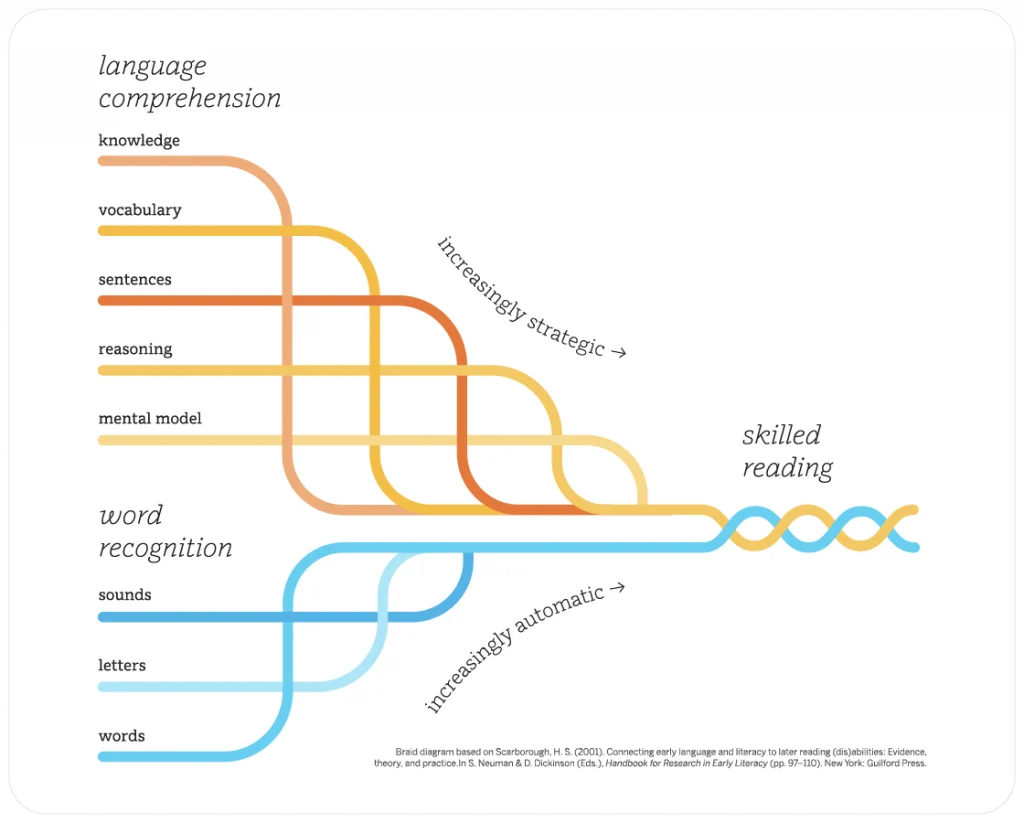

Developing foundational skills with explicit, systematic instruction
Amplify CKLA’s research-based scope and sequence progresses from simple to more complex skill development, starting with phonological and phonemic awareness. Instruction guides you in explicitly teaching the 150 spellings for the 44 sounds of English, with an intentional progression and review of skills to set your students up for success.
Following a proven knowledge-building approach
Following the Core Knowledge Sequence–a content-specific, cumulative, and coherent approach to building knowledge–students dig deeper and make connections across content areas to build a robust knowledge base for comprehending complex texts. See how the Core Knowledge curriculum is proven to improve reading scores and eliminate achievement gaps.


Built in partnership with the Core Knowledge Foundation
Amplify CKLA is the premier high-quality instructional materials offering for elementary language arts, built in partnership with the Core Knowledge Foundation to help students effectively develop deep content knowledge and foundational skills.
Cultivating biliteracy with parallel English and Spanish programs
Amplify Caminos is the perfect Spanish language arts partner to Amplify CKLA. The aligned programs combine rich content knowledge with systematic foundational skills instruction grounded in the Science of Reading that follows biliteracy principles, and supports multiple teaching models.


What’s included
The program provides engaging print and multimedia materials designed to build a robust literacy-rich foundation in every classroom.
CoreELD and Companions
High-quality teacher materials
Amplify CKLA teachers effectively deliver instruction with print and digital resources, including:
- Teacher Guides with embedded differentiation.
- Formal and informal assessments.
- Ready-made and customizable lesson slides.
- Trade books and Novel Guides.
- Teacher resources and on-demand professional development.
Immersive student resources
Amplify CKLA students stay engaged with a variety of print and digital resources, including:
- Original decodables and read-aloud Big Books (K–2), Student Readers (3–5), and trade books (K–5).
- Student Activity Books with embedded assessments (K–5).
- Research units for independent research built around a trade book (K–5).
- Poet’s Journal and Writer’s Journal (write-in student readers for Grades 4–5).
- Quests for the Core to support immersive, problem-based learning in Grades 3–5.
Hands-on phonics materials
Multisensory phonics and foundational skills resources help students practice key skills using fun, varied approaches that build independence.
- Chaining Folder (K)
- Letter Cards (K–2)
- Syllable Cards (K–2)
- Image Cards (K–3)
- Blending Picture Cards (K)
- Consonant and Vowel Code Flip Books (1–2)
- Exclusive digital Sound Library
Robust digital experience
Amplify CKLA teacher and student resources are available through a digital experience platform that enhances instruction and saves you time. With everything you need in one place, you can effectively plan lessons, present content, and review student work.
- Ready-made yet customizable lesson presentation slide decks
- Dynamic live-review student tool
- Interactive and student-friendly experience
- LMS integration
- Knowledge Builder animated videos
- Recorded Read-Alouds
- Professional development website
- Real-time program support via email, live chat, and phone
English Language Learner program
Language Studio, designed for Amplify CKLA, provides WIDA-aligned daily instruction for English Language Learners to deepen their academic English.
Writing explorations program
A unique companion for Amplify CKLA, Writing Studio provides a deep dive into informational, narrative, and opinion writing to build strong, passionate writers.
Explore more programs based on the Science of Reading.
All of the programs in our literacy suite are designed to support and complement each other. Learn more about our related programs:
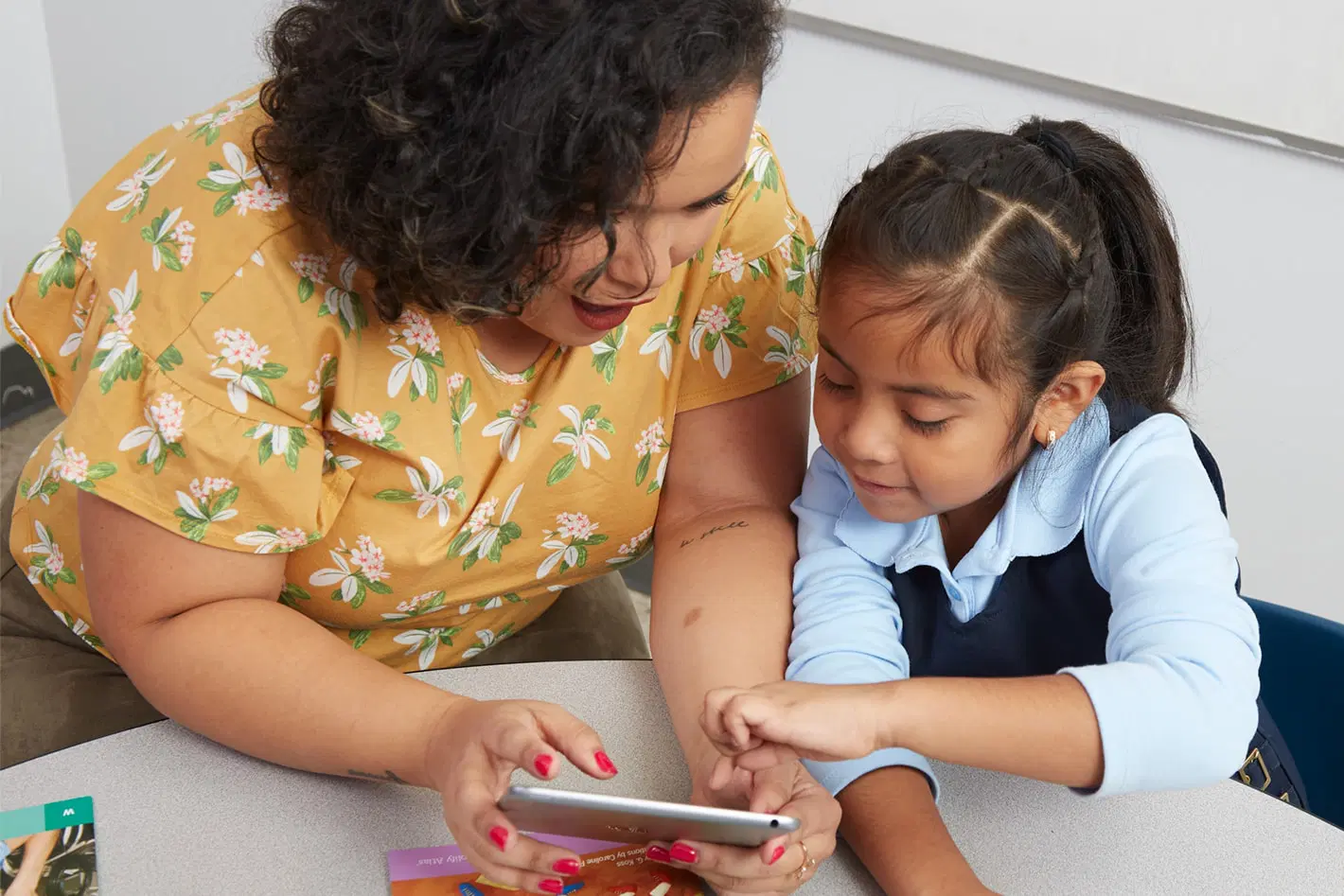
Amplify ELA: Florida Edition professional development
Amplify ELA is an engaging and rigorous curriculum designed specifically for grades 6–8. With Amplify ELA, students learn to tackle any complex text and make observations, grapple with interesting ideas, and find relevance for themselves.
We’ve created a wide suite of professional development offerings that will help you meet your unique needs this school year. Find out more below!
Amplify CKLA, ELA, and Science professional development has been vetted by Rivet Education’s team through a rigorous three-step process and is listed in the Professional Learning Partner Guide.
Plan your professional development
We’re excited to partner with you on your Amplify journey. Flexible professional development pathways have been designed to meet your needs.

Recommended professional development plan
Our team has curated a recommended professional learning path from initial launch to continuous support. Use the Professional Development Planning Guide below to discuss the plan that best meets your school or district needs with your Account Executive.
Sessions overview
Recommended sessions are highlighted below
| Title | Duration | Modality | Available |
|---|---|---|---|
| Launch | |||
| Comprehensive initial training for teachers | 2 days consecutive | Onsite | Yes |
| Initial training for teachers | 1 day | Onsite | Yes |
| Initial training for teachers | 2 half days | Remote | Yes |
| Program overview | Half day | Onsite/Remote | Yes |
| Initial training for instructional leaders | Half day | Onsite/Remote | Yes |
| Strengthen | |||
| Enhancing observations for leaders | Half day | Onsite/Remote | 09/01/22 |
| Enhancing planning and practice | Half day | Onsite/Remote | Yes |
| Analytic reading | Half day | Onsite/Remote | Yes |
| Supporting all learners | Half day | Onsite/Remote | Yes |
| Data-informed instruction | Half day | Onsite/Remote | Yes |
| Strengthen consultation session | 1 hour | Remote | Yes |
| Strengthen consultation package | 3 1-hour sessions | Remote | Yes |
| Coach | |||
| Coaching sessions | 2 days consecutive | Onsite | Yes |
| Coaching sessions | 1 day | Onsite/Remote | Yes |
| Half day | Onsite/Remote | Yes | |
Launch
Comprehensive initial training for teachers
2 days consecutive (6 hours per day, 12 hours total)
Prepare to implement and support Amplify ELA instruction in your schools! Learn how Amplify ELA supports students through rigorous and engaging ELA instruction. Participants will navigate the Amplify ELA platform, learn to give feedback on student work, and explore how to use Amplify ELA’s embedded supports and Reporting app to monitor student progress. Participants will engage in multiple opportunities to practice components of Amplify ELA and leave confident to begin teaching.
Audience: Teachers and coaches, maximum 30 participants
Modality: Onsite/Remote
Initial training for teachers
1 day (6 hours)
Prepare to implement and support Amplify ELA instruction in your schools! Learn how Amplify ELA supports students through rigorous and engaging ELA instruction. Participants will navigate the Amplify ELA platform, learn to give feedback on student work, and explore how to use Amplify ELA’s embedded supports and Reporting app to monitor student progress. Participants will leave with an action plan to begin teaching Amplify ELA.
Audience: Teachers and coaches, maximum 30 participants
Modality: Onsite
Initial training for teachers
Two half days (3 hours per day, 6 hours total)
This full-day initial training session (6 hours) is split into two half-day sessions (3 hours each). Part 1 and Part 2 may be scheduled consecutively on the same day or on different days, ideally within ~2 weeks. The same participants should attend both sessions in order to receive all content about key components of Amplify ELA, which includes learning how to navigate, teach, and monitor student progress.
Audience: Teachers and coaches, maximum 30 participants
Modality: Remote
Program essentials
Half day (3 hours)
Learn the program essentials including how to navigate the digital curriculum, print materials components and how to locate assessments, data reports and other features associated with the curriculum.
Audience: Teachers and coaches, maximum 30 participants.
Modality: Onsite/Remote
Initial training for instructional leaders
Half day (3 hours)
This training will provide district- and school-level instructional leaders with an overview of Amplify ELA so that they can support their staff in implementing Amplify. Learn basic navigation and gain an understanding of Amplify ELA’s approach to reading, writing, and language instruction. Participants will then have the opportunity to choose how to best support teachers by either developing a school-wide implementation plan or learning strategies for effective classroom observations.
Audience: Ideal for instructional leaders, principals, and district staff who oversee the implementation of the new curriculum, maximum 30 participants
Modality: Onsite/Remote
Strengthen
Enhancing observations for leaders
Half day (3 hours)
Elevate your program knowledge to support colleagues with effective ELA implementation! Practice analyzing ELA lessons and identify key instructional elements and next steps. Participants will be prepared to analyze data and enhance classroom observations.
Prerequisite training: Initial training for leaders
Audience: Ideal for instructional leaders, principals, and district staff who oversee the implementation of the new curriculum, maximum 30 participants
Modality: Onsite/Remote
Enhancing planning and practice
Half day (3 hours)
Dig into one unit to unpack standards, assessments, and student engagement. Through backward planning, this session guides teachers to think deeply about learning outcomes and key moments of formative assessments. Teachers will leave this session with a detailed plan of a unit of their choice that includes learning outcomes, key assessment moments, and aligned instructional strategies.
Audience: Ideal for new or experienced Amplify ELA teachers or coaches, maximum 30 participants
Modality: Onsite/Remote
Analytic reading
Half day (3 hours)
Participants will learn how close reading functions in Amplify ELA and which teacher moves support students as they tackle complex texts. Participants will learn how to facilitate a close reading session to support key reading routines, as well as promote academic discourse and the type of collaboration that drives analysis and deepens understanding.
Audience: Ideal for new or experienced Amplify ELA teachers, maximum 30 participants
Modality: Onsite/Remote
Supporting all learners
Half day (3 hours)
Participants will learn how to effectively use embedded and differentiated supports and the Classwork app to support all students, including English language learners (ELLs), students with learning disabilities, struggling readers and writers, and advanced students.
Audience: Ideal for new teachers or instructional leaders who want to learn more about included supports in Amplify ELA, maximum 30 participants
Modality: Onsite/Remote
Data-informed instruction
Half day (3 hours)
Participants will review their own student data using the Reporting and Classwork apps and align embedded supports to specific student needs. The goal of this session is to become proficient in turning Amplify ELA data into differentiated and targeted instruction.
Note: This course can be combined with the supporting all learners session to make a full day of training.
Prerequisite: 4–6 weeks of student data in Amplify’s Reporting app. It is recommended that teachers are in at least Unit B.
Audience: Ideal for teachers or support staff who want to learn how to use student data to inform instruction and provide differentiation, maximum 30 participants
Modality: Onsite/Remote
Strengthening consultation session
1 hour
This 60-minute session will focus on a specific topic that will deepen educators’ understanding of ELA and equip them with the tools needed to drive stronger student outcomes. An Amplify facilitator will align with the school or district leadership team in advance of the session on the topic (chosen from a menu of options) that will best meet educators’ unique needs. The menu includes sessions on engagement, pacing, and grading/assessment.
Audience: Teachers and coaches, maximum 30 participants
Modality: Remote
Strengthening consultation package
3 1-hour sessions
This package consists of three 60-minute sessions that can be delivered on the same day or on different days. Each session will focus on a specific topic that will deepen educators’ understanding in ELA and equip them with the tools needed to drive stronger student outcomes. An Amplify facilitator will align with the school or district leadership team in advance of the session on the topic (chosen from a menu of options) that will best meet educators’ unique needs. The menu includes sessions on: engagement, pacing and grading/assessment.
Audience: Teachers and coaches, maximum 30 participants
Modality: Remote
Coach
Coaching session
2 days consecutive (6 hours per day, 12 total)
Strengthen your implementation of Amplify ELA with an onsite Coaching visit for your teachers and/or leaders. Participants can choose from a variety of topics that include, but are not limited to: lesson modeling and debrief (conducted by an Amplify ELA coach), grade-level planning, classroom observations, and leadership consultation. The flexible onsite coaching design allows for a collaborative approach to support effective program implementation.
Audience: Teachers, coaches, and/or instructional leaders, maximum 30 participants
Modality: Onsite/Remote
Coaching session
1 day (6 hours)
Strengthen your implementation of Amplify ELA with an onsite Coaching visit for your teachers and/or leaders. Participants can choose from a variety of topics that include, but are not limited to: lesson modeling and debrief (conducted by an Amplify ELA coach), grade-level planning, classroom observations, and leadership consultation. The flexible onsite coaching design allows for a collaborative approach to support effective program implementation.
Audience: Teachers, coaches, and/or instructional leaders, maximum 30 participants
Modality: Onsite/Remote
Coaching session
Half day (3 hours)
Strengthen your implementation of Amplify ELA with a Coaching session for your teachers and/or leaders. Participants can choose from a variety of topics that include, but are not limited to: lesson modeling and debrief (conducted by an Amplify ELA coach), grade-level planning, classroom observations, and leadership consultation. The flexible coaching design allows for a collaborative approach to support effective program implementation.
Audience: Teachers, coaches, and/or instructional leaders, maximum 30 participants
Modality: Onsite/Remote
Pricing
We offer the following pricing for training sessions and packages:
| Session type | Pricing |
|---|---|
| 2-day onsite session | $4,800 |
| 1-day onsite session | $3,200 |
| 1-day remote session (2 half days remote) | $1,500 |
| Half-day onsite session | $2,500 |
| Half-day remote session | $750 |
| 1-hour remote session | $350 |
| 3 1-hour remote sessions | $1,000 |
Please note that the prices are general ranges and may be subject to change.
Contact
Amplify welcomes the opportunity to partner with schools and districts to design professional development plans and answer your questions.
If you would like to order any of our professional development services, please contact your local Amplify sales representative or call (800) 823-1969.
Madison County Schools: Early literacy success through the Science of Reading

Madison County Schools is a diverse district serving nearly 13,000 students across 23 schools in central Mississippi. Over the past few years, the district has shifted its approach from balanced literacy to structured literacy. The transition wasn’t quick or simple—but it worked.
In 2016, the district’s elementary ELA proficiency was at 47.1%. By the spring of 2024, it had reached almost 70%, with all elementary schools receiving A ratings for the first time.
“Today, structured literacy is at the core of our instruction, and the results speak for themselves,” said Kacey Matthews, dyslexia coordinator for the district. “This historic achievement affirms that when we commit to evidence-based instruction, students thrive.”
That commitment, and the resulting achievement, has earned Madison County Schools our 2025 Science of Reading Star Awards District Captain award. These teacher awards honor educators, schools, and districts who’ve transformed their classrooms and empowered their students with the Science of Reading.
The constants: Building literacy and a love of reading
Madison County Schools spans four zones, from suburban to rural. Roughly one-third of its schools are Title I, and its teachers support more than 1,200 multilingual/English learners representing 36 languages. Nearly 40% of students in the district receive free or reduced-price lunch.
Madison County originally followed a balanced literacy model, but over time, educators began to see gaps—particularly among students experiencing reading difficulty and students with dyslexia.
“Our diverse student body underscores our belief that literacy is the key to unlocking potential,” Matthews said. Teachers came to understand that their shared desire to support a love of reading in their students and their dedication to paramount literacy goals had to be anchored in a curriculum aligned to the Science of Reading: explicit, systematic instruction in phonemic awareness, decoding, and language comprehension.

Shifting practices and mindsets
According to Matthews, transitioning from balanced to structured literacy required more than a change in instructional methods. “The biggest challenge,” she said, “was shifting instructional mindsets.”
In classrooms, educators needed to trade in the familiar tools of running records and predictable texts for a new framework built on foundational skills data. “Initially, some educators were hesitant, but ongoing professional learning, hands-on support, and student success stories built trust and proved the effectiveness of this approach,” Matthews said.
District leaders, principals, and teachers also worked together to create a shared vision for literacy grounded in evidence and collaboration. Madison County invested in professional learning through LETRS, Phonics First, and the AIM Institute, ensuring every educator had the tools to teach early literacy skills effectively.
Each school added trained literacy specialists who provided classroom coaching and MTSS interventions, and the district instituted dyslexia training for all 1,500 staff members every three years, ensuring consistent understanding of structured literacy principles across every grade.
Principals received targeted professional development to lead with clarity, and the district introduced new, research-based curricula—including Amplify Core Knowledge Language Arts (CKLA)—to align instruction from kindergarten through fifth grade. To unify these efforts, Madison County also rewrote its Literacy Expectations guide, a districtwide roadmap detailing the five essential components of literacy, classroom strategies, and links to foundational research.
All told, Madison County teachers and leaders have reimagined classroom practice, embracing a structured literacy framework grounded in the Science of Reading.
From anxiety to confidence
In addition to the district’s impressive leap in literacy proficiency of more than 20 percentage points, they also saw transformation on the Mississippi Third-Grade Reading Assessment, a high-stakes gate test of readiness for fourth grade. Equipped with strong foundational skills, Madison County’s third graders are now thriving—with a 99.7% promotion rate in 2024.
“Instead of facing [the test] with fear, our students now enter with confidence,” Matthews said. In other words, data only tells one part of the story. “Students who previously dreaded assessments now approach them with readiness,” she said. “Students who once struggled with decoding now read with confidence and fluency.”
Sustaining a culture of literacy and growth
Madison County’s progress rests on persistence as much as innovation. The district’s educators continue to meet regularly for data discussions, lesson study, and reflection—sustaining the same mindset shift that began this journey. Professional learning remains a constant for them, demonstrating their dedication to teaching excellence and their belief that educational approaches are never static.
According to Matthews, Amplify has been a trusted partner in that work. Teachers can target support with precision by using mCLASS® for progress monitoring and the mCLASS Dyslexia Screener for early identification. Several schools also use Amplify CKLA to build decoding and comprehension simultaneously, engaging students with content-rich texts that deepen knowledge and vocabulary.
“When we commit to the Science of Reading, we are not just building better readers,” Matthews said, “we’re building a brighter future.”
More to explore
K–5 Core Knowledge Language Arts Program – K–5 Literacy Curriculum | Amplify
Lleve el mundo a los estudiantes con un plan de estudios de alfabetización comprobado de PreK a 5.º grado
Amplify Core Knowledge Language Arts (CKLA) es el plan de estudios líder en alfabetización temprana basado en la Ciencia de la lectura. Mediante la combinación del desarrollo de conocimientos y de destrezas fundamentales a partir de la investigación, nuestra instrucción orienta a los educadores en el desarrollo de lectores, escritores y pensadores capaces.
Con una poderosa plataforma en línea y un plan de estudios paralelo de lengua y literatura en español, Amplify CKLA ofrece una solución integral para educadores y estudiantes de PreK a 5.º grado. For English version, please click here.
Los resultados son fruto del conocimiento previo
El plan de estudios de alfabetización de Amplify CKLA de PreK a 5.º grado equipa a los estudiantes con un rico conocimiento que se construye intencionalmente para inspirar curiosidad e impulsar resultados. Explore las investigaciónes que revelan la eficacia del plan de estudios basado en el conocimiento, así como el logro de Amplify CKLA como intervención educativa de conformidad con la ESSA (nivel 1 de evidencia fuerte).
AMPLIFY CKLA
38,000+
Salones de clase
2,700,000+
Estudiantes
50
Estados de EE. UU. y D.C.
Revisado de forma independiente y rigurosa
Amplify CKLA se encuentra entre los pocos planes de estudio que es tanto reconocido por la campaña Knowledge Matters (por su excelencia en construir conocimiento intencionalmente) y como calificado verde en EdReports, obteniendo puntuaciones verdes en todos los criterios.
Nuestro enfoque
Basado en la Ciencia de la lectura y siguiendo el principio de Core Knowledge, el plan de estudios Amplify CKLA para PreK a 5.º grado combina conocimientos de contenido rico en historia, ciencias, literatura y artes con una instrucción sistemática de destrezas fundamentales basada en la investigación.
Basado en la Ciencia de la lectura
Como la primera casa editorial en crear un plan de estudios basado en la Ciencia de la lectura, ponemos la investigación en acción con una instrucción explícita y sistemática de destrezas fundamentales junto con una secuencia comprobada de construcción de conocimientos. En colaboración con expertos y profesionales de la educación, proporcionamos recursos poderosos que generan resultados reales. Explore nuestras historias de éxito de Ciencia de la lectura.
Desarrolla destrezas fundamentales con instrucción explícita y sistemática
El alcance y la secuencia basados en la investigación de Amplify CKLA progresan desde el desarrollo de destrezas simples hasta el más complejo, comenzando con la conciencia fonológica y fonémica. La instrucción le guía en la enseñanza explícita de las 150 ortografías de los 44 sonidos del inglés, con una progresión intencional y una revisión de las destrezas para preparar a sus estudiantes para el éxito.
Adopta una metodología demostrada de adquisición de conocimientos
Siguiendo la Core Knowledge Sequence, un enfoque coherente, acumulativo y de contenido específico para desarrollar conocimientos, los estudiantes profundizan y hacen conexiones entre áreas de contenido para construir una base de conocimientos sólida que les permita comprender textos complejos. Vea cómo se ha demostrado que el plan de estudios Core Knowledge mejora los puntajes de lectura y elimina las brechas en el rendimiento.
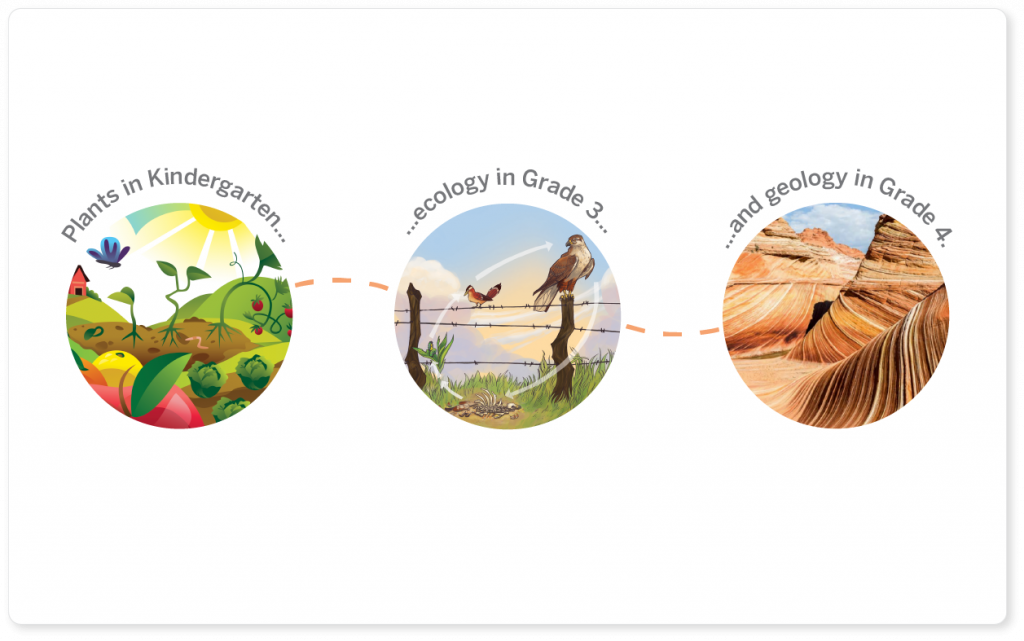
Creado en colaboración con la Core Knowledge Foundation
Amplify CKLA es el líder en materiales educativos de alta calidad para lengua y literatura de primaria, creado en colaboración con la Core Knowledge Foundation para ayudar a los estudiantes a desarrollar con eficacia un conocimiento profundo del contenido y destrezas fundamentales.
Cultivar la alfabetización bilingüe con programas paralelos en inglés y español
Amplify Caminos es el compañero perfecto en lengua y literatura del idioma español para Amplify CKLA. Los programas alineados combinan un rico conocimiento del contenido con una instrucción sistemática de destrezas fundamentales basada en la Ciencia de la lectura que sigue los principios de alfabetización bilingüe, y respalda múltiples modelos de enseñanza.

Estudio de eficacia de Amplify CKLA
Evidencia de conformidad con la ESSA (nivel 1): la adquisición de
conocimientos con Amplify CKLA
mejora los logros.
Qué se incluye
El programa proporciona atractivos materiales impresos y multimedia diseñados para construir una base sólida y rica en lectoescritura en todos los salones de clase.
CoreELD y complementos
Materiales de alta calidad para los maestros
Los maestros de Amplify CKLA brindan instrucción de manera eficaz con recursos impresos y digitales, que incluyen:
- Guías para el maestro con diferenciación integrada.
- Evaluaciones formales e informales.
- Diapositivas de lecciones listas para usar y personalizables.
- Libros comerciales y Guías literarias.
- Recursos docentes y desarrollo profesional a pedido.
Recursos inmersivos para estudiantes
Los estudiantes de Amplify CKLA se mantienen interesados con una amplia gama de recursos impresos y digitales, que incluyen:
- Descodificables originales y Libros grandes de lectura en voz alta (K a 2.º grado), Libros de lectura (3.er a 5.º grados) y libros comerciales (K a 5.º grado).
- Cuadernos de actividades para estudiantes con evaluaciones integradas (K a 5.º grado).
- Unidades de investigación para investigaciones independientes desarrollados en torno a un libro comercial (K a 5.º grado).
- Diario del poeta y Diario del escritor (libros de lectura con espacio para escribir para 4.º y 5.º grados).
- Misiones de conocimiento para apoyar el aprendizaje inmersivo basado en problemas en los grados 3.º a 5.º.
Materiales prácticos de fonética
La fonética multisensorial y los recursos de destrezas fundamentales ayudan a los estudiantes a practicar destrezas clave utilizando enfoques divertidos y variados que desarrollan la independencia.
- Carpetas para la práctica de ortografía (K).
- Tarjetas de letras (K a 2.º grado).
- Tarjetas de sílabas (K a 2.º grado).
- Tarjetas de imágenes (K a 3.er grado).
- Tarjetas de combinación de imágenes (K).
- Rotafolios de códigos de consonantes y vocales (1.er y 2.º grados).
- Biblioteca de sonido digital exclusiva.
Experiencia digital robusta
Los recursos para maestros y estudiantes de Amplify CKLA están disponibles a través de una plataforma de experiencia digital que mejora la instrucción y le ahorra tiempo. Con todo lo que necesita en un solo lugar, puede planificar lecciones, presentar contenido y revisar el trabajo de los estudiantes de manera eficaz.
- Presentaciones de lecciones con diapositivas listas para usar y personalizables.
- Herramienta dinámica para estudiantes con revisión en vivo.
- Experiencia interactiva y amigable para los estudiantes.
- Integración LMS.
- Videos animados de Desarrollo de conocimiento
- Lecturas en voz alta grabadas.
- Sitio web de desarrollo profesional.
- Apoyo al programa en tiempo real por correo electrónico, chat en vivo y teléfono.
Programa para estudiantes del idioma inglés
Language Studio, diseñado para Amplify CKLA, brinda instrucción diaria alineada con WIDA para que los estudiantes del idioma inglés profundicen su inglés académico.
Programa de exploración de escritura
Writing Studio, un complemento único para Amplify CKLA, ofrece una inmersión profunda en la redacción de información, narrativa y opinión para formar escritores fuertes y apasionados.
Explore otros programas basados en la Ciencia de la lectura
Todos los programas de nuestro paquete de alfabetización están diseñados para que se respalden y complementen entre sí. Aprenda más sobre nuestros programas relacionados:
Amplify CKLA for Georgia
Grade K
Topic Opener Numbers 0 to 5
| Topic Opener Numbers 0 to 5 | Connecting Cubes |
Topic 1: Numbers 0 to 5
| Lesson 1-2 Recognize 1, 2, and 3 in Different Arrangements | Skye’s Style |
| Lesson 1-5 Recognize 4 and 5 in Different Arrangements | Matching Groups Designing Shoes with Skye |
| 3-ACT MATH: Set the Table | Investigate: Cafeteria Math |
Topic 3: Numbers 6 to 10
| Lesson 3-2: Read, Make, and Write 6 and 7 | Moving and Grooving |
| Lesson 3-4: Read, Make, and Write 8 and 9 | Moving and Grooving |
| Lesson 3-6: Read, Make, and Write 10 | Moving and Grooving |
| Lesson 3-7: Count Numbers to 10 | Fingers as Math Tools |
Topic 4: Compare Numbers 0 to 10
| Lesson 4-1: Compare Groups to 10 by Matching | More, Fewer, or the Same Forest Friends |
| Lesson 4-2: Compare Numbers Using Numerals to 10 | Fingers and Counters |
| Lesson 4-3: Compare Groups to 10 by Counting | Comparing Words |
Topic 6: Understand Addition
| Interactive Math Story | Investigate: Casey’s Town |
| Lesson 6-1: Explore Addition | How Many Objects in Pictures? The Bus Depot |
| Lesson 6-2: Represent Addition as Adding To | How Will You Count? |
| Lesson 6-3: Represent Addition as Putting Together | How Many Objects? |
| Lesson 6-4: Represent and Explain Addition with Equations | What Does It Mean to Add? |
Topic 7: Understand Subtraction
| Lesson 7-1: Explore Subtraction | What Does It Mean to Subtract? The Bus Depot |
Topic 8: More Addition and Subtraction
| Lesson 8-5: Decompose 6 and 7 to Solve Problems | Harry Explores the Ocean |
| Lesson 8-6: Decompose 8 and 9 to Solve Problems | Harry Explores the Ocean |
| Lesson 8-8: Decompose 10 to Solve Problems | Harry Explores the Ocean |
Topic 12: Identify and Describe Shapes
| Lesson 12-2: Circles and Triangles | What’s That Shape Called? |
| Lesson 12-3: Squares and Other Rectangles | Another Shape |
Topic 13: Analyze, Compare, and Create Shapes
| Lesson 13-1: Analyze and Compare Two-Dimensional (2-D) Shapes | Another Shape So Much Sorting |
Grade 1
Topic 1: Understand Addition and Subtraction
| Lesson 1-4: Take From | Packing for a Picnic What’s the Difference? |
| Lesson 1-7: Change Unknown | Replanting Huli |
| Lesson 1-8: Practice Adding and Subtracting | Leaping Lily Pads! |
Topic 2: Fluently Add and Subtract Within 10
| enVision STEM Project | A Community Working Together |
| Topic 2 Interactive Math Story | Investigate: Let’s Grow! |
| Lesson 2-8: Solve Word Problems with Facts to 10 | Tutu’s Garden in Maui The Kalo Plants Helping Others |
Topic 3: Addition Facts to 20: Use Strategies
| Lesson 3-5: Make 10 to Add | Making 10 |
| Lesson 3-6: Continue to Make 10 to Add | Kitten Coaster |
Topic 6: Represent and Interpret Data
| Lesson 6-1: Organize Data into Three Categories | Shapes Ying Saw |
Topic 7: Extend the Counting Sequence
| Lesson 7-1: Count by 10s to 120 | Meeting Yara |
| Grade 1 Lesson 7-5: Count on an Open Number Line | Time to Line Up! |
| Grade 1 Lesson 7-5: Count on an Open Number Line | What’s That Number? |
Topic 8: Understand Place value
| Lesson 8-1: Make Numbers 11 to 19 | Same Number, Different Ways |
| Lesson 8-2: Numbers Made with Tens | Investigate: Game Points It’s a Match |
Topic 9: Compare Two-Digit Numbers
| Lesson 9-3: Compare Numbers | Investigate: Where Am I? |
| Grade 1 Lesson 9-5: Compare Numbers on a Number Line | Greater Than, Less Than, or Equal to |
| Grade 1 Lesson 9-5: Compare Numbers on a Number Line | In Full Bloom |
Topic 10: Use Models and Strategies to Add Tens and Ones
| Lesson 10-1: Add Tens Using Models | How Many Cubes? Boris’s Thimbles How Many Tens? |
Topic 11: Use Models and Strategies to Subtract Tens
| Lesson 11-1: Subtract Tens Using Models | Boris’s Thimbles |
| Lesson 11-2: Subtract Tens Using a Hundred Chart | How Many Tens? |
Topic 14: Reason with Shapes and Their Attributes
| Lesson 14-1: Use Attributes to Define Two-Dimensional (2-D) Shapes | Shapes Ying Saw |
Grade 2
Topic 1: Fluently Add and Subtract Within 20
| Lesson 1-1: Addition Fact Strategies | Exploring Within 10 |
| Lesson 1-3: Make a 10 to Add | Ways to Make 10 |
Topic 8: Work with Time and Money
| Lesson 8-1: Solve Problems with Coins | Investigate: Activities at the Block Party Discovering Coins (Part 1) Discovering Coins (Part 2) |
| Lesson 8-2: Continue to Solve Problems with Coins | How Much Money? Discovering Coins (Part 2) |
| Lesson 8-5: Problem Solving: Reasoning | The Toy Stand The Craft Stand at the Block Party |
Topic 12: Measuring Length
| Lesson 12-8: Compare Lengths | Lengths of Jungle Animals |
Topic 15: Graphs and Data
| Lesson 15-1: Line Plots | Messy Measurements |
| Lesson 15-2: More Line Plots | Bracelets and Wristbands |
| Lesson 15-3: Bar Graphs | Awesome Aquariums |
Grade 3
Topic 1: Understand Multiplication and Division of Whole Numbers
| Lesson 1-1: Relate Multiplication and Addition | Equal Groups |
| Lesson 1-3: Arrays and Properties | Arrays of Flavor |
Topic 4: Use Multiplication to Divide: Division Facts
| Lesson 4-1: Relate Multiplication and Division | It’s Chili in Here Relating Quotients to Familiar Products |
| Lesson 4-8: Solve Multiplication and Division Equations | Division and Multiplication Equations |
Topic 6: Connect Area to Multiplication and Addition
| Lesson 6-1: Cover Regions | Investigate: Comparing Rugs Which Covers More Space? |
| Lesson 6-2: Area: Nonstandard Units | Tiling Figures |
| Lesson 6-3: Area: Standard Units | Area Hunt |
| Lesson 6-4: Area of Squares and Rectangles | Rectangles and Arrays |
Topic 7: Represent and Interpret Data
| Lesson 7-3: Make Bar Graphs | Puppy Pile 2, 5, or 10? |
Topic 8: Use Strategies and Properties to Add and Subtract
| Topic 8 Vocabulary | Investigate: Create a Photo Gallery |
| Lesson 8-2: Algebra: Addition Patterns | Panda Patterns |
| Lesson 8-3: Mental Math: Addition | How Would You Solve It? |
Topic 9: Fluently Add and Subtract within 1,000
| Lesson 9-1: Use Partial Sums to Add | Adding Your Way What is an Algorithm? |
| Lesson 9-2: Use Regrouping to Add | Using Fewer Digits |
| Lesson 9-3: Add 3 or More Numbers | Determining Sums of 2 or More Addends |
| Lesson 9-6: Use Strategies to Add and Subtract | Adding Strategically |
Grade 4
Topic 7: Factors and Multiples
| 3-ACT MATH: Can-Do Attitude | Hamster Homes |
| Lesson 7-2: Factors | Factor or Multiple? |
| Lesson 7-4: Prime and Composite Numbers | A Number Game |
| Lesson 7-5: Multiples | Factor or Multiple? How Does It Grow? |
Topic 8: Extend Understanding of Fraction Equivalence and Ordering
| Lesson 8-2: Equivalent Fractions: Number Lines | Investigate: Building Your Own Number Line All Kinds of Fractions |
| Lesson 8-5: Use Benchmarks to Compare Fractions | Fraction Strips |
| Lesson 8-5: Use Benchmarks to Compare Fractions | Chop It |
Topic 9: Understand Addition and Subtraction of Fractions
| Lesson 9-1: Model Addition of Fractions | Pizza Problems |
| Lesson 9-4: Model Subtraction of Fractions | Pizza Problems |
| Lesson 9-2: Decompose Fractions | Math Pizzeria |
Topic 10: Extend Multiplication Concepts to Fractions
| Lesson 10-1: Fractions as Multiples of Unit Fractions | Equal Groups of Fractions |
Topic 12: Understand and Compare Decimals
| Topic 12 Review What You Know | Investigate: Different Units |
| Lesson 12-1: Fractions and Decimals | A New Way to Write Tenths A New Way to Write Hundredths |
| Lesson 12-2: Fractions and Decimals on the Number Line | Are They Equivalent? What’s the Order? |
| Lesson 12-3: Compare Decimals | How Can You Compare? Robot Factory |
Grade 5
Topic 3: Fluently Multiply Multi-Digit Whole Numbers
| Lesson 3-5: Multiply 3-Digit by 2-Digit Numbers | Partial Products Everywhere |
| Lesson 3-7: Practice Multiplying Multi-Digit Numbers | How Do They Compare? |
Topic 5: Use Models and Strategies to Divide Whole Numbers
| Lesson 5-4: Use Partial Quotients to Divide | Emptying the Water Tank |
Topic 8: Apply Understanding of Multiplication to Multiply Fractions
| Lesson 8-3: Multiply Fractions and Whole Numbers | Making Food |
| Lesson 8-4: Use Models to Multiply Two Fractions | Investigate: Folding Paper Parts of Parts One Part of One Part |
| Lesson 8-5: Multiply Two Fractions | Making Food Messy Multiplication |
| Lesson 8-6: Area of a Rectangle | Installing Turf Rows and Columns |
| Lesson 8-7: Multiply Mixed Numbers | Applying Fraction Multiplication Messy Multiplication |
| Lesson 8-8: Multiplication as Scaling | Chores at Animal Haven The Re-size-inator |
Topic 9: Apply Understanding of Division to Divide Fractions
| Lesson 9-1: Fractions and Division | Investigate: Sharing Sandwiches Sharing More Sandwiches Making Generalizations |
| Lesson 9-2: Fractions and Mixed Numbers as Quotients | Dance Breaks Division Story Problems Making Generalizations |
Topic 11: Understand Volume Concepts
| Lesson 11-1: Model Volume | Which is Largest |
| 3-ACT Math: Fill ‘er Up | Packing the Barge |
| Lesson 11-3: Combine Volumes of Prisms | Putting It Together Figures Made of Prisms |
Algebra 1
No lessons focused on only shape patterns.
| Launch | Visual Patterns |
Topic 1: Solving Equations and Inequalities
| Lesson 1-2: Solving Linear Equations | Working Backwards Solving Strategies |
| Lesson 1-3: Solving Linear Equations With a Variable on Both Sides | Same Position |
| Lesson 1-4: Literal Equations & Formulas | Subway Seats Various Variables |
| Lesson 1-5: Solving Inequalities in One Variable | Pizza Delivery |
Topic 2: Linear Equations
| Lesson 2-3: Standard Form | Shelley the Snail Five Representations |
Topic 3: Linear Functions
| Lesson 3-4: Arithmetic Sequence | More Visual Patterns Sequence Carnival |
| Lesson 3-5: Scatter Plots and Lines of Fit | Correlation Coefficient How Hot Is It? City Slopes |
| Lesson 3-6: Analyzing Lines of Fit | Residual Fruit Penguin Populations Behind the Headlines City Data |
Topic 4: Systems of Linear Equations and Inequalities
| Lesson 4-1: Solving Systems of Linear Equations by Graphing | Lizard Lines |
| Lesson 4-2: Solving Systems of Equations by Substitution | Shape It Up |
| Lesson 4-5: Systems of Linear Inequalities | Quilts Seeking Solutions |
Topic 5: Piecewise Functions
| Lesson 5-2: Piecewise Defined Functions | Craft-a-Graph Pumpkin Prices |
Topic 6: Exponents and Exponential Functions
| Lesson 6-3: Exponential Functions | Carlos’s Fish |
| Lesson 6-5: Geometric Sequences | Revisiting Visual Patterns, Part 1 Sequence Carnival More Visual Patterns |
Topic 8: Quadratic Functions
| Lesson 8-1: Key Features of a Quadratic Function | Revisiting Visual Patterns, Part 1 Quadratic Visual Patterns On the Fence |
| Lesson 8-3: Quadratic Functions in Standard Form | Plenty of Parabolas Two for One |
| Lesson 8-4: Modeling with Quadratic Functions | Stomp Rockets Robot Launch |
| Lesson 8-5: Linear, Exponential and Quadratic Models | Sorting Relationships |
Topic 9: Solving Quadratic Equations
| Lesson 9-1: Solving Quadratics Using Graphs and Tables | Stomp Rockets |
| Lesson 9-2: Solving Quadratic Equations by Factoring | Parabola Zapper Shooting Stars |
| Lesson 9-4: Completing the Square | Square Tactic |
| Lesson 9-5: The Quadratic Formula and the Discriminant | Stomp Rockets in Space |
Topic 10: Working with Functions
| Lesson 10-1: The Square Root Function ( & average rate of change) | Plane, Train, and Automobile |
| Lesson 10-3: Analyzing Functions Graphically (Abs, Quad, Sq.Root, Exp, Cubic) | Craft-a-Graph Detroit’s Population, Part 1 Detroit’s Population, Part 2 |
| Lesson 10-7: Inverse Functions | Chip the Robot |
Topic 11: Statistics
| Lesson 11-4: Standard Deviation | Finding Desmo |
Disclaimer
This document is for informational purposes only; references to third-party programs do not imply endorsement or affiliation, and all trademarks are the property of their respective owners.
Plan your professional development
We’re excited to partner with you on your Amplify journey. Flexible professional development pathways have been designed to meet your needs.

Recommended professional development plan
Our team has curated a recommended professional learning path from initial launch to continuous support. Use the Professional Development Planning Guide below to discuss the plan that best meets your school or district needs with your Account Executive.
Sessions overview
Recommended sessions are highlighted below
| Title | Duration | Modality | Available |
|---|---|---|---|
| Launch | |||
| Comprehensive initial training for teachers | 2 days consecutive | Onsite | Yes |
| Initial training for teachers | 1 day | Onsite | Yes |
| Initial training for teachers | 2 half days | Remote | Yes |
| Program overview | Half day | Onsite/Remote | Yes |
| Initial training for instructional leaders | Half day | Onsite/Remote | Yes |
| Strengthen | |||
| Enhancing observations for leaders | Half day | Onsite/Remote | 09/01/22 |
| Enhancing planning and practice | Half day | Onsite/Remote | Yes |
| Analytic reading | Half day | Onsite/Remote | Yes |
| Supporting all learners | Half day | Onsite/Remote | Yes |
| Data-informed instruction | Half day | Onsite/Remote | Yes |
| Strengthen consultation session | 1 hour | Remote | Yes |
| Strengthen consultation package | 3 1-hour sessions | Remote | Yes |
| Coach | |||
| Coaching sessions | 2 days consecutive | Onsite | Yes |
| Coaching sessions | 1 day | Onsite/Remote | Yes |
| Half day | Onsite/Remote | Yes | |
Launch
Comprehensive initial training for teachers
2 days consecutive (6 hours per day, 12 hours total)
Prepare to implement and support Amplify ELA instruction in your schools! Learn how Amplify ELA supports students through rigorous and engaging ELA instruction. Participants will navigate the Amplify ELA platform, learn to give feedback on student work, and explore how to use Amplify ELA’s embedded supports and Reporting app to monitor student progress. Participants will engage in multiple opportunities to practice components of Amplify ELA and leave confident to begin teaching.
Audience: Teachers and coaches, maximum 30 participants
Modality: Onsite/Remote
Initial training for teachers
1 day (6 hours)
Prepare to implement and support Amplify ELA instruction in your schools! Learn how Amplify ELA supports students through rigorous and engaging ELA instruction. Participants will navigate the Amplify ELA platform, learn to give feedback on student work, and explore how to use Amplify ELA’s embedded supports and Reporting app to monitor student progress. Participants will leave with an action plan to begin teaching Amplify ELA.
Audience: Teachers and coaches, maximum 30 participants
Modality: Onsite
Initial training for teachers
Two half days (3 hours per day, 6 hours total)
This full-day initial training session (6 hours) is split into two half-day sessions (3 hours each). Part 1 and Part 2 may be scheduled consecutively on the same day or on different days, ideally within ~2 weeks. The same participants should attend both sessions in order to receive all content about key components of Amplify ELA, which includes learning how to navigate, teach, and monitor student progress.
Audience: Teachers and coaches, maximum 30 participants
Modality: Remote
Program essentials
Half day (3 hours)
Learn the program essentials including how to navigate the digital curriculum, print materials components and how to locate assessments, data reports and other features associated with the curriculum.
Audience: Teachers and coaches, maximum 30 participants.
Modality: Onsite/Remote
Initial training for instructional leaders
Half day (3 hours)
This training will provide district- and school-level instructional leaders with an overview of Amplify ELA so that they can support their staff in implementing Amplify. Learn basic navigation and gain an understanding of Amplify ELA’s approach to reading, writing, and language instruction. Participants will then have the opportunity to choose how to best support teachers by either developing a school-wide implementation plan or learning strategies for effective classroom observations.
Audience: Ideal for instructional leaders, principals, and district staff who oversee the implementation of the new curriculum, maximum 30 participants
Modality: Onsite/Remote
Strengthen
Enhancing observations for leaders
Half day (3 hours)
Elevate your program knowledge to support colleagues with effective ELA implementation! Practice analyzing ELA lessons and identify key instructional elements and next steps. Participants will be prepared to analyze data and enhance classroom observations.
Prerequisite training: Initial training for leaders
Audience: Ideal for instructional leaders, principals, and district staff who oversee the implementation of the new curriculum, maximum 30 participants
Modality: Onsite/Remote
Enhancing planning and practice
Half day (3 hours)
Dig into one unit to unpack standards, assessments, and student engagement. Through backward planning, this session guides teachers to think deeply about learning outcomes and key moments of formative assessments. Teachers will leave this session with a detailed plan of a unit of their choice that includes learning outcomes, key assessment moments, and aligned instructional strategies.
Audience: Ideal for new or experienced Amplify ELA teachers or coaches, maximum 30 participants
Modality: Onsite/Remote
Analytic reading
Half day (3 hours)
Participants will learn how close reading functions in Amplify ELA and which teacher moves support students as they tackle complex texts. Participants will learn how to facilitate a close reading session to support key reading routines, as well as promote academic discourse and the type of collaboration that drives analysis and deepens understanding.
Audience: Ideal for new or experienced Amplify ELA teachers, maximum 30 participants
Modality: Onsite/Remote
Supporting all learners
Half day (3 hours)
Participants will learn how to effectively use embedded and differentiated supports and the Classwork app to support all students, including English language learners (ELLs), students with learning disabilities, struggling readers and writers, and advanced students.
Audience: Ideal for new teachers or instructional leaders who want to learn more about included supports in Amplify ELA, maximum 30 participants
Modality: Onsite/Remote
Data-informed instruction
Half day (3 hours)
Participants will review their own student data using the Reporting and Classwork apps and align embedded supports to specific student needs. The goal of this session is to become proficient in turning Amplify ELA data into differentiated and targeted instruction.
Note: This course can be combined with the supporting all learners session to make a full day of training.
Prerequisite: 4–6 weeks of student data in Amplify’s Reporting app. It is recommended that teachers are in at least Unit B.
Audience: Ideal for teachers or support staff who want to learn how to use student data to inform instruction and provide differentiation, maximum 30 participants
Modality: Onsite/Remote
Strengthening consultation session
1 hour
This 60-minute session will focus on a specific topic that will deepen educators’ understanding of ELA and equip them with the tools needed to drive stronger student outcomes. An Amplify facilitator will align with the school or district leadership team in advance of the session on the topic (chosen from a menu of options) that will best meet educators’ unique needs. The menu includes sessions on engagement, pacing, and grading/assessment.
Audience: Teachers and coaches, maximum 30 participants
Modality: Remote
Strengthening consultation package
3 1-hour sessions
This package consists of three 60-minute sessions that can be delivered on the same day or on different days. Each session will focus on a specific topic that will deepen educators’ understanding in ELA and equip them with the tools needed to drive stronger student outcomes. An Amplify facilitator will align with the school or district leadership team in advance of the session on the topic (chosen from a menu of options) that will best meet educators’ unique needs. The menu includes sessions on: engagement, pacing and grading/assessment.
Audience: Teachers and coaches, maximum 30 participants
Modality: Remote
Coach
Coaching session
2 days consecutive (6 hours per day, 12 total)
Strengthen your implementation of Amplify ELA with an onsite Coaching visit for your teachers and/or leaders. Participants can choose from a variety of topics that include, but are not limited to: lesson modeling and debrief (conducted by an Amplify ELA coach), grade-level planning, classroom observations, and leadership consultation. The flexible onsite coaching design allows for a collaborative approach to support effective program implementation.
Audience: Teachers, coaches, and/or instructional leaders, maximum 30 participants
Modality: Onsite/Remote
Coaching session
1 day (6 hours)
Strengthen your implementation of Amplify ELA with an onsite Coaching visit for your teachers and/or leaders. Participants can choose from a variety of topics that include, but are not limited to: lesson modeling and debrief (conducted by an Amplify ELA coach), grade-level planning, classroom observations, and leadership consultation. The flexible onsite coaching design allows for a collaborative approach to support effective program implementation.
Audience: Teachers, coaches, and/or instructional leaders, maximum 30 participants
Modality: Onsite/Remote
Coaching session
Half day (3 hours)
Strengthen your implementation of Amplify ELA with a Coaching session for your teachers and/or leaders. Participants can choose from a variety of topics that include, but are not limited to: lesson modeling and debrief (conducted by an Amplify ELA coach), grade-level planning, classroom observations, and leadership consultation. The flexible coaching design allows for a collaborative approach to support effective program implementation.
Audience: Teachers, coaches, and/or instructional leaders, maximum 30 participants
Modality: Onsite/Remote
Pricing
We offer the following pricing for training sessions and packages:
| Session type | Pricing |
|---|---|
| 2-day onsite session | $4,800 |
| 1-day onsite session | $3,200 |
| 1-day remote session (2 half days remote) | $1,500 |
| Half-day onsite session | $2,500 |
| Half-day remote session | $750 |
| 1-hour remote session | $350 |
| 3 1-hour remote sessions | $1,000 |
Please note that the prices are general ranges and may be subject to change.
Contact
Amplify welcomes the opportunity to partner with schools and districts to design professional development plans and answer your questions.
If you would like to order any of our professional development services, please contact your local Amplify sales representative or call (800) 823-1969.
Amplify ELA CA Edition professional development
Amplify ELA is an engaging and rigorous curriculum designed specifically for grades 6–8. With Amplify ELA, students learn to tackle any complex text and make observations, grapple with interesting ideas, and find relevance for themselves.
We’ve created a wide suite of professional development offerings that will help you meet your unique needs this school year. Find out more below!
Amplify CKLA, ELA, and Science professional development has been vetted by Rivet Education’s team through a rigorous three-step process and is listed in the Professional Learning Partner Guide.
Plan your professional development
We’re excited to partner with you on your Amplify journey. Flexible professional development pathways have been designed to meet your needs.
Recommended professional development plan
Our team has curated a recommended professional learning path from initial launch to continuous support. Use the Professional Development Planning Guide below to discuss the plan that best meets your school or district needs with your Account Executive.
Sessions overview
Recomended sessions are highlighted below
| Title | Duration | Modality | Available |
|---|---|---|---|
| Launch | |||
| Comprehensive initial + ELD training for teachers | 2 days consecutive | Onsite | Yes |
| Initial training for teachers | 1 day | Onsite | Yes |
| Initial training for teachers | 2 half days | Remote | Yes |
| Program overview | Half day | Onsite/Remote | Yes |
| Initial training for instructional leaders | Half day | Onsite/Remote | Yes |
| Comprehensive ELD training for teachers | Half day | Remote | Yes |
| Basic ELD training for teachers | 90 min. | Remote | Yes |
| Strengthen | |||
| Enhancing observations for leaders | Half day | Onsite/Remote | 09/01/22 |
| Enhancing planning and practice | Half day | Onsite/Remote | Yes |
| Analytic reading | Half day | Onsite/Remote | Yes |
| Supporting all learners | Half day | Onsite/Remote | Yes |
| Data-informed instruction | Half day | Onsite/Remote | Yes |
| Writing: Improving through feedback | Half day | Onsite/Remote | Yes |
| Strengthening consultation package | 3 1-hour sessions | Remote | Yes |
| Strengthening consultation session | 1 hour | Remote | Yes |
| Coach | |||
| Coaching sessions | 2 days consecutive | Onsite | Yes |
| Coaching sessions | 1 day | Onsite/Remote | Yes |
| Half day | Onsite/Remote | Yes | |
Launch
Comprehensive initial and ELD training
2 consecutive days (12 hours)
Prepare to implement and support Amplify ELA and Amplify ELD instruction in your schools! Learn about the integrated and designated approaches to supporting language learners using our ELD and ELA programs. Participants will learn how to navigate the Amplify platform, practice giving feedback on student work, and explore how to use Amplify ELA’s reporting features and embedded supports to monitor student progress. Multiple opportunities to practice components of Amplify ELA and Amplify ELD are incorporated throughout this training. Participants will leave feeling confident to begin teaching Amplify ELA and Amplify ELD. Recommended for schools or districts that want embedded practice time. This session is designed for schools who have purchased Amplify ELD, Amplify’s English Language Development program.
Audience: Teachers and coaches, maximum 30 participants
Modality: Onsite
Initial training for teachers
1 day (6 hours)
Prepare to implement and support Amplify ELA instruction in your schools! Learn how Amplify ELA supports students through rigorous and engaging ELA instruction. Participants will navigate the Amplify ELA platform, learn how to give feedback on student work, and explore how to use Amplify ELA’s embedded supports and Reporting app to monitor student progress. Participants will leave with an action plan to begin teaching Amplify ELA.
Audience: Teachers and coaches, maximum 30 participants; Remote, maximum 15 participants
Modality: Onsite
Initial training for teachers
2 half days (3 hours per day, 6 hours total)
This full day initial training session (6 hours) is split into two half-day sessions (3 hours each). Part 1 and Part 2 may be scheduled consecutively on the same day or on different days, ideally within 2 weeks. The same participants should attend both sessions in order to receive all content about key components of Amplify ELA, which includes learning how to navigate, teach, and monitor student progress.
Audience: Teachers and coaches, maximum 30 participants
Modality: Remote
Program essentials
Half day (3 hrs)
Learn the program essentials, including how to navigate the digital curriculum and print materials components and how to locate assessments, data reports, and other features associated with the curriculum.
Audience: Teachers and coaches, maximum 30 participants
Modality: Onsite/Remote
Initial training for instructional leaders
Half day (3 hours)
This training will provide district-and school-level instructional leaders with an overview of Amplify ELA so that they can support their staff in implementing Amplify. Learn basic navigation and gain an understanding of Amplify ELA’s approach to reading, writing, and language instruction. Participants will then have the opportunity to choose how to best support teachers by either developing a school-wide implementation plan or learning strategies for effective classroom observations.
Audience: Ideal for instructional leaders, principals and district staff who oversee the implementation of the new curriculum, maximum 30 participants
Modality: Onsite/Remote
Comprehensive ELD training
Half day (3 hours)
This session is designed for schools who have purchased Amplify ELD, Amplify’s English Language Development program. It reviews the integrated and designated approaches to supporting language learners using our ELA and ELD programs. Participants will learn how to navigate the Amplify ELD platform, plan to teach a lesson, and monitor student progress. Multiple opportunities to practice components of Amplify ELD are incorporated throughout this training. Participants will leave feeling confident to begin teaching Amplify ELD.
Audience: This is an add-on for schools who have already been using or attended an ELA Initial training, maximum 30 participants
Modality: Remote
Basic ELD training
90 min.
This session is designed for schools that have purchased Amplify ELD, Amplify’s English Language Development program. It reviews the integrated and designated approaches to supporting language learners using our ELA and ELD programs. Participants will learn how to navigate the Amplify ELD platform, plan to teach a lesson, and monitor student progress. Participants will leave feeling prepared to begin teaching Amplify ELD.
Audience: This is an add-on for schools who have already been using or attended an ELA Initial training, maximum 30 participants
Modality: Remote
Strengthen
Enhancing observations for leaders
Half day (3 hours)
Prerequisite training: Initial training for leaders
Elevate your program knowledge to support colleagues with effective ELA implementation! Practice analyzing ELA lessons and identify key instructional elements and next steps. Participants will be prepared to analyze data and enhance classroom observations.
Audience: Ideal for instructional leaders, principals and district staff who oversee the implementation of the new curriculum, maximum 30 participants
Modality: Onsite/Remote
Enhancing planning and practice
Half day (3 hours)
Dig into one unit to unpack standards, assessments, and student engagement. Through backward planning, this session guides teachers to think deeply about learning outcomes and key moments of formative assessments. Teachers will leave this session with a detailed plan for a unit of their choice that includes learning outcomes, key assessment moments, and aligned instructional strategies.
Audience: Ideal for new or experienced Amplify ELA teachers or coaches, maximum 30 participants
Modality: Onsite/Remote
Analytic reading
half day (3 hours)
Participants will learn how close reading functions in Amplify ELA and which teacher moves support students as they tackle complex texts. Participants will learn how to facilitate a close reading session to support key reading routines, as well as promote academic discourse and the type of collaboration that drives analysis and deepens understanding.
Audience: Ideal for new or experienced Amplify ELA teachers, maximum 30 participants
Modality: Onsite/Remote
Supporting all learners
Half day (3 hours)
Participants will learn how to effectively use embedded and differentiated supports and the Classwork app to support all students, including ELLs, students with learning disabilities, struggling readers and writers, and advanced students.
Audience: Ideal for new teachers or instructional leaders who want to learn more about included supports in Amplify ELA, maximum 30 participants
Modality: Onsite/Remote
Data-informed instruction
Half day (3 hours)
Participants will review their own student data using the Reporting and Classwork apps and align embedded supports to specific student needs. The goal of this session is to become proficient in turning Amplify ELA data into differentiated and targeted instruction.
Note: This course can be combined with the supporting all learners session to make a full day of training.
Prerequisite: 4–6 weeks of student data in Amplify’s Reporting app. It is recommended that teachers are in at least Unit B.
Audience: Ideal for teachers or support staff who want to learn how to use student data to inform instruction and provide differentiation, maximum 30 participants
Modality: Onsite/Remote
Writing: Improving through feedback
Half day (3 hours)
Participants will learn how writing functions in Amplify ELA and which teacher moves support students as they build writing skills. Participants will learn how feedback supports student growth and will practice giving targeted feedback based on rubrics and assessment data.
Audience: This course tasks teachers to look at their students’ writing, so it is recommended for delivery after 4–6 weeks of curriculum use, maximum 30 participants
Modality: Onsite/Remote
Strengthening consultation package
3 1-hour sessions
This package consists of three 60-minute sessions that can be delivered on the same day or on different days. Each session will focus on a specific topic that will deepen educators’ understanding in ELA and equip them with the tools needed to drive stronger student outcomes. An Amplify facilitator will align with the school or district leadership team in advance of the session on the topic (chosen from a menu of options) that will best meet educators’ unique needs. The menu includes sessions on: engagement, pacing and grading/assessment.
Audience: Teachers and coaches, maximum 30 participants
Modality: Remote
Strengthening consultation session
1 hour
This 60-minute session will focus on a specific topic that will deepen educators’ understanding in ELA and equip them with the tools needed to drive stronger student outcomes. An Amplify facilitator will align with the school or district leadership team in advance of the session on the topic (chosen from a menu of options) that will best meet educators’ unique needs. The menu includes sessions on engagement, pacing, and grading/assessment.
Audience: Teachers and coaches, maximum 30 participants
Modality: Remote
Coach
Coaching session
2 days consecutive (6 hours per day, 12 total)
Strengthen your implementation of Amplify ELA with an Onsite coaching visit for your teachers and/or leaders. Participants can choose from a variety of topics that include, but are not limited to: lesson modeling and debrief (conducted by an Amplify ELA coach), grade-level planning, classroom observations, and leadership consultation. The flexible onsite coaching design allows for a collaborative approach to support effective program implementation.
Audience: Teachers, coaches, and/or instructional leaders, maximum 30 participants
Modality: Onsite
Coaching session
1 day (6 hours)
Strengthen your implementation of Amplify ELA with an Onsite coaching visit for your teachers and/or leaders. Participants can choose from a variety of topics that include, but are not limited to: lesson modeling and debrief (conducted by an Amplify ELA coach), grade-level planning, classroom observations, and leadership consultation. The flexible onsite coaching design allows for a collaborative approach to support effective program implementation.
Audience: Teachers, coaches, and/or instructional leaders
Modality: Onsite/Remote, maximum 30 participants
Coaching session
Half day (3 hours)
Strengthen your implementation of Amplify ELA with a Coaching session for your teachers and/or leaders. Participants can choose from a variety of topics that include, but are not limited to: lesson modeling and debrief (conducted by an Amplify ELA coach), grade-level planning, classroom observations, and leadership consultation. The flexible coaching design allows for a collaborative approach to support effective program implementation.
Audience: Teachers, coaches, and/or instructional leaders, maximum 30 participants
Modality: Onsite/Remote
Pricing
We offer the following pricing for training sessions and packages:
| Session type | Pricing |
|---|---|
| 2 consecutive days onsite session | $4,800 |
| 1-day onsite session | $3,200 |
| 1-day remote session (2 half days remote) | $1,500 |
| Half-day onsite session | $2,500 |
| Half-day remote session | $750 |
| 90-min. remote session | $500 |
| 1-hour remote session | $350 |
| 3 1-hour remote sessions | $1,000 |
Please note that the prices are general ranges and may be subject to change.
Contact
Amplify welcomes the opportunity to partner with schools and districts to design professional development plans and answer your questions.
If you would like to order any of our professional development services, please contact your local Amplify sales representative or call (800) 823-1969.
mCLASS Intervention professional development
mCLASS® Intervention (formerly known as Burst: Reading) is a staff-led reading intervention that does the heavy lifting of data analysis and lesson sequencing, freeing up teachers to teach the reading skills each student needs.
We’ve created a wide suite of professional development offerings that will help you meet your unique needs this school year. Find out more below!
Plan your professional development
We’re excited to partner with you on your Amplify journey. Flexible professional development pathways have been designed to meet your needs.
Recommended Professional Development Plan
Our team has curated a recommended professional learning path from initial launch to continuous support. Use the Professional Development Planning Guide below to discuss the plan that best meets your school or district needs with your Account Executive.
Do you also use Amplify CKLA, mCLASS, and/or Boost Reading?
View the planning guide below to explore learning plans for teachers and leaders who are either new to or currently using multiple early literacy products.
mCLASS intervention overview
What’s the difference between mCLASS Intervention and mCLASS Intervention Universal?
An mCLASS Intervention school screens with mCLASS with DIBELS® 8th Edition.* An mCLASS Intervention Universal school screens with any other screener on the market. Some of the most common are iReady, iStation, MAP, AIMSweb, and paper/pencil DIBELS.
What else is different?
Here are a few other areas in which the programs differ:
| Area | mCLASS Intervention | mCLASS Intervention Universal |
|---|---|---|
| Onboarding process | Does not require Amplify’s Implementation team to explain staff and student enrollment because staff and students are already enrolled in our system. | Requires Amplify’s implementation team to explain staff and student enrollment since the tech coordinator hasn’t yet enrolled any students in mCLASS. |
| Professional development | Facilitator does not spend time practicing DIBELS measures with staff because they’re already familiar with these measures. | Facilitator spends time practicing DIBELS measures with staff because they usually haven’t administered them before. |
| Assessments | These schools administer DIBELS to all students because they have paid to use mCLASS as a screener. | These schools administer DIBELS only to intervention students because they haven’t paid to use mCLASS as a screener. |
*Utah and Colorado schools screen with mCLASS: Acadience Reading (formerly called mCLASS:DIBELS Next).
Getting optimal results with mCLASS Intervention
There are two critical roles at a school that need to work together in order for mCLASS Intervention to deliver optimal results. At some schools, an individual may hold both roles.
- Intervention Coordinator
Oversees the mCLASS Intervention program, groups students, determines group assignments and adjusts schedules, and works closely with your school’s Interventionists. - Interventionist
Teaches mCLASS Intervention lessons to small groups of students based on the assignments and schedules provided by your school’s Intervention Coordinator and progress monitors students every two weeks.
mCLASS Intervention sessions overview
| Audience | Title | Duration | Modality |
|---|---|---|---|
| Launch packages | |||
| New mCLASS + mCLASS Intervention customers | mCLASS + mCLASS Intervention initial training bundle | 4 half days, non-consecutive | Remote |
| New mCLASS + mCLASS Intervention customers | mCLASS + mCLASS Intervention initial training bundle | 2 days of onsite training, consecutive | Onsite |
| Launch | |||
| New mCLASS Intervention customers (mCLASS has been trained in the past) | mCLASS Intervention initial training | 1 day onsite or 2 half days remote | Onsite/Remote |
| Interventionists online course | Self-paced | Online | |
| Coach | |||
| All mCLASS Intervention customers | Coaching session | 1 day | Onsite |
| All mCLASS Intervention customers | Coaching session | Half day | Onsite/Remote |
| Coaching session | 60 mins | Remote | |
Launch packages
mCLASS initial training + mCLASS Intervention initial training
2 days (12 hours); consecutive
Prepare to launch mCLASS Intervention with fidelity! This bundle is intended for schools or districts who are implementing mCLASS Intervention for the first time and want the highest levels of support.
The first day will prepare all educators to administer the mCLASS assessment.
The second day will prepare all educators (including Intervention Coordinators) to implement mCLASS Intervention, including instruction on how to prepare for lessons, practice lesson delivery, administer the diagnostic and progress monitoring measures, and configure grouping and scheduling for maximum effectiveness.
Audience: Intervention Coordinators and Interventionists, maximum 30 participants
Modality: Onsite
mCLASS initial training + mCLASS Intervention initial training
2 days (12 hours) or 4 half days (12 hours); non-consecutive
Prepare to launch mCLASS Intervention with fidelity! This bundle is intended for schools or districts who are implementing mCLASS Intervention for the first time and want the highest levels of support.
The first part will prepare all educators to administer the mCLASS assessment.
The second part will prepare all educators (including Intervention Coordinators) to implement mCLASS Intervention: how to prepare for lessons, practice lesson delivery, administer the diagnostic and progress monitoring measures, and configure grouping and scheduling for maximum effectiveness.
Audience: Intervention Coordinators and Interventionists, maximum 30 participants
Modality: Onsite/Remote
Launch
mCLASS Intervention initial training
1 day onsite (6 hours) or 2 half days (6 hours)
This session is intended for those schools or districts that have been trained in mCLASS in the past.
This training will prepare all educators (including Intervention Coordinators) to implement mCLASS Intervention: how to prepare for lessons, practice lesson delivery, administer the diagnostic and progress monitoring measures, and configure grouping and scheduling for maximum effectiveness.
Audience: Intervention Coordinators and Interventionists, maximum 30 participants
Modality: Onsite/Remote
Interventionists online course
Self-paced
This PD is an individual seat to our self-paced, on-demand online course that contains approximately 3 hours of training. Participants will learn how to prepare for lessons and administer the diagnostic and progress monitoring measures. Participants will access and revisit the course anytime for up to one year as a refresher.
Audience: Interventionists
Modality: Online course
Coach
Coaching session
1 day (6 hours)
Strengthen your implementation of mCLASS Intervention with a Coaching session for your teachers and/or leaders! A certified mCLASS Intervention facilitator can visit 1–2 school sites per day. Participants may choose from a variety of topics that include, but are not limited to: observing lessons and providing feedback, analyzing mCLASS Intervention data and planning instruction, refining groups and schedules, or co-planning and modeling lessons.
Audience: Intervention Coordinators and/or Interventionists, maximum 30 participants
Modality: Onsite
Coaching session
Half day (3 hours)
Strengthen your implementation of mCLASS Intervention with a Coaching session for your teachers and/or leaders! A certified Intervention facilitator will visit one school site. Participants may choose from a variety of topics that include, but are not limited to: observing lessons and providing feedback; analyzing mCLASS Intervention data, reviewing student progress, and planning next steps; refining groups and schedules; or co-planning and modeling lessons.
Audience: Intervention Coordinators and/or Interventionists, maximum 30 participants
Modality: Onsite
Coaching session
60 min.
Strengthen your implementation of mCLASS Intervention with a quick Coaching session to improve implementation or student outcomes. During this remote hourly session, a certified mCLASS Intervention facilitator will help school leaders and/or Intervention Coordinators review usage, student progress data, and work to define an opportunity and develop a solution.
Audience: Intervention Coordinators and/or Interventionists, maximum 30 participants
Modality: Remote
mCLASS Intervention Universal sessions overview
| Title | Duration | Modality |
|---|---|---|
| Launch packages | ||
| Hybrid PD package | Half day, then 1 day | Hybrid (remote, then onsite) |
| Remote PD package | Half day, then 2 half days | Remote |
| Launch sessions | ||
| Training for Interventionists | 1 day or 2 half days | Onsite/Remote |
| Training for Intervention Coordinators | Half day | Remote |
| Coach | ||
| Coaching session | 1 day | Onsite |
| Coaching session | Half day | Onsite |
| Coaching session | Hourly | Remote |
Launch packages
Hybrid PD Package
Half day, then 1 day (9 hours)
Prepare to launch mCLASS Intervention Universal with fidelity! This package is intended for schools or districts implementing mCLASS Intervention Universal for the first time and want the highest levels of support.
Session 1 will prepare Intervention Coordinators to develop the school’s mCLASS Intervention Universal implementation plan, learn how to strategically group students, and schedule intervention supports.
Session 2 will prepare Interventionists to do an in-depth exploration of lesson activities and engage in real-time practice with diagnostic and progress monitoring measures.
Both sessions should be scheduled at least two weeks apart so the Intervention Coordinator has time to group students, draft schedules, and select the team of interventionists.
Audience:
Session 1: Intervention Coordinators, maximum 30 participants
Session 2: Interventionists, maximum 30 participants
Modality: Hybrid
Remote PD Package
3 half days (9 hours)
Prepare to launch mCLASS Intervention Universal with fidelity! This package is intended for schools or districts implementing mCLASS Intervention Universal for the first time.
Session 1 will prepare Intervention Coordinators to develop the school’s mCLASS Intervention Universal implementation plan, learn how to strategically group students, and schedule intervention supports.
Both sessions should be scheduled at least two weeks apart so the Intervention Coordinator has time to group students, draft schedules, and select the team of interventionists.
Audience:
Session 1: Intervention Coordinators, maximum 30 participants
Session 2: Interventionists, maximum 30 participants
Modality: Remote
Launch
Training for Interventionists
1 day onsite (6 hours) or 2 half days remote (6 hours)
This one-day training will ensure that Interventionists are prepared to teach mCLASS Intervention Universal with fidelity and accurately progress monitor students with the mCLASS platform throughout the year. Participants will do an in-depth exploration of lesson activities and engage in real-time practice with diagnostic and progress monitoring measures.
This session is ideal for new Interventionists at a school or district that has been previously implementing mCLASS Intervention Universal. We encourage the Coordinator to attend this session as well.
Audience: Interventionists (Intervention Coordinators welcome), maximum 30 participants
Modality: Onsite/Remote
Training for Intervention Coordinators
Half day (3 hours)
This half-day training will ensure that Intervention Coordinators are prepared to launch mCLASS Intervention Universal at their school site(s) with fidelity and best practice. Participants will consider grouping and scheduling configurations to make the most of the program, and create launch plans.
This session is paired with the Training for Interventionists full-day session.
Audience: Intervention Coordinators, maximum 30 participants
Modality: Remote
Coach
Coaching session
1 day onsite (6 hours)
Strengthen your implementation of mCLASS Intervention Universal with a Coaching session for your teachers and/or leaders! A certified mCLASS Intervention Universal facilitator can visit 1–2 school sites per day. Participants may choose from a variety of topics that include, but are not limited to: observing lessons and providing feedback, analyzing mCLASS Intervention Universal data and planning instruction, refining groups and schedules, or co-planning and modeling lessons, maximum 30 participants.
Audience: Intervention Coordinators and/or Interventionists, maximum 30 participants
Modality: Onsite
Coaching session
Half day onsite (3 hours)
Strengthen your implementation of mCLASS Intervention with a Coaching session for your teachers and/or leaders! A certified Intervention facilitator will visit one school site. Participants may choose from a variety of topics that include, but are not limited to: observing lessons and providing feedback; analyzing mCLASS Intervention data, reviewing student progress, and planning next steps; refining groups and schedules; or co-planning and modeling lessons.
Audience: Intervention Coordinators and/or Interventionists, maximum 30 participants
Modality: Onsite/Remote
Coaching session
60 min.
Strengthen your implementation of mCLASS Intervention with a quick Coaching session to improve implementation or student outcomes. During this remote hourly session, a certified mCLASS Intervention facilitator will help school leaders and/or Intervention Coordinators review usage, student progress data, and work to define an opportunity and develop a solution.
Audience: Intervention Coordinators and/or Interventionists, maximum 30 participants
Modality: Remote
Pricing
We offer the following pricing for training sessions and packages:
| Session type | Pricing |
|---|---|
| mCLASS + mCLASS Intervention initial training bundle, 2 days onsite, consecutive | $4,800 |
| mCLASS + mCLASS Intervention initial training bundle, 2 days onsite, non-consecutive | $6,400 |
| mCLASS + mCLASS Intervention initial training bundle, 4 half days remote | $3,000 |
| mCLASS Intervention initial training, onsite | $3,200 |
| mCLASS Intervention initial training, remote, 2 half-days | $1,500 |
| Interventionists self-paced online course | $49 per individual seat |
| Intervention Coordinators self-paced online course | $49 per individual seat |
| mCLASS Intervention Universal hybrid PD package | $3,950 |
| mCLASS Intervention Universal remote PD package | $2,250 |
| mCLASS Intervention Universal training for Interventionists, onsite | $3,200 |
| mCLASS Intervention Universal training for Interventionists, remote | $1,500 |
| 1-day coaching session, onsite | $3,200 |
| Half-day coaching session, onsite | $2,500 |
| Remote coaching, hourly | $350 |
Please note that the prices are general ranges and may be subject to change.
Contact
Amplify welcomes the opportunity to partner with schools and districts to design professional development plans and answer your questions.
If you would like to order any of our professional development services, please contact your local Amplify sales representative or call (800) 823-1969.
Amplify ELA professional development
Amplify ELA is an engaging and rigorous curriculum designed specifically for grades 6–8. With Amplify ELA, students learn to tackle any complex text and make observations, grapple with interesting ideas, and find relevance for themselves.
We’ve created a wide suite of professional development offerings that will help you meet your unique needs. Find out more below!
Amplify CKLA, ELA, and Science professional development has been vetted by Rivet Education’s team through a rigorous three-step process and is listed in the Professional Learning Partner Guide.
Plan your professional development
We’re excited to partner with you on your Amplify journey. Flexible professional development pathways have been designed to meet your needs.
Recommended Professional Development Plan
Our team has curated a recommended professional learning path from initial launch to continuous support. Use the Professional Development Planning Guide below to discuss the plan that best meets your school or district needs with your Account Executive.
Sessions overview
Recomended sessions are highlighted below
| Title | Duration | Modality | Available |
|---|---|---|---|
| Launch | |||
| Comprehensive initial training for teachers | 2 days consecutive | Onsite | Yes |
| Initial training for teachers | 1 day | Onsite | Yes |
| Initial training for teachers | 2 half days | Remote | Yes |
| Program overview | Half day | Onsite/Remote | Yes |
| Initial training for leaders | Half day | Onsite/Remote | Yes |
| Strengthen | |||
| Enhancing observations for leaders | Half day | Onsite/Remote | 09/01/22 |
| Enhancing planning and practice | Half day | Onsite/Remote | Yes |
| Analytic reading | Half day | Onsite/Remote | Yes |
| Supporting all learners | Half day | Onsite/Remote | Yes |
| Data-informed instruction | Half day | Onsite/Remote | Yes |
| Writing: Improving through feedback | Half day | Onsite/Remote | Yes |
| Strengthening consultation session | 1 hour | Remote | Yes |
| Strengthening consultation package | 3 1-hour sessions | Remote | Yes |
| Coach | |||
| Coaching sessions | 2 days consecutive | Onsite | Yes |
| Coaching sessions | 1 day | Onsite/Remote | Yes |
| Half day | Onsite/Remote | Yes | |
Launch
Comprehensive initial training for teachers
2 days consecutive (6 hours per day, 12 hours total)
Prepare to implement and support Amplify ELA instruction in your school! Learn how Amplify ELA supports students through rigorous and engaging ELA instruction. Participants will navigate the Amplify ELA platform, learn to give feedback on student work, and explore how to use Amplify ELA’s embedded supports and Reporting app to monitor student progress. Participants will have multiple opportunities to practice components of Amplify ELA and leave confident to begin teaching.
Audience: Teachers and coaches
Modality: Onsite, maximum 30 participants
Initial training for teachers
1 day (6 hours)
Prepare to implement and support Amplify ELA instruction in your schools! Learn how Amplify ELA supports students through rigorous and engaging ELA instruction. Participants will navigate the Amplify ELA platform, learn to give feedback on student work, and explore how to use Amplify ELA’s embedded supports and Reporting app to monitor student progress. Participants will leave with an action plan to begin teaching Amplify ELA.
Audience: Teachers and coaches, maximum 30 participants
Modality: Onsite
Initial training for teachers
2 half days (3 hours per day, 6 hours total)
This full day initial training session (6 hours) is split into two half-day sessions (3 hours each). Part 1 and Part 2 may be scheduled consecutively on the same day or on different days, ideally within ~2 weeks. The same participants should attend both sessions in order to receive all content about key components of Amplify ELA, which includes learning how to navigate, teach, and monitor student progress.
Audience: Teachers and coaches, maximum 30 participants
Modality: Remote
Program essentials
Half day (3 hours)
Learn the program essentials, including how to navigate the digital curriculum and print materials and where to locate features like assessments and data reports.
Audience: Teachers and coaches, maximum 30 participants
Modality: Onsite/Remote
Initial training for instructional leaders
Half day (3 hours)
This training will provide district- and school-level instructional leaders with an overview of Amplify ELA so that they can support their staff in implementing Amplify.
Learn basic navigation and gain an understanding of Amplify ELA’s approach to reading, writing, and language instruction. Participants will then have the opportunity to choose how to best support teachers by either developing a school-wide implementation plan or learning strategies for effective classroom observations.
Audience: Ideal for instructional leaders, principals, and district staff who oversee the implementation of the new curriculum, maximum 30 participants
Modality: Onsite/Remote
Strengthen
Enhancing observations for leaders
Half day (3 hours)
Elevate your program knowledge to support colleagues with effective ELA implementation! Practice analyzing ELA lessons and identify key instructional elements and next steps. Participants will be prepared to analyze data and enhance classroom observations.
Prerequisite training: Initial training for leaders
Audience: Ideal for instructional leaders, principals, and district staff who oversee the implementation of the new curriculum, maximum 30 participants
Modality: Onsite/Remote
Enhancing planning and practice
Half day (3 hours)
Dig into one unit to unpack standards, assessments, and student engagement. Through backward planning, this session guides teachers to think deeply about learning outcomes and key moments of formative assessments. Teachers will leave this session with a detailed plan of a unit of their choice that includes learning outcomes, key assessment moments, and aligned instructional strategies.
Audience: Ideal for new or experienced Amplify ELA teachers or coaches, maximum 30 participants
Modality: Onsite/Remote
Analytic reading
Half day (3 hours)
Participants will learn how close reading functions in Amplify ELA and which teacher moves will support students tackling complex texts. Participants will also learn how to facilitate a close reading session to develop key reading routines, promote academic discourse, and encourage the type of collaboration that drives analysis and deepens understanding.
Audience: Ideal for new or experienced Amplify ELA teachers, maximum 30 participants
Modality: Onsite/Remote
Supporting all learners
Half day (3 hours)
Participants will learn how to effectively use embedded and differentiated supports and the Classwork app to support all students, including ELLs, students with learning disabilities, struggling readers and writers, and advanced students.
Audience: Ideal for new teachers or instructional leaders who want to learn more about included supports in Amplify ELA, maximum 30 participants
Modality: Onsite/Remote
Data-informed instruction
Half day (3 hours)
Participants will review their own student data using the Reporting and Classwork apps and align embedded supports to specific student needs. The goal of this session is to become proficient in turning Amplify ELA data into differentiated and targeted instruction.
Note: This course can be combined with the supporting all learners session to make a full day of training.
Prerequisite: 4–6 weeks of student data in Amplify’s Reporting app. It is recommended that teachers are in at least Unit B.
Audience: Ideal for teachers or support staff who want to learn how to use student data to inform instruction and provide differentiation, maximum 30 participants
Modality: Onsite/Remote
Writing: Improving through feedback
Half day (3 hours)
Participants will learn how writing functions in Amplify ELA and which teacher moves support students as they build writing skills. Participants will learn how feedback supports student growth and will practice giving targeted feedback based on rubrics and assessment data.
Audience: This course asks teachers to look at their students’ writing, so it is recommended for delivery after 4–6 weeks of curriculum use, maximum 30 participants
Modality: Onsite/Remote
Strengthening consultation session
1 hour
This 60-minute session will focus on a specific topic that will deepen educators’ understanding in Amplify ELAR Texas and equip them with the tools needed to drive stronger student outcomes. An Amplify facilitator will align with the school or district leadership team in advance of the session on the topic (chosen from a menu of options) that will best meet educators’ unique needs. The menu includes sessions on: engagement, pacing and grading/assessment.
Audience: Teachers and coaches, maximum 30 participants
Modality: Remote
Strengthening consultation package
3 1-hour sessions
This package consists of three 60-minute session that can be delivered on the same day or on different days. Each session will focus on a specific topic that will deepen educators’ understanding in ELA and equip them with the tools needed to drive stronger student outcomes. An Amplify facilitator will align with the school or district leadership team in advance of the session on the topic (chosen from a menu of options) that will best meet educators’ unique needs. The menu includes sessions on: engagement, pacing and grading/assessment.
Audience: Teachers and coaches, maximum 30 participants
Modality: Remote
Coach
Coaching session
2 days consecutive (6 hours per day, 12 total)
Strengthen your implementation of Amplify ELA with an onsite coaching visit for your teachers and/or leaders. Participants can choose from a variety of topics that include, but are not limited to: lesson modeling and debrief (conducted by an Amplify ELA coach), grade-level planning, classroom observations, and leadership consultation. The flexible onsite coaching design allows for a collaborative approach to support effective program implementation.
Audience: Teachers, coaches, and/or instructional leaders, maximum 30 participants
Modality: Onsite
Coaching session
1 day (6 hours)
Strengthen your implementation of Amplify ELA with an onsite coaching visit for your teachers and/or leaders. Participants can choose from a variety of topics that include, but are not limited to: lesson modeling and debrief (conducted by an Amplify ELA coach), grade-level planning, classroom observations, and leadership consultation. The flexible onsite coaching design allows for a collaborative approach to support effective program implementation.
Audience: Teachers, coaches, and/or instructional leaders, maximum 30 participants
Modality: Onsite/Remote
Coaching session
Half day (3 hours)
Strengthen your implementation of Amplify ELA with a coaching session for your teachers and/or leaders. Participants can choose from a variety of topics that include, but are not limited to: lesson modeling and debrief (conducted by an Amplify ELA coach), grade-level planning, classroom observations, and leadership consultation. The flexible coaching design allows for a collaborative approach to support effective program implementation.
Audience: Teachers, coaches, and/or instructional leaders, maximum 30 participants
Modality: Onsite/Remote
Pricing
We offer the following pricing for training sessions and packages:
| Type | Pricing |
| 2-day onsite session | $4,800 |
| 1-day onsite session | $3,200 |
| 1-day remote session (2 half days remote) | $1,500 |
| Half-day onsite session | $2,500 |
| Half-day remote session | $750 |
| 1-hour remote session | $350 |
| 3 1-hour remote sessions | $1,000 |
Please note that the prices are general ranges and may be subject to change.
Contact
Amplify welcomes the opportunity to partner with schools and districts to design professional development plans and answer your questions.
If you would like to order any of our professional development services, please contact your local Amplify sales representative or call (800) 823-1969.
9
New study provides evidence that assessing multilingual students in their home languages can improve educational outcomes

A new Amplify study of K–3 Spanish-speaking multilingual learners (MLs) shows that more of these students were identified as at risk for not learning to read when their early literacy skills were measured only in English.
Read the research brief. Findings reveal that using only English-language assessments for early literacy can lead to a higher rate of misidentifying Spanish-speaking MLs as at-risk for reading difficulties, underscoring the importance of comprehensive dual-language assessments that help educators better understand their students’ early literacy skills.
For the study, Amplify analyzed data from an intact group of Spanish-speaking MLs in grades K–3 who have Spanish literacy data from mCLASS® Lectura assessments and English literacy data from mCLASS DIBELS® 8th Edition assessments at the beginning, middle, and end of the 2023–2024 school year.
Responding to changing demographics
Changing demographics in the United States public school population necessitate the availability of reliable and valid universal screening assessments for literacy in languages other than English. In 2020, for example, approximately 5 million public school students—10 percent of all students—identified as MLs. For the majority of these students (75 percent), Spanish is one of the top five languages spoken in their state. Unfortunately, an English-only approach to screening bilingual students may underestimate their knowledge and skills, given that limited English proficiency can adversely affect a student’s performance on English measures. Moreover, an English-only approach to assessment fails to capture the knowledge and skills MLs have in their home language that can be leveraged to support their English literacy development through processes of cross-linguistic transfer.
The importance of bilingual assessment
When MLs are assessed in English only, the skills students have from another language may go unrecognized. Educators may see these students as generally struggling readers simply because they are not able to demonstrate fully their literacy skills in English. However, these students likely have knowledge and skills in Spanish and may need support transferring those skills from Spanish to English. Assessing students in their home languages enables educators to identify areas of strength and areas that require further support, ensuring a more comprehensive assessment of their overall language and literacy abilities.
A dual-language approach to early literacy assessment has powerful implications, including:
- Providing more accurate information about whether students need intervention.
- Giving educators a more complete understanding of students’ literacy skills, including which skills they possess in each language.
- Helping educators support students’ language development needs with more precision.
“Although the availability of universal screening assessments for Spanish-speaking MLs has increased in recent years, it’s still not where it needs to be,” said Kajal Patel Below, vice president of biliteracy at Amplify. “Our hope is that this study will shed light on the extent to which the identification of reading intervention support varies for MLs when assessed in both their home language and in English.”
Supporting student literacy development in both languages
A dual-language approach to literacy assessment for Spanish-speaking multilingual learners provides educators with a more comprehensive understanding of students’ literacy development in both languages, highlighting student strengths and bringing to light opportunities for improvement. As the data included in this brief indicate, significantly greater percentages of Spanish-speaking MLs were identified as needing intervention when assessed only in English, providing further evidence that a monolingual approach to assessment fails to capture students’ true range of literacy skills.
Read the full report for more insights and recommendations.
More about the study
The goals for this study were to better understand the extent to which the identification of reading intervention support varies for Spanish-speaking MLs when they are assessed in Spanish and English. Amplify analyzed data from an intact group of Spanish-speaking MLs in grades K–3 who have Spanish literacy data from mCLASS Lectura assessments and English literacy data from mCLASS DIBELS 8th Edition assessments at the beginning, middle, and end of the 2023–2024 school year.
During the 2023–2024 school year, more than 212,000 students in grades K–6 were assessed at least once with mCLASS Lectura. These students were enrolled in schools located across 30 states and the District of Columbia (representing four census regions and all nine census divisions) and one country outside of the United States. Of these, the data for this study were from students who had assessment scores from beginning, middle, and end-of-year in both Spanish and English. Our sample includes more than 21,000 Spanish-speaking MLs in grades K–3 who have data on both assessments at all three times of year.
Familias y cuidadores, ¡bienvenidos a Amplify Desmos Math Texas
K–5!
Bienvenidos al Caregiver Hub de Amplify Desmos Math K–5. Esperamos que su estudiante disfrute explorando las matemáticas, trabajando con amigos para resolver problemas y aprendiendo conceptos nuevos e interesantes. ¡Y esperamos que ustedes disfruten de la experiencia matemática junto con ellos! A continuación, encontrarán algunas sugerencias y recursos para apoyar su aprendizaje en casa.
For the English version, please click here.
Recursos de la unidad para cuidadores
Para cada unidad del programa, hemos creado un Recurso para cuidadores (Caregiver Resource), el cual ofrece un resumen de los conceptos clave, además de un problema del conjunto de práctica de la lección que usted puede resolver con su estudiante. Encontrará un Recurso para cuidadores en cada unidad, disponible tanto en inglés como en español.
- Unidad 1: Conceptos Numéricos Iniciales
- Unidad 2: Números 1 a 10
- Unidad 3: Figuras, Monedas y Conocimiento Financiero
- Unidad 4: Comprensión de la suma y la resta
- Unidad 5: Componer y descomponer números hasta el 10
- Unidad 6: Números del 0 al 20
- Unidad 7: Figuras sólidas a nuestro alrededor
- Unidad 1: Sumar, restar y trabajar con datos
- Unidad 2: Problemas Verbales en 10
- Unidad 3: Suma y resta hasta 20
- Unidad 4: Números al 99 y Conocimiento Financiero
- Unidad 5: Números al 120
- Unidad 6: Unidades de Longitud y Medida hasta 120
- Unidad 7: Geometría y la hora
- Unidad 1: Trabajar con datos y desarrollar comprensión de finanzas
- Unidad 2: Suma y resta hasta 100
- Unidad 3: Medir y resolver problemas de longitud
- Unidad 4: Números al 1,200
- Unidad 5: Geometría y la hora
- Unidad 6: Suma y resta hasta el 1,000
- Unidad 7: Grupos Iguales y Área
- Unidad 1: Introducción a la multiplicación
- Unidad 2: Suma, Resta y Redondeo de Números Grandes
- Unidad 3: Conclusión de la suma y la resta hasta 1,000
- Unidad 4: Fracciones como números
- Unidad 5: Medidas y Conocimiento Financiero
- Unidad 6: Organización y Clasificación de Figuras
- Unidad 1: Factores y múltiplos
- Unidad 2: Equivalencia y comparación de fracciones
- Unidad 3: De Cientos a Mil Millones
- Unidad 4: Relaciones Matemáticas y Conocimiento Financiero
- Unidad 5: Multiplicar y dividir números de varios digitos
- Unidad 6: Ángulos y propiedades de las figuras
- Unidad 1: Volumen, Factores y Expresiones
- Unidad 2: Multiplicar y dividir fracciones
- Unidad 3: Multiplicación y División Multidigital y Conocimiento Financiero
- Unidad 4: Patrones de valor posicional y operaciones con decimales
- Unidad 5: Medidas, Operaciones con Fracciones y Datos
- Unidad 6: Geometría y Razonamiento Algebraico
Ingrese a Amplify Desmos Math en casa.
Además del cuaderno de ejercicios impreso de la Edición del estudiante (Student Edition), su estudiante tendrá acceso digital a todos los materiales de aprendizaje, práctica y evaluación a través de la plataforma de Amplify. Es posible acceder al currículo digital desde la escuela o desde casa siguiendo estas instrucciones:
- Haga clic en el botón Amplify Desmos Math.
- Seleccione Log in with Amplify.
- Ingrese el nombre de usuario y la contraseña de su estudiante que el maestro les haya proporcionado.
- Seleccione el nivel escolar deseado.
Una vez iniciada la sesión, los cuidadores pueden ver el trabajo de los estudiantes abriendo tareas anteriores.
Aprenda a navegar por la página de inicio de los estudiantes (student home page).
Vistazo general a los materiales
Amplify Desmos Math Texas promueve el aprendizaje mixto por medio de materiales impresos de apoyo y una experiencia digital única. Todas las lecciones en los grados K a 5 están disponibles en un cuaderno de trabajo de la Edición del estudiante. Muchas de las lecciones incluyen actividades prácticas con materiales manipulables, herramientas que ayudan a que los estudiantes hagan tangibles conceptos abstractos para poder comprenderlos. Su estudiante también trabajará con dispositivos digitales durante un número de lecciones que es apropiado para su edad.
Cuando los estudiantes usan dispositivos, los maestros pueden supervisar su trabajo en tiempo real, asegurándose de que reciban el apoyo exacto que necesitan en cada parte de la lección, dentro y fuera del salón de clase.
Componentes de una lección
A los estudiantes en un aula de Amplify Desmos Math Texas se les ve (¡y se les escucha!) haciendo preguntas, debatiendo respuestas, justificando su razonamiento, enfrentándose a problemas y trabajando juntos o de forma individual.
Una lección típica de Amplify Desmos Math Texas incluye:
- Calentamiento: Un problema breve e interesante para que los estudiantes se sientan atraídos a la lección.
- Actividades: Una o dos actividades cortas que desafíen las destrezas de los estudiantes para resolver problemas.
- Síntesis: Una discusión para revisar y consolidar los conceptos importantes de la lección.
- Demuestra lo que sabes (Show What You Know) y Reflexión (Reflection): Preguntas para que los estudiantes demuestren lo que aprendieron en la lección. (Nota: La evaluación de la lección “Demuestra lo que sabes” es opcional en kindergarten y primer grado).
- Centros (Centers): Estaciones de actividades dirigidas por los estudiantes que refuerzan los conceptos matemáticos que aprendieron durante las actividades de la lección usando formatos interactivos y, a menudo, lúdicos. En kindergarten y primer grado, el tiempo destinado a los Centros se incorpora en los últimos 15 minutos de cada lección.
Para apoyar, fortalecer y ampliar el aprendizaje de los estudiantes después de la lección, Amplify Desmos Math Texas ofrece opciones de:
- Diferenciación: Minilecciones (Mini-Lessons), Centros, Extensiones, Boost Personalized Learning y Fluency Practice (Práctica de la fluidez).
- Práctica: Problemas adicionales que el maestro puede asignar para trabajar en clase o como tarea.
Apoye el aprendizaje de las matemáticas en casa.
Usted puede apoyar el aprendizaje de las matemáticas de su estudiante fuera de la escuela de muchas maneras:
El maestro puede asignar problemas de práctica al final de cada lección como trabajo en clase o como tarea. Si su estudiante ya ha completado los problemas de práctica de la lección, pídale que le explique cómo resolvió cada problema o que comente las partes que le resultaron difíciles. Haga preguntas de seguimiento para fomentar el uso del lenguaje matemático mientras explica su razonamiento, por ejemplo: “¿Cómo lo sabes?”, “¿Cómo puedes demostrar tu razonamiento?” o “¿Cómo describirías eso?”. Si su estudiante no consigue avanzar, hágale preguntas de apoyo, por ejemplo: “¿Qué información de aquí conoces?” o “¿Cómo podrías representar este problema?”.
Los juegos de Centro (Center game) se alinean con las matemáticas de la unidad y se pueden jugar con los estudiantes fuera de clase. Es posible que el maestro les explique a los estudiantes cómo jugar un juego de Centro durante o después de una lección. Si no es así, usted puede enseñarle a jugar usando instrucciones fáciles de seguir.
kindergarten
- Cubos de conexión
1.er grado
- Busca el par Formar 10
2.er grado
- ¿Qué tan cerca? Sumar hasta 100
3.er grado
- Rellenar los cuadrados: Multiplicar por 2, 5 y 10
4.er grado
- ¡Muy pronto!
5.er grado
- La batalla de los rectángulos: Factores 1-5
kindergarten
- Unidad 1: El primer día de clases
- Unidad 2: ¿Qué hay en un restaurante?
- Unidad 3: Figuras en una gran aventura
- Unidad 4: La ciudad de Casey
- Unidad 5: ¿Dónde está Harry?
- Unidad 6: Ganadores
- Unidad 7: Todos necesitamos ayuda
1.er grado
- Unidad 1: La nueva ciudad de Ying
- Unidad 2: ¡A plantar!
- Unidad 3: Imposible
- Unidad 4: Los coleccionistas
- Unidad 5: El día de las coloribazas
- Unidad 6: Uno al lado del otro
- Unidad 7: Un potluck para Pia
2.er grado
- Unidad 1: La nueva mascota de la clase
- Unidad 2: Los héroes de la calle Pineapple
- Unidad 3: Lo que imaginó Orson
- Unidad 4: Conducir por la calle Ricotta 302
- Unidad 5: Arjun, el artista
- Unidad 6: ¿Dónde está Eli?
- Unidad 7: En Clementine Court
3.er grado
- Unidad 1: Mi nombre es Harper
- Unidad 2: La vista desde acá arriba
- Unidad 3: Cocina casera
- Unidad 4: Coen y Obita
- Unidad 5: No te rindas, Sasha
- Unidad 6: A través de los ojos de Piho
4.er grado
- Unidad 1: Paso a paso
- Unidad 2: Finny
- Unidad 3: Myles y las tortugas bobas
- Unidad 4: Solo por diversión
- Unidad 5: Un lei especial para un día especial
- Unidad 6: El tesoro del capitán Bogwart
5.er grado
- Unidad 1: Joyful Green
- Unidad 2: Princess Sweetsocks
- Unidad 3: Andrea
- Unidad 4: Día del mercado
- Unidad 5: Las monarcas
- Unidad 6: Hanan Pacha
Relacione las matemáticas con actividades cotidianas en casa, ya sea ir de compras, preparar la comida o planear una visita a la tienda. Su estudiante puede ayudarle a calcular cuántas manzanas más hay en el carrito que naranjas, dividir un sándwich en cuatro partes o calcular cuánto cambio recibirá si paga con un billete de diez dólares. Anímelo a señalar las maneras en que ustedes usan las matemáticas en sus quehaceres diarios.
Recuerde al estudiante que bloquearse es una parte necesaria (incluso benéfica) del proceso de aprendizaje. Muchos estudiantes (al igual que personas adultas) temen equivocarse, pero las investigaciones demuestran que cometer errores ayuda a que nuestro cerebro se desarrolle. Cuando su estudiante no consiga avanzar en un problema, anímelo a seguir intentando diferentes estrategias, aunque no esté seguro de si son correctas.
Welcome, Oregon educators!
Thank you for taking the time to explore Amplify’s early literacy system for K–5.
Our core curriculum, assessment, practice, and intervention solutions work in tandem to ensure classroom teachers have a multi-tiered literacy support system for every Oregon student. All of Amplify’s early literacy resources can be used to support Oregon’s Early Literacy Success School District Grants, including our Science of Reading professional development offerings. This website will provide you information about each grant-applicable resource and the Application Guidance document can assist you in applying for the grant. The grant due date is January 8, 2024.

Literacy System Overview
Strong core instruction is crucial–but in isolation, even that’s not enough. A truly effective literacy system needs to bring together assessment, core instruction, personalized practice, targeted intervention, and ongoing professional development.
Together with leading experts in reading instruction, Amplify has built a proven early literacy system grounded in the latest reading research and designed to ensure every student receives the multi-tiered support they need to grow as a reader. Our partners include:
- The University of Oregon
- Core Knowledge Foundation
- Recognized language, literacy, and biliteracy experts such as Dr. Lillian Durán, Dr. Desiree Pallais, Dr. Catherine Snow, and others.
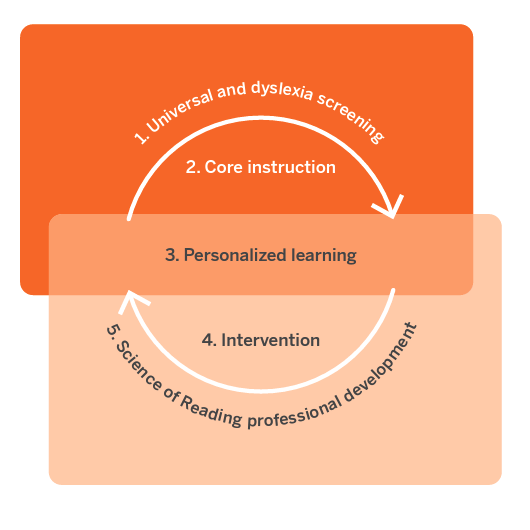
Assessment
Not only should an assessment systems include universal screening, dyslexia screening, diagnostic assessments, and progress monitoring, it must also be easy and efficient to administer, and provide classroom teachers with actionable data that guides instruction.
The mCLASS® Assessment System delivers all that and more!
When the DIBELS® 8th Edition assessment is paired with:
- The Text Reading and Comprehension (TRC) assessment, teachers unlock the ability to record reading behaviors through running digital records.
- The Vocabulary, Encoding, and Rapid Automatized Naming (RAN) measures, teachers are empowered to screen for dyslexia risk.
- mCLASS Lectura, teachers gain a holistic view of their students with biliteracy insights that support students in both English and Spanish.
Ready to learn more? Click the buttons below to review mCLASS with DIBELS 8th Edition with TRC and mCLASS Lectura.
Core instruction
Core instruction should include explicit, systematic lessons in foundational skills and a coherent approach to building background knowledge, developing vocabulary, and reading complex text with confidence.
With Amplify Core Knowledge Language Arts® (CKLA) and Amplify Caminos, all students have the opportunity to become strong readers, writers, speakers, and thinkers. Through a powerful combination of proven, evidence-based practices and engaging, interactive content, these core curricula enable students to develop a deep mastery of foundational skills as well as a robust knowledge base–both of which are necessary for accessing and comprehending complex texts.
Ready to learn more? Click the buttons below to review Amplify CKLA and Amplify Caminos.
Personalized practice
Student needs are multidimensional, which is precisely why practice must be personalized and provide opportunities for remediation and acceleration across multiple dimensions.
Through its integration with mCLASS and Amplify CKLA, Boost Reading’s adaptive personalized pathway makes practice more purposeful and productive. mCLASS automatically places students on an adaptive path within Boost Reading, which provides them the exact practice they need. That very practice follows the same approach and scope and sequence as Amplify CKLA, which further reinforces the core instruction.
Ready to learn more? Click the button below to review Boost Reading.
Targeted intervention
Getting students caught up on reading skills requires more than just “extra help” in small groups. It requires data-informed instruction focused directly on the specific skills each group needs to learn next.
mCLASS® Intervention is a staff-led reading intervention that does the heavy lifting of data analysis and lesson sequencing, freeing up teachers to teach the reading skills each student needs. mCLASS Intervention connects directly to mCLASS data, automatically groups students with similar needs, follows a research-based skills progression, includes ready-to-teach engaging lessons, and updates skill profiles and groups every ten days.
Ready to learn more? Click the button below to review mCLASS Intervention.

Science of Reading PD
Interested in helping your district make the shift to the Science of Reading? If so, grant funds can also be used for professional development. Amplify offers Science of Reading (SoR) professional development to districts that are ready to begin or progress their SoR journey. These synchronous and asynchronous courses will build and deepen teacher knowledge around SoR and give them practical tips for effective instruction.
Ready to learn more? Click the button below to review our product-agnostic Science of Reading professional learning opportunities.
Lastly, here are additional links to helpful Science of Reading resources:
Your Oregon team
Looking to speak directly with your local representative? Get in touch with an Oregon team member to learn more about our early literacy suite and how it can be used in applying for the Early Literacy Success School District Grants. See below to find your Amplify Account Executive.
Welcome, Oregon educators!
Thank you for taking the time to review Amplify’s K–8 science programs for Oregon. This site will allow your committees to easily access grade-level teacher and student resources digitally, and experience all that our high-quality instructional materials have to offer.
Amplify Science for grades K–8 has been rated all-green by EdReports. Read the review on EdReports.

Contact us
Support is always within reach. Our team is dedicated to supporting districts across Oregon and can be reached at any time by emailing HelloOregon@amplify.com or by calling us directly.

Erin Elfving-Strayhan
Senior Account Executive
Districts over 3,000 students
(971) 291-9854

Kristen Rockstroh, M.Ed.
Account Executive
Districts under 3,000 students
(480) 639-8367
S3-03: Instructional strategies for integrating science and literacy
We’re continuing our investigations around science and literacy with Doug Fisher, Ph.D., professor and chair of educational leadership at San Diego State University. We talk about the importance of integrating science and literacy, as well as practical guidance for teachers who want to unite the two disciplines in their own classrooms.
Listen as we discuss how science and literacy can be powerful allies and specific strategy areas to focus on when integrating the two disciplines. And don’t forget to grab your Science Connections study guide to track your learning and find additional resources!
We hope you enjoy this episode and explore more from Science Connections by visiting our main page!
Douglas Fisher (00:00):
It’s not that you have to become a reading specialist to integrate literacy into science. It’s how our brains work.
Eric Cross (00:10):
Welcome to Science Connections. I’m your host, Eric Cross. This season, we’re making the case for our favorite underdog, which of course is science. Each episode we’re showing how science can be better utilized in the classroom, and making the case for why it’s so important to do so. In our last episode, we examined the evidence showing that science and English instruction can support each other. And now on this episode, we want to give you some more strategies for really making that a reality in your own home or classroom or community. So to help me, I’m joined on this episode by Dr. Douglas Fisher, Professor and Chair of Educational Leadership at San Diego State University. Dr. Fisher is actually someone who has conducted literacy training at my own school, so I’m excited to be able to share some of his wisdom with all of you. Oh, and just a heads up, Dr. Fisher dropped some gems about the ways teachers can integrate literacy and science in their classrooms. So you may want to have a notepad. Ready. And now here’s my conversation with Dr. Douglas Fisher.
Eric Cross (01:12):
Well, Doug, thank you for your time and for being willing to come and talk about literacy and science. I know you’re busy, all over the place, and so I was super-excited that we were able to lock you in and talk about this. And, on this episode, we’re gonna talk about the ways that science and literacy can support each other. And one of the reasons why I’m really excited for you is because you said some really key things for me as a science teacher, when you talked about literacy and supporting students. That just resonated so deeply in me. And I was like, “I need more Doug!” Because we’re on that same frequency. And I know it’s a subject that you’ve spent a lot of time writing about. So can you tell us a little bit about how this became an area of interest or a passion for you? Just literacy, and all of the work that you’ve put into it?
Douglas Fisher (01:54):
Yeah. So I’ve wanted to be a teacher for a really long time. And I went to San Diego State as an undergraduate, and I was taking English class and we were assigned topics. You know, like, you’ll do an assignment, you’ll write a paper for this English class. And I got the topic “illiteracy,” and I was a freshman at San Diego State reading all of these things about adults who don’t read very well or not at all. And I ended up writing my very first college essay on illiteracy — at the time, you know, called illiteracy, at the time. And so I got super interested in this. And so as I moved through college and into my teaching career, literacy became a really important thing for me to think about, because it’s the gatekeeper. You know, you can be taken advantage of, if you’re not very literate. People can use vocabulary against you, if you’re not very literate. We know that people who have higher levels of literacy have better health outcomes. They have better lifespans, longer lifespans. I mean, there’s just — literacy impacts so much more than “Are you reading your fourth-grade textbook?” It really has lifelong implications.
Eric Cross (03:01):
That part that you said about being taken advantage of … I just got a flyer in the mail yesterday. It was one of these mailers that looked like it was an authentic debt-reduction type of thing, but it was really just like a marketing email. If you read the fine print at the very bottom, it had all of this jargon about “This is a paid, you know, for-profit company.” But when you look at it, it had official stamps all over it. And I could imagine if someone’s receiving that, that probably fools a lot of people. Is that kinda like what you’re talking about, like being taken advantage of?
Douglas Fisher (03:28):
Yes. I had a student turn 18, got a letter from a “credit card company” that was offering her daily compounding interest. And if you don’t know what that means — at 23 percent! — if you dunno what that means, you are gonna be a victim. Literacy really influences a lot of our life. It’s also how our brain works. We have a language-based system in our brain. We read, write, speak, listen, and view. And the things we learn, we learn through speaking, reading, writing, listening, and viewing. From what we know, we are the only species that has an external storage mechanism. Like, we have the ability to store complex information outside of our body, in the form of notes. We can type them. We can write them. And we can then go back and retrieve that information, that complex orthographic information later. And it means the same thing. We can say we have a storage system and we’ve been doing this for a really long time. Way back to, you know, hieroglyphics and messages on cave walls. And throughout the ages of humans learning, how to store information that they can re-access again later. That’s become a super-complicated system. It’s how computers operate. And we send messages to each other and we text each other and we write things down, and we’re really good at putting ideas, information out there. Now, if it’s just speaking and listening, then we can forget it. We can say, “No, you said this,” or “I said that.” But when it’s written, and it’s print literacy, you know, it’s the orthographics there, you can go back to the same message and over and over again. Now, you might change the interpretation of it, but the message is still there.
Eric Cross (05:16):
Right. And that is such a key element, at least of modern education, is this written element of it. It’s what many schools live and die by. They’re quantitatively and qualitatively analyzed by it. It’s public. They can see it. And so there’s this heavy emphasis. And why do you think science and literacy can be powerful allies together?
Douglas Fisher (05:38):
Awesome. Well, it’s hard to learn science if you’re not literate.
Eric Cross (05:42):
This is true.
Douglas Fisher (05:42):
But that’s a one-way direction. And yes, science teachers and scientists do a lot of reading, writing, speaking, and listening and viewing. They use the five literacy processes all the time. When we interview scientists, they spend a lot of their time reading the work of other scientists and writing their findings, writing grant proposals, presenting at conferences, you know. So a huge part of the work of a scientist is not just at a bench conducting experiments. But even if you’re conducting experiments, you’re using your literacy processes to think about what you’re seeing in your experiment. So that’s a one-way direction. And I do think literacy has an influence on science. But since science goes the other way, it influences literacy. As you learn more and you understand more about the world, your background knowledge grows, your vocabulary grows, you become more literate in those different areas. And how you think. So if I’m learning about life science; I’m learning how the world works in a more, biologic physical world. And that knowledge helps me think about when I’m reading a novel, and there’s an appeal to some science knowledge or a concept that gets played with, you know, perhaps time-space continuums … well, if I don’t have the science knowledge of how I think the world works, it’s hard for me to understand what this author is doing. So it does go both ways. They feed each other. And the more literate we become, the more complex science information we can understand. ‘Cause our background knowledge and our vocabulary influence how much we understand about what we read. And as we access more complex science information, it starts to change the way we think about other things in our world.
Eric Cross (07:23):
There was a couple of things that you said in that, but one of the first things that kind of perked my ears is when you said grant proposals. Because I have friends that are scientists — and this is one of the things that when I was in school, they don’t talk about — but how much of their research is reliant upon getting funding —
Douglas Fisher (07:37):
Mm-hmm. <affirmative>,
Eric Cross (07:38):
— which you don’t think about if you’re becoming a chemist or a physicist or a biologist or working in the field, is that that funding, coming from the NSF or anywhere else. And sometimes students ask in class like, “Why am I writing so much? Like, I want to go into science!” Or “I wanna do this!” And this is a real-life example of how the writing could actually apply, in addition to all of the things of collecting data and conclusions and results. But that grant proposal thing just really perked my ears, yeah.
Douglas Fisher (08:01):
And if you can’t write a grant proposal, your ideas and experiments are not gonna get funded. And if you can’t write a strong proposal, that compellingly convinces your readers to fund you, you’re not gonna get funded. But then once you get the grant, you have to write publications. You have to share your work with other people. Make PowerPoint presentations and write journal articles or books or whatever. So it’s a cycle that literacy influences the things we do, including the things we do in science.
Eric Cross (08:31):
Now to get in maybe some data, if you were trying to convince someone that like this happy marriage can exist, what would be like your number one piece of evidence to support this, this back and forth of supporting each other?
Douglas Fisher (08:44):
Awesome. So the quote I’ll often say — and this is from studies from more than two decades ago now — but in general, in high school science, students are introduced to 3000 unfamiliar words, 3000. Each year! Because there are words that are used in a scientific way that are used commonly in other places. And there are discipline-specific words. So 3000 words a year in high school science. The Spanish 1 textbook only has 1500 words in it. So science teachers have double the academic-language vocabulary demand that a typical introductory world-language class has. So just the vocabulary alone should say to us, literacy is gonna be important if you’re gonna learn science. And if you don’t understand these technical words, and you don’t understand the way science uses this particular word in this particular way… . When you say the word “process,” it means something very specific In science. “Division” — cellular division is not the way we think about it in mathematics; there’s a similar concept, but cellular division is different than dividing numbers. And those are words that get used in multiple areas. Then you have all these technical terms that you have to be able to use, to understand the concepts. To share the concepts. To talk to other people. Whether you’re in, you know, fifth grade and talking science, or you’re a university professor, there’s a shared language, appropriate for our grade level, that we have shared meanings of.
Eric Cross (10:22):
And we’re essentially … what I’m hearing you say is … most of the people that are listening to this are science teachers. We’re we’re also language teachers. In a sense.
Douglas Fisher (10:29):
So my frustration is when people say, “Every teacher’s a teacher of reading.” And I don’t like that. I’ve written against that phrase. I don’t think all teachers are teachers of reading, any more than all teachers are teachers of chemistry. Or all teachers are teachers of algebra. But what I will say is the human brain learns through language. And all of us — every teacher that I’ve ever met understands that language is important in my class. If my students don’t have strong listening skills and speaking skills; reading, writing, and viewing skills; I’m gonna have a hard time getting them to learn things. If I can help them grow their speaking, listening, reading, writing, and viewing in my content area, I’m gonna do a service for my learning of my subject and also their more broad literacy development.
Eric Cross (11:16):
- So, at a high level, what does it look like to integrate science and literacy? We’ve done education for the last, what, hundred years?
Douglas Fisher (11:24):
Mm-hmm. <affirmative>
Eric Cross (11:25):
—kind of pretty similarly, right? Kind of siloed way. What does this look like at the 30,000-foot level? You’re a professor, department chair. Run schools. Speak everywhere. Like, when you think about this from that high level, what does it look like?
Douglas Fisher (11:39):
A high level? Every time I meet with students in a science class, you know, biology or fifth grade or whatever? They should be reading, they should be writing, they should be speaking and listening. Every class. So what print do you want them to access? And it can be a primary source document, it can be an article, it can be from a textbook. Are they reading something? Are they writing to you? Because writing is thinking. If they are writing, they are thinking. As soon as their brain goes somewhere else, they stop writing. The pen won’t move or the fingers don’t type. And then speaking and listening, of course, is the dynamic of our classes. So every day we should see some amount of reading, writing, speaking, and listening, viewing in our classes. That’s at a high level. There are some generic things that seem to work across the literacy. So, learning how to take notes. Focusing on vocabulary. Using graphic organizers. These are generic things that as educators we can use in our classes. Then there’s more specialized things. So, scientists and science teachers think differently than historians and literary critics and art critics. So scientists, if you look at the disciplinary literacy work, there’s a whole body of research where they interview and study high-end experts in their field: chemistry, physics, biology, et cetera. And there are some characteristics that were more disciplined, specific. Scientists like cause and effect relationships. They look for them when they’re reading. They like sourcing information. “Where this come from?” “What’s the history of this idea?” Scientists have a long view in terms of time. Historians have a shorter view of time. English teachers have even shorter view of time. Scientists tend to think in long periods of time. And so all of that influences how a scientist reads and how we should apprentice young people after they get past the generic “I know how to take notes. I know how to study my vocabulary. I know how to do summary writing for my teacher in my notebooks and things,” there’s some generic tools. Once we get past those, we need to be looking at specifically how do people in science use literacy.
Eric Cross (13:52):
I’ve never had my thought process of reading deconstructed just now, but we just described how scientists read. I was like, “Yeah, that’s pretty much how I read, right there.” I also like how you said how we should apprentice young people. And I feel like you as the literacy guy, you chose that word very specifically, as far as apprenticing young people. That is a view, I think, that’s really important to hold. ‘Cause that’s what we’re doing essentially … is, if we’re doing what we should be doing, we are apprenticing these young people.
Douglas Fisher (14:18):
Yes.
Eric Cross (14:18):
And helping them develop. Now, let’s imagine there’s a listener out there and they’re interested in getting better at integrating science and literacy instruction. They want to start somewhere. Before we dive in, do you have any initial words of encouragement for the person who’s like, “Everything is like a priority right now,” in their classroom or in their world?
Douglas Fisher (14:37):
Yeah. So I’ll talk about elementary for just a moment. When we’re reading informational texts in our literacy block, we should be reading information that is aligned to what kids need to learn in science and history in, in that grade level. Why are we reading things that are gonna be in conflict with what they’re gonna learn in science later that day in fourth grade, for example? So when we look at our standards, our expectations, what is it that third graders need to know in history, science, mathematics, language arts? And when we’re reading text and we’re learning to apply our reading strategies during our literacy block, why aren’t we reading topics that build our background knowledge for our science time? So we’re seeing some synergy there. We should be looking at life cycles in grades that are appropriate for life cycles and knowing there’s more to life cycles than the frog and the plant or the seed. There are all kinds of life cycles. And we call ’em life cycles for a reason. That’s a general concept. Now in science, we’re looking at this particular lifecycle right now. And so that’s a high level. If we could get more connection to the content standards during our literacy blocks, it would be very good. When we talk about the time at which we call “science” in the day, in more of the K–8 continuum, the science needs to include some primary source documents. Some real things that students are reading. Read about a scientist; read about a scientist’s discovery; read about what they discovered. So that we’re building our background knowledge. So when we go to do things, activities, labs, simulations, we have background knowledge and we understand what we’re experiencing. It can’t be like—I watched this awesome lesson on lenses and the teacher had all these different lenses in the room and the students came in and they were brand new. They don’t know anything. They were picking ’em up. They’re exploring them. They’re trying to figure out, and they’re trying to come up with theories about what this is and how it works. And then the teacher gave them a reading, a short reading, on refraction of light. And they read this thing. And the clarity that they had about what these lenses must do, well! All of a sudden they’re putting them up to the lights! They’re asking if they can go get the lights out of the storage unit! ‘Cause there’s — and they’re shining different lights through the lenses to see what happens to the light. Because that little bit of reading turned some focus on for the students. And it allowed them to take what I’m thinking about, what I’m trying to figure out, how this thing works in another direction. That’s the power of using literacy in our classes.
Eric Cross (17:20):
And what I’m hearing essentially is transfer across disciplines, across content areas, ultimately. And in an elementary school classroom, would it be fair to say, probably the teacher has more autonomy to be able to do that, since they’re teaching all the subjects? But secondary, logistically, planning and those types of things … from what you’ve seen, is it fair to say this kind of needs to be like a top-down, full vertical alignment, to teach like this?
Douglas Fisher (17:45):
I think that would be awesome to do that. But if I’m a sixth grade English Language Arts teacher and I’m working with my sixth grade science teacher, the conversation should be, “What units are you teaching?” Because I’m choosing informational text. My job is to teach them how to find central ideas. My job is to teach them how to find the details in the text. My job is to have them make a claim and support that claim with evidence. The stuff I use is generic. Yes, we do read some literature and some narratives, but we also read about 50% of the text in English around informational text. So if I can help you and accomplish my standards as well, fantastic. So let’s have this conversation and say, “Oh, this is what you’re teaching in science in the next three weeks? I’m gonna choose some texts and we’re gonna analyze ’em for central idea. We’re gonna analyze ’em for details. We’re gonna, for mood or tone or whatever that we’re teaching. And by the way, I’m building background knowledge. So when they come to you, they know some stuff about what you’re going to be teaching next.” So I don’t think it’s impossible to say teams of teachers could come together and say, “What do we believe that our students need to know and learn and be able to do? And then how do we choose things that are gonna help them accomplish exactly that?”
Eric Cross (19:01):
And that’s empowering. Because that’s one thing that we can control maybe is this East-West, peer-to-peer, different content areas. A system may not be able to change as quickly, but I can definitely go talk to my English team or math team and check in and kind of see, “Hey, where do we have overlap in that?” And I know the times that I’ve accidentally had overlap with the teams, it’s super-exciting. And the students have been more bought in! Because it’s like, we’ve done something on the human microbiome and we’ve talked about genetics and all these different things, and then when they read The Giver, or they read some book about genetics, they have all this knowledge. And they’re excited. And they talk about colorblindness or they come to my class and they’re like, “Hey, we read about this!” It’s almost like they saw a magic trick, the fact that these things linked up. And the engagement has been so much higher when it’s the same content in different classes, but through different lenses. At least, that’s what I’ve seen in my years of teaching.
Douglas Fisher (19:54):
I saw a lesson on space junk that was so cool. Middle-school students learning space junk. And the history teacher had a part of it, science teacher had a part of it, English Language Arts teacher had a part of it. And these students, I mean, you watch them look up all the time, ’cause there’s space junk up there. Where’d it come from? Why is it there? What are the politics of this? How do we clean it up? I mean, it was just so interesting to watch them when the teachers came together. And the teachers met their standards in this couple-week-long space-junk exploration. Investigation was met. Politics was met. All these different things. Economy. You know, how much does it cost to clean up this problem? So there’s really cool opportunities when teachers come together and realize we can work together and improve the literacy and learning of our students.
Eric Cross (20:50):
Absolutely. So before this recording, we picked your brain a bit. And I know that there were three specific strategy areas that you wanted to touch on. And one of those — which is kind of coming back to the 3000-words language teachers — was vocabulary. So what are the opportunities that you see, as far as the way of educators to approach vocabulary? Because, you know, there’s a lot. We got a lot of it. The 3000 words.
Douglas Fisher (21:14):
Yeah. There’s a lot of it. So the worry is, we make a vocabulary list and have students look up the words in definitional kinds of things. That’s not really gonna help. Students need to be using the words. They need to be using the words in their conversations, in their writing, in how they think about your content in science. So vocabulary is a huge predictor of whether or not you understand things. Vocabulary is also a pretty good predictor if you can read on grade level. So when we think about vocabulary, there’s something called word solving. You show students a piece of text and you’re reading it, you’re sharing your thinking, and you say, “Oh, here’s a context clue!” Or “I know this prefix or suffix or root!” And in science, a lot of the words are prefixed, suffixed, or root words. We tend to add things together with a lot of prefixes and suffixes and have roots and bases in science. So we can help students think about, “Oh, what does geo- mean? We already know what geo- means here. It means the same thing in this word. Let’s apply that knowledge.” So word solving is part of it, showing students how we think about words that we might not know. The second is more direct instruction of vocabulary. As students encounter the words, we work on what it means, how we say it. We practice it a few times. The process is called orthographic mapping. It’s kind of a scientific idea here. But you have the sound and the recognition of by-the-word, by sight, and what it means. And your brain starts to automatically recognize that word in the future. So I don’t have to slow down, disrupt my fluency, and try to figure out what the word is saying. ‘Cause I’ve seen it enough. I’ve heard it pronounced enough, I’ve pronounced it enough, and I know what it means. So teachers should be saying, “What words in sixth grade science, what words in third grade science, do my students really need to know?” And I’m gonna have them encounter those words over and over. I’m gonna have them use the words. I’m gonna have them see the words. I’m gonna have them say the words. I’m gonna say the word and we’re gonna be over and over with these terms, so that students incorporate them into their normal view of, “These are the things I know about the world.” By the way, when they go to read that next thing, and they understand “geology,” you know, for sixth graders, for example, they know how to say it. They don’t stumble on it. And it activates a whole bunch of memories in their brains. “This is what geology is.” There are branches of geology, there’s physical geology, there’s all this thinking that activates as they read.
Eric Cross (23:35):
There was a practice that I participated in and am trying to incorporate — I don’t know what the name of it is. But essentially what happened was we were dissecting a flower. And the instructor had us name parts of the flower. But we got to come up with our own names for it.
Douglas Fisher (23:49):
Ah.
Eric Cross (23:50):
So, for instance, the stamen we call “the fuzzy Cheeto.” And we all used our own words and then everything was legitimized. And so we went through and learned the whole activity using our own vocab words. But then, in the end, after we presented and talked about it, then the words, the actual academic language was attached to our word. And we were able to say, “OK, the fuzzy Cheeto is the stamen,” and this, this, this, and this. But it was such an interesting practice, because it kind of legitimized all of our definitions. But we weren’t stumbling on these long Latin terms and things like that. Is there a name for that? Or. … ?
Douglas Fisher (24:29):
Yes. I don’t know the name for that. I think it’s really smart. So here’s what I would say about that, is: we don’t learn words, we learn concepts. Words are labels for our concepts. So what that teacher did for you was allow you to develop concept, a concept knowledge. “There’s a part of this plant, it goes like this, we’re gonna call it fuzzy Cheeto. Now I have this concept. And look, it occurred in all these plants. And those people called it that and that other group called it that. We called it a fuzzy Cheeto. Here’s the part of it.” And then the concept is in your brains. And the teacher said, “It’s really called stamen.” And it’s an instant transfer, because you already had the concept. What we often see is students are trying to learn a really hard academic word and the concept for the word at the same time. And so it slows down the whole process. And there’s higher levels of forgetting. Because human beings, we don’t learn words; we learn concepts. If you don’t have the concept, if I gave you a word out of the blue that you’ve never seen, never heard, and a week from now I asked you to remember it, you probably would not, because it didn’t register. It wasn’t part of your schema. You didn’t have a way to organize the information. You don’t have a concept. So that teacher? It’s a great idea. Got you to develop concept knowledge. And then said, “Here’s a real label for it: What some other people called it when they had the chance to come up with their own names.”
Eric Cross (25:50):
Shout out to my teacher, who was—
Douglas Fisher (25:51):
Right.
Eric Cross (25:52):
It was learned then. It was a great practice. And the fact that you’re right, like, I just mean from my own personal experience, I agree that learning concepts versus complicated words. And it’s interesting that you said higher levels of forgetfulness, you know. And you often hear that complaint about it: “Students forget! Students forget!” But this complex topic and this complex word that’s new to me, and I have to remember both of those things.
Douglas Fisher (26:12):
That’s right.
Eric Cross (26:13):
And the other neat thing that it did, is it actually honored the background and like the founts of knowledge of all the different groups in the classroom. You just said something about “this group called it this and this group called it this,” and so by letting different groups share all of those names, now we’re starting to build these kind of interesting connections. That’s at least what I remember experiencing. And so this, even this practice of this approach is very layered, beyond just kind of generating new knowledge of things. So I appreciate that aspect of it. Now another area that you mentioned was complex text.
Douglas Fisher (26:41):
Yeah.
Eric Cross (26:42):
And how we can get students into complex text. So what can we do there?
Douglas Fisher (26:46):
I think science is an ideal place to get students reading things that are hard for them. And I do believe that some parts of school should be a struggle. Not all day, every day. But there should be doses of struggle, which are good for our brains. And these complex pieces of texts that don’t give up their meanings easily allow students to go back and reread the text and maybe mark the text and talk to peers about the text and answer questions with their groups. And the whole point of complex text is to say, “We persevere through it. We may not understand it fully on our first read. But we go back and we might underline, we might highlight. We might write some margin notes. Our teacher might say, ‘What did this author mean here?’ And we go back and look at that part and we take it apart. What do we think about that? And we talk to each other. It’s showing that when we read things, we work to understand. We work through our thinking, often in the presence of other people. And our understanding grows as we go into the text over and over and over again.” So I said geology earlier. There’s about a two-page article on “what is geology” that sixth graders often read. And some kids find it super boring. It’s a once-read, “OK, geology, I don’t really understand it. There’s a bunch of words in here that I don’t understand.” But if you go back to it a few times and you start taking apart, “What are the branches of geology? Oh, I’m gonna go reread that.” How are these two branches related to each other?” “What are the subtypes of each branch of geology?” “How do geologists do their work?” You start asking questions where students are going back into the text. You spend a little bit of time. Now, the introduction to geology, the students know so much more. So whatever you do next— video experiments, whatever—they have a frame of reference, because of that deep, complex read. It’s probably better than simply telling them, “Here’s the information.”
Eric Cross (28:45):
Right. And I even feel like as an educator, when I reflect on my own learning in the classroom, and then looking at it through the perspective of an educator <laugh>, you find this difference between how you were taught and then what the data says good teaching is.
Douglas Fisher (28:59):
Mm-hmm. <affirmative> mm-hmm. <affirmative>.
Eric Cross (29:00):
It’s so easy to slide back into how you were taught!
Douglas Fisher (29:02):
Yeah.
Eric Cross (29:02):
Even though, you know, you mentally assent to, “This is the best way. This is the data shows.” And you find yourself kind of sliding back at times.
Douglas Fisher (29:10):
Yep. And there’s good evidence to support what you just said, that most people teach the way they experienced school. And it is very hard to change that. And people have studied this. And it’s very hard to change that. Because it worked for us. And we have an n of 1, and it worked for us. Now, remember, there were a whole bunch of other kids in the class that it may not have worked for. And we chose to be in school the rest of our lives, and some of your peers did not choose to be in school the rest of their lives. In fact, some of them hated school and found no redeeming qualities of their experience. So just because it worked for us in a case of one, n of 1, doesn’t mean it worked for all of the kids, or even the majority of them.
Eric Cross (29:57):
Very well said. It’s that, what is that, the survivor bias? Survivorship bias? Where you were the one that made it. But you don’t think about all the other folks. ‘Cause we’re thinking about ourselves.
Douglas Fisher (30:05):
That’s right.
Eric Cross (30:06):
Great case for empathy too, is thinking about the people left and right. Because my friends are like, “I hated science.” And I say, “Who hurt you? Like, what did they do? It’s so amazing, so much fun!”
Douglas Fisher (30:16):
“What happened to you? Science is the coolest. Right? It’s so amazing!”
Eric Cross (30:21):
But I also had a unique experience in seventh grade with my teacher who did some of these things, and made it accessible for so many of us, in opening opportunities that I wouldn’t have had otherwise. But you’re absolutely right. That was my story. That wasn’t the story of everybody that was around me. And I think that’s really important. Now, I know this is also a big one for you, but I wanna talk about writing. What are the opportunities that you see in terms of writing specifically?
Douglas Fisher (30:51):
So would love it if science teachers had short and longer writing tasks in the science time. Of course, you can integrate some of the science writing, the longer ones, in the English language arts time, especially if you’re the elementary teacher and you can have control of the whole day. But I said this earlier; I’ll say it again. Writing is thinking. While you are writing, there’s nothing else you can do but think about what you are writing. Your brain cannot do something else. So if a science teacher wants to know, do their students really understand the concepts? Have them write. Now some of the shorter ones, I like something called “given word” or “generative sentences”: “I’m gonna give you a word: CELL. C-e-l-l. We’re in science. I want you to write the word ‘cell,’ c-e-l-l, in the third position of a sentence. So it’s gonna go word, word, cell, and then more words.” You could also say, “I want the sentence longer than seven words,” or whatever. But the key is, I’m telling you where I want the word. You will know instantly if your students have a sense of what the word “cell” means in the context of science. If they write “my cell phone,” they don’t get it. If they write about spreadsheet cells or jail cells or whatever, they didn’t get it. But if they talk to you about plant cells and animal cells and the components of those cells, and then once they have that sentence down, you can say to them, “Now write three or four more sentences that connect to that sentence.” It’s super simple. So whatever concepts you’re teaching, put ’em in a specific position. Now you don’t have to only put it in the third position. You can say the first position, the fifth position, the fourth position. But it forces them to think about what they know about the word and then how to construct a sentence for you. That’s a very simple way to get some writing from your students that helps you think about what they understand. Other kinds of writing, you can have quick writes, you can have exit-slip writes. There’s something in the research space called the muddiest part, where halfway through the lesson you have them write so far what has been the least understood or the most confusing part of this lesson. And they do a quick write, right there, at the muddiest part. And as a teacher, you flip through these and you start to say, “Oh, these are the points that are confusing to my students.” So if 80% of them all have the same thing, I gotta reteach that. If these five got, “This is the muddiest part,” If these five thought, “This is the muddiest part,” these seven, “I thought this was the muddiest part,” what do I need to do? Because it’s gonna be hard to move forward if this is their area of confusion. There are also all kinds of writing prompts that have a little bit longer. My favorite one is RAFT. What’s your Role? Who’s your Audience? What’s the Format? And what’s the Topic we’re writing about? Super flexible writing prompt. When you teach something, we don’t want students to only think they write to their teacher. So your role is an atom. You are writing to the other atoms. What do you wanna write about? What’s the topic? What’s the format of it? Is it a love letter? Is it a text message? Is it … so we, we mix it up with students in saying, how do they show some knowledge through a prompt that we give them? And then of course, longer pieces as they get older. More opinion pieces through fifth grade. More claims and arguments starting in sixth grade. So that they’re starting to see, “I have to use the evidence from things I’ve learned, read, listened to, watched, and construct something: an opinion, an argument where I back it up with reasons or evidence.” And those longer pieces, you know, less frequently. The shorter pieces, pretty regularly. So the teacher sees the thinking of the students.
Eric Cross (34:29):
When you were speaking about these really creative writing prompts, there were specific students coming into mind, that were coming into mind … they’re, they’re great science students, but they also have this really strong artsy side drawing, creative writing, and things like that. And when you said something about atoms talking to each other, it elicited, in my brain, certain students that would really love this aspect of creativity in the sciences. And it’s not how we’re typically trained as science teachers, to kind of incorporate this, like you said. A book of props. But I’m imagining, like, as a science teacher, if I took this, this would be a great way to reach more students to be able to show what they know, in a way that might resonate with their own intrinsic “Oh, I get to write creatively!” So I was kind of writing furiously as you were sharing all that information there.
Douglas Fisher (35:12):
So here, I’ll give you another example for elementary people. Again, with RAFT. There’s a book called Water Dance. It’s a pretty popular book for elementary teachers. It’s really about the life cycle of water. For example, you are a single drop of water. You are writing to the land. The format is a letter. And you’re explaining your journey. Now, if they can do this, they’re essentially explaining to you the cycle of water. But you got it in a way that people are now, “Oh, I’m a drop of water. So it’s me. My perspective. Where do I go from? Where do I start?” Because you can start anywhere in the cycle, right? My drop could have started in the clouds. My drop could have started in the ground. My drop could have started in the lake. But it has to show you the journey. So there are many ways of showing you the right answers.
Eric Cross (36:02):
And that’s using the RAFT protocol.
Douglas Fisher (36:04):
That’s RAFT: Role, Audience, Format, Topic. It’s been around 20 or 30 years.
Eric Cross (36:09):
You just gave the name to something a teacher shared in our podcast community, Science Connections: The Community, on Facebook. Teacher shared a Google slide deck and on it were just three slides. And the role that the student had to have is they had to show, then tell, the story of a journey of a piece of salmon being eaten, a piece of starch from pasta being eaten, and then an air molecule in a child’s bedroom. And they had to give the path of travel and the experience from the mouth and then breaking down into protein and all those kinds of things. And this teacher shared it and I wish I knew the teacher’s name because I wanna give ’em credit, but they shared it. And so I used it with my students and then had ’em read aloud their stories and dramatize it. And they were so into it!
Douglas Fisher (36:49):
So cool.
Eric Cross (36:50):
But through it, I was able to see that they understood different parts of the body. They understood cell respiration. The whole thing. And it was fun! To watch them get so into this creative writing. And now I know the name of it. That’s been 30 years they were using RAFT. So you just talked a bit about complex texts and writing. And before we go, I wanted to circle back to something that you said, because I think it’s important, and if you could elaborate on it a little bit, about the value of struggle. Can you talk more about that?
Douglas Fisher (37:21):
Sure. I do believe in a lot of the U.S. we’re in an anti-struggle era of education. And it predates Covid. I think it made it worse during Covid. We front load too much. We pre-teach too much. We reduce struggle. We quote, “over-differentiate” for students. And there’s value in struggle. The phrase, “productive struggle” — if you haven’t heard it, Google productive struggle — it’s an interesting concept, that we actually learn more when we engage in this productive struggle. Now, productive struggle originally came from the math world, and it was this idea that it’s worth struggling through things to learn from it, that you’re likely to get it wrong, and then there was productive success. And there are times when we want students to experience success and we make sure we put things in place for productive success. But there are times where we want them to struggle through a concept. ‘Cause it feels pretty amazing when you get on the other side, when you know you struggled and you get to the other side. If you think about the things, listeners, think about the things in your life where you struggled through it and you are most proud of what you accomplished. I want students to have that. I don’t wanna eliminate scaffolding, eliminate differentiation. But I do want some regular doses of struggle. So if you look at the scaffolding, we have a couple choices. We have front-end scaffolds, distributed scaffolds, and back-end scaffolds. Right now we mostly use front-end scaffolds: We pre-teach, we tell students words in advance, that kind of stuff. But what if we refrained from only using front-end scaffolds, and we use more distributed scaffolds, when they encounter. So there’s a difference between “just in case” and “just in time” support for students. So we tend to plan on the “in advance, here are all the things we’re gonna do to remove the struggle before students encounter the struggle.” What if instead we said, “Let them encounter some struggle. Here’s the supports we’re gonna provide. We’re gonna watch; we’re gonna remove those scaffolds, and allow them to have an experience of success, where they realize, ‘I did it. I got it.’” Every science teacher I’ve ever worked with, when they do an experiment or a lab or simulation, they are looking for productive struggle. They don’t tell the answers in advance. They don’t tell if the answers are right. That’s your data. What does your data tell you? I mean, this is what you do. But then the other part of your day when you move into, like, reading, you don’t do that. You fall into the trap of removing struggle. And so allow them to grapple with ideas. Allow them to wonder what words mean. Allow them to say, “I’m not getting this, teacher! It’s really frustrating!” And you say, “Yeah, this is really hard. This is why we’re doing it at school. ‘Cause it’s really hard. If it was easy, I’d have you do it at home. But we’re doing it here, ’cause it’s really hard and it’s OK not to get it at first.” And create a place where errors are seen as opportunities to learn, and struggling through ideas and clarifying your own thinking and arguing with other people to reach an agreement or reach a place where we agree to disagree is part of the power of learning.
Eric Cross (40:38):
There’s a teacher, who I took this from. My master teacher when I was student teaching. And she said that there’s no such thing as failure in science, just data. And I took that same mantra. And I resonate with what you said about how science teachers, all of us, hold onto that productive struggle, because it’s part of being a scientist. It’s part of the experiments. That genuine “aha” moment. Or it didn’t work out? That’s great! That’s totally fine! Let’s write about it and let’s take photos and let’s publish it and let’s be scientists. That’s totally true. As we wrap up, Dr. Fisher, is there any final message that you have to listeners about bringing science and literacy together? I know you speak everywhere, but for everyone that’s listening, if you can put out your encouragement or message or suggestion … you’ve given so many great tips and practical applications. But, any final thoughts on the subject?
Douglas Fisher (41:32):
I think many science teachers are intimidated because they think they have to be reading teachers. And there’s a knowledge base to reading. And some teachers are reading teachers and science teachers, and I don’t wanna dismiss that. But it’s not that you have to become a reading specialist to integrate literacy into science. It’s how our brains work. And so as you think about the way in which you are learning and the ways in which you want your students to learn, what role does language play? What role does speaking, listening, reading, writing, viewing, play in your class? And then provide opportunities for students to do those five things each time you meet with them.
Eric Cross (42:12):
Dr. Fisher, thank you so much for being here and for your encouragement, and sharing your wisdom and experience. And then personally serving my city, here in San Diego, and my students, when they make it to your high school and ultimately the alma mater of San Diego State University.
Douglas Fisher (42:30):
That’s right.
Eric Cross (42:31):
Yeah. We really, really appreciate you in serving all kids and lifting the bar and making things more equitable for all students. And encouraging teachers. So thank you.
Douglas Fisher (42:39):
Thank you very much.
Eric Cross (42:42):
Thanks so much for listening to my conversation with Dr. Douglas Fisher, Professor and Chair of Educational Leadership at San Diego State University. Check out the show notes for links to some of Doug’s work, including the book he co-authored titled Reading and Writing in Science: Tools to Develop Disciplinary Literacy. Please remember to subscribe to Science Connections so that you can catch every episode in this exciting third season. And while you’re there, we’d really appreciate it if you can leave us a review. It’ll help more listeners to find the show. Also, if you haven’t already, please be sure to join our Facebook group, Science Connections: The Community. Next time on the show, we’re going to continue exploring the happy marriage between science and literacy instruction.
Speaker (43:26):
I had this moment of realization I felt a few months ago: I’m like, if I don’t teach them how to use the AI as a tool, as a collaborator, then they’re gonna graduate into a world where they lose out to people who do know how to do that.
Eric Cross (43:39):
That’s next time on Science Connections. Thanks so much for listening.
Stay connected!
Join our community and get new episodes every other Wednesday!
We’ll also share new and exciting free resources for your classroom every month!
Meet the guest
Douglas Fisher, Ph.D., is professor and chair of Educational Leadership at San Diego State University and a leader at Health Sciences High & Middle College having been an early intervention teacher and elementary school educator. He is the recipient of an International Reading Association William S. Grey citation of merit, an Exemplary Leader award from the Conference on English Leadership of NCTE, as well as a Christa McAuliffe award for excellence in teacher education. He has published numerous articles on reading and literacy, differentiated instruction, and curriculum design as well as books, such as The Restorative Practices Playbook, PLC+: Better Decisions and Greater Impact by Design, Building Equity, and Better Learning Through Structured Teaching.

About Science Connections
Welcome to Science Connections! Science is changing before our eyes, now more than ever. So…how do we help kids figure that out? We will bring on educators, scientists, and more to discuss the importance of high-quality science instruction. In this episode, hear from our host Eric Cross about his work engaging students as a K-8 science teacher.
You might also like:

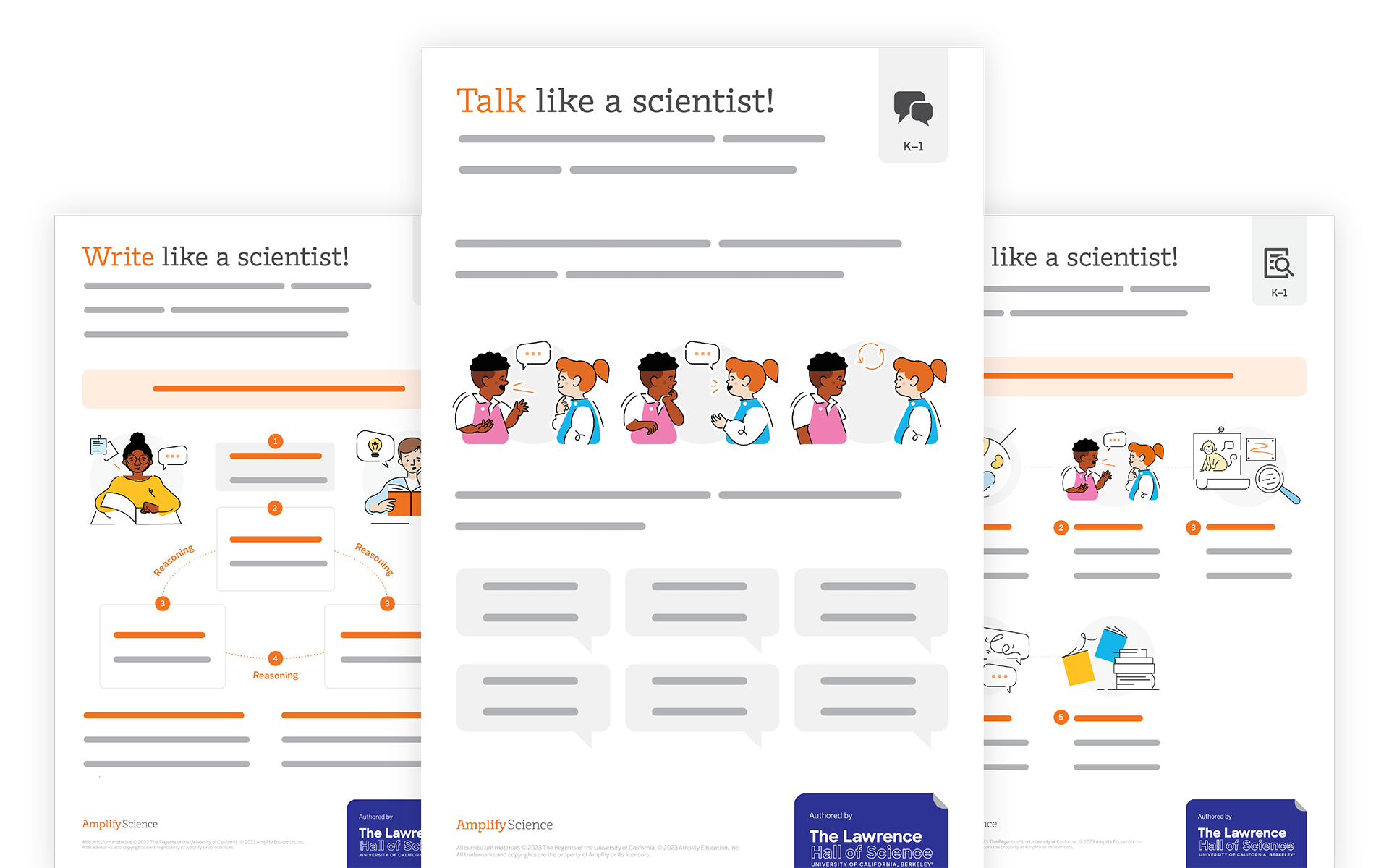
Families and caregivers, welcome to Amplify Desmos Math Texas K–5!
Welcome to the Amplify Desmos Math Texas K–5 Caregiver Hub. We’re here to support your student as they explore math, work with friends to solve problems, and learn new and interesting concepts—and to support you as you go on this math journey with them! Below are some suggestions and resources for how you can support their learning at home.
Learn more about Amplify Desmos Math Texas.
Para la versión en español, haga clic aquí.
Unit Caregiver Resources
For every unit of the program, we’ve created a Caregiver Resource that provides a summary of key concepts. You’ll find a Caregiver Resource for each unit, in both English and Spanish.
Unit 1: Beginning Number Concepts
Unit 2: Numbers 1–10
Unit 3: Shapes, Coins, and Financial Literacy
Unit 4: Understanding Addition and Subtraction
Unit 5: Make and Break Apart Numbers Within 10
Unit 6: Numbers 0–20
Unit 7: Solid Shapes All Around Us
Unit 1: Adding, Subtracting, and Working With Data
Unit 2: Story Problems Within 10
Unit 3: Adding and Subtracting Within 20
Unit 4: Numbers to 99 and Financial Literacy
Unit 5: Adding Within 120
Unit 6: Length Measurement Within 120 Units
Unit 7: Geometry and Time
Unit 1: Working With Data and Developing Financial Literacy
Unit 2: Adding and Subtracting Within 100
Unit 3: Measuring and Solving Problems Using Length
Unit 4: Numbers to 1,200
Unit 5: Geometry and Time
Unit 6: Adding and Subracting Within 1,000
Unit 7: Equal Groups and Area
Unit 1: Introducing Multiplication
Unit 2: Adding, Subtracting, and Rounding Larger Numbers
Unit 3: Relating Multiplication to Division
Unit 4: Fractions as Numbers
Unit 5: Measurement and Financial Literacy
Unit 6: Sorting and Classifying Shapes
Unit 1: Fraction Equivalence and Comparison
Unit 2: Extending Operations to Fractions
Unit 3: From Hundredths to One Billion
Unit 4: Mathematical Relationships and Financial Literacy
Unit 5: Multiplying and Dividing Multi-Digit Numbers
Unit 6: Angles and Properties of Shapes
Unit 1: Volume, Factors, and Expresssions
Unit 2: Multiplying and Dividing Fractions
Unit 3: Multi-Digit Multiplication and Division and Financial Literacy
Unit 4: Place Value Patterns and Decimal Operations
Unit 5: Measurement, Fraction Operations, and Data
Unit 6: Geometry and Algebraic Reasoning
Sub-Unit Summaries
- Unit 1 – Volume, Factors, and Expressions
- Unit 2 – Multiplying and Dividing Fractions
- Unit 3 – Multi-Digit Multiplication and Division and Financial Literacy
- Unit 4 – Place Value Patterns and Decimal Operations
- Unit 5 – Measurement, Fraction Operations, and Data
- Unit 6 – Geometry and Algebraic Reasoning
Access Amplify Desmos Math at home.
In addition to a print Student Edition workbook, your student will have digital access to all learning, practice, and assessment materials through the Amplify platform. The digital curriculum can be accessed in school and at home by following these instructions:
- Select the Amplify Desmos Math button.
- Select Log in with Amplify.
- Enter your student’s username and password provided by your student’s teacher.
- Select the desired grade level.
Once logged in, caregivers can view student work by opening previous assignments.
Learn how to navigate the student home page.
Materials overview
Amplify Desmos Math Texas supports blended learning with supporting print materials and a unique digital experience. All K–5 lessons are available in a write-in Student Edition book. Many of the lessons include hands-on activities with manipulatives, tools that help students understand abstract concepts by making them tangible. Your student will also work with digital devices for an age-appropriate number of lessons.
When students use devices, teachers can monitor their work in real time, making sure they get the exact support that they need at every part of the lesson, in and outside of class.
Components of a lesson
Students in an Amplify Desmos Math Texas classroom can be seen (and heard!) asking questions, debating answers, justifying their thinking, grappling with problems, and working together and independently.
A typical Amplify Desmos Math Texas lesson includes:
- Warm-up: A short, attention-getting problem to pique students’ interest in the lesson.
- Activities: One to two mini-activities that challenge students’ problem-solving skills.
- Synthesis: Discussion to review and bring together the important concepts from the lesson.
- Show What You Know and Reflection: Questions for students to show what they know from the lesson. (Note: The Show What You Know lesson assessment is optional for kindergarten and grade 1.)
- Centers: Student-led activity stations that reinforce the math learned during lesson activities through interactive and often game-like formats. In kindergarten and grade 1, time for Centers is built into the last 15 minutes of every lesson.
To support, strengthen, and stretch students’ learning after the lesson, Amplify Desmos Math Texas offers options for:
- Differentiation: Mini-Lessons, Centers, Extensions, Boost Personalized Learning, and Fluency Practice.
- Practice: Additional problems your student’s teacher may assign for classwork or homework.
Support math learning at home.
You can support your student’s math learning outside of school in many ways:
Your student’s teacher may assign practice problems at the end of each lesson for classwork or homework. If your student has already completed the practice problems for the lesson, ask them to walk you through how they solved each problem, or talk about any parts that were challenging for them. Ask your student follow-up questions to encourage the use of math language as they explain their thinking, such as, “How do you know?,” “How can you show your thinking?,” or “How would you describe that?” If students are stuck, ask support questions, such as, “What information do you know here?” or “How could you represent this problem?”
Your student’s teacher may introduce a Center game with students in the lesson or beyond the lesson. These games are aligned to the math of the unit and can be played with students outside of class. Your student’s teacher may introduce a Center game to students during or after completing a lesson, or you may need to teach the game before you play by using easy-to-follow instructions. Try out the following Center games with your student!
- Kindergarten
- Connecting Cubes: Build to Match
- Math Fingers: Show and Say
- Grade 1
- Find the Pair: Make 10
- Check It Off: Add or Subtract Within 10
- Grade 2
- Capture Squares: Add Within 10
- How Close? Add to 100
- Grade 3
- Capture Squares: Add Within 20
- Capture Squares: Multiply With 2, 5, and 10
- Grade 4
- Can You Draw It: Area and Perimeter
- Fraction Math: Beginner Fraction Models
- Grade 5
- Rectangle Rumble: Factors 1–5
- Compare: Divide Within 100
Each unit in Amplify Desmos Math begins with a Read-Aloud to engage students and provide context for the math of the unit. Elements and characters from the Unit Story then appear in lessons throughout the unit.
Kindergarten
- Unit 1 Story: The First Day of School
- Unit 2 Story: What’s in a Restaurant?
- Unit 3 Story: A Great Shape Adventure
- Unit 4 Story: Casey’s Town
- Unit 5 Story: Where is Harry?
- Unit 6 Story: Winners
- Unit 7 Story: Everybody Needs Help Sometimes
Grade 1
- Unit 1 Story: Ying’s New Town
- Unit 2 Story: Let’s Grow!
- Unit 3 Story: Impossible
- Unit 4 Story: The Collectors
- Unit 5 Story: The Day of the Wazzle-Squash
- Unit 6 Story: Side by Side
- Unit 7 Story: A Potluck for Pia
Grade 2
- Unit 1 Story: A New Class Pet
- Unit 2 Story: The Heroes of Pineapple Street
- Unit 3 Story: What Orson Imagined
- Unit 4 Story: 302 Ricotta Drive
- Unit 5 Story: Arjun the Artist
- Unit 6 Story: Where Eli Went
- Unit 7 Story: On Clementine Court
Grade 3
- Unit 1 Story: My Name Is Harper
- Unit 2 Story: The View From Up Here
- Unit 3 Story: Home Cooking
- Unit 4 Story: Coen and Obita
- Unit 5 Story: Just Stick With It, Sasha
- Unit 6 Story: Through Piho’s Eyes
Grade 4
- Unit 1 Story: One Step at a Time
- Unit 2 Story: Finny
- Unit 3 Story: Myles and the Loggerheads
- Unit 4 Story: Just for Fun
- Unit 5 Story: Special Day, Special Le
- Unit 6 Story: Captain Bogwart’s Treasure
Grade 5
- Unit 1 Story: Joyful Green
- Unit 2 Story: Princess Sweetsocks
- Unit 3 Story: Andrea
- Unit 4 Story: Market Day
- Unit 5 Story: The Monarchs
- Unit 6 Story: Hanan Pacha
Relate math to daily activities at home, whether grocery shopping, preparing a meal, or planning for a trip to the store. Your student can help you figure out how many more apples there are than oranges in the grocery cart, show how to split a sandwich into fourths, or figure out how much change you’ll receive in exchange for a $10 bill. Encourage your student to point out ways that you use math in your daily tasks.
Remind your student that getting stuck is part of the process—a necessary and beneficial part of learning. Many students (and adults) fear making mistakes, but research shows that mistakes help our brains grow! When your student gets stuck on a problem, encourage them to keep trying different strategies even if they’re not sure they’re right.
Lleve el mundo a los estudiantes con un plan de estudios de alfabetización comprobado de PreK a 5.º grado
Amplify Core Knowledge Language Arts (CKLA) es el plan de estudios líder en alfabetización temprana basado en la Ciencia de la lectura. Mediante la combinación del desarrollo de conocimientos y de destrezas fundamentales a partir de la investigación, nuestra instrucción orienta a los educadores en el desarrollo de lectores, escritores y pensadores capaces.
Con una poderosa plataforma en línea y un plan de estudios paralelo de lengua y literatura en español, Amplify CKLA ofrece una solución integral para educadores y estudiantes de PreK a 5.º grado. For English version, please click here.
Los resultados son fruto del conocimiento previo
El plan de estudios de alfabetización de Amplify CKLA de PreK a 5.º grado equipa a los estudiantes con un rico conocimiento que se construye intencionalmente para inspirar curiosidad e impulsar resultados. Explore las investigaciónes que revelan la eficacia del plan de estudios basado en el conocimiento, así como el logro de Amplify CKLA como intervención educativa de conformidad con la ESSA (nivel 1 de evidencia fuerte).
Amplify CKLA serves
38,000+
Salones de clase
2,700,000+
Estudiantes
50
Estados de EE. UU. y D.C.
Revisado de forma independiente y rigurosa
Amplify CKLA se encuentra entre los pocos planes de estudio que es tanto reconocido por la campaña Knowledge Matters (por su excelencia en construir conocimiento intencionalmente) y como calificado verde en EdReports, obteniendo puntuaciones verdes en todos los criterios.
Nuestro enfoque
Basado en la Ciencia de la lectura y siguiendo el principio de Core Knowledge, el plan de estudios Amplify CKLA para PreK a 5.º grado combina conocimientos de contenido ricos y diversos en historia, ciencias, literatura y artes con una instrucción sistemática de destrezas fundamentales basada en la investigación.
Basado en la Ciencia de la lectura
Como la primera casa editorial en crear un plan de estudios basado en la Ciencia de la lectura, ponemos la investigación en acción con una instrucción explícita y sistemática de destrezas fundamentales junto con una secuencia comprobada de construcción de conocimientos. En colaboración con expertos y profesionales de la educación, proporcionamos recursos poderosos que generan resultados reales. Explore nuestras historias de éxito de Ciencia de la lectura.
Desarrolla destrezas fundamentales con instrucción explícita y sistemática
El alcance y la secuencia basados en la investigación de Amplify CKLA progresan desde el desarrollo de destrezas simples hasta el más complejo, comenzando con la conciencia fonológica y fonémica. La instrucción le guía en la enseñanza explícita de las 150 ortografías de los 44 sonidos del inglés, con una progresión intencional y una revisión de las destrezas para preparar a sus estudiantes para el éxito.
Adopta una metodología demostrada de adquisición de conocimientos
Siguiendo la Core Knowledge Sequence, un enfoque coherente, acumulativo y de contenido específico para desarrollar conocimientos, los estudiantes profundizan y hacen conexiones entre áreas de contenido para construir una base de conocimientos sólida que les permita comprender textos complejos. Vea cómo se ha demostrado que el plan de estudios Core Knowledge mejora los puntajes de lectura y elimina las brechas en el rendimiento.
Creado en colaboración con la Core Knowledge Foundation
Amplify CKLA es el líder en materiales educativos de alta calidad para lengua y literatura de primaria, creado en colaboración con la Core Knowledge Foundation para ayudar a los estudiantes a desarrollar con eficacia un conocimiento profundo del contenido y destrezas fundamentales.
Cultivar la alfabetización bilingüe con programas paralelos en inglés y español
Amplify Caminos es el compañero perfecto en lengua y literatura del idioma español para Amplify CKLA. Los programas alineados combinan un rico conocimiento del contenido con una instrucción sistemática de destrezas fundamentales basada en la Ciencia de la lectura que sigue los principios de alfabetización bilingüe, y respalda múltiples modelos de enseñanza.
Estudio de eficacia de Amplify CKLA
Evidencia de conformidad con la ESSA (nivel 1): la adquisición de
conocimientos con Amplify CKLA mejora los logros.
Qué se incluye
El programa proporciona atractivos materiales impresos y multimedia diseñados para construir una base sólida y rica en lectoescritura en todos los salones de clase.
CoreELD y complementos
Materiales de alta calidad para los maestros
Los maestros de Amplify CKLA brindan instrucción de manera eficaz con recursos impresos y digitales, que incluyen:
- Guías para el maestro con diferenciación integrada.
- Evaluaciones formales e informales.
- Diapositivas de lecciones listas para usar y personalizables.
- Libros comerciales y Guías literarias.
- Recursos docentes y desarrollo profesional a pedido.
Recursos inmersivos para estudiantes
Los estudiantes de Amplify CKLA se mantienen interesados con una amplia gama de recursos impresos y digitales, que incluyen:
- Descodificables originales y Libros grandes de lectura en voz alta (K a 2.º grado), Libros de lectura (3.er a 5.º grados) y libros comerciales (K a 5.º grado).
- Cuadernos de actividades para estudiantes con evaluaciones integradas (K a 5.º grado).
- Unidades de investigación para investigaciones independientes desarrollados en torno a un libro comercial (K a 5.º grado).
- Diario del poeta y Diario del escritor (libros de lectura con espacio para escribir para 4.º y 5.º grados).
- Misiones de conocimiento para apoyar el aprendizaje inmersivo basado en problemas en los grados 3.º a 5.º.
Materiales prácticos de fonética
La fonética multisensorial y los recursos de destrezas fundamentales ayudan a los estudiantes a practicar destrezas clave utilizando enfoques divertidos y variados que desarrollan la independencia.
- Carpetas para la práctica de ortografía (K).
- Tarjetas de letras (K a 2.º grado).
- Tarjetas de sílabas (K a 2.º grado).
- Tarjetas de imágenes (K a 3.er grado).
- Tarjetas de combinación de imágenes (K).
- Rotafolios de códigos de consonantes y vocales (1.er y 2.º grados).
- Biblioteca de sonido digital exclusiva.
Experiencia digital robusta
Los recursos para maestros y estudiantes de Amplify CKLA están disponibles a través de una plataforma de experiencia digital que mejora la instrucción y le ahorra tiempo. Con todo lo que necesita en un solo lugar, puede planificar lecciones, presentar contenido y revisar el trabajo de los estudiantes de manera eficaz.
- Presentaciones de lecciones con diapositivas listas para usar y personalizables.
- Herramienta dinámica para estudiantes con revisión en vivo.
- Experiencia interactiva y amigable para los estudiantes.
- Integración LMS.
- Videos animados de Desarrollo de conocimiento
- Lecturas en voz alta grabadas.
- Sitio web de desarrollo profesional.
- Apoyo al programa en tiempo real por correo electrónico, chat en vivo y teléfono.
Programa para estudiantes del idioma inglés
Language Studio, diseñado para Amplify CKLA, brinda instrucción diaria alineada con WIDA para que los estudiantes del idioma inglés profundicen su inglés académico.
Programa de exploración de escritura
Writing Studio, un complemento único para Amplify CKLA, ofrece una inmersión profunda en la redacción de información, narrativa y opinión para formar escritores fuertes y apasionados.
Explore otros programas basados en la Ciencia de la lectura
Todos los programas de nuestro paquete de alfabetización están diseñados para que se respalden y complementen entre sí. Aprenda más sobre nuestros programas relacionados:
Our K–12 programs inspire students around the world.
At Amplify, we believe all teachers and students deserve high-quality materials. That’s why we partner with schools globally to meet their core curriculum, assessment, and intervention needs.
With solutions grounded in research and evidence-based practices, Amplify is making an impact around the globe.
We are making an impact around the globe
6
continents
50
U.S. states and D.C.
4000+
school districts in the U.S.
10,000,000+
students in 2021
We publish high-quality curriculum and assessments.
Amplify is leading the way in next-generation curriculum and assessment. Our captivating core and supplemental programs in ELA, math, and science engage all students in rigorous learning and inspire them to think deeply, creatively, and for themselves. Our formative assessment products turn data into practical instructional support to help all students build a strong foundation in early reading and math.
All of our programs provide teachers with powerful tools that help them understand and respond to the needs of every student.

Amplify Science K–8
A hands-on, phenomena-based curriculum for grades K–8 featuring:
- Robust teacher and student support for remote, hybrid, and in-person learning environments.
- Evidence-based instructional model with standards alignment to global curricula such as International Baccalaureate and the Central Board of Secondary Education.
- Literacy-rich science instruction that enables young scientists to become excellent readers, writers, and speakers.

Do, Talk, Read, Write students outperform their peers.

English language learners who use Do, Talk, Read, Write outperform their ELL peers.

Do, Talk, Read, Write increases learning outcomes.
Amplify Math K–12
Amplify Math is designed around the idea that a core math curriculum needs to serve 100 percent of students in accessing grade-level math every day. To that end, the program delivers:
- Real-time insights, data, and reporting that inform instruction.
- Engaging, discourse-rich math lessons that are easier to teach.
- Flexible, social problem-solving experiences both online and off.


Flexible, social problem-solving experiences
Digital lessons should be powerful in their ability to surface student thinking and spark interesting and productive discussions. We’ve partnered with Desmos to bring this vision to life with our complete library of Amps—social, collaborative lessons powered by Desmos technology.

Amplify Core Knowledge Language Arts K–5
Built on the Science of Reading, Amplify Core Knowledge Language Arts® (CKLA) sequences deep content knowledge with research-based foundational skills.
- Engaging topics and immersive learning support students wherever they are.
- Explicit, systematic foundational skills lessons are easy to use and set every student up to succeed.
- Knowledge-building across units and grades helps access complex text, so real comprehension can happen.
Students love CKLA. But don’t just take our word for it.
Amplify CKLA is impactful for teachers, administrators, families, and most of all– students! Hear what students think about Amplify CKLA.
Amplify Reading K–8
Amplify Reading is a personalized, digital supplemental reading tool for grades K–8 featuring:
- Research-based instruction that is proven to accelerate reading growth in just 30 minutes per week.
- Captivating storylines and games with powerful individualized reading instruction and practice to bridge learning gaps while learning independently.
- Immersive narratives and engaging skill games that kids can’t wait to play,
- Easy-to-implement and easy-to-use, with virtually no additional work for the teacher.

Amplify Reading keeps all students playing and motivated to learn.
Amplify Reading includes age-appropriate storylines that excite students’ curiosity. Regardless of their reading ability, students are placed in a year-long storyline that is developmentally appropriate for them. As students grow, so do the immersive worlds around them.

mCLASS assessment and intervention K–6
mCLASS® is the gold-standard K–6 assessment and intervention suite for early literacy that helps every child learn to read confidently.
- Universal and dyslexia screening in a single powerful tool—no additional assessment system required.
- Precise one-minute measures based on over three decades of predictive data enable mCLASS to provide the right instruction for each student.
- Eliminate the manual assessment process and gives you instant results and clear next steps for each student.
The power of mCLASS
Based on decades of leading literacy research, mCLASS lets you know exactly which part of a skill a student is struggling with, then gives you effective next steps and lesson plans.
Watch how mCLASS can help teachers:
- Save hours of time.
- Catch at-risk students earlier.
- Connect data to personalized learning.
Boost Reading sample site
Free K12 Teaching Lessons & Resources – Amplify Classroom
Classroom -TEST PAGE
Video introductions
A powerful partnership
Amplify Science was developed by the science education experts at the University of California, Berkeley’s Lawrence Hall of Science and the digital learning team at Amplify.
The University of California, Berkeley’s Lawrence Hall of Science is a recognized leader in PreK-12 science education, producing groundbreaking curriculum products for more than 40 years, including the international award-winning Seeds of Science/Roots of Reading®. The Hall’s curriculum materials are used in one in four classrooms across the nation.
Amplify has been pioneering digital education products for more than 15 years, empowering teachers across the country to offer more personalized instruction and accelerate the potential of their students to become more active, engaged learners. Amplify has supported more than 200,000 educators and three million students in all 50 states.
The critical elements of a well-designed NGSS curriculum
From learning about to figuring out
A true next generation science program must facilitate an approach by which students “figure out” science, thus transitioning the instructor’s role from one of “giver of information” to facilitator of scientific exploration. Please review sections 1–4 of our approach from the Amplify Science Program Guide.
Amplify ensures that instructors understand exactly what students are figuring out and how their progress will build across chapters by offering unit maps. Unit maps are available in the teacher guides for each unit. Please take a moment to review a unit map from the elementary school unit, Balancing Forces (grade 3), and a unit map from the middle school unit, Inheritance and Traits.
Phenomena is critical
The real-world phenomena used in a next generation program must be rich and complex enough to engage students throughout the entire unit of study. Next generation program phenomena needs to support a progressively deeper level of understanding that allows students to build increasingly complex explanations. Learn more about phenomena here in our guide, What’s so phenomenal about phenomena.
In each Amplify Science unit, students are asked to inhabit the role of a scientist or engineer in order to investigate a real-world problem. These problems provide relevant, 21-century contexts through which students investigate different scientific phenomena. Please take a moment to review Amplify Science’s unit phenomena:
Three-dimensional design and instruction are coherent
Three-dimensional instruction must be coherently designed with the intention of a strategic build that coaches students to think like scientists and engineers, grapple with core scientific principles, and support deep learning of concepts that cut across domains. Students must able to develop expertise in all Science and Engineering Practices and deep understanding of Disciplinary Core Ideas and Crosscutting Concepts through repeated experiences within a wide variety of contexts.
To help ease the transition into three-dimensional instruction, we’ve put together 3-D statements for each unit, chapter, and lesson of Amplify Science. We invite you to review Amplify Science’s 3-D statements in our Program Guide.
Assessment must link to the science and engineering practices
In a true next generation science program, conceptual understanding is revealed through engagement in the science and engineering practices. The Amplify Science assessment system is grounded in the principle that students benefit from regular and varied opportunities to demonstrate understanding through performance. Please take a moment to learn more about our assessment opportunities:
Grades K–5 overview
Each unit focuses on a specific learning goal in the form of an overarching unit question. Rather than following linear steps in an experiment, the program leaves room for students to make connections across concepts and make their own discoveries. In this way, Amplify Science replicates the realities and ambiguities of scientific research and thinking.
- Why Amplify Science?
- Literacy in Amplify Science K–8
- Literacy-Rich Science Instruction in K–5
- K–5 program structure and components
- K–5 unit sequence
- Hands-on and print materials
- Digital simulations in 4–8
- K–5 NGSS correlations
- Spanish resources K–5
- Supporting ELLs
- Amplify Science 5E model
Grades 6–8 overview
Each unit focuses on a specific learning goal in the form of an overarching unit question. Rather than following linear steps in an experiment, the program leaves room for students to make connections across concepts and make their own discoveries. In this way, Amplify Science replicates the realities and ambiguities of scientific research and thinking.
- Why Amplify Science?
- Engineering Internships 6–8
- Active Reading in Amplify Science 6–8
- 6–8 program structure and components
- Digital simulations in 4–8
- Sample domain-based sequence
- 6–8 NGSS correlations
- Learn about the flexible, blended program
- Hands-on and print materials
- Supporting ELL’s
- Amplify Science 5E model
What do users of Amplify Science say?
Ready to look inside Amplify Science?
Why knowledge matters in early literacy

Part of the magic of reading is that it opens up endless knowledge.
This seems to suggest a logic of first learning to read, then reading to learn.
But experts in education and the Science of Reading have actually turned that logic on its head. They say that knowledge matters first.
That’s why our elementary literacy curriculum Amplify Core Knowledge Language Arts (CKLA) delivers literacy skills grounded in knowledge. In fact, it’s one of only a few such programs recently recognized by the Knowledge Matters Campaign for excelling at building knowledge.
Background knowledge is essential to literacy
Reading depends on both decoding and comprehension. Many years of classroom observation and received wisdom have supported the supposition that comprehension must be taught as a discrete set of skills, while decoding arises more naturally.
But an established body of cognitive science research now shows that early literacy skills are best built deliberately, on a foundation of knowledge. In fact, knowledge-building is not a result of reading and comprehension; it’s a vital prerequisite and a fundamental part of the process. In other words: The more you know, the faster you learn.
But typically, literacy instruction focuses on decontextualized skills—finding the main idea, making inferences—rather than the content of texts and resources that students engage with.
Teachers often put the skills and strategies in the foreground, like a skill of the week, then they bring in texts that they find well suited for demonstrating the skill or strategy. So instead of harnessing skills and strategies to content, they’ve got the cart before the horse,
Natalie Wexler, author of The Knowledge Gap told host Susan Lambert on Amplify’s Science of Reading: The Podcast. “What we’re doing in elementary school can plant the seeds of failure in high school.”
When students lack access to the same sources of knowledge, they also lack equal access to reading success. That’s what experts call the knowledge gap, and it needs to be narrowed, or even eliminated, in order to achieve equality.
Wexler adds that a skills-first approach may also—despite educators’ best intentions—challenge kids’ self-esteem. “We are telling kids, ‘Just do this and you’ll become a better reader and better student.’ They do it diligently, but then if it doesn’t seem to work, they may blame themselves.”
A closer look at the knowledge gap theory
Let’s say you’re handed a passage of text describing part of a baseball game. You read the text, and then you’re asked to reenact that part of the game. Which is most likely to help you do so?
- Your ability to read
- Your knowledge of baseball
- It makes no difference
If you answered “2,” you’re batting 1,000. This example summarizes an influential 1988 study that concluded that the strongest predictor of comprehension was knowledge of baseball. Even the weak readers did as well as strong readers—as long as they had knowledge of baseball.
Not all students arrive at school with the same prior knowledge.
If a student who’s never heard the word “yacht” is asked to read and analyze a text passage about the Henley Royal Regatta, it’s a good bet that they won’t do as well as a student who has. Not all students visit museums, have a library of books at home, or travel outside the country or even city where they live.
Wexler cites cognitive psychologist Daniel Willingham in her powerful Atlantic article “Why American Students Haven’t Gotten Better at Reading in 20 Years.” He says,
“The failure to build children’s knowledge in elementary school helps explain the gap between the reading scores of students from wealthier families and those of their lower-income peers…a gap that has been expanding—[w]ealthy children are far more likely to acquire knowledge outside of school. Poorer kids with less-educated parents tend to rely on school to acquire the kind of knowledge that is needed to succeed academically—and because their schools often focus exclusively on reading and math, in an effort to raise low test scores, they’re less likely to acquire it there.”
How we can support teachers
Change can be challenging, says Wexler: “When you’ve been doing something for years in the belief that you’re helping kids, it can be difficult when somebody comes along and says, actually, you may be holding them back.”
We can support educators by increasing awareness of the Science of Reading, the role of knowledge in literacy, and access to tools that support educators in delivering knowledge with literacy. We can also show them what learning looks like in classrooms where all students acquire knowledge and literacy regardless of background.
We can, for example:
- Challenge the assumption (which predates Google) that when kids encounter an unfamiliar word or topic, they can just look it up. Doing so can impose a cognitive load that can actually interfere with learning.
- Seek out high-quality products and programs that intertwine literacy and knowledge.
- Remind educators and decision-makers that—as Wexler puts it—”the students who blossom the most with a knowledge-building curriculum are the students who, in a skills-focused system, would be the kids in the lowest reading group. They are able to offer valuable insights and feel like full members of a classroom community.”
About Science of Reading: The Podcast
Science of Reading: The Podcast delivers insights from researchers and practitioners in early reading. Each episode takes a conversational approach and explores a timely topic related to the Science of Reading.
Reading comprehension strategies grounded in science

When we teach reading using what science (specifically the Science of Reading) tells us, we guide the brain to start recognizing and understanding those letters, syllables, and words. And the most effective reading comprehension strategies depend not only on explicit instruction, but on building background knowledge.
Comprehension instruction: Breaking it down
According to the Simple View of Reading, two cognitive capacities are required for proficient reading: (1) decoding, and (2) language comprehension.
“Reading comprehension is the product, not the sum, of those two components,” says Dr. Jane Oakhill, professor of experimental psychology at the University of Sussex. “If one of them is zero, then overall reading ability is going to be zero.”
As Oakhill explains further on Science of Reading: The Podcast, each component contains its own set of distinct skills and processes. It’s crucial to help students develop all of these capacities.
Building mental models for new information
Some readers are great at decoding but struggle with language comprehension. Why might that be—and how can you support them?
Here’s some context: After you read this paragraph, you aren’t likely to recall the precise wording—but you will probably remember the idea. Researchers use the term mental model to describe the cognitive strategies for the structure you create in your mind to perform this feat of comprehension.
Historically, educators have thought about the process of comprehension — everything that happens after each word is recognized — as a black box. But now we know that there are two levels of comprehension at work: comprehension processes and comprehension products.
Comprehension processes are the steps you take to build a mental model of a text during reading. Comprehension products refer to the work you are able to do with that model after reading.
Think of the process of building a mental model as a sort of micro-comprehension. Weaker comprehenders build weaker models, so they may struggle when asked to create a narrative text summary, identify a theme, put together predictions, or describe key details of a character’s evolving beliefs.
By actively engaging with text, connecting prior knowledge, utilizing graphic organizers, receiving explicit instruction, and exploring new information, students can learn to build robust mental models that enhance their comprehension of the text. These mental models serve as frameworks for understanding, organizing, and synthesizing information, which then leads to improved comprehension, retention, and critical thinking.
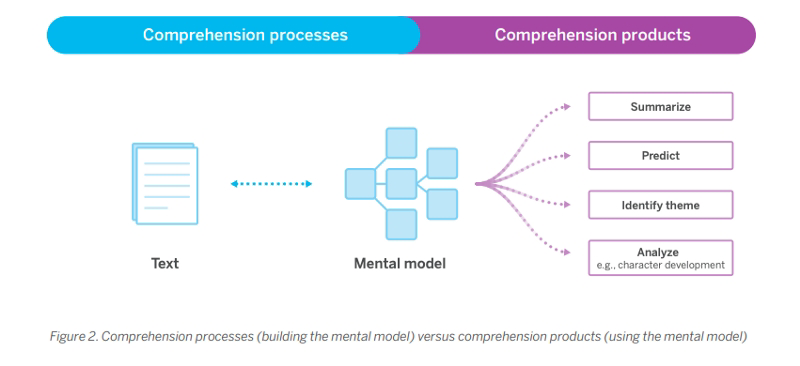
Researchers have identified as many as 17 comprehension processes that affect students’ ability to build and use their mental models. The following are a few of the comprehension processes that weak comprehenders most commonly struggle with, and that with practice, can be targeted for skill development and improved overall comprehension.
- Anaphora (using pronouns to refer to an earlier word or phrase): Some readers struggle to process pronoun relationships (Megherbi & Ehrlich, 2005), identify antecedents, and answer questions that require resolution of anaphora (Yuill & Oakhill, 1988).
- Gap-filling inference: When reading the sentence “Carla forgot her umbrella and got soaking wet,” more skilled readers will conclude that it rained. A lack of awareness of when and how to activate background knowledge to fill in gaps may hinder a student’s ability to make inferences and comprehend the text as a whole (Cain & Oakhill, 1999).
- Marker words: Writers use connective words (e.g., so, though, and yet), structure cues (e.g., meanwhile), and predictive cues (e.g., “There are three reasons why…”) to signal ways that text fits together. Students with limited knowledge of the meaning and function of these words may struggle with the meaning of the text (Oakhill, et al., 2015).
- Comprehension monitoring: When proficient readers encounter difficulty, they tend to stop, reread, and try to figure it out. Less proficient readers may just keep going or fail to recognize that what they’re reading doesn’t fit their mental model.
Two strategies that you can employ in your classroom to guide students in comprehension strategy instruction:
- Graphic organizers: Use graphic organizers such as concept maps, story maps, or Venn diagrams to help students learn to visually organize information and relationships within the text. Visualization enhances comprehension (Graesser, et al., 1994). As the text progresses, students can refer to and update their models.
- Comprehension monitoring: Teach readers to monitor their comprehension while reading by pausing to reflect on their understanding, clarify confusing points, and adjust their reading strategies as needed. Monitoring comprehension helps good readers stay engaged and actively construct meaning from the text.
How background knowledge powers comprehension
The Science of Reading demonstrates the importance of systematic and explicit phonics instruction. But students don’t have to learn phonics or decoding before knowledge comes into the equation. In fact, the opposite might even be true.
Let’s say you’re handed a passage of text describing part of a baseball game. You read the text, and then you’re asked to reenact that part of the game. Which is most likely to help you do so?
- Your ability to read
- Your knowledge of baseball
- Neither
If you answered “2,” you’re batting 1,000. This example summarizes an influential 1988 study that concluded that the strongest predictor of comprehension was knowledge. In the study, which showed readers (with varying degrees of background knowledge about baseball) a passage describing a game, struggling readers comprehended as well as strong readers—as long as they had prior knowledge of baseball.
“The background knowledge that children bring to a text is also a contributor to language comprehension,” says Sonia Cabell, Ph.D., an associate professor at Florida State University’s School of Teacher Education, on Science of Reading: The Podcast.
In fact, background knowledge is the scaffolding upon which readers build connections between prior knowledge and new words. Students with average reading ability and some background knowledge of a topic will generally comprehend a text on that topic as well as stronger readers who lack that knowledge.
But until recently, literacy instruction has typically focused on decontextualized skills—finding the main idea, making inferences—rather than on the content of texts and resources that students engage with. According to Cabell, what we know about knowledge and comprehension should inform instruction for the whole class. “I think most, if not every, theory of reading comprehension implicates knowledge,” she says. “But that hasn’t necessarily been translated into all of our instructional approaches.”
How can we help build background knowledge while teaching reading? Here are some strategies backed by science.
- Systematically build the knowledge that will become background knowledge. Use a curriculum grounded in topics that build on one another. “When related concepts and vocabulary show up in texts, students are more likely to retain information and acquire new knowledge,” say education and literacy experts Barbara Davidson and David Liben. According to them, this retention even continues into subsequent grades. “Knowledge sticks best when it has associated knowledge to attach to.”
- Provide instruction that engages deeply with content. Research shows that students—and teachers, too—actually find this content-priority approach more rewarding than, in Davidson and Liben’s words, “jumping around from topic to topic in order to practice some comprehension strategy or skill.”
- Support students in acquiring vocabulary related to content. Presenting keywords and concepts prior to reading helps students comprehend text more deeply. Spending more time on each topic helps students learn more topic-related words and more general academic vocabulary they’ll encounter in other texts.
- Use comprehension strategies in service of the content. While building knowledge systematically, teachers can use proven strategies—such as chunking and creating graphic organizers—to help students develop skills they can use to support their for understanding of important information.
- Use discussions and writing to help students learn content. Invite students to share their interpretations, supporting their thought processes in their own words and connecting with peers’ perspectives.
- Help students forge connections in small groups. Help students draw connections between reading lessons and units—and their own experiences—as they grow their knowledge base together.
Every day, the Science of Reading has more to tell us about comprehension as a multifaceted skill that requires a combination of various strategies, tools, and techniques to unlock meaning from text. Because of this body of research, we know that when educators bring intentional and evidence-based practices into the classroom, students can enhance their ability to comprehend grade level text, analyze information critically, and engage with diverse subject areas. By nurturing students’ reading comprehension skills grounded in the Science of Reading, educators can empower students to become good readers who can navigate complex texts with confidence and understanding.
Explore more
The Amplify blog:
Science of Reading: The Podcast
Amid ongoing national literacy crisis, Boost Reading demonstrates strong outcomes for academically vulnerable students
BROOKLYN, NY (November 29, 2023) — Amplify, a publisher of next-generation curriculum and assessment programs, released the results of a second year-long study on the impact of Boost Reading, a personalized learning program for elementary grades powered by the Science of Reading. Students in grades K–5—including English/multilingual learners—who used Boost Reading for 30 minutes a week significantly outperformed their peers. Students at risk for reading difficulty who used Boost Reading were 26 percent more likely than students not using Boost Reading to meet or exceed grade-level benchmarks by the end of the school year.
The study compared more than 43,000 K–5 students who used Boost Reading for at least 30 minutes a week with a group of more than 130,000 students who did not use Boost Reading, matched on key student and school characteristics. Educators measured student reading skills using DIBELS® 8th Edition, the gold-standard early reading assessment developed by the University of Oregon.
A digital, student-driven program for grades K–5, Boost Reading enables educators to support every reader in their classrooms through its adaptive technology and powerful storytelling. Boost Reading aligns with Amplify’s other early literacy programs and pairs with Boost Lectura to provide personalized English and Spanish instructional parity.
“Seeing such clear and compelling outcomes for two years in a row is just the kind of promising data we could all use as we continue to navigate a post-COVID world,” said Melissa Ulan, senior vice president of the literacy suite at Amplify. “When educators have research-backed tools to personalize instruction, they are able to meet the needs of every student and drive significant growth in reading skills. The data confirm it.”
The research is rigorous: This national study from the 2021–22 school year meets the Every Student Succeeds Act’s (ESSA) Tier 2 Moderate Evidence criteria, showing significant and positive effects on student outcomes. Notably, 62 percent of at-risk English/multilingual kindergarten students in the Boost Reading group finished the year at benchmark or above, compared to 47 percent of students in the comparison group.
About Amplify
A pioneer in K–12 education since 2000, Amplify is leading the way in next-generation curriculum and assessment. Our core and supplemental programs in literacy, math, and science engage all students in rigorous learning and inspire them to think deeply, creatively, and for themselves. Our formative assessment products turn data into practical instructional support to help all students build a strong foundation in early reading and math. All of our programs and services provide educators with powerful tools that help them understand and respond to the needs of every student. Today, Amplify serves more than 15 million students in all 50 states. For more information, visit amplify.com.
Media Contact
Kristine Frech
media@amplify.com
New study provides evidence that assessing multilingual students in their home languages can improve educational outcomes
BROOKLYN, NY (June 27, 2024) – Amplify, a publisher of next-generation curriculum and assessment programs, today released a first-of-its-kind research brief that demonstrates the benefits of dual-language assessment in early literacy. The brief summarized a new study of 21,000 K–3 Spanish-speaking multilingual learners (MLs) who have Spanish literacy data from mCLASS® Lectura assessments and English literacy data from mCLASS DIBELS® 8th Edition assessments from the beginning, middle, and end of the 2023-2024 school year.
Findings reveal that using only English-language assessments for early literacy can lead to a higher rate of misidentifying Spanish-speaking MLs as at-risk for reading difficulties, underscoring the importance of comprehensive dual-language assessments that help educators better understand their students’ early literacy skills.
Currently, the industry relies on English-only approaches to assessment that not only underestimate a multilingual student’s reading comprehension ability, but may also give educators incomplete information to guide instructional planning for multilingual students.
“For too long, the industry has relied on an early literacy assessment standard for MLs that is, in many ways, flawed,” said Susan Lambert, chief academic officer of Elementary Humanities at Amplify. “It’s time to begin assessing MLs in English and their home language to understand their early literacy needs better and ultimately improve their educational outcomes.”
A dual-language approach for early literacy assessment has powerful implications, including:
- Providing more accurate information about whether students need intervention
- Giving educators a more complete understanding of students’ literacy skills, including which skills they possess in each language
- Helping educators support students’ language development needs with more precision
“Although the availability of universal screening assessments for Spanish-speaking MLs has increased in recent years, it’s still not where it needs to be,” said Kajal Patel Below, vice president of biliteracy at Amplify. “Our hope is that this study will shed light on the extent to which the identification of reading intervention support varies for MLs when assessed in both their home language and in English.”
About Amplify
A pioneer in K–12 education since 2000, Amplify is leading the way in next-generation curriculum and assessment. Our core and supplemental programs in ELA, math and science engage all students in rigorous learning and inspire them to think deeply, creatively and for themselves. Our formative assessment products help teachers identify the targeted instruction students need to build a strong foundation in early reading and math. All of our programs and services provide educators with powerful tools that help them understand and respond to the needs of every student. Today, Amplify serves more than 15 million students in all 50 states and on six continents. For more information, visit Amplify.com.
Media Contact: Kristine Frech; media@amplify.com
Meet Reena Mathew, a changemaker supporting early literacy with the Science of Reading.

For years, Reena Mathew taught reading the way many educators were trained to—using traditional practices that were familiar and common, but not grounded in up-to-date research.
That changed when she began studying how children actually learn to read. What she discovered reshaped not only her instruction, but her approach to supporting teachers.
Today, Mathew is the K–2 literacy coach helping Suffern Central School District in New York State make a major shift toward research-based early literacy instruction.
Her leadership, dedication, and hands-on support—as well as the key role she plays in creating measurable student success—have earned her a 2025 Amplify Science of Reading Star Award, which specifically recognizes her as Changemaker of the year. These awards honor outstanding educators, schools, and districts who are transforming classrooms and students with literacy practices grounded in the Science of Reading.
“Once I dug into the science,” Mathew says, “I realized that explicit, systematic instruction in phonemic awareness, phonics, vocabulary, and knowledge building isn’t just beneficial, it’s essential.”
Helping teachers shift to research-based instruction
Suffern Central serves nearly 4,000 students in grades K–12, and Mathew has been a leading force in strengthening early literacy development across the district’s youngest grades.
“I shifted my focus to supporting both foundational skills and language comprehension,” she says. “Students need both pieces, phonics and content-rich instruction, to truly become strong, confident readers.” Mathew also dedicated herself to targeted professional development, helping teachers implement the University of Florida Literacy Institute (UFLI) Foundations and the Amplify Core Knowledge Language Arts (CKLA) Knowledge strand.
To lead that shift for teachers, Mathew approached change collaboratively, not prescriptively. She modeled lessons, coached side-by-side, and broke big shifts into manageable steps.
It didn’t take long. “Within weeks, teachers saw students who had struggled with decoding and spelling [already] reading and spelling words with more accuracy and fluency,” she says.
From early literacy skills to independence and confidence for all
What’s more, students figured out that they could use those same strategies elsewhere.
“[Teachers] saw kids using the strategies they were taught not just during the phonics lessons,” Mathew says, “but in their independent reading and writing as well.”
Incorporating Amplify CKLA’s Knowledge strand helped deepen student learning, as well as teachers’ confidence in the approach.
“Teachers shared stories of students using academic vocabulary in ways they never had before and making connections between read-alouds and real-world discussions,” Mathew says. “When a classroom teacher sees a student who is struggling suddenly apply a decoding strategy or use academic vocabulary in conversation, they realize their instruction is working.”
According to Mathew, her greatest achievement has been helping teachers see the impact of using research-based instruction in real time.
A commitment beyond instruction
Mathew is driven not just by the science, but by what she believes every child deserves. Students arrive at school with different levels of language exposure and background knowledge, and research-based instruction provides the explicit foundational skills and systematic knowledge-building all students need to read.
“We can’t control our students’ home lives, what experiences they come in with, and what support they have outside of school, but we can control what happens in our classrooms. We can make sure they get explicit instruction in foundational skills, build the vocabulary and knowledge they need to comprehend complex texts, and leave our schools as confident readers,” Mathew says. “Educators should make the shift to the Science of Reading because good instruction levels the playing field and gives every child an equal opportunity to succeed.”
More to explore
Welcome to Amplify Desmos Math!
Your Amplify Desmos Math Experience Kit includes teacher and student materials for one sub-unit of instruction to try in your classroom. Click the orange button below to access the digital lessons for your grade.

About the program
Our structured approach to problem-based learning systematically builds on students’ curiosity to develop lasting grade-level understanding.
Amplify Desmos Math combines and connects conceptual understanding, procedural fluency, and application. Lessons are designed with the Proficiency Progression™, a model that provides teachers with clear instructional moves to build from students’ prior knowledge to grade-level learning.
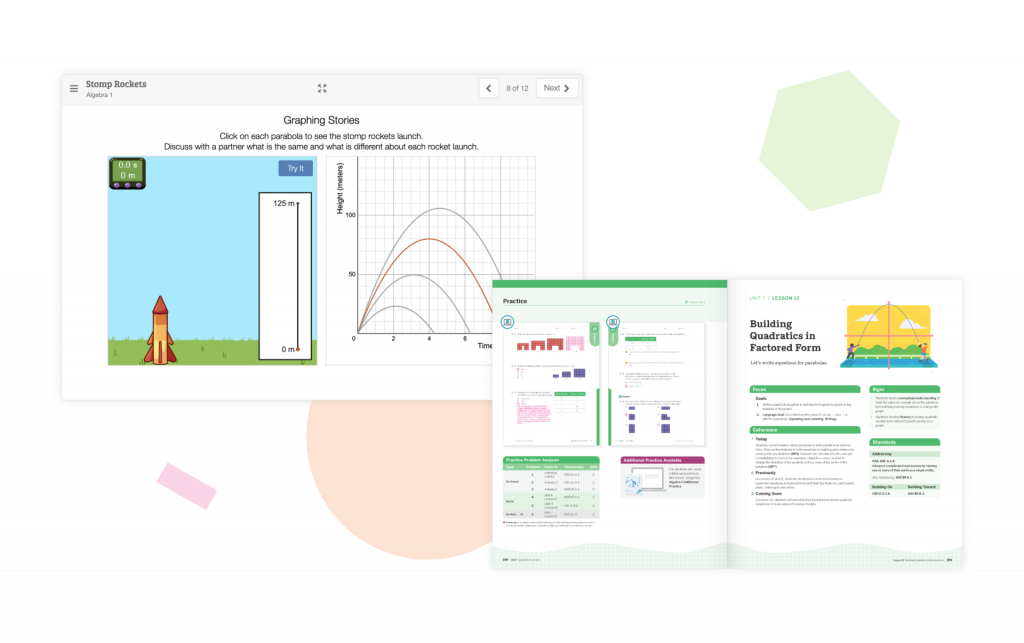
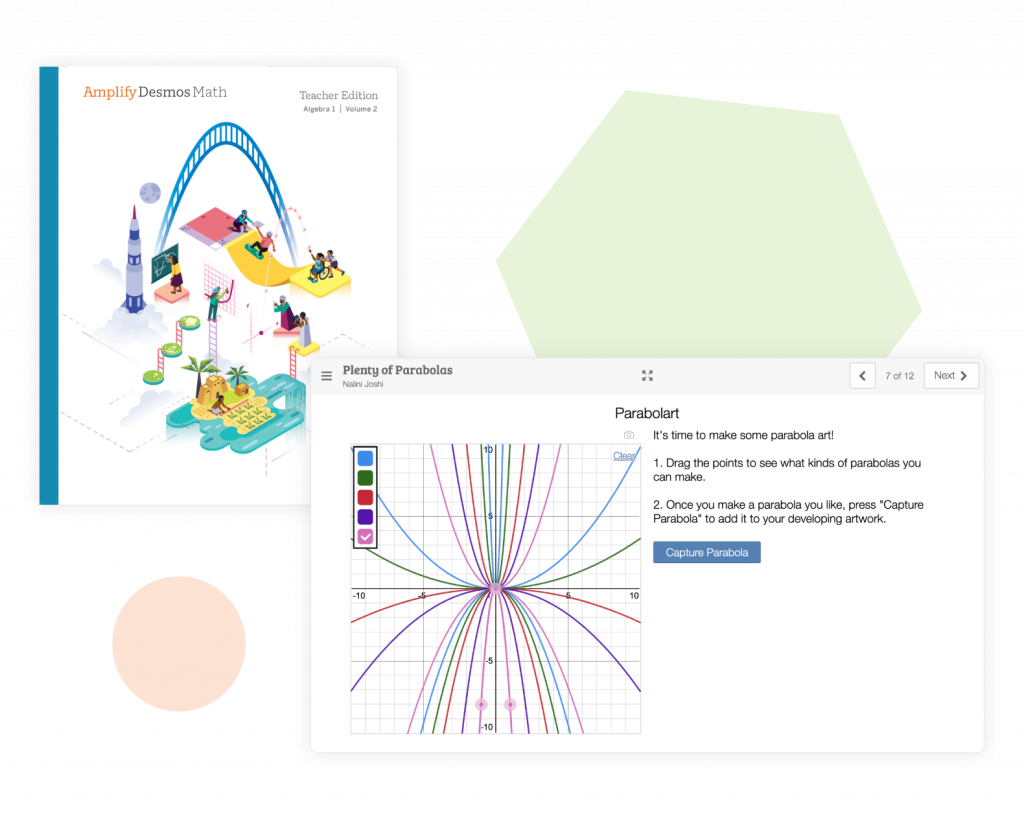
Structured approach to problem-based learning
- Differentiation and personalized practice
- Easy-to-follow instructional guidance
- Robust assessments and reports
- Spanish student materials

Math that motivates
- Powerful teacher-facilitation supports and tools
- Students talking and building from each other’s ideas
- Every lesson has fully compatible print and digital materials for a collaborative classroom

Student thinking is made evident
- Curiosity-driven lessons that motivate students with interesting problems they are eager to solve
- Explicit guidance for teachers on what to look for and how to respond
- Technology that provides Responsive Feedback and is designed to reveal mathematical thinking
Experience Kit digital lessons
Use the grade-specific links below to explore our interactive digital lessons. Learn more about assigning a lesson to your class using a single-session code.
In addition to the sample lessons below, you can view the Experience Kit brochure, which includes helpful print and digital navigation tips.


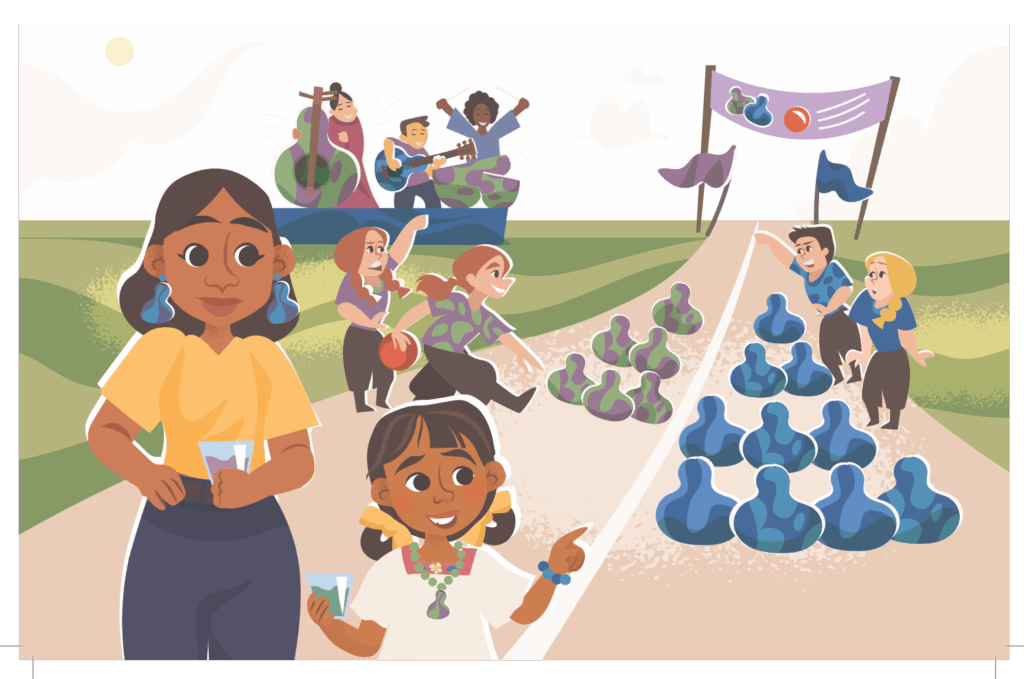
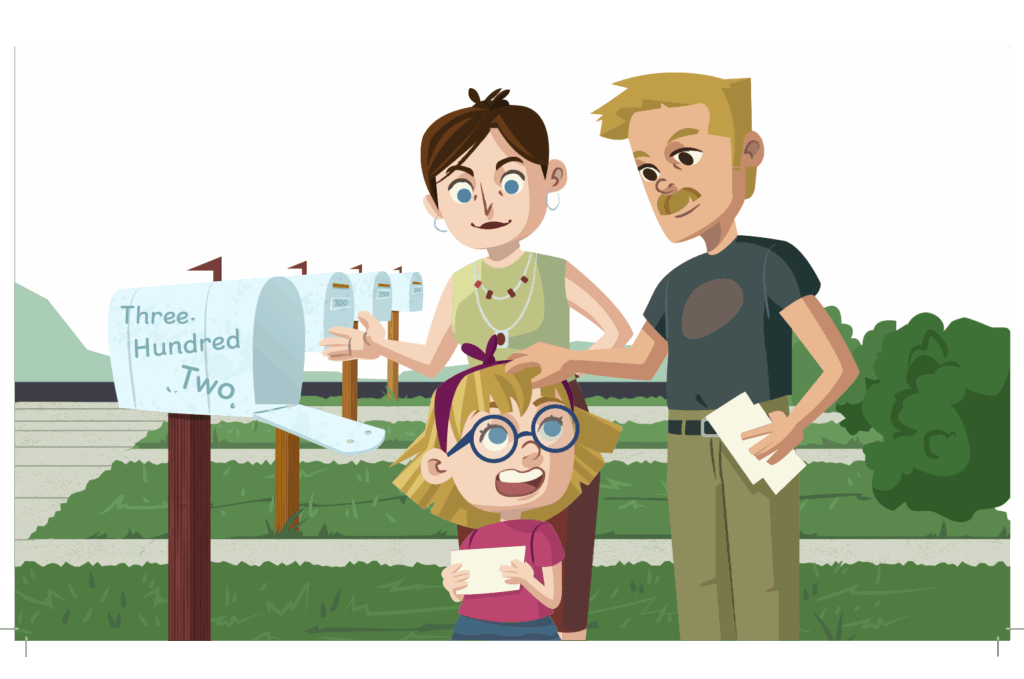

Grade 3, Unit 6: Measuring Length, Time, Liquid Volume, and Weight
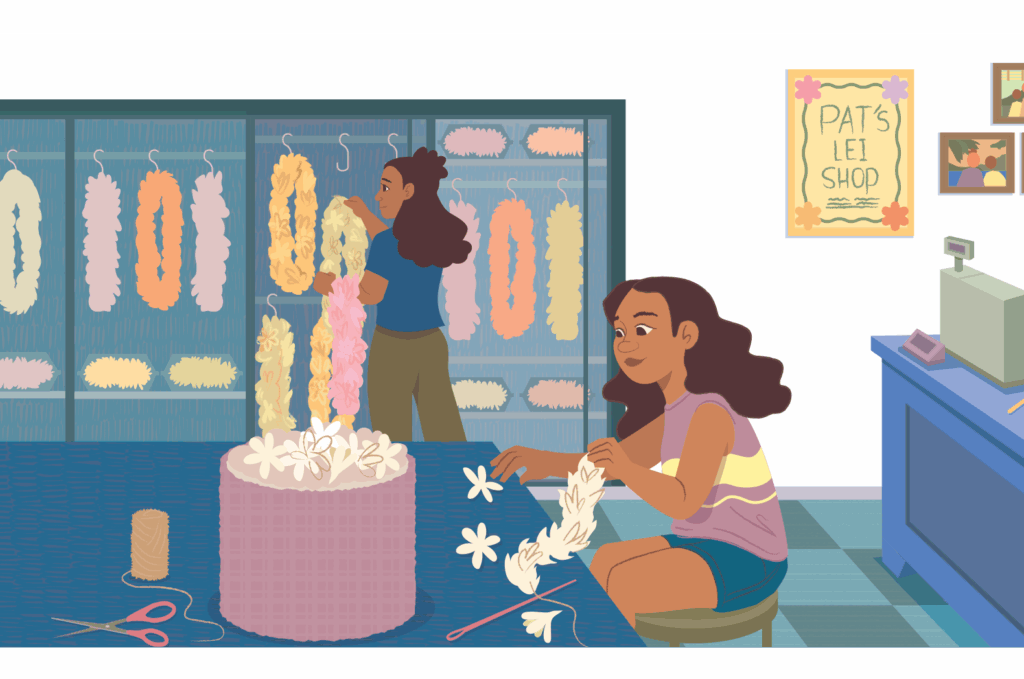
Grade 4, Unit 6: Multiplying and Dividing Multi-Digit Numbers


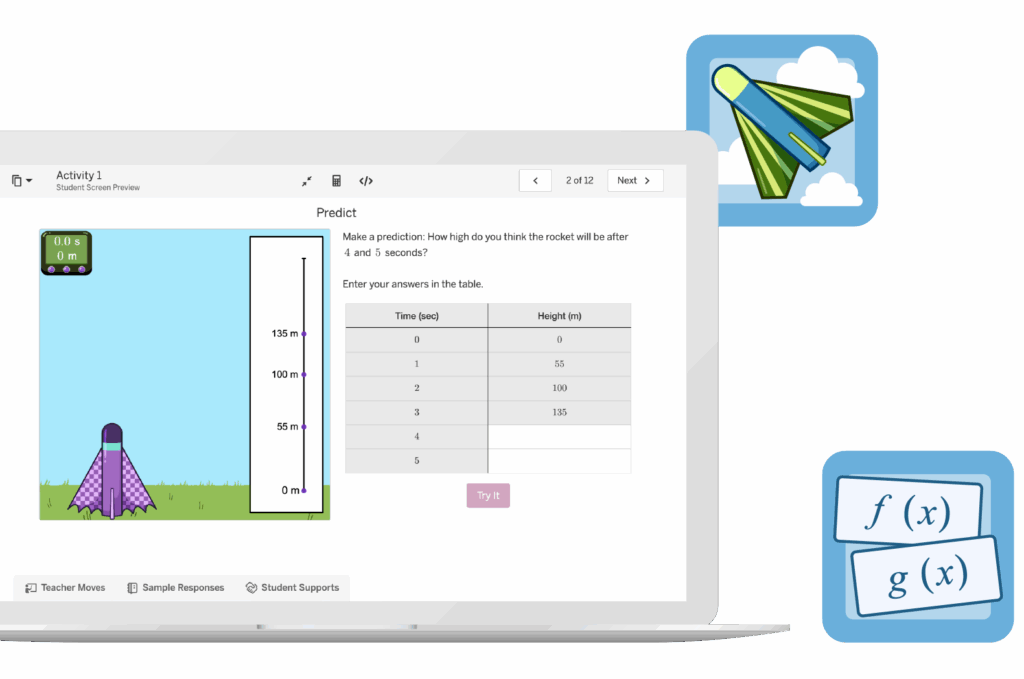
Looking for help?
Support is always within reach. Our team is dedicated to supporting you throughout your review and can be reached at any time by emailing or calling us directly.
- Live chat: Click the orange icon while logged in to get immediate help.
- Phone: Call our toll-free number: (800) 823-1969.
- Email: Send an email to help@amplify.com. In the message body, please include your name and question. Provide as much detail as possible, so we can more quickly help you find a solution.
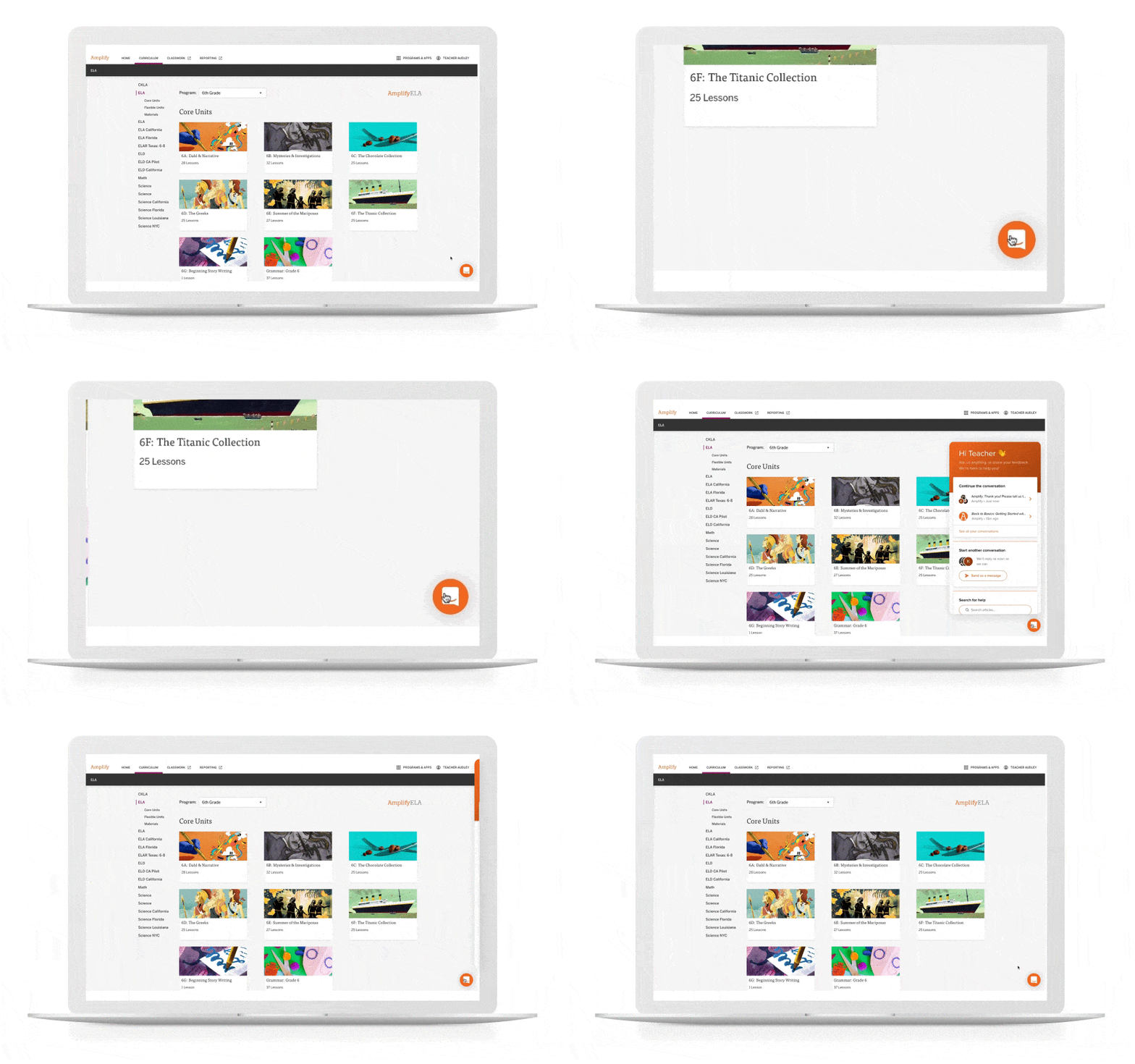
Ready to learn more?
Sign up to be among the first to receive updates about Amplify Desmos Math.
Professional Development
Use Policy
1. Scope
This Professional Development (“PD”) Use Policy (the “Policy”) applies to purchases of Amplify PD Services made on or after Jan. 1, 2026.
2. Product license alignment
The term for PD aligns with the term of Customer’s active product license. Therefore, all PD must be used during the same period that Customer’s product license is active, unless otherwise outlined herein or permitted by Amplify in writing.
3. Renewal and carry-forward
If Customer renews the product license for the same program, any remaining PD will carry forward for the renewed term, provided that: (a) the total carry-forward period does not exceed five years from the original contract start date, and (b) renewal occurs within three months of the previous product license end date.
4. Expiration and forfeiture
If Customer’s product license is not renewed as outlined in Section 3, any remaining PD will expire at the end of that license term. No credits, refunds, or rollovers will be issued for unused PD upon expiration.
5. Complimentary and high-value PD
For complimentary PD or PD valued at $50,000 or more, the following applies:
Implementation planning: PD will have an outlined implementation plan, designated for either the upcoming school year or specified future year(s). PD must be used within the designated “Implementation Year,” typically defined as July 1 through June 30 of the following calendar year. Unused PD at the end of each Implementation Year will be forfeited.
Grace periods and extensions: Amplify may, in its sole discretion, permit a grace period of up to three months before or after the Implementation Year for PD. Any extension beyond the grace period must be confirmed in writing by Amplify prior to the original expiration date.
Last modified: October 30, 2025
The early reading gender gap may be smaller than it seems.

Amplify’s 2024–25 research brief on the latest end-of-year literacy data showed improvement in early literacy across grades K–2, with more young learners on track to learn to read and fewer far behind than at any time since the pandemic.
Compared to 2020–21, 8% more second graders, 14% more first graders, and 21% more kindergarteners were at or above benchmark.
We also found that while boys in grades K–2 score the same or better than girls of the same age in reading readiness at the beginning of the year, girls improved more during the school year, narrowing gaps and sometimes outperforming boys by end of year.
A complex picture of early readers
The data present a nuanced picture of gender disparities in early literacy.
Among K–2 students who were on track to learn to read at the end of the 2024–25 school year, boys began the year with the same or better early reading scores than girls.

But in spite of this slim advantage, girls were ahead of boys by the end of kindergarten and first grade. Girls again narrowed the gap in second grade, but boys were still slightly ahead at the end of the year.
Similarities below the literacy benchmark
The story was similar for K–2 students at risk of not learning to read.
Across K–2, girls scored the same or better than boys, and the same trend emerged with students who were on track: During the year, girls showed more improvement than boys.
As a result, by the end of the year, fewer girls were at risk of not learning to read than boys.

Toward reading readiness
The latest end-of-year data show that student performance in early reading is at the highest levels since the lows of the pandemic five years ago. More students are on track for learning to read and fewer are far behind in grades K–2. But despite these successes, broad literacy trends across the United States remain a concern, as year-over-year progress across all early grades has slowed. As schools and districts align on priorities ahead of the new school year, they must take into account students who are learning to read. It’s important that schools and districts invest in a reliable universal screener, high-quality core curriculum, evidence-based interventions, and professional development.
“Grades K–2 remain critical years for literacy development,” said Susan Lambert, Chief Academic Officer of elementary humanities at Amplify and the host of Science of Reading: The Podcast. “To support young readers, educators need data-driven insights into student reading development and instructional practices that are based in the Science of Reading.”
Teachers and administrators can best support all students with data-driven strategies and tools for reaching literary benchmarks, including:
- Administering elementary reading assessments three times a year to monitor student risk level for reading challenges.
- Supporting students at risk for not learning to read by analyzing data from reading assessments and making informed decisions.
- Allocating extra classroom time and resources to help students who aren’t on track.
- Monitoring progress and making adjustments as needed.
- Ensuring that evidence-based reading instruction is offered at every grade level.
- Instilling a love of reading in and out of school, in partnership with caregivers and community.
How we gather data
Amplify mCLASS, our teacher-administered literary assessment and intervention suite for grades K–6, is powered by Dynamic Indicators of Basic Early Literacy Skills (DIBELSⓇ) 8th Edition—an observational assessment collected by teachers interacting with students one on one, either live or over video, typically administered three times a year (beginning, middle, and end of year).
At the end of the school year, our report highlights reading scores by comparing Amplify mCLASS with DIBELS benchmark data from the preceding six school years (2019–20 through 2024–25).
Our data represent approximately 250,000 students in a matched set of 1,400 schools in 43 states. The schools in the source data are slightly more likely to be in large urban metropolitan areas than the nation overall, but perform comparably to the much larger mCLASS national population.
Additional resources
Let’s keep the conversation going! Join the discussion in our Amplify learning communities.
Dive into the findings in our End-of-Year Report.
More to explore
Connecticut K-5 ELA: Explore Amplify CKLA (English) and Caminos (Spanish)
Thank you for visiting Amplify’s Core Knowledge Language Arts (CKLA) and Caminos website designed exclusively for you. We are very excited for you to further explore Amplify CKLA and Amplify Caminos and discover more about our proven, phonics-based literacy programs in English and Spanish. Begin your journey with the Introduction below and explore Amplify CKLA and Caminos.

Introduction
We are excited for you to see how Amplify CKLA and Amplify Caminos provide parallel, high-quality resources in both English and Spanish for all students and multilingual learners across NYC! Both programs are flexible, offering stand-alone foundational skills instruction as well as comprehensive core English Language Arts.
Amplify CKLA Skills and Caminos Lectoescritura are entirely built on the latest reading science and provide comprehensive instruction in all foundational reading skills. These programs feature:
- Phonological awareness, phonics, and word recognition
- Strong, systematic sound-first instruction to support students in learning to decode
- Language skills, including conventions, spelling, and grammar
- Reading comprehension
- Writing instruction
CKLA and Caminos for grades K–2 provides a two-strand approach – the first strand is the Foundational Skills Strand (as described above) and the second is the Knowledge Strand, in which students build rich background knowledge through multidisciplinary Read-Alouds in both English and Spanish. Additionally, in Grades 3-5, CKLA and Caminos take an Integrated Approach, meaning everything is focused on rich worldly context.
We highly encourage you to check out the Grades K-2 Knowledge Strand section of the website and the 3-5 Integrated Approach section to explore these components further, gain access to the engaging, worldly, and diverse texts students and teachers are using in their classrooms daily, and discover so much more!
Access the program
Every day in the CKLA/Caminos classroom, students will practice their existing reading skills while stretching themselves toward new goals. In K–2, each day includes dedicated skills time to help you give students a solid foundation. In the upper grades, skills instruction becomes integrated with Knowledge lessons, and students engage with increasingly complex content-rich texts and writing activities.
Start with the sound
All instruction starts with phonological awareness, which research has shown to benefit the greatest number of students.
Students begin by learning to recognize sounds, as well as to articulate them.
Build to the phoneme
All instruction starts with phonological awareness, which research has shown to benefit the greatest number of students. Students begin by learning to recognize sounds, as well as to articulate them.
Crack the code
Once students can recognize sounds, they learn to form the corresponding letter codes. CKLA starts by teaching the sound-spellings that appear most frequently in English, which lets your students read and write as many words as possible, as soon as possible.
Grow in complexity
The lessons continue to challenge students as they progress, introducing complications like multisyllabic words, “tricky words,” and homophones. In each case, students encounter complications as they become ready for them.
While students are learning how to read, Knowledge Domains give them authentic and engaging reasons to read. Students will use their skills to explore domains that relate to storytelling, science, and the history of our world as seen through the eyes of many different groups. With these domains, you’ll bring the world to your students, showing them how reading can become an exciting, rewarding, and useful part of their lives.
Build connections and context
Each CKLA/Caminos Knowledge Domain gives students a base of vocabulary and concepts, building on what they’ve learned in previous domains. This helps students make connections within and across grades, building a base of background knowledge that will help them navigate new and more complex texts.
Listen and understand
Students learn to listen and understand before they learn to read. By delivering knowledge through classroom Read-Alouds, we teach students the key comprehension skills they’ll use throughout their reading lives.
Emphasis on interactivity
We emphasize interactions with students, challenging them and encouraging them to think about the material rather than simply receive it. Each lesson includes many options for formative assessment and immediate adjustment to your class’s needs.
Assess what’s important
End-of-domain digital assessments for Knowledge Domains are fully voice acted, ensuring that each student’s comprehension skills are being authentically tested. This not only helps build student test-taking confidence, but also gives you a more accurate picture of your class.
Step 1: Watch this video walkthrough of the CKLA/Caminos Teacher Resource Site.
Step 2: Explore the Teacher Resource Site.
- Click the CKLA/Caminos Teacher Resource button below.
- Select Log in with Amplify.
- Enter your teacher username: t.nyc-ckla-caminosK2@tryamplify.net
- Enter your password: AmplifyNumber1
- Toggle to access either English and Spanish
Step 3: Watch this video walkthrough of the CKLA/Caminos Student Hub.
Step 4: Explore the CKLA/Caminos Student Hub for Grades K-2.
- Click the CKLA/Caminos Student Hub button below.
- Select Log in with Amplify.
- Enter your student username: s.nyc-ckla-caminosK2@tryamplify.net
- Enter your password: AmplifyNumber1
- Select a grade level.
By grades 3–5, students have mastered the basics of decoding and are hungry to use what they’ve learned to reach out to the world. Although Read-Alouds remain an important part of lessons, students are also encouraged to practice independent reading starting in grade 3—striking a balance between strong teacher support and developing their autonomy and confidence as readers.
Writing and Language
As students progress from K–2, writing activities start to emphasize analysis, creativity, and independent thinking about the material students are learning.
Core Quests: Transforming the classroom
Each of the levels in grades 3–5 contains a Core Quest. In these special
units, all the normal rules of the classroom change, and students engage
with language in surprising new ways. Here in this grade 5 example, they
learn to love the dense Shakespearian language of A Midsummer Night’s
Dream through imagery, close reading, and performance.
Step 1: Watch this video walkthrough of the CKLA/Caminos Teacher Resource Site.
Step 2: Explore the CKLA/Caminos Teacher Resource Site for Grades 3-5.
- Click the CKLA/Caminos Teacher Resource button below.
- Select Log in with Amplify.
- Enter your teacher username: t.nyc-ckla-caminos35@tryamplify.net
- Enter your password: AmplifyNumber1
- Toggle to access either English and Spanish
Step 3: Watch this video walkthrough of the CKLA/Caminos Student Hub.
Step 4: Explore the CKLA/Caminos Student Hub for Grades 3-5.
- Click the CKLA/Caminos Student Hub button below.
- Select Log in with Amplify.
- Enter your student username: s.nyc-ckla-caminos35@tryamplify.net
- Enter your password: AmplifyNumber1
- Select a grade level.
Key program features
The student body of our country has been changing, and it’s changing fast. Over 10% K-12 students are english language learners who speak other languages. This skews heavily to primary grades with 15-16% in grades K-3. In 2021-2022, New York City Public Schools enrolled over 147,000 English language learners across K-12 or about 14% of students. Over 52% of those students are in elementary schools across the district with 23% in grades K-3.
Amplify Caminos uses spiral learning to reinforce every student’s ability to develop skills like reading, writing, speaking, and listening in Spanish that can be transferred to English. As students engage with their lessons, they explore the similarities and differences in grammar, vocabulary, writing, and language use between Spanish and English. This bridge helps students learning two languages to strengthen their knowledge in both.
Through cross-curricular content, students explore units that relate to storytelling, science, and the history of our world in a holistic and thoughtful way. With these units, you’ll bring the world to your students, showing them how reading can become an exciting, rewarding, and useful part of their lives.
Amplify Caminos al Conocimiento Esencial, a Spanish language arts program for Grades K–5 that will inspire and engage your students to become confident readers, writers, and thinkers.
It is designed to support any biliteracy model, including English as a Second Language (ESL), transitional bilingual programs, dual language strands, and Spanish immersion programs.
When used in tandem with Amplify CKLA, Amplify Caminos provides an one-to-one English and Spanish solution.
Built out of the latest research in the Science of Reading, Amplify CKLA delivers explicit instruction in both foundational literacy skills (systematic phonics, decoding, and fluency) and background knowledge in grades K–2 with an integrated approach to explicit instruction in grades 3–5.
Review this Science of Reading Toolkit to learn more about the Science of Reading best practices integrated throughout CKLA.
Great reading instruction starts with helping kids develop great decoding skills. By building a solid foundation of phonological awareness and phonics, reading the words on the page becomes automatic so that comprehension and critical thinking can happen.
Our instruction is supported by:
- Step-by-step lessons with multisensory approaches, clear lesson objectives, and embedded formative assessments.
- Decodable books and student readers with ebook and audiobook versions that feature engaging plots and relatable characters.
- An engaging sound library with fun songs and videos that develop phonological awareness.
- An interactive Vocab App featuring engaging activities with immediate feedback and automated, customized instruction based on student performance.
Students build grade-appropriate subject-area knowledge and vocabulary in history, science, literature, and the arts while learning to read, write, and think creatively and for themselves.
Our instruction is supported by:
- Knowledge builders that provide a quick overview of each domain with its key ideas.
- Interactive read-alouds designed to build knowledge and vocabulary.
- Content-rich anchor texts that support students as they tackle increasingly complex text and sharpen their analytical skills.
- Social and emotional learning paired with lessons in civic responsibility.
From the printed page to the screen, we bring foundational skills and knowledge of the world to your young learners, and make the transition from classroom to home learning seamless.
Download the Amplify CKLA Components Guide to see components by grade.
Additional materials to support your review
Inspiring the next generation of Louisiana scientists, engineers, and curious citizens
Amplify Science Louisiana is a brand-new, engaging core curriculum designed for three-dimensional, phenomena-based learning.

A powerful partnership
Amplify Science Louisiana was developed by the science education experts at UC Berkeley’s Lawrence Hall of Science and the digital learning team at Amplify.
You will find unit overviews and complete materials lists as well as downloadable versions of the Student Investigation Notebooks within the program itself. When you’re ready, click the orange button below. You’ll automatically be taken on a short guided tour where you can select the grade you’re interested in reviewing.

The University of California, Berkeley’s Lawrence Hall of Science is a recognized leader in PreK–12 science education, producing groundbreaking curriculum products for more than 40 years, including the international award-winning Seeds of Science/Roots of Reading®. The Hall’s curriculum materials are used in one in four classrooms across the nation.

Amplify has been pioneering digital education products for more than 15 years, empowering teachers across the country to offer more personalized instruction and accelerate the potential of their students to become more active, engaged learners. Amplify has supported more than 200,000 educators and three million students in all 50 states.
Instructional model
The Amplify Science: Louisiana Edition program is rooted in the proven, research-based pedagogy of Do, Talk, Read, Write, Visualize. Here’s how each element works:
DO
First-hand investigations are an important part of any science classroom, and Amplify Science: Louisiana Edition has students getting hands-on in every unit, from building models of protein molecules to experimenting with electrical systems.
TALK
Student-to-student discourse and full class discussions are an integral part of the program. Students are provided with numerous opportunities to engage in meaningful oral scientific argumentation, all while fostering a collaborative classroom environment.
READ
Students read scientific articles, focusing their reading activities on searching for evidence related to their investigation, and importantly, on asking and recording questions as they read through fascinating texts on 21st-century topics.
WRITE
Following real-world practices, students write scientific arguments based on evidence they’ve collected, making clear their reasoning about how a given piece of evidence connects to one of several claims.
VISUALIZE
By manipulating digital simulations and using modeling tools to craft visualizations of their thinking— just as real scientists and engineers do—students take their learning far beyond the confines of what they can physically see in the classroom in an exciting and authentic way.
Year at a glance
Every year of Amplify Science K–5 consists of 3–4 units, with each unit containing 20 lessons and two dedicated assessment days.

Inside an Amplify Science classroom

Resources to support your review
- What’s so phenomenal about phenomena? – ebook
- Phenomena in grades K-5
- Student Books in grades K–5
- Literacy-rich science instruction in grades K–5
- Engineering in Amplify Science
- Louisiana Standards Correlation
Ready to learn more?
To begin your review, fill out the form for more information about Amplify Science Louisiana and to access the online digital curriculum.
Contact your Louisiana representative directly
Wayne Hebert
Senior Account Executive
Email: whebert@amplify.com
Phone: (337) 298-7833
Welcome, Great Falls reviewers!
Authored by UC Berkeley’s Lawrence Hall of Science, Amplify Science was designed from the ground up for the Next Generation Science Standards to teach students to think, read, write, and argue like real scientists and engineers. The program combines literacy-rich activities with hands-on learning and digital tools to engage students in exploring a compelling real-world phenomenon in every unit.
On this site, you will find easy-to-follow instructions and resources to support your review.

Getting started
Thank for you taking the time to review Amplify Science. Before you get started, we’ve put together a short video for Great Falls that will help you better navigate your review process.
A powerful partnership
Amplify Science was developed by the science education experts at the University of California, Berkeley’s Lawrence Hall of Science and the digital learning team at Amplify.
The University of California, Berkeley’s Lawrence Hall of Science is a recognized leader in PreK–12 science education, producing groundbreaking curriculum products for more than 40 years, including the international award-winning Seeds of Science/Roots of Reading®. The Hall’s curriculum materials are used in one in four classrooms across the nation.
Amplify has been pioneering digital education products for more than 15 years, empowering teachers across the country to offer more personalized instruction and accelerate the potential of their students to become more active, engaged learners. Amplify has supported more than 200,000 educators and three million students in all 50 states.
Grades K–5 overview
Each unit focuses on a specific learning goal in the form of an overarching unit question. Rather than following linear steps in an experiment, the program leaves room for students to make connections across concepts and make their own discoveries. In this way, Amplify Science replicates the realities and ambiguities of scientific research and thinking.
Learn more about the program structure
Download the K–5 unit sequence
NGSS correlations
Hear from K–5 teachers
Why Amplify Science?
What’s so phenomenal about phenomena?
Phenomena in grades K–5
Reading in Amplify Science
View example of a three-dimensional statement
Amplify Science blends physical materials with a suite of digital tools, presenting students with the three-dimensional resources they need to investigate real-world problems, and empowering and supporting teachers as they lead instruction and gain insight into student growth and progress.
Reading and literacy integration in K–5
Assessments in K–5
Hands-on and print materials (“kits”)
Digital simulations (grades 4–8)
Supporting ELLs
Spanish resources K–5
Grades 6–8 overview
Each unit focuses on a specific learning goal in the form of an overarching unit question. Rather than following linear steps in an experiment, the program leaves room for students to make connections across concepts and make their own discoveries. In this way, Amplify Science replicates the realities and ambiguities of scientific research and thinking.
Learn about the program structure
Download the 6-8 unit sequence
NGSS correlations
Learn about the flexible, blended program
Why Amplify Science?
What’s so phenomenal about phenomena?
Phenomena in grades 6–8
View example of a three-dimensional statement
Amplify Science blends physical materials with a suite of digital tools, presenting students with the three-dimensional resources they need to investigate real-world problems, and empowering and supporting teachers as they lead instruction and gain insight into student growth and progress.
Assessments in 6–8
Hands-on and print materials (“kits”)
Digital simulations (grades 4–8)
Supporting ELLs
Spanish resources 6–8
Ready to look inside Amplify Science?
Inspiring the next generation of scientists, engineers, and curious citizens
Amplify Science is a brand-new, engaging core curriculum designed for three-dimensional, phenomena-based learning.
A powerful partnership
Amplify Science was developed by the science education experts at UC Berkeley’s Lawrence Hall of Science and the digital learning team at Amplify.
The Lawrence Hall of Science
The University of California, Berkeley’s Lawrence Hall of Science is a recognized leader in PreK–12 science education, producing groundbreaking curriculum products for more than 40 years, including the international award-winning Seeds of Science/Roots of Reading®. The Hall’s curriculum materials are used in one in four classrooms across the nation. Read more about The Hall’s research-proven Do, Talk, Read, Write, Visualize multimodal learning model.
Amplify
Amplify has been pioneering digital education products for more than 15 years, empowering teachers across the country to offer more personalized instruction and accelerate the potential of their students to become more active, engaged learners. Amplify has supported more than 200,000 educators and three million students in all 50 states.
Multimodal learning model
The Amplify Science program is rooted in the proven, research-based pedagogy of Do, Talk, Read, Write, Visualize. Here’s how each element works:
DO
First-hand investigations are an important part of any science classroom, and Amplify Science has students getting hands-on in every unit, from building models of protein molecules to experimenting with electrical systems.
TALK
Student-to-student discourse and full class discussions are an integral part of the program. Students are provided with numerous opportunities to engage in meaningful oral scientific argumentation, all while fostering a collaborative classroom environment.
READ
Students read scientific articles, focusing their reading activities on searching for evidence related to their investigation, and importantly, on asking and recording questions as they read through fascinating texts on 21st-century topics.
WRITE
Following real-world practices, students write scientific arguments based on evidence they’ve collected, making clear their reasoning about how a given piece of evidence connects to one of several claims.
VISUALIZE
By manipulating digital simulations and using modeling tools to craft visualizations of their thinking— just as real scientists and engineers do—students take their learning far beyond the confines of what they can physically see in the classroom in an exciting and authentic way.
Elementary school course structure
Middle school course structure (Integrated Model)
Review the digital curriculum
- Click on the orange button below.
- Select “Log in with Amplify”.
- Sign in with this username and password:
Username: t.Fayetteville@tryamplify.net
Password: AmplifyNumber1
Watch a video walkthrough
Elementary school
Middle school
Contact your Fayetteville representative directly
Ryan Jacob
Account Executive
Email: rjacob@amplify.com
Phone: (405) 863-8828
A powerful partnership
A powerful partnership
Amplify Science was developed by the science education experts at UC Berkeley’s Lawrence Hall of Science and the digital learning team at Amplify.
The Lawrence Hall of Science
The University of California, Berkeley’s Lawrence Hall of Science is a recognized leader in PreK–12 science education, producing groundbreaking curriculum products for more than 40 years, including the international award-winning Seeds of Science/Roots of Reading®. The Hall’s curriculum materials are used in one in four classrooms across the nation. Read more about The Hall’s research-proven Do, Talk, Read, Write, Visualize multimodal learning model.
Amplify
Amplify has been pioneering digital education products for more than 15 years, empowering teachers across the country to offer more personalized instruction and accelerate the potential of their students to become more active, engaged learners. Amplify has supported more than 200,000 educators and three million students in all 50 states.
Multimodal learning model
The Amplify Science program is rooted in the proven, research-based pedagogy of Do, Talk, Read, Write, Visualize. Here’s how each element works:
DO
First-hand investigations are an important part of any science classroom, and Amplify Science has students getting hands-on in every unit, from building models of protein molecules to experimenting with electrical systems.
TALK
Student-to-student discourse and full class discussions are an integral part of the program. Students are provided with numerous opportunities to engage in meaningful oral scientific argumentation, all while fostering a collaborative classroom environment.
READ
Students read scientific articles, focusing their reading activities on searching for evidence related to their investigation, and importantly, on asking and recording questions as they read through fascinating texts on 21st-century topics.
WRITE
Following real-world practices, students write scientific arguments based on evidence they’ve collected, making clear their reasoning about how a given piece of evidence connects to one of several claims.
VISUALIZE
By manipulating digital simulations and using modeling tools to craft visualizations of their thinking— just as real scientists and engineers do—students take their learning far beyond the confines of what they can physically see in the classroom in an exciting and authentic way.
Elementary school course structure
- Needs of Plants and Animals
- Pushes and Pulls
- Sunlight and Water
- Animal and Plant Defenses
- Light and Sound
- Spinning Earth
- Plant and Animal Relationships
- Properties of Materials
- Changing Landforms
- Balancing Forces
- Inheritance and Traits
- Environments and Survival
- Weather and Climate
- Energy Conversions
- Vision and Light
- Earth’s Features
- Waves, Energy, and Information
- Patterns of Earth and Sky
- Modeling Matter
- The Earth System
- Ecosystem Restoration
Middle school course structure (Integrated Model)
- Launch:
Microbiome - Metabolism
- Engineering Internship:
Metabolism - Traits and Reproduction
- Thermal Energy
- Ocean, Atmosphere, and Climate
- Weather Patterns
- Earth’s Changing Climate
- Engineering Internship:
Earth’s Changing Climate
- Launch:
Geology on Mars - Plate Motion
- Engineering Internship:
Plate Motion - Rock Transformations
- Phase Change
- Engineering Internship: Phase Change
- Chemical Reactions
- Populations and Resources
- Matter and Energy in Ecosystems
- Launch:
Harnessing Human Energy - Force and Motion
- Engineering Internship:
Force and Motion - Magnetic Fields
- Light Waves
- Earth, Moon, and Sun
- Natural Selection
- Engineering Internship: Natural Selection
- Evolutionary
Ready to learn more?
To begin your review, click the button below and fill out the form for more information about Amplify Science and to access the online digital curriculum.
Watch a video walkthrough
Elementary school
Middle school
Contact your Arkansas representative directly
Marty Pitts
Senior Account Executive
Email: mpitts@amplify.com
Phone: (214) 945-5544
A powerful partnership
Amplify Science was developed by the science education experts at UC Berkeley’s Lawrence Hall of Science and the digital learning team at Amplify.
The Lawrence Hall of Science
The University of California, Berkeley’s Lawrence Hall of Science is a recognized leader in PreK–12 science education, producing groundbreaking curriculum products for more than 40 years, including the international award-winning Seeds of Science/Roots of Reading®. The Hall’s curriculum materials are used in one in four classrooms across the nation. Read more about The Hall’s research-proven Do, Talk, Read, Write, Visualize multimodal learning model.
Amplify
Amplify has been pioneering digital education products for more than 15 years, empowering teachers across the country to offer more personalized instruction and accelerate the potential of their students to become more active, engaged learners. Amplify has supported more than 200,000 educators and three million students in all 50 states.
Elementary school course structure
- Needs of Plants and Animals
- Pushes and Pulls
- Sunlight and Water
- Animal and Plant Defenses
- Light and Sound
- Spinning Earth
- Plant and Animal Relationships
- Properties of Materials
- Changing Landforms
- Energy Conversions
- Vision and Light
- Earth’s Features
- Waves, Energy, and Information
- Patterns of Earth and Sky
- Modeling Matter
- The Earth System
- Ecosystem Restoration
Middle school course structure (Integrated Model)
- Launch:
Microbiome - Metabolism
- Engineering Internship:
Metabolism - Traits and Reproduction
- Thermal Energy
- Ocean, Atmosphere, and Climate
- Weather Patterns
- Earth’s Changing Climate
- Engineering Internship:
Earth’s Changing Climate
- Launch:
Geology on Mars - Plate Motion
- Engineering Internship:
Plate Motion - Rock Transformations
- Phase Change
- Engineering Internship: Phase Change
- Chemical Reactions
- Populations and Resources
- Matter and Energy in Ecosystems
- Launch:
Harnessing Human Energy - Force and Motion
- Engineering Internship:
Force and Motion - Magnetic Fields
- Light Waves
- Earth, Moon, and Sun
- Natural Selection
- Engineering Internship: Natural Selection
- Evolutionary
Watch a video walkthrough
Elementary school
Middle school
Review the program (K–5)
For K–5 units, the teacher accesses the digital curriculum or printed Teacher’s Guide for daily instruction while students read Student Books, conduct investigations using the hands-on kit materials, and record observations in their Student Investigation Notebooks. When lessons call for students to access the simulations or “sims” in grades 2–5 (about once per week), they share devices.
You can review all of Amplify Science online through this review site.
Before you dive into the digital curriculum, download and review some of these helpful resources:
You will find unit overviews and complete materials lists as well as downloadable versions of the Student Investigation Notebooks within the program itself. When you’re ready, click Preview now below. You’ll automatically be taken on a short guided tour where you can select the grade you’re interested in reviewing.
Questions come up during your review? Email scihelp@amplify.com and mention that you are a reviewer in the subject of the email.
Review the program (6–8)
For 6–8 units, the teacher accesses the digital curriculum or printed Teacher’s Guide for daily instruction while students use their Student Investigation Notebooks, the hands-on kit materials, and their digital student accounts to access simulations or “sims”, modeling tools, assessments, and more.
Before you dive into the digital curriculum, download and review some of these helpful resources:
You will find unit overviews and complete materials lists as well as downloadable versions of the Student Investigation Notebooks within the program itself. When you’re ready, click Preview now below. You’ll automatically be taken on a short guided tour where you can select the grade you’re interested in reviewing.
Questions come up during your review? Email scihelp@amplify.com and mention that you are a reviewer in the subject of the email.
Contact your Amplify representative directly
Patti Savage
Senior Account Executive
Email: psavage@amplify.com
Phone: (626) 224-3174
Inspiring the next generation of Hawaii scientists, engineers, and curious citizens
Amplify Science is a brand-new, engaging core curriculum designed for three-dimensional, phenomena-based learning.

A powerful partnership
Amplify Science was developed by the science education experts at UC Berkeley’s Lawrence Hall of Science and the digital learning team at Amplify.
The Lawrence Hall of Science
The University of California, Berkeley’s Lawrence Hall of Science is a recognized leader in PreK–12 science education, producing groundbreaking curriculum products for more than 40 years, including the international award-winning Seeds of Science/Roots of Reading®. The Hall’s curriculum materials are used in one in four classrooms across the nation. Read more about The Hall’s research-proven Do, Talk, Read, Write, Visualize multimodal learning model.
Amplify
Amplify has been pioneering digital education products for more than 15 years, empowering teachers across the country to offer more personalized instruction and accelerate the potential of their students to become more active, engaged learners. Amplify has supported more than 200,000 educators and three million students in all 50 states.
Instructional model
The Amplify Science program is rooted in the proven, research-based pedagogy of Do, Talk, Read, Write, Visualize. Here’s how each element works:
DO
First-hand investigations are an important part of any science classroom, and Amplify Science has students getting hands-on in every unit, from building models of protein molecules to experimenting with electrical systems.
TALK
Student-to-student discourse and full class discussions are an integral part of the program. Students are provided with numerous opportunities to engage in meaningful oral scientific argumentation, all while fostering a collaborative classroom environment.
READ
Students read scientific articles, focusing their reading activities on searching for evidence related to their investigation, and importantly, on asking and recording questions as they read through fascinating texts on 21st-century topics.
WRITE
Following real-world practices, students write scientific arguments based on evidence they’ve collected, making clear their reasoning about how a given piece of evidence connects to one of several claims.
VISUALIZE
By manipulating digital simulations and using modeling tools to craft visualizations of their thinking— just as real scientists and engineers do—students take their learning far beyond the confines of what they can physically see in the classroom in an exciting and authentic way.
Elementary school course structure
- Needs of Plants and Animals
- Pushes and Pulls
- Sunlight and Water
- Animal and Plant Defenses
- Light and Sound
- Spinning Earth
- Plant and Animal Relationships
- Properties of Materials
- Changing Landforms
- Balancing Forces
- Inheritance and Traits
- Environments and Survival
- Weather and Climate
- Energy Conversions
- Vision and Light
- Earth’s Features
- Waves, Energy, and Information
- Patterns of Earth and Sky
- Modeling Matter
- The Earth System
- Ecosystem Restoration
Middle school course structure (Integrated Model)
- Launch:
Microbiome - Metabolism
- Engineering Internship:
Metabolism - Traits and Reproduction
- Thermal Energy
- Ocean, Atmosphere, and Climate
- Weather Patterns
- Earth’s Changing Climate
- Engineering Internship:
Earth’s Changing Climate
- Launch:
Geology on Mars - Plate Motion
- Engineering Internship:
Plate Motion - Rock Transformations
- Phase Change
- Engineering Internship: Phase Change
- Chemical Reactions
- Populations and Resources
- Matter and Energy in Ecosystems
- Launch:
Harnessing Human Energy - Force and Motion
- Engineering Internship:
Force and Motion - Magnetic Fields
- Light Waves
- Earth, Moon, and Sun
- Natural Selection
- Engineering Internship: Natural Selection
- Evolutionary
Ready to learn more?
To begin your review, click the button below to access the digital Teacher’s Guide.
Watch a video walkthrough
Elementary school
Middle school
Contact your Hawaii representative directly
Laina Armbruster
Account Executive
Email: larmbruster@amplify.com
Phone: (602) 791-4135
Inspiring the next generation of Idaho scientists, engineers, and curious citizens
Amplify Science is a brand-new, engaging core curriculum designed for three-dimensional, phenomena-based learning.

A powerful partnership
Amplify Science was developed by the science education experts at the University of, Berkeley’s Lawrence Hall of Science and the digital learning team at Amplify.
The University of California, Berkeley’s Lawrence Hall of Science is a recognized leader in PreK–12 science education, producing groundbreaking curriculum products for more than 40 years, including the international award-winning Seeds of Science/Roots of Reading®. The Hall’s curriculum materials are used in one in four classrooms across the nation. Read more about The Hall’s research-proven Do, Talk, Read, Write, Visualize multimodal learning model.
Amplify has been pioneering digital education products for more than 15 years, empowering teachers across the country to offer more personalized instruction and accelerate the potential of their students to become more active, engaged learners. Amplify has supported more than 200,000 educators and three million students in all 50 states.
Multimodal learning model
The Amplify Science program is rooted in the proven, research-based pedagogy of Do, Talk, Read, Write, Visualize. Here’s how each element works:
DO
First-hand investigations are an important part of any science classroom, and Amplify Science has students getting hands-on in every unit, from building models of protein molecules to experimenting with electrical systems.
TALK
Student-to-student discourse and full class discussions are an integral part of the program. Students are provided with numerous opportunities to engage in meaningful oral scientific argumentation, all while fostering a collaborative classroom environment.
READ
Students read scientific articles, focusing their reading activities on searching for evidence related to their investigation, and importantly, on asking and recording questions as they read through fascinating texts on 21st-century topics.
WRITE
Following real-world practices, students write scientific arguments based on evidence they’ve collected, making clear their reasoning about how a given piece of evidence connects to one of several claims.
VISUALIZE
By manipulating digital simulations and using modeling tools to craft visualizations of their thinking— just as real scientists and engineers do—students take their learning far beyond the confines of what they can physically see in the classroom in an exciting and authentic way.
Elementary school course structure
- Needs of Plants and Animals
- Pushes and Pulls
- Sunlight and Water
- Animal and Plant Defenses
- Light and Sound
- Spinning Earth
- Plant and Animal Relationships
- Properties of Materials
- Changing Landforms
- Balancing Forces
- Inheritance and Traits
- Environments and Survival
- Weather and Climate
- Energy Conversions
- Vision and Light
- Earth’s Features
- Waves, Energy, and Information
- Patterns of Earth and Sky
- Modeling Matter
- The Earth System
- Ecosystem Restoration
Middle school course structure (domain model)
- Launch:
Geology on Mars - Plate Motion
- Engineering Internship:
Plate Motion - Rock Transformations
- Earth, Moon, and Sun
- Ocean, Atmosphere, and Climate
- Weather Patterns
- Earth’s Changing Climate
- Engineering Internship:
Earth’s Changing Climate
- Launch:
Microbiome - Metabolism
- Engineering Internship:
Metabolism - Traits and Reproduction
- Populations and Resources
- Matter and Energy in Ecosystems
- Natural Selection
- Engineering Internship: Natural Selection
- Evolutionary History
- Launch:
Harnessing Human Energy - Force and Motion
- Engineering Internship:
Force and Motion - Magnetic Fields
- Thermal Energy
- Phase Change
- Engineering Internship: Phase Change
- Chemical Reactions
- Light
Spanish-language support
Amplify Science is committed to providing support to meet the needs of all learners, including multiple access points for Spanish-speaking students. Developed in conjunction with Spanish-language experts and classroom teachers, multiple components are available in Spanish across the Amplify Science curriculum.
Spanish-language materials include:
| COMPONENT | TEACHER/STUDENT |
| Student Investigation Notebooks (K-8) | Student |
| Science articles (6-8) | Student |
| Student Books (K-5) | Student |
| Video transcripts (6-8) | Student |
| Digital simulation translation key (6-8) | Student |
| Printed classroom materials (K-8) (Unit and chapter questions, key concepts, vocabulary cards, etc.) | Teacher and student |
| Copymasters (K-8) | Teacher |
| Assessments (K-8) | Teacher |
Contact your Idaho representative directly
Bob McCarty
Senior Account Executive
Email: rmccarty@amplify.com
Phone: (435) 655-1731
Access the curriculum
To begin your review, click the button below for more information about Amplify Science and to access the online digital curriculum.
A powerful partnership
Amplify Science was developed by the science education experts at UC Berkeley’s Lawrence Hall of Science and the digital learning team at Amplify.
The University of California, Berkeley’s Lawrence Hall of Science is a recognized leader in PreK–12 science education, producing groundbreaking curriculum products for more than 40 years, including the international award-winning Seeds of Science/Roots of Reading®. The Hall’s curriculum materials are used in one in four classrooms across the nation.
Amplify has been pioneering digital education products for more than 15 years, empowering teachers across the country to offer more personalized instruction and accelerate the potential of their students to become more active, engaged learners. Amplify has supported more than 200,000 educators and three million students in all 50 states.
Instructional model
The Amplify Science program is rooted in the proven, research-based pedagogy of Do, Talk, Read, Write, Visualize. Here’s how each element works:
DO First-hand investigations are an important part of any science classroom, and Amplify Science has students getting hands-on experience in every unit, from building models of protein molecules to experimenting with electrical systems.
TALK Student-to-student discourse and full class discussions are an integral part of the program. Students are provided with numerous opportunities to engage in meaningful oral scientific argumentation, all while fostering a collaborative classroom environment.
READ Students read scientific articles, focusing their reading activities on searching for evidence related to their investigation, and importantly, on asking and recording questions as they read through fascinating texts on 21st-century topics.
WRITE Following real-world practices, students write scientific arguments based on evidence they’ve collected, clearly expressing their reasoning about how a given piece of evidence connects to one of several claims.
VISUALIZE By manipulating digital simulations and using modeling tools to craft visualizations of their thinking—just as real scientists and engineers do—students take their learning far beyond the confines of what they can physically see in the classroom in an exciting and authentic way.
Elementary school course structure
- Needs of Plants and Animals
- Pushes and Pulls
- Sunlight and Water
- Animal and Plant Defenses
- Light and Sound
- Spinning Earth
- Plant and Animal Relationships
- Properties of Materials
- Changing Landforms
- Balancing Forces
- Inheritance and Traits
- Environments and Survival
- Weather and Climate
- Energy Conversions
- Vision and Light
- Earth’s Features
- Waves, Energy, and Information
- Patterns of Earth and Sky
- Modeling Matter
- The Earth System
- Ecosystem Restoration
Middle school course structure (domain model)
- Launch:
Geology on Mars - Plate Motion
- Engineering Internship:
Plate Motion - Rock Transformations
- Earth, Moon, and Sun
- Ocean, Atmosphere, and Climate
- Weather Patterns
- Earth’s Changing Climate
- Engineering Internship:
Earth’s Changing Climate
- Launch:
Microbiome - Metabolism
- Engineering Internship:
Metabolism - Traits and Reproduction
- Populations and Resources
- Matter and Energy in Ecosystems
- Natural Selection
- Engineering Internship: Natural Selection
- Evolutionary History
- Launch:
Harnessing Human Energy - Force and Motion
- Engineering Internship:
Force and Motion - Magnetic Fields
- Thermal Energy
- Phase Change
- Engineering Internship: Phase Change
- Chemical Reactions
- Light
Middle school course structure (integrated model)
- Launch:
Microbiome - Metabolism
- Engineering Internship:
Metabolism - Traits and Reproduction
- Thermal Energy
- Ocean, Atmosphere, and Climate
- Weather Patterns
- Earth’s Changing Climate
- Engineering Internship:
Earth’s Changing Climate
- Launch:
Geology on Mars - Plate Motion
- Engineering Internship:
Plate Motion - Rock Transformations
- Phase Change
- Engineering Internship: Phase Change
- Chemical Reactions
- Populations and Resources
- Matter and Energy in Ecosystems
- Launch:
Harnessing Human Energy - Force and Motion
- Engineering Internship:
Force and Motion - Magnetic Fields
- Light Waves
- Earth, Moon, and Sun
- Natural Selection
- Engineering Internship: Natural Selection
- Evolutionary
Begin your review
To begin your review, click the button below to log in as a teacher.
Watch a video walkthrough


Contact your Delaware representative
Denise Donahue
Account Executive
Email: ddonahue@amplify.com
Phone: (410) 251-5855
Frequently asked questions
Still have questions? We have answers. Check out the following FAQ.

Program questions
Amplify Science California is a flexible, blended K–8 science curriculum that addresses 100 percent of the Next Generation Science Standards for California, and a significant number of the Common Core State Standards for English Language Arts, Literacy in Science and Technical Subjects, and Math, as well as the California English Language Development Standards. Together, the units deliver three-dimensional instruction across the following disciplines: Life Science, Earth and Space Science, Physical Science, and Engineering Design.
Since Amplify Science California is a blended curriculum, districts who adopt it are outfitted with a variety of print and digital resources as well as hands-on materials kits. To explore the specific components of the program, visit the What’s Included portion of our site.
As our customers will tell you, when you adopt Amplify Science California, you aren’t just buying a science curriculum, you’re joining a family. As such, along with materials, your adoption of Amplify Science California also includes care and support through a variety of staff and resources, including customer support specialists, pedagogical support specialists, implementation specialists, professional learning specialists, educational partnership managers, and more.
Amplify Science California does indeed features some powerful and engaging digital components, which are gradually introduced beginning at grade 2. However, as a fully blended and flexible program, Amplify Science California can be (and has been) implemented in a wide variety of scenarios.
All lessons were designed with device sharing in mind, and never assume that every student has a separate device. While 1:1 scenarios are great, they aren’t required. When devices are necessary for students to fully experience a concept, teachers can opt to share devices across pairs or small groups, or simply display the Sim or Modeling Tool to the whole class and allow students to “drive” using your device.
Rather than introducing a concept on Monday, testing for mastery on Friday, and knowing students will forget everything by the next Tuesday, we set out to help students build meaningful and lasting knowledge that they can retain and transfer over the course of the entire unit. We accomplish this by giving students multiple opportunities (a.k.a. “at-bats”) to encounter, explore, and experience a concept. Said another way, Amplify Science California is actually made up of a series of multi-modal “mini-lessons.” This intentional cyclical and iterative design mirrors the 5Es, allows teachers the flexibility to speed up or skip ahead once students have demonstrated mastery, and empowers students to learn concepts more deeply than any other program.
We support both. No one solution works for everyone; therefore, in partnership with the Lawrence Hall of Science, we developed suggested sequences for both the integrated model of instruction and the discipline-specific model. Because it’s our goal to provide districts the maximum amount of flexibility, we’re also happy to support districts interested in implementing a different sequence of instruction.
Yes. Rather than separating Performance Expectations into physical science units, earth and space science units, and life science units, Amplify Science California units are organized around anchoring phenomena designed to give students opportunities to dive deeply into certain disciplinary core ideas (DCIs) while also drawing from or applying to others. In organizing the Amplify Science California middle school units, we’ve carefully sequenced these ideas within each grade level to support the development of deep and coherent understanding.
Many real-world phenomena cross the domain boundaries of life, physical, or earth and space science (as well as engineering). Each Amplify Science California unit begins with an intriguing real-world phenomenon that poses a problem that needs to be understood and/or solved. By the end of the unit, students will have analyzed the anchor phenomenon across multiple scientific domains, possibly designed and tested an engineering solution, and always applied what they’ve learned in a different context.
For example:
In the unit Light Waves, students investigate the anchoring phenomenon of why Australia has a much higher skin cancer rate than countries at similar latitudes like Brazil. The focus of this unit is on disciplinary core ideas related to wave properties (PS4.A) and electromagnetic radiation (PS4.B). Students explore these physical science ideas deeply within the unit, and also draw on ideas from earth science (e.g., latitudinal variation of the sun’s energy) and life science (e.g., the effect of energy on the DNA in the nucleus of a cell) in order to explain the central phenomenon.
Absolutely. Hands-on learning is at the heart of Amplify Science California. Integrated into every unit are opportunities for students to take on the role of scientists and engineers as they gather evidence, think critically, solve problems, and develop and defend their claims.
In addition, our unique combination of focus and flex activities means teachers have more options, opportunities, and materials to make learning active. Each hands-on activity provides clear instructions for the teacher, with more complex activities supported by video demonstrations and illustrations.
What’s important to remember is that more hands-on doesn’t necessarily mean better, at least according to the California NGSS. That’s because only two of the eight Science and Engineering Practices (SEPs) are directly related to hands-on learning.
Just as scientists gather evidence from many types of sources, so do students in the Amplify Science California program. Like scientists, students gather evidence from physical models, digital models, texts, videos, photographs, maps, and data sets. By doing do, we provide students more opportunities than any other program to practice using all of the practices called out in the California NGSS Framework.
NGSS 8 Science Practices
- Asking questions
- Developing and using models
- Planning and carrying out investigations
- Analyzing and interpreting data
- Using mathematics and computational thinking
- Constructing explanations
- Engaging in arguments from evidence
- Obtaining, evaluating, and communicating information
While all of our units engage students in gathering evidence from a rich collection of sources, the reliance on different types of evidence (and evidence sources) varies according to unit. For instance, some units lend themselves to meaningful hands-on experiences, while in other units the phenomena students are investigating are too slow, too dangerous, or too big to be observed directly. In those units, students rely more heavily on other evidence sources such a physical models or simulations.
Unit types in grades K-5
In each K–5 grade, there is one unit that emphasizes investigation, one that emphasizes modeling, and one that emphasizes design. In addition, in grades 3–5, there is also one unit that emphasizes argumentation.
Unit types in grades 6-8
Each 6–8 grade features three types of units: Launch, Core, and Engineering Internships. Each year has one Launch unit, six Core units, and two Engineering Internships.
For teachers who want to supplement the lessons with even more hands-on activities, optional “flextension” activities are included in many units.
Yes indeed. Amplify Science California integrates all four STEM disciplines—science, technology, engineering, and math—in addition to English Language Arts—throughout the curriculum. In addition, each grade level features specific units that emphasize engineering design.
Every lesson in Amplify Science California explicitly calls out which CCSS ELA and CCSS Math standards are addressed. That said, this is not a math program, nor an ELA program; therefore, it does not address all of the Common Core standards. But the program does address a significant number of the standards as they pertain to science.
Yes, the program includes multiple opportunities for summative assessments.
End-of-unit assessments: At grades K–1 these look like targeted conversations, at grades 2–5 we incorporate written responses, and at grades 6–8 we assess through a combination of auto-scored multiple-choice questions and rubric-scored written responses. These summative assessments for each unit are designed to provide valid, reliable, and fair measures of students’ progress and attainment of three-dimensional learning.
Benchmark assessments: Delivered four times per year in grades 3–5 and three times per year in grades 6–8, benchmark assessments report on students’ facility with each of the grade-level appropriate DCIs, SEPs, CCCs, and performance expectations of the California NGSS.
Science Seminars and final written arguments (formative and summative components): In grades 6–8, culminating performance tasks for each core unit invite students to figure out a new real-world problem. They collect and analyze evidence, examine a number of claims, and then engage in a full-class discussion where they must state which claims are best supported by the evidence, all while making clear their reasoning that connects the evidence to the claims. After the seminar, students then individually write their final scientific argument, drawing on the DCIs, SEPs, and CCCs they have used over the course of the unit to develop a sophisticated and convincing argument that addresses the problem they’ve been investigating. Rubrics, scoring guides, and examples of student responses at each scoring level are provided to teachers to support the assessment of students’ understanding of concepts and specific practices.
No. While we do provide suggested sequences for integrated and domain courses, there are other logical ways to sequence the units and we expect that teachers will present the units in a variety of different orders and in any combination. There are a few notable exceptions. For example, students completing the Metabolism Engineering Internship should have completed the Metabolism core unit beforehand, or a unit that provides students with the same information. Amplify Science California specifies prerequisites for each unit in the event that teachers are interested in using an Amplify Science California unit in combination with other materials.
The typical elementary classroom delivers science instruction only two times per week. Yet, most curricula provide 180 days of lessons. Rather than asking teachers to wade through unnecessary content, we designed a program that addresses 100 percent of the NGSS in just 66 days at grades K–2 and 88 days at grades 3–5. With plenty of wiggle room built right into the program, teachers can relax knowing that there’s ample time to get it all done.
Amplify Science California provides more than enough instructional content to fill 180 days of instruction. However, unlike other programs that expect you to complete 180 discrete lessons, Amplify Science California includes built in wiggle room.
For example, the typical elementary classroom delivers science instruction only two times per week. Rather than asking teachers to wade through unnecessary content, we designed our program to address 100 percent of the California NGSS in just 66 days at grades K–2 and 88 days at grades 3–5. When it comes to middle school, we address 100 percent of the California NGSS in 146 lessons.
Some classes might last longer than one session due to a number of reasons (e.g., enthusiastic student conversations, challenging topics requiring deeper dives, more time needed to accommodate diverse learners, etc.). Also, teachers might want to supplement Amplify Science California with some of their own favorite lessons. Lastly, we’ve accounted for the inevitable assembly days, class trips, testing schedules, et cetera. For teachers that want to go deeper or expand upon a unit topic, we also offer a number of additional lessons that are not core to each unit.
Amplify Science California lessons are designed to be completed in the following timeframes:
Grades K-1 lessons are designed for 45 minutes of science instruction.
Grades 2-5 lessons are designed for 60 minutes of science instruction.
Grades 6-8 lessons are designed for 45 minutes of science instruction.
That said, it’s not a problem if you can’t allocate 45 mins of science instruction every day at K-1, or 60 minutes per day at 2-5. Since there are a total of 66 lessons to address 100 percent of California NGSS at grades K-2, and 88 lessons to address 100 percent of California NGSS at grades 3-5, you can easily teach the lessons in smaller blocks and cover all of the content over the course of the school year.
Technical questions
To ensure that your hardware and network meet the minimum technical requirements for optimal performance and support of your digital curriculum products please see Amplify’s customer requirements page.
A powerful partnership
Amplify Science was developed by the science education experts at UC Berkeley’s Lawrence Hall of Science and the digital learning team at Amplify.
The University of California, Berkeley’s Lawrence Hall of Science is a recognized leader in PreK–12 science education, producing groundbreaking curriculum products for more than 40 years, including the international award-winning Seeds of Science/Roots of Reading®. The Hall’s curriculum materials are used in one in four classrooms across the nation.
Amplify has been pioneering digital education products for more than 15 years, empowering teachers across the country to offer more personalized instruction and accelerate the potential of their students to become more active, engaged learners. Amplify has supported more than 200,000 educators and three million students in all 50 states.
Instructional model
Amplify Science program is rooted in the proven, research-based pedagogy of Do, Talk, Read, Write, Visualize. Here’s how each element works:
DO
First-hand investigations are an important part of any science classroom, and Amplify Science has students getting hands-on in every unit, from building models of protein molecules to experimenting with electrical systems.
TALK
Student-to-student discourse and full class discussions are an integral part of the program. Students are provided with numerous opportunities to engage in meaningful oral scientific argumentation, all while fostering a collaborative classroom environment.
READ
Students read scientific articles, focusing their reading activities on searching for evidence related to their investigation, and importantly, on asking and recording questions as they read through fascinating texts on 21st-century topics.
WRITE
Following real-world practices, students write scientific arguments based on evidence they’ve collected, making clear their reasoning about how a given piece of evidence connects to one of several claims.
VISUALIZE
By manipulating digital simulations and using modeling tools to craft visualizations of their thinking— just as real scientists and engineers do—students take their learning far beyond the confines of what they can physically see in the classroom in an exciting and authentic way.
Year at a glance
Amplify Science is organized around units where students are introduced to compelling phenomena and real-world problems, develop and strengthen claims by collecting evidence and testing assumptions, and apply their learning in new contexts.

Inside an Amplify Science classroom

Resources to support your review
- What’s so phenomenal about phenomena? – ebook
- Phenomena in grades K–5 and 6–8
- Hands-on investigations in grades K–5 and 6–8
- Student Books in grades K–5
- Literacy-rich science instruction in grades K–5
- Engineering in Amplify Science
- IB Standards Correlation
Boost Reading
Boost Reading is a personalized reading program that students can’t wait to play. Whether they are just learning to read or mastering close reading, Boost Reading helps achieve off-the-charts reading growth in grades K–8.
Click here to play demo of Boost Reading K-5.
Target support for every student
Students come to school with a range of abilities and achieve mastery at different rates. Providing each learner with the specific support they need to progress can be challenging. Enter Boost Reading.
Ready to learn more?
Fill out the form to begin your review or learn more about our Professional Development offerings.
Professional development
Existing business
- United Arab Emirates
- Oman
- Kingdom of Saudi Arabia
- Beirut
Contact your Amplify representative today
Matt Drury
mdrury@amplify.com
00971 52 9788789
Inspiring East Baton Rouge’s next generation of scientists, engineers, and curious citizens
Inspiring the next generation of Richmond scientists, engineers, and curious citizens
Amplify Science is an engaging core curriculum designed for three-dimensional, phenomena-based learning.
A powerful partnership
Amplify Science was developed by the science education experts at UC Berkeley’s Lawrence Hall of Science and the digital learning team at Amplify.
The University of California, Berkeley’s Lawrence Hall of Science is a recognized leader in PreK–12 science education, producing groundbreaking curriculum products for more than 40 years, including the international award-winning Seeds of Science/Roots of Reading®. The Hall’s curriculum materials are used in one in four classrooms across the nation.
Amplify has been pioneering digital education products for more than 15 years, empowering teachers across the country to offer more personalized instruction and accelerate the potential of their students to become more active, engaged learners. Amplify has supported more than 200,000 educators and three million students in all 50 states.
Instructional model
The Amplify Science program is rooted in the proven, research-based pedagogy of Do, Talk, Read, Write, Visualize. Here’s how each element works:
DO
First-hand investigations are an important part of any science classroom, and Amplify Science has students getting hands-on in every unit, from building models of protein molecules to experimenting with electrical systems.
TALK
Student-to-student discourse and full class discussions are an integral part of the program. Students are provided with numerous opportunities to engage in meaningful oral scientific argumentation, all while fostering a collaborative classroom environment.
READ
Students read scientific articles, focusing their reading activities on searching for evidence related to their investigation, and importantly, on asking and recording questions as they read through fascinating texts on 21st-century topics.
WRITE
Following real-world practices, students write scientific arguments based on evidence they’ve collected, making clear their reasoning about how a given piece of evidence connects to one of several claims.
VISUALIZE
By manipulating digital simulations and using modeling tools to craft visualizations of their thinking— just as real scientists and engineers do—students take their learning far beyond the confines of what they can physically see in the classroom in an exciting and authentic way.
Elementary school course structure
- Pushes and Pulls
- Needs of Plants and Animals
- Sunlight and Water
- Spinning Earth
- Light and Sound
- Animal and Plant Defenses
- Properties of Materials
- Plant and Animal Relationships
- Weather and Climate
- Balancing Forces
- Environments and Survival
- Inheritance and Traits
- Changing Landforms
- Vision and Light
- Earth’s Features
- Waves, Energy, and Information
- Patterns of Earth and Sky
- The Earth System
- Ecosystem Restoration
- Modeling Matter
- Energy Conversions
- Balancing Forces
Middle school course structure
- Microbiome
- Earth, Moon, and Sun
- Ocean, Atmosphere, and Climate
- Weather Patterns
- Earth’s Changing Climate
- Metabolism
- Populations and Resources
- Matter and Energy in Ecosystems
- Traits and Reproduction
- Natural Selection
- Evolutionary History
- Harnessing Human Energy
- Force and Motion
- Force and Motion Engineering Internship
- Thermal Energy
- Phase Change
- Light Waves
- Phase Change Engineering Internship
- Chemical Reactions
- Magnetic Fields
Inside an Amplify Science classroom
Resources to support your review
- What’s so phenomenal about phenomena? – ebook
- Phenomena in grades K-5
- Student Books in grades K–5
- Literacy-rich science instruction in grades K–5
- Engineering in Amplify Science
- Virginia Standards Alignment
Ready to learn more?
To begin your review, fill out the form for more information about Amplify Science and to access the online digital curriculum.
Inspiring the next generation of California scientists, engineers, and curious citizens
Amplify Science California is an immersive and engaging core curriculum authored by UC Berkeley’s Lawrence Hall of Science and built specifically for the California NGSS.
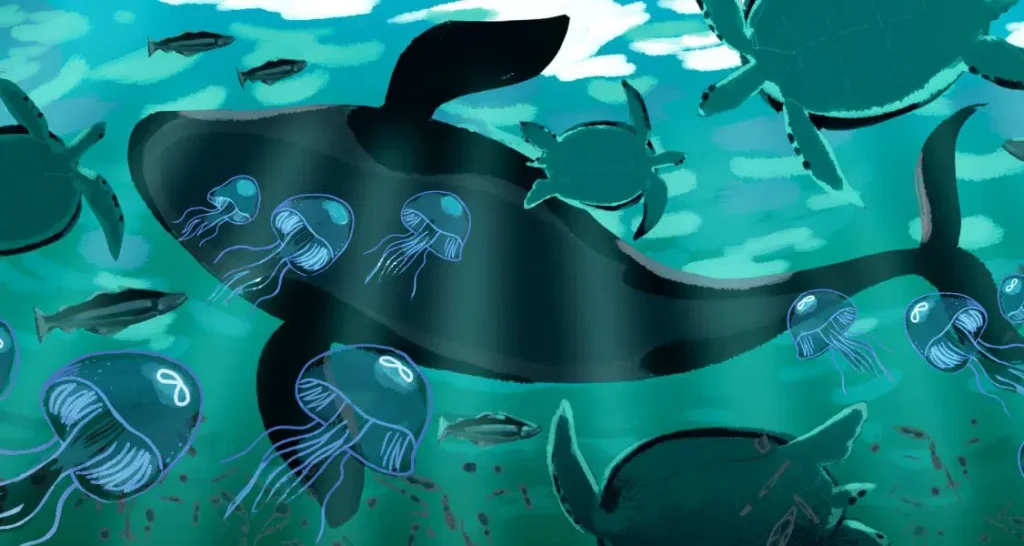
Program overview
Amplify Science California is a brand-new blended science curriculum for grades TK–8 that meets 100 percent of the Next Generation Science Standards and the California Science Framework. With Amplify Science California, students learn to talk, read, write, think, and argue like real scientists and engineers through investigations of real-world problems and scientific phenomena, gaining the skills needed to master the California NGSS.
In Amplify Science, students take on the role of a scientist or engineer and are introduced to a relevant, real-world problem. They engage in investigations using hands-on materials, reading selections, rich media, and more to draft, strengthen, and defend their claims about the unit anchor phenomenon and how to solve the problem.
The Amplify Science assessment system is grounded in the principle that students benefit from regular and varied opportunities to demonstrate understanding through performance. Read more about Amplify assessments in Grades K-5 and 6-8.
A powerful partnership
Amplify Science California was developed by the science education experts at the University of California, Berkeley’s Lawrence Hall of Science and the digital learning team at Amplify.
The University of California, Berkeley’s Lawrence Hall of Science is a recognized leader in PreK-12 science education, producing groundbreaking curriculum products for more than 40 years, including the international award-winning Seeds of Science/Roots of Reading®. The Hall’s curriculum materials are used in one in four classrooms across the nation.
Read more about The Hall’s research-proven Do, Talk, Read, Write, Visualize multimodal learning model.

Amplify has been pioneering digital education products for more than 15 years, empowering teachers across the country to offer more personalized instruction and accelerate the potential of their students to become more active, engaged learners. Amplify has supported more than 200,000 educators and three million students in all 50 states.
Designed in California for California
Since their release in 2013, the Next Generation Science Standards (NGSS) have raised the bar for science education. Moving the focus of instruction away from memorization and toward active engagement and critical thinking, the standards teach students to think like scientists and engineers and grapple with core scientific principles, in addition to supporting deep learning of concepts that cut across science domains. Amplify Science has been designed from the ground up to meet 100 percent of the Next Generation Science Standards and respond to the instructional shifts called for by the National Research Council’s Framework for K–12 science education (2012).
Classroom Slides (grades K–8)
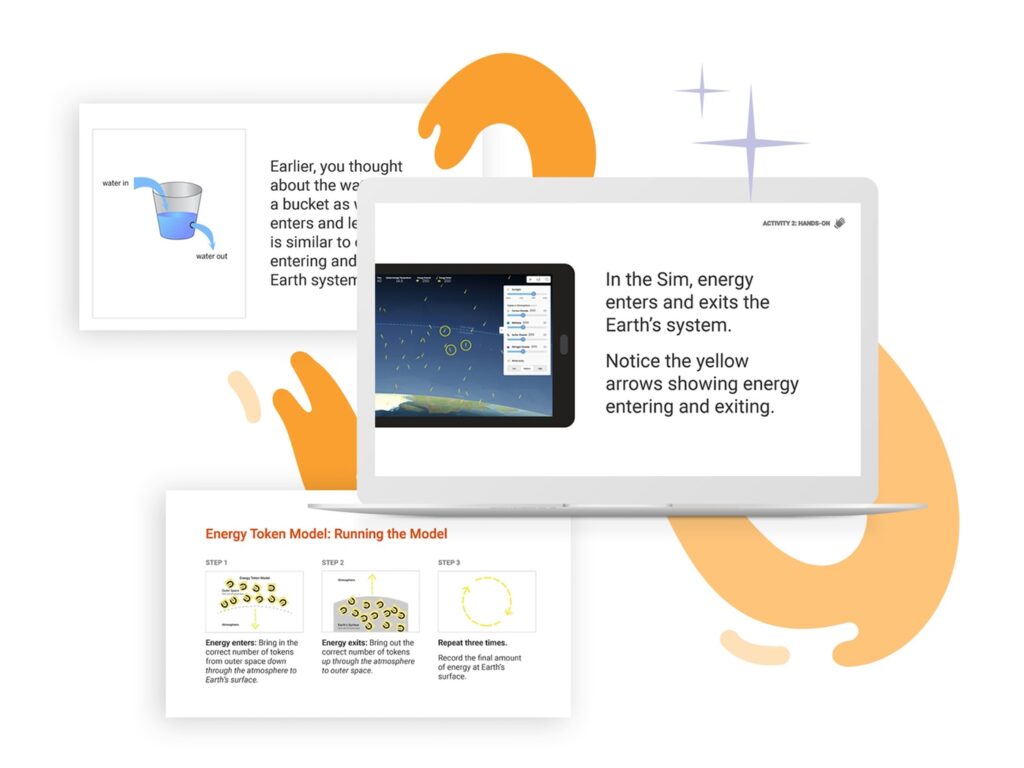
Science time just got a whole lot easier. With our new Classroom Slides, you can put down the Teacher’s Guide and focus on what matters most—your students. Plus, with Classroom Slides, lesson prep is as quick as a click!
Classroom Slides are:
- Available for back to school 2020–2021, for grades 6–8. Classroom slides are already rolling out for grades K–5.
- Downloadable for offline use, which means no more sweating unreliable internet connections.
- Streamlined for easy lesson delivery, including lesson visuals, activity instructions and transitions, animations, investigation setup videos, technology support, and more.
- Fully editable, allowing you to incorporate your own flavor, flair, and favorite resources.
Classroom Slides are available as downloadable PowerPoint files to help guide you and your students through the lesson with images, videos, questions, and instructions. Slides for grades 6–8 will be released on a rolling basis over the course of the 2020-2021 school year. Below you’ll find a prototype from the Earth’s Changing Climate unit.
A brochure on K–5 slides can be downloaded here.
A flyer on 6–8 slides can be downloaded here.
Transitional Kindergarten
Amplify Science TK includes three units, one for each science domain: Earth science, life science, and physical science. The physical science unit includes an engineering design challenge.

Units are structured to allow you to make decisions about how best to teach your students and include options for whole-group, small-group, and center-based instruction.
Start your review
If you have received Amplify Science California materials for review, fill out the form and select the course model you are interested in to access the digital Program Guide and supporting materials. For technical questions regarding your review, contact support at (844) 505-4621 or CAreviewersupport@amplify.com.
A powerful partnership
Amplify Science was developed by the science education experts at the University of California, Berkeley’s Lawrence Hall of Science and the digital learning team at Amplify.
The Lawrence Hall of Science
The University of California, Berkeley’s Lawrence Hall of Science is a recognized leader in PreK-12 science education, producing groundbreaking curriculum products for more than 40 years, including the international award-winning Seeds of Science/Roots of Reading®. The Hall’s curriculum materials are used in one in four classrooms across the nation.
Amplify
Amplify has been pioneering digital education products for more than 15 years, empowering teachers across the country to offer more personalized instruction and accelerate the potential of their students to become more active, engaged learners. Amplify has supported more than 200,000 educators and three million students in all 50 states.
Elementary school curriculum
Grade K
- Needs of Plants and Animals
- Pushes and Pulls
- Sunlight and Water
Grade 1
- Animal and Plant Defenses
- Light and Sound
- Spinning Earth
Grade 2
- Plant and Animal Relationships
- Properties of Materials
- Changing Landforms
Grade 3
- Balancing Forces
- Inheritance and Traits
- Environments and Survival
- Weather and Climate
Grade 4
- Energy Conversions
- Vision and Light
- Earth’s Features
- Waves, Energy, and Information
Grade 5
- Patterns of Earth and Sky
- Modeling Matter
- The Earth System
- Ecosystem Restoration
Middle school curriculum – Domain Model
Earth and Space Science
- Launch:
Geology on Mars - Plate Motion
- Engineering Internship:
Plate Motion - Rock Transformations
- Earth, Moon, and Sun
- Ocean, Atmosphere, and Climate
- Weather Patterns
- Earth’s Changing Climate
- Engineering Internship:
Earth’s Changing Climate
Life Science
- Launch:
Microbiome - Metabolism
- Engineering Internship:
Metabolism - Traits and Reproduction
- Populations and Resources
- Matter and Energy in Ecosystems
- Natural Selection
- Engineering Internship: Natural Selection
- Evolutionary History
Physical Science
- Launch:
Harnessing Human Energy - Force and Motion
- Engineering Internship:
Force and Motion - Magnetic Fields
- Thermal Energy
- Phase Change
- Engineering Internship: Phase Change
- Chemical Reactions
- Light Waves
Middle school curriculum – Integrated Model
Grade 6
- Launch:
Microbiome - Metabolism
- Engineering Internship:
Metabolism - Traits and Reproduction
- Thermal Energy
- Ocean, Atmosphere, and Climate
- Weather Patterns
- Earth’s Changing Climate
- Engineering Internship:
Earth’s Changing Climate
Grade 7
- Launch:
Geology on Mars - Plate Motion
- Engineering Internship:
Plate Motion - Rock Transformations
- Phase Change
- Engineering Internship: Phase Change
- Chemical Reactions
- Populations and Resources
- Matter and Energy in Ecosystems
Grade 8
- Launch:
Harnessing Human Energy - Force and Motion
- Engineering Internship:
Force and Motion - Magnetic Fields
- Light Waves
- Earth, Moon, and Sun
- Natural Selection
- Engineering Internship: Natural Selection
- Evolutionary History
Standards correlations
Download a full correlation to the Arizona Science Standards.
Spanish-language support
Amplify Science is committed to providing support to meet the needs of all learners, including multiple access points for Spanish-speaking students. Developed in conjunction with Spanish-language experts and classroom teachers, multiple components are available in Spanish across the Amplify Science curriculum.
Spanish-language materials include:
| COMPONENT | TEACHER/STUDENT |
| Student Investigation Notebooks (K–8) | Student |
| Science articles (6–8) | Student |
| Student Books (K–5) | Student |
| Video transcripts (6–8) | Student |
| Digital simulation translation key (6–8) | Student |
| Printed classroom materials (K–8) (Unit and chapter questions, key concepts, vocabulary cards, etc.) | Teacher and student |
| Copymasters (K–8) | Teacher |
| Assessments (K–8) | Teacher |
Contact your Arizona representative directly
Thomas Gearhart
Account Executive, Southwest
Email: tgearhart@amplify.com
Phone: (505) 206-7661
Access curriculum now
To begin your review, click the button to access the online digital curriculum.
Watch the video walkthroughs
Elementary school
Middle school
Welcome, Arizona reviewers!
Inspiring the next generation of Arizona scientists, engineers, and curious citizens. Amplify Science is a brand-new, engaging core curriculum designed for three-dimensional, phenomena-based learning.
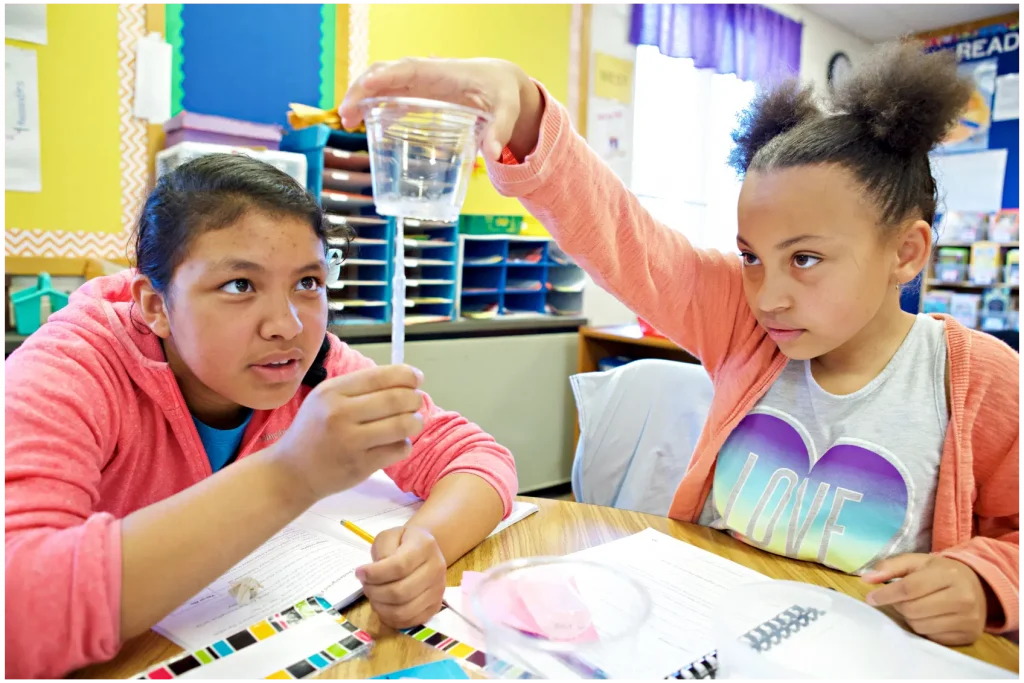
A powerful partnership
Amplify Science was developed by the science education experts at the University of California, Berkeley’s Lawrence Hall of Science and the digital learning team at Amplify.
The Lawrence Hall of Science
The University of California, Berkeley’s Lawrence Hall of Science is a recognized leader in PreK-12 science education, producing groundbreaking curriculum products for more than 40 years, including the international award-winning Seeds of Science/Roots of Reading®. The Hall’s curriculum materials are used in one in four classrooms across the nation.
Amplify
Amplify has been pioneering digital education products for more than 15 years, empowering teachers across the country to offer more personalized instruction and accelerate the potential of their students to become more active, engaged learners. Amplify has supported more than 200,000 educators and three million students in all 50 states.
Elementary school curriculum
Grade K
- Needs of Plants and Animals
- Pushes and Pulls
- Sunlight and Water
Grade 1
- Animal and Plant Defenses
- Light and Sound
- Spinning Earth
Grade 2
- Plant and Animal Relationships
- Properties of Materials
- Changing Landforms
Grade 3
- Balancing Forces
- Inheritance and Traits
- Environments and Survival
- Weather and Climate
Grade 4
- Energy Conversions
- Vision and Light
- Earth’s Features
- Waves, Energy, and Information
Grade 5
- Patterns of Earth and Sky
- Modeling Matter
- The Earth System
- Ecosystem Restoration
Middle school curriculum – Domain Model
Earth and Space Science
- Launch:
Geology on Mars - Plate Motion
- Engineering Internship:
Plate Motion - Rock Transformations
- Earth, Moon, and Sun
- Ocean, Atmosphere, and Climate
- Weather Patterns
- Earth’s Changing Climate
- Engineering Internship:
Earth’s Changing Climate
Life Science
- Launch:
Microbiome - Metabolism
- Engineering Internship:
Metabolism - Traits and Reproduction
- Populations and Resources
- Matter and Energy in Ecosystems
- Natural Selection
- Engineering Internship: Natural Selection
- Evolutionary History
Physical Science
- Light Waves
- Launch:
Harnessing Human Energy - Force and Motion
- Engineering Internship:
Force and Motion - Magnetic Fields
- Thermal Energy
- Phase Change
- Engineering Internship: Phase Change
- Chemical Reactions
Middle school curriculum – Integrated Model
Grade 6
- Launch:
Microbiome - Metabolism
- Engineering Internship:
Metabolism - Traits and Reproduction
- Thermal Energy
- Ocean, Atmosphere, and Climate
- Weather Patterns
- Earth’s Changing Climate
- Engineering Internship:
Earth’s Changing Climate
Grade 7
- Launch:
Geology on Mars - Plate Motion
- Engineering Internship:
Plate Motion - Rock Transformations
- Phase Change
- Engineering Internship: Phase Change
- Chemical Reactions
- Populations and Resources
- Matter and Energy in Ecosystems
Grade 8
- Evolutionary History
- Launch:
Harnessing Human Energy - Force and Motion
- Engineering Internship:
Force and Motion - Magnetic Fields
- Light Waves
- Earth, Moon, and Sun
- Natural Selection
- Engineering Internship: Natural Selection
Standards correlations
Download a full correlation to the Arizona Science Standards.
Spanish-language support
Amplify Science is committed to providing support to meet the needs of all learners, including multiple access points for Spanish-speaking students. Developed in conjunction with Spanish-language experts and classroom teachers, multiple components are available in Spanish across the Amplify Science curriculum.
Spanish-language materials include:
Program Guide
For more information about the program, see our
Amplify Science Digital Program Guide.
Watch the video walkthroughs
Elementary school
Middle school
Demo access and your Arizona representative
To request demo access, please contact your Account Executive.
Thomas Gearhart
Senior Account Executive
Western, Eastern, and Southern AZ
Email: tgearhart@amplify.com
Phone: (505) 206-7661
Yvonne Rohde
Senior Account Executive
Northern AZ
Email: yrohde@amplify.com
Phone: (480) 673-0019
Laina Armbuster
Account Executive
Accounts 3,500 and below
Email: larmbuster@amplify.com
Phone: (602) 791-4135