What my wedding taught me about choosing curriculum

The right curriculum choice isn’t only about the product—it’s about who’s by your side from start to finish. Here’s how one district found that with Amplify CKLA.

By Kelly Pruitt, Instructional Facilitator, Peninsula School District | May 28, 2026

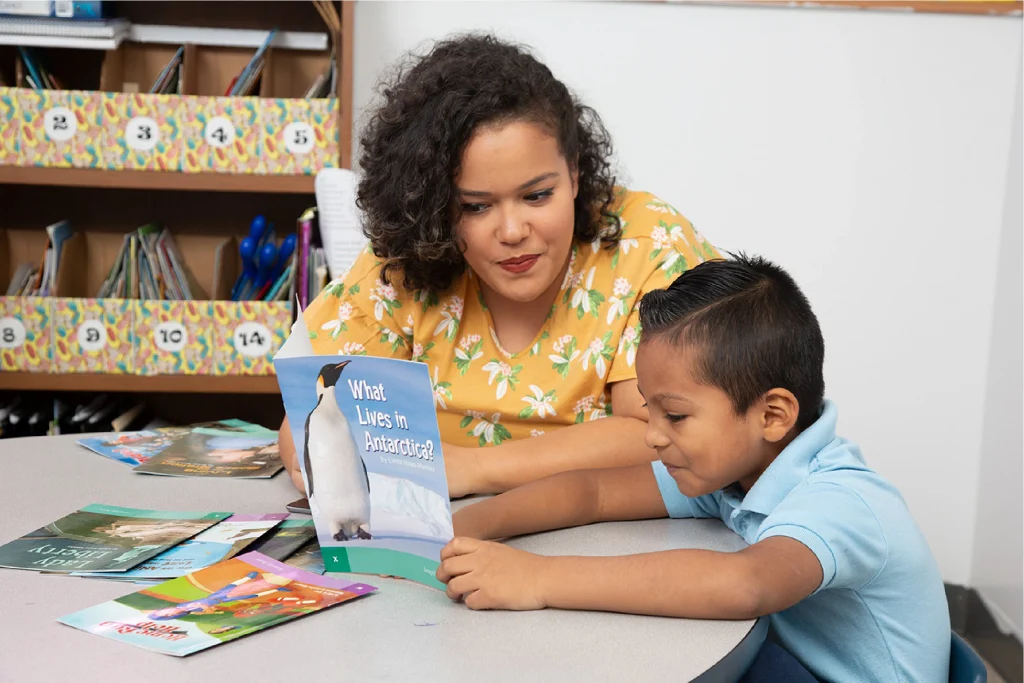
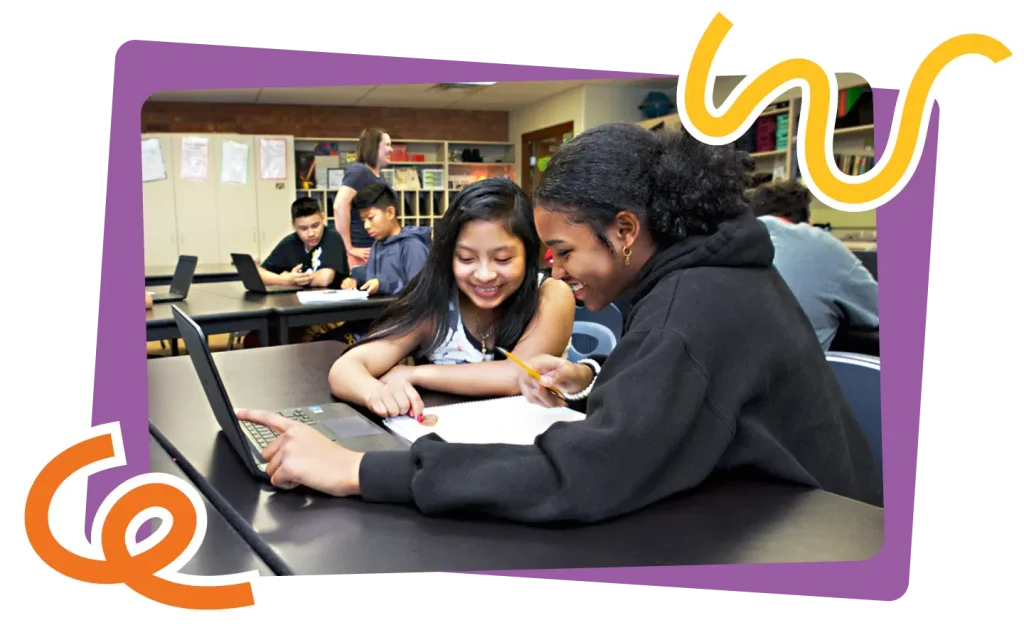
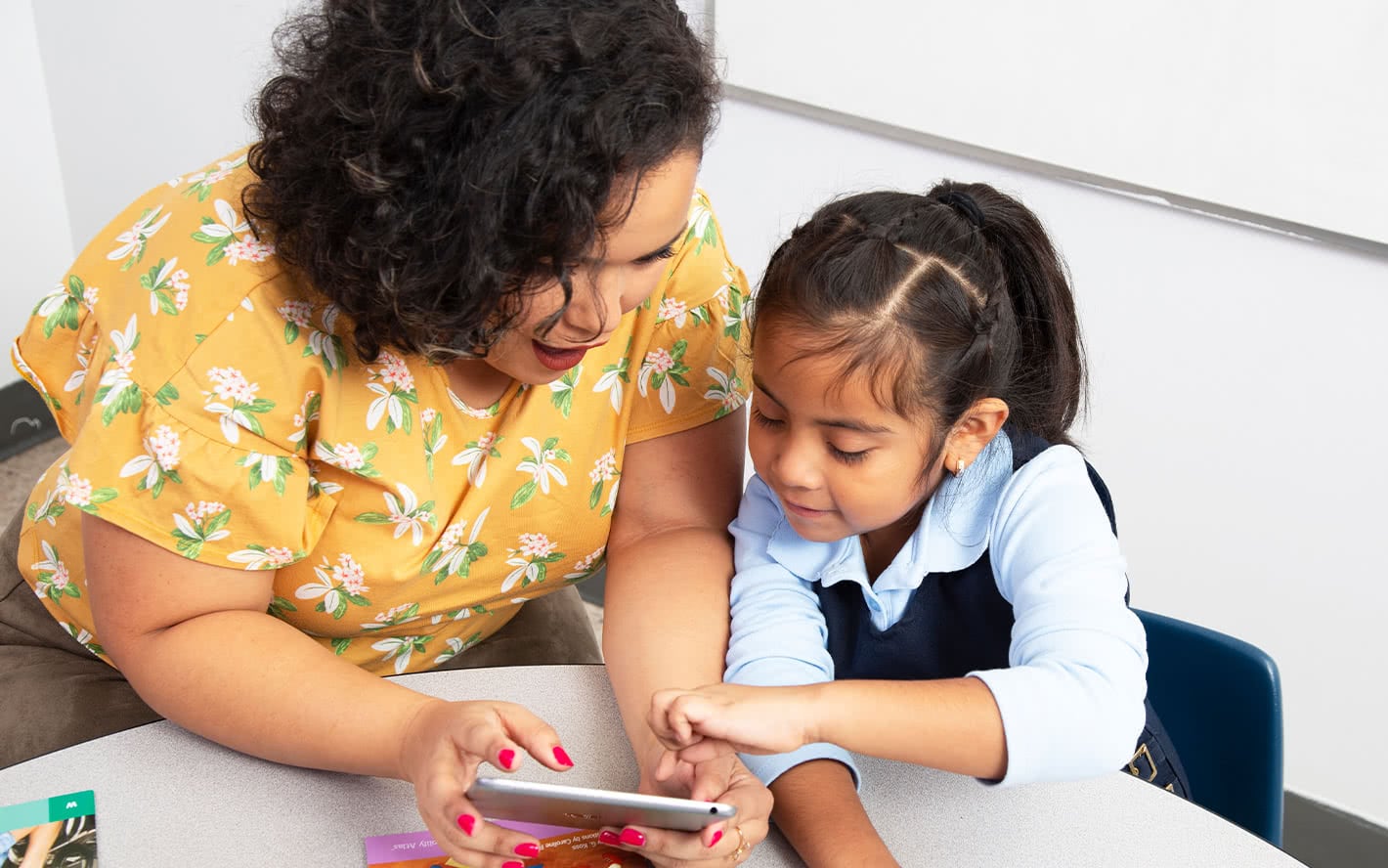
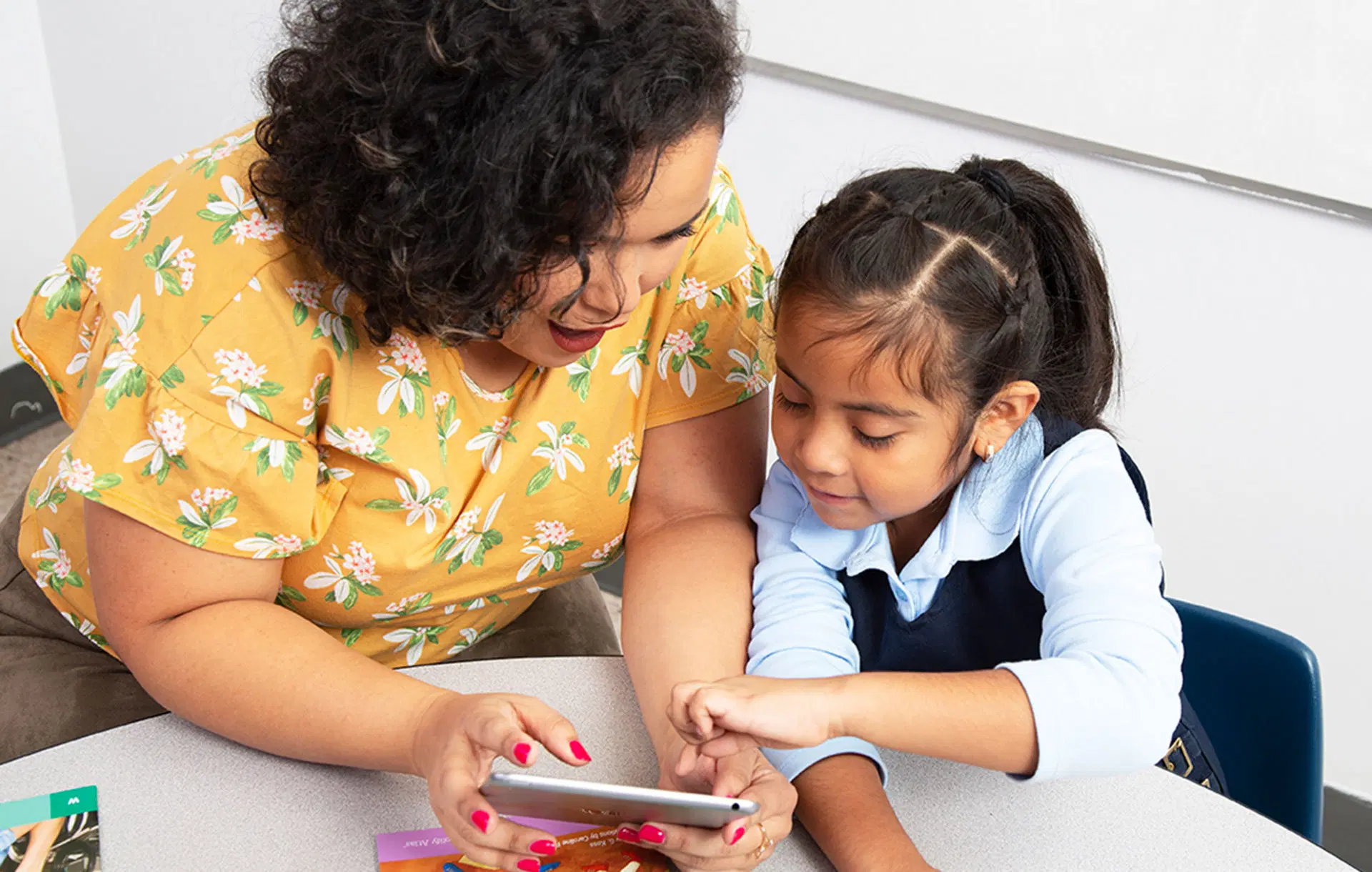
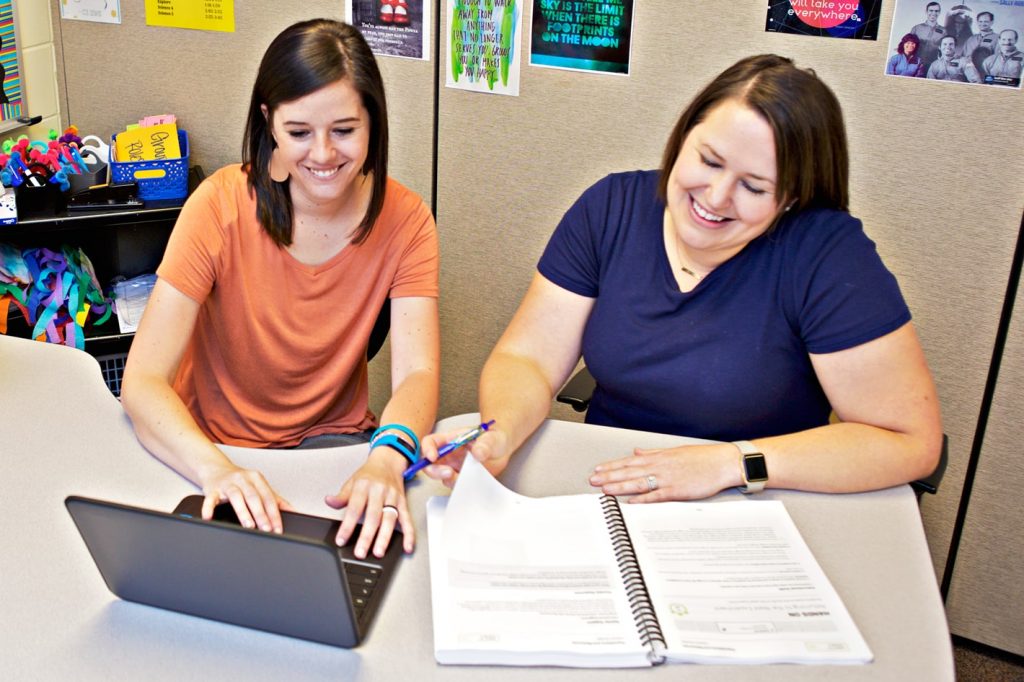
A teacher leans over a group of elementary students who are working together at a classroom table under a "CKLA Skills" sign, guiding them through successful CKLA implementation.

2025

September 18, 2025

Edutopia: “Using Virtual Manipulatives in Math Class”

Read Full Article

August 19, 2025

Education Week: “Here’s Why It’s Important for Teachers to Have a Say in Curriculum”

Read Full Article

August 18, 2025

Investors Hangout: “Amplify Classroom Revolutionizes K-12 Teaching Experience”

Read Full Article

August 5, 2025

WhaTech: “K-12 Online Education Market Set for Strong Expansion, Reaching $349.77 Billion by 2029”

Read Full Article

August 4, 2025

Education Week: “Districts Using ‘High-Quality’ Reading Curricula Still Supplement With Other Materials. Why?”

Read Full Article

July 9, 2025

K-12 Dive: “Youngest students see big reading gains post-COVID on DIBELS assessment”

Read Full Article

June 25, 2025

The 74: “How Districts in Georgia, Maryland and D.C. Are Raising Reading Proficiency”

Read Full Article

May 28, 2025

Open PR: “K-12 Online Education Market Forecast 2025-2034: Comprehensive Analysis And Growth Opportunities”

Read Full Article

May 27, 2025

District Administration: “Early literacy: How to implement programs that start strong”

Read Full Article

May 20, 2025

EdSource: “California schools prepare to introduce universal reading screening”

Read Full Article

April 23, 2025

The 74: “Eric Adams Expands Reading, Math Curriculum Mandates to All NYC Middle Schools”

Read Full Article

April 21, 2025

Daily News: “NYC expanding reading, math curriculum overhaul to more schools”

Read Full Article

March 19, 2025

Education Next: “School Reinvention in Practice”

Read Full Article

February 28, 2025

K-12 Dive, “Test yourself on this week’s K-12 news”

Read Full Article

February 26, 2025

K-12 Dive: “Only 56% of K-2 students are ready to read”

Read Full Article

January 24, 2025

Chalkbeat Philadelphia: “Two AI-powered charter schools could soon open in Pennsylvania”

Read Full Article

January 16, 2025

Tech & Learning: “What is Polypad and How Can Teachers Use It?”

Read Full Article

2024

December 18, 2024

EdSource: “State takes another step toward mandatory testing for reading difficulties in 2025”

Read Full Article

December 6, 2024

Chalkbeat Philadelphia: “Philadelphia is now spending over $100 million on its curriculum overhaul. Here’s a breakdown.”

Read Full Article

November 27, 2024

Lincoln Journal Star: “Lincoln Public Schools drops a classification rating on statewide assessment”

Read Full Article

November 6, 2024

EdNC: “New K-3 literacy data shows growth in skills for North Carolina students”

Read Full Article

October 1, 2024

The 74: “As NY District Implements Science of Reading, Parents Push for New Focus on Math”

Read Full Article

September 18, 2024

Tech & Learning: “Tech & Learning Announces Winners of Best for Back to School 2024”

Read Full Article

August 22, 2024

Chalkbeat Philadelphia: “Philadelphia school board renews charters, funds tutoring and a new science curriculum”

Read Full Article

August 2, 2024

EdNC: “‘Dedication of our teachers’ praised in an update on the state’s science of reading journey”

Read Full Article

July 31, 2024

The 74: “Classroom Case Study: To Maximize the Impact of Curriculum Mandates, Follow the Science of Reading”

Read Full Article

July 23, 2024

Chalkbeat: “Should teachers customize their lessons or just stick to the ‘script’?”

Read Full Article

July 7, 2024

The Economist: “Will artificial intelligence transform school?”

Read Full Article

June 24, 2024

Chalkbeat: “Math instruction overhaul: NYC unveils new curriculum mandate for middle and high schools”

Read Full Article

June 6, 2024

EdNC: “Perspective | Teachers are the heroes of the literacy story in North Carolina”

Read Full Article

May 24, 2024

The Dallas Morning News: “How Don Quixote changed a Dallas public school classroom”

Read Full Article

May 2, 2024

Akron.com: “Tutoring program at Summit Academy Akron Elementary School attracts national interest”

Read Full Article

April 25, 2024

Edutopia: “Using Tech Tools to Energize Young Students’ Math Learning”

Read Full Article

April 4, 2024

EdNC: “State Board hears update on district ESSER spending, literacy data, and Restart schools”

Read Full Article

March 22, 2024

Thomas B Fordham Institute: “Five takeaways from Ohio’s baseline survey of elementary reading curricula”

Read Full Article

March 15, 2024

The 74: “New Data: Despite K-2 Reading Gains, Students Face a ‘Much Harder Journey’ Ahead”

Read Full Article

March 5, 2024

The 74: “Case Study: How One Texas School District Is Repurposing Staff Development Time to Embrace the Science of Reading”

Read Full Article

February 21, 2024

Times Record News: “UPDATED: Texas Education Commissioner Mike Morath likes what he sees at local school”

Read Full Article

February 19, 2024

Chalkbeat: “Chicago Public Schools recover from pandemic declines more than other districts, study shows”

Read Full Article

February 7, 2024

The 74: “Building Oral Language Skills and Equity Through High-Quality Reading Curriculum”

Read Full Article

2023

December 19, 2023

The 74: “Best Education Articles of 2023: Our 23 Most Important Stories About Students, Schools & Learning Recovery ”

Read Full Article

December 8, 2023

Education Week: “Aligned Science Curriculum, Better Scores? Research Finds a Connection”

Read Full Article

December 6, 2023

WRAL News: “Reading readiness rises in NC’s K-3 classrooms, new data shows”

Read Full Article

November 27, 2023

The Dallas Morning News: “Dallas’ new lessons aim to keep kids on track, but some worry about limiting teachers”

Read Full Article

November 2, 2023

Fort Worth Report: “Black students in Fort Worth ISD still struggle to read at grade level”

Read Full Article

October 31, 2023

Chicago Tribune: “Lake Forest-area schools take stock of state grades; ‘While we celebrate our successes, we acknowledge that the journey … is ongoing’”

Read Full Article

October 19, 2023

Chalkbeat: “NYC eyes middle and high school literacy overhaul. It’s asking families to weigh in.”

Read Full Article

October 16, 2023

The 74: “As Virginia Rolls Out Ambitious Statewide High-Dosage Tutoring Effort This Week, 3 Keys to Success”

Read Full Article

October 6, 2023

Language Magazine: “Embracing Bilingual Assessment”

Read Full Article

September 18, 2023

Tech & Learning: “Best for Back to School 2023”

Read Full Article

September 18, 2023

Chalkbeat: “Chicago Public Schools hired hundreds of tutors with federal COVID money. Can they keep them?”

Read Full Article

September 7, 2023

EdNC: “Perspective | Union County Public Schools empowers educators, elevates readers”

Read Full Article

August 14, 2023

Chicago Parent: “Common Core Math: How to Help Your Kids”

Read Full Article

August 6, 2023

The News & Observer: “NC sees big increase in reading skills among K-3 students. Is the state back on track?”

Read Full Article

August 4, 2023

The 74: “Slow Literacy Gains, Long COVID in Kids: 7 Insights into Pandemic Recovery and Aftermath in U.S. Schools”

Read Full Article

August 3, 2023

EdNC: “State Board of Education: New reading data, parental leave, and a call to support public schools”

Read Full Article

July 28, 2023

Houston Public Media: “New literacy curriculum is among the many changes coming to HISD”

Read Full Article

July 17, 2023

Houston Chronicle: “Mike Miles says HISD schools will teach the ‘science of reading.’ Here’s what that means.”

Read Full Article

July 11, 2023

The 74: “‘Education’s Long COVID’: New Data Shows Recovery Stalled for Most Students”

Read Full Article

July 6, 2023

Houston Chronicle: “HISD superintendent gives voluntary schools one last chance to back out of New Education System”

Read Full Article

June 29, 2023

The Report Card: “Larry Berger on Curriculum”

Read Full Article

June 2, 2023

EdWeek Market Brief:”K-12 Dealmaking: Substitute Teaching Startup Secures $38M; Amplify Raises Undisclosed Series C”

Read Full Article

May 25, 2023

The 74: “Expanding Access to Tutors: Nonprofit Grants $6 Million to 32 Learning Organizations Across 20 States to Help More Students”

Read Full Article

April 21, 2023

The 74: “The ‘Transformation is Real’ as Science of Reading Takes Hold in N.C. Schools”

Read Full Article

April 18, 2023

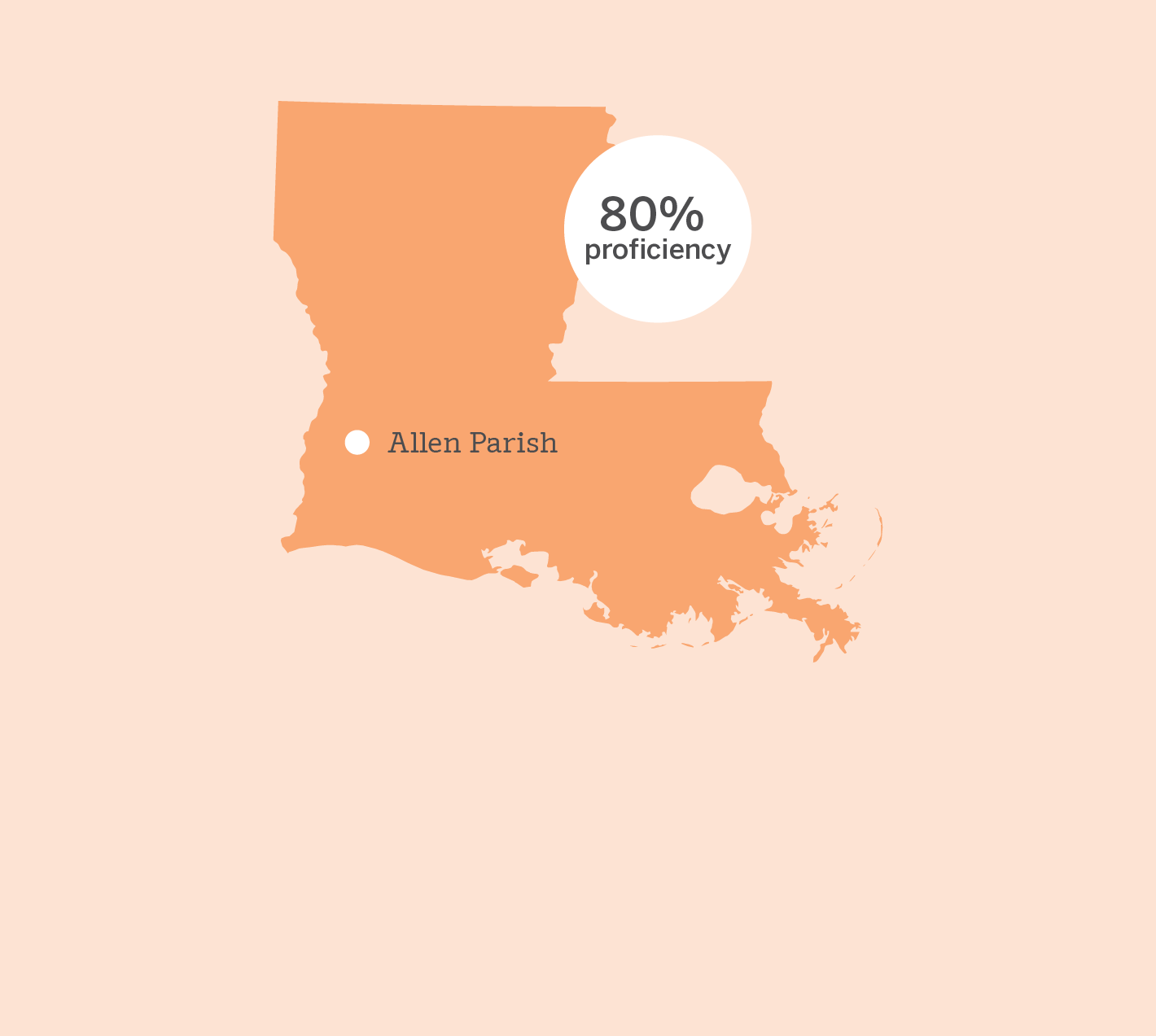
The 74: “Louisiana District Ravaged by Hurricane & COVID is Bouncing Back with Science”

Read Full Article

April 5, 2023

WFAE: “NC midyear reading data shows gains, but third-grade goals remain elusive”

Read Full Article

April 5, 2023

EdNC: “K-3 students show growth in literacy skills, mid-year DPI data show”

Read Full Article

March 24, 2023

The 74: “COVID & School Recovery: Critics Warn Washington Bill Would Reduce Classroom Learning Time By 4 Hours a Week”

Read Full Article

March 24, 2023

Edutopia: “Using Collective Leadership to Make a Major Shift in Your District”

Read Full Article

March 15, 2023

K-12 Dive: “California at center of latest push for science-based reading approaches”

Read Full Article

March 7, 2023

District Administration: “ESSER pressure: How one district intends to spend wisely as deadline looms”

Read Full Article

March 3, 2023

The 74: “‘The Other Long COVID’ Affecting Kids: Missed Opportunities”

Read Full Article

March 2, 2023

3 WTKR: “More students on track to learn to read in 2022-2023 school year since start of pandemic, researchers say”

Read Full Article

March 2, 2023

ABC 7: “Reading skills rebounding for young students following pandemic disruptions”

Read Full Article

March 1, 2023

K-12 Dive: “By The Numbers: DIBELS testing shows improved reading progress over last two years”

Read Full Article

February 27, 2023

The 74: “Exclusive: Despite K-2 Reading Gains, Results Flat for 3rd Grade ‘COVID Kids’”

Read Full Article

February 27, 2023

Education Week: “Students’ Early Literacy Skills Are Rebounding. See What the Data Show”

Read Full Article

February 7, 2023

The 74: “Using High-Quality Curriculum Doesn’t Mean You Can’t Still Have Fun Learning”

Read Full Article

January 13, 2023

NPR: “Can a middle school class help scientists create a cooler place to play?”

Read Full Article

January 6, 2023

News & Record: “After a numbing low, NC students now heading in ‘right direction’ in reading, math”

Read Full Article

January 5, 2023

CBS17.com: “K-3 students in NC make significant strides on literacy exams, DPI says”

Read Full Article

2022

December 20, 2022

District Administration: “Literacy Under the Lights: 10 ways to bring the community back together”

Read Full Article

December 14, 2022

The 74: “14 Charts This Year That Helped Us Better Understand Covid’s Impact On Students Teachers and Schools”

Read Full Article

December 14, 2022

The 74: “Learning Loss Is Worse than NAEP Showed. Middle School Math Must Be the Priority”

Read Full Article

November 21, 2022

Voicebot.ai: “SoapBox Labs Brings Child-Centered Voice AI to Dyslexia Detection Assessment”

Read Full Article

October 24, 2022

Education Week: “Two Decades of Progress, Nearly Gone: National Math, Reading Scores Hit Historic Lows”

Read Full Article

October 20, 2022

The 74: “Exclusive Literacy Data: Small Gains Since Last Fall, But No Reading Rebound”

Read Full Article

August 30, 2022

The 74: “Test English Learners in the Languages They Speak at School and at Home”

Read Full Article

August 29, 2022

WTKR TV NC: “News 3 investigates childhood literacy rates, raising money to give books to local kids for new school year”

Read Full Article

August 28, 2022

EdNC: “Elementary students made growth last year in skills that lead to reading proficiency, new data show”

Read Full Article

August 18, 2022

SHRM Blog: “The Great Resignation Skipped Us. Here’s why.”

Read Full Article

August 16, 2022

Forbes: “Curious About Knowledge-Building Curricula? Check Out This Website”

Read Full Article

July 20, 2022

District Administration: “Out-of-school STEM learning is much more powerful when it’s inclusive”

Read Full Article

July 19, 2022

Chalkbeat: “The state of learning loss: 7 takeaways from the latest data”

Read Full Article

June 28, 2022

The Preschool Podcast: “Early literacy strategies that stick with Darryl from Run-DMC and Makeda from Nickelodeon [Podcast]”

Listen To The Podcast

May 24, 2022

Forbes: “States That Want To Boost Literacy Should Keep An Eye On Texas”

Read Full Article

April 24, 2022

Business Ecosystem Alliance: “Ecosystems in Education–Collaborating to Efficiently Serve the End User”

Watch Full Video

April 18, 2022

KQED Mind Shift: “Weighing the best strategies for reading intervention”

Read Full Article

April 15, 2022

Fordham Institute: “Assessing a standards-aligned physical science curriculum”

Read Full Article

March 23, 2022

The Baltimore Sun: “National test scores show student gains from in-person learning in all but a critical group: new and pre-readers | COMMENTARY”

Read Full Article

March 15, 2022

NPR: “Two years ago schools shut down around the world. These are the biggest impacts”

Read Full Article

March 11, 2022

The Hub – Dallas ISD: “Students at Greiner and Anson Jones Elementary find success in reading and writing with a new program”

Read Full Article

March 10, 2022

NY Daily News: “Read it and weep: The new reading instruction emergency”

Read Full Article

March 10, 2022

WISH TV Indianapolis: “Study shows student performance plummeted during pandemic”

Read Full Article

March 9, 2022

New York Post: “Young students have suffered ‘alarming’ drops in reading skills during pandemic”

Read Full Article

March 9, 2022

The Daily Caller: “Childhood Literacy Plummeted Following Pandemic Shutdowns, Studies Show”

Read Full Article

March 8, 2022

The New York Times: “It’s ‘Alarming’: Children Are Severely Behind in Reading”

Read Full Article

March 7, 2022

Education Next: “The Education Exchange: Pandemic Hurt Younger Students’ Learning Worse, Amplify Data Suggest”

Listen to the Podcast

February 28, 2022

The 74: “Our 12 Best Education Articles in February: Reflections on 700 Days of COVID Chaos, Setting a Bar for Unmasking in Schools, Burying Schools in Record Requests & More”

Read Full Article

February 24, 2022

The Daily Advertiser: “Reading scores improve slightly, but pre-COVID reading levels are ‘the wrong goal’”

Read Full Article

February 24, 2022

Wall Street Journal: “The School Shutdowns and Lost Literacy”

Read Full Article

February 23, 2022

K-12 Dive: “DIBELS data illustrates pandemic reading setbacks”

Read Full Article

February 22, 2022

ABC 7 Buffalo: “Children falling behind in reading”

Read Full Article

February 18, 2022

The Carolina Journal: “Report: Elementary students lag in literacy due to pandemic”

Read Full Article

February 16, 2022

The 74: “‘We Have First-Graders Who Can’t Sing the Alphabet Song’: Pandemic Continues to Push Young Readers Off Track, New Data Shows”

Read Full Article

February 16, 2022

Education Week: “More Than 1 in 3 Children Who Started School in the Pandemic Need ‘Intensive’ Reading Help”

Read Full Article

February 4, 2022

Literary Hub: “EXCLUSIVE: Watch Joshua Bennett Discuss A.R. Ammons’s poem “Cascadilla Falls”

Read Full Article

January 26, 2022

The Ross Kaminsky Show: “Susan Lambert and the Literacy Gap”

Listen to the podcast

January 19, 2022

K-12 Dive: “Report: Colorado reading law update boosts quality of literacy curriculum”

Read Full Article

2021

December 15, 2021

Chalkbeat: “How Denver plans to address a drop in early elementary reading scores”

Read full article

December 8, 2021

The SHRM Blog: “What’s the Best Work Perk of All? Contributing to the Social Good”

Read full article

November 13, 2021

Hechinger Report: ‘The Reading Year’: First grade is critical for reading skills, but kids coming from disrupted kindergarten experiences are way behind”

Read full article

October 20, 2021

Hechinger Report: “OPINION: Younger students were among those most hurt during the pandemic”

Read full article

September 2, 2021

EdSurge: “An Edtech User’s Glossary to Speech Recognition and AI in the Classroom”

Read full article

September, 2021

SIIA Education: “ED TECH SUCCESS STORIES”

Read full article

August 23, 2021

CNN: “Irish tech firm helps kids’ voices be heard”

Read full article

August 18, 2021

SoapBox Labs: “Can Speech Recognition Help Children Learn to Read?”

Read full article

August 12, 2021

FOX Chicago Broadcast Interview: “Pandemic widens literacy gap for students”

Read full article

August 3, 2021

T.H.E Journal: “More Students of Color at Risk in Reading After Pandemic”

Read full article

July 28, 2021

The 74: “Early Reading Skills See a Rebound From In-Person Learning, But Racial Gaps Have Grown Wider, Tests Show”

Read full article

July 28, 2021

K-12 Dive: “Reports: Math, reading progress slowed during first full school year of pandemic”

Read full article

July 20, 2021

EdNC: “The mCLASS reading assessment tool is back in North Carolina classrooms, but it’s going to look different”

Read full article

July 5, 2021

WBAL: “Baltimore students from all socio-economic backgrounds get a chance to ‘Amplify’ their learning skills”

Read full article

June 15, 2021

Language Magazine: “Using Evidence to Overcome Adversity”

Read full article

May 7, 2021

The Dallas Morning News: “How can a one-minute kindergarten test help teachers tackle the ‘COVID slide’?”

Read full article

April 20, 2021

Education Week: “How Teachers and Curriculum Will Shape Ed Tech’s Future: A CEO Makes the Case”

Read full article

March 24, 2021

The Hechinger Report: “OPINION: Children will need summer tutors to make up for pandemic learning loss”

Read full article

March 23, 2021

Education Week: “Most States Fail to Measure Teachers’ Knowledge of the ‘Science of Reading,’ Report Says”

Read full article

March 17, 2021

Axios: “How online education and tutoring could fight COVID learning loss”

Read full article

March 16, 2021

USA Today: “Students are struggling to read behind masks and screens during COVID-19, but ‘expectations are no different’”

Read full article

March 16, 2021

The 74: “Schools and COVID, a Year Later: 12 Months After Classrooms Closed, 12 Key Things We’ve Learned About How the Pandemic Disrupted Student Learning”

Read full article

February 25, 2021

K–12 Dive: “Reading gaps widen in mid-year data, especially for K-1 students of color”

Read full article

February 24, 2021

The 74: “One Year into Pandemic, Far Fewer Young Students are on Target to Learn How to Read, Tests Show”

Read full article

February 17, 2021

NBC Los Angeles: “Local Students Design Rovers in Mission to Mars Student Challenge”

Read full article

February 5, 2021

District Administration: “To save literacy, focus first on high-quality core instruction”

Read full article

February 4, 2021

The Hechinger Report: “5 ways schools hope to fight Covid-19 learning loss”

Read full article

January 5, 2021

The 74: “Science Matters Now More than Ever. The Time to Start Teaching It Is in Elementary School”

Read full article

2020

December 15, 2020

Education Week: “Students’ Reading Losses Could Strain Schools’ Capacity to Help Them Catch Up”

Read full article

December 9, 2020

Education Post: “How to Help Beginning Readers During the Pandemic”

Read full article

December 3, 2020

American Consortium for Equity in Education: “The Importance of Quality Curriculum With Industry Voice”

Read full article

September 29, 2020

The 74: “Beyond the Scantron: Ed Tech CEO Larry Berger on Why the Pandemic Is No Excuse to Abscond Accountability and ‘Disruptions Are Great Opportunities to Try Something New’”

Read full article

May 25, 2020

The 74: “Class Disrupted Podcast Episode 2: Why Is My Child Doing So Many Worksheets Right Now?”

Read full article

February 5, 2020

Getting Smart Podcast: “Larry Berger on EdTech Past and Future”

Read full article

S5.E6. Why skepticism is essential to the Science of Reading, with Dr. Claude Goldenberg

To view this protected page, enter the password below:


Achieve life-changing results with the
Science of Reading—we’ll show you how.

Watching students learn to read is magic. But knowing how they get there? That’s science.

Making the shift to the Science of Reading is commendable, but it is no small feat. Our extensive experience, field-tested resources, and stories of literacy success will help you deliver the true transformation you need in your district—and see the results your students deserve.

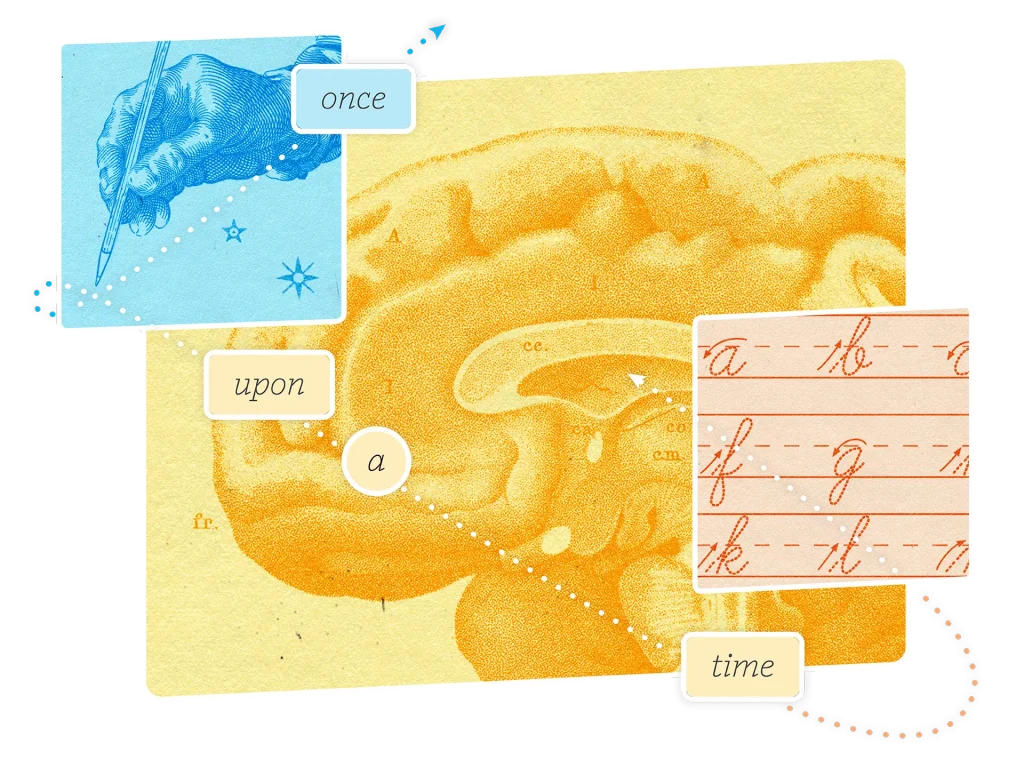
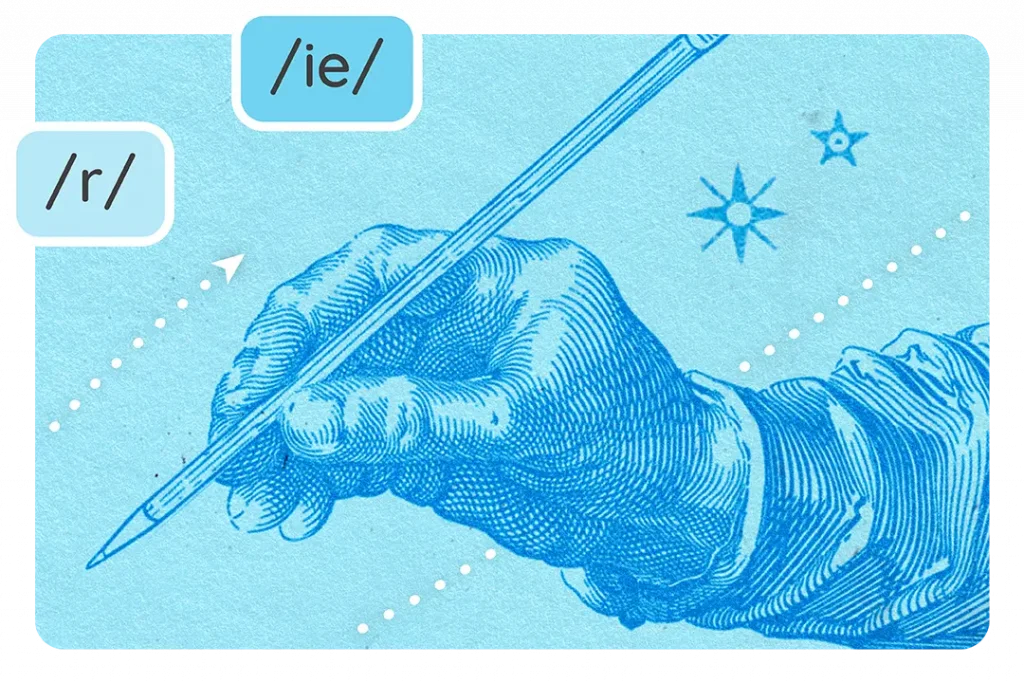
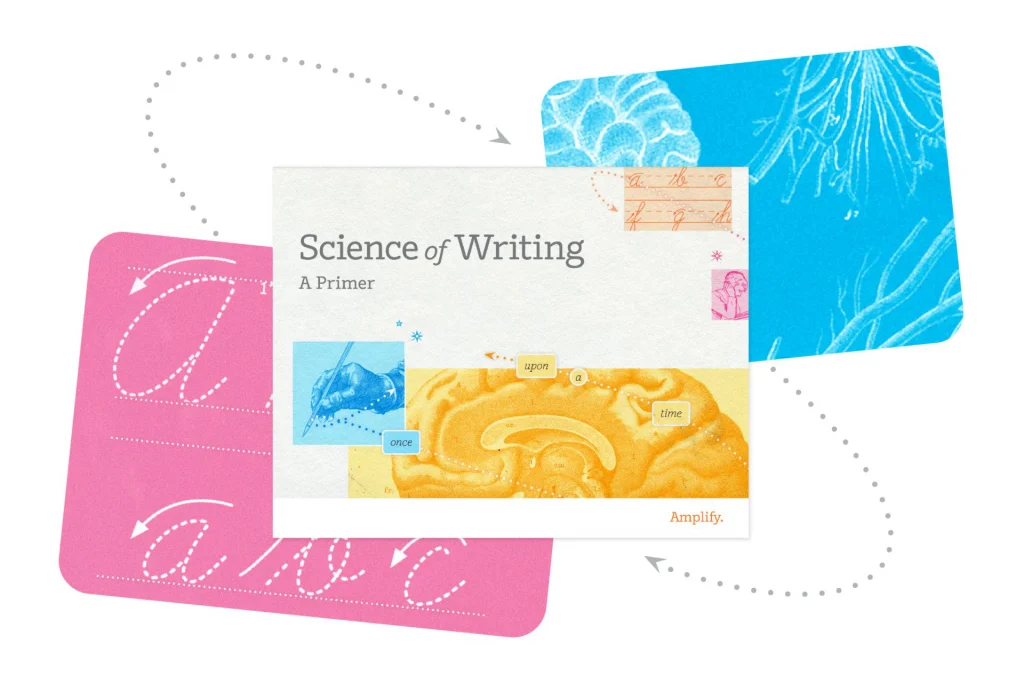
An illustration of a brain with superimposed images: handwriting, cursive letters, and the words "once upon a time" arranged in a sequence.

Exploring the Science of Writing

Discover the captivating journey of writing with our new guide, Science of Writing: A Primer. This resource delves into the history of writing, highlights the crucial link between combining reading and writing instruction, and reveals why handwriting still matters in today’s digital world. Designed to complement CKLA 3rd Edition and our other literacy tools, this primer is set to become a trusted companion, just like those before it.

MTSS Playbook

Explore our new ebook designed to help you build an evidence-based Multi-Tiered System of Supports (MTSS) tailored to diverse literacy goals. This resource provides actionable steps and essential questions to fortify your MTSS with the Science of Reading, enhancing its effectiveness and achieving better outcomes for your students.

Woman and child smiling while reading a book, with colorful cartoon animals in the background.
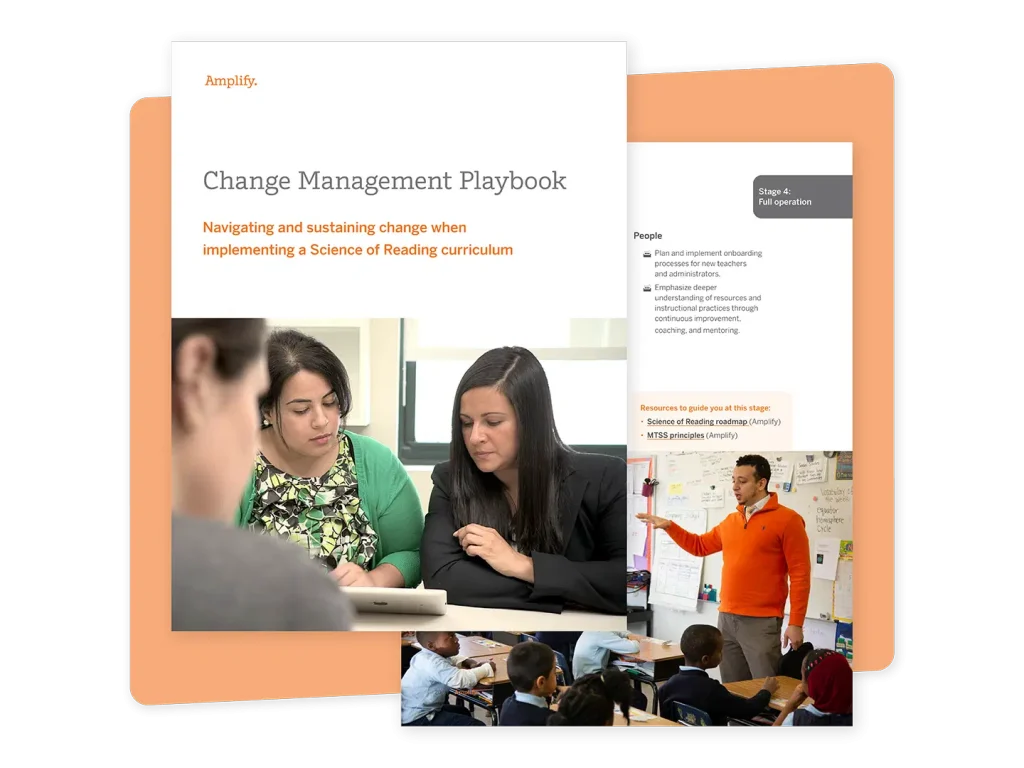
Cover of a "Change Management Playbook" guide, featuring two women reviewing a tablet and a teacher in an orange sweater instructing a classroom—highlighting K–5 literacy instruction and effective science of reading resources.

The science of teaching reading, coupled with the art of change management

Shifting to the Science of Reading isn’t just an overnight curriculum swap—it’s a profound culture change with multiple stages and stakeholders. We’ve helped educators succeed in that shift for years, and now we’re here to guide you every step of the way. Through each stage of implementation, our Change Management Playbook will help you mobilize your practice, process, and people to make the shift that matters most.

What is the Science of Reading?

Learning to read is not innate, but it can be taught—and science tells us how. The Science of Reading refers to the vast body of growing research that deconstructs how children learn to read, and the instructional practices that can get them there.

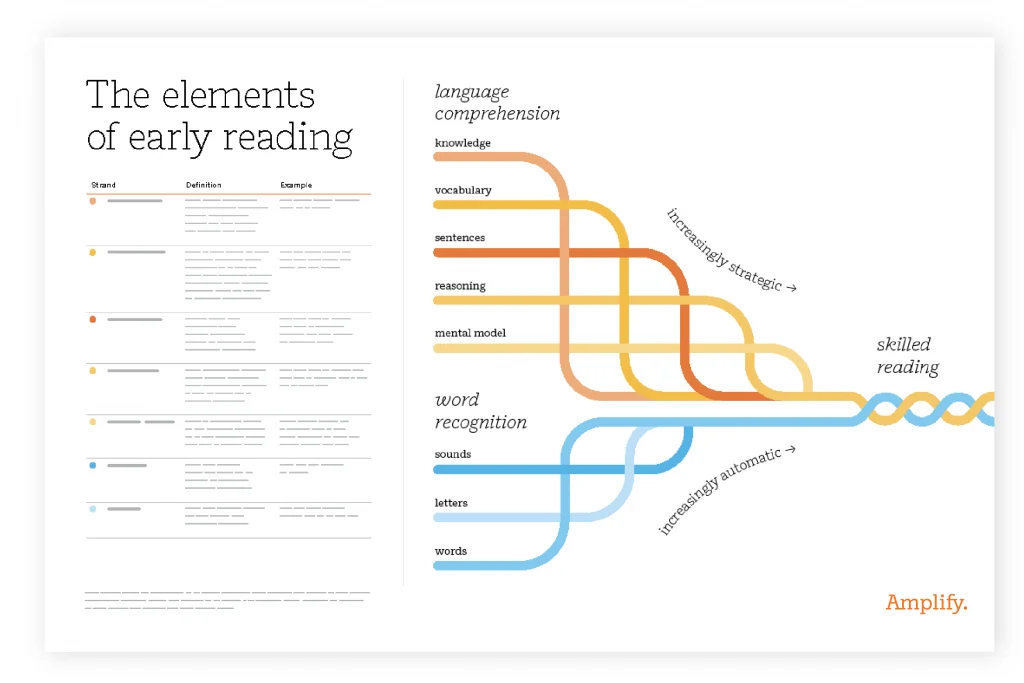
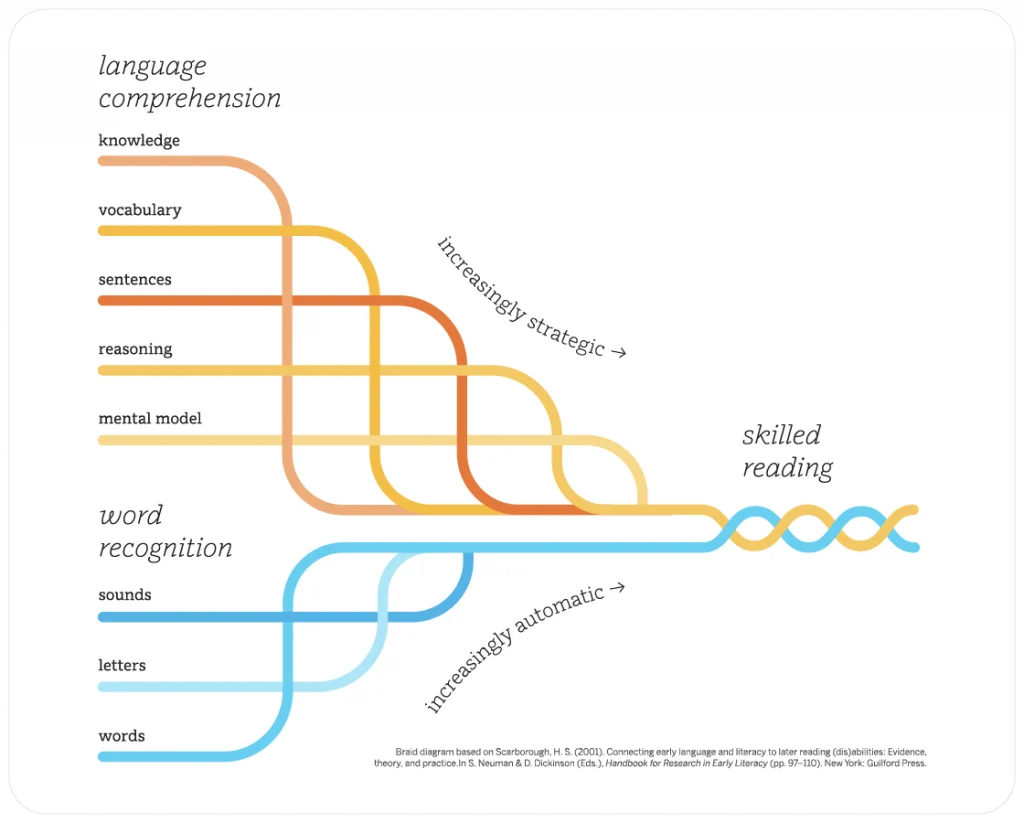
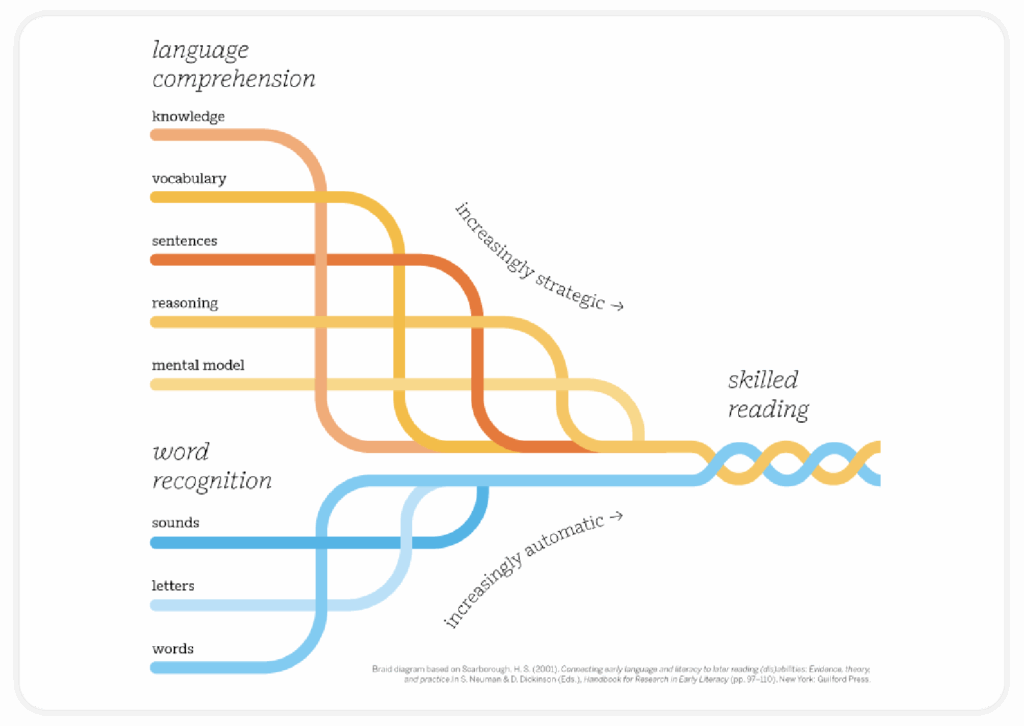
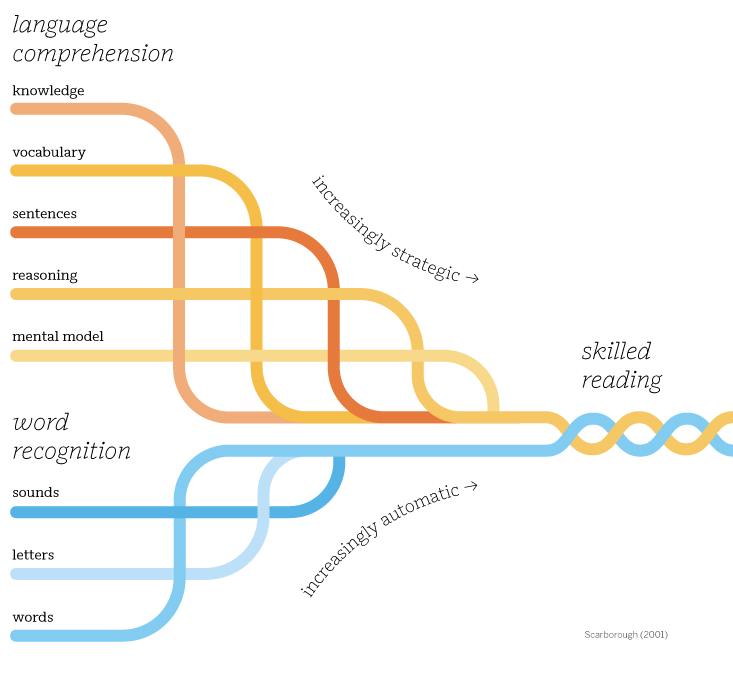
Reading fluency requires a complex combination of skills, taught explicitly and systematically. There are two main frameworks that can help us break it all down: The Simple View of Reading and Scarborough’s Rope.

Two schoolgirls in green uniforms look at a notebook together in a classroom. Science of Reading and book icons are overlaid on the image.
Cover of a guide titled "Science of Reading: A New Teacher’s Guide" by Amplify, featuring a teacher with two children and educational icons.

Science of Reading starter kit for new teachers

New to the classroom? We’ve compiled a collection of resources and insights about the Science of Reading to help you acquire more knowledge and build confidence. You’ll find the tools, information, and support you need to foster successful readers and writers in your classroom this school year—and beyond.

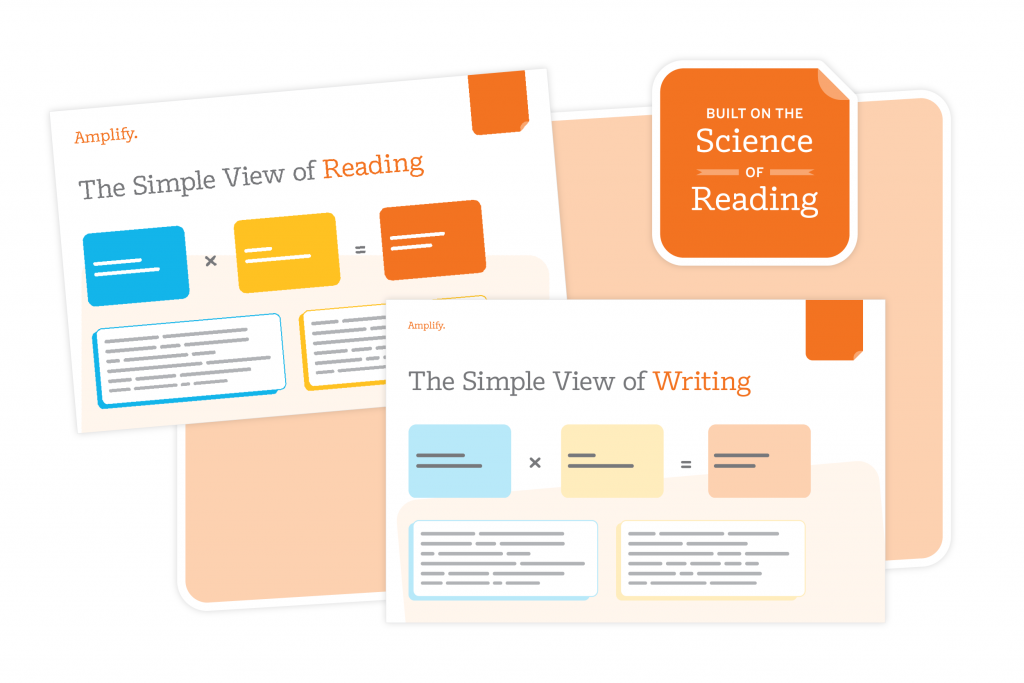
The Simple View of Reading

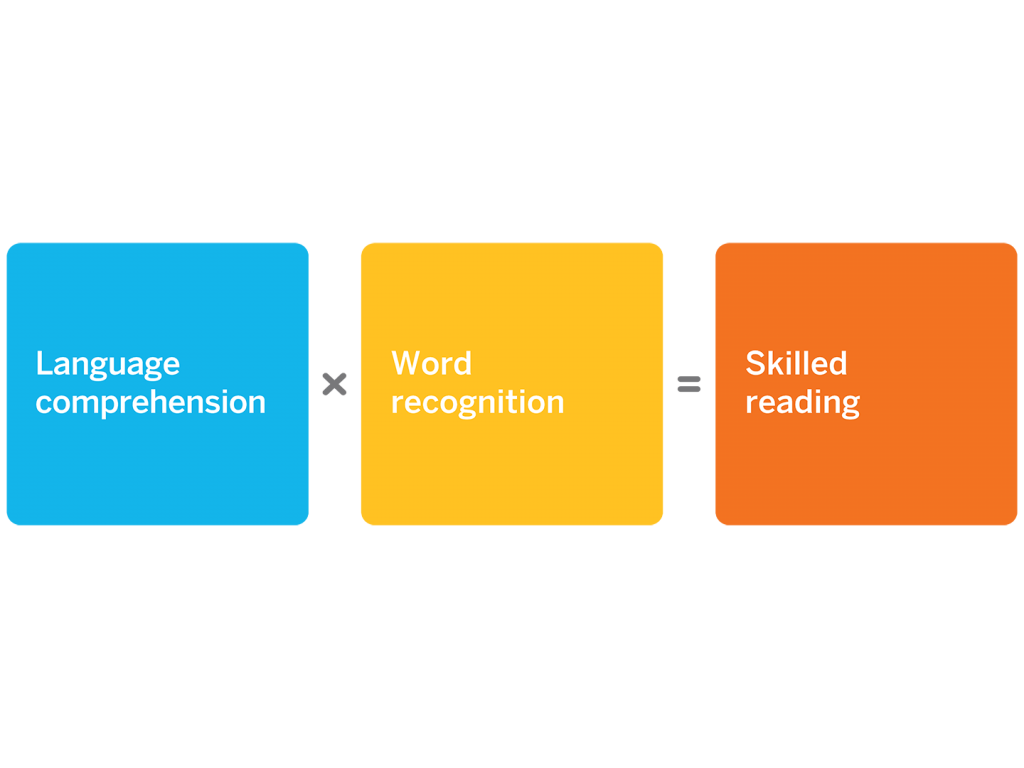
The Simple View of Reading, formulated by Philip Gough and William Tunmer in 1986, is the theory that proficient reading requires two main components:

Flowchart illustrating skilled reading as the product of language comprehension and word recognition, grounded in the science of reading.
A diagram with intertwining orange, yellow, and blue lines converging and diverging, illustrating interconnected pathways on a black background—reflecting the dynamic flow of ideas found in Core Knowledge or Amplify CKLA curricula.

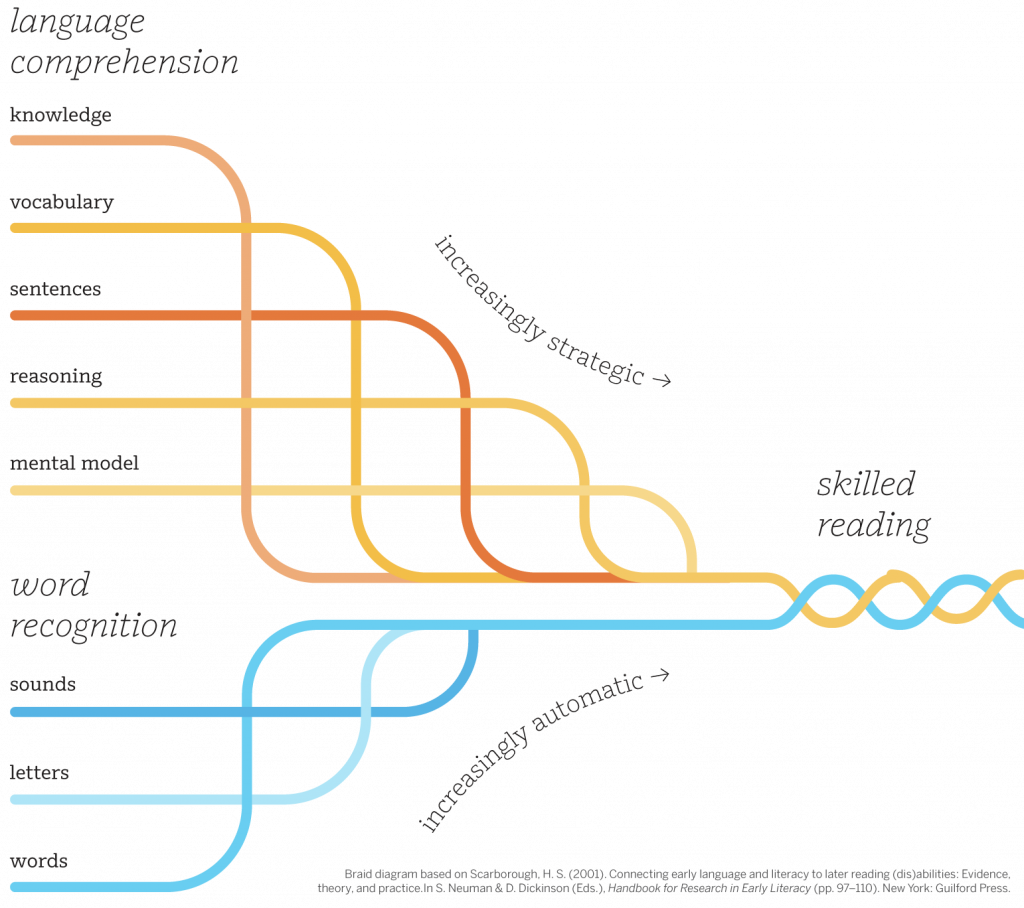
The Reading Rope

The Reading Rope, developed by Dr. Hollis Scarborough in 2001, helps us visualize the strands of specific skills and instruction that support students in decoding and comprehension.

Professional development to support your shift to the Science of Reading

Ignite literacy transformation with Amplify’s Science of Reading: The Learning Lab—an inspiring three-course series.

  • Dive into a comprehensive overview with course one, Foundations to the Science of Reading.
  • Examine assessments and their roles in course two, Advanced Topics in the Science of Reading: Assessment and Reading Difficulties.
  • Apply effective literacy instruction to your classroom in course three, Applied Structured Literacy.

Crafted to the standards of the International Dyslexia Association, this self-paced online series provides unparalleled, research-backed instruction. Explore enriching activities, curated resources, and learn from Susan Lambert, chief academic officer and host of Science of Reading: The Podcast.

The best investment you can make is in knowledge, and the returns are priceless.

Illustration of a webpage titled "Science of Reading: The Learning Lab series" with icons of a book, paper, and other subjects below the title.

Learn more about the online courses or request a quote!

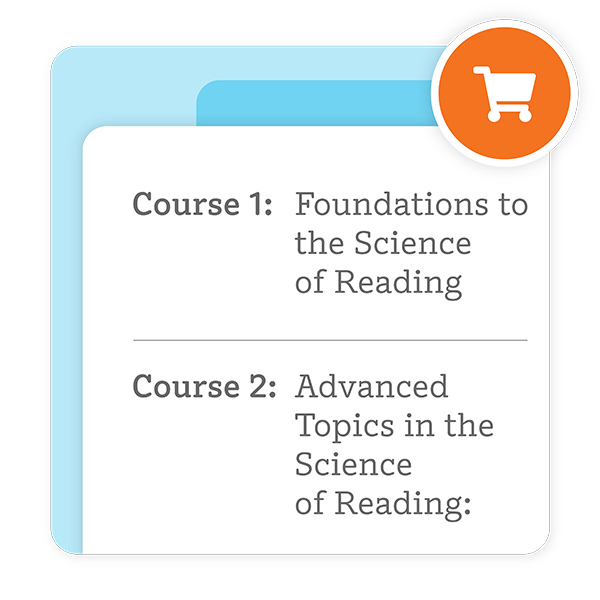
Two labeled course cards: "Course 1: Foundations to the Science of Reading" and "Course 2: Advanced Topics in the Science of Reading," with a shopping cart icon in the top right.

Tap into individual online course seats.

Science of Reading podcast cover image open book

Science of Reading: The Podcast

Tune in to hear the latest insights and trends in early reading, right from leading literacy experts and practitioners.

Listen now

Build your background knowledge of the Science of Reading.

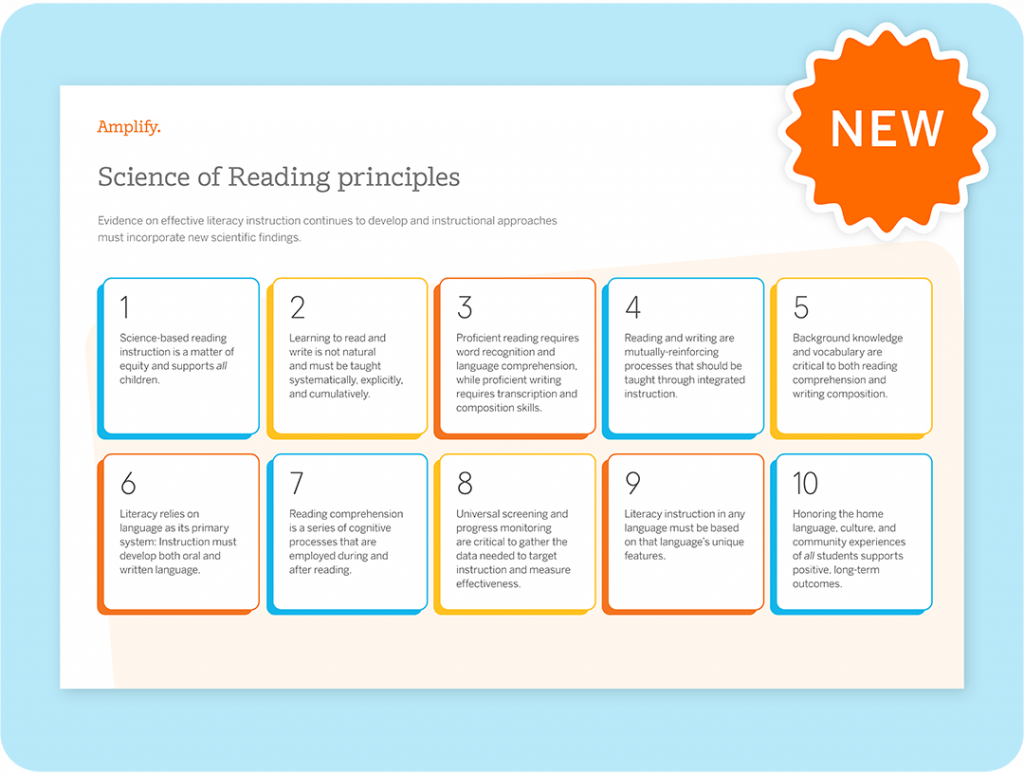
Our Science of Reading principles and primers explain the essentials: what the Science of Reading is, how it works, and why it matters for every student.

An infographic titled "Science of Reading principles" showcases ten evidence-based K–5 literacy instruction strategies, informed by interdisciplinary research, in color-coded boxes with a "NEW" badge in the top right corner.

New Science of Reading principles placemat!

Decades of research inform the updated Science of Reading principles placemat. Use these insights as a guide for evidence-based literacy instruction—perfect for committed educators aiming to achieve real improvements in student reading outcomes.

Download principles

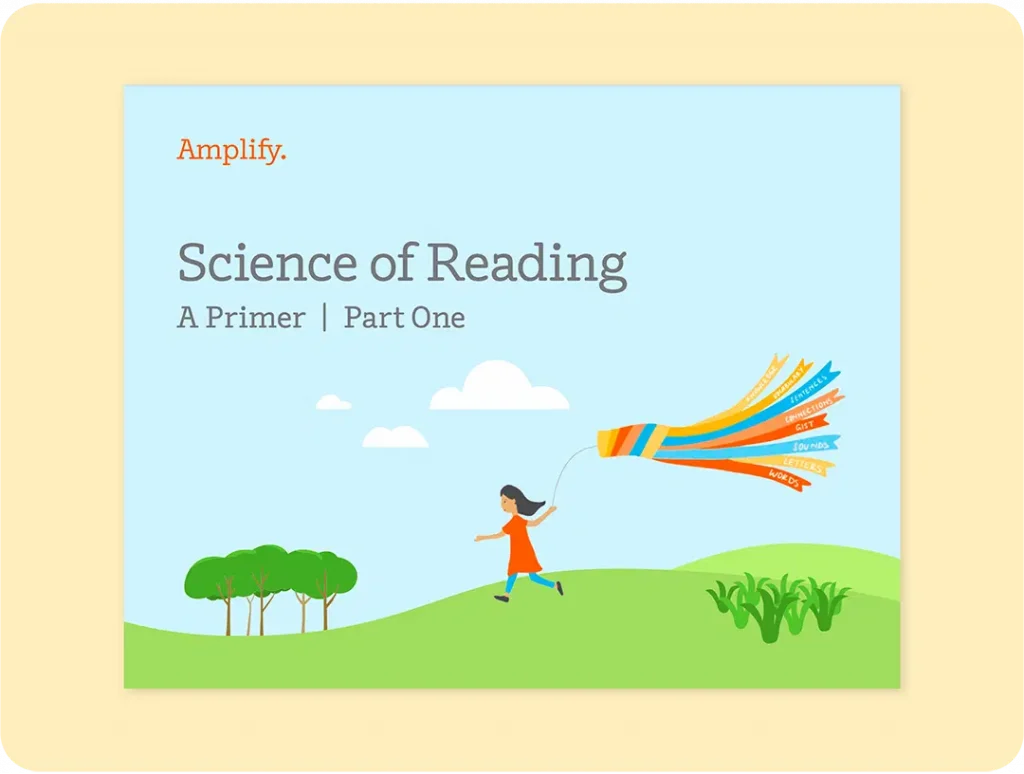
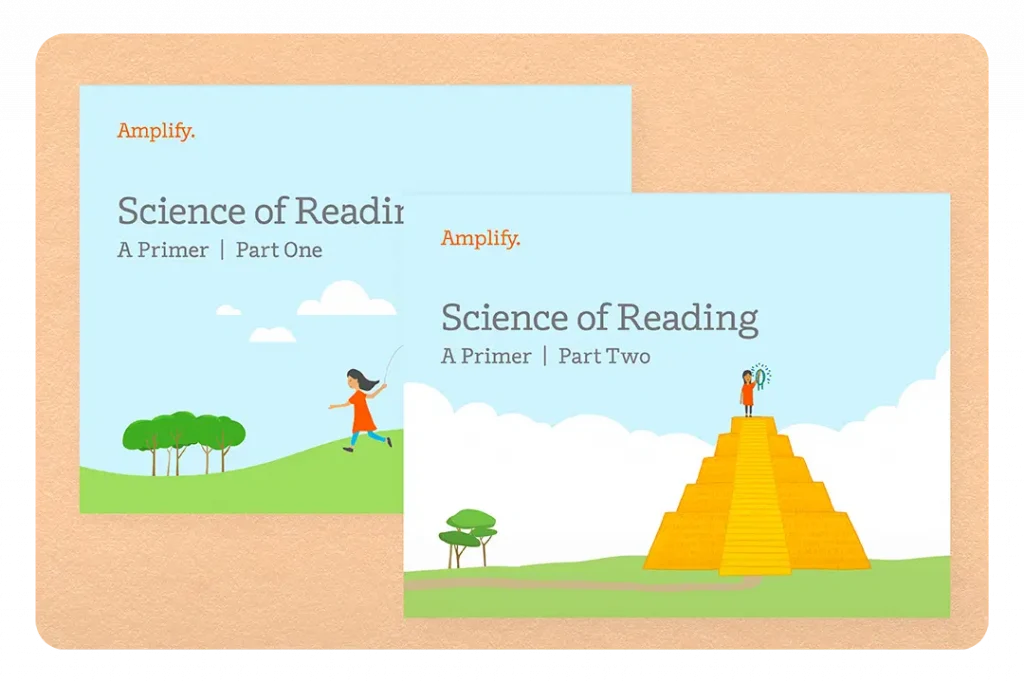
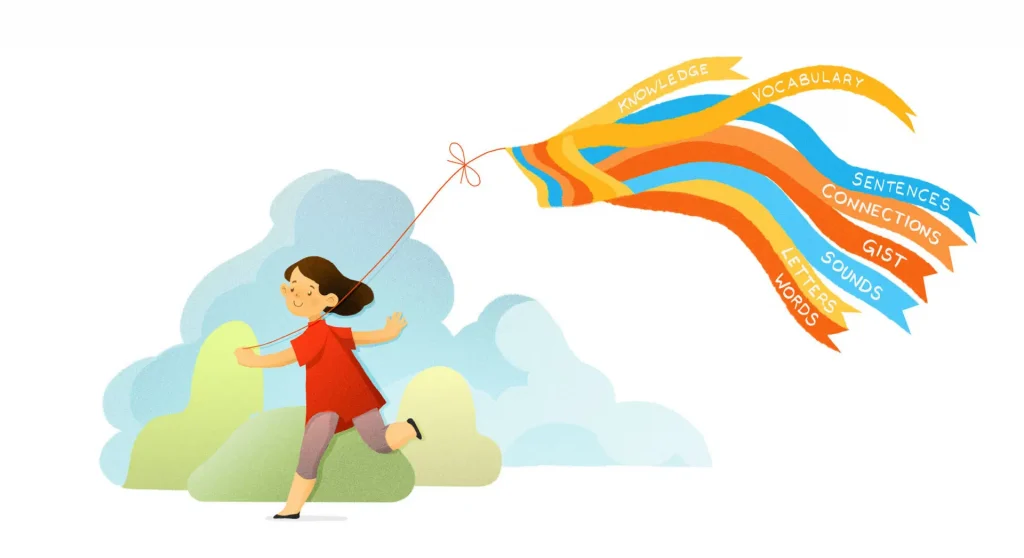
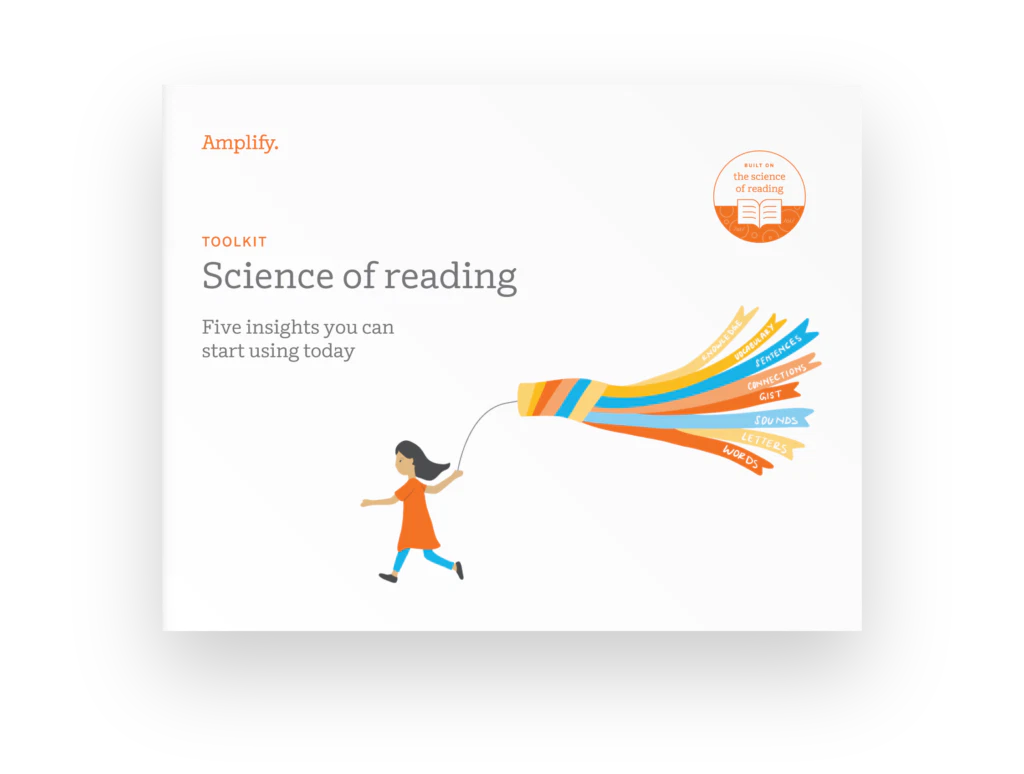
An illustration of a girl running with a colorful kite, with text reading "Science of Reading: A Primer | Part One" and "Amplify" in the top left corner, highlighting K–5 literacy instruction.

Science of Reading
A Primer: Part 1

In part 1 of our definitive Science of Reading primer, we discuss literacy as a societal goal, walk you through how the brain learns to decode and comprehend text, and present the patterns that top-performing schools and districts follow to achieve early reading success.

Download primer 1

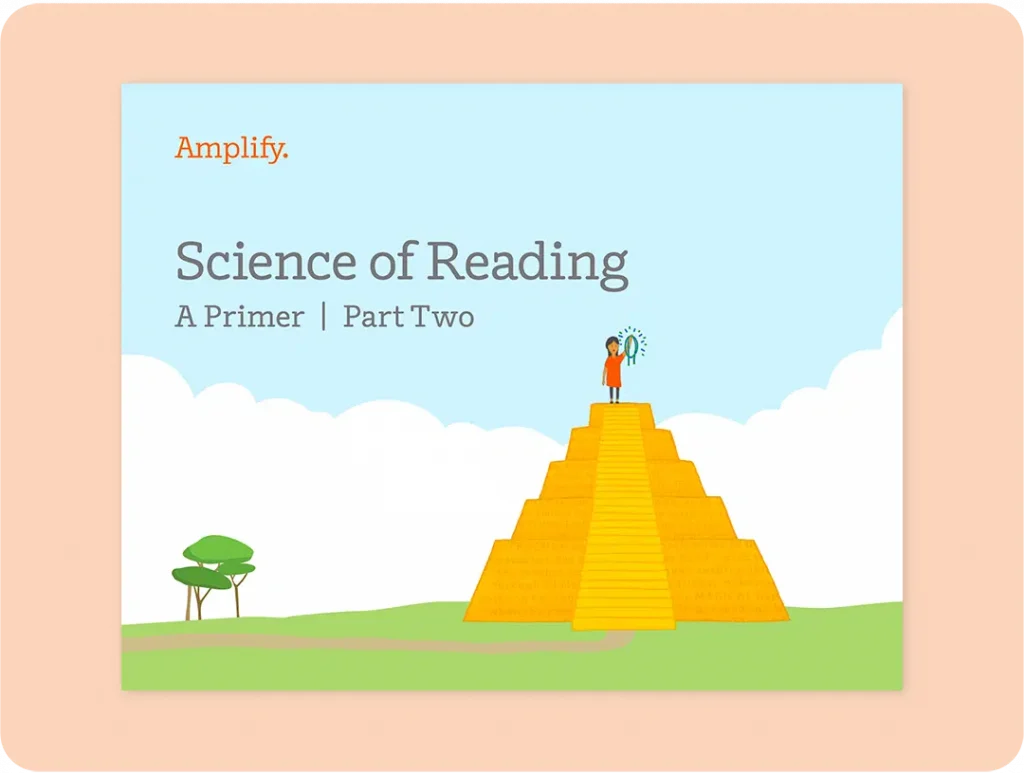
Illustration of two people atop a yellow pyramid, with text reading "Science of Reading: A Primer | Part Two"—an engaging look at K–5 literacy instruction. "Amplify" appears in the top left corner.

Science of Reading
A Primer: Part 2

In part 2 of our Science of Reading primer, we establish the importance of prior knowledge for comprehension, lay out the process of micro-comprehension, and demonstrate how literacy skills build on and accelerate themselves.

Download primer 2

A woman with long dark hair smiles in front of a plain background, reflecting the joy she finds in interdisciplinary research. She is wearing a dark green top and earrings.
“If you’re looking for a Science of Reading training, the [Science of Reading: Foundations to the Science of Reading] online course is great. It helps you build background knowledge on learning how students learn how to read, and then it goes deeper and it gives you strategies that correlate with those findings that you can implement right into your classroom.”

—Allie Appel, Instructional Coach

School District of Arcadia, WI

Why undertake this crucial change?

When we bring proven methods based on the Science of Reading into schools, we make sure kids are learning to read and help teachers and caregivers support a culture of reading. Together, we can solve the reading crisis and make literacy a reality everywhere.

You’ll change lives with literacy.

According to the National Assessment of Educational Progress (NAEP), only 35% of fourth graders in the United States are proficient in reading. But schools using a Science of Reading approach have seen significant improvements in literacy rates. Using research-based methods, educators can help give all children the chance to become successful readers.

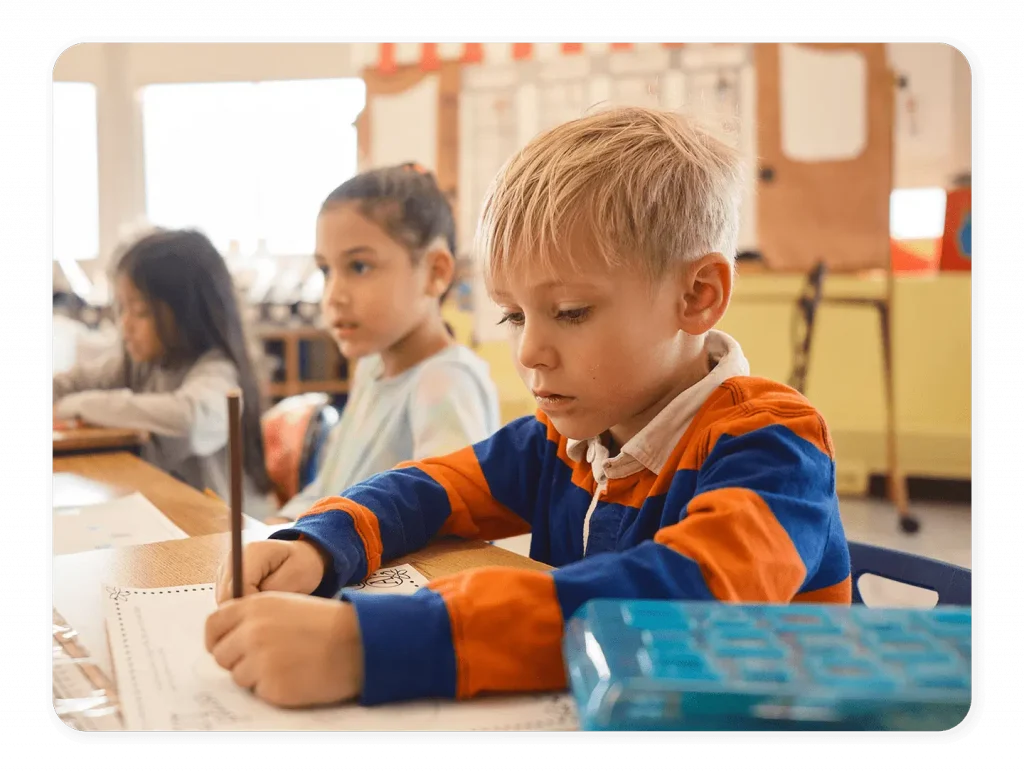
Young boy in a classroom sits at a desk and writes on a worksheet, with other children working at nearby desks in the background.
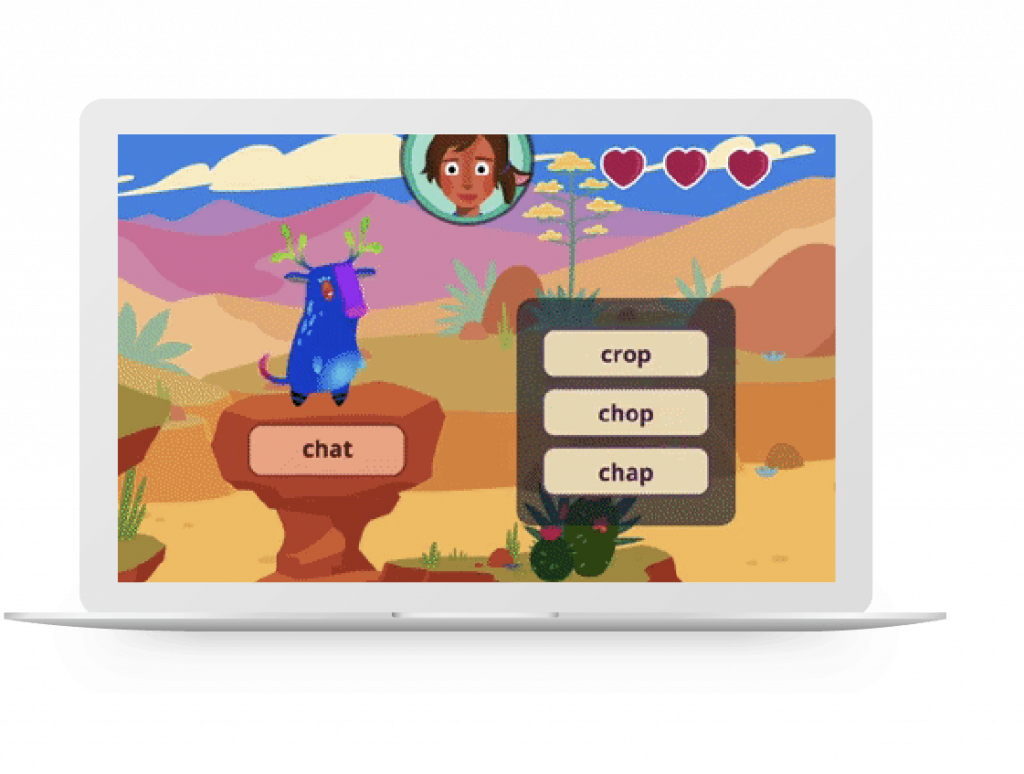
A laptop screen displaying a literacy intervention game with a cartoon llama in a desert setting and a word selection task presented to a child’s avatar in the corner.

You’ll build a foundation with explicit, systematic skills instruction.

Reading skills don’t come naturally. We actually need to rewire our brains with intentional, structured literacy instruction—starting with sounds.

You’ll improve outcomes with knowledge building.

Longitudinal research shows that knowledge building doesn’t just happen as a result of reading, but is also a vital prerequisite for and component of it. And when delivered intentionally and systematically, knowledge delivers literacy results.

Illustration depicting diverse people engaged in various activities, including astronauts in space, a musician engaged in interdisciplinary research, and a child drawing, set against a whimsical celestial backdrop.
A person with long braided hair, wearing oversized glasses, earrings, a necklace, and a red top, smiles at the camera against a plain background.
“It’s not just about the curriculum. It’s about the science behind how people, how children, and how we as humans learn to read… It’s working. I wish I had this years ago. ”

—Javonna Mack, Lead Content Teacher

Caddo Parish Schools, Louisiana

Science of Reading & Early Literacy Resources FAQ

Amplify understands that making the shift to the Science of Reading is no small feat. Get some early literacy resources and guidance with our Science of Reading FAQ.

Learning to read is not innate. It needs to be taught intentionally and systematically—and science tells us how. The vast and growing body of research on early literacy is referred to as the Science of Reading. It draws on extensive research in cognitive science, linguistics, and neuroscience. It emphasizes the systematic teaching of foundational skills—such as phonics, phonological awareness, and decoding—in building vocabulary and comprehension. In other words, it deconstructs the processes behind how children learn to read, and provides evidence for the instructional practices and early literacy resources that can get them there.

Read more 

The Science of Reading refers to the pedagogy and practices proven by extensive research to effectively teach children how to read. It places a strong emphasis on both components of the Simple View of Reading, demonstrating that systematic and explicit instruction in phonics and and intentionally sequenced knowledge building are critical to reading success.

In a balanced literacy environment, learning happens through reading and writing immersion, where the need for explicit instruction in phonics is recognized but is not the primary focus.

The key difference between the approaches lies in their emphasis on foundational reading skills and a coherent approach to building language comprehension.

A balanced literacy approach typically includes a combination of whole language approaches (emphasizing meaning and context) and phonics instruction. Balanced literacy instruction is designed to be flexible and open to interpretation by the instructor. It may include the three-cueing system, which encourages students to rely on syntactic and semantic clues in a text to read an unfamiliar word, rather than decoding (Does it look right? Does it sound right? Does it make sense?). Balanced literacy practitioners may also use leveled reading to differentiate instruction, which can can limit vocabulary exposure, hinder in-depth comprehension skills, and further widen achievement gaps.

Balanced literacy has long been a popular approach to reading instruction, with educators appreciating its openness to variation. But advocates for the Science of Reading argue that an evidence-based approach aligned with known cognitive processes and a focus on foundational skills and language comprehension provides the most solid foundation for reading instruction—for confident and struggling readers alike.

Read more

According to our friends at The Reading League, the Science of Reading is important not because it gives us an effective way to teach reading, but because it gives us the most effective way to teach reading.

“The Science of Reading is critical because it emphasizes evidence-based instruction. Decades of scientific research on reading have consistently shown the most effective ways to teach reading. The Science of Reading incorporates this research, which includes phonemic awareness, phonics, fluency, vocabulary, and comprehension.”

The Reading League also takes it to the next level: What happens when all children have access to the most effective early literacy and reading education? “We believe in a future where a collective focus on applying the Science of Reading through teacher and leader preparation, classroom application, and community engagement will elevate and transform every community, every nation, through the power of literacy.”

The Science of Reading has identified five foundational reading skills that are considered crucial for early reading development. One of those skills is phonics. In other words, the Science of Reading has established that phonics are crucial, but the Science of Reading is not the same as phonics.

Phonics instruction helps students learn how to sound out and blend letters to read words accurately. As we know from the Simple View of Reading, two fundamental skills are required for reading with comprehension:

  1. Decoding—the ability to recognize written words (via phonics)
  2. Language comprehension—understanding what words mean

And the Science of Reading also reminds us that students do not have to learn phonics or decoding before knowledge comes into the equation. “The background knowledge that children bring to a text is also a contributor to language comprehension,” says Sonia Cabell, Ph.D., associate professor at Florida State University’s School of Teacher Education, on Science of Reading: The Podcast.

The Science of Reading is an evolving field built on decades of high-quality, evidence-based research that continually integrates new insights gathered from cognitive neuroscience, psychology, and linguistics. These ongoing studies constantly refine our understanding of how the human brain processes language and learning, enabling more personalized and effective teaching strategies that can adapt to the wide-ranging learning needs of students.

Like other sciences such as medicine, astronomy, or engineering – new advancements in reading technology allow us to understand how the brain works and refine our practices. Every scientific advancement in this field of reading science deepens our comprehension of reading-related challenges like dyslexia and informs the development of evidence-based interventions. We don’t believe that the Science of Reading can be reduced to a fad or trend. Rather, it is a continually evolving, enduringly effective discipline, grounded in rigorous research and driven by the quest for better comprehension of how we read and learn.

Assessment grounded in the Science of Reading can help identify children at risk of dyslexia at the earliest possible moments, creating the widest opportunity for intervention.

People with dyslexia often experience challenges in phonological awareness. They may struggle to break down words into their component sounds and to recognize the relationships between letters and sounds. Systematic and explicit instruction in phonics and phonological awareness can help individuals with dyslexia develop necessary phonological skills. This evidence-based instruction can also help students who have difficulty with decoding.

Further, evidence-based comprehension instruction, including explicit instruction in vocabulary and comprehension strategies, can support students with dyslexia in understanding and making meaning from text.

Download our free dyslexia toolkit

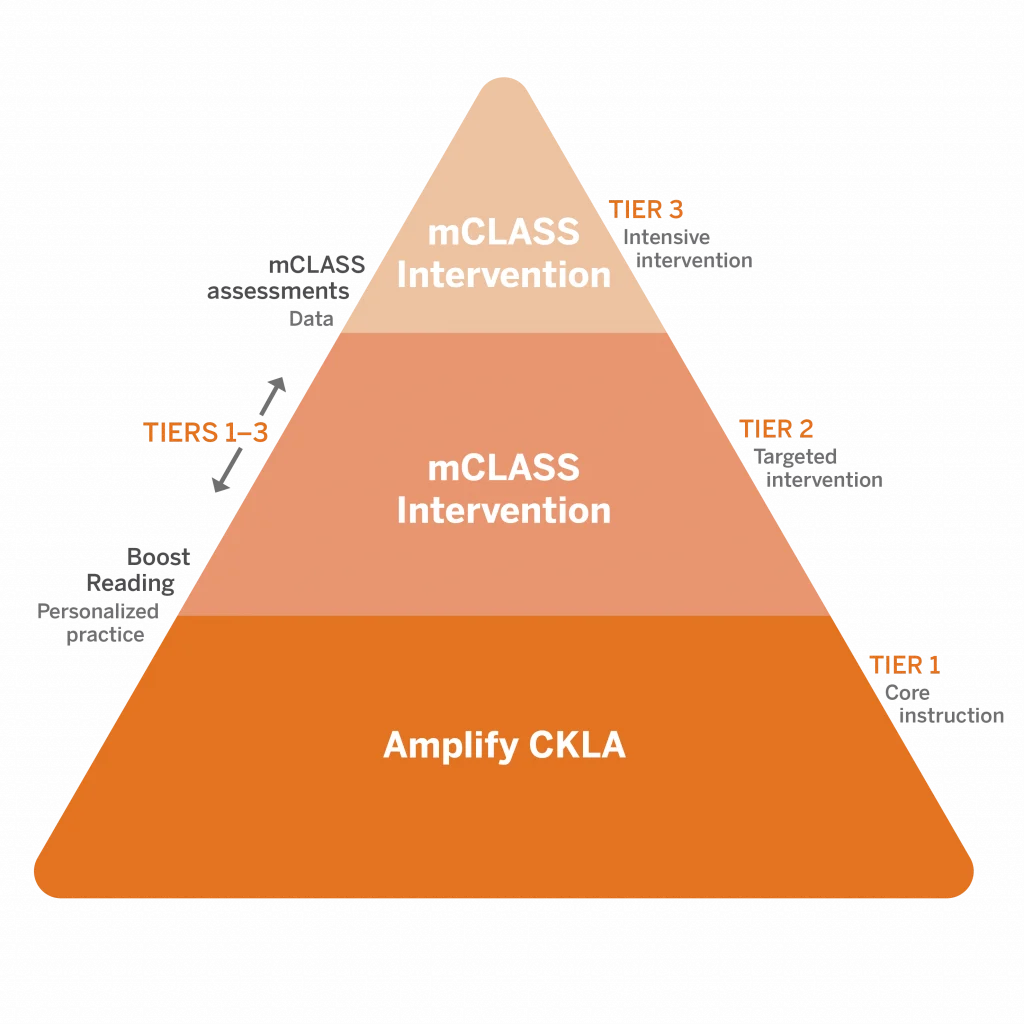
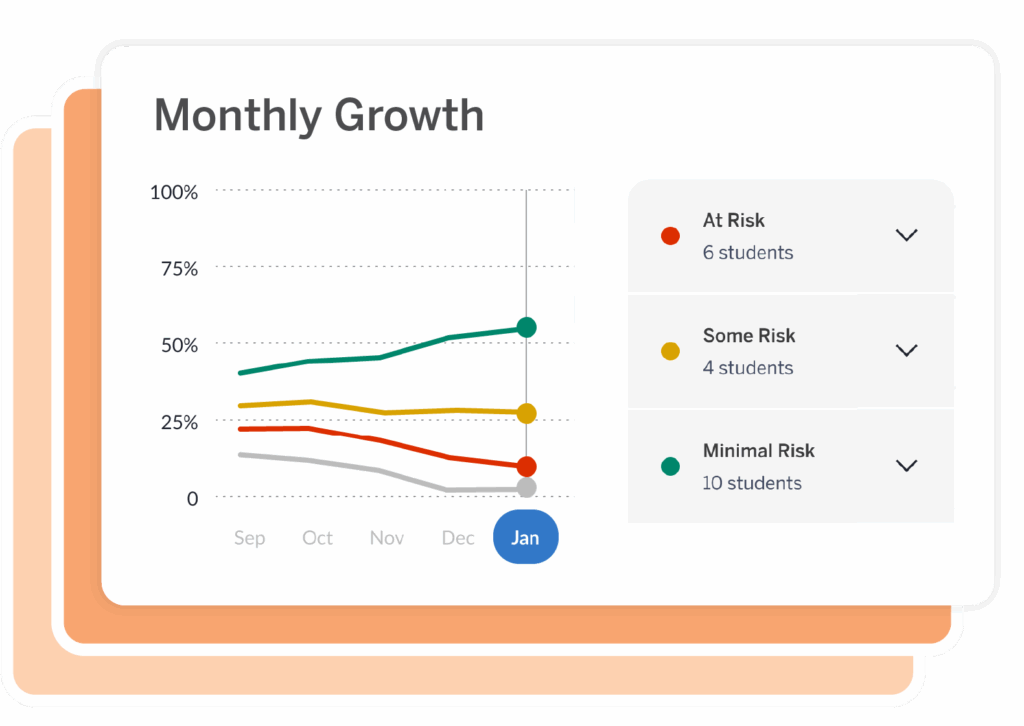
The Science of Reading can be integrated with a Multi-Tiered System of Supports (MTSS) to provide comprehensive and targeted reading instruction for all students. The Science of Reading aligns with a tiered model by providing evidence-based practices for instruction at each tier. An MTSS includes universal screening to identify students at risk of reading difficulties; the Science of Reading can also guide the selection of screening measures to assess specific foundational skills. Aligning the Science of Reading with an MTSS framework can also enhance instructional practices and interventions, ensure data-driven decision making, and help meet the needs of all students.

Read more

Integrating the Science of Reading and the Science of Writing strengthens our approach to teaching literacy. Reading and writing are interdependent. Understanding how sentences are built not only contributes to better reading comprehension, it also helps writers develop clear, logical text. As students grow as readers, they also grow as writers, leading to a comprehensive literacy education. Clear thinking and effective writing are crucial for expressing ideas. By fostering both skills, teachers better support students in becoming confident readers and writers, prepared for academic challenges and beyond.

One of the research-based frameworks used in the Science of Reading is the Simple View of Reading. According to the Simple View, two cognitive capacities are needed for proficient reading: (1) understanding the language (comprehension) and (2) recognizing words in print (decoding). A true Science of Reading program is designed from the start for students to build these skills, in a developmentally appropriate way.

It will also emphasize the importance of knowledge building by exposing students to a diverse array of new topics spanning history, science, and literature, organized intentionally and coherently within and across grades. Deep and intentionally sequenced knowledge domains will help build a student’s vocabulary and understanding of complex texts. And it will include instruction in  all five foundational skills: phonics, phonemic awareness, vocabulary, fluency, and comprehension.

Download our free ebookScience of Reading: Making the Shift, which includes a checklist of what to look for in a curriculum based on the Science of Reading. Learn more from our friends at The Reading League.

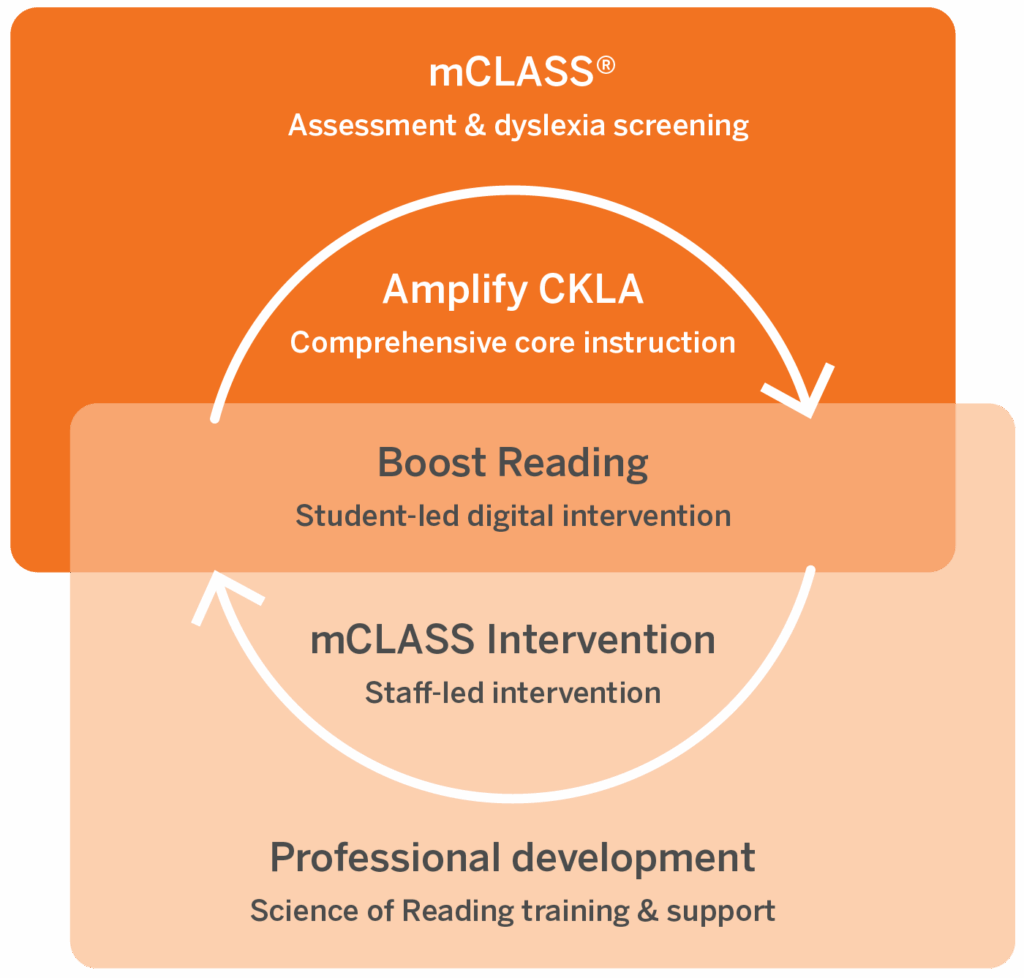
Actually, we have a full literacy suite built on the Science of Reading! It includes:

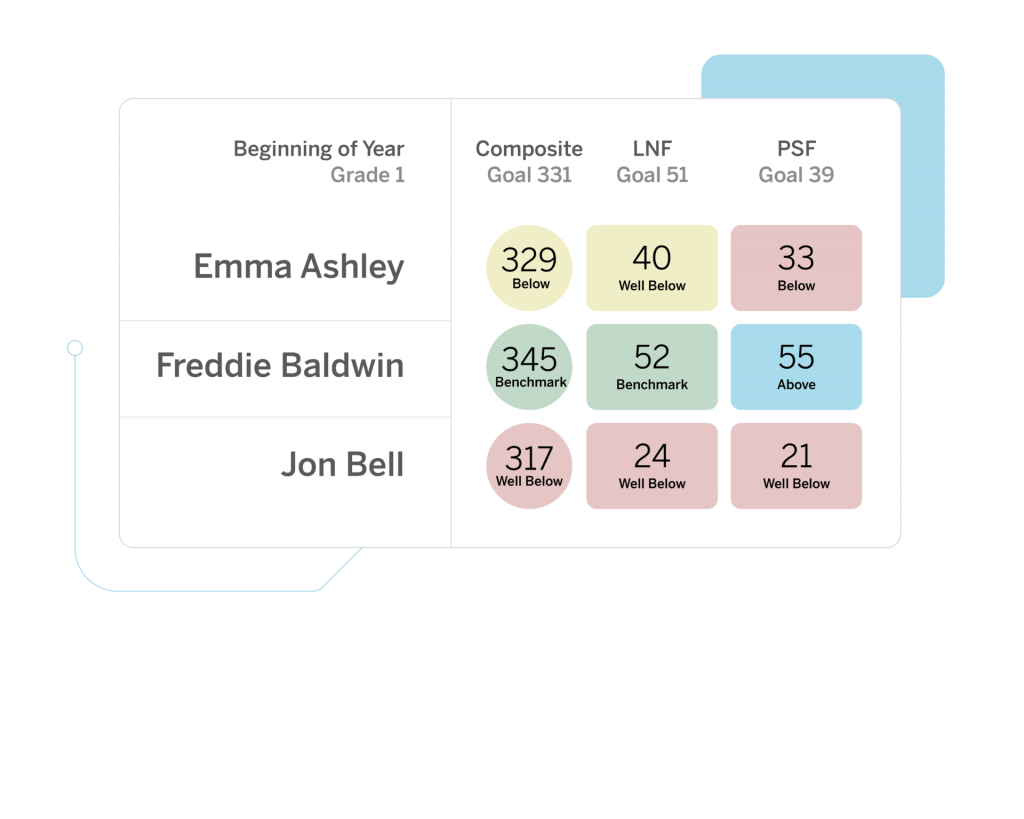
  • mCLASS® assessment, powered by DIBELS® 8th Edition, a gold-standard universal and dyslexia screener, plus a progress monitoring tool, all in one.
  • Amplify Core Knowledge Language Arts (CKLA), which provides explicit, systematic foundational skills instruction combined with intentional knowledge building.
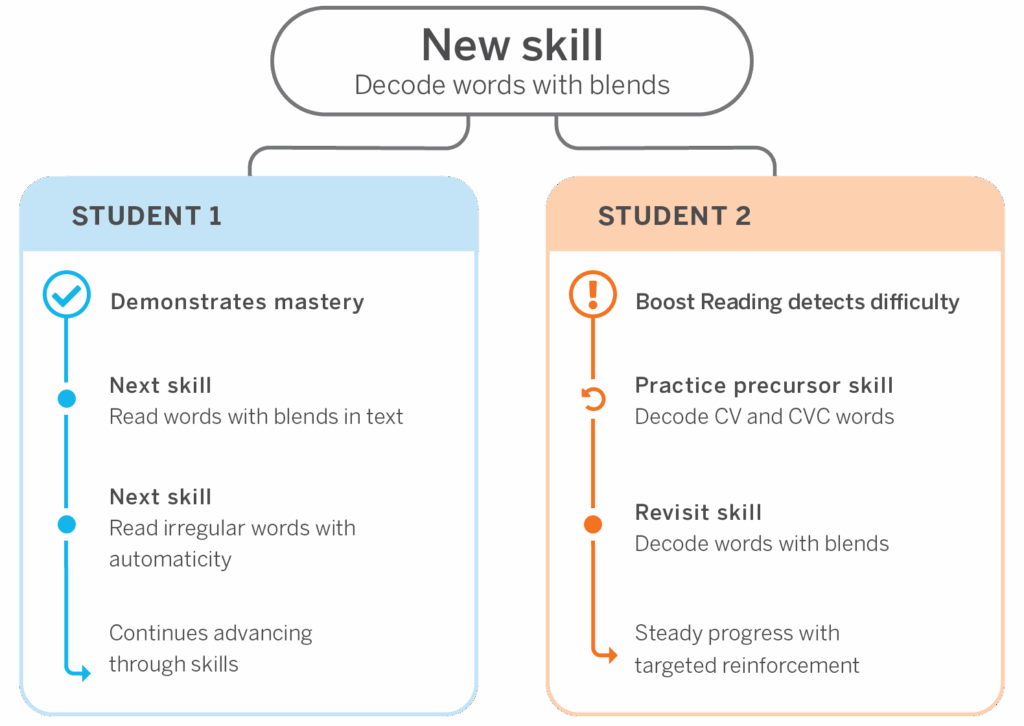
  • Boost Reading, a highly adaptive personalized reading program that reinforces the core curriculum and supports enrichment, remediation, and intervention for each student in your classroom.
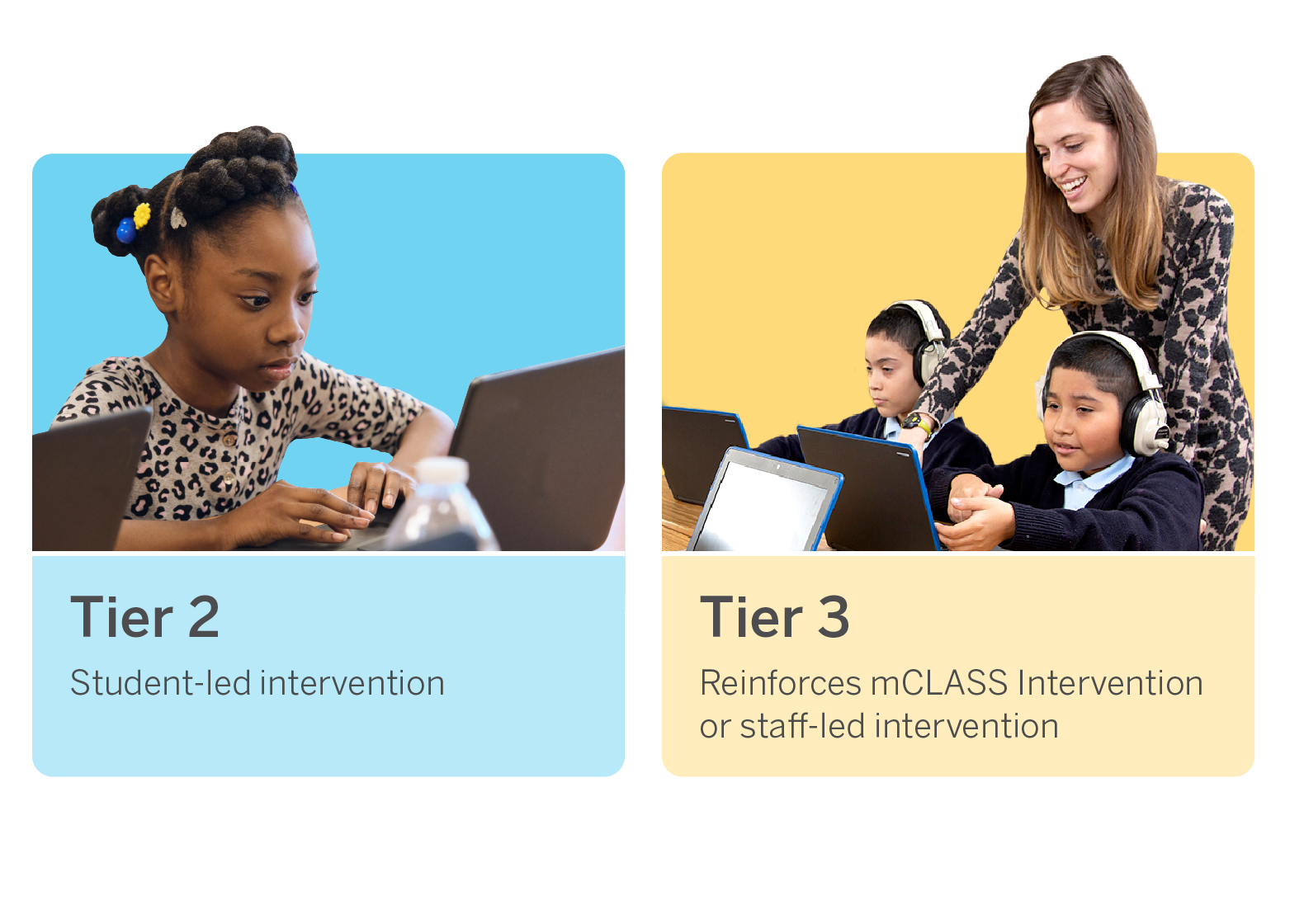
  • mCLASS Intervention, a staff-led intervention program targeted to Tiers 2 and 3, made easy with automatic data-driven grouping and sequenced explicit, systematic skills lesson plans to support at-risk students.

Reading requires deliberate, systematic attention—and so does shifting to the Science of Reading in your school or district. It requires not only the right curriculum, but also all-new mindsets, metrics, and more. Reflecting years of experience supporting real educators, our resources will walk you through the process of change management in your community—and show you why the shift is worth it. View our Science of Reading change management playbook.

S3-03: Instructional strategies for integrating science and literacy

A graphic with the text "Science Connections" and "Amplify" features colorful circles and curved lines on a dark gray background.

We’re continuing our investigations around science and literacy with Doug Fisher, Ph.D., professor and chair of educational leadership at San Diego State University. We talk about the importance of integrating science and literacy, as well as practical guidance for teachers who want to unite the two disciplines in their own classrooms.

Listen as we discuss how science and literacy can be powerful allies and specific strategy areas to focus on when integrating the two disciplines. And don’t forget to grab your Science Connections study guide to track your learning and find additional resources!

We hope you enjoy this episode and explore more from Science Connections by visiting our main page!

DOWNLOAD TRANSCRIPT

Douglas Fisher (00:00):

It’s not that you have to become a reading specialist to integrate literacy into science. It’s how our brains work.

Eric Cross (00:10):

Welcome to Science Connections. I’m your host, Eric Cross. This season, we’re making the case for our favorite underdog, which of course is science. Each episode we’re showing how science can be better utilized in the classroom, and making the case for why it’s so important to do so. In our last episode, we examined the evidence showing that science and English instruction can support each other. And now on this episode, we want to give you some more strategies for really making that a reality in your own home or classroom or community. So to help me, I’m joined on this episode by Dr. Douglas Fisher, Professor and Chair of Educational Leadership at San Diego State University. Dr. Fisher is actually someone who has conducted literacy training at my own school, so I’m excited to be able to share some of his wisdom with all of you. Oh, and just a heads up, Dr. Fisher dropped some gems about the ways teachers can integrate literacy and science in their classrooms. So you may want to have a notepad. Ready. And now here’s my conversation with Dr. Douglas Fisher.

Eric Cross (01:12):

Well, Doug, thank you for your time and for being willing to come and talk about literacy and science. I know you’re busy, all over the place, and so I was super-excited that we were able to lock you in and talk about this. And, on this episode, we’re gonna talk about the ways that science and literacy can support each other. And one of the reasons why I’m really excited for you is because you said some really key things for me as a science teacher, when you talked about literacy and supporting students. That just resonated so deeply in me. And I was like, “I need more Doug!” Because we’re on that same frequency. And I know it’s a subject that you’ve spent a lot of time writing about. So can you tell us a little bit about how this became an area of interest or a passion for you? Just literacy, and all of the work that you’ve put into it?

Douglas Fisher (01:54):

Yeah. So I’ve wanted to be a teacher for a really long time. And I went to San Diego State as an undergraduate, and I was taking English class and we were assigned topics. You know, like, you’ll do an assignment, you’ll write a paper for this English class. And I got the topic “illiteracy,” and I was a freshman at San Diego State reading all of these things about adults who don’t read very well or not at all. And I ended up writing my very first college essay on illiteracy — at the time, you know, called illiteracy, at the time. And so I got super interested in this. And so as I moved through college and into my teaching career, literacy became a really important thing for me to think about, because it’s the gatekeeper. You know, you can be taken advantage of, if you’re not very literate. People can use vocabulary against you, if you’re not very literate. We know that people who have higher levels of literacy have better health outcomes. They have better lifespans, longer lifespans. I mean, there’s just — literacy impacts so much more than “Are you reading your fourth-grade textbook?” It really has lifelong implications.

Eric Cross (03:01):

That part that you said about being taken advantage of … I just got a flyer in the mail yesterday. It was one of these mailers that looked like it was an authentic debt-reduction type of thing, but it was really just like a marketing email. If you read the fine print at the very bottom, it had all of this jargon about “This is a paid, you know, for-profit company.” But when you look at it, it had official stamps all over it. And I could imagine if someone’s receiving that, that probably fools a lot of people. Is that kinda like what you’re talking about, like being taken advantage of?

Douglas Fisher (03:28):

Yes. I had a student turn 18, got a letter from a “credit card company” that was offering her daily compounding interest. And if you don’t know what that means — at 23 percent! — if you dunno what that means, you are gonna be a victim. Literacy really influences a lot of our life. It’s also how our brain works. We have a language-based system in our brain. We read, write, speak, listen, and view. And the things we learn, we learn through speaking, reading, writing, listening, and viewing. From what we know, we are the only species that has an external storage mechanism. Like, we have the ability to store complex information outside of our body, in the form of notes. We can type them. We can write them. And we can then go back and retrieve that information, that complex orthographic information later. And it means the same thing. We can say we have a storage system and we’ve been doing this for a really long time. Way back to, you know, hieroglyphics and messages on cave walls. And throughout the ages of humans learning, how to store information that they can re-access again later. That’s become a super-complicated system. It’s how computers operate. And we send messages to each other and we text each other and we write things down, and we’re really good at putting ideas, information out there. Now, if it’s just speaking and listening, then we can forget it. We can say, “No, you said this,” or “I said that.” But when it’s written, and it’s print literacy, you know, it’s the orthographics there, you can go back to the same message and over and over again. Now, you might change the interpretation of it, but the message is still there.

Eric Cross (05:16):

Right. And that is such a key element, at least of modern education, is this written element of it. It’s what many schools live and die by. They’re quantitatively and qualitatively analyzed by it. It’s public. They can see it. And so there’s this heavy emphasis. And why do you think science and literacy can be powerful allies together?

Douglas Fisher (05:38):

Awesome. Well, it’s hard to learn science if you’re not literate.

Eric Cross (05:42):

This is true.

Douglas Fisher (05:42):

But that’s a one-way direction. And yes, science teachers and scientists do a lot of reading, writing, speaking, and listening and viewing. They use the five literacy processes all the time. When we interview scientists, they spend a lot of their time reading the work of other scientists and writing their findings, writing grant proposals, presenting at conferences, you know. So a huge part of the work of a scientist is not just at a bench conducting experiments. But even if you’re conducting experiments, you’re using your literacy processes to think about what you’re seeing in your experiment. So that’s a one-way direction. And I do think literacy has an influence on science. But since science goes the other way, it influences literacy. As you learn more and you understand more about the world, your background knowledge grows, your vocabulary grows, you become more literate in those different areas. And how you think. So if I’m learning about life science; I’m learning how the world works in a more, biologic physical world. And that knowledge helps me think about when I’m reading a novel, and there’s an appeal to some science knowledge or a concept that gets played with, you know, perhaps time-space continuums … well, if I don’t have the science knowledge of how I think the world works, it’s hard for me to understand what this author is doing. So it does go both ways. They feed each other. And the more literate we become, the more complex science information we can understand. ‘Cause our background knowledge and our vocabulary influence how much we understand about what we read. And as we access more complex science information, it starts to change the way we think about other things in our world.

Eric Cross (07:23):

There was a couple of things that you said in that, but one of the first things that kind of perked my ears is when you said grant proposals. Because I have friends that are scientists — and this is one of the things that when I was in school, they don’t talk about — but how much of their research is reliant upon getting funding —

Douglas Fisher (07:37):

Mm-hmm. <affirmative>,

Eric Cross (07:38):

— which you don’t think about if you’re becoming a chemist or a physicist or a biologist or working in the field, is that that funding, coming from the NSF or anywhere else. And sometimes students ask in class like, “Why am I writing so much? Like, I want to go into science!” Or “I wanna do this!” And this is a real-life example of how the writing could actually apply, in addition to all of the things of collecting data and conclusions and results. But that grant proposal thing just really perked my ears, yeah.

Douglas Fisher (08:01):

And if you can’t write a grant proposal, your ideas and experiments are not gonna get funded. And if you can’t write a strong proposal, that compellingly convinces your readers to fund you, you’re not gonna get funded. But then once you get the grant, you have to write publications. You have to share your work with other people. Make PowerPoint presentations and write journal articles or books or whatever. So it’s a cycle that literacy influences the things we do, including the things we do in science.

Eric Cross (08:31):

Now to get in maybe some data, if you were trying to convince someone that like this happy marriage can exist, what would be like your number one piece of evidence to support this, this back and forth of supporting each other?

Douglas Fisher (08:44):

Awesome. So the quote I’ll often say — and this is from studies from more than two decades ago now — but in general, in high school science, students are introduced to 3000 unfamiliar words, 3000. Each year! Because there are words that are used in a scientific way that are used commonly in other places. And there are discipline-specific words. So 3000 words a year in high school science. The Spanish 1 textbook only has 1500 words in it. So science teachers have double the academic-language vocabulary demand that a typical introductory world-language class has. So just the vocabulary alone should say to us, literacy is gonna be important if you’re gonna learn science. And if you don’t understand these technical words, and you don’t understand the way science uses this particular word in this particular way… . When you say the word “process,” it means something very specific In science. “Division” — cellular division is not the way we think about it in mathematics; there’s a similar concept, but cellular division is different than dividing numbers. And those are words that get used in multiple areas. Then you have all these technical terms that you have to be able to use, to understand the concepts. To share the concepts. To talk to other people. Whether you’re in, you know, fifth grade and talking science, or you’re a university professor, there’s a shared language, appropriate for our grade level, that we have shared meanings of.

Eric Cross (10:22):

And we’re essentially … what I’m hearing you say is … most of the people that are listening to this are science teachers. We’re we’re also language teachers. In a sense.

Douglas Fisher (10:29):

So my frustration is when people say, “Every teacher’s a teacher of reading.” And I don’t like that. I’ve written against that phrase. I don’t think all teachers are teachers of reading, any more than all teachers are teachers of chemistry. Or all teachers are teachers of algebra. But what I will say is the human brain learns through language. And all of us — every teacher that I’ve ever met understands that language is important in my class. If my students don’t have strong listening skills and speaking skills; reading, writing, and viewing skills; I’m gonna have a hard time getting them to learn things. If I can help them grow their speaking, listening, reading, writing, and viewing in my content area, I’m gonna do a service for my learning of my subject and also their more broad literacy development.

Eric Cross (11:16):

  1. So, at a high level, what does it look like to integrate science and literacy? We’ve done education for the last, what, hundred years?

Douglas Fisher (11:24):

Mm-hmm. <affirmative>

Eric Cross (11:25):

—kind of pretty similarly, right? Kind of siloed way. What does this look like at the 30,000-foot level? You’re a professor, department chair. Run schools. Speak everywhere. Like, when you think about this from that high level, what does it look like?

Douglas Fisher (11:39):

A high level? Every time I meet with students in a science class, you know, biology or fifth grade or whatever? They should be reading, they should be writing, they should be speaking and listening. Every class. So what print do you want them to access? And it can be a primary source document, it can be an article, it can be from a textbook. Are they reading something? Are they writing to you? Because writing is thinking. If they are writing, they are thinking. As soon as their brain goes somewhere else, they stop writing. The pen won’t move or the fingers don’t type. And then speaking and listening, of course, is the dynamic of our classes. So every day we should see some amount of reading, writing, speaking, and listening, viewing in our classes. That’s at a high level. There are some generic things that seem to work across the literacy. So, learning how to take notes. Focusing on vocabulary. Using graphic organizers. These are generic things that as educators we can use in our classes. Then there’s more specialized things. So, scientists and science teachers think differently than historians and literary critics and art critics. So scientists, if you look at the disciplinary literacy work, there’s a whole body of research where they interview and study high-end experts in their field: chemistry, physics, biology, et cetera. And there are some characteristics that were more disciplined, specific. Scientists like cause and effect relationships. They look for them when they’re reading. They like sourcing information. “Where this come from?” “What’s the history of this idea?” Scientists have a long view in terms of time. Historians have a shorter view of time. English teachers have even shorter view of time. Scientists tend to think in long periods of time. And so all of that influences how a scientist reads and how we should apprentice young people after they get past the generic “I know how to take notes. I know how to study my vocabulary. I know how to do summary writing for my teacher in my notebooks and things,” there’s some generic tools. Once we get past those, we need to be looking at specifically how do people in science use literacy.

Eric Cross (13:52):

I’ve never had my thought process of reading deconstructed just now, but we just described how scientists read. I was like, “Yeah, that’s pretty much how I read, right there.” I also like how you said how we should apprentice young people. And I feel like you as the literacy guy, you chose that word very specifically, as far as apprenticing young people. That is a view, I think, that’s really important to hold. ‘Cause that’s what we’re doing essentially … is, if we’re doing what we should be doing, we are apprenticing these young people.

Douglas Fisher (14:18):

Yes.

Eric Cross (14:18):

And helping them develop. Now, let’s imagine there’s a listener out there and they’re interested in getting better at integrating science and literacy instruction. They want to start somewhere. Before we dive in, do you have any initial words of encouragement for the person who’s like, “Everything is like a priority right now,” in their classroom or in their world?

Douglas Fisher (14:37):

Yeah. So I’ll talk about elementary for just a moment. When we’re reading informational texts in our literacy block, we should be reading information that is aligned to what kids need to learn in science and history in, in that grade level. Why are we reading things that are gonna be in conflict with what they’re gonna learn in science later that day in fourth grade, for example? So when we look at our standards, our expectations, what is it that third graders need to know in history, science, mathematics, language arts? And when we’re reading text and we’re learning to apply our reading strategies during our literacy block, why aren’t we reading topics that build our background knowledge for our science time? So we’re seeing some synergy there. We should be looking at life cycles in grades that are appropriate for life cycles and knowing there’s more to life cycles than the frog and the plant or the seed. There are all kinds of life cycles. And we call ’em life cycles for a reason. That’s a general concept. Now in science, we’re looking at this particular lifecycle right now. And so that’s a high level. If we could get more connection to the content standards during our literacy blocks, it would be very good. When we talk about the time at which we call “science” in the day, in more of the K–8 continuum, the science needs to include some primary source documents. Some real things that students are reading. Read about a scientist; read about a scientist’s discovery; read about what they discovered. So that we’re building our background knowledge. So when we go to do things, activities, labs, simulations, we have background knowledge and we understand what we’re experiencing. It can’t be like—I watched this awesome lesson on lenses and the teacher had all these different lenses in the room and the students came in and they were brand new. They don’t know anything. They were picking ’em up. They’re exploring them. They’re trying to figure out, and they’re trying to come up with theories about what this is and how it works. And then the teacher gave them a reading, a short reading, on refraction of light. And they read this thing. And the clarity that they had about what these lenses must do, well! All of a sudden they’re putting them up to the lights! They’re asking if they can go get the lights out of the storage unit! ‘Cause there’s — and they’re shining different lights through the lenses to see what happens to the light. Because that little bit of reading turned some focus on for the students. And it allowed them to take what I’m thinking about, what I’m trying to figure out, how this thing works in another direction. That’s the power of using literacy in our classes.

Eric Cross (17:20):

And what I’m hearing essentially is transfer across disciplines, across content areas, ultimately. And in an elementary school classroom, would it be fair to say, probably the teacher has more autonomy to be able to do that, since they’re teaching all the subjects? But secondary, logistically, planning and those types of things … from what you’ve seen, is it fair to say this kind of needs to be like a top-down, full vertical alignment, to teach like this?

Douglas Fisher (17:45):

I think that would be awesome to do that. But if I’m a sixth grade English Language Arts teacher and I’m working with my sixth grade science teacher, the conversation should be, “What units are you teaching?” Because I’m choosing informational text. My job is to teach them how to find central ideas. My job is to teach them how to find the details in the text. My job is to have them make a claim and support that claim with evidence. The stuff I use is generic. Yes, we do read some literature and some narratives, but we also read about 50% of the text in English around informational text. So if I can help you and accomplish my standards as well, fantastic. So let’s have this conversation and say, “Oh, this is what you’re teaching in science in the next three weeks? I’m gonna choose some texts and we’re gonna analyze ’em for central idea. We’re gonna analyze ’em for details. We’re gonna, for mood or tone or whatever that we’re teaching. And by the way, I’m building background knowledge. So when they come to you, they know some stuff about what you’re going to be teaching next.” So I don’t think it’s impossible to say teams of teachers could come together and say, “What do we believe that our students need to know and learn and be able to do? And then how do we choose things that are gonna help them accomplish exactly that?”

Eric Cross (19:01):

And that’s empowering. Because that’s one thing that we can control maybe is this East-West, peer-to-peer, different content areas. A system may not be able to change as quickly, but I can definitely go talk to my English team or math team and check in and kind of see, “Hey, where do we have overlap in that?” And I know the times that I’ve accidentally had overlap with the teams, it’s super-exciting. And the students have been more bought in! Because it’s like, we’ve done something on the human microbiome and we’ve talked about genetics and all these different things, and then when they read The Giver, or they read some book about genetics, they have all this knowledge. And they’re excited. And they talk about colorblindness or they come to my class and they’re like, “Hey, we read about this!” It’s almost like they saw a magic trick, the fact that these things linked up. And the engagement has been so much higher when it’s the same content in different classes, but through different lenses. At least, that’s what I’ve seen in my years of teaching.

Douglas Fisher (19:54):

I saw a lesson on space junk that was so cool. Middle-school students learning space junk. And the history teacher had a part of it, science teacher had a part of it, English Language Arts teacher had a part of it. And these students, I mean, you watch them look up all the time, ’cause there’s space junk up there. Where’d it come from? Why is it there? What are the politics of this? How do we clean it up? I mean, it was just so interesting to watch them when the teachers came together. And the teachers met their standards in this couple-week-long space-junk exploration. Investigation was met. Politics was met. All these different things. Economy. You know, how much does it cost to clean up this problem? So there’s really cool opportunities when teachers come together and realize we can work together and improve the literacy and learning of our students.

Eric Cross (20:50):

Absolutely. So before this recording, we picked your brain a bit. And I know that there were three specific strategy areas that you wanted to touch on. And one of those — which is kind of coming back to the 3000-words language teachers — was vocabulary. So what are the opportunities that you see, as far as the way of educators to approach vocabulary? Because, you know, there’s a lot. We got a lot of it. The 3000 words.

Douglas Fisher (21:14):

Yeah. There’s a lot of it. So the worry is, we make a vocabulary list and have students look up the words in definitional kinds of things. That’s not really gonna help. Students need to be using the words. They need to be using the words in their conversations, in their writing, in how they think about your content in science. So vocabulary is a huge predictor of whether or not you understand things. Vocabulary is also a pretty good predictor if you can read on grade level. So when we think about vocabulary, there’s something called word solving. You show students a piece of text and you’re reading it, you’re sharing your thinking, and you say, “Oh, here’s a context clue!” Or “I know this prefix or suffix or root!” And in science, a lot of the words are prefixed, suffixed, or root words. We tend to add things together with a lot of prefixes and suffixes and have roots and bases in science. So we can help students think about, “Oh, what does geo- mean? We already know what geo- means here. It means the same thing in this word. Let’s apply that knowledge.” So word solving is part of it, showing students how we think about words that we might not know. The second is more direct instruction of vocabulary. As students encounter the words, we work on what it means, how we say it. We practice it a few times. The process is called orthographic mapping. It’s kind of a scientific idea here. But you have the sound and the recognition of by-the-word, by sight, and what it means. And your brain starts to automatically recognize that word in the future. So I don’t have to slow down, disrupt my fluency, and try to figure out what the word is saying. ‘Cause I’ve seen it enough. I’ve heard it pronounced enough, I’ve pronounced it enough, and I know what it means. So teachers should be saying, “What words in sixth grade science, what words in third grade science, do my students really need to know?” And I’m gonna have them encounter those words over and over. I’m gonna have them use the words. I’m gonna have them see the words. I’m gonna have them say the words. I’m gonna say the word and we’re gonna be over and over with these terms, so that students incorporate them into their normal view of, “These are the things I know about the world.” By the way, when they go to read that next thing, and they understand “geology,” you know, for sixth graders, for example, they know how to say it. They don’t stumble on it. And it activates a whole bunch of memories in their brains. “This is what geology is.” There are branches of geology, there’s physical geology, there’s all this thinking that activates as they read.

Eric Cross (23:35):

There was a practice that I participated in and am trying to incorporate — I don’t know what the name of it is. But essentially what happened was we were dissecting a flower. And the instructor had us name parts of the flower. But we got to come up with our own names for it.

Douglas Fisher (23:49):

Ah.

Eric Cross (23:50):

So, for instance, the stamen we call “the fuzzy Cheeto.” And we all used our own words and then everything was legitimized. And so we went through and learned the whole activity using our own vocab words. But then, in the end, after we presented and talked about it, then the words, the actual academic language was attached to our word. And we were able to say, “OK, the fuzzy Cheeto is the stamen,” and this, this, this, and this. But it was such an interesting practice, because it kind of legitimized all of our definitions. But we weren’t stumbling on these long Latin terms and things like that. Is there a name for that? Or. … ?

Douglas Fisher (24:29):

Yes. I don’t know the name for that. I think it’s really smart. So here’s what I would say about that, is: we don’t learn words, we learn concepts. Words are labels for our concepts. So what that teacher did for you was allow you to develop concept, a concept knowledge. “There’s a part of this plant, it goes like this, we’re gonna call it fuzzy Cheeto. Now I have this concept. And look, it occurred in all these plants. And those people called it that and that other group called it that. We called it a fuzzy Cheeto. Here’s the part of it.” And then the concept is in your brains. And the teacher said, “It’s really called stamen.” And it’s an instant transfer, because you already had the concept. What we often see is students are trying to learn a really hard academic word and the concept for the word at the same time. And so it slows down the whole process. And there’s higher levels of forgetting. Because human beings, we don’t learn words; we learn concepts. If you don’t have the concept, if I gave you a word out of the blue that you’ve never seen, never heard, and a week from now I asked you to remember it, you probably would not, because it didn’t register. It wasn’t part of your schema. You didn’t have a way to organize the information. You don’t have a concept. So that teacher? It’s a great idea. Got you to develop concept knowledge. And then said, “Here’s a real label for it: What some other people called it when they had the chance to come up with their own names.”

Eric Cross (25:50):

Shout out to my teacher, who was—

Douglas Fisher (25:51):

Right.

Eric Cross (25:52):

It was learned then. It was a great practice. And the fact that you’re right, like, I just mean from my own personal experience, I agree that learning concepts versus complicated words. And it’s interesting that you said higher levels of forgetfulness, you know. And you often hear that complaint about it: “Students forget! Students forget!” But this complex topic and this complex word that’s new to me, and I have to remember both of those things.

Douglas Fisher (26:12):

That’s right.

Eric Cross (26:13):

And the other neat thing that it did, is it actually honored the background and like the founts of knowledge of all the different groups in the classroom. You just said something about “this group called it this and this group called it this,” and so by letting different groups share all of those names, now we’re starting to build these kind of interesting connections. That’s at least what I remember experiencing. And so this, even this practice of this approach is very layered, beyond just kind of generating new knowledge of things. So I appreciate that aspect of it. Now another area that you mentioned was complex text.

Douglas Fisher (26:41):

Yeah.

Eric Cross (26:42):

And how we can get students into complex text. So what can we do there?

Douglas Fisher (26:46):

I think science is an ideal place to get students reading things that are hard for them. And I do believe that some parts of school should be a struggle. Not all day, every day. But there should be doses of struggle, which are good for our brains. And these complex pieces of texts that don’t give up their meanings easily allow students to go back and reread the text and maybe mark the text and talk to peers about the text and answer questions with their groups. And the whole point of complex text is to say, “We persevere through it. We may not understand it fully on our first read. But we go back and we might underline, we might highlight. We might write some margin notes. Our teacher might say, ‘What did this author mean here?’ And we go back and look at that part and we take it apart. What do we think about that? And we talk to each other. It’s showing that when we read things, we work to understand. We work through our thinking, often in the presence of other people. And our understanding grows as we go into the text over and over and over again.” So I said geology earlier. There’s about a two-page article on “what is geology” that sixth graders often read. And some kids find it super boring. It’s a once-read, “OK, geology, I don’t really understand it. There’s a bunch of words in here that I don’t understand.” But if you go back to it a few times and you start taking apart, “What are the branches of geology? Oh, I’m gonna go reread that.” How are these two branches related to each other?” “What are the subtypes of each branch of geology?” “How do geologists do their work?” You start asking questions where students are going back into the text. You spend a little bit of time. Now, the introduction to geology, the students know so much more. So whatever you do next— video experiments, whatever—they have a frame of reference, because of that deep, complex read. It’s probably better than simply telling them, “Here’s the information.”

Eric Cross (28:45):

Right. And I even feel like as an educator, when I reflect on my own learning in the classroom, and then looking at it through the perspective of an educator <laugh>, you find this difference between how you were taught and then what the data says good teaching is.

Douglas Fisher (28:59):

Mm-hmm. <affirmative> mm-hmm. <affirmative>.

Eric Cross (29:00):

It’s so easy to slide back into how you were taught!

Douglas Fisher (29:02):

Yeah.

Eric Cross (29:02):

Even though, you know, you mentally assent to, “This is the best way. This is the data shows.” And you find yourself kind of sliding back at times.

Douglas Fisher (29:10):

Yep. And there’s good evidence to support what you just said, that most people teach the way they experienced school. And it is very hard to change that. And people have studied this. And it’s very hard to change that. Because it worked for us. And we have an n of 1, and it worked for us. Now, remember, there were a whole bunch of other kids in the class that it may not have worked for. And we chose to be in school the rest of our lives, and some of your peers did not choose to be in school the rest of their lives. In fact, some of them hated school and found no redeeming qualities of their experience. So just because it worked for us in a case of one, n of 1, doesn’t mean it worked for all of the kids, or even the majority of them.

Eric Cross (29:57):

Very well said. It’s that, what is that, the survivor bias? Survivorship bias? Where you were the one that made it. But you don’t think about all the other folks. ‘Cause we’re thinking about ourselves.

Douglas Fisher (30:05):

That’s right.

Eric Cross (30:06):

Great case for empathy too, is thinking about the people left and right. Because my friends are like, “I hated science.” And I say, “Who hurt you? Like, what did they do? It’s so amazing, so much fun!”

Douglas Fisher (30:16):

“What happened to you? Science is the coolest. Right? It’s so amazing!”

Eric Cross (30:21):

But I also had a unique experience in seventh grade with my teacher who did some of these things, and made it accessible for so many of us, in opening opportunities that I wouldn’t have had otherwise. But you’re absolutely right. That was my story. That wasn’t the story of everybody that was around me. And I think that’s really important. Now, I know this is also a big one for you, but I wanna talk about writing. What are the opportunities that you see in terms of writing specifically?

Douglas Fisher (30:51):

So would love it if science teachers had short and longer writing tasks in the science time. Of course, you can integrate some of the science writing, the longer ones, in the English language arts time, especially if you’re the elementary teacher and you can have control of the whole day. But I said this earlier; I’ll say it again. Writing is thinking. While you are writing, there’s nothing else you can do but think about what you are writing. Your brain cannot do something else. So if a science teacher wants to know, do their students really understand the concepts? Have them write. Now some of the shorter ones, I like something called “given word” or “generative sentences”: “I’m gonna give you a word: CELL. C-e-l-l. We’re in science. I want you to write the word ‘cell,’ c-e-l-l, in the third position of a sentence. So it’s gonna go word, word, cell, and then more words.” You could also say, “I want the sentence longer than seven words,” or whatever. But the key is, I’m telling you where I want the word. You will know instantly if your students have a sense of what the word “cell” means in the context of science. If they write “my cell phone,” they don’t get it. If they write about spreadsheet cells or jail cells or whatever, they didn’t get it. But if they talk to you about plant cells and animal cells and the components of those cells, and then once they have that sentence down, you can say to them, “Now write three or four more sentences that connect to that sentence.” It’s super simple. So whatever concepts you’re teaching, put ’em in a specific position. Now you don’t have to only put it in the third position. You can say the first position, the fifth position, the fourth position. But it forces them to think about what they know about the word and then how to construct a sentence for you. That’s a very simple way to get some writing from your students that helps you think about what they understand. Other kinds of writing, you can have quick writes, you can have exit-slip writes. There’s something in the research space called the muddiest part, where halfway through the lesson you have them write so far what has been the least understood or the most confusing part of this lesson. And they do a quick write, right there, at the muddiest part. And as a teacher, you flip through these and you start to say, “Oh, these are the points that are confusing to my students.” So if 80% of them all have the same thing, I gotta reteach that. If these five got, “This is the muddiest part,” If these five thought, “This is the muddiest part,” these seven, “I thought this was the muddiest part,” what do I need to do? Because it’s gonna be hard to move forward if this is their area of confusion. There are also all kinds of writing prompts that have a little bit longer. My favorite one is RAFT. What’s your Role? Who’s your Audience? What’s the Format? And what’s the Topic we’re writing about? Super flexible writing prompt. When you teach something, we don’t want students to only think they write to their teacher. So your role is an atom. You are writing to the other atoms. What do you wanna write about? What’s the topic? What’s the format of it? Is it a love letter? Is it a text message? Is it … so we, we mix it up with students in saying, how do they show some knowledge through a prompt that we give them? And then of course, longer pieces as they get older. More opinion pieces through fifth grade. More claims and arguments starting in sixth grade. So that they’re starting to see, “I have to use the evidence from things I’ve learned, read, listened to, watched, and construct something: an opinion, an argument where I back it up with reasons or evidence.” And those longer pieces, you know, less frequently. The shorter pieces, pretty regularly. So the teacher sees the thinking of the students.

Eric Cross (34:29):

When you were speaking about these really creative writing prompts, there were specific students coming into mind, that were coming into mind … they’re, they’re great science students, but they also have this really strong artsy side drawing, creative writing, and things like that. And when you said something about atoms talking to each other, it elicited, in my brain, certain students that would really love this aspect of creativity in the sciences. And it’s not how we’re typically trained as science teachers, to kind of incorporate this, like you said. A book of props. But I’m imagining, like, as a science teacher, if I took this, this would be a great way to reach more students to be able to show what they know, in a way that might resonate with their own intrinsic “Oh, I get to write creatively!” So I was kind of writing furiously as you were sharing all that information there.

Douglas Fisher (35:12):

So here, I’ll give you another example for elementary people. Again, with RAFT. There’s a book called Water Dance. It’s a pretty popular book for elementary teachers. It’s really about the life cycle of water. For example, you are a single drop of water. You are writing to the land. The format is a letter. And you’re explaining your journey. Now, if they can do this, they’re essentially explaining to you the cycle of water. But you got it in a way that people are now, “Oh, I’m a drop of water. So it’s me. My perspective. Where do I go from? Where do I start?” Because you can start anywhere in the cycle, right? My drop could have started in the clouds. My drop could have started in the ground. My drop could have started in the lake. But it has to show you the journey. So there are many ways of showing you the right answers.

Eric Cross (36:02):

And that’s using the RAFT protocol.

Douglas Fisher (36:04):

That’s RAFT: Role, Audience, Format, Topic. It’s been around 20 or 30 years.

Eric Cross (36:09):

You just gave the name to something a teacher shared in our podcast community, Science Connections: The Community, on Facebook. Teacher shared a Google slide deck and on it were just three slides. And the role that the student had to have is they had to show, then tell, the story of a journey of a piece of salmon being eaten, a piece of starch from pasta being eaten, and then an air molecule in a child’s bedroom. And they had to give the path of travel and the experience from the mouth and then breaking down into protein and all those kinds of things. And this teacher shared it and I wish I knew the teacher’s name because I wanna give ’em credit, but they shared it. And so I used it with my students and then had ’em read aloud their stories and dramatize it. And they were so into it!

Douglas Fisher (36:49):

So cool.

Eric Cross (36:50):

But through it, I was able to see that they understood different parts of the body. They understood cell respiration. The whole thing. And it was fun! To watch them get so into this creative writing. And now I know the name of it. That’s been 30 years they were using RAFT. So you just talked a bit about complex texts and writing. And before we go, I wanted to circle back to something that you said, because I think it’s important, and if you could elaborate on it a little bit, about the value of struggle. Can you talk more about that?

Douglas Fisher (37:21):

Sure. I do believe in a lot of the U.S. we’re in an anti-struggle era of education. And it predates Covid. I think it made it worse during Covid. We front load too much. We pre-teach too much. We reduce struggle. We quote, “over-differentiate” for students. And there’s value in struggle. The phrase, “productive struggle” — if you haven’t heard it, Google productive struggle — it’s an interesting concept, that we actually learn more when we engage in this productive struggle. Now, productive struggle originally came from the math world, and it was this idea that it’s worth struggling through things to learn from it, that you’re likely to get it wrong, and then there was productive success. And there are times when we want students to experience success and we make sure we put things in place for productive success. But there are times where we want them to struggle through a concept. ‘Cause it feels pretty amazing when you get on the other side, when you know you struggled and you get to the other side. If you think about the things, listeners, think about the things in your life where you struggled through it and you are most proud of what you accomplished. I want students to have that. I don’t wanna eliminate scaffolding, eliminate differentiation. But I do want some regular doses of struggle. So if you look at the scaffolding, we have a couple choices. We have front-end scaffolds, distributed scaffolds, and back-end scaffolds. Right now we mostly use front-end scaffolds: We pre-teach, we tell students words in advance, that kind of stuff. But what if we refrained from only using front-end scaffolds, and we use more distributed scaffolds, when they encounter. So there’s a difference between “just in case” and “just in time” support for students. So we tend to plan on the “in advance, here are all the things we’re gonna do to remove the struggle before students encounter the struggle.” What if instead we said, “Let them encounter some struggle. Here’s the supports we’re gonna provide. We’re gonna watch; we’re gonna remove those scaffolds, and allow them to have an experience of success, where they realize, ‘I did it. I got it.’” Every science teacher I’ve ever worked with, when they do an experiment or a lab or simulation, they are looking for productive struggle. They don’t tell the answers in advance. They don’t tell if the answers are right. That’s your data. What does your data tell you? I mean, this is what you do. But then the other part of your day when you move into, like, reading, you don’t do that. You fall into the trap of removing struggle. And so allow them to grapple with ideas. Allow them to wonder what words mean. Allow them to say, “I’m not getting this, teacher! It’s really frustrating!” And you say, “Yeah, this is really hard. This is why we’re doing it at school. ‘Cause it’s really hard. If it was easy, I’d have you do it at home. But we’re doing it here, ’cause it’s really hard and it’s OK not to get it at first.” And create a place where errors are seen as opportunities to learn, and struggling through ideas and clarifying your own thinking and arguing with other people to reach an agreement or reach a place where we agree to disagree is part of the power of learning.

Eric Cross (40:38):

There’s a teacher, who I took this from. My master teacher when I was student teaching. And she said that there’s no such thing as failure in science, just data. And I took that same mantra. And I resonate with what you said about how science teachers, all of us, hold onto that productive struggle, because it’s part of being a scientist. It’s part of the experiments. That genuine “aha” moment. Or it didn’t work out? That’s great! That’s totally fine! Let’s write about it and let’s take photos and let’s publish it and let’s be scientists. That’s totally true. As we wrap up, Dr. Fisher, is there any final message that you have to listeners about bringing science and literacy together? I know you speak everywhere, but for everyone that’s listening, if you can put out your encouragement or message or suggestion … you’ve given so many great tips and practical applications. But, any final thoughts on the subject?

Douglas Fisher (41:32):

I think many science teachers are intimidated because they think they have to be reading teachers. And there’s a knowledge base to reading. And some teachers are reading teachers and science teachers, and I don’t wanna dismiss that. But it’s not that you have to become a reading specialist to integrate literacy into science. It’s how our brains work. And so as you think about the way in which you are learning and the ways in which you want your students to learn, what role does language play? What role does speaking, listening, reading, writing, viewing, play in your class? And then provide opportunities for students to do those five things each time you meet with them.

Eric Cross (42:12):

Dr. Fisher, thank you so much for being here and for your encouragement, and sharing your wisdom and experience. And then personally serving my city, here in San Diego, and my students, when they make it to your high school and ultimately the alma mater of San Diego State University.

Douglas Fisher (42:30):

That’s right.

Eric Cross (42:31):

Yeah. We really, really appreciate you in serving all kids and lifting the bar and making things more equitable for all students. And encouraging teachers. So thank you.

Douglas Fisher (42:39):

Thank you very much.

Eric Cross (42:42):

Thanks so much for listening to my conversation with Dr. Douglas Fisher, Professor and Chair of Educational Leadership at San Diego State University. Check out the show notes for links to some of Doug’s work, including the book he co-authored titled Reading and Writing in Science: Tools to Develop Disciplinary Literacy. Please remember to subscribe to Science Connections so that you can catch every episode in this exciting third season. And while you’re there, we’d really appreciate it if you can leave us a review. It’ll help more listeners to find the show. Also, if you haven’t already, please be sure to join our Facebook group, Science Connections: The Community. Next time on the show, we’re going to continue exploring the happy marriage between science and literacy instruction.

Speaker  (43:26):

I had this moment of realization I felt a few months ago: I’m like, if I don’t teach them how to use the AI as a tool, as a collaborator, then they’re gonna graduate into a world where they lose out to people who do know how to do that.

Eric Cross (43:39):

That’s next time on Science Connections. Thanks so much for listening.

Stay connected!

Join our community and get new episodes every other Wednesday!

We’ll also share new and exciting free resources for your classroom every month!

What Dr. Douglas Fisher says about science

“There are really cool opportunities when teachers come together and realize we can work together to improve the literacy and learning of all our students.”

– Dr. Doug Fisher

Professor and Chair of Educational Leadership, San Diego State University

Meet the guest

Douglas Fisher, Ph.D., is professor and chair of Educational Leadership at San Diego State University and a leader at Health Sciences High & Middle College having been an early intervention teacher and elementary school educator. He is the recipient of an International Reading Association William S. Grey citation of merit, an Exemplary Leader award from the Conference on English Leadership of NCTE, as well as a Christa McAuliffe award for excellence in teacher education. He has published numerous articles on reading and literacy, differentiated instruction, and curriculum design as well as books, such as The Restorative Practices PlaybookPLC+: Better Decisions and Greater Impact by DesignBuilding Equity, and Better Learning Through Structured Teaching.

A middle-aged man with short light brown hair and glasses, wearing a white shirt and dark blazer, in a circular frame with a green accent and simple graphic elements.
A laptop screen displays the “Science Connections: The Community” private group page, with science-themed icons decorating the background and edges.

About Science Connections

Welcome to Science Connections! Science is changing before our eyes, now more than ever. So…how do we help kids figure that out? We will bring on educators, scientists, and more to discuss the importance of high-quality science instruction. In this episode, hear from our host Eric Cross about his work engaging students as a K-8 science teacher. 

Oregon Enhanced ELA State Review for K–5

To view this protected page, enter the password below:


Utah ELA Review for Grades PK–5

Thank you for taking the time to review Amplify’s core ELA program for PK–5. Amplify Core Knowledge Language Arts® (CKLA) is a state-approved core ELA curriculum designated as a primary core program that fully meets the Science of Reading requirements outlined in SB 127.

Amplify CKLA, developed in partnership with the Core Knowledge Foundation, was designed to help teachers implement Science of Reading principles and evidence-based instructional practices. Scroll down to learn how CKLA is uniquely designed to help all your students make learning leaps in literacy.

Illustration of a diverse group of people engaged in creative activities, including a woman holding architectural plans and a young girl reading a book.

Step 1: Program Introduction

Welcome to Amplify CKLA! Before you dive into our materials, watch the video below to learn about the big picture behind Amplify CKLA’s pedagogy.

In this video, Susan Lambert (Chief Academic Officer and host of Science of Reading: The Podocast) shares why Amplify CKLA was created, how it is built on the Science of Reading, and the impact it’s making across the country.

Step 2: Program Overview

Amplify CKLA is different for a reason. Watch the overview video below to learn about these differences and why educators love them.

In this video, you’ll get an in-depth look at the program’s overall structure and organization, the design behind our proven lessons, and the materials included to support teaching and learning.

The Amplify CKLA Program Guide also provides an in-depth view of how Amplify CKLA works, how it’s structured, and why it’s uniquely capable of helping you bring reading instruction based on the Science of Reading to your classroom.

Evidence-based design

Amplify CKLA is rooted in Science of Reading research. Mirroring Scarborough’s Rope, Amplify CKLA delivers a combination of explicit foundational skills with meaningful knowledge-building.

  • In Grades PK–2, dedicated knowledge-building and explicit skills instruction are taught simultaneously through two distinct instructional strands.
  • In Grades 3–5, dedicated knowledge-building and explicit skills instruction are woven together and delivered through one integrated strand.
Scarborough's Rope

Grades K–2 Skills and Knowledge Strands
Every day students in Grades K–2 complete one full lesson that explicitly and systematically builds foundational reading skills in the Skills Strand, as well as one full lesson that builds robust background knowledge to access complex text in the Knowledge Strand. Through learning in each of these strands, students develop the early literacy skills necessary to help them become confident readers and build the context to understand what they’re reading.

Grades 3–5 Integrated Strand
In Grades 3–5, Knowledge and Skills are integrated in one set of instructional materials. Lessons begin to combine skills and knowledge with increasingly complex texts, close reading, and a greater writing emphasis. Students can then use their skills to go on their own independent reading adventures.

Key features

For each Amplify CKLA key feature below, click the drop down arrow to learn more.

Built out of the latest research in the Science of Reading, Amplify CKLA delivers explicit instruction in both foundational literacy skills (systematic phonics, decoding, and fluency) and background knowledge in grades PK–2 with an integrated approach to explicit instruction in grades 3–5.

Review this Science of Reading toolkit to learn more about the Science of Reading best practices integrated throughout CKLA.

Amplify CKLA aligns with the instructional principles recommended by Orton Gillingham and LETRS.

  • Structured–Concepts are taught through consistent routines
  • Sequential–Concepts are taught in a logical, well-planned sequence
  • Systematic–Phonemes are taught from simplest to most complex
  • Explicit–Decoding and encoding concepts are taught directly and explicitly
  • Multi-sensory–Instruction is delivered through visual, auditory, and kinesthetic-tactile pathways
  • Cumulative–Concepts are applied in decodable, connected texts with constant review and reinforcement

Watch this video to learn more!

Additionally, great reading instruction starts with helping kids develop great decoding skills. Our instruction is supported by:

The Science of Reading reveals knowledge as an essential pillar of reading comprehension and lifelong literacy. Hear from author Natalie Wexler and CKLA customers on edWebinar about the importance of knowledge-building in reading instruction.

Students build grade-appropriate subject-area knowledge and vocabulary in history, science, literature, and the arts while learning to read, write, and think creatively and for themselves. Our instruction is supported by:

  • Knowledge builders that provide a quick overview of each domain with its key ideas.
  • Interactive Read-Alouds designed to build knowledge and vocabulary.
  • Content-rich anchor texts that support students as they tackle increasingly complex text and sharpen their analytical skills.
  • Social and emotional learning paired with lessons in civic responsibility.

Amplify CKLA not only received an all-green rating from the rigorous evaluators at EdReports, but it was also recently recognized by the Knowledge Matters Campaign as a high-quality literacy program that excels in building knowledge. Our shared message: background knowledge is essential to literacy and learning.

Student-led reading practice should be purposeful and connected to the core. That’s why Amplify createdBoost Reading. As an optional add-on to Amplify CKLA, students have the opportunity to practice skills directly tied to the skills they’ve been working on during core reading time. Boost Reading also adapts to each student to address their personal gaps and bolsters foundational skills at a pace that supports their individual development.

Boost Reading’s collection of 40+ adaptive games target foundational reading skills and develops them in alignment with Science of Reading principles. Unlike other adaptive games, we ensure students:

  • Practice the right skills at the right time. Our embedded placement tool ensures students receive the content and skill practice most appropriate for their current reading level. From there, students move through our curriculum along their own learning pathway where they encounter personalized content tailored to their evolving skill and grade levels.
  • Progress along a pathway that adapts on multiple dimensions, not just one. For example, a student can work on early first-grade decoding in one game while building more advanced vocabulary knowledge in another.
  • Practice skills in tandem. For example, a student is never forced to master one skill area before proceeding to the next. Instead, we offer students that opportunity to work on multiple skills concurrently.
  • Feel supported with scaffolding, instruction, and practice that adapts based on student performance.
  • Stay engaged by giving them immediate and clear feedback. These results are never punitive. Instead our always-positive feedback is delivered in the context of the game world and is designed to motivate students to keep trying.

Click the buttons below to learn more:

Step 3: Program Resources

Easy-to-use print materials

Amplify CKLA’s easy-to-use materials bring foundational skills and knowledge to life in the classroom.

Download the Amplify CKLA Components guide to see components by grade and watch the print materials walkthrough below.

Engaging CKLA digital experience

The top-rated content of Amplify CKLA is now live with the digital experience that enhances instruction and saves time.

Two digital dashboards are displayed: one for teachers showing recommendations and a program list, and one for students showing to-do items and a lesson named Mount Olympus, Part II.

With the digital experience, everything is in one place, making it easier and more engaging than ever to plan lessons, present digital content, and review student work. Click the arrows below to learn more.

With the digital experience, teachers have access to ready-to-use and customizable lesson presentation slides, complete with all the prompts from the print Teacher Guide embedded in the teacher view. As teachers deliver each lesson, students can engage with the content in one cohesive experience—through these CKLA resources: Activity Books, slides, digital components, videos, Student Readers, and more.

The innovative live review tool found in the digital experience enables you to keep an eye on all of your students as they work on drawing, recording audio, uploading and capturing images, and typing or writing in pre-placed textboxes in their Activity Pages. This dynamic tool provides countless classroom management benefits, enabling you to spot and correct common mistakes as they’re happening, praise your students for thoughtful work, and identify students who are not engaged in the task at hand. Simply put, it will give you those valuable “eyes in the back of your head” you’ve warned your students about!

The digital experience integrates with various LMSs, allowing you and your students to access Amplify CKLA with the software you’re already comfortable using.

In the Amplify CKLA student digital experience, your students have one intuitive access point to fully engage with classroom instruction. Through the Student Home, students can easily access digital lessons with slides, Activity Pages, ebooks, videos, and other interactives from one simple dashboard. Students can draw, record audio, upload and capture images, and type or write in pre-placed text boxes in their Activity Pages.

CKLA review resources

Step 4: State Review Resources

Step 5: Program Access

Explore as a teacher

Before logging in, watch this brief video on navigating the CKLA Teacher Platform.

Ready to explore as a teacher? Follow these instructions:

  • Click the Amplify CKLA Teacher Platform button below.
  • Select Log in with Amplify.
  • Enter the teacher username: t1.utcklapk5@demo.tryamplify.net
  • Enter the teacher password: Amplify1-utcklapk5
  • Choose CKLA from the “Your Programs” menu on Educator Home.
  • Select a grade level from the drop-down menu at the top of the page.

Ready to explore as a Student? Follow these instructions:

  • Click the Amplify CKLA Teacher Platform button below.
  • Select Log in with Amplify.
  • Enter the student username: s1.utahcklapk5@demo.tryamplify.net
  • Enter the student password: Amplify1-utahcklapk5

Learning to read is not innate. It needs to be taught intentionally and systematically—and science tells us how. The vast and growing body of research on early literacy is referred to as the Science of Reading. It draws on extensive research in cognitive science, linguistics, and neuroscience. It emphasizes the systematic teaching of foundational skills—such as phonics, phonological awareness, and decoding—in building vocabulary and comprehension. In other words, it deconstructs the processes behind how children learn to read, and provides evidence for the instructional practices and early literacy resources that can get them there.

Read more 

The Science of Reading refers to the pedagogy and practices proven by extensive research to effectively teach children how to read. It places a strong emphasis on both components of the Simple View of Reading, demonstrating that systematic and explicit instruction in phonics and and intentionally sequenced knowledge building are critical to reading success.

In a balanced literacy environment, learning happens through reading and writing immersion, where the need for explicit instruction in phonics is recognized but is not the primary focus.

The key difference between the approaches lies in their emphasis on foundational reading skills and a coherent approach to building language comprehension.

A balanced literacy approach typically includes a combination of whole language approaches (emphasizing meaning and context) and phonics instruction. Balanced literacy instruction is designed to be flexible and open to interpretation by the instructor. It may include the three-cueing system, which encourages students to rely on syntactic and semantic clues in a text to read an unfamiliar word, rather than decoding (Does it look right? Does it sound right? Does it make sense?). Balanced literacy practitioners may also use leveled reading to differentiate instruction, which can can limit vocabulary exposure, hinder in-depth comprehension skills, and further widen achievement gaps.

Balanced literacy has long been a popular approach to reading instruction, with educators appreciating its openness to variation. But advocates for the Science of Reading argue that an evidence-based approach aligned with known cognitive processes and a focus on foundational skills and language comprehension provides the most solid foundation for reading instruction—for confident and struggling readers alike.

Read more

According to our friends at The Reading League, the Science of Reading is important not because it gives us an effective way to teach reading, but because it gives us the most effective way to teach reading.

“The Science of Reading is critical because it emphasizes evidence-based instruction. Decades of scientific research on reading have consistently shown the most effective ways to teach reading. The Science of Reading incorporates this research, which includes phonemic awareness, phonics, fluency, vocabulary, and comprehension.”

The Reading League also takes it to the next level: What happens when all children have access to the most effective early literacy and reading education? “We believe in a future where a collective focus on applying the Science of Reading through teacher and leader preparation, classroom application, and community engagement will elevate and transform every community, every nation, through the power of literacy.”

The Science of Reading has identified five foundational reading skills that are considered crucial for early reading development. One of those skills is phonics. In other words, the Science of Reading has established that phonics are crucial, but the Science of Reading is not the same as phonics.

Phonics instruction helps students learn how to sound out and blend letters to read words accurately. As we know from the Simple View of Reading, two fundamental skills are required for reading with comprehension:

  1. Decoding—the ability to recognize written words (via phonics)
  2. Language comprehension—understanding what words mean

And the Science of Reading also reminds us that students do not have to learn phonics or decoding before knowledge comes into the equation. “The background knowledge that children bring to a text is also a contributor to language comprehension,” says Sonia Cabell, Ph.D., associate professor at Florida State University’s School of Teacher Education, on Science of Reading: The Podcast.

The Science of Reading is an evolving field built on decades of high-quality, evidence-based research that continually integrates new insights gathered from cognitive neuroscience, psychology, and linguistics. These ongoing studies constantly refine our understanding of how the human brain processes language and learning, enabling more personalized and effective teaching strategies that can adapt to the wide-ranging learning needs of students.

Like other sciences such as medicine, astronomy, or engineering – new advancements in reading technology allow us to understand how the brain works and refine our practices. Every scientific advancement in this field of reading science deepens our comprehension of reading-related challenges like dyslexia and informs the development of evidence-based interventions. We don’t believe that the Science of Reading can be reduced to a fad or trend. Rather, it is a continually evolving, enduringly effective discipline, grounded in rigorous research and driven by the quest for better comprehension of how we read and learn.

Assessment grounded in the Science of Reading can help identify children at risk of dyslexia at the earliest possible moments, creating the widest opportunity for intervention.

People with dyslexia often experience challenges in phonological awareness. They may struggle to break down words into their component sounds and to recognize the relationships between letters and sounds. Systematic and explicit instruction in phonics and phonological awareness can help individuals with dyslexia develop necessary phonological skills. This evidence-based instruction can also help students who have difficulty with decoding.

Further, evidence-based comprehension instruction, including explicit instruction in vocabulary and comprehension strategies, can support students with dyslexia in understanding and making meaning from text.

Download our free dyslexia toolkit

The Science of Reading can be integrated with a Multi-Tiered System of Supports (MTSS) to provide comprehensive and targeted reading instruction for all students. The Science of Reading aligns with a tiered model by providing evidence-based practices for instruction at each tier. An MTSS includes universal screening to identify students at risk of reading difficulties; the Science of Reading can also guide the selection of screening measures to assess specific foundational skills. Aligning the Science of Reading with an MTSS framework can also enhance instructional practices and interventions, ensure data-driven decision making, and help meet the needs of all students.

Read more

Integrating the Science of Reading and the Science of Writing strengthens our approach to teaching literacy. Reading and writing are interdependent. Understanding how sentences are built not only contributes to better reading comprehension, it also helps writers develop clear, logical text. As students grow as readers, they also grow as writers, leading to a comprehensive literacy education. Clear thinking and effective writing are crucial for expressing ideas. By fostering both skills, teachers better support students in becoming confident readers and writers, prepared for academic challenges and beyond.

One of the research-based frameworks used in the Science of Reading is the Simple View of Reading. According to the Simple View, two cognitive capacities are needed for proficient reading: (1) understanding the language (comprehension) and (2) recognizing words in print (decoding). A true Science of Reading program is designed from the start for students to build these skills, in a developmentally appropriate way.

It will also emphasize the importance of knowledge building by exposing students to a diverse array of new topics spanning history, science, and literature, organized intentionally and coherently within and across grades. Deep and intentionally sequenced knowledge domains will help build a student’s vocabulary and understanding of complex texts. And it will include instruction in  all five foundational skills: phonics, phonemic awareness, vocabulary, fluency, and comprehension.

Download our free ebookScience of Reading: Making the Shift, which includes a checklist of what to look for in a curriculum based on the Science of Reading. Learn more from our friends at The Reading League.

Actually, we have a full literacy suite built on the Science of Reading! It includes:

  • mCLASS® assessment, powered by DIBELS® 8th Edition, a gold-standard universal and dyslexia screener, plus a progress monitoring tool, all in one.
  • Amplify Core Knowledge Language Arts (CKLA), which provides explicit, systematic foundational skills instruction combined with intentional knowledge building.
  • Boost Reading, a highly adaptive personalized reading program that reinforces the core curriculum and supports enrichment, remediation, and intervention for each student in your classroom.
  • mCLASS Intervention, a staff-led intervention program targeted to Tiers 2 and 3, made easy with automatic data-driven grouping and sequenced explicit, systematic skills lesson plans to support at-risk students.

Reading requires deliberate, systematic attention—and so does shifting to the Science of Reading in your school or district. It requires not only the right curriculum, but also all-new mindsets, metrics, and more. Reflecting years of experience supporting real educators, our resources will walk you through the process of change management in your community—and show you why the shift is worth it. View our Science of Reading change management playbook.

Welcome, K–5 Atlanta Public Schools!

To view this protected page, enter the password below:


Science of Reading

To view this protected page, enter the password below:


The importance of reading fluency in effective literacy instruction

There’s a difference between the ability to sound out words on a page and the ability to truly understand their meaning. That difference? Reading fluency. 

Fluency is one of the five foundational reading skills. (The other four, as you likely know, are  phonological awareness, phonics, vocabulary, and comprehension.) Fluency connects readers not just to words, but to emotions and expressions, characters and connotations. And it’s also where reading really starts to foster joy. 

In this post, we’ll explore what fluency is, why it matters, and how to successfully incorporate it into your literacy instruction. 

Defining fluency

The International Literacy Association defines reading fluency as “reasonably accurate reading, at an appropriate rate, with suitable expression, that leads to accurate and deep comprehension and motivation to read.” 

In other words, fluency is not just reading fast. And it goes beyond merely decoding words, to developing a deep understanding of what they’re trying to say. Fluency allows readers to connect ideas, recognize patterns, and infer meanings. 

“I call fluency the bridge to comprehension,” says Kent State literary education professor Tim Rasinski, discussing the topic on Amplify’s Science of Reading: The Podcast

Why fluency in reading matters

Rasinski is also director of Kent State’s award-winning reading clinic, and in his podcast episode, he describes encountering students as old as grade 5 who have decoding skills, but not fluency. “[These students] can sound words out, but if you were to hear them read orally, it would be slow, laborious reading in a monotone,” he says. According to Rasinski, these students aren’t getting “much joy and satisfaction, or even comprehension” from their reading. 

While oral expression in reading is not the ultimate goal, it is an indicator. “The way you read orally reflects the way you read silently,” Rasinski says. “Most of us would say when we read silently we ‘hear’ ourselves with our internal voice.” 

When readers develop fluency, they also develop: 

  • Comprehension. As decoding becomes more effortless, readers can focus on understanding meaning. Fluent readers recognize words automatically, allowing them to dedicate cognitive resources to complex sentence structures and connections among ideas. They grasp both main points and nuances. All told, they get what they’re reading. 
  • Confidence. Fluent readers are more likely to feel accomplished, proud, and motivated with regards to their reading abilities. And it’s a virtuous cycle: As their confidence grows, they’re more likely to engage in and enjoy reading—and continue to improve. 
  • Vocabulary. Fluency plays a significant role in vocabulary acquisition and language development. Fluent readers encounter a larger variety of words in context. This exposure enhances their language and communication skills across academic topics and life experiences. 
  • Academic success. Fluency helps students read to learn. As students advance through school, fluency becomes increasingly important for comprehension and analysis of more advanced and content-rich texts.
  • Emotional connection. Fluency enables readers to connect with the characters, emotions, experiences, and implications in a given text. That’s what makes reading immersive and enjoyable—in the moment and for a lifetime. 

The fluency journey: learning and assessment

The Science of Reading tells us that foundational reading skills must be taught explicitly and systematically, and fluency is no exception. Developing reading fluency is a gradual process that requires consistent practice and exposure to different types of texts. There are several stages and skills that support the development of reading fluency. 

  • Fluency starts with accuracy in decoding. As students practice and improve their phonics skills, they can accurately recognize and decode more and more words. This helps them move from laborious reading toward more efficient reading.
  • Speed comes as a result of accuracy. As students become more accurate in decoding, they can read words more quickly. Accuracy helps reduce the time it takes to identify and process each word, allowing for a smoother and faster reading experience.
  • Fluency practice helps with automaticity. And the more students develop both accuracy and speed, the more they develop automaticity. 

As you may know, there’s a tool called Oral Reading Fluency (ORF) that reading professionals use as a quick-read thermometer of sorts to measure reading speed and accuracy. It’s a simple assessment, measuring how many words a student reads correctly in an unpracticed passage. It’s considered one of the best indicators of a student’s reading progress. 

“It works! It has validity. It gives us good, useful information,” says researcher, educational consultant, and author Dr. Jan Hasbrouck on Science of Reading: The Podcast. That’s why it’s widely used—but, she adds, it’s also widely misunderstood. 

It is a reliable and helpful measure of fluency in terms of reading rate and accuracy, she says. At the same time, “It was unfortunate to put the label ‘fluency’ on it,” she says. “We reading teachers think of fluency as something much more multifaceted and complex that at minimum includes prosody, or expression. It is accuracy, rate, expression, metacognition, background knowledge—it’s all of this stuff that really experienced reading teachers think of as fluency.” 

Fluency best practices for literary instruction

Automaticity frees up cognitive space for comprehension, but fluency isn’t just about reading fast—it’s also about making meaning, which is where prosody comes in. 

Prosody refers to the rhythm, intonation, and expression used by someone reading aloud. 

But it’s not just for the natural performers in the classroom. Prosody can be influenced. How do we help students develop that external, and internal, prosodic voice? 

Through targeted read-aloud practice. By explicitly teaching students about prosody and providing systematic practice opportunities, educators can nurture fluency and comprehension simultaneously—a connection to overall reading success that is well-supported by evidence-based research. 

Some fluency strategies include: 

  • Reader’s Theater in the classroom: Students don’t have to be skilled actors to take on roles and read from scripts. Theater activities allow them to practice recognition and expressions of drama and emotion as they bring the lines to life. 
  • Assisted reading: When students read aloud simultaneously with a more fluent reader, they practice their own skills while also hearing someone else make meaning of the same text. This can also take the form of choral reading, i.e., students reading aloud as a group, focusing on using appropriate intonation and expression. Reading together allows them to practice prosody in a supportive and collaborative environment.
  • Consistent reinforcement and rewards: Rasinski works with students on snippets of text, first with prosody modeled by teachers, then practiced alone and together (repeated reading), then performed for each other or even parents or other adults who offer praise. This regular practice helps boost the confidence and motivation that assists students in developing fluency. “We want children to experience reading success every single day,” says Rasinski. 

More to explore

What is the Science of Reading?

Diagram illustrating the pathways of language comprehension and word recognition merging into skilled reading, with processes becoming increasingly strategic or automatic.

The Science of Reading is a large body of research that helps answer a key question about the human experience: How do people learn to read?

It also helps answer a fundamental question for educators: How should we teach reading?

The Science of Reading draws on decades of research from fields like cognitive science, neuroscience, linguistics, psychology, and education. This vast (and still growing) body of research describes our up-to-date understanding of what reading requires, and therefore shapes our approach to effective literacy instruction.

Two frameworks are widely used to capture and communicate those core takeaways:

  • The Simple View of Reading
  • The Reading Rope

In this overview, we’ll walk you through both.

Why reading needs science

Spoken language develops naturally. Children typically learn to understand and use language simply by being around other people who talk.

Reading, on the other hand, works differently. Written language is a human invention; our brains did not evolve to read. When we are born, the parts of our brain that see letters are completely separate from the parts that hear sounds. So to become readers, students require explicit instruction. They have to be taught specifically to build new connections between what they see on the page and the language they already know.

For a brain to read words, it needs to create new pathways that connect letters with sounds. For example, when a child sees the letter “f” and connects it to the /f/ sound in “funny,” their brain builds a new bridge between the areas that handle sight and sound. Reading actually rewires the brain, bringing together the regions for vision, speech, sound, and meaning into one coordinated reading system.

The Science of Reading explains what those new connections involve—and why some students need more support than others to build them.

The Simple View of Reading

At the heart of the Science of Reading is one of the most widely accepted frameworks in reading research: the Simple View of Reading, first proposed by experts Philip Gough and Bill Tunmer in the 1980s.

The Simple View answers a basic question: What has to be in place for a reader to understand a text?

According to the Simple View, reading comprehension depends on two essential components:

  • Decoding: the ability to turn written words into spoken language
  • Language comprehension: the ability to understand the meaning of that language

Both are necessary, and neither works on its own. One reader may decode words accurately but struggle to understand what they read, while another may understand spoken language well but be unable to read the words on the page. In either case, comprehension breaks down.

The Simple View captures this core finding of reading research: Skilled reading depends on both word reading and language understanding working together.

Decoding: Reading the words on the page

Decoding involves learning how letters and letter patterns represent sounds. This task is complex in alphabetic writing systems like English, where many letters represent more than one sound, and many sounds can be spelled in different ways.

When children begin learning to read, they already understand a great deal of spoken language. What they don’t yet understand is written language. Letters and printed words are unfamiliar in a way that speech is not.

As students practice decoding, they become more accurate and more fluent. Over time, decoding becomes increasingly automatic.

And this automaticity matters—when students no longer have to focus most of their attention on reading the words, they can devote more mental energy to understanding what the text means.

Language comprehension: Understanding what you read

Language comprehension includes vocabulary, knowledge about the world, and an understanding of how language works across sentences and texts.

Research shows that what readers already know plays a major role in comprehension. As shown in the baseball experiment, students understood and remembered more when the text described a familiar activity—even when their reading skills were relatively weak.

When students read about unfamiliar topics, comprehension becomes more difficult. This is true even for students who can read the words on the page accurately.

So what’s the best way to teach reading comprehension? Combine both elements of the Simple View. In other words, reading comprehension grows alongside vocabulary and knowledge, and exposure to a wide range of topics supports reading development.

The Reading Rope

The Simple View of Reading identifies what reading requires, while the Reading Rope reflects how those requirements develop and become integrated over time.

The Reading Rope organizes reading into two broad strands:

  • Word recognition, which includes phonological awareness, decoding, and fluent word reading
  • Language comprehension, which includes vocabulary, background knowledge, and the ability to make meaning from text

Each strand of the Rope is made up of multiple interconnected skills. With effective instruction and practice, these skills become more coordinated and more automatic. As that happens, reading becomes smoother and less effortful, allowing readers to focus more fully on meaning.

The Reading Rope builds on the Simple View by showing how skilled reading emerges as these components strengthen and work together.

Instructional practices: Putting it all to work

The Science of Reading is the broad body of research on how reading develops, and the Simple View of Reading and Reading Rope capture the core takeaways of that research.

Together, they show that skilled reading depends on both accurate word reading and strong language comprehension, and that these abilities develop through explicit and systematic instruction, practice, and growing knowledge over time.

For educators, this understanding provides the strongest possible foundation for reading instruction. When students become skilled readers, new possibilities open up—in their classrooms today, and for the rest of their lives.

The Reading Rope: Breaking it all down

What do pipe cleaners have to do with learning to read?

In the late 1990s, reading and literacy expert Hollis Scarborough, Ph. D., used pipe cleaners to create a model of the intertwined skills that make up the process of learning to read.

That model is the iconic Reading Rope, the visualization that helps us understand the essential strands of reading and how they work together.

In this post, we’ll examine the components of the Rope both individually and together, then explore how the Rope aligns with the Science of Reading and the five foundational reading skills.

What is the Reading Rope?

The human brain is wired to do many things, but reading is not one of them. The brain does not automatically know that certain marks on a page or screen are designed to represent sounds, or meaning. That’s why we have to teach reading, explicitly and systematically.

And when we teach reading using what science—the Science of Reading—tells us, the brain wires itself to start recognizing and understanding those letters, syllables, and words.

The Reading Rope provides a visual representation of that process and all its essential, interrelated components.

Why is the Reading Rope important for the Science of Reading?

The Reading Rope emphasizes the need for a comprehensive, deliberate approach to reading instruction. It recognizes that reading is not a singular skill, but rather a set of interwoven processes.

By understanding and addressing each of these processes (known in the Rope as strands), educators can provide the targeted instruction that helps readers succeed.

How does the Simple View of Reading connect to the Reading Rope?

One of the research-based frameworks used in the Science of Reading is the Simple View of Reading

According to the Simple View, two cognitive capacities are required for proficient reading: (1) word recognition and (2) language comprehension. 

“Reading comprehension is the product, not the sum, of those two components. If one of them is zero, then overall reading ability is going to be zero,” says Jane Oakhill, Ph.D., professor of experimental psychology at the University of Sussex.

Those two skills make up the two meta-strands of the Rope. But, as Oakhill explains further on her episode of Science of Reading: The Podcast, each strand contains its own subset of distinct skills and processes.

What are the strands of the Reading Rope?

Let’s take a look:

  1. Word recognition encompasses the ability to accurately and swiftly decode printed words. Phonological awareness, phonics, and sight word recognition contribute to this strand.
    1. Phonological awareness is the ability to recognize and manipulate the individual sounds (phonemes) within spoken words. It includes skills such as identifying rhymes, segmenting words into syllables, and manipulating sounds within words. Phonological awareness provides the foundation for phonics instruction.
    2. Phonics describes the systematic relationship between letters and the sounds they represent. It includes understanding letter-sound correspondences, decoding unfamiliar words by applying sound-symbol relationships, and blending sounds to form words. Phonics instruction gives students the tools to decode printed words.
    3. Sight word recognition is the ability to recognize and read words automatically, without decoding. Building a repertoire of sight words boosts fluency.
  2. Language comprehension is the understanding of spoken and written language, including vocabulary, grammar, syntax, and the ability to make inferences and draw conclusions. Language comprehension allows readers to extract meaning from text.
    1. Vocabulary refers to the words one knows and understands, both orally and in writing. A robust vocabulary enhances comprehension and communication.
    2. Grammar and syntax are the rules and structures that govern language. Understanding and applying grammatical rules helps students comprehend and construct sentences, enhancing their ability to make meaning from text.
    3. Inference and conclusion skills describe the abilities of drawing conclusions, making predictions, and deriving implicit meaning. These skills require readers to combine their background knowledge with information in the text to make guesses and reach conclusions.

How do the strands combine to form a process? 

These strands are interconnected and mutually supportive. Strong word recognition skills enable efficient decoding, which frees up cognitive resources for language comprehension. Similarly, robust language comprehension skills facilitate deeper word understanding and contextualized reading.

That’s how the Rope represents not just the elements of learning to read, but also the process toward fluency. As students progress, their word recognition becomes increasingly automatic, and their language comprehension becomes increasingly strategic.

  • In the word recognition strand, readers focus on decoding individual words, relying on phonological awareness and phonics. With practice and instruction, word recognition becomes more efficient and effortless. This automaticity frees up cognitive resources for comprehension and higher-level thinking.
  • In the language comprehension strand, readers learn to engage actively with the text, ask questions, make connections and predictions, and monitor understanding. Strategic readers use comprehension strategies—summarizing, visualizing, self-questioning, and more—to deepen their understanding of what’s on the page. 

Those two processes are intertwined and interdependent. The Rope shows that, as readers progress, they get better at combining automatic word recognition with strategic reading skills.

They can effortlessly recognize words, allowing them to focus on comprehending the text and performing higher-level thinking. By strategically applying language comprehension skills, readers construct meaning, make connections, and analyze the text.

This combination of automatic and strategic skills supports reading and facilitates engagement with more complex and challenging texts.

How does the Rope relate to the five foundational skills of reading? 

The Rope is made of a lot more than the five foundational skills of reading (phonics, phonemic awareness, vocabulary, fluency, and comprehension). How does it all add up?

While the Reading Rope does not explicitly mention these five skills as a distinct set, the strands do align with them. Here’s how:

  1. Phonological awareness (and phonemic awareness) is represented in the Rope’s word recognition strand.
  2. Phonics is also a critical aspect of word recognition.
  3. Fluency—often considered a combination of accuracy, rate, and prosody—is not represented as its own strand, but it’s closely related to the word recognition strand. As students develop automaticity in word recognition, their reading fluency improves.
  4. Vocabulary aligns with the language comprehension strand. The development of a robust vocabulary enhances reading comprehension by enabling students to understand and infer the meaning of words encountered in the text.
  5. Comprehension is built into the language comprehension strand. It includes skills such as understanding sentence structure, making inferences, drawing conclusions, and connecting prior knowledge. These skills help the reader get meaning from the text and connect to higher-level thinking.

The Reading Rope is a game-changing tool, clarifying a complex process and helping teachers target instruction. When the strands come together, they weave the strongest possible foundation for student reading success.

Achieve next-level literacy growth with a cohesive Science of Reading suite.

The Science of Reading programs in Amplify’s early literacy suite empower you to meet the dynamic needs of every student learning to read. Discover the programs that best fit your literacy priorities and how they work together for a seamless teaching and learning environment.

“There were other programs that claimed to be Science of Reading, but no other vendor provided the suite of products together. So from our perspective, [Amplify’s literacy suite] met our needs because it aligned and provided us the best suite of products. Hands down. We couldn’t find anybody else who touched that.”

Nicole Peterson, Director, PreK–8 Education

Sampson County Schools, North Carolina

A true Science of Reading early literacy suite for grades K–5

Amplify has combined the critical elements of a Science of Reading system of assessment, core curriculum, personalized learning, and intervention. Based on 20 years of experience with the Science of Reading, this complete system saves you time and aligns your literacy practices.

  • Assess with mCLASS®: A universal and dyslexia screener, powered by DIBELS® 8th Edition
  • Instruct with Amplify Core Knowledge Language Arts (CKLA)®: Core curriculum to build foundational skills and knowledge
  • Support with Boost Reading: Student-led digital intervention to extend and reinforce core instruction
  • Intervene with mCLASS Intervention: Staff-led Tier 2 and 3 intervention for intensive support
  • Science of Reading professional development: Amplify training, events, and podcasts to strengthen instruction

mCLASS assessment

Powered by DIBELS 8th Edition, mCLASS is a universal and dyslexia screener, plus a progress monitoring tool, all in one. With this comprehensive tool, you have precise one-minute measures delivered one-on-one that give you the data you can trust to make informed instructional decisions.

Amplify CKLA core curriculum

mCLASS data informs instructional needs and identifies whole-class and small-group areas of focus.

mCLASS can replace Amplify CKLA’s benchmark assessments in K–2 and can identify appropriate Amplify CKLA instruction for small groups.

Boost Reading digital intervention

Boost Reading and mCLASS integrate to provide adaptive, student-led practice in targeted skill areas. 

mCLASS data automatically places students at the appropriate Boost Reading starting point.

You can track student progress with side-by-side mCLASS and Boost Reading growth data.

mCLASS Intervention

mCLASS assessment identifies risk early on and places students in and out of mCLASS Intervention groups.

mCLASS progress monitoring data creates intervention groups and daily lesson plans for 10-day cycles.

Amplify CKLA core curriculum

Amplify Core Knowledge Language Arts (CKLA) provides explicit, systematic foundational skills instruction combined with intentional knowledge building. Rich content spans topics in history, science, literature, and the arts to build deep background knowledge.

mCLASS assessment

Amplify CKLA instructs in the same critical literacy skills measured by mCLASS, aligning your assessment and core curriculum.

mCLASS can replace Amplify CKLA’s benchmark assessments in K–2 and can identify appropriate Amplify CKLA instruction for small groups.

Boost Reading digital intervention

Boost Reading reinforces skills through a shared scope and sequence with Amplify CKLA.

Instruction adjusts, providing differentiated skill development where needed and advancing students to the next level.

Dynamic growth reporting offers insight into how Amplify CKLA skills are developing over time.

mCLASS Intervention

mCLASS Intervention allows you to support Tier 1 instruction to get at-risk readers on track.

mCLASS Intervention lesson plans extend skills learned in Amplify CKLA curriculum.

Phonological awareness and phonics focus complements Amplify CKLA’s Skills Strand.

Boost Reading digital intervention

Boost Reading is a digital intervention program that adapts to every learner, reinforcing core instruction while providing support for remediation and intervention. The program delivers differentiated, student-led practice and clear growth reporting data, helping you understand how students are progressing at a glance.

mCLASS assessment

Boost Reading and mCLASS integrate to provide adaptive, student-led practice in targeted skill areas.

mCLASS data automatically places students at the appropriate Boost Reading starting point.

You can track student progress with side-by-side mCLASS and Boost Reading growth data.

Amplify CKLA core curriculum

Boost Reading reinforces skills through a shared scope and sequence with Amplify CKLA.

Instruction adjusts, providing differentiated skill development where needed and advancing students to the next level.

Advanced growth reporting offers insight into how Amplify CKLA skills are developing over time.

mCLASS Intervention

Boost Reading and mCLASS Intervention provide a complete system for intervention support.

Use mCLASS Intervention for staff-led small groups and Boost Reading for student-led digital intervention.

Together, they provide continuous intervention support across all tiers.

mCLASS Intervention

mCLASS Intervention is a Tier 2 and 3 targeted, staff-led intervention program made easy with automatic data-driven grouping and sequenced explicit, systematic skills lesson plans to support at-risk students.

mCLASS assessment

mCLASS assessment identifies risk early on and places students in and out of mCLASS intervention groups.

mCLASS benchmark and progress monitoring data creates groups and daily lesson plans for 10-day cycles.

Amplify CKLA core curriculum

mCLASS Intervention allows you to support Tier 1 instruction to get at-risk readers on track.

mCLASS Intervention lesson plans extend skills learned in Amplify CKLA instruction.

Phonological awareness and phonics focus complements Amplify CKLA’s Skills Strand.

Boost Reading digital intervention

Boost Reading and mCLASS Intervention provide a complete system for intervention support.

Use mCLASS Intervention for staff-led small groups and Boost Reading for student-led digital intervention.

Together, they provide continuous intervention support across all tiers.

A 20% boost in literacy rates:

Our Science of Reading programs are helping Aldine Independent School District in Texas rewrite its literacy narrative.

Read more

The cohesive early literacy system teachers and students deserve

Support your MTSS and RTI models

A strong Multi-Tiered System of Supports (MTSS) enables you to make data-based decisions and confidently meet every student’s needs. Our integrated early literacy suite includes universal and dyslexia screening, core curriculum, personalized learning, intervention, and ongoing professional development.

Each program in the suite is directly aligned to the Response to Intervention (RTI) model of tiered instruction.

Aligned resources that do away with piecemealing

A literacy ecosystem built on the same Science of Reading principles and pedagogical foundation ensures that students experience a cohesive and reinforced literacy journey. Our programs allow you to support all students without cobbling together additional resources to fill in the gaps.

They follow an explicit and systematic structure, build knowledge, and assess and instruct on all of the foundational skills essential to literacy development.

The data you need to make informed decisions

Our universal and dyslexia screening data is predictive and reliable, and it’s aligned to the entire instructional system. It enables you to make informed decisions for whole-group, small-group, and individual instruction, as well as resource allocation at the school and district level.

Amplify’s early literacy programs support you wherever you are in the Science of Reading journey. Download our Science of Reading roadmap to help you determine where to start.

Download now

Our early literacy programs in action

Case study: Aldine Independent School District, Texas

Implementing Amplify CKLA core curriculum, Boost Reading personalized learning, and mCLASS assessment boosted reading proficiency from 30% to 50%

Read more

Case study: Allen Parish School District, Louisiana

After just one year of integrating mCLASS assessment and Amplify CKLA core curriculum, Grade 1 student reading proficiency rose from 58% to 80% across eleven Title 1 schools

Read more

Case study: West Jefferson Hills School District, Pennsylvania

Students reached the 98th percentile among their peers nationwide after implementing Amplify CKLA core curriculum, Boost Reading personalized learning, and mCLASS assessment. The shift not only inspired students in their literacy journey, but also made teachers feel more confident in teaching literacy.

Read more

Science of Reading resources

Successfully adopting new Science of Reading literacy programs will change lives. We provide extensive resources, professional learning, and complementary events and webinars so you can begin using your new programs with fidelity.

Science of Reading essentials

Champion research-based literacy programs in your classroom with our extensive Science of Reading resources.

Science of Writing: A Primer

Unlock writing mastery! Explore our new primer on literacy research and the Science of Writing.

Portada de "Science of Reading: The Podcast" con un libro abierto, formas coloridas y la palabra "Amplify".

Cultivate lifelong learning

Gain useful knowledge with our top-rated podcast.

Niño con camisa verde escribiendo con un lápiz amarillo; barra lateral que muestra recursos educativos como Amplify CKLA y Amplify Science.

Staff development services

Invest in a professional development plan.

“[We wanted] something that moved kids beyond the traditional low-level type of thinking about literacy, reading, and engaging with text. The choice of Amplify became clear for our district. The tremendous professional support from Amplify, matched with the commitment of our people. We’re finally seeing something different, and the results are encouraging.”

Matthew Patterson, Ph.D., Assistant Superintendent

West Jefferson Hills School District , Pennsylvania

Passion for reading in Sampson County, NC

Mia and Grade 2 teacher Jenny Denning explored the power of the Amplify early literacy suite together.

Inspiring confidence in Tennessee

Kaleb and Assistant Principal Casey Price tackled reading from the ground up with Amplify’s early literacy programs.

Welcome to Amplify CKLA!

Amplify Core Knowledge Language Arts (CKLA) is a cutting-edge and effective core ELA program for students in grades K–5. It was developed in partnership with the Core Knowledge Foundation, features proven evidence-based instructional practices, and was specifically designed to help teachers implement Science of Reading principles.

Note: We’re continually adding information to this site, including specific details regarding our alignment with your non-negotiables. Keep checking back with us between now and April 20, 2023.

Getting Started

On this site, you’ll find a variety of resources designed to support your review and evaluation of the program. Before you dive in, watch the Orientation Overview and Program Overview videos below to learn about CKLA’s alignment to CCSD’s ELA adoption requirements, as well as where to find key program resources.

[Video] Orientation Overview

[Video] Program Overview

In the video below, learn about CKLA’s structure and materials, as well the research behind the curriculum.

Evidence-Based

[Video] Pedagogical Overview with Simple View of Reading

In the video below, Amplify’s Chief Academic Officer Susan Lambert shares the big picture of CKLA, and explains why it was created and the impact it’s making across the country. Below are a few portions of the video that you may find particularly helpful as you conduct your review.

  • 0-1:00 Why CKLA?
  • 1:00-4:40 How CKLA was built on the Simple View of Reading
  • 4:40-8:00 How to review the CKLA Components
  • 8:00-end Teacher Testimonial

[Features] Supporting the Simple View of Reading

Built out of the latest research in the Science of Reading, Amplify CKLA delivers explicit instruction in both foundational literacy skills (systematic phonics, decoding, and fluency) and background knowledge in grades K–2 with an integrated approach to explicit instruction in grades 3–5.

Review this Science of Reading toolkit to learn more about the Science of Reading best practices integrated throughout CKLA.

See our Science of Reading solutions in action! Click here to see a real example of how one Ohio district is implementing and educating their K–8 community on the Science of Reading as a response to Ohio’s Plan to Raise Literacy Achievement Initiative.

Great reading instruction starts with helping kids develop great decoding skills. By building a solid foundation of phonological awareness and phonics, reading the words on the page becomes automatic so that comprehension and critical thinking can happen. Our instruction is supported by:

  • Step-by-step lessons with multisensory approaches, clear lesson objectives, and embedded formative assessments.
  • Decodable books and student readers with ebook and audiobook versions that feature engaging plots and relatable characters.
  • An engaging sound library with fun songs and videos that develop phonological awareness.
  • An interactive Vocab App featuring engaging activities with immediate feedback and automated, customized instruction based on student performance.

Students build grade-appropriate subject-area knowledge and vocabulary in history, science, literature, and the arts while learning to read, write, and think creatively and for themselves. Our instruction is supported by:

  • Knowledge builders that provide a quick overview of each domain with its key ideas.
  • Interactive Read-Alouds designed to build knowledge and vocabulary.
  • Content-rich anchor texts that support students as they tackle increasingly complex text and sharpen their analytical skills.
  • Social and emotional learning paired with lessons in civic responsibility.

Easy-to-Use Materials

Amplify CKLA offers a number of digital and multimedia resources to support instruction and enhance the teacher and student experience.

  • Amplify CKLA Digital Experience Site: All teacher and student materials are posted on this site for planning and information purposes, including Teacher Guides, Readers, Activity Books, Ancillary Materials, videos, additional resources, and links to other useful sites, such as the Professional Learning site.
  • The Professional Learning Site: This site includes training materials, best practices, and other resources to develop program expertise. Access professional development anywhere, anytime.
  • Intervention Toolkit: The Intervention Toolkit provides easy-to use resources to assist teachers in filling gaps in students’ foundational skills. Teachers will find hundreds of activities to support phonics, fluency, comprehension, handwriting, and other key skills.
  • The Science of Reading: The Podcast: Hosted by Susan Lambert, The Podcast delivers the latest insights from researchers and practitioners in early reading. Each episode takes a conversational approach and explores a timely topic related to the Science of Reading.

In addition to the videos below, our CKLA Components Guide can be a helpful tool as you explore the materials provided within your sample tubs.

[Video] Physical Materials Walkthrough

As you explore your physical samples, the material walkthrough video below can be a helpful resource. In particular, we suggest watching the following portions of the video.

  • 0-4:38 CKLA components for K–2
  • 4:38-7:00 CKLA components for 3–5
  • 7-7:30 CKLA Program Guide
  • 10:12-13:20 CKLA’s Teacher Resource Site

Note: The below video covers both our K-5 program (Amplify CKLA) as well as our 6-8 program (Amplify ELA).

[Video] Digital Materials Walkthrough

In the video below, learn about CKLA’s digital tools for teachers and students across both classroom and asynchronous environments.

As you prepare to explore our digital platform, be sure to watch and refer to the video below.

Diverse Texts

In Amplify CKLA, texts serve a variety of purposes, from building background knowledge, vocabulary, and comprehension to building decoding and fluency skills.

In grades K–2, instruction is segmented between two strands: Knowledge and Skills.

  • Reading within the Knowledge Strand is centered around authentic read-alouds and trade books that are intentionally sequenced to build content knowledge and vocabulary in specific domain topics around literature, history, science, and the arts. Because research shows that students’ listening comprehension outpaces their reading comprehension until their early teens, Amplify CKLA strategically uses read-aloud text in this strand, allowing students to focus their cognitive energy on gaining meaning from the words and better understanding from the images.
  • Reading within the Skills Strand centers around carefully crafted Student Readers that teach students how to read. Structured as chapter books, these readers are 100% decodable and were developed to align with Amplify CKLA’s scope and sequence for phonics, directly connecting instruction to student practice in connected texts. Students use the Readers to practice decoding, fluency, and comprehension during shared reading lessons, targeted close reading sessions, in small groups, and independently.

In grades 3–5, integrated units bring the Skills and Knowledge strands together as students become increasingly automatic and strategic in their word recognition and language comprehension skills. Student reading and comprehension activities involve a variety of reading materials:

  • Authentic Read-Alouds and trade books ensure students encounter a variety of perspectives as they use these complex text to increase their knowledge while practicing vocabulary and listening comprehension skills.
  • Student Readers connect to each theme and are designed to increase in complexity over time, providing a continual challenge as students’ reading and listening comprehension skills develop and strengthen throughout the year.
  • Novel Guides provide teachers a flexible option for extending authentic reading and text-based activities in the classroom using award-winning and acclaimed novels.
  • ReadWorks articles give students access to additional high-quality texts aligned to both Amplify CKLA knowledge topics and the topics outlined in the Common Core State Standards.

Decodable Readers at Grades K–2

Our Decodable Readers are designed to progress in skills, mirroring the scope and sequence of instruction, which allows students to immediately apply what they are learning to 100% decodable text. More specifically, our decodables:

  • Are uniquely designed to provide intensive practice with the CKLA code while students read compelling and engaging stories and informational texts for the first time.
  • Gradually introduce students to “tricky” spelling concepts, such as different sounds that use the same letter code.
  • Increase in text complexity (i.e., content, length, and vocabulary) as students progress through the grades.
  • Include fiction and nonfiction text.
  • Are available as ebooks and audiobooks.

Below, you can see how students grow from year-to-year across grades K–2.

Student Readers at Grades 3–5

By grades 3–5, students have mastered the basics of decoding and are hungry to use what they’ve learned to reach out to the world. Although Read-Alouds remain an important part of lessons, students are also encouraged to practice independent reading starting in grade 3 with the support of carefully crafted Student Readers. These readers are chock-full of various text types, cultural stories, and a blend of fiction and nonfiction texts that are tied to and support the overarching theme of the unit.

Read-alouds

Authentic literature exposes students to a variety of text types and perspectives to deepen their knowledge of fascinating topics in social studies, science, literature, and the arts. Authentic texts support text-to-self, text-to-world, and text-to-text connections for readers.

Trade books

Our optional Trade Book Collection (and suggested list of additional trade books) align with our grade-level topics, and extend the knowledge students are learning through an authentic text.

Novel Guides

Novel Guides bring students beyond the CKLA curriculum. We provide fifteen full days of instruction on contemporary trade books, as well as writing prompts that help students navigate the authentic literature they love.

ReadWorks

Amplify CKLA and ReadWorks® have partnered to deliver high-quality texts curated to support the Amplify CKLA Knowledge Sequence and to extend student learning. Texts include high-interest nonfiction articles in topics in social studies, science, literature, and the arts. These texts are accompanied by vocabulary supports and standards-aligned formative assessment opportunities. Teachers can monitor their students’ progress using the ReadWorks reporting features.

Reading resources

The following resources may be helpful as you explore our approach to reading and the role that diverse texts play in the program.

Writing

CKLA is rich with opportunities for students to develop, practice, and hone their writing skills. While the shape of writing instruction looks slightly different at each grade level, a commonality across all grades K–5 is that writing isn’t taught in isolation. Rather, it’s embedded within the context of each unit, and is connected to what students read.

At Grades K–2, writing takes place in both the Skills and Knowledge strands.

  • Explicit instruction in writing skills (such as sentence structure) and handwriting takes place in the Skills Strand, and is tied to the decodable readers used within each unit.
  • Extended writing and writing process activities take place in the Knowledge Strand.

At Grades 3–5, writing is embedded through the integrated units.

  • Across each unit, students work on smaller, more discrete writing skills alongside their Student Reader. These skills eventually culminate at the end of each unit in the form of a writing project.
  • In 4th and 5th grades, we expand writing even further with the addition of Poetry units.

Writing and text-dependent questions

The overwhelming majority of questions, tasks, and assignments in CKLA materials are text-dependent. Every CKLA unit and domain is based around key texts that are either read aloud, with a peer, or independently. These readings are followed by class discussions where students are expected to refer to these texts when answering literal, inferential, and evaluative questions, both orally during class discussions and through written responses.

  • Literal questions assess students’ recall of key details from the text. These are text-dependent questions that require students to paraphrase and/or refer back to the portion of the text where the specific answer is provided.
  • Inferential questions ask students to infer information from the text and to think critically. These text-dependent questions require students to summarize and/or reference the portions of the text that lead to and support the inference they are making.
  • Evaluative questions ask students to build on what they have learned from the text using analytical and application skills, often to form an opinion or make a judgment. These questions require students to paraphrase and/or cite the textual evidence that substantiates their argument or opinion.

In addition, students are often asked to generate additional questions based on the texts. Students further demonstrate understanding in writing by applying what they have learned and providing evidence from the text to back up their answers and opinions. For example, Grade 3 students learning about sea exploration write a paragraph from the perspective of a sailor on John Cabot’s ship, stating their opinion of whether the hardships they experienced are worth the adventure or glory and citing examples from the text to support their response. Grade 5 students studying the Adventures of Don Quixote write a four-paragraph persuasive essay arguing whether they believe Don Quixote’s good intentions justify his often calamitous actions, using reasons and evidence from the text to support their claims.

Writing with authentic literature

Novel Guides are designed around authentic texts students love. They not only help students foster a love for reading, they also present authentic opportunities for students to express themselves through writing. Novel Guides provide daily text-based writing and discussion through five activity types:

  • Ask contains questions for discussion, reflection, or brief written responses. These questions cover information all students should understand as they read the text.
  • Explore prompts offer brief research opportunities centered around items mentioned in the text.
  • Imagine activities promote creativity and further reflection.
  • Observe items ask students to take notes or make other kinds of observations about what they have read.
  • Understand questions push students to explore connections to the text.

Writing and enrichment

Writing tasks throughout the program provide almost limitless opportunities for extension. Feedback from the teacher, peers, and self-reflection provide students opportunities to strengthen their writing. For example, advanced students can be encouraged to:

  • Use more complex and unusual descriptive vocabulary.
  • Incorporate figurative language into their writing.
  • Write multi-clause sentences with more complex joining words.
  • Create longer or richer opinion, explanatory, and narrative pieces.
  • Evaluate the use of informational textual characteristics and use in their own writing (e.g., headers, bullets).

Writing resources

The following resources may be helpful as you explore our approach to writing and how writing develops across the program.

Access the program

Explore as a teacher

Before logging in, watch this brief video on navigating the CKLA Teacher Resource Site.

Ready to explore as a teacher? Follow these instructions:

  • Click the CKLA Teacher Resource Site button below.
  • Select Log in with Amplify.
  • Enter the username: t1.ccsd-k5-ckla@demo.tryamplify.net
  • Enter the password: Amplify1-ccsd-k5-ckla
  • Click the CKLA Teacher Resource icon
  • Select a grade level

Explore as a student

Before logging in, watch this brief video on navigating the CKLA Student Hub.

Ready to explore as a student? Follow these instructions:

  • Click the CKLA Teacher Resource Site button below.
  • Select Log in with Amplify.
  • Enter the username: s1.ccsd-k5-ckla@demo.tryamplify.net
  • Enter the password: Amplify1-ccsd-k5-ckla
  • Click the CKLA Teacher Resource icon
  • Select a grade level

Check out these additional resources

Nevada submission resources:

CKLA review resources:

Boost Reading sample site

To view this protected page, enter the password below:


Georgia educators, achieve life-changing results with the Science of Reading—we’ll show you how.

To view this protected page, enter the password below:


Amplify Caminos for SFUSD

Amplify Caminos is an authentic elementary Spanish language arts program. Like its English language counterpart, Amplify CKLA, Amplify Caminos provides explicit, systematic foundational skills instruction sequenced with deep knowledge-building content to foster comprehension. When used with Amplify CKLA, Amplify Caminos provides full parity across English and Spanish that’s suitable for any dual language implementation model.

Colorful illustration featuring a child in traditional Andean clothing, tropical plants, a volcano, a toucan, a horse rider, and the word "Gracias!" written in Spanish.

Amplify and SFUSD Partnership

We recognize and respect the unique differences of each of our partnering districts—and that includes San Francisco USD.

Out of the box, Amplify Caminos offers districts a rich, comprehensive, research-based SELA experience. That said, no two districts are exactly alike. To that end, we are committed to working with San Francisco USD to ensure that Amplify Caminos addresses the needs of your community. This includes providing implementation guidance and support, as well as collaborating with your staff to determine which domains need to be modified or exchanged.

What is Amplify Caminos?

Amplify Caminos is a core Spanish language arts program for grades TK–5 that delivers:

  • Authentic instruction built from the ground up for the Spanish language.
  • A unique research-based approach truly built on the Science of Reading.
  • A combination of explicit foundational skills with meaningful knowledge-building.
  • Embedded support and differentiation that gets all students reading grade-level texts together.
  • Opportunities for students to see the strengths and experiences that all people share while also celebrating each others’ unique identities and experiences.

Watch the video below to learn more about Amplify Caminos for Grades K–2.

Watch the video below to learn more about Amplify Caminos for Grades 3–5.

How does Amplify Caminos work?

Amplify Caminos is built on the science of how kids learn to read—in Spanish.

Amplify Caminos is all about helping you teach students how to read, all while giving them authentic and engaging reasons to read. That’s why Amplify Caminos develops foundational skills and builds knowledge in tandem.

  • Knowledge: Through complex and authentic Spanish read-alouds with an emphasis on classroom interactivity, oral comprehension, and contextual vocabulary, students start to build their awareness of the world around them—and the way the reading skills they’re building give them access to it.
  • Skills: Starting with the sounds at the core of the Spanish
    language, students practice their phonemic awareness, handwriting skills, vocabulary, spelling, and grammar. Through daily practice, students become aware of the connection between reading and writing, building confidence as they go.
A diagram illustrating reading development as intertwined strands: language comprehension and word recognition, progressing from basic skills to increasingly strategic and automatic reading.

Respecting the development differences between grade ranges, Amplify Caminos teaches foundational skills and background knowledge as two distinct strands in grades K–2, and combines them into one integrated strand in grades 3–5.

Grades K–2:
Every day, students in grades K–2 complete one full lesson that explicitly and systematically builds foundational reading skills in the Amplify Caminos Lectoescritura strand, as well as one full lesson that builds robust background knowledge to access complex text in the Amplify Caminos Conocimiento strand. Through learning in each of these strands, students develop the early literacy skills necessary to help them become confident readers and build the context to understand what they’re reading.

Grades 3–5:
In grades 3–5, the Amplify Caminos Lectoescritura and Conocimiento strands are integrated in one set of instructional materials. Lessons begin to combine skills and knowledge with increasingly complex texts, close reading, and a greater writing emphasis. Students can then use their skills to go on their own independent reading adventures.

What do Amplify Caminos students explore?

Amplify Caminos builds students’ knowledge about the world.

In addition to teaching all students to crack the written code (which is vital for fairness), the Amplify Caminos program helps students see the strengths and experiences we all share while celebrating their own unique identities and experiences.

This is accomplished through the exploration of topics and text that feature people who resemble students and familiar situations or experiences while also exposing them to people whose appearances, lives, beliefs, and backgrounds differ from their own.

Engaging domains

Amplify Caminos builds knowledge coherently across subjects and grades.

Throughout the program, students use their skills to explore domains that relate to storytelling, science, and the history of our world as seen through the eyes of many different groups.

Carefully selected to build from year-to-year, our grade-appropriate topics help students make and deepen connections while also reading, writing, and thinking creatively and for themselves.

Curriculum flowchart showing reading themes and activities from Kindergarten to Grade 5, organized by grade level and literary theme, with interconnected boxes for each topic.

New Knowledge Research Units for Grades K–5

Our brand-new Knowledge Research units carry forward Amplify Caminos’ powerful and proven instructional approach while also:

  • Adding more content for students from all walks of life. The rich topics and highly visual components featured in these units provide students with even more “windows and mirrors” and perspectives as they work to build knowledge.
  • Adding more authentic literature. Each new research unit revolves around a collection of high-interest authentic trade books that will spark more curiosity and inspire more inquiry.
  • Adding more flexibility. Units can be implemented for extended core instruction during flex periods, district-designated Pausing Points, or enrichment periods.

Units cover a variety of rich and relevant topics:

With these new units, students will soar to new heights with Dr. Ellen Ochoa, Amelia Earhart, and the Tuskegee Airmen. They’ll feel the rhythm as they learn about Jazz legends Miles Davis, Tito Puente, and Duke Ellington. And they’ll explore the far reaches of the world with Jacques Cousteau, Matthew Henson, and Eugenie Clark.

  • Grade K: El arte y el mundo que nos rodea
  • Grade 1: Cuentos de aventuras: relatos desde los confines de la Tierra
  • Grade 2: ¡A volar! La era de la aviación
  • Grade 3: Jazz y más
  • Grade 4: Energía: pasado, presente y futuro
  • Grade 5: Más allá de Juneteenth: de 1865 al presente

Units will be made available in English and Spanish, and will include the following components:

  • Teacher Guide
  • Student Activity Books
  • Image Cards
  • Trade Book Collection
  • Digital Components (for Grades K–3 and Grade 5 only)

Why we added this unit:
“Every child is an artist,” said Picasso, meaning that every child uses art to explore and understand the world around them. El arte y el mundo que nos rodea honors that truth by introducing Kindergarten students to some of the ways in which artists have explored and understood the world around them.

This domain introduces students to artists from different time periods, countries, and cultures. Throughout the unit, students learn about different kinds of art and how artists use the world around them as they make art. They also connect this to what they have already learned about the earth, plants, and animals in other Caminos domains: GranjasPlantas, and Cuidar el planeta Tierra. In addition, students connect this to what they have learned about sculptors in the Presidentes y símbolos de los Estados Unidos domain. As they explore different artists and artistic traditions, they develop their ideas about how humans are connected to each other and to the world around them.

As you read the texts in this unit, students may observe ways in which the characters or subjects are both similar to and different from students. This is a good opportunity to teach students awareness and sensitivity, building on the idea that all people share some things in common, even as they have other things that make them unique. This unit also offers an excellent opportunity to collaborate with your school’s art teacher, as many lessons have suggested activities to help students understand the kind of art they are studying.

Within this unit, students have opportunities to:

  • Use details to describe art.
  • Identify three ways to create art.
  • Identify characteristics of cave art.
  • Sequence the steps of making pottery.
  • Describe how artists can create work connected to the world around them.
  • Describe what makes Kehinde Wiley’s portraits unique.
  • Explain how the texture of a surface can affect artwork created on it.
  • Explain what a sculpture is.
  • Describe what makes James Turrell’s artwork about the sky unique.
  • Explain what a museum is and what kinds of things you can see or do there.

Trade books in this unit:
Instruction in this unit revolves around the following collection of high-interest authentic trade books. One copy of each trade book is included with the unit materials.

  • Georgia O’Keeffe por Erica Salcedo
  • Yayoi Kusama: De aquí al infinito por Sarah Suzuki
  • Tejedora del arcoíris por Linda Elovitz Marshall
  • Las tijeras de Matisse por Jeanette Winter
  • El museo por Susan Verde
  • Quizás algo hermoso: Cómo el arte transformó un barrio por F. Isabel Campoy

Sample materials:
Take a sneak peek at the rich instruction and engaging activities for this unit by viewing the PDFs below.

Why we added this unit:
This domain introduces students to adventure stories set around the world and challenges students to dig into the adventures through research. By listening to the Read-Alouds and trade books, students increase their vocabulary and reading comprehension skills, learn valuable lessons about perseverance and teamwork, and become familiar with gathering information for research.

In this unit, students study the careers of real-world explorers Dr. Eugenie Clark and Sophia Danenberg, marvel at the inventions of Jacques Cousteau, think critically about how teamwork and collaboration can make greater adventures possible, learn about the science and technology that enable adventures, and research some of the ways humans have confronted challenges at the edges of the world, from the oceans below to space above.

Each lesson in the domain builds students’ research skills as they ask questions, gather information, and write a paragraph about their findings. Students share what they have learned about adventures in an Adventure Gallery Walkthrough. By taking on the persona of one of the adventurers they meet in the Read-Alouds and trade books, students deliver their final paragraphs as if they are a “speaking portrait” of that person. Students are invited to dress up as that adventurer if they desire.

In addition, teachers can set aside time outside the instructional block to create the picture frames students will hold as they present to the Adventure Gallery Walk guests. Frames can be made from shirt boxes, cardboard, construction paper, or any art supplies that are on hand. This might be an opportunity to collaborate with the school’s art department if resources are available. Another option is to ask students to make their frames at home with their caregivers. On the day of the Adventure Gallery Walk, students will be the hosts and take on specific jobs, such as welcoming the guests, describing their work throughout the unit, and pointing out the areas of study on the domain bulletin board. You can find a complete list of student jobs in Lesson 13.

How this unit builds knowledge:
This unit builds upon the following Caminos units that students will have encountered in the previous grade.

  • Rimas y fábulas infantiles (Kindergarten)
  • Cuentos (Kindergarten)

The specific core content targeted in these domains is particularly relevant to the Read-Alouds students will hear in Cuentos de aventuras: relatos desde los confines de la Tierra. The background knowledge students bring to this unit will greatly enhance their understanding of the trade books used in this unit.

Trade books in this unit:
Instruction in this unit revolves around the following collection of high-interest authentic trade books. One copy of each trade book is included with the unit materials.

  • My Name Is Gabito/Me llamo Gabito por Monica Brown
  • Galápagos Girl/Galapagueña por Marsha Diane Arnold
  • My Name Is Gabriela/Me llamo Gabriela por Monica Brown
  • El viaje de Kalak por María Quintana Silva y Marie-Noëlle Hébert
  • Señorita Mariposa por Ben Gundersheimer
  • Sharuko, el arqueólogo peruano/Peruvian Archaeologist Julio C. Tello por Monica Brown
  • Abuelita fue al mercado por Stella Blackstone

Sample materials:
Take a sneak peek at the rich instruction and engaging activities for this unit by viewing the PDFs below.

Why we added this unit:
With this domain, students head up, up, and away with an introduction to the soaring history of aviation. Students learn the stories of early aviators, such as the Montgolfier brothers, the Wright brothers, Aida de Acosta, and Amelia Earhart.

During the unit, students study the science of flight, including the physics concept of lift, and research the social impacts of the world of flight. Finally, students let their research skills take flight as they explore key figures from the world of aviation.

The lessons in this domain build on earlier Grade 2 Caminos domains about the westward expansion, early Greek civilizations, and Greek myths, and lay the foundation for learning about other periods of world history in future grades.

How this unit builds knowledge:
This unit builds upon the following Caminos units that students will have encountered earlier in the year.

  • La civilización griega antigua (Grade 2)
  • Mitos griegos (Grade 2)
  • La expansión hacia el oeste (Grade 2)

The specific core content targeted in these domains is particularly relevant to the Read-Alouds students will hear in ¡A volar! La era de la aviación. The background knowledge students bring to this unit will greatly enhance their understanding of the trade books used in this unit.

Trade books in this unit:
Instruction in this unit revolves around the following collection of high-interest authentic trade books. One copy of each trade book is included with the unit materials.

  • ¡A volar! Todo sobre aviones por Jennifer Prior
  • Amelia sabe volar por Mara dal Corso
  • Héroes de la aviación que cambiaron el mundo por Dan Green
  • El niño que alcanzó las estrellas por José M. Hernández
  • La niña que aprendió a volar por Sylvia Acevedo
  • Buenas Noches Capitán Mamá por Graciela Tiscareño-Sato

Sample materials:
Take a sneak peek at the rich instruction and engaging activities for this unit by viewing the PDFs below.

Why we added this unit:
This domain teaches students about the vibrant music, poetry, and culture of the Jazz Age in the United States. Students learn about famous writers and musicians like Langston Hughes, Louis Armstrong, Billie Holiday, Melba Liston, Tito Puente, and Miles Davis. They study how the jazz art form took root in the South, then spread to the North to become the sound of the Harlem Renaissance, eventually connecting people around the world in musical expression.

During this unit, students perform guided research to further explore both the history of jazz and what jazz is today. They develop research skills and then use those skills to find deeper connections between the stories and music of the Jazz Age and music today. As students learn about the world of jazz, they collaborate and share ideas with their classmates. They also practice sharing feedback focused on their written work, and, at the end of the unit, students present their research to the group.

The lessons give students opportunities to dive into the rhythms and stories of jazz, utilizing the knowledge sequence in this unit to:

  • Collaboratively generate research questions about jazz, jazz musicians, contemporary musicians from the state where they live or have lived, and the evolution of jazz music.
  • Utilize Read-Alouds, independent reading, and partner reading to learn about the Jazz Age, the Harlem Renaissance, jazz music, and biographies of celebrated jazz musicians and writers.
  • Research the answers to their generated questions, gather information, write a short research essay about a famous jazz musician, write a short essay about a contemporary musician from the state where they live or have lived, and give a presentation about their research.

How this unit builds knowledge:
Within this unit, students have opportunities to:

  • Ask relevant questions and make pertinent comments
  • Identify details in texts
  • Determine key ideas of texts by evaluating details
  • Make text-based inferences
  • Generate questions based on prior knowledge and gathered information
  • Synthesize details across texts to demonstrate comprehension
  • Discuss and explain an author’s purpose
  • Identify and cite reliable primary and secondary sources of information
  • Compose a well-organized and focused informative essay
  • Make connections between topics
  • Present information using appropriate media

Trade books in this unit:
Instruction in this unit revolves around the following collection of high-interest authentic trade books. One copy of each trade book is included with the unit materials.

  • ¡Esquivel! Un artista del sonido de la era espacial por Susan Wood
  • Ray Charles por Sharon Bell Mathis
  • Tito Puente, el Rey del Mambo por Monica Brown
  • Me llamo Celia, la vida de Celia Cruz por Monica Brown
  • ¡Azúcar! por Ivar Da Coll

In this unit, students also read the poem “Harlem” by Langston Hughes. (Available for free through the Academy of American Poets website and the Poetry Foundation website, with recorded audio available through the website for John Hancock College Preparatory High School.)

Sample materials:
Take a sneak peek at the rich instruction and engaging activities for this unit by viewing the PDFs below.

Why we added this unit:
With this domain, students become tomorrow’s problem solvers in this study of energy in the United States. Analytical reading skills are developed by examining the challenges of early energy innovators. Students then read about current energy practices and young energy change-makers across the world.

Throughout the unit, students conduct research into different sources of energy and present a proposal, putting them in the shoes of future energy innovators. They also use the knowledge sequence in this unit to:

  • Collaboratively analyze texts to identify cause-effect and problem-solution relationships.
  • Generate questions and conduct research about energy.
  • Write an opinion essay making their case for a fuel of the future.
  • Create energy proposals using primary and secondary resources.

How this unit builds knowledge:
This unit builds upon the following Caminos units that students will have encountered in previous grades as well as earlier in the year.

  • Plantas (Grade K)
  • La historia de la Tierra (Grade 1)
  • ¡Eureka! Estudiante inventor (Grade 4)

The specific core content targeted in these domains is particularly relevant to the Read-Alouds students will hear in Energía: pasado, presente y futuro. The background knowledge students bring to this unit will greatly enhance their understanding of the trade books used in this unit.

Trade books in this unit:
Instruction in this unit revolves around the following collection of high-interest authentic trade books. One copy of each trade book is included with the unit materials.

  • La historia de los combustibles fósiles por William B. Rice
  • El niño que domó el viento por William Kamkwamba y Bryan Mealer

Sample materials:
Take a sneak peek at the rich instruction and engaging activities for this unit by viewing the PDFs below.

Why we added this unit:
Within this domain, Students learn about General Granger’s announcement in Galveston, Texas on June 19, 1865, a day marked in history as Juneteenth. Texts and multimedia sources will support foundational knowledge-building about the end of slavery in the United States. A review of the first freedom announcement, President Lincoln’s Emancipation Proclamation, provides students with background knowledge to further emphasize the significance of Juneteenth in American history.

This unit also takes students on a journey beyond Juneteenth, as they study specific contributions of African Americans from 1865 to the present day. Students participate in a virtual field trip to Emancipation Park in Houston, Texas and use the knowledge sequence in this unit to:

  • Collaboratively generate research questions about Juneteenth, The Great Migration, innovators and inventors, education, the humanities, activists, and allies.
  • Use Read-Alouds, independent, and partner reading to learn about African American contributions from 1865 to the present.
  • Research to find answers to their generated questions, gather information, and write a four-chapter Beyond Juneteenth book.

How this unit builds knowledge:
This unit builds upon the following Caminos units that students will have encountered in previous grades.

  • Los nativos americanos (Grade K)
  • Una nueva nación: la independencia de los Estados Unidos (Grade 1)
  • La Guerra Civil de los Estaods Unidos (Grade 2)
  • La inmigración (Grade 2)
  • Los nativos americanos (Grade 5)

The specific core content targeted in these domains is particularly relevant to the Read-Alouds students will hear in Más allá de Juneteenth: de 1865 al presente
. The background knowledge students bring to this unit will greatly enhance their understanding of the trade books used in this unit.

Trade books in this unit:
Instruction in this unit revolves around the following collection of high-interest authentic trade books. One copy of each trade book is included with the unit materials.

  • Martí’s Song for Freedom/Martí y sus versos por la libertad escrito por Emma Otheguy
  • ¡Celebremos Juneteenth! escrito por Carole Boston Weatherford
  • Side by Side/Lado a Lado: The Story of Dolores Huerta and Cesar Chavez/La Historia de Dolores Huerta y César Chávez escrito por Monica Brown
  • Canto de alabanza para el día: Poema para la ceremonia inaugural del mandato de Barack Obama escrito por Elizabeth Alexander, traducido por Rodrigo Rojas

Sample materials:
Take a sneak peek at the rich instruction and engaging activities for this unit by viewing the PDFs below.

Wide-ranging texts

Amplify Caminos puts a variety of texts in the hands of students every day.

Amplify Caminos includes both transadaptations and authentic texts written by Latin American and Spanish authors. Our texts feature a wide variety of authors, topics, individuals and characters representing many different socioeconomic statuses, ages, abilities, races, ethnicities, countries of origin, religions, and more.

Amplify Caminos texts include:

  • Authentic literature: Authentic literature exposes students to a variety of text types and perspectives to deepen their knowledge of fascinating topics in social studies, science, literature, and the arts. Authentic texts support text-to-self, text-to-world, and text-to-text connections for readers.
  • Decodable Student Readers: Decodable Student Readers at grades K–2 are newly redesigned to include students from all walks of life and educational backgrounds. They feature characters with a broad range of backgrounds, experiences, ages, races, religions, and more.
  • ReadWorks® texts: Amplify and ReadWorks have partnered to deliver high-quality texts curated to support the Amplify Caminos Knowledge Sequence and to extend student learning. Texts include high-interest nonfiction articles in topics in social studies, science, literature, and the arts. These texts are accompanied by vocabulary supports and standards-aligned formative assessment opportunities. Teachers can monitor their students’ progress using the ReadWorks reporting features.
Three children's book covers in Spanish are shown: "La Flor de Oro," "El conejo en la Luna," and "El secreto de las hormigas," each featuring illustrated artwork.

Amplify Caminos Trade Book Collection Guide

Each book in our authentic literature collection was selected specifically to support and enhance the content of the K-2 Conocimiento Strand. These anchor texts are intended for use as an introduction to each domain—engaging students, piquing their curiosity, and building initial background knowledge—before diving into the deeper content of the domain Read-Alouds.

Every trade book has an instructional guide that includes the following:

  • Author and illustrator
  • Book summary
  • The Essential Question of the Knowledge domain, connecting the book to the domain
  • Key Tier 2 and Tier 3 vocabulary words found in the book
  • A group activity to reinforce and extend students’ knowledge and understanding
  • A performance task to help gauge students’ comprehension of concepts in the text
  • Writing prompts to expand understanding and critical thinking
  • Text complexity ratings and descriptors for quantitative, qualitative, and reader/task categories

Download the Amplify Caminos Trade Book Collection Guide for Grades K–2.

Detailed information about text complexity ratings and descriptors; additional uses for the books before, during, and after domain instruction; and the complete list of domains and books for each grade level can be found in the More About the Books section of this guide.

What makes Amplify Caminos different?

Built on the Science of Reading

Built out of the latest research in the Science of Reading, Amplify Caminos delivers explicit instruction in both foundational literacy skills (systematic phonics, decoding, and fluency) and background knowledge in grades K–2 with an integrated approach to explicit instruction in grades 3–5.

Flowchart showing "Language comprehension" times "Word recognition" equals "Skilled reading," with text in both Spanish and English inside orange boxes.

Explicit systematic skills instruction

The skills instruction in Amplify Caminos was distinctly developed with the Spanish language in mind. Its foundational lessons are specific to the language, rather than a direct translation from Amplify CKLA’s English skills instruction.

Reading instruction begins with the vowels first, then the most common consonants, and finally the least common consonants. Students will blend and segment sounds to form syllables, and syllables to form words.

Although Spanish has a highly predictable orthography, there are a few silent letters (h is always silent, u is silent after g or q), as well as letters that can make different sounds, depending on the letters that follow them. For that reason, syllables with these letters are taught somewhat later in the progression. The same is true for syllables with infrequently occurring consonants, such as z, k, x, and w.

Coherent knowledge instruction

While students are learning how to read, the Conocimiento strand gives them authentic and engaging reasons to read.

Amplify Caminos uses spiral learning to reinforce every student’s ability to develop skills like reading, writing, speaking, and listening in Spanish that can be transferred to English. As students engage with their lessons, they explore the similarities and differences in grammar, vocabulary, writing, and language use between Spanish and English. This bridge helps students learning two languages to strengthen their knowledge in both.

Through cross-curricular content, students explore units that relate to storytelling, science, and the history of our world in a holistic and thoughtful way. With these units, you’ll bring the world to your students, showing them how reading can become an exciting, rewarding, and useful part of their lives.

Embedded differentiation for all learners

Amplify Caminos provides built-in differentiation strategies and supports in every lesson.

  • Apoyo a la enseñanza y desafío: Support and Challenge suggestions in every lesson provide assistance or opportunities for more advanced work toward the goal of the lesson.
  • Notas culturales: These point-of-use notes provide additional information about the traditions, foods, holidays, word variations, and more from across the Spanish-speaking world.
  • Apoyo adicional: Every lesson in the Lectoescritura (Skills) Strand provides additional support activities suggested to reinforce foundational skills instruction. These activities can be given to any student who requires extra help, including students with special needs.

Systematic and cohesive writing instruction

Writing instruction in Amplify Caminos builds systematically and cohesively within and across grades.

In Grades K-2, writing mechanics—including handwriting and spelling—are taught in the Amplify Caminos Lectoescritura strand. Starting in Grade 1, instruction includes four steps in the writing process: planning, drafting, editing, and publishing and features lessons that have modeling, collaboration, and sharing. As students gain skills and confidence, they are able to take on more of these steps independently. Students learn to use planning techniques, including brainstorming and graphic organizers.

Beginning in Grade 4, the Amplify Caminos writing process expands to also include sharing and evaluating. In Grades 4 and 5, the writing process is no longer conceptualized as a series of scaffolded, linear steps (an important change from the Grade 3 writing process). Rather, students move between components of the writing process in a flexible manner, similar to the process mature and experienced writers follow naturally.

young male students writing with a pencil

Amplify Caminos’ writing instruction provides a clear progression through the text types in each grade.

Because Amplify Caminos has two strands of lessons in Grades K-2, Lectoescritura and Conocimiento, students are exposed to both narrative and informational texts throughout the year. In Grades 3-5, the integrated units feature study in literary, informational, or a mix of both types of texts, depending on the content of the unit.

  • Grades K–2 introduce and establish the key elements of each text type, allowing students to gain comfort and confidence writing narratives, opinions, and informative texts. This enables students to practice thinking about content in different ways, offering more depth and breadth to their understanding of core content and of the writing text types.
  • By Grade 3, students will have gained significant practice in narrative, opinion/argumentative, and informational/explanatory forms of writing and will continue to apply those skills through Grade 5.

How does Amplify Caminos integrate with the other parts of the literacy system?

Amplify Caminos + mCLASS® Lectura

Achieve complete parity between English and Spanish assessments with mCLASS Lectura for K–6. mCLASS Lectura allows teachers to connect with their Spanish-speaking students face-to-face, one-on-one, and in the language most comfortable to them. The result? Valid and reliable student data reports
available in both English and Spanish, enabling teachers to pinpoint where their Spanish-speaking or emergent bilingual students really are in their skill development and what instruction to prioritize.

A laptop screen displays a slide describing the Lectura data-driven instructional cycle with sections for Assessment, Reporting, and Instruction, each illustrated with sample interface screenshots.

Amplify Caminos + Amplify Reading

Amplify Reading is an engaging, adaptive digital program that extends the learning in Amplify Caminos. Amplify Reading offers support to a large sub-group of English learners (ELs) through Spanish voice-over. Spanish voiceover instructions are available in vocabulary and sentence-level comprehension games so ELs can build their vocabulary, language, and critical comprehension skills before moving into analyzing complex texts

Language selection screen with options for English and Spanish, and an illustrated girl saying “¡Hola!” in a speech bubble. The heading reads “Idiomas.”.

Demo access and sample materials

Ready to explore on your own? First, watch the videos below to learn about the program’s components and how to navigate the digital platform.

Physical materials walkthrough video

Digital navigation video

Demo access

Next, follow the instructions below to access your demo account.

  • Click the CKLA and Caminos Demo button below.
  • Select Log in with Amplify.
  • To explore as a teacher, enter this username: t1.sfusdreviewer@demo.tryamplify.net
  • To explore as a student, enter this username: s1.sfusdreviewer@demo.tryamplify.net
  • Enter the password: Amplify1-sfusdreviewer
  • Click the Programs and apps menu
  • Select CKLA Teacher Resource Site
  • Select the desire grade level
  • Use the toggle to switch between English (CKLA) and Spanish (Caminos) resources.

Sample materials

Finally, click on the grade levels below to explore your requested sample units.

Additional resources

Welcome to Amplify Science 6–8!

Amplify Science is an engaging core curriculum designed for three-dimensional, phenomena-based learning.

With Amplify Science, Oregon students don’t just passively learn about science concepts. Instead, they take on the role of scientists and engineers to actively investigate and figure out real-world phenomena. They do this through a blend of cohesive and compelling storylines, hands-on investigations, collaborative discussions, literacy-rich activities, and interactive digital tools.

Two students, one black and one asian, smiling and studying together at a laptop in a classroom with other students in background.

Publisher presentation

The Lawrence Hall of Science

Developed by the science education experts at UC Berkeley’s Lawrence Hall of Science and the digital learning team at Amplify, our program features:

  • phenomena-based approach where students construct a complex understanding of each unit’s anchor phenomenon.
  • A blend of cohesive storylines, hands-on investigations, rich discussions, literacy-rich activities, and digital tools.
  • Carefully crafted units, chapters, lessons, and activities designed to deliver true 3-dimensional learning.
  • An instructional design that supports all learners in accessing all standards.
Aerial view of the lawrence hall of science at the university of california, berkeley, showcasing the building and surrounding trees with a foggy city backdrop.

Proven to work

A pdf cover from wested titled "learning and literacy development together: initial results from a curriculum study," featuring an adult helping children with schoolwork in a classroom.

WestEd Randomized
Control Trial for Grade 1

Read More

Pdf cover titled "curriculum materials designed for the next generation science standards: initial results from gold standard research trials", published by wested.

WestEd Randomized
Control Trial for Grade 7

Read More

A teacher and students engage in a science activity around a table. The text promotes the Amplify Science K–8 curriculum, highlighting its focus on hands-on learning and real-world problem-solving.

Amplify Science NE
Grades K–5

Read More

Instructional model

The Amplify Science program is rooted in the proven, research-based pedagogy of Do, Talk, Read, Write, Visualize. Here’s how each element works:

Do

First-hand investigations are an important part of any science classroom, and Amplify Science has students getting hands-on in every unit—from building models of protein molecules to experimenting with electrical systems.

Talk

Student-to-student discourse and full-class discussions are an integral part of the program. Students are provided with numerous opportunities to engage in meaningful oral scientific argumentation, all while fostering a collaborative classroom environment.

Read

Students read scientific articles, focusing their reading activities on searching for evidence related to their investigation and, importantly, on asking and recording questions as they read through fascinating texts on 21st-century topics.

Write

Following real-world practices, students write scientific arguments based on evidence they’ve collected, making clear their reasoning about how a given piece of evidence connects to one of several claims.

Visualize

By manipulating digital simulations and using modeling tools to craft visualizations of their thinking— just as real scientists and engineers
do—students take their learning far beyond the confines of what they can physically see in the classroom in an exciting and authentic way.

Program structure

Our cyclical lesson design ensures students receive multiple exposures to concepts through a variety of modalities. As they progress through the lessons within a unit, students build and deepen their understanding, increasing their ability to develop and refine complex explanations of the unit’s phenomenon.

It’s this proven program structure and lesson design that enables Amplify Science to address 100% of the NGSS, and support students in mastering the Oregon Science Standards.

Flowchart depicting a critical thinking process with four circular nodes connected by arrows, each node representing a step: posing a real-world problem, exploring evidence, elaborating concepts, and evaluating claims.

Unit types

While every unit delivers three-dimensional learning experiences and engages students in gathering evidence from a rich collection of sources, each unit also serves a unique instructional purpose.

In grades 6–8:

  • One unit is a launch unit.
  • Three units are core units.
  • Two units are engineering internships.

Launch units are the first units taught in each year of Amplify Science. The goal of the Launch unit is to introduce students to norms, routines, and practices that will be built on throughout the year, including argumentation, active reading, and using the program’s technology. For example, rather than taking the time to explain the process of active reading in every unit in a given year, it is explained thoroughly in the Launch unit, thereby preparing students to read actively in all subsequent units.

Core units establish the context of the unit by introducing students to a real-world problem. As students move through lessons in a Core unit, they figure out the unit’s anchoring phenomenon, gain an understanding of the unit’s disciplinary core ideas and science and engineering practices, and make linkages across topics through the crosscutting concepts. Each Core unit culminates with a Science Seminar and final writing activity.

Engineering Internship units invite students to design solutions for real-world problems as interns for a fictional company called Futura. Students figure out how to help those in need, from tsunami victims in Sri Lanka to premature babies, through the application of engineering practices. In the process, they apply and deepen their learning from Core units.

Unit sequence

Our lessons follow a structure that is grounded in regular routines while still being flexible enough to allow for a variety of learning experiences.

In fact, our multi-modal instruction offers more opportunities for students to construct meaning, and practice and apply concepts than any other program. What’s more, our modular design means our units can be flexibly arranged to support your instructional goals.

Three columns listing education curriculum topics for grades 6, 7, and 8, focusing on science themes such as microbiomes, mars geology, and harnessing human energy.

Program components

Available digitally and in print, our unit-specific reference guides are chock full of helpful resources, including scientific background knowledge, planning information and resources, color-coded 3D Statements, detailed lesson plans, tips for delivering instruction, and differentiation strategies.

Amplify Science TG

Hands-on learning is an essential part of Amplify Science, and is integrated into every unit. Students actively participate in science, playing the roles of scientists and engineers as they gather evidence, think critically, solve problems, and develop and defend claims about the world around them. Every unit includes hands-on investigations that are critical to achieving the unit’s learning goals.

A young person wearing gloves looks through a microscope at a table with laboratory supplies, including bottles, slides, and a tray, against a plain blue background.

More hands-on with Flextensions:
Hands-on Flextensions are additional, optional investigations that are included at logical points in the learning progression and give students an opportunity to dig deeper if time permits. These activities offer teachers flexibility to choose to dedicate more time to hands-on learning. Materials referenced in Hands-on Flextension activities will either be included in the unit kit or are easily sourced. Supporting resources such as student worksheets will be included as downloadable PDF files.

Assorted office and household items displayed on a white background, including rubber bands, binder clips, cardboard, and sports balls.

Our digital Simulations and Practice Tools are powerful resources for exploration, data collection, and student collaboration. They allow students the ability to explore scientific concepts that might otherwise be invisible or impossible to see with the naked eye.

Available for every unit, our Student Investigation Notebooks contain instructions for activities and space for students to record data and observations, reflect on ideas from texts and investigations, and construct explanations and arguments.

In grades 6–8, one copy of the Student Investigation Notebook is included in each unit’s materials kit for use as a blackline master. Each notebook is also available as a downloadable PDF on the Unit Guide page of the digital Teacher’s Guide.

Two booklets titled "El clima cambiante de la Tierra: la desaparición del hielo" and "Earth’s Changing Climate: Vanishing Ice" with landscape illustrations on the covers.

These customizable PowerPoints are available for every lesson of the program and make delivering instruction a snap with visual prompts, colorful activity instructions, investigation set-up videos and animations, and suggested teacher talk in the notes section of each slide.

Amplify Science Classroom Slides

Full coverage of the Oregon Science Standards

Amplify Science was designed from the ground up to meet the Next Generation Science Standards (NGSS). As such, it aligns to the Oregon Science Standards, which were also borne out of the NGSS.

The guidance below is meant to provide support for integrating additional activities that support full coverage of Oregon’s standards. Organized by grade level, each section below will outline:

  • Additional activities that support 100% alignment to the Oregon Science Standards.
  • The standard being addressed with the activities.
  • The recommended placement of the activities within a specific Amplify Science unit.
  • PDFs of any accompanying materials that are necessary to implement the activities.

Activity Title: Meet a Scientist Who Changed How We Think About Brain Cells

About this activity: In this activity, students read a short article about a scientist who studied the nervous system.

Recommended placement: Metabolism unit, Lesson 3.2

Materials:

Instructions: Download the PDF “Meet a Scientist Who Changed How We Think About Brain Cells” above and remind students of the Active Reading guidelines. Before students read the article, invite them to share prior experiences. Then have students complete the copymaster above.

Activity Title: Meet a Scientist Who Studies Underwater Currents

About this activity: In this activity, students read a short article about a scientist who studies ocean currents.

Recommended placement: Oceans, Atmosphere, and Climate unit, Lesson 2.1

Materials:

Instructions: Download the PDF “Meet a Scientist Who Studies Underwater Currents” above and remind students of the Active Reading guidelines. Before students read the article, invite them to share prior experiences. Then have students complete the copymaster above.

Activity Title: Meet a Scientist Who Studies How the Environment Affects Our Traits

About this activity: In this activity, students read two short articles, one about current research on genes and proteins, and one about a scientist who is studying how the environment can affect our traits.

Recommended placement: Traits and Reproduction unit, Lesson 2.4

Materials:

Instructions: Download the PDF “Meet a Scientist Who Studies How the Environment Affects Our Traits” above and remind students of the Active Reading guidelines. Before students read the article, invite them to share prior experiences. Then have students complete the copymaster above.

Activity Title: Who Becomes a Space Scientist?

About this activity: In this activity, Students read a short article about a scientist who studies space.

Recommended placement: Geology on Mars unit, Lesson 3.1

Materials:

Instructions: Download the PDF “Who Becomes a Space Scientist?” above and remind students of the Active Reading guidelines. Before students read the article, invite them to share prior experiences. Then have students complete the copymaster above.

Activity Title: Meet a Scientist Who Studies How Plants Find Water Underground

About this activity: In this activity, students read a short article about a scientist who studies how plants’ roots get water.

Recommended placement: Matter and Energy in Ecosystems unit, Lesson 1.6

Materials:

Instructions: Download the PDF “Meet a Scientist Who Studies How Plants Find Water Underground” above and remind students of the Active Reading guidelines. Before students read the article, invite them to share prior experiences. Then have students complete the copymaster above.

Activity Title: Bringing Back the Buffalo

About this activity: In this activity, students change one competing population to try to decrease the other in the Sim, and read a short article about a scientist who studies buffalo.

Recommended placement: Populations and Resources unit, Lesson 3.2

Materials:

Instructions: Download the PDF “Bringing Back the Buffalo” above and remind students of the Active Reading guidelines. Before students read the article, invite them to share prior experiences. Then have students complete the copymaster above.

Activity Title: Rereading “A Continental Puzzle”

About this activity: In this activity, students reread “A Continental Puzzle” and think about how patterns were helpful to Wegener’s work.

Recommended placement: Plate Motion unit, Lesson 3.2

Materials:

Instructions: Direct students back to “A Continental Puzzle” above and remind students of the Active Reading guidelines. Before students re-read the article, invite them to share prior experiences. Then have students complete the copymaster above.

Activity Title: Meet a Scientist Who Studies Variation in Monkey Populations

About this activity: In this activity, students read a short article about a scientist who studies variation of traits in monkey populations.

Recommended placement: Natural Selection unit, Lesson 1.6

Materials:

Instructions: Download the PDF “Meet a Scientist Who Studies Variation in Monkey Populations” above and remind students of the Active Reading guidelines. Before students read the article, invite them to share prior experiences. Then have students complete the copymaster above.

Activity Title: Extinctions and Human Impacts

About this activity: The purpose of this lesson is for students to see how increases in human population and consumption of natural resources can negatively impact Earth’s systems.

Recommended placement: Natural Selection unit, Lesson 4.5

Materials:

Instructions: Download the PDF “Extinctions and Human Impacts” above and remind students of the Active Reading guidelines. Before students read the article, invite them to share prior experiences. Then have students complete the copymaster above.

Activity Title: Steno and the Shark

About this activity: In this activity, students read a short article about Nicolas Steno, a scientist from the 1600s whose studies of fossilized sharks’ teeth embedded in rock layers laid the foundation for the modern understanding of stratigraphy.

Recommended placement: Evolutionary History unit, Lesson 2.4

Materials:

Instructions: Download the PDF “Steno and the Shark” above and remind students of the Active Reading guidelines. Before students read the article, invite them to share prior experiences. Then have students complete the copymaster above.

Activity Title: Scale in the Solar System

About this activity: In this activity, students read and annotate the articles “Scale in the Solar System” and “The Solar System Is Huge.”

Recommended placement: Earth, Moon, and Sun unit, Lesson 1.2

Materials:

Instructions: Download the PDF “Scale in the Solar System” above and remind students of the Active Reading guidelines. Before students read the article, invite them to share prior experiences. Then have students complete the copymaster above.

Explore your print samples

With your Amplify Science print samples, you’ll find unit-specific Teacher’s References Guides and Student Investigation Notebooks for each grade level.

A note about the Teacher’s Reference Guides:

It’s important that your committee sees the full breadth and depth of our instruction. For that reason, we provided a copy of each of our unit-specific Teacher Reference Guides.

Rest assured that teachers do not use these robust reference guides for day-to-day teaching. For that, we have a hands-free TG!

Three laptop screens displaying educational content on earth's energy system, including diagrams and text annotations.
  • Teacher Reference Guide: Unlike a typical TG that requires a series of supplemental books to support it, our encyclopedic reference guide is chock-full of everything a teacher needs to fully implement our program and the NGSS.
  • Ready-to-Teach Lesson Slides: For daily instruction, teachers need their hands free. That’s why we created ready-to-teach lesson slides for every single lesson. What’s more, they are editable and include suggested teacher talk and point-of-use differentiation and other instructional tips. Click to learn more.

A note about the Materials Kits:

Hands-on learning is at the heart of Amplify Science, and is integrated into every unit. In order to make hands-on learning more manageable for busy teachers, Amplify Science materials are organized into unit-specific kits.

Our unit-specific kits:

  • Include more materials — We give teachers enough materials to support 200 student uses.
  • Are more manageable — Unlike other programs that require large groups of students to share limited sets of materials, our kits include enough to support small groups of 4–5 students.
  • Include supportive videos — Each hands-on activity provides clear instructions for the teacher, with more complex activities supported by video demonstrations and illustrations.

At your request, we did not include our materials kits with our submissions samples. However, we did provide grade-specific lists of all materials included in each kit, which you can also find with the links below.

Access your digital samples

Explore as a teacher

Follow these instructions to explore the Amplify Science digital platform as a teacher.

  • Click the Access Amplify Science Platform button below and bookmark it.
  • Select Log in with Amplify.
  • Enter the username: t.or68sci@tryamplify.net
  • Enter the password: Science5OR
  • Click the Science icon.
  • Click on the Grade Menu in the top center of the screen and select any grade.
  • Select any unit.

To help familiarize yourself with navigating the digital platform, watch the below navigational video.

Explore as a student

Follow these instructions to explore the Amplify Science digital platform as a student.

  • Click the Access Amplify Science Platform button below and bookmark it.
  • Select Log in with Amplify.
  • Enter the username: s.or68sci@tryamplify.net
  • Enter the password: Science5OR
  • Click the Science icon.
  • Click on the Grade Menu in the top center of the screen and select any grade.
  • Select any unit.

Resources to support your review

Amplify CKLA Review for Alabama

To view this protected page, enter the password below:


What is Boost Reading?

Boost Reading is a K–5 student-driven literacy program that provides both enrichment and remediation for all students, leveraging the power of compelling storytelling to engage students in personalized reading instruction and practice. It features:

  • High quality, research-based instruction based on the science of reading
  • Unparalleled personalized learning pathways
  • Compelling and imaginative storylines
  • Social and emotional learning
  • Insightful reports tied to actionable next steps
Young girl reading a tablet intently with educational graphics and the text "built on the science of reading" around her.

How does Boost Reading work?

Boost Reading uses students’ latest reading assessment data to ensure they practice the right skills at the right time. In cases where no student assessment data is available, our embedded placement tool ensures students receive the content and skill practice most appropriate for their current reading level.

From there, students move through our curriculum along their own learning pathway where they encounter personalized content tailored to their evolving skill and grade levels.

Summary of games

Four educational game screens featuring word and phonics activities for children, including character selection, word building, and answering questions.

With over 40 adaptive games, Boost Reading helps students of all levels grow across 13 critical skills areas, including explicit instruction in comprehension processes.

  • Phonological awareness
  • Letter sound correspondence
  • Letter combinations
  • Early decoding
  • Advanced decoding
  • Comprehension processes
  • Key ideas and details
  • Craft and structure
  • Integration of knowledge and ideas
  • Vocabulary
  • Connected texts
  • Fluency
  • Close reading

See pages 16-78 of this guide for a detailed explanation of every game in the program.

How does Boost Reading integrate with the other parts of the literacy system?

Boost Reading + mCLASS® with DIBELS® 8th Edition

mCLASS automatically places students on an adaptive path within Boost Reading, which provides them the exact practice–both remediation and acceleration–that they need.

Click here to learn more about how Boost Reading and the mCLASS Assessment System work together.

Boost Reading + Amplify CKLA

Boost Reading extends core instruction with Amplify CKLA with personalized practice that follows the same scope and sequence.

Click here to learn more about how Boost Reading and Amplify CKLA work together.

What makes Boost Reading different?

Multiple dimensions

Boost Reading features full adaptivity. That means students progress along a pathway that adapts on multiple dimensions, not just one. For example, a student can work on early first-grade decoding in one game while building more advanced vocabulary knowledge in another.

Always-positive feedback

Boost Reading supports positive participation by giving students immediate and clear feedback. These results are never punitive. Instead our always-positive feedback is delivered in the context of the game world and is designed to motivate students to keep trying.

Focus on SEL

Sustained academic success depends upon social and emotional learning (SEL) as well as the mastery of fundamental literacy skills. Consistent with the most widely-recognized framework and standards for SEL (from the CASEL consortium, which includes 25 states), Boost Reading also focuses on the five areas of social and emotional learning:

  • Self-awareness
  • Self-management
  • Social awareness
  • Relationship skills
  • Responsible decision-making

Ready-to-teach mini-lessons

Boost Reading turns data into action with reports that help educators know exactly who needs support and ready-to-teach mini-lessons that deliver targeted reinforcement and remediation.

Accelerated growth

Boost Reading accelerates student growth at all reading levels and reduces the number of students at risk of reading difficulty. In one study of 3rd graders in a large urban district who used Boost Reading for only one semester:

  • 54% of students who used Boost Reading made above average progress, whereas only 44% of students in the comparison group made above average progress.
  •  54% of English learners in that same study made above average growth, whereas only 45% of English learners in the comparison group made above average growth.

Check out the above results and more in this efficacy paper.

Demo access

Follow the instructions below to login to your demo account.

  • Click the Boost Reading Demo button below.
  • Select Log in with Amplify.
  • Enter the username: atahan
  • Enter the password: Abcd1234
  • Click the mCLASS®: Boost Reading Edition tile.

Check out these additional resources

Boost Reading review resources:

What is Boost Reading?

Boost Reading is a K–5 student-driven literacy program that provides both enrichment and remediation for all students, leveraging the power of compelling storytelling to engage students in personalized reading instruction and practice. It features:

  • High quality, research-based instruction based on the Science of Reading.
  • Unparalleled personalized learning pathways.
  • Compelling and imaginative storylines.
  • Social and emotional learning.
  • Insightful reports tied to actionable next steps.
A young girl uses a laptop, surrounded by colorful illustrated animals and a bookshelf; a badge reads “Built on the Science of Reading.”.

How does Boost Reading work?

Boost Reading uses students’ latest reading assessment data to ensure they practice the right skills at the right time. In cases where no student assessment data is available, our embedded placement tool ensures students receive the content and skill practice most appropriate for their current reading level.

From there, students move through our curriculum along their own learning pathway where they encounter personalized content tailored to their evolving skill and grade levels.

Summary of games

Four educational game screens featuring word and phonics activities for children, including character selection, word building, and answering questions.

With over 40 adaptive games, Boost Reading helps students of all levels grow across 13 critical skills areas, including explicit instruction in comprehension processes.

  • Phonological awareness
  • Letter sound correspondence
  • Letter combinations
  • Early decoding
  • Advanced decoding
  • Comprehension processes
  • Key ideas and details
  • Craft and structure
  • Integration of knowledge and ideas
  • Vocabulary
  • Connected texts
  • Fluency
  • Close reading

See pages 16-78 of this guide for a detailed explanation of every game in the program.

What makes Boost Reading different?

Multiple dimensions

Boost Reading features full adaptivity. That means students progress along a pathway that adapts on multiple dimensions, not just one. For example, a student can work on early first-grade decoding in one game while building more advanced vocabulary knowledge in another.

Always-positive feedback

Boost Reading supports positive participation by giving students immediate and clear feedback. These results are never punitive. Instead our always-positive feedback is delivered in the context of the game world and is designed to motivate students to keep trying.

Focus on SEL

Sustained academic success depends upon social and emotional learning (SEL) as well as the mastery of fundamental literacy skills. Consistent with the most widely-recognized framework and standards for SEL (from the CASEL consortium, which includes 25 states), Boost Reading also focuses on the five areas of social and emotional learning:

  • Self-awareness
  • Self-management
  • Social awareness
  • Relationship skills
  • Responsible decision-making

Ready-to-teach mini-lessons

Boost Reading turns data into action with reports that help educators know exactly who needs support and ready-to-teach mini-lessons that deliver targeted reinforcement and remediation.

Accelerated growth

Boost Reading accelerates student growth at all reading levels and reduces the number of students at risk of reading difficulty. In one study of 3rd graders in a large urban district who used Boost Reading for only one semester:

  • 54% of students who used Boost Reading made above average progress, whereas only 44% of students in the comparison group made above average progress.
  •  54% of English learners in that same study made above average growth, whereas only 45% of English learners in the comparison group made above average growth.

Check out the above results and more in this efficacy paper.

How does Boost Reading integrate with the other parts of the literacy system?

Boost Reading + mCLASS® with DIBELS® 8th Edition

mCLASS automatically places students on an adaptive path within Boost Reading, which provides them the exact practice–both remediation and acceleration–that they need.

Click here to learn more about how Boost Reading and the mCLASS Assessment System work together.

Boost Reading + Amplify CKLA

Boost Reading extends core instruction with Amplify CKLA with personalized practice that follows the same scope and sequence.

Click here to learn more about how Boost Reading and Amplify CKLA work together.

Demo access

Follow the instructions below to login to your demo account.

  • Click the Boost Reading Demo button below.
  • Select Log in with Amplify.
  • Enter the username: atahan
  • Enter the password: Abcd1234
  • Click the mCLASS®: Boost Reading Edition tile.

Check out these additional resources

Boost Reading review resources:

Amplify and SFUSD Partnership

We recognize and respect the unique differences of each of our partnering districts—and that includes San Francisco USD.

Out of the box, Amplify Caminos offers districts a rich, comprehensive, research-based SELA experience. That said, no two districts are exactly alike. To that end, we are committed to working with San Francisco USD to ensure that Amplify Caminos addresses the needs of your community. This includes providing implementation guidance and support, as well as collaborating with your staff to determine which domains need to be modified or exchanged.

What is Amplify Caminos?

Amplify Caminos is a core Spanish language arts program for grades TK–5 that delivers:

  • Authentic instruction built from the ground up for the Spanish language.
  • A unique research-based approach truly built on the Science of Reading.
  • A combination of explicit foundational skills with meaningful knowledge-building.
  • Embedded support and differentiation that gets all students reading grade-level texts together.
  • Opportunities for students to see the strengths and experiences that all people share while also celebrating each others’ unique identities and experiences.


Watch the video below to learn more about Amplify Caminos for Grades K–2.


Watch the video below to learn more about Amplify Caminos for Grades 3–5.

How does Amplify Caminos work?

Amplify Caminos is built on the science of how kids learn to read—in Spanish.

Amplify Caminos is all about helping you teach students how to read, all while giving them authentic and engaging reasons to read. That’s why Amplify Caminos develops foundational skills and builds knowledge in tandem.

  • Knowledge: Through complex and authentic Spanish read-alouds with an emphasis on classroom interactivity, oral comprehension, and contextual vocabulary, students start to build their awareness of the world around them—and the way the reading skills they’re building give them access to it.
  • Skills: Starting with the sounds at the core of the Spanish
    language, students practice their phonemic awareness, handwriting skills, vocabulary, spelling, and grammar. Through daily practice, students become aware of the connection between reading and writing, building confidence as they go.
Illustration depicting the flow of genetic information, represented by ribbons transitioning from dna to rna, connected to various educational images and diagrams.

Respecting the development differences between grade ranges, Amplify Caminos teaches foundational skills and background knowledge as two distinct strands in grades K–2, and combines them into one integrated strand in grades 3–5.

Grades K–2:
Every day, students in grades K–2 complete one full lesson that explicitly and systematically builds foundational reading skills in the Amplify Caminos Lectoescritura strand, as well as one full lesson that builds robust background knowledge to access complex text in the Amplify Caminos Conocimiento strand. Through learning in each of these strands, students develop the early literacy skills necessary to help them become confident readers and build the context to understand what they’re reading.

Grades 3–5:
In grades 3–5, the Amplify Caminos Lectoescritura and Conocimiento strands are integrated in one set of instructional materials. Lessons begin to combine skills and knowledge with increasingly complex texts, close reading, and a greater writing emphasis. Students can then use their skills to go on their own independent reading adventures.

What do Amplify Caminos students explore?

Amplify Caminos builds students’ knowledge about the world.

In addition to teaching all students to crack the written code (which is vital for equity), the Amplify Caminos program helps students see the strengths and experiences we all share while celebrating their own unique identities and experiences.

This is accomplished through the exploration of topics and text that feature people who resemble students and familiar situations or experiences while also exposing them to people whose appearances, lives, beliefs, and backgrounds differ from their own.
 

Engaging domains

Amplify Caminos builds knowledge coherently across subjects and grades.

Throughout the program, students use their skills to explore domains that relate to storytelling, science, and the history of our world as seen through the eyes of many different groups.

Carefully selected to build from year-to-year, our grade-appropriate topics help students make and deepen connections while also reading, writing, and thinking creatively and for themselves.

Curriculum flowchart for Kindergarten to Grade 5, showing subject progression in language, science, and social studies, with highlighted and connected units.

New Knowledge Research Units for Grades K–5

Our brand-new Knowledge Research units carry forward Amplify Caminos’ powerful and proven instructional approach while also:

  • Adding more diversity. The rich topics and highly visual components featured in these units provide students with even more “windows and mirrors” and perspectives as they work to build knowledge.
  • Adding more authentic literature. Each new research unit revolves around a collection of high-interest authentic trade books that will spark more curiosity and inspire more inquiry.
  • Adding more flexibility. Units can be implemented for extended core instruction during flex periods, district-designated Pausing Points, or enrichment periods.

Units cover a variety of rich and relevant topics:

With these new units, students will soar to new heights with Dr. Ellen Ochoa, Amelia Earhart, and the Tuskegee Airmen. They’ll feel the rhythm as they learn about Jazz legends Miles Davis, Tito Puente, and Duke Ellington. And they’ll explore the far reaches of the world with Jacques Cousteau, Matthew Henson, and Eugenie Clark.

  • Grade K: El arte y el mundo que nos rodea
  • Grade 1: Cuentos de aventuras: relatos desde los confines de la Tierra
  • Grade 2: ¡A volar! La era de la aviación
  • Grade 3: Jazz y más
  • Grade 4: Energía: pasado, presente y futuro
  • Grade 5: Más allá de Juneteenth: de 1865 al presente

Units will be made available in English and Spanish, and will include the following components:

Why we added this unit:
“Every child is an artist,” said Picasso, meaning that every child uses art to explore and understand the world around them. El arte y el mundo que nos rodea honors that truth by introducing Kindergarten students to some of the ways in which artists have explored and understood the world around them.

This domain introduces students to artists from different time periods, countries, and cultures. Throughout the unit, students learn about different kinds of art and how artists use the world around them as they make art. They also connect this to what they have already learned about the earth, plants, and animals in other Caminos domains: GranjasPlantas, and Cuidar el planeta Tierra. In addition, students connect this to what they have learned about sculptors in the Presidentes y símbolos de los Estados Unidos domain. As they explore different artists and artistic traditions, they develop their ideas about how humans are connected to each other and to the world around them.

As you read the texts in this unit, students may observe ways in which the characters or subjects are both similar to and different from students. This is a good opportunity to teach students awareness and sensitivity, building on the idea that all people share some things in common, even as they have other things that make them unique. This unit also offers an excellent opportunity to collaborate with your school’s art teacher, as many lessons have suggested activities to help students understand the kind of art they are studying.

Within this unit, students have opportunities to:

  • Use details to describe art.
  • Identify three ways to create art.
  • Identify characteristics of cave art.
  • Sequence the steps of making pottery.
  • Describe how artists can create work connected to the world around them.
  • Describe what makes Kehinde Wiley’s portraits unique.
  • Explain how the texture of a surface can affect artwork created on it.
  • Explain what a sculpture is.
  • Describe what makes James Turrell’s artwork about the sky unique.
  • Explain what a museum is and what kinds of things you can see or do there.

Trade books in this unit:
Instruction in this unit revolves around the following collection of high-interest authentic trade books. One copy of each trade book is included with the unit materials.

  • Georgia O’Keeffe por Erica Salcedo
  • Yayoi Kusama: De aquí al infinito por Sarah Suzuki
  • Tejedora del arcoíris por Linda Elovitz Marshall
  • Las tijeras de Matisse por Jeanette Winter
  • El museo por Susan Verde
  • Quizás algo hermoso: Cómo el arte transformó un barrio por F. Isabel Campoy

Sample materials:
Take a sneak peek at the rich instruction and engaging activities for this unit by viewing the PDFs below.

Why we added this unit:
This domain introduces students to adventure stories set around the world and challenges students to dig into the adventures through research. By listening to the Read-Alouds and trade books, students increase their vocabulary and reading comprehension skills, learn valuable lessons about perseverance and teamwork, and become familiar with gathering information for research.

In this unit, students study the careers of real-world explorers Dr. Eugenie Clark and Sophia Danenberg, marvel at the inventions of Jacques Cousteau, think critically about how teamwork and collaboration can make greater adventures possible, learn about the science and technology that enable adventures, and research some of the ways humans have confronted challenges at the edges of the world, from the oceans below to space above.

Each lesson in the domain builds students’ research skills as they ask questions, gather information, and write a paragraph about their findings. Students share what they have learned about adventures in an Adventure Gallery Walkthrough. By taking on the persona of one of the adventurers they meet in the Read-Alouds and trade books, students deliver their final paragraphs as if they are a “speaking portrait” of that person. Students are invited to dress up as that adventurer if they desire.

In addition, teachers can set aside time outside the instructional block to create the picture frames students will hold as they present to the Adventure Gallery Walk guests. Frames can be made from shirt boxes, cardboard, construction paper, or any art supplies that are on hand. This might be an opportunity to collaborate with the school’s art department if resources are available. Another option is to ask students to make their frames at home with their caregivers. On the day of the Adventure Gallery Walk, students will be the hosts and take on specific jobs, such as welcoming the guests, describing their work throughout the unit, and pointing out the areas of study on the domain bulletin board. You can find a complete list of student jobs in Lesson 13.

How this unit builds knowledge:
This unit builds upon the following Caminos units that students will have encountered in the previous grade.

  • Rimas y fábulas infantiles (Kindergarten)
  • Cuentos (Kindergarten)

The specific core content targeted in these domains is particularly relevant to the Read-Alouds students will hear in Cuentos de aventuras: relatos desde los confines de la Tierra. The background knowledge students bring to this unit will greatly enhance their understanding of the trade books used in this unit.

Trade books in this unit:
Instruction in this unit revolves around the following collection of high-interest authentic trade books. One copy of each trade book is included with the unit materials.

  • My Name Is Gabito/Me llamo Gabito por Monica Brown
  • Galápagos Girl/Galapagueña por Marsha Diane Arnold
  • My Name Is Gabriela/Me llamo Gabriela por Monica Brown
  • El viaje de Kalak por María Quintana Silva y Marie-Noëlle Hébert
  • Señorita Mariposa por Ben Gundersheimer
  • Sharuko, el arqueólogo peruano/Peruvian Archaeologist Julio C. Tello por Monica Brown
  • Abuelita fue al mercado por Stella Blackstone

Sample materials:
Take a sneak peek at the rich instruction and engaging activities for this unit by viewing the PDFs below.

Why we added this unit:
With this domain, students head up, up, and away with an introduction to the soaring history of aviation. Students learn the stories of early aviators, such as the Montgolfier brothers, the Wright brothers, Aida de Acosta, and Amelia Earhart.

During the unit, students study the science of flight, including the physics concept of lift, and research the social impacts of the world of flight. Finally, students let their research skills take flight as they explore key figures from the world of aviation.

The lessons in this domain build on earlier Grade 2 Caminos domains about the westward expansion, early Greek civilizations, and Greek myths, and lay the foundation for learning about other periods of world history in future grades.

How this unit builds knowledge:
This unit builds upon the following Caminos units that students will have encountered earlier in the year.

  • La civilización griega antigua (Grade 2)
  • Mitos griegos (Grade 2)
  • La expansión hacia el oeste (Grade 2)

The specific core content targeted in these domains is particularly relevant to the Read-Alouds students will hear in ¡A volar! La era de la aviación. The background knowledge students bring to this unit will greatly enhance their understanding of the trade books used in this unit.

Trade books in this unit:
Instruction in this unit revolves around the following collection of high-interest authentic trade books. One copy of each trade book is included with the unit materials.

  • ¡A volar! Todo sobre aviones por Jennifer Prior
  • Amelia sabe volar por Mara dal Corso
  • Héroes de la aviación que cambiaron el mundo por Dan Green
  • El niño que alcanzó las estrellas por José M. Hernández
  • La niña que aprendió a volar por Sylvia Acevedo
  • Buenas Noches Capitán Mamá por Graciela Tiscareño-Sato

Sample materials:
Take a sneak peek at the rich instruction and engaging activities for this unit by viewing the PDFs below.

Why we added this unit:
This domain teaches students about the vibrant music, poetry, and culture of the Jazz Age in the United States. Students learn about famous writers and musicians like Langston Hughes, Louis Armstrong, Billie Holiday, Melba Liston, Tito Puente, and Miles Davis. They study how the jazz art form took root in the South, then spread to the North to become the sound of the Harlem Renaissance, eventually connecting people around the world in musical expression.

During this unit, students perform guided research to further explore both the history of jazz and what jazz is today. They develop research skills and then use those skills to find deeper connections between the stories and music of the Jazz Age and music today. As students learn about the world of jazz, they collaborate and share ideas with their classmates. They also practice sharing feedback focused on their written work, and, at the end of the unit, students present their research to the group.

The lessons give students opportunities to dive into the rhythms and stories of jazz, utilizing the knowledge sequence in this unit to:

  • Collaboratively generate research questions about jazz, jazz musicians, contemporary musicians from the state where they live or have lived, and the evolution of jazz music.
  • Utilize Read-Alouds, independent reading, and partner reading to learn about the Jazz Age, the Harlem Renaissance, jazz music, and biographies of celebrated jazz musicians and writers.
  • Research the answers to their generated questions, gather information, write a short research essay about a famous jazz musician, write a short essay about a contemporary musician from the state where they live or have lived, and give a presentation about their research.

How this unit builds knowledge:
Within this unit, students have opportunities to:

  • Ask relevant questions and make pertinent comments
  • Identify details in texts
  • Determine key ideas of texts by evaluating details
  • Make text-based inferences
  • Generate questions based on prior knowledge and gathered information
  • Synthesize details across texts to demonstrate comprehension
  • Discuss and explain an author’s purpose
  • Identify and cite reliable primary and secondary sources of information
  • Compose a well-organized and focused informative essay
  • Make connections between topics
  • Present information using appropriate media

Trade books in this unit:
Instruction in this unit revolves around the following collection of high-interest authentic trade books. One copy of each trade book is included with the unit materials.

  • ¡Esquivel! Un artista del sonido de la era espacial por Susan Wood
  • Ray Charles por Sharon Bell Mathis
  • Tito Puente, el Rey del Mambo por Monica Brown
  • Me llamo Celia, la vida de Celia Cruz por Monica Brown
  • ¡Azúcar! por Ivar Da Coll

In this unit, students also read the poem “Harlem” by Langston Hughes. (Available for free through the Academy of American Poets website and the Poetry Foundation website, with recorded audio available through the website for John Hancock College Preparatory High School.)

Sample materials:
Take a sneak peek at the rich instruction and engaging activities for this unit by viewing the PDFs below.

Why we added this unit:
With this domain, students become tomorrow’s problem solvers in this study of energy in the United States. Analytical reading skills are developed by examining the challenges of early energy innovators. Students then read about current energy practices and young energy change-makers across the world.

Throughout the unit, students conduct research into different sources of energy and present a proposal, putting them in the shoes of future energy innovators. They also use the knowledge sequence in this unit to:

  • Collaboratively analyze texts to identify cause-effect and problem-solution relationships.
  • Generate questions and conduct research about energy.
  • Write an opinion essay making their case for a fuel of the future.
  • Create energy proposals using primary and secondary resources.

How this unit builds knowledge:
This unit builds upon the following Caminos units that students will have encountered in previous grades as well as earlier in the year.

  • Plantas (Grade K)
  • La historia de la Tierra (Grade 1)
  • ¡Eureka! Estudiante inventor (Grade 4)

The specific core content targeted in these domains is particularly relevant to the Read-Alouds students will hear in Energía: pasado, presente y futuro. The background knowledge students bring to this unit will greatly enhance their understanding of the trade books used in this unit.

Trade books in this unit:
Instruction in this unit revolves around the following collection of high-interest authentic trade books. One copy of each trade book is included with the unit materials.

  • La historia de los combustibles fósiles por William B. Rice
  • El niño que domó el viento por William Kamkwamba y Bryan Mealer

Sample materials:
Take a sneak peek at the rich instruction and engaging activities for this unit by viewing the PDFs below.

Why we added this unit:
Within this domain, Students learn about General Granger’s announcement in Galveston, Texas on June 19, 1865, a day marked in history as Juneteenth. Texts and multimedia sources will support foundational knowledge-building about the end of slavery in the United States. A review of the first freedom announcement, President Lincoln’s Emancipation Proclamation, provides students with background knowledge to further emphasize the significance of Juneteenth in American history.

This unit also takes students on a journey beyond Juneteenth, as they study specific contributions of African Americans from 1865 to the present day. Students participate in a virtual field trip to Emancipation Park in Houston, Texas and use the knowledge sequence in this unit to:

  • Collaboratively generate research questions about Juneteenth, The Great Migration, innovators and inventors, education, the humanities, activists, and allies.
  • Use Read-Alouds, independent, and partner reading to learn about African American contributions from 1865 to the present.
  • Research to find answers to their generated questions, gather information, and write a four-chapter Beyond Juneteenth book.

How this unit builds knowledge:
This unit builds upon the following Caminos units that students will have encountered in previous grades.

  • Los nativos americanos (Grade K)
  • Una nueva nación: la independencia de los Estados Unidos (Grade 1)
  • La Guerra Civil de los Estaods Unidos (Grade 2)
  • La inmigración (Grade 2)
  • Los nativos americanos (Grade 5)

The specific core content targeted in these domains is particularly relevant to the Read-Alouds students will hear in Más allá de Juneteenth: de 1865 al presente
. The background knowledge students bring to this unit will greatly enhance their understanding of the trade books used in this unit.

Trade books in this unit:
Instruction in this unit revolves around the following collection of high-interest authentic trade books. One copy of each trade book is included with the unit materials.

  • Martí’s Song for Freedom/Martí y sus versos por la libertad escrito por Emma Otheguy
  • ¡Celebremos Juneteenth! escrito por Carole Boston Weatherford
  • Side by Side/Lado a Lado: The Story of Dolores Huerta and Cesar Chavez/La Historia de Dolores Huerta y César Chávez escrito por Monica Brown
  • Canto de alabanza para el día: Poema para la ceremonia inaugural del mandato de Barack Obama escrito por Elizabeth Alexander, traducido por Rodrigo Rojas

Sample materials:
Take a sneak peek at the rich instruction and engaging activities for this unit by viewing the PDFs below.

Diverse texts

Amplify Caminos puts a variety of texts in the hands of students every day.

Amplify Caminos includes both transadaptations and authentic texts written by Latin American and Spanish authors. In addition to featuring a diverse range of authors and topics, our texts represent individuals and characters with a broad range of identity factors, including socioeconomic status, age, ability, race, ethnicity, country of origin, religion, and more.

Amplify Caminos texts include:

  • Authentic literature: Authentic literature exposes students to a variety of text types and perspectives to deepen their knowledge of fascinating topics in social studies, science, literature, and the arts. Authentic texts support text-to-self, text-to-world, and text-to-text connections for readers.
  • Decodable Student Readers: Amplify Caminos is built on the conviction that equitable instruction is vital to an effective program. Decodable Student Readers at grades K–2 are newly re-designed to celebrate students’ diverse experiences and feature individuals with a broad range of identity factors, including socioeconomic status, age, ability, race, ethnicity, country of origin, religion, and more.
  • ReadWorks® texts: Amplify and ReadWorks have partnered to deliver high-quality texts curated to support the Amplify Caminos Knowledge Sequence and to extend student learning. Texts include high-interest nonfiction articles in topics in social studies, science, literature, and the arts. These texts are accompanied by vocabulary supports and standards-aligned formative assessment opportunities. Teachers can monitor their students’ progress using the ReadWorks reporting features.
Three book covers displaying children's books in spanish, each featuring colorful and stylized illustrations related to cultural stories.

Amplify Caminos Trade Book Collection Guide

Each book in our authentic literature collection was selected specifically to support and enhance the content of the K-2 Conocimiento Strand. These anchor texts are intended for use as an introduction to each domain—engaging students, piquing their curiosity, and building initial background knowledge—before diving into the deeper content of the domain Read-Alouds.

Every trade book has an instructional guide that includes the following:

  • Author and illustrator
  • Book summary
  • The Essential Question of the Knowledge domain, connecting the book to the domain
  • Key Tier 2 and Tier 3 vocabulary words found in the book
  • A group activity to reinforce and extend students’ knowledge and understanding
  • A performance task to help gauge students’ comprehension of concepts in the text
  • Writing prompts to expand understanding and critical thinking
  • Text complexity ratings and descriptors for quantitative, qualitative, and reader/task categories

Download the Amplify Caminos Trade Book Collection Guide for Grades K–2.

Detailed information about text complexity ratings and descriptors; additional uses for the books before, during, and after domain instruction; and the complete list of domains and books for each grade level can be found in the More About the Books section of this guide.

What makes Amplify Caminos different?

Built on the Science of Reading

Built out of the latest research in the Science of Reading, Amplify Caminos delivers explicit instruction in both foundational literacy skills (systematic phonics, decoding, and fluency) and background knowledge in grades K–2 with an integrated approach to explicit instruction in grades 3–5.

Three connected orange blocks labeled

Explicit systematic skills instruction

The skills instruction in Amplify Caminos was distinctly developed with the Spanish language in mind. Its foundational lessons are specific to the language, rather than a direct translation from Amplify CKLA’s English skills instruction.

Reading instruction begins with the vowels first, then the most common consonants, and finally the least common consonants. Students will blend and segment sounds to form syllables, and syllables to form words.

Although Spanish has a highly predictable orthography, there are a few silent letters (h is always silent, u is silent after g or q), as well as letters that can make different sounds, depending on the letters that follow them. For that reason, syllables with these letters are taught somewhat later in the progression. The same is true for syllables with infrequently occurring consonants, such as z, k, x, and w.

Coherent knowledge instruction

While students are learning how to read, the Conocimiento strand gives them authentic and engaging reasons to read.

Amplify Caminos uses spiral learning to reinforce every student’s ability to develop skills like reading, writing, speaking, and listening in Spanish that can be transferred to English. As students engage with their lessons, they explore the similarities and differences in grammar, vocabulary, writing, and language use between Spanish and English. This bridge helps students learning two languages to strengthen their knowledge in both.

Through cross-curricular content, students explore units that relate to storytelling, science, and the history of our world in a holistic and thoughtful way. With these units, you’ll bring the world to your students, showing them how reading can become an exciting, rewarding, and useful part of their lives.

A collage of illustrated book covers, including themes of Don Quixote, space exploration, and anthropomorphic animals in various scenarios, all enriched with Spanish language elements.

Embedded differentiation for all learners

Amplify Caminos provides built-in differentiation strategies and supports in every lesson.

  • Apoyo a la enseñanza y desafío: Support and Challenge suggestions in every lesson provide assistance or opportunities for more advanced work toward the goal of the lesson.
  • Notas culturales: These point-of-use notes provide additional information about the traditions, foods, holidays, word variations, and more from across the Spanish-speaking world.
  • Apoyo adicional: Every lesson in the Lectoescritura (Skills) Strand provides additional support activities suggested to reinforce foundational skills instruction. These activities can be given to any student who requires extra help, including students with special needs.

Systematic and cohesive writing instruction

Writing instruction in Amplify Caminos builds systematically and cohesively within and across grades.

In Grades K-2, writing mechanics—including handwriting and spelling—are taught in the Amplify Caminos Lectoescritura strand. Starting in Grade 1, instruction includes four steps in the writing process: planning, drafting, editing, and publishing and features lessons that have modeling, collaboration, and sharing. As students gain skills and confidence, they are able to take on more of these steps independently. Students learn to use planning techniques, including brainstorming and graphic organizers.

Beginning in Grade 4, the Amplify Caminos writing process expands to also include sharing and evaluating. In Grades 4 and 5, the writing process is no longer conceptualized as a series of scaffolded, linear steps (an important change from the Grade 3 writing process). Rather, students move between components of the writing process in a flexible manner, similar to the process mature and experienced writers follow naturally.

young male students writing with a pencil

Amplify Caminos’ writing instruction provides a clear progression through the text types in each grade.

Because Amplify Caminos has two strands of lessons in Grades K-2, Lectoescritura and Conocimiento, students are exposed to both narrative and informational texts throughout the year. In Grades 3-5, the integrated units feature study in literary, informational, or a mix of both types of texts, depending on the content of the unit.

  • Grades K–2 introduce and establish the key elements of each text type, allowing students to gain comfort and confidence writing narratives, opinions, and informative texts. This enables students to practice thinking about content in different ways, offering more depth and breadth to their understanding of core content and of the writing text types.
  • By Grade 3, students will have gained significant practice in narrative, opinion/argumentative, and informational/explanatory forms of writing and will continue to apply those skills through Grade 5.

How does Amplify Caminos integrate with the other parts of the literacy system?

Amplify Caminos + mCLASS® Lectura

Achieve complete parity between English and Spanish assessments with mCLASS Lectura for K–6. mCLASS Lectura allows teachers to connect with their Spanish-speaking students face-to-face, one-on-one, and in the language most comfortable to them. The result? Valid and reliable student data reports
available in both English and Spanish, enabling teachers to pinpoint where their Spanish-speaking or emergent bilingual students really are in their skill development and what instruction to prioritize.

Reading assessment validated for benchmark, progress monitoring, and dyslexia screening

Amplify Caminos + Amplify Reading

Amplify Reading is an engaging, adaptive digital program that extends the learning in Amplify Caminos. Amplify Reading offers support to a large sub-group of English learners (ELs) through Spanish voice-over. Spanish voiceover instructions are available in vocabulary and sentence-level comprehension games so ELs can build their vocabulary, language, and critical comprehension skills before moving into analyzing complex texts

Spanish Support

Demo access and sample materials

Ready to explore on your own? First, watch the videos below to learn about the program’s components and how to navigate the digital platform.

Physical materials walkthrough video


Digital navigation video

Demo access

Next, follow the instructions below to access your demo account.

Laptop screen displaying a login page for
  • Click the CKLA and Caminos Demo button below.
  • Select Log in with Amplify.
  • To explore as a teacher, enter this username: t1.sfusdreviewer@demo.tryamplify.net
  • To explore as a student, enter this username: s1.sfusdreviewer@demo.tryamplify.net
  • Enter the password: Amplify1-sfusdreviewer
  • Click the Programs and apps menu
  • Select CKLA Teacher Resource Site
  • Select the desire grade level
  • Use the toggle to switch between English (CKLA) and Spanish (Caminos) resources.

Sample materials

Finally, click on the grade levels below to explore your requested sample units.

Each book in our authentic literature collection was selected specifically to support and enhance the content of the K-2 Conocimiento Strand. These anchor texts are intended for use as an introduction to each domain—engaging students, piquing their curiosity, and building initial background knowledge—before diving into the deeper content of the domain Read-Alouds.

Every trade book has an instructional guide that includes the following:

  • Author and illustrator
  • Book summary
  • The Essential Question of the Knowledge domain, connecting the book to the domain
  • Key Tier 2 and Tier 3 vocabulary words found in the book
  • A group activity to reinforce and extend students’ knowledge and understanding
  • A performance task to help gauge students’ comprehension of concepts in the text
  • Writing prompts to expand understanding and critical thinking
  • Text complexity ratings and descriptors for quantitative, qualitative, and reader/task categories

Download the Amplify Caminos Trade Book Collection Guide for Grades K–2.
Detailed information about text complexity ratings and descriptors; additional uses for the books before, during, and after domain instruction; and the complete list of domains and books for each grade level can be found in the More About the Books section of this guide.

Additional resources

What is Boost Reading?

Boost Reading is a K–5 student-driven literacy program that provides both enrichment and remediation for all students, leveraging the power of compelling storytelling to engage students in personalized reading instruction and practice. It features:

  • High quality, research-based instruction based on the Science of Reading.
  • Unparalleled personalized learning pathways.
  • Compelling and imaginative storylines.
  • Insightful reports tied to actionable next steps.
A young girl uses a tablet, surrounded by illustrated animals and books, with a badge reading "Built on the Science of Reading" in the top right corner.

How does Boost Reading work?

Boost Reading uses students’ latest reading assessment data to ensure they practice the right skills at the right time. In cases where no student assessment data is available, our embedded placement tool ensures students receive the content and skill practice most appropriate for their current reading level.

From there, students move through our curriculum along their own learning pathway where they encounter personalized content tailored to their evolving skill and grade levels.

Summary of games

Educational app screens featuring phonics and reading games with animated characters and interactive spelling exercises for children.

With over 40 adaptive games, Boost Reading helps students of all levels grow across 13 critical skills areas, including explicit instruction in comprehension processes.

  • Phonological awareness
  • Letter sound correspondence
  • Letter combinations
  • Early decoding
  • Advanced decoding
  • Comprehension processes
  • Key ideas and details
  • Craft and structure
  • Integration of knowledge and ideas
  • Vocabulary
  • Connected texts
  • Fluency
  • Close reading

See pages 16-78 of this guide for a detailed explanation of every game in the program.

What makes Boost Reading different?

Multiple dimensions

Boost Reading features full adaptivity. That means students progress along a pathway that adapts on multiple dimensions, not just one. For example, a student can work on early first-grade decoding in one game while building more advanced vocabulary knowledge in another.

Always-positive feedback

Boost Reading supports positive participation by giving students immediate and clear feedback. These results are never punitive. Instead our always-positive feedback is delivered in the context of the game world and is designed to motivate students to keep trying.

Ready-to-teach mini-lessons

Boost Reading turns data into action with reports that help educators know exactly who needs support and ready-to-teach mini-lessons that deliver targeted reinforcement and remediation.

Accelerated growth

Boost Reading accelerates student growth at all reading levels and reduces the number of students at risk of reading difficulty. In one study of 3rd graders in a large urban district who used Boost Reading for only one semester:

  • 54% of students who used Boost Reading made above average progress, whereas only 44% of students in the comparison group made above average progress.
  •  54% of English learners in that same study made above average growth, whereas only 45% of English learners in the comparison group made above average growth.

Check out the above results and more in this efficacy paper.

How does Boost Reading integrate with the other parts of the literacy system?

Boost Reading + mCLASS® with DIBELS® 8th Edition

mCLASS automatically places students on an adaptive path within Boost Reading, which provides them the exact practice–both remediation and acceleration–that they need.

Click here to learn more about how Boost Reading and the mCLASS Assessment System work together.

Boost Reading + Amplify CKLA

Boost Reading extends core instruction with Amplify CKLA with personalized practice that follows the same scope and sequence.

Click here to learn more about how Boost Reading and Amplify CKLA work together.

Demo access

Follow the instructions below to login to your demo account.

  • Click the Boost Reading Demo button below.
  • Select Log in with Amplify.
  • Enter the username: atahan
  • Enter the password: Abcd1234
  • Click the mCLASS®: Boost Reading Edition tile.
  • Follow the instructions on pages 5 and 6 of this document.

Check out these additional resources

Boost Reading review resources:

Making reading comprehension connections

A smiling girl in a green shirt sits at a desk with an open book, holding a pencil, highlighting the importance of literacy benchmarks. A yellow background with a book icon is shown behind her.

Comprehension isn’t just a process, or just a product—it’s both. And connecting reading and understanding is what most teachers are working on every day.

That fundamental connection was the focus of our recent Science of Reading Webinar Week: Comprehension Connections—Building the Bridge Between Reading and Understanding, a five-day, expert-filled series that unpacked what really drives comprehension, from early decoding to middle school mastery.

Here’s a quick look at what you’ll learn when you watch—and a few ideas you can use right away.

Day 1: What Is Reading Comprehension, Anyway?

Speaker: Susan Lambert, Ed.D., Chief Academic Officer, Literacy, Amplify; Host of Science of Reading: The Podcast

“Reading comprehension is more than just language comprehension. It’s language comprehension on the page, which makes it much more complex.” — Susan Lambert, Ed.D.

If you ask ten teachers to define comprehension, you might get twelve answers. Lambert opened the week by grounding everyone in the Science of Reading, including the Simple View of Reading and the Reading Rope. Skilled reading, she reminded viewers, is the result of multiple strands—decoding, language comprehension, and knowledge—woven together over time.

The takeaway? The most effective approaches don’t teach comprehension strategies—such as “find the main idea”—in isolation. Rather, they connect word recognition to meaning through rich texts, conversation, and writing. Whether you’re teaching second-grade reading comprehension or sixth-grade reading comprehension, students need the same thing: a clear path from sounding out words to making sense of ideas.

Day 2: Comprehension and Knowledge Building: A Two-Way Street

Speakers: Sonia Cabell, Ph.D., Sigmon Endowed Professor of Reading Education, Florida State University

HyeJin Hwang, Ph.D., Assistant Professor, Department of Educational Psychology, University of Minnesota Twin Cities

“Better background knowledge leads to improved reading comprehension, which in turn enables readers to learn more from text, thereby building additional knowledge.” —HyeJin Hwang, Ph.D.

In their session, Sonia Cabell and HyeJin Hwang explored one of the clearest findings in reading research: Comprehension and knowledge develop together. Cabell began by explaining how comprehension (including oral language, background knowledge, vocabulary, syntax, and verbal reasoning) forms one of the essential strands of the Reading Rope.

Students can’t activate knowledge they don’t yet have. Teachers need to help them build it early, and intentionally. Cabell’s research found that integrating literacy and content instruction produced gains in vocabulary and content knowledge.

Likewise, Hwang’s two large-scale longitudinal studies showed that better knowledge instruction leads to better reading, which leads to even more knowledge. These findings held true across languages and grade levels, underscoring the universal value of content-rich instruction.

Classroom takeaways:

  • Plan literacy units around connected science or social studies topics to build coherent knowledge.
  • Use content-rich interactive read-alouds with discussion before, during, and after reading.
  • Ask inferential comprehension questions (“Why?” “How?”) that require students to connect ideas using their own words.
  • Encourage quick writing or drawing tasks that help students show what they’ve learned.

Day 3: Where and How to Measure Comprehension to Drive Improvement

Speakers: Danielle Damico, Ph.D., Executive Director of Learning Science, Amplify

Gina Biancarosa, Ed.D., Ann Swindells Chair in Education, University of Oregon

“Reading comprehension is both a process and a product.” —Danielle Damico, Ph.D.

Too often, comprehension is measured only as a finished product—how well students answer questions after reading—without revealing how they built understanding along the way. This session explored what comprehension actually involves: reading words accurately, understanding their meaning, applying background knowledge, and making inferences. As researcher Sharon Vaughn, Ph.D., has described, these interconnected skills all work together as students learn to read.

Biancarosa showed how looking at comprehension as a complex process helps teachers see student thinking in action. She described the major types of inferences—lexical, bridging, gap-filling, and causal—and the importance of understanding how students connect ideas and construct meaning.

Try this:

  • Treat comprehension as ongoing thinking, not a one-time test score.
  • Use brief think-alouds or class discussions to get a look at how students connect ideas.
  • Match assessments to the precise question you’re trying to answer.
  • Let assessment guide instruction—data should lead directly to next steps.

Day 4: Comprehension in Middle School: More Important Than Ever

Speaker: Deb Sabin, Chief Academic Officer, Amplify ELA

“Writing done right encodes knowledge. And discourse done right gets into the realm of higher-order thinking.” —Deb Sabin

By the time you’re teaching fourth-grade reading comprehension through sixth-grade reading comprehension, decoding should be automatic. At this stage, the upper strands of the Reading Rope—vocabulary, background knowledge, and syntax—move to the forefront. In this session, Deb Sabin highlighted how comprehension in middle school relies on academic knowledge, disciplinary vocabulary, and structured discourse—and how it truly blossoms when reading, writing, and speaking reinforce one another.

Classroom moves that help:

  • Pair writing with reading: Even short, text-based responses consolidate knowledge in long-term memory.
  • Use structured discussion (“accountable talk”), where students cite text evidence and build on one another’s ideas.
  • Center rich, grade-level texts that challenge thinking and vocabulary.

Speaker: Julie A. Van Dyke, Ph.D., Clinical Assistant Professor, Yale University Child Study Center; Research Scientist, Yale-UConn Haskins Global Literacy Hub

“Teach phonics for decoding. Teach syntax for understanding.” —Julie A. Van Dyke, Ph.D.

In the final presentation of the series, Julie Van Dyke explored an often-overlooked element of comprehension: syntax—the way words combine to create meaning. Van Dyke argued that syntax is to comprehension what phonics is to decoding.

She illustrated how the Science of Reading and the Reading Rope locate syntax within the language-comprehension strands—critical to understanding who did what to whom in complex sentences. Explicitly teaching sentence structure helps all learners, including multilingual/English learners, access higher-level meaning.

Simple practices can make a difference:

  • Have students paraphrase tricky sentences. (Starter question: “Who’s doing the action?”)
  • Pull strong sentences from your class texts to show how structure shapes meaning.
  • Encourage students to mirror those structures in their own writing.

What linked all five sessions together? The understanding that comprehension develops when teachers connect the code, the language, and the knowledge. Whether students are decoding in second grade or crafting essays in sixth, they thrive when we help them move from reading to understanding—step by step, strand by strand.

Watch all five on-demand recordings.

More to explore:

What is Boost Reading?

Boost Reading is a K–5 student-driven literacy program that provides both enrichment and remediation for all students, leveraging the power of compelling storytelling to engage students in personalized reading instruction and practice.

It features:

  • High quality, research-based instruction based on the Science of Reading.
  • Unparalleled personalized learning pathways.
  • Compelling and imaginative storylines.
  • Growth mindset.
  • Insightful reports tied to actionable next steps.
A young girl uses a tablet, surrounded by illustrated animals and books, with a badge reading "Built on the Science of Reading" in the top right corner.

How does Boost Reading work?

Boost Reading uses students’ latest reading assessment data to ensure they practice the right skills at the right time. In cases where no student assessment data is available, our embedded placement tool ensures students receive the content and skill practice most appropriate for their current reading level.

From there, students move through our curriculum along their own learning pathway where they encounter personalized content tailored to their evolving skill and grade levels.

Summary of games

Four educational game screens featuring word and phonics activities for children, including character selection, word building, and answering questions.

With over 40 adaptive games, Boost Reading helps students of all levels grow across 13 critical skills areas, including explicit instruction in comprehension processes.

  • Phonological awareness
  • Letter sound correspondence
  • Letter combinations
  • Early decoding
  • Advanced decoding
  • Comprehension processes
  • Key ideas and details
  • Craft and structure
  • Integration of knowledge and ideas
  • Vocabulary
  • Connected texts
  • Fluency
  • Close reading

See pages 16-78 of this guide for a detailed explanation of every game in the program.

What makes Boost Reading different?

Multiple dimensions

Boost Reading features full adaptivity. That means students progress along a pathway that adapts on multiple dimensions, not just one. For example, a student can work on early first-grade decoding in one game while building more advanced vocabulary knowledge in another.

Always-positive feedback

Boost Reading supports positive participation by giving students immediate and clear feedback. These results are never punitive. Instead our always-positive feedback is delivered in the context of the game world and is designed to motivate students to keep trying.

Ready-to-teach mini-lessons

Boost Reading turns data into action with reports that help educators know exactly who needs support and ready-to-teach mini-lessons that deliver targeted reinforcement and remediation.

Accelerated growth

Boost Reading accelerates student growth at all reading levels and reduces the number of students at risk of reading difficulty. In one study of 3rd graders in a large urban district who used Boost Reading for only one semester:

  • 54% of students who used Boost Reading made above average progress, whereas only 44% of students in the comparison group made above average progress.
  •  54% of English learners in that same study made above average growth, whereas only 45% of English learners in the comparison group made above average growth.

Check out the above results and more in this efficacy paper.

How does Boost Reading integrate with the other parts of the literacy system?

Boost Reading + mCLASS® with DIBELS® 8th Edition

mCLASS automatically places students on an adaptive path within Boost Reading, which provides them the exact practice–both remediation and acceleration–that they need.

Click here to learn more about how Boost Reading and the mCLASS Assessment System work together.

Boost Reading + Amplify CKLA

Boost Reading extends core instruction with Amplify CKLA with personalized practice that follows the same scope and sequence.

Click here to learn more about how Boost Reading and Amplify CKLA work together.

Sample materials and demo access

Explore as a teacher

Ready to explore as a teacher? Follow these instructions:

  • Click the Boost Reading Teacher Platform button below.
  • Select Log in with Amplify.
  • Enter the student username: t1.scottsdaleunified@demo.tryamplify.net
  • Enter the password: Amplify1-scottsdaleunified
  • Click the CKLA icon.
  • Select a grade level from the drop-down menu at the top of the page.

Explore as a student

Ready to explore as a student? Follow these instructions:

  • Click the Boost Reading Student Hub button below.
  • Select Log in with Amplify.
  • Enter the student username: s1.scottsdaleunified@demo.tryamplify.net
  • Enter the password: Amplify1-scottsdaleunified
  • Click the Hub icon
  • Select a grade level.

Check out these additional resources

Boost Reading review resources:

Publisher presentation

The Lawrence Hall of Science

Developed by the science education experts at UC Berkeley’s Lawrence Hall of Science and the digital learning team at Amplify, our program features:

  • phenomena-based approach where students construct a complex understanding of each unit’s anchor phenomenon.
  • A blend of cohesive storylines, hands-on investigations, rich discussions, literacy-rich activities, and digital tools.
  • Carefully crafted units, chapters, lessons, and activities designed to deliver true 3-dimensional learning.
  • An instructional design that supports all learners in accessing all standards.
Amplify Science and Lawrence Hall of Science

Instructional model

The Amplify Science program is rooted in the proven, research-based pedagogy of Do, Talk, Read, Write, Visualize. Here’s how each element works:

DO

First-hand investigations are an important part of any science classroom, and Amplify Science has students getting hands-on in every unit—from building models of protein molecules to experimenting with electrical systems.

TALK

Student-to-student discourse and full-class discussions are an integral part of the program. Students are provided with numerous opportunities to engage in meaningful oral scientific argumentation, all while fostering a collaborative classroom environment.

READ

Students read scientific articles, focusing their reading activities on searching for evidence related to their investigation and, importantly, on asking and recording questions as they read through fascinating texts on 21st-century topics.

WRITE

Following real-world practices, students write scientific arguments based on evidence they’ve collected, making clear their reasoning about how a given piece of evidence connects to one of several claims.

VISUALIZE

By manipulating digital simulations and using modeling tools to craft visualizations of their thinking— just as real scientists and engineers do—students take their learning far beyond the confines of what they can physically see in the classroom in an exciting and authentic way.

Program structure

Our cyclical lesson design ensures students receive multiple exposures to concepts through a variety of modalities. As they progress through the lessons within a unit, students build and deepen their understanding, increasing their ability to develop and refine complex explanations of the unit’s phenomenon.

It’s this proven program structure and lesson design that enables Amplify Science to address 100% of the NGSS, and support students in mastering the Oregon Science Standards.

Graphic showing a research process with four steps: spark intrigue with a real-world problem, explore evidence, explain and elaborate, and evaluate claims, connected in a cycle with arrows.

Unit types

While every unit delivers three-dimensional learning experiences and engages students in gathering evidence from a rich collection of sources, each unit also serves a unique instructional purpose.

In grades 6–8:

  • One unit is a launch unit.
  • Three units are core units.
  • Two units are engineering internships.

Launch units are the first units taught in each year of Amplify Science. The goal of the Launch unit is to introduce students to norms, routines, and practices that will be built on throughout the year, including argumentation, active reading, and using the program’s technology. For example, rather than taking the time to explain the process of active reading in every unit in a given year, it is explained thoroughly in the Launch unit, thereby preparing students to read actively in all subsequent units.

Core units establish the context of the unit by introducing students to a real-world problem. As students move through lessons in a Core unit, they figure out the unit’s anchoring phenomenon, gain an understanding of the unit’s disciplinary core ideas and science and engineering practices, and make linkages across topics through the crosscutting concepts. Each Core unit culminates with a Science Seminar and final writing activity.

Engineering Internship units invite students to design solutions for real-world problems as interns for a fictional company called Futura. Students figure out how to help those in need, from tsunami victims in Sri Lanka to premature babies, through the application of engineering practices. In the process, they apply and deepen their learning from Core units.

Unit sequence

Our lessons follow a structure that is grounded in regular routines while still being flexible enough to allow for a variety of learning experiences.

In fact, our multi-modal instruction offers more opportunities for students to construct meaning, and practice and apply concepts than any other program. What’s more, our modular design means our units can be flexibly arranged to support your instructional goals.

Three columns listing education curriculum topics for grades 6, 7, and 8, focusing on science themes such as microbiomes, mars geology, and harnessing human energy.

Program components

Available digitally and in print, our unit-specific reference guides are chock full of helpful resources, including scientific background knowledge, planning information and resources, color-coded 3-D Statements, detailed lesson plans, tips for delivering instruction, and differentiation strategies.

Amplify Science TG

Hands-on learning is an essential part of Amplify Science, and is integrated into every unit. Students actively participate in science, playing the roles of scientists and engineers as they gather evidence, think critically, solve problems, and develop and defend claims about the world around them. Every unit includes hands-on investigations that are critical to achieving the unit’s learning goals.

A young person wearing gloves looks through a microscope at a table with laboratory supplies, including bottles, slides, and a tray, against a plain blue background.

More hands-on with Flextensions:
Hands-on Flextensions are additional, optional investigations that are included at logical points in the learning progression and give students an opportunity to dig deeper if time permits. These activities offer teachers flexibility to choose to dedicate more time to hands-on learning. Materials referenced in Hands-on Flextension activities will either be included in the unit kit or are easily sourced. Supporting resources such as student worksheets will be included as downloadable PDF files.

Our kits include enough materials to support 200 student uses. In other words, teachers can easily support all five periods and small groups of 4-5 students each. Plus, our unit-specific kits mean teachers just grab the tub they need and then put it all back with ease.

Amplify Science California supports 3-D learning with more materials than any other program.

Our digital Simulations and Practice Tools are powerful resources for exploration, data collection, and student collaboration. They allow students the ability to explore scientific concepts that might otherwise be invisible or impossible to see with the naked eye.

Available for every unit, our Student Investigation Notebooks contain instructions for activities and space for students to record data and observations, reflect on ideas from texts and investigations, and construct explanations and arguments.

In grades 6–8, one copy of the Student Investigation Notebook is included in each unit’s materials kit for use as a blackline master. Each notebook is also available as a downloadable PDF on the Unit Guide page of the digital Teacher’s Guide.

Two booklets titled "El clima cambiante de la Tierra: la desaparición del hielo" and "Earth’s Changing Climate: Vanishing Ice" with landscape illustrations on the covers.

These customizable PowerPoints are available for every lesson of the program and make delivering instruction a snap with visual prompts, colorful activity instructions, investigation set-up videos and animations, and suggested teacher talk in the notes section of each slide.

A laptop displays a PowerPoint presentation in presenter view, with slides about observing objects in plastic containers and related sensory instructions.

Full coverage of the Oregon Science Standards

Amplify Science was designed from the ground up to meet the Next Generation Science Standards (NGSS). As such, it aligns to the Oregon Science Standards, which were also borne out of the NGSS.

The guidance below is meant to provide support for integrating additional activities that support full coverage of Oregon’s standards. Organized by grade level, each section below will outline:

  • Additional activities that support 100% alignment to the Oregon Science Standards.
  • The standard being addressed with the activities.
  • The recommended placement of the activities within a specific Amplify Science unit.
  • PDFs of any accompanying materials that are necessary to implement the activities.

Activity Title: Meet a Scientist Who Changed How We Think About Brain Cells

About this activity: In this activity, students read a short article about a scientist who studied the nervous system.

Recommended placement: Metabolism unit, Lesson 3.2

Materials:

Instructions: Download the PDF “Meet a Scientist Who Changed How We Think About Brain Cells” above and remind students of the Active Reading guidelines. Before students read the article, invite them to share prior experiences. Then have students complete the copymaster above.

Activity Title: Meet a Scientist Who Studies Underwater Currents

About this activity: In this activity, students read a short article about a scientist who studies ocean currents.

Recommended placement: Oceans, Atmosphere, and Climate unit, Lesson 2.1

Materials:

Instructions: Download the PDF “Meet a Scientist Who Studies Underwater Currents” above and remind students of the Active Reading guidelines. Before students read the article, invite them to share prior experiences. Then have students complete the copymaster above.

Activity Title: Meet a Scientist Who Studies How the Environment Affects Our Traits

About this activity: In this activity, students read two short articles, one about current research on genes and proteins, and one about a scientist who is studying how the environment can affect our traits.

Recommended placement: Traits and Reproduction unit, Lesson 2.4

Materials:

Instructions: Download the PDF “Meet a Scientist Who Studies How the Environment Affects Our Traits” above and remind students of the Active Reading guidelines. Before students read the article, invite them to share prior experiences. Then have students complete the copymaster above.

Activity Title: Who Becomes a Space Scientist?

About this activity: In this activity, Students read a short article about a scientist who studies space.

Recommended placement: Geology on Mars unit, Lesson 3.1

Materials:

Instructions: Download the PDF “Who Becomes a Space Scientist?” above and remind students of the Active Reading guidelines. Before students read the article, invite them to share prior experiences. Then have students complete the copymaster above.

Activity Title: Meet a Scientist Who Studies How Plants Find Water Underground

About this activity: In this activity, students read a short article about a scientist who studies how plants’ roots get water.

Recommended placement: Matter and Energy in Ecosystems unit, Lesson 1.6

Materials:

Instructions: Download the PDF “Meet a Scientist Who Studies How Plants Find Water Underground” above and remind students of the Active Reading guidelines. Before students read the article, invite them to share prior experiences. Then have students complete the copymaster above.

Activity Title: Bringing Back the Buffalo

About this activity: In this activity, students change one competing population to try to decrease the other in the Sim, and read a short article about a scientist who studies buffalo.

Recommended placement: Populations and Resources unit, Lesson 3.2

Materials:

Instructions: Download the PDF “Bringing Back the Buffalo” above and remind students of the Active Reading guidelines. Before students read the article, invite them to share prior experiences. Then have students complete the copymaster above.

Activity Title: Rereading “A Continental Puzzle”

About this activity: In this activity, students reread “A Continental Puzzle” and think about how patterns were helpful to Wegener’s work.

Recommended placement: Plate Motion unit, Lesson 3.2

Materials:

Instructions: Direct students back to “A Continental Puzzle” above and remind students of the Active Reading guidelines. Before students re-read the article, invite them to share prior experiences. Then have students complete the copymaster above.

Activity Title: Meet a Scientist Who Studies Variation in Monkey Populations

About this activity: In this activity, students read a short article about a scientist who studies variation of traits in monkey populations.

Recommended placement: Natural Selection unit, Lesson 1.6

Materials:

Instructions: Download the PDF “Meet a Scientist Who Studies Variation in Monkey Populations” above and remind students of the Active Reading guidelines. Before students read the article, invite them to share prior experiences. Then have students complete the copymaster above.

Activity Title: Extinctions and Human Impacts

About this activity: The purpose of this lesson is for students to see how increases in human population and consumption of natural resources can negatively impact Earth’s systems.

Recommended placement: Natural Selection unit, Lesson 4.5

Materials:

Instructions: Download the PDF “Extinctions and Human Impacts” above and remind students of the Active Reading guidelines. Before students read the article, invite them to share prior experiences. Then have students complete the copymaster above.

Activity Title: Steno and the Shark

About this activity: In this activity, students read a short article about Nicolas Steno, a scientist from the 1600s whose studies of fossilized sharks’ teeth embedded in rock layers laid the foundation for the modern understanding of stratigraphy.

Recommended placement: Evolutionary History unit, Lesson 2.4

Materials:

Instructions: Download the PDF “Steno and the Shark” above and remind students of the Active Reading guidelines. Before students read the article, invite them to share prior experiences. Then have students complete the copymaster above.

Activity Title: Scale in the Solar System

About this activity: In this activity, students read and annotate the articles “Scale in the Solar System” and “The Solar System Is Huge.”

Recommended placement: Earth, Moon, and Sun unit, Lesson 1.2

Materials:

Instructions: Download the PDF “Scale in the Solar System” above and remind students of the Active Reading guidelines. Before students read the article, invite them to share prior experiences. Then have students complete the copymaster above.

Explore your print samples

Amplify Science physical samples can be found at the Hamersley Library at Western Oregon University. There you’ll find unit-specific Teacher’s References Guides and Student Investigation Notebooks for each grade level.

A note about the Teacher’s Reference Guides:

It’s important that your committee sees the full breadth and depth of our instruction. For that reason, we provided a copy of each of our unit-specific Teacher Reference Guides.

Rest assured that teachers do not use these robust reference guides for day-to-day teaching. For that, we have a hands-free TG!

A laptop screen shows an energy simulation, with surrounding text and diagrams explaining the Earth's system and energy flow.
  • Teacher Reference Guide: Unlike a typical TG that requires a series of supplemental books to support it, our encyclopedic reference guide is chock-full of everything a teacher needs to fully implement our program and the NGSS.
  • Ready-to-Teach Lesson Slides: For daily instruction, teachers need their hands free. That’s why we created ready-to-teach lesson slides for every single lesson What’s more, they are editable and include suggested teacher talk and point-of-use differentiation and other instructional tips. Click to learn more.

A note about the Materials Kits:

Hands-on learning is at the heart of Amplify Science, and is integrated into every unit. In order to make hands-on learning more manageable for busy teachers, Amplify Science materials are organized into unit-specific kits.

Stacked storage bins with labels, arranged neatly; caption notes they are a sample and may not reflect actual quantities or sizes.

Our unit-specific kits:

  • Include more materials — We give teachers enough materials to support 200 student uses.
  • Are more manageable — Unlike other programs that require large groups of students to share limited sets of materials, our kits include enough to support small groups of 4–5 students.
  • Include supportive videos — Each hands-on activity provides clear instructions for the teacher, with more complex activities supported by video demonstrations and illustrations.

At your request, we did not include our materials kits with our submissions samples. However, we did provide grade-specific lists of all materials included in each kit, which you can also find with the links below.

Access your digital samples

Explore as a teacher

Follow these instructions to explore the Amplify Science digital platform as a teacher.

  • Click the Access Amplify Science Platform button below.
  • Select Log in with Amplify.
  • Enter the teacher username and password found on your unique login flyer enclosed in your physical sample box.
  • Click the Science icon.
  • Click on the Grade Menu in the top center of the screen and select any grade.
  • Select any unit.

To help familiarize yourself with navigating the digital platform, watch the below navigational video.

Explore as a student

Follow these instructions to explore the Amplify Science digital platform as a student.

  • Click the Access Amplify Science Platform button below.
  • Select Log in with Amplify.
  • Enter the student username and password found on your unique login flyer enclosed in your physical sample box.
  • Click the Science icon.
  • Click on the Grade Menu in the top center of the screen and select any grade.
  • Select any unit.

Resources to support your review

Oregon standards correlation for grades 6–8

QCD Science Adoption Criteria 2022 for grades 6-8

QCD IMET Citation guidance for grades 6-8

Oregon Science IMET for grades 6-8 (Excel download)

Oregon QCD-IMET Citation guidance for grades 6-8

Research behind Amplify Science

Phenomena in grades 6–8

Program structure for grades 6–8

Active Reading in grades 6–8

Engineering in Amplify Science

Approaches to assessment in grades 6–8

What is Boost Reading?

Boost Reading is a K–5 student-driven literacy program that provides both enrichment and remediation for all students, leveraging the power of compelling storytelling to engage students in personalized reading instruction and practice. It features:

  • High quality, research-based instruction based on the Science of Reading.
  • Unparalleled personalized learning pathways.
  • Compelling and imaginative storylines.
  • Social and emotional learning.
  • Insightful reports tied to actionable next steps.
A young girl uses a tablet, surrounded by illustrated animals and books, with a badge reading "Built on the Science of Reading" in the top right corner.

How does Boost Reading work?

Boost Reading uses students’ latest reading assessment data to ensure they practice the right skills at the right time. In cases where no student assessment data is available, our embedded placement tool ensures students receive the content and skill practice most appropriate for their current reading level.

From there, students move through our curriculum along their own learning pathway where they encounter personalized content tailored to their evolving skill and grade levels.

Summary of games

Four educational game screens featuring word and phonics activities for children, including character selection, word building, and answering questions.

With over 40 adaptive games, Boost Reading helps students of all levels grow across 13 critical skills areas, including explicit instruction in comprehension processes.

  • Phonological awareness
  • Letter sound correspondence
  • Letter combinations
  • Early decoding
  • Advanced decoding
  • Comprehension processes
  • Key ideas and details
  • Craft and structure
  • Integration of knowledge and ideas
  • Vocabulary
  • Connected texts
  • Fluency
  • Close reading

See pages 16-78 of this guide for a detailed explanation of every game in the program.

What makes Boost Reading different?

Multiple dimensions

Boost Reading features full adaptivity. That means students progress along a pathway that adapts on multiple dimensions, not just one. For example, a student can work on early first-grade decoding in one game while building more advanced vocabulary knowledge in another.

Always-positive feedback

Boost Reading supports positive participation by giving students immediate and clear feedback. These results are never punitive. Instead our always-positive feedback is delivered in the context of the game world and is designed to motivate students to keep trying.

Focus on SEL

Sustained academic success depends upon social and emotional learning (SEL) as well as the mastery of fundamental literacy skills. Consistent with the most widely-recognized framework and standards for SEL (from the CASEL consortium, which includes 25 states), Boost Reading also focuses on the five areas of social and emotional learning:

  • Self-awareness
  • Self-management
  • Social awareness
  • Relationship skills
  • Responsible decision-making

Ready-to-teach mini-lessons

Boost Reading turns data into action with reports that help educators know exactly who needs support and ready-to-teach mini-lessons that deliver targeted reinforcement and remediation.

Accelerated growth

Boost Reading accelerates student growth at all reading levels and reduces the number of students at risk of reading difficulty. In one study of 3rd graders in a large urban district who used Boost Reading for only one semester:

  • 54% of students who used Boost Reading made above average progress, whereas only 44% of students in the comparison group made above average progress.
  •  54% of English learners in that same study made above average growth, whereas only 45% of English learners in the comparison group made above average growth.

Check out the above results and more in this efficacy paper.

How does Boost Reading integrate with the other parts of the literacy system?

Boost Reading + mCLASS® with DIBELS® 8th Edition

mCLASS automatically places students on an adaptive path within Boost Reading, which provides them the exact practice–both remediation and acceleration–that they need.

Click here to learn more about how Boost Reading and the mCLASS Assessment System work together.

Boost Reading + Amplify CKLA

Boost Reading extends core instruction with Amplify CKLA with personalized practice that follows the same scope and sequence.

Click here to learn more about how Boost Reading and Amplify CKLA work together.

Check out these additional resources

Boost Reading review resources:

Introducing the 2024 Science of Reading Star Awards

There’s more than one way to name a star. You can honor someone you admire by symbolically attaching their name to a star in the night sky…or you can nominate a teacher you admire or a district lighting the way for students for Amplify’s third annual Science of Reading Star Awards!

As we like to say, it takes a constellation of people to help children learn to read—from district leadership to student families, and from inside the classroom to out there the real world. It also takes science—specifically, the science of teaching reading. And it takes leaders who can successfully lead their district in the shift to a curriculum grounded in the Science of Reading, educators who thoughtfully connect students and their families to the impact of the Science of Reading, and teachers who artfully use evidence-based reading instruction to light the way for their students.

We want to celebrate all of these Science of Reading stars!

That’s why we created the Science of Reading Star Awards. Read on for more information about them, including how to nominate someone (or an entire school or district) for the awards. (And if you’re already ready to nominate a star, go right ahead!)

Honoring stellar educators, leaders, schools, and districts in the Science of Reading

We launched this awards program in 2021—a year when schools, educators, and students were still working to bounce back from pandemic challenges and into a new normal. Even then, educators drove change, leading their school communities on a journey to the Science of Reading.

Our awards program honors educators who advocate for and champion the Science of Reading in their classrooms, schools, and districts. They generate buy-in. They inspire their peers and students. They successfully bring research-based materials, phonics instruction, and foundational literacy skills into their approaches—and have remarkable gains to show for it.

These award-worthy educators can include/have included:

  • Teachers who’ve connected with their students and served as role models for their colleagues by applying the Science of Reading.
  • Principals or district leaders who’ve supervised a successful shift to the Science of Reading in many classrooms across several grades.
  • Schools or districts that are driving changes and seeing incredible results using the Science of Reading.

Meet (and learn from) some of our previous winners!

Javonna L. Mack, Lead Content Teacher, Caddo Parish Schools, LA

Award: Changemaker

How did it feel to be selected as a Star Award finalist?

I was and am still over-the-moon excited about being selected as an Amplify Changemaker Star Award finalist. I was very humbled by becoming the winner. It is an amazing feeling of accomplishment when you receive awards. It has become a hallmark of the hard work I have done in my district to support our push in the Science of Reading.

Do you have any advice for educators submitting to the Science of Reading Star Awards for the first time?

Make sure to tell your story. Be clear and concise. Remember to be reflective of all the ways that you have supported your district. I advise that you speak with your peers and gain feedback as to the ways that you have impacted the work they do. Detail your support. Be unique and track and celebrate your achievements.

Shennoy Barnett, Kindergarten Teacher, Johnston County Public Schools, NC

Award: Data Dynamo

How did it feel to be selected as a Star Award finalist?

It was an amazing feeling even to be considered as a semi-finalist, and an even greater one to be selected as a winner, given that it was my first year using the tool.

Do you have any advice for educators submitting to the Science of Reading Star Awards for the first time?

Your hard work and dedication with your students through [the] Science of Reading will tell your story. Even if you are not selected as a finalist, you are still a winner as you are using an amazing tool and touching the lives of your students.

Anila Nayak, Instructional Coach, Intervention Teacher, Los Angeles Unified School District, CA

Award: Science of Reading Superstar Teacher

How did it feel to be selected as a Star Award finalist?

I felt exhilarated at first and later responsible for sharing my learning about how best to teach children to read. It certainly made me more energized to work harder and continue to improve my practice. The award validated my efforts and steered my obsession to become an efficient and knowledgeable reading teacher.

Do you have any advice for educators submitting to the Science of Reading Star Awards for the first time?

Write your compelling narrative about the impact you make each day in the lives of young readers who need you most. You have the tools to reach students who may be struggling but just have not been reached yet. Tell about how you evolved into an expert despite challenges and how learning about the best ways to teach is an absolutely rich experience. After all, you are impacting so many students through your work. Show your pride, because you are doing important work. The Awards journey opens you up to a community of experts and makes you feel a part of new horizons; you get to listen to many experts and read about the new knowledge that is impacting our understanding of how literacy grows.

You can meet all of our 2023 winners here. Their stories and perspectives may help you discover how you can drive change in your classroom, school, and district with the Science of Reading!

Nominate a Science of Reading star!

Inspired? Now think of the educators in your world—especially those devoted to literacy. Do you know someone who has transformed their classroom and empowered their students with the Science of Reading? (And yes, this person might be you!) How about a school or district that has established strong evidence-based practices and seen incredible results? We also have new categories this year to honor both the traditional and less traditional Science of Reading champions!

Submit your nomination for the 2024 Science of Reading Star Awards by Feb. 15!

All award winners will receive:

The grand prize winner in the District and School categories will receive a regional event hosted by Amplify. The grand prize winner in the Individual category will be given full conference registration and associated travel costs to NCTE in Boston, in Nov. 2024.

Learn more:

Prepare Professional Development (PD)

Learning experiences to prepare for literacy and math instructional shifts

The following literacy and math sessions are designed to support all educators—regardless of the program used—in enhancing their instructional practices.

  • Sessions devoted to Science of Reading offer research-based strategies to deepen understanding that support students’ reading development.
  • Sessions focusing on a problem-based approach to math empower educators to facilitate meaningful learning experiences and foster critical thinking skills in their students.
  • Sessions supporting multilingual/English learners enable educators to make a meaningful impact on students’ multiliteracy development.
An open book with stars on the left and a math-themed scene with numbers and shapes on the right, separated by a circular sync icon in the center.

Professional learning journey

Four circular icons in sequence—a lightbulb, pencil, whiteboard, and podium—are linked by arrows, illustrating professional learning steps ideal for professional development for teachers or Science of Reading initiatives.
Prepare
Begin
Practice
Advance
Learning sessions will help shift literacy and math instruction in areas such as the Science of Reading and/or problem-based approaches to math. Program-aligned packages will support those who are new to Amplify programs. Program-aligned packages will support those who have experience using Amplify programs. Offerings will support advanced implementation, build capacity for instructional leaders, certify in-house trainers to deliver Launch sessions, and more.
“Gain the literacy knowledge and skills you need to thrive and help your students thrive. Through these sessions, you’ll understand typical literacy development and how to describe and address literacy difficulties.”

—Susan Lambert, Chief Academic Officer, Elementary Humanities

Host, Science of Reading: The Podcast

Science of Reading learning experiences

Listening to students read is magic. But knowing how to get them reading? That’s science.

Making the shift to the Science of Reading is no small feat, but participating in professional development sessions can help you make this change seamlessly.

Amplify Science of Reading sessions offer flexible professional learning experiences for teachers that incorporate engaging activities grounded in what science tells us about literacy development.

A chart outlining nine Science of Reading principles is shown, with a note to prepare for a virtual session and an estimated time of 90 minutes.

Build your knowledge of the Science of Reading

Virtual | 90-minute session

This introductory session provides educators with a foundational overview of what the Science of Reading means and what it tells us about how to teach using evidence-based reading practices.

Participants will learn to:

  • Define the Science of Reading by examining evidence-based research.
  • Explain how two frameworks, the Simple View of Reading and the Reading Rope, work in tandem to guide effective literacy instruction.
  • Identify instructional principles aligned to the Science of Reading.
A graphic outlines elements of early reading, showing how skills like vocabulary and reasoning support language comprehension and word recognition; “3 hours” is noted for session duration.

Deepen your knowledge of the Science of Reading

On-site or virtual | 3-hour session

This session will build a base of common knowledge about the Reading Rope and support educators in identifying effective instruction grounded in the Science of Reading.

Participants will learn to:

  • Identify the strands in the Reading Rope.
  • Describe how each strand plays an important role in developing skilled readers and writers.
  • Identify key look-fors in effective Science of Reading instruction.

Science of Reading: The Learning Lab online courses

This series of three self-paced online courses, crafted by literacy expert Susan Lambert and built around International Dyslexia Association (IDA) Knowledge and Practice Standards, guides you through the essential Science of Reading skills and knowledge needed to teach students to read proficiently, as well as advanced strategies for aiding struggling readers. Each course builds on the last, equipping you with the tools and confidence to make a lasting impact on your students’ literacy journeys.

Benefit from flexible learning on an interactive platform—each course spans 25–30 hours of instruction and is accessible for 12 months. Upon completion, you’ll be provided with a downloadable certificate, validating your new expertise in the Science of Reading.

A boy kneels and reads a book near stacked books, while a girl stands with folded arms; both observe a mobile with colorful shapes and letters, reflecting elements of classroom instruction inspired by the Science of Reading.

Foundations to the Science of Reading

This course offers a comprehensive overview of research in the field. Each of the eight modules contains three lessons covering the foundations of literacy acquisition.

Explore the scope and sequence of Foundations to the Science of Reading with a  Pacing Guide.

Access the free Preview Pass for this course.

A child points at large outlined letters on a board with a pointer stick, next to a stack of books—capturing an engaging moment in classroom instruction.

Advanced topics in the Science of Reading: Assessment and reading difficulties

The second course is aimed at providing an in-depth examination of assessments, a deeper understanding of reading difficulties, and familiarity with pertinent legal frameworks for educators, all of which influence instructional decision-making.

Explore the scope and sequence of Advanced topics in the Science of Reading with our Pacing Guide

Access the free Preview Pass for this course.

Three people in lab coats stand around a lab table with test tubes and a flask, engaging in classroom instruction as they discuss and gesture to each other.

Applied structured literacy

The final course in the series is designed to review key concepts and knowledge from previous coursework, explore fundamental aspects of structured literacy within lessons, observe and analyze structured literacy instruction in action, and investigate how data informs instructional decisions.

Explore the scope and sequence of Applied structured literacy with our Pacing Guide.

Access the free Preview Pass for this course.

“Amplify’s Science of Reading online course builds background knowledge on how students read, then goes deeper to give you strategies that correlate with current research that can be implemented into your classroom right away. The course opened my thinking to new ways of teaching and I can’t wait to try it with students! If you want to walk away feeling successful with helping kids read, take this course! ”

Allie Appel

Coach, WI

Sessions supporting multiliterate learners

Unlock the magic of teaching multiliterate learners with evidence-based literacy practices. Making the shift to effectively support diverse readers in multiple languages is no small feat, but our professional development sessions are here to guide you effortlessly.

Empower your teaching with these engaging sessions, and make a meaningful impact on your multiliterate students’ literacy development.

Graphic showing speech bubbles with "Hello!" and "¡Hola!" and text reading "Prepare: Virtual session" and "90 minutes.

Build your knowledge of multilingual/English learners

Virtual | 90-minute session

This session provides educators with a foundational overview of how to teach multiliterate learners using evidence-based literacy practices.

Contact us to request a quote.

Graphic showing text bubbles with "¡Hola!" and "Hello!" and a note indicating to prepare for an on-site or virtual session lasting 3 hours.

Deepen your knowledge of multilingual/English learners

On-site or virtual | 3-hour session

This session will build an understanding of how the brain learns to read in multiple languages, as well as how to leverage cross-linguistic transfer and align instruction to best practices for multiliterate learners.

Contact us to request a quote.

Sessions focusing on a problem-based approach to math instruction

Elevate educational experiences by placing students’ ideas at the core of math lessons through problem-based learning. These sessions offer flexible professional learning experiences, allowing you to gain firsthand experience with a problem-based approach as a learner. You then learn to integrate this approach seamlessly into your teaching practices, bringing renewed energy to your math classroom.

A graphic showing steps for a virtual learning session: Warm-Up, Activities, Synthesis, and Reinforce, with a progress bar and "90 minutes" indicated.

Build your knowledge of a problem-based approach for grades K–5 or 6–8

Virtual | 90-minute session

This session provides you with a foundational overview of what an engaging problem-based approach in math entails.

During this session you’ll learn to:

  • Explain how a problem-based approach to math brings delight to both teaching and learning and builds lasting student understanding.
  • Identify actionable strategies for using a problem-based approach in a math classroom.

Contact us to request a quote.

Screenshot of a math practice activity showing an equation with blocks, a table to fill in values, and a note indicating a 3-hour preparation for on-site or virtual sessions.

Deepen your knowledge of a problem-based approach for grades K–5 or 6–8

On-site or virtual | 3-hour session

This session provides you with hands-on experience facilitating problem-solving in math, leaving you with an increased understanding of how to teach conceptual understanding, procedural skill and fluency, and applications of math.

During this session you’ll learn to:

  • Explain how a problem-based approach to math brings delight to both teaching and learning and builds lasting student understanding.
  • Identify actionable strategies for using a problem-based approach in a math classroom.
  • Connect your current teaching practice to a problem-based approach, and choose a next step to implement a more problem-based approach.

Contact us to request a quote.

Get in touch with a PD expert

Reading and literacy integration

Amplify Science is a new phenomena-based science curriculum for grades K–8.

A collage of various educational book covers related to science and math, featuring illustrated themes like sports, nature, and energy.

Reading and literacy integration

Amplify Science units provide strategy-based literacy instruction that aims to develop students’ facility with reading, writing, and talking about science. Each unit provides many authentic opportunities for students to learn about and practice the ways of communicating and learning that characterize science as a discipline. The following are the Amplify Science Guiding Principles for Literacy:

  1. Students acquire literacy expertise through the pursuit of science knowledge and by engaging in scientific and engineering practices.
  2. Attention to discipline literacy instruction should begin as soon as students enter school and should continue throughout the grades.
  3. Participation in a disciplinary community is key to acquiring disciplinary expertise and literacy.
  4. Since the purpose of science is to better explain the natural world, argumentation and explanation are the central enterprises of science. Therefore, these practices are central foci of reading, writing, and talk in science.

Literacy instruction in the Amplify Science program utilizes a Gradual Release of Responsibility approach (Pearson and Gallagher 1983). In this approach, instruction begins with the teacher assuming primary responsibility for modeling strategy or skill and explicitly instruction how to use each strategy or skill. As instruction proceeds, the teacher offers as much support as needed so students can practice using the target strategy more independently. Over time, students take on more responsibility for using the strategy more independently. Depending on the goal, the path from teacher modeling to student independence will vary. Over the course of a unit, students may not achieve independence for every literacy goal, but they will move along the continuum toward flexible use of a wide range of reading, writing, and learning strategies that have been incorporated throughout the program.

Each Amplify Science Elementary Unit includes five books that students use to build an understanding of science ideas, practices, and crosscutting concepts. While the program does not take on responsibility for providing all literacy instruction required for students’ reading development (e.g., skill-based or fluency-oriented literacy instruction), it is designed to support vocabulary, language, and reading comprehension development.

Amplify Science provides students with a series of content-rich nonfiction and informational texts that are read for a variety of purposes throughout the unit. The five books in each unit include one book for approximately every five days of instruction and one reference book that students draw upon throughout the 22-lesson units (20 instructional lessons & 2 assessment days for pre/post). Students are encouraged to read books as independently as possible so they can apply the comprehension strategies they are learning in order to understand what they read. In each Amplify Science reading session, comprehension is supported at three stages: before, during, and after reading. At each stage, students engage in planned tasks that build an understanding of the key concepts and themes in a book. The teacher’s role is to scaffold comprehension and provide opportunities for practicing the strategies and skills that are being taught. At each stage, these include:

  • Before-reading activities designed to help students activate their background knowledge, prepare to use particular comprehension strategies, and set a purpose for reading.
  • During-reading activities intended to help students monitor their comprehension, make connections, and read and understand important science vocabulary in context.
  • After reading activities intended to help students reflect on their learning and connect their reading to their firsthand science investigations.

Nonfiction and informational text. The Amplify Science program is designed to help students gain familiarity with the structures and functions of nonfiction and informational texts by extending students’ exposure to these texts in a rich learning environment. The program uses nonfiction and informational texts because it is an important component of content learning in school; it helps build knowledge of the natural and social world, and it provides students with a purposeful context for learning key concepts and vocabulary. Nonfiction and informational text are also engaging and motivating as it answers genuine questions and capitalizes on student interests and background knowledge. Reading a wide variety of texts have been shown to affect students’ interest in reading overall (Duke 2004). Nonfiction and informational genres are also the genres students are most likely to encounter when reading and writing inside and outside of school. For adults, nonfiction and informational texts are read more often than other genres (Duel 2004; Smith 2000). In order for students to become successful information gatherers as adults, we need to provide opportunities for them to engage with nonfiction and informational texts in school.

Reading comprehension. Reading instruction in Amplify Science is designed to promote students’ capacity to read for meaning. Guided instruction and a supportive classroom context help students learn to employ powerful comprehension strategies that are critical for gaining a better understanding of text and becoming skilled readers (Duke and Pearson 2002). Comprehension strategies included in the Amplify Science program include posing questions, making inferences, setting goals for reading, summarizing, synthesizing, and using text features. Across units, students are guided to use these strategies flexibly as they read and make sense of a wide range of nonfiction and informational texts. Students also gain critical experience with understanding texts and experiences in relation to one another as they make connections between the books they read and the science they do. These connections then extend their growing conceptual understanding. Reading instruction in Amplify Science also encourages students to reflect on the utility of comprehension strategies, including when, why, and how these strategies helped them. One important way students make connections is through sustained classroom discussion of text with their peers (Nystrand 1997). Students regularly discuss both content and comprehension use before, during, and after reading, learning more about both as they engage in discussions with their peers. The Amplify Science approach also draws on research that demonstrates the benefits of instructional coherence (connected reading, writing, listening, and talk), particularly in the content area of science (Romance and Vitale 2001; Cervetti et. al. 2007; The Directed Reading Model supports reading comprehension before, during, and after reading. Cervetti et. al. 2006). Reading comprehension is enhanced as students connect what they read to what they are investigating and learning in science. The Amplify Science student books provide many opportunities for students to practice their developing reading skills in context, engage in authentic discourse around text, make connections, and support their understandings with textual evidence.

Phonological awareness games

In Cut It Out, students isolate individual phonemes by listening to a beginning, middle, or ending sound and choosing a picture of the word containing the sound in that position.

Skills
Phonological awareness

  • Blending at the compound word, syllable, onset-rime, and phoneme level

Standards covered

  • CCSS.ELA-LITERACY.RF.1.2.C — Isolate and pronounce initial, medial vowel, and final sounds (phonemes) in spoken single-syllable words.
  • CCSS.ELA-LITERACY.RF.K.2.D — Isolate and pronounce the initial, medial vowel, and final sounds (phonemes) in three-phoneme (consonant-vowel-consonant, or CVC) words.1 (This does not include CVCs ending with /l/, /r/, or /x/.)

In Gem & Nye, students blend sounds into words, starting with compound words and syllables and then moving to beginning (onset) and ending (rime) sounds and finally individual phonemes, to identify the picture of the word the Soundbots say when blended together.

Skills
Phonological awareness

  • Blending at the compound word, syllable, onset-rime, and phoneme level

Standards covered

  • CCSS.ELA-LITERACY.RF.1.2.B — Orally produce single-syllable words by blending sounds (phonemes), including consonant blends.
  • CCSS.ELA-LITERACY.RF.K.2.B — Count, pronounce, blend, and segment syllables in spoken words.
  • CCSS.ELA-LITERACY.RF.K.2.C — Blend and segment onsets and rimes of single-syllable spoken words.

In Wordbots, students practice segmenting words into their onsets and rimes to determine which Startbots and Endbots form a stimulus word.

Skills
Phonological awareness

  • Segment at the compound-word and onset-rime level

Standards covered

  • CCSS.ELA-LITERACY.RF.K.2.C — Blend and segment onsets and rimes of single-syllable spoken words.
  • CCSS.ELA-LITERACY.RF.K.2.B — Count, pronounce, blend, and segment syllables in spoken words.

In Zoom Boom, students practice rhyming by listening to a word and identifying the picture of the word that rhymes with it.

Skills
Phonological awareness

  • Rhyming

Standards covered

  • CCSS.ELA-LITERACY.RF.K.2.A — Recognize and produce rhyming words.

Phonics Games in Amplify Reading: K–2

In Curioso Crossing, students practice accurate and automatic word recognition by identifying the correct spoken word to guide their Curioso safely throughout the land.

Skills
Phonics – Early Decoding; Advanced Decoding

  • Read high-frequency irregular words, regular words, words with inflected endings, two-syllable words, words with prefixes and suffixes, and multi-syllable words

Standards Covered

  • CCSS.ELA-LITERACY.RF.K.3.B — Associate the long and short sounds with the common spellings (graphemes) for the five major vowels.
  • CCSS.ELA-LITERACY.RF.1.3.B — Decode regularly spelled one-syllable words.
  • CCSS.ELA-LITERACY.RF.1.3.C — Know final -e and common vowel team conventions for representing long vowel sounds.
  • CCSS.ELA-LITERACY.RF.1.3.E — Decode two-syllable words following basic patterns by breaking the words into syllables.
  • CCSS.ELA-LITERACY.RF.1.3.F — Read words with inflectional endings.
  • CCSS.ELA-LITERACY.RF.2.3.A — Distinguish long and short vowels when reading regularly spelled one-syllable words.
  • CCSS.ELA-LITERACY.RF.2.3.C — Decode regularly spelled two-syllable words with long vowels.
  • CCSS.ELA-LITERACY.RF.2.3.D — Decode words with common prefixes and suffixes.
  • CCSS.ELA-LITERACY.RF.2.3.F — Recognize and read grade-appropriate irregularly spelled words.
  • CCSS.ELA-LITERACY.RF.K.3.C — Read common high-frequency words by sight (e.g., the, of, to, you, she, my, is, are, do, does).
  • CCSS.ELA-LITERACY.RF.1.3.G — Recognize and read grade-appropriate irregularly spelled words.

In Food Truck, students practice “chopping” blends, ending sounds (rimes), and whole words into beginning sounds (onsets), ending sounds, and individual letters to create orders for their hungry goblin customers. The difficulty of words and segmenting tasks increases with each level as customers order more sophisticated “dishes.”

Skills
Phonics – Early Decoding

  • Decode and spell words with common rime families

Standards Covered

  • CCSS.ELA-LITERACY.RF.K.3.A — Demonstrate basic knowledge of one-to-one letter-sound correspondences by producing the primary sound or many of the most frequent sounds for each consonant.
  • CCSS.ELA-LITERACY.RF.K.3.B — Associate the long and short sounds with the common spellings (graphemes) for the five major vowels.
  • CCSS.ELA-LITERACY.RF.K.3.D — Distinguish between similarly spelled words by identifying the sounds of the letters that differ.
  • CCSS.ELA-LITERACY.RF.K.2.E — Add or substitute individual sounds (phonemes) in simple, one-syllable words to make new words.
  • CCSS.ELA-LITERACY.RF.1.3.B — Decode regularly spelled one-syllable words.

In Grumpy Goblins, students learn sound-spelling correspondences for consonant digraphs and vowel teams by listening to a sound from a goblin and feeding it the piece of toast with the corresponding letter or combination.

Skills
Phonics – Letter Combinations

  • Sound-spelling correspondences for consonant digraphs and vowel teams

Standards Covered

  • CCSS.ELA-LITERACY.RF.K.3.B — Associate the long and short sounds with the common spellings (graphemes) for the five major vowels.
  • CCSS.ELA-LITERACY.RF.1.3.A — Know the spelling-sound correspondences for common consonant digraphs.
  • CCSS.ELA-LITERACY.RF.2.3.B — Know spelling-sound correspondences for additional common vowel teams.

In Hangry Goblins, students practice letter-sound combinations by feeding individual letter sounds, consonant digraphs, blends, and vowel teams to goblins that become more and more “hangry” until they are given the letters that match their demands.

Skills
Phonics – Letter Sound Correspondence

  • Sound-spelling correspondences for individual letters and letter combinations

Standards covered

  • CCSS.ELA-LITERACY.RF.K.3.A — Demonstrate basic knowledge of one-to-one letter-sound correspondences by producing the primary sound or many of the most frequent sounds for each consonant.
  • CCSS.ELA-LITERACY.RF.K.3.B — Associate the long and short sounds with the common spellings (graphemes) for the five major vowels.
  • CCSS.ELA-LITERACY.RF.1.3.A — Know the spelling-sound correspondences for common consonant digraphs.
  • CCSS.ELA-LITERACY.RF.2.3.B — Know spelling-sound correspondences for additional common vowel teams.

In Picky Goblins, students practice sound-spelling correspondences for individual letters by listening to a sound from a goblin and feeding it the piece of toast with the corresponding.

Skills
Phonics – Letter-Sound Correspondence

  • Sound-Spelling Correspondences for single letters

Standards Covered

  • CCSS.ELA-LITERACY.RF.K.3.A — Demonstrate basic knowledge of one-to-one letter-sound correspondences by producing the primary sound or many of the most frequent sounds for each consonant.
  • CCSS.ELA-LITERACY.RF.K.3.B — Associate the long and short sounds with the common spellings (graphemes) for the five major vowels.

In Read All About It, students practice reading sentences with words that include the sound-spelling correspondences, word features (e.g., prefixes/suffixes), and phonics rules (e.g., vowel consonant long e, syllable patterns) they learned and practiced in other games.

Skills
Phonics – Early Decoding; Advanced Decoding

  • Read grade level text accurately

Standards Covered

  • CCSS.ELA-LITERACY.RF.K.3 — Know and apply grade-level phonics and word analysis skills in decoding words.
  • CCSS.ELA-LITERACY.RF.K.4 — Read emergent-reader texts with purpose and understanding.
  • CCSS.ELA-LITERACY.RF.1.3 — Know and apply grade-level phonics and word analysis skills in decoding words.
  • CCSS.ELA-LITERACY.RF.1.4 — Read with sufficient accuracy and fluency to support comprehension.
  • CCSS.ELA-LITERACY.RF.2.3 — Know and apply grade-level phonics and word analysis skills in decoding words.
  • CCSS.ELA-LITERACY.RF.2.4 — Read with sufficient accuracy and fluency to support comprehension.

In Rhyme Time, students practice with different rime families (words that end with the same sounds and rhyme) and decode words in these families by swapping the first letter sounds of words while the ending sounds remain constant.

Skills
Phonics – Early Decoding

  • Decode words with common rime families

Standards Covered

  • CCSS.ELA-LITERACY.RF.K.3.A — Demonstrate basic knowledge of one-to-one letter-sound correspondences by producing the primary sound or many of the most frequent sounds for each consonant.
  • CCSS.ELA-LITERACY.RF.K.3.B — Associate the long and short sounds with the common spellings (graphemes) for the five major vowels.
  • CCSS.ELA-LITERACY.RF.K.3.D — Distinguish between similarly spelled words by identifying the sounds of the letters that differ.
  • CCSS.ELA-LITERACY.RF.K.2.E — Add or substitute individual sounds (phonemes) in simple, one-syllable words to make new words.
  • CCSS.ELA-LITERACY.RF.1.3.B — Decode regularly spelled one-syllable words.

In Tongue Twist, students practice with different rime families (words that end with the same sounds and rhyme) and build words by changing the ending sound (rime) while the beginning (onset) sounds, consonant blends, and consonant digraphs remain constant.

Skills
Phonics – Early Decoding

  • Decode words with common rime families

Standards covered

  • CCSS.ELA-LITERACY.RF.K.3.A — Demonstrate basic knowledge of one-to-one letter-sound correspondences by producing the primary sound or many of the most frequent sounds for each consonant.
  • CCSS.ELA-LITERACY.RF.K.3.B — Associate the long and short sounds with the common spellings (graphemes) for the five major vowels.
  • CCSS.ELA-LITERACY.RF.K.3.D — Distinguish between similarly spelled words by identifying the sounds of the letters that differ.
  • CCSS.ELA-LITERACY.RF.K.2.E — Add or substitute individual sounds (phonemes) in simple, one-syllable words to make new words.
  • CCSS.ELA-LITERACY.RF.1.3.B — Decode regularly spelled one-syllable words.

In Word City, students identify and manipulate beginning, middle, and ending letter sounds to assemble word chains that form buildings.

Skills
Phonics – Early Decoding

  • Letter-sound correspondence
  • Decoding and spelling regular words

Standards Covered

  • CCSS.ELA-LITERACYRF.K.3.A — Demonstrate basic knowledge of one-to-one letter-sound correspondences by producing the primary sound or many of the most frequent sounds for each consonant.
  • CCSS.ELA-LITERACYRF.1.3.A — Know the spelling-sound correspondences for common consonant digraphs.
  • CCSS.ELA-LITERACYRF.1.3.B — Decode regularly spelled one-syllable words.
  • CCSS.ELA-LITERACYRF.1.3.C — Know final -e and common vowel team conventions for representing long vowel sounds.
  • CCSS.ELA-LITERACYRF.2.3.B — Know spelling-sound correspondences for additional common vowel teams.

Microcomprehension Games in Amplify Reading: K–2

In Because This, That, students learn how common text structures give clues to meaning by rearranging sentences to identify cause and effect or problem and solution.

Skills
Microcomprehension

  • Text Structure: Organize sentences using sequence/chronological order

Standards covered

  • CCSS.ELA-LITERACY.RI.1.3 — Describe the connection between two individuals, events, ideas, or pieces of information in a text.
  • CCSS.ELA-LITERACY.RI.1.8 — Identify the reasons an author gives to support points in a text.
  • CCSS.ELA-LITERACY.RI.2.3 — Describe the connection between a series of historical events, scientific ideas or concepts, or steps in technical procedures in a text.
  • CCSS.ELA-LITERACY.RI.2.8 — Describe how reasons support specific points the author makes in a text.

In Connect It!, students practice using different types of conjunctions (temporal and causal, for example) to combine two clauses into a coherent sentence.

Skills
Microcomprehension

  • Syntactic awareness – connectives

Standards covered

  • CCSS.ELA-LITERACY.L.2.3 — Use knowledge of language and its conventions when writing, speaking, reading, or listening.

In Message in a Bottle, students build their awareness of syntax and the impact word order has on meaning by unscrambling scraps of lost messages to reconstruct sentences.

Skills
Microcomprehension

  • Syntactic awareness

Standards covered

  • CCSS.ELA-LITERACY.L.1.1 — Demonstrate command of the conventions of standard English grammar and usage when writing or speaking.
  • CCSS.ELA-LITERACY.L.2.1 — Demonstrate command of the conventions of standard English grammar and usage when writing or speaking.

In Mind the Gap, comprehension levels are assessed through a modified cloze exercise in which students make selections to fill in the blanks of a text where approximately every seventh word has been omitted.

Skills
Microcomprehension

  • Reading fluency
  • Syntactic awareness
  • Inference
  • Comprehension monitoring

Standards covered

  • CCSS.ELA-LITERACY.CCRA.R.1 — Read closely to determine what the text says explicitly and to make logical inferences from it; cite specific textual evidence when writing or speaking to support conclusions drawn from the text.
  • CCSS.ELA-LITERACY.CCRA.R.10 — Read and comprehend complex literary and informational texts independently and proficiently.

In Show Off, students learn how common text structures give clues to meaning, using cues from illustrations to rearrange sentences in the correct sequential or chronological order.
Skills
Microcomprehension

  • Text structure: Organize sentences using problem/solution and cause/effect

Standards covered

  • CCSS.ELA-LITERACY.RI.1.3 — Describe the connection between two individuals, events, ideas, or pieces of information in a text.
  • CCSS.ELA-LITERACY.RI.1.8 — Identify the reasons an author gives to support points in a text.
  • CCSS.ELA-LITERACY.RI.2.3 — Describe the connection between a series of historical events, scientific ideas or concepts, or steps in technical procedures in a text.
  • CCSS.ELA-LITERACY.RI.2.8 — Describe how reasons support specific points the author makes in a text.knowledge of one-to-one letter-sound correspondences by producing the primary sound or many of the most frequent sounds for each consonant.

In Sloppy Scrolls, students practice the art of comprehension monitoring, or ensuring that they continually build and check a mental model of what they read. In the game, students are introduced to a world of enchanted scrolls that have lost their magic: they contain inconsistencies, and no longer make sense. The students must attempt to identify the inconsistencies by tapping the sentences that don’t match the rest of the passage. To increase the challenge of the game, some of the passages are presented without errors.

Skills
Microcomprehension

  • Comprehension Monitoring

Standards Covered

  • CCSS.ELA-LITERACY.RL.2.10 — By the end of the year, read and comprehend literature, including stories and poetry, in the grades 2-3 text complexity band proficiently, with scaffolding as needed at the high end of the range.

In Storyboard, students practice making inferences by completing a storyboard that integrates relevant background knowledge missing from a given sentence.

Skills
Microcomprehension

  • Inference

Standards covered

  • CCSS.ELA-LITERACY.RL.K.1 — With prompting and support, ask and answer questions about key details in a text.
  • CCSS.ELA-LITERACY.RI.K.1 — With prompting and support, ask and answer questions about key details in a text.
  • CCSS.ELA-LITERACY.RL.1.1 — Ask and answer questions about key details in a text.
  • CCSS.ELA-LITERACY.RI.1.1 — Ask and answer questions about key details in a text.

In Super Match, students work on developing cognitive flexibility, or the ability to track multiple elements simultaneously, by completing interactive puzzles that associate pictures and words across multiple dimensions (e.g., color and category, or starting sounds and category).

Skills
Microcomprehension

  • Cognitive flexibility

Standards covered

  • CCSS.ELA-LITERACY.L.1.5.A — Sort words into categories (e.g., colors, clothing) to gain a sense of the concepts the categories represent.
  • CCSS.ELA-LITERACY.L.1.5.B — Define words by category and by one or more key attributes (e.g., a duck is a bird that swims; a tiger is a large cat with stripes).
  • CCSS.ELA-LITERACY.RF.1.3 — Know and apply grade-level phonics and word analysis skills in decoding words.

In Unmask That, students build their understanding of anaphora, a tool authors use to avoid repetition, by linking pronouns to their antecedents in text.

Skills
Microcomprehension

  • Syntactic awareness – anaphora

Standards covered

  • CCSS.ELA-LITERACY.L.1.1 — Demonstrate command of the conventions of standard English grammar and usage when writing or speaking.
  • CCSS.ELA-LITERACY.L.2.1 — Demonstrate command of the conventions of standard English grammar and usage when writing or speaking.

Comprehension Games in Amplify Reading: K–2

In Best Buddy, students examine character traits to determine which school club provides the best fit for their fictional friends.

Skills
Comprehension – Key Ideas and Details

  • Character Traits

Standards Covered

  • CCSS.ELA-LITERACY.RL.1.3 — Describe characters, settings, and major events in a story, using key details.
  • CCSS.ELA-LITERACY.RL.2.3 — Describe how characters in a story respond to major events and challenges.

In Book Club, students compare and contrast two books on the same topic or theme to determine which book best meets the needs of a character in the game.

Skills
Comprehension – Integration of Knowledge and Ideas

  • Compare and Contrast Texts

Standards covered

  • CCSS.ELA-LITERACY.RI.1.9 — Identify basic similarities in and differences between two texts on the same topic (e.g., in illustrations, descriptions, or procedures).
  • CCSS.ELA-LITERACY.Rl.2.9 — Compare and contrast the most important points presented by two texts on the same topic.
  • CCSS.ELA-LITERACY.RL.2.9 — Compare and contrast two or more versions of the same story (e.g., Cinderella stories) by different authors or from different cultures.

In Debate-a-Ball, students practice identifying the best evidence to support a claim. Students pick an animal avatar to compete with an automated opponent in debates on familiar topics. To win, students must put forward the best evidence to support each claim more frequently than their opponents. They are taught to identify evidence that is factual and strongly related to the claim.

Skills
Comprehension – Integration of Knowledge and Ideas

  • Evaluate evidence

Standards covered

  • CSS.ELA-LITERACY.RI.2.8 — Describe how reasons support specific points the author makes in a text.

In Picture This, students complete the illustrations for a story by identifying words that describe its setting, characters, problems, and solutions.

Skills
Comprehension – Key Ideas and Details

  • Story Elements/Plot

Standards covered

  • CCSS.ELA-LITERACY.RL.1.1 — Ask and answer questions about key details in a text.
  • CCSS.ELA-LITERACY.RL.1.3 — Describe characters, settings, and major events in a story, using key details.
  • CCSS.ELA-LITERACY.RL.2.1 — Ask and answer such questions as who, what, where, when, why, and how to demonstrate understanding of key details in a text.
  • CCSS.ELA-LITERACY.RL.2.3 — Describe how characters in a story respond to major events and challenges.

In Storybox, students choose settings, situations, and solutions to send characters on different adventures, using details and context to help them resolve problems and complete the story.

Skills
Comprehension – Key Ideas and Details

  • Story Elements/Plot

Standards covered

  • CCSS.ELA-LITERACY.RL.K.3 — With prompting and support, identify characters, settings, and major events in a story.

In Tube Tales, students learn the attributes of different genres and practice identifying them in brief texts.

Skills
Comprehension – Craft and Structure

  • Text schema

Standards covered

  • CCSS.ELA-LITERACY.RL.2.10 — By the end of the year, read and comprehend literature, including stories and poetry, in the grades 2-3 text complexity band proficiently, with scaffolding as needed at the high end of the range.
  • CCSS.ELA-LITERACY.RI.2.5 — Know and use various text features (e.g., captions, bold print, subheadings, glossaries, indexes, electronic menus, icons) to locate key facts or information in a text efficiently.
  • CCSS.ELA-LITERACY.RI.2.10 — By the end of year, read and comprehend informational texts, including history/social studies, science, and technical texts, in the grades 2-3 text complexity band proficiently, with scaffolding as needed at the high end of the range.

In What’s the Big Idea, students examine pictures, picture sequences, and short passages to practice differentiating the main idea from story details.

Skills
Comprehension – Key Ideas and Details

  • Main idea

Standards covered

  • CCSS.ELA-LITERACY.RI.K.2 — With prompting and support, identify the main topic and retell key details of a text.
  • CCSS.ELA-LITERACY.RI.1.2 — Identify the main topic and retell key details of a text.
  • CCSS.ELA-LITERACY.RI.2.2 — Identify the main topic of a multiparagraph text as well as the focus of specific paragraphs within the text.

Vocabulary Games in Amplify Reading: K–2

In Punchline!, students learn how words can have multiple meanings by channeling their inner comedian to crack homonym-based jokes.

Skills
Vocabulary

  • Multiple-meaning words

Standards covered

  • CCSS.ELA-LITERACY.L.2.4.A — Use sentence-level context as a clue to the meaning of a word or phrase.

In Shades of Meaning, students differentiate the nuances in similar words — first by ordering them from weakest to strongest, largest to smallest, or least to greatest; then by putting them into sentences that further clarify their meaning.

Skills
Vocabulary

  • Shades of meaning

Standards covered

  • CCSS.ELA-LITERACY.L.1.5.D — Distinguish shades of meaning among verbs differing in manner (e.g., look, peek, glance, stare, glare, scowl) and adjectives differing in intensity (e.g., large, gigantic) by defining or choosing them or by acting out the meanings.
  • CCSS.ELA-LITERACY.L.2.5.B — Distinguish shades of meaning among closely related verbs (e.g., toss, throw, hurl) and closely related adjectives (e.g., thin, slender, skinny, scrawny).

Amplify Reading: K–2’s Integrated eReader

eReader Overview

Amplify Reading: K–2 has a new library of over 25 fiction and non-fiction ebooks and an adaptive algorithm that unlocks each book at the exact right point in a reader’s development. Moreover, they contain familiar interactions from the games so that students move seamlessly from text-embedded-in-games to games-embedded-in-text, maximizing their sense of growing competency.

The eReader also provides optional supports for its readers. From the settings icon on the title page of each book, students can turn on sentence numbering, read aloud functionality, and reveal words, as well as adjust the text size.

Student Experience
When students are ready for a text, it will appear as one of their quest steps.

When readers first unlock a new book, they read through it without interruption (with read-aloud support if appropriate).

In the second read, students discover embedded activities that repeat the familiar iconography of a game they previously mastered.

At the end of the book, additional activities evaluate students’ comprehension.

Achievements in books are part of the same overall reward system: helping your Curioso grow, just like achievement in skill-building games. Mastery of the content is reflected in the teacher dashboard within the given skill.

How teachers are using Amplify Reading

Independent study/rotation stations
Amplify Reading is a personalized, differentiated program designed to keep students engaged and on task in independent study. The program is most effective when used for a minimum of 45 minutes per week.

Other common uses
We designed the program to be flexible enough to fit any classroom model. Amplify Reading is browser-based, so it works on Chromebooks, iPads, laptops, desktops, and even iPhones. It can also be used at home to extend learning beyond the classroom.

The Science of Writing: Key to mastering reading

Book cover titled "Science of Writing: A Primer," with colorful scientific and handwriting illustrations in the background.

We know that “reading, writing, and ‘rithmetic” doesn’t cover all the core skills students must learn in school. Still, it’s easy to sense in our gut why reading and writing come first—and together. Reading and writing reinforce each other.

The way we now understand these two skills and how kids learn them is connected, too. That is, the Science of Reading and the Science of Writing are also linked, and invaluable. According to the National Assessment of Educational Progress (NAEP), only 27% of 12th graders achieved a proficient level in writing in 2011.

The key to unlocking literacy success resides not just in understanding the Science of Writing, but also in acknowledging its dynamic connection to the Science of Reading.

Connecting writing with literacy development

The Science of Reading refers to the vast collection of evidence-based practices that explore and explain how kids learn to read and form the foundation for literacy instruction that works. It emphasizes key components such as phonemic awareness, phonics, fluency, vocabulary, and comprehension. It stipulates that—no matter what magical worlds reading unlocks—reading instruction must be systematic and intentional.

The Science of Reading clearly indicates how best to support students as they learn to read. But reading is only half of the literacy equation. What about writing?

Akin to the Science of Reading, the Science of Writing refers to the body of research that examines effective writing instruction and the processes involved in developing writing skills. It emphasizes explicit, systematic teaching of writing structures, strategies, and conventions—again, similar to the Science of Reading’s approach. This includes understanding the cognitive processes behind planning, drafting, revising, and editing, as well as the development of handwriting, grammar, and composition skills.

The Science of Writing also highlights the importance of integrating writing with reading instruction. It enhances comprehension and communication abilities by reinforcing language skills through practical application.

Using instruction based on the Science of Writing can transform student communication, making it clearer, more effective, and more creative—opening up new worlds of connection, expression, and opportunity. Indeed, the 2024 survey by The National Association of Colleges and Employers found that 73% of employers look for written communication skills when selecting candidates to hire.

Effective instruction: Why teach writing and reading in tandem

This doesn’t mean that we should use evidence-based methods to teach reading in the morning, and then evidence-based methods to teach writing in the afternoon.

An integrated approach to reading and writing isn’t just beneficial—it’s essential. These two facets of literacy are interwoven processes that enhance each other. The more students read, the more they know. And a robust knowledge base helps students become not only stronger readers, but also stronger writers.

When students read a variety of texts, they absorb different writing styles, sentence structures, and vocabularies, which can serve as models for their own writing. Reading instruction based in the Science of Reading can also help students address writing problems and challenges. And writing about what they read also helps students deepen their capacity for both comprehension and expression.

Explicit and structured writing instruction is necessary for all students to be successful writers, as well as successful readers. When students write, they employ the same comprehension skills they use in reading.

How to teach writing and reading together

Here are just a few strategies to consider:

  • Inspiration through imitation. Use reading materials as models for writing assignments. Encourage students to mimic sentence structures or vocabulary from texts they read.
  • Read and respond: After reading, have students engage in response writing. This practice not only sharpens writing skills, but also reinforces comprehension by encouraging reflection and analysis.
  • Instruct on structure. Introduce students to the writing process: prewriting/outlining, drafting, revising, and editing. These steps parallel the cognitive processes students use when understanding complex texts.

To learn more about reading, writing, and realizing every student’s full potential, check out:

Overview

With the Science of Reading at its core, Boost Reading blends compelling storytelling with research-based instructional practices to offer:

Personalized instruction across 13 different critical skill areas that adapts to each student’s needs while building on their strengths. Explicit practice in comprehension processes, phonics, and vocabulary. Extra support and scaffolds for struggling readers and English learners with demonstrated impact. An immersive game-play design that motivates students to discover that learning to read is fun.

Engagement is in the DNA: Every lesson and activity engages students through compelling storytelling and powerful narrative. Students persist longer and learn more deeply than when they are working on repetitive worksheet-like programs.

Instruction and practice: Boost Reading gives students practice as well as instruction in the key concepts they need to master. Our reading instruction and curriculum is interactive, not passive.

Emphasizes deep conceptual understanding: Backed by the latest research and designed with experts, Boost Reading focuses on ensuring that students have a deep understanding of the concepts. And those skills transfer from the program to the real world.

Boost Reading is a supplemental digital literacy instruction program that provides students with practice and explicit instruction in the underlying phonics, phonological awareness, vocabulary, and comprehension skills that are essential for fluent reading with good comprehension (e.g., Cartwright, 2010; NICHD, 2000; Oakhill, Cain, & Elbro, 2015).

The overarching goal of the program is to provide engaging individualized instruction and practice in the skills and strategies that have the most impact on literacy, while making it explicit to students that the skills they are practicing are things that good readers do while they are reading. As repetition with variety is an essential part of effective literacy instruction (e.g., Schuele & Boudreau, 2008), after a brief introduction to each activity, students are given repeated opportunities to practice these skills with varied stimuli. They receive immediate feedback for their responses and are given more explicit instruction in areas that are challenging. The instruction provided incorporates documented principles of effective instructional delivery; the activities engage students in multiple opportunities to practice critical skills at an appropriate pace with consistent feedback and prioritize student engagement and motivation, helping students to see their own growth toward reading goals (Carnine, Silbert, Kame’enui, & Tarver, 2016; Gersten, et. al., 2009; Deci, & Ryan, 2012.).

Activities build on an existing computer-based intervention that has been documented to improve the decoding skills of students in multiple experimental studies (Richardson & Lyytinen, 2014). Since learning is promoted when students use their knowledge across tasks (e.g., Merrill, 2002), generalization is encouraged through ebooks with embedded activities that reinforce skills recently practiced in related games.

Instruction is closely aligned with the English Language Arts Common Core State Standards (CSSS) for literary and informational texts and the North Carolina English Language Arts standards. The program was designed to include content that is most effective at building the word reading and comprehension skills of elementary students (e.g., NICHD, 2000; NIFL, 2008), including at-risk and struggling readers (e.g., NICHD, 2000) and English language learners (e.g., August & Shanahan, 2006). The content focuses on foundational reading skills (i.e., phonological awareness and phonics) as well as vocabulary and reading comprehension.

Research also shows that by providing students with contextualized learning experiences and rich engaging stories, narrative-centered interactive learning environments increase student interest, self-efficacy, and feelings of involvement and control in their learning  (McQuiggan, Rowe, Lee, & Lester, 2008).

Over the course of our early efficacy study, kindergarteners using Boost Reading grew an average of 16% more than kindergarteners who didn’t use Boost Reading. First graders using Boost Reading grew 23% more than first graders who didn’t.

We compared students in kindergarten through fifth grade who used Boost Reading during the 2019 fall semester to students from the same district who did not use Boost Reading, using Dynamic Indicators of Basic Early Literacy Skills, 8th Edition (DIBELS® 8th Edition) Composite Scores and Zones of Growth. We found K–5 students who used Boost Reading showed better growth on DIBELS 8th Edition Zones of Growth than those who did not use the product. Additionally, we found that the program was particularly effective for English Language Learners (ELLs). (DIBELS 8th Edition; University of Oregon, 2018)

You can view the study here.

Boost Reading allows younger students to progress through the curriculum along a pathway that best fits their developing abilities. Students are placed into the program based on prior data and the system maintains a rich profile for them as they master each skill level. Boost Reading also provides adaptive support, meaning that the degree of scaffolding, instruction, and practice adapts within each game based on student performance.

Students are served up content that’s appropriate for them within each quest. If a student struggles with a particular content set (3 failed attempts), the set is removed from the quest and presented to the student in a later quest after they’ve had more practice with the prerequisite skills.

When this happens, the teacher dashboard will indicate that the student is “stuck” through the class view and the student view.

If the teacher taps on the student’s name, they can see the specific content that the student struggled with. This allows teachers to provide additional support for the student. The progress bar will go back to green when the student has mastered the content set at a later date.

Classroom use

For younger students

Boost Reading is a supplemental reading curriculum designed to support a student’s development in key early literacy skills through play. The games in Boost Reading are meant to engage students individually on their own unique path. As a result, there are numerous ways you can use Boost Reading with your students.

We recommend you allow students to play for 10–15 minutes per session, 2–3 times a week in some of the following ways:

  • As part of a work station or literacy center
  • During reading blocks or choice time
  • With students not in intervention groups during intervention time
  • During transitions between periods (or at the start or end of school)
  • In a computer lab
  • In after-school programs
  • At home (students may use logins to practice on Boost Reading at home)

For younger students

Students propel the storyline in Boost Reading forward as they take on quests in Bookerton. This narrative is available in both English and Spanish. Students can toggle between the two languages through their settings menu.

In-Game Supports

In addition to the overall narrative, many of the games have features that support ELL students and struggling readers:

  • Many of the games have read-aloud text or are picture-based so that students can work independently, whatever their level of language proficiency.
  • Supports such as cognates are provided for vocabulary words in Boost Reading interactive Reader.
  • Boost Reading has games that cover phonics and phonological awareness, including at the syllable level, to support pre-readers who need robust instruction in these areas.
  • Boost Reading has games that provide explicit language instruction, for example connectives and anaphora, as well as strategy instruction in comprehension monitoring and morphology.
  • Boost Reading’s instructional methods (e.g., providing clear models, multiple opportunities to practice skills, feedback, cumulative review) and the skills and strategies taught in phonics, morphology, and language leverage techniques proven to help ELs learn how to read in English. Coupled with progressing Spanish-language support, Boost Reading ensures that all students can succeed, no matter what their first language is. Read more here.

Technology

Supported Devices and Network Requirements

To ensure that your hardware and network meet the minimum technical requirements for optimal performance and support of Boost Reading please see Amplify’s customer requirements page

List of IP Addresses to Allow

To make sure Boost Reading is accessible at your district, you can add the appropriate URLs to your district’s firewall allowlist. Visit the Amplify Network Access Validator to see the list of URLs and IP addresses.

Welcome, K–8 Program 2 reviewers!

We’re honored to introduce you to Amplify California Language Arts. We’re confident you’ll find this comprehensive program to be a powerful tool for bringing the vision of the California ELA/ELD Framework to life in classrooms across the state.

Please start with the video on the right to learn how to navigate the program and access key features referenced within our submission. Below you’ll find additional resources to support your review.

Your review samples

We’re excited for you to begin your review of Amplify Core Knowledge Language Arts (CKLA) California and Amplify ELA California, Language Studio California for grades K–8. Physical and digital review materials will vary by grade level.

Reviewer Binders (K–8)

Your physical samples should have arrived in grade-specific boxes with three Reviewer Binders.

  • The first binder will contain logistical program review information and the printed Evaluation Criteria Map.
  • The second binder will contain the printed Standards Maps for grades K–4.
  • The third binder will contain the printed Standards Maps for grades 5–8.

Physical samples (K–5)

You can expect to receive 15 boxes of physical materials for your review. As you begin the process of organizing your materials, please refer to the inventory checklist found inside each box as well as within your Reviewer Binder. Please note you will not receive any physical samples for grades 6–8 ELA or Language Studio for grades K-8. Your review of the program for grades 6–8 ELA and Language Studio for grades K-8 will be entirely digital.

Digital samples

In order to access your digital samples, you’ll need to log in to our platform using your unique login credentials found on a Digital Review Credential flyer inside of your Reviewer Binder. Once you have located the flyer:

  • Click the orange button below to access the platform.
  • Click “Log in with Amplify.”
  • Enter the username and password provided on your Digital Review Credential flyer.

Navigation tips

Before you get started, please review these important functionality notes:

Criteria Map and Standards Maps must be opened on Microsoft Word on your desktop to function as intended. If you open the documents without Microsoft Word on your desktop, citations will be cut off at the bottom of most tables within the document.

Many of our citations are deep-links to PDFs, meaning they will take you to the right page or the first page in the sequence for the citation in question. To ensure this functionality works, please disable any PDF-viewing extensions or plug-ins such as Adobe Acrobat Pro Browser Extension.

[Reviewer program navigation video] Grades K–5

[Reviewer program navigation video] Grades 6–8

Click here for additional information on navigating the digital materials for grades 6–8.

Category 1: English Language Arts (ELA) and English Language Development (ELD) Content/Alignment to Standards

Evaluation Criteria Map

Linked below is the Evaluation Criteria Map for grades K–8. Please note that you will need to be logged into the digital platform to access the links in the Evaluation Criteria Map.

ELA Standards Maps

The links below provide the Standards Maps for Amplify California Language Arts for each grade level. Please note that you will need to be logged into the digital platform to access the links in the Standards Maps.

ELD Standards Maps

Category 2: Program Organization

The Amplify California Language Arts Program 2 submission includes Amplify CKLA California for Grades K–5, Amplify ELA California for Grades 6–8, and Amplify Language Studio California for Grades K–8. This comprehensive curriculum provides a full year of evidence-based instruction for each grade level, with both integrated and designated English Language Development instruction designed to give English learners the tools to thrive.

Program structure

Amplify’s California Language Arts programs are built on what the research shows: Strong readers need both word recognition and language comprehension. Our comprehensive curriculum suite follows the Simple View of Reading and The Reading Rope–bringing together foundational skills and knowledge building to deliver instruction grounded in the Science of Reading.

Flowchart illustrating skilled reading as the product of language comprehension and word recognition, grounded in the science of reading.
Diagram illustrating the interplay between language comprehension and word recognition in reading, as seen in early literacy stages. It highlights pathways through knowledge, vocabulary, and sentence understanding, reflecting principles from the CKLA reading program.

Each lesson follows a predictable structure with clearly marked components, beginning with warm-up routines, progressing through explicit instruction with guided practice, and concluding with independent application activities. The program provides detailed teacher language, including question stems and discussion prompts, ensuring clear and consistent delivery of instruction.

[Reviewer highlight video] Program organization for Category 2

[Reviewer highlight video] Program structure for grades K–2

[Reviewer highlight video] Program structure for grades 3–5

[Reviewer highlight video] Program structure for grades 6–8

Amplify CKLA California empowers teachers to deliver effective instruction and keeps students engaged with with the following resources:

  • Teacher Guides
  • Assessment Guides
  • Authentic texts and trade books
  • Knowledge Image Cards
  • Knowledge Flip Books
  • Remediation and intervention resources
  • Decodable readers
  • Student Readers and novels
  • Student Activity Books
  • Dedicated ELD support with Language Studio California
  • Poet’s Journals
  • eReaders
  • Sound Library featuring articulation videos and songs
  • Instructional routine modeling videos
  • Assignable Practice Games
  • On-demand professional development

Amplify ELA California students stay engaged with the following resources:

  • Teacher Guides that include:
    • Detailed lesson plans
    • Standards alignment and exit tickets
    • Real-time differentiation strategies
    • Robust reporting
  • Student Editions that include:
    • High-quality narrative and informational texts
    • Videos, audio supports, and digital experiences that capture their attention
    • Personal Writing Journal to keep all student writing in one place
  • Dedicated ELD support with Language Studio California
  • Trade Books

Core literacy philosophy

Support every learner. Meet all learning needs with a Multi-Tiered System of Supports (MTSS) that brings together universal screening, scaffolded core instruction, support for English learners, and data-driven intervention to ensure every student gets what they need to succeed.

Provide intentional ELD support. Honor students’ linguistic assets while building academic English through both integrated and designated instruction.

Deliver consistent foundational skills instruction. Daily explicit, systematic skills instruction in grades K–2, with targeted yet flexible support for students still building decoding confidence in grades 3–8, ensures mastery of essential reading foundations.

Build lasting knowledge across all grades. Through coherently sequenced, content-rich instruction that revisits key vocabulary and concepts with increasing complexity, students build meaningful connections that deepen their vocabulary and reading comprehension.

Strengthen reading through writing at every level. Regular writing instruction grounded in the Science of Writing supports reading comprehension, improves sentence-level writing, and provides the foundation for high-quality composition. As students progress through the upper grades, they engage in increasingly complex analytical tasks—synthesizing ideas, drawing generalizations, and interpreting multiple textual layers through both focused quick-writes and comprehensive essays. 

Foster oral language development. Structured opportunities for academic conversation and evidence-based dialogue build students’ ability to express complex ideas with precision and allow them to participate confidently in classroom discussions.

Measure growth with comprehensive assessments. Assessments range from in-the-moment checks for understanding to summative assessments that measure progress toward skills mastery and standards proficiency, providing the data needed to drive targeted instruction.

Scope and sequence

Below you can view the scope and sequence for each grade level. 

Routines

Amplify CKLA California and Amplify ELA California include several structured instructional routines that provide predictable patterns for both teachers and students:

Discussion and collaboration routines:

  • Turn and Talk: Partners discuss text-specific content using sentence starters and frames
  • Think-Pair-Share: Students engage in individual thinking, partner discussion, and whole-class sharing
  • Partner reading: Students sit shoulder-to-shoulder, taking turns reading and listening

Foundational Skills routines:

  • Sound-spelling review: Warm-up activities that reinforce phonics patterns
  • Oral blending warm-ups: Teacher-guided practice progressing to independent application
  • Finger-tapping: Techniques for blending sounds
  • Chaining activities: Students manipulate letters to transform one word into another
  • Word Work: Daily short activities focused on domain-specific and academic vocabulary

Knowledge-Building Routines:

  • Teacher modeling: Demonstration of proper intonation, expression, and pacing
  • Choral reading: Whole-class reading practice
  • Partner reading: Paired fluency practice

Close reading routines

The program includes carefully structured close reading activities that guide students through multiple encounters with complex texts. These routines help students develop deeper comprehension through systematic analysis and discussion.

Each routine includes comprehensive instructional guides with clear-cut directions for implementation, straightforward explanations of concepts, and suggestions for discussion.

Designated English Language Development materials

Language Studio California is a K–8 content-based companion for English language learners. Built on Amplify CKLA California’s and Amplify ELA California’s carefully sequenced Knowledge Domains and units, it combines engaging content knowledge with targeted supports and research-based strategies to help students move swiftly toward language proficiency. This program includes:

  • Real-world content to provide authentic opportunities to practice reading, writing, speaking, and listening.
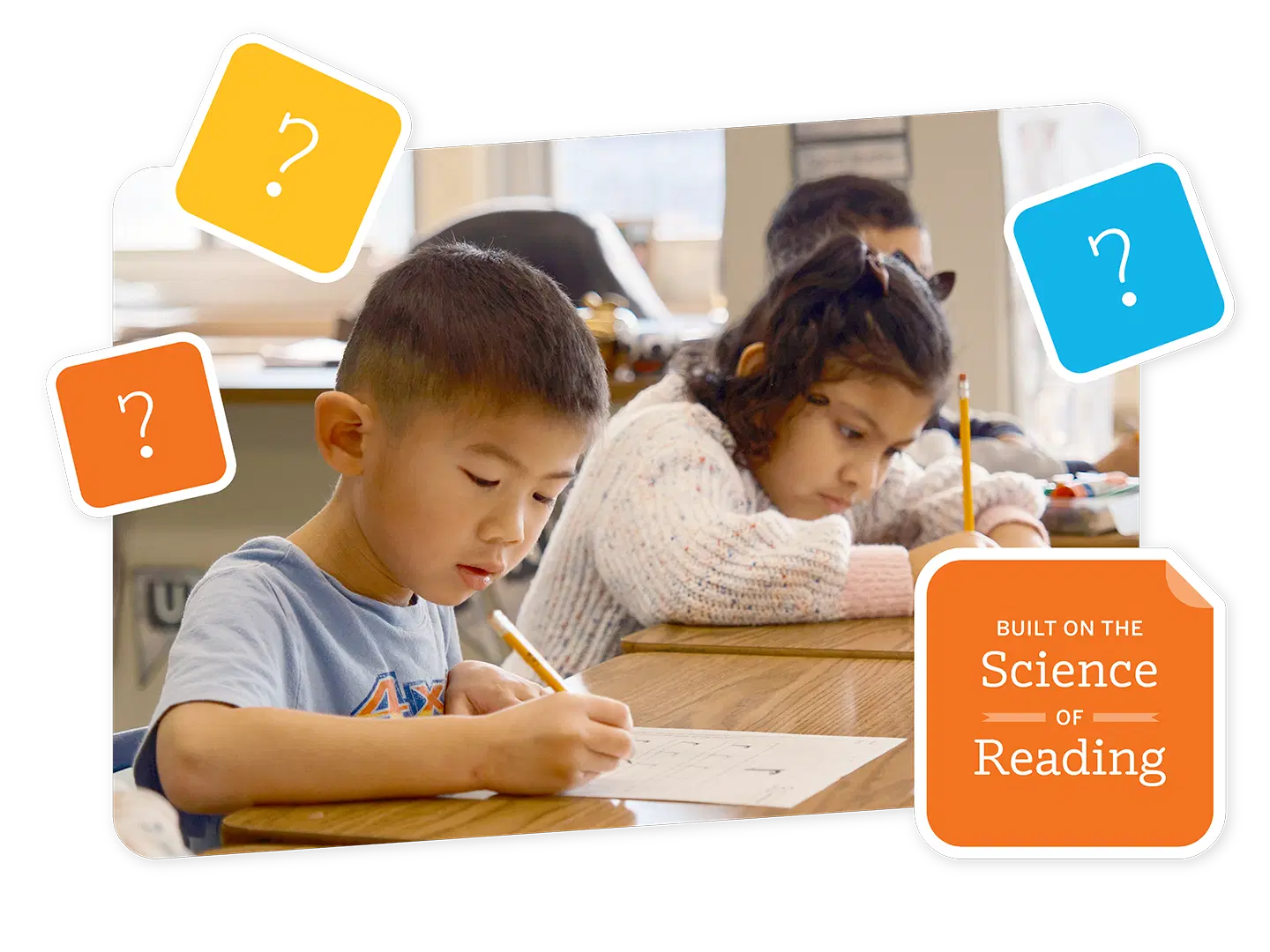
  • Scaffolding strategies and differentiated instruction to offer targeted support along with five English proficiency levels.
  • Progress-monitoring tools to help teachers provide consistent and effective support.
  • Teacher Guides that:
    • Provide impactful progress monitoring tools including formative and summative assessments and Language Proficiency Assessment rubrics.
    • Offer varied differentiation strategies including Support, Challenge, and Access Supports in each lesson segment.
    • Are organized into thoughtful lesson segments—Talk Time, Building Background, On Stage and more—that make learning objectives concrete.
  • Activities that:
    • Expand on domain knowledge from core content and read-alouds and prompt collaborative conversation to practice oral fluency.
    • Support hands-on language activities to promote authentic interaction in the classroom.
    • Help students bridge experiences and knowledge with images, vocabulary activities, graphic organizers, anticipation guides, writing space, and more.

Category 3: Assessments

Systematic MTSS alignment

In alignment with the additional 2025 Guidance 3.1.a, the assessment systems align with MTSS tiers, including universal screening, diagnostic assessments for students demonstrating a need for additional support, and progress monitoring tools that complement the California’s required universal screening schedule per SB 114.

Tier 1:
Universal/ differentiated support
Tier 2: 
Supplemental/ targeted support
Tier 3: 
Intensified/ intensive support
Core instruction assessments


Frequency of administration
Amplify CKLA California, Amplify Caminos California, Amplify ELA California assessments

Daily, Weekly, Monthly
Amplify CKLA California, Amplify Caminos California, Amplify ELA California assessments

Daily, Weekly, Monthly
Amplify CKLA California, Amplify Caminos California, Amplify ELA California assessments

Daily, Weekly, Monthly
Universal screening assessments

Frequency of administration
mCLASS DIBELS and Lectura


3 times per year – BOY, MOY, EOY
mCLASS DIBELS and Lectura


3 times per year – BOY, MOY, EOY
mCLASS DIBELS and Lectura


3 times per year – BOY, MOY, EOY
Formal progress monitoring assessments

Frequency of administration
mCLASS DIBELS and Lectura


3 times per year – BOY, MOY, EOY
mCLASS DIBELS and Lectura


Monthly
mCLASS DIBELS and Lectura


Bi-weekly
Informal progress monitoring assessments


Frequency of administration
Amplify CKLA California, Amplify Caminos California, Amplify ELA California core assessments

Daily
Intervention Toolkit progress monitoring assessments


When linked to a lesson in the toolkit
Intervention Toolkit progress monitoring assessments


When linked to a lesson in the toolkit
Diagnostic assessment


Frequency of administration
Amplify skill diagnostic assessment

Amplify Spanish skill diagnostic assessment

Optional after universal screening assessment is administered
Amplify skill diagnostic assessment

Amplify Spanish skill diagnostic assessment

After universal screening assessment is administered

Universal assessment system

Amplify’s mCLASS® DIBELS® 8th Edition and mCLASS Lectura are universal and dyslexia screening assessments that should be administered three times per year (BOY, MOY and EOY) to all students. The assessments evaluate student literacy risk, determine progress toward grade-level goals, and indicate the level of instructional  support a student may need. Beginning-of-year screenings require adequate instructional time before administration, particularly in grades K–1, while mid-year and end-of-year assessments evaluate instructional effectiveness and guide tier placement adjustments. These screenings also identify students at risk for dyslexia. Universal screening provides essential data for targeting instruction and measuring instructional system effectiveness.

Core instruction assessments

Amplify CKLA California and Amplify ELA California provide a comprehensive suite of assessments for Grades K–8 that range from low-stakes, informal formative assessments to more formal summative assessments. These assessments incorporate a variety of methods and question types, including multiple-choice questions, open-ended questions, and oral and written responses.

Formative assessments:

  • Checks for Understanding: Incorporated into each lesson segment throughout daily instruction. Quick pulse-checks that provide immediate feedback during lesson delivery (grades K–5). 
  • Daily formative assessments: Highlighted moments within each lesson for teachers to plan to track mastery of Primary Focus objectives and standards of each lesson to get a clear snapshot of individual and whole-class progress (grades K–5). 
  • Activity pages: Completed as part of lessons and can be used to assess lesson content understanding through various formats (grades K–5).
  • Exit Tickets: Located at the end of lessons, these provide a quick gauge of students’ ability to meet the lesson’s focus standards (grades 6–8).  
  • Writing Prompts: Prompts integrated throughout lessons during writing activities that provide skill snapshots within lessons and tracks patterns of skill development over time (grades 6–8).
  • Independent reading activities (Solos): At the end of every lesson, students complete an independent reading activity (“solo”) with reading questions that are scored to measure comprehension (grades 6–8).

Summative assessments:

  • Skills end-of-unit assessments (grades K–2) 
  • Knowledge end-of-domain assessments (grades K–2) 
  • End-of-unit assessments (grades 3–5) 
  • Unit essays: A culminating end-of-unit set of lessons that guide students through crafting an essay with a rubric to score mastery of writing skills (grades 6–8)
  • Unit Reading Assessments: Auto-scored responses and two constructed response items evaluate comprehension, content understanding, and reading skills using the passages students read during the unit (grades 6–8)

Performance Assessments

Student Performance Assessments are multi-day assessments administered in Grades K-5 at the beginning, middle, and end of year to help teachers gauge student mastery of grade-level Core content. These assessments provide critical data to help teachers set targeted instructional goals and monitor individual and class-wide progress towards core objectives.

Progress monitoring

Amplify’s mCLASS® DIBELS® 8th Edition and mCLASS Lectura provide formal progress monitoring in the discrete skills that are indicative of reading growth and predictive of overall success to provide the most instructionally meaningful information to teachers.

Informal progress monitoring tools can be found within the Intervention Toolkit, including materials for teachers to record, track, and evaluate student progress.

Diagnostic assessment

Interventions within Amplify’s literacy programs are informed by a skill diagnostic assessment that provides detailed data on foundational literacy skill deficits. The Amplify Skill Diagnostic Assessment and Amplify Spanish Skill Diagnostic assessment serve as critical tools in this process, administered specifically to students identified as at risk for reading difficulty through universal screening assessments—particularly those demonstrating mCLASS DIBELS 8th Edition or mCLASS Lectura composite scores in the Well Below or Below Benchmark ranges. These diagnostic assessments provide teachers with the precise skills to begin intervention and remediation.

Category 4: Universal Access

Amplify CKLA California and Amplify ELA California were built on the principles of Universal Design for Learning (UDL) and reviewed by CAST, a nonprofit education research and development organization. The program is developed using the Universal Design for Learning framework to proactively ensure that all learners can access and participate in meaningful, challenging learning opportunities.

Universal Design for Learning

The programs incorporate opportunities for engagement, representation, action, and expression based on the guidelines of Universal Design for Learning.

  • Multiple Means of Engagement: The programs incorporate interesting and motivating ways for students to interact with information and content. In Amplify CKLA California, the Universal Access section in the introduction of each lesson provides specific lesson-level options based on the needs of individual classrooms and students. Scaffolding for students with various levels of need is incorporated into the design of each lesson.
  • Multiple Means of Representation: The programs provide multiple means of presenting content to maximize student understanding. This includes digital component files that allow for a range of presentations of images and text to support learning. Amplify provides access to universal supports such as point-of-use audio for all core texts, embedded definitions for critical vocabulary, and glossaries in multiple languages. Amplify CKLA California includes clarification on language found throughout the program, with sidebars that include support on transition words and syntax, and illustrations to help students understand the concepts they are learning.
  • Multiple Means of Action and Expression: The programs include a range of methods for all students, including English Learners, to navigate and demonstrate learning. This includes physical actions, a range of methods for response, appropriate tools for composition, and varied scaffolding. In Amplify ELA California, lessons provide multiple ways for students to interact with text, allowing their brains to process the language through distinct pathways. Activities harness multiple learning modes, using media tools, digital apps, and a variety of visual and physical experiences to strategically support and enhance student learning.
  • Accessibility: Universal access features include visual aids, enlarged materials, physical objects, and multiple learning modalities through activities like Push & Say and Wiggle Cards. The Universal Access section in the introduction of each lesson provides specific lesson-level options based on the needs of individual classrooms and students.

Embedded differentiation

Amplify CKLA California and Amplify ELA California provide built-in differentiation strategies in every lesson for all students.

Throughout the Teacher Guides, point-of-use Differentiation icons provide targeted instructional strategies and supports. These icons indicate specific guidance for advanced learners, students who need additional support, and English learners, allowing teachers to easily identify and implement appropriate scaffolds and extensions during instruction. In addition, teachers are provided with recommendations for resources to use with each group of students.

  • Pre-teaching supports include mini-lessons on:
    • Core vocabulary words
    • Core Connections
    • Essential Background Information or Terms
    • What Have We Already Learned/What Do We Already Know?
  • Differentiated Support for Core Instruction tables, located in the overview of each K–2 Skills Teacher Guide, provide a list of specific opportunities for reteaching and additional support in each lesson based on skill.
  • Support and Challenge Sidebars in lesson margins offer educators immediate guidance in implementing point-of-use differentiation techniques.
  • Flexible Grouping within lessons provides opportunities for teachers to facilitate small groups, partners, or individualized support based on students’ needs. In the Skills Strand, teachers receive specific guidance for differentiated small-group instruction, with targeted support and activities outlined for both Group 1 (students needing additional support) and Group 2 (on-level students) based on data. 
  • Amplify ELA California provides point-of-use supports embedded within key core lesson activities with six levels of differentiation. The goal of these supports is to fully enable access to grade-level content for all students, including students with disabilities, English learners, and students ready for an additional level of challenge.
  • The Universal Access section of Advance Preparation in each lesson includes varied strategies to ensure all students can access and engage in each lesson.
  • Frequent use of graphic organizers and visual supports in lessons provide opportunities for differentiation based on need. The program also includes a variety of technological supports, such as eReaders with audio.
  • Extension opportunities are suggested throughout lessons, often embedded in writing tasks, which include prompts to use more complex and descriptive vocabulary, figurative language,  multi-clause and complex sentences, and  informational text characteristics.

Assessment-Driven MTSS resources

  • The K–8 Intervention Toolkit is available online and provides easy-to-use resources that assist teachers in filling gaps in students’ reading skills, with activities to support print concepts, phonological awareness, phonics, fluency, and other key skills
  • Fluency Packets (Grades 2–5)
  • Foundational Skills Intervention Program for Grades 3–8 support students who would benefit from direct and explicit intervention instruction in the full continuum of foundational skills in the upper grades
  • Flexible Instructional Time including:
    • Pausing Points built into the curriculum that provide teachers with dedicated time to address specific student needs through targeted reteaching, remediation, practice, and extension activities 
    • Pausing Point activities designed to support English learners’ competence and confidence through differentiated whole-group, small-group, or individual instruction
  • Boost Reading is a K–5 student-led digital intervention program. Boost Reading follows Amplify CKLA California’s scope and sequence to reinforce the same foundational skills taught in core instruction. It integrates easily into daily routines, while the robust data provided by mCLASS® DIBELS® 8th Edition offers a detailed view of how students progress across all instructional tiers.

Category 5: Instructional Planning and Teacher Support

Amplify CKLA California and Amplify ELA California teachers are empowered to deliver effective instruction with various print and digital resources. The program provides comprehensive planning and support materials designed to help teachers prepare for and execute lessons effectively and fulfill the requirements of Category 5.

Implementation supports across K–8

Planning and preparation resources

  • Unit Overviews that provide important background and context for the texts students will read, including highlighted elements within the text and guidance for how students will work with those elements
  • Sub-unit Overviews (Grades 6–8) that provide an overview of Lesson Objectives and reading and writing assignments, as well as a list of any projections, multimedia, or digital apps that can be projected from the teacher’s included digital license
  • Lesson-by-lesson preparation checklists (Grades 6–8) accompanying each Sub-unit Overview
  • Lesson Briefs for each individual lesson providing important background and context
  • Content knowledge materials regarding topics that students will examine

Point-of-use instructional guidance

  • Teacher Editions that feature insets of the same text and activity instructions as the corresponding Student Edition, wrapping teacher instruction around these materials
  • Activity guidance at point of use
  • Lesson standards clearly called out
  • Discussion suggestions embedded in lessons
  • Differentiation tips at point of use
  • Detailed Instructional Guides in each activity that include sequencing and grouping suggestions, tips for facilitating discussion, possible student responses and exemplars
  • Student Supports in all core lessons that provide teachers with targeted supports in daily core instruction, addressing which might serve the student best in the moment—support, strengthen, stretch—with additional call-outs for newcomers

Multimedia and digital support

  • Teacher tip videos provide modeling and guidance for implementing key foundational skills routines within the program
  • Digital platform access where teachers can access printable PDFs of differentiated support materials for English learners and students struggling with reading, including translated Unit Background and Context documents and Text Previews
  • Teacher dashboard and reporting tools (Grade 6–8) provide real-time visibility into student progress and work for immediate instructional response

Caregiver supports

Communication and overview resources

  • Caregiver Hub available in English and Spanish that provides an overview of the curriculum
  • Caregiver Letters for each K–2 Knowledge Domain and unit in Grades 3–5 that provide an overview of the content, the skills students learn, as well as practical methods that continue the learning and knowledge building at home
  • Unit-specific Caregiver Letters (Grades 6–8) that provide detailed information regarding what students will read and learn in each unit, including conversation starters that allow caregivers to ask questions and discuss specific aspects of a unit with their student
  • Welcome letters that explain the assessment and placement process while inviting parent involvement and offering support
  • Editable Home-School Communication letters available in English and Spanish
  • Editable Progress Reports for teachers to update parents and guardians on what their child is learning

Content and learning support materials

  • Unit Background and Context documents that provide an introduction and overview to the unit’s topic and themes, available in English and Spanish
  • Text Previews that provide a brief introduction to formative, independent reading assignments (called Solos in Grades 6–8), available in English and Spanish
  • Unit Overview and Support documents (Grades 6–8) designed for caregivers that provide information about important questions, assignments, and key aspects of the unit texts, available in English and Spanish
  • Conversation starters included in Knowledge Strand Caregiver Letters to discuss domain topics at home

Home practice and extension activities

  • Take-Home pages in the Skills Strand that include copies of decodable passages, enabling students to share their reading progress with families and continue practicing their skills outside of school
  • Take-Home Letters in the Skills Strand that provide specific guidance for parents to support skills practice at home, such as sound-sorting activities, with detailed instructions and materials for home practice activities
  • Take-Home pages in the Knowledge Strand that provide suggested activities families can do together to reinforce and extend learning beyond the classroom
  • Games and activities on take-home pages that extend classroom instruction, including all the materials and instruction necessary to help families assist students in a fun and engaging way
  • Digital access to decodable texts through the Amplify Caregiver Hub, allowing students to practice their reading skills both in class and at home
  • Weekly spelling lists and directions to decoding activities that can be practiced at home

A digital reading intervention that delivers growth across every tier of instruction

Boost Reading is a student-led K–5 digital intervention, built on the Science of Reading, that delivers systematic instruction. Students receive targeted, adaptive practice that meets them where they are, while teachers get simple and meaningful insights into student progress without extra work. Fully aligned to Amplify CKLA and mCLASS®, Boost Reading brings powerful support to every tier of instruction. Para la versión en español, haga clic aquí.

A young girl wearing headphones smiles while using a laptop, with colorful graphics and badges indicating "Moderate ESSA Evidence" and "Built on the Science of Reading," highlighting a K–5 personalized reading curriculum.

Proven impact for students who need it most

Boost Reading meets ESSA’s Moderate (Tier 2) Evidence criteria and consistently moves students who score below and well-below benchmark toward benchmark with just 30 minutes of use per week. Boost Reading provides extra support to students (including multilingual/English learners and students with dyslexia) struggling with reading, with practice that builds a strong foundation for future reading success from the ground up. Learn more about the program’s impact on the Boost Reading research page.

Nearly 65% of kindergarten students who started the year at risk and used Boost Reading reached benchmark by the end of the year, compared to 48% of the comparison group.

Learn more

English language learners who started the year below benchmark were 43% more likely to finish the year on track compared to those who did not use Boost Reading.
“My students love the program, and they don’t even realize they are learning some tough concepts. Their reading scores are improving even since the beginning of the year.”

Amber

Junior High ELA teacher, California

Critical to MTSS with differentiated support for every learner

Boost Reading adapts automatically, so students practice the right skills at the right moment. Tier 2 students get meaningful independent intervention support, while Tier 3 students receive additional skill reinforcement between their staff-led sessions with mCLASS Intervention. Boost Reading follows the same foundational skills sequence as Amplify CKLA, which means that students practice skills unique to them, making Boost Reading an effective part of a Multi-Tiered System of Support (MTSS).

Split image: On the left, a girl uses a laptop with the label “Tier 2 Student-led intervention” featuring a K–5 personalized reading curriculum. On the right, a teacher assists two boys with laptops, labeled “Tier 3 staff-led intervention.”.

Data you can actually use in your classroom

Boost Reading shows you exactly what you need to know about student progress, through simple growth reporting on the Teacher Dashboard. See who’s improving, who needs support, and which skills to target next without having to spend time digging through complicated data.

Aligned to Amplify CKLA and mCLASS DIBELS 8th Edition

Boost Reading follows Amplify CKLA’s scope and sequence, making it easy to integrate into your daily routines by reinforcing the same skills you’re already teaching. It uses mCLASS DIBELS® 8th Edition data to provide targeted support and placement, giving teachers a clear view of how students progress across all instructional tiers.

Three text boxes display the names of K–5 literacy resources: "Boost Reading," "Amplify CKLA," and "mCLASS," with the words "Boost," "Amplify," and "mCLASS" in orange font.
Oso de dibujos animados jugando al fútbol, pateando una pelota con la etiqueta "ma", con burbujas de discurso que dicen "¡hola!" en español e inglés, al lado de una portería con un letrero "Currículo de lectura personalizado para jardín de infantes a 5.º grado".

Closing the gap for
K–2 multilingual/English learners

Boost Reading’s Spanish literacy partner, Boost Lectura, strengthens early literacy for Spanish-speaking multilingual/English learners. When used together, the two programs give teachers side-by-side insight into skill progression in Spanish and English, helping accelerate learning across both languages.

Boost Reading efficacy study

Closing the literacy gap for K–5 students

Download now

What’s included

A dashboard section titled "Trouble Spots" lists students under "Early Decoding" by skill, showing names and resource links for decoding and spelling word skills from a K–5 personalized reading curriculum.

Pinpoint the skills that need your attention

The Trouble Spots section makes it easy to see which students are struggling and what skills they need to work on. Printable, ready-to-teach lessons allow you to pull together small groups in minutes.

Watch your students grow

Never miss a moment of your students’ literacy development, with monthly growth reporting! You’ll be able to track how students are developing skills month over month, and see their reading trajectory unfold.

Line graph titled "Monthly Growth" shows three risk categories—At Risk, Some Risk, Minimal Risk—from September to January. Visualize student progress using this K–5 personalized reading curriculum as your supplemental reading curriculum.
A chart compares Student 1, who demonstrates mastery in decoding blends, with Student 2, who needs targeted practice and reinforcement to decode words with blends using a K–5 personalized reading curriculum.

A program that grows with your students

Boost Reading continuously tailors instruction based on individual student performance. That means scaffolding foundational skills while building proficiency, one engaging activity at a time. There’s no stalled practice, and you’ll see steady progress across key reading skills.

Benchmark and growth assessments

Boost Reading combines built-in benchmark assessments with monthly skill scans to give teachers a holistic view of progress from the beginning of the year to the end of the year. The monthly skill scans act as check-ins between benchmark windows, so you’ll always know where students stand with a complete picture of their learning.

A chart titled "Benchmark Performance" shows equal 25% scores for four categories at the beginning and middle of the year when using a K–5 personalized reading curriculum; no data is available for end of year.
A flow chart shows language comprehension and word recognition strands merging into skilled reading, highlighting progression from basic to advanced skills—a clear visual for any K–5 literacy resource.

Science of Reading scope and sequence

Boost Reading introduces skills in the order research shows students learn best. Phonological awareness builds into phonics, vocabulary, and comprehension for a solid foundation and confident readers.

Administrator and caregiver reports

Administrators and caregivers are welcomed into the student reading journey with data on program usage, reading progress, and skill mastery.

Pie chart titled "Grades 2–5 Growth" shows 45% below, 31% typical, and 24% above. Legend explains growth percentiles for a K–5 personalized reading curriculum: above, typical, below.
Insignia de premio con el texto "Premios de excelencia en tecnología y aprendizaje 2023, regreso a clases, ganador del plan de estudios de lectura personalizado K-5".

Award-winning technology that drives student growth

Learn more

Explore more programs based on the Science of Reading.

All of the programs in our literacy suite are designed to support and complement each other. Learn more about our related programs:

Utah – USBE Data Analysis for K-3 Reading Assessment Program – New

To view this protected page, enter the password below:


Amplify Science units provide strategy-based literacy instruction that aims to develop students’ facility with reading, writing, and talking about science. Each unit provides many authentic opportunities for students to learn about and practice the ways of communicating and learning that characterize science as a discipline. The following are the Amplify Science Guiding Principles for Literacy:

  1. Students acquire literacy expertise through the pursuit of science knowledge and by engaging in scientific and engineering practices.
  2. Attention to discipline literacy instruction should begin as soon as students enter school and should continue throughout the grades.
  3. Participation in a disciplinary community is key to acquiring disciplinary expertise and literacy.
  4. Since the purpose of science is to better explain the natural world, argumentation and explanation are the central enterprises of science. Therefore, these practices are central foci of reading, writing, and talk in science.

Literacy instruction in the Amplify Science program utilizes a Gradual Release of Responsibility approach (Pearson and Gallagher 1983). In this approach, instruction begins with the teacher assuming primary responsibility for modeling strategy or skill and explicitly instruction how to use each strategy or skill. As instruction proceeds, the teacher offers as much support as needed so students can practice using the target strategy more independently. Over time, students take on more responsibility for using the strategy more independently. Depending on the goal, the path from teacher modeling to student independence will vary. Over the course of a unit, students may not achieve independence for every literacy goal, but they will move along the continuum toward flexible use of a wide range of reading, writing, and learning strategies that have been incorporated throughout the program.

Each Amplify Science Elementary Unit includes five books that students use to build an understanding of science ideas, practices, and crosscutting concepts. While the program does not take on responsibility for providing all literacy instruction required for students’ reading development (e.g., skill-based or fluency-oriented literacy instruction), it is designed to support vocabulary, language, and reading comprehension development.

Amplify Science provides students with a series of content-rich nonfiction and informational texts that are read for a variety of purposes throughout the unit. The five books in each unit include one book for approximately every five days of instruction and one reference book that students draw upon throughout the 22-lesson units (20 instructional lessons & 2 assessment days for pre/post). Students are encouraged to read books as independently as possible so they can apply the comprehension strategies they are learning in order to understand what they read. In each Amplify Science reading session, comprehension is supported at three stages: before, during, and after reading. At each stage, students engage in planned tasks that build an understanding of the key concepts and themes in a book. The teacher’s role is to scaffold comprehension and provide opportunities for practicing the strategies and skills that are being taught. At each stage, these include:

  • Before-reading activities designed to help students activate their background knowledge, prepare to use particular comprehension strategies, and set a purpose for reading.
  • During-reading activities intended to help students monitor their comprehension, make connections, and read and understand important science vocabulary in context.
  • After reading activities intended to help students reflect on their learning and connect their reading to their firsthand science investigations.

Nonfiction and informational text. The Amplify Science program is designed to help students gain familiarity with the structures and functions of nonfiction and informational texts by extending students’ exposure to these texts in a rich learning environment. The program uses nonfiction and informational texts because it is an important component of content learning in school; it helps build knowledge of the natural and social world, and it provides students with a purposeful context for learning key concepts and vocabulary. Nonfiction and informational text are also engaging and motivating as it answers genuine questions and capitalizes on student interests and background knowledge. Reading a wide variety of texts have been shown to affect students’ interest in reading overall (Duke 2004). Nonfiction and informational genres are also the genres students are most likely to encounter when reading and writing inside and outside of school. For adults, nonfiction and informational texts are read more often than other genres (Duel 2004; Smith 2000). In order for students to become successful information gatherers as adults, we need to provide opportunities for them to engage with nonfiction and informational texts in school.

Reading comprehension. Reading instruction in Amplify Science is designed to promote students’ capacity to read for meaning. Guided instruction and a supportive classroom context help students learn to employ powerful comprehension strategies that are critical for gaining a better understanding of text and becoming skilled readers (Duke and Pearson 2002). Comprehension strategies included in the Amplify Science program include posing questions, making inferences, setting goals for reading, summarizing, synthesizing, and using text features. Across units, students are guided to use these strategies flexibly as they read and make sense of a wide range of nonfiction and informational texts. Students also gain critical experience with understanding texts and experiences in relation to one another as they make connections between the books they read and the science they do. These connections then extend their growing conceptual understanding. Reading instruction in Amplify Science also encourages students to reflect on the utility of comprehension strategies, including when, why, and how these strategies helped them. One important way students make connections is through sustained classroom discussion of text with their peers (Nystrand 1997). Students regularly discuss both content and comprehension use before, during, and after reading, learning more about both as they engage in discussions with their peers. The Amplify Science approach also draws on research that demonstrates the benefits of instructional coherence (connected reading, writing, listening, and talk), particularly in the content area of science (Romance and Vitale 2001; Cervetti et. al. 2007; The Directed Reading Model supports reading comprehension before, during, and after reading. Cervetti et. al. 2006). Reading comprehension is enhanced as students connect what they read to what they are investigating and learning in science. The Amplify Science student books provide many opportunities for students to practice their developing reading skills in context, engage in authentic discourse around text, make connections, and support their understandings with textual evidence.

Back to Amplify Science

Reading comprehension strategies grounded in science

When we teach reading using what science (specifically the Science of Reading) tells us, we guide the brain to start recognizing and understanding those letters, syllables, and words. And the most effective reading comprehension strategies depend not only on explicit instruction, but on building background knowledge.

Comprehension instruction: Breaking it down

According to the Simple View of Reading, two cognitive capacities are required for proficient reading: (1) decoding, and (2) language comprehension.

“Reading comprehension is the product, not the sum, of those two components,” says Dr. Jane Oakhill, professor of experimental psychology at the University of Sussex. “If one of them is zero, then overall reading ability is going to be zero.”

As Oakhill explains further on Science of Reading: The Podcast, each component contains its own set of distinct skills and processes. It’s crucial to help students develop all of these capacities.

Building mental models for new information

Some readers are great at decoding but struggle with language comprehension. Why might that be—and how can you support them?

Here’s some context: After you read this paragraph, you aren’t likely to recall the precise wording—but you will probably remember the idea. Researchers use the term mental model to describe the cognitive strategies for the structure you create in your mind to perform this feat of comprehension.

Historically, educators have thought about the process of comprehension — everything that happens after each word is recognized — as a black box. But now we know that there are two levels of comprehension at work: comprehension processes and comprehension products.

Comprehension processes are the steps you take to build a mental model of a text during reading. Comprehension products refer to the work you are able to do with that model after reading.

Think of the process of building a mental model as a sort of micro-comprehension. Weaker comprehenders build weaker models, so they may struggle when asked to create a narrative text summary, identify a theme, put together predictions, or describe key details of a character’s evolving beliefs.

By actively engaging with text, connecting prior knowledge, utilizing graphic organizers, receiving explicit instruction, and exploring new information, students can learn to build robust mental models that enhance their comprehension of the text. These mental models serve as frameworks for understanding, organizing, and synthesizing information, which then leads to improved comprehension, retention, and critical thinking.

Researchers have identified as many as 17 comprehension processes that affect students’ ability to build and use their mental models. The following are a few of the comprehension processes that weak comprehenders most commonly struggle with, and that with practice, can be targeted for skill development and improved overall comprehension.

  • Anaphora (using pronouns to refer to an earlier word or phrase): Some readers struggle to process pronoun relationships (Megherbi & Ehrlich, 2005), identify antecedents, and answer questions that require resolution of anaphora (Yuill & Oakhill, 1988).
  • Gap-filling inference: When reading the sentence “Carla forgot her umbrella and got soaking wet,” more skilled readers will conclude that it rained. A lack of awareness of when and how to activate background knowledge to fill in gaps may hinder a student’s ability to make inferences and comprehend the text as a whole (Cain & Oakhill, 1999).
  • Marker words: Writers use connective words (e.g., sothough, and yet), structure cues (e.g., meanwhile), and predictive cues (e.g., “There are three reasons why…”) to signal ways that text fits together. Students with limited knowledge of the meaning and function of these words may struggle with the meaning of the text (Oakhill, et al., 2015).
  • Comprehension monitoring: When proficient readers encounter difficulty, they tend to stop, reread, and try to figure it out. Less proficient readers may just keep going or fail to recognize that what they’re reading doesn’t fit their mental model.

Two strategies that you can employ in your classroom to guide students in comprehension strategy instruction:

  • Graphic organizers: Use graphic organizers such as concept maps, story maps, or Venn diagrams to help students learn to visually organize information and relationships within the text. Visualization enhances comprehension (Graesser, et al., 1994). As the text progresses, students can refer to and update their models.
  • Comprehension monitoring: Teach readers to monitor their comprehension while reading by pausing to reflect on their understanding, clarify confusing points, and adjust their reading strategies as needed. Monitoring comprehension helps good readers stay engaged and actively construct meaning from the text.

How background knowledge powers comprehension

The Science of Reading demonstrates the importance of systematic and explicit phonics instruction. But students don’t have to learn phonics or decoding before knowledge comes into the equation. In fact, the opposite might even be true.

Let’s say you’re handed a passage of text describing part of a baseball game. You read the text, and then you’re asked to reenact that part of the game. Which is most likely to help you do so?

  1. Your ability to read
  2. Your knowledge of baseball
  3. Neither

If you answered “2,” you’re batting 1,000. This example summarizes an influential 1988 study that concluded that the strongest predictor of comprehension was knowledge. In the study, which showed readers (with varying degrees of background knowledge about baseball) a passage describing a game, struggling readers comprehended as well as strong readers—as long as they had prior knowledge of baseball.

“The background knowledge that children bring to a text is also a contributor to language comprehension,” says Sonia Cabell, Ph.D., an associate professor at Florida State University’s School of Teacher Education, on Science of Reading: The Podcast.

In fact, background knowledge is the scaffolding upon which readers build connections between prior knowledge and new words. Students with average reading ability and some background knowledge of a topic will generally comprehend a text on that topic as well as stronger readers who lack that knowledge.

But until recently, literacy instruction has typically focused on decontextualized skills—finding the main idea, making inferences—rather than on the content of texts and resources that students engage with. According to Cabell, what we know about knowledge and comprehension should inform instruction for the whole class. “I think most, if not every, theory of reading comprehension implicates knowledge,” she says. “But that hasn’t necessarily been translated into all of our instructional approaches.”

How can we help build background knowledge while teaching reading? Here are some strategies backed by science.

  • Systematically build the knowledge that will become background knowledge. Use a curriculum grounded in topics that build on one another. “When related concepts and vocabulary show up in texts, students are more likely to retain information and acquire new knowledge,” say education and literacy experts Barbara Davidson and David Liben. According to them, this retention even continues into subsequent grades. “Knowledge sticks best when it has associated knowledge to attach to.”
  • Provide instruction that engages deeply with contentResearch shows that students—and teachers, too—actually find this content-priority approach more rewarding than, in Davidson and Liben’s words, “jumping around from topic to topic in order to practice some comprehension strategy or skill.”
  • Support students in acquiring vocabulary related to content. Presenting keywords and concepts prior to reading helps students comprehend text more deeply. Spending more time on each topic helps students learn more topic-related words and more general academic vocabulary they’ll encounter in other texts.
  • Use comprehension strategies in service of the content. While building knowledge systematically, teachers can use proven strategies—such as chunking and creating graphic organizers—to help students develop skills they can use to support their for understanding of important information.
  • Use discussions and writing to help students learn content. Invite students to share their interpretations, supporting their thought processes in their own words and connecting with peers’ perspectives.
  • Help students forge connections in small groups. Help students draw connections between reading lessons and units—and their own experiences—as they grow their knowledge base together.

Every day, the Science of Reading has more to tell us about comprehension as a multifaceted skill that requires a combination of various strategies, tools, and techniques to unlock meaning from text. Because of this body of research, we know that when educators bring intentional and evidence-based practices into the classroom, students can enhance their ability to comprehend grade level text, analyze information critically, and engage with diverse subject areas. By nurturing students’ reading comprehension skills grounded in the Science of Reading, educators can empower students to become good readers who can navigate complex texts with confidence and understanding.

Explore more

The Amplify blog:

Science of Reading: The Podcast

Using formative assessment to support literacy

Learning to read is not linear. That’s because reading is not just one skill, but a bundle of skills, intertwined and supporting one another.

In the late 1990s, reading and literacy expert Hollis Scarborough helped us visualize this complex process by creating a model that’s now known as the Reading Rope. Grounded in the Science of Reading, this now-iconic model emphasizes the need for a comprehensive, deliberate approach to reading instruction. It’s an approach that recognizes the importance of building both reading skills and the background knowledge that makes them even stronger.

The Reading Rope model also connects educators to key strands of formative data that guide instruction and assessment.

With data and information that support the relationship between language comprehension and word recognition skills, teachers can devise reading comprehension strategies and get a better idea of where to focus their instruction. And thanks to the Science of Reading, this data can also help you track what students know, and where they need to go.

Let’s take a closer look to see how it all works.

Reading comprehension and more: The strands of the Reading Rope

The design of the Reading Rope shows that the two core components of reading are word recognition and language comprehension.

Word recognition encompasses the ability to accurately, effortlessly, and rapidly decode printed words. Phonological awareness, phonics, and sight word recognition contribute to this strand.

  • Phonological awareness is the ability to recognize and manipulate the individual sounds (phonemes) within spoken words. It includes skills such as identifying rhymes, segmenting words into syllables, and manipulating sounds within words. Phonological awareness provides the foundation for phonics instruction.
  • Phonics involves the systematic relationship between letters and the sounds they represent. It includes understanding letter-sound correspondences, decoding unfamiliar words by applying sound-symbol relationships, and blending sounds to form words. Phonics instruction gives students the tools to decode printed words.
  • Sight word recognition happens when students have had enough practice decoding words that they can automatically recognize and apply sound-spelling patterns across words. Automaticity in word recognition allows students to shift their focus from decoding to comprehending texts.

Language comprehension involves the understanding of spoken and written language. This includes vocabulary, grammar, syntax, and the ability to make inferences and draw conclusions. Language comprehension allows readers to extract meaning from and create meaning with text.

  • Vocabulary refers to the words one knows and understands, both orally and in writing. A robust vocabulary enhances comprehension and communication.
  • Grammar and syntax are the rules and structures that govern language. Understanding and applying grammatical rules help students comprehend and construct sentences, enhancing their ability to make meaning from and create meaning with text.
  • Inference skills involve the ability to draw conclusions, make predictions, and derive implicit meaning. With these skills, students are able to combine their background knowledge with information in the text to make guesses and reach conclusions.

The importance of knowledge

The Reading Rope affirms that readers use their existing knowledge and experiences to make sense of what they are reading. A student who brings relevant background knowledge to a text can understand it even better than a stronger reader who’s new to the topic.

Background knowledge also helps readers navigate unfamiliar vocabulary or concepts. When readers encounter words or ideas they already have some familiarity with, they can make connections and use contextual clues to determine meaning, which contributes to reading fluency and comprehension.

Intentionally building background and academic knowledge—coupled with comprehension strategies—fuels students’ capacity to understand texts, answer questions, and grapple with ideas.

As educators Barbara Davidson and David Liben write: “Although students’ independent reading is often at lower complexity levels at the beginning of a unit, as they acquire knowledge about the core topic they are generally able to read texts on their related topic at complexity levels greater than their diagnosed grade level.”

Putting it all together with formative assessment

There are a variety of ways to gather information about your students’ skills and knowledge, using the Reading Rope as your guide. Here are just a few examples that correspond to its strands:

Word recognition

  • Letters: See how students do with letter-sound correspondence tasks such as: matching graphemes to phonemes, writing letters that represent sounds, word-building activities, and sound sorts with word cards.
  • Words: Gauge students’ ability to apply sound-symbol correspondences by asking them to spell words with sound-spelling patterns they’ve already learned.

Language comprehension

  • Knowledge: How much are students learning about a topic overall? Keep asking—through pre-reading tasks, discussions, and checks for understanding.
  • Vocabulary: Track students’ vocabulary growth with word-mapping, context-clue, and word-brainstorming tasks.

Skilled reading

Here’s where it all comes together. Many formative assessment activities will help you discover what your students know about the skills they’re using as readers. Here, we’ll focus on the power of students speaking and writing about what they’re reading.

  • Speaking: As children learn to speak, they develop vocabulary and knowledge of sentence structure, both of which support reading comprehension. Simply giving students the opportunity to talk about a topic can provide insight into their oral language development.
  • Writing: Challenge students to write summaries, critiques, and analyses of texts to see what they’re comprehending from what they’re reading.

More to explore

Boost Reading Review for Indiana

On its surface, Boost Reading (formerly Amplify Reading) is a K–5 digital literacy program designed to help students rebuild, develop, and strengthen foundational skills as they play their way through an imaginative and personalized game world. But don’t let its simple and playful nature fool you. Look under the hood and you’ll find an unparalleled adaptive algorithm, powerful analytics, and robust instruction that links back to our assessment system and core instruction.

What is Boost Reading?

Boost Reading is a K–5 student-driven literacy program that provides both enrichment and remediation for all students, leveraging the power of compelling storytelling to engage students in personalized reading instruction and practice. It features:

  • High quality, research-based instruction based on the Science of Reading.
  • Unparalleled personalized learning pathways.
  • Compelling and imaginative storylines.
  • Growth mindset.
  • Insightful reports tied to actionable next steps.
A young girl uses a tablet, surrounded by illustrated animals and books, with a badge reading "Built on the Science of Reading" in the top right corner.

How does Boost Reading work?

Boost Reading uses students’ latest reading assessment data to ensure they practice the right skills at the right time. In cases where no student assessment data is available, our embedded placement tool ensures students receive the content and skill practice most appropriate for their current reading level.

From there, students move through our curriculum along their own learning pathway where they encounter personalized content tailored to their evolving skill and grade levels.

Summary of games

Four educational game screens featuring word and phonics activities for children, including character selection, word building, and answering questions.

With over 40 adaptive games, Boost Reading helps students of all levels grow across 13 critical skills areas, including explicit instruction in comprehension processes.

  • Phonological awareness
  • Letter sound correspondence
  • Letter combinations
  • Early decoding
  • Advanced decoding
  • Comprehension processes
  • Key ideas and details
  • Craft and structure
  • Integration of knowledge and ideas
  • Vocabulary
  • Connected texts
  • Fluency
  • Close reading

See pages 16-78 of this guide for a detailed explanation of every game in the program.

What makes Boost Reading different?

Multiple dimensions

Boost Reading features full adaptivity. That means students progress along a pathway that adapts on multiple dimensions, not just one. For example, a student can work on early first-grade decoding in one game while building more advanced vocabulary knowledge in another.

Always-positive feedback

Boost Reading supports positive participation by giving students immediate and clear feedback. These results are never punitive. Instead our always-positive feedback is delivered in the context of the game world and is designed to motivate students to keep trying.

Ready-to-teach mini-lessons

Boost Reading turns data into action with reports that help educators know exactly who needs support and ready-to-teach mini-lessons that deliver targeted reinforcement and remediation.

Accelerated growth

Boost Reading accelerates student growth at all reading levels and reduces the number of students at risk of reading difficulty. In one study of 3rd graders in a large urban district who used Boost Reading for only one semester:

    • 54% of students who used Boost Reading made above average progress, whereas only 44% of students in the comparison group made above average progress.
    • 54% of English learners in that same study made above average growth, whereas only 45% of English learners in the comparison group made above average growth.

Check out the above results and more in this efficacy paper.

How does Boost Reading integrate with the other parts of the literacy system?

Boost Reading + mCLASS® with DIBELS® 8th Edition

mCLASS automatically places students on an adaptive path within Boost Reading, which provides them the exact practice–both remediation and acceleration–that they need.

Click here to learn more about how Boost Reading and the mCLASS Assessment System work together.

Boost Reading + Amplify CKLA

Boost Reading extends core instruction with Amplify CKLA with personalized practice that follows the same scope and sequence.

Click here to learn more about how Boost Reading and Amplify CKLA work together.

Sample materials and demo access

Explore as a teacher

Ready to explore as a teacher? Follow these instructions:

  • Click the Boost Reading Teacher Platform button below.
  • Select Log in with Amplify.
  • Enter the student username: t1.scottsdaleunified@demo.tryamplify.net
  • Enter the password: Amplify1-scottsdaleunified
  • Click the CKLA icon.
  • Select a grade level from the drop-down menu at the top of the page.

Explore as a student

Ready to explore as a student? Follow these instructions:

  • Click the Boost Reading Student Hub button below.
  • Select Log in with Amplify.
  • Enter the student username: s1.scottsdaleunified@demo.tryamplify.net
  • Enter the password: Amplify1-scottsdaleunified
  • Click the Hub icon
  • Select a grade level.

Check out these additional resources

Boost Reading review resources:

Prepare Professional Development (PD)

Learning experiences to prepare for literacy and math instructional shifts

The following literacy and math sessions can help any educator—regardless of the program used—enhance their instructional practices.

  • Science of Reading sessions offering research-backed strategies to deepen understanding and improve student outcomes.
  • Problem-based approach to math sessions that empower educators to facilitate meaningful learning experiences and develop critical thinking skills.
  • Multiliterate learner sessions enable educators to make a meaningful impact on students’ literacy development.
Two women are seated at a table with laptops and papers, engaging in a discussion about program implementation in a classroom or meeting setting.

Professional learning journey

Four connected circular icons illustrating a business process: idea generation, planning, execution, and achievement, depicted with relevant symbols.
Prepare Begin Practice Advance
Learning sessions will help shift literacy and math instruction in areas such as the Science of Reading and/or problem-based approaches to math. Program-aligned packages will support those who are new to Amplify programs. Program-aligned packages will support those who have experience using Amplify programs. Offerings will support advanced implementation, build capacity for instructional leaders, certify in-house trainers to deliver Launch sessions, and more.
“Gain the literacy knowledge and skills you need to thrive and help your students thrive. Through these sessions, you’ll understand typical literacy development and how to describe and address literacy difficulties.”

—Susan Lambert, Chief Academic Officer, Elementary Humanities

Host, Science of Reading: The Podcast

Science of Reading learning experiences

Listening to students read is magic. But knowing how to get them reading? That’s science.

Making the shift to the Science of Reading is no small feat, but participating in professional development sessions can help you make this change seamlessly.

Amplify Science of Reading sessions offer flexible, professional learning experiences for teachers that incorporate engaging activities grounded in what science tells us about literacy development.

Two women smiling and looking at a laptop in a classroom. One woman is wearing a striped shirt and the other a black top. Classroom decor is visible in the background.

Build your knowledge of the Science of Reading

Virtual | 90-minute session

This introductory session provides educators with a foundational overview of what the Science of Reading means and what it tells us about how to teach using evidence-based reading practices.

Participants will learn to:

  • Define the Science of Reading by examining evidence-based research.
  • Explain how two frameworks, the Simple View of Reading and the Reading Rope, work in tandem to guide effective literacy instruction.
  • Identify instructional principles aligned to the Science of Reading.
Three people stand in front of a whiteboard with colorful sticky notes, engaging in professional development for teachers as they discuss ideas and collaborate using a tablet and a laptop.

Deepen your knowledge of the Science of Reading

On-site or virtual | 3-hour session

This session will build a base of common knowledge about the Reading Rope and support educators in identifying effective instruction grounded in the Science of Reading.

Participants will learn to:

  • Identify the strands in the Reading Rope.
  • Describe how each strand plays an important role in developing skilled readers and writers.
  • Identify key look-fors in effective Science of Reading instruction.

Science of Reading: The Learning Lab online course

This series of three self-paced online courses, crafted by literacy expert Susan Lambert and built around International Dyslexia Association (IDA) Knowledge and Practice Standards, guides you through the essential Science of Reading skills and knowledge needed to teach students to read proficiently, as well as advanced strategies for aiding struggling readers. Each course builds on the last, equipping you with the tools and confidence to make a lasting impact on your students’ literacy journeys.

Benefit from flexible learning on an interactive platform spanning 20–25 hours of instruction. Each course is accessible for 12 months. Upon completion, you’ll be provided with a downloadable certificate, validating your new expertise in the Science of Reading.

A boy kneels and reads a book near stacked books, while a girl stands with folded arms; both observe a mobile with colorful shapes and letters, reflecting elements of classroom instruction inspired by the Science of Reading.

Foundations to the Science of Reading

This course offers a comprehensive overview of research in the field. Each of the eight modules contains three lessons covering the foundations of literacy acquisition.

Explore the scope and sequence of Foundations to the Science of Reading with a  Pacing Guide.

Access the free Preview Pass for this course.

A child points at large outlined letters on a board with a pointer stick, next to a stack of books—capturing an engaging moment in classroom instruction.

Advanced topics in the Science of Reading: Assessment and reading difficulties

The second course is aimed at providing an in-depth examination of assessments, a deeper understanding of reading difficulties, and familiarity with pertinent legal frameworks for educators, all of which influence instructional decision-making.

Explore the scope and sequence of Advanced topics in the Science of Reading with our Pacing Guide

Access the free Preview Pass for this course.

Three people in lab coats stand around a lab table with test tubes and a flask, engaging in classroom instruction as they discuss and gesture to each other.

Coming soon!
Applied structured literacy

The final course in the series is designed to review key concepts and knowledge from previous coursework, explore fundamental aspects of structured literacy within lessons, observe and analyze structured literacy instruction in action, and investigate how data informs instructional decisions.

[Available June 2025]

“Amplify’s Science of Reading online course builds background knowledge on how students read, then goes deeper to give you strategies that correlate with current research that can be implemented into your classroom right away. The course opened my thinking to new ways of teaching and I can’t wait to try it with students! If you want to walk away feeling successful with helping kids read, take this course! ”

Allie Appel

Coach, WI

New

Supporting multiliterate learner sessions

Unlock the magic of teaching multiliterate learners with evidence-based literacy practices. Making the shift to effectively support diverse readers in multiple languages is no small feat, but our professional development sessions are here to guide you effortlessly.

Empower your teaching with these engaging sessions, and make a meaningful impact on your multiliterate students’ literacy development.

Two children are seated at a small table in a classroom. Engaged in classroom instruction, the girl is writing in a notebook while the boy reads a book. Colorful storage bins are visible in the background, enhancing the learning environment

Build your knowledge of multiliterate learners

Virtual | 90-minute session

This session provides educators with a foundational overview of how to teach multiliterate learners using evidence-based literacy practices.

Contact us to request a quote.

A young boy in a striped shirt sits at a desk, focused on writing in a notebook with a pencil. Surrounding him are classroom supplies and papers, exemplifying the effective program implementation strategies from professional learning sessions.

Deepen your knowledge of multiliterate learners

On-site or virtual | 3-hour session

This session will build an understanding of how the brain learns to read in multiple languages, as well as how to leverage cross-linguistic transfer, and align instruction to best practices for multiliterate learners.

Contact us to request a quote.

Problem-based approach to math instruction sessions

Elevate educational experiences by placing students’ ideas at the core of math lessons through problem-based learning. These sessions offer flexible professional learning experiences, allowing you to gain firsthand experience with a problem-based approach as a learner. You then learn to integrate this approach seamlessly into your teaching practices, bringing renewed energy to your math classroom.

A woman sits indoors, smiling while using a tablet. Wearing a blue lanyard and casual clothing, she appears engaged in professional learning; the background shows blurred people and chairs.

Build your knowledge of a problem-based approach

Virtual | 90-minute session

This session provides you with a foundational overview of what an engaging problem-based approach in math entails for K–5 students.

During this session you’ll learn to:

  • Explain how a problem-based approach to math brings delight to both teaching and learning and builds lasting student understanding.
  • Identify actionable strategies for using a problem-based approach in a math classroom.

Contact us to request a quote.

Deepen your knowledge of a problem-based approach

On-site or virtual | 3-hour session

This session provides you with hands-on experience facilitating problem-solving in math, leaving you with an increased understanding of how to teach conceptual understanding, procedural skill and fluency, and applications of math.

During this session you’ll learn to:

  • Explain how a problem-based approach to math brings delight to both teaching and learning and builds lasting student understanding.
  • Identify actionable strategies for using a problem-based approach in a math classroom.
  • Connect your current teaching practice to a problem-based approach, and choose a next step to implement a more problem-based approach.

Contact us to request a quote.

Get in touch with a PD expert

We’re here to provide answers and guidance as you explore your PD options. Fill out the form to connect with us and discover how Amplify PD can enhance your educational journey.

K–5 personalized reading curriculum to accelerate literacy growth in your classroom

Boost Reading Texas helps K–5 educators meet the needs of every reader with personalized literacy instruction based in the Science of Teaching Reading. Our efficacy data, measured by DIBELS® 8th Edition, shows that Boost Reading helped 26% more students reach benchmark than those not using the program. This Amplify reading curriculum fits into any learning model and provides actionable growth insights along the way.

A young girl wearing headphones uses a laptop. Illustrated trees, clouds, and a bird are in the background. Informational badges about reading science and evidence levels are displayed.

Evidence-based personalized instruction

Boost Reading Texas is a student-led supplemental reading curriculum that provides additional time to support other students. It reinforces instruction across all tiers through true differentiation of skill development. It’s your digital assistant in literacy instruction—extending core instruction, addressing remediation needs, and constantly adapting activities to help every reader flourish.

“Your team has taken a weight off my shoulders and I am so grateful and can’t thank you enough! My biggest concern during this time was how can I keep pushing my readers at their level—and giving them what they need—and Boost Reading solved that.”

Jeanine

2nd-grade teacher, Chicago, IL

“My students love the program, and they don’t even realize they are learning some tough concepts. Their reading scores are improving even since the beginning of the year.”

Amber

Junior High ELA teacher, California

“This program is extremely engaging and interactive for each student. They begged to get on Boost Reading and they cried when it was time to log off! This program is a great addition to our curriculum.”

Brittany

2nd grade teacher, Utah

Our approach

Proven efficacy

Did you know that you can supercharge reading growth with Boost Reading Texas? Texas students using Boost Reading Texas are showing phenomenal growth…and we have the data to prove it!

Bar chart compares percentage growth above or well above average from BOY to MOY across grades K–5 between students who used and did not use Amplify Reading.
Three labeled graphics with Texas icons read: "Amplify ELAR TEXAS," "Boost Reading TEXAS," and "mCLASS TEXAS," each in black and orange text.

Instructional cohesion across all tiers

Amplify’s comprehensive early literacy suite—comprising Amplify ELAR Texas core instructionmCLASS Texas assessment and intervention, and Boost Reading Texas personalized practice—provides seamless alignment and a strong Science of Teaching Reading foundation for a Multi-Tiered System of Supports within your classroom. For Amplify ELAR Texas students who start the year below benchmark reading levels, Boost Reading Texas increases the likelihood of meeting benchmark by 34% by end of year, compared to non-Boost Reading users.

Targeted, systematic reading practice for all

The highly adaptive technology creates individual skill maps for each student—whether they’re reading below, at, or above grade level—providing simultaneous remediation and advancement in different skill domains. The program is an effective component of your classroom’s remediation and intervention solutions, with explicit instruction for all students, including those with dyslexia or in special education classes.

A graphic showing the adaptivity of Boost Reading.
Cartoon dog in a soccer outfit kicks a soccer ball labeled "ma" toward a goal, with speech bubbles saying "¡Hola!" and "Hello!" and a note about the Science of Teaching Reading.

Closing the gap for K–5 multilingual/English learners

Boost Reading Texas’ Spanish literacy partner, Boost Lectura Texas, supports multilingual/English learners (ML/ELs) learning to read in their native language. When used together, the two programs drive literacy growth in English and Spanish and provide teachers with side-by-side reporting on skills progression in both languages.

guide icon

Boost Reading efficacy study

Accelerating literacy growth

Download now

What’s included

A diagram showing strategies for teaching phonemic awareness, with photos of two children and labeled methods such as "Blend onset rime," "Isolate sounds," and "Segment phonemes.

Next-generation technology

Boost Reading Texas is constantly adapting to tailor instruction and scaffold foundational skills for students, building proficiency one engaging activity at a time. Students will never get stuck in static practice activities.

Comprehensive skill coverage

The scope and sequence is based on the Science of Teaching Reading and includes explicit instruction in phonics, phonological awareness, comprehension, vocabulary, and all skills critical to fluent and confident reading.

Diagram illustrating the interplay between language comprehension and word recognition in reading, as seen in early literacy stages. It highlights pathways through knowledge, vocabulary, and sentence understanding, reflecting principles from the CKLA reading program.
Screenshot of a student performance dashboard featuring benchmark data, reading proficiency, assessment status, and a graph of decoding skills progress over time—ideal for tracking growth with a K–5 personalized reading curriculum.

Benchmark and growth assessments

Built-in benchmark assessments measure student proficiency at beginning-, middle-, and end-of-year, and Curioso Skill Scans measure monthly growth in students using the program without interrupting engagement.

Easy-to-use growth and proficiency reports

Embedded assessments give teachers actionable insights into students’ reading journeys. Visibility into performance gives teachers peace of mind that students are making meaningful progress in their literacy development.

Boost Reading Teacher Dashboard image shows reporting on student performance from many angles.
A dashboard displays usage data for Reading K–5 Reports, showing a line graph of active users per month under the "Admin Reports Demo District" header.

Administrator and caregiver reports

Administrators and caregivers are welcomed into the student reading journey with data on program usage, reading progress, and skill mastery.

Research-based activities to reinforce skills

Boost Reading Texas alerts educators to trouble spots students encounter in their skill development and offers additional K–5 literacy resources and lessons for teachers to address and fortify reading skills.

Digital interface of a supplemental reading curriculum displaying a student's "trouble spots" in learning, highlighting areas needing focus on "key ideas & details" with activities suggested.
Tech & Learning Awards of Excellence 2023 Back to School badge for Primary Education Winner.

Boost Reading is a proud winner of the Tech & Learning Awards of Excellence: Best for Back to School 2023.

Learn more

Explore more programs based on the Science of Teaching Reading.

Learn more about our related Texas programs at texas.amplify.com.

Reading and Writing: How the Simple Views can help you teach

The processes of learning to read and write are so complex, they’ve inspired an entire body of research called the Science of Reading (along with its newer cousin, the Science of Writing). Luckily, literacy experts have distilled these processes into their simplest components.

The result? Two models that help educators understand how students learn to read and write, and the best ways to teach them.

These frameworks—the Simple View of Reading and the Simple View of Writing—align with what reading research tells us about the brain’s processes for decoding, understanding, and creating text. Together, they can support your instructional practices and help all your students become proficient readers. Let’s take a closer look.

What is the Simple View of Reading?

The Simple View of Reading is a model that breaks the capacity to read into two main components:

  1. Decoding: The ability to recognize words in print, which includes phonics and phonemic awareness.
  2. Language comprehension: The ability to understand and interpret the meaning of those words.

It’s important to note that reading is not the sum of these parts—it’s the product. Reading success results from decoding multiplied by language comprehension. Both are crucial. If either one is weak or nonexistent, the ability to read with understanding collapses. Even if a student can decode every word on a page, they won’t truly be reading if they don’t understand what the words mean. Likewise, no matter how good their comprehension skills, if they can’t decode, they can’t access the text.

Are you curious for more detail? Explore the framework known as the Reading Rope, which breaks these components down further, showing how skills such as phonological awareness, vocabulary, and background knowledge intertwine to create skilled reading. Understanding these connections helps educators develop effective instruction and address specific gaps in literacy skills.

Why is the Simple View of Reading framework so powerful?

The Simple View of Reading gives teachers a clear roadmap.

Instead of wondering why a student is struggling with reading, we can look at their decoding and language comprehension skills separately. Are they having trouble sounding out words? That’s a decoding issue. Struggling to understand a story’s plot? That’s a language comprehension issue.

Once you know where the challenge lies, it’s easier to intervene and teach students effectively.

This model also aligns with the principles of structured literacy. By focusing on explicit, systematic instruction in both decoding and comprehension, educators can build a strong foundation for all learners and support everyone in accessing grade-level text.

The Simple View of Writing: A logical extension

Just as the components of reading can be broken down into two parts, so can writing. They are:

  1. Transcription: The physical act of writing, including handwriting, spelling, and typing.
  2. Composition: The ability to generate ideas, organize them, and express them effectively in written form.

Transcription ensures that students can physically put words on a page, while composition helps them turn those words into meaningful text. Writing success equals transcription multiplied by composition. A student may have great ideas (strong composition) but struggle to write them down (weak transcription), or they may write neatly but lack substance.

Putting it together: How these models transform literacy instruction

Reading and writing are closely intertwined. As students improve their decoding, their transcription often follows because both rely on an understanding of letters and sounds. Similarly, language comprehension and composition share a connection—when students build vocabulary and understanding through reading, they’re better equipped to express themselves in writing.

These models allow educators to:

  • Pinpoint needs. Are students struggling with spelling? Focus on transcription. Do they have difficulty understanding what they’ve read? Strengthen language comprehension.
  • Measure progress. These models provide clear benchmarks for assessing growth. Success in one area (like decoding) can lead to noticeable improvements in another (like comprehension).
  • Individualize support. No two students are the same. One child may need help with phonics, while another needs to build vocabulary. The Simple Views let teachers tailor instruction to each learner.

The Simple Views of Reading and Writing remind us that literacy is a combination of distinct yet interconnected skills. By breaking these processes into manageable parts, we can better understand how to help students thrive. And when we focus on both the mechanics and the meaning, we’re not just teaching kids to read and write—we’re giving them the tools to communicate, imagine, and succeed.

More to explore

Check out our infographic for a visual breakdown of these powerful frameworks and how they work together to support literacy success.

Plus:

5 ways to shift from balanced literacy to the Science of Reading

The Science of Reading is a big deal. We’re serious when we say that literacy instruction based on the Science of Reading can change lives, and we’re not the only ones.

Our friends at the Reading League say that instruction based on the Science of Reading “will elevate and transform every community, every nation, through the power of literacy.”

So it stands to reason that shifting to a Science of Reading curriculum is a pretty big deal, too. It’s not a light lift or a quick fix, and that makes total sense.

That’s why we want to help you make the shift. And actually, shifts.

Any big change is best done gradually. That’s why we’ve identified five key shifts in reading instruction that will set you on the path to transforming your classroom(s)—and your students’ futures.

The science of teaching reading

But first, a quick refresher.

As you likely know, the Science of Reading refers to the pedagogy and practices proven by extensive research to effectively teach children how to read. Learning to read is not innate and must be taught—and evidence from numerous studies tells us how.

This is where a Science of Reading-based approach differs fundamentally from a balanced literacy approach.

Balanced literacy can have several meanings, but generally it refers to instruction that focuses on a combination of shared reading, guided reading, and independent reading, with foundational skills typically not emphasized and rarely taught systematically.

While researchers are always learning new things and updating their understanding about literacy instruction, we do now know more than ever about how the brain learns to read and what methods are most effective in teaching reading. The conclusion? With explicit, systematic instruction, the vast majority of students can learn to read at or near grade level. That instruction must include phonics, phonemic awareness, fluencyvocabulary, and comprehension, with an emphasis on background knowledge. There is a lot of information to learn. What’s the best way to funnel it into daily classroom instruction? The answer is gradually.

Five incremental shifts from balanced literacy to the Science of Reading

Let’s explore the changes you can make today as you explore and implement true Science of Reading instruction.

  1. Use decodable readers, not leveled readers. Decodable readers—simple books that focus on the letter-sound correspondences that students have learned—support students in developing their phonics knowledge, rather than guessing or using picture cues. They support the systematic approach to instruction aligned with the Science of Reading, and they can even replace a workshop model with guided reading and leveled readers or predictable text.
  2. Provide all students with dedicated, systematic phonics instruction, not mini-lessons or isolated phonics instruction. Effective phonics instruction—for every student—takes time and is deliberately sequenced. (At least 60 minutes a day is required for solid, systematic foundational skills development.) Phonics instruction should also be part of a comprehensive Science of Reading approach to literacy instruction (as part of your core curriculum) versus taught as part of a disconnected program.
  3. Help students with phonics-based scaffolds, not three-cueing or word guessing. This is the part where learning to decode actually rewires students’ brains for reading. It requires that you provide scaffolds and ask students to practice sounding it out rather than responding to context clues. Spend your time on this approach, rather than on reading predictable books that make it easy for kids to spot and memorize patterns.
  4. To build comprehension skills, develop students’ knowledge. The Science of Reading shows that literacy skills grow best on a foundation of knowledge. In other words, the more you know, the easier and faster you can understand texts you encounter in the world. Spend two or three weeks on focused literary, social studies, and science topics. The topics should build on each other and deepen understanding and vocabulary. This approach can replace studying disconnected topics and practicing comprehension skills (exercises where students find the main idea or determine the author’s purpose) without attention to background knowledge.
  5. Follow a clear instructional path, not a choose-your-own-adventure model. The Science of Reading supports a path over patchwork approach. A cohesive curriculum with explicit guidance is the most beneficial—yet overlooked—element of teaching reading effectively. It can replace an approach with multiple instructional pathways and moving parts, and it gives every student the support they need now without waiting for intervention.

Learn more

Landing page for ebook

Science of Reading webinars 

Science of Reading microsite

Science of Reading: The Podcast

Welcome to Boost Reading: Remote Learning Edition!

Amplify is committed to helping school and district partners make instructional resources like Boost Reading: Remote Edition available to students who may be unable to attend school. 

This site contains all the resources you’ll need to get started using Boost Reading: Remote Edition with your students as soon as possible. We’re confident that as a community, we can continue to support learning to read remotely.

Are you an mCLASS® user? Click here to get started.

Colorful cartoon animals and objects surround a circular portal with a purple glowing ring, featuring silhouetted figures in its center.

Getting started

What you need to know about Boost Reading

Boost Reading is a student-driven, digital literacy program that provides students with differentiated and adaptive practice in all key areas of literacy instruction. Teachers have access to rich data insights into student usage and progress they can use to inform remote instruction.


How does it work with other programs?

Boost Reading is a great complement to any core or assessment program, especially Amplify Core Knowledge Language Arts (CKLA) and mCLASS.


When and how to use Boost Reading

We recommend students use the program independently for 30-45 minutes a week. This implementation model has led to student growth, especially for dual language learners.


Students will need access to one of the following devices: Windows Devices with Windows 7+, Chromebooks with Chrome OS, and Mac devices with OS 10.11+ or iOS 11+.


How do I get started with Amplify Reading?

Good news! Amplify Reading has already been enabled within your mCLASS and Acadience Reading accounts. To get started with the program, you’ve got only two steps left: creating your class code and setting up your devices.


  • [Video] How to access Amplify Reading from within mCLASS and Acadience Reading
  • [Video] How to enable class login
  • [Video] How to create shortcuts on devices
  • [PDF] Amplify Reading launch packet


Note: Amplify Reading works on most classroom devices, including Windows Devices with Windows 7+, Chromebooks with Chrome OS, and Mac devices with OS 10.11+ or iOS 11+.

What else can you tell me about Amplify Reading?

As students engage in skill practice, their paths through the game world adapt to meet their unique learning needs. Amplify Reading includes more than 40 standards-aligned games that build language, foundational skills, and comprehension skills, while also developing:

  • Phonological awareness
  • Phonics
  • Vocabulary
  • Text analysis
  • Comprehension
  • Microcomprehension (i.e., the smaller aspects of comprehension that make up the reader’s mental model of a text)


Some additional resources that you might find helpful:


How do I get started with Boost Reading?

Good news! You and your students now have access to Boost Reading. To get started, you’ll need to sign in with your Amplify credentials at mclass.devamplify.wpengine.com. Next, you’ll want to distribute Boost Reading credentials to your students.


Where do I find my credentials?

You should have received an email from noreply@devamplify.wpengine.com with your new account information. If you do not see it in your inbox, please check your spam folder.


How to download and distribute student credentials:


How to support login at home:

You can direct parents to the following videos for an overview of the program and how to get started.


After students start playing, you can check in on their progress via your teacher dashboard. 


Printable extension activities

Consider sending the following activities home with your students as part of their weekly Boost Reading routine. Each printable activity has instructions in both English and Spanish.

Packet 1

Access support

Intercom chat

Our Intercom feature gives you the ability to chat with customer support, technical support, and pedagogical support teams in real time directly from the digital platform. This ensures that issues that arise in the classroom can be addressed as quickly as possible. Support teams can be reached from 7 a.m. to 7 p.m. EDT, Monday through Friday.

Email

Our customer support, technical support, and pedagogical support teams can be reached by email at help@devamplify.wpengine.com from 7 a.m. to 7 p.m. EDT, Monday through Friday.

Welcome, K–8 Program 1 reviewers!

We’re honored to introduce you to Amplify California Language Arts. We’re confident you’ll find this comprehensive program to be a powerful tool for bringing the vision of the California ELA Framework to life in classrooms across the state.

Please start with the video on the right to learn how to navigate the program and access key features referenced within our submission. Below you’ll find additional resources to support your review.

Your review samples

We’re excited for you to begin your review of Amplify Core Knowledge Language Arts (CKLA) California and Amplify ELA California. Physical and digital review materials will vary by grade level.

Reviewer Binders (K–8)

Your physical samples should have arrived in grade-specific boxes with three Reviewer Binders.

  • The first binder will contain logistical program review information and the printed Evaluation Criteria Map.
  • The second binder will contain the printed Standards Maps for grades K–4.
  • The third binder will contain the printed Standards Maps for grades 5–8.

Physical samples (K–5)

You can expect to receive 15 boxes of physical materials for your review. As you begin the process of organizing your materials, please refer to the inventory checklist found inside each box as well as within your Reviewer Binder. Please note you will not receive any physical samples for grades 6–8. Your review of the program for grades 6–8 will be entirely digital.

Digital samples (K–8)

In order to access your digital samples, you’ll need to log in to our platform using your unique login credentials found on a Digital Review Credential flyer inside of your Reviewer Binder. Once you have located the flyer:

  • Click the orange button below to access the platform.
  • Click “Log in with Amplify.”
  • Enter the username and password provided on your Digital Review Credential flyer.

Navigation tips

Before you get started, please review these important functionality notes:

Criteria Map and Standards Maps must be opened on Microsoft Word on your desktop to function as intended. If you open the documents without Microsoft Word on your desktop, citations will be cut off at the bottom of most tables within the document.

Many of our citations are deep-links to PDFs, meaning they will take you to the right page or the first page in the sequence for the citation in question. To ensure this functionality works, please disable any PDF-viewing extensions or plug-ins such as Adobe Acrobat Pro Browser Extension.

[Reviewer program navigation video] Grades K–5

[Reviewer program navigation video] Grades 6–8

Click here for additional information on navigating the digital materials for grades 6–8.

Category 1: English Language Arts (ELA) and English Language Development (ELD) Content/Alignment to Standards

Evaluation Criteria Map

Linked below is the Evaluation Criteria Map for grades K–8. Please note that you will need to be logged into the digital platform to access the links in the Evaluation Criteria Map.

ELA Standards Maps

The links below provide the Standards Maps for Amplify California Core Language Arts for each grade level. Please note that you will need to be logged into the digital platform to access the links in the Standards Maps.

Category 2: Program Organization

The Amplify California Language Arts Program 1 submission includes Amplify CKLA California for Grades K–5 and Amplify ELA California for Grades 6–8. This comprehensive curriculum provides a full year of evidence-based instruction for each grade level, transitioning from foundational literacy to advanced text analysis.

Program structure

Amplify’s California Language Arts programs are built on what the research shows: Strong readers need both word recognition and language comprehension. Our comprehensive curriculum suite follows the Simple View of Reading and The Reading Rope–bringing together foundational skills and knowledge building to deliver instruction grounded in evidence-based literacy practices.

Flowchart illustrating skilled reading as the product of language comprehension and word recognition, grounded in the science of reading.
Diagram illustrating the interplay between language comprehension and word recognition in reading, as seen in early literacy stages. It highlights pathways through knowledge, vocabulary, and sentence understanding, reflecting principles from the CKLA reading program.

Each lesson follows a predictable structure with clearly marked components, beginning with warm-up routines, progressing through explicit instruction with guided practice, and concluding with independent application activities. The program provides detailed teacher language, including question stems and discussion prompts, ensuring clear and consistent delivery of instruction.

[Reviewer highlight video] Program organization for Category 2

[Reviewer highlight video] Program structure for grades K–2

[Reviewer highlight video] Program structure for grades 3–5

[Reviewer highlight video] Program structure for grades 6–8

Amplify CKLA California empowers teachers to deliver effective instruction and keeps students engaged with the following resources:

  • Teacher Guides
  • Assessment Guides
  • Authentic texts and trade books
  • Knowledge Image Cards
  • Knowledge Flip Books
  • Remediation and intervention resources
  • Decodable readers
  • Student Readers and novels
  • Student Activity Books
  • Poet’s Journals
  • eReaders
  • Sound Library featuring articulation videos and songs
  • Instructional routine modeling videos
  • Assignable Practice Games
  • On-demand professional development

Amplify ELA California students stay engaged with the following resources:

  • Teacher Guides that include:
    • Detailed lesson plans
    • Standards alignment and exit tickets
    • Real-time differentiation strategies
    • Robust reporting
  • Student Editions that include:
    • High-quality narrative and informational texts
    • Videos, audio supports, and digital experiences that capture their attention
    • Personal Writing Journal to keep all student writing in one place
  • Trade Books

Core literacy philosophy

Support every learner. Meet all learning needs with a Multi-Tiered System of Supports (MTSS) that brings together universal screening, scaffolded core instruction, support for English learners, and data-driven intervention to ensure every student gets what they need to succeed.

Deliver consistent foundational skills instruction. Daily explicit, systematic skills instruction in grades K–2, with targeted yet flexible support for students still building decoding confidence in grades 3–8, ensures mastery of essential reading foundations.

Build lasting knowledge across all grades. Through coherently sequenced, content-rich instruction that revisits key vocabulary and concepts with increasing complexity, students build meaningful connections that deepen their vocabulary and reading comprehension.

Strengthen reading through writing at every level. Regular writing instruction grounded in the Science of Writing supports reading comprehension, improves sentence-level writing, and provides the foundation for high-quality composition. As students progress through the upper grades, they engage in increasingly complex analytical tasks—synthesizing ideas, drawing generalizations, and interpreting multiple textual layers through both focused quick-writes and comprehensive essays. 

Foster oral language development. Structured opportunities for academic conversation and evidence-based dialogue build students’ ability to express complex ideas with precision and allow them to participate confidently in classroom discussions.

Measure growth with comprehensive assessments. Assessments range from in-the-moment checks for understanding to summative assessments that measure progress toward skills mastery and standards proficiency, providing the data needed to drive targeted instruction.

Scope and sequence

Below you can view the scope and sequence for each grade level. 

Routines

Amplify CKLA California and Amplify ELA California include several structured instructional routines that provide predictable patterns for both teachers and students:

Discussion and collaboration routines:

  • Turn and Talk: Partners discuss text-specific content using sentence starters and frames
  • Think-Pair-Share: Students engage in individual thinking, partner discussion, and whole-class sharing
  • Partner reading: Students sit shoulder-to-shoulder, taking turns reading and listening

Foundational Skills routines:

  • Sound-spelling review: Warm-up activities that reinforce phonics patterns
  • Oral blending warm-ups: Teacher-guided practice progressing to independent application
  • Finger tapping: Techniques for blending sounds
  • Chaining activities: Students manipulate letters to transform one word into another
  • Word Work: Daily short activities focused on domain-specific and academic vocabulary

Knowledge-building routines:

  • Vocabulary preview: Introduction of new words before reading
  • Read-aloud procedures: Established routines for introducing and discussing complex texts
  • Text discussions: Structured comprehension conversations with scaffolded questioning

Fluency routines:

  • Teacher modeling: Demonstration of proper intonation, expression, and pacing
  • Choral reading: Whole-class reading practice
  • Partner reading: Paired fluency practice

Close reading routines

The program includes carefully structured close reading activities that guide students through multiple encounters with complex texts. These routines help students develop deeper comprehension through systematic analysis and discussion.

Each routine includes comprehensive instructional guides with clear-cut directions for implementation, straightforward explanations of concepts, and suggestions for discussion.

Category 3: Assessments

Systematic MTSS alignment

In alignment with the additional 2025 Guidance 3.1.a, the assessment systems align with MTSS tiers, including universal screening, diagnostic assessments for students demonstrating a need for additional support, and progress monitoring tools that complement California’s required universal screening schedule per SB 114.

Tier 1:
Universal/ differentiated support
Tier 2: 
Supplemental/ targeted support
Tier 3: 
Intensified/ intensive support
Core instruction assessments


Frequency of administration
Amplify CKLA California, Amplify ELA California assessments


Daily, Weekly, Monthly
Amplify CKLA California, Amplify ELA California assessments


Daily, Weekly, Monthly
Amplify CKLA California, Amplify ELA California assessments


Daily, Weekly, Monthly
Universal screening assessments

Frequency of administration
mCLASS DIBELS and mCLASS Lectura

3 times per year – BOY, MOY, EOY
mCLASS DIBELS and mCLASS Lectura

3 times per year – BOY, MOY, EOY
mCLASS DIBELS and mCLASS Lectura

3 times per year – BOY, MOY, EOY
Formal progress monitoring assessments


Frequency of administration
mCLASS DIBELS and mCLASS Lectura


3 times per year – BOY, MOY, EOY
mCLASS DIBELS and mCLASS Lectura


Monthly
mCLASS DIBELS and mCLASS Lectura


Bi-weekly
Informal progress monitoring assessments


Frequency of administration
Amplify CKLA California, Amplify ELA California core assessments


Daily
Intervention Toolkit progress monitoring assessments


When linked to a lesson in the toolkit
Intervention Toolkit progress monitoring assessments


When linked to a lesson in the toolkit
Diagnostic assessment


Frequency of administration
Amplify skill diagnostic assessment


Optional after universal screening assessment is administered
Amplify skill diagnostic assessment


After universal screening assessment is administered

Universal assessment system

Amplify’s mCLASS® DIBELS® 8th Edition (K–8) and mCLASS Lectura (K–6) are universal and dyslexia screening assessments that should be administered three times per year (BOY, MOY and EOY) to all students. The assessments evaluate student literacy risk, determine progress toward grade-level goals, and indicate the level of instructional  support a student may need. Beginning-of-year screenings require adequate instructional time before administration, particularly in grades K–1, while mid-year and end-of-year assessments evaluate instructional effectiveness and guide tier placement adjustments. These screenings also identify students at risk for dyslexia. Universal screening provides essential data for targeting instruction and measuring instructional system effectiveness.

Core instruction assessments

Amplify CKLA California and Amplify ELA California provide a comprehensive suite of assessments for Grades K–8 that range from low-stakes, informal formative assessments to more formal summative assessments. These assessments incorporate a variety of methods and question types, including multiple-choice questions, open-ended questions, and oral and written responses.

Formative assessments:

  • Checks for Understanding: Incorporated into each lesson segment throughout daily instruction. Quick pulse-checks that provide immediate feedback during lesson delivery (grades K–5). 
  • Daily formative assessments: Highlighted moments within each lesson for teachers to plan to track mastery of Primary Focus objectives and standards of each lesson to get a clear snapshot of individual and whole-class progress (grades K–5). 
  • Activity pages: Completed as part of lessons and can be used to assess lesson content understanding through various formats (grades K–5).
  • Exit Tickets: Located at the end of lessons, these provide a quick gauge of students’ ability to meet the lesson’s focus standards (grades 6–8).  
  • Writing Prompts: Prompts integrated throughout lessons during writing activities that provide skill snapshots within lessons and tracks patterns of skill development over time (grades 6–8).
  • Independent reading activities (Solos): At the end of every lesson, students complete an independent reading activity (“Solo”) with reading questions that are scored to measure comprehension (grades 6–8).

Summative assessments:

  • Skills end-of-unit assessments (grades K–2) 
  • Knowledge end-of-domain assessments (grades K–2) 
  • End-of-unit assessments (grades 3–5) 
  • Unit essays: A culminating end-of-unit set of lessons that guide students through crafting an essay with a rubric to score mastery of writing skills (grades 6–8)
  • Unit Reading Assessments: Auto-scored responses and two constructed response items evaluate comprehension, content understanding, and reading skills using the passages students read during the unit (grades 6–8)

Performance Assessments

Student Performance Assessments are multi-day assessments administered in Grades K–5 at the beginning, middle, and end of year to help teachers gauge student mastery of grade-level Core content. These assessments provide critical data to help teachers set targeted instructional goals and monitor individual and class-wide progress towards core objectives.

Progress monitoring

Amplify’s mCLASS® DIBELS® 8th Edition and mCLASS Lectura provide formal progress monitoring in the discrete skills that are indicative of reading growth and predictive of overall success to provide the most instructionally meaningful information to teachers.


Informal progress monitoring tools can be found within the Intervention Toolkit, including materials for teachers to record, track, and evaluate student progress.

Diagnostic assessment

Interventions within Amplify’s literacy programs are informed by a skill diagnostic assessment that provides detailed data on foundational literacy skill deficits. The Amplify Skill Diagnostic Assessment and Amplify Spanish Skill Diagnostic assessment serve as critical tools in this process, administered specifically to students identified as at risk for reading difficulty through universal screening assessments—particularly those demonstrating mCLASS DIBELS 8th Edition or mCLASS Lectura composite scores in the Well Below or Below Benchmark ranges. These diagnostic assessments provide teachers with the precise skills to begin intervention and remediation.

Category 4: Universal Access

Amplify CKLA California and Amplify ELA California were built on the principles of Universal Design for Learning (UDL) and reviewed by CAST, a nonprofit education research and development organization. The program is developed using the Universal Design for Learning framework to proactively ensure that all learners can access and participate in meaningful, challenging learning opportunities.

Universal Design for Learning

The programs incorporate opportunities for engagement, representation, action, and expression based on the guidelines of Universal Design for Learning.

  • Multiple Means of Engagement: The programs incorporate interesting and motivating ways for students to interact with information and content. In Amplify CKLA California, the Universal Access section in the introduction of each lesson provides specific lesson-level options based on the needs of individual classrooms and students. Scaffolding for students with various levels of need is incorporated into the design of each lesson.
  • Multiple Means of Representation: The programs provide multiple means of presenting content to maximize student understanding. This includes digital component files that allow for a range of presentations of images and text to support learning. Amplify provides access to universal supports such as point-of-use audio for all core texts, embedded definitions for critical vocabulary, and glossaries in multiple languages. Amplify CKLA California includes clarification on language found throughout the program, with sidebars that include support on transition words and syntax, and illustrations to help students understand the concepts they are learning.
  • Multiple Means of Action and Expression: The programs include a range of methods for all students, including English learners, to navigate and demonstrate learning. This includes physical actions, a range of methods for response, appropriate tools for composition, and varied scaffolding. In Amplify ELA California, lessons provide multiple ways for students to interact with text, allowing their brains to process the language through distinct pathways. Activities harness multiple learning modes, using media tools, digital apps, and a variety of visual and physical experiences to strategically support and enhance student learning.
  • Accessibility: Universal access features include visual aids, enlarged materials, physical objects, and multiple learning modalities through activities like Push & Say and Wiggle Cards. The Universal Access section in the introduction of each lesson provides specific lesson-level options based on the needs of individual classrooms and students.

Embedded differentiation

Amplify CKLA California and Amplify ELA California provide built-in differentiation strategies in every lesson for all students.

  • Pre-teaching supports include mini-lessons on:
    • Core vocabulary building
    • Core connections
    • Essential background information building
    • What Have We Already Learned?/What Do We Already Know?
  • Differentiated Support for Core Instruction tables, located in the overview of each K–2 Skills Teacher Guide, provide a list of specific opportunities for reteaching and additional support in each lesson based on skill.
  • Support and Challenge Sidebars in lesson margins offer educators immediate guidance in implementing point-of-use differentiation techniques.
  • Flexible Grouping within lessons provides opportunities for teachers to facilitate small groups, partners, or individualized support based on students’ needs. In the Skills Strand, teachers receive specific guidance for differentiated small-group instruction, with targeted support and activities outlined for both Group 1 (students needing additional support) and Group 2 (on-level students) based on data. 
  • Amplify ELA California provides point-of-use supports embedded within key core lesson activities with six levels of differentiation. The goal of these supports is to fully enable access to grade-level content for all students, including students with disabilities, English learners, and students ready for an additional level of challenge.
  • The Universal Access section of Advance Preparation in each lesson includes varied strategies to ensure all students can access and engage in each lesson.
  • Frequent use of graphic organizers and visual supports in lessons provide opportunities for differentiation based on need. The program also includes a variety of technological supports, such as eReaders with audio.
  • Extension opportunities are suggested throughout lessons, often embedded in writing tasks, which include prompts to use more complex and descriptive vocabulary, figurative language,  multi-clause and complex sentences, and  informational text characteristics.

Assessment-driven MTSS resources

  • The K–8 Intervention Toolkit is available online and provides easy-to-use resources that assist teachers in filling gaps in students’ reading skills, with activities to support print concepts, phonological awareness, phonics, fluency, and other key skills
  • Fluency Packets (Grades 2–5)
  • Foundational Skills Intervention Program for Grades 3–8 support students who would benefit from direct and explicit intervention instruction in the full continuum of foundational skills in the upper grades
  • Flexible Instructional Time including:
    • Pausing Points built into the curriculum that provide teachers with dedicated time to address specific student needs through targeted reteaching, remediation, practice, and extension activities 
    • Pausing Point activities designed to support English learners’ competence and confidence through differentiated whole-group, small-group, or individual instruction
  • Boost Reading is a K–5 student-led digital intervention program. Boost Reading follows Amplify CKLA California’s scope and sequence to reinforce the same foundational skills taught in core instruction. It integrates easily into daily routines, while the robust data provided by mCLASS® DIBELS® 8th Edition offers a detailed view of how students progress across all instructional tiers.

Category 5: Instructional Planning and Teacher Support

Amplify CKLA California and Amplify ELA California teachers are empowered to deliver effective instruction with various print and digital resources. The program provides comprehensive planning and support materials designed to help teachers prepare for and execute lessons effectively and fulfill the requirements of Category 5.

Implementation supports across K–8

Planning and preparation resources

  • Unit Overviews that provide important background and context for the texts students will read, including highlighted elements within the text and guidance for how students will work with those elements
  • Sub-unit Overviews (Grades 6–8) that provide an overview of Lesson Objectives and reading and writing assignments, as well as a list of any projections, multimedia, or digital apps that can be projected from the teacher’s included digital license
  • Lesson-by-lesson preparation checklists (Grades 6–8) accompanying each Sub-unit Overview
  • Lesson Briefs for each individual lesson providing important background and context
  • Content knowledge materials regarding topics that students will examine

Point-of-use instructional guidance

  • Teacher Editions that feature insets of the same text and activity instructions as the corresponding Student Edition, wrapping teacher instruction around these materials
  • Activity guidance at point of use
  • Lesson standards clearly called out
  • Discussion suggestions embedded in lessons
  • Differentiation tips at point of use
  • Detailed Instructional Guides in each activity that include sequencing and grouping suggestions, tips for facilitating discussion, possible student responses and exemplars
  • Student Supports in all core lessons provide teachers with targeted supports in daily core instruction, addressing which might serve the student best in the moment—support, strengthen, stretch—with additional call-outs for newcomers

Multimedia and digital support

  • Teacher tip videos provide modeling and guidance for implementing key foundational skills routines within the program
  • Digital platform access where teachers can access printable PDFs of differentiated support materials for English learners and readers struggling with text, including translated Unit Background and Context Documents and Text Previews
  • Teacher Dashboard and reporting tools (Grade 6–8) that provide real-time visibility into student progress and work for immediate instructional response

Caregiver supports

Communication and overview resources

  • Caregiver Hub available in English and Spanish that provides an overview of the curriculum
  • Caregiver Letters for each K–2 Knowledge Domain and unit in Grades 3–5 that provide an overview of the content, the skills students learn, as well as practical methods that continue the learning and knowledge building at home
  • Unit-specific Caregiver Letters (Grades 6–8) that provide detailed information regarding what students will read and learn in each unit, including conversation starters that allow caregivers to ask questions and discuss specific aspects of a unit with their student
  • Welcome letters that explain the assessment and placement process while inviting parent involvement and offering support
  • Editable Home-School Communication letters available in English and Spanish
  • Editable Progress Reports for teachers to update parents and guardians on what their child is learning

Content and learning support materials

  • Unit Background and Context documents that provide an introduction and overview to the unit’s topic and themes, available in English and Spanish
  • Text Previews that provide a brief introduction to formative, independent reading assignments (called Solos in Grades 6–8), available in English and Spanish
  • Unit Overview and Support documents (Grades 6–8) designed for caregivers that provide information about important questions, assignments, and key aspects of the unit texts, available in English and Spanish
  • Conversation starters included in Knowledge Strand Caregiver Letters to discuss domain topics at home

Home practice and extension activities

  • Take-Home pages in the Skills Strand that include copies of decodable passages, enabling students to share their reading progress with families and continue practicing their skills outside of school
  • Take-Home Letters in the Skills Strand that provide specific guidance for parents to support skills practice at home, such as sound-sorting activities, with detailed instructions and materials for home practice activities
  • Take-Home pages in the Knowledge Strand that provide suggested activities families can do together to reinforce and extend learning beyond the classroom
  • Games and activities on Take-Home Pages that extend classroom instruction, including all the materials and instruction necessary to help families assist students in a fun and engaging way
  • Digital access to decodable texts through the Amplify Caregiver Hub, allowing students to practice their reading skills both in class and at home
  • Weekly spelling lists and directions to decoding activities that can be practiced at home

Washington County ELA Review for Grades PK–5

Thank you for taking the time to review Amplify’s core ELA program for PK–5. Amplify Core Knowledge Language Arts® (CKLA) is a state-approved core ELA curriculum designated as a primary core program that fully meets the Science of Reading requirements outlined in SB 127.

Amplify CKLA, developed in partnership with the Core Knowledge Foundation, was designed to help teachers implement Science of Reading principles and evidence-based instructional practices. Scroll down to learn how CKLA is uniquely designed to help all your students make learning leaps in literacy.

Illustration of a woman holding a diagram, with a child reading a book in the background. Various scientific symbols are depicted, including anatomical diagrams and a pencil.

Step 1: Program Introduction

Welcome to Amplify CKLA! Before you dive into our materials, watch the video below to learn about the big picture behind Amplify CKLA’s pedagogy.

In this video, Susan Lambert (Chief Academic Officer and host of Science of Reading: The Podocast) shares why Amplify CKLA was created, how it is built on the Science of Reading, and the impact it’s making across the country.

Step 2: Program Overview

Amplify CKLA is different for a reason. Watch the overview video below to learn about these differences and why educators love them.

In this video, you’ll get an in-depth look at the program’s overall structure and organization, the design behind our proven lessons, and the materials included to support teaching and learning.

The Amplify CKLA Program Guide also provides an in-depth view of how Amplify CKLA works, how it’s structured, and why it’s uniquely capable of helping you bring reading instruction based on the Science of Reading to your classroom.

Evidence-based design

Amplify CKLA is rooted in Science of Reading research. Mirroring Scarborough’s Rope, Amplify CKLA delivers a combination of explicit foundational skills with meaningful knowledge-building.

  • In Grades PK–2, dedicated knowledge-building and explicit skills instruction are taught simultaneously through two distinct instructional strands.
  • In Grades 3–5, dedicated knowledge-building and explicit skills instruction are woven together and delivered through one integrated strand.
Diagram illustrating the Simple View of Reading model. It shows that skilled reading results from increasingly strategic language comprehension and increasingly automatic word recognition.

Grades K–2 Skills and Knowledge Strands
Every day students in Grades K–2 complete one full lesson that explicitly and systematically builds foundational reading skills in the Skills Strand, as well as one full lesson that builds robust background knowledge to access complex text in the Knowledge Strand. Through learning in each of these strands, students develop the early literacy skills necessary to help them become confident readers and build the context to understand what they’re reading.

Grades 3–5 Integrated Strand
In Grades 3–5, Knowledge and Skills are integrated in one set of instructional materials. Lessons begin to combine skills and knowledge with increasingly complex texts, close reading, and a greater writing emphasis. Students can then use their skills to go on their own independent reading adventures.

Key features

For each Amplify CKLA key feature below, click the drop down arrow to learn more.

Built out of the latest research in the Science of Reading, Amplify CKLA delivers explicit instruction in both foundational literacy skills (systematic phonics, decoding, and fluency) and background knowledge in grades PK–2 with an integrated approach to explicit instruction in grades 3–5.

Review this Science of Reading toolkit to learn more about the Science of Reading best practices integrated throughout CKLA.

Amplify CKLA aligns with the instructional principles recommended by Orton Gillingham and LETRS.

  • Structured–Concepts are taught through consistent routines
  • Sequential–Concepts are taught in a logical, well-planned sequence
  • Systematic–Phonemes are taught from simplest to most complex
  • Explicit–Decoding and encoding concepts are taught directly and explicitly
  • Multi-sensory–Instruction is delivered through visual, auditory, and kinesthetic-tactile pathways
  • Cumulative–Concepts are applied in decodable, connected texts with constant review and reinforcement

Watch this video to learn more!

Additionally, great reading instruction starts with helping kids develop great decoding skills. Our instruction is supported by:

The Science of Reading reveals knowledge as an essential pillar of reading comprehension and lifelong literacy. Hear from author Natalie Wexler and CKLA customers on edWebinar about the importance of knowledge-building in reading instruction.

Students build grade-appropriate subject-area knowledge and vocabulary in history, science, literature, and the arts while learning to read, write, and think creatively and for themselves. Our instruction is supported by:

  • Knowledge builders that provide a quick overview of each domain with its key ideas.
  • Interactive Read-Alouds designed to build knowledge and vocabulary.
  • Content-rich anchor texts that support students as they tackle increasingly complex text and sharpen their analytical skills.
  • Social and emotional learning paired with lessons in civic responsibility.

Amplify CKLA not only received an all-green rating from the rigorous evaluators at EdReports, but it was also recently recognized by the Knowledge Matters Campaign as a high-quality literacy program that excels in building knowledge. Our shared message: background knowledge is essential to literacy and learning.

Student-led reading practice should be purposeful and connected to the core. That’s why Amplify created Boost Reading. As an optional add-on to Amplify CKLA, students have the opportunity to practice skills directly tied to the skills they’ve been working on during core reading time. Boost Reading also adapts to each student to address their personal gaps and bolsters foundational skills at a pace that supports their individual development.

Boost Reading’s collection of 40+ adaptive games target foundational reading skills and develops them in alignment with Science of Reading principles. Unlike other adaptive games, we ensure students:

  • Practice the right skills at the right time. Our embedded placement tool ensures students receive the content and skill practice most appropriate for their current reading level. From there, students move through our curriculum along their own learning pathway where they encounter personalized content tailored to their evolving skill and grade levels.
  • Progress along a pathway that adapts on multiple dimensions, not just one. For example, a student can work on early first-grade decoding in one game while building more advanced vocabulary knowledge in another.
  • Practice skills in tandem. For example, a student is never forced to master one skill area before proceeding to the next. Instead, we offer students that opportunity to work on multiple skills concurrently.
  • Feel supported with scaffolding, instruction, and practice that adapts based on student performance.
  • Stay engaged by giving them immediate and clear feedback. These results are never punitive. Instead our always-positive feedback is delivered in the context of the game world and is designed to motivate students to keep trying.

Click the buttons below to learn more:

Step 3: Program Resources

Easy-to-use print materials

Amplify CKLA’s easy-to-use materials bring foundational skills and knowledge to life in the classroom.

Download the Amplify CKLA Components guide to see components by grade and watch the print materials walkthrough below.

Engaging CKLA digital experience

The top-rated content of Amplify CKLA is now live with the digital experience that enhances instruction and saves time.

Two dashboard screens display educational content: one for teachers with recommendations, and one for students showing assignments and dates, including a lesson called "Mount Olympus, Part II.

With the digital experience, everything is in one place, making it easier and more engaging than ever to plan lessons, present digital content, and review student work. Click the arrows below to learn more.

With the digital experience, teachers have access to ready-to-use and customizable lesson presentation slides, complete with all the prompts from the print Teacher Guide embedded in the teacher view. As teachers deliver each lesson, students can engage with the content in one cohesive experience—through these CKLA resources: Activity Books, slides, digital components, videos, Student Readers, and more.

The innovative live review tool found in the digital experience enables you to keep an eye on all of your students as they work on drawing, recording audio, uploading and capturing images, and typing or writing in pre-placed textboxes in their Activity Pages. This dynamic tool provides countless classroom management benefits, enabling you to spot and correct common mistakes as they’re happening, praise your students for thoughtful work, and identify students who are not engaged in the task at hand. Simply put, it will give you those valuable “eyes in the back of your head” you’ve warned your students about!

The digital experience integrates with various LMSs, allowing you and your students to access Amplify CKLA with the software you’re already comfortable using.

In the Amplify CKLA student digital experience, your students have one intuitive access point to fully engage with classroom instruction. Through the Student Home, students can easily access digital lessons with slides, Activity Pages, ebooks, videos, and other interactives from one simple dashboard. Students can draw, record audio, upload and capture images, and type or write in pre-placed text boxes in their Activity Pages.

CKLA review resources

Step 4: State Review Resources

Step 5: Program Access

Explore as a teacher

Before logging in, watch this brief video on navigating the CKLA Teacher Platform.

Ready to explore as a teacher? Follow these instructions:

  • Click the Amplify CKLA Teacher Platform button below.
  • Select Log in with Amplify.
  • Enter the teacher username: t1.cklaidaho@tryamplify.net
  • Enter the teacher password: AmplifyNumber1
  • Choose CKLA from the “Your Programs” menu on Educator Home.
  • Select a grade level from the drop-down menu at the top of the page.

Assessments

Credible. Actionable. Timely. The assessment system for each Amplify Science unit is designed to provide teachers with actionable diagnostic information about student progress toward the learning goals for the unit. Assessment of unit learning goals is grounded in the Unit Progress Build (PB), which describes how student understanding is likely to develop and deepen through engagement with the unit’s learning experiences. The assessment system includes formal and informal opportunities for students to demonstrate understanding and for teachers to gather information throughout the unit – all while giving teachers flexibility in deciding what to score and what to simply review. Built largely around instructionally-embedded performances, these opportunities encompass a range of modalities that, as a system, attend to research on effective assessment strategies and the NRC Framework for K-12 Science Education.

The variety of assessment options for Amplify Science include:

  • Pre-Unit Assessment (formative): discussion, modeling, and written explanations to gauge students knowledge.
  • On-the-Fly Assessments (OtFA) (formative): each OtFA includes guidance on what to look for in student activity or work products, and offers suggestions on how to adjust instruction accordingly.
  • End-of-Chapter Problem Context Explanations (formative): Three-dimensional performance tasks to support students’ consolidation of ideas encountered in each chapter and provide insight into students’ developing understanding.
  • Self-Assessments (formative): One per chapter; brief opportunities for students to reflect on their own learning, ask questions, and reveal ongoing wonderings about unit content.
  • Critical Juncture Assessment (CJ) (formative): Occurring at the end of each chapter similar in format to the Pre-Unit and End-of-Unit assessments.
  • End-of-Unit Assessment (summative): discussion, modeling, and written explanations to gauge students’ knowledge and growth.

Hands-On and Print Materials (“Kits”)

There is a box of materials associate with every unit of Amplify Science, containing a variety of hands-on activities and print materials that are called for in the various lessons in the unit. Each box, commonly called a “kit,” is associated with a given unit, and each teacher should ideally have their own kit for each unit.

Hands-on brochures

*One blackline master Student Investigation Notebook is included in each unit kit, grades 3–5.

Within the kit there are two types of materials:

  1. Physical manipulatives
  2. Printed materials

The physical manipulatives are the hands-on items used in various lessons in the unit. For example, the Balancing Forces kit contains balloons, batteries, magnets, fasteners, rubber balls, and various other materials.

There are two types of physical manipulatives: consumables and nonconsumables. Nonconsumables are durable and, if cared for properly, can be used over the course of several years. Consumables are used up with each use and must be replenished.

There are also print materials in the kits, including:

  • Key concepts: Teachers designate an area of the classroom wall to post “Key Concept” printed cards. These cards contain short sentences that explicitly identify an important idea or concept learned in the unit. By posting that card to the wall, the classroom has a visual anchor – a physical representation of “what we’ve learned so far.”
  • Vocabulary wall: Like the Key Concepts, Vocabulary cards are provided in your unit’s kit. These, too, are posted to a designated area of the classroom wall, and more and more vocabulary cards are added to the wall as we progress through the unit.
  • Unit and Chapter Questions: Printed cards with the unit question and individual chapter questions are also provided in the kit. These cards help students to remember exactly what we are investigating over the course of the chapter, and ultimately, over the course of the unit.
  • Card Sets: Printed cards, specific to a unit, are in each kit (though not all units have Card Sets). Often, students are sorting these cards on their desks, ranking them, ordering them, etc. For example, in the Metabolism unit, students take “Evidence Cards,” each with a piece of evidence, and then rank and arrange the evidence cards from strong-> weak->irrelevant, thereby providing a visualization of their thinking and reasoning.

Preview Amplify Science: NYC

Start your view by simply selecting “Preview the Curriculum” and then selecting either Teacher or Student access. We recommend selecting Teacher access as you will also be able to see the student resources.

Looking for help reviewing the program? Reach out to a New York City Amplify Science curriculum expert.

Reading and Literacy Integration

Amplify Science units provide strategy-based literacy instruction that aims to develop students’ facility with reading, writing, and talking about science. Each unit provides many authentic opportunities for students to learn about and practice the ways of communicating and learning that characterize science as a discipline. The following are the Amplify Science Guiding Principles for Literacy:

  1. Students acquire literacy expertise through the pursuit of science knowledge and by engaging in scientific and engineering practices.
  2. Attention to discipline literacy instruction should begin as soon as students enter school and should continue throughout the grades.
  3. Participation in a disciplinary community is key to acquiring disciplinary expertise and literacy.
  4. Since the purpose of science is to better explain the natural world, argumentation and explanation are the central enterprises of science. Therefore, these practices are central foci of reading, writing, and talk in science.

Literacy instruction in the Amplify Science program utilizes a Gradual Release of Responsibility approach (Pearson and Gallagher 1983). In this approach, instruction begins with the teacher assuming primary responsibility for modeling strategy or skill and explicitly instruction how to use each strategy or skill. As instruction proceeds, the teacher offers as much support as needed so students can practice using the target strategy more independently. Over time, students take on more responsibility for using the strategy more independently. Depending on the goal, the path from teacher modeling to student independence will vary. Over the course of a unit, students may not achieve independence for every literacy goal, but they will move along the continuum toward flexible use of a wide range of reading, writing, and learning strategies that have been incorporated throughout the program.

Each Amplify Science Elementary Unit includes five books that students use to build an understanding of science ideas, practices, and crosscutting concepts. While the program does not take on responsibility for providing all literacy instruction required for students’ reading development (e.g., skill-based or fluency-oriented literacy instruction), it is designed to support vocabulary, language, and reading comprehension development.

Amplify Science provides students with a series of content-rich nonfiction and informational texts that are read for a variety of purposes throughout the unit. The five books in each unit include one book for approximately every five days of instruction and one reference book that students draw upon throughout the 22-lesson units (20 instructional lessons & 2 assessment days for pre/post). Students are encouraged to read books as independently as possible so they can apply the comprehension strategies they are learning in order to understand what they read. In each Amplify Science reading session, comprehension is supported at three stages: before, during, and after reading. At each stage, students engage in planned tasks that build an understanding of the key concepts and themes in a book. The teacher’s role is to scaffold comprehension and provide opportunities for practicing the strategies and skills that are being taught. At each stage, these include:

  • Before-reading activities designed to help students activate their background knowledge, prepare to use particular comprehension strategies, and set a purpose for reading.
  • During-reading activities intended to help students monitor their comprehension, make connections, and read and understand important science vocabulary in context.
  • After reading activities intended to help students reflect on their learning and connect their reading to their firsthand science investigations.

Nonfiction and informational text. The Amplify Science program is designed to help students gain familiarity with the structures and functions of nonfiction and informational texts by extending students’ exposure to these texts in a rich learning environment. The program uses nonfiction and informational texts because it is an important component of content learning in school; it helps build knowledge of the natural and social world, and it provides students with a purposeful context for learning key concepts and vocabulary. Nonfiction and informational text are also engaging and motivating as it answers genuine questions and capitalizes on student interests and background knowledge. Reading a wide variety of texts have been shown to affect students’ interest in reading overall (Duke 2004). Nonfiction and informational genres are also the genres students are most likely to encounter when reading and writing inside and outside of school. For adults, nonfiction and informational texts are read more often than other genres (Duel 2004; Smith 2000). In order for students to become successful information gatherers as adults, we need to provide opportunities for them to engage with nonfiction and informational texts in school.

Reading comprehension. Reading instruction in Amplify Science is designed to promote students’ capacity to read for meaning. Guided instruction and a supportive classroom context help students learn to employ powerful comprehension strategies that are critical for gaining a better understanding of text and becoming skilled readers (Duke and Pearson 2002). Comprehension strategies included in the Amplify Science program include posing questions, making inferences, setting goals for reading, summarizing, synthesizing, and using text features. Across units, students are guided to use these strategies flexibly as they read and make sense of a wide range of nonfiction and informational texts. Students also gain critical experience with understanding texts and experiences in relation to one another as they make connections between the books they read and the science they do. These connections then extend their growing conceptual understanding. Reading instruction in Amplify Science also encourages students to reflect on the utility of comprehension strategies, including when, why, and how these strategies helped them. One important way students make connections is through sustained classroom discussion of text with their peers (Nystrand 1997). Students regularly discuss both content and comprehension use before, during, and after reading, learning more about both as they engage in discussions with their peers. The Amplify Science approach also draws on research that demonstrates the benefits of instructional coherence (connected reading, writing, listening, and talk), particularly in the content area of science (Romance and Vitale 2001; Cervetti et. al. 2007; The Directed Reading Model supports reading comprehension before, during, and after reading. Cervetti et. al. 2006). Reading comprehension is enhanced as students connect what they read to what they are investigating and learning in science. The Amplify Science student books provide many opportunities for students to practice their developing reading skills in context, engage in authentic discourse around text, make connections, and support their understandings with textual evidence.

Digital Simulations

Digital Sims are digital tools that serve as venues of exploration and means for collecting data and evidence, and present students with opportunities to make observations and manipulate variables of key scientific processes and mechanism. Sims allow students to explore scientific concepts that might otherwise be invisible or impossible to see with the naked eye. Much like real scientists do, students of Amplify Science will use these computer simulations to gain insight into processes that occur on the microscopic scale, or alternatively, to speed up processes that might otherwise take thousands or millions of years to observe.

In grades 4–8, Amplify Science offers a unique sim which students will use throughout the unit. And each time a sim appears in a lesson, there are clear instructions for both teachers and students on its use.

Digital simulation from Ecosystem Restoration unit

Spanish Resources

Amplify Science is committed to providing support to meet the needs of all learners, including multiple access points for Spanish-speaking students. Developed in conjunction with Spanish-language experts and classroom teachers, multiple components are available in Spanish across the Amplify Science curriculum.

Spanish-language materials include:

ComponentTeacher/student
Student Investigation Notebooks (K–8)Student
Science articles (6–8)Student
Student Books (K–5)Student
Video transcripts (6–8)Student
Digital simulation translation key (6–8)Student
Printed classroom materials (K–8)
(Unit and chapter questions, key concepts, vocabulary cards, etc.)
Teacher and student
Copymasters (K–8)Teacher
Assessments (K–8)Teacher

Supporting ELLs

English language learners (ELLs) bring a lifetime of background knowledge and experiences to everything they do. As they work to acquire a new language and new academic knowledge simultaneously, they may need specific linguistic support. In the instruction, the Differentiation Brief points out activities that could pose linguistic challenges for English learners or reduce their access to science content, and suggests supports and modifications accordingly.

The Lawrence Hall of Science authorship team believes that it is essential for students to develop both a deep understanding of science concepts and facility with disciplinary practices that are essential to the work of scientists and engineers. It is also important to recognize that in a single classroom, students have an array of learning needs and preferences. In particular, English language learners can benefit from learning opportunities designed to meet their needs from additional support then needed as they tackle the language and content demands of science.Five principles helped the Lawrence Hall of Science curriculum developers design instructional sequences to meet the goals of bolstering students who develop understanding of science content, decreasing language demands without diluting science content, and allowing students to more fully engage in disciplinary literacy practices. The five principles are based on research on best practices in the field and have been reviewed by Amplify Science ELL advisors.

  1. Leverage and build students’ informational background knowledge.
  2. Capitalize on students’ knowledge of language.
  3. Provide explicit instruction about the language of science.
  4. Provide opportunities for scaffolded practice.
  5. Provide multimodal means of accessing science content and expressing science knowledge.

Back to Amplify Science

Aligning MTSS to the Science of Reading: Five critical elements of a research-based system

How science and data can help us deliver the instruction and interventions that help all kids read

Watching kids learn to read? Magic. Learning how kids learn to read? Science

As you likely know, the Science of Reading encompasses the pedagogy and practices proven by extensive research to effectively teach children how to read. The growing body of evidence around the Science of Reading tells us that with explicit, systematic instruction, all students can learn to read at or near grade level. 

So as educators, we can think of it as the science of teaching reading. 

In this post, we’ll look closer at that science in the classroom and explore how it delivers literacy skills in a way that meets the needs of all students. We’ll describe the critical elements of a complete Science of Reading system—including, but not limited to, a Science of Reading curriculum—and explore how it aligns with a Multi-Tiered System of Supports (MTSS) framework. 

We’ll also underscore the importance of data in informing instructional decisions—but in a way that might surprise you. 

The five critical elements of a Science of Reading system

Strong core instruction grounded in Science of Reading principles is crucial. But in isolation, even that’s not enough. To be powerful and effective, a literacy system needs to bring together assessment, curriculum, intervention, personalized learning, and ongoing professional development.

An effective early literacy system aligns the following five key components with the principles of the Science of Reading. This way, each component shares a research-based foundation and works to meet the needs of all students. 

  1. Universal and dyslexia screening. Assessment should include universal screening, dyslexia screening, and progress monitoring to identify at-risk students with actionable data and align instruction to areas of greatest need.
  2. Core instruction. A high-quality core program includes explicit, systematic instruction in foundational skills and a coherent approach to building background knowledge and vocabulary.
  3. Personalized learning. Effective personalized learning programs support both remediation and acceleration. They can reinforce core instruction or serve as a supplement to provide teachers with a taste of what research-based instructional tools can do. 
  4. Intervention. Intervention should be staff-led and data-driven, with students’ needs clearly identified and frequently monitored. 
  5. Science of Reading professional development. Districts across the country are making the shift to the Science of Reading. As you evaluate where to start, begin by sharing and cultivating a learning community among colleagues. The more knowledge you gain, the easier it will be to identify which areas to prioritize. 

How MTSS aligns with the Science of Reading

The approach described above can integrate powerfully with MTSS.

For a thoughtful discussion of this kind of integration with examples from real classrooms, listen to this recent episode of Amplify’s Science of Reading: The Podcast, with guest Dr. Brittney Bills, curriculum coordinator at Grand Island Public Schools. 

In this episode, Dr. Bills described the difference between reading interventions grounded in a MTSS framework, and Response to Intervention (RTI). By definition, RTI reading is a response and solution to an identified problem. Though RTI is necessary and effective, MTSS can help prevent struggles in the first place. 

Dr. Bills also shared one core idea that might surprise you: When it comes to differentiating instruction, small groups are not always the most effective approach. Instead, she introduces the concept (included in the MTSS model) of a class-wide intervention. 

In Dr. Bills’s experience, grouping can take time away from instruction. “You might have a group of kids getting this five-minute intervention three times a week, and that group of kids getting that ten-minute intervention two times a week … we piecemeal that out,” she says. 

But data can lead us to different decisions: “If 60% or more of your students are demonstrating a need for, say, oral reading fluency, then you would implement a class-wide intervention,” says Dr. Bills. “The reality is that we have more kids than not who have the same difficulties.” 

Paraphrasing reading expert Dr. Steven Dykstra, Bills says, “We don’t need more individualized instruction. We need better cookie cutters.”

Of course, we still need data to guide us, Bills notes. “We want to leverage data to make decisions that are going to help us arrive at our outcomes or our goals in the most efficient and effective means possible.”

How Amplify can help 

Amplify’s been turning that science into great literacy instruction for two decades. And through our Science of Reading podcast and free professional development events, we’re constantly working with the best experts in the field to make our programs even better—and to share the latest insights with teachers, because we believe the Science of Reading is for everyone. 

Amplify’s early literacy suite is based on 20 years of experience with the Science of Reading. The assessment and intervention power of mCLASS®, the core instruction of Amplify CKLA®, and the personalized learning of Amplify Reading come together in a complete system that saves you time and aligns your literacy practices.

The suite comprises a family of programs that are all built on the Science of Reading and connect with one another. What makes it powerful?

  • It’s a cohesive literacy solution to support MTSS and RTI. 
  • Aligned resources do away with the need for piecemealing.
  • Data drives next steps for whole-group, small-group, and individual student instruction.

How comprehension fits into effective literacy instruction

Many of us grew up doing a classroom activity called “reading comprehension,” in which we would read a short text about, let’s say, sea turtles, then answer multiple-choice questions designed to demonstrate how much of that reading we comprehended. The next time, the reading might’ve been about the history of jazz.

Nothing against sea turtles or Dizzy Gillespie, but our approach to reading comprehension has evolved—and that’s thanks to the Science of Reading.

Let’s take a look at what we know now about how comprehension works and how to make it part of the best possible literacy instruction.

The role of comprehension in literacy instruction

Comprehension is one of the five foundational skills in reading and one of the two key components of the Simple View of Reading.

This framework lays out the two fundamental skills required for reading with comprehension:

  1. Decoding—the ability to recognize written words
  2. Language comprehension—understanding what words mean

In other words, reading proficiency is a product of word recognition and language comprehension.

The Reading Rope layers complexity onto this view, providing a visual metaphor of reading as a complex skill combining decoding skillslanguage comprehensionbackground knowledgevocabulary, and more.

In this context, comprehension refers to the ability to understand and make meaning from written text. It involves not only accurately decoding and recognizing words, but also grasping the deeper meaning, intent, and implications of the text.

Product vs. process: The missing link in comprehension

Historically, comprehension instruction focused on the products of comprehension, rather than on the process. Students could demonstrate that they understood what they just read about sea turtles, but how did students understand it? What were their brains actually doing at the time? Answering those questions can help us better support students.

To do that, let’s look at the students who are not the best comprehenders—even though they have solid word recognition, vocabulary, and background knowledge. What’s missing?

After you read a piece of text, you’ll probably not recall its precise wording, but generally, you’ll remember the general idea. Doing so requires building a structure in your mind that researchers now call a “mental model.” The process of building a mental model is a sort of micro-comprehension.

Weak comprehenders build weak models. So when asked to analyze a character or make a prediction, their answers are not as strong as those of more advanced comprehenders.

We now know that students need four critical skills to improve their mental modeling/micro-comprehension—and thus their overall comprehension.

  1. Interpreting the usage of anaphoras (like she, him, them).
  2. Understanding the use of markers to signal ways that the text fits together — connectives (like sothoughwhenever), structure cues, and directions.
  3. Supplying gap-filling inferences. (Writers often make assumptions about what can be left unstated, and weaker readers who fail to make these gap-filling inferences wind up with gaps in their mental models.)
  4. Monitoring comprehension as they read. (When something doesn’t make sense, strong readers stop, re-read, and try to figure it out, while weaker readers just keep going, failing to notice that they don’t understand.)

How background knowledge helps language comprehension

The Science of Reading demonstrates the importance of systematic and explicit phonics instruction.

But students do not have to learn phonics or decoding before knowledge comes into the equation.

“The background knowledge that children bring to a text is also a contributor to language comprehension,” says Sonia Cabell, associate professor at Florida State University’s School of Teacher Education, on Science of Reading: The Podcast. Background knowledge serves as the scaffolding upon which readers build connections between new information and what they already know. Students with average reading ability and some background knowledge of a topic will generally comprehend a text on that topic as well as stronger readers who lack that knowledge.

What we know about knowledge and comprehension should inform instruction. “I think most, if not every, theory of reading comprehension implicates knowledge,” says Cabell. “But that hasn’t necessarily been translated into all of our instructional approaches.”

So, a central question is: How can we help build background knowledge—and thus comprehension?

Broadly, we can work to use literacy curricula that intentionally and systematically builds knowledge as they go.

We can also be “intentional throughout our day in building children’s knowledge,” says Cabell, offering the example of choosing books to read aloud. She suggests we ask not just “‘Do they have the background knowledge to understand something,’ but rather ‘Can what I’m reading aloud to them build background knowledge?’”

Cabell also suggests being a little ambitious in your read-alouds: “Read aloud books a couple of grade levels above where [students are] reading right now, so that they’ll be able to engage with rich academic language.”

Comprehension instruction in the classroom

So, what does this type of comprehension instruction look like? Let’s explore a few science-informed examples:

  1. Systematically build the knowledge that will become background knowledge. Use a curriculum grounded in topics that build on one another. “When related concepts and vocabulary show up in texts, students are more likely to retain information and acquire new knowledge,” even into the next grades, education and literacy experts Barbara Davidson and David Liben say. “Knowledge sticks best when it has associated knowledge to attach to.”
  2. Present instruction that engages deeply with content. Research shows that students—and teachers, too—actually find this content-priority approach more rewarding than, in Davidson and Liben’s words “jumping around from topic to topic in order to practice some comprehension strategy or skill.”
  3. Support students in acquiring vocabulary related to content.  Presenting key words and concepts prior to reading equips students to comprehend the text more deeply. Spending more time on each topic helps students learn more topic-related words and more general academic vocabulary they’ll encounter in other texts.
  4. Use comprehension strategies in service of the content. While building knowledge systematically, teachers can use proven strategies—such as “chunking” and creating graphic organizers—to develop students’ skills for understanding other texts.
  5. Use discussions and writing to help students learn content. Invite students to share their interpretations, supporting them in articulating their thoughts and connecting with peers’ perspectives.
  6. Help students forge connections. Help students draw connections among lessons and units—and to their own experiences—as they grow their knowledge together.

Comprehension goes beyond reading the words on a page. It involves actively engaging with the text, connecting ideas, drawing inferences, and relating the content to one’s own knowledge and experiences. By making sure students have the skills and knowledge they need to comprehend a text, we can help them comprehend the world.

More to explore

Welcome, Granite SD, to Amplify CKLA!

Thank you for taking the time to review Amplify’s core ELA program for K–5. Amplify Core Knowledge Language Arts® (CKLA) is a state-approved core ELA curriculum designated as a primary core program that fully meets the Science of Reading requirements outlined in SB 127.

Amplify CKLA, developed in partnership with the Core Knowledge Foundation, was designed to help teachers implement Science of Reading principles and evidence-based instructional practices. Scroll down to learn how CKLA is uniquely designed to help all your students make learning leaps in literacy.

Step 1: Program Introduction

Welcome to Amplify CKLA! Before you dive into our materials, watch the video below to learn about the big picture behind Amplify CKLA’s pedagogy.

In this video, Susan Lambert (Chief Academic Officer and host of Science of Reading: The Podcast) shares why Amplify CKLA was created, how it is built on the Science of Reading, and the impact it’s making across the country.

Step 2: Program Overview

Amplify CKLA is different for a reason. Watch the overview video below to learn about these differences and why educators love them.

In this video, you’ll get an in-depth look at the program’s overall structure and organization, the design behind our proven lessons, and the materials included to support teaching and learning.

The Amplify CKLA Program Guide also provides an in-depth view of how Amplify CKLA works, how it’s structured, and why it’s uniquely capable of helping you bring reading instruction based on the Science of Reading to your classroom.

Evidence-based design

Amplify CKLA is rooted in Science of Reading research. Mirroring Scarborough’s Rope, Amplify CKLA delivers a combination of explicit foundational skills with meaningful knowledge-building.

  • In Grades K–2, dedicated knowledge-building and explicit skills instruction are taught simultaneously through two distinct instructional strands.
  • In Grades 3–5, dedicated knowledge-building and explicit skills instruction are woven together and delivered through one integrated strand.

Grades K–2 Skills and Knowledge Strands
Every day students in Grades K–2 complete one full lesson that explicitly and systematically builds foundational reading skills in the Skills Strand, as well as one full lesson that builds robust background knowledge to access complex text in the Knowledge Strand. Through learning in each of these strands, students develop the early literacy skills necessary to help them become confident readers and build the context to understand what they’re reading.

Grades 3–5 Integrated Strand
In Grades 3–5, Knowledge and Skills are integrated in one set of instructional materials. Lessons begin to combine skills and knowledge with increasingly complex texts, close reading, and a greater writing emphasis. Students can then use their skills to go on their own independent reading adventures.

Key features

For each Amplify CKLA key feature below, click the drop down arrow to learn more.

Built out of the latest research in the Science of Reading, Amplify CKLA delivers explicit instruction in both foundational literacy skills (systematic phonics, decoding, and fluency) and background knowledge in grades K–2 with an integrated approach to explicit instruction in grades 3–5.

Review this Science of Reading toolkit to learn more about the Science of Reading best practices integrated throughout CKLA.

Amplify CKLA aligns with the instructional principles recommended by Orton Gillingham and LETRS.

  • Structured–Concepts are taught through consistent routines
  • Sequential–Concepts are taught in a logical, well-planned sequence
  • Systematic–Phonemes are taught from simplest to most complex
  • Explicit–Decoding and encoding concepts are taught directly and explicitly
  • Multi-sensory–Instruction is delivered through visual, auditory, and kinesthetic-tactile pathways
  • Cumulative–Concepts are applied in decodable, connected texts with constant review and reinforcement

Watch this video to learn more!

Additionally, great reading instruction starts with helping kids develop great decoding skills. Our instruction is supported by:

The Science of Reading reveals knowledge as an essential pillar of reading comprehension and lifelong literacy. Hear from author Natalie Wexler and CKLA customers on edWebinar about the importance of knowledge-building in reading instruction.

Students build grade-appropriate subject-area knowledge and vocabulary in history, science, literature, and the arts while learning to read, write, and think creatively and for themselves. Our instruction is supported by:

  • Knowledge builders that provide a quick overview of each domain with its key ideas.
  • Interactive Read-Alouds designed to build knowledge and vocabulary.
  • Content-rich anchor texts that support students as they tackle increasingly complex text and sharpen their analytical skills.
  • Social and emotional learning paired with lessons in civic responsibility.

Amplify CKLA not only received an all-green rating from the rigorous evaluators at EdReports, but it was also recently recognized by the Knowledge Matters Campaign as a high-quality literacy program that excels in building knowledge. Our shared message: background knowledge is essential to literacy and learning.

Student-led reading practice should be purposeful and connected to the core. That’s why Amplify createdBoost Reading. As an optional add-on to Amplify CKLA, students have the opportunity to practice skills directly tied to the skills they’ve been working on during core reading time. Boost Reading also adapts to each student to address their personal gaps and bolsters foundational skills at a pace that supports their individual development.

Boost Reading’s collection of 40+ adaptive games target foundational reading skills and develops them in alignment with Science of Reading principles. Unlike other adaptive games, we ensure students:

  • Practice the right skills at the right time. Our embedded placement tool ensures students receive the content and skill practice most appropriate for their current reading level. From there, students move through our curriculum along their own learning pathway where they encounter personalized content tailored to their evolving skill and grade levels.
  • Progress along a pathway that adapts on multiple dimensions, not just one. For example, a student can work on early first-grade decoding in one game while building more advanced vocabulary knowledge in another.
  • Practice skills in tandem. For example, a student is never forced to master one skill area before proceeding to the next. Instead, we offer students that opportunity to work on multiple skills concurrently.
  • Feel supported with scaffolding, instruction, and practice that adapts based on student performance.
  • Stay engaged by giving them immediate and clear feedback. These results are never punitive. Instead our always-positive feedback is delivered in the context of the game world and is designed to motivate students to keep trying.

Click the buttons below to learn more:

Step 3: Program Resources

Easy-to-use print materials

Amplify CKLA’s easy-to-use materials bring foundational skills and knowledge to life in the classroom.

Download the Amplify CKLA Components guide to see components by grade and watch the print materials walkthrough below.

Engaging CKLA digital experience

The top-rated content of Amplify CKLA is now live with the digital experience that enhances instruction and saves time.

With the digital experience, everything is in one place, making it easier and more engaging than ever to plan lessons, present digital content, and review student work. Click the arrows below to learn more.

With the digital experience, teachers have access to ready-to-use and customizable lesson presentation slides, complete with all the prompts from the print Teacher Guide embedded in the teacher view. As teachers deliver each lesson, students can engage with the content in one cohesive experience—through these CKLA resources: Activity Books, slides, digital components, videos, Student Readers, and more.

The innovative live review tool found in the digital experience enables you to keep an eye on all of your students as they work on drawing, recording audio, uploading and capturing images, and typing or writing in pre-placed textboxes in their Activity Pages. This dynamic tool provides countless classroom management benefits, enabling you to spot and correct common mistakes as they’re happening, praise your students for thoughtful work, and identify students who are not engaged in the task at hand. Simply put, it will give you those valuable “eyes in the back of your head” you’ve warned your students about!

The digital experience integrates with various LMSs, allowing you and your students to access Amplify CKLA with the software you’re already comfortable using.

In the Amplify CKLA student digital experience, your students have one intuitive access point to fully engage with classroom instruction. Through the Student Home, students can easily access digital lessons with slides, Activity Pages, ebooks, videos, and other interactives from one simple dashboard. Students can draw, record audio, upload and capture images, and type or write in pre-placed text boxes in their Activity Pages.

CKLA review resources

Step 4: State Review Resources

Step 5: Program Access

Explore as a teacher

Before logging in, watch this brief video on navigating the CKLA Teacher Platform.

Ready to explore as a teacher? Follow these instructions:

  • Click the Amplify CKLA Teacher Platform button below.
  • Select Log in with Amplify.
  • Enter the teacher username: t1.graniteckla@demo.tryamplify.net
  • Enter the teacher password: Amplify1-graniteckla
  • Choose CKLA from the “Your Programs” menu on Educator Home.
  • Select a grade level from the drop-down menu at the top of the page.

LITERACY CHAMPIONS

The Science of Reading Star Awards

Making the shift to the Science of Reading is no small feat. Every day, educators like you are successfully improving student outcomes in schools and communities, and we’re eager to celebrate your accomplishments with the Science of Reading Star Awards.

We’re no longer accepting submissions for this year’s Star Awards cycle. See you next year!

A blue award plaque labeled "2026 Winner" is surrounded by colorful speech bubbles with a thumbs up and heart icon, decorative stars, and highlights achievements in the science of reading.

Get excited for the prizes!

Exceptional accomplishments deserve to be rewarded.

All award winners will receive:

  • Honorary Amplify Ambassadorship.
  • Amplification on our website and social media.
  • A Science of Reading starter library.
  • Enrollment in Science of Reading: The Learning Lab for each winner and a friend.
  • Tons of swag!

The grand prize winners in the District and School categories will receive access to an exclusive library of professional development resources. The grand prize winner in the Individual category will be given full conference registration and associated travel costs to The Annual Conference of The Reading League.

Recognizing leaders in education

Learning to read is nothing short of a transformation—and at the heart of this transformation are literacy educators harnessing the Science of Reading to ignite lifelong learning.

Science of Reading Star Award winners shine bright, going above and beyond to light the path for students nationwide. Be part of the celebration—help us recognize these heroes!

A woman with long dark hair, wearing a blazer and white top, smiles at the camera against a dark background, embodying confidence and expertise in the science of reading.
“Receiving this award is really an honor. It’s an amazing feeling to be recognized for work that I care so deeply about. At the same time I have to dedicate this award to the amazing educators that I work with, and the supportive administrators that we’ve had along the way.”

—Reena Mathew, Literacy Coach

Suffern Central School District, NY

An award category for everyone!

White icon of a school building with a clock on an orange, flag-shaped background, representing dedication to the science of reading.

District:
The District Captain

This award honors a district that exemplifies strong Science of Reading practices across the board.

A blue rectangular banner with a curled top-right corner displays a white book icon with horizontal lines, symbolizing the science of reading.

School:
The Literacy Legend

This award honors a school that has seen significant reading gains among their students school-wide when using the Science of Reading.

Yellow rectangular icon with a folded top-right corner and a white brain graphic in the center, representing the science of reading, set against a light gray background.

Individual:
The Background Knowledge Builder

This award is for showing the world that the Science of Reading empowers students with knowledge, context, and vocabulary from elementary through middle school.

A yellow, rectangular flag icon with a white graphic of a person wearing a helmet and holding a device, resembling an astronaut or robot—symbolizing exploration much like the science of reading uncovers new frontiers in literacy.

Individual:
The Changemaker

This award is for showcasing exemplary Science of Reading routines and practices, and serving as an inspiration to others on the journey.

An orange flag-shaped icon with a white pencil and ruler crossed in the center, symbolizing design or editing tools inspired by the science of reading.

Individual:
The Comprehension Champion

This award is for fostering deep understanding and critical thinking by expertly guiding students to make meaning from complex texts, ask thoughtful questions, and connect reading to their world and experiences.

A blue document icon with a white upward-trending line graph in the center, suggesting data analysis or statistics related to the science of reading.

Individual:
The Data Dynamo

This award is for expertly using data to drive instruction within an MTSS framework, identifying student needs with precision, and implementing targeted interventions that accelerate literacy growth for every learner.

Blue flag-shaped icon with two overlapping white speech bubbles in the center, representing communication or conversation, ideal for topics like the science of reading.

Individual:
The Language Luminary

This award is for outstanding success in developing the skills and strengths of emergent bilingual students and multilingual/English learners.

A yellow vertical banner with a white rocket icon in the center, a folded top-right corner, and subtle nods to the science of reading.

Individual:
The Science of Reading Rookie

This award is for a teacher in their first three years of teaching, already making strides with the Science of Reading.

An orange rectangular icon with a folded top-right corner, featuring a white fountain pen nib symbol in the center, representing tools used in the science of reading.

Individual:
The Writing Whiz

This award is for integrating writing instruction with the Science of Reading, cultivating articulate and confident writers through innovative and effective practices.

A person with wavy, shoulder-length blonde hair smiles at the camera outdoors, wearing a black top, black jacket, and a round pendant necklace. Greenery is blurred in the background, hinting at a relaxed moment away from studying the science of reading.
“I’ve been teaching for 17 years, so getting this award after starting to integrate the Science of Reading really validated what I was doing, solidified it in my classroom, and made me realize that I was doing the right thing after all.”

—Jennifer Dove, Grade 3 Teacher

Rockingham County, Virginia

Submit a nomination to the Science of Reading Star Awards!

Entry is quick and simple—just provide the required information and an overview of the nominee you think deserves recognition.

  • You may submit multiple entries, but please nominate for only one category at a time.
  • Your submission can include an overview of the educator, school, or district’s journey with the Science of Reading; how they overcame challenges; how they are empowering their students with the Science of Reading; how they implemented strong Science of Reading practices; and/or what results they are seeing.
  • The more specific you can be in your submission, the better! If data is a big part of your story, we’d love to hear about it.
  • As part of your entry, you agree to allow us to contact you about the details of your application.
  • A member of the team will be in contact by March 2026 if you are short-listed as a finalist.

What is Boost Reading?

Boost Reading is a K–5 student-driven literacy program that provides both enrichment and remediation for all students, leveraging the power of compelling storytelling to engage students in personalized reading instruction and practice. It features:

  • High quality, research-based instruction based on the Science of Reading.
  • Unparalleled personalized learning pathways.
  • Compelling and imaginative storylines.
  • Growth mindset.
  • Insightful reports tied to actionable next steps.
A young girl uses a tablet, surrounded by illustrated animals and books, with a badge reading "Built on the Science of Reading" in the top right corner.

How does Boost Reading work?

Boost Reading uses students’ latest reading assessment data to ensure they practice the right skills at the right time. In cases where no student assessment data is available, our embedded placement tool ensures students receive the content and skill practice most appropriate for their current reading level.

From there, students move through our curriculum along their own learning pathway where they encounter personalized content tailored to their evolving skill and grade levels.

Summary of games

Four educational game screens featuring word and phonics activities for children, including character selection, word building, and answering questions.

With over 40 adaptive games, Boost Reading helps students of all levels grow across 13 critical skills areas, including explicit instruction in comprehension processes.

  • Phonological awareness
  • Letter sound correspondence
  • Letter combinations
  • Early decoding
  • Advanced decoding
  • Comprehension processes
  • Key ideas and details
  • Craft and structure
  • Integration of knowledge and ideas
  • Vocabulary
  • Connected texts
  • Fluency
  • Close reading

See pages 16-78 of this guide for a detailed explanation of every game in the program.

What makes Boost Reading different?

Multiple dimensions

Boost Reading features full adaptivity. That means students progress along a pathway that adapts on multiple dimensions, not just one. For example, a student can work on early first-grade decoding in one game while building more advanced vocabulary knowledge in another.

Always-positive feedback

Boost Reading supports positive participation by giving students immediate and clear feedback. These results are never punitive. Instead our always-positive feedback is delivered in the context of the game world and is designed to motivate students to keep trying.

Ready-to-teach mini-lessons

Boost Reading turns data into action with reports that help educators know exactly who needs support and ready-to-teach mini-lessons that deliver targeted reinforcement and remediation.

Accelerated growth

Boost Reading accelerates student growth at all reading levels and reduces the number of students at risk of reading difficulty. In one study of 3rd graders in a large urban district who used Boost Reading for only one semester:

  • 54% of students who used Boost Reading made above average progress, whereas only 44% of students in the comparison group made above average progress.
  •  54% of English learners in that same study made above average growth, whereas only 45% of English learners in the comparison group made above average growth.

Check out the above results and more in this efficacy paper.

How does Boost Reading integrate with the other parts of the literacy system?

Boost Reading + mCLASS® with DIBELS® 8th Edition

mCLASS automatically places students on an adaptive path within Boost Reading, which provides them the exact practice–both remediation and acceleration–that they need.

Click here to learn more about how Boost Reading and the mCLASS Assessment System work together.

Boost Reading + Amplify CKLA

Boost Reading extends core instruction with Amplify CKLA with personalized practice that follows the same scope and sequence.

Click here to learn more about how Boost Reading and Amplify CKLA work together.

Sample materials and demo access

Explore as a teacher

Ready to explore as a teacher? Follow these instructions:

  • Click the Boost Reading Teacher Platform button below.
  • Select Log in with Amplify.
  • Enter the student username: t1.scottsdaleunified@demo.tryamplify.net
  • Enter the password: Amplify1-scottsdaleunified
  • Click the CKLA icon.
  • Select a grade level from the drop-down menu at the top of the page.

Explore as a student

Ready to explore as a student? Follow these instructions:

  • Click the Boost Reading Student Hub button below.
  • Select Log in with Amplify.
  • Enter the student username: s1.scottsdaleunified@demo.tryamplify.net
  • Enter the password: Amplify1-scottsdaleunified
  • Click the Hub icon
  • Select a grade level.

Check out these additional resources

Boost Reading review resources:

Welcome, Program 3 reviewers!

We’re honored to introduce you to Amplify California Language Arts. We’re confident you’ll find this comprehensive program to be a powerful tool for bringing the vision of the California ELA/ELD Framework to life in classrooms across the state.

Please start with the video on the right to learn how to navigate the program and access key features referenced within our submission. Below you’ll find additional resources to support your review.

Your review samples

We’re excited for you to begin your review of Amplify California Language Arts, a comprehensive biliteracy program for kindergarten through grade 6.

Reviewer Binders (K–6)

Your physical samples should have arrived in grade-specific boxes with three Reviewer Binders.

  • The first binder will contain logistical program review information and the printed Evaluation Criteria Map.
  • The second binder will contain the printed Standards Maps for grades K–2.
  • The third binder will contain the printed Standards Maps for grades 3–6.

Physical samples (trade books)

Your review of the program will be entirely digital with the exception of the trade books that you will be receiving as physical samples. You can expect to receive 13 boxes of physical materials for your review. Twelve boxes of trade books, one for each grade K–5, in English and Spanish, and one box containing your Reviewer Binders.

As you begin the process of organizing your materials, please refer to the inventory checklist found inside each box as well as within your Reviewer Binder.

Digital review materials

In order to access your digital review materials, you’ll need to log in to our platform using your unique login credentials found on a Digital Review Credential flyer inside of your Reviewer Binder. Once you have located the flyer:

  • Click the orange button below to access the platform.
  • Click “Log in with Amplify.”
  • Enter the username and password provided on your Digital Review Credential flyer.

Navigation tips

Before you get started, please review these important functionality notes:

Criteria Map and Standards Maps must be opened on Microsoft Word on your desktop to function as intended. If you open the documents without Microsoft Word on your desktop, citations will be cut off at the bottom of most tables within the document.

Many of our citations are deep-links to PDFs, meaning they will take you to the right page or the first page in the sequence for the citation in question. To ensure this functionality works, please disable any PDF-viewing extensions or plug-ins such as Adobe Acrobat Pro Browser Extension.

[Reviewer program navigation video] Grades K–5

[Reviewer program navigation video] Grade 6

Click here for additional information on navigating the program for grade 6.

Category 1: English Language Arts (ELA) and English Language Development (ELD) content/alignment to standards

Evaluation Criteria Map

Linked below is the Evaluation Criteria Map. Please note that you will need to be logged into the digital platform to access the links in the Evaluation Criteria Map.

ELA Standards Maps

The links below provide the Standards Maps for Amplify California Language Arts for each grade level.

ELD Standards Maps

Category 2: Program organization

Amplify California Language Arts’ biliteracy program is a comprehensive curriculum provides a full year of evidence-based instruction for each grade level, with both integrated and designated English Language Development instruction designed to give multilingual/English learners the tools to thrive. Amplify’s biliteracy program for grades K–6 includes:

  • Core English language arts instruction: Amplify Core Knowledge Language Arts (CKLA) California (grades K–5) and Amplify ELA California (grade 6) covering knowledge building and foundational skills.
    • Provides upper grade foundational skills instruction for grades 3–6.
  • Core Spanish language arts instruction: Amplify Caminos California, a fully parallel SLA program that works in tandem with English core instruction across all grades.
    • Provides upper grade foundational skills instruction for grades 3–6.
  • Designated English Language Development: Language Studio California is the designated English Language Development companion that directly aligns with and supports core English instruction. 
  • Newcomer Support: Amplify California Language Arts Newcomer Support to facilitate instruction for students who are new to both English and the United States.

Program structure

Amplify’s California Language Arts programs are built on what the research shows: Strong readers need both word recognition and language comprehension. Our comprehensive curriculum suite follows the Simple View of Reading bringing together foundational skills and knowledge building to deliver instruction grounded in the Science of Reading.

This model is integral to the structure of the Amplify biliteracy program, which directly aligns with the CA CCSS ELA and ELD standards by combining rigorous decoding and skills instruction with research-based knowledge and language development instruction. In its early grades, the Amplify biliteracy program uses a two-strand structure—Skills/Lectoescritura and Knowledge/Conocimiento—to effectively address this learning challenge while meeting standards expectations for both language development and academic content mastery.

Diagram with three orange squares labeled: "Language comprehension," "Word recognition," and "Skilled reading," connected by multiplication and equals signs, with Spanish headings above each square.

[Reviewer highlight video] Program organization for Category 2

[Reviewer highlight video] Program structure for grades K–2

[Reviewer highlight video] Program structure for grades 3–5

[Reviewer highlight video] Program structure for grade 6

Amplify Caminos California lessons are designed to allow all students time to work toward learning objectives, including peer collaboration and discussion. Since each lesson activity is aligned to subsequent activities, students’ understanding and analysis develops progressively throughout the lesson.

Each lesson follows a predictable structure with clearly marked components, beginning with warm-up routines, progressing through explicit instruction with guided practice, and concluding with independent application activities. The program provides detailed teacher language, including question stems and discussion prompts, ensuring clear and consistent delivery of instruction.

Amplify CKLA California and Amplify Caminos California empower teachers to deliver effective instruction and keep students engaged with the following resources:

  • Teacher Guides
  • Assessment Guides
  • Authentic texts and trade books
  • Knowledge Image Cards
  • Knowledge Flip Books
  • Remediation and intervention resources
  • Decodable readers
  • Student Readers and novels
  • Student Activity Books
  • Dedicated ELD support with Language Studio California
  • Poet’s Journals
  • eReaders
  • Sound Library featuring articulation videos and songs
  • Instructional routine modeling videos
  • Assignable Practice Games
  • On-demand professional development

Amplify ELA California students stay engaged with the following resources:

  • Teacher Guides that include:
    • Detailed lesson plans
    • Standards alignment and exit tickets
    • Real-time differentiation strategies
    • Robust reporting
  • Student Editions that include:
    • High-quality narrative and informational texts
    • Videos, audio supports, and digital experiences that capture their attention
    • Personal Writing Journal to keep all student writing in one place
  • Dedicated ELD support with Language Studio California
  • Trade books

Core literacy philosophy

Support every learner. Meet all learning needs with a Multi-Tiered System of Supports (MTSS) that brings together universal screening, scaffolded core instruction, support for multilingual/English learners, and data-driven intervention to ensure every student gets what they need to succeed.

Deliver consistent foundational skills instruction. Daily explicit, systematic skills instruction in grades K–2, with targeted yet flexible support for students still building decoding confidence in grades 3–6, ensures mastery of essential reading foundations.

Build lasting knowledge across all grades. Through coherently sequenced, content-rich instruction that revisits key vocabulary and concepts with increasing complexity, students build meaningful connections that deepen their vocabulary and reading comprehension.

Strengthen reading through writing at every level. Regular writing instruction grounded in the Science of Writing supports reading comprehension, improves sentence-level writing, and provides the foundation for high-quality composition. As students progress through the upper grades, they engage in increasingly complex analytical tasks—synthesizing ideas, drawing generalizations, and interpreting multiple textual layers through both focused quick-writes and comprehensive essays. 

Foster oral language development. Structured opportunities for academic conversation and evidence-based dialogue build students’ ability to express complex ideas with precision and allow them to participate confidently in classroom discussions.

Measure growth with comprehensive assessments. Assessments range from in-the-moment checks for understanding to summative assessments that measure progress toward skills mastery and standards proficiency, providing the data needed to drive targeted instruction.

Scope and sequence

Below you can view the scope and sequence documents for each grade level. 

Routines

Amplify CKLA California, Amplify Caminos California, and Amplify ELA California include several structured instructional routines that provide predictable patterns for both teachers and students:

Discussion and collaboration routines:

  • Turn and Talk: Partners discuss text-specific content using sentence starters and frames
  • Think-Pair-Share: Students engage in individual thinking, partner discussion, and whole-class sharing
  • Partner reading: Students sit shoulder-to-shoulder, taking turns reading and listening

Foundational Skills routines:

  • Sound-spelling review: Warm-up activities that reinforce phonics patterns
  • Oral blending warm-ups: Teacher-guided practice progressing to independent application
  • Finger-tapping: Techniques for blending sounds
  • Chaining activities: Students manipulate letters to transform one word into another
  • Word Work: Daily short activities focused on domain-specific and academic vocabulary

Knowledge-building routines:

  • Teacher modeling: Demonstration of proper intonation, expression, and pacing
  • Choral reading: Whole-class reading practice
  • Partner reading: Paired fluency practice

Close reading routines

The program includes carefully structured close reading activities that guide students through multiple encounters with complex texts. These routines help students develop deeper comprehension through systematic analysis and discussion.

Each routine includes comprehensive instructional guides with clear-cut directions for implementation, straightforward explanations of concepts, and suggestions for discussion.

Cross-Linguistic Transfer routines

The Cross-Linguistic Transfer (CLT) routines are easy-to-implement, 10–15 minute mini-lessons designed to help bridge English and Spanish literacy and language development. These structured routines are organized by grade bands for K–2, grades 3–5 and grade 6, covering five skill areas:

  • Oral language
  • Reading
  • Vocabulary
  • Language
  • Writing

[Reviewer highlight video] Amplify’s program alignment to Cross-Linguistic Transfer criteria

Designated English Language Development materials

Language Studio California is a K–8 content-based companion for English language learners. Built on Amplify CKLA California and Amplify ELA California’s carefully sequenced Knowledge Domains, it combines engaging content knowledge with targeted supports and research-based strategies to help students move swiftly toward language proficiency. This program includes:

  • Real-world content to provide authentic opportunities to practice reading, writing, speaking, and listening.
  • Scaffolding strategies and differentiated instruction to offer targeted support along five English proficiency levels.
  • Progress monitoring tools to help teachers provide consistent and effective support.
  • Teacher Guides that:
    • Provide impactful progress monitoring tools including formative and summative assessments, and Language Proficiency Assessment rubrics.
    • Offer varied differentiation strategies including Support, Challenge, and Access supports in each lesson segment.
    • Are organized into thoughtful lesson segments—Talk Time, Building Background, On Stage and more—that make learning objectives concrete.
  • Activities that:
    • Expand on domain knowledge from core content and read-alouds and prompt collaborative conversation to practice oral fluency.
    • Support hands-on language activities to promote authentic interaction in the classroom.
    • Help students bridge experiences and knowledge with images, vocabulary activities, graphic organizers, anticipation guides, writing space, and more.

Category 3: Assessments

Systematic MTSS alignment

In alignment with the additional 2025 Guidance 3.1.a, the assessment systems align with MTSS tiers, including universal screening, diagnostic assessments for students demonstrating a need for additional support, and progress monitoring tools that complement California’s required reading difficulties screening schedule per SB 114.

Tier 1:
Universal/ differentiated support
Tier 2: 
Supplemental/ targeted
support
Tier 3: 
Intensified/ intensive
support
Core instruction assessments


Frequency of administration
Amplify CKLA California, Amplify Caminos California, Amplify ELA California assessments

Daily, Weekly, Monthly
Amplify CKLA California, Amplify Caminos California, Amplify ELA California assessments

Daily, Weekly, Monthly
Amplify CKLA California, Amplify Caminos California, Amplify ELA California assessments

Daily, Weekly, Monthly
Universal screening assessments

Frequency of administration
mCLASS DIBELS and Lectura


3 times per year – BOY, MOY, EOY
mCLASS DIBELS and Lectura


3 times per year – BOY, MOY, EOY
mCLASS DIBELS and Lectura


3 times per year – BOY, MOY, EOY
Formal progress monitoring assessments


Frequency of administration
mCLASS DIBELS and Lectura


3 times per year – BOY, MOY, EOY
mCLASS DIBELS and Lectura


Monthly
mCLASS DIBELS and Lectura


Bi-weekly
Informal progress monitoring assessments


Frequency of administration
Amplify CKLA California, Amplify Caminos California, Amplify ELA California core assessments

Daily
Intervention Toolkit progress monitoring assessments


When linked to a lesson in the toolkit
Intervention Toolkit progress monitoring assessments


When linked to a lesson in the toolkit
Diagnostic assessment


Frequency of administration
Amplify skill diagnostic assessment


Amplify Spanish skill diagnostic assessment

Optional after universal screening assessment is administered
Amplify skill diagnostic assessment


Amplify Spanish skill diagnostic assessment

After universal screening assessment is administered

Universal assessment system

Amplify’s mCLASS® DIBELS® 8th Edition (K–8) and mCLASS Lectura (K–6) are universal and dyslexia screening assessments that should be administered three times per year (BOY, MOY, and EOY) to all students. The assessments evaluate student literacy risk, determine progress toward grade-level goals, and indicate the level of instructional  support a student may need. Beginning-of-year screenings require adequate instructional time before administration, particularly in grades K–1, while mid-year and end-of-year assessments evaluate instructional effectiveness and guide tier placement adjustments. These screenings also identify students at risk for dyslexia. Universal screening provides essential data for targeting instruction and measuring instructional system effectiveness.

Core instruction assessments

Amplify CKLA California, Amplify Caminos California, and Amplify ELA California provide a comprehensive suite of assessments for grades K–6 that range from low-stakes, informal formative assessments to more formal summative assessments. These assessments incorporate a variety of methods and question types, including multiple-choice questions, open-ended questions, and oral and written responses.

Formative assessments:

  • Checks for Understanding: Incorporated into each lesson segment throughout daily instruction. Quick pulse-checks that provide immediate feedback during lesson delivery (grades K–5). 
  • Daily formative assessments: Highlighted moments within each lesson for teachers to plan to track mastery of Primary Focus objectives and standards of each lesson to get a clear snapshot of individual and whole-class progress (grades K–5). 
  • Activity pages: Completed as part of lessons and can be used to assess lesson content understanding through various formats (grades K–5).
  • Exit Tickets: Located at the end of lessons, these provide a quick gauge of students’ ability to meet the lesson’s focus standards (grade 6).  
  • Writing Prompts: Prompts integrated throughout lessons during writing activities that provide skill snapshots within lessons and tracks patterns of skill development over time (grade 6).
  • Independent reading activities (Solos): At the end of every lesson, students complete an independent reading activity (“Solo”) with reading questions that are scored to measure comprehension (grade 6).

Summative assessments:

  • Skills end-of-unit assessments (grades K–2) 
  • Knowledge end-of-domain assessments (grades K–2) 
  • End-of-unit assessments (grades 3–5) 
  • Unit essays: A culminating end-of-unit set of lessons that guide students through crafting an essay with a rubric to score mastery of writing skills (grade 6)
  • Unit reading assessments: Auto-scored responses and two constructed response items evaluate comprehension, content understanding, and reading skills using the passages students read during the unit (grade 6)

Performance assessments

Student Performance Assessments are multi-day assessments administered in Grades K–5 at the beginning, middle, and end of year to help teachers gauge student mastery of grade-level Core content. These assessments provide critical data to help teachers set targeted instructional goals and monitor individual and class-wide progress towards core objectives.

Progress monitoring

Amplify’s mCLASS® DIBELS® 8th Edition and mCLASS Lectura provide formal progress monitoring in the discrete skills that are indicative of reading growth and predictive of overall success to provide the most instructionally meaningful information to teachers.

Informal progress monitoring tools can be found within the Intervention Toolkit, including materials for teachers to record, track, and evaluate student progress.

Diagnostic assessment

Interventions within Amplify’s literacy programs are informed by a skill diagnostic assessment that provides detailed data on foundational literacy skill deficits. The Amplify Skill Diagnostic Assessment and Amplify Spanish Skill Diagnostic assessment serve as critical tools in this process, administered specifically to students identified as at risk for reading difficulty through universal screening assessments—particularly those demonstrating mCLASS DIBELS 8th Edition or mCLASS Lectura composite scores in the Well Below or Below Benchmark ranges. These diagnostic assessments provide teachers with the precise skills to begin intervention and remediation.

Category 4: Universal Access

Amplify CKLA California, Amplify Caminos California, and Amplify ELA California are developed using the Universal Design for Learning framework to proactively ensure that all learners can access and participate in meaningful, challenging learning opportunities.

Universal Design for Learning

Amplify CKLA California, Amplify Caminos California, and Amplify ELA California incorporate opportunities for engagement, representation, action, and expression based on the guidelines of Universal Design for Learning.

  • Multiple Means of Engagement: The programs incorporate interesting and motivating ways for students to interact with information and content. The Universal Access section in the introduction of each lesson provides specific lesson-level options based on the needs of individual classrooms and students. Scaffolding for students with various levels of need is incorporated into the design of each lesson.
  • Multiple Means of Representation: The programs provide multiple means of presenting content to maximize student understanding. This includes digital component files that allow for a range of presentations of images and text to support learning. Amplify provides access to universal supports such as point-of-use audio for all core texts, embedded definitions for critical vocabulary, and glossaries in multiple languages. The programs include clarification on language found throughout the program, with sidebars that include support on transition words and syntax, and illustrations to help students understand the concepts they are learning.

  • Multiple Means of Action and Expression: The programs include a range of methods for all students, including Multilingual/English Learners, to navigate and demonstrate learning. This includes physical actions, a range of methods for response, appropriate tools for composition, and varied scaffolding. Lessons provide multiple ways for students to interact with text, allowing their brains to process the language through distinct pathways. Activities harness multiple learning modes, using media tools, digital apps, and a variety of visual and physical experiences to strategically support and enhance student learning.
  • Accessibility: Universal access features include visual aids, enlarged materials, physical objects, and multiple learning modalities through activities like Push & Say and Wiggle Cards. The Universal Access section in the introduction of each lesson provides specific lesson-level options based on the needs of individual classrooms and students.

Embedded differentiation

Amplify CKLA California, Amplify Caminos California, and Amplify ELA California provide built-in differentiation strategies in every lesson for all students.

  • Pre-teaching supports include mini-lessons on:
    • Core vocabulary building
    • Core connections
    • Essential background information building
    • What Have We Already Learned?/What Do We Already Know?
  • Differentiated Support for Core Instruction tables, located in the overview of each K–2 Skills Teacher Guide, provide a list of specific opportunities for reteaching and additional support in each lesson based on skill.
  • Support and Challenge Sidebars in lesson margins offer educators immediate guidance in implementing point-of-use differentiation techniques.
  • Flexible Grouping within lessons provides opportunities for teachers to facilitate small groups, partners, or individualized support based on students’ needs. In the Skills Strand, teachers receive specific guidance for differentiated small group instruction, with targeted support and activities outlined for both Group 1 (students needing additional support) and Group 2 (on-level students) based on data. 
  • Amplify ELA California and Amplify Caminos California provide point-of-use supports embedded within key core lesson activities with six levels of differentiation. The goal of these supports is to fully enable access to grade-level content for all students, including students with disabilities, English learners, and students ready for an additional level of challenge.
  • The Universal Access section of Advance Preparation in each lesson includes varied strategies to ensure all students can access and engage in each lesson.
  • Frequent use of graphic organizers and visual supports in lessons provide opportunities for differentiation based on need. The program also includes a variety of technological supports, such as eReaders with audio.
  • Extension opportunities are suggested throughout lessons, often embedded in writing tasks, which include prompts to use more complex and descriptive vocabulary, figurative language,  multi-clause and complex sentences, and  informational text characteristics.

Assessment-driven MTSS resources

  • The K–6 Intervention Toolkit is available online and provides easy-to-use resources that assist teachers in filling gaps in students’ reading skills, with activities to support print concepts, phonological awareness, phonics, fluency, and other key skills.
  • Fluency packets (Grades 2–6)
  • Foundational Skills Intervention Program for Grades 3–6 support students who would benefit from direct and explicit intervention instruction in the full continuum of foundational skills in the upper grades
  • Flexible Instructional Time including:
    • Pausing Points built into the curriculum that provide teachers with dedicated time to address specific student needs through targeted reteaching, remediation, practice, and extension activities 
    • Pausing Point activities designed to support multilingual/English learners’ competence and confidence through differentiated whole-group, small-group, or individual instruction
  • Boost Reading and Boost Lectura are student-led digital intervention programs that follow the scope and sequences of Amplify CKLA California and Amplify Caminos California respectively, to reinforce the same foundational skills taught in core instruction. It integrates easily into daily routines, while the robust data provided by mCLASS® DIBELS® 8th Edition offers a detailed view of how students progress across all instructional tiers.

Category 5: Instructional Planning and Teacher Support

Amplify CKLA California, Amplify Caminos California, and Amplify ELA California teachers are empowered to deliver effective instruction with various print and digital resources. The program provides comprehensive planning and support materials designed to help teachers prepare for and execute lessons effectively and fulfill the requirements of Category 5.

Implementation supports across K–6

Planning and preparation resources

  • Unit Overviews that provide important background and context for the texts students will read, including highlighted elements within the text and guidance for how students will work with those elements
  • Sub-unit Overviews (Grade 6) that provide an overview of Lesson Objectives and reading and writing assignments, as well as a list of any projections, multimedia, or digital apps that can be projected from the teacher’s included digital license
  • Lesson-by-lesson preparation checklists (Grade 6) accompanying each Sub-unit Overview
  • Lesson Briefs for each individual lesson providing important background and context
  • Content knowledge materials regarding topics that students will examine

Point-of-use instructional guidance

  • Teacher Editions that feature insets of the same text and activity instructions as the corresponding Student Edition, wrapping teacher instruction around these materials
  • Activity guidance at point of use
  • Lesson standards clearly called out
  • Discussion suggestions embedded in lessons
  • Differentiation tips at point of use
  • Detailed Instructional Guides in each activity that include sequencing and grouping suggestions, tips for facilitating discussion, possible student responses and exemplars
  • On-the-Fly supports (Grade 6)—quick call-outs to the identifying features of “on track” and “needs support” students accompanied by short models of student guidance to foster strong performance

Multimedia and digital support

  • Teacher tip videos provide modeling and guidance for implementing key foundational skills routines within the program
  • Digital platform access where teachers can access printable PDFs of differentiated support materials for multilingual/English learners and students struggling to read, including translated Unit Background and Context documents and Text Previews
  • Teacher Dashboard and reporting tools provide real-time visibility into student progress and work for immediate instructional response

Caregiver supports

Communication and overview resources

  • Caregiver Hub available in English and Spanish that provides an overview of the curriculum
  • Caregiver Letters for each K–2 Knowledge Domain and unit in Grades 3–5 that provide an overview of the content, the skills students learn, as well as practical methods that continue the learning and knowledge building at home
  • Unit-specific Caregiver Letters (Grade 6) that provide detailed information regarding what students will read and learn in each unit, including conversation starters that allow caregivers to ask questions and discuss specific aspects of a unit with their student
  • Welcome letters that explain the assessment and placement process while inviting parent involvement and offering support
  • Editable Home-School Communication letters available in English and Spanish
  • Editable Progress Reports for teachers to update parents and guardians on what their child is learning

Content and learning support materials

  • Unit Background and Context documents that provide an introduction and overview to the unit’s topic and themes, available in English and Spanish
  • Text Previews that provide a brief introduction to formative, independent reading assignments (called Solos in Grade 6), available in English and Spanish
  • Unit Overview and Support documents (Grade 6) designed for caregivers that provide information about important questions, assignments, and key aspects of the unit texts, available in English and Spanish
  • Conversation starters included in Knowledge Strand Caregiver Letters to discuss domain topics at home

Home practice and extension activities

  • Take-Home pages in the Skills Strand that include copies of decodable passages, enabling students to share their reading progress with families and continue practicing their skills outside of school
  • Take-Home Letters in the Skills Strand that provide specific guidance for parents to support skills practice at home, such as sound-sorting activities, with detailed instructions and materials for home practice activities
  • Take-Home pages in the Knowledge Strand that provide suggested activities families can do together to reinforce and extend learning beyond the classroom
  • Games and activities on Take-Home Pages that extend classroom instruction, including all the materials and instruction necessary to help families assist students in a fun and engaging way
  • Digital access to decodable texts through the Amplify Caregiver Hub, allowing students to practice their reading skills both in class and at home
  • Weekly spelling lists and directions to decoding activities that can be practiced at home

Top 10 Science of Reading podcasts to get you started

Since 2019, Science of Reading: The Podcast has delivered the latest insights from researchers and practitioners in early reading. Hosted by Amplify’s Chief Academic Officer Susan Lambert, each episode welcomes a renowned leader in the education and literacy community, explores a timely topic related to the Science of Reading, and offers instructional advice to educators implementing evidence-based practices in their schools.
New to the podcast? Here are 10 popular episodes to acquaint yourself with the Science of Reading. Listen, enjoy, and subscribe — we have new episodes every other Wednesday!

S1-E1: Natalie Wexler on “The Knowledge Gap”

Susan hosts Natalie Wexler for a deep dive into her latest book, The Knowledge Gap: The Hidden Cause of America’s Broken Education System—And How to Fix It, and a discussion of the lack of equity in reading education among students, the benefits of knowledge-rich curriculum inside and beyond the classroom, why it’s important to build background knowledge while teaching foundational skills, and why professional development doesn’t seem to be making a difference and how it can be improved.

S1-E3: Emily Hanford on reporting on education and the Science of Reading

Susan sits down with Emily Hanford, education reporter and host of the Education Post podcast, to examine the big takeaways from her experience reporting on dyslexia and the patterns that emerged in her investigation; why reading instruction isn’t more aligned with the Science of Reading; and the evolution of whole language, balanced literacy, and phonics instruction.

S1-E8: Tim Shanahan on evidence-based literacy practices

Reading expert Tim Shanahan discusses his view on teaching reading, including an explanation of the four crucial things you need to teach reading, and what it means to really do a “close read” in literature.

S3-E1: Dr. Jane Oakhill on Scarborough’s Reading Rope

Dive into the first episode of our Deconstructing the Rope series as Dr. Jane Oakhill, professor of experimental psychology at the University of Sussex, provides an overview of Scarborough’s Reading Rope. She also emphasizes the importance of inferencing in comprehension, why the Simple View of Reading is still relevant almost 40 years later, and how each element of the Rope comes together to deconstruct the complexity of reading.

S3-E3: Dr. Louisa Moats on decoding

Join Dr. Louisa Moats, President of Moats Associates Consulting, as she unwinds decoding, a strand of Scarborough’s Reading Rope. In the third episode of our Deconstructing the Rope series, Louisa highlights the significance of decoding in the Science of Reading and discusses the value of becoming students of our own language. She also explains the reciprocal relationship between decoding and encoding and why both are essential to provide effective phonics instruction to children in the classroom.

S2-E7: Sonia Cabell on research, comprehension, and content-rich literacy instruction

Join Sonia Cabell, Assistant Professor of Education at Florida State University, as she shares findings from her research trials on content-rich literacy curricula and whether activating students’ background knowledge alongside explicit phonics instruction is more effective than traditional approaches. She also explains what constitutes “compelling evidence” in the Science of Reading and why students need to interact with both written and spoken language while learning to read.

S3-E5: Dr. Bruce McCandliss on sight recognition

Join Dr. Bruce McCandliss, Professor at the Graduate School of Education of Stanford University, as he unwinds sight recognition, a strand of Scarborough’s Reading Rope. In the fifth episode of our series, Bruce explains the role of sight and word recognition in the Science of Reading and highlights the importance of the rapid integration of print, speech, and meaning. He also encourages listeners to be cognizant of the ever-changing technological learning environment while nurturing young readers and writers.

S2-E1: Dr. LaTonya Goffney on a district-wide SoR adoption

Join Dr. LaTonya Goffney, Superintendent of Schools for Aldine Independent School District in Texas, as she recounts her two-year journey with her team of district educators to adopt a new early literacy curriculum. Hear how they successfully challenged the traditional adoption process, studied the science of teaching reading, analyzed student data and experiences, and developed a district-wide set of beliefs and expectations.

S3-E7: Maria Murray on The Reading League’s Defining Movement

In this special episode, Dr. Maria Murray, President, and CEO of The Reading League analyze the intricacies of literacy instruction and shares common misconceptions that educators have about the Science of Reading. She also explains why the Science of Reading: A Defining Movement coalition was founded: the belief in a clear understanding of what the Science of Reading is and what it is not, in order to promote the proper use of instructional practices aligned with its findings.

Introducing our 2023 Science of Reading Star Award finalists!

Roll out the red carpet and shine those spotlights—it’s time to meet the 25 finalists for our 2023 Science of Reading Star Awards!

These educators and leaders help light the way for the next generation. They’ve implemented Science of Reading principles and guided their students toward lifelong literacy. They’ve demonstrated expert change management and professional development. Get ready to meet some of the brightest minds in education as we celebrate their achievements and see what makes them truly stellar!

Join our virtual event and awards program on May 23.

But first…meet our 2023 finalists! Below, you’ll hear from the nominees themselves, as well as the colleagues who nominated them, about what makes them stars.

The Changemaker Award

For exemplary leadership in guiding a district through a shift to the Science of Reading.

And the finalists are…

Heather Campbell
Learning Coach, Sunset Elementary, Washington County District, UT
Why she’s a star: “Heather’s philosophy that all students can learn to read if given proper instruction has changed the data. Our school made the change and the data is showing our students are thriving.” —Shelli Campbell, Learning Coach

Javonna Mack
Lead Content Teacher, Caddo Parish School, LA
Why she’s a star: “Whether working with students or teachers, Mrs. Mack keeps best practices grounded in the Science of Reading at the forefront. She constantly strives to build teachers’ expertise in teaching students to read through content-rich professional learning communities, often on Saturdays or after the workday has ended.” —Shannon Southwell, Lead Content Teacher

Aaron Jura
Reading Interventionist, Bloomingdale, IL School District
Why he’s a star: “Aaron has been the catalyst for our entire district embracing this shift to the Science of Reading, and we are just at the beginning of this amazing journey.” —Nicole Gabany, Reading Interventionist

Nicole Peterson
Director of PreK–8 Education, Sampson County Schools, NC
Why she’s a star: “She has created, initiated, implemented, monitored, evaluated, and adjusted processes and systems to ensure that teachers have access to resources, training, materials, and professional development to ensure that all students gain equitable access to high-quality, evidence-based instruction.” —Matthew McLean, Director, PreK–8th Grade Education

Virginia Quinn-Mooney
Teacher, Northville Elementary School, CT
Why she’s a star: “Virginia has gone from one person with a personal commitment to advancing her literacy knowledge. She has now impacted countless educators, parents, etc., with her tenacity and learning journey.” —Nicole Gregory, Teacher

The Data Dynamo Award

For commendable use of data to align a literacy system and maximize student achievement

Shennoy Barnett
Kindergarten Teacher, South Smithfield Elementary, NC
Why she’s a star: “My objective is to help as many children as I can become fluent readers and critical thinkers. As a literacy specialist here for just four months, I made great strides with literacy with my students.” —Shennoy Barnett, Kindergarten Teacher

Anne Elizabeth Carter
Kindergarten Teacher, Wake County District, NC
Why she’s a star: “Through systematic and explicit phonics instruction as well as targeted language comprehension instruction—using texts that incorporate science and social studies content as well as build knowledge systematically—my kiddos were TRULY learning how to read accurately and fluently.” —David Gaudet, Principal

Bethani Ploegstra
Kindergarten Teacher, Union Colony Elementary, CO
Why she’s a star: “She takes data from mCLASS® DIBELS®, Lexia, and SchoolPace (part of our reading curriculum), as well as formative feedback from what she hears and sees students doing daily in the classroom, to immediately adjust what she presents next to students, whether individually, in small groups, or whole class.” —Mandy Bailey, Assistant Principal

The Knowledge Builder Award

For showing the world that the Science of Reading is more than just phonics, and empowers students with knowledge from elementary to middle school

Corey Beil
Instructional Interventionist, Quakertown Community School District, PA
Why he’s a star: “He incorporated literacy into his daily math instruction by providing our students with opportunities to understand and connect with the content more deeply. Our students were exposed to practicing literacy concepts while expanding their mathematical knowledge and foundational understanding.” —Julianne Pennabaker, Teacher

Kim Smaw
Principal, Rosalyn Yalow Charter School, NY
Why she’s a star: “She was able to persuade the learning community to adopt the Science of Reading, firmly convincing them that this curriculum could empower students to gain rich learning experiences.” —Deirdre Frost, Reading Intervention Specialist

Angie Dutton
Instructional Coach, Onslow County Schools, NC
Why she’s a star: “Her positive attitude about the Science of Reading is contagious and is most likely why other educators feel comfortable reaching out to her for questions and guidance.” —Stacey Horne, Instructional Coach

Nicole Brodie
ELA Grade 7 Teacher, Long Middle School, GA
Why she’s a star: “She encourages her students to use their [voices] for change and impact and supports them in their learning process academically, [socially, and emotionally].”
—Renee Dawson, Grade 7 English Language Arts Teacher

The Intervention Innovator Award

For admirable use of intervention strategies to get at-risk readers back on track

Suzanne Maddox
RTI Teacher, Robertson County Schools, TN
Why she’s a star: “Mrs. Maddox reviewed individual student data, worked with teachers, and began using CKLA Skills and the intervention materials provided with this curriculum to continue a sounds-first approach to meeting the individual needs of students.” —Brooke Callis, RTI Teacher

Sara Thornton
Reading Interventionist, Senior Team Lead, Schmitt Elementary, CO
Why she’s a star: “Sara’s enthusiasm for and dedication to her work has been an inspiration to all involved and has resulted in a successful transition to the Science of Reading—as evidenced by our students’ amazing academic growth!” —Hayley Gunter, Reading Interventionist, Senior Team Lead

Markaya Aga
Reading Interventionist, Merit Academy, CO
Why she’s a star: “Since she has come on board at our school, the mindset around literacy and the growth of our programming [has improved] ten-fold. We need more educators like Markaya!” —Allison Hanson, Reading Interventionist

The Language Luminary Award

For outstanding success in developing the skills and strengths of emergent bilingual students

Wanda Ramirez
Grade 2 Teacher, El Sol Science and Arts Academy, CA
Why she’s a star: “We used to emphasize to students that what they know in one language cannot be used in the other language. Now, as a dual-immersion educator, I have the opportunity to change that mindset, teach my students to embrace their native [language], and empower them to use their entire linguistic ability. It’s a very powerful thing to be able to do.” —Wanda Ramirez, Grade 2 Teacher

Esmeralda Martinez
Kindergarten Teacher, Compass Community Schools, TN
Why she’s a star: “She has consistently worked on improving her teaching methods, tried new ways to engage the class, and worked diligently to support all of our students.” —Rachel, Marinari, Teacher

Christine Black
ESL Teacher, North Dover Elementary School, NJ
Why she’s a star: “We have a rapidly expanding ESL population, and Mrs. Black works tirelessly to ensure that her students are expanding their ELA skills in accordance with the major tenets of the Science of Reading.” —Dawn Gawalis, ESL Teacher

Rookie of the Year Award

For showing the world that the Science of Reading is more than just phonics, and empowers students with knowledge from elementary to middle school

Caitlyn Cockram
Teacher, Patrick County Schools, VA
Why she’s a star: “We have offered professional development in vocabulary and implementing SOR strategies, and Caitlyn is always one of the first teachers to sign up. She is dedicated to improving student achievement through research and evidence-based practices.” —Callie Wheeler, Teacher

Andrea Mason
Academic Interventionist, County Line Elementary School, GA
Why she’s a star: “Making the shift from balanced literacy to the Science of Reading hasn’t always been easy. But I continue to research and implement these best practices with my students because I can see that they are now on a path to becoming strong readers.” —Jennifer Ezell, Academic Interventionist

Mallory Pendergast
Phonics Teacher, Literacy Interventionist, Circle City Prep, IN
Why she’s a star: “As a kindergarten teacher, she led 100% of her scholars to be reading on grade level in the first quarter and maintained that momentum through the first semester.” —Sami Hyde, Senior Instructional Coach

ESSER Ace Award

For notable and innovative use of stimulus funds to help kids rediscover the joy of reading

Stephanie Hurst
District Literacy Specialist, Maple Avenue Elementary, NH
Why she’s a star: “She is also a voice on the utilization of [the] ESSER Fund—using the distribution of funds per federal protocol to ensure that the district’s lowest-performing schools have access to quality instructional materials and professional development all grounded in the Science of Reading.” —Mark Blount, K–12 Literacy Specialist

Callie Wheeler and Sara Vernon
Instructional Coaches, Patrick County Schools, VA
Why Callie’s a star: “Mrs. Wheeler played a key role in creating a culture of literacy within our schools, where the Science of Reading is central to the education of our students.” —Sara Vernon, Instructional Coach
Why Sara’s a star: “Sara has worked tirelessly to make the shift from the vision that was grounded in balanced literacy to one that is now making waves in Southwest Virginia with its Know Better, Do Better, Be Better approach to reading instruction.” —Callie Wheeler, Instructional Coach

Edie Bostic
Literacy Coach, Gallia Local, OH
“As a teacher, district Title I coordinator, elementary principal, and now district literacy coach, she continually champions the students under her care and is passionate about those students receiving the highest levels of instruction.” —Leslie Henry, Principal

Inspired? We are! Register to join our May 23 Science of Reading Star Awards virtual ceremony!

More to explore

Learn with and from other top-notch educators like you through our family of podcasts.

Powerful, personalized reading instruction that engages students and saves teachers time

Boost Reading is our personalized reading program for grades K–5. Its captivating storylines engage students in powerful reading instruction and practice. Whether students are learning to read fluently or sharpening their comprehension skills, Boost Reading accelerates their growth while freeing educators up to work with small groups or individual students.

We’ve aligned Boost Reading to the Arkansas English Language Arts standards: Boost Reading Skill Games and Texts: Alignment to Arkansas English Language Arts Standards

Collage featuring a cartoon chicken, a little girl reading at her desk, a logo reading "Science of Reading", and two children with toys in a playroom.

Science of Reading-based support for every student

Students come to school with a range of abilities and achieve mastery at different rates. Providing each learner with the specific support they need to progress can be challenging. Enter Boost Reading’s personalized reading literacy program.

“Your team has taken a weight off my shoulders and I am so grateful and can’t thank you enough! My biggest concern during this time was how can I keep pushing my readers at their level—and giving them what they need—and Boost Reading solved that.”

Jeanine

2nd-grade teacher, Chicago, IL

“This program is extremely engaging and interactive for each student. They begged to get on Boost Reading and they cried when it was time to log off! This program is a great addition to our curriculum.”

Brittany

2nd grade teacher, Utah

“My students love the program, and they don’t even realize they are learning some tough concepts. Their reading scores are improving even since the beginning of the year.”

Amber

Junior High ELA teacher, California

Our approach

Leveraging compelling storytelling and the latest research, Boost Reading helps students achieve true mastery of the concepts they need to become strong, life long readers. See the research behind the program.

More than a digital worksheet

Built on the Science of Reading, Boost Reading offers a fresh, modern program that builds on student strengths while adapting to their needs.

Boost Reading - reading curriculum how it works image
A cartoon character stands by a river with a text bubble showing four word options: sand, stand, stamp, champ. The character has selected "stamp." A red creature sits on a box labeled "stamp.

A program students love

Boost Reading offers an out-of-this world learning experience for students. The program’s age-appropriate narratives create a learning experience that leaps off the screen.

The right experience for every student

The program meets all students where they are with powerful individualized instruction and practice, enabling student growth at all reading levels.

Teacher assisting young students with an online reading program using laptops and headphones in a classroom.
An infographic showing that 31% of students were on track in reading before the mCLASS with Boost Reading program, which increased to 48% after, highlighting an improvement in reading skills.

Proven results

Boost Reading works. Efficacy studies show significant growth for students using Boost Reading. In as little as 30 minutes a week, Boost Reading accelerates growth for all students and helps multilingual learners close the gap with their peers. Learn more here.

guide icon

Free white paper

Comprehension processes: The missing link in reading comprehension

Download now

Program highlights

Illustration showing a phonics lesson progression in a K–5 literacy resource: starting with vc, cvc words and blends, moving to early decoding with listed letters. Each step connected by arrows in

Full adaptivity

Students of Boost Reading use digital texts that adapt to their needs via an adaptive algorithm that unlocks each book at the exact right point in a reader’s development.

Personalized instruction

Boost Reading adapts to each reader’s unique needs across 13 skill areas, sending students on their own personalized reading journey. The programs offer both remediation and enrichment through a comprehensive range of instruction—from foundational skills to comprehension to close reading.

Two young girls, smiling and looking at a tablet together in a colorful classroom, engaged in an online reading program.
Una pantalla de computadora portátil que muestra una cuadrícula de íconos de juegos educativos, incluidos títulos como "Word Slide", "Field Observer", "Grumpy Goblins" y "Curioso Crossing".

Engagement engineering

Using the science behind engagement and motivation, Boost Reading is built to deliver compelling narrative experiences that speak to students’ stories of growth and development. This personal connection allows students to directly map their progress in the storyline to their reading effort and growth, helping them understand the value of effort and practice.

Based on the Science of Reading

Boost Reading is built on the latest research in the Science of Reading. It provides the explicit, systematic foundational skills essential for every student—and it goes beyond. It’s the only program that focuses on the things our brain does while we’re reading that allow us to make sense of text—also known as comprehension processes. Learn more about comprehension processes on Science of Reading: The Podcast.

Diagram illustrating the Science of Reading, depicting components of skilled reading in a flowchart. This connects language, vocabulary, sentences, reasoning, and mental model with increasingly automated word, sound, and letter processing
A screenshot of an educational software interface showing a "students" page with tables of student names, progress metrics, and skill assessments for an online reading program on a laptop screen.

Instruction based on student data

Boost Reading features an automatic placement tool that requires no prior assessment. The program is able to pinpoint the most effective starting point for each student and provide them an engaging reading program personalized for their exact individual needs. The program also integrates directly with Amplify’s mCLASS® with DIBELS® 8th Edition assessment as well as other third party assessments.

Reports at every level

Boost Reading provides actionable insights into students’ reading development across 13 literacy skill domains. The program creates reports for classroom teachers, literacy specialists, principals and district leaders, and even parents and caregivers at home.

Screenshot of an online reading program dashboard, showing student reading metrics and instructional recommendations.

Explore more Science of Reading-based programs.

Our programs are designed to support and complement one another. Learn more about our related programs.

USBE Data Analysis for K-3 Reading Assessment Program

Introduction

mCLASS Assessment: Acadience™ Reading

How it works: Quickly identify the needs of each student and inform next steps with instant analysis, reports, and instructional planning tools included in the only licensed mobile version of the research-based Acadience Reading assessment.

  • Use short, 1-minute fluency measures for foundational reading skills.
  • Replace manual calculations with instant results and recommended activities.
  • Compare student progress with predictive, research-based benchmark goals.
  • Track progress and target instruction to individual student needs.
  • Support decision-making at every level using aggregate reports.
  • Translate class- and student-level reports into individualized instruction using the Now What?Tools.
  • Get a more complete view of early literacy skills with the new mCLASS:Early Literacy Measures (ELM).
Enrollment for mClass

Please review the Utah Enrollment for mCLASS document for important information about the rostering process for LEAs in Utah.

Benchmark Windows

The USBE has required that each Acadience Reading testing benchmark window occur within the below dates:

BOY — the first benchmark before October 14
MOY — the second benchmark between December 1 and February 5
EOY — the third benchmark between the middle of April and June 15

Benchmark windows for LEAs are set to the state benchmark window dates in mCLASS. Each LEA is to have 2-4 week benchmark period that is within the state benchmark window dates and LEA leaders are to share those dates with staff. The benchmark windows in mCLASS are set to the state benchmark window dates; not the LEA benchmark window dates and this can not be changed in mCLASS. If a student moves into your LEA and your benchmark window is closed, but the state benchmark period is still open, the student must be benchmarked. Should your LEA need an extension of a benchmark window beyond the close of the state benchmark windows, that must be approved by the USBE Assessment Department. Once the benchmark window closes, do not give the benchmark to a student, instead, educators can progress monitor the student on the measures they would have received a benchmark in order to get the students current instructional levels.

If you have questions regarding your current benchmark window dates, feel free to reach out to Amplify Customer Services at help@amplify.com.

Acadience Reading Benchmark Invalidations

Before you invalidate a benchmark probe, review the USBE’s list of acceptable reasons for invalidating on the Frequently Asked Questions: Acadience Reading Invalidations document. If a district/charter has a significant percentage of invalidations, contact and further action will be deployed. If you believe an invalidation is required, please contact your District/Charter Literacy Director. If they need support, they can contact Sara Wiebke, sara.wiebke@schools.utah.gov, to request an invalidation.

Progress Monitoring

The impact of progress monitoring

Progress monitoring is the most powerful tool we offer with regards to student achievement.

“Scores for Daze increase more slowly than they do for other Acadience Reading measures, so more frequent monitoring may not be as informative. For students who need to be monitored on Daze, we recommend monitoring once per month.”
Progress Monitoring with Acadience Reading 
© Acadience Learning
October 2012

The Acadience Reading authors recommend progress monitoring students in the Well Below Benchmark category once every 7-10 days (and once every 10-12 days for students in the Below Benchmark category).

Progress monitoring is the practice of testing students briefly but frequently on the skill areas in which they are receiving instruction, to ensure that they are making adequate progress. When students are identified as at risk for reading difficulties, they can receive progress monitoring testing more frequently to ensure that the instruction they are receiving is helping them make progress. (Acadience Learning/October 2012, Progress Monitoring Guide)

The purposes of progress monitoring are:

  • to provide ongoing feedback about the effectiveness of instruction,
  • to determine students’ progress toward important and meaningful goals, and
  • to make timely decisions about changes to instruction so that students will meet those goals.

How to progress monitor?

  • Select students for progress monitoring
  • Select Acadience Reading materials for progress monitoring
  • Set progress monitoring goals
  • Determine the frequency of progress monitoring
  • Conduct progress monitoring assessment
  • Access data through class and student reports
  • Evaluate progress and modify instruction.

The key to progress monitoring: Instruction should link to progress monitoring and progress monitoring should link to instruction. They should run parallel and merge as one to confirm student growth in reading.

Check your progress monitoring fidelity report in mCLASS to ensure you are on track with these students. For more information regarding progress monitoring guidelines, visit the official progress monitoring guidelines.

Support Team

Amplify Customer Services

(800) 823-1969
Monday to Friday, 5 a.m. to 5 p.m. MT
help@amplify.com

Educational Support Team

Pedagogical Questions
(800) 823-1969
Monday to Friday, 5 a.m. to 5 p.m. MT
edsupport@amplify.com

For more information, please contact:

Sarah McCarty
Associate Director, Educational Partnership
(812) 593-5776
smccarty@amplify.com

Donna Bright
Educational Partnership Manager
(303) 960-3772
dbright@amplify.com

Robert McCarty
Regional Director of Educational Partnership
(435) 655-1731
rmccarty@amplify.com

Cydnee Carter
Assessment Development Coordinator
(801) 538-7654
cydnee.carter@schools.utah.gov

Liz Williams
Elementary ELA Assessment Specialist
(801) 538-7542
Liz.williams@schools.utah.gov

Sara Wiebke
Literacy Coordinator
(801) 538-7935
sara.wiebke@schools.utah.gov

Krista Hotelling
K-3 Literacy Specialist
(801) 538-7794
krista.hotelling@schools.utah.gov

Christine Elegante
K-3 Literacy Specialist
(801) 538-7551
christine.elegante@schools.utah.gov

Julie Clark
K-3 Literacy Specialist
801-499-2515
julie.clark@schools.utah.gov

Melissa Preziosi
Assessment Data Specialist
(801) 538-7949
melissa.preziosi@schools.utah.gov

Resources

Helpful tips and guides
mCLASS:Acadience Reading tutorials
Technical resources

Amplify Enrollment This guide walks you through the necessary steps to complete enrollment using the manual enrollment tools on Amplify Home. It shows you how to manage staff, student, and class assignment information, and maintain the accuracy of your staff, student, and class assignments.

Devices & Requirements Ensure mCLASS is compatible with your devices and systems for optimal performance and support.

Remote Assessing

Videos:

Remote Assessment Guidance from the Acadience Team:  
mCLASS®: Acadience® Reading (formerly known as DIBELS Next)

Key Points:

Before you assess:

1. Determine how you will show student materials and score in mCLASS at the same time. 

  Description

Description

Recommended set up

  • One computer for video conferencing and sharing student materials.
  • One touchscreen device for scoring in mCLASS.
Modified set up
  • One computer.

Note: mCLASS app is optimized for touchscreen; scoring with a mouse may need more practice.

2. Familiarize yourself with the digital copies of student materials.

3. Schedule virtual meetings with students. To communicate with English-speaking caregivers, consider sending this email or video. To communicate with Spanish-speaking caregivers, consider sending this email or video.

4. Determine how you will handle scenarios where there’s a lag:

  Description
Record the meeting
  • Before the assessment begins, press the recording button on your video conferencing tool.
  • After the virtual meeting, listen to recording and rescore in mCLASS if needed.
  • Pick a decision rule for how to score ambiguous items and be consistent. For example, if you decide that you will give a student the benefit of the doubt and mark ambiguous similar sounding items correct when you can’t quite hear their answer, do this for all students you assess.
Use a phone
  • Before the assessment begins, call caregiver’s phone using your phone (type *67 before your number if you want your number to be hidden).
  • Ask the caregiver to press the speaker button. 
  • Mute yourself and your student on the virtual learning platform.

While you assess: 

1. Take the opportunity to connect individually with your students as they experience so much change. Don’t make the session solely about testing, and remind caregivers and students that the assessment is a way to see how you can best tailor instruction.

2. Make student materials visible to your student.

For Maze, choose the model that works best for you:

Enter results into the mCLASS web reports

  • Students complete online Maze during a video conference
    • Put a link to the student assessment site (mclass.amplify.com/student) and the student’s credentials into the chat box (learn how to generate student credentials in this video)
    • Ask your student to complete Maze.
  • Students complete online Maze outside of a video conference (caregiver support is needed with log-in)
    • To provide student credentials and instructions to English-speaking caregivers, consider sending this email and video. To provide student credentials and instructions to Spanish-speaking caregivers, consider sending this email and video.
  • Students complete Maze on paper
    • Locate the benchmark Maze Acadience Learning’s site.
    • Print a copy of the form you need (e.g. BOY) for each student in your class.
    • Send the form home in a sealed envelope with students, mail the form to caregivers, or have caregivers get forms via school-based pick-up. Provide instructions not to open the envelope until the student is ready to take the assessment.
    • Provide parents with instructions on how to proctor the assessment for their child. They need to:
      • Give the form to their child
      • Sit with their child and read the instructions and practice items
      • Tell their child to stop when 3 minutes has elapsed
      • Send screenshots of their child’s work via email or text, or return the completed form to the school in a sealed envelope provided by the school.
  Guidance
Acadience:Reading 

Use the share screen feature to display student materials on your screen.

Optional next step for measures that have student materials:

Zoom users: grant your student control of your screen so you can see their cursor as they read:

  • Click “Remote Control” and select your student’s name in the dropdown.
  • Ask your student to use their cursor to point to words as they read.

Note: For Mac OSX, you will need to give Zoom access in the Accessibility tab in the Privacy and Security preferences of your Mac. For more information on giving Zoom access in Security and Privacy, click here.

3. Score in mCLASS.

Student materials

  Benchmark Progress monitoring
Acadience Reading (formerly known as DIBELS Next) Available for free download on the Acadience Learning website

Bordered card’s style

Bordered without hover effect card’s style – Show grey background

Lorem Ipsum

Lorem ipsum is placeholder text commonly used in the graphic, print, and publishing industries for previewing layouts and visual mockups. Lorem ipsum is placeholder text commonly used in the graphic, print, and publishing industries for previewing layouts and visual mockups.

Lorem ipsum is placeholder text commonly used in the graphic, print, and publishing industries for previewing layouts and visual mockups.

Learn more

Lorem Ipsum

Lorem ipsum is placeholder text commonly used in the graphic, print, and publishing industries for previewing layouts and visual mockups. Lorem ipsum is placeholder text commonly used in the graphic, print, and publishing industries for previewing layouts and visual mockups.

Lorem ipsum is placeholder text commonly used in the graphic, print, and publishing industries for previewing layouts and visual mockups.

Learn more

Lorem Ipsum

Lorem ipsum is placeholder text commonly used in the graphic, print, and publishing industries for previewing layouts and visual mockups. Lorem ipsum is placeholder text commonly used in the graphic, print, and publishing industries for previewing layouts and visual mockups.

Lorem ipsum is placeholder text commonly used in the graphic, print, and publishing industries for previewing layouts and visual mockups.

Learn more

Lorem Ipsum

Lorem ipsum is placeholder text commonly used in the graphic, print, and publishing industries for previewing layouts and visual mockups. Lorem ipsum is placeholder text commonly used in the graphic, print, and publishing industries for previewing layouts and visual mockups.

Lorem ipsum is placeholder text commonly used in the graphic, print, and publishing industries for previewing layouts and visual mockups.

Learn more

Idaho ELA Review for Grades PK–5

Thank you for taking the time to review Amplify’s core ELA program for PK–5, Amplify Core Knowledge Language Arts® (CKLA). Amplify CKLA, developed in partnership with the Core Knowledge Foundation, was designed to help teachers implement Science of Reading principles and evidence-based instructional practices. Scroll down to learn how CKLA is uniquely designed to help all Idaho students make learning leaps in literacy.

Illustration of a woman holding a schematic drawing and a boy reading a book. The background features anatomical diagrams, bees, and a dinosaur. There's a pencil in the foreground.

Step 1: Program Introduction

Welcome to Amplify CKLA! Before you dive into our materials, watch the video below to learn about the big picture behind Amplify CKLA’s pedagogy.

In this video, Susan Lambert (Chief Academic Officer and host of Science of Reading: The Podocast) shares why Amplify CKLA was created, how it is built on the Science of Reading, and the impact it’s making across the country.

Step 2: Program Overview

Amplify CKLA is different for a reason. Watch the overview video below to learn about these differences and why educators love them.

In this video, you’ll get an in-depth look at the program’s overall structure and organization, the design behind our proven lessons, and the materials included to support teaching and learning.

The Amplify CKLA Program Guide also provides an in-depth view of how Amplify CKLA works, how it’s structured, and why it’s uniquely capable of helping you bring reading instruction based on the Science of Reading to your classroom.

Evidence-based design

Amplify CKLA is rooted in Science of Reading research. Mirroring Scarborough’s Rope, Amplify CKLA delivers a combination of explicit foundational skills with meaningful knowledge-building.

  • In Grades PK–2, dedicated knowledge-building and explicit skills instruction are taught simultaneously through two distinct instructional strands.
  • In Grades 3–5, dedicated knowledge-building and explicit skills instruction are woven together and delivered through one integrated strand.
Colorful, curved lines intersect and converge on a black background, forming an abstract pattern with blue, yellow, orange and red hues.

Grades K–2 Skills and Knowledge Strands
Every day students in Grades K–2 complete one full lesson that explicitly and systematically builds foundational reading skills in the Skills Strand, as well as one full lesson that builds robust background knowledge to access complex text in the Knowledge Strand. Through learning in each of these strands, students develop the early literacy skills necessary to help them become confident readers and build the context to understand what they’re reading.

Grades 3–5 Integrated Strand
In Grades 3–5, Knowledge and Skills are integrated in one set of instructional materials. Lessons begin to combine skills and knowledge with increasingly complex texts, close reading, and a greater writing emphasis. Students can then use their skills to go on their own independent reading adventures.

Key features

For each Amplify CKLA key feature below, click the drop down arrow to learn more.

Built out of the latest research in the Science of Reading, Amplify CKLA delivers explicit instruction in both foundational literacy skills (systematic phonics, decoding, and fluency) and background knowledge in grades PK–2 with an integrated approach to explicit instruction in grades 3–5.

Review this Science of Reading toolkit to learn more about the Science of Reading best practices integrated throughout CKLA.

Amplify CKLA aligns with the instructional principles recommended by Orton Gillingham and LETRS.

  • Structured–Concepts are taught through consistent routines
  • Sequential–Concepts are taught in a logical, well-planned sequence
  • Systematic–Phonemes are taught from simplest to most complex
  • Explicit–Decoding and encoding concepts are taught directly and explicitly
  • Multi-sensory–Instruction is delivered through visual, auditory, and kinesthetic-tactile pathways
  • Cumulative–Concepts are applied in decodable, connected texts with constant review and reinforcement

Watch this video to learn more!

Additionally, great reading instruction starts with helping kids develop great decoding skills. Our instruction is supported by:

The Science of Reading reveals knowledge as an essential pillar of reading comprehension and lifelong literacy. Hear from author Natalie Wexler and CKLA customers on edWebinar about the importance of knowledge-building in reading instruction.

Students build grade-appropriate subject-area knowledge and vocabulary in history, science, literature, and the arts while learning to read, write, and think creatively and for themselves. Our instruction is supported by:

  • Knowledge builders that provide a quick overview of each domain with its key ideas.
  • Interactive Read-Alouds designed to build knowledge and vocabulary.
  • Content-rich anchor texts that support students as they tackle increasingly complex text and sharpen their analytical skills.
  • Social and emotional learning paired with lessons in civic responsibility.

Amplify CKLA not only received an all-green rating from the rigorous evaluators at EdReports, but it was also recently recognized by the Knowledge Matters Campaign as a high-quality literacy program that excels in building knowledge. Our shared message: background knowledge is essential to literacy and learning.

Student-led reading practice should be purposeful and connected to the core. That’s why Amplify created Boost Reading. As an optional add-on to Amplify CKLA, students have the opportunity to practice skills directly tied to the skills they’ve been working on during core reading time. Boost Reading also adapts to each student to address their personal gaps and bolsters foundational skills at a pace that supports their individual development.

Boost Reading’s collection of 40+ adaptive games target foundational reading skills and develops them in alignment with Science of Reading principles. Unlike other adaptive games, we ensure students:

  • Practice the right skills at the right time. Our embedded placement tool ensures students receive the content and skill practice most appropriate for their current reading level. From there, students move through our curriculum along their own learning pathway where they encounter personalized content tailored to their evolving skill and grade levels.
  • Progress along a pathway that adapts on multiple dimensions, not just one. For example, a student can work on early first-grade decoding in one game while building more advanced vocabulary knowledge in another.
  • Practice skills in tandem. For example, a student is never forced to master one skill area before proceeding to the next. Instead, we offer students that opportunity to work on multiple skills concurrently.
  • Feel supported with scaffolding, instruction, and practice that adapts based on student performance.
  • Stay engaged by giving them immediate and clear feedback. These results are never punitive. Instead our always-positive feedback is delivered in the context of the game world and is designed to motivate students to keep trying.

Click the buttons below to learn more:

Step 3: Program Resources

Easy-to-use print materials

Amplify CKLA’s easy-to-use materials bring foundational skills and knowledge to life in the classroom.

Download the Amplify CKLA Components guide to see components by grade and watch the print materials walkthrough below.

Engaging CKLA digital experience

The top-rated content of Amplify CKLA is now live with the digital experience that enhances instruction and saves time.

Two dashboard screens display educational content: one for teachers with recommendations, and one for students showing assignments and dates, including a lesson called "Mount Olympus, Part II.

With the digital experience, everything is in one place, making it easier and more engaging than ever to plan lessons, present digital content, and review student work. Click the arrows below to learn more.

With the digital experience, teachers have access to ready-to-use and customizable lesson presentation slides, complete with all the prompts from the print Teacher Guide embedded in the teacher view. As teachers deliver each lesson, students can engage with the content in one cohesive experience—through these CKLA resources: Activity Books, slides, digital components, videos, Student Readers, and more.

The innovative live review tool found in the digital experience enables you to keep an eye on all of your students as they work on drawing, recording audio, uploading and capturing images, and typing or writing in pre-placed textboxes in their Activity Pages. This dynamic tool provides countless classroom management benefits, enabling you to spot and correct common mistakes as they’re happening, praise your students for thoughtful work, and identify students who are not engaged in the task at hand. Simply put, it will give you those valuable “eyes in the back of your head” you’ve warned your students about!

The digital experience integrates with various LMSs, allowing you and your students to access Amplify CKLA with the software you’re already comfortable using.

In the Amplify CKLA student digital experience, your students have one intuitive access point to fully engage with classroom instruction. Through the Student Home, students can easily access digital lessons with slides, Activity Pages, ebooks, videos, and other interactives from one simple dashboard. Students can draw, record audio, upload and capture images, and type or write in pre-placed text boxes in their Activity Pages.

CKLA review resources

Step 4: State Review Resources

Step 5: Program Access

Explore as a teacher

Before logging in, watch this brief video on navigating the CKLA Teacher Platform.

Ready to explore as a teacher? Follow these instructions:

  • Click the Amplify CKLA Teacher Platform button below.
  • Select Log in with Amplify.
  • Enter the teacher username: t1.cklaidaho@tryamplify.net
  • Enter the teacher password: AmplifyNumber1
  • Choose CKLA from the “Your Programs” menu on Educator Home.
  • Select a grade level from the drop-down menu at the top of the page.

Explore as a student

Ready to explore as a student? Follow these instructions:

  • Click the Amplify CKLA Student Platform button below.
  • Select Log in with Amplify.
  • Enter the student username: s1.cklaidaho@tryamplify.net
  • Enter the student password: AmplifyNumber1

Iowa CKLA review for Grades K–5

Thank you for taking the time to review Amplify’s CKLA resources for K–5.

Amplify Core Knowledge Language Arts® (CKLA) is an effective core literacy resource for students in grades K–5 and is aligned to the Iowa Core Literacy Standards. CKLA was developed in partnership with the Core Knowledge Foundation and was specifically designed to help teachers implement proven evidence-based instructional practices.

Recognized Quality

Amplify CKLA is one of only a few high-quality, knowledge-building literacy curricula recognized by the Knowledge Matters campaign. Our shared message: Background knowledge is essential to literacy and learning.

Independently and rigorously reviewed

Amplify CKLA not only received an all-green rating from the rigorous evaluators at EdReports, but it was also recently recognized by the Knowledge Matters Campaign as a literacy program that excels in building knowledge.

Intentional knowledge-building

The Science of Reading reveals knowledge as an essential pillar of reading comprehension and lifelong literacy. Hear from author Natalie Wexler and CKLA customers on edWebinar about the importance of knowledge-building in reading instruction.

Program Overview

Amplify CKLA is a core ELA program for grades K–5 that delivers:

  • A unique research-based approach truly built on the Science of Reading.
  • A combination of explicit foundational skills with meaningful knowledge building.
  • Embedded support and differentiation that gets all students reading grade-level texts together.
  • Opportunities for students to see the strengths and experiences that all people share while also celebrating each others’ unique identities and experiences.
  • Equitable and authentic Spanish language arts instruction with Amplify Caminos.

Amplify CKLA for Grades K–2

After watching the K–2 video below, scroll down to learn even more, download resources, and access a demo.

Amplify CKLA for Grades 3–5

After watching the 3–5 video below, scroll down to learn even more, download resources, and access a demo.

How it works

Amplify CKLA teaches both foundational skills and background knowledge in K–2 and combines them in 3–5, as required by the science of reading.

  • In grades K–2, students complete one full lesson that builds foundational reading skills, as well as one full lesson that builds background knowledge.
  • In grades 3–5, student complete one integrated lesson that combines skills and knowledge with increasingly complex texts, close reading, and a greater writing emphasis.

Rich topics

Amplify CKLA builds knowledge coherently across subjects and grades.

Students make connections from year-to-year by exploring grade-appropriate subject-area knowledge and vocabulary in history, science, literature, and the arts while learning to read, write, and think creatively and for themselves.

Diverse text

Amplify CKLA puts a variety of texts in the hands of students every day to build and strengthen background knowledge and vocabulary, listening and reading comprehension, and decoding and fluency skills.

More than that, we ensure the texts students read represent the world around them. With a diverse range of authors, topics, and characters, all students have ample access to both windows and mirrors. Our texts include:

  • authentic books.
  • authentic text passages.
  • student readers.
  • novel guides (grades 3–5).

Universal access

We believe we have a responsibility to provide literacy instruction that gives every student the same opportunity to succeed and excel.

We know that early reading affects achievement throughout school and beyond—well into college and career. Yet most literacy programs continue to fall short of supporting early literacy success. That’s why we’re so proud that CKLA is helping close the reading gap between students within diverse communities.

Complete curriculum

A strong literacy program is not just about a reading program or an assessment tool: it brings together curriculum, instruction, regular practice, intervention, and assessments.

Amplify has brought these components together in our early literacy suite of curriculum, ensure that you have what you need for multi-tiered support.

Science of Reading Resources

Watching students learn to read: magic. Knowing how they get there: science.

As you consider your next core ELA program, it’s critically important to understand what the Science of Reading really means and what it tells us about how to teach more effectively. Unlike other programs, Amplify CKLA was built upon these insights and practices, making it easier for teachers to implement this proven approach.

Access demo

Ready to explore on your own? Follow the instructions below to access your demo account.

Explore the CKLA Teacher Digital Site

First, watch the quick navigation video to the right. Then follow the directions below:

  • Click the CKLA Teacher Digital Site button
  • Select Log in with Amplify.
  • Enter this username: t1.iowa-literacy@demo.tryamplify.net
  • Enter this password: Amplify1-iowa-literacy
  • Select the desired grade level

Explore the CKLA Student Digital Site

To access the student digital site follow the directions below:

  • Click the CKLA Student Digital Site button
  • Select Log in with Amplify.
  • Enter this username: s1.iowa-literacy@demo.tryamplify.net
  • Enter this password: Amplify1-iowa-literacy
  • From the Home page, scroll down to the robot and “Click to go to the Hub
  • From the Hub, click the Grade button to select the grade.

Overview Videos

Amplify CKLA and Caminos for K–2

After watching the K–2 video below, scroll down to learn even more, download resources, and access a demo.

Amplify CKLA and Caminos for 3–5

After watching the 3–5 video below, scroll down to learn even more, download resources, and access a demo.

What it is

Amplify CKLA is a core ELA program for grades K–5 that delivers:

  • A unique research-based approach truly built on the Science of Reading.
  • A combination of explicit foundational skills with meaningful knowledge building.
  • Embedded support and differentiation that gets all students reading grade-level texts together.
  • Opportunities for students to see the strengths and experiences that all people share while also celebrating each others’ unique identities and experiences.
  • Equitable and authentic Spanish language arts instruction with Amplify Caminos.


How it works

Amplify CKLA teaches both foundational skills and background knowledge in K–2 and combines them in 3–5, as required by the science of reading.

  • In grades K–2, students complete one full lesson that builds foundational reading skills, as well as one full lesson that builds background knowledge.
  • In grades 3–5, student complete one integrated lesson that combines skills and knowledge with increasingly complex texts, close reading, and a greater writing emphasis.
How it works

What students explore

Amplify CKLA builds knowledge coherently across subjects and grades.

Students make connections from year-to-year by exploring grade-appropriate subject-area knowledge and vocabulary in history, science, literature, and the arts while learning to read, write, and think creatively and for themselves.

Download the at-a-glance resources below to learn more.

What students explore

What students read

Amplify CKLA puts a variety of texts in the hands of students every day to build and strengthen background knowledge and vocabulary, listening and reading comprehension, and decoding and fluency skills.

More than that, we ensure the texts students read represent the world around them. With a diverse range of authors, topics, and characters, all students have ample access to both windows and mirrors. Our texts include:

  • Authentic books.
  • Authentic text passages.
  • Student Readers.
  • Novel Guides (grades 3–5).

Download the lists below to explore specific grade-level texts.

What students read

Access and equity

We believe we have a responsibility to provide literacy instruction that gives every student the same opportunity to succeed and excel.

We know that early reading affects achievement throughout school and beyond—well into college and career. Yet most literacy programs continue to fall short of supporting early literacy success. That’s why we’re so proud that CKLA is helping close the reading gap between students within diverse communities.

Explore how we make learning equitable for all learners with the resources below.

Built on the Science of Reading

Watching students learn to read: magic. Knowing how they get there: science.

As you consider your next core ELA program, it’s critically important to understand what the Science of Reading really means and what it tells us about how to teach more effectively. Unlike other programs, Amplify CKLA was built upon these insights and practices, making it easier for teachers to implement this proven approach.

Download the resources below to dive deeper into the Science of Reading.

Built on the Science of Reading

Supports Orton-Gillingham and LETRS

Amplify CKLA aligns with the instructional principles recommended by Orton-Gillingham and LETRS.

  • Structured–Concepts are taught through consistent routines
  • Sequential–Concepts are taught in a logical, well-planned sequence
  • Systematic–Phonemes are taught from simplest to most complex
  • Explicit–Decoding and encoding concepts are taught directly and explicitly
  • Multi-sensory–Instruction is delivered through visual, auditory, and kinesthetic-tactile pathways
  • Cumulative–Concepts are applied in decodable, connected texts with constant review and reinforcement

A comprehensive and cohesive solution

A strong literacy program is not just about a reading program or an assessment tool: it brings together curriculum, instruction, regular practice, intervention, and assessments.

Amplify has brought these components together in our early literacy suite of curriculum, ensure that you have what you need for multi-tiered support.


Access demo

Ready to explore on your own? Follow the instructions below to access your demo account.

Explore the CKLA Teacher Resource Site

First, watch the quick navigation video to the right. Then, click the “Access CKLA Teacher Resource Site” button to log in.

  • Click the CKLA Teacher Resource Site button
  • Select Log in with Amplify.
  • Enter this username to explore as a teacher: t1.kentcaminos2021@demo.tryamplify.net
  • Enter this username to explore as a student: s1.kentcaminos2021@demo.tryamplify.net
  • Enter this password: Amplify1-kentcaminos2021
  • Select the desired grade level

Contact us

Have questions? Your dedicated Account Executive, Patrick Momsen, is standing by and ready to help.

Patrick Momsen Senior

Account Executive

Districts over 4,500 students

(541) 207-2148

pmomsen@amplify.com

Boost Reading for mCLASS® partners

We’re thrilled you’re considering giving Boost Reading a try! This site contains all the resources you’ll need to learn more about the program and to get started using it to support remote learning or classroom instruction. We’re confident you’re going to love how Boost Reading puts your mCLASS data to work.

Colorful cartoon animals and objects surround a circular portal with a purple glowing ring, featuring silhouetted figures in its center.

Resources to support your use of the program

What is Boost Reading?

Boost Reading is a digital reading program that complements ELA programs with adaptive and targeted practice in foundational reading skills. While it can be used on its own, Boost Reading also integrates with mCLASS, which means that you get extra benefits like automatic rostering and placement in the program based on a student’s mCLASS composite score. From that point forward, the program takes every student on a personalized journey that addresses gaps and bolsters foundational skills at a pace that supports their individual development.

A laptop and tablet displaying mClass with Boost Reading software, featuring fun, colorful graphics of a school and nature scene on the laptop, and a user interface for progress tracking on the tablet.
Digital progress report showing reading skills for Taylor in Grade 2. Trouble spots highlighted for decoding VC and CVC words. Progress bars and teacher options visible.

How do I get started with Boost Reading?

Good news! Boost Reading has already been enabled within your mCLASS account. To get started with the program, you’ve got only two steps left: adjusting your student login settings and setting up your student devices. The resource below will walk you through how to do both.

After students start playing, you can check on their progress via your teacher dashboard.

How do I get families started with Boost Reading?

We will be releasing more resources to support at-home usage of Boost Reading, as well as communication between educators, students and parents/guardians. To start, you can direct parents to the following video and letters for an overview of the program and how to get started.

When and how to use Boost Reading
We recommend students use the program independently for 30-45 minutes a week. This implementation model has led to student growth, especially for dual language learners.

Students will need access to one of the following devices: Windows Devices with Windows 7+, Chromebooks with Chrome OS, and Mac devices with OS 10.11+ or iOS 11+.

Una pantalla de computadora portátil que muestra una cuadrícula de íconos de juegos educativos, incluidos títulos como "Word Slide", "Field Observer", "Grumpy Goblins" y "Curioso Crossing".

What else can you tell me about Boost Reading?

Review the resources below to dive deeper into what makes Boost Reading such a unique and powerful companion to mCLASS.

Join our Facebook group Science of Reading: The Community to discuss the latest in reading research and instructional practices.

Where to get support

Intercom chat

Our Intercom feature gives you the ability to chat with customer support, technical support, and pedagogical support teams in real time directly from the digital platform. This ensures that issues that arise in the classroom can be addressed as quickly as possible. Support teams can be reached from 7 a.m. to 10 p.m. EDT, Monday through Friday.

Interface of an educational website on animal and plant defenses, featuring chapter tiles with illustrations, and a chat support window labeled 'Hi Teacher' offering new conversation options.

Email

Our customer support, technical support, and pedagogical support teams can be reached by email at help@amplify.com from 7 a.m. to 10 p.m. EDT, Monday through Friday.

A brightly lit open office space with people working at desks, using computers. Plants are placed around the room, and a large screen is visible on the wall.

Big gains but slow progress in reading readiness

A woman shows a young girl something on a smartphone while they sit together at a table in a classroom, exploring reading comprehension strategies.

Amplify’s end-of-year research brief for 2024–25 shows that the youngest learners have made the greatest progress with foundational reading skills in the last five years: more kindergarteners, first graders, and second graders are on track to learn to read and fewer are far behind than at any time since the pandemic.

Kindergarteners made the biggest strides in the knowledge and skills measured by elementary reading assessments, with 70% on track to learn to read—a 21-point improvement since the pandemic.

Post-pandemic slide

In 2020–21 (the year students returned to school after the pandemic shutdowns), only 55% of K–2 students were on track to learn to read by the end of the year.

The youngest cohort struggled the most, with only 49% of kindergarteners at or above benchmark.

More students on track to learn to read

But by the end of the 2024–25 school year, the overall picture of reading readiness was much brighter.

Our data shows a 13-point increase, with 68% of the youngest readers at or above benchmark.

First and second graders were also far ahead of where they were five years ago, with improvements of 14 and 8 points, respectively.

Progress slowing

While our 2024–25 end-of-year early reading data shows significant progress relative to 2020-21, the picture is less rosy when we compare it to last year:

  • Overall, the number of K–2 students at or above literacy benchmarks was only one percentage point higher at the end of 2024–25 than it was at the end of the previous school year.
  • Within that cohort, both kindergarten and first graders saw a 2% increase, but second graders only saw a 1% increase.

Fewer students far behind

Similarly, our data showed a significant drop in the number of young readers well below benchmark between the post-pandemic school year and the 2024–25 school year.

  • Kindergarteners, again, showed the most improvement, with the number of students far behind dropping from 38% in 2020–21 to 20% at the end of the 2024–25 school year.
  • Among first graders, we saw a 12-point decline in students who were not on track to learn to read compared to 2020–21
  • Second graders showed the least improvement, with a decline of six percentage points relative to 2020-21.

Improvements among this cohort followed a similar trend to those of the at-benchmark readers: a noticeable decline over five years, but a barely noticeable year-over-year improvement.

  • Only 1% fewer students across K–2 were far behind at the end of this year compared to the year before.

More improvement during the school year

Our data also revealed some good news about annual progress in early literacy development:

  • Across K–2, students showed a bigger improvement in reading readiness than they did in prior years.
  • By the end of the 2024–25 school year, 70% of kindergarten students were on track to learn to read, compared to 36% at the beginning of the year (the greatest improvement since 2020–21).
  • First graders had a 19% improvement by the end of the 2024–25 school year (70% on track by end of year) compared to 56% in 2021.
  • Second graders showed an 11-point increase in reading readiness from beginning to end of year (65% to 54%).

Putting the Science of Reading to work for students

“Grades K–2 remain critical years for literacy development,” said Susan Lambert, Chief Academic Officer of elementary humanities at Amplify and host of Science of Reading: The Podcast. “To support young readers, educators need data-driven insights into student reading development and instructional practices that are based in the Science of Reading.”

Research has shown that data-driven strategies and tools provide the best support for young learners’ future academic success. Here are a few of the ways teachers, administrators, and parents can put them into practice:

  • Administering elementary reading assessments three times a year, to monitor student risk level for reading challenges
  • Supporting students at risk for not learning to read by analyzing data from reading assessments and making informed decisions
  • Allocating extra classroom time and resources to help students who aren’t on track
  • Monitoring progress and making adjustments as needed
  • Ensuring that evidence-based reading instruction is offered at every grade level
  • Instilling a love of reading in and out of school, in partnership with caregivers and community

Let’s keep the conversation going! Join the discussion in our Amplify learning communities.

Dive into the findings in our End-of-Year Report.

More to explore

Science of Reading: The Podcast

Beyond My Years podcast

Science of Reading

Science of Reading: A New Teacher’s Guide ebook

Screen and intervene faster with mCLASS DIBELS 8th Edition: California SB 114 Approved

California educators, Amplify’s mCLASS Assessment Suite is one of three approved screeners in California for Reading Difficulties at K–2. 

mCLASS® DIBELS® 8th Edition is an all-in-one system for Science of Reading-based reading difficulties screening, progress monitoring, and instruction for grades K-6. Amplify’s Spanish language assessment, mCLASS Lectura, works in tandem with DIBELS 8th Edition’s English assessments to help teachers understand where their Spanish-speaking students are in their English and Spanish literacy paths.

mCLASS_DyslexiaLP_M1

About the program

mCLASS offers teacher-administered assessment, intervention, and personalized instruction for grades K–6. Know exactly how to monitor and support every student in your classroom, with features like:

  • Precise one-minute measures based on over three decades of predictive data.
  • Reading difficulties screening in one tool.
  • Instruction that highlights observed patterns and recommends activities.
  • Robust reports for teachers, specialists, administrators, and parents.
A table shows class summary performance metrics in various literacy skills for beginning, middle, and end of the year, categorized into Well Below Benchmark, Below Benchmark, At Benchmark, and Above Benchmark.

The right measures at the right time

With mCLASS DIBELS 8th Edition, you’ll assess students based on grade-specific curriculum and instructional standards, in accordance with SB 114 guidelines.

mCLASS DIBELS 8th Edition offers one-minute, easy-to-administer measures of processing speed, phonological awareness, alphabetic principle, and word reading.

DIBELS® 8th Edition subtest alignment with SB 114
Screening AreamCLASS DIBELS 8th Edition MeasureGrade KGrade 1Grade 2Grade 3Grade 4–6
Rapid naming abilityLetter Naming Fluency (LNF)A large, light peach-colored checkmark on a transparent background.A large, light peach-colored checkmark on a transparent background.
Phonological awarenessPhoneme Segmentation Fluency (PSF)A large, light peach-colored checkmark on a transparent background.A large, light peach-colored checkmark on a transparent background.
Alphabetic principleNonsense Word Fluency (NWF)A large, light peach-colored checkmark on a transparent background.A large, light peach-colored checkmark on a transparent background.A large, light peach-colored checkmark on a transparent background.A large, light peach-colored checkmark on a transparent background.
Word readingWord Reading Fluency (WRF)A large, light peach-colored checkmark on a transparent background.A large, light peach-colored checkmark on a transparent background.A large, light peach-colored checkmark on a transparent background.A large, light peach-colored checkmark on a transparent background.
Word readingOral Reading Fluency (ORF)A large, light peach-colored checkmark on a transparent background.A large, light peach-colored checkmark on a transparent background.A large, light peach-colored checkmark on a transparent background.A large, light peach-colored checkmark on a transparent background.
ComprehensionMazeA large, light peach-colored checkmark on a transparent background.A large, light peach-colored checkmark on a transparent background.A large, light peach-colored checkmark on a transparent background.

Validated as a universal screener

Strong reliability and validity evidence shows that DIBELS 8th Edition can effectively assess students in key skills linked reading difficulty. The research supporting DIBELS 8th Edition, conducted by the University of Oregon, is rigorous, meets high technical standards, and empowers educators to make well-informed decisions.

Read the DIBELS 8th Edition Dyslexia White Paper.

A document cover titled "Dyslexia Screening and DIBELS 8th Edition" by Christopher Ives, Gina Biancarosa, Hank Fien, and Patrick Kennedy from the University of Oregon College of Education. The cover has a PDF icon.

A complete system for data-based decision making

A circular flowchart with images of people tutoring, a line graph, a report card, and a score indicating "Composite Goal 330, Well Below" at the center.

mCLASS DIBELS 8th Edition provides rich data that helps you make informed instructional decisions and seek out further dyslexia screening evaluation if needed:

  1. Assess skills: mCLASS DIBELS 8th Edition and additional measures in Rapid Automatized Naming (RAN), Spelling, Vocabulary, and Oral Language accurately assess students’ abilities.
  2. Identify risk: The DIBELS 8 composite score shows each student’s risk level, with ‘Well Below Benchmark’ indicating a need for intensive support. Students who are also ‘Well Below Benchmark’ in RAN and/or Spelling have an additional Risk Indicator icon next to their name.
  3. Provide instruction: The mCLASS Instruction feature analyzes student error patterns to key dyslexia-related subtests, then recommends small groups and explicit, multi-sensory activities for reinforcing skills.
  4. Progress monitor: mCLASS includes progress-monitoring measures to track student growth in letter sounds, alphabetic principle, word reading, oral reading fluency, and comprehension, so that informed instructional decisions can be made.
  5. Adapt instruction: mCLASS displays indicators based on progress monitoring performance that indicate when a change in instruction may be needed. It also updates instruction recommendations using the latest data.

Differentiated literacy instruction

mCLASS DIBELS 8th Edition lays the groundwork for a strong Multi-Tiered System of Supports (MTSS).

In addition to identifying students with symptoms of dyslexia, mCLASS DIBELS 8th Edition data recommends early intervention, personalized instruction, and core instruction within Amplify’s early literacy suite. Based on the Science of Reading, Amplify’s early literacy suite programs follow an explicit and systematic structure, build knowledge, and instruct on all of the foundational skills essential to literacy development.

Diagram showcasing "Science of Reading Skill Development" with three branches: "Universal and Dyslexia screening," "Core instruction," "Personalized learning," and "Intervention," with accompanying photos of people interacting.

Bilingual dyslexia screening

By assessing with mCLASS DIBELS 8th Edition and its Spanish counterpart, mCLASS Lectura, you’ll know with confidence whether a student truly shows signs of reading difficulties or is experiencing difficulties learning a new language.

When used together, mCLASS DIBELS 8th Edition and mCLASS Lectura feature a Dual Language Report that analyzes screening results in both languages. The report also details how each student can leverage their strengths from one language to support growth in the other.

Student named Marisol Mejía is shown with her English and Spanish literacy scores. English scores are mostly Well Below and Below benchmark; Spanish scores are mostly at Benchmark except for one below.

Equal skill coverage in English and Spanish

Screening areas English measure Spanish measure Description*
Letter Naming and RAN Letter Naming Fluency (LNF) Fluidez en nombrar letras (FNL) Grades K–1: Naming letters in print. 1 minute, 1:1 administration.
Phonological Awareness
(Segmentation)
Phonemic Segmentation Fluency (PSF) Fluidez en la segmentación de sílabas (FSF) & Fluidez en la segmentación de fonemas (FSF) Grades K–1: Hearing and using sounds or syllables in spoken words. 1 minute, 1:1 administration.
Phonological awareness (Elision)   ¿Qué queda? (QQ) Grades K–2: Produce the part of a word that remains after deleting a syllable or phoneme. 1 minute, 1:1 administration.
Letter-Sound Knowledge Nonsense Word Fluency Correct Letter Sounds (NWF-CLS) Fluidez en los sonidos de letras (FSL) English: Grades K–3: Identify letter-sound correspondences in the context of pseudo-words. Spanish: Grades K-1: Identify letter-sounds in isolation. 1 minute, 1:1 administration.
Letter-Sound Knowledge (Receptive)   Fluidez en los sonidos de las letras K-Inicio (FSL K-Inicio) Grade K: Identify (point to) which letter makes a certain sound. Untimed, 1:1 administration
Decoding Nonsense Word Fluency Words Recoded Correctly (NWF-WRC) Fluidez en los sonidos de las sílabas (LSS) English: Grades K–3: Decode orthographically regular pseudo-words
Spanish: Grades K-1: Decode orthographically regular syllables 1 minute, 1:1 administration
Word Reading Word-Reading Fluency (WRF) Fluidez en la lectura de palabras (FEP) Grades K–3: Reading common words easily, quickly and correctly.1 minute, 1:1 administration.
Fluency Oral Reading Fluency (ORF) Fluidez en la lectura oral (FLO) Grades 1–6: Reading connected text with accuracy and automaticity. 1 minute, 1:1 administration.
Reading Comprehension Maze ¿Cuál palabra? (CP) Grades 2–6:  Understanding meaning from texts. 3 minutes, group administration.
Vocabulary Vocabulary Vocabulario Grades K–3: Knowledge of grade-specific words. 15 minutes, group administration.
Encoding Spelling Ortografía Grades K–3: Arranging letters correctly to spell words with grade appropriate features
15 minutes, group administration.
RAN (Numbers) Rapid Automatized Naming Grades K–3: Correctly and quickly naming visual symbols, such as numbers. 3-4 minutes, 1:1 administration.
Language Comprehension Oral Language Lenguaje oral Grades K–2: Demonstrate the ability to use words and phrases acquired through conversations, reading and being read to, and responding to texts. 5 minutes, 1:1 administration.

*Students can be assessed using off-grade measures when information on specific skills is needed.

Dyslexia resources for families

Families play a crucial role in helping children overcome reading challenges. mCLASS DIBELS 8th Edition and mCLASS Lectura provide a Home Connect letter after each screening to explain the results in family-friendly language, recommend activities, and direct families to a free website for additional at-home support.

A woman helps a young girl work on a computer in a classroom setting. Both are smiling and focused on the screen. Background has soft shapes in yellow and blue.

Developmentally appropriate

Computer-based assessments that require students to complete tasks silently or independently may over-identify students for intervention services, especially young learners who are still developing focus and attention abilities.

mCLASS requires students to actively demonstrate their proficiency in producing letter sounds, forming words, and reading texts. This approach to assessment aligns with the California Reading Difficulties Risk Screener Selection Panel (RDRSSP) guidelines for effective screening of reading challenges. By choosing mCLASS for reading difficulties screening, you’ll gain accurate information about a student’s risk for dyslexia, and gain the capability to monitor every student’s path to reading proficiency.

Additional resources

Demo access

Please watch the navigation video for a short overview of the mClass platform, and reach out to your Amplify Account Executive (contact information below) for demo access credentials.

Questions?

Looking to speak directly with your local representative?
Get in touch with a California team member to learn more about our early literacy suite or request a demo account.

Erin King
Sales Director, CA
(512) 736-3162
eking@amplify.com

NORTHERN CA
Wendy Garcia
Senior Account Executive
(510) 368-7666
wgarcia@amplify.com

BAY AREA
Lisa Marinovich
Senior Account Executive
(831) 461-4187
lmarinovich@amplify.com

CENTRAL VALLEY and CENTRAL COAST
Demitri Gonos
Senior Account Executive
(559) 355-3244
dgonos@amplify.com

VENTURA and L.A. COUNTY
Jeff Sorenson
Associate Account Executive
(310) 902-1407
jsorenson@amplify.com

ORANGE and L.A. COUNTY
Lauren Sherman
Senior Account Executive
(949) 397-5766
lsherman@amplify.com

SAN BERNARDINO and L.A. COUNTY
Michael Gruber
Senior Account Executive
(951) 520-6542
migruber@amplify.com

RIVERSIDE and L.A. COUNTY
Erin King
Sales Director, CA
(512) 673-8526
eking@amplify.com

SAN DIEGO COUNTY
Kirk Van Wagoner
Senior Account Executive
(760) 696-0709
kvanwagoner@amplify.com

BUTTE, DEL NORTE, HUMBOLDT, and SHASTA COUNTY

DISTRICTS UNDER 2250 ENROLLMENT

Kevin Mauser

Lead Account Executive

(815) 534-0148

kmauser@amplify.com

About the program

mCLASS offers teacher-administered assessment, intervention, and personalized instruction for grades K–6. Know exactly how to monitor and support every student in your classroom, with features like:

  • Precise one-minute measures based on over three decades of predictive data.
  • Universal and Reading Difficulties screening in one tool.
  • Instruction that highlights observed patterns and recommends activities.
  • Robust reports for teachers, specialists, administrators, and parents.
Table displaying student reading assessment data by skill area and benchmark status, based on universal screening, with percentages and student counts for each category across the year.

The right measures at the right time

With mCLASS DIBELS 8th Edition, you’ll assess students based on grade-specific curriculum and instructional standards, in accordance with International Dyslexia Association (IDA) guidelines.

mCLASS DIBELS 8th Edition offers one-minute, easy-to-administer measures of processing speed, phonological awareness, alphabetic principle, and word reading.

DIBELS® 8th Edition subtest alignment with SB 114 requirements
RDRP Screening AreamCLASS DIBELS 8th Edition MeasureGrade KGrade 1Grade 2Grade 3Grade 4–6
Rapid naming abilityLetter Naming Fluency (LNF)A large, light peach-colored checkmark on a transparent background.A large, light peach-colored checkmark on a transparent background.
Phonological awarenessPhoneme Segmentation Fluency (PSF)A large, light peach-colored checkmark on a transparent background.A large, light peach-colored checkmark on a transparent background.
Alphabetic principleNonsense Word Fluency (NWF)A large, light peach-colored checkmark on a transparent background.A large, light peach-colored checkmark on a transparent background.A large, light peach-colored checkmark on a transparent background.A large, light peach-colored checkmark on a transparent background.
Word readingWord Reading Fluency (WRF)A large, light peach-colored checkmark on a transparent background.A large, light peach-colored checkmark on a transparent background.A large, light peach-colored checkmark on a transparent background.A large, light peach-colored checkmark on a transparent background.
Word readingOral Reading Fluency (ORF)A large, light peach-colored checkmark on a transparent background.A large, light peach-colored checkmark on a transparent background.A large, light peach-colored checkmark on a transparent background.A large, light peach-colored checkmark on a transparent background.
ComprehensionMazeA large, light peach-colored checkmark on a transparent background.A large, light peach-colored checkmark on a transparent background.A large, light peach-colored checkmark on a transparent background.
Language ComprehensionOral LanguageA large, light peach-colored checkmark on a transparent background.A large, light peach-colored checkmark on a transparent background.A large, light peach-colored checkmark on a transparent background.
VocabularyVocabularyA large, light peach-colored checkmark on a transparent background.A large, light peach-colored checkmark on a transparent background.A large, light peach-colored checkmark on a transparent background.A large, light peach-colored checkmark on a transparent background.
RANRapid Automatized Naming (Numbers)A large, light peach-colored checkmark on a transparent background.A large, light peach-colored checkmark on a transparent background.A large, light peach-colored checkmark on a transparent background.A large, light peach-colored checkmark on a transparent background.
EncodingSpellingOPTIONAL

Validated as a universal screener and a dyslexia screener

Strong reliability and validity evidence shows that DIBELS 8th Edition can effectively assess students in key skills linked to both dyslexia and broader reading difficulty. The research supporting DIBELS 8th Edition, conducted by the University of Oregon, is rigorous, meets high technical standards, and empowers educators to make well-informed decisions.

Read the DIBELS 8th Edition Dyslexia White Paper.

A document cover titled "Dyslexia Screening and DIBELS 8th Edition" by Christopher Ives, Gina Biancarosa, Hank Fien, and Patrick Kennedy from the University of Oregon College of Education. The cover has a PDF icon.

A complete system for data-based decision making

A flowchart illustrating a cyclical process: assess skills, identify risk, provide personalized instruction, progress monitor, and adjust instruction. Features images of people, charts, and a dyslexia assessment screen for comprehensive analysis.

mCLASS DIBELS 8th Edition provides rich data that helps you make informed instructional decisions and seek out further dyslexia screening evaluation if needed:

  1. Assess skills: mCLASS DIBELS 8th Edition and optional dyslexia screenings in Rapid Automatized Naming (RAN), Spelling, Vocabulary, and Oral Language accurately assess students’ abilities.
  2. Identify risk: The DIBELS 8 composite score shows each student’s risk level, with ‘Well Below Benchmark’ indicating a need for intensive support. Students who are also ‘Well Below Benchmark’ in RAN and/or Spelling have an additional Risk Indicator icon next to their name.
  3. Provide instruction: The mCLASS Instruction feature analyzes student error patterns to key dyslexia-related subtests, then recommends small groups and explicit, multi-sensory activities for reinforcing skills.
  4. Progress monitor: mCLASS includes progress-monitoring measures to track student growth in letter sounds, alphabetic principle, word reading, oral reading fluency, and comprehension, so that informed instructional decisions can be made.
  5. Adapt instruction: mCLASS displays indicators based on progress monitoring performance that indicate when a change in instruction may be needed. It also updates instruction recommendations using the latest data.

Differentiated literacy instruction

mCLASS DIBELS 8th Edition lays the groundwork for a strong Multi-Tiered System of Supports (MTSS).

In addition to identifying students with symptoms of dyslexia, mCLASS DIBELS 8th Edition data recommends early intervention, personalized instruction, and core instruction within Amplify’s early literacy suite. Based on the Science of Reading, Amplify’s early literacy suite programs follow an explicit and systematic structure, build knowledge, and instruct on all of the foundational skills essential to literacy development.

Diagram showcasing "Science of Reading Skill Development" with three branches: "Universal and Dyslexia screening," "Core instruction," "Personalized learning," and "Intervention," with accompanying photos of people interacting.

Bilingual Reading Difficulties screening

By assessing with mCLASS DIBELS 8th Edition and its Spanish counterpart, mCLASS Lectura, you’ll know with confidence whether a student truly shows signs of of reading difficulties or is experiencing difficulties learning a new language.

When used together, mCLASS DIBELS 8th Edition and mCLASS Lectura feature a Dual Language Report that analyzes Reading Difficulties screening results in both languages. The report also details how each student can leverage their strengths from one language to support growth in the other.

Student named Marisol Mejía is shown with her English and Spanish literacy scores. English scores are mostly Well Below and Below benchmark; Spanish scores are mostly at Benchmark except for one below.

Equal skill coverage in English and Spanish

mCLASS Lectura subtest alignment with SB114

RDRP screening areasEnglish measureSpanish measureDescription*
Letter Naming and RANLetter Naming Fluency (LNF)Fluidez in nombrar letras (FNL)Grades K–1: Naming letters in print. 1 minute, 1:1 administration.
Phonological Awareness (Segmentation)Phonemic Segmentation Fluency (PSF)Fluidez en la segmentación de sílabas (FSS) & Fluidez en la segmentación de fonemas (FSF)Grades K–1: Hearing and using sounds or syllables in spoken words. 1 minute, 1:1 administration.
Phonological Awareness (Elision) –¿Qué queda? (QQ)Grades K–2: Produce the part of a word that remains after deleting a syllable or phoneme. 1 minute, 1:1 administration.
Letter Sound Correspondence KnowledgeNonsense Word Fluency Correct Letter Sounds(NWF-CLS)Fluidez en los sonidos de letras (FSL)English: Grades K–3: Identify letter-sound correspondences in the context of pseudo-words. Spanish: Grades K-1: Identify letter-sounds in isolation. 1 minute, 1:1 administration.
Letter-Sound Knowledge (Receptive) –Fluidez en los sonidos de las letras K-Inicio (FSL K-Inicio)Grade K: Identify (point to) which letter makes a certain sound. Untimed, 1:1 administration.
DecodingNonsense Word Fluency Words Recoded Correctly (NWF-WRC)Fluidez en los sonidos de las sílabas (FSL)Grades K–3: Identify letter-sound correspondences in the context of pseudo-words. Spanish: Grades K–1: Identify letter-sounds in isolation. 1 minute, 1:1 administration.
Word ReadingWord-Reading Fluency (WRF)Fluidez en las palabras (FEP)Grades K–3: Reading common words easily, quickly and correctly.1 minute, 1:1 administration.
FluencyOral Reading Fluency (ORF)Fluidez en la lectura oral (FLO)Grades 1–6: Reading connected text with accuracy and automaticity. 1 minute, 1:1 administration.
Reading ComprehensionMaze¿Cuál palabra? (CP)Grades 2–6:  Understanding meaning from texts. 3 minutes, group administration.
VocabularyVocabularyVocabularioGrades K–3: Arranging letters correctly to spell words with grade appropriate features. 15 minutes, group administration.
EncodingSpellingOrtografíaGrades K–3: Arranging letters correctly to spell words with grade-appropriate features.
15 minutes, group administration.
RAN (Numbers)Rapid Automatized NamingGrades K–3: Correctly and quickly naming visual symbols, such as numbers. 1-2 minutes, 1:1 administration.
Language ComprehensionOral LanguageLenguaje oralGrades K–2: Demonstrate the ability to use words and phrases acquired through conversations, reading and being read to, and responding to texts. 5 minutes, 1:1 administration.

*Students can be assessed using off-grade measures when information on specific skills is needed.

Resources for families

Welcome California Caregivers! Please click here to learn more about mCLASS assessments. 

Families play a crucial role in helping children overcome reading challenges. mCLASS DIBELS 8th Edition and mCLASS Lectura provide a Home Connect letter after each screening to explain the results in family-friendly language, recommend activities, and direct families to a free website for additional at-home support.

A woman helps a young girl work on a computer in a classroom setting. Both are smiling and focused on the screen. Background has soft shapes in yellow and blue.

Developmentally appropriate

Computer-based assessments that require students to complete tasks silently or independently may over-identify students for intervention services, especially young learners who are still developing focus and attention abilities.

mCLASS requires students to actively demonstrate their proficiency in producing letter sounds, forming words, and reading texts. This approach to assessment aligns with IDA guidelines for effective screening of reading challenges. By choosing mCLASS for universal screening, you’ll gain accurate information about a student’s risk for reading difficulties, and gain the capability to monitor every student’s path to reading proficiency.

Additional resources

mCLASS Resources

Dyslexia Resources

Multilingual and English learners Resources

Your California team

Looking to speak directly with your local representative?
Get in touch with a California team member to learn more about our early literacy suite or request a demo account.

Dan Pier
Vice President, West
(415) 203-4810
dpier@amplify.com

Erin King
Sales Director, CA
(512) 736-3162
eking@amplify.com

NORTHERN CA
Wendy Garcia
Senior Account Executive
(510) 368-7666
wgarcia@amplify.com

BAY AREA
Lance Burbank
Account Executive
(415) 830-5348
lburbank@amplify.com

CENTRAL VALLEY and CENTRAL COAST
Demitri Gonos
Senior Account Executive
(559) 355-3244
dgonos@amplify.com

VENTURA and L.A. COUNTY
Jeff Sorenson
Associate Account Executive
(310) 902-1407
jsorenson@amplify.com

ORANGE and L.A. COUNTY
Lauren Sherman
Senior Account Executive
(949) 397-5766
lsherman@amplify.com

SAN BERNARDINO and L.A. COUNTY
Michael Gruber
Senior Account Executive
(951) 520-6542
migruber@amplify.com

RIVERSIDE AND L.A. COUNTY 
Brian Roy
Senior Account Executive
(818)967-1674
broy@amplify.com

SAN DIEGO COUNTY
Kirk Van Wagoner
Senior Account Executive
(760) 696-0709
kvanwagoner@amplify.com

BUTTE, DEL NORTE, HUMBOLDT, and SHASTA COUNTY and DISTRICTS UNDER 2250 ENROLLMENT
Kevin Mauser 
Lead Account Executive
(815) 534-0148
kmauser@amplify.com

The Science of Reading Star Awards are back!

If you’re reading this, someone taught you to read! You might remember learning your letters with a standout teacher, or simply curling up with a loved one to point out pictures and sound out words.

No matter who stands out to you, it takes a constellation of people to help children learn to read—both inside classrooms and beyond, and from district leadership to student families.

It also takes science: specifically, the science of teaching reading.

And we want to celebrate Science of Reading stars!

That’s why we created the Science of Reading Star Awards. Read on for more information about them, including how to nominate someone for the  2023 Awards. (If you’re already ready to nominate a star in your community, go right ahead!)

Reading educator awards for teachers who shine.

We launched this awards program in 2021—a year when schools, educators, and students were still working to bounce back from pandemic challenges and into a new normal. Even then, educators drove change, leading their school communities on a journey to the Science of Reading.

Our inaugural award program honored educators who championed and advocated for the Science of Reading in their classrooms, schools, or districts.

They generated buy-in. They inspired their peers and students. They successfully brought research-based instruction, phonics instruction, and foundational literacy skills into their approaches—and had remarkable gains to show for it.

Our 2021 awards, both finalists and winners, celebrated:

  • Teachers who directly impacted their students and served as role models for their colleagues by applying the Science of Reading.

Winner: Anila Nayak, instructional coach and reading intervention teacher, Los Angeles Unified School District, California.

She says: “The Science of Reading is becoming my North Star because it’s guiding me to give the best that research has shown for my students.”

  • Principals who have supervised the successful shift to the Science of Reading in many classrooms across several grades.

Winner: Cathy Dorbish, principal, Austintown Elementary School, Ohio

She says: “We know our kids come from all different backgrounds, different opportunities, and parents who read or don’t. By teaching them in this manner, we’re leveling the playing field. Those kids who may be economically disadvantaged, [but] they’re going to be readers just like the kids whose parents bought them 100,000 books.”

  • District leaders who have driven or are driving change using the Science of Reading.

Winner: Alli Rice, elementary ELA lead, Kansas City, Kansas Public Schools

She says: “Teachers are saying things like ‘I never really thought my kids could have a discussion about the Renaissance during language arts class, but they are doing it.’”

Winner: Brittney Bills, curriculum coordinator, Grand Island Public Schools, Nebraska

She says: “I believe the Science of Reading is about hope. Knowing 95% of students are cognitively able to read at grade level with the right explicit instruction was empowering for me and the teachers I support.”

Nominate a Science of Reading star!

Inspired? Now think of the educators in your world—especially those devoted to literacy. Do you know someone who has transformed their classroom and empowered their students with the Science of Reading? What about someone who’s gone above and beyond core instruction based in the Science of Reading to apply these evidence-based practices in less traditional ways in areas like assessment, intervention, biliteracy, and beyond? (And yes, this person might be you!) We also have new categories this year, to honor both the traditional, and less traditional, Science of Reading champions!

Submit your nomination for the 2023 Science of Reading Star Awards by February 28!

All award winners will receive:

  • A free professional development session with Susan Lambert, host of Science of Reading: The Podcast.
  • A library of Science of Reading books to guide their journey.
  • A subscription to The Reading League Journal.
  • A spotlight on an episode of Science of Reading: The Podcast.

The Grand Prize winner will receive full conference registration and associated travel costs to Big Sky Literacy Summit in Big Sky, Montana, Sept. 2023 (dates forthcoming).

Learn more

To hear more from the 2021 winners, you can watch our Amplify Science of Reading Star Award Winners panel, now available as an on-demand webinar, or tune into Science of Reading: The Podcast to hear their conversations with host Susan Lambert.

Their stories and perspectives may help you discover how you can drive change in your classroom, school, and district with the Science of Reading!

Introducing Amplify CKLA

Amplify CKLA for Grades K–2

After watching the K–2 video below, scroll down to learn even more, download resources, and access a demo.

Amplify CKLA for Grades 3–5

After watching the 3–5 video below, scroll down to learn even more, download resources, and access a demo.

What it is

Amplify CKLA is a core ELA program for grades K–5 that delivers:

  • A unique research-based approach truly built on the Science of Reading.
  • A combination of explicit foundational skills with meaningful knowledge building.
  • Embedded support and differentiation that gets all students reading grade-level texts together.
  • Opportunities for students to see the strengths and experiences that all people share while also celebrating each others’ unique identities and experiences.
  • Authentic Spanish language arts instruction with Amplify Caminos.


How it works

Amplify CKLA teaches both foundational skills and background knowledge in K–2 and combines them in 3–5, as required by the science of reading.

  • In grades K–2, students complete one full lesson that builds foundational reading skills, as well as one full lesson that builds background knowledge.
  • In grades 3–5, student complete one integrated lesson that combines skills and knowledge with increasingly complex texts, close reading, and a greater writing emphasis.

See pages 30-65 of the CKLA Program Guide below to learn more.

How it works

What students explore

Amplify CKLA builds knowledge coherently across subjects and grades.

Students make connections from year-to-year by exploring grade-appropriate subject-area knowledge and vocabulary in history, science, literature, and the arts while learning to read, write, and think creatively and for themselves.

Download the at-a-glance resources below to learn more.

What students explore

What students read

Amplify CKLA puts a variety of texts in the hands of students every day to build and strengthen background knowledge and vocabulary, listening and reading comprehension, and decoding and fluency skills.

More than that, we ensure the texts students read represent the world around them. With a diverse range of authors, topics, and characters, all students have ample access to both windows and mirrors. Our texts include:

  • Authentic books.
  • Authentic text passages.
  • Student Readers.
  • Novel Guides (grades 3–5).

Download the lists below to explore specific grade-level texts.

What students read

Access and equity

We believe we have a responsibility to provide literacy instruction that gives every student the same opportunity to succeed and excel.

We know that early reading affects achievement throughout school and beyond—well into college and career. Yet most literacy programs continue to fall short of supporting early literacy success. That’s why we’re so proud that CKLA is helping close the reading gap between students within diverse communities.

Explore how we make learning equitable for all learners with the resources below.

Built on the Science of Reading

Watching students learn to read: magic. Knowing how they get there: science.

As you consider your next core ELA program, it’s critically important to understand what the Science of Reading really means and what it tells us about how to teach more effectively. Unlike other programs, Amplify CKLA was built upon these insights and practices, making it easier for teachers to implement this proven approach.

Download the resources below to dive deeper into the Science of Reading.

Built on the Science of Reading

Supports Orton-Gillingham and LETRS

Amplify CKLA aligns with the instructional principles recommended by Orton-Gillingham and LETRS.

  • Structured–Concepts are taught through consistent routines
  • Sequential–Concepts are taught in a logical, well-planned sequence
  • Systematic–Phonemes are taught from simplest to most complex
  • Explicit–Decoding and encoding concepts are taught directly and explicitly
  • Multi-sensory–Instruction is delivered through visual, auditory, and kinesthetic-tactile pathways
  • Cumulative–Concepts are applied in decodable, connected texts with constant review and reinforcement

A comprehensive and cohesive solution

A strong literacy program is not just about a reading program or an assessment tool: it brings together curriculum, instruction, regular practice, intervention, and assessments.

Amplify has brought these components together in our early literacy suite of curriculum, ensure that you have what you need for multi-tiered support.


Access demo

Ready to explore on your own? Follow the instructions below to access your demo account.

Explore the CKLA Teacher Resource Site

First, watch the quick navigation video to the right. Then, click the “Access CKLA Teacher Resource Site” button to log in.

  • Click the CKLA Teacher Resource Site button
  • Select Log in with Amplify.
  • Enter this username: t1.yakima_school_district@demo.tryamplify.net
  • Enter this password: Amplify1-yakima_school_district
  • Select the desired grade level

Please note, these demo accounts expire on: February 23, 2023

The Science of Reading and middle school

The power of the Science of Reading doesn’t end in elementary school. Evidence-based reading instruction is equally critical for developing strong, proficient readers in middle school and beyond.

What is the Science of Reading?

The Science of Reading is the robust body of research that:

  • Illuminates how the brain processes reading, providing insights into both decoding and language comprehension.
  • Breaks down the distinct components of literacy development and shows how to address those components explicitly and systematically.
  • Offers educators actionable strategies and an evidence-based road map to fluent reading.

By understanding the neurological pathways involved in—and built by—reading, educators can tailor their instruction to better meet the diverse needs of all their students.

How does the Science of Reading apply to middle school?

The Simple View of Reading and the Reading Rope are core models that illustrate the essential—and interconnected—components of successful reading and how students move through them as they build literacy. Together, the two provide a detailed map for strengthening the interdependent skills of decoding and comprehension.

Middle school students are drawing on all components of the Reading Rope as they encounter increasingly sophisticated text. They require instructional techniques that nurture advanced language comprehension skills and continue to support key fluency skills. This involves continuing to build background knowledge, deliberately targeting key areas of language comprehension that arise in the text, and reinforcing foundational skills, all in order to address the increasing language demands of their educational journey.

Science of Reading and middle school: A critical moment

The middle school years are a pivotal and transformative period in reading development—just when students are also experiencing significant cognitive, emotional, and social growth. Integrating the Science of Reading into your curriculum can help students bridge any gaps, empowering them to move from basic reading skills to complex, critical reading skills at a time when strong reading comprehension becomes essential.

The importance of challenging, grade-level texts

Middle school students are on their way to becoming skilled readers, and need a unique balance of structured and independent opportunities to explore a range of texts, gathering information as they read. Key to the Science of Reading, exposure to varied texts helps middle schoolers continue building their vocabulary and background knowledge.

Providing all students access to diverse, grade-level texts challenges them, both as readers and critical thinkers, while treating them with dignity and respect as learners.

A key period in social and cognitive development

Middle schoolers are driven by social connection. They typically thrive in learning environments that incorporate collaborative activities and peer interaction. This synergy not only supports learning, but also enhances engagement and motivation—forming a powerful cycle.

Cognitively, adolescent students are increasingly able to handle abstract concepts, prefer active learning experiences, and are energized by authentic instruction and cognitively challenging work that is connected to the world beyond the classroom.1

1Marks, H. M. (2000). Student engagement in instructional activity: Patterns in the elementary, middle, and high school years. American Educational Research Journal, 37(1), 153–184; and NMSA (2010). https://journals.sagepub.com/doi/10.3102/00028312037001153

Science of Reading-driven instruction for middle schoolers

Aligning literacy practices to the Science of Reading provides the best systematic, explicit, and engaging instruction for middle schoolers, empowering teachers to target the areas where students need the most support.

A lively middle school classroom buzzes with students eagerly raising their hands, engaged in the comprehensive language arts curriculum. Educational posters line the walls, enhancing the learning atmosphere as they face their teacher at the front.

Effective literacy strategies

To develop essential literacy and critical thinking abilities, students should concentrate on key skills through meaningful engagement with core content. The most effective method goes beyond isolated “skill-building” exercises; instead, it embraces an integrated approach that involves:

  1. Building background knowledge.
  2. Encouraging engagement with sequenced, grade-level materials.
  3. Spending dedicated time on vocabulary and word study.
  4. Interactive exercises, such as read-alouds and collaborative discussions.

Writing and reading build on each other. Through the Science of Reading, integrating evidence-based writing instruction with reading instruction offers students a holistic approach to literacy that reinforces understanding and promotes seamless expression of ideas.

Guided support and interventions

As Tim Shanahan, Ph.D., literacy expert and author, writes, “Be on the lookout for kids who are not able to decode proficiently. It doesn’t matter the source of those problems…they need to be identified.”

Through evidence-based literacy instruction and explicit, differentiated support for students who need it, educators can adapt their teaching to meet their middle school students where they are academically, socially, and developmentally—ensuring they continue to advance toward being capable, inspired, and lifelong readers and writers.

Want to change your middle schoolers’ lives with the Science of Reading?

We’re here to help! Speak with a representative to get started.

Slow and steady progress at middle-of-year highlights the urgency of data-driven instruction.

Slow and steady progress at middle-of-year highlights the urgency of data-driven instruction.

To view this protected page, enter the password below:


Slow but steady: K–2 reading readiness climbs just 1–2 percentage points annually.

With just over half of young readers on track and year-over-year gains flattening, the latest research brief underscores the urgency of data-driven instruction:

  • 57% of K–2 students overall are on track to learn to read.
  • Year-over-year improvement from 2024–25 to 2025–26 ranged from zero to two percentage points across grades K–2; the youngest students made the most progress.
  • Middle-of-year data is uniquely positioned to help schools plan for instructional changes and implement those changes before the following school year. See our recommendations for schools and districts concerned about changing literacy outcomes.
An adult helps a child read a book at a table. The child is writing, and the adult is smiling. The setting resembles a classroom, with windows in the background.

Explore Amplify’s middle-of-year research brief.

Bar chart showing the percent of kindergarten students on track by year, ranging from 38% to 57%, with the highest value at 57% and the lowest at 38%.

Kindergarten at middle-of-year

57% of kindergarten students are on track to learn to read, two percentage points higher than 2024–25. Read more about how early reading recovery has stalled and what steps to take.

Read More

Bar chart showing the percent of Grade 1 students on track, with values 58, 44, 48, 52, 54, 55, and 56 percent, all below 60%.

First grade at middle-of-year

56% of first grade students are on track to learn to read, one percentage point higher than 2024–25. Read more about how early reading recovery has stalled and what steps to take.

Read More

Bar chart showing the percent of Grade 2 students on track, ranging from 52% to 60%, with an upward trend peaking at 58%.

Second grade at middle-of-year

58% of second grade students are on track to learn to read, no change from 2024–25. Read more about how early reading recovery has stalled and what steps to take.

Read More

Research briefs by school year

October 2024

BOY: Summer instructional loss highlights the importance of quality core instruction for the youngest grades.

Read the brief

October 2025

BOY: More students start the school year on track for learning to read, though momentum is slow.

Read the brief

February 2025

MOY: Early literacy gains offer hope for COVID recovery, though broader literacy challenges persist nationwide.

Read the brief

February 2026

MOY: Slow but steady: K–2 reading readiness climbs just 1–2 percentage points annually.

Read the brief

July 2025

EOY: Reading scores rise overall; gender disparities present a complex picture.

Read the brief

Read more research and case studies.

Amplify’s high-quality programs benefit millions of students every day using methods that are evidence-based, ESSA-aligned, and showing efficacy in a variety of contexts. Read more research and case studies and see more briefs on early literacy.

Welcome, Ohio educators!

Thank you for taking the time to review Amplify’s CKLA resources for K–5.

Amplify Core Knowledge Language Arts® (CKLA) is an effective core literacy resource for students in grades K–5 and is aligned to Ohio’s Rule for Phonics. CKLA was developed in partnership with the Core Knowledge Foundation and was specifically designed to help teachers implement proven evidence-based instructional practices.

Click here for correlations to the Ohio Learning Standards for English Language Arts.

Click here to view Amplify CKLA’s Alignment to Ohio’s “Shifting to the Science of Reading” Framework.

Illustration featuring diverse cultural and historical elements like an african woman, an egyptian sphinx, a space rocket, and urban and natural landscapes under a starry sky.

Recognized Quality

Amplify CKLA is one of only a few high-quality, knowledge-building literacy curricula recognized by the Knowledge Matters campaign. Our shared message: Background knowledge is essential to literacy and learning.

A diagram showing "Knowledge x Skills = Amplify CKLA," with Knowledge as language comprehension, Skills as word recognition, and Amplify CKLA as skilled reading. Knowledge Matters badge included.

Independently and rigorously reviewed

Amplify CKLA not only received an all-green rating from the rigorous evaluators at EdReports, but it was also recently recognized by the Knowledge Matters Campaign as a literacy program that excels in building knowledge.

Intentional knowledge-building

The Science of Reading reveals knowledge as an essential pillar of reading comprehension and lifelong literacy. Hear from author Natalie Wexler and CKLA customers on edWebinar about the importance of knowledge-building in reading instruction.

Program Overview

Amplify CKLA is a core ELA program for grades K–5 that delivers:

  • A unique research-based approach truly built on the Science of Reading.
  • A combination of explicit foundational skills with meaningful knowledge building.
  • Embedded support and differentiation that gets all students reading grade-level texts together.
  • Opportunities for students to see the strengths and experiences that all people share while also celebrating each others’ unique identities and experiences.
  • Authentic Spanish language arts instruction with Amplify Caminos.

Amplify CKLA for Grades K–2

After watching the K–2 video below, scroll down to learn even more, download resources, and access a demo.

Amplify CKLA for Grades 3–5

After watching the 3–5 video below, scroll down to learn even more, download resources, and access a demo.

How it works

Amplify CKLA teaches both foundational skills and background knowledge in K–2 and combines them in 3–5, as required by the science of reading.

  • In grades K–2, students complete one full lesson that builds foundational reading skills, as well as one full lesson that builds background knowledge.
  • In grades 3–5, student complete one integrated lesson that combines skills and knowledge with increasingly complex texts, close reading, and a greater writing emphasis.
A flowchart showing word recognition and language comprehension strands intertwining to form skilled reading, with progression labeled as increasingly automatic and strategic.

Rich topics

Amplify CKLA builds knowledge coherently across subjects and grades.

Students make connections from year-to-year by exploring grade-appropriate subject-area knowledge and vocabulary in history, science, literature, and the arts while learning to read, write, and think creatively and for themselves.

Illustration showing diverse cultural representations: two native american figures, a bear in a forest, and a medieval european woman, all set against colorful abstract backgrounds.

Diverse text

Amplify CKLA puts a variety of texts in the hands of students every day to build and strengthen background knowledge and vocabulary, listening and reading comprehension, and decoding and fluency skills.

More than that, we ensure the texts students read represent the world around them. With a diverse range of authors, topics, and characters, all students have ample access to both windows and mirrors. Our texts include:

  • authentic books.
  • authentic text passages.
  • student readers.
  • novel guides (grades 3–5).

Aligned to LETRS and Orton Gillingham

Amplify CKLA aligns with the instructional principles recommended by Orton Gillingham and LETRS.

  • Structured–Concepts are taught through consistent routines
  • Sequential–Concepts are taught in a logical, well-planned sequence
  • Systematic–Phonemes are taught from simplest to most complex
  • Explicit–Decoding and encoding concepts are taught directly and explicitly
  • Multi-sensory–Instruction is delivered through visual, auditory, and kinesthetic-tactile pathways
  • Cumulative–Concepts are applied in decodable, connected texts with constant review and reinforcement

Universal access

We believe we have a responsibility to provide literacy instruction that gives every student the same opportunity to succeed and excel.

We know that early reading affects achievement throughout school and beyond—well into college and career. Yet most literacy programs continue to fall short of supporting early literacy success. That’s why we’re so proud that CKLA is helping close the reading gap between students within diverse communities.

A boy with glasses smiles while reading a book, with illustrated objects like a telescope, gourd, and cartoon insect in the background.

Complete curriculum

A strong literacy program is not just about a reading program or an assessment tool: it brings together curriculum, instruction, regular practice, intervention, and assessments.

Amplify has brought these components together in our early literacy suite of curriculum, ensure that you have what you need for multi-tiered support.

Science of Reading Resources

Watching students learn to read: magic. Knowing how they get there: science.

As you consider your next core ELA program, it’s critically important to understand what the Science of Reading really means and what it tells us about how to teach more effectively. Unlike other programs, Amplify CKLA was built upon these insights and practices, making it easier for teachers to implement this proven approach.

A girl runs outdoors holding a kite with colorful ribbons labeled knowledge, vocabulary, sentences, connections, gist, sounds, letters, and words.

Access demo

Ready to explore on your own? Follow the instructions below to access your demo account.

Explore the CKLA Teacher Digital Site

First, watch the quick navigation video to the right. Then follow the directions below:

  • Click the CKLA Teacher Digital Site button
  • Select Log in with Amplify.
  • Enter this username: t1.cklareviewohio@demo.tryamplify.net
  • Enter this password: Amplify1-cklareviewohio
  • Select the desired grade level

Explore the CKLA Student Digital Site

To access the student digital site follow the directions below:

  • Click the CKLA Student Digital Site button
  • Select Log in with Amplify.
  • Enter this username: s1.cklareviewohio@demo.tryamplify.net
  • Enter this password: Amplify1-cklareviewohio
  • From the Home page, scroll down to the robot and “Click to go to the Hub
  • From the Hub, click the Grade button to select the grade.

Boost Reading pilot for mCLASS® and Acadience™ Reading schools

Hooray! We’re thrilled you’re considering giving Boost Reading a try! This site contains all the resources you’ll need to learn more about the program and get started with your pilot. We’re confident you’re going to love how Boost Reading puts your mCLASS and Acadience Reading data to work.

Colorful cartoon animals and objects surround a circular portal with a purple glowing ring, featuring silhouetted figures in its center.

Resources to support your pilot

What is Boost Reading?

Boost Reading is a digital reading program that complements ELA programs with adaptive and targeted practice in foundational reading skills. While it can be used on its own, Boost Reading also integrates with mCLASS and Acadience Reading, which means that you get extra benefits like automatic rostering and placement in the program based on a student’s mCLASS composite score. From that point forward, the program takes every student on a personalized journey that addresses gaps and bolsters foundational skills at a pace that supports their individual development.

A laptop and tablet displaying mClass with Boost Reading software, featuring fun, colorful graphics of a school and nature scene on the laptop, and a user interface for progress tracking on the tablet.
Digital progress report showing reading skills for Taylor in Grade 2. Trouble spots highlighted for decoding VC and CVC words. Progress bars and teacher options visible.

How do I get started with Boost Reading?

Good news! Boost Reading has already been enabled within your mCLASS and Acadience Reading accounts. To get started with the program, you’ve got only two steps left: adjusting your student login settings and setting up your student devices. The resource below will walk you through how to do both.

Note: Boost Reading works on most classroom devices, including Windows Devices with Windows 7+, Chromebooks with Chrome OS, and Mac devices with OS 10.11+ or iOS 11+.

What else can you tell me about Boost Reading?

As students engage in skill practice, their paths through the game world adapt to meet their unique learning needs. Boost Reading includes more than 40 standards-aligned games that build language, foundational skills, and comprehension skills, while also developing:

  • Phonological awareness
  • Phonics
  • Vocabulary
  • Text analysis
  • Comprehension
  • Microcomprehension (i.e., the smaller aspects of comprehension that make up the reader’s mental model of a text)

Some additional resources that you might find helpful:

Laptop displaying a screen with various colorful educational app icons arranged in a grid on a green chalkboard background.

For questions, please contact your Amplify representative

Robert “Bob” McCarty
Senior Account Executive
Email: rmccarty@amplify.com
Phone: (435) 655-1731

Elementary literacy

Science of reading resources

What does the “science of reading” really mean? How can you apply it in the classroom? We’ve created resources to help you get started

A girl in an orange dress runs through a green meadow, flying a colorful kite streaming words like letters, words, and sounds against a cloudy sky.

What is science reading?

The “science of reading,” or “structured literacy,” refers to the wealth of research findings on how students learn to read. 

At its heart is what experts call the Simple View of Reading, which describes the two fundamental skills required for people to read with comprehension: 

  • Decoding—the ability to recognize written words
  • Language comprehension—understanding what words mean

Decoding x Language Comprehension = Reading Comprehension

Without both decoding and language comprehension, reading comprehension cannot occur.

A group of diverse children attentively looking upwards with expressions of curiosity and interest.
Logo with the text built on the science of reading, featuring an open book icon above phonetic symbols on a bubbly orange background.

Download the Science of Reading Toolkit

Find out why foundational skills must start with sounds and the crucial role of background knowledge.

Get the kit now!

Amplify literacy programs built on the science of reading

Amplify’s suite of instruction, assessment, and intervention is based on the science of reading. Developed with experts, our highly-regarded programs for elementary core curriculum (Amplify Core Knowledge Language Arts), assessment, (mCLASS ®) and intervention and differentiated instruction (Amplify Reading and mCLASS ® Intervention) are a comprehensively aligned system based on the latest research.

Teacher in an orange sweater gestures while speaking to attentive students seated at desks in a classroom with educational posters on the walls.

Core instruction

Rated “all green” by EdReports.org, Amplify Core Knowledge Language Arts (CKLA) is an English language arts program for preK–5 offering explicit, systematic foundational skills and deep knowledge-building in real-world, relevant topics that kids love to learn about.

Learn more here >

high quality informational materials five fundamentals
A teacher interacts with three young students in a classroom, showing them something on a smartphone.

Universal and dyslexia screening

Valid, reliable data is at the center of a science of reading-based literacy system. Built from the ground up on the science of reading, mCLASS, Amplify’s literacy assessment for K–6, identifies risk of reading difficulties, including dyslexia, at the earliest levels.

As the only licensed digital provider of DIBELS® 8th Edition, mCLASS’s predictive, teacher-administered, one-minute measures generate actionable data on skills, risk levels, and level of support needed. Teachers receive targeted instruction for small groups and individual students.

Learn more here >

Remediation and enrichment

Amplify Reading, K–5 Edition, is an adaptive digital program that extends the learning from core instruction, giving students deep, differentiated practice in foundational skills, comprehension processes, and vocabulary—all while exploring narrative worlds designed to appeal to kids at each grade band. Part of Amplify’s integrated literacy suite, it syncs with mCLASS, using students’ assessment profiles to start them at the right place in the learning progression.

Learn more here >

A split image with a vibrant market scene on the left and a cozy bookstore scene on the right, featuring colorful characters and items.
high quality informational materials five fundamentals

Structured, staff-led intervention

For students below grade level, mCLASS Intervention for K–6 integrates with mCLASS screening and progress-monitoring to provide the analytical tools and resources educators need to make targeted, staff-led intervention a daily reality throughout the school year. Specifically, it groups students with similar needs and provides explicit, systematic foundational skills lessons for each group.

Learn more here >

Getting Started Resources

The early reading gender gap may be smaller than it seems.

Bar chart with three groups showing two bars each; values for young learners increase from beginning to end of year, reaching the highest literacy benchmarks at the end.

Amplify’s 2024–25 research brief on the latest end-of-year literacy data showed improvement in early literacy across grades K–2, with more young learners on track to learn to read and fewer far behind than at any time since the pandemic.

Compared to 2020–21, 8% more second graders, 14% more first graders, and 21% more kindergarteners were at or above benchmark.

We also found that while boys in grades K–2 score the same or better than girls of the same age in reading readiness at the beginning of the year, girls improved more during the school year, narrowing gaps and sometimes outperforming boys by end of year.

A complex picture of early readers

The data present a nuanced picture of gender disparities in early literacy.

Among K–2 students who were on track to learn to read at the end of the 2024–25 school year, boys began the year with the same or better early reading scores than girls.

Bar chart showing percent of male and female young learners in Grades K–2 on track for reading readiness in 2024–25, with scores increasing from beginning to end of year across all groups.

But in spite of this slim advantage, girls were ahead of boys by the end of kindergarten and first grade. Girls again narrowed the gap in second grade, but boys were still slightly ahead at the end of the year.

Similarities below the literacy benchmark

The story was similar for K–2 students at risk of not learning to read.

Across K–2, girls scored the same or better than boys, and the same trend emerged with students who were on track: During the year, girls showed more improvement than boys.

As a result, by the end of the year, fewer girls were at risk of not learning to read than boys.

Bar chart showing the percent of young learners in grades K–2 at risk of not learning to read at three points in the 2024–25 year, grouped by grade and gender, based on reading assessments.

Toward reading readiness

The latest end-of-year data show that student performance in early reading is at the highest levels since the lows of the pandemic five years ago. More students are on track for learning to read and fewer are far behind in grades K–2. But despite these successes, broad literacy trends across the United States remain a concern, as year-over-year progress across all early grades has slowed. As schools and districts align on priorities ahead of the new school year, they must take into account students who are learning to read. It’s important that schools and districts invest in a reliable universal screener, high-quality core curriculum, evidence-based interventions, and professional development.

“Grades K–2 remain critical years for literacy development,” said Susan Lambert, Chief Academic Officer of elementary humanities at Amplify and the host of Science of Reading: The Podcast. “To support young readers, educators need data-driven insights into student reading development and instructional practices that are based in the Science of Reading.”

Teachers and administrators can best support all students with data-driven strategies and tools for reaching literary benchmarks, including:

  • Administering elementary reading assessments three times a year to monitor student risk level for reading challenges.
  • Supporting students at risk for not learning to read by analyzing data from reading assessments and making informed decisions.
  • Allocating extra classroom time and resources to help students who aren’t on track.
  • Monitoring progress and making adjustments as needed.
  • Ensuring that evidence-based reading instruction is offered at every grade level.
  • Instilling a love of reading in and out of school, in partnership with caregivers and community.

How we gather data

Amplify mCLASS, our teacher-administered literary assessment and intervention suite for grades K–6, is powered by Dynamic Indicators of Basic Early Literacy Skills (DIBELS) 8th Edition—an observational assessment collected by teachers interacting with students one on one, either live or over video, typically administered three times a year (beginning, middle, and end of year).

At the end of the school year, our report highlights reading scores by comparing Amplify mCLASS with DIBELS benchmark data from the preceding six school years (2019–20 through 2024–25).

Our data represent approximately 250,000 students in a matched set of 1,400 schools in 43 states. The schools in the source data are slightly more likely to be in large urban metropolitan areas than the nation overall, but perform comparably to the much larger mCLASS national population.

Additional resources

Let’s keep the conversation going! Join the discussion in our Amplify learning communities.

Dive into the findings in our End-of-Year Report.

More to explore

Science of Reading: The Podcast

Beyond My Years podcast

Science of Reading

Science of Reading: A New Teacher’s Guide ebook

Welcome, Amplify ELA families!

We’re excited to welcome you and your student to the Amplify ELA program for the new school year, and to provide you with exceptional learning opportunities through ELA. We’ve assembled the following resources and guides to help you support your student and enable them to have the most productive experience with our platform throughout the year.

Para la versión en español, haga clic aquí.

Illustrated collage with people playing sports, riding bikes, and a thoughtful person’s portrait, framed by natural elements and a rocket launching, next to an "EdReports Review Year 2020" badge.

What is Amplify ELA?

Amplify ELA helps students in grades 6–8 read and understand complex texts that encourage them to grapple with interesting ideas and find relevance for themselves. Amplify ELA is a blended program that includes both digital and print materials, but can also be used as a print-only version. Students using Amplify ELA read text passages closely, interpret what they find, discuss their thinking with peers, and develop their ideas in writing. The lesson structure is easy to follow, but flexible enough to allow for a variety of learning experiences and varied enough to keep students engaged. 

Features include:

  • Functionality that allows individual students to work at their own level while also being challenged appropriately.
  • Built-in tools that allow teachers to track and respond to student work.
  • The digital Amplify Library, which contains more than 700 downloadable, full-length fiction and nonfiction books.
  • The Vocab App, which uses game-like activities to help students master keywords from the program’s texts. (Students using print materials will see keywords highlighted.)
  • Independent writing assignments called Solos, available on mobile devices.
  • Interactive projects called Quests that accompany certain units to provide additional practice with analytical reading, writing, speaking, and listening skills.

Getting started

How you can support the child in your care:

  • If possible, read with your student daily; even 15 minutes of reading together each day can make a huge impact. You can read aloud sections of the text together—many middle grade students enjoy performing sections of dialogue by taking on the role of a character in a play, or adding some dramatic flair to a poem with which they are working. If your student struggles with reading aloud, you might try reading the text to them with expression, then having them read it back to you. For additional practice, there are an array of fluency activities in the program’s Flex Days. Ask your student to help you find these activities.
  • Find moments to discuss what they are reading and discovering. Examples of questions you could ask: What stood out to you from what you read today? Were any sentences or words confusing? What was most surprising? What do you think the writer was trying to communicate? Do you agree with the writer’s ideas or descriptions? What connections can you make between what you are reading and your own life, or other issues you’ve heard about?
  • Listen to your student read their written responses or have them share with a friend over the phone or video chat. 
  • Browse the Amplify Library with your student to find books they’ll enjoy and be able to read fluently and independently.
  • Review this Protecting Kids Online website by the Federal Trade Commission addressing digital safety.

Accessing texts in the Amplify Library

We encourage students to utilize the core texts from the Amplify Library while at home! Please follow these steps to download a text for offline reading:

1. Navigate to the Program & Apps menu at the top of your screen and scroll through to find the Amplify Library icon. When you select it, the Amplify Library will open in a new tab.

A digital menu displays various educational tools and resources, with "Amplify ELA" highlighted at the top and the "Library" option outlined in orange.

2. If prompted, follow the directions to set up a pin for the Amplify Library; otherwise, proceed to the next step.

A pop-up window prompts the user to create a four-character PIN of lowercase letters and/or numbers for offline reading, with Cancel and Submit buttons.

3. In the upper right corner of your screen, search for the book you would like to download. Example: The Secret of the Yellow Death: A True Story of Medical Sleuthing.

A digital library search page displays "yellow death" in the search bar with no results found for title, authors, or genre. Book covers are visible in the left sidebar.

4. Select the Download button.

A digital library interface displays the book "The Secret of the Yellow Death" by Suzanne Jurmain, showing its cover, synopsis, and options to read or download.

5.  If you lose connection while still in the Amplify Library, you can continue to access and read the downloaded book(s). If the page refreshes without internet access, or you try to login on another device without internet access, you will lose access to the downloaded book(s) until the internet connection is restored. 

To retrieve your downloaded texts: 

  1.  In the Amplify Library app, open the My Library drop-down menu in the upper left corner.
  2. Select Downloaded. 
  3. Choose the text you wish to read from all of your pre-downloaded texts.
A dropdown menu under "My Library" shows options: Recently Read, Favorites, Downloaded (highlighted), and All Books. Below, a Recently Read section displays three book covers.

Materials overview

Not every school will operate the same way, but students attending schools that have both the print and digital editions of the program will likely have the following print materials at home:

  • Student Edition: This includes all of the readings and activities necessary for instruction throughout the year. Students can read the selections both digitally and in print, annotating in either format. The lessons in the print Student Edition reflect each digital lesson, but have been modified to work effectively in print. 
  • Writing Journals: This provides space for students to respond to Writing Prompts and complete other written assignments. 

In the case that students are without access to devices or the internet, they can continue to complete key reading and writing assignments using the print Student Editions and student Writing Journals.

Teachers can also access, print, and mail student Novel Guides for up to 12 commonly taught novels. Six of these novels are available in the Amplify Library, and most should be available in a public library.

Unit overviews

Below are quick overviews of each unit your student will be working through in their grade throughout the year. Included along with each unit is a downloadable guide that provides a more in-depth look at what content is covered and how you can help your student advance their understanding of the topics.

  • Unit 6A: Dahl & Narrative  
    • Students begin with narrative writing to quickly boost their writing production, learn the foundational skill of focus, and become comfortable with key classroom habits and routines they will use all year. Students then apply their new observational focus to some lively readings from Roald Dahl’s memoir Boy and learn how to work closely with textual evidence.
  • Unit 6B: Mysteries & Investigations
    • Students read like an investigator to embark on a multi-genre study of the mesmerizing world of scientific and investigative sleuthing. At the end of the unit, students write an essay explaining which trait is most useful to problem-solving investigators.
  • Unit 6C: The Chocolate Collection
    • The Aztecs used it as currency. Robert Falcon Scott took it to the Antarctic. The Nazis made it into a bomb designed to kill Churchill. The 3,700-year-long history of chocolate is full of twists and turns, making it a rich and rewarding research topic. In this unit, students explore primary source documents and conduct independent research to better understand the strange and wonderful range of roles that chocolate has played for centuries around the world.
  • Unit 6D: The Greeks
    • Greek myths help us understand not only ancient Greek culture but also the world around us and our role in it. Drawing on the routines and skills established in previous units, these lessons ask students to move from considering the state of a single person—themselves or a character—to contemplating broader questions concerning the role people play in the world and the communities they inhabit within it.
  • Unit 6E: Summer of Mariposas
    • The borderlands between the United States and Mexico are the place of legends, both true and fictional. Summer of the Mariposas, by Guadalupe Garcia McCall, plants a retelling of the Odyssey into this setting, launching five sisters on an adventure into a world of heroes and evildoers derived from Aztec myths and Latinx legends. On the journey, the sisters reconcile the dissolution of their parent’s marriage and find new strength in their identity and connection to Aztec lineage. Students consider how McCall uses the structure of the hero’s journey to celebrate women, heritage, and a broad definition of family. Students also have the opportunity to compare these characters’ fictional journey into Mexico to a description of one boy’s true journey into the United States.
  • Unit 6F: The Titanic Collection 
    • In this research unit, students learn to tell the difference between primary, secondary, and tertiary sources; determine if a given source is reliable; and understand the ethical uses of information. Students then construct their own research questions and explore the internet for answers. They also take on the role of a passenger from the Titanic’s manifest to consider gender and class issues as they research and write narrative accounts from the point of view of their passenger.  
  • Unit 6G: Beginning Story Writing
    • In this unit, students get to practice their creative writing skills and learn the elements of storytelling and character development, as well as the importance of vivid language. Students gain a sense of ownership over their writing as they experiment with the impact of their authorial choices on sentences, language, character traits, and plot twists.
  • Grade 6: Grammar
    • In this unit, students complete self-guided grammar instruction and practice that teachers assign to them throughout the year. Sub-units are organized by key grammar topics, so teachers can assign the content that best meets their student’s needs while making sure students work with the key grammar topics for their grades.
  • Unit 7A: Red Scarf Girl & Narrative
    • In this study of a highly engaging memoir of a young woman growing up in China during the Cultural Revolution, students quickly learn the history and politics of this tumultuous period by focusing on the story of someone living through the upheaval. As students follow her journey through a world turned upside down, they will track the changes in her feelings and motivations over time.
  • Unit 7B: Character & Conflict
    • By reading the play A Raisin in the Sun and the short story “Sucker,” students explore how people facing hardships can inflict unintentional harm on the people around them. The two narratives work together to provide opportunities for students to analyze characters’ responses to conflict and the author’s development of ideas over the course of a piece of fiction.
  • Unit 7C: Brain Science
    • Could you survive an iron rod through your skull? Phineas Gage did, and his gruesome-but-true story allows students to build background information and analyze other informational texts, including the contemporary The Man Who Mistook His Wife For A Hat and the relevant Demystifying the Adolescent Brain.
  • Unit 7D: Poetry & Poe
    • Poe’s texts always offer so much to notice, decipher, talk about—and creep us out. Since things are not always what they seem, students must use close reading skills to question whether they should believe what Poe’s narrator is telling them … or not.
  • Unit 7E: The Frida & Diego Collection
    • Mexico’s most famous and provocative artists, Diego Rivera and Frida Kahlo, were an extraordinary couple who lived in extraordinary times. They were both soul mates and complete opposites. Their multifaceted lives and work offer students rich and fascinating subjects to study as they examine primary source documents and conduct independent research.
  • Unit 7F: The Gold Rush Collection
    • In this research unit, students choose from a large collection of primary and secondary sources to learn about the wide range of people who took part in the California Gold Rush. They also take on the role of someone who lived during the gold rush and write journal entries from their perspective.
  • Unit 7G: Intermediate Story Writing
    • In this unit, students get to practice their creative writing skills and learn the elements of storytelling and character development, as well as the importance of vivid language. Students gain a sense of ownership over their writing as they experiment with the impact of their authorial choices on sentences, language, character traits, and plot twists.
  • Grade 7: Grammar
    • In this unit, students complete self-guided grammar instruction and practice that teachers assign to them throughout the year. Sub-units are organized by key grammar topics, so teachers can assign the content that best meets their student’s needs while making sure students work with the key grammar topics for their grades.
  • Unit 8A: Perspectives & Narrative
    • This unit aims to teach students to read like writersThey practice paying attention to the craft of writing and to the moves a good writer makes to shape the way we see a scene or feel about a character—to stir us up, surprise us, or leave us wondering what will happen next. Students closely read examples of rich, layered narrative nonfiction, analyze the techniques each author uses to make their writing resonate, and practice applying these techniques to their own narrative writing.
  • Unit 8B: Liberty & Equality
    • In this unit, students look at the words of a range of creators—from poet Walt Whitman to abolitionist Frederick Douglass to President Abraham Lincoln—to see how their writing contributed to an extreme shift in social organization: a whole new concept of what it means for people to be considered “equal.” They also study multiple perspectives on the Civil War, including the memoir of a girl who was enslaved, a confederate girl’s diary, and a nonfiction account of the young boys who served as soldiers during the war. 
  • Unit 8C: Science & Science Fiction
    • Students read Gris Grimly’s Frankenstein, a graphic novel that adds captivating illustrations to an abridgment of the 1818 edition of Mary Shelley’s book. Paired with Shelley’s text, Grimly’s haunting—and, at times, horrific—representations of Frankenstein’s creature push students to wrestle with some of the text’s central themes: the source of humanity and the root of evil. Students then write an essay in which, after arguing both sides of the question, they determine whether or not Frankenstein’s creature should ultimately be considered human.
  • Unit 8D: Shakespeare’s Romeo & Juliet
    • Romeo and Juliet combines romance with action, offering a wide range of themes and scenes for students to read about and act out. Your middle schoolers are at the right age to identify with the lovers’ strong feelings—and also old enough to think critically about the choices Romeo and Juliet make.
  • Unit 8E: Holocaust: Memory & Meaning
    • This unit uses a range of primary source articles, images, and videos, as well as literary nonfiction and graphic nonfiction, to study what made the atrocities of the Holocaust possible. Students investigate how propaganda was generated and employed to create a political environment that ultimately corrupted a society. The Olympics are seen through the lens of an international propaganda campaign, providing cover for Nazis to begin eliminating non-Aryans from their culture. The final sub-unit examines the outcomes of Nazi doctrine and the impact on Jewish victims and survivors.
  • Unit 8F: The Space Race Collection
    • In this unit, students to put their research and close-reading skills to the test to distinguish between reliable  and unreliable sources, explore primary documents, and conduct independent research to better understand the space race that took place between two of the world’s superpowers. This dramatic story offers students a rich research topic to explore as they build information literacy skills, learn how to construct their own research questions, and explore the internet for answers.
  • Grade 8: Grammar
    • In this unit, students complete self-guided grammar instruction and practice that teachers assign to them throughout the year. Sub-units are organized by key grammar topics, so teachers can assign the content that best meets their student’s needs while making sure students work with the key grammar topics for their grades.
  • Unit 8G: Advanced Story Writing
    • In this unit, students get to practice their creative writing skills. They’ll learn the elements of storytelling and character development, and the power of vivid language to grab readers and pull them into a story.

Additional activities

Quests: 

You may notice your student working with peers on the same interactive project over several days, trying to solve a mystery or explain a historical event. That’s what happens when a teacher assigns a Quest: an in-depth week-long exploration that requires collaboration and deepens engagement with texts and topics.

Vocab App:

The Vocab App helps students master vocabulary words through game-like activities that challenge them to think through morphology, analogy, and synonyms/antonyms, and to decipher meaning through context.

Have a question about Amplify ELA?

Visit our help library to search for articles with answers to your program questions. 

For additional curriculum support, please contact your student’s teacher.

Plan your professional development

We’re excited to partner with you on your Amplify journey. Flexible professional development pathways have been designed to meet your needs.

Illustration of a rocket labeled "Launch" for beginning of the year, and a woman lifting a dumbbell labeled "Strengthen" for mid-year or end of year program implementation steps.

Recommended Professional Development Plan

Our team has curated a recommended professional learning path from initial launch to continuous support. Use the Professional Development Planning Guide below to discuss the plan that best meets your school or district needs with your Account Executive.

Sessions overview

Recommended sessions are highlighted below.
Title Duration Modality
Elementary school sessions
Initial training (online course) Self-paced (approximately 3 hours) Online course
Initial training 2 hours Onsite/Remote
Initial training, 2 sessions in 1 day 2 2-hour sessions Onsite/Remote
Initial training, 3 sessions in 1 day 3 2-hour sessions Onsite/Remote
Initial training (add-on session) 2 hours, scheduled consecutively with another Amplify training Onsite
Initial training: Train the Trainer 2½ hours Onsite/Remote
mCLASS® Initial training with Boost Reading Texas overview This Boost Reading Texas session occurs during the last hour of a 1-day mCLASS initial training. Onsite/Remote
Teacher dashboard reporting and analysis (online course) Self-paced (approximately 3 hours) Online course
Teacher dashboard reporting and analysis 2 hours Onsite/Remote
Comprehensive implementation PD package 2 2-hour sessions, scheduled separately Remote
Administrator reporting  2 hours Onsite/Remote
Middle school sessions
Initial training  2 hours Onsite/Remote
Initial training, 2 sessions in 1 day 2 2-hour sessions Onsite/Remote
Initial training, 3 sessions in 1 day 3 2-hour sessions Onsite/Remote
Initial training: Train the Trainer 2½ hours Onsite/Remote
Deeper dive 1 hour Remote
Elementary and middle school sessions
Initial training package 2 2-hour sessions Remote

Elementary school sessions

Initial training (online course)

Self-paced

Our self-paced, on-demand online course contains approximately three hours of training. Teachers in grades K-5 who are new to Boost Reading Texas will learn how to implement the program by learning about the structure of the program, the student experience, data reporting, and implementation setup.

As this is a self-paced, on-demand online course, participants will be able to access the course anytime, move as quickly or slowly as needed through different sections, and revisit the course up to one year as a refresher in the future.

Audience: Teachers (administrators welcome)
Modality: Online course

Initial training

2 hours

Teachers in grades K-5 who are new to Boost Reading Texas will prepare to implement the program in their classrooms by learning about the student experience, data reporting, and implementation setup.

Audience: Teachers (administrators welcome), maximum 30 participants
Modality: Onsite/Remote

Initial training

2 sessions in one day

Teachers in grades K-5 who are new to Boost Reading Texas will prepare to implement the program in their classrooms by learning about the student experience, data reporting, and implementation setup. Two training sessions will be scheduled consecutively in one day to accommodate a larger number of teachers (up to 60 teachers, with 30 participants per session.)

Audience: Teachers (administrators welcome), maximum 30 participants
Modality: Onsite/Remote

Initial training

3 sessions in one day

Teachers in grades K-5 who are new to Boost Reading Texas will prepare to implement the program in their classrooms by learning about the student experience, data reporting, and implementation setup. Three training sessions will be scheduled consecutively in one day to accommodate a larger number of teachers (up to 90 teachers, with 30 participants per session).

Audience: Teachers (administrators welcome), maximum 30 participants
Modality: Onsite/Remote

Initial training (add-on session)

2 hours

Scheduled consecutively with another Amplify training.

Teachers in grades K-5 who are new to Boost Reading Texas will prepare to implement the program in their classrooms by learning about the student experience, data reporting, and implementation setup.

Audience: Teachers (administrators welcome), maximum 30 participants
Modality: Onsite

Initial training: Train the Trainer

2½ hours

Educators in grades K-5 who are new to Boost Reading Texas will prepare to implement the program in their classrooms by learning about the student experience, data reporting, and implementation setup. As this is a Train the Trainer session, participants will have increased time to deepen their knowledge and receive greater hands-on support from an Amplify facilitator. Participants will also receive annotated session materials in order to turnkey the session to colleagues.

Audience: Teachers (administrators welcome), maximum 30 participants
Modality: Onsite/Remote

mCLASS initial training with Boost Reading overview

6 hours

This training includes both mCLASS® and Boost Reading training. The first five hours are mCLASS Texas initial training, where educators will learn how to administer the mCLASS assessment. The last hour is a Boost Reading Texas overview, where educators will receive an overview of Boost Reading Texas and how it connects with their mCLASS data in grades K-5. This Boost Reading Texas session occurs during a one-day mCLASS Texas initial training.

Audience: Teachers (administrators welcome), maximum 30 participants
Modality: Onsite/Remote

Teacher dashboard reporting and analysis (online course)

Self-paced

Our self-paced, on-demand online course contains approximately three hours of training. After teachers in grades K-5 have used Boost Reading Texas for at least six weeks, they will learn how to analyze data on the Teacher dashboard and use that data to identify small groups and target instruction.

As this is a self-paced, on-demand online course, participants will be able to access the course anytime, move as quickly or slowly as needed through different sections, and revisit the course up to one year as a refresher in the future.

Audience: Teachers (administrators welcome)
Modality: Online course

Teacher dashboard reporting and analysis training

2 hours

Delivered after teachers in grades K-5 have used Boost Reading Texas for at least six weeks, this training will help teachers analyze the data on their teacher dashboard and use that data to identify small groups and target instruction.

Audience: Teachers (administrators welcome), maximum 30 participants
Modality: Onsite/Remote

Comprehensive implementation PD package

2 2-hour sessions

This package is intended for schools and/or districts that want the highest level of support in launching Boost Reading Texas! The first session is an initial training session and prepares teachers in grades K-5 to implement the program in their classrooms by learning about the student experience, data reporting, and implementation setup. The second session is the Boost Reading Teacher dashboard session and is delivered after at least six weeks of usage. This session will support K-5 teachers in analyzing the data on their teacher dashboard and using that data to identify small groups and target instruction.

Audience: Teachers (administrators welcome), maximum 30 participants
Modality: Remote

Administrator reporting

2 hours

This training supports K-5 administrators in accessing and leveraging Boost Reading Texas reports.

Audience: Administrators, maximum 30 participants
Modality: Onsite/Remote

Middle school sessions

Initial training

2 hours

Teachers in grades 6-8 who are new to Boost Reading Texas will prepare to implement the program in their classrooms by learning about the student experience, data reporting, and implementation setup.

Audience: Teachers (administrators welcome), maximum 30 participants
Modality: Onsite/Remote

Initial training

2 sessions in one day

Teachers in grades 6-8 who are new to Boost Reading Texas will prepare to implement the program in their classrooms by learning about the student experience, data reporting, and implementation setup. Two training sessions will be scheduled consecutively in one day to accommodate a larger number of teachers (up to 60 teachers, with 30 participants per session.)

Audience: Teachers (administrators welcome), maximum 30 participants per session
Modality: Onsite/Remote

Initial training

3 sessions in one day

Teachers in grades 6-8 who are new to Boost Reading Texas will prepare to implement the program in their classrooms by learning about the student experience, data reporting, and implementation setup. Three training sessions will be scheduled consecutively in one day to accommodate a larger number of teachers (up to 90 teachers, with 30 participants per session.)

Audience: Teachers (administrators welcome), maximum 30 participants per session
Modality: Onsite/Remote

Initial training: Train the Trainer

2½ hours

Educators in grades 6-8 who are new to Boost Reading will prepare to implement the program in their classrooms by learning about the student experience, data reporting, and implementation setup.

As this is a Train the Trainer session, participants will have increased time to deepen their knowledge and receive greater hands-on support from an Amplify facilitator. Participants will also receive annotated session materials in order to turnkey the session to colleagues.

Audience: Teachers (administrators welcome), maximum 30 participants
Modality: Onsite/Remote

Initial training

3 sessions in one day

Teachers in grades 6-8 who are new to Boost Reading Texas will prepare to implement the program in their classrooms by learning about the student experience, data reporting, and implementation setup. Three training sessions will be scheduled consecutively in one day to accommodate a larger number of teachers (up to 90 teachers, with 30 participants per session.)

Audience: Teachers (administrators welcome), maximum 30 participants per session
Modality: Onsite/Remote

Deeper dive

1 hour

This training supports educators in grades 6-8 in understanding how Boost Reading Texas was designed to benefit students and how to leverage data to inform instructional next steps.

Audience: Teachers (administrators welcome), maximum 30 participants
Modality: Remote

Elementary and middle school sessions

Initial training package

2 2-hour sessions

This package consists of two 2-hour remote sessions and is intended to support schools or districts launching Boost Reading Texas in grades K–8. One session will be geared toward K–5 teachers, and the other session will be geared toward 6–8 teachers. In each session, teachers who are new to Boost Reading Texas will prepare to implement their respective program (either elementary or middle school) in their classrooms by learning about the student experience, data reporting, and implementation setup.

Audience: Teachers (administrators welcome), maximum 30 participants
Modality: Remote

Pricing

We offer the following pricing for training sessions and packages:

Session typePricing
Online course$49 per individual seat
1-hour remote session$500
2-hour remote session$750
2 sessions in 1 day, remote$1,200
3 sessions in 1 day, remote$1,500
2-hour onsite session$2,200
2 sessions in 1 day, onsite$2,800
3 sessions in 1 day, onsite$3,200
2-hour add-on to onsite training$1,200
2 ½-hour Train the Trainer session, remote$950
2 ½-hour Train the Trainer session, onsite$2,400
1-day mCLASS initial training with Boost Reading Texas overview, remote$1,200
1-day mCLASS initial training with Boost Reading Texas overview, onsite$3,200
Comprehensive implementation PD package$1,500
Elementary and middle school initial training package$750

Please note that the prices are general ranges and may be subject to change.

Contact

Amplify welcomes the opportunity to partner with schools and districts to design professional development plans and answer your questions.

If you would like to order any of our professional development services, please contact your local Amplify sales representative or call (800) 823-1969.

Amplify Science

A new phenomena-based science curriculum for grades K–5.

A disciplinary literacy approach to learning science

Literacy is an integral part of science. Scientists read, write, listen, and speak in order to obtain, evaluate, and communicate information about the natural world. They explain their findings, conduct research, connect to the work of other scientists, and communicate ideas to a variety of audiences. In the Amplify Science program, students learn to read, write, and speak as scientists do as they acquire facility with the academic language and vocabulary of science. Through the seamless integration of science and literacy instruction, students also learn that reading, writing, and talking are essential practices of science, and that all scientists use these practices to gather information, communicate claims, leverage evidence, draw conclusions from data, and share their ideas through oral and written explanations and arguments.

Situating literacy instruction in a content area like science has several benefits. First, it helps students develop ways of thinking that are characteristic to the discipline. Second, building background knowledge in a discipline also helps students access complex content in texts that can be difficult to grasp. Finally, situating literacy in a content area like science provides an authentic reason for reading, writing, and talking — to better understand the science ideas under study. Reading, like science, can be an act of inquiry when there are genuine questions to be investigated.

The following are the guiding principles for disciplinary literacy in the Amplify Science program:

  • Students can acquire literacy expertise through the pursuit of science knowledge and by engaging in scientific and engineering practices.
  • Attention to disciplinary literacy instruction should begin as soon as students enter school and should continue throughout the grades.
  • Participation in a community is key to acquiring disciplinary expertise and literacy.
  • Argumentation and explanation are the central enterprises of science and, thus, these practices are the focus of reading, writing, and speaking in science.

Reading in Amplify Science

Amplify Science provides students with well-written, grade-level appropriate informational texts alongside explicit, embedded instruction on reading in science. Throughout the program, students are apprenticed into reading like scientists – that is, reading actively, curiously, and critically, with a focus on making meaning and using the text as a source of evidence. As students read science texts in conjunction with other multimodal experiences around a topic (doing, talking, visualizing, writing), they increase their skill in accessing these complex texts, as well as their understanding of the importance of text for finding information. Reading informational text is inexorably linked to students’ investigations in each unit. Firsthand investigations provide background knowledge and context for students’ reading, and, in turn, the text provides information, evidence, and support for investigations in progress. In addition, the program includes many books and articles that introduce diverse scientists currently working in the field to highlight science and engineering as a vibrant and viable career choice for students.

Reading in Amplify Science is approached from an inquiry stance – students ask questions, make connections, evaluate information, search for evidence, and clarify difficult concepts as they read. This approach focuses on the practices and processes by which experts in a field obtain, evaluate, and communicate information, including arguments, explanations, data, and visual representations used to explain scientific concepts. Across the program, the teacher models, and students practice, reading like scientists while using reading strategies and approaches that are appropriate to the task, purpose, and grade level. Along with explicit instruction, teachers model strategic reading by thinking aloud as they read, asking questions, and linking the information in the text to their class’s investigations. Students are then provided with multiple opportunities to read and discuss ideas with peers, using the text as a resource for information and evidence. Reading and discussing texts in these ways builds students’ capacity to read strategically while simultaneously building their understanding of science content. The scaffolded reading experiences at each grade level help students learn to approach complex texts in systematic ways and will aid them as they read other science texts throughout their school careers.

TEXT DESIGN AND ACCESSIBILITY Each Amplify Science unit includes custom-written informational texts. In K–5, there are five student books (four informational books and one reference book) per unit; in grades 6–8, there are multiple student articles per unit. These informational texts are designed to support students’ understanding of science ideas, practices, and crosscutting concepts, as well as to showcase the work of diverse scientists. An important goal of the Amplify Science program is to provide appropriately complex science texts for students that support, link to, and expand their firsthand science learning. To accomplish this goal, it is critical that the texts are accessible to as many students as possible. All Student Books, articles, and other student materials are reviewed for accessibility and readability using the three-dimensional model of text complexity (qualitative, quantitative, and reader-and-task considerations) set out by the Common Core State Standards for English Language Arts (CCSS-ELA).

The qualitative dimension of text complexity focuses on the purpose, structure, language conventions, and knowledge demands of a text. Books and articles were written, reviewed, and edited by members of the Lawrence Hall of Science team of professional educators and science writers during the development of each unit. They are tailored to address concepts students are learning in the unit, and use the same language and vocabulary throughout so students encounter consistent terminology across modalities of learning (reading, writing, doing investigations, discussing).

The texts also include carefully created or selected visual representations such as diagrams, photographs, and illustrations that support and/or provide additional information. The placement of each book or article within the instructional sequence is carefully designed and classroom-tested so that the text is supportive of student content learning in a variety of ways, and provides just-in-time information, reinforcing key ideas or introducing new ones within the unit.

On the quantitative dimension, each book and article was designed and reviewed using internally developed criteria for each grade. Each book or article was analyzed against a list of commonly used words, as well as criteria for calculating the difficulty of decodable words. The number of unique hard words in each text was controlled, with the percentage of hard words varying based on the grade level. At the same time, a small set of core science vocabulary words related to the science ideas students are learning was repeatedly used across a set of books or articles because repeated encounters with words in context is one way that students learn and internalize them. In addition to our internal approach to readability, each book or article in grades 1–8 was analyzed by MetaMetrics and assigned a Lexile Measure. This allowed us to ensure that books and articles fall within recommended Lexile Measures found in the updated Text Complexity Band in Supplemental Information for Appendix A of the Common Core State Standards for English Language Arts and Literacy: New Research on Text Complexity.

Reader and task considerations are related to whether a particular text is appropriate for particular students and particular tasks. The placement of books within the Amplify Science program of instruction was carefully considered as part of unit design. Books were strategically placed within the sequence of instruction to ensure they are appropriately tied to what students are learning and that students are adequately prepared to read them with appropriate support. Sometimes this means that students read a text before conducting a firsthand investigation because it serves the purpose of activating and enhancing students’ background knowledge about a topic and sparking an interest in a scientific idea. At other times, students read a book after they have had a chance to investigate and develop ideas about the phenomenon firsthand because reading will help them generate more evidence to support claims. We cannot know all the individual learning needs of every reader the program reaches; however, the design and placement of the books was also informed by survey data from field trial teachers. These teachers were asked to evaluate field trial versions of the books and accompanying lessons based on several criteria, and to comment on how well the instruction and respective text worked for different readers.

More information on reading in Amplify Science available through in-person professional learning and within the Program Guide included with purchase.

Language comprehension: Building mental models

©Alexander Huth / The Regents of the University of California

Throughout this five-part series, we will cover the main components of the Science of Reading (SoR) and provide additional resources and research to guide your exploration and implementation of this important movement.

Say you’re given a passage of text to read. This particular paragraph describes half an inning of a made-up baseball game.

After you read the passage, you are asked to reenact the scene.

Which is more likely to aid your success?

A. Your ability to read

B. Your knowledge of baseball

C. It makes no difference

Would you be surprised to know the answer is actually B?

In part one of our series, “What is the Science of Reading anyway?,” we discussed the two main components of the Science of Reading: decoding (converting written words into speech) and language comprehension (understanding that speech). We also provided in-depth coverage of both learning and teaching how to decode the symbols of the English alphabet and strengthen the reading muscle.

LANGUAGE COMPREHENSION

In 1988, two young researchers and 64 students took part in an experiment that has forever changed how we think about reading and comprehension. One by one, the students were handed the same story covering half an inning of a made-up baseball game and asked to reenact it.

To the researchers’ surprise, they found that reading ability had little impact on how well kids understood the story—but knowledge of baseball did. In fact, students who were weak readers did as well as strong readers if they had knowledge of baseball.

Teaching knowledge explicitly improves reading comprehension. As Willingham has said, “Reading tests are knowledge tests in disguise.”

Researchers at the Haskins Lab at Yale tested this theory and found an extraordinarily high correlation between how well a 7-to-9-year-old child can recognize words and how well they comprehend text.

Common teaching mistake — Strategy instruction

So if reading comprehension is driven by a student’s vocabulary and knowledge, are widely taught strategies like finding the main idea equally critical?

Many strategies make intuitive sense: Stopping and re-reading when comprehension breaks down, for instance, is helpful for many children. But teaching the main idea strategy over and over is less helpful.

It is hard to find the main idea of a piece of writing if you don’t really understand any of the ideas in it. And even if you know a strategy — like re-reading when stuck — you also need to be well-versed in when to apply the strategy. You need to notice that you didn’t understand the text.

Often, strategy instruction neglects to offer students practice with identifying the situations in which they should use the strategy.

In the 1940s, a skills shift began to take place in education systems throughout the world. Its effects can be traced in the U.K., Sweden, Germany, and, most recently, France. This shift brought an emphasis on reading and math, squeezing out the broader knowledge taught in the sciences and social sciences. Some have linked the decline in standardized test scores—the SAT in the U.S. and the DEPP national exam in France—to this shift.

The National Survey of Science and Mathematics Education reported that today, classes in grades K–3 spend just 19 minutes per day on science and 16 minutes per day on social science.

To counter this loss of broader knowledge in our students, research suggests that we teach comprehension strategies in moderation and use the freed-up time to build knowledge (and vocabulary).

But simply exposing students to everyday speech doesn’t build a strong vocabulary. In a typical conversation, there are around 20 unusual words—such as dismayed or zeal—per 1000 words. Newspapers and books contain more than twice as many. Rich vocabulary, then, is gained not solely through speech, but through reading. Rich vocabulary, then, is gained not solely through speech, but through reading—especially when reading a variety of text types.

Mental models

Some readers with good word recognition, vocabulary, and knowledge are still weak comprehenders. Why might this be the case?

After students read a passage, they aren’t likely to recall the precise wording, but they will probably remember the ideas. Researchers use the term mental model to describe the structure you create in your mind to perform this feat of comprehension. Think of the process of building a mental model as a sort of micro-comprehension. Weak comprehenders build poor models. Hence, when asked prediction or mapping character development questions, they answer poorly.

There are four critical skills students need to improve their mental modeling:

  1. Decoding the usage of anaphoras (she, they, him). Some early readers can’t reliably figure out who the pronoun is referring to, especially in ambiguous text.
  2. Understanding the use of markers to signal ways that the text fits together — connectives, (like so, though, whenever) structure cues, and directions. Inexperienced readers may not know that but, though, yet, and however signal that something opposite follows.
  3. Writers make assumptions about what can be left unstated. For instance, when they read “Carla forgot her umbrella and got very wet today,” good readers will use their prior knowledge to conclude that it rained. Weaker readers who fail to make these gap-filling inferences wind up with gaps in their mental model.
  4. When something doesn’t make sense, you stop, re-read, and try to figure it out. Weaker readers just keep going—not because they’ve failed to figure it out, but because they’ve failed to notice that they don’t understand. They need explicit instruction in monitoring comprehension as they read.

Overview

Think of reading as a suitcase that you need two keys to open. The first key is word-level decoding, a skill that becomes automatic and fluent. The second key is language, vocabulary, and domain-specific knowledge. The more words you can decode, the more new words — and their meanings — you can learn. Similarly, the more knowledge you have on a topic, the more you can soak up on the same topic — and on related topics.

These two keys make up the Science of Reading. When schools focus heavily on one key or the other, the suitcase doesn’t open. So now the greater task of applying this knowledge in the classroom awaits us.

For more in-depth examples, brain scans, and information about the Science of Reading, download our free primer:

Science of Reading – Make the Shift Today