Showing results for klein klon

S2-01: How teachers are really feeling this school year

science connections S02-01 Episode Cover

In this special solo episode, Eric Cross starts the season by sharing his personal journey as an educator, and how the difficulties of the last few years have shaped his mindset going into the upcoming school year. Eric also addresses teacher burnout and what inspires him to continue working as a classroom educator. Explore more from Science Connections by visiting our main page.

Download Transcript

Eric Cross (00:02):

Welcome to Science Connection, Season Two. As we begin the next season, I thought it would be a good time to share my story. As the host, I get to ask people questions about their journey, but I’ve actually never shared much about my own. So I’ve taken some of my most frequently asked questions to guests and asked them to myself. I hope you enjoy.

Eric Cross (00:23):

So the origin story question, I think really gets to the heart of why a person does what they do, because so much of who we are, especially as adults and teachers, is a result of experiences that we had in our lives when we were kids or in school with other teachers. And my life’s no different. I was born to a 19-year-old single mom. And when you’re a young boy growing up, especially with a young single mom, you often look to older men in different positions as kinda like a surrogate or like a mentor. And you may not even tell them that they are that to you. You kind of keep it close to the chest. And that’s what I did growing up. One of the ones that really stood out to me is, in seventh grade, I went to a middle school here in San Diego that was called Keiller Middle School. And we were a magnet program that specialized in science. And they had this program that brought professors from the local universities and they did this high-level enrichment. They would even take us to the college campus and we would work in these labs as seventh graders. It was amazing. And one of the people there, his name was Dr. Tress, and he was a professor. And Dr. Tress took a liking to me. I reminded him of his son. We were doing this great embryology experiment. We would take purple sea urchins. And we would inject them with potassium chloride, which would cause them to spawn. And we would fertilize these eggs, and then we would run different experiments using them. And these were things that I had never done before. I had always loved science. I’d always loved tinkering and building things. But this was my introduction, really, to high-level biology and to higher levels of education. I didn’t—I didn’t have many figures like that in my life growing up. I mean, I’m a first-generation, you know, high school, college graduate. Many of these are first generations for me. So, this was a new experience. And so Dr. Tress really unlocked a core memory and was one of my first mentors, as far as academics are concerned. And during my seventh-grade year, I entered the science fair and won first place, which was a huge deal. They took us out to Balboa Park. We got to miss school for a week. We got to go to all the museums for free. It was the best. And I think at that point in time, it really solidified something in me that would lay dormant until later on in my adult life. High school, I was really fortunate: the high school I went to was Morse High School, not too far from Keiller, and they had an aeronautics program. So I was able to enroll in that aeronautics program. And I learned how to fly before I learned how to drive. And I had this great instructor named Mr. Klon, who was this like 6′ 4″, 250-pound hippie guy. And he—we would get in the plane and we would have these like philosophical conversations. And through that, especially looking back now as a teacher, I realized that he was making connections with me and investing into who I was as a person. And it was something that I so needed at the time. Because at home I didn’t have that. You know, my safe place, a lot of time, was school. It was my only structure. It was where I knew I would get encouragement. It was where I knew things were reliable and consistent. For a lot of people, and a lot of kids, their home life isn’t like that. School was that for me. So Mr. Klon, I mean, he was this authentic, you know, consistent person in my life and made a huge difference at this time.

Eric Cross (03:23):

After I graduated high school, I left home just to get away from a difficult environment. And I was homeless for a little while and that was a huge moment in my life. And around that time, an aunt found out and she said, “You’re gonna come stay with us.” And this was like this three-year process of me living with them in this, like, functional family that ate dinner together. And they went to the zoo. They had family passes. And they took family photos at Christmastime. This was all weird stuff. Like, I didn’t know—I didn’t know who did these things. It was—I felt like a puppy that like lived in a home that was like…it was a home that was just always kind of like violent or like just really toxic. And then it gets put into a healthy home and doesn’t know how to act. That’s how it felt. And this was around like 19, 20 years old. During that time I started putting myself through school. So I went to community college and I was broke as a joke. And so I couldn’t afford the textbooks while I was going. So I would just go to the bookstore, the Barnes and Noble bookstore in Mira Mesa here in San Diego. And I would stay there all night using the textbooks or using the books there for doing my work. And then I would just put the books back on the shelves. Because let’s just face it. Textbooks are expensive, brother wasn’t trying to pay for all that. So I really had to earn that time. So I was working full-time. I was going to school. And, eventually I got a job in working in finance with a really great friend who mentored me during my younger twenties. And I didn’t wanna be broke and finance made sense.

Eric Cross (04:44):

And so I did that for a little while, until I got to a point in my career where I was watching an episode of The Office, the UK version, the Ricky Gervais version, and a character said, “I’d rather be at the bottom of a ladder I want to climb than halfway up one I don’t.” And I realized, working in finance, that I was halfway up a ladder I never wanted to climb. So I wanted to move into something that, if I was gonna spend eight hours a day or 10 hours a day doing something, I wanted it to be something that actually filled me up inside. And this is how I got into teaching. So I had always been working with young people, specifically 12- to 18-year-olds, like a non-profit or volunteering, mentoring, after-school programs. And I’ve always managed to rationalize my job in the finance world as meaningful because it let me do the real work that fulfilled me. So the real work was working with the kids. But my day job, my, like, Clark Kent-type job, was just, you know, doing the finance thing of like helping people that have a lot of money make more money. Which at the end of my life, I look back and I said, “That’s not what I want my legacy to be.”

Eric Cross (05:43):

And when the finance crash happened in 2008, that’s when I think I started looking back on it and said, “If I’m gonna spend all my time doing something and spending 40 or 60 or 80 hours of my day of my week doing things, I want it to matter. And that’s when I decided to pivot and leave that field and go and get my master’s in education and get my teaching credential, teaching science specifically. Now, one of the questions we get asked a lot and I’ve been asked is, is “How has teaching changed as a result of the pandemic?” And I feel like this could be several podcasts in and of itself, and it’s also regional, because everybody’s experienced it differently, And we’re still experiencing it! That’s the crazy thing! It’s like, it’s not over, we’re still in it. And some places have innovated and pivoted and some places just did what they needed to and they are trying to go back to business as usual. But if anything has happened, the pandemic revealed how much more, how much schools are more than places of just content learning. For many students it’s where they have their only community, their structure, their emotional wellness. They get regular meals, access to tech, and adults that care about them that are outside of their family. The schools are so much more than that. I mean, my school, they were a place, like a hub, that was giving out food every single day during the pandemic to families that would kind of drive by. So for a lot of schools, they became places like that. It also…the pandemic revealed the intensity of the educator workload. I mean, being able to manage your family, having the capacity, to be a content expert, you need to be a counselor, a trauma-care specialist, a coach, an encourager, a tech expert.

Eric Cross (07:23):

I mean, the term mental health is now more common and starting to become prioritized. Now we’re focusing so much more on the whole child. And we know from research that how a child feels about themselves and their safety and their security impacts their ability to learn. So the more comfortable and safe a student feels in the classroom with teachers and with friends, the better they’re gonna be able to learn. And ultimately the higher they’re gonna be able to achieve. You can’t, you can’t have one without the other. In addition, I think less teachers, see themselves teaching into retirement. I think that’s a big thing. I read these articles about teacher shortages and I think the reality is it’s actually teacher exodus. It’s teachers leaving. And that’s been really difficult. I’ve had many friends who’ve left for the private sector. And I get it, especially if you’re one that has—if you’re the first in your family to graduate from college, with a STEM degree, to them taking a teaching position can mean walking away from a salary in the private sector that pays two or three times more.

Eric Cross (08:23):

And in many places around the country, in order to be a teacher and maintain a median standard of living, you need either dual income, multiple jobs, or a multi-generational household. For a lot of people it just doesn’t make sense. And even right now, today, as I’m recording this, I’m reading articles and getting text messages…and I received a text message three days ago from a teacher that said, “My goal this year is to just not resign.” And that’s where a lot of teachers are feeling right now: isolated, challenged, and under-appreciated. And Plato said, “What’s honored in a country is cultivated there.” And I’ve been looking at how teachers are honored and one of the ways is just, like, practical. Like, look, I gotta pay my bills. You know, love the Starbucks gift card. Love the CPK, the gift card. The cards, all those other things…but brother got a car payment. And at the end of the day, if we care about our kids, we need to take care of the people that take care of them. And there’s very practical ways for that to happen. And everybody in different sectors around the country is dealing with that in different ways. I think the pandemic also revealed, now the public can see how our kids don’t receive the same quality of education. And once you’re aware of that, you can’t put the genie back in the bottle. So once you see on Zoom or once you see in a meeting, or once you see on the news, that students in different areas, whether it’s the rural South or a suburb in Seattle, are not getting equitable educations, well, ultimately that impacts all of us. Now. It’s not all doom and gloom. Good things have come from, as a result of, the pandemic. Many schools have made progress towards narrowing the technology gap, ’cause they had to! ‘Cause you can’t do Zoom and you can’t do Google Meet and all that stuff with a packet! You gotta get those Chromebooks. And Chromebooks and the internet and access to tech is not a new thing. It’s been out for a long time. The technology gap is not a new thing. It’s been written about extensively, but all of a sudden districts and schools started figuring out how to close that gap. And that’s awesome. We didn’t want a pandemic to be the catalyst for that to happen. But at the end of the day, we started closing it. A lot of schools did an amazing job and districts did an amazing job with deploying the hardware, sending out buses with wifi, putting lessons and videos on USB sticks and dropping them off to parents who live in sparsely populated areas. I mean, there were so many stories that I’ve heard about schools and teachers just doing amazing things, going above and beyond what they needed to on behalf of kids.

Eric Cross (10:51):

I think in addition to that, there’s also been students and families are now having more options to personalize their learning. So we have this in-person model, we have this Zoom or kind of online model, and this hybrid model, and it hasn’t all been perfect, you know, at all. But some families have come out and said, you know what actually doing this hybrid model is better for my son or better for my daughter or better for my student, because they’re able to get the socialization, but also able to focus better at home than they are in a classroom of 36. And that’s legitimate. You know, we talk about personalized learning, but it’s not exactly personalized when everybody has to wake up at the same time, same schedule, go to the same, the same classroom of, you know, up to 40 kids, and do the same lesson. I mean, we have to be honest about our limitations with personalizing learning for students. And when we can provide more options and we give teachers the infrastructure to be able to use different platforms, then we’re able to personalize learning a lot more.

Eric Cross (11:51):

There’s also been an emphasis on the whole-child wellness. I think the spotlight on mental well-being heavily impacts their academic success, but counseling teams, social workers, school psychologists—I think more than ever we’ve realized the value that they bring to the schools. And unfortunately many of them have caseloads of 200 students or more. And they’re seeing students most often that are in crisis. And especially after the pandemic, we’re realizing how valuable they are and how much we need to, one, honor them and give them the support that they need, and also recruit more. Because as we start recognizing how our brains are impacted by the things that we’re dealing with, we’re also gonna see how that’s gonna impact our students’ performance. And we need the specialists in those positions to be able to support our kids. I think, last, I think more innovation and lesson design and how we assess students. And so we’ve been talking about in education just kind of critiquing: how do we assess what a student knows? How do we make what a student actually does at school relevant to real life? I mean, so many times I have students who’ve graduated that are like, “I feel like the things I learned in school, like, they’re not always transferable to real life. It helped me on a test, but like, I don’t know how to do my taxes.” Or “I memorized these facts, but I don’t really apply it in my job.” Or “The facts that I learned I could have actually learned on the fly in my job. I wish I would’ve actually focused on the skills or had an earlier opportunity to get some experience because when I’m trying to apply for a job, <laugh> they ask for experience and I’m 22 years old.”

Eric Cross (13:28):

And so all these things kind of come up. And so I think there’s been some great conversations around “how do we rethink what education looks like?” And there’s different pockets around the country that have been doing that, I think, really well. And I think it’s important for us as teachers to stay connected to those people who are kind of pushing the boundaries and thinking outside the box, because when we get siloed, it’s really easy to get calcified and cynical. I get it. And it impacts me too. But when we’re around those people who have those fresh ideas, who are really pushing the limits, it inspires us. And that’s something I think during the pandemic that I’m grateful that I was intentional about, is staying connected with other teachers. There’s a big question; Why do you continue your work in the classroom and what keeps you motivated? And I was thinking really hard about this question, because depending on <laugh>, depending on my day, I feel like my answer’s gonna be a little bit different. So I’ve had to step back from this 30-foot, thousand-foot perspective and answer the question. And my answer is this: I think because I still feel like I can be effective to influence positive change in my classroom with my students and within the larger education system as a whole. I think if I lost either of those two, then I’d rethink my profession. Look, I’m an innovator. I like asking “why” questions and things like that. And I’m not always the most popular person when you do that. But education is like just a huge ship. It doesn’t pivot on a dime. And asking why questions and pushing for change on behalf of kids isn’t easy, fun, or glamorous, but it’s it’s necessary. And I feel like over the last few years, I’ve been able to see these kind of glimmers of a trajectory change, at least where I am locally. And that’s something that has given me a lot of hope. I’m very fortunate to be connected to educators and people in leadership that are really about making a difference beyond just kind of the cliched platitudes. They actually wanna make systemic change, in a way that’s positive. And that’s been really helpful for me. So as long as I feel like I’m useful in the classroom for students, and as long as I feel like I’m bringing, I think change, on behalf of teachers and students and administrators and our community in a way that moves the ball down the field, that’s what keeps me motivated. And what I like to ask teachers when I close in the podcast is. “What teacher or teachers have inspired you?”

Eric Cross (15:54):

And for me, I think it would start off with the teachers who cared about me when they didn’t have to, in elementary school all the way through college. And there are numerous teachers. My science-teacher community of practice. For the last two years, I’ve been fortunate to spend every month, once a month, meeting with just a core group of science teachers that really care about some of the things that we are impacted by in the classroom. And when the pandemic was going on, we still met regularly. And because we’re not all teaching in the same place, we kind of were able to bring different perspectives to the table. I think the current classroom teachers and former classroom teachers that I have in my community really inspire me. The ones who are dedicated to opening doors for students. The graduate students that I teach at the University of San Diego, they keep me fresh. I love leaving teaching my 12- and 13-year-olds, and then driving down the street to the university and teaching 20somethings who are all about to be in the classroom. They come with new ideas, they’re asking questions, and I get to actually share things that I just did three hours ago. I think that’s one thing that continues to inspire me. And it’s one of the reasons why I love teaching at the University of San Diego. Their energy and enthusiasm is super-refreshing. And then all the teachers that are willing to take risks and fail forward, to try things different, to ask hard questions, to push the envelope. Teaching’s hard. It’s easy to point out the problems in education as a whole. But after we do that, it’s important to figure out the practical ways we can make the changes that we wanna see.

Eric Cross (17:23):

Now, that’s to say that if you have the capacity for it and the resources and the support. Some of us, we don’t. Some of us, we are on an island, and that’s a really, really difficult place to be, especially when you have family and kids to take care of. And you have to make decisions on what’s best for you and for your own students. We do this work on behalf of kids. And it’s one of the most honorable services a person can provide to our community. But one area for growth that I think we have kind of as a society, is teachers spend their lives, daily, on behalf of the future of our country. For other people’s children. They fall asleep at night worrying about other people’s kids. They spend their own money to create opportunities and experiences that students might not otherwise have. And it’s important that we collectively, and I know I’m preaching the choir when I say this, but this is one of my messages, is that we honor them in turn. We create programs that allow them to be able to afford housing. We create opportunities for them to be able to generate wealth. We create ways for them to be able to find rest, to get connection. And then internally we create systems where they can just work on themselves, fill themselves, get trained, and be whole, so they can bring their best self to the kids in front of them. That’s one of my personal platforms. It’s something that I think is vital. We gotta take care of the people that take care of our kids. So there’s a saying that says, “It’s better to light a candle than to curse the darkness.” And it takes one person to blow out a candle, but one candle can light thousands of other candles, without diminishing its own light. And that’s what we have to be. So my encouragement, teachers, as you’re going into this new school year, and you’re thinking about what’s going on, you’re thinking about all the challenges—and they’re there, and they’re real, and trust me, it’s not like some Pollyanna, like, “Hey, just be positive!” mindset and everything’s gonna be great—no, no, no, no, no. It’s not that. But my encouragement…if I can tell you one thing that’s helped me more than anything else, it’s being connected to other people who are candle-lighters. Because there are a lot of places that are gonna blow out the candle. It could be the staff lounge. It could be Twitter, it could be Reddit. It could be Instagram. It could be TikTok. It could be, you know, anybody. Someone next door to you. There’s a lot of folks that are gonna be willing to point out and say, “Look, this is what’s wrong.” But find the helpers. Find the people that are candle-lighters. And stay connected with them. Find that community. I can tell you for me, that’s been the thing that’s been able to help me sojourn through all of this—I couldn’t do this by myself—is being able to share my story with other teachers and knowing that I’m doing this work alongside of other folks who are doing this work, and I can share my story with them and listen to their stories, is something that’s been able to fill my cup. And so I hope I can do the same for you and for other people listening to other people I come in contact with.

Eric Cross (20:08):

Teachers, I wish you a great school year. Hang in there. Be those candle-lighters and bring your best self on behalf of the students. Thanks so much for listening. Now, we wanna hear more about you. If you have any stories you wanna share about the classroom, please email stem@amplify.com. That’s STEM at amplifycom.wpengine.com. And make sure to click subscribe wherever you listen to podcasts. And join our Facebook group, Science Connections: The Community. Until next time.

Stay connected!

Join our community and get new episodes every other Tuesday!

We’ll also share new and exciting free resources for your classroom every month.

What Eric Cross says about science

“We do this work on behalf of kids, and it’s one of the most honorable services a person can provide to our community.”

– Eric Cross

K–8 Science teacher, Host of Science Connections: The Podcast

Meet the guest

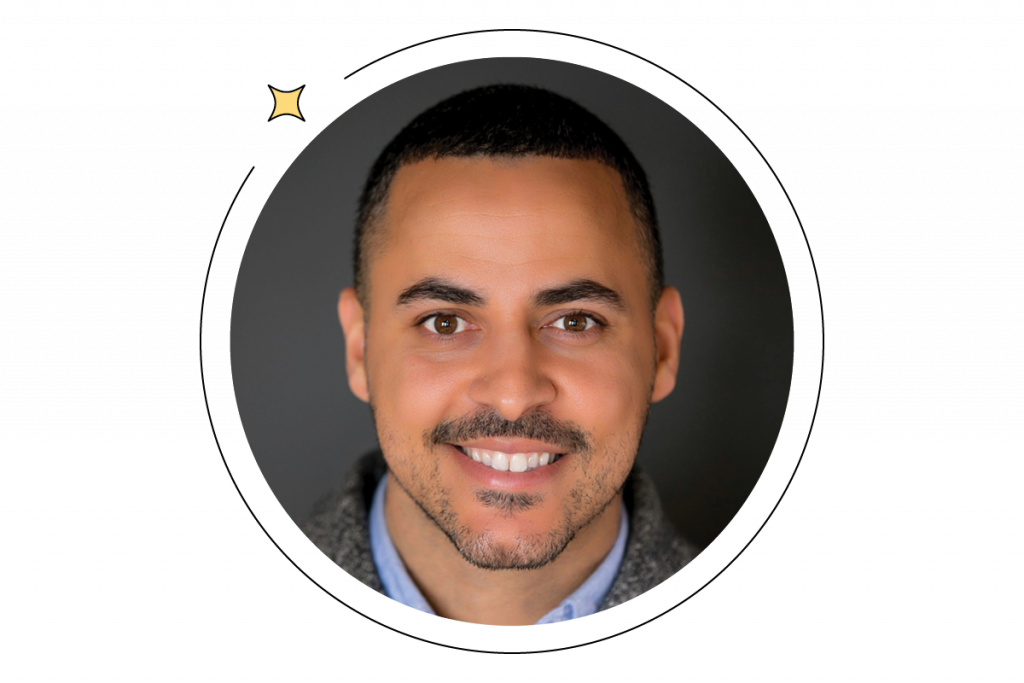
Eric Cross is a 7th grade science/technology teacher, grade level lead, and digital learning innovator for Albert Einstein Academies, International Baccalaureate schools. He is also an adjunct professor of learning and technology at the University of San Diego and a Google certified innovator. Eric earned a bachelor’s degree from Azusa Pacific University and a Master of Education from the University of San Diego. He had 17 years of experience working with at-risk youth and underserved populations before becoming a middle school teacher. By building relationships with students, colleagues, and the community, he has become an empowered leader in and out of the classroom. Through meaningful learning experiences centered around student agency, STEM has become accessible to students through highly engaging lesson design, thoughtful integration of digital tools, and culturally relevant pedagogy.

Smiling person with short hair and a beard, wearing a collared shirt and sweater, against a dark background. Small star icon on the top left of the circular frame.

About Science Connections

Welcome to Science Connections! Science is changing before our eyes, now more than ever. So…how do we help kids figure that out? We will bring on educators, scientists, and more to discuss the importance of high-quality science instruction. In this episode, hear from our host Eric Cross about his work engaging students as a K-8 science teacher. Listen here!

S3 – 06. Bethany and Dan take on Twitter!

Promotional graphic for Math Teacher Lounge Season 3, Episode 6, featuring Bethany Lockhart Johnson, Educator, and Dan Meyer, Director of Research at Desmos.

In this episode, Bethany and Dan take a look at several tweets that caught the most fire on Twitter during the 2021-2022 school year. The pair answer questions about viral teaching methods, the best teaching advice you can give in three words, and if students should use pencils or pens in class. Join them as they take on those questions and several others in a fast-paced episode.

Explore more from Math Teacher Lounge by visiting our main page

Download Transcript

Dan Meyer (00:02):

Hey folks. Welcome back to the Math Teacher Lounge. I’m your co-host, Dan Meyer.

Bethany Lockhart Johnson (00:07):

And I am Bethany Lockhart Johnson. And I’m your co-host, Dan! Hi!

Dan Meyer (00:12):

We’re co-hosts! Hey! Great to see you.

Bethany Lockhart Johnson (00:13):

Dan, this is the last episode of Season 3. Three seasons!

Dan Meyer (00:19):

It’s gotta have a cliffhanger. What will the cliffhanger be? You know?

Bethany Lockhart Johnson (00:22):

The cliffhanger is that we love having guests! It’s one of our most favorite things, because selfishly, we love to talk to all of these amazing folks who are doing this interesting research and thinking about amazing things. But for this last episode, it’s just you and I, Dan. Cliffhanger!

Dan Meyer (00:40):

Yeah. I like this. I like this. So the cliffhanger was last episode, and people are all like, “So who’s the last guest gonna be of the season before we roll out into summer?” And yes, as Bethany said, we love all the fascinating guests we’ve had on throughout these last few seasons. And we realized…who is more fascinating to each other than both of us? You know, let’s talk to each other about things, right? <Laughs> You get that! You get that! Or am I alone here in this? We had this idea about what we should talk about here, and that’s this: I am on Twitter a lot. I’m @DDMeyer on Twitter; throw me a follow; might follow back; who knows? I don’t tweet much. Bethany, what’s your handle on Twitter? Let ’em know.

Bethany Lockhart Johnson (01:22):

I’m @LockhartEdu, and I was much more active pre-mamahood. But I’m still up in there. Go ahead.

Dan Meyer (01:30):

Yep. In there. Yeah, great. So I’ve been keeping track of the hottest conversations in math education Twitter, the conversations that the most people who kind of describe themselves as math teachers in their bios and whatnot have been replying to. We’ve got some little things working in the background, keeping track of this sort of thing. And so we are gonna bring you folks some of those extremely hot conversations, and even better than the questions—which we hope you’ll reply to and tag us in your replies—even more than those questions, we’ll bring you our answers—our answers!—to those questions. Can you believe that? We’ll fully settle these questions! Won’t we, Bethany? My gosh, won’t we?

Bethany Lockhart Johnson (02:15):

Jeez Louise! No! Dan Meyer, the point is not our final word on it! The point is this episode, we’re furthering the conversation. We wanna hear from listeners about what do you think?

Dan Meyer (02:25):

Right. You’re right. You all need someone in your life like Bethany who will help you become the best version of yourself. So here’s the deal. We have several questions in a few different categories. We’re gonna bust through some quick ones, pretty quick. And, uh, there’s some meaty ones as well. Let’s get into it! The first questions come to you all, and us, courtesy of MTL guest Howie Hua, who has a renowned knack for just creating math memes, but also conversation starters that really capture the curiosity and answers of of a grateful nation. So Howie’s first question, which I’ll pose to Bethany, is, “What’s your favorite number?” Bethany? And why is it your favorite number?

Bethany Lockhart Johnson (03:14):

Oh, I love it. OK. Well, the first thing that came to my mind is 12. ‘Cause It’s a highly divisible number. I mean, 2, 6, 3, 4—I love it. And it coincides with the day and month of my birth. Which, like, the double-digit…come on, 12, 12, 12, 12. I dunno, am I giving away, like, my bank security code <laugh> or anything by saying that?

Dan Meyer (03:41):

Yeah. What’s your favorite PIN?

Bethany Lockhart Johnson (03:43):

Let me change my PIN. Yeah, it’s just such a happy, happy number. Well, 12 is, you know, 10 and 2. Two more. Anyway. Love it. What about you, Dan? What’s your favorite number and why?

Dan Meyer (03:55):

I’m into it. I’m into it. I think I would choose 16. Because it’s the first number for me when it was like, “Oh, you can keep on making numbers forever!” Where I’m like, OK, 2times 2 is 4. Great. That’s kind of an elemental expression in mathematics. Four times 2 is 8. OK. But then, 8 times 2 is 16, and it’s like, “Oh, you can just keep doubling that thing over and over and over again!” And I can recall feeling pretty excited that numbers are just like, out there for the finding. For the taking. Cool stuff.

Bethany Lockhart Johnson (04:33):

I’m sorry. Wait, I have to interrupt. You went 2 times 4 is 8 and you didn’t go 4 times 4 is 16? You went 8 times 2 is 16? You wanted to keep the 2 the same?

Dan Meyer (04:49):

Yup. Yup. You can keep on doubling. You can keep on doubling numbers and it just keeps on going.

Bethany Lockhart Johnson (04:53):

More evidence that our brain works very differently.

Dan Meyer (04:56):

We learn more about each other…let me keep this rolling with Howie questions. OK? Howie says, “If you could co-teach with one teacher from Twitter, who would you choose?”

Bethany Lockhart Johnson (05:06):

Oh, oh, it has to be a teacher?

Dan Meyer (05:11):

Or anybody, I guess. I mean, like, I know you love Oprah.

Bethany Lockhart Johnson (05:15):

Can I co-teach with Oprah?

Dan Meyer (05:16):

Yup, yeah, so there we are. <Laugh> Yup. OK. Fair enough. We have to work Oprah into every single episode.

Bethany Lockhart Johnson (05:23):

I’d just love to sit and like, we’d read together, we’d read to the students, and then we’d talk…I mean, obviously it’d be Oprah. But if we’re thinking more of like MTBoS, like math Twitter blogosphere-land, I suppose the person I would wanna co-teach with honestly would probably be Allison Hintz. One of our former guests as well. Her book, Mathematizing Children’s Literature, with Antony Smith, that book—I just love the idea of sitting and doing a read-aloud and then diving into some juicy math that’s inspired by what comes out of that read-aloud. So yes, that’s who I pick. Allison! Let’s co-teach!

Dan Meyer (06:00):

<Laugh> Shout-out to Allison.

Bethany Lockhart Johnson (06:01):

What about you?

Dan Meyer (06:03):

I would choose MTL guest Idil Abdulkadir—because, and this relates to Allison and also Elham Kazemi—they talked about, in our episode about teacher time-outs. And I’m choosing someone who I think is—like I’ve never seen Idil teach, but I work with Idil at Desmos and think she’s fantastic. But what I really want in a co-teacher is someone that I can say, “Whoa, time out, do you see what’s going on here? This is really interesting. What should we do next about this?” And have a little strategy sesh in front of the kids and no one gets freaked out by that. And I think that that’d be a pile of fun. Idil seems like she’d be receptive to that kind of interaction, teacher to teacher. So that’s my vote right there.

Bethany Lockhart Johnson (06:48):

Opportunity for you to grow your own practice, Dan.

Dan Meyer (06:52):

Yeah, yeah, exactly. 100%.

Bethany Lockhart Johnson (06:56):

So Dan, I actually have a question for you from Howie. If we’re on the Howie tweet train, I have one from Howie too.

Dan Meyer (07:04):

Howie had some fire tweets, some fire tweets this current year. Yep.

Bethany Lockhart Johnson (07:08):

Dan, I wanna know: Do you prefer doing math in pen or pencil?

Dan Meyer (07:16):

Ooh, yeah. Oh, I see that Howie says, “I don’t mean to start any drama, BUT,” and then asks the question–

Bethany Lockhart Johnson (07:23):

But!

Dan Meyer (07:24):

I think that Howie lives for drama. I think he knows he’s messy. He lives for drama. He knows what he’s doing this with this question here. He knows.

Bethany Lockhart Johnson (07:32):

DRAAAAMAAAA!

Dan Meyer (07:32):

He knows what he’s doing. Yup. So I would just say it depends. Is that cheating? Like if I’m doing math to learn, or if we are learning in that process, then I want to use pen, actually. I wanna see the tracks of the thinking. And if we’re doing it for presentation, like if I’m presenting something, I wanna…I guess that’s an area where I’d be fine to not erase things. I don’t wanna prep it so it’s, you know…I guess you could use pen for presentation also. Just pen. Period. But I wanna see the tracks of the thinking if we’re doing some learning versus presentation. What about you?

Bethany Lockhart Johnson (08:09):

Well, I heard the voice in my head telling one of my kindergartners, “No, you cannot do that in sparkly pen. You need to do it in pencil.” And I was like, “Wait, whose voice is that?” It was one of my math teachers telling me I couldn’t do it in pen! Why couldn’t this kid do it in pen? Sure! Do it in a sparkly pen! So I wanna say do it in pen. And since usually pen is what I have around…I mean, I do crosswords in pen, Dan.

Dan Meyer (08:36):

Wow, wow. With a piece of paper and math, you have lots of room to re-revise and cross off…but those little, little boxes on the crossword, that says a lot about your commitment to pen.

Bethany Lockhart Johnson (08:46):

I got really good at making an A into an H or a P or whatever we need. So I would say, “Hey, if you’re in the room with your kiddos and you’re doing math, if somebody wants to do pen, let them do pen.” But I do know that I’ve seen teachers say you need to do pen so that I can see all of your thinking. So I think I hear what you’re saying. But do you think it should be like a classroom rule or something?

Dan Meyer (09:13):

Oh, no, no, no. I mean, I’m gonna ask you like, “How’d you get to this destination?” And I wanna know process somehow, and I think you’ll get tired of having to explain it verbally rather than just, like, showing. Just don’t erase stuff. Don’t scratch stuff off. Let’s let’s see how you’re getting there. That is what I’m into.

Bethany Lockhart Johnson (09:30):

Thanks, Howie, for that trio of thought-provoking tweets, because I genuinely wanted to know what Dan thought and what our listeners think. I mean, Dan, I gotta say: Howie, you say you don’t wanna cause drama, but I gotta say I’m with Dan on that—

Dan Meyer (09:50):

Got the gift. Got the gift for drama. We’re still friends though. So I’m happy about that. Our next section, I got a few more questions queued up here and these ones relate to advice for educators, advice for yourself. Good advice, bad advice, that kind of thing. So let’s jump in. I would love to know—this one’s from Pernille Ripp—I’m very curious, Bethany, what is the worst teaching advice you have gotten in your life, ever?

Bethany Lockhart Johnson (10:19):

<Laugh> Ooh. OK. Um, worst teaching advice was: “That’s OK, just move on anyway.” And that was in terms of pacing. It was like, students needed to do a deeper dive and the teacher who I was chatting with said, “No, no, it’s fine; it’s fine; just move on. Just move on to the next chapter.” That was probably the worst advice, because no, I don’t think that’s what I should have done at all! <Laugh>

Dan Meyer (10:48):

Right.

Bethany Lockhart Johnson (10:48):

But I was a first-year teacher and I was trying to figure it out. And I learned that that was not good advice. And I understand the pressure of pacing. But it was totally antithetical to the type of listening to my students that I want to do in my craft. And this teacher meant well, but that was not good advice, teacher! <Laugh> What about you, Dan? What is the worst teaching advice?

Dan Meyer (11:13):

I dig that. That feels similar to one of the replies to Pernille here. Frances Klein says, “Never let them know you’ve made a mistake” being particularly bad advice. You know, just this like idea of like moving along, covering your tracks, not backtracking or admitting mistakes, those all feel kind of a piece. The worst advice I think I’ve ever received, and I wasn’t given this often, but it’s echoed by a lot of the commenters here on this tweet, which is “Don’t smile until X, Y, or Z,” where X, Y, and Z are like Christmas, October, December, January. Just the idea that you’ve gotta develop—

Bethany Lockhart Johnson (11:54):

Wait, what?

Dan Meyer (11:55):

<Laugh> Did you never hear this from anybody? Don’t smile until Christmas? Perhaps this is more—

Bethany Lockhart Johnson (11:59):

I’m a kindergarten teacher! Can you imagine? If I don’t smile the second they walk in? The tears?! The parents’ tears?! The kids’ tears?! If I’m just like, stoic?

Dan Meyer (12:07):

Yeah. Well.

Bethany Lockhart Johnson (12:08):

So explain it to me.

Dan Meyer (12:10):

Well, the idea is, is that, you know, for older kids, they’re scoping you, they’re clocking you for weakness, they’re looking at you, they’re looking to take advantage. And so “don’t smile until Christmas” is like, hey, you can always relax. You can always relax your discipline, but you can’t UN-relax it if you start out, you know, Mr. Happy Pants Meyer. Which—

Bethany Lockhart Johnson (12:33):

Smile perceived as weakness.

Dan Meyer (12:36):

Yeah. Very obviously poor advice. Eventually you come to realize that like having a rapport and a relationship that is trusting and warm and demanding, that has high expectations, that’s the best kind of classroom management. Not some kind of persona built around intimidation or stoicism, that kinda thing. So, terrible, terrible advice!

Bethany Lockhart Johnson (13:01):

I feel like I did have a few of those math classes. Yeah.

Dan Meyer (13:04):

Yeah, exactly. <Laugh> You loved them, right? They were like your favorite math classes. It was a blast, right?

Bethany Lockhart Johnson (13:11):

<Laugh> So we have to ask the opposite. Thank you, Daniel Willingham, who said, “What’s the best advice you got?” But hold on, Dan, he didn’t just want the best advice. He wanted the best advice in three words.

Dan Meyer (13:26):

Oh yeah. He doesn’t, he doesn’t want a book or dissertation or even a blog post or even a tweet. He wants just three words.

Bethany Lockhart Johnson (13:32):

I think maybe that might have been to me. <Laugh>

Dan Meyer (13:34):

This is someone who’s doesn’t have much time for this advice, wants it distilled down. I’m just obviously stalling here as I try to think about this. I don’t know, there’s just like so much nuance lost here. I would say, listen to students, listen to students. I can’t say more that, I guess. I guess I’m done. I can’t say more than that there. But you’re in a bad place if you’re not listening carefully to students. How about you?

Bethany Lockhart Johnson (14:04):

  1. Mine is “Ask…lots…questions.”

Dan Meyer (14:11):

Nice. ‘Cause I filled in the word! I filled in the word! I was able to kinda infer that. I did that. I got that.

Bethany Lockhart Johnson (14:17):

Wait, wait, wait, wait! I could have said many! Wait, I could have said “Ask many questions.”

Dan Meyer (14:22):

Strong, strong.

Bethany Lockhart Johnson (14:25):

So yeah. You know, no isolation, like don’t put yourself in a bubble. Ask, not just, not just your students, but the teachers! Ask a lot of questions. You don’t have to have it all figured out.

Dan Meyer (14:34):

Into it. Very much into it.

Bethany Lockhart Johnson (14:37):

Thanks. Daniel. Thanks, Pernille.

Dan Meyer (14:40):

Yeah. Daniel and Pernille, Both great questions there about advice, best and worst. Another fire tweet popped up earlier this year from Dr. Khristopher Childs, which was “Name one thing every educator should stop doing.”

Bethany Lockhart Johnson (14:57):

Oh, I don’t know. This kind of ties into my best advice about asking questions.

Dan Meyer (15:03):

Stop not asking questions?

Bethany Lockhart Johnson (15:06):

<Laugh> Avoid the isolation. I really love this idea of when we can, popping into each others’ classrooms, co-teaching, building this collaborative nature. Elham Kazemi, in our interview, talked about this idea of, like you said, the teacher time-outs, learning from each other. So I feel like if we could stop isolating ourself…and I don’t mean at lunch—sometimes you need to not be in the teacher lounge at lunch. Like if you need a minute, take the minute! But in general, as a practice, how can we not be isolated and instead be learning with, and from, each other? How can we stop the isolation? That’s what I would hope every educator would stop doing. What about you, Dan?

Dan Meyer (15:54):

I think that educators should…this is gonna require a little bit of elaboration. I think educators should stop taking responsibility for things that are not in their zone of influence. I think that as a society we are asking teachers to do more and more, to become more and more of a central fixture holding together with chewing gum and twine all the various parts of a student’s life. From their health, their fitness, emotional health, that we feed students at school. It becomes very tempting, I think, there’s a lot of pressures to blame outcomes, disparate and unjust outcomes later on in life, on teachers. And teachers should just flatly refuse. And to yeah, understand what the job has been set up to do. What it’s good for. And do that with excellence and intent and a lot of effort. And then not take responsibility for the rest of it.

Bethany Lockhart Johnson (16:53):

If I asked five different people about the definition of what a teacher should be doing, I would get five different answers. So I think it’s really interesting that you say that because yeah, many, many hats, which I think, yes, can lead to burnout. Can lead to all sorts of things. We’re asking schools to be all things to all, all people. Interesting. I’m gonna think about that more. I need to hear folks’ response on that, Dan.

Dan Meyer (17:18):

Mm-Hmm. I’m curious too. I mean, yeah, there are definitely things that are in teachers’ responsibility and some that are not. That’s a tough one.

Bethany Lockhart Johnson (17:26):

OK, for help, name an example of each. And what’s something that you think every teacher should not and should be doing. ‘Cause I feel like my brain goes to some things like, you know, I had teachers who were saying, “Well, I don’t wanna have my kids have to have breakfast in my classroom in the morning. That shouldn’t be my responsibility to serve breakfast in the morning.” But I’m like, “But then your kids are eating and they’re gonna be able to learn and be more focused.” Should that be the teacher’s responsibility? I’m not saying it necessarily should, but I’m saying…I don’t know. It gets murky for me.

Dan Meyer (18:06):

Yeah, for sure. I mean, I think that we should, as a country, have a really generous social welfare net so that everyone has food at home. Where a school is not the place where some students have to go to in order to receive nutrition and nourishment. That seems sad to me. And uncommon in developed nations. I think that teachers should watch out for, should be responsible for, the mathematical development of the students they teach, up to a point, they should be responsible for learning math and creating relationships in their classes. I don’t think that teachers should accept responsibility for larger kinds of outcomes, like the health of a democracy or international competition, who goes to the moon first. That kind of thing has historically been placed at the feet of teachers. And it’s tempting when you’re a teacher, I think, to take on that responsibility because it kind of develops your social importance. And I just say, we should say no to that. And get compensation, not in terms of social importance, but rather like in spendable dollars and monies.

Bethany Lockhart Johnson (19:10):

I’m learning more about you, Dan. And you know, this is what I’ve gotten from that answer: If you’re gonna dream, dream big. Right?

Dan Meyer (19:17):

Is that what you got from that? I don’t know. I think I’m trying to dream realistically.

Bethany Lockhart Johnson (19:23):

No, like if we’re gonna say, “Maybe teachers shouldn’t be responsible for serving breakfast in the morning,” well, because we want every child to have access to nutritious and filling food at home and time to eat it in the morning, right? It’s bigger than just, “I don’t want the teacher to have to do this.” So we’re dreaming big. We’re saying this should be the LEAST that students have access to, right?

Dan Meyer (19:53):

Yeah. Yeah. I’m here now. I’m with you. I like that dream. Where we take care of folks in their lives outside of schools. So schools don’t have to be the one linchpin for every kind of social outcome. Like currently a lot of them run through a school ’cause we don’t do a good job of setting up other ways to meet those needs. And we should.

Bethany Lockhart Johnson (20:16):

And we’re also recording this in, what, two weeks, a week, after a tragedy where students and teachers were killed in the classroom. And I think both of us are taking some deep breaths and recognizing that there’s a lot of debate that is happening about what teacher’s role should be in preventing this in the future. And I don’t know if you’ve done drills in your classroom that are supposed to help mitigate disaster, but you know—collective deep breaths— <laugh> is where we’re at right now.

Dan Meyer (20:52):

Yep. The idea of “we should arm teachers” is another example of no, we should not do that. We should solve the tendency towards violence outside of the classroom so that teachers and students can teach and learn. That sounds awesome to me.

Bethany Lockhart Johnson (21:06):

Collective deep breath. Whew. OK. So what else you got for me, Dan?

Bethany Lockhart Johnson (21:33):

Ooh. So I feel like I’ve heard that in many teaching PDs. “I Do, you do, we do.” Actually I feel like I’ve seen like more “I do, we do, you do.” Like graduated release. I do it, then we’ll do it a little bit together, and then now you have permission to do it. And I feel like in directed draw, that’s a hundred percent true. Like I’m gonna show you this and then you draw it. And then you cut here and then you do it. If we’re trying to create this, like I’m teaching this new art technique. But in mathematics, I feel like that’s really not what I want my classroom to look like. I want to support my students and set them up for sense-making, and then I want them to try it out and I don’t want them to solve it the way it first comes to mind for me. I wanna see how they make sense of it and how they solve it. And then I want us to share it with each other so we can grow together. So I think time and place for “I do, you do, we do,” or “I do, we do, you do.” Or shoo-be-doo-be-doo-be. Yeah. You?

Dan Meyer (22:44):

I’ve got nothing. I have nothing to add. I thought that was just an excellent summary of a classroom I would love to be a part in, love to teach. I think it’s a certain tool in the toolbox that I think is overused. But it’s also a tool that can be useful in the case of certain kinds of operations. There are some operations that do benefit from “let me just show you how, like one way you might do this.” I don’t know. I’m like helping my kid whack a nail into a board and there’s a moment where it’s like, “Hey, actually, lemme just show you one way you can do this,” and do it, and then that’s helpful in some moments. But for so much of math, a lot of math does not relate to the operational kinds of fluency. And in those instances, it’s a little bit…it’s not a useful tool, I don’t think, for those kinds of skills and ideas.

Bethany Lockhart Johnson (23:34):

I’m thinking of tool talks in my classroom. So in kindergarten, many of the tools that we use in math and just in class in general, are new to the students. And if I tell them, this is exactly how you should use this tool, then I feel like I’m taking a lot of the sense-making away from them. But if I introduce the tool, show them how to use the tool safely, show them this is not a safe way to use the tool, chewing on this is not safe. That’s not how we use this tool. This is how we take care of it, et cetera. But then support different modes of using the tool that are gonna help them use it to solve problems and make sense, I think…but I guess—Dan, have you heard “I do, you do, we do,” or is it “I do, we do, you do”?

Dan Meyer (24:22):

I’m with you. And I think that it got clarified post-tweet. But yeah, it typically is “I do, we do, you do,” the gradual release of responsibility it’s often called. And I, I have heard people do what you described, which is…what is it? It’s “You do, we do, I do”? Like an inversion of that? Like have people do a thing that I can do that’s not too, too abstract for them, and then like “We all do something together, and then I’ll offer a summary of what we learned,” is one way that goes. I like that tool as well.

Bethany Lockhart Johnson (24:53):

I think particularly, at least I’ve seen in elementary classrooms, there’s sometimes this fear of letting students just try it out before I’ve really showed them, “but this is how it has to be.” And what I am most excited about is supporting students and creating a classroom environment where students don’t need my permission or need my direct “this is the only way to do it.” Instead, it’s like, yes, there’s lots of things we model. But there’s also like, “Hey, what do you think? How do you think this should be used?” And the joy of that exploration.

Dan Meyer (25:30):

Yeah. There’s a feeling of efficiency that comes from “I do, we do, you do,” for some kinds of math, but it’s undercut in my experience by what it cultivates in the students, which is “I’ve gotta wait until the teacher does before I can do anything.” So it pays off real diminishing returns over time. And it’s, just for me, an exhausting way to teach. Always being the bottleneck for new learning is a total drag.

Bethany Lockhart Johnson (25:55):

Ooh, what a great way to describe it. You do not wanna be the bottleneck. You want to be…what’s the other thing? The facilitator? What’s the opposite of a bottleneck? The flowing river? The…The…Help me!

Dan Meyer (26:10):

Hit us up in the replies. I dunno. The opposite of a bottleneck. That’s what you wanna…you wanna not be the opposite? No, you want, yeah. We got this here. We’ll figure it out. We’ll get back to you. <Laugh> OK. Well, folks, those were a few of this year’s fire tweets. It’s been fantastic chatting with you—

Bethany Lockhart Johnson (26:29):

Dan.

Dan Meyer (26:29):

—Bethany, About all those—

Bethany Lockhart Johnson (26:32):

Dan. You know, my favorite thing to do is interrupting you, Dan. I have to interrupt you because we can’t end fire tweets, Dan, without including a tweet from you.

Dan Meyer (26:43):

Oh, that’s true. I do have my moments. Yeah, we should. We really should. <Laugh> Do you have one in mind?

Bethany Lockhart Johnson (26:50):

No. Dan. Yes. I loved…you tweeted recently, “How many years have you been teaching?” Which, OK. “What Has been like the most influential? Like, what, OK, blah, blah, blah.” <blathering noises> You tweeted, “How many years have you been teaching? And at this point, what has most influenced how you teach?” And you gave some ideas: A methods course, PD sessions, curriculum, TV and movies, et cetera, et cetera. And I love that you put that out there because this episode is coming out as we’re wrapping up another school year. And it also got me thinking about summer and what teachers sometimes do during the summer, but what we might need to do this summer for self-care. But I’m really curious. I love that tweet. And I’m curious, Dan, what did folks say was the thing that had most influenced their teaching and what’s most influenced your teaching?

Dan Meyer (27:49):

Ooh, yeah. People’s responses to this one were really fantastic. I came into this, I was flying to the Association of Mathematics Teacher Educators conference. And I just found myself wondering, so, the pre-service year, the one year of, like, you’re learning how to teach, is how we did it in California. Like how much of that has still infused my practice? And in what ways? I don’t think I think about that stuff consciously, but I think that did like set me up with a lot of images that I would be unpacking for going on two decades now working in education. I think conversations with people, I think observing classes, I don’t think that like the one-day PDs, the one-day development days throughout the year, four times per year, I don’t think those stuck to me much. I think that this summer, I have learned so much, just an embarrassment of riches, from non-educational sources. From other disciplines. From storytelling, for instance. From how people have constructed movies I like. I am proud of the way…one of the aspects of my character that I’m proud of—it takes a lot to admit this, as I’m sure you understand, Bethany—but to integrate lots of wacky stuff and pick from it and use that to affect my practice and teaching has been really positive. So for this summer, I hope that people read a good beach book and just kinda let your teaching mind rest a little bit. And in doing so, create some openings for new ideas about education from other parts of the world. Kids! Having kids has been helpful. I don’t know! Just everything! It’s such a big job, education. Everything has so helpful. What about you? What’s an influence on your practice that might surprise me or other folks out there in MTL land?

Bethany Lockhart Johnson (29:52):

Well, I don’t know about surprise. I mean, I definitely feel similarly, like methods courses absolutely impacted my teaching. But I feel like opportunities where I was able to observe other teachers and where I was able to have conversations with folks about their practice, that has deeply impacted me. And books I’ve read. I mean, honestly, I’ve learned so much from sharing with other teachers. Like, for example, maybe I’ll bring student work and we’ll talk about it. And we kind of create this conversation together about how we wanna come back to the students based on the work we see. Those type of moments where we’re collaborating and we’re bringing multiple perspectives to the table, that I think, has really often shifted me out of my first initial reaction or what I thought I was going to do in the classroom the next day. So that continues to surprise and delight me. And thinking about this summer, I think there’s a lot of creativity and joy that can come out of the marination process, when you’re just kind of sitting back and healing yourself, whether through sleep or sunshine or time with friends and family or whatever that looks like for you. I think there’s a lot of creativity that can come from that place of fertile, you know, wellness. I never think of that as wasted time. I think of that as getting the soil ready for all that’s gonna come in the fall. And that being said, I also think it could be a fun time to dip your toes into something that you are excited to read, that you might not have a chance to read during the school year that could be teaching-related. So it’s like very low pressure, like, “Oh, I’ve really wanted to read more by this author. I’ve wanted to read this article. I’ve wanted to dip into this topic.” And not with a pressure, but just with a curiosity. And, yeah, I think so often we as teachers love learning, and to give yourself space to learn in whatever that looks like can be a real gift.

Dan Meyer (32:09):

Yes. And if you need book recommendations, hit the MTL back catalog of episodes. Loads of folks that we interviewed have real good books out.

Bethany Lockhart Johnson (32:16):

Yes!

Dan Meyer (32:16):

Think about it. Think about it.

Bethany Lockhart Johnson (32:22):

One quick recommendation: Again, gotta plug Antony Smith and Allison Hintz’s book. I read Mathematizing Children’s Literature before we did the interview, but this summer I wanna read all the children’s books that they mention. I just wanna go to the library and read all those children’s books. I wanna read them to my son. I wanna read ’em to myself. So, you know, diving into some good YA, children’s books, just, like, TLC. Dan, thank you for such a rich season and a chance to have so many interesting conversations. It is genuinely a joy to learn with and from you.

Dan Meyer (33:00):

Likewise. And always hope to see you folks on Twitter now and then. Let us know what you’re up to this summer at MTLShow on Twitter or in our Facebook group, Math Teacher Lounge. We’ll be there tuning in now and then. It’s been a treat interacting with you folks over this last season. Take care and until the new season, so long.

Stay connected!

Join our community and get new episodes every other Tuesday!

We’ll also share new and exciting free resources for your classroom every month.

What Bethany Lockhart Johnson says about math

“I’ve learned so much from sharing with other teachers… Those type of moments where we’re collaborating and bringing multiple perspectives to the table, I think, has really often shifted me out of my first initial reaction or what I thought I was going to do in the classroom the next day.”

– Bethany Lockhart Johnson

Meet the guests

Dan Meyer

Dan Meyer taught high school math to students who didn’t like high school math. He has advocated for better math instruction on CNN, Good Morning America, Everyday With Rachel Ray, and TED.com. He earned his doctorate from Stanford University in math education and is currently the Dean of Research at Desmos, where he explores the future of math, technology, and learning. Dan has worked with teachers internationally and in all 50 United States and was named one of Tech & Learning’s 30 Leaders of the Future.

Bethany Lockhart Johnson

Bethany Lockhart Johnson is an elementary school educator and author. Prior to serving as a multiple-subject teacher, she taught theater and dance and now loves incorporating movement and creative play into her classroom. Bethany is committed to helping students find joy in discovering their identities as mathematicians. In addition to her role as a full-time classroom teacher, Bethany is a Student Achievement Partners California Core Advocate and is active in national and local mathematics organizations. Bethany is a member of the Illustrative Mathematics Elementary Curriculum Steering Committee and serves as a consultant, creating materials to support families during distance learning.

A woman with curly hair and glasses smiles outdoors; a man with short dark hair smiles indoors in front of a blurred math teacher lounge, highlighting valuable math teacher resources.
A graphic with the text "Math Teacher Lounge with Bethany Lockhart Johnson and Dan Meyer" on colored overlapping circles.

About Math Teacher Lounge: The podcast

Math Teacher Lounge is a biweekly podcast created specifically for K–12 math educators. In each episode co-hosts Bethany Lockhart Johnson (@lockhartedu) and Dan Meyer (@ddmeyer) chat with guests, taking a deep dive into the math and educational topics you care about.

Join the Math Teacher Lounge Facebook group to continue the conversation, view exclusive content, interact with fellow educators, participate in giveaways, and more!

Season 8, Episode 8

The plea to preserve deep reading, with Maryanne Wolf, Ed.D.

A name known throughout the literacy world, Maryanne Wolf, Ed.D., directs the Center for Dyslexia, Diverse Learners, and Social Justice at the University of California, Los Angeles. She’s published over 170 scientific articles  and four books focusing on the science of the reading brain. In this episode she discusses the reading brain in a digital context and delves into some of the tensions around literacy instruction in the present moment, including the Science of Reading beyond just phonics, the plea to preserve deep reading, and literacy and screens. She also talks about the topics she’s most focused on and the ones she feels are most pressing in general when it comes to research on the brain and literacy. And she ends with an impassioned message to teachers, expressing her deep respect and gratitude.

Meet Our Guest(s):

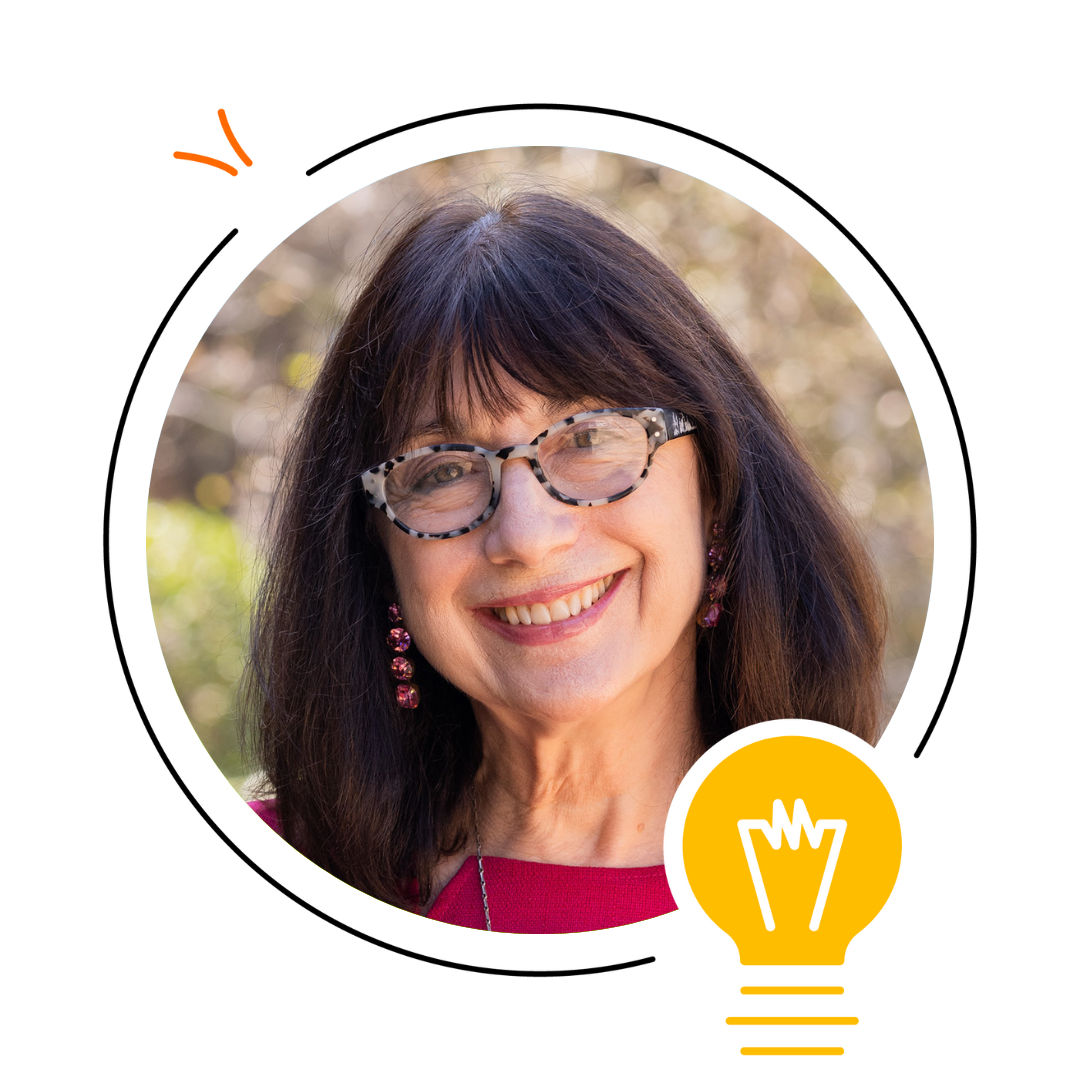
image of Maryanne Wolf

Maryanne Wolf, Ed.D.

Maryanne Wolf advocates for children and literacy. She directs UCLA’s Center for Dyslexia, Diverse Learners, and Social Justice. She has published over 170 articles and four books, including Proust and the Squid: The Story and Science of the Reading Brain; Dyslexia, Fluency, and the Brain; Tales of Literacy for the 21st Century: The Literary Agenda; and Reader, Come Home: The Reading Brain in a Digital World. She is a frequent speaker at the Pontifical Academy of Sciences.

Meet our host, Susan Lambert

Susan Lambert is the Chief Academic Officer of Elementary Humanities at Amplify, and the host of Science of Reading: The Podcast. Her career has been focused on creating high-quality learning environments using evidence-based practices. Lambert is a mom of four, a grandma of four, a world traveler, and a collector of stories.

As the host of Science of Reading: The Podcast, Lambert explores the increasing body of scientific research around how reading is best taught. As a former classroom teacher, administrator, and curriculum developer, Lambert is dedicated to turning theory into best practices that educators can put right to use in the classroom, and to showcasing national models of reading instruction excellence.

Retrato de una mujer caucásica sonriente con cabello rubio corto, involucrada en un podcast sobre la ciencia de la lectura, con gafas, lápiz labial rojo y un collar de perlas.

Quotes

“What I would say to any teacher of balanced literacy: Let us bring our best selves and expand our knowledge. We both have things we can learn from each other. ”

—Maryanne Wolf, Ed.D.

“Pass on why you learned to be a teacher. Pass it on to your students. Let’s make that next generation of teachers truly excited about what we can do to release the potential of every child.”

—Maryanne Wolf, Ed.D.