Amplify Science – Oklahoma
Inspiring the next generation of Oklahoma scientists, engineers, and curious citizens
Amplify Science is an engaging new core curriculum designed for three-dimensional, phenomena-based learning.
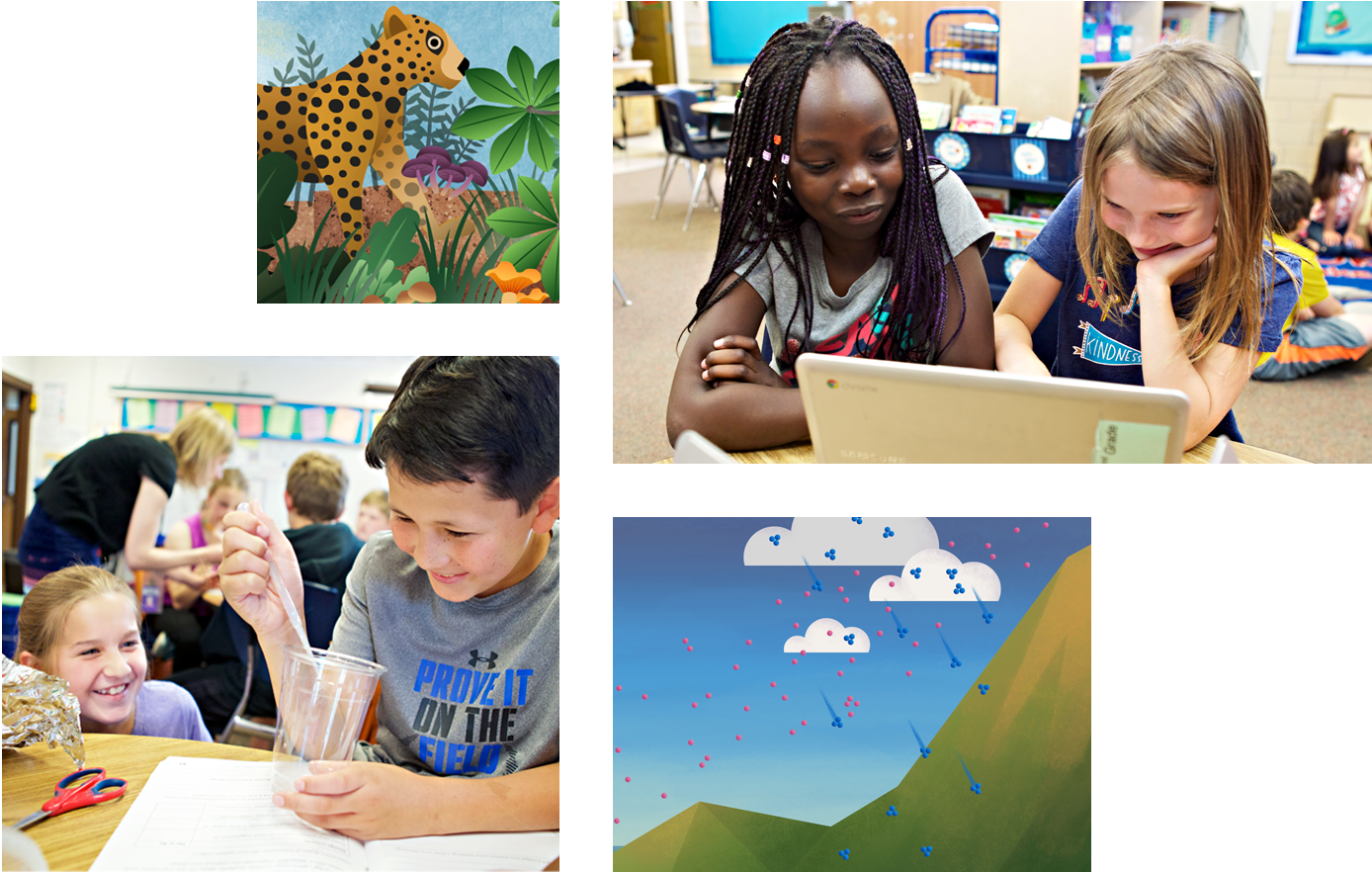
A powerful partnership
Amplify Science was developed by the science education experts at UC Berkeley’s Lawrence Hall of Science and the digital learning team at Amplify.
Our Instructional Model
The Amplify Science program is rooted in the proven, research-based pedagogy of Do, Talk, Read, Write, Visualize. Here’s how each element works:
DO
First-hand investigations are an important part of any science classroom, and Amplify Science has students getting hands-on in every unit, from building models of protein molecules to experimenting with electrical systems.
TALK
Student-to-student discourse and full class discussions are an integral part of the program. Students are provided with numerous opportunities to engage in meaningful oral scientific argumentation, all while fostering a collaborative classroom environment.
READ
Students read scientific articles, focusing their reading activities on searching for evidence related to their investigation, and importantly, on asking and recording questions as they read through fascinating texts on 21st-century topics.
WRITE
Following real-world practices, students write scientific arguments based on evidence they’ve collected, making clear their reasoning about how a given piece of evidence connects to one of several claims.
VISUALIZE
By manipulating digital simulations and using modeling tools to craft visualizations of their thinking— just as real scientists and engineers do—students take their learning far beyond the confines of what they can physically see in the classroom in an exciting and authentic way.
Resources to support your review
- What’s so phenomenal about phenomena? – ebook
- Phenomena in grades K–5
- Phenomena in grades 6–8
- Student Books in grades K–5
- Literacy-rich science instruction in grades K–5
- Active Reading in grades 6–8
- Engineering in Amplify Science
- Oklahoma standards correlation for grades K–8
- Program structure for grades K–5
- Program structure for grades 6–8
- Oklahoma recommended scope and sequence for grades 6–8
Remote and hybrid learning supports

Oklahoma remote and hybrid overview video
Amplify has launched a new remote learning solution called Amplify Science@Home. Intended to make extended remote learning and hybrid learning easier, Amplify Science@Home includes two useful options for continuing instruction: @Home Videos and @Home Units.
Amplify Science @Home Videos are recordings of real Amplify Science teachers teaching the lessons. For those teachers who are unable to meet synchronously with their students, the recorded lessons are a great way to keep their students on track and engaged with Amplify Science while at home. These videos will be produced for all K–5 units, and for the first four units of each 6–8 grade level. Their release will be rolling, beginning in August.
Amplify Science@Home Units are modified versions of Amplify Science units, strategically designed to highlight key activities from the program. The @Home Units take significantly less instructional time than the complete Amplify Science program and allow students to engage with science at home. @Home Units will be developed for all Amplify Science K–8 units. Each @Home unit includes:
- Teacher overviews explaining how to use the materials, including suggestions for enhancing the @Home Units if synchronous learning or in-class time with students is available.
- Overviews to send home to families.
Student materials are available in two formats:
- @Home Slides (PDF/PPT) + Student Sheets (PDF) for students with access to technology at home.
- Downloadable @Home Packets (PDF) for students without access to technology at home.
Download the Remote and hybrid learning guide.
What’s included
Flexible resources that work seamlessly together
Science articles
The middle school science articles serve as sources for evidence collection and were authored by science and literacy experts at the Lawrence Hall of Science.

Student Investigation Notebooks
Available for every unit, the Student Investigation Notebooks provide space for students to:
- Record data
- Reflect on ideas from texts and investigations
- Construct explanations and arguments
Available with full-color article compilations for middle school units.

Digital student experience
Students access the digital simulations and modeling tools, as well as lesson activities and assessments, through the digital student experience. Students can interact with the digital student experience as they:
- Conduct hands-on investigations
- Engage in active reading and writing activities
- Participate in discussions
- Record observations
- Craft end-of-unit scientific arguments

Teacher’s Guides
Available digitally and in print, the Teacher’s Guides contain all of the information teachers need to facilitate classroom instruction, including:
- Classroom Slides
- Detailed lesson plans
- Unit and chapter overview documentation
- Differentiation strategies
- Standards alignments
- In-context professional development

Hands-on materials kits
Hands-on learning is at the heart of Amplify Science. Each unit kit contains:
- Consumable and non-consumable hands-on materials
- Print classroom display materials
- Premium print materials for student use (sorting cards, maps, etc.)

Scope and sequence
GRADE |
UNIT |
| Kindergarten |
|
| Grade 1 |
|
| Grade 2 |
|
| Grade 3 |
|
| Grade 4 |
|
| Grade 5 |
|
Grade |
Units |
|
Grade 6 |
|
|
Grade 7 |
|
|
Grade 8 |
|
Oklahoma Academic Standards for Science coverage
Amplify Science was designed from the ground up to meet the Next Generation Science Standards (NGSS), and the Oklahoma Academic Standards for Science (OASS) are closely aligned to the NGSS at K-8. The guidance below is meant to provide support for integrating additional activities that support full coverage of the OASS. You can view the full K–8 OASS correlation here.
Organized by grade level, each section below will outline:
- additional activities that support 100% alignment to the Oklahoma Academic Standards for Science;
- the standard being addressed with the activities;
- the recommended placement of the activities within a specific Amplify Science unit; and
- PDFs of any accompanying materials that are necessary to implement the activities.
Standard: 1.ESS3.1: Communicate solutions that will reduce the impact of humans on the land, water, air, and/or other living things in the local environment.
Recommended placement: Animal and Plant Defenses unit, Chapter 1
Materials: The Student Book Investigating Monarchs from the unit Needs of Plants and Animals
Investigating Monarchs emphasizes the needs of monarch caterpillars and butterflies and shows what happens when these animals are not able to meet their needs. The book first introduces the life cycle of monarchs, explaining that monarch caterpillars must eat milkweed to survive and change into butterflies. Their summer habitat must have milkweed. The butterflies then migrate a long distance, from the United States to a forest in the mountains of Mexico, where they take shelter in the trees. Their winter habitat must have trees. Scientists discovered that the monarch population in Mexico was greatly reduced because people were cutting down the trees. The forest was then protected, but the monarch population did not recover as expected. Scientists in the United States found evidence that this was because fields with milkweed are being replaced by farms and buildings. This book could be read with the class either before or after Chapter 1 of the Animal and Plant Defenses unit, which focuses on what plants and animals need to do to survive. Students could be asked to reflect on what the monarchs need to survive (including food and shelter), and how human activities impacted the monarchs’ ability to meet those needs. After reading the book, students could brainstorm ideas for how to reduce the impact of humans on the local environment.
Standard: MS-PS4-2: Develop and use a model to describe that waves are reflected, absorbed, or transmitted through various materials.
Recommended placement: Metabolism unit, Lesson 3.3, addition to Activity 5
Materials: “What Eyes Can See” science article
As students investigate metabolism and the body systems, the article “What Eyes Can See” should be assigned to deepen their understanding of information processing and sense receptors and connect that understanding to the emerging idea of the interaction of waves with various materials. The article explores how the only thing we can really see is light. Light travels from a light source to the eye, passing through some materials and bouncing off others. Tiny organs inside the eye called rods and cones absorb energy from light, making vision possible. These interactions between light and materials determine our visible world.
Instructions:
Download the PDF “What Eyes Can See” above and remind students of the Active Reading Guidelines. Before students read the article, invite them to share prior experiences. For example, “Have you ever had an experience where something looked different in one kind of light than in another kind of light? Or where something seemed to appear or disappear when the light changed?”
Standard: MS-PS3-1: Construct and interpret graphical displays of data to describe the relationships of kinetic energy to the mass of an object and to the speed of an object.
Recommended placement: Harnessing Human Energy unit, Lesson 1.4, after Activity 4
Materials: Force and Motion Simulation; Activity instructions and copymasters
In this activity, students use the Force and Motion Simulation to investigate the relationship between kinetic energy, mass, and velocity.
Instructions
Download the PDF linked above for the Lesson Guide and copymasters needed for the activity. Note that this investigation is typically implemented during the Force and Motion unit. This means the Lesson Guide will contain some incongruous labeling (e.g., unit name), as well as instructions that are out of context and unnecessary for the purposes of addressing this standard at grade 7. We suggest skipping to step 4 of the Instructional Guide to avoid some of this. Your students will get additional exposure to this activity, and indeed the standard as a whole, when they get to the Force and Motion unit in grade 8.
Standards:
- MS-PS2-3: Ask questions about data to determine the factors that affect the strength of electric and magnetic forces.
- MS-PS2-5: Conduct an investigation and evaluate the experimental design to provide evidence that fields exist between objects exerting forces on each other even though the objects are not in contact.
Recommended placement: Force and Motion unit, after Lesson 1.5
Materials: Flextension PDF
This hands-on activity builds on and reinforces students’ understanding of forces that act at a distance, with a focus on electrostatic force. Students explore electrostatic forces, prompted by a set of challenges that they try to accomplish. Next, students generate scientific questions based on their observations. Electrostatic force is less predictable and consistent than magnetic force, and investigating it can be both challenging and intriguing. The purpose of this lesson is for students to gain firsthand experience with electrostatic force and to gain experience generating scientific questions based on observations. You might choose to include this Flextension if you would like your students to have more exposure to electrostatic force, and if you would like to challenge your students to explore and ask questions about a challenging type of force.
Instructions:
Download the PDF linked above for a detailed Lesson Guide and the copymasters associated with the activity. Note that this activity is typically implemented as an add-on Flextension during the Magnetic Fields unit. This means that you will see some information that is out of context (e.g., placement information, unit title), but the activity itself also works for the purposes of the Force and Motion unit. If you have any questions, please reach out to our support team via the chat icon in your account or help@amplify.com.
Explore the Digital Teacher’s Guide
When you’re ready to review, click the orange button below and use your provided login credentials to access the Amplify Science Digital Teacher’s Guide.
To help familiarize yourself with navigating the digital Teacher’s Guide, watch our navigational guide videos:
Grades K–5:
Grades 6–8:
Looking for help?
Powerful (and free!) pedagogical support
Amplify provides a unique kind of support you won’t find from other publishers. We have developed an educational support team of former teachers and administrators who provide pedagogical support for every Amplify curriculum, assessment, and intervention program. This service is completely free for all educators who are using our programs and includes:
- Guidance for developing lesson plans and intervention plans
- Information on where to locate standards and other planning materials
- Recommendations and tips for day-to-day teaching with Amplify programs
- Support with administering and interpreting assessment data and more
To reach our pedagogical team, use our live chat within your program, call (800) 823-1969, or email edsupport@amplify.com
Timely technical and program support
Our technical and program support is included and available from 7 a.m. to 7 p.m. ET, Monday through Friday, through a variety of channels, including a live chat program that enables teachers to get immediate help in the middle of the school day.
For your most urgent questions:
- Use our live chat within your program
- Call our toll-free number: (800) 823-1969
For less urgent questions:
Contact us
Contact your South Carolina team representatives:
Jeff Rutter
Field Manager
jrutter@amplify.com
(727) 512-8440
Cathy McMillan
Senior Account Executive
cmcmillan@amplify.com
(904) 465-9904
Inspiring the next generation of South Carolina scientists, engineers, and curious citizens
Amplify Science is an engaging new core curriculum designed for three-dimensional, phenomena-based learning.
Amplify Science was developed by the science education experts at UC Berkeley’s Lawrence Hall of Science and the digital learning team at Amplify.

Our Instructional model
The Amplify Science program is rooted in the proven, research-based pedagogy of Do, Talk, Read, Write, Visualize. Here’s how each element works:
DO
First-hand investigations are an important part of any science classroom, and Amplify Science has students getting hands-on in every unit, from building models of protein molecules to experimenting with electrical systems.
TALK
Student-to-student discourse and full class discussions are an integral part of the program. Students are provided with numerous opportunities to engage in meaningful oral scientific argumentation, all while fostering a collaborative classroom environment.
READ
Students read scientific articles, focusing their reading activities on searching for evidence related to their investigation, and importantly, on asking and recording questions as they read through fascinating texts on 21st-century topics.
WRITE
Following real-world practices, students write scientific arguments based on evidence they’ve collected, making clear their reasoning about how a given piece of evidence connects to one of several claims.
VISUALIZE
By manipulating digital simulations and using modeling tools to craft visualizations of their thinking— just as real scientists and engineers do—students take their learning far beyond the confines of what they can physically see in the classroom in an exciting and authentic way.
Explore the Digital Teacher’s Guide
When you’re ready to review, click the orange button below and use your provided login credentials to access the Amplify Science Digital Teacher’s Guide. If you need login credentials, contact Jeff Rutter, jrutter@amplify.com.
Resources to support your review
- South Carolina recommended scope and sequence for grades 6–8
- South Carolina standards correlation for grades K–8
- What’s so phenomenal about phenomena? – ebook
- Phenomena in grades K–5
- Student Books in grades K–5
- Literacy-rich science instruction in grades K–5
- Active Reading in grades 6–8
- Engineering in Amplify Science
- Program structure for grades K–5
Scope and sequence
GRADE |
UNIT |
| Kindergarten |
|
| Grade 1 |
|
| Grade 2 |
|
| Grade 3 |
|
| Grade 4 |
|
| Grade 5 |
|
Grade |
Units |
|
Grade 6 |
|
|
Grade 7 |
|
|
Grade 8 |
|
South Carolina College- and Career-Ready Science Standards 2021
Amplify Science was designed from the ground up to meet the Next Generation Science Standards (NGSS), and the South Carolina College- and Career-Ready Science Standards 2021 are closely aligned to the NGSS at K-8. The guidance below is meant to provide support for integrating additional companion activities that support full coverage of the South Carolina College- and Career-Ready Science Standards 2021.
Organized by grade level, each section below will outline:
- Additional activities that support 100% alignment to the South Carolina College- and Career-Ready Science Standards 2021;
- The standard being addressed with the activities;
- The recommended placement of the activities within a specific Amplify Science unit; and
- PDFs of any accompanying materials that are necessary to implement the activities.
Standard: MS-PS1-4: Develop a model that predicts and describes changes in particle motion, temperature, and state of a pure substance when thermal energy is added or removed.
Recommended placement: Thermal Energy unit, Lesson 4.4, addition to Activity 3
Materials: “Liquid Oxygen”
By reading the article “Liquid Oxygen,” which describes how the relationship between attraction and kinetic energy determines when a substance changes phase, students extend their understanding of the possible effects of adding or removing thermal energy to include changes in state (phase). Oxygen is one of the most common elements in the world, but most people are only familiar with oxygen in the gas phase. Because oxygen molecules are only weakly attracted to one another, condensing oxygen is difficult. This article introduces students to molecular attraction and discusses its role in phase change, including how it can be used to turn oxygen from a gas to a liquid.
Instructions:
Download PDFs of the “Liquid Oxygen” and distribute it to students. Before they begin reading, remind students of the Active Reading Guidelines.
Standard: MS-PS4-2: Develop and use a model to describe that waves are reflected, absorbed, or transmitted through various materials.
Recommended placement: Weather Patterns unit, Lesson 4.4, addition to Activity 3
Materials: “Harvesting Sunlight”, “Why No One in Space Can Hear You Scream” and “Making Waves at Swim Practice”
After investigating weather patterns, which includes a focus of the effects of energy from sunlight, students extend their learning about light by reading three articles about light and other waves.
“Harvesting Sunlight:” Students read this article to learn about the types of light from the sun that plants use for photosynthesis. The article describes how the sun emits all types of light, but plants can only use certain types of visible light for photosynthesis, mostly red and blue light. Plants also absorb other types of light, and these types of light affect plants in different ways. Students use this information to gather evidence that there are different types of light that can affect a material in different ways.
“Why No One in Space Can Hear You Scream:” Students read this article to learn about how waves are transmitted. Explosions that would be deafening on Earth are silent in space. This is because sound is produced by sound waves and, unlike light waves, sound waves need matter to travel through. Reading about this phenomenon helps students understand the similarities and differences between mechanical and electromagnetic waves.
“Making Waves at Swim Practice:” A practice for the school swim team provides an everyday context for discussing light waves and sound waves in this engaging article. First, the article explores sound waves traveling through different materials–the air, the water of the pool, and even a metal poolside bench. Students discover that sound waves travel at different speeds in different materials. The later part of the article discusses light waves, which also travel at different speeds in different materials. As light waves move from one material to another, they change speed and bend. This bending of light waves is called refraction, and it explains why objects that are partly in the water and partly out of the water (such as the legs of a person sitting on the side of a pool) appear ripply and bent.
Instructions:
Plan one class period for each article. Download PDFs of the “Harvesting Sunlight,” “Why No One in Space Can Hear You Scream,” and “Making Waves at Swim Practice” articles. For each article, before students begin reading, preview the article and discuss what students already know and what they wonder about the topic, then remind students of the Active Reading Guidelines.
Standard: MS-PS2-3: Ask questions about data to determine the factors that affect the strength of electric and magnetic forces. MS-PS2-5: Conduct an investigation and evaluate the experimental design to provide evidence that fields exist between objects exerting forces on each other even though the objects are not in contact.
Recommended placement: Harnessing Human Energy unit, Lesson 3.4, after Activity 1
Materials: “Earth’s Geomagnetism” and “Painting with Static Electricity”
After concluding their investigations of energy transfers and conversions, students read two articles that introduce the topic of forces that act at a distance.
“Earth’s Geomagnetism:” What makes a compass needle point north, no matter what? This article introduces students to Earth’s geomagnetic field and the field lines scientists use to show its direction.
“Painting with Static Electricity:” This article gives students the opportunity to learn about electrostatic fields and forces in the context of spray painting without making a mess. Electrostatic painting systems use electrostatics to draw spray paint toward the object being painted, and nowhere else. Painters charge the object they are painting with a negative charge and the paint with a positive charge. The opposite charges are attracted to one another, causing the paint to move toward the object. This surprising use of electrostatics saves time and paint and keeps things tidy!
Instructions
Plan one class period for each article. Download PDFs of the “Earth’s Geomagnetism” and “Painting with Electricity” articles. For each article, before students begin reading, preview the article and discuss what students already know and what they wonder about the topic, then remind students of the Active Reading Guidelines.
What’s included
Science articles
The middle school science articles serve as sources for evidence collection and were authored by science and literacy experts at the Lawrence Hall of Science.

Student Investigation Notebooks
Available for every unit, the Student Investigation Notebooks provide space for students to:
- Record data
- Reflect on ideas from texts and investigations
- Construct explanations and arguments
Available with full-color article compilations for middle school units.

Digital student experience
Students access the digital simulations and modeling tools, as well as lesson activities and assessments, through the digital student experience. Students can interact with the digital student experience as they:
- Conduct hands-on investigations
- Engage in active reading and writing activities
- Participate in discussions
- Record observations
- Craft end-of-unit scientific arguments
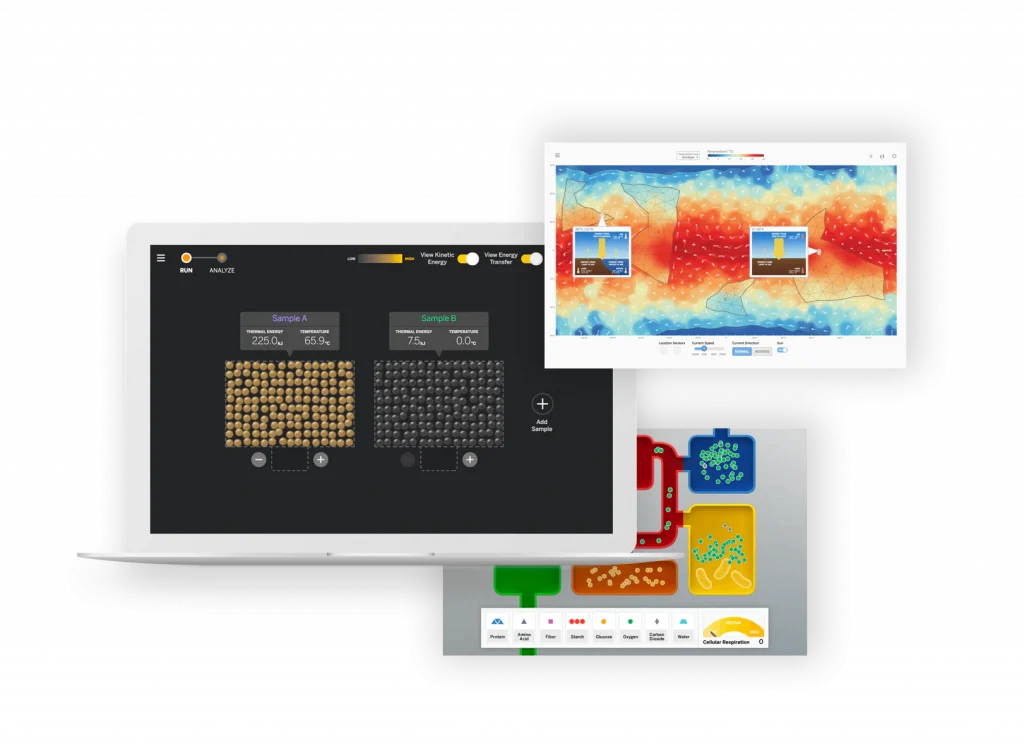
Teacher’s Guides
Available digitally and in print, the Teacher’s Guides contain all of the information teachers need to facilitate classroom instruction, including:
- Classroom Slides
- Detailed lesson plans
- Unit and chapter overview documentation
- Differentiation strategies
- Standards alignments
- In-context professional development

Hands-on materials kits
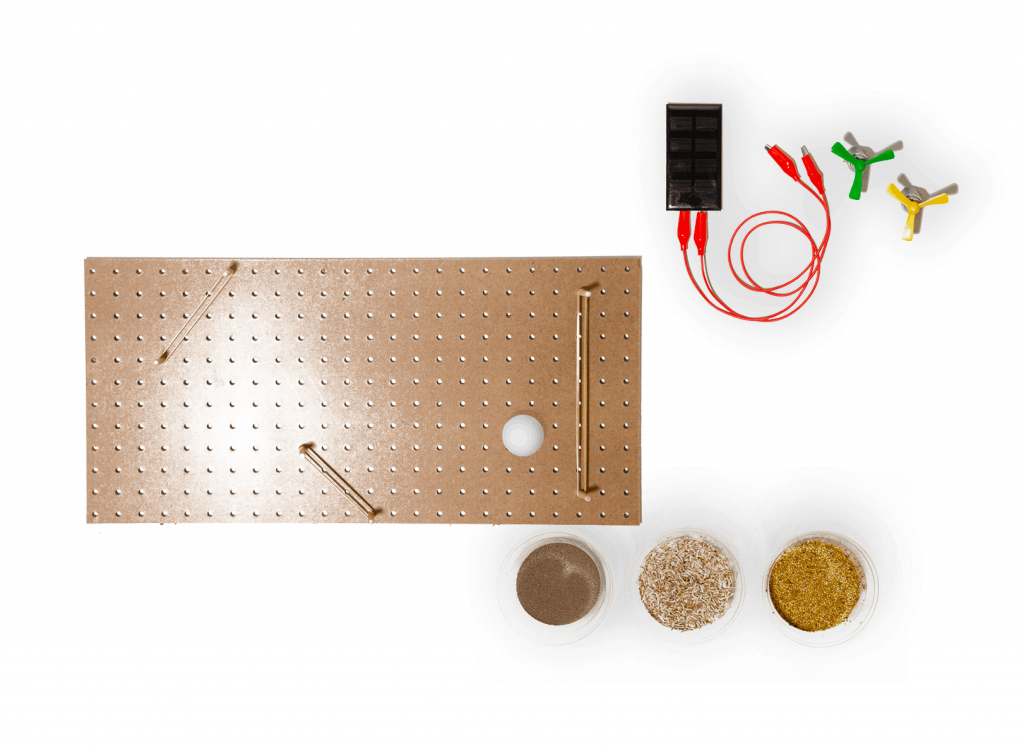
Hands-on learning is at the heart of Amplify Science. Each unit kit contains:
- Consumable and non-consumable hands-on materials
- Print classroom display materials
- Premium print materials for student use (sorting cards, maps, etc.)
Remote and hybrid learning supports

Amplify has launched a new remote learning solution called Amplify Science@Home. Intended to make extended remote learning and hybrid learning easier, Amplify Science@Home includes two useful options for continuing instruction: @Home Videos and @Home Units.
Amplify Science @Home Videos are recordings of real Amplify Science teachers teaching the lessons. For those teachers who are unable to meet synchronously with their students, the recorded lessons are a great way to keep their students on track and engaged with Amplify Science while at home. These videos will be produced for all K–5 units, and for the first four units of each 6–8 grade level. Their release will be rolling, beginning in August.
Amplify Science@Home Units are modified versions of Amplify Science units, strategically designed to highlight key activities from the program. The @Home Units take significantly less instructional time than the complete Amplify Science program and allow students to engage with science at home. @Home Units will be developed for all Amplify Science K–8 units. Each @Home unit includes:
- Teacher overviews explaining how to use the materials, including suggestions for enhancing the @Home Units if synchronous learning or in-class time with students is available.
- Overviews to send home to families.
Student materials are available in two formats:
- @Home Slides (PDF/PPT) + Student Sheets (PDF) for students with access to technology at home.
- Downloadable @Home Packets (PDF) for students without access to technology at home.
Download the Remote and hybrid learning guide.
Looking for help?
Powerful (and free!) pedagogical support
Amplify provides a unique kind of support you won’t find from other publishers. We have developed an educational support team of former teachers and administrators who provide pedagogical support for every Amplify curriculum, assessment, and intervention program. This service is completely free for all educators who are using our programs and includes:
- Guidance for developing lesson plans and intervention plans
- Information on where to locate standards and other planning materials
- Recommendations and tips for day-to-day teaching with Amplify programs
- Support with administering and interpreting assessment data and more
To reach our pedagogical team, use our live chat within your program, call (800) 823-1969, or email edsupport@amplify.com
Timely technical and program support
Our technical and program support is included and available from 7 a.m. to 7 p.m. ET, Monday through Friday, through a variety of channels, including a live chat program that enables teachers to get immediate help in the middle of the school day.
For your most urgent questions:
- Use our live chat within your program
- Call our toll-free number: (800) 823-1969
For less urgent questions:
Contact us
Contact your South Carolina team representatives:
Jeff Rutter
Field Manager
jrutter@amplify.com
(727) 512-8440
Cathy McMillan
Senior Account Executive
cmcmillan@amplify.com
(904) 465-9904
Inspiring the next generation of Oklahoma scientists, engineers, and curious citizens
Amplify Science is an engaging new core curriculum designed for three-dimensional, phenomena-based learning.
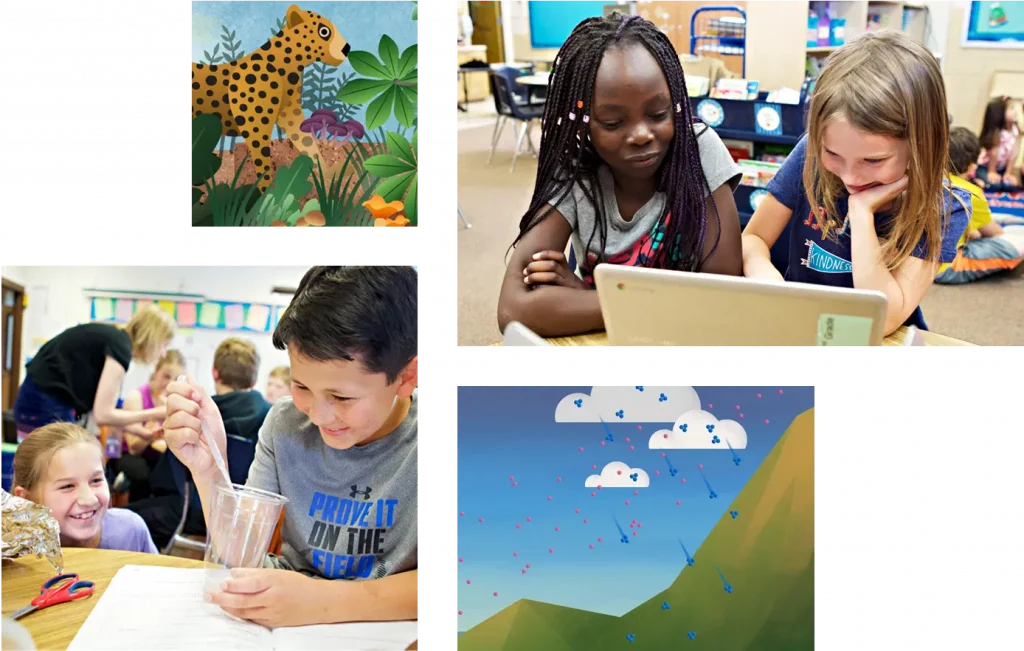
A powerful partnership
Amplify Science was developed by the science education experts at UC Berkeley’s Lawrence Hall of Science and the digital learning team at Amplify.
Instructional model
The Amplify Science program is rooted in the proven, research-based pedagogy of Do, Talk, Read, Write, Visualize. Here’s how each element works:
DO
First-hand investigations are an important part of any science classroom, and Amplify Science has students getting hands-on in every unit—from building models of protein molecules to experimenting with electrical systems.
TALK
Student-to-student discourse and full-class discussions are an integral part of the program. Students are provided with numerous opportunities to engage in meaningful oral scientific argumentation, all while fostering a collaborative classroom environment.
READ
Students read scientific articles, focusing their reading activities on searching for evidence related to their investigation and, importantly, on asking and recording questions as they read through fascinating texts on 21st-century topics.
WRITE
Following real-world practices, students write scientific arguments based on evidence they’ve collected, making clear their reasoning about how a given piece of evidence connects to one of several claims.
VISUALIZE
By manipulating digital simulations and using modeling tools to craft visualizations of their thinking— just as real scientists and engineers do—students take their learning far beyond the confines of what they can physically see in the classroom in an exciting and authentic way.
Oklahoma Instructional Samplers
Video: Oklahoma Spotlight on All Learners (SPED, G & T, EL, DEI)
Resources to support your review
- What’s so phenomenal about phenomena? – ebook
- Phenomena in grades K–5
- Phenomena in grades 6–8
- Student Books in grades K–5
- Literacy-rich science instruction in grades K–5
- Active Reading in grades 6–8
- Engineering in Amplify Science
- Oklahoma standards correlation for grades K–8
- Program structure for grades K–5
- Program structure for grades 6–8
- Oklahoma recommended scope and sequence for grades 6–8
Remote and hybrid learning support
Oklahoma Spotlight Video: Remote and Hybrid Learning
Amplify has launched a new remote learning solution called Amplify Science @Home. Intended to make extended remote learning and hybrid learning easier, Amplify Science@Home includes two useful options for continuing instruction: @Home Videos and @Home Units.
Amplify Science @Home Videos are recordings of real Amplify Science teachers teaching the lessons. For those teachers who are unable to meet synchronously with their students, the recorded lessons are a great way to keep their students on track and engaged with Amplify Science while at home. These videos will be produced for all K–5 units, and for the first four units of each 6–8 grade level. Their release will be rolling, beginning in August 2021.
Amplify Science@Home Units are modified versions of Amplify Science units, strategically designed to highlight key activities from the program. The @Home Units take significantly less instructional time than the complete Amplify Science program and allow students to engage with science at home. @Home Units will be developed for all Amplify Science K–8 units. Each @Home unit includes:
- Teacher overviews explaining how to use the materials, including suggestions for enhancing the @Home Units if synchronous learning or in-class time with students is available.
- Overviews to send home to families.
Student materials are available in two formats:
- @Home Slides (PDF/PPT) + Student Sheets (PDF) for students with access to technology at home.
- Downloadable @Home Packets (PDF) for students without access to technology at home.
Download the remote and hybrid learning guide.
What’s included
Flexible resources that work seamlessly together
Oklahoma Spotlight Video: Instructional Resources: More than a textbook!
Science articles
The middle school science articles serve as sources for evidence collection and were authored by science and literacy experts at the Lawrence Hall of Science.
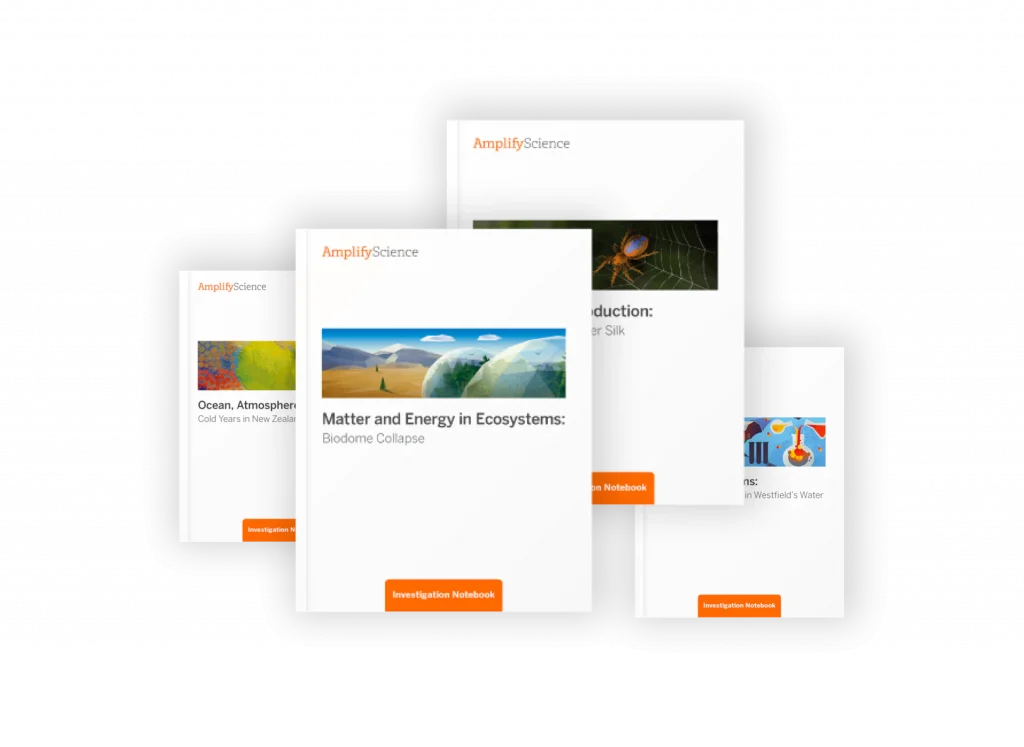
Student Investigation Notebooks
Available for every unit, the Student Investigation Notebooks provide space for students to:
- record data.
- reflect on ideas from texts and investigations.
- construct explanations and arguments.
Available with full-color article compilations for middle school units.
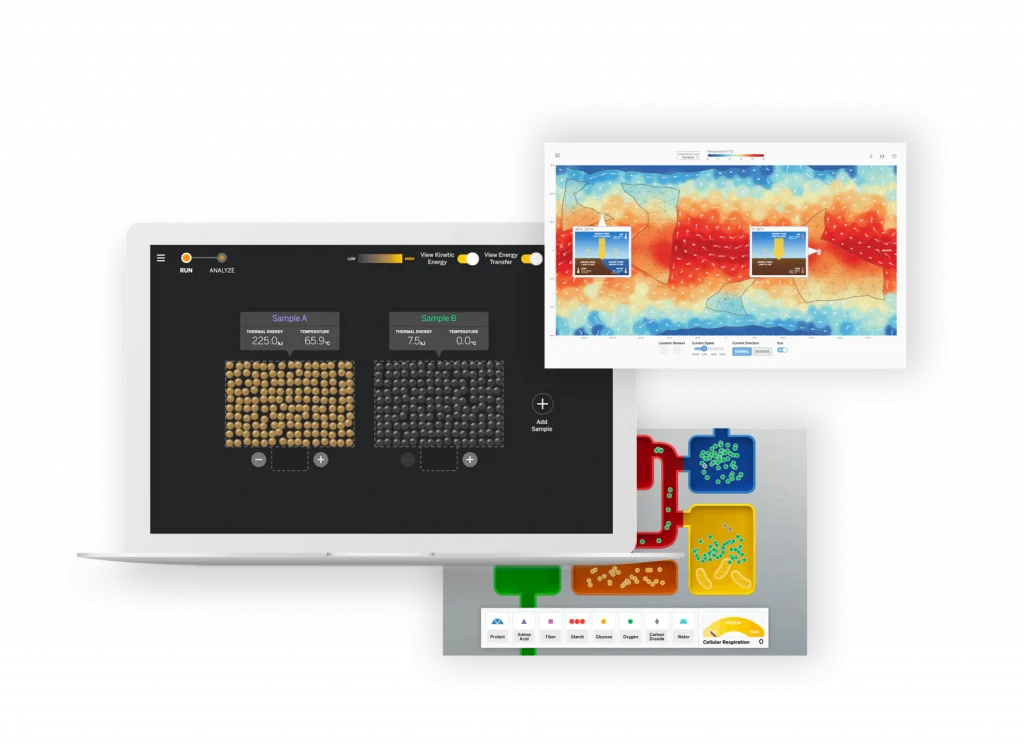
Digital student experience
Students access the digital simulations and modeling tools, as well as lesson activities and assessments, through the digital student experience. Students can interact with the digital student experience as they:
- conduct hands-on investigations.
- engage in active reading and writing activities.
- participate in discussions.
- record observations.
- craft end-of-unit scientific arguments.
Oklahoma Spotlight Video: Spotlight on Simulations
Teacher’s Guides
Available digitally and in print, the Teacher’s Guides contain all of the information teachers need to facilitate classroom instruction, including:
- Classroom Slides.
- detailed lesson plans.
- unit and chapter overview documentation.
- differentiation strategies.
- standards alignments.
- in-context professional development.
Oklahoma Spotlight Video: Classroom Slides

Hands-on materials kits
Hands-on learning is at the heart of Amplify Science. Each unit kit contains:
- consumable and non-consumable hands-on materials.
- print classroom display materials.
- premium print materials for student use (sorting cards, maps, etc).
Scope and sequence
GRADE
UNITS
Kindergarten
- Needs of Plants and Animals
- Pushes and Pulls
- Sunlight and Water
Grade 1
- Animal and Plant Defenses
- Light and Sound
- Spinning Earth
Grade 2
- Plant and Animal Relationships
- Properties of Materials
- Changing Landforms
Grade 3
- Balancing Forces
- Inheritance and Traits
- Environments and Survival
- Weather and Climate
Grade 4
- Energy Conversions
- Vision and Light
- Earth’s Features
- Waves, Energy, and Information
Grade 5
- Patterns of Earth and Sky
- Modeling Matter
- The Earth System
- Ecosystem Restoration
GRADE
UNITS
Grade 6
- Launch: Microbiome
- Metabolism
- Plate Motion
- Plate Motion Engineering Internship
- Rock Transformations
- Ocean, Atmosphere, and Climate
- Weather Patterns
- Thermal Energy
- Phase Change
Grade 7
- Launch: Harnessing Human Energy
- Chemical Reactions
- Populations and Resources
- Matter Energy and Ecosystems
- Earth’s Changing Climate
- Earth’s Changing Climate Engineering Internship
- Magnetic Fields
Grade 8
- Launch: Geology on Mars
- Force and Motion
- Force and Motion Engineering Internship
- Light Waves
- Earth, Moon, and Sun
- Traits and Reproduction
- Natural Selection
- Evolutionary History
Oklahoma Academic Standards for Science coverage
Amplify Science was designed from the ground up to meet the Next Generation Science Standards (NGSS), and the Oklahoma Academic Standards for Science (OASS) are closely aligned to the NGSS at K–8. The guidance below is meant to provide support for integrating additional activities that support full coverage of the OASS. You can view the full K–8 OASS correlation here.
Organized by grade level, each section below will outline:
- additional activities that support 100% alignment to the Oklahoma Academic Standards for Science;
- the standard being addressed with the activities;
- the recommended placement of the activities within a specific Amplify Science unit; and
- PDFs of any accompanying materials that are necessary to implement the activities.
Standard: 1.ESS3.1: Communicate solutions that will reduce the impact of humans on the land, water, air, and/or other living things in the local environment.
Recommended placement: Animal and Plant Defenses unit, Chapter 1
Materials: The Student Book Investigating Monarchs from the unit Needs of Plants and Animals
Investigating Monarchs emphasizes the needs of monarch caterpillars and butterflies and shows what happens when these animals are not able to meet their needs. The book first introduces the life cycle of monarchs, explaining that monarch caterpillars must eat milkweed to survive and change into butterflies. Their summer habitat must have milkweed. The butterflies then migrate a long distance, from the United States to a forest in the mountains of Mexico, where they take shelter in the trees. Their winter habitat must have trees. Scientists discovered that the monarch population in Mexico was greatly reduced because people were cutting down the trees. The forest was then protected, but the monarch population did not recover as expected. Scientists in the United States found evidence that this was because fields with milkweed are being replaced by farms and buildings. This book could be read with the class either before or after Chapter 1 of the Animal and Plant Defenses unit, which focuses on what plants and animals need to do to survive. Students could be asked to reflect on what the monarchs need to survive (including food and shelter), and how human activities impacted the monarchs’ ability to meet those needs. After reading the book, students could brainstorm ideas for how to reduce the impact of humans on the local environment.
Standard: MS-PS4-2: Develop and use a model to describe that waves are reflected, absorbed, or transmitted through various materials.
Recommended placement: Metabolism unit, Lesson 3.3, addition to Activity 5
Materials: “What Eyes Can See” science article
As students investigate metabolism and the body systems, the article “What Eyes Can See” should be assigned to deepen their understanding of information processing and sense receptors and connect that understanding to the emerging idea of the interaction of waves with various materials. The article explores how the only thing we can really see is light. Light travels from a light source to the eye, passing through some materials and bouncing off others. Tiny organs inside the eye called rods and cones absorb energy from light, making vision possible. These interactions between light and materials determine our visible world.
Instructions:
Download the PDF “What Eyes Can See” above and remind students of the Active Reading guidelines. Before students read the article, invite them to share prior experiences. For example, “Have you ever had an experience where something looked different in one kind of light than in another kind of light? Or where something seemed to appear or disappear when the light changed?”
Standard: MS-PS3-1: Construct and interpret graphical displays of data to describe the relationships of kinetic energy to the mass of an object and to the speed of an object.
Recommended placement: Harnessing Human Energy unit, Lesson 1.4, after Activity 4
Materials: Force and Motion simulation; Activity instructions and copymasters
In this activity, students use the Force and Motion Simulation to investigate the relationship between kinetic energy, mass, and velocity.
Instructions
Download the PDF linked above for the Lesson Guide and copymasters needed for the activity. Note that this investigation is typically implemented during the Force and Motion unit. This means the Lesson Guide will contain some incongruous labeling (e.g., unit name), as well as instructions that are out of context and unnecessary for the purposes of addressing this standard at grade 7. We suggest skipping to step 4 of the Instructional Guide to avoid some of this. Your students will get additional exposure to this activity, and indeed the standard as a whole, when they get to the Force and Motion unit in grade 8.
Standards:
- MS-PS2-3: Ask questions about data to determine the factors that affect the strength of electric and magnetic forces.
- MS-PS2-5: Conduct an investigation and evaluate the experimental design to provide evidence that fields exist between objects exerting forces on each other even though the objects are not in contact.
Recommended placement: Force and Motion unit, after Lesson 1.5
Materials: Flextension PDF
This hands-on activity builds on and reinforces students’ understanding of forces that act at a distance, with a focus on electrostatic force. Students explore electrostatic forces, prompted by a set of challenges that they try to accomplish. Next, students generate scientific questions based on their observations. Electrostatic force is less predictable and consistent than magnetic force, and investigating it can be both challenging and intriguing. The purpose of this lesson is for students to gain firsthand experience with electrostatic force and to gain experience generating scientific questions based on observations. You might choose to include this Flextension if you would like your students to have more exposure to electrostatic force, and if you would like to challenge your students to explore and ask questions about a challenging type of force.
Instructions:
Download the PDF linked above for a detailed Lesson Guide and the copymasters associated with the activity. Note that this activity is typically implemented as an add-on Flextension during the Magnetic Fields unit. This means that you will see some information that is out of context (e.g., placement information, unit title), but the activity itself also works for the purposes of the Force and Motion unit. If you have any questions, please reach out to our support team via the chat icon in your account or help@amplify.com.
Explore the Digital Teacher’s Guide
When you’re ready to review, click the orange button below and use your provided login credentials to access the Amplify Science Digital Teacher’s Guide.
To help familiarize yourself with navigating the digital Teacher’s Guide, watch our navigational guide videos:
Grades K–5:
Grades 6–8:
Looking for help?
Powerful (and free!) pedagogical support
Amplify provides a unique kind of support you won’t find from other publishers. We’ve developed an educational support team of former teachers and administrators who provide pedagogical support for every Amplify curriculum, assessment, and intervention program. This service is completely free for all educators who are using our programs and includes:
- Guidance for developing lesson plans and intervention plans.
- Information on where to locate standards and other planning materials.
- Recommendations and tips for day-to-day teaching with Amplify programs.
- Support with administering and interpreting assessment data and more.
To reach our pedagogical team, use our live chat within your program, call (800) 823-1969, or email edsupport@amplify.com
Timely technical and program support
Our technical and program support is included and available from 7 a.m. to 7 p.m. ET, Monday through Friday, through a variety of channels, including a live chat program that enables teachers to get immediate help in the middle of the school day.
For your most urgent questions:
- Use our live chat within your program.
- Call our toll-free number: (800) 823-1969.
For less urgent questions:
Contact us
Contact your Oklahoma representative:
Julie Godfrey
Account Executive
jgodfrey@amplify.com
(817) 360-0527
Our Instructional model
The Amplify Science program is rooted in the proven, research-based pedagogy of Do, Talk, Read, Write, Visualize. Here’s how each element works:
DO
First-hand investigations are an important part of any science classroom, and Amplify Science has students getting hands-on in every unit, from building models of protein molecules to experimenting with electrical systems.
TALK
Student-to-student discourse and full class discussions are an integral part of the program. Students are provided with numerous opportunities to engage in meaningful oral scientific argumentation, all while fostering a collaborative classroom environment.
READ
Students read scientific articles, focusing their reading activities on searching for evidence related to their investigation, and importantly, on asking and recording questions as they read through fascinating texts on 21st-century topics.
WRITE
Following real-world practices, students write scientific arguments based on evidence they’ve collected, making clear their reasoning about how a given piece of evidence connects to one of several claims.
VISUALIZE
By manipulating digital simulations and using modeling tools to craft visualizations of their thinking— just as real scientists and engineers do—students take their learning far beyond the confines of what they can physically see in the classroom in an exciting and authentic way.
Supporting resources
- South Carolina recommended scope and sequence for grades 6–8
- South Carolina standards correlation for grades K–5
- Program Components K-5
- Curriculum Unit Kits K-5
- What’s so phenomenal about phenomena? – ebook
- Phenomena in grades K–5
- Student Books in grades K–5
- Literacy-rich science instruction in grades K–5
- Active Reading in grades 6–8
- Engineering in Amplify Science
- Program structure for grades K–5
Scope and sequence
GRADE
UNITS
Kindergarten
- Needs of Plants and Animals
- Pushes and Pulls
- Sunlight and Water
Grade 1
- Animal and Plant Defenses
- Light and Sound
- Spinning Earth
Grade 2
- Plant and Animal Relationships
- Properties of Materials
- Changing Landforms
Grade 3
- Balancing Forces
- Inheritance and Traits
- Environments and Survival
- Weather and Climate
Grade 4
- Energy Conversions
- Vision and Light
- Earth’s Features
- Waves, Energy, and Information
Grade 5
- Patterns of Earth and Sky
- Modeling Matter
- The Earth System
- Ecosystem Restoration
GRADE
UNITS
Grade 6
- Launch: Microbiome
- Metabolism
- Metabolism Engineering Internship
- Thermal Energy
- Plate Motion
- Plate Motion Engineering Internship
- Rock Transformations
- Weather Patterns
- Ocean, Atmosphere, and Climate
Grade 7
- Launch: Harnessing Human Energy
- Phase Change
- Phase Change Engineering Internship
- Magnetic Fields
- Earth’s Changing Climate
- Earth’s Changing Climate Engineering Internship
- Chemical Reactions
- Populations and Resources
- Matter and Energy in Ecosystems
Grade 8
- Launch: Geology on Mars
- Earth, Moon, and Sun
- Light Waves
- Force and Motion
- Force and Motion Engineering Internship
- Traits and Reproduction
- Natural Selection
- Natural Selection Engineering Internship
- Evolutionary History
South Carolina College- and Career-Ready Science Standards 2021
Amplify Science was designed from the ground up to meet the Next Generation Science Standards (NGSS), and the South Carolina College- and Career-Ready Science Standards 2021 are closely aligned to the NGSS at K-8. The guidance below is meant to provide support for integrating additional companion activities that support full coverage of the South Carolina College- and Career-Ready Science Standards 2021.
Organized by grade level, each section below will outline:
- Additional activities that support 100% alignment to the South Carolina College- and Career-Ready Science Standards 2021;
- The standard being addressed with the activities;
- The recommended placement of the activities within a specific Amplify Science unit; and
- PDFs of any accompanying materials that are necessary to implement the activities.
Standard: MS-PS1-4: Develop a model that predicts and describes changes in particle motion, temperature, and state of a pure substance when thermal energy is added or removed.
Recommended placement: Thermal Energy unit, Lesson 4.4, addition to Activity 3
Materials: “Liquid Oxygen”
By reading the article “Liquid Oxygen,” which describes how the relationship between attraction and kinetic energy determines when a substance changes phase, students extend their understanding of the possible effects of adding or removing thermal energy to include changes in state (phase). Oxygen is one of the most common elements in the world, but most people are only familiar with oxygen in the gas phase. Because oxygen molecules are only weakly attracted to one another, condensing oxygen is difficult. This article introduces students to molecular attraction and discusses its role in phase change, including how it can be used to turn oxygen from a gas to a liquid.
Instructions:
Download PDFs of the “Liquid Oxygen” and distribute it to students. Before they begin reading, remind students of the Active Reading Guidelines.
Standard: MS-PS4-2: Develop and use a model to describe that waves are reflected, absorbed, or transmitted through various materials.
Recommended placement: Weather Patterns unit, Lesson 4.4, addition to Activity 3
Materials: “Harvesting Sunlight”, “Why No One in Space Can Hear You Scream” and “Making Waves at Swim Practice”
After investigating weather patterns, which includes a focus of the effects of energy from sunlight, students extend their learning about light by reading three articles about light and other waves.
“Harvesting Sunlight:” Students read this article to learn about the types of light from the sun that plants use for photosynthesis. The article describes how the sun emits all types of light, but plants can only use certain types of visible light for photosynthesis, mostly red and blue light. Plants also absorb other types of light, and these types of light affect plants in different ways. Students use this information to gather evidence that there are different types of light that can affect a material in different ways.
“Why No One in Space Can Hear You Scream:” Students read this article to learn about how waves are transmitted. Explosions that would be deafening on Earth are silent in space. This is because sound is produced by sound waves and, unlike light waves, sound waves need matter to travel through. Reading about this phenomenon helps students understand the similarities and differences between mechanical and electromagnetic waves.
“Making Waves at Swim Practice:” A practice for the school swim team provides an everyday context for discussing light waves and sound waves in this engaging article. First, the article explores sound waves traveling through different materials–the air, the water of the pool, and even a metal poolside bench. Students discover that sound waves travel at different speeds in different materials. The later part of the article discusses light waves, which also travel at different speeds in different materials. As light waves move from one material to another, they change speed and bend. This bending of light waves is called refraction, and it explains why objects that are partly in the water and partly out of the water (such as the legs of a person sitting on the side of a pool) appear ripply and bent.
Instructions:
Plan one class period for each article. Download PDFs of the “Harvesting Sunlight,” “Why No One in Space Can Hear You Scream,” and “Making Waves at Swim Practice” articles. For each article, before students begin reading, preview the article and discuss what students already know and what they wonder about the topic, then remind students of the Active Reading Guidelines.
Standard: MS-PS2-3: Ask questions about data to determine the factors that affect the strength of electric and magnetic forces. MS-PS2-5: Conduct an investigation and evaluate the experimental design to provide evidence that fields exist between objects exerting forces on each other even though the objects are not in contact.
Recommended placement: Harnessing Human Energy unit, Lesson 3.4, after Activity 1
Materials: “Earth’s Geomagnetism” and “Painting with Static Electricity”
After concluding their investigations of energy transfers and conversions, students read two articles that introduce the topic of forces that act at a distance.
“Earth’s Geomagnetism:” What makes a compass needle point north, no matter what? This article introduces students to Earth’s geomagnetic field and the field lines scientists use to show its direction.
“Painting with Static Electricity:” This article gives students the opportunity to learn about electrostatic fields and forces in the context of spray painting without making a mess. Electrostatic painting systems use electrostatics to draw spray paint toward the object being painted, and nowhere else. Painters charge the object they are painting with a negative charge and the paint with a positive charge. The opposite charges are attracted to one another, causing the paint to move toward the object. This surprising use of electrostatics saves time and paint and keeps things tidy!
Instructions
Plan one class period for each article. Download PDFs of the “Earth’s Geomagnetism” and “Painting with Electricity” articles. For each article, before students begin reading, preview the article and discuss what students already know and what they wonder about the topic, then remind students of the Active Reading Guidelines.
What’s included
Science articles
The middle school science articles serve as sources for evidence collection and were authored by science and literacy experts at the Lawrence Hall of Science.
Student Investigation Notebooks
Available for every unit, the Student Investigation Notebooks provide space for students to:
- Record data
- Reflect on ideas from texts and investigations
- Construct explanations and arguments
Available with full-color article compilations for middle school units.
Digital student experience
Students access the digital simulations and modeling tools, as well as lesson activities and assessments, through the digital student experience. Students can interact with the digital student experience as they:
- Conduct hands-on investigations
- Engage in active reading and writing activities
- Participate in discussions
- Record observations
- Craft end-of-unit scientific arguments

Teacher’s Guides
Available digitally and in print, the Teacher’s Guides contain all of the information teachers need to facilitate classroom instruction, including:
- Classroom Slides
- Detailed lesson plans
- Unit and chapter overview documentation
- Differentiation strategies
- Standards alignments
- In-context professional development
Hands-on materials kits
Hands-on learning is at the heart of Amplify Science. Each unit kit contains:
- Consumable and non-consumable hands-on materials
- Print classroom display materials
- Premium print materials for student use (sorting cards, maps, etc.)
Remote and hybrid learning supports
Amplify has launched a new remote learning solution called Amplify Science@Home. Intended to make extended remote learning and hybrid learning easier, Amplify Science@Home includes two useful options for continuing instruction: @Home Videos and @Home Units.
Amplify Science @Home Videos are recordings of real Amplify Science teachers teaching the lessons. For those teachers who are unable to meet synchronously with their students, the recorded lessons are a great way to keep their students on track and engaged with Amplify Science while at home. These videos will be produced for all K–5 units, and for the first four units of each 6–8 grade level. Their release will be rolling, beginning in August.
Amplify Science@Home Units are modified versions of Amplify Science units, strategically designed to highlight key activities from the program. The @Home Units take significantly less instructional time than the complete Amplify Science program and allow students to engage with science at home. @Home Units will be developed for all Amplify Science K–8 units. Each @Home unit includes:
- Teacher overviews explaining how to use the materials, including suggestions for enhancing the @Home Units if synchronous learning or in-class time with students is available.
- Overviews to send home to families.
Student materials are available in two formats:
- @Home Slides (PDF/PPT) + Student Sheets (PDF) for students with access to technology at home.
- Downloadable @Home Packets (PDF) for students without access to technology at home.
Download the Remote and hybrid learning guide.
Looking for help?
Powerful (and free!) pedagogical support
Amplify provides a unique kind of support you won’t find from other publishers. We have developed an educational support team of former teachers and administrators who provide pedagogical support for every Amplify curriculum, assessment, and intervention program. This service is completely free for all educators who are using our programs and includes:
- Guidance for developing lesson plans and intervention plans
- Information on where to locate standards and other planning materials
- Recommendations and tips for day-to-day teaching with Amplify programs
- Support with administering and interpreting assessment data and more
To reach our pedagogical team, use our live chat within your program, call (800) 823-1969, or email edsupport@amplify.com
Timely technical and program support
Our technical and program support is included and available from 7 a.m. to 7 p.m. ET, Monday through Friday, through a variety of channels, including a live chat program that enables teachers to get immediate help in the middle of the school day.
For your most urgent questions:
- Use our live chat within your program
- Call our toll-free number: (800) 823-1969
For less urgent questions:
Contact us
Contact your South Carolina team representatives:
Jeff Rutter
Field Manager
jrutter@amplify.com
(727) 512-8440
Lisa Jurovaty
Account Executive (West South Carolina)
ljurovaty@amplify.com
(803) 526-1899
Cathy McMillan (East South Carolina)
Senior Account Executive
cmcmillan@amplify.com
(904) 465-9904
Inspiring the next generation of Alabama scientists, engineers, and curious citizens
High Impact Tutoring: OH ESC Training of Trainers
High Impact Tutoring: ESC Training of Trainers
Identifying math anxiety

Can you do long division in your head and calculate tips in your sleep? Or does the mere thought of arithmetic keep you up at night?
If you fall into the latter camp, you’re not alone.
Math anxiety is real—and an established body of research proves it. In fact, data shows that math anxiety affects at least 20% of students.
And its effects can be damaging in both the immediate and long term. It can bring down student performance both in and beyond math, and in and outside the classroom.
Fortunately, we’re also learning how teachers can help students manage math anxiety—and succeed wherever it’s holding them back.
We explored this topic on a recent episode of Math Teacher Lounge, our biweekly podcast created specifically for K–12 math educators. This season is all about recognizing and reducing math anxiety in students, with each episode featuring experts and educators who share their insights and strategies around this critical subject.
Dr. Gerardo Ramirez, associate professor of educational psychology at Ball State University, has been studying math anxiety for more than a decade. He joined podcast hosts Bethany Lockhart Johnson and Dan Meyer to share his insights.
So let’s take a look at what math anxiety is—and is not. We’ll also explore what impact it has on learning, and what we can do about it.
What is math anxiety?
Math anxiety is more than just finding math challenging, or feeling like you’re “not a math person.” Dr. Ramirez offers this definition: “[Math anxiety] is a fear or apprehension in situations that might involve math or situations that you perceive as involving math. Anything from tests to homework to paying a tip at a restaurant.”
Math anxiety may cause sweating, rapid heartbeat, shortness of breath, and other physical symptoms of anxiety.
But while math anxiety has some similarities with other forms of anxiety, it’s exclusive to math-related tasks, and comes with a unique set of characteristics and influences.
Math anxiety can lead sufferers to deliberately avoid math. And this avoidance can not only result in a student not learning math, but also limiting their academic success, career options, and even social experiences and connections. This can look like anything from getting poor grades in math class, to tension with family members over doing math homework.
Parents and teachers can suffer from math anxiety, too. In fact, some research suggests that when teachers have math anxiety, it’s more likely that some of their students will, too.
What causes math anxiety?
It’s not correlated to high or low skill or performance in math. Students who generally don’t do well in math can experience math anxiety because they assume they’ll do poorly every time. Students who have been pressured to be high-achieving experience math anxiety because they’re worried they won’t meet expectations.
Other triggers may include:
- Pressure. Pressure from parents or peers to do well in math can create anxiety, especially if the person feels that their worth or future success is tied to their math abilities.
- Negative past experiences. Someone who has struggled with math or gotten negative feedback about their math skills might develop math anxiety. They may start to avoid or fear math, making it even harder to approach and improve.
- Learning style. Different people have different learning styles. When someone’s learning style doesn’t match the way math is taught in their class or school, they may struggle and develop anxiety.
- Cultural factors. When students hear things like, “Boys are better at math,” it can increase math anxiety in girls who may absorb the notion that they are already destined to underachieve.
Math anxiety and working memory
Dr. Ramirez has researched the important relationship between math anxiety and working memory.
Working memory refers to the ability to hold and manipulate information in short-term memory. People with math anxiety often have poorer working memory capacity when it comes to math-related tasks. This is thought to be due to the cognitive load created by anxiety, which can interfere with the ability to manage information in working memory.
The result? A negative feedback loop. Poor working memory can lead to further math anxiety, and increased anxiety can further impair working memory.
However, it’s important to note that not all individuals with math anxiety experience a decline in working memory capacity. Some may have average or above-average working memory capacity but still experience math anxiety. In such cases, the anxiety may be related to negative beliefs about one’s ability to perform math tasks, rather than an actual cognitive deficit.
What we can do about math anxiety
Even though math anxiety is a distinct type of anxiety, interventions such as cognitive behavioral therapy, exposure therapy, and mindfulness approaches have been shown to be effective in reducing it.
It starts, says Dr. Ramirez, with normalizing the anxiety.
“If you’re a student and you’re struggling with math and I tell you, ‘Yeah, it’s hard, it’s OK to struggle with math,’ that makes you feel seen. And that’s gonna lead you to want to ask me more for help, because I’m someone who understands you,” says Dr. Ramirez. “And that’s a great opportunity.”
Learn more
5 strategies to transform your math classroom
Want to shift your math teaching practices this year, but not sure where to start? That’s a good problem to have!
You can boost your instruction this fall with problem-based learning, technology in the math classroom, and more—all in ways that put students at the center.
“All students need the opportunity to feel like they can figure out mathematics,” says Jennifer Bay-Williams, Ph.D., an author and professor of mathematics education at University of Louisville. “That’s where they develop a math identity, [the idea] that they can do math. And they start feeling like, ‘I can figure this out.’”
Bay-Williams spoke at our 2024 Math Symposium, along with other thought leaders and expert educators. Keep reading to see how their key takeaways can help you shift your math instruction this school year!
Center student ideas in a collaborative math classroom
Amplify Math Suite Executive Director Kristin Gray had great tips for teachers looking to center student ideas in the classroom. Simply put, it’s all about helping them make several types of connections. These can include any of the following:
- Connecting students’ classroom math experiences to real life
- Connecting math ideas to one another
- Connecting their ideas to the ideas of their classmates
How do teachers foster these important connections? That’s where problem-based lessons come in. Rather than teaching a concept or formula in isolation, then having students practice it, try inviting students to collaborate on a real-life problem that will lead them to that math idea. (For example, you might ask them to work on designing a small traffic or subway system that requires developing ideas about distance, rate, and time.)
As a result, students build problem-solving skills collaboratively, feel their ideas are valued, develop their own ways to make math make sense, and learn from and with each other. Teachers also get to know and appreciate the different backgrounds and styles students bring to the classroom, opening up new opportunities for engagement—and connection.
Reimagine student engagement
No matter how engaging you are as a teacher, it’s typically students who drive engagement—and that’s actually good news. You don’t have to reinvent the wheel or do somersaults to get their attention. In fact, a lot of engagement comes from creating routine and familiar opportunities for connection. And it can also come from allowing students to make mistakes.
“We want all students to have an entry point into [math] tasks,” notes Amplify STEM Product Specialist James Oliver. “Those students that seem to always feel like they don’t fit or don’t have the identity in that math classroom, we want them to immediately have successes and have their curiosities tested.” Successes—and productive failures. “What we’ve learned is, you are not firing any synapses, nothing’s happening if you’re just getting it immediately correct.”
Nurture student curiosity
Which is better: letting students dive into a box of LEGO pieces to see what happens, or providing a step-by-step guide to building the airplane?
It’s actually a tie. In both structured and loose approaches, the key is to spark curiosity and communication. “If we want them to be mathematicians, we should let them talk about math,” says Amplify Director of 6–12 Core Math Curriculum Kurt Salisbury, Ph.D. Here’s his 3D approach:
DISCOVER
Discovering the relationships among mathematical ideas is a key part of mathematical thinking.
DESCRIBE
Students communicate their mathematical thinking by describing the processes, procedures, or relationships needed to work with a concept or pattern.
DEVELOP
When students develop a strategy they can apply to a variety of contexts, their math thinking gets validation and purpose.
So whether you lean into a more structured approach or prefer to let kids figure the LEGOS out themselves, small mindset changes like these can create more space for your students to discover, describe, and develop as mathematicians.
Make math fluency fun
As with someone fluent in a language, someone fluent in math is able to think and calculate mathematically without struggle or effort—that is, with fluidity.
In order to think and calculate fluently, students need to build a toolbox of strategies—and games are a great way to do that.
While you’re making the learning fun, students are absorbing tools they’ll use throughout their lives. “When we ensure that every student has access to a range of strategies, and has regular opportunities to choose among those strategies, that’s what games do for us.” says Bay-Williams.
Elevate student voices
When student thinking isn’t explicitly invited into the classroom, students may begin to narrow their focus, providing merely what they think their teacher wants to hear. But given genuine invitations to share, students are more likely to follow their thought process wherever it leads them, taking a more organic approach to problem-solving.
“Taking a step back as a teacher, and inviting students to take a step forward, [activates] students getting started with finding the answer,” says Stephanie Blair, vice president of Desmos Coaching. “And all of them might take a different step forward, which is okay.”
It’s time for math that does more for students
“All students need the opportunity to feel like they can figure out mathematics,” says Bay-Williams. We need to connect with our students, nurture their curiosity and comfort with math, and welcome their unique ways of thinking.
We hope the thought leaders and speakers from our Math Symposium have inspired you to do just that!
Science of Reading principles that guide early literacy
Our understanding of the natural world is grounded in basic truths or laws we call scientific principles.
And we’ve got a similar set of principles for the Science of Reading.
In science, we have things like gravity, buoyancy, and the laws of motion, while the Science of Reading has universality, vocabulary, background knowledge, and so much more.
These principles, which are grounded in extensive Science of Reading research, inform our understanding of how children learn to read and guide educators in implementing best practices for science-based, effective literacy instruction.
These principles can support you in bringing the Science of Reading into your classroom and fostering literacy success for all your students.
Let’s take a look.
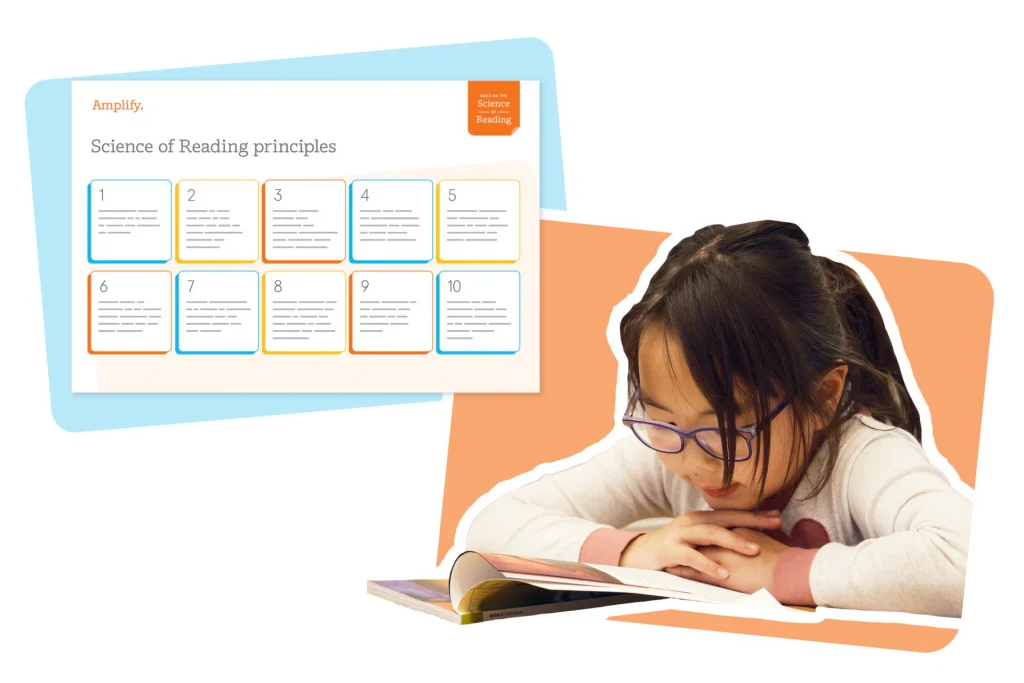
Science of Reading principles
We’ve identified 10 principles that touch on key Science of Reading components. Here’s a peek at the first five.
1. Science-based reading instruction supports all children.
Every child deserves access to high-quality instruction that can help them become proficient readers. The latest National Assessment of Educational Progress (NAEP) data shows that students’ reading scores are slipping, with 37% of fourth graders performing below the NAEP Basic level in reading in 2022. Fortunately, we have the research and tools we need to get to work reversing this trend—and more and more educators are using them. Science-based reading instruction channels decades of research into teaching methods that match the diverse needs of all students. Using the Science of Reading, we can raise those scores and support literacy development for this generation and the next.
2. Reading and writing must be taught systematically, explicitly, and cumulatively.
Humans typically learn to speak naturally, through social interaction. But reading and writing require formal instruction. According to the Simple View of Reading, reading comprehension is the product of both decoding and linguistic comprehension. Kids must be taught the relationships between sounds and letters (phonemic awareness and phonics), and how to decode words. Systematic instruction presents these skills in a logical order, explicit instruction goes beyond just “exposing” kids to words and texts, and cumulative instruction builds on skills learned before. This structured approach is essential for laying a strong foundation in literacy.
3. Proficient reading requires word recognition and language comprehension, while proficient writing requires transcription and composition skills.
Proficient readers recognize words quickly and effortlessly, allowing them to focus on understanding the text rather than decoding each word. They are then able to comprehend language using a knowledge of vocabulary, an understanding of sentence structure, and the skill of meaning-making. Likewise, proficient writers possess transcription skills, including spelling and handwriting. And as in reading, these transcription skills eventually become automatic, allowing students to expend less effort on handwriting, typing, and spelling and redirect that energy toward creating text and sharing ideas.
4. Reading and writing are mutually reinforcing processes that should be taught through integrated instruction.
When students read a variety of texts, they absorb different writing styles, structures, and vocabularies, which also serve as models for their own writing. Writing about what they read also helps students deepen their capacity for both comprehension and expression. Integrated instruction might include activities like reading a historical novel and writing diary entries from the perspective of a character, or researching a scientific topic and creating an informative brochure.
5. Background knowledge and vocabulary are critical to both reading comprehension and writing composition.
Background knowledge is like Velcro to which new texts, and new knowledge itself, can stick. A robust vocabulary is crucial for reading comprehension, because it allows students to understand and engage with more complex material. In writing, a rich vocabulary lets students express their ideas more precisely and vividly. Integrated activities such as book clubs or writing workshops can build background knowledge, vocabulary, and the natural interplay between reading and writing, fostering a holistic—and science-backed—approach to literacy development.
You’re part of a larger community—one made up of educators and researchers invested in deepening our understanding of how kids learn to read and write, and how to bring those approaches into the classroom. Start every day inspired and grounded in this community with our Science of Reading principles placemat.
The Science of Writing: Key to mastering reading
We know that “reading, writing, and ‘rithmetic” doesn’t cover all the core skills students must learn in school. Still, it’s easy to sense in our gut why reading and writing come first—and together. Reading and writing reinforce each other.
The way we now understand these two skills and how kids learn them is connected, too. That is, the Science of Reading and the Science of Writing are also linked, and invaluable. According to the National Assessment of Educational Progress (NAEP), only 27% of 12th graders achieved a proficient level in writing in 2011.
The key to unlocking literacy success resides not just in understanding the Science of Writing, but also in acknowledging its dynamic connection to the Science of Reading.
Connecting writing with literacy development
The Science of Reading refers to the vast collection of evidence-based practices that explore and explain how kids learn to read and form the foundation for literacy instruction that works. It emphasizes key components such as phonemic awareness, phonics, fluency, vocabulary, and comprehension. It stipulates that—no matter what magical worlds reading unlocks—reading instruction must be systematic and intentional.
The Science of Reading clearly indicates how best to support students as they learn to read. But reading is only half of the literacy equation. What about writing?
Akin to the Science of Reading, the Science of Writing refers to the body of research that examines effective writing instruction and the processes involved in developing writing skills. It emphasizes explicit, systematic teaching of writing structures, strategies, and conventions—again, similar to the Science of Reading’s approach. This includes understanding the cognitive processes behind planning, drafting, revising, and editing, as well as the development of handwriting, grammar, and composition skills.
The Science of Writing also highlights the importance of integrating writing with reading instruction. It enhances comprehension and communication abilities by reinforcing language skills through practical application.
Using instruction based on the Science of Writing can transform student communication, making it clearer, more effective, and more creative—opening up new worlds of connection, expression, and opportunity. Indeed, the 2024 survey by The National Association of Colleges and Employers found that 73% of employers look for written communication skills when selecting candidates to hire.
Effective instruction: Why teach writing and reading in tandem
This doesn’t mean that we should use evidence-based methods to teach reading in the morning, and then evidence-based methods to teach writing in the afternoon.
An integrated approach to reading and writing isn’t just beneficial—it’s essential. These two facets of literacy are interwoven processes that enhance each other. The more students read, the more they know. And a robust knowledge base helps students become not only stronger readers, but also stronger writers.
When students read a variety of texts, they absorb different writing styles, sentence structures, and vocabularies, which can serve as models for their own writing. Reading instruction based in the Science of Reading can also help students address writing problems and challenges. And writing about what they read also helps students deepen their capacity for both comprehension and expression.
Explicit and structured writing instruction is necessary for all students to be successful writers, as well as successful readers. When students write, they employ the same comprehension skills they use in reading.
How to teach writing and reading together
Here are just a few strategies to consider:
- Inspiration through imitation. Use reading materials as models for writing assignments. Encourage students to mimic sentence structures or vocabulary from texts they read.
- Read and respond: After reading, have students engage in response writing. This practice not only sharpens writing skills, but also reinforces comprehension by encouraging reflection and analysis.
- Instruct on structure. Introduce students to the writing process: prewriting/outlining, drafting, revising, and editing. These steps parallel the cognitive processes students use when understanding complex texts.
To learn more about reading, writing, and realizing every student’s full potential, check out:
S1-08: The importance of risk-taking in the science classroom, a conversation with Valeria Rodriguez

In this episode, our host Eric Cross sits down with Miami-based educator Valeria Rodriguez. Valeria shares her journey of serving in the Peace Corps, working a corporate job, and eventually finding her passion as a middle-school science teacher. Listen in as Valeria explains how sketchnoting, a form of note-taking that utilizes illustrations, encourages student choice and creativity in her classroom. Eric and Valeria also discuss the importance of risk-taking within the science classroom, and how their own mistakes can be crucial in modeling resilience for students. Lastly, Valeria shares experiences she had with several teachers who inspired her throughout her career. Explore more from Science Connections by visiting our main page.
Valeria Rodriguez (00:00):
There’s so many things that drawing to me makes an essential connection to. It tells me no matter what, I can continue placing lines on my paper and creating the image I want. Some people will say they messed up the drawing. You know what? They gave it character.
Eric Cross (00:19):
Welcome to Science Connections. I’m your host, Eric Cross. My guest today is Valeria Rodriguez. Valeria is a science educator, instructional technologist, and illustrator, who is currently part of a steam team where she teaches third through fifth graders in Miami, Florida. Valeria has presented and led workshops at education conferences like NSTA, ISTI, and SXSWEdu. In this episode, we discuss how she uses real-world projects to make lessons more meaningful, and why teaching students how to sketchnote increases their conceptual understanding in science. I hope you enjoy this pun-filled conversation with Valeria Rodriguez.
New Speaker (00:58):
Now you’re in Miami and you have a biology background. We’re like kindred spirits. Like we do the same thing. I teach biology here in San Diego at a middle school called Albert Einstein Academy. So I’m in a seventh grade classroom teaching life science.
Valeria Rodriguez (01:11):
That’s so cool. That’s how I started.
Eric Cross (01:13):
Is it?
Valeria Rodriguez (01:13):
Mm-Hmm <affirmative> I started teaching middle school science for seven years, doing life science in my biology background.
Eric Cross (01:20):
How’d you get started? Like where did you kind of begin?
Valeria Rodriguez (01:22):
Well, I went to UF for undergrad as a runner, and I thought I was gonna go to the Olympics, but you know, running in college is hard. And you quickly like realize a path as a full-time athlete is really hard. And one of the days that I was having one of those, like “come Jesus moments” of what am I gonna do with my life, I walked by a sign that said life is calling. And I’m like, okay, <laugh>
Eric Cross (01:52):
You literally had a sign.
Valeria Rodriguez (01:53):
There was a sign. So I was like, I’m reading the sign. I’m following the arrows. And it was for the Peace Corps. And so I went to this meeting and everything that I’ve ever done student government, athletics school education, my backgroundmy family’s from Columbia–everything in that meeting came together and they’re like, we need all these skills. And I’m like, I have those. Those are my skills. And they’re like every Peace Corps volunteer teaches. And so I went in as an agriculture volunteer to Panama because of my major and my background in biology. And while I was in the Peace Corps doing the work, I was teaching at the local school. And I realized that the most sustainable way to create any change is through education. When I came back, I was like, well, what do you do if your first job in the world is in the Peace Corps? Like my background was, you know, managing a machete in a field and teaching second through eighth grade in one classroom, on a chalkboard, you know, in English and in Spanish, while teaching the teacher and the students. So I found that going into teaching allowed me to put some of those skills, that wide array of skills that I had collected until that moment, into practice. And it allowed me to do the arts, do the running, do the science, do the connecting with the community in one place here in the states.
Eric Cross (03:34):
I don’t know if I’m just romanticizing, but you were in Panama and you were doing this amazing teaching. I don’t know. Do you compare it to teaching now in the classroom? Is there anything that ever like makes you wish that you were kind of in that environment again? Or are you kind of, do you like the more kind of technology side of things?
Valeria Rodriguez (03:48):
I tell my students all the time that I miss it, because when I was in Panama, I was in Licencia. They looked at me like this, all knowing being. If they couldn’t come to class because the kids literally had to work, they would bring me their assignment, like run it to me and then run back to their parents. Like, “I had to turn it in, but I have to go to work.” And I’m like, oh my gosh. And like here, sometimes I feel like, you know, I have to negotiate and convince my students to want to give me their work. And maybe it’s because we take a lot of things for granted. I mean, I didn’t have running water in my community. Here, you know, we have everything. I miss how we appreciated — like, my parents would send suitcases of materials for me to hand out to my students, like color and stuff, notebooks, things like that — and the kids would like, hold that notebook, like pristine and here sometimes my students aren’t as careful with materials. And I’m like, why are you breaking the crayon box? <Laugh>
Eric Cross (04:54):
I’m thinking about that. Just even just bringing pens and crayons and how that’s valued. And then a culture that’s built around esteeming teachers, and you’re this essential member of the community — and you feel that. It’s palpable.
Valeria Rodriguez (05:08):
Yeah. And here, sometimes I ask students like, what do you wanna be when you grow up? And you get all sorts of answers, but in my community, it’s gonna sound funny, but they were like, we wanna be a teacher. Like, that means that we would know a lot of stuff and they would put their hair up in a bun, ‘cause I always have it in a bun, and they would write stuff when they were playing and they would act me out <laugh> and I’m like, do I, do I do that? <Laugh> I genuinely got a very rich experience in the time that I was there. And what I learned the most was how to try to not do as much, it’s like a lesson that I’m still trying to learn because like I’m here with the U.S. Mentality of go, go, go.
Valeria Rodriguez (05:58):
And they’re like, but we already did, you know, two things like now we stop. And I’m like, but, but why? And they’re like, you can do that tomorrow. And I’m like, but no, like we’re gonna run out of time. For me. It was a lot of struggle of like slow down. And as a teacher, I feel like I’m always like on the treadmill at a thousand speed. And sometimes I have to tell myself like slow down, be in this moment, like a parent texted me today that her daughter was walking with her dad and said, daddy, let’s talk about the layers of the soil. And I was like, I need to stop right now and acknowledge that this happened. She’s in third grade and she’s asking her dad, you know, she could ask him about anything, and she’s asking him about soil. That’s essential for everything. And we don’t even think about soil here. Like my community had tons of erosion and every year there were less and less crops being able to be produced. We’re not talking about that here. And yet, my student asked her dad here in Miami, <laugh> about soil. And that conversation happened because of our class.
Eric Cross (07:03):
And you allowed yourself to be present and experience and feel that that communication came to you.
Valeria Rodriguez (07:09):
Yeah. We put so much stuff out there and we don’t know where it lands. If it lands on dirt or soil, <laugh>
Eric Cross (07:16):
There you go. I like it. Yeah. Bringing it back. But you’re, I think you’re what you’re saying. Resonates with a lot of educators that’ll be listening to this is that there’s so much that you do. And there’s even times when we do get the feedback, there might be a letter or a card or something, but like, to your point, like we look to the next thing instead of stopping, being present and allowing yourself to absorb it. I think I need to put that up on my, like on my wall, like this, just be present. Now you came back and then you went into the classroom here and you started off teaching science.
Valeria Rodriguez (07:46):
I didn’t go straight into the classroom. I knew that I wanted to continue teaching. But I wasn’t back here in Miami. When I moved back, I moved to Austin. And I ended up getting married and there, I started teaching Spanish as a second language like corporate classes. And I was kind of like tiptoeing around, like, do you dive into education? ‘Cause The idea of a teacher here is very different than the teacher idea that I had while in the peace Corps. So he, a lot of people were like, you can do so many things. Why would you teach? And I was like insulted <laugh>. I was like, wait, what do you mean? Like even to this day, I’ve started a blog post, maybe 20 times with that statement because people all the time are like, you’re so talented. Why do you teach? And it drives me crazy because it makes me feel like they’re looking down on my choice <laugh> but I came to terms with it that it’s just like a societal thing. Cause of that quote, like those who can’t do teach. And I was like, let me let this go.
Eric Cross (09:01):
I find though that educators who come in as a second career, come in with a, a, a variety of skill sets that I, I think you can only get when you’re outside of academia. I mean, you can, you can develop them, you know, going kind of K12 education college and then into the classroom. But those soft skills, the business skills, a lot of those things you really develop. And it’s funny ‘cause your, your story almost sounds like some of the people that I know that work in big tech firms, they have this eclectic story and then now they’re, you know, working for Google or Facebook or something, but that actually was a as set to them because they are able to see the world through multiple perspectives. And I’m hearing kind of a distinguish between art of teaching and the science of teaching. Like you had the, maybe the art connecting ideas, these things, and then the science, like the quote unquote like formal teaching. Okay. That had to get built on later. Like am I hearing that right?
Valeria Rodriguez (09:55):
Yeah. The that’s what rocks I’m teaching the rock cycle right now. So I’m, I’m under a lot of heat and pressure <laugh>
Eric Cross (10:02):
We got the funds, we got the funds rolling. All right. All right. So bringing in the, so the, the art side or the science side we have, and then we just have this amazing illustrator. Now you mentioned your website and we’re gonna post it somewhere, but just so we have it here to, and you say, what is your website where all your majors and sketch notes can be found,
Valeria Rodriguez (10:21):
Www dot Valia, sketches.com.
Eric Cross (10:23):
Okay. So folks that are listening, if you wanna check out the art, there’s some awesome stuff on there, as well as Twitter and Instagram. And we’ll make sure we have it handles in the, the bio of the podcast and the notes. Your art’s amazing. I looked, I checked it. I saw inauguration. I saw astronauts. I saw all kinds of different things. How do you use that in the classroom
Valeria Rodriguez (10:45):
To draw connections? The ones? So what I do is I airplay my iPad onto the board. And sometimes as I’m talking, I’ll draw things, draw things I’m saying, or assignments I’ll sketch out different ideas, or maybe like the schedule I’ll have an icon of some sort that represents things. I use it for everything and anything, because just the way that I tell my students that science is everywhere. I, we don’t realize how programmed we are to use images to for, for information they’re in the street. Bathroom signs, we see the zoom little link, like the image, the icon of zoom. And we know that it’s a call the apps. You know, our phone doesn’t have the words for everything that we’re opening. We just have a list of images that represent information. So we’re programs for this. And all I’m doing is showing my students how we’re programmed for it because we’re so used to seeing images, to represent things that we’re taking it for granted again.
Valeria Rodriguez (12:03):
And sometimes my students will like, I’ll write something and I ask them, make your own visual vocabulary. So I give them the word of the definition for every unit, the younger ones, I give them the definition they have to plug in the word and an image, the older ones, I give them the word they have to plug in the definition and an image. But I don’t tell them what to draw because they need to create an image that will help them to remember the definition. Not me. I tell them, I wrote the list. I know the words, you’re the one that needs to think of something that’s going to help you to remember this. You need to draw a connection to this information. Like I use it and I mess up all the time. And I, I scratch things out because I feel that my students or the student that I’ve had in general are risk averse.
Valeria Rodriguez (12:57):
They don’t want to make mistakes. And drawing is one of those things that it taught me that it’s okay to make mistakes. Like people won’t buy commit to buying houses or they won’t commit to things because they’re gonna make a, I’m like, you can sell the house. You can move again. I mean, I’ve lived in a lot of cities. I’ve been married, divorce, gone out with people. It’s worked out it hasn’t you know, there’s, there’s so many things that drawing to me makes an essential connection to <affirmative> that it tells me no matter what I can continue placing lines on my paper and creating the image I want. And if a line doesn’t necessarily go in the direction, I want it to, I can continue shaping it so that the overall image is in the direction I want. And I can look past those line here and there that some people will say they messed up the drawing. You know what? They gave it character. I, I cycle and I have scars everywhere. They give me character and I keep writing. The overall image in my head is I’m a cyclist, not I’m banged up. <Laugh>
Eric Cross (14:14):
I feel like there’s so much to mind in what you just said. This was like a mini-Ted talk. And I couldn’t write fast enough because there were so many gems of the things that you said, but let me say something worse. And this is I’m gonna be surface with this because, and it’s your fault because you got me thinking in puns and you said, take it for granted. And I said, take it for granted because you’re talking about the rock cycle. So that’s what I heard way back. Anyways, you have your students creating what, but it’s low tech, which is really cool because a lot of times we think of creating content and it’s kind of high tech, but they’re creating something. And this is for us, like as biology folks, like you’re using kind of like this neuroscience that exists about students, creating an art to help them learn.
Eric Cross (14:55):
And this is something that I, I feel gets missed a lot in. When we talk about the quote unquote, the formal teacher training is the element of how creating an art can actually lead to improved learning in the classroom. It’s something you have to go to like a conference to kind of go and see or something, but it’s not as, it’s not as pervasive everywhere. And that thing about risk averse. I feel like I, you spoke to my own life. What I see ‘cause with my own seventh graders, I see the same fear or anxiety when I ask them to draw. As I do, when I ask them to give me a hypothesis about a phenomenon that I’m gonna teach and I say, it’s okay to be wrong, but I see them drift to the Chromebook and want to Google it. You know what you just said about just try it and you can always change and giving character, I feel like is just a great message for everybody to hear
Valeria Rodriguez (15:48):
Today. Students made fossil, right? ‘Cause They’re learning about rocks and we made using plaster, but then I put the green screen up and not only did they make it and they excavated them, but then we put it on the green screen. And they’re like all of a sudden at a dig site,
Eric Cross (16:04):
What I’m seeing right now for those of you who are listening is, is students who are on, is this on IMO?
Valeria Rodriguez (16:10):
This is on we video
Eric Cross (16:12):
Video and they’re holding up fossils that they made. But in the background, because there was a green screen, there’s an overlay of like a, a rock dig site. So the students legitimately look like they’re paleontologists or something somewhere.
Valeria Rodriguez (16:24):
Exactly. And so it’s, it’s not just creating lines, right? The sketching transfers to so much be because even the want, not wanting to make a mistake with their fossil. One of the kids today, when he took off the, the Plato, ‘cause we put the Plato at the base. Then we put in either a shell or some sort of artifact that they were going to fossilize. And then we put in the plaster when he took off the Plato, a piece broke off and everybody’s like, I can’t believe you broke your fossil. And I’m like, not the first. Okay. Do you know how many of these guys and girls have been out there? And all of a sudden they find a dinosaur bone and they’re walking and they fall. And this fossil that took billions of years is all of a sudden broken. I’m like this selfie, the original selfies, these animals died in commitment to their selfies.
Valeria Rodriguez (17:19):
And here you are dropping the bone. So they were all laughing, but it was to go away from the fact that, oh my God, you broke it. You made a mistake. You drew the wrong line. You asked the wrong question. Like no big deal. Keep digging, shout out to the teachers that try doing the projects that they have. They don’t feel completely comfortable with or you know, that they take risks doing. Because even though in theory, it’s like suggested and schools want that or communities want that when it comes down to it, people also expect us to do things at work. But part of our job is also taking risks. Like we did a tethered weather balloon launch the other day because we couldn’t get approval to release the weather balloon in the atmosphere since we’re near an airport. And it was too short of a time.
Valeria Rodriguez (18:14):
And I remember a parent said, oh, you’re not releasing the balloon. And I was like, well, this is a lot of work too. <Laugh> we, you know, we’re, we’re doing the tethered launch. This is a hard project. So the other day when I heard that comment, like I went back to my class and I was like, you know what? I took a risk to do this project. I could have played it safe with a handout of a weather balloon <laugh> or you know, a YouTube video. It’s it’s the, the fact that we’re continuing to push. And so I wanna like really thank the teachers that keep trying to do the hard things that aren’t like tried and tested because it’s scary. Yeah.
Eric Cross (18:57):
Yeah. There aren’t a lot of opportunities for them to have adults that they see in positions of authority or that they respect or admire model failure. And I don’t mean failure in the, like the negative pejorative sense, but like things just not working out and then seeing how you respond to it, ‘cause you’re modeling, taking a risk. But like with real stakes, it’s authentic. I had students swab the campus and we put it in auger dishes and Petri sealed it up and then let it grow room temperature, but we kept it you know, cool enough at 75 degrees. So it wouldn’t be able to survive any, anything pathogenic. And then students, you know, I took pictures of them and then showed them the results. So the students never interacted with it and some things grew and some things didn’t, it was mostly, you know, fungi and some bacteria, but I showed them like, how come mine didn’t grow? And I was like, well, you know, it could have been how we swabbed. It could have been some things don’t grow the temperature, we kept it at, but some of the experiments didn’t yield the cool results. And that was okay. But I front loaded the expectation so that if everything did go great, sweet, but managing expectation, I found really helps to mitigate the pressure.
Valeria Rodriguez (20:01):
Yeah. Well another project that we’ve participated in is growing beyond earth where we’re planting seeds that contribute to like a huge set of data for cultivars that are being considered for growth on the international space station. And my students are like, well, you know, we just have six little pots, like what is this? And I’m like, yeah, we have two little seeds in each of these pots. And we are one data set in like hundreds of data sets that they’re collecting. But we are contributing two research on the international space station. You don’t have to be the next bill gates or the next, you know, Steve jobs. Like everyone thinks they’re gonna be the next big thing. Like you can also be a seed. That’s part of a really big project and that is okay. Like everyone can’t be the next big thing
Eric Cross (20:48):
And the other. And the other thing, I think what Gladwell talks about this in outliers and there’s another book called bounce, but a lot of the people that we see is successful or famous, we don’t realize that their background and their exposure to things was one of the things that led them there, both jobs and gates had access, you know, gates had access at, at the university of Washington to like one of the first computers and then jobs at, at Hewlett Packard. The story go goes on and on, but we don’t see the lineage of some of these people and where they come from. We just see the end result. You just see LeBron James winning a championship or something. We just want the, the end result the, the glory, but not the sweat that it takes to get there. They don’t, we don’t really see that as much, which leads me to like the next thing I wanted to ask you is how do you, and I kind of saw it just now, but how do you engage your kids in the classroom?
Valeria Rodriguez (21:36):
Well, I think I’m funny. Some of them don’t do
Eric Cross (21:38):
They like the puns
Valeria Rodriguez (21:39):
<Laugh> some of them do. And some of them don’t get them. They get them later. And I see when they get it, I like to engage them by bringing in real people, real examples of things, real research when possible. Right. I can’t put them in a real dig site. So the green screen helps me do that. But one of my students yesterday, other day before was like, you have such cool friends because I’ll say, oh, one of my friends does blah, blah, blah. Or, or, oh, when we go to Kennedy space center, we’re gonna, you know, talk to one of my friends. Who’s doing research on, you know, chilies in space and they’re like, wow, your friends are so cool. And I took that moment to tell them, be mindful of the people that you collect as friends in your life, like make good choices, surround yourself with awesome people, people so that you can share ideas. Like you connect with friends who you inspire you to do more. I try to engage them by giving them examples of things that people around me are doing that connect to what we’re doing. Do
Eric Cross (22:43):
You, do you explicitly or intentionally teach soft skills or is it just something that you just kind of organically do natural or are you mindful about making sure that you’re doing that
Valeria Rodriguez (22:52):
A hundred percent? You have to be explicit about it with amplify? Actually, we, we did a poster for incorporating social, emotional skills and other soft skills into the classroom because sometimes we just like other things like writing and, and reading, you know, we silo all these things in education and the school counselor, can’t be the one to deal with everything. You know, you have to deal with things as they surface. And sometimes my kids ha are frustrated because I ask them to think I don’t have yes or no answers. I have, you know, we are gonna launch a high altitude weather balloon. We don’t know how high it’s gonna go. We don’t know what’s gonna happen. We don’t, we don’t know if we’re gonna find it when the <laugh>, when the balloon bursts and it lands in the ocean, are we gonna find it? Is the GPS tracker gonna work?
Valeria Rodriguez (23:47):
Are we gonna lose all that money? I don’t know, but we have to do all the steps and find out. But with kids, they don’t have the skills yet. And I can’t wait for the counselor to come in and talk about handle the frustration that they’re feeling over. Not knowing the correct question to ask, because by the time they go meet with her, the moments pass, I have to stop and say, Hey, like check in with, with what you’re doing. It’s okay to be frustrated. You can’t take it out on a classmate. You can’t take it out on me.
Eric Cross (24:14):
So you were, you, you were intentional about teaching these skills to your students and you had the relationship. So it makes sense that you were the one to bring it across ‘cause you see them more than anybody does. You know, we’ve, we’ve, we’ve imagined. Teaching is for a long time. It’s been okay, you’re the science content expert. You’re the English expert, but so much as teaching evolves, there are these skills or like EQ emotional intelligence that you kind of have to have kind of coming in. Because like those moments, like no having the presence of mind to stop and why a young person through identifying how they feel, why, where it came from. Those aren’t always covered in those aren’t really covered in your methods classes when you’re in college, getting your, your degree or something. Now when you’re you’re sketch noting and for teachers who are, or one, could you just maybe give like a brief explanation of sketch, noting for somebody who may not be familiar with it, like how I was sketch any different than just drawing a picture randomly or something.
Valeria Rodriguez (25:10):
Okay. So you’re creating visual summaries. You’re using text and images combined in different ways to take notes. And before you know how we had like these shorthand things that the squiggly meant an indent and something else meant something else. And we had these lists of things when they would edit our papers, that represented things. It’s kind of like that for your brain. So you’re making a list of maybe icons or small sketches that represent things for you. So as you’re taking notes, you hear things. And when people talk now and they, they say, you know, I’m on the fence about this. Like I literally see a fence. And when they’re talking, I write the note, it’s almost like a T toe with pointy tops and I put a stick figure on top of it. And so later when I look at it, I think, oh, that’s right. My friend is on the fence about that decision
Eric Cross (26:08):
For a new teacher or even a, a, a experienced teacher. That’s interested in sketch noting, where, where would you recommend? They start like the structurize? Like, do you give creative freedom? Are they doing this paper and pencil vocabulary words? Are they up? Like, what are some just kind of maybe three basic things to kind of get started for someone who was just curious about it.
Valeria Rodriguez (26:29):
So it has to be simple because if it requires a lot of energy to go in, then you’re gonna be more hesitant to do it. For example, I wouldn’t start summarizing a video because it’s moving really fast or a live presentation is really hard. So with students, I would start with here’s a paragraph, make a visual summary of it, or here’s a vocabulary list, make an image to represent each word. Then you would move into, well, you know, here’s a unit summarize the three main topics in unit. Then you can move onto like a little YouTube video. That’s like 10 minutes a Ted talk, make a visual summary of the Ted talk because they can pause it.
Eric Cross (27:11):
Mm. Okay.
Valeria Rodriguez (27:13):
The hardest thing is live presentations, ‘cause in conversations you can say, oh, can you say that again? Sketch, noting. You start seeing how people organize or don’t their thoughts when they speak. Because when you start writing things down and all the information is about one thing and then like two blue ORPS about something else. You’re like, wow, that was really unbalanced. So then when you start teaching, you tell them what you’re gonna tell them, you tell them and then you tell them what you told them. So they can check that they put the notes in the right places and you tell them what you’re gonna tell. So they can prep the pathway that they’re gonna set up their notes and I have to be explicit. And I have to say like, I’m gonna talk about the rock cycle. So if I were you, I would put, you know, these four boxes. Oh, but there’s three types of rocks. See? I’m like, yeah, but magma. So let’s put it in the cycle, you know? And, and then I’m like, if I were you, I would put an arrow from here to here because this is how, you know, after erosion and then, you know, heat and pressure. But then it connects like this. So the arrows are gonna help me to remember the directions
Eric Cross (28:13):
As we wind down. There’s there’s one question I wanna ask you there, you are bringing together this science, the, the art, the social, emotional learning, the relationships with your students outside content, like there’s so many different things that you bring in the classroom that is clearly gonna make you a memorable educator for your kids. It just, it’s just, I’m just listening to your learning environment. And it’s so rich who is one teacher that really expired you. So
Valeria Rodriguez (28:38):
There’s a few people that stand out overall. I had very encouraging teachers. I had that one teacher that didn’t like my drawing <laugh> she also stands out <laugh>
Eric Cross (28:49):
We have those too.
Valeria Rodriguez (28:49):
Yeah. So I have colleagues that stand out to me that inspire me every day to like keep trying. And then I had a teacher in high school who I actually work with her daughter now at the school that I work at. And I didn’t even know her mom would make us write almost the whole class. And it was world history. And I remember hearing her say when she was talking about the Roman empire that it fell because it reached more than it can grab. So it kept extending too far out. And I heard that, like I think about, yes, I can keep reaching for things in education and reaching for things in my classroom. But I have to come back to like, what can I hold? I don’t wanna reach further than what I can hold. And yes, I have to believe in myself. And I tell my students to believe in themselves,
Eric Cross (29:38):
I’m in this, I’m in this sketch noting mindset. Because when you said what Ms. Brown shared with you, I thought of a hand reaching out, but then things kind of slipping through it. And I another hand with like a fist right next to it. So even in our conversation here last hour, I I’m thinking in pictures now. And so I’m like, if I can do it, they can do it. Like if you know, ‘cause I am just not the person who spends a lot of time committing to draw. Because a lot of times when I was that student who tried to draw and we get frustrated and look around and now I feel like this is, I wanna try this again. I wanna share this with my students and encourage them. This is gonna be a lot of fun. I look forward to continuing to see the sketch notes that you do. And maybe I’ll, I’ll show you one of mine. Like eventually I don’t know if you can see that there that’s my stick figures. Those of you who are listening right now, I drew, I was drawing stick figures and taking notes while Blair was dropping all of this, these like gems and wisdom in here. So
Valeria Rodriguez (30:31):
Maybe we can do a challenge that once people hear this podcast, they can tag us somehow in the sketch note that they create I’m in. So we see what they a take from it. Because that’s the other thing about sketch noting, you think you’re emphasizing something and all of a sudden people are walking away with something else that resonated to them. And you’re like, wow. And here I was thinking that this was what we were talking about. And this is what really jumped out at them.
Eric Cross (30:57):
Your kids are lucky that you’re in front of them, not just because of how you teach, but how you access all of these different parts of their creativity and their thinking and apply, integrate all of these soft skills and social, emotional skills and just life skills and your experience connecting them to the outside world. They, and like you said, and how we started, you know, where you started in Panama, the students realized what you represent and what you meant to them. And I feel like your students, when they get older, they may not realize it in the time, but as they get older and reflect back, they’ll be telling stories about you. So yeah. Thanks for making time and thanks for being here.
Valeria Rodriguez (31:34):
Well thank you too, ‘cause I know you’re in the classroom and making time to do other things outside the classroom. Isn’t always easy, but it’s what keeps us going in different ways.
Eric Cross (31:49):
Thanks so much for joining me in Valer today. We wanna hear more about you. If you have any great lessons or ways to keep student engagement high, please email us@stemamplifycom.wpengine.com. That’s TM five.com. Make sure to click, subscribe wherever you listen to podcasts and join our brand new Facebook group science connections, the community for some extra content.
Stay connected!
Join our community and get new episodes every other Tuesday!
We’ll also share new and exciting free resources for your classroom every month.


Meet the guest
Valeria is an educator, instructional technologist, graphic facilitator, and dreamer. She currently works as a Science teacher as part of a STEAM Team in Miami, Florida teaching third through fifth graders as a free-lance graphic facilitator. She loves to connect with passionate educators she meets around the country. Valeria has presented and led workshops at educational conferences like SXSWEdu, ISTE, NSTA, NSTA STEM Forum, SHIFTinEDU, FAST, FCIS, and SEEC. When she is not teaching or sketching, Valeria can be found adventuring with her family around the world, training for triathlons, and creating opportunities to empower kids in all kinds of communities.
You can check Valeria’s work on her website and follow her on Twitter & Instagram.

About Science Connections
Welcome to Science Connections! Science is changing before our eyes, now more than ever. So…how do we help kids figure that out? We will bring on educators, scientists, and more to discuss the importance of high-quality science instruction. In this episode, hear from our host Eric Cross about his work engaging students as a K-8 science teacher. Listen here!


