Showing results for action
Amplify Desmos Math California
Welcome, K–8 Reviewers!
We’re honored to introduce you to Amplify Desmos Math California. We’re confident you’ll find this comprehensive program to be a powerful tool for bringing the vision of the California Math Framework to life in classrooms across the state.
Please start with the video on the right to learn how to navigate the program and access key features referenced within our submission. Below you’ll find additional resources to support your review.
Your Review Samples
As a curriculum that incorporates both print and digital resources, it’s important that you explore both our physical materials (delivered to you in grade-specific tubs) and our digital materials (accessible through our platform). We invite you to explore both types of resources using the instructions and tips below.
Print Samples
Your print samples should have arrived in grade-specific tubs with a copy of two Reviewer binders. The K-5 Reviewer binder is contained within the Grade K shipping box and the Grade 6-8 Reviewer binder can be located in the Grade 6 shipping box. As you begin the process of organizing your materials, please refer to the inventory checklist found inside each tub as well as within your Reviewer Binder.
Digital Samples
In order to access your digital samples, you’ll need to log into our platform using your unique login credentials found on a Digital Access Flyer inside of your Reviewer Binder. Once you have located the flyer:
- Click the orange button below to access the platform.
- Click “Log in with Amplify.”
- Enter the username and password provided on your Digital Access Flyer.
Navigation Tips
Below you will find helpful tips for navigating Amplify Desmos Math California. We recommend reading these pages alongside the program’s print materials and digital experience to gain a deeper understanding of the program.
Click the links below to read about navigating program features including:
- Navigating the print program (Grades K–1)
- Navigating the print program (Grades 2–5)
- Navigating the print program (Grades 6–8)
- Navigating the digital program
Built for California
The Amplify Desmos Math California program is designed around the vision articulated in the California Mathematics Framework to enable all California students to become powerful users of mathematics. Our program incorporates the latest research in student learning, meaning that we:
- Focus on the Big Ideas: Amplify Desmos Math California’s courses, units, and lessons are centered around the Big Ideas. Big Ideas, like standards, are not considered in isolation. In addition to each unit and lesson’s focal Big Ideas, Amplify Desmos Math California also provides connections among the Big Ideas across units and lessons.
- Center on open and engaging tasks: Amplify Desmos Math California is grounded in engaging tasks meant to address students’ often-asked question: “Why am I learning this?” Students are invited into learning with low-floor, high-ceiling tasks that provide an entry point for all. Open tasks in Amplify Desmos Math California provide the space for students to try on multiple strategies and represent their thinking in different ways, and allow student explanation and discussion to serve as the center of the classroom. All lessons offer both print and digital representations of lessons.
- Provide enhanced digital experiences: Amplify Desmos Math California includes digitally-enhanced lesson activities, incorporating interactive digital tools alongside print materials. These purposefully-placed resources allow students to visualize mathematical concepts, receive actionable feedback while practicing, encounter personalized learning support from an onscreen tutor, and engage in discussions about their thinking and approaches.
- Treat core instruction and differentiation as integral partners: The Amplify Desmos Math California curriculum provides teachers with lessons, strategies, and resources to eliminate barriers and increase access to grade-level content without reducing the mathematical demand of tasks. Every activity has multiple entry points to ensure that all students are supported and challenged. Intervention and personalized learning activities are directly connected to lesson content and offer students the individualized support as they dive into the mathematics.
Category 1: Mathematics Content/Alignment with the Standards
Standards Maps
The links below provide the Standards Maps for Amplify Desmos Math California for each grade level.
Evaluation Criteria Map
Linked here is the Evaluation Criteria Map for grades K–8. Please note that you will need to be logged into the digital platform to access the links in the Evaluation Criteria Map.
Standards for Mathematical Practice
The links below provide the alignment of Amplify Desmos Math California to the Standards for Mathematical Practice at each grade level.
Drivers of Investigation and Content Connections
Amplify Desmos Math California incorporates the Drivers of Investigation (DIs) and Content Connection (CCs) throughout the program. Throughout the year, students engage with open and authentic tasks of varying durations — from lesson activities to unit-level Explore lessons and longer course-level Investigations. Every lesson and investigation opportunity is grounded around the why, how, and what of the learning experience, and helps teachers bring mathematical concepts to life.

California English Language Development Standards
The links below provide the alignment of Amplify Desmos Math California to the California English Language Development Standards at each grade level.
California Environmental Principles and Concepts
Select lessons, performance tasks, and investigations across grade levels in Amplify Desmos Math California are aligned to one or more of the California Environmental Principles and Concepts. Click the links below to view how the California Environmental Principles and Concepts are represented in each grade level.
Category 2: Program Organization
Amplify Desmos Math California thoughtfully combines conceptual understanding, procedural fluency, and application. Each lesson is designed to tell a story by posing problems that invite a variety of approaches before guiding students to synthesize their understanding of the learning goals.
Big Ideas
Amplify Desmos Math California’s courses, units, and lessons are centered around the Big Ideas. In addition to each unit and lesson’s focal Big Ideas, Amplify Desmos Math California also provides connections among the Big Ideas across units and lessons. Please refer to Keeping the Big Ideas at the Center (linked below) for specific lesson designs and alignment with the Big Ideas for each grade level.
Program Structure
Amplify Desmos Math California combines the best of problem-based lessons, intervention, personalized practice, and assessments into a coherent and engaging experience for both students and teachers.

Lessons and units in Amplify Desmos Math California are designed around a Proficiency Progression, a model that steps out problem-based learning by systematically building students’ curiosity into lasting grade-level understanding.

In the Proficiency Progression, lessons begin by activating students’ natural curiosity and offering opportunities to generate new ideas through collaboration. Teachers are then able to refine ideas through intentional facilitation and guide students to grade-level understanding, while students retain the ability to use different strategies and methods to show their comprehension of the content. Students are provided ample opportunities to develop lasting understanding.
Scope and Sequence
Below you can view the scope and sequence for each grade level.


Lesson Design and Structure

Amplify Desmos Math California is designed with a structured approach to problem-based learning that systematically builds on students’ curiosity and allows students to grapple with the Big Ideas of the California Framework. Every lesson activity is organized into a Launch, Monitor, Connect format.
- Launch: The launch is a short, whole-class conversation that creates a need or excitement, provides clarity, or helps students connect their prior knowledge or personal experience, which ensures that everyone has access to the upcoming work.
- Monitor: As students work individually, in pairs, or in groups, teachers explore student thinking, ask questions, and provide support to help move the conversations closer to the intended math learning goal.
- Connect: Teachers connect students’ ideas to the key learning goals of the lesson, facilitating class discussions that help synthesize and solidify the Big Ideas.
Each lesson within Amplify Desmos Math California follows the same structure.
- Warm-Up: Every Amplify Desmos Math California lesson begins with a whole class Warm-Up. Warm-Ups are an invitational Instructional Routine intended to provide a social moment at the start of the lesson in which every student has an opportunity to contribute. Warm-Ups may build fluency or highlight a strategy that may be helpful in the current lesson or act as an invitation into the math of the lesson.
- Lesson Activities: Each lesson includes one or two activities. These activities are the heart of each lesson. Students notice, wonder, explore, calculate, predict, measure, explain their thinking, use math to settle disputes, create challenges for their classmates, and more. Guidance is provided to help teachers launch, monitor, and connect student thinking over the course of the activity.
- Synthesis and Show What You Know: The Synthesis is an opportunity for the teacher and students to pull all the learning of the lesson together into a lesson takeaway. Students engage in a facilitated discussion to consolidate and refine their ideas about the learning goals, and the teacher synthesizes students’ learning. Show What You Know is a daily assessment opportunity for students to show what they know about the learning goals and what they are still learning.
- Centers (K–5): Centers are hands-on activities for students in grades K–5 to play collaboratively to strengthen their understanding of key skills and concepts. In grades K–1, students have Daily Center Time built into every lesson.
- Practice and Differentiation: Daily practice problems for the day’s lesson are included both online and in the print Student Edition, including fluency, test practice, and spiral review.
Kindergarten–Grade 1

Grades 2–5

Grades 6–8

Routines
Amplify Desmos Math California features a variety of lesson routines. Instructional routines and Math Language Routines (MLRs) are used within lessons to highlight student-developed language and ideas, cultivate conversation, support mathematical sense-making, and promote meta-cognition. Both are called out at point-of-use within the Teacher Edition and Teacher Presentation Screens. Below are the types of routines used throughout the Amplify Desmos Math California curriculum:
Math Language Routines
- MLR1: Stronger and Clearer Each Time
- MLR2: Collect and Display
- MLR3: Critique, Correct, Clarify
- MLR5: Co-Craft Questions
- MLR6: Three Reads
- MLR7: Compare and Connect
- MLR 8: Discussion Supports
Instructional Routines
- Decide and Defend
- Notice and Wonder
- Number Talk
- Tell a Story
- Think-Pair-Share
- Which One Doesn’t Belong?
Category 3: Assessments
A variety of performance data in Amplify Desmos Math California provides evidence of student learning, while helping students bolster their skills and understanding.
Unit-Level Assessment
Amplify Desmos Math California has embedded unit assessments that offer key insights into students’ conceptual understanding of math. These assessments provide regular, actionable information about how students are thinking about and processing math, with both auto-scoring and in-depth rubrics that help teachers anticipate and respond to students’ learning needs.
- Pre-Unit Check: Each unit in grades 2–8 begins with a formative assessment designed to identify the student skills that will be particularly relevant to the upcoming unit. This check is agnostic to the standards covered in the following unit and serves not as a deficit-based acknowledgment of what students do not know, but rather as an affirmation of the knowledge and skills with which students come in.
- End-of-Unit Assessment: Students engage with rigorous grade-level mathematics through a variety of formats and tasks in the summative End-of-Unit Assessment. A combination of auto-scored (when completed digitally) and rubric-scored items provides deep insights into student thinking. All Amplify Desmos Math California End-of-Unit Assessments include two forms.
- Sub-Unit Quizzes: Sub-Unit Quizzes are formative assessments embedded regularly in Grades Kindergarten through Algebra 1. In these checks, students are assessed on a subset of conceptual understandings from the unit, with rubrics that help illuminate students’ current understanding and provide guidance for responding to student thinking.
- Sub-Unit Checklists: These checklists enable teachers to observe key skills and concepts that cannot be assessed on a pencil-and-paper assessment in Kindergarten–Grade 1. The checklists outline the supports students need to achieve mathematical growth and success.
- Performance Tasks: At the end of each unit in grades 3–8, there is a summative assessment performance task provided to evaluate students’ proficiency with the concepts and skills addressed in the unit.
Lesson-Level Assessments
Amplify Desmos Math California lessons include daily moments of assessment to provide valuable evidence of learning for both the teacher and student. Beyond formative, summative, and benchmark assessments, students also have opportunities for self-reflection with Watch Your Knowledge Grow. Students take ownership of their learning by reflecting and tracking their progress before and after each unit.
- Show What You Know: Each lesson has a daily formative assessment focused on one of the key concepts in the lesson. Show What You Know moments are carefully designed to minimize completion time for students while maximizing daily teacher insights to attend to student needs during the following class.
- Responsive Feedback™: Teachers have the ability to see and provide in-the-moment feedback as students progress through a digital lesson. Responsive Feedback motivates students and engages them in the learning process.
Diagnostic Assessment
Every grade level features an asset-based diagnostic assessment designed to be administered at the beginning of the year. Delivered digitally and to the whole class, our diagnostic assessment is uniquely designed to reveal underlying math thinking and identify what students know about grade-level math. With data beyond just right and wrong, teachers have the type of deeper level of insights need to take the right next step.
CAASPP-Aligned Assessment Preparation
Amplify Desmos Math is designed to support students’ mathematical development through problem-based learning, differentiation, and embedded assessments. The program’s emphasis on conceptual understanding, procedural fluency, and application aligns with the mathematical practices and content standards assessed by the CAASPP.
Amplify Desmos Math California includes a CAASPP-aligned Item Bank. This standards-aligned bank of questions allows teachers to filter and search by grade and standard to find items. Once assigned on the digital platform, students will experience CAASPP-like practice with the online digital tools.
Data and Reporting
Amplify Desmos Math California provides teachers and administrators with unified reporting and insights so that educators have visibility into what students know about grade-level math—and can plan instruction accordingly for the whole class, small groups, and individual students. Reporting functionality integrates unit assessments, lesson assessments, diagnostic data, and progress monitoring for a comprehensive look at student learning. Program reports show proficiency and growth by domain, cluster, standard, and priority concept using performance data from unit assessments, then highlight areas of potential student need to allow teachers to modify their instruction and target differentiated support.
Administrator reporting provides a complete picture of student, class, and district performance, allowing administrators to implement instructional and intervention plans.
Category 4: Access and Equity
The Amplify Desmos Math California curriculum provides teachers with lessons, strategies, and resources to eliminate barriers and increase access to grade-level content without reducing the mathematical demand of tasks. Our lessons are developed using the Universal Design for Learning (UDL) framework to proactively ensure that all learners can access and participate in meaningful, challenging learning opportunities.
Every activity has multiple entry points to ensure that all students are supported and challenged. Intervention and personalized learning activities are directly connected to the day’s content and offer students the individualized supports they need to be successful.
Each lesson and unit contains guidance for teachers on how to identify students who may need support, students who need to keep strengthening their understanding, and students who may be ready to stretch their learning. In addition, teachers are provided with recommendations for resources to use with each group of students.
Universal Design for Learning
Each lesson in the program incorporates opportunities for engagement, representation, action, and expression based on the guidelines of Universal Design for Learning (UDL).
- Multiple Means of Engagement: Students engage in both print and digital learning, and are regularly participating in discussions and hands-on activities. Students are invited to build their own challenge for other students to solve, which provides opportunities for choice and
autonomy, as well as joy and play. - Multiple Means of Representation: Students are encouraged to demonstrate their learning using mathematical representations, both print and digital, and regularly engage with their peers in analyzing multiple possible solutions. Classes engage in open-ended discussions about what individual students notice and wonder about mathematical concepts.
- Multiple Means of Action and Expression: Learners differ in how they navigate learning environments and express what they know. Students can communicate their ideas in multiple ways, including in print, sketching, uploading photos, or recording an audio response.
Accessibility
Lesson facilitation supports
Every lesson includes at least one specific suggestion the teacher can use to increase access to the lesson without reducing the mathematical demand of the tasks. These suggestions address the following areas:
- Visual-spatial processing
- Conceptual processing
- Executive functioning
- Memory and attention
- Fine motor skills
Accessibility tools
Students have the ability to control accessibility tools so that each learning experience is customized to their individual needs. In many instances, these tools can be turned on or off at any point of instruction.
- Text to speech: Reads text instructions to students in multiple languages
- Enlarged font: Increases the size of all text on screen
- Braille mode: Includes narration of digital interactions
- Language selection: Toggles between languages
Differentiation: In-Lesson Teacher Moves
Within every lesson activity, teachers can use the suggestions in the Differentiation Teacher Moves table to provide in-the-moment instructional support while students are engaged in the work of the lesson. This table can help teachers anticipate the ways students may approach the activity, and provides prompts that they can use during the lesson to Support, Strengthen, and Stretch individual students in their thinking. Teachers are provided with clear student actions and understanding to look for, each matched with immediately usable suggestions for how to respond to the student thinking illustrated in each row of the table. In addition to using these suggestions in the moment as teachers monitor student work, teachers can review the Differentiation table in advance to help them anticipate how students are likely to approach the activity.

Differentiation: Beyond the Lesson
Teachers are provided with recommendations for resources to use with each group of students needing support, strengthening, and stretching after each lesson. Support, Strengthen, and Stretch resources include:
- Mini-Lessons: 15-minute, small-group direct instruction lessons targeted to a specific concept or skill
- Item Banks: Space for teachers to create practice and assessments by using filters and searching for standards, summative-style items, and more
- Fluency Practice: Adaptive, personalized practice built out for basic operations and more
- Centers (K–5): Lesson-embedded routines and practice for students that are vertically aligned across grade levels
- Extensions: Lesson-embedded Teacher Moves including possible stretch questions and activities for students
- Lesson Practice: Additional practice problems support every lesson
- Math Adventures: Strategy-based math games where students engage with math concepts and practice skills in a fun digital environment
- Lesson Summary Support: Support for students and caregivers that provides efficient explanation of the learning goal with clear examples
Math Identity and Community
The Math Identity and Community feature supports teachers in helping students build confidence in their own mathematical thinking, develop skills to work with and learn from others when doing math, and learn how math is an interwoven part of their broader community. The embedded prompts throughout the lessons are designed to highlight what it means to be good at math, the value of sharing ideas, and the power of flexible and creating thinking. Here are some examples of the Math Identity and Community supports embedded in each lesson:
- I can be all of me in math class. You will work with partners every day in math class. What do you want your partners to know about you?
- We are a math community. What does good listening look like and sound like in a math community?
- I am a doer of math. What math strengths did you use today?
Unit Stories
Every unit in grades K–5 contains a Unit Story. These Unit Stories are brief fiction stories read aloud by the teacher at the beginning of each unit that connect to the math of the unit and introduce characters that students will get to know as they engage in the unit. Teachers read the story aloud from their Teacher Edition while projecting illustrations for students from the story, found in the Teacher Presentation Screens for the story. Across the unit, the Unit Story context and characters are used at appropriate points to inspire and engage students in the math as well as in reflections about their math identity and community.
Math Language Development
Every lesson in Amplify Desmos Math California includes opportunities for all students to develop mathematical language as they experience the content. Amplify Desmos Math California purposefully progresses language development from lesson to lesson and across units by supporting students in making their arguments and explanations stronger, clearer, and more precise. This systematic approach to the development of math language can be broken down into the following four categories of support:
- Vocabulary: Units and lessons start by surfacing students’ language for new concepts, then building connections between their language and the new vocabulary for that unit. This honors the language assets that students bring into their learning.
- Language goals: Language goals attend to the mathematics students are learning, and are written through the lens of one or more of four language modalities: reading, writing, speaking, and listening.
- Math Language Routines: Math Language Routines are used within lessons to highlight student-developed language and ideas, cultivate conversation, support mathematical sense-making, and promote meta-cognition.
- Multilingual/English learner supports: Supports for multilingual/English learners (ML/ELs) are called out at intentional points within each lesson. These specific, targeted suggestions support ML/ELs with modifications that increase access to a task, or through development of contextual or mathematical language (both of which can be supportive of all learners).
Multilingual and English Learner Supports
Partnership with English Learner Success Forum
Amplify partnered with the English Learner Success Forum (ELSF), a national nonprofit organization that advocates for high-quality instructional materials that are inclusive of multilingual learners. ELSF reviewed Amplify Desmos Math California, and provided directional guidance and feedback to ensure that the program reflects their research-based instructional strategies for multilingual/English learners.
Math Language Development Resources
Our Math Language Development Resources book contains lesson-specific strategies and activities for all levels of English Learners (i.e., Emerging, Expanding, Bridging). With support for every lesson, teachers are empowered to help all students, regardless of their language skills, to participate fully, grasp the material, and excel in their mathematical journey.
Multilingual Glossary
Amplify Desmos Math California includes a digital glossary for languages other than Spanish. Translations will be provided for up to nine languages.
Spanish Version
Amplify Desmos Math California will include Spanish student-facing materials beginning in the 2026–27 school year.
Category 5: Instructional Planning and Support
Amplify Desmos Math California includes a variety of embedded instructional supports to empower teachers to lead effectively and gain actionable insights into student growth and progress. Teachers are equipped with a comprehensive set of resources designed to fulfill the requirements of Category 5.
Grade-level concepts
Within the Teacher Edition front matter:
- Scope and sequence
- Big Ideas, Drivers of Investigation, and Content Connections
- Grade level standards
- Standards for Mathematical Practice
- English Language Development Standards
- Environmental Principals and Concepts
Within each Unit and Sub-Unit Overview:
- Big Ideas, Drivers of Investigation, and Content Connections
- Math that Matters Most
- Grade level standards
- Standards for Mathematical Practice
- English Language Development Standards
- Environmental Principals and Concepts
Within each Lesson:
- Big Ideas, Drivers of Investigation, and Content Connections
- Grade level standards
- Standards for Mathematical Practice
- English Language Development Standards
- Environmental Principals and Concepts
How to implement the program
At the course level (within the Teacher Edition front matter):
- Navigating the Program (both print and digital)
- Facilitating Lesson Activities with Launch, Monitor and Connect
- Overview of the Digital Facilitation Tools
At the lesson level:
- Suggestions for timing
- What materials to prep
- How to organize and group students
- Key lesson takeaways with the Synthesis
- Recommendations for Differentiation
- Strategies for intervention and extensions (in the Intervention, Extensions, and Investigation Resources book)
At the activity level:
- Differentiation recommendations
- Accessibility tips
- ML / EL tips
- Teacher look-fors
- Recommended Teacher Moves
- Prompts for guiding student thinking
- Sample student responses
Development of Math Language
A variety of language development supports are provided within the Student and Teacher Editions and Math Language Development Resources book.
At the lesson level:
- Diagrams and visuals
- Sentence frames and word banks
- Graphic organizers, including Frayer models
- Vocabulary routines
- Embedded language supports aligned to the CA ELDs
- Lesson-specific strategies for Emerging, Expanding, and Bridging
At the unit level:
- Words With Multiple Meanings
- Contextual vocabulary
At the course level:
- English/Spanish cognates
- Multilingual Glossary
Other Curriculum Guidance
- Additional Practice Resources book
- Assessment Resources book
- Assess and Respond guidance paired with each assessment opportunity
- Show-What-You-Know activities
- Answer keys and rubrics
- Performance tasks
Plan your professional development
We’re excited to partner with you on your Amplify journey. Flexible professional development pathways have been designed to meet your needs.

Recommended Professional Development Plan
Our team has curated a recommended professional learning path from initial launch to continuous support. Use the Professional Development Planning Guide below to discuss the plan that best meets your school or district needs with your Account Executive.
mCLASS with DIBELS 8th Edition sessions overview
| Audience | Title | Duration | Modality |
|---|---|---|---|
| Launch | |||
| New mCLASS with DIBELS 8th Edition customers with limited time for PD | mCLASS with DIBELS 8th Edition program overview | Half day | Onsite/Remote |
| New mCLASS with DIBELS 8th Edition customers | Initial training | 1 day onsite or 2 half days remote | Onsite/Remote |
| Initial training: Train the Trainer | 1 day onsite or 2 half days remote | Onsite/Remote | |
| Initial training | Self-paced | Online course | |
| Strengthen | |||
| mCLASS with DIBELS 8th Edition customers with limited time for PD | Understanding your classroom data | Half day | Onsite/Remote |
| All mCLASS with DIBELS 8th Edition customers | Classroom data analysis and instructional planning | 1 day onsite or 2 half days remote | Onsite/Remote |
| Classroom data analysis and instructional planning: Train the Trainer | 1 day onsite or 2 half days remote | Onsite/Remote | |
| Classroom data analysis and instructional planning | Self-paced | Online course | |
| All mCLASS with DIBELS 8th Edition customers | Understanding your school or district data | Half day | Onsite/Remote |
| Data-driven leadership practices | 1 day onsite or 2 half days remote | Onsite/Remote | |
| Data-driven leadership practices: Train the Trainer | 1 day onsite or 2 half days remote | Onsite/Remote | |
| Data-driven leadership practices | Self-paced | Online course | |
| Strengthening consultation session | 60 min. | Remote | |
| Strengthening consultation session package | 3 60-min. sessions | Remote | |
| Coach | |||
| All mCLASS with DIBELS 8th Edition customers | Coaching session | 1 day | Onsite |
| Coaching session | Half day | Onsite/Remote | |
| Building readers | |||
| All mCLASS with DIBELS 8th Edition customers | Building readers for leaders | 2 half days | Onsite/Remote |
| Building readers for teachers | 3 half days | Onsite/Remote | |
Launch
mCLASS with DIBELS 8th edition program overview
Half day (3 hours)
This PD prepares participants to implement the assessment and collect reliable data using standardized guidelines.
Audience: Teachers (administrators welcome), maximum 30 participants
Modality: Onsite/Remote
Initial training
1 day onsite (6 hours) or 2 half days remote (6 hours)
This PD prepares participants to implement the assessment, collect reliable data using standardized guidelines, and use the targeted lessons available on mCLASS to drive differentiated instruction.
Audience: Teachers (administrators welcome), maximum 30 participants
Modality: Onsite/Remote
Initial training: Train the Trainer
1 day onsite (6 hours) or 2 half days remote (6 hours)
This PD prepares participants to implement the assessment, collect reliable data using standardized guidelines, and use the targeted lessons available on mCLASS to drive differentiated instruction. Participants receive annotated session materials to turnkey the session to colleagues.
Audience: Teachers (administrators welcome), maximum 30 participants
Modality: Onsite/Remote
Initial training
Self-paced
This PD is an individual seat to our self-paced, on-demand online course that contains approximately 6 hours of training. Participants will learn how to implement the assessment, collect reliable data using standardized guidelines, and use the targeted lessons available on mCLASS to drive differentiated instruction. Participants will access and revisit the course anytime for up to one year as a refresher.
Audience: Teachers (administrators welcome)
Modality: Online
Strengthen
Understanding your classroom data
Half day (3 hours)
This PD prepares participants to understand their students’ data by utilizing the reports available on mCLASS. This session should be scheduled after the most recent benchmark window has closed so that participants can work with their own data.
Audience: Teachers (administrators welcome), maximum 30 participants
Modality: Onsite/Remote
Classroom data analysis and instructional planning
1 day onsite (6 hours) or 2 half days remote (6 hours)
This PD prepares participants to deeply understand their students’ data and create actionable instructional plans by utilizing the reports and skills-focused lesson plans available on mCLASS.
Audience: Teachers (administrators welcome), maximum 30 participants
Modality: Onsite/Remote
*This session should be scheduled after the most recent benchmark window has closed so that participants can work with their own data.
Classroom data analysis and instructional planning: Train the Trainer
1 day onsite (6 hours) or 2 half days remote (6 hours)
This PD prepares participants to deeply understand their students’ data and create actionable instructional plans by utilizing the reports and skills-focused lesson plans available on mCLASS. Participants receive annotated session materials to turnkey the session to colleagues.
Audience: Teachers (administrators welcome), maximum 30 participants
Modality: Onsite/Remote
*This session should be scheduled after the most recent benchmark window has closed so that participants can work with their own data.
Classroom data analysis and instructional planning
Online course (self-paced)
This PD is an individual seat to our self-paced, on-demand online course that contains approximately 6 hours of training. Participants will learn how to deeply understand their students’ data and create actionable instructional plans by utilizing the reports and skills-focused lesson plans available on mCLASS. Participants will access and revisit the course anytime for up to one year as a refresher.
Audience: Teachers (administrators welcome)
Modality: Online
Understanding your school or district data
Half day (3 hours)
This PD prepares participants to use their data in making schoolwide decisions. This session should be scheduled after the most recent benchmark window has closed so that participants can work with their own data.
Audience: Administrators, maximum 30 participants
Modality: Onsite/Remote
Data-driven leadership practices
1 day onsite (6 hours) or 2 half days remote (6 hours)
This PD prepares participants to use their data in making school-wide decisions and build a schoolwide culture of data-driven instruction. This session should be scheduled after the most recent benchmark window has closed so that participants can work with their own data.
Audience: Administrators, maximum 30 participants
Modality: Onsite/Remote
Data-driven leadership practices: Train the Trainer
1 day onsite (6 hours) or 2 half days remote (6 hours)
This PD prepares participants to use their data in making school-wide decisions and build a schoolwide culture of data-driven instruction. This session should be scheduled after the most recent benchmark window has closed so that participants can work with their own data. Participants receive annotated session materials to turnkey the session to colleagues.
Audience: Administrators, maximum 30 participants
Modality: Onsite/Remote
Data-driven leadership practices
Online course (self-paced)
This PD is an individual seat to our self-paced, on-demand online course that contains approximately 6 hours of training. Participants will learn how to use their data in making school-wide decisions and build a schoolwide culture of data-driven instruction. Participants will access and revisit the course anytime for up to one year as a refresher.
Audience: Administrators
Modality: Online
Strengthening consultation session
(60-min.)
This 60-minute session will focus on a specific topic that will deepen educators’ understanding of mCLASS and equip them with the tools needed to drive stronger student outcomes. An Amplify facilitator will align with the school or district leadership team in advance of the session on the topic (chosen from a menu of options) that will best meet educators’ unique needs.
Topics include:
- Progress Monitoring
- Zones of Growth
- Data Walkthrough for Leaders
Audience: Teachers and/or administrators, maximum 30 participants
Modality: Remote
Strengthening consultation session package
(3 hours)
This package consists of three 60-minute sessions that can be delivered on the same day or on different days. Each session will focus on a specific topic that will deepen educators’ understanding of mCLASS and equip them in driving towards stronger student outcomes. An Amplify facilitator will align with the school or district’s leadership team in advance on the topics that will best meet educators’ unique needs.
Topics include:
- Progress Monitoring
- Zones of Growth
- Data Walkthrough for Leaders
Audience: Teachers and/or administrators, maximum 30 participants
Modality: Remote
Coach
Coaching session
1 day (6 hours)
This PD will deepen educators’ understanding of how to utilize mCLASS in order to accelerate data-driven student outcomes. An Amplify facilitator will visit one or two school sites for one day and work with teachers and/or leaders. Prior to the visit, the Amplify facilitator will align with each school’s leadership team on their needs and customize the visit schedule accordingly.
Audience: Teachers and/or administrators, maximum 30 participants
Modality: Onsite
Coaching session
Half day (3 hours)
This PD is up to 3 hours of training and will deepen educators’ understanding of how to utilize mCLASS in order to accelerate data-driven student outcomes. An Amplify facilitator will visit one school site for a half-day and work with teachers and/or leaders. Prior to the visit, the Amplify facilitator will align with each school’s leadership team on their needs and customize the visit schedule accordingly.
Audience: Teachers and/or administrators, maximum 30 participants
Modality: Onsite/Remote
Building readers
Building readers for leaders
2 half days (6 hours)
This training session is split into 2 half-day sessions (3 hours each). The same participants should attend both sessions in order to receive all content, which includes learning the Science of Reading and how to align this theory with schoolwide instruction. Part 2 should be scheduled two to three weeks after Part 1.
Audience: Administrators, maximum 30 participants
Modality: Onsite
Building readers for teachers
3 half days (9 hours)
This training series is split into three half-day sessions (3 hours each). The same participants should attend all sessions in order to receive all content, which includes learning the Science of Reading and how to align this theory with classroom instruction. Part 2 should be scheduled two to three weeks after Part 1, and Part 3 should be scheduled two to three weeks after Part 2.
Audience: Teachers (administrators welcome), maximum 30 participants
Modality: Onsite/Remote
mCLASS with DIBELS 8th Edition and TRC sessions overview
| Audience | Title | Duration | Modality |
|---|---|---|---|
| Launch | |||
| New mCLASS with DIBELS 8th Edition and TRC customers | Initial training | 1 day onsite or 2 half days remote | Onsite/Remote |
| Initial training: Train the Trainer | 1 day onsite or 2 half days remote | Onsite/Remote | |
| Initial training | Self-paced | Online course | |
| Strengthen | |||
| All mCLASS with DIBELS 8th Edition and TRC customers | Classroom data analysis and instructional planning | 1 day onsite or 2 half days remote | Onsite/Remote |
| Data-driven leadership practices | 1 day onsite or 2 half days remote | Onsite/Remote | |
| Coach | |||
| All mCLASS with DIBELS 8th Edition and TRC customers | Coaching session | 1 day | Onsite |
| Coaching session | Half day | Onsite/Remote | |
Launch
Initial training
1 day onsite (6 hours) or 2 half days remote (6 hours)
This PD prepares participants to implement the assessment, collect reliable data using standardized guidelines, and use the targeted lessons available on mCLASS to drive differentiated instruction.
Audience: Teachers (administrators welcome), maximum 30 participants
Modality: Onsite/Remote
Initial training: Train the Trainer
1 day onsite (6 hours) or 2 half days remote (6 hours)
This PD prepares participants to implement the assessment, collect reliable data using standardized guidelines, and use the targeted lessons available on mCLASS to drive differentiated instruction. Participants receive annotated session materials to turnkey the session to colleagues.
Audience: Teachers (administrators welcome), maximum 30 participants
Modality: Onsite/Remote
Initial training
Self-paced
This PD is an individual seat to our self-paced, on-demand online course that contains approximately 6 hours of training. Participants will learn how to implement the assessment, and collect reliable data using standardized guidelines and use the targeted lessons available on mCLASS to drive differentiated instruction. Participants will access and revisit the course anytime for up to one year as a refresher.
Audience: Teachers (administrators welcome)
Modality: Online
Strengthen
Classroom data analysis and instructional planning
1 day onsite (6 hours) or 2 half days remote (6 hours)
This PD prepares participants to deeply understand their students’ data and create actionable instructional plans by utilizing the reports and skills-focused lesson plans available on mCLASS.
Audience: Teachers (administrators welcome), maximum 30 participants
Modality: Onsite/Remote
*This session should be scheduled after the most recent benchmark window has closed so that participants can work with their own data.
Data-driven leadership practices
1 day onsite (6 hours) or 2 half days remote (6 hours)
This PD prepares participants to use their data in making schoolwide decisions and build a schoolwide culture of data-driven instruction. This session should be scheduled after the most recent benchmark window has closed so that participants can work with their own data.
Audience: Administrators, maximum 30 participants
Modality: Onsite/Remote
Coach
Coaching session
1 day onsite (6 hours)
This PD will deepen educators’ understanding of how to utilize mCLASS in order to accelerate data-driven student outcomes. An Amplify facilitator will visit one or two school sites for one day and work with teachers and/or leaders. Prior to the visit, the Amplify facilitator will align with each school’s leadership team on their needs and customize the visit schedule accordingly.
Audience: Teachers and/or administrators, maximum 30 participants
Modality: Onsite/Remote
Coaching session
Half day (3 hours)
This PD is up to 3 hours of training and will deepen educators’ understanding of how to utilize mCLASS in order to accelerate data-driven student outcomes. An Amplify facilitator will visit one school site for a half-day and work with teachers and/or leaders. Prior to the visit, the Amplify facilitator will align with each school’s leadership team on their needs and customize the visit schedule accordingly.
Audience: Teachers and/or administrators, maximum 30 participants
Modality: Onsite/Remote
mCLASS Lectura sessions overview
| Audience | Title | Duration | Modality |
|---|---|---|---|
| Launch | |||
| New mCLASS Lectura Customers with limited time for PD | mCLASS Lectura program overview | Half day | Onsite/Remote |
| New mCLASS Lectura customers | mCLASS Lectura initial training | 1 day onsite or 2 half days remote | Onsite/Remote |
| mCLASS Lectura initial training: Train the Trainer | 1 day onsite or 2 half days remote | Onsite/Remote | |
| mCLASS Lectura Initial training | Self-paced | Online course | |
| Strengthen | |||
| All mCLASS Lectura customers with limited time for PD | Understanding your classroom data | Half day | Onsite/Remote |
| All mCLASS Lectura customers | Classroom data analysis and instructional planning | 1 day onsite or 2 half days remote | Onsite/Remote |
| Classroom data analysis and instructional planning: Train the Trainer | 1 day onsite or 2 half days remote | Onsite/Remote | |
| Understanding your school or district data | Half day | Onsite/Remote | |
| Data-driven leadership practices | 1 day onsite or 2 half days remote | Onsite/Remote | |
| Data-driven leadership practices: Train the Trainer | 1 day onsite or 2 half days remote | Onsite/Remote | |
| Strengthening consultation session | 60 min. | Remote | |
| Coach | |||
| All mCLASS Lectura customers | Coaching session | 1day | Onsite |
| Coaching session | Half day | Onsite/Remote | |
Launch
mCLASS Lectura program overview
Half day (3 hours)
This PD prepares participants to implement the assessment and collect reliable data using standardized guidelines.
Audience: Teachers (administrators welcome), maximum 30 participants
Modality: Onsite/Remote
mCLASS Lectura initial training
1 day onsite (6 hours) or 2 half days remote (6 hours)
This PD prepares participants to implement the assessment, collect reliable data using standardized guidelines, and use the targeted lessons available on mCLASS to drive differentiated instruction. While the assessment must be administered in Spanish, English-speaking educators educators who would like to learn about the program but will not be administering the assessment may attend.
Audience: Teachers (administrators welcome), maximum 30 participants
Modality: Onsite/Remote
mCLASS Lectura initial training: Train the Trainer
1 day onsite (6 hours) or 2 half days remote (6 hours)
This PD prepares participants to implement the assessment and collect reliable data using standardized guidelines. While the assessment must be administered in Spanish, English-only speaking educators who would like to learn about the program but will not be administering the assessment may attend. Participants receive annotated session materials to turnkey the session to colleagues.
Audience: Teachers (administrators welcome), maximum 30 participants
Modality: Onsite/Remote
mCLASS Lectura initial training
Online course (self-paced)
This PD is an individual seat to our self-paced, on-demand online course that contains approximately 6 hours of training. Participants will learn how to implement the assessment, collect reliable data using standardized guidelines, and use the targeted lessons available on mCLASS to drive differentiated instruction. Participants will access and revisit the course anytime for up to one year as a refresher.
Audience: Teachers (administrators welcome)
Modality: Online
Strengthen
Understanding your classroom data
Half day (3 hours)
This PD prepares participants to understand their students’ data by utilizing the reports available on mCLASS. This session should be scheduled after the most recent benchmark window has closed so that participants can work with their own data.
Audience: Teachers (administrators welcome), maximum 30 participants
Modality: Onsite/Remote
Classroom data analysis and instructional planning
1 day onsite (6 hours) or 2 half days remote (6 hours)
This PD prepares participants to deeply understand their students’ data and create actionable instructional plans by utilizing the reports and skills-focused lesson plans available on mCLASS.
Audience: Teachers (administrators welcome), maximum 30 participants
Modality: Onsite/Remote
*This session should be scheduled after the most recent benchmark window has closed so that participants can work with their own data.
Classroom data analysis and instructional planning: Train the Trainer
1 day onsite (6 hours) or 2 half days remote (6 hours)
This PD prepares participants to deeply understand their students’ data and create actionable instructional plans by utilizing the reports and skills-focused lesson plans available on mCLASS. Participants receive annotated session materials to turnkey the session to colleagues.
Audience: Teachers (administrators welcome), maximum 30 participants
Modality: Onsite/Remote
*This session should be scheduled after the most recent benchmark window has closed so that participants can work with their own data.
Understanding your school or district data
Half day (3 hours)
This PD prepares participants to use their data in making schoolwide decisions. This session should be scheduled after the most recent benchmark window has closed so that participants can work with their own data.
Audience: Administrators, maximum 30 participants
Modality: Onsite/Remote
Data-driven leadership practices
1 day onsite (6 hours) or 2 half days remote (6 hours)
This PD prepares participants to use their data in making school-wide decisions and build a schoolwide culture of data-driven instruction. This session should be scheduled after the most recent benchmark window has closed so that participants can work with their own data.
Audience: Administrators, maximum 30 participants
Modality: Onsite/Remote
Data-driven leadership practices: Train the Trainer
1 day onsite (6 hours) or 2 half days remote (6 hours)
This PD prepares participants to use their data in making schoolwide decisions and build a schoolwide culture of data-driven instruction. This session should be scheduled after the most recent benchmark window has closed so that participants can work with their own data. Participants receive annotated session materials to turnkey the session to colleagues.
Audience: Administrators, maximum 30 participants
Modality: Onsite/Remote
Strengthening consultation session package
(3 hours)
This package consists of three 60-minute sessions that can be delivered on the same day or on different days. Each session will focus on a specific topic that will deepen educators’ understanding of mCLASS and equip them with the tools needed to drive stronger student outcomes. An Amplify facilitator will align with the school or district leadership team in advance of the session on the topic (chosen from a menu of options) that will best meet educators’ unique needs. Topics include progress monitoring, goal setting, and a data walkthrough for leaders.
Audience: Teachers (administrators welcome), maximum 30 participants
Modality: Remote
Coach
Coaching session
1 day (6 hours)
This PD will deepen educators’ understanding of how to utilize mCLASS in order to accelerate data-driven student outcomes. An Amplify facilitator will visit 1–2 school sites for one day and work with teachers and/or leaders. Prior to the visit, the Amplify facilitator will align with each school’s leadership team on their needs and customize the visit schedule accordingly.
Audience: Teachers and/or administrators, maximum 30 participants
Modality: Onsite
Coaching session
Half day (3 hours)
This PD is up to 3 hours of training and will deepen educators’ understanding of how to utilize mCLASS in order to accelerate data-driven student outcomes. An Amplify facilitator will visit 1 school site for a half-day and work with teachers and/or leaders. Prior to the visit, the Amplify facilitator will align with each school’s leadership team on their needs and customize the visit schedule accordingly.
Audience: Teachers and/or administrators, maximum 30 participants
Modality: Onsite/Remote
| Launch | Strengthen | Ongoing | |
|---|---|---|---|
| BOY | After BOY or MOY | After BOY or MOY | |
| New customers | Program overview | Understanding your classroom data | Coaching session |
| Initial training | Understanding your school or district data | Building readers for teachers | |
| Strengthening consultation session/package | Building readers for leaders | ||
| Returning customers | Coaching session (refresher content) | Classroom data analysis and instructional planning | Coaching session |
| Data-driven leadership practices | Building readers for teachers | ||
| Strengthening consultation session/package | Building readers for leaders | ||
| *Note: If you are currently delivering instruction in a hybrid or remote model, we recommend that all of the sessions above be delivered remotely. | |||
mCLASS Express sessions overview
| Title | Duration | Modality |
|---|---|---|
| Launch | ||
| Initial training | Half day | Onsite/Remote |
| Initial training | Self-paced | Online course |
Launch
Initial training
Half day (3 hours)
Take the first step in launching mCLASS Express! The half-day initial training will help educators understand how mCLASS Express’ voice-recognition scoring generates immediate instructional recommendations for students reading below grade level. Educators will also learn how to utilize the teacher portal to assign assessments, review and correct scoring, track student growth over time, and leverage the program’s activities to create an action plan for a single classroom or across classes/grades.
Audience: Teachers (administrators welcome), maximum 30 participants
Modality: Onsite/Remote
Initial training
Self-paced (2 hours)
Take the first step in launching mCLASS Express! The two-hour initial training will help educators understand how mCLASS Express’ voice-recognition scoring generates immediate instructional recommendations for students reading below grade level. Educators will also learn how to utilize the teacher portal to assign assessments, review and correct scoring, track student growth over time, and leverage the program’s activities to create an action plan for a single classroom or across classes/grades.
As this is a self-paced, on-demand online course, participants will be able to access the course anytime, move as quickly or slowly as needed through different sections, and revisit the course up to one year as a refresher in the future.
Audience: Teachers (administrators welcome), maximum 30 participants
Modality: Online
mCLASS: IDEL sessions overview
| Title | Duration | Modality |
|---|---|---|
| Launch | ||
| mCLASS IDEL program overview | Half day | Onsite/Remote |
| Initial training | 1 day | Onsite/Remote |
| Initial training: Train the Trainer | 1 day | Onsite/Remote |
| Initial training | Self-paced | Online course |
Launch
mCLASS IDEL program overview
Half day (3 hours)
This PD prepares participants to implement the assessment and collect reliable data using standardized guidelines.
Audience: Teachers (administrators welcome), maximum 30 participants
Modality: Onsite/Remote
Initial training
1 day onsite (6 hours) or 2 half days remote (6 hours)
Prepare to implement your mCLASS:IDEL assessment with fidelity! Learn about the five basic early literacy skills that are crucial for reading development, and understand how they are assessed on the mCLASS:IDEL assessment. Then, practice administering and scoring each assessment measure and receive targeted feedback from a facilitator. Upon completion of this session, participants will be on their way to collecting reliable data to support all students.
Audience: Teachers and/or administrators, maximum 30 participants
Modality: Onsite/Remote
Initial training: Train the Trainer
1 day onsite (6 hours) or 2 half days remote (6 hours)
Prepare to implement your mCLASS:IDEL assessment with fidelity! Learn about the five basic early literacy skills that are crucial for reading development, and understand how they are assessed on the mCLASS:IDEL assessment. Then, practice administering and scoring each assessment measure and compare your responses to exemplars. As this is a Train the Trainer session, participants will receive annotated session materials in order to turnkey the session to colleagues.
Audience: Teachers and/or administrators, maximum 30 participants
Modality: Onsite/Remote
Initial training
Online course (self-paced)
This PD is an individual seat to our self-paced, on-demand online course that contains approximately 6 hours of training. Participants will learn how to implement the assessment, collect reliable data using standardized guidelines, and use the targeted lessons available on mCLASS to drive differentiated instruction. Participants will access and revisit the course anytime for up to one year as a refresher.
Audience: Teachers (administrators welcome)
Modality: Online
TRC Atlas Español
Launch
TRC Atlas Español program overview
Half day (3 hours)
This PD prepares participants to implement the assessment and collect reliable data using standardized guidelines.
Audience: Teachers (administrators welcome), maximum 30 participants
Modality: Onsite/Remote
mCLASS Math sessions overview
| Audience | Title | Duration | Modality |
|---|---|---|---|
| Launch | |||
| New mCLASS Math customers with limited time for PD | mCLASS Math program overview | Half day | Onsite/Remote |
| New mCLASS Math customers | Initial training | 1 day onsite or 2 half days remote | Onsite/Remote |
| Initial training: Train the Trainer | 1 day onsite or 2 half days remote | Onsite/Remote | |
| Strengthen | |||
| All mCLASS Math customers with limited time for PD | Understanding your classroom data | Half day | Onsite/Remote |
| All mCLASS Math customers | Classroom data analysis and instructional planning | 1 day onsite or 2 half days remote | Onsite/Remote |
| Classroom data analysis and instructional planning: Train the Trainer | 1 day onsite or 2 half days remote | Onsite/Remote | |
| Understanding your school or district data | Half day | Onsite/Remote | |
| Data-driven leadership practices | 1 day onsite or 2 half days remote | Onsite/Remote | |
| Data-driven leadership practices: Train the Trainer | 1 day onsite or 2 half days remote | Onsite/Remote | |
Launch
mCLASS Math program overview
Half day (3 hours)
This PD prepares participants to implement the assessment and collect reliable data using standardized guidelines.
Audience: Teachers (administrators welcome), maximum 30 participants
Modality: Onsite/Remote
Initial training
1 day onsite (6 hours) or 2 half days remote (6 hours)
Learn the foundational research for mCLASS Math and how it supports students’ abilities in mathematical reasoning. Understand the various assessment components and develop techniques for interviewing students and documenting their thinking. Interpret assessment results, and brainstorm suggested instructional activities. Upon completion of this session, participants will be on their way to collecting reliable data.
Audience: Teachers (administrators welcome), maximum 30 participants
Modality: Onsite/Remote
Initial training: Train the Trainer
1 day onsite (6 hours) or 2 half days remote (6 hours)
Learn the foundational research for mCLASS Math and how it supports students’ abilities in mathematical reasoning. Understand the various assessment components, and develop techniques for interviewing students and documenting their thinking. Interpret assessment results, and brainstorm suggested instructional activities. Upon completion of this session, participants will be on their way to collecting reliable data. Participants receive annotated session materials to turnkey the session to colleagues.
Audience: Teachers (administrators welcome), maximum 30 participants
Modality: Onsite/Remote
Strengthen
Understanding your classroom data
Half day (3 hours)
This PD prepares participants to understand their students’ data by utilizing the reports available on mCLASS. This session should be scheduled after the most recent benchmark window has closed so that participants can work with their own data.
Audience: Teachers (administrators welcome), maximum 30 participants
Modality: Onsite/Remote
Classroom data analysis and instructional planning
1 day onsite (6 hours) or 2 half days remote (6 hours)
This PD prepares participants to deeply understand their students’ data and create actionable instructional plans by utilizing the reports available on mCLASS.
Audience: Teachers (administrators welcome), maximum 30 participants
Modality: Onsite/Remote
*This session should be scheduled after the most recent benchmark window has closed so that participants can work with their own data.
Classroom data analysis and instructional planning: Train the Trainer
1 day Onsite (6 hours) or 2 half days Remote (6 hours)
This PD prepares participants to deeply understand their students’ data and create actionable instructional plans by utilizing the reports available on mCLASS. Participants receive annotated session materials to turnkey the session to colleagues.
Audience: Teachers (administrators welcome), maximum 30 participants
Modality: Onsite/Remote
*This session should be scheduled after the most recent benchmark window has closed so that participants can work with their own data.
Understanding your School or District Data
Half day (3 hours)
This PD prepares participants to use their data in making schoolwide decisions. This session should be scheduled after the most recent benchmark window has closed so that participants can work with their own data.
Audience: Administrators, maximum 30 participants
Modality: Onsite/Remote
Data-driven leadership practices
1 day onsite (6 hours) or 2 half days remote (6 hours)
This PD prepares participants to use their data in making schoolwide decisions and build a schoolwide culture of data-driven instruction. This session should be scheduled after the most recent benchmark window has closed so that participants can work with their own data.
Audience: Administrators, maximum 30 participants
Modality: Onsite/Remote
Data-driven leadership practice: Train the Trainer
1 day onsite (6 hours) or 2 half days remote (6 hours)
This PD prepares participants to use their data in making schoolwide decisions and build a schoolwide culture of data-driven instruction. This session should be scheduled after the most recent benchmark window has closed so that participants can work with their own data. Participants receive annotated session materials to turnkey the session to colleagues.
Audience: Administrators, maximum 30 participants
Modality: Onsite/Remote
Contact
Amplify welcomes the opportunity to partner with schools and districts to design professional development plans and answer your questions.
If you would like to order any of our professional development services, please contact your local Amplify sales representative or call (800) 823-1969.
Core STEM programs: Strengthen sessions
Professional development sets teachers and leaders up for success, whether they are new to or experienced with a program. Each Strengthen session promotes a deeper understanding of the program through targeted instructional practices.
Explore STEM Strengthen sessions by program below.

Amplify professional development has been vetted by Rivet Education’s team through a rigorous three-step process and is listed in the Professional Learning Partner Guide.
About Strengthen sessions
Target specific instructional practices with Strengthen sessions designed for teachers and leaders in year one and beyond.
Ready to schedule? Contact us and an Amplify expert will help identify the session(s) that best support your students’ success.
Each package includes one Strengthen session. Additional sessions can be added as enhancements.
Amplify Math
Amplify Math is a core math curriculum that serves 100% of students in accessing grade-level math every day. The program delivers engaging grade-level math lessons; flexible, social problem-solving experiences both online and off, and insights, data, and reporting that drive performance.
Explore the Amplify Math Strengthen sessions (for grade bands 6–Algebra 1 and Geometry–Algebra 2) for Begin packages and beyond. Click the session title or scroll down to learn more about each session.
Begin packages
| On-site package (15 hr.) |
Hybrid on-site package (15 hr.) |
Hybrid 10 package (10 hr.) |
Hybrid virtual package (15 hr.) |
Virtual package (7 hr.) |
|
| One Strengthen session per package | On-site 3 hr. sessions |
On-site 3 hr. sessions |
Virtual 1 hr. sessions |
Virtual 3 hr. sessions |
Virtual 1 hr. sessions |
| Enhancing planning for 6–A1 teachers |  |
|
|
||
| Enhancing practice for 6–A1 teachers |
|
|
|
||
| Enhancing observations for leaders | |
|
|
||
| Unit-level planning for 6–A1 teachers |
|
|
|||
| Lesson-level planning for 6–A1 teachers |
|
|
|||
| Increasing engagement with instructional routines for 6–A1 teachers | |
|
Begin: Enhancing planning for grade 6–A1 teachers
On-site or virtual, 3 hours
Prepare to teach Amplify Math lessons effectively by engaging in collaborative backward planning with experts. Work alongside our facilitators to understand how to target key concepts and make successful instructional decisions across a unit, and leave with a completed unit plan for your class.
Audience: Teachers, instructional staff (maximum 30 participants)
Begin: Enhancing practice for grade 6–A1 teachers
On-site or virtual, 3 hours
See the Launch, Monitor, Connect problem-based learning model in action, and practice integrating these practices into your facilitation of lesson activities. Leave with guidelines for using the Launch, Monitor, Connect model that you can implement during your next lesson.
Audience: Teachers, instructional staff (maximum 30 participants)
Begin: Enhancing observations for leaders
On-site or virtual, 3 hours
Learn to use our non-evaluative classroom look-for tool for Amplify Math to promote the use of instructional resources, focus on instructional delivery, and monitor instruction. Leave with an action plan for collecting and analyzing observation data to support teachers in their implementation of Amplify Math.
Audience: Leaders (maximum 30 participants)
Begin: Strengthen Focus: Unit-level planning for grade 6–A1 teachers
Virtual, 1 hour
Dive into unit planning as you learn the story of how your upcoming unit is tied to other units and grade levels, and discover the big ideas you will explore alongside your students in Amplify Math.
Audience: Teachers, instructional staff (maximum 30 participants)
Begin: Strengthen Focus: Lesson-level planning for grade 6–A1 teachers
Virtual, 1 hour
Dive into lesson-level planning as you learn how to create a road map that guides student learning, makes connections across lessons, and measures student understanding of the learning goals in Amplify Math.
Audience: Teachers, instructional staff (maximum 30 participants)
Begin: Strengthen Focus: Increasing engagement with Instructional Routines for grade 6–A1 teachers
Virtual, 1 hour
Explore how to use Instructional Routines such as Notice and Wonder to support and engage students as they make sense of new contexts and mathematical problems in Amplify Math.
Audience: Teachers, instructional staff (maximum 30 participants)
Practice packages
| On-site package (15 hr.) |
Hybrid 15, on-site package (15 hr.) |
Hybrid 13 package (13 hr.) |
Virtual package (9 hr.) |
|
| One Strengthen session per package | On-site 3 hr. sessions |
On-site 3 hr. sessions |
Virtual 1 hr. sessions |
Virtual 3 hr. session |
| Enhancing planning for 6–A1 teachers | |
|
|
|
| Enhancing practice for 6–A1 teachers |
|
|
|
|
| Enhancing observations for leaders | |
|
|
|
| Using differentiation supports for 6–A1 teachers | |
|
|
|
| Using data to drive instruction for 6–A1 teachers | |
|
|
|
| Addressing prerequisite skills for 6–A1 teachers | |
|
|
|
| Orchestrating math discussions for 6–A1 teachers | |
|
|
|
| Building language with math routines for 6–A1 teachers | |
|||
| Unit-level planning for 6–A1 teachers | |
|||
| Lesson-level planning for 6–A1 teachers | |
|||
| Increasing engagement with Instructional Routines for 6–A1 teachers | |
Practice: Enhancing planning for grade 6–A1 teachers
On-site or virtual, 3 hours
Prepare to effectively teach Amplify Math lessons by engaging in collaborative backward planning with experts. Work alongside our facilitators to understand how to target key concepts and make effective instructional decisions across a unit, and leave with a completed unit plan for your class.
Audience: Teachers, instructional staff (maximum 30 participants)
Practice: Enhancing practice for grade 6–A1 teachers
On-site or virtual, 3 hours
See the Launch, Monitor, Connect problem-based learning model in action, and practice integrating these practices into your facilitation of lesson activities. Leave with guidelines for using the Launch, Monitor, Connect model that you can implement during your next lesson.
Audience: Teachers, instructional staff (maximum 30 participants)
Practice: Enhancing observations for leaders
On-site or virtual, 3 hours
Learn to use our non-evaluative classroom look-for tool for Amplify Math to promote the use of instructional resources, focus on instructional delivery, and monitor instruction. Leave with an action plan for collecting and analyzing observation data to support teachers in their implementation of Amplify Math.
Audience: Leaders (maximum 30 participants)
Practice: Using differentiation supports for grade 6–A1 teachers
On-site or virtual, 3 hours
Learn how to leverage embedded differentiated supports in Amplify Math to ensure that all students can be successful. Walk away with a plan for supporting students in your classroom including multilingual/English learners (ML/ELs), students with disabilities, students who may need extra support, and advanced students.
Audience: Teachers, instructional staff (maximum 30 participants)
Practice: Using data to drive instruction for grade 6–A1 teachers
On-site or virtual, 3 hours
Grow your proficiency in data analysis. Turn student data gathered within Amplify Math into differentiated instruction targeting specific skills. Walk away ready to use the data provided in the curriculum to align embedded support to your students’ unique needs.
Audience: Teachers, instructional staff (maximum 30 participants)
Practice: Addressing prerequisite skills for grade 6–A1 teachers
On-site or virtual, 3 hours
Explore Amplify Math’s just-in-time approach to addressing prerequisite skills. Leave with a deeper understanding of how to use embedded curriculum resources to identify and support prerequisite skills essential for your next unit.
Audience: Teachers, instructional staff (maximum 30 participants)
Practice: Orchestrating math discussions for grade 6–A1 teachers
On-site or virtual, 3 hours
Learn strategies for leading discussions that promote more math talk among all students in your classroom. Walk away with strategies and Amplify Math curriculum tools you can bring back to your classroom to enhance discussion in your next lesson.
Audience: Teachers, instructional staff (maximum 30 participants)
Practice: Strengthen Focus: Building language with math routines for grade 6–A1 teachers
Virtual, 1 hour
Explore how Math Language Routines support students as they make sense of new contexts and mathematical problems in Amplify Math. Leave with strategies for using these routines to support students in learning mathematical practices, content, and language in your upcoming lessons.
Audience: Teachers, instructional staff (maximum 30 participants)
Practice: Strengthen Focus: Unit-level planning for grade 6–A1 teachers
Virtual, 1 hour
Dive into unit planning as you learn the story of how your upcoming unit is tied to other units and grade levels, and discover the big ideas you’ll explore alongside your students in Amplify Math.
Audience: Teachers, instructional staff (maximum 30 participants)
Practice: Strengthen Focus: Lesson-level planning for grade 6–A1 teachers
Virtual, 1 hour
Dive into lesson-level planning as you learn how to create a roadmap for a lesson that guides student learning, makes connections across lessons, and measures student understanding of the learning goals in Amplify Math.
Audience: Teachers, instructional staff (maximum 30 participants)
Practice: Strengthen Focus: Increasing engagement with Instructional Routines for grade 6–A1 teachers
Virtual, 1 hour
Explore how to leverage Instructional Routines such as Notice and Wonder to support students as they make sense of new contexts and mathematical problems in Amplify Math.
Audience: Teachers, instructional staff (maximum 30 participants)
Amplify Desmos Math
Amplify Desmos Math is a core K–12 program—available in English and Spanish—that applies a problem-based approach to develop deep conceptual understanding, procedural fluency, and application. Using technology inspired by students’ natural curiosity, Amplify Desmos Math connects the classroom and fosters real collaboration, discourse, and perseverance in problem-solving. Captivating activities, powerful teaching tools, and lots of support enable students to develop math proficiency that lasts a lifetime.
Explore the Amplify Desmos Math Strengthen sessions (for grades K–5, 6–A1, and high school) for Begin packages and beyond. Click the session title or scroll down to learn more about each session.
Begin packages
Strengthen sessions
| On-site package (15 hr.) |
Hybrid 15, on-site package (15 hr.) |
Hybrid 10 package (10 hr.) |
Hybrid 15, virtual package (15 hr.) |
Virtual package (7 hr.) |
|
| One Strengthen session per package | On-site, 3 hr. |
On-site, 3 hr. |
Virtual, 1 hr. |
Virtual, 3 hr. |
Virtual, 1 hr. |
| Enhancing planning for K–5, 6–A1, or high school teachers |
|
|
|
||
| Enhancing practice for K–5, 6–A1, or high school teachers |
|
|
|
||
| Enhancing observations for K–5, 6–A1 leaders, or high school leaders | |
|
|
||
| Supporting all learners: Differentiation in Amplify Desmos Math for K–5 or 6–A1 teachers | |
|
|
||
| Unit-level planning for K–5, 6–A1, or high school teachers |
|
|
Begin: Amplify Desmos Math: Enhancing planning for K–5, 6–A1, or high school teachers
On-site or virtual, 3 hours
Dive into planning for Amplify Desmos Math, both big picture and day-to-day. Practice using lesson- and unit-planning protocols that will help you build a deep understanding of the math content you’ll be teaching and the planning resources available to you in the curriculum. Walk away with practical strategies for planning, even when you may not have much time.
Audience: Teachers, instructional staff (maximum 30 participants)
Begin: Amplify Desmos Math: Enhancing practice for K–5, 6–A1, or high school teachers
On-site or virtual, 3 hours
Dig into Amplify Desmos Math’s Launch, Monitor, Connect framework to level-up the student discourse in your math class. Explore in-the-moment differentiation support to help you orchestrate discussion and make the most out of key opportunities for conversation and collaboration.
Audience: Teachers, instructional staff (maximum 30 participants)
New session
Begin: Strengthen: Supporting all learners: Differentiation in Amplify Desmos Math for K–5 or 6–A1 teachers
On-site or virtual, 3 hours
Learn how to use the differentiation supports in Amplify Desmos Math to effectively support all learners, both in the moment during a lesson and beyond the lesson. Leave with a plan for implementing resources to support, strengthen, and stretch students’ thinking.
Audience: Teachers, instructional staff (maximum 30 participants)
New session
Begin: Amplify Desmos Math: Enhancing observations for K–5, 6–A1, or high school leaders
High school sessions are available October 2026.
On-site or virtual, 3 hours
Elevate your program knowledge to support teachers with effective Amplify Desmos Math implementation. Leave prepared to identify key instructional elements in a problem-based math lesson, analyze data, and conduct effective classroom observations.
Audience: Leaders (maximum 30 participants)
New session
Begin: Strengthen Focus: Amplify Desmos Math: Unit-level planning for K–5, 6–A1, or high school teachers
Virtual, 1 hour
Dive into unit-level planning to learn the story of your upcoming unit, and discover the big ideas you will explore alongside your students in Amplify Desmos Math.
Audience: Teachers, instructional staff (maximum 30 participants)
Practice packages
Strengthen sessions
Practice: Amplify Desmos Math: Enhancing planning for K–5, 6–A1, or high school teachers
On-site or virtual, 3 hours
Dive into both big-picture and day-to-day planning for Amplify Desmos Math. Practice using lesson- and unit-planning protocols that will help you build a deep understanding of the math content you’ll be teaching and the planning resources available to you in the curriculum. Walk away with practical strategies for planning, even when you may not have much time.
Audience: Teachers, instructional staff (maximum 30 participants)
Practice: Amplify Desmos Math: Enhancing practice for K–5, 6–A1, or high school teachers
On-site or virtual, 3 hours
Dig into Amplify Desmos Math’s Launch, Monitor, Connect framework to level up the student discourse in your math class. Explore in-the-moment differentiation support to help you orchestrate discussion and make the most out of key opportunities for conversation and collaboration.
Audience: Teachers, instructional staff (maximum 30 participants)
New session
Practice: Amplify Desmos Math: Enhancing observations for K–5, 6–A1, or high school leaders
High school sessions are available October 2026.
On-site or virtual, 3 hours
Elevate your program knowledge to support teachers with effective Amplify Desmos Math implementation. Leave prepared to identify key instructional elements in a problem-based math lesson, analyze data, and conduct effective classroom observations.
Audience: Leaders (maximum 30 participants)
New session
Practice: Amplify Desmos Math: Supporting all learners: Differentiation in Amplify Desmos Math for K–5 or 6–A1 teachers
On-site or virtual, 3 hours
Learn how to use the differentiation supports in Amplify Desmos Math to effectively support all learners, both in the moment during a lesson and beyond the lesson. Leave with a plan for implementing resources to support, strengthen, and stretch students’ thinking.
Audience: Teachers, instructional staff (maximum 30 participants)
Available October 2026
Practice: Amplify Desmos Math: Supporting and facilitating meaningful discussions for K–5, 6–A1, or high school teachers
On-site or virtual, 3 hours
Explore how to transform your mathematics classroom into a social and collaborative environment where students deepen their understanding by sharing their mathematical thinking. Learn more about how Amplify Desmos Math provides support for these meaningful mathematical conversations.
Audience: Teachers, instructional staff (maximum 30 participants)
Available October 2026
Practice: Amplify Desmos Math: Assessment in action: Analyzing data, reports, and planning next steps for K–5 or 6–A1 teachers
On-site or virtual, 3 hours
Deepen your understanding of the different types of assessments in Amplify Desmos Math and how they provide evidence of student learning. Analyze sample student work to calibrate on assessment scoring, interpret student thinking, and make a plan for instructional next steps.
Audience: Teachers, instructional staff (maximum 30 participants)
New session
Practice: Strengthen Focus: Amplify Desmos Math: Unit-level planning for K–5, 6–A1, or high school teachers
Virtual, 1 hour
Dive into unit-level planning to learn the story of your upcoming unit, and discover the big ideas you will explore alongside your students in Amplify Desmos Math.
Audience: Teachers, instructional staff (maximum 30 participants)
Practice: Strengthen Focus: Amplify Desmos Math: Teaching a lesson with digital student screens for K–5 teachers
Virtual, 1 hour
Get ready to facilitate lessons with digital student screens. Explore what’s possible with the Teacher Dashboard and plan to make the most of these exciting instructional moments.
Audience: Teachers, instructional staff (maximum 30 participants)
Practice: Strengthen Focus: Amplify Desmos Math: Snapshots in the Teacher Dashboard for 6–A1 teachers
Virtual, 1 hour
Explore how to use the Snapshots tool in the Teacher Dashboard to create a collaborative classroom that invites and celebrates student thinking. Leave with planning tips and tricks that will get you ready to use Snapshots during your busy math classes.
Audience: Teachers, instructional staff (maximum 30 participants)
Available October 2026
Practice: Strengthen Focus: Amplify Desmos Math: Increasing engagement with instructional routines for K–5, 6–A1, or high school teachers
Virtual, 1 hour
Explore how to use the instructional routines in Amplify Desmos Math to support and engage students as they make sense of new contexts, develop mathematical language, and solve problems.
Audience: Teachers, instructional staff (maximum 30 participants)
Amplify Science
Amplify Science is a K–8 science curriculum that blends hands-on investigations, literacy-rich activities, and interactive digital tools to empower students to think, read, write, and argue like real scientists and engineers.
Explore the Amplify Science sessions (for grade bands K–5 and 6–8) for year-one packages and beyond. Select the session title or scroll to learn more about each session.
Begin packages
Strengthen sessions
| On-site package (15 hr.) |
Hybrid 15, on-site package (15 hr.) |
Hybrid 10 package (10 hr.) |
Hybrid 15, virtual package (15 hr.) |
Virtual package (7 hr.) |
|
| One Strengthen session per package | On-site, 3 hr. |
Virtual, 3 hr. |
Virtual, 1 hr. |
Virtual, 3 hr. |
Virtual, 1 hr. |
| Amplify Science: Enhancing planning for K–5 or 6–8 teachers | |
|
|
||
| Amplify Science: Enhancing practice for K–5 or 6–8 teachers |
|
|
|
||
| Amplify Science: Enhancing observations for K–8 leaders | |
|
|
||
| Amplify Science: Planning an Amplify Science lesson for K–8 teachers |
|
|
|||
| Amplify Science: Supporting all learners: Exploring the resources for K–8 teachers |
|
|
|||
| Amplify Science: Supporting all learners: Teacher modeling and student discourse for K–8 teachers |
|
|
Begin: Amplify Science: Enhancing planning for K–5 or 6–8 teachers
On-site or virtual, 3 hours
Learn how to use a planning protocol to internalize an upcoming Amplify Science unit. Leave with a plan to support students engaging in three-dimensional learning while also meeting the needs of all students in your classroom.
Audience: Teachers, instructional staff grades K–5 or 6–8 (maximum 30 participants)
Begin: Amplify Science: Enhancing practice for K–5 or 6–8 teachers
On-site or virtual, 3 hours
Learn how Amplify Science supports phenomenon-based learning. Experience a sequence of model instruction from the curriculum, and walk away with a plan for how you can enhance the curriculum through your teaching practice to build a powerful culture of figuring out in your science classroom.
Audience: Teachers, instructional staff grades K–5 or 6–8 (maximum 30 participants)
Begin: Amplify Science: Enhancing observations for K–8 leaders
On-site or virtual, 3 hours
Learn to use the non-evaluative classroom look-for tool for Amplify Science to promote the use of instructional materials, focus on instructional delivery, and monitor instruction. Leave with an action plan for collecting and analyzing observation data to support teachers in their implementation of Amplify Science.
Audience: Leaders grades K–8 (maximum 30 participants)
Begin: Strengthen Focus: Amplify Science: Planning an Amplify Science lesson for K–8 teachers
Virtual, 1 hour
Develop structure and routines for planning Amplify Science lessons and leave prepared for an upcoming lesson.
Audience: Teachers, instructional staff grades K–8 (maximum 30 participants)
Begin: Strengthen Focus: Amplify Science: Supporting all learners: Exploring the resources for K–8 teachers
Virtual, 1 hour
Learn how to use lesson-specific differentiation briefs, embedded assessments, and activity-specific teacher support notes to maximize instruction for all learners with Amplify Science.
Audience: Teachers, instructional staff grades K–8 (maximum 30 participants)
Begin: Strengthen Focus: Amplify Science: Supporting all learners: Teacher modeling and student discourse for K–8 teachers
Virtual, 1 hour
Explore ways to leverage and build upon two key instructional elements in Amplify Science, and plan how you’ll use these supports to engage all learners in your next lesson.
Audience: Teachers, instructional staff grades K–8 (maximum 30 participants)
Practice packages
Strengthen sessions
Practice: Amplify Science: Enhancing planning for K–5 or 6–8 teachers
On-site or virtual, 3 hours
Learn how to use a planning protocol to internalize an upcoming Amplify Science unit. Walk away with a plan to support students engaging in three-dimensional learning while also meeting the all needs of students in your classroom.
Audience: Teachers, instructional staff grades K–5 or 6–8 (maximum 30 participants)
Practice: Amplify Science: Enhancing practice for K–5 or 6–8 teachers
On-site or virtual, 3 hours
Learn how Amplify Science supports phenomenon-based learning. Experience a sequence of model instruction from the curriculum, and walk away with a plan for how you can enhance the curriculum through your teaching practice to build a powerful culture of “figuring out” in your science classroom.
Audience: Teachers, instructional staff grades K–5 or 6–8 (maximum 30 participants)
Practice: Amplify Science: Enhancing observations for K–5 or 6–8 leaders
On-site or virtual, 3 hours
Learn to use the non-evaluative classroom look-for tool for Amplify Science to promote the use of instructional materials, focus on instructional delivery, and monitor instruction. Leave with an action plan for collecting and analyzing observation data to support teachers in their implementation of Amplify Science.
Audience: Leaders grades K–5 or 6–8 (maximum 30 participants)
Practice: Amplify Science: Supporting all learners with complex texts for K–5 or 6–8 teachers
On-site or virtual, 3 hours
Collaborate to solve common reading challenges alongside other educators. Learn strategies to support students in grades K–5 or 6–8 in accessing complex texts in Amplify Science units by engaging in a model-reading sequence. Leave with a plan for incorporating effective strategies into your upcoming Amplify Science reading lesson.
Audience: Teachers, instructional staff grades K–5 or 6–8 (maximum 30 participants)
Practice: Amplify Science: Supporting multilingual/English learners for K–5 or 6–8 teachers
On-site or virtual, 3 hours
Explore strategies and engage in model activities to support multilingual/English learners in grades K–5 or 6–8 in developing their abilities to do, talk, read, write, visualize, and construct arguments in Amplify Science. Leave with strategies to support a deeper understanding of the critical role that language and literacy play in developing scientific understanding.
Audience: Teachers, instructional staff grades K–5 or 6–8 (maximum 30 participants)
Practice: Amplify Science: Writing in science for K–5 or 6–8 teachers
On-site or virtual, 3 hours
Develop an understanding of how the Amplify Science writing approach supports students in grades K–5 or 6–8 in engaging in science practices, making sense of science ideas, and growing as writers. Leave with a plan for supporting student writing in your next unit.
Audience: Teachers, instructional staff grades K–5 or 6–8 (maximum 30 participants)
Practice: Amplify Science: Assessment system for K–5 or 6–8 teachers
On-site or virtual, 3 hours
Analyze a sample formative assessment, deepen your understanding of learning progressions in each Amplify Science unit, and participate in discussions to understand the relationships between different types of assessments and your unit’s learning goals. Walk away with strategies for collecting, analyzing, and responding to student assessment data.
Audience: Teachers, instructional staff grades of K–5 or 6–8 (maximum 30 participants)
Practice: Amplify Science: Engineering Internships for 6–8 teachers
On-site or virtual, 3 hours
Plan for the first Amplify Science Engineering Internship course of your grade level (6–8) by exploring the Futura workspace and digital tools students will use during the internship experience. Leave with an understanding of how students will apply science concept knowledge to construct design solutions. This session will feature one of the following Engineering Internships based on your need: Metabolism, Plate Motion, or Force and Motion.
Audience: Teachers, instructional staff grades 6–8 (maximum 30 participants)
Practice: Amplify Science: Science Seminar for 6–8 teachers
On-site or virtual, 3 hours
Experience a Science Seminar sequence of a sample unit from Amplify Science grade 6–8 from the student perspective! Gain an understanding of how students apply science concepts to engage in argumentation about a phenomenon, and leave with a plan for teaching a Science Seminar unit in your own classroom.
Audience: Teachers, instructional staff grades 6–8 (maximum 30 participants)
Practice: Strengthen Focus: Amplify Science: Planning an Amplify Science lesson for K–8 teachers
Virtual, 1 hour
Develop a structure for planning Amplify Science lessons and leave prepared for an upcoming lesson.
Audience: Teachers, instructional staff grades K–8 (maximum 30 participants)
Practice: Strengthen Focus: Amplify Science: Supporting all learners: Exploring the resources for K–8 teachers
Virtual, 1 hour
Learn how to use lesson-specific differentiation briefs, embedded assessments, and activity-specific teacher support notes to supplement instruction for all learners with Amplify Science.
Audience: Teachers, instructional staff grades K–8 (maximum 30 participants)
Practice: Strengthen Focus: Amplify Science: Supporting all learners: Teacher modeling and student discourse for K–8 teachers
Virtual, 1 hour
Explore ways to leverage and build upon two key instructional elements in Amplify Science and plan for ways to use these supports to engage all learners in your next lesson.
Audience: Teachers, instructional staff grades K–8 (maximum 30 participants)
Practice: Strengthen Focus: Amplify Science: Analyzing student work for K–8 teachers
Virtual, 1 hour
Engage with a protocol to analyze real student work and plan for instructional next steps in Amplify Science. (You are required to bring student formative assessment samples to this session.)
Audience: Teachers, instructional staff grades K–8 (maximum 30 participants)
Practice: Strengthen Focus: Amplify Science: Supporting all learners: Multimodal learning and multiple at-bats for K–8 teachers
Virtual, 3 hours
Learn strategies to develop an understanding of how Amplify Science’s multimodal approach supports all learners.
Audience: Teachers, instructional staff grades K–8 (maximum 30 participants)
Practice: Strengthen Focus: Amplify Science: Grading with Amplify Science for K–8 teachers
Virtual, 1 hour
Develop an understanding of how to use assessment resources in Amplify Science to grade students three-dimensionally and use practices that align with district/school guidelines.
Audience: Teachers, instructional staff grades K–8 (maximum 30 participants)
Practice: Strengthen Focus: Amplify Science: Enhancing the digital experience for K–5 teachers
Virtual, 1 hour
Learn how to go further with Amplify Science digital experience tools to enhance teaching and learning.
Audience: Teachers, instructional staff grades K–5 (maximum 30 participants)
Practice: Strengthen Focus: Amplify Science: Planning with the Coherence Flowchart for K–8 teachers
Virtual, 1 hour
Practice using the Coherence Flowchart resource to plan an upcoming Amplify Science unit.
Audience: Teachers, instructional staff grades K–8 (maximum 30 participants)
Get in touch with a PD expert.
Sessions overview
| Audience |
Title | Duration | Modality | Available |
|---|---|---|---|---|
| K–2 teachers |
National Edition Language Studio initial training | Half day | Onsite/Remote | Yes |
| California Edition Language Studio Initial Training | Half day | Onsite/Remote | Yes | |
| 3–5 teachers | California Edition Language Studio initial training | Half day | Onsite/Remote | Yes |
| K–5 teachers | Writing Studio initial training | Half day | Onsite/Remote | Yes |
K–2 teachers
National Edition Language Studio initial training for K–2 teachers
Half day (3 hours)
Prepare to implement the K–2 National Edition Language Studio program in your classroom! Understand the framework of the program, the structure of materials, and key lesson elements. Participants will practice identifying key instructional actions during observations and leave with an annotated lesson plan.
Note: This session is aligned to WIDA standards.
Audience: K–2 Language Studio teachers (instructional leaders welcome), maximum 30 participants
Modality: Onsite/Remote
California Edition Language Studio initial training for K–2 teachers
Half day (3 hours)
Prepare to implement the K–2 California Edition Language Studio program in your classroom! Understand the framework of the program, the structure of materials, and key lesson elements. Participants will practice identifying key instructional actions during observations and leave with an annotated lesson plan.
Note: This session is aligned to CA ELD standards.
Audience: K–2 Language Studio teachers (instructional leaders welcome), maximum 30 participants
Modality: Onsite/Remote
3–5 teachers
California Edition initial training for 3–5 teachers
Half day (3 hours)
Prepare to implement the 3–5 California Edition Language Studio program in your classroom. Understand the framework of the program, the structure of materials, and key lesson elements. Participants will practice identifying key instructional actions during observations and leave with an annotated lesson plan.
Note: This session is aligned to CA ELD standards.
Audience: 3–5 Language Studio teachers (instructional leaders welcome), maximum 30 participants
Modality: Onsite/Remote
K–5 teachers
Writing Studio initial training for K–5 teachers
Half day (3 hours)
Prepare to implement the K–5 Writing Studio program in your classroom! Understand the framework of the program, the structure of materials, and key lesson elements. Participants will practice identifying key instructional actions during observations and leave with a weekly plan.
Audience: K–5 Writing Studio teachers (instructional leaders welcome), maximum 30 participants
Modality: Onsite/Remote
Pricing
We offer the following pricing for training sessions and packages:
| Session type | Pricing |
|---|---|
| Half-day onsite session | $2,500 |
| Half-day remote session | $750 |
Contact
Amplify welcomes the opportunity to partner with schools and districts to design professional development plans and answer your questions.
If you would like to order any of our professional development services, please contact your local Amplify sales representative or call (800) 823-1969.
See what math that motivates looks like.
In Amplify Desmos Math, a structured approach to problem-based learning builds on students’ curiosity while strategically developing math fluency and lasting grade-level understanding.
This video library will give you a sense of what Amplify Desmos Math looks like in the classroom.

Amplify Desmos Math in Action (K–5)
See the teachable structure in action with these videos showing a typical Amplify Desmos Math lesson. View print resources and try this lesson for free: Grade 3, Unit 2, Lesson 5: Rectangles and Arrays. In this lesson, students describe how the areas of rectangles are alike or different.
Warm-Up
Every Amplify Desmos Math lesson begins with a whole-class Warm-Up, an invitational Instructional Routine intended to provide a social moment at the start of the lesson in which every student has an opportunity to contribute. Some Warm-Ups build fluency or highlight a strategy that may be helpful in the current lesson. Other Warm-Ups act as an invitation into the math of the lesson. The Warm-Up for the first lesson of each unit introduces the Unit Story for the Unit.
Launch
The launch is a short, whole-class conversation that creates a need or excitement, provides clarity, or helps students connect to their prior knowledge or personal experience, which ensures that everyone has access to the upcoming work.
Monitor
As students work individually, in pairs, or in groups, teachers explore student thinking, ask questions, and provide support to help move the conversations closer to the intended math learning goal.
Connect
Teachers connect students’ ideas to the key learning goals of the lesson, facilitating class discussions that help students synthesize and solidify the big ideas.
Synthesis
Teachers ensure that students end the lesson with accurate and enduring understandings of the math goal through a synthesis of student ideas, explicit instruction, and reflection.
Show What You Know
Each lesson has a daily formative assessment focused on one of the key concepts in the lesson. Show What You Know moments are carefully designed to minimize the time students take to complete while maximizing the insight the teacher receives on a daily basis to attend to student needs during the following class.
Amplify Desmos Math in Action (6–A1)
See the teachable structure in action with these videos showing a typical Amplify Desmos Math lesson. View print resources and try this lesson for free: Grade 7, Unit 2, Lesson 9: Gallon Challenge. In this lesson, students use graphs to identify constants of proportionality.
Warm-Up
Every Amplify Desmos Math lesson begins with a whole-class Warm-Up, an invitational Instructional Routine intended to provide a social moment at the start of the lesson in which every student has an opportunity to contribute. Some Warm-Ups build fluency or highlight a strategy that may be helpful in the current lesson. Other Warm-Ups act as an invitation into the math of the lesson. The Warm-Up for the first lesson of each unit introduces the Unit Story for the Unit.
Launch
The launch is a short, whole-class conversation that creates a need or excitement, provides clarity, or helps students connect to their prior knowledge or personal experience, which ensures that everyone has access to the upcoming work.
Monitor
As students work individually, in pairs, or in groups, teachers explore student thinking, ask questions, and provide support to help move the conversations closer to the intended math learning goal.
Connect
Teachers connect students’ ideas to the key learning goals of the lesson, facilitating class discussions that help students synthesize and solidify the big ideas.
Synthesis
Teachers ensure that students end the lesson with accurate and enduring understandings of the math goal through a synthesis of student ideas, explicit instruction, and reflection.
Show What You Know
Each lesson has a daily formative assessment focused on one of the key concepts in the lesson. Show What You Know moments are carefully designed to minimize the time students take to complete while maximizing the insight the teacher receives on a daily basis to attend to student needs during the following class.
Hear from teachers.
Hear from teachers, administrators, and students across the country who are using Amplify Desmos Math in their classrooms right now.

Professional development for assessment and intervention programs
Amplify professional development (PD) provides learning experiences that intentionally develop the knowledge and skills you need for effective and self-sustaining implementation.
Learn how to administer and score your assessment and develop a deeper understanding of reporting and instruction by investing in professional development.
Amplify professional development has been vetted by Rivet Education’s team through a rigorous three-step process and is listed in the Professional Learning Partner Guide.

About Amplify PD
Change is more likely to stick and get results if you take a systemic approach. Partner with us to do just that by developing a learning plan that will drive your program implementation, enrich your instructional practices, and increase student impact.
Amplify’s professional development is designed to ensure successful, sustained implementation of our programs. Sessions are strategically bundled to provide continuous support, adapting to your K–8 educators’ evolving needs throughout the year.

Our packages include:
- Launch sessions: Propel your teachers into the new school year by introducing them to their Amplify program, laying a strong foundation for effective implementation.
- Strengthen sessions: Enhance implementation with mid-year sessions that target specific instructional practices, providing the support needed to enhance program efficacy.
- Coach sessions: Provide tailored guidance and support for educators and leaders to address specific needs, refining and advancing their instructional practices.
About Amplify assessment and intervention programs
Amplify’s high-quality programs make it easier for K–8 educators to teach inspiring, impactful lessons that celebrate and develop the brilliance of their students. Equipped with tools that provide robust scaffolding and differentiated instruction, assessment, and intervention, educators gain real-time insights and can provide personalized, actionable plans that support every learner.
Learn how to get the most out of your assessment and intervention program(s) through Amplify’s PD.
Assessment
- mCLASS® DIBELS® 8th Edition (grades K–8)
- mCLASS Lectura (grades K–6)
- mCLASS DIBELS 8th Edition and mCLASS Lectura biliteracy
- mCLASS Math (grades K–8)
Intervention
- mCLASS Intervention
We provide PD sessions for all Amplify programs. Contact your account executive to discuss the extended catalog of PD session options or request a quote.
mCLASS Assessments
We’ve created professional development offerings that will help you meet your unique needs this school year. Explore the Begin and Practice packages available for mCLASS DIBELS 8th Edition (K–8), mCLASS Lectura (K–6), and/or mCLASS Math (K–8) by selecting the session titles to learn more.
Please note that mCLASS DIBELS 8th Edition and mCLASS Lectura biliteracy sessions are currently unavailable for the Hybrid 4 and Virtual 4 packages.
Begin packages for mCLASS Literacy
Assessment programs
*Assessment Strengthen sessions should be scheduled after the most recent benchmark window has closed for participants to work with their own data.
Begin: Launch: Administration and instruction essentials for K–8 teachers
On-site or virtual, 6 hours
Dive into the essentials of your mCLASS assessment program. Learn how to administer and score the assessment(s) and leave ready to leverage mCLASS reports and lessons to accelerate data-driven student outcomes.
Session options: mCLASS DIBELS 8th Edition (K–8), mCLASS Lectura (K–6), and/or mCLASS DIBELS 8th Edition/Lectura
Audience: Teachers, instructional staff (maximum 30 participants)
Language: The mCLASS Lectura session is facilitated in English or Spanish.
Begin: Launch: Administration and scoring training for K–8 teachers
On-site or virtual, 3 hours
Learn how to administer and score your mCLASS assessment(s) and leave ready to collect data using standardized guidelines.
Session options: mCLASS DIBELS 8th Edition (K–8), mCLASS Lectura (K–6)
Audience: Teachers, instructional staff (maximum 30 participants)
Language: The mCLASS Lectura session is facilitated in English or Spanish.
Begin: Launch: Administration and reporting training for K–8 leaders
On-site or virtual, 3 hours
Prepare to implement your assessment program(s) at your school site(s). Determine systems-level actions that will ensure assessment fidelity and leave ready to leverage key admin reports to support data-informed decisions.
Session options: mCLASS DIBELS 8th Edition (K–8), mCLASS Lectura (K–6), and/or mCLASS DIBELS 8th Edition/Lectura
Audience: Leaders (maximum 30 participants)
Language: The mCLASS Lectura session is facilitated in English only.
Available July 2026
Begin: Launch: mCLASS additional assessment measures training for K–3 teachers
Virtual, 1 hour
Participants will dive into the essentials of mCLASS Spelling, RAN, Vocabulary, and/or Oral Language and leave ready to administer the assessment to collect data using standardized guidelines.
Session options: mCLASS DIBELS 8th Edition (K–3)
Audience: Teachers, instructional staff (maximum 30 participants)
Available July 2026
Begin: Launch: mCLASS Español assessment measures training for K–3 teachers
Virtual, 1 hour
Participants will dive into the essentials of mCLASS Spelling Español, Vocabulary Español, and/or Oral Language Español and leave ready to administer the assessment to collect data using standardized guidelines.
Session options: mCLASS Lectura (K–3)
Audience: Teachers, instructional staff (maximum 30 participants)
Language: The mCLASS Lectura session is facilitated in English.
Available July 2026
Begin: Launch: mCLASS/mCLASS Español additional assessment measures training for K–3 teachers
Virtual, 1 hour
Participants will dive into the essentials of mCLASS Spelling/Spelling Español, RAN, Vocabulary/Vocabulary Español, and/or Oral Language/Oral Language Español and leave ready to administer the assessment to collect data using standardized guidelines.
Session options: mCLASS DIBELS 8th Edition (K–3) and mCLASS Lectura (K–3)
Audience: Teachers, instructional staff (maximum 30 participants)
Language: The mCLASS Lectura session is facilitated in English or Spanish.
Begin: Strengthen: Creating a data-driven classroom for K–8 teachers
On-site or virtual, 3 hours
Dive deep into mCLASS reports and instructional recommendations to drive stronger student outcomes in your classroom. You will leave ready to leverage mCLASS progress monitoring and grouping tools to support a robust MTSS program.
Session options: mCLASS DIBELS 8th Edition (K–8), mCLASS Lectura (K–6), and/or mCLASS DIBELS 8th Edition/Lectura
Audience: Teachers, instructional staff (maximum 30 participants)
Language: The mCLASS Lectura session is facilitated in English or Spanish.
Begin: Strengthen: Building a data-driven culture for K–8 leaders
On-site or virtual, 3 hours
Cultivate a schoolwide culture of data-driven practices. Use mCLASS reports to drill into key school-level data and leave with a systems-level action plan to drive stronger student and teacher outcomes.
Session options: mCLASS DIBELS 8th Edition (K–8), mCLASS Lectura (K–6), and/or mCLASS DIBELS 8th Edition/Lectura
Audience: Leaders (maximum 30 participants)
Language: The mCLASS Lectura session is facilitated in English only.
Begin: Strengthen Focus: Assessing with fidelity for K–8 teachers
Virtual, 1 hour
Fortify your assessment administration with trainer-led practice targeted to your unique needs.
Session options: mCLASS DIBELS 8th Edition (K–8), mCLASS Lectura (K–6), and/or mCLASS DIBELS 8th Edition/Lectura
Audience: Teachers, instructional staff (maximum 30 participants)
Language: The mCLASS Lectura session is facilitated in English or Spanish.
Begin: Strengthen Focus: Reporting and instruction basics for K–8 teachers
Virtual, 1 hour
Learn how to use mCLASS classroom reporting, instructional tools, and resources to accelerate data-driven student outcomes.
Session options: mCLASS DIBELS 8th Edition (K–8), mCLASS Lectura (K–6), and/or mCLASS DIBELS 8th Edition/Lectura
Audience: Teachers, instructional staff (maximum 30 participants)
Language: The mCLASS Lectura session is facilitated in English or Spanish.
Begin: Strengthen Focus: Goal setting and growth outcomes for K–8 teachers
Virtual, 1 hour
Learn how to use mCLASS Zones of Growth (Zonas de crecimiento for mCLASS Lectura) reports to set meaningful, ambitious, and attainable student goals that drive student progress and growth.
Session options: mCLASS DIBELS 8th Edition (K–8), mCLASS Lectura (K–6), and/or mCLASS DIBELS 8th Edition/Lectura
Audience: Teachers, instructional staff (maximum 30 participants)
Language: The mCLASS Lectura session is facilitated in English or Spanish.
Begin: Strengthen Focus: Progress monitoring for K–8 teachers
Virtual, 1 hour
Implement mCLASS progress monitoring and MTSS best practices to track student progress and accelerate growth.
Session options: mCLASS DIBELS 8th Edition (K–8), mCLASS Lectura (K–6), and/or mCLASS DIBELS 8th Edition/Lectura
Audience: Teachers, instructional staff (maximum 30 participants)
Language: The mCLASS Lectura session is facilitated in English or Spanish.
Begin: Strengthen Focus: Reporting basics for K–8 leaders
Examine your school-level mCLASS benchmark assessment data to identify key levers for improving student outcomes.
Session options: mCLASS DIBELS 8th Edition (K–8), mCLASS Lectura (K–6), and/or mCLASS DIBELS 8th Edition/Lectura
Audience: Leaders (maximum 30 participants)
Language: The mCLASS Lectura session is facilitated in English only.
Coach session
On-site, 6 hours or virtual, 3 hours
Coach sessions focus on building internal school and district capacity and leadership excellence to accelerate data-driven student outcomes for teachers using mCLASS. Coaching is customized to meet a school or district’s needs and can include observations, modeling, real-time coaching, and/or co-planning.
Audience: Individual teachers, grade-level teams, PLCs, and/or instructional leaders (maximum 30 participants)
mCLASS DIBELS 8th Edition/Lectura: Administration and instruction essentials for teachers
Online course, self-paced
Dive into the essentials of your mCLASS assessment program through this on-demand course. Learn how to administer and score the assessment and leave ready to leverage mCLASS reports and lessons to accelerate data-driven student outcomes.
Upon finishing the course, participants can download a certificate of completion. This subscription includes an individual seat to the course, which takes approximately 8 hours to complete. Participants will be able to access and revisit the course as needed for up to one year.
Course options: mCLASS DIBELS 8th Edition, mCLASS Lectura
Audience: Teachers, instructional staff (individual seat)
Available July 2026
mCLASS DIBELS 8th Edition: Calibration training course for teachers
Online course, self-paced
Ensure accuracy and reliability of mCLASS DIBELS 8th Edition test administration through this on-demand course. Review how to administer and score each teacher-administered measure, then calibrate your scoring through scoring mastery checks.
Upon finishing the course, participants can download a certificate of completion. This subscription includes an individual seat to the course, which takes approximately 1–3 hours to complete, depending on learner needs. Participants will be able to access and revisit the course as needed for up to one year.
Course options: mCLASS DIBELS 8th Edition
Audience: Teachers, instructional staff (individual seat)
mCLASS DIBELS 8th Edition: Transition training course for DDS teachers
Online course, self-paced
Prepare to administer and score the DIBELS 8th Edition assessment in the mCLASS platform through this on-demand course. Learn the essentials of your mCLASS assessment program and leave ready to leverage mCLASS reports and lessons to accelerate data-driven student outcomes.
Upon finishing the course, participants can download a certificate of completion. This subscription includes an individual seat to the course, which takes approximately 8 hours to complete. Participants will be able to access and revisit the course as needed for up to one year.
Course options: mCLASS DIBELS 8th Edition
Audience: Teachers, instructional staff (individual seat)
Begin packages for mCLASS Math 2nd Edition
Assessment programs
New
Begin: mCLASS Math: Program overview for K–5 or 6–8 teachers
Available for grades 6–8 teachers July 2026
On-site or virtual, 3 hours
Dive into the essentials of your mCLASS Math assessment program. Learn how these assessments both highlight students’ strengths and help identify what’s next through an asset-based approach. Leave ready to administer assessments and understand reporting.
Audience: Teachers, instructional staff (maximum 30 participants)
New
Begin: mCLASS Math: Program overview for K–5 or 6–8 leaders
Available for grades K–5 and grades 6–8 leaders July 2026
On-site or virtual, 3 hours
Prepare to implement your mCLASS Math assessment program at your school site(s). Determine systems-level actions that will ensure successful assessment administration and leave ready to leverage key admin reports to support data-informed decisions.
Audience: Teachers, instructional staff (maximum 30 participants)
New
Begin: mCLASS Math: Student thinking and instructional next steps for grades K–5 teachers
Available for grades 6–8 teachers Oct. 2026
On-site or virtual, 3 hours
Explore how mCLASS Math helps determine what students know in relation to grade-level content, and how to use data to inform instructional next steps that support, strengthen, and stretch student thinking. Dig into your own student data and leave with actionable next steps that connect directly to the ways your students are thinking about mathematics.
Audience: Teachers, instructional staff (maximum 30 participants)
New
Begin: mCLASS Math + Boost Math: Understanding and using data to plan intervention for grades K–5 or 6–8 teachers
Available for grades K–5 teachers July 2026 and grades 6–8 teachers Oct. 2026
On-site or virtual, 3 hours
Explore how Boost Math uses mCLASS Math data to inform intervention recommendations and monitor student progress. Dig into your student data, explore relevant instructional resources, and leave with actionable next steps for intervention.
Audience: Teachers, instructional staff (maximum 30 participants)
New
Begin: Strengthen Focus: mCLASS Math: Leveraging assessment data to strengthen mathematical explanations for grades K–5 or 6–8 teachers
Available for grades K–5 teachers July 2026 and grades 6–8 teachers Oct. 2026
Virtual, 1 hour
Dig into mCLASS Math to reveal what students understand about mathematical concepts and give them the tools to become more clear and confident communicators in math class.
Audience: Teachers, instructional staff (maximum 30 participants)
Available July 2026
Begin: mCLASS Math 2nd Edition: Program overview and instructional next steps for grades K–5 teachers
Online course, self-paced
Through this self-paced, on-demand online course, participants will dive into the essentials of mCLASS Math K–5 and leave ready to administer the assessment, understand reporting, and take instructional next steps based on the data.
Upon finishing the course, participants can download a certificate of completion. This subscription includes an individual seat to the course, which takes approximately six hours to complete. Participants will be able to access and revisit the course as needed for up to one year.
Course options: mCLASS DIBELS 8th Edition
Audience: Teachers, instructional staff (individual seat)
Available July 2026
Begin: mCLASS Math 2nd Edition: Program overview and instructional next steps for grades 6–8 teachers
Online course, self-paced
Through this self-paced, on-demand online course, participants will dive into the essentials of mCLASS Math 6–8 and leave ready to administer the assessment, understand reporting, and take instructional next steps based on the data.
Upon finishing the course, participants can download a certificate of completion. This subscription includes an individual seat to the course, which takes approximately six hours to complete. Participants will be able to access and revisit the course as needed for up to one year.
Course options: mCLASS DIBELS 8th Edition
Audience: Teachers, instructional staff (individual seat)
Practice packages for mCLASS Literacy
| On-site package (6 hours) |
Virtual 6 package (6 hours) |
Virtual 4 package (4 hours) |
Virtual 2 package (2 hours) |
|
| Two Strengthen sessions per package | ||||
| Strengthen session titles* | ||||
| On-site 3 hr. |
Virtual 3 hr. |
Virtual 3 hr. and 1 hr. |
Virtual 1 hr. |
|
| Creating a data-driven classroom for K–8 teachers | |
|
|
|
| Building a data-driven culture for K–8 leaders | |
|
|
|
| Assessing with fidelity for K–8 teachers | |
|
||
| Reporting and instruction basics for K–8 teachers | |
|
||
| Progress monitoring for K–8 teachers | |
|
||
| Goal setting and growth outcomes for K–8 teachers | |
|
||
| Reporting basics for K–8 leaders | |
|
||
| NEW: mCLASS DIBELS 8 additional assessment measures training for K–8 teachers | |
|||
| NEW: mCLASS Español assessment measures training for K–8 teachers | |
|||
| NEW: mCLASS DIBELS 8 and mCLASS Lectura additional assessment measures training for K–8 teachers | |
|||
*Assessment Strengthen sessions should be scheduled after the most recent benchmark window has closed for participants to work with their own data.
Practice: Creating a data-driven classroom for K–8 teachers
On-site or virtual, 3 hours
Dive deep into mCLASS reports and instructional recommendations to drive stronger student outcomes in your classroom. You will leave ready to leverage mCLASS progress monitoring and grouping tools to support a robust MTSS program.
Session options: mCLASS DIBELS 8th Edition (K–8), mCLASS Lectura (K–6), and/or mCLASS DIBELS 8th Edition/Lectura
Audience: Teachers, instructional staff (maximum 30 participants)
Language: The mCLASS Lectura session is facilitated in English or Spanish.
Practice: Building a data-driven culture for K–8 leaders
On-site or virtual, 3 hours
Cultivate a schoolwide culture of data-driven practices. Use mCLASS reports to drill into key school-level data and leave with a systems-level action plan to drive stronger student and teacher outcomes.
Session options: mCLASS DIBELS 8th Edition (K–8), mCLASS Lectura (K–6), and/or mCLASS DIBELS 8th Edition/Lectura
Audience: Leaders (maximum 30 participants)
Language: The mCLASS Lectura session is facilitated in English only.
Practice: Strengthen Focus: Assessing with fidelity for K–8 teachers
Virtual, 1 hour
Fortify your mCLASS DIBELS 8th Edition assessment administration with trainer-led practice targeted to your unique needs.
Session options: mCLASS DIBELS 8th Edition (K–8), mCLASS Lectura (K–6), and/or mCLASS DIBELS 8th Edition/Lectura
Audience: Teachers, instructional staff (maximum 30 participants)
Language: The mCLASS Lectura session is facilitated in English or Spanish.
Practice: Strengthen Focus: Reporting and instruction basics for K–8 teachers
Virtual, 1 hour
Learn how to use mCLASS classroom reporting, instructional tools, and resources to accelerate data-driven student outcomes.
Session options: mCLASS DIBELS 8th Edition (K–8), mCLASS Lectura (K–6), and/or mCLASS DIBELS 8th Edition/Lectura
Audience: Teachers, instructional staff (maximum 30 participants)
Language: The mCLASS Lectura session is facilitated in English or Spanish.
Practice: Strengthen Focus: Progress monitoring for K–8 teachers
Virtual, 1 hour
Implement mCLASS progress monitoring and MTSS best practices to track student progress and accelerate growth.
Session options: mCLASS DIBELS 8th Edition (K–8), mCLASS Lectura (K–6), and/or mCLASS DIBELS 8th Edition/Lectura
Audience: Teachers, instructional staff (maximum 30 participants)
Language: The mCLASS Lectura session is facilitated in English or Spanish.
Practice: Goal setting and growth outcomes for K–8 teachers
Virtual, 1 hour
Learn how to use mCLASS Zones of Growth (Zonas de crecimiento for mCLASS Lectura) reports to set meaningful, ambitious, and attainable student goals that drive student progress and growth.
Session options: mCLASS DIBELS 8th Edition (K–8), mCLASS Lectura (K–6), and/or mCLASS DIBELS 8th Edition/Lectura
Audience: Teachers, instructional staff (maximum 30 participants)
Language: The mCLASS Lectura session is facilitated in English or Spanish.
Practice: Reporting basics for K–8 leaders
Virtual, 1 hour
Examine your school-level mCLASS benchmark assessment data to identify key levers for improving student outcomes.
Session options: mCLASS DIBELS 8th Edition (K–8), mCLASS Lectura (K–6), and/or mCLASS DIBELS 8th Edition/Lectura
Audience: Leaders (maximum 30 participants)
Language: The mCLASS Lectura session is facilitated in English.
Available July 2026
Practice: Strengthen Focus: mCLASS DIBELS 8th Edition additional assessment measures training for K–8 teachers
Virtual, 1 hour
Participants will dive into the essentials of mCLASS Spelling, RAN, Vocabulary, and/or Oral Language and leave ready to administer the assessment to collect data using standardized guidelines.
Session options: mCLASS DIBELS 8th Edition (K–8)
Audience: Leaders (maximum 30 participants)
Available July 2026
Practice: Strengthen Focus: mCLASS Español assessment measures training for K–8 teachers
Virtual, 1 hour
Participants will dive into the essentials of mCLASS Spelling Español, Vocabulary Español, and/or Oral Language Español and leave ready to administer the assessment to collect data using standardized guidelines.
Session options: mCLASS Lectura (K–6)
Audience: Teachers, instructional staff (maximum 30 participants)
Language: The mCLASS Lectura session is facilitated in English.
Available July 2026
Practice: Strengthen Focus: mCLASS DIBELS 8th Edition and mCLASS Lectura additional assessment measures training for K–8 teachers
Virtual, 1 hour
Participants will dive into the essentials of mCLASS Spelling/Spelling Español, RAN, Vocabulary/Vocabulary Español, and/or Oral Language/Oral Language Español and leave ready to administer the assessment to collect data using standardized guidelines.
Session options: mCLASS DIBELS 8th Edition (K–8) and mCLASS Lectura (K–6)
Audience: Teachers, instructional staff (maximum 30 participants)
Language: The mCLASS Lectura session is facilitated in English or Spanish.
Add on: Coach session
On-site, 6 hours or virtual, 3 hours
Coach sessions focus on building internal school and district capacity and leadership excellence to accelerate data-driven student outcomes for teachers using mCLASS. Coaching is customized to meet a school or district’s needs and can include observations, modeling, real-time coaching, and/or co-planning.
Audience: Individual teachers, grade-level teams, PLCs, and/or instructional leaders (maximum 30 participants)
Available October 2026
Add on: mCLASS DIBELS 8th Edition and Amplify CKLA 3rd Edition: Data-driven instruction for K–5 teachers
On-site or virtual, 3 hours
Dive deep into mCLASS reports and instructional recommendations to drive instructional decisions in Amplify CKLA and stronger student outcomes in your classroom. You will leave ready to leverage mCLASS progress monitoring and grouping tools to support a robust Multi-Tiered System of Supports program with Amplify CKLA as your core instruction.
Course options: mCLASS DIBELS 8th Edition and Amplify CKLA 3rd Edition
Audience: K–2 or 3–5 teachers, instructional staff (maximum 30 participants)
Add on: mCLASS DIBELS 8th Edition and mCLASS Lectura: Administration and instruction essentials for teachers
Online course, self-paced
Dive into the essentials of your mCLASS assessment program through this on-demand course. Learn how to administer and score the assessment and leave ready to leverage mCLASS reports and lessons to accelerate data-driven student outcomes.
Upon finishing the course, participants can download a certificate of completion. This subscription includes an individual seat to the course, which takes approximately eight hours to complete. Participants will be able to access and revisit the course as needed for up to one year.
Course options: mCLASS DIBELS 8th Edition, mCLASS Lectura
Audience: Teachers, instructional staff (individual seat)
Available July 2026
Add on: mCLASS DIBELS 8th Edition: Calibration training course for teachers
Online course, self-paced
Ensure accuracy and reliability of mCLASS DIBELS 8th Edition test administration through this on-demand course. Review how to administer and score each teacher-administered measure, then calibrate your scoring through scoring mastery checks.
Upon finishing the course, participants can download a certificate of completion. This subscription includes an individual seat to the course, which takes approximately 1–3 hours to complete, depending on learner needs. Participants will be able to access and revisit the course as needed for up to one year.
Course options: mCLASS DIBELS 8th Edition
Audience: Teachers, instructional staff (individual seat)
Available July 2026
Add on: mCLASS DIBELS 8th Edition: Transition training course for DDS teachers
Online course, self-paced
Prepare to administer and score the DIBELS 8th Edition assessment in the mCLASS platform through this on-demand course. Learn the essentials of your mCLASS assessment program and leave ready to leverage mCLASS reports and lessons to accelerate data-driven student outcomes.
Upon finishing the course, participants can download a certificate of completion. This subscription includes an individual seat to the course, which takes approximately eight hours to complete. Participants will be able to access and revisit the course as needed for up to one year.
Course options: mCLASS DIBELS 8th Edition
Audience: Teachers, instructional staff (individual seat)
Amplify intervention PD sessions
Each intervention program offers Launch and Coach sessions for up to 30 participants per program for year one and beyond. Our interactive sessions are available on-site or virtually, empowering teachers and leaders anywhere with the tools and skills they need to inspire all students to think deeply, creatively, and for themselves.
mCLASS Intervention
mCLASS Intervention is a staff-led Tier 2 and Tier 3 reading intervention program that does the heavy lifting of data analysis and lesson sequencing, freeing up teachers to teach the reading skills each student needs. View the table and select the session title to learn more about each mCLASS Intervention PD session.
| On-site or virtual sessions 6 hr. |
Self-paced course | |
| Launch sessions | ||
| Initial training for K–6 interventionists and intervention coordinators | |
|
| Initial training for K–6 interventionists and intervention coordinators | |
|
Coach sessions
| On-site sessions 6 hr. |
On-site or virtual sessions 3 hr. |
|
| Coach session |
 |
|
| Coach session |
|
Launch
Propel your teachers into the new school year with sessions that introduce them to their Amplify program(s) and support a strong implementation.
Initial training for K–6 interventionists and intervention coordinators
On-site or virtual, 6 hours
In part 1 of this training, interventionists and intervention coordinators will prepare to deliver mCLASS Intervention lessons and learn how to administer the diagnostic and progress monitoring measures. In part 2, intervention coordinators will learn the essentials of coordinating mCLASS Intervention and leave ready to implement the program at their school site.
Audience: Teachers, instructional staff, intervention coordinators (maximum 30 participants)
Initial training course for K–6 interventionists and intervention coordinators
Online course, self-paced
Prepare to deliver mCLASS Intervention lessons and learn how to administer the diagnostic and progress monitoring measures through this on-demand course. Intervention coordinators will additionally learn the essentials of coordinating mCLASS Intervention to support implementation at their school site.
Upon finishing the course, participants can download a certificate of completion. This subscription includes an individual seat to the course, which takes approximately three hours to complete. Participants will be able to access and revisit the course as needed for up to one year.
Audience: Teachers, instructional staff (individual seat)
Coach
Support teachers and leaders with learning experiences tailored to meet their specific needs.
Coach session
On-site, 6 hours
Coach sessions focus on building internal school and district capacity and leadership excellence to accelerate data-driven student outcomes for teachers using mCLASS Intervention. Coaching is customized to meet a school or district’s needs and can include observations, modeling, real-time coaching, and/or co-planning.
Audience: Individual teachers, grade-level teams, PLCs, and/or instructional leaders (maximum 30 participants)
Coach session
On-site or virtual, 3 hours
Coach sessions focus on building internal school and district capacity and leadership excellence to accelerate data-driven student outcomes for teachers using mCLASS Intervention. Coaching is customized to meet a school or district’s needs and can include observations, modeling, real-time coaching, and/or co-planning.
Audience: Individual teachers, grade-level teams, PLCs, and/or instructional leaders (maximum 30 participants)
Additional assessment and intervention programs
Additional sessions and online courses are also available for other mCLASS programs (Paper DIBELS 8th Edition and mCLASS Intervention Universal).
To learn more about enhancing your Amplify experience by purchasing other mCLASS programs and/or accompanying PD sessions, please contact your account executive.
Contact us
Amplify Desmos Math California
Welcome, Algebra 1 Reviewers!
We’re honored to introduce you to Amplify Desmos Math California. We’re confident you’ll find this comprehensive program to be a powerful tool for bringing the vision of the California Math Framework to life in classrooms across the state.
Please start with the video on the right to learn how to navigate the program and access key features referenced within our submission. Below you’ll find additional resources to support your review.
Your Review Samples
As a curriculum that incorporates both print and digital resources, it’s important that you explore both our physical materials (delivered to you in grade-specific tubs) and our digital materials (accessible through our platform). We invite you to explore both types of resources using the instructions and tips below.
Print Samples
Your print samples should have arrived in grade-specific tubs with a copy of your Reviewer Binder contained within the Algebra 1 shipping box. As you begin the process of organizing your materials, please refer to the inventory checklist found inside the tub as well as within your Reviewer Binder.
Digital Samples
In order to access your digital samples, you’ll need to log into our platform using your unique login credentials found on a Digital Access Flyer inside of your Reviewer Binder. Once you have located the flyer:
- Click the orange button below to access the platform.
- Click “Log in with Amplify.”
- Enter the username and password provided on your Digital Access Flyer.
Navigation Tips
Below you will find helpful tips for navigating Amplify Desmos Math California. We recommend reading these pages alongside the program’s print materials and digital experience to gain a deeper understanding of the program.
Click the links below to read about navigating program features including:
Built for California
The Amplify Desmos Math California program is designed around the vision articulated in the California Mathematics Framework to enable all California students to become powerful users of mathematics. Our program incorporates the latest research in student learning, meaning that we:
- Focus on the Big Ideas: Amplify Desmos Math California’s courses, units, and lessons are centered around the Big Ideas. Big Ideas, like standards, are not considered in isolation. In addition to each unit and lesson’s focal Big Ideas, Amplify Desmos Math California also provides connections among the Big Ideas across units and lessons.
- Center on open and engaging tasks: Amplify Desmos Math California is grounded in engaging tasks meant to address students’ often-asked question: “Why am I learning this?” Students are invited into learning with low-floor, high-ceiling tasks that provide an entry point for all. Open tasks in Amplify Desmos Math California provide the space for students to try on multiple strategies and represent their thinking in different ways, and allow student explanation and discussion to serve as the center of the classroom. All lessons offer both print and digital representations of lessons.
- Provide enhanced digital experiences: Amplify Desmos Math California includes digitally-enhanced lesson activities, incorporating interactive digital tools alongside print materials. These purposefully-placed resources allow students to visualize mathematical concepts, receive actionable feedback while practicing, encounter personalized learning support from an onscreen tutor, and engage in discussions about their thinking and approaches.
- Treat core instruction and differentiation as integral partners: The Amplify Desmos Math California curriculum provides teachers with lessons, strategies, and resources to eliminate barriers and increase access to grade-level content without reducing the mathematical demand of tasks. Every activity has multiple entry points to ensure that all students are supported and challenged. Intervention and personalized learning activities are directly connected to lesson content and offer students the individualized support as they dive into the mathematics.
Category 1: Mathematics Content/Alignment with the Standards
Standards Map
Linked here is the Standards Map for Amplify Desmos Math California for Algebra 1.
Evaluation Criteria Map
Linked here is the Evaluation Criteria Map Algebra 1. Please note that you will need to be logged into the digital platform to access the links in the Evaluation Criteria Map.
Standards for Mathematical Practice
Linked here is the alignment of Amplify Desmos Math California to the Standards for Mathematical Practice at Algebra 1.
Drivers of Investigation and Content Connections
Amplify Desmos Math California incorporates the Drivers of Investigation (DIs) and Content Connection (CCs) throughout the program. Throughout the year, students engage with open and authentic tasks of varying durations — from lesson activities to unit-level Explore lessons and longer course-level Investigations. Every lesson and investigation opportunity is grounded around the why, how, and what of the learning experience, and helps teachers bring mathematical concepts to life.
California English Language Development Standards
Linked here is the alignment of Amplify Desmos Math California to the California English Language Development Standards for Algebra 1.
California Environmental Principles and Concepts
Select lessons, performance tasks, and investigations across grade levels in Amplify Desmos Math California are aligned to one or more of the California Environmental Principles and Concepts. Click this link to view how the California Environmental Principles and Concepts are represented in Amplify Desmos Math California Algebra 1.
Category 2: Program Organization
Amplify Desmos Math California thoughtfully combines conceptual understanding, procedural fluency, and application. Each lesson is designed to tell a story by posing problems that invite a variety of approaches before guiding students to synthesize their understanding of the learning goals.
Big Ideas
Amplify Desmos Math California’s courses, units, and lessons are centered around the Big Ideas. Big Ideas, like standards, are not considered in isolation. In addition to each unit and lesson’s focal Big Ideas, Amplify Desmos Math California also provides connections among the Big Ideas across units and lessons. Please refer to Keeping the Big Ideas at the Center, linked here, for the Amplify Desmos Math California Algebra 1 lesson design and alignment to the Big Ideas.
Program Structure
Amplify Desmos Math California combines the best of problem-based lessons, intervention, personalized practice, and assessments into a coherent and engaging experience for both students and teachers.
Lessons and units in Amplify Desmos Math California are designed around a Proficiency Progression, a model that steps out problem-based learning by systematically building students’ curiosity into lasting grade-level understanding.
In the Proficiency Progression, lessons begin by activating students’ natural curiosity and offering opportunities to generate new ideas through collaboration. Teachers are then able to refine ideas through intentional facilitation and guide students to grade-level understanding, while students retain the ability to use different strategies and methods to show their comprehension of the content. Students are provided ample opportunities to develop lasting understanding.
Scope and Sequence
Below you can view the scope and sequence for Amplify Desmos Math California Algebra 1.

Lesson Design and Structure
Amplify Desmos Math California is designed with a structured approach to problem-based learning that systematically builds on students’ curiosity and allows students to grapple with the Big Ideas of the California Framework. Every lesson activity is organized into a Launch, Monitor, Connect format.
Launch: The launch is a short, whole-class conversation that creates a need or excitement, provides clarity, or helps students connect their prior knowledge or personal experience, which ensures that everyone has access to the upcoming work.
Monitor: As students work individually, in pairs, or in groups, teachers explore student thinking, ask questions, and provide support to help move the conversations closer to the intended math learning goal.
Connect: Teachers connect students’ ideas to the key learning goals of the lesson, facilitating class discussions that help synthesize and solidify the Big Ideas.
Each lesson within Amplify Desmos Math California follows the same structure.
Warm-Up: Every Amplify Desmos Math California lesson begins with a whole class Warm-Up. Warm-Ups are an invitational Instructional Routine intended to provide a social moment at the start of the lesson in which every student has an opportunity to contribute. Warm-Ups may build fluency or highlight a strategy that may be helpful in the current lesson or act as an invitation into the math of the lesson.
Lesson Activities: Each lesson includes one or two activities. These activities are the heart of each lesson. Students notice, wonder, explore, calculate, predict, measure, explain their thinking, use math to settle disputes, create challenges for their classmates, and more. Guidance is provided to help teachers launch, monitor, and connect student thinking over the course of the activity.
Synthesis and Show What You Know: The Synthesis is an opportunity for the teacher and students to pull all the learning of the lesson together into a lesson takeaway. Students engage in a facilitated discussion to consolidate and refine their ideas about the learning goals, and the teacher synthesizes students’ learning. Show What You Know is a daily assessment opportunity for students to show what they know about the learning goals and what they are still learning.
Practice and Differentiation: Daily practice problems for the day’s lesson are included both online and in the print Student Edition, including fluency, test practice, and spiral review.

Routines
Amplify Desmos Math California features a variety of lesson routines. Instructional routines and Math Language Routines (MLRs) are used within lessons to highlight student-developed language and ideas, cultivate conversation, support mathematical sense-making, and promote meta-cognition. Both are called out at point-of-use within the Teacher Edition and Teacher Presentation Screens. Below are the types of routines used throughout the Amplify Desmos Math California curriculum:
Math Language Routines
- MLR1: Stronger and Clearer Each Time
- MLR2: Collect and Display
- MLR3: Critique, Correct, Clarify
- MLR5: Co-Craft Questions
- MLR6: Three Reads
- MLR7: Compare and Connect
- MLR 8: Discussion Supports
Instructional Routines
- Decide and Defend
- Notice and Wonder
- Number Talk
- Tell a Story
- Think-Pair-Share
- Which One Doesn’t Belong?
Category 3: Assessments
A variety of performance data in Amplify Desmos Math California provides evidence of student learning, while helping students bolster their skills and understanding.
Unit-Level Assessment
Amplify Desmos Math California has embedded unit assessments that offer key insights into students’ conceptual understanding of math. These assessments provide regular, actionable information about how students are thinking about and processing math, with both auto-scoring and in-depth rubrics that help teachers anticipate and respond to students’ learning needs.
Pre-Unit Check: Each unit begins with a formative assessment designed to identify the student skills that will be particularly relevant to the upcoming unit. This check is agnostic to the standards covered in the following unit and serves not as a deficit-based acknowledgment of what students do not know, but rather as an affirmation of the knowledge and skills with which students come in.
End-of-Unit Assessment: Students engage with rigorous grade-level mathematics through a variety of formats and tasks in the summative End-of-Unit Assessment. A combination of auto-scored (when completed digitally) and rubric-scored items provides deep insights into student thinking. All Amplify Desmos Math California End-of-Unit Assessments include two forms.
Sub-Unit Quizzes: Sub-Unit Quizzes are formative assessments embedded regularly in Algebra 1. In these checks, students are assessed on a subset of conceptual understandings from the unit, with rubrics that help illuminate students’ current understanding and provide guidance for responding to student thinking.
Performance Tasks: At the end of each unit there is a summative assessment performance task provided to evaluate students’ proficiency with the concepts and skills addressed in the unit.
Lesson-Level Assessments
Amplify Desmos Math California lessons include daily moments of assessment to provide valuable evidence of learning for both the teacher and student. Beyond formative, summative, and benchmark assessments, students also have opportunities for self-reflection with Watch Your Knowledge Grow. Students take ownership of their learning by reflecting and tracking their progress before and after each unit.
Show What You Know: Each lesson has a daily formative assessment focused on one of the key concepts in the lesson. Show What You Know moments are carefully designed to minimize completion time for students while maximizing daily teacher insights to attend to student needs during the following class.
Responsive Feedback™: Teachers have the ability to see and provide in-the-moment feedback as students progress through a digital lesson. Responsive Feedback motivates students and engages them in the learning process.
Diagnostic Assessment
Every grade level features an asset-based diagnostic assessment designed to be administered at the beginning of the year. Delivered digitally and to the whole class, our diagnostic assessment is uniquely designed to reveal underlying math thinking and identify what students know about grade-level math. With data beyond just right and wrong, teachers have the type of deeper level of insights need to take the right next step.
CAASPP-Aligned Assessment Preparation
Amplify Desmos Math is designed to support students’ mathematical development through problem-based learning, differentiation, and embedded assessments. The program’s emphasis on conceptual understanding, procedural fluency, and application aligns with the mathematical practices and content standards assessed by the CAASPP.
Amplify Desmos Math California includes a CAASPP-aligned Item Bank. This standards-aligned bank of questions allows teachers to filter and search by grade and standard to find items. Once assigned on the digital platform, students will experience CAASPP-like practice with the online digital tools.
Data and Reporting
Amplify Desmos Math California provides teachers and administrators with unified reporting and insights so that educators have visibility into what students know about grade-level math—and can plan instruction accordingly for the whole class, small groups, and individual students. Reporting functionality integrates unit assessments, lesson assessments, diagnostic data and progress monitoring for a comprehensive look at student learning. Program reports show proficiency and growth by domain, cluster, standard, and priority concept using performance data from unit assessments, then highlight areas of potential student need to allow teachers to modify their instruction and target differentiated support.
Administrator reporting provides a complete picture of student, class, and district performance, allowing administrators to implement instructional and intervention plans.
Category 4: Access and Equity
The Amplify Desmos Math California curriculum provides teachers with lessons, strategies, and resources to eliminate barriers and increase access to grade-level content without reducing the mathematical demand of tasks. Our lessons are developed using the Universal Design for Learning (UDL) framework to proactively ensure that all learners can access and participate in meaningful, challenging learning opportunities.
Every activity has multiple entry points to ensure that all students are supported and challenged. Intervention and personalized learning activities are directly connected to the day’s content and offer students the individualized supports they need to be successful.
Each lesson and unit contains guidance for teachers on how to identify students who may need support, students who need to keep strengthening their understanding, and students who may be ready to stretch their learning. In addition, teachers are provided with recommendations for resources to use with each group of students.
Universal Design for Learning
Each lesson in the program incorporates opportunities for engagement, representation, action, and expression based on the guidelines of Universal Design for Learning (UDL).
- Multiple Means of Engagement: Students engage in both print and digital learning, and are regularly participating in discussions and hands-on activities. Students are invited to build their own challenge for other students to solve, which provides opportunities for choice and autonomy, as well as joy and play.
- Multiple Means of Representation: Students are encouraged to demonstrate their learning using mathematical representations, both print and digital, and regularly engage with their peers in analyzing multiple possible solutions. Classes engage in open-ended discussions about what individual students notice and wonder about mathematical concepts.
- Multiple Means of Action and Expression: Learners differ in how they navigate learning environments and express what they know. Students can communicate their ideas in multiple ways, including in print, sketching, uploading photos, or recording an audio response.
Accessibility
Lesson facilitation supports
Every lesson includes at least one specific suggestion the teacher can use to increase access to the lesson without reducing the mathematical demand of the tasks. These suggestions address the following areas:
- Conceptual Processing
- Visual-Spatial Processing
- Executive Functioning
- Memory and Attention
- Fine Motor Skills
Accessibility tools
Students have the ability to control accessibility tools so that each learning experience is customized to their individual needs. In many instances, these tools can be turned on or off at any point of instruction.
- Text to speech: Reads text instructions to students in multiple languages
- Enlarged font: Increases the size of all text on screen
- Braille mode: Includes narration of digital interactions
- Language selection: Toggles between languages
Differentiation: In-Lesson Teacher Moves
Within every lesson activity, teachers can use the suggestions in the Differentiation Teacher Moves table to provide in-the-moment instructional support while students are engaged in the work of the lesson. This table can help teachers anticipate the ways students may approach the activity, and provides prompts that they can use during the lesson to Support, Strengthen, and Stretch individual students in their thinking. Teachers are provided with clear student actions and understanding to look for, each matched with immediately usable suggestions for how to respond to the student thinking illustrated in each row of the table. In addition to using these suggestions in the moment as teachers monitor student work, teachers can review the Differentiation table in advance to help them anticipate how students are likely to approach the activity.

Differentiation: Beyond the Lesson
Teachers are provided with recommendations for resources to use with each group of students needing support, strengthening, and stretching after each lesson. Support, Strengthen, and Stretch resources include:
- Mini-Lessons: 15-minute, small-group direct instruction lessons targeted to a specific concept or skill
- Item Banks: Space for teachers to create practice and assessments by using filters and searching for standards, summative-style items, and more
- Fluency Practice: Adaptive, personalized practice built out for basic operations and more
- Extensions: Lesson-embedded Teacher Moves including possible stretch questions and activities for students
- Lesson Practice: Additional practice problems support every lesson
- Math Adventures: Strategy-based math games where students engage with math concepts and practice skills in a fun digital environment
- Lesson Summary Support: Support for students and caregivers that provides efficient explanation of the learning goal with clear examples
Math Identity and Community
The Math Identity and Community feature supports teachers in helping students build confidence in their own mathematical thinking, develop skills to work with and learn from others when doing math, and learn how math is an interwoven part of their broader community. The embedded prompts throughout the lessons are designed to highlight what it means to be good at math, the value of sharing ideas, and the power of flexible and creating thinking. Here are some examples of the Math Identity and Community supports embedded in each lesson:
- I can be all of me in math class. You will work with partners every day in math class. What do you want your partners to know about you?
- We are a math community. What does good listening look like and sound like in a math community?
- I am a doer of math. What math strengths did you use today?
Math Language Development
Every lesson in Amplify Desmos Math California includes opportunities for all students to develop mathematical language as they experience the content. Amplify Desmos Math California purposefully progresses language development from lesson to lesson and across units by supporting students in making their arguments and explanations stronger, clearer, and more precise. This systematic approach to the development of math language can be broken down into the following four categories of support:
- Vocabulary: Units and lessons start by surfacing students’ language for new concepts, then building connections between their language and the new vocabulary for that unit. This honors the language assets that students bring into their learning.
- Language Goals: Language goals attend to the mathematics students are learning, and are written through the lens of one or more of four language modalities: reading, writing, speaking, and listening.
- Math Language Routines: Math Language Routines are used within lessons to highlight student-developed language and ideas, cultivate conversation, support mathematical sense-making, and promote meta-cognition.
- Multilingual/English Learner Supports: Supports for multilingual/English learners (ML/ELs) are called out at intentional points within each lesson. These specific, targeted suggestions support ML/ELs with modifications that increase access to a task, or through development of contextual or mathematical language (both of which can be supportive of all learners).
Multilingual and English Learner Supports
Partnership with English Learner Success Forum
Amplify partnered with the English Learner Success Forum (ELSF), a national nonprofit organization that advocates for high-quality instructional materials that are inclusive of multilingual learners. ELSF reviewed Amplify Desmos Math California, and provided directional guidance and feedback to ensure that the program reflects their research-based instructional strategies for multilingual/English learners.
Math Language Development Resource
Our Math Language Development Resources book contains lesson-specific strategies and activities for all levels of English Learners (i.e., Emerging, Expanding, Bridging). With support for every lesson, teachers are empowered to help all students, regardless of their language skills, to participate fully, grasp the material, and excel in their mathematical journey.
Multilingual glossary
Amplify Desmos Math California includes a digital glossary for languages other than Spanish. Translations will be provided for up to nine languages.
Spanish version
Amplify Desmos Math California will include Spanish student-facing materials beginning in the 2026–27 school year.
Category 5: Instructional Planning and Support
Amplify Desmos Math California includes a variety of embedded instructional supports to empower teachers to lead effectively and gain actionable insights into student growth and progress. Teachers are equipped with a comprehensive set of resources designed to fulfill the requirements of Category 5.
Grade-level concepts
Within the Teacher Edition front matter:
- Scope and sequence
- Big Ideas, Drivers of Investigation, and Content Connections
- Grade level standards
- Standards for Mathematical Practice
- English Language Development Standards
- Environmental Principals and Concepts
Within each Unit and Sub-Unit Overview:
- Big Ideas, Drivers of Investigation, and Content Connections
- Math that Matters Most
- Grade level standards
- Standards for Mathematical Practice
- English Language Development Standards
- Environmental Principals and Concepts
Within each Lesson:
- Big Ideas, Drivers of Investigation, and Content Connections
- Grade level standards
- Standards for Mathematical Practice
- English Language Development Standards
- Environmental Principals and Concepts
How to implement the program
At the course level (within the Teacher Edition front matter):
- Navigating the Program (both print and digital)
- Facilitating Lesson Activities with Launch, Monitor and Connect
- Overview of the Digital Facilitation Tools
At the lesson level:
- Suggestions for timing
- What materials to prep
- How to organize and group students
- Key lesson takeaways with the Synthesis
- Recommendations for Differentiation
- Strategies for intervention and extensions (in the Intervention, Extensions, and Investigation Resources book)
At the activity level:
- Differentiation recommendations
- Accessibility tips
- ML / EL tips
- Teacher look-fors
- Recommended Teacher Moves
- Prompts for guiding student thinking
- Sample student responses
Development of Math Language
A variety of language development supports are provided within the Student and Teacher Editions and Math Language Development Resources book.
At the lesson level:
- Diagrams and visuals
- Sentence frames and word banks
- Graphic organizers, including Frayer models
- Vocabulary routines
- Embedded language supports aligned to the CA ELDs
- Lesson-specific strategies for Emerging, Expanding, and Bridging
At the unit level:
- Words With Multiple Meanings
- Contextual vocabulary
At the course level:
- English/Spanish cognates
- Multilingual Glossary
Other Curriculum Guidance
- Additional Practice Resources book
- Assessment Resources book
- Assess and Respond guidance paired with each assessment opportunity
- Show-What-You-Know activities
- Answer keys and rubrics
- Performance tasks
Core STEM programs: Strengthen sessions
Professional development sets teachers and leaders up for success, whether they are new to or experienced with a program. Each Strengthen session promotes a deeper understanding of the program through targeted instructional practices.
Explore STEM Strengthen sessions by program below.
Amplify professional development has been vetted by Rivet Education’s team through a rigorous three-step process and is listed in the Professional Learning Partner Guide.

About Strengthen sessions
Support Amplify implementation with sessions that target specific instructional practices for teachers and leaders in year one and beyond. When you’re ready to schedule your Strengthen session, contact us. An Amplify expert will support you in selecting the session that best fits your needs and that will help you push student results forward.
Each package includes one Strengthen session. Additional sessions can be added as enhancements.
Amplify Math
Amplify Math is a core math curriculum that serves 100% of students in accessing grade-level math every day. The program delivers engaging grade-level math lessons; flexible, social problem-solving experiences both online and off ; and insights, data, and reporting that drive performance.
Explore the Amplify Math Strengthen sessions (for grade bands 6–Algebra 1) for Begin packages and beyond. Click the session title or scroll down to learn more about each session.
Begin packages
| On-site package (15 hr.) |
Hybrid on-site package (15 hr.) |
Hybrid 10 package (10 hr.) |
Hybrid virtual package (15 hr.) |
Virtual package (7 hr.) |
|
| One session per package | On-site 3 hr. sessions |
On-site 3 hr. sessions |
Virtual 1 hr. sessions |
Virtual 3 hr. sessions |
Virtual 1 hr. sessions |
| Enhancing planning | |
|
|
||
| Enhancing practice |
|
|
|
||
| Enhancing observations for leaders | |
|
|
||
| Unit-level planning |
|
|
|||
| Lesson-level planning |
|
|
|||
| Increasing engagement with instructional routines | |
|
Begin: Enhancing planning for teachers
On-site or virtual, 3 hours
Prepare to teach Amplify Math lessons effectively, by engaging in collaborative backward planning with experts. Work alongside our facilitators to understand how to target key concepts and make successful instructional decisions across a unit, and leave with a completed unit plan for your class.
Audience: Teachers, instructional staff (maximum 30 participants)
Begin: Enhancing practice for teachers
On-site or virtual, 3 hours
See the Launch, Monitor, Connect problem-based learning model in action, and practice integrating these practices into your facilitation of lesson activities. Leave with guidelines for using the Launch, Monitor, Connect model that you can implement during your next lesson.
Audience: Teachers, instructional staff (maximum 30 participants)
Begin: Enhancing observations for leaders
On-site or virtual, 3 hours
Learn to use our non-evaluative classroom look-for tool for Amplify Math to promote the use of instructional resources, focus on instructional delivery, and monitor instruction. Leave with an action plan for collecting and analyzing observation data to support teachers in their implementation of Amplify Math.
Audience: Leaders (maximum 30 participants)
Begin: Strengthen Focus: Unit-level planning
Virtual, 1 hour
Dive into unit planning as you learn the story of how your upcoming unit is tied to other units and grade levels, and discover the big ideas you will explore alongside your students in Amplify Math.
Audience: Teachers, instructional staff (maximum 30 participants)
Begin: Strengthen Focus: Lesson-level planning
Virtual, 1 hour
Dive into lesson-level planning as you learn how to create a road map that guides student learning, makes connections across lessons, and measures student understanding of the learning goals in Amplify Math.
Audience: Teachers, instructional staff (maximum 30 participants)
Begin: Strengthen Focus: Increasing engagement with instructional routines
Virtual, 1 hour
Explore how to use Instructional Routines such as Notice and Wonder to support and engage students as they make sense of new contexts and mathematical problems in Amplify Math.
Audience: Teachers, instructional staff (maximum 30 participants)
Practice packages
| On-site package (15 hr.) |
Hybrid 15, on-site package (15 hr.) |
Hybrid 13 package (13 hr.) |
Virtual package (9 hr.) |
|
| One session per package | On-site 3 hr. sessions |
On-site 3 hr. sessions |
Virtual 1 hr. sessions |
Virtual 1 hr. sessions |
| Enhancing planning for teachers | |
|
|
|
| Enhancing practice for teachers |
|
|
|
|
| Enhancing observations for leaders | |
|
|
|
| Using differentiation supports for teachers | |
|
|
|
| Using data to drive instruction for teachers | |
|
|
|
| Addressing prerequisite skills for teachers | |
|
|
|
| Orchestrating math discussions for teachers | |
|
|
|
| Building language with math routines for teachers | |
|||
| Unit-level planning for teachers | |
|||
| Lesson-level planning for teachers | |
|||
| Increasing engagement with Instructional Routines for teachers | |
Practice: Enhancing planning for teachers
On-site or virtual, 3 hours
Prepare to effectively teach Amplify Math lessons by engaging in collaborative backward planning with experts. Work alongside our facilitators to understand how to target key concepts and make effective instructional decisions across a unit, and leave with a completed unit plan for your class.
Audience: Teachers, instructional staff (maximum 30 participants)
Practice: Enhancing practice for teachers
On-site or virtual, 3 hours
See the Launch, Monitor, Connect problem-based learning model in action, and practice integrating these practices into your facilitation of lesson activities. Leave with guidelines for using the Launch, Monitor, Connect model that you can implement during your next lesson.
Audience: Teachers, instructional staff (maximum 30 participants)
Practice: Enhancing observations for leaders
On-site or virtual, 3 hours
Learn to use our non-evaluative classroom look-for tool for Amplify Math to promote the use of instructional resources, focus on instructional delivery, and monitor instruction. Leave with an action plan for collecting and analyzing observation data to support teachers in their implementation of Amplify Math.
Audience: Leaders (maximum 30 participants)
Practice: Using differentiation supports for teachers
On-site or virtual, 3 hours
Learn how to leverage embedded differentiated supports in Amplify Math to ensure that all students can be successful. Walk away with a plan for supporting students in your classroom including English Language Learners (ELLs), students with disabilities, students who may need extra support, and advanced students.
Audience: Teachers, instructional staff (maximum 30 participants)
Practice: Using data to drive instruction for teachers
On-site or virtual, 3 hours
Grow your proficiency in data analysis.Turn student data gathered within Amplify Math into differentiated instruction targeting specific skills. Walk away ready to use the data provided in the curriculum to align embedded support to your students’ unique needs.
Audience: Teachers, instructional staff (maximum 30 participants)
Practice: Addressing prerequisite skills for teachers
On-site or virtual, 3 hours
Explore Amplify Math’s just-in-time approach to addressing prerequisite skills. Leave with a deeper understanding of how to use embedded curriculum resources to identify and support prerequisite skills essential for your next unit.
Audience: Teachers, instructional staff (maximum 30 participants)
Practice: Orchestrating math discussions for teachers
On-site or virtual, 3 hours
Learn strategies for leading discussions that promote more math talk among all students in your classroom. Walk away with strategies and Amplify Math curriculum tools you can bring back to your classroom to enhance discussion in your next lesson.
Audience: Teachers, instructional staff (maximum 30 participants)
Practice: Strengthen Focus: Building language with math routines for teachers
Virtual, 1 hour
Explore how Math Language Routines support students as they make sense of new contexts and mathematical problems in Amplify Math. Leave with strategies for using these routines to support students in learning mathematical practices, content, and language in your upcoming lessons.
Audience: Teachers, instructional staff (maximum 30 participants)
Practice: Strengthen Focus: Unit-level planning for teachers
Virtual, 1 hour
Dive into unit planning as you learn the story of how your upcoming unit is tied to other
units and grade levels, and discover the big ideas you’ll explore alongside your students in Amplify Math.
Audience: Teachers, instructional staff (maximum 30 participants)
Practice: Strengthen Focus: Lesson-level planning for teachers
Virtual, 1 hour
Dive into lesson-level planning as you learn how to create a roadmap for a lesson that guides student learning, makes connections across lessons, and measures student understanding of the learning goals in Amplify Math.
Audience: Teachers, instructional staff (maximum 30 participants)
Practice: Strengthen Focus: Increasing engagement with Instructional Routines for teachers
Virtual, 1 hour
Explore how to leverage Instructional Routines such as Notice and Wonder to support students as they make sense of new contexts and mathematical problems in Amplify Math.
Audience: Teachers, instructional staff (maximum 30 participants)
Amplify Desmos Math
Amplify Desmos Math is a new core K–12 program from Amplify and Desmos Classroom —available in English and Spanish—that applies a problem-based approach to develop deep conceptual understanding, procedural fluency, and application. Using technology inspired by students’ natural curiosity, Amplify Desmos Math connects the classroom and fosters real collaboration, discourse, and perseverance in problem-solving. Captivating activities, powerful teaching tools, and lots of support enable students to develop math proficiency that lasts a lifetime.
Explore the Amplify Desmos Math Strengthen sessions (for grades PreK–Algebra 2) for Begin packages and beyond. Click the session title or scroll down to learn more about each session.
Begin packages
Strengthen sessions
| On-site package (15 hr.) |
Hybrid 15, on-site package (15 hr.) |
Hybrid 10 package (10 hr.) |
Hybrid 15, virtual package (15 hr.) |
Virtual package (7 hr.) |
|
| One session per package | On-site, 3 hr. |
On-site, 3 hr. |
Virtual, 1 hr. |
Virtual, 3 hr. |
Virtual, 1 hr. |
| Enhancing planning for K–5 teachers | |
|
|
||
| Enhancing planning for 6–A1 teachers |
|
|
|
||
| Enhancing practice for K–5 teachers | |
|
|
||
| Enhancing practice for 6–A1 teachers |
|
|
|
||
| Desmos Math to Amplify Desmos Math 6–A1 transition training for teachers | |
|
New session
Begin: Enhancing planning for K–5 teachers
On-site or virtual, 3 hours
Dive into planning for Amplify Desmos Math, both big picture and day-to-day. Practice using lesson and unit planning protocols that will help you build a deep understanding of the math content you’ll be teaching and the planning resources available to you in the curriculum. Walk away with practical strategies for planning, even when you may not have much time.
Audience: Teachers, instructional staff (maximum 30 participants)
New session
Begin: Enhancing planning for 6–A1 teachers
On-site or virtual, 3 hours
Dive into both big-picture and day-to-day planning for Amplify Desmos Math. Practice using lesson and unit planning protocols that will help you build a deep understanding of the math content you’ll be teaching and the planning resources available to you in the curriculum. Walk away with practical strategies for planning, even when you may not have much time.
Audience: Teachers, instructional staff (maximum 30 participants)
New session
Begin: Enhancing practice for K–5 teachers
On-site or virtual, 3 hours
Dig into Amplify Desmos Math’s Launch, Monitor, Connect framework to level-up the student discourse in your math class. Explore in-the-moment differentiation support to help you orchestrate discussion and make the most out of key opportunities for conversation and collaboration.
Audience: Teachers, instructional staff (maximum 30 participants)
New session
Begin: Enhancing practice for 6–A1 teachers
On-site or virtual, 3 hours
Dig into Amplify Desmos Math’s Launch, Monitor, Connect framework to level up the student discourse in your math classroom. Learn strategies for leveraging the tools in the Teacher Dashboard to orchestrate discussion, and practice planning moves to make the most out of key discussion moments.
Audience: Teachers, instructional staff (maximum 30 participants)
New session
Begin: Strengthen Focus: Desmos Math to Amplify Desmos Math 6–A1 transition training for teachers
Virtual, 1 hour
Participants will get an overview of the similarities and differences between Desmos Math and Amplify Desmos Math, including becoming familiar with changes in materials, the digital platform, and key lesson, assessment, and reporting components.
Audience: Teachers, instructional staff (maximum 30 participants)
Practice packages
Strengthen sessions
| On-site package (15 hr.) |
Hybrid 15, on-site package (15 hr.) |
Hybrid 13 package (13 hr.) |
Virtual package (9 hr.) |
|
| One session per package | On-site, 3 hr. |
Virtual, 3 hr. |
Virtual, 1 hr. |
Virtual, 3 hr. |
| Enhancing planning for K–5 teachers |
|
|
|
|
| Enhancing planning for 6–A1 teachers |
|
|
|
|
| Enhancing practice for K–5 teachers |
|
|
|
|
| Enhancing practice for 6–A1 teachers |
|
|
|
|
| Strengthen Focus: Teaching a digital lesson for K–5 teachers | |
|||
| Strengthen Focus: Snapshots in the Teacher Dashboard for 6–A1 teachers | |
New session
Practice: Enhancing planning for K–5 teachers
On-site or virtual, 3 hours
Dive into both big-picture and day-to-day planning for Amplify Desmos Math. Practice using lesson and unit planning protocols that will help you build a deep understanding of the math content you’ll be teaching and the planning resources available to you in the curriculum. Walk away with practical strategies for planning, even when you may not have much time.
Audience: Teachers, instructional staff (maximum 30 participants)
New session
Practice: Enhancing planning for 6–A1 teachers
On-site or virtual, 3 hours
Dive into both big-picture and day-to-day planning for Amplify Desmos Math. Practice using lesson and unit planning protocols that will help you build a deep understanding of the math content you’ll be teaching and the planning resources available to you in the curriculum. Walk away with practical strategies for planning, even when you may not have much time.
Audience: Teachers, instructional staff (maximum 30 participants)
New session
Practice: Enhancing practice for K–5 teachers
On-site or virtual, 3 hours
Dig into Amplify Desmos Math’s Launch, Monitor, Connect framework to level-up the student discourse in your math class. Explore in-the-moment differentiation support to help you orchestrate discussion and make the most out of key opportunities for conversation and collaboration.
Audience: Teachers, instructional staff (maximum 30 participants)
New session
Practice: Enhancing practice for 6–A1 teachers
On-site or virtual, 3 hours
Dig into Amplify Desmos Math’s Launch, Monitor, Connect framework to level up the student discourse in your math classroom. Learn strategies for leveraging the tools in the Teacher Dashboard to orchestrate discussion, and practice planning moves to make the most out of key discussion moments.
Audience: Teachers, instructional staff (maximum 30 participants)
New session
Practice: Strengthen Focus: Teaching a digital lesson for K–5 teachers
Virtual, 1 hour
Get ready to facilitate digital lessons with your students. Explore what’s possible with the Teacher Dashboard and plan to make the most of these exciting instructional moments.
Audience: Teachers, instructional staff (maximum 30 participants)
New session
Practice: Strengthen Focus: Snapshots in the Teacher Dashboard for 6–A1 teachers
Virtual, 1 hour
Explore how to use the Snapshots tool in the Teacher Dashboard to create a collaborative classroom that invites and celebrates student thinking. Leave with planning tips and tricks that will get you ready to use Snapshots during your busy math classes.
Audience: Teachers, instructional staff (maximum 30 participants)
Amplify Science
Amplify Science is a K–8 science curriculum that blends hands-on investigations, literacy-rich activities, and interactive digital tools to empower students to think, read, write, and argue like real scientists and engineers.
Explore the Amplify Science sessions (for grade bands K–5 and 6–8) for year one packages and beyond. Select the session title or scroll to learn more about each session.
Begin packages
Strengthen sessions
| On-site package (15 hr.) |
Hybrid 15, on-site package (15 hr.) |
Hybrid 10 package (10 hr.) |
Hybrid 15, virtual package (15 hr.) |
Virtual package (7 hr.) |
|
| One session per package | On-site, 3 hr. |
Virtual, 3 hr. |
Virtual, 1 hr. |
Virtual, 3 hr. |
Virtual, 1 hr. |
| Enhancing planning (K–5 or 6–8) |
|
|
|
||
| Enhancing practice (K–5 or 6–8) |
|
|
|
||
| Enhancing observations for leaders (K–8) |
|
|
|
||
| Planning an Amplify Science lesson (K–8) |
|
|
|||
| Supporting diverse learners: Exploring the resources (K–8) |
|
|
|||
| Supporting diverse learners with embedded supports: Teacher modeling and student discourse (K–8) |
|
|
Begin: Enhancing planning for teachers
(grades K–5 or 6–8)
On-site or virtual, 3 hours
Learn how to use a planning protocol to internalize an upcoming Amplify Science unit. Leave with a plan to support students engaging in three-dimensional learning while also meeting the diverse needs of students in your classroom.
Audience: Teachers, instructional staff grades K–5 or 6–8 (maximum 30 participants)
Begin: Enhancing practice for teachers
(grades K–5 or 6–8)
On-site or virtual, 3 hours
Learn how Amplify Science supports phenomenon-based learning. Experience a sequence of model instruction from the curriculum, and walk away with a plan for how you can enhance the curriculum through your teaching practice to build a powerful culture of “figuring out” in your science classroom.
Audience: Teachers, instructional staff grades K–5 or 6–8 (maximum 30 participants)
Begin: Enhancing observations for leaders (grades K–8)
On-site or virtual, 3 hours
Learn to use the non-evaluative classroom walkthrough tool for Amplify Science to promote the use of instructional resources, focus on instructional delivery, and monitor instruction. Leave with an action plan for collecting and analyzing observation data to support teachers in their implementation of Amplify Science.
Audience: Leaders grades K–8 (maximum 30 participants)
Begin: Strengthen Focus: Planning an Amplify Science lesson
Virtual, 1 hour
Develop structure and routines for planning Amplify Science lessons and leave prepared for an upcoming lesson.
Audience: Teachers, instructional staff grades K–8 (maximum 30 participants)
Begin: Strengthen Focus: Supporting diverse learners: Exploring the resources (grades K–8)
Virtual, 1 hour
Learn how to use lesson-specific differentiation briefs, embedded assessments, and activity-specific teacher support notes to maximize instruction for diverse learners with Amplify Science.
Audience: Teachers, instructional staff grades K–8 (maximum 30 participants)
Begin: Strengthen Focus: Supporting diverse learners with embedded supports: Teacher modeling and student discourse (grades K–8)
Virtual, 1 hour
Explore ways to leverage and build upon two key instructional elements in Amplify Science, and plan how you’ll use these supports to engage diverse learners in your next lesson.
Audience: Teachers, instructional staff grades K–8 (maximum 30 participants)
Practice packages
Strengthen sessions
| On-site package (15 hr.) |
Hybrid 15, on-site package (15 hr.) |
Hybrid 13 package (13 hr.) |
Virtual package (9 hr.) |
|
| One session per package | On-site, 3 hr. |
Virtual, 3 hr. |
Virtual, 1 hr. |
Virtual, 3 hr. |
| Enhancing planning (K–5 or 6–8) |
|
|
|
|
| Enhancing practice (K–5 or 6–8) |
|
|
|
|
| Enhancing observations for leaders (K–8) |
|
|
|
|
| Supporting all learners with complex texts (K–5 or 6–8) |
|
|
|
|
| Supporting English learners (K–5 or 6–8) |
|
|
|
|
| Writing in science (K–5 or 6–8) | |
|
|
|
| Assessment system (K–5 or 6–8) |
|
|
||
| Engineering Internships (6–8) |
|
|
|
|
| Science Seminar (6–8) |
|
|
|
|
| Planning an Amplify Science lesson (K–8) |
|
|||
| Supporting diverse learners: Exploring the resources (K–8) |
|
|||
| Supporting diverse learners: Teacher modeling and student discourse (K–8) |
|
|||
| Analyzing student work (K–8) |
|
|||
| Supporting diverse learners: Multimodal learning and multiple at-bats (K–8) |
|
|||
| Grading with Amplify Science (K–8) |
|
|||
| Enhancing the digital experience (K–5) |
|
|||
| Planning with the Coherence Flowchart (K–8) |
|
Practice: Enhancing planning for teachers
(grades K–5 or 6–8)
On-site or virtual, 3 hours
Learn how to use a planning protocol to internalize an upcoming Amplify Science unit. Walk away with a plan to support students engaging in three-dimensional learning while also meeting the diverse needs of students in your classroom.
Audience: Teachers, instructional staff grades K–5 or 6–8 (maximum 30 participants)
Practice: Enhancing practice for teachers
(grades K–5 or 6–8)
On-site or virtual, 3 hours
Learn how Amplify Science supports phenomenon-based learning. Experience a sequence of model instruction from the curriculum, and walk away with a plan for how you can enhance the curriculum through your teaching practice to build a powerful culture of “figuring out” in your science classroom.
Audience: Teachers, instructional staff grades K–5 or 6–8 (maximum 30 participants)
Practice: Enhancing observations for leaders
(grades K–5 or 6–8)
On-site or virtual, 3 hours
Learn to use the non-evaluative classroom walkthrough tool for Amplify Science to promote the use of instructional resources, focus on instructional delivery, and monitor instruction. Leave with an action plan for collecting and analyzing observation data to support teachers in their implementation of Amplify Science.
Audience: Leaders grades K–5 or 6–8 (maximum 30 participants)
Practice: Supporting all learners with complex texts (grades K–5 or 6–8)
On-site or virtual, 3 hours
Collaborate to solve common reading challenges alongside other educators. Learn strategies to support students in grades K–5 or 6–8 in accessing complex texts in Amplify Science units by engaging in a model reading sequence. Leave with a plan for incorporating effective strategies into your upcoming Amplify Science reading lesson.
Audience: Teachers, instructional staff grades K–5 or 6–8 (maximum 30 participants)
Practice: Supporting English learners (grades K–5 or 6–8)
On-site or virtual, 3 hours
Explore strategies and engage in model activities to support multilingual/English learners in grades K–5 or 6–8 in developing their abilities to do, talk, read, write, visualize, and construct arguments in Amplify Science. Leave with strategies to support a deeper understanding of the critical role that language and literacy play in developing scientific understanding.
Audience: Teachers, instructional staff grades K–5 or 6–8 (maximum 30 participants)
Practice: Writing in science (grades K–5 or 6–8)
On-site or virtual, 3 hours
Develop an understanding of how the Amplify Science writing approach supports students in grades K–5 or 6–8 in engaging in science practices, making sense of science ideas, and growing as writers. Leave with a plan for supporting student writing in your next unit.
Audience: Teachers, instructional staff grades K–5 or 6–8 (maximum 30 participants)
Practice: Assessment system (grades K–5 or 6–8)
On-site or virtual, 3 hours
Available: Fall 2024
Analyze a sample formative assessment, deepen your understanding of Amplify Science unit learning progressions, and participate in discussions to understand the relationships between different types of assessments and your unit’s learning goals. Walk away with strategies for collecting, analyzing, and responding to student assessment data.
Audience: Teachers, instructional staff grades of K–5 or 6–8 (maximum 30 participants)
Practice: Engineering Internships (grades 6–8)
On-site or virtual, 3 hours
Plan for the first Amplify Science Engineering Internship course of your grade level (6–8) by exploring the Futura workspace and digital tools students will use during the Internship experience. Leave with an understanding of how students will apply science concept knowledge to construct design solutions. This session will feature one of the following Engineering Internships based on your need: Metabolism, Plate Motion, or Force and Motion unit.
Audience: Teachers, instructional staff grades 6–8 (maximum 30 participants)
Practice: Science Seminar (grades 6–8)
On-site or virtual, 3 hours
Experience a Science Seminar sequence of a sample Amplify Science grade 6–8 unit from the student perspective to gain an understanding of how students apply science concepts to engage in argumentation about a phenomenon. Leave with a plan for teaching a Science Seminar unit in your own classroom.
Audience: Teachers, instructional staff grades 6–8 (maximum 30 participants)
Practice: Strengthen Focus: Planning an Amplify Science lesson (grades K–8)
Virtual, 1 hour
Develop a structure for planning Amplify Science lessons and leave prepared for an upcoming lesson.
Audience: Teachers, instructional staff grades K–8 (maximum 30 participants)
Practice: Strengthen Focus: Supporting diverse learners: Exploring the resources (grades K–8)
Virtual, 1 hour
Learn how to use lesson-specific differentiation briefs, embedded assessments, and activity-specific teacher support notes to supplement instruction for diverse learners with Amplify Science.
Audience: Teachers, instructional staff grades K–8 (maximum 30 participants)
Practice: Strengthen Focus: Supporting diverse learners: Teacher modeling and student discourse (grades K–8)
Virtual, 1 hour
Explore ways to leverage and build upon two key instructional elements in Amplify Science and plan for ways to use these supports to engage diverse learners in your next lesson.
Audience: Teachers, instructional staff grades K–8 (maximum 30 participants)
Practice: Strengthen Focus: Analyzing student work (grades K–8)
Virtual, 1 hour
Engage with a protocol to analyze real student work and plan for instructional next steps in Amplify Science. (You are required to bring student formative assessment samples to this session.)
Audience: Teachers, instructional staff grades K–8 (maximum 30 participants)
Practice: Strengthen Focus: Supporting diverse learners: Multimodal learning and multiple at-bats (grades K–8)
Virtual, 3 hours
Learn strategies to develop an understanding of how Amplify Science’s multimodal approach supports diverse learners.
Audience: Teachers, instructional staff grades K–8 (maximum 30 participants)
Practice: Strengthen Focus: Grading with Amplify Science (grades K–8)
Virtual, 1 hour
Develop an understanding of how to use assessment resources in Amplify Science to grade students three dimensionally and use practices that align with district/school guidelines.
Audience: Teachers, instructional staff grades K–8 (maximum 30 participants)
Practice: Strengthen Focus: Enhancing the digital experience (grades K–5)
Virtual, 1 hour
Learn how to go further with Amplify Science digital experience tools to enhance teaching and learning.
Audience: Teachers, instructional staff grades K–5 (maximum 30 participants)
Practice: Strengthen Focus: Planning with the Coherence Flowchart (grades K–8)
Virtual, 1 hour
Practice using the Coherence Flowchart resource to plan an upcoming Amplify Science unit.
Audience: Teachers, instructional staff grades K–8 (maximum 30 participants)
Get in touch with a PD expert
We’re here to provide answers and guidance as you explore your PD journey. Fill out the form to connect with us and discover how Amplify PD can enhance your educational journey.
Expect more from your assessments with mCLASS Math.
Understanding student thinking is the key to accelerating student performance.
Welcome to mCLASS® Math, the benchmarking and progress monitoring system for grades K–8 that measures proficiency, reveals underlying mathematical thinking, and informs instructional support for every learner. Analyzing student responses to reveal valid underlying mathematical thinking—even in wrong answers—helps better target individualized instructional recommendations that build grade-level proficiency.
Meet mCLASS Math.
mCLASS Math’s research-based benchmark and progress monitoring assessment system tracks performance against grade-level expectations to help predict later growth outcomes.
With screening and diagnostic capabilities and empirically established cut scores to assess risk, mCLASS Math reporting helps educators pinpoint strengths and areas of growth for individualized instructional support for every student. Together, these establish a strong Multi-Tiered System of Supports (MTSS).
This powerful assessment is digitally assigned to the whole class three times annually: beginning-of-year (BOY), middle-of-year (MOY), and end-of-year (EOY). The open responses of the assessment give more robust data-points gathered from each item, and it only takes 30 to 40 minutes to complete.
Designed to target critical grade-level skills that predict success, the rich data can be used as a diagnostic tool for Tier 2 and Tier 3 intervention and flags for the potential risk of dyscalculia.
mCLASS Progress Monitoring assessments help teachers chart students’ progression between benchmark assessment windows. For students receiving targeted support, mCLASS Progress Monitoring determines if intervention is effective or adjustments are needed to enhance student learning.
These short yet effective assessments enable teachers to monitor a student’s math performance between mCLASS Benchmark assessments. mCLASS Progress Monitoring assessments can be assigned to a select group of students needing targeted support in a specific skill or Tier 2 or Tier 3 intervention, and are aligned around crucial math domains for each grade level.
Assess in less time.
With the groundbreaking digital analysis of student thinking, mCLASS Math teachers can rely on the predictive validity of assessments in less time.
The powerful Student Response Analysis of open-ended questions provides deep insight into what and how students think—faster and with fewer questions.

Access deeper insights.
mCLASS Math’s dynamic data reports offer a window into student thinking, reliably guiding intervention across Tiers 1–3.
The more teachers understand how their students think, the better they can support their growth. The assessment system recognizes students’ individual strengths, experiences, understandings, and strategies—or assets, as we collectively refer to them—to inform the robust data that powers mCLASS Math.
Educator and caregiver reports
Empirically established cut scores and domain-specific measures help teachers plan for tiered intervention with classroom, school, and district-level performance reports set to predict end-of-year outcomes.
To reinforce learning at home, Home Connect letters provide caregivers with easy-to-use reports on their child’s math development.
Student Thinking Report
The Student Thinking Report gives teachers actionable recommendations tailored to how individual students or groups of students approach problems. By understanding the different ways of thinking in skimmable, yet robust, reports, teachers have the tools they need to efficiently plan differentiation to achieve instructional targets.
Actionable recommendations enable teachers to quickly differentiate with intervention resources aligned to common misconceptions.
Research behind mCLASS Math
Based on decades of research for best practices in math, mCLASS Math efficiently assesses students’ skills and thinking to give teachers instant recommendations for small group and individualized instruction.
Following research from leading math experts and an in-depth validation analysis through WestEd, a technical report will be released summer 2025.
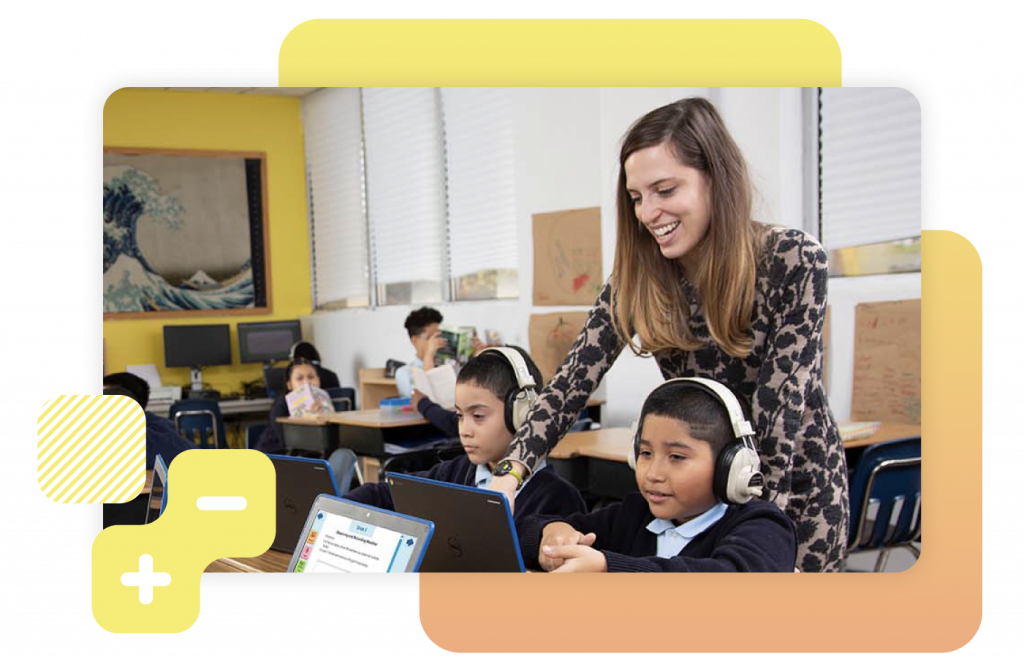
A dedicated team at Amplify with over 500 combined years of classroom teaching, school leadership, and assessment experience thoughtfully created mCLASS Math with teachers and students in mind.
Following research from leading math experts and an in-depth validation analysis through WestEd, data will be continuously released starting in spring 2025.

Sandra Pappas
Associate Director of Research

Patrick Callahan, Ph.D.
Educator and Founder of Math ANEX

Jason Zimba, Ph.D.
Chief Academic Officer of STEM
at Amplify
The mCLASS Math K–5 assessment system is designed to provide educators with reliable and valid measures to identify students needing additional support in mathematics and to inform instructional decisions. Preliminary data presents evidence supporting the psychometric quality of the assessment using the technical standards outlined by the National Center on Intensive Intervention (NCII) and state requirements for screening measures.
Data informs
instruction
mCLASS Math works alongside your core instruction, differentiation, and intervention. The data model behind mCLASS Math provides comprehensive data for each student across grades K–8, easily connecting teachers to the immediate next steps that will support, strengthen, and stretch all learners.
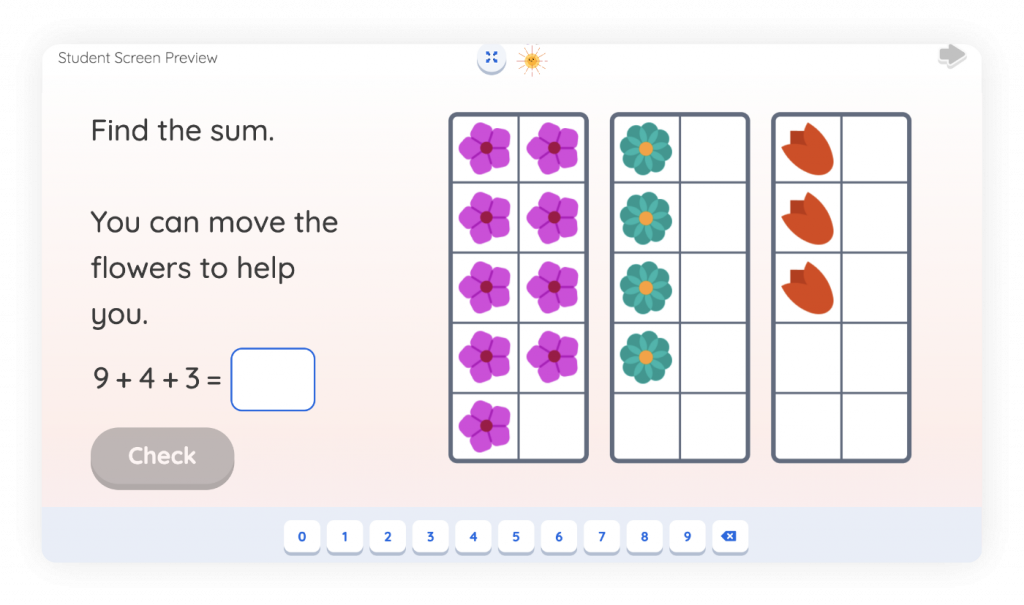
Personalized Learning accelerates student growth with daily, targeted 15-minute digital activities. Supported by a virtual tutor, students tackle individualized tasks linked to daily lessons, receiving just-in-time support to foster grade-level success.

Teacher-led, 15-minute Mini-Lessons can build grade-level proficiency by providing research-based, targeted intervention to small groups of students who need additional support.

Reinforce students’ understanding of concepts through collaborative, hands-on Centers (grades K–5). These student-led routines provide additional practice with vertical alignment across grade levels.
Fluency Practice uses spaced repetition, an evidence-based approach to promoting memory retention, to teach basic facts. The adaptive nature of the practice allows students to focus less and less on the facts they already know. We’ve partnered with Math for Love to iterate on the popular Multiplication by Heart to create Division by Heart and Addition and Subtraction by Heart I & II. These proven fluency decks—plus Skills Fluency for supporting procedural fluency practice—help students practice crucial skills independently.
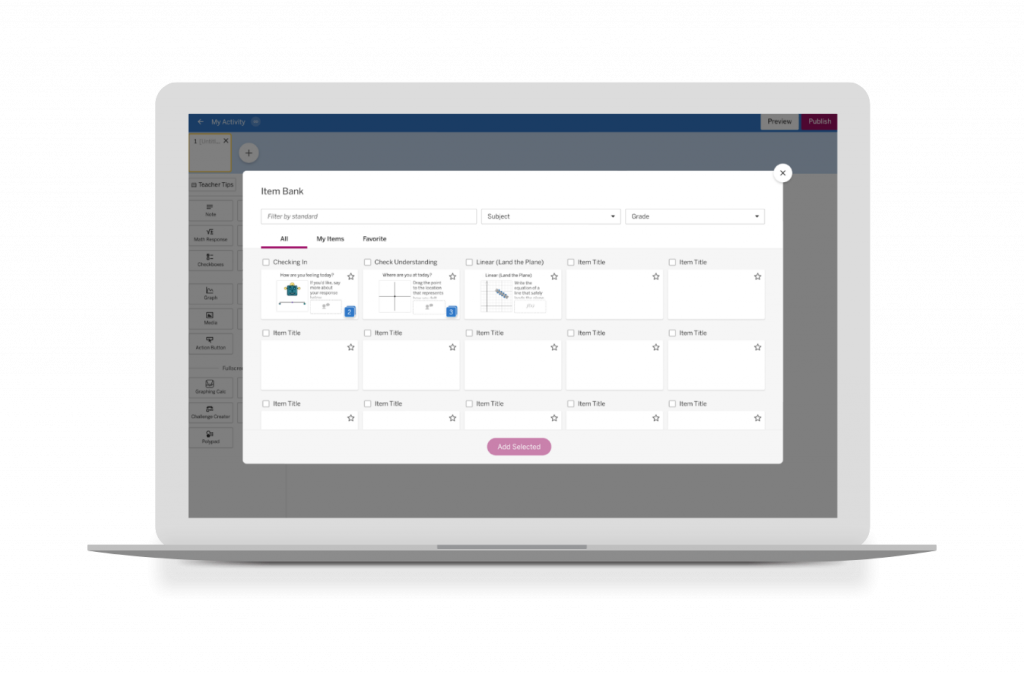
Item Banks provide space for teachers to create custom practice and assessments by using filters and searching for standards, summative-style items, and more.

All students should have access to fun and challenging problems. Extensions are 10- to 15-minute activities aligned to the most critical topics for the grade, providing flexible, low-lift activities for the whole class or targeted intervention to small groups of students ready for an extra challenge.
One cohesive math experience
As part of Amplify Desmos Math, Amplify’s comprehensive math suite, mCLASS Math provides a strong foundation of actionable data to help teachers diagnose and capitalize on student strengths. Amplify Desmos Math ensures that you have all the core, intervention, and personalized instruction you need to support each stage of a student’s math journey.
Professional development for multi-program suites
Amplify professional development provides learning experiences that intentionally develop the knowledge and skills you need for effective and self-sustaining implementation.
Now you can learn and apply impactful instructional techniques and develop a deeper understanding of the suite of Amplify programs.
Amplify professional development has been vetted by Rivet Education’s team through a rigorous three-step process and is listed in the Professional Learning Partner Guide.

Amplify suites
Each of Amplify’s high-quality, research-based programs is designed to help you teach inspiring math lessons that celebrate and develop your students’ brilliance. When used together, our comprehensive math suite provides even greater support and coherence for every student across your curriculum.
Contact your account executive to discuss PD options or request a quote.
Math
Amplify Desmos Math with mCLASS Math assessments and Boost Personalized Learning combine the best of problem-based lessons, intervention, personalized practice, and assessment into a coherent and engaging experience for both students and teachers. With the full suite, teachers gain access to all the tools they need to inspire and motivate all learners in math class.
Empower educators with:
- High-quality professional development
Comprehensive PD sessions equip teachers with the skills and knowledge necessary for effective program implementation, enhancing instructional practices and boosting student outcomes. These sessions support educators in leveraging the full suite of Amplify’s K–5 math programs, ensuring seamless integration and maximizing classroom impact. - Core instruction for grades K–12
Amplify Desmos Math lessons provide a structured approach to problem-based learning, helping teachers create a collaborative math community with students at its center. Each lesson systematically builds on students’ curiosity to develop lasting grade-level understanding for all students. Available in English and Spanish. - Integrated personalized practice
Personalized Learning activities help students access grade-level math through engaging, independent digital practice. Responsive FeedbackTM adjusts to students’ work, providing item-level adaptivity to further support their learning. - Screening and progress monitoring
mCLASS Assessments, along with daily formative checks, measure what students know and how they think. The asset-based assessment system provides teachers with targeted, actionable insights, linked to core instruction and intervention resources. - Embedded intervention
Integrated resources like Mini-Lessons, Fluency Practice, and Math Adventures provide targeted intervention on a specific skill or concept connected to the daily lesson. Extensions are also available to stretch students’ understanding.
Each suite package will include:



Begin packages for grades K–5, 6–A1, or high school
Launch sessions
| On-site package (22 hr.) |
Hybrid 22, on-site package (22 hr.) |
Hybrid 17 package (17 hr.) |
Hybrid 22, virtual package (22hr.) |
Virtual package (14 hr.) |
|
| One Launch session per package | On-site, 6 hr. |
On-site, 6 hr. |
On-site, 3 hr. |
Virtual, 6 hr. (2 half-days) |
Virtual, 3 hr. |
| Amplify Desmos Math: Initial training for K–5, 6–A1, or high school teachers |
|
|
|
||
| Amplify Desmos Math: Program overview for K–5, 6–A1, or high school teachers |
|
|
| Suggested enhancements | ||
| Launch add-on | On-site or virtual, 3 hr. session | Amplify Desmos Math: Program overview for K–5, 6–A1, or high school leaders |
| Launch add-on | On-site or virtual, 3 hr. session | mCLASS Math 2nd Edition: Program overview for grades K–5 or 6–8 teachers |
Strengthen and Coach sessions
One Strengthen session and one additional Strengthen session (1 hr. Focus only) per package. Choose any of the following as a secondary Strengthen touchpoint.
| On-site package (22 hr.) |
Hybrid 22, on-site package (22 hr.) |
Hybrid 17 package (17 hr.) |
Hybrid 22, virtual package (22hr.) |
Virtual package (14 hr.) |
Virtual package |
|
| Strengthen | On-site, 3 hr. | Virtual, 3 hr. | Virtual, 1 hr. |
Virtual, 3 hr. | Virtual, 1 hr. | Virtual, 2 hr. |
| Amplify Desmos Math: Enhancing planning for K–5, 6–A1, or high school teachers |
|
|
|
|||
| Amplify Desmos Math: Enhancing practice for K–5, 6–A1, or high school teachers |
|
|
|
|||
| Amplify Desmos Math: Enhancing observations for K–5, 6–A1, or high school leaders | |
|
|
|||
| Amplify Desmos Math: Supporting all learners: Differentiation in Amplify Desmos Math for K–5 or 6–A1 teachers | |
|
|
|||
| Amplify Desmos Math: Teaching a lesson with digital student screens for K–5 teachers | |
|
||||
| Amplify Desmos Math: Unit-level planning for K–5, 6–A1, or high school teachers |
|
|
||||
| Amplify Desmos Math: Snapshots in the Teacher Dashboard for 6–A1 teachers | |
|
||||
| mCLASS Math: Leveraging assessment data to strengthen mathematical explanations for K–5 or 6–8 teachers | |
|
| Coach | On-site, 6 hr. |
On-site, 6 hr. |
On-site, 6 hr. |
On-site, 6 hr. |
Virtual, 3 hr. |
| Coach session |
|
|
|
|
|
| Suggested enhancements | ||
| Strengthen add-on | On-site or virtual, 3 hr. session | mCLASS Math + Boost Math: Understanding and using data to plan intervention for grades K–5 or 6–8 teachers |
| Strengthen add-on | On-site or virtual, 3 hr. session | Amplify Desmos Math: Supporting and facilitating meaningful discussions for teachers |
Launch session options
Propel your school or district into the new school year. Program-aligned Launch sessions introduce teachers and leaders to their unique Amplify program(s) and support a strong implementation.
Begin: Amplify Desmos Math: Initial training for K–5, 6–A1, or high school teachers
On-site, 6 hours
Initial training sessions are designed for educators who are new to our program. In our initial training session, educators are oriented to the key components of their program(s), including learning how to navigate, teach, and monitor student progress, while exploring content and program resources. Participants will leave the session with foundational knowledge and skills necessary to begin teaching with the program.
Session options: Amplify Desmos Math (Grades K–5, 6–A1, or high school)
Audience: Teachers, instructional staff (maximum 30 participants)
Begin: Amplify Desmos Math: Program overview for K–5, 6–A1, or high school teachers
On-site or virtual, 3 hours
Program overview sessions provide a basic introduction for educators who are new users of the program. In a program overview session, educators learn how to get started with the key features and materials of the program.
Session options: Amplify Desmos Math (Grades K–5, 6–A1, or high school)
Audience: Teachers, instructional staff (maximum 30 participants)
Suggested enhancement: Launch add-on: Amplify Desmos Math: Program overview for K–5, 6–A1, or high school leaders
On-site or virtual, 3 hours
Ideal add-on to Launch sessions
The Program overview for leaders supports district and school-level instructional leaders in effectively coordinating the implementation of the program. Leaders will learn the foundational elements of the program, build an understanding of the key teacher and student practices to look for in classrooms, and develop an implementation plan.
Session options: Amplify Desmos Math
Audience: Leaders (maximum 30 participants)
New session
Suggested enhancement: Launch add-on: mCLASS Math 2nd Edition Program overview for K–5 or 6–8 teachers
On-site or virtual, 3 hours
Dive into the essentials of your mCLASS Assessments. Learn how these assessments both highlight students’ strengths and help identify what’s next through an asset-based approach. Leave ready to administer assessments and understand reporting.
Session options: mCLASS Math (grades K–5 or 6–8)
Audience: Leaders (maximum 30 participants)
Strengthen session options
Strengthen your Amplify implementation with program-specific sessions that support personalized learning and practice in your classroom.
Amplify will partner closely with you to select the appropriate session(s) that will deepen educators’ understanding of Amplify program(s) and equip them with the tools they need to improve student’s learning outcomes. Each package includes one Strengthen session. Additional sessions can be added as Enhancements.
Begin: Amplify Desmos Math: Enhancing planning for K–5, 6–A1, or high school teachers
On-site or virtual, 3 hours
Dive into planning for Amplify Desmos Math, both big picture and day-to-day. Practice using lesson- and unit-planning protocols that will help you build a deep understanding of the math content you’ll be teaching and the planning resources available to you in the curriculum. Walk away with practical strategies for planning, even when you may not have much time.
Session options: Amplify Desmos Math (Grades K–5, 6–A1, or high school)
Audience: Teachers, instructional staff (maximum 30 participants)
Begin: Amplify Desmos Math: Enhancing practice for K–5 or 6–A1, or high school teachers
On-site or virtual, 3 hours
Dig into Amplify Desmos Math’s Launch, Monitor, Connect framework to level up the student discourse in your math class. Explore in-the-moment differentiation support to help you orchestrate discussion and make the most out of key opportunities for conversation and collaboration.
Session options: Amplify Desmos Math (Grades K–5, 6–A1, or high school)
Audience: Teachers, instructional staff (maximum 30 participants)
Begin: Amplify Desmos Math: Enhancing observations for K–5 or 6–A1 leaders
Virtual, 1 hour
Elevate your program knowledge to support teachers with effective Amplify Desmos Math implementation. Leave prepared to identify key instructional elements in a problem-based math lesson, analyze data, and conduct effective classroom observations.
Session options: Amplify Desmos Math (Grades K–5 or 6–A1)
Audience: Teachers, instructional staff (maximum 30 participants)
Begin: Supporting all learners: Differentiation in Amplify Desmos Math for K–5 or 6–A1 teachers
On-site or virtual, 3 hours
Learn how to use the differentiation supports in Amplify Desmos Math to effectively support all learners, both in the moment during a lesson and beyond the lesson. Leave with a plan for implementing resources to support, strengthen, and stretch students’ thinking.
Session options: Amplify Desmos Math
Audience: Teachers, instructional staff (maximum 30 participants)
Begin: Strengthen Focus: Amplify Desmos Math: Teaching a lesson with digital student screens for K–5 teachers
Virtual, 1 hour
Get ready to facilitate digital lessons with your students. Explore what’s possible with the Teacher Dashboard and plan to make the most of these exciting instructional moments.
Session options: Amplify Desmos Math (K–5)
Audience: Teachers, instructional staff (maximum 30 participants)
Begin: Strengthen Focus: Amplify Desmos Math: Unit-level planning for K–5, 6–A1, or high school teachers
Virtual, 1 hour
Dive into unit-level planning to learn the story of your upcoming unit, and discover the big ideas you will explore alongside your students in Amplify Desmos Math.
Session options: Amplify Desmos Math (Grades K–5, 6–A1, or high school)
Audience: Teachers, instructional staff (maximum 30 participants)
Begin: Strengthen Focus: Amplify Desmos Math: Snapshots in the Teacher Dashboard for 6–A1 teachers
Virtual, 1 hour
Explore how to use the Snapshots tool in the Teacher Dashboard to create a collaborative classroom that invites and celebrates student thinking. Leave with planning tips and tricks that will get you ready to use Snapshots during your busy math classes.
Session options: Amplify Desmos Math (Grades 6–A1)
Audience: Teachers, instructional staff (maximum 30 participants)
Begin: Strengthen Focus: mCLASS Math: Leveraging assessment data to strengthen mathematical thinking for grades K–5 or 6–8 teachers
Available for grades 6–8 teachers Oct. 2026
Virtual, 1 hour
Dig into mCLASS Math to reveal what students understand about mathematical concepts, and give them the tools to become more clear and confident communicators in math class.
Session options: mCLASS Math (Grades K–5 or 6–8)
Audience: Teachers, instructional staff (maximum 30 participants)
New session
Suggested enhancement: Begin: mCLASS Math and Boost Math: Understanding and using data to plan intervention for grades K–5 or 6–8 teachers
Available for grades 6–8 teachers Oct. 2026
On-site or virtual, 3 hours
Ideal add-on Strengthen session
Explore how Boost Math uses mCLASS Math data to inform intervention recommendations and monitor student progress. Dig into your student data, explore relevant instructional resources, and leave with actionable next steps for intervention.
Session options: mCLASS Math (Grades K–5 or 6–8)
Audience: Teachers, instructional staff (maximum 30 participants)
New session
Suggested enhancement: Begin: Amplify Desmos Math: Supporting and facilitating meaningful discussions for K–5, 6–A1, or high school teachers
On-site or virtual, 3 hours
Explore how Boost Math uses mCLASS Math data to inform intervention recommendations and monitor student progress. Dig into your student data, explore relevant instructional resources, and leave with actionable next steps for intervention.
Session options: mCLASS Math (Grades K–5 or 6–8)
Audience: Teachers, instructional staff (maximum 30 participants)
Coach session options
Elevate instructional practice and help meet teachers’ and schools’ specific needs with customizable Coach sessions.
Coach session
On-site, 6 hours
Coaching sessions focus on building internal school and district capacity and leadership excellence. Coaching is customized to meet a school or district’s needs and can include model lessons, observations, walk-throughs, and/or co-planning.
Session options: Amplify Desmos Math (K–5 or 6–A1) and/or mCLASS Math (Grades K–5 or 6–8)
Audience: Individual teachers, grade-level teams, PLCs, and/or instructional leaders (maximum 30 participants)
Practice packages (grades K–5 or 6–8)
Launch sessions
| On-site package (16 hr.) |
Hybrid 16, on-site package (16 hr.) |
Virtual package (16 hr.) |
|
| One Launch session per package | On-site, 3 hr. | Virtual, 3 hr. | Virtual, 3 hr. |
| mCLASS Math 2nd Edition Program overview for K–5 or 6–8 teachers |
|
|
|
Strengthen and Coach sessions
| On-site package (16 hr.) |
Hybrid 16, on-site package (16 hr.) |
Virtual package (16 hr.) |
|
| One Strengthen and two Coach sessions per package | Virtual, 1 hr. | Virtual, 1 hr. | Virtual, 1 hr. |
| Amplify Desmos Math: Teaching a lesson with digital student screens for K–5 teachers |
|
|
|
| Amplify Desmos Math: Unit-level planning for K–5, 6–A1, or high school teachers |
|
|
|
| Amplify Desmos Math: Increasing engagement with instructional routines for K–5, 6–A1, or high school teachers | |
|
|
| mCLASS Math: Leveraging assessment data to strengthen mathematical thinking for grades K–5 or 6–8 teachers | |
|
|
| Coaching | On-site, 6 hr. | On-site, 6 hr. | Virtual, 3 hr. |
| Coach session |
|
|
|
| Suggested enhancements | ||
| Strengthen add-on | Virtual or on-site, 3 hr. | Amplify Desmos Math: Enhancing planning for K–5, 6–A1, or high school teachers |
| Strengthen add-on | Virtual or on-site, 3 hr. | Amplify Desmos Math: Enhancing practice for K–5, 6–A1, or high school teachers |
| Strengthen add-on | Virtual or on-site, 3 hr. | Amplify Desmos Math: Enhancing observation for K–5, 6–A1, or high school leaders |
| Strengthen add-on | Virtual or on-site, 3 hr. | Amplify Desmos Math: Supporting all learners for K–5 or 6–A1 teachers |
| Strengthen add-on | Virtual or on-site, 3 hr. | Amplify Desmos Math: Supporting and facilitating meaningful discussions for K–5, 6–A1, or high school teachers |
| Strengthen add-on | Virtual or on-site, 3 hr. | Amplify Desmos Math: Assessment in action: Analyzing data and reports and planning next steps for K–5 or 6–A1 teachers |
| Strengthen add-on | Virtual or on-site, 3 hr. | mCLASS Math and Boost Math: Understanding and using data to plan intervention for K–5 teachers |
Launch session options
Propel your school or district into the new school year. Program-aligned Launch sessions introduce teachers and leaders to their unique Amplify program(s) and support a strong implementation.
Practice: mCLASS Math 2nd Edition Program overview for grades K–5 or 6–8 teachers
On-site or virtual, 3 hours
Dive into the essentials of your mCLASS Math assessment program. Learn how these assessments both highlight students’ strengths and help identify what’s next through an asset-based approach. Leave ready to administer assessments and understand reporting.
Session options: mCLASS Math (Grades K–5 or 6–8)
Audience: Teachers, instructional staff (maximum 30 participants)
Strengthen session options
Strengthen your Amplify implementation with program-specific sessions that support personalized learning and practice in your classroom.
Amplify will partner closely with you to select the appropriate session(s) that will deepen educators’ understanding of your Amplify program(s) and equip them with the tools they need to improve students’ learning outcomes. Each package includes one Strengthen session. Additional sessions can be added as Enhancements.
New session
Practice: Amplify Desmos Math: Strengthen: Focus: Teaching a lesson with digital student screens for K–5 teachers
Virtual, 1 hour
Get ready to facilitate lessons with digital student screens. Explore what’s possible with the Teacher Dashboard and plan to make the most of these exciting instructional moments.
Session options: Amplify Desmos Math (K–5)
Audience: Teachers, instructional staff (maximum 30 participants)
Practice: Strengthen Focus: Amplify Desmos Math: Unit-level planning for K–5, 6–A1, or high school teachers
Virtual, 1 hour
Dive into unit-level planning to learn the story of your upcoming unit, and discover the big ideas you will explore alongside your students in Amplify Desmos Math.
Session option: Amplify Desmos Math (Grades K–5, 6–A1, or high school)
Audience: Teachers, instructional staff (maximum 30 participants)
New session
Practice: Strengthen Focus: Amplify Desmos Math: Increasing engagement with instructional routines for K–5, 6–A1, or high school teachers
Available Oct. 2026
Virtual, 1 hour
Explore how to use the instructional routines in Amplify Desmos Math to support and engage students as they make sense of new contexts, develop mathematical language, and solve problems.
Session option: Amplify Desmos Math (Grades K–5 or 6–A1)
Audience: Teachers, instructional staff (maximum 30 participants)
New session
Practice: Strengthen Focus: mCLASS Math: Leveraging assessment data to strengthen mathematical explanations for grades K–5 or 6–8 teachers
Available for grades 6–8 teachers Oct. 2026
Virtual, 1 hour
Dig into mCLASS Math to reveal what students understand about mathematical concepts, and give them the tools to become more clear and confident communicators in math class.
Session option: mCLASS Math (Grades K–5 or 6–8)
Audience: Teachers, instructional staff (maximum 30 participants)
New session
Suggested enhancement: Practice: Amplify Desmos Math: Enhancing planning K–5 or 6–A1 teachers
On-site or virtual, 3 hours
Dive into planning for Amplify Desmos Math, both big picture and day-to-day. Practice using lesson- and unit-planning protocols that will help you build a deep understanding of the math content you’ll be teaching and the planning resources available to you in the curriculum. Walk away with practical strategies for planning, even when you may not have much time.
Session option: Amplify Desmos Math (Grades K–5 or 6–A1)
Audience: Teachers, instructional staff (maximum 30 participants)
New session
Suggested enhancement: Practice: Amplify Desmos Math: Enhancing practice for K–5, 6–A1, or high school teachers
On-site or virtual, 3 hours
Dig into Amplify Desmos Math’s Launch, Monitor, Connect framework to level up the student discourse in your math class. Explore in-the-moment differentiation support to help you orchestrate discussion and make the most out of key opportunities for conversation and collaboration.
Session option: Amplify Desmos Math (Grades K–5, 6–A1, or high school)
Audience: Teachers, instructional staff (maximum 30 participants)
New session
Suggested enhancement: Practice: Amplify Desmos Math: Enhancing observations for K–5, 6–A1, or high school leaders
On-site or virtual, 3 hours
Elevate your program knowledge to support teachers with effective Amplify Desmos Math implementation. Leave prepared to identify key instructional elements in a problem-based math lesson, analyze data, and conduct effective classroom observations.
Session options: Amplify Desmos Math (Grades K–5, 6–A1, or high school)
Audience: Teachers, instructional staff (maximum 30 participants)
New session
Suggested enhancement: Practice: Supporting all learners: Differentiation in Amplify Desmos Math for K–5 or 6–A1 teachers
On-site or virtual, 3 hours
Learn how to use the differentiation supports in Amplify Desmos Math to effectively support all learners, both in the moment during a lesson and beyond the lesson. Leave with a plan for implementing resources to support, strengthen, and stretch students’ thinking.
Session option: Amplify Desmos Math (Grades K–5 or 6–A1)
Audience: Teachers, instructional staff (maximum 30 participants)
New session
Suggested enhancement: Practice: Amplify Desmos Math: Supporting and facilitating meaningful discussions for K–5, 6–A1, or high school teachers
Available Oct. 2026
On-site or virtual, 3 hours
Explore how to transform your mathematics classroom into a social and collaborative environment where students deepen their understanding by sharing their mathematical thinking. Learn more about how Amplify Desmos Math provides support for these meaningful mathematical conversations.
Session option: Amplify Desmos Math (Grades K–5, 6–A1, or high school)
Audience: Teachers, instructional staff (maximum 30 participants)
New session
Suggested enhancement: Practice: Amplify Desmos Math: Assessment in action: Analyzing data, reports, and planning next steps for K–5 or 6–A1 teachers
Available Oct. 2026
On-site or virtual, 3 hours
Deepen your understanding of the different types of assessments in Amplify Desmos Math and how they provide evidence of student learning. Analyze sample student work to calibrate on assessment scoring, interpret student thinking, and make a plan for instructional next steps.
Session option: Amplify Desmos Math (Grades K–5 or 6–A1)
Audience: Teachers, instructional staff (maximum 30 participants)
New session
Suggested enhancement: Practice: mCLASS Math and Boost Math: Understanding and using data to plan intervention for K–5 teachers
Available for grades 6–8 teachers Oct. 2026
On-site or virtual, 3 hours
Ideal add-on Strengthen session
Explore how Boost Math uses mCLASS Math data to inform intervention recommendations and monitor student progress. Dig into your student data, explore relevant instructional resources, and leave with actionable next steps for intervention.
Session option: mCLASS Math (Grades K–5 or 6–8)
Audience: Teachers, instructional staff (maximum 30 participants)
Coach session options
Elevate instructional practice and help meet teachers’ and schools’ specific needs with customizable Coach sessions.
Coach session
On-site, 6 hours
Coaching sessions focus on building internal school and district capacity and leadership excellence. Coaching is customized to meet a school or district’s needs and can include model lessons, observations, walk-throughs, and/or co-planning.
Session options: Amplify Desmos Math (Grades K–5 or 6–A1) and mCLASS Math (Grades K–5 or 6–8)
Audience: Individual teachers, grade-level teams, PLCs, and/or instructional leaders (maximum 30 participants)
Contact us
Ready to lock in your dates? Want to learn more about developing a professional development plan to meet your needs?
Amplify welcomes the opportunity to partner with you to design professional development plans to meet the needs of your staff. Whether you’re returning or new to Amplify program(s), we provide guidance in answering your questions and making package/session recommendations.
If you’d like to order professional development services, please contact your local Amplify sales representative or call (800) 823-1969.
Amplify Desmos Math California
Welcome, Math 1 Reviewers!
We’re honored to introduce you to Amplify Desmos Math California. We’re confident you’ll find this comprehensive program to be a powerful tool for bringing the vision of the California Math Framework to life in classrooms across the state.
Please start with the video on the right to learn how to navigate the program and access key features referenced within our submission. Below you’ll find additional resources to support your review.
Your Review Samples
As a curriculum that incorporates both print and digital resources, it’s important that you explore both our physical materials (delivered to you in grade-specific tubs) and our digital materials (accessible through our platform). We invite you to explore both types of resources using the instructions and tips below.
Print Samples
Your print samples should have arrived in grade-specific tubs with a copy of your Reviewer Binder contained within the Math 1 shipping box. As you begin the process of organizing your materials, please refer to the inventory checklist found inside the tub as well as within your Reviewer Binder.
Digital Samples
- In order to access your digital samples, you’ll need to log into our platform using your unique login credentials found on a Digital Access Flyer inside of your Reviewer Binder. Once you have located the flyer:
- Click the orange button below to access the platform.
- Click “Log in with Amplify.”
- Enter the username and password provided on your Digital Access Flyer.
Navigation Tips
Below you will find helpful tips for navigating Amplify Desmos Math California. We recommend reading these pages alongside the program’s print materials and digital experience to gain a deeper understanding of the program.
Click the links below to read about navigating program features including:
Built for California
The Amplify Desmos Math California program is designed around the vision articulated in the California Mathematics Framework to enable all California students to become powerful users of mathematics. Our program incorporates the latest research in student learning, meaning that we:
- Focus on the Big Ideas: Amplify Desmos Math California’s courses, units, and lessons are centered around the Big Ideas. Big Ideas, like standards, are not considered in isolation. In addition to each unit and lesson’s focal Big Ideas, Amplify Desmos Math California also provides connections among the Big Ideas across units and lessons.
- Center on open and engaging tasks: Amplify Desmos Math California is grounded in engaging tasks meant to address students’ often-asked question: “Why am I learning this?” Students are invited into learning with low-floor, high-ceiling tasks that provide an entry point for all. Open tasks in Amplify Desmos Math California provide the space for students to try on multiple strategies and represent their thinking in different ways, and allow student explanation and discussion to serve as the center of the classroom. All lessons offer both print and digital representations of lessons.
- Provide enhanced digital experiences: Amplify Desmos Math California includes digitally-enhanced lesson activities, incorporating interactive digital tools alongside print materials. These purposefully-placed resources allow students to visualize mathematical concepts, receive actionable feedback while practicing, encounter personalized learning support from an onscreen tutor, and engage in discussions about their thinking and approaches.
- Treat core instruction and differentiation as integral partners: The Amplify Desmos Math California curriculum provides teachers with lessons, strategies, and resources to eliminate barriers and increase access to grade-level content without reducing the mathematical demand of tasks. Every activity has multiple entry points to ensure that all students are supported and challenged. Intervention and personalized learning activities are directly connected to lesson content and offer students the individualized support as they dive into the mathematics.
Category 1: Mathematics Content/Alignment with the Standards
Standards Map
Linked here is the Standards Map for Amplify for Math 1.
Evaluation Criteria Map
Linked here is the Evaluation Criteria Map for Math 1. Please note that you will need to be logged into the digital platform to access the links in the Evaluation Criteria Map.
Standards of Mathematical Practice
Linked here is the alignment of Amplify Desmos Math California to the Standards for Mathematical Practice at Math 1.
Drivers of Investigation and Content Connections
Amplify Desmos Math California incorporates the Drivers of Investigation (DIs) and Content Connection (CCs) throughout the program. Throughout the year, students engage with open and authentic tasks of varying durations — from lesson activities to unit-level Explore lessons and longer course-level Investigations. Every lesson and investigation opportunity is grounded around the why, how, and what of the learning experience, and helps teachers bring mathematical concepts to life.

California English Language Development Standards
Linked here is the alignment of Amplify Desmos Math California to the California English Language Development Standards for Math 1.
California Environmental Principles and Concepts
Select lessons, performance tasks, and investigations across grade levels in Amplify Desmos Math California are aligned to one or more of the California Environmental Principles and Concepts. Click this link to view how the California Environmental Principles and Concepts are represented in Amplify Desmos Math California Math 1.
Category 2: Program Organization
Amplify Desmos Math California thoughtfully combines conceptual understanding, procedural fluency, and application. Each lesson is designed to tell a story by posing problems that invite a variety of approaches before guiding students to synthesize their understanding of the learning goals.
Big Ideas
Amplify Desmos Math California’s courses, units, and lessons are centered around the Big Ideas. Big Ideas, like standards, are not considered in isolation. In addition to each unit and lesson’s focal Big Ideas, Amplify Desmos Math California also provides connections among the Big Ideas across units and lessons. Please refer to Keeping the Big Ideas at the Center, linked here, for the Amplify Desmos Math California Math 1 lesson design and alignment to the Big Ideas.
Program Structure
Amplify Desmos Math combines the best of problem-based lessons, intervention, personalized practice, and assessments into a coherent and engaging experience for both students and teachers.
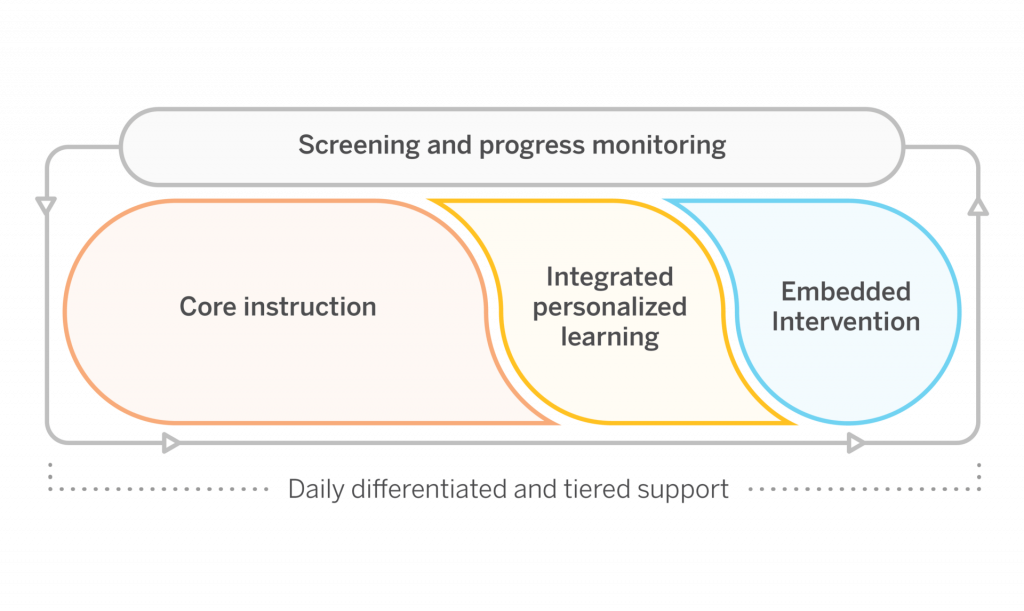
Lessons and units in Amplify Desmos Math California are designed around a Proficiency Progression, a model that steps out problem-based learning by systematically building students’ curiosity into lasting grade-level understanding.
In the Proficiency Progression, lessons begin by activating students’ natural curiosity and offering opportunities to generate new ideas through collaboration. Teachers are then able to refine ideas through intentional facilitation and guide students to grade-level understanding, while students retain the ability to use different strategies and methods to show their comprehension of the content. Students are provided ample opportunities to develop lasting understanding.
Scope and Sequence
Below you can view the scope and sequence for Amplify Desmos Math California Math 1.
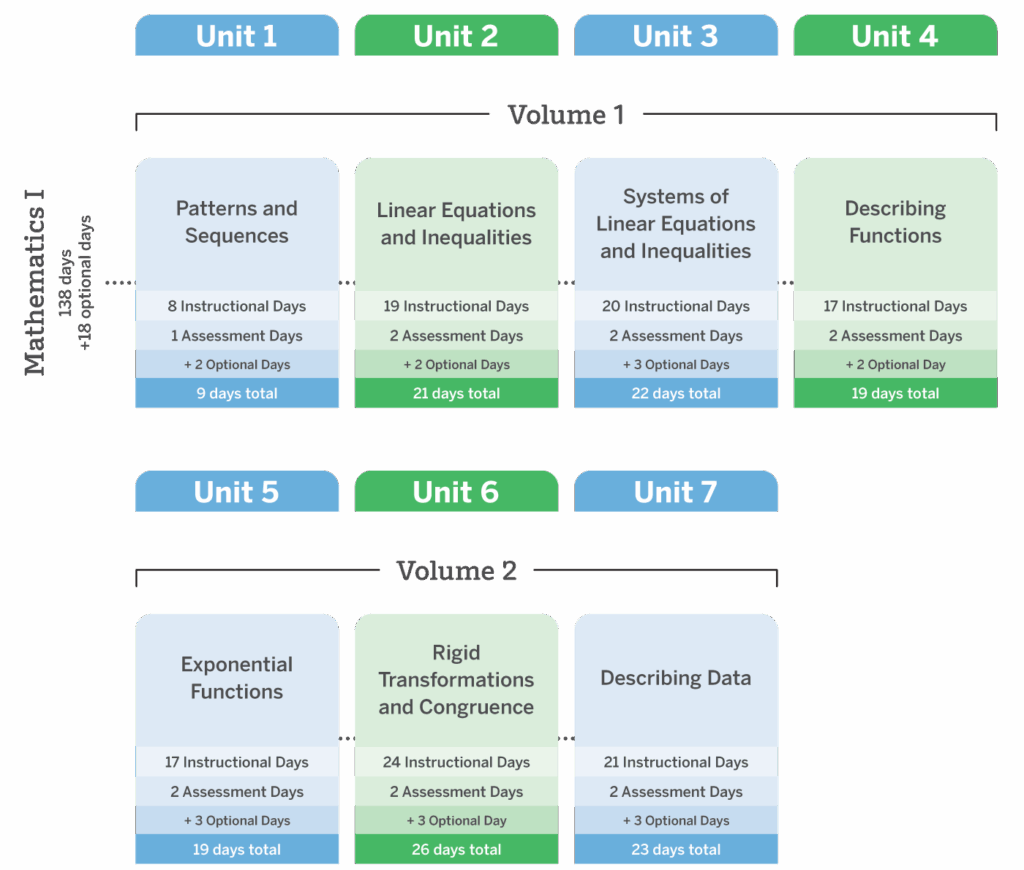
Lesson Design and Structure

Amplify Desmos Math California is designed with a structured approach to problem-based learning that systematically builds on students’ curiosity and allows students to grapple with the Big Ideas of the California Framework. Every lesson activity is organized into a Launch, Monitor, Connect format.
Launch: The launch is a short, whole-class conversation that creates a need or excitement, provides clarity, or helps students connect their prior knowledge or personal experience, which ensures that everyone has access to the upcoming work.
Monitor: As students work individually, in pairs, or in groups, teachers explore student thinking, ask questions, and provide support to help move the conversations closer to the intended math learning goal.
Connect: Teachers connect students’ ideas to the key learning goals of the lesson, facilitating class discussions that help synthesize and solidify the Big Ideas.
Each lesson within Amplify Desmos Math California follows the same structure.
Warm-Up: Every Amplify Desmos Math California lesson begins with a whole class Warm-Up. Warm-Ups are an invitational Instructional Routine intended to provide a social moment at the start of the lesson in which every student has an opportunity to contribute. Warm-Ups may build fluency or highlight a strategy that may be helpful in the current lesson or act as an invitation into the math of the lesson.
Lesson Activities: Each lesson includes one or two activities. These activities are the heart of each lesson. Students notice, wonder, explore, calculate, predict, measure, explain their thinking, use math to settle disputes, create challenges for their classmates, and more. Guidance is provided to help teachers launch, monitor, and connect student thinking over the course of the activity.
Synthesis and Show What You Know: The Synthesis is an opportunity for the teacher and students to pull all the learning of the lesson together into a lesson takeaway. Students engage in a facilitated discussion to consolidate and refine their ideas about the learning goals, and the teacher synthesizes students’ learning. Show What You Know is a daily assessment opportunity for students to show what they know about the learning goals and what they are still learning.
Practice and Differentiation: Daily practice problems for the day’s lesson are included both online and in the print Student Edition, including fluency, test practice, and spiral review.
Routines
Amplify Desmos Math California features a variety of lesson routines. Instructional routines and Math Language Routines (MLRs) are used within lessons to highlight student-developed language and ideas, cultivate conversation, support mathematical sense-making, and promote meta-cognition. Both are called out at point-of-use within the Teacher Edition and Teacher Presentation Screens. Below are the types of routines used throughout the Amplify Desmos Math California curriculum:
Math Language Routines
- MLR1: Stronger and Clearer Each Time
- MLR2: Collect and Display
- MLR3: Critique, Correct, Clarify
- MLR5: Co-Craft Questions
- MLR6: Three Reads
- MLR7: Compare and Connect
- MLR 8: Discussion Supports
Instructional Routines
- Decide and Defend
- Notice and Wonder
- Number Talk
- Tell a Story
- Think-Pair-Share
- Which One Doesn’t Belong?
Category 3: Assessments
A variety of performance data in Amplify Desmos Math California provides evidence of student learning, while helping students bolster their skills and understanding.
Unit-Level Assessment
Amplify Desmos Math California has embedded unit assessments that offer key insights into students’ conceptual understanding of math. These assessments provide regular, actionable information about how students are thinking about and processing math, with both auto-scoring and in-depth rubrics that help teachers anticipate and respond to students’ learning needs.
Pre-Unit Check: Each unit begins with a formative assessment designed to identify the student skills that will be particularly relevant to the upcoming unit. This check is agnostic to the standards covered in the following unit and serves not as a deficit-based acknowledgment of what students do not know, but rather as an affirmation of the knowledge and skills with which students come in.
End-of-Unit Assessment: Students engage with rigorous grade-level mathematics through a variety of formats and tasks in the summative End-of-Unit Assessment. A combination of auto-scored (when completed digitally) and rubric-scored items provides deep insights into student thinking. All Amplify Desmos Math California End-of-Unit Assessments include two forms.
Sub-Unit Quizzes: Sub-Unit Quizzes are formative assessments embedded regularly in Math 1. In these checks, students are assessed on a subset of conceptual understandings from the unit, with rubrics that help illuminate students’ current understanding and provide guidance for responding to student thinking.
Performance Tasks: At the end of each unit there is a summative assessment performance task provided to evaluate students’ proficiency with the concepts and skills addressed in the unit.
Lesson-Level Assessments
Amplify Desmos Math California lessons include daily moments of assessment to provide valuable evidence of learning for both the teacher and student. Beyond formative, summative, and benchmark assessments, students also have opportunities for self-reflection with Watch Your Knowledge Grow. Students take ownership of their learning by reflecting and tracking their progress before and after each unit.
Show What You Know: Each lesson has a daily formative assessment focused on one of the key concepts in the lesson. Show What You Know moments are carefully designed to minimize completion time for students while maximizing daily teacher insights to attend to student needs during the following class.
Responsive Feedback™: Teachers have the ability to see and provide in-the-moment feedback as students progress through a digital lesson. Responsive Feedback motivates students and engages them in the learning process.
Diagnostic Assessment
Every grade level features an asset-based diagnostic assessment designed to be administered at the beginning of the year. Delivered digitally and to the whole class, our diagnostic assessment is uniquely designed to reveal underlying math thinking and identify what students know about grade-level math. With data beyond just right and wrong, teachers have the type of deeper level of insights need to take the right next step.
CAASPP-Aligned Assessment Preparation
Amplify Desmos Math is designed to support students’ mathematical development through problem-based learning, differentiation, and embedded assessments. The program’s emphasis on conceptual understanding, procedural fluency, and application aligns with the mathematical practices and content standards assessed by the CAASPP.
Amplify Desmos Math California includes a CAASPP-aligned Item Bank. This standards-aligned bank of questions allows teachers to filter and search by grade and standard to find items. Once assigned on the digital platform, students will experience CAASPP-like practice with the online digital tools.
Data and Reporting
Amplify Desmos Math California provides teachers and administrators with unified reporting and insights so that educators have visibility into what students know about grade-level math—and can plan instruction accordingly for the whole class, small groups, and individual students. Reporting functionality integrates unit assessments, lesson assessments, diagnostic data, and progress monitoring for a comprehensive look at student learning. Program reports show proficiency and growth by domain, cluster, standard, and priority concept using performance data from unit assessments, then highlight areas of potential student need to allow teachers to modify their instruction and target differentiated support.
Administrator reporting provides a complete picture of student, class, and district performance, allowing administrators to implement instructional and intervention plans.
Category 4: Access and Equity
The Amplify Desmos Math California curriculum provides teachers with lessons, strategies, and resources to eliminate barriers and increase access to grade-level content without reducing the mathematical demand of tasks. Our lessons are developed using the Universal Design for Learning (UDL) framework to proactively ensure that all learners can access and participate in meaningful, challenging learning opportunities.
Every activity has multiple entry points to ensure that all students are supported and challenged. Intervention and personalized learning activities are directly connected to the day’s content and offer students the individualized supports they need to be successful.
Each lesson and unit contains guidance for teachers on how to identify students who may need support, students who need to keep strengthening their understanding, and students who may be ready to stretch their learning. In addition, teachers are provided with recommendations for resources to use with each group of students.
Universal Design for Learning
Each lesson in the program incorporates opportunities for engagement, representation, action, and expression based on the guidelines of Universal Design for Learning (UDL).
- Multiple Means of Engagement: Students engage in both print and digital learning, and are regularly participating in discussions and hands-on activities. Students are invited to build their own challenge for other students to solve, which provides opportunities for choice and
autonomy, as well as joy and play. - Multiple Means of Representation: Students are encouraged to demonstrate their learning using mathematical representations, both print and digital, and regularly engage with their peers in analyzing multiple possible solutions. Classes engage in open-ended discussions about what individual students notice and wonder about mathematical concepts.
- Multiple Means of Action and Expression: Learners differ in how they navigate learning environments and express what they know. Students can communicate their ideas in multiple ways, including in print, sketching, uploading photos, or recording an audio response.
Accessibility
Lesson Facilitation Supports
Every lesson includes at least one specific suggestion the teacher can use to increase access to the lesson without reducing the mathematical demand of the tasks. These suggestions address the following areas:
- Conceptual Processing
- Visual-Spatial Processing
- Executive Functioning
- Memory and Attention
- Fine Motor Skills
Accessibility Tools
Students have the ability to control accessibility tools so that each learning experience is customized to their individual needs. In many instances, these tools can be turned on or off at any point of instruction.
- Text to speech: Reads text instructions to students in multiple languages
- Enlarged font: Increases the size of all text on screen
- Braille mode: Includes narration of digital interactions
- Language selection: Toggles between languages
Differentiation: In-Lesson Teacher Moves
Within every lesson activity, teachers can use the suggestions in the Differentiation Teacher Moves table to provide in-the-moment instructional support while students are engaged in the work of the lesson. This table can help teachers anticipate the ways students may approach the activity, and provides prompts that they can use during the lesson to Support, Strengthen, and Stretch individual students in their thinking. Teachers are provided with clear student actions and understanding to look for, each matched with immediately usable suggestions for how to respond to the student thinking illustrated in each row of the table. In addition to using these suggestions in the moment as teachers monitor student work, teachers can review the Differentiation table in advance to help them anticipate how students are likely to approach the activity.

Differentiation: Beyond the Lesson
Teachers are provided with recommendations for resources to use with each group of students needing support, strengthening, and stretching after each lesson. Support, Strengthen, and Stretch resources include:
- Mini-Lessons: 15-minute, small-group direct instruction lessons targeted to a specific concept or skill
- Item Banks: Space for teachers to create practice and assessments by using filters and searching for standards, summative-style items, and more
- Fluency Practice: Adaptive, personalized practice built out for basic operations and more
- Extensions: Lesson-embedded Teacher Moves including possible stretch questions and activities for students
- Lesson Practice: Additional practice problems support every lesson
- Math Adventures: Strategy-based math games where students engage with math concepts and practice skills in a fun digital environment
- Lesson Summary Support: Support for students and caregivers that provides efficient explanation of the learning goal with clear examples
Math Identity and Community
The Math Identity and Community feature supports teachers in helping students build confidence in their own mathematical thinking, develop skills to work with and learn from others when doing math, and learn how math is an interwoven part of their broader community. The embedded prompts throughout the lessons are designed to highlight what it means to be good at math, the value of sharing ideas, and the power of flexible and creating thinking. Here are some examples of the Math Identity and Community supports embedded in each lesson:
- I can be all of me in math class. You will work with partners every day in math class. What do you want your partners to know about you?
- We are a math community. What does good listening look like and sound like in a math community?
- I am a doer of math. What math strengths did you use today?
Math Language Development
Every lesson in Amplify Desmos Math California includes opportunities for all students to develop mathematical language as they experience the content. Amplify Desmos Math California purposefully progresses language development from lesson to lesson and across units by supporting students in making their arguments and explanations stronger, clearer, and more precise. This systematic approach to the development of math language can be broken down into the following four categories of support:
- Vocabulary: Units and lessons start by surfacing students’ language for new concepts, then building connections between their language and the new vocabulary for that unit. This honors the language assets that students bring into their learning.
- Language Goals: Language goals attend to the mathematics students are learning, and are written through the lens of one or more of four language modalities: reading, writing, speaking, and listening.
- Math Language Routines: Math Language Routines are used within lessons to highlight student-developed language and ideas, cultivate conversation, support mathematical sense-making, and promote meta-cognition.
- Multilingual/English Learner Supports: Supports for multilingual/English learners (ML/ELs) are called out at intentional points within each lesson. These specific, targeted suggestions support ML/ELs with modifications that increase access to a task, or through development of contextual or mathematical language (both of which can be supportive of all learners).
Multilingual and English Learner Supports
Partnership with English Learner Success Forum
Amplify partnered with the English Learner Success Forum (ELSF), a national nonprofit organization that advocates for high-quality instructional materials that are inclusive of multilingual learners. ELSF reviewed Amplify Desmos Math California, and provided directional guidance and feedback to ensure that the program reflects their research-based instructional strategies for multilingual/English learners.
Math Language Development Resource
Our Math Language Development Resources book contains lesson-specific strategies and activities for all levels of English Learners (i.e., Emerging, Expanding, Bridging). With support for every lesson, teachers are empowered to help all students, regardless of their language skills, to participate fully, grasp the material, and excel in their mathematical journey.
Multilingual Glossary
Amplify Desmos Math California includes a digital glossary for languages other than Spanish. Translations will be provided for up to nine languages.
Spanish Version
Amplify Desmos Math California will include Spanish student-facing materials beginning in the 2026–27 school year.
Category 5: Instructional Planning and Support
Amplify Desmos Math California includes a variety of embedded instructional supports to empower teachers to lead effectively and gain actionable insights into student growth and progress. Teachers are equipped with a comprehensive set of resources designed to fulfill the requirements of Category 5.
Grade-level concepts
Within the Teacher Edition front matter:
- Scope and sequence
- Big Ideas, Drivers of Investigation, and Content Connections
- Grade level standards
- Standards for Mathematical Practice
- English Language Development Standards
- Environmental Principals and Concepts
Within each Unit and Sub-Unit Overview:
- Big Ideas, Drivers of Investigation, and Content Connections
- Math that Matters Most
- Grade level standards
- Standards for Mathematical Practice
- English Language Development Standards
- Environmental Principals and Concepts
Within each Lesson:
- Big Ideas, Drivers of Investigation, and Content Connections
- Grade level standards
- Standards for Mathematical Practice
- English Language Development Standards
- Environmental Principals and Concepts
How to implement the program
At the course level (within the Teacher Edition front matter):
- Navigating the Program (both print and digital)
- Facilitating Lesson Activities with Launch, Monitor and Connect
- Overview of the Digital Facilitation Tools
At the lesson level:
- Suggestions for timing
- What materials to prep
- How to organize and group students
- Key lesson takeaways with the Synthesis
- Recommendations for Differentiation
- Strategies for intervention and extensions (in the Intervention, Extensions, and Investigation Resources book)
At the activity level:
- Differentiation recommendations
- Accessibility tips
- ML / EL tips
- Teacher look-fors
- Recommended Teacher Moves
- Prompts for guiding student thinking
- Sample student responses
Development of Math Language
A variety of language development supports are provided within the Student and Teacher Editions and Math Language Development Resources book.
At the lesson level:
- Diagrams and visuals
- Sentence frames and word banks
- Graphic organizers, including Frayer models
- Vocabulary routines
- Embedded language supports aligned to the CA ELDs
- Lesson-specific strategies for Emerging, Expanding, and Bridging
At the unit level:
- Words With Multiple Meanings
- Contextual vocabulary
At the course level:
- English/Spanish cognates
- Multilingual Glossary
Other Curriculum Guidance
- Additional Practice Resources book
- Assessment Resources book
- Assess and Respond guidance paired with each assessment opportunity
- Show-What-You-Know activities
- Answer keys and rubrics
- Performance tasks
Welcome Reviewers, to Amplify Desmos Math!
Amplify Desmos Math thoughtfully combines conceptual understanding, procedural fluency, and application. Each lesson is designed to tell a story by posing problems that invite a variety of approaches before guiding students to synthesize their understanding of the learning goals.
Scroll to learn more about the program and explore sample materials.
About the program
We believe in math that motivates. Our structured approach to problem-based learning builds on students’ curiosity to develop lasting grade-level understandings for all students.
The program thoughtfully combines conceptual understanding, fluency, and application, motivating students with interesting problems they are eager to solve. Teachers can spend more time where it’s most impactful: creating a collaborative classroom of learners.
A powerful suite of math resources
Amplify Desmos Math combines the best of problem-based lessons, intervention, personalized practice, and assessments into a coherent and engaging experience for both students and teachers.

Screening and progress monitoring
mCLASS® Assessments, along with daily formative checks, measure not only what students know, but also how they think. The asset-based assessment system provides teachers with targeted, actionable insights, linked to core instruction and intervention resources.
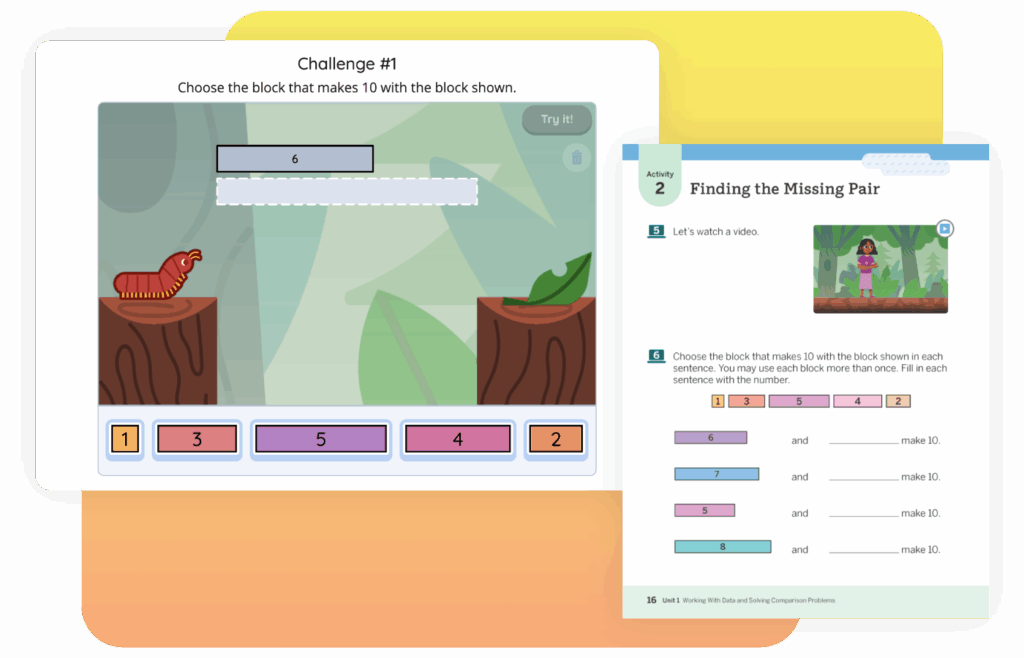
Core instruction
Amplify Desmos Math lessons provide a structured approach to problem-based learning, helping teachers create a collaborative math community with students at its center. Each lesson systematically builds on students’ curiosity to develop lasting grade-level understandings for all students.
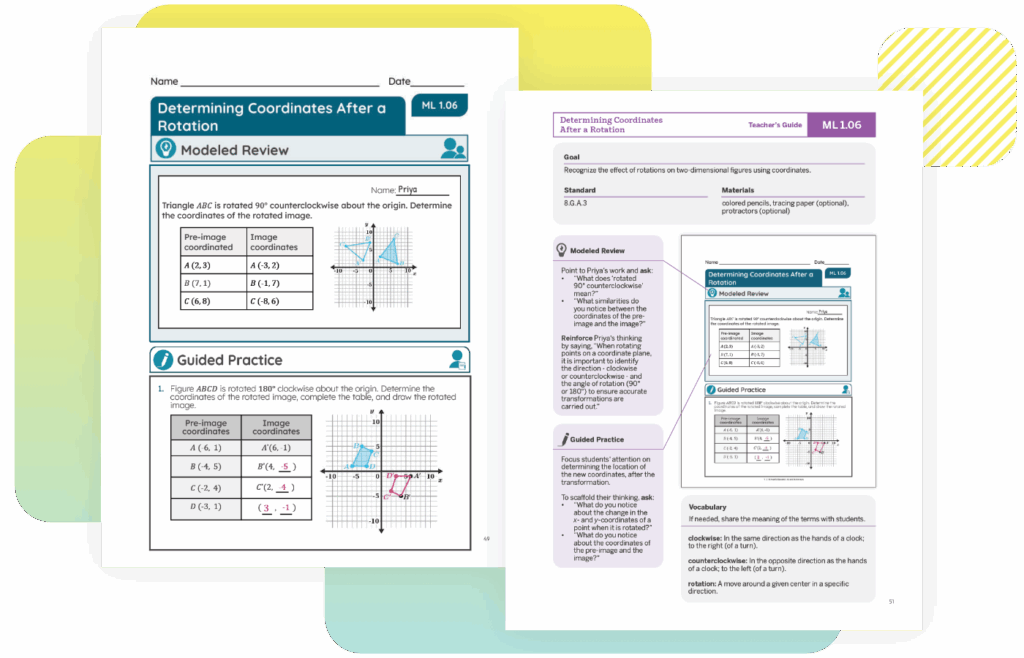
Differentiation and intervention
Integrated resources like Mini-Lessons, Fluency Practice, and Math Adventures provide targeted intervention on a specific concept or skill connected to daily instruction. Extensions are also available to stretch students’ understanding.
Boost™ Personalized Learning activities help students access grade-level math through engaging, independent digital practice. Responsive Feedback™ adjusts to students’ work, providing item-level adaptivity to further support their learning.
An approach that supports teachers
Clear, step-by-step instructional moves help teachers plan and teach student-centered lessons that use student thinking to differentiate instruction and guide to grade-level understanding. They include:
- Guidance on what to listen for and how to respond.
- Clear learning objectives to keep learning on track for each activity and lesson.
- Daily reinforcement activities to provide direct instruction when needed.
A structured approach to problem-based learning
Problem-based learning asks students to make sense of and think strategically about mathematically interesting problems. This approach allows students’ ideas to take
center stage, so they are active and engaged in their learning process. Teachers are able to hear and respond to student thinking in real time, guiding and differentiating instruction right in the moment.
Moving from “I do, We do, You do” to “You do, We do, I do”
Lessons begin by activating student’s prior knowledge and curiosity, inviting them to explore the math, collaborate, and refine their thinking. By focusing on developing student thinking first, teachers can better connect ideas, guide learning, and synthesize learning objectives.
Lessons that are rigorous and delightful
Every lesson in Amplify Desmos Math is designed to put students at the center of their learning. Utilizing research-based best practices, students engage in meaningful work based on rich problems and real-world experiences.
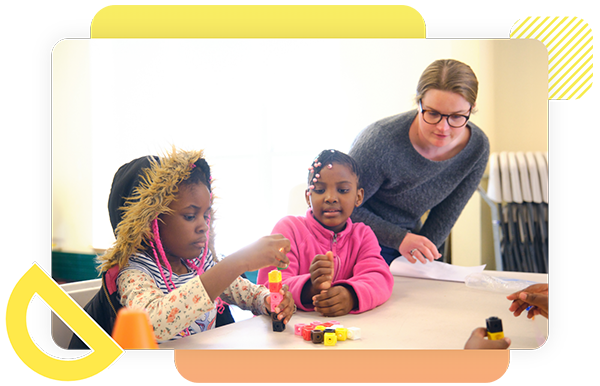
Warm-Up
Lessons begin by inviting every student to contribute to the mathematical discussion. Instructional routines are often used to build fluency, set the context, activate prior knowledge, or highlight a strategy that may be helpful in the lesson.
Rich learning activities
Math knowledge is built through experiences and meaningful interactions. Students notice, wonder, explore, calculate, predict, measure, explain their thinking, use math to settle disputes, create challenges for their classmates, and more. Teachers serve as a guide, using a Launch, Monitor, Connect framework:
- Launch: Teachers offer a short introduction to the problem or challenge
- Monitor: As students work individually, in pairs, or in groups, teachers ask questions and provide support to move student thinking closer to the intended math goal.
- Connect: Teachers connect student ideas to the Key Takeaway of the activity to help students synthesize and solidify the big ideas.
Synthesis
Teachers ensure that students end the lesson with accurate and enduring understandings of the math goal through synthesis of student ideas, explicit instruction, and reflection.
A short Show What You Know assessment allows students to show what they know about the learning goals of the lesson and reveal what they are still learning.
Differentiation and practice
Lasting understanding requires reinforcement. Every lesson offers Lesson Practice instructional recommendations to Support, Strengthen, and Stretch learning.
Print for every lesson with engaging digital experiences
Whether in print or digital form, engaging interactions enable students and teachers to openly exchange ideas. Each lesson includes student print materials, interactive teacher Presentation Screens, and digital resources for practice and differentiation. Some lessons also use manipulatives or provide options for students to use devices individually or in pairs. Device recommendations for student use are age-appropriate, with more frequent usage in middle and high school.
Demo access
Please login to the digital platform to experience our full program as part of your review. In order to access the digital platform, you’ll need to log into using your unique login credentials below.
- Click the orange button below to access the platform.
- Click “Log in with Amplify.”
- Enter the username and password:
- Username:
- Password:
- View the video for helpful platform navigation tips.
Assessments
By starting with what students already know, Amplify Desmos Math helps build a strong foundation for success to guide and support future learning. Teachers are empowered to transform every classroom into an engaged math community that invites, values, and develops student thinking. With explicit guidance on what to look for and how to respond, teachers can effectively support students as they develop their understanding.
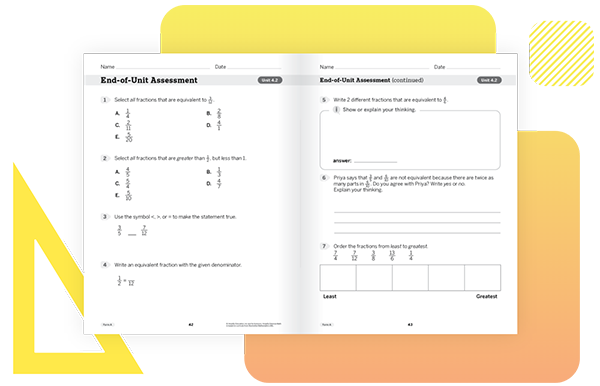
Program assessments
A variety of performance data in Amplify Desmos Math provides evidence of student learning while helping students bolster their skills and understanding.
Unit-Level Assessments
Our embedded unit assessments offer key insights into students’ conceptual understanding of math. These assessments provide regular, actionable information about how students are thinking about and processing math, with both auto-scoring and in-depth rubrics that help teachers anticipate and respond to students’ learning needs.
Lesson-Level Assessments
Amplify Desmos Math lessons are centered around sense-making and in-the-moment feedback. Daily moments of assessment provide valuable evidence of learning for both the teacher and student.
Data and reporting
Amplify Desmos Math provides teachers and administrators with unified reporting and insights so that educators have visibility into what students know about grade-level math—and can plan instruction accordingly for the whole class, small groups, and individual students.

Assessment reports
Reporting functionality integrates unit assessments, lesson assessments, personalized learning, Benchmark assessments, and Progress Monitoring for a comprehensive look at student learning.
Our reports show proficiency and growth by domain, cluster, standard, and priority concept using performance data from unit assessments. Then our reports highlight areas of potential student need to allow teachers to modify their instruction and target differentiated support.
At-a-glance views of unit-level assessment results inform your instructional planning, and you can also drill down to item-level analysis.
Standards reports
Our standards report allows you to monitor proficiency at the class and individual student levels. Proficiency and growth are shown by domain, cluster, standard, and priority concepts. Areas of potential student need are highlighted to allow teachers to modify their instruction and target differentiated support.
Administrator reports
Amplify Desmos Math provides a complete picture of student, class, and district performance, allowing administrators to implement instructional and intervention plans.
- Track student, class, and district performance with usage, completion, and assessment data.
- Accurately group students and classes with the Benchmark and Progress Monitoring data of mCLASS Assessments and allow teachers to reliably implement and track the progress of Tier 2 and Tier 3 intervention.
- Provide one data-driven solution that educators can rely on for high-quality math instruction.
Differentiation and intervention
Amplify Desmos Math views differentiation as an ongoing process where teachers are both reactive and proactive to student needs, ensuring that all students have clear pathways to proficiency. Through rich data and teacher support, Amplify Desmos Math uses flexible categories of intervention and enrichment that adjust daily according to student thinking.
In-the-moment differentiation supports are available for every lesson, both digitally and in the print Teacher Edition.
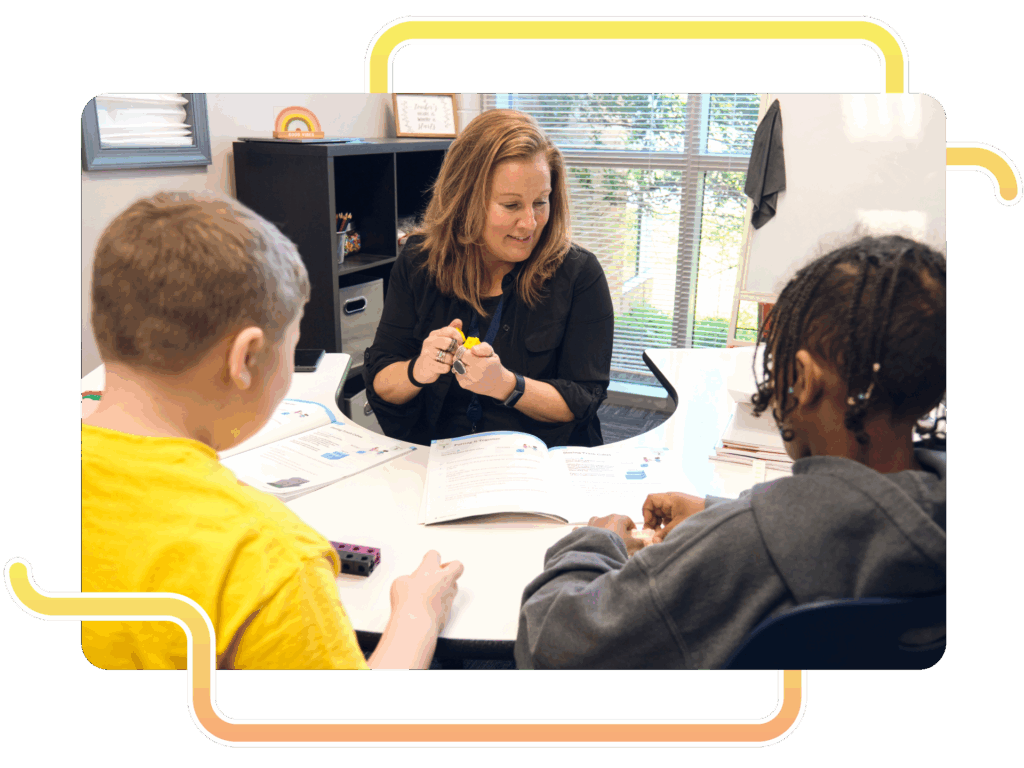
In-lesson differentiation
Within every lesson activity, teachers can use the suggestions in the Differentiation Teacher Moves table to provide in-the-moment instructional support while students are engaged in the work of the lesson. This table can help teachers anticipate the ways students may approach the activity, and provides prompts that they can use during the lesson to Support, Strengthen, and Stretch individual students in their thinking. Teachers are provided with clear student actions and understanding to look for, each matched with immediately usable suggestions for how to respond to the student thinking illustrated in each row of the table. In addition to using these suggestions in the moment as teachers monitor student work, teachers can review the Differentiation table in advance to help them anticipate how students are likely to approach the activity.
Differentiation: Beyond the Lesson
Teachers are provided with recommendations for resources to use with each group of students needing support, strengthening, and stretching after each lesson. Support, Strengthen, and Stretch resources include:
- Mini-Lessons: 15-minute, small-group direct instruction lessons targeted to a specific concept or skill
- Item Banks: Space for teachers to create practice and assessments by using filters and searching for standards, summative-style items, and more
- Fluency Practice: Adaptive, personalized practice built out for basic operations and more
- Centers (K–5): Lesson-embedded routines and practice for students that are vertically aligned across grade levels
- Extensions: Lesson-embedded Teacher Moves including possible stretch questions and activities for students
- Lesson Practice: Additional practice problems support every lesson
- Math Adventures: Strategy-based math games where students engage with math concepts and practice skills in a fun digital environment


Multilingual/English Learner supports
Supports for multilingual/English learners (ML/ELs) are called out at intentiSupports for multilingual/English learners (ML/ELs) are called out at intentional points within each lesson. These suggested supports are specific, targeted actions that are beneficial for ML/ELs. They often describe a modification to increase access to the task or provide support with contextual or mathematical language development that can often be helpful to all learners. ML/EL supports may also be attached to Math Language Routines.onal points within each lesson. These suggested supports are specific, targeted actions that are beneficial for ML/ELs. They often describe a modification to increase access to the task or provide support with contextual or mathematical language development that can often be helpful to all learners. ML/EL supports may also be attached to Math Language Routines.
Math Language Development
Every lesson in Amplify Desmos Math includes opportunities for all students to develop mathematical language as they experience the content. Amplify Desmos Math purposefully progresses language development from lesson to lesson and across units by supporting students in making their arguments and explanations stronger, clearer, and more precise. This systematic approach to the development of math language can be broken down into the following four categories of support:
- Vocabulary: Units and lessons start by surfacing students’ language for new concepts, then building connections between their language and the new vocabulary for that unit.
- Language goals: Language goals attend to the mathematics students are learning, and are written through the lens of one or more of four language modalities: reading, writing, speaking, and listening.
- Math Language Routines: Math Language Routines are used within lessons to highlight student-developed language and ideas, cultivate conversation, support mathematical sense-making, and promote meta-cognition.
- Multilingual/English learner supports: Supports for multilingual/English learners (ML/ELs) are called out at intentional points within each lesson.

K-5 sample materials
Click the links in the drop-down sections below to explore sample materials from each grade. For a full program review, please login to the digital platform or request physical samples.
For helpful navigation tips and more program information, download the Amplify Desmos Math Program Guide.
You can also watch a product expert walk through a lesson and the available program components.
Teacher Edition
Planning and instructional guidance is visual, organized, and easy-to-follow. To help you preview the program, we have included samples from a complete sub-unit on this site: Unit 2, Sub-Unit 2: Counting and Comparing Images.

Student Edition
Motivate students with mathematics that is both rigorous and delightful. To help you preview the program, we have included samples from a complete sub-unit on this site: Unit 2, Sub-Unit 2: Counting and Comparing Images.

Ancillary sampler
Included in the ancillary sampler are examples from the program Assessment Resources, Intervention and Extension Resources, Centers Resources, Additional Practice, and Math Language Development Resources.

Featured digital lesson: Forest Friends
In this lesson, students apply their understanding of how to compare groups of images as they determine which group has more or fewer and then compare their strategies by guiding a bear through a path that has more mushrooms than the other.

Skills Unit 2 Teacher Guide
Planning and instructional guidance is visual, organized, and easy-to-follow. To help you preview the program, we have included samples from a complete sub-unit on this site: Unit 1, Sub-Unit 1: Adding and Subtracting Within 10.

Student Edition
Motivate students with mathematics that is both rigorous and delightful. To help you preview the program, we have included samples from a complete sub-unit on this site: Unit 1, Sub-Unit 1: Adding and Subtracting Within 10.

Ancillary sampler
Included in the ancillary sampler are examples from the program Assessment Resources, Intervention and Extension Resources, Centers Resources, Additional Practice, and Math Language Development Resources.

Featured digital lesson: Leaping Lily Pads!
In this lesson, students find differences when subtracting 1 and 2 from the same number by helping a frog reach a lily pad where it can eat a bug.
Teacher Edition
Planning and instructional guidance is visual, organized, and easy-to-follow. To help you review the program, we have included samples from a complete sub-unit on this site: Unit 1, Sub-Unit 1: Adding and Subtracting.

Student Edition
Motivate students with mathematics that is both rigorous and delightful. To help you preview the program, we have included samples from a complete sub-unit on this site: Unit 1, Sub-Unit 1: Adding and Subtracting.

Ancillary sampler
Included in the ancillary sampler are examples from the program Assessment Resources, Intervention and Extension Resources, Centers Resources, Additional Practice, and Math Language Development Resources.

Featured digital lesson: Ways to Make 10
Students continue to develop fluency by finding the number that makes 10 by helping a millipede reach its favorite food – a clump of leaves!

Teacher Edition
Planning and instructional guidance is visual, organized, and easy-to-follow. To help you review the program, we have included samples from a complete sub-unit on this site: Unit 1, Sub-Unit 3: Data on Scaled Graphs.

Student Edition
Motivate students with mathematics that is both rigorous and delightful. To help you preview the program, we have included samples from a complete sub-unit on this site: Unit 1, Sub-Unit 3: Data on Scaled Graphs.

Ancillary sampler
Included in the ancillary sampler are examples from the program Assessment Resources, Intervention and Extension Resources, Centers Resources, Additional Practice, and Math Language Development Resources.

Featured digital lesson: Puppy Pile
Students compare data represented on bar graphs with different scales by using animal stickers to create scaled bar graphs.

Teacher Edition
Planning and instructional guidance is visual, organized, and easy-to-follow. To help you review the program, we have included samples from a complete sub-unit on this site: Unit 1, Sub-Unit 2: Using Factors and Multiples.
Student Edition
Motivate students with mathematics that is both rigorous and delightful. To help you preview the program, we have included samples from a complete sub-unit on this site: Unit 1, Sub-Unit 2: Using Factors and Multiples.

Ancillary sampler
Included in the ancillary sampler are examples from the program Assessment Resources, Intervention and Extension Resources, Centers Resources, Additional Practice, and Math Language Development Resources.

Featured digital lesson: Hamster Homes
Students choose tube lengths to connect to platform heights for hamster homes, identifying possible heights using what they know about multiples.

Teacher Edition
Planning and instructional guidance is visual, organized, and easy-to-follow. To help you review the program, we have included samples from a complete sub-unit on this site: Unit 1, Sub-Unit 3: Volume of Solid Figures.
Student Edition
Motivate students with mathematics that is both rigorous and delightful. To help you preview the program, we have included samples from a complete sub-unit on this site: Unit 1, Sub-Unit 3: Volume of Solid Figures.
Ancillary sampler
Included in the ancillary sampler are examples from the program Assessment Resources, Intervention and Extension Resources, Centers Resources, Additional Practice, and Math Language Development Resources.
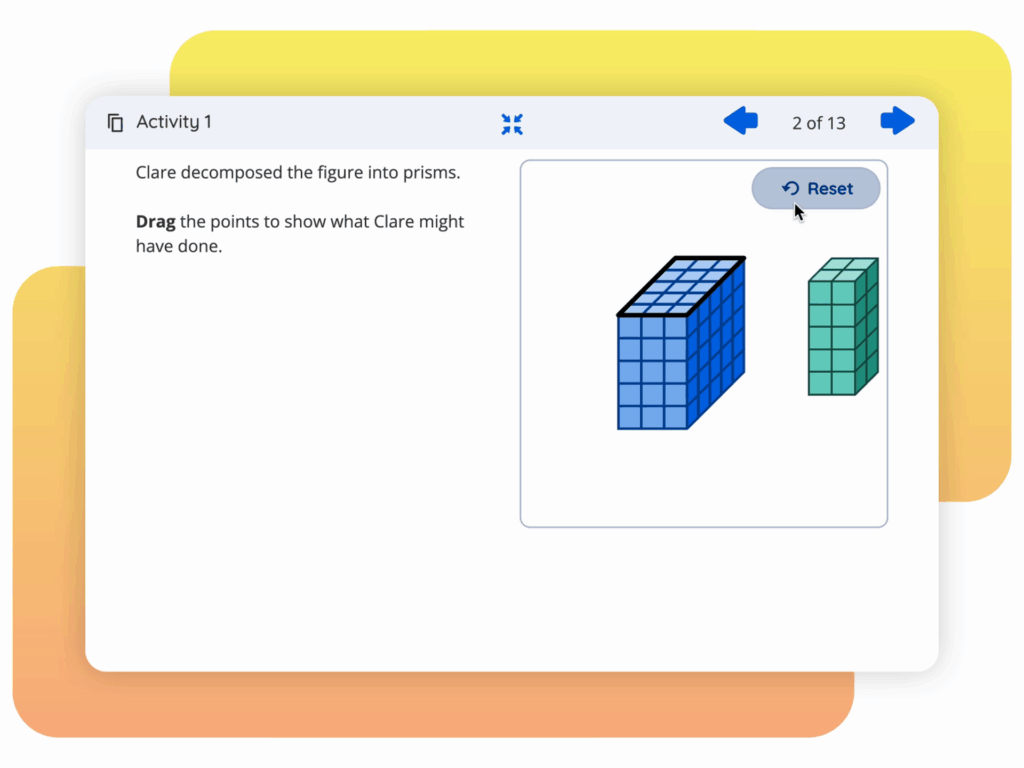
Featured digital lesson: Figures Made of Prisms
Students decompose a figure into rectangular prisms and determine the volume of the figure by adding the volumes of the individual prisms.
6-A1 sample materials
Click the links in the drop-down sections below to explore sample materials from each grade. For a full program review, please login to the digital platform or request physical samples.
For helpful navigation tips and more program information, download the Amplify Desmos Math Program Guide.
You can also watch a product expert walk through a lesson and the available program components.
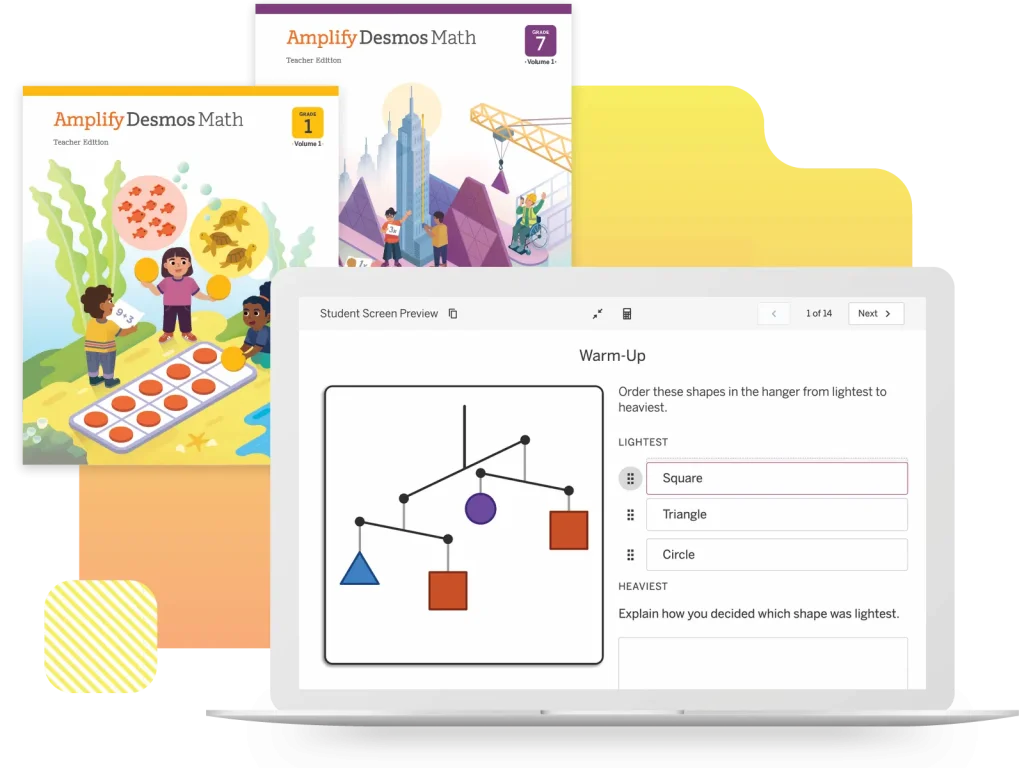

Teacher Edition
Planning and instructional guidance is visual, organized, and easy-to-follow. To help you preview the program, we have included samples from a complete sub-unit on this site: Unit 6, Sub-Unit 1: Solving Equations.

Student Edition
Motivate students with mathematics that is both rigorous and delightful. To help you preview the program, we have included samples from a complete sub-unit on this site: Unit 6, Sub-Unit 1: Solving Equations.

Ancillary sampler
Included in the ancillary sampler are examples from the program Assessment Resources, Intervention and Extension Resources, Additional Practice, and Math Language Development Resources.

Featured digital lesson: Weight for It
Students use equations and tape diagrams to represent seesaw situations and to determine unknown animal weights, helping them make connections between diagrams that represent equations of the form `x+p=q` or `px=q`.

Teacher Edition
Planning and instructional guidance is visual, organized, and easy-to-follow. To help you preview the program, we have included samples from a complete sub-unit on this site: Unit 6, Sub-Unit 3: Inequalities.

Student Edition
Motivate students with mathematics that is both rigorous and delightful. To help you preview the program, we have included samples from a complete sub-unit on this site: Unit 6, Sub-Unit 3: Inequalities.

Ancillary sampler
Included in the ancillary sampler are examples from the program Assessment Resources, Intervention and Extension Resources, Additional Practice, and Math Language Development Resources.

Featured digital lesson: Shira the Sheep
Students solve inequalities with positive and negative coefficients to solve a variety of challenges featuring a fictional sheep who eats grass according to an inequality.

Teacher Edition
Planning and instructional guidance is visual, organized, and easy-to-follow. To help you preview the program, we have included samples from a complete sub-unit on this site: Unit 6, Sub-Unit 2: Analyzing Numerical Data.

Student Edition
Motivate students with mathematics that is both rigorous and delightful. To help you preview the program, we have included samples from a complete sub-unit on this site: Unit 6, Sub-Unit 2: Analyzing Numerical Data.
Ancillary sampler
Included in the ancillary sampler are examples from the program Assessment Resources, Intervention and Extension Resources, Additional Practice, and Math Language Development Resources.

Featured digital lesson: Robots
Students connect points on a scatter plot with individuals in a population and rows of data in a table. The analysis of scatter plots continues with data about the eye distances and heights of robots.

Teacher Edition
Planning and instructional guidance is visual, organized, and easy-to-follow. To help you preview the program, we have included samples from two complete sub-units on this site: Unit 2, Sub-Units 1–2: One-Variable Equations and Multi-Variable Equations.

Student Edition
Motivate students with mathematics that is both rigorous and delightful. To help you preview the program, we have included samples from two complete sub-units on this site: Unit 2, Sub-Units 1–2: One-Variable Equations and Multi-Variable Equations.
Ancillary sampler
Included in the ancillary sampler are examples from the program Assessment Resources, Intervention and Extension Resources, Additional Practice, and Math Language Development Resources.
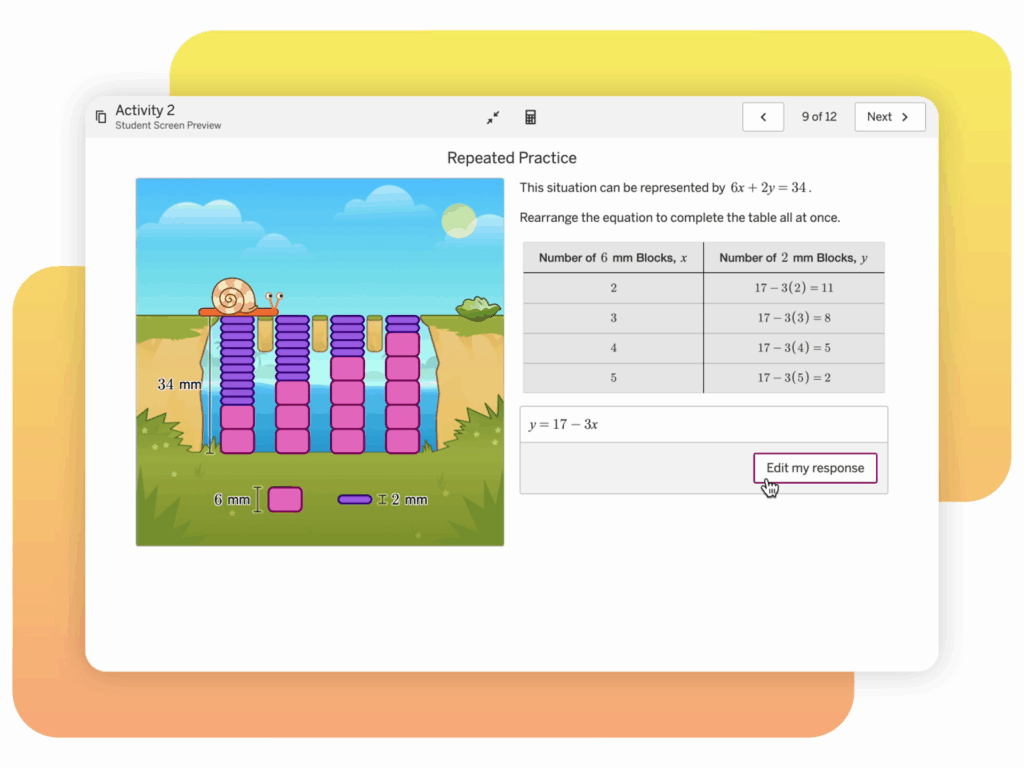
Featured digital lesson: Shelley the Snail
Students represent the solutions of a situation using a table, a graph, and multiple forms of an equation to identify multiple combinations of blocks that can help Shelley the Snail cross a gap.
Plan your professional development
We’re excited to partner with you on your Amplify journey. Flexible professional development pathways have been designed to meet your needs.
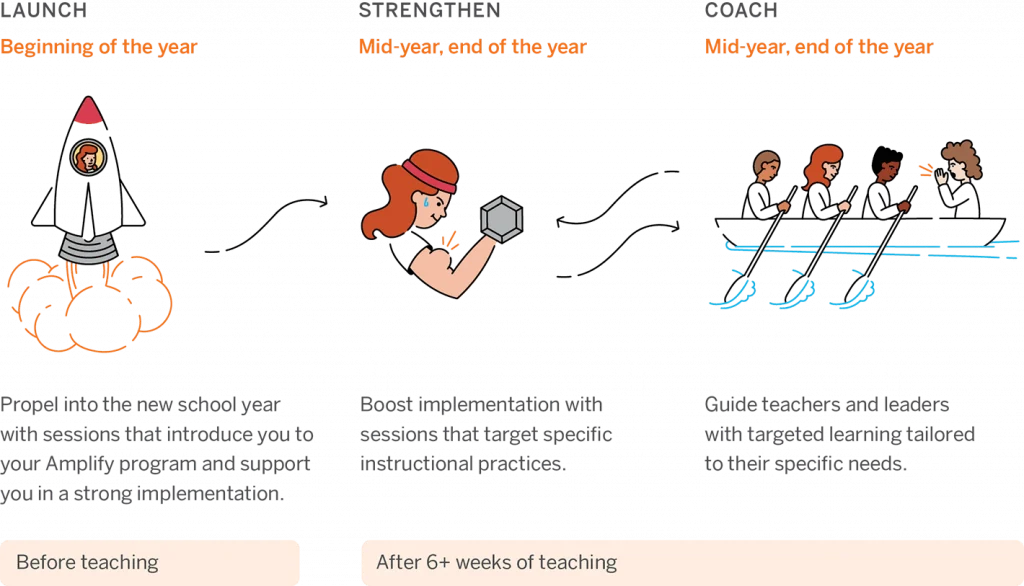
Recommended Professional Development Plan
Our team has curated a recommended professional learning path from initial launch to continuous support. Use the Professional Development Planning Guide below to discuss the plan that best meets your school or district needs with your Account Executive.
Sessions overview
| Recommended sessions are highlighted below. |
| Audience | Title | Duration | Modality |
|---|---|---|---|
| mCLASS Texas Edition Launch | |||
| All mCLASS Texas Edition customers | Initial training | 2 half days or self-paced | Remote/Online course |
| New mCLASS Texas Edition customers | Initial training | 1 day | Onsite |
| Initial training: Train the Trainer | 1 day onsite or 2 half days remote | Onsite/Remote | |
| New mCLASS Texas Edition customers with limited time for PD | mCLASS program overview, English measures only | Half day | Onsite/Remote |
| mCLASS program overview, Spanish measures only | Half day | Onsite/Remote | |
| Experienced mCLASS Texas Edition customers | Refresher training | Half day | Onsite/Remote |
| mCLASS Texas Edition and Amplify Reading Launch | |||
| New mCLASS Texas Edition and Amplify Reading customers | Initial training with Amplify Reading overview | 1 day onsite or 2 half days remote | Onsite/Remote |
| Initial training with Amplify Reading overview: Train the Trainer | 1 day onsite or 2 half days remote | Onsite/Remote | |
| mCLASS Texas Edition and TRC Launch | |||
| New mCLASS Texas Edition and TRC customers | Initial training with TRC overview | 1 day onsite or 2 half days remote | Onsite/Remote |
| Initial training with TRC overview: Train the Trainer | 1 day onsite or 2 half days remote | Onsite/Remote | |
| Experienced mCLASS Texas Edition customers | TRC initial training | Half day | Onsite/Remote |
| TRC initial training: Train the Trainer | Half day | Onsite/Remote | |
| mCLASS Express Launch | |||
| New mCLASS Express customers | Initial training | Half day | Onsite/Remote |
| Initial training | Self-paced | Online course | |
| mCLASS Texas Edition Strengthen | |||
| All mCLASS Texas Edition customers with limited time for PD | Understanding your classroom data | Half day | Onsite/Remote |
| All mCLASS Texas Edition customers | Classroom data analysis and instructional planning | 1 day | Onsite |
| All mCLASS Texas Edition customers | Classroom data analysis and instructional planning | 2 half days | Remote |
| Classroom data analysis and instructional planning: Train the Trainer | 1 day onsite or 2 half days remote | Onsite/Remote | |
| Classroom data analysis and instructional planning | Self-paced | Online | |
| All mCLASS Texas Edition customers | Data-driven leadership practices | 1 day onsite | Onsite |
| All mCLASS Texas Edition customers | Data-driven leadership practices | 2 half days | Remote |
| Data-driven leadership practices: Train the Trainer | 1 day onsite or 2 half days remote | Onsite/Remote | |
| Data-driven leadership practices | Self-paced | Online | |
| Understanding your school or district data | Half day | Onsite/Remote | |
| Strengthening consultation session | 1-hour session | Remote | |
| All mCLASS Texas Edition customers | Strengthening consultation session package | 3 1-hour sessions | Remote |
| mCLASS Texas Edition Coach | |||
| All mCLASS Texas Edition customers | Coaching session | 1 day | Onsite |
| All mCLASS Texas Edition customers | Coaching session | Half day | Onsite/Remote |
Launch
mCLASS Texas Edition
Initial training
1 day onsite (6 hours) or 2 half days remote (6 hours)
This PD prepares participants to implement the assessment, collect reliable data using standardized guidelines, and use the targeted lessons available on mCLASS to drive differentiated instruction.
Audience: Teachers (administrators welcome), maximum 30 participants
Modality: Onsite/Remote
Initial training: Train the Trainer
1 day onsite (6 hours) or 2 half days remote (6 hours)
This PD prepares participants to implement the assessment, collect reliable data using standardized guidelines, and use the targeted lessons available on mCLASS to drive differentiated instruction. Participants receive annotated session materials to turnkey the session to colleagues.
Audience: Teachers (administrators welcome), maximum 30 participants
Modality: Onsite/Remote
mCLASS program overview, English measures only
Half day (3 hours)
This PD prepares participants to implement the English measures of the mCLASS Texas assessment and collect reliable data using standardized guidelines. Only English measures are covered in this half-day training.
Audience: Teachers (administrators welcome), maximum 30 participants
Modality: Onsite/Remote
mCLASS program overview, Spanish measures only
Half day (3 hours)
This PD prepares participants to implement the Spanish measures of the mCLASS Texas assessment and collect reliable data using standardized guidelines. Only Spanish measures are covered in this half-day training.
Audience: Teachers (administrators welcome), maximum 30 participants
Modality: Onsite/Remote
Refresher training
Half day (3 hours)
The half-day refresher training is designed for teachers and instructional leaders who are experienced with any version of DIBELS® and/or Acadience Reading and are invested in successfully implementing mCLASS Texas Edition. This session will help educators focus on what’s new to the assessment and understand mCLASS Texas Edition’s potential to impact all students through improved measures, stronger insight into students’ instructional needs, and bolstered skills-focused lessons to support instructional planning. Upon completion of this session, participants will be prepared to implement the new assessment, collect reliable data using standardized guidelines, and use the targeted lessons available on mCLASS Texas Edition to drive differentiated instruction as part of their regular classroom practice.
Audience: Teachers (administrators welcome), maximum 30 participants
Modality: Onsite/Remote
mCLASS Texas Edition and Amplify Reading
Initial training with Amplify Reading overview
1 day onsite (6 hours) or 2 half days remote (6 hours)
Take the first step in launching mCLASS Texas Edition and Amplify Reading! The initial training will help educators understand how mCLASS Texas Edition assesses the basic early literacy skills that are crucial for reading development, gain hands-on experience administering and scoring the assessment using standardized guidelines, and access the Instruction page in order to find skills-focused lessons that will support instructional planning. A high-level overview of how to get started with Amplify Reading will also be provided at the end of the training along with supplementary, on-demand resources. Upon completion of this session, participants will be prepared to implement the new assessment, collect reliable data using standardized guidelines, use the targeted lessons available on mCLASS Texas Edition to drive differentiated instruction as part of their regular classroom practice, and understand key Amplify Reading features.
Audience: Teachers (administrators welcome), maximum 30 participants
Modality: Onsite/Remote
Initial training with Amplify Reading overview: Train the Trainer
1 day onsite (6 hours) or 2 half days remote (6 hours)
Take the first step in launching mCLASS Texas Edition and Amplify Reading! The initial training will help educators understand how mCLASS Texas Edition assesses the basic early literacy skills that are crucial for reading development, gain hands-on experience administering and scoring the assessment using standardized guidelines, and access the Instruction page in order to find skills-focused lessons that will support instructional planning. A high-level overview of how to get started with Amplify Reading will also be provided at the end of the training along with supplementary, on-demand resources. Upon completion of this session, participants will be prepared to implement the new assessment, collect reliable data using standardized guidelines, use the targeted lessons available on mCLASS Texas Edition to drive differentiated instruction as part of their regular classroom practice, and understand key Amplify Reading features. Participants receive annotated session materials to turnkey the session to colleagues.
Audience: Teachers (administrators welcome), maximum 30 participants
Modality: Onsite/Remote
mCLASS Texas Edition and TRC
Initial training with TRC overview
1 day onsite (6 hours) or 2 half days remote (6 hours)
Take the first step in launching mCLASS Texas Edition and Amplify Reading! The initial training will help educators understand how mCLASS Texas Edition assesses the basic early literacy skills that are crucial for reading development, gain hands-on experience administering and scoring the assessment using standardized guidelines, and access the Instruction page in order to find skills-focused lessons that will support instructional planning. A high-level overview of how to get started with Amplify Reading will also be provided at the end of the training along with supplementary, on-demand resources. Upon completion of this session, participants will be prepared to implement the new assessment, collect reliable data using standardized guidelines, use the targeted lessons available on mCLASS Texas Edition to drive differentiated instruction as part of their regular classroom practice, and understand key Amplify Reading features.
Audience: Teachers (administrators welcome), maximum 30 participants
Modality: Onsite/Remote
Initial training with TRC overview: Train the Trainer
1 day onsite (6 hours) or 2 half days remote (6 hours)
Take the first step in launching mCLASS Texas Edition and TRC! The initial training will help educators understand how mCLASS Texas Edition assesses the basic early literacy skills that are crucial for reading development, gain hands-on experience administering and scoring the assessment using standardized guidelines, and access the Instruction page in order to find skills-focused lessons that will support instructional planning. A high-level overview of how to get started with TRC will also be provided at the end of the training along with supplementary, on-demand resources. Upon completion of this session, participants will be prepared to implement the new assessment, collect reliable data using standardized guidelines, use the targeted lessons available on mCLASS Texas Edition to drive differentiated instruction as part of their regular classroom practice, and understand key TRC features. Participants receive annotated session materials to turnkey the session to colleagues.
Audience: Teachers (administrators welcome), maximum 30 participants
Modality: Onsite/Remote
TRC initial training
Half day (3 hours)
Take the first step in launching TRC! The half-day initial training will help educators understand how TRC assesses the basic early literacy skills that are crucial for reading development, gain hands-on experience administering and scoring the assessment using standardized guidelines, and access the Instruction page in order to find skills-focused lessons that will support instructional planning.
Audience: Teachers (administrators welcome), maximum 30 participants
Modality: Remote
TRC initial training: Train the Trainer
Half day (3 hours)
Take the first step in launching TRC! The half-day initial training will help educators understand how TRC assesses the basic early literacy skills that are crucial for reading development, gain hands-on experience administering and scoring the assessment using standardized guidelines, and access the Instruction page in order to find skills-focused lessons that will support instructional planning. Participants receive annotated session materials to turnkey the session to colleagues.
Audience: Teachers (administrators welcome), maximum 30 participants
Modality: Remote
mCLASS Express
Initial training
Half day (3 hours)
Take the first step in launching mCLASS Express! The half-day initial training will help educators understand how mCLASS Express’ voice-recognition scoring generates immediate instructional recommendations for students reading below grade level. Educators will also learn how to utilize the teacher portal to assign assessments, review and correct scoring, track student growth over time, and leverage the program’s activities to create an action plan for a single classroom or across classes/grades.
Audience: Teachers (administrators welcome), maximum 30 participants
Modality: Remote
Initial training
Self-paced
Take the first step in launching mCLASS Express! The two-hour initial training will help educators understand how mCLASS Express’ voice-recognition scoring generates immediate instructional recommendations for students reading below grade level. Educators will also learn how to utilize the teacher portal to assign assessments, review and correct scoring, track student growth over time, and leverage the program’s activities to create an action plan for a single classroom or across classes/grades. As this is a self-paced, on-demand online course, participants will be able to access the course anytime, move as quickly or as slowly as needed through different sections, and revisit the course for up to one year as a refresher in the future.
Audience: Teachers (administrators welcome)
Modality: Remote
Strengthen
Understanding your classroom data
Half day (3 hours)
This PD prepares participants to understand their students’ data by utilizing the reports available on mCLASS. This session should be scheduled after the most recent benchmark window has closed so that participants can work with their own data.
Audience: Teachers (administrators welcome), maximum 30 participants
Modality: Onsite/Remote
Classroom data analysis and instructional planning
1 day onsite (6 hours) or 2 half days remote (6 hours)
This PD prepares participants to deeply understand their students’ data and create actionable instructional plans by utilizing the reports and skills-focused lesson plans available on mCLASS.
Audience: Teachers (administrators welcome), maximum 30 participants
Modality: Onsite/Remote
*This session should be scheduled after the most recent benchmark window has closed so that participants can work with their own data.
Classroom data analysis and instructional planning: Train the Trainer
1 day onsite (6 hours) or 2 half days remote (6 hours)
This PD prepares participants to deeply understand their students’ data and create actionable instructional plans by utilizing the reports and skills-focused lesson plans available on mCLASS. Participants receive annotated session materials to turnkey the session to colleagues.
Audience: Teachers (administrators welcome), maximum 30 participants
Modality: Onsite/Remote
*This session should be scheduled after the most recent benchmark window has closed so that participants can work with their own data.
Classroom data analysis and instructional planning
Self-paced
This PD is an individual seat to our self-paced, on-demand online course that contains approximately 6 hours of training. Participants will learn how to deeply understand their students’ data and create actionable instructional plans by utilizing the reports and skills-focused lesson plans available on mCLASS. Participants will access and revisit the course anytime for up to one year as a refresher. Note: The online course focuses on the English measures only.
Audience: Teachers (administrators welcome)
Modality: Online
Understanding your school or district data
Half day (3 hours)
This PD prepares participants to use their data in making schoolwide decisions. This session should be scheduled after the most recent benchmark window has closed so that participants can work with their own data.
Audience: Administrators, maximum 30 participants
Modality: Onsite/Remote
Data-driven leadership practices
1 day onsite (6 hours) or 2 half days remote (6 hours)
This PD prepares participants to use their data in making schoolwide decisions and build a schoolwide culture of data-driven instruction. This session should be scheduled after the most recent benchmark window has closed so that participants can work with their own data.
Audience: Administrators, maximum 30 participants
Modality: Onsite/Remote
Data-driven leadership practices: Train the Trainer
1 day onsite (6 hours) or 2 half days remote (6 hours)
This PD prepares participants to use their data in making schoolwide decisions and build a schoolwide culture of data-driven instruction. This session should be scheduled after the most recent benchmark window has closed so that participants can work with their own data. Participants receive annotated session materials to turnkey the session to colleagues.
Audience: Administrators, maximum 30 participants
Modality: Onsite/Remote
Data driven leadership practices
Self-paced
This PD is an individual seat to our self-paced, on-demand online course that contains approximately 6 hours of training. Participants will learn how to use their data in making schoolwide decisions and build a schoolwide culture of data-driven instruction. Participants will access and revisit the course anytime for up to one year as a refresher. Note: The online course focuses on the English measures only.
Audience: Administrators
Modality: Online
Strengthening consultation session
60 minutes
This 60-minute session will focus on a specific topic that will deepen educators’ understanding of mCLASS and equip them in driving towards stronger student outcomes. An Amplify facilitator will align with the school or district’s leadership team in advance on the topic from a menu of options that will best meet educators’ unique needs. Topics include progress monitoring, zones of growth, and a data walkthrough for leaders.
Audience: Teachers and/or administrators, maximum 30 participants
Modality: Remote
Strengthening consultation session package
3 hours
This package consists of three 60-minute sessions that can be delivered on the same day or on different days. Each session will focus on a specific topic that will deepen educators’ understanding of mCLASS and equip them in driving towards stronger student outcomes. An Amplify facilitator will align with the school or district’s leadership team in advance on the topics that will best meet educators’ unique needs. Topics include progress monitoring, zones of growth, and a data walkthrough for leaders.
Audience: Teachers and/or administrators, maximum 30 participants
Modality: Remote
Coach
Coaching session
1 day onsite (6 hours)
This PD will deepen educators’ understanding of how to utilize mCLASS in order to accelerate data-driven student outcomes. An Amplify facilitator will visit one or two school sites for one day and work with teachers and/or leaders. Prior to the visit, the Amplify facilitator will align with each school’s leadership team on their needs and customize the visit schedule accordingly.
Audience: Teachers and/or administrators, maximum 30 participants
Modality: Onsite/Remote
Coaching session
Half day (3 hours)
This PD is up to 3 hours of training and will deepen educators’ understanding of how to utilize mCLASS in order to accelerate data-driven student outcomes. An Amplify facilitator will visit one school site for a half-day and work with teachers and/or leaders. Prior to the visit, the Amplify facilitator will align with each school’s leadership team on their needs and customize the visit schedule accordingly.
Audience: Teachers and/or administrators, maximum 30 participants
Modality: Remote
Pricing
We offer the following pricing for training sessions and packages:
| Session type | Pricing |
|---|---|
| 1-day onsite session | $3,200 |
| 1-day onsite session: Train the Trainer | $3,500 |
| 2 half-day remote sessions | $1,500 |
| 2 half-day remote sessions: Train the Trainer | $2,000 |
| Half-day onsite session | $2,500 |
| Half-day remote session | $750 |
| 2-hour self-paced online course | $20 per individual seat |
| 6-hour self-paced online course | $49 per individual seat |
Please note that the prices are general ranges and may be subject to change.
Contact
Amplify welcomes the opportunity to partner with schools and districts to design professional development plans and answer your questions.
If you would like to order any of our professional development services, please contact your local Amplify sales representative or call (800) 823-1969.

High-quality instructional materials in action
What are high-quality instructional materials, and why do they matter? We’ve assembled resources for you to explore how to support your district or school in adopting a high-quality program.
Why high-quality instructional materials?
A growing body of research shows that, in addition to the influence of teachers, curriculum has a significant effect on student learning. Quality curriculum is also a great tool for teachers: It saves them time and enables them to focus on interacting with their students. See what the research says about high-quality instructional materials, or HQIM.
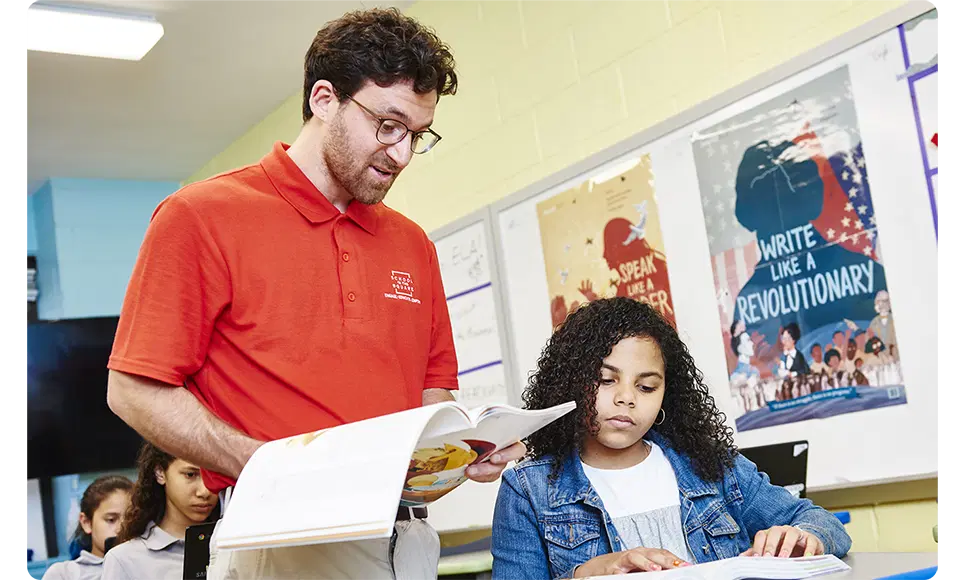

Five fundamentals of HQIM in action
Beyond all-green ratings from reviewers at EdReports.org or a Tier 1 designation from the Louisiana Department of Education, what does high-quality curriculum look like in real classrooms? How does it come to life for teachers and students? Here are five fundamentals of how we think about it at Amplify.
DECIDE: 6 tips for a successful curriculum adoption
Curriculum adoption is a complex process. You’ve got to evaluate multiple programs and build consensus among stakeholders—all while managing communication, scheduling, and people. Our new actionable guide with strategies from the field will help you keep your curriculum adoption process as smooth as possible.
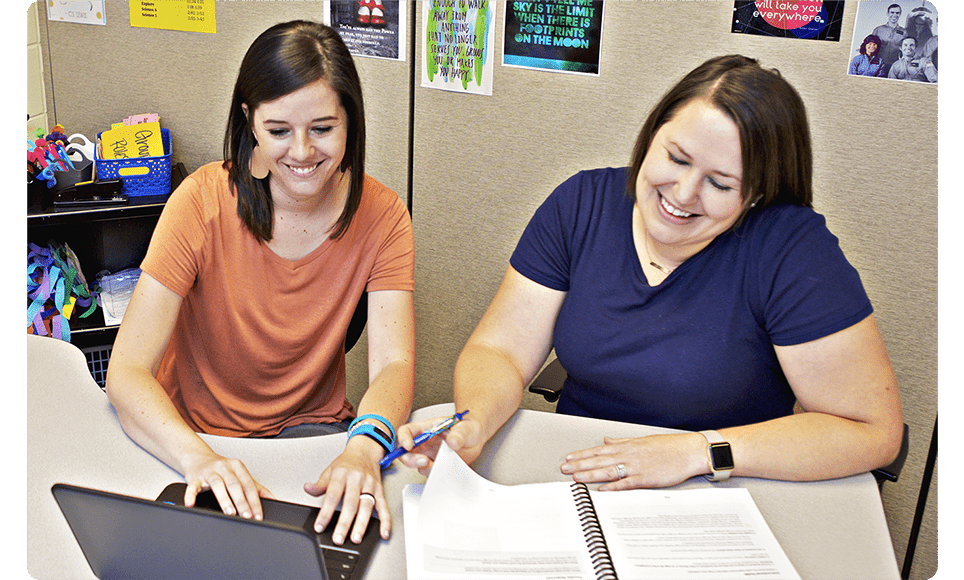
What do high-quality materials look like in action?
Every educator has a story about curriculum coming to life. We have stories, too, driven by our belief that all students deserve excellent curriculum. Check out our video and see what high-quality instructional materials mean to Amplify educators and staff.
Read about our all-green programs on EdReports.org.
See what the evaluators at EdReports have to say about Amplify’s high-quality curriculum.


District leaders as science champions
The need to support science teaching and learning is more urgent than ever. Establishing science’s importance alongside ELA and mathematics will require leaders who champion it at the district leadership level. This guide will support you in leading these shifts, including evaluating and selecting high-quality instructional materials and creating the conditions for implementation success.
Core literacy programs: Strengthen sessions
Professional development sets teachers and leaders up for success, whether they are new to or experienced with a program. Each Strengthen session promotes a deeper understanding of the program through targeted instructional practices.
Explore literacy Strengthen sessions by program below.
Amplify professional development has been vetted by Rivet Education’s team through a rigorous three-step process and is listed in the Professional Learning Partner Guide.

About Strengthen sessions
Support your Amplify implementation with sessions that target specific instructional practices for teachers and leaders who are in year one and beyond. When you’re ready to schedule your Strengthen session, contact us. An Amplify expert will work with you to identify the session(s) that will best support your students’ success.
Each package includes one Strengthen session. Additional sessions can be added as enhancements.
Amplify CKLA and Amplify Caminos
Built on the Science of Reading, Amplify Core Knowledge Language Arts (CKLA) 2nd Edition (PreK–5) and 3rd Edition (K–5) combine deep content instruction with research-based foundational skills, empowering all students with rich background knowledge.
Amplify Caminos 1st Edition serves as the Spanish language arts partner to Amplify CKLA 2nd Edition (K–5), while Amplify Caminos 3rd Edition is partnered with Amplify CKLA 3rd Edition. These aligned programs support our biliteracy principles and teaching models.
Explore Amplify CKLA and Amplify Caminos Strengthen sessions by package below.
Begin packages
| On-site package (15 hr.) |
Hybrid on-site package (15 hr.) | Hybrid 10 package (10 hr.) |
Hybrid virtual package (15 hr.) |
Virtual package (7 hr.) |
|
| One Strengthen session per package | On-site, 3 hr. sessions | On-site, 3 hr. sessions | Virtual, 1 hr. session | Virtual, 3 hr. sessions | Virtual, 1 hr. session |
| Enhancing planning for teachers |
|
|
|
||
| Enhancing practice for teachers |
|
|
|
||
| Enhancing observations for leaders |
|
|
|
||
| Language Studio Companion training for K–2 or 3–5 teachers | |
|
|
||
| Supporting all learners for teachers |
|
|
|||
| Pacing for teachers |
|
|
|||
| Student engagement for teachers |
|
|
|||
| Amplify CKLA 2nd–3rd Edition transition training for teachers | |
|
Begin: Enhancing planning for teachers
On-site or virtual, 3 hours
Deepen your understanding of your next unit by engaging in a step-by-step unit- and lesson-planning protocol. Leave prepared to implement your next unit with a completed unit plan and internalized lessons for your particular biliteracy model.
Session options: Amplify CKLA (2nd Edition or 3rd Edition), Amplify Caminos (1st or 3rd Edition), Amplify CKLA 2nd Edition/Caminos 1st Edition biliteracy, or Amplify CKLA 3rd Edition/Caminos 3rd Edition biliteracy
Audience: PreK (Amplify CKLA), K–2, or 3–5 teachers, instructional staff (maximum 30 participants)
Language: The Amplify CKLA session is facilitated in English. The Amplify Caminos session is facilitated in Spanish. Amplify CKLA/Caminos biliteracy session is facilitated in English and Spanish.
Begin: Enhancing practice for teachers
On-site or virtual, 3 hours
Practice implementing key lesson routines to strengthen your instruction. Leave with guidelines for routines you can implement in your biliteracy classroom tomorrow.
Session options: Amplify CKLA (2nd Edition or 3rd Edition), Amplify Caminos (1st or 3rd Edition), Amplify CKLA 2nd Edition/Caminos 1st Edition biliteracy, or Amplify CKLA 3rd Edition/Caminos 3rd Edition biliteracy
Audience: K–2 or 3–5 teachers, instructional staff (maximum 30 participants)
Language: The Amplify CKLA session is facilitated in English. The Amplify Caminos session is facilitated in Spanish. Amplify CKLA/Caminos biliteracy session is facilitated in English and Spanish.
Begin: Enhancing observations for leaders
On-site or virtual, 3 hours
Sharpen your program knowledge to support educators with effective program implementation. Observe a lesson in action and practice providing high-leverage feedback. Walk away prepared to provide educators with actionable feedback during your next classroom observation.
Session options: Amplify CKLA (2nd Edition), Amplify Caminos (1st or 3rd Edition), Amplify CKLA (2nd Edition), Amplify Caminos (1st or 3rd Edition), Amplify CKLA 2nd Edition/Caminos 1st Edition biliteracy, or Amplify CKLA 3rd Edition/Caminos 3rd Edition biliteracy
Prerequisite: Participants must complete the program overview for leaders before attending this session.
Audience: Leaders (maximum 30 participants)
Language: This session is facilitated in English.
Begin: Language Studio companion training for teachers
On-site and virtual, 3 hours
Participants will be able to summarize the key features of Language Studio. During this session, they will connect key segments of Language Studio to ELD instructional best practices, identify the segments of Language Studio, and plan and practice a Language Studio lesson.
Session options: Amplify CKLA 2nd or 3rd Edition (Grade K–2 or 3–5)
Audience: Teachers, instructional staff (maximum 30 participants)
Begin: Strengthen Focus: Supporting all learners for teachers
Virtual, 1 hour
Dig into embedded supports offered in the Amplify curriculum and prepare to support all learners in your next lesson.
Session options: Amplify CKLA (2nd or 3rd Edition), Amplify Caminos (1st or 3rd Edition), Amplify CKLA 2nd Edition/Caminos 1st Edition biliteracy, or Amplify CKLA 3rd Edition/Caminos 3rd Edition biliteracy
Audience: K–2 and/or 3–5 teachers, instructional staff (maximum 30 participants)
Language: The Amplify CKLA session is facilitated in English. The Amplify Caminos session is facilitated in Spanish. Amplify CKLA/Caminos biliteracy session is facilitated in English and Spanish.
Begin: Strengthen Focus: Pacing for teachers
Virtual, 1 hour
Learn five specific strategies to support pacing in your next lesson.
Session options: Amplify CKLA (2nd or 3rd Edition), Amplify Caminos (1st or 3rd Edition), Amplify CKLA 2nd Edition/Caminos 1st Edition biliteracy, or Amplify CKLA 3rd Edition/Caminos 3rd Edition biliteracy
Audience: K–2 and/or 3–5 teachers, instructional staff (maximum 30 participants)
Language: The Amplify CKLA session is facilitated in English. The Amplify Caminos session is facilitated in Spanish. Amplify CKLA/Caminos biliteracy session is facilitated in English and Spanish.
Begin: Strengthen Focus: Student engagement for teachers
Virtual, 1 hour
Explore engagement strategies that cultivate a student-centered classroom. Leave with a plan to incorporate these strategies in an upcoming lesson.
Session options: Amplify CKLA (2nd or 3rd Edition), Amplify Caminos (1st or 3rd Edition), Amplify CKLA 2nd Edition/Caminos 1st Edition biliteracy, or Amplify CKLA 3rd Edition/Caminos 3rd Edition biliteracy
Audience: K–2 and/or 3–5 teachers, instructional staff (maximum 30 participants)
Language: The Amplify CKLA session is facilitated in English. The Amplify Caminos session is facilitated in Spanish. Amplify CKLA/Caminos biliteracy session is facilitated in English and Spanish.
Begin: Strengthen Focus: Amplify CKLA 2nd–3rd Edition transition training for teachers
Virtual, 1 hour
Participants will get an overview of the similarities and differences between Amplify CKLA 2nd and 3rd Edition, including becoming familiar with changes in materials; the digital platform; and key lesson, assessment, and reporting components.
Session options: Amplify CKLA 2nd Edition (Grades 3–5)
Audience: Teachers, instructional staff (maximum 30 participants)
Practice packages
Strengthen sessions
| On-site package (15 hr.) |
Hybrid 15 package (15 hr.) |
Hybrid 13 package (13 hr.) |
Virtual package (9 hr.) |
|
| One Strengthen session per package | On-site, 3 hr. session |
Virtual, 3 hr. session |
Virtual, 1 hr. session | Virtual, 3 hr. session |
| Enhancing planning for teachers |
|
|
|
|
| Enhancing practice for teachers | |
|
|
|
| Enhancing observations for leaders | |
|
|
|
| Maximizing impact: Data-informed remediation with the ARG/DERG for teachers |
|
|
|
|
| Writing for teachers |
|
|
|
|
| NEW: mCLASS DIBELS 8 + CKLA 3rd Edition data-driven instruction for K–5 teachers | |
|
|
|
| Supporting all learners for teachers |
|
|||
| Pacing for teachers |
|
|||
| Student engagement for teachers | |
|||
| NEW: Amplify Caminos 1st–3rd Ed. transition training for teachers | |
|||
| NEW: Amplify CKLA 2nd Ed./Caminos 1st Ed. to Amplify CKLA 3rd Ed./Caminos 3rd Ed. transition training for teachers | |
Practice: Enhancing planning for teachers
On-site or virtual, 3 hours
Deepen your understanding of your next unit by engaging in a step-by-step unit- and lesson-planning protocol. Leave prepared to implement your next unit with a completed unit plan and internalized lessons for your particular biliteracy model.
Session options: Amplify CKLA (2nd Edition or 3rd Edition), Amplify Caminos (1st or 3rd Edition), Amplify CKLA 2nd Edition/Caminos 1st Edition biliteracy, or Amplify CKLA 3rd Edition/Caminos 3rd Edition biliteracy
Audience: PreK (Amplify CKLA), K–2 or 3–5 teachers, instructional staff (maximum 30 participants)
Language: The Amplify CKLA session is facilitated in English. The Amplify Caminos session is facilitated in Spanish. The Amplify CKLA/Caminos biliteracy session is facilitated in English and Spanish.
Practice: Enhancing practice for teachers
On-site or virtual, 3 hours
Practice implementing key lesson routines to strengthen your instruction. Leave with guidelines for routines you can implement in your biliteracy classroom tomorrow.
Session options: Amplify CKLA (2nd Edition or 3rd Edition), Amplify Caminos (1st or 3rd Edition), Amplify CKLA 2nd Edition/Caminos 1st Edition biliteracy, or Amplify CKLA 3rd Edition/Caminos 3rd Edition biliteracy
Audience: K–2 or 3–5 teachers, instructional staff (maximum 30 participants)
Language: The Amplify CKLA session is facilitated in English. The Amplify Caminos session is facilitated in Spanish. The Amplify CKLA/Caminos biliteracy session is facilitated in English and Spanish.
Practice: Enhancing observations for leaders
On-site or virtual, 3 hours
Sharpen your program knowledge to support educators with effective program implementation. Observe a lesson in action and practice providing high-leverage feedback. Walk away prepared to provide educators with actionable feedback during your next classroom observation.
Session options: Amplify CKLA (2nd Edition), Amplify Caminos (1st or 3rd Edition), Amplify CKLA 2nd Edition/Caminos 1st Edition biliteracy, or Amplify CKLA 3rd Edition/Caminos 3rd Edition biliteracy
Prerequisite: Participants must complete the program overview for leaders before attending this session.
Audience: Leaders (maximum 30 participants)
Language: This session is facilitated in English.
Practice: Maximizing impact: Data-informed remediation with the ARG/DERG for teachers
On-site or virtual, 3 hours
Walk away with a deeper understanding of the Assessment and Remediation Guide (K–3) and Decoding and Encoding Remediation Supplement (4–5), as well as a clear instructional plan for your intervention groups. Please note that for Grades K–2, this would only apply if you are using both strands or the Skills Strand only.
Session options: Amplify CKLA 2nd Edition (Amplify CKLA 3rd Edition is available July 2026.)
Audience: K–2 or 3–5 teachers, instructional staff (maximum 30 participants)
Language: This session is facilitated in English.
Practice: Writing for teachers
On-site or virtual, 3 hours
Deepen your understanding of how to support students as they build writing skills. Leave this session prepared to teach an upcoming writing lesson based on your student work analysis. Bring samples of your students’ writing responses from your Amplify programs to this session.
Session options: Amplify CKLA (2nd or 3rd Edition), Amplify Caminos 1st Edition, or Amplify CKLA 2nd Edition/Caminos 1st Edition biliteracy
Audience: PreK, K–2, or 3–5 teachers, instructional staff (maximum 30 participants)
Language: The Amplify CKLA session is facilitated in English. The Amplify Caminos session is facilitated in Spanish. The Amplify CKLA/Caminos biliteracy session is facilitated in English and Spanish.
Available October 2026
Practice: mCLASS DIBELS 8th Edition + Amplify CKLA 3rd Edition data-driven instruction for K–5 teachers
On-site or virtual, 3 hours
Dive deep into mCLASS DIBELS 8th Edition reports and instructional recommendations to drive instructional decisions in Amplify CKLA and stronger student outcomes in your classroom. You will leave ready to leverage mCLASS progress monitoring and grouping tools to support a robust Multi-Tiered System of Supports program, with Amplify CKLA as your core instruction.
Session options: Only for educators using both Amplify CKLA (2nd or 3rd Edition) with mCLASS DIBELS 8th Edition
Audience: PreK–2 or 3–5 teachers, instructional staff (maximum 30 participants)
Language: This session is facilitated in English.
Practice: Strengthen Focus: Supporting all learners for teachers
Virtual, 1 hour
Dig into the many embedded supports offered in the curriculum and prepare for specific ways to bolster all learners in your next lesson.
Session options: Amplify CKLA (2nd Edition or 3rd Edition), Amplify Caminos 1st Edition, or Amplify CKLA 2nd Edition/Caminos 1st Edition biliteracy
Audience: K–2 and/or 3–5 teachers, instructional staff (maximum 30 participants)
Language: The Amplify CKLA session is facilitated in English. The Amplify Caminos session is facilitated in Spanish. The Amplify CKLA/Caminos biliteracy session is facilitated in English and Spanish.
Practice: Strengthen Focus: Pacing for teachers
Virtual, 1 hour
Learn five specific strategies to support pacing in your next lesson.
Session options: Amplify CKLA (2nd Edition or 3rd Edition), Amplify Caminos 1st Edition, or Amplify CKLA 2nd Edition/Caminos 1st Edition biliteracy
Audience: K–2 and/or 3–5 teachers, instructional staff (maximum 30 participants)
Language: The Amplify CKLA session is facilitated in English. The Amplify Caminos session is facilitated in Spanish. The Amplify CKLA/Caminos biliteracy session is facilitated in English and Spanish.
Practice: Strengthen Focus: Student engagement
Virtual, 1 hour
Explore engagement strategies that cultivate a student-centered classroom. Leave with a plan to incorporate these strategies in an upcoming lesson.
Session options: Amplify CKLA (2nd Edition or 3rd Edition), Amplify Caminos 1st Edition, or Amplify CKLA 2nd Edition/Caminos 1st Edition biliteracy
Audience: K–2 and/or 3–5 teachers, instructional staff (maximum 30 participants)
Language: The Amplify CKLA session is facilitated in English. The Amplify Caminos session is facilitated in Spanish. The Amplify CKLA/Caminos biliteracy session is facilitated in English and Spanish.
Available July 2026
Suggested enhancement: Launch substitution: Amplify Caminos 1st–3rd Edition transition training for teachers
Virtual, 1 hour
Participants will get an overview of the similarities and differences between Amplify Caminos 1st and 3rd Editions, including becoming familiar with changes in materials; the digital platform; and key lesson, assessment, and reporting components.
Session options: Amplify Caminos 1st Edition (Grades K–2 or 3–5)
Audience: Teachers, instructional staff (maximum 30 participants)
Available July 2026
Suggested enhancement: Launch substitution: Amplify CKLA 2nd Edition/Caminos 1st Edition to Amplify CKLA 3rd Edition/Caminos 3rd Edition transition training for teachers
Virtual, 1 hour
Participants will get an overview of the similarities and differences between Amplify Caminos 1st and 3rd Editions, including becoming familiar with changes in materials; the digital platform; and key lesson, assessment, and reporting components.
Session options: Amplify CKLA 2nd Edition/Amplify Caminos 1st Edition (Grades K–2 or 3–5)
Audience: Teachers, instructional staff (maximum 30 participants)
Amplify ELA
Amplify ELA 2nd Edition is a blended English language arts curriculum designed specifically to support students in grades 6–8 and prepare them for high school and beyond. With Amplify ELA, students learn to tackle any complex text and make observations, grapple with interesting ideas, and find relevance for themselves. The table below lists Amplify ELA 2nd Edition Strengthen sessions for Begin and beyond by package.
Click the session title or scroll down to learn more about each session.
Begin packages
Strengthen sessions
| On-site package (15 hr.) |
Hybrid 15, on-site package (15 hr.) |
Hybrid 10 package (10 hr.) |
Hybrid 15, virtual package (15 hr.) |
Virtual package (7 hr.) |
|
| One Strengthen session per package | On-site, 3 hr. session |
On-site, 3 hr. session |
Virtual, 1 hr. session |
Virtual, 3 hr. session |
Virtual, 1 hr. session |
| Enhancing planning for teachers | |
|
|
||
| Enhancing practice for teachers |
|
|
|
||
| Enhancing observations for leaders | |
|
|
||
| Teaching with print and digital for teachers |
|
|
|||
| Lesson planning for teachers |
|
|
|||
| Pacing for teachers |
|
|
Begin: Enhancing planning for teachers
On-site or virtual, 3 hours
Deepen your program knowledge by unpacking learning outcomes, key assessment moments, and student engagement opportunities from an Amplify ELA 2nd Edition unit. Use backward planning to create a detailed plan for a unit of your choice and leave ready to begin the unit with your students.
Audience: Teachers, instructional staff (maximum 30 participants)
Begin: Enhancing practice for teachers
On-site or virtual, 3 hours
Experience a close-reading lesson to increase your understanding of how close reading is taught in Amplify ELA 2nd Edition. Uncover which teacher moves will support students in tackling complex texts. Leave with a strong understanding of how to facilitate a close reading lesson that encourages student collaboration, drives analysis, and deepens understanding.
Audience: Teachers, instructional staff (maximum 30 participants)
Begin: Enhancing observations for leaders
On-site or virtual, 3 hours
Elevate your program knowledge to support colleagues with effective Amplify ELA 2nd Edition implementation. Leave prepared to identify key instructional elements in an Amplify ELA lesson, analyze data, and conduct effective classroom observations.
Audience: Leaders (maximum 30 participants)
Begin: Strengthen Focus: Teaching with print and digital
Virtual, 1 hour
Learn how to administer Amplify ELA 2nd Edition lessons in your classroom using both digital and print curricula.
Audience: Teachers, instructional staff (maximum 30 participants)
Begin: Strengthen Focus: Lesson planning
Virtual, 1 hour
Deepen your understanding of the lessons in your next Amplify ELA 2nd Edition unit by engaging in a step-by-step lesson-planning protocol.
Audience: Teachers, instructional staff (maximum 30 participants)
Begin: Strengthen Focus: Pacing
Virtual, 1 hour
Learn how to identify and use essential activities, timing guidance, and knowledge of your students’ strengths and needs to determine pacing for individual activities and lessons within Amplify ELA 2nd Edition.
Audience: Teachers, instructional staff (maximum 30 participants)
Practice packages
Strengthen sessions
| On-site package (15 hr.) |
Hybrid 15, on-site package (15 hr.) |
Hybrid 13 package (13 hr.) |
Virtual package (9 hr.) |
|
| One Strengthen session per package | On-site, 3 hr. sessions |
Virtual, 3 hr. sessions |
Virtual, 1 hr. session |
Virtual, 3 hr. sessions |
| Enhancing planning for teachers | |
|
|
|
| Enhancing practice for teachers |
|
|
|
|
| Enhancing observations for leaders | |
|
|
|
| Writing: Improving through feedback for teachers |
|
|
|
|
| Supporting all learners for teachers |
|
|
|
|
| Data-informed instruction for teachers |
|
|
|
|
| Teaching with print and digital for teachers |
|
|||
| Lesson planning for teachers |
|
|||
| Pacing for teachers |
|
|||
| Increasing student engagement for teachers |
|
|||
| Grading and assessment for teachers |
|
Practice: Enhancing planning for teachers
On-site or virtual, 3 hours
Deepen your program knowledge by unpacking learning outcomes, key assessment moments, and student engagement opportunities from an Amplify ELA 2nd Edition unit. Use backward planning to create a detailed plan for a unit of your choice and leave ready to begin the unit with your students.
Audience: Teachers, instructional staff (maximum 30 participants)
Practice: Enhancing practice for teachers
On-site or virtual, 3 hours
Experience a close reading lesson to increase your understanding of how close reading is taught in Amplify ELA 2nd Edition. Uncover which teacher moves will support students in tackling complex texts. Leave with a strong understanding of how to facilitate a close reading lesson that encourages collaboration, drives analysis, and deepens understanding.
Audience: Teachers, instructional staff (maximum 30 participants)
Practice: Enhancing observations for leaders
On-site or virtual, 3 hours
Elevate your program knowledge to support colleagues with effective Amplify ELA 2nd Edition implementation. Leave prepared to identify key instructional elements in an Amplify ELA lesson, analyze data, and conduct effective classroom observations.
Audience: Leaders (maximum 30 participants)
Practice: Writing: Improving through feedback for teachers
On-site or virtual, 3 hours
Deepen your understanding of how to support students as they build writing skills in Amplify ELA 2nd Edition. Leave this session prepared to provide targeted feedback that supports student growth in writing. Bring samples of your students’ writing responses from Amplify ELA to this session.
Audience: Teachers, instructional staff (maximum 30 participants)
Practice: Supporting all learners
On-site or virtual, 3 hours
Learn how to effectively use embedded differentiated supports in Amplify ELA 2nd Edition and the Classwork app to support all students—including multilingual/English learners, students with learning disabilities, struggling readers and writers, and advanced students. Walk away with a plan for supporting specific students within your classroom.
Audience: Teachers, instructional staff (maximum 30 participants)
Practice: Data-informed instruction for teachers
On-site or virtual, 3 hours
Analyze your own student data and learn to turn Amplify ELA 2nd Edition data into differentiated and targeted instruction. Walk away ready to use the data provided in the Reporting and Classwork apps to align embedded support to your specific student needs. This session requires educators to analyze student data, so please bring 4–6 weeks of student data from Amplify ELA’s Reporting app to this session.
Audience: Teachers, instructional staff (maximum 30 participants)
Practice: Strengthen Focus: Teaching with print and digital
Virtual, 1 hour
Learn how to administer Amplify ELA 2nd Edition lessons in your classroom using both digital and print curricula.
Audience: Teachers, instructional staff (maximum 30 participants)
Practice: Strengthen Focus: Lesson planning
Virtual, 1 hour
Deepen your understanding of the lessons in your next Amplify ELA 2nd Edition unit by engaging in a step-by-step lesson-planning protocol.
Audience: Teachers, instructional staff (maximum 30 participants)
Practice: Strengthen Focus: Pacing
Virtual, 1 hour
Learn how to identify and use essential activities, timing guidance, and knowledge of your students’ strengths and needs to determine pacing for individual activities and lessons within Amplify ELA 2nd Edition.
Audience: Teachers, instructional staff (maximum 30 participants)
Practice: Strengthen Focus: Increasing student engagement
Virtual, 1 hour
Identify features within Amplify ELA 2nd Edition that increase student engagement, and determine ways to incorporate additional engagement strategies into lessons.
Audience: Teachers, instructional staff (maximum 30 participants)
Practice: Strengthen Focus: Grading and assessment
Virtual, 1 hour
Learn how to use key formative and summative assessments within Amplify ELA 2nd Edition to develop a plan for grading based on the specific requirements of your school or district.
Audience: Teachers, instructional staff (maximum 30 participants)
Get in touch with a PD expert.
Core literacy programs: Strengthen sessions
Professional development sets teachers and leaders up for success, whether they are new to or experienced with a program. Each Strengthen session promotes a deeper understanding of the program through targeted instructional practices.
Explore literacy Strengthen sessions by program below.
Amplify professional development has been vetted by Rivet Education’s team through a rigorous three-step process and is listed in the Professional Learning Partner Guide.

About Strengthen sessions
Support Amplify implementation with sessions that target specific instructional practices for teachers and leaders who are in year one and beyond. When you’re ready to schedule your Strengthen session, contact us. An Amplify expert will support you in selecting the session that best fits your needs in order to push student results forward.
Each package includes one Strengthen session. Additional sessions can be added as enhancements.
Amplify ELAR and Amplify SLAR K–5
Built on the Science of Reading, Amplify Texas English Language Arts and Reading (ELAR) sequences deep content knowledge with research-based foundational skills. Amplify ELAR is a PreK–5 literacy curriculum that inspires curiosity and drives results, empowering all students with rich background knowledge.
Amplify SLAR is the perfect Spanish language arts partner to Amplify ELAR for grades K–5. Following biliteracy principles and supporting multiple teaching models, the aligned programs combine rich content knowledge with systematic foundational skills instruction grounded in the Science of Reading.
The table below lists Amplify ELAR and Amplify SLAR Strengthen sessions by package for Begin and beyond. Click the session title or scroll down to learn more about each session.
Begin packages
Strengthen sessions
| On-site package (15 hr.) |
Hybrid on-site package (15 hr.) | Hybrid 10 package (10 hr.) |
Hybrid virtual package (15 hr.) |
Virtual package (7 hr.) |
|
| One session per package | On-site, 3 hr. sessions | On-site, 3 hr. sessions | Virtual, 1 hr. session | Virtual, 3 hr. sessions | Virtual, 1 hr. session |
| Enhancing planning for teachers |
|
|
|
||
| Enhancing practice for teachers |
|
|
|
||
| Enhancing observations for leaders |
|
|
|
||
| Supporting all learners for teachers |
|
|
|||
| Pacing for teachers |
|
|
|||
| Student engagement for teachers |
|
|
Begin: Enhancing planning for teachers
On-site or virtual, 3 hours
Deepen your understanding of your next unit by engaging in a step-by-step unit- and lesson-planning protocol. Leave prepared to implement your next unit with a completed unit plan and internalized lessons for your particular biliteracy model.
Session options: Amplify ELAR, Amplify SLAR, or Amplify ELAR/SLAR biliteracy
Audience: K–2 or 3–5 teachers, instructional staff (maximum 30 participants)
Language: The Amplify ELAR session is facilitated in English. The Amplify SLAR session is facilitated in Spanish. The Amplify ELAR/SLAR biliteracy session is facilitated in English and Spanish.
Begin: Enhancing practice for teachers
On-site or virtual, 3 hours
Practice implementing key lesson routines to strengthen your instruction. Leave with guidelines for routines you can implement in your biliteracy classroom tomorrow.
Session options: Amplify ELAR, Amplify SLAR, or Amplify ELAR/SLAR biliteracy
Audience: K–2 or 3–5 teachers, instructional staff (maximum 30 participants)
Language: The Amplify ELAR session is facilitated in English. The Amplify SLAR session is facilitated in Spanish. The Amplify ELAR/SLAR biliteracy session is facilitated in English and Spanish.
Begin: Enhancing observations for leaders
On-site or virtual, 3 hours
Sharpen your program knowledge to support educators with effective program implementation. Observe a lesson in action and practice providing high-leverage feedback. Walk away prepared to provide educators with actionable feedback during your next classroom observation.
Session options: Amplify ELAR, Amplify SLAR, or Amplify ELAR/SLAR biliteracy
Prerequisite: Participants must complete the Program overview for leaders before attending this session.
Audience: Leaders (maximum 30 participants)
Language: This session is facilitated in English.
Begin: Strengthen Focus: Supporting all learners for teachers
Virtual, 1 hour
Dig into embedded supports offered in the Amplify curriculum and prepare to support all learners in your next lesson.
Session options: Amplify ELAR, Amplify SLAR, or Amplify ELAR/SLAR biliteracy
Audience: K–5 teachers, instructional staff (maximum 30 participants)
Language: The Amplify ELAR session is facilitated in English. The Amplify SLAR session is facilitated in Spanish. The Amplify ELAR/SLAR biliteracy session is facilitated in English and Spanish.
Begin: Strengthen Focus: Pacing for teachers
Virtual, 1 hour
Learn five specific strategies to support pacing in your next lesson.
Session options: Amplify ELAR, Amplify SLAR, or Amplify ELAR/SLAR biliteracy
Audience: K–5 teachers, instructional staff (maximum 30 participants)
Language: The Amplify ELAR session is facilitated in English. The Amplify SLAR session is facilitated in Spanish. The Amplify ELAR/SLAR biliteracy session is facilitated in English and Spanish.
Begin: Strengthen Focus: Student engagement for teachers
Virtual, 1 hour
Explore engagement strategies that cultivate a student-centered classroom. Leave with a plan to incorporate these strategies in an upcoming lesson.
Session options: Amplify ELAR, Amplify SLAR, or Amplify ELAR/SLAR biliteracy
Audience: K–5 teachers, instructional staff (maximum 30 participants)
Language: The Amplify ELAR session is facilitated in English. The Amplify SLAR session is facilitated in Spanish. The Amplify ELAR/SLAR biliteracy session is facilitated in English and Spanish.
Practice packages
Strengthen sessions
| On-site package (15 hr.) |
Hybrid 15 package (15 hr.) |
Hybrid 13 package (13 hr.) |
Virtual package (9 hr.) |
|
| One session per package | On-site, 3 hr. session | Virtual, 3 hr. session | Virtual, 1 hr. session | Virtual, 3 hr. session |
| Enhancing planning for teachers |
|
|
|
|
| Enhancing practice for teachers | |
|
|
|
| Enhancing observations for leaders | |
|
|
|
| Writing for teachers |
|
|
|
|
| Supporting all learners for teachers |
|
|||
| Pacing for teachers |
|
|||
| Student engagement for teachers | |
|||
| Amplify ELAR 2nd Edition Grade 3 Skills supplement for teachers | |
Practice: Enhancing planning for teachers
On-site or virtual, 3 hours
Deepen your understanding of your next unit by engaging in a step-by-step unit- and lesson-planning protocol. Leave prepared to implement your next unit with a completed unit plan and internalized lessons for your particular biliteracy model.
Session options: Amplify ELAR, Amplify SLAR, or Amplify ELAR/SLAR biliteracy
Audience: K–2 or 3–5 teachers, instructional staff (maximum 30 participants)
Language: The Amplify ELAR session is facilitated in English. The Amplify SLAR session is facilitated in Spanish. The Amplify ELAR/SLAR biliteracy session is facilitated in English and Spanish.
Practice: Enhancing practice for teachers
On-site or virtual, 3 hours
Practice implementing key lesson routines to strengthen your instruction. Leave with guidelines for routines you can implement in your biliteracy classroom tomorrow.
Session options: Amplify ELAR, Amplify SLAR, or Amplify ELAR/SLAR biliteracy
Audience: K–2 or 3–5 teachers, instructional staff (maximum 30 participants)
Language: The Amplify ELAR session is facilitated in English. The Amplify SLAR session is facilitated in Spanish. The Amplify ELAR/SLAR biliteracy session is facilitated in English and Spanish.
Practice: Enhancing observations for leaders
On-site or virtual, 3 hours
Sharpen your program knowledge to support educators with effective program implementation. Observe a lesson in action and practice providing high-leverage feedback. Walk away prepared to provide educators with actionable feedback during your next classroom observation.
Session options: Amplify ELAR K–5
Prerequisite: Participants must complete the Program overview for leaders before attending this session.
Audience: Leaders (maximum 30 participants)
Language: This session is facilitated in English.
Practice: Writing for teachers
On-site or virtual, 3 hours
Deepen your understanding of how to support students as they build writing skills. Leave this session prepared to teach an upcoming writing lesson based on your student work analysis. Bring samples of your students’ writing responses from your Amplify programs to this session.
Session options: Amplify ELAR, Amplify SLAR, or Amplify ELAR/SLAR biliteracy
Audience: K–2 or 3–5 teachers, instructional staff (maximum 30 participants)
Language: The Amplify ELAR session is facilitated in English. The Amplify SLAR session is facilitated in Spanish. The Amplify ELAR/SLAR biliteracy session is facilitated in English and Spanish.
Practice: Strengthen Focus: Supporting all learners for teachers
Virtual, 1 hour
Dig into the many embedded supports offered in the curriculum and prepare for specific ways to bolster all learners in your next lesson.
Session options: Amplify ELAR, Amplify SLAR, or Amplify ELAR/SLAR biliteracy
Audience: K–5 teachers, instructional staff (maximum 30 participants)
Language: The Amplify ELAR K–5 session is facilitated in English. The Amplify SLAR K–5 session is facilitated in Spanish. The Amplify ELAR K–5/SLAR K–5 biliteracy session is facilitated in English and Spanish.
Practice: Strengthen Focus: Pacing for teachers
Virtual, 1 hour
Learn five specific strategies to support pacing in your next lesson.
Session options: Amplify ELAR, Amplify SLAR, or Amplify ELAR/SLAR biliteracy
Audience: K–5 teachers, instructional staff (maximum 30 participants)
Language: The Amplify ELAR session is facilitated in English. The Amplify SLAR session is facilitated in Spanish. The Amplify ELAR/SLAR biliteracy session is facilitated in English and Spanish.
Practice: Strengthen Focus: Student engagement for teachers
Virtual, 1 hour
Explore engagement strategies that cultivate a student-centered classroom. Leave with a plan to incorporate these strategies in an upcoming lesson.
Session options: Amplify ELAR, Amplify SLAR, or Amplify ELAR/SLAR biliteracy
Audience: K–5 teachers, instructional staff (maximum 30 participants)
Language: The Amplify ELAR session is facilitated in English. The Amplify SLAR session is facilitated in Spanish. The Amplify ELAR/SLAR biliteracy session is facilitated in English and Spanish.
New
Begin: Strengthen Focus: Amplify ELAR 2nd Edition Grade 3 Skills supplement for teachers
Virtual, 1 hour
Participants will get an overview of how to implement Amplify ELAR 2nd Edition Grade 3 Skills in their classrooms! Learn the foundational elements of Amplify ELAR 2nd Edition Grade 3 Skills, including becoming familiar with materials and key lesson components.
Session options: Amplify ELAR 2nd Edition
Audience: Grade 3 teachers, instructional staff (maximum 30 participants)
Amplify ELAR 6–8
Amplify ELAR 6–8 is a blended English language arts curriculum designed specifically to support students in grades 6–8 and prepare them for high school and beyond. With Amplify ELAR 6–8, students learn to tackle any complex text and make observations, grapple with interesting ideas, and find relevance for themselves. The table below lists Amplify ELAR 6–8 Strengthen sessions for Begin and beyond by package.
Click the session title or scroll down to learn more about each session.
Begin packages
| On-site package (15 hr.) |
Hybrid 15, on-site package (15 hr.) |
Hybrid 10 package (10 hr.) |
Hybrid 15, virtual package (15 hr.) |
Virtual package (7 hr.) |
|
| One session per package | On-site, 3 hr. session |
On-site, 3 hr. session |
Virtual, 1 hr. session |
Virtual, 3 hr. session |
Virtual, 1 hr. session |
| Enhancing planning for teachers | |
|
|
||
| Enhancing practice for teachers |
|
|
|
||
| Enhancing observations for leaders | |
|
|
||
| Teaching with print and digital |
|
|
|||
| Lesson-planning |
|
|
|||
| Pacing |
|
|
Begin: Enhancing planning for teachers
On-site or virtual, 3 hours
Deepen your program knowledge by unpacking learning outcomes, key assessment moments, and student engagement opportunities from an Amplify ELAR 6–8 unit. Use backward planning to create a detailed plan for a unit of your choice and leave ready to begin the unit with your students.
Audience: Teachers, instructional staff (maximum 30 participants)
Begin: Enhancing practice for teachers
On-site or virtual, 3 hours
Experience a close reading lesson to increase your understanding of how close reading is taught in Amplify ELAR 6–8. Uncover which teacher moves will support students in tackling complex texts. Leave with a strong understanding of how to facilitate a close reading lesson that encourages student collaboration, drives analysis, and deepens understanding.
Audience: Teachers, instructional staff (maximum 30 participants)
Begin: Enhancing observations for leaders
On-site or virtual, 3 hours
Elevate your program knowledge to support colleagues with effective Amplify ELAR 6–8 implementation. Leave prepared to identify key instructional elements in an Amplify ELAR 6–8 lesson, analyze data, and conduct effective classroom observations.
Audience: Leaders (maximum 30 participants)
Begin: Strengthen Focus: Teaching with print and digital
Virtual, 1 hour
Learn how to administer Amplify ELAR 6–8 lessons in your classroom using both digital and print curricula.
Audience: Teachers, instructional staff (maximum 30 participants)
Begin: Strengthen Focus: Lesson-planning
Virtual, 1 hour
Deepen your understanding of the lessons in your next Amplify ELAR 6–8 unit by engaging in a step-by-step lesson-planning protocol.
Audience: Teachers, instructional staff (maximum 30 participants)
Begin: Strengthen Focus: Pacing
Virtual, 1 hour
Learn how to identify and use essential activities, timing guidance, and knowledge of your students’ strengths and needs to determine pacing for individual activities and lessons within Amplify ELAR 6–8.
Audience: Teachers, instructional staff (maximum 30 participants)
Practice packages
| On-site package (15 hr.) |
Hybrid 15, on-site package (15 hr.) |
Hybrid 13 package (13 hr.) |
Virtual package (9 hr.) |
|
| One session per package | On-site, 3 hr. sessions |
Virtual, 3 hr. sessions |
Virtual, 1 hr. session |
Virtual, 3 hr. sessions |
| Enhancing planning for teachers | |
|
|
|
| Enhancing practice for teachers |
|
|
|
|
| Enhancing observations for leaders | |
|
|
|
| Writing: Improving through feedback |
|
|
|
|
| Supporting all learners |
|
|
|
|
| Data-informed instruction |
|
|
|
|
| Teaching with print and digital |
|
|||
| Lesson-planning |
|
|||
| Pacing |
|
|||
| Increasing student engagement |
|
|||
| Grading and assessment |
|
Practice: Enhancing planning for teachers
On-site or virtual, 3 hours
Deepen your program knowledge by unpacking learning outcomes, key assessment moments, and student engagement opportunities from an Amplify ELAR 6–8 unit. Use backward planning to create a detailed plan for a unit of your choice and leave ready to begin the unit with your students.
Audience: Teachers, instructional staff (maximum 30 participants)
Practice: Enhancing practice for teachers
On-site or virtual, 3 hours
Experience a close reading lesson to increase your understanding of how close reading is taught in Amplify ELAR 6–8. Uncover which teacher moves will support students in tackling complex texts. Leave with a strong understanding of how to facilitate a close reading lesson that encourages collaboration, drives analysis, and deepens understanding.
Audience: Teachers, instructional staff (maximum 30 participants)
Practice: Enhancing observations for leaders
On-site or virtual, 3 hours
Elevate your program knowledge to support colleagues with effective Amplify ELAR 6–8 implementation. Leave prepared to identify key instructional elements in an Amplify ELAR 6–8 lesson, analyze data, and conduct effective classroom observations.
Audience: Leaders (maximum 30 participants)
Practice: Writing: Improving through feedback
On-site or virtual, 3 hours
Deepen your understanding of how to support students as they build writing skills in Amplify ELAR 6–8. Leave this session prepared to provide targeted feedback that supports student growth in writing. Bring samples of your students’ writing responses from Amplify ELAR 6–8 to this session.
Audience: Teachers, instructional staff (maximum 30 participants)
Practice: Supporting all learners
On-site or virtual, 3 hours
Learn how to effectively use embedded differentiated supports in Amplify ELAR 6–8 and the Classwork app to support all students—including English language learners, students with learning disabilities, struggling readers and writers, and advanced students. Walk away with a plan for supporting specific students within your classroom.
Audience: Teachers, instructional staff (maximum 30 participants)
Practice: Data-informed instruction
On-site or virtual, 3 hours
Analyze your own student data and learn to turn Amplify ELAR 6–8 data into differentiated and targeted instruction. Walk away ready to use the data provided in the Reporting and Classwork apps to align embedded support to your specific student needs. This session requires educators to analyze student data, so please bring 4–6 weeks of student data from Amplify ELAR 6–8’s Reporting app to this session.
Audience: Teachers, instructional staff (maximum 30 participants)
Practice: Strengthen Focus: Teaching with print and digital
Virtual, 1 hour
Learn how to administer Amplify ELAR 6–8 lessons in your classroom using both digital and print curricula.
Audience: Teachers, instructional staff (maximum 30 participants)
Practice: Strengthen Focus: Lesson-planning
Virtual, 1 hour
Deepen your understanding of the lessons in your next Amplify ELAR 6–8 unit by engaging in a step-by-step lesson-planning protocol.
Audience: Teachers, instructional staff (maximum 30 participants)
Practice: Strengthen Focus: Pacing
Virtual, 1 hour
Learn how to identify and use essential activities, timing guidance, and knowledge of your students’ strengths and needs to determine pacing for individual activities and lessons within Amplify ELAR 6–8.
Audience: Teachers, instructional staff (maximum 30 participants)
Practice: Strengthen Focus: Increasing student engagement
Virtual, 1 hour
Identify features within Amplify ELAR 6–8 that increase student engagement, and determine ways to incorporate additional engagement strategies into lessons.
Audience: Teachers, instructional staff (maximum 30 participants)
Practice: Strengthen Focus: Grading and assessment
Virtual, 1 hour
Learn how to use key formative and summative assessments within Amplify ELAR 6–8 to develop a plan for grading based on the specific requirements of your school or district.
Audience: Teachers, instructional staff (maximum 30 participants)
Get in touch with a PD expert
We’re here to provide answers and guidance as you explore your PD journey. Fill out the form to connect with us and discover how Amplify PD can enhance your educational journey.
What is mCLASS?
mCLASS is a best-in-class assessment platform that houses a suite of proven, gold-standard assessment measures and tools that can be flexibly combined to meet the unique literacy needs of both teachers and students across grades K–6, including:
- Universal screening
- Diagnostic assessment
- Dyslexia screening
- Progress monitoring
- Dual language reporting
- Targeted teacher-led instruction
What is the Lectura assessment?
The Lectura assessment is a brand-new interim and diagnostic assessment that consists of measures based on the latest research of how Spanish literacy develops.
Co-developed with the Center on Teaching and Learning at the University of Oregon (UO CTL) and validated in partnership with Dr. Lillian Durán, the Lectura assessment was created to provide educators with a high-quality, evidence-based tool to support understanding of Spanish-speaking students’ biliteracy development, specifically foundational Spanish reading skills, which includes measures of phonological awareness, alphabetic understanding and decoding, reading fluency, and reading comprehension.
The measures in Lectura were written from the ground-up to assess students’ literacy development based on how Spanish literacy develops. Measures explicitly account for the syllabic and morphological structures of Spanish, and connected text was written and calibrated with respect to syntactical, lexical, and grammatical rules of Spanish. For example, phonological awareness is measured using syllable segmentation, and letter sounds and syllable reading are included in the decoding subtests for greater face-validity (in lieu of pseudowords). Word choice reflects the multisyllabic word complexity and variety of Spanish, driven by how decoding skills develop in Spanish. As such, Lectura provides instructionally actionable data for all students, including those scoring below the benchmark and those who meet or exceed the benchmark.
The Lectura assessment measures were purposefully designed, developed, field tested, and evaluated to address limitations that educators of Spanish speaking students have experienced in assessments. Specifically in these ways:
- Assessment measures based on current research on how Spanish literacy is developed
- Culturally responsive word choice and content reflecting the regional diversity of Spanish
- Technical adequacy established through rigorous study
- A sample size and geographic diversity reflecting the broad population of Spanish speakers across the U.S.
- Complete parity with English solutions (instructional tools, skill coverage)
Assessment measures by grade
| Lectura measures at each grade level | ||||
| Measure | Grade K | Grade 1 | Grade 2 | Grade 3 |
| Fluidez en nombrar letras | |
|
 |
|
| Fluidez en la segmentación de sílabas | |
|
||
| ¿Qué queda? | |
|
|
|
| Fluidez en los sonidos de letras | |
|
||
| Fluidez en los sonidos de sílabas | |
|
||
| Fluidez en las palabras | |
|
|
|
| Fluidez en la lectura oral | |
|
|
|
| ¿Cuál palabra? | |
|
|
|
| Amplify measures at each grade level | ||||
| Oral Language Español | |
|
|
|
| Vocabulario | |
|
|
|
Assessment measures sample videos
Please note that the videos below are intended for illustrative purposes only. Performance levels in mCLASS Lectura have yet to be finalized.
mCLASS Lectura measure: Fluidez en nombrar letras (FNL)
Students are asked to identify as many uppercase and lowercase letter names as they can in one minute.
mCLASS Lectura measure: Fluidez en los sonidos de letras (FSL)
Students are asked to identify the sounds of as many uppercase and lowercase letters as they can in one minute.
mCLASS Lectura measure: Fluidez en los sonidos de sílabas (LSS)
Students are presented with a page of printed orthographically regular Spanish syllables and asked to read as many syllables as they can in one minute.
mCLASS Lectura measure: Fluidez en la lectura oral (FLO)
Students are presented with an authentically written informational or narrative passage of Spanish connected text and asked to read as much of the passage as they can in one minute.
mCLASS Lectura measure: ¿Qué Queda? (QQ)
Students are presented with a word orally and then the examiner omits part of the word (i.e., compound word part, syllable, or phoneme). Students are asked to identify what word remains after the word part has been elided.
How is mCLASS Lectura different?
mCLASS Lectura combines the power of the mCLASS assessment platform and the effectiveness of the Lectura assessment measures. As a result – educators across the state are empowered with latest and greatest assessment tool.
More than a test, mCLASS Lectura is an integrated system that closes the knowing-doing gap by helping teachers take immediate instructional action that’s right for each and every student. What’s more, it addresses the classroom inequities Spanish-speaking students face along their early literacy journeys.
Spanish-speaking students have been underserved and misclassified for decades. With mCLASS Lectura, teachers of Spanish-speaking students finally have access to the same robust assessment tools that have been available to teachers of English-speaking students for years.
Plus! When mCLASS Lectura and DIBELS 8th Edition are used together, teachers are empowered with a more holistic view of their Spanish-speaking students abilities in both English and Spanish, making instructional next steps more targeted and effective.
How is mCLASS Lectura different?
- It gives teachers access to authentic Spanish measures. Amplify is the only provider of the Lectura assessment. Rather than a direct translation of an English assessment, our solution is the only one to provide teachers a research-based, authentic Spanish assessment that is both valid and reliable.
- It makes it faster and easier to understand where every student is in their early literacy journey. By combining 1:1 observational diagnostic assessments, dyslexia screening, progress monitoring, instant scoring, rigorous reporting, automatic student grouping, and targeted instruction all in one place, it reduces the instructional delays associated with manual scoring, manual data analysis, and manual lesson planning.
- It brings more equity to the classroom. When used in conjunction with mCLASS DIBELS 8th Edition, teachers have access to Dual Language Reports that highlight a students strengths and weaknesses in both English and Spanish.
- It makes every instructional minute count. In addition to one-minute measures that quickly gauge student progress toward reading proficiency, it leverages a teacher’s most powerful instructional tool — their own 1:1 observations.
- It drives growth more efficiently. Rather than relying on broad composite scores alone, granular data and in-depth insights for every student help teachers pinpoint exact skill gaps and areas of unfinished learning, making whole-group, small-group, and 1:1 instruction more targeted and effective.
- It saves teachers time. Instant reports, automatic student groups, and ready-to-teach lessons mean teachers spend less time cobbling together materials and more time working directly with students and responding to their needs.
Assessment systems must enable and compel educators to answer not just the “What?” questions, but also the “So What?” and “Now What?” questions. These are the questions that are essential in transforming classroom instruction, and the questions that mCLASS Lectura helps teachers answer with confidence.
How does mCLASS Lectura support screening for dyslexia risk?
mCLASS Lectura subtests have been specifically designed and validated to screen for dyslexia risks.
mCLASS Lectura was specifically developed to ensure the measure is able to meet state-level screening requirements for both dyslexia and universal reading screening. The research and development of Lectura was designed with this use in mind to accurately identify reading difficulties, including difficulties related to risk for dyslexia.
How does mCLASS Lectura turn data into instant action?
mCLASS Lectura gives you instant results and clear next steps for each student.
Quick and actionable reports provide detailed insight into students’ reading development across foundational literacy skills for teachers, specialists, administrators, and caregivers.

Diagnostic assessment
mCLASS Lectura analyzes individual student response data through a scoring algorithm which aligns to the Colorado Department of Education’s stated purpose of a diagnostic assessment.
Our innovative approach to diagnostic assessment leverages an item-level evaluation of individual student responses in order to provide deeper insights into specific student weaknesses and areas of improvement. mCLASS Lectura analyzes individual student response data through a scoring algorithm which aligns to the Colorado Department of Education’s stated purpose of a diagnostic: “… to pinpoint a student’s specific area(s) of weakness and provide in-depth information about students’ skills and instructional needs.”
Ready-to-teach instruction
Immediately following the analysis of individual student responses, mCLASS Lectura provides an in-depth diagnostic report complete with suggested next steps, also known as “mCLASS Instruction.”
mCLASS Instruction evaluates each student’s responses on each individual subtest and instantly:
- Provides a list of specific needs by student, such as struggling with medial vowel sounds or difficulty reading words with consonant blends.
- Groups students automatically based on similar discrete skill needs, not simply composite scores like other assessment tools.
- Recommends a variety of ready-to-teach lessons that specifically target each individual student’s areas of need or common areas of need for small-group instruction.
Classroom skill and benchmark summary
The Classroom Skill Summary report is a dashboard showing benchmark performance on each skill. Teachers can use it to determine which skill areas need instructional focus at a classroom level.
The Classroom Benchmark Summary report is a classroom-wide view of overall reading performance. Teachers can use this report to determine if composite scores improved, declined, or remained the same each semester.
Detailed benchmark performance
Teachers can see each student’s performance during the current school year, on each subtest as well as the overall composite. The benchmark goal displays below the subtest name when applicable. The ability to sort the columns in this report gives teachers more flexibility to analyze data the way they prefer.
Dual language reports
When mCLASS Lectura and mCLASS with DIBELS 8th Edition are used together, teachers will receive an asset-based picture of a student’s biliteracy and instructional guidance on how to leverage literacy skills in one language to support literacy skill development in the second language.
- Side-by-side view of foundational literacy skills in English and Spanish
- Explicit guidance to teachers to support asset-based instruction using cross-linguistic transfer strategies

Progress monitoring summary
See which subtests have been assessed since the most recent benchmark assessment, how students performed on the three most recent progress monitoring assessments for each measure, and which students have not been progress monitored since the benchmark assessment.
Colorado READ Plans
The Colorado READ Act places importance on considering students’ English proficiency and the impact it may have on assessment. Thus the READ Act provides an option for districts to assess Spanish-speaking students in their native language, who are not yet partially proficient in English.
Amplify recommends that a student who is categorized by the mCLASS Lectura composite score as “At High Risk” (denoted in all reports as “red”) be considered as potentially having a “Significant Reading Deficiency,” then further diagnosed using mCLASS’ Instruction diagnostics.
When devising a READ Plan, teachers and instructional staff should first consider students at high risk on mCLASS Lectura as potentially having a “Significant Reading Deficiency,” and eligible for a READ Plan. Students are then further diagnosed using mCLASS’ Instruction diagnostics. When devising a READ Plan, teachers can rely on the relevant mCLASS Instruction and Reports to comply with the READ Act.
Caregiver supports
The mCLASS Home Connect letter provides parent and caregivers information in English or Spanish about the student’s literacy and guidance on how to support their child at home.

Explore our self-guided tour
Our self-guided tour is a great way to orient yourself to the organization of our mCLASS platform. Click the button below to get started.
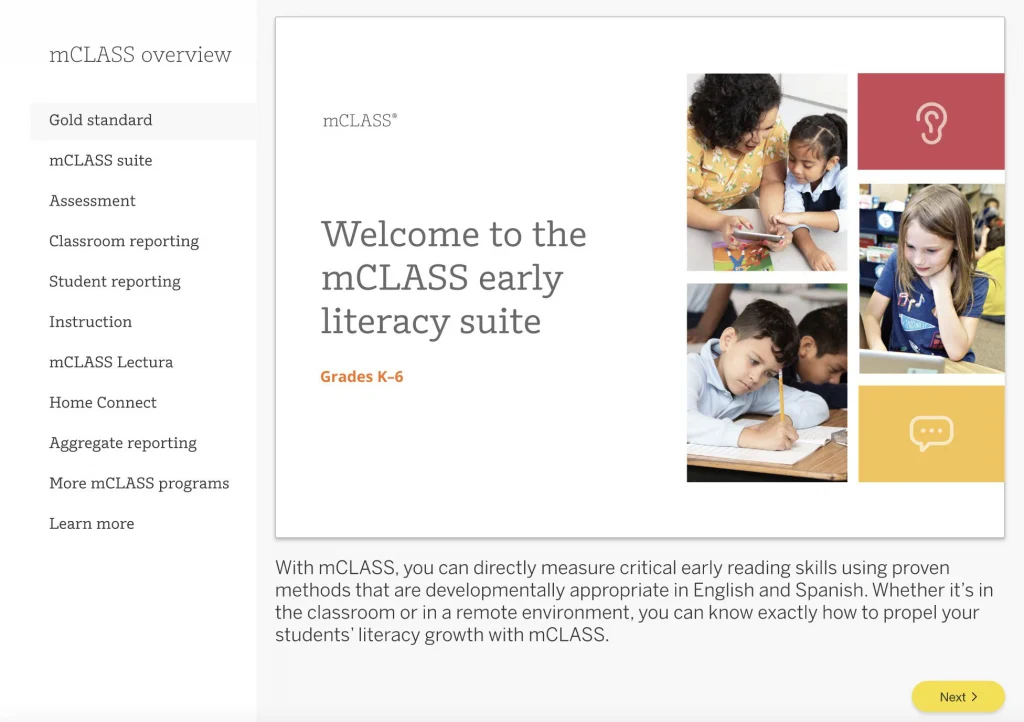
Contact us
Looking to speak directly with your Colorado representative? Get in touch with a team member by emailing HelloColorado@amplify.com or by calling us directly.
What is mCLASS?
mCLASS is a best-in-class assessment platform that houses a suite of proven, gold-standard assessment measures and tools that can be flexibly combined to meet the unique literacy needs of both teachers and students across grades K–6, including:
- Universal screening
- Diagnostic assessment
- Text Reading and Comprehension (a.k.a. running records via Amplify Atlas Español)
- Dyslexia screening
- Progress monitoring
- Dual language reporting
- Targeted teacher-led instruction
What is the Lectura assessment?
The Lectura assessment is a brand-new interim and diagnostic assessment that consists of measures based on the latest research of how Spanish literacy develops.
Co-developed with the Center on Teaching and Learning at the University of Oregon (UO CTL) and validated in partnership with Dr. Lillian Durán, the Lectura assessment was created to provide educators with a high-quality, evidence-based tool to support understanding of Spanish-speaking students’ biliteracy development, specifically foundational Spanish reading skills, which includes measures of phonological awareness, alphabetic understanding and decoding, reading fluency, and reading comprehension.
The measures in Lectura were written from the ground-up to assess students’ literacy development based on how Spanish literacy develops. Measures explicitly account for the syllabic and morphological structures of Spanish, and connected text was written and calibrated with respect to syntactical, lexical, and grammatical rules of Spanish. For example, phonological awareness is measured using syllable segmentation, and letter sounds and syllable reading are included in the decoding subtests for greater face-validity (in lieu of pseudowords). Word choice reflects the multisyllabic word complexity and variety of Spanish, driven by how decoding skills develop in Spanish. As such, Lectura provides instructionally actionable data for all students, including those scoring below the benchmark and those who meet or exceed the benchmark.
The Lectura assessment measures were purposefully designed, developed, field tested, and evaluated to address limitations that educators of Spanish speaking students have experienced in assessments. Specifically in these ways:
- Assessment measures based on current research on how Spanish literacy is developed
- Culturally responsive word choice and content reflecting the regional diversity of Spanish
- Technical adequacy established through rigorous study
- A sample size and geographic diversity reflecting the broad population of Spanish speakers across the U.S.
- Complete parity with English solutions (instructional tools, skill coverage)
Assessment measures by grade
| Lectura measures at each grade level | |||||
| Measure | Grade K | Grade 1 | Grade 2 | Grade 3 | Grades 4–6 |
| Fluidez en nombrar letras | |
|
|
||
| Fluidez en la segmentación de sílabas | |
|
|||
| ¿Qué queda? | |
|
|
||
| Fluidez en los sonidos de letras | |
|
|||
| Fluidez en los sonidos de sílabas | |
|
|||
| Fluidez en las palabras | |
|
|
|
|
| Fluidez en la lectura oral | |
|
|
|
|
| ¿Cuál palabra? | |
|
|
|
|
| Amplify measures at each grade level | |||||
| Oral Language Español | |
|
|
||
| Vocabulario | |
|
|
|
|
Assessment measures sample videos
Please note that the videos below are intended for illustrative purposes only. Performance levels in mCLASS Lectura have yet to be finalized.
mCLASS Lectura measure: Fluidez en nombrar letras (FNL)
Students are asked to identify as many uppercase and lowercase letter names as they can in one minute.
mCLASS Lectura measure: Fluidez en los sonidos de letras (FSL)
Students are asked to identify the sounds of as many uppercase and lowercase letters as they can in one minute.
mCLASS Lectura measure: Fluidez en los sonidos de sílabas (LSS)
Students are presented with a page of printed orthographically regular Spanish syllables and asked to read as many syllables as they can in one minute.
mCLASS Lectura measure: Fluidez en la lectura oral (FLO)
Students are presented with an authentically written informational or narrative passage of Spanish connected text and asked to read as much of the passage as they can in one minute.
mCLASS Lectura measure: ¿Qué Queda? (QQ)
Students are presented with a word orally and then the examiner omits part of the word (i.e., compound word part, syllable, or phoneme). Students are asked to identify what word remains after the word part has been elided.
What makes mCLASS Lectura different?
mCLASS Lectura combines the power of the mCLASS assessment platform and the effectiveness of the Lectura assessment measures. As a result – educators are empowered with latest and greatest assessment tool.
More than a test, mCLASS Lectura is an integrated system that closes the knowing-doing gap by helping teachers take immediate instructional action that’s right for each and every student. What’s more, it addresses the classroom inequities Spanish-speaking students face along their early literacy journeys.
Spanish-speaking students have been underserved and misclassified for decades. With mCLASS Lectura, teachers of Spanish-speaking students finally have access to the same robust assessment tools that have been available to teachers of English-speaking students for years.
Plus! When mCLASS Lectura and DIBELS 8th Edition are used together, teachers are empowered with a more holistic view of their Spanish-speaking students abilities in both English and Spanish, making instructional next steps more targeted and effective.
What makes mCLASS Lectura different?
- It gives teachers access to authentic Spanish measures. Amplify is the only provider of the Lectura assessment. Rather than a direct translation of an English assessment, our solution is the only one to provide teachers a research-based, authentic Spanish assessment that is both valid and reliable.
- It makes it faster and easier to understand where every student is in their early literacy journey. By combining 1:1 observational diagnostic assessments, dyslexia screening, progress monitoring, instant scoring, rigorous reporting, automatic student grouping, and targeted instruction all in one place, it reduces the instructional delays associated with manual scoring, manual data analysis, and manual lesson planning.
- It brings more equity to the classroom. When used in conjunction with mCLASS DIBELS 8th Edition, teachers have access to Dual Language Reports that highlight a students strengths and weaknesses in both English and Spanish.
- It makes every instructional minute count. In addition to one-minute measures that quickly gauge student progress toward reading proficiency, it leverages a teacher’s most powerful instructional tool — their own 1:1 observations.
- It drives growth more efficiently. Rather than relying on broad composite scores alone, granular data and in-depth insights for every student help teachers pinpoint exact skill gaps and areas of unfinished learning, making whole-group, small-group, and 1:1 instruction more targeted and effective.
- It saves teachers time. Instant reports, automatic student groups, and ready-to-teach lessons mean teachers spend less time cobbling together materials and more time working directly with students and responding to their needs.
Assessment systems must enable and compel educators to answer not just the “What?” questions, but also the “So What?” and “Now What?” questions. These are the questions that are essential in transforming classroom instruction, and the questions that mCLASS Lectura helps teachers answer with confidence.
How does mCLASS Lectura support screening for dyslexia risk?
mCLASS Lectura subtests have been specifically designed and validated to screen for dyslexia risks.
mCLASS Lectura was specifically developed to ensure the measure is able to meet state-level screening requirements for both dyslexia and universal reading screening. The research and development of Lectura was designed with this use in mind to accurately identify reading difficulties, including difficulties related to risk for dyslexia.
How does mCLASS Lectura support the use of running records?
Track your students’ reading progress from every angle with the Text Reading and Comprehension (TRC) assessment. When TRC is paired with the Lectura assessment, classroom teachers unlock the ability to record reading behaviors through running digital records. Available in English and Spanish, it measures reading comprehension and provides insight into how each student finds meaning in text.

How does mCLASS Lectura turn data into instant action?
mCLASS Lectura gives you instant results and clear next steps for each student.
Quick and actionable reports provide detailed insight into students’ reading development across foundational literacy skills for teachers, specialists, administrators, and caregivers.
Diagnostic assessment
mCLASS Lectura analyzes individual student response data through a proprietary scoring algorithm that pinpoints a student’s specific area(s) of growth and improvement, providing classroom teachers in-depth insight into a students’ instructional needs.
Ready-to-teach instruction
Immediately following the analysis of individual student responses, mCLASS Lectura provides an in-depth diagnostic report complete with suggested next steps, also known as “mCLASS Instruction.”
mCLASS Instruction evaluates each student’s responses on each individual subtest and instantly:
- Provides a list of specific needs by student, such as struggling with medial vowel sounds or difficulty reading words with consonant blends.
- Groups students automatically based on similar discrete skill needs, not simply composite scores like other assessment tools.
- Recommends a variety of ready-to-teach lessons that specifically target each individual student’s areas of need or common areas of need for small-group instruction.
Classroom skill and benchmark summary
The Classroom Skill Summary report is a dashboard showing benchmark performance on each skill. Teachers can use it to determine which skill areas need instructional focus at a classroom level.
The Classroom Benchmark Summary report is a classroom-wide view of overall reading performance. Teachers can use this report to determine if composite scores improved, declined, or remained the same each semester.
Detailed benchmark performance
Teachers can see each student’s performance during the current school year, on each subtest as well as the overall composite. The benchmark goal displays below the subtest name when applicable. The ability to sort the columns in this report gives teachers more flexibility to analyze data the way they prefer.
Dual language reports
When mCLASS Lectura and mCLASS with DIBELS 8th Edition are used together, teachers will receive an asset-based picture of a student’s biliteracy and instructional guidance on how to leverage literacy skills in one language to support literacy skill development in the second language.
- Side-by-side view of foundational literacy skills in English and Spanish
- Explicit guidance to teachers to support asset-based instruction using cross-linguistic transfer strategies
Progress monitoring summary
See which subtests have been assessed since the most recent benchmark assessment, how students performed on the three most recent progress monitoring assessments for each measure, and which students have not been progress monitored since the benchmark assessment.
Caregiver supports
The mCLASS Home Connect letter provides parent and caregivers information in English or Spanish about the student’s literacy and guidance on how to support their child at home.
What is mCLASS?
mCLASS is a best-in-class assessment platform that houses a suite of proven, gold-standard assessment measures and tools that can be flexibly combined to meet the unique literacy needs of both teachers and students across grades K–6, including:
- Universal screening
- Diagnostic assessment
- Text Reading and Comprehension (a.k.a. running records via Amplify Atlas Español)
- Dyslexia screening
- Progress monitoring
- Dual language reporting
- Targeted teacher-led instruction
What is the Lectura assessment?
The Lectura assessment is a brand-new interim and diagnostic assessment that consists of measures based on the latest research of how Spanish literacy develops.
Co-developed with the Center on Teaching and Learning at the University of Oregon (UO CTL) and validated in partnership with Dr. Lillian Durán, the Lectura assessment was created to provide educators with a high-quality, evidence-based tool to support understanding of Spanish-speaking students’ biliteracy development, specifically foundational Spanish reading skills, which includes measures of phonological awareness, alphabetic understanding and decoding, reading fluency, and reading comprehension.
The measures in Lectura were written from the ground-up to assess students’ literacy development based on how Spanish literacy develops. Measures explicitly account for the syllabic and morphological structures of Spanish, and connected text was written and calibrated with respect to syntactical, lexical, and grammatical rules of Spanish. For example, phonological awareness is measured using syllable segmentation, and letter sounds and syllable reading are included in the decoding subtests for greater face-validity (in lieu of pseudowords). Word choice reflects the multisyllabic word complexity and variety of Spanish, driven by how decoding skills develop in Spanish. As such, Lectura provides instructionally actionable data for all students, including those scoring below the benchmark and those who meet or exceed the benchmark.
The Lectura assessment measures were purposefully designed, developed, field tested, and evaluated to address limitations that educators of Spanish speaking students have experienced in assessments. Specifically in these ways:
- Assessment measures based on current research on how Spanish literacy is developed
- Culturally responsive word choice and content reflecting the regional diversity of Spanish
- Technical adequacy established through rigorous study
- A sample size and geographic diversity reflecting the broad population of Spanish speakers across the U.S.
- Complete parity with English solutions (instructional tools, skill coverage)
Assessment measures by grade
| Lectura measures at each grade level | |||||
| Measure | Grade K | Grade 1 | Grade 2 | Grade 3 | Grades 4–6 |
| Fluidez en nombrar letras | |
|
|
||
| Fluidez en la segmentación de sílabas | |
|
|||
| ¿Qué queda? | |
|
|
||
| Fluidez en los sonidos de letras | |
|
|||
| Fluidez en los sonidos de sílabas | |
|
|||
| Fluidez en las palabras | |
|
|
|
|
| Fluidez en la lectura oral | |
|
|
|
|
| ¿Cuál palabra? | |
|
|
|
|
| Amplify measures at each grade level | |||||
| Oral Language Español | |
|
|
||
| Vocabulario | |
|
|
|
|
Assessment measures sample videos
Please note that the videos below are intended for illustrative purposes only. Performance levels in mCLASS Lectura have yet to be finalized.
mCLASS Lectura measure: Fluidez en nombrar letras (FNL)
Students are asked to identify as many uppercase and lowercase letter names as they can in one minute.
mCLASS Lectura measure: Fluidez en los sonidos de letras (FSL)
Students are asked to identify the sounds of as many uppercase and lowercase letters as they can in one minute.
mCLASS Lectura measure: Fluidez en los sonidos de sílabas (LSS)
Students are presented with a page of printed orthographically regular Spanish syllables and asked to read as many syllables as they can in one minute.
mCLASS Lectura measure: Fluidez en la lectura oral (FLO)
Students are presented with an authentically written informational or narrative passage of Spanish connected text and asked to read as much of the passage as they can in one minute.
mCLASS Lectura measure: ¿Qué Queda? (QQ)
Students are presented with a word orally and then the examiner omits part of the word (i.e., compound word part, syllable, or phoneme). Students are asked to identify what word remains after the word part has been elided.
What makes mCLASS Lectura different?
mCLASS Lectura combines the power of the mCLASS assessment platform and the effectiveness of the Lectura assessment measures. As a result – educators are empowered with latest and greatest assessment tool.
More than a test, mCLASS Lectura is an integrated system that closes the knowing-doing gap by helping teachers take immediate instructional action that’s right for each and every student. What’s more, it addresses the classroom inequities Spanish-speaking students face along their early literacy journeys.
Spanish-speaking students have been underserved and misclassified for decades. With mCLASS Lectura, teachers of Spanish-speaking students finally have access to the same robust assessment tools that have been available to teachers of English-speaking students for years.
Plus! When mCLASS Lectura and DIBELS 8th Edition are used together, teachers are empowered with a more holistic view of their Spanish-speaking students abilities in both English and Spanish, making instructional next steps more targeted and effective.
What makes mCLASS Lectura different?
- It gives teachers access to authentic Spanish measures. Amplify is the only provider of the Lectura assessment. Rather than a direct translation of an English assessment, our solution is the only one to provide teachers a research-based, authentic Spanish assessment that is both valid and reliable.
- It makes it faster and easier to understand where every student is in their early literacy journey. By combining 1:1 observational diagnostic assessments, dyslexia screening, progress monitoring, instant scoring, rigorous reporting, automatic student grouping, and targeted instruction all in one place, it reduces the instructional delays associated with manual scoring, manual data analysis, and manual lesson planning.
- It brings more equity to the classroom. When used in conjunction with mCLASS DIBELS 8th Edition, teachers have access to Dual Language Reports that highlight a students strengths and weaknesses in both English and Spanish.
- It makes every instructional minute count. In addition to one-minute measures that quickly gauge student progress toward reading proficiency, it leverages a teacher’s most powerful instructional tool — their own 1:1 observations.
- It drives growth more efficiently. Rather than relying on broad composite scores alone, granular data and in-depth insights for every student help teachers pinpoint exact skill gaps and areas of unfinished learning, making whole-group, small-group, and 1:1 instruction more targeted and effective.
- It saves teachers time. Instant reports, automatic student groups, and ready-to-teach lessons mean teachers spend less time cobbling together materials and more time working directly with students and responding to their needs.
Assessment systems must enable and compel educators to answer not just the “What?” questions, but also the “So What?” and “Now What?” questions. These are the questions that are essential in transforming classroom instruction, and the questions that mCLASS Lectura helps teachers answer with confidence.
How does mCLASS Lectura support screening for dyslexia risk?
mCLASS Lectura subtests have been specifically designed and validated to screen for dyslexia risks.
mCLASS Lectura was specifically developed to ensure the measure is able to meet state-level screening requirements for both dyslexia and universal reading screening. The research and development of Lectura was designed with this use in mind to accurately identify reading difficulties, including difficulties related to risk for dyslexia.
How does mCLASS Lectura support the use of running records?
Track your students’ reading progress from every angle with the Text Reading and Comprehension (TRC) assessment. When TRC is paired with the Lectura assessment, classroom teachers unlock the ability to record reading behaviors through running digital records. Available in English and Spanish, it measures reading comprehension and provides insight into how each student finds meaning in text.

How does mCLASS Lectura turn data into instant action?
mCLASS Lectura gives you instant results and clear next steps for each student.
Quick and actionable reports provide detailed insight into students’ reading development across foundational literacy skills for teachers, specialists, administrators, and caregivers.

Diagnostic assessment
mCLASS Lectura analyzes individual student response data through a proprietary scoring algorithm that pinpoints a student’s specific area(s) of growth and improvement, providing classroom teachers in-depth insight into a students’ instructional needs.
Ready-to-teach instruction
Immediately following the analysis of individual student responses, mCLASS Lectura provides an in-depth diagnostic report complete with suggested next steps, also known as “mCLASS Instruction.”
mCLASS Instruction evaluates each student’s responses on each individual subtest and instantly:
- Provides a list of specific needs by student, such as struggling with medial vowel sounds or difficulty reading words with consonant blends.
- Groups students automatically based on similar discrete skill needs, not simply composite scores like other assessment tools.
- Recommends a variety of ready-to-teach lessons that specifically target each individual student’s areas of need or common areas of need for small-group instruction.
Classroom skill and benchmark summary
The Classroom Skill Summary report is a dashboard showing benchmark performance on each skill. Teachers can use it to determine which skill areas need instructional focus at a classroom level.
The Classroom Benchmark Summary report is a classroom-wide view of overall reading performance. Teachers can use this report to determine if composite scores improved, declined, or remained the same each semester.
Detailed benchmark performance
Teachers can see each student’s performance during the current school year, on each subtest as well as the overall composite. The benchmark goal displays below the subtest name when applicable. The ability to sort the columns in this report gives teachers more flexibility to analyze data the way they prefer.
Dual language reports
When mCLASS Lectura and mCLASS with DIBELS 8th Edition are used together, teachers will receive an asset-based picture of a student’s biliteracy and instructional guidance on how to leverage literacy skills in one language to support literacy skill development in the second language.
- Side-by-side view of foundational literacy skills in English and Spanish
- Explicit guidance to teachers to support asset-based instruction using cross-linguistic transfer strategies
Progress monitoring summary
See which subtests have been assessed since the most recent benchmark assessment, how students performed on the three most recent progress monitoring assessments for each measure, and which students have not been progress monitored since the benchmark assessment.
Caregiver supports
The mCLASS Home Connect letter provides parent and caregivers information in English or Spanish about the student’s literacy and guidance on how to support their child at home.

Clickable demo
Our clickable demo is a great way to orient yourself to the organization of our mCLASS platform and the mCLASS Lectura assessment. Click the button below to get started.
Here you will find 10 interactive screens:
- Screen 2: Scroll down to the class list. Find Gabriel Archulata. Click on his score for “Decodificación”.
- Screen 3: Explore Gabriel’s measure transcript. Then click on the gray arrow to the far right to advance to the next screen.
- Screen 4: Click on the “Instruction” tab.
- Screen 5: Scroll down to “Decoding Group 4” and click “See Activities”.
- Screen 6: Click on the first activity called “Identificar y leer palabras con los dígrafos ch y ll.”
- Screen 7: Click on the gray arrow to the far right to advance to the next screen.
- Screen 8: Explore the detailed “Student” tab and then click the “Dual Language” tab.
- Screen 9: Scroll down to the section about Gabriel’s phonological awareness skills. Click on the link called “Cross-Linguistic Transfer: Phonological Awareness”.
- Screen 10: Click on the gray arrow to the far right to advance to the next screen. Explore the “Home Connect” letter.
Professional development for assessment and intervention programs
Amplify professional development (PD) provides learning experiences that intentionally develop the knowledge and skills you need for effective and self-sustaining implementation.
Learn how to administer and score your assessment and develop a deeper understanding of reporting and instruction by investing in professional development.
Amplify professional development has been vetted by Rivet Education’s team through a rigorous three-step process and is listed in the Professional Learning Partner Guide.
About Amplify PD
Change is more likely to stick and get results if you take a systemic approach. As our partner, you’ll develop a learning plan that will drive your program implementation, enrich your instructional practices, and increase student impact.
Amplify’s professional development is designed to ensure successful, sustained implementation of our programs. Through strategically bundled packages, our PD sessions provide continuous support that adapts to your educators’ evolving needs.
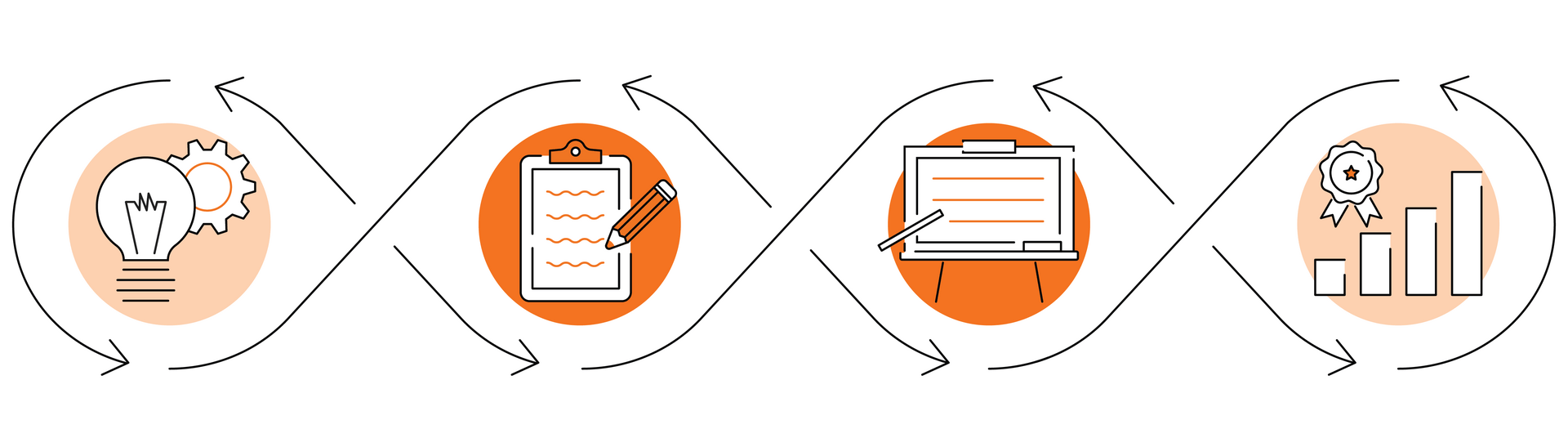
Our packages include:
- Launch sessions: Propel your teachers into the new school year by introducing them to their Amplify program, laying a strong foundation for effective implementation.
- Strengthen sessions: Boost implementation with mid-year sessions that target specific instructional practices, providing the support needed to enhance program efficacy.
- Coach sessions: Provide tailored guidance and support for educators and leaders to address specific needs, refining and advancing their instructional practices.
About mCLASS Texas® assessment PD packages:
- Begin packages: Ideal for the first year of implementation, these packages help educators transition to evidence-based practices. Each package includes Launch and Strengthen sessions to set the foundation and support the initial phases of program adoption.
- Format options: On-site, Hybrid, Virtual
- Components: One Launch session introduces and supports a strong implementation and one Strengthen session deepens understanding of the program.
- Practice packages: Designed for the second year of implementation and beyond, these packages deepen educators’ knowledge and refine their practice. They focus on continuous improvement, using data to drive instructional decisions and enhance student outcomes.
- Format options: On-site, Hybrid, Virtual
- Components: Two Strengthen sessions expand practice and drive outcomes. We recommend enhancement Coach sessions for ongoing support and addressing customized needs.
About mCLASS Intervention PD sessions:
- Each intervention program offers Launch and Coach sessions for up to 30 participants per program for year one and beyond.
- Our interactive sessions are available on-site or virtually, empowering teachers and leaders anywhere with the tools and skills they need to inspire all students to think deeply, creatively, and for themselves.
About Amplify assessment and intervention programs
Amplify’s high-quality programs make it easier for educators to teach inspiring, impactful lessons that celebrate and develop the brilliance of their students. Empowering teachers with tools to provide robust scaffolding and differentiated instruction, assessment, and intervention programs take the hassle and guesswork out of assessments with real-time, actionable plans personalized for every learner.
Learn how to get the most out of your assessment and intervention program(s) through Amplify’s PD.
Assessment
- mCLASS Texas
- mCLASS Lectura Texas
- mCLASS Texas + Lectura
Intervention
- mCLASS Intervention
We provide PD sessions for all Amplify programs. Contact your account executive to discuss the extended catalog of PD session options or request a quote.
mCLASS Texas Assessments
We’ve created professional development offerings that will help you meet your unique needs this school year. Explore the Begin and Practice packages available for mCLASS Texas Edition and mCLASS Lectura Texas by selecting the session titles to learn more.
Please note that mCLASS Texas and mCLASS Texas + Lectura biliteracy sessions are currently unavailable for the Hybrid 4 and Virtual 4 packages.
Begin packages
Assessment programs
| On-site package (9 hours) |
Hybrid 9 package (9 hours) |
Hybrid 4 package (4 hours) |
Virtual 9 package (9 hours) |
Virtual 4 package (4 hours) |
|
| One Launch and Strengthen session per package | |||||
| Launch sessions | |||||
| On-site 6 hr. |
On-site 6 hr. |
On-site 3 hr. |
Virtual 6 hr. (2 half-days) |
Virtual 3 hr. |
|
| Administration and instruction essentials for teachers | |
|
|
||
| Administration and scoring training for teachers |
|
|
|||
| Administration and reporting training for leaders | |
|
|||
| Strengthen sessions | |||||
| On-site 3 hr. |
Virtual 3 hr. |
Virtual 1 hr. |
Virtual 3 hr. |
Virtual 1 hr. |
|
| Creating a data-driven classroom for teachers | |
|
|
||
| Building a data-driven culture for leaders | |
|
|
||
| Assessing with fidelity for teachers |
|
|
|||
| Reporting and instruction basics for teachers | |
|
|||
| Goal setting and growth outcomes for teachers | |
|
|||
| Progress monitoring for teachers | |
|
|||
| Reporting basics for leaders |
|
|
|||
*Assessment Strengthen sessions should be scheduled after the most recent benchmark window has closed for participants to work with their own data.
| Coach session | |||
| Suggested enhancements |
On-site | On-site or virtual | |
| 6 hr. | 3 hr. | ||
Begin: Administration and instruction essentials for teachers
On-site or virtual, 6 hours
Dive into the essentials of your mCLASS Texas assessment program. Learn how to administer and score the assessment and leave ready to leverage mCLASS Texas reports and lessons to accelerate data-driven student outcomes.
Session options: mCLASS Texas, mCLASS Lectura Texas, and/or mCLASS Texas + Lectura biliteracy
Audience: Teachers, instructional staff (maximum 30 participants)
Language: The mCLASS Lectura Texas session is facilitated in English or Spanish.
Begin: Administration and scoring training for teachers
On-site or virtual, 3 hours
Learn how to administer and score your mCLASS Texas assessment(s) and leave ready to collect data using standardized guidelines.
Session options: mCLASS Texas, mCLASS Lectura Texas, and/or mCLASS Texas + Lectura biliteracy
Audience: Teachers, instructional staff (maximum 30 participants)
Language: The mCLASS Lectura Texas session is facilitated in English or Spanish.
Begin: Administration and reporting training for leaders
On-site or virtual, 3 hours
Prepare to implement your assessment program(s) at your school site(s). Determine systems-level actions that will ensure assessment fidelity and leave ready to leverage key admin reports to support data-informed decisions.
Session options: mCLASS Texas, mCLASS Lectura Texas, and/or mCLASS Texas + Lectura biliteracy
Audience: Leaders (maximum 30 participants)
Language: The mCLASS Lectura Texas session is facilitated in English only.
Begin: Creating a data-driven classroom for teachers
On-site or virtual, 3 hours
Dive deep into mCLASS Texas reports and instructional recommendations to drive stronger student outcomes in your classroom. You will leave ready to leverage mCLASS Texas progress monitoring and grouping tools to support a robust MTSS program.
Session options: mCLASS Texas, mCLASS Lectura Texas, and/or mCLASS Texas + Lectura biliteracy
Audience: Teachers, instructional staff (maximum 30 participants)
Language: The mCLASS Lectura Texas session is facilitated in English or Spanish.
Begin: Building a data-driven culture for leaders
On-site or virtual, 3 hours
Cultivate a schoolwide culture of data-driven practices. Use mCLASS Texas reports to drill into key school-level data and leave with a systems-level action plan to drive stronger student and teacher outcomes.
Session options: mCLASS Texas, mCLASS Lectura Texas, and/or mCLASS Texas + Lectura biliteracy
Audience: Leaders (maximum 30 participants)
Language: The mCLASS Lectura Texas session is facilitated in English only.
Begin: Strengthen Focus: Assessing with fidelity for teachers
Virtual, 1 hour
Fortify your assessment administration with trainer-led practice targeted to your unique needs.
Session options: mCLASS Texas, mCLASS Lectura Texas, and/or mCLASS Texas + Lectura biliteracy
Audience: Teachers, instructional staff (maximum 30 participants)
Language: The mCLASS Lectura Texas session is facilitated in English or Spanish.
Begin: Strengthen Focus: Reporting and instruction basics for teachers
Virtual, 1 hour
Learn how to use mCLASS Texas classroom reporting, instructional tools, and resources to accelerate data-driven student outcomes.
Session options: mCLASS Texas, mCLASS Lectura Texas, and/or mCLASS Texas + Lectura biliteracy
Audience: Teachers, instructional staff (maximum 30 participants)
Language: The mCLASS Lectura Texas session is facilitated in English or Spanish.
Begin: Strengthen Focus: Goal setting and growth outcomes for teachers
Virtual, 1 hour
Learn how to use mCLASS Texas Zones of Growth (Zonas de crecimiento for mCLASS Lectura) reports to set meaningful, ambitious, and attainable student goals that drive student progress and growth.
Session options: mCLASS Texas, mCLASS Lectura Texas, and/or mCLASS Texas + Lectura biliteracy
Audience: Teachers, instructional staff (maximum 30 participants)
Language: The mCLASS Lectura Texas session is facilitated in English or Spanish.
Begin: Strengthen Focus: Progress monitoring for teachers
Virtual, 1 hour
Implement mCLASS progress monitoring and MTSS best practices to track student progress and accelerate growth.
Session options: mCLASS Texas, mCLASS Lectura Texas, and/or mCLASS Texas + Lectura biliteracy
Audience: Teachers, instructional staff (maximum 30 participants)
Language: The mCLASS Lectura Texas session is facilitated in English or Spanish.
Begin: Strengthen Focus: Reporting basics for leaders
Virtual, 1 hour
Examine your school-level mCLASS benchmark assessment data to identify key levers for improving student outcomes.
Session options: mCLASS Texas, mCLASS Lectura Texas, and/or mCLASS Texas + Lectura biliteracy
Audience: Leaders (maximum 30 participants)
Language: The mCLASS Lectura Texas session is facilitated in English only.
Practice packages
| On-site package (6 hours) |
Virtual 6 package (6 hours) |
Virtual 4 package (4 hours) |
Virtual 2 package (2 hours) |
|
| Two Strengthen sessions per package | ||||
| Strengthen session titles* | ||||
| On-site 3 hr. |
Virtual 3 hr. |
Virtual 3 hr. and 1 hr. |
Virtual 1 hr. |
|
| Creating a data-driven classroom for teachers | |
|
|
|
| Building a data-driven culture for leaders |
|
|
|
|
| Assessing with fidelity for teachers | |
|
||
| Reporting and instruction basics for teachers | |
|
||
| Progress monitoring for teachers |
|
|
||
| Goal setting and growth outcomes for teachers |
|
|
||
| Reporting basics for leaders | |
|
||
*Assessment Strengthen sessions should be scheduled after the most recent benchmark window has closed for participants to work with their own data.
| Coach session | |||
| Suggested enhancements |
On-site | On-site or virtual | |
| 6 hr. | 3 hr. | ||
Practice: Creating a data-driven classroom for teachers
On-site or virtual, 3 hours
Dive deep into mCLASS Texas reports and instructional recommendations to drive stronger student outcomes in your classroom. You will leave ready to leverage mCLASS Texas progress monitoring and grouping tools to support a robust MTSS program.
Session options: mCLASS Texas, mCLASS Lectura Texas, and/or mCLASS Texas + Lectura biliteracy
Audience: Teachers, instructional staff (maximum 30 participants)
Language: The mCLASS Lectura Texas session is facilitated in English or Spanish.
Practice: Building a data-driven culture for leaders
On-site or virtual, 3 hours
Cultivate a schoolwide culture of data-driven practices. Use mCLASS Texas reports to drill into key school-level data and leave with a systems-level action plan to drive stronger student and teacher outcomes.
Session options: mCLASS Texas, mCLASS Lectura Texas, and/or mCLASS Texas + Lectura biliteracy
Audience: Leaders (maximum 30 participants)
Language: The mCLASS Lectura Texas session is facilitated in English only.
Practice: Strengthen Focus: Assessing with fidelity for teachers
Virtual, 1 hour
Fortify your mCLASS Texas Edition assessment administration with trainer-led practice targeted to your unique needs.
Session options: mCLASS Texas, mCLASS Lectura Texas, and/or mCLASS Texas + Lectura biliteracy
Audience: Teachers, instructional staff (maximum 30 participants)
Language: The mCLASS Lectura Texas session is facilitated in English or Spanish.
New session
Practice: Strengthen Focus: Reporting and instruction basics for teachers
Virtual, 1 hour
Learn how to use mCLASS Texas classroom reporting, instructional tools, and resources to accelerate data-driven student outcomes.
Session options: mCLASS Texas, mCLASS Lectura Texas, and/or mCLASS Texas + Lectura biliteracy
Audience: Teachers, instructional staff (maximum 30 participants)
Language: The mCLASS Lectura Texas session is facilitated in English or Spanish.
Practice: Strengthen Focus: Progress monitoring for teachers
Virtual, 1 hour
Implement mCLASS Texas progress monitoring and MTSS best practices to track student progress and accelerate growth.
Session options: mCLASS Texas, mCLASS Lectura Texas, and/or mCLASS Texas + Lectura biliteracy
Audience: Teachers, instructional staff (maximum 30 participants)
Language: The mCLASS Lectura Texas session is facilitated in English or Spanish.
New session for mCLASS Lectura Texas and mCLASS Texas + Lectura biliteracy
Practice: Goal setting and growth outcomes for teachers
Virtual, 1 hour
Learn how to use mCLASS Texas Zones of Growth (Zonas de crecimiento for mCLASS Lectura Texas) reports to set meaningful, ambitious, and attainable student goals that drive student progress and growth.
Session options: mCLASS Texas, mCLASS Lectura Texas, and/or mCLASS Texas + Lectura biliteracy
Audience: Teachers, instructional staff (maximum 30 participants)
Language: The mCLASS Lectura Texas session is facilitated in English or Spanish.
Practice: Reporting basics for leaders
Virtual, 1 hour
Examine your school-level mCLASS Texas benchmark assessment data to identify key levers for improving student outcomes.
Session options: mCLASS Texas, mCLASS Lectura Texas, and/or mCLASS Texas + Lectura biliteracy
Audience: Leaders (maximum 30 participants)
Language: The mCLASS Lectura Texas session is facilitated in English.
Amplify intervention PD sessions
Intervention programs
Each intervention program offers Launch and Coach sessions for up to 30 participants per program for year one and beyond.
mCLASS Texas Intervention
mCLASS Intervention is a staff-led Tier 2 and Tier 3 reading intervention program that does the heavy lifting of data analysis and lesson sequencing, freeing up teachers to teach the reading skills each student needs. View the table and select the session title to learn more about each mCLASS Intervention PD session.
| On-site or virtual sessions 3 hr. |
Self-paced course | |
| Launch sessions | ||
| Program overview for interventionists | |
|
| Program overview for intervention coordinators | |
|
| Program overview course for interventionists | |
|
Coach sessions
| On-site sessions 6 hr. |
On-site or virtual sessions 3 hr. |
|
| Coach session |
|
|
| Coach session |
|
Launch
Propel your teachers into the new school year with sessions that introduce them to their Amplify program(s) and support a strong implementation.
Program overview for interventionists
On-site or virtual, 3 hours
Prepare to deliver mCLASS Intervention lessons and learn how to administer the diagnostic and progress monitoring measures.
Audience: Teachers, instructional staff (maximum 30 participants)
Program overview for intervention coordinators
On-site or virtual, 3 hours
Intervention coordinators will learn the essentials of coordinating mCLASS Intervention and leave ready to implement the program at their school site.
Audience: Intervention coordinators (maximum 30 participants)
Program overview for interventionists
Online course, self-paced
Prepare to deliver mCLASS Intervention lessons and learn how to administer the diagnostic and progress monitoring measures through this on-demand course. This subscription includes an individual seat to the course, which takes approximately 3 hours to complete. Participants will be able to access and revisit the course as needed for up to one year.
Audience: Teachers, instructional staff (individual seat)
Coach
Support teachers and leaders with learning experiences tailored to meet their specific needs.
Coach session
On-site, 6 hours
Coach sessions focus on building internal school and district capacity and leadership excellence to accelerate data-driven student outcomes for teachers using mCLASS Intervention. Coaching is customized to meet a school or district’s needs and can include observations, modeling, real-time coaching, and/or co-planning.
Audience: Individual teachers, grade-level teams, PLCs, and/or instructional leaders (maximum 30 participants)
Coach session
On-site or virtual, 3 hours
Coach sessions focus on building internal school and district capacity and leadership excellence to accelerate data-driven student outcomes for teachers using mCLASS Intervention. Coaching is customized to meet a school or district’s needs and can include observations, modeling, real-time coaching, and/or co-planning.
Audience: Individual teachers, grade-level teams, PLCs, and/or instructional leaders (maximum 30 participants)
Enhancement options
Enhancement options are available for assessment programs such as:
- mCLASS Texas
- mCLASS Lectura Texas
Enhancements can be purchased for all teachers/leaders or a subset of educators.
Enhancement offerings for assessment programs
Add the following session to any assessment or intervention package.
| On-site 6 hr. |
Virtual 6 hr. |
On-site or virtual 3 hr. |
|
| Coach session for individual teachers, grade-level teams, PLCs, and/or instructional leaders |
|
|
Coach session
On-site or virtual, 6 hours; On-site or virtual, 3 hours
Coach sessions focus on building internal school and district capacity and leadership excellence to accelerate data-driven student outcomes for teachers using mCLASS Texas. Coaching is customized to meet a school or district’s needs and can include observations, modeling, real-time coaching, and/or co-planning.
Audience: Individual teachers, grade-level teams, PLCs, and/or instructional leaders (maximum 30 participants)
Online courses
Launch online courses are available for the following assessment programs:
- mCLASS Texas
- mCLASS Lectura Texas
Please view the table below for more information.
Online courses for assessment programs
| Self-paced Online course |
|
| Administration and instruction essentials for teachers |
|
Administration and instruction essentials for teachers
Online course, self-paced
Dive into the essentials of your mCLASS Texas assessment program through this on-demand course. Learn how to administer and score the assessment and leave ready to leverage mCLASS Texas reports and lessons to accelerate data-driven student outcomes. This subscription includes an individual seat to the course, which takes approximately 8 hours to complete. Participants will be able to access and revisit the course as needed for up to one year.
Course options: mCLASS Texas, mCLASS Lectura Texas, and/or mCLASS Math
Audience: Teachers, instructional staff (individual seat)
Additional assessment and intervention programs
Additional sessions and online courses are available for other mCLASS programs (mCLASS Express, mCLASS Math, and mCLASS Intervention Universal).
To learn more about enhancing your Amplify experience by purchasing other mCLASS Texas programs and/or accompanying PD sessions, contact your account executive.
Contact us
We’re here to provide answers and guidance as you explore your PD options. Fill out the form to connect with us and discover how Amplify PD can enhance your educational journey.
What is mCLASS?
mCLASS is a best-in-class assessment platform that houses a suite of proven, gold-standard assessment measures and tools that can be flexibly combined to meet the unique literacy needs of both teachers and students across grades K–6, including:
- Universal screening
- Diagnostic assessment
- Text Reading and Comprehension (a.k.a. running records via Amplify Atlas Español)
- Dyslexia screening
- Progress monitoring
- Dual language reporting
- Targeted teacher-led instruction
What is the Lectura assessment?
The Lectura assessment is a brand-new interim and diagnostic assessment that consists of measures based on the latest research of how Spanish literacy develops.
Co-developed with the Center on Teaching and Learning at the University of Oregon (UO CTL) and validated in partnership with Dr. Lillian Durán, the Lectura assessment was created to provide educators with a high-quality, evidence-based tool to support understanding of Spanish-speaking students’ biliteracy development, specifically foundational Spanish reading skills, which includes measures of phonological awareness, alphabetic understanding and decoding, reading fluency, and reading comprehension.
The measures in Lectura were written from the ground-up to assess students’ literacy development based on how Spanish literacy develops. Measures explicitly account for the syllabic and morphological structures of Spanish, and connected text was written and calibrated with respect to syntactical, lexical, and grammatical rules of Spanish. For example, phonological awareness is measured using syllable segmentation, and letter sounds and syllable reading are included in the decoding subtests for greater face-validity (in lieu of pseudowords). Word choice reflects the multisyllabic word complexity and variety of Spanish, driven by how decoding skills develop in Spanish. As such, Lectura provides instructionally actionable data for all students, including those scoring below the benchmark and those who meet or exceed the benchmark.
The Lectura assessment measures were purposefully designed, developed, field tested, and evaluated to address limitations that educators of Spanish speaking students have experienced in assessments. Specifically in these ways:
- Assessment measures based on current research on how Spanish literacy is developed
- Culturally responsive word choice and content reflecting the regional diversity of Spanish
- Technical adequacy established through rigorous study
- A sample size and geographic diversity reflecting the broad population of Spanish speakers across the U.S.
- Complete parity with English solutions (instructional tools, skill coverage)
Assessment measures by grade
| Lectura measures at each grade level | |||||
| Measure | Grade K | Grade 1 | Grade 2 | Grade 3 | Grades 4–6 |
| Fluidez en nombrar letras | |
|
|
||
| Fluidez en la segmentación de sílabas | |
|
|||
| ¿Qué queda? | |
|
|
||
| Fluidez en los sonidos de letras | |
|
|||
| Fluidez en los sonidos de sílabas | |
|
|||
| Fluidez en las palabras | |
|
|
|
|
| Fluidez en la lectura oral | |
|
|
|
|
| ¿Cuál palabra? | |
|
|
|
|
| Amplify measures at each grade level | |||||
| Oral Language Español | |
|
|
||
| Vocabulario | |
|
|
|
|
Assessment measures sample videos
Please note that the videos below are intended for illustrative purposes only. Performance levels in mCLASS Lectura have yet to be finalized.
mCLASS Lectura measure: Fluidez en nombrar letras (FNL)
Students are asked to identify as many uppercase and lowercase letter names as they can in one minute.
mCLASS Lectura measure: Fluidez en los sonidos de letras (FSL)
Students are asked to identify the sounds of as many uppercase and lowercase letters as they can in one minute.
mCLASS Lectura measure: Fluidez en los sonidos de sílabas (LSS)
Students are presented with a page of printed orthographically regular Spanish syllables and asked to read as many syllables as they can in one minute.
mCLASS Lectura measure: Fluidez en la lectura oral (FLO)
Students are presented with an authentically written informational or narrative passage of Spanish connected text and asked to read as much of the passage as they can in one minute.
mCLASS Lectura measure: ¿Qué Queda? (QQ)
Students are presented with a word orally and then the examiner omits part of the word (i.e., compound word part, syllable, or phoneme). Students are asked to identify what word remains after the word part has been elided.
What makes mCLASS Lectura different?
mCLASS Lectura combines the power of the mCLASS assessment platform and the effectiveness of the Lectura assessment measures. As a result – educators are empowered with latest and greatest assessment tool.
More than a test, mCLASS Lectura is an integrated system that closes the knowing-doing gap by helping teachers take immediate instructional action that’s right for each and every student. What’s more, it addresses the classroom inequities Spanish-speaking students face along their early literacy journeys.
Spanish-speaking students have been underserved and misclassified for decades. With mCLASS Lectura, teachers of Spanish-speaking students finally have access to the same robust assessment tools that have been available to teachers of English-speaking students for years.
Plus! When mCLASS Lectura and DIBELS 8th Edition are used together, teachers are empowered with a more holistic view of their Spanish-speaking students abilities in both English and Spanish, making instructional next steps more targeted and effective.
What makes mCLASS Lectura different?
- It gives teachers access to authentic Spanish measures. Amplify is the only provider of the Lectura assessment. Rather than a direct translation of an English assessment, our solution is the only one to provide teachers a research-based, authentic Spanish assessment that is both valid and reliable.
- It makes it faster and easier to understand where every student is in their early literacy journey. By combining 1:1 observational diagnostic assessments, dyslexia screening, progress monitoring, instant scoring, rigorous reporting, automatic student grouping, and targeted instruction all in one place, it reduces the instructional delays associated with manual scoring, manual data analysis, and manual lesson planning.
- It brings more equity to the classroom. When used in conjunction with mCLASS DIBELS 8th Edition, teachers have access to Dual Language Reports that highlight a students strengths and weaknesses in both English and Spanish.
- It makes every instructional minute count. In addition to one-minute measures that quickly gauge student progress toward reading proficiency, it leverages a teacher’s most powerful instructional tool — their own 1:1 observations.
- It drives growth more efficiently. Rather than relying on broad composite scores alone, granular data and in-depth insights for every student help teachers pinpoint exact skill gaps and areas of unfinished learning, making whole-group, small-group, and 1:1 instruction more targeted and effective.
- It saves teachers time. Instant reports, automatic student groups, and ready-to-teach lessons mean teachers spend less time cobbling together materials and more time working directly with students and responding to their needs.
Assessment systems must enable and compel educators to answer not just the “What?” questions, but also the “So What?” and “Now What?” questions. These are the questions that are essential in transforming classroom instruction, and the questions that mCLASS Lectura helps teachers answer with confidence.
How does mCLASS Lectura support screening for dyslexia risk?
mCLASS Lectura subtests have been specifically designed and validated to screen for dyslexia risks.
mCLASS Lectura was specifically developed to ensure the measure is able to meet state-level screening requirements for both dyslexia and universal reading screening. The research and development of Lectura was designed with this use in mind to accurately identify reading difficulties, including difficulties related to risk for dyslexia.
How does mCLASS Lectura support the use of running records?
Track your students’ reading progress from every angle with the Text Reading and Comprehension (TRC) assessment. When TRC is paired with the Lectura assessment, classroom teachers unlock the ability to record reading behaviors through running digital records. Available in English and Spanish, it measures reading comprehension and provides insight into how each student finds meaning in text.
How does mCLASS Lectura turn data into instant action?
mCLASS Lectura gives you instant results and clear next steps for each student.
Quick and actionable reports provide detailed insight into students’ reading development across foundational literacy skills for teachers, specialists, administrators, and caregivers.
Diagnostic assessment
mCLASS Lectura analyzes individual student response data through a proprietary scoring algorithm that pinpoints a student’s specific area(s) of growth and improvement, providing classroom teachers in-depth insight into a students’ instructional needs.
Ready-to-teach instruction
Immediately following the analysis of individual student responses, mCLASS Lectura provides an in-depth diagnostic report complete with suggested next steps, also known as “mCLASS Instruction.”
mCLASS Instruction evaluates each student’s responses on each individual subtest and instantly:
- Provides a list of specific needs by student, such as struggling with medial vowel sounds or difficulty reading words with consonant blends.
- Groups students automatically based on similar discrete skill needs, not simply composite scores like other assessment tools.
- Recommends a variety of ready-to-teach lessons that specifically target each individual student’s areas of need or common areas of need for small-group instruction.
Classroom skill and benchmark summary
The Classroom Skill Summary report is a dashboard showing benchmark performance on each skill. Teachers can use it to determine which skill areas need instructional focus at a classroom level.
The Classroom Benchmark Summary report is a classroom-wide view of overall reading performance. Teachers can use this report to determine if composite scores improved, declined, or remained the same each semester.
Detailed benchmark performance
Teachers can see each student’s performance during the current school year, on each subtest as well as the overall composite. The benchmark goal displays below the subtest name when applicable. The ability to sort the columns in this report gives teachers more flexibility to analyze data the way they prefer.
Dual language reports
When mCLASS Lectura and mCLASS with DIBELS 8th Edition are used together, teachers will receive an asset-based picture of a student’s biliteracy and instructional guidance on how to leverage literacy skills in one language to support literacy skill development in the second language.
- Side-by-side view of foundational literacy skills in English and Spanish
- Explicit guidance to teachers to support asset-based instruction using cross-linguistic transfer strategies

Progress monitoring summary
See which subtests have been assessed since the most recent benchmark assessment, how students performed on the three most recent progress monitoring assessments for each measure, and which students have not been progress monitored since the benchmark assessment.
Caregiver supports
The mCLASS Home Connect letter provides parent and caregivers information in English or Spanish about the student’s literacy and guidance on how to support their child at home.

Clickable demo
Our clickable demo is a great way to orient yourself to the organization of our mCLASS platform and the mCLASS Lectura assessment. Click the button below to get started.
Here you will find 10 interactive screens:
- Screen 2: Scroll down to the class list. Find Gabriel Archulata. Click on his score for “Decodificación”.
- Screen 3: Explore Gabriel’s measure transcript. Then click on the gray arrow to the far right to advance to the next screen.
- Screen 4: Click on the “Instruction” tab.
- Screen 5: Scroll down to “Decoding Group 4” and click “See Activities”.
- Screen 6: Click on the first activity called “Identificar y leer palabras con los dígrafos ch y ll.”
- Screen 7: Click on the gray arrow to the far right to advance to the next screen.
- Screen 8: Explore the detailed “Student” tab and then click the “Dual Language” tab.
- Screen 9: Scroll down to the section about Gabriel’s phonological awareness skills. Click on the link called “Cross-Linguistic Transfer: Phonological Awareness”.
- Screen 10: Click on the gray arrow to the far right to advance to the next screen. Explore the “Home Connect” letter.
What is mCLASS?
mCLASS is a best-in-class assessment platform that houses a suite of proven, gold-standard assessment measures and tools that can be flexibly combined to meet the unique literacy needs of both teachers and students across grades K–6, including:
- Universal screening
- Diagnostic assessment
- Dyslexia screening
- Progress monitoring
- Dual language reporting
- Quick 1-minute assessment measures
- Real-time results, instant analysis, automatic student grouping
- Targeted teacher-led instruction with ready-to-use mini-lessons
What is the Lectura assessment?
The Lectura assessment is a brand-new interim and diagnostic assessment that consists of measures based on the latest research of how Spanish literacy develops.
Co-developed with the Center on Teaching and Learning at the University of Oregon (UO CTL) and validated in partnership with Dr. Lillian Durán, the Lectura assessment was created to provide educators with a high-quality, evidence-based tool to support understanding of Spanish-speaking students’ biliteracy development, specifically foundational Spanish reading skills, which includes measures of phonological awareness, alphabetic understanding and decoding, reading fluency, and reading comprehension.
The measures in Lectura were written from the ground-up to assess students’ literacy development based on how Spanish literacy develops. Measures explicitly account for the syllabic and morphological structures of Spanish, and connected text was written and calibrated with respect to syntactical, lexical, and grammatical rules of Spanish. For example, phonological awareness is measured using syllable segmentation, and letter sounds and syllable reading are included in the decoding subtests for greater face-validity (in lieu of pseudowords). Word choice reflects the multisyllabic word complexity and variety of Spanish, driven by how decoding skills develop in Spanish. As such, Lectura provides instructionally actionable data for all students, including those scoring below the benchmark and those who meet or exceed the benchmark.
The Lectura assessment measures were purposefully designed, developed, field tested, and evaluated to address limitations that educators of Spanish speaking students have experienced in assessments. Specifically in these ways:
- Assessment measures based on current research on how Spanish literacy is developed
- Culturally responsive word choice and content reflecting the regional diversity of Spanish
- Technical adequacy established through rigorous study
- A sample size and geographic diversity reflecting the broad population of Spanish speakers across the U.S.
- Complete parity with English solutions (instructional tools, skill coverage)
Assessment measures by grade
| Lectura measures at each grade level | ||||
| Measure | Grade K | Grade 1 | Grade 2 | Grade 3 |
| Fluidez en nombrar letras | |
|
|
|
| Fluidez en la segmentación de sílabas | |
|
||
| ¿Qué queda? | |
|
|
|
| Fluidez en los sonidos de letras | |
|
||
| Fluidez en los sonidos de sílabas | |
|
||
| Fluidez en las palabras | |
|
|
|
| Fluidez en la lectura oral | |
|
|
|
| ¿Cuál palabra? | |
|
|
|
| Amplify measures at each grade level | ||||
| Oral Language Español | |
|
|
|
| Vocabulario | |
|
|
|
Assessment measures sample videos
Please note that the videos below are intended for illustrative purposes only. Performance levels in mCLASS Lectura have yet to be finalized.
mCLASS Lectura measure: Fluidez en nombrar letras (FNL)
Students are asked to identify as many uppercase and lowercase letter names as they can in one minute.
mCLASS Lectura measure: Fluidez en los sonidos de letras (FSL)
Students are asked to identify the sounds of as many uppercase and lowercase letters as they can in one minute.
mCLASS Lectura measure: Fluidez en los sonidos de sílabas (LSS)
Students are presented with a page of printed orthographically regular Spanish syllables and asked to read as many syllables as they can in one minute.
mCLASS Lectura measure: Fluidez en la lectura oral (FLO)
Students are presented with an authentically written informational or narrative passage of Spanish connected text and asked to read as much of the passage as they can in one minute.
mCLASS Lectura measure: ¿Qué Queda? (QQ)
Students are presented with a word orally and then the examiner omits part of the word (i.e., compound word part, syllable, or phoneme). Students are asked to identify what word remains after the word part has been elided.
How is mCLASS Lectura different?
mCLASS Lectura combines the power of the mCLASS assessment platform and the effectiveness of the Lectura assessment measures. As a result – educators across the state are empowered with latest and greatest assessment tool.
More than a test, mCLASS Lectura is an integrated system that closes the knowing-doing gap by helping teachers take immediate instructional action that’s right for each and every student. What’s more, it addresses the classroom inequities Spanish-speaking students face along their early literacy journeys.
Spanish-speaking students have been underserved and misclassified for decades. With mCLASS Lectura, teachers of Spanish-speaking students finally have access to the same robust assessment tools that have been available to teachers of English-speaking students for years.
Plus! When mCLASS Lectura and DIBELS 8th Edition are used together, teachers are empowered with a more holistic view of their Spanish-speaking students abilities in both English and Spanish, making instructional next steps more targeted and effective.
How is mCLASS Lectura different?
- It gives teachers access to authentic Spanish measures. Amplify is the only provider of the Lectura assessment. Rather than a direct translation of an English assessment, our solution is the only one to provide teachers a research-based, authentic Spanish assessment that is both valid and reliable.
- It makes it faster and easier to understand where every student is in their early literacy journey. By combining 1:1 observational diagnostic assessments, dyslexia screening, progress monitoring, instant scoring, rigorous reporting, automatic student grouping, and targeted instruction all in one place, it reduces the instructional delays associated with manual scoring, manual data analysis, and manual lesson planning.
- It brings more equity to the classroom. When used in conjunction with mCLASS DIBELS 8th Edition, teachers have access to Dual Language Reports that highlight a students strengths and weaknesses in both English and Spanish.
- It makes every instructional minute count. In addition to one-minute measures that quickly gauge student progress toward reading proficiency, it leverages a teacher’s most powerful instructional tool — their own 1:1 observations.
- It drives growth more efficiently. Rather than relying on broad composite scores alone, granular data and in-depth insights for every student help teachers pinpoint exact skill gaps and areas of unfinished learning, making whole-group, small-group, and 1:1 instruction more targeted and effective.
- It saves teachers time. Instant reports, automatic student groups, and ready-to-teach lessons mean teachers spend less time cobbling together materials and more time working directly with students and responding to their needs.
Assessment systems must enable and compel educators to answer not just the “What?” questions, but also the “So What?” and “Now What?” questions. These are the questions that are essential in transforming classroom instruction, and the questions that mCLASS Lectura helps teachers answer with confidence.
How does mCLASS Lectura support screening for dyslexia risk?
mCLASS Lectura subtests have been specifically designed and validated to screen for dyslexia risks.
mCLASS Lectura was specifically developed to ensure the measure is able to meet state-level screening requirements for both dyslexia and universal reading screening. The research and development of Lectura was designed with this use in mind to accurately identify reading difficulties, including difficulties related to risk for dyslexia.
How does mCLASS Lectura turn data into instant action?
mCLASS Lectura gives you instant results and clear next steps for each student.
Quick and actionable reports provide detailed insight into students’ reading development across foundational literacy skills for teachers, specialists, administrators, and caregivers.

Diagnostic assessment
mCLASS Lectura analyzes individual student response data through a innovative scoring algorithm that leverages an item-level evaluation of individual student responses in order to provide deeper insights into specific student weaknesses and areas of improvement.
Ready-to-teach instruction
Immediately following the analysis of individual student responses, mCLASS Lectura provides an in-depth diagnostic report complete with suggested next steps, also known as “mCLASS Instruction.”
mCLASS Instruction evaluates each student’s responses on each individual subtest and instantly:
- Provides a list of specific needs by student, such as struggling with medial vowel sounds or difficulty reading words with consonant blends.
- Groups students automatically based on similar discrete skill needs, not simply composite scores like other assessment tools.
- Recommends a variety of ready-to-teach lessons that specifically target each individual student’s areas of need or common areas of need for small-group instruction.
Classroom skill and benchmark summary
The Classroom Skill Summary report is a dashboard showing benchmark performance on each skill. Teachers can use it to determine which skill areas need instructional focus at a classroom level.
The Classroom Benchmark Summary report is a classroom-wide view of overall reading performance. Teachers can use this report to determine if composite scores improved, declined, or remained the same each semester.
Detailed benchmark performance
Teachers can see each student’s performance during the current school year, on each subtest as well as the overall composite. The benchmark goal displays below the subtest name when applicable. The ability to sort the columns in this report gives teachers more flexibility to analyze data the way they prefer.
Dual language reports
When mCLASS Lectura and mCLASS with DIBELS 8th Edition are used together, teachers will receive an asset-based picture of a student’s biliteracy and instructional guidance on how to leverage literacy skills in one language to support literacy skill development in the second language.
- Side-by-side view of foundational literacy skills in English and Spanish
- Explicit guidance to teachers to support asset-based instruction using cross-linguistic transfer strategies

Progress monitoring summary
See which subtests have been assessed since the most recent benchmark assessment, how students performed on the three most recent progress monitoring assessments for each measure, and which students have not been progress monitored since the benchmark assessment.
Caregiver supports
The mCLASS Home Connect letter provides parent and caregivers information in English or Spanish about the student’s literacy and guidance on how to support their child at home.

Explore our self-guided tour
Our self-guided tour is a great way to orient yourself to the organization of our mCLASS platform. Click the button below to get started.

What is mCLASS?
mCLASS is a best-in-class assessment platform that houses a suite of proven, gold-standard assessment measures and tools that can be flexibly combined to meet the unique literacy needs of both teachers and students across grades K–6, including:
- Universal screening
- Diagnostic assessment
- Dyslexia screening
- Progress monitoring
- Dual language reporting
- Targeted teacher-led instruction
What is the Lectura assessment?
The Lectura assessment is a brand-new interim and diagnostic assessment that consists of measures based on the latest research of how Spanish literacy develops.
Co-developed with the Center on Teaching and Learning at the University of Oregon (UO CTL) and validated in partnership with Dr. Lillian Durán, the Lectura assessment was created to provide educators with a high-quality, evidence-based tool to support understanding of Spanish-speaking students’ biliteracy development, specifically foundational Spanish reading skills, which includes measures of phonological awareness, alphabetic understanding and decoding, reading fluency, and reading comprehension.
The measures in Lectura were written from the ground-up to assess students’ literacy development based on how Spanish literacy develops. Measures explicitly account for the syllabic and morphological structures of Spanish, and connected text was written and calibrated with respect to syntactical, lexical, and grammatical rules of Spanish. For example, phonological awareness is measured using syllable segmentation, and letter sounds and syllable reading are included in the decoding subtests for greater face-validity (in lieu of pseudowords). Word choice reflects the multisyllabic word complexity and variety of Spanish, driven by how decoding skills develop in Spanish. As such, Lectura provides instructionally actionable data for all students, including those scoring below the benchmark and those who meet or exceed the benchmark.
The Lectura assessment measures were purposefully designed, developed, field tested, and evaluated to address limitations that educators of Spanish speaking students have experienced in assessments. Specifically in these ways:
- Assessment measures based on current research on how Spanish literacy is developed
- Culturally responsive word choice and content reflecting the regional diversity of Spanish
- Technical adequacy established through rigorous study
- A sample size and geographic diversity reflecting the broad population of Spanish speakers across the U.S.
- Complete parity with English solutions (instructional tools, skill coverage)
Assessment measures by grade
| Lectura measures at each grade level | ||||
| Measure | Grade K | Grade 1 | Grade 2 | Grade 3 |
| Fluidez en nombrar letras | | |  | |
| Fluidez en la segmentación de sílabas | | | ||
| ¿Qué queda? | | | | |
| Fluidez en los sonidos de letras | | | ||
| Fluidez en los sonidos de sílabas | | | ||
| Fluidez en las palabras | | | | |
| Fluidez en la lectura oral | | | | |
| ¿Cuál palabra? | | | | |
| Amplify measures at each grade level | ||||
| Oral Language Español | | | | |
| Vocabulario | | | | |
Assessment measures sample videos
Please note that the videos below are intended for illustrative purposes only. Performance levels in mCLASS Lectura have yet to be finalized.
mCLASS Lectura measure: Fluidez en nombrar letras (FNL)
Students are asked to identify as many uppercase and lowercase letter names as they can in one minute.
mCLASS Lectura measure: Fluidez en los sonidos de letras (FSL)
Students are asked to identify the sounds of as many uppercase and lowercase letters as they can in one minute.
mCLASS Lectura measure: Fluidez en los sonidos de sílabas (LSS)
Students are presented with a page of printed orthographically regular Spanish syllables and asked to read as many syllables as they can in one minute.
mCLASS Lectura measure: Fluidez en la lectura oral (FLO)
Students are presented with an authentically written informational or narrative passage of Spanish connected text and asked to read as much of the passage as they can in one minute.
mCLASS Lectura measure: ¿Qué Queda? (QQ)
Students are presented with a word orally and then the examiner omits part of the word (i.e., compound word part, syllable, or phoneme). Students are asked to identify what word remains after the word part has been elided.
How is mCLASS Lectura different?
mCLASS Lectura combines the power of the mCLASS assessment platform and the effectiveness of the Lectura assessment measures. As a result – educators across the state are empowered with latest and greatest assessment tool.
More than a test, mCLASS Lectura is an integrated system that closes the knowing-doing gap by helping teachers take immediate instructional action that’s right for each and every student. What’s more, it addresses the classroom inequities Spanish-speaking students face along their early literacy journeys.
Spanish-speaking students have been underserved and misclassified for decades. With mCLASS Lectura, teachers of Spanish-speaking students finally have access to the same robust assessment tools that have been available to teachers of English-speaking students for years.
Plus! When mCLASS Lectura and DIBELS 8th Edition are used together, teachers are empowered with a more holistic view of their Spanish-speaking students abilities in both English and Spanish, making instructional next steps more targeted and effective.
How is mCLASS Lectura different?
- It gives teachers access to authentic Spanish measures. Amplify is the only provider of the Lectura assessment. Rather than a direct translation of an English assessment, our solution is the only one to provide teachers a research-based, authentic Spanish assessment that is both valid and reliable.
- It makes it faster and easier to understand where every student is in their early literacy journey. By combining 1:1 observational diagnostic assessments, dyslexia screening, progress monitoring, instant scoring, rigorous reporting, automatic student grouping, and targeted instruction all in one place, it reduces the instructional delays associated with manual scoring, manual data analysis, and manual lesson planning.
- It brings more equity to the classroom. When used in conjunction with mCLASS DIBELS 8th Edition, teachers have access to Dual Language Reports that highlight a student’s strengths and weaknesses in both English and Spanish.
- It makes every instructional minute count. In addition to one-minute measures that quickly gauge student progress toward reading proficiency, it leverages a teacher’s most powerful instructional tool — their own 1:1 observations.
- It drives growth more efficiently. Rather than relying on broad composite scores alone, granular data and in-depth insights for every student help teachers pinpoint exact skill gaps and areas of unfinished learning, making whole-group, small-group, and 1:1 instruction more targeted and effective.
- It saves teachers time. Instant reports, automatic student groups, and ready-to-teach lessons mean teachers spend less time cobbling together materials and more time working directly with students and responding to their needs.
Assessment systems must enable and compel educators to answer not just the “What?” questions, but also the “So What?” and “Now What?” questions. These are the questions that are essential in transforming classroom instruction, and the questions that mCLASS Lectura helps teachers answer with confidence.
How does mCLASS Lectura support screening for dyslexia risk?
mCLASS Lectura subtests have been specifically designed and validated to screen for dyslexia risks.
mCLASS Lectura was specifically developed to ensure the measure is able to meet state-level screening requirements for both dyslexia and universal reading screening. The research and development of Lectura was designed with this use in mind to accurately identify reading difficulties, including difficulties related to risk for dyslexia.
How does mCLASS Lectura turn data into instant action?
mCLASS Lectura gives you instant results and clear next steps for each student.
Quick and actionable reports provide detailed insight into students’ reading development across foundational literacy skills for teachers, specialists, administrators, and caregivers.

Diagnostic assessment
mCLASS Lectura analyzes individual student response data through a scoring algorithm which aligns to the Colorado Department of Education’s stated purpose of a diagnostic assessment.
Our innovative approach to diagnostic assessment leverages an item-level evaluation of individual student responses in order to provide deeper insights into specific student weaknesses and areas of improvement. mCLASS Lectura analyzes individual student response data through a scoring algorithm which aligns to the Colorado Department of Education’s stated purpose of a diagnostic: “… to pinpoint a student’s specific area(s) of weakness and provide in-depth information about students’ skills and instructional needs.”
Ready-to-teach instruction
Immediately following the analysis of individual student responses, mCLASS Lectura provides an in-depth diagnostic report complete with suggested next steps, also known as “mCLASS Instruction.”
mCLASS Instruction evaluates each student’s responses on each individual subtest and instantly:
- Provides a list of specific needs by student, such as struggling with medial vowel sounds or difficulty reading words with consonant blends.
- Groups students automatically based on similar discrete skill needs, not simply composite scores like other assessment tools.
- Recommends a variety of ready-to-teach lessons that specifically target each individual student’s areas of need or common areas of need for small-group instruction.
Classroom skill and benchmark summary
The Classroom Skill Summary report is a dashboard showing benchmark performance on each skill. Teachers can use it to determine which skill areas need instructional focus at a classroom level.
The Classroom Benchmark Summary report is a classroom-wide view of overall reading performance. Teachers can use this report to determine if composite scores improved, declined, or remained the same each semester.
Detailed benchmark performance
Teachers can see each student’s performance during the current school year, on each subtest as well as the overall composite. The benchmark goal displays below the subtest name when applicable. The ability to sort the columns in this report gives teachers more flexibility to analyze data the way they prefer.
Dual language reports
When mCLASS Lectura and mCLASS with DIBELS 8th Edition are used together, teachers will receive an asset-based picture of a student’s biliteracy and instructional guidance on how to leverage literacy skills in one language to support literacy skill development in the second language.
- Side-by-side view of foundational literacy skills in English and Spanish
- Explicit guidance to teachers to support asset-based instruction using cross-linguistic transfer strategies

Progress monitoring summary
See which subtests have been assessed since the most recent benchmark assessment, how students performed on the three most recent progress monitoring assessments for each measure, and which students have not been progress monitored since the benchmark assessment.
Colorado READ Plans
The Colorado READ Act places importance on considering students’ English proficiency and the impact it may have on assessment. Thus the READ Act provides an option for districts to assess Spanish-speaking students in their native language, who are not yet partially proficient in English.
Amplify recommends that a student who is categorized by the mCLASS Lectura composite score as “At High Risk” (denoted in all reports as “red”) be considered as potentially having a “Significant Reading Deficiency,” then further diagnosed using mCLASS’ Instruction diagnostics.
When devising a READ Plan, teachers and instructional staff should first consider students at high risk on mCLASS Lectura as potentially having a “Significant Reading Deficiency,” and eligible for a READ Plan. Students are then further diagnosed using mCLASS’ Instruction diagnostics. When devising a READ Plan, teachers can rely on the relevant mCLASS Instruction and Reports to comply with the READ Act.
Caregiver supports
The mCLASS Home Connect letter provides parent and caregivers information in English or Spanish about the student’s literacy and guidance on how to support their child at home.

Explore our self-guided tour
Our self-guided tour is a great way to orient yourself to the organization of our mCLASS platform. Click the button below to get started.
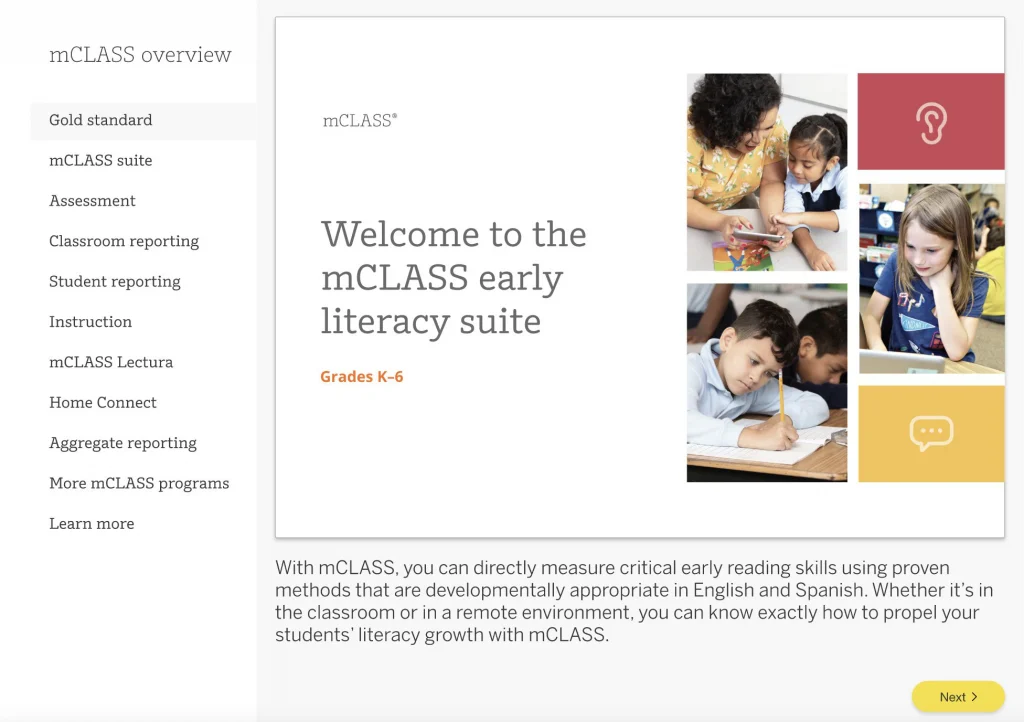
What is Amplify Science?
Built from the ground up for the Next Generation Science Standards at UC Berkeley’s Lawrence Hall of Science, Amplify Science is a comprehensive program that blends literacy-rich activities, hands-on investigations, and interactive digital tools to empower students to think, read, write, and argue like 21st-century scientists and engineers. Highly adaptable and user-friendly, the program gives schools and individual teachers flexibility with their technology resources and preferences.
The program is backed by gold-standard research and is currently used by thousands of teachers across the US.
See Amplify Science in action
Amplify Science in Action: a week in the life (6–8)
What does a week in the life of an Amplify Science teacher look like? We asked Amy Trujillo, a sixth-grade teacher from Denver Public Schools, to talk through an example of what one week of using Amplify Science is like in her classroom.
In Amplify Science, students take on the role of a scientist or engineer to actively investigate compelling phenomena through engaging hands-on investigations, immersive digital simulations, comprehensive reading and writing activities, and lively classroom discussions.
See what Amplify Science looks like in a classroom with more topical videos:
Dig deeper into the curriculum
Amplify Science is rooted in the research-based Do, Talk, Read, Write, Visualize model of learning. Students engage with science and engineering practices, figure out disciplinary core ideas, and utilize and apply crosscutting concepts in multiple modalities across thoughtful, structured lessons, all centered around engaging anchor phenomena. Learn more about how a unique mix of activities and modalities provide students with multiple points of entry into the instruction.
- Program structure and pacing
- Phenomena and unit storylines
- Hands-on investigations
- Digital Simulations
Attend a webinar
Join the Lawrence Hall of Science for a series of free webinars! Curriculum experts will explore why embedded engineering and phenomena-based science instruction deliver results, with examples from Amplify Science.
Webinars are scheduled throughout the spring, and you can always sign to watch a recording if you’re unable to attend live.
Review rubrics
Using an evaluation rubric to review? Take a look at our filled-out TIME and EQuIP rubrics.
Test drive the program
Click submit to access a free sample unit from our middle school curriculum.
Assessments
Credible. Actionable. Timely. The assessment system for each Amplify Science unit is designed to provide teachers with actionable diagnostic information about student progress toward the learning goals for the unit. Assessment of unit learning goals is grounded in the Unit Progress Build (PB), which describes how student understanding is likely to develop and deepen through engagement with the unit’s learning experiences. The assessment system includes formal and informal opportunities for students to demonstrate understanding and for teachers to gather information throughout the unit – all while giving teachers flexibility in deciding what to score and what to simply review. Built largely around instructionally-embedded performances, these opportunities encompass a range of modalities that, as a system, attend to research on effective assessment strategies and the NRC Framework for K-12 Science Education.
The variety of assessment options for Amplify Science include:
- Pre-Unit Assessment (formative): discussion, modeling, and written explanations to gauge students knowledge.
- On-the-Fly Assessments (OtFA) (formative): each OtFA includes guidance on what to look for in student activity or work products, and offers suggestions on how to adjust instruction accordingly.
- End-of-Chapter Problem Context Explanations (formative): Three-dimensional performance tasks to support students’ consolidation of ideas encountered in each chapter and provide insight into students’ developing understanding.
- Self-Assessments (formative): One per chapter; brief opportunities for students to reflect on their own learning, ask questions, and reveal ongoing wonderings about unit content.
- Critical Juncture Assessment (CJ) (formative): Occurring at the end of each chapter similar in format to the Pre-Unit and End-of-Unit assessments.
- End-of-Unit Assessment (summative): discussion, modeling, and written explanations to gauge students’ knowledge and growth.
Hands-On and Print Materials (“Kits”)
There is a box of materials associate with every unit of Amplify Science, containing a variety of hands-on activities and print materials that are called for in the various lessons in the unit. Each box, commonly called a “kit,” is associated with a given unit, and each teacher should ideally have their own kit for each unit.
Hands-on brochures
*One blackline master Student Investigation Notebook is included in each unit kit, grades 3–5.
Within the kit there are two types of materials:
- Physical manipulatives
- Printed materials
The physical manipulatives are the hands-on items used in various lessons in the unit. For example, the Balancing Forces kit contains balloons, batteries, magnets, fasteners, rubber balls, and various other materials.
There are two types of physical manipulatives: consumables and nonconsumables. Nonconsumables are durable and, if cared for properly, can be used over the course of several years. Consumables are used up with each use and must be replenished.
There are also print materials in the kits, including:
- Key concepts: Teachers designate an area of the classroom wall to post “Key Concept” printed cards. These cards contain short sentences that explicitly identify an important idea or concept learned in the unit. By posting that card to the wall, the classroom has a visual anchor – a physical representation of “what we’ve learned so far.”
- Vocabulary wall: Like the Key Concepts, Vocabulary cards are provided in your unit’s kit. These, too, are posted to a designated area of the classroom wall, and more and more vocabulary cards are added to the wall as we progress through the unit.
- Unit and Chapter Questions: Printed cards with the unit question and individual chapter questions are also provided in the kit. These cards help students to remember exactly what we are investigating over the course of the chapter, and ultimately, over the course of the unit.
- Card Sets: Printed cards, specific to a unit, are in each kit (though not all units have Card Sets). Often, students are sorting these cards on their desks, ranking them, ordering them, etc. For example, in the Metabolism unit, students take “Evidence Cards,” each with a piece of evidence, and then rank and arrange the evidence cards from strong-> weak->irrelevant, thereby providing a visualization of their thinking and reasoning.
Preview Amplify Science: NYC
Start your view by simply selecting “Preview the Curriculum” and then selecting either Teacher or Student access. We recommend selecting Teacher access as you will also be able to see the student resources.
Looking for help reviewing the program? Reach out to a New York City Amplify Science curriculum expert.
Reading and Literacy Integration
Amplify Science units provide strategy-based literacy instruction that aims to develop students’ facility with reading, writing, and talking about science. Each unit provides many authentic opportunities for students to learn about and practice the ways of communicating and learning that characterize science as a discipline. The following are the Amplify Science Guiding Principles for Literacy:
- Students acquire literacy expertise through the pursuit of science knowledge and by engaging in scientific and engineering practices.
- Attention to discipline literacy instruction should begin as soon as students enter school and should continue throughout the grades.
- Participation in a disciplinary community is key to acquiring disciplinary expertise and literacy.
- Since the purpose of science is to better explain the natural world, argumentation and explanation are the central enterprises of science. Therefore, these practices are central foci of reading, writing, and talk in science.
Literacy instruction in the Amplify Science program utilizes a Gradual Release of Responsibility approach (Pearson and Gallagher 1983). In this approach, instruction begins with the teacher assuming primary responsibility for modeling strategy or skill and explicitly instruction how to use each strategy or skill. As instruction proceeds, the teacher offers as much support as needed so students can practice using the target strategy more independently. Over time, students take on more responsibility for using the strategy more independently. Depending on the goal, the path from teacher modeling to student independence will vary. Over the course of a unit, students may not achieve independence for every literacy goal, but they will move along the continuum toward flexible use of a wide range of reading, writing, and learning strategies that have been incorporated throughout the program.
Each Amplify Science Elementary Unit includes five books that students use to build an understanding of science ideas, practices, and crosscutting concepts. While the program does not take on responsibility for providing all literacy instruction required for students’ reading development (e.g., skill-based or fluency-oriented literacy instruction), it is designed to support vocabulary, language, and reading comprehension development.
Amplify Science provides students with a series of content-rich nonfiction and informational texts that are read for a variety of purposes throughout the unit. The five books in each unit include one book for approximately every five days of instruction and one reference book that students draw upon throughout the 22-lesson units (20 instructional lessons & 2 assessment days for pre/post). Students are encouraged to read books as independently as possible so they can apply the comprehension strategies they are learning in order to understand what they read. In each Amplify Science reading session, comprehension is supported at three stages: before, during, and after reading. At each stage, students engage in planned tasks that build an understanding of the key concepts and themes in a book. The teacher’s role is to scaffold comprehension and provide opportunities for practicing the strategies and skills that are being taught. At each stage, these include:
- Before-reading activities designed to help students activate their background knowledge, prepare to use particular comprehension strategies, and set a purpose for reading.
- During-reading activities intended to help students monitor their comprehension, make connections, and read and understand important science vocabulary in context.
- After reading activities intended to help students reflect on their learning and connect their reading to their firsthand science investigations.
Nonfiction and informational text. The Amplify Science program is designed to help students gain familiarity with the structures and functions of nonfiction and informational texts by extending students’ exposure to these texts in a rich learning environment. The program uses nonfiction and informational texts because it is an important component of content learning in school; it helps build knowledge of the natural and social world, and it provides students with a purposeful context for learning key concepts and vocabulary. Nonfiction and informational text are also engaging and motivating as it answers genuine questions and capitalizes on student interests and background knowledge. Reading a wide variety of texts have been shown to affect students’ interest in reading overall (Duke 2004). Nonfiction and informational genres are also the genres students are most likely to encounter when reading and writing inside and outside of school. For adults, nonfiction and informational texts are read more often than other genres (Duel 2004; Smith 2000). In order for students to become successful information gatherers as adults, we need to provide opportunities for them to engage with nonfiction and informational texts in school.
Reading comprehension. Reading instruction in Amplify Science is designed to promote students’ capacity to read for meaning. Guided instruction and a supportive classroom context help students learn to employ powerful comprehension strategies that are critical for gaining a better understanding of text and becoming skilled readers (Duke and Pearson 2002). Comprehension strategies included in the Amplify Science program include posing questions, making inferences, setting goals for reading, summarizing, synthesizing, and using text features. Across units, students are guided to use these strategies flexibly as they read and make sense of a wide range of nonfiction and informational texts. Students also gain critical experience with understanding texts and experiences in relation to one another as they make connections between the books they read and the science they do. These connections then extend their growing conceptual understanding. Reading instruction in Amplify Science also encourages students to reflect on the utility of comprehension strategies, including when, why, and how these strategies helped them. One important way students make connections is through sustained classroom discussion of text with their peers (Nystrand 1997). Students regularly discuss both content and comprehension use before, during, and after reading, learning more about both as they engage in discussions with their peers. The Amplify Science approach also draws on research that demonstrates the benefits of instructional coherence (connected reading, writing, listening, and talk), particularly in the content area of science (Romance and Vitale 2001; Cervetti et. al. 2007; The Directed Reading Model supports reading comprehension before, during, and after reading. Cervetti et. al. 2006). Reading comprehension is enhanced as students connect what they read to what they are investigating and learning in science. The Amplify Science student books provide many opportunities for students to practice their developing reading skills in context, engage in authentic discourse around text, make connections, and support their understandings with textual evidence.
Digital Simulations
Digital Sims are digital tools that serve as venues of exploration and means for collecting data and evidence, and present students with opportunities to make observations and manipulate variables of key scientific processes and mechanism. Sims allow students to explore scientific concepts that might otherwise be invisible or impossible to see with the naked eye. Much like real scientists do, students of Amplify Science will use these computer simulations to gain insight into processes that occur on the microscopic scale, or alternatively, to speed up processes that might otherwise take thousands or millions of years to observe.
In grades 4–8, Amplify Science offers a unique sim which students will use throughout the unit. And each time a sim appears in a lesson, there are clear instructions for both teachers and students on its use.
Digital simulation from Ecosystem Restoration unit
Spanish Resources
Amplify Science is committed to providing support to meet the needs of all learners, including multiple access points for Spanish-speaking students. Developed in conjunction with Spanish-language experts and classroom teachers, multiple components are available in Spanish across the Amplify Science curriculum.
Spanish-language materials include:
| Component | Teacher/student |
|---|---|
| Student Investigation Notebooks (K–8) | Student |
| Science articles (6–8) | Student |
| Student Books (K–5) | Student |
| Video transcripts (6–8) | Student |
| Digital simulation translation key (6–8) | Student |
| Printed classroom materials (K–8) (Unit and chapter questions, key concepts, vocabulary cards, etc.) | Teacher and student |
| Copymasters (K–8) | Teacher |
| Assessments (K–8) | Teacher |
Supporting ELLs
English language learners (ELLs) bring a lifetime of background knowledge and experiences to everything they do. As they work to acquire a new language and new academic knowledge simultaneously, they may need specific linguistic support. In the instruction, the Differentiation Brief points out activities that could pose linguistic challenges for English learners or reduce their access to science content, and suggests supports and modifications accordingly.
The Lawrence Hall of Science authorship team believes that it is essential for students to develop both a deep understanding of science concepts and facility with disciplinary practices that are essential to the work of scientists and engineers. It is also important to recognize that in a single classroom, students have an array of learning needs and preferences. In particular, English language learners can benefit from learning opportunities designed to meet their needs from additional support then needed as they tackle the language and content demands of science.Five principles helped the Lawrence Hall of Science curriculum developers design instructional sequences to meet the goals of bolstering students who develop understanding of science content, decreasing language demands without diluting science content, and allowing students to more fully engage in disciplinary literacy practices. The five principles are based on research on best practices in the field and have been reviewed by Amplify Science ELL advisors.
- Leverage and build students’ informational background knowledge.
- Capitalize on students’ knowledge of language.
- Provide explicit instruction about the language of science.
- Provide opportunities for scaffolded practice.
- Provide multimodal means of accessing science content and expressing science knowledge.
mCLASS Lectura Review for Colorado
mCLASS® Lectura for SFUSD
mCLASS® Lectura is the brand-new Spanish-language counterpart to the mCLASS® with DIBELS® 8th Edition comprehensive diagnostic assessment system. Its screening, diagnostic assessment, and progress monitoring measures gauge student progress toward reading proficiency, and helps identify students who may be at risk of future reading difficulties such as dyslexia.
What is mCLASS?
mCLASS is a best-in-class assessment platform that houses a suite of proven, gold-standard assessment measures and tools that can be flexibly combined to meet the unique literacy needs of both teachers and students across grades K–6, including:
- Universal screening
- Diagnostic assessment
- Text Reading and Comprehension (a.k.a. running records via Amplify Atlas Español)
- Dyslexia screening
- Progress monitoring
- Dual language reporting
- Targeted teacher-led instruction
What is the Lectura assessment?
The Lectura assessment is a brand-new interim and diagnostic assessment that consists of measures based on the latest research of how Spanish literacy develops.
Co-developed with the Center on Teaching and Learning at the University of Oregon (UO CTL) and validated in partnership with Dr. Lillian Durán, the Lectura assessment was created to provide educators with a high-quality, evidence-based tool to support understanding of Spanish-speaking students’ biliteracy development, specifically foundational Spanish reading skills, which includes measures of phonological awareness, alphabetic understanding and decoding, reading fluency, and reading comprehension.
The measures in Lectura were written from the ground-up to assess students’ literacy development based on how Spanish literacy develops. Measures explicitly account for the syllabic and morphological structures of Spanish, and connected text was written and calibrated with respect to syntactical, lexical, and grammatical rules of Spanish. For example, phonological awareness is measured using syllable segmentation, and letter sounds and syllable reading are included in the decoding subtests for greater face-validity (in lieu of pseudowords). Word choice reflects the multisyllabic word complexity and variety of Spanish, driven by how decoding skills develop in Spanish. As such, Lectura provides instructionally actionable data for all students, including those scoring below the benchmark and those who meet or exceed the benchmark.
The Lectura assessment measures were purposefully designed, developed, field tested, and evaluated to address limitations that educators of Spanish speaking students have experienced in assessments. Specifically in these ways:
- Assessment measures based on current research on how Spanish literacy is developed
- Culturally responsive word choice and content reflecting the regional diversity of Spanish
- Technical adequacy established through rigorous study
- A sample size and geographic diversity reflecting the broad population of Spanish speakers across the U.S.
- Complete parity with English solutions (instructional tools, skill coverage)
Assessment measures by grade
| Lectura measures at each grade level | |||||
|
Measure |
Grade K | Grade 1 | Grade 2 | Grade 3 | Grades 4–6 |
| Fluidez en nombrar letras |  |
|
|
||
| Fluidez en la segmentación de sílabas | |
|
|||
| ¿Qué queda? | |
|
|
||
| Fluidez en los sonidos de letras | |
|
|||
| Fluidez en los sonidos de sílabas | |
|
|||
| Fluidez en las palabras | |
|
|
|
|
| Fluidez en la lectura oral | |
|
|
|
|
| ¿Cuál palabra? | |
|
|
|
|
| Amplify measures at each grade level | |||||
| Oral Language Español | |
|
|
||
| Vocabulario | |
|
|
|
|
Assessment measures sample videos
Please note that the videos below are intended for illustrative purposes only. Performance levels in mCLASS Lectura have yet to be finalized.
mCLASS Lectura measure: Fluidez en nombrar letras (FNL)
Students are asked to identify as many uppercase and lowercase letter names as they can in one minute.
mCLASS Lectura measure: Fluidez en los sonidos de letras (FSL)
Students are asked to identify the sounds of as many uppercase and lowercase letters as they can in one minute.
mCLASS Lectura measure: Fluidez en los sonidos de sílabas (LSS)
Students are presented with a page of printed orthographically regular Spanish syllables and asked to read as many syllables as they can in one minute.
mCLASS Lectura measure: Fluidez en la lectura oral (FLO)
Students are presented with an authentically written informational or narrative passage of Spanish connected text and asked to read as much of the passage as they can in one minute.
mCLASS Lectura measure: ¿Qué Queda? (QQ)
Students are presented with a word orally and then the examiner omits part of the word (i.e., compound word part, syllable, or phoneme). Students are asked to identify what word remains after the word part has been elided.
What makes mCLASS Lectura different?
mCLASS Lectura combines the power of the mCLASS assessment platform and the effectiveness of the Lectura assessment measures. As a result – educators are empowered with latest and greatest assessment tool.
More than a test, mCLASS Lectura is an integrated system that closes the knowing-doing gap by helping teachers take immediate instructional action that’s right for each and every student. What’s more, it addresses the classroom inequities Spanish-speaking students face along their early literacy journeys.
Spanish-speaking students have been underserved and misclassified for decades. With mCLASS Lectura, teachers of Spanish-speaking students finally have access to the same robust assessment tools that have been available to teachers of English-speaking students for years.
Plus! When mCLASS Lectura and DIBELS 8th Edition are used together, teachers are empowered with a more holistic view of their Spanish-speaking students abilities in both English and Spanish, making instructional next steps more targeted and effective.
What makes mCLASS Lectura different?
- It gives teachers access to authentic Spanish measures. Amplify is the only provider of the Lectura assessment. Rather than a direct translation of an English assessment, our solution is the only one to provide teachers a research-based, authentic Spanish assessment that is both valid and reliable.
- It makes it faster and easier to understand where every student is in their early literacy journey. By combining 1:1 observational diagnostic assessments, dyslexia screening, progress monitoring, instant scoring, rigorous reporting, automatic student grouping, and targeted instruction all in one place, it reduces the instructional delays associated with manual scoring, manual data analysis, and manual lesson planning.
- It brings more equity to the classroom. When used in conjunction with mCLASS DIBELS 8th Edition, teachers have access to Dual Language Reports that highlight a students strengths and weaknesses in both English and Spanish.
- It makes every instructional minute count. In addition to one-minute measures that quickly gauge student progress toward reading proficiency, it leverages a teacher’s most powerful instructional tool — their own 1:1 observations.
- It drives growth more efficiently. Rather than relying on broad composite scores alone, granular data and in-depth insights for every student help teachers pinpoint exact skill gaps and areas of unfinished learning, making whole-group, small-group, and 1:1 instruction more targeted and effective.
- It saves teachers time. Instant reports, automatic student groups, and ready-to-teach lessons mean teachers spend less time cobbling together materials and more time working directly with students and responding to their needs.
Assessment systems must enable and compel educators to answer not just the “What?” questions, but also the “So What?” and “Now What?” questions. These are the questions that are essential in transforming classroom instruction, and the questions that mCLASS Lectura helps teachers answer with confidence.
How does mCLASS Lectura support screening for dyslexia risk?
mCLASS Lectura subtests have been specifically designed and validated to screen for dyslexia risks.
mCLASS Lectura was specifically developed to ensure the measure is able to meet state-level screening requirements for both dyslexia and universal reading screening. The research and development of Lectura was designed with this use in mind to accurately identify reading difficulties, including difficulties related to risk for dyslexia.
How does mCLASS Lectura support the use of running records?
Track your students’ reading progress from every angle with the Text Reading and Comprehension (TRC) assessment. When TRC is paired with the Lectura assessment, classroom teachers unlock the ability to record reading behaviors through running digital records. Available in English and Spanish, it measures reading comprehension and provides insight into how each student finds meaning in text.
How does mCLASS Lectura turn data into instant action?
mCLASS Lectura gives you instant results and clear next steps for each student.
Quick and actionable reports provide detailed insight into students’ reading development across foundational literacy skills for teachers, specialists, administrators, and caregivers.
Diagnostic assessment
mCLASS Lectura analyzes individual student response data through a proprietary scoring algorithm that pinpoints a student’s specific area(s) of growth and improvement, providing classroom teachers in-depth insight into a students’ instructional needs.
Ready-to-teach instruction
Immediately following the analysis of individual student responses, mCLASS Lectura provides an in-depth diagnostic report complete with suggested next steps, also known as “mCLASS Instruction.”
mCLASS Instruction evaluates each student’s responses on each individual subtest and instantly:
- Provides a list of specific needs by student, such as struggling with medial vowel sounds or difficulty reading words with consonant blends.
- Groups students automatically based on similar discrete skill needs, not simply composite scores like other assessment tools.
- Recommends a variety of ready-to-teach lessons that specifically target each individual student’s areas of need or common areas of need for small-group instruction.
Classroom skill and benchmark summary
The Classroom Skill Summary report is a dashboard showing benchmark performance on each skill. Teachers can use it to determine which skill areas need instructional focus at a classroom level.
The Classroom Benchmark Summary report is a classroom-wide view of overall reading performance. Teachers can use this report to determine if composite scores improved, declined, or remained the same each semester.
Detailed benchmark performance
Teachers can see each student’s performance during the current school year, on each subtest as well as the overall composite. The benchmark goal displays below the subtest name when applicable. The ability to sort the columns in this report gives teachers more flexibility to analyze data the way they prefer.
Dual language reports
When mCLASS Lectura and mCLASS with DIBELS 8th Edition are used together, teachers will receive an asset-based picture of a student’s biliteracy and instructional guidance on how to leverage literacy skills in one language to support literacy skill development in the second language.
- Side-by-side view of foundational literacy skills in English and Spanish
- Explicit guidance to teachers to support asset-based instruction using cross-linguistic transfer strategies
Progress monitoring summary
See which subtests have been assessed since the most recent benchmark assessment, how students performed on the three most recent progress monitoring assessments for each measure, and which students have not been progress monitored since the benchmark assessment.
Caregiver supports
The mCLASS Home Connect letter provides parent and caregivers information in English or Spanish about the student’s literacy and guidance on how to support their child at home.
Clickable demo
Our clickable demo is a great way to orient yourself to the organization of our mCLASS platform and the mCLASS Lectura assessment. Click the button below to get started.
Here you will find 10 interactive screens:
- Screen 2: Scroll down to the class list. Find Gabriel Archulata. Click on his score for “Decodificación”.
- Screen 3: Explore Gabriel’s measure transcript. Then click on the gray arrow to the far right to advance to the next screen.
- Screen 4: Click on the “Instruction” tab.
- Screen 5: Scroll down to “Decoding Group 4” and click “See Activities”.
- Screen 6: Click on the first activity called “Identificar y leer palabras con los dígrafos ch y ll.”
- Screen 7: Click on the gray arrow to the far right to advance to the next screen.
- Screen 8: Explore the detailed “Student” tab and then click the “Dual Language” tab.
- Screen 9: Scroll down to the section about Gabriel’s phonological awareness skills. Click on the link called “Cross-Linguistic Transfer: Phonological Awareness”.
- Screen 10: Click on the gray arrow to the far right to advance to the next screen. Explore the “Home Connect” letter.
mCLASS® with DIBELS® 8th Edition is Washington approved!
mCLASS DIBELS 8th Edition and mCLASS Rapid Automatic Naming (RAN) helps teachers identify COVID-related learning loss and literacy needs firsthand through a quick five-minute assessment that can be done virtually or in person. What’s more, it helps teachers take immediate instructional action that’s right for each and every student.
Now that mCLASS has been approved by the Washington Department of Education and the Dyslexia Advisory Council, every district can confidently address student needs and meet the state’s dyslexia legislation.

What is mCLASS?
mCLASS® DIBELS® 8th Edition and mCLASS RAN is an integrated, gold standard literacy system for grades K–6.
The mCLASS comprehensive system includes efficient one-minute measures, a built-in Enhanced Early Learning Measures screener, teacher-led and student-driven instruction, intervention, and robust reports for teachers and administrators.
With mCLASS, you can say goodbye to cobbling together tools and second guessing the results of other screeners.

University of Oregon
Together with the University of Oregon (U of O), we have made the DIBELS® (Dynamic Indicators of Basic Early Literacy Skills) assessment that you know and love more powerful and user-friendly than ever before.
As the only licensed provider of the digital DIBELS 8th Edition assessment, we make it faster and easier to understand where every student is in their early literacy journey. As an all-in-one universal and dyslexia screener, DIBELS 8th edition gives teachers actionable data with targeted instructional recommendations to ensure all students’ reading needs are met. To learn more about DIBELS 8th edition as a screener for reading difficulties, download the University of Oregon’s “Dyslexia Screening and DIBELS 8th Edition” whitepaper.
Why mCLASS?
It’s a single solution that meets all of the state’s requirements for Early Screening of Dyslexia.
- It’s a universal early literacy and dyslexia screener with Enhanced Early Learning Measures and a diagnostic tool in one.
- It allows for real-time assessment and instant scoring as well as offline assessment capabilities.
- It includes explicit literacy instruction and intervention strategies based on student performance.
- It’s flexible and can be implemented in a variety of scenarios, including in-person, remote, and hybrid learning environments.
- It includes a variety of parent notification resources and at-home reading strategies.
- It’s continually enhanced with new features and regular updates that are made available to our entire user community.
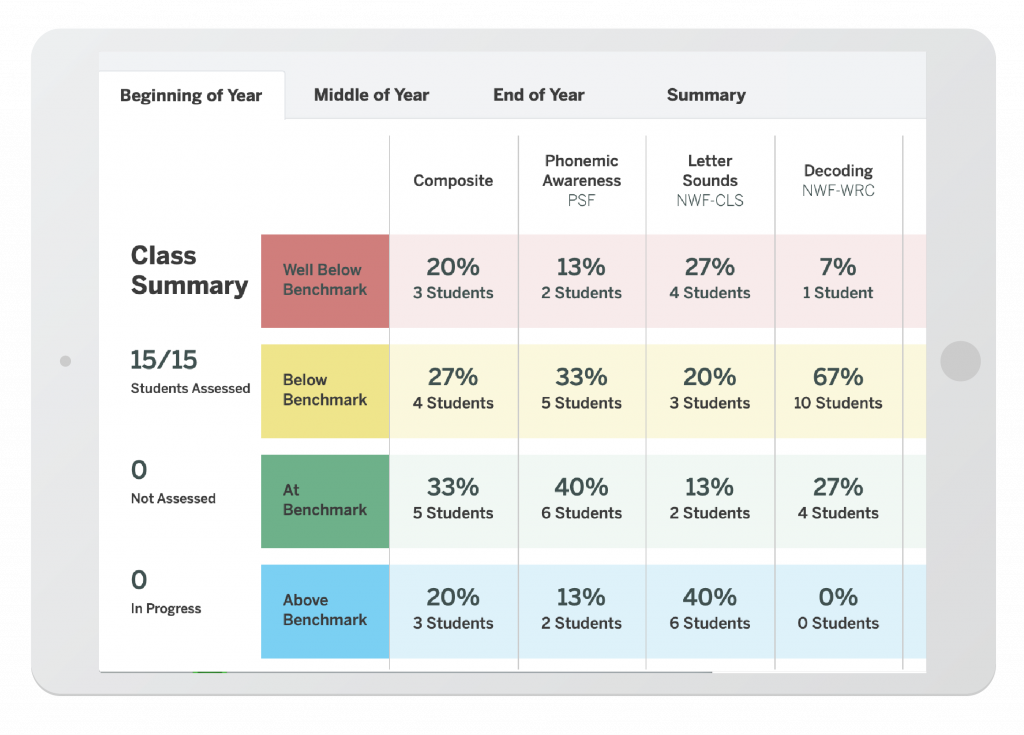
Instant data and action
Quick and actionable reports provide detailed insight into students’ reading development across foundational literacy skills for classroom teachers and literacy specialists, principals and district leaders, and parents and guardians at home.
What’s more, mCLASS® DIBELS® 8th Edition and mCLASS RAN gives you instant results and clear next instructional steps for each and every student.
Enhanced Early Learning Measures
Early intervention is critical. That’s why we help you meet state dyslexia legislation with one single powerful tool—no additional assessment system required.
Our additional measures in vocabulary, spelling, and rapid automatic naming (RAN) address the full range of skills associated with dyslexia risk and help identify students at varying levels of risk for reading difficulties, including dyslexia.

Assess anywhere
mCLASS has created a collection of resources to help you plan for a variety of assessment scenarios.
Whether your school is engaged in in-person, hybrid, or remote instruction, we know how important it is for teachers and administrators to have a full (and firsthand!) picture of every student’s literacy development.
Personalized practice
Boost Reading (formerly Amplify Reading) is the practice and remediation companion to mCLASS. At its heart, there are three main areas that make Boost Reading a unique and essential supplemental learning program.
- The program meets all students where they are with powerful individualized instruction and practice.
- Age-appropriate narratives create a learning experience that leaps off the screen.
- Research shows Boost Reading improves student performance–particularly among English Learners–reducing the overall percentage of students at risk of reading difficulty.

Resources
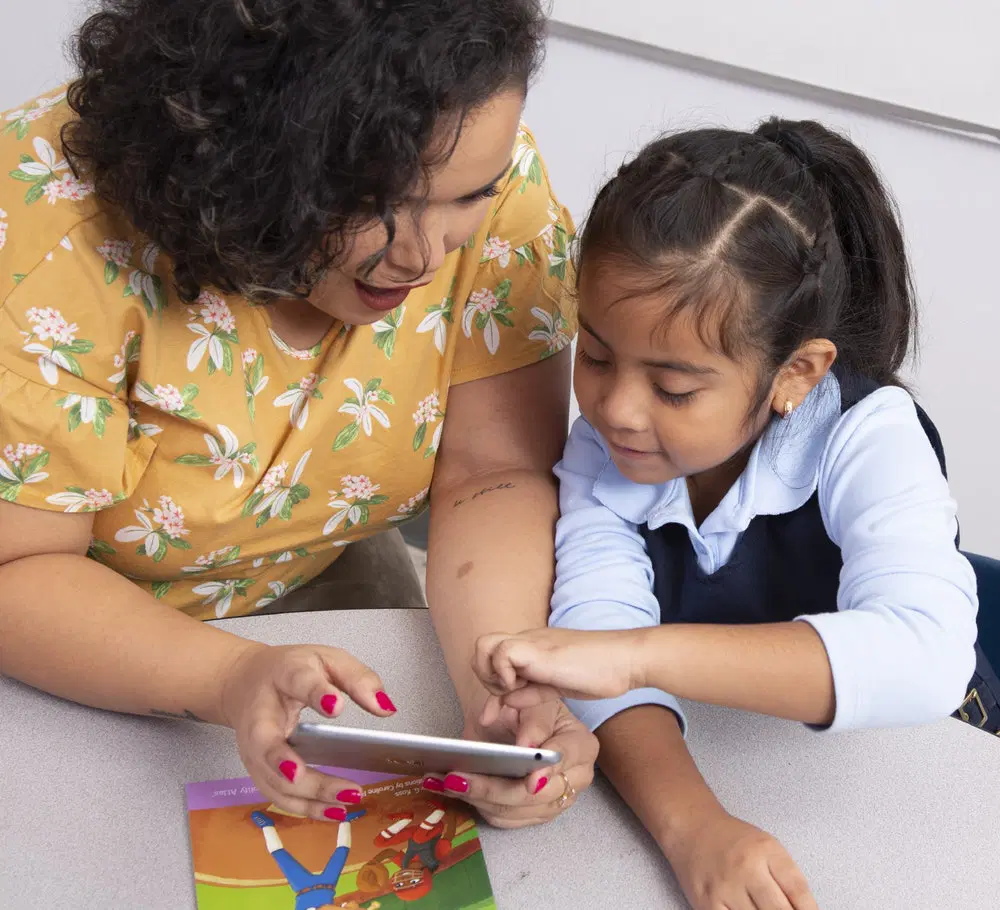




Get in touch
Ready to discuss how mCLASS can support your specific needs? Please contact your Amplify Account Executive:
Alicia O’Neil
Senior Account Executive
(425) 890-6103
aoneil@amplify.com
Erin Elfving-Strayhan
Senior Account Executive
(971) 291-9854
estrayan@amplify.com
Kristen Rockstroh
Account Executive
(480) 639-8367
krockstroh@amplify.com
Website Terms of Use
Description of Site Services; Acceptance of Terms of Use
Welcome to www.amplify.com (together with any successor sites and the Site Services and Company Content (each as defined below), in whole and in part, the “Site”). The Site is operated by Amplify Education, Inc. (“Company” or “we”). The services that Company makes available on or through the Site include education-related articles, information and instructional services, purchasing functionality, support chat functionality and any other features, content, services, functionality and applications offered from time to time by Company on or through the Site (collectively, “Site Services”).
BY ACCESSING OR USING THE SITE, YOU REPRESENT AND WARRANT THAT YOU ARE OF LEGAL AGE TO ENTER INTO THIS TERMS OF USE AGREEMENT (“AGREEMENT”) AND YOU AGREE TO BE BOUND BY THE TERMS AND CONDITIONS OF THIS AGREEMENT. BY PURCHASING GOODS AND SERVICES ON THE SITE, YOU ARE ACCEPTING THE PRACTICES DESCRIBED IN THIS AGREEMENT AS WELL AS ANY ADDITIONAL TERMS OF USE THAT MAY BE ASSOCIATED WITH THE PARTICULAR GOODS AND SERIVICES YOU ARE PURCHASING.
Please read this Agreement carefully. If you are an employee or other representative of a school or other organization who is accessing or using the Site on behalf of such organization, then you are agreeing to this Agreement on behalf of yourself and such organization. We may modify this Agreement at any time in our discretion, and we may provide such modifications to you by any reasonable means, including by posting the revised version of this Agreement on the Site. You can determine when this Agreement was last revised by referring to the “LAST UPDATED” legend at the top of this Agreement. Your access to or use of the Site following any changes to this Agreement will constitute your acceptance of those changes. Notwithstanding the foregoing, any changes to this Agreement shall not apply to any dispute between you and us arising prior to the date on which we posted the revised version of this Agreement incorporating such changes or otherwise notified you of such changes. If you do not agree to be bound by this Agreement, you must not access or use the Site. Your access to and use of certain parts of the Site may require you to accept additional terms and conditions, and may require you to download certain Software or Content (each as defined below).
Jurisdictional Issues
The Site is controlled and operated by Company from the United States, and is not intended to subject Company to the laws or jurisdiction of any state, country or territory other than that of the United States. Company does not represent or warrant that the Site is appropriate or available for use in any particular jurisdiction other than the United States. In choosing to access and use the Site, you do so on your own initiative and at your own risk, and you are responsible for complying with all local laws, rules and regulations. You are also subject to United States export controls and are responsible for any violations of such controls, including any United States embargoes and other federal rules and regulations restricting exports. We may limit the Site’s availability to any person, geographic area or jurisdiction we choose, at any time and in our discretion. Not all products or services described on the Site are available in all states or territories.
Company content
The Site contains information, text, files, images, video, sounds, musical works, computer code, works of authorship, applications, and other materials and content (collectively, “Content”) of Company or its licensors (“Company Content”). The Site (including the Company Content) is protected by copyright, trademark, trade secret and other laws, and as between you and Company, Company owns and retains all rights in the Site. Company hereby grants to you a limited, revocable, non-sublicensable license, during the term of the Agreement, to access, display and perform the Company Content (excluding any computer code) solely for your personal, non-commercial use and solely as necessary to access and use the Site. Except as expressly permitted by Company in this Agreement or on the Site, you may not copy, download, stream, capture, reproduce, duplicate, archive, upload, modify, translate, create derivative works based upon, publish, broadcast, transmit, retransmit, distribute, perform, display, sell or otherwise use or transfer any Content. You may not, either directly or through the use of any device, software, online resource or other means, remove, alter, bypass, avoid, interfere with or circumvent any copyright, trademark or other proprietary notice on the Content or any digital rights management mechanism, device, or other content protection or access control measure associated with the Content.
User content
You may not access or use the Site for any commercial purpose. You are responsible for all Content that you post, upload, transmit, e-mail or otherwise make available on, through or in connection with the Site (collectively, “User Content”). Please choose carefully the Content that you make available on, through or in connection with the Site. Company does not control any Content other than Company Content, and as such you may be exposed to offensive, indecent, inaccurate or otherwise objectionable Content by accessing or using the Site. Company is not responsible or liable for any Content or the conduct of any Site user. If you become aware of any misuse of the Site, please report such misuse immediately to Company at general@amplify.com. Company reserves the right (but has no obligation) to monitor the Site, including for inappropriate Content or conduct, and to remove any Content in Company’s discretion and without liability to you or any third party.
Your proprietary rights
You retain any ownership rights that you have in your User Content. You hereby grant to Company and its affiliates, licensees and authorized users, a perpetual, non-exclusive, fully paid-up and royalty-free, sublicensable (through multiple tiers), transferable (in whole or in part), worldwide license to use, modify, excerpt, adapt, create derivative works and compilations based upon, publicly perform, publicly display, reproduce and distribute such User Content on, through or in connection with the Site and/or any other commercial or non-commercial endeavor of Company or any of its affiliates, including in connection with any distribution or syndication thereof to Third Party Services (as defined below), on and through all media formats now known or hereafter devised, for any and all purposes including promotional, marketing, trade and commercial purposes. The exercise of such rights shall not require any further permission or notice, payment or attribution to you or any third party. Company reserves the right to limit the storage capacity made available for User Content.
You represent and warrant that: (a) you own the User Content made available by you, or otherwise have the right to grant the license set forth in this Section, and (b) the posting of such User Content through or in connection with the Site does not violate the privacy rights, publicity rights, copyrights, contract rights or any other rights of any person or entity. You agree to pay for all royalties, fees and any other monies owing to any person or entity by reason of the use of such User Content.
Use of the site
You agree not to:
- Post, upload or otherwise transmit or link to Content that is: unlawful; threatening; harmful; abusive; pornographic or includes nudity; offensive; harassing; excessively violent; tortious; defamatory; false or misleading; obscene; vulgar; libelous; hateful; or discriminatory.
- Violate the rights of others, including patent, trademark, trade secret, copyright, privacy, publicity, contract or other proprietary rights.
- Harass or harm another person.
- Exploit or endanger a minor.
- Impersonate any person or entity.
- Introduce or engage in activity that involves the use of viruses, bots, worms, Trojan horses, Easter eggs, time bombs, spyware or any other computer code, files or programs that interrupt, destroy or limit the functionality of any computer software or hardware or telecommunications equipment, or otherwise permit the unauthorized access to or use of a computer or a computer network.
- Interfere with, damage, disable, disrupt, impair, create an undue burden on, or gain unauthorized access to the Site or any Account, or Company’s servers or networks;
- Restrict or inhibit any other person from using the Site (including by hacking or defacing the Site). Cover, remove, disable, block or obscure the Site (including advertisements on the Site).
- Use technology or any automated system, such as scripts or bots, to collect user names, passwords, e-mail addresses or any other data from or through the Site, or to circumvent or modify any security technology or software that is part of the Site.
- Send or cause to send (directly or indirectly) unsolicited bulk messages or other unsolicited bulk communications of any kind through the Site. If you do so, you acknowledge you will have caused substantial harm to Company, and that the amount of such harm would be extremely difficult to measure. As a reasonable estimation of such harm, you agree to pay to Company $50.00 for each actual or intended recipient of such communication.
- Modify, adapt, translate, reverse engineer, decompile or disassemble the Site.
- Solicit, collect or request any information for commercial or unlawful purposes.
- Post, upload or otherwise transmit an image or video of another person without that person’s consent.
- Use the Site to advertise, promote or engage in any commercial activity (including engaging in sales, contests or sweepstakes) without Company’s prior written consent.
- Frame or mirror the Site without Company’s express prior written consent.
- Use the Site in a manner inconsistent with any applicable law, rule or regulation.
- Use any robot, spider, site search/retrieval application or other manual or automatic device to retrieve, index, “scrape,” “data mine,” or in any way gather content of the Site or reproduce or circumvent the navigational structure or presentation of the Site without Company’s express prior written consent. Notwithstanding the foregoing, Company grants to the operators of public search engines the permission to use spiders to copy material from the Site for the sole purpose of, and solely to the extent necessary for, creating publicly-available searchable indices of such material, but not caches or archives of such material. Company reserves the right to revoke these exceptions either generally or in specific cases.
- Attempt, facilitate or encourage others to do any of the foregoing.
Company reserves the right to investigate and take appropriate legal action against anyone who, in Company’s discretion, violates this Agreement or attempts to do so, including terminating or suspending a user’s Account or access to or use of the Site, or reporting any User Content or conduct to law enforcement authorities.
You (and not Company) are responsible for obtaining and maintaining all telecommunications, broadband and computer hardware, equipment and services needed to access and use the Site, and for paying all charges related thereto.
User disputes
You are solely responsible for your interactions with other users of the Site, providers of Third Party Services (as defined below) or any other third parties with whom you interact on, through or in connection with the Site.
Purchases
Company may make available products and services for purchase through the Site, and may use third-party suppliers and service providers to enable e-commerce functionality on the Site. You may only purchase products and services that appear on the Site and that are delivered to an address located in the United States. You may only purchase products and services for personal, non-commercial use by you, your educational institution or students of your educational institution. We may limit quantities or refuse any order for any reason or no reason, including if we have reasonable cause to believe an order is for onward sale or resale other than through distribution channels approved by us. We make no promise that products or services available on the Site are appropriate or available for use in locations outside the United States, and purchasing products or services for delivery to or use in territories where their contents are unlawful is prohibited. If you choose to purchase products or services from locations outside the United States, you do so at your own risk. It is your responsibility to ascertain and obey all applicable local, state, federal and international laws (including minimum age requirements) in regard to the possession, use and sale of any product or service made available through the Site.
If you wish to purchase any product or service made available through the Site, you may be asked to supply certain information relevant to your transaction, including your credit card number, the expiration date of your credit card, your billing address and your shipping information. YOU REPRESENT AND WARRANT THAT YOU HAVE THE LEGAL RIGHT TO USE ANY CREDIT CARD(S) USED IN CONNECTION WITH ANY TRANSACTION. By submitting such information, you grant to Company the right to provide such information to third parties for purposes of facilitating the completion of transactions initiated by you or on your behalf. Verification of information may be required prior to the acknowledgement or completion of any transaction. While it is our practice to confirm orders by e-mail, the receipt of an e-mail order confirmation does not constitute our acceptance of an order or our confirmation of an offer to sell a product or service.
Details of the products and services available for purchase are set forth on the Site. All prices are displayed exclusive of all taxes and shipping/freight charges. Available payment methods, methods of shipping and shipping charges (including charges for expedited shipping, if available) are detailed on the Site. Company may also collect and remit sales tax on your purchase as required by United States law. If you are a tax-exempt entity, please enter the appropriate information where requested on your order form and we will not collect sales tax on your purchase.
Generally, credit and debit cards are not charged until we either ship the product(s) or confirm store availability (at which time you will be charged only for the products we have actually shipped along with any applicable taxes and shipping charges). However, we may pre-authorize your order amount with your credit or debit card issuer at the time you place the order, which may have an effect on your available credit line. When paying for a preorder with a debit card, you will be charged at the time you place your preorder. Please contact your credit or debit card issuer for more information. If you ordered a special delivery product, you will be charged once a delivery time is confirmed. For digitally delivered orders, your credit or debit card will be charged at the time that you initiate the download of the product.
All purchases made through the Site are made pursuant to a shipment contract. As a result, risk of loss and title for products purchased through the Site pass to you upon delivery of the products to the carrier. You are responsible for filing any claims with carriers for damaged and/or lost shipments. Please note that all shipping addresses must be compliant with the shipping restrictions contained on the Site.
Products, services and specifications
All products and services described or depicted on the Site, and all related features, content, specifications and prices, are subject to change at any time without notice. Certain weights, measures and similar descriptions are approximate and are provided for convenience purposes only. Packaging may vary from that shown. We make reasonable efforts to accurately display the attributes of our products, including the applicable colors; however, the actual color you see will depend on your computer system, and we cannot guarantee that your computer will accurately display such colors. The inclusion of any product or service on the Site at a particular time does not imply or warrant that such product or service will be available at any time. Occasionally, the manufacture or distribution of a certain product or service may be delayed for a number of reasons. In such event, we will make reasonable efforts to notify you of the delay and keep you informed of the revised delivery schedule. By placing an order, you represent that the products and services ordered will be used only in a lawful manner. All DVDs and similar products are sold for private, non-commercial home use (where no admission fee is charged), non-public performance, or classroom or instructional use only, and may not be duplicated.
Return and exchange policy
Unless otherwise specified in the terms associated with a particular product, you may return or exchange any product purchased through the Site within fourteen (14) days of receipt, by calling our customer service hotline, 1–800–823–1969, in the event that the purchased product is defective or you received the wrong product. Except for the foregoing, you may not return, cancel or exchange any product or service. Certain jurisdictions may provide additional statutory rights. Nothing herein is meant to limit your return or cancellation rights under local law. In the event that a return or exchange is due to an incorrect order or faulty product, we will be responsible for the shipping costs associated with such return. We will ship a replacement product upon receiving your defective or incorrect product and verifying the reason for the return or exchange.
Accuracy of information
We attempt to ensure that information on the Site is complete, accurate and current. Despite our efforts, the information on the Site may occasionally be inaccurate, incomplete or out of date. We make no representation as to the completeness, accuracy or currency of any information on the Site. For example, products or services included on the Site may be unavailable, may have different attributes than those listed, or may carry a different price than that stated on the Site. If an item’s correct price is higher than our stated price, we will, at our discretion, either contact you for instructions before shipping or cancel your order and notify you of such cancellation. Items in your “Shopping Bag” reflect the current price displayed on the item’s product detail page. Please note that this price may differ from the price displayed when the item was first placed in your Shopping Bag. In addition, we may make changes in information about price and availability without notice.
Chemicals, agricultural materials, and other hazardous materials
Certain products made available through the Site may include chemicals, agricultural materials or other material that may be subject to regulations or restrictions with respect to import or export, or to whom we may sell such material or where or how such material may be used. It is your responsibility to read and abide by all warning notices that accompany any products that you purchase. In addition, we reserve the right to request additional information from you, verify your identity, limit sales to certified educational or research institutions, or cancel or delay your order if required by law or if we believe it is necessary or advisable. Due to special shipping and handling requirements, freight companies routinely impose a surcharge on each package of hazardous material shipped. In such event, we will add such surcharge to your order.
Registration and account security
You may have the ability to create an account on or through the Site (an “Account”). If you submit registration information to create an Account, you represent and warrant that all information submitted to Company in connection with such registration is complete and accurate, and that you will update such information if it changes. If you create an Account, you are responsible for all use of your Account, and for maintaining the confidentiality of the information used to access your Account (including user name and password). You agree not to share your user name or password with anyone, or use anyone else’s Account at any time. You agree to notify Company immediately if you suspect any unauthorized use of, or access to, your Account (including your user name and password). You acknowledge that the reuse of your password in connection with accounts on other websites increases the risk that the security of your Account may be compromised.
Third party links and services
The Site may make available, or third parties may provide, links to other websites, applications, resources, advertisements, Content or other products or services created, hosted or made available by third parties (“Third Party Services”), and such third party may use other third parties to provide portions of the Third Party Service to you, such as technology, development or payment services. When you access or use a Third Party Service, you are interacting with the applicable third party, not with Company, and you do so at your own risk. Company is not responsible for and makes no warranties, express or implied, as to the Third Party Services or the providers of such Third Party Services (including the accuracy or completeness of the information provided by such Third Party Service or the privacy practices of any third party). Inclusion of any Third Party Service or a link thereto on the Site does not imply approval or endorsement of such Third Party Service. Company is not responsible or liable for the content or practices of any Third Party Service or third party, even if such Third Party Service links to or is linked by the Site, and even if such Third Party Service is operated by an affiliate of Company or a company otherwise connected with us or the Site
Feedback
Unless we expressly agree otherwise in writing, if you provide us with any ideas, proposals, suggestions or materials (“Feedback”), whether related to the Site or otherwise, you hereby acknowledge and agree that (a) your provision of any Input is gratuitous, unsolicited and without restriction and does not place Company under any fiduciary or other obligation; and (b) any Feedback is not confidential and Company has no confidentiality obligations with respect to such Feedback.. You hereby grant to us a world-wide, royalty-free, fully paid-up, exclusive, perpetual, irrevocable, transferable and fully sublicensable (through multiple tiers) license, without additional consideration to you or any third party, to reproduce, distribute, perform and display (publicly or otherwise), adapt, modify and otherwise use and exploit such Feedback, in any format or media now known or hereafter developed, and you hereby represent and warrant that you have all necessary rights to grant the foregoing license. We may use Feedback for any purpose whatsoever without permission or notice, compensation or attribution to you or any third party. You are and remain responsible and liable for the content of any Feedback.
Privacy
Please review the Privacy Policy for the Site, available at http://www.amplify.com/privacy, to learn about our information collection, usage and disclosures practices with respect to information collected by us through the Site. Please note that certain products or services made available by us, other than the Site, may be subject to different privacy policies. In addition, the Site’s Privacy Policy does not address, and we are not responsible or liable for, the information collection, usage and disclosures practices of any third party or Third Party Service.
Disclaimers
THE SITE, USER CONTENT, THIRD PARTY SERVICES, AND ALL PRODUCTS AND SERVICES SOLD THROUGH THE SITE (COLLECTIVELY, THE “SITE PRODUCTS”) ARE MADE AVAILABLE “AS-IS” AND “AS AVAILABLE” AND COMPANY DOES NOT GUARANTEE OR PROMISE ANY SPECIFIC RESULTS FROM USE OF THE SITE PRODUCTS. COMPANY AND ITS AFFILIATES EXPRESSLY DISCLAIM ANY WARRANTIES AND CONDITIONS OF ANY KIND, WHETHER EXPRESS OR IMPLIED, INCLUDING THE IMPLIED WARRANTIES OF MERCHANTABILITY, FITNESS FOR A PARTICULAR PURPOSE AND NON-INFRINGEMENT. IN PARTICULAR, COMPANY AND ITS AFFILIATES MAKE NO WARRANTY THAT THE SITE OR USER CONTENT OR THIRD PARTY SERVICES, OR YOUR ACCESS TO OR USE THEREOF, WILL BE UNINTERRUPTED, TIMELY, SECURE, ERROR-FREE, ACCURATE OR RELIABLE. UNDER NO CIRCUMSTANCES SHALL WE BE LIABLE FOR ANY CONSEQUENCES OF ANY UNAUTHORIZED USE OF THE SITE PRODUCTS THAT VIOLATES ANY APPLICABLE LAW OR REGULATION. CERTAIN STATE LAWS DO NOT ALLOW LIMITATIONS ON IMPLIED WARRANTIES OR THE EXCLUSION OR LIMITATION OF CERTAIN DAMAGES. IF THESE LAWS APPLY TO YOU, SOME OR ALL OF THE ABOVE DISCLAIMERS, EXCLUSIONS, OR LIMITATIONS MAY NOT APPLY TO YOU, AND YOU MIGHT HAVE ADDITIONAL RIGHTS.
Under no circumstances will Company or its affiliates be responsible for any loss or damage, including property damage, personal injury or death, resulting from use of the Site, Products, problems or technical malfunction in connection with use of the Site, Products, attendance at any Company event or the conduct of any Site users, whether online or offline. Your use of the Site, Products is solely your responsibility and at your own risk. The User Content and Third Party Services do not necessarily reflect the opinions or policies of Company or its affiliates.
Limitations on liability
IN NO EVENT WILL COMPANY OR ITS AFFILIATES BE LIABLE TO YOU OR ANY THIRD PARTY FOR ANY INDIRECT, CONSEQUENTIAL, EXEMPLARY, INCIDENTAL, SPECIAL OR PUNITIVE DAMAGES, INCLUDING LOST PROFIT DAMAGES, ARISING FROM YOUR USE OF THE SITE PRODUCTS, EVEN IF COMPANY OR ONE OF ITS AFFILIATES HAS BEEN ADVISED OF THE POSSIBILITY OF SUCH DAMAGES. NOTWITHSTANDING ANYTHING TO THE CONTRARY CONTAINED HEREIN, THE TOTAL LIABILITY OF COMPANY AND ITS AFFILIATES TO YOU FOR ANY CAUSE WHATSOEVER AND REGARDLESS OF THE FORM OF THE ACTION, WILL AT ALL TIMES BE LIMITED TO THE AMOUNT PAID, IF ANY, BY YOU TO COMPANY FOR THE SITE PRODUCTS.
Indemnity
You agree to indemnify and hold harmless Company, its affiliates, subcontractors and other partners, and each of their respective officers, agents, partners and employees, from any losses, costs, expenses (including reasonable attorneys’ fees), liabilities, claims or demands, due to or arising out of your use of the Site, your breach or alleged breach of this Agreement, your violation or alleged violation of any rights of another, or any Content that you post or otherwise submit on, through or in connection with the Site.
Termination
This Agreement remains in full force and effect while you access or use the Site. If you create an Account, you may terminate your Account at any time, for any reason, by contacting us at general@amplify.com. Company may terminate or suspend your Account and/or your access to or use of the Site at any time, for any or no reason, with or without prior notice or explanation, and without liability. Upon any such suspension or termination, your right to access and use the Site will immediately cease, and Company may immediately deactivate or delete your Account and all files and other information associated with it, and/or bar any further access to such files and other information. Company shall not be liable to you or any third party for any suspension or termination of your Account or of access to or use of the Site or any such files or other information, and shall not be required to make such files and other information available to you after any such suspension or termination. Sections 2, 5, 13, 17, 18, 19, 22, and 26 shall survive any expiration or termination of this Agreement.
U.S. export controls
All software made available in connection with the Site (“Software”) may be subject to United States export controls. No Software may be downloaded from or through the Site or otherwise exported or re-exported in violation of U.S. export laws.
Governing law
The terms of this Agreement are governed by the laws of the State of New York, U.S.A., without regard to its conflicts of law provisions, and regardless of your location.
Arbitration
EXCEPT FOR DISPUTES THAT QUALIFY FOR SMALL CLAIMS COURT, ALL DISPUTES ARISING OUT OF OR RELATED TO THIS AGREEMENT, WHETHER BASED IN CONTRACT, TORT, STATUTE, FRAUD, MISREPRESENTATION OR ANY OTHER LEGAL THEORY, WILL BE RESOLVED THROUGH FINAL AND BINDING ARBITRATION BEFORE A NEUTRAL ARBITRATOR INSTEAD OF IN A COURT BY A JUDGE OR JURY, AND YOU AGREE THAT COMPANY AND YOU ARE EACH WAIVING THE RIGHT TO TRIAL BY A JURY. YOU AGREE THAT ANY ARBITRATION UNDER THIS AGREEMENT WILL TAKE PLACE ON AN INDIVIDUAL BASIS; CLASS ARBITRATIONS AND CLASS ACTIONS ARE NOT PERMITTED AND YOU ARE AGREEING TO GIVE UP THE ABILITY TO PARTICIPATE IN A CLASS ACTION.
Arbitration procedure
Any arbitration under Section 23 above will be administered by the American Arbitration Association under its Commercial Arbitration Rules and Supplementary Procedures for Consumer-Related Disputes (“Supplementary Procedures”), as amended by this Agreement. The Supplementary Procedures are available online at http://www.adr.org/aaa/ShowPDF?doc=ADRSTG_015820. The arbitrator will conduct hearings, if any, by teleconference or videoconference, rather than by personal appearances, unless the arbitrator determines upon request by you or by us that an in-person hearing is appropriate. Any in-person appearances will be held at a location which is reasonably convenient to both parties with due consideration of their ability to travel and other pertinent circumstances. If the parties are unable to agree on a location, such determination should be made by the AAA or by the arbitrator. The arbitrator’s decision will follow the terms of this Agreement and will be final and binding. The arbitrator will have authority to award temporary, interim or permanent injunctive relief or relief providing for specific performance of this Agreement, but only to the extent necessary to provide relief warranted by the individual claim before the arbitrator. The award rendered by the arbitrator may be confirmed and enforced in any court having jurisdiction thereof. Notwithstanding any of the foregoing, nothing in this Agreement will preclude you from bringing issues to the attention of federal, state, or local agencies, and, if the law allows, they can seek relief against us for you.
Employment opportunities
Company may, from time to time, post Company employment opportunities on the Site and/or invite users to submit resumes to Company. If you choose to submit your name, contact information, resume and/or other personal information to Company in response to such employment listings, you are authorizing Company to use this information for all lawful and legitimate hiring, employment and other business purposes. Company also reserves the right, at its discretion, to forward such information to Company’s affiliates for their legitimate business purposes. Nothing in this Agreement or contained on the Site will constitute a promise by Company to review any such information, or to contact, interview, hire or employ any individual who submits such information.
Digital Millennium Copyright Act
The Digital Millennium Copyright Act of 1998 (“DMCA”) provides recourse for copyright owners who believe that material appearing on the Internet infringes their rights under U.S. copyright law. If you believe that any material residing on or linked to from the Site infringes your copyright, please send (or have your agent send) to Company’s Copyright Agent a notification of claimed infringement with all of the following information: (a) identification of the copyrighted work claimed to have been infringed, or, if multiple copyrighted works are covered by a single notification, a representative list of such works; (b) identification of the claimed infringing material and information reasonably sufficient to permit us to locate the material on the Site (such as the URL(s) of the claimed infringing material); (c) information reasonably sufficient to permit us to contact you, such as an address, telephone number, and, if available, an e-mail address; (d) a statement by you that you have a good-faith belief that the disputed use is not authorized by the copyright owner, the copyright owner’s agent or the law; (e) a statement by you that the above information in your notification is accurate and a statement by you, made under penalty of perjury, that you are the owner of an exclusive right that is allegedly infringed or are authorized to act on such owner’s behalf; and (f) your physical or electronic signature. Company’s Copyright Agent for notification of claimed infringement can be reached as follows: Copyright Agent, Amplify Education, Inc., 55 Washington Street, Brooklyn, NY 11201; Facsimile: 212-796-2311; Attn: Legal. Company’s Copyright Agent for notification of claimed infringement can also be reached electronically at: legal@amplify.com. Company reserves the right to terminate infringers’ and suspected infringers’ Accounts or their access to or use of the Site.
Notice for California residents
Under California Civil Code Section 1789.3, California users are entitled to the following consumer rights notice: If you have a question or complaint regarding the Site, please contact us by writing to Amplify Education, Inc., 55 Washington Street, Brooklyn, NY 11201 or by calling us at 212–213–8177 or sending a fax to 212–796–2311. California residents may reach the Complaint Assistance Unit of the Division of Consumer Services of the California Department of Consumer Affairs by mail at 1625 North Market Blvd., Sacramento, CA 95834, or by telephone at (916) 445–1254 or (800) 952–5210.
Other terms
This Agreement does not, and shall not be construed to, create any partnership, joint venture, employer-employee, agency or franchisor-franchisee relationship between you and Company. You may not assign, transfer or sublicense any or all of your rights or obligations under this Agreement without our express prior written consent. We may assign, transfer or sublicense any or all of our rights or obligations under this Agreement without restriction. The failure of Company to exercise or enforce any right or provision of this Agreement will not operate as a waiver of such right or provision. The Section titles in this Agreement are for convenience only and have no legal or contractual effect. References to and mentions of the word “include,” “includes,” “including,” or “e.g.” will mean “including, without limitation.” References to “discretion” will mean “sole discretion.” This Agreement operates to the fullest extent permissible by law. If any provision of this Agreement is unlawful, void or unenforceable, that provision is deemed severable from this Agreement and does not affect the validity or enforceability of any remaining provisions. Without limitation, you agree that a printed version of this Agreement and of any notice given in electronic form shall be admissible in judicial or administrative proceedings based upon or relating to this Agreement to the same extent and subject to the same conditions as other business documents and records originally generated and maintained in printed form. Company will not be responsible for failures to fulfill any obligations due to causes beyond its control.
Please contact us at legal@amplify.com with any questions regarding this Agreement.
Prepare Professional Development (PD)
Learning experiences to prepare for literacy and math instructional shifts
The following literacy and math sessions can help any educator—regardless of the program used—enhance their instructional practices.
- Science of Reading sessions offering research-backed strategies to deepen understanding and improve student outcomes.
- Problem-based approach to math sessions that empower educators to facilitate meaningful learning experiences and develop critical thinking skills.
- Multiliterate learner sessions enable educators to make a meaningful impact on students’ literacy development.

Professional learning journey

| Prepare | Begin | Practice | Advance |
| Learning sessions will help shift literacy and math instruction in areas such as the Science of Reading and/or problem-based approaches to math. | Program-aligned packages will support those who are new to Amplify programs. | Program-aligned packages will support those who have experience using Amplify programs. | Offerings will support advanced implementation, build capacity for instructional leaders, certify in-house trainers to deliver Launch sessions, and more. |

Science of Reading learning experiences
Listening to students read is magic. But knowing how to get them reading? That’s science.
Making the shift to the Science of Reading is no small feat, but participating in professional development sessions can help you make this change seamlessly.
Amplify Science of Reading sessions offer flexible, professional learning experiences for teachers that incorporate engaging activities grounded in what science tells us about literacy development.

Build your knowledge of the Science of Reading
Virtual | 90-minute session
This introductory session provides educators with a foundational overview of what the Science of Reading means and what it tells us about how to teach using evidence-based reading practices.
Participants will learn to:
- Define the Science of Reading by examining evidence-based research.
- Explain how two frameworks, the Simple View of Reading and the Reading Rope, work in tandem to guide effective literacy instruction.
- Identify instructional principles aligned to the Science of Reading.

Deepen your knowledge of the Science of Reading
On-site or virtual | 3-hour session
This session will build a base of common knowledge about the Reading Rope and support educators in identifying effective instruction grounded in the Science of Reading.
Participants will learn to:
- Identify the strands in the Reading Rope.
- Describe how each strand plays an important role in developing skilled readers and writers.
- Identify key look-fors in effective Science of Reading instruction.
Science of Reading: The Learning Lab online course
This series of three self-paced online courses, crafted by literacy expert Susan Lambert and built around International Dyslexia Association (IDA) Knowledge and Practice Standards, guides you through the essential Science of Reading skills and knowledge needed to teach students to read proficiently, as well as advanced strategies for aiding struggling readers. Each course builds on the last, equipping you with the tools and confidence to make a lasting impact on your students’ literacy journeys.
Benefit from flexible learning on an interactive platform spanning 20–25 hours of instruction. Each course is accessible for 12 months. Upon completion, you’ll be provided with a downloadable certificate, validating your new expertise in the Science of Reading.

Foundations to the Science of Reading
This course offers a comprehensive overview of research in the field. Each of the eight modules contains three lessons covering the foundations of literacy acquisition.
Explore the scope and sequence of Foundations to the Science of Reading with a Pacing Guide.
Access the free Preview Pass for this course.
Advanced topics in the Science of Reading: Assessment and reading difficulties
The second course is aimed at providing an in-depth examination of assessments, a deeper understanding of reading difficulties, and familiarity with pertinent legal frameworks for educators, all of which influence instructional decision-making.
Explore the scope and sequence of Advanced topics in the Science of Reading with our Pacing Guide.
Access the free Preview Pass for this course.

Coming soon!
Applied structured literacy
The final course in the series is designed to review key concepts and knowledge from previous coursework, explore fundamental aspects of structured literacy within lessons, observe and analyze structured literacy instruction in action, and investigate how data informs instructional decisions.
[Available June 2025]
New
Supporting multiliterate learner sessions
Unlock the magic of teaching multiliterate learners with evidence-based literacy practices. Making the shift to effectively support diverse readers in multiple languages is no small feat, but our professional development sessions are here to guide you effortlessly.
Empower your teaching with these engaging sessions, and make a meaningful impact on your multiliterate students’ literacy development.

Build your knowledge of multiliterate learners
Virtual | 90-minute session
This session provides educators with a foundational overview of how to teach multiliterate learners using evidence-based literacy practices.
Contact us to request a quote.

Deepen your knowledge of multiliterate learners
On-site or virtual | 3-hour session
This session will build an understanding of how the brain learns to read in multiple languages, as well as how to leverage cross-linguistic transfer, and align instruction to best practices for multiliterate learners.
Contact us to request a quote.
Problem-based approach to math instruction sessions
Elevate educational experiences by placing students’ ideas at the core of math lessons through problem-based learning. These sessions offer flexible professional learning experiences, allowing you to gain firsthand experience with a problem-based approach as a learner. You then learn to integrate this approach seamlessly into your teaching practices, bringing renewed energy to your math classroom.

Build your knowledge of a problem-based approach
Virtual | 90-minute session
This session provides you with a foundational overview of what an engaging problem-based approach in math entails for K–5 students.
During this session you’ll learn to:
- Explain how a problem-based approach to math brings delight to both teaching and learning and builds lasting student understanding.
- Identify actionable strategies for using a problem-based approach in a math classroom.
Contact us to request a quote.

Deepen your knowledge of a problem-based approach
On-site or virtual | 3-hour session
This session provides you with hands-on experience facilitating problem-solving in math, leaving you with an increased understanding of how to teach conceptual understanding, procedural skill and fluency, and applications of math.
During this session you’ll learn to:
- Explain how a problem-based approach to math brings delight to both teaching and learning and builds lasting student understanding.
- Identify actionable strategies for using a problem-based approach in a math classroom.
- Connect your current teaching practice to a problem-based approach, and choose a next step to implement a more problem-based approach.
Contact us to request a quote.

Get in touch with a PD expert
We’re here to provide answers and guidance as you explore your PD options. Fill out the form to connect with us and discover how Amplify PD can enhance your educational journey.
Five fundamentals of high-quality materials in action
So what do we mean by high quality instructional materials, or HQIM? We can start with how EdReports.org, the leading third-party reviewer of curriculum, defines it:
- Materials that help educators teach to rigorous standards.
- Materials that are relatively easy to use.
Beyond these important starting points, what does high quality curriculum look like in action—in real classrooms? Here are five fundamentals of how we think about it at Amplify.
1. It looks like ALL students engaged and thinking.
Students at all levels are able to engage deeply with important questions, to think deeply, creatively, and for themselves.
There’s a commitment to fairness and a “low floors/high ceilings” approach: all students get the scaffolding they need to grapple with the things great minds in the subject area find important, beautiful, and true.

2. It looks like teachers using materials that work harder for them.
Teachers find the program easy and enjoyable to teach. The rich content inspires them to do some of their best teaching.
Teachers also have powerful tools and data that enable them to understand their students more deeply and give more precise feedback.

3. It looks like a vibrant classroom community.
The pedagogy of the program supports the formation of a classroom community where teachers and students wonder, share, debate, and learn together.
It looks like a model of civil society.

4. It looks like a culture of continuous learning for educators, districts, and publishers.
Professional development is not one and done. The district not only provides teachers with high-quality training upfront, but also ongoing ways for teachers to compare notes and share best practices in implementing a new program.
The publisher also collaborates with districts on the initial training as well as provides ongoing support to teachers with on-demand resources, customer support, and online communities. Both the publisher and district continuously respond to teacher feedback and data to keep improving the program and classroom-level implementation.
5. Finally and most importantly, it looks like improved learning outcomes for students.
The program has demonstrated the ability to raise student achievement. It may start with growth on benchmark assessments and then, over time, you can see it on state tests.
The district continues to track how well the program is helping to drive strong learning outcomes, and the publisher also continues to seek ever higher levels of efficacy through ongoing product improvement and measurement.
Welcome, Program 3 reviewers!
We’re honored to introduce you to Amplify California Language Arts. We’re confident you’ll find this comprehensive program to be a powerful tool for bringing the vision of the California ELA/ELD Framework to life in classrooms across the state.
Please start with the video on the right to learn how to navigate the program and access key features referenced within our submission. Below you’ll find additional resources to support your review.
Your review samples
We’re excited for you to begin your review of Amplify California Language Arts, a comprehensive biliteracy program for kindergarten through grade 6.
Reviewer Binders (K–6)
Your physical samples should have arrived in grade-specific boxes with three Reviewer Binders.
- The first binder will contain logistical program review information and the printed Evaluation Criteria Map.
- The second binder will contain the printed Standards Maps for grades K–2.
- The third binder will contain the printed Standards Maps for grades 3–6.
Physical samples (trade books)
Your review of the program will be entirely digital with the exception of the trade books that you will be receiving as physical samples. You can expect to receive 13 boxes of physical materials for your review. Twelve boxes of trade books, one for each grade K–5, in English and Spanish, and one box containing your Reviewer Binders.
As you begin the process of organizing your materials, please refer to the inventory checklist found inside each box as well as within your Reviewer Binder.
Digital review materials
In order to access your digital review materials, you’ll need to log in to our platform using your unique login credentials found on a Digital Review Credential flyer inside of your Reviewer Binder. Once you have located the flyer:
- Click the orange button below to access the platform.
- Click “Log in with Amplify.”
- Enter the username and password provided on your Digital Review Credential flyer.
Navigation tips
Before you get started, please review these important functionality notes:
Criteria Map and Standards Maps must be opened on Microsoft Word on your desktop to function as intended. If you open the documents without Microsoft Word on your desktop, citations will be cut off at the bottom of most tables within the document.
Many of our citations are deep-links to PDFs, meaning they will take you to the right page or the first page in the sequence for the citation in question. To ensure this functionality works, please disable any PDF-viewing extensions or plug-ins such as Adobe Acrobat Pro Browser Extension.
[Reviewer program navigation video] Grades K–5
[Reviewer program navigation video] Grade 6
Click here for additional information on navigating the program for grade 6.
Category 1: English Language Arts (ELA) and English Language Development (ELD) content/alignment to standards
Evaluation Criteria Map
Linked below is the Evaluation Criteria Map. Please note that you will need to be logged into the digital platform to access the links in the Evaluation Criteria Map.
ELA Standards Maps
The links below provide the Standards Maps for Amplify California Language Arts for each grade level.
ELD Standards Maps
Category 2: Program organization
Amplify California Language Arts’ biliteracy program is a comprehensive curriculum provides a full year of evidence-based instruction for each grade level, with both integrated and designated English Language Development instruction designed to give multilingual/English learners the tools to thrive. Amplify’s biliteracy program for grades K–6 includes:
- Core English language arts instruction: Amplify Core Knowledge Language Arts (CKLA) California (grades K–5) and Amplify ELA California (grade 6) covering knowledge building and foundational skills.
- Provides upper grade foundational skills instruction for grades 3–6.
- Core Spanish language arts instruction: Amplify Caminos California, a fully parallel SLA program that works in tandem with English core instruction across all grades.
- Provides upper grade foundational skills instruction for grades 3–6.
- Designated English Language Development: Language Studio California is the designated English Language Development companion that directly aligns with and supports core English instruction.
- Newcomer Support: Amplify California Language Arts Newcomer Support to facilitate instruction for students who are new to both English and the United States.
Program structure
Amplify’s California Language Arts programs are built on what the research shows: Strong readers need both word recognition and language comprehension. Our comprehensive curriculum suite follows the Simple View of Reading bringing together foundational skills and knowledge building to deliver instruction grounded in the Science of Reading.
This model is integral to the structure of the Amplify biliteracy program, which directly aligns with the CA CCSS ELA and ELD standards by combining rigorous decoding and skills instruction with research-based knowledge and language development instruction. In its early grades, the Amplify biliteracy program uses a two-strand structure—Skills/Lectoescritura and Knowledge/Conocimiento—to effectively address this learning challenge while meeting standards expectations for both language development and academic content mastery.

[Reviewer highlight video] Program organization for Category 2
[Reviewer highlight video] Program structure for grades K–2
[Reviewer highlight video] Program structure for grades 3–5
[Reviewer highlight video] Program structure for grade 6
Amplify Caminos California lessons are designed to allow all students time to work toward learning objectives, including peer collaboration and discussion. Since each lesson activity is aligned to subsequent activities, students’ understanding and analysis develops progressively throughout the lesson.
Each lesson follows a predictable structure with clearly marked components, beginning with warm-up routines, progressing through explicit instruction with guided practice, and concluding with independent application activities. The program provides detailed teacher language, including question stems and discussion prompts, ensuring clear and consistent delivery of instruction.
Amplify CKLA California and Amplify Caminos California empower teachers to deliver effective instruction and keep students engaged with the following resources:
- Teacher Guides
- Assessment Guides
- Authentic texts and trade books
- Knowledge Image Cards
- Knowledge Flip Books
- Remediation and intervention resources
- Decodable readers
- Student Readers and novels
- Student Activity Books
- Dedicated ELD support with Language Studio California
- Poet’s Journals
- eReaders
- Sound Library featuring articulation videos and songs
- Instructional routine modeling videos
- Assignable Practice Games
- On-demand professional development
Amplify ELA California students stay engaged with the following resources:
- Teacher Guides that include:
- Detailed lesson plans
- Standards alignment and exit tickets
- Real-time differentiation strategies
- Robust reporting
- Student Editions that include:
- High-quality narrative and informational texts
- Videos, audio supports, and digital experiences that capture their attention
- Personal Writing Journal to keep all student writing in one place
- Dedicated ELD support with Language Studio California
- Trade books
Core literacy philosophy
Support every learner. Meet all learning needs with a Multi-Tiered System of Supports (MTSS) that brings together universal screening, scaffolded core instruction, support for multilingual/English learners, and data-driven intervention to ensure every student gets what they need to succeed.
Deliver consistent foundational skills instruction. Daily explicit, systematic skills instruction in grades K–2, with targeted yet flexible support for students still building decoding confidence in grades 3–6, ensures mastery of essential reading foundations.
Build lasting knowledge across all grades. Through coherently sequenced, content-rich instruction that revisits key vocabulary and concepts with increasing complexity, students build meaningful connections that deepen their vocabulary and reading comprehension.
Strengthen reading through writing at every level. Regular writing instruction grounded in the Science of Writing supports reading comprehension, improves sentence-level writing, and provides the foundation for high-quality composition. As students progress through the upper grades, they engage in increasingly complex analytical tasks—synthesizing ideas, drawing generalizations, and interpreting multiple textual layers through both focused quick-writes and comprehensive essays.
Foster oral language development. Structured opportunities for academic conversation and evidence-based dialogue build students’ ability to express complex ideas with precision and allow them to participate confidently in classroom discussions.
Measure growth with comprehensive assessments. Assessments range from in-the-moment checks for understanding to summative assessments that measure progress toward skills mastery and standards proficiency, providing the data needed to drive targeted instruction.
Scope and sequence
Below you can view the scope and sequence documents for each grade level.
- Kindergarten
- Grade 1
- Grade 2
- Grade 3
- Grade 4
- Grade 5
- Grade 6
- Newcomer Support Grades K–6
Routines
Amplify CKLA California, Amplify Caminos California, and Amplify ELA California include several structured instructional routines that provide predictable patterns for both teachers and students:
Discussion and collaboration routines:
- Turn and Talk: Partners discuss text-specific content using sentence starters and frames
- Think-Pair-Share: Students engage in individual thinking, partner discussion, and whole-class sharing
- Partner reading: Students sit shoulder-to-shoulder, taking turns reading and listening
Foundational Skills routines:
- Sound-spelling review: Warm-up activities that reinforce phonics patterns
- Oral blending warm-ups: Teacher-guided practice progressing to independent application
- Finger-tapping: Techniques for blending sounds
- Chaining activities: Students manipulate letters to transform one word into another
- Word Work: Daily short activities focused on domain-specific and academic vocabulary
Knowledge-building routines:
- Teacher modeling: Demonstration of proper intonation, expression, and pacing
- Choral reading: Whole-class reading practice
- Partner reading: Paired fluency practice
Close reading routines
The program includes carefully structured close reading activities that guide students through multiple encounters with complex texts. These routines help students develop deeper comprehension through systematic analysis and discussion.
Each routine includes comprehensive instructional guides with clear-cut directions for implementation, straightforward explanations of concepts, and suggestions for discussion.
Cross-Linguistic Transfer routines
The Cross-Linguistic Transfer (CLT) routines are easy-to-implement, 10–15 minute mini-lessons designed to help bridge English and Spanish literacy and language development. These structured routines are organized by grade bands for K–2, grades 3–5 and grade 6, covering five skill areas:
- Oral language
- Reading
- Vocabulary
- Language
- Writing
[Reviewer highlight video] Amplify’s program alignment to Cross-Linguistic Transfer criteria
Designated English Language Development materials
Language Studio California is a K–8 content-based companion for English language learners. Built on Amplify CKLA California and Amplify ELA California’s carefully sequenced Knowledge Domains, it combines engaging content knowledge with targeted supports and research-based strategies to help students move swiftly toward language proficiency. This program includes:
- Real-world content to provide authentic opportunities to practice reading, writing, speaking, and listening.
- Scaffolding strategies and differentiated instruction to offer targeted support along five English proficiency levels.
- Progress monitoring tools to help teachers provide consistent and effective support.
- Teacher Guides that:
- Provide impactful progress monitoring tools including formative and summative assessments, and Language Proficiency Assessment rubrics.
- Offer varied differentiation strategies including Support, Challenge, and Access supports in each lesson segment.
- Are organized into thoughtful lesson segments—Talk Time, Building Background, On Stage and more—that make learning objectives concrete.
- Activities that:
- Expand on domain knowledge from core content and read-alouds and prompt collaborative conversation to practice oral fluency.
- Support hands-on language activities to promote authentic interaction in the classroom.
- Help students bridge experiences and knowledge with images, vocabulary activities, graphic organizers, anticipation guides, writing space, and more.
Category 3: Assessments
Systematic MTSS alignment
In alignment with the additional 2025 Guidance 3.1.a, the assessment systems align with MTSS tiers, including universal screening, diagnostic assessments for students demonstrating a need for additional support, and progress monitoring tools that complement California’s required reading difficulties screening schedule per SB 114.
| Tier 1: Universal/ differentiated support | Tier 2: Supplemental/ targeted support | Tier 3: Intensified/ intensive support | |
| Core instruction assessments Frequency of administration | Amplify CKLA California, Amplify Caminos California, Amplify ELA California assessments Daily, Weekly, Monthly | Amplify CKLA California, Amplify Caminos California, Amplify ELA California assessments Daily, Weekly, Monthly | Amplify CKLA California, Amplify Caminos California, Amplify ELA California assessments Daily, Weekly, Monthly |
| Universal screening assessments Frequency of administration | mCLASS DIBELS and Lectura 3 times per year – BOY, MOY, EOY | mCLASS DIBELS and Lectura 3 times per year – BOY, MOY, EOY | mCLASS DIBELS and Lectura 3 times per year – BOY, MOY, EOY |
| Formal progress monitoring assessments Frequency of administration | mCLASS DIBELS and Lectura 3 times per year – BOY, MOY, EOY | mCLASS DIBELS and Lectura Monthly | mCLASS DIBELS and Lectura Bi-weekly |
| Informal progress monitoring assessments Frequency of administration | Amplify CKLA California, Amplify Caminos California, Amplify ELA California core assessments Daily | Intervention Toolkit progress monitoring assessments When linked to a lesson in the toolkit | Intervention Toolkit progress monitoring assessments When linked to a lesson in the toolkit |
| Diagnostic assessment Frequency of administration | Amplify skill diagnostic assessment Amplify Spanish skill diagnostic assessment Optional after universal screening assessment is administered | Amplify skill diagnostic assessment Amplify Spanish skill diagnostic assessment After universal screening assessment is administered |
Universal assessment system
Amplify’s mCLASS® DIBELS® 8th Edition (K–8) and mCLASS Lectura (K–6) are universal and dyslexia screening assessments that should be administered three times per year (BOY, MOY, and EOY) to all students. The assessments evaluate student literacy risk, determine progress toward grade-level goals, and indicate the level of instructional support a student may need. Beginning-of-year screenings require adequate instructional time before administration, particularly in grades K–1, while mid-year and end-of-year assessments evaluate instructional effectiveness and guide tier placement adjustments. These screenings also identify students at risk for dyslexia. Universal screening provides essential data for targeting instruction and measuring instructional system effectiveness.
Core instruction assessments
Amplify CKLA California, Amplify Caminos California, and Amplify ELA California provide a comprehensive suite of assessments for grades K–6 that range from low-stakes, informal formative assessments to more formal summative assessments. These assessments incorporate a variety of methods and question types, including multiple-choice questions, open-ended questions, and oral and written responses.
Formative assessments:
- Checks for Understanding: Incorporated into each lesson segment throughout daily instruction. Quick pulse-checks that provide immediate feedback during lesson delivery (grades K–5).
- Daily formative assessments: Highlighted moments within each lesson for teachers to plan to track mastery of Primary Focus objectives and standards of each lesson to get a clear snapshot of individual and whole-class progress (grades K–5).
- Activity pages: Completed as part of lessons and can be used to assess lesson content understanding through various formats (grades K–5).
- Exit Tickets: Located at the end of lessons, these provide a quick gauge of students’ ability to meet the lesson’s focus standards (grade 6).
- Writing Prompts: Prompts integrated throughout lessons during writing activities that provide skill snapshots within lessons and tracks patterns of skill development over time (grade 6).
- Independent reading activities (Solos): At the end of every lesson, students complete an independent reading activity (“Solo”) with reading questions that are scored to measure comprehension (grade 6).
Summative assessments:
- Skills end-of-unit assessments (grades K–2)
- Knowledge end-of-domain assessments (grades K–2)
- End-of-unit assessments (grades 3–5)
- Unit essays: A culminating end-of-unit set of lessons that guide students through crafting an essay with a rubric to score mastery of writing skills (grade 6)
- Unit reading assessments: Auto-scored responses and two constructed response items evaluate comprehension, content understanding, and reading skills using the passages students read during the unit (grade 6)
Performance assessments
Student Performance Assessments are multi-day assessments administered in Grades K–5 at the beginning, middle, and end of year to help teachers gauge student mastery of grade-level Core content. These assessments provide critical data to help teachers set targeted instructional goals and monitor individual and class-wide progress towards core objectives.
Progress monitoring
Amplify’s mCLASS® DIBELS® 8th Edition and mCLASS Lectura provide formal progress monitoring in the discrete skills that are indicative of reading growth and predictive of overall success to provide the most instructionally meaningful information to teachers.
Informal progress monitoring tools can be found within the Intervention Toolkit, including materials for teachers to record, track, and evaluate student progress.
Diagnostic assessment
Interventions within Amplify’s literacy programs are informed by a skill diagnostic assessment that provides detailed data on foundational literacy skill deficits. The Amplify Skill Diagnostic Assessment and Amplify Spanish Skill Diagnostic assessment serve as critical tools in this process, administered specifically to students identified as at risk for reading difficulty through universal screening assessments—particularly those demonstrating mCLASS DIBELS 8th Edition or mCLASS Lectura composite scores in the Well Below or Below Benchmark ranges. These diagnostic assessments provide teachers with the precise skills to begin intervention and remediation.
Category 4: Universal Access
Amplify CKLA California, Amplify Caminos California, and Amplify ELA California are developed using the Universal Design for Learning framework to proactively ensure that all learners can access and participate in meaningful, challenging learning opportunities.
Universal Design for Learning
Amplify CKLA California, Amplify Caminos California, and Amplify ELA California incorporate opportunities for engagement, representation, action, and expression based on the guidelines of Universal Design for Learning.
- Multiple Means of Engagement: The programs incorporate interesting and motivating ways for students to interact with information and content. The Universal Access section in the introduction of each lesson provides specific lesson-level options based on the needs of individual classrooms and students. Scaffolding for students with various levels of need is incorporated into the design of each lesson.
- Multiple Means of Representation: The programs provide multiple means of presenting content to maximize student understanding. This includes digital component files that allow for a range of presentations of images and text to support learning. Amplify provides access to universal supports such as point-of-use audio for all core texts, embedded definitions for critical vocabulary, and glossaries in multiple languages. The programs include clarification on language found throughout the program, with sidebars that include support on transition words and syntax, and illustrations to help students understand the concepts they are learning.
- Multiple Means of Action and Expression: The programs include a range of methods for all students, including Multilingual/English Learners, to navigate and demonstrate learning. This includes physical actions, a range of methods for response, appropriate tools for composition, and varied scaffolding. Lessons provide multiple ways for students to interact with text, allowing their brains to process the language through distinct pathways. Activities harness multiple learning modes, using media tools, digital apps, and a variety of visual and physical experiences to strategically support and enhance student learning.
- Accessibility: Universal access features include visual aids, enlarged materials, physical objects, and multiple learning modalities through activities like Push & Say and Wiggle Cards. The Universal Access section in the introduction of each lesson provides specific lesson-level options based on the needs of individual classrooms and students.
Embedded differentiation
Amplify CKLA California, Amplify Caminos California, and Amplify ELA California provide built-in differentiation strategies in every lesson for all students.
- Pre-teaching supports include mini-lessons on:
- Core vocabulary building
- Core connections
- Essential background information building
- What Have We Already Learned?/What Do We Already Know?
- Differentiated Support for Core Instruction tables, located in the overview of each K–2 Skills Teacher Guide, provide a list of specific opportunities for reteaching and additional support in each lesson based on skill.
- Support and Challenge Sidebars in lesson margins offer educators immediate guidance in implementing point-of-use differentiation techniques.
- Flexible Grouping within lessons provides opportunities for teachers to facilitate small groups, partners, or individualized support based on students’ needs. In the Skills Strand, teachers receive specific guidance for differentiated small group instruction, with targeted support and activities outlined for both Group 1 (students needing additional support) and Group 2 (on-level students) based on data.
- Amplify ELA California and Amplify Caminos California provide point-of-use supports embedded within key core lesson activities with six levels of differentiation. The goal of these supports is to fully enable access to grade-level content for all students, including students with disabilities, English learners, and students ready for an additional level of challenge.
- The Universal Access section of Advance Preparation in each lesson includes varied strategies to ensure all students can access and engage in each lesson.
- Frequent use of graphic organizers and visual supports in lessons provide opportunities for differentiation based on need. The program also includes a variety of technological supports, such as eReaders with audio.
- Extension opportunities are suggested throughout lessons, often embedded in writing tasks, which include prompts to use more complex and descriptive vocabulary, figurative language, multi-clause and complex sentences, and informational text characteristics.
Assessment-driven MTSS resources
- The K–6 Intervention Toolkit is available online and provides easy-to-use resources that assist teachers in filling gaps in students’ reading skills, with activities to support print concepts, phonological awareness, phonics, fluency, and other key skills.
- Fluency packets (Grades 2–6)
- Foundational Skills Intervention Program for Grades 3–6 support students who would benefit from direct and explicit intervention instruction in the full continuum of foundational skills in the upper grades
- Flexible Instructional Time including:
- Pausing Points built into the curriculum that provide teachers with dedicated time to address specific student needs through targeted reteaching, remediation, practice, and extension activities
- Pausing Point activities designed to support multilingual/English learners’ competence and confidence through differentiated whole-group, small-group, or individual instruction
- Boost Reading and Boost Lectura are student-led digital intervention programs that follow the scope and sequences of Amplify CKLA California and Amplify Caminos California respectively, to reinforce the same foundational skills taught in core instruction. It integrates easily into daily routines, while the robust data provided by mCLASS® DIBELS® 8th Edition offers a detailed view of how students progress across all instructional tiers.
Category 5: Instructional Planning and Teacher Support
Amplify CKLA California, Amplify Caminos California, and Amplify ELA California teachers are empowered to deliver effective instruction with various print and digital resources. The program provides comprehensive planning and support materials designed to help teachers prepare for and execute lessons effectively and fulfill the requirements of Category 5.
Implementation supports across K–6
Planning and preparation resources
- Unit Overviews that provide important background and context for the texts students will read, including highlighted elements within the text and guidance for how students will work with those elements
- Sub-unit Overviews (Grade 6) that provide an overview of Lesson Objectives and reading and writing assignments, as well as a list of any projections, multimedia, or digital apps that can be projected from the teacher’s included digital license
- Lesson-by-lesson preparation checklists (Grade 6) accompanying each Sub-unit Overview
- Lesson Briefs for each individual lesson providing important background and context
- Content knowledge materials regarding topics that students will examine
Point-of-use instructional guidance
- Teacher Editions that feature insets of the same text and activity instructions as the corresponding Student Edition, wrapping teacher instruction around these materials
- Activity guidance at point of use
- Lesson standards clearly called out
- Discussion suggestions embedded in lessons
- Differentiation tips at point of use
- Detailed Instructional Guides in each activity that include sequencing and grouping suggestions, tips for facilitating discussion, possible student responses and exemplars
- On-the-Fly supports (Grade 6)—quick call-outs to the identifying features of “on track” and “needs support” students accompanied by short models of student guidance to foster strong performance
Multimedia and digital support
- Teacher tip videos provide modeling and guidance for implementing key foundational skills routines within the program
- Digital platform access where teachers can access printable PDFs of differentiated support materials for multilingual/English learners and students struggling to read, including translated Unit Background and Context documents and Text Previews
- Teacher Dashboard and reporting tools provide real-time visibility into student progress and work for immediate instructional response
Caregiver supports
Communication and overview resources
- Caregiver Hub available in English and Spanish that provides an overview of the curriculum
- Caregiver Letters for each K–2 Knowledge Domain and unit in Grades 3–5 that provide an overview of the content, the skills students learn, as well as practical methods that continue the learning and knowledge building at home
- Unit-specific Caregiver Letters (Grade 6) that provide detailed information regarding what students will read and learn in each unit, including conversation starters that allow caregivers to ask questions and discuss specific aspects of a unit with their student
- Welcome letters that explain the assessment and placement process while inviting parent involvement and offering support
- Editable Home-School Communication letters available in English and Spanish
- Editable Progress Reports for teachers to update parents and guardians on what their child is learning
Content and learning support materials
- Unit Background and Context documents that provide an introduction and overview to the unit’s topic and themes, available in English and Spanish
- Text Previews that provide a brief introduction to formative, independent reading assignments (called Solos in Grade 6), available in English and Spanish
- Unit Overview and Support documents (Grade 6) designed for caregivers that provide information about important questions, assignments, and key aspects of the unit texts, available in English and Spanish
- Conversation starters included in Knowledge Strand Caregiver Letters to discuss domain topics at home
Home practice and extension activities
- Take-Home pages in the Skills Strand that include copies of decodable passages, enabling students to share their reading progress with families and continue practicing their skills outside of school
- Take-Home Letters in the Skills Strand that provide specific guidance for parents to support skills practice at home, such as sound-sorting activities, with detailed instructions and materials for home practice activities
- Take-Home pages in the Knowledge Strand that provide suggested activities families can do together to reinforce and extend learning beyond the classroom
- Games and activities on Take-Home Pages that extend classroom instruction, including all the materials and instruction necessary to help families assist students in a fun and engaging way
- Digital access to decodable texts through the Amplify Caregiver Hub, allowing students to practice their reading skills both in class and at home
- Weekly spelling lists and directions to decoding activities that can be practiced at home
Welcome, K–8 Program 2 reviewers!
We’re honored to introduce you to Amplify California Language Arts. We’re confident you’ll find this comprehensive program to be a powerful tool for bringing the vision of the California ELA/ELD Framework to life in classrooms across the state.
Please start with the video on the right to learn how to navigate the program and access key features referenced within our submission. Below you’ll find additional resources to support your review.
Your review samples
We’re excited for you to begin your review of Amplify Core Knowledge Language Arts (CKLA) California and Amplify ELA California, Language Studio California for grades K–8. Physical and digital review materials will vary by grade level.
Reviewer Binders (K–8)
Your physical samples should have arrived in grade-specific boxes with three Reviewer Binders.
- The first binder will contain logistical program review information and the printed Evaluation Criteria Map.
- The second binder will contain the printed Standards Maps for grades K–4.
- The third binder will contain the printed Standards Maps for grades 5–8.
Physical samples (K–5)
You can expect to receive 15 boxes of physical materials for your review. As you begin the process of organizing your materials, please refer to the inventory checklist found inside each box as well as within your Reviewer Binder. Please note you will not receive any physical samples for grades 6–8 ELA or Language Studio for grades K-8. Your review of the program for grades 6–8 ELA and Language Studio for grades K-8 will be entirely digital.
Digital samples
In order to access your digital samples, you’ll need to log in to our platform using your unique login credentials found on a Digital Review Credential flyer inside of your Reviewer Binder. Once you have located the flyer:
- Click the orange button below to access the platform.
- Click “Log in with Amplify.”
- Enter the username and password provided on your Digital Review Credential flyer.
Navigation tips
Before you get started, please review these important functionality notes:
Criteria Map and Standards Maps must be opened on Microsoft Word on your desktop to function as intended. If you open the documents without Microsoft Word on your desktop, citations will be cut off at the bottom of most tables within the document.
Many of our citations are deep-links to PDFs, meaning they will take you to the right page or the first page in the sequence for the citation in question. To ensure this functionality works, please disable any PDF-viewing extensions or plug-ins such as Adobe Acrobat Pro Browser Extension.
[Reviewer program navigation video] Grades K–5
[Reviewer program navigation video] Grades 6–8
Click here for additional information on navigating the digital materials for grades 6–8.
Category 1: English Language Arts (ELA) and English Language Development (ELD) Content/Alignment to Standards
Evaluation Criteria Map
Linked below is the Evaluation Criteria Map for grades K–8. Please note that you will need to be logged into the digital platform to access the links in the Evaluation Criteria Map.
ELA Standards Maps
The links below provide the Standards Maps for Amplify California Language Arts for each grade level. Please note that you will need to be logged into the digital platform to access the links in the Standards Maps.
ELD Standards Maps
The links below provide the ELD Standards Maps for Amplify California Core Language Arts for each grade level.
Category 2: Program Organization
The Amplify California Language Arts Program 2 submission includes Amplify CKLA California for Grades K–5, Amplify ELA California for Grades 6–8, and Amplify Language Studio California for Grades K–8. This comprehensive curriculum provides a full year of evidence-based instruction for each grade level, with both integrated and designated English Language Development instruction designed to give English learners the tools to thrive.
Program structure
Amplify’s California Language Arts programs are built on what the research shows: Strong readers need both word recognition and language comprehension. Our comprehensive curriculum suite follows the Simple View of Reading and The Reading Rope–bringing together foundational skills and knowledge building to deliver instruction grounded in the Science of Reading.
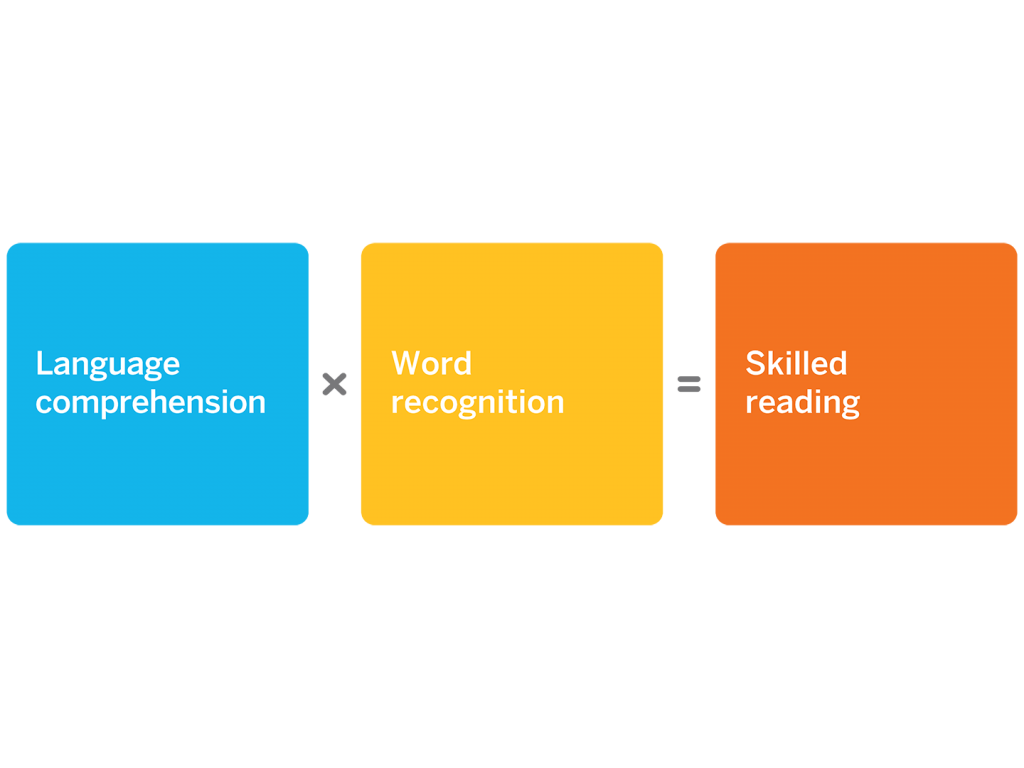
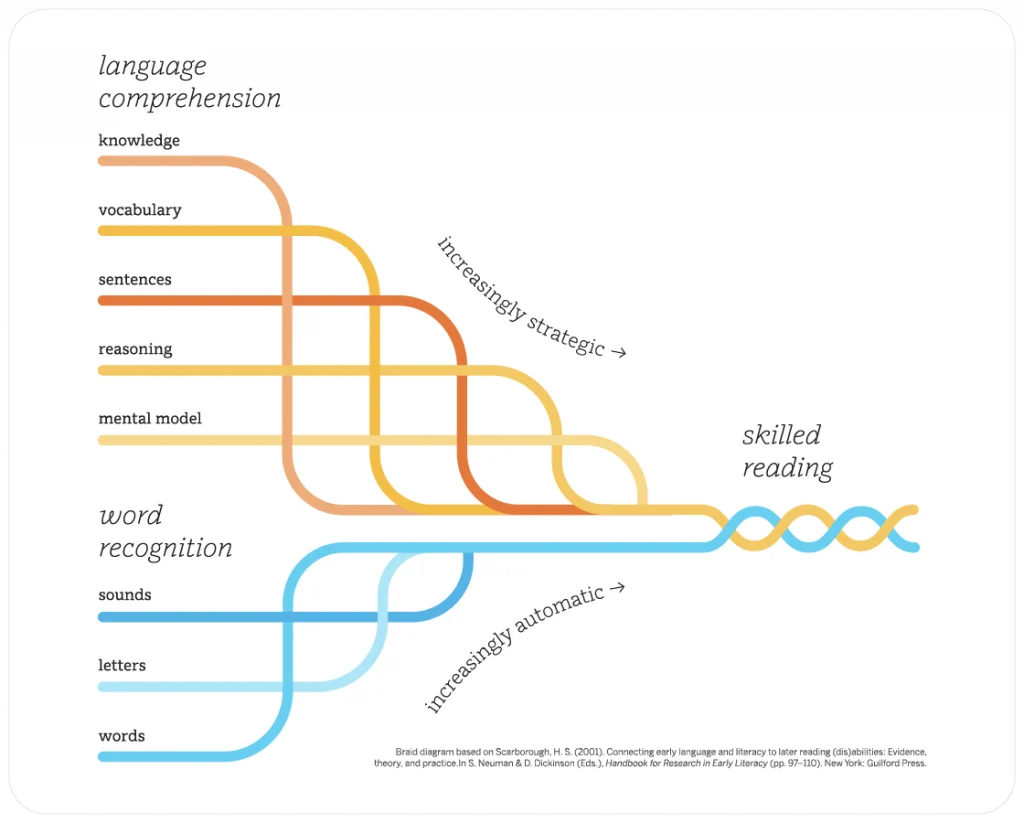
Each lesson follows a predictable structure with clearly marked components, beginning with warm-up routines, progressing through explicit instruction with guided practice, and concluding with independent application activities. The program provides detailed teacher language, including question stems and discussion prompts, ensuring clear and consistent delivery of instruction.
[Reviewer highlight video] Program organization for Category 2
[Reviewer highlight video] Program structure for grades K–2
[Reviewer highlight video] Program structure for grades 3–5
[Reviewer highlight video] Program structure for grades 6–8
Amplify CKLA California empowers teachers to deliver effective instruction and keeps students engaged with with the following resources:
- Teacher Guides
- Assessment Guides
- Authentic texts and trade books
- Knowledge Image Cards
- Knowledge Flip Books
- Remediation and intervention resources
- Decodable readers
- Student Readers and novels
- Student Activity Books
- Dedicated ELD support with Language Studio California
- Poet’s Journals
- eReaders
- Sound Library featuring articulation videos and songs
- Instructional routine modeling videos
- Assignable Practice Games
- On-demand professional development
Amplify ELA California students stay engaged with the following resources:
- Teacher Guides that include:
- Detailed lesson plans
- Standards alignment and exit tickets
- Real-time differentiation strategies
- Robust reporting
- Student Editions that include:
- High-quality narrative and informational texts
- Videos, audio supports, and digital experiences that capture their attention
- Personal Writing Journal to keep all student writing in one place
- Dedicated ELD support with Language Studio California
- Trade Books
Core literacy philosophy
Support every learner. Meet all learning needs with a Multi-Tiered System of Supports (MTSS) that brings together universal screening, scaffolded core instruction, support for English learners, and data-driven intervention to ensure every student gets what they need to succeed.
Provide intentional ELD support. Honor students’ linguistic assets while building academic English through both integrated and designated instruction.
Deliver consistent foundational skills instruction. Daily explicit, systematic skills instruction in grades K–2, with targeted yet flexible support for students still building decoding confidence in grades 3–8, ensures mastery of essential reading foundations.
Build lasting knowledge across all grades. Through coherently sequenced, content-rich instruction that revisits key vocabulary and concepts with increasing complexity, students build meaningful connections that deepen their vocabulary and reading comprehension.
Strengthen reading through writing at every level. Regular writing instruction grounded in the Science of Writing supports reading comprehension, improves sentence-level writing, and provides the foundation for high-quality composition. As students progress through the upper grades, they engage in increasingly complex analytical tasks—synthesizing ideas, drawing generalizations, and interpreting multiple textual layers through both focused quick-writes and comprehensive essays.
Foster oral language development. Structured opportunities for academic conversation and evidence-based dialogue build students’ ability to express complex ideas with precision and allow them to participate confidently in classroom discussions.
Measure growth with comprehensive assessments. Assessments range from in-the-moment checks for understanding to summative assessments that measure progress toward skills mastery and standards proficiency, providing the data needed to drive targeted instruction.
Scope and sequence
Below you can view the scope and sequence for each grade level.
- Kindergarten
- Grade 1
- Grade 2
- Grade 3
- Grade 4
- Grade 5
- Grade 6
- Grade 7
- Grade 8
- Newcomer Support Grades K–8
Routines
Amplify CKLA California and Amplify ELA California include several structured instructional routines that provide predictable patterns for both teachers and students:
Discussion and collaboration routines:
- Turn and Talk: Partners discuss text-specific content using sentence starters and frames
- Think-Pair-Share: Students engage in individual thinking, partner discussion, and whole-class sharing
- Partner reading: Students sit shoulder-to-shoulder, taking turns reading and listening
Foundational Skills routines:
- Sound-spelling review: Warm-up activities that reinforce phonics patterns
- Oral blending warm-ups: Teacher-guided practice progressing to independent application
- Finger-tapping: Techniques for blending sounds
- Chaining activities: Students manipulate letters to transform one word into another
- Word Work: Daily short activities focused on domain-specific and academic vocabulary
Knowledge-Building Routines:
- Teacher modeling: Demonstration of proper intonation, expression, and pacing
- Choral reading: Whole-class reading practice
- Partner reading: Paired fluency practice
Close reading routines
The program includes carefully structured close reading activities that guide students through multiple encounters with complex texts. These routines help students develop deeper comprehension through systematic analysis and discussion.
Each routine includes comprehensive instructional guides with clear-cut directions for implementation, straightforward explanations of concepts, and suggestions for discussion.
Designated English Language Development materials
Language Studio California is a K–8 content-based companion for English language learners. Built on Amplify CKLA California’s and Amplify ELA California’s carefully sequenced Knowledge Domains and units, it combines engaging content knowledge with targeted supports and research-based strategies to help students move swiftly toward language proficiency. This program includes:
- Real-world content to provide authentic opportunities to practice reading, writing, speaking, and listening.
- Scaffolding strategies and differentiated instruction to offer targeted support along with five English proficiency levels.
- Progress-monitoring tools to help teachers provide consistent and effective support.
- Teacher Guides that:
- Provide impactful progress monitoring tools including formative and summative assessments and Language Proficiency Assessment rubrics.
- Offer varied differentiation strategies including Support, Challenge, and Access Supports in each lesson segment.
- Are organized into thoughtful lesson segments—Talk Time, Building Background, On Stage and more—that make learning objectives concrete.
- Activities that:
- Expand on domain knowledge from core content and read-alouds and prompt collaborative conversation to practice oral fluency.
- Support hands-on language activities to promote authentic interaction in the classroom.
- Help students bridge experiences and knowledge with images, vocabulary activities, graphic organizers, anticipation guides, writing space, and more.
Category 3: Assessments
Systematic MTSS alignment
In alignment with the additional 2025 Guidance 3.1.a, the assessment systems align with MTSS tiers, including universal screening, diagnostic assessments for students demonstrating a need for additional support, and progress monitoring tools that complement the California’s required universal screening schedule per SB 114.
| Tier 1: Universal/ differentiated support | Tier 2: Supplemental/ targeted support | Tier 3: Intensified/ intensive support | |
| Core instruction assessments Frequency of administration | Amplify CKLA California, Amplify Caminos California, Amplify ELA California assessments Daily, Weekly, Monthly | Amplify CKLA California, Amplify Caminos California, Amplify ELA California assessments Daily, Weekly, Monthly | Amplify CKLA California, Amplify Caminos California, Amplify ELA California assessments Daily, Weekly, Monthly |
| Universal screening assessments Frequency of administration | mCLASS DIBELS and Lectura 3 times per year – BOY, MOY, EOY | mCLASS DIBELS and Lectura 3 times per year – BOY, MOY, EOY | mCLASS DIBELS and Lectura 3 times per year – BOY, MOY, EOY |
| Formal progress monitoring assessments Frequency of administration | mCLASS DIBELS and Lectura 3 times per year – BOY, MOY, EOY | mCLASS DIBELS and Lectura Monthly | mCLASS DIBELS and Lectura Bi-weekly |
| Informal progress monitoring assessments Frequency of administration | Amplify CKLA California, Amplify Caminos California, Amplify ELA California core assessments Daily | Intervention Toolkit progress monitoring assessments When linked to a lesson in the toolkit | Intervention Toolkit progress monitoring assessments When linked to a lesson in the toolkit |
| Diagnostic assessment Frequency of administration | Amplify skill diagnostic assessment Amplify Spanish skill diagnostic assessment Optional after universal screening assessment is administered | Amplify skill diagnostic assessment Amplify Spanish skill diagnostic assessment After universal screening assessment is administered |
Universal assessment system
Amplify’s mCLASS® DIBELS® 8th Edition and mCLASS Lectura are universal and dyslexia screening assessments that should be administered three times per year (BOY, MOY and EOY) to all students. The assessments evaluate student literacy risk, determine progress toward grade-level goals, and indicate the level of instructional support a student may need. Beginning-of-year screenings require adequate instructional time before administration, particularly in grades K–1, while mid-year and end-of-year assessments evaluate instructional effectiveness and guide tier placement adjustments. These screenings also identify students at risk for dyslexia. Universal screening provides essential data for targeting instruction and measuring instructional system effectiveness.
Core instruction assessments
Amplify CKLA California and Amplify ELA California provide a comprehensive suite of assessments for Grades K–8 that range from low-stakes, informal formative assessments to more formal summative assessments. These assessments incorporate a variety of methods and question types, including multiple-choice questions, open-ended questions, and oral and written responses.
Formative assessments:
- Checks for Understanding: Incorporated into each lesson segment throughout daily instruction. Quick pulse-checks that provide immediate feedback during lesson delivery (grades K–5).
- Daily formative assessments: Highlighted moments within each lesson for teachers to plan to track mastery of Primary Focus objectives and standards of each lesson to get a clear snapshot of individual and whole-class progress (grades K–5).
- Activity pages: Completed as part of lessons and can be used to assess lesson content understanding through various formats (grades K–5).
- Exit Tickets: Located at the end of lessons, these provide a quick gauge of students’ ability to meet the lesson’s focus standards (grades 6–8).
- Writing Prompts: Prompts integrated throughout lessons during writing activities that provide skill snapshots within lessons and tracks patterns of skill development over time (grades 6–8).
- Independent reading activities (Solos): At the end of every lesson, students complete an independent reading activity (“solo”) with reading questions that are scored to measure comprehension (grades 6–8).
Summative assessments:
- Skills end-of-unit assessments (grades K–2)
- Knowledge end-of-domain assessments (grades K–2)
- End-of-unit assessments (grades 3–5)
- Unit essays: A culminating end-of-unit set of lessons that guide students through crafting an essay with a rubric to score mastery of writing skills (grades 6–8)
- Unit Reading Assessments: Auto-scored responses and two constructed response items evaluate comprehension, content understanding, and reading skills using the passages students read during the unit (grades 6–8)
Performance Assessments
Student Performance Assessments are multi-day assessments administered in Grades K-5 at the beginning, middle, and end of year to help teachers gauge student mastery of grade-level Core content. These assessments provide critical data to help teachers set targeted instructional goals and monitor individual and class-wide progress towards core objectives.
Progress monitoring
Amplify’s mCLASS® DIBELS® 8th Edition and mCLASS Lectura provide formal progress monitoring in the discrete skills that are indicative of reading growth and predictive of overall success to provide the most instructionally meaningful information to teachers.
Informal progress monitoring tools can be found within the Intervention Toolkit, including materials for teachers to record, track, and evaluate student progress.
Diagnostic assessment
Interventions within Amplify’s literacy programs are informed by a skill diagnostic assessment that provides detailed data on foundational literacy skill deficits. The Amplify Skill Diagnostic Assessment and Amplify Spanish Skill Diagnostic assessment serve as critical tools in this process, administered specifically to students identified as at risk for reading difficulty through universal screening assessments—particularly those demonstrating mCLASS DIBELS 8th Edition or mCLASS Lectura composite scores in the Well Below or Below Benchmark ranges. These diagnostic assessments provide teachers with the precise skills to begin intervention and remediation.
Category 4: Universal Access
Amplify CKLA California and Amplify ELA California were built on the principles of Universal Design for Learning (UDL) and reviewed by CAST, a nonprofit education research and development organization. The program is developed using the Universal Design for Learning framework to proactively ensure that all learners can access and participate in meaningful, challenging learning opportunities.
Universal Design for Learning
The programs incorporate opportunities for engagement, representation, action, and expression based on the guidelines of Universal Design for Learning.
- Multiple Means of Engagement: The programs incorporate interesting and motivating ways for students to interact with information and content. In Amplify CKLA California, the Universal Access section in the introduction of each lesson provides specific lesson-level options based on the needs of individual classrooms and students. Scaffolding for students with various levels of need is incorporated into the design of each lesson.
- Multiple Means of Representation: The programs provide multiple means of presenting content to maximize student understanding. This includes digital component files that allow for a range of presentations of images and text to support learning. Amplify provides access to universal supports such as point-of-use audio for all core texts, embedded definitions for critical vocabulary, and glossaries in multiple languages. Amplify CKLA California includes clarification on language found throughout the program, with sidebars that include support on transition words and syntax, and illustrations to help students understand the concepts they are learning.
- Multiple Means of Action and Expression: The programs include a range of methods for all students, including English Learners, to navigate and demonstrate learning. This includes physical actions, a range of methods for response, appropriate tools for composition, and varied scaffolding. In Amplify ELA California, lessons provide multiple ways for students to interact with text, allowing their brains to process the language through distinct pathways. Activities harness multiple learning modes, using media tools, digital apps, and a variety of visual and physical experiences to strategically support and enhance student learning.
- Accessibility: Universal access features include visual aids, enlarged materials, physical objects, and multiple learning modalities through activities like Push & Say and Wiggle Cards. The Universal Access section in the introduction of each lesson provides specific lesson-level options based on the needs of individual classrooms and students.
Embedded differentiation
Amplify CKLA California and Amplify ELA California provide built-in differentiation strategies in every lesson for all students.
Throughout the Teacher Guides, point-of-use Differentiation icons provide targeted instructional strategies and supports. These icons indicate specific guidance for advanced learners, students who need additional support, and English learners, allowing teachers to easily identify and implement appropriate scaffolds and extensions during instruction. In addition, teachers are provided with recommendations for resources to use with each group of students.
- Pre-teaching supports include mini-lessons on:
- Core vocabulary words
- Core Connections
- Essential Background Information or Terms
- What Have We Already Learned/What Do We Already Know?
- Differentiated Support for Core Instruction tables, located in the overview of each K–2 Skills Teacher Guide, provide a list of specific opportunities for reteaching and additional support in each lesson based on skill.
- Support and Challenge Sidebars in lesson margins offer educators immediate guidance in implementing point-of-use differentiation techniques.
- Flexible Grouping within lessons provides opportunities for teachers to facilitate small groups, partners, or individualized support based on students’ needs. In the Skills Strand, teachers receive specific guidance for differentiated small-group instruction, with targeted support and activities outlined for both Group 1 (students needing additional support) and Group 2 (on-level students) based on data.
- Amplify ELA California provides point-of-use supports embedded within key core lesson activities with six levels of differentiation. The goal of these supports is to fully enable access to grade-level content for all students, including students with disabilities, English learners, and students ready for an additional level of challenge.
- The Universal Access section of Advance Preparation in each lesson includes varied strategies to ensure all students can access and engage in each lesson.
- Frequent use of graphic organizers and visual supports in lessons provide opportunities for differentiation based on need. The program also includes a variety of technological supports, such as eReaders with audio.
- Extension opportunities are suggested throughout lessons, often embedded in writing tasks, which include prompts to use more complex and descriptive vocabulary, figurative language, multi-clause and complex sentences, and informational text characteristics.
Assessment-Driven MTSS resources
- The K–8 Intervention Toolkit is available online and provides easy-to-use resources that assist teachers in filling gaps in students’ reading skills, with activities to support print concepts, phonological awareness, phonics, fluency, and other key skills
- Fluency Packets (Grades 2–5)
- Foundational Skills Intervention Program for Grades 3–8 support students who would benefit from direct and explicit intervention instruction in the full continuum of foundational skills in the upper grades
- Flexible Instructional Time including:
- Pausing Points built into the curriculum that provide teachers with dedicated time to address specific student needs through targeted reteaching, remediation, practice, and extension activities
- Pausing Point activities designed to support English learners’ competence and confidence through differentiated whole-group, small-group, or individual instruction
- Boost Reading is a K–5 student-led digital intervention program. Boost Reading follows Amplify CKLA California’s scope and sequence to reinforce the same foundational skills taught in core instruction. It integrates easily into daily routines, while the robust data provided by mCLASS® DIBELS® 8th Edition offers a detailed view of how students progress across all instructional tiers.
Category 5: Instructional Planning and Teacher Support
Amplify CKLA California and Amplify ELA California teachers are empowered to deliver effective instruction with various print and digital resources. The program provides comprehensive planning and support materials designed to help teachers prepare for and execute lessons effectively and fulfill the requirements of Category 5.
Implementation supports across K–8
Planning and preparation resources
- Unit Overviews that provide important background and context for the texts students will read, including highlighted elements within the text and guidance for how students will work with those elements
- Sub-unit Overviews (Grades 6–8) that provide an overview of Lesson Objectives and reading and writing assignments, as well as a list of any projections, multimedia, or digital apps that can be projected from the teacher’s included digital license
- Lesson-by-lesson preparation checklists (Grades 6–8) accompanying each Sub-unit Overview
- Lesson Briefs for each individual lesson providing important background and context
- Content knowledge materials regarding topics that students will examine
Point-of-use instructional guidance
- Teacher Editions that feature insets of the same text and activity instructions as the corresponding Student Edition, wrapping teacher instruction around these materials
- Activity guidance at point of use
- Lesson standards clearly called out
- Discussion suggestions embedded in lessons
- Differentiation tips at point of use
- Detailed Instructional Guides in each activity that include sequencing and grouping suggestions, tips for facilitating discussion, possible student responses and exemplars
- Student Supports in all core lessons that provide teachers with targeted supports in daily core instruction, addressing which might serve the student best in the moment—support, strengthen, stretch—with additional call-outs for newcomers
Multimedia and digital support
- Teacher tip videos provide modeling and guidance for implementing key foundational skills routines within the program
- Digital platform access where teachers can access printable PDFs of differentiated support materials for English learners and students struggling with reading, including translated Unit Background and Context documents and Text Previews
- Teacher dashboard and reporting tools (Grade 6–8) provide real-time visibility into student progress and work for immediate instructional response
Caregiver supports
Communication and overview resources
- Caregiver Hub available in English and Spanish that provides an overview of the curriculum
- Caregiver Letters for each K–2 Knowledge Domain and unit in Grades 3–5 that provide an overview of the content, the skills students learn, as well as practical methods that continue the learning and knowledge building at home
- Unit-specific Caregiver Letters (Grades 6–8) that provide detailed information regarding what students will read and learn in each unit, including conversation starters that allow caregivers to ask questions and discuss specific aspects of a unit with their student
- Welcome letters that explain the assessment and placement process while inviting parent involvement and offering support
- Editable Home-School Communication letters available in English and Spanish
- Editable Progress Reports for teachers to update parents and guardians on what their child is learning
Content and learning support materials
- Unit Background and Context documents that provide an introduction and overview to the unit’s topic and themes, available in English and Spanish
- Text Previews that provide a brief introduction to formative, independent reading assignments (called Solos in Grades 6–8), available in English and Spanish
- Unit Overview and Support documents (Grades 6–8) designed for caregivers that provide information about important questions, assignments, and key aspects of the unit texts, available in English and Spanish
- Conversation starters included in Knowledge Strand Caregiver Letters to discuss domain topics at home
Home practice and extension activities
- Take-Home pages in the Skills Strand that include copies of decodable passages, enabling students to share their reading progress with families and continue practicing their skills outside of school
- Take-Home Letters in the Skills Strand that provide specific guidance for parents to support skills practice at home, such as sound-sorting activities, with detailed instructions and materials for home practice activities
- Take-Home pages in the Knowledge Strand that provide suggested activities families can do together to reinforce and extend learning beyond the classroom
- Games and activities on take-home pages that extend classroom instruction, including all the materials and instruction necessary to help families assist students in a fun and engaging way
- Digital access to decodable texts through the Amplify Caregiver Hub, allowing students to practice their reading skills both in class and at home
- Weekly spelling lists and directions to decoding activities that can be practiced at home
Boost Reading In Action-TESTPAGE
Setting up your session for success
We know your time is valuable. This site is designed to help you quickly select the right professional development topics for your team and gather the step-by-step guidance you need for a successful session.
Quick Navigation Tips:
- Find your program: Click any program in the sidebar to expand and explore its specific session topics and online courses.
- Reset your view: To see the full list of programs again, simply click the “Return to Top” arrow in the bottom right corner or scroll past your current selection.

Preparation checklist

To make the most of your learning plan, follow the directions below. They’ll guide you through preparing your participants, location, and support for your Launch and Strengthen sessions. (Your PLS will support you in building your Coaching session.)
Onsite sessions
Prepare your participants
Communicate session details with participants:
- Session time & location
- Session objectives and topics using the agendas on this page
- Materials required:
- A charged device that meets Amplify’s tech requirements
- Personal Amplify login (if available)
- Participant notebook (This will be shipped to you or you will receive a PDF attachment in your confirmation email.)
Prepare your space
- Select a location with a strong internet connection.
- Mark this location clearly for participants and your PLS.
- Provide Wi-Fi details for participants and your PLS.
- Set up a projector and screen with audio.
Plan your support
- Designate a tech lead to address connectivity issues and provide login and navigation support during the session.
- For your PLS, share your contact information in case of emergencies and any special directions for accessing the location.
- Inform your PLS if you did not receive enough participant notebooks.
Remote sessions
Prepare your participants
Communicate session details with participants:
- Session time & remote meeting link
- Session objectives and topics using the agendas on this page
- Materials required:
- A charged device that meets Amplify’s tech requirements
- Personal Amplify login (if available)
- Participant notebook (This will be shipped to you or you will receive a PDF attachment in your confirmation email.)
Prepare your remote space
- Plan for participants to join from individual devices from separate locations (highly recommended).
- If participants share a room, they must still use individual devices to fully engage.
- To prevent audio feedback join using Google Meet’s Companion mode.
- If using another platform, use headphones or ensure all but one device in the room has its microphone and speakers fully muted.
Plan your support
- For your PLS, share your remote setup plan.
- Designate a tech lead to address connectivity issues and provide login and navigation support during the session.
Select your program
Use the sidebar to select your program and explore the objectives and topics covered in your session or online course.
Amplify Caminos
Launch sessions
Launch sessions introduce Amplify programs and support strong implementation.
| Session topic | Duration | Amplify Caminos 1st Edition agendas | Amplify Caminos 3rd Edition agendas | Amplify Caminos California Edition agendas |
|---|---|---|---|---|
| Initial training for teachers | 6 hours | K–2 3–5 | K–2 3–5 | K–2 3–5 Grade 6 ELA + Caminos |
| Skills Strand initial training for teachers | 6 hours | K–2 | K–2 | K–2 |
| Knowledge Strand initial training for teachers | 6 hours | K–2 | 3–5 | K–2 |
| Program overview for teachers | 3 hours | K–2 3–5 | K–2 3–5 | K–2 3–5 Grade 6 |
| Knowledge strand program overview for teachers | 3 hours | K–2 | K–2 | K–2 |
| Skills Strand program overview for teachers | 3 hours | K–2 | K–2 | K–2 |
| Program overview for leaders | 3 hours | K–5 | PreK–5 | TK–5 |
| Skills supplement training for teachers | 1 hour | 3–5 | 3–6 | |
| Transition training for teachers to 3rd Edition | 1 hour | K–2 3–5 Skills Strand Knowledge Strand |
Strengthen sessions
Strengthen sessions deepen understanding of Amplify programs through targeted support.
| Session topic | Duration | Amplify Caminos 1st Edition agendas | Amplify Caminos 3rd Edition agendas Coming soon! | Amplify Caminos California Edition agendas Coming soon! |
|---|---|---|---|---|
| Enhancing planning for teachers | 3 hours | K–2 3–5 | K–2 3–5 | K–2 3–5 Grade 6 |
| Enhancing practice for teachers | 3 hours | K–2 3–5 | K–2 3–5 | K–2 3–5 Grade 6 |
| Writing for teachers | 3 hours | K–2 3–5 | ||
| Student engagement for teachers | 1 hour | K–5 | K–5 | K–5 Grade 6 ELA + Caminos Grade 6 |
| Supporting all learners for teachers | 1 hour | K–5 | K–5 | K–5 |
| Pacing for teachers | 1 hour | K–5 | K–5 | K–5 Grade 6 ELA + Caminos Grade 6 |
| Enhancing observations for leaders | 3 hours | Grade 6 | ||
| Grading and assessment for teachers | 1 hour | Grade 6 ELA + Caminos Grade 6 |
Coach sessions
Coach sessions can include model lessons, observations, walk-throughs, and/or co-planning. Use the resources to build your coaching session.
| Directions | Resource |
|---|---|
| 1. Select agenda items to build your coaching session. | Coaching agenda options |
| 2. If you select any PLC or grade-level meetings, select topics for those meetings. | PLCs or grade-level planning meeting options |
Amplify CKLA
Launch sessions
Launch sessions introduce Amplify programs and support strong implementation.
| Session topic | Duration | Amplify CKLA 2nd Edition agendas | Amplify CKLA 3rd Edition agendas | Amplify CKLA Florida Edition agendas | Amplify CKLA California Edition agendas |
|---|---|---|---|---|---|
| Initial training for teachers | 6 hours | PreK K–2 3–5 | K–2 3–5 | K–2 3–5 | Transitional Kindergarten (TK) K–2 3–5 |
| Skills Strand initial training for teachers | 6 hours | K–2 | K–2 | K–2 | |
| Knowledge Strand initial training for teachers | 6 hours | K–2 | K–2 | K–2 | |
| Program overview for teachers | 3 hours | PreK K–2 3–5 | K–2 3–5 | K–2 3–5 | TK K–2 3–5 |
| Skills Strand program overview for teachers | 3 hours | K–2 | K–2 | K–2 | |
| Knowledge Strand program overview for teachers | 3 hours | K–2 | K–2 | K–2 | |
| Program overview for leaders | 3 hours | PreK–5 | PreK–5 | K–5 | PreK–5 |
| Transition training for teachers | 1 hour | K–2 3–5 | |||
| Skills Strand transition training for teachers | 1 hour | K–2 | |||
| Knowledge Strand transition training for teachers | 1 hour | K–2 | |||
| Skills supplement training for teachers | 1 hour | Grade 3 | Grade 3 | 3–8 |
Strengthen sessions
Strengthen sessions deepen understanding of Amplify programs through targeted support.
| Session topic | Duration | Amplify CKLA 2nd Edition agendas | Amplify CKLA 3rd Edition agendas | Amplify CKLA Florida Edition agendas | Amplify CKLA California Edition agendas Coming soon! |
|---|---|---|---|---|---|
| Enhancing planning for teachers | 3 hours | PreK K–2 3–5 | K–2 3–5 | K–2 3–5 | TK K–2 3–5 |
| Enhancing practice for teachers | 3 hours | K–2 3–5 | K–2 3–5 | K–2 3–5 | K–2 |
| Maximizing impact: Data-informed remediation with the ARG for teachers | 3 hours | K–2 | K–2 | K–2 3–5 | |
| Maximizing impact: Data-informed remediation with the ARG/DERG for teachers | 3 hours | 3–5 | 3–5 | ||
| Writing for teachers | 3 hours | K–2 3–5 | Coming soon! | K–2 3–5 | |
| Enhancing observations for leaders | 3 hours | K–5 | K–5 | K–5 | K–5 |
| Student engagement for teachers | 1 hour | K–5 | K–5 | K–5 | |
| Supporting all learners for teachers | 1 hour | K–5 | K–5 | K–5 | |
| Pacing for teachers | 1 hour | K–5 | K–5 | K–5 | |
| Amplify CKLA 3rd Edition + mCLASS DIBELS 8th Edition: Data driven instruction for teachers | 3 hours | Coming soon! |
Amplify CKLA companion programs
Coach sessions
Coach sessions can include model lessons, observations, walk-throughs, and/or co-planning. Use the resources to build your coaching session.
| Directions | Resource |
|---|---|
| 1. Select agenda items to build your coaching session. | Coaching agenda options |
| 2. If you select any PLC or grade-level meetings, select topics for those meetings. | PLCs or grade-level planning meeting options |
Amplify CKLA + Caminos
Launch sessions
Launch sessions introduce Amplify programs and support strong implementation.
| Session topic | Duration | Amplify CKLA 2nd Edition + Amplify Caminos 1st Edition agendas | Amplify CKLA/Caminos 3rd edition agendas | Amplify CKLA/Caminos California Edition agendas |
|---|---|---|---|---|
| Initial training for teachers | 6 hours | K–2 3–5 | K–2 3–5 | K–2 3–5 |
| Skills Strand initial training for teachers | 6 hours | K–2 | K–2 | K–2 |
| Knowledge Strand initial training for teachers | 6 hours | K–2 | K–2 | K–2 |
| Program overview for leaders | 3 hours | PreK–5 | PreK–5 | TK–5 |
| Transition training for teachers to 3rd Edition | 1 hour | K–2 3–5 Skills Strand Knowledge Strand |
Strengthen sessions
Strengthen sessions deepen understanding of Amplify programs through targeted support.
| Session topic | Duration | Amplify CKLA 2nd Edition + Amplify Caminos 1st Edition agendas | Amplify CKLA/Caminos 3rd Edition agendas Coming soon! | Amplify CKLA/Caminos California Edition agendas Coming soon! |
|---|---|---|---|---|
| Enhancing planning for teachers | 3 hours | K–2 3–5 | K–2 3–5 | K–2 3–5 |
| Enhancing practice for teachers | 3 hours | K–2 3–5 | K–2 3–5 | K–2 3–5 |
| Writing for teachers | 3 hours | K–2 3–5 | ||
| Student engagement for teachers | 1 hour | K–5 | K–5 | K–5 |
| Supporting all learners for teachers | 1 hour | K–5 | K–5 | K–5 |
| Pacing for teachers | 1 hour | K–5 | K–5 | K–5 |
Coach sessions
Coach sessions can include model lessons, observations, walk-throughs, and/or co-planning. Use the resources to build your coaching session.
| Directions | Resource |
|---|---|
| 1. Select agenda items to build your coaching session. | Coaching agenda options |
| 2. If you select any PLC or grade-level meetings, select topics for those meetings. | PLCs or grade-level planning meeting options |
Amplify Desmos Math
Launch sessions
Launch sessions introduce Amplify programs and support strong implementation.
| Session topic | Duration | Amplify Desmos Math agendas | Amplify Desmos Math California Edition agendas |
|---|---|---|---|
| Initial training for teachers | 6 hours | K–5 6–A1 High school | |
| Program overview for teachers | 3 hours | PreK/TK K–5 6–A1 High school | PreK/TK High school |
| Program overview for leaders | 3 hours | K–5 6–A1 High school | High school |
Strengthen sessions
Strengthen sessions deepen understanding of Amplify programs through targeted support.
| Session topic | Duration | Amplify Desmos Math agendas | Amplify Desmos Math California Edition agendas Coming soon! |
|---|---|---|---|
| Supporting all learners for teachers | 3 hours | K–5 6–A1 | |
| Enhancing observations for leaders | 3 hours | K–A1 | High school |
| Enhancing planning for teachers | 3 hours | K–5 6–A1 High school | |
| Enhancing practice for teachers | 3 hours | K–5 6–A1 High school | |
| Snapshots in the Teacher Dashboard for teachers | 1 hour | 6–A1 | |
| Teaching a lesson with digital student screens for teachers | 1 hour | K–5 | |
| Unit-level planning for teachers | 1 hour | K–5 6–A1 High school | |
| Supporting and facilitating meaningful discourse for teachers | 3 hours | Coming soon! | K–5 6–A1/M1 High school |
| Assessment in action: Analyzing data, reports, and planning next steps for teachers | 3 hours | Coming soon! | K–5 6–A1/M1 |
| Increasing engagement with instructional routines for teachers | 3 hours | Coming soon! |
Coach sessions
Coach sessions can include model lessons, observations, walk-throughs, and/or co-planning. Use the resources to build your coaching session.
| Directions | Resource |
|---|---|
| 1. Select agenda items to build your coaching session. | Coaching agenda options |
| 2. If you select any PLC or grade-level meetings, select topics for those meetings. | PLCs or grade-level planning meeting options |
Amplify ELA
Launch sessions
Launch sessions introduce Amplify programs and support strong implementation.
| Session topic | Duration | Amplify ELA 2nd Edition agendas | Amplify ELA Florida Edition agendas | Amplify ELA California Edition agendas |
|---|---|---|---|---|
| Initial training for teachers | 6 hours | 6–8 | 6–8 | Grade 6 ELA + Caminos |
| Program overview for teachers | 3 hours | 6–8 | 6–8 | Grade 6 |
| Program overview for leaders | 3 hours | 6–8 | 6–8 | ELA + Caminos |
Strengthen sessions
Strengthen sessions deepen understanding of Amplify programs through targeted support.
| Session topic | Duration | Amplify ELA 2nd Edition agendas | Amplify ELA California Edition agendas Coming soon! |
|---|---|---|---|
| Enhancing planning for teachers | 3 hours | 6–8 | 6–8 ELA + Caminos Grade 6 |
| Enhancing practice for teachers | 3 hours | 6–8 | 6–8 ELA + Caminos Grade 6 |
| Writing: Improving through feedback for teachers | 3 hours | 6–8 | |
| Supporting all learners for teachers | 3 hours | 6–8 | |
| Data-informed instruction for teachers | 3 hours | 6–8 | |
| Enhancing observations for leaders | 3 hours | 6–8 | 6–8 ELA + Caminos Grade 6 |
| Teaching with print and digital for teachers | 1 hour | 6–8 | |
| Lesson planning for teachers | 1 hour | 6–8 | |
| Pacing for teachers | 1 hour | 6–8 | 6–8 |
| Increasing student engagement for teachers | 1 hour | 6–8 | 6–8 |
| Grading and assessment for teachers | 1 hour | 6–8 | 6–8 |
Amplify ELA companion programs
| Session topic | Duration | Amplify ELA Language Studio California Edition agenda |
|---|---|---|
| Amplify ELA California 6–8 Language Studio companion for teachers | 3 hours | Agenda |
Coach sessions
Coach sessions can include model lessons, observations, walk-throughs, and/or co-planning. Use the resources to build your coaching session.
| Directions | Resource |
|---|---|
| 1. Select agenda items to build your coaching session. | Coaching agenda options |
| 2. If you select any PLC or grade-level meetings, select topics for those meetings. | PLCs or grade-level planning meeting options |
Amplify Math
Launch sessions
Launch sessions introduce Amplify programs and support strong implementation.
| Session topic | Duration | Amplify Math agendas |
|---|---|---|
| Initial training for teachers | 6 hours | Grade 6–Algebra 1 Geometry–Algebra 2 |
| Program overview for teachers | 3 hours | Grade 6–Algebra 1 Geometry–Algebra 2 |
| Program overview for leaders | 3 hours | Grade 6–Algebra 1 Geometry–Algebra 2 |
Strengthen sessions
Strengthen sessions deepen understanding of Amplify programs through targeted support.
| Session topic | Duration | Amplify Math agendas |
|---|---|---|
| Enhancing planning for teachers | 3 hours | Agenda |
| Enhancing practice for teachers | 3 hours | Agenda |
| Addressing prerequisite skills for teachers | 3 hours | Agenda |
| Using differentiation supports for teachers | 3 hours | Agenda |
| Using data to drive instruction for teachers | 3 hours | Agenda |
| Orchestrating math discussions for teachers | 3 hours | Agenda |
| Enhancing observations for leaders | 3 hours | Agenda |
| Lesson-level planning for teachers | 1 hour | Agenda |
| Unit-level planning for teachers | 1 hour | Agenda |
| Increasing engagement with instructional routines for teachers | 1 hour | Agenda |
| Building language with math routines for teachers | 1 hour | Agenda |
Coach sessions
Coach sessions can include model lessons, observations, walk-throughs, and/or co-planning. Use the resources to build your coaching session.
| Directions | Resource |
|---|---|
| 1. Select agenda items to build your coaching session. | Coaching agenda options |
| 2. If you select any PLC or grade-level meetings, select topics for those meetings. | PLCs or grade-level planning meeting options |
Amplify Science
Launch sessions
Launch sessions introduce Amplify programs and support strong implementation.
Strengthen sessions
Strengthen sessions deepen understanding of Amplify programs through targeted support.
| Session topic | Duration | Amplify Science agendas |
|---|---|---|
| Enhancing planning for teachers | 3 hours | K–5 6–8 |
| Enhancing practice for teachers | 3 hours | K–5 6–8 |
| Supporting all learners with complex texts for teachers | 3 hours | K–5 6–8 |
| Supporting multilingual/English learners for teachers | 3 hours | K–5 6–8 |
| Writing in science for teachers | 3 hours | K–5 6–8 |
| Engineering Internship for teachers | 3 hours | Grade 6–Metabolism Grade 7–Plate Motion Grade 8–Force and Motion |
| Science Seminar for teachers | 3 hours | 6–8 |
| Enhancing observations for leaders | 3 hours | K–5 6–8 |
| Assessment system for teachers | 3 hours | K–5 6–8 |
| Enhancing the digital experience for teachers | 1 hour | K–5 |
| Planning with the Coherence Flowchart for teachers | 1 hour | K–8 |
| Planning an Amplify Science lesson for teachers | 1 hour | K–8 |
| Supporting all learners: Exploring the resources for teachers | 1 hour | K–8 |
| Supporting all learners: Teacher modeling and student discourse for teachers | 1 hour | K–8 |
| Supporting all learners: Multimodal instruction for teachers | 1 hour | K–8 |
| Analyzing student work for teachers | 1 hour | K–8 |
| Unit Materials Kits and prep for teachers | 1 hour | K–8 |
| Grading with Amplify Science for teachers | 1 hour | K–8 |
Coach sessions
Coach sessions can include model lessons, observations, walk-throughs, and/or co-planning. Use the resources to build your coaching session.
| Directions | Resource |
|---|---|
| 1. Select agenda items to build your coaching session. | Coaching agenda options |
| 2. If you select any PLC or grade-level meetings, select topics for those meetings. | PLCs or grade-level planning meeting options |
Boost Literacy
Launch sessions
Launch sessions introduce Amplify programs and support strong implementation.
Strengthen sessions
Strengthen sessions deepen understanding of Amplify programs through targeted support.
Online courses
Online courses prepare teachers to implement Boost Literacy programs.
mCLASS® Intervention
mCLASS Intervention sessions
| Session topic | Duration | mCLASS Intervention agendas |
|---|---|---|
| Initial training for interventionists and coordinators | 6 hours | K–6 |
mCLASS Intervention Universal sessions
| Session topic | Duration | Agendas |
|---|---|---|
| Initial training + DIBELS 8th Edition: Administration and scoring training for interventionists and coordinators | 9 hours | K–6 |
Coach sessions
Coach sessions can include model lessons, observations, walk-throughs, and/or co-planning. Use the resources to build your coaching session.
| Directions | Resource |
|---|---|
| 1. Select agenda items to build your coaching session. | Coaching agenda options |
| 2. If you select any PLC or grade-level meetings, select topics for those meetings. | PLCs or grade-level planning meeting options |
Online courses
Online courses prepare teachers to administer and score mCLASS Literacy programs.
| Course topic | Course overviews |
|---|---|
| Program overview for interventionists | K–6 |
mCLASS Literacy
Launch sessions
Launch sessions introduce Amplify programs and support strong implementation.
| Session topic | Duration | mCLASS DIBELS 8th Edition agendas | mCLASS Lectura agendas | mCLASS DIBELS 8th Edition/mCLASS Lectura agendas | Louisiana K–3 Literacy Screener agendas |
|---|---|---|---|---|---|
| Administration and instruction essentials for teachers | 6 hours | K–8 | K–6 English K–6 Spanish | K–8 | K–3 |
| Administration and scoring training for teachers | 3 hours | K–8 | K–6 English K–6 Spanish | K–3 | |
| Administration and reporting training for leaders | 3 hours | K–8 | K–6 | K–8 |
Strengthen sessions
Strengthen sessions deepen understanding of Amplify programs through targeted support.
| Session topic | Duration | mCLASS DIBELS 8th Edition agendas | mCLASS Lectura agendas | mCLASS DIBELS 8th Edition/ mCLASS Lectura agendas | Louisiana K–3 Literacy Screener agendas |
|---|---|---|---|---|---|
| Creating a data-driven classroom for teachers | 3 hours | K–8 | K–6 | K–8 | K–3 |
| Building a data-driven culture for leaders | 3 hours | K–8 | K–6 | K–8 | K–3 |
| Assessing with fidelity for teachers | 1 hour | K–8 | K–6 | K–8 | K–3 |
| Reporting and instruction basics for teachers | 1 hour | K–8 | K–6 | K–8 | |
| Progress monitoring for teachers | 1 hour | K–8 | K–6 | K–8 | K–3 |
| Goal setting and growth outcomes for teachers | 1 hour | K–8 | K–6 | K–8 | K–3 |
| Reporting basics for leaders | 1 hour | K–8 | K–6 | K–8 | K–3 |
Coach sessions
Coach sessions can include model lessons, observations, walk-throughs, and/or co-planning. Use the resources to build your coaching session.
| Directions | Resource |
|---|---|
| 1. Select agenda items to build your coaching session. | Coaching agenda options |
| 2. If you select any PLC or grade-level meetings, select topics for those meetings. | PLCs or grade-level planning meeting options |
Online courses
Online courses prepare teachers to administer and score mCLASS Literacy programs.
| Course topic | mCLASS DIBELS 8th Edition overviews | mCLASS Lectura overviews | Louisiana K–3 Literacy Screener overviews | mCLASS Literacy North Carolina overviews | mCLASS Lectura North Carolina overviews | Paper DIBELS 8th Edition overviews |
|---|---|---|---|---|---|---|
| Administration and instruction essentials for teachers | K–8 | K–6 | K–3 | K–6 | K–6 | |
| Calibration training for teachers | K–8 Coming soon! | K–8 Coming soon! | ||||
| Transition training for DDS teachers | K–8 | |||||
| Administration and scoring training for DDS teachers | K–8 | |||||
| Administration and reporting training for leaders | K–3 |
mCLASS Math & Boost Math
Launch sessions
Launch sessions introduce Amplify programs and support strong implementation.
Strengthen sessions
Strengthen sessions deepen understanding of Amplify programs through targeted support.
| Session topic | Duration | mCLASS Math 2nd Edition agendas | California Edition agendas |
|---|---|---|---|
| Student thinking and instructional next steps for teachers | 3 hours | K–5 6–8 | K–5 6–8 |
| mCLASS Math + Boost Math: Understanding and using data to plan intervention | 3 hours | K–5 6–8 | K–5 6–8 |
| Leveraging assessment data to strengthen mathematical thinking for teachers | 1 hour | K–5 6–8 |
Coach sessions
Coach sessions can include model lessons, observations, walk-throughs, and/or co-planning. Use the resources to build your coaching session.
| Directions | Resource |
|---|---|
| 1. Select agenda items to build your coaching session. | Coming soon! |
| 2. If you select any PLC or grade-level meetings, select topics for those meetings. | Coming soon! |
Online courses
Online courses prepare teachers to administer and score mCLASS Literacy programs.
| Course topic | Course overviews |
|---|---|
| Program overview and instructional next steps for teachers | Coming soon! |
General sessions
Amplify Classroom
Amplify Classroom sessions build expertise in Activity Builder to design, organize, and facilitate engaging digital activities.
Multilingual/English learners
Multilingual/English learners sessions align instruction with best practices for multilingual reading and writing development.
Problem-based math
Problem-based math sessions identify actionable strategies that build students’ conceptual understanding while developing a sense of joy in learning math
Science of Reading
Science of Reading sessions examine the connections between literacy and the brain to align instructional practices with models that develop skilled reading and writing.
Texas programs
Select your program from the sidebar to explore its sessions.
Amplify Desmos Math Texas sessions
Strengthen sessions
Strengthen sessions deepen understanding of Amplify programs through targeted support.
| Session topic | Duration | mCLASS Math 2nd Edition agendas |
|---|---|---|
| Supporting and facilitating meaningful discourse for teachers | 3 hours | Coming soon! |
| Assessment in action: Analyzing data, reports, and planning next steps for teachers | 3 hours | Coming soon! |
Amplify Texas ELAR & SLAR
Launch sessions
Launch sessions introduce Amplify programs and support strong implementation.
| Session topic | Duration | Amplify Texas ELAR agendas | Amplify Texas ELAR + SLAR agendas | Amplify Texas SLAR agendas |
|---|---|---|---|---|
| Initial training for teachers | 6 hours | K–2 3–5 6–8 | K–2 3–5 | K–2 3–5 |
| Skills Strand initial training for teachers | 6 hours | K–2 | K–2 | K–2 |
| Knowledge Strand initial training for teachers | 6 hours | K–2 | K–2 | K–2 |
| Program overview for teachers | 3 hours | K–2 3–5 6–8 | K–2 3–5 | |
| Program overview for leaders | 3 hours | K–5 6–8 | K–5 | |
| Skills Strand program overview for teachers | 3 hours | K–2 | K–2 | |
| Knowledge Strand program overview for teachers | 3 hours | K–2 | K–2 |
Strengthen sessions
Strengthen sessions deepen understanding of Amplify programs through targeted support.
| Session topic | Duration | Amplify Texas ELAR agendas | Amplify Texas ELAR + SLAR agendas | Amplify Texas SLAR agendas |
|---|---|---|---|---|
| Enhancing planning for teachers | 3 hours | K–2 3–5 6–8 | K–2 3–5 | K–2 3–5 |
| Enhancing practice for teachers | 3 hours | K–2 3–5 6–8 | K–2 3–5 | K–2 3–5 |
| Writing for teachers | 3 hours | K–2 3–5 | K–2 3–5 | K–2 3–5 |
| Enhancing observations for leaders | 3 hours | K–5 6–8 | ||
| Supporting all learners for 6–8 teachers | 3 hours | 6–8 | ||
| Data-informed instruction for teachers | 3 hours | 6–8 | ||
| Student engagement for teachers | 1 hour | K–5 6–8 | K–5 | K–5 |
| Supporting all learners for teachers | 1 hour | K–5 | K–5 | K–5 |
| Teaching with print and digital for teachers | 1 hour | 6–8 | ||
| Lesson planning for teachers | 1 hour | 6–8 | ||
| Pacing for teachers | 1 hour | K–5 6–8 | K–5 | K–5 |
| Grading and assessment for teachers | 1 hour | 6–8 |
Coach sessions
Coach sessions can include model lessons, observations, walk-throughs, and/or co-planning. Use the resources to build your coaching session.
| Directions | ELAR resources | ELAR + SLAR resources |
|---|---|---|
| 1. Select agenda items to build your coaching session | Coaching agenda options | Coaching agenda options |
| 2. If you select any PLC or grade level meetings, select topics for those meetings | PLCs or grade-level planning meeting options |
Boost Reading Texas sessions
Launch & Strengthen sessions
mCLASS Literacy Texas sessions
Launch sessions
Launch sessions introduce Amplify programs and support strong implementation.
| Session topic | Duration | mCLASS Texas agendas | mCLASS Lectura Texas agendas | mCLASS Texas DIBELS 8/ Lectura agendas |
|---|---|---|---|---|
| Administration and instruction essentials for teachers | 6 hours | K–8 | K–2 | K–2 |
| Administration and scoring training for teachers | 3 hours | K–8 | K–2 | |
| Administration and reporting training for leaders | 3 hours | K–8 | K–2 | K–2 |
Strengthen sessions
Strengthen sessions deepen understanding of Amplify programs through targeted support.
| Session topic | Duration | mCLASS DIBELS 8th Edition Texas agendas | mCLASS Lectura Texas agendas | mCLASS DIBELS 8th Edition/Lectura Texas |
|---|---|---|---|---|
| Creating a data-driven classroom for teachers | 3 hours | K–8 | K–6 | K–8 |
| Building a data-driven culture for leaders | 3 hours | K–8 | K–6 | K–8 |
| Assessing with fidelity for teachers | 1 hour | K–8 | K–6 | |
| Reporting and instruction basics for teachers | 1 hour | K–8 | K–6 | |
| Progress monitoring for teachers | 1 hour | K–8 | K–6 | |
| Goal setting and growth outcomes for teachers | 1 hour | K–8 | K–6 | K–8 |
| Reporting basics for leaders | 1 hour | K–8 | K–6 |
Online courses
mCLASS Math Texas sessions
Launch sessions
Launch sessions introduce Amplify programs and support strong implementation.
Strengthen sessions
Strengthen sessions deepen understanding of Amplify programs through targeted support.
| Session topic | Duration | mCLASS Math 2nd Edition agenda |
|---|---|---|
| Student thinking and instructional next steps for teachers | 3 hours | K–5 |
Online courses
| Course topic | mCLASS Math 2nd Edition online agenda |
|---|---|
| Administration and instruction essentials for teachers | Coming soon! |
Welcome, K–8 Program 1 reviewers!
We’re honored to introduce you to Amplify California Language Arts. We’re confident you’ll find this comprehensive program to be a powerful tool for bringing the vision of the California ELA Framework to life in classrooms across the state.
Please start with the video on the right to learn how to navigate the program and access key features referenced within our submission. Below you’ll find additional resources to support your review.
Your review samples
We’re excited for you to begin your review of Amplify Core Knowledge Language Arts (CKLA) California and Amplify ELA California. Physical and digital review materials will vary by grade level.
Reviewer Binders (K–8)
Your physical samples should have arrived in grade-specific boxes with three Reviewer Binders.
- The first binder will contain logistical program review information and the printed Evaluation Criteria Map.
- The second binder will contain the printed Standards Maps for grades K–4.
- The third binder will contain the printed Standards Maps for grades 5–8.
Physical samples (K–5)
You can expect to receive 15 boxes of physical materials for your review. As you begin the process of organizing your materials, please refer to the inventory checklist found inside each box as well as within your Reviewer Binder. Please note you will not receive any physical samples for grades 6–8. Your review of the program for grades 6–8 will be entirely digital.
Digital samples (K–8)
In order to access your digital samples, you’ll need to log in to our platform using your unique login credentials found on a Digital Review Credential flyer inside of your Reviewer Binder. Once you have located the flyer:
- Click the orange button below to access the platform.
- Click “Log in with Amplify.”
- Enter the username and password provided on your Digital Review Credential flyer.
Navigation tips
Before you get started, please review these important functionality notes:
Criteria Map and Standards Maps must be opened on Microsoft Word on your desktop to function as intended. If you open the documents without Microsoft Word on your desktop, citations will be cut off at the bottom of most tables within the document.
Many of our citations are deep-links to PDFs, meaning they will take you to the right page or the first page in the sequence for the citation in question. To ensure this functionality works, please disable any PDF-viewing extensions or plug-ins such as Adobe Acrobat Pro Browser Extension.
[Reviewer program navigation video] Grades K–5
[Reviewer program navigation video] Grades 6–8
Click here for additional information on navigating the digital materials for grades 6–8.
Category 1: English Language Arts (ELA) and English Language Development (ELD) Content/Alignment to Standards
Evaluation Criteria Map
Linked below is the Evaluation Criteria Map for grades K–8. Please note that you will need to be logged into the digital platform to access the links in the Evaluation Criteria Map.
ELA Standards Maps
The links below provide the Standards Maps for Amplify California Core Language Arts for each grade level. Please note that you will need to be logged into the digital platform to access the links in the Standards Maps.
Category 2: Program Organization
The Amplify California Language Arts Program 1 submission includes Amplify CKLA California for Grades K–5 and Amplify ELA California for Grades 6–8. This comprehensive curriculum provides a full year of evidence-based instruction for each grade level, transitioning from foundational literacy to advanced text analysis.
Program structure
Amplify’s California Language Arts programs are built on what the research shows: Strong readers need both word recognition and language comprehension. Our comprehensive curriculum suite follows the Simple View of Reading and The Reading Rope–bringing together foundational skills and knowledge building to deliver instruction grounded in evidence-based literacy practices.
Each lesson follows a predictable structure with clearly marked components, beginning with warm-up routines, progressing through explicit instruction with guided practice, and concluding with independent application activities. The program provides detailed teacher language, including question stems and discussion prompts, ensuring clear and consistent delivery of instruction.
[Reviewer highlight video] Program organization for Category 2
[Reviewer highlight video] Program structure for grades K–2
[Reviewer highlight video] Program structure for grades 3–5
[Reviewer highlight video] Program structure for grades 6–8
Amplify CKLA California empowers teachers to deliver effective instruction and keeps students engaged with the following resources:
- Teacher Guides
- Assessment Guides
- Authentic texts and trade books
- Knowledge Image Cards
- Knowledge Flip Books
- Remediation and intervention resources
- Decodable readers
- Student Readers and novels
- Student Activity Books
- Poet’s Journals
- eReaders
- Sound Library featuring articulation videos and songs
- Instructional routine modeling videos
- Assignable Practice Games
- On-demand professional development
Amplify ELA California students stay engaged with the following resources:
- Teacher Guides that include:
- Detailed lesson plans
- Standards alignment and exit tickets
- Real-time differentiation strategies
- Robust reporting
- Student Editions that include:
- High-quality narrative and informational texts
- Videos, audio supports, and digital experiences that capture their attention
- Personal Writing Journal to keep all student writing in one place
- Trade Books
Core literacy philosophy
Support every learner. Meet all learning needs with a Multi-Tiered System of Supports (MTSS) that brings together universal screening, scaffolded core instruction, support for English learners, and data-driven intervention to ensure every student gets what they need to succeed.
Deliver consistent foundational skills instruction. Daily explicit, systematic skills instruction in grades K–2, with targeted yet flexible support for students still building decoding confidence in grades 3–8, ensures mastery of essential reading foundations.
Build lasting knowledge across all grades. Through coherently sequenced, content-rich instruction that revisits key vocabulary and concepts with increasing complexity, students build meaningful connections that deepen their vocabulary and reading comprehension.
Strengthen reading through writing at every level. Regular writing instruction grounded in the Science of Writing supports reading comprehension, improves sentence-level writing, and provides the foundation for high-quality composition. As students progress through the upper grades, they engage in increasingly complex analytical tasks—synthesizing ideas, drawing generalizations, and interpreting multiple textual layers through both focused quick-writes and comprehensive essays.
Foster oral language development. Structured opportunities for academic conversation and evidence-based dialogue build students’ ability to express complex ideas with precision and allow them to participate confidently in classroom discussions.
Measure growth with comprehensive assessments. Assessments range from in-the-moment checks for understanding to summative assessments that measure progress toward skills mastery and standards proficiency, providing the data needed to drive targeted instruction.
Scope and sequence
Below you can view the scope and sequence for each grade level.
Routines
Amplify CKLA California and Amplify ELA California include several structured instructional routines that provide predictable patterns for both teachers and students:
Discussion and collaboration routines:
- Turn and Talk: Partners discuss text-specific content using sentence starters and frames
- Think-Pair-Share: Students engage in individual thinking, partner discussion, and whole-class sharing
- Partner reading: Students sit shoulder-to-shoulder, taking turns reading and listening
Foundational Skills routines:
- Sound-spelling review: Warm-up activities that reinforce phonics patterns
- Oral blending warm-ups: Teacher-guided practice progressing to independent application
- Finger tapping: Techniques for blending sounds
- Chaining activities: Students manipulate letters to transform one word into another
- Word Work: Daily short activities focused on domain-specific and academic vocabulary
Knowledge-building routines:
- Vocabulary preview: Introduction of new words before reading
- Read-aloud procedures: Established routines for introducing and discussing complex texts
- Text discussions: Structured comprehension conversations with scaffolded questioning
Fluency routines:
- Teacher modeling: Demonstration of proper intonation, expression, and pacing
- Choral reading: Whole-class reading practice
- Partner reading: Paired fluency practice
Close reading routines
The program includes carefully structured close reading activities that guide students through multiple encounters with complex texts. These routines help students develop deeper comprehension through systematic analysis and discussion.
Each routine includes comprehensive instructional guides with clear-cut directions for implementation, straightforward explanations of concepts, and suggestions for discussion.
Category 3: Assessments
Systematic MTSS alignment
In alignment with the additional 2025 Guidance 3.1.a, the assessment systems align with MTSS tiers, including universal screening, diagnostic assessments for students demonstrating a need for additional support, and progress monitoring tools that complement California’s required universal screening schedule per SB 114.
| Tier 1: Universal/ differentiated support | Tier 2: Supplemental/ targeted support | Tier 3: Intensified/ intensive support | |
| Core instruction assessments Frequency of administration | Amplify CKLA California, Amplify ELA California assessments Daily, Weekly, Monthly | Amplify CKLA California, Amplify ELA California assessments Daily, Weekly, Monthly | Amplify CKLA California, Amplify ELA California assessments Daily, Weekly, Monthly |
| Universal screening assessments Frequency of administration | mCLASS DIBELS and mCLASS Lectura 3 times per year – BOY, MOY, EOY | mCLASS DIBELS and mCLASS Lectura 3 times per year – BOY, MOY, EOY | mCLASS DIBELS and mCLASS Lectura 3 times per year – BOY, MOY, EOY |
| Formal progress monitoring assessments Frequency of administration | mCLASS DIBELS and mCLASS Lectura 3 times per year – BOY, MOY, EOY | mCLASS DIBELS and mCLASS Lectura Monthly | mCLASS DIBELS and mCLASS Lectura Bi-weekly |
| Informal progress monitoring assessments Frequency of administration | Amplify CKLA California, Amplify ELA California core assessments Daily | Intervention Toolkit progress monitoring assessments When linked to a lesson in the toolkit | Intervention Toolkit progress monitoring assessments When linked to a lesson in the toolkit |
| Diagnostic assessment Frequency of administration | Amplify skill diagnostic assessment Optional after universal screening assessment is administered | Amplify skill diagnostic assessment After universal screening assessment is administered |
Universal assessment system
Amplify’s mCLASS® DIBELS® 8th Edition (K–8) and mCLASS Lectura (K–6) are universal and dyslexia screening assessments that should be administered three times per year (BOY, MOY and EOY) to all students. The assessments evaluate student literacy risk, determine progress toward grade-level goals, and indicate the level of instructional support a student may need. Beginning-of-year screenings require adequate instructional time before administration, particularly in grades K–1, while mid-year and end-of-year assessments evaluate instructional effectiveness and guide tier placement adjustments. These screenings also identify students at risk for dyslexia. Universal screening provides essential data for targeting instruction and measuring instructional system effectiveness.
Core instruction assessments
Amplify CKLA California and Amplify ELA California provide a comprehensive suite of assessments for Grades K–8 that range from low-stakes, informal formative assessments to more formal summative assessments. These assessments incorporate a variety of methods and question types, including multiple-choice questions, open-ended questions, and oral and written responses.
Formative assessments:
- Checks for Understanding: Incorporated into each lesson segment throughout daily instruction. Quick pulse-checks that provide immediate feedback during lesson delivery (grades K–5).
- Daily formative assessments: Highlighted moments within each lesson for teachers to plan to track mastery of Primary Focus objectives and standards of each lesson to get a clear snapshot of individual and whole-class progress (grades K–5).
- Activity pages: Completed as part of lessons and can be used to assess lesson content understanding through various formats (grades K–5).
- Exit Tickets: Located at the end of lessons, these provide a quick gauge of students’ ability to meet the lesson’s focus standards (grades 6–8).
- Writing Prompts: Prompts integrated throughout lessons during writing activities that provide skill snapshots within lessons and tracks patterns of skill development over time (grades 6–8).
- Independent reading activities (Solos): At the end of every lesson, students complete an independent reading activity (“Solo”) with reading questions that are scored to measure comprehension (grades 6–8).
Summative assessments:
- Skills end-of-unit assessments (grades K–2)
- Knowledge end-of-domain assessments (grades K–2)
- End-of-unit assessments (grades 3–5)
- Unit essays: A culminating end-of-unit set of lessons that guide students through crafting an essay with a rubric to score mastery of writing skills (grades 6–8)
- Unit Reading Assessments: Auto-scored responses and two constructed response items evaluate comprehension, content understanding, and reading skills using the passages students read during the unit (grades 6–8)
Performance Assessments
Student Performance Assessments are multi-day assessments administered in Grades K–5 at the beginning, middle, and end of year to help teachers gauge student mastery of grade-level Core content. These assessments provide critical data to help teachers set targeted instructional goals and monitor individual and class-wide progress towards core objectives.
Progress monitoring
Amplify’s mCLASS® DIBELS® 8th Edition and mCLASS Lectura provide formal progress monitoring in the discrete skills that are indicative of reading growth and predictive of overall success to provide the most instructionally meaningful information to teachers.
Informal progress monitoring tools can be found within the Intervention Toolkit, including materials for teachers to record, track, and evaluate student progress.
Diagnostic assessment
Interventions within Amplify’s literacy programs are informed by a skill diagnostic assessment that provides detailed data on foundational literacy skill deficits. The Amplify Skill Diagnostic Assessment and Amplify Spanish Skill Diagnostic assessment serve as critical tools in this process, administered specifically to students identified as at risk for reading difficulty through universal screening assessments—particularly those demonstrating mCLASS DIBELS 8th Edition or mCLASS Lectura composite scores in the Well Below or Below Benchmark ranges. These diagnostic assessments provide teachers with the precise skills to begin intervention and remediation.
Category 4: Universal Access
Amplify CKLA California and Amplify ELA California were built on the principles of Universal Design for Learning (UDL) and reviewed by CAST, a nonprofit education research and development organization. The program is developed using the Universal Design for Learning framework to proactively ensure that all learners can access and participate in meaningful, challenging learning opportunities.
Universal Design for Learning
The programs incorporate opportunities for engagement, representation, action, and expression based on the guidelines of Universal Design for Learning.
- Multiple Means of Engagement: The programs incorporate interesting and motivating ways for students to interact with information and content. In Amplify CKLA California, the Universal Access section in the introduction of each lesson provides specific lesson-level options based on the needs of individual classrooms and students. Scaffolding for students with various levels of need is incorporated into the design of each lesson.
- Multiple Means of Representation: The programs provide multiple means of presenting content to maximize student understanding. This includes digital component files that allow for a range of presentations of images and text to support learning. Amplify provides access to universal supports such as point-of-use audio for all core texts, embedded definitions for critical vocabulary, and glossaries in multiple languages. Amplify CKLA California includes clarification on language found throughout the program, with sidebars that include support on transition words and syntax, and illustrations to help students understand the concepts they are learning.
- Multiple Means of Action and Expression: The programs include a range of methods for all students, including English learners, to navigate and demonstrate learning. This includes physical actions, a range of methods for response, appropriate tools for composition, and varied scaffolding. In Amplify ELA California, lessons provide multiple ways for students to interact with text, allowing their brains to process the language through distinct pathways. Activities harness multiple learning modes, using media tools, digital apps, and a variety of visual and physical experiences to strategically support and enhance student learning.
- Accessibility: Universal access features include visual aids, enlarged materials, physical objects, and multiple learning modalities through activities like Push & Say and Wiggle Cards. The Universal Access section in the introduction of each lesson provides specific lesson-level options based on the needs of individual classrooms and students.
Embedded differentiation
Amplify CKLA California and Amplify ELA California provide built-in differentiation strategies in every lesson for all students.
- Pre-teaching supports include mini-lessons on:
- Core vocabulary building
- Core connections
- Essential background information building
- What Have We Already Learned?/What Do We Already Know?
- Differentiated Support for Core Instruction tables, located in the overview of each K–2 Skills Teacher Guide, provide a list of specific opportunities for reteaching and additional support in each lesson based on skill.
- Support and Challenge Sidebars in lesson margins offer educators immediate guidance in implementing point-of-use differentiation techniques.
- Flexible Grouping within lessons provides opportunities for teachers to facilitate small groups, partners, or individualized support based on students’ needs. In the Skills Strand, teachers receive specific guidance for differentiated small-group instruction, with targeted support and activities outlined for both Group 1 (students needing additional support) and Group 2 (on-level students) based on data.
- Amplify ELA California provides point-of-use supports embedded within key core lesson activities with six levels of differentiation. The goal of these supports is to fully enable access to grade-level content for all students, including students with disabilities, English learners, and students ready for an additional level of challenge.
- The Universal Access section of Advance Preparation in each lesson includes varied strategies to ensure all students can access and engage in each lesson.
- Frequent use of graphic organizers and visual supports in lessons provide opportunities for differentiation based on need. The program also includes a variety of technological supports, such as eReaders with audio.
- Extension opportunities are suggested throughout lessons, often embedded in writing tasks, which include prompts to use more complex and descriptive vocabulary, figurative language, multi-clause and complex sentences, and informational text characteristics.
Assessment-driven MTSS resources
- The K–8 Intervention Toolkit is available online and provides easy-to-use resources that assist teachers in filling gaps in students’ reading skills, with activities to support print concepts, phonological awareness, phonics, fluency, and other key skills
- Fluency Packets (Grades 2–5)
- Foundational Skills Intervention Program for Grades 3–8 support students who would benefit from direct and explicit intervention instruction in the full continuum of foundational skills in the upper grades
- Flexible Instructional Time including:
- Pausing Points built into the curriculum that provide teachers with dedicated time to address specific student needs through targeted reteaching, remediation, practice, and extension activities
- Pausing Point activities designed to support English learners’ competence and confidence through differentiated whole-group, small-group, or individual instruction
- Boost Reading is a K–5 student-led digital intervention program. Boost Reading follows Amplify CKLA California’s scope and sequence to reinforce the same foundational skills taught in core instruction. It integrates easily into daily routines, while the robust data provided by mCLASS® DIBELS® 8th Edition offers a detailed view of how students progress across all instructional tiers.
Category 5: Instructional Planning and Teacher Support
Amplify CKLA California and Amplify ELA California teachers are empowered to deliver effective instruction with various print and digital resources. The program provides comprehensive planning and support materials designed to help teachers prepare for and execute lessons effectively and fulfill the requirements of Category 5.
Implementation supports across K–8
Planning and preparation resources
- Unit Overviews that provide important background and context for the texts students will read, including highlighted elements within the text and guidance for how students will work with those elements
- Sub-unit Overviews (Grades 6–8) that provide an overview of Lesson Objectives and reading and writing assignments, as well as a list of any projections, multimedia, or digital apps that can be projected from the teacher’s included digital license
- Lesson-by-lesson preparation checklists (Grades 6–8) accompanying each Sub-unit Overview
- Lesson Briefs for each individual lesson providing important background and context
- Content knowledge materials regarding topics that students will examine
Point-of-use instructional guidance
- Teacher Editions that feature insets of the same text and activity instructions as the corresponding Student Edition, wrapping teacher instruction around these materials
- Activity guidance at point of use
- Lesson standards clearly called out
- Discussion suggestions embedded in lessons
- Differentiation tips at point of use
- Detailed Instructional Guides in each activity that include sequencing and grouping suggestions, tips for facilitating discussion, possible student responses and exemplars
- Student Supports in all core lessons provide teachers with targeted supports in daily core instruction, addressing which might serve the student best in the moment—support, strengthen, stretch—with additional call-outs for newcomers
Multimedia and digital support
- Teacher tip videos provide modeling and guidance for implementing key foundational skills routines within the program
- Digital platform access where teachers can access printable PDFs of differentiated support materials for English learners and readers struggling with text, including translated Unit Background and Context Documents and Text Previews
- Teacher Dashboard and reporting tools (Grade 6–8) that provide real-time visibility into student progress and work for immediate instructional response
Caregiver supports
Communication and overview resources
- Caregiver Hub available in English and Spanish that provides an overview of the curriculum
- Caregiver Letters for each K–2 Knowledge Domain and unit in Grades 3–5 that provide an overview of the content, the skills students learn, as well as practical methods that continue the learning and knowledge building at home
- Unit-specific Caregiver Letters (Grades 6–8) that provide detailed information regarding what students will read and learn in each unit, including conversation starters that allow caregivers to ask questions and discuss specific aspects of a unit with their student
- Welcome letters that explain the assessment and placement process while inviting parent involvement and offering support
- Editable Home-School Communication letters available in English and Spanish
- Editable Progress Reports for teachers to update parents and guardians on what their child is learning
Content and learning support materials
- Unit Background and Context documents that provide an introduction and overview to the unit’s topic and themes, available in English and Spanish
- Text Previews that provide a brief introduction to formative, independent reading assignments (called Solos in Grades 6–8), available in English and Spanish
- Unit Overview and Support documents (Grades 6–8) designed for caregivers that provide information about important questions, assignments, and key aspects of the unit texts, available in English and Spanish
- Conversation starters included in Knowledge Strand Caregiver Letters to discuss domain topics at home
Home practice and extension activities
- Take-Home pages in the Skills Strand that include copies of decodable passages, enabling students to share their reading progress with families and continue practicing their skills outside of school
- Take-Home Letters in the Skills Strand that provide specific guidance for parents to support skills practice at home, such as sound-sorting activities, with detailed instructions and materials for home practice activities
- Take-Home pages in the Knowledge Strand that provide suggested activities families can do together to reinforce and extend learning beyond the classroom
- Games and activities on Take-Home Pages that extend classroom instruction, including all the materials and instruction necessary to help families assist students in a fun and engaging way
- Digital access to decodable texts through the Amplify Caregiver Hub, allowing students to practice their reading skills both in class and at home
- Weekly spelling lists and directions to decoding activities that can be practiced at home
Exciting updates are coming for mCLASS Math!
As we plan for the upcoming school year, we’re continuing to enhance mCLASS® Math—finding ways to provide you with clearer insights, stronger reporting, and more flexible support for assessment and progress monitoring activities. These updates are designed to help educators better understand student performance and take action with confidence.
Whether you’re using mCLASS Math on its own or alongside Boost Math® or Amplify Desmos Math, this page highlights what’s already available and what’s coming next.

Updates coming for the 2026–27 school year
To help you plan for the year ahead with confidence, we’re previewing some of the exciting enhancements coming your way.
Expanded mCLASS Math for grades K–8
mCLASS Math is expanding into grades 6–8! Reporting for grades 6–8 will align with the K–5 experience, ensuring consistency across grade levels. Interested in samples? Check out our sample mCLASS Math items for grades K–8.
mCLASS Math K–5 Spanish
Spanish translations will be available for K–5 assessments, helping educators broaden their reach and serve more students effectively.
Boost Math driven by mCLASS Math data
We’re also excited to announce Boost Math product enhancements that are designed to streamline your Multi-Tiered System of Supports (MTSS). Beginning July 1, 2026, Boost Math will be powered by mCLASS Math Benchmark data, using both performance results and student thinking insights to inform instruction. Interested in learning more about how you can use Boost Math alongside mCLASS Math? Reach out to your rep or admin to get started!
Already using Boost Math as part of your math solution? Learn more about upcoming enhancements to Boost Math, including new Learning Pathways to support your MTSS implementation.
Noteworthy mCLASS Math feature enhancements
These features are already available or will be rolling out soon to help you plan lessons, target learning, and support students more efficiently.
Stronger mCLASS Math reporting and visibility into student learning
We’ve made reporting easier to understand and more actionable, so you can spend less time searching for information and more time responding to student needs.

- Student Thinking Reports now include direct links to recommended activities, so you can move from insight to action more quickly.

- Admin reports are available for download to support school- and district-level analysis.

- K–1 progress bars clearly indicate skipped questions for greater clarity.

- Home Connect letters can be batch-downloaded, making family communication easier to manage.
- Benchmark assessments align to district-defined benchmark windows, with flexible date management in the Admin Portal. Learn more.
Using Amplify Desmos Math? Explore upcoming updates and noteworthy features on the Amplify Desmos Math Program Highlights page.
Welcome, Idaho SMART educators and schools!
In alignment with the Idaho Department of Education’s K–3 Idaho SMART Project, mCLASSⓇ DIBELSⓇ 8th Edition has been selected to support the initiative’s goals. This selection reinforces Idaho’s commitment to ensuring every child reads proficiently by the end of third grade using evidence-based practices grounded in the Science of Reading.
Log in to access your mCLASS program and hundreds of resources at learning.amplify.com.
What’s new?
- Contact Yvonne Rhode at yrohde@amplify.com for dedicated account support.
- New episodes of Amplify’s Science of Reading: The Podcast are now available!
Want advice and answers from the Amplify team?

About mCLASS in Idaho
mCLASS DIBELS 8th Edition will enable the early identification of students requiring additional reading support, providing the data and insights needed to build the strong literacy foundations envisioned in Idaho’s SMART Project through its collaborative work with leadership, district/building coaches, and educators.
mCLASS in Idaho is committed to providing literacy instruction for all by:
- Aligning core curriculum, instruction, and assessments with the Science of Reading.
- Providing appropriate literacy interventions to address the varying needs and challenges of reading development.
- Implementing practices based on the Science of Reading in every classroom, every day.
- Providing aligned resources to parents, guardians, and family members.
mCLASS is built on decades of research from the Center on Teaching and Learning at the University of Oregon, a national center for early childhood assessment and instruction. The measures are already in use in many districts in Idaho. The additional mCLASS suite includes reporting, grouping, lessons, and caregiver support.
Interested in more information? Watch the recording of the Idaho Department of Education’s overview of what is being offered to educators.
Transform your assessment and instructional skills with mCLASS DIBELS 8th Edition training.
Ready to master one of education’s most powerful assessment tools? Join our comprehensive mCLASS DIBELS 8th Edition training sessions and unlock the full potential of data-driven instruction!
You’ll gain:
- Complete mastery of mCLASS essentials, from administration to scoring.
- Confidence in using standardized assessment guidelines.
- Expertise in leveraging powerful mCLASS reports and lessons.
- Proven strategies to accelerate student outcomes through data-driven decisions.
Perfect for: Teachers, reading specialists, interventionists, and administrators who want to maximize student growth through precise assessment and targeted instruction.
Walk away ready to: Immediately implement what you’ve learned and start making a measurable impact on student reading achievement in your classroom or school.
Explore the abundant learning opportunities available for Idaho teachers and leaders below, including session recordings, training resources, and more. Don’t miss this opportunity to elevate your assessment expertise and drive real results for your students!
Interest Survey
Interested in hearing more and determining your school or district’s eligibility? Complete the interest survey below.
What to expect next:
- An email from Amplify will be sent to schedule professional development based on your survey responses
- Idaho SMART Project will verify school eligibility
- Once approved, an Amplify representative will reach out to your technical contact and yourself and provide information on completing the Digital Onboarding
- Schools or districts will then share roster data with Amplify
Register now—limited spots available!
Support your implementation with our half-day virtual mCLASS DIBELS 8th Edition training sessions offered throughout the 2025–26 school year. Various session topics will be offered at strategic times to support teachers at critical times. Sessions will be conducted via Zoom, providing a convenient online format for districts seeking flexible professional development without full-site commitments.
mCLASS DIBELS 8th Edition initial training (3 hrs)
Participants will dive into the essentials of mCLASS DIBELS 8th Edition and leave ready to administer and score the assessment to collect data using standardized guidelines.
Register now!
mCLASS DIBELS 8th Edition: Creating a data-driven culture for teachers (3 hrs)
What’s next? Dive deep into mCLASS DIBELS 8th Edition reports and instructional recommendations to drive stronger student outcomes in your classroom. You will leave ready to leverage mCLASS progress monitoring and grouping tools to support a robust MTSS program.
Sessions coming soon.
mCLASS DIBELS 8th Edition: Administration and reporting training for leaders (3 hrs)
Prepare to implement mCLASS with your school or district. Determine systems-level actions that will ensure assessment fidelity and leave ready to leverage key admin reports to support data-informed decision making.
Sessions coming soon.
mCLASS DIBELS 8th Edition: Creating a data-driven culture for leaders (3 hrs)
Cultivate a school-wide culture of data-driven practices. Use mCLASS reports to drill into key school-level data and leave with a systems-level action plan to drive stronger student and teacher outcomes.
Sessions coming soon.
Looking for additional training? No problem. Reach out to your local Account Executive to explore our flexible training alternatives that work with your district’s unique schedule.
Coming soon!
Training resources

Explore the complete professional development library and the Amplify webinar library.
View the mCLASS DIBELS 8th Edition Benchmark Scoring in action:
- Practice videos and forms
- Video: How to Assign Online Assessments (3:36)
- How To: Use District-Level Student Online Assessment Management
- mCLASS DIBELS 8th Edition assessment materials (for print)
Learn about additional assessment measures (RAN, Spelling, Vocabulary, Oral Language).
Explore more programs.

Amplify’s proven suite of assessment, instruction, and intervention is the gold standard in early literacy. Our programs are designed to enable students to build robust foundational skills and grow at all reading levels. Unlock the full suite and learn more about our related programs today!
Contact us!
Yvonne Rhode
Senior Account Executive
yrohde@amplify.com
Skyler Dario
Account Executive
sdario@amplify.com
Complete K–5 math assessment system
Expect more from your assessments with mCLASS® Math Texas, a brand-new digital benchmarking and progress-monitoring assessment system.
mCLASS Math Texas represents the next generation in math assessment. It provides educators not only with reliable measures of student achievement, but also with an asset-based approach that analyzes student responses to reveal underlying mathematical thinking. The Student Thinking Report provides actionable insights, so teachers can confidently plan both whole-class instruction and targeted intervention.
About mCLASS Math Texas
mCLASS Texas offers reliable progress-monitoring and digital benchmarking assessments that evaluate student performance against grade-level expectations and growth throughout the year. The digital program seamlessly integrates with intervention and core instruction, providing rich, actionable, data-driven recommendations for where and how to support learning. The program empowers you to leverage your students’ strengths with features like:
- Reliable measures of student achievement and asset-based reporting that analyze student responses to reveal underlying mathematical thinking.
- A powerful digital benchmarking and progress monitoring assessment system.
- Actionable recommendations aligned across skills and core instruction with instructional resources.
Access deeper insights into students’ understanding.
mCLASS Math Texas provides insights not only into what students know about grade-level math, but also into how they think. By leaning on students’ individual strengths and strategies, teachers can confidently differentiate instruction and plan future intervention.
The asset-based approach of mCLASS Math Texas digital benchmarking and progress monitoring gives teachers peace of mind that students are making meaningful progress in their math development. The system recognizes that all students have their own ways of thinking. Their individual strengths, experiences, understanding, and strategies—or assets, as we collectively refer to them— inform the robust data that powers mCLASS Math Texas.
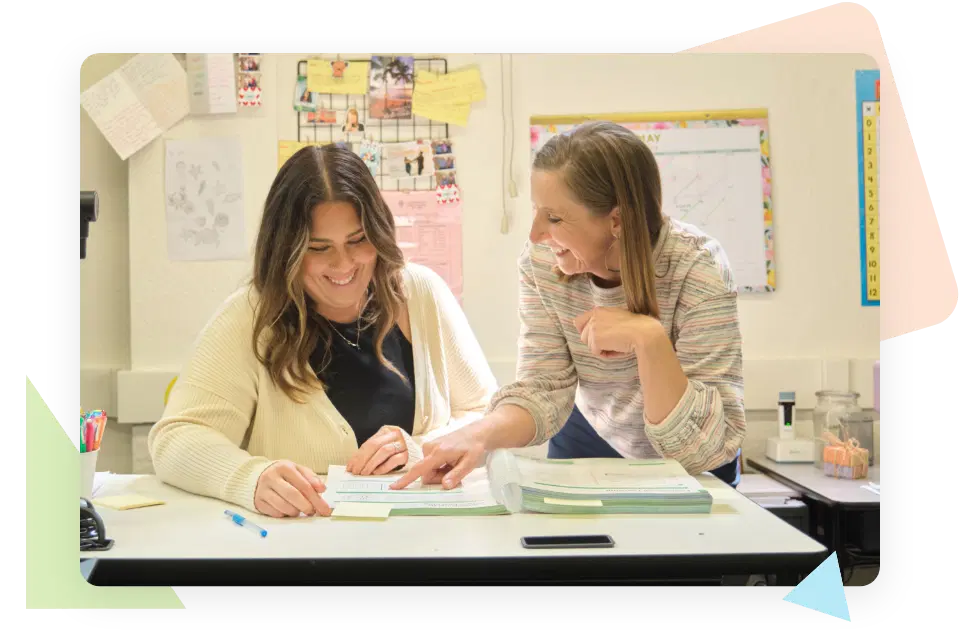
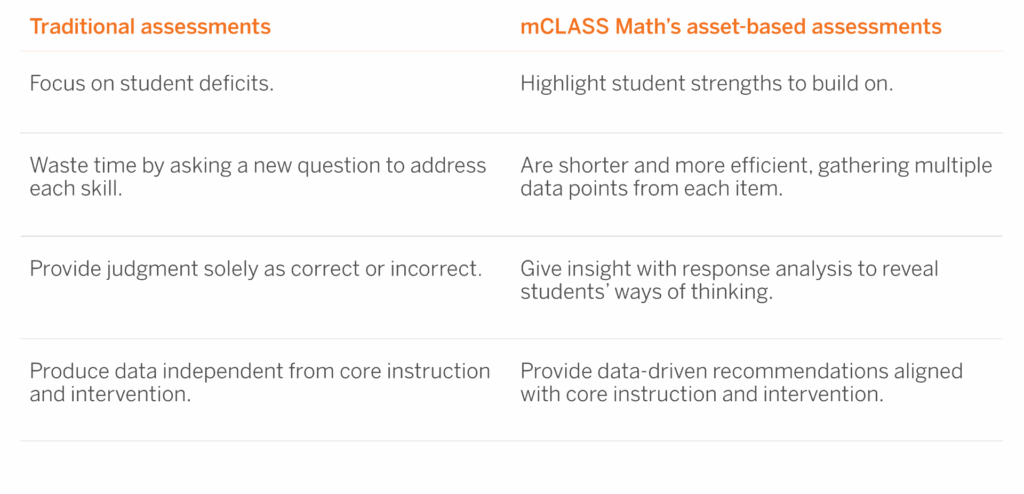
mCLASS Math Texas Benchmark Assessments
- Are administered digitally to the whole class three times a year (BOY, MOY, EOY) for growth measure.
- Allow teachers to see student work in real time throughout assessments.
- Include diagnostic capabilities to further target Tier 2 & Tier 3 intervention areas.
- Identify the specific areas of strengths and development to inform differentiation.
- Provide support and flags for potential risk of dyscalculia.
mCLASS Math Texas Progress Monitoring
- Helps teachers monitor a student’s math performance with a
15-minute assessment between mCLASS Benchmark assessments. - Informs teachers if tiered interventions require adjustment to improve student learning.
Validated by research
We’re thrilled to announce that mCLASS Math Texas is undergoing an official third-party study conducted by WestEd, a nonpartisan, nonprofit research, development, and service agency. This in-depth validation analysis aligns with our commitment to transparency, data-driven enhancement, and providing the most effective educational tools for our users. The findings of this study will be available by fall 2025. Stay tuned to learn how mCLASS Math Texas will revolutionize your math assessment experience.

Data informs instruction.
The integrated insights and intervention recommendations of mCLASS Math Texas empower teachers to implement timely scaffolds and targeted intervention when needed. Following screening and progress monitoring, teachers can differentiate when, where, and how it matters most with customizable, high-impact instructional resources to support all learners.
One integrated math solution
Amplify’s comprehensive math suite, Amplify Desmos Math Texas K–5, provides seamless alignment to help teachers diagnose and capitalize on student strengths, foster deep investment, and build student agency.
Everything is in one place—with screening and progress monitoring, core instruction, integrated personalized learning, and embedded intervention teachers can trust.
See Amplify CKLA Skills in action.
Step inside a kindergarten classroom and watch students light up during a fun, interactive lesson. From phonics and decoding to fluency, see how structured practice with Amplify CKLA Skills builds the confidence and abilities students need to become strong readers.
Follow along as a real teacher brings Unit 7, Lesson 10: Review Single-Syllable, Short-Vowel Words to life. You’ll see students building foundational reading skills—and you might even pick up a few instructional tips along the way!

Inside the classroom
Oral segmenting
The lesson kicks off with a phonemic warm-up: segmenting words like frost and raising a finger for each sound. After practicing together, individual students take turns modeling for the class, blending movement and sound to show what they know.
Sound/spelling review
The teacher presents cards with letters and digraphs, prompting the whole class to say the sounds and match them to hand motions. She traces key letters, reinforces spelling patterns, and invites individual students to identify sounds, letters, and digraphs aloud.
Spelling and handwriting practice
Students follow along as the teacher models how to identify, read, and write words with digraphs, first working together and then on their own, while the teacher moves around the room to offer guidance. This routine supports phonics, spelling, and handwriting all at once.
Introduce the story
Students review digraphs they’ve just practiced by identifying and circling them in sample words they’ll encounter in an upcoming story. Then, they set a purpose for reading: getting ready to listen for key details.
Read the story
The teacher models fluent reading using a big book. Then, the class reads aloud together, tracking each word with their fingers. To wrap up, students point out digraphs, punctuation, and details in the story to show what they’ve learned.
Discuss the story
Students respond to questions about the story, first as a class and then with a partner, using the book to support their answers. They listen closely to their partners, build on each other’s thinking, and share their partners’ ideas with the whole class.
Partner reading
Students reread the story in pairs, applying their decoding skills together. Because the text is 100% decodable, they can rely on what they’ve learned and on each other when they get stuck. The teacher stays close by to offer support as needed.
What is mCLASS?
mCLASS is a best-in-class assessment platform that houses a suite of proven, gold-standard assessment measures and tools that can be flexibly combined to meet the unique literacy needs of both teachers and students across grades K–6, including:
- Universal screening
- Diagnostic assessment
- Dyslexia screening
- Text Reading and Comprehension (a.k.a. running records via mCLASS: Reading 3D)
- Progress monitoring
- Dual language reporting
- Targeted teacher-led instruction
What is the DIBELS 8th Edition assessment?
Developed by the University of Oregon, the DIBELS 8th Edition is the latest version of the DIBELS® (Dynamic Indicators of Basic Early Literacy Skills) assessment.
With this latest version, the University of Oregon Center on Teaching and Learning (UO CTL) made significant efforts to ensure measures would meet state-level screening requirements for universal screening, diagnostic assessment, and dyslexia screening. To support this, measures were updated based on the latest research to meet increased standards of reliability and validity. In addition, adaptive procedures and discontinue rules focus on the assessment of priority skills and prevent over-testing.
Summary of changes:
- Consistent measures within grades will provide improved growth measurement.
- All subtests have been revised to be grade-specific and to increase in difficulty, covering a full progression of skills and minimizing floor and ceiling effects. This provides the opportunity for students to demonstrate what they know and further pinpoint what they don’t know.
- Phoneme Segmentation Fluency replaces First Sound Fluency. The expanded coverage minimizes floor effect and provides information about difficulty in Phonemic Awareness skills without the additional First Sound Fluency measure.
- A new subtest, Word Reading Fluency, helps identify students with poor sight word reading skills that other subtests miss.
- For all measures, the basic scoring procedures remain the same. For Nonsense Word Fluency, credit is given for recording words as whole words even if the student misses in the first attempt.
- Oral Reading Fluency is now only one passage, instead of three. Retell has been removed. Thus, Oral Reading Fluency assessment will take a third of the time.
Assessment measures by grade
| DIBELS measures at each grade level | |||||
| Measure | Grade K | Grade 1 | Grade 2 | Grade 3 | Grades 4–6 |
| Letter naming fluency | |
|
|||
| Phonemic segmentation fluency | |
|
|||
| Nonsense word fluency | |
|
|
|
|
| Word reading fluency | |
|
|
|
|
| Oral reading fluency | |
|
|
|
|
| Maze (basic comprehension) | |
|
|
||
| Amplify measures at each grade level | |||||
| Oral language | |
|
|
|
|
| Vocabulary | |
|
|
|
|
Assessment measures sample videos
DIBELS 8th Edition measure: Phonemic Segmentation Fluency (PSF)
DIBELS 8th Edition measure: Nonsense Word Fluency (NWF)
DIBELS 8th Edition measure: Letter Naming Fluency (LNF)
DIBELS 8th Edition measure: Word Reading Fluency (WRF)
DIBELS 8th Edition measure: Oral Reading Fluency (ORF)
What makes mCLASS with DIBELS 8th Edition different?
mCLASS with DIBELS 8th Edition combines the power of the mCLASS assessment platform and the effectiveness of the DIBELS 8th Edition assessment measures. As a result – educators are empowered with the latest and greatest assessment tool.
More than a test, mCLASS with DIBELS 8th Edition is an integrated system that closes the knowing-doing gap by helping teachers take immediate instructional action that’s right for each and every student.
Assessment systems must enable and compel educators to answer not just the “What” questions, but also the “So What” and “Now What” questions. These are the questions that are essential in transforming classroom instruction, and the questions that mCLASS with DIBELS 8th Edition helps teachers answer with confidence.
What makes mCLASS with DIBELS 8th Edition different?
- It gives teachers access to the latest digital version of the DIBELS assessment. Amplify is the only licensed provider of the digital DIBELS 8th Edition assessment. As such, our solution is the only one to enhance the DIBELS 8th Edition assessment with the power, reliability, and quickness of the mCLASS system.
- It makes it faster and easier to understand where every student is in their early literacy journey. By combining 1:1 observational diagnostic assessments, dyslexia screening, progress monitoring, instant scoring, rigorous reporting, automatic student grouping, and targeted instruction all in one place, it reduces the instructional delays associated with manual scoring, manual data analysis, and manual lesson planning.
- It makes every instructional minute count. In addition to one-minute measures that quickly gauge student progress toward reading proficiency, it leverages a teacher’s most powerful instructional tool — their own 1:1 observations.
- It drives growth more efficiently. Rather than relying on broad composite scores alone, granular data and in-depth insights for every student help teachers pinpoint exact skill gaps and areas of unfinished learning, making whole-group, small-group, and 1:1 instruction more targeted and effective.
- It saves teachers time. Instant reports, automatic student groups, and ready-to-teach lessons mean teachers spend less time cobbling together materials and more time working directly with students and responding to their needs.
How does mCLASS with DIBELS 8th Edition support screening for dyslexia risk?
DIBELS 8th Edition measures have been updated based on the latest research. They now offer stronger measures of processing speed, phonological awareness, and alphabetic principles for dyslexia screening purposes.
To support this, a new subtest in Word Reading Fluency was introduced and revisions were made to Letter Naming Fluency, Phonemic Segmentation Fluency, and Nonsense Fluency subtests to improve their ability to screen for deficits commonly associated with dyslexia risk, such as phonological awareness, rapid naming ability, and alphabetic principle. These measures provide early warning signs for neurological processing difficulties that contribute to risk for dyslexia (Wolf & Bowers, 1999; Denckla & Rudel, 1974).
Moreover, measures in Oral Language and Vocabulary are included to provide additional information to help evaluate additional risk areas associated with dyslexia risk.
How does mCLASS with DIBELS 8th Edition support the use of running records?
Track your students’ reading progress from every angle with the Text Reading and Comprehension (TRC) assessment. When TRC is paired with the DIBELS 8th Edition assessment, classroom teachers unlock the ability to record reading behaviors through running digital records. Available in English and Spanish, it measures reading comprehension and provides insight into how each student finds meaning in text.

Measures include:
- Lesson plans for whole class, small-group, and one-on-one instruction.
- Small-group advisor, which organizes students into groups based on strengths and gaps.
- Item-level advisor, which drills deep into student responses to uncover patterns, strengths, and gaps.
- Instructional resources for each student’s parent/guardian(s).
How does mCLASS with DIBELS 8th Edition turn data into instant action?
mCLASS with DIBELS 8th Edition gives you instant results and clear next steps for each student.
Quick and actionable reports provide detailed insight into students’ reading development across foundational literacy skills for teachers, specialists, administrators, and caregivers.
Diagnostic assessment
mCLASS with DIBELS 8th Edition analyzes individual student response data through a proprietary scoring algorithm that pinpoints a student’s specific area(s) of growth and improvement, providing classroom teachers in-depth insight into a students’ instructional needs.
Ready-to-teach instruction
Immediately following the analysis of individual student responses, mCLASS with DIBELS 8th Edition provides an in-depth diagnostic report complete with suggested next steps, also known as “mCLASS Instruction.”
mCLASS Instruction evaluates each student’s responses on each individual subtest and instantly:
- Provides a list of specific needs by student, such as struggling with medial vowel sounds or difficulty reading words with consonant blends.
- Groups students automatically based on similar discrete skill needs, not simply composite scores like other assessment tools.
- Recommends a variety of ready-to-teach lessons that specifically target each individual student’s areas of need or common areas of need for small-group instruction.
Classroom skill and benchmark summary
The Classroom Skill Summary report is a dashboard showing benchmark performance on each skill. Teachers can use it to determine which skill areas need instructional focus at a classroom level.
The Classroom Benchmark Summary report is a classroom-wide view of overall reading performance. Teachers can use this report to determine if composite scores improved, declined, or remained the same each semester.
Detailed benchmark performance
Teachers can see each student’s performance during the current school year, on each subtest as well as the overall composite. The benchmark goal displays below the subtest name when applicable. The ability to sort the columns in this report gives teachers more flexibility to analyze data the way they prefer.
Dyslexia screening
Identify students who are at risk for reading difficulties, including dyslexia, based on their results from foundational skills measures and additional measures as needed by local policies.
Progress monitoring summary
See which subtests have been assessed since the most recent benchmark assessment, how students performed on the three most recent progress monitoring assessments for each measure, and which students have not been progress monitored since the benchmark assessment.
Goal setting tool
The Zones of Growth (ZoG) analysis uses a rich set of national data to determine student goals for the next benchmark period. Teachers can use the Goal Setting Tool to view these recommended goals or modify the default goals for individual students as they see fit, if the default goal is too challenging or not challenging enough.
Growth outcomes
Teachers and interventionists can see each student’s actual growth achieved and how it compares to the goal that was set for the student.
Caregiver supports
The mCLASS Home Connect website houses literacy resources for parents and caregivers, including at-home lessons organized by skill. Our mCLASS parent/caregiver letters in English and Spanish ensure that families know how to best support their child.
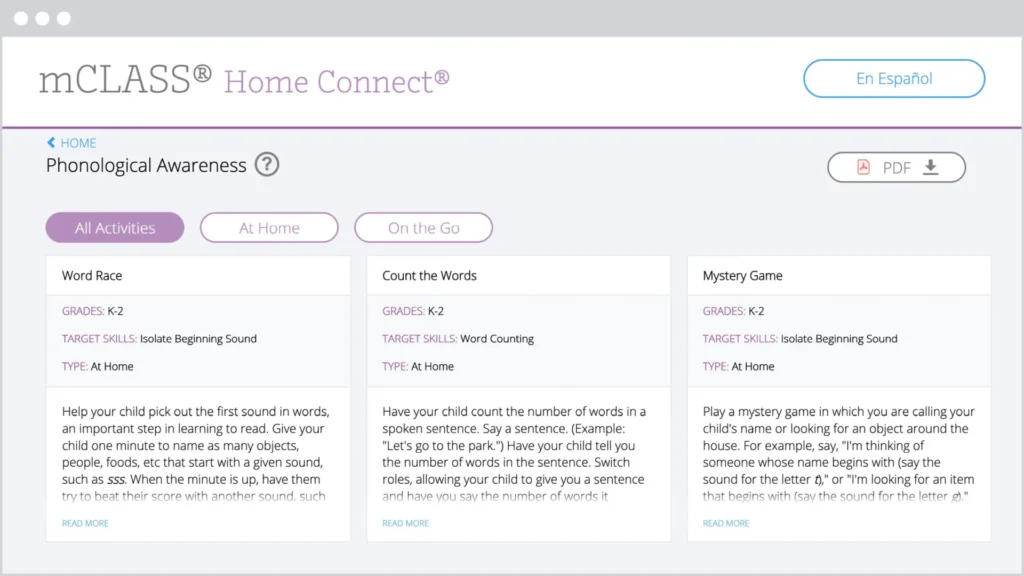
Self-guided tour
Our self-guided tour is a great way to orient yourself to the organization of our mCLASS platform. Click the button below to get started.

Demo access
Follow the instructions below to login to your demo account.
- Click the mCLASS Demo button below.
- Select Log in with Amplify.
- Enter the username: d8demoD
- Enter the password: 1234
- Click the Reading tile.
Once you are logged in:
- Find the Class/Group dropdown field and select Grade 1.
- Right above the Class Summary, click Beginning of Year or Middle of Year and explore the data.
- Scroll down to the class list. Each column within the class list is sortable by clicking the double arrow in the column header.
- Click on any score to see the measure transcript.
- Click on a student’s name to see historical data and progress monitoring graphs.
After exploring the Benchmark tab in the purple bar:
- Click on the Instruction tab.
- If you don’t see groups, click Updated recommendations.
- Explore freely! The Groups, Students, and All Activities tabs have rich information.
- Click the Progress tab.
- Click on Home Connect to see a sample of our caregiver letters.
What is mCLASS?
mCLASS is a best-in-class assessment platform that houses a suite of proven, gold-standard assessment measures and tools that can be flexibly combined to meet the unique literacy needs of both teachers and students across grades K–6, including:
- Universal screening
- Diagnostic assessment
- Dyslexia screening
- Progress monitoring
- Dual language reporting
- Targeted teacher-led instruction
What is the DIBELS 8th Edition assessment?
Developed by the University of Oregon, the DIBELS 8th Edition is the latest version of the DIBELS® (Dynamic Indicators of Basic Early Literacy Skills) assessment.
With this latest version, the University of Oregon Center on Teaching and Learning (UO CTL) made significant efforts to ensure measures would meet state-level screening requirements for universal screening, diagnostic assessment, and dyslexia screening. To support this, measures were updated based on the latest research to meet increased standards of reliability and validity. In addition, adaptive procedures and discontinue rules focus on the assessment of priority skills and prevent over-testing.
Summary of changes:
- Consistent measures within grades will provide improved growth measurement.
- All subtests have been revised to be grade-specific and to increase in difficulty, covering a full progression of skills and minimizing floor and ceiling effects. This provides the opportunity for students to demonstrate what they know and further pinpoint what they don’t know.
- Phoneme Segmentation Fluency replaces First Sound Fluency. The expanded coverage minimizes floor effect and provides information about difficulty in Phonemic Awareness skills without the additional First Sound Fluency measure.
- A new subtest, Word Reading Fluency, helps identify students with poor sight word reading skills that other subtests miss.
- For all measures, the basic scoring procedures remain the same. For Nonsense Word Fluency, credit is given for recording words as whole words even if the student misses in the first attempt.
- Oral Reading Fluency is now only one passage, instead of three. Retell has been removed. Thus, Oral Reading Fluency assessment will take a third of the time.
Assessment measures by grade
| DIBELS measures at each grade level | ||||
| Measure | Grade K | Grade 1 | Grade 2 | Grade 3 |
| Letter naming fluency | | | ||
| Phonemic segmentation fluency | | | ||
| Nonsense word fluency | | | | |
| Word reading fluency | | | | |
| Oral reading fluency | | | | |
| Maze (basic comprehension) | | | ||
| Amplify measures at each grade level | ||||
| Oral language | | | | |
| Vocabulary | | | | |
Assessment measures sample videos
DIBELS 8th Edition measure: Phonemic Segmentation Fluency (PSF)
DIBELS 8th Edition measure: Nonsense Word Fluency (NWF)
DIBELS 8th Edition measure: Letter Naming Fluency (LNF)
DIBELS 8th Edition measure: Word Reading Fluency (WRF)
DIBELS 8th Edition measure: Oral Reading Fluency (ORF)
How is mCLASS with DIBELS 8th Edition different?
mCLASS with DIBELS 8th Edition combines the power of the mCLASS assessment platform and the effectiveness of the DIBELS 8th Edition assessment measures. As a result – educators across the state are empowered with the latest and greatest assessment tool.
More than a test, mCLASS with DIBELS 8th Edition is an integrated system that closes the knowing-doing gap by helping teachers take immediate instructional action that’s right for each and every student.
Assessment systems must enable and compel educators to answer not just the “What” questions, but also the “So What” and “Now What” questions. These are the questions that are essential in transforming classroom instruction, and the questions that mCLASS with DIBELS 8th Edition helps teachers answer with confidence.
How is mCLASS with DIBELS 8th Edition different?
- It gives teachers access to the latest digital version of the DIBELS assessment. Amplify is the only licensed provider of the digital DIBELS 8th Edition assessment. As such, our solution is the only one to enhance the DIBELS 8th Edition assessment with the power, reliability, and quickness of the mCLASS system.
- It makes it faster and easier to understand where every student is in their early literacy journey. By combining 1:1 observational diagnostic assessments, dyslexia screening, progress monitoring, instant scoring, rigorous reporting, automatic student grouping, and targeted instruction all in one place, it reduces the instructional delays associated with manual scoring, manual data analysis, and manual lesson planning.
- It brings more equity to the classroom. When used in conjunction with mCLASS Lectura, teachers have access to dual language reports that highlight a student’s strengths and weaknesses in both English and Spanish.
- It makes every instructional minute count. In addition to one-minute measures that quickly gauge student progress toward reading proficiency, it leverages a teacher’s most powerful instructional tool — their own 1:1 observations.
- It drives growth more efficiently. Rather than relying on broad composite scores alone, granular data and in-depth insights for every student help teachers pinpoint exact skill gaps and areas of unfinished learning, making whole-group, small-group, and 1:1 instruction more targeted and effective.
- It saves teachers time. Instant reports, automatic student groups, and ready-to-teach lessons mean teachers spend less time cobbling together materials and more time working directly with students and responding to their needs.
How does mCLASS with DIBELS 8th Edition support screening for dyslexia risk?
DIBELS 8th Edition measures have been updated based on the latest research. They now offer stronger measures of processing speed, phonological awareness, and alphabetic principles for dyslexia screening purposes.
To support this, a new subtest in Word Reading Fluency was introduced and revisions were made to Letter Naming Fluency, Phonemic Segmentation Fluency, and Nonsense Fluency subtests to improve their ability to screen for deficits commonly associated with dyslexia risk, such as phonological awareness, rapid naming ability, and alphabetic principle. These measures provide early warning signs for neurological processing difficulties that contribute to risk for dyslexia (Wolf & Bowers, 1999; Denckla & Rudel, 1974).
Moreover, measures in Oral Language and Vocabulary are included to provide additional information to help evaluate additional risk areas associated with dyslexia risk.
How does mCLASS with DIBELS 8th Edition turn data into instant action?
mCLASS with DIBELS 8th Edition gives you instant results and clear next steps for each student.
Quick and actionable reports provide detailed insight into students’ reading development across foundational literacy skills for teachers, specialists, administrators, and caregivers.

Diagnostic assessment
mCLASS with DIBELS 8th Edition analyzes individual student response data through a scoring algorithm which aligns to the Colorado Department of Education’s stated purpose of a diagnostic assessment.
Our innovative approach to diagnostic assessment leverages an item-level evaluation of individual student responses in order to provide deeper insights into specific student weaknesses and areas of improvement. mCLASS with DIBELS 8th Edition analyzes individual student response data through a scoring algorithm which aligns to the Colorado Department of Education’s stated purpose of a diagnostic: “… to pinpoint a student’s specific area(s) of weakness and provide in-depth information about students’ skills and instructional needs.”
Ready-to-teach instruction
Immediately following the analysis of individual student responses, mCLASS with DIBELS 8th Edition provides an in-depth diagnostic report complete with suggested next steps, also known as “mCLASS Instruction.”
mCLASS Instruction evaluates each student’s responses on each individual subtest and instantly:
- Provides a list of specific needs by student, such as struggling with medial vowel sounds or difficulty reading words with consonant blends.
- Groups students automatically based on similar discrete skill needs, not simply composite scores like other assessment tools.
- Recommends a variety of ready-to-teach lessons that specifically target each individual student’s areas of need or common areas of need for small-group instruction.
Classroom skill and benchmark summary
The Classroom Skill Summary report is a dashboard showing benchmark performance on each skill. Teachers can use it to determine which skill areas need instructional focus at a classroom level.
The Classroom Benchmark Summary report is a classroom-wide view of overall reading performance. Teachers can use this report to determine if composite scores improved, declined, or remained the same each semester.
Detailed benchmark performance
Teachers can see each student’s performance during the current school year, on each subtest as well as the overall composite. The benchmark goal displays below the subtest name when applicable. The ability to sort the columns in this report gives teachers more flexibility to analyze data the way they prefer.
Dyslexia screening
Identify students who are at risk for reading difficulties, including dyslexia, based on their results from foundational skills measures and additional measures as needed by local policies.
Progress monitoring summary
See which subtests have been assessed since the most recent benchmark assessment, how students performed on the three most recent progress monitoring assessments for each measure, and which students have not been progress monitored since the benchmark assessment.
Goal setting tool
The Zones of Growth (ZoG) analysis uses a rich set of national data to determine student goals for the next benchmark period. Teachers can use the Goal Setting Tool to view these recommended goals or modify the default goals for individual students as they see fit, if the default goal is too challenging or not challenging enough.
Growth outcomes
Teachers and interventionists can see each student’s actual growth achieved and how it compares to the goal that was set for the student.
Colorado READ Plans
Amplify recommends that a student who is categorized by the DIBELS 8th Edition composite score as “At High Risk” (denoted in all reports as “red”) be considered as potentially having a “Significant Reading Deficiency,” then further diagnosed using mCLASS’ Instruction diagnostics.
When devising a READ Plan, teachers and instructional staff should first consider students at high risk on DIBELS 8th Edition as potentially having a “Significant Reading Deficiency,” and eligible for a READ Plan. Students are then further diagnosed using mCLASS’ Instruction diagnostics. When devising a READ Plan, teachers can rely on the relevant mCLASS Instruction and Reports to comply with the READ Act.
Caregiver supports
The mCLASS Home Connect website houses literacy resources for parents and caregivers, including at-home lessons organized by skill. Our mCLASS parent/caregiver letters in English and Spanish ensure that families know how to best support their child.

Explore our self-guided tour
Our self-guided tour is a great way to orient yourself to the organization of our mCLASS platform. Click the button below to get started.

Contact us
Looking to speak directly with your Colorado representative? Get in touch with a team member by emailing HelloColorado@amplify.com or by calling us directly.
| Enrollment over 2,500 students | Enrollment under 2,500 students |


| Monty LammersSenior Account Executive(719) 964-4501mlammers@amplify.com | Vanessa ScottAccount Executive(602) 690-9216vscott@amplify.com |
What is mCLASS?
mCLASS is a best-in-class assessment platform that houses a suite of proven, gold-standard assessment measures and tools that can be flexibly combined to meet the unique literacy needs of both teachers and students across grades K–6, including:
- Universal screening
- Diagnostic assessment
- Dyslexia screening
- Text Reading and Comprehension (a.k.a. running records via mCLASS: Reading 3D)
- Progress monitoring
- Dual language reporting
- Targeted teacher-led instruction
What is the DIBELS 8th Edition assessment?
Developed by the University of Oregon, the DIBELS 8th Edition is the latest version of the DIBELS® (Dynamic Indicators of Basic Early Literacy Skills) assessment.
With this latest version, the University of Oregon Center on Teaching and Learning (UO CTL) made significant efforts to ensure measures would meet state-level screening requirements for universal screening, diagnostic assessment, and dyslexia screening. To support this, measures were updated based on the latest research to meet increased standards of reliability and validity. In addition, adaptive procedures and discontinue rules focus on the assessment of priority skills and prevent over-testing.
Summary of changes:
- Consistent measures within grades will provide improved growth measurement.
- All subtests have been revised to be grade-specific and to increase in difficulty, covering a full progression of skills and minimizing floor and ceiling effects. This provides the opportunity for students to demonstrate what they know and further pinpoint what they don’t know.
- Phoneme Segmentation Fluency replaces First Sound Fluency. The expanded coverage minimizes floor effect and provides information about difficulty in Phonemic Awareness skills without the additional First Sound Fluency measure.
- A new subtest, Word Reading Fluency, helps identify students with poor sight word reading skills that other subtests miss.
- For all measures, the basic scoring procedures remain the same. For Nonsense Word Fluency, credit is given for recording words as whole words even if the student misses in the first attempt.
- Oral Reading Fluency is now only one passage, instead of three. Retell has been removed. Thus, Oral Reading Fluency assessment will take a third of the time.
Assessment measures by grade
| DIBELS measures at each grade level | |||||
| Measure | Grade K | Grade 1 | Grade 2 | Grade 3 | Grades 4–6 |
| Letter naming fluency | |
|
|||
| Phonemic segmentation fluency | |
|
|||
| Nonsense word fluency | |
|
|
|
|
| Word reading fluency | |
|
|
|
|
| Oral reading fluency | |
|
|
|
|
| Maze (basic comprehension) | |
|
|
||
| Amplify measures at each grade level | |||||
| Oral language | |
|
|
|
|
| Vocabulary | |
|
|
|
|
Assessment measures sample videos
DIBELS 8th Edition measure: Phonemic Segmentation Fluency (PSF)
DIBELS 8th Edition measure: Nonsense Word Fluency (NWF)
DIBELS 8th Edition measure: Letter Naming Fluency (LNF)
DIBELS 8th Edition measure: Word Reading Fluency (WRF)
DIBELS 8th Edition measure: Oral Reading Fluency (ORF)
What makes mCLASS with DIBELS 8th Edition different?
mCLASS with DIBELS 8th Edition combines the power of the mCLASS assessment platform and the effectiveness of the DIBELS 8th Edition assessment measures. As a result – educators are empowered with the latest and greatest assessment tool.
More than a test, mCLASS with DIBELS 8th Edition is an integrated system that closes the knowing-doing gap by helping teachers take immediate instructional action that’s right for each and every student.
Assessment systems must enable and compel educators to answer not just the “What” questions, but also the “So What” and “Now What” questions. These are the questions that are essential in transforming classroom instruction, and the questions that mCLASS with DIBELS 8th Edition helps teachers answer with confidence.
What makes mCLASS with DIBELS 8th Edition different?
- It gives teachers access to the latest digital version of the DIBELS assessment. Amplify is the only licensed provider of the digital DIBELS 8th Edition assessment. As such, our solution is the only one to enhance the DIBELS 8th Edition assessment with the power, reliability, and quickness of the mCLASS system.
- It makes it faster and easier to understand where every student is in their early literacy journey. By combining 1:1 observational diagnostic assessments, dyslexia screening, progress monitoring, instant scoring, rigorous reporting, automatic student grouping, and targeted instruction all in one place, it reduces the instructional delays associated with manual scoring, manual data analysis, and manual lesson planning.
- It brings more equity to the classroom. When used in conjunction with mCLASS Lectura, teachers have access to dual language reports that highlight a student’s strengths and weaknesses in both English and Spanish.
- It makes every instructional minute count. In addition to one-minute measures that quickly gauge student progress toward reading proficiency, it leverages a teacher’s most powerful instructional tool — their own 1:1 observations.
- It drives growth more efficiently. Rather than relying on broad composite scores alone, granular data and in-depth insights for every student help teachers pinpoint exact skill gaps and areas of unfinished learning, making whole-group, small-group, and 1:1 instruction more targeted and effective.
- It saves teachers time. Instant reports, automatic student groups, and ready-to-teach lessons mean teachers spend less time cobbling together materials and more time working directly with students and responding to their needs.
How does mCLASS with DIBELS 8th Edition support screening for dyslexia risk?
DIBELS 8th Edition measures have been updated based on the latest research. They now offer stronger measures of processing speed, phonological awareness, and alphabetic principles for dyslexia screening purposes.
To support this, a new subtest in Word Reading Fluency was introduced and revisions were made to Letter Naming Fluency, Phonemic Segmentation Fluency, and Nonsense Fluency subtests to improve their ability to screen for deficits commonly associated with dyslexia risk, such as phonological awareness, rapid naming ability, and alphabetic principle. These measures provide early warning signs for neurological processing difficulties that contribute to risk for dyslexia (Wolf & Bowers, 1999; Denckla & Rudel, 1974).
Moreover, measures in Oral Language and Vocabulary are included to provide additional information to help evaluate additional risk areas associated with dyslexia risk.
How does mCLASS with DIBELS 8th Edition support the use of running records?
Track your students’ reading progress from every angle with the Text Reading and Comprehension (TRC) assessment. When TRC is paired with the DIBELS 8th Edition assessment, classroom teachers unlock the ability to record reading behaviors through running digital records. Available in English and Spanish, it measures reading comprehension and provides insight into how each student finds meaning in text.
Measures include:
- Lesson plans for whole class, small-group, and one-on-one instruction.
- Small-group advisor, which organizes students into groups based on strengths and gaps.
- Item-level advisor, which drills deep into student responses to uncover patterns, strengths, and gaps.
- Instructional resources for each student’s parent/guardian(s).
How does mCLASS with DIBELS 8th Edition turn data into instant action?
mCLASS with DIBELS 8th Edition gives you instant results and clear next steps for each student.
Quick and actionable reports provide detailed insight into students’ reading development across foundational literacy skills for teachers, specialists, administrators, and caregivers.
Diagnostic assessment
mCLASS with DIBELS 8th Edition analyzes individual student response data through a proprietary scoring algorithm that pinpoints a student’s specific area(s) of growth and improvement, providing classroom teachers in-depth insight into a students’ instructional needs.
Ready-to-teach instruction
Immediately following the analysis of individual student responses, mCLASS with DIBELS 8th Edition provides an in-depth diagnostic report complete with suggested next steps, also known as “mCLASS Instruction.”
mCLASS Instruction evaluates each student’s responses on each individual subtest and instantly:
- Provides a list of specific needs by student, such as struggling with medial vowel sounds or difficulty reading words with consonant blends.
- Groups students automatically based on similar discrete skill needs, not simply composite scores like other assessment tools.
- Recommends a variety of ready-to-teach lessons that specifically target each individual student’s areas of need or common areas of need for small-group instruction.
Classroom skill and benchmark summary
The Classroom Skill Summary report is a dashboard showing benchmark performance on each skill. Teachers can use it to determine which skill areas need instructional focus at a classroom level.
The Classroom Benchmark Summary report is a classroom-wide view of overall reading performance. Teachers can use this report to determine if composite scores improved, declined, or remained the same each semester.
Detailed benchmark performance
Teachers can see each student’s performance during the current school year, on each subtest as well as the overall composite. The benchmark goal displays below the subtest name when applicable. The ability to sort the columns in this report gives teachers more flexibility to analyze data the way they prefer.
Dyslexia screening
Identify students who are at risk for reading difficulties, including dyslexia, based on their results from foundational skills measures and additional measures as needed by local policies.
Progress monitoring summary
See which subtests have been assessed since the most recent benchmark assessment, how students performed on the three most recent progress monitoring assessments for each measure, and which students have not been progress monitored since the benchmark assessment.
Goal setting tool
The Zones of Growth (ZoG) analysis uses a rich set of national data to determine student goals for the next benchmark period. Teachers can use the Goal Setting Tool to view these recommended goals or modify the default goals for individual students as they see fit, if the default goal is too challenging or not challenging enough.
Growth outcomes
Teachers and interventionists can see each student’s actual growth achieved and how it compares to the goal that was set for the student.
Caregiver supports
The mCLASS Home Connect website houses literacy resources for parents and caregivers, including at-home lessons organized by skill. Our mCLASS parent/caregiver letters in English and Spanish ensure that families know how to best support their child.
What is mCLASS?
mCLASS is a best-in-class assessment platform that houses a suite of proven, gold-standard assessment measures and tools that can be flexibly combined to meet the unique literacy needs of both teachers and students across grades K–6, including:
- Universal screening
- Diagnostic assessment
- Dyslexia screening
- Text Reading and Comprehension (a.k.a. running records via mCLASS: Reading 3D)
- Progress monitoring
- Dual language reporting
- Targeted teacher-led instruction
What is the DIBELS 8th Edition assessment?
Developed by the University of Oregon, the DIBELS 8th Edition is the latest version of the DIBELS® (Dynamic Indicators of Basic Early Literacy Skills) assessment.
With this latest version, the University of Oregon Center on Teaching and Learning (UO CTL) made significant efforts to ensure measures would meet state-level screening requirements for universal screening, diagnostic assessment, and dyslexia screening. To support this, measures were updated based on the latest research to meet increased standards of reliability and validity. In addition, adaptive procedures and discontinue rules focus on the assessment of priority skills and prevent over-testing.
Summary of changes:
- Consistent measures within grades will provide improved growth measurement.
- All subtests have been revised to be grade-specific and to increase in difficulty, covering a full progression of skills and minimizing floor and ceiling effects. This provides the opportunity for students to demonstrate what they know and further pinpoint what they don’t know.
- Phoneme Segmentation Fluency replaces First Sound Fluency. The expanded coverage minimizes floor effect and provides information about difficulty in Phonemic Awareness skills without the additional First Sound Fluency measure.
- A new subtest, Word Reading Fluency, helps identify students with poor sight word reading skills that other subtests miss.
- For all measures, the basic scoring procedures remain the same. For Nonsense Word Fluency, credit is given for recording words as whole words even if the student misses in the first attempt.
- Oral Reading Fluency is now only one passage, instead of three. Retell has been removed. Thus, Oral Reading Fluency assessment will take a third of the time.
Assessment measures by grade
| DIBELS measures at each grade level | |||||
| Measure | Grade K | Grade 1 | Grade 2 | Grade 3 | Grades 4–6 |
| Letter naming fluency | |
|
|||
| Phonemic segmentation fluency | |
|
|||
| Nonsense word fluency | |
|
|
|
|
| Word reading fluency | |
|
|
|
|
| Oral reading fluency | |
|
|
|
|
| Maze (basic comprehension) | |
|
|
||
| Amplify measures at each grade level | |||||
| Oral language | |
|
|
|
|
| Vocabulary | |
|
|
|
|
Assessment measures sample videos
DIBELS 8th Edition measure: Phonemic Segmentation Fluency (PSF)
DIBELS 8th Edition measure: Nonsense Word Fluency (NWF)
DIBELS 8th Edition measure: Letter Naming Fluency (LNF)
DIBELS 8th Edition measure: Word Reading Fluency (WRF)
DIBELS 8th Edition measure: Oral Reading Fluency (ORF)
What makes mCLASS with DIBELS 8th Edition different?
mCLASS with DIBELS 8th Edition combines the power of the mCLASS assessment platform and the effectiveness of the DIBELS 8th Edition assessment measures. As a result – educators are empowered with the latest and greatest assessment tool.
More than a test, mCLASS with DIBELS 8th Edition is an integrated system that closes the knowing-doing gap by helping teachers take immediate instructional action that’s right for each and every student.
Assessment systems must enable and compel educators to answer not just the “What” questions, but also the “So What” and “Now What” questions. These are the questions that are essential in transforming classroom instruction, and the questions that mCLASS with DIBELS 8th Edition helps teachers answer with confidence.
What makes mCLASS with DIBELS 8th Edition different?
- It gives teachers access to the latest digital version of the DIBELS assessment. Amplify is the only licensed provider of the digital DIBELS 8th Edition assessment. As such, our solution is the only one to enhance the DIBELS 8th Edition assessment with the power, reliability, and quickness of the mCLASS system.
- It makes it faster and easier to understand where every student is in their early literacy journey. By combining 1:1 observational diagnostic assessments, dyslexia screening, progress monitoring, instant scoring, rigorous reporting, automatic student grouping, and targeted instruction all in one place, it reduces the instructional delays associated with manual scoring, manual data analysis, and manual lesson planning.
- It brings more equity to the classroom. When used in conjunction with mCLASS Lectura, teachers have access to dual language reports that highlight a student’s strengths and weaknesses in both English and Spanish.
- It makes every instructional minute count. In addition to one-minute measures that quickly gauge student progress toward reading proficiency, it leverages a teacher’s most powerful instructional tool — their own 1:1 observations.
- It drives growth more efficiently. Rather than relying on broad composite scores alone, granular data and in-depth insights for every student help teachers pinpoint exact skill gaps and areas of unfinished learning, making whole-group, small-group, and 1:1 instruction more targeted and effective.
- It saves teachers time. Instant reports, automatic student groups, and ready-to-teach lessons mean teachers spend less time cobbling together materials and more time working directly with students and responding to their needs.
How does mCLASS with DIBELS 8th Edition support screening for dyslexia risk?
DIBELS 8th Edition measures have been updated based on the latest research. They now offer stronger measures of processing speed, phonological awareness, and alphabetic principles for dyslexia screening purposes.
To support this, a new subtest in Word Reading Fluency was introduced and revisions were made to Letter Naming Fluency, Phonemic Segmentation Fluency, and Nonsense Fluency subtests to improve their ability to screen for deficits commonly associated with dyslexia risk, such as phonological awareness, rapid naming ability, and alphabetic principle. These measures provide early warning signs for neurological processing difficulties that contribute to risk for dyslexia (Wolf & Bowers, 1999; Denckla & Rudel, 1974).
Moreover, measures in Oral Language and Vocabulary are included to provide additional information to help evaluate additional risk areas associated with dyslexia risk.
How does mCLASS with DIBELS 8th Edition support the use of running records?
Track your students’ reading progress from every angle with the Text Reading and Comprehension (TRC) assessment. When TRC is paired with the DIBELS 8th Edition assessment, classroom teachers unlock the ability to record reading behaviors through running digital records. Available in English and Spanish, it measures reading comprehension and provides insight into how each student finds meaning in text.

Measures include:
- Lesson plans for whole class, small-group, and one-on-one instruction.
- Small-group advisor, which organizes students into groups based on strengths and gaps.
- Item-level advisor, which drills deep into student responses to uncover patterns, strengths, and gaps.
- Instructional resources for each student’s parent/guardian(s).
How does mCLASS with DIBELS 8th Edition turn data into instant action?
mCLASS with DIBELS 8th Edition gives you instant results and clear next steps for each student.
Quick and actionable reports provide detailed insight into students’ reading development across foundational literacy skills for teachers, specialists, administrators, and caregivers.

Diagnostic assessment
mCLASS with DIBELS 8th Edition analyzes individual student response data through a proprietary scoring algorithm that pinpoints a student’s specific area(s) of growth and improvement, providing classroom teachers in-depth insight into a students’ instructional needs.
Ready-to-teach instruction
Immediately following the analysis of individual student responses, mCLASS with DIBELS 8th Edition provides an in-depth diagnostic report complete with suggested next steps, also known as “mCLASS Instruction.”
mCLASS Instruction evaluates each student’s responses on each individual subtest and instantly:
- Provides a list of specific needs by student, such as struggling with medial vowel sounds or difficulty reading words with consonant blends.
- Groups students automatically based on similar discrete skill needs, not simply composite scores like other assessment tools.
- Recommends a variety of ready-to-teach lessons that specifically target each individual student’s areas of need or common areas of need for small-group instruction.
Classroom skill and benchmark summary
The Classroom Skill Summary report is a dashboard showing benchmark performance on each skill. Teachers can use it to determine which skill areas need instructional focus at a classroom level.
The Classroom Benchmark Summary report is a classroom-wide view of overall reading performance. Teachers can use this report to determine if composite scores improved, declined, or remained the same each semester.
Detailed benchmark performance
Teachers can see each student’s performance during the current school year, on each subtest as well as the overall composite. The benchmark goal displays below the subtest name when applicable. The ability to sort the columns in this report gives teachers more flexibility to analyze data the way they prefer.
Dyslexia screening
Identify students who are at risk for reading difficulties, including dyslexia, based on their results from foundational skills measures and additional measures as needed by local policies.
Progress monitoring summary
See which subtests have been assessed since the most recent benchmark assessment, how students performed on the three most recent progress monitoring assessments for each measure, and which students have not been progress monitored since the benchmark assessment.
Goal setting tool
The Zones of Growth (ZoG) analysis uses a rich set of national data to determine student goals for the next benchmark period. Teachers can use the Goal Setting Tool to view these recommended goals or modify the default goals for individual students as they see fit, if the default goal is too challenging or not challenging enough.
Growth outcomes
Teachers and interventionists can see each student’s actual growth achieved and how it compares to the goal that was set for the student.
Caregiver supports
The mCLASS Home Connect website houses literacy resources for parents and caregivers, including at-home lessons organized by skill. Our mCLASS parent/caregiver letters in English and Spanish ensure that families know how to best support their child.

Self-guided tour
Our self-guided tour is a great way to orient yourself to the organization of our mCLASS platform. Click the button below to get started.

Demo access
Follow the instructions below to login to your demo account.
- Click the mCLASS Demo button below.
- Select Log in with Amplify.
- Enter the username: d8demoD
- Enter the password: 1234
- Click the Reading tile.
Once you are logged in:
- Find the Class/Group dropdown field and select Grade 1.
- Right above the Class Summary, click Beginning of Year or Middle of Year and explore the data.
- Scroll down to the class list. Each column within the class list is sortable by clicking the double arrow in the column header.
- Click on any score to see the measure transcript.
- Click on a student’s name to see historical data and progress monitoring graphs.
After exploring the Benchmark tab in the purple bar:
- Click on the Instruction tab.
- If you don’t see groups, click Updated recommendations.
- Explore freely! The Groups, Students, and All Activities tabs have rich information.
- Click the Progress tab.
- Click on Home Connect to see a sample of our caregiver letters.
What is mCLASS?
mCLASS is a best-in-class assessment platform that houses a suite of proven, gold-standard assessment measures and tools that can be flexibly combined to meet the unique literacy needs of both teachers and students across grades K–6, including:
- Universal screening
- Diagnostic assessment
- Dyslexia screening
- Text Reading and Comprehension (a.k.a. running records via mCLASS: Reading 3D)
- Progress monitoring
- Dual language reporting
- Targeted teacher-led instruction
What is the DIBELS 8th Edition assessment?
Developed by the University of Oregon, the DIBELS 8th Edition is the latest version of the DIBELS® (Dynamic Indicators of Basic Early Literacy Skills) assessment.
With this latest version, the University of Oregon Center on Teaching and Learning (UO CTL) made significant efforts to ensure measures would meet state-level screening requirements for universal screening, diagnostic assessment, and dyslexia screening. To support this, measures were updated based on the latest research to meet increased standards of reliability and validity. In addition, adaptive procedures and discontinue rules focus on the assessment of priority skills and prevent over-testing.
Summary of changes:
- Consistent measures within grades will provide improved growth measurement.
- All subtests have been revised to be grade-specific and to increase in difficulty, covering a full progression of skills and minimizing floor and ceiling effects. This provides the opportunity for students to demonstrate what they know and further pinpoint what they don’t know.
- Phoneme Segmentation Fluency replaces First Sound Fluency. The expanded coverage minimizes floor effect and provides information about difficulty in Phonemic Awareness skills without the additional First Sound Fluency measure.
- A new subtest, Word Reading Fluency, helps identify students with poor sight word reading skills that other subtests miss.
- For all measures, the basic scoring procedures remain the same. For Nonsense Word Fluency, credit is given for recording words as whole words even if the student misses in the first attempt.
- Oral Reading Fluency is now only one passage, instead of three. Retell has been removed. Thus, Oral Reading Fluency assessment will take a third of the time.
Assessment measures by grade
| DIBELS measures at each grade level | |||||
| Measure | Grade K | Grade 1 | Grade 2 | Grade 3 | Grades 4–6 |
| Letter naming fluency | |
|
|||
| Phonemic segmentation fluency | |
|
|||
| Nonsense word fluency | |
|
|
|
|
| Word reading fluency | |
|
|
|
|
| Oral reading fluency | |
|
|
|
|
| Maze (basic comprehension) | |
|
|
||
| Amplify measures at each grade level | |||||
| Oral language | |
|
|
|
|
| Vocabulary | |
|
|
|
|
Assessment measures sample videos
DIBELS 8th Edition measure: Phonemic Segmentation Fluency (PSF)
DIBELS 8th Edition measure: Nonsense Word Fluency (NWF)
DIBELS 8th Edition measure: Letter Naming Fluency (LNF)
DIBELS 8th Edition measure: Word Reading Fluency (WRF)
DIBELS 8th Edition measure: Oral Reading Fluency (ORF)
What makes mCLASS with DIBELS 8th Edition different?
mCLASS with DIBELS 8th Edition combines the power of the mCLASS assessment platform and the effectiveness of the DIBELS 8th Edition assessment measures. As a result – educators are empowered with the latest and greatest assessment tool.
More than a test, mCLASS with DIBELS 8th Edition is an integrated system that closes the knowing-doing gap by helping teachers take immediate instructional action that’s right for each and every student.
Assessment systems must enable and compel educators to answer not just the “What” questions, but also the “So What” and “Now What” questions. These are the questions that are essential in transforming classroom instruction, and the questions that mCLASS with DIBELS 8th Edition helps teachers answer with confidence.
What makes mCLASS with DIBELS 8th Edition different?
- It gives teachers access to the latest digital version of the DIBELS assessment. Amplify is the only licensed provider of the digital DIBELS 8th Edition assessment. As such, our solution is the only one to enhance the DIBELS 8th Edition assessment with the power, reliability, and quickness of the mCLASS system.
- It makes it faster and easier to understand where every student is in their early literacy journey. By combining 1:1 observational diagnostic assessments, dyslexia screening, progress monitoring, instant scoring, rigorous reporting, automatic student grouping, and targeted instruction all in one place, it reduces the instructional delays associated with manual scoring, manual data analysis, and manual lesson planning.
- It brings more equity to the classroom. When used in conjunction with mCLASS Lectura, teachers have access to dual language reports that highlight a student’s strengths and weaknesses in both English and Spanish.
- It makes every instructional minute count. In addition to one-minute measures that quickly gauge student progress toward reading proficiency, it leverages a teacher’s most powerful instructional tool — their own 1:1 observations.
- It drives growth more efficiently. Rather than relying on broad composite scores alone, granular data and in-depth insights for every student help teachers pinpoint exact skill gaps and areas of unfinished learning, making whole-group, small-group, and 1:1 instruction more targeted and effective.
- It saves teachers time. Instant reports, automatic student groups, and ready-to-teach lessons mean teachers spend less time cobbling together materials and more time working directly with students and responding to their needs.
How does mCLASS with DIBELS 8th Edition support screening for dyslexia risk?
DIBELS 8th Edition measures have been updated based on the latest research. They now offer stronger measures of processing speed, phonological awareness, and alphabetic principles for dyslexia screening purposes.
To support this, a new subtest in Word Reading Fluency was introduced and revisions were made to Letter Naming Fluency, Phonemic Segmentation Fluency, and Nonsense Fluency subtests to improve their ability to screen for deficits commonly associated with dyslexia risk, such as phonological awareness, rapid naming ability, and alphabetic principle. These measures provide early warning signs for neurological processing difficulties that contribute to risk for dyslexia (Wolf & Bowers, 1999; Denckla & Rudel, 1974).
Moreover, measures in Oral Language and Vocabulary are included to provide additional information to help evaluate additional risk areas associated with dyslexia risk.
How does mCLASS with DIBELS 8th Edition support the use of running records?
Track your students’ reading progress from every angle with the Text Reading and Comprehension (TRC) assessment. When TRC is paired with the DIBELS 8th Edition assessment, classroom teachers unlock the ability to record reading behaviors through running digital records. Available in English and Spanish, it measures reading comprehension and provides insight into how each student finds meaning in text.
Measures include:
- Lesson plans for whole class, small-group, and one-on-one instruction.
- Small-group advisor, which organizes students into groups based on strengths and gaps.
- Item-level advisor, which drills deep into student responses to uncover patterns, strengths, and gaps.
- Instructional resources for each student’s parent/guardian(s).
How does mCLASS with DIBELS 8th Edition turn data into instant action?
mCLASS with DIBELS 8th Edition gives you instant results and clear next steps for each student.
Quick and actionable reports provide detailed insight into students’ reading development across foundational literacy skills for teachers, specialists, administrators, and caregivers.
Diagnostic assessment
mCLASS with DIBELS 8th Edition analyzes individual student response data through a proprietary scoring algorithm that pinpoints a student’s specific area(s) of growth and improvement, providing classroom teachers in-depth insight into a students’ instructional needs.
Ready-to-teach instruction
Immediately following the analysis of individual student responses, mCLASS with DIBELS 8th Edition provides an in-depth diagnostic report complete with suggested next steps, also known as “mCLASS Instruction.”
mCLASS Instruction evaluates each student’s responses on each individual subtest and instantly:
- Provides a list of specific needs by student, such as struggling with medial vowel sounds or difficulty reading words with consonant blends.
- Groups students automatically based on similar discrete skill needs, not simply composite scores like other assessment tools.
- Recommends a variety of ready-to-teach lessons that specifically target each individual student’s areas of need or common areas of need for small-group instruction.
Classroom skill and benchmark summary
The Classroom Skill Summary report is a dashboard showing benchmark performance on each skill. Teachers can use it to determine which skill areas need instructional focus at a classroom level.
The Classroom Benchmark Summary report is a classroom-wide view of overall reading performance. Teachers can use this report to determine if composite scores improved, declined, or remained the same each semester.
Detailed benchmark performance
Teachers can see each student’s performance during the current school year, on each subtest as well as the overall composite. The benchmark goal displays below the subtest name when applicable. The ability to sort the columns in this report gives teachers more flexibility to analyze data the way they prefer.
Dyslexia screening
Identify students who are at risk for reading difficulties, including dyslexia, based on their results from foundational skills measures and additional measures as needed by local policies.
Progress monitoring summary
See which subtests have been assessed since the most recent benchmark assessment, how students performed on the three most recent progress monitoring assessments for each measure, and which students have not been progress monitored since the benchmark assessment.
Goal setting tool
The Zones of Growth (ZoG) analysis uses a rich set of national data to determine student goals for the next benchmark period. Teachers can use the Goal Setting Tool to view these recommended goals or modify the default goals for individual students as they see fit, if the default goal is too challenging or not challenging enough.
Growth outcomes
Teachers and interventionists can see each student’s actual growth achieved and how it compares to the goal that was set for the student.
Caregiver supports
The mCLASS Home Connect website houses literacy resources for parents and caregivers, including at-home lessons organized by skill. Our mCLASS parent/caregiver letters in English and Spanish ensure that families know how to best support their child.
Self-guided tour
Our self-guided tour is a great way to orient yourself to the organization of our mCLASS platform. Click the button below to get started.
Demo access
Follow the instructions below to login to your demo account.
- Click the mCLASS Demo button below.
- Select Log in with Amplify.
- Enter the username: d8demoD
- Enter the password: 1234
- Click the Reading tile.
Once you are logged in:
- Find the Class/Group dropdown field and select Grade 1.
- Right above the Class Summary, click Beginning of Year or Middle of Year and explore the data.
- Scroll down to the class list. Each column within the class list is sortable by clicking the double arrow in the column header.
- Click on any score to see the measure transcript.
- Click on a student’s name to see historical data and progress monitoring graphs.
After exploring the Benchmark tab in the purple bar:
- Click on the Instruction tab.
- If you don’t see groups, click Updated recommendations.
- Explore freely! The Groups, Students, and All Activities tabs have rich information.
- Click the Progress tab.
- Click on Home Connect to see a sample of our caregiver letters.
What is mCLASS?
mCLASS is a best-in-class assessment platform that houses a suite of proven, gold-standard assessment measures and tools that can be flexibly combined to meet the unique literacy needs of both teachers and students across grades K–6, including:
- Universal screening
- Diagnostic assessment
- Dyslexia screening
- Progress monitoring
- Dual language reporting
- Quick 1-minute assessment measures
- Real-time results, instant analysis, automatic student grouping
- Targeted teacher-led instruction with ready-to-use mini-lessons
What is the DIBELS 8th Edition assessment?
Developed by the University of Oregon, the DIBELS 8th Edition is the latest version of the DIBELS® (Dynamic Indicators of Basic Early Literacy Skills) assessment.
With this latest version, the University of Oregon Center on Teaching and Learning (UO CTL) made significant efforts to ensure measures would meet state-level screening requirements for universal screening, diagnostic assessment, and dyslexia screening. To support this, measures were updated based on the latest research to meet increased standards of reliability and validity. In addition, adaptive procedures and discontinue rules focus assessment on priority skills and prevent over-testing.
Summary of changes:
- Consistent measures within grades will provide improved growth measurement.
- All subtests have been revised to be grade-specific and to increase in difficulty, covering a full progression of skills and minimizing floor and ceiling effects. This provides the opportunity for students to demonstrate what they know and further pinpoint what they don’t know.
- Phoneme Segmentation Fluency replaces First Sound Fluency. The expanded coverage minimizes floor effect and provides information about difficulty in PA skills without the additional FSF measure.
- A new subtest, Word Reading Fluency, helps identify students with poor sight word reading skills that other subtests miss.
- For all measures, the basic scoring procedures remain the same. For NWF, credit is given for recording words as whole words even if the student misses in the first attempt.
- Oral Reading Fluency is now only one passage, instead of three. Retell has been removed. Thus, ORF assessment will take a third of the time.
Assessment measures by grade
| DIBELS measures at each grade level | ||||
| Measure | Grade K | Grade 1 | Grade 2 | Grade 3 |
| Letter naming fluency | |
|
||
| Phonemic segmentation fluency | |
|
||
| Nonsense word fluency | |
|
|
|
| Word reading fluency | |
|
|
|
| Oral reading fluency | |
|
|
|
| Maze (basic comprehension) | |
|
||
| Amplify measures at each grade level | ||||
| Oral language | |
|
|
|
| Vocabulary | |
|
|
|
Assessment measures sample videos
DIBELS 8th Edition measure: Phonemic Segmentation Fluency (PSF)
DIBELS 8th Edition measure: Nonsense Word Fluency (NWF)
DIBELS 8th Edition measure: Letter Naming Fluency (LNF)
DIBELS 8th Edition measure: Word Reading Fluency (WRF)
DIBELS 8th Edition measure: Oral Reading Fluency (ORF)
How is mCLASS with DIBELS 8th Edition different?
mCLASS with DIBELS 8th Edition combines the power of the mCLASS assessment platform and the effectiveness of the DIBELS 8th Edition assessment measures. As a result – educators across the state are empowered with the latest and greatest assessment tool.
More than a test, mCLASS with DIBELS 8th Edition is an integrated system that closes the knowing-doing gap by helping teachers take immediate instructional action that’s right for each and every student.
Assessment systems must enable and compel educators to answer not just the “What” questions, but also the “So What” and “Now What” questions. These are the questions that are essential in transforming classroom instruction, and the questions that mCLASS with DIBELS 8th Edition helps teachers answer with confidence.
How is mCLASS with DIBELS 8th Edition different?
- It gives teachers access to the latest digital version of the DIBELS assessment. Amplify is the only licensed provider of the digital DIBELS 8th Edition assessment. As such, our solution is the only one to enhance the DIBELS 8th Edition assessment with the power, reliability, and quickness of the mCLASS system.
- It makes it faster and easier to understand where every student is in their early literacy journey. By combining 1:1 observational diagnostic assessments, dyslexia screening, progress monitoring, instant scoring, rigorous reporting, automatic student grouping, and targeted instruction all in one place, it reduces the instructional delays associated with manual scoring, manual data analysis, and manual lesson planning.
- It brings more equity to the classroom. When used in conjunction with mCLASS Lectura, teachers have access to dual language reports that highlight a student’s strengths and weaknesses in both English and Spanish.
- It makes every instructional minute count. In addition to one-minute measures that quickly gauge student progress toward reading proficiency, it leverages a teacher’s most powerful instructional tool — their own 1:1 observations.
- It drives growth more efficiently. Rather than relying on broad composite scores alone, granular data and in-depth insights for every student help teachers pinpoint exact skill gaps and areas of unfinished learning, making whole-group, small-group, and 1:1 instruction more targeted and effective.
- It saves teachers time. Instant reports, automatic student groups, and ready-to-teach lessons mean teachers spend less time cobbling together materials and more time working directly with students and responding to their needs.
How does mCLASS with DIBELS 8th Edition support screening for dyslexia risk?
DIBELS 8th Edition measures have been updated based on the latest research. They now offer stronger measures of processing speed, phonological awareness, and alphabetic principles for dyslexia screening purposes.
To support this, a new subtest in Word Reading Fluency was introduced and revisions were made to Letter Naming Fluency, Phonemic Segmentation Fluency, and Nonsense Fluency subtests to improve their ability to screen for deficits commonly associated with dyslexia risk, such as phonological awareness, rapid naming ability, and alphabetic principle. These measures provide early warning signs for neurological processing difficulties that contribute to risk for dyslexia (Wolf & Bowers, 1999; Denckla & Rudel, 1974).
Moreover, measures in Oral Language and Vocabulary are included to provide additional information to help evaluate additional risk areas associated with dyslexia risk.
How does mCLASS with DIBELS 8th Edition turn data into instant action?
mCLASS with DIBELS 8th Edition gives you instant results and clear next steps for each student.
Quick and actionable reports provide detailed insight into students’ reading development across foundational literacy skills for teachers, specialists, administrators, and caregivers.

Diagnostic assessment
mCLASS with DIBELS 8th Edition analyzes individual student response data through a innovative scoring algorithm that leverages an item-level evaluation of individual student responses in order to provide deeper insights into specific student weaknesses and areas of improvement.
Ready-to-teach instruction
Immediately following the analysis of individual student responses, mCLASS with DIBELS 8th Edition provides an in-depth diagnostic report complete with suggested next steps, also known as “mCLASS Instruction.”
mCLASS Instruction evaluates each student’s responses on each individual subtest and instantly:
- Provides a list of specific needs by student, such as struggling with medial vowel sounds or difficulty reading words with consonant blends.
- Groups students automatically based on similar discrete skill needs, not simply composite scores like other assessment tools.
- Recommends a variety of ready-to-teach lessons that specifically target each individual student’s areas of need or common areas of need for small-group instruction.
Classroom skill and benchmark summary
The Classroom Skill Summary report is a dashboard showing benchmark performance on each skill. Teachers can use it to determine which skill areas need instructional focus at a classroom level.
The Classroom Benchmark Summary report is a classroom-wide view of overall reading performance. Teachers can use this report to determine if composite scores improved, declined, or remained the same each semester.
Detailed benchmark performance
Teachers can see each student’s performance during the current school year, on each subtest as well as the overall composite. The benchmark goal displays below the subtest name when applicable. The ability to sort the columns in this report gives teachers more flexibility to analyze data the way they prefer.
Dyslexia screening
Identify students who are at risk for reading difficulties, including dyslexia, based on their results from foundational skills measures and additional measures as needed by local policies.
Progress monitoring summary
See which subtests have been assessed since the most recent benchmark assessment, how students performed on the three most recent progress monitoring assessments for each measure, and which students have not been progress monitored since the benchmark assessment.
Goal setting tool
The Zones of Growth (ZoG) analysis uses a rich set of national data to determine student goals for the next benchmark period. Teachers can use the Goal Setting Tool to view these recommended goals or modify the default goals for individual students as they see fit, if the default goal is too challenging or not challenging enough.
Growth outcomes
Teachers and interventionists can see each student’s actual growth achieved and how it compares to the goal that was set for the student.
Caregiver supports
The mCLASS Home Connect website houses literacy resources for parents and caregivers, including at-home lessons organized by skill. Our mCLASS parent/caregiver letters in English and Spanish ensure that families know how to best support their child.

Explore our self-guided tour
Our self-guided tour is a great way to orient yourself to the organization of our mCLASS platform. Click the button below to get started.

What is mCLASS?
mCLASS is a best-in-class assessment platform that houses a suite of proven, gold-standard assessment measures and tools that can be flexibly combined to meet the unique literacy needs of both teachers and students across grades K–6, including:
- Universal screening
- Diagnostic assessment
- Dyslexia screening
- Progress monitoring
- Dual language reporting
- Targeted teacher-led instruction
What is the DIBELS 8th Edition assessment?
Developed by the University of Oregon, the DIBELS 8th Edition is the latest version of the DIBELS® (Dynamic Indicators of Basic Early Literacy Skills) assessment.
With this latest version, the University of Oregon Center on Teaching and Learning (UO CTL) made significant efforts to ensure measures would meet state-level screening requirements for universal screening, diagnostic assessment, and dyslexia screening. To support this, measures were updated based on the latest research to meet increased standards of reliability and validity. In addition, adaptive procedures and discontinue rules focus on the assessment of priority skills and prevent over-testing.
Summary of changes:
- Consistent measures within grades will provide improved growth measurement.
- All subtests have been revised to be grade-specific and to increase in difficulty, covering a full progression of skills and minimizing floor and ceiling effects. This provides the opportunity for students to demonstrate what they know and further pinpoint what they don’t know.
- Phoneme Segmentation Fluency replaces First Sound Fluency. The expanded coverage minimizes floor effect and provides information about difficulty in Phonemic Awareness skills without the additional First Sound Fluency measure.
- A new subtest, Word Reading Fluency, helps identify students with poor sight word reading skills that other subtests miss.
- For all measures, the basic scoring procedures remain the same. For Nonsense Word Fluency, credit is given for recording words as whole words even if the student misses in the first attempt.
- Oral Reading Fluency is now only one passage, instead of three. Retell has been removed. Thus, Oral Reading Fluency assessment will take a third of the time.
Assessment measures by grade
| DIBELS measures at each grade level | ||||
| Measure | Grade K | Grade 1 | Grade 2 | Grade 3 |
| Letter naming fluency | |
|
||
| Phonemic segmentation fluency | |
|
||
| Nonsense word fluency | |
|
|
|
| Word reading fluency | |
|
|
|
| Oral reading fluency | |
|
|
|
| Maze (basic comprehension) | |
|
||
| Amplify measures at each grade level | ||||
| Oral language | |
|
|
|
| Vocabulary | |
|
|
|
Assessment measures sample videos
DIBELS 8th Edition measure: Phonemic Segmentation Fluency (PSF)
DIBELS 8th Edition measure: Nonsense Word Fluency (NWF)
DIBELS 8th Edition measure: Letter Naming Fluency (LNF)
DIBELS 8th Edition measure: Word Reading Fluency (WRF)
DIBELS 8th Edition measure: Oral Reading Fluency (ORF)
How is mCLASS with DIBELS 8th Edition different?
mCLASS with DIBELS 8th Edition combines the power of the mCLASS assessment platform and the effectiveness of the DIBELS 8th Edition assessment measures. As a result – educators across the state are empowered with the latest and greatest assessment tool.
More than a test, mCLASS with DIBELS 8th Edition is an integrated system that closes the knowing-doing gap by helping teachers take immediate instructional action that’s right for each and every student.
Assessment systems must enable and compel educators to answer not just the “What” questions, but also the “So What” and “Now What” questions. These are the questions that are essential in transforming classroom instruction, and the questions that mCLASS with DIBELS 8th Edition helps teachers answer with confidence.
How is mCLASS with DIBELS 8th Edition different?
- It gives teachers access to the latest digital version of the DIBELS assessment. Amplify is the only licensed provider of the digital DIBELS 8th Edition assessment. As such, our solution is the only one to enhance the DIBELS 8th Edition assessment with the power, reliability, and quickness of the mCLASS system.
- It makes it faster and easier to understand where every student is in their early literacy journey. By combining 1:1 observational diagnostic assessments, dyslexia screening, progress monitoring, instant scoring, rigorous reporting, automatic student grouping, and targeted instruction all in one place, it reduces the instructional delays associated with manual scoring, manual data analysis, and manual lesson planning.
- It brings more equity to the classroom. When used in conjunction with mCLASS Lectura, teachers have access to dual language reports that highlight a student’s strengths and weaknesses in both English and Spanish.
- It makes every instructional minute count. In addition to one-minute measures that quickly gauge student progress toward reading proficiency, it leverages a teacher’s most powerful instructional tool — their own 1:1 observations.
- It drives growth more efficiently. Rather than relying on broad composite scores alone, granular data and in-depth insights for every student help teachers pinpoint exact skill gaps and areas of unfinished learning, making whole-group, small-group, and 1:1 instruction more targeted and effective.
- It saves teachers time. Instant reports, automatic student groups, and ready-to-teach lessons mean teachers spend less time cobbling together materials and more time working directly with students and responding to their needs.
How does mCLASS with DIBELS 8th Edition support screening for dyslexia risk?
DIBELS 8th Edition measures have been updated based on the latest research. They now offer stronger measures of processing speed, phonological awareness, and alphabetic principles for dyslexia screening purposes.
To support this, a new subtest in Word Reading Fluency was introduced and revisions were made to Letter Naming Fluency, Phonemic Segmentation Fluency, and Nonsense Fluency subtests to improve their ability to screen for deficits commonly associated with dyslexia risk, such as phonological awareness, rapid naming ability, and alphabetic principle. These measures provide early warning signs for neurological processing difficulties that contribute to risk for dyslexia (Wolf & Bowers, 1999; Denckla & Rudel, 1974).
Moreover, measures in Oral Language and Vocabulary are included to provide additional information to help evaluate additional risk areas associated with dyslexia risk.
How does mCLASS with DIBELS 8th Edition turn data into instant action?
mCLASS with DIBELS 8th Edition gives you instant results and clear next steps for each student.
Quick and actionable reports provide detailed insight into students’ reading development across foundational literacy skills for teachers, specialists, administrators, and caregivers.
Diagnostic assessment
mCLASS with DIBELS 8th Edition analyzes individual student response data through a scoring algorithm which aligns to the Colorado Department of Education’s stated purpose of a diagnostic assessment.
Our innovative approach to diagnostic assessment leverages an item-level evaluation of individual student responses in order to provide deeper insights into specific student weaknesses and areas of improvement. mCLASS with DIBELS 8th Edition analyzes individual student response data through a scoring algorithm which aligns to the Colorado Department of Education’s stated purpose of a diagnostic: “… to pinpoint a student’s specific area(s) of weakness and provide in-depth information about students’ skills and instructional needs.”
For a full list of diagnostic observations, click the button below to download the Digital Assessment Materials navigation guide.
Ready-to-teach instruction
Immediately following the analysis of individual student responses, mCLASS with DIBELS 8th Edition provides an in-depth diagnostic report complete with suggested next steps, also known as “mCLASS Instruction.”
mCLASS Instruction evaluates each student’s responses on each individual subtest and instantly:
- Provides a list of specific needs by student, such as struggling with medial vowel sounds or difficulty reading words with consonant blends.
- Groups students automatically based on similar discrete skill needs, not simply composite scores like other assessment tools.
- Recommends a variety of ready-to-teach lessons that specifically target each individual student’s areas of need or common areas of need for small-group instruction.
Classroom skill and benchmark summary
The Classroom Skill Summary report is a dashboard showing benchmark performance on each skill. Teachers can use it to determine which skill areas need instructional focus at a classroom level.
The Classroom Benchmark Summary report is a classroom-wide view of overall reading performance. Teachers can use this report to determine if composite scores improved, declined, or remained the same each semester.
Detailed benchmark performance
Teachers can see each student’s performance during the current school year, on each subtest as well as the overall composite. The benchmark goal displays below the subtest name when applicable. The ability to sort the columns in this report gives teachers more flexibility to analyze data the way they prefer.
Dyslexia screening
Identify students who are at risk for reading difficulties, including dyslexia, based on their results from foundational skills measures and additional measures as needed by local policies.
Progress monitoring summary
See which subtests have been assessed since the most recent benchmark assessment, how students performed on the three most recent progress monitoring assessments for each measure, and which students have not been progress monitored since the benchmark assessment.
Goal setting tool
The Zones of Growth (ZoG) analysis uses a rich set of national data to determine student goals for the next benchmark period. Teachers can use the Goal Setting Tool to view these recommended goals or modify the default goals for individual students as they see fit, if the default goal is too challenging or not challenging enough.
Growth outcomes
Teachers and interventionists can see each student’s actual growth achieved and how it compares to the goal that was set for the student.
Colorado READ Plans
Amplify recommends that a student who is categorized by the DIBELS 8th Edition composite score as “At High Risk” (denoted in all reports as “red”) be considered as potentially having a “Significant Reading Deficiency,” then further diagnosed using mCLASS’ Instruction diagnostics.
When devising a READ Plan, teachers and instructional staff should first consider students at high risk on DIBELS 8th Edition as potentially having a “Significant Reading Deficiency,” and eligible for a READ Plan. Students are then further diagnosed using mCLASS’ Instruction diagnostics. When devising a READ Plan, teachers can rely on the relevant mCLASS Instruction and Reports to comply with the READ Act.
Caregiver supports
The mCLASS Home Connect website houses literacy resources for parents and caregivers, including at-home lessons organized by skill. Our mCLASS parent/caregiver letters in English and Spanish ensure that families know how to best support their child.
Explore our self-guided tour
Our self-guided tour is a great way to orient yourself to the organization of our mCLASS platform. Click the button below to get started.
Contact us
Looking to speak directly with your Colorado representative? Get in touch with a team member by emailing HelloColorado@amplify.com or by calling us directly.
Enrollment over 2,500 students
Monty Lammers
Senior Account Executive
(719) 964-4501
Amplify CKLA in Action
Rich, engaging content is at the center of Amplify Core Knowledge Language Arts® (CKLA) curriculum and instruction. Students build subject area knowledge in history, science, literature, and the arts by learning to read and write. High-quality instructional materials built on the Science of Reading simplify your planning and provide the support and resources you need.

Inside the Classroom
Kindergarten
Follow along as a kindergarten class goes through an Amplify CKLA Skills Strand lesson on tricky words. Students review sounds and spellings using Large Letter Cards, engage with Student Readers, and receive explicit instruction from their teacher in both whole- and small-group settings.
Grade 1
In this Amplify CKLA Knowledge Strand lesson, students achieve reading proficiency with complex read-alouds, exposure to background knowledge, vocabulary practice, text-based discussions, and writing activities.
Grade 4
Watch students journey through a Quest for the Core™ in the Amplify CKLA lesson, Eureka! Student Inventor. These fourth-graders work in teams, combining research, writing, and presenting skills to become master inventors.
Spotlights
Knowledge at the center
When you put knowledge at the center of learning, an amazing thing happens: students get motivated and curious for more. They learn to read, and they learn to love reading.
Foundational skills to accelerate fluency
Watch students receive targeted, explicit instruction on sounds, spellings, and word automaticity in lessons designed to teach phonological awareness, decoding, and more.
Making teachers’ lives easier with high-quality instructional materials
Hear a teacher’s account of how Amplify CKLA gives teachers all the tools and support they need no matter how much experience they have.
Student engagement
Watch how much students enjoy learning about the latest topic and how eager they are to join classroom discussions. Teachers can see the increased engagement and the program’s results.


Request a sample
Ready to take a closer look at Amplify CKLA? Complete our form to request a sample!

Amplify Science – West Virginia – state review
Vulnerability Disclosure Policy
As a provider of technology solutions to schools, Amplify’s commitment to data privacy and security is essential to our organization. Amplify demonstrates that commitment in part through the physical, technical, and administrative safeguards we maintain to protect student data and other sensitive information entrusted to our care.
Amplify looks forward to working with the security community to find security vulnerabilities and support our efforts to keep our data and systems safe and secure.
Before reporting a vulnerability, please read our program rules, eligibility overview, report submission rules and guidelines, legal terms, and out-of-scope list set out below.
General Rules
- We appreciate reports on any Amplify-owned asset, but only vulnerabilities that prove to be outside of expected behavior are eligible for acceptance.
- Reports involving third party services or providers not under Amplify’s control are out-of-scope for submission.
- Amplify places a high priority on privacy. Vulnerabilities in the areas of inadvertent exposure of our customers’ personally identifiable information (PII) are considered to be of Critical severity.
- We classify vulnerability severity per CVSS (the Common Vulnerability Scoring Standard). These are general guidelines, and the ultimate decision over a reward – whether to give one and in what amount – is a decision that lies entirely within our discretion on a case-by-case basis.
- In order to receive an award for validated reports, you must have a HackerOne account. Please note reward decisions are subject to the discretion of Amplify. Please note these are general guidelines, and that reward decisions are subject to the discretion of Amplify.
- Only interact with test accounts that you created via self sign-up or were provided by Amplify. The use of any credentials outside of these areas for testing purposes, including legacy credentials supplied through the program and leaked credentials from third parties is strictly prohibited.
- Do not contact Amplify’s customer support for questions or to submit a vulnerability report.
- Amplify may, in its sole discretion, disqualify you if you breach this policy or fail to comply with any of the program’s rules and terms.
- Amplify reserves the right to cancel or modify this program without notice at any time.
Eligibility
- You are not eligible for participation if you 1) are employed by Amplify or any of its affiliates 2) are an immediate family member of a person employed by Amplify or any of its affiliates or 3) left the employment of Amplify or its affiliates or subsidiaries within the past (12) months.
- You are not eligible for participation if you have been prohibited in writing from participating in the Bug Bounty Program by Amplify at any time.
- You may not be in violation of any national, state, or local law or regulation with respect to any activities directly or indirectly related to conducting your tests.
- You may not compromise the privacy or safety of our customer and the operation of our services;
- You may not cause harm to Amplify, our customers, or others;
- You must follow the policy guidelines to responsibly disclose vulnerabilities to Amplify.
Vulnerability Submission Rules & Guidelines
- Any testing conducted on customer data or accounts is strictly prohibited and will result in removal from the program.
- If during the course of testing you encounter any sensitive data outside of your test accounts (including student or teacher names, login info, assessment data, activity data, and student work, etc.), please cease testing immediately and report what you have found. DO NOT include any text, screenshots, etc. with PII in the report. This action safeguards both potentially vulnerable data and yourself.
- Do not access, download, or share any data you encounter in your testing.
- Only interact with test accounts that you created or that we provided. The use of any credentials outside of these areas for testing purposes is strictly prohibited.
- Provide detailed reports with reproducible steps. If the report is not detailed enough to reproduce the issue, the issue will not be eligible for a reward.
- In some cases, you may not have all of the context information to assess the impact of a vulnerability. If you’re unsure of the direct impact but are reasonably certain that you have identified a vulnerability, we encourage you to submit a detailed report and state the open questions on impact.
- When duplicate submissions for the same vulnerability occur, we only award the first report that was received, provided that it can be fully reproduced.
- Multiple reports describing the same vulnerability against multiple assets or endpoints must be submitted within a single report.
- Avoid destruction of data and interruption or degradation of our service.
- Proof of Concept (POC) videos that do not include PII are highly recommended to help verify the issue, provide clarity, and save time on triage.
- Please provide timely responses to any follow-up questions and requests for additional information.
- Understand that there could be submissions for which we accept the risk, have other compensating controls, or will not address in the manner expected. When this happens, we will act as transparently as we can to provide you with the necessary context as to how the decision was made.
- Reports submitted using methods that violate policy rules will not be accepted and may result in account suspension from/denial of entrance to the program.
- Please refer to any noted out-of-scope areas listed under Out-of-Scope Vulnerabilities.
Out-of-Scope Vulnerabilities
When reporting vulnerabilities, please consider (1) attack scenario / exploitability, and (2) security impact of the bug. The following issues are considered out-of scope. In addition, please refer to any noted Out of Scope areas listed under the program assets.
- Social engineering (e.g. phishing, vishing, smishing) is prohibited.
- Clickjacking on pages with no sensitive actions.
- Unauthenticated/logout/login CSRF.
- Attacks requiring MITM or physical access to a user’s device.
- Previously known vulnerable libraries without a working Proof of Concept.
- Comma Separated Values (CSV) injection without demonstrating a vulnerability.
- Missing best practices in SSL/TLS configuration.
- Any activity that could lead to the disruption of our service (DoS).
- Content spoofing and text injection issues without showing an attack vector/without being able to modify HTML/CSS.
- XSRF that requires the knowledge of a secret.
- Automated tools that could generate significant traffic and possibly impair the functioning of our services.
- Testing or demonstrating the ability to upload unlimited audio/video files to exhaust resources.
- Leaked credentials from third party providers, including invalid or stale employee credential dumps, and/or leaked personal information of Amplify staff.
- Leaked credentials for Amplify customers not caused by vulnerabilities in our systems.
- Vulnerabilities identified via third party services or providers where Amplify is not the owner.
- Issues that merely result in spam/annoyance without additional impact (e.g sending emails without sufficient rate limiting)
- Attempts to access our offices or data centers.
- Any activity that could contribute to the disruption of our service (DoS). Automated scanning tests should be kept to 10 requests per second or less.
- Self XSS.
- Broken links and/or crashes in general.
- Issues that require unlikely user interaction.
- Issues that do not affect the latest version of modern browsers
- Issues that require physical access to a victim’s computer/device.
- Disclosure of information that does not present a significant risk
- Please refer to any noted out-of-scope areas listed under program assets.
Legal
- Any information you receive or collect about us, our affiliates or any of our users, employees or agents in connection with the Bug Bounty Program (“Confidential Information”) must be kept confidential and only used in connection with the Bug Bounty Program. You may not use, disclose or distribute any such Confidential Information, including without limitation any information regarding your Submission, without our prior written consent. You must get written consent by submitting a disclosure request through the HackerOne platform.
- Researchers must follow HackerOne’s disclosure guidelines. Public disclosure or disclosure to other third parties without the explicit permission of Amplify is prohibited.
- We will not take legal action against you if vulnerabilities are found and responsibly reported in compliance with all of the terms and conditions outlined in this policy.
- Amplify reserves the right to modify the terms and conditions of this program without notice at any time, and your participation in the Program constitutes acceptance of all terms.
Submit Vulnerability Report
Security
To protect the security of Amplify’s virtual events, we request you do not share login credentials with unregistered individuals.
Harassment
Amplify has zero tolerance for any form of discrimination, harassment, or bullying. If you experience harassment or hear of any incidents of unacceptable behavior, we ask that you inform hr-support@amplify.com so that we can take the appropriate action.
Unacceptable behavior is defined as:
- Harassment, intimidation, or discrimination in any form.
- Verbal abuse of any attendee, speaker, volunteer, industry partner, exhibitor, Amplify staff member, service provider, or other event guest. (Examples of verbal abuse include, but are not limited to, verbal comments related to gender, sexual orientation, disability, physical appearance, body size, race, religion, or national origin.)
- Inappropriate use of nudity and/or sexual images in public spaces or in presentations, or threatening or stalking any attendee, speaker, volunteer, industry partner, exhibitor, Amplify staff member, service provider, or other meeting guest.
Solicitation
Presentations, postings, and messages should not contain promotional materials, special offers, job offers, product announcements, or solicitation for services. Amplify reserves the right to remove such messages and potentially ban sources of those solicitations.
Amplify reserves the right to take any action deemed necessary and appropriate, including immediate removal from the meeting without warning, in response to any incident of unacceptable behavior, and Amplify reserves the right to prohibit attendance at any future meeting, virtual or in person.
The power of technology in the math classroom

You might say math and tech go hand in hand. And these days, of course, kids and tech go literally hand in hand. So it makes sense that using digital tools in the math classroom can help teachers reach students, and teach the math content they need to learn. But truly integrating technology into math instruction is not just a matter of adding random gadgets and gizmos. We need to do more—especially if we want to leverage the power of math technology to engage all students.
Why integrate technology into the math classroom
Integrating technology into instruction delivers numerous benefits in the classroom–perhaps especially in the math classroom.
Numerous studies suggest that technology can support student learning in the math classroom. This tech might take the form of graphic calculators, digital manipulatives, or learning software. In general, such tools have been shown to help students improve both their understanding of math concepts and their performance on tests.
Thoughtful tech has these effects in part because it can make math more engaging. Students are generally more excited to dive into a visually appealing and interactive program than a black-and-white math textbook.
Integrating technology into a math classroom also means:
- Personalized learning: Students can work at their own pace and get tailored guidance and feedback.
- Collaboration: Students can work together regardless of their physical location.
- Real-world applications: Technology can simulate real-world scenarios that require mathematical reasoning and critical thinking skills.
- Saving teachers time: Technology helps teachers assess learning more effectively, providing real-time feedback and helping them identify where students need support.
- Preparing students for the future: After all, most jobs require the use of technology!
How to integrate technology into the math classroom
The most effective technology approaches in the math classroom are active, not passive. They also invite deep thinking and productive struggle rather than speed and rote memorization.
The National Council of Teachers of Mathematics (NCTM) includes this guidance in its Principles to Action:
“An excellent mathematics program integrates the use of mathematical tools and technology as essential resources to help students learn and make sense of mathematical ideas, reason mathematically, and communicate their mathematical thinking.”
The NCTM recommends that teachers: “incorporate mathematical tools and technology as an everyday part of the mathematics classroom, recognizing that students should experience ‘mathematical action technologies’ and physical or virtual manipulatives to explore important mathematics.”
Here are just a few approaches that enhance engagement:
- Use interactive whiteboards or projectors: You can display math problems and solutions, diagrams, graphs, and simulations, allowing students to interact with and manipulate visual representations of math concepts.
- Use graphing calculators and virtual manipulatives: They can help students visualize and solve complex math problems, and prepare them for more advanced mathematical concepts.
- Use gamification techniques: Can make math more engaging and fun for students.
- Use online collaboration tools: These tools can help students work together on math problems and projects, even when they are not in the same physical location.
- Use select social media and other online platforms: To create math communities where students can collaborate, share resources, and ask questions.
- Use math software and apps: These programs can help students practice math, solve problems, and visualize math concepts in 3D or interactive models.
How Desmos Math 6–A1 delivers
Desmos Math 6–A1 is just that kind of program. It provides dynamic and interactive digital math learning experiences, alongside flexible and creative print activities. Its teacher dashboard is designed to encourage classroom discussion and collaboration. It invites students to explore a variety of approaches—and invites teachers to celebrate and develop interesting thinking in their classrooms.
The dashboard also shows teachers actionable formative assessment data for each student and the entire class, and allows them to leave written feedback for students in their lessons.
And we know it works. Teachers and students in our pilot program said that students learned more with Desmos Math 6–A1 than with their prior program. (See case studies in a large midwestern school district and in Naugatuck Public Schools.)
What’s more, Desmos Math 6–8 has earned perfect scores and an all-green rating from EdReports. This is a powerful affirmation not only of our program, but also of high-quality instructional materials, student-centered instruction, and thoughtful technology in the math classroom.
Learn more
Nurturing young children’s curiosity and wonder in the math classroom
Based on my experience in math education, I find that many pedagogical structures or moves sound great in theory, but are often easier said than done. Because of the complexity, asking students to construct mathematical arguments has been one of those things for me. Fortunately, over the years, I have had the joy and privilege to work with Jody and Chepina, whose thinking around math argumentation is grounded in theory and paired with practical and actionable advice and structures. I am so excited for others to share in their deep thinking and look forward to seeing the impact their work will have in classrooms.
—Kristin Gray, Executive Director, Math suite, Amplify
Mathematical argumentation as an opportunity for curiosity
Students bring curiosity and wonder to the classroom every day. When we’re attending to their ideas, we can find more opportunities for mathematical argumentation in our math lessons. Let’s look at how these opportunities arise in a first-grade classroom.
The lesson and card sort activity
The purpose of the lesson was for students to identify equivalent addition expressions by sorting cards, each with a different expression. Students quickly noticed that there is more than one way to get the same value. They could even begin to see the commutative property in action when shown cards with addends in opposite order: 4 + 3 = 3 + 4.
While sorting addition expressions, rather than organizing the cards in piles by their value, one student named Jenna organized the cards in columns. This student-led creative modification to the card sort structure allowed for different noticings and wonderings to emerge. She started by creating a row across the top with cards showing one addend of 0. At first, she wasn’t consistent with the top card being 0 + x or x + 0, but over time changed them so that they were all 0 + x. Then she filled in the last column with expressions equal to 10. As she added cards, she started to change the order so that the first addend on the cards increased going down the column and the second addend decreased.

As Jenna added each card to her organizational structure, the teacher asked where that card would go and how she knew. When asked about the 2 + 6 card, for example, Jenna said, “Because this is counting to 8, and this”—she pointed to a gap—“has to be 7, because [the 6 is] 2 less than 8. It fits here because these are all twos” (in the row). Jenna was coordinating several characteristics of rows and columns within the structure of the chart.
As Jenna continued to fill in the chart, she noticed yet another pattern. Pointing to the step pattern, Jenna noticed that, “There is a stair step. The pattern keeps going. There’s one more way to make the total as it gets bigger.”

We could state this conjecture more precisely as: “For any whole number n, there are n + 1 ways to add two whole numbers to get a sum of n.” Jenna was making sense of big math ideas and noticing structure embedded in arithmetic.
Reflecting on the experience
As we step back and reflect on what we experienced with Jenna, we wonder what could happen next. How might Jenna justify her thinking? She noticed the stair-step pattern and multiple ways to arrive at the total. What might she say if we asked her, “Why is that happening?” Or if we gave her a tool such as linking cubes and asked if she could use the cubes to show why that works? Are there other questions that could have nudged her to extend her thinking, such as, “Will that always work?” or “What numbers does it work for?” Is there a tool or representation that would help her continue her reasoning?
We can also think about what might happen if we shared Jenna’s idea with the other students. How might they respond to Jenna’s noticing? Would her ideas lead others to see and use structure in similar ways? How would they make sense of her ideas? Perhaps this is an opportunity to engage students in each other’s ideas.
Opportunities for curiosity
The opportunity for Jenna and her classmates to make sense and explore their natural curiosity emerges from a classroom environment that’s playful and filled with wonder—where children are given time to explore and interact with materials and each other. We noticed that as Jenna progressed through the cards, she refined and added on to her thinking. This is evident in the first row of cards. She grouped cards with 0 as an addend, then began to sequence them, and later considered the positioning of the addends to 0 + x. As we might infer from the interaction of the teacher, there isn’t one right way to think about the task, nor one way for the teacher to encourage students to think about it. We hear the teacher ask Jenna to share her reasoning: It’s not a question posed to evaluate Jenna’s thinking, but rather to gain insight into her thinking—something the teacher is genuinely curious about.
In addition to the classroom environment, the card sort also presented an open-ended opportunity. Students made sense of the sort in many different ways, some finding related pairs and starting to identify (not yet naming) the commutative property, others grouping problems with a common addend in piles. All students had access to the task and time to make sense of it.
We share the story of Jenna as one of many instances where young children have shared their brilliance with us. Their wonder and curiosity inspired us to explore their ideas along with K–2 teachers. We saw students notice, wonder, conjecture, justify, and extend ideas that led to a deep understanding of key mathematical concepts while integrating mathematical argumentation.
We share ideas like the brilliance from Jenna in our new book, Nurturing Math Curiosity with Learners in Grades K–2, where we also make connections among instructional routines, center, and card sorts. Our book also discusses supporting students in curious exploration, building on what they already bring to the classroom as a way to bring opportunities for mathematical argumentation into our lessons.
Rumsey, C., & Guarino, J. (2024). Nurturing Math Curiosity with Learners in Grades K–2. Solution Tree. Bloomington, IN. ISBN: 9781960574367
Explore more
- Read Nurturing Math Curiosity with Learners in Grades K–2.
- Encourage student curiosity with the K–5 lessons available in Desmos Classroom.
- Check out our math webinar library for on-demand professional learning opportunities.
mCLASS® with DIBELS® 8th Edition for Colorado

HQIM for Indiana Reading League Presentation
Implementation of High Quality Instructional Materials (HQIM) is the work of the entire vertical spine of districts. From the superintendent to the classroom teacher, all stakeholders need a deep understanding of the implementation journey and the curriculum.
Presentation Overview
Janise Lane and Robin McClellan, prior district leaders in both a large urban district and a small rural district, implemented HQIM for the past five years. They will share transparently about their HQIM implementation journey. The audience will leave with a better understanding of:
- A shared vision for excellent literacy instruction.
- Change management: Expectations, Engagement, Investment, Integrity.
- Building the vertical spine of leadership.
- Building and sustaining momentum.
Additional Information
Attendees will hear about the journey of two district leaders as they lead the adoption of high quality instructional materials.
Janise and Robin will have a candid conversation about the successes experienced and challenges faced throughout the selection, adoption, and beginning stages of launching the use of HQIM.
Attendees will develop leader and participant insight into how to build buy-in and lead change, how to build the capacity of their teams, how to leverage teachers as leaders, how to navigate challenging situations, and how to celebrate successes in ways that continue to move the work forward. Attendees will leave with skills and knowledge that is highly practical, actionable, and applicable to their own work in schools.
Resources
Use the QR code to get more resources such as Amplify’s Rivet PLPG, The Elements, and Curriculum Matters materials.

Question Prompts
Coherence and alignment – principals, supervisors must read and understand at least samples of the curriculum so the teachers know they are invested and can give actionable feedback.
- 1. Tell us a little bit about your experience of bringing HQIM to your district.
- State of the union – scores.
- Tension in district between district leadership and school-based decision-making.
- 2. Could you give a high level overview of the process of what they did to adopt: Change management, trust, and investment
- Built a team
- Communication of urgency for change – materials not aligned with brain science
- Change management – why HQIM matters
- 3. How do you build buy-in and coherence?
- Brought together expert.
- Brought together internal team of many stakeholder.
- Invested deeply in learning.
- Edreports
- Duke
- 4. How do you leverage voice? Supporting leaders in strong implementation with systems of advocacy…
- Surveys – staff, community.
- Community visits.
- Transparent communication: heard this and did this.
- Celebrating growth in student work – pictures of what children before and after implementation along with quantitative – universal screening scores, etc.
- Teacher voice more publicly i.e. Twitter (Katie Scotti).
- Building capacity of teachers to become “lighthouses” – coaches also
- Knowledge Matters.
- 5. Advice – navigating problems of practice:
- Don’t underestimate the power of the people in the schools –
- Creating guardrail space – prioritize the most important 2 or 3 things that are major focus – come back.
- Spiraled professional learning – not just a name to fancy up a presentation or school improvement plan – it is the rubber meets the road.
- Coherence and alignment – principals, supervisors must read and understand at least samples of the curriculum so the teachers know they are invested and can give actionable feedback.
Welcome, Ohio educators!
Designed from the ground up to teach students to think, read, write, and argue like real scientists and engineers, Amplify Science combines literacy-rich activities with hands-on learning and digital tools to engage students in exploring compelling phenomena in every unit.

Overview
Developed by UC Berkeley’s Lawrence Hall of Science, our program features:
- A phenomena-based approach where students construct a more complex understanding of each unit’s anchor phenomenon.
- A blend of cohesive storylines, hands-on investigations, rich discussions, literacy-rich activities, and digital tools.
- Newly crafted units, chapters, lessons, and activities designed to deliver true 3-dimensional learning.
- An instructional design that supports all learners in accessing all standards.
Hear what these educators have to say about the program. >
Approach to literacy

[Video] Literacy in action (K–5)
Watch students use scientific text to obtain information and practice reading skills, while using writing prompts to create arguments using evidence.

[Video] Literacy in action (6–8)
Watch students use scientific text to obtain information and practice reading skills, while using writing prompts to create arguments using evidence.

Literacy-rich science instruction (K–5)
Immersing young students in reading, writing, and arguing like real scientists and engineers.

Elementary school
Get started by watching this class share what they’re figuring out with Amplify Science. >
In Grades K–3 we recommend the national grade level units of Amplify Science to provide students with the appropriate grade level literacy and background knowledge. Individual units are available to purchase.
When you’re ready:
- Find a summary of each unit below including each unit’s student role and anchor phenomenon.
- Download some helpful resources to support your review.
- Explore the digital Teacher’s Guide by clicking the orange “Review now” button.

Unit 1
Needs of Plants and Animals
Student role: Scientists
Phenomenon: There are no monarch caterpillars in the Mariposa Grove community garden ever since vegetables were planted.

Unit 2
Pushes and Pulls
Student role: Pinball engineers
Phenomenon: Pinball machines allow people to control the direction and strength of forces on a ball.

Unit 3
Sunlight and Weather
Student role: Weather scientists
Phenomenon: Students at one school are too cold during morning recess, while students at another are too hot during afternoon recess.

Unit 1
Animal and Plant Defenses
Student role: Marine scientists
Phenomenon: Spruce the Sea Turtle will soon be released back into the ocean, where she will survive despite predators.

Unit 2
Light and Sound
Student role: Light and sound engineers
Phenomenon: A puppet show company uses light and sound to depict realistic scenes in puppet shows.

Unit 3
Spinning Earth
Student role: Sky scientists
Phenomenon: The sky looks different to Sai and his grandma when they talk on the phone at night.

Unit 1
Plant and Animal Relationships
Student role: Plant scientists
Phenomenon: No new chalta trees are growing in the fictional Bengal Tiger Reserve in India.

Unit 2
Properties of Materials
Student role: Glue engineers
Phenomenon: Different glue recipes result in glues that have different properties.

Unit 3
Changing Landforms
Student role: Geologists
Phenomenon: The cliff on which Oceanside Recreation Center is situated appears to be receding.

Unit 1
Balancing Forces
Student role: Engineers
Phenomenon: The fictional town of Faraday is getting a new train. Unlike typical trains, this one floats, which is causing some concern among the town’s citizens.

Unit 2
Inheritance and Traits
Student role: Wildlife biologists
Phenomenon: An adopted wolf in Graystone National Park has some traits in common with one wolf pack in the park and other traits in common with a different pack.

Unit 3
Environments and Survival
Student role: Biomimicry engineers
Phenomenon: Over 10 years, a population of grove snails has changed. Populations with yellow shells have decreased, while those with banded shells have increased.

Unit 4
Weather and Climate
Student role: Meteorologists
Phenomenon: Three different islands, each a contender for becoming an orangutan reserve, experience different weather patterns.

Unit 1
Energy Conversions
Student role: System engineers
Phenomenon: The fictional town of Ergstown experiences frequent blackouts. Their electrical system seems to be failing.

Unit 2
Earth’s Features
Student role: Geologists
Phenomenon: A mysterious fossil is discovered in a canyon within the fictional Desert Rocks National Park.

Unit 3
Modeling Matter
Student role: Food scientists
Phenomenon: Some ingredients dissolve in a salad dressing while others, like oil and vinegar, appear to separate.

Unit 4
The Earth System
Student role: Water resource engineers
Phenomenon: East Ferris, a city on one side of the fictional Ferris Island, is experiencing a water shortage, while West Ferris is not.

Unit 1
Patterns of Earth and Sky
Student role: Astronomers
Phenomenon: An ancient artifact depicts what we see in the sky at different times of the day, but it appears to be missing a piece.

Unit 2
Vision and Light
Student role: Conservation biologists
Phenomenon: The population of Tokay geckos in a rain forest in the Philippines has decreased since the installation of new highway lights.

Unit 3
Waves, Energy, and Information
Student role: Marine scientists
Phenomenon: Mother dolphins in the fictional Blue Bay National Park communicate with their calves despite the distance between them.

Unit 4
Ecosystem Restoration
Student role: Ecologists
Phenomenon: The jaguars, sloths, and cecropia trees in a reforested section of a Costa Rican rain forest are not growing or thriving.
Middle school
Get started by watching this class share what they’re figuring out with Amplify Science. >
When you’re ready:
- Find a summary of each unit below including each unit’s student role and anchor phenomenon.
- Download some helpful resources to support your review.
- Explore the digital Teacher’s Guide by clicking the orange “Review now” button.

CORE
Rock Transformations
Domain: Earth and Space Science
Unit type: Core
Student role: Geologists
Phenomenon: Rock samples from the Great Plains and from the Rocky Mountains — regions hundreds of miles apart — look very different, but have surprisingly similar mineral compositions.

CORE
Phase Change
Domains: Physical Science, Earth and Space Science
Unit type: Core
Student role: Chemists
Phenomenon: A methane lake on Titan no longer appears in images taken by a space probe two years apart.

ENGINEERING INTERNSHIP
Phase Change Engineering Internship
Domains: Engineering Design, Physical Science
Unit type: Engineering internship
Student role: Chemical engineering interns
Phenomenon: Designing portable baby incubators with different combinations of phase change materials can keep babies at a healthy temperature.

CORE
Thermal Energy
Domain: Physical Science
Unit type: Core
Student role: Thermal scientists
Phenomenon: One of two proposed heating systems for Riverdale School will best heat the school.

LAUNCH
Microbiome
Domain: Life Science
Unit type: Launch
Student role: Microbiological researchers
Phenomenon: The presence of 100 trillion microorganisms living on and in the human body may keep the body healthy.

CORE
Metabolism
Domain: Life Science
Unit type: Core
Student role: Medical researchers
Phenomenon: Elisa, a young patient, feels tired all the time.

ENGINEERING INTERNSHIP
Metabolism Engineering Internship
Domains: Life Science, Engineering Design
Unit type: Engineering internship
Student role: Food engineers
Phenomenon: Designing health bars with different molecular compositions can effectively meet the metabolic needs of patients or rescue workers.

LAUNCH
Harnessing Human Energy
Domains: Physical Science, Earth and Space Science, Engineering Design
Unit type: Launch
Student role: Energy scientists
Phenomenon: Rescue workers can use their own human kinetic energy to power the electrical devices they use during rescue missions.

CODING SCIENCE INTERNSHIP
Coding Science Internship: Coral Restoration (Optional)
Domains: Life Science, Coding Science
Unit type: Coding Science Internship
Student role: Coding science interns
Phenomenon: Implementing a restoration project to improve the health of coral reef populations in Hawaii.

CORE
Ocean, Atmosphere, and Climate
Domains: Earth and Space Science, Physical Science
Unit type: Core
Student role: Climatologists
Phenomenon: During El Niño years, the air temperature in Christchurch, New Zealand is cooler than usual.

CORE
Weather Patterns
Domains: Earth and Space Science, Physical Science
Unit type: Core
Student role: Forensic meteorologists
Phenomenon: In recent years, rainstorms in Galetown have been unusually severe.

CORE
Earth’s Changing Climate
Domains: Earth and Space Science, Life Science
Unit type: Core
Student role: Climatologists
Phenomenon: The ice on Earth’s surface is melting.

ENGINEERING INTERNSHIP
Earth’s Changing Climate Engineering Internship
Domains: Earth and Space Science, Engineering Design
Unit type: Engineering internship
Student role: Civil engineers
Phenomenon: Designing rooftops with different modifications can reduce a city’s impact on climate change.

CORE
Earth, Moon, and Sun
Domains: Earth and Space Science, Physical Science
Unit type: Core
Student role: Astronomers
Phenomenon: An astrophotographer can only take pictures of specific features on the Moon at certain times.

CORE
Chemical Reactions
Domains: Physical Science, Life Science, Earth and Space Science
Unit type: Core
Student role: Forensic chemists
Phenomenon: A mysterious brown substance has been detected in the tap water of Westfield.

CORE
Light Waves
Domains: Physical Science, Life Science, Earth and Space Science
Unit type: Core
Student role: Spectroscopists
Phenomenon: The rate of skin cancer is higher in Australia than in other parts of the world.

CORE
Populations and Resources
Domains: Life Science, Earth and Space Science
Unit type: Core
Student role: Biologists
Phenomenon: The size of the moon jelly population in Glacier Sea has increased.

CORE
Matter and Energy in Ecosystems
Domains: Life Science, Earth and Space Science, Physical Science
Unit type: Core
Student role: Ecologists
Phenomenon: The biodome ecosystem has collapsed.
CODING SCIENCE INTERNSHIP
Coding Science Internship: Coral Restoration (Optional)
Domains: Life Science, Coding Science
Unit type: Coding Science Internship
Student role: Coding science interns
Phenomenon: Implementing a restoration project to improve the health of coral reef populations in Hawaii.

LAUNCH
Geology on Mars
Domain: Earth and Space Science
Unit type: Launch
Student role: Planetary geologists
Phenomenon: Analyzing data about landforms on Mars can provide evidence that Mars may have once been habitable.

CORE
Plate Motion
Domain: Earth and Space Science
Unit type: Core
Student role: Geologists
Phenomenon: Mesosaurus fossils have been found on continents separated by thousands of kilometers of ocean, even though the Mesosaurus species once lived all together.

ENGINEERING INTERNSHIP
Plate Motion Engineering Internship
Domains: Earth and Space Science, Engineering Design
Unit type: Engineering internship
Student role: Mechanical engineering interns
Phenomenon: Patterns in earthquake data can be used to design an effective tsunami warning system.

CORE
Force and Motion
Domain: Physical Science
Unit type: Core
Student role: Physicists
Phenomenon: The asteroid sample-collecting pod failed to dock at the space station as planned.

ENGINEERING INTERNSHIP
Force and Motion Engineering Internship
Domains: Engineering Design, Physical Science
Unit type: Engineering internship
Student role: Mechanical engineering interns
Phenomenon: Designing emergency supply delivery pods with different structures can maintain the integrity of the supply pods and their contents.

CORE
Magnetic Fields
Domain: Physical Science
Unit type: Core
Student role: Physicists
Phenomenon: During a test launch, a spacecraft traveled much faster than expected.

CORE
Traits and Reproduction
Domain: Life Science
Unit type: Core
Student role: Biomedical students
Phenomenon: Darwin’s bark spider offspring have different silk flexibility traits, even though they have the same parents.

CORE
Natural Selection
Domains: Life Science, Earth and Space Science
Unit type: Core
Student role: Biologists
Phenomenon: The newt population in Oregon State Park has become more poisonous over time.

ENGINEERING INTERNSHIP
Natural Selection Engineering Internship
Domains: Life Science, Earth and Space Science
Student role: Clinical engineers
Phenomenon: Designing malaria treatment plans that use different combinations of drugs can reduce drug resistance development while helping malaria patients.
CORE
Rock Transformations (optional)
Domain: Earth and Space Science
Unit type: Core
Student role: Geologists
Phenomenon: Rock samples from the Great Plains and from the Rocky Mountains — regions hundreds of miles apart — look very different, but have surprisingly similar mineral compositions.

CORE
Evolutionary History
Domains: Life Science, Earth and Space Science
Unit type: Core
Student role: Paleontologists
Phenomenon: A mystery fossil at the Natural History Museum has similarities with both wolves and whales.
CODING SCIENCE INTERNSHIP
Coding Science Internship: Coral Restoration (Optional)
Domains: Life Science, Coding Science
Unit type: Coding Science Internship
Student role: Coding science interns
Phenomenon: Implementing a restoration project to improve the health of coral reef populations in Hawaii.
Resources to support your review
Select a topic below to explore helpful resources with more information about Amplify Science, the program’s development, and pedagogy.

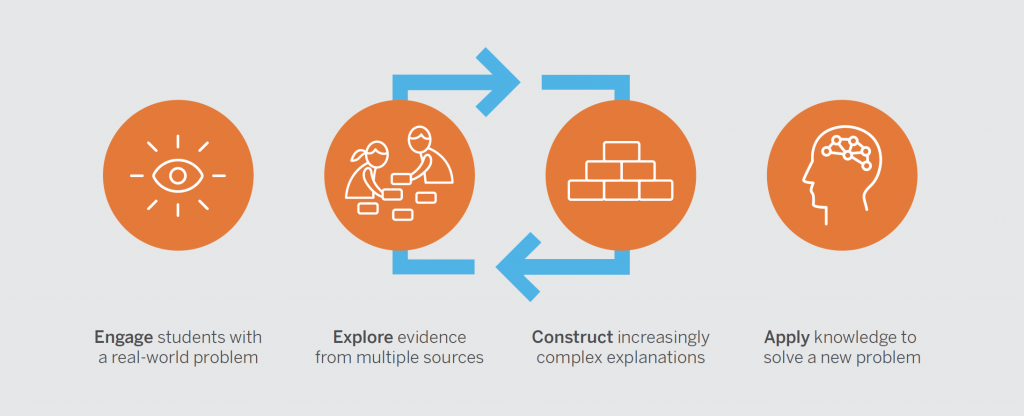


[Video] Planning in action (K–5)
Watch how easy it is for Amplify Science teachers to prep their 3-D instruction.
[Video] Planning in action (6–8)
Watch how easy it is for Amplify Science teachers to prep their 3-D instruction.


[Video] Simulations and modeling tools (K–5)
Watch how students investigate phenomena with the help of digital tools.

[Video] Simulations and modeling tools (6–8)
Watch how students investigate phenomena with the help of digital tools.

Summary of Investigations (K–5) coming soon
Explore the types of investigations that students conduct.

Summary of Investigations (6–8) coming soon
Explore the types of investigations that students conduct.


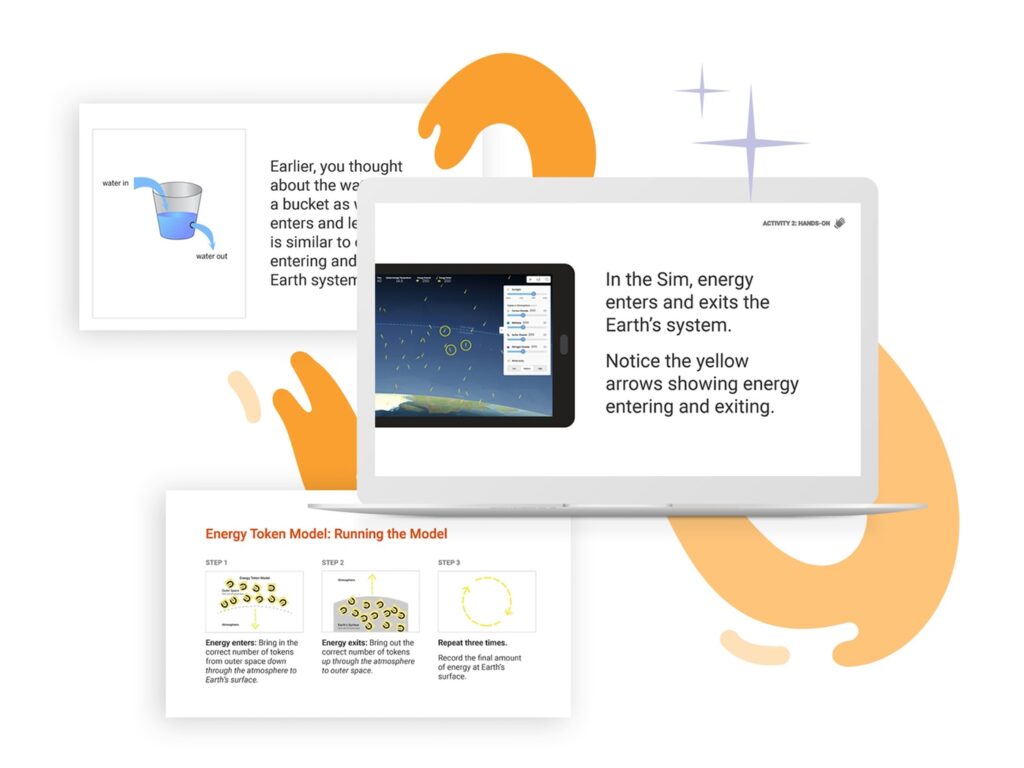


Remote and hybrid learning guide
Amplify is here to help! Amplify Science will soon feature product enhancements and new resources that will help manage the new landscape of back-to-school 2020.
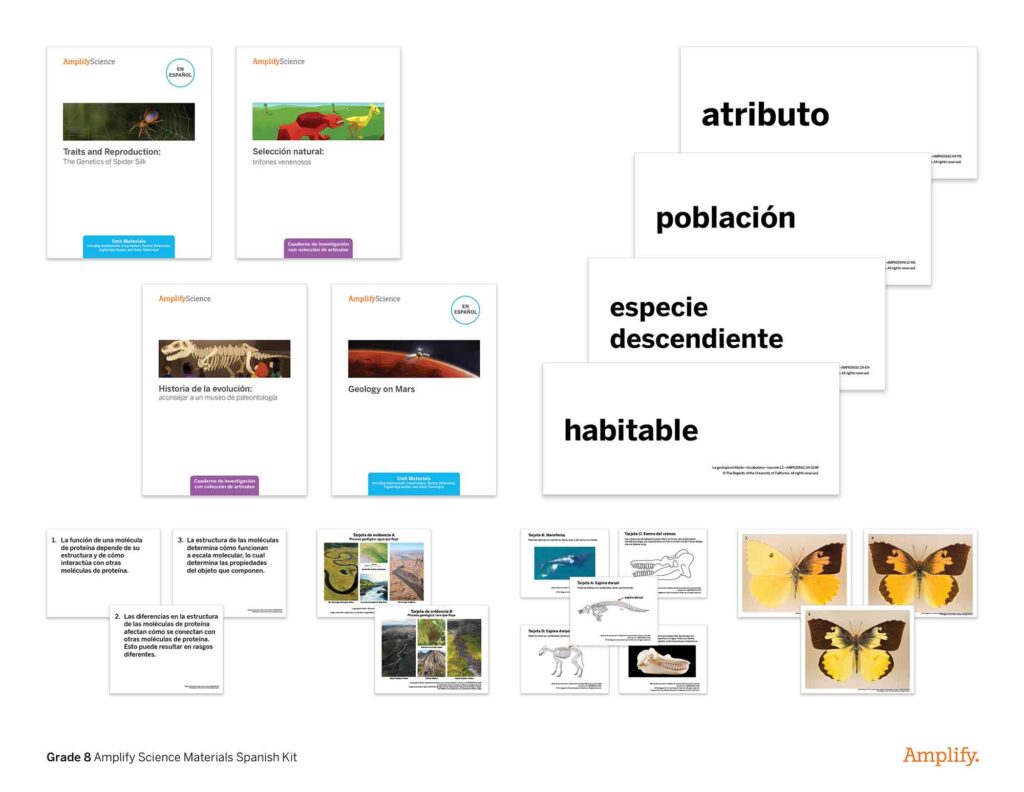



Students ready for more
Learn how we make learning more rigorous for students ready for a challenge.


NGSS Benchmark assessments
Learn more about the Next Generation Science Standards Benchmark assessments created by Amplify.


Ready to explore with digital access and physical samples?
Start your digital review and request physical samples with these three easy steps.
- Note these Ohio specific login credentials for your digital access.
Username: t.ohscience@tryamplify.net
Password: AmplifyNumber1 - Click Review now.
- Complete the form and select Log in with Amplify to input the Ohio specific login.

Contact an Amplify representative
For any questions, fill out the form to the right and a member of our sales team will reach out to you soon.
Katie Cannon
Senior Account Executive
Casie Rayes
Account executive
Matt Paupore
Senior Account Executive
mCLASS® with DIBELS® 8th Edition is Oregon approved!
mCLASS with DIBELS 8th Edition and mCLASS Rapid Automatic Naming (RAN) helps teachers identify COVID-related learning loss and literacy needs firsthand through a quick, five-minute assessment that can be done virtually or in person. What’s more, it helps teachers take immediate instructional action that’s right for each and every student.
What is mCLASS?
mCLASS® with DIBELS® 8th Edition and mCLASS RAN is an integrated, gold standard literacy system for grades K–6.
The mCLASS comprehensive system includes efficient one-minute measures, a built-in Enhanced Early Learning Measures screener, teacher-led and student-driven instruction, intervention, and robust reports for teachers and administrators.
With mCLASS, you can say goodbye to cobbling together tools and second guessing the results of other screeners.
University of Oregon
Together with the University of Oregon, we have made the DIBELS® (Dynamic Indicators of Basic Early Literacy Skills) assessment that you know and love more powerful and user-friendly than ever before.
As the only licensed provider of the digital DIBELS 8th Edition assessment, we make it faster and easier to understand where every student is in their early literacy journey.
Why mCLASS?
It’s a single solution that meets all of the state’s requirements for Early Screening of Dyslexia.
- It’s a universal early literacy screener, dyslexia screener, and a diagnostic tool in one.
- It allows for real-time assessment and instant scoring as well as offline assessment capabilities.
- It includes explicit literacy instruction and intervention strategies based on student performance.
- It’s flexible and can be implemented in a variety of scenarios, including in-person, remote, and hybrid learning environments.
- It includes a variety of parent notification resources and at-home reading strategies.
- It’s continually enhanced with new features and regular updates that are made available to our entire user community.
Instant data and action
Quick and actionable reports provide detailed insight into students’ reading development across foundational literacy skills for classroom teachers and literacy specialists, principals and district leaders, and parents and guardians at home.
What’s more, mCLASS® with DIBELS® 8th Edition and mCLASS RAN gives you instant results and clear next instructional steps for each and every student.
Dyslexia screener
Early intervention is critical. That’s why we help you meet state dyslexia legislation with one single powerful tool—no additional assessment system required.
Our additional measures in vocabulary, spelling, and rapid automatic naming (RAN) address the full range of skills associated with dyslexia risk and help identify students at varying levels of risk for reading difficulties, including dyslexia.
Assess anywhere
mCLASS has created a collection of resources to help you plan for a variety of assessment scenarios.
Whether your school is engaged in in-person, hybrid, or remote instruction, we know how important it is for teachers and administrators to have a full (and firsthand!) picture of every student’s literacy development.
Personalized practice
Amplify Reading is the practice and remediation companion to mCLASS. At its heart, there are three main areas that make Amplify Reading a unique and essential supplemental learning program.
- The program meets all students where they are with powerful individualized instruction and practice.
- Age-appropriate narratives create a learning experience that leaps off the screen.
- Research shows Amplify Reading improves student performance–particularly among English Learners–reducing the overall percentage of students at risk of reading difficulty.

Funding
Schools may utilize Early Literacy Grants or federal CARES Act funds to purchase assessments to meet Oregon’s screening legislation.
Resources


Get in touch
Ready to discuss how mCLASS can support your specific needs? A brief 30-minute call is all we need to determine if mCLASS with DIBELS 8th Edition is the right fit for you.
Simply fill out the form below and we’ll be in touch.

Patric Momsen
District Manager

Jonathan Cohen
Account Executive

Immanuel Moon
Field Manager
Overview
Developed by UC Berkeley’s Lawrence Hall of Science, our program features:
- A phenomena-based approach where students construct a complex understanding of each unit’s anchor phenomenon.
- A blend of cohesive storylines, hands-on investigations, rich discussions, literacy-rich activities, and digital tools.
- Newly crafted units, chapters, lessons, and activities designed to deliver true 3-dimensional learning.
- An instructional design that supports all learners in accessing all standards.
Hear what these educators have to say about the program. >
Classroom resources


3-D teaching and learning


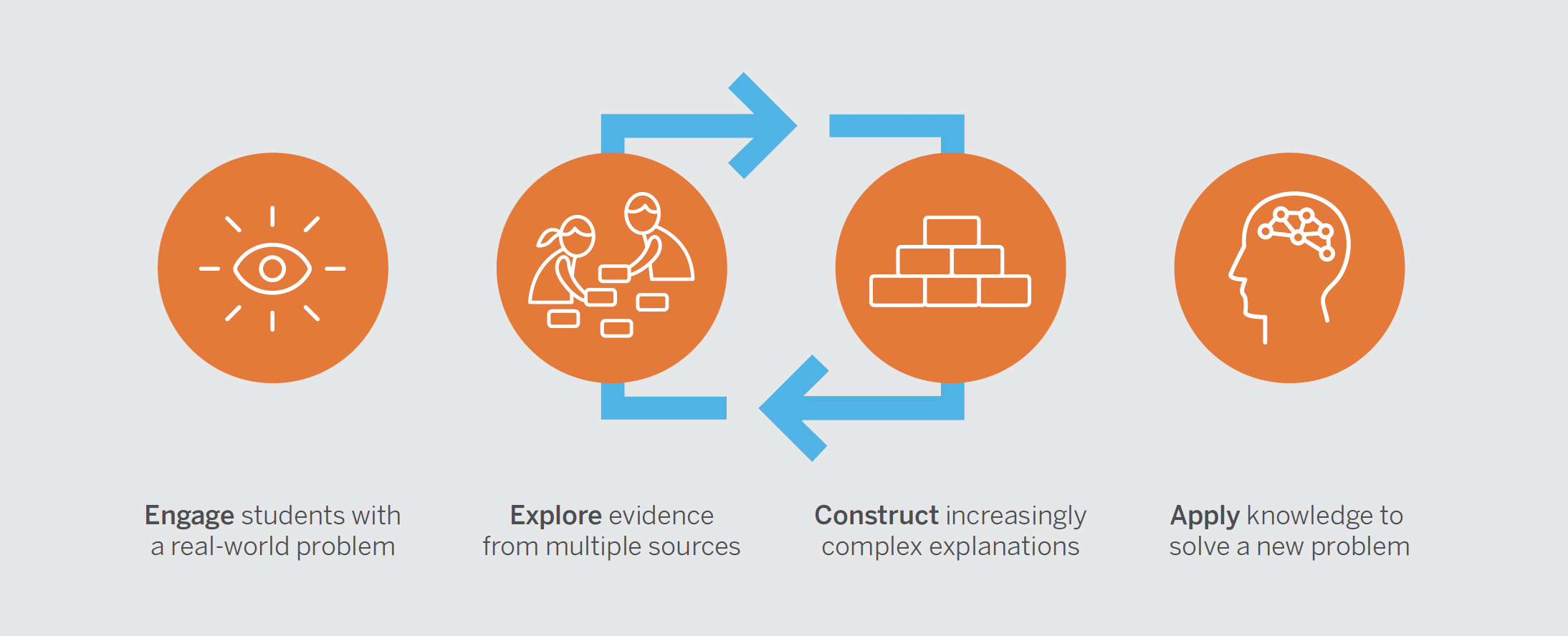
Hands-on

Differentiation



Literacy-rich


Standards and assessment


Explore your grade
Access the Science Digital Platform
Get started by watching this class share what they’re figuring out with Amplify Science. >
Select a grade level below to learn more about how we make rich learning accessible to all students at every grade.
| Grades TK–2 | Grades 3–5 |
| Grade TK | Grade 3 |
| Grade K | Grade 4 |
| Grade 1 | Grade 5 |
| Grade 2 |
Welcome, California Reviewers for 6–8!
We’re so honored you’re considering Amplify Science California—the #1 most adopted NGSS curriculum across the state.
- It meets 100% of the NGSS.
- It has demonstrated effectiveness across all student groups.
- It helps students make the shift from learning about to figuring out scientific concepts.
- It empowers students to think, read, write, and argue like real scientists and engineers each and every day.
- It can flexibly adapt to remote and hybrid learning scenarios.

Overview
Developed by UC Berkeley’s Lawrence Hall of Science, our program features:
- A phenomena-based approach where students construct a complex understanding of each unit’s anchor phenomenon.
- A blend of cohesive storylines, hands-on investigations, rich discussions, literacy-rich activities, and digital tools.
- Newly crafted units, chapters, lessons, and activities designed to deliver true 3-dimensional learning.
- An instructional design that supports all learners in accessing all standards.
Hear what these educators have to say about the program. >
Classroom resources


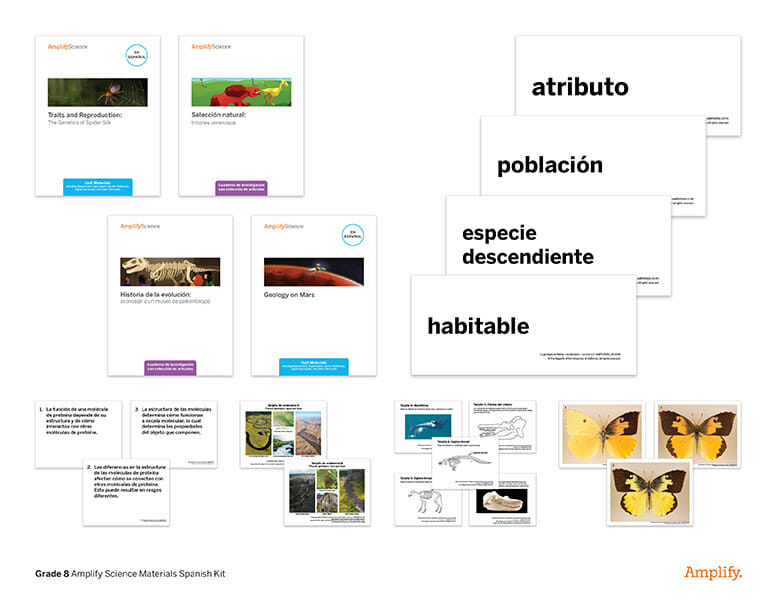
3-D teaching and learning
Hands-on

Differentiation



Literacy-rich

Standards and assessment


Explore your grade
Get started by watching this class share what they’re figuring out with Amplify Science. >
Select a grade level below to learn more about how we make rich learning accessible to all students at every grade.
|
Grades 6–8 Integrated |
Grades 6–8 Domain |
Boost Reading in Action
Boost Reading immerses students in an engaging game world while delivering the skills practice and supports they need to become proficient readers. While students are making progress in the game world and receiving personalized feedback, teachers receive meaningful data to track their growth.

Inside the Classroom
Engaging, personalized learning
Using the science behind engagement and motivation, we built Boost Reading to deliver compelling narrative experiences where progress in the storyline is mapped to reading growth, helping students understand the value of effort and practice.
What teachers and students say about Boost Reading
“When I’m using Boost Reading, I feel as if I’m not even reading, I feel as if I’m playing a game. It’s a whole new world,” said one Boost Reading student. To hear from real teachers and students about their experiences with Boost Reading, watch the video on the left.
Spotlights
Student motivation
It’s not just about learning to read, but loving to read. It’s why we designed Boost Reading to allow students to develop their language and decoding skills within immersive story worlds that grow as they progress through them, fostering a growth mindset.
Personalized instruction
Students embark on personalized journeys that match their profiles to a comprehensive range of skills—from foundational skills, to comprehension, to close reading. Boost Reading digests every decision students make to serve up the right skills at the right time.
Based on the Science of Reading
Boost Reading is part of Amplify’s greater early literacy ecosystem that provides instruction proven to move the needle on reading growth. Extend and support core instruction using high-quality materials that provide more than just practice. Learn more about our research-based reading curriculum in this video.
Part of the mCLASS® literacy suite
mCLASS with DIBELS® 8th Edition data can be used to directly place students into the Boost Reading learning progression in the spot that’s just right for their abilities and areas of need, with no additional assessment required.

Welcome, Tennessee educators!
Amplify Core Knowledge Language Arts (CKLA) is the Tennessee program built on the Science of Reading research. Using a fundamentally different approach to language arts, CKLA sequences deep content knowledge with research-based foundational skills.

High quality instructional materials
Amplify Core Knowledge Language Arts (CKLA) has been approved by the state of Tennessee.

All-green on EdReports
EdReports, an independent curriculum review nonprofit, rates curriculum on three gateways: Text Quality, Building Knowledge, and Usability. Amplify CKLA earned a green rating in all three.

Science of Reading
Tennessee has an initiative to get 75 percent of the state’s third graders proficient by 2025. This Science of Reading toolkit will provide some insight into the research behind the Science of Reading and tools to help you support your students as they become proficient readers.

Case study
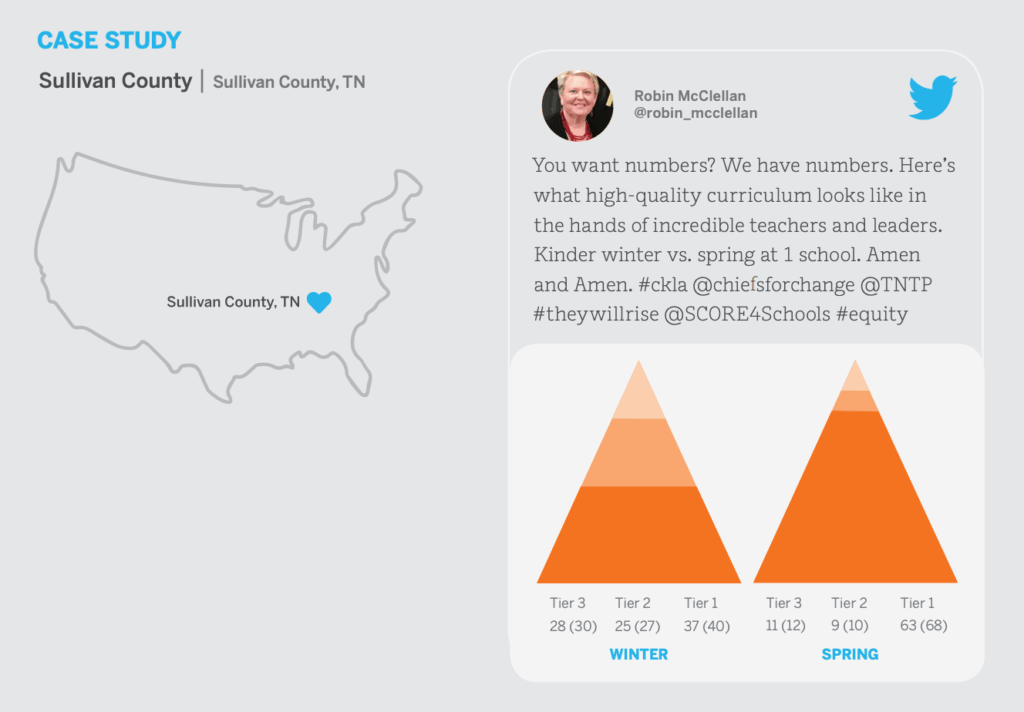
Program overview
Amplify CKLA inspires curiosity and drives results, empowering all students with rich background knowledge. See what schools are saying about our knowledge-based curriculum.
Background Knowledge drives results for Tennessee students
Our approach to building background knowledge is based on three pillars often overlooked in other curricula. It is:
- Content-specific.
Clearly-outlined content objectives are specific and support the development of knowledge in history, science, literature, culture, and the arts. - Cumulative.
Topics and vocabulary connect within and across grades, allowing students to extend knowledge and revisit topics in increasing depth in later grades. - Coherent.
When curriculum is fragmentary and disconnected, students face repetitions as well as gaps that can hinder learning. An intentional
design ensures the curriculum fits together as a whole.
Foundational skills instruction that makes a difference
Amplify CKLA’s second design principle is a research-based approach to foundational skills that gets real results.
- Explicit.
Learning isn’t left to chance. All 44 sounds and their 150 spellings in the English language are taught, practiced, and mastered, with ample opportunity to encounter each sound-spelling in diverse settings. - Sequential.
By moving in a sequence from easier to more complex in phonics and foundational reading skills, students master concepts before moving forward and gradually become more independent - Rewarding.
Learning to read should be fun. Decodabe chapter-books that feature dynamic plots and characters make kids want to read more. Engaging stories include children who discover fossils and a grandmother who flies hang gliders.
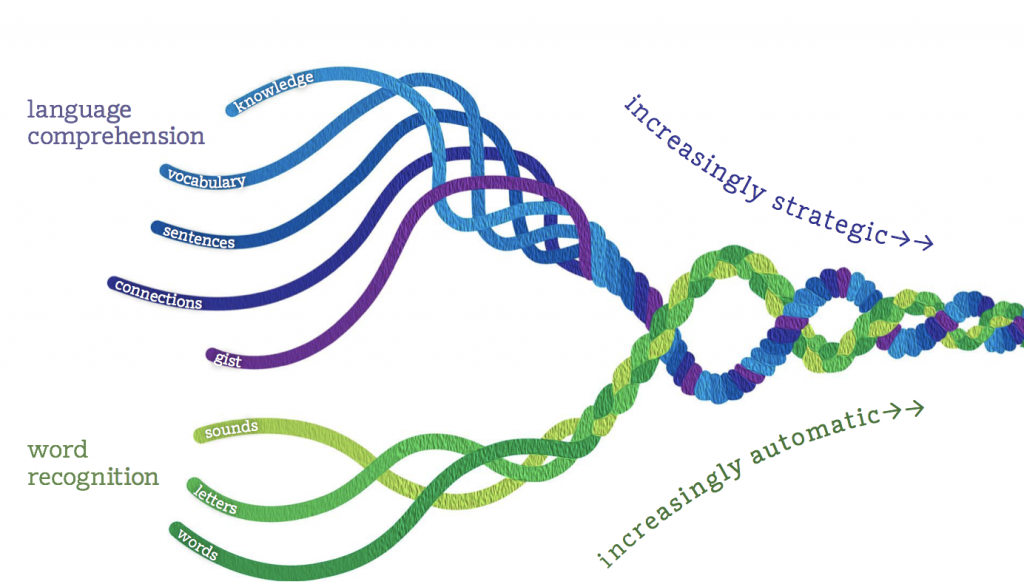
Materials
The program provides engaging print and multimedia materials designed to provide a robust literacy-rich foundation in every classroom.
Teacher Materials
Research-based lessons integrate foundational literacy skills and cross-curricular content knowledge.
- Teacher Guides
- Projectable lesson components
- Quests for the Core for Grades 3–5 (immersive, problem-based learning)
Student materials
Engaging student resources include dynamic decodable chapter books and content-rich, cross-curricular Readers.
- Student Readers
- Activity Books
- Formative Assessments
- Poet’s Journal and Writer’s Journal (write-in Readers for Grades 4–5)
Multimedia resources
Access the program’s online resources anywhere, anytime, from any device.
- Teacher and student materials
- Knowledge Builder animated videos
- Sound Library songs and videos
- Differentiation and enrichment guides
- Real-time program support via email, live chat, and phone
- Professional learning videos, webinars, and self-driven modules
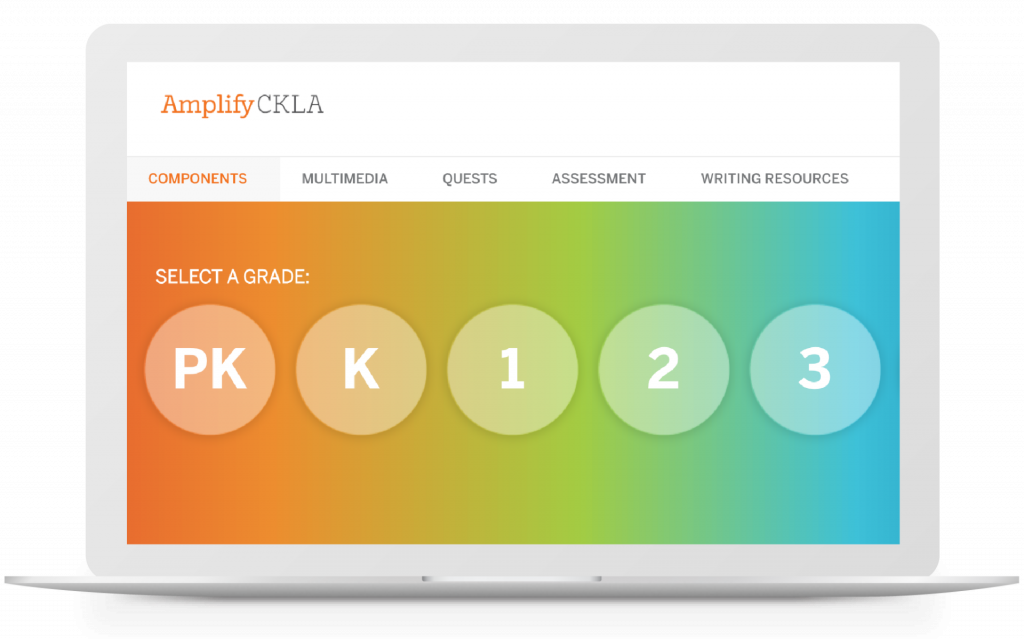

Hands-on phonics materials
Multisensory phonics and foundational skills resources give students the opportunity to practice key skills using diverse, fun approaches that build independence.
- Big Books
- Large and Small Letter Cards
- Spelling Cards
- Vowel and Consonant Code Flip Books
- Chaining Folders
Amplify CKLA In Action
Take a peek inside a classroom, spotlight experiences on knowledge and foundational skills and hear fellow educators and students discuss the power of Amplify CKLA




Contacts

Chasity O’Quinn
Account Executive for East Tennessee
coquinn@amplify.com
(865) 599-5101
Ann Patterson
Account Executive for West Tennessee
apatterson@amplify.com
(704) 813-7757
Corona-Norco Unified School District
Our new activity page: Inside the renovation
Our new activity page: Inside the renovation
Amplify ELA – Atlanta Review3
We are middle school.
Amplify ELA was designed to respond to the distinct opportunities and challenges faced by middle school students and teachers. It was conceived to support middle school students at this critical developmental moment.
The program helps teachers ensure that skills are taught, standards are covered, and the test is prepped—and it does this work in the background so that teachers can spend their time bringing text to life and providing each student the right instruction at the right time. Request a sample to take a closer look.

Overview

Amplify ELA is a blended curriculum designed for middle school students and teachers. It provides:
- An engaging digital program with comprehensive print materials, including Teacher Editions, Student Editions, and Writing Journals for grades 6–8.
- A year’s worth of instruction for each grade.
- Complex, content-rich literary and informational texts.
- Differentiation that supports all students with reading complex texts, and an interactive eReader with an array of multimedia tools.
- Embedded assessments that allow for uninterrupted instructional time.
- The Amplify Library—a digital collection of more than 650 full-length texts.
Why Amplify?
We designed every Amplify ELA lesson to help teachers teach the essential skills of reading, writing, speaking, and listening, in a classroom where students thrive academically, socially, and emotionally.
We use six proven pedagogical approaches to help teachers build a literate community in every middle school classroom:

1. Critical and collaborative engagement
With Amplify ELA, students engage with learning because they engage with each other. Amplify ELA fosters a classroom community that thrives on a wide range of student observations. The lessons immerse students in interactive close reading activities and cognitively challenging work, and keep them engaged through a variety of collaborative activities.
2. Integrated approach to target all standards
Every lesson requires students to work across multiple learning objectives—reading, writing, speaking, and listening—while focusing on one primary standard. Result: students work with complex texts that demand working across standards, while receiving instruction focused on building a specific skill.
3. Text at the center
Amplify puts complex text at the center of every lesson and activity to develop the critical capacities and build the vocabulary, knowledge, and skills students need to succeed in middle school, high school, and beyond. Great texts spark curiosity, reveal layered meanings, reflect a diversity of perspectives and identities, and cultivate meaningful conversation and reflection.
4. Multimodal and strategic technology
Activities harness multiple learning modes, using media tools, digital apps, and a variety of visual and physical experiences to strategically support and enhance student learning.
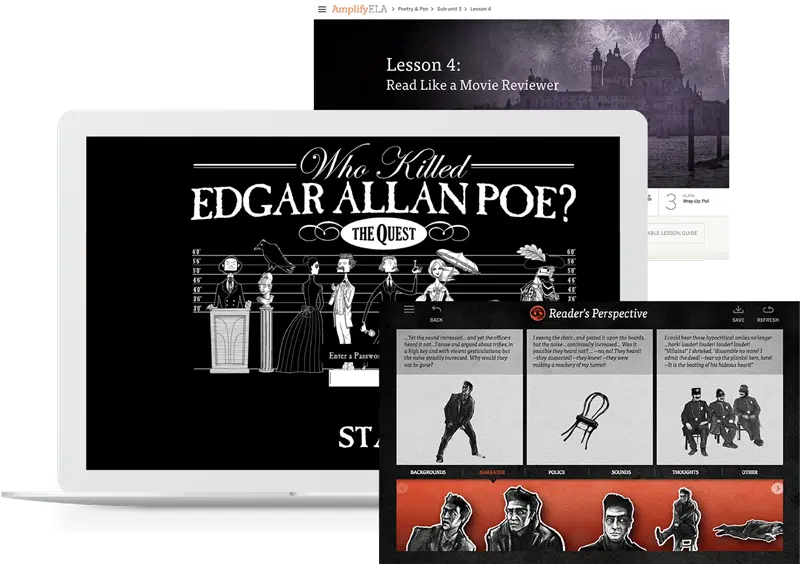
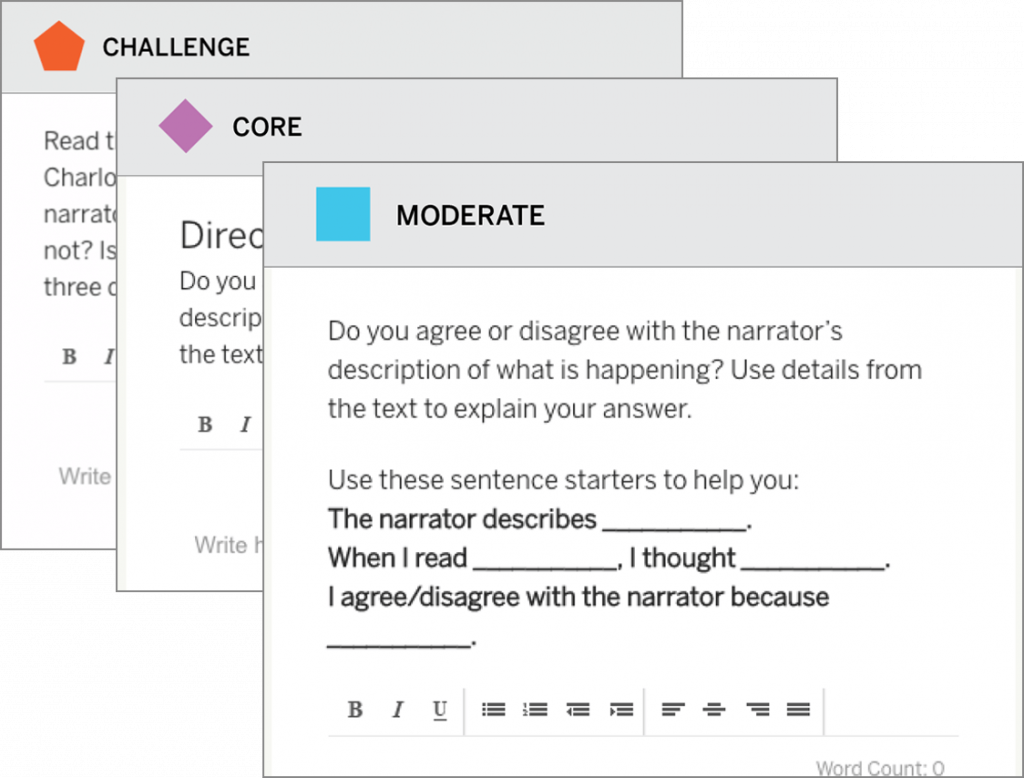
5. High expectations and strong supports
Strong supports built in at all levels give every student a chance to meet the highest possible expectations. Struggling readers, students ready for advanced work, English language learners: all can take on the challenge of rigorous work while data delivery and digital tools allow teachers to ensure progress.
6. Timely feedback and actionable data
Formative assessment measures and targeted feedback tools are embedded in every lesson. Result: teachers can make timely decisions about instructional strategy and provide the guidance students need to thrive as readers and writers.

What teachers say
Blended model
Amplify ELA’s new blended curriculum can be used in classrooms with limited access to devices, allowing teachers to make choices about when their students use devices without compromising learning or full standards coverage.
Amplify ELA’s blended approach keeps a strong connection between print and digital by having the teacher project uniquely digital moments as students work in their print Student Editions and Writing Journals. This approach works when Wi-Fi or devices are unavailable for both brief or extended periods of time.

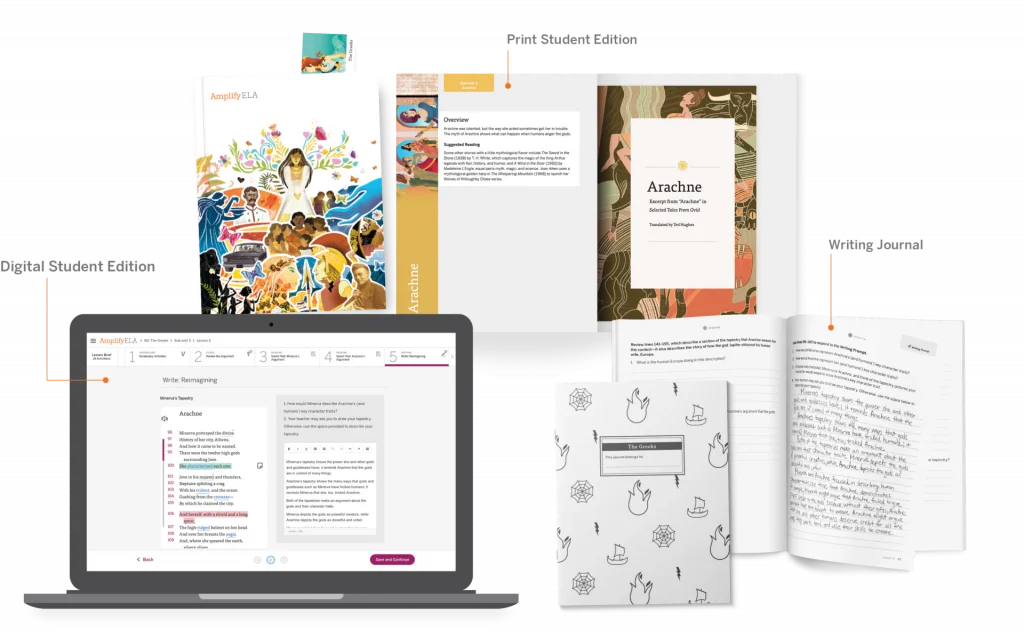
Resources






Try Amplify ELA
Ready to take a closer look at Amplify ELA? No problem. Just complete the form to get immediate access to:
- Digital: trial that includes two units per grade level
- Print: preview of Teacher Edition
A curiosity-driven K–12 program that builds students’ lifelong math proficiency
Meet Amplify Desmos Math. Our structured, problem-based approach builds on students’ curiosity while strategically developing math fluency and lasting grade-level understanding. Amplify Desmos Math for grades K–8 has been rated all-green by EdReports.
Math that motivates
Picture a classroom where students are so eagerly engaged in a lesson, they wish it wouldn’t end. The room is buzzing with the sounds of natural curiosity. This is what an Amplify Desmos Math classroom looks and sounds like.
Request a demo to see how math can motivate.
A structured approach to problem-based learning
Amplify Desmos Math combines and connects conceptual understanding, procedural fluency, and application. Lessons are designed with the Proficiency Progression™, a model that provides teachers with clear instructional moves to build from students’ prior knowledge to grade-level learning.

A powerful suite of math resources
Amplify Desmos Math fuses problem-based lessons, intervention, personalized practice, and assessments to create a cohesive and engaging experience that maintains academic rigor while meeting the needs of both students and teachers.
Data informs instruction. Comprehensive student profiles provide full data on students’ assets and skills, empowering teachers to provide just-in-time scaffolds throughout core instruction and targeted intervention when needed. Connect with a product expert to see it in action.
Student thinking is valuable and can be made evident.
We believe that math class is a place where teachers can elicit, celebrate, and build on their students’ interesting ideas. Those ideas fuel meaningful classroom conversations and drive the learning process.
Robust assessments that drive learning and inform instruction
A variety of performance data in Amplify Desmos Math provides evidence of student learning, while helping students bolster their skills. With explicit guidance on what to look for and how to respond, teachers can effectively support students as they develop their understanding.


Diagnostic screening and progress monitoring assessments identify what students know and can do.
Integrated mCLASS® Math assessments go beyond accuracy to reveal students’ math thinking through an asset-based approach. This data provides better insights about what students know, what math assets to leverage, and where students need support.
Reporting and insights
Teachers and administrators have visibility into what students know about grade-level math with a variety of data reports. By evaluating not only what students know about grade-level math but also providing insight into how they think, teachers can confidently plan whole-class instruction and targeted intervention.

Access to grade-level math for every student, every day
Amplify Desmos Math provides teachers with lessons, strategies, and resources to eliminate barriers and increase access to grade-level-content without reducing the mathematical demand of tasks—all while supporting students in building strong number sense, fluency, and conceptual understanding.

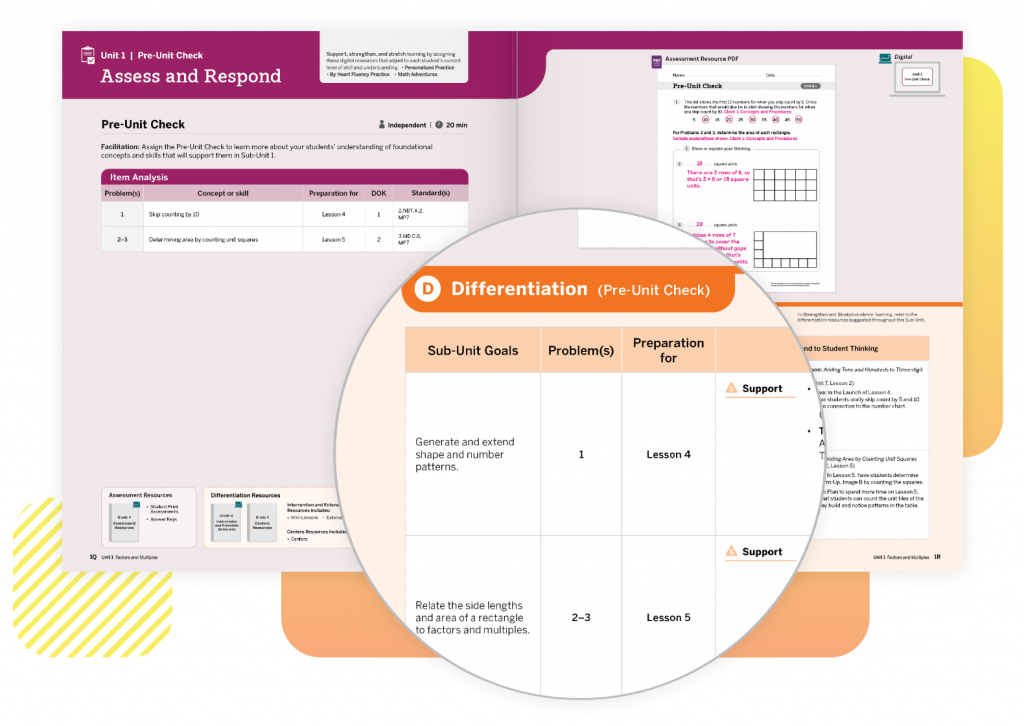
Differentiation when and where it matters most
Teachers are provided with clear student actions to look for, matched with immediately usable suggestions for how to respond to student thinking. Each lesson also includes recommendations for resources to use with students to support, strengthen, and stretch their understanding of the lesson goal.
Connect with a product expert to learn more.
Boost Math
Boost Math® drives tiered intervention and practice for grades K–8, bringing grade-level math within reach of every learner. Students are grouped into learning pathways based on assessment data for key math topics.
Visit Boost Math to learn more.

Personalized Learning
Personalized Learning™ extends each Amplify Desmos Math lesson with short, targeted digital activities designed around the day’s core concepts. Students receive just-in-time support based on their current understanding, helping them build fluency and confidence in the exact skills they’re working on in class.
Intervention Mini-Lessons aligned to core instruction
Amplify Desmos Math Mini-Lessons are aligned to the most critical topics throughout a unit and provide targeted intervention for small groups of students who need additional support or need more time.


Elevate math instruction with Amplify PD.
Amplify Desmos Math offers targeted professional development (PD) sessions designed to enhance teaching strategies, improving student engagement and mastery of mathematical concepts. Gain insights and techniques to maximize instructional effectiveness.
What’s included
The program integrates print and digital resources, along with manipulatives and Centers Kits in grades K–5, to help students build mathematical understanding, reason through mathematical ideas, and express their mathematical thinking. Resources are designed to support the educational rigor of daily core math instruction.

For students
- Print Student Edition (two-volume)
- Digital access to lesson resources and practice
- Interactive Student Activity Screens
- Responsive Feedback™
- Collaboration tools
- Personalized Learning
- Hands-on manipulative kits
- Additional Practice

For teachers
- Print Teacher Edition (two-volume)
- Digital access to planning and instruction resources
- Presentation Screens
- Facilitation and progress monitoring tools
- Assessment and reporting suite, featuring mCLASS Assessments (grades K–8)
- Assessment Resources
- Center Resources (grades K–5)
- Intervention and Extension Resources (grades K–A1)
- Math Language Development Resources
- Additional Practice

Visual and dynamic interactions pique student interest and invite all students to engage in the mathematics.
- Engaging interactions
- Social, collaborative experiences
- Teacher Dashboard
- Teacher Presentation Screens
- Digital facilitation tools
- A powerful conversation toolkit
Amplify Classroom
Amplify Classroom is a free teaching and learning platform that places student engagement at the center of instruction.
Amplify Classroom features free lessons, lesson-building tools, sharing features, and more. Built by math educators, the platform makes leaning into good pedagogy easier for teachers—which makes the lesson a more interactive experience for students.
Create your teacher account at classroom.amplify.com.
Our free lessons can be used alongside any core math program. Click here to view crosswalks to core programs.
Explore more programs.
Our programs are designed to support and complement one another. Learn more about our related programs.
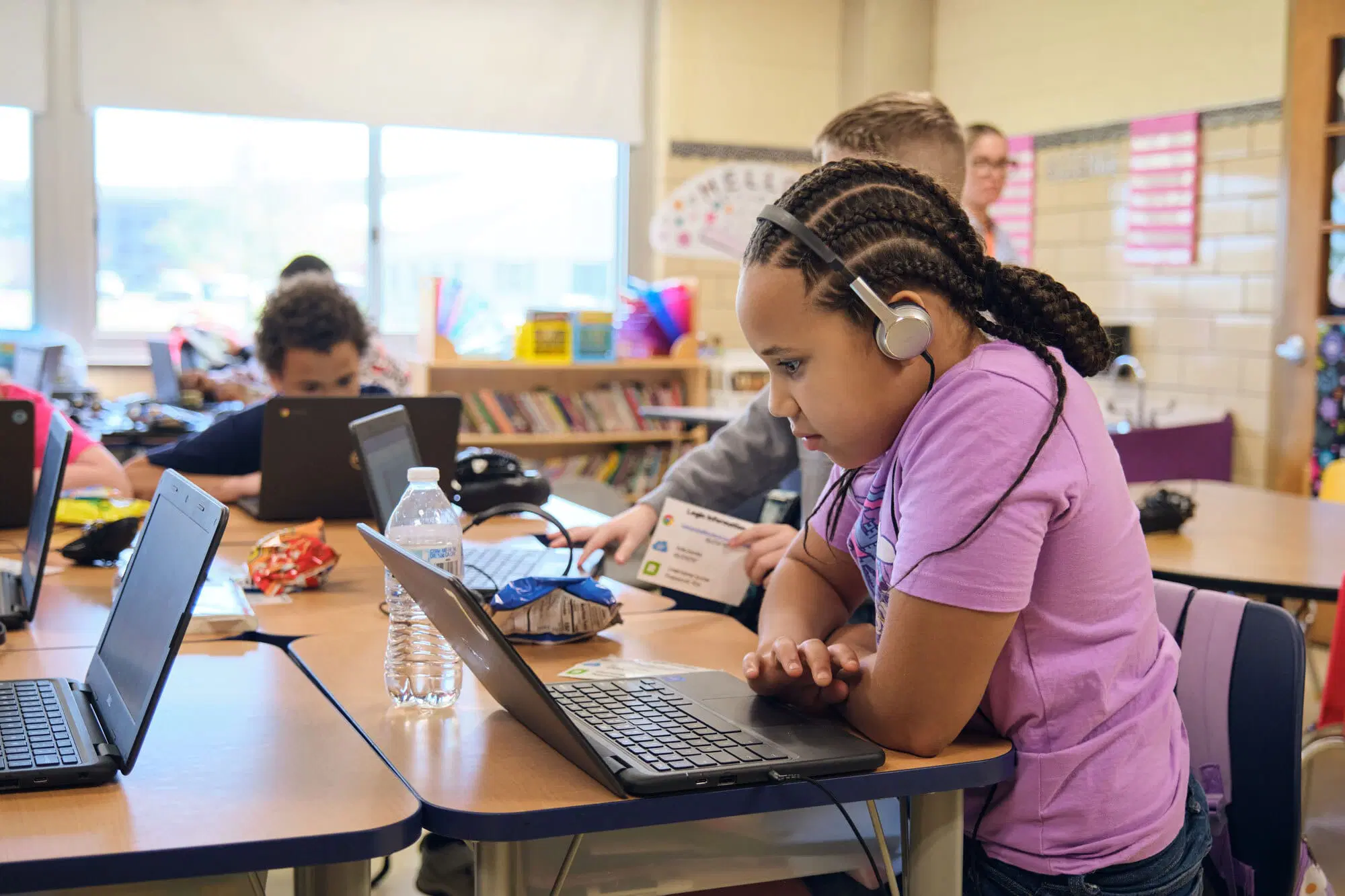
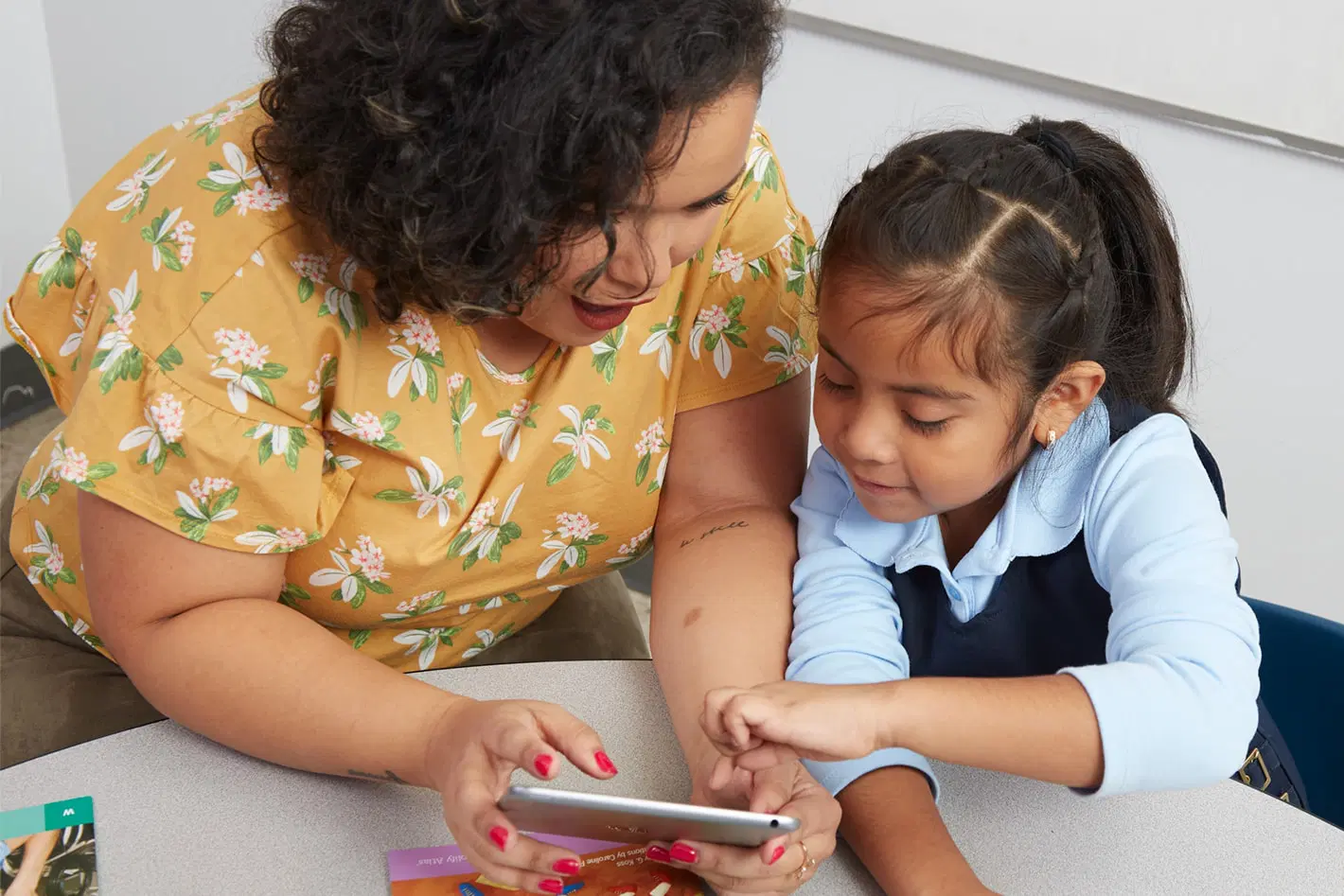

A curiosity-driven K–12 program that builds students’ lifelong math proficiency
Meet Amplify Desmos Math. Our structured, problem-based approach builds on students’ curiosity while strategically developing math fluency and lasting grade-level understanding. Amplify Desmos Math for grades K–8 has been rated all-green by EdReports.
Math that motivates
Picture a classroom where students are so eagerly engaged in a lesson, they wish it wouldn’t end. The room is buzzing with the sounds of natural curiosity. This is what an Amplify Desmos Math classroom looks and sounds like.
Request a demo to see how math can motivate.
A structured approach to problem-based learning
Amplify Desmos Math combines and connects conceptual understanding, procedural fluency, and application. Lessons are designed with the Proficiency Progression™, a model that provides teachers with clear instructional moves to build from students’ prior knowledge to grade-level learning.

A powerful suite of math resources
Amplify Desmos Math fuses problem-based lessons, intervention, personalized practice, and assessments to create a cohesive and engaging experience that maintains academic rigor while meeting the needs of both students and teachers.
Data informs instruction. Comprehensive student profiles provide full data on students’ assets and skills, empowering teachers to provide just-in-time scaffolds throughout core instruction and targeted intervention when needed. Connect with a product expert to see it in action.
Student thinking is valuable and can be made evident.
We believe that math class is a place where teachers can elicit, celebrate, and build on their students’ interesting ideas. Those ideas fuel meaningful classroom conversations and drive the learning process.
Robust assessments that drive learning and inform instruction
A variety of performance data in Amplify Desmos Math provides evidence of student learning, while helping students bolster their skills. With explicit guidance on what to look for and how to respond, teachers can effectively support students as they develop their understanding.
Diagnostic screening and progress monitoring assessments identify what students know and can do.
Integrated mCLASS® Math assessments go beyond accuracy to reveal students’ math thinking through an asset-based approach. This data provides better insights about what students know, what math assets to leverage, and where students need support.
Reporting and insights
Teachers and administrators have visibility into what students know about grade-level math with a variety of data reports. By evaluating not only what students know about grade-level math but also providing insight into how they think, teachers can confidently plan whole-class instruction and targeted intervention.
Access to grade-level math for every student, every day
Amplify Desmos Math provides teachers with lessons, strategies, and resources to eliminate barriers and increase access to grade-level-content without reducing the mathematical demand of tasks—all while supporting students in building strong number sense, fluency, and conceptual understanding.
Differentiation when and where it matters most
Teachers are provided with clear student actions to look for, matched with immediately usable suggestions for how to respond to student thinking. Each lesson also includes recommendations for resources to use with students to support, strengthen, and stretch their understanding of the lesson goal.
Connect with a product expert to learn more.
Boost Math
Boost Math® drives tiered intervention and practice for grades K–8, bringing grade-level math within reach of every learner. Students are grouped into learning pathways based on assessment data for key math topics.
Visit Boost Math to learn more.
Personalized Learning
Personalized Learning™ extends each Amplify Desmos Math lesson with short, targeted digital activities designed around the day’s core concepts. Students receive just-in-time support based on their current understanding, helping them build fluency and confidence in the exact skills they’re working on in class.
Intervention Mini-Lessons aligned to core instruction
Amplify Desmos Math Mini-Lessons are aligned to the most critical topics throughout a unit and provide targeted intervention for small groups of students who need additional support or need more time.
Elevate math instruction with Amplify PD.
Amplify Desmos Math offers targeted professional development (PD) sessions designed to enhance teaching strategies, improving student engagement and mastery of mathematical concepts. Gain insights and techniques to maximize instructional effectiveness.
What’s included
The program integrates print and digital resources, along with manipulatives and Centers Kits in grades K–5, to help students build mathematical understanding, reason through mathematical ideas, and express their mathematical thinking. Resources are designed to support the educational rigor of daily core math instruction.
For students
- Student Edition (two-volume)
- Digital access to lesson resources and practice
- Interactive Student Activity Screens
- Responsive Feedback™
- Collaboration tools
- Personalized Learning
- Hands-on manipulative kits
For teachers
- Teacher Edition (two-volume)
- Digital access to planning and instruction resources
- Presentation Screens
- Facilitation and progress monitoring tools
- Assessment and reporting suite, featuring mCLASS Assessments (grades K–8)
- Assessment Resources
- Center Resources (grades K–5)
- Intervention and Extension Resources (grades K–8)
Visual and dynamic interactions pique student interest and invite all students to engage in the mathematics.
- Engaging interactions
- Social, collaborative experiences
- Teacher Dashboard
- Teacher Presentation Screens
- Digital facilitation tools
- A powerful conversation toolkit
Amplify Classroom
Amplify Classroom is a free teaching and learning platform that places student engagement at the center of instruction.
Amplify Classroom features free lessons, lesson-building tools, sharing features, and more. Built by math educators, the platform makes leaning into good pedagogy easier for teachers—which makes the lesson a more interactive experience for students.
Create your teacher account at classroom.amplify.com.
Our free lessons can be used alongside any core math program. Click here to view crosswalks to core programs.
Explore more programs.
Our programs are designed to support and complement one another. Learn more about our related programs.
S5-05. Math technology & hacks for math anxiety: research-based tips for caregivers
We’ve been very lucky to have so many prolific and brilliant researchers on this season of Math Teacher Lounge, and our next guest is no exception.
Listen as we sit down with Dr. Marjorie Schaeffer to discuss what causes math anxiety, math hacks, and how the right math technology can make an incredible impact in children and caregivers coping with math anxiety.
Listen today and don’t forget to grab your MTL study guide to track your learning and make the most of this episode!
Marjorie Schaeffer (00:00):
I think the most important thing we know from literature right now is that high math-anxious parents, when they interact with their children, their children learn less math over the course of the school year.
Bethany Lockhart Johnson (00:12):
Welcome back to Math Teacher Lounge. I’m Bethany Lockhart Johnson.
Dan Meyer (00:15):
And I’m Dan Meyer.
Bethany Lockhart Johnson (00:16):
We’re onto Episode 5, Dan, of our series on math anxiety. And I wanna say it feels so lovely to imagine all of these people out there doing work to help combat math anxiety. I dunno, it just makes me feel excited about the possibilities. This work is out there; it’s happening! Kids and teachers and caregivers are being impacted by these conversations. Not just — I mean, I don’t just mean the conversations we’re having on Math Teacher Lounge, but I mean, that these researchers are doing. Like, yes, we can change this!
Dan Meyer (00:53):
This is great. Yeah. We have people who are extremely smart, who have dedicated their professional lives to studying math anxiety and resolving it. And each of them that we’ve chatted with — they share lots of ideas in common, but I’ve loved how they each have their own different flavor or take or area of emphasis on a problem that hits everybody everywhere. It’s in your home, with kids and caregivers. It’s in schools. It’s in our places of teacher preparation and professional learning. Every place is a place where we can focus on resolving issues of math anxiety. It’s exciting.
Bethany Lockhart Johnson (01:26):
Yeah, I feel like … if there could be a course in — we all know that our teacher prep programs, in MOST teacher prep programs, there’s not nearly enough math methods or time to cover <laugh> — it’s like ready, set, go! And depending on who your mentor teacher is or what your math methods course … I mean, it can totally shape the way that you are prepared or really not prepared for going out there to teach math! And so I love that we’re having these conversations.
Dan Meyer (01:55):
What I love about today’s conversation is, one, it’s got a little bit of a technology flavor, so there’s that. But I also love, it’s got one of my favorite features about change, which is that it focuses on change to action, change to routine, rather than change to belief. Rather than saying like, “OK, everybody! Everybody stop thinking bad beliefs about math and transmitting them to your kids!” Instead, it says, “What we’ll do is just, hey, we’ll set that aside for a second and we’re gonna do a certain thing every day and watch as those actions make your beliefs change.” That to me is extremely cool. And I think it has a higher likelihood of success than just, like, me telling parents, “Hey, stop thinking these thoughts!”
Bethany Lockhart Johnson (02:37):
“Ready, set, stop being anxious!”
Dan Meyer (02:39):
Exactly. Exactly. So it’s an exciting conversation we’re gonna have here.
Bethany Lockhart Johnson (02:43):
Right. So it’s not a, you know, “wave the wand and all of a sudden, you’re not anxious about math anymore.” But these incremental changes, these incremental conversations, this validation, can really, really impact change. I’m with you on it, Dan. I hear what you’re saying.
Dan Meyer (03:01):
To help us talk through all of these ideas and more, we’re joined by Dr. Marjorie Schaeffer, Assistant Professor of Psychology at St. Mary’s College in Indiana.
Bethany Lockhart Johnson (03:10):
Enjoy. <Jaunty music> So, yes, Dan, we are so excited to welcome Marjorie Schaeffer. She’s Assistant Professor of Psychology at St. Mary’s College. Dr. Schaeffer, we’re so excited you’re here. Hello!
Marjorie Schaeffer (03:28):
Thank you so much for inviting me.
Dan Meyer (03:29):
Yeah. We are super-lucky to have had so many prolific and brilliant researchers about math anxiety on our show. You’ll be no exception. And every time, we love to find out about how you came to study math anxiety, which winds up being a really interesting glimpse into your backstory bio. So tell us, what is the route by which you came toward studying math anxiety?
Marjorie Schaeffer (03:51):
Oh, I love that question. I’m really interested in how the attitudes and beliefs of parents and teachers influence children, especially around math. And I actually became interested in this idea in college, when no Child Left Behind was actually first starting to be implemented in schools with high-stakes standardized testing. So much so that I actually did my thesis on this thinking about, “Do children understand the importance of high-stakes testing? Do they have anxiety around that idea?” And so that was really my first foray into the anxiety literature. And that was kind of the entry point into math anxiety for me.
Dan Meyer (04:28):
So you started by studying a very high-stakes assessment, like our students connecting with this. And the assessment is once per year. And classroom instruction is every day. So how did you move from the assessments to the everyday instruction?
Marjorie Schaeffer (04:44):
That’s a great question. So, after college, I actually taught kindergarten. And so from that, I saw the day-to-day impact of instruction and the day-to-day impact of children’s individual attitudes and beliefs. And so I really became interested in thinking about, “How do we understand why some children are really successful from the instruction happening in classrooms and why other children need a little bit more support?” And so math anxiety was one way for me to really think about the individual differences I saw in my kindergarten classroom.
Dan Meyer (05:18):
It feels like you headed … you went farther upstream, is what it feels like. Where assessment … there’s like some kind of anxiety around assessment, let’s say. And then you ventured farther up the stream to classroom instruction and then still farther into kids’ homes. It seems like your research invokes a lot of curiosity about the sources of a kind of amorphous, flowing phenomenon called math anxiety. And I’d love to hear a bit about what you know about how caregivers transfer, transmit — whatever the word is — math anxiety to their kids.
Marjorie Schaeffer (05:55):
For parents … we think that the attitudes and beliefs of parents matter. And we see that for lots of areas, not just math anxiety. But I think math anxiety, we see that really clearly. And so, we can think about it both in terms of what kind of input parents provide. So, how do families talk about math with their children? What kind of support do they provide around homework? And those are ones that I think are a little obvious. But we can also think about the offhanded comments that parents say to children when they’re talking about math generally. Right? So, we see lots of memes going around, talking about how hard math homework is. And so, I think when parents say offhanded comments like, “I’m not a math person,” or “We’re just bad at math,” that communicates values to children. I think the most important thing we know from literature right now is that high math-anxious parents, when they interact with their children, their children learn less math over the course of the school year. And this specific mechanism by which that happens is still an area for a lot of research. And so some people think it’s about input. So maybe if I’m math anxious, I’m avoiding math. And so, when I have an option to read a picture book that has math content, I focus on the colors instead. And so, my child is actually getting less math than other children. We can also think it’s about these messages that are provided. So, when I talk about math, I send the message to my child, it’s not for them, and therefore the child wants to engage in it less. And some of my work looks at things like expectations and values. So, thinking about, “Do math-anxious families actually value math less than other families unintentionally?” And so, we have some support for this idea that they expect less of their children. And so maybe when they struggle, they respond in different ways than a family who’s lower in math anxiety.
Bethany Lockhart Johnson (07:53):
This is so fascinating to me. I also was a kindergarten teacher. And I remember a mom who just … she had such like palpable math anxiety. And during one of our conversations, she was talking about these homework sessions with her daughter. And I may have mentioned this on the podcast before. But she was talking about how every night they would sit together and they would do all this math. They’d do, like, extra math together. And it always ended in tears. And despite her math anxiety, she didn’t want her daughter to experience the math anxiety that she did. So she was trying to pile it on, so her daughter was more proficient and comfortable. And instead, it was perpetuating this anxiety about it. And so, it’s a phenomenon then, right? Even if a parent is saying, like you said, maybe completely unwilling, this mother was actually trying to do the opposite. She was trying to help, you know, imbue the love and comfort with math. Right?
Marjorie Schaeffer (09:01):
Absolutely. This is why I think in my research, it’s really important that we find low-stakes, low-stress ways for high math-anxious families to do math. They absolutely can support their children in doing math. But they need a little support. We want it to be a fun, low-stakes environment, right? So maybe that’s the connection back to high-stakes testing, that I want children to have fun math experiences.
Dan Meyer (09:28):
Yeah. This is challenging, because it feels like the more caregivers know about math anxiety, and its pernicious effects on students, and how easily transmitted it is, one could become quite anxious about math anxiety. And, you know, no one makes great decisions when they’re anxious. So if I’m recalling our various episodes we’ve done, we’ve heard from people say, “Well, you need to validate students’ math anxiety. This is not something to just ignore or brush past. But also, not validate it in a way that says, you know, ‘This is OK and generational and inevitable.’” Which presents parents with a very thin path to follow, it seems like. So I love what you’re saying about how we gotta just de-stress the whole process.
Bethany Lockhart Johnson (10:11):
You’re avoiding the whole, “I wasn’t a math person either” kind of thing. <laugh>
Dan Meyer (10:15):
Right, right, right. Yeah. So I’d love to know more. We’re excited about the technology that you have studied and helped develop, presumably, called Bedtime Math, anapp for caregivers. And I’d love to know more about what that is and what it offers parents who know enough about math to know that they don’t want to transmit math anxiety to their children, but also want to support. So what does that offer them?
Marjorie Schaeffer (10:39):
So Bedtime Math is an app. It’s freely available on iTunes or the Apple Store or Google Play. And what it’s designed to do is to provide a nightly topical passage. So one of my favorites is the one about Groundhogs Day. And so it talks a little bit about the history of Groundhogs Day, and then it asks math-related follow-up questions. So starting at a preschool level, going through late fifth grade. And it’s really meant for parents to pick the one that meets their children where they are. And so the preschool-level question asks children to pretend to be a groundhog and walk to the left and walk to the right. So a skill that families might not think about as being math, but we actually think that IS part of understanding math. Understanding left and right directionality. And then the next question can ask questions like, “If it took the groundhog three seconds to climb out of the hole, and then two more seconds to see its shadow, how much time did it take all together?” So a simple addition problem, but it’s phrased in a fun way. And so the hope is that for high math-anxious families, these interactions are fun and playful. They don’t look like fights over homework. They’re just conversations that families can have around topics that are naturally interesting to children. And our hope is that when families have lots of these positive low-stakes interactions, they actually can see that we can talk about math in unstressful ways. In lots of ways, right? We can also do this at the grocery store. We can also do this while we’re cooking in the kitchen. It doesn’t just have to be fights over homework.
Bethany Lockhart Johnson (12:14):
And I actually have the Bedtime Math — one of the Bedtime Math books. And I was so excited to find out that there’s an app. And I think one of the things that I loved about the book is that these are invitations, right? They’re exactly that. Low pressure <laugh>, and they’re invitations to have a conversation. And if we were just to tell parents, “Oh, just count!” or, “Hey, just count wherever you go!” You know? No. It’s, in a way, I think, like you said, it’s retraining the parents on what math could look like. Like, “Oh, I didn’t even think we could just kind of have this conversation and we’re actually doing math together.”
Marjorie Schaeffer (12:55):
Yes, absolutely. I absolutely agree. We want it to be fun and playful and not stressful. And we want it to also be things that are meaningful to children’s lives. So these are topics children are interested in. It’s not that we are using flashcards or making children practice math facts over and over again. These are things children should wanna do that can naturally fit into a child’s routine. So almost all families read books before bed, and what we hope is that math can also be a part of the nighttime routine.
Dan Meyer (13:27):
There’s something really subtle here going on that I just wanna name and ask a question about. First of all, it’s cool that you started with studying high-stakes stuff and now you are developing low-stakes stuff. And I’m really curious what makes a thing low-stakes? Like, a few things I’m hearing from you is that there’s, like … I have a small child that I read literature to on a nightly basis. And I feel very anxiety-free doing that. And it’s almost as though, because each of the — tasks is the wrong word for this, but experiences — involve some reading, it puts me, the parent, in a mode that is comfortable and familiar to me. I’m curious: Are there other, as you design, what, one per day for a year? All these different experiences. What are some of the principles that you lean on that help make a thing low-stakes for kids and for parents?
Marjorie Schaeffer (14:17):
Yeah, that’s a great question. So one thing we wanted to be really intentional about is that our app doesn’t look like a lot of traditional apps. There isn’t noises that go off. You don’t enter an answer. And so one of the things that we thought made it low-stakes is that while there is a right or wrong answer — there is a correct answer — we aren’t giving children upsetting feedback. Instead, what we wanna encourage families to do is, if you struggle to remember how many seconds it took the groundhog to come out of the hole, you can work through that with a parent. So it doesn’t feel like you’re getting negative feedback; you’re being told you’re bad at math; you did it wrong. Instead, you’re just getting natural support moving forward. And so that’s one thing we wanted to be really intentional about, was that it wasn’t going to be a negative experience for children. And we are trying to build on all of the positive interactions families are having around nightly book reading. So many ways this can look very similar. You get to read another story that’s topical and hopefully interesting. And then do these little questions together. And so for a lot of families, their children don’t actually really look at the question. It almost feels like the parent is just asking them on their own. Like, they just came up with it. They just wanted to know what would happen to the groundhog. If there were three more groundhogs? How many groundhogs would we have all together? Not like it’s gonna be like homework or other parts.
Dan Meyer (15:38):
So my understanding is that there isn’t a blank into which people type a number in, press “submit” for evaluation, receive the red X, the green check. That’s a key part of the design here.
Marjorie Schaeffer (15:50):
Yes, absolutely. And for research purposes, we would’ve loved to know what families were saying. But we think it’s really important that it’s fun, interactive, that families are working together to get to the right answer, that it’s not a test for children.
Bethany Lockhart Johnson (16:03):
In your research, when you were — maybe you could walk us through the study a little bit. But I’m also curious if you heard from parents that it was carrying over beyond the bedtime routine. Because I would imagine, if I am building these skills and reading these questions and learning that I could talk to my kid like this about math in a fun way, that’s gonna happen then, like you said, when I’m in the grocery store. Or when I’m waiting in line for at the bank. Or whatever, you know? People go into banks now still, right?
Marjorie Schaeffer (16:35):
Yeah, absolutely. So in our study, we recruited almost 600 families and we randomly assigned them. So they had an equal chance of getting both our math app and what we call our control app. And that’s really just a math app without the math. We think of it as a reading control app. And that’s because we wanna make sure that families are having a similar experience, that it’s not just that having high-quality, fun interactions with your child is actually impacting children’s math achievement. And so what we then did is followed those children over the course of early elementary school. And so we worked with them in schools in the fall and spring of first, second, and third grade, really to look at their math learning. And so what we find is that children of high math-anxious adults, when they have the reading app, so what we think of as what’s happening in the real world, we see that really classic gap between children of high math-anxious adults and children of low math-anxious adults. So if you have a high math-anxious parent, you’re learning about three months less math over the course of first grade. But for children who receive this math app, we see this gap as closed. Those children look no different than a low math-anxious parent. And so that’s leading us to think that we’ve helped families talk about math in fundamentally different ways. We did a little bit of just talking to families to see a little bit about what might be going on. And a lot of families do report exactly what you’re describing, where they say this did help them talk about math in different ways they were doing it other times.
Dan Meyer (18:10):
That’s a really extraordinary study design. I don’t know … I love that you folks gave the control group not nothing. Like it’s possible that just parents and kids bonding over a thing regularly would be enough to provoke some kind of academic gain. But you gave the control group a thing that had them interacting socially, bonding, and still this large common gap between high-anxious and low-anxious parents, their kids shrunk together. Is that what I’m gathering here?
Marjorie Schaeffer (18:41):
Yeah, absolutely. So we’re basically seeing we can no longer, when we look at children’s data, say that parents’ math anxiety explains individual differences. So these children look really similar. They’re learning more than children who has a high math-anxious parent and just got our reading control app.
Dan Meyer (19:01):
just diving into the study a little bit more here, what is the time commitment? Or, did you guide parents to say, “All right, we’re gonna do this do this delightful story about a badger for an hour”? Or did people do it for five minutes? And what was the time commitment, roughly, for people?
Marjorie Schaeffer (19:17):
So we tell families to do it however they see fit. Because it is an app, we are able to get some sense of how long, and we are talking about three to six minutes for many families. For a lot of families, they’re reading a paragraph, the paragraph and a half, and then answering one or two questions. They’re not going through every possible question. They’re just doing a little bit, really meeting their kids where they are.
Dan Meyer (19:39):
Roughly how many times per week was that?
Marjorie Schaeffer (19:41):
So we asked families to do it as much as it fit. But we’re seeing about two and a half on average in the first year. And so families are fitting it in a couple of nights a week. It’s not every night.
Bethany Lockhart Johnson (19:52):
So what it sounds like you’re saying is what really was powerful about this app is that it was the space and time and prompts between the caregiver and the child, that chance to really sit down and have some of these meaningful and positive math interactions. How did it shift those relationships?
Marjorie Schaeffer (20:12):
So one of the things I think that makes the app effective is the changing of expectations. After a year, families are really using the app a lot less. And I think that’s OK, that they have found other ways to incorporate math into their lives. And we find that we don’t see an impact on their math anxiety, that they aren’t becoming less math anxious from this experience. Which I think makes sense, because they have had a lifetime of math anxiety. But we do see a change in parents’ expectations and value of math. So they expect their children will be better at math, and they also report that math is more important in their children’s lives. And so I think that’s an important part of it, which is, we can change these values for families, even if we aren’t able to change the math anxiety of the adults in children’s lives.
Bethany Lockhart Johnson (21:01):
I want to for a second before — because I’m loving this idea of the app, and I’m excited to find out more ways to cultivate these conversations in my home and also share this with other folks. Because even folks who don’t even maybe realize they have math anxiety … like you said, so often it’s unconscious. So often we’re putting these little snippets into our everyday conversation, like, “Oh yeah, I’m not a math person.” And we don’t even realize how much is impacting our kiddos and ourselves, right? So I am really curious: What do you think … in your research, what were some other takeaways that you feel like are really strategies that we can think about for combating math anxiety in general?
Marjorie Schaeffer (21:47):
So I’m particularly interested in thinking about how math-anxious adults can help tone down their anxiety so that they can have high-quality interactions with their children, that they interact with. And so one of the big takeaways for my research, I think, is that math-anxious families can help their children with math. They just need support. And so I think there are lots of ways for that support to look like. One, I think it can be an app, but I also think reading a little bit about math can be really helpful. So it’s not new. So the first time you aren’t thinking about some of these ideas is as your child has their homework open in front of you. And so you can process your own feelings separately before you have to do it with a child. I also think reminding parents that math is everywhere and that math is actually lots of things that we all love to do. Math isn’t just calculus. Not that calculus isn’t wonderful. But that math is measuring, math is counting ducks at the park. Math is talking about how many times did I go down this slide. And talking about math in this way, I think reminds families that they are great at that. That even if maybe they’ve had bad math experiences before, they can do math. Especially the way their preschool or early childhood, early elementary school student needs them to. And I think that can then set the foundation for being really successful later.
Dan Meyer (23:13):
So is your research then, your subsequent studies, your line of inquiry, is moving more towards how to support parents, then? Is that what I’m hearing?
Marjorie Schaeffer (23:22):
Yeah. So I’m really interested in both understanding how the math anxiety of parents and teachers influences children. And so math anxiety is really common and we know that it’s particularly common in early elementary school teachers. And so it’s very likely that children are interacting with a highly math-anxious adult. And so I’m really interested in thinking about how we can support those individuals in doing it. And so both, I think, things like Bedtime Math, which provide fun, unscripted ways to do that, but I’m also interested in the teacher equivalent. So, thinking about whether having things like a math coach can help teachers have more positive experiences with math. So if you see someone else play math games with your students, can that help you do it as well?
Dan Meyer (24:09):
It makes me wonder a lot about an app for teachers or an app for parents, one that’s not designed to be co-consumed with kids and their parents. But what that would look like … yeah, that’s really interesting.
Bethany Lockhart Johnson (24:21):
If we have a parent who, let’s say they have a third grader, fourth grader, fifth grader, or a middle schooler, right? Outside of early education. And they say, “OK, but what do I do? I’m with my kiddo; I don’t remember this math.” And they’re realizing that their anxiety may be influencing their kiddos’ disposition of mathematics, Or maybe they’re just in the midst of the battle <laugh>. What would you say to those folks, especially if it’s math that maybe they’re not comfortable with?
Marjorie Schaeffer (24:56):
One, I think we should like tone down the stress, right? Remind ourselves that it’s homework and homework feels really high-stakes, but these other outcomes are really high-stakes too, right? And so I’m really interested in the idea that can we help parents feel more comfortable about math by watching their own children teach it to them. So what’s a concept that the fourth grader actually feels really good about? And can they remind their parent how to do it? Can, together, they problem-solve the math homework? And so it’s not just on the parent to give the child the right answer. We know that’s a recipe for communicating some negative things about math. But instead, help the parent-child pair figure it out together. So what are some resources we can do? Can we look it up on the internet together? Can we write an email to the teacher together? Can we think about what are other problems that maybe we know how to do, and therefore we can use that same model here? So I want parents to feel like they are not solely responsible for it. That they can help figure it out with their child together. And so it’s a fun interaction.
Bethany Lockhart Johnson (26:02):
I love that. I love that.
Dan Meyer (26:03):
Yeah. Yeah. That’s wonderful. Yeah. A conviction that I have, and I think it’s true, is that any math that we’re learning at middle school, the attraction can be dialed down to a degree that a very small child, or a parent who has a very small child’s understanding of math, can appreciate. So instead of calculation, estimation. Instead of proof, just make a claim about something. And it makes me wonder about a companion to the work that’s happening in schools that parents feel inadequate to support, that students might not want to teach their parents. But which they could both, on a daily basis, say, “Here’s a way we can engage in this at a level that is comfortable to both of us.” Just dreaming out loud here. No question asked. No response needed. I just love your work. And made me wonder about that. Can you let me know your thoughts about technology? It is very rare that we have someone on the call who is an academic and very well-versed in research, but who also is published not just in in papers and textbooks, but also in digital media. It’s consumed by lots of people. So I am trusting that you have opinions about how math looks in technology. And I wonder if you’d offer some thoughts about how it goes, right? How it goes wrong from your own eyes.
Marjorie Schaeffer (27:14):
OK. That’s a great question. I think that we need more research. I first wanna say that I think that technology has really exploded in the last few years. How children have access to technology and screen times has really changed. And what we need is high-quality research happening. That said, I think that all of the things we know from child-development research still apply to technology. And so we know that children learn best when they are engaging in interactions with their parents. And so when families can use technology together, or at least can talk about what’s happening, it can be really effective. I also think technology, especially math apps, are best at teaching concrete skills with very clear answers. So I think practicing math facts is a great use of technology. So I love that Sushi math app where you solve multiplication problems and then get to quickly pull the sushi off the cart, right? But for higher-level questions, where we’re thinking about word problems or where what we’re helping to teach students is complex thinking, apps have a harder time doing that. Because students can often figure out the answer without engaging in the thinking that we are hoping that they’ll learn. And so I think technology absolutely has a piece. I think technology is helpful for parents. I think the logistics of helping parents live their lives is a good reason to use technology. But I think we need to be conscious of what it’s replacing. And so I think a world in which we think fourth graders can learn math only from apps is not realistic. But absolutely apps can be a great supplement to what’s already happening in the classroom.
Dan Meyer (28:56):
Yeah, that’s super-helpful. We have done a lot of work in digital curriculum here at Amplify, and often face the question on a daily basis, “Should this math be digital or on paper? Should we have the students stand up and talk or type something?” And those decisions are way too crucial and way more sensitive than a lot of the app-based education gives credit to. So appreciate your perspective there.
Marjorie Schaeffer (29:22):
OK. And I don’t think there’s one answer, or one answer for all classrooms. I think it’s like always a balancing act. I do think that one of the reasons our work is successful is because the parent-child interaction. And we want parents to learn from these experiences. And I think the same thing is true for for teachers.
Bethany Lockhart Johnson (29:41):
Dr. Schaeffer, thank you so much for being with us today and for sharing about your research, and again, for inviting us to reconsider ways that we can develop a more positive relationship with math. And that parent or caregiver or teacher relationship with a child, we’re seeing just how incredibly impactful that is. And I really appreciate your work and your voice on this. Thank you so much for your time.
Dan Meyer (30:07):
Thank you.
Marjorie Schaeffer (30:08):
Thank you for having me.
Bethany Lockhart Johnson (30:12):
Thank you again, Dr. Schaeffer, and thank you all for listening to our conversation. You can check out the show notes for more on Dr. Schaeffer’s work and to see a link to the app that we shared about Bedtime Math.
Dan Meyer (30:25):
Please keep in touch with us on Facebook at Math Teacher Lounge Community, and on Twitter at MTLShow.
Bethany Lockhart Johnson (30:32):
We would love to hear … you’ve been listening to this series; we’re dipping our toe into all these aspects of math anxiety. Is there something that you’re still wondering about? Something you wanna share about your own story with math anxiety?
Dan Meyer (30:43):
And if you haven’t already, if this is your first exposure to the Math Teacher Lounge podcast, please subscribe to Math Teacher Lounge, wherever you get your fine podcast products. And if you like what you’re hearing, please rate us! Leave us a review. You’ll help more listeners find the show.
Bethany Lockhart Johnson (31:01):
And let a friend know. But you know, it’s, it’s nice and cozy here in the Lounge, right? There’s no pressure. We’re hanging out. It’s all about learning. We’re learning together. We’re glad you’re here and we want others in your community to join us in the Lounge as well. You can find more information on all of Amplify’s shows at our podcast hub. Go to amplifycom.wpengine.com/hub. Next time on Math Teacher Lounge, we’re gonna be chatting about where we are today that we weren’t a few months ago in this topic.
Dan Meyer (31:31):
We’ll be chatting about this last series about math anxiety, and trading our favorite insights and observations from the run of the season.
Bethany Lockhart Johnson (31:41):
I just love this series, Dan. And thanks, all, for listening. We really appreciate having you in the Lounge.
Stay connected!
Join our community and get new episodes every other Tuesday!
We’ll also share new and exciting free resources for your classroom every month.
Meet the guest
Marjorie Schaeffer is an assistant professor of psychological sciences at Saint Mary’s College. She received her Ph.D in developmental psychology from the University of Chicago. Marjorie is interested in the role parents and teachers play in the development of children’s math attitudes and performance. She is specifically interested in the impact of expectations and anxiety and on children’s academic performance. Her work has been published in outlets including Science, Journal of Experimental Psychology: General, and Developmental Science.
About Math Teacher Lounge
Math Teacher Lounge is a biweekly podcast created specifically for K–12 math educators. In each episode co-hosts Bethany Lockhart Johnson (@lockhartedu) and Dan Meyer (@ddmeyer) chat with guests, taking a deep dive into the math and educational topics you care about.
Join the Math Teacher Lounge Facebook group to continue the conversation, view exclusive content, interact with fellow educators, participate in giveaways, and more!
You might also like:


Let’s dig into your K–2 Experience Kit!
If you’re here, you either have your Amplify CKLA Experience Kit in hand or it’s on its way. Welcome! This site pairs with your boxed kit to help you understand the unit you received; see how it fits into the full K–5 program; and access exclusive tools, pacing support, and bonus resources you won’t find in the box.
Getting started
Here you’ll find a quick tour of your Experience Kit and see how it connects to the full Amplify CKLA program.
About your boxed kit
Your kit includes all of the print materials needed for you and your students to experience a complete Knowledge Strand unit of rich, content-based lessons that build vocabulary, comprehension, and curiosity.
About the full program
Amplify CKLA is a comprehensive K–5 literacy program grounded in the Science of Reading, with three distinct strands:
- K–2 Knowledge Strand: Builds background knowledge and vocabulary through daily read-alouds, guided discussion, and writing in context. (The unit in your kit comes from this strand!)
- K–2 Skills Strand: Develops decoding, fluency, and transcription skills through explicit, systematic instruction with hands-on, multimodal practice.
- 3–5 Integrated Strand: Strengthens reading, writing, speaking, and listening as knowledge and skills come together with complex texts, close reading, and a focus on morphology.
For a deeper dive, explore the Amplify CKLA Program Guide.
Experience the Skills Strand
While your kit spotlights the Knowledge Strand, you can also explore the Skills Strand here—including lesson recommendations by grade and time (beginning, middle, or end) of year.
Kindergarten
About this unit
Identify continents, oceans, and places around the world, then create postcards to share new discoveries.
What’s in your kit
Here’s what you’ll find inside—take a quick peek to make sure everything’s there!


*Each student receives their own Student Activity Book in a full implementation.
Additional resources
As you prepare to teach this unit, explore the:
- Curriculum map: Includes a unit summary, writing focus, overall learning outcomes, and standards taught and assessed.
- Caregiver Letter: Shares an overview of the unit, plus conversation starters to keep the learning going at home.
- Pacing options: The full unit takes 16 days—if time is tight, you can also try our 5- and 10-day plans.
- Skills Strand: Try sample Skills lessons alongside your Knowledge unit for practice in phonics, decoding, fluency, and writing.
Grade 1
About this unit
Learn about maps, compare landforms, and connect global geography to local neighborhoods.
What’s in your kit
Here’s what you’ll find inside—take a quick peek to make sure everything’s there!


*Each student receives their own Student Activity Book in a full implementation.
Additional resources
As you prepare to teach this unit, explore the:
- Curriculum map: Includes a unit summary, writing focus, overall learning outcomes, and standards taught and assessed.
- Caregiver Letter: Shares an overview of the unit, plus conversation starters to keep the learning going at home.
- Pacing options: The full unit takes 16 days—if time is tight, you can also try our 5- and 10-day plans.
- Skills Strand: Try sample Skills lessons alongside your Knowledge unit for practice in phonics, decoding, fluency, and writing.
Grade 2
About this unit
Explore rhyme, rhythm, and meaning in many kinds of poems—from silly to serious—and write original stanzas with style.
What’s in your kit
Here’s what you’ll find inside—take a quick peek to make sure everything’s there!


*Each student receives their own Student Activity Book in a full implementation.
Additional resources
As you prepare to teach this unit, explore the:
- Curriculum map: Includes a unit summary, writing focus, overall learning outcomes, and standards taught and assessed.
- Caregiver Letter: Shares an overview of the unit, plus conversation starters to keep the learning going at home.
- Pacing options: The full unit takes 16 days—if time is tight, you can also try our 5- and 10-day plans.
- Skills Strand: Try sample Skills lessons alongside your Knowledge unit for practice in phonics, decoding, fluency, and writing.
Digital platform
Your Experience Kit pairs with an Amplify CKLA demo account in Amplify Classroom, our digital platform. Explore your unit with digital materials and interactive tools including ready-to-use, customizable lesson screens and digital assessments.
Haven’t received your login info? No problem—check with your admin team or complete our support site form.
Pacing options
Short on time? We’ve got you covered. We recommend teaching the full 16-day unit as outlined in the Teacher Guide to fully experience the power of Amplify CKLA instruction. That said, we know your time is limited—and valuable!
That’s why we’ve created pacing options to help you explore the unit on your schedule:
| 5-day experience | 10-day experience (slower pace) | 10-day experience (extended) |
| Teach Lessons 1–5 (1 lesson per day) for a focused snapshot of the unit. | Teach Lessons 1–5 (spreading each lesson over 2 days)—ideal for shorter blocks or a more relaxed pace. | Teach Lessons 1–10 (1 lesson per day) for a deeper dive into the unit. |
💡 Tip: Many educators new to Amplify CKLA prefer the 10-day, slower-paced option. It offers room to slow down without losing the flow of instruction for you and your students.
Pacing like a pro
- Start with the Unit Introduction in the Teacher Guide—it provides key background information and teaching tips.
- Pausing Point and assessment days aren’t included here, but feel free to use them if time allows.
- Teaching in shorter blocks? No problem. Just continue where you left off the next day! (Skipping ahead isn’t recommended, as each lesson builds on the last.)
Skills Strand
Your kit features a Knowledge Strand unit, but you can also explore the Skills Strand here! In K–2, the Skills Strand delivers explicit, systematic instruction in phonics, decoding, fluency, and writing, giving students the strong foundational skills they need to become confident, capable readers alongside their knowledge-building lessons.
See it in action. Visit our Amplify CKLA Skills in action page to watch real teachers and students during a lesson.
Try it yourself. Access Skills Strand lessons in your Amplify Classroom demo account! Use our Try it guide for recommendations tailored to your grade and time of year.
Welcome to Amplify Desmos Math California!
California educators, welcome to math that motivates. Introducing Amplify Desmos Math California, a curiosity-driven TK–12 program that builds lifelong math proficiency. Each lesson poses problems that invite a variety of approaches before guiding students to synthesize their understanding of the learning goals. Students encounter math problems they’re eager to solve, while teachers spend more time where it’s most impactful—creating a collaborative classroom of learners.
Keep reading to learn more about the program and explore sample materials.
About the program
Amplify Desmos Math California is a TK–12 core math program designed to meet the CA Math Framework and the Common Core State Standards for Mathematics. Amplify Desmos Math California thoughtfully combines conceptual understanding, procedural fluency, and application through a structured approach to problem-based learning. Through engaging activities, Amplify Desmos Math California invites curiosity and math discourse into the classroom to create lifelong math proficiency.
Continue reading to learn more about the K–8, Algebra 1, and Math 1 programs and to explore sample materials. (Spanish, TK and high school materials are in development and will be available in the 2026–27 school year. Geometry and Algebra 2 beta pilots will be available in the 2025–26 school year.)
A powerful math suite
Amplify Desmos Math California combines the best of assessment, problem-based core lessons, personalized practice, and intervention into a coherent and engaging experience for both students and teachers.

Screening and progress monitoring
mCLASSⓇ Math benchmark assessments, along with the embedded program assessments, measure not just what students know, but how they think. The asset-based assessment system provides teachers with targeted, actionable insights, linked to core instruction and intervention resources. Unit- and lesson-level core assessments give teachers data at their fingertips to guide and differentiate instruction. In grades 3–8, core assessments and performance tasks are designed to prepare students for success on the Smarter Balanced Assessment Consortium (SBAC) testing.
Core instruction
Amplify Desmos Math California core lessons pair problems students are eager to solve with clear instructional moves for teachers. Each lesson is designed to tell a story by posing problems that invite a variety of approaches before guiding students to synthesize their understanding of the learning goals. With built-in differentiation and multilingual/English learner support, Amplify Desmos Math California enables every student to find success in the math classroom.
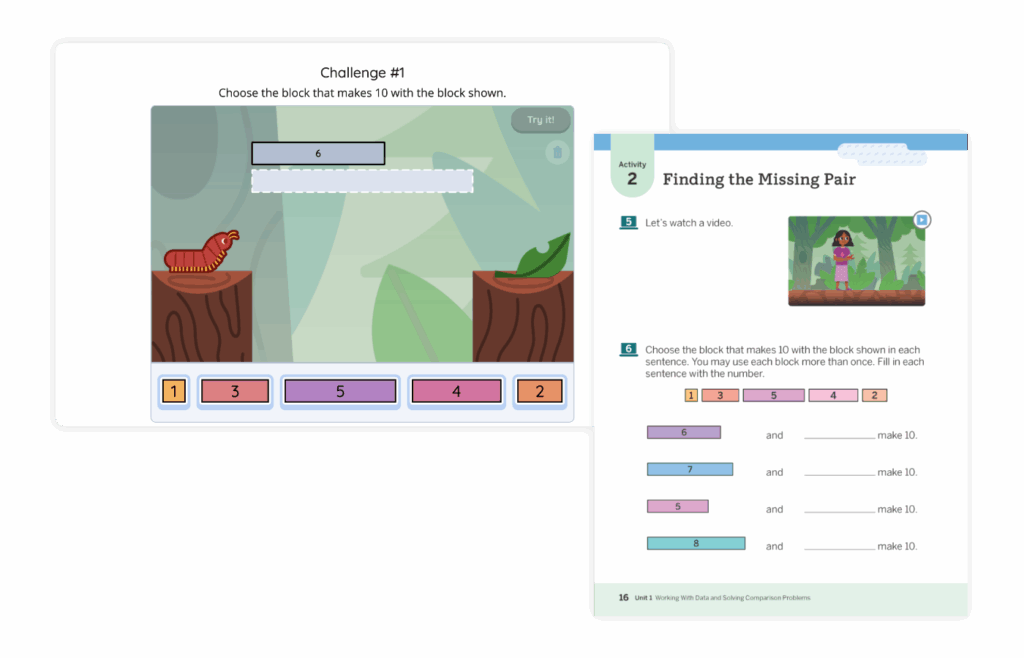

Personalized Learning
Boost Personalized Learning activities help students access grade-level math through engaging, independent digital practice. Responsive Feedback adjusts to students’ work, providing item-level adaptivity to further support their learning.
Differentiation and intervention
Amplify Desmos Math views differentiation as an ongoing process where teachers are both reactive and proactive to student needs, ensuring that all students have clear pathways to proficiency. Through rich data and teacher support, Amplify Desmos Math uses flexible categories of intervention and enrichment that adjust daily according to student thinking.
In-the-moment differentiation supports are available for every lesson, both digitally and in the print Teacher Edition.

An approach that supports teachers
Clear, step-by-step instructional moves help teachers plan and teach student-centered lessons that use
student thinking to differentiate instruction and guide to grade-level understanding. They include:
- Guidance on what to listen for and how
to respond. - Clear learning objectives to keep learning on
track for each activity and lesson. - Daily reinforcement activities to provide direct
instruction when needed.

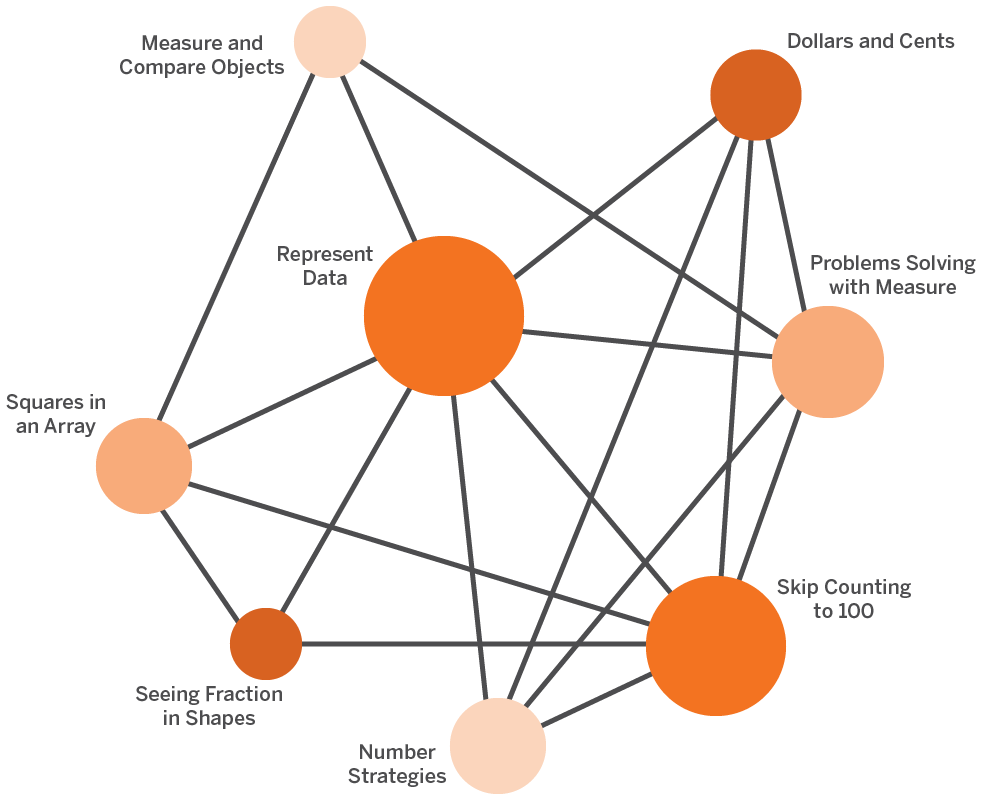
Big Ideas
The CA Mathematics Framework encourages a shift from power standards to thinking about math as a series of connected Big Ideas. Each Amplify Desmos Math California lesson supports one or more Big Ideas and the connections between them. The grade-level diagram changes through the course based on the math concepts addressed within.
Click here to see how the Big Ideas are represented within the K–8 core lessons.
Focus, coherence, and rigor
Amplify Desmos Math California incorporates the Drivers of Investigation (DIs) and Content Connection (CCs) throughout the program. Throughout the year, students engage with open and authentic tasks of varying durations—from lesson activities to unit-level Explore lessons and longer course-level Investigations. Every lesson and investigation opportunity is grounded in the why, how, and what of the learning experience, and helps teachers bring mathematical concepts to life.


Built-in authentic tasks
Mathematics is not learning in isolation. Students are connected to each other’s thinking and can use math to understand the world. With accessible invitations to authentic tasks, all students can experience mathematical success. Amplify Desmos Math California provides these authentic invitations in a variety of ways:
Each unit begins with an “Explore” lesson, which allows students to engage with authentic exploration in low-floor, high-ceiling tasks. These tasks are designed to promote an inclusive and differentiated learning environment—allowing all students to access basic mathematical concepts, while offering advanced exploration and problem-solving for those ready for more complex work.
Our innovative course-level investigations are designed to facilitate multi-part exploration. Students grapple with Big Ideas, diving deep into key concepts that encourage comprehensive understanding. Data science is infused into the approach, giving students a solid foundation from which to interpret and apply data-driven solutions. They’re also encouraged to understand and appreciate the interrelatedness of Earth’s environmental systems via our lesson’s focus on the Environmental Principles and Concepts (EP&Cs).
Explicit support for multilingual/English learners

Amplify partnered with the English Learner Success Forum (ELSF), a national nonprofit organization that advocates for high-quality instructional materials that are inclusive of multilingual/English learners (ML/ELs). ELSF reviewed Amplify Desmos Math California, and provided directional guidance and feedback to ensure that the program reflects their research-based instructional strategies for multilingual/English learners.
Amplify Desmos Math California recognizes the diverse language needs of our students and is designed to be inclusive. Each lesson in the program features a parallel language activity, designed to be available to all students, in the form of teacher guidance and student activities. The activities in the Math Language Development Resources have level ELD differentiation to support all levels of ML/ELs. This approach ensures that all students, regardless of their language skills, can participate fully, grasp the material, and excel in their mathematical journey.
Our Multilingual Glossary includes, in addition to Spanish, nine languages: Simplified Mandarin, Tagalog, Vietnamese, Arabic, European French, Russian, Brazilian-Portuguese, Haitian-Creole, and Urdu.
Amplify Desmos Math California will include Spanish student-facing materials beginning in the 2026–27 school year.
Assessments
By starting with what students already know, Amplify Desmos Math helps build a strong foundation for success to guide and support future learning. Teachers are empowered to transform every classroom into an engaged math community that invites, values, and develops student thinking. With explicit guidance on what to look for and how to respond, teachers can effectively support students as they develop their understanding.
Program assessments
A variety of performance data in Amplify Desmos Math provides evidence of student learning while helping students bolster their skills and understanding.
Unit-Level Assessments
Our embedded unit assessments offer key insights into students’ conceptual understanding of math. These assessments provide regular, actionable information about how students are thinking about and processing math, with both auto-scoring and in-depth rubrics that help teachers anticipate and respond to students’ learning needs.
Lesson-Level Assessments
Amplify Desmos Math lessons are centered around sense-making and in-the-moment feedback. Daily moments of assessment provide valuable evidence of learning for both the teacher and student.
Data and reporting
Amplify Desmos Math provides teachers and administrators with unified reporting and insights so that educators have visibility into what students know about grade-level math—and can plan instruction accordingly for the whole class, small groups, and individual students.
Assessment reports
Reporting functionality integrates unit assessments, lesson assessments, personalized learning, Benchmark assessments, and Progress Monitoring for a comprehensive look at student learning.
Our reports show proficiency and growth by domain, cluster, standard, and priority concept using performance data from unit assessments. Then our reports highlight areas of potential student need to allow teachers to modify their instruction and target differentiated support.
At-a-glance views of unit-level assessment results inform your instructional planning, and you can also drill down to item-level analysis.
Standards reports
Our standards report allows you to monitor proficiency at the class and individual student levels. Proficiency and growth are shown by domain, cluster, standard, and priority concepts. Areas of potential student need are highlighted to allow teachers to modify their instruction and target differentiated support.
Administrator reports
Amplify Desmos Math provides a complete picture of student, class, and district performance, allowing administrators to implement instructional and intervention plans.
- Track student, class, and district performance with usage, completion, and assessment data.
- Accurately group students and classes with the Benchmark and Progress Monitoring data of mCLASS Assessments and allow teachers to reliably implement and track the progress of Tier 2 and Tier 3 intervention.
- Provide one data-driven solution that educators can rely on for high-quality math instruction.
Elementary review resources
To learn about the elementary program, please start by watching the Amplify Desmos Math California Elementary Program Overview video.
For additional program information and helpful navigation tips, download the Amplify Desmos Math California Elementary Program Guide.
Middle School review resources
To learn about the middle school program, please start by watching the Amplify Desmos Math California Middle School Program Overview video.
For additional program information and helpful navigation tips, download the Amplify Desmos Math California Middle School Program Guide.
The digital experience
In Amplify Desmos Math, embedded interactions and animations allow students to test predictions, get feedback, share ideas, and connect representations.
The digital interactions included in lesson activities are designed to elicit student thinking in a way that feels fun and inviting. As students play and explore math concepts, teachers can highlight the ideas that students share, connect those ideas to other students’ ideas, and build on their thinking through productive class discussion.
Watch the video to preview the digital experience and for helpful platform navigation tips.
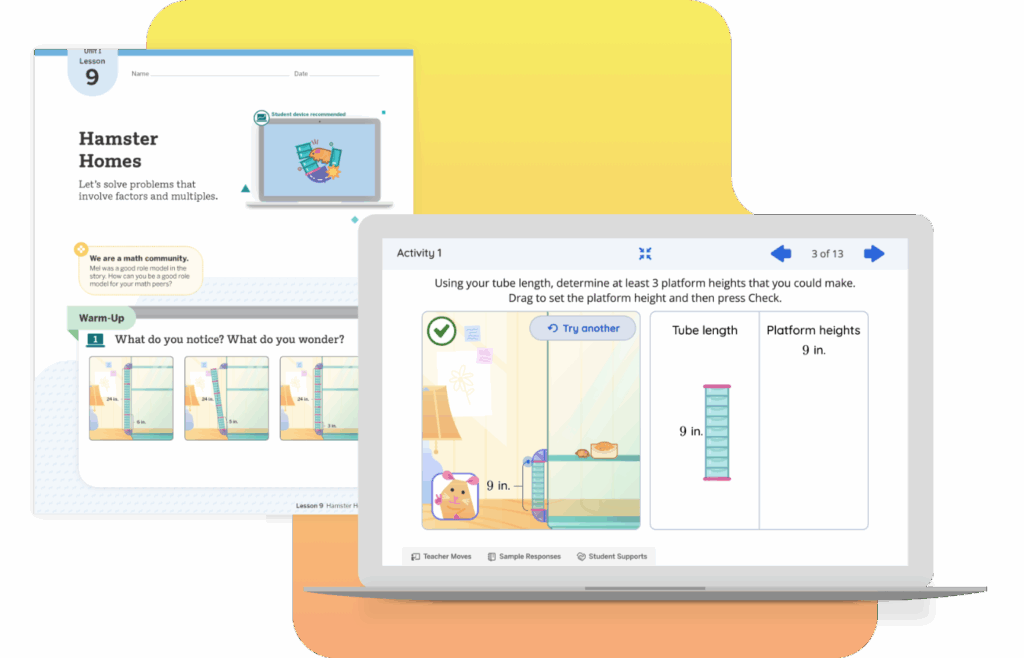
Explore grade level samples
All lessons in Amplify Desmos Math California include print materials and rich digital experiences. Every lesson is supported with Student Edition pages, teacher presentation screens, and interactive digital resources for practice and differentiation. Some lessons also enable students to use devices to interact with lesson content.
You’ll find sample materials by grade level in the following drop-downs. Please refer to your physical samples and the digital platform (accessed through the demo account provided by your account executive) for a comprehensive program review.
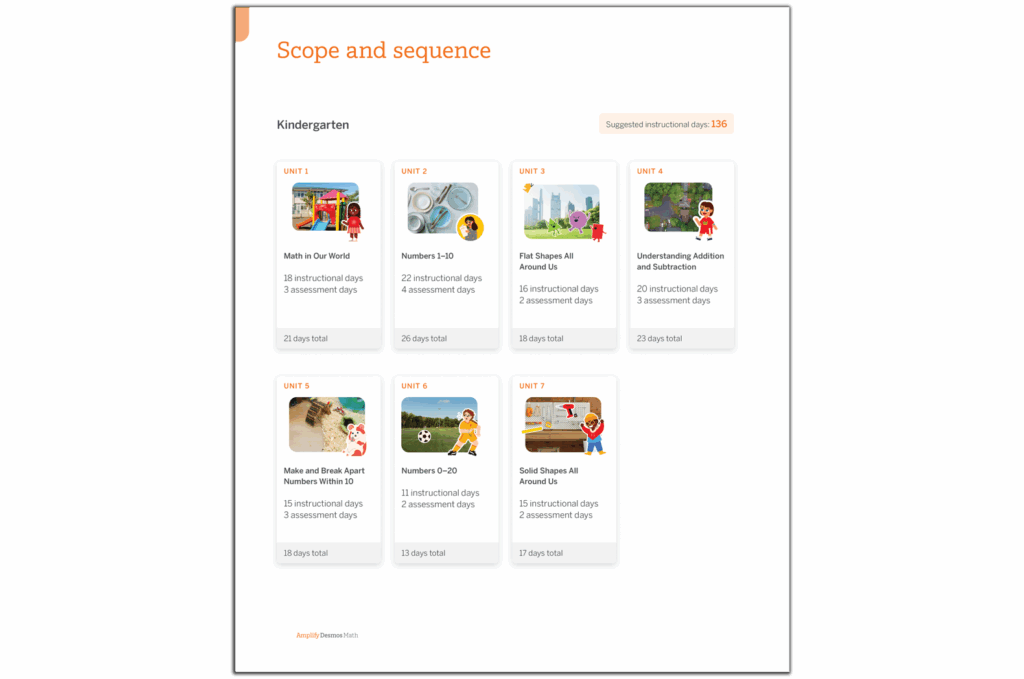


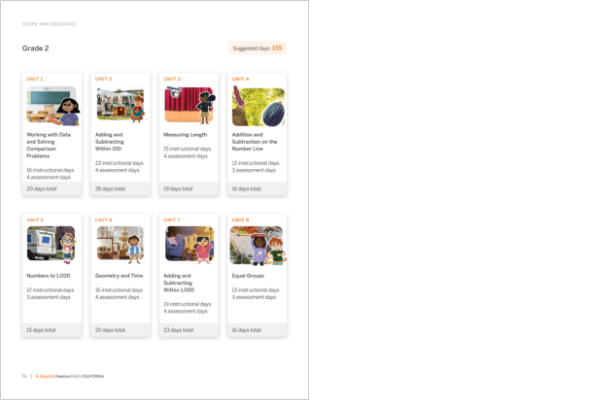
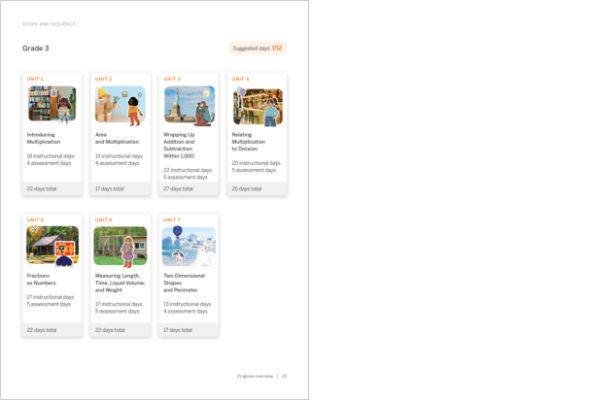





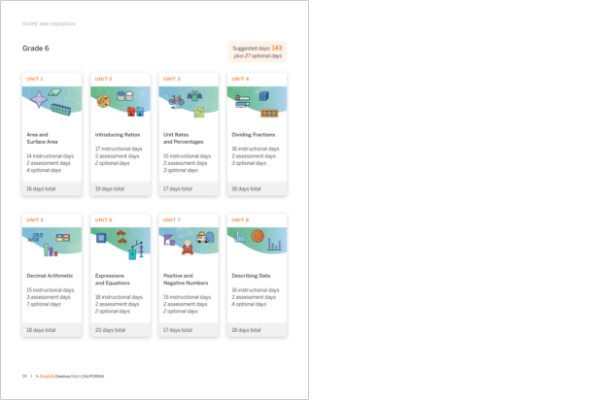

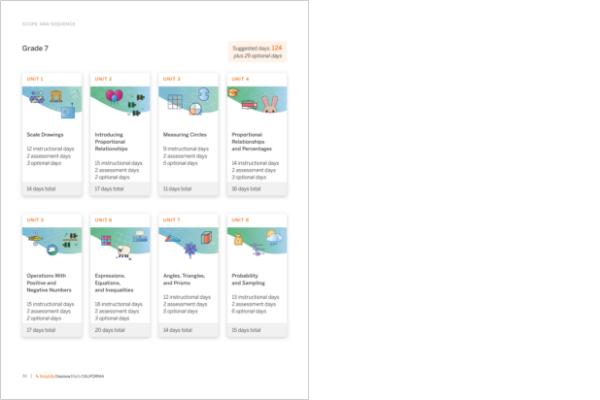






Math 2–3 is currently being developed and will be available in the 2026–27 school year.

Scope and Sequence (National Edition)
The Amplify Desmos Math Geometry Beta National Edition is available for piloting in the 2025–26 school year. Amplify Desmos Math California Geometry will be available in the 2026–27 school year.
Geometry sampler
This sampler includes Teacher Edition front matter for program overview information, plus Teacher Edition and Student Edition pages for Units 1–2.

Scope and sequence (National Edition)
The Amplify Desmos Math Algebra 2 Beta National Edition is available for piloting in the 2025–26 school year. Amplify Desmos Math California Algebra 2 will be available in the 2026–27 school year.

Algebra 2 sampler
This sampler includes Teacher Edition front matter for program overview information, plus Teacher Edition and Student Edition pages for Units 1–2.
Contact us
For questions, samples, or more information, please contact your local Amplify account executive:
Erin King
Sales Director, CA
(512) 736-3162
eking@amplify.com
Northern CA
Wendy Garcia
Senior Account Executive
(510) 368-7666
wgarcia@amplify.com
Bay Area
Lance Burbank
Account Executive
(415) 830-5348
lburbank@amplify.com
Central Valley and Central Coast
Demitri Gonos
Senior Account Executive
(559) 355-3244
dgonos@amplify.com
Ventura and L.A. County
Jeff Sorenson
Associate Account Executive
(310) 902-1407
jsorenson@amplify.com
Orange and L.A. County
Lauren Sherman
Senior Account Executive
(949) 397-5766
lsherman@amplify.com
San Bernardino and L.A. County
Michael Gruber
Senior Account Executive
(951) 520-6542
migruber@amplify.com
Riverside and L.A. County
Brian Roy
Senior Account Executive
(818) 967-1674
broy@amplify.com
San Diego County
Kirk Van Wagoner
Senior Account Executive
(760) 696-0709
kvanwagoner@amplify.com
Under 2300 students in Bay Area, Sacramento Valley, and Northern Counties
Kevin Mauser
Lead Account Executive
(815) 534-0148
kmauser@amplify.com
Under 2300 students in Southern CA, Central Coast, and Southern Central Valley Counties
Charissa Snyder
Account Executive
(720) 936-6802
chsnyder@amplify.com
Personalized instruction and intervention for every K–5 student
Boost Math™ is a powerful intervention system that advances student growth and ensures access to grade-level math for all students.
Boost Math offers differentiation and personalized learning that build on students’ existing understanding, while scaffolding instruction allows every student to succeed with grade-level content. Teachers spend less time planning and more time ensuring that every student’s specific needs are
met—with customizable intervention resources that help differentiate when and how it matters most.
About the Boost Math system
Boost Math helps teachers as they implement effective daily differentiation and intervention—minimal planning time required. The system provides access to ready-to-go,
core-aligned resources including:
- Personalized practice to support student growth.
- Intervention resources for small-group personalized instruction.
- Assessment insights to inform teaching.
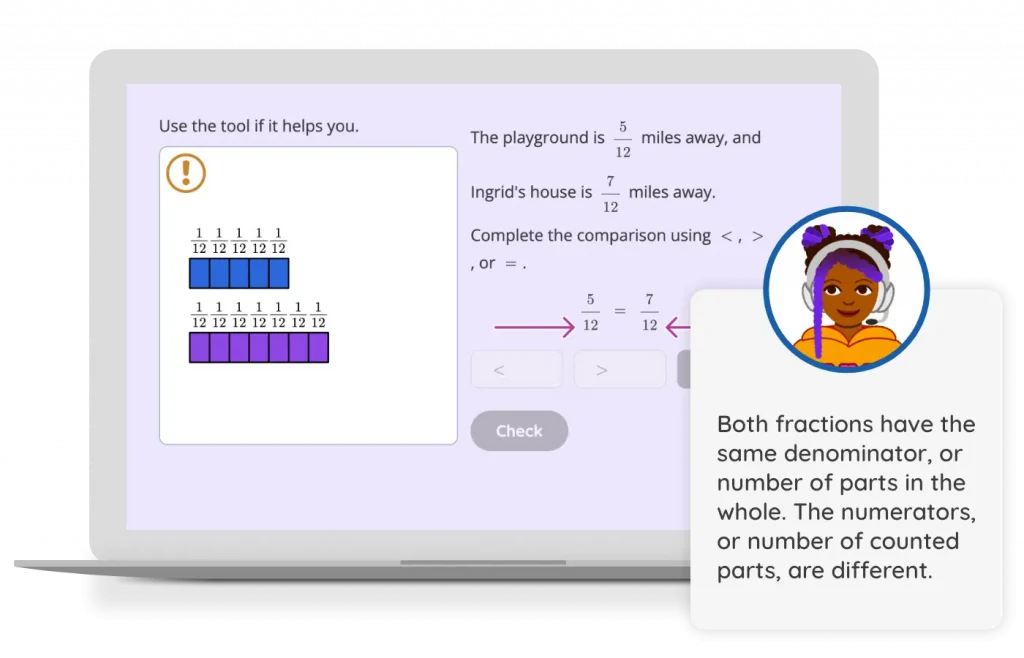
Personalized instruction for all students
Personalized Learning activities complement your core instruction by supporting understanding of your daily learning goal. The asset-based technology responds to each student’s unique needs based on prior assessment data and student responses.

Ready-to-go math intervention you can trust
Build grade-level proficiency through targeted math intervention with teacher-led, 15-minute Mini-Lessons. Support or re-engage small groups of students through explicit, guided practice designed around the extensive research of faded, worked examples.
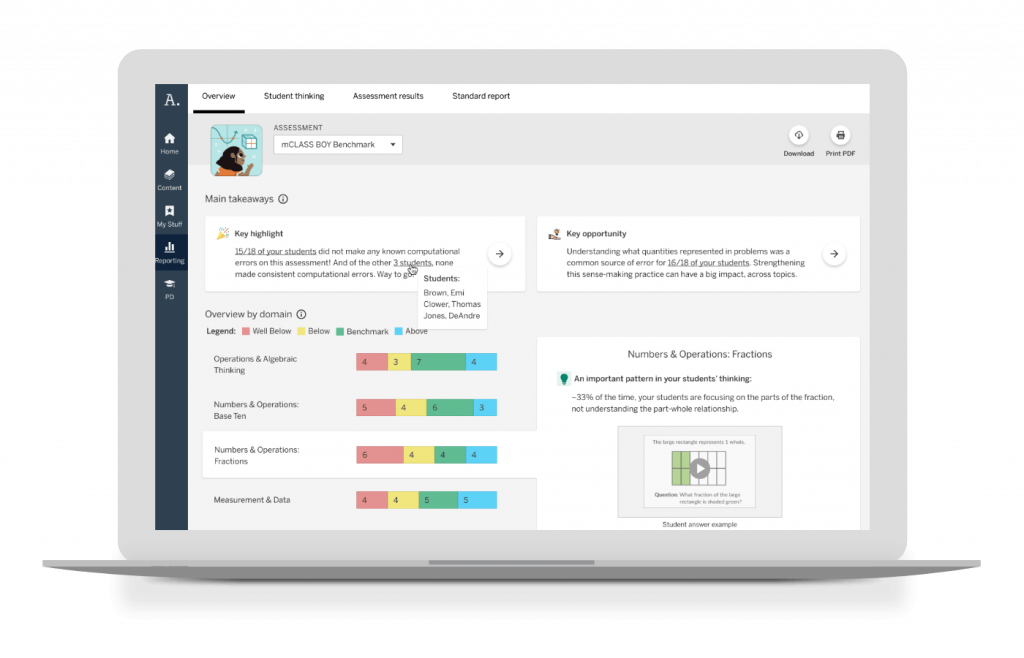
Actionable data with diagnostic screening
Gain valuable insight into what students know with mCLASS® Assessments. Through the
whole-class, digital mCLASS Beginning-of-Year Screener, teachers can leverage reliable,
actionable data to inform tiered intervention.
Aligned to your core instruction
The structure and recommendations of Boost Math help teachers quickly personalize learning that works alongside your core instruction.
The flexible instructional model is designed around teacher and student needs, with everyday intervention resources connected to the math you’re teaching.
The built-in math intervention gives students what they need with guided Mini-Lessons; digital, independent Fluency Practice; collaborative Centers (K–5) and Extensions; strategy-based games called Math Adventures; and more—minimal planning time required.
Our approach
Boost Math empowers all learners to experience success—and actually enjoy—grade-level math, with activities that complement core instruction and support understanding of the daily learning goal.
The Support, Strengthen, and Stretch model provides differentiation for every core skill, with alignment to your core math program.
A single, integrated math solution
Amplify’s comprehensive math suite, Amplify Desmos Math Texas, provides seamless alignment to help teachers diagnose and capitalize on student strengths, foster deep investment, and build student agency.
Everything is in one place—with screening and progress monitoring, core instruction, integrated personalized learning, and embedded intervention teachers can trust.
Making reading comprehension connections

Comprehension isn’t just a process, or just a product—it’s both. And connecting reading and understanding is what most teachers are working on every day.
That fundamental connection was the focus of our recent Science of Reading Webinar Week: Comprehension Connections—Building the Bridge Between Reading and Understanding, a five-day, expert-filled series that unpacked what really drives comprehension, from early decoding to middle school mastery.
Here’s a quick look at what you’ll learn when you watch—and a few ideas you can use right away.
Day 1: What Is Reading Comprehension, Anyway?
Speaker: Susan Lambert, Ed.D., Chief Academic Officer, Literacy, Amplify; Host of Science of Reading: The Podcast
“Reading comprehension is more than just language comprehension. It’s language comprehension on the page, which makes it much more complex.” — Susan Lambert, Ed.D.
If you ask ten teachers to define comprehension, you might get twelve answers. Lambert opened the week by grounding everyone in the Science of Reading, including the Simple View of Reading and the Reading Rope. Skilled reading, she reminded viewers, is the result of multiple strands—decoding, language comprehension, and knowledge—woven together over time.
The takeaway? The most effective approaches don’t teach comprehension strategies—such as “find the main idea”—in isolation. Rather, they connect word recognition to meaning through rich texts, conversation, and writing. Whether you’re teaching second-grade reading comprehension or sixth-grade reading comprehension, students need the same thing: a clear path from sounding out words to making sense of ideas.
Day 2: Comprehension and Knowledge Building: A Two-Way Street
Speakers: Sonia Cabell, Ph.D., Sigmon Endowed Professor of Reading Education, Florida State University
HyeJin Hwang, Ph.D., Assistant Professor, Department of Educational Psychology, University of Minnesota Twin Cities
“Better background knowledge leads to improved reading comprehension, which in turn enables readers to learn more from text, thereby building additional knowledge.” —HyeJin Hwang, Ph.D.
In their session, Sonia Cabell and HyeJin Hwang explored one of the clearest findings in reading research: Comprehension and knowledge develop together. Cabell began by explaining how comprehension (including oral language, background knowledge, vocabulary, syntax, and verbal reasoning) forms one of the essential strands of the Reading Rope.
Students can’t activate knowledge they don’t yet have. Teachers need to help them build it early, and intentionally. Cabell’s research found that integrating literacy and content instruction produced gains in vocabulary and content knowledge.
Likewise, Hwang’s two large-scale longitudinal studies showed that better knowledge instruction leads to better reading, which leads to even more knowledge. These findings held true across languages and grade levels, underscoring the universal value of content-rich instruction.
Classroom takeaways:
- Plan literacy units around connected science or social studies topics to build coherent knowledge.
- Use content-rich interactive read-alouds with discussion before, during, and after reading.
- Ask inferential comprehension questions (“Why?” “How?”) that require students to connect ideas using their own words.
- Encourage quick writing or drawing tasks that help students show what they’ve learned.
Day 3: Where and How to Measure Comprehension to Drive Improvement
Speakers: Danielle Damico, Ph.D., Executive Director of Learning Science, Amplify
Gina Biancarosa, Ed.D., Ann Swindells Chair in Education, University of Oregon
“Reading comprehension is both a process and a product.” —Danielle Damico, Ph.D.
Too often, comprehension is measured only as a finished product—how well students answer questions after reading—without revealing how they built understanding along the way. This session explored what comprehension actually involves: reading words accurately, understanding their meaning, applying background knowledge, and making inferences. As researcher Sharon Vaughn, Ph.D., has described, these interconnected skills all work together as students learn to read.
Biancarosa showed how looking at comprehension as a complex process helps teachers see student thinking in action. She described the major types of inferences—lexical, bridging, gap-filling, and causal—and the importance of understanding how students connect ideas and construct meaning.
Try this:
- Treat comprehension as ongoing thinking, not a one-time test score.
- Use brief think-alouds or class discussions to get a look at how students connect ideas.
- Match assessments to the precise question you’re trying to answer.
- Let assessment guide instruction—data should lead directly to next steps.
Day 4: Comprehension in Middle School: More Important Than Ever
Speaker: Deb Sabin, Chief Academic Officer, Amplify ELA
“Writing done right encodes knowledge. And discourse done right gets into the realm of higher-order thinking.” —Deb Sabin
By the time you’re teaching fourth-grade reading comprehension through sixth-grade reading comprehension, decoding should be automatic. At this stage, the upper strands of the Reading Rope—vocabulary, background knowledge, and syntax—move to the forefront. In this session, Deb Sabin highlighted how comprehension in middle school relies on academic knowledge, disciplinary vocabulary, and structured discourse—and how it truly blossoms when reading, writing, and speaking reinforce one another.
Classroom moves that help:
- Pair writing with reading: Even short, text-based responses consolidate knowledge in long-term memory.
- Use structured discussion (“accountable talk”), where students cite text evidence and build on one another’s ideas.
- Center rich, grade-level texts that challenge thinking and vocabulary.
Day 5: Finding the Missing Link in Reading Comprehension to Boost Literacy Success
Speaker: Julie A. Van Dyke, Ph.D., Clinical Assistant Professor, Yale University Child Study Center; Research Scientist, Yale-UConn Haskins Global Literacy Hub
“Teach phonics for decoding. Teach syntax for understanding.” —Julie A. Van Dyke, Ph.D.
In the final presentation of the series, Julie Van Dyke explored an often-overlooked element of comprehension: syntax—the way words combine to create meaning. Van Dyke argued that syntax is to comprehension what phonics is to decoding.
She illustrated how the Science of Reading and the Reading Rope locate syntax within the language-comprehension strands—critical to understanding who did what to whom in complex sentences. Explicitly teaching sentence structure helps all learners, including multilingual/English learners, access higher-level meaning.
Simple practices can make a difference:
- Have students paraphrase tricky sentences. (Starter question: “Who’s doing the action?”)
- Pull strong sentences from your class texts to show how structure shapes meaning.
- Encourage students to mirror those structures in their own writing.
What linked all five sessions together? The understanding that comprehension develops when teachers connect the code, the language, and the knowledge. Whether students are decoding in second grade or crafting essays in sixth, they thrive when we help them move from reading to understanding—step by step, strand by strand.
Watch all five on-demand recordings.
More to explore:
- Download your Comprehension 101 bundle.
- Read (and comprehend!): Reading comprehension strategies grounded in science
- Listen to this special Essentials episode of Science of Reading: The Podcast, where Susan Lambert and other experts distill key reading comprehension insights.
How problem-based learning can transform the math classroom

With test scores and student engagement on the decline, it’s clear that traditional teaching methods aren’t meeting the needs of all of today’s math learners.
One solution that’s gaining momentum is problem-based learning. By focusing on real-world problems and structured approaches, this approach develops critical thinking, reasoning, and application—skills that are essential for math success.
But making this shift isn’t easy. For math teachers and educators, it requires careful planning, a clear strategy, and community commitment.
That’s why we’re here to help.
The decline in test scores and engagement
The latest National Assessment of Educational Progress (NAEP) results show a sharp decline in math proficiency across grade levels. Only 26% of eighth graders performed at or above the NAEP Proficient level in 2022. These results represent the largest score declines in NAEP mathematics at grades 4 and 8 since initial assessments in 1990. The pandemic didn’t help, but it’s not the only factor.
This downward trend is compounded by a sense of disengagement. According to YouthTruth’s report Making Sense of Learning Math: Insights from the Student Experience, only half of students feel that what they’re learning in math connects to the real world. Recent survey data also shows that less than half of U.S. students feel that they “often” or “always” work on interesting problems in math class.
When math feels irrelevant or intimidating, students disengage—and the learning gaps that follow can be difficult to close.
An opportunity to grow
But the data also includes opportunities. According to NAEP research, more than 70% of students report that they enjoy activities that challenge their thinking and thinking about problems in new ways.
Problem-based learning helps give those students what they want.
And in a world that relies increasingly on data, analysis, and innovation, students need to learn not just how to follow steps and apply formulas, but how to think mathematically. In other words, problem-solving skills need to be part of student learning. This is particularly important in elementary and middle school math, where foundational concepts are built—and where students have the chance to forget their identities as “math people.”
That’s why working to infuse problem-based math learning into your district’s instruction can help reverse negative math and engagement trends.
What does problem-based learning in math look like?
Let’s go back and define this approach more fully. Research shows that math instruction is most effective when it encourages students—individually or grouped with peers—to grapple actively with math problems. When instruction gives students the opportunity and freedom to solve problems, rather than dictating solutions and then having them practice, students are more motivated.
For example, instead of memorizing the formula for calculating area and then practicing it in a series of disconnected problems, students might tackle a problem-solving challenge like:
How much paint is needed to cover our classroom walls?” Or they might work on a broader question such as: “How can we design a park, taking into account constraints like space, cost, and accessibility?
At its core, problem-based learning values mathematical thinking and reasoning. Rather than focusing on procedures and memorization, problem-based learning encourages students to:
- Explore open-ended problems.
- Ask questions and make connections.
- Develop strategies to solve problems collaboratively.
- Build curiosity and perseverance.
- Reflect on their reasoning and process.
In the problem-based learning classroom, students are positioned as active participants in their math experiences, building a deeper understanding of concepts as they work through challenges. This is particularly critical for ensuring students don’t just learn math, but understand why it works and how to apply it. These approaches can transform math classrooms into spaces where students build both foundational and real-world math skills—and a healthy dose of math confidence, too.
Critical factors in making the shift
Integrating problem-based learning into traditional math teaching can feel like (and is!) a big change—in lesson-planning, mindset, and more.
To make it work for administrators, teachers, and students alike, schools do best when they focus on a few critical factors. These include:
- Clear vision: Understand (and communicate) why the shift matters and what it looks like in action.
- Leadership buy-in: Gain commitment from school leaders and administrators.
- Teacher support: Offer professional development, resources, and ongoing guidance specific to math instruction.
- Structured approaches: Establish a well-defined plan for implementing problem-based learning in math classrooms effectively.
What problem-based learning can look like in the classroom
While problem-based learning offers proven benefits, it can be difficult to integrate into the classroom without a clear structure. Teachers need tools and strategies to guide students through the process and ensure that learning goals are met.
A structured approach to problem-based learning in math should include:
- Defining the problem: Present a clear, engaging math challenge connected to real-world scenarios.
- Student inquiry: Encourage exploration, discussion, and different solution paths.
- Collaboration: Support teamwork to share ideas and reasoning.
- Reflection: Allow students to evaluate their process, solutions, and learning.
This structured approach not only improves students’ conceptual understanding, but also aligns with Amplify’s research findings, which show that students who engage in active learning outperform their peers in more traditional settings.
By embracing problem-based learning in math classrooms, educators can:
- Boost student engagement and confidence.
- Improve student problem-solving and mathematical reasoning skills.
- Help reverse declines in math achievement over time.
- Empower students to see the value and relevance of math in academics and in their lives.
Ready to learn more?
If you’re ready to explore how your school can make the shift to problem-based learning in math, our new change management ebook is the perfect place to start. It offers practical guidance, real-world examples, and a deeper look at the strategies highlighted above.
Download the ebook now to discover actionable insights and strategies to help make problem-based learning come alive in your math classrooms.
Translating research into action, with Amie Burkholder


Special Episode: Translating research into action, with Amie Burkholder – For Testing
Translating research into action, with Amie Burkholder


Transcripts and additional resources:
Meet Our Guest(s):

Amie Burkholder
Amie Burkholder is a literacy coach, national speaker, and author of Literacy Unlocked: How to Implement the Science of Reading With Young Learners. With over 15 years in education, Amie helps teachers bridge research and practice through structured literacy. She’s the creator of the Route2Reading Membership and Foundations to Fluency phonics curriculum, approved in Virginia. Amie is passionate about making the Science of Reading practical for real classrooms and helping every child become a confident reader.
Meet our host: Susan Lambert
Susan Lambert is Chief Academic Officer of Literacy at Amplify and host of Science of Reading: The Podcast. Throughout her career, she has focused on creating high-quality learning environments using evidence-based practices. Lambert is a mom of four, a grandma of four, a world traveler, and a collector of stories.
As the host of Science of Reading: The Podcast, Lambert explores the increasing body of scientific research around how reading is best taught. A former classroom teacher, administrator, and curriculum developer, she’s dedicated to turning theory into best practices that educators can put right to use in the classroom, and to showcasing national models of reading instruction excellence.

Quotes
“I want [the book] to follow the research, but I want it to be simple enough for teachers to execute, [and] also engaging enough for kids to want to do it.”
“If you try to change everything you're doing, you're not going to do anything well. Pick one area of your literacy block you’re really gonna nail. Once you nail that, add another one.”
“Look to those that you trust to guide you.”
How asset-based assessments can revolutionize math instruction

Many of today’s math classrooms are facing a perfect storm: declining scores, widening learning gaps, and growing pressure on teachers to deliver solutions. According to the National Assessment of Educational Progress, students are experiencing the steepest drop in math scores since 1990. EdWeek Research Center reports that a persistent gap between educational theory and day-to-day practice is putting added stress on teachers, often leaving them to navigate complex pedagogical demands without adequate support.
So how can we provide both students and teachers with the tools they need to succeed? How can math assessments and math intervention programs provide real help and drive student progress—without piling on more work?
One promising answer lies in rethinking how we assess what students know.
Rethinking the role of math assessments
Traditional assessments tend to focus on correctness alone. Did the student get it right or wrong? How many points did they earn?
But this binary approach misses a lot. A skipped question could mean a tech hiccup or a moment of confusion—not a lack of understanding. A wrong answer might come at the end of otherwise solid problem-solving.
An asset-based assessment approach shifts the focus from mistakes to meaning. It looks beyond outcomes to understanding how students think—their strategies, reasoning, and partial understandings. And when teachers can see that thinking, they gain far more useful data to guide instruction and inform their math intervention program.
This approach doesn’t lower expectations—it raises the quality of insight and gives struggling students (and really all students) a better shot at meeting standards with instruction that’s tailored to their actual needs.
Honoring students’ thinking and teachers’ time
Every student thinks differently. Asset-based assessments help reveal individual thinking, often through short-answer or open-response formats that ask students to explain how they solved a problem.
But this shift isn’t just for students. Teachers can benefit enormously when assessments are designed to surface trends in student thinking. If 30% of a class misinterprets the same concept, that result reveals a teaching opportunity. Rather than reteach an entire unit, teachers can adjust with focused, targeted support. That means less time spent diagnosing, and more time actually helping.
And when technology in the math classroom makes this data easy to collect, analyze, and act on, teachers get a level of consistent insight that is not only helpful, but actionable.
From student performance to student performance + thinking
The ultimate goal of asset-based assessments isn’t to replace performance data—it’s to enhance it. Knowing how a student got to an answer (or why they didn’t) can make all the difference in determining what to do next.
Here’s an example involving a division problem:

When real students were given this problem, they responded with answers like:
- 33/4 = 8.25, round up to 9 so all kids can sit!
- 33/4 = 8 with a remainder of 1. She needs 8 tables.
- 8 x 4 = 32, but 9 x 4 = 36. I don’t know if we can leave one student sitting lonely on the floor, though.
Traditional grading might stop at “correct” or “incorrect” for these responses. But when students are asked to explain their thinking, teachers can uncover a range of reasoning—from successful multiplication strategies to misunderstandings about remainders.
These glimpses into student thinking aren’t just informative—they’re transformative. They can illuminate the performance of students in a deeper, more actionable way. They can help teachers take smarter next steps, and they can help students feel understood, capable, and more like “math people” every day.
More to explore
- Download our ebook Asset-Based Assessment: What It Is and Why It’s Needed in K–12 Classrooms.
- Amplify is investing in assessment and intervention tools that make this kind of insight possible. Our latest suite was designed with asset-based thinking at its core. You can learn more here:
Welcome to Amplify CKLA!
Amplify Core Knowledge Language Arts (CKLA) is a cutting-edge and effective core ELA program for students in grades K–5. It was developed in partnership with the Core Knowledge Foundation, features proven evidence-based instructional practices, and was specifically designed to help teachers implement Science of Reading principles.
Note: We’re continually adding information to this site, including specific details regarding our alignment with your non-negotiables. Keep checking back with us between now and April 20, 2023.

Getting Started
On this site, you’ll find a variety of resources designed to support your review and evaluation of the program. Before you dive in, watch the Orientation Overview and Program Overview videos below to learn about CKLA’s alignment to CCSD’s ELA adoption requirements, as well as where to find key program resources.
[Video] Orientation Overview
[Video] Program Overview
In the video below, learn about CKLA’s structure and materials, as well the research behind the curriculum.
Evidence-Based
[Video] Pedagogical Overview with Simple View of Reading
In the video below, Amplify’s Chief Academic Officer Susan Lambert shares the big picture of CKLA, and explains why it was created and the impact it’s making across the country. Below are a few portions of the video that you may find particularly helpful as you conduct your review.
- 0-1:00 Why CKLA?
- 1:00-4:40 How CKLA was built on the Simple View of Reading
- 4:40-8:00 How to review the CKLA Components
- 8:00-end Teacher Testimonial
[Features] Supporting the Simple View of Reading
Built out of the latest research in the Science of Reading, Amplify CKLA delivers explicit instruction in both foundational literacy skills (systematic phonics, decoding, and fluency) and background knowledge in grades K–2 with an integrated approach to explicit instruction in grades 3–5.
Review this Science of Reading toolkit to learn more about the Science of Reading best practices integrated throughout CKLA.
See our Science of Reading solutions in action! Click here to see a real example of how one Ohio district is implementing and educating their K–8 community on the Science of Reading as a response to Ohio’s Plan to Raise Literacy Achievement Initiative.
Great reading instruction starts with helping kids develop great decoding skills. By building a solid foundation of phonological awareness and phonics, reading the words on the page becomes automatic so that comprehension and critical thinking can happen. Our instruction is supported by:
- Step-by-step lessons with multisensory approaches, clear lesson objectives, and embedded formative assessments.
- Decodable books and student readers with ebook and audiobook versions that feature engaging plots and relatable characters.
- An engaging sound library with fun songs and videos that develop phonological awareness.
- An interactive Vocab App featuring engaging activities with immediate feedback and automated, customized instruction based on student performance.
Students build grade-appropriate subject-area knowledge and vocabulary in history, science, literature, and the arts while learning to read, write, and think creatively and for themselves. Our instruction is supported by:
- Knowledge builders that provide a quick overview of each domain with its key ideas.
- Interactive Read-Alouds designed to build knowledge and vocabulary.
- Content-rich anchor texts that support students as they tackle increasingly complex text and sharpen their analytical skills.
- Social and emotional learning paired with lessons in civic responsibility.
Easy-to-Use Materials
Amplify CKLA offers a number of digital and multimedia resources to support instruction and enhance the teacher and student experience.
- Amplify CKLA Digital Experience Site: All teacher and student materials are posted on this site for planning and information purposes, including Teacher Guides, Readers, Activity Books, Ancillary Materials, videos, additional resources, and links to other useful sites, such as the Professional Learning site.
- The Professional Learning Site: This site includes training materials, best practices, and other resources to develop program expertise. Access professional development anywhere, anytime.
- Intervention Toolkit: The Intervention Toolkit provides easy-to use resources to assist teachers in filling gaps in students’ foundational skills. Teachers will find hundreds of activities to support phonics, fluency, comprehension, handwriting, and other key skills.
- The Science of Reading: The Podcast: Hosted by Susan Lambert, The Podcast delivers the latest insights from researchers and practitioners in early reading. Each episode takes a conversational approach and explores a timely topic related to the Science of Reading.
In addition to the videos below, our CKLA Components Guide can be a helpful tool as you explore the materials provided within your sample tubs.
[Video] Physical Materials Walkthrough
As you explore your physical samples, the material walkthrough video below can be a helpful resource. In particular, we suggest watching the following portions of the video.
- 0-4:38 CKLA components for K–2
- 4:38-7:00 CKLA components for 3–5
- 7-7:30 CKLA Program Guide
- 10:12-13:20 CKLA’s Teacher Resource Site
Note: The below video covers both our K-5 program (Amplify CKLA) as well as our 6-8 program (Amplify ELA).
[Video] Digital Materials Walkthrough
In the video below, learn about CKLA’s digital tools for teachers and students across both classroom and asynchronous environments.
As you prepare to explore our digital platform, be sure to watch and refer to the video below.
Diverse Texts
In Amplify CKLA, texts serve a variety of purposes, from building background knowledge, vocabulary, and comprehension to building decoding and fluency skills.
In grades K–2, instruction is segmented between two strands: Knowledge and Skills.
- Reading within the Knowledge Strand is centered around authentic read-alouds and trade books that are intentionally sequenced to build content knowledge and vocabulary in specific domain topics around literature, history, science, and the arts. Because research shows that students’ listening comprehension outpaces their reading comprehension until their early teens, Amplify CKLA strategically uses read-aloud text in this strand, allowing students to focus their cognitive energy on gaining meaning from the words and better understanding from the images.
- Reading within the Skills Strand centers around carefully crafted Student Readers that teach students how to read. Structured as chapter books, these readers are 100% decodable and were developed to align with Amplify CKLA’s scope and sequence for phonics, directly connecting instruction to student practice in connected texts. Students use the Readers to practice decoding, fluency, and comprehension during shared reading lessons, targeted close reading sessions, in small groups, and independently.
In grades 3–5, integrated units bring the Skills and Knowledge strands together as students become increasingly automatic and strategic in their word recognition and language comprehension skills. Student reading and comprehension activities involve a variety of reading materials:
- Authentic Read-Alouds and trade books ensure students encounter a variety of perspectives as they use these complex text to increase their knowledge while practicing vocabulary and listening comprehension skills.
- Student Readers connect to each theme and are designed to increase in complexity over time, providing a continual challenge as students’ reading and listening comprehension skills develop and strengthen throughout the year.
- Novel Guides provide teachers a flexible option for extending authentic reading and text-based activities in the classroom using award-winning and acclaimed novels.
- ReadWorks articles give students access to additional high-quality texts aligned to both Amplify CKLA knowledge topics and the topics outlined in the Common Core State Standards.
Decodable Readers at Grades K–2
Our Decodable Readers are designed to progress in skills, mirroring the scope and sequence of instruction, which allows students to immediately apply what they are learning to 100% decodable text. More specifically, our decodables:
- Are uniquely designed to provide intensive practice with the CKLA code while students read compelling and engaging stories and informational texts for the first time.
- Gradually introduce students to “tricky” spelling concepts, such as different sounds that use the same letter code.
- Increase in text complexity (i.e., content, length, and vocabulary) as students progress through the grades.
- Include fiction and nonfiction text.
- Are available as ebooks and audiobooks.
Below, you can see how students grow from year-to-year across grades K–2.
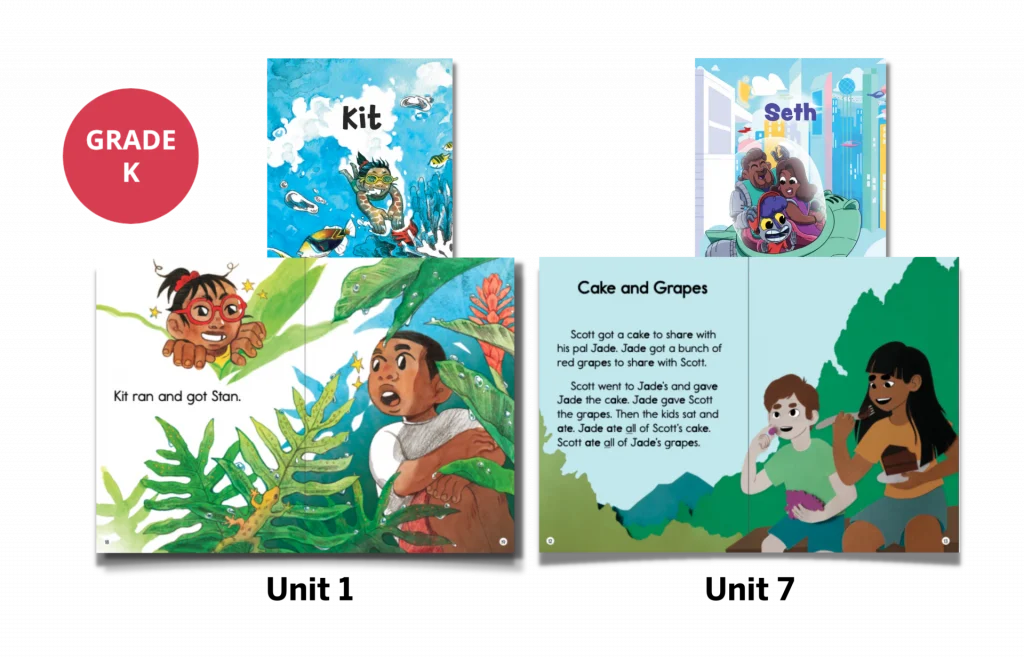
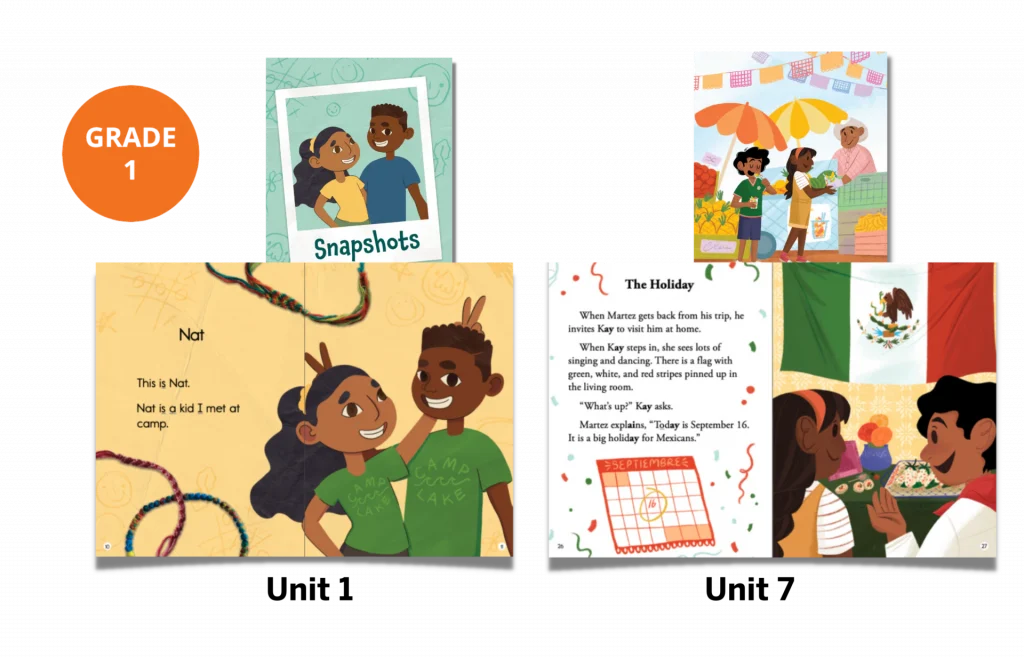
Student Readers at Grades 3–5
By grades 3–5, students have mastered the basics of decoding and are hungry to use what they’ve learned to reach out to the world. Although Read-Alouds remain an important part of lessons, students are also encouraged to practice independent reading starting in grade 3 with the support of carefully crafted Student Readers. These readers are chock-full of various text types, cultural stories, and a blend of fiction and nonfiction texts that are tied to and support the overarching theme of the unit.

Read-alouds
Authentic literature exposes students to a variety of text types and perspectives to deepen their knowledge of fascinating topics in social studies, science, literature, and the arts. Authentic texts support text-to-self, text-to-world, and text-to-text connections for readers.

Trade books
Our optional Trade Book Collection (and suggested list of additional trade books) align with our grade-level topics, and extend the knowledge students are learning through an authentic text.
Novel Guides
Novel Guides bring students beyond the CKLA curriculum. We provide fifteen full days of instruction on contemporary trade books, as well as writing prompts that help students navigate the authentic literature they love.

ReadWorks
Amplify CKLA and ReadWorks® have partnered to deliver high-quality texts curated to support the Amplify CKLA Knowledge Sequence and to extend student learning. Texts include high-interest nonfiction articles in topics in social studies, science, literature, and the arts. These texts are accompanied by vocabulary supports and standards-aligned formative assessment opportunities. Teachers can monitor their students’ progress using the ReadWorks reporting features.
Reading resources
The following resources may be helpful as you explore our approach to reading and the role that diverse texts play in the program.
- CKLA Text Complexity Guide
- What students read in Grade K
- What students read in Grade 1
- What students read in Grade 2
- What students read in Grade 3
- What students read in Grade 4
- What students read in Grade 5
Writing
CKLA is rich with opportunities for students to develop, practice, and hone their writing skills. While the shape of writing instruction looks slightly different at each grade level, a commonality across all grades K–5 is that writing isn’t taught in isolation. Rather, it’s embedded within the context of each unit, and is connected to what students read.
At Grades K–2, writing takes place in both the Skills and Knowledge strands.
- Explicit instruction in writing skills (such as sentence structure) and handwriting takes place in the Skills Strand, and is tied to the decodable readers used within each unit.
- Extended writing and writing process activities take place in the Knowledge Strand.
At Grades 3–5, writing is embedded through the integrated units.
- Across each unit, students work on smaller, more discrete writing skills alongside their Student Reader. These skills eventually culminate at the end of each unit in the form of a writing project.
- In 4th and 5th grades, we expand writing even further with the addition of Poetry units.
Writing and text-dependent questions
The overwhelming majority of questions, tasks, and assignments in CKLA materials are text-dependent. Every CKLA unit and domain is based around key texts that are either read aloud, with a peer, or independently. These readings are followed by class discussions where students are expected to refer to these texts when answering literal, inferential, and evaluative questions, both orally during class discussions and through written responses.
- Literal questions assess students’ recall of key details from the text. These are text-dependent questions that require students to paraphrase and/or refer back to the portion of the text where the specific answer is provided.
- Inferential questions ask students to infer information from the text and to think critically. These text-dependent questions require students to summarize and/or reference the portions of the text that lead to and support the inference they are making.
- Evaluative questions ask students to build on what they have learned from the text using analytical and application skills, often to form an opinion or make a judgment. These questions require students to paraphrase and/or cite the textual evidence that substantiates their argument or opinion.
In addition, students are often asked to generate additional questions based on the texts. Students further demonstrate understanding in writing by applying what they have learned and providing evidence from the text to back up their answers and opinions. For example, Grade 3 students learning about sea exploration write a paragraph from the perspective of a sailor on John Cabot’s ship, stating their opinion of whether the hardships they experienced are worth the adventure or glory and citing examples from the text to support their response. Grade 5 students studying the Adventures of Don Quixote write a four-paragraph persuasive essay arguing whether they believe Don Quixote’s good intentions justify his often calamitous actions, using reasons and evidence from the text to support their claims.
Writing with authentic literature
Novel Guides are designed around authentic texts students love. They not only help students foster a love for reading, they also present authentic opportunities for students to express themselves through writing. Novel Guides provide daily text-based writing and discussion through five activity types:
- Ask contains questions for discussion, reflection, or brief written responses. These questions cover information all students should understand as they read the text.
- Explore prompts offer brief research opportunities centered around items mentioned in the text.
- Imagine activities promote creativity and further reflection.
- Observe items ask students to take notes or make other kinds of observations about what they have read.
- Understand questions push students to explore connections to the text.
Writing and enrichment
Writing tasks throughout the program provide almost limitless opportunities for extension. Feedback from the teacher, peers, and self-reflection provide students opportunities to strengthen their writing. For example, advanced students can be encouraged to:
- Use more complex and unusual descriptive vocabulary.
- Incorporate figurative language into their writing.
- Write multi-clause sentences with more complex joining words.
- Create longer or richer opinion, explanatory, and narrative pieces.
- Evaluate the use of informational textual characteristics and use in their own writing (e.g., headers, bullets).
Writing resources
The following resources may be helpful as you explore our approach to writing and how writing develops across the program.
Access the program
Explore as a teacher
Before logging in, watch this brief video on navigating the CKLA Teacher Resource Site.
Ready to explore as a teacher? Follow these instructions:
- Click the CKLA Teacher Resource Site button below.
- Select Log in with Amplify.
- Enter the username: t1.ccsd-k5-ckla@demo.tryamplify.net
- Enter the password: Amplify1-ccsd-k5-ckla
- Click the CKLA Teacher Resource icon
- Select a grade level
Explore as a student
Before logging in, watch this brief video on navigating the CKLA Student Hub.
Ready to explore as a student? Follow these instructions:
- Click the CKLA Teacher Resource Site button below.
- Select Log in with Amplify.
- Enter the username: s1.ccsd-k5-ckla@demo.tryamplify.net
- Enter the password: Amplify1-ccsd-k5-ckla
- Click the CKLA Teacher Resource icon
- Select a grade level
Check out these additional resources
Nevada submission resources:
- CKLA Program Alignment to the Standards (Nevada Rubric: Category 1)
- CKLA Program Social Justice Alignment (Nevada Rubric 2: Category 2)
- CKLA Grade K Lesson Alignment to the Nevada Academic Content Standards for English Language Arts
- CKLA Grade 1 Lesson Alignment to the Nevada Academic Content Standards for English Language Arts
- CKLA Grade 2 Lesson Alignment to the Nevada Academic Content Standards for English Language Arts
- CKLA Grade 3 Lesson Alignment to the Nevada Academic Content Standards for English Language Arts
- CKLA Grade 4 Lesson Alignment to the Nevada Academic Content Standards for English Language Arts
- CKLA Grade 5 Lesson Alignment to the Nevada Academic Content Standards for English Language Arts
CKLA review resources:
- CKLA Program guide
- Diversity, equity, and inclusion in CKLA
- Text complexity in CKLA
- Trade books in CKLA
- Assessments in CKLA
- Remote and hybrid learning with CKLA
- Amplify ELA Technical Specifications
- CKLA Scopes and Sequences
- Grade K Skills and Knowledge
- Grade 1 Skills and Knowledge
- Grade 2 Skills and Knowledge
- Grade 3 Integrated
- Grade 4 Integrated
- Grade 5 Integrated
Puyallup families, welcome to Amplify CKLA!
Welcome to the Amplify CKLA Caregiver Hub for Puyallup School District. This site is designed to help you learn about Amplify CKLA—a core English Language Arts curriculum.
We want to hear from you! Please share your thoughts by completing this district survey.
What is Amplify CKLA?
Amplify Core Knowledge Language Arts (CKLA) is a language arts program for Grades PreK-5 that combines a multi-sensory approach to phonics with rich texts carefully sequenced to build content knowledge—so that students learn to read and read to learn at the same time.
Every day in Grades PreK–2, students complete one full lesson that builds foundational reading skills, as well as one full lesson that builds background knowledge. In Grades 3–5, students start to master the skills of reading, further opening up their worlds.
CKLA in Action
There’s no better way to understand the power of Amplify CKLA than seeing it in action. Watch Ms. Lehman’s second graders in the video below as they learn how to decode and spell words with the long /ā/ sound.
Unit Overviews
Below are quick overviews of the units your student will be working through in their grade throughout the year. Next to each unit are downloadable guides which provide a more in-depth look at the content covered and how you can help your student advance their understanding of the topics.
Materials overview
Amplify CKLA is a blended program, which means your student will be interacting with both print and digital materials.
Print materials
Student Readers
These readers are uniquely designed to provide intensive practice while reading simple but authentic stories. All readers are also available as ebooks and audiobooks on the teacher resource site, which caregivers can now access.
In grades K-2, these readers are chapter books that allow students to practice just-learned sound-spellings within an authentic reading experience that incorporates compelling plots and interesting characters.
In grades 3-5, readers develop close reading and other literacy skills through a selection of diverse, content-rich literary and informational texts.
Student Activity Books
Part of the daily lessons, these activity pages ask students to respond to the text they’ve read and apply skills and knowledge. They also include assessments that track students’ skills development, to which teachers have access.
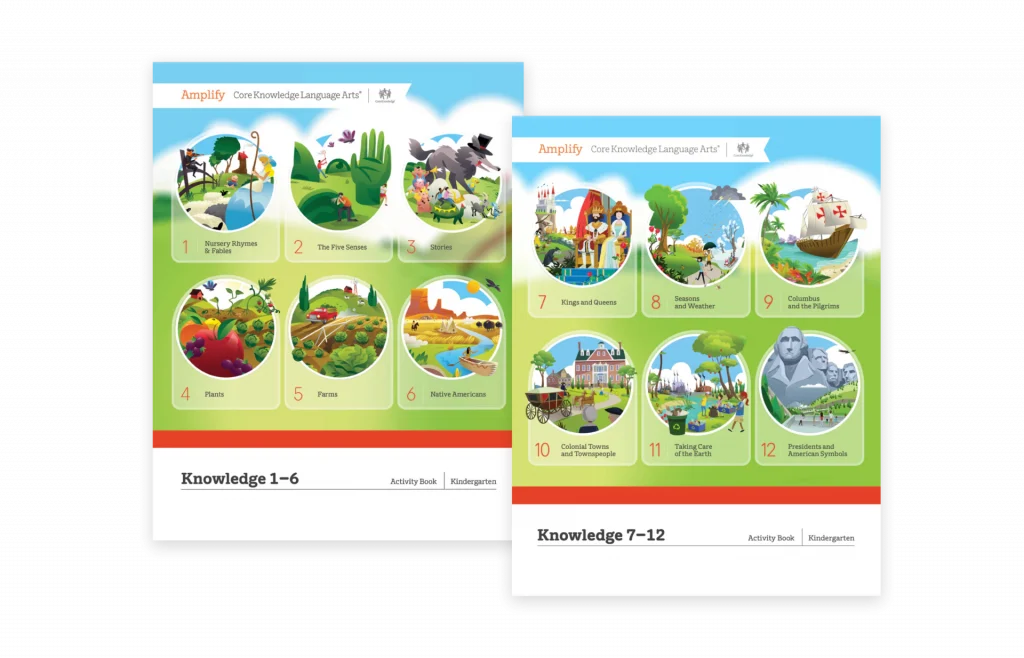
Digital materials
CKLA Hub for grades K–5
We are excited to announce that students will be able to access multimedia resources and engage in a new digital experience on the CKLA Hub. Unlike ever before, students can access digital resources independently from anywhere, taking full advantage of the instructional multimedia experiences that Amplify CKLA has to offer. Students can access the Hub at home, in the classroom, and on the go, making it ideal for remote learning. It’s compatible with laptops, Chromebooks, tablets, and desktops—we’ve also optimized it for mobile devices.
Knowledge Builder videos for grades K–2
Each Knowledge Domain starts with a Knowledge Builder video: a short, fun, animated story that enriches the lesson and motivates students with new characters, places, and concepts.
Recorded daily read-alouds for grades K–2
Teachers and students will have access to video recordings of all K–2 Knowledge Read-Alouds with pictures from the Flip Books.
Sound Library for grades K-2
The Sound Library uses audio sounds, catchy songs, and animated articulation videos to help students learn and master sounds.
Foundational Skills Boost for grades 1–3
Designed for grades 1–3, these video-based, self-guided lessons target critical foundational skills from the previous year’s instruction in order to fill in any gaps. They offer approximately nine weeks of instruction organized as daily lessons, with additional teacher-led small-group activities and family resources.
Vocab App for grades 3-5
The Vocabulary App is designed for independent practice with vocabulary. Students can use the Vocabulary App for game-like activities that challenge them.
Quests for grades 3–5
Each of the grade levels in 3–5 contains a Core Quest. In these special units, all the normal rules of the classroom change, and students engage with language in surprising new ways. For example, in grade 5, they learn to love the dense Shakespearian language of A Midsummer Night’s Dream through imagery, close reading, and performance.
Support your child at home
Read and talk at home
- If possible, read with your child daily; even 15 minutes of reading together each day can make a huge impact.
- You can read sections of the text aloud together. If your child struggles, you might try reading the text to them with expression, and then have them read it aloud back to you.
- For additional practice, watch the recorded read-alouds with your K-2 student or have your grade 3-5 student use the Vocabulary App.
- Find moments to discuss what they are reading and discovering. Examples of questions you could ask: What stood out to you from what you read today? Were any sentences or words confusing? What was most surprising? What do you think the writer was trying to communicate? Do you agree with the writer’s ideas or descriptions? What connections can you make between what you are reading and your own life or other issues?
- Listen to your child read their written responses or have them share with a friend over video chat.
- We recommend reviewing this Protecting Kids Online article by the Federal Trade Commission addressing digital safety.
Skills practice at home
We’ve developed a set of resources for caregivers to use with their students that includes instructions and materials to teach and practice grade-level phonics at home. Resources include sound videos, Readers, and a how-to video with editable instructions that caregivers can customize to meet individual student needs.

Where to go for help
Whether you have questions about your technology or want to know more about the program, Amplify’s Support Team is here to help!
Contact Support via telephone at (833) 97-Care-8 (833-972-2738) or caregiver@amplify.com.
Our support hours are Monday – Friday, 7 am – 9 PM ET, and Sunday, 10 – 6 ET.
Northshore families, welcome to Amplify CKLA!
Welcome to the Amplify CKLA Caregiver hub for Northshore School District. We are here to support you and your child with all things Amplify!
CKLA in Action
There’s no better way to understand the power of Amplify CKLA than seeing it in action. Watch Ms. Lehman’s second graders in the video below as they learn how to decode and spell words with the long /ā/ sound.
What is Amplify CKLA?
Amplify Core Knowledge Language Arts (CKLA) is a language arts program for Grades PreK-5 that combines a multi-sensory approach to phonics with rich texts carefully sequenced to build content knowledge—so that students learn to read and read to learn at the same time.
Every day in Grades PreK–2, students complete one full lesson that builds foundational reading skills, as well as one full lesson that builds background knowledge. In Grades 3–5, students start to master the skills of reading, further opening up their worlds.
Equitable Spanish instruction
Our equivalent Spanish language arts program, Amplify Caminos, ensures our native Spanish-speaking students are equally inspired to become confident readers, writers, and thinkers.
Like Amplify CKLA, Amplify Caminos is designed to spark curiosity through content-rich instruction. Amplify Caminos features complex interactive Read-Alouds and authentic Spanish literature to develop reading and writing skills and build bridges across Spanish and English.
Most importantly, Amplify Caminos is more than just a translation. It includes transadaptations and authentic texts written by Latin American and Spanish authors across a diversity of topics and genres.

Unit Overviews
Below are quick overviews of the units your student will be working through in their grade throughout the year. Next to each unit are downloadable guides which provide a more in-depth look at the content covered and how you can help your student advance their understanding of the topics.
Materials overview
Amplify CKLA is a blended program, which means your student will be interacting with both print and digital materials.
Print materials
Student Readers
These readers are uniquely designed to provide intensive practice while reading simple but authentic stories. All readers are also available as ebooks and audiobooks on the teacher resource site, which caregivers can now access.
In grades K-2, these readers are chapter books that allow students to practice just-learned sound-spellings within an authentic reading experience that incorporates compelling plots and interesting characters.
In grades 3-5, readers develop close reading and other literacy skills through a selection of diverse, content-rich literary and informational texts.
Student Activity Books
Part of the daily lessons, these activity pages ask students to respond to the text they’ve read and apply skills and knowledge. They also include assessments that track students’ skills development, to which teachers have access.
Digital materials
CKLA Hub for grades K–5
We are excited to announce that students will be able to access multimedia resources and engage in a new digital experience on the CKLA Hub. Unlike ever before, students can access digital resources independently from anywhere, taking full advantage of the instructional multimedia experiences that Amplify CKLA has to offer. Students can access the Hub at home, in the classroom, and on the go, making it ideal for remote learning. It’s compatible with laptops, Chromebooks, tablets, and desktops—we’ve also optimized it for mobile devices.
Knowledge Builder videos for grades K–2
Each Knowledge Domain starts with a Knowledge Builder video: a short, fun, animated story that enriches the lesson and motivates students with new characters, places, and concepts.
Recorded daily read-alouds for grades K–2
Teachers and students will have access to video recordings of all K–2 Knowledge Read-Alouds with pictures from the Flip Books.

Sound Library for grades K-2
The Sound Library uses audio sounds, catchy songs, and animated articulation videos to help students learn and master sounds.
Foundational Skills Boost for grades 1–3
Designed for grades 1–3, these video-based, self-guided lessons target critical foundational skills from the previous year’s instruction in order to fill in any gaps. They offer approximately nine weeks of instruction organized as daily lessons, with additional teacher-led small-group activities and family resources.
Vocab App for grades 3-5
The Vocabulary App is designed for independent practice with vocabulary. Students can use the Vocabulary App for game-like activities that challenge them.
Quests for grades 3–5
Each of the grade levels in 3–5 contains a Core Quest. In these special units, all the normal rules of the classroom change, and students engage with language in surprising new ways. For example, in grade 5, they learn to love the dense Shakespearian language of A Midsummer Night’s Dream through imagery, close reading, and performance.
Support your child at home
Read and talk at home
- If possible, read with your child daily; even 15 minutes of reading together each day can make a huge impact.
- You can read sections of the text aloud together. If your child struggles, you might try reading the text to them with expression, and then have them read it aloud back to you.
- For additional practice, watch the recorded read-alouds with your K-2 student or have your grade 3-5 student use the Vocabulary App.
- Find moments to discuss what they are reading and discovering. Examples of questions you could ask: What stood out to you from what you read today? Were any sentences or words confusing? What was most surprising? What do you think the writer was trying to communicate? Do you agree with the writer’s ideas or descriptions? What connections can you make between what you are reading and your own life or other issues?
- Listen to your child read their written responses or have them share with a friend over video chat.
- We recommend reviewing this Protecting Kids Online article by the Federal Trade Commission addressing digital safety.
Skills practice at home
We’ve developed a set of resources for caregivers to use with their students that includes instructions and materials to teach and practice grade-level phonics at home. Resources include sound videos, Readers, and a how-to video with editable instructions that caregivers can customize to meet individual student needs.
Explore the program
Watch the below video to learn even more about Amplify CKLA!
Take a closer look at the program with our demo account! Follow these simple instructions to access our program digitally.
- Click the CKLA Teacher Resource Site button.
- Select Log in with Amplify.
- Enter this username: t1.northshoreckla@demo.tryamplify.net
- Enter this password: Amplify1-northshoreckla
- Select the desired grade level.
Where to go for help
Whether you have questions about your technology or want to know more about the program, Amplify’s Support Team is here to help!
Contact Support via telephone at (833) 97-Care-8 (833-972-2738) or caregiver@amplify.com.
Our support hours are Monday – Friday, 7 am – 9 PM ET, and Sunday, 10 – 6 ET.