Showing results for azusa aweis

Science of Reading professional development for Maine educators

Hello, Maine educators,

We’re excited to be part of your Science of Reading journey!

The following professional learning sessions are designed to support all educators—regardless of the program used—in enhancing their instructional practices. These Science of Reading courses offer research-based strategies to deepen understanding that supports students’ reading development. All are approved by the Maine Department of Education.

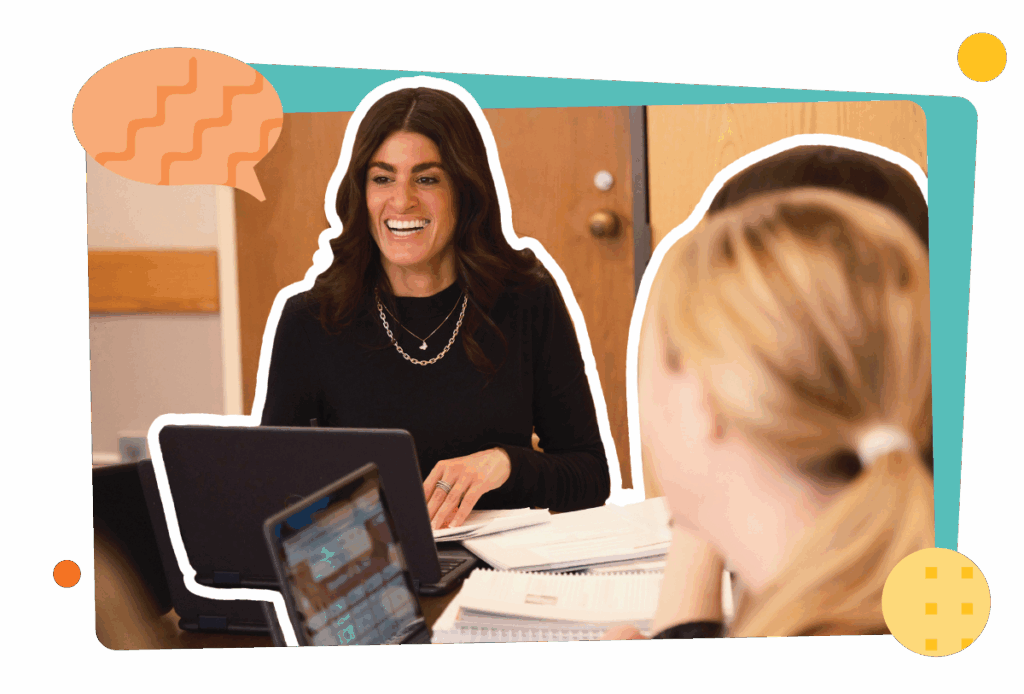
Two women are seated at a table with laptops and papers, engaging in a discussion about program implementation in a classroom or meeting setting.
Two women smiling and looking at a laptop in a classroom. One woman is wearing a striped shirt and the other a black top. Classroom decor is visible in the background.

Build your knowledge of the Science of Reading

Virtual | 90-minute session

This introductory session provides educators with a foundational overview of what the Science of Reading means and what it tells us about how to use evidence-based reading practices in the classroom.

Participants will learn to:

  • Define the Science of Reading, examining evidence-based research.
  • Explain how two frameworks, the Simple View of Reading and the Reading Rope, work in tandem to guide effective literacy instruction.
  • Identify instructional principles aligned to the Science of Reading.

Deepen your knowledge of the Science of Reading

On-site or virtual | 3-hour session

This session will build a base of common knowledge about the Reading Rope and support educators in identifying effective instruction grounded in the Science of Reading.

Participants will learn to:

  • Identify the strands in the Reading Rope.
  • Describe how each strand plays an important role in developing skilled readers and writers.
  • Identify key look-fors in effective Science of Reading instruction.
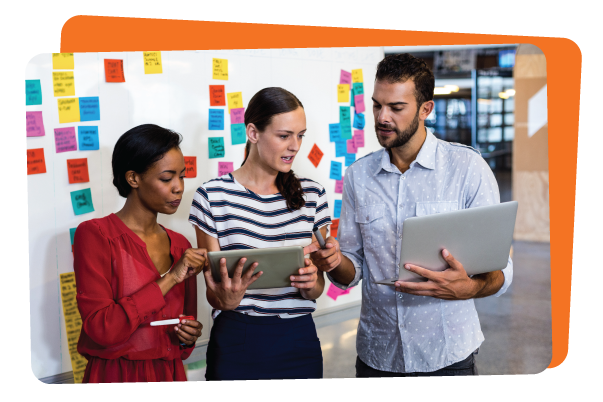
Three people stand in front of a whiteboard with colorful sticky notes, engaging in professional development for teachers as they discuss ideas and collaborate using a tablet and a laptop.
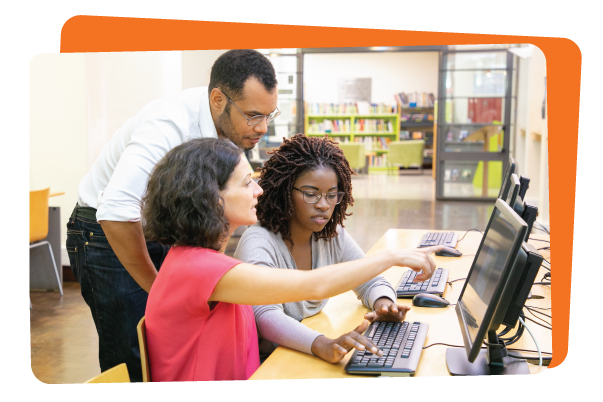
Three adults, two women and one man, engage in professional development for teachers using computers in a library setting.

Science of Reading: The Learning Lab online courses

This series of three self-paced online courses, crafted by literacy expert Susan Lambert and built around the International Dyslexia Association (IDA)’s Knowledge and Practice Standards, guides you through the essential Science of Reading knowledge and skills needed to teach students to read proficiently; the series also offers advanced strategies for aiding struggling readers. Each course builds on the last, equipping you with the tools and confidence to make a lasting impact on your students’ literacy journeys.

Benefit from flexible learning on an interactive platform. Each course spans 20 to 25 hours of instruction and is accessible for 12 months. Upon completion, you’ll receive a downloadable certificate, validating your expertise in the Science of Reading.

Contact us

Support is always available. Our team is dedicated to helping you every step of the way. Contact your dedicated representative here for program access, samples, and additional information.

Ali Weis

Lead Account Executive,
Northern Northeast
Email: aweis@amplify.com
Phone: (480) 510-6703

A woman with straight blonde hair wearing a green sweater stands outdoors, smiling at the camera with a blurred natural background.

Ready to learn more?

Fill out this form, and we’ll be in touch with you shortly.

Use stimulus funding to drive Rhode Island transformation

Rhode Island districts have significant flexibility in how to use the ESSER money, with ESSER II and III specifying that some of the funds should be used to address unfinished learning. Given the enormous influx of resources flowing into K-12, now is the time to drive important, sustainable change in your district.

Rhode Island recognizes how imperative it is to provide high-quality curriculum to prepare students for college and career readiness. We’ve assembled resources so you can explore how to support your district or school in adopting a high-quality program.

All K-12 Amplify programs and services meet the criteria for funding. Contact Ali Weis, account executive to learn more. 

Amplify Science K–8

Amplify Science K–8 is a hands-on, phenomena-based curriculum that helps students make the shift from learning about to figuring out scientific concepts. With demonstrated unparalleled effectiveness across all student groups, Amplify Science empowers students to think, read, write, and argue like real scientists and engineers each and every day.

Developed by UC Berkeley’s Lawrence Hall of Science, our program features:

  • phenomena-based approach where students construct a more complex understanding of each unit’s anchor phenomenon.
  • A blend of cohesive storylines, hands-on investigations, rich discussions, literacy-rich activities, and digital tools.
  • Newly crafted units, chapters, lessons, and activities designed to deliver true 3-dimensional learning.

Hear what these educators have to say about the program, then click the orange button below to learn more.

Amplify Math K–12

amplify math middle schoolers in classroom

Amplify Math K–12 is a brand new program designed around the idea that a core math curriculum needs to serve 100 percent of students in accessing grade-level math every day. Powered by Desmos technology, Amplify Math delivers:

  • Engaging, discourse-rich math lessons that are easier to teach.
  • Flexible, social problem-solving experiences both online and off.
  • Real-time insights, data, and reporting that inform instruction.

Additional Amplify programs and resources

A pioneer in K–12 education since 2000, Amplify programs provide Rhode Island teachers with powerful tools that help them understand and respond to the needs of every student. View our entire suite of K-12 core and supplemental curriculum, assessment, and intervention solutions. Ready to learn even more? Contact Ali Weis, Account Executive.

Meet Ali

Hi, I’m Ali! I partner with Rhode Island school districts because I believe every student should have the opportunity for a rigorous, engaging, and impactful learning experience. For more information, please fill out the form below, and I’ll be in touch soon!

Ali Weis

Account Executive

aweis@amplify.com

(480) 510-6703

A smiling person with short blonde hair is wearing a blue top and a large, circular-link necklace, standing outdoors with trees and grass in the background.

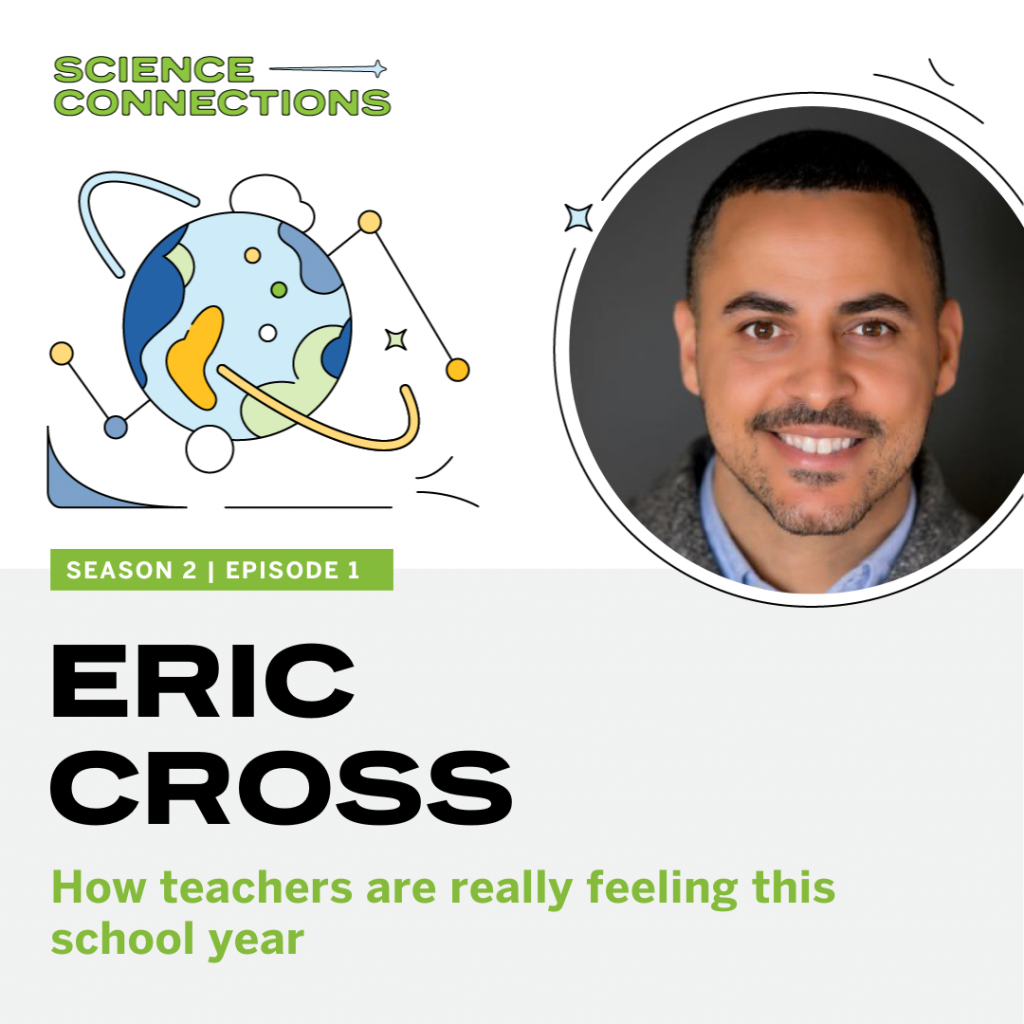
S2-01: How teachers are really feeling this school year

science connections S02-01 Episode Cover

In this special solo episode, Eric Cross starts the season by sharing his personal journey as an educator, and how the difficulties of the last few years have shaped his mindset going into the upcoming school year. Eric also addresses teacher burnout and what inspires him to continue working as a classroom educator. Explore more from Science Connections by visiting our main page.

Download Transcript

Eric Cross (00:02):

Welcome to Science Connection, Season Two. As we begin the next season, I thought it would be a good time to share my story. As the host, I get to ask people questions about their journey, but I’ve actually never shared much about my own. So I’ve taken some of my most frequently asked questions to guests and asked them to myself. I hope you enjoy.

Eric Cross (00:23):

So the origin story question, I think really gets to the heart of why a person does what they do, because so much of who we are, especially as adults and teachers, is a result of experiences that we had in our lives when we were kids or in school with other teachers. And my life’s no different. I was born to a 19-year-old single mom. And when you’re a young boy growing up, especially with a young single mom, you often look to older men in different positions as kinda like a surrogate or like a mentor. And you may not even tell them that they are that to you. You kind of keep it close to the chest. And that’s what I did growing up. One of the ones that really stood out to me is, in seventh grade, I went to a middle school here in San Diego that was called Keiller Middle School. And we were a magnet program that specialized in science. And they had this program that brought professors from the local universities and they did this high-level enrichment. They would even take us to the college campus and we would work in these labs as seventh graders. It was amazing. And one of the people there, his name was Dr. Tress, and he was a professor. And Dr. Tress took a liking to me. I reminded him of his son. We were doing this great embryology experiment. We would take purple sea urchins. And we would inject them with potassium chloride, which would cause them to spawn. And we would fertilize these eggs, and then we would run different experiments using them. And these were things that I had never done before. I had always loved science. I’d always loved tinkering and building things. But this was my introduction, really, to high-level biology and to higher levels of education. I didn’t—I didn’t have many figures like that in my life growing up. I mean, I’m a first-generation, you know, high school, college graduate. Many of these are first generations for me. So, this was a new experience. And so Dr. Tress really unlocked a core memory and was one of my first mentors, as far as academics are concerned. And during my seventh-grade year, I entered the science fair and won first place, which was a huge deal. They took us out to Balboa Park. We got to miss school for a week. We got to go to all the museums for free. It was the best. And I think at that point in time, it really solidified something in me that would lay dormant until later on in my adult life. High school, I was really fortunate: the high school I went to was Morse High School, not too far from Keiller, and they had an aeronautics program. So I was able to enroll in that aeronautics program. And I learned how to fly before I learned how to drive. And I had this great instructor named Mr. Klon, who was this like 6′ 4″, 250-pound hippie guy. And he—we would get in the plane and we would have these like philosophical conversations. And through that, especially looking back now as a teacher, I realized that he was making connections with me and investing into who I was as a person. And it was something that I so needed at the time. Because at home I didn’t have that. You know, my safe place, a lot of time, was school. It was my only structure. It was where I knew I would get encouragement. It was where I knew things were reliable and consistent. For a lot of people, and a lot of kids, their home life isn’t like that. School was that for me. So Mr. Klon, I mean, he was this authentic, you know, consistent person in my life and made a huge difference at this time.

Eric Cross (03:23):

After I graduated high school, I left home just to get away from a difficult environment. And I was homeless for a little while and that was a huge moment in my life. And around that time, an aunt found out and she said, “You’re gonna come stay with us.” And this was like this three-year process of me living with them in this, like, functional family that ate dinner together. And they went to the zoo. They had family passes. And they took family photos at Christmastime. This was all weird stuff. Like, I didn’t know—I didn’t know who did these things. It was—I felt like a puppy that like lived in a home that was like…it was a home that was just always kind of like violent or like just really toxic. And then it gets put into a healthy home and doesn’t know how to act. That’s how it felt. And this was around like 19, 20 years old. During that time I started putting myself through school. So I went to community college and I was broke as a joke. And so I couldn’t afford the textbooks while I was going. So I would just go to the bookstore, the Barnes and Noble bookstore in Mira Mesa here in San Diego. And I would stay there all night using the textbooks or using the books there for doing my work. And then I would just put the books back on the shelves. Because let’s just face it. Textbooks are expensive, brother wasn’t trying to pay for all that. So I really had to earn that time. So I was working full-time. I was going to school. And, eventually I got a job in working in finance with a really great friend who mentored me during my younger twenties. And I didn’t wanna be broke and finance made sense.

Eric Cross (04:44):

And so I did that for a little while, until I got to a point in my career where I was watching an episode of The Office, the UK version, the Ricky Gervais version, and a character said, “I’d rather be at the bottom of a ladder I want to climb than halfway up one I don’t.” And I realized, working in finance, that I was halfway up a ladder I never wanted to climb. So I wanted to move into something that, if I was gonna spend eight hours a day or 10 hours a day doing something, I wanted it to be something that actually filled me up inside. And this is how I got into teaching. So I had always been working with young people, specifically 12- to 18-year-olds, like a non-profit or volunteering, mentoring, after-school programs. And I’ve always managed to rationalize my job in the finance world as meaningful because it let me do the real work that fulfilled me. So the real work was working with the kids. But my day job, my, like, Clark Kent-type job, was just, you know, doing the finance thing of like helping people that have a lot of money make more money. Which at the end of my life, I look back and I said, “That’s not what I want my legacy to be.”

Eric Cross (05:43):

And when the finance crash happened in 2008, that’s when I think I started looking back on it and said, “If I’m gonna spend all my time doing something and spending 40 or 60 or 80 hours of my day of my week doing things, I want it to matter. And that’s when I decided to pivot and leave that field and go and get my master’s in education and get my teaching credential, teaching science specifically. Now, one of the questions we get asked a lot and I’ve been asked is, is “How has teaching changed as a result of the pandemic?” And I feel like this could be several podcasts in and of itself, and it’s also regional, because everybody’s experienced it differently, And we’re still experiencing it! That’s the crazy thing! It’s like, it’s not over, we’re still in it. And some places have innovated and pivoted and some places just did what they needed to and they are trying to go back to business as usual. But if anything has happened, the pandemic revealed how much more, how much schools are more than places of just content learning. For many students it’s where they have their only community, their structure, their emotional wellness. They get regular meals, access to tech, and adults that care about them that are outside of their family. The schools are so much more than that. I mean, my school, they were a place, like a hub, that was giving out food every single day during the pandemic to families that would kind of drive by. So for a lot of schools, they became places like that. It also…the pandemic revealed the intensity of the educator workload. I mean, being able to manage your family, having the capacity, to be a content expert, you need to be a counselor, a trauma-care specialist, a coach, an encourager, a tech expert.

Eric Cross (07:23):

I mean, the term mental health is now more common and starting to become prioritized. Now we’re focusing so much more on the whole child. And we know from research that how a child feels about themselves and their safety and their security impacts their ability to learn. So the more comfortable and safe a student feels in the classroom with teachers and with friends, the better they’re gonna be able to learn. And ultimately the higher they’re gonna be able to achieve. You can’t, you can’t have one without the other. In addition, I think less teachers, see themselves teaching into retirement. I think that’s a big thing. I read these articles about teacher shortages and I think the reality is it’s actually teacher exodus. It’s teachers leaving. And that’s been really difficult. I’ve had many friends who’ve left for the private sector. And I get it, especially if you’re one that has—if you’re the first in your family to graduate from college, with a STEM degree, to them taking a teaching position can mean walking away from a salary in the private sector that pays two or three times more.

Eric Cross (08:23):

And in many places around the country, in order to be a teacher and maintain a median standard of living, you need either dual income, multiple jobs, or a multi-generational household. For a lot of people it just doesn’t make sense. And even right now, today, as I’m recording this, I’m reading articles and getting text messages…and I received a text message three days ago from a teacher that said, “My goal this year is to just not resign.” And that’s where a lot of teachers are feeling right now: isolated, challenged, and under-appreciated. And Plato said, “What’s honored in a country is cultivated there.” And I’ve been looking at how teachers are honored and one of the ways is just, like, practical. Like, look, I gotta pay my bills. You know, love the Starbucks gift card. Love the CPK, the gift card. The cards, all those other things…but brother got a car payment. And at the end of the day, if we care about our kids, we need to take care of the people that take care of them. And there’s very practical ways for that to happen. And everybody in different sectors around the country is dealing with that in different ways. I think the pandemic also revealed, now the public can see how our kids don’t receive the same quality of education. And once you’re aware of that, you can’t put the genie back in the bottle. So once you see on Zoom or once you see in a meeting, or once you see on the news, that students in different areas, whether it’s the rural South or a suburb in Seattle, are not getting equitable educations, well, ultimately that impacts all of us. Now. It’s not all doom and gloom. Good things have come from, as a result of, the pandemic. Many schools have made progress towards narrowing the technology gap, ’cause they had to! ‘Cause you can’t do Zoom and you can’t do Google Meet and all that stuff with a packet! You gotta get those Chromebooks. And Chromebooks and the internet and access to tech is not a new thing. It’s been out for a long time. The technology gap is not a new thing. It’s been written about extensively, but all of a sudden districts and schools started figuring out how to close that gap. And that’s awesome. We didn’t want a pandemic to be the catalyst for that to happen. But at the end of the day, we started closing it. A lot of schools did an amazing job and districts did an amazing job with deploying the hardware, sending out buses with wifi, putting lessons and videos on USB sticks and dropping them off to parents who live in sparsely populated areas. I mean, there were so many stories that I’ve heard about schools and teachers just doing amazing things, going above and beyond what they needed to on behalf of kids.

Eric Cross (10:51):

I think in addition to that, there’s also been students and families are now having more options to personalize their learning. So we have this in-person model, we have this Zoom or kind of online model, and this hybrid model, and it hasn’t all been perfect, you know, at all. But some families have come out and said, you know what actually doing this hybrid model is better for my son or better for my daughter or better for my student, because they’re able to get the socialization, but also able to focus better at home than they are in a classroom of 36. And that’s legitimate. You know, we talk about personalized learning, but it’s not exactly personalized when everybody has to wake up at the same time, same schedule, go to the same, the same classroom of, you know, up to 40 kids, and do the same lesson. I mean, we have to be honest about our limitations with personalizing learning for students. And when we can provide more options and we give teachers the infrastructure to be able to use different platforms, then we’re able to personalize learning a lot more.

Eric Cross (11:51):

There’s also been an emphasis on the whole-child wellness. I think the spotlight on mental well-being heavily impacts their academic success, but counseling teams, social workers, school psychologists—I think more than ever we’ve realized the value that they bring to the schools. And unfortunately many of them have caseloads of 200 students or more. And they’re seeing students most often that are in crisis. And especially after the pandemic, we’re realizing how valuable they are and how much we need to, one, honor them and give them the support that they need, and also recruit more. Because as we start recognizing how our brains are impacted by the things that we’re dealing with, we’re also gonna see how that’s gonna impact our students’ performance. And we need the specialists in those positions to be able to support our kids. I think, last, I think more innovation and lesson design and how we assess students. And so we’ve been talking about in education just kind of critiquing: how do we assess what a student knows? How do we make what a student actually does at school relevant to real life? I mean, so many times I have students who’ve graduated that are like, “I feel like the things I learned in school, like, they’re not always transferable to real life. It helped me on a test, but like, I don’t know how to do my taxes.” Or “I memorized these facts, but I don’t really apply it in my job.” Or “The facts that I learned I could have actually learned on the fly in my job. I wish I would’ve actually focused on the skills or had an earlier opportunity to get some experience because when I’m trying to apply for a job, <laugh> they ask for experience and I’m 22 years old.”

Eric Cross (13:28):

And so all these things kind of come up. And so I think there’s been some great conversations around “how do we rethink what education looks like?” And there’s different pockets around the country that have been doing that, I think, really well. And I think it’s important for us as teachers to stay connected to those people who are kind of pushing the boundaries and thinking outside the box, because when we get siloed, it’s really easy to get calcified and cynical. I get it. And it impacts me too. But when we’re around those people who have those fresh ideas, who are really pushing the limits, it inspires us. And that’s something I think during the pandemic that I’m grateful that I was intentional about, is staying connected with other teachers. There’s a big question; Why do you continue your work in the classroom and what keeps you motivated? And I was thinking really hard about this question, because depending on <laugh>, depending on my day, I feel like my answer’s gonna be a little bit different. So I’ve had to step back from this 30-foot, thousand-foot perspective and answer the question. And my answer is this: I think because I still feel like I can be effective to influence positive change in my classroom with my students and within the larger education system as a whole. I think if I lost either of those two, then I’d rethink my profession. Look, I’m an innovator. I like asking “why” questions and things like that. And I’m not always the most popular person when you do that. But education is like just a huge ship. It doesn’t pivot on a dime. And asking why questions and pushing for change on behalf of kids isn’t easy, fun, or glamorous, but it’s it’s necessary. And I feel like over the last few years, I’ve been able to see these kind of glimmers of a trajectory change, at least where I am locally. And that’s something that has given me a lot of hope. I’m very fortunate to be connected to educators and people in leadership that are really about making a difference beyond just kind of the cliched platitudes. They actually wanna make systemic change, in a way that’s positive. And that’s been really helpful for me. So as long as I feel like I’m useful in the classroom for students, and as long as I feel like I’m bringing, I think change, on behalf of teachers and students and administrators and our community in a way that moves the ball down the field, that’s what keeps me motivated. And what I like to ask teachers when I close in the podcast is. “What teacher or teachers have inspired you?”

Eric Cross (15:54):

And for me, I think it would start off with the teachers who cared about me when they didn’t have to, in elementary school all the way through college. And there are numerous teachers. My science-teacher community of practice. For the last two years, I’ve been fortunate to spend every month, once a month, meeting with just a core group of science teachers that really care about some of the things that we are impacted by in the classroom. And when the pandemic was going on, we still met regularly. And because we’re not all teaching in the same place, we kind of were able to bring different perspectives to the table. I think the current classroom teachers and former classroom teachers that I have in my community really inspire me. The ones who are dedicated to opening doors for students. The graduate students that I teach at the University of San Diego, they keep me fresh. I love leaving teaching my 12- and 13-year-olds, and then driving down the street to the university and teaching 20somethings who are all about to be in the classroom. They come with new ideas, they’re asking questions, and I get to actually share things that I just did three hours ago. I think that’s one thing that continues to inspire me. And it’s one of the reasons why I love teaching at the University of San Diego. Their energy and enthusiasm is super-refreshing. And then all the teachers that are willing to take risks and fail forward, to try things different, to ask hard questions, to push the envelope. Teaching’s hard. It’s easy to point out the problems in education as a whole. But after we do that, it’s important to figure out the practical ways we can make the changes that we wanna see.

Eric Cross (17:23):

Now, that’s to say that if you have the capacity for it and the resources and the support. Some of us, we don’t. Some of us, we are on an island, and that’s a really, really difficult place to be, especially when you have family and kids to take care of. And you have to make decisions on what’s best for you and for your own students. We do this work on behalf of kids. And it’s one of the most honorable services a person can provide to our community. But one area for growth that I think we have kind of as a society, is teachers spend their lives, daily, on behalf of the future of our country. For other people’s children. They fall asleep at night worrying about other people’s kids. They spend their own money to create opportunities and experiences that students might not otherwise have. And it’s important that we collectively, and I know I’m preaching the choir when I say this, but this is one of my messages, is that we honor them in turn. We create programs that allow them to be able to afford housing. We create opportunities for them to be able to generate wealth. We create ways for them to be able to find rest, to get connection. And then internally we create systems where they can just work on themselves, fill themselves, get trained, and be whole, so they can bring their best self to the kids in front of them. That’s one of my personal platforms. It’s something that I think is vital. We gotta take care of the people that take care of our kids. So there’s a saying that says, “It’s better to light a candle than to curse the darkness.” And it takes one person to blow out a candle, but one candle can light thousands of other candles, without diminishing its own light. And that’s what we have to be. So my encouragement, teachers, as you’re going into this new school year, and you’re thinking about what’s going on, you’re thinking about all the challenges—and they’re there, and they’re real, and trust me, it’s not like some Pollyanna, like, “Hey, just be positive!” mindset and everything’s gonna be great—no, no, no, no, no. It’s not that. But my encouragement…if I can tell you one thing that’s helped me more than anything else, it’s being connected to other people who are candle-lighters. Because there are a lot of places that are gonna blow out the candle. It could be the staff lounge. It could be Twitter, it could be Reddit. It could be Instagram. It could be TikTok. It could be, you know, anybody. Someone next door to you. There’s a lot of folks that are gonna be willing to point out and say, “Look, this is what’s wrong.” But find the helpers. Find the people that are candle-lighters. And stay connected with them. Find that community. I can tell you for me, that’s been the thing that’s been able to help me sojourn through all of this—I couldn’t do this by myself—is being able to share my story with other teachers and knowing that I’m doing this work alongside of other folks who are doing this work, and I can share my story with them and listen to their stories, is something that’s been able to fill my cup. And so I hope I can do the same for you and for other people listening to other people I come in contact with.

Eric Cross (20:08):

Teachers, I wish you a great school year. Hang in there. Be those candle-lighters and bring your best self on behalf of the students. Thanks so much for listening. Now, we wanna hear more about you. If you have any stories you wanna share about the classroom, please email stem@amplify.com. That’s STEM at amplifycom.wpengine.com. And make sure to click subscribe wherever you listen to podcasts. And join our Facebook group, Science Connections: The Community. Until next time.
Stay connected!

Join our community and get new episodes every other Tuesday!

We’ll also share new and exciting free resources for your classroom every month.

What Eric Cross says about science

“We do this work on behalf of kids, and it’s one of the most honorable services a person can provide to our community.”

– Eric Cross

K–8 Science teacher, Host of Science Connections: The Podcast

Meet the guest

Eric Cross is a 7th grade science/technology teacher, grade level lead, and digital learning innovator for Albert Einstein Academies, International Baccalaureate schools. He is also an adjunct professor of learning and technology at the University of San Diego and a Google certified innovator. Eric earned a bachelor’s degree from Azusa Pacific University and a Master of Education from the University of San Diego. He had 17 years of experience working with at-risk youth and underserved populations before becoming a middle school teacher. By building relationships with students, colleagues, and the community, he has become an empowered leader in and out of the classroom. Through meaningful learning experiences centered around student agency, STEM has become accessible to students through highly engaging lesson design, thoughtful integration of digital tools, and culturally relevant pedagogy.

Smiling person with short hair and a beard, wearing a collared shirt and sweater, against a dark background. Small star icon on the top left of the circular frame.

About Science Connections

Welcome to Science Connections! Science is changing before our eyes, now more than ever. So…how do we help kids figure that out? We will bring on educators, scientists, and more to discuss the importance of high-quality science instruction. In this episode, hear from our host Eric Cross about his work engaging students as a K-8 science teacher. Listen here!

Season 7, Special Episode

Integrating science and literacy strategies, with Susan Gomez Zwiep

We’re excited to share a special episode from our friends at the Science Connections podcast!

Literacy learning doesn’t end when a student leaves their English class; it continues to develop, grow and be challenged across all subject domains. In this episode, we’re excited to share a special episode from our friends at the Science Connections podcast. In this episode, host Eric Cross sits down with Susan Gomez Zwiep, former middle school science teacher and senior science educator at BSCS Science Learning. She shares research that shows the benefits of integrating science and literacy strategies, tips for applying these ideas in the classroom, and what she’s learned through her own experiences.

Meet Our Guest(s):

Susan Gomez Zwiep

Susan Gomez Zwiep

Susan Gomez Zwiep began her career in science education as a middle school science teacher in Los Angeles, where she spent over 12 years working in urban schools. Prior to joining BSCS, Susan worked at California State University, Long Beach as a Professor of Science Education.

Susan has also worked as a regional director for the K–12 Alliance, providing high-quality professional development in science and mathematics for K–12 educators, including the CA NGSS Early Implementer Initiative.

Meet our host: Eric Cross

​​Eric Cross, host of Science Connections, is a seventh grade science/technology teacher, grade-level lead, and digital learning innovator for Albert Einstein Academies International Baccalaureate schools. He is also an adjunct professor of learning and technology at the University of San Diego and a Google-certified innovator. Eric earned a bachelor’s degree from Azusa Pacific University and a master’s degree in education from the University of San Diego. He worked with at-risk youth and underserved populations for 17 years before becoming a middle-school teacher. By building relationships with students, colleagues, and the community, he has become an empowered leader in and out of the classroom. He’s made STEM accessible to students through learning experiences centered in student agency, highly engaging lesson design, thoughtful integration of digital tools, and culturally relevant pedagogy.

Primer plano retrato de un hombre con pelo corto oscuro y barba recortada, sonriente, vestido con un suéter gris sobre una camisa azul. El fondo es gris oscuro.

Quotes

“When we used science as a context for language development, kids were talking more; kids were writing more; kids were engaged.”

—Susan Gomez Zwiep

Season 3, Episode 1

Science as the underdog, and the research behind it.

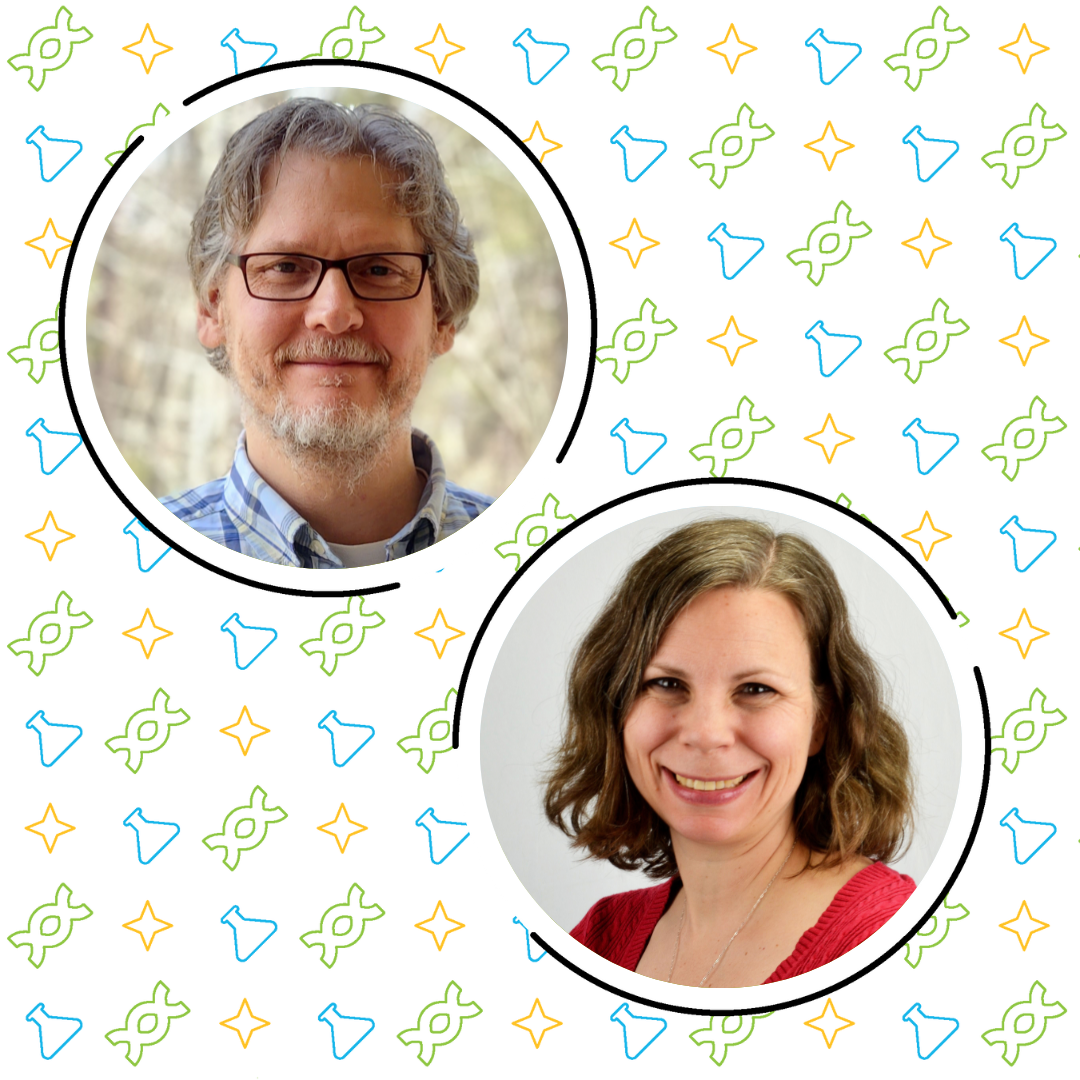
In our first episode, we unpack the research around our season theme of science as the underdog, with Horizon Research, Inc. Vice President Eric R. Banilower and Senior Researcher Courtney Plumley. Eric and Courtney dive into the research they’ve found and their experiences as former educators to show how science is often overlooked in K–12 classrooms. We discuss how the science classroom compares to other subjects in terms of time and resources, how schools are a reflection of society, and what’s needed to change science and its impact on a larger scale.

Split image of a smiling man with glasses and a woman with wavy hair, both framed in circles with a playful background of colourful science classroom symbols.

Meet Our Guest(s):

A man with glasses and a beard in a blue plaid shirt and a woman with shoulder-length hair in a red top, each inside a circular frame on a light background, appear as if featured in a science classroom introduction.

Eric R. Banilower and Courtney Plumley

Eric R. Banilower is a Vice President at Horizon Research, Inc. (HRI), and has worked in education for over 30 years. Eric was previously a high school physics and physical science teacher before he joined HRI in 1997, where he has worked on a number of research and evaluation projects. Most recently, he has been the Principal Investigator of the 2012 and 2018 iterations of the National Survey of Science and Mathematics Education, a nationally representative survey focusing on the status of the K–12 STEM education system.

Courtney Plumley is a Senior Researcher at Horizon Research, Inc. She began her career in education as an elementary school teacher before starting at HRI in 2009. In her time at HRI she has worked on many K-12 STEM research and evaluation projects. Most recently, Ms. Plumley has worked with Carnegie Corporation of New York on mapping the landscape of K-12 science education in the US and is managing the field test for the OpenSciEd elementary materials.

Meet our host: Eric Cross

Eric Cross is a seventh grade science/technology teacher, grade level lead, and digital learning innovator for Albert Einstein Academies, International Baccalaureate schools. He is also an adjunct professor of learning and technology at the University of San Diego and a Google certified innovator. Eric earned a bachelor’s degree from Azusa Pacific University and a Master of Education from the University of San Diego. He had 17 years of experience working with at-risk youth and underserved populations before becoming a middle school teacher. By building relationships with students, colleagues, and the community, he has become an empowered leader in and out of the classroom. Through meaningful learning experiences centered around student agency, STEM has become accessible to students through highly engaging lesson design, thoughtful integration of digital tools, and pedagogy that engages students from all backgrounds.

Quotes

Our data is showing us places where the system needs to provide teachers and their students the opportunities to do great things.

—Eric R. Banilower

Stay connected

Four women sitting at a table in a meeting, with one standing and presenting on the topic of "why is science so important," all engaged in discussion.

Season 3, Episode 2

How science strengthens literacy and language development

In our second episode of the season, we continue finding ways in which science is overlooked and how it can be better utilized in schools—and as an ally to other subjects!

We sat down with Susan Gomez Zwiep, former middle school science teacher and senior science educator and staff advocate at BSCS Science Learning. She shared past experiences and research that shows the benefits of integrating science and literacy, as well as strategies for applying these ideas in the classroom.


A smiling woman with short brown hair, wearing a jacket and patterned scarf, integrates science and literacy by reading a book on botany against a blurred natural background in a circular frame adorned with colorful symbols

Meet Our Guest(s):

A woman with short dark hair smiles at the camera outdoors, with trees and greenery in the background. A blue flask and orange check mark graphic decorate the circular frame, highlighting her passion for integrating science and literacy.

Susan Gomez Zwiep

Susan Gomez Zwiep began her career in science education as a middle school science teacher in Los Angeles where she spent over 12 years working in urban schools. Prior to joining BSCS, Susan worked at California State University, Long Beach as a Professor of Science Education.

Susan has also worked as a Regional Director for the K-12 Alliance, providing high-quality professional development in science and mathematics for K12 educators, including the CA NGSS Early Implementer Initiative.

Meet our host: Eric Cross

Eric Cross is a seventh grade science/technology teacher, grade level lead, and digital learning innovator for Albert Einstein Academies, International Baccalaureate schools. He is also an adjunct professor of learning and technology at the University of San Diego and a Google certified innovator. Eric earned a bachelor’s degree from Azusa Pacific University and a Master of Education from the University of San Diego. He had 17 years of experience working with at-risk youth and underserved populations before becoming a middle school teacher. By building relationships with students, colleagues, and the community, he has become an empowered leader in and out of the classroom. Through meaningful learning experiences centered around student agency, STEM has become accessible to students through highly engaging lesson design, thoughtful integration of digital tools, and culturally relevant pedagogy.

Quotes

When we used science as a context for language development, kids were talking more, kids were writing more, kids were engaged.

– Dr. Susan Gomez Zwiep

Stay connected

Four women sitting at a table in a meeting, with one standing and presenting on the topic of "why is science so important," all engaged in discussion.

Season 3, Episode 3

Instructional strategies for integrating science and literacy

We’re continuing our investigations around science and literacy, with Doug Fisher, Ph.D., professor and chair of educational leadership at San Diego State University. We talk about the importance of integrating science and literacy, as well as practical guidance for teachers who want to unite the two disciplines in their own classrooms.

Listen as we discuss how science and literacy can be powerful allies and talk about specific strategy areas to focus on when integrating the two disciplines. And don’t forget to grab your Science Connections study guide to track your learning and find additional resources!


A middle-aged man with short brown hair and glasses, smiling in a professional portrait, surrounded by a circular frame with a colorful pattern of integrating science & literacy.

Meet Our Guest(s):

A man with short light brown hair, glasses, and a white shirt is smiling at the camera, framed by a circular graphic with decorative green and orange accents—reflecting his passion for integrating science & literacy through effective instructional strategies.

Dr. Douglas Fisher

Douglas Fisher, Ph.D., is professor and chair of Educational Leadership at San Diego State University and a leader at Health Sciences High & Middle College having been an early intervention teacher and elementary school educator. He is the recipient of an International Reading Association William S. Grey citation of merit, an Exemplary Leader award from the Conference on English Leadership of NCTE, as well as a Christa McAuliffe award for excellence in teacher education. He has published numerous articles on reading and literacy, differentiated instruction, and curriculum design as well as books.

Meet our host: Eric Cross

Eric Cross is a seventh grade science/technology teacher, grade level lead, and digital learning innovator for Albert Einstein Academies, International Baccalaureate schools. He is also an adjunct professor of learning and technology at the University of San Diego and a Google certified innovator. Eric earned a bachelor’s degree from Azusa Pacific University and a Master of Education from the University of San Diego. He had 17 years of experience working with at-risk youth and underserved populations before becoming a middle school teacher. By building relationships with students, colleagues, and the community, he has become an empowered leader in and out of the classroom. Through meaningful learning experiences centered around student agency, STEM has become accessible to students through highly engaging lesson design, thoughtful integration of digital tools, and culturally relevant pedagogy.

Quotes

There are really cool opportunities when teachers come together and realize we can work together to improve the literacy and learning of all our students.

– Dr. Doug Fisher

Stay connected

Four women sitting at a table in a meeting, with one standing and presenting on the topic of "why is science so important," all engaged in discussion.

Season 3, Episode 4

Using AI and ChatGPT in the science classroom

In the latest episode of the Science Connections podcast, we explore AI in education and its impact on students. Listen as I sit down with teachers Donnie Piercey and Jennifer Roberts to discuss ChatGPT and how we can use it to build science and literacy skills in K–12 classrooms while preparing students for the real world.

And don’t forget to grab your Science Connections study guide to track your learning and find additional resources!


Two circular portraits on a patterned background featuring symbols, showcasing a smiling woman with blond hair and a smiling man with brown hair wearing a red shirt, suitable for using AI in the classroom.

Meet Our Guest(s):

Two people in separate circular frames: a woman with light hair and a neutral expression, and a man with dark hair and a slight smile, against plain backgrounds—perfect for discussing literacy skills or using AI in the classroom on a science podcast.

Donnie Piercey and Jennifer Roberts

Jen Roberts is a Nationally Board Certified high school English teacher with more than 25 years of experience teaching social science and English Language Arts in grades 7-12. She has had 1:1 laptops for her students since 2008 and is the co-author of Power Up: Making the Shift to 1:1 Teaching and Learning. A Google for Education Certified Innovator since 2011, Jen was named the CUE Outstanding Educator in 2022. Her interests include literacy instruction, standards based grading, and leveraging Google tools to make her teaching more efficient and effective.

Donnie Piercey, the 2021 Kentucky Teacher of the Year, is a fifth-grade teacher in Lexington, Kentucky.  With a passion for utilizing technology to promote student inquiry, learning, and engagement, he has been teaching since 2007. In addition to being in the classroom, he runs a podcast, Teachers Passing Notes that is produced by the Peabody Award winning GZMShows, and holds several recognitions, including a National Geographic Fellowship to Antarctica in 2018. His most recent work in Artificial Intelligence has not gone unnoticed, earning him multiple appearances on Good Morning America, the Associated Press, and PBS. His upcoming book, “50 Strategies for Integrating AI in the Classroom” published by Teacher Created Materials, is written for educators looking for practical classroom approaches to using AI. All told, Donnie has been invited to keynote and present at schools in thirty-three states and on five continents.

Meet our host: Eric Cross

Eric Cross is a seventh grade science/technology teacher, grade level lead, and digital learning innovator for Albert Einstein Academies, International Baccalaureate schools. He is also an adjunct professor of learning and technology at the University of San Diego and a Google certified innovator. Eric earned a bachelor’s degree from Azusa Pacific University and a Master of Education from the University of San Diego. He had 17 years of experience working with at-risk youth and underserved populations before becoming a middle school teacher. By building relationships with students, colleagues, and the community, he has become an empowered leader in and out of the classroom. Through meaningful learning experiences centered around student agency, STEM has become accessible to students through highly engaging lesson design, thoughtful integration of digital tools, and pedagogy that engages students from all backgrounds.

Quotes

If I’m not teaching my students how to use this, then they’re not going to turn into the adults we need them to be… If we’re not at least trying to think about what our future world is going to look like, then we’re not serving our students well.

-Jennifer Roberts

Stay connected

Four women sitting at a table in a meeting, with one standing and presenting on the topic of "why is science so important," all engaged in discussion.

Season 3, Episode 5

Thinking is power

Join us as we sit down with Melanie Trecek-King, biology professor and creator of Thinking is Power, to explore how much of an asset science can truly be in developing the skills students need to navigate the real world. You’ll learn about “fooling” students and the importance of developing critical thinking, information literacy, and science literacy in the classroom. We’ll also share real strategies and lesson examples that help build these essential skills and engage students in learning.

And don’t forget to grab your Science Connections study guide to track your learning and find additional resources!


Portrait of a smiling middle-aged woman with long blonde hair, wearing a black top, surrounded by a frame with colorful star and science connections icons.

Meet Our Guest(s):

A woman with long blonde hair and a black top smiles at the camera, pictured against a blue background inside a circular frame with a cartoon flask icon—perfect for highlighting her passion for science connections.

Melanie Trecek-King

Melanie Trecek-King is the creator of Thinking is Power, an online resource that provides critical thinking education to the general public. She is currently an associate professor of biology at Massasoit Community College, where she teaches a general-education science course designed to equip students with empowering critical thinking, information literacy, and science literacy skills. An active speaker and consultant, Trecek-King loves to share her “teach skills, not facts” approach with other science educators, and help schools and organizations meet their goals through better thinking. Trecek-King is also the education director for the Mental Immunity Project and CIRCE (Cognitive Immunology Research Collaborative), which aim to advance and apply the science of mental immunity to inoculate minds against misinformation.

Meet our host: Eric Cross

Eric Cross is a seventh grade science/technology teacher, grade level lead, and digital learning innovator for Albert Einstein Academies, International Baccalaureate schools. He is also an adjunct professor of learning and technology at the University of San Diego and a Google certified innovator. Eric earned a bachelor’s degree from Azusa Pacific University and a Master of Education from the University of San Diego. He had 17 years of experience working with at-risk youth and underserved populations before becoming a middle school teacher. By building relationships with students, colleagues, and the community, he has become an empowered leader in and out of the classroom. Through meaningful learning experiences centered around student agency, STEM has become accessible to students through highly engaging lesson design, thoughtful integration of digital tools, and pedagogy that engages students from all backgrounds.

Quotes

Students carry in their pocket access to basically all of humanity’s knowledge at this moment in time. The question is: do they know what they’re looking for?

– Melanie Trecek-King

Stay connected

Four women sitting at a table in a meeting, with one standing and presenting on the topic of "why is science so important," all engaged in discussion.

Winter Wrap-Up, Episode 1

Community and joy within K–8 science instruction: Desiré Whitmore

In this episode, we join Eric Cross as he sits down with physicist and science education specialist Desiré Whitmore. Listen in as Desiré explains her work at the Exploratorium, a public learning laboratory. Eric and Desiré discuss finding passion in science, the importance of meeting students where they’re at, and K–8 science instruction with real-life connections. Desiré chats with Eric about her work supporting the science of teaching science at the Exploratorium museum.


Young woman with curly hair smiling at the camera, framed in a decorative circle with colorful symbols, designed by Juan Vivas of SpaceX.

Meet Our Guest(s):

A person with curly hair, wearing a blue jacket, looks over their shoulder and smiles at the camera. A star graphic shines in the top left of the circular frame, highlighting Juan Vivas of SpaceX.

Desiré Whitmore

A Southern California native, Desiré earned an associate of science from Antelope Valley College, a bachelor of science in chemical engineering from UCLA, and a master of science and Ph.D. in chemical and material physics from UC Irvine. Her research focused on developing very fast laser and microscope systems that could capture molecules vibrating and rotating in real time. She was a postdoctoral fellow at UC Berkeley, where she designed and built attosecond lasers (the fastest laser pulses, which emit x-ray light, ever measured). At the Lawrence Hall of Science she wrote an all-digital K–8 science curriculum (Amplify Science), which aligned to the NGSS, with the Learning Design Group (LDG). Desiré left LDG to teach hands-on laser technology and physics courses at Irvine Valley College before joining the TI staff. She is the proud mom of Stella, a four-year-old boxer-pit mix. In her spare time, Desiré is restoring her 1967 VW bug.

Meet our host: Eric Cross

Eric Cross is a seventh grade science/technology teacher, grade level lead, and digital learning innovator for Albert Einstein Academies, International Baccalaureate schools. He is also an adjunct professor of learning and technology at the University of San Diego and a Google certified innovator. Eric earned a bachelor’s degree from Azusa Pacific University and a Master of Education from the University of San Diego. He had 17 years of experience working with at-risk youth and underserved populations before becoming a middle school teacher. By building relationships with students, colleagues, and the community, he has become an empowered leader in and out of the classroom. Through meaningful learning experiences centered around student agency, STEM has become accessible to students through highly engaging lesson design, thoughtful integration of digital tools, and pedagogy that engages students from all backgrounds.

Quotes

I think it's really amazing when we can realize as teachers… our job is not just to enforce rules on our students… our job is is to help students achieve more learning.

– Desiré Whitmore

Stay connected

Four women sitting at a table in a meeting, with one standing and presenting on the topic of "why is science so important," all engaged in discussion.

Winter Wrap-Up, Episode 2

Overcoming adversity in the science classroom: A conversation with Joe McCormick

In this episode, Eric sits down with Joe McCormick, director of engineering at SplitSpot. Joe shares about the experience of losing his central vision in high school and the transition into college at Harvard. Eric and Joe chat about self-advocacy within the classroom, and scaffolds that worked for Joe as he learned how to navigate the world with his disability. Eric also learns about beep baseball, the adapted national pastime for the blind and visually impaired, and the importance of its community in Joe’s journey to become an engineer. Lastly, Joe talks about accessibility tools, college acceptance, and how to motivate students to love computer science.

A smiling man with short hair against a patterned background of colorful shapes, symbolizing overcoming adversity, framed within a white circle.

Meet Our Guest(s):

A man with short hair smiles at the camera outdoors, green leaves and branches behind him. A blue beaker and decorative lines frame the image, highlighting Joe McCormick’s science connections.

Joe McCormick

Joe McCormick is the Director of Engineering at SplitSpot. In his senior year of high school, Joe started to lose his vision due to a rare genetic condition, Leber Hereditary Optic Neuropathy (LHON). Rather than letting that stop him, Joe went on to study Computer Science at Harvard University, advocating for the support he needed. Joe is heavily involved in beep baseball, an adapted national pastime for the blind and visually impaired. He currently plays for the Boston Renegades in his spare time. He lives in Massachusetts with his wife and son.

Meet our host: Eric Cross

Eric Cross is a seventh grade science/technology teacher, grade level lead, and digital learning innovator for Albert Einstein Academies, International Baccalaureate schools. He is also an adjunct professor of learning and technology at the University of San Diego and a Google certified innovator. Eric earned a bachelor’s degree from Azusa Pacific University and a Master of Education from the University of San Diego. He had 17 years of experience working with at-risk youth and underserved populations before becoming a middle school teacher. By building relationships with students, colleagues, and the community, he has become an empowered leader in and out of the classroom. Through meaningful learning experiences centered around student agency, STEM has become accessible to students through highly engaging lesson design, thoughtful integration of digital tools, and pedagogy that engages students from all backgrounds.

Quotes

Being disabled, it’s like trying to find someway to be flexible and find some workaround, because there’s always some way to get there, it’s just going to be a little bit different and little out of the box.

– Joe McCormick

Stay connected

Four women sitting at a table in a meeting, with one standing and presenting on the topic of "why is science so important," all engaged in discussion.

Winter Wrap-Up, Episode 3

Supporting students with a creative twist: A conversation with Kentucky Science Teacher of the Year, Shad Lacefield

In this episode, Eric sits down with the Kentucky Science Teacher of the Year, Shad Lacefield. Shad talks about what it’s like to be teaching during the first year of the pandemic, where he dressed up in over 100 costumes to create a unique and engaging online learning experience for his students. Shad also explains ways he connects with his students to celebrate their successes, as well as large-scale efforts he leads within his school to cultivate the love of learning science content.

Portrait of a smiling Juan Vivas with glasses, wearing a dark suit and tie, framed within a circle with a patterned border featuring rockets and stars.

Meet Our Guest(s):

A man with short brown hair and glasses smiles at the camera, wearing a dark shirt and tie in front of a blue background—Juan Vivas of SpaceX, known for sharing tips on how to engage students.

Shad Lacefield

Shad Lacefield is a teacher at Garden Springs Elementary and part-time professor at Asbury University in Kentucky. Mr. Lacefield leads professional development in his district, and has been a guest speaker for Eastern Kentucky University, Campbellsville University, and Amplify Education. His topics include classroom managment, integrating techology, and student engagement. He earned his bachelor’s degree in elementary education from Campbellsville University in 2007, and his master’s in science from Southwest Baptist University in 2011. Shad has either taught or coached every grade K-12, and in his 14 years in education he has served as a lead teacher in literacy, math, science, and social studies. He currently coordiantes with the FCPS Office of Instructional Technology to plan Minecraft build challenges for elementary students, and is working on setting up a science field trip that turns a golf course into a STEM lab. During the first year of the pandemic, Shad dressed up in over 100 costumes to create a unique and engaging online learning experience for his students. He also created Vader Visits where he visited students at their homes dressed as Darth Vader to celebrate their online successes, and keep them encouraged during a challenging time. His creative teaching style, and over 50 “Vader Visits” with students, have been featured on WKYT-TV, LEX-18, Spectrum 1 News, and several local and college news publications. Shad lives in Lexington Kentucky with his wife Whitney Lacefield and their three children.

Check out his websiteYouTube channel, and Facebook account!

Meet our host: Eric Cross

Eric Cross is a seventh grade science/technology teacher, grade level lead, and digital learning innovator for Albert Einstein Academies, International Baccalaureate schools. He is also an adjunct professor of learning and technology at the University of San Diego and a Google certified innovator. Eric earned a bachelor’s degree from Azusa Pacific University and a Master of Education from the University of San Diego. He had 17 years of experience working with at-risk youth and underserved populations before becoming a middle school teacher. By building relationships with students, colleagues, and the community, he has become an empowered leader in and out of the classroom. Through meaningful learning experiences centered around student agency, STEM has become accessible to students through highly engaging lesson design, thoughtful integration of digital tools, and pedagogy that engages students from all backgrounds.

Quotes

It’s about being engaged with your students and figuring out what are they liking. Every year it’s going to be different…when you have conversations and you build relationships with your kids.

– Shad Lacefield

Stay connected

Four women sitting at a table in a meeting, with one standing and presenting on the topic of "why is science so important," all engaged in discussion.

Season 2, Episode 1

How teachers are really feeling this school year

In this special solo episode, Eric Cross starts the season by sharing his personal journey as an educator, and how the difficulties of the last few years have shaped his mindset going into the upcoming school year. Eric also addresses teacher burnout and what inspires him to continue working as a classroom educator.

A headshot of a smiling Juan Vivas with a short beard, wearing a suit jacket and shirt, framed by a colorful border with rocket and star icons.

Meet our host: Eric Cross

Eric Cross is a seventh grade science/technology teacher, grade level lead, and digital learning innovator for Albert Einstein Academies, International Baccalaureate schools. He is also an adjunct professor of learning and technology at the University of San Diego and a Google certified innovator. Eric earned a bachelor’s degree from Azusa Pacific University and a Master of Education from the University of San Diego. He had 17 years of experience working with at-risk youth and underserved populations before becoming a middle school teacher. By building relationships with students, colleagues, and the community, he has become an empowered leader in and out of the classroom. Through meaningful learning experiences centered around student agency, STEM has become accessible to students through highly engaging lesson design, thoughtful integration of digital tools, and pedagogy that engages students from all backgrounds.

Quotes

We do this work on behalf of kids, and it's one of the most honorable services a person can provide to our community.

-Eric Cross

Stay connected

Four women sitting at a table in a meeting, with one standing and presenting on the topic of "why is science so important," all engaged in discussion.

Season 2, Episode 2

Developing your own teaching style: Tips from a veteran teacher

In this episode, Eric Cross sits down with veteran educator and former Miami-Dade County Public Schools (M-DCPS) Middle School Science Teacher of the Year Marilyn Dieppa. Marilyn shares tips for new teachers, ways to inspire students, and how she utilizes her journalism background to develop literacy skills within her science classroom. She also shares her experiences developing a robotics academy and participating in the VEX IQ World Championship.

Portrait of a smiling middle-aged woman with dark hair against a colorful background decorated with star and rocket icons, symbolizing her passion for the science connections podcast.

Meet Our Guest(s):

A woman with medium-length black hair smiling, pictured inside a white circular frame with simple graphic accents on the edges—capturing positivity even amidst teacher burnout.

Marilyn Dieppa

Marilyn Dieppa is a long-time educator and STEM Academy coach at Miami Dade County Public Schools. Currently in her 24th year, Marilyn teaches 8th grade science and coaches the STEM Academy at Bob Graham Education Center. She launched the Science, Technology, Engineering and Math (STEM) Academy during the 2016-2017 school year, and the teams compete in VEX IQ World’s Competition representing both the district and the state. She has been the middle school department chairperson since 2003, attends the district department meetings and Instructional Capacity-building Academy (ICAD), and trains her science department.

Dieppa holds a bachelor of science in Elementary Education and a master of science in reading education. She is also a Nationally Board-Certified Teacher in Science.

Meet our host: Eric Cross

Eric Cross is a seventh grade science/technology teacher, grade level lead, and digital learning innovator for Albert Einstein Academies, International Baccalaureate schools. He is also an adjunct professor of learning and technology at the University of San Diego and a Google certified innovator. Eric earned a bachelor’s degree from Azusa Pacific University and a Master of Education from the University of San Diego. He had 17 years of experience working with at-risk youth and underserved populations before becoming a middle school teacher. By building relationships with students, colleagues, and the community, he has become an empowered leader in and out of the classroom. Through meaningful learning experiences centered around student agency, STEM has become accessible to students through highly engaging lesson design, thoughtful integration of digital tools, and pedagogy that engages students from all backgrounds.

Quotes

I think as science teachers, we're afraid of failing and not trying something new, and I say, 'Hey, it's okay!' You have to tweak, reflect.

– Marilyn Dieppa

Stay connected

Four women sitting at a table in a meeting, with one standing and presenting on the topic of "why is science so important," all engaged in discussion.

Season 2, Episode 3

Building meaningful student connections in the science classroom

In this episode, Eric Cross sits down with Indiana State Teacher of the Year Sharita Ware to talk about how to successfully build meaningful student connections in the science classroom. Sharita shares her journey from a corporate career to becoming Indiana’s 2022 Teacher of the Year, and her passion for creating project-based lessons for her students. Together, Eric and Sharita discuss how educators can teach students to love science content by building strong relationships, adding in other content areas, and supporting students’ imagination.

A smiling woman with glasses and curly hair, dressed in a blazer and turtleneck, framed within a circle against a patterned background depicting science connections with colorful symbols.

Meet Our Guest(s):

A person with short curly hair and glasses smiles at the camera, wearing a turtleneck and scarf, framed by a circular graphic with a blue flask illustration—capturing the spirit of science connections in the classroom.

Sharita Ware

Sharita Ware, a Purdue University graduate, is in her 10th year of teaching engineering and technology education to middle school students in the Tippecanoe School Corporation. Ware challenges her students with real-world, problem-based design scenarios that will help them contribute to global technology and integrated STEM. Follow her on Twitter and Instagram.

Meet our host: Eric Cross

Eric Cross is a seventh grade science/technology teacher, grade level lead, and digital learning innovator for Albert Einstein Academies, International Baccalaureate schools. He is also an adjunct professor of learning and technology at the University of San Diego and a Google certified innovator. Eric earned a bachelor’s degree from Azusa Pacific University and a Master of Education from the University of San Diego. He had 17 years of experience working with at-risk youth and underserved populations before becoming a middle school teacher. By building relationships with students, colleagues, and the community, he has become an empowered leader in and out of the classroom. Through meaningful learning experiences centered around student agency, STEM has become accessible to students through highly engaging lesson design, thoughtful integration of digital tools, and pedagogy that engages students from all backgrounds.

Quotes

Sometimes, empowering your students to understand the why is what allows them to be able to do bigger and greater things on their own.

– Sharita Ware

Stay connected

Four women sitting at a table in a meeting, with one standing and presenting on the topic of "why is science so important," all engaged in discussion.

Season 2, Episode 4

Gamification in the K–8 classroom

In this episode, Eric Cross sits down with his colleague and friend Fabian Hofmann to talk through gamification in the K–8 classroom. They discuss Fabian’s experience teaching outside of the United States, and the differences in classrooms outside of the country. Fabian explains the integration of game mechanisms in the classroom, standard-based grading, and shifting student thinking about learning by forming strong relationships. Fabian also shares how he created a new STEM course at his school, revolving around his own passion for Star Wars.

A middle-aged man with salt-and-pepper hair and a beard, smiling at the camera, framed within a decorative border featuring stars and science connections.

Meet Our Guest(s):

A bearded man with short, grayish hair is smiling at the camera. The photo is framed by a circular graphic with a yellow star and simple line decorations, evoking science connections in a playful, engaging style.

Fabian Hofmann

Fabian Hofmann is a middle school International Baccalaureate teacher and host of the Podcast, Rebel Teacher Alliance. He is currently teaching 7th grade History and Multimedia Design just down the hall from Eric Cross at Albert Einstein Academies Middle School in San Diego. To engage students, he uses technology and gamification. Students embark on a year-long journey through a galaxy far, far away to learn the ways of the “Force” and some world history along the way. Follow him on Twitter and check out the Rebel Teacher Alliance podcast.

Meet our host: Eric Cross

Eric Cross is a seventh grade science/technology teacher, grade level lead, and digital learning innovator for Albert Einstein Academies, International Baccalaureate schools. He is also an adjunct professor of learning and technology at the University of San Diego and a Google certified innovator. Eric earned a bachelor’s degree from Azusa Pacific University and a Master of Education from the University of San Diego. He had 17 years of experience working with at-risk youth and underserved populations before becoming a middle school teacher. By building relationships with students, colleagues, and the community, he has become an empowered leader in and out of the classroom. Through meaningful learning experiences centered around student agency, STEM has become accessible to students through highly engaging lesson design, thoughtful integration of digital tools, and pedagogy that engages students from all backgrounds.

Quotes

I want my students to come in and feel like they are playing the game. I used smells. I used sounds to try to immerse them more. And then so one day I was like, wouldn't it be cool to create a classroom that looks literally like a set?

– Fabian Hofmann

Stay connected

Four women sitting at a table in a meeting, with one standing and presenting on the topic of "why is science so important," all engaged in discussion.

Season 2, Episode 5

Moving students forward with project-based learning

In this episode, Eric Cross sits with K–5 educator Janis Lodge to chat about building on her own science curriculum to create meaningful project-based learning experiences. Janis shares her work teaching Gifted and Talented Education (GATE), and how to use those practices to help accelerate the learning of all students. Eric and Janis also talk about making time for science within K–5 classrooms.

Portrait of a smiling woman with long blonde hair, framed within a circle against a seaside backdrop, surrounded by a pattern of colorful beach-themed icons in a science classroom setting.

Meet Our Guest(s):

A woman with long blonde hair smiling in front of a blue ocean background, framed by a white circular border with green and orange graphic accents—perfect for promoting project-based learning in the science classroom.

Janis Lodge

Janis Lodge is a third grade teacher in Orange County, California. Her career in education started six years ago when she decided to follow her passion of making a positive difference in the lives of young scholars. Prior to teaching, Janis lived in Maui, Hawaii for seven years, working in the field of graphic design, marketing, and hospitality. She has found that her interest in innovation, project-based learning, and inquiry-driven exploration has helped shape her into the educator she is today. STEAM is integrated regularly into her classroom, and her students continually develop 21st century skills through a variety of unique projects. ​​Janis is also a PAL (Peer Assistance Leadership) Advisor for her school, where she helps young leaders (4th-6th graders) cultivate their leadership skills and empowers them to make a positive difference in their school and community. Janis was recently awarded the Orange County Council for the Gifted & Talented Education Classroom Grant, which will provide an extension to the third grade Amplify Science Unit: Environments and Survival.

Meet our host: Eric Cross

Eric Cross is a seventh grade science/technology teacher, grade level lead, and digital learning innovator for Albert Einstein Academies, International Baccalaureate schools. He is also an adjunct professor of learning and technology at the University of San Diego and a Google certified innovator. Eric earned a bachelor’s degree from Azusa Pacific University and a Master of Education from the University of San Diego. He had 17 years of experience working with at-risk youth and underserved populations before becoming a middle school teacher. By building relationships with students, colleagues, and the community, he has become an empowered leader in and out of the classroom. Through meaningful learning experiences centered around student agency, STEM has become accessible to students through highly engaging lesson design, thoughtful integration of digital tools, and pedagogy that engages students from all backgrounds.

Quotes

The reward of having kids feel like they accomplished something and take ownership is such an opportunity [with project-based learning] that I have to run with it. Being inspired by the potential outcomes of what could happen is what made me take that risk.

– Janice Lodge

Stay connected

Four women sitting at a table in a meeting, with one standing and presenting on the topic of "why is science so important," all engaged in discussion.

Season 2, Episode 6

Making time for science in the K–5 classroom

In this episode,  Eric Cross sits down with TikTok star and podcast host Lauran Woolley about her experience teaching science content in her K–5 classroom. Lauran shares how she’s learned how to make time for science and what most K–5 teachers experience when creating their own science curriculum. Lauran also talks about her rise in popularity on TikTok; her podcast, Teachers Off Duty; and establishing strong relationships with her 5th grade students.

A smiling woman with dark hair in a circular frame, surrounded by a pattern of colorful stars and musical notes on a red and yellow background, symbolizing project-based learning.

Meet Our Guest(s):

A woman with long dark hair smiles at the camera in front of a blurred red and green background, shown within a circular frame featuring a blue laboratory flask—perfect for highlighting project-based learning.

Lauran Woolley

Lauran Woolley is a fifth grade teacher in Northeast Ohio. She has loved being able to combine her love of education and entertainment into one career. Her goal is not only to humanize educators to both families and students, but to create a safe space for her students on the internet. She has had the privilege of collaborating with educators around the world to shed a light on this amazing career. You can listen and watch the Teachers Off Duty podcast here!

Meet our host: Eric Cross

Eric Cross is a seventh grade science/technology teacher, grade level lead, and digital learning innovator for Albert Einstein Academies, International Baccalaureate schools. He is also an adjunct professor of learning and technology at the University of San Diego and a Google certified innovator. Eric earned a bachelor’s degree from Azusa Pacific University and a Master of Education from the University of San Diego. He had 17 years of experience working with at-risk youth and underserved populations before becoming a middle school teacher. By building relationships with students, colleagues, and the community, he has become an empowered leader in and out of the classroom. Through meaningful learning experiences centered around student agency, STEM has become accessible to students through highly engaging lesson design, thoughtful integration of digital tools, and pedagogy that engages students from all backgrounds.

Quotes

I want to make sure they're ready for the real world and I want to make sure they're ready to apply these things I'm teaching them in their life, not just on a multiple choice test.

– Lauran Woolley

Stay connected

Four women sitting at a table in a meeting, with one standing and presenting on the topic of "why is science so important," all engaged in discussion.

Season 1, Episode 1

The journey from student to SpaceX engineer: Juan Vivas

In this episode, we join Eric Cross as he talks to supply chain engineer Juan Vivas of SpaceX about his experiences growing up as a Latino in STEM. Juan shares his story of moving to the United States to study engineering and becoming successful in his career as a scientist. Juan discusses the experiences that made a difference in his life and the teachers who inspired him along the way. He also shares his experience as an engineer in different fields, as well as what it’s like to work in the supply chain during COVID.

Portrait of a smiling man with dark hair, wearing a suit and tie, identified as Juan Vivas, a SpaceX Engineer, framed by a circle with a decorative background featuring stars and airplanes.

Meet Our Guest(s):

A man in a suit and plaid tie smiles at the camera, framed by a circular border with a blue flask icon and green foliage—introducing Juan Vivas of SpaceX.

Juan Vivas

Juan Vivas is a chemical engineer currently working as a Supplier Development Engineer at SpaceX. Juan got his start at the University of Florida, where he led the Society of Hispanic Engineers (SHPE) as vice president. He’s worked for companies like Clorox, Dow Chemical, and General Mills. Juan lives in Los Angeles, California with his wife and two dogs.

Meet our host: Eric Cross

Eric Cross is a seventh grade science/technology teacher, grade level lead, and digital learning innovator for Albert Einstein Academies, International Baccalaureate schools. He is also an adjunct professor of learning and technology at the University of San Diego and a Google certified innovator. Eric earned a bachelor’s degree from Azusa Pacific University and a Master of Education from the University of San Diego. He had 17 years of experience working with at-risk youth and underserved populations before becoming a middle school teacher. By building relationships with students, colleagues, and the community, he has become an empowered leader in and out of the classroom. Through meaningful learning experiences centered around student agency, STEM has become accessible to students through highly engaging lesson design, thoughtful integration of digital tools, and pedagogy that engages students from all backgrounds.

Quotes

Based on my experience so far, I think the best way to put it… an engineer is a technical problem solver.

– Juan Vivas

Stay connected

Four women sitting at a table in a meeting, with one standing and presenting on the topic of "why is science so important," all engaged in discussion.

Season 1, Episode 2

Community and joy within K–8 science instruction: Desiré Whitmore

In this episode, we join Eric Cross as he sits down with physicist and science education specialist Desiré Whitmore. Listen in as Desiré explains her work at the Exploratorium, a public learning laboratory. Eric and Desiré discuss finding passion in science, the importance of meeting students where they’re at, and K–8 science instruction with real-life connections. Desiré chats with Eric about her work supporting the science of teaching science at the Exploratorium museum.

Young woman with curly hair smiling at the camera, framed in a decorative circle with colorful symbols, designed by Juan Vivas of SpaceX.

Meet Our Guest(s):

A person with curly hair, wearing a blue jacket, looks over their shoulder and smiles at the camera. A star graphic shines in the top left of the circular frame, highlighting Juan Vivas of SpaceX.

Desiré Whitmore

A Southern California native, Desiré earned an associate of science from Antelope Valley College, a bachelor of science in chemical engineering from UCLA, and a master of science and Ph.D. in chemical and material physics from UC Irvine. Her research focused on developing very fast laser and microscope systems that could capture molecules vibrating and rotating in real time. She was a postdoctoral fellow at UC Berkeley, where she designed and built attosecond lasers (the fastest laser pulses, which emit x-ray light, ever measured). At the Lawrence Hall of Science she wrote an all-digital K–8 science curriculum (Amplify Science), which aligned to the NGSS, with the Learning Design Group (LDG). Desiré left LDG to teach hands-on laser technology and physics courses at Irvine Valley College before joining the TI staff. She is the proud mom of Stella, a four-year-old boxer-pit mix. In her spare time, Desiré is restoring her 1967 VW bug.

Meet our host: Eric Cross

Eric Cross is a seventh grade science/technology teacher, grade level lead, and digital learning innovator for Albert Einstein Academies, International Baccalaureate schools. He is also an adjunct professor of learning and technology at the University of San Diego and a Google certified innovator. Eric earned a bachelor’s degree from Azusa Pacific University and a Master of Education from the University of San Diego. He had 17 years of experience working with at-risk youth and underserved populations before becoming a middle school teacher. By building relationships with students, colleagues, and the community, he has become an empowered leader in and out of the classroom. Through meaningful learning experiences centered around student agency, STEM has become accessible to students through highly engaging lesson design, thoughtful integration of digital tools, and pedagogy that engages students from all backgrounds.

Quotes

I think it's really amazing when we can realize as teachers… our job is not just to enforce rules on our students… our job is is to help students achieve more learning.

– Desiré Whitmore

Stay connected

Four women sitting at a table in a meeting, with one standing and presenting on the topic of "why is science so important," all engaged in discussion.

Season 1, Episode 3

Ways to integrate literacy skills into a K–8 science classroom: Rebecca Abbott

In this episode, our host Eric Cross discusses the importance of integrating literacy skills into science instruction with Rebecca Abbott, Professional Learning Lead at the Lawrence Hall of Science at UC Berkeley. Listen in as Rebecca challenges science educators to weave together vocabulary, background knowledge, and an understanding of language structures to help students make sense of complex science texts. Eric and Rebecca chat about ways to infuse literacy into science.

Portrait of a smiling SpaceX Engineer with short dark hair, wearing earrings and a brown top, framed by a circle with a playful star-patterned border.

Meet Our Guest(s):

A woman with short brown hair and earrings smiles at the camera against a plain light background, framed by a circular border with small graphic accents, reminiscent of official portraits like those of SpaceX engineers such as Juan Vivas of SpaceX.

Rebecca Abbott

Rebecca Abbott is the Professional Learning Lead for The Learning Design Group at UC Berkeley’s Lawrence Hall of Science, the research and curriculum development team that created Amplify Science. In her 10 years at The Lawrence, she has been supporting instructional leaders and teachers in implementing research-based science instructional materials and approaches, often traveling to work with educators in various parts of the country or meeting them on Zoom. Before coming to the Hall, Rebecca taught in San Francisco Bay Area schools for many years, finding her sweet spot as a third grade teacher, and then later as a K-5 interdisciplinary instructional coach and English learner specialist. When she’s not working to integrate science and literacy, you can find her spending her time outdoors on various adventures in the mountains and on the coast of Northern California.

Meet our host: Eric Cross

Eric Cross is a seventh grade science/technology teacher, grade level lead, and digital learning innovator for Albert Einstein Academies, International Baccalaureate schools. He is also an adjunct professor of learning and technology at the University of San Diego and a Google certified innovator. Eric earned a bachelor’s degree from Azusa Pacific University and a Master of Education from the University of San Diego. He had 17 years of experience working with at-risk youth and underserved populations before becoming a middle school teacher. By building relationships with students, colleagues, and the community, he has become an empowered leader in and out of the classroom. Through meaningful learning experiences centered around student agency, STEM has become accessible to students through highly engaging lesson design, thoughtful integration of digital tools, and pedagogy that engages students from all backgrounds.

Quotes

It’s not like you need to teach language arts or literacy in a separate block … but really you can think about them merging together.

– Rebecca Abbott

Stay connected

Four women sitting at a table in a meeting, with one standing and presenting on the topic of "why is science so important," all engaged in discussion.

Season 1, Episode 4

Connecting with students and caregivers in the science classroom: Ryan Rudkin

In this special episode, our host Eric Cross sits down with veteran middle school teacher Ryan Rudkin. Ryan shares her expertise after almost two decades in the classroom, discussing ways to incorporate aspects of problem-based learning into the K–8 science classroom. Eric and Ryan talk about how to increase parent engagement, involve community members, and add excitement to lessons.

Professional headshot of a smiling woman with long blonde hair, wearing earrings and a dark blouse, framed by a circular border with colorful symbolic icons on how to engage students.

Meet Our Guest(s):

A woman with straight blonde hair, wearing earrings and a lace top, smiles at the camera against a blurred green background. A blue lab flask icon in the lower left hints at how to engage students, inspired by Juan Vivas of SpaceX.

Ryan Rudkin

Ryan Rudkin is a middle school science educator near Sacremento, California. Although she originally thought she would teach elementary students, Ryan connected with middle school and never looked back. Now in her 16th year in the classroom, Ryan also supports teachers in her district with professional development. Ryan’s favorite part of teaching science is seeing students grapple with concepts and explore phenomena.

Meet our host: Eric Cross

Eric Cross is a seventh grade science/technology teacher, grade level lead, and digital learning innovator for Albert Einstein Academies, International Baccalaureate schools. He is also an adjunct professor of learning and technology at the University of San Diego and a Google certified innovator. Eric earned a bachelor’s degree from Azusa Pacific University and a Master of Education from the University of San Diego. He had 17 years of experience working with at-risk youth and underserved populations before becoming a middle school teacher. By building relationships with students, colleagues, and the community, he has become an empowered leader in and out of the classroom. Through meaningful learning experiences centered around student agency, STEM has become accessible to students through highly engaging lesson design, thoughtful integration of digital tools, and pedagogy that engages students from all backgrounds.

Quotes

I like to make my class and my learning environment enjoyable. I know there’s other goals in mind… but at the end of the day, I want to come back and I want [students] to come back. It’s so rewarding as a teacher to see these kids that are just on fire… and you know that one day they’re going to go off and do amazing things.

– Ryan Renee Rudkin

Stay connected

Four women sitting at a table in a meeting, with one standing and presenting on the topic of "why is science so important," all engaged in discussion.

Season 1, Episode 5

How does coding fit in the science classroom? A conversation with Aryanna Trejo of Code.org

In this episode, Eric sits down with Aryanna Trejo, a professional learning specialist at Code.org. Aryanna shares her journey from working as an elementary teacher in New York City and Los Angeles to teaching other educators at Code.org. Eric and Aryanna chat about computer literacy within the science classroom, problem-solving skills, and ways to model productive struggle for students. Aryanna also shares ways to teach coding and computer literacy in schools, no matter the classroom’s technology level.

Smiling woman with curly hair in a green top, framed by a circular border with a decorative background of stars and coding icons.

Meet Our Guest(s):

A person with curly hair smiles at the camera, standing in front of a red brick wall. Coding-themed graphic elements are added to the circular border of the photo.

Aryanna Trejo

Aryanna is a member of the Code.org Professional Learning Team. Before joining Code.org, Aryanna led computer science professional development for K-6 teachers and served as an instructional coach for new educators. She also taught fourth and fifth grade in New York City and Los Angeles. In her spare time, Aryanna loves taking advantage of the California sunshine, creating wheel-thrown pottery, and hanging out with her dog, Lola.

Meet our host: Eric Cross

Eric Cross is a seventh grade science/technology teacher, grade level lead, and digital learning innovator for Albert Einstein Academies, International Baccalaureate schools. He is also an adjunct professor of learning and technology at the University of San Diego and a Google certified innovator. Eric earned a bachelor’s degree from Azusa Pacific University and a Master of Education from the University of San Diego. He had 17 years of experience working with at-risk youth and underserved populations before becoming a middle school teacher. By building relationships with students, colleagues, and the community, he has become an empowered leader in and out of the classroom. Through meaningful learning experiences centered around student agency, STEM has become accessible to students through highly engaging lesson design, thoughtful integration of digital tools, and pedagogy that engages students from all backgrounds.

Quotes

I would hear teachers saying things like, ‘Well I just can’t do coding, it’s just too hard for me.’ And I would ask them…Would you say that to your student about math or English? Be as kind to yourself as you would be to your student.

– Aryanna Trejo

Stay connected

Four women sitting at a table in a meeting, with one standing and presenting on the topic of "why is science so important," all engaged in discussion.

Season 1, Episode 6

Supporting students with a creative twist: A conversation with Kentucky Science Teacher of the Year, Shad Lacefield

In this episode, Eric sits down with the Kentucky Science Teacher of the Year, Shad Lacefield. Shad shares his experience teaching during the first year of the pandemic, where he dressed up in over 100 costumes to create a unique and engaging online learning experience for his students. Shad also explains ways he connects with his students to celebrate their successes, as well as large-scale efforts he leads within his school to cultivate the love of learning science content.

Portrait of a smiling Juan Vivas with glasses, wearing a dark suit and tie, framed within a circle with a patterned border featuring rockets and stars.

Meet Our Guest(s):

A man with short brown hair and glasses smiles at the camera, wearing a dark shirt and tie in front of a blue background—Juan Vivas of SpaceX, known for sharing tips on how to engage students.

Shad Lacefield

Shad Lacefield is a teacher at Garden Springs Elementary and part-time professor at Asbury University in Kentucky. Mr. Lacefield leads professional development in his district, and has been a guest speaker for Eastern Kentucky University, Campbellsville University, and Amplify Education. His topics include classroom managment, integrating techology, and student engagement. He earned his bachelor’s degree in elementary education from Campbellsville University in 2007, and his master’s in science from Southwest Baptist University in 2011. Shad has either taught or coached every grade K-12, and in his 14 years in education he has served as a lead teacher in literacy, math, science, and social studies. He currently coordiantes with the FCPS Office of Instructional Technology to plan Minecraft build challenges for elementary students, and is working on setting up a science field trip that turns a golf course into a STEM lab. During the first year of the pandemic, Shad dressed up in over 100 costumes to create a unique and engaging online learning experience for his students. He also created Vader Visits where he visited students at their homes dressed as Darth Vader to celebrate their online successes, and keep them encouraged during a challenging time. His creative teaching style, and over 50 “Vader Visits” with students, have been featured on WKYT-TV, LEX-18, Spectrum 1 News, and several local and college news publications. Shad lives in Lexington Kentucky with his wife Whitney Lacefield and their three children.

Check out his websiteYouTube channel, and Facebook account!

Meet our host: Eric Cross

Eric Cross is a seventh grade science/technology teacher, grade level lead, and digital learning innovator for Albert Einstein Academies, International Baccalaureate schools. He is also an adjunct professor of learning and technology at the University of San Diego and a Google certified innovator. Eric earned a bachelor’s degree from Azusa Pacific University and a Master of Education from the University of San Diego. He had 17 years of experience working with at-risk youth and underserved populations before becoming a middle school teacher. By building relationships with students, colleagues, and the community, he has become an empowered leader in and out of the classroom. Through meaningful learning experiences centered around student agency, STEM has become accessible to students through highly engaging lesson design, thoughtful integration of digital tools, and pedagogy that engages students from all backgrounds.

Quotes

It’s about being engaged with your students and figuring out what are they liking. Every year it’s going to be different…when you have conversations and you build relationships with your kids.

– Shad Lacefield

Stay connected

Four women sitting at a table in a meeting, with one standing and presenting on the topic of "why is science so important," all engaged in discussion.

Season 1, Episode 7

Overcoming adversity in the science classroom: A conversation with Joe McCormick

In this episode, Eric sits down with Joe McCormick, director of engineering at SplitSpot. Joe shares about the experience of losing his central vision in high school and the transition into college at Harvard. Eric and Joe chat about self-advocacy within the classroom, and scaffolds that worked for Joe as he learned how to navigate the world with his disability. Eric also learns about beep baseball, the adapted national pastime for the blind and visually impaired, and the importance of its community in Joe’s journey to become an engineer. Lastly, Joe talks about accessibility tools, college acceptance, and how to motivate students to love computer science.

A smiling man with short hair against a patterned background of colorful shapes, symbolizing overcoming adversity, framed within a white circle.

Meet Our Guest(s):

A man with short hair smiles at the camera outdoors, green leaves and branches behind him. A blue beaker and decorative lines frame the image, highlighting Joe McCormick’s science connections.

Joe McCormick

Joe McCormick is the Director of Engineering at SplitSpot. In his senior year of high school, Joe started to lose his vision due to a rare genetic condition, Leber Hereditary Optic Neuropathy (LHON). Rather than letting that stop him, Joe went on to study Computer Science at Harvard University, advocating for the support he needed. Joe is heavily involved in beep baseball, an adapted national pastime for the blind and visually impaired. He currently plays for the Boston Renegades in his spare time. He lives in Massachusetts with his wife and son.

Meet our host: Eric Cross

Eric Cross is a seventh grade science/technology teacher, grade level lead, and digital learning innovator for Albert Einstein Academies, International Baccalaureate schools. He is also an adjunct professor of learning and technology at the University of San Diego and a Google certified innovator. Eric earned a bachelor’s degree from Azusa Pacific University and a Master of Education from the University of San Diego. He had 17 years of experience working with at-risk youth and underserved populations before becoming a middle school teacher. By building relationships with students, colleagues, and the community, he has become an empowered leader in and out of the classroom. Through meaningful learning experiences centered around student agency, STEM has become accessible to students through highly engaging lesson design, thoughtful integration of digital tools, and pedagogy that engages students from all backgrounds.

Quotes

Being disabled, it’s like trying to find someway to be flexible and find some workaround, because there’s always some way to get there, it’s just going to be a little bit different and little out of the box.

– Joe McCormick

Stay connected

Four women sitting at a table in a meeting, with one standing and presenting on the topic of "why is science so important," all engaged in discussion.

Season 1, Episode 8

The importance of risk-taking in the science classroom: A conversation with Valeria Rodriguez

In this episode, our host Eric Cross sits down with Miami-based educator Valeria Rodriguez. Valeria shares her journey of serving in the Peace Corps, working a corporate job, and eventually finding her passion as a middle school science teacher. Listen in as Valeria explains how sketchnoting, a form of note-taking that utilizes illustrations, encourages student choice, and fosters creativity in her classroom. Eric and Valeria also discuss the importance of risk-taking within the science classroom, and how students’ own mistakes can be crucial in modeling resilience. Lastly, Valeria shares experiences she had with several teachers who inspired her throughout her career.

Portrait of a smiling woman with blonde hair, wearing a green turtleneck, framed by a circular border with a playful pattern of bright, colorful shapes inspired by Juan Vivas of SpaceX.

Meet Our Guest(s):

Smiling woman with long blonde hair wearing a green turtleneck, photographed indoors with a simple circular graphic frame and star accent—perfect for illustrating how to engage students, inspired by insights from Juan Vivas of SpaceX.

Valeria Rodriguez

Valeria is an educator, instructional technologist, graphic facilitator, and dreamer. She currently works as a Science teacher as part of a STEAM Team in Miami, Florida teaching third through fifth graders as a free-lance graphic facilitator. She loves to connect with passionate educators she meets around the country. Valeria has presented and led workshops at educational conferences like SXSWEdu, ISTE, NSTA, NSTA STEM Forum, SHIFTinEDU, FAST, FCIS, and SEEC. When she is not teaching or sketching, Valeria can be found adventuring with her family around the world, training for triathlons, and creating opportunities to empower kids in all kinds of communities.

You can check Valeria’s work on her website and follow her on Twitter & Instagram.

Meet our host: Eric Cross

Eric Cross is a seventh grade science/technology teacher, grade level lead, and digital learning innovator for Albert Einstein Academies, International Baccalaureate schools. He is also an adjunct professor of learning and technology at the University of San Diego and a Google certified innovator. Eric earned a bachelor’s degree from Azusa Pacific University and a Master of Education from the University of San Diego. He had 17 years of experience working with at-risk youth and underserved populations before becoming a middle school teacher. By building relationships with students, colleagues, and the community, he has become an empowered leader in and out of the classroom. Through meaningful learning experiences centered around student agency, STEM has become accessible to students through highly engaging lesson design, thoughtful integration of digital tools, and pedagogy that engages students from all backgrounds.

Quotes

I use [sketchnoting] and I mess up all the time…because I feel that my students don’t want to make mistakes, and drawing is one of those things that taught me that it’s okay to make mistakes.

– Valeria Rodriguez

Stay connected

Four women sitting at a table in a meeting, with one standing and presenting on the topic of "why is science so important," all engaged in discussion.

Season 1, Episode 9

Supporting K–8 science students in the digital world: Ricky Mason

In this episode, Eric sits down with Ricky Mason, chief executive officer of BrainSTEM. Ricky shares his passion for inspiring students into science careers, as well as his own path from an engineering career with organizations like the Department of Defense, NASA, and the Central Intelligence Agency to starting BrainSTEM, an education program that develops creative digital tools to enable all teachers and students to dive deeper into STEM content. Ricky and Eric talk about representation in science classrooms and the importance of embedding fun within K–8 science content!

Portrait of a smiling man with a beard, wearing a white shirt, identified as Juan Vivas of SpaceX, framed by a decorative border with yellow and blue symbols.

Meet Our Guest(s):

Juan Vivas of SpaceX, with a trimmed beard and short hair, smiles at the camera in a white collared shirt. A light gray background and graphic elements frame the photo, reflecting his insights on how to engage students in STEM fields.

Ricky Mason

Ricky Mason is the dynamic CEO and founder of BrainSTEM, an ed-tech company that developed a metaverse for education. His corporate career included lead engineer roles at the DoD, NASA, and CIA. Ricky transitioned to education as adjunct faculty at the University of Kentucky. While there, he started BrainSTEM to bring innovative technology and an inspirational curriculum to STEM education. Today, BrainSTEM serves public school districts, private schools, and nonprofits.

Follow Ricky on all social media @rickymason502

Meet our host: Eric Cross

Eric Cross is a seventh grade science/technology teacher, grade level lead, and digital learning innovator for Albert Einstein Academies, International Baccalaureate schools. He is also an adjunct professor of learning and technology at the University of San Diego and a Google certified innovator. Eric earned a bachelor’s degree from Azusa Pacific University and a Master of Education from the University of San Diego. He had 17 years of experience working with at-risk youth and underserved populations before becoming a middle school teacher. By building relationships with students, colleagues, and the community, he has become an empowered leader in and out of the classroom. Through meaningful learning experiences centered around student agency, STEM has become accessible to students through highly engaging lesson design, thoughtful integration of digital tools, and pedagogy that engages students from all backgrounds.

Quotes

We just have to get behind [students] and back them with the same enthusiasm that we back sports…because I longed for that community when I was in school.

– Ricky Mason

Stay connected

Four women sitting at a table in a meeting, with one standing and presenting on the topic of "why is science so important," all engaged in discussion.

Season 1, Episode 10

Empowering the science educator: Jessica Kesler

In the final episode of the season, Eric sits down with his friend and professional development facilitator Jessica Kesler. Jessica describes her passion for sharing free, high-quality, empathy-centered professional development for K–12 educators. Jessica also shares her experience jumping into leadership positions while teaching in Philadelphia, and chats with Eric about how students often lean on teachers for more than delivering content.

A smiling individual wearing glasses and a stylish turban, framed by a circular border with colorful symbols on a patterned background.

Meet Our Guest(s):

A person wearing glasses and a black headwrap smiles outdoors; a blue flask icon and a small orange mark are overlaid on the circular frame, evoking how to engage students, much like Juan Vivas of SpaceX inspires curiosity.

Jessica Kesler

In the final episode of the season, Eric sits down with his friend and professional development facilitator, Jessica Kesler. Jessica describes her passion for sharing free, high-quality, empathy-centered professional development for K12 educators. Jessica also shares her experience jumping into leadership positions while teaching in Philadelphia. Eric also chats with Jessica about how students often lean on teachers for more than delivering content.

Meet our host: Eric Cross

Eric Cross is a seventh grade science/technology teacher, grade level lead, and digital learning innovator for Albert Einstein Academies, International Baccalaureate schools. He is also an adjunct professor of learning and technology at the University of San Diego and a Google certified innovator. Eric earned a bachelor’s degree from Azusa Pacific University and a Master of Education from the University of San Diego. He had 17 years of experience working with at-risk youth and underserved populations before becoming a middle school teacher. By building relationships with students, colleagues, and the community, he has become an empowered leader in and out of the classroom. Through meaningful learning experiences centered around student agency, STEM has become accessible to students through highly engaging lesson design, thoughtful integration of digital tools, and pedagogy that engages students from all backgrounds.

Quotes

One student at a time isn't gonna bring a million students through the door. But if we focus on their teachers, then they can reach those millions of kids and help them be prepared for future careers.

– Jessica Kesler

Stay connected

Four women sitting at a table in a meeting, with one standing and presenting on the topic of "why is science so important," all engaged in discussion.

Season 3, Episode 6

Identifying and addressing pseudoscience

Join us as we continue our discussion on the importance of integrating critical thinking into the science classroom with former teacher and current director of education at the Center for Inquiry, Bertha Vazquez. Listen as Bertha shares her experience with engaging students through identifying pseudoscience, and how developing these skills creates an identifiable impact on the real world.

And don’t forget to grab your Science Connections study guide to track your learning and find additional resources!

A woman with shoulder-length dark hair, wearing a headset microphone, smiles while speaking in a science classroom, framed by a circular border with colorful doodle icons.

Meet Our Guest(s):

A woman with long brown hair smiles while speaking on stage, wearing a microphone headset—her talk inspiring critical thinking skills for students. A decorative green icon sits in the bottom right corner of the image.

Bertha Vazquez

Bertha Vazquez recently retired from teaching middle school science in Miami-Dade County Public Schools after 33 years in the classroom. She is the education director of The Center for Inquiry which currently includes three projects, The Teacher Institute for Evolutionary Science (TIES), ScienceSaves, and Generation Skeptics.

A seasoned traveler who has visited all seven continents, she enjoys introducing the world of nature and science to young, eager minds. An educator with National Board Certification, she is the recipient of several national and local honors, including the 2014 Samsung’s $150,000 Solve For Tomorrow Contest and the $5,000 Charles C. Bartlett National Excellence in Environmental Award in 2009. She was Miami-Dade Science Teacher of the Year in 1997, 2008, and 2017. Thanks to the success of TIES, Bertha was the recipient of the 2017 winner of the National Association of Biology Teachers Evolution Education Award.


Meet our host: Eric Cross

Eric Cross is a seventh grade science/technology teacher, grade level lead, and digital learning innovator for Albert Einstein Academies, International Baccalaureate schools. He is also an adjunct professor of learning and technology at the University of San Diego and a Google certified innovator. Eric earned a bachelor’s degree from Azusa Pacific University and a Master of Education from the University of San Diego. He had 17 years of experience working with at-risk youth and underserved populations before becoming a middle school teacher. By building relationships with students, colleagues, and the community, he has become an empowered leader in and out of the classroom. Through meaningful learning experiences centered around student agency, STEM has become accessible to students through highly engaging lesson design, thoughtful integration of digital tools, and pedagogy that engages students from all backgrounds.

Quotes

"We teach these skills in a science class, but hopefully they use those skills when they encounter pseudoscience. So definitely, what we do on a day-to-day basis is really important for society."

—Bertha Vazquez

Stay connected

Four women sitting at a table in a meeting, with one standing and presenting on the topic of "why is science so important," all engaged in discussion.

Season 3, Episode 7

Telling the story of science

Join us for a new episode with doctoral student and 2023 NSTA keynote speaker, Minerva Contreras. Listen as Minerva tells her science story, discusses the benefits of storytelling in science, and shares how diverse representation and inclusion in science opens doors for all students.

And don’t forget to grab your Science Connections study guide to track your learning and find additional resources!

Portrait of a smiling woman with dark hair, wearing a black turtleneck, framed by a circular border with colorful doodle icons representing diversity in science.

Meet Our Guest(s):

A woman with long dark hair and a black sleeveless top smiles at the camera, framed by a circular border with a star graphic and decorative lines, representing diversity in science and inspiring new science connections.

Minerva Contreras

Minerva Contreras, better known as Mini Contreras, is a fifth-year PhD student at University of California San Diego Neurosciences Graduate Program, with thesis advisor Dr. Nicola Allen, at the Salk Institute. Mini’s research focuses on investigating the cellular mechanisms that allow our brain to change in response to experience. Mini is a National Academies of Science Engineering and Medicine (NASEM) Pre-doctoral Ford Fellow, a San Diego ARCS Scholar, and a Society for Neuroscience (SfN) NSP Fellow.
Mini received her bachelor of science degree in biotechnology engineering at Universidad Autonoma de Queretaro, Mexico, and her continuing master of science degree in neuroscience at UCSD. She co-created and directs the Colors of the Brain-KIBM Undergrad Scholars Program, assists in teaching for UCSD’s BP-ENDURE STARTneuro, and is the host of Crash Course Biologia. Outside of lab, Minerva loves going on road trips with her wife and two dogs, Glia and Loki, she named the former.

Meet our host: Eric Cross

Eric Cross is a seventh grade science/technology teacher, grade level lead, and digital learning innovator for Albert Einstein Academies, International Baccalaureate schools. He is also an adjunct professor of learning and technology at the University of San Diego and a Google certified innovator. Eric earned a bachelor’s degree from Azusa Pacific University and a Master of Education from the University of San Diego. He had 17 years of experience working with at-risk youth and underserved populations before becoming a middle school teacher. By building relationships with students, colleagues, and the community, he has become an empowered leader in and out of the classroom. Through meaningful learning experiences centered around student agency, STEM has become accessible to students through highly engaging lesson design, thoughtful integration of digital tools, and culturally relevant pedagogy.

Quotes

I do feel very much responsible to exist in this space, staying true to myself and just continue making this space more accessible for people like me.

—Minerva Contreras

Stay connected

Four women sitting at a table in a meeting, with one standing and presenting on the topic of "why is science so important," all engaged in discussion.

Season 3, Episode 8

Making science a superhero

Tune in to the finale of Science Connections with elementary educator and recipient of the 2023 Anton Banko Award for Excellence in Teaching Elementary Science, Kate Bala. In this episode, Kate shares teaching tips on how she seamlessly integrates science with other content areas to give students an engaging, phenomena-based learning experience. Listen to hear about Kate’s unique teaching style and the helpful tips she offers to make science the superhero of any classroom.

Portrait of a smiling woman with shoulder-length blonde hair, wearing a blue top and polka dot earrings, framed by a circle with a playful, science-themed border.

Meet Our Guest(s):

A woman with blonde hair, wearing polka dot earrings and a light sweater, smiles at the camera. A flask and accent graphics inspired by science are added to the image border.

Kate Bala

Meet Kate Bala, an elementary teacher with a dynamic spirit and a fervent dedication to cultivating curiosity in young minds. With a versatile background in teaching various grade levels from preK to 3rd grade in the early primary years, Kate is a beacon of enthusiasm in the field of education. She goes beyond the classroom, actively contributing to professional development by guiding teachers on implementing the New York State Science Learning standards based on the Next Gen standards. Kate Bala is a passionate advocate for three-dimensional, phenomena-based learning, and she believes in making science education an inclusive and inviting experience for all—she wants everyone to know they are invited to the science party! Her main objective is clear: cultivating curiosity one mind at a time, whether young or seasoned. Kate’s commitment and innovation have earned her the prestigious 2023 Anton Banko Excellence in Elementary Science Teaching award. As a member of the New York State Curriculum Development Network Team for Science (SCDN), she works towards breaking down silos and supporting teachers in seamlessly integrating science into their curriculum, ensuring that the spirit of curiosity thrives in every classroom.

Meet our host: Eric Cross

Eric Cross is a seventh grade science/technology teacher, grade level lead, and digital learning innovator for Albert Einstein Academies, International Baccalaureate schools. He is also an adjunct professor of learning and technology at the University of San Diego and a Google certified innovator. Eric earned a bachelor’s degree from Azusa Pacific University and a Master of Education from the University of San Diego. He had 17 years of experience working with at-risk youth and underserved populations before becoming a middle school teacher. By building relationships with students, colleagues, and the community, he has become an empowered leader in and out of the classroom. Through meaningful learning experiences centered around student agency, STEM has become accessible to students through highly engaging lesson design, thoughtful integration of digital tools, and pedagogy that engages students from all backgrounds.

Quotes

“I think being a scientist doesn't have to be a literal meaning. You don't have to be in a lab and testing things, because I tell my students that they’re scientists. So to me, science is everywhere. Science is how the world works around us.”

—Kate Bala, Grade 2 teacher and recipient of the 2023 Anton Banko Award for Excellence in Teaching Elementary Science

Stay connected

Four women sitting at a table in a meeting, with one standing and presenting on the topic of "why is science so important," all engaged in discussion.