Meet the Science of Reading superstars at Windber Elementary
Hardworking teachers, schools, school leaders, and school districts deserve applause every single day. We try to honor educators and their outstanding contributions in as many ways as we can at Amplify—which is why our annual Science of Reading Star Awards is one of our biggest events of the year! We’re currently accepting nominations through Jan. 31. Apply now!
This annual educator awards program is a great opportunity to shine a spotlight on the teachers, administrators, and entire schools working to improve student literacy outcomes in communities across the country—just like 2024 Science of Reading Rookie winner Windber Elementary in Windber, PA.
We hope their positive impact on student learning inspires you in your work—and inspires you to nominate a teacher or school for an award next year!
The challenge: Driving success in early literacy skills
Windber Area School District is a small, rural district in central Pennsylvania. Its preK–5 elementary school is Title One and has just over 620 students, 54% of whom are economically disadvantaged.
The district has been dedicated to helping its diverse student population succeed for years, but getting young learners to excel in literacy has always been a challenge.
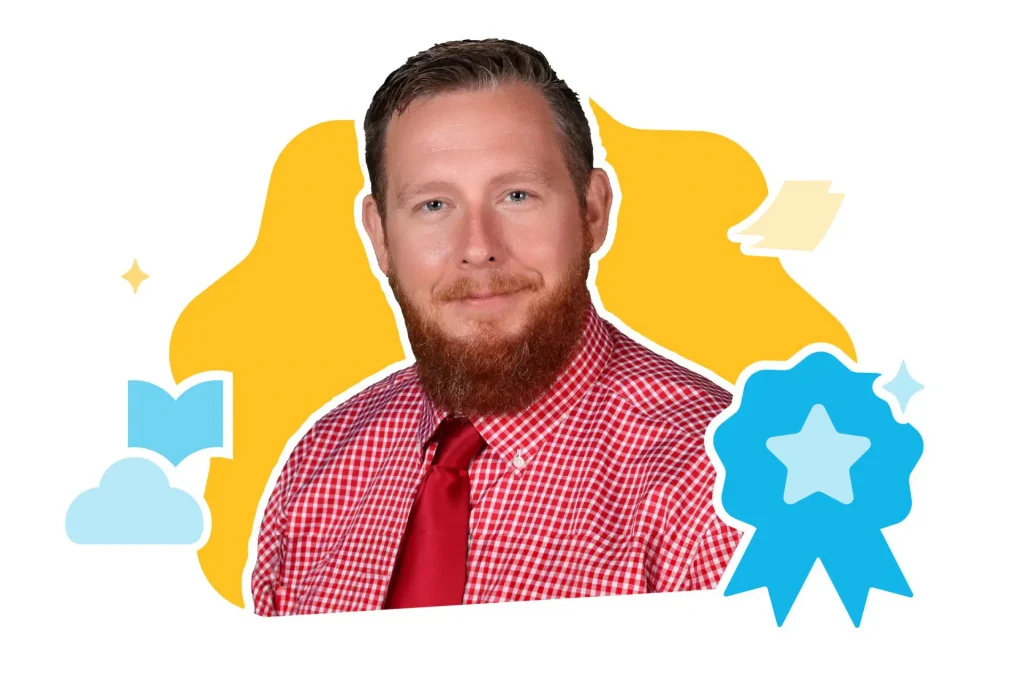
That’s why, when Principal Charles Beckley stepped in to lead the way, he adopted a fresh approach to early literacy learning experiences. Principal Beckley has worked in education for a decade, first in North Carolina then at Windber Elementary as classroom teacher, dean of students, and now principal. Under his guidance, Windber’s educators worked together to transform the school’s reading program—and offer inspiration for literacy educators everywhere.
Best practices: Embracing a Science of Reading curriculum
Principal Beckley’s leadership did what truly powerful leadership does: inspire and equip others to lead, too.
First, he and his colleagues had to clarify the why of science-based literacy education. “We had to understand the literacy research and the rationale behind why we needed to make the shift,” he recalls. They collaborated with outside experts to get the information they needed, then they focused on teamwork.
“The original stakeholders who led the push for the Science of Reading, they talked to their colleagues, they collaborated. They were understanding of their teams’ needs and wants. It was a team effort and a team approach,” he says.
They knew they were on the right track when the school board offered their full support, aligning everyone behind their vision for research-based literacy education.
Individual teacher awards: Also deserved!
The most powerful drivers of this change, says Beckley, were the teachers: “Our teachers and coaches had the biggest lift because they had to learn the [CKLA] curriculum.” He affectionately calls them “the neurosurgeons of our school,” and emphasizes their ability to pinpoint areas of need and build the grade-level foundational skills students need most, as well as their readiness to embrace change and dedication to professional growth.
Beckley further emphasized his school’s collective effort, which other districts can look to as a model: “Our community has been on board with this,” he says, “and our students have been great.”
The adoption of Amplify Core Knowledge Language Arts (CKLA) was also crucial, providing the teachers with a framework and instructional materials that skillfully combined both skills and content knowledge.
The results have been undeniable. “If you look at our kindergarten,” Beckley says, “at midyear, [we] were 72% on or above benchmark through DIBELS®.”
Windber’s progress is proof of the power of an evidence-based curriculum that nurtures capable and informed readers—and of a community willing to deliver innovative literacy approaches. Their story is one of commitment to research, dedication to student success, development of shared leadership, and access to the right tools and support.
“We know that we’ve done the best for our kids,” Beckley says. “And that’s the most important thing.”
Inspired? Nominate a teacher, school, or district for an award.
We’re looking for our shining 2025 Science of Reading leaders now! Find the specs, our nomination deadline, and more on our Star Awards page. Nominate a teacher for an award.
Topic 4: Representing Proportional Relationships with Graphs
Lesson 10: Introducing Graphs of Proportional Relationships Lesson 11: Interpreting Graphs of Proportional Relationships Lesson 12: Using Graphs to Compare Relationships Lesson 13: Two Graphs for Each Relationship
Lesson 2: Reasoning about Contexts with Tape Diagrams Lesson 3: Reasoning about Equations with Tape Diagrams Lesson 4: Reasoning about Equations and Tape Diagrams (Part 1) Lesson 5: Reasoning about Equations and Tape Diagrams (Part 2)
Lesson 19: Comparison Shopping-Unit Price and Related Measurement Conversions Lesson 20: Comparison Shopping-Unit Price and Related Measurement Conversions Lesson 21: Getting the Job Done—Speed, Work, and Measurement Units Lesson 22: Getting the Job Done—Speed, Work, and Measurement Units
Lesson 3: Interpreting and Computing Division of a Fraction by a Fraction—More Models Lesson 4: Interpreting and Computing Division of a Fraction by a Fraction—More Models
Lesson 7: Ordering Integers and Other Rational Numbers Lesson 8: Ordering Integers and Other Rational Numbers Lesson 9: Comparing Integers and Other Rational Numbers
Lesson 15: Read Expressions in Which Letters Stand for Numbers Lesson 16: Write Expressions in Which Letters Stand for Numbers Lesson 17: Write Expressions in Which Letters Stand for Numbers
Topic F Writing and Evaluating Expressions and Formulas
Lesson 18: Writing and Evaluating Expressions—Addition and Subtraction Lesson 19: Substituting to Evaluate Addition and Subtraction Expressions Lesson 20: Writing and Evaluating Expressions—Multiplication and Division Lesson 21: Writing and Evaluating Expressions—Multiplication and Addition
Lesson 20: Describing Center, Variability, and Shape of a Data Distribution from a Graphical Representation Lesson 21: Summarizing a Data Distribution by Describing Center, Variability, and Shape
Lesson 3: Identifying Proportional and Non-Proportional Relationships in Tables Lesson 4: Identifying Proportional and Non-Proportional Relationships in Tables
Lesson 5: Identifying Proportional and Non-Proportional Relationships in Graphs Lesson 6: Identifying Proportional and Non-Proportional Relationships in Graphs
Lesson 2: Using the Number Line to Model the Addition of Integers Lesson 3: Understanding Addition of Integers Lesson 4: Efficiently Adding Integers and Other Rational Numbers Lesson 5: Understanding Subtraction of Integers and Other Rational Numbers
Lesson 8: The Difference Between Theoretical Probabilities and Estimated Probabilities Lesson 9: Comparing Estimated Probabilities to Probabilities Predicted by a Model
Lesson 22: Using Sample Data to Compare the Means of Two or More Populations Lesson 23: Using Sample Data to Compare the Means of Two or More Populations
Lesson 2: Solving for Unknown Angles Using Equations Lesson 3: Solving for Unknown Angles Using Equations Lesson 4: Solving for Unknown Angles Using Equations
Lesson 9: Conditions for a Unique Triangle―Three Sides and Two Sides and the Included Lesson 10: Conditions for a Unique Triangle—Two Angles and a Given Side Angle
Lesson 2: Apply Properties of Equality Lesson 3: Write and Solve Addition and Subtraction Equations Lesson 4: Write and Solve Multiplication and Division Equations
Welcome to the Amplify Science classroom showcase!
The Amplify Science K–8 curriculum blends hands-on investigations, literacy-rich activities, and interactive digital tools to empower students to think, read, write, and argue like real scientists.
Discover inspiring classroom examples and teacher resources from educators nationwide who are bringing Amplify Science to life.
Want to showcase your classroom?
We love seeing how you bring learning to life! Share photos to inspire fellow educators.
Classroom Wall
Every Amplify Science unit includes a Classroom Wall that grows and evolves as students build understanding. Here are a few examples from real Amplify Science classrooms!
Grades K–5
Credit: Shannon Cox, Sabine Parish School District, LA
Credit: Rebecca Steindler O’Brien, P.S. 051 The Elias Howe School, NY
Credit: Veeh Nguyen, Belle Chasse Academy, LA
Credit: Brittney Gooden, LaSalle Parish, LA
Credit: Buffy Scott Marcantel, Maplewood Elementary, LA
Credit: Chrissy Campenni, Wyoming Area School District, PA
Credit: Christy Flynn, Grant Parish School Board, LA
Credit: William Howard Taft Elementary School, OH
Credit: Cristina Cullen, Glendora Unified School District, CA
Grades 6–8
Credit: Erica Fernandez, Elsinore Middle School, CA
Credit: Sheyenne Cahalan, Knox County R-1 School District, MO
Credit: Joshua Ryan Abellera, Fertitta Middle School, NV
Credit: Karen Wynne, Portola Middle School, CA
Credit: Crystal Cuaron Baker, Las Cruces Public Schools, NM
Credit: Natalia Seoane, Heritage Intermediate School, CA
Credit: Lisa Anglim, Elizabeth Ustach Middle School, CA
Credit: Maria Katsanos, New York City Public Schools, NY
Credit: Lindsey Hampf, Upper Township School District, NJ
Credit: Anna Radef, Cadwallader Middle School, NV
Credit: Jessica Kruger, Gardner International, MI
Credit: Albert Hutchful, Clark County School District, NV
Credit: Kim Eich, Anoka-Hennepin Public School District 1, MN
Credit: Shannon Cox, Sabine Parish School District, LA
Credit: Anna Radef, Clark County School District, NV
Hands-on science activities
Students engage in hands-on science activities throughout Amplify Science. These photos capture curiosity in action and showcase real students exploring, building, testing, and investigating in Amplify Science classrooms.
Grades K–5
Grade 1: Animal and Plant Defenses Designing animal defenses during the Animal and Plant Defenses unit Credit: Veeh Nguyen, Belle Chasse Academy, LA
Grade 1: Light and Sound Exploring shadows for the Light and Sound unit Credit: Brittney Gooden, LaSalle Parish, LA
Grade 1: Light and Sound Investigating vibrations during the Light and Sound unit Credit: Jennifer Baker, Rapides Parish School Board, LA
Grade 1: Light and Sound Puppet show for the Light and Sound unit Credit: Anna Dardar, Rapides Parish School Board, LA
Grade 2: Changing Landforms Exploring sand samples for the Changing Landforms unit Credit: Rebecca Steindler O’Brien, P.S. 051 The Elias Howe School, NY
Grade 3: Balancing Forces Exploring forces with magnet tricks for the Balancing Forces unit Credit: Maureen Patt, Broad Street Elementary School, NH
Grade 3: Inheritance and Traits Imaginary clay creatures to investigate traits in real organisms for the Inheritance and Traits unit Credit: Maribel Ramos, Esperanza Academy Charter School, PA
Grade 3: Inheritance and Traits Students showing off their knowledge for the Inheritance and Traits unit by creating their own drawings. Credit: Sandi O’Brien, Parkmead Elementary School, CA
Grade 3: Inheritance and Traits Determining which offspring belong to which set of parent pigeons based on similar traits for the Inheritance and Traits unit Credit: Sandi O’Brien, Parkmead Elementary School, CA
Grade 3: Inheritance and Traits Using celery as a real-life example of how the environment can impact traits, during the Inheritance and Traits unit Credit: Sandi O’Brien, Parkmead Elementary School, CA
Grade 3: Environments and Survival Modeling how ruby-throated hummingbirds with different traits meet their need for food during the Environments and Survival unit Credit: Sandi O’Brien, Parkmead Elementary School, CA
Grade 3: Weather and Climate Learning the best ways to collect, measure, and compare rainfall data for the Weather and Climate unit Credit: Sandi O’Brien, Parkmead Elementary School, CA
Grade 4: Energy Conversions Students created their own simple systems using a solar panel, alligator clips, wires, an LED light, and a buzzer during the Energy Conversions unit Credit: Sandi O’Brien, Parkmead Elementary School, CA
Grade 4: Energy Conversions Designing wind turbines during the Energy Conversions unit Credit: Sandi O’Brien, Parkmead Elementary School, CA
Grade 4: Vision and Light Planning vision models for the Vision and Light unit Credit: Maribel Ramos, Esperanza Academy Charter School, PA
Grade 4: Vision and Light Writing a scientific explanation for the Vision and Light unit Credit: Chrissy Campenni, Wyoming Area School District, PA
Grade 5: Patterns of Earth and Sky Investigating daytime and nighttime during the Patterns of Earth and Sky unit Credit: Sandi O’Brien, Parkmead Elementary School, CA
Grade 5: Patterns of Earth and Sky Hands-On Flextension: Making artifacts for the Patterns of Earth and Sky unit Credit: Adriana Barrera, J.W. Bishop Elementary School, TX
Grade 5: Modeling Matter Flavor ingredients test for the Modeling Matter unit Credit: Kevin Butters, Grand Island Public Schools, NE
Grade 5: Modeling Matter Testing ingredients to make salad dressing during the Modeling Matter unit Credit: Sandi O’Brien, Parkmead Elementary School, CA
Grade 5: Modeling Matter Discussing solubility and attraction during the Modeling Matter unit Credit: Cristina Cullen, Glendora Unified School District, CA
Grade 5: The Earth System Designing freshwater systems for The Earth System unit Credit: Sandi O’Brien, Parkmead Elementary School, CA
Grade 5: Ecosystem Restoration Building terrariums for the Ecosystem Restoration unit Credit: Elizabeth DeBoo, St. Frances Cabrini Academy, MO
Grade 5: Ecosystem Restoration Leaves and Roots game board from the Ecosystem Restoration unit Credit: Cyndi Thompson Crouch, Smithville School District, MO
Grade 5: Ecosystem Restoration Food web models with students’ favorite stuffed animals for the Ecosystem Restoration unit Credit: Halli Trinker, Boonton Township School District, NJ
Grades 6–8
Grade 6: Microbiome Drawing scale models of microorganisms for the Microbiome unit Credit: Elizabeth DeBoo, St. Frances Cabrini Academy, MO
Grade 6: Microbiome Hands-On Flextension: Investigating microscopic evidence of life for the Microbiome unit Credit: Elizabeth DeBoo, St. Frances Cabrini Academy, MO
Grade 6: Metabolism Investigating chemical reactions with water, phenol red, baking soda, and calcium chloride for the Metabolism unit Credit: Jessica Kruger, Gardner International Magnet School, MI
Grade 6: Metabolism Introducing the classroom body systems model for the Metabolism unit Credit: Elizabeth DeBoo, St. Frances Cabrini Academy, MO
Grade 6: Metabolism Engineering Internship Healthy bars for the Metabolism Engineering Internship Credit: Elizabeth DeBoo, St. Frances Cabrini Academy, MO
Grade 6: Thermal Energy Simulating hot and cold water during the Thermal Energy unit Credit: Whitney Stewart, Rapides Parish School Board, LA
Grade 6: Ocean, Atmosphere, and Climate Playing the Ocean Currents game for the Ocean, Atmosphere, and Climate unit Credit: Elizabeth DeBoo, St. Frances Cabrini Academy, MO
Grade 6: Weather Patterns Modeling a warm air parcel for the Weather Patterns unit Credit: Elizabeth DeBoo, St. Frances Cabrini Academy, MO
Grade 7: Geology on Mars The Flowing Water Model for the Geology on Mars unit Credit: Kim Eich, Anoka-Hennepin Public School District 1, MN
Grade 7: Plate Motion Engineering Internship Modeling a tsunami wave for Plate Motion Engineering Internship Credit: Elizabeth DeBoo, St. Frances Cabrini Academy, MO
Grade 7: Chemical Reactions Investigating substance changes for the Chemical Reactions unit Credit: Ashlie Beals Arkwright, SCAPA at Bluegrass, KY
Grade 7: Populations and Resources Conducting a yeast experiment during the Populations and Resources unit Credit: Elizabeth DeBoo, St. Frances Cabrini Academy, MO
Grade 8: Harnessing Human Energy Investigating energy systems for the Harnessing Human Energy unit Credit: Lisa Anglim, Elizabeth Ustach Middle School, CA
Grade 8: Force and Motion Investigating forces on different objects for the Force and Motion unit Credit: Elizabeth DeBoo, St. Frances Cabrini Academy, MO
Grade 8: Force and Motion Engineering Internship Designing an Egg Drop Model during the Force and Motion Engineering Internship Credit: Elizabeth DeBoo, St. Frances Cabrini Academy, MO
Grade 8: Magnetic Fields Hands-On Flextension: Exploring electrostatic force for the Magnetic Fields unit Credit: Melanie Wenger, Lincoln Park Middle School, NJ
Grade 8: Light Waves Students observing that light can cause materials to heat up, change color, and move for the Light Waves unit Credit: Gloria Davis, Panama-Buena Vista Unified School District, CA
Grade 8: Light Waves Students discover what happens to light as it travels for the Light Waves unit Credit: Gloria Davis, Panama-Buena Vista Unified School District, CA
Grade 8: Light Waves Students participating in a fishbowl discussion to share observations and evidence for the Light Waves unit Credit: Gloria Davis, Panama-Buena Vista Unified School District, CA
Grade 8: Earth, Moon, and Sun Paper model of the Moon’s phases for Earth, Moon, and Sun unit Credit: Elizabeth DeBoo, St. Frances Cabrini Academy, MO
Grade 8: Evolutionary History Hands-On Flextension: Reconstructing owl pellet skeletons for the Evolutionary History unit Credit: Elizabeth DeBoo, St. Frances Cabrini Academy, MO
Pasco County’s review of the B.E.S.T. program for middle schools, Amplify ELA Florida Edition
Tulsa, exciting updates in CKLA 2nd Edition!
Exciting updates in CKLA 2nd Edition!
As part of our commitment to creating even richer and more wide-ranging curricula, we have built on the foundation of the 1st Edition to release a new edition of Amplify CKLA with a collection of program enhancements that save you time and help you reach every student.
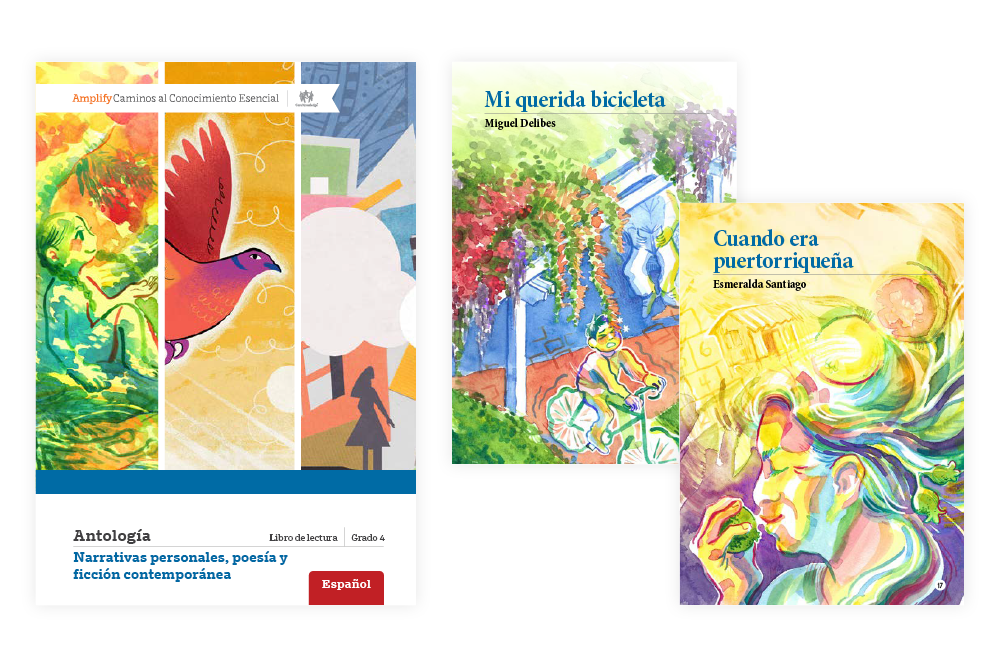
Amplify Core Knowledge Language Arts® (CKLA) is proud to introduce Amplify Caminos al Conocimiento Esencial, a Spanish language arts program for Grades K–5 that will inspire and engage your students to become confident readers, writers, and thinkers.
Like Amplify CKLA, Amplify Caminos is designed to spark curiosity through content-rich instruction. Amplify Caminos features complex interactive Read-Alouds and authentic Spanish literature to develop reading and writing skills and build bridges across Spanish and English.
Our brand-new Knowledge Research units carry forward Amplify CKLA’s powerful and proven instructional approach while also:
Adding more diversity. The rich topics and highly visual components featured in these units provide students with even more “windows and mirrors” and perspectives as they work to build knowledge.
Adding more authentic literature. Each new research unit revolves around a collection of high-interest authentic trade books that will spark more curiosity and inspire more inquiry.
Adding more flexibility. Units can be implemented for extended core instruction during flex periods, district-designated Pausing Points, or enrichment periods.
Units cover a variety of rich and relevant topics:
With these new units, students will soar to new heights with Dr. Ellen Ochoa, Amelia Earhart, and the Tuskegee Airmen. They’ll feel the rhythm as they learn about Jazz legends Miles Davis, Tito Puente, and Duke Ellington. And they’ll explore the far reaches of the world with Jacques Cousteau, Matthew Henson, and Eugenie Clark.
Grade K: Art and the World Around Us
Grade 1: Adventure Stories: Tales from the Edge of the World
Units will be made available in English and Spanish, and will include the following components:
Teacher Guide
Student Activity Books
Image Cards
Trade Book Collection
Digital Components (grades K–3 and 5)
Richly illustrated Skills Readers
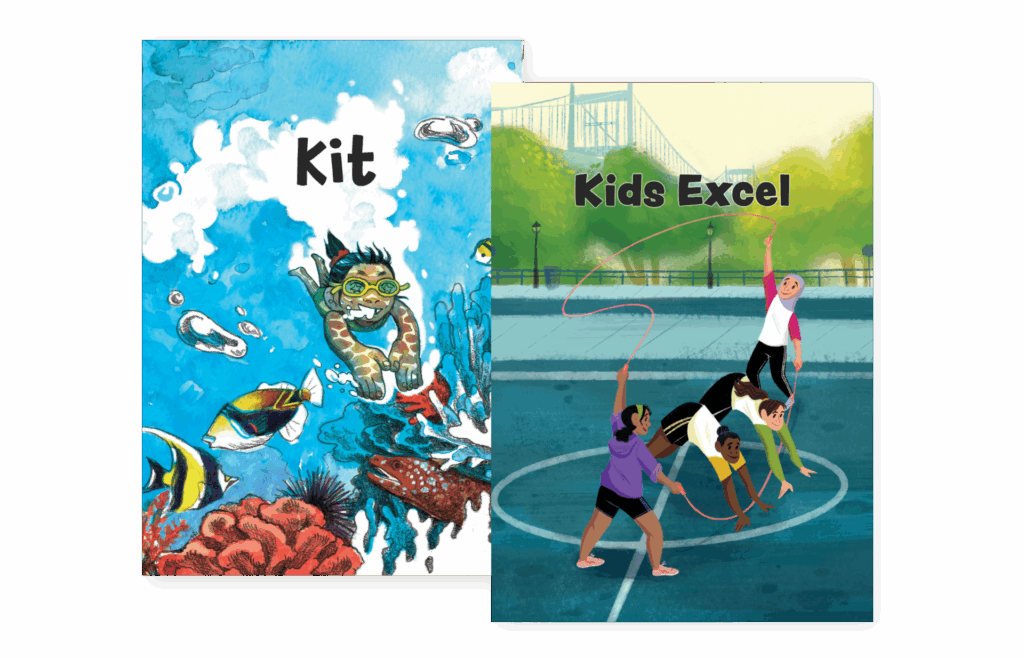
Student Readers in grades K–2 are newly redesigned with gorgeous illustrations that celebrate students’ diverse experiences. The new readers feature individuals with a broad range of identities and culture, providing students with more windows and mirrors. Each reimagined reader has a unique illustration style to draw students into the engaging stories, characters, and plots.
Amplify CKLA 2nd Edition is on the digital experience, a new digital platform, that makes it easier and more engaging than ever to plan lessons, present digital content, and review and assign student work online.
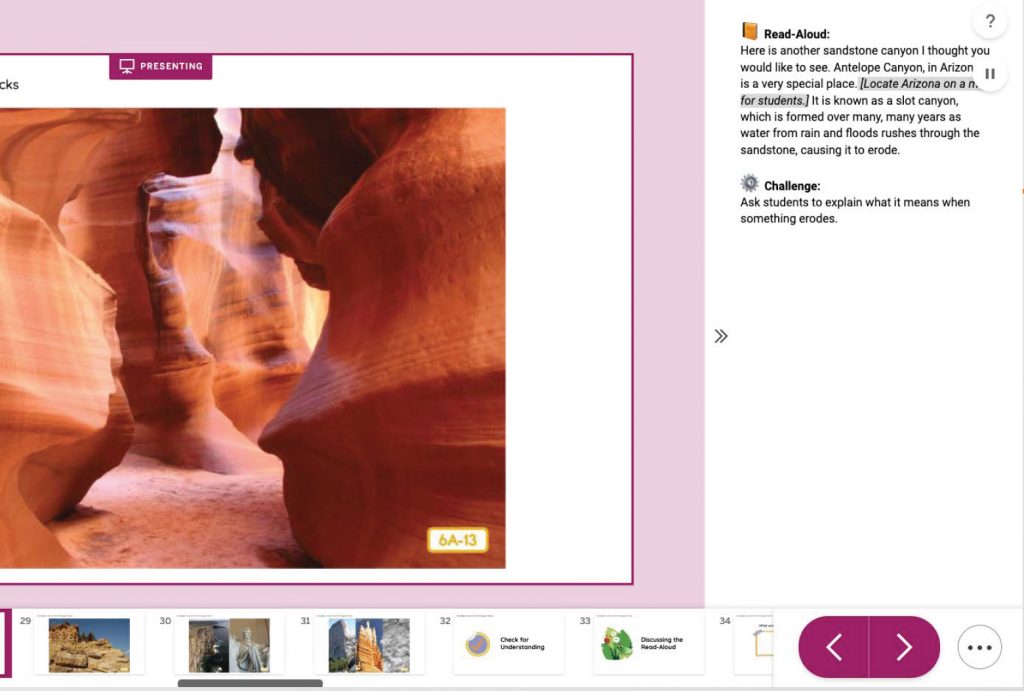
The digital experience provides ready-to-use, customizable lesson slides, complete with all the prompts from the Teacher Guide embedded in the teacher view. As teachers deliver each lesson, students engage with the content through slides that include digital activities, digital components, multimedia, Student Readers, and more. Students can complete work in the platform through digital Activity Pages that allow them to type, draw, record audio, and more.
Improved layout, more focused lessons, new content and more
From 1st Edition to 2nd Edition, we made updates to make it easier to plan and deliver Amplify CKLA lessons, including a variety of ways to differentiate instruction to meet the needs of all students.
Key enhancements include:
Scaffolds for English Language Learners added to all lessons
In-the-moment differentiation opportunities added to support and challenge all students
Integrated grade 3 into one instructional strand to better match students’ learning trajectories
New layout to make Teacher Guides easier to scan and use.
New content at the beginning of each lesson:
Primary Focus Objectives identify the goals of each lesson. Each objective is standards-aligned and corresponds to a formative assessment.
Formative Assessment opportunities are explicitly called out in a chart at the beginning of each lesson. Formative assessments are aligned to the Primary Focus Objectives.
Universal Access suggests modifications to the lesson to support a diversity of learning styles.
New content within each lesson:
Support and Challenge sidebars added throughout for extensions, support, and enrichment.
Access Supports provide scaffolds to support English Language Learners across five proficiency levels.
New content in each Skills Strand lesson:
Additional Support section at the end of every Skills lesson provides opportunities for re-teaching and reinforcing skills taught in the lesson. Specific activities and extensions are provided to meet the needs of all learners.
New content in all grades, including:
Grade K: Picture Reader with supporting instruction.
Grade 3: Content integrated into one instructional strand to improve pacing and closely match students’ learning trajectories; excerpts of read-aloud text now appear in select student readers; added new Vikings Quest (problem-based interactive learning).
Grade 4: Updated the Personal Narratives unit, added The Contraption Quest (writing across the year).
Grade 5: Updated Personal Narratives unit, added Chemical Matter unit, added The Robot Quest (writing across the year).
Moved Contemporary Fiction unit from grade 5 to grade 4.
Supplemental cursive instruction and activity book added for grades 3 and 4.
Language Studio is a companion English Language Development program to 2nd Edition designed to support students learning English at all proficiency levels. Aligned to WIDA, the program helps students strengthen vocabulary and academic language skills while deepening the background knowledge developed in the core program. This unique approach provides an effective structure for moving English Language Learners students towards English proficiency.
Students will be able to access multimedia resources and engage in a new way on the Amplify CKLA Hub. Students can access digital resources independently from anywhere, taking full advantage of the instructional multimedia experiences that Amplify CKLA has to offer. Students can access the Hub at home, in the classroom, and on the go, making it ideal for remote learning. It’s compatible with laptops, Chromebooks, tablets, and desktops.
Grades K–2
Grades K–2 students will have access to Knowledge Builder videos to introduce each domain; Sound Library videos and songs for each sound in the English language; and audio-enabled eBooks of grade-level Student Readers.
Grades 3–5
Grades 3–5 students will have access to the Vocab App for independent practice with domain vocabulary and audio-enabled eBooks of grade-level Student Readers in English and Spanish.
Tulsa, exciting updates in CKLA 2nd Edition!
As part of our commitment to creating even richer and more wide-ranging curricula, we have built on the foundation of 1st Edition to release a new edition of Amplify CKLA with a collection of program enhancements that save you time and help you reach every student.
Amplify Core Knowledge Language Arts® (CKLA) is proud to introduce Amplify Caminos al Conocimiento Esencial, a Spanish language arts program that will inspire and engage your students to become confident readers, writers, and thinkers.
Like Amplify CKLA, Amplify Caminos is designed to spark curiosity through content-rich instruction. Amplify Caminos features complex interactive Read-Alouds and authentic Spanish literature to develop reading and writing skills and build bridges across Spanish and English.
Our brand-new Knowledge Research units carry forward Amplify CKLA’s powerful and proven instructional approach while also:
Adding more content for students from all walks of life. The rich topics and highly visual components featured in these units provide students with even more “windows and mirrors” and perspectives as they work to build knowledge.
Adding more authentic literature. Each new research unit revolves around a collection of high-interest authentic trade books that will spark more curiosity and inspire more inquiry.
Adding more flexibility. Units can be implemented for extended core instruction during flex periods, district-designated Pausing Points, or enrichment periods.
Units cover a variety of rich and relevant topics:
With these new units, students will soar to new heights with Dr. Ellen Ochoa, Amelia Earhart, and the Tuskegee Airmen. They’ll feel the rhythm as they learn about Jazz legends Miles Davis, Tito Puente, and Duke Ellington. And they’ll explore the far reaches of the world with Jacques Cousteau, Matthew Henson, and Eugenie Clark.
Grade K: Art and the World Around Us
Grade 1: Adventure Stories: Tales from the Edge of the World
Units will be made available in English and Spanish, and will include the following components:
Teacher Guide
Student Activity Books
Image Cards
Trade Book Collection
Digital Components (grades K–3 and 5)
Richly illustrated Skills Readers
Student Readers in grades K–2 are newly redesigned with gorgeous illustrations that celebrate students’ diverse experiences. The new readers feature individuals with a broad range of identities and culture, providing students with more windows and mirrors. Each reimagined reader has a unique illustration style to draw students into the engaging stories, characters, and plots. Review the new readers.
New digital platform with presentation slides
Amplify CKLA 2nd Edition is on Interactive Classroom, a new digital platform, that makes it easier and more engaging than ever to plan lessons, present digital content, and review and assign student work online.
Interactive Classroom provides ready-to-use, customizable lesson slides, complete with all the prompts from the Teacher Guide embedded in the teacher view. As teachers deliver each lesson, students engage with the content through slides that include digital activities, digital components, multimedia, Student Readers, and more. Students can complete work in the platform through digital Activity Pages that allow them to type, draw, record audio, and more.
Improved layout, more focused lessons, new content & more
From 1st Edition to 2nd Edition, we made updates to make it easier to plan and deliver Amplify CKLA lessons, including a variety of ways to differentiate instruction to meet the needs of all students.
Key enhancements include:
Scaffolds for English Language Learners added to all lessons
In-the-moment differentiation opportunities added to support and challenge all students
Integrated Grade 3 into one instructional strand to better match students’ learning trajectories
New layout to make Teacher Guides easier to scan and use.
New content at the beginning of each lesson:
Primary Focus Objectives identify the goals of each lesson. Each objective is standards-aligned and corresponds to a formative assessment.
Formative Assessment opportunities are explicitly called out in a chart at the beginning of each lesson. Formative assessments are aligned to the Primary Focus Objectives.
Universal Access suggests modifications to the lesson to support a diversity of learning styles.
New content within each lesson:
Support and Challenge sidebars added throughout for extensions, support, and enrichment.
Access Supports provide scaffolds to support English Language Learners across five proficiency levels.
New content in each Skills Strand lesson:
Additional Support section at the end of every Skills lesson provides opportunities for re-teaching and reinforcing skills taught in the lesson. Specific activities and extensions are provided to meet the needs of all learners.
New content in all grades, including:
Grade K: Picture Reader with supporting instruction
Grade 3: Content integrated into one instructional strand to improve pacing and closely match students’ learning trajectories; excerpts of read-aloud text now appear in select student readers; added new Vikings Quest (problem-based interactive learning).
Grade 4: Updated the Personal Narratives unit, added The Contraption Quest (writing across the year).
Grade 5: Updated Personal Narratives unit, added Chemical Matter unit, added The Robot Quest (writing across the year).
Moved Contemporary Fiction unit from Grade 5 to Grade 4.
Supplemental cursive instruction and activity book added for Grades 3 and 4.
Language Studio is a companion English Language Development program to 2nd Edition designed to support students learning English at all proficiency levels. Aligned to WIDA, the program helps students strengthen vocabulary and academic language skills while deepening the background knowledge developed in the core program. This unique approach provides an effective structure for moving English Language Learners students towards English proficiency.
Students will be able to access multimedia resources and engage in a new way on the Amplify CKLA Hub. Students can access digital resources independently from anywhere, taking full advantage of the instructional multimedia experiences that Amplify CKLA has to offer. Students can access the Hub at home, in the classroom, and on the go, making it ideal for remote learning. It’s compatible with laptops, Chromebooks, tablets, and desktops.
Grades K–2
Grades K–2 students will have access to Knowledge Builder videos to introduce each domain; Sound Library videos and songs for each sound in the English language; and audio-enabled eBooks of grade-level Student Readers.
Grades 3–5
Grades 3–5 students will have access to the Vocab App for independent practice with domain vocabulary and audio-enabled eBooks of grade-level Student Readers in English and Spanish.
AL review ELA (state)
Miami review ELA
Public review of the B.E.S.T. program for Florida middle schools, Amplify ELA Florida Edition
FL review ELA (state)
Desmos Math 6–A1 correlations with Carnegie Math Texas
New and noteworthy updates to your Amplify programs!
This back-to-school season, explore new updates and exciting features that will save you time, extend your reach, and enhance your ability to deliver the types of rigorous and riveting learning experiences you and your students deserve.
Select an Amplify program below to learn what’s coming, and to read about other notable features to keep in mind as you head into a new year of learning!
Review of the B.E.S.T. program for middle schools, Amplify ELA Florida Edition
Thank you for taking the time to review Amplify ELA Florida Edition for middle school. The items below will allow you to experience our fully blended program, with access to our print materials, digital curriculum, and additional resources to support your review.
With the Benchmarks for Excellent Student Thinking (B.E.S.T.) standards as the foundation, our robust curriculum is built with a full appreciation of rich text, history, art, music, and other disciplines. This thoughtful development encourages a broader view of literacy that promotes knowledge-building across varied domains and subjects.
Review digital program
The content and instruction in Amplify ELA’s digital program mirror the content provided in the print Teacher Guides and Student Editions found below. Additionally, the digital program offers enhanced opportunities to engage students through the use of multimedia and a variety of learning apps. Teachers will also find embedded apps that make it easy to score student work, provide feedback, differentiate instruction, and report on progress.
Available digitally and in print, the Teacher Guides contain all of the information teachers need to facilitate classroom instruction.
Reading with the B.E.S.T. Modules have been built to guide teachers and students as they begin to work with Florida’s new reading standards, providing an introduction to each grade-level B.E.S.T. Reading benchmark.
Available digitally and in print, the Teacher Guides contain all of the information teachers need to facilitate classroom instruction.
Reading with the B.E.S.T. Modules have been built to guide teachers and students as they begin to work with Florida’s new reading standards, providing an introduction to each grade-level B.E.S.T. Reading benchmark.
Available digitally and in print, the Teacher Guides contain all of the information teachers need to facilitate classroom instruction.
Reading with the B.E.S.T. Modules have been built to guide teachers and students as they begin to work with Florida’s new reading standards, providing an introduction to each grade-level B.E.S.T. Reading benchmark.
Tennessee’s review of Amplify ELA for middle school
Thank you for taking the time to review Amplify ELA for middle school. The items below will allow you to experience our blended program with access to our print materials, digital curriculum, and resources to support your review.
Amplify ELA’s blended model enables teachers to design instruction based on their classroom needs and resources. Our engaging print edition highlights the many digital experiences teachers can share with students through classroom projections. Teachers can make choices about when their students use devices while providing 100% standards coverage and without compromising learning.
Digital Program
The content and instruction in Amplify ELA’s digital program mirrors the content provided in the print Teacher Edition and Student Edition. However, the digital program offers more opportunity to engage students through the use of multimedia and a variety of learning apps. Teachers will also find embedded apps to help with scoring, providing student feedback, and reporting.
To review the digital program, visit learning.amplify.com and enter the credentials that were provided on the cover of your Getting Started guide.
Louisiana’s review of Amplify ELA for middle school
Season 10, Episode 14
Your comprehension questions answered, with Nathaniel Swain, Ph.D.
In this episode of Science of Reading: The Podcast, returning guest Nathaniel Swain, Ph.D., joins Susan Lambert to close out the season by answering thoughtful and thought-provoking comprehension questions submitted by listeners. Nathaniel and Susan answer questions about comprehension strategies, the relationship between comprehension and memorization, and how to shift the mindset among your teaching colleagues to help them understand comprehension.
Second Mockup Episode 14: Your comprehension questions answered, with Nathaniel Swain, Ph.D.
Season 10, Episode 14
Your comprehension questions answered, with Nathaniel Swain, Ph.D.
In this episode of Science of Reading: The Podcast, returning guest Nathaniel Swain, Ph.D., joins Susan Lambert to close out the season by answering thoughtful and thought-provoking comprehension questions submitted by listeners. Nathaniel and Susan answer questions about comprehension strategies, the relationship between comprehension and memorization, and how to shift the mindset among your teaching colleagues to help them understand comprehension.