Showing results for blumberg news
S1-04: Connecting with students and caregivers in the science classroom: Ryan Rudkin

In this special episode, our host Eric Cross sits down with veteran middle school teacher Ryan Rudkin. Ryan shares her expertise after almost two decades in the classroom, discussing ways to incorporate aspects of problem-based learning into the K–8 science classroom. Eric and Ryan talk about how to increase parent engagement, involve community members, and add excitement to lessons.
Explore more from Science Connections by visiting our main page.
Ryan Renee Rudkin (00:00):
I know there’s other goals in mind, you know, standards and test scores. But at the end of the day, I wanna come back and I want them to come back.
Eric Cross (00:35):
My name’s Eric Cross, host of our science podcast, and I am with Ryan Rudkin, middle-school teacher out here in California just to the north up near Sacramento? El Dorado Hills?
Ryan Renee Rudkin (00:46):
Yeah. 20 miles east of Sacramento.
Eric Cross (00:49):
Nice. And I am down here in San Diego. And so Ryan, to start off, what I wanna do is ask you about your origin story, like a superhero. So how did you become a middle-school science teacher to become part of this elite profession of science folks that get to do awesome things with kids?
Ryan Renee Rudkin (01:08):
I would agree with you that it is definitely an elite profession. I got my credential and I thought I was gonna teach third or fourth grade elementary school. And the second day I got called for a sub job for middle school. And I just thought, “We’ll take it,” you know? And by second period, I knew: This is where I belong. The kids, middle school, students are just a species of their own. And you have to appreciate them. And if you do appreciate them, then you’re in the right spot. And I quickly looked at my coursework and I was able to get authorizations in science, history, and English, and I love science. So I chose science. And the rest is history. It’s been a wild ride and I wouldn’t have changed or asked for anything different. I love it.
Eric Cross (02:02):
I definitely agree with you. So, your history—you’ve been in various middle-school classrooms. Can you tell us a little bit about that? What classrooms have you been in? What disciplines of science have you taught or are currently teaching?
Ryan Renee Rudkin (02:14):
I was hired for seventh grade life science, and then I did that for a few years and then I got moved into eighth physical science, and I was there for 12 years. Love eighth grade science. I love eighth graders. Chemistry and physics are my favorite. There’s just so much opportunity for just awesome labs, great conversations, student discourse, all of that. And then the past three years I’ve been in sixth grade and now we’re integrated. So,a sixth grade integrated science and I also teach social studies and a technology design class.
Eric Cross (02:52):
Oh, nice. What do you do in your technology design class? That sounds cool.
Ryan Renee Rudkin (02:56):
Right now it’s mostly internet media and we use WeVideo, it’s an editing-video program, and we produce and put on our school weekly news bulletin. And then we weave in other projects. We do some interdisciplinary projects. Right now my students are working on a mythology God, Goddess, and Monster project that relates to our social studies curriculum. And we’re learning about Greece. So yeah, we just try to give them added projects and they’re using the WeVideo platform. By sixth grade, they’re coming to us now with wonderful skills with all the tech. I mean, if I need help, I ask them like, “How do you do something on Google Docs?” Or, “How do you do something on Drive?” The kids are definitely tech-savvy.
Eric Cross (03:49):
They must love being the teacher in the classroom. They get to—it kind of switches power roles, where they get to teach the teacher something.
Ryan Renee Rudkin (03:56):
Yes. And especially WeVideo, sometimes we’ve had some hiccups, and the kids show everybody, and that’s part of the design class. They’re trying to solve—we’re teaching them how to solve their own problems. So if there’s any kind of issue with anything with the technology, honestly, I usually tell them, “Go ask a friend,” or we kind of shout out, “Hey, who knows how to troubleshoot this?” And the kids are eager to help each other, which is nice.
Eric Cross (04:21):
And they have this authentic experience where they’re actually doing real problem-solving, as opposed to something that we manufactured. Like, those are real things that we have to deal with in life. And that’s exactly like how we solve it, right? We just go ask people! We look it up, and the ahas are genuine too. Throughout!
Ryan Renee Rudkin (04:36):
Yes, especially thinking on the fly. Especially yesterday, I was in the middle of teaching and my laptop froze, and it’s like, “OK, everybodytake a couple minutes, you know, work on this, this, or that while I switch out laptops!” And so I’m modeling, too, how to solve my own problems. And I think it teaches the kids how to do that too.
Eric Cross (04:59):
I’ve always thought it was interesting that when teachers get to teach in real time, how do we handle stress and frustration when it’s really happening? And I think the tech—at times, failure is the real one where you feel this chill or this sweat that kind of comes over you and you’re trying to present or cast or the video won’t play and things like that. I think I’ve done enough times in my years of teaching where now my students know what to do, or they want to come up and help, and we’re good with it. But I remember in the beginning when those things would kind of glitch or go wrong or the wifi goes down, and you’re like, OK, what do we need now?
Ryan Renee Rudkin (05:33):
I think it’s honestly, after the fact, when I think in the moment, I’m not thinking of feeling stressed, but just afterwards, then I’m like, “Oh my gosh, this has just been a wild day.” But yeah, you just have to kind of go with it. And that’s just the beast of middle school. I just added to the list of why we love it.
Eric Cross (05:53):
You said something about interdisciplinary work, and I wanna kind of ask about that. Because it sounds like you’ve had your hand in several different areas of science and grade levels. Working, doing design courses, working with tech. Are there certain lessons that are your favorites to teach? The ones that you really enjoy, or that no matter what, you’re like, “We need to do this; this is such a rich experience for students”?
Ryan Renee Rudkin (06:17):
Yeah. I definitely try to do lessons or activities along the way. I like to do projects at the end of my units. When I taught physics, we did a project and it was mainly an assessment tool called the Wheeling and Dealing. The kids, they would all get a different car. And then they to sell their car. And so they had to pretend to be a car salesman, and they did that with their knowledge of the physics unit. So everything we did on forces and speed and motion. So I like doing culminating projects like that. And you’re kind of tricking them into assessing them.
Eric Cross (06:57):
When I think about your car salesman project, I’m thinking of a bunch of students, but they’re like on Shark Tank, but they’re just littler versions. And they’re doing these sales pitches, but they’re speaking in scientific terms as they’re trying to do it. Do you record these or do they just exist in the classroom?
Ryan Renee Rudkin (07:12):
No…And that was a long time ago, when I taught eighth grade. I wish I had; I wish I had recorded. That was definitely—it was fun, ’cause the kids, they would get their little piece of paper and they—some of ’em didn’t know what car it was. And so they’re like “A Boo… A Boo-gatti? What’s a Boo-gatti?” And then someone from across the room would be like, “Ooh, I want it! Here, I’ll trade you my Ford Focus!” And <laugh> so they would kind of wheel-and-deal which car they would…and then once they got their choice, then they would do the project.
Eric Cross (07:44):
So they’re really embodying this persona of a car salesman. The wheeling and doing back-and-forth and trying to trade a Bugatti for a Ford Focus. <Laugh>
Ryan Renee Rudkin (07:53):
I know. <Laugh> I like to make my class, my learning environment, enjoyable. You know, I gotta be there; they gotta be there. So I know there’s other goals in mind—you know, standards and test scores—but at the end of the day, I wanna come back, and I want them to come back. And I just have that as a priority.
Eric Cross (08:18):
Well, based on the projects that you’re doing and the way that you approach education with students, I can see why middle-school students would want to come back, even if they had the option not to. Just because of the cool things that you’re doing. Now we’re on this—hopefully, fingers crossed—tail end of COVID in the classroom and schools, and I know it’s impacted all of us differently. Has student engagement changed since COVID and if so, how, and what have you done in these last two years to maybe adjust your approach, to continue that engagement and that richness that you provide for your kids?
Ryan Renee Rudkin (08:57):
I definitely—I think for me, I recognize that when the students are in my classroom, I want them to, I dunno, for lack of a better word, just escape the noise at home. And I know we’ve always had students that are going through divorce situations or their dog died, other things, but I think with COVID, it’s definitely been compounded. And just creating a safe place for the kids to want to be and…it’s hard. We’ve had a lot of students that have been out, absent, for various reasons and on quarantine. And they’re struggling with doing work from home, ’cause their parents are stressed and their parents are dealing with their work issues. And so I think just having grace for the kids and just keeping…I don’t know, I guess like I said, I’ve always had student engagement as top of my list.
Eric Cross (10:06):
It sounds like—the things I hear you say really have to do with who these students are as people.
Ryan Renee Rudkin (10:12):
Yeah.
Eric Cross (10:13):
And then as a second, who they are as students. How do relationships fit into your engagement? ‘Cause I’m hearing this connection that you seem to be making with kids as you’re talking about things that are beyond academics: their home life, how they’re impacted.
Ryan Renee Rudkin (10:28):
Yes.
Eric Cross (10:28):
Is there anything that you do to build these relationships, or to connect with your students, to make them feel wanted or feel connected to the classroom or to you?
Ryan Renee Rudkin (10:37):
Yeah, I do. I do a few things to build those connections. And again, this timeframe in their life is so out of their control, their peer relationships, relationships with their parents. And when they’re in my classroom, I want them to feel loved and appreciated. Something I do it’s called Phone Fridays. And in one of the social media groups, someone posted about it, and I’ve been doing it for over a year now, actually. So on Fridays I call parents and give good news. And so I’ll pick maybe one or two students. And it could be academic reasons. It could be behavior, I’ve seen a slight improvement of behavior. Maybe a role model in the classroom. And my goal is to get everybody every trimester. So everybody gets a phone call by the end of the trimester. And it’s funny ’cause sometimes the parents are a little like “Uh-oh”! When they pick up, they see the caller ID, and their school’s calling. ‘Cause Some kids don’t get good calls. So it’s a really—I would say every single parent that I’ve called, I usually get a follow-up email, either to me or my admin, just saying it’s such a cool idea I do this; thank you so much. And yeah, I just call and give good news and just put ’em on the spot. And usually the kids are a little embarrassed, but you can tell, even though they’re kind of—I think they’re faking it, that they’re embarrassed! ‘Cause You know that they got the Phone Friday, and everybody’s like, “Who’s gonna get the phone Friday?!” And so it’s a very big deal in my class.
Eric Cross (12:07):
What a great way to—I mean, it seems like that hits on so many levels. You’re making these positive calls home. You’re praising publicly, which a lot of times can happen where students can get criticized or redirected publicly and then praised privately, which is a lot of times the reverse what we should be doing. But here you are praising them publicly. And then you’re not only building a relationship with yourself, but you’re also connecting them with their parent or whoever is caring for them, because now when they go home, there’s this, “Hey, your teacher called; you’re doing awesome!” So it’s this kind of triangle that’s forming there. I think that’s super-cool and a great thing for teachers to do.
Ryan Renee Rudkin (12:45):
It takes, you know, the last five minutes of my class. I do it every class. And then I have a system. Like I said, I keep track of all the kids. That way, by the end of the trimester I’ve gotten everybody. Sometimes I let the students, whoever I call first, then I let them pick a peer and I tell them, “OK, we have to have a solid reason. Why are we calling?” And a couple times they’ll have a student, like one of my energized ones, they’ll raise their hand. “How About me? How about me?” And I and the kids kind of laugh a little and I said, “Well, how about this? Let’s make a goal. How about next week we’re gonna make a goal and we’re gonna have a reason to call home.” So just working on the kids that need a little push in the right direction. That’s other reasoning to it. But yeah, it’s fun. I love it.
Eric Cross (13:33):
And you have the community. You have this goal setting. We were talking a little earlier about this transition—so you’re becoming this…your school’s going through the IB process, is that right?
Ryan Renee Rudkin (13:44):
Yes.
Eric Cross (13:44):
And we were talking about the ATL skills and one of them is goal-setting management. You already kind of organically do this in your classroom, which is really neat. I know being an IB teacher, a lot of times I find the things that I’ve already been doing and find, “Oh, this is actually an approach to learning!” or “This is something that has a title!” I just thought it was just being helpful! Ah…So the kids are connected. You have this process where you’re calling parents; it’s working; students are involved, so it’s building this community. Now you’re engaging students. Do you have any favorite student engagement tools that you use in your classroom or when you’re teaching that you feel like you get a lot of bang for your buck? There’s so many things out there these days. And so many approaches, tools, web apps. Do you have any favorites that you use?
Ryan Renee Rudkin (14:40):
No. Nothing comes up top of my mind right now. Mostly just projects, like I said. And being excited. I think having my students see me excited about something…and I’m honest when we’re doing something that’s not quite my favorite, then I’m honest about that too. But just having my—like, we just started thermal energy this week and I told my students, I said, “OK guys, I’m gonna weave in some chemistry in there. I’m gonna weave in some particle motion,” and they’re like, “Oh! That’s when you taught eighth grade, huh!” Cause I talk a lot about when I taught eighth grade before. I don’t know, just showing my own enthusiasm, I think, is a good payoff to me. That’s a bang for your buck. Other things…I try to give ’em cool videos and Mark Grober, he’s definitely a favorite of mine I like to show my students. I like to bring in guest speakers from our community. When I taught eighth grade for physics, I always brought in a local CHP officer and they would bring in the radar and lidar guns and the kids would mark off the parking lot and they would calculate their speed. And then they would verify it with the radar gun. Two years ago when I taught math, I brought in a local landscaper company, a father-and-son outfit, and they showed the kids how they would do bids on jobs. And so, relate it to our chapter on volume and area. So just making that connection with real life. Plus it’s just a nice opportunity, too, for the community to come in. With our design class, put on our newscast. And then one of our units in our sixth grade curriculum is weather. And so I brought in a local weatheruh, chief meteorologist. And he actually talked to the students about his job as a meteorologist and then also being on the news and putting on a newscast. So we got him on our green screen and did a little like Mark Finan, you know, little cameo on our newscast for the week for school. So that was kind of cool.
Eric Cross (16:45):
They must have been excited.
Ryan Renee Rudkin (16:47):
Yeah. They’re pretty starstruck by him. So that was pretty fun.
Eric Cross (16:51):
This person was on their local news? So they would know him?
Ryan Renee Rudkin (16:56):
Yeah, he’s on Channel 3 out of Sacramento. Yeah. KCRA Channel 3, Mark Finan.
Eric Cross (17:00):
So all these guest speakers that you have…how do you reach out to these people? And you sound like you get a lot of success. Do you ever get nos? Like if I’m sitting here listening and that inspires me, but you’re getting celebrities and you see a few people…like, how do you reach out to them? And does everybody say yes? How does it go?
Ryan Renee Rudkin (17:21):
Well, usually at my back-to-school night, I always ask the parents if they have a career or hobby that could lend itself to the curriculum. And so sometimes I’ll hear about—students will talk about, like, “My mom’s a doctor.” And so I’ll reach out to parents and just say, “Hey, you know, your kiddo said, you’re a doctor. May I ask what type?” And most of the time the nos that I’ve received are just because of schedule conflicts. You just have to get creative! Look in your community and see what you have. People want to come and talk to kids. I’ve had some presentations that the person is so intelligent and amazing, but they just, weren’t very kid-friendly. I mean, that happens. Butsomeone knows someone. And just ask! I mean, it doesn’t hurt to ask to have ’em come out, come hang out for the day, with my students. Andone time I had a nurse practitioner she was in the cardiac unit. And so she brought in hearts and led a heart dissection with my students. And we did a station set-up. I’ve had elaborate ones like that, or just a mom come in to tell my students about her job as a nutritionist and relate it to our unit on metabolism. And so just did like a little 15-minute Q&A with the kids on nutrition. And I would just say, look at your community and/or post on social media. I always do that. Post in your school’s PTA groups. So the parents know someone, that’s for sure. Or someone’s retired. One time I had—I think he was a grandfather of one of the kids—he was into rocks. And he had a bunch of meteorites <laugh> and brought in his meteorites.
Eric Cross (19:15):
Bring in your rocks!
Ryan Renee Rudkin (19:15):
I know! Right? And he <laugh> just brought in his meteorite collection! I was like, sure, come on in!
Eric Cross (19:23):
That’s one of the things I love about being a middle-school teacher is that my students have such varied interests and I’ll get the Rock Kid every once in a while and he’ll come in and he’ll have all these rocks and crystals. And a lot of times there’s a grandfather that’s responsible for this inherited geologic treasure that they have.
Ryan Renee Rudkin (19:45):
Yeah, something like that—I mean rocks are not my favorites, but I don’t really tell the kids that. I was like, “Sure, yeah, come on in! We can have a whole-day lesson on rocks!”
Eric Cross (19:55):
<Weakly> “This is great!”
Ryan Renee Rudkin (19:58):
Just utilizing your resources. That’s all it’s about.
Eric Cross (20:02):
Well, I think the back-to-school night was really helpful. That’s something that’s super doable. You have a bunch of parents and you just simply ask, “Who do you know? What do you do?” And then just collecting that and then just asking people to come in. I’ve I’ve been reluctant to do it more often than I’ve wanted to, because I haven’t figured out—and maybe you can help me with this—I have three class periods a day plus other class periods that are not necessarily science. And I don’t want to dominate a person’s schedule. Do they tend to be willing to stay all day? Or do you do, one class gets it, and you record it? Like, how do you balance out the speakers with your school schedule?
Ryan Renee Rudkin (20:39):
Mostly they’ll they’ll just come for the whole day. When I taught eighth grade, I had five classes, so that was easy. That was an all-day thing. And then usually I’ll offer to call lunch, have lunch delivered, or snacks during the day. I mean—
Eric Cross (20:53):
Feeding them is key.
Ryan Renee Rudkin (20:54):
Yeah. Just something kind of nice. Donuts in the morning. I mean, you’d be very surprised. Most people that are in the field or retired, like I said, they’re more than willing to come. And even if they have to wait an hour, while you teach another class that doesn’t pertain to it, then they’ll either leave or come back or just hang out in the back and pretend to be a student during that history class that you have.
Eric Cross (21:20):
It’s my own limiting belief where I feel guilty. I don’t think about it. I need to think about it through the perspective that you do, that these people WANT to talk. I just assume everybody’s so busy. But I do know, the times I’ve had speakers come out, at the end of the day, they’re so energized or they’re so happy or they’re so grateful. ‘Cause They’re like, “This is what it’s like to teach every day?” I’m like, “Yeah, this is what it’s like.”
Ryan Renee Rudkin (21:42):
I think too, a lot of parents…usually being being in the stops at elementary. A Lot of parents don’t get the opportunity to come help out in the classroom, because the middle school kids, you know, it’s not very cool or it’s just not needed like in the elementary classes. So a lot of times, like I said, you’d be surprised. A lot of the parents they’re more than happy to come and hang out. And again, some students, they don’t want their mom or dad to be there, but then I talk it up. I’m like, “Everyone’s gonna be so like impressed that your dad’s a doctor,” or “your mom’s a doctor” or —so then I kind of like downplay it. Like, “Oh, whatever, you’re you’re faking it. It’ll be fine. Don’t be embarrassed.” Leading up to their parent coming into the classroom.
Eric Cross (22:36):
Right. Kind of redirect that energy toward something positive. With guest speakers, projects, pacing, all these awesome things that you have going on, how do you find balance as a teacher, as a person? And what encouragement would you give to new or aspiring teachers? We work in a profession that will take as much as you give it. And you fall asleep at night worrying about other people’s kids and we love it. And teachers by personality can just give and give and give and give. But in order for us to last—I’m thinking about those new teachers who are going into it, who are gonna go in and be there before the sun gets up and stay after the sun gets down. How do you maintain balance, taking care of yourself? You’ve been in education for—how long have you been teaching for?
Ryan Renee Rudkin (23:29):
Sixteen. This is my 16th year.
Eric Cross (23:31):
Enough to be that veteran. So how do you find balance? And then, what encouragement would you give to new or aspiring teachers?
Ryan Renee Rudkin (23:39):
I would say each year, pick one or two things to add on. You can’t add on 10 things, even though you’re gonna find 10 things that are awesome. But just make a little list, put ’em in a file, and every year, just get good at what you do and then just add on one or two things. And reflect on what’s not going well that you can get rid of to make room to add something else. Try to be patient with yourself. And don’t reinvent the wheel. There’s so many things out there that you can borrow and make it your own. Again, I think that’s a time-saver, just leaning on your colleagues. And take lots of notes, because then when you do it again next year, you can refresh yourself and, “Oh yeah, this lesson, wasn’t the best…” What can you add in to make it a little bit better? And yeah, I would say just take on one or two things each year. And then by the time you get to, you know, being a veteran, you can do all these awesome things and it’ll feel natural ’cause you’ve been practicing and just adding in one thing at a time. I coached Science Olympiad a bunch of years ago, and Science Olympiad is so rewarding. It’s just so amazing.
Eric Cross (24:59):
What is Science Olympiad, for the people who’ve never heard of it?
Ryan Renee Rudkin (25:03):
Oh, Science Olympiad is so awesome. Google it. I think it’s just ScienceOlympiad.org. It’s 23 different events across all disciplines of science, different topics. And then you have a team of 15 students. And so your 15 students have to cover the 23 events. So for example, if the student’s on the anatomy team, usually there’s a team of two kids they’re gonna study and learn. They provide all the rules and the guidelines. So the students learn and study whatever the parameters are for that year. And then they take a test. And then they compete against other schools. And there’s build events, the engineering events, they can build things like trebuchets matchbox cars or mousetrap cars. Oh gosh, there’s all kinds of things. There’s like a Rube Goldberg device. It changes every year. And it’s so rewarding to see the kids; they pick their area of science that they love. And sometimes you have to put them on an event that they don’t know, and then they end up loving it. It’s so rewarding as a teacher to see these kids that are just on fire and you know that one day they’re gonna go off and do amazing things. They just commit. They commit to their event. And then they blow it outta the water and they win medals and just the recognition…it’s super, it’s just an amazing program.
Eric Cross (26:42):
One of the competitions that’s really low-tech that I’ve taken into my classroom is Write It, Do It. Have you done that one before?
Ryan Renee Rudkin (26:50):
Oh, yes. Yeah. That’s one. Yep.
Eric Cross (26:52):
It’s such a low-tech, simple one to do, but it teaches such great skills. And for those people who haven’t heard of the Write It, Do It project, you create kinda some abstract art out of random crafts. That’s very difficult to describe. You have pipe cleaners and foam and balls and you know, all these different things. And you make it. And then one person on the team is the writer, and they look at it and they write the procedures, and then their teammate, who’s in a different room and doesn’t get to see it, gets all the materials to build it and the procedures, and they have to rebuild it as closely as possible to the actual original. Even though they don’t get to see the original. So they have to rely on their partner’s ability to write procedures step-by-step. And it was fun to watch my students become teammates in that. And they learned how to communicate in a really fun competition. So I expanded it to do it with all of my students as an activity, just to teach them how write descriptively, to write procedurally, to be technical writers. And it’s, it’s fun! It’s fun to see what they build based on what the students say. <Laugh> And it’s also fun to watch them interact with each other, which for seventh graders, usually it’s conflict. <Laugh> But, like, playful conflict. <Laugh> It’s pretty funny to see what they build.
Ryan Renee Rudkin (28:11):
They’re like, “Man, what are you talking about? That doesn’t mean this; it means this!”
Eric Cross (28:16):
<Laugh> I know part of me feels guilty, but not enough to stop the project. ‘Cause I know for some of ’em, it’s gonna be a really trial by fire being able to practice their skills with writing procedures.
Ryan Renee Rudkin (28:27):
But they’re learning among themselves how to provide more details and to be more thorough with their writing and and their thoughts, put their thoughts onto paper. So yeah, that’s a funny event. Definitely.
Eric Cross (28:41):
Earlier you had mentioned something about connecting your kids with kids and students outside of your classroom. What is it that you do with that? Because I thought that was a really cool project. Can you speak to that a little bit?
Ryan Renee Rudkin (28:57):
Yes, I’ve done—they haven’t had it in a few years, but there’s something called the Pringles Challenge. And if you Google that, I’m sure it’s on the Internet still. So you sign your class up, or your classes, and you get partnered with another school somewhere in the U.S., someplace else. And you decide individually teams, whatever they build. And they make a package to ship a single Pringle chip through the mail. And then you actually mail a Pringle chip through the mail. And then your partner team or partner school, they send their chips to you and then you open everything and then you can take pictures and video. And then there was a whole scoring process where you would score when you receive the chips. And then you input all the data on the website so you can see like how your—and most schools would trade pictures, so that the kids found out how their chip survived. March Mammal Madness is so much fun. Again, Google that.
Eric Cross (30:01):
Did you say March Mammal Madness?
Ryan Renee Rudkin (30:02):
Yes.
Eric Cross (30:03):
Like March Madness, with mammals?
Ryan Renee Rudkin (30:05):
Yes.
Eric Cross (30:05):
- What is this?
Ryan Renee Rudkin (30:06):
It starts up in March. And you can sign your students up. And that one—it’s not too interactive with other schools, but this is opportunity to get the kids interacting within your site or within your district. Or if you have teacher friends at other schools. There’s like 60…I think it’s 64 animals? And they have this massive bracket that they post. And then you can have the students, I did it—it would be very time-consuming to have the kids individually research each animal. So I just gave one animal per student and so as a class we researched all the animals and then, I think it’s every three days or so, they have these bouts. And it’s all posted on YouTube. Google it. It’s kind of fun.
Eric Cross (30:56):
I’ve already got the website up, ready to go! Folks, everybody who needs to Google this: <articulates carefully> March Mammal Madness. And is it Arizona State University? Is that the main site, ASU?
Ryan Renee Rudkin (31:04):
Yes.
Eric Cross (31:04):
So people, listen to this. Check it out. March Mammal Madness. Look, I’m doing this! I’m already,—you’ve already sold me on this.
Ryan Renee Rudkin (31:14):
It is so much fun, oh my gosh. And then, then the kids—each round, they pick their pick, just like basketball. They do their picks and then you wait for the video. And they do it live on—I think it’s live on Instagram, or the next day on YouTube. And then the kids get all excited. And then usually the kids, whatever animal they got as their research animal, they’re rooting for that one to win, the whole thing.
Eric Cross (31:42):
But we still have time; we still have time to—
Ryan Renee Rudkin (31:45):
You can jump in anytime. Even if it’s already started, you can jump into it. It usually lasts—I believe it’s a two-week from beginning to end. When they do the first round, the wild card, and then all the way to the winner, I believe it’s a two-week process. Oh, maybe three, actually.
Eric Cross (31:59):
I’m already seeing this lead-up to the video being watched in class to see…I’m already thinking about like, “How do I prevent my students from finding the video?” Or like, “When does it go live so that I could be the one to show them so they didn’t go find it early?”
Ryan Renee Rudkin (32:13):
It takes time out of the class, but I believe it’s one of those things where you have to just…it takes 10 minutes out of the class, but it’s important. So when they each round and then the next day, they release the YouTube video. Last year, when it got down to the final round, we were on spring break. And so I told my students, “You guys, let’s do some optional Zooms. And so I had a bunch of kids log on and we all watched the videos together. So that was kind of fun. And then this year, the other thing, the first time I’ve ever done this and it’s going really well is—on social media, I was talking with one of the teachers from Ohio who teaches science and she and I decided we’re gonna do penpals for our students this year. Paper-And-Pen penpals. So that’s been a lot of fun. We just partnered up all the students, her students and my students, and once a month we send and receive the letters to each other. So that’s been a really cool experience.
Eric Cross (33:14):
If you keep doing that, and you need more teachers to be involved, can my students be penpals with your students?
Ryan Renee Rudkin (33:20):
Yeah!
Eric Cross (33:20):
If you open it up to more people? I think that, to get a letter, old-school? Letter in the mail? It would be so exciting.
Ryan Renee Rudkin (33:28):
It is. We mail them, the teacher and I, we just put them all together in one package. But yeah, it’s an actual handwritten letter.
Eric Cross (33:37):
The only letters I feel like I get in the mail now are bills.
Ryan Renee Rudkin (33:42):
Right? Exactly.
Eric Cross (33:42):
But I feel like the digital version of that is if someone calls me, it’s probably bad news. I don’t know if I’m the only one that’s like that, but I’m like, “Who’s calling me? Why aren’t you texting me? What’s going on? Text me first, then call! I need to know who’s going on, and if you’re unknown, you’re going to voicemail.
Ryan Renee Rudkin (34:00):
Exactly. The penpals has been a lot of fun.
Eric Cross (34:03):
You’ve been in education for a while. You’re on the other side of what it’s like to be a student in the classroom. Which can be surreal in itself, when we think about our own experiences as being a student. Is there a teacher or a learning experience that’s had an impact on you while you were a student in school that really stands out to you? And you can interpret the question however you want. But is there someone that’s memorable or an experience that’s memorable that you still carry with you today?
Ryan Renee Rudkin (34:32):
Definitely. My favorite teacher, and we actually still keep in contact on social media is Mrs. Sheldon. She was my fifth and sixth grade teacher. I had the pleasure when I was in elementary school, I was in an all-day contained GATE class—Gifted and Talented Education class. I vividly remember doing so many amazing projects. We built this big, giant—she brought in a big ol’, like, TV box. It was big, big, big. And you could stick like three kids inside there, standing up shoulder-to-shoulder. And we built this big dragon. The head, and we had the whole rest of the class in a big sheet behind us, and we would do a little parade around the school. And she had that thing for years after. They had to repair it every year, and they would do the little parade around school. She did a lot of traveling and when we would go on vacation and then come back, that was always the big deal: “Where did Mrs Sheldon go?” And she had sand from Egypt and pictures from the rainforest. And later when I became a teacher and then I looked her up and we reconnected I did ask her, “Did you go to those places? Or did you, like, lie about it? <Laugh> To get us engaged?
Eric Cross (35:52):
You went for the real questions!
Ryan Renee Rudkin (35:54):
I did. And she laughed and thought that was funny. And she did travel for real. But yeah, she’s an amazing woman. We still keep in contact. And I remember, you know, little things…like we would be out there doing our PE time and she’d have her long skirt, you know, dress on, with her tennies, and she’s out there playing kickball with us. Just a very kindhearted, smart, amazing woman. I’m very fortunate and I’m grateful that we are able to keep in contact. Love social media for that reason. So.
Eric Cross (36:33):
Yeah. And that’s Miss Sheldon?
Ryan Renee Rudkin (36:35):
Mrs. Sheldon. Marlene Sheldon. Yeah.
Eric Cross (36:37):
Shout-Out to Marlene Sheldon influencing the next generation of teachers, with engagement with your world travels and all those different things.
Eric Cross (37:04):
Ryan, thank you so much for one, serving our students. And in the classroom, our middle-school students who need us. I think that middle school especially, elementary school, those years are when students are really starting to decide, “What am I good at?” And the experiences that we create for our students really shape what they believe they can do. These really cool, engaging experiences, these projects that you’re giving them, whether they’re doing these car sales, Shark Tanks, or they’re doing penpals, or you have guest speakers, or they’re designing planets. These are things that students don’t forget. And then when they move on to higher grades, they remember more than anything, I think, how they felt about something. And it sounds like you’re crafting these awesome experiences. And so I just wanna thank you for your time. I know as a teacher it’s very short. And I thank you for being on the podcast with us.
Ryan Renee Rudkin (38:04):
Thank you. This has been a great experience. I just—I really enjoy my students. And I feel very, very grateful and very blessed for finding where I belong.
Stay connected!
Join our community and get new episodes every other Tuesday!
We’ll also share new and exciting free resources for your classroom every month.


Meet the guest
Ryan Rudkin is a middle school science educator near Sacremento, California. Although she originally thought she would teach elementary students, Ryan connected with middle school and never looked back. Now in her 16th year in the classroom, Ryan also supports teachers in her district with professional development. Ryan’s favorite part of teaching science is seeing students grapple with concepts and explore phenomena.

About Science Connections: The podcast
Welcome to Science Connections: The Podcast! Science is changing before our eyes, now more than ever. So…how do we help kids figure that out? We will bring on educators, scientists, and more to discuss the importance of high-quality science instruction. In this episode, hear from our host Eric Cross about his work engaging students as a K-8 science teacher.
You might also like:

S5.E6. Why skepticism is essential to the Science of Reading, with Dr. Claude Goldenberg
Grade 6
Unit 1: Area and Surface Area
| Illustrative Mathematics | Desmos Math 6–A1 |
|---|---|
| Topic A: Reasoning to Find Area | |
| Lesson 1: Tiling the Plane | Unit 1 Lesson 1: Shapes on a Plane [Free lesson] |
| Lesson 2: Finding Area by Decomposing and Rearranging Lesson 3: Reasoning to Find Area | Unit 1 Lesson 2: Letters |
| Topic 2: Parallelograms | |
| Lesson 4: Parallelograms Lesson 5: Bases and Heights of Parallelograms Lesson 6: Area of Parallelograms | Unit 1 Lesson 3: Exploring Parallelograms (Print available) [Free lesson] Lesson 4: Off the Grid |
| Topic 3: Triangles | |
| Lesson 7: From Parallelograms to Triangles | Unit 1 Lesson 3: Exploring Parallelograms (Print available) [Free lesson] Lesson 4: Off the Grid Lesson 6: Triangles and Parallelograms |
| Lesson 8: Area of Triangles | Unit 1 Lesson 5: Exploring Triangles (Print available) |
| Lesson 9: Formula for the Area of a Triangle Lesson 10: Bases and Heights of Triangles | Unit 1 Lesson 4: Off the Grid Lesson 6: Triangles and Parallelograms |
| Topic 4: Polygons | |
| Lesson 11: Polygons | Unit 1 Lesson 2: Letters Lesson 8: Pile of Polygons Practice Day 1 (Print available) Unit 7 Lesson 11: Polygon Maker |
| Topic 5: Surface Area | |
| Lesson 12: What is Surface Area? | Unit 1 Lesson 9: Renata´s Stickers [Free lesson] |
| Lesson 13: Polyhedra | Unit 1Lesson 10: Plenty of Polyhedra |
| Lesson 14: Nets and Surface Area | Unit 1 Lesson 10: Plenty of Polyhedra Lesson 11: Nothing But Nets (Print available) Lesson 13: Take It To Go |
| Lesson 15: More Nets, More Surface Area | Unit 1 Lesson 10: Plenty of Polyhedra Lesson 11: Nothing But Nets (Print available) Lesson 12: Face Value Lesson 13: Take It To Go (Print available) Practice Day 2 (Print available) |
| Lesson 16: Distinguishing Between Surface Area and Volume | |
| Topic 6: Squares and Cubes | |
| Lesson 17: Squares and Cubes | Unit 6 Lesson 12: Squares and Cubes |
| Lesson 18: Surface Area of a Cube | |
| Topic 7: Let’s Put It to Work | |
| Lesson 19: Designing a Tent | Unit 1 Lesson 13: Take It To Go (Print available) |
Unit 2: Introducing Ratios
Unit 3: Rates and Percentages
| Topic 1: Units of Measurement | |
| Lesson 1: The Burj Khalifa | Unit 3 Lesson 4: Model Trains |
| Topic 2: Unit Conversion | |
| Lesson 2: Anchoring Units of Measurement | Unit 3 Lesson 1: Many Measurements (Print available) [Free lesson] |
| Lesson 3: Measuring with Different-Sized Units Lesson 4: Converting Units | Unit 3 Lesson 2: Counting Classrooms Lesson 3: Pen Pals |
| Topic 3: Rates | |
| Lesson 5: Comparing Speeds and Prices | Unit 2 Lesson 8: World Records (Print available) Unit 3 Lesson 4: Model Trains Lesson 5: Soft Serve [Free lesson] Lesson 6: Welcome to the Robot Factory |
| Lesson 6: Interpreting Rates Lesson 7: Equivalent Ratios Have the Same Unit Rates | Unit 3 Lesson 4: Model Trains Lesson 5: Soft Serve [Free lesson] |
| Lesson 8: More About Constant Speed | Unit 2 Lesson 8: World Records (Print available) Unit 3 Lesson 4: Model Trains |
| Lesson 9: Solving Rate Problems | Unit 3 Lesson 7: More Soft Serve |
| Topic 4: Percentages | |
| Lesson 10: What Are percentages | Unit 3 Lesson 8: Lucky Duckies [Free lesson] Lesson 9: Bicycle Goals |
| Lesson 11: Percentages and Double Number Lines | Unit 3 Lesson 9: Bicycle Goals Lesson 10: What’s Missing? (Print available) |
| Lesson 12: Percentages and Tape Diagrams | Unit 3 Lesson 10: What’s Missing? (Print available) |
| Lesson 13: Benchmark percentages | Unit 3 Lesson 8: Lucky Duckies [Free lesson] |
| Lesson 14: Solving Percentage Problems Lesson 15: Finding This Percent of That Lesson 16: Finding the Percentage | Unit 3 Lesson 10: What’s Missing? (Print available) Lesson 11: Cost Breakdown Lesson 12: More Bicycle Goals Lesson 13: A Country as a Village |
| Topic 5: Let’s Put It to Work | |
| Lesson 17: Painting a Room | Unit 3 Lesson 13: A Country as a Village |
| Lesson 7: Equivalent Ratios Have the Same Unit Rates | Unit 3 Lesson 4: Model Trains Lesson 5: Soft Serve [Free lesson] |
Unit 4: Dividing Fractions
| Topic 1: Making Sense of Division | |
| Lesson 1: Size of Divisor and Size of Quotient Lesson 2: Meanings of Division | Unit 4Lesson 1: Cookie Cutter |
| Lesson 3: Interpreting Division Situations | Unit 4Lesson 2: Making Connections (Print available) |
| Topic 2: Meanings of Fraction Division | |
| Lesson 4: How Many Groups (Part 1) | Unit 4Lesson 3: Flour Planner [Free lesson]Lesson 4: Flower Planters |
| Lesson 5: How Many Groups (Part 2) | Unit 4Lesson 5: Garden Bricks (Print available) |
| Lesson 6: Using Diagrams to Find the Number of Groups | Unit 4Lesson 5: Garden Bricks (Print available)Lesson 6: Fill the Gap [Free lesson] |
| Lesson 7: What Fraction of a Group? Lesson 8: How Much in Each Group? (Part 1) Lesson 9: How Much in Each Group? (Part 2) | Unit 4Lesson 8: Potting Soil |
| Topic 3: Algorithm for Fraction Division | |
| Lesson 10: Dividing by Unit and Non-Unit Fractions | Unit 4Lesson 7: Break It DownLesson 8: Potting SoilLesson 9: Division Challenges |
| Lesson 11: Using an Algorithm to Divide Fractions | Unit 4Lesson 9: Division ChallengesPractice Day |
| Topic 4: Fractions in Lengths, Areas, and Volumes | |
| Lesson 12: Fractional Lengths | Unit 4Lesson 11: Classroom Comparisons |
| Lesson 13: Rectangles with Fractional Side Lengths | Unit 4Lesson 12: Puzzling Areas (Print available) [Free lesson] |
| Lesson 14: Fractional Lengths in Triangles and Prisms | |
| Lesson 15: Volume of Prisms | Unit 4Lesson 13: Volume Challenges |
| Topic 5: Let’s Put It to Work | |
| Lesson 16: Solving Problems with Fractions | Unit 4Lesson 10: Swap Meet (Print available) |
| Lesson 17: Fitting Boxes into Boxes | Unit 4Lesson 14: Planter Planner (Print available) |
Unit 5: Arithmetic in Base Ten
| Topic 1: Warming Up to Decimals | |
| Lesson 1: Using Decimals in a Shopping Context | Unit 5Lesson 1: Dishing Out Decimals (Print available) [Free lesson] |
| Topic 2: Adding and Subtracting Decimals | |
| Lesson 2: Using Decimals to Represent Addition and Subtraction | Unit 5Lesson 3: Fruit by the PoundLesson 4: Missing Digits |
| Lesson 3: Adding and Subtracting Decimals with Few Non-Zero Digits | Unit 5Lesson 4: Missing Digits |
| Lesson 4: Adding and Subtracting Decimals with Many Non-Zero Digits | |
| Topic 3: Multiplying Decimals | |
| Lesson 5: Decimal Points in Products | Unit 5Lesson 5: Decimal Multiplication |
| Lesson 6: Methods for Multiplying Decimals | Unit 5Lesson 5: Decimal MultiplicationLesson 6: Multiplying with AreasLesson 7: Multiplication methods (Print available) |
| Lesson 7: Using Diagrams to Represent Multiplication | Unit 5Lesson 5: Decimal MultiplicationLesson 6: Multiplying with Areas |
| Lesson 8: Calculating Products of Decimals | Unit 5Lesson 6: Multiplying with Areas |
| Topic 4: Dividing Decimals | |
| Lesson 9: Using the Partial Quotients Method | Unit 5Lesson 8: Division Diagrams |
| Lesson 10: Using Long Division | Unit 5Lesson 8: Division DiagramsLesson 9: Long Division Launch (Print available)Lesson 10: Return of the Long Division (Print available) |
| Lesson 11: Dividing Numbers That Result in Decimals Lesson 12: Dividing Decimals by Whole Numbers Lesson 13: Dividing Decimals by Decimals | Unit 5Lesson 9: Long Division Launch (Print available)Lesson 10: Return of the Long Division (Print available) |
| Topic 5: Let’s Put It to Work | |
| Lesson 14: Using Operations on Decimals to Solve Problems | Unit 5Lesson 11: Movie Time [Free lesson] |
| Lesson 15: Making and Measuring Boxes | |
| Lesson 12: Dividing Decimals by Whole Numbers | |
| Lesson 13: Dividing Decimals by Decimals | Unit 5Lesson 9: Long Division Launch (Print available)Lesson 10: Return of the Long Division (Print available) |
Unit 6: Expressions and Equations
Unit 7: Rational Numbers
| Topic 1: Positive and Negative Numbers | |
|---|---|
| Lesson 1: Positive and Negative Numbers | Unit 7Lesson 1: Can You Dig In [Free lesson]Lesson 2: Digging Deeper |
| Lesson 2: Points on the Number Line | Unit 7Lesson 2: Digging Deeper |
| Lesson 3: Comparing Positive and Negative Numbers Lesson 4: Ordering Rational Numbers | Unit 7Lesson 3: Order in the Class (Print available) [Free lesson] |
| Lesson 5: Using Negative Numbers to make Sense of Contexts | Unit 7 Lesson 4: Sub-Zero |
| Lesson 6: Absolute Value of Numbers Lesson 7: Comparing Numbers and Distance from Zero | Unit 7Lesson 5: Distance on the Number Line |
| Topic 2: Inequalities | |
| Lesson 8: Writing and Graphing Inequalities | Unit 7Lesson 13: Popcorn Possibilities |
| Lesson 9: Solutions of Inequalities Lesson 10: Interpreting Inequalities | Unit 7Lesson 6: Tunnel Travel [Free lesson]Lesson 7: Comparing WeightsLesson 8: Shira´s Solutions |
| Topic 3: The Coordinate Plane | |
| Lesson 11: Points on the Coordinate Plane Lesson 12: Constructing the Coordinate Plane | Unit 7Lesson 9: Sand Dollar SearchLesson 10: The A-maze-ing Coordinate Plane |
| Lesson 13: Interpreting Points on a Coordinate Plane | Unit 7Lesson 9: Sand Dollar SearchLesson 10: The A-maze-ing Coordinate PlaneLesson 11: Polygon Maker |
| Lesson 14: Distances on a Coordinate Plane | Unit 7Lesson 11: Polygon MakerLesson 12: Graph Telephone (Print available) |
| Lesson 15: Shapes on the Coordinate Plane | Unit 1Lesson 1: Shapes on a Plane [Free lesson]Lesson 2: LettersLesson 5: Exploring Triangles (Print available)Lesson 6: Triangles and ParallelogramsUnit 7Lesson 3: Exploring Parallelograms (Print available)Lesson 11: Polygon MakerLesson 12: Graph Telephone (Print available) |
| Topic 4: Common Factors and Common Multiples | |
| Lesson 16: Common Factors | Unit 5Lesson 15: Common factors |
| Lesson 17: Common Multiples | Unit 5Lesson 14: Common Multiples |
| Lesson 18: Using Common Multiples and Common Factors | Unit 5Lesson 14: Common MultiplesLesson 15: Common factorsPractice Day 2 (Print available) |
| Topic 5: Let’s Put It to Work | |
| Lesson 19: Drawing on the Coordinate Plane | Unit 7Lesson 11: Polygon MakerLesson 12: Graph Telephone (Print available) |
Unit 8: Data Sets and Distributions
| Topic 1: Data, Variability, and Statistical Questions | |
|---|---|
| Lesson 1: Got Data? Lesson 2: Statistical Questions | Unit 8Lesson 1: Screen TimeLesson 2: Dot Plots |
| Topic 2: Dot Plots and Distributions | |
| Lesson 3: Representing Data Graphically Lesson 4: Dot Plots Lesson 5: Using Dot Plots to Answer Statistical Questions | Unit 8Lesson 2: Dot PlotsLesson 3: Minimum Wage (Print available) [Free lesson]Lesson 4: Lots More Dots |
| Lesson 6: Interpreting Histograms Lesson 7: Using Histograms to Answer Statistical Questions Lesson 8: Describing Distributions on Histograms | Unit 8Lesson 5: The Plot Thickens [Free lesson]Lesson 6: DIY Histograms (Print available) |
| Topic 3: Measures of Center and Variability | |
| Lesson 9: Mean Lesson 10: Finding and Interpreting the Mean as a Balance Point | Unit 8Lesson 7: Snack Time |
| Lesson 11: Variability and MAD | Unit 8Lesson 8: Pop It! |
| Lesson 12: Using Mean and MAD to Make Comparisons | Unit 8Lesson 9: Hoops |
| Topic 4: Median and IQR | |
| Lesson 13: Median | Unit 8Lesson 11: Toy Cars [Free lesson]Lesson 12: In the News |
| Lesson 14: Comparing Mean and Median | Unit 8Lesson 12: In the News |
| Lesson 15: Quartiles and Interquartile Range | Unit 8Lesson 13: Pumpkin Patch |
| Lesson 16: Box Plots | Unit 8Lesson 14: Car, Plane, Bus, or Train? (Print available) |
| Lesson 17: Using Box Plots | Unit 8Lesson 14: Car, Plane, Bus, or Train? (Print available)Lesson 15: Hollywood Part 2Lesson 16: Hollywood Part 3 (Print available)Practice Day 2 (Print available) |
| Topic 5: Let’s Put It to Work | |
| Lesson 18: Using Data to Solve Problems | Unit 8Lesson 16: Hollywood Part 3 (Print available) |
Unit 9: Putting It All Together
| Topic 1: Making Connections | |
|---|---|
| Lesson 1: Fermi Problems Lesson 2: In Our Class Were the World | Unit 3Lesson 13: A Country as a Village |
| Lesson 3: Rectangle Madness | Unit 5Lesson 14: Common MultiplesLesson 15: Common factors |
| Topic 2: Voting | |
| Lesson 4: How Do We Choose? | Unit 2Lesson 13: City PlanningLesson 14: Lunch Waste (Print available) |
| Lesson 5: More than Two Choices | Unit 3Lesson 13: A Country as a Village |
| Lesson 6: Picking Representatives | Unit 8Lesson 16: Hollywood Part 3 (Print available) |
Grade 7
Unit 1: Scale Drawings
| Illustrative Mathematics | Desmos Math 6–A1 |
|---|---|
| Topic 1: Scaled Copies | |
| Lesson 1: What are Scaled Copies? | Unit 1Lesson 1: Scaling Machines [Free lesson] |
| Lesson 2: Corresponding Parts and Scale Factors | Unit 1Lesson 2: Scaling Robots Unit 3Lesson 1: Toothpicks |
| Lesson 3: Making Scaled Copies Lesson 4: Scaled Relationship | Unit 1Lesson 3: Make It Scale Unit 4Lesson 3: Sticker Sizes |
| Lesson 5: The Size and the Scale Factor | Unit 1Lesson 4: Scale Factor Challenges |
| Lesson 6: Scaling and Area | Unit 1Lesson 5: TilesPractice Day 1 (Print available) |
| Topic 2: Scale Drawings | |
| Lesson 7: Scale Drawings | Unit 1Lesson 6: Introducing ScaleLesson 7: Will It Fit? (Print available) [Free lesson] |
| Lesson 8: Scale Drawings and Maps | |
| Lesson 9: Creating Scale Drawings Lesson 10: Changing Scales in Scale Drawings | Unit 1Lesson 8: Scaling StatesLesson 9: Scaling BuildingsLesson 10: Room Redesign (Print available) |
| Lesson 11: Scales without Units | |
| Lesson 12: Units in Scale Drawings | Unit 1Lesson 8: Scaling StatesLesson 9: Scaling BuildingsLesson 10: Room Redesign (Print available)Practice Day 2 (Print available) |
| Topic 3: Let’s Put It to Work | |
| Lesson 13: Draw It to Scale | Unit 1Lesson 10: Room Redesign (Print available) |
Unit 2: Introducing Proportional Relationships
| Topic 1: Representing Proportional Relationships with Tables | |
| Lesson 1: One of These Things Is Not Like the Others | Unit 2Lesson 1: Paint [Free lesson] |
| Lesson 2: Introducing Proportional Relationships with Tables | Unit 2Lesson 2: Balloon FloatLesson 3: Sugary Drinks (Print available)Lesson 4: Robot Factory |
| Lesson 3: More About Constant of Proportionality | Unit 2Lesson 3: Sugary Drinks (Print available)Unit 4Lesson 3: Sticker Sizes |
| Topic 2: Representing Proportional Relationships with Equations | |
| Lesson 4: Proportional Relationships with Equations | Unit 2Lesson 4: Robot FactoryLesson 5: SnapshotsLesson 6: Two and Two (Print available) [Free lesson]Lesson 7: All Kinds of Equations |
| Lesson 5: Two Equations for Each Relationship Lesson 6: Using Equations to Solve Problems | Unit 2Lesson 6: Two and Two (Print available) [Free lesson]Lesson 7: All Kinds of EquationsPractice Day |
| Topic 3: Comparing Proportional and Nonproportional Relationships | |
| Lesson 7: Comparing Relationships with Tables | Unit 2Lesson 2: Balloon FloatLesson 3: Sugary Drinks (Print available)Lesson 4: Robot Factory |
| Lesson 8: Comparing Relationships with Equations | Unit 2Lesson 4: Robot FactoryLesson 5: SnapshotsLesson 6: Two and Two (Print available) [Free lesson]Lesson 7: All Kinds of EquationsLesson 11: Four RepresentationsLesson 12: Water Efficiency |
| Lesson 9: Solving Problems About Proportional Relationships | Unit 2Lesson 12: Water Efficiency |
| Topic 4: Representing Proportional Relationships with Graphs | |
| Lesson 10: Introducing Graphs of Proportional Relationships Lesson 11: Interpreting Graphs of Proportional Relationships Lesson 12: Using Graphs to Compare Relationships Lesson 13: Two Graphs for Each Relationship | Unit 2Lesson 8: Dino Pops [Free lesson]Lesson 9: Gallon ChallengeLesson 10: Three TurtlesLesson 11: Four RepresentationsLesson 12: Water Efficiency |
| Topic 5: Let’s Put It to Work | |
| Lesson 14: For Representations | Unit 2Lesson 11: Four Representations (Print available) |
| Lesson 15: Using Water Efficiency | Unit 2Lesson 12: Water Efficiency |
Unit 3: Measuring Circles
| Topic 1: Circumference of a Circle | |
| Lesson 1: How Well Can You Measure? | Unit 3Lesson 1: Toothpicks |
| Lesson 2: Exploring Circles Lesson 3: Exploring Circumference Lesson 4: Applying Circumference | Unit 3Lesson 2: Is It a Circle?Lesson 3: Measuring Around [Free lesson] |
| Lesson 5: Circumference and Wheels | |
| Topic 2: Area of a Circle | |
| Lesson 6: Estimating Areas | Unit 3Lesson 5: Area Strategies |
| Lesson 7: Exploring the Area of a Circle Lesson 8: Relating Area to Circumference | Unit 3Lesson 5: Area StrategiesLesson 6: Radius Squares (Print available)Lesson 7: Why Pi?Lesson 8: Area Challenges [Free lesson]Lesson 9: Circle vs. SquarePractice Day 2 (Print available) |
| Lesson 9: Applying Area of Circles | Unit 3Lesson 6: Radius Squares (Print available) |
| Topic 3: Let’s Put It to Work | |
| Lesson 10: Distinguishing Circumference and Area | Unit 3Lesson 7: Why Pi? |
| Lesson 11: Stained-Glass Windows | Unit 3Lesson 5: Area StrategiesLesson 6: Radius Squares (Print available) |
Unit 4: Proportional Relationships and Percentages
Unit 5: Rational Number Arithmetic
| Topic 1: Interpreting Negative Numbers | |
| Lesson 1: Interpreting Negative Numbers | Unit 5Lesson 1: Floats and Anchors [Free lesson] |
| Topic 2: Adding and Subtracting Rational Numbers | |
| Lesson 2: Changing Temperatures Lesson 3: Changing Elevation | Unit 5Lesson 2: More Floats and AnchorsLesson 3: BumpersLesson 4: Draw Your Own (Print available) [Free lesson] |
| Lesson 4: Money and Debts | |
| Lesson 5: Representing Subtraction | Unit 5Lesson 5: Number Puzzles |
| Lesson 6: Subtracting Rational Numbers Lesson 7: Adding and Subtracting to Solve Problems | Unit 5Lesson 3: BumpersLesson 4: Draw Your Own (Print available) [Free lesson]Lesson 5: Number PuzzlesLesson 10: Integer Puzzles [Free lesson]Lesson 11: Changing TemperaturesLesson 13: Solar Panels and More (Print available)Practice Day 1 (Print available) |
| Topic 3: Multiplying and Dividing Rational Numbers | |
| Lesson 8: Position, Speed, and Direction Lesson 9: Multiplying Rational Numbers Lesson 10: Multiply! | Unit 5Lesson 7: Back in Time |
| Lesson 11: Dividing Rational Numbers | Unit 5Lesson 8: Speeding Turtles |
| Lesson 12: Negative Rates | |
| Topic 4: Four Operations with Rational Numbers | |
| Lesson 13: Expressions with Rational Numbers | Unit 5Lesson 9: Expressions (Print available) |
| Lesson 14: Solving Problems with Rational Numbers | Lesson 11: Changing Temperatures Lesson 12: Arctic Ice Sea (Print available) Lesson 13: Solar Panels and More (Print available) |
| Topic 5: Solving Equations When There Are Negative Numbers | |
| Lesson 15: Making and Measuring Boxes | |
| Lesson 16: Representing Contexts with Equations | |
| Topic 6: Let’s Put It to Work | |
| Lesson 17: The Stock market |
Unit 6: Expressions, Equations, and Inequalities
Unit 7: Angles, Triangles, and Prisms
| Topic 1: Angle Relationships | |
|---|---|
| Lesson 1:Relationships of Angles | Unit 7 Lesson 1: Pinwheels Lesson 2: Friendly Angles [Free lesson] Lesson 3: Angle Diagrams |
| Lesson 2: Adjacent Angles Lesson 3: Nonadjacent Angles | Unit 7Lesson 2: Friendly Angles [Free lesson]Lesson 3: Angle Diagrams |
| Lesson 4: Solving for Unknown Angles | Unit 7Lesson 2: Friendly Angles [Free lesson]Lesson 3: Angle DiagramsLesson 4: Missing Measures (Print available) |
| Lesson 5: Using Equations to Solve for Unknown Angles | Unit 7Lesson 3: Angle DiagramsLesson 4: Missing Measures (Print available) [Free lesson] |
| Topic 2: Drawing Polygons with Given Conditions | |
| Lesson 6: Building Polygons (Part 1) Lesson 7: Building Polygons (Part 2) | Unit 7Lesson 6: Is It Enough? |
| Lesson 8: Triangles with 3 Common Measures | Unit 7Lesson 13: Popcorn Possibilities |
| Lesson 9: Drawing Triangles (Part 1) Lesson 10: Drawing Triangles (Part 2) | Unit 7Lesson 5: Can You Build It? [Free lesson]Lesson 6: Is It Enough?Lesson 7: More Than OneLesson 8: Can You Draw It? (Print available)Practice Day 1 (Print available) |
| Topic 3: Solid Geometry | |
| Lesson 11: Slicing Solids | Unit 7Lesson 9: Slicing Solids |
| Lesson 12: Volume of Right Prisms | Unit 7Lesson 10: Simple Prisms |
| Lesson 13: Decomposing Bases for Areas | Unit 7Lesson 11: More Complicated Prisms |
| Lesson 14: Surface Area of Right Prisms | Unit 7Lesson 10: Simple PrismsLesson 11: More Complicated PrismsLesson 12: Surface Area Strategies (Print available) |
| Lesson 15: Distinguishing Volume and Surface Area | |
| Lesson 16: Applying Volume and Surface Area | Unit 7Lesson 13: Popcorn Possibilities |
| Topic 4: Let’s Put It to Work | |
| Lesson 17: Building Prisms |
Unit 8: Probability and Sampling
Grade 8
Unit 1: Rigid Transformations and Congruence
Unit 2: Dilations, Similarity, and Introducing Slope
Unit 3: Linear Relationships
Unit 4: Linear Equations and Linear Systems
Unit 5: Functions and Volume
Unit 6: Associations in Data
Unit 7: Exponents and Scientific Notation
| Topic 1: Exponent Review | |
| Lesson 1: Exponent Review | Unit 7 Lesson 1: Circles [Free lesson]Lesson 2: Combining Exponents |
| Topic 2: Exponent Rules | |
| Lesson 2: Multiplying Powers of 10 Lesson 3: Powers of Powers of 10 Lesson 4: Dividing Powers of 10 | Unit 7 Lesson 3: Power Pairs (Print available) [Free lesson]Lesson 4: Rewriting Powers |
| Lesson 5: Negative Exponents with Powers of 10 | Unit 7 Lesson 5: Zero and Negative ExponentsLesson 6: Write a Rule (Print available)Practice Day 1 (Print available) |
| Lesson 6: What about Other Bases? | |
| Lesson 7: Practice with Rational Bases | |
| Lesson 8: Combining Bases | |
| Topic 3: Scientific Notation | |
| Lesson 9: Describing Large and Small Numbers using Powers of 10 | Unit 7 Lesson 7: Scales and Weights |
| Lesson 10: Representing Large Numbers on the Number Line Lesson 11: Representing Small Numbers on the Number Line | Unit 7 Lesson 8: Point Zapper |
| Lesson 12: Applications of Arithmetic with Powers of 10 | Unit 7 Lesson 8: Point ZapperLesson 9: Use Your Powers |
| Lesson 13: Defining Scientific Notation Lesson 14: Multiplying, Dividing, and Estimating with Scientific Notation | Unit 7 Lesson 10: Solar System [Free lesson]Lesson 11: Balance the Scales [Free lesson]Lesson 13: Star Power |
| Lesson 15: Adding and Subtracting with Scientific Notation | Unit 7 Lesson 10: Solar System [Free lesson]Lesson 11: Balance the Scales [Free lesson]Lesson 12: City LightsLesson 13: Star Power |
| Topic 4: Let’s Put It to Work | |
| Lesson 16: Is a Smartphone Smart Enough to Go to the Moon? | Lesson 13: Star Power Practice Day 2 (Print available) |
Unit 8: Pythagorean Theorem and Irrational Numbers
| Topic 1: Side Lengths and Areas of Squares | |
| Lesson 1: The Areas of Squares and Their Side Lengths | Unit 8Lesson 1: Tilted Squares |
| Lesson 2: Side Lengths and Areas | Unit 8Lesson 2: From Squares to RootsLesson 3: Between Squares |
| Lesson 3: Rational and Irrational Numbers | |
| Lesson 4: Square Roots on the Number Line | |
| Lesson 5: Reasoning about Square Roots | Unit 8Lesson 2: From Squares to RootsLesson 3: Between SquaresLesson 4: Root Down [Free lesson]Practice Day 1 (Print available) |
| Topic 2: The Pythagorean Theorem | |
| Lesson 6: Finding Side Lengths of Triangles | Unit 8Lesson 6: The Pythagorean TheoremLesson 7: Pictures to Prove ItLesson 8: Triangle-Tracing Turtle [Free lesson] |
| Lesson 7: A Proof of the Pythagorean Theorem | Unit 8Lesson 7: Pictures to Prove It |
| Lesson 8: Finding Unknown Side Lengths | Unit 8Lesson 11: Pond Hopper |
| Lesson 9: The Converse | Unit 8Lesson 9: Make It Right |
| Lesson 10: Applications of the Pythagorean Theorem | Unit 8Lesson 10: Taco Truck [Free lesson] |
| Lesson 11: Finding Distances in the Coordinate Plane | Unit 8Lesson 11: Pond Hopper |
| Topic 3: Side Lengths and Volumes of Cubes | |
| Lesson 12: Edge Lengths and Volumes Lesson 13: Cube Roots | Unit 8Lesson 5: Filling Cubes |
| Topic 4: Decimal Representation of Rational and Irrational Numbers | |
| Lesson 14: Decimal Representation of Rational and Numbers Lesson 15: Infinite Decimal expansions | Unit 8Lesson 12: Fractions to DecimalsLesson 13: Decimals to Fractions |
| Topic 5: Let’s Put It to Work | |
| Lesson 16: When Is the Same Size Not the Same Size? | Unit 8Lesson 10: Taco Truck [Free lesson] |
Unit 9: Putting It All Together
| Topic 1: Tessellations | |
| Lesson 1: Tessellations of the Plane | |
| Lesson 2: Regular Tessellations | |
| Lesson 3: Tessellating Polygons | |
| Topic 2: The Weather | |
| Lesson 4: What Influences Temperature? | |
| Lesson 5: Plotting the Weather | |
| Lesson 6: Using and Interpreting a Mathematical Model |
Grade 6
Chapter 1: Numerical Expressions and Factors
| Big Ideas | Desmos Math 6–A1 |
|---|---|
| Lesson 1: Powers and Exponents | Unit 6 Lesson 10: Powers Lesson 11: Exponent Expressions (Print available) Practice Day 2 (Print available) |
| Lesson 2: Order of Operations | Unit 6 Lesson 11: Exponent Expressions (Print available) |
| Lesson 3: Prime Factorization | |
| Lesson 4: Greatest Common Factor | Unit 5 Lesson 15: Common factors |
| Lesson 5: Least Common Multiple | Unit 5 Lesson 14: Common Multiples Practice Day 2 (Print available) |
Chapter 2: Fractions and Decimals
Chapter 3: Ratios and Rates
| Lesson 1: Ratios | Unit 2 Lesson 1: Pizza Maker [Free lesson] Lesson 2: Ratio Rounds (Print available) Lesson 3: Rice Ratios (Print available) Lesson 4: Fruit Lab [Free lesson] Lesson 11: Community Life (Print available) Practice Day 1 (Print available) Unit 6 Lesson 7: Border Tiles Lesson 8: Products and Sums [Free lesson] Lesson 9: Products, Sums, and Differences (Print available) |
|---|---|
| Lesson 2: Using Tape Diagrams | Unit 2 Lesson 12: Mixing Paint, Part 2 Lesson 13: City Planning Lesson 14: Lunch Waste Practice Day 2 |
| Lesson 3: Using Ratio Tables | Unit 2 Lesson 9: Disaster Preparation [Free lesson] |
| Lesson 4: Graphing Ratio Relationships | Unit 2 Lesson 9: Disaster Preparation [Free lesson] Lesson 10: Balloons |
| Lesson 5: Rates and Unit Rates | Unit 3 Lesson 4: Model Trains Lesson 5: Soft Serve [Free lesson] |
| Lesson 6: Converting Measures | Unit 3 Lesson 1: Many Measurements (Print available) [Free lesson] Lesson 2: Counting Classrooms Lesson 3: Pen Pals |
Chapter 4: Percents
| Lesson 1: Percent and Fractions | Unit 3 Lesson 8: Lucky Duckies [Free lesson] |
|---|---|
| Lesson 2: Percent and Decimals | Unit 5 Lesson 2: Decimal Diagrams [Free lesson] Lesson 13: Grocery Prices (Print available) |
| Lesson 3: Comparing and Ordering Fractions, Decimals, and Percents | |
| Lesson 4: Solving Percent Problems | Unit 3 Lesson 9: Bicycle Goals Lesson 10: What’s Missing? (Print available) Lesson 11: Cost Breakdown Lesson 12: More Bicycle Goals Unit 5 Lesson 13: Grocery Prices (Print available) |
Chapter 5: Algebraic Expressions and Properties
| Lesson 1: Algebraic Expressions | |
|---|---|
| Lesson 2: Writing Expressions | Unit 6 Lesson 6: Vari-apples Lesson 8: Products and Sums [Free lesson] Lesson 9: Products, Sums, and Differences (Print available) |
| Lesson 3: Properties of Addition and Multiplication | Unit 6 Lesson 6: Vari-apples Lesson 7: Border Tiles Lesson 8: Products and Sums [Free lesson] Lesson 9: Products, Sums, and Differences (Print available) Lesson 12: Squares and Cubes |
| Lesson 4: The Distributive Property | Unit 6 Lesson 8: Products and Sums [Free lesson] Lesson 9: Products, Sums, and Differences (Print available) |
| Lesson 5: Factoring Expressions | Unit 6 Lesson 7: Border Tiles Practice Day 2 (Print available) |
Chapter 6: Equations
| Lesson 1: Writing Equations in One Variable | Unit 6 Lesson 1: Weight for It [Free lesson] Lesson 3: Hanging Around Lesson 13: Turtles All the Way |
|---|---|
| Lesson 2: Solving Equations Using Addition or Subtraction | Unit 6 Lesson 2: Five Equations (Print available) Lesson 3: Hanging Around Lesson 4: Hanging It Up Lesson 5: Swap and Solve (Print available) Practice Day 1 (Print available) |
| Lesson 3: Solving Equations Using Multiplication or Division | Unit 6 Lesson 2: Five Equations Lesson 3: Hanging Around Lesson 4: Hanging It Up Lesson 5: Swap and Solve (Print available) Practice Day 1 |
| Lesson 4: Writing Equations in Two Variables | Unit 6 Lesson 5: Swap and Solve (Print available) |
Chapter 7: Area, Surface Area, and Volume
| Lesson 1: Areas of Parallelograms | Unit 1 Lesson 3: Exploring Parallelograms (Print available) [Free lesson] Lesson 4: Off the Grid Lesson 6: Triangles and Parallelograms |
|---|---|
| Lesson 2: Areas of Triangles | Unit 1 Lesson 5: Exploring Triangles (Print available) Lesson 6: Triangles and Parallelograms Lesson 7: Off the Grid, Part 2 Practice Day 1 (Print available) |
| Lesson 3: Areas of Trapezoids and Kites | |
| Lesson 4: Three-Dimensional Figures | Unit 1 Lesson 10: Plenty of Polyhedra |
| Lesson 5: Surface Area of prisms | Unit 1 Lesson 9: Renata´s Stickers [Free lesson] Lesson 11: Nothing But Nets (Print available) Lesson 12: Face Value Lesson 13: Take It To Go (Print available) Practice Day 2 (Print available) |
| Lesson 6: Surface Area of Pyramids | Unit 1 Lesson 12: Face Value Lesson 13: Take It To Go (Print available) Practice Day 2 |
| Lesson 7: Volumes of Rectangular Prisms | Unit 4 Lesson 13: Volume Challenges |
Chapter 8: Integers, Number Lines, and the Coordinate Plane
| Lesson 1: Integers | Unit 7 Lesson 1 Can You Dig In [Free lesson] Lesson 4 Sub-Zero |
|---|---|
| Lesson 2: Comparing and Ordering Integers | Unit 7 Lesson 2 Digging Deeper Lesson 3 Order in the Class (Print available) [Free lesson] |
| Lesson 3: Rational Numbers | Unit 7 Lesson 2 Digging Deeper Lesson 3 Order in the Class (Print available) [Free lesson] Practice Day 1 (Print available) |
| Lesson 4: Absolute Value | Unit 7 Lesson 5 Distance on the Number Line Practice Day 1 (Print available) |
| Lesson 5: The Coordinate Plane | Unit 7 Lesson 9: Sand Dollar Search Lesson 10: The A-maze-ing Coordinate Plane Lesson 11: Polygon Maker Lesson 12: Graph Telephone (Print available) |
| Lesson 6: Polygons in the Coordinate Plane | Unit 1 Lesson 8: Pile of Polygons Unit 7 Lesson 11: Polygon Maker |
| Lesson 7: Writing and Graphing Inequalities | Unit 7 Lesson 6: Tunnel Travel [Free lesson] Lesson 7: Comparing Weights |
| Lesson 8: Solving Inequalities | Unit 7 Lesson 8: Shira’s Solutions |
Chapter 9: Statistical Measures
| Lesson 1: Introduction to Statistics | Unit 8 Lesson 1: Screen Time Lesson 2: Dot Plots Lesson 3: Minimum Wage (Print available) [Free lesson] Lesson 4: Lots More Dots |
|---|---|
| Lesson 2: Mean | Unit 8 Lesson 7: Snack Time Lesson 10: Hollywood Part 1 (Print available) Lesson 11: Toy Cars [Free lesson] Lesson 12: In the News |
| Lesson 3: Measures of Center | Unit 8 Lesson 7: Snack Time Lesson 10: Hollywood Part 1 (Print available) Lesson 11: Toy Cars [Free lesson] Lesson 12: In the News Lesson 13: Pumpkin Patch Practice Day 1 |
| Lesson 4: Measures of Variation | Unit 8 Lesson 8: Pop It! Lesson 11: Toy Cars [Free lesson] Lesson 14: Car, Plane, Bus, or Train? (Print available) Lesson 16: Hollywood Part 3 (Print available) |
| Lesson 5: Mean Absolute Deviation | Unit 8 Lesson 9: Hoops Lesson 10: Hollywood Part 1 (Print available) |
Chapter 10: Data Displays
| Lesson 1: Stem-and-Leaf Plots | |
|---|---|
| Lesson 2: Histograms | Unit 8 Lesson 5: The Plot Thickens [Free lesson] Lesson 6: DIY Histograms (Print available) |
| Lesson 3: Shapes of Distributions | |
| Lesson 4: Choosing Appropriate Measures | Unit 8 Lesson 2: Dot Plots Lesson 3: Minimum Wage (Print available) [Free lesson] Lesson 4: Lots More Dots Lesson 7: Snack Time Lesson 10: Hollywood Part 1 (Print available) Lesson 11: Toy Cars [Free lesson] Lesson 12: In the News Lesson 16: Hollywood Part 3 (Print available) Practice Day 1 (Print available) |
| Lesson 5: Box-and-Whisker Plots | Unit 8 Lesson 14: Car, Plane, Bus, or Train? (Print available) Lesson 15: Hollywood Part 2 |
Grade 7
Chapter 1: Adding and Subtracting Rational Numbers
| Big Ideas | Desmos Math 6–A1 |
|---|---|
| Lesson 1: Rational Numbers | Unit 5 Lesson 1: Floats and Anchors [Free lesson] Lesson 3: Bumpers |
| Lesson 2: Adding Integers Lesson 4: Subtracting Integers | Unit 5 Lesson 2: More Floats and Anchors Lesson 4: Draw Your Own (Print available) [Free lesson] Lesson 5: Number Puzzles Lesson 10: Integer Puzzles [Free lesson] Lesson 11: Changing Temperatures Lesson 13: Solar Panels and More (Print available) |
| Lesson 3: Adding Rational Numbers Lesson 5: Subtracting Rational Numbers | Unit 5 Lesson 3: Bumpers Lesson 4: Draw Your Own (Print available) [Free lesson] Lesson 5: Number Puzzles Lesson 10: Integer Puzzles [Free lesson] Lesson 11: Changing Temperatures Lesson 13: Solar Panels and More (Print available) Practice Day 1 (Print available) |
Chapter 2: Multiplying and Dividing Rational Numbers
| Lesson 1: Multiplying Integers | Unit 5 Lesson 6: Floating in Groups Lesson 7: Back in Time Lesson 8: Speeding Turtles Lesson 10: Integer Puzzles [Free lesson] Practice Day 2 (Print available) |
| Lesson 2: Dividing Integers | Unit 5 Lesson 8: Speeding Turtles |
| Lesson 3: Converting Between Fractions and Decimals | Unit 4 Lesson 13: Decimal Deep Dive (Print available) |
| Lesson 4: Multiplying Rational Numbers | Unit 5 Lesson 7: Back in Time |
| Lesson 5: Dividing Rational Numbers | Unit 5 Lesson 8: Speeding Turtles |
Chapter 3: Expressions
| Lesson 1: Algebraic Expressions | Unit 6 Lesson 9: Always-Equal Machines Lesson 10: Collect the Squares [Free lesson] Unit 5 Lesson 9: Expressions (Print available) |
| Lesson 2: Adding and Subtracting Linear Expressions | Unit 6 Lesson 2: Smudged Receipts Lesson 10: Collect the Squares [Free lesson] Lesson 11: Equation Roundtable (Print available) |
| Lesson 3: The Distributive Property | Unit 6 Lesson 2: Smudged Receipts Lesson 6: Balancing Equations Lesson 8: Factoring and Expanding (Print available) Lesson 9: Always-Equal Machines Lesson 10: Collect the Squares [Free lesson] Lesson 11: Equation Roundtable (Print available) |
| Lesson 4: Factoring Expressions | Unit 6 Lesson 8: Factoring and Expanding (Print available) Lesson 11: Equation Roundtable (Print available) |
Chapter 4: Equations and Inequalities
Chapter 5: Ratios and Proportions
| Lesson 1: Ratio and Ratio Tables | Unit 2 Lesson 1: Paint [Free lesson] Lesson 2: Balloon Float |
| Lesson 2: Rates and Unit Rates | Unit 4 (Print available)Lesson 2: Peach Cobbler |
| Lesson 3: Identifying Proportional Relationships | Unit 2 Lesson 3: Sugary Drinks Lesson 4: Robot Factory Lesson 5: Snapshots Lesson 6: Two and Two (Print available) [Free lesson] Lesson 7: All Kinds of Equations Lesson 10: Three Turtles Practice Day (Print available) Unit 3 Lesson 1: Toothpicks Lesson 3: Measuring Around [Free lesson] |
| Lesson 4: Writing and Solving Proportions | |
| Lesson 5: Graphs of Proportional Relationships | Unit 2 Lesson 8: Dino Pops [Free lesson] Lesson 9: Gallon Challenge Lesson 10: Three Turtles Lesson 11: Four Representations (Print available) |
Chapter 6: Percents
| Lesson 1: Fraction, Decimals, and Percents | Unit 4 Lesson 1: Mosaics [Free lesson] |
| Lesson 2: The Percent Proportion | |
| Lesson 3: The Percent Equation | |
| Lesson 4: Percents of Increase and Decrease | Unit 4 Lesson 4: More and Less Lesson 5: All the Equations Lesson 6: 100% (Print available) Lesson 7: Percent machines [Free lesson] Lesson 8: Tax and Tip Lesson 9: Minimum Wage (Print available) Lesson 10: Cost of College (Print available) Lesson 11: Bookcase Builder Lesson 12: Posing Percent Problems [Free lesson] |
| Lesson 5: Discounts and Markups | Unit 4 Lesson 7: Percent machines [Free lesson] Lesson 8: Tax and Tip Lesson 9: Minimum Wage (Print available) Lesson 10: Cost of College (Print available) Lesson 11: Bookcase Builder Lesson 12: Posing Percent Problems [Free lesson] Practice Day |
| Lesson 6: Simple Interest |
Chapter 7: Probability
| Lesson 1: Probability | Unit 8 Lesson 1: How Likely? (Print available) [Free lesson] Lesson 2: Prob-bear-bilities [Free lesson] Lesson 3: Mystery Bag |
| Lesson 2: Experimental and Theoretical Probability | Unit 8 Lesson 4: Spin Class Lesson 5: Is It Fair? Lesson 6: Fair Games Lesson 7: Weather or Not Lesson 8: Simulate It Lesson 9: Car, Bike, or Train? (Print available) |
| Lesson 3: Compound Events Lesson 4: Simulations | Unit 8 Lesson 8: Simulate It Lesson 9: Car, Bike, or Train? (Print available) |
Chapter 8: Statistics
| Lesson 1: Samples and Populations | Unit 8 Lesson 10: Crab Island [Free lesson] Lesson 11: Headlines |
| Lesson 2: Using Random Samples to Describe populations | Unit 8 Lesson 8: Simulate It Lesson 9: Car, Bike, or Train? (Print available) Lesson 10: Crab Island [Free lesson] Lesson 11: Headlines Lesson 12: Flower Power |
| Lesson 3: Comparing Populations Lesson 4: Using Random Samples to Compare Populations | Unit 8 Lesson 9: Car, Bike, or Train? (Print available) Lesson 10: Crab Island [Free lesson] Lesson 13: Plots and Samples Lesson 14: School Newspaper (Print available) Lesson 15: Asthma Rates (Print available) |
Chapter 9: Geometric Shapes and Angles
| Lesson 1: Circle and Circumference | Unit 3 Lesson 2: Is It a Circle? Lesson 3: Measuring Around [Free lesson] Lesson 4: Perimeter Challenges Practice Day 1 (Print available) [Free lesson] |
| Lesson 2: Areas of Circles | Unit 3 Lesson 5: Area Strategies Lesson 6: Radius Squares (Print available) Lesson 7: Why Pi? Lesson 8: Area Challenges [Free lesson] Lesson 9: Circle vs. Square Practice Day 2 (Print available) |
| Lesson 3: Perimeters and Areas of Composite Figures | Unit 3 Lesson 4: Perimeter Challenges |
| Lesson 4: Constructing Polygons | |
| Lesson 5: Finding Unknown Angle Measures | Unit 7 Lesson 1: Pinwheels Lesson 2: Friendly Angles Lesson 3: Angle Diagrams Lesson 4: Missing Measures (Print available) [Free lesson] |
Chapter 10: Surface Area and Volume
| Lesson 1: Surface Area of Prisms Lesson 2: Surface Area of Cylinders Lesson 3: Surface Area of Pyramids | Unit 7 Lesson 10: Simple Prisms Lesson 11: More Complicated Prisms Lesson 12: Surface Area Strategies (Print available) Lesson 13: Popcorn Possibilities |
| Lesson 4: Volumes of Prisms Lesson 5: Volumes of Pyramids | Unit 7 Lesson 10: Simple Prisms Lesson 11: More Complicated Prisms Lesson 13: Popcorn Possibilities Practice Day 2 (Print available) |
| Lesson 6: Cross Sections of Three-Dimensional Figures | Unit 7 Lesson 9: Slicing Solids |
Grade 8
Chapter 1: Equations
| Big ideas | Desmos Math 6–A1 |
|---|---|
| Lesson 1: Solving Simple Equations | Unit 3 Lesson 10: Solutions Unit 4 Lesson 2: Keep It Balanced Lesson 3: Balanced Moves Lesson 4: More Balanced Moves (Print available) |
| Lesson 2: Solving Multi-Step Equations | Unit 4 Lesson 5: Equation Roundtable (Print available) [Free lesson] Lesson 6: Strategic Solving (Print available) |
| Lesson 3: Solving Equations with Variables on Both Sides | Unit 4 Lesson 3: Balanced Moves Lesson 4: More Balanced Moves (Print available) Lesson 5: Equation Roundtable (Print available) [Free lesson] Lesson 6: Strategic Solving (Print available) Practice Day 1 (Print available) |
| Lesson 4: Rewriting Equations and Formulas |
Chapter 2: Transformations
Chapter 3: Angles and Triangles
| Lesson 1: Parallel Lines and Transversals | Unit 1 Lesson 10: Transforming Angles |
| Lesson 2: Angles and Triangles | Unit 1 Lesson 11: Tearing It Up (Print available) Lesson 12: Puzzling It Out [Free lesson] |
| Lesson 3: Angles of Polygons | |
| Lesson 4: Using Similar Triangles | Unit 2 Lesson 1: Sketchy Dilations [Free lesson] Lesson 2: Dilation Mini Golf [Free lesson] Lesson 3: Match My Dilation Lesson 4: Dilations on a Plane (Print available) Lesson 7: Are Angles Enough? Lesson 8: Shadows |
Chapter 4: Graphing and Writing Linear Equations
| Lesson 1: Graphing Linear Equations | Unit 3 Lesson 4 Stacking Cups Lesson 5 Flags [Free lesson] Lesson 11 Pennies and Quarters Unit 5 Lesson 8 Charge! (Print available) |
| Lesson 2: Slope of a Line | Unit 2 Lesson 9 Water Slide Lesson 10 Points on a Plane Practice Day Unit 3 Lesson 2 Water Tank Lesson 4 Stacking Cups Lesson 5 Flags [Free lesson] Lesson 6 Translations Lesson 7 Water Cooler Lesson 8 Landing Planes Lesson 9 Coin Capture Unit 6 Lesson 6 Interpreting Slopes Lesson 8 Animal Brains |
| Lesson 3: Graphing Proportional Relationships | Unit 3 Lesson 1: Turtle Time Trials [Free lesson] Lesson 2: Water Tank Lesson 4: Stacking Cups |
| Lesson 4: Graphing Linear Equations in Slope-Intercept Form | Unit 3 Lesson 2: Water Tank Lesson 3: Posters Lesson 4: Stacking Cups Lesson 5: Flags [Free lesson] Lesson 6: Translations |
| Lesson 5: Graphing Linear Equations in Standard Form | |
| Lesson 6: Writing Equations in Slope-Intercept Form | Unit 5 Lesson 8: Charge! (Print available) |
| Lesson 7: Writing Equations in Point-Slope Form |
Chapter 5: Systems of Linear Equations
| Lesson 1: Solving Systems of Linear Equations by Graphing | Unit 4 Lesson 8: When Are They the Same? Lesson 9: On or Off the Line? Lesson 10: On Both Lines Lesson 11: Make Them Balance [Free lesson] Lesson 12: Line Zapper [Free lesson] Practice Day 2 (Print available) |
| Lesson 2: Solving Systems of Linear Equations by Substitution | |
| Lesson 3: Solving Systems of Linear Equations by Elimination | |
| Lesson 4: Solving Special Systems of Linear Equations | |
| Lesson 6: Scale Drawings |
Chapter 6: Data Analysis and Displays
| Lesson 1: Scatter Plots | Unit 6 Lesson 1: Click Battle Lesson 2: Wing Span Lesson 3: Robots [Free lesson] Practice Day 1 (Print available) |
| Lesson 2: Lines of Fit | Unit 6 Lesson 4: Dapper Cats [Free lesson] Lesson 5: Fit Fights Lesson 7: Scatter Plot City |
| Lesson 3: Two-Way Tables | Unit 6 Lesson 9: Tasty Fruit Lesson 10: Finding Associations [Free lesson] Lesson 11: Federal Budgets Practice Day 3 |
| Lesson 4: Choosing a Data Display |
Chapter 7: Functions
| Lesson 1: Relations and Functions | Unit 5 Lesson 1: Turtle Crossing [Free lesson] Lesson 2: Guess My Rule [Free lesson] |
| Lesson 2: Representations of Functions | Unit 5 Lesson 3: Function or Not? Lesson 5: The Tortoise and the Hare [Free lesson] |
| Lesson 3: Linear Functions | Unit 5 Lesson 6: Graphing Stories Lesson 7: Feel the Burn (Print available) [Free lesson] Lesson 8: Charge! (Print available) |
| Lesson 4: Comparing Linear and Nonlinear Functions | Unit 5 Lesson 4: Window Frames |
| Lesson 5: Analyzing and Sketching Graphs | Unit 5 Lesson 6: Graphing Stories |
Chapter 8: Exponents and Scientific Notation
| Lesson 1: Exponents | Unit 7 Lesson 2: Combining Exponents Lesson 3: Power Pairs [Free lesson] Lesson 4: Rewriting Powers Practice Day 1 (Print available) |
| Lesson 2: Products of Powers Property | Unit 7 Lesson 2: Combining Exponents Lesson 3: Power Pairs (Print available) [Free lesson] Lesson 4: Rewriting Powers Lesson 5: Zero and Negative Exponents Lesson 6: Write a Rule (Print available) Practice Day 1 (Print available) |
| Lesson 3: Comparing Populations | |
| Lesson 4: Using Random Samples to Compare Populations | |
| Lesson 5: Estimating Quantities | Lesson 7: Scales and Weights Lesson 8: Point Zapper Lesson 9: Use Your Powers |
| Lesson 6: Scientific Notation Lesson 7: Operations in Scientific Notation | Unit 7 Lesson 10: Solar System [Free lesson] Lesson 11: Balance the Scales [Free lesson] Lesson 13: Star Power Practice Day 2 (Print available) |
Chapter 9: Real Numbers and the Pythagorean Theorem
| Lesson 1: Finding Square Roots | Unit 8 Lesson 2: From Squares to Roots Lesson 3: Between Squares Lesson 4: Root Down [Free lesson] |
| Lesson 2: The Pythagorean Theorem | |
| Lesson 3: Finding Cube Roots | Unit 8 Lesson 2: From Squares to Roots Lesson 3: Between Squares Lesson 4: Root Down [Free lesson] |
| Lesson 4: Rational Numbers | |
| Lesson 5: Irrational Numbers | Unit 8 Lesson 14: Hit the Target |
| Lesson 6: The Converse of the Pythagorean Theorem | Unit 8 Lesson 9: Make It Right |
Chapter 10: Volume and Similar Solids
| Lesson 1: Volumes of Cylinders | Unit 5 Lesson 10: Exploring Volume Lesson 11: Cylinders [Free lesson] Lesson 14: Missing Dimensions (Print available) |
| Lesson 2: Volumes of Cones | Unit 5 Lesson 10: Exploring Volume Lesson 13: Cones [Free lesson] Lesson 14: Missing Dimensions (Print available) |
| Lesson 3: Volumes of Spheres | Unit 5 Lesson 10: Exploring Volume Lesson 15: Spheres |
| Lesson 4: Surface Area and Volumes of Similar Solids | Unit 5 Lesson 12: Scaling Cylinders |
S4 – 02. Bethany and Dan share their math biographies

In this episode, co-hosts Bethany Lockhart Johnson and Dan Meyer get personal and share their “math bios”—their early experiences with math and how those experiences turned them into the educators they are today.
Explore more from Math Teacher Lounge by visiting our main page.
Dan Meyer (00:00):
We’re recording. What’s up, everybody. This is Dan Meyer with Math Teacher Lounge.
Bethany Lockhart Johnson (00:08):
And I’m Bethany Lockhart Johnson. We are so excited to be back. Season Four, Episode Two. Hi, Dan.
Dan Meyer (00:16):
Hey, Bethany, how are you doing today?
Bethany Lockhart Johnson (00:18):
I’m so excited to be talking with you! You know, as we record this, our reunion at NCTM is getting closer and closer.
Dan Meyer (00:28):
The NCTM live show is gonna be bonkers. I don’t think people are ready for it. You think you know what we’re about on MTL from listening to us, but the live show is gonna be outta control. You cannot imagine how many clowns and elephants Bethany wants to have at the live show. We’re still—we’re trying to talk her down from like three to one, but we’ll see.
Bethany Lockhart Johnson (00:44):
All I want is the t-shirt cannon. Because I used to go to these baseball games and they would have a t-shirt cannon. And I thought, I wanna operate a t-shirt cannon! So like, if I could be standing on stage aiming t-shirts at people who are jumping up and down requesting a t-shirt? I don’t know. Doesn’t that sound fun?
Dan Meyer (01:01):
Sounds awesome. High point of my college education was catching a t-shirt. No, it was—it was a burrito. It was a burrito cannon. But I think it was just a t-shirt cannon, but it was a burrito cannon. And I caught a burrito at a game and it was probably the most memorable moment of all of college education for me.
Bethany Lockhart Johnson (01:16):
Was the burrito still warm?
Dan Meyer (01:18):
Oh yeah. I think it got—like, I think it might’ve been warm at one point and then it got warmed back up through the muzzle velocity of the cannon. So it was a pretty great system they had going on there. <Laugh> Yeah. <Laugh> Anyway, I’m off topic, but, we’re thrilled to—I’m thrilled to chat with you and we’re thrilled to be listened to by you folks out there in MTL land. In the lounge itself. We got a fun show today.
Bethany Lockhart Johnson (01:40):
So if you listen to Episode One—which if you haven’t, hope you go back and listen to it—if you listen to Season Four, Episode One, you’re gonna hear—we asked Huon, KT, who is this delight of a joyful teacher. We asked her to talk to us about what’s her math bio. And we want to ask all of our guests—like, I wanna go back and ask every single guest we’ve ever had to tell us their math bio.
Dan Meyer (02:06):
Yep.
Bethany Lockhart Johnson (02:06):
Because, while seemingly simple in nature, our students enter our math classroom already having had this relationship with math and these notions about their role in math or what they think about math. And it impacts our school year with them if we’re a teacher. And it impacts our relationship with math as we move through our education and beyond. Right? And I I’m so excited about this question, ’cause I think it also ties into this theme for Season Four, which is joyful math, and diving into “When has math felt joyful? When has it not? Does it feel like—how do we think about how our math bio, our relationship with math, has evolved into a joyful or less joyful place?”
Dan Meyer (02:54):
I get it. And what’s really key here, I think, is that teaching more than other professions is a generational profession. You know what I’m saying? Like, no one is like, “Well, you know, I sold insurance to you and now you’re selling insurance to, you know, my grandkids; that’s amazing!” But people are always posting photos when, like, you teach someone who then becomes a teacher later. Teaching is a generational sort of thing. So the kinds of joyful experiences that we offer or don’t offer students now affect the experiences that students who haven’t even been born yet will have, you know, some 20, 30 years later. That, to me, is a trip. And well-worth exploring, you know, how we got here, mathematically speaking.
Bethany Lockhart Johnson (03:39):
I remember a friend had sent me this image of an assignment that her son got that was asking for their Mathography. They wanted to know about their history of mathematics. And this was their first assignment. And this teacher, I would like to imagine, read them all and used it to inform conversations about students’ relationship with math. And, you know, some of the questions they asked were thinking about whether you consider yourself, quote, unquote, “good at math.” Like “what kind of experiences have you had? What do you like or dislike about math? What is, you know—what do you expect to learn in math this year?” Just asking students to actually pause and examine and reflect on their relationship and then also looking forward to, like, what kind of a classroom community do we wanna create? And I loved that assignment. And yeah, so today’s episode Dan, guess what?
Dan Meyer (04:32):
What’s going on? What’s happening?
Bethany Lockhart Johnson (04:33):
I figured we should ask each other about our math bio.
Dan Meyer (04:39):
I think the people out there would love to know this about us. ‘Cause you know, we’re both awesome. But also what’s really cool here is that like, I don’t know this about you. Like not, not a lot. You know, the folks at Amplify, they kind of assembled me and Bethany together in the same way that record labels assembled pop boy bands, girl bands, that kind of thing, back in the day. You know, grabbing some stars from screen or film and just like throwing ’em together and saying, “All right, now you’re here to perform together.” And so it’s just a really good moment for us to, like, settle back and just know who we’ve been working with for the last three seasons and change here. I love it.
Bethany Lockhart Johnson (05:15):
Well, I don’t know. I don’t actually agree with that, Dan. Because don’t you remember? We knew each other beforehand. And while I would like to think of us as…oh, I’ll say One Direction—well, no, One Direction is now defunct. Who’s another band that got formed by one of those shows and is still together and still—
Dan Meyer (05:33):
BTS! K-Pop, you know! Let’s go!
Bethany Lockhart Johnson (05:35):
K-pop. BTS.
Dan Meyer (05:38):
Let’s go, Bethany <laugh>.
Bethany Lockhart Johnson (05:39):
So can we incorporate some K-pop into the NCTM Math Teacher Lounge live episode? Don’t answer now. Don’t answer now. OK. So not only are we gonna share our math bios, but we want to encourage you listeners to share your math bio with somebody in your life. It could be a child in your life, maybe talking to your kiddo about what was it like. What was math like for you? It could be a student that you have. It could be a partner, a friend, a parent. I mean, the sky’s the limit. Share your math bio. And most of all, share with us. We wanna hear about your math bio and you can share it with us at Twitter, at MTLShow, or in our Facebook group, Math Teacher Lounge.
Dan Meyer (06:26):
Stop on by, please. All right. I’m gonna just share like, just a couple of quick, signposts. Not the full bio. Gotta leave them wondering about something here. But here’s a few quick highlights and lowlights of my math bio and how, maybe, it made me the teacher that I was and the educator I am. Is that cool?
Bethany Lockhart Johnson (06:44):
Wait, I didn’t even, I didn’t ask you yet.
Dan Meyer (06:46):
Ask me what?
Bethany Lockhart Johnson (06:47):
Hey, Dan!
Dan Meyer (06:49):
Is there like a magical word? Like, what’s your math bio? <Laugh> Oh, go for it. No, no, that’s right. They won’t know what I’m talking about. Why is he talking about his math bio? Bethany—
Bethany Lockhart Johnson (06:57):
That whole lead-in that we just gave? They might not know.
Dan Meyer (07:00):
Yeah. We just talked about math bios for the last 20 minutes. But yeah, they might not know what we’re—
Bethany Lockhart Johnson (07:04):
<laugh> So Dan, why don’t you go first? ‘Cause I know you were gonna ask me to go first, but why don’t you go first? Dan? What’s your math bio?
Dan Meyer (07:12):
Oh, wow. Well, thank you for the formal invitation to share my math bio, Bethany Lockhart Johnson. So, I’ll just share—I just wanna share a couple items here, not the full history. Gotta leave ’em—leave a little mystery in there, you know what I’m saying? But here’s a few highlights and lowlights, and I think what it means for me as an educator. So, I was homeschooled for eight years. That was big—did a lot of math learning on my own. Couple of lowlights from that, a lot of highlights, in terms of just like being able to, like, learn at my own rate and just jump on ahead and pursue different wacky things. But I tried to switch into public school in fourth grade and I lasted, um, four hours. I didn’t even go to class. I enrolled and then it was like, boom, I was out of there. Because we went to the school; we met the teacher, saw the room, very nice person and place. But I got the homework assignment and the homework assignment was gibberish. I had no idea what to do and such was this feeling of just, like, despair and hopelessness, I was like, I cannot be a part of this. I remember the assignment. It was about identifying scalene, isosceles, and equilateral triangles. I’ll tell you this: I am quite good at that now. But at the time, like, I didn’t know what those words meant. And you know, at that moment we had Encyclopedia Britannica, could not Google this or even Ask Jeeves or AltaVista this so well back then. It just—it was an entry moment of failure and realizing that so much of math is like a, kind of a social kind of construct. And if you’re not part of that social circle, what can you do? So that was a bummer. Another bummer was eighth-grade math, learned it all by way of videotape. You know, put in the tape and watch—not gonna say the person’s name and not this person’s fault—but it was just like watching someone work on a whiteboard. Kind of a precursor to Khan Academy, kind of a drag. Went to high school—
Bethany Lockhart Johnson (09:02):
Wait, wait, wait, wait. We were—I’m not ready to jump to high school. Wait. Can you pause for just a second?
Dan Meyer (09:06):
Yeah. Rock on.
Bethany Lockhart Johnson (09:07):
I just need you to go back to the triangle thing. So in that moment, what did that mean for you that you had had all these experiences with math and then you encounter math in a completely different sphere, a public school, and it did not have a connection or meaning to you because prior to that, it sounds like it was pretty positive. Right? Explore these things you’re curious about; there’s not, like, a level you need to stick with…
Dan Meyer (09:33):
Yep, yep. Yeah. I think that’s right. Maybe it was a little bit of a classic, like, “Oh, I didn’t have a growth mindset; my mindset was like, ‘Oh, I’m good at math because I am, you know, born that way,’” and all of a sudden, that identity was, you know, thrown into question. And, you know, my foundation was all of a sudden quite shaky. And yeah, that’s—you know, I think I taught a lesson recently where I was like, “Hey, this whole thing with a less-than or equal-to sign and a greater-than or equal-to sign, like what those signs are: it’s just, it’s language. And if it’s confusing to you, it’s not because you’re bad at math; it’s ’cause language is oftentimes confusing ’cause people have to agree on it.” So I dunno, that sort of thing is kind of filtered in, filtered back in periodically, some sympathy for like how a lot of math is like just socially agreed upon ways of working with, you know, numbers, shapes, patterns, that kind of thing.
Bethany Lockhart Johnson (10:20):
OK.
Dan Meyer (10:21):
Anyway.
Bethany Lockhart Johnson (10:21):
- And in this home school—I have a lot of questions about that, but I’ll stick to one—were you in a community of people that you talked about these math ideas with? Were you homeschooled solo? You have a sibling, so I think you were together, right?
Dan Meyer (10:39):
Yeah. Yeah. I’ve got a twin sister. So we were, you know, like, right on with each other the whole way through there. And yeah, so we had—but it wasn’t, it wasn’t like a—it was a lot of individual work, with my flavor of homeschooling.
Bethany Lockhart Johnson (10:54):
- Got it. And the tapes—wait, before you go to high school, the tapes, the VHS tapes, which I’m just loving this image—
Dan Meyer (11:02):
Yeah.
Bethany Lockhart Johnson (11:02):
Was that a positive experience? Was that because that was an area of math that whoever was homeschooling you wasn’t that comfortable with? Why was it that route for the tapes, and what was that? Was that joyful for you?
Dan Meyer (11:15):
Yeah, definitely not joyful. Yeah, it was like, if you had questions, you couldn’t really ask them of the VHS tape. It didn’t work out so well in that way. And it was a lot of operational-type math. It was, you know—there was no give and take; it was all kind of take. From the video teacher. And yeah, I was doing that because my homeschool teacher, my mom, who is very smart in lots of areas, did not have the math knowledge or confidence, especially to help with math at eighth grade. And that was a big reason why, flash-forward to the next year, went to high school.
Bethany Lockhart Johnson (11:48):
Nice segue. OK.
Dan Meyer (11:50):
<laugh> You caught up to high school…I encountered just like four years of just crazy-good, just bonkers-good math teachers who just really changed a lot for me. Especially, Mr. Bishop and Mr. Cavender, very cool folks who did a lot. And especially, I think Mr. Bishop and Cavender both modeled for me what curiosity from a knowledgeable adult looks like. Like someone who, you know, now I can say to myself, “Oh, they were kind of like putting on an act of being very curious about answers they were hearing for the 2000th time from a student,” let’s say, but what a powerful experience that was for me to feel like, “Oh, wow, my thoughts are interesting to someone besides myself.” I got like, maybe it’s two real highlights that I’ll just point to, from my math bio that made me the math teacher and person that I am. Let’s see here. Maybe three, if you you’ll indulge me. One is just like the idea that you could do math wherever you have your brain, a pencil and a paper. And so I remember like in high school, I was in church with my family and kind of a little bit bored of whatever’s going on. And I just had the Bolton and I like drew a pentagon, a regular one, then a hexagon, a regular one, and kept on drawing, like adding sides to the shape. And it was like, it was becoming a circle. And, you know, I was able to take the area of each of those shapes and say, you know, “What happens as you send the number of sides to infinity?” And watch as the formula for area of a circle, Pi R squared, popped out. And it was kind of a literal religious experience, in that moment, just like, “Wow, like my brain’s so cool and math is so cool and paper and pencil’s so cool.” And so there’s that. Just that kind of experience was pretty awesome. And then I would just say like, I’ve had some really fantastic experiences with math in the world itself. Stuff like—let’s see, this is gonna invite more questions from Bethany, probably, maybe I should avoid—I got, I have a Guinness—I have a Guinness world record that’s almost 20 years old. This Guinness world record is—it’s old enough to drive basically at this point. And almost old enough to drink. But like it was—it was a record for chaining the longest paper clip chain together in 24 hours. And the only way I was able to break that record was through mathematics. Where, like, I would be finishing a box of clips. And I would say to my buddy who was there, “I just finished a box of clips.” And that person would type in the number of clips that I had just done. And then a mathematical formula that I had created would tell me how many—how long the chain was at that point. It was being rolled around a spool. And like, it’s just like, wow. So math just made this possible. You know, math revealed that the record I was trying to beat was beatable, because I did the math on it. It was, like, thousands of feet long in 24 hours. And other folks might be like, “Oh, like, that’s that’s huge!” But me, I was like, “All right, let’s divide this out. You know, divide by 24 hours in a day, divide by 60 minutes an hour, 60 seconds in a minute. Oh, that’s like one clip every four seconds. That’s really slow.” You know, think about that <counts aloud>, “Clip, two, three, four. Clip two, three…” It was just slow. So math helped me, you know, wreck that record. Which to my knowledge still still stands. Don’t get any ideas, Math Teacher Lounge Folks! Is this news to you, Bethany? You haven’t blinked in the last, like, five minutes. I’m curious if this is new.
Bethany Lockhart Johnson (15:20):
It is news to me. And I have so many questions. Because OK, if four seconds was slow, so then what was your like—so then I’m assuming a hundred clips per box? Like, what was the rate, you know, per box? How long did it take you to complete a box? What did this friend like? Did this friend stick with you for the whole 24 hours? Did you really do it for 24 hours? Or once you beat the record, did you rest? How did you account for biological function? Like, needs? Like a restroom?
Dan Meyer (15:51):
<Interrupting> Like what?
Bethany Lockhart Johnson (15:51):
Eating.
Dan Meyer (15:51):
Like what, Bethany? OK.
Bethany Lockhart Johnson (15:52):
Um, Sleep.
Dan Meyer (15:55):
So yeah, maybe we dive into some of the specifics in a different time.
Bethany Lockhart Johnson (15:59):
Just tell me one of ’em. Tell me one.
Dan Meyer (15:59):
I’ll just say. So as to discourage other Math Teacher Lounge listeners from taking this on—back off of the record, folks!—this was back in college, so I was a little more limber back then. But I did one—I think it was 1.8 seconds per clip. For an entire 24 hours. Just like, so just like think about it, would you? If you’re gonna step to me on this one, just think about that, OK? And then, and then, you know, make an informed decision.
Bethany Lockhart Johnson (16:28):
Wait. Wait, wait, I just wanna tell you one thing. I’m picturing somebody with a straw, and like, giving you water as you keep clipping. I’m picturing, like, music, I…
Dan Meyer (16:37):
That’s not far. That’s not far. That’s not far from—yeah.
Bethany Lockhart Johnson (16:40):
So many questions! OK. Go on. Sorry, sorry, sorry. Go on. This is your bio.
Dan Meyer (16:44):
We gotta, I gotta wrap this up. I wanna hear your bio. But, like, I would just say like this move to this sense that math is actually a thing that’s useful for more than just a grade; it’s useful for more than just, you know, the societal, you know, adulation that comes from being a math nerd. That kind of thing. And so that, I think that affected a lot of math teaching for me. And, if I gotta, like, summarize math teaching itself in a journey, it went from like, “Hey kids, aren’t I awesome?” to, “Hey kids, isn’t math awesome?” to “Hey kids, aren’t you awesome?” And like that journey was facilitated by lots and lots of people, you know, a lot of personal growth, but at this point, at one point I was like, “Hey, math can help you get records and whatnot. It’s really useful.” And now I’m like, “Wow, your brain’s just doing just really interesting things. I can help you understand how interesting those things are, and maybe make them more interesting, or interesting in a different way, with some help here.” Let’s put a pin in that. That’s the math bio.
Bethany Lockhart Johnson (17:50):
- So I have no doubt that if you ask someone in your life, listeners, for their math bio, that you will discover things about them that you never knew. Literally the questions that I have…I have so many question. And Dan is very good at, you know, bringing me back. Bring me back, like, come on, come on. But I just wanna say, overall, your journey seems pretty joyful. It seems pretty joyful. It seems pretty full of confidence. I don’t wanna say “ego” in a negative way, but I wanna say you were buoyed by these experiences that allowed you to feel like math was a place for you to thrive.
Dan Meyer (18:36):
Right.
Bethany Lockhart Johnson (18:36):
Where you could try out things. You could try it out and just, “I could do that!” Right? Like…your relationship just felt very, like…you felt like you had autonomy, agency, perhaps much like you, you operate in this world. Dan, is that, is that right <laugh>?
Dan Meyer (18:54):
Yeah, I think it’s fair to say. And without telling too much of her story, my twin sister with whom I share most things, including genetics, you know—she had a very different experience in math early on. She’s brilliant. She’s a doctor. And not, you know, the book kind of doctor that I am, but like a real, you know, medical doctor. She’s brilliant. But we were—we encountered different messages about who math was made for, early on in, you know, in our entire math learning. And she—we both digested the messages that we were sent, and took, you know, different, different paths because of them, for sure.
Bethany Lockhart Johnson (19:31):
Funny how that works. I thank you, Dan. I do. For in all sincerity, I appreciate you sharing that. And I think that it’s exciting to hear how it influenced your teaching. It feels like you want to cultivate those experiences for your students. And I’ve been in the room when you’ve presented; I was in a room where you taught a class live. It felt like you were making space for the students to have these aha moments. And it feels like in your work at Desmos, and now Amplify, you’re trying to create these products that allow folks to recreate these amazing math moments. Right? And that it’s for everyone and that it’s accessible and it can be very positive. I feel like I have this new perspective on kind of the energy you bring to your teaching. So thank you for sharing that.
Dan Meyer (20:24):
Yeah. Been a pleasure. Thanks for your questions here, Bethany. And it’s been—it’s been fun to reflect on it. And I do—I do feel very lucky in lots of ways. Privileged. Lucky. I know, like—I think the world has been set up for my success in lots of ways, as who I am. But I do just…yeah, I feel—I want more people to experience what it’s like when you walk into a math classroom and it’s like, “Hey, this place is for you. You have interesting thoughts about this. Let’s get ’em out.” So that’s awesome. I would love to hear about you and how you…I mean, we have taught different kinds of kids. You know, I taught kids who I think were somewhat set in, they’re a little bit more solid at secondary in who they are as a math learner. Like “I know who math is and who I am with math.” And I’m really excited to hear what your math bio allowed you to do with students who were perhaps open to the idea that they are very mathematical or at least not yet closed off to those possibilities. So, yeah. What are some of the high, the, you know, the high and low water marks of the making of Bethany Lockhart Johnson, math teacher? <Laugh>
Bethany Lockhart Johnson (21:24):
Thanks for asking, Dan. <Laugh> I’ve shared aspects of my math bio because I think it really informs the way that I talk to people about math and think about math. And I like to share it because I want folks to consider their own journey with math, as we like engage with problem-solving and sense-making and thinking about the students in our classroom. My dad is a math and computer science major. So he had a computer very early on. I wish he had invested in Apple early on when he had like one of the first Apple computers ever. And, sorry, dad, but it’s true. I do wish you had done that.
Dan Meyer (22:10):
I’m sure he does too.
Bethany Lockhart Johnson (22:11):
Oh, he does. So math and computers and conversations about counting, you know, it felt like it was kind of just normal. Like it was around me. And I went to Montessori, which is a private school that—oh, they have some public Montessori—but it’s very self-directed. And so we would have these kind of charts, these goals for the day that you explored. And so we would explore math in very, I don’t know, very organic ways, with these natural materials. And I feel like I excelled at math, but it wasn’t something that I was conscious of. It was just like, “Oh, well, yeah. Math, it’s, you know, something we do.” And then when I went to—when I left Montessori in fourth grade, I remember that year being a lot of like repetition. I was like, well, we did this. We covered this. And except for the mission project that we hadn’t done, that was all new. And that’s it. For another time I’ll share about that. But <laugh> then, they actually, I was moved with a group of students to the fifth grade math class, ’cause we had already done the work that we were doing. And so, it wasn’t that it felt like it came easily, but it did make sense. What we were doing made sense. And then it all kind of changed. There was a lot of change in my family. There was, like, missed school time. And we moved and I went to a new middle school and I was in this environment with students who—it was like an accelerated program. And so I was in this environment with students who were pretty competitive with each other. And I remember going—and I was not from of a competitive environment; like Montessori is not competitive. It’s not about that.
Dan Meyer (24:02):
Right. Right.
Bethany Lockhart Johnson (24:02):
It’s—it was very strange to me that I would be competing against anyone, even competing against myself. And I, you know, knew how to set goals. But it was a different level of energy. And I felt like, because I wasn’t competitive in that nature, I felt like that kind—I felt on the outside of a lot of the energy. Besides the regular, like, middle-school feeling outside of things. And I remember the first friend that I made. Hi, Susan! She had said to me, this was like maybe our second week of school, she’s like, “Oh, at lunchtime, come with me to math club.” And I was like, “OK.” And I remember walking into that room and I had no idea what was going on. And so that was one of the first times where I was just like, “Whoa, I have absolutely no concept of what they’re talking about or what.” These are my peers. I felt very—it was very—it was strange. It was strange. I was like, “This doesn’t feel like a space for me at all.” When I think ordinarily I was kind of excited about the idea of going to math club at lunch, you know? And over middle school, I kind of just got progressively more and more behind. It started with missing some work and then missing more and then checking out. And, you know, the problem was that I really made it about myself. That, like, it wasn’t something that I was then good at or could do. When really it was that well, pre-algebra, I was having a really hard time in like the rest of my life. And so I wasn’t real present in that class. And so when I got to algebra, it didn’t make a whole lot of sense. And then if I missed Monday, Tuesday, and Wednesday, well, Thursday is gonna be hard, you know? And, it just got progressively harder and harder. So I had this great idea that between eighth grade and ninth grade, I was going to take this accelerated geometry class. ‘Cause that was the ninth grade class, it was geometry. And I would take it. It was like geometry in three weeks or something. So then when I entered high school, I would’ve gotten this like jumpstart. But I wish I had said, “Oh, I’ll take this, and then in ninth grade I’ll take geometry.” So like I’ve already kind of gotten a preview of the material. But instead I went to the 10th grade math, which was like intermediate algebra, trigonometry. I had absolutely no clue what was going on. And I had a very, very difficult time and I wasn’t ready for that class. But it was exacerbated by the fact that this teacher felt very free to let the freshmen in that class know that they shouldn’t be in that class. That this class was for 10th graders.
Dan Meyer (26:49):
Oh wow. Oh, wow.
Bethany Lockhart Johnson (26:51):
And we had a rather contentious relationship. And I will never forget that we were in the hallway, and he says to me, “You don’t belong here.” And I’ve talked to—I’ve talked to a girlfriend of mine about her experiences with this teacher and she has the fondest memories.
Dan Meyer (27:13):
Wow.
Bethany Lockhart Johnson (27:14):
She—in fact, almost everyone I’ve spoken with, you know, if we are talking about past teachers or, “Oh, what was that class like?” I mean, they just have these wonderful memories! And for me, my sense of like belonging was already so on a tight rope anyway, that to have this adult, this teacher, tell me, “You do not belong here,” just crushed me. And in hindsight, I think he was saying like, “This class is too hard for you.” I mean, maybe. <Laugh> But all I heard was “You don’t belong here.” And I extrapolated it to connect to math and to anything having to do with math in general. And it just got worse and worse through high school in the world of math. My next math class was even—I had to repeat that class, and still didn’t understand what was going on, and felt more out of place, and, you know, it’s one of those things that I just kind of had started to accept that, I guess, math isn’t for me. I guess I’m just not a math person. Or whatever these stories are that I started to create and build and find evidence for around me that was informing that this wasn’t for me. And I had always done well in school. I was in, you know, accelerated classes. I felt like I was capable of problem solving. And yet in math, I just felt like I had all of this evidence saying that I didn’t belong there. And so when I went to college, I took whatever two math classes were—you know, I was in performing arts and then I did ethnic studies as well. And I remember you had to take two math classes that were GEs. There were these classes that if you don’t wanna deal with math, you go take those classes. And I was like, “Oh yeah, I’ll take that. I’ll take that.” The gulf widened, you know? <Laugh> And I didn’t feel like anxiety when I had to do things like balance my checkbook or navigate math in everyday spaces. It was just, it would never occur to me that I would like seek out opportunities to engage with math or think about it or talk about it.
Dan Meyer (29:35):
That is—yeah, that’s just so wild, how, I don’t know, like it’s often, from the student’s perspective, it is them in a vacuum with math, and the two of them interact and decide if, you know, if they’re right for each other. But from the grown-up perspective, it’s just, you know, it’s a little bit clearer that your story with math was not just you in math, but you with, you know, various external things happening. With family, various teachers playing their different roles—sometimes, you know, really tragic and horrible roles—and then like the compounding mathematical debt that it feels like you were kind of building up, as challenges in one year didn’t get resolved and moved into the next year and so on. And all that makes me wonder—it makes me, like really, really scared, first of all, because I would bet that your teacher might not even remember that moment, that for you is part of just a pivotal moment in your math story, and how many kids have I played—have I been a part of their story in that way and wouldn’t even recall? You know what I’m saying? So that’s a scary part. And then also I’m just wondering, like, how can we, how can we help kids who are in those moments recognize that, “Oh, this kid is like absent a bunch,” and give them more resources to be successful rather than say, “Well, you just gotta try harder now.” Those are things I’m wondering, hearing your story. Thank you for sharing that. I’d love to know more about how you then became a teacher and what all that did for you as you helped students.
Bethany Lockhart Johnson (31:06):
Well, but to answer what you were saying, it wasn’t that I wasn’t—I was always absent physically, but at least like mentally at that point, because it had become so difficult. It didn’t make sense to me. So I was just really checked out in math class, you know? So in hindsight, you know, as a teacher, for sure I can look back, and especially hearing these stories and these experiences my friend had with this teacher and just like chalks up as one of like her most favorite teachers ever! And you know, he clearly did a great job for so many students. But for me, and I think for some people, they would’ve taken those challenges and, you know, it would have fortified them in a different way or something. But for me, I took it upon myself to mean certain things about myself and about my ability and what I was capable of. And so I think, I think in some ways, you know, yeah, it’s all, it’s all interconnected. You know, when your students walk in the door, they’re not this—the things that are impacting them in their life are coming into the room with them. And I don’t think we can take that for granted and think, “Well, if they just focus hard enough…”
Dan Meyer (32:21):
Yeah.
Bethany Lockhart Johnson (32:23):
So let’s go back to my love of Oprah. You know, Oprah talks about living your best life. And something I really appreciate about Oprah is that she encourages you to examine, like, sticking points, right? Like she doesn’t just say, “Well, this…just pretend nothing ever happened, and everything’s fine!” You know, she really talks about making time for reflection. And I kind of got mad that anytime I thought about math, or math schooling came up. Or, you know, whatever, any time that came up that I just felt UGH about it. And I felt like a failure. And I’m like, “You know what, what if I took a math class? And I’m an adult at this point. I’ve graduated. I have—I’ve left college. I have my degrees. But I said, “What if I took a math class?” So I went down to, the city college and I found out that you have to take this exam, like a placement exam. And I went and took the placement exam. And I remember it’s one of the responsive tests where if you get it right, the next question’s a little harder. And so I’m taking it, panicking, because it’s getting more like…I just, you know. And I remember it placed me in like, whatever, Algebra Something, this class that was far more advanced than I thought I should be in. And I was like, there’s been a mistake! You know, and I went to the counselor and said, you know, “I got these results, but I couldn’t answer a lot of the questions on the test.” She’s like, “No, no, no, that’s how it works.” So I go take this class and the class was hard. And I decided that I was just gonna keep showing up. And every day before class, I kid you not, they had a little math…it was like a math center where you could go in and they had a bunch of tables and you’d sit at the table and you could sit and do your work or whatever. If you had a question, you walked up and put your name on a clipboard and then somebody would come and help you. So I did that, every single—like before every single class I would go in. I’d sit there. I’d do the work. I’d go. And I’d get help. Like somebody would walk over and you know, some kid for whom they’re like this…you know, they’re math—it might be you, Dan! It could be you! It could have been you! You know, would walk over and be like—
Dan Meyer (34:38):
Yeah, I was in Help like that. Naw, it’s awesome. Love, love those people. Yeah.
Bethany Lockhart Johnson (34:42):
And you know, I did it. And I did so well in the class. I did exceedingly well in the class. And I said—
Dan Meyer (34:50):
Take that! Take that, everything! Every other math experience!
Bethany Lockhart Johnson (34:53):
I said, what?
Dan Meyer (34:55):
Yeah!
Bethany Lockhart Johnson (34:55):
Wait a second.
Dan Meyer (34:56):
Yeah.
Bethany Lockhart Johnson (34:57):
And it was that I was present. I was not afraid to look at what didn’t make sense. And if something didn’t make sense, it didn’t mean there was something wrong with me. Whaaaaat?
Dan Meyer (35:10):
Yeah. Yeah.
Bethany Lockhart Johnson (35:10):
So I was just in such a different space. And then I took another math class and that class was even harder. And I did the same thing where I went to the little lab and, you know, and it just buoyed me. And it made me realize that, like, this story, that my experience with it was very powerful and that was a real lived experience, but that it didn’t have to define my relationship with math. But then! I decided I wanted to go back to school to become a classroom teacher. And I totally—this was a couple years after that math class experience. So now, you know, I’m healing my relationship with math through basic positive experiences, da, da, da, you know, doing other work. But fast-forward, for a whole number of reasons, decided to become a classroom teacher. And I freaked out. All of my—like, I’m studying for the GRE and the CSET and all the things you have to the hoops you have to jump through to apply to the masters program and the credential program. And I freaked out. I was so close to quitting, Dan. Because I was convinced that the reason I couldn’t be a classroom teacher is because I wasn’t capable in math. Like I was—it was all that resurfaced. And even though I now had evidence to say something different, to the contrary, it was still so visceral. And I was so scared. But I passed that Math CSET.
Dan Meyer (36:47):
Get it.
Bethany Lockhart Johnson (36:47):
I did well enough on the GRE—
Bethany Lockhart Johnson (36:50):
Yes!
Bethany Lockhart Johnson (36:50):
You know, I finished my credential. I worked really, really hard. I had to work so hard in my student placement, when I was student teaching for a fifth-grade class, ’cause I felt like, “Oh my God!” I mean, now I could do the mathematics, but I couldn’t TEACH it to someone, you know? But I had amazing professors at UCI, and my math professors really like just—and my mentor teacher! shout out to Jennifer! shout out to Phil!—these amazing mentor teachers who just loved teaching and who loved—like you said, you have these teachers in your life who you got to see the way that they listened to students. They taught me about that love of listening to students. And then I fell in love with, you know, CGI, cognitively guided instruction, and started learning all about all of these educators who just wanna learn from students’ thinking. And it was just so powerful. And I realize as a kindergarten teacher that I have this really special role in helping to create space for a positive school experience. Like we get to talk about—I talk about my students as mathematicians; they’re writers; they’re thinkers; they’re problem-solvers. And I also want to make space for parents. Some of them, this is their first kid in kindergarten, and they brought all of their experiences, a lot of it negative, that they had had with mathematics. So I felt like it was such an exciting opportunity to help show parents how they could have conversations about math with their students. That also, I hope helped heal their own anxiety with mathematics.
Dan Meyer (38:41):
Right, right.
Bethany Lockhart Johnson (38:42):
Like, I’ve not even scratched the surface of math learning. But I just have such a changed perspective and relationship with math. And I just fell in love with the sense-making. And I fell in love with the journey of it. I still experience math anxiety about a wide variety of things, but I do love it. And I feel like there’s a space for me in relationship with math. And that really excites me.
Dan Meyer (39:09):
Yeah. Wow. Listen to that folks. We, we don’t deserve her! Bethany Lockhart Johnson! She got some math game and could have gone off there and, you know, become an accountant or something. And she chose to hang with kids and their parents. That’s so wild that you’re like rehabbing parents and their self-conception about mathematics at the same time. I think that is so cool.
Bethany Lockhart Johnson (39:32):
Well, thanks Dan Meyer. I gotta tell you, I don’t know when or if I’ve ever shared that much of my math story. So there is a certain amount of vulnerability there. But thanks for listening. And I’m glad that, you know—I think there’s space for us to talk about these things that we care deeply about, but that can be really complicated.
Dan Meyer (39:56):
Yes. Yes. And I love how you you’ve really sharpened the point on what I feel like I know in my brain, but not my body all the time: That individual teachers are huge. Like, individual teachers, and individual moments of teaching, are just not something to play with. You know, like that kid that’s in fifth grade having a tough time, like there could be a month or a day-long period where all of a sudden, like, you’re just like, “Oh yeah, I’m back in the mix; like, me and math are still buddies.” And there’s also like moments that you had, where like one casual word from a teacher can just really put a huge wedge between you and a discipline that needs and wants you and your intellect in it.That’s a really powerful testimonial. Not just for math, but for teaching, your teaching bio.
Bethany Lockhart Johnson (40:43):
I agree with you. And I also, I also…you know, I think we can’t put this—we are human. Teachers are human. And so I’m sure there’s things I’ve said to students. Twenty-second story: a student stapled his finger in my class. <Laugh> And I remember holding his hand and saying, “Why did you do that?” And I wasn’t yelling at him, but it was like, I am sure the panic in my face…like, that’s what he’s gonna remember about kindergarten. Right? <Laugh>.
Dan Meyer (41:19):
Yeah.
Bethany Lockhart Johnson (41:20):
That. He will remember that. He won’t remember the really cool city project we did. He’s gonna remember his teacher holding his hand, in his face: “Why did you do that?”
Dan Meyer (41:30):
Yeah. Yeah.
Bethany Lockhart Johnson (41:30):
You know, so we’re human. And yes, it was awful that that teacher said that to me. There were a thousand other ways that he could have said whatever it was he was thinking. And that did deeply wound me. But despite his influence—because teachers do have a lot of power and I think they need to examine that power, ongoing—it still doesn’t have to define us. So I don’t wanna put this pressure, like—
Bethany Lockhart Johnson (41:55):
Sure.
Bethany Lockhart Johnson (41:56):
“So never ever say anything negative!” You know, we’re human.
Dan Meyer (42:00):
I feel like that kid is currently on some office-supply podcast talking about “your office-supply bio” and saying, “Let me tell you how I first got really freaked out by staples. Here’s the deal: I only use paper clips. And here’s why.”
Bethany Lockhart Johnson (42:15):
“Here’s why.” But then—callback!—he’s going to stumble upon THIS podcast and think, “And because I’m so adept with paper clips, I can beat that record!”
Dan Meyer (42:30):
Though—aaay! whoa! Settle down!
Bethany Lockhart Johnson (42:31):
BOOM.
Dan Meyer (42:31):
Don’t get any ideas, kid. No way. Uh-uh. I don’t like that at all. That’s not what—that’s not what I want to have happen here. No, thank you.
Bethany Lockhart Johnson (42:41):
Well, I’m spent, Dan. I need a nap.
Dan Meyer (42:45):
Yeah. I need a box of Kleenex. I need a nap. I need a—yeah, for sure, a baba. Uh-huh. Definitely. Hey, so look, I’m not expecting you folks out there in the lounge to kind of give us the same depth or breadth. You know, we are here, of course, for your entertainment. Feast on our stories and dramas. But I would love to know at some point, like, what are a few, a few moments that really came to define you mathematically? Came to influence you as a teacher? I think we would do really well for each other to understand that about all of our processes. So yeah, I would just toss in a plug in for Twitter, @MTLShow, or Facebook, Math Teacher Lounge; it would be fantastic to hear from you.
Bethany Lockhart Johnson (43:24):
Thanks so much for listening.
Dan Meyer (43:25):
Thanks, folks. Bye now.
Stay connected!
Join our community and get new episodes every other Tuesday!
We’ll also share new and exciting free resources for your classroom every month.
Meet the guests
Dan Meyer
Dan Meyer taught high school math to students who didn’t like high school math. He has advocated for better math instruction on CNN, Good Morning America, Everyday With Rachel Ray, and TED.com. He earned his doctorate from Stanford University in math education and is currently the Dean of Research at Desmos, where he explores the future of math, technology, and learning. Dan has worked with teachers internationally and in all 50 United States and was named one of Tech & Learning’s 30 Leaders of the Future.
Bethany Lockhart Johnson
Bethany Lockhart Johnson is an elementary school educator and author. Prior to serving as a multiple-subject teacher, she taught theater and dance and now loves incorporating movement and creative play into her classroom. Bethany is committed to helping students find joy in discovering their identities as mathematicians. In addition to her role as a full-time classroom teacher, Bethany is a Student Achievement Partners California Core Advocate and is active in national and local mathematics organizations. Bethany is a member of the Illustrative Mathematics Elementary Curriculum Steering Committee and serves as a consultant, creating materials to support families during distance learning.

About Math Teacher Lounge: The podcast
Math Teacher Lounge is a biweekly podcast created specifically for K–12 math educators. In each episode co-hosts Bethany Lockhart Johnson (@lockhartedu) and Dan Meyer (@ddmeyer) chat with guests, taking a deep dive into the math and educational topics you care about.
Join the Math Teacher Lounge Facebook group to continue the conversation, view exclusive content, interact with fellow educators, participate in giveaways, and more!
You might also like:


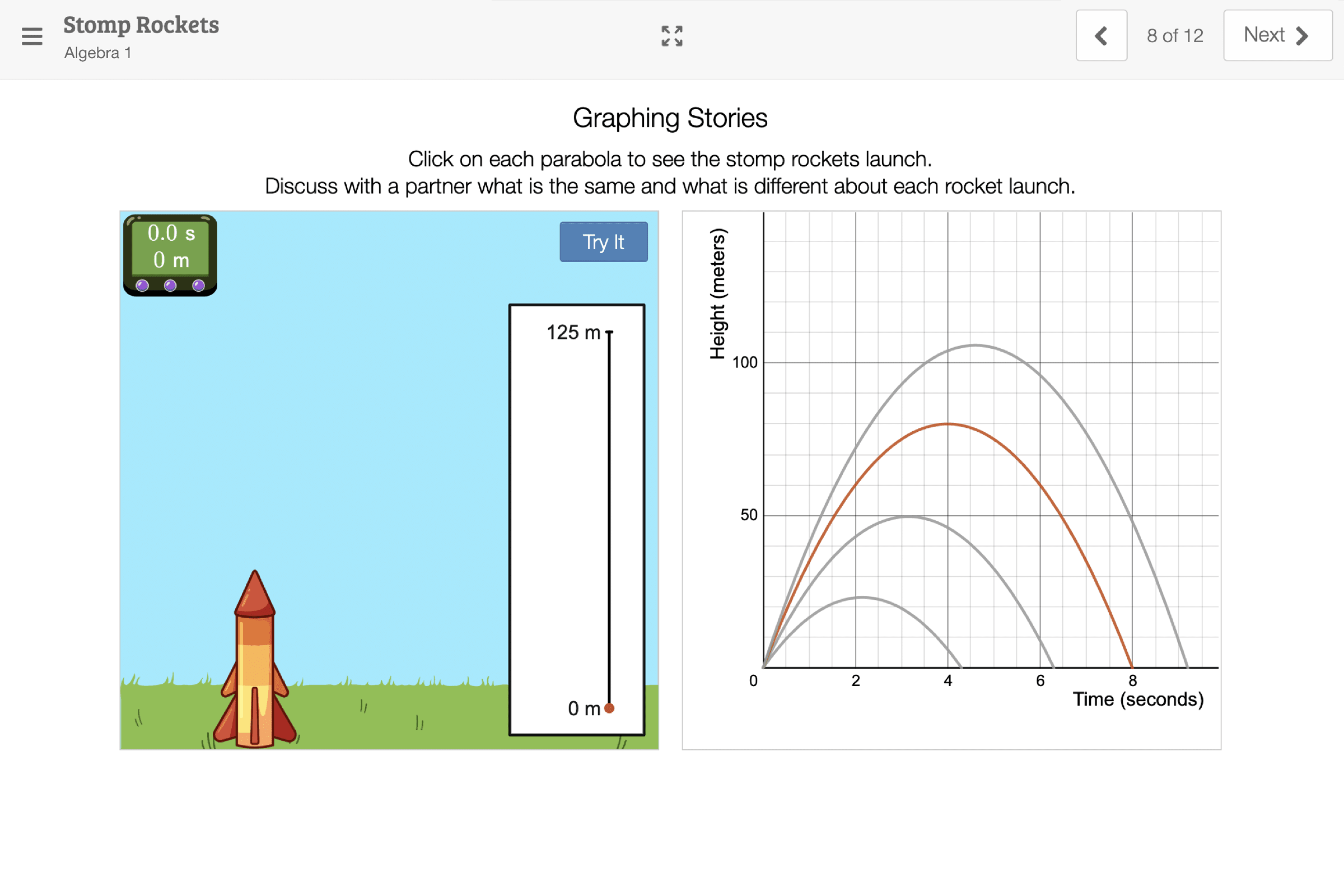
Grade 6
Unit 1: Area and Surface Area
| Amplify Math | Desmos Math 6–A1 |
|---|---|
| Unit 1: Area and Surface Area | Unit 1: Area and Surface Area Unit 7: Positive and Negative Numbers |
| Lesson 1: The Tangram | Unit 1 Lesson 1: Shapes on a Plane |
| Lesson 2: Exploring the Tangram | Unit 1 Lesson 2: Letters |
| Sub-Unit 1 : Area of Special Polygons | |
| Lesson 3: Tilting the Plane | Unit 1 Lesson 1: Shapes on a Plane |
| Lesson 4: Compositing and Rearranging to Determine Area | Unit 1 Lesson 2: Letters |
| Lesson 5: Reasoning to Determine Area | Unit 1 Lesson 2: Letters |
| Lesson 6: Parallelograms | Unit 1 Lesson 3: Exploring Parallelograms (Print available) Lesson 4: Off the Grid |
| Lesson 7: Bases and Heights of Parallelograms | Unit 1 Lesson 3: Exploring Parallelograms (Print available) Lesson 4: Off the Grid |
| Lesson 8: Bases and Heights of Parallelograms | Unit 1 Lesson 3: Exploring Parallelograms (Print available) Lesson 4: Off the Grid |
| Lesson 9: From Parallelograms to Triangles | Unit 1 Lesson 3: Exploring Parallelograms (Print available) Lesson 4: Off the Grid Lesson 6: Triangles and Parallelograms |
| Lesson 10: Bases and Heights of Triangles | Unit 1 Lesson 4: Off the Grid Lesson 6: Triangles and Parallelograms |
| Lesson 11: Formula for the Area of a Triangle | Unit 1 Lesson 5: Exploring Triangles (Print available) |
| Lesson 12: From Triangles to Trapezoids | Unit 1 Lesson 4: Off the Grid Lesson 6: Triangles and Parallelograms |
| Lesson 13: Polygons | Unit 1 Lesson 2: Letters Lesson 8: Pile of Polygons Practice Day 1 (Print available) Unit 7 Lesson 11: Polygon Maker |
| Sub-Unit 2: Nets and Surface Area | |
| Lesson 14: What is Surface Area? | Unit 1 Lesson 9: Renata’s Stickers |
| Lesson 15: Nets and Surface Area of Rectangular Prisms | Unit 1 Lesson 10: Plenty of Polyhedra Lesson 11:Nothing but Nets(Print available) Lesson 12: Face Value Lesson 13: Take It To Go (Print available) |
| Lesson 16: Nets and Surface Area of Prisms | Unit 1 Lesson 12: Face Value Lesson 13: Take It To Go (Print available) |
| Lesson 17: Constructing a Rhombicuboctahedron | Unit 1 Lesson 13: Take It To Go (Print available) |
| Lesson 18: Simplifying Expressions for Squares and Cubes | Unit 1 Lesson 11: Exponent Expressions (Print available) Lesson 12: Squares and Cubes |
| Lesson 19: Simplifying Expressions Even More Using Exponents | Unit 1 Lesson 11: Exponent Expressions (Print available) |
| Lesson 20: Designing a Suspended Tent |
Unit 2: Introducing Ratios
| Amplify Math | Desmos Math 6–A1 |
|---|---|
| Unit 2: Introducing Ratios | Unit 2: Introducing Ratios |
| Lesson 1: Fermi Problems | |
| Sub-Unit 1: What are Ratios? | |
| Lesson 2: Introducing Ratios and Ratio Language | Unit 2 Lesson 1: Pizza Maker Lesson 2: Ratio Rounds (Print available) |
| Lesson 3: Representing Ratios with Diagrams | Unit 2 Lesson 1: Pizza Maker Lesson 2: Ratio Rounds (Print available) Lesson 3:Rice Ratios (Print available) |
| Lesson 4: A Recipe for Purple Oobleck | |
| Lesson 5: Kapa Dyes | |
| Sub-Unit 2:Equivalent Ratios | |
| Lesson 6: Defining Equivalent Ratios | Unit 2 Lesson 3: Rice Ratios (Print available) Lesson 4: Fruit Lab (Print available) Lesson 11: Community Life (Print available) Practice Day 1 (Print available) |
| Lesson 7: Representing Equivalent Ratios with Tables | |
| Lesson 8: Reasoning with Multiplication and Division (optional) | |
| Lesson 9: Common Factors | |
| Lesson 10: Common Multiples | |
| Lesson 11: Navigating a Table of Equivalent Ratios | Unit 2 Lesson 6: Product Prices (Print available) Lesson 7: Mixing Paint, Part 1 |
| Lesson 12: Tables and Double Number Line Diagrams | Unit 2 Lesson 6: Product Prices (Print available) Lesson 7: Mixing Paint, Part 1 |
| Lesson 13: Tempo and Double Number Lines | Unit 2 Lesson 5: Balancing Act Lesson 6: Product Prices (Print available) |
| Sub-Unit 3: Solving Ratio Problems | |
| Lesson 14: Solving Equivalent Ratios | Unit 2 Lesson 6: Product Prices (Print available) Lesson 7: Mixing Paint, Part 1 Lesson 10: Balloons Lesson 11: Community Life (Print available) |
| Lesson 15: Part-Part-Whole Ratios | Unit 2 Lesson 12 Mixing Paint, Part 2 Lesson 13: City Planning |
| Lesson 16: Comparing Ratios | |
| Lesson 17: More Comparing and Solving | |
| Lesson 18: Measuring with Different-Sized Units | |
| Lesson 20: More Fermi Problems |
Unit 3: Rates and Percentages
| Amplify Math | Desmos Math 6–A1 |
|---|---|
| Unit 3: Rates and Percentages | Unit 2: Introducing Ratios Unit 3: Unit Rates and percentages |
| Lesson 1: Choosing Representation for Student Council | Launch Lesson |
| Sub-Unit 1: Rates | |
| Lesson 2: How Much for One? | Unit 3 Lesson 4: Model Trains |
| Lesson 3: Constant Speed | |
| Lesson 4: Comparing Speeds | Unit 2 Lesson 8: World Records (Print available) Unit 3 Lesson 4: Model Trains Lesson 5: Soft Serve Lesson 6: Welcome to the Robot Factory |
| Lesson 5: Interpreting Rates | Unit 3 Lesson 8: World Records (Print available) Unit 3 Lesson 4: Model Trains Lesson 5: Soft Serve Lesson 6: Welcome to the Robot Factory |
| Lesson 6: Comparing Rates | |
| Lesson 7: Solving Rate Problems | Unit 3 Lesson 7: More Soft Serve |
| Sub-Unit 2: Percentages | |
| Lesson 8: What Are percentages? | Unit 3 Lesson 8: Lucky Duckies Lesson 9: Bicycle Goals |
| Lesson 9: Determining Percentages | |
| Lesson 10: Benchmark Percentages | Unit 3 Lesson 7: Lucky Duckies |
| Lesson 11: Finding This Percent of That | Unit 3 Lesson 10: What’s Missing? (Print available) Lesson 11: Cost Breakdown Lesson 12: More Bicycle Goals Lesson 13: A Country as a Village |
| Lesson 12: This Percent of What | |
| Lesson 13: Solving Percentage Problems | Unit 3 Lesson: 10: What’s Missing (Print available) Lesson: 11: Cost Breakdown Lesson: 12: More Bicycle Goals Lesson: 13: A Country as a Village |
| Lesson 14: If Our Class Were the World | |
| Lesson 15: Voting for a School Mascot |
Unit 4: Dividing Fractions
| Amplify Math | Desmos Math 6–A1 |
|---|---|
| Lesson 1: Seeing Fractions | |
| Sub-Unit 1: Interpreting Division Scenarios | |
| Lesson 3: Relating Multiplication and Division | |
| Lesson 4: Size of Divisor and Size of Quotient | Unit 4 Lesson 1: Cookie Cutter |
| Sub-Unit 2: Division with Fractions | |
| Lesson 5: How Many Groups | Unit 4 Lesson 3: Flour Planner Lesson 4: Flower Planters Lesson 4: Garden Bricks (Print available) |
| Lesson 6: Using Diagrams to Find the Number of Groups | Unit 4 Lesson 5: Garden Bricks (Print available) Lesson 6: Fill the Gap |
| Lesson 7: Dividing with Common Denominators | Unit 4 Lesson 6: Fill the Gap |
| Lesson 8: How Much in Each Group? (Part 1) | Unit 4 Lesson 8: Potting Soil |
| Lesson 9: How Much in Each Group? (Part 2) | Unit 4 Lesson 8: Potting Soil |
| Lesson 10: Dividing by Unit and Non-Unit Fractions | Unit 4 Lesson 7: Break It Down Lesson 8: Potting Soil Lesson 9: Division Challenges |
| Lesson 11: Using an Algorithm to Divide Fractions | Unit 4 Lesson 9: Division Challenges Practice Day |
| Lesson 13: Fractional Lengths | Unit 4 Lesson 12: Puzzling |
| Lesson 14: Area with Fractional Lengths | Unit 4 Lesson 9: Puzzling Area (Print available) |
| Lesson 15: Volume of Prisms | Unit 4 Lesson 13: Volume Challenges (Print available) |
| Lesson 16: Fish Tanks Inside of Fish Tanks | Unit 4 Lesson 10: Swap Meet |
| Lesson 17: Now, Where Was That Bus? | Unit 4 Lesson 10: Capstone |
Unit 5: Arithmetic in Base Ten
| Amplify Math | Desmos Math 6–A1 |
|---|---|
| Lesson 1: Precision and World Records | |
| Sub-Unit 1: Adding and Subtracting Decimals | |
| Lesson 2: Speaking of Decimals… | Unit 5 Lesson 1: Dishing Out Decimals (Print available) |
| Lesson 3: Adding and Subtracting Decimals | Unit 5 Lesson 3: Fruit by the Pound Lesson 4: Missing Digits |
| Lesson 4: X Games Medal Results | Unit 5 Lesson 2: Decimal Diagrams |
| Sub-Unit 2: Multiplying Decimals | |
| Lesson 5: Decimal Points in Products | Unit 5 Lesson 5: Decimal Multiplication |
| Lesson 6: Methods for Multiplying Decimals | Unit 5 Lesson 5: Decimal Multiplication Lesson 6: Multiplying with Areas Lesson 7: Multiplication Methods (Print available) |
| Lesson 7: Using Diagrams to Represent Multiplication | Unit 5 Lesson 5: Decimal Multiplication Lesson 6: Multiplying with Areas |
| Lesson 8: Calculating Products of Decimals | Unit 5 Lesson 6: Multiplying with Areas |
| Sub-Unit 3: Dividing Decimals | |
| Lesson 9: Exploring Division | |
| Lesson 10: Using Long Division | Unit 5 Lesson 8: Division Diagrams Lesson 9: Long Division Launch (Print available) Lesson 10: Return of the Long Division (Print available) |
| Lesson 11: Dividing Numbers That Result in Decimals | Unit 5 Lesson 9: Long Division Launch (Print available) Lesson 10: Return of the Long Division (Print available) |
| Lesson 12: Using Related Expressions to Divide with Decimals | |
| Lesson 13: Dividing Multi-Digit Decimals | Unit 5 Lesson 9: Long Division Launch (Print available) Lesson 10: Return of the Long Division (Print available) |
| Lesson 14: The So-called World’s Littlest Skyscraper |
Unit 6: Expressions and Equations
Unit 7: Rational Numbers
| Amplify Math | Desmos Math 6–A1 |
| Unit 7: Rational Numbers | Unit 1: Area and Surface Area Unit 7: Positive and Negative Numbers |
| Lesson 1: How Far? Which Way? | |
| Sub-unit 1: Negative Numbers and Absolute Value | |
| Lesson 2: Positive and Negative Numbers | Unit 7 Lesson 1: Can You Dig In Lesson 2: Digging Deeper |
| Lesson 3: Points on the Number Line | Unit 7 Lesson 2: Digging Deeper |
| Lesson 4: Comparing Integers | Unit 7 Lesson 3: Order in the Class (Print available) |
| Lesson 5: Comparing and Ordering Rational Numbers | Unit 7 Lesson 3: Order in the Class (Print available) |
| Lesson 6: Using Negative Numbers to Make Sense of Contexts> | Unit 7 Lesson 4: Sub-Zero |
| Lesson 7: Absolute Value of Numbers | Unit 7 Lesson 5: Distance on the Number Line |
| Lesson 8: Comparing Numbers and Distance from Zero | Unit 7 Lesson 5: Distance on the Number Line |
| Sub-Unit 2: Inequalities | |
| Lesson 9: Writing Inequalities | |
| Lesson 10: Graphing Inequalities | |
| Lesson 11: Solutions to One or More Inequalities | Unit 7 Lesson 6: Tunnel Travel Lesson 7: Comparing Weights Lesson 8: Shira´s Solutions |
| Lesson 12: Interpreting Inequalities | Unit 7 Lesson 6: Tunnel Travel Lesson 7: Comparing Weights Lesson 8: Shira´s Solutions |
| Sub-Unit 3: The Coordinate Plane | |
| Lesson 13: Extending the Coordinate Plane | |
| Lesson 14: Points on the Coordinate Plane | Unit 7 Lesson 9: Sand Dollar Search Lesson 10: The A-maze-ing Coordinate Plane |
| Lesson 15: Interpreting Points on a Coordinate Plane | Unit 7 Lesson 9: Sand Dollar Search Lesson 10: The A-maze-ing Coordinate Plane Lesson 11: Polygon Maker |
| Lesson 16: Distances on a Coordinate Plane | Unit 7 Lesson 11: Polygon Maker Lesson 12: Graph Telephone (Print available) |
| Lesson 17: Shapes on the Coordinate Plane | Unit 1 Lesson 1: Shapes on a Plane Lesson 2: Letters Lesson 5: Exploring Triangles (Print available) Lesson 6: Triangles and Parallelograms Unit 7 Lesson 3: Exploring Parallelograms (Print available) Lesson 11: Polygon Maker Lesson 12: Graph Telephone (Print available) |
| Lesson 18: Lost and Found Puzzles | |
| Lesson 19: Drawing on the Coordinate Plane | Unit 7 Lesson 11: Polygon Maker Lesson 12: Graph Telephone (Print available) |
Unit 8: Data Sets and Distributions
| Amplify Math | Desmos Math 6–A1 |
| Unit 8: Data Sets and Distributions | Unit 8: Describing Data |
| Lesson 1: Plausible Variation or New Species? | |
| Sub-Unit 1: Statistical Questions and Representing Data | |
| Lesson 2: Statistical Questions | Unit 8 Lesson 1: Screen Time Lesson 2: Dot Plots |
| Lesson 3: Interpreting Dot Plots | Unit 8 Lesson 2: Dot Plots Lesson 3: Minimum Wage (Print available) Lesson 4: Lots More Dots |
| Lesson 4: USing Dot Plots to Answer Statistical Questions | Unit 8 Lesson 2: Dot Plots Lesson 3: Minimum Wage (Print available) Lesson 4: Lots More Dots |
| Lesson 5: Interpreting Histograms | Unit 8 Lesson 5: The Plot Thickens Lesson 6: DIY Histograms (Print available) |
| Lesson 6: Using Histograms to Answer Statistical Questions | Unit 8 Lesson 5: The Plot Thickens Lesson 6: DIY Histograms (Print available) |
| Lesson 7: Describing Distributions on Histograms | Unit 8 Lesson 5: The Plot Thickens Lesson 6: DIY Histograms (Print available) |
| Sub-Unit 2: Measures of Center | |
| Lesson 8: Mean as a Fair Share | Unit 8 Lesson 7: Snack Time |
| Lesson 9: Mean as a Balance Point | Unit 8 Lesson 7: Snack Time |
| Lesson 10: Median | Unit 8 Lesson 11: Toy Cars Lesson 12: In the News |
| Lesson 11: Comparing Mean and Median | Unit 8 Lesson 12: In the News |
| Sub-Unit 3: Measures of Variability | |
| Lesson 12: Describing Variability | |
| Lesson 13: Variability and MAD | |
| Lesson 14: Variability and IQR | Unit 8 Lesson 13: Pumpkin Patch |
| Lesson 15: Box Plots | Unit 8 Lesson 14: Car, Plane, Bus, or Train? (Print available) |
| Lesson 16: Comparing MAD and IQR | |
| Lesson 17: Asian Elephant Populations |
Grade 7
Unit 1: Scale Drawings
| Amplify Math | Desmos Math 6–A1 |
|---|---|
| Unit 1: Scale Drawings | Unit 1: Scale Drawings Unit 3: Measuring Circles Unit 4: Proportional Relationships and Percentages |
| Lesson 1: Scale-y Shapes | |
| Sub-Unit 1: Scaled Copies | |
| Lesson 2: What are Scaled Copies? | Unit 1 Lesson 1: Scaling Machines |
| Lesson 3: Corresponding Parts and Scale Factors | Unit 1 Lesson 2: Scaling Robots Unit 3 Lesson 1: Toothpicks |
| Lesson 4: Making Scaled Copies | Unit 1 Lesson 3: Make It Scale Unit 4 Lesson 3: Sticker Sizes |
| Lesson 5: The Size of the Scale Factor | Unit 1 Lesson 4: Tiles |
| Lesson 6: Scaling and Area | Unit 1 Lesson 5: Tiles Practice Day 1 (Print available) |
| Sub-Unit 2: Scale Drawings | |
| Lesson 7: Scale Drawings | Unit 1 Lesson 6: Introducing Scale Lesson 7: Will It Fit? (Print available) |
| Lesson 8: Creating Scale Drawings | Unit 1 Lesson 8: Scaling States Lesson 9: Scaling Buildings Lesson 10: Room Redesign (Print available) |
| Lesson 9: Scale Drawings and Maps | |
| Lesson 10: Changing Scale in Scale Drawings | Unit 1 Lesson 8: Scaling States Lesson 9: Scaling Buildings Lesson 10: Room Redesign (Print available) |
| Lesson 11: Scales without Units | |
| Lesson 12: Units in Scale Drawings | Unit 1 Lesson 8: Scaling States Lesson 9: Scaling Buildings Lesson 10: Room Redesign (Print available)Practice Day (Print available) |
| Lesson 13: Build Your Brand |
Unit 2: Introducing Proportional Relationships
Unit 3: Measuring Circles
| Amplify Math | Desmos Math 6–A1 |
|---|---|
| Unit 3: Measuring Circles | Unit 3: Measuring Circles |
| Lesson 1: The Wandering Goat | |
| Sub-unit 1: Circumference of a Circle | |
| Lesson 2: Exploring Circles | Unit 3 Lesson 2: Is it a Circle? Lesson 3: Measuring Around |
| Lesson 3: How Well Can You Measure? | |
| Lesson 4: Exploring Circumference | Unit 3 Lesson 2: Is It a Circle? Lesson 3: Measuring Around |
| Lesson 5: Understanding π | |
| Lesson 6: Applying Circumference | Unit 3 Lesson 2: Is It a Circle? Lesson 3: Measuring Around |
| Lesson 7: Circumference and Wheels | |
| Sub-Unit 2: Area of a Circle | |
| Lesson 8: Exploring the Area of a Circle | Unit 3 Lesson 5: Area Strategies Lesson 6: Radius Squares (Print available) Lesson 7: Why Pi? Lesson 8: Area Challenges Lesson 9: Circle vs. Square Practice Day 2 (Print available) |
| Lesson 9: Relating Area to Circumference | Unit 3 Lesson 5: Area Strategies Lesson 6: Radius Squares (Print available) Lesson 7: Why Pi? Lesson 8: Area Challenges Lesson 9: Circle vs. Square Practice Day 2 (Print available) |
| Lesson 10: Applying Area to Circles | Unit 3 Lesson 6:Radius Squares (Print available) |
| Lesson 11: Distinguishing Circumference and Area | Unit 3 Lesson 7: Why Pi? |
| Lesson 12: Capturing Space |
Unit 4: Proportional Relationships and Percentages
| Amplify Math | Desmos Math 6–A1 |
|---|---|
| Unit 4: Percentages | Unit 4: Proportional Relationships and Percentages |
| Lesson 1: (Re)Presenting the United States | |
| Lesson 2: Understanding Percentages and Decimals | |
| Lesson 3: Percent Increase and Decrease | Unit 4Lesson 4: More or Less |
| Lesson 4: Determining 100% | Unit 4Lesson 6: 100% (Print available) |
| Lesson 5: Determining Percent Change | Unit 4Lesson 7: Percent Machines |
| Lesson 6: Percent Increase and Decrease With Equations | Unit 4Lesson 5: All the Equations |
| Lesson 7: Using Equations to Solve Percent Problems | Unit 4Lesson 5: All the Equations |
| Sub-Unit 2: Applying Percentages | |
| Lesson 8: Tax and Tip | Unit 4 Lesson 8: Tax and Tip Lesson 9: Minimum Wage (Print available) Lesson 10: Cost of College (Print available) Lesson 11: Bookcase Builder Lesson 12: Posing Percent Problems |
| Lesson 9: Percent Contexts | Unit 4 Lesson 8: Tax and Tip Lesson 9: Minimum Wage (Print available) Lesson 10: Cost of College (Print available) Lesson 11: Bookcase Builder Lesson 12: Posing Percent Problems |
| Lesson 10: Determining the Percentage | Unit 4 Lesson 4: More and Less |
| Lesson 11: Measurement Error | Unit 4 Lesson 11: Bookcase Builder |
| Lesson 12: Error Intervals | Unit 4 Lesson 11: Bookcase Builder |
| Lesson 13: Writing Better Headlines |
Unit 5: Rational Number Arithmetic
| Amplify Math | Desmos Math 6–A1 |
|---|---|
| Unit 5: Rational Number Arithmetic | Unit 5: Rational Number Artithmetics |
| Lesson 1: Target: Zero | |
| Sub-Unit 1: Adding and Subtracting Rational Numbers | |
| Lesson 2: Interpreting Negative Numbers | |
| Lesson 3: Changing Temperatures | Unit 5 Lesson 2: More Floats and Anchors Lesson 3: Bumpers Lesson 4: Draw Your Own (Print available) |
| Lesson 4: Adding Rational Numbers | |
| Lesson 5: Money and Debts | |
| Lesson 6: Representing Subtraction | Unit 5 Lesson 5: Number Puzzles |
| Lesson 7: Subtracting Rational Numbers (Part 1) | Unit 5 Lesson 3: Bumpers Lesson 4: Draw Your Own (Print available) Lesson 5: Number Puzzles Lesson 10: Integer Puzzles Lesson 11: Changing Temperatures Lesson 13: Solar Panels and More (Print available) |
| Lesson 8: Subtracting Rational Numbers (Part 2) | Unit 5 Lesson 3: Bumpers Lesson 4: Draw Your Own (Print available) Lesson 5: Number Puzzles Lesson 10: Integer Puzzles Lesson 11: Changing Temperatures Lesson 13: Solar Panels and More (Print available) |
| Lesson 9: Adding and Subtracting Rational Numbers | Unit 5 Lesson 3: Bumpers Lesson 4: Draw Your Own (Print available) Lesson 5: Number Puzzles Lesson 10: Integer Puzzles Lesson 11: Changing Temperatures Lesson 13: Solar Panels and More (Print available)Practice Day 1 (Print available) |
| Sub-Unit 2: Multiplying and Dividing Rational Numbers | |
| Lesson 10: Position, Speed, and Time | Unit 5 Lesson 7: Back in Time |
| Lesson 11: Multiplying Rational Numbers | Unit 5 Lesson 7: Back in Time |
| Lesson 12: Multiply! | Unit 5 Lesson 7: Back in Time |
| Lesson 13: Dividing Rational Numbers | Unit 5 Lesson 7: Speeding Turtles |
| Lesson 14: Negative Rates | |
| Sub-Unit 3: Four Operations with Rational Numbers | |
| Lesson 15: Expressions with Rational Numbers | Unit 5 Lesson 9: Expressions (Print available) |
| Lesson 16: Say It With Decimals | |
| Lesson 17: Solving Problems with Rational Numbers | Lesson 11: Changing Temperatures Lesson 12: Arctic Ice Sea (Print available) Lesson 13: Solar Panels and More (Print available) |
| Lesson 18: Solving Equations With Rational Numbers | |
| Lesson 19: Representing Contexts With Equations | |
| Lesson 20: Summiting Everest |
Unit 6: Expressions, Equations, and Inequalities
| Amplify Math | Desmos Math 6–A1 |
|---|---|
| Unit 6: Expressions, Equations, and Inequalities | Unit 2: Introducing Proportional Relationships Unit 4: Proportional Relationships and Percentages Unit 6: Expressions, Equations, and Inequalities |
| Lesson 1: Keeping the Balance | |
| Lesson 2: Balanced and Unbalanced | Unit 6 Lesson 1: Toothpicks and Tiles |
| Lesson 2: Balanced and Unbalanced | Unit 6 Lesson 1: Toothpicks and Tiles |
| Lesson 3: Reasoning About Solving Equations (Part 1) | Unit 6 Lesson 2: Smudged Receipts |
| Lesson 4: Reasoning About Solving Equations (Part 2) | Unit 6 Lesson 2: Smudged Receipts Lesson 3: Equations Lesson 4: Seeing Structure (Print available) |
| Lesson 5: Dealing with Negative Numbers | Unit 6 Lesson 2: Smudged Receipts Lesson 3: Equations Lesson 4: Seeing Structure (Print available) |
| Lesson 5: Dealing with Negative Numbers | Unit 6 Lesson 8: Factoring and Expanding (Print available) Lesson 16: Shira the Sheep |
| Lesson 6: Two Ways to Solve One Equation | Unit 6 Lesson 4: Seeing Struction (Print available) |
| Lesson 7: Practice Solving Equations | Unit 6 Lesson 2: Smudged Receipts Lesson 3: Equations Lesson 4: Seeing Structure (Print available) |
| Sub-Unit 2: Solving Real-World Problems Using Two-Step Equations | |
| Lesson 8: Reasoning With Tape Diagrams | Unit 6 Lesson 2: Smudged Receipts |
| Lesson 9: Reasoning About Equations and Tape Diagrams (Part 1) | Unit 6 Lesson 2: Smudged Receipts |
| Lesson 10: Reasoning About Equations and Tape Diagrams (Part 2) | Unit 6 Lesson 2: Smudged Receipts |
| Lesson 11: Using Equations to Solve Problems | Unit 6 Lesson 2: Smudged Receipts Lesson 3: Equations Lesson 4: Seeing Structure (Print available) |
| Lesson 12: Solving Percent Problems in New Ways | Unit 6 Lesson 4: Seeing Structure (Print available) Unit 4 Lesson 7: Percent MachinesPractice Day 1 (Print available) Practice Day 2 (Print available) |
| Sub-Unit 3: Inequalities | |
| Lesson 13: Reintroducing Inequalities | Unit 6 Lesson 1: Toothpicks and Tiles |
| Lesson 14: Solving Inequalities | Unit 6 Lesson 5: Balancing Moves Lesson 6: Balancing Equations Lesson 13: I Saw the Signs |
| Lesson 15: Finding Solutions to Inequalities in Context | Unit 6 Lesson 13: I Saw the Signs Practice Day 1 (Print available) |
| Lesson 16: Efficiently Solving Inequalities | Unit 6 Lesson 10: Collect the Squares |
| Lesson 17: Interpreting Inequalities | Unit 6 Lesson 13: I Saw the Signs Lesson 14: Unbalanced Hangers Lesson 15: Budgeting (Print available) |
| Lesson 18: Modeling With Inequalities | |
| Sub-Unit 4: Equivalent Expressions | |
| Lesson 19: Subtraction in Equivalent Expressions |
Unit 7: Angles, Triangles, and Prisms
| Amplify Math | Desmos Math 6–A1 |
|---|---|
| Unit 7: Angles, Triangles, and Prisms | Unit 7: Angles, Triangles, and Prisms |
| Lesson 1: Shaping Up | |
| Sub-Unit 1: Angle Relationships | |
| Lesson 2: Relationships of Angles | Unit 7 Lesson 1: Pinwheels Lesson 2: Friendly Angles Lesson 3: Angle Diagrams |
| Lesson 3: Supplementary and Complementary Angles (Part 1) | |
| Lesson 4: Supplementary and Complementary Angles (Part 2) | |
| Lesson 5: Vertical Angles | Unit 7 Lesson 2: Friendly Angles Lesson 3: Angle Diagrams Lesson 4: Missing Measures (Print available) [Free lesson] |
| Lesson 6: Using Equations to Solve for Unknown Angles | Unit 7 Lesson 3: Angle Diagrams Lesson 4: Missing Measures (Print available) [Free lesson] |
| Lesson 7: Like Clockwork | |
| Sub-Unit 2: Drawing Polygons with Given Conditions | |
| Lesson 8: Building Polygons (Part 1) | Unit 7 Lesson 6: Is It Enough? |
| Lesson 9: Building Polygons (Part 2) | Unit 7 Lesson 6: Is It Enough? |
| Lesson 10: Triangles with Three Common Measures | Unit 7 Lesson 13: Popcorn Possibilities |
| Lesson 11: Drawing Triangles (Part 1) | Unit 7 Lesson 5: Can You Build It? [Free lesson] Lesson 6: Is It Enough? Lesson 7: More Than One Lesson 8: Can You Draw It? (Print available) Practice Day 1 (Print available) |
| Lesson 12: Drawing Triangles (Part 2) | Unit 7 Lesson 5: Can You Build It? [Free lesson] Lesson 6: Is It Enough? Lesson 7: More Than One Lesson 8: Can You Draw It? (Print available) Practice Day 1 (Print available) |
| Sub-Unit 3: Solid Geometry | |
| Lesson 13: Slicing Solids | Unit 7 Lesson 9: Slicing Solids |
| Lesson 14: Volume of Right Prisms | Unit 7 Lesson 10: Simple Prisms |
| Lesson 15: Decomposing Bases for Areas | Unit 7 Lesson 11: More Complicated Prisms |
| Lesson 16: Surface Area of Right Prisms | Unit 7 Lesson 10: Simple Prisms Lesson 11: More Complicated Prisms Lesson 12: Surface Area Strategies (Print available) |
| Lesson 17: Distinguishing Volume and Surface Area | |
| Lesson 18: Applying Volume and Surface Area | Unit 7 Lesson 13: Popcorn Possibilities |
Unit 8: Probability and Sampling
| Amplify Math | Desmos Math 6–A1 |
|---|---|
| Unit 8: Probability and Sampling | Unit 8: Probability and Sampling |
| Lesson 1: The Invention of Fairness | |
| Lesson 2: Chance Experiments | |
| Lesson 3: What are Probabilities? | Unit 8 Lesson 1: How Likely? (Print available) Lesson 2: Prob-bear-bilities [Free lesson Lesson 3: Mystery Bag |
| Lesson 4: Estimating Probabilities Through Repeated Experiments | Unit 8 Lesson 4: Spin Class Lesson 5: Is It Fair? Lesson 6: Fair Games |
| Lesson 5: Code Breaking (Part 1) | |
| Lesson 6: Code Breaking (Part 2) | |
| Sub-Unit 2: Probabilities of Multi-Step Events | |
| Lesson 7: Keeping Track of All Possible Outcomes | Unit 8 Lesson 4: Spin Class Lesson 5: Is it Fair? Lesson 6: Fair Games |
| Lesson 8: Experiments With Multi-Step Events | |
| Lesson 9: Simulating Multi-Step Events | |
| Lesson 10: Designing Simulations | |
| Sub-Unit 3:Sampling | |
| Lesson 11: Comparing Two Populations | Unit 8 Lesson 10: Crab Island Lesson 11: Headlines |
| Lesson 12: Larger Populations | Unit 8 Lesson 10: Crab Island Lesson 11: Headlines |
| Lesson 13: What Makes a Good Sample? | Unit 8 Lesson 10: Crab Island Lesson 11: Headlines |
| Lesson 14: Sampling in a Fair Way | Unit 8 Lesson 10: Crab Island Lesson 11: Headlines |
| Lesson 15: Estimating Population Measures of Center | Unit 8 Lesson 9: Car, Bike, or Train? Lesson 10: Crab Island Lesson 11: Headlines Lesson 12: Flower Power |
| Lesson 16: Estimating Population Proportions | Unit 8 Lesson 9: Car, Bike, or Train? Lesson 10: Crab Island Lesson 11: Headlines Lesson 12: Flower Power |
| Lesson 17: Presentation of Findings |
Grade 8
Unit 1: Rigid Transformations and Congruence
| Amplify Math | Desmos Math 6–A1 |
|---|---|
| Unit 1: Rigid Transformations and Congruence | Unit 1: Rigid Transformations and Congruence Unit 3: Proportional and Linear Relationships |
| Lesson 1: Tessellations | |
| Sub-Unit 1: Rigid Transformations | |
| Lesson 2: Moving in the Plane | Unit 1 Lesson 1: Transformers |
| Lesson 3: Symmetry and Reflection | |
| Lesson 4: Grid Moves | Unit 1 Lesson 3: Transformation Golf Lesson 4: Moving Day (Print available) Lesson 5: Getting Coordinated Unit 3 Lesson 6: Translations |
| Lesson 5: Making the Moves | Unit 1 Lesson 1: Transformers Lesson 2: Spinning, Flipping, Sliding Lesson 4: Moving Day (Print available) Lesson 5: Getting Coordinated |
| Lesson 6: Coordinate Moves (Part 1) | Unit 1 Lesson 4: Moving Day (Print available) Lesson 5: Getting Coordinated |
| Lesson 7: Coordinate Moves (Part 2) | Unit 1 Lesson 4: Moving Day (Print available) Lesson 5: Getting Coordinated |
| Lesson 6: Describing Transformations | Unit 1 Lesson 5: Getting Coordinated Lesson 6: Connecting the Dots |
| Sub-Unit 2: Rigid Transformations and Congruence | |
| Lesson 9: No Bending or Stretching | Unit 1 Lesson 7: No Bending, No Stretching |
| Lesson 10: What is the Same? | Unit 1 Lesson 7: Are They the Same? Lesson 9: Are They Congruent? |
| Lesson 11: Congruent Polygons | Unit 1 Lesson 7: Are They the Same? Lesson 9: Are They Congruent? |
| Sub-Unit 4: Angles in a Triangle | |
| Lesson 13: Line Moves | |
| Lesson 14: Rotation Patterns | |
| Lesson 15: Alternate Interior Angles | Unit 1 Lesson 11: Tearing It Up (Print available) |
| Lesson 16: Adding the Angles in a Triangle | Unit 1 Lesson 11: Tearing It Up (Print available) |
| Lesson 17: Parallel Lines and the Angles in a Triangle | Unit 1 Lesson 10: Transforming Angles |
| Lesson 18: Creating a Border Pattern Using Transformations |
Unit 2: Dilations, Similarity, and Introducing Slope
| Amplify Math | Desmos Math 6–A1 |
|---|---|
| Unit 2: Dilations and Similarity | Unit 2: Dilations and Similarity |
| Lesson 1: Projecting and Scaling | |
| Sub-Unit 1: Dilations | |
| Lesson 2: Circular Grid | Unit 2 Lesson 1: Sketchy Dilations Lesson 2: Dilation Mini Golf Lesson 3: Match My Dilation Lesson 4: Dilations on a Plane |
| Lesson 3: Dilations on a Plane | |
| Lesson 4: Dilations on a Square Grid | Unit 2 Lesson 1: Sketchy Dilations Lesson 2: Dilation Mini Golf Lesson 3: Match My Dilation Lesson 4: Dilations on a Plane |
| Lesson 5: Dilations with Coordinates | Unit 2 Lesson 4: Dilations on a Plane |
| Sub-Unit 2: Similiarity | |
| Lesson 6: Similarity | Unit 2 Lesson 5: Transformations Golf with Dilations Lesson 6: Social Scavenger Hunt (Print available) |
| Lesson 7: Similar Polygons | Unit 2 Lesson 6: Social Scavenger Hunt (Print available) |
| Lesson 8: Similar Triangles | Unit 2 Lesson 7: Are Angles Enough? Lesson 8: Shadows |
| Lesson 9: Ratios of Side Lengths in Similar Triangles | |
| Lesson 12: Optical Illusions |
Unit 3: Linear Relationships
| Amplify Math | Desmos Math 6–A1 |
|---|---|
| Unit 3: Proportional and Linear Relationships | Unit 3: Proportional and Linear Relationships Unit 4: Linear Equations and Linear Systems Unit 5: Functions and Volume |
| Lesson 1: Visual Patterns | |
| Sub-Unit 1: Proportional Relationships | |
| Lesson 2: Proportional Relationships | |
| Lesson 3: Understanding Proportional Relationships | Unit 3 Lesson 1: Turtle Time Trials |
| Lesson 4: Graphs of Proportional Relationships | Unit 3 Lesson 1: Turtle Time Trials Lesson 2: Water Tank Unit 5 Lesson 4: Window Frames |
| Lesson 5: Representing Proportional Relationships | Unit 3 Lesson 1: Turtle Time Trials Unit 5 Lesson 4: Window Frames Lesson 6: Graphing Stories Lesson 7: Feel the Burn (Print available) Lesson 8: Charge! (Print available) |
| Lesson 6: Comparing Proportional Relationships | Unit 3 Lesson 3: Posters |
| Sub-Unit 2: Linear Relationships | |
| Lesson 7: Introduction to Linear Relationships | Unit 3 Lesson 1: Turtle Time Trials Lesson 4: Stacking Cups Unit 5 Lesson 6: Graphing Stories Lesson 7: Feel the Burn (Print available) Lesson 8: Charge! (Print available) |
| Lesson 8: Comparing Linear Relationships | |
| Lesson 9: More Linear Relationships | Unit 5 Lesson 6: Graphing Stories Lesson 7: Feel the Burn (Print available) Lesson 8: Charge! (Print available) |
| Lesson 10: Representations of Linear Relationships | Unit 3 Lesson 5: Flags Lesson 6: Graphing Stories Lesson 7: Feel the Burn (Print available) Lesson 8: Charge! (Print available) |
| Lesson 11: Writing Equations for Lines Using Two Points | |
| Lesson 12: Translating y = mx + b | Unit 3 Lesson 3: Posters Lesson 6: Translations |
| Lesson 13: Slopes Don’t Have to be Positive | Unit 3 Lesson 5: Flags Lesson 6: Translations Lesson 7: Water Cooler Lesson 8: Landing Planes |
| Lesson 10: Calculating Slope | Unit 3 Lesson 7: Water Cooler Lesson 8: Landing Planes |
| Lesson 14: Writing Equations for Lines Using Two Points, Revisited | |
| Lesson 11: Equations of All Kinds of Lines | Unit 3 Lesson 3: Posters Lesson 4: Stacking Cups Lesson 5: Flags Lesson 6: Translations |
| Sub-Unit 3: Linear Equations | |
| Lesson 16: Solutions to Linear Equations | Unit 3 Lesson 3: Posters Lesson 6: Translations Lesson 10: Solutions Unit 4 Lesson 3: Balanced Moves Lesson 4: More Balanced Moves (Print available) |
| Lesson 17: More Solutions to Linear Equations | Unit 3 Lesson 4: Stacking Cups Lesson 5: Flags Lesson 6: Translations Lesson 7: Water Cooler Lesson 10: Solutions |
| Lesson 18: Coordinating Linear Relationships | |
| Lesson 19: Rogue Planes |
Unit 4: Linear Equations and Linear Systems
| Amplify Math | Desmos Math 6–A1 |
|---|---|
| Unit 4: Linear Equations and Systems of Linear Equations | Unit 4: Linear Equations and Systems of Linear Equations |
| Lesson 1: Number Puzzles | Unit 4 Lesson 1: Number machines |
| Sub-Unit 1: Linear Equations in One Variable | |
| Lesson 2: Writing Expressions and Equations | |
| Lesson 3: Keeping the Balance | Unit 4 Lesson 2: Keep It Balanced |
| Lesson 4: Balanced Moves (Part 1) | Unit 4 Lesson 3: Balanced Moves |
| Lesson 5: Balanced Moves (Part 2) | Unit 4 Lesson 4: More Balanced Moves (Print available) |
| Lesson 6: Solving Any Linear Equations | Unit 4 Lesson 4: More Balanced Moves (Print available) Lesson 5: Equation Roundtable (Print available) Lesson 6: Strategic Solving (Print available) |
| Lesson 7: How Many Solutions? (Part 1) | Unit 4 Lesson 5: Equation Roundtable (Print available) |
| Lesson 8: How Many Solutions? (Part 2) | Unit 4 Lesson 5: Equation Roundtable (Print available) |
| Lesson 9: Strategic Solving | |
| Lesson 10: When Are They the Same | Unit 4 Lesson 8: When Are They the Same? |
| Sub-Unit 2: Systems of Linear Equations | |
| Lesson 11: On or Off the Line? | Unit 4 Lesson 9: On or Off the Line? |
| Lesson 12: On Both of the Lines | Unit 4 Lesson 10: On Both Lines |
| Lesson 13: Systems of Linear Equations | Unit 4 Lesson 11: Make Them Balance |
| Lesson 14: Solving Systems of Equations (Part 1) | Unit 4 Lesson 14: All, Some, or None? Part 2 |
| Lesson 15: Solving Systems of Equations (Part 2) | Unit 4 Lesson 12: All, Some, or None? Part 2 |
| Lesson 16: Writing Systems of Linear Equations | Unit 4 Lesson 14: Strategic Solving, Part 2 (Print available) |
| Lesson 17: Pay Gaps |
Unit 5: Functions and Volume
| Amplify Math | Desmos Math 6–A1 |
|---|---|
| Unit 5: Functions and Volume | Unit 2: Dilations, Similarity, and Introducing Slope Unit 3: Proportional and Linear Relationships Unit 5: Functions and Volume |
| Lesson 1: Pick a Pitch | |
| Sub-Unit 1: Representing and Interpreting Functions | |
| Lesson 2: Introduction to Functions | Unit 5 Lesson 2: Guess My Rule |
| Lesson 3: Equations of Functions | Unit 3 Lesson 4: Window Frames |
| Lesson 4: Graphs of Functions (Part 1) | Unit 5 Lesson 3: Function or Not? |
| Lesson 5: Graphs of Functions (Part 2) | Unit 5 Lesson 5: The Tortoise and the Hare |
| Lesson 6: Graphs of Functions (Part 3) | Unit 5 Lesson 6: Graphing Stories |
| Lesson 7: Connecting Representations of Functions | Unit 5 Lesson 7: Feel the Burn (Print available)Lesson 8: Charge! (Print available) |
| Lesson 8: Comparing Linear Functions | |
| Lesson 9: Modeling with Linear Functions | |
| Lesson 10: Piecewise Linear Functions | Unit 5 Lesson 9: Piecing It Together |
| Sub-Unit 2: Cylinder, Cones, and Spheres | |
| Lesson 11: Filling Containers | |
| Lesson 12: The Volume of a Cylinder | Unit 5 Lesson 10: Volume LabLesson 11: Cylinders Lesson 12: Scaling Cylinders |
| Lesson 13: Determining Dimensions of Cylinders | Unit 5 Lesson 14: Missing Dimensions (Print available) |
| Lesson 14: The Volume of a Cone | Unit 5 Lesson 10: Volume LabLesson 13: Cones |
| Lesson 15: Determining Dimensions of Cones | Unit 5 Lesson 12: Scaling Cylinders Lesson 13: Cones Lesson 14: Missing Dimensions (Print available) |
| Lesson 16: Estimating a Hemisphere | |
| Lesson 17: The Volume of a Sphere | Unit 5 Lesson 15: Spheres |
| Lesson 18: Cylinders, Cones and Spheres | Unit 5 Lesson 15: Practice Day 2 (Print available) |
| Lesson 19: Scaling One Dimension | |
| Lesson 20: Scaling Two Dimensions | |
| Lesson 21: Packing Spheres |
Unit 6: Exponents and Scientific Notation
| Amplify Math | Desmos Math 6–A1 |
|---|---|
| Unit 6: Exponents and Scientific Notation | Unit 7: Exponents and Scienctific Notation |
| Lesson 1: Create a Sierpinski Triangle | |
| Sub-Unit 1: Exponent Rules | |
| Lesson 2: Reviewing Exponents | Unit 7 Lesson 1: Circles Lesson 2: Combining Exponents |
| Lesson 3: Multiplying Powers | Unit 7 Lesson 3: Power Pairs (Print available) Lesson 4: Rewriting Powers |
| Lesson 4: Dividing Powers | Unit 7 Lesson 3: Power Pairs (Print available) Lesson 4: Rewriting Powers |
| Lesson 5: Negative Exponents | Unit 7 Lesson 5: Zero and Negative Exponents |
| Lesson 6: Powers of Powers | Unit 7 Lesson 3: Power Pairs (Print available) |
| Lesson 7: Different Bases, Same Exponent | |
| Lesson 8: Practice with Rational Bases | Unit 7 Practice Day 1 (Print available) |
| Sub-Unit 2: Scientific Notation | |
| Lesson 9: Representing Large Numbers on the Number Line | Unit 7 Lesson 8: Point Zapper |
| Lesson 10: Representing Small Numbers on the Number Line | Unit 7 Lesson 8: Point Zapper |
| Lesson 11: Applications of Arthithmetic with Powers of 10 | Unit 7 Lesson 8: Point Zapper Lesson 9: Use Your Powers |
| Lesson 12: Definition of Scientific Notation | Unit 7 Lesson 10: Solar System Lesson 11: Balance the Scale Lesson 13: Star Power |
| Lesson 13: Multiplying, Dividing, and Estimating with Scientific Notation | Unit 7 Lesson 11: Balance the Scale Lesson 13: Star Power |
| Lesson 14: Adding and Subtracting with Scientific Notation | Unit 7 Lesson 11: Balance the Scale Lesson 12: City Lights Lesson 13: Star Power |
| Lesson 15: Is a Smartphone Smart Enough to Go to the Moon? |
Unit 7: Irrationals and the Pythagorean Theorem
Practice Day 2 (Print available)
| Amplify Math | Desmos Math 6–A1 |
|---|---|
| Unit 7: Irrationals and the Pythagorean Theorem | Unit 8: The Pythagorean Theorem and Irrational Numbers |
| Lesson 1: Sliced Bread | |
| Sub-Unit 1: Rational and Irrational Numbers | |
| Lesson 2: The Square Root | Unit 8 Lesson 2: From Squares to Roots |
| Lesson 3: The Ares of Squares and Their Side Lengths | Unit 8 Lesson 1: Tilted Squares Lesson 3: Between Squares |
| Lesson 4: Estimating Square Roots | Unit 8 Lesson 3: Between Squares Lesson 4: Root Down |
| Lesson 5: The Cube Root | Unit 8 Lesson 5: Filling Cubes |
| Lesson 6: Rational and Irrational Numbers | Unit 8 Lesson 14: Hit the Target |
| Lesson 7: Decimal Representations of Rational Numbers | Unit 8 Lesson 12: Fractions to Decimals |
| Lesson 8: Converting Repeating Decimals Into Fractions | Unit 8 Lesson 13: Decimals to Fractions |
| Sub-Unit 2: The Pythagorean Theorem | |
| Lesson 9: Observing the Pythagorean Theorem | Unit 8 Lesson 6: The Pythagorean Theorem |
| Lesson 10: Proving the Pythagorean Theorem | Unit 8 Lesson 7: Pictures to Prove It |
| Lesson 11: Determining Unknown Side Lengths | Unit 8 Lesson 8: Triangle-Tracing Turtle |
| Lesson 12: Converse of the Pythagorean Theorem | Unit 8 Lesson 9: Make it Right |
| Lesson 13: Distances on the Coordinate Plane (Part 1) | Unit 8 Lesson 11: Pond Hopper |
| Lesson 13: Distances on the Coordinate Plane (Part 1) | Unit 8 Lesson 11: Pond Hopper |
| Lesson 14: Distances on the Coordinate Plane (Part 2) | Unit 8 Lesson 11: Pond Hopper |
| Lesson 15: Applications of the Pythagorean Theorem | Unit 8 Lesson 8: Triangle-Tracing Turtle Lesson 10: Taco Truck |
| Lesson 16: Pythagorean Triples |
Unit 8: Pythagorean Theorem and Irrational Numbers
| Amplify Math | Desmos Math 6–A1 |
|---|---|
| Unit 8: Associations in Data | Unit 6: Associations in Data |
| Lesson 1: Creating a Scatter Plot | Unit 6 Lesson 1: Click Battle |
| Sub-Unit 1: Associations in Data | |
| Lesson 2: Interpreting Points on a Scatter Plot | Unit 6 Lesson 3: Robots |
| Lesson 3: Observing Patterns in a Scatter Plot | Unit 6 Lesson 7: Scatter Plot City |
| Lesson 4: Fitting a Line to Data | Unit 6 Lesson 4: Dapper Cats Lesson 5: Fit Fights |
| Lesson 5: Using a Linear Model | Unit 6 Lesson 6: Interpreting Slopes |
| Lesson 6: Interpreting Slope and y-intercept | Unit 6 Lesson 6: Interpreting Slopes |
| Lesson 7: Analyzing Bivariate Data | Unit 6 Lesson 8: Animal Brains |
| Lesson 8: Looking for Associations | Unit 6 Lesson 9: Tasty Fruit |
| Lesson 9: Using Data Displays to Find Associations | Unit 6 Lesson 10: Finding Associations Lesson 11: Federal Budgets |
Grade 6
Module 1: Ratios and Unit Rates
| Eureka Math | Desmos Math 6–A1 |
| Topic A Representing and Reasoning About Ratios | |
| Lesson 1: Ratios Lesson 2: Ratios | Unit 2 Lesson 1: Pizza Maker [Free lesson] Lesson 2: Ratio Rounds (Print available) |
| Lesson 3: Equivalent Ratios Lesson 4: Equivalent Ratios | Unit 2 Lesson 3: Rice Ratios Lesson 4: Fruit Lab [Free lesson] Lesson 5: Balancing Act Lesson 7: Mixing Paint, Part 1 Lesson 8 World Records (Print available) Lesson 11 Community Life (Print available) Practice Day 1 (Print available) |
| Lesson 5: Solving Problems by Finding Equivalent Ratios Lesson 6: Solving Problems by Finding Equivalent Ratios | Unit 2 Lesson 5 Balancing Act |
| Lesson 7: Associated Ratios and the Value of a Ratio Lesson 8: Equivalent Ratios Defined Through the Value of a Ratio | Unit 2 Lesson 6: Product Prices (Print available) Lesson 7: Mixing Paint, Part 1 |
| Topic B Collections of Equivalent Ratios | |
| Lesson 9: Tables of Equivalent Ratios | Unit 2 Lesson 6: Product Prices (Print available) Lesson 7: Mixing Paint, Part 1 |
| Lesson 10: The Structure of Ratio Tables-Additive and Multiplicative | Unit 2 Lesson 10: Balloons Lesson 11: Community Life (Print available) |
| Lesson 11: Comparing Ratios Using Ratio Tables | Unit 2 Lesson 10: Balloons |
| Lesson 12: From Ratio Tables to Double Number Line Diagrams | Unit 2 Lesson 6: Product Prices (Print available) Lesson 8: World Records (Print available) Lesson 12: Mixing Paint, Part 2 Lesson 14: Lunch Waste (Print available) Practice Day 2 (Print available) |
| Lesson 13: From Ratio Tables to Equations Using the Value of a Ratio | |
| Lesson 14: From Ratio Tables, Equations, and Double Number Line Diagrams to Plots on the Coordinate Plane | |
| Lesson 15: A Synthesis of Representations of Equivalent Ratio Collections | |
| Topic C Unit Rates | |
| Lesson 16: From Ratio to Rates | Unit 2 Lesson 8: World Records (Print available) Unit 3 Lesson 4: Model Trains Lesson 5: Soft Serve [Free lesson] Lesson 6: Welcome to the Robot Factory |
| Lesson 17: From Rates to Ratios | |
| Lesson 18: Finding a Rate by Dividing Two Quantities | Unit 3 Lesson 4: Model Trains Lesson 5: Soft Serve [Free lesson] Lesson 6: Welcome to the Robot Factory Lesson 7: More Soft Serve |
| Lesson 19: Comparison Shopping-Unit Price and Related Measurement Conversions Lesson 20: Comparison Shopping-Unit Price and Related Measurement Conversions Lesson 21: Getting the Job Done—Speed, Work, and Measurement Units Lesson 22: Getting the Job Done—Speed, Work, and Measurement Units | Unit 3 Lesson 2: Counting Classrooms Lesson 3: Pen Pals |
| Lesson 23: Problem-Solving Using Rates, Unit Rates, and Conversions. | Unit 3 Lesson 13: A Country as a Village |
| Topic D Percent | |
| Lesson 24: Percent and Rates per 100 | Unit 3 Lesson 8: Lucky Duckies [Free lesson] Lesson 9: Bicycle Goals |
| Lesson 25: A Fraction as a Percent | |
| Lesson 26: Percent of a Quantity. | Unit 3 Lesson 10: What´s Missing? (Print available) Lesson 11: Cost Breakdown |
| Lesson 27: Solving Percent Problems Lesson 28: Solving Percent Problems Lesson 29: Solving Percent Problems | Unit 3 Lesson 10: What´s Missing? (Print available) Lesson 11: Cost Breakdown Lesson 12: More Bicycle Goals Lesson 13: A Country as a Village Practice Day 2 (Print available) |
Module 2: Arithmetic Operations Including Division of Fractions
| Lesson 1: Interpreting Division of a Fraction by a Whole Number—Visual Models. | Unit 4 Lesson 2: Making Connections (Print available) |
| Lesson 2: Interpreting Division of a Whole Number by a Fraction —Visual Models. | Unit 4 Lesson 1: Cookie Cutter Lesson 3: Flour Planner [Free lesson] Lesson 4: Flower Planters Lesson 5: Garden Bricks (Print available) |
| Lesson 3: Interpreting and Computing Division of a Fraction by a Fraction—More Models Lesson 4: Interpreting and Computing Division of a Fraction by a Fraction—More Models | Unit 4 Lesson 5: Garden Bricks Lesson 6: Fill the Gap [Free lesson] Lesson 7: Break It Down Lesson 8: Potting Soil Lesson 9: Division Challenges Lesson 10: Swap Meet (Print available) Practice Day |
| Lesson 5: Creating Division Stories. | |
| Lesson 6: More Division Stories. | |
| Lesson 7: The Relationship Between Visual Fraction Models and Equations | |
| Lesson 8: Dividing Fractions and Mixed Numbers | Unit 4 Lesson 5: Garden Bricks (Print available) Lesson 6: Fill the Gap [Free lesson] |
| Topic B Multi-Digit Decimal Operations—Adding, Subtracting, and Multiplying | |
| Lesson 9: Sums and Differences of Decimals | Unit 5 Lesson 2: Decimal Diagrams [Free lesson] Lesson 3: Fruit by the Pound Lesson 4: Missing Digits |
| Lesson 10: The Distributive Property and the Products of Decimals | Unit 5 Lesson 5: Decimal Multiplication Lesson 6: Multiplying with Areas Lesson 7: Multiplication Methods (Print available) |
| Lesson 11: Fraction Multiplication and the Products of Decimals | Unit 5 Lesson 7: Multiplication Methods (Print available) |
| Topic C Dividing Whole Numbers and Decimals | |
| Lesson 12: Estimating Digits in a Quotient | |
| Lesson 13: Dividing Multi-Digit Numbers Using the Algorithm | Unit 5 Lesson 9: Long Division Launch Practice Day 1 (Print available) Practice Day 2 (Print available) |
| Lesson 14: The Division Algorithm—Converting Decimal Division into Whole Number Division Using Fractions. | |
| Lesson 15: The Division Algorithm—Converting Decimal Division into Whole Number Division Using Mental Math | |
| Topic D Number Theory—Thinking Logically About Multiplicative Arithmetic | |
| Lesson 16: Even and Odd Numbers | |
| Lesson 17: Divisibility Tests for 3 and 9 | |
| Lesson 18: Least Common Multiple and Greatest Common Factor | Unit 5 Lesson 14: Common Multiples Lesson 15: Common Factors Practice Day 2 (Print available) |
| Lesson 19: The Euclidean Algorithm as an Application of the Long Division Algorithm |
Module 3: Rational Numbers
| Lesson 1: Positive and Negative Numbers on the Number Line—Opposite Direction and Value | Unit 7Lesson 2: Digging Deeper |
| Lesson 2: Real-World Positive and Negative Numbers and Zero. Lesson 3: Real-World Positive and Negative Numbers and Zero. | Unit 7 Lesson 4: Sub-Zero |
| Lesson 4: The Opposite of a Number Lesson 5: The Opposite of a Number’s Opposite Lesson 6: Rational Numbers on the Number Line | Unit 7Lesson 2: Digging Deeper |
| Topic B Order and Absolute Value | |
| Lesson 7: Ordering Integers and Other Rational Numbers Lesson 8: Ordering Integers and Other Rational Numbers Lesson 9: Comparing Integers and Other Rational Numbers | Unit 7Lesson 3: Order in the Class (Print available) [Free lesson] |
| Lesson 10: Writing and Interpreting Inequality Statements Involving Rational Numbers | |
| Lesson 11: Absolute Value—Magnitude and Distance Lesson 12: The Relationship Between Absolute Value and Order | Unit 7Lesson 5: Distance on the Number Line |
| Lesson 13: Statements of Order in the Real World. | |
| Topic C Rational Numbers and the Coordinate Plane | |
| Lesson 14: Ordered Pairs Lesson 15: Locating Ordered Pairs on the Coordinate Plane | Unit 7Lesson 9: Sand Dollar SearchLesson 10: The A-maze-ing Coordinate PlaneLesson 11: Polygon Maker |
| Lesson 16: Symmetry in the Coordinate Plane. | |
| Lesson 17: Drawing the Coordinate Plane and Points on the Plane | Lesson 10: The A-maze-ing Coordinate Plane |
| Lesson 18: Distance on the Coordinate Plane | Unit 7Lesson 11: Polygon Maker |
| Lesson 19: Problem Solving and the Coordinate Plane | Unit 7Lesson 12: Graph Telephone (Print available)Practice Day 2 (Print available) |
Module 4: Expressions and Equations
| Topic A Relationships of the Operations | |
| Lesson 1: The Relationship of Addition and Subtraction | |
| Lesson 2: The Relationship of Multiplication and Division | |
| Lesson 3: The Relationship of Multiplication and Addition. | |
| Lesson 4: The Relationship of Division and Subtraction | |
| Topic B Special Notations of Operations | |
| Lesson 5: Exponents | Unit 6Lesson 10: PowersLesson 11: Exponent Expressions (Print available)Practice Day 2 (Print available) |
| Lesson 6: The Order of Operations | |
| Topic C Replacing Letters and Numbers | |
| Lesson 7: Replacing Letters with Numbers Lesson 8: Replacing Numbers with Letters | Unit 6Lesson 7: Border TilesLesson 12: Squares and Cubes |
| Topic D Expanding, Factoring, and Distributing Expressions | |
| Lesson 9: Writing Addition and Subtraction Expressions | Unit 6Lesson 6: Vari-applesLesson 8: Products and Sums [Free lesson]Lesson 9: Products, Sums, and Differences |
| Lesson 10: Writing and Expanding Multiplication Expressions Lesson 11: Factoring Expressions Lesson 12: Distributing Expressions | Unit 6Lesson 8: Products and Sums [Free lesson]Lesson 9: Products, Sums, and Differences |
| Lesson 13: Writing Division Expressions | |
| Lesson 14: Writing Division Expressions | |
| Topic E Expressing Operations in Algebraic Form | |
| Lesson 15: Read Expressions in Which Letters Stand for Numbers Lesson 16: Write Expressions in Which Letters Stand for Numbers Lesson 17: Write Expressions in Which Letters Stand for Numbers | Unit 6Lesson 6: Vari-applesLesson 7: Border Tiles |
| Topic F Writing and Evaluating Expressions and Formulas | |
| Lesson 18: Writing and Evaluating Expressions—Addition and Subtraction Lesson 19: Substituting to Evaluate Addition and Subtraction Expressions Lesson 20: Writing and Evaluating Expressions—Multiplication and Division Lesson 21: Writing and Evaluating Expressions—Multiplication and Addition | Unit 6Lesson 7: Border TilesLesson 8: Products and Sums [Free lesson]Lesson 9: Products, Sums, and DifferencesLesson 12: Squares and Cubes |
| Lesson 22: Writing and Evaluating Expressions—Exponents | Unit 6Lesson 10: PowersLesson 11: Exponent Expressions (Print available)Lesson 12: Squares and CubesPractice Day 2 (Print available) |
| Topic G Solving Equations | |
| Lesson 23: True and False Number Sentences Lesson 24: True and False Number Sentences | Unit 6Lesson 1: Weight for It [Free lesson] |
| Lesson 25: Finding Solutions to Make Equations True | Unit 6Lesson 1: Weight for It [Free lesson]Lesson 2: Five Equations |
| Lesson 26: One-Step Equations—Addition and Subtraction | Unit 6Lesson 1: Weight for It [Free lesson]Lesson 2: Five EquationsLesson 3: Hanging Around |
| Lesson 27: One-Step Equations—Multiplication and Division Lesson 28: Two-Step Problems—All Operations Lesson 29: Multi-Step Problems—All Operations | Unit 6Lesson 3: Hanging AroundLesson 4: Hanging It UpLesson 5: Swap and Solve |
| Topic H Applications of Equations | |
| Lesson 30: One-Step Problems in the Real World Lesson 31: Problems in Mathematical TermsLesson Lesson 32: Multi-Step Problems in the Real World | Unit 6Lesson 3: Hanging AroundLesson 4: Hanging It UpLesson 5: Swap and SolvePractice Day 1 (Print available) |
| Lesson 33: From Equations to Inequalities Lesson 34: Writing and Graphing Inequalities in Real-World Problems | Unit 7Lesson 6: Tunnel Travel [Free lesson]Lesson 7: Comparing WeightsLesson 8: Shira´s Solutions |
Module 5: Area, Surface Area, and Volume Problems
| Topic A: Area of Triangles, Quadrilaterals, and Polygons | |
| Lesson 1: The Area of Parallelograms Through Rectangle Facts | Unit 1Lesson 3: Exploring Parallelograms (Print available) [Free lesson]Lesson 4: Off the Grid |
| Lesson 2: The Area of Right Triangles Lesson 3: The Area of Acute Triangles Using Height and Base | Unit 1Lesson 5: Exploring Triangles (Print available)Lesson 6: Triangles and ParallelogramsLesson 7: Off the Grid, Part 2 |
| Lesson 4: The Area of All Triangles Using Height and Base | Unit 1Lesson 6: Triangles and ParallelogramsLesson 7: Off the Grid, Part 2 |
| Lesson 5: The Area of Polygons Through Composition and Decomposition | Unit 1Lesson 2: LettersLesson 8: Pile of PolygonsPractice Day 1 (Print available) |
| Lesson 6: Area in the Real World | |
| Topic B Polygons on the Coordinate Plane | |
| Lesson 7: Distance on the Coordinate Plane | Unit 1Lesson 8: Pile of Polygons |
| Lesson 8: Drawing Polygons in the Coordinate Plane | Unit 7Lesson 11: Polygon Maker |
| Lesson 9: Determining Perimeter and Area of Polygons on the Coordinate Plane | Unit 1Lesson 8: Pile of Polygons |
| Lesson 10: Distance, Perimeter, and Area in the Real World | |
| Topic C Volume of Right Rectangular Prisms | |
| Lesson 11: Volume with Fractional Edge Lengths and Unit Cubes | Unit 4Lesson 11: Classroom ComparisonsLesson 12: Puzzling Areas (Print available) [Free lesson]Lesson 13: Volume ChallengesLesson 14: Planter Planner (Print available) |
| Lesson 12: From Unit Cubes to the Formulas for Volume | |
| Lesson 13: The Formulas for Volume | |
| Lesson 14: Volume in the Real World | Unit 4Lesson 14: Planter Planner (Print available) |
| Topic D Nets and Surface Area | |
| Lesson 15: Representing Three-Dimensional Figures Using Nets Lesson 16: Constructing Nets Lesson 17: From Nets to Surface Area | Unit 1Lesson 10: Plenty of PolyhedraLesson 11: Nothing But Nets (Print available)Lesson 13: Take It To Go (Print available) |
| Lesson 18: Determining Surface Area of Three-Dimensional Figures | Unit 1Lesson 9: Renata´s Stickers [Free lesson]Lesson 10: Plenty of PolyhedraLesson 11: Nothing But Nets (Print available)Lesson 13: Take It To Go (Print available)Practice Day 2 (Print available) |
| Lesson 19: Surface Area and Volume in the Real World | |
| Lesson 19a: Addendum Lesson for Modeling―Applying Surface Area and Volume to Aquariums | |
| Lesson 3: The Area of Acute Triangles Using Height and Base | Unit 1Lesson 5 Exploring TrianglesLesson 6 Triangles and ParallelogramsLesson 7 Off the Grid, Part 2 |
Module 6: Statistics
| Topic A Understanding Distributions | |
| Lesson 1: Posing Statistical Questions | Unit 8 Lesson 1: Screen TimeLesson 2: Dot Plots |
| Lesson 2: Displaying a Data Distribution Lesson 3: Creating a Dot Plot | Unit 8 Lesson 2: Dot PlotsLesson 3: Minimum Wage (Print available) [Free lesson]Lesson 4: Lots More Dots |
| Lesson 4: Creating a Histogram Lesson 5: Describing a Distribution Displayed in a Histogram | Unit 8Lesson 5: The Plot Thickens [Free lesson]Lesson 6: DIY Histograms (Print available) |
| Topic B Summarizing a Distribution That Is Approximately Symmetric Using the Mean and Mean Absolute Deviation | |
| Lesson 6: Describing the Center of a Distribution Using the Mean Lesson 7: The Mean as a Balance Point | Unit 8Lesson 7: Snack Time |
| Lesson 8: Variability in a Data Distribution | Unit 8Lesson 8: Pop It! |
| Topic 9: The Mean Absolute Deviation (MAD). | Unit 8Lesson 9: Hoops |
| Lesson 10: Describing Distributions Using the Mean and MAD Lesson 11: Describing Distributions Using the Mean and MAD | Unit 8Lesson 10 Hollywood Part 1Practice Day 1 (Print available) |
| Topic C Summarizing a Distribution That Is Skewed Using the Median and the Interquartile Range | |
| Lesson 12: Describing the Center of a Distribution Using the Median | Unit 8Lesson 11: Toy Cars [Free lesson]Lesson 12: In the News |
| Lesson 13: Describing Variability Using the Interquartile Range (IQR) | Unit 8Lesson 13: Pumpkin Patch |
| Lesson 14: Summarizing a Distribution Using a Box Plot Lesson 15: More Practice with Box Plots | Unit 8Lesson 14: Car, Plane, Bus, or Train? (Print available) |
| Lesson 16: Understanding Box Plots | Unit 8Lesson 14: Car, Plane, Bus, or Train? (Print available)Lesson 15: Hollywood Part 2Lesson 16: Hollywood Part 3 (Print available)Practice Day 2 (Print available) |
| Topic D Summarizing and Describing Distributions | |
| Lesson 17: Developing a Statistical Project | |
| Lesson 18: Connecting Graphical Representations and Numerical Summaries | Unit 8Lesson 5: The Plot Thickens [Free lesson] |
| Lesson 19: Comparing Data Distributions | Unit 8Lesson 15: Hollywood Part 2 |
| Lesson 20: Describing Center, Variability, and Shape of a Data Distribution from a Graphical Representation Lesson 21: Summarizing a Data Distribution by Describing Center, Variability, and Shape | Unit 8Lesson 16: Hollywood Part 3 (Print available) |
| Lesson 22: Presenting a Summary of a Statistical Project | |
| Lesson 3: Creating a Dot Plot | Unit 8Lesson 2 Dot PlotsLesson 3 Minimum Wage [Free lesson]Lesson 4 Lots More Dots |
Grade 7
Module 1: Ratios and Proportional Relationships
Module 2: Rational Numbers
| Topic A Addition and Subtraction of Integers and Rational Numbers | |
| Lesson 1: Opposite Quantities Combine to Make Zero | Unit 5 Lesson 1: Floats and Anchors [Free lesson] |
| Lesson 2: Using the Number Line to Model the Addition of Integers Lesson 3: Understanding Addition of Integers Lesson 4: Efficiently Adding Integers and Other Rational Numbers Lesson 5: Understanding Subtraction of Integers and Other Rational Numbers | Unit 5 Lesson 2: More Floats and Anchors Lesson 4: Draw Your Own (Print available) [Free lesson] Lesson 5: Number Puzzles Lesson 10: Integer Puzzles [Free lesson] Lesson 11: Changing Temperatures Lesson 13: Solar Panels and More (Print available) |
| Lesson 6: The Distance Between Two Rational Numbers | |
| Lesson 7: Addition and Subtraction of Rational Numbers | Unit 5 Lesson 3: Bumpers Lesson 4: Draw Your Own (Print available) [Free lesson] Lesson 5: Number Puzzles Lesson 10; Integer Puzzles [Free lesson] Lesson 11: Changing Temperatures Lesson 13: Solar Panels and More (Print available) Practice Day 1 (Print available) |
| Lesson 8: Applying the Properties of Operations to Add and Subtract Rational Numbers | |
| Lesson 9: Applying the Properties of Operations to Add and Subtract Rational Numbers | |
| Topic B Multiplication and Division of Integers and Rational Numbers | |
| Lesson 10: Understanding Multiplication of Integers Lesson 11: Develop Rules for Multiplying Signed Numbers | Unit 5 Lesson 6: Floating in Groups Lesson 7: Back in Time Lesson 8: Speeding Turtles Lesson 10: Integer Puzzles [Free lesson] Practice Day 2 (Print available) |
| Lesson 12: Division of Integers | Unit 5 Lesson 8: Speeding Turtles |
| Lesson 13: Converting Between Fractions and Decimals Using Equivalent Fractions | |
| Lesson 14: Converting Rational Numbers to Decimals Using Long Division | Unit 4 Lesson 13: Decimal Deep Dive (Print available) |
| Lesson 15: Multiplication and Division of Rational Numbers | Unit 5 Lesson 8: Speeding Turtles Lesson 10: Integer Puzzles [Free lesson] Lesson 12: Arctic Sea Ice (Print available) Lesson 13: Solar Panels and More (Print available) Practice Day 2 (Print available) |
| Lesson 16: Applying the Properties of Operations to Multiply and Divide Rational Numbers | |
| Topic C Applying Operations with Rational Numbers to Expressions and Equations | |
| Lesson 17: Comparing Tape Diagram Solutions to Algebraic Solutions | Unit 6 Lesson 2: Smudged Receipts Lesson 3: Equations Lesson 4: Seeing Structure (Print available) |
| Lesson 18: Writing, Evaluating, and Finding Equivalent Expressions with Rational Numbers Lesson 19: Writing, Evaluating, and Finding Equivalent Expressions with Rational Numbers | Unit 5 Lesson 9 Expressions |
| Lesson 20: Investments—Performing Operations with Rational Numbers | |
| Lesson 21: If-Then Moves with Integer Number Cards | |
| Lesson 22: Solving Equations Using Algebra Lesson 23: Solving Equations Using Algebra | Unit 6 Lesson 3: Equations Lesson 4: Seeing Structure (Print available) Lesson 6: Balancing Equations Lesson 7: Keeping It True (Print available) Lesson 12: Community Day (Print available) Unit 5 Lesson 3: Bumpers |
Module 3: Expressions and Equations
Module 4: Percent and Proportional Relationships
Module 5: Statistics and Probability
| Topic A Calculating and Interpreting Probabilities | |
| Lesson 1: Chance Experiments | Unit 8Lesson 1: How Likely? (Print available) [Free lesson]Lesson 2: Prob-bear-bilities [Free lesson]Lesson 3: Mystery Bag |
| Lesson 2: Estimating Probabilities by Collecting Data Lesson 3: Chance Experiments with Equally Likely Outcomes Lesson 4: Calculating Probabilities for Chance Experiments with Equally Likely Outcomes | Unit 8Lesson 3: Mystery BagLesson 4: Spin ClassLesson 5: Is It Fair?Lesson 6: Fair Games |
| Lesson 5: Chance Experiments with Outcomes That Are Not Equally Likely | Unit 8Lesson 4: Spin ClassLesson 5: Is It Fair?Lesson 6: Fair GamesLesson 7: Weather or Not |
| Lesson 6: Using Tree Diagrams to Represent a Sample Space and to Calculate Probabilities | Unit 8Lesson 6: Fair GamesLesson 7: Weather or Not |
| Lesson 7: Calculating Probabilities of Compound Events | Unit 8Lesson 8: Simulate It! (Print available)Lesson 9: Car, Bike, or Train? (Print available)Practice Day 1 (Print available) |
| Topic B Estimating Probabilities | |
| Lesson 8: The Difference Between Theoretical Probabilities and Estimated Probabilities Lesson 9: Comparing Estimated Probabilities to Probabilities Predicted by a Model | Unit 8Lesson 6: Fair GamesLesson 7: Weather or NotLesson 8: Simulate It! (Print available)Lesson 9: Car, Bike, or Train? (Print available) |
| Lesson 10: Conducting a Simulation to Estimate the Probability of an Event | Unit 8Lesson 7: Weather or NotLesson 8: Simulate It! (Print available)Lesson 9: Car, Bike, or Train? (Print available) |
| Lesson 11: Conducting a Simulation to Estimate the Probability of an Event Lesson 12: Applying Probability to Make Informed Decisions | Unit 8Lesson 7: Weather or NotLesson 8: Simulate It! (Print available) |
| Topic C Random Sampling and Estimating Population Characteristics | |
| Lesson 13: Populations, Samples, and Generalizing from a Sample to a Population | Unit 8Lesson 9: Car, Bike, or Train? (Print available)Lesson 10: Crab Island [Free lesson]Lesson 11: HeadlinesLesson 12: Flower Power |
| Lesson 14: Selecting a Sample Lesson 15: Random Sampling Lesson 16: Methods for Selecting a Random Sample | Unit 8Lesson 10: Crab Island [Free lesson]Lesson 11: Headlines |
| Lesson 17: Sampling Variability | Unit 8Lesson 9: Car, Bike, or Train? (Print available)Lesson 13: Plots and Samples |
| Lesson 18: Sampling Variability and the Effect of Sample Size Lesson 19: Understanding Variability When Estimating a Population Proportion | Unit 8Lesson 9: Car, Bike, or Train? (Print available)Lesson 13: Plots and SamplesLesson 14: School Newspaper (Print available) |
| Lesson 20: Estimating a Population Proportion | |
| Topic D Comparing Populations | |
| Lesson 21: Why Worry About Sampling Variability? | Unit 8Lesson 9: Car, Bike, or Train? (Print available)Lesson 13: Plots and SamplesLesson 14: School Newspaper (Print available) |
| Lesson 22: Using Sample Data to Compare the Means of Two or More Populations Lesson 23: Using Sample Data to Compare the Means of Two or More Populations | Unit 8Lesson 9: Car, Bike, or Train? (Print available)Lesson 10: Crab Island [Free lesson]Lesson 13: Plots and SamplesLesson 14: School Newspaper (Print available)Lesson 15: Asthma Rates (Print available) |
Module 6: Geometry
| Topic A Unknown Angles | |
| Lesson 1: Complementary and Supplementary Angles | Unit 7Lesson 2: Friendly Angles [Free lesson]Lesson 3: Angle Diagrams |
| Lesson 2: Solving for Unknown Angles Using Equations Lesson 3: Solving for Unknown Angles Using Equations Lesson 4: Solving for Unknown Angles Using Equations | Unit 7Lesson 1: PinwheelsLesson 2: Friendly AnglesLesson 3: Angle DiagramsLesson 4: Missing Measures (Print available) [Free lesson] |
| Topic B Constructing Triangles | |
| Lesson 5: Identical Triangles | Unit 7Lesson 6: Is It Enough?Lesson 7: More Than One |
| Lesson 6: Drawing Geometric Shapes | Unit 7Lesson 6: Is It Enough?Lesson 7: More Than OneLesson 8: Can You Draw It? (Print available) |
| Lesson 7: Drawing Parallelograms | |
| Lesson 8: Drawing Triangles | Unit 7Lesson 5: Can You Build It? [Free lesson]Lesson 6: Is It Enough?Lesson 7: More Than OneLesson 8: Can You Draw It? (Print available)Practice Day 1 (Print available) |
| Lesson 9: Conditions for a Unique Triangle―Three Sides and Two Sides and the Included Lesson 10: Conditions for a Unique Triangle—Two Angles and a Given Side Angle | Unit 7Lesson 8: Can You Draw It? (Print available) |
| Lesson 11: Conditions on Measurements That Determine a Triangle | Unit 7Lesson 5: Can You Build It? [Free lesson]Lesson 6: Is It Enough?Lesson 7: More Than OneLesson 8: Can You Draw It? (Print available)Practice Day 1 (Print available) |
| Lesson 12: Unique Triangles―Two Sides and a Non-Included Angle | |
| Lesson 13: Checking for Identical Triangles Lesson 14: Checking for Identical Triangles | Unit 7Lesson 6: Is It Enough?Lesson 7: More Than OnePractice Day 1 |
| Lesson 15: Using Unique Triangles to Solve Real-World and Mathematical Problems | |
| Topic C Slicing Solids | |
| Lesson 16: Slicing a Right Rectangular Prism with a Plane Lesson 17: Slicing a Right Rectangular Pyramid with a Plane Lesson 18: Slicing on an Angle | Unit 7Lesson 9: Slicing Solids |
| Lesson 19: Understanding Three-Dimensional Figures | |
| Topic D Problems Involving Area and Surface Area | |
| Lesson 20: Real-World Area Problems | Unit 3Lesson 5: Area Strategies |
| Lesson 21: Mathematical Area Problems | Unit 3Lesson 5: Area StrategiesLesson 6: Radius Squares (Print available) |
| Lesson 22: Area Problems with Circular Regions | Unit 3Lesson 5: Area StrategiesLesson 8: Area Challenges [Free lesson] |
| Lesson 23: Surface Area Lesson 24: Surface Area | Unit 7Lesson 12: Surface Area Strategies (Print available)Lesson 13: Popcorn Possibilities |
| Topic E Problems Involving Volume | |
| Lesson 25: Volume of Right Prisms | Unit 7Lesson 10: Simple PrismsLesson 11: More Complicated PrismsLesson 13: Popcorn Possibilities |
| Lesson 26: Volume of Composite Three-Dimensional Objects | Unit 7Lesson 11: More Complicated Prisms |
| Lesson 27: Real-World Volume Problems | Unit 7Lesson 13: Popcorn Possibilities |
Grade 8
Module 1: Integer Exponents and Scientific Notation
| Eureka Math | Desmos Math 6–A1 |
| Topic A Exponential Notation and Properties of Integer Exponents | |
| Lesson 1: Exponential Notation | Unit 7 Lesson 1 Circles [Free lesson]Lesson 2 Combining Exponents |
| Lesson 2: Multiplication of Numbers in Exponential Form Lesson 3: Numbers in Exponential Form Raised to a Power | Unit 7 Lesson 2 Combining ExponentsLesson 3 Power Pairs (Print available) [Free lesson]Lesson 4 Rewriting Powers |
| Lesson 4: Numbers Raised to the Zeroth Power Lesson 5: Negative Exponents and the Laws of Exponents | Unit 7 Lesson 5 Zero and Negative ExponentsLesson 6 Write a Rule (Print available)Practice Day 1 (Print available) |
| Lesson 6: Proofs of Laws of Exponents | |
| Topic B Magnitude and Scientific Notation | |
| Lesson 7: Magnitude | Unit 7 Lesson 7 Scales and Weights |
| Lesson 8: Estimating Quantities | Unit 7 Lesson 7: Scales and WeightsLesson 8: Point ZapperLesson 9: Use Your Powers |
| Lesson 9: Scientific Notation Lesson 10: Operations with Numbers in Scientific Notation | Unit 7 Lesson 10: Solar System [Free lesson]Lesson 11: Balance the Scales [Free lesson]Lesson 13: Star Power |
| Lesson 11: Efficacy of Scientific Notation | Unit 7 Lesson 13: Star Power |
| Lesson 12: Choice of Unit | |
| Lesson 13: Comparison of Numbers Written in Scientific Notation and Interpreting Scientific Notation Using Technology | Unit 7 Lesson 13: Star Power Practice Day 2 (Print available) |
Module 2: The Concept of Congruence
| Topic A Definitions and Properties of the Basic Rigid Motions | |
| Lesson 1: Why Move Things Around? Lesson 2: Definition of Translation and Three Basic Properties | Unit 1Lesson 1: Transformers [Free lesson]Lesson 2: Spinning, Flipping, Sliding [Free lesson] |
| Lesson 3: Translating Lines | Unit 1Lesson 1: Transformers [Free lesson]Lesson 2: Spinning, Flipping, Sliding [Free lesson] Unit 3Lesson 6: Translations |
| Lesson 4: Definition of Reflection and Basic Properties Lesson 5: Definition of Rotation and Basic Properties Lesson 6: Rotations of 180 Degrees | Unit 1Lesson 1: Transformers [Free lesson]Lesson 2: Spinning, Flipping, Sliding [Free lesson]Lesson 4: Moving Day (Print available) [Free lesson]Lesson 5: Getting Coordinated |
| Topic B Sequencing the Basic Rigid Motions | |
| Lesson 7: Sequencing Translations Lesson 8: Sequencing Reflections and Translations | Unit 1Lesson 3: Transformation GolfLesson 6: Connecting the Dots [Free lesson] |
| Lesson 9: Sequencing Rotations Lesson 10: Sequences of Rigid Motions | Unit 1Lesson 3: Transformation GolfLesson 6: Connecting the Dots [Free lesson]Lesson 13: Tessellate [Free lesson]Practice Day |
| Topic C Congruence and Angle Relationships | |
| Lesson 11: Definition of Congruence and Some Basic Properties | Unit 1 Lesson 7: Are They the Same?Lesson 8: No Bending, No StretchingLesson 9: Are They Congruent?Practice Day |
| Lesson 12: Angles Associated with Parallel Lines | Unit 1 Lesson 10: Transforming Angles |
| Lesson 13: Angle Sum of a Triangle | Unit 1 Lesson 11: Tearing It Up (Print available) |
| Lesson 14: More on the Angles of a Triangle | Unit 1 Lesson 11: Tearing It Up (Print available)Lesson 12: Puzzling It Out [Free lesson] |
| Topic D: The Pythagorean Theorem | |
| Lesson 15: Informal Proof of the Pythagorean Theorem | Unit 8Lesson 7: Pictures to Prove It |
| Lesson 16: Applications of the Pythagorean Theorem | Unit 8Lesson 10: Taco TruckPractice Day 2 (Print available) |
Module 3: Similarity
Module 4: Linear Equations
Module 5: Examples of Functions from Geometry
Module 6: Linear Functions
Module 7: Introduction to Irrational Numbers Using Geometry
| Topic A Square and Cube Roots | |
| Lesson 1: The Pythagorean Theorem | Unit 8 Lesson 6: The Pythagorean Theorem |
| Lesson 2: Square Roots | Unit 8 Lesson 2: From Squares to Roots Lesson 3: Between Squares Lesson 4: Root Down [Free lesson] |
| Lesson 3: Existence and Uniqueness of Square Roots and Cube Roots | Unit 8 Lesson 5: Filling Cubes |
| Lesson 4: Simplifying Square Roots | Unit 8 Lesson 2: From Squares to Roots Lesson 3: Between Squares Lesson 4: Root Down [Free lesson] Practice Day 1 (Print available) |
| Lesson 5: Solving Equations with Radicals | |
| Topic B Decimal Expansions of Numbers | |
| Lesson 6: Finite and Infinite Decimals Lesson 7: Infinite Decimals Lesson 8: The Long Division Algorithm Lesson 9: Decimal Expansions of Fractions, Part 1 Lesson 10: Converting Repeating Decimals to Fractions | Unit 8 Lesson 12: Fractions to Decimals Lesson 13: Decimals to Fractions |
| Lesson 11: The Decimal Expansion of Some Irrational Numbers | |
| Lesson 12: Decimal Expansions of Fractions, Part 2 | |
| Lesson 13: Comparing Irrational Numbers | Unit 8 Lesson 14: Hit the Target |
| Lesson 14: Decimal Expansion of π | |
| Topic C The Pythagorean Theorem | |
| Lesson 15: Pythagorean Theorem, Revisited | Unit 8 Lesson 6: The Pythagorean Theorem Lesson 7: Pictures to Prove It |
| Lesson 16: Converse of the Pythagorean Theorem | Unit 8 Lesson 9: Make It Right |
| Lesson 17: Distance on the Coordinate Plane | Unit 8 Lesson 11: Pond Hopper |
| Lesson 18: Applications of the Pythagorean Theorem | Unit 8 Lesson 10: Taco Truck [Free lesson] Practice Day 2 (Print available) |
| Topic D Applications of Radicals and Roots | |
| Lesson 19: Cones and Spheres | |
| Lesson 20: Truncated Cones | |
| Lesson 21: Volume of Composite Solids | |
| Lesson 22: Average Rate of Change | |
| Lesson 23: Nonlinear Motion |
Desmos Math 6–8 earns perfect scores from EdReports

It’s great news when a student who has worked hard to do their best gets a perfect score on an exacting test.
We’d like to take a brief moment to share some similar news of our own: Desmos Math 6–8 has earned perfect scores and an all-green rating from EdReports!
This is a powerful affirmation not only of our program, but also of every Desmos Math 6–8 student who benefits from the high-quality instructional materials, student-centered instruction, and thoughtful technology in the math classroom.
The power of math technology
Here’s a bit about the program. Based on Illustrative Mathematics’ IM 6–8 Math™ and Open Up Resources, Desmos Math 6–8 features interactive, standards-aligned lessons that are easy to use and fully customizable.
The program empowers teachers with an engaging curriculum that helps them:
- Celebrate student brilliance.
- Put student ideas at the center of instruction.
- Drive student achievement every day.
The technology in the program is purposeful: students are empowered to explore new ideas, and our teacher dashboard helps teachers bridge those ideas together. Whether teachers are observing student learning on our lesson summary page or guiding productive discussions with our conversation toolkit, our facilitation tools make teaching more effective and more fun.
The rigorous EdReports review process
EdReports.org is an independent nonprofit designed to improve K–12 education. Among other things, its expert reviews help equip teachers with the highest-quality instructional materials.
Their review process is necessarily individualized and rigorous. Educator teams develop rubrics and evidence guides; recruit expert reviewers with a collective thousands of years of experience; then conduct rigorous, evidence-based reviews.
The reviews collect evidence about important characteristics of high-quality instructional materials. These include the presence of standards, how well they are sequenced, and how deeply they are included.
Reviews take 4–6 months. Ultimately, multiple educators will analyze every page of the materials, calibrate their findings, and reach a unified conclusion.
And in our case, it was this: Desmos Math 6–8 received perfect scores from EdReports and met expectations for every one of their gateways.
See for yourself
Request a free 30-day trial today!
IM 6–8 Math™ and Illustrative Mathematics® are trademarks of Illustrative Mathematics, which is not affiliated with Amplify. Amplify is not an IM Certified Partner. EdReports and associated marks and logos are trademarks of EdReports.org, Inc.
EdReports.org is an independent nonprofit designed to improve K–12 education. Among other things, its expert reviews help equip teachers with the highest-quality instructional materials.
How teachers can address math anxiety

How teachers can address math anxiety
No one is born knowing the quadratic formula, or how to measure a triangle—math needs to be taught.
Likewise, no one is born a “math person”—or not a math person. And no one is born with math anxiety.
“Children don’t come with math anxiety,” says Dr. Rosemarie Truglio, senior vice president of curriculum and content for Sesame Workshop and a guest on Math Teacher Lounge. “Math anxiety is learned.” That’s actually good news because it means math anxiety can be unlearned, too. We can teach students (and even teachers) how to overcome it. In this post, we’ll cover some helpful learning strategies, teacher tips, and supports for caregivers.
Anxiety in—and beyond—the math classroom
First, let’s review what math anxiety is and is not.
Math anxiety is more than just finding math challenging, or feeling like you’re not a math person. Dr. Gerardo Ramirez, associate professor of educational psychology at Ball State University, defines it as “a fear or apprehension in situations that might involve math or situations that you perceive as involving math. Anything from tests to homework to paying a tip at a restaurant.” Here’s what else we know:
- Causes: Math anxiety is not correlated with high or low skill or performance. For students who’ve been pressured to excel, math anxiety comes with the fear of not meeting expectations. For students who historically haven’t done well in math, the anxiety comes with the assumption they’ll do poorly every time. Other triggers include a mismatch between learning and teaching styles that can lead to struggle, or false cultural messages like “girls aren’t good at math.”
- Consequences: People who suffer from math anxiety may deliberately avoid math, the consequences of which are obvious and far-reaching: not learning math at all, thus limiting academic success, career options, and even social experiences and connections. (This webinar mentions real-life—and relatable—examples of adults affected by math anxiety.)
- Prevalence: Math anxiety affects at least 20 percent of students, and parents and teachers can suffer from math anxiety, too. In fact, some research suggests that when teachers have math anxiety, it’s more likely that some of their students will as well. Luckily, those teachers and parents can also play a key role in helping students (and maybe even themselves) get more comfortable with math.
Addressing math anxiety in the classroom
Math anxiety can arise from the contexts and cultures in which students encounter math, so it makes sense that we can also create conditions that can help reduce it—and even prevent it from taking hold. Here are some key strategies for helping even the most math-anxious students thrive:
- Invite explicit conversation about math anxiety. In this webinar, Math Teacher Lounge podcast co-host Bethany Lockhart Jones recommends having open and direct conversations with all students about how doing math makes them feel. “The more you know about your students’ ‘math stories,’ the more you can help them,” she says.
- Build a positive, supportive, and collaborative math community where different learning styles and incorrect answers—often fuel for math anxiety—are considered part of the learning process. Embracing and working from wrong answers encourages students to focus on the “how” of math. Students feel more comfortable asking questions, taking risks, and making mistakes (as well as learning from them).
How do you build a supportive environment in your math classroom?
- Cultivate a growth mindset. Create a culture where mistakes are not just acceptable, but inevitable—even welcomed. Encourage perseverance and persistence. Emphasize that being challenged by a math concept doesn’t mean a student is inherently bad at math or just can’t do it. It means only that they can’t do it yet.
- Encourage collaboration. Promote a culture of cooperation and teamwork by incorporating group activities, peer support, and class discussions into your lessons.
- Play. Game-ifying problems and introducing friendly competition builds camaraderie and helps students find shared joy in math—a win-win!
- Give students plenty of time. Alleviating the pressure of time constraints allows students to think more deeply, take brain breaks, make fewer rushed errors, and develop a sense of control and confidence. Here are some ways to build time into your math lessons:
- Allow students ample time to think when you ask them questions.
- Allow students to work on assignments in class with support and take them home to finish if they need more time.
- Consider giving tests and quizzes in two parts and allowing students to complete them over multiple days.
- Create a culture of revisions. Allowing students to revise homework assignments and tests/quizzes for partial credit will remind them that learning math is a process, not a mandate to get everything right the first time. This will help them deepen their understanding by learning from and correcting their errors—and remind them that mistakes are part of growth.
- Use intentional language. The phrase “This is easy” might sound encouraging, but anxious students may hear it as “You should be able to do this.” Instead, use supportive, objective language such as “This problem is similar to when we…” or “Try using this strategy.”
Addressing math anxiety at home
Caregivers may be accustomed to reading to students at home, but sitting together and doing math? Probably less so. Some caregivers may even inadvertently perpetuate math anxiety—or the ideas that feed it—by repeating some of the associated stereotypes and misconceptions. (“Sorry, kiddo, grandpa’s not a math person.”)
Teachers can address this by sending materials home to support caregivers in engaging kids in math. Math games, for example, offer a fun, accessible opportunity for home practice—and they can even be played at bedtime, along with story time.
In general, teachers can also encourage caregivers to:
- Use and point out their use of math in the real world wherever possible.
- Help with math homework as much as possible.
- Use intentional, positive phrasing about math—including about their own use of it.
Teachers have the ability to reduce math anxiety and help students unlearn the stereotypes associated with it by building a positive math ecosystem. They can build a positive community in their math classroom, set caregivers up for success in supporting students at home, and even shine a light on their own relationship to math.
To learn more, tune in to Season 5 of Math Teacher Lounge, dive into our math webinars, and read the rest of our math blog.
Alert: Progress in early literacy is slowing.

The latest middle-of-school-year data from Amplify show that throughout the spring and fall of 2023, schools across the country made some progress increasing the number of K–2 students on track for learning to read. But that progress is slowing.
Between 2021–2022 and 2022–2023, the number of K–2 students on track for learning to read increased by four to five percent across all grades; however, between 2022–2023 and 2023–2024, the increase was only two percent in each grade. Yet this is not the time for slow progress, because literacy rates in the United States are already a concern. Only half of K–2 students are on track for learning to read, and three in ten students are far behind.
To address slowing gains, schools and districts need to act now to accelerate literacy outcomes.
Early reading: Why we need to act now
The decline is especially urgent for students in kindergarten through the second grade. That’s because of what comes next: third grade, known to be the make-or-break year for reading and future academic success. To put it bluntly, students who are not proficient in reading before entering fourth grade are much more likely than their peers to struggle in school, and they are much more likely to drop out.
“The data is clear—literacy rates at the earliest and most critical time for student development are slowing. Changing this course requires schools and districts to act now and review their approaches in all grades,” says Susan Lambert, chief academic officer of elementary humanities at Amplify. “Schools that deliver strong outcomes focus on building a solid foundation at the start and intervening quickly when students need extra support, rather than trying to play catch up later, when it can be more difficult.”
The good news: We know what to do.
When students receive science-based reading instruction, literacy outcomes improve.
Changing these outcomes requires that districts and schools review the processes and practices they have in place at all levels. Schools that deliver strong outcomes focus on getting students on track—and often ahead—in the earliest grades, because it’s easier to get students ahead from the beginning than to catch them up later.
Districts should:
- Administer universal screening assessments three times per year to monitor levels of risk for reading difficulties.
- Allocate staff to support students who are at risk, spending additional time in literacy instruction beyond grade-level instruction.
- Regularly monitor progress for students who are at risk, making adjustments as needed.
- Ensure that instructional staff gain knowledge about science-based reading instruction and implement high-quality core curriculum with fidelity.
- Instill a love of reading and books during all school-based programs, with the support of caregivers and the community.
“The good news is that when students receive science-based reading instruction, outcomes improve,” Lambert continues. “And, when that instruction takes place in the earliest possible grades, research shows that most students can be taught to read at or approaching grade level.”
More to explore
Back-to-school teacher resources
The good news? There are TONS of free back-to-school resources available to dedicated teachers who want to start the year off right. How do you sift through every educators’ resource to find the ones that are right for you and your students? We’re here to help!
Role of teachers during back to school: What the research tells us
Recent studies, such as one published in Educational Leadership (2022), emphasize that the first few weeks of school are critically important in establishing trust and setting behavioral norms. A good start can lead to higher engagement and better academic outcomes.
A 2021 Gallup survey on student engagement found that teacher enthusiasm and planning have a long-lasting impact on student motivation and achievement.
And according to a 2021 study in the Journal of School Psychology, students who start the year with clear objectives and a positive mindset are 30% more likely to meet or exceed benchmarks by the end of the school year.
This research proves something you already know all too well—that the role of an educator isn’t just to impart knowledge, but to get students ready to learn all year long.
How Amplify can help with free resources for teachers
Whether you’re teaching Amplify in your classroom or onboarding our programs in your school or district, we’re here to support you.
Teacher Central: Educators can visit start.amplify.com/teaching/ to explore a variety of helpful tools and resources, including product highlights, guides to getting started, grade-level resources, and on-demand training videos.
A diverse array of downloads: While we used to drop resources into our free downloads library one at a time, you can now access the whole library all at once! The get-to-know-you activities activities and name tags will help you build a connected classroom at the start of the year—and the seasonal, cultural, and program-specific offerings will help you plan out the rest.
Product-specific guidance: Program-specific guidance: Our webinars, hosted by Amplify experts and tailored to each individual product, will help you level up your implementation and start the new year off right. Topics include Amplify Science, mCLASS® DIBELS® 8th Edition and mCLASS Lectura, Amplify CKLA and Caminos, Amplify ELA, Boost Reading, and Boost Lectura. Learn more and register here to access them on demand.
A professional community, 24/7. Join our Facebook groups for peer engagement and weekly giveaways during the back-to-school season. Our groups include: Amplify CKLA, Amplify ELA, Amplify Science, and Boost Reading + mCLASS.
Brand new podcast! Ana Torres knows firsthand how hard it is to be a teacher—that’s why, as the host of our new podcast Beyond My Years, she’s seeking out seasoned educators to share their stories and insights from inside the classroom. They’ll make you cry, make you laugh, and may even change the way you think about teaching.
Log into your Amplify platform today to start preparing for the upcoming school year!
S1-06: Supporting students with a creative twist: A conversation with Kentucky Science Teacher of the Year, Shad Lacefield

In this episode, Eric sits down with the Kentucky Science Teacher of the Year, Shad Lacefield. Shad shares his experience teaching during the first year of the pandemic, where Shad dressed up in over 100 costumes to create a unique and engaging online learning experience for his students. Shad also explains ways he connects with his students to celebrate student success, as well as large-scale efforts he leads within his school to cultivate the love of learning science content. Explore more from Science Connections by visiting our main page.
Shad Lacefield (00:00):
When you stay relevant, it’s being engaged with your students and figuring out, or what are, what are they liking? And every year it’s gonna be different. And that helps you stay relevant. When you have conversations and you build relationships with your kids,Eric Cross (00:13):
Welcome to science connections. I’m your host. Eric Cross. My guest today is Shad Layfield. Shad is a teacher at garden Springs elementary and a part-time professor at Asbury University in Kentucky during the first year of the pandemic, Mr. Layfield dressed up in over a hundred costumes to create a unique and engaging online learning experience for his students. He also created Vader visits, where he visited students at their homes, dressed as Darth Vader to celebrate their online successes and keep them encouraged. During a challenging time. In this episode, we discuss how creativity impacts engagement, transferring lessons learned from distance teaching back to in-person instruction, and how upper grades can apply the same principles to improve student learning. I hope you enjoy this discussion with shad lays field. So you’ve been in fourth grade for four years, and then you were in second grade and fifth grade. And so like how long have you been teaching for like total?
Shad Lacefield (01:09):
So this is my 15th year teaching.
Eric Cross (01:12):
Really? Yeah. You’ve been in the game for a while.
Shad Lacefield (01:15):
Yeah. Yep. It, it doesn’t, and it’s always surprising to parents too during that, that first like, come in and meet your teacher. And I walk in, I’m like, yeah, I’ve been teaching for 15 years and every time it gets ’em, they’re like no way. And I’m like, yeah,
Eric Cross (01:28):
That’s, that’s a good thing though. That’s a good thing. Right?
Eric Cross (01:31):
You know? So like, well the energy and then, and you’re just how you’re perceived. Like you’re, they’re just, I don’t know. It’s something about work with young people. Like it keeps you young.
Shad Lacefield (01:39):
That’s what it is. Absolutely.
Eric Cross (01:41):
So how did, how, like, what’s your origin story? Like, how did you become a teacher? Like what, what was it? Was it something like you knew second career, like right outta school? Like how did you end up in the classroom?
Shad Lacefield (01:53):
Yeah. No, and I love this question cause I’m a big Marvel and, and superhero. So origin stories are all, I love a good origin story. So I grew up on a 13 acre farm in a little bitty town called Gustin, Kentucky, and very early on, like we were instilled my parents, amazing, amazing parents. But they really instilled like a, a super important work ethic in our lives of like, it’s, it’s all about hard work and it’s important that you’re working hard in whatever it is that you do. And I’m one of six kids as well in my family.
Eric Cross (02:24):
Where are you in the–
Shad Lacefield (02:25):
I’m second to last.
Eric Cross (02:26):
Second to last. Okay. So you’re the second youngest.
Shad Lacefield (02:29):
Yes. Okay. And and so, and so growing up, like with that, like, you know, I worked in tobacco, I worked in hay, you know, we did things being on the farm and stuff like that. And within my family as well, there’s four boys. And so when I decided to go to college I was the first guy in my family to go to college. And the first and only boy that ended up going to college. And so it was like this big deal, like, oh, you know, we got one of our boys gonna go to college. So what is he gonna be? And I was like, well, if I’m gonna put forth the, the time and effort and then the financial strain that it would cause cuz we were not poor at all. My dad worked two jobs to make sure, but I really felt the responsibility of like, if I’m gonna go, I’m gonna work in a profession.
Shad Lacefield (03:09):
That’s gonna make a lot of money. And here I am as a teacher now. So I didn’t go to college to be a teacher. I actually was pre dentistry. I thought, now here’s a profession. You can, a lot of money. You don’t work weekends or holidays, you know, I can still be the doctor thing. And so I’m gonna be pre dentistry. But like all good origin stories. There was a, there was a flip. So in my first year I started working at the most majestic place that you will ever go. It’s called Squire, boon, caverns. It’s a cave in Southern Indiana. And it’s an amazingly beautiful little place. You have to like one lane highway, like road to go back there up and down. Like you, you think you’re never gonna make it. And if it rains too much, the bridge will flood and you actually can’t even get back there.
Shad Lacefield (03:52):
So that’s how we’re talking like way back in the sticks. But once you get back, back there totally worth it. And as part of the job you were a tour I also did grist mill demonstrations and gym mining adventures, or, you know, as they’re gym mining and stuff like that. And within that, I started working with school aged kids and on very large tours and stuff. And my manager at the time, Claudia, I’m still great friends with and we still take our kids back there. Every summer she, to me, you’re really good with kids. Like you’re really good with kids. We have this scout program that’s on the weekends. And then during the summers and you would be teaching kindergarten through eighth grade kids, geology and forestry. What do you think about doing that? And I said, well, right, let’s try that out. And then I got the teaching bug and it hit and I was like, oh my gosh, like I don’t wanna spend my life doing something that is all about money or, or that is like, this is where it’s at. Like, I love this, I enjoy this. I enjoy the response that I get when I’m talking. And kids are excited about learning and getting new information and learning new stuff. And so then I change my major and here I am now, all these years later teaching instead of being a dentist,
Eric Cross (05:04):
Are there, are there days, do you ever have days where you’re like, you know, dentistry, it’s still an option. Like I can, I can go back.
Shad Lacefield (05:12):
Oh, rare, rare occasions. Rarely. Yeah.
Eric Cross (05:16):
Okay. Yeah. All right. All right. Fair enough. I, I, I always joke and say that like we have, you know, sometimes I have my, my alternate job on the hard days, which is for me, it’s working at the gap where I just want to fold clothes and go home at the end of the day, you know, on those really rough days. And you know, it’s never the kids, right. It’s always other things. The kids are like the great part. And then there’s all these other things. And I just wanna work at the gap. I just wanna work at the gap. Fold some clothes. Yes, sir. Yes. Ma’am absolutely. I can find that size for you. And then I just go home cause about their job when they go home at the end of the day, when you work at the gap, at least sorry, gap workers. I’m sure hard of that, but my perception in my mind is that you close up shop and then you’re done. Yeah,
Shad Lacefield (05:52):
Absolutely. Like you said, they can turn it, like it’s a turnoff at the end. Exactly. As teachers we know, like you don’t ever turn it off, it’s always there.
Eric Cross (06:00):
Yeah. So one of the things that I was super excited about when I, when I first heard about you is I went on your website and there’s so many things I feel like I can just talk about your website and just the, the content that you’ve produced. I, I, there’s so many directions I can go. But one, one of the things I want to ask you is, is about that. Now, one of the things that’s on there, and this is coming from a fellow star wars, Fisha who finished Bobba FET and the Mandalorian recently and is Jones in four OB one to come out.
Shad Lacefield (06:33):
Oh, so yes,
Eric Cross (06:35):
I live in Southern California next to Disneyland visited Galaxy’s edge star wars. You have these things called VA Vader visits. And so what do you do in those? And like, where did you get the idea for these Vader visits?
Shad Lacefield (06:50):
So the costumes were bringing the kids into the classroom. But when they left my room because you would, we only had them for a certain amount of time. There was still a lot of extra work that they needed to get done. And what I was seeing was I could get them to come in and they were really engaged during my lesson. But then afterwards, when it came to work completion or getting things done, there was, it was starting to fall off. As you know, we were experiencing, you know, more and more craziness of what’s going on. So then as an incentive, I decided if you have everything turned in, by the end of the day, I’m gonna dress up in my Darth Vader outfit, full costume, the, you know, the, the full helmet, like everything. And I’m gonna show up to your house and we’re gonna hang out and play any game at all that you wanna play.
Shad Lacefield (07:34):
So then it was a way of rewarding. My kids for getting everything turned in. But same time I felt like it would also help me build a relationship with them. That was a very challenging part of online learning. Like, again, I want you to feel like you’re a part of my classroom. I wanna feel like I’m invested in you and wanna learn about you. And it was a commitment because some of those kids put me through the ringer, whether it was we’re gonna do gymnastics on a trampoline. And again, I’m in full costume doing gymnast on the trampoline, or we’re doing soccer drills with their soccer coach at their house playing football games. I mean, all kinds of stuff. I made a Yachty game for a kid that loves Harry Potter. And it was really a big part of getting work turned in because, and it’s the crazy thought they wanted to spend time with me. Like that’s what it was. And so it was like, yeah, absolutely. I’ll keep dressing up. I did over 50 plus Vater visits. It wasn’t just for my homeroom. It was for all of fourth grade. So I went over 50 visits and it was cool to see kids in their home and talk to them and meet their parents. It was a great opportunity for me to engage with parents as well. How is online learning, going, what can I do to support you? Do you guys have any questions and stuff like that? So
Eric Cross (08:39):
This thing of relationships is like leading to work completion, which isn’t, which isn’t always the, the thing that we think to as educators of like how, you know, work completion. A lot of times we think of like structures or you know, certain protocols that you do in class get work completion, but here you are addressing as Darth Vader. And, and you said students were turning in more work because they’re connected to, you saw an increase in, in yeah. Engagement.
Shad Lacefield (09:07):
And absolutely. And, and I remember even saying that to myself, like this is, this is what’s getting them. But it, it was, and as part of the Vader visit as well with the videos we recorded all of them and I said, I’m gonna make you a YouTube star. And so I would, I, I recorded them. I put ’em on my YouTube channel. And so a lot of the videos that are on my website, all those Vader visits are like the kids showing off and playing against the teacher. And I promise you, I didn’t take it easy on any one of those kids. Like when it was like a verse match, I went all out and I told ’em. I was like, if you beat me, you know, it’s gonna be like, you earned it.
Eric Cross (09:38):
What a great way to leverage, just what, what is relevant to our students? Like you used your platform and then now you’re showcasing them on your, you know, your platform or what you were using. And then they’re seeing each other. And I could just see, regardless of the grade level, like just students, like beam from, from getting that kind of positive praise through, through, you know a medium that doesn’t, that tends to be more of a, just content consumption, but you’re kind of watching other folks do stuff, but now it’s about them. Like, and they’re, they’re getting that attention directly. Now I have to ask about the Vader costume. Did you, did you buy it for this event or did you already have that Darth Vader costume in your closet?
Shad Lacefield (10:19):
I had parts of the costume, but not the complete costume. And honestly, the very first Vader visit I had, I had the Vader mask that makes sounds, and like you could talk and it makes you sound like Vader.
Eric Cross (10:29):
My dark saber is on order. Yes. And it keeps getting delayed from best buy. It’s supposed to arrive in April, but I do have dark staple and order that I ordered back in November. So the best to your point, I don’t know who doesn’t have one, I’m waiting for mine though.
Shad Lacefield (10:42):
There you go, come on. Best buy come through for us. So
Eric Cross (10:44):
You, you did all this investment in time and, and you created all this content, but then we went back in person. Were, were you able to bring this back into the classroom or any of the things that you had generated during distance learning back in the classroom? Or are you, are you using some of the things that you learned? Like what, or is it just completely separate and you’re just doing something completely different. Now
Shad Lacefield (11:04):
That’s a great question. So I still try to dress up at least once every week, if not once every other week just to make whatever we’re doing fun, cuz I already have costumes that were connected to the content that I was doing. So had I had made a character called captain Soundwave that will use when I’m teaching my amplify lessons over sound. And so then I, you know, I have that or I would have, you know, specific characters that were designed for certain lessons that I would do. And so I still
Eric Cross (11:32):
Lemme interrupt you real quick. Where did you get these character ideas from? Cause they are super creative. I clicked on one random one. And you have had like a, a knitted like skull cap and like some blue shiny like cloak and I like who is this guy? I think, is that him? Is that captain sound wave? That’s
Shad Lacefield (11:48):
That’s hilarious. That was, that was my attempted Elsa. Oh, that was yeah. Started buying more and more costumes and and making characters and putting costumes together. And so yeah, it just ends up being this thing where you never know when I’m gonna show up in a completely random costume and be like today, we’re getting ready to learn about how sedimentary rocks form. And I dressed in my rock outfit, which is the old school rock with the turtleneck and the gold chain with,
Eric Cross (12:16):
Wait, do you have a Fanny pack too?
Shad Lacefield (12:17):
I have a Fanny pack. Yes you have. Yep. You nailed it. And they’re like, what does this guy
Eric Cross (12:22):
Do? He raise the one eyebrow. Can you do the, the rock eyebrow? Oh yeah, you got this. Oh, people on the podcast. Can’t see. Chad’s got it down. He’s got it down. He’s got the, he’s got the eyebrow going. Okay, so you, so I feel like I can go on a tangent and talk about all your costumes that you have, but the thinking about this. So tons of engagement, younger people now taking like some of the principles that you’ve learned from this, how can, how can upper grades like bring this joy to their classroom? Like middle school students, you know, older kids sometimes, you know, they can, they’re still kids, but you know, they might not be the same thing as fourth graders. Like would you, do you have any ideas of like how teachers and upper grades can kind of take these elements that you’ve done and, and apply them?
Shad Lacefield (13:04):
Absolutely. So some of the things that you had talked about, like with YouTube can also be applied to like TikTok videos and things like that, that kids are, are willing to watch and, and be engaged in. And so those things, I feel like I’ve seen other middle and high school teachers really utilize in their classroom. But honestly, and this is a new initiative that we’ve started in our district. Minecraft has been something that a lot of kids play and are really engaged in and has shown an amazing engagement for all of our kids when it comes to science engagement, particularly. And so with that, so there’s 126 million active Minecraft players right now in the world. And Minecraft is one of the largest selling video games. The average age, cuz they’re always like, oh, Minecraft is for kids who actually the average age is like 24.
Shad Lacefield (13:51):
So a lot of the older kids are playing Minecraft as well with the younger kids. And with that in mind, it was a way when I looked at Minecraft and specifically like Minecraft educational edition came out and it was during COVID and it was free. So if you had a school email or it’s like the, what the go 365 account, you could get it for free and all of our kids got it for free. And so then, then we went from playing Minecraft on the computer as like a fun game to me looking at it and saying like, wait a minute. I feel like when I’m doing energy conversions, we can take Redstone and Minecraft and kids can now show how a simple system using different parts and devices can work and understand even more con creates how energy is converted from one form to another.
Shad Lacefield (14:39):
And so let’s make this a, a, a, an actual activity. Let’s take what I’m teaching in the classroom. And if they get done early as an enrichment piece, because there’s not a ton of science and enrichment activities at times for kids to be able to do, like, what do I do when I’m done, Minecraft ended up being that. And so I could have these elaborate worlds that I would build for them that they could then go and play and be super engaged in and show me way more on this Minecraft world, what they knew than what they were writing on paper sometimes, cuz I, you know, you’d get like a sentences out of them on paper, but then all of a sudden when they would build this elaborate system and you just had them record and talk, it was like, oh my gosh, you understand way more than I was thinking that you did with that last exit slip, an assessment that we did.
Shad Lacefield (15:25):
And so like, this is awesome. So then I went to my district and I actually proposed an idea what if we did tire Minecraft build challenges for the whole district? So our district has 37 elementary schools and I was like, I think this could be something that, you know, as we’re looking for science, curriculum engagement and making kids excited about learning science and stuff again, cuz that was always the hard part. I feel like sometimes with COVID everything kids lost this love of, of being in the classroom and, and, and learning and that it was like, you know, getting them to come back into the classroom and, and finding, learning fun again. It was like this, this started to get ’em excited and like, yeah, I get to play in Minecraft and I’m learning at the same time. And it was working for all kinds of content areas.
Shad Lacefield (16:07):
We’re doing a blast off to, to Mars. We it’s called blast off to us. We’re partnering with CLO of the future. They’re working with SpaceX. Our kids will actually get to send postcards to space and yes, it’s, it’s a super cool thing. And I love my district and all of the office of technology, individuals, Ashley Josh and Kelly for putting this together. And so it asks this question if you could a community in space, what would it be like? And the goal is that kids will write on the back what they want. And then we send this postcard off to space, they stamp it saying it’s been in space and the kids get to have it back and, and be able to use it. But what, what we decided, what we could do with Minecraft is what if they actually built the colony on Mars, like really research put time and effort into reading scientific articles about plants and how plants would grow and, and water and, and structures and apply all of that in a massive build challenge. And then that be, you know what we’re doing? That can be the answer to the question. And so it’s not just a couple sentences on a postcard, but it’s like a week or two week unit that pulls all this scientific content and standards that we’re working with and really allows kids to show so much creativity like on my Twitter I’ve been posting like pictures and stuff like that of some of the students builds. And I’m gonna continue to do that throughout the build challenge.
Eric Cross (17:26):
Now, are you using Minecraft EDU?
Shad Lacefield (17:28):
Yes. That is correct.
Eric Cross (17:29):
I love Minecraft EDU. Like it, it, you talking about it inspires me to, to try to dive back into it. One of the things sometimes I feel limited by is the time that I have and the things that we’re trying to cover. And it’s almost, it almost feels like we’re doing something wrong using a video game to teach, but it’s such a great educational tool. Like you said, you just said that students are able to show what they know in, in a way by creating something that’s different than if they would’ve just written it, but they’re actually creating, and this is one of the things, I guess you kind of hit on this, but I wanted to probe it a little more. Is do you have your students creating content like you do? Cause I kind of heard that they, you were, did you say that they were explaining or doing a video recording or describing it? How are they, how are they, how are they doing that work?
Shad Lacefield (18:17):
Yeah. So what they actually do is they’ll write a script and they will use Screencastify to record and then upload to Flipgrid. And then that way they can actually show their build to all of fourth grade. Since we weren’t allowed to be in the same class, like we were all departmentalized, so then we will have voting challenges. So after you record, you get to see everyone’s videos, you get to like and comment and leave feedback on their builds. So you can see what the other kids created. And then then from those initial videos and voting, we selected a certain of kids that then go on to the district level for our Minecraft build challenge. And then those videos are viewed by administration and other teachers to vote again. And then you end up having grade level winners and then an overall winner, which shout out to my boy in fourth grade, who was our overall winner, Eli, super proud of him.
Shad Lacefield (19:07):
He, he made this really, really space saving system, which was hidden stairs that ran off of Redstone and used motion, energy. And again, in his video, he talks about like how motion energy has changed to electrical energy and then back into motion through the process of how this hidden staircase would be in the wall. And then you’d be able to use this lever to then release that staircase. So you could go up and down but it was just, and again, when you, when you let kids talk about energy conversions and you let them build all of a sudden, you have kids making security systems for banks. Another kid that made a feeding system for kids for animals at the zoo, and it was just like, oh my gosh, I had no idea that this was what you guys could run out and do. When I, when I taught you how energy conversions work, that this is what you could produce and come over, like this is mind blowing. I love it,
Eric Cross (19:56):
What our kids can do and what they can create always kind of blows us away when we give them an opportunity to kind of have that freedom to, to create and take their knowledge and actually do something with it versus channel it into what, show me what, you know, but only do it like this. This is, this is the lane that you have to stay in. How do you get these ideas and, and stay, stay relevant? Like so many of the things like you’re touching, like pop culture, you, you have this hand in education technology, you have you’re, you’re doing video editing. Like where are you drawing from? Cause I’m just thinking like, as a teacher listening to this, that might be newer. And they go to the side like, oh my gosh, this, this guy is doing these so many things like where are you drawing from for inspiration or ideas?
Shad Lacefield (20:39):
I think a lot of it is like you say, when, when you stay relevant, it’s being engaged with your students and figuring out, or what are, what are they liking? And every year it’s gonna be different. And that helps you stay relevant. When you have conversations and you build relationships with your kids to figure out, you know, what’s going on. Because I was not a big Minecraft person. It was the group that came in that really challenged me to do Minecraft because it, it showed up on their Chromebooks one day and all of a sudden it’s like, oh, we can play Minecraft all the time. And I said, no, you can’t play Minecraft until that I’ve had training. And I know what’s going on because I’m super nervous about this new thing. And I wanna make sure you guys aren’t doing something that you’re not supposed to.
Shad Lacefield (21:13):
And like, they hounded me hardcore about you better do you need to do that training, Mr. Lacefield, you need to, we wanna play Minecraft. You better be doing this. Right. And so I was like, all right, man, I’ll, I’ll invest. I’ll, I’ll put some time into this training. And I’m so glad that I did yeah, again, that’s it just like building relationships and having those conversations help you realize like, what’s, what’s what are they interested in? What what’s going on and what would be really funny, even connecting that back to the costumes. What would it be really funny if I showed up in you know, today, princess Jasmine.
Eric Cross (21:42):
Yeah.
Shad Lacefield (21:43):
Been yes. Done that. That’s a great one. I,
Eric Cross (21:45):
I, I just went to the social studies page. I, and I stop laughing while you were talking. Cause I saw the princess Jasmine.
Shad Lacefield (21:52):
Oh yeah. Folks.
Eric Cross (21:53):
I’m telling you, you have to go, you have to go to his videos and see what he’s done. I mean, they’re just, they’re just amazing with my middle school students. They, I, I find myself having to be into things that I’m not normally into. And we have these intergenerational relationships, right? Like I think teachers are unique in this I aspect where I can connect with a 12 year old with what 12 year olds are in no matter where this 12 year old’s from. Cuz I get 12 year old culture. But sometimes when I go back into my adult world, like I forget that like, Hey yeah, haven’t watched a new anime you know, or, or whatever, you know, up
Shad Lacefield (22:26):
That. Yeah. No said too. And a kid will show up wearing a, a shirt to school and I’m like, I wasn’t the world’s that like, I’ve never even seen that before. And you’re like, okay, I’m gonna have to learn what that is cuz that yeah.
Eric Cross (22:38):
And then the next student asks you about, Hey, do you like, do you like these this game? I’m like, yeah, yeah, let me go Google that game real quick. Yeah, I’m totally into it. I’m downloading on my phone real quick. And, and now I’m connected to all kinds of obscure random interests, but to your, to what you said, it like, it helps keep us fresh, right? With I, with ideas, there, there is something that is super practical that you’ve done that you’ve created that I’ve encouraged teachers to do. And I think you really nailed it. On your site, you have these video tutorials. When I look at those, I, I think about how much time you must have saved yourself of not having to explain the same exact thing multiple times. Because you’ve created this virtual help section that allows students to log in amplify earth, check, Flipgrid, whatever. Like do you, when you’re, when you’re teaching students, do you, do you use those in direct students there so they can kind of support themselves? Or is that, what, how did that come to be when you, when you made these, these virtual tools? Because I could just imagine these are time savers for you.
Shad Lacefield (23:49):
Absolutely. Cuz again, like you said, it’s it saves on time. So a lot of when you have kids that are already visual learners as well, and they love watching YouTube and they learn stuff from YouTube, why not? I mean, make the video and then attach it to my Google classroom, keeping everything online. Everyone always has access. And by still having those videos, it allows kids to hear the directions multiple time, but on their time and at their pace. So then it’s posted on the assignment. So even though I probably still will give those directions verbally out loud if a kid forgets and maybe they feel a little nervous about asking in front of their peers, like, oh, how do I do this again? Or, oh, I don’t remember how to do that. That video is linked on there. So that way they can go back and watch it.
Eric Cross (24:28):
It’s almost like a little co-teacher that you have like a little aide that’s like, but it’s you, but it’s like a mini you who’s helping you out. I found that putting sometimes those tutorial videos on ed puzzle, where at different points in time, you can set it up so that at a certain timestamp, it asks a question and you can control it. So they can’t move faster past it until they respond to the question and you have the question be about whatever you just said. And then it, it syncs with Google classroom. So you can import all the grades and you can see how far through the video they got. But that was one other layer that I was able to do. So I can have some accountability and make sure that okay, everybody watched it and they answered all five questions of like, how do you do this?
Shad Lacefield (25:07):
Oh, see, now you’re sharing stuff with me, Eric, because I, I’m not as familiar with ed puzzle. I’ve used like near pod and per deck, but I mean just you saying that I’m like, okay, I need to check out ed puzzle and, and see what, what this is all about. Cause that sounds awesome.
Eric Cross (25:20):
Hey, I shared something with Chad and it it’s useful. I’m I’m feeling good right now. I’m feel I’m feeling good. So as we, as we kind of wind down one, couple questions I wanna ask. One of ’em is you’ve been in teaching for, for 15 years and I, I talk to you like right now and I get this energy and this vibe that’s just so upbeat, so positive. How do you stay fresh, fresh. And how did you stay fresh during a time when things have been so hard, you know, and it, and still is for so many educators, how do you stay encouraged? Like what, what have you done and, and to stay in, in education for, for this long,
Shad Lacefield (26:00):
I think it, it even goes back to like when I made my initial decision to switch my major to education, like I, I really felt like I found so thing that I thoroughly loved and enjoyed, and I always feel like you go through seasons. Like, and I definitely, when, when COVID hit, like you went through a season of where you start to feel again, that pressure like do I really like doing this as much as I thought that I like doing this and am I ready for this next thing? And then I just go back to just the, well, why did I do this to begin with? And, and it gets me, you know, excited to be like, I did it for the kids, like, and it’s about the kids. And I get joy when they’re laughing and smiling. So again, with the videos, it’s like, how can I make ’em laugh and smile because if they’re laughing and smiling and having a good time, I’m gonna get, you know, jacked and ready to start teaching again.
Eric Cross (26:48):
And I just hear that so much in what you’re saying is you’re serving your kids is, is being more than that building the relationship, that connection. And then through all that, the learning happens. The last question I wanna ask you is who’s one teacher that created a memorable experience for you or inspired you. Is it someone that you remember when you were in school or learn experience that just, that stands out to you to this day? Cuz as teachers, we remember thi like our kids remember us and it’s weird to be in that position to think that we’re gonna be that person. So is there anybody or anything that stands out to you that you remember from a, a teacher and experience?
Shad Lacefield (27:27):
Gosh, I have, I have a lot that you know, from my fifth grade science teacher, Mr. Goodman, who we did the ecology meet and the ecology team, and we went to OT Creek park and we competed against other schools about science, connected materials to my physics teacher in high school that let us build boats out of cardboard and take it to the only hotel in our town and the pool. And we had like boat races with the cardboard boats that we did. But really I, I go back to Squire boon and Claudia my manager and I remember not only was, she’s such a, a pivotal like getting me into teaching. But I remember the, the curriculum that we were using at the time that I was. And again, it goes back to what if I was to teach that curriculum, I would not still be a teacher because again, as sometimes you experience with curriculum, it can be boring and not engaging. And I was already putting my own flare on it at SQUI boon during the scout lessons. And I said, what if I just completely rewrote this curriculum? What if I made it really fun and put my own, spin on it? And, and she was like, absolutely, absolutely do that. And I feel like that encouragement as teachers, when we encourage kids to be creative when we encourage kids to, to take risk and to try new things we end up getting such amazing results that we didn’t even expect
Eric Cross (28:45):
Thought I out to Mr. Goodman for the ecology meet the physics teacher for the, the boat races, which are hilarious, by the way, if you’ve ever been able to watch students, did you make ’em at a cardboard?
Shad Lacefield (28:53):
We did. Yep.
Eric Cross (28:54):
Yeah. Those are hilarious to watch. And Claudia for giving the freedom to let you be a educational DJ and remix things to make it fun. Thanks for being on the podcast. Thanks for your inspiration and for sharing your stuff like publicly and letting other people see it and, and get ideas. It’s, I’m sure there’s more people than, you know, and more teachers than, you know, that are looking at that and getting their own ideas and coming up with their own. It might not be star wars, but coming up with their own inspiration, maybe it’s like Harry Potter or Lord of the rings or some like that.
Shad Lacefield (29:26):
Yeah. Whatever. You’re passionate about. Pull that in.
Eric Cross (29:31):
Thanks so much for joining me and Shad today. We want to hear more about you. If you have any great lessons or ways to keep student engagement high, please email us at stem@amplify.com. That’s STEM@amplify.com and make sure to click, subscribe wherever you listen to podcasts until next time.
Stay connected!
Join our community and get new episodes every other Tuesday!
We’ll also share new and exciting free resources for your classroom every month.
Meet the guest
Shad Lacefield is a teacher at Garden Springs Elementary and part-time professor at Asbury University in Kentucky. Mr. Lacefield leads professional development in his district, and has been a guest speaker for Eastern Kentucky University, Campbellsville University, and Amplify Education. His topics include classroom managment, integrating techology, and student engagement. He earned his bachelor’s degree in elementary education from Campbellsville University in 2007, and his master’s in science from Southwest Baptist University in 2011. Shad has either taught or coached every grade K-12, and in his 14 years in education he has served as a lead teacher in literacy, math, science, and social studies. He currently coordiantes with the FCPS Office of Instructional Technology to plan Minecraft build challenges for elementary students, and is working on setting up a science field trip that turns a golf course into a STEM lab. During the first year of the pandemic, Shad dressed up in over 100 costumes to create a unique and engaging online learning experience for his students. He also created Vader Visits where he visited students at their homes dressed as Darth Vader to celebrate their online successes, and keep them encouraged during a challenging time. His creative teaching style, and over 50 “Vader Visits” with students, have been featured on WKYT-TV, LEX-18, Spectrum 1 News, and several local and college news publications. Shad lives in Lexington Kentucky with his wife Whitney Lacefield and their three children.
Check out his website, YouTube channel, and Facebook account!

About Science Connections
Welcome to Science Connections! Science is changing before our eyes, now more than ever. So…how do we help kids figure that out? We will bring on educators, scientists, and more to discuss the importance of high-quality science instruction. In this episode, hear from our host Eric Cross about his work engaging students as a K-8 science teacher. Listen here!


Welcome to Boost Reading: Remote Learning Edition!
Amplify is committed to helping school and district partners make instructional resources like Boost Reading: Remote Edition available to students who may be unable to attend school.
This site contains all the resources you’ll need to get started using Boost Reading: Remote Edition with your students as soon as possible. We’re confident that as a community, we can continue to support learning to read remotely.
Are you an mCLASS® user? Click here to get started.

Getting started
What you need to know about Boost Reading
Boost Reading is a student-driven, digital literacy program that provides students with differentiated and adaptive practice in all key areas of literacy instruction. Teachers have access to rich data insights into student usage and progress they can use to inform remote instruction.
How does it work with other programs?
Boost Reading is a great complement to any core or assessment program, especially Amplify Core Knowledge Language Arts (CKLA) and mCLASS.
When and how to use Boost Reading
We recommend students use the program independently for 30-45 minutes a week. This implementation model has led to student growth, especially for dual language learners.
Students will need access to one of the following devices: Windows Devices with Windows 7+, Chromebooks with Chrome OS, and Mac devices with OS 10.11+ or iOS 11+.
How do I get started with Amplify Reading?
Good news! Amplify Reading has already been enabled within your mCLASS and Acadience Reading accounts. To get started with the program, you’ve got only two steps left: creating your class code and setting up your devices.
- [Video] How to access Amplify Reading from within mCLASS and Acadience Reading
- [Video] How to enable class login
- [Video] How to create shortcuts on devices
- [PDF] Amplify Reading launch packet
Note: Amplify Reading works on most classroom devices, including Windows Devices with Windows 7+, Chromebooks with Chrome OS, and Mac devices with OS 10.11+ or iOS 11+.

What else can you tell me about Amplify Reading?
As students engage in skill practice, their paths through the game world adapt to meet their unique learning needs. Amplify Reading includes more than 40 standards-aligned games that build language, foundational skills, and comprehension skills, while also developing:
- Phonological awareness
- Phonics
- Vocabulary
- Text analysis
- Comprehension
- Microcomprehension (i.e., the smaller aspects of comprehension that make up the reader’s mental model of a text)
Some additional resources that you might find helpful:
How do I get started with Boost Reading?
Good news! You and your students now have access to Boost Reading. To get started, you’ll need to sign in with your Amplify credentials at mclass.devamplify.wpengine.com. Next, you’ll want to distribute Boost Reading credentials to your students.
Where do I find my credentials?
You should have received an email from noreply@devamplify.wpengine.com with your new account information. If you do not see it in your inbox, please check your spam folder.
How to download and distribute student credentials:
- [Article] How to download and distribute student login information
- [PDF] Parent/guardian letter in English
- [PDF] Parent/guardian letter in Spanish
How to support login at home:
You can direct parents to the following videos for an overview of the program and how to get started.
- [VIDEO] How to get your child started with Boost Reading (English)
- [VIDEO] How to get your child started with Boost Reading (Spanish)
After students start playing, you can check in on their progress via your teacher dashboard.
Printable extension activities
Consider sending the following activities home with your students as part of their weekly Boost Reading routine. Each printable activity has instructions in both English and Spanish.
Packet 1
Access support
Intercom chat
Our Intercom feature gives you the ability to chat with customer support, technical support, and pedagogical support teams in real time directly from the digital platform. This ensures that issues that arise in the classroom can be addressed as quickly as possible. Support teams can be reached from 7 a.m. to 7 p.m. EDT, Monday through Friday.
Our customer support, technical support, and pedagogical support teams can be reached by email at help@devamplify.wpengine.com from 7 a.m. to 7 p.m. EDT, Monday through Friday.

Learn more
Review the resources below to dive deeper into what makes Boost Reading unique.
- [PDF] The Missing Link in Reading Comprehension
- [PDF] Social Emotional Learning in Boost Reading
- [Video] What does growth mindset sound like? Hear students and teachers talk about Boost Reading
- [Podcast] A Conversation with Anne Lucas about Comprehension Processes
Join our Facebook group Science of Reading: The Community to discuss the latest in reading research and instructional practices.

New report: because of the pandemic, more of the nation’s youngest students are still struggling to learn to read
BROOKLYN, NY (February 16, 2022) — Amplify, a publisher of next-generation curriculum and assessment programs, released a research brief on middle-of-school-year reading data. It shows good news that K–5 students are recovering from the loss of literacy instruction caused by COVID-19. However, it also shows that in every elementary grade, there are still more students at risk of not learning to read than there were before the pandemic. The cohorts of students currently in kindergarten, grade1, and grade 2 are furthest behind compared to their pre-pandemic counterparts; Black and Hispanic students currently in those three early grades are still suffering disproportionately from COVID-related instructional loss.
The latest data show that as elementary students have returned to in-class instruction, schools have made terrific progress toward recovering the instruction they missed during the pandemic. However, at the middle of the 2021–22 school year, in every elementary grade (K–5), the number of students at risk of not reading is still higher than it was at the same point in the 2019–20 school year. The number of at-risk students has risen the most in the youngest grades (K–2), and in those grades, nationally, the gaps in early reading skills between Black and Hispanic students and their white counterparts are now wider than they were before the pandemic.
Susan Lambert, chief academic officer of elementary humanities at Amplify, says the data in this report is a clarion call to help this generation of young students get on track in reading. “It’s really an all-hands on deck moment,” she says. “But aiming for recovery is the wrong goal, because pre-pandemic literacy rates were already a problem. Literacy instruction for the K–2 age group has always been critical. Now we’re seeing second grade students who have spent their entire school lives in the pandemic losing the most instructional time at the most important moments for learning to read. The struggles of students who have fallen behind are not going to go away on their own. If we don’t address them, those struggles will compound. The older these students become, the longer it will take them to catch up.”
What should be done to help these students? “There are many things schools are addressing right now: morale of teachers, well-being of children, reducing the spread of the virus, and helping kids catch up,” Lambert says. “With reading, teacher-student relationships matter. Teaching practices should be evidence-based. High quality instructional materials, grounded in the Science of Reading, should be used daily. Instructional content should develop both word recognition and language skills. Learning must be regularly monitored and learning gaps addressed immediately.”
Lambert is optimistic about how much progress can be made. “When kids get good instruction based in the Science of Reading, outcomes improve. When students receive that instruction in the early grades, 95 percent of them can develop as proficient readers regardless of their background.”
Lambert calls for both accelerating student literacy outcomes through quality grade-level instruction and for targeted instruction and interventions to close existing gaps.
She specifically recommends that each district make a two-year, highly integrated plan for the population of kids that are at high risk. Those integrated plans should ensure that schools:
- Administer benchmark assessments three times per year to monitor levels of risk for reading difficulties.
- Spend more time on literacy instruction, and make sure it is evidence-based instruction (based in the Science of Reading).
- Organize the daily calendar to include time beyond grade-level instruction.
- Be creative about scheduling and staffing to ensure this time is prioritized.
- Support instructional staff in gaining knowledge about the Science of Reading.
The report highlights the effects of COVID-19 disruptions by comparing Amplify mCLASS with DIBELS® 8th Edition benchmark data from the 2019–20, 2020–21 and 2021-22 school years. Approximately 400,000 students in a matched set of more than 1,300 schools in 37 states are represented. The schools in the source data are slightly more likely to be in large urban metropolitan areas than the nation overall.
The data was collected using the mCLASS platform, which automates the data collection of DIBELS (Dynamic Indicators of Basic Early Literacy Skills). DIBELS is a widely-used series of short tests that assess K–8 literacy developed by the University of Oregon. DIBELS is an observational assessment collected by teachers interacting with students one-on-one, either live or over video. DIBELS is typically administered three times a year (beginning, middle, and end of year), and is used to identify reading difficulty, monitor progress, and inform instruction, especially for struggling readers.
About Amplify
A pioneer in K–12 education since 2000, Amplify is leading the way in next-generation curriculum and assessment. Our captivating core and supplemental programs in ELA, math, and science engage all students in rigorous learning and inspire them to think deeply, creatively, and for themselves. Our formative assessment products turn data into practical instructional support to help all students build a strong foundation in early reading and math. All of our programs provide teachers with powerful tools that help them understand and respond to the needs of every student. Today, Amplify serves more than 10 million students in all 50 states.
Contact:
Molly McCue
media@amplify.com
Change in math is different
Improving math instruction—and making it work for all your students—feels like a much-needed change. But it’s not as simple as increasing instructional time, maxing out on fluency practice, or setting up new math centers with tons of manipulatives. It requires structure and balance.
The good news is that managing change in the math classroom doesn’t have to mean reconfiguring your day, throwing out all your existing resources, or making it the focus of your life for the next five years. It starts with a few simple shifts.
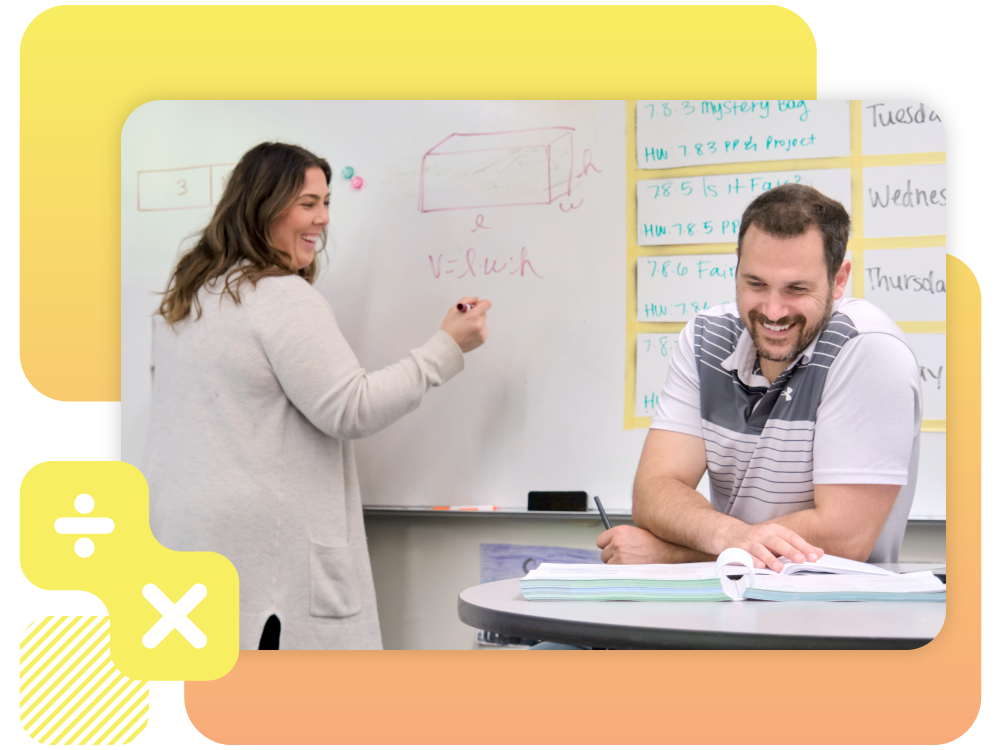
A structured path to change
Ready to start the shift to structured problem-based learning? With the right systems, the right partners, and above all, the right plan, the change doesn’t need to overwhelm your life. Get all the benefits with far fewer headaches—download our playbook to start building your own personalized strategy.
Making the shift: Problem-based learning for the real world
Lots of people will tell you that problem-based learning is the answer. If only it were that simple! Maybe you’ve tried it already without success. Maybe you don’t see how it could work in your current classroom setup. Maybe it just seems too daunting.
We agree that problem-based learning is great. But it needs structure. Brush up on the latest research to find out why structured problem-based learning makes all the difference. You have too much on your plate already to have to reinvent math instruction from scratch.
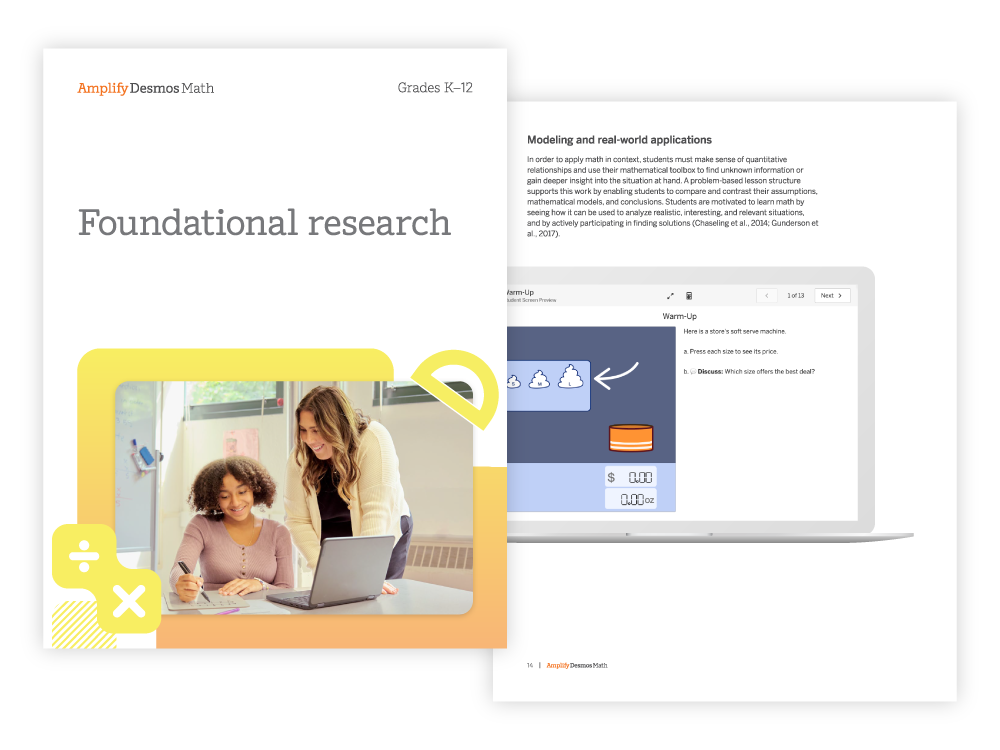
How problem-based learning supports all your students
With structured problem-based learning, students discover that there’s more than one way to tackle a problem, and that mistakes are a path to learning. A student who doesn’t often speak up might have the best insight in the classroom. Or a student with an unusual approach to a math question might trigger revelations for other students. Or, maybe students just feel more comfortable sharing their ideas with their peers instead of their teacher. A collaborative approach helps all students learn from each other and inspires everyone to be a “math person.”
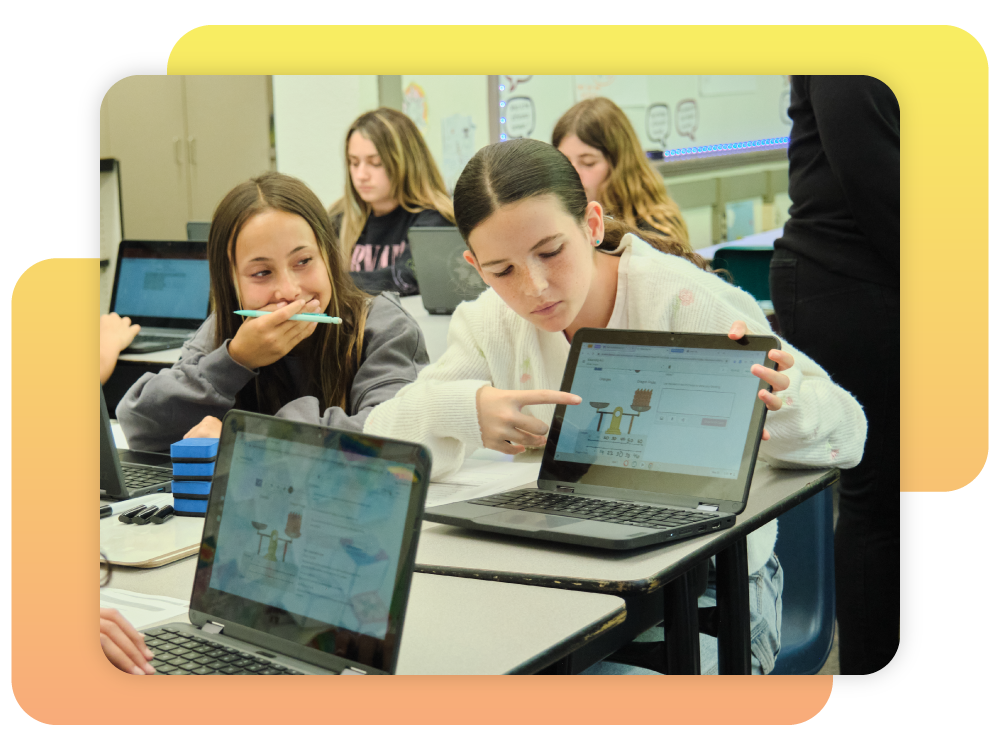

The foundation for long-lasting and real transformation
Change is more likely to stick and get results when you take a systemic approach. Partner with us to do just that by developing a learning plan that will drive your program implementation, enrich your instructional practices, and increase student impact. Amplify’s high-quality programs make it easier for you to teach inspiring, impactful lessons that celebrate and develop the brilliance of your students.
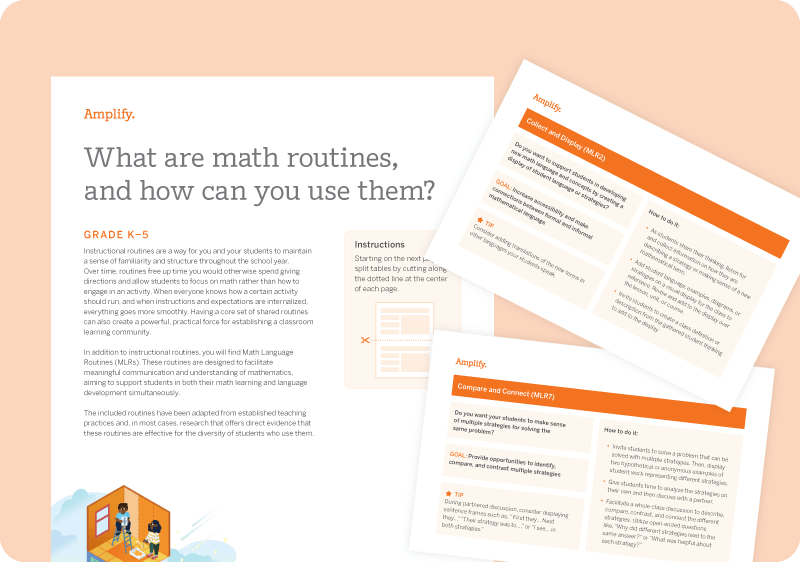
Math routine cards
Find easy-to-implement routines to keep students interacting and engaged with a lesson.

2024 Math Symposium
Access best practices and educational resources from math leaders through our on-demand Math Symposium.
Math Teacher Lounge archives
Hear strategies from Dan Meyer and Bethany Lockhart Johnson on the Math Teacher Lounge podcast.
Be a changemaker for science.
Profound science learning experiences have the power to transcend classroom walls—cultivating students’ curiosity, fostering critical thinking and creativity, building knowledge about the real world, and supporting students on their pathway to college and beyond. Unfortunately, science continues to fight for sufficient instructional time and resources.
The good news? Intentional shifts, combined with evidence-based practices and effective high-quality instructional materials, can help teachers make the most of the time they do have—transforming students into concerned global citizens ready to take on the world.


Science instruction designed for all students
K–8 science instruction is the crucial foundation that prepares students for high school learning. Our change management playbook details manageable and realistic changes to your process and practice that will make your K–8 instruction even more powerful.
Establishing high-quality teaching and learning
Access to high-quality instructional materials (HQIM) is a vital piece of the change management puzzle. Support the leaders who are on a mission to identify HQIM and set up the best possible conditions for implementation success.


Connecting science and literacy
Want to make every instructional moment count? Integrate science and literacy more deeply—and witness the transformation in student learning. Find out how with this resource pack.
The foundation for long-lasting and sustainable change
Change is more likely to stick and get results when you take a systemic approach. Partner with us to do just that by developing a learning plan that will drive your program implementation, enrich your instructional practices, and increase student impact. Amplify’s high-quality programs make it easier for you to teach inspiring, impactful lessons that celebrate and develop the brilliance of your students.


The power of high-quality math assessments

When students learn math, it’s crucial for them to understand not only right and wrong, but why and how. The same is true of math assessments.
High-quality, asset-based math assessments can show you how each student thinks, where their strengths lie, and what their next learning step should be.
And we need them now more than ever. Math scores have hit their lowest point since 2005, with nearly half of high school seniors scoring below “basic” achievement in 2024. This moment presents our biggest opportunity yet to transform K–12 math assessments.
Keep reading to explore how asset-based assessments help all students succeed—by starting with their strengths.
K–12 math assessments: True or false
Let’s establish some facts about math assessment first:
True or false: Math assessments can tell you only “right” or “wrong.”
False. Asset-based assessments go way beyond simple correct/incorrect scoring, showing you how students work through problems to give you insight into their thinking and what they already know. This provides a much clearer path for next steps.
True or false: Understanding student thinking is the key to improved student performance.
True. The path to math proficiency requires more than just benchmark scores. The better you understand how your students think, the better you can support their growth. When assessments recognize students’ individual strengths and strategies, the data becomes more helpful and complete.
The good news? We don’t have to throw out everything we’re doing, but we do need to enhance it. The current achievement trends aren’t telling us to stop what we’re doing. They’re telling us to do even better.
What high-quality math assessments actually look like
So what makes a math assessment truly powerful? Here are the key ingredients:
They show student thinking. Great assessments don’t just capture right and wrong answers—they reveal the “why” behind student responses. You get to see the logic, the creativity, and the problem-solving strategies each student brings to math. This visibility helps you understand not just what students know, but how they know it.
They welcome different approaches. There’s rarely just one way to solve a math problem. Quality assessments celebrate multiple solution paths and help you understand how each student’s mind works. This flexibility creates more opportunities for students to demonstrate their mathematical understanding.
They work for all learners. Research shows that 3–7% of students experience dyscalculia, meaning that they process numbers differently. The best assessments are designed so every student can show what they really know about math concepts, regardless of how their brain processes numerical information.
They connect to real life. When math problems relate to students’ actual experiences, engagement soars and understanding deepens. Students see math as relevant and useful, not just something they have to endure.
They guide your next teaching move. Instead of functioning like traditional summative assessments that just give you a grade, high-quality assessments tell you exactly what to teach next. They transform assessment from a final judgment into a roadmap for growth.
How asset-based assessment approaches change the game
Here’s where things get really exciting. What if your assessments started by looking for what students can do, instead of what they can’t?
That’s asset-based assessment. And it can change everything.
This approach recognizes that every student walks into your classroom with mathematical knowledge. Even the student who “hates math” or “isn’t good with numbers” has mathematical thinking waiting to be discovered and built upon.
Asset-based assessment strategies help you spot the sophisticated reasoning your students already have, even when they don’t use formal math language yet. Instead of starting with gaps, you start with strengths; instead of deficit thinking, you build from abundance.
When you weave asset-based approaches into your assessment practice through formative assessment lessons, magic happens. Students feel more confident. Their mathematical identities grow stronger. And you get clearer insights into how to help each learner thrive. Perhaps most importantly, these approaches help close achievement gaps by ensuring every student’s mathematical contributions are valued and developed.
The data tells a clear story: Our students need assessment approaches that match not just their current performance, but their true potential.
More to explore
Ready to unlock the full potential of your math assessments? We’ve put together everything you need in our Math Assessment Power Pack, featuring practical tools, proven strategies, and ready-to-use resources that’ll make it simple and easy to enhance your assessments.
- Dive into our Math Assessment Power Pack.
- Watch our 2025 Assessment Week on demand.
- Check out our Advice for the Math Classroom channel for bite-size professional learning.
Dual language assessment and instruction for K–6
mCLASSⓇ Lectura Texas is a universal screener for K–6 built on modern Spanish literacy research. Delivering complete parity between English and Spanish reading assessments, the program supports educators in accelerating reading growth for Spanish-speaking students.


Built by leading biliteracy experts
The mCLASS Lectura Texas universal screener was co-developed with the Center on Teaching and Learning at the University of Oregon. The assessment was validated by Amplify in partnership with Lillian Durán of the University of Oregon.
The development of mCLASS Lectura Texas also involved a team of nationally recognized experts representing a range of regions (Mexico, Central America, South America, and the Caribbean), along with focus groups featuring classroom teachers, special education teachers, specialists, and administrators.
Our approach
Aligned to the Science of Teaching Reading, mCLASS Lectura Texas enables teachers to connect with their students through observational assessment and in the language most comfortable to them. When used in tandem with mCLASS Texas Edition, the program helps you achieve complete parity between English and Spanish literacy skills.
Complete parity between English and Spanish
mCLASS Lectura Texas is an authentic Spanish assessment that integrates seamlessly with mCLASS Texas Edition. It offers consistent reporting across both English and Spanish assessments and provides specialized dual-language reporting.


Listen to your students read in both languages, one-on-one.
mCLASS Lectura Texas provides teacher-administered assessments in Spanish that deliver accurate and reliable measurements of each student’s literacy progress.
Built from the latest research in Spanish literacy development
mCLASS Lectura Texas is a high-quality assessment that accounts for the major differences between English and Spanish, not simply a direct translation or transadaptation between the two languages.


Transfer skills in one language to the other.
By providing teachers with insights into the skill areas in which their students are proficient in their native language, the program helps multilingual/English learners build on their strengths and make connections. Educators also receive guidance on the cross-linguistic transfer of critical skills in both languages.
What’s included
mCLASS Lectura Texas includes one-minute measures validated for universal and dyslexia screening, and provides dual language reports for teachers and administrators.

Comprehensive Spanish literacy measures in mCLASS Lectura Texas
mCLASS Lectura Texas is validated to assess for all key foundational skills for K–6, including:
- Letter Naming.
- Phonological Awareness.
- Alphabetic Principle.
- Fluency.
- Comprehension.
Reports in English and Spanish
mCLASS Lectura Texas analyzes Spanish literacy and English literacy development side by side, enabling you to see where kids are in both languages.


Instructional activities to build Spanish literacy skills
With mCLASS Lectura Texas, educators get hundreds of step-by-step instructional activities for small groups or individual students and receive effective activities to target the Spanish literacy skills with which students need the most support.
Comprehensive reporting
mCLASS Lectura Texas provides reporting for everyone. This is available at all levels, from classroom teachers and literacy specialists to principles and district leaders, as well as parents and guardians at home.


Detailed assessment data
mCLASS Lectura Texas provides transcripts of every assessment and identifies error patterns to help educators make instructional decisions for students on the skills they need to work on the most. The program also includes letters with student assessment results and analysis to send home or to use as a basis for discussion at conferences.
Explore more programs based in the Science of Teaching Reading.
Learn more about the Amplify Texas biliteracy suite at texas.amplify.com.
Big gains but slow progress in reading readiness

Amplify’s end-of-year research brief for 2024–25 shows that the youngest learners have made the greatest progress with foundational reading skills in the last five years: more kindergarteners, first graders, and second graders are on track to learn to read and fewer are far behind than at any time since the pandemic.
Kindergarteners made the biggest strides in the knowledge and skills measured by elementary reading assessments, with 70% on track to learn to read—a 21-point improvement since the pandemic.
Post-pandemic slide
In 2020–21 (the year students returned to school after the pandemic shutdowns), only 55% of K–2 students were on track to learn to read by the end of the year.
The youngest cohort struggled the most, with only 49% of kindergarteners at or above benchmark.
More students on track to learn to read
But by the end of the 2024–25 school year, the overall picture of reading readiness was much brighter.
Our data shows a 13-point increase, with 68% of the youngest readers at or above benchmark.
First and second graders were also far ahead of where they were five years ago, with improvements of 14 and 8 points, respectively.
Progress slowing
While our 2024–25 end-of-year early reading data shows significant progress relative to 2020-21, the picture is less rosy when we compare it to last year:
- Overall, the number of K–2 students at or above literacy benchmarks was only one percentage point higher at the end of 2024–25 than it was at the end of the previous school year.
- Within that cohort, both kindergarten and first graders saw a 2% increase, but second graders only saw a 1% increase.
Fewer students far behind
Similarly, our data showed a significant drop in the number of young readers well below benchmark between the post-pandemic school year and the 2024–25 school year.
- Kindergarteners, again, showed the most improvement, with the number of students far behind dropping from 38% in 2020–21 to 20% at the end of the 2024–25 school year.
- Among first graders, we saw a 12-point decline in students who were not on track to learn to read compared to 2020–21
- Second graders showed the least improvement, with a decline of six percentage points relative to 2020-21.
Improvements among this cohort followed a similar trend to those of the at-benchmark readers: a noticeable decline over five years, but a barely noticeable year-over-year improvement.
- Only 1% fewer students across K–2 were far behind at the end of this year compared to the year before.
More improvement during the school year
Our data also revealed some good news about annual progress in early literacy development:
- Across K–2, students showed a bigger improvement in reading readiness than they did in prior years.
- By the end of the 2024–25 school year, 70% of kindergarten students were on track to learn to read, compared to 36% at the beginning of the year (the greatest improvement since 2020–21).
- First graders had a 19% improvement by the end of the 2024–25 school year (70% on track by end of year) compared to 56% in 2021.
- Second graders showed an 11-point increase in reading readiness from beginning to end of year (65% to 54%).
Putting the Science of Reading to work for students
“Grades K–2 remain critical years for literacy development,” said Susan Lambert, Chief Academic Officer of elementary humanities at Amplify and host of Science of Reading: The Podcast. “To support young readers, educators need data-driven insights into student reading development and instructional practices that are based in the Science of Reading.”
Research has shown that data-driven strategies and tools provide the best support for young learners’ future academic success. Here are a few of the ways teachers, administrators, and parents can put them into practice:
- Administering elementary reading assessments three times a year, to monitor student risk level for reading challenges
- Supporting students at risk for not learning to read by analyzing data from reading assessments and making informed decisions
- Allocating extra classroom time and resources to help students who aren’t on track
- Monitoring progress and making adjustments as needed
- Ensuring that evidence-based reading instruction is offered at every grade level
- Instilling a love of reading in and out of school, in partnership with caregivers and community
Let’s keep the conversation going! Join the discussion in our Amplify learning communities.
Dive into the findings in our End-of-Year Report.
More to explore
Desmos Math 6–A1 correlations with Carnegie Math Texas
Amplify Classroom and Polypad free and commercial use guidelines
If you’d like to use Amplify’s tools or content in your work, please review these guidelines to determine if your specific use is allowed and whether you need to submit a request for approval.
Overview
Amplify Classroom offers free prebuilt interactive and print-based lessons, interactive lesson-building tools, and Polypad virtual manipulatives. See amplify.com/classroom and polypad.amplify.com for more information.
Amplify Classroom features:
- Activity Builder (labeled “Custom Activities” in the platform): This content-creating and publishing tool enables educators to create their own interactive lessons and edit existing lessons.
- Polypad virtual manipulatives: These virtual manipulatives allow teachers and students to explore concepts, express their creativity, and visualize their thinking. Polypad virtual manipulatives can be embedded directly into lessons via Activity Builder or used as a stand-alone, dynamic workspace.
- Computation Layer: This feature enables educators to further customize lessons created with Activity Builder. Computation Layer is the code that allows components within the lessons to “talk” to one another, enabling users to connect representations; customize content; and provide dynamic, interpretive feedback. Computation Layer is accessible through Activity Builder.
Amplify Classroom includes activities and lessons across many subjects, created by the thousands of educators on our platform. Content created by Amplify is tagged “By Amplify,” “By Amplify Classroom,” or “By Desmos Classroom.”
Amplify also publishes paid core curriculum programs, including Amplify Desmos Math, Amplify Science, Amplify CKLA, Amplify Caminos, and Amplify ELA. These products can be reviewed and purchased by schools or districts interested in comprehensive resources aligned to standards and designed to motivate students. Some of the lessons that are free to use on Amplify Classroom (labeled Try It! lessons) are also part of these paid products. Learn more about our products and request a sample.
Amplify Classroom tools and content (other than paid products) are free for personal, educational, and non-commercial use, subject to our Acceptable Use Policy and Usage Guidelines. These guidelines also permit certain commercial uses. You generally don’t need to submit a request to use our free tools and resources for the permitted purposes covered in these guidelines. As long as you are following our Acceptable Use Policy and Usage Guidelines, as well as making appropriate Attributions and Disclaimers, you are permitted to move forward with your project. To make sure your use is permitted, please read these guidelines thoroughly and in their entirety. If you would like to explore a license for a use not permitted here, please submit this form.
Amplify does not own but partners with Desmos Studio, the maker of a suite of free math tools, including a graphing calculator used by over 75 million people around the world. (See desmos.com for more information.) Please contact Desmos Studio for information on using their content or tools.
Usage guidelines
Please adhere to the following guidelines for using Amplify Classroom tools and content in each of the scenarios set out below. You are required to follow our General Guidelines and Attribution requirements below when making permitted uses. You are responsible for clearing any third party marks and content you use in your applications or publications.
Uses labeled “PERMITTED USES” do not require permission, and you do not need to tell us about them—but we do appreciate hearing from you! Feel free to fill out this form to tell us about how you are using our tools and materials, and the ways in which you are finding them useful.
Uses labeled “CONTACT US” do require permission. If you are interested in such use, please submit this form, and someone from our team will endeavor to follow up with you as soon as possible.
Teaching and education services
This section provides guidelines on using Amplify Classroom for teaching and education services.
| PERMITTED USES |  |
Educators creating, modifying (where permitted), and using Amplify Classroom content for classroom teaching in a school |
|
Public school districts, charter schools, and networks creating, modifying (where permitted) and using Amplify Classroom content for classroom teaching | |
|
Private tutors creating or using Amplify Classroom content in 1:1 or small-group tutoring sessions | |
| CONTACT US |  |
For-profit school or network of schools implementing Amplify Classroom for the school or network |
|
Education publishers and EdTech organizations (whether for profit or non-profit) using or linking to Amplify Classroom content and tools | |
|
Any organizations or individuals embedding the teaching and learning experience from the Amplify Classroom lessons in their websites or applications (except API/iFrames Polypad integrations permitted below) | |
|
Educators or other individuals authoring lessons for commercial purposes (e.g., to sell on Teachers Pay Teachers and similar websites) | |
|
School districts, states, education publishers or technology providers, educators or any other individual or organization (whether for profit or non-profit) using Amplify Classroom content or platform to create paid curricula, educational courses, assessments, or any materials or curricula for submission for a state adoption list; or for offering, marketing, or sale to any schools or educational agencies or organizations, in or outside of the U.S. | |
|
Instructional/tutoring organizations (whether for profit or non-profit), seeking to use Amplify Classroom for its tutors or instructors |
Print and presentations
This section provides guidelines on including content from Amplify Classroom, such as portions of free lessons or images generated using our tools, in printed materials or presentations.
| PERMITTED USES | |
Books, including textbooks, up to two thousand copies |
|
Periodicals (newspapers, magazines, journals, etc.) | |
|
Business documents such as company reports, proposals, presentations, etc. | |
|
Academic publications, research papers, Ph.D. theses, and portfolios | |
|
Conferences, presentations and accompanying slides | |
| CONTACT US | |
Books, more than two thousand copies, or as cover art for a book |
|
As content within platforms, mobile and tablet applications, PDFs, ebooks, multimedia materials, or other digital resources or products | |
|
Consumer and retail goods or packaging (e.g., shirts, beach towels, shower curtains, mugs, posters, stationery) |
Web and apps
This section provides guidelines for embedding Amplify Classroom tools into your platform.
| PERMITTED USES | | Individuals and schools embedding Polypad in their materials for instructional use are permitted to do so; for integration options, see below. |
| Organizations (whether for profit or non-profit) offering paid services embedding Polypad with <10k requests per year | |
| CONTACT US | | Organizations (whether for profit or non-profit) offering paid services embedding Polypad with >10k requests per year |
| Individuals or organizations looking to embed Activity Builder/Computation Layer in their applications | |
| Individuals or organizations looking to embed Amplify Classroom tools in larger applications, more complex integrations, white-labeling, or hosting Amplify’s JS files on their own infrastructure | |
| Polypad links, screenshots, iFrames, or API uses behind a paywall |
Polypad integration options
There are two integration options for using Polypad within your own applications, including:
- Using iFrames hosted by Amplify.
- As a white-labeled JavaScript API that can be self-hosted and embedded in other websites or apps.
Developers can customize the features and behavior through numerous options and event listeners, and interact with the canvas programmatically to build custom functionality.
Visit the Polypad API page to learn more about Polypad API license terms and to generate API Key.
General guidelines
Copyright fair use
Your use of our content may be acceptable under principles of fair use (or other similar concepts in other countries). Under the fair use doctrine of the U.S. Copyright Act of 1976, it is permissible to use limited portions of a work for purposes such as commentary, criticism, news reporting, research, and scholarly reports.
Whether a particular use qualifies as fair use depends on a number of factors. For more information see resources from the U.S. Copyright Office, Circular 21, Reproductions of Copyrighted Works by Educators and Librarians, and Fair Use Index. Amplify can’t tell you if your use of this content would be fair use, so you may wish to obtain your own legal advice.
Use of trademarks
Our trademarks are valuable assets of Amplify and its licensors, and we want to ensure our users and partners use them correctly. These trademarks include the Amplify word mark and logo, Polypad word mark, Core Knowledge Foundation word mark and logo, the Lawrence Hall of Science word mark and logo, and the Desmos and Amplify Classroom word marks and logos.
Logos
Our logos can only be used if you have an existing partnership, and you’ve reached out to your Amplify contact to secure formal approval from Amplify’s brand team.
Logos must never be used in a way that implies an endorsement or affiliation with Amplify where such a relationship does not exist.
Please contact media@amplify.com if you need to use an Amplify or Amplify Classroom logo.
Please contact Desmos Studio for Desmos Studio branding guidelines and licensing.
Use of product names and features
If making a use permitted under these guidelines or approved by Amplify, you may use the Amplify name or one of our product names or features in plain text to indicate that your product or service integrates with, or relates to, an Amplify product or service.
However, all references must be honest and accurate, and you can’t incorporate these names into your own name or imply an endorsement by Amplify or any of its licensors.
| REQUIRED | | Use the complete name “Amplify Classroom” when referencing the platform. |
| Use “Amplify Classroom lessons” when talking about specific lessons authored in the Amplify Classroom platform. | |
| Use “Teacher-created Amplify Classroom lessons” or “[Company name]-authored Amplify Classroom lessons” when talking about a lesson that has been authored by anyone other than Amplify personnel. | |
| Include required attribution and disclaimers. | |
| PROHIBITED | | Do not imply an endorsement or affiliation with Amplify where such a relationship does not exist. |
Attribution and disclaimers
You are required to include a link to the homepage of Amplify Classroom (amplify.com/classroom) and a prominent disclaimer of affiliation when making permissible uses described above in at least one place in your materials, preferably the cover page or landing page.
Visit Amplify Classroom for free lessons, lesson-building tools, and Polypad virtual manipulatives at amplify.com/classroom. This content is not affiliated with, sponsored by, or endorsed by Amplify or any of its licensors. Amplify®, Amplify Classroom™, and related trademarks are the property of Amplify Education, Inc.
If your current attribution language refers to Desmos Classroom, please update the attribution to “Amplify Classroom” instead of “Desmos Classroom.”
Contact us
Amplify Classroom and Polypad usage inquiry form for uses labeled “Contact Us”
Thank you for your interest in using Amplify Classroom and/or Polypad. If your intended use falls into one of the categories labeled “Contact us,” please fill out this form, so we can determine the appropriate permissions or licenses:
Amplify Classroom and Polypad usage inquiry form for uses labeled “Permitted”
Thank you for your interest in using Amplify Classroom and/or Polypad. If your intended use falls under the “Permitted” categories outlined in our use guidelines, please let us know by filling out the form below. This helps us understand how our tools are being used.
Note: If your intended use falls under one of the “CONTACT US” categories outlined in our use guidelines, please fill out this form.
Amplify Classroom and Polypad Permitted Use Form
Welcome!
Amplify Science: California Edition is an immersive and engaging core curriculum authored by UC Berkeley’s Lawrence Hall of Science and built specifically for the NGSS.
K–8 Integrated Course Model
Needs of Plants and Animals
- Needs of Plants and Animals: Milkweed and Monarchs Investigation Notebook
- Science Walk
- Handbook of Plants
- Investigating Monarchs
- A Plant in the Desert
- Above and Below
- What Does a Scientist Look Like?
Pushes and Pulls
- Pushes and Pulls: Designing a Pinball Machine Investigation Notebook
- Talking About Forces
- A Busy Day in Pushville
- Room 4 Solves a Problem
- Forces in Ball Games
- Building with Forces
Sunlight and Weather
Animal and Plant Defenses
- Animal and Plant Defenses: Spikes, Shells, and Camouflage Investigation Notebook
- Whose Lunch Is This?
- Tortoise Parts
- Parents and Offspring
- Frog Models
- Spikes, Spines, and Shells: A Handbook of Defenses
Light and Sound
- Light and Sound: Puppet-Theater Engineers Investigation Notebook
- Let’s Test!
- Engineering with Light and Sound
- Can You See in the Dark?
- What Vibrates?
- What Made This Shadow?
Spinning Earth
Plant and Animal Relationships
- Plant and Animal Relationships: Investigating Systems in a Bengali Forest Investigation Notebook
- My Nature Notebook
- A Plant Is a System
- Habitat Scientist
- Investigating Seeds
- Handbook of Habitats
Properties of Materials
- Properties of Materials: Designing Glue Investigation Notebook
- Jelly Bean Engineer
- What If Rain Boots Were Made of Paper?
- Handbook of Interesting Ingredients
- Jess Makes Hair Gel
- Can You Change It Back?
- Ideas and Inventors
Changing Landforms
Balancing Forces
- Balancing Forces: Investigating Floating Trains Investigation Notebook
- Forces All Around
- What My Sister Taught Me About Magnets
- Hoverboard
- Explaining a Bridge
- Handbook of Forces
Environments and Survival
- Environments and Survival: Snails, Robots, and Biomimicry Investigation Notebook
- Scorpion Scientist
- How the Sparrow Learned Its Song
- Handbook of Traits
- Blue Whales and Buttercups
- The Code
- Who Thinks About Structure?
Inheritance and Traits
- Inheritance and Traits: Variation in Wolves Investigation Notebook
- Earthworms Underground
- Mystery Mouths
- Environment News
- Cockroach Robots
- Biomimicry Handbook
Weather and Climate
Energy Conversions
- Energy Conversions: Blackout in Ergstown Investigation Notebook
- Energy Past and Present
- Sunlight and Showers
- Blackout!
- It’s All Energy
- Who Thinks About Systems
- Systems
Earth’s Features
- Earth’s Features: Mystery in Desert Rocks Canyon Investigation Notebook
- Clues from the Past
- Through the Eyes of a Geologist
- Arguing to Solve a Mystery
- Rocky Wonders
- Fossil Hunter’s Handbook
- Through the Eyes of a Geologist
Vision and Light
- Vision and Light: Investigating Animal Eyes Investigation Notebook
- Investigating Animal Senses
- I See What You Mean
- Crow Scientist
- Seeing Like a Shrimp and Smelling Like a Snake
- Handbook of Animal Eyes
Waves, Energy, and Information
Patterns of Earth and Sky
- Patterns of Earth and Sky: Analyzing Stars on Ancient Artifacts Investigation Notebook
- How Big Is Big? How Far Is Far?
- Which Way Is Up?
- Dog Days of Summer
- Star Scientist
- Handbook of Stars and Constellations
Ecosystem Restoration
- Ecosystem Restoration: Matter and Energy in a Rain Forest Investigation Notebook
- Matter Makes It All Up
- Walk in the Woods
- Energy Makes It All Go
- Restoration Case Studies
- Why Do Scientists Argue?
The Earth System
- The Earth System: Investigating Water Shortages Investigation Notebook
- Chemical Reactions Everywhere
- Water Shortages, Water Solutions
- Drinking Cleopatra’s Tears
- Engineering Clean Water
- How the Earth System Explains Dinosaur Extinction
- Water Encyclopedia
Modeling Matter
Grades 6–8 Integrated Model
- Microbiome Investigation Notebook with Article Compilation
- Metabolism: Making the Diagnosis Investigation Notebook with Article Compilation
- Metabolism Engineering Internship: Health Bars for Disaster Relief Engineering Notebook with Article Compilation
- Traits and Reproduction: The Genetics of Spider Silk Investigation Notebook with Article Compilation
- Thermal Energy: Using Water to Heat a School Investigation Notebook with Article Compilation
- Ocean, Atmosphere, and Climate: Cold Years in New Zealand Investigation Notebook with Article Compilation
- Weather Patterns: Severe Storms in Galetown Investigation Notebook with Article Compilation
- Earth’s Changing Climate: Vanishing Ice Investigation Notebook with Article Compilation
- Earth’s Changing Climate Engineering Internship: Rooftops for Sustainable Cities Engineering Notebook with Article Compilation
- Geology on Mars Investigation Notebook with Article Compilation
- Plate Motion: Mystery of the Mesosaurus Fossils Investigation Notebook with Article Compilation
- Plate Motion Engineering Internship: Tsunami Warning Systems Engineering Notebook with Article Compilation
- Rock Transformations: Geologic Puzzle of the Rockies and Great Plains Investigation Notebook with Article Compilation
- Phase Change: Titan’s Disappearing Lakes Investigation Notebook with Article Compilation
- Phase Change Engineering Internship: Portable Baby Incubators Engineering Notebook with Article Compilation
- Chemical Reactions: Mysterious Substance in Westfield’s Water Investigation Notebook with Article Compilation
- Populations and Resources: Too Many Moon Jellies Investigation Notebook with Article Compilation
- Matter and Energy in Ecosystems: Biodome Collapse Investigation Notebook with Article Compilation
- Harnessing Human Energy Investigation Notebook with Article Compilation
- Force and Motion: Docking Failure in Space Investigation Notebook with Article Compilation
- Force and Motion Engineering Internship: Pods for Emergency Supplies Engineering Notebook with Article Compilation
- Magnetic Fields: Launching a Spacecraft Investigation Notebook with Article Compilation
- Light Waves: Skin Cancer in Australia Investigation Notebook with Article Compilation
- Earth, Moon, and Sun: An Astrophotographer’s Challenge Investigation Notebook with Article Compilation
- Natural Selection: Poisonous Newts Investigation Notebook with Article Compilation
- Natural Selection Engineering Internship: Fighting Drug-Resistant Malaria Engineering Notebook with Article Compilation
- Evolutionary History: Advising a Paleontology Museum Investigation Notebook with Article Compilation
Grades 6–8 Discipline Specific Model
- Geology on Mars Investigation Notebook with Article Compilation
- Plate Motion: Mystery of the Mesosaurus Fossils Investigation Notebook with Article Compilation
- Plate Motion Engineering Internship: Tsunami Warning Systems Engineering Notebook with Article Compilation
- Rock Transformations: Geologic Puzzle of the Rockies and Great Plains Investigation Notebook with Article Compilation
- Earth, Moon, and Sun: An Astrophotographer’s Challenge Investigation Notebook with Article Compilation
- Ocean, Atmosphere, and Climate: Cold Years in New Zealand Investigation Notebook with Article Compilation
- Weather Patterns: Severe Storms in Galetown Investigation Notebook with Article Compilation
- Earth’s Changing Climate: Vanishing Ice Investigation Notebook with Article Compilation
- Earth’s Changing Climate Engineering Internship: Rooftops for Sustainable Cities Engineering Notebook with Article Compilation
- Microbiome Investigation Notebook with Article Compilation
- Metabolism: Making the Diagnosis Investigation Notebook with Article Compilation
- Metabolism Engineering Internship: Health Bars for Disaster Relief Engineering Notebook with Article Compilation
- Traits and Reproduction: The Genetics of Spider Silk Investigation Notebook with Article Compilation
- Populations and Resources: Too Many Moon Jellies Investigation Notebook with Article Compilation
- Matter and Energy in Ecosystems: Biodome Investigation Notebook with Article Compilation
- Natural Selection: Poisonous Newts Investigation Notebook with Article Compilation
- Natural Selection Engineering Internship: Fighting Drug-Resistant Malaria Engineering Notebook with Article Compilation
- Evolutionary History: Advising a Paleontology Museum Investigation Notebook with Article Compilation
- Harnessing Human Energy Investigation Notebook with Article Compilation
- Force and Motion: Docking Failure in Space Investigation Notebook with Article Compilation
- Force and Motion Engineering Internship: Pods for Emergency Supplies Engineering Notebook with Article Compilation
- Magnetic Fields: Launching a Spacecraft Investigation Notebook with Article Compilation
- Thermal Energy: Using Water to Heat a School Investigation Notebook with Article Compilation
- Phase Change: Titan’s Disappearing Lakes Investigation Notebook with Article Compilation
- Phase Change Engineering Internship: Portable Baby Incubators Engineering Notebook with Article Compilation
- Chemical Reactions: Mysterious Substance in Westfield’s Water Investigation Notebook with Article Compilation
- Light Waves: Skin Cancer in Australia Investigation Notebook with Article Compilation
Amplify Science
A new core curriculum designed from the ground up for the NGSS.
Preview the Student Books and Student Investigation Notebooks
Needs of Plants and Animals
- Needs of Plants and Animals: Milkweed and Monarchs Investigation Notebook
- Science Walk
- Handbook of Plants
- Investigating Monarchs
- A Plant in the Desert
- Above and Below
Pushes and Pulls
- Pushes and Pulls: Designing a Pinball Machine Investigation Notebook
- Talking About Forces
- A Busy Day in Pushville
- Room 4 Solves a Problem
- Forces in Ball Games
- Building With Forces
Sunlight and Weather
Animal and Plant Defenses
- Animal and Plant Defenses: Spikes, Shells, and Camouflage Investigation Notebook
- Whose Lunch Is This?
- Tortoise Parts
- Parents and Offspring
- Frog Models
- Spikes, Spines, and Shells
Light and Sound
- Light and Sound: Puppet-Theater Engineers Investigation Notebook
- Let’s Test!
- Engineering with Light and Sound
- Can You See in the Dark?
- What Vibrates?
- What Made This Shadow?
Spinning Earth
Plant and Animal Relationships
- Plant and Animal Relationships: Investigating Systems in a Bengali Forest Investigation Notebook
- My Nature Notebook
- A Plant is a System
- Habitat Scientist
- Investigating Seeds
- Handbook of Habitats
Properties of Materials
- Properties of Materials: Designing Glue Investigation Notebook
- Jelly Bean Engineer
- What If Rain Boots Were Made of Paper?
- Handbook of Interesting Ingredients
- Jess Makes Hair Gel
- Can You Change It Back?
Changing Landforms
Balancing Forces
- Balancing Forces: Investigating Floating Trains Investigation Notebook
- Forces All Around
- What My Sister Taught Me About Magnets
- Hoverboard
- Explaining a Bridge
- Handbook of Forces
Environments and Survival
- Environments and Survival: Snails, Robots, and Biomimicry Investigation Notebook
- Earthworms Underground
- Mystery Mouths
- Environment News
- Cockroach Robots
- Biomimicry Handbook
Inheritance and Traits
- Inheritance and Traits: Variation in Wolves Investigation Notebook
- Scorpion Scientist
- How the Sparrow Learned Its Song
- Handbook of Traits
- Blue Whales and Buttercups
- The Code
Weather and Climate
Energy Conversions
- Energy Conversions: Blackout in Ergstown Investigation Notebook
- Energy Past and Present
- Sunlight and Showers
- Blackout
- It’s All Energy
- Systems
Earth’s Features
- Earth’s Features: An Astrophotographer’s Challenge Investigation Notebook
- Clues From The Past
- Through the Eyes of a Geologist
- Arguing to Solve a Mystery
- Rocky Wonders
- Fossil Hunter’s Handbook
Vision and Light
- Vision and Light: Investigating Animal Eyes Investigation Notebook
- Investigating Animal Senses
- I See What You Mean
- Crow Scientist
- Seeing Like a Shrimp and Smelling Like a Snake
- Handbook of Animal Eyes
Waves, Energy, and Information
Patterns of Earth and Sky
- Patterns of Earth and Sky: Analyzing Stars on Ancient Artifacts Investigation Notebook
- How Big Is Big? How Far Is Far?
- Which Way Is Up?
- Dog Days of Summer
- Star Scientist
- Handbook of Stars and Constellations
Ecosystem Restoration
- Ecosystem Restoration: Matter and Energy in a Rain Forest Investigation Notebook
- Matter Makes It All Up
- Walk in the Woods
- Energy Makes It All Go
- Restoration Case Studies
- Why Do Scientists Argue?
The Earth System
- The Earth System: Investigating Water Shortages Investigation Notebook
- Chemical Reactions Everywhere
- Water Shortages, Water Solutions
- Drinking Cleopatra’s Tears
- Engineering Clean Water
- How the Earth System Explains Dinosaur Extinction
- Water Encyclopedia
Modeling Matter
Grades 6–8 Integrated Model
- Microbiome Investigation Notebook with Article Compilation
- Metabolism: Making the Diagnosis Investigation Notebook with Article Compilation
- Metabolism Engineering Internship: Health Bars for Disaster Relief Engineering Notebook with Article Compilation
- Traits and Reproduction: The Genetics of Spider Silk Investigation Notebook with Article Compilation
- Thermal Energy: Using Water to Heat a School Investigation Notebook with Article Compilation
- Ocean, Atmosphere, and Climate: Cold Years in New Zealand Investigation Notebook with Article Compilation
- Weather Patterns: Severe Storms in Galetown Investigation Notebook with Article Compilation
- Earth’s Changing Climate: Vanishing Ice Investigation Notebook with Article Compilation
- Earth’s Changing Climate Engineering Internship: Rooftops for Sustainable Cities Engineering Notebook with Article Compilation
- Geology on Mars Investigation Notebook with Article Compilation
- Plate Motion: Mystery of the Mesosaurus Fossils Investigation Notebook with Article Compilation
- Plate Motion Engineering Internship: Tsunami Warning Systems Engineering Notebook with Article Compilation
- Rock Transformations: Geologic Puzzle of the Rockies and Great Plains Investigation Notebook with Article Compilation
- Phase Change: Titan’s Disappearing Lakes Investigation Notebook with Article Compilation
- Phase Change Engineering Internship: Portable Baby Incubators Engineering Notebook with Article Compilation
- Chemical Reactions: Mysterious Substance in Westfield’s Water Investigation Notebook with Article Compilation
- Populations and Resources: Too Many Moon Jellies Investigation Notebook with Article Compilation
- Matter and Energy in Ecosystems: Biodome Collapse Investigation Notebook with Article Compilation
- Harnessing Human Energy Investigation Notebook with Article Compilation
- Force and Motion: Docking Failure in Space Investigation Notebook with Article Compilation
- Force and Motion Engineering Internship: Pods for Emergency Supplies Engineering Notebook with Article Compilation
- Magnetic Fields: Launching a Spacecraft Investigation Notebook with Article Compilation
- Light Waves: Skin Cancer in Australia Investigation Notebook with Article Compilation
- Earth, Moon, and Sun: An Astrophotographer’s Challenge Investigation Notebook with Article Compilation
- Natural Selection: Poisonous Newts Investigation Notebook with Article Compilation
- Natural Selection Engineering Internship: Fighting Drug-Resistant Malaria Engineering Notebook with Article Compilation
- Evolutionary History: Advising a Paleontology Museum Investigation Notebook with Article Compilation
Spanish Student Books and Student Investigation Notebooks
Kindergarten
- Science Walk
- Talking About Forces
- What Is the Weather Like Today?
- Pushes and Pulls Investigation Notebook
Grade 1
Grade 2
- Landform Postcards
- My Nature Notebook
- What If Rain Boots Were Made of Paper?
- Changing Landforms Investigation Notebook
Grade 3
- Sky Notebook
- Hoverboard
- Cockroach Robots
- Blue Whales and Buttercups
- Balancing Forces Investigation Notebook
Grade 4
- Arguing to Solve a Mystery
- Blackout!
- Investigating Animal Senses
- Warning: Tsunami!
- Energy Conversions Investigation Notebook
Grade 5
- Engineering Clean Water
- Matter Makes It All Up
- Made of Matter
- How Big is Big?
- Ecosystem Restoration Investigation Notebook
Grade 6
Grade 7
Grade 8
Amplify Science
A new core curriculum designed from the ground up for the NGSS.
Preview the Student Books and Student Investigation Notebooks
Needs of Plants and Animals
- Needs of Plants and Animals: Milkweed and Monarchs Investigation Notebook
- Science Walk
- Handbook of Plants
- Investigating Monarchs
- A Plant in the Desert
- Above and Below
Pushes and Pulls
- Pushes and Pulls: Designing a Pinball Machine Investigation Notebook
- Talking About Forces
- A Busy Day in Pushville
- Room 4 Solves a Problem
- Forces in Ball Games
- Building With Forces
Sunlight and Weather
Animal and Plant Defenses
- Animal and Plant Defenses: Spikes, Shells, and Camouflage Investigation Notebook
- Whose Lunch Is This?
- Tortoise Parts
- Parents and Offspring
- Frog Models
- Spikes, Spines, and Shells
Light and Sound
- Light and Sound: Puppet-Theater Engineers Investigation Notebook
- Let’s Test!
- Engineering with Light and Sound
- Can You See in the Dark?
- What Vibrates?
- What Made This Shadow?
Spinning Earth
Plant and Animal Relationships
- Plant and Animal Relationships: Investigating Systems in a Bengali Forest Investigation Notebook
- My Nature Notebook
- A Plant is a System
- Habitat Scientist
- Investigating Seeds
- Handbook of Habitats
Properties of Materials
- Properties of Materials: Designing Glue Investigation Notebook
- Jelly Bean Engineer
- What If Rain Boots Were Made of Paper?
- Handbook of Interesting Ingredients
- Jess Makes Hair Gel
- Can You Change It Back?
Changing Landforms
Balancing Forces
- Balancing Forces: Investigating Floating Trains Investigation Notebook
- Forces All Around
- What My Sister Taught Me About Magnets
- Hoverboard
- Explaining a Bridge
- Handbook of Forces
Environments and Survival
- Environments and Survival: Snails, Robots, and Biomimicry Investigation Notebook
- Earthworms Underground
- Mystery Mouths
- Environment News
- Cockroach Robots
- Biomimicry Handbook
Inheritance and Traits
- Inheritance and Traits: Variation in Wolves Investigation Notebook
- Scorpion Scientist
- How the Sparrow Learned Its Song
- Handbook of Traits
- Blue Whales and Buttercups
- The Code
Weather and Climate
Energy Conversions
- Energy Conversions: Blackout in Ergstown Investigation Notebook
- Energy Past and Present
- Sunlight and Showers
- Blackout
- It’s All Energy
- Systems
Earth’s Features
- Earth’s Features: An Astrophotographer’s Challenge Investigation Notebook
- Clues From The Past
- Through the Eyes of a Geologist
- Arguing to Solve a Mystery
- Rocky Wonders
- Fossil Hunter’s Handbook
Vision and Light
- Vision and Light: Investigating Animal Eyes Investigation Notebook
- Investigating Animal Senses
- I See What You Mean
- Crow Scientist
- Seeing Like a Shrimp and Smelling Like a Snake
- Handbook of Animal Eyes
Waves, Energy, and Information
Patterns of Earth and Sky
- Patterns of Earth and Sky: Analyzing Stars on Ancient Artifacts Investigation Notebook
- How Big Is Big? How Far Is Far?
- Which Way Is Up?
- Dog Days of Summer
- Star Scientist
- Handbook of Stars and Constellations
Ecosystem Restoration
- Ecosystem Restoration: Matter and Energy in a Rain Forest Investigation Notebook
- Matter Makes It All Up
- Walk in the Woods
- Energy Makes It All Go
- Restoration Case Studies
- Why Do Scientists Argue?
The Earth System
- The Earth System: Investigating Water Shortages Investigation Notebook
- Chemical Reactions Everywhere
- Water Shortages, Water Solutions
- Drinking Cleopatra’s Tears
- Engineering Clean Water
- How the Earth System Explains Dinosaur Extinction
- Water Encyclopedia
Modeling Matter
Spanish Student Books and Student Investigation Notebooks
Kindergarten
- Science Walk
- Talking About Forces
- What Is the Weather Like Today?
- Pushes and Pulls Investigation Notebook
Grade 1
Grade 2
- Landform Postcards
- My Nature Notebook
- What If Rain Boots Were Made of Paper?
- Changing Landforms Investigation Notebook
Grade 3
- Sky Notebook
- Hoverboard
- Cockroach Robots
- Blue Whales and Buttercups
- Balancing Forces Investigation Notebook
Grade 4
- Arguing to Solve a Mystery
- Blackout!
- Investigating Animal Senses
- Warning: Tsunami!
- Energy Conversions Investigation Notebook
Grade 5
Amplify Science
A new core curriculum designed from the ground up for the NGSS.
Preview the Student Books and Student Investigation Notebooks
Needs of Plants and Animals
- Needs of Plants and Animals: Milkweed and Monarchs Investigation Notebook
- Science Walk
- Handbook of Plants
- Investigating Monarchs
- A Plant in the Desert
- Above and Below
Pushes and Pulls
- Pushes and Pulls: Designing a Pinball Machine Investigation Notebook
- Talking About Forces
- A Busy Day in Pushville
- Room 4 Solves a Problem
- Forces in Ball Games
- Building With Forces
Sunlight and Weather
Animal and Plant Defenses
- Animal and Plant Defenses: Spikes, Shells, and Camouflage Investigation Notebook
- Whose Lunch Is This?
- Tortoise Parts
- Parents and Offspring
- Frog Models
- Spikes, Spines, and Shells
Light and Sound
- Light and Sound: Puppet-Theater Engineers Investigation Notebook
- Let’s Test!
- Engineering with Light and Sound
- Can You See in the Dark?
- What Vibrates?
- What Made This Shadow?
Spinning Earth
Plant and Animal Relationships
- Plant and Animal Relationships: Investigating Systems in a Bengali Forest Investigation Notebook
- My Nature Notebook
- A Plant is a System
- Habitat Scientist
- Investigating Seeds
- Handbook of Habitats
Properties of Materials
- Properties of Materials: Designing Glue Investigation Notebook
- Jelly Bean Engineer
- What If Rain Boots Were Made of Paper?
- Handbook of Interesting Ingredients
- Jess Makes Hair Gel
- Can You Change It Back?
Changing Landforms
Balancing Forces
- Balancing Forces: Investigating Floating Trains Investigation Notebook
- Forces All Around
- What My Sister Taught Me About Magnets
- Hoverboard
- Explaining a Bridge
- Handbook of Forces
Environments and Survival
- Environments and Survival: Snails, Robots, and Biomimicry Investigation Notebook
- Earthworms Underground
- Mystery Mouths
- Environment News
- Cockroach Robots
- Biomimicry Handbook
Inheritance and Traits
- Inheritance and Traits: Variation in Wolves Investigation Notebook
- Scorpion Scientist
- How the Sparrow Learned Its Song
- Handbook of Traits
- Blue Whales and Buttercups
- The Code
Weather and Climate
Energy Conversions
- Energy Conversions: Blackout in Ergstown Investigation Notebook
- Energy Past and Present
- Sunlight and Showers
- Blackout
- It’s All Energy
- Systems
Earth’s Features
- Earth’s Features: An Astrophotographer’s Challenge Investigation Notebook
- Clues From The Past
- Through the Eyes of a Geologist
- Arguing to Solve a Mystery
- Rocky Wonders
- Fossil Hunter’s Handbook
Vision and Light
- Vision and Light: Investigating Animal Eyes Investigation Notebook
- Investigating Animal Senses
- I See What You Mean
- Crow Scientist
- Seeing Like a Shrimp and Smelling Like a Snake
- Handbook of Animal Eyes
Waves, Energy, and Information
Patterns of Earth and Sky
- Patterns of Earth and Sky: Analyzing Stars on Ancient Artifacts Investigation Notebook
- How Big Is Big? How Far Is Far?
- Which Way Is Up?
- Dog Days of Summer
- Star Scientist
- Handbook of Stars and Constellations
Ecosystem Restoration
- Ecosystem Restoration: Matter and Energy in a Rain Forest Investigation Notebook
- Matter Makes It All Up
- Walk in the Woods
- Energy Makes It All Go
- Restoration Case Studies
- Why Do Scientists Argue?
The Earth System
- The Earth System: Investigating Water Shortages Investigation Notebook
- Chemical Reactions Everywhere
- Water Shortages, Water Solutions
- Drinking Cleopatra’s Tears
- Engineering Clean Water
- How the Earth System Explains Dinosaur Extinction
- Water Encyclopedia
Modeling Matter
Grades 6–8 Integrated Model
- Microbiome Investigation Notebook with Article Compilation
- Metabolism: Making the Diagnosis Investigation Notebook with Article Compilation
- Metabolism Engineering Internship: Health Bars for Disaster Relief Engineering Notebook with Article Compilation
- Traits and Reproduction: The Genetics of Spider Silk Investigation Notebook with Article Compilation
- Thermal Energy: Using Water to Heat a School Investigation Notebook with Article Compilation
- Ocean, Atmosphere, and Climate: Cold Years in New Zealand Investigation Notebook with Article Compilation
- Weather Patterns: Severe Storms in Galetown Investigation Notebook with Article Compilation
- Earth’s Changing Climate: Vanishing Ice Investigation Notebook with Article Compilation
- Earth’s Changing Climate Engineering Internship: Rooftops for Sustainable Cities Engineering Notebook with Article Compilation
- Geology on Mars Investigation Notebook with Article Compilation
- Plate Motion: Mystery of the Mesosaurus Fossils Investigation Notebook with Article Compilation
- Plate Motion Engineering Internship: Tsunami Warning Systems Engineering Notebook with Article Compilation
- Rock Transformations: Geologic Puzzle of the Rockies and Great Plains Investigation Notebook with Article Compilation
- Phase Change: Titan’s Disappearing Lakes Investigation Notebook with Article Compilation
- Phase Change Engineering Internship: Portable Baby Incubators Engineering Notebook with Article Compilation
- Chemical Reactions: Mysterious Substance in Westfield’s Water Investigation Notebook with Article Compilation
- Populations and Resources: Too Many Moon Jellies Investigation Notebook with Article Compilation
- Matter and Energy in Ecosystems: Biodome Collapse Investigation Notebook with Article Compilation
- Harnessing Human Energy Investigation Notebook with Article Compilation
- Force and Motion: Docking Failure in Space Investigation Notebook with Article Compilation
- Force and Motion Engineering Internship: Pods for Emergency Supplies Engineering Notebook with Article Compilation
- Magnetic Fields: Launching a Spacecraft Investigation Notebook with Article Compilation
- Light Waves: Skin Cancer in Australia Investigation Notebook with Article Compilation
- Earth, Moon, and Sun: An Astrophotographer’s Challenge Investigation Notebook with Article Compilation
- Natural Selection: Poisonous Newts Investigation Notebook with Article Compilation
- Natural Selection Engineering Internship: Fighting Drug-Resistant Malaria Engineering Notebook with Article Compilation
- Evolutionary History: Advising a Paleontology Museum Investigation Notebook with Article Compilation
NGSS Benchmark Assessments
- Grade 3 Benchmark Test Form A
- Grade 4 Benchmark Test Form D
- Grade 5 Benchmark Test Form C
- Earth and Space Science Benchmark Test Form A
- Life Science Benchmark Test Form C
- Physical Science Benchmark Test Form B
The Amplify NGSS Benchmark Assessments were authored by Amplify and were not developed as part of the Amplify Science program or created by the Lawrence Hall of Science.
Grade 6
Module 1: Composing and Decomposing
Topic 1: Factors and Multiples
| MATHbook | Lesson 1: Taking Apart Numbers and Shapes | Products and Sums |
| MATHbook | Lesson 5: Yours IS to Reason Why! | Fill the Gap |
Topic 2: Area, Volume, and Surface Area
| MATHbook | Lesson 1: All About That Base….and Height | Exploring Triangles Triangles and Parallelograms |
| MATHbook | Lesson 2: Slicing and Dicing: Composit Figure | Shapes on a Plane Letters |
Topic 3: Decimals
| MATHbook | Lesson 1: You Have a Point | Dishing Out Decimals |
| MATHbook | Lesson 2: Get In Line | Decimal Diagrams and Algorithms |
| MATHbook | Lesson 4: Dividend In the House | Movie Time |
Topic 4: Fraction by Fraction Division
| MATHia | Lesson 1: Representing Fraction Division | Flour Planner |
Topic 5: Area of Triangles and Quadrilaterals
| MATHia | Lesson 2: Developing Area Formulas | Exploring Parallelograms, Part 1 |
| MATHia | Lesson 3: Calculating Areas of Various Figures | Exploring Parallelograms, Part 2 Off the Grid, Part 1 Off the Grid, Part 2 |
Topic 6: Composite Figures
| MATHia | Lesson 2: Calculating Area of Composite Figures | Pile of Polygons |
Topic 8: Surface Area of Regulat Prisms and Pyramids
| MATHia | Lesson 1: Determing Surface Area Using Nets | Renata’s Stickers |
Module 2: Relating Quantitites
Topic 1: Ratios
| MATHbook | Lesson 2: Going Strong | Pizza Maker |
| MATHbook | Lesson 3: Different but the Same | Pizza Maker |
| MATHbook | Lesson 4: A trip to the Moon | Fruit Lab |
Topic 2: Percents
| MATHbook | Lesson 2: Warming the Bench | Lucky Duckies |
Topic 3: Using Tables to Represent Equivalent Ratios
| MATHbook | Lesson 1: Many ways to Measure | Many Measurements Model Trains |
| MATHbook | Lesson 2: What is the Best Buy? | World Records |
| MATHbook | Lesson 3: A Trip to the Moon | Welcome to the Robot Factory |
| MATHia | Lesson 2: Using Tables to Determine Equivalent Ratios | Disaster Preparation |
| MATHia | Lesson 3: Problem Solving with Equivalent Rations and Rates using Tables | Disaster Preparation |
Topic 9: Introduction to Unit Rate
| MATHia | Lesson 2: Determining and Comparing Rates | Soft Serve More Soft Serve |
Module 3: Determining Unknown Values
Topic 2: Equations
| MATHbook | Lesson 2: Double Talk | Weight for It |
| MATHbook | Lesson 3: Play It in Reverse | Weight for It |
| MATHbook | Lesson 4: One, None, or a Ton | Tunnel Travels |
| MATHbook | Lesson 5: Getting Real | Five Equations Swap and Solve |
Topic 3: Graphing Quantitative Relationships
| MATHbook | Lesson 3: Planes, Trains, and Paychecks | Subway Fares |
Topic 6: Solving One-Step Addition and Subtraction Equations
| MATHia | Lesson 1: Exploring One-Step Equations with Double-Number Lines | Hanging Around |
Topic 7: Solving One-Step Multiplication and Division Equations
| MATHia | Lesson 1: Using Double Number Lines to Solve One-Step Multiplicaiton Equations | Hanging Around |
Topic 8: Solving One-Step Equations with Decimals and Fractions
| MATHia | Lessons 1-4: | Hanging Around |
Module 4: Moving Beyond Positive Quantities
Topic 1: Signed Numbers
| MATHbook | Lesson 1: Signed Numbers | Can You Dig It? |
Topic 1: Introduction to Negative Numbers
| MATHia | Lesson 2: Representing Integers on Number Lines | Order in the Class |
Module 5: Describing Variability of Quantities
Topic 1: The Statical Process
| MATHbook | Lesson 3: Skyscrapers | The Plot Thickens |
Topic 2: Numerical Summaries of Data
Topic 2: Analyzing Numeric Data Displays
| MATHia | Lesson 1: Creating Dot Plots | Minimum Wage |
Grade 7
Module 1: Thinking Proportionally
Topic 1: Circles and Ratios
| MATHbook | Lesson 1: Pi: The Ultimate Ratio | Measuring Around |
| MATHbook | Lesson 2: That’s a Spicy Pizza! | Why Pi? |
| MATHbook | Lesson 2: Circular Reasoning | Area Challenges |
| MATHbook | Lesson 4: Pound for Pount, Inch for Inch | Scaling Machines Tiles Scaling Robots |
Topic 2: Proportionality
| MATHbook | Lesson 1: Poultry in Motion | Paint |
| MATHbook | Lesson 6: Minding Your Ps and Qs | Two and Two |
Topic 3: Proportional Relationships
| MATHbook | Lesson 1: Markups and Markdowns | All the Equations 100% |
| MATHbook | Lesson 4: More Ups and Downs | Mosaics More and Less |
Topic 3: Scale and Scale Drawing
| MATHia | Lesson 1: Critical Attributes of Similar Figures | Scale Factor Challenges |
| MATHia | Lesson 3: Calculating Measurements Using Scale | Make it Scale Will It Fit |
Topic 4: Ratio Representations
| MATHia | Lesson 2: Determining Characteristics of Graphs of Proportional Relationships | DinoPops |
Topic 11: Introducing Proportions to Solve Percent Problems
| MATHia | Lesson 2: Solving Simple Percent Problems | Back in My Day |
Topic 13: Percent Increase and Percent Decrease
| MATHia | Lesson 1: Calculating Percent Change and Final Amounts | Percent Machines |
Module 2: Operating with Signed Numbers
Topic 1: Adding and Subtracting Rational Numbers
| MATHbook | Lesson 1: Math Football | Floats and Anchors |
| MATHbook | Lesson 2: Walk the Line | More Floats and Anchors |
| MATHbook | Lesson 4: What’s the Difference? | More Floats and Anchors |
Topic 5: Rewriting Expressions
| MATHia | Lesson 2: Evaluating Simple Numberic Expressions with Integers | Integer Puzzles |
Topic 6: Using Number Properties to Interpret Expressions with Signed Numbers
| MATHia | Lesson 2: Operating with Signed Decimals | Draw Your Own |
Module 3: Reasoning Algebraically
Topic 1: Two-Step Expressions and Equations
| MATHbook | Lesson 4: Formally Yours | Keeping it True |
Topic 2: Multiple Representations of Equations and Inequalities
| MATHbook | Lesson 3: Solving Inequalities with Inverse Operations | Unbalanced Hangers |
| MATHbook | Lesson 4: Deep Dive | Budgeting Write Them and Solve Them |
Topic 1: Rewriting Algebraic Expressions
| MATHia | Lesson 2: Rewriting Algebraic Expressions Involving Integer Coefficients | Collect the Squares |
Topic 8: Solving Inequalities with Inverse Operations
| MATHia | Lesson 3: Solving Two-Step Inequalities | I Saw the Signs Shira the Sheep |
Module 4: Analyzing Populations and Probabilities
Topic 1: Introduction to Probability
| MATHbook | Lesson 1: Rolling, Rolling, Rolling… | How Likely Prob-bear-bilities |
| MATHbook | Lesson 2: Give the Model a Chance | Is It Fair? |
Topic 3: Drawing Inferences
| MATHbook | Lesson 2: Tiles, Gumballs, and Pumpkins | Crab Island |
Module 5: Constructing and Measuring
Topic 1: Angles and Triangles
| MATHbook | Lesson 2: Special Delivery | Friendly Angles |
| MATHbook | Lesson 3: Consider Every Side | Can You Build It |
Topic 1: Special Angle Relationships
| MATHia | Lesson 2: Exploring Angle Relationships | Missing Measures |
| MATHia | Lesson 3: Solving for Angle Measures | Missing Measures |
Grade 8
Module 1: Transforming Geometric Objects
Topic 1: Rigit Motion Transformaitons
| MATHbook | Lesson 1: Patty Paper, Patty Paper | Transformers |
| MATHbook | Lesson 2: Slides, Flips, and Spins | Spinning, Flipping, Sliding |
| MATHbook | Lesson 3: Lateral Moves | Getting Coordinated, Part 1 Getting Coordinated, Part 2 |
| MATHbook | Lesson 4: Mirror, Mirror | Getting Coordinated, Part 1 Getting Coordinated, Part 2 |
| MATHbook | Lasson 5: Half Turnsa and Quarter Turns | Getting Coordinated, Part 1 Getting Coordinated, Part 2 |
| MATHbook | Lesson 6: Every Which Way | Transformation Golf |
Topic 2: Dilations
| MATHbook | Lesson 1: Pinch-Zoom Geometry | Sketchy Dilations |
| MATHbook | Lesson 2: Rising, Running, Stepping, Scaling | Dilation Mini Golf |
| MATHbook | Lesson 3: From Here to There | Social Scavenger Hunt |
Topic 3: Line and Angle Relationships
| MATHbook | Lesson 2: Crisscrsoss Applesauce | Puzzling It Out |
Topic 1: Rigid Motion in the Coordinate Plane
| MATHia | Lesson 1: Experimenting with Rigid Motion | Moving Day |
Module 2: Modeling Linear Relationships
Topic 1: From Proportions to Linear Relationships
| MATHbook | Lesson 2: Jack and Jill Went Up the Hill | Turtle Time Trials |
| MATHbook | Lesson 4: Up, Down, and All Around | Translations |
Topic 2: Modeling Linear Relationships
| MATHbook | Lesson 2: Been There, Done That, Got the T-shirt | Water Cooler |
| MATHbook | Lesson 3: Dining, Dancing, Driving | Flags Ups and Downs |
| MATHbook | Lesson 4: Derby Day | Stacking Cups (Optional) |
Topic 3: Systems of Linear Equations
| MATHbook | Lesson 1: Crossing Paths | Make Them Balance |
| MATHbook | Lesson 2: The Road Less Traveled | Line Zapper |
Topic 11: Solving Linear Equations with Variables on Both Sides
| MATHia | Lesson 3: Solving with Variables on Both Sides with Rationals | Equation Roundtable |
Module 3: Developing Function Foundations
Topic 1: Introduction to Functions
| MATHbook | Lesson 1: Patterns, Sequences, Rules… | Guess My Rule |
| MATHbook | Lesson 2: Once Upon a Graph | Turtle Crossing |
| MATHbook | Lesson 4: Over the River and Through the Woods | The Tortoise and the Hare Scatter Plot City Interpreting Slopes |
Topic 2: Patterns in Bivariate Data
| MATHbook | Lesson 1: Pass the Squeeze | Robots |
| MATHbook | Lesson 2: Off the Chain | Dapper Cats |
| MATHbook | Lesson 3: Mia is Growing Like a Weed | Find the FIt (called Fit Fights in Desmos Math) |
| MATHbook | Lesson 4: The Stroop Test | Interpreting Scatter Plots |
| MATHbook | Lesson 5: Would You Rather…? | Finding Associations |
Topic 4: Drawing Lines of Best Fit
| MATHia | Lesson 1: Estimating Lines of Best Fit | Interpreting Slopes |
| MATHia | Lesson 2: Using Lines of Best Fit | Animal Brains |
Module 4: Expanding Number Systems
Topic 2: Pythagorean Theorem
| MATHbook | Lesson 1: The Right Connection | Triangle Tracing Turtle |
| MATHbook | Lesson 4: Catty Corner | Taco Truck |
Topic 1: The Real Number System
| MATHia | Lesson 2: Graphing Real Numbers on the Number Line | Root Down |
Module 5: Applying Powers
Topic 1: Exponents and Scientific Notation
| MATHbook | Lesson 1: It’s a Generational Thing | Circles |
| MATHbook | Lesson 2: Show What You Know | Power Pairs |
| MATHbook | Lesson 3: The Big and Small of It | Specific and Scientific (formerly Solar System) |
| MATHbook | Lesson 4: How Much Larger? | Balance the Scale |
Topic 2: Volume of Curved Figures
Algebra 1
Module 1: Searching for Patterns
Topic 1: Quantities and Relationships
| Lesson 3: f of x, Recognizing Functions and Function Families | Craft-a-Graph Pumpkin Prices |
Topic 2: Sequences
| Lesson 1: Is there a Pattern Here? | Visual Patterns Revisiting Visual Patterns, Part 1 |
| Lesson 2: The Password is Operations! | Sequence Carnival Revisiting Visual Patterns, Part 2 |
| Lesson 3: Did You Mean: Recursion? | More Visual Patterns |
Topic 3: Linear Regressions
| Lesson 1: Like a Glove | Penguin Populations |
| Lesson 2: Gotta Keep It Correlatin’ | Correlation Coefficient How Hot Is It? Behind the Headlines City Data |
| Lesson 3: The Residual Effect | Residual Fruit |
| Lesson 4: To Fit or Not To Fit? That Is the Question! | City Slopes |
Module 2: Exploring Constant Change
Topic 1: Linear Functions
| Lesson 1: Connecting the Dots | Plane, Train, and Automobile |
Topic 2: Solving Linear Equations and Inequalities
| Lesson 1: Strike a Balance | Working Backwards Solving Strategies Same Position |
| Lesson 2: It’s Literally About Literal Equations | Subway Seats Various Variables Shelley the Snail Five Representations |
| Lesson 3: Not All Statements Are Made Equal | Pizza Delivery |
Topic 3: Systems of Equations and Inequalities
| Lesson 1: Double the Fun | Shape It Up Lizard Lines |
| Lesson 3: Throwing Shade | Seeking Solutions |
| Lesson 4: Working with Constraints | Quilts |
Module 3: Investigating Growth and Decay
Topic 1: Introduction to Exponential Functions
| Lesson 2: The Power Within | Carlos’s Fish |
Topic 2: Using Exponential Equations
| Lesson 4: BAC is BAD News | Detroit’s Population, Part 1 Detroit’s Population, Part 2 |
Module 4: Describing Distributions
Topic 1: One-Variable Statistics
| Lesson 2: A Skewed Reality | Finding Desmo |
Module 5: Maximizing and Minimizing
Topic 1: Introduction to Quadratic Functions
| Lesson 1: Up and Down or Down and Up | Quadratic Visual Patterns On the Fence Stomp Rockets Plenty of Parabolas Robot Launch |
| Lesson 2: Endless Forms Most Beautiful | Parabola Zapper Two for One Shooting Stars |
| Lesson 4: You Lose Some, You Lose Some | Sorting Relationships |
Topic 2: Solving Quadratic Equations
| Lesson 4: The Missing Link | Square Tactic |
| Lesson 5: The Quadratic Formula | Stomp Rockets in Space |
Disclaimer
This document is for informational purposes only; references to third-party programs do not imply endorsement or affiliation, and all trademarks are the property of their respective owners.
Grade 6
Unit 1: Numbers
Unit 2: Number Operations
Unit 3: Proportionality, Ratios, and Rates
Unit 4: Equivalent Expressions
| Module 9: Generating Equivalent Numerical Expressions | |
| Lesson 9.1: Exponents | Unit 6 Lesson 10: Powers Lesson 11: Exponent Expressions (Print available) Lesson 12: Squares and Cubes |
| Lesson 9.2: Prime Factorization | |
| Lesson 9.3: Order of Operations | |
| Module 10: Generating Equivalent Algebraic Expressions | |
| Lesson 10.1: Modeling and Writing Expressions Lesson 10.2: Evaluating Expressions | Unit 6 Lesson 6: Vari-apples Lesson 8: Products and Sums [Free lesson] Lesson 9: Products, Sums, and Differences (Print available) |
| Lesson 10.3: Generating Equivalent Expressions | Unit 6 Lesson 7: Border Tiles Lesson 8: Products and Sums [Free lesson] Lesson 9: Products, Sums, and Differences (Print available) |
Unit 5: Equations and Inequalities
Unit 6: Relationships in Geometry
Unit 7: Measurement and Data
| Module 16: Displaying, Analyzing, and Summarizing Data | |
| Lesson 16.1: Measures of Center | Unit 8 Lesson 4: Lots More Dots Lesson 7: Snack Time Lesson 8: Pop It! Lesson 11: Toy Cars [Free lesson] Lesson 12: In the News Lesson 16: Hollywood Part 3 (Print available) |
| Lesson 16.2: Mean Absolute Deviation | Unit 8 Lesson 8: Pop It! Lesson 9: Hoops Lesson 10: Hollywood Part 1 (Print available) Lesson 16: Hollywood Part 3 ( Print available) |
| Lesson 16.3: Box Plots | Unit 8 Lesson 14: Car, Plane, Bus, or Train? (Print available) Lesson 15: Hollywood Part 2 Lesson 16: Hollywood Part 3 (Print available) |
| Lesson 16.4: Dot Plots and Data Distribution | Unit 8 Lesson 2: Dot Plots Lesson 3: Minimum Wage (Print available) [Free lesson] Lesson 4: Lots More Dots Lesson 13: Pumpkin Patch Lesson 16: Hollywood Part 3 (Print available) |
| Lesson 16.5: Histograms | Unit 8 Lesson 5: The Plot Thickens [Free lesson] Lesson 6: DIY Histograms Lesson 16: Hollywood Part 3 (Print available) |
Grade 7
Unit 1: The Number System
Unit 2: Ratios and Proportional Relationships
Unit 3: Expressions, Equations, and Inequalities
Unit 4: Geometry
Unit 5: Statistics
| Module 10: Random Samples and Populations | |
| Lesson 10.1: Populations and Samples | Unit 8 Lesson 10: Crab Island [Free lesson] Lesson 11: Headlines Lesson 12: Flower Power Lesson 13: Plots and Samples Lesson 14: School Newspaper (Print available) Lesson 15: Asthma Rates (Print available) |
| Lesson 10.2: Making Inferences from a Random Sample Lesson 10.3: Generating Random Samples | Unit 8 Lesson 13: Plots and Samples Lesson 15: Asthma Rate (Print available) |
| Module 11: Analyzing and Comparing Data | |
| Lesson 11.1: Comparing Data Displayed in Dot Plots | Unit 8 Lesson 14: School Newspaper (Print available) Lesson 15: Asthma Rates (Print available) |
| Lesson 11.2: Comparing Data Displayed in Box Plots | Unit 8 Lesson 13: Plots and Samples Lesson 15: Asthma Rates (Print available) |
| Lesson 11.3: Using Statistical Measures to Compare Populations | Unit 8 Lesson 9: Car, Bike, or Train? (Print available) Lesson 10: Crab Island [Free lesson] Lesson 15: Asthma Rates (Print available) |
Unit 6: Probability
| Module 12: Experimental Probability | |
|---|---|
| Lesson 12.1: Probability | Unit 8 Lesson 1: How Likely? (Print available) [Free lesson] Lesson 2: Prob-bear-bilities [Free lesson] |
| Lesson 12.2: Experimental Probability of Simple Events | Unit 8 Lesson 3: Mystery Bag Lesson 4: Spin Class Lesson 5: Is It Fair? |
| Lesson 12.3: Experimental Probability of Compound Events | Unit 8 Lesson 7: Weather or Not |
| Lesson 12.4: Making Predictions with Experimental Probability | Unit 8 Lesson 3: Mystery Bag Lesson 5: Is It Fair? |
| Module 13: Theoretical Probability and Simulations | |
| Lesson 13.1: Theoretical Probability of Simple Events | Unit 8 Lesson 1: How Likely? (Print available) [Free lesson] Lesson 2: Prob-bear-bilities [Free lesson] |
| Lesson 13.2: Theoretical Probability of Compound Events | Unit 8 Lesson 6: Fair Games |
| Lesson 13.3: Making Predictions with Theoretical Probability | Unit 8 Lesson 8: Simulate It! (Print available) |
| Lesson 13.4: Using Technology to Conduct a Simulation | Unit 8 Lesson 7: Weather or Not Lesson 8: Simulate It! (Print available) |
Grade 8
Unit 1: Real Numbers, Exponents, and Scientific Notation
Unit 2: Proportional and Nonproportional Relationships and Functions
Unit 3: Solving Equations and Systems of Equations
Unit 4: Transformational Geometry
Unit 5: Measurement Geometry
Unit 6: Statistics
| Module 14: Scatter Plots | |
| Lesson 14.1: Scatter Plots and Association | Unit 6 Lesson 1: Click Battle Lesson 2: Wing Span Lesson 3: Robots [Free lesson] Lesson 6: Interpreting Slopes Lesson 7: Scatter Plot City Lesson 8: Animal Brains |
| Lesson 14.2: Trend Lines and Predictions | Unit 6 Lesson 4: Dapper Cats [Free lesson] Lesson 5: Fit Fights [Free lesson] Lesson 8: Animal Brains |
| Module 15: Two-Way Tables | |
| Lesson 15.1: Two-Way Frequency Tables | Unit 6 Lesson 9: Tasty Fruit |
| Lesson 15.2: Two-Way Relative Frequency Tables | Unit 6 Lesson 10: Finding Associations [Free lesson] Lesson 11: Federal Budgets |
Grade 6
Chapter 1: Use Positive Rational Numbers
Chapter 2: Integers and Rational Numbers
| Lesson 1: Understand Integers | Unit 7 Lesson 1: Can You Dig it In [Free lesson] Lesson 4 Sub-Zero |
| Lesson 2: Represent Rational Numbers on the Number Line | Unit 7 Lesson 2: Digging Deeper Lesson 3: Order in the Class (Print available) [Free lesson] Practice Day 1 |
| Lesson 3: Absolute Values of Rational Numbers | Unit 7 Lesson 5: Distance on the Number Line Practice Day 1 (Print available) |
| Lesson 4: Represent Rational Numbers on the Coordinate Plane | |
| Lesson 5: Find Distances on the Coordinate Plane Lesson 6: Represent Polygons on the Coordinate Plane | Unit 7 Lesson 11: Polygon Maker |
Chapter 3: Numeric and Algebraic Expressions
| Lesson 1: Understand and Represent Exponents | Unit 6 Lesson 10: Powers Lesson 11: Exponent Expressions (Print available) Practice Day 2 (Print available) |
| Lesson 2: Find Greatest Common Factor and Least Common Multiple | Unit 5 Lesson 14: Common Multiples Lesson 15: Common Factors Practice Day 2 |
| Lesson 3: Write and Evaluate Numerical Expressions | Unit 6 Lesson 6: Vari-apples Lesson 7: Border Tiles |
| Lesson 4: Write Algebraic Expressions | Unit 6 Lesson 6: Vari-apples Lesson 8: Products and Sums [Free lesson] Lesson 9: Products, Sums, and Differences (Print available) |
| Lesson 5: Evaluate Algebraic Expressions | Unit 6 Lesson 6: Vari-apples Lesson 7: Border Tiles Lesson 12: Squares and Cubes |
| Lesson 6: Generate Equivalent Expressions | Unit 6 Lesson 7: Border Tiles Lesson 8: Products and Sums [Free lesson] Lesson 9: Products, Sums, and Differences (Print available) |
| Lesson 7: Simplify Algebraic Expressions | Unit 6 Lesson 7: Border Tiles |
Chapter 4: Represent and Solve Equations and Inequalities
Chapter 5: Understand and Use Ratio and Rate
Chapter 6: Understand and Use Percent
| Lesson 1: Understand Percent | Unit 3 Lesson 8: Lucky Duckies [Free lesson] |
| Lesson 2: Relate Fractions, Decimals, and Percents | Unit 5 Lesson 13: Grocery Prices (Print available) |
| Lesson 3: Represent Percents Greater Than 100 or Less than 1 | |
| Lesson 4: Estimate to Find Percent | |
| Lesson 5: Find the Percent of a Number Lesson 6: Find the Whole Given a Part and the Percent | Unit 3 Lesson 9: Bicycle Goals Lesson 10: What’s Missing? Lesson 11: Cost Breakdown Lesson 12: More Bicycle Goals Practice Day 2 (Print Available) |
Chapter 7: Solve Area, Surface Area, and Volume Problems
Chapter 8: Display, Describe, and Summarize data
Grade 7
Chapter 1: Rational Number Operations
Chapter 2: Analyze and Use Proportional Relationships
| Lesson 1: Connect Ratios, Rates, and Unit Rates | |
| Lesson 2: Determine Unit Rates with Ratios of Fractions | |
| Lesson 3: Understand Proportional Relationships: Equivalent Ratios | Unit 2 Lesson 1: Paint [Free lesson] Lesson 2: Balloon Float |
| Lesson 4: Describe Proportional Relationships: Constant of Proportionality | Unit 2 Lesson 3: Sugary Drinks (Print available) Lesson 4: Robot Factory Lesson 5: Snapshots Lesson 6: Two and Two (Print available) [Free lesson] Lesson 7: All Kinds of Equations Lesson 10: Three Turtles Practice Day (Print available) Unit 3 Lesson 1 Circumference of a Circle |
| Lesson 5: Graph Proportional Relationships | Unit 2 Lesson 8: Dino Pops [Free lesson] Lesson 9: Gallon Challenge Lesson 10: Three Turtles Lesson 11: Four Representations (Print available) |
| Lesson 6: Apply Proportional Reasoning to Solve Problems | Unit 2 Lesson 11: Four Representations (Print available) Lesson 12: Water Efficiency |
Chapter 3: Analyze and Solve Percent Problems
| Lesson 1: Analyze Percents of Numbers Lesson 2: Connect Percent and Proportion | Unit 4 Lesson 1: Mosaics [Free lesson] Lesson 2: Peach Cobbler (Print available) |
| Lesson 3: Represent and Use the Percent Equation | |
| Lesson 4: Solve Percent Change and Percent Error Problems | Unit 4 Lesson 4: More and Less Lesson 5: All the Equations Lesson 6: 100% (Print available) Lesson 7: Percent machines [Free lesson] Lesson 8: Tax and Tip Lesson 9: Minimum Wage (Print available) Lesson 10: Cost of College (Print available) Lesson 11: Bookcase Builder Lesson 12: Posing Percent Problems [Free lesson] |
| Lesson 5: Solve Markup and Markdown Problems | Unit 4 Lesson 7: Percent machines [Free lesson] Lesson 8: Tax and Tip Lesson 9: Minimum Wage Lesson 10: Cost of College Lesson 11: Bookcase Builder Lesson 12: Posing Percent Problems [Free lesson] Practice Day (Print available) |
| Lesson 6: Solve Simple Interest Problems |
Chapter 4: Generate Equivalent Expressions
| Lesson 1: Write and Evaluate Algebraic Expressions | Unit 6 Lesson 9: Always-Equal Machines Unit 5 Lesson 9: Expressions (Print available) |
| Lesson 2: Generate Equivalent Expressions | Unit 6 Lesson 9: Always-Equal Machines Lesson 11: Equation Roundtable (Print available) |
| Lesson 3: Simplify Expressions | Unit 6 Lesson 9: Always-Equal Machines Lesson 10: Collect the Squares [Free lesson] |
| Lesson 4: Expand Expressions | Unit 6 Lesson 2: Smudged Receipts Lesson 6: Balancing Equations Lesson 8: Factoring and Expanding Lesson 9: Always-Equal Machines (Print available) Lesson 10: Collect the Squares [Free lesson] Lesson 11: Equation Roundtable (Print available) |
| Lesson 5: Factor Expressions | Unit 6 Lesson 8: Factoring and Expanding Lesson 11: Equation Roundtable (Print available) |
| Lesson 6: Add Expressions Lesson 7: Subtract Expressions | Unit 6 Lesson 10: Collect the Squares [Free lesson] Lesson 11: Equation Roundtable (Print available) |
| Lesson 8: Analyze Equivalent Expressions | Unit 6 Lesson 11: Equation Roundtable (Print available) |
Chapter 5: Solve Problems Using Equations and Inequalities
Chapter 6: Use Sampling to Draw Inferences About Populations
| Lesson 1: Populations and Samples | Unit 8 Lesson 10: Crab Island [Free lesson] Lesson 11: Headlines |
| Lesson 2: Draw Inferences from Data | Unit 8 Lesson 8: Simulate It Lesson 9: Car, Bike, or Train? (Print available) Lesson 10: Crab Island [Free lesson] Lesson 11: Headlines Lesson 12: Flower Power |
| Lesson 3: Make Comparative Inferences About Populations Lesson 4: Make More Comparative Inferences About Populations | Unit 8 Lesson 9: Car, Bike, or Train? (Print available) Lesson 10: Crab Island [Free lesson] Lesson 13: Plots and Samples Lesson 14: School Newspaper (Print available) Lesson 15: Asthma Rates (Print available) |
Chapter 7: Probability
| Lesson 1: Understand Likelihood and Probability | Unit 8 Lesson 1 How Likely? (Print available) [Free lesson] Lesson 2 Prob-bear-bilities [Free lesson] Lesson 3 Mystery Bag |
| Lesson 2: Understand Theoretical Probability Lesson 3: Understand Experimental Probability | Unit 8 Lesson 4: Spin Class Lesson 5: Is It Fair? Lesson 6: Fair Games |
| Lesson 4: Use Probability Models | Unit 8 Lesson 6: Fair Games Lesson 7: Weather or Not Lesson 8: Simulate It Lesson 9: Car, Bike, or Train? (Print available) |
| Lesson 5: Determine Outcomes of Compound Events | Unit 8 Lesson 9: Car, Bike, or Train? (Print available) |
| Lesson 6: Find Probabilities of Compound Events Lesson 7: Simulate Compound Events | Unit 8 Lesson 8: Simulate It Lesson 9: Car, Bike, or Train? (Print available) Practice Day 1 (Print Available) |
Chapter 8: Solve Problems Involving Geometry
Grade 8
Chapter 1: Real Numbers
Chapter 2: Analyze and Solve Linear Equations
Chapter 3: Use Functions to Model Relationships
| Lesson 1: Understand Relations and Functions | Unit 5 Lesson 1: Turtle Crossing [Free lesson] Lesson 2: Guess My Rule [Free lesson] |
| Lesson 2: Connect Representations of Functions | Unit 5 Lesson 3: Function or Not? Lesson 5: The Tortoise and the Hare [Free lesson] |
| Lesson 3: Compare Linear and Nonlinear Functions | Unit 5 Lesson 4: Window Frames |
| Lesson 4: Construct Functions to Model Linear Relationships | Unit 5 Lesson 6: Graphing Stories Lesson 7: Feel the Burn (Print available) [Free lesson] Lesson 8: Charge! (Print available) |
| Lesson 5: Intervals of Increase and Decrease | Unit 5 Lesson 1: Turtle Crossing [Free lesson] Lesson 6: Graphing Stories |
| Lesson 6: Sketch Functions from Verbal Descriptions | Unit 5 Lesson 6: Graphing Stories |
Chapter 4: Investigate Bivariate Data
| Lesson 1: Construct and Interpret Scatter Plots | Unit 6 Lesson 1: Click Battle Lesson 2: Wing Span Lesson 3: Robots [Free lesson] Practice Day 1 (Print available) [Free lesson] |
| Lesson 2: Analyze Linear Association | Unit 6 Lesson 4: Dapper Cats [Free lesson] Lesson 5: Fit Fights [Free lesson] Lesson 7: Scatter Plot City |
| Lesson 3: Use Linear Models to Make Predictions | Unit 6 Lesson 6: Interpreting Slopes Lesson 8: Animal Brains Practice Day 2 (Print available) |
| Lesson 4: Interpret Two-Way Frequency Tables | Unit 6 Lesson 9: Tasty Fruit |
| Lesson 5: Interpret Two-Way Relative Frequency Tables | Unit 6 Lesson 10: Finding Associations [Free lesson] Lesson 11: Federal Budgets Practice Day 3 |
Chapter 5: Analyze and Solve Systems of Linear Equations
| Lesson 1: Estimate Solutions by Inspection | Unit 4 Lesson 7: All, Some, or None? Lesson 8: When Are They the Same? Lesson 13: All, Some, or None? Part 2 |
| Lesson 2: Solve Systems by Graphing | Unit 4 Lesson 9: On or Off the Line? Lesson 10: On Both Lines Lesson 11: Make Them Balance [Free lesson] Lesson 12: Line Zapper [Free lesson] Practice Day 2 (Print available) |
| Lesson 3: Solve Systems by Substitution | |
| Lesson 4: Solve Systems by Elimination |
Chapter 6: Congruence and Similarity
Chapter 7: Understand and Apply the Pythagorean Theorem
| Lesson 1: Understand the Pythagorean Theorem | Unit 8 Lesson 6: The Pythagorean Theorem Lesson 7: Pictures to Prove It Lesson 8: Triangle-Tracing Turtle [Free lesson] |
| Lesson 2: Understand the Converse of the Pythagorean Theorem | Unit 8 Lesson 9: Make It Right |
| Lesson 3: Apply the Pythagorean Theorem to Solve Problems | Unit 8 Lesson 10: Taco Truck [Free lesson] Practice Day 2 (Print available) |
| Lesson 4: Find Distance in the Coordinate Plane | Unit 8 Lesson 11: Pond Hopper |
Chapter 8: Solve Problems Involving Surface Area and Volume
| Lesson 1: Find Surface Area of Three-Dimensional Figures | |
| Lesson 2: Find Volume of Cylinders | Unit 5 Lesson 10: Volume Lab Lesson 11: Cylinders [Free lesson] Lesson 14: Missing Dimensions (Print available) |
| Lesson 3: Find Volume of Cones | Unit 5 Lesson 13: Cones [Free lesson] Lesson 14: Missing Dimensions (Print available) |
| Lesson 4: Find Volume of Spheres | Unit 5 Lesson 15: Spheres Practice Day 2 (Print available) |
DPS, welcome to Amplify Science!
Welcome! This site contains supporting resources designed for Denver Public Schools Amplify Science adoption for grades K–8.
Click the button below to preview the digital Teacher’s Guide, and check back for exciting updates to this site!

Let’s get started.
Click the button below to preview the digital Teacher’s Guide, and check back for exciting updates to this site!
To explore resources, select your role below:
News for educators
The world has turned upside down in the last few weeks, and we know it can be stressful to figure out how to adjust to this new reality, both personally and professionally. We at Amplify continue to be dedicated to supporting you as you transition to this unprecedented time of remote teaching and learning.
Join us! Click here for Remote Learning Office Hours to collaborate with others on remote learning resources, tools and solutions.
To help you prepare for (and implement) remote learning:
Go to amplify.com/remotelearning for more remote learning resources.
Go to freeresources.amplify.com for video lessons and Read-Alouds for grades K–5.
Review the digital teacher’s guide
- Sign in with this username and password:
- Click on the orange button below.
- Select “Log in with Amplify”.
Username: t.LouisianaReview@tryamplify.net
Password: AmplifyNumber1
Navigational Guides
Watch the video
Get an overview of the program as a whole.

Take the guided tour
Click through to learn how to navigate around our program.
Preview the Student Books and Investigation Notebooks
Kindergarten
Needs of Plants and Animals
- Needs of Plants and Animals: Milkweed and Monarchs Investigation Notebook
- Science Walk
- Handbook of Plants
- Investigating Monarchs
- A Plant in the Desert
- Above and Below
Pushes and Pulls
- Pushes and Pulls: Designing a Pinball Machine Investigation Notebook
- Talking About Forces
- A Busy Day in Pushville
- Room 4 Solves a Problem
- Forces in Ball Games
- Building With Forces
Sunlight and Weather
- Sunlight and Weather: Solving Playground Problems Investigation Notebook
- Handbook of Models
- Cool People in Hot Places
- Tornado! Predicting Severe Weather
- What Is the Weather Like Today?
- Getting Warm in the Sunlight
Grade 1
Animal and Plant Defenses
- Animal and Plant Defenses: Spikes, Shells, and Camouflage Investigation Notebook
- Whose Lunch Is This?
- Tortoise Parts
- Parents and Offspring
- Frog Models
- Spikes, Spines, and Shells
Light and Sound
- Light and Sound: Puppet-Theater Engineers Investigation Notebook
- Let’s Test!
- Engineering with Light and Sound
- Can You See in the Dark?
- What Vibrates?
- What Made This Shadow?
Spinning Earth
- Spinning Earth: Investigating Patterns in the Sky Investigation Notebook
- A Walk Through the Seasons
- After Sunset
- Nighttime Investigation
- What Spins?
- Patterns of Earth and Space
Grade 2
Plant and Animal Relationships
- Plant and Animal Relationships: Investigating Systems in a Bengali Forest Investigation Notebook
- My Nature Notebook
- A Plant is a System
- Habitat Scientist
- Investigating Seeds
- Handbook of Habitats
Properties of Materials
- Properties of Materials: Designing Glue Investigation Notebook
- Jelly Bean Engineer
- What If Rain Boots Were Made of Paper?
- Handbook of Interesting Ingredients
- Jess Makes Hair Gel
- Can You Change It Back?
Changing Landforms
- Changing Landforms: The Disappearing Cliff Investigation Notebook
- Landform Postcards
- Handbook of Land and Water
- Gary’s Sand Journal
- What’s Stronger?
- Making Models of Streams
Grade 3
Balancing Forces
- Balancing Forces: Investigating Floating Trains Investigation Notebook
- Forces All Around
- What My Sister Taught Me About Magnets
- Hoverboard
- Explaining a Bridge
- Handbook of Forces
Environments and Survival
- Environments and Survival: Snails, Robots, and Biomimicry Investigation Notebook
- Earthworms Underground
- Mystery Mouths
- Environment News
- Cockroach Robots
- Biomimicry Handbook
Inheritance and Traits
- Inheritance and Traits: Variation in Wolves Investigation Notebook
- Scorpion Scientist
- How the Sparrow Learned Its Song
- Handbook of Traits
- Blue Whales and Buttercups
- The Code
Weather and Climate
- Weather and Climate: Establishing An Orangutan Reserve Investigation Notebook
- Seeing the World Through Numbers
- Sky Notebook
- What’s Going On with the Weather?
- Dangerous Weather Ahead
- World Weather Handbook
Grade 4
Energy Conversions
- Energy Conversions: Blackout in Ergstown Investigation Notebook
- Energy Past and Present
- Sunlight and Showers
- Blackout
- It’s All Energy
- Systems
Earth’s Features
- Earth’s Features: An Astrophotographer’s Challenge Investigation Notebook
- Clues From The Past
- Through the Eyes of a Geologist
- Arguing to Solve a Mystery
- Rocky Wonders
- Fossil Hunter’s Handbook
Vision and Light
- Vision and Light: Investigating Animal Eyes Investigation Notebook
- Investigating Animal Senses
- I See What You Mean
- Crow Scientist
- Seeing Like a Shrimp and Smelling Like a Snake
- Handbook of Animal Eyes
Waves, Energy, and Information
- Waves, Energy and Information: Investigating How Dolphins Communicate Investigation Notebook
- Sound on the Move
- The Scientist Who Cracked the Dolphin Code
- Seeing Sound
- Warning: Tsunami!
- Patterns in Communication
Grade 5
Patterns of Earth and Sky
- Patterns of Earth and Sky: Analyzing Stars on Ancient Artifacts Investigation Notebook
- How Big Is Big? How Far Is Far?
- Which Way Is Up?
- Dog Days of Summer
- Star Scientist
- Handbook of Stars and Constellations
Ecosystem Restoration
- Ecosystem Restoration: Matter and Energy in a Rain Forest Investigation Notebook
- Matter Makes It All Up
- Walk in the Woods
- Energy Makes It All Go
- Restoration Case Studies
- Why Do Scientists Argue?
The Earth System
- The Earth System: Investigating Water Shortages Investigation Notebook
- Chemical Reactions Everywhere
- Water Shortages, Water Solutions
- Drinking Cleopatra’s Tears
- Engineering Clean Water
- How the Earth System Explains Dinosaur Extinction
- Water Encyclopedia
Modeling Matter
Preview the Student Books and Investigation Notebooks
Kindergarten
Needs of Plants and Animals
- Needs of Plants and Animals: Milkweed and Monarchs Investigation Notebook
- Science Walk
- Handbook of Plants
- Investigating Monarchs
- A Plant in the Desert
- Above and Below
Pushes and Pulls
- Pushes and Pulls: Designing a Pinball Machine Investigation Notebook
- Talking About Forces
- A Busy Day in Pushville
- Room 4 Solves a Problem
- Forces in Ball Games
- Building With Forces
Sunlight and Weather
- Sunlight and Weather: Solving Playground Problems Investigation Notebook
- Handbook of Models
- Cool People in Hot Places
- Tornado! Predicting Severe Weather
- What Is the Weather Like Today?
- Getting Warm in the Sunlight
Grade 1
Animal and Plant Defenses
- Animal and Plant Defenses: Spikes, Shells, and Camouflage Investigation Notebook
- Whose Lunch Is This?
- Tortoise Parts
- Parents and Offspring
- Frog Models
- Spikes, Spines, and Shells
Light and Sound
- Light and Sound: Puppet-Theater Engineers Investigation Notebook
- Let’s Test!
- Engineering with Light and Sound
- Can You See in the Dark?
- What Vibrates?
- What Made This Shadow?
Spinning Earth
- Spinning Earth: Investigating Patterns in the Sky Investigation Notebook
- A Walk Through the Seasons
- After Sunset
- Nighttime Investigation
- What Spins?
- Patterns of Earth and Space
Grade 2
Plant and Animal Relationships
- Plant and Animal Relationships: Investigating Systems in a Bengali Forest Investigation Notebook
- My Nature Notebook
- A Plant is a System
- Habitat Scientist
- Investigating Seeds
- Handbook of Habitats
Properties of Materials
- Properties of Materials: Designing Glue Investigation Notebook
- Jelly Bean Engineer
- What If Rain Boots Were Made of Paper?
- Handbook of Interesting Ingredients
- Jess Makes Hair Gel
- Can You Change It Back?
Changing Landforms
- Changing Landforms: The Disappearing Cliff Investigation Notebook
- Landform Postcards
- Handbook of Land and Water
- Gary’s Sand Journal
- What’s Stronger?
- Making Models of Streams
Grade 3
Balancing Forces
- Balancing Forces: Investigating Floating Trains Investigation Notebook
- Forces All Around
- What My Sister Taught Me About Magnets
- Hoverboard
- Explaining a Bridge
- Handbook of Forces
Environments and Survival
- Environments and Survival: Snails, Robots, and Biomimicry Investigation Notebook
- Earthworms Underground
- Mystery Mouths
- Environment News
- Cockroach Robots
- Biomimicry Handbook
Inheritance and Traits
- Inheritance and Traits: Variation in Wolves Investigation Notebook
- Scorpion Scientist
- How the Sparrow Learned Its Song
- Handbook of Traits
- Blue Whales and Buttercups
- The Code
Weather and Climate
- Weather and Climate: Establishing An Orangutan Reserve Investigation Notebook
- Seeing the World Through Numbers
- Sky Notebook
- What’s Going On with the Weather?
- Dangerous Weather Ahead
- World Weather Handbook
Grade 4
Energy Conversions
- Energy Conversions: Blackout in Ergstown Investigation Notebook
- Energy Past and Present
- Sunlight and Showers
- Blackout
- It’s All Energy
- Systems
Earth’s Features
- Earth’s Features: An Astrophotographer’s Challenge Investigation Notebook
- Clues From The Past
- Through the Eyes of a Geologist
- Arguing to Solve a Mystery
- Rocky Wonders
- Fossil Hunter’s Handbook
Vision and Light
- Vision and Light: Investigating Animal Eyes Investigation Notebook
- Investigating Animal Senses
- I See What You Mean
- Crow Scientist
- Seeing Like a Shrimp and Smelling Like a Snake
- Handbook of Animal Eyes
Waves, Energy, and Information
- Waves, Energy and Information: Investigating How Dolphins Communicate Investigation Notebook
- Sound on the Move
- The Scientist Who Cracked the Dolphin Code
- Seeing Sound
- Warning: Tsunami!
- Patterns in Communication
Grade 5
Patterns of Earth and Sky
- Patterns of Earth and Sky: Analyzing Stars on Ancient Artifacts Investigation Notebook
- How Big Is Big? How Far Is Far?
- Which Way Is Up?
- Dog Days of Summer
- Star Scientist
- Handbook of Stars and Constellations
Ecosystem Restoration
- Ecosystem Restoration: Matter and Energy in a Rain Forest Investigation Notebook
- Matter Makes It All Up
- Walk in the Woods
- Energy Makes It All Go
- Restoration Case Studies
- Why Do Scientists Argue?
The Earth System
- The Earth System: Investigating Water Shortages Investigation Notebook
- Chemical Reactions Everywhere
- Water Shortages, Water Solutions
- Drinking Cleopatra’s Tears
- Engineering Clean Water
- How the Earth System Explains Dinosaur Extinction
- Water Encyclopedia
Modeling Matter
Kindergarten
Needs of Plants and Animals
- Needs of Plants and Animals: Milkweed and Monarchs Investigation Notebook
- Science Walk
- Handbook of Plants
- Investigating Monarchs
- A Plant in the Desert
- Above and Below
Pushes and Pulls
- Pushes and Pulls: Designing a Pinball Machine Investigation Notebook
- Talking About Forces
- A Busy Day in Pushville
- Room 4 Solves a Problem
- Forces in Ball Games
- Building With Forces
Sunlight and Weather
- Sunlight and Weather: Solving Playground Problems Investigation Notebook
- Handbook of Models
- Cool People in Hot Places
- Tornado! Predicting Severe Weather
- What Is the Weather Like Today?
- Getting Warm in the Sunlight
Grade 1
Animal and Plant Defenses
- Animal and Plant Defenses: Spikes, Shells, and Camouflage Investigation Notebook
- Whose Lunch Is This?
- Tortoise Parts
- Parents and Offspring
- Frog Models
- Spikes, Spines, and Shells
Light and Sound
- Light and Sound: Puppet-Theater Engineers Investigation Notebook
- Let’s Test!
- Engineering with Light and Sound
- Can You See in the Dark?
- What Vibrates?
- What Made This Shadow?
Spinning Earth
- Spinning Earth: Investigating Patterns in the Sky Investigation Notebook
- A Walk Through the Seasons
- After Sunset
- Nighttime Investigation
- What Spins?
- Patterns of Earth and Space
Grade 2
Plant and Animal Relationships
- Plant and Animal Relationships: Investigating Systems in a Bengali Forest Investigation Notebook
- My Nature Notebook
- A Plant is a System
- Habitat Scientist
- Investigating Seeds
- Handbook of Habitats
Properties of Materials
- Properties of Materials: Designing Glue Investigation Notebook
- Jelly Bean Engineer
- What If Rain Boots Were Made of Paper?
- Handbook of Interesting Ingredients
- Jess Makes Hair Gel
- Can You Change It Back?
Changing Landforms
- Changing Landforms: The Disappearing Cliff Investigation Notebook
- Landform Postcards
- Handbook of Land and Water
- Gary’s Sand Journal
- What’s Stronger?
- Making Models of Streams
Grade 3
Balancing Forces
- Balancing Forces: Investigating Floating Trains Investigation Notebook
- Forces All Around
- What My Sister Taught Me About Magnets
- Hoverboard
- Explaining a Bridge
- Handbook of Forces
Environments and Survival
- Environments and Survival: Snails, Robots, and Biomimicry Investigation Notebook
- Earthworms Underground
- Mystery Mouths
- Environment News
- Cockroach Robots
- Biomimicry Handbook
Inheritance and Traits
- Inheritance and Traits: Variation in Wolves Investigation Notebook
- Scorpion Scientist
- How the Sparrow Learned Its Song
- Handbook of Traits
- Blue Whales and Buttercups
- The Code
Weather and Climate
- Weather and Climate: Establishing An Orangutan Reserve Investigation Notebook
- Seeing the World Through Numbers
- Sky Notebook
- What’s Going On with the Weather?
- Dangerous Weather Ahead
- World Weather Handbook
Grade 4
Energy Conversions
- Energy Conversions: Blackout in Ergstown Investigation Notebook
- Energy Past and Present
- Sunlight and Showers
- Blackout
- It’s All Energy
- Systems
Earth’s Features
- Earth’s Features: An Astrophotographer’s Challenge Investigation Notebook
- Clues From The Past
- Through the Eyes of a Geologist
- Arguing to Solve a Mystery
- Rocky Wonders
- Fossil Hunter’s Handbook
Vision and Light
- Vision and Light: Investigating Animal Eyes Investigation Notebook
- Investigating Animal Senses
- I See What You Mean
- Crow Scientist
- Seeing Like a Shrimp and Smelling Like a Snake
- Handbook of Animal Eyes
Waves, Energy, and Information
- Waves, Energy and Information: Investigating How Dolphins Communicate Investigation Notebook
- Sound on the Move
- The Scientist Who Cracked the Dolphin Code
- Seeing Sound
- Warning: Tsunami!
- Patterns in Communication
Grade 5
Patterns of Earth and Sky
- Patterns of Earth and Sky: Analyzing Stars on Ancient Artifacts Investigation Notebook
- How Big Is Big? How Far Is Far?
- Which Way Is Up?
- Dog Days of Summer
- Star Scientist
- Handbook of Stars and Constellations
Ecosystem Restoration
- Ecosystem Restoration: Matter and Energy in a Rain Forest Investigation Notebook
- Matter Makes It All Up
- Walk in the Woods
- Energy Makes It All Go
- Restoration Case Studies
- Why Do Scientists Argue?
The Earth System
- The Earth System: Investigating Water Shortages Investigation Notebook
- Chemical Reactions Everywhere
- Water Shortages, Water Solutions
- Drinking Cleopatra’s Tears
- Engineering Clean Water
- How the Earth System Explains Dinosaur Extinction
- Water Encyclopedia
Modeling Matter
- Modeling Matter: The Chemistry of Food Investigation Notebook
- Made of Matter
- Break It Down
- Science You Can’t See
- Solving Dissolving
- Food Scientist’s Handbook
Grade 6
- Microbiome Investigation Notebook with Article Compilation
- Metabolism: Making the Diagnosis Investigation Notebook with Article Compilation
- Metabolism Engineering Internship: Health Bars for Disaster Relief Engineering Notebook with Article Compilation
- Traits and Reproduction: The Genetics of Spider Silk Investigation Notebook with Article Compilation
- Thermal Energy: Using Water to Heat a School Investigation Notebook with Article Compilation
- Ocean, Atmosphere, and Climate: Cold Years in New Zealand Investigation Notebook with Article Compilation
- Weather Patterns: Severe Storms in Galetown Investigation Notebook with Article Compilation
- Earth’s Changing Climate: Vanishing Ice Investigation Notebook with Article Compilation
- Earth’s Changing Climate Engineering Internship: Rooftops for Sustainable Cities Engineering Notebook with Article Compilation
Grade 7
- Geology on Mars Investigation Notebook with Article Compilation
- Plate Motion: Mystery of the Mesosaurus Fossils Investigation Notebook with Article Compilation
- Plate Motion Engineering Internship: Tsunami Warning Systems Engineering Notebook with Article Compilation
- Rock Transformations: Geologic Puzzle of the Rockies and Great Plains Investigation Notebook with Article Compilation
- Phase Change: Titan’s Disappearing Lakes Investigation Notebook with Article Compilation
- Phase Change Engineering Internship: Portable Baby Incubators Engineering Notebook with Article Compilation
- Chemical Reactions: Mysterious Substance in Westfield’s Water Investigation Notebook with Article Compilation
- Populations and Resources: Too Many Moon Jellies Investigation Notebook with Article Compilation
- Matter and Energy in Ecosystems: Biodome Collapse Investigation Notebook with Article Compilation
Grade 8
- Harnessing Human Energy Investigation Notebook with Article Compilation
- Force and Motion: Docking Failure in Space Investigation Notebook with Article Compilation
- Force and Motion Engineering Internship: Pods for Emergency Supplies Engineering Notebook with Article Compilation
- Magnetic Fields: Launching a Spacecraft Investigation Notebook with Article Compilation
- Light Waves: Skin Cancer in Australia Investigation Notebook with Article Compilation
- Earth, Moon, and Sun: An Astrophotographer’s Challenge Investigation Notebook with Article Compilation
- Natural Selection: Poisonous Newts Investigation Notebook with Article Compilation
- Natural Selection Engineering Internship: Fighting Drug-Resistant Malaria Engineering Notebook with Article Compilation
- Evolutionary History: Advising a Paleontology Museum Investigation Notebook with Article Compilation
Join our Amplify learning community!
Looking to connect with fellow educators, share insights, and help shape the future of Amplify programs?
Our Facebook groups encourage educators to collaborate, ask questions, and exchange experiences. Join one of these groups for valuable teacher-to-teacher conversations!
You can also follow Amplify on Facebook, X, LinkedIn, and Instagram.
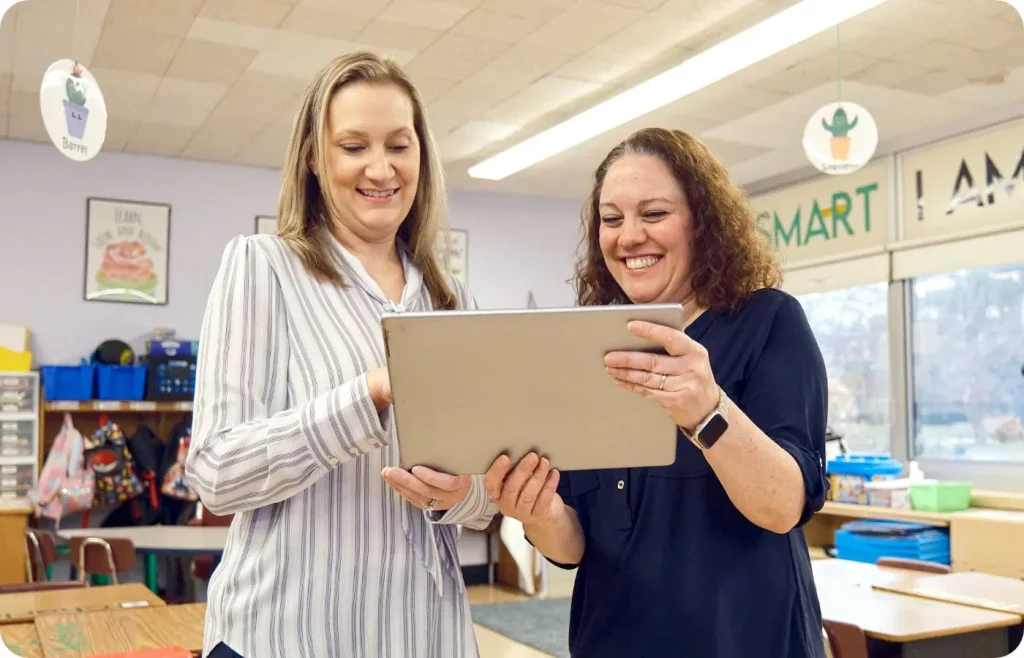
Science of Reading: The Community
Join a vibrant community of educators passionate about early literacy! In Science of Reading: The Community, you’ll find discussions on the latest research, best practices, and classroom strategies for implementing the Science of Reading. Want even more expert insights? Subscribe to Science of Reading: The Podcast for conversations with top researchers and practitioners.
Amplify Classroom Educators Facebook group
Join a dynamic community of educators who are passionate about leveraging Amplify Classroom’s interactive tools and activities. In this group, members exchange ideas, share activities, discuss best practices, and explore innovative ways to deepen student understanding. Whether you’re looking for inspiration or collaboration, you’ll find it here!

Amplify Desmos Math Facebook group
This group is the go-to space for teachers, coaches, and educators using Amplify Desmos Math, mCLASS Math, and Boost Math. Connect with peers, ask questions, get answers, provide feedback, and stay informed on important updates.
Amplify CKLA Facebook group
Looking to enhance your reading instruction? Our Amplify CKLA Facebook group is a space where educators discuss strategies for teaching reading, writing, speaking, listening, and vocabulary. Ask questions, share insights, and connect with colleagues who are using Amplify CKLA to support literacy success.
Amplify ELA Facebook group
Teaching middle school ELA comes with unique challenges and opportunities—let’s navigate them together! In the Amplify ELA Facebook group, educators swap teaching ideas, classroom successes, and concrete strategies for using Amplify ELA effectively. Join the group to gain insights from fellow teachers and share what’s working in your classroom!
Boost Reading & mCLASS Facebook group
This group is a collaborative space for educators and caregivers using Boost Reading and mCLASS®. Whether you have questions, need support, or want to share success stories, this is the place to connect. Join us to exchange ideas, get helpful tips, and learn how to create the best reading experience for your students.

Amplify Science Facebook group
Engage with fellow science educators in the Amplify Science Facebook group! Discuss best practices for implementing Amplify Science, explore ideas on how to teach in three dimensions, and share strategies for meeting NGSS standards. Educators also post classroom success stories, providing inspiration and real-world applications of the curriculum.
If you’re an Amplify Science instructional leader, the Lawerence Hall of Science encourages you to learn more and apply to join the exclusive, no-cost Instructional Leaders Community of Practice (ILCP).
Connect with us—and educators everywhere.
Our social media channels deliver a steady stream of news, insights, and conversations that support educators in connecting with each other and creating great learning experiences for students. Find Amplify on Facebook, X, LinkedIn, and Instagram!


Amplifying Your District Award winner

This Amplifying Your District Award honored two district leaders who are driving change using the Science of Reading in 2021. Motivated by low literacy rates in her school district, Alli Rice dug into the research behind the Science of Reading because she was determined to increase equity. Through various events and Knowledge Builders for the teachers in her care, she then effectively led the shift to a research-based curriculum in her district. Read on for our conversation with Alli about her work with the Science of Reading!
What does the Science of Reading mean to you?
For me, it’s really about equity. Thousands of kids are already a step behind because of their skin color, their neighborhood, or their zip code, all of these things that really shouldn’t define their academic ability or their opportunity in life. I’ve looked at statistics around prison populations and illiteracy rates. Some, so many adults are functionally illiterate and they can’t fully understand. They can’t even read their prescriptions.
I also work for a district where most of our kids are on the lower end for socioeconomic status. We have a very high ELL population and 63 home languages spoken in my district. And we are the urban center of our area. Historically, we have been a balanced literacy district, but we have watched our test scores decline.
Since discovering the Science of Reading and this completely different approach to teaching literacy, I feel like I have unlocked Pandora’s box of potential. By addressing our core and aligning our teaching practices, our students can feel success and our teachers will, too. My teachers here have the biggest hearts of any educators I have ever worked with, and they work tirelessly day in and day out to support our students. We try to provide as many enrichment opportunities to all of our kids and to expose them to the greatest and the best. The ability to read, to me, is the greatest civil right. If we’re not providing them that, I can’t sleep at night.
What news, materials, or information do you consume to help you teach?
We use Amplify CKLA and Amplify Reading and those programs are just wonderful. I am also an avid listener of Science of Reading: The Podcast. We arranged for Natalie Wexler and Susan Lambert to do a live professional development session in our district, which was so fantastic, especially for our most reluctant coaches and administrators. Our district-wide LETRS training has also been life-changing. We currently have 800 people who are completing the training, which has helped to align the district and put us all on this path to success.
One particularly impactful thing, and that I rely heavily on for support, is my teacher cadre. Each cadre is about 14 teachers in the district and they represent all of our clusters. We’ve partnered up with our Diversity, Equity, and Inclusion department to do text bias reviews on materials, which has been important for our adaptations for cultural responsiveness. Our selection cadre came from that as well, when we landed on Amplify CKLA for K–3. The teacher input and camaraderie I get from my cadre is so instrumental and I am so grateful for them.
What advice do you have for teachers starting out with the Science of Reading?
Find your people, find your community. I remember Margaret Goldberg’s presentation during last spring’s Science of Reading symposium, and how she said you need to find your dots, you need to seek out like-minded people and go where they are. Find those people who are ready to make the change like you are, or perhaps have already done it, and can be that positive support system you need to make a difference. Don’t be afraid to message people on Twitter or Facebook or LinkedIn, ask about their experiences, and build that community around you. Find the ones who are going to partner with you, who will lead you the right way, who will take your calls. And read all the books!
Watch the Science of Reading awards show!
Pseudoscience examples for critical thinking skills

MIRACLE HAIR GROWTH!
Quantum hair activation technology: This groundbreaking innovation goes beyond conventional science, delving into the realm of quantum energy to stimulate hair growth at the subatomic level. Blended with rare botanicals from ancient civilizations for luster and shine. Limited-time offer: Act now and receive a vial of stardust-infused hair serum!
Effective product…or pseudoscience? We’ll bet you guessed it. (Sorry, no stardust serum for you!)
While this hair product itself sounds like junk, reading about it can be a valuable experience for science students.
Teaching your students to identify pseudoscience in the world around them helps them learn to protect themselves from false claims that can be money-wasting at best, dangerous at worst.
And as they learn to discern, they also develop lifelong critical thinking skills!
We say knowledge is power but it’s not enough to know things, and there’s too much to know. Being able to think and not fall for someone’s bunk is my goal for my students.
—Melanie Trecek-King, biology professor and guest in Science Connections podcast Season 3, Episode 5: Thinking is power
Let’s explore how educators can use examples of pseudoscience to develop critical thinking skills—and incorporate NGSS (Next Generation Science Standards) science and engineering practices into their approach.
What’s the difference between science and pseudoscience?
Science is grounded in empirical evidence, rigorous testing, and the scientific method. Pseudoscience presents itself as scientific but lacks the fundamental elements of genuine scientific inquiry: evidence, peer review, and the capacity to generate accurate predictions.
Though pseudoscience may make vague claims, it has clear characteristics. When something is pseudoscience, it:
- Can’t be proven wrong: Makes claims that are unobservable or too vague.
- Professes “proof” without presenting actual evidence: Presents only anecdotal evidence, if any.
- Uses technobabble: See: “Quantum hair activation technology.”
For more characteristics of pseudoscience, check out Melanie Trecek-King’s episode of Science Connections!
To be sure, not all pseudoscience is harmful—pursuits and activities such as aromatherapy and astrology can be positive experiences in people’s lives—it just should not be defined as or considered science.
How addressing pseudoscience encourages critical thinking
When you teach students to identify pseudoscience, you are teaching them to use an evidence- and research-based approach when analyzing claims. Which is…science!
You are also:
- Teaching them to engage in thoughtful and educational argument/debate.
- Encouraging them to use their knowledge of science in the real world.
- Creating real-world impact.
When students learn to identify pseudoscience—faulty products, myths, and disprovable “discoveries”—they’ll be prepared and informed when making real-world decisions.
Critical thinking exercises inspired by pseudoscience
We’ve talked about “miracle” hair growth treatments, which are more commonly targeted to adults. Students may have more commonly encountered claims about or ads for alkaline water or detox diets, conspiracy theories and instances of science denial, astrology, and more. These examples offer great opportunities to discuss how to determine the difference between science and pseudoscience.
Suggested activities:
- Pseudoscience Sherlock: Ask students to find examples of pseudoscience in real life via social media, products sold in stores, or on the internet. Tell them to pay close attention to “articles” that are really ads.
- Pseudoscience lab: Prompt students to back up their claim that a given example represents pseudoscience with evidence: e.g., lack of empirical evidence, controlled experiments, or unbiased sample; absence of peer-reviewed research; reliance on anecdotes; hyperbolic and unprovable claims.
- Snake oil! Ask students to practice identifying pseudoscience by creating their own advertisements, commercials, or news segments for fake products or scientific “advancements.”
- Spread the word: Ask students to create flyers, PSAs, or articles on how to identify the characteristics of pseudoscience.
Other activities that incorporate the NGSS while also sniffing out pseudoscience:
- Asking questions: Encourage students to ask probing questions about pseudoscientific claims. How does this claim defy our current understanding of the natural world? What empirical evidence is missing?
- Developing and using models: Have students create models that illustrate the differences between a pseudoscientific claim and a well-established scientific concept. This visual representation supports understanding and critical analysis.
- Engaging in argument from evidence: Arrange debates where students argue for or against a pseudoscientific claim using evidence-based reasoning. This practice sharpens their ability to critically evaluate information.
- Obtaining, evaluating, and communicating information: Ask students to research the history and impact of a specific pseudoscientific belief. Have them present their findings, highlighting how critical thinking could have prevented widespread acceptance of the claim.
Using examples of pseudoscience in your science classroom can help students learn to not only think like scientists, but navigate the real world, too.
Bertha Vasquez, former teacher and current director of education at the Center for Inquiry, has used these approaches with her students. As she shared on Season 3, Episode 6 of Science Connections: “I guarantee you that those students, when they walked into a store with their parents and they saw a product [with] a money-back guarantee [that] cures way too many things, and it’s based on ‘ancient plant wisdom’ and has ‘scientific’ language on the box, they may go, ‘Mom, I think these people are trying to sell you some pseudoscience.’”
More to explore
- Science Connections
- Season 3, Episode 5: Thinking is power
- Season 3, Episode 6: Identifying and addressing pseudoscience
5 strategies to transform your math classroom

Want to shift your math teaching practices this year, but not sure where to start? That’s a good problem to have!
You can boost your instruction this fall with problem-based learning, technology in the math classroom, and more—all in ways that put students at the center.
“All students need the opportunity to feel like they can figure out mathematics,” says Jennifer Bay-Williams, Ph.D., an author and professor of mathematics education at University of Louisville. “That’s where they develop a math identity, [the idea] that they can do math. And they start feeling like, ‘I can figure this out.’”
Bay-Williams spoke at our 2024 Math Symposium, along with other thought leaders and expert educators. Keep reading to see how their key takeaways can help you shift your math instruction this school year!
Center student ideas in a collaborative math classroom
Amplify Math Suite Executive Director Kristin Gray had great tips for teachers looking to center student ideas in the classroom. Simply put, it’s all about helping them make several types of connections. These can include any of the following:
- Connecting students’ classroom math experiences to real life
- Connecting math ideas to one another
- Connecting their ideas to the ideas of their classmates
How do teachers foster these important connections? That’s where problem-based lessons come in. Rather than teaching a concept or formula in isolation, then having students practice it, try inviting students to collaborate on a real-life problem that will lead them to that math idea. (For example, you might ask them to work on designing a small traffic or subway system that requires developing ideas about distance, rate, and time.)
As a result, students build problem-solving skills collaboratively, feel their ideas are valued, develop their own ways to make math make sense, and learn from and with each other. Teachers also get to know and appreciate the different backgrounds and styles students bring to the classroom, opening up new opportunities for engagement—and connection.
Reimagine student engagement
No matter how engaging you are as a teacher, it’s typically students who drive engagement—and that’s actually good news. You don’t have to reinvent the wheel or do somersaults to get their attention. In fact, a lot of engagement comes from creating routine and familiar opportunities for connection. And it can also come from allowing students to make mistakes.
“We want all students to have an entry point into [math] tasks,” notes Amplify STEM Product Specialist James Oliver. “Those students that seem to always feel like they don’t fit or don’t have the identity in that math classroom, we want them to immediately have successes and have their curiosities tested.” Successes—and productive failures. “What we’ve learned is, you are not firing any synapses, nothing’s happening if you’re just getting it immediately correct.”
Nurture student curiosity
Which is better: letting students dive into a box of LEGO pieces to see what happens, or providing a step-by-step guide to building the airplane?
It’s actually a tie. In both structured and loose approaches, the key is to spark curiosity and communication. “If we want them to be mathematicians, we should let them talk about math,” says Amplify Director of 6–12 Core Math Curriculum Kurt Salisbury, Ph.D. Here’s his 3D approach:
DISCOVER
Discovering the relationships among mathematical ideas is a key part of mathematical thinking.
DESCRIBE
Students communicate their mathematical thinking by describing the processes, procedures, or relationships needed to work with a concept or pattern.
DEVELOP
When students develop a strategy they can apply to a variety of contexts, their math thinking gets validation and purpose.
So whether you lean into a more structured approach or prefer to let kids figure the LEGOS out themselves, small mindset changes like these can create more space for your students to discover, describe, and develop as mathematicians.
Make math fluency fun
As with someone fluent in a language, someone fluent in math is able to think and calculate mathematically without struggle or effort—that is, with fluidity.
In order to think and calculate fluently, students need to build a toolbox of strategies—and games are a great way to do that.
While you’re making the learning fun, students are absorbing tools they’ll use throughout their lives. “When we ensure that every student has access to a range of strategies, and has regular opportunities to choose among those strategies, that’s what games do for us.” says Bay-Williams.
Elevate student voices
When student thinking isn’t explicitly invited into the classroom, students may begin to narrow their focus, providing merely what they think their teacher wants to hear. But given genuine invitations to share, students are more likely to follow their thought process wherever it leads them, taking a more organic approach to problem-solving.
“Taking a step back as a teacher, and inviting students to take a step forward, [activates] students getting started with finding the answer,” says Stephanie Blair, vice president of Desmos Coaching. “And all of them might take a different step forward, which is okay.”
It’s time for math that does more for students
“All students need the opportunity to feel like they can figure out mathematics,” says Bay-Williams. We need to connect with our students, nurture their curiosity and comfort with math, and welcome their unique ways of thinking.
We hope the thought leaders and speakers from our Math Symposium have inspired you to do just that!
Welcome to the Resources Hub.
Dive into our array of resources on teaching and learning topics, including high-quality instructional materials, the latest conversations in STEM and literacy, and our library of recent webinars featuring thought leaders from across the country.
What is the Science of Reading?
The Science of Reading refers to the vast body of growing research that indicates how children learn to read, and the instruction that gets them there. Dive into frameworks for understanding reading fluency, read the latest research, and find strategies you can implement in your classroom. If you need a place to start, check out Science of Reading: The Podcast.
High-quality instructional materials in action
What are high-quality materials, and why do they matter? How can you support your district or school in adopting a high-quality program? We’ve gathered resources to help answer all those questions. Read our five fundamentals of HQIM in action, watch a video about high-quality curriculum coming to life, download our guide, and more.
Literacy resources
Reading is the foundation for learning—and we are here to help you build it. Dive into our multimedia library of literacy resources to learn how to engage middle schoolers in ELA and explore the Science of Reading through our popular podcast and our guide to implementing SOR-based programs in your school or district.

Math resources
Learn to envision and build a social, collaborative math classroom, hang out with educators and experts in our Math Teacher Lounge podcast, try out interactive lessons on Desmos Classroom, and discover new ways to make math learning engaging for all.
Science resources
Get the resources you need to help your students to think, read, inquire, and explore like scientists. Read our science blog posts and our guide to literacy-rich science instruction, learn the elements and dimensions of the Next Generation Science Standards—including phenomenon-based learning—and tune into our Science Connections podcast to keep up with the latest.
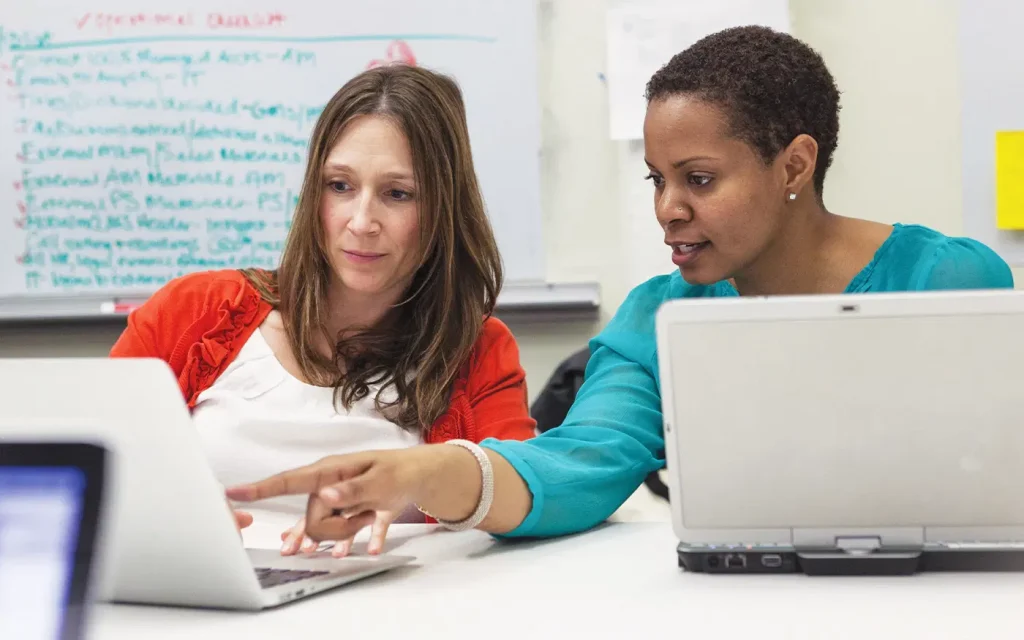
Research
Our education research hub includes our own case studies, impact and efficacy research, and documentation of the peer-reviewed research base that informs our programs. Learn about all the education intervention, science research, literacy research—and more—that make us who we are and can support your teaching every day.

Amplify webinar library
We host webinars on a range of topics featuring educators and thought leaders from across the country. You’ll find useful information about Amplify programs, professional development topics, and the latest industry insights on STEM, early literacy, high-quality instructional resources, and more.
Media
Browse Amplify’s many and recent contributions to K–12 education news. And if you’re with the media, please contact the Amplify media team (media@amplify.com).

Events
Our calendar is full of helpful webinars, podcasts, workshops, conferences, and more—all designed to support educators, share resources, and build community. Fill your calendar by visiting the Amplify Events page.
Order forms and pricing summaries
Please refer to this page for pricing by program. An Amplify account executive will be happy to provide you with more information or give you a price quote.
Request a demo
Ready to take a closer look at mCLASS? Just complete the form to request a demo and a member of our sales team will follow up.

Subscribe now
Join our community and get new episodes! Stay up to date on the latest news, episodes, and events.

Exciting News!
Amplify ELAR Skills and Amplify SLAR Habilidades y Destrezas are on the IMRA-approved list!
Thank you for taking the time to review Amplify’s English and Spanish Phonics programs for Texas. This site will allow you to easily access grade-level teacher and student resources that are IMRA approved. Final program materials will be updated in March of 2025. Simply click the program you wish to review below to get started.

Watch a quick overview before exploring!
ELAR/SLAR Skills Overview Video
Amplify Texas ELAR Skills K–3
- Adjusted Pathways Document
- Assessment Guide
- Corrective Feedback Planning Tool
- Enhancing Observations for Leaders (Coach Observation Tracker)
- Intervention Toolkit – follow these steps to access:
- Click HERE to access the site
- Click ‘Log in with Amplify’
- Enter Username and Password:
- Username: texasreviewer2024.teacher
- Password: AmplifyNumber1
- Program Overview for Leaders
- Skills Unit Internalization Template
- Skills Lesson Internalization Template
- Support for All Learners
- My Weekly Reflection
- Amplify Sound Cards – follow these steps to access:
- Click HERE to access the site
- Click ‘Log in with Amplify’
- Enter Username and Password:
- Teacher
- Username: texasreviewer2024.teacher
- Password: AmplifyNumber1
- Student
- Username: texasreviewer2024.student
- Password: AmplifyNumber1
- Teacher
Grade K
- Curriculum Maps
- Pacing Guides
- Essential Program Materials:
Grade 1
- Curriculum Maps
- Pacing Guides
- Essential Program Materials:
Grade 2
- Curriculum Maps
- Fluency Packet
- Pacing Guides
- Essential Program Materials:
Grade 3
- Appendices Grade 3
- Curriculum Maps
- Data Analysis and Progress Monitoring Grade 3
- Fluency Packet
- GEL Resources
- Pacing Guides
- Unit Assessment Tracker Grade 3
Amplify Texas SLAR Habilidades y
Destrezas K–2
- Adjusted Pathways Document
- Assessment Guide
- Corrective Feedback Planning Tool
- Enhancing Observations for Leaders (Observation Tracker)
- Program Overview for Leaders
- Support for All Learners
- My Weekly Reflection
- Dictation: General Description / Dictado: descripción general
- Skills Unit Internalization Template / Planificación de la unidad
- Skills Lesson Internalization Template / Planificación de la lección
- Click HERE to access Amplify Sound Cards
- Click Log in with Amplify
- Enter Username and Password:
- Teacher
- Username: texasreviewer2024.teacher
- Password: AmplifyNumber1
- Student
- Username: texasreviewer2024.student
- Password: AmplifyNumber1
Grado K
- Year at a Glance
- Curriculum Maps / Mapa curricular: Habilidades y Destrezas
- Bilingual Planning Tools
- Writing Evaluation Rubric
- Pacing Guides / Guía de clases
- Essential program materials
- Image Cards / Tarjetas de imágenes
- Large Letter Cards / Tarjetas grandes de letras
- Small Letter Cards / Tarjetas pequeñas de letras
- Vocabulary Book – Teacher Guide / Libro de vocabulario: Guía del maestro
- Vocabulary Book – Activity Book / Libro de vocabulario: Cuaderno del estudiante
- Teacher Guide / Guía del maestro
- Activity Book / Cuaderno de actividades
- Big Book / Libro grande
- Editable Lesson Slides / Diapositivas de lecciones – Unit Sample
- Poetry Lesson 1 / Poesía Lección 1
- Poetry Lesson 1 Poem / Poesía Lección 1 Poema
- Digital Components (Projectables)/ Componentes digitales
- Large Syllable Cards / Tarjetas grandes de sílabas
- Take-Home Letter (English)
- Teacher Guide / Guía del maestro
- Activity Book / Cuaderno de actividades
- Big Book / Libro grande
- Editable Lesson Slides / Diapositivas de lecciones – Unit Sample
- Digital Compenents (Projectables)/ Componentes digitales
- Large Syllable Cards / Tarjetas grandes de sílabas
- Small Syllable Cards / Tarjetas pequeñas de sílabas
- Take-Home Letter (English)
- Teacher Guide / Guía del maestro
- Activity Book / Cuaderno de actividades
- Big Book / Libro grande
- Editable Lesson Slides / Diapositivas de lecciones – Unit Sample
- Poetry Lesson 2 / Poesía Lección 2
- Poetry Lesson 2 Poem / Poesía Lección 2 Poema
- Digital Components (Projectables)/ Componentes digitales
- Large Syllable Cards / Tarjetas grandes de sílabas
- Small Syllable Cards / Tarjetas pequeñas de sílabas
- Take-Home Letter (English)
- Teacher Guide / Guía del maestro
- Activity Book / Cuaderno de actividades
- Reader / Libro de lectura
- Big Book / Libro grande
- Editable Lesson Slides / Diapositivas de lecciones – Unit Sample
- Digital Components (Projectables)/ Componentes digitales
- Large Syllable Cards / Tarjetas grandes de sílabas
- Small Syllable Cards / Tarjetas pequeñas de sílabas
- Take-Home Letter (English)
- Teacher Guide / Guía del maestro
- Activity Book / Cuaderno de actividades
- Reader / Libro de lectura
- Big Book / Libro grande
- Editable Lesson Slides / Diapositivas de lecciones – Unit Sample
- Poetry Lesson 3 / Poesía Lección 3
- Poetry Lesson 3 Poem / Poesía Lección 3 Poema
- Digital Components (Projectables)/ Componentes digitales
- Large Syllable Cards / Tarjetas grandes de sílabas
- Small Syllable Cards / Tarjetas pequeñas de sílabas
- Take-Home Letter (English)
- Teacher Guide / Guía del maestro
- Activity Book / Cuaderno de actividades
- Reader / Libro de lectura
- Big Book / Libro grande
- Editable Lesson Slides / Diapositivas de lecciones – Unit Sample
- Digital Components (Projectables)/ Componentes digitales
- Large Syllable Cards / Tarjetas grandes de sílabas
- Small Syllable Cards / Tarjetas pequeñas de sílabas
- Take-Home Letter (English)
- Teacher Guide / Guía del maestro
- Activity Book / Cuaderno de actividades
- Reader / Libro de lectura
- Big Book / Libro grande
- Editable Lesson Slides / Diapositivas de lecciones – Unit Sample
- Digital Components (Projectables)/ Componentes digitales
- Large Syllable Cards / Tarjetas grandes de sílabas
- Small Syllable Cards / Tarjetas pequeñas de sílabas
- Take-Home Letter (English)
- Teacher Guide / Guía del maestro
- Activity Book / Cuaderno de actividades
- Reader / Libro de lectura
- Big Book / Libro grande
- Editable Lesson Slides / Diapositivas de lecciones – Unit Sample
- Poetry Lesson 4 / Poesía Lección 4
- Poetry Lesson 4 Poem / Poesía Lección 4 Poema
- Digital Components (Projectables)/ Componentes digitales
- Large Syllable Cards / Tarjetas grandes de sílabas
- Small Syllable Cards / Tarjetas pequeñas de sílabas
- Take-Home Letter (English)
Grado 1
- Year at a Glance
- Curriculum Maps / Mapa curricular: Habilidades y Destrezas
- Bilingual Planning Tools
- Writing Evaluation Rubric
- Pacing Guides / Guía de clases
- Essential K–2 program materials
- Teacher Guide / Guía del maestro
- Activity Book / Cuaderno de actividades
- Reader / Libro de lectura
- Big Book / Libro grande
- Editable Lesson Slides / Diapositivas de lecciones – Unit Sample
- Poetry Lesson 1 / Poesía Lección 1
- Poetry Lesson 1 Poem / Poesía Lección 1 Poema
- Digital Components (Projectables)/ Componentes digitales
- Large Syllable Cards / Tarjetas grandes de sílibas
- Take-Home Letter (English)
- Teacher Guide / Guía del maestro
- Activity Book / Cuaderno de actividades
- Reader / Libro de lectura
- Big Book / Libro grande
- Editable Lesson Slides / Diapositivas de lecciones – Unit Sample
- Digital Components(Projectables)/ Componentes digitales
- Small Syllable Cards / Tarjetas pequeñas de sílabas
- Take-Home Letter (English)
- Teacher Guide / Guía del maestro
- Activity Book / Cuaderno de actividades
- Reader / Libro de lectura
- Big Book / Libro grande
- Editable Lesson Slides / Diapositivas de lecciones – Unit Sample
- Poetry Lesson 2 / Poesía Lección 2
- Poetry Lesson 2 Poem / Poesía Lección 2 Poema
- Digital Components (Projectables)/ Componentes digitales
- Large Syllable Cards / Tarjetas grandes de sílabas
- Small Syllable Cards / Tarjetas pequeñas de sílabas
- Take-Home Letter (English)
- Teacher Guide / Guía del maestro
- Activity Book / Cuaderno de actividades
- Reader / Libro de lectura
- Big Book / Libro grande
- Editable Lesson Slides / Diapositivas de lecciones – Unit Sample
- Poetry Lesson 3 / Poesía Lección 3
- Poetry Lesson 3 Poem / Poesía Lección 3 Poema
- Digital Components (Projectables)/ Componentes digitales
- Large Syllable Cards / Tarjetas grandes de sílabas
- Small Syllable Cards / Tarjetas pequeñas de sílabas
- Take-Home Letter (English)
- Teacher Guide / Guía del maestro
- Activity Book / Cuaderno de actividades
- Reader / Libro de lectura
- Editable Lesson Slides / Diapositivas de lecciones – Unit Sample
- Digital Components (Projectables)/ Componentes digitales
- Large Syllable Cards / Tarjetas grandes de sílabas
- Small Syllable Cards / Tarjetas pequeñas de sílabas
- Take-Home Letter (English)
- Teacher Guide / Guía del maestro
- Activity Book / Cuaderno de actividades
- Reader / Libro de lectura
- Editable Lesson Slides / Diapositivas de lecciones – Unit Sample
- Digital Components (Projectables)/ Componentes digitales
- Large Syllable Cards / Tarjetas grandes de sílabas
- Small Syllable Cards / Tarjetas pequeñas de sílabas
- Take-Home Letter (English)
- Teacher Guide / Guía del maestro
- Activity Book / Cuaderno de actividades
- Reader / Libro de lectura
- Editable Lesson Slides / Diapositivas de lecciones – Unit Sample
- Digital Components (Projectables)/ Componentes digitales
- Large Syllable Cards / Tarjetas grandes de sílabas
- Small Syllable Cards / Tarjetas pequeñas de sílabas
- Take-Home Letter (English)
- Teacher Guide / Guía del maestro
- Activity Book / Cuaderno de actividades
- Reader / Libro de lectura
- Editable Lesson Slides / Diapositivas de lecciones – Unit Sample
- Poetry Lesson 4 / Poesía Lección 4
- Poetry Lesson 4 Poem / Poesía Lección 4 Poema
- Digital Components (Portables)/ Componentes digitales
- Take-Home Letter (English)
Grado 2
- Year at a Glance
- Curriculum Maps / Mapa curricular: Habilidades y Destrezas
- Bilingual Planning Tools
- Fluency Packet / Paquete de fluidez: Guía del maestro
- Writing Evaluation Rubric
- Pacing Guides / Guía de clases
- Essential K–2 program materials
- Image Cards / Tarjetas de imágenes
- Large Letter Cards / Tarjetas grandes de letras
- Vocabulary Book – Teacher Guide / Libro de vocabulario: Guía del maestro
- Vocabulary Book – Activity Book / Libro de vocabulario: Cuaderno del estudiante
- Cursive Activity Book
- Teacher Guide / Guía del maestro
- Activity Book / Cuaderno de actividades
- Reader / Libro de lectura
- Editable Lesson Slides / Diapositivas de lecciones – Unit Sample
- Digital Components (Projectables)/ Componentes digitales
- Large Syllable Cards / Tarjetas grandes de sílabas
- Small Syllable Cards / Tarjetas pequeñas de sílabas
- Take-Home Letter (English)
- Teacher Guide / Guía del maestro
- Activity Book / Cuaderno de actividades
- Reader / Libro de lectura
- Editable Lesson Slides / Diapositivas de lecciones – Unit Sample
- Poetry Lesson 1 / Poesía Lección 1
- Poetry Lesson 1 Poem / Poesía Lección 1 Poema
- Digital Components (Projectables)/ Componentes digitales
- Take-Home Letter (English)
- Teacher Guide / Guía del maestro
- Activity Book / Cuaderno de actividades
- Reader / Libro de lectura
- Editable Lesson Slides / Diapositivas de lecciones – Unit Sample
- Poetry Lesson 2 / Poesía Lección 2
- Poetry Lesson 2 Poem / Poesía Lección 2 Poema
- Digital Components (Projectables)/ Componentes digitales
- Take-Home Letter (English)
- Teacher Guide / Guía del maestro
- Activity Book / Cuaderno de actividades
- Reader / Libro de lectura
- Editable Lesson Slides / Diapositivas de lecciones – Unit Sample
- Poetry Lesson 3 / Poesía Lección 3
- Poetry Lesson 3 Poem / Poesía Lección 3 Poema
- Digital Components (Projectables)/ Componentes digitales
- Large Syllable Cards / Tarjetas grandes de sílabas
- Take-Home Letter (English)
- Teacher Guide / Guía del maestro
- Activity Book / Cuaderno de actividades
- Reader / Libro de lectura
- Editable Lesson Slides / Diapositivas de lecciones – Unit Sample
- Poetry Lesson 4 / Poesía Lección 4
- Poetry Lesson 4 Poem / Poesía Lección 4 Poema
- Digital Components (Projectables)/ Componentes digitales
- Take-Home Letter (English)
High-Quality Professional Development
Amplify’s South Central professional development (PD) team provides a variety of learning experience over multiple years to incrementally develop and apply the knowledge and skills needed for effective and self-sustaining implementation. All PD is tailored to align to the Amplify Texas edition, support TEKS-aligned instruction, and is supported by a team of former educators and leaders with Texas experience.
You will find embedded professional development support in the program, including an extensive and responsive PD Library.
Watch this video to learn more about the PD Library!
S2-02: Developing your own teaching style: Tips from a veteran teacher.

In this episode, Eric Cross sits down with veteran educator and former Miami-Dade County Public Schools (M-DCPS) Middle School Science Teacher of the Year, Marilyn Dieppa. During the show, Marilyn shares tips for new teachers, ways to inspire students, and how she utilizes her journalism background to develop literacy skills within her science classroom. She also shares her experiences developing a robotics academy, and the VEX IQ World’s Competition. Explore more from Science Connections by visiting our main page.
Marilyn Dieppa (00:01):
I think my favorite thing is their success. Whether it’s robotics, whether it’s in the classroom, that they pass a test for the first time, those are my moments of success. And that’s what makes me happy.
Eric Cross (00:15):
Marilyn Dieppa is a veteran middle-school science educator at Miami-Dade County public schools. Dieppa launched her school’s STEM Academy in 2016 and developed professional development through the STEM Transformation Institute of Florida International University. Dieppa’s coached numerous new teachers and was the 2018 Miami-Dade County public schools’ middle-school Science Teacher of the Year. In this episode, we discussed her transition from a career in journalism to the science classroom and the value of personal and professional support systems for teacher longevity. And now, please enjoy my conversation with Marilyn Dieppa.
Marilyn Dieppa (00:52):
Nice to meet you, Eric.
Eric Cross (00:53):
Nice to meet you too. Thank you for being willing to come on the podcast.
Marilyn Dieppa (00:58):
Not a problem.
Eric Cross (00:59):
So you’re out in, you’re out in Florida. In Dade County. I’m out here in San Diego. So I’m like literally on the other side of the country. Have you—were you born and raised in Florida?
Marilyn Dieppa (01:09):
I’ve been here for 40 years, so I’ve been here most of my life. Yeah. I’m Puerto Rican, but I was, you know, my young childhood, I was in New Jersey. And then when I was 15, I came down.
Eric Cross (01:23):
I looked at like your—some of your accolades, which are really impressive. The things that you’ve done for students with robotics, and all the education, or, kind of like teacher enrichment, a lot of mentoring and coaching that you do now.
Marilyn Dieppa (01:35):
I am part of leadership team for the district. I do a lot of training. I work on curriculum. I help with pacing guides to make sure that everything is based on what the state wants, what the district wants. I have done a lot for the district in the last, probably 20 years.
Eric Cross (01:52):
What got you into teaching initially? What was your…like, why middle school science? We’re like a unique group.
Marilyn Dieppa (01:57):
This is the second career choice for me. So I’ve only been doing this for 24 years. I was a journalism major and then I got married and then I had my child and I wanted to do something. My thing was that I wanted to go to Iraq. I wanted to cover the news. I have a minor in Middle Eastern culture. so there was a lot of things that were in my mind when I was young, pre-married. and after, you know, you have children, priorities kind of change. So I totally changed, pretty much had to start from scratch, with my degree, because nothing kind of transferred over from journalism to teaching. So before I actually did that, I started subbing just to see if I liked it. And I fell in love with teaching right away. And that’s how I got into it. So my degree is really in elementary.
Eric Cross (02:45):
Now, when you were subbing, you were doing elementary school.
Marilyn Dieppa (02:47):
Yes. Pretty much elementary.
Eric Cross (02:48):
How did you go from there to like, middle-school science?
Marilyn Dieppa (02:50):
My thing was writing, not necessarily math and science. But I ended up with my cooperating teacher, my CT, she was a math and science teacher. So I was put with her, and who knew that I liked science and I liked math? So I ended up with that and I infused a lot of labs. So in elementary you tend to—I think teachers are a little bit afraid of the labs, so I infused a lot of literature with my labs. I infused all my—I did it like a whole-group type thing, everything I did with my labs, I incorporated the math. I incorporated the science. I incorporated, you know, the reading with it. And from there, I just—you know, they ended up putting me in a lot of leadership roles with science. And then my principal was opening up the school where I’m at now, my former principal. And she, you know, she took me with her. And so her dissertation was in looping, on how following your students, did that really make a difference in test scores? So I was part of her like test study, and I had students that I followed for two years in a row. And she would look at data and that was part of her dissertation. So that really made a difference. So I ended up moving with my students and my first group of middle-school students, I had them for four years.
Eric Cross (04:10):
Oh, wow.
Marilyn Dieppa (04:10):
And that was—those were my children. I, like, boohooed when they left. And I ended up, you know, literally following them from fourth grade all the way to more than four years. Because it was all the way until they left eighth grade.
Eric Cross (04:21):
What did you think of that model of looping with students?
Marilyn Dieppa (04:24):
I think it’s a great model, depending on the kids that you have. I love, you know, the school that I’m at. I’m very blessed, because it’s a great school. It’s really a wonderful school. I’ve had really good relationships with students. They always come back, and they always come back when they wanna tell me that they’re in something in science, right? They’re an engineer or they’re a nurse, or they’re, you know, doctors at this point. So I’ve seen a little bit of everything with my students. And it’s very rewarding.
Eric Cross (04:52):
That’s super-exciting, right? When they come back and they’re either telling you about their college major or what career they’re in. And I like to recruit them at that point and ask them to come talk to my students. Because Google photos gives you unlimited storage, if you have a teacher account, I actually have photos of students from like 10 years ago.
Marilyn Dieppa (05:09):
Oh, wow.
Eric Cross (05:10):
And I’ll put their middle school picture next to their—and then their current picture.
Marilyn Dieppa (05:14):
Oh, that’s awesome. I’ve never done that.
Eric Cross (05:17):
Yeah. You could see, like, they could see the younger version of them.
Marilyn Dieppa (05:19):
And it’s funny because even with the STEM Academy, which I have now, I have the same group of kids for three years. So I’ve had already few groups that have gone by, and those kids come back to me, they come back to our competitions, they help out, you know, they’re very integrated with the robotics. So I’m getting those students back as well. So I’ve maintained that relationship with them as well.
Eric Cross (05:46):
How do you develop your own classroom management style? How did you figure out where your—where you fit and what works for you? What was your process like for that?
Marilyn Dieppa (05:55):
You know what I think, just by teaching, teaching them to respect. And one thing that I’ve developed that—I don’t scream in my classroom; I just talk to the kids. I have very good one-on-one communication with them. I show them respect. I treat them as an equal.
Eric Cross (06:12):
And what grade are you teaching currently?
Marilyn Dieppa (06:14):
Eighth grade. So I do science. I teach high school science. I teach comprehensive, which is like our regular students. I have kids who are inclusion. I have kids that are ESL. So I teach all, you know, dynamics of students. And then I have the academy, which is something separate. But I infuse a lot of physics and of course that they need in order for them to be competitive.
Eric Cross (06:38):
So tell me about that. What is the STEM Academy?
Marilyn Dieppa (06:40):
It is an enrichment program. So it is an advanced enrichment program, because they do follow like the math enrichment. so they have to be really good at math in order for them to be accepted into the program. So, one day we got like a grant, and we got a little robot, the VEX. I don’t know if you’re familiar with VEX. I know it’s big in California. So I was told, “Here, this is for you. See what you can do with it.” So I started with an after-school club, the following year. It kind of hit off. We went to our first little competition. The kids did really well. And then the following year, they told me, “Hey, we need an academy, make it happen.” So it’s not like I had a curriculum. I kind of do my own thing. But we do a lot of different types of things. Our big portion is the VEX, but I also do sec me, we do Future City. We do a whole bunch of competitions within the district. You know, Math Bowl. So I get my kids prepared for anything that really has to do competitive-based. I do that with those students.
Eric Cross (07:38):
What age range or which grade range?
Marilyn Dieppa (07:40):
Sixth to eighth. We have kids who stay the three years and then we have kids that after, you know, sometimes it’s more the parents that want them to be part of the engineering. but sometimes we lose kids after the first year and you know, that’s fine because we wanna really have kids who really wanna be there and are, you know, committed to it. Because there’s a lot of commitments to that program.
Eric Cross (08:01):
Those types of programs, there’s so many like outside-of-the-classroom things that you need to take care of. If you’re going to competitions, and weekends, and all those types of things. Is there a team of teachers that are doing this or is it just you?
Marilyn Dieppa (08:10):
Team of one! .
Eric Cross (08:11):
A team of one! Right? Like, yeah. And how long have you been running this yourself?
Marilyn Dieppa (08:16):
This is probably like my sixth year.
Eric Cross (08:19):
OK.
Marilyn Dieppa (08:20):
So we’ve been very successful. That program is totally inquiry. It’s totally on them. I don’t know how to use a little, you know, remote control. I don’t know how to do anything. I’m there for troubleshoot and to make sure that they’re on task, but they have been very successful because I do put everything on them. And I go, “It’s not my robot. This is your robot.” So they build everything
Eric Cross (08:40):
And that seems to be the theme, especially with, a lot of times, with science teachers. And encouraging them to say, “You don’t have to be the expert in everything.” Teachers tend to be more like risk-taking and innovative when they’re willing to like, not have to be—I don’t have to know everything in order to do something.
Marilyn Dieppa (08:54):
Exactly. So we’ve been very successful. Very proud of my students because you know, we’ve, gone to Worlds twice. We’ve qualified three times in the six years. Actually, I had two teams that went last year.
Eric Cross (09:07):
What is, what is Worlds? That sounds like a big deal.
Marilyn Dieppa (09:10):
It’s a huge thing. And it’s teams from all over the world. You can actually look it up online. It’s—from this year, there were teams, although they said China was not gonna be in there, there were actually some teams from China. There were teams from New Zealand. There were teams from South Africa, the UK, a lot of teams from, from Europe. And then there are teams from here. We are the host country. We’ve been the host country for a while. But it’s amazing. The first time we went, the first team that we were paired up with was a Russian team. So, you know, there was Google Translate and the kids—and it’s, they didn’t need to know the same language because they communicated with the robots. So it was really amazing. They work collaboratively. So it’s not like a battle box. So they work two teams together and whatever, they both get together, they both earn the same points. So it teaches leadership, and there’s so much more to it than just a robot. They have to know how to communicate, because they do get interviewed. They do online challenges. It’s so many things. It’s just—I think it’s one of the best things that our district has really invested in, because these kids are so into it, and they love it so much. For the last year and this year I have the same kids that are in the robotics. I’m also gonna be teaching them physical science. So I have to teach them that separation between what we’re doing in our science classes versus what they’re doing in the class. So there has to be a separation. So they see one side of me in this class where it’s very laid back. It’s very chill. No, no, you, you guys do it. There’s no sitting down. It’s like organized chaos, I call it all the time. But then in the classroom, it has to be a little bit more organized.
Eric Cross (10:53):
Is that something that, as far as getting the parts—like people do, like, GoFundMes and donations and Donors Choose. Can you—
Marilyn Dieppa (11:00):
We get grant money, grant money from the town of Miami Lakes, the town that I work in. So the town actually sponsors us. Without them, we could not do that. It is a very expensive activity to do. If you go online and you look up the prices, you’ll be, “Oh my gosh, goodness, it’s very expensive.” You know? But the smiles on their faces when they come back and they have those little certificates, it means nothing, you know, it’s a little piece of paper. But that, to me, to them, it means the world.
Eric Cross (11:27):
Well, teachers, if you’re looking for ways to get that stuff funded, be fearless on behalf of asking for free things for your kids. Find a local business that somewhat connects to even robotics and say, “Hey, look, I’ve got 50 kids that really want to get after it. And we need X amount of dollars so we can buy those robotics kits. We’ll put your banner up somewhere. We’ll do all these other things. But come support our students. Come to the competition. Donate whatever you can for our students.” And many organizations will say, will say yes. Many just aren’t asked.
Marilyn Dieppa (11:57):
Right. And a lot of towns do have, like, education advisory boards. You wanna reach out to those people. ‘Cause those are the communities where they have money set aside in order to assist things like this.
Eric Cross (12:09):
Do you notice any carryover between the students that do get involved with these extracurriculars into the regular science classroom?
Marilyn Dieppa (12:16):
For sure. They’re more, they’re more disciplined. They tend to care more about the sciences because they see that link in the science. I mean, my kids are talking about gear ratios. They’re talking about, you know, mass accelerations. They had—they infuse all these things. And when they see it in the science class, they’re making that connection, which is really wonderful.
Eric Cross (12:41):
It seems like there’s a high level of engagement because this is an authentic thing. It’s almost, this should be science.
Marilyn Dieppa (12:46):
Yes. And not only that, the writing skills that have to be interpreted because part of the program is that they, they don’t necessarily have to have it, but in order for them to go far and make it to Worlds, they have to have an engineering notebook. So our strength sometimes is not the robot, but the engineering notebook.
Eric Cross (13:02):
his is where the journalism major shines.
Marilyn Dieppa (13:05):
Yes. And I go, “Guys, this is your Ikea manual. You have to explain what you’re doing, what pieces you’re using, what’s going right.” You know, and then they have to interpret and see what didn’t work. How can they fix it? So there’s so much problem-solving. It’s real life, it’s what they’re doing there. More so than sitting and learning rote, you know, vocabulary or whatever the case might be, ’cause they’re actually applying what they’re learning.
Eric Cross (13:31):
Yeah. And that’s, that’s so critical, the communication piece. Because seems like now in society, more than ever, even just being able to communicate something with bad science is convincing to people. Versus if you have great science, but you can’t communicate it, you’re not gonna be able to get it out into the public. It’s so great to see a program that exactly brings together this literacy aspect, in addition to kind of this content and skills aspect of doing the science.
Marilyn Dieppa (13:57):
And that’s what really, you know, since I started, that’s pretty much what I’ve done. My strength, believe it or not, when I was growing up, was not the science. I think I didn’t really have a really good science background. But I remember reflecting and saying, “I don’t want my students to feel like I felt when I was a child.” I wanna make sure that I give them everything, you know, give them the hands-on experience. I think I had one teacher when I was growing up and I still remember him. He was my second-grade teacher and he was just so amazing with the science. And it was just like the only really good experience I had. And I think that always stayed in the back of my mind. And when I started teaching and I go, “I wanna give these kids these experiences.” You know, sometimes I see kids in eighth grade and I go, how sad! They see water boiling and they’re just, like, in a lab room. And they’re just like, in awe, because there’s water boiling. And I go, “You guys haven’t seen water boil before?” And he goes, “No, no, no, not like this!” And I go, oh wow.
Eric Cross (14:58):
Even if it’s simple, everyday phenomena, everyday things that people deal with in a science classroom, or when you’re a teacher in that setting, it’s just—it just hits different, right? Like you, you know, you drop dye into water and watch it diffuse. And it’s like, whoa! Because they’re looking at it through that different lens. And that’s why one of the reasons why—I’m super-biased, but as science teachers, we get to do the coolest stuff.
Marilyn Dieppa (15:21):
Yeah, we do.
Eric Cross (15:22):
We just do. It’s so much fun. And basically anything that happens, that’s cool, like in, innovation and things like that, we can figure out ways to incorporate into our classroom. Now, as a coach and as a mentor, you’ve had multiple student teachers in your classroom. And we have, you know, huge need for new teachers. I teach teachers who are getting their CR, getting their credential. And the landscape of education is, is constantly shifting. You’ve watched it shift over the years. What are your biggest tips that you give to new teachers?
Marilyn Dieppa (15:49):
Well, I just had an intern last semester. I’ve had a few interns where, you know, not only are they doing this, but they’re also learning robotics too. So they’re really getting aspect in how to incorporate that. You don’t have to have everything separate. You can include everything together. But I think, I think it just comes from the foundation where they’re not exposed. Even me, when I went to college, I don’t remember doing so many labs as I should have. And I think it’s just a fear of them trying new things and failing. And I go, you know what? I, sometimes my first class is my guinea pig class, because I always change my labs. I don’t like to do the same thing over and over again. If I see something online, I go, “Oh wow. You know what, I’m gonna try it.” And I go, “Hey guys, this is the first time; we’re gonna do this together.” And it’s really—it’s just for them not to be fearful. And I think especially for science teachers or like even elementary, to give the kids the foundation that they need, they’re afraid. They’re afraid of failing and not trying something new, and say, “Hey, it’s OK. There’s other ways of doing this.” You know? So I always say, “My first class is always my guinea pig class, ’cause that’s the class I’m gonna try this on.” And then, you know, when you have to tweak, reflect, then we do that.
Eric Cross (17:06):
What are some of the things that you’ve seen or encouragements that you give to teachers who are teaching, kind of, in this kind of newer landscape, where as teachers, you become more than just a science teacher. I mean, you’re a mentor. You’re an encourager. Sometimes you’re a counselor for students. And then there, there are things that happen externally that impact teachers as well. It’s a tough job.
Marilyn Dieppa (17:24):
So I always say, you know, when you have a child, we have to be very aware of what’s happening with our children. Especially after these two years of the pandemic. That was kind of crazy. Last year was a really tough year, I think, for most educators that were back in the classroom. But I always tell ’em, you have to be really aware of what’s going on with these kids outside. When you see somebody who’s not doing anything and then you have the parents are there supporting. There’s something going—I mean, there has to be something going on. Kids are not just going to be so, so defiant. You’re gonna have very few that will be like that. But most of them it’s just gotta see and read those kids and see what’s going on, and don’t be afraid to—and I always say, I’m not there to really be your friend, but I’m there to help you. And you gotta tell ’em, you know, if you need to talk, come talk to me. Have an open-door policy with those kids.
Eric Cross (18:16):
What’s been your favorite part of the job? Something you really enjoy about the job? Especially having been teaching for as long as you have.
Marilyn Dieppa (18:23):
I think my favorite thing is their success. Whether they have struggled all the year and they’ve had that one piece of success or they don’t realize what they got out of middle school until they get to high school and they come back to you and they tell you it’s, you know, seeing my kids, whether it’s robotics, whether it’s in the classroom, that they pass a test for the first time, those are my moments of success. And that’s what makes me happy.
Eric Cross (18:52):
So you get those ahas, you get those wins, those turnarounds. And it’s like, “Ah, this keeps me going. This is so good!” But there’s something that I say to myself when I do get challenges in the classroom is teaching seventh grade, I say, “They’re 12. They’re 13. They’ve been on earth for 13 years. And for the first five or six, like, you know, they’re just kind of coming online at that point. And they’re going through all these changes.” And it grounds me in the fact that ’cause sometimes the things that you experience can be really, really challenging kind of interpersonally. And I remind myself, “Well, it’s like—you’re not 28 years old. Like, you’re, 12 and 13, and you need me to not be Mr. Cross, the science teacher. You need me to be, you know, Mr. Cross, the mentor, or Mr. Cross, the coach.” Like you were saying, open door. Keeping that open door, keeping that relationship. Because so much of what we’re doing is like life coaching in addition—and that connects to their success in the classroom. There’s a direct relationship.
Marilyn Dieppa (19:45):
Yes, yes, yes, absolutely.
Eric Cross (19:46):
Now what gets you back each fall? Because at the end, you know, every school year it’s like, “That was a tough one!” Especially with the last couple years. Right? So what’s been something, what gets you back in the classroom every fall, so that you’re ready for your students?
Marilyn Dieppa (20:02):
I think the support I get at home. I have a husband who is the most supportive person ever. He always tells me, “Your kids are grown up.” You know, my kids are adults now. “Enjoy these kids, what they’re doing. You don’t know how much they need you.” So he does tell me that. He goes, “And don’t complain! You love it!” And also my administration, they back me up. And that’s what I think what keeps you coming back. I love my administration. Whatever I ask for, they don’t tell me no. They tell me I’m crazy, but they don’t tell me no. You know, we have these huge competitions once a year at our school, administration has to be involved ’cause they have to be there, and they go, “We do this because we love you! But you know, you’re crazy!”
Eric Cross (20:48):
It’s interesting, ’cause both of these things, they involve human connection. And one is your support system at home, which is incredibly valuable. Shout out to your husband; I don’t know if he’s around. And then the culture, like, feeling supported. Teachers, you know—and it’s not just in education, but people, I’ve experienced—will work harder, longer, be more committed, when they have that intangible. When they feel like they’re connected to something bigger than them. Or on a team, not in a silo. And one person can really create or break whether that happens. And just like us in the classroom as a teacher, right? Like, “What makes you like this teacher’s class?” “Well, I feel connected. I feel safe. I feel it’s fun. It’s the culture!” I like to end with asking this question and you kind of alluded to an answer earlier, but who is one, or it could be multiple teachers, that you’ve had in your own life as a kid growing up or young person in kindergarten through 12th grade, could even be college, that has inspired you? Or made a difference in your life one way or another? Like, who pops out? I feel like we all have somebody.
Marilyn Dieppa (21:58):
One was my second grade teacher, as I mentioned before. Mr. Fernandez, never forget him. And my other teacher was my high school teacher, Mr. Velazquez. It was in New Jersey as well. And he was the one that really got me into the love of writing. He was my Spanish teacher, actually. He wasn’t even, you know—he was like an elective teacher. But he just made me believe like, “Wow, you’re like a really good writer!” To me, those two gentlemen really stood out. Very fond memories of being in school and really enjoying what I was doing.
Eric Cross (22:33):
There are so many teachers that we all have been impacted by. And many of us now who are teachers, we sit in that same seat. We fill those same shoes. And going back to what you had said earlier, one of the most rewarding things is when those kids come back to you. And I’m thinking about all the work that you’ve done, all the students you’ve poured into, all the competitions you’ve done. The ones that have come back to you are a small fragment of the ones that you’ve impacted.
Marilyn Dieppa (22:59):
Mm-hmm, yeah.
Eric Cross (23:00):
‘Cause we think about our own story, right? Like you’ve gone on and paid dividends for that one teacher in second grade. You know, Mr. Fernandez or Mr. Velasquez like, they went and they just gave you exposure to something or helped you fall in love with something. And you went on this trajectory. And if we could see the timeline of, like, this teacher created Marilyn, and Marilyn went and did this, and then what do all those students do? And that, I don’t know, there’s so many jobs that are gonna be hard work and that are gonna be challenging and stressful. But that is the thing that I think fills me when I listen to your story. I just think about like all the students throughout Florida that you have—you probably will never hear from, but have gone on to do amazing things or become great people who would go back and talk about you and say you were an inspiration for them. Marilyn, thank you for taking the time out to be on the podcast and for not only teaching students, but inspiring and coaching younger teachers and new teachers. It’s so critical. And for being willing to spend so much of your time beyond the classroom to create these opportunities for students to do this awesome, fun, engaging science, and go to Worlds. I wish you a great school year.
Marilyn Dieppa (24:11):
Thank you. You too.
Eric Cross (24:12):
We hope you make it to Worlds again and crush, in a competitive, collaborative type of environment. We’ll be checking out—I’m sure other teachers will check out Vex Robotics. Thanks for being on the podcast.
Marilyn Dieppa (24:23):
Thank you. You too, Eric.
Eric Cross (24:26):
Thanks so much for listening. Now we want to hear more about you. Do you have any educators who inspire you? You can nominate them as a future guest on Science Connections by emailing STEM@amplify.com. That’s S T E M at amplifycom.wpengine.com. Make sure to click subscribe wherever you listen to podcasts. And join our Facebook group, Science Connections: The Community. Until next time.
Stay connected!
Join our community and get new episodes every other Tuesday!
We’ll also share new and exciting free resources for your classroom every month.
Meet the guest
Marilyn Dieppa is a long-time educator and STEM Academy coach at Miami Dade County Public Schools. Currently in her 24th year, Marilyn teaches 8th grade science and coaches the STEM Academy at Bob Graham Education Center. She launched the Science, Technology, Engineering and Math (STEM) Academy during the 2016-2017 school year, and the teams compete in VEX IQ World’s Competition representing both the district and the state. She has been the middle school department chairperson since 2003, attends the district department meetings and Instructional Capacity-building Academy (ICAD), and trains her science department.
Dieppa holds a bachelor of science in Elementary Education and a master of science in reading education. She is also a Nationally Board-Certified Teacher in Science.

About Science Connections
Welcome to Science Connections! Science is changing before our eyes, now more than ever. So…how do we help kids figure that out? We will bring on educators, scientists, and more to discuss the importance of high-quality science instruction. In this episode, hear from our host Eric Cross about his work engaging students as a K-8 science teacher. Listen here!

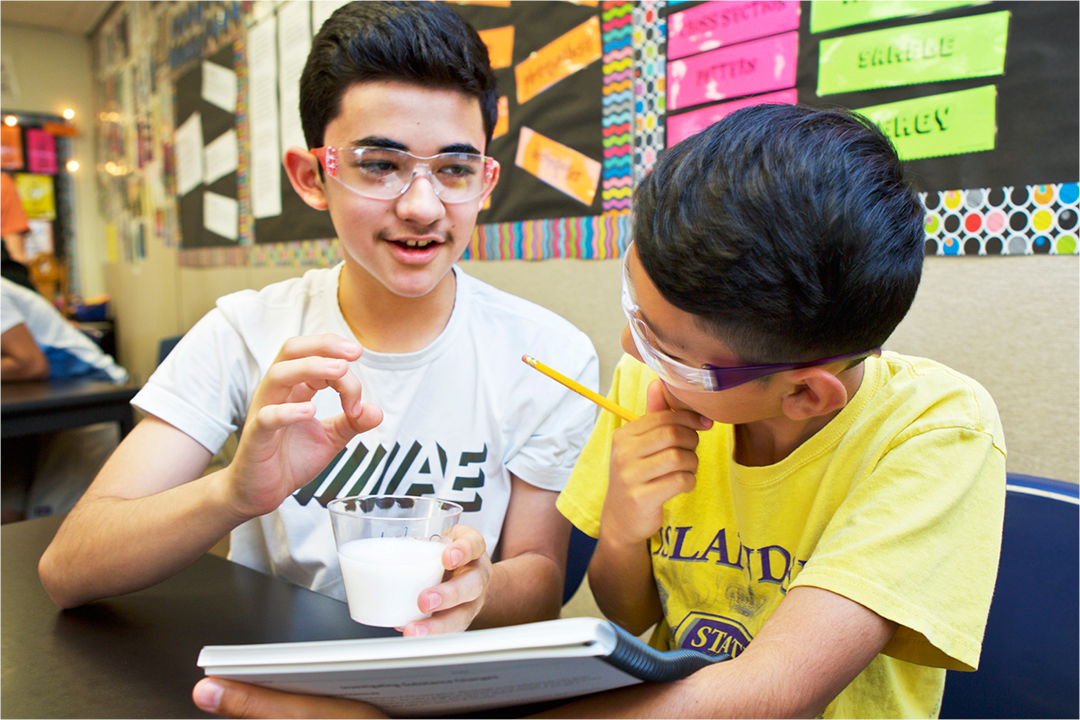

Boost Close Reading Trial Support Site
We’re thrilled you’ve decided to give our Boost Close Reading a try! We’re confident you’re going to love how Boost Close Reading engages your middle school readers and helps them strengthen their close reading skills.
This site contains all the resources you’ll need to learn more about the program and to get started using it to support remote learning or classroom instruction.
Resources to support your use of the program
What is Boost Close Reading?
Boost Close Reading is a digital reading program that provides middle school students with rich instruction and practice around the critical work of close reading.
No matter the setting or core curriculum in place, Boost Close Reading offers a personalized, differentiated experience that helps students learn how to deeply analyze complex informational and literary texts, in just 45 minutes of independent practice a week.


How do I get started with Boost Close Reading?
Good news! Boost Close Reading has already been enabled within your Amplify account. To get started with the program, you’ve got only two steps left: adjusting your students’ support levels (Core or Extra Support) and setting up your student devices. The video below will walk you through how to complete both steps.
What else can you tell me about Boost Close Reading?
Unlike other reading supplementals which rely solely on assessment questions and feedback, Boost Close Reading seamlessly weaves digital instruction with assessment within an immersive story where the analysis of text is a critical element in the plot. What’s more, with optional scaffolding designed specifically for EL students and struggling readers, every student can experience the same story from beginning to end.
Where to get support
Getting started webinar
Everything you need to get started with the program is provided above. However, if you prefer learning through webinars, we have those too! A pre-recorded, on-demand webinar is available anytime at the link below. Live webinar dates are currently being scheduled. Check back for days and times!


Intercom chat
Our Intercom feature gives you the ability to chat with customer support, technical support, and pedagogical support teams in real time directly from the digital platform. This ensures that issues that arise in the classroom can be addressed as quickly as possible. Support teams can be reached from 7 a.m. to 7 p.m. EDT, Monday through Friday.
Our customer support, technical support, and pedagogical support teams can be reached by email at help@amplify.com from 7 a.m. to 7 p.m. EDT, Monday through Friday.

Amplify Reading for international partners
We’re thrilled you’re considering giving Amplify Reading a try! This site contains all the resources you’ll need to learn more about the program and to get started using it to support remote learning or classroom instruction. We’re confident you’re going to love how Amplify Reading provides targeted support for every student.

Getting started
What you need to know about Amplify Reading
Amplify Reading is a student-driven, digital literacy program that provides students with differentiated and adaptive practice in all key areas of literacy instruction. Teachers have access to rich data insights into student usage and progress they can use to inform remote instruction.
How does it work with other programs?
Amplify Reading is a great complement to any core or assessment program, especially Amplify Core Knowledge Language Arts (CKLA) and mCLASS.
When and how to use Amplify Reading
We recommend students use the program independently for 30-45 minutes a week. This implementation model has led to student growth, especially for dual language learners.
Students will need access to one of the following devices: Windows Devices with Windows 7+, Chromebooks with Chrome OS, and Mac devices with OS 10.11+ or iOS 11+.

How do I get started with Amplify Reading?
Good news! You and your students now have access to Amplify Reading. To get started, you’ll need to sign in with your Amplify credentials at mclass.amplify.com. Next, you’ll want to distribute Amplify Reading credentials to your students.
Where do I find my credentials?
You should have received an email from noreply@amplify.com with your new account information. If you do not see it in your inbox, please check your spam folder.
How to download and distribute student credentials:
- How to download and distribute student login information [Article]
- Parent/guardian letter in English [PDF]
- Parent/guardian letter in Spanish [PDF]
How to support login at home:
You can direct parents to the following videos for an overview of the program and how to get started.
- How to get your child started with Amplify Reading (English)
- How to get your child started with Amplify Reading (Spanish)
After students start playing, you can check in on their progress via your teacher dashboard.
Printable extension activities
Consider sending the following activities home with your students as part of their weekly Amplify Reading routine. Each printable activity has instructions in both English and Spanish.
Packet 1
Activity Packet: Grade K | Grade 1 | Grade 2 | Grade 3 | Grade 4 | Grade 5
Answer Key: Grade 3 | Grade 4 | Grade 5

Access support

Intercom chat
Our Intercom feature gives you the ability to chat with customer support, technical support, and pedagogical support teams in real time directly from the digital platform. This ensures that issues that arise in the classroom can be addressed as quickly as possible. Support teams can be reached from 7 a.m. to 7 p.m. EDT, Monday through Friday.
Our customer support, technical support, and pedagogical support teams can be reached by email at help@amplify.com from 7 a.m. to 7 p.m. EDT, Monday through Friday.

Learn more
Review the resources below to dive deeper into what makes Amplify Reading unique
- The Missing Link in Reading Comprehension [PDF]
- Social Emotional Learning in Amplify Reading [PDF]
- What does growth mindset sound like? Hear students and teachers talk about Amplify Reading [Video]
- A Conversation with Anne Lucas about Comprehension Processes [Podcast]
Join our Facebook group Science of Reading: The Community to discuss the latest in reading research and instructional practices.

GREAT NEWS!
High-Impact Tutoring Grant for 2025–26 is released by DESE!
Built on the Science of Reading, Amplify Tutoring engages students and achieves real results. Let’s partner and support Arkansas students to become confident, proficient readers.

Arkansas Districts, Welcome to Amplify Tutoring
At Amplify Tutoring, we’re dedicated to assisting you every step of the way. From grant writing and planning to full implementation — including tutors, materials, and everything you need — we’re here to help you.
- Maximize Your Opportunity
Watch our quick 3-minute video to discover how Amplify Tutoring can help you make the most of this chance and ensure Arkansas students receive the support they deserve! - Our Impact
Interested in how we’re already making a difference? Explore our impact across Arkansas here. - Connect with Us
Schedule a 1:1 meeting with us today to learn more and get grant writing support. - Learn More About Us:
Visit amplify.com/tutoring for more information.Register for an information session:- Register for an information session:
- August 19: 10 a.m. CT or 2 p.m. CT
- August 20: 10 a.m. CT or 2 p.m. CT
- August 21: 10 a.m. CT or 2 p.m. CT
- August 25: 10 a.m. CT or 2 p.m. CT
- August 26: 10 a.m. CT or 2 p.m. CT
- August 27: 10 a.m. CT or 2 p.m. CT
- Resources to Support
See the Commissioner’s Memo here and 2025–2026 grant application here. - Questions?
Contact us at tutoring@amplify.com
Hear from leaders like you!
See what other district leaders are saying about Amplify Tutoring.
Overview

Accelerate student achievement.
Amplify Tutoring supports and accelerates student proficiency in foundational literacy skills. Results show that students in Amplify Tutoring outperformed similarly at-risk peers on a nationally normed reading assessment, and those who attended most consistently made the largest gains.

Reimagine instructional supports.
Amplify’s scaled tutoring offerings can be customized to help you meet the needs of your students. Whether you need high-quality tutoring materials, help designing your tutoring program, professional development, or tutors, Amplify can support you at every stage.

Increase insight into student learning.
Grounded in data, mCLASS® Intervention provides educators and tutors with visibility into lessons, progress monitoring, and instruction tailored to the needs of each student.
Our approach
Amplify Tutoring offers research-aligned tutoring materials, services, and training. From design consultations to full-service tutoring programs, our models reflect the principles of high-impact tutoring.


Data-driven instructional materials that are aligned with the Science of Reading and meet ESSA criteria
Amplify Tutoring features research-backed lessons aligned with the Science of Reading and grounded in mCLASS Intervention (an ESSA aligned program). This program groups students with common strengths and needs and provides progress monitoring.
Frequent and consistent sessions
Tutors engage with students in three or more 30-minute skill-building sessions per week to build confidence in students’ early literacy skills.


Positive relationship building
When students feel safe and cared for, they are motivated to achieve their goals. Our approach supports consistent, positive tutor-student relationships.
Training for district and tutoring personnel
District and tutoring personnel receive flexible, comprehensive training, enabling high-quality tutoring instruction to meet student needs.

S2-01: How teachers are really feeling this school year
In this special solo episode, Eric Cross starts the season by sharing his personal journey as an educator, and how the difficulties of the last few years have shaped his mindset going into the upcoming school year. Eric also addresses teacher burnout and what inspires him to continue working as a classroom educator. Explore more from Science Connections by visiting our main page.
Eric Cross (00:02):
Welcome to Science Connection, Season Two. As we begin the next season, I thought it would be a good time to share my story. As the host, I get to ask people questions about their journey, but I’ve actually never shared much about my own. So I’ve taken some of my most frequently asked questions to guests and asked them to myself. I hope you enjoy.
Eric Cross (00:23):
So the origin story question, I think really gets to the heart of why a person does what they do, because so much of who we are, especially as adults and teachers, is a result of experiences that we had in our lives when we were kids or in school with other teachers. And my life’s no different. I was born to a 19-year-old single mom. And when you’re a young boy growing up, especially with a young single mom, you often look to older men in different positions as kinda like a surrogate or like a mentor. And you may not even tell them that they are that to you. You kind of keep it close to the chest. And that’s what I did growing up. One of the ones that really stood out to me is, in seventh grade, I went to a middle school here in San Diego that was called Keiller Middle School. And we were a magnet program that specialized in science. And they had this program that brought professors from the local universities and they did this high-level enrichment. They would even take us to the college campus and we would work in these labs as seventh graders. It was amazing. And one of the people there, his name was Dr. Tress, and he was a professor. And Dr. Tress took a liking to me. I reminded him of his son. We were doing this great embryology experiment. We would take purple sea urchins. And we would inject them with potassium chloride, which would cause them to spawn. And we would fertilize these eggs, and then we would run different experiments using them. And these were things that I had never done before. I had always loved science. I’d always loved tinkering and building things. But this was my introduction, really, to high-level biology and to higher levels of education. I didn’t—I didn’t have many figures like that in my life growing up. I mean, I’m a first-generation, you know, high school, college graduate. Many of these are first generations for me. So, this was a new experience. And so Dr. Tress really unlocked a core memory and was one of my first mentors, as far as academics are concerned. And during my seventh-grade year, I entered the science fair and won first place, which was a huge deal. They took us out to Balboa Park. We got to miss school for a week. We got to go to all the museums for free. It was the best. And I think at that point in time, it really solidified something in me that would lay dormant until later on in my adult life. High school, I was really fortunate: the high school I went to was Morse High School, not too far from Keiller, and they had an aeronautics program. So I was able to enroll in that aeronautics program. And I learned how to fly before I learned how to drive. And I had this great instructor named Mr. Klon, who was this like 6′ 4″, 250-pound hippie guy. And he—we would get in the plane and we would have these like philosophical conversations. And through that, especially looking back now as a teacher, I realized that he was making connections with me and investing into who I was as a person. And it was something that I so needed at the time. Because at home I didn’t have that. You know, my safe place, a lot of time, was school. It was my only structure. It was where I knew I would get encouragement. It was where I knew things were reliable and consistent. For a lot of people, and a lot of kids, their home life isn’t like that. School was that for me. So Mr. Klon, I mean, he was this authentic, you know, consistent person in my life and made a huge difference at this time.
Eric Cross (03:23):
After I graduated high school, I left home just to get away from a difficult environment. And I was homeless for a little while and that was a huge moment in my life. And around that time, an aunt found out and she said, “You’re gonna come stay with us.” And this was like this three-year process of me living with them in this, like, functional family that ate dinner together. And they went to the zoo. They had family passes. And they took family photos at Christmastime. This was all weird stuff. Like, I didn’t know—I didn’t know who did these things. It was—I felt like a puppy that like lived in a home that was like…it was a home that was just always kind of like violent or like just really toxic. And then it gets put into a healthy home and doesn’t know how to act. That’s how it felt. And this was around like 19, 20 years old. During that time I started putting myself through school. So I went to community college and I was broke as a joke. And so I couldn’t afford the textbooks while I was going. So I would just go to the bookstore, the Barnes and Noble bookstore in Mira Mesa here in San Diego. And I would stay there all night using the textbooks or using the books there for doing my work. And then I would just put the books back on the shelves. Because let’s just face it. Textbooks are expensive, brother wasn’t trying to pay for all that. So I really had to earn that time. So I was working full-time. I was going to school. And, eventually I got a job in working in finance with a really great friend who mentored me during my younger twenties. And I didn’t wanna be broke and finance made sense.
Eric Cross (04:44):
And so I did that for a little while, until I got to a point in my career where I was watching an episode of The Office, the UK version, the Ricky Gervais version, and a character said, “I’d rather be at the bottom of a ladder I want to climb than halfway up one I don’t.” And I realized, working in finance, that I was halfway up a ladder I never wanted to climb. So I wanted to move into something that, if I was gonna spend eight hours a day or 10 hours a day doing something, I wanted it to be something that actually filled me up inside. And this is how I got into teaching. So I had always been working with young people, specifically 12- to 18-year-olds, like a non-profit or volunteering, mentoring, after-school programs. And I’ve always managed to rationalize my job in the finance world as meaningful because it let me do the real work that fulfilled me. So the real work was working with the kids. But my day job, my, like, Clark Kent-type job, was just, you know, doing the finance thing of like helping people that have a lot of money make more money. Which at the end of my life, I look back and I said, “That’s not what I want my legacy to be.”
Eric Cross (05:43):
And when the finance crash happened in 2008, that’s when I think I started looking back on it and said, “If I’m gonna spend all my time doing something and spending 40 or 60 or 80 hours of my day of my week doing things, I want it to matter. And that’s when I decided to pivot and leave that field and go and get my master’s in education and get my teaching credential, teaching science specifically. Now, one of the questions we get asked a lot and I’ve been asked is, is “How has teaching changed as a result of the pandemic?” And I feel like this could be several podcasts in and of itself, and it’s also regional, because everybody’s experienced it differently, And we’re still experiencing it! That’s the crazy thing! It’s like, it’s not over, we’re still in it. And some places have innovated and pivoted and some places just did what they needed to and they are trying to go back to business as usual. But if anything has happened, the pandemic revealed how much more, how much schools are more than places of just content learning. For many students it’s where they have their only community, their structure, their emotional wellness. They get regular meals, access to tech, and adults that care about them that are outside of their family. The schools are so much more than that. I mean, my school, they were a place, like a hub, that was giving out food every single day during the pandemic to families that would kind of drive by. So for a lot of schools, they became places like that. It also…the pandemic revealed the intensity of the educator workload. I mean, being able to manage your family, having the capacity, to be a content expert, you need to be a counselor, a trauma-care specialist, a coach, an encourager, a tech expert.
Eric Cross (07:23):
I mean, the term mental health is now more common and starting to become prioritized. Now we’re focusing so much more on the whole child. And we know from research that how a child feels about themselves and their safety and their security impacts their ability to learn. So the more comfortable and safe a student feels in the classroom with teachers and with friends, the better they’re gonna be able to learn. And ultimately the higher they’re gonna be able to achieve. You can’t, you can’t have one without the other. In addition, I think less teachers, see themselves teaching into retirement. I think that’s a big thing. I read these articles about teacher shortages and I think the reality is it’s actually teacher exodus. It’s teachers leaving. And that’s been really difficult. I’ve had many friends who’ve left for the private sector. And I get it, especially if you’re one that has—if you’re the first in your family to graduate from college, with a STEM degree, to them taking a teaching position can mean walking away from a salary in the private sector that pays two or three times more.
Eric Cross (08:23):
And in many places around the country, in order to be a teacher and maintain a median standard of living, you need either dual income, multiple jobs, or a multi-generational household. For a lot of people it just doesn’t make sense. And even right now, today, as I’m recording this, I’m reading articles and getting text messages…and I received a text message three days ago from a teacher that said, “My goal this year is to just not resign.” And that’s where a lot of teachers are feeling right now: isolated, challenged, and under-appreciated. And Plato said, “What’s honored in a country is cultivated there.” And I’ve been looking at how teachers are honored and one of the ways is just, like, practical. Like, look, I gotta pay my bills. You know, love the Starbucks gift card. Love the CPK, the gift card. The cards, all those other things…but brother got a car payment. And at the end of the day, if we care about our kids, we need to take care of the people that take care of them. And there’s very practical ways for that to happen. And everybody in different sectors around the country is dealing with that in different ways. I think the pandemic also revealed, now the public can see how our kids don’t receive the same quality of education. And once you’re aware of that, you can’t put the genie back in the bottle. So once you see on Zoom or once you see in a meeting, or once you see on the news, that students in different areas, whether it’s the rural South or a suburb in Seattle, are not getting equitable educations, well, ultimately that impacts all of us. Now. It’s not all doom and gloom. Good things have come from, as a result of, the pandemic. Many schools have made progress towards narrowing the technology gap, ’cause they had to! ‘Cause you can’t do Zoom and you can’t do Google Meet and all that stuff with a packet! You gotta get those Chromebooks. And Chromebooks and the internet and access to tech is not a new thing. It’s been out for a long time. The technology gap is not a new thing. It’s been written about extensively, but all of a sudden districts and schools started figuring out how to close that gap. And that’s awesome. We didn’t want a pandemic to be the catalyst for that to happen. But at the end of the day, we started closing it. A lot of schools did an amazing job and districts did an amazing job with deploying the hardware, sending out buses with wifi, putting lessons and videos on USB sticks and dropping them off to parents who live in sparsely populated areas. I mean, there were so many stories that I’ve heard about schools and teachers just doing amazing things, going above and beyond what they needed to on behalf of kids.
Eric Cross (10:51):
I think in addition to that, there’s also been students and families are now having more options to personalize their learning. So we have this in-person model, we have this Zoom or kind of online model, and this hybrid model, and it hasn’t all been perfect, you know, at all. But some families have come out and said, you know what actually doing this hybrid model is better for my son or better for my daughter or better for my student, because they’re able to get the socialization, but also able to focus better at home than they are in a classroom of 36. And that’s legitimate. You know, we talk about personalized learning, but it’s not exactly personalized when everybody has to wake up at the same time, same schedule, go to the same, the same classroom of, you know, up to 40 kids, and do the same lesson. I mean, we have to be honest about our limitations with personalizing learning for students. And when we can provide more options and we give teachers the infrastructure to be able to use different platforms, then we’re able to personalize learning a lot more.
Eric Cross (11:51):
There’s also been an emphasis on the whole-child wellness. I think the spotlight on mental well-being heavily impacts their academic success, but counseling teams, social workers, school psychologists—I think more than ever we’ve realized the value that they bring to the schools. And unfortunately many of them have caseloads of 200 students or more. And they’re seeing students most often that are in crisis. And especially after the pandemic, we’re realizing how valuable they are and how much we need to, one, honor them and give them the support that they need, and also recruit more. Because as we start recognizing how our brains are impacted by the things that we’re dealing with, we’re also gonna see how that’s gonna impact our students’ performance. And we need the specialists in those positions to be able to support our kids. I think, last, I think more innovation and lesson design and how we assess students. And so we’ve been talking about in education just kind of critiquing: how do we assess what a student knows? How do we make what a student actually does at school relevant to real life? I mean, so many times I have students who’ve graduated that are like, “I feel like the things I learned in school, like, they’re not always transferable to real life. It helped me on a test, but like, I don’t know how to do my taxes.” Or “I memorized these facts, but I don’t really apply it in my job.” Or “The facts that I learned I could have actually learned on the fly in my job. I wish I would’ve actually focused on the skills or had an earlier opportunity to get some experience because when I’m trying to apply for a job, <laugh> they ask for experience and I’m 22 years old.”
Eric Cross (13:28):
And so all these things kind of come up. And so I think there’s been some great conversations around “how do we rethink what education looks like?” And there’s different pockets around the country that have been doing that, I think, really well. And I think it’s important for us as teachers to stay connected to those people who are kind of pushing the boundaries and thinking outside the box, because when we get siloed, it’s really easy to get calcified and cynical. I get it. And it impacts me too. But when we’re around those people who have those fresh ideas, who are really pushing the limits, it inspires us. And that’s something I think during the pandemic that I’m grateful that I was intentional about, is staying connected with other teachers. There’s a big question; Why do you continue your work in the classroom and what keeps you motivated? And I was thinking really hard about this question, because depending on <laugh>, depending on my day, I feel like my answer’s gonna be a little bit different. So I’ve had to step back from this 30-foot, thousand-foot perspective and answer the question. And my answer is this: I think because I still feel like I can be effective to influence positive change in my classroom with my students and within the larger education system as a whole. I think if I lost either of those two, then I’d rethink my profession. Look, I’m an innovator. I like asking “why” questions and things like that. And I’m not always the most popular person when you do that. But education is like just a huge ship. It doesn’t pivot on a dime. And asking why questions and pushing for change on behalf of kids isn’t easy, fun, or glamorous, but it’s it’s necessary. And I feel like over the last few years, I’ve been able to see these kind of glimmers of a trajectory change, at least where I am locally. And that’s something that has given me a lot of hope. I’m very fortunate to be connected to educators and people in leadership that are really about making a difference beyond just kind of the cliched platitudes. They actually wanna make systemic change, in a way that’s positive. And that’s been really helpful for me. So as long as I feel like I’m useful in the classroom for students, and as long as I feel like I’m bringing, I think change, on behalf of teachers and students and administrators and our community in a way that moves the ball down the field, that’s what keeps me motivated. And what I like to ask teachers when I close in the podcast is. “What teacher or teachers have inspired you?”
Eric Cross (15:54):
And for me, I think it would start off with the teachers who cared about me when they didn’t have to, in elementary school all the way through college. And there are numerous teachers. My science-teacher community of practice. For the last two years, I’ve been fortunate to spend every month, once a month, meeting with just a core group of science teachers that really care about some of the things that we are impacted by in the classroom. And when the pandemic was going on, we still met regularly. And because we’re not all teaching in the same place, we kind of were able to bring different perspectives to the table. I think the current classroom teachers and former classroom teachers that I have in my community really inspire me. The ones who are dedicated to opening doors for students. The graduate students that I teach at the University of San Diego, they keep me fresh. I love leaving teaching my 12- and 13-year-olds, and then driving down the street to the university and teaching 20somethings who are all about to be in the classroom. They come with new ideas, they’re asking questions, and I get to actually share things that I just did three hours ago. I think that’s one thing that continues to inspire me. And it’s one of the reasons why I love teaching at the University of San Diego. Their energy and enthusiasm is super-refreshing. And then all the teachers that are willing to take risks and fail forward, to try things different, to ask hard questions, to push the envelope. Teaching’s hard. It’s easy to point out the problems in education as a whole. But after we do that, it’s important to figure out the practical ways we can make the changes that we wanna see.
Eric Cross (17:23):
Now, that’s to say that if you have the capacity for it and the resources and the support. Some of us, we don’t. Some of us, we are on an island, and that’s a really, really difficult place to be, especially when you have family and kids to take care of. And you have to make decisions on what’s best for you and for your own students. We do this work on behalf of kids. And it’s one of the most honorable services a person can provide to our community. But one area for growth that I think we have kind of as a society, is teachers spend their lives, daily, on behalf of the future of our country. For other people’s children. They fall asleep at night worrying about other people’s kids. They spend their own money to create opportunities and experiences that students might not otherwise have. And it’s important that we collectively, and I know I’m preaching the choir when I say this, but this is one of my messages, is that we honor them in turn. We create programs that allow them to be able to afford housing. We create opportunities for them to be able to generate wealth. We create ways for them to be able to find rest, to get connection. And then internally we create systems where they can just work on themselves, fill themselves, get trained, and be whole, so they can bring their best self to the kids in front of them. That’s one of my personal platforms. It’s something that I think is vital. We gotta take care of the people that take care of our kids. So there’s a saying that says, “It’s better to light a candle than to curse the darkness.” And it takes one person to blow out a candle, but one candle can light thousands of other candles, without diminishing its own light. And that’s what we have to be. So my encouragement, teachers, as you’re going into this new school year, and you’re thinking about what’s going on, you’re thinking about all the challenges—and they’re there, and they’re real, and trust me, it’s not like some Pollyanna, like, “Hey, just be positive!” mindset and everything’s gonna be great—no, no, no, no, no. It’s not that. But my encouragement…if I can tell you one thing that’s helped me more than anything else, it’s being connected to other people who are candle-lighters. Because there are a lot of places that are gonna blow out the candle. It could be the staff lounge. It could be Twitter, it could be Reddit. It could be Instagram. It could be TikTok. It could be, you know, anybody. Someone next door to you. There’s a lot of folks that are gonna be willing to point out and say, “Look, this is what’s wrong.” But find the helpers. Find the people that are candle-lighters. And stay connected with them. Find that community. I can tell you for me, that’s been the thing that’s been able to help me sojourn through all of this—I couldn’t do this by myself—is being able to share my story with other teachers and knowing that I’m doing this work alongside of other folks who are doing this work, and I can share my story with them and listen to their stories, is something that’s been able to fill my cup. And so I hope I can do the same for you and for other people listening to other people I come in contact with.
Eric Cross (20:08):
Teachers, I wish you a great school year. Hang in there. Be those candle-lighters and bring your best self on behalf of the students. Thanks so much for listening. Now, we wanna hear more about you. If you have any stories you wanna share about the classroom, please email stem@amplify.com. That’s STEM at amplifycom.wpengine.com. And make sure to click subscribe wherever you listen to podcasts. And join our Facebook group, Science Connections: The Community. Until next time.
Stay connected!
Join our community and get new episodes every other Tuesday!
We’ll also share new and exciting free resources for your classroom every month.
Meet the guest
Eric Cross is a 7th grade science/technology teacher, grade level lead, and digital learning innovator for Albert Einstein Academies, International Baccalaureate schools. He is also an adjunct professor of learning and technology at the University of San Diego and a Google certified innovator. Eric earned a bachelor’s degree from Azusa Pacific University and a Master of Education from the University of San Diego. He had 17 years of experience working with at-risk youth and underserved populations before becoming a middle school teacher. By building relationships with students, colleagues, and the community, he has become an empowered leader in and out of the classroom. Through meaningful learning experiences centered around student agency, STEM has become accessible to students through highly engaging lesson design, thoughtful integration of digital tools, and culturally relevant pedagogy.

About Science Connections
Welcome to Science Connections! Science is changing before our eyes, now more than ever. So…how do we help kids figure that out? We will bring on educators, scientists, and more to discuss the importance of high-quality science instruction. In this episode, hear from our host Eric Cross about his work engaging students as a K-8 science teacher. Listen here!
Boost Reading pilot for mCLASS® and Acadience™ Reading schools
Hooray! We’re thrilled you’re considering giving Boost Reading a try! This site contains all the resources you’ll need to learn more about the program and get started with your pilot. We’re confident you’re going to love how Boost Reading puts your mCLASS and Acadience Reading data to work.
Resources to support your pilot
What is Boost Reading?
Boost Reading is a digital reading program that complements ELA programs with adaptive and targeted practice in foundational reading skills. While it can be used on its own, Boost Reading also integrates with mCLASS and Acadience Reading, which means that you get extra benefits like automatic rostering and placement in the program based on a student’s mCLASS composite score. From that point forward, the program takes every student on a personalized journey that addresses gaps and bolsters foundational skills at a pace that supports their individual development.


How do I get started with Boost Reading?
Good news! Boost Reading has already been enabled within your mCLASS and Acadience Reading accounts. To get started with the program, you’ve got only two steps left: adjusting your student login settings and setting up your student devices. The resource below will walk you through how to do both.
- [Video] Boost Reading quick start tutorial
- [Video] Boost Reading dashboard tour
- [PDF] Boost Reading launch packet
Note: Boost Reading works on most classroom devices, including Windows Devices with Windows 7+, Chromebooks with Chrome OS, and Mac devices with OS 10.11+ or iOS 11+.
What else can you tell me about Boost Reading?
As students engage in skill practice, their paths through the game world adapt to meet their unique learning needs. Boost Reading includes more than 40 standards-aligned games that build language, foundational skills, and comprehension skills, while also developing:
- Phonological awareness
- Phonics
- Vocabulary
- Text analysis
- Comprehension
- Microcomprehension (i.e., the smaller aspects of comprehension that make up the reader’s mental model of a text)
Some additional resources that you might find helpful:
For questions, please contact your Amplify representative
Robert “Bob” McCarty
Senior Account Executive
Email: rmccarty@amplify.com
Phone: (435) 655-1731
Boost Reading pilot for mCLASS®schools
Hooray! We’re thrilled you’re considering giving Boost Reading a try! This site contains all the resources you’ll need to learn more about the program and get started with your pilot. We’re confident you’re going to love how Boost Reading puts your mCLASS data to work.
Resources to support your pilot
What is Boost Reading?
Boost Reading is a digital reading program that complements ELA programs with adaptive and targeted practice in foundational reading skills. While it can be used on its own, Boost Reading also integrates with mCLASS, which means that you get extra benefits like automatic rostering and placement in the program based on a student’s mCLASS composite score. From that point forward, the program takes every student on a personalized journey that addresses gaps and bolsters foundational skills at a pace that supports their individual development.
How do I get started with Boost Reading?
Good news! Boost Reading has already been enabled within your mCLASS accounts. To get started with the program, you’ve got only two steps left: adjusting your student login settings and setting up your student devices. The resource below will walk you through how to do both.
- [Video] Boost Reading quick start tutorial
- [Video] Boost Reading dashboard tour
- [PDF] Boost Reading launch packet
Note: Boost Reading works on most classroom devices, including Windows Devices with Windows 7+, Chromebooks with Chrome OS, and Mac devices with OS 10.11+ or iOS 11+.
What else can you tell me about Boost Reading?
As students engage in skill practice, their paths through the game world adapt to meet their unique learning needs. Boost Reading includes more than 40 standards-aligned games that build language, foundational skills, and comprehension skills, while also developing:
- Phonological awareness
- Phonics
- Vocabulary
- Text analysis
- Comprehension
- Microcomprehension (i.e., the smaller aspects of comprehension that make up the reader’s mental model of a text)
Some additional resources that you might find helpful:
For questions, please contact your Amplify representatives:
Dianne Lee
California Sales Director
dilee@amplify.com
(949) 246-2083
Christina Lugo
Pilot Coordinator – Statewide
clugo@amplify.com
(949) 838-7600
JoAnna Chocooj
Pilot Coordinator – Northern California
jchocooj@amplify.com
(707) 290-1728
Brooke Johnson
Pilot Coordinator – Southern California
bjohnson@amplify.com
(858) 349-2134
Boost Reading pilot for mCLASS® schools
Hooray! We’re thrilled you’re considering giving Boost Reading a try! This site contains all the resources you’ll need to learn more about the program and get started with your pilot. We’re confident you’re going to love how Boost Reading puts your mCLASS data to work.
Resources to support your pilot
What is Boost Reading?
Boost Reading is a digital reading program that complements ELA programs with adaptive and targeted practice in foundational reading skills. While it can be used on its own,Boost Reading also integrates with mCLASS, which means that you get extra benefits like automatic rostering and placement in the program based on a student’s mCLASS composite score. From that point forward, the program takes every student on a personalized journey that addresses gaps and bolsters foundational skills at a pace that supports their individual development.
How do I get started with Boost Reading?
Good news! Boost Reading has already been enabled within your mCLASS account. To get started with the program, you’ve got only two steps left: adjusting your student login settings and setting up your student devices. The resource below will walk you through how to do both.
- [Video] Boost Reading quick start tutorial
- [Video] Boost Reading dashboard tour
- [PDF] Boost Reading launch packet
Note: Boost Reading works on most classroom devices, including Windows Devices with Windows 7+, Chromebooks with Chrome OS, and Mac devices with OS 10.11+ or iOS 11+.
What else can you tell me about Boost Reading?
As students engage in skill practice, their paths through the game world adapt to meet their unique learning needs. Boost Reading includes more than 40 standards-aligned games that build language, foundational skills, and comprehension skills, while also developing:
- Phonological awareness
- Phonics
- Vocabulary
- Text analysis
- Comprehension
- Microcomprehension (i.e., the smaller aspects of comprehension that make up the reader’s mental model of a text)
Some additional resources that you might find helpful:
For questions, please contact your Amplify representatives
Monty Lammers
Senior Account Executive
Email: mlammers@amplify.com
Phone: (719) 964-4501
Boost Reading for mCLASS® partners
We’re thrilled you’re considering giving Boost Reading a try! This site contains all the resources you’ll need to learn more about the program and to get started using it to support remote learning or classroom instruction. We’re confident you’re going to love how Boost Reading puts your mCLASS data to work.
Resources to support your use of the program
What is Boost Reading?
Boost Reading is a digital reading program that complements ELA programs with adaptive and targeted practice in foundational reading skills. While it can be used on its own, Boost Reading also integrates with mCLASS, which means that you get extra benefits like automatic rostering and placement in the program based on a student’s mCLASS composite score. From that point forward, the program takes every student on a personalized journey that addresses gaps and bolsters foundational skills at a pace that supports their individual development.
How do I get started with Boost Reading?
Good news! Boost Reading has already been enabled within your mCLASS account. To get started with the program, you’ve got only two steps left: adjusting your student login settings and setting up your student devices. The resource below will walk you through how to do both.
- [Video] Boost Reading quick start tutorial
- [Article] How to download and distribute student login information
After students start playing, you can check on their progress via your teacher dashboard.
How do I get families started with Boost Reading?
We will be releasing more resources to support at-home usage of Boost Reading, as well as communication between educators, students and parents/guardians. To start, you can direct parents to the following video and letters for an overview of the program and how to get started.
- [Video] How to get your child started with Boost Reading
- [PDF] Parent/guardian letter in English
- [PDF] Parent/guardian letter in Spanish
When and how to use Boost Reading
We recommend students use the program independently for 30-45 minutes a week. This implementation model has led to student growth, especially for dual language learners.
Students will need access to one of the following devices: Windows Devices with Windows 7+, Chromebooks with Chrome OS, and Mac devices with OS 10.11+ or iOS 11+.
What else can you tell me about Boost Reading?
Review the resources below to dive deeper into what makes Boost Reading such a unique and powerful companion to mCLASS.
- [PDF] The Missing Link in Reading Comprehension
- [PDF] Social Emotional Learning in Boost Reading
- [Video] What does growth mindset sound like? Hear students and teachers talk about Boost Reading
- [Podcast] A Conversation with Anne Lucas about Comprehension Processes
Join our Facebook group Science of Reading: The Community to discuss the latest in reading research and instructional practices.
Where to get support
Intercom chat
Our Intercom feature gives you the ability to chat with customer support, technical support, and pedagogical support teams in real time directly from the digital platform. This ensures that issues that arise in the classroom can be addressed as quickly as possible. Support teams can be reached from 7 a.m. to 10 p.m. EDT, Monday through Friday.
Our customer support, technical support, and pedagogical support teams can be reached by email at help@amplify.com from 7 a.m. to 10 p.m. EDT, Monday through Friday.

Be a changemaker for science.
Profound science learning experiences have the power to transcend classroom walls—cultivating students’ curiosity, fostering critical thinking and creativity, building knowledge about the real world, and supporting students on their pathway to college and beyond. Unfortunately, science continues to fight for sufficient instructional time and resources.
The good news? Intentional shifts, combined with evidence-based practices and effective high-quality instructional materials, can help teachers make the most of the time they do have—transforming students into concerned global citizens ready to take on the world.
Science instruction designed for all students
K–8 science instruction is the crucial foundation that prepares students for high school learning. Our change management playbook details manageable and realistic changes to your process and practice that will make your K–8 instruction even more powerful.
Establishing high-quality teaching and learning
Access to high-quality instructional materials (HQIM) is a vital piece of the change management puzzle. Support the leaders who are on a mission to identify HQIM and set up the best possible conditions for implementation success.
Connecting science and literacy
Want to make every instructional moment count? Integrate science and literacy more deeply—and witness the transformation in student learning. Find out how with this resource pack.
The foundation for long-lasting and sustainable change
Change is more likely to stick and get results when you take a systemic approach. Partner with us to do just that by developing a learning plan that will drive your program implementation, enrich your instructional practices, and increase student impact. Amplify’s high-quality programs make it easier for you to teach inspiring, impactful lessons that celebrate and develop the brilliance of your students.

Science free resource library
Find free K–8 activities, posters, and guides to engage all students in science.

2024 Science Symposium
Access best practices and tips from science leaders through our on-demand Science Symposium.

Science Connections archives
Hear more strategies from educator Eric Cross and other experts in this podcast.
Amplify Desmos Math Texas K-5 is IMRA-approved!
We’re excited that Amplify Desmos Math Texas K–5 was not only approved, but also passed TEA’s IMRA review with perfect scores!
- 100% aligned with the TEKS
- 100% aligned with the ELPS
- 100% on the Quality Rubric, with 163/163 points
- 107 Green Flags: more than any other K–5 publisher!
- 0 Red Flags
And more exciting news…the parallel Spanish student experience will be available for implementation for the
2026–27 school year as well!
Click below to explore digital samples and request print samples and/or a presentation today!
And that’s not all! Click below to learn more about the products that round out our comprehensive math suite for Texas: mCLASS Math Texas, our robust math screener, and Boost Math Texas, our tiered intervention and practice program aligned to core instruction.
Supporting students with a creative twist: A conversation with Kentucky Science Teacher of the Year, Shad Lacefield

Meet Our Guest(s):

Shad Lacefield
Shad Lacefield is a teacher at Garden Springs Elementary and part-time professor at Asbury University in Kentucky. Mr. Lacefield leads professional development in his district, and has been a guest speaker for Eastern Kentucky University, Campbellsville University, and Amplify Education. His topics include classroom managment, integrating techology, and student engagement. He earned his bachelor’s degree in elementary education from Campbellsville University in 2007, and his master’s in science from Southwest Baptist University in 2011. Shad has either taught or coached every grade K-12, and in his 14 years in education he has served as a lead teacher in literacy, math, science, and social studies. He currently coordiantes with the FCPS Office of Instructional Technology to plan Minecraft build challenges for elementary students, and is working on setting up a science field trip that turns a golf course into a STEM lab. During the first year of the pandemic, Shad dressed up in over 100 costumes to create a unique and engaging online learning experience for his students. He also created Vader Visits where he visited students at their homes dressed as Darth Vader to celebrate their online successes, and keep them encouraged during a challenging time. His creative teaching style, and over 50 “Vader Visits” with students, have been featured on WKYT-TV, LEX-18, Spectrum 1 News, and several local and college news publications. Shad lives in Lexington Kentucky with his wife Whitney Lacefield and their three children.
Check out his website, YouTube channel, and Facebook account!
Meet our host: Eric Cross
Eric Cross is a seventh grade science/technology teacher, grade level lead, and digital learning innovator for Albert Einstein Academies, International Baccalaureate schools. He is also an adjunct professor of learning and technology at the University of San Diego and a Google certified innovator. Eric earned a bachelor’s degree from Azusa Pacific University and a Master of Education from the University of San Diego. He had 17 years of experience working with at-risk youth and underserved populations before becoming a middle school teacher. By building relationships with students, colleagues, and the community, he has become an empowered leader in and out of the classroom. Through meaningful learning experiences centered around student agency, STEM has become accessible to students through highly engaging lesson design, thoughtful integration of digital tools, and pedagogy that engages students from all backgrounds.

Transcripts and additional resources:
Quotes
It’s about being engaged with your students and figuring out what are they liking. Every year it’s going to be different…when you have conversations and you build relationships with your kids.
Stay connected

Supporting students with a creative twist: A conversation with Kentucky Science Teacher of the Year, Shad Lacefield
Meet Our Guest(s):
Shad Lacefield
Shad Lacefield is a teacher at Garden Springs Elementary and part-time professor at Asbury University in Kentucky. Mr. Lacefield leads professional development in his district, and has been a guest speaker for Eastern Kentucky University, Campbellsville University, and Amplify Education. His topics include classroom managment, integrating techology, and student engagement. He earned his bachelor’s degree in elementary education from Campbellsville University in 2007, and his master’s in science from Southwest Baptist University in 2011. Shad has either taught or coached every grade K-12, and in his 14 years in education he has served as a lead teacher in literacy, math, science, and social studies. He currently coordiantes with the FCPS Office of Instructional Technology to plan Minecraft build challenges for elementary students, and is working on setting up a science field trip that turns a golf course into a STEM lab. During the first year of the pandemic, Shad dressed up in over 100 costumes to create a unique and engaging online learning experience for his students. He also created Vader Visits where he visited students at their homes dressed as Darth Vader to celebrate their online successes, and keep them encouraged during a challenging time. His creative teaching style, and over 50 “Vader Visits” with students, have been featured on WKYT-TV, LEX-18, Spectrum 1 News, and several local and college news publications. Shad lives in Lexington Kentucky with his wife Whitney Lacefield and their three children.
Check out his website, YouTube channel, and Facebook account!
Meet our host: Eric Cross
Eric Cross is a seventh grade science/technology teacher, grade level lead, and digital learning innovator for Albert Einstein Academies, International Baccalaureate schools. He is also an adjunct professor of learning and technology at the University of San Diego and a Google certified innovator. Eric earned a bachelor’s degree from Azusa Pacific University and a Master of Education from the University of San Diego. He had 17 years of experience working with at-risk youth and underserved populations before becoming a middle school teacher. By building relationships with students, colleagues, and the community, he has become an empowered leader in and out of the classroom. Through meaningful learning experiences centered around student agency, STEM has become accessible to students through highly engaging lesson design, thoughtful integration of digital tools, and pedagogy that engages students from all backgrounds.
Transcripts and additional resources:
Quotes
It’s about being engaged with your students and figuring out what are they liking. Every year it’s going to be different…when you have conversations and you build relationships with your kids.
Stay connected
Summer ’24 Interlude: How effective coaching transformed Mississippi, with Kelly Butler and Margaret Goldberg



Transcripts and additional resources:
Meet Our Guest(s):

Kelly Butler
Kelly Butler is Senior Advisor to Reading Universe.org, a large-scale legacy project of Mississippi’s Barksdale Reading Institute (BRI), where she served as Chief Executive Officer. BRI contributed significantly to Mississippi’s rise in reading scores on the National Assessment of Educational Progress. During her tenure there, Kelly initiated the Reading Universe concept to provide high-quality professional development to educators in schools and educator preparation programs. She authored three statewide studies on Teacher Preparation for Early Literacy Instruction which propelled The Path Forward, a multi-state initiative focused on preparation and licensure. She’s an advisor to the Mississippi Reading Panel, the Mississippi Reading Clinic, The Path Forward, the Southeast Region’s Education Laboratory, and the Education Advocacy Center, and she’s a board member for Springboard to Opportunities and Deans for Impact. She holds a master’s degree in administration, planning, and social policy from Harvard University.

Margaret Goldberg
Margaret Goldberg is a literacy coach at Nystrom Elementary, a California school awarded a state Early Literacy Support Block grant. With that grant, she supported a network of literacy coaches striving to improve early literacy achievement in California’s lowest performing schools. She’s held a variety of other roles, including district Early Literacy Lead, reading interventionist, and classroom teacher. Everywhere she’s worked, she’s endeavored to help schools and districts align instruction with reading research.
Margaret is the co-founder of The Right to Read Project. Her writing has been published on The Right to Read Project blog and on Reading Rockets. She holds a master’s degree in elementary education and teaching from the University of California, Berkeley.
Meet our host, Susan Lambert
Susan Lambert is the Chief Academic Officer of Elementary Humanities at Amplify, and the host of Science of Reading: The Podcast. Her career has been focused on creating high-quality learning environments using evidence-based practices. Lambert is a mom of four, a grandma of four, a world traveler, and a collector of stories.
As the host of Science of Reading: The Podcast, Lambert explores the increasing body of scientific research around how reading is best taught. As a former classroom teacher, administrator, and curriculum developer, Lambert is dedicated to turning theory into best practices that educators can put right to use in the classroom, and to showcasing national models of reading instruction excellence.

Quotes
“How did you get the buy-in from the teachers? We didn't wait for buy-in. We said, ‘We've got a law sitting here and we've got coaches that know what to do.’ … Once they tried to do it, it worked. And then there came buy-in.”
“The laws are telling us that time's up. We need to get this job done. The good news is we know how to do it. We just need to get it done everywhere.”
“My greatest frustration with colleges of education is that we have for centuries been colleges of philosophy, not of science. And I think we are beginning to see a shift in the profession based on science, not just on what we think or believe in.”
“I think I used to think that it was going to be possible for a teacher to figure it out on her own. Or I thought that it would be possible for a school to figure it out on their own, or a district, or even a state. And the more that I realize… like, it's very rare that people are getting the outcomes that they actually want.”
“I think we have strayed away from the idea of there being a social contract between the community and schools. And if we could get back to the point where we had an agreement about what the obligations of schools actually are, then we'd do everything differently.”
Teaching with heart, starring Joyce Abbott
Meet Our Guest(s):

Joyce Abbott
Joyce Abbott is a dynamic retired educator from the School District of Philadelphia. Her journey began with a ten-year service in the U.S. Army, earning her the rank of Staff Sergeant. Following her honorable discharge and numerous awards, her pathway to education was paved through the nationally acclaimed Troops to Teachers program. Joyce commanded respect and admiration for her instructional practices and classroom management, leading to multiple awards and features in the Philadelphia Daily News.
In her role as Climate Manager at Andrew Hamilton School, Joyce made commendable strides in improving the school’s climate and culture. She was also the inspiration behind the Emmy-winning show “Abbott Elementary,” created by her former student Quinta Brunson. She recently received recognition for her work from the city of Philadelphia, which proclaimed Sept. 26 Joyce Abbott Day. Joyce holds a Bachelor of Science in business and economics from the University of Maryland Eastern Shore and a Master of Education from Cheyney University.
Meet our host, Ana Torres.
Ana has been an educator for 30 years, working in both the K–8 and higher education sectors. She served as an administrator and instructor at various public and private colleges and universities and as a bilingual and dual language teacher, dual language math and reading interventionist, dual language instructional coach, assistant principal, and principal in K–8 schools. Ana is currently the Senior Biliteracy and Multilingual Product Specialist on Amplify’s Product Specialist team, and delivers literacy and biliteracy presentations across the nation. Ana’s passion and advocacy for biliteracy and multiculturalism has led her to educate leaders, teachers, and parents about the positive impact of bilingualism and biliteracy in our world.


Meet our Classroom Insider, Eric Cross.
Eric Cross is a middle school science teacher who hopes to someday be a lifelong educator, like the guests on Beyond My Years! In each episode, Eric connects with host Ana Torres to discuss her guests’ best insights gleaned from their long and rewarding careers in the classroom. Then, Eric talks about bringing some of their wisdom into his current classroom and busy life.
Transcripts and additional resources:
Quotes
“Sometimes your bad days are going to outweigh your good days, but when you … remain focused and see what your goal is, and you look at those students and say, ‘This is my main focus,’ that can be the greatest motivator.”
“A lot of times they are dependent upon you to teach them in every aspect of their life. When you understand the community, you can serve.”
“Me and my military buddies definitely had respect for each other. And we operated as a team, regardless of our differences, because sometimes you may not agree with every teacher on your team, which many times I did not. But you have to keep your focus toward our mission, [which] is to move a certain child or do this for the student body.”
“They know when you care. And they will have a whole different level of respect for you when they know you care. And you set the bar high for them. That shows that you care, because you know that they can do it and you believe in them.” —Joyce Abbott
“I think it’s so important in the schools that they embrace the younger teachers, because you only get better through learning and through support.”
“When you’re passionate about a profession and committed to the goal of the whole school, you’re going to do what you can to help these new teachers because they have to learn. So many leave because they’re encountering so many problems and they don’t feel that they’re supported effectively.”
The how and why behind high-quality instructional materials, with Rebecca Kockler


Meet Our Guest(s):

Rebecca Kockler
Rebecca Kockler is program director of Reading Reimagined with AERDF and CEO and founder of Illuminate Literacy. She saw firsthand the reading potential of underestimated and overlooked populations such as students of color or students experiencing poverty and was motivated to act on behalf of them. Previously, she was assistant superintendent of academics at the Louisiana Department of Education, where she created a comprehensive, nationally recognized academic support model that gave teachers, principals, and districts the tools and supports necessary to align assessments, curriculum, and teacher evaluation for greater impact.
Meet our host, Susan Lambert
Susan Lambert is the Chief Academic Officer of Elementary Humanities at Amplify, and the host of Science of Reading: The Podcast. Her career has been focused on creating high-quality learning environments using evidence-based practices. Susan is a mom of four, a grandma of four, a world traveler, and a collector of stories.
As the host of Science of Reading: The Podcast, Susan explores the increasing body of scientific research around how reading is best taught. As a former classroom teacher, administrator, and curriculum developer, Susan is dedicated to turning theory into best practices that educators can put right to use in the classroom, and to showcasing national models of reading instruction excellence.
Quotes
“It was really our teachers who led so much of the charge to say, ‘No, this is what we want. We believe kids should be held to high expectations. We believe they're capable, we believe they deserve it.’”
Featured Episodes


From football to phonics, with Malcolm Mitchell

Meet Our Guest(s):

Malcolm Mitchell
Malcolm Mitchell, a native of Valdosta, Georgia, and an Under Armour All-American football player, developed a love of reading during his freshman year in college. He authored and published the children’s book, The Magician’s Hat, created a youth literacy initiative called Read with Malcolm, and went on to establish the nonprofit Magic Foundation organization, with a sole purpose—to transform children’s lives through literacy.
His inspirational story has been featured nationally on CBS Evening News, CBS Sunday Morning, CBS Sports, ESPN, in USA Today, CNN, MSNBC and the NFL Network and has been used by many schools as encouragement for students to embrace the importance of reading. In May 2016, Malcolm was drafted by the New England Patriots, and in 2017 he became a Super Bowl champion. Malcolm has earned numerous awards and accomplishments both on and off the field, but considers discovering a love of reading one of his greatest achievements.
Meet our host, Susan Lambert
Susan Lambert is the Chief Academic Officer of Elementary Humanities at Amplify, and the host of Science of Reading: The Podcast. Her career has been focused on creating high-quality learning environments using evidence-based practices. Susan is a mom of four, a grandma of four, a world traveler, and a collector of stories.
As the host of Science of Reading: The Podcast, Susan explores the increasing body of scientific research around how reading is best taught. As a former classroom teacher, administrator, and curriculum developer, Susan is dedicated to turning theory into best practices that educators can put right to use in the classroom, and to showcasing national models of reading instruction excellence.
Quotes
“Reading is the most self empowering tool a person could possess.”
“So many of these successful people were saying the same thing. I thought to myself, if I want to have any sustainable success in my life, whether I'm an athlete or not, I need to be a proficient reader.”
Amplify Science earns prestigious Tier 1 rating in Louisiana
Brooklyn, NY (October 21, 2019) Amplify, a publisher of next-generation curriculum and assessment programs, announced today that Louisiana rated Amplify Science K–5 as Tier 1, the top rating in the state. Amplify Science is the only K–5 science program in the state to receive a Tier 1 rating. According to the Louisiana Department of Education website, Tier 1 materials meet all non-negotiable criteria and score the best possible on all indicators of superior quality.
Amplify Science is a breakthrough K–8 curriculum designed from the ground up for the Next Generation Science Standards by the curriculum experts at UC Berkeley’s Lawrence Hall of Science. In each Amplify Science unit, students inhabit the role of a scientist or engineer to investigate a real-world problem, using relevant, 21st-century contexts to investigate scientific phenomena. Educators who adopt Amplify Science receive a comprehensive curriculum that includes literacy-rich activities, hands-on investigations, digital simulations, embedded assessments and robust teacher supports.
“To earn a Tier 1 rating in Louisiana is validation for all the hard work that went into developing Amplify Science, and we were both proud and excited upon hearing the news,” said Steven Zavari, senior vice president and general manager of STEM at Amplify. “We’re eager to continue partnering closely with Louisiana educators, schools and districts to help develop the next generation of scientists, engineers, and critical thinking citizens in the state.”
Currently being used by more than two million students nationwide, Amplify Science has been adopted by the New York City Department of Education, Chicago Public Schools, Denver Public Schools, San Francisco Unified School District, Seattle Public Schools, the KIPP charter network, and hundreds of other districts across the country.
About Amplify
A pioneer in K–12 education since 2000, Amplify is leading the way in next-generation curriculum and assessment. Our captivating core and supplemental programs in ELA, math, and science engage all students in rigorous learning and inspire them to think deeply, creatively, and for themselves. Our formative assessment products turn data into practical instructional support to help students at every skill level build a strong foundation in early reading and math. Our programs provide teachers with powerful tools that help them understand and respond to the needs of all their students. Today, Amplify serves five million students in all 50 states.
For more information, visit Amplify.com.
Contact: media@amplify.com
Amplify Science Named SIIA Education Technology 2019 CODiE Award Finalist for Best Emerging Instructional Technology Solution
Brooklyn, NY (May 7, 2019) Amplify, a publisher of next-generation curriculum and assessment programs, today announced that Amplify Science has been named a 2019 SIIA CODiE Award finalist in the Best Emerging Instructional Technology Solution category. Award finalists represent applications, products and services from developers of educational software, digital content, online learning services and related technologies across the PreK–20 sector.
Amplify Science is a breakthrough K–8 curriculum designed from the ground up for the Next Generation Science Standards by the curriculum experts at the University of California, Berkeley’s Lawrence Hall of Science. In each Amplify Science unit, students inhabit the role of a scientist or engineer to investigate a real-world problem, using relevant, 21st-century contexts to investigate scientific phenomena. Educators who adopt Amplify Science receive a comprehensive curriculum that includes literacy-rich activities, hands-on investigations, digital simulations, embedded assessments, and robust teacher supports.
“We are honored that SIIA recognized the strength of Amplify Science and named us as a finalist in the CODiE awards,” said Steven Zavari, senior vice president and general manager, science curriculum, at Amplify. “We are excited to share this news about our innovative program with educators across the country.”
The SIIA CODiE Awards are the premier awards for the software and information industries and have recognized product excellence for more than 30 years. The awards have 76 categories that are organized by industry focus of education technology and business technology. Amplify Science was honored as one of 139 finalists across the 32 education technology categories.
“The 2019 CODIE Award finalists represent the finest in innovation and creativity in educational technology,” said President Jeff Joseph at SIIA. “These breakthrough products are opening doors for learners of all ages by developing and utilizing new technologies to respond to diverse student and educator needs.”
The SIIA CODiE Awards are the industry’s only peer-reviewed awards program. Educators and administrators serve as judges and conduct the first-round review of all education nominees. Their scores determine the SIIA CODiE Award finalists, and SIIA members then vote on the finalist products. The scores from both rounds are tabulated to select the winners.
Winners will be announced during a CODiE Award Celebration at the Ed Tech Industry Conference & CODiE Awards in San Francisco on June 11.
Details about each finalist are listed at https://www.siia.net/codie/2019-Finalists
About Amplify
A pioneer in K–12 education since 2000, Amplify is leading the way in next-generation curriculum and assessment. Our captivating core and supplemental programs in ELA, math, and science engage all students in rigorous learning and inspire them to think deeply, creatively, and for themselves. Our formative assessment products turn data into practical instructional support to help all students build a strong foundation in early reading and math. All of our programs provide teachers with powerful tools that help them understand and respond to the needs of every student. Today, Amplify serves five million students in all 50 states. For more information, visit amplify.com.
About the SIIA CODiE™ Awards
The SIIA CODiE Awards is the only peer-reviewed program to showcase business and education technology’s finest products and services. Since 1986, thousands of products, services and solutions have been recognized for achieving excellence. For more information, visit siia.net/CODiE.
About Software and Information Industry Association (SIIA)
SIIA is an umbrella association representing 800+ technology, data and media companies globally. Industry leaders work through SIIA’s divisions to address issues and challenges that impact their industry segments with the goal of driving innovation and growth for the industry and each member company. This is accomplished through in-person and online business development opportunities, peer networking, corporate education, intellectual property protection and government relations. For more information, visit siia.net.
###
TEA announces additional innovative learning solutions for K-12 English and Spanish and K-5 science to support schools across Texas
AUSTIN, Texas—October 5, 2020—The Texas Education Agency today announced the next set of instructional materials—covering K-12 English Language Arts and Reading (ELAR), K-5 Spanish Language Arts and Reading (SLAR), and K-5 Science—that will be made available to school systems through the Texas Home Learning 3.0 (THL 3.0) initiative. Like other THL 3.0 offerings, these instructional materials are optional, digitized, customized for Texas, and aligned to Texas Essential Knowledge and Skills (TEKS)—the state standards for what students should know and be able to do.
TEA has partnered with Amplify for K-8 ELAR and K-5 SLAR, Odell Education for 9-12 ELAR, and Great Minds for K-5 Science to develop and deliver this next set of high-quality resources including TEKS-aligned unit and lesson plans. Additional materials will be released on a continuous basis. Before release, all THL 3.0 instructional materials undergo a rigorous review that includes Texas teacher feedback to confirm alignment with TEKS and quality standards. Additional THL 3.0 instructional materials for other subjects and grade levels will be announced over the coming weeks.
“As the pandemic continues to disrupt public education across our state, TEA is committed to supporting schools with effective distance learning resources,” said Texas Education Commissioner Mike Morath.
Amplify’s K-5 Texas Elementary Literacy Program for ELAR and SLAR and 6-8 Amplify ELAR Texas are TEKS-aligned language arts curriculum designed to support Texas learners in the classroom, at home, or wherever learning takes place. Built on the science of teaching reading, the K-5 Amplify Texas Elementary Literacy Program combines foundational skills with content knowledge—so that learning to read and reading to learn develop together. The 6-8 Amplify ELAR Texas program is a TEKS-aligned, blended language arts curriculum that places text at the center of every lesson. Designed specifically for Texas middle schools, this flexible program supports digital, print, and hybrid classrooms.
“We are thrilled to partner with TEA to provide Texas teachers and students with the highest quality reading and language arts programs that align to TEKS standards,” said Larry Berger, chief executive officer of Amplify. “Amplify’s flexible core and supplemental materials will support Texas educators and students whether learning is happening at home, in school, or some of each.”
Odell Education’s Texas High School Literacy Program, which covers 9-12 ELAR, is an innovative program created specifically for Texas high school students and educators. It is designed to support seamless learning in a variety of contexts. The program empowers teachers and students through dynamic activities centered on rich texts and topics as they develop TEKS-aligned literacy skills, habits, and knowledge.
“We are thrilled to partner with Texas educators to develop an exciting new literacy program for the high school students in Texas,” says Odell Education CEO Judson Odell. “Thanks to the tremendous commitment of the Texas Education Agency, Texas high schoolers will have a flexible program for this year and beyond that fosters the literacy they need to thrive wherever their path may lead them.”
Great Minds’ K-5 PhD Science TEKS Edition is a phenomenon-based program in which teachers facilitate the learning, but students own it. In every module, students explore authentic phenomena to build an enduring understanding of core science concepts through hands-on investigations and evidence-based learning. And now it is being adapted to align with the TEKS and, in partnership with TEA through its Texas Home Learning initiative, will be available as an open education resource for all schools and districts in the state.
“Science education should start early, and it should be comprehensive,” says Pam Goodner, Great Minds Chief Academic Officer for Science. “Texas recognizes that students need coherent instruction that builds knowledge from lesson to lesson to develop deep scientific understanding. PhD Science TEKS Edition will deliver what the state is seeking to help students act as scientists to observe, model, investigate, and understand the world around them.”
THL 3.0 is a comprehensive initiative to support school systems, teachers, parents, and students during the public health crisis and beyond with high-quality instructional materials, technology solutions, and professional development resources. TEA previously announced that it will offer all Texas school systems a world-class Learning Management System (LMS) from PowerSchool’s Schoology for two years at no cost. Nearly 400 Texas school systems have already signed up, with another 200 currently engaging with the Schoology team.
For more information on Texas Home Learning 3.0, please click here.
The Texas Education Agency news release is available here.
Literacy crisis in America’s schools persisting beyond COVID-19, with students making some recovery
BROOKLYN, NY (October 21, 2022) — Amplify, a publisher of next-generation curriculum and assessment programs, released a research brief about national beginning-of-school-year (BOY) reading data today. While students in elementary grades are making progress toward early literacy levels that pre-date the pandemic, only about half of students in grade three are on track for learning to read, and nearly a third are in the highest risk category. In kindergarten, half of the nation’s students are starting school already in need of intensive intervention in early literacy skills.
Compared to where they were before pandemic disruptions, more of today’s elementary students are still in the highest risk category for not learning to read. Moreover, students in grades that did not experience the disruptions as acutely are showing gaps, with only about one-third of kindergarteners and less than half of first graders starting the year on track for core instruction in early literacy.
“The data in this report are another signal that we need to do even more to support teachers so they can help this generation of young students get on track in reading,” says Susan Lambert, chief academic officer of elementary humanities at Amplify. “We won’t see early literacy improve beyond pre-pandemic proficiencies if we don’t make changes across our educational system. It is a crisis that can be turned around — with focused efforts on evidenced-based practices.”
Literacy rates in the United States remain a crisis today, with many students urgently needing support. The good news: research-based reading instruction reduces the need for intervention and enables children to move forward as capable, confident learners. When students receive instruction based in the Science of Reading, outcomes improve. When that instruction takes place in the early grades, research shows that most students can be taught to read at or approaching grade level. Schools and districts need to invest in reliable universal screeners, high-quality core curriculum, evidence-based interventions, and professional development for educators based in the Science of Reading.
The report compares mCLASS® with DIBELS® 8th Edition benchmark data from the 2019-20, 2020-21, 2021-22, and 2022-23 school years. Approximately 300,000 students in a matched set of 1,400 schools in 43 states are represented. The schools in the source data are slightly more likely to be in large urban metropolitan areas than the nation overall.
The data was collected using the mCLASS platform, which automates the data collection of DIBELS (Dynamic Indicators of Basic Early Literacy Skills). DIBELS is a widely-used series of short tests developed by the University of Oregon that assess K–8 literacy. DIBELS is an observational assessment collected by teachers interacting with students one-on-one, either live or over video. DIBELS is typically administered three times a year (beginning, middle, and end of year), and is used to identify reading difficulty, monitor progress, and inform instruction, especially for struggling readers.
About Amplify
A pioneer in K–12 education since 2000, Amplify is leading the way in next-generation curriculum and assessment. Our core and supplemental programs in ELA, math, and science engage all students in rigorous learning and inspire them to think deeply, creatively, and for themselves. Our formative assessment products help teachers identify the targeted instruction students need to build a strong foundation in early reading and math. All of our programs and services provide educators with powerful tools that help them understand and respond to the needs of every student. Today, Amplify serves more than 10 million students in all 50 states. For more information, visit amplify.com.
Media Contact
Kristine Frech
media@amplify.com
New report: Data show K–2 literacy improvements have slowed, overall literacy rates in the U.S. remain a concern
BROOKLYN, NY (March 13, 2024) – Amplify, a publisher of next-generation curriculum and assessment programs, today released a research brief on the latest middle-of-school-year reading data for K–2. Findings reveal that throughout the spring and fall of 2023, schools across the country made some progress increasing the number of K–2 students on track for learning to read, but that progress has slowed.
Across grades K–2, only half of students are on track for learning to read, and three in ten students are far behind. The data demonstrate how literacy rates in the United States remain a concern: Too many students are at risk of failing to read proficiently by the end of third grade, an important indicator of future academic success.
“The data is clear—literacy rates at the earliest and most critical time for student development are slowing. Changing this course requires schools and districts to act now and review their approaches in all grades,” said Susan Lambert, chief academic officer of elementary humanities at Amplify. “Schools that deliver strong outcomes focus on building a solid foundation at the start and intervening quickly when students need extra support, rather than trying to play catch up later, when it can be more difficult.”
In the brief, Amplify also outlines recommendations for how schools and districts can improve outcomes, including investing in a reliable universal screener, high-quality core curriculum, evidence-based interventions, and professional development for teachers. With these resources schools and districts should:
- Administer universal screening assessments three times per year to monitor levels of risk for reading difficulties.
- Allocate staff to support students who are at risk, spending additional time in literacy instruction beyond grade-level instruction.
- Regularly monitor progress for students who are at risk, making adjustments as needed.
- Ensure instructional staff gain knowledge about science-based reading instruction and implement high-quality core curriculum with fidelity.
- And instill a love of reading and books during all school-based programs, with the support of caregivers and the community.
“The good news is that when students receive science-based reading instruction, outcomes improve,” continued Lambert. “And, when that instruction takes place in the earliest possible grades, research shows that most students can be taught to read at or approaching grade level.”
About Amplify
A pioneer in K–12 education since 2000, Amplify is leading the way in next-generation curriculum and assessment. Our core and supplemental programs in ELA, math and science engage all students in rigorous learning and inspire them to think deeply, creatively and for themselves. Our formative assessment products help teachers identify the targeted instruction students need to build a strong foundation in early reading and math. All of our programs and services provide educators with powerful tools that help them understand and respond to the needs of every student. Today, Amplify serves more than 15 million students in all 50 states and on six continents. For more information, visit Amplify.com.
Media Contact: Kristine Frech; media@amplify.com
New report: Data highlights significant summer instructional loss from the youngest students, reinforcing the importance of strong core instruction in early literacy
BROOKLYN, NY (October 31, 2024) – Amplify, a publisher of next-generation curriculum and assessment programs, today released a research brief on beginning-of-school-year reading data for K–3 students. Findings reveal that recent gains in K–3 early literacy have stalled overall, and that the youngest learners are demonstrating concerning instructional loss over the summer. Students progressing from kindergarten to first grade are the most vulnerable because they have received the least amount of explicit instruction to reinforce foundational reading skills: as many as one in four students return from their summer break no longer on track for core instruction.
The report compares K–3 literacy data from the past six school years to analyze the effect of instructional loss on student learning. Across grades K–3, the number of students at risk for not learning to read has yet to improve more than pre-pandemic levels, and only half of students are on track to read at grade level.
“What this really points to is the importance of quality core instruction for young students. Quality instruction should be systematic, cumulative, and explicit. And of course, reading instruction should be informed by assessment data,” said Susan Lambert, chief academic officer of elementary humanities at Amplify. “This data helps educators identify strengths and areas for growth, enabling them to provide strong foundational support for their youngest students.”
In the report, Amplify outlines recommendations for educators as they begin the school year. Schools and districts can support students by:
- Ensuring that all students receive quality instruction grounded in evidence-based practices such as the Science of Reading
- Identifying students who need additional support and developing a plan for addressing their needs
- Allocating resources for additional support and implementing those plans
- Regularly monitoring progress for students and making adjustments as needed
“Schools and districts should consider explicit instructional practices that provide more frequent opportunities for students to reinforce their reading skills,” continued Lambert. “The good news is that when evidence-based instruction takes place in the earliest possible grades, research shows that most students can be taught to read at or approaching grade level.”
About Amplify
A pioneer in K–12 education since 2000, Amplify is leading the way in next-generation curriculum and assessment. Our core and supplemental programs in ELA, math and science engage all students in rigorous learning and inspire them to think deeply, creatively and for themselves. Our formative assessment products help teachers identify the targeted instruction students need to build a strong foundation in early reading and math. All of our programs and services provide educators with powerful tools that help them understand and respond to the needs of every student. Today, Amplify serves more than 15 million students in all 50 states and on six continents. For more information, visit Amplify.com.
Media Contact: Kristine Frech; media@amplify.com
Welcome, New Mexico educators!
Teaching is always challenging, often exhausting, and sometimes exhilarating. At Amplify, we want New Mexico teachers to experience more exhilaration—more great classroom moments, more great days when you’re reminded why you became a teacher. We create high-quality programs that make it easier for you to teach inspiring, impactful lessons that celebrate and develop the brilliance of your students.
Thank you for taking the time to review Amplify’s high quality programs, and thank you for what you do every day!
With great respect,
Your New Mexico Amplify team

Amplify Science
Amplify is proud to announce that Amplify Science K–8 has been fully adopted by New Mexico Public Education Department (NMPED) and we’re excited to share it with you! Amplify Science empowers New Mexico students to think, read, and write like real scientists and engineers. Amplify Science K–8 received all-green ratings in EdReports’ review of national science curricula. Read the review on EdReports.
Amplify Desmos Math
Amplify Desmos Math is a new, curiosity-driven program for grades K–12 that builds lifelong math proficiency. Through a structured approach to problem-based learning, Amplify Desmos Math helps teachers create a collaborative math community with students at its center.


mCLASS Math
Expect more from your assessments with mCLASS® Math, a brand-new benchmarking and progress-monitoring assessment system.


Amplify CKLA PreK–5
Using a fundamentally different approach to language arts, Amplify Core Knowledge Language Arts® (CKLA) is a PreK–5 program that sequences deep content knowledge with research-based foundational skills. Amplify CKLA met expectations and received all-green ratings from EdReports. Read the review on EdReports.
Amplify ELA 6–8
Amplify ELA is the only program truly designed to support middle school students at this critical developmental moment. We ensure that skills are taught, standards are covered, and the test is prepped–all while bringing texts to life and differentiating instruction. Read the review on EdReports.

High-Quality professional development
Amplify’s South Central professional development (PD) team provides a variety of learning experience over multiple years to incrementally develop and apply the knowledge and skills needed for effective and self-sustaining implementation. All PD is tailored and is supported by a team of former educators and leaders.
Contact us
Support is always available. Our team is dedicated to supporting teachers and districts across New Mexico and can be reached at any time by email or phone.
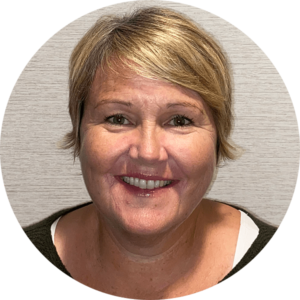
Katie Gentry-Funk
Senior Account Executive
Districts over 2,100 students
(505) 301-7382
kgentry-funk@amplify.com

Dana Blumberg
Account Executive
Districts under 2,100 students &
Archdiocese of Santa Fe schools
(847) 528-1822
dblumberg@amplify.com