Showing results for clark bertram
CKLA – Knowledge Research Units for K–5
Welcome to Amplify Science!
This site contains resources designed to support Clark County’s use of Amplify Science for grades K–8. Check back for exciting updates!
- Responsive Relaunch of Amplify Science
- Where’s my Amplify Science app on Canvas? Canvas support
- The Amplify Science Program Hub
- Share the The Caregiver Hub (Eng/Span)
Program Introduction
Learn more about Amplify Science
Click the buttons below to explore the Amplify Science Program Guide. You can access the full digital Teacher’s Guide from the Program Guide to explore the program.
Clark County Training Sessions – Reference Materials
2021-2022 Session Materials
New Teacher Training Part 1
Unit 2: Standard Curriculum Relaunch / Guided Planning
2020-2021 Session Materials
New Teacher Orientation Part I
Returning and New Teacher Part II
- K-5 Agenda ES-Unit 1 Unpacking Amplify Science for Hybrid Learning
- K Unit 1-LAUSD ES Materials
- K Deck-Unit 1 Hybrid
- K Participant Notebook-Unit 1 Unpacking for Hybrid Learning
Orientation Sessions
Remote Learning Session
- Agenda (K-6) LAUSD Remote Learning Session
- @Home Resources note catcher
- @Home Resources planning tool
- LAUSD Gr. K @Home Resources Introduction and Guided Planning slides
Unit 2 Unpacking Session Materials
- K-2 [Agenda] ES Guided Internalization with @Home Resources
- Updated- [Deck] Gr K, Unit 2 Part I Dec 2020
- [PN] Gr K Unit 2 Part I Guided Internalization with @Home Resources PN updated 08.31.20 SHARED
Unit 2 Part II
- K-2 [Agenda] ES Guided Internalization with @Home Resources Part II
- [Deck] Gr K Unit 2 Part II Jan 2021
- [PN] Gr K, Unit 2 Part II Guided Internalization with @Home Resources
Unit 3
2021-2022 Session Materials
Unit 2: Standard Curriculum Relaunch / Guided Planning
New Teacher Training Part 1
2020-2021 Session Materials
New Teacher Orientation Part I
Returning and New Teacher Part II
- K-5 Agenda ES-Unit 1 Unpacking Amplify Science for Hybrid Learning
- 1 Unit 1-LAUSD ES Materials
- 1 Deck-Unit 1 Hybrid
- 1 Participant Notebook-Unit 1 Unpacking for Hybrid Learning
Orientation Sessions
Remote Learning Session
- Agenda (K-6) LAUSD Remote Learning Session
- @Home Resources note catcher
- @Home Resources planning tool
- LAUSD Gr. 1 @Home Resources Introduction and Guided Planning slides
Unit 2 Unpacking Session Materials
- K-2 [Agenda] ES Guided Internalization with @Home Resources
- Updated- [Deck] Gr 1, Unit 2 Part I Dec 2020
- Updated- [PN] Gr 1, Unit 2 Part I Guided Internalization with @Home Resources PN
Unit 2 Part II
- K-2 [Agenda] ES Guided Internalization with @Home Resources Part II
- [Deck] Gr 1 Unit 2 Part II Jan 2021
- [PN] Gr 1, Unit 2 Part II Guided Internalization with @Home Resources
Unit 3
2021-2022 Session Materials
Unit 2: Standard Curriculum Relaunch / Guided Planning
New Teacher Training Part 1
2020-2021 Session Materials
New Teacher Orientation Part I
Returning and New Teacher Part II
- K-5 Agenda ES-Unit 1 Unpacking Amplify Science for Hybrid Learning
- 2-Unit 1 LAUSD ES Materials
- 2 Deck-Unit 1 Hybrid
- 2 Participant Notebook-Unit 1 Unpacking for Hybrid Learning
Orientation Sessions
Remote Learning Session
- Agenda (K-6) LAUSD Remote Learning Session
- @Home Resources note catcher
- @Home Resources planning tool
- LAUSD Gr. 2 @Home Resources Introduction and Guided Planning slides
Unit 2 Unpacking Session Materials
- K-2 [Agenda] ES Guided Internalization with @Home Resources
- Updated- [Deck] Gr 2, Unit 2 Part I Dec 2020
- Updated- [PN] Gr 2, Unit 2 Part I Guided Internalization with @Home Resources PN
Unit 2 Part II
- K-2 [Agenda] ES Guided Internalization with @Home Resources Part II
- [Deck] Gr 2 Unit 2 Part II Jan 2021
- [PN] Gr 2, Unit 2 Part II Guided Internalization with @Home Resources
Unit 3
2021-2022 Session Materials
Unit 2: Standard Curriculum Relaunch / Guided Planning
New Teacher Training Part 1
2020-2021 Session Materials
New Teacher Orientation Part I
Returning and New Teacher Part II
- K-5 Agenda ES-Unit 1 Unpacking Amplify Science for Hybrid Learning
- 3-Unit 1 LAUSD ES Materials
- 3 Deck-Unit 1 Hybrid
- 3 Participant Notebook-Unit 1 Unpacking for Hybrid Learning
Orientation Sessions
Remote Learning Session
- Agenda (K-6) LAUSD Remote Learning Session
- @Home Resources note catcher
- @Home Resources planning tool
- LAUSD Gr. 3 @Home Resources Introduction and Guided Planning slides
Unit 2 Unpacking Session Materials
- [Agenda] ES Guided Internalization with @Home Resources
- [Deck] Gr. 3 Unit 2 Guided Internalization with @Home Resources
- [PN] Gr. 3 Unit 2 Guided Internalization with @Home Resources
Unit 3 Unpacking the Unit Phenomenon
- 3-5 [Agenda] ES Unit 3_ Unpacking the Unit Phenomenon
- [Deck] Gr. 3 Unit 3_ Unpacking the phenomenon 3-LSB
- [PN] Gr 3, Unit 3 Unpacking the phenomenon 3-LSB
Unit 4 Unpacking Amplify Science for Hybrid Learning
2021-2022 Session Materials
Unit 2: Standard Curriculum Relaunch / Guided Planning
New Teacher Training Part 1
2020-2021 Session Materials
New Teacher Orientation Part I
Returning and New Teacher Part II
- K-5 Agenda ES-Unit 1 Unpacking Amplify Science for Hybrid Learning
- 4-Unit 1 LAUSD ES Materials
- 4 Deck-Unit 1 Hybrid
- 4 Participant Notebook-Unit 1 Unpacking for Hybrid Learning
Orientation Sessions
Remote Learning Session
- Agenda (K-6) LAUSD Remote Learning Session
- @Home Resources note catcher
- @Home Resources planning tool
- LAUSD Gr. 4 @Home Resources Introduction and Guided Planning slides
Unit 2 Unpacking Session Materials
- [Agenda] ES Guided Internalization with @Home Resources
- [Deck] Gr. 4 Unit 2 Guided Internalization with @Home Resources
- [PN] Gr. 4 Unit 2 Guided Internalization with @Home Resources
Unit 3 Unpacking the Unit Phenomenon
- 3-5 [Agenda] ES Unit 3_ Unpacking the Unit Phenomenon
- [Deck] Gr. 4 Unit 3_ Unpacking the phenomenon 4-ES
- [PN] Gr 4, Unit 3 Unpacking the phenomenon 4-ES
Unit 4 Unpacking Amplify Science for Hybrid Learning
2021-2022 Session Materials
Unit 2: Standard Curriculum Relaunch / Guided Planning
New Teacher Training Part 1
2020-2021 Session Materials
New Teacher Orientation Part I
Returning and New Teacher Part II
- K-5 Agenda ES-Unit 1 Unpacking Amplify Science for Hybrid Learning
- 5 Unit 1-LAUSD ES Materials
- 5 Deck-Unit 1 Hybrid
- 5 Participant Notebook-Unit 1 Unpacking for Hybrid Learning
Orientation Sessions
Remote Learning Session
- Agenda (K-6) LAUSD Remote Learning Session
- @Home Resources note catcher
- @Home Resources planning tool
- LAUSD Gr. 5 @Home Resources Introduction and Guided Planning slides
Unit 2 Unpacking Session Materials
- [Agenda] ES Guided Internalization with @Home Resources
- [Deck] Gr 5, Unit 2 Guided Internalization with @Home Resources.
- [PN] Gr 5, Unit 2 Guided Internalization with @Home Resources PN
Unit 3 Unpacking the Unit Phenomenon
- 3-5 [Agenda] ES Unit 3_ Unpacking the Unit Phenomenon
- [Deck] Gr. 5 Unit 3_ Unpacking the phenomenon 5-ESB
- [PN] Gr 5, Unit 3 Unpacking the phenomenon 5-ESB
Unit 4 Unpacking Amplify Science for Hybrid Learning
2021-2022 Session Materials
Unit 2 Metabolism Engineering Internship: Unit Internalization / Guided Planning
2020-2021 Session Materials
Unit 2 Unpacking
- [Agenda] ES Guided Internalization with @Home Resources
- [Deck] Gr 6 Elem, Unit 2 Guided Internalization with @Home Resources
Unit 2 Metabolism
2021-2022 Session Materials
Gr 7 Scope and Sequence 2021-22
2020-2021 Session Materials
Navigating Program Essentials
- [Agenda] Gr 7 Semester 2 Navigating Program Essentials
- Unit Guide Resources
- G7 Orientation Workshop Slides
Launch Unit: Guided Internalization with @Home Resources
- [Agenda] Semester 2 Launch Unit Guided Internalization with @Home Resources
- [PN] Gr 7, Unit 1 GOM Guided Internalization with @Home Resources_Sem 2
- [Deck] Gr. 7, GOM Launch Unit (semester 2) Internalization & Guided Planning Workshop
Unit 2 Session Materials
2021-2022 Session Materials
2020-2021 Session Materials
Grade Level Orientation and Refresher
[Synchronous Session Agenda] LAUSD MS, Summer 21
Navigating Program Essentials
[Asynchronous Session Agenda] LAUSD MS, Summer 21
Remote Learning Session (6-8)
- Agenda (6-8) LAUSD Remote Learning Session
- @Home Resources note catcher
- @Home Resources planning tool
- LAUSD Gr. 6_6-8 @Home Resources Introduction and Guided Planning slides
- Launch Unit Internalization Session
Grade 6
Gr 6 Scope and Sequence 2021-22
- [Agenda] Unit Internalization and Guided Planning
- [Deck] Gr. 6 Metabolism – Unit Internalization – Guided Planning Workshop
- [PN] Gr. 6 MET – Guided Internalization
- [Agenda] MET EI_FAM EI Unit Internalization and Guided Planning
- [Deck] Gr. 6 MS, Metabolism EI_ Unit Internalization_Guided Planning Workshop
- [PN] Gr 6 MS MET EI Guided Internalization
- FILLABLE METEI_Engineering_Notebook
- FILLABLE METEI_Copymaster_Compilation
- [Agenda] Unit Internalization and Guided Planning-2hr
- [Deck] Gr. 6, Traits and Reproduction_ Unit Internalization _ Guided Planning Workshop
- [PN] Gr 6, Unit 4 TR Guided Internalization with @Home Resources
- [Agenda] Unit Internalization and Guided Planning-2hr
- [Deck] Gr. 6 Thermal Energy Unit Internalization & Guided Planning Workshop
- [PN] Gr 6 Unit 5 TE Guided Internalization with @Home Resources
- [Agenda] Unit Internalization and Guided Planning-2hr
- [Deck] Gr. 6, Ocean, Atmosphere, and Climate_ Unit Internalization & Guided Planning Workshop
- [PN] Gr 6, Unit 6 OAC Guided Internalization with @Home Resources
- [Agenda] Unit Internalization and Guided Planning
- [Deck] Gr. 6, Weather Patterns_ Unit Internalization & Guided Planning Workshop (with @home resources)
- [PN] Gr 6 WP Guided Internalization
- [Agenda] Core Unit Internalization and Guided Planning
- [Deck] Gr. 6, Earth’s Changing Climate_ Unit Internalization & Guided Planning Workshop (with @home resources)
- [PN] Gr 6 ECC Guided Internalization
Grade 7
Gr 7 Scope and Sequence 2021-22
- [Agenda] Unit Internalization and Guided Planning
- [Deck] Gr. 7 Rock Transformations – Unit Internalization – Guided Planning Workshop
- [PN] Gr. 7 RT – Guided Internalization
- [Agenda] Unit Internalization and Guided Planning
- [Deck] Gr. 7 Phase Change – Unit Internalization – Guided Planning Workshop
- [PN] Gr. 7 PC – Guided Internalization
- [Agenda] Unit Internalization and Guided Planning-2hr
- [Deck] Gr. 7 Chemical Reactions-Unit Internalization-Guided Planning Workshop
- [PN] Gr 7 CRX Guided Internalization
- [Agenda] Unit Internalization and Guided Planning-2hr
- [Deck] Gr. 7 Matter and Energy in Ecosystems_Unit Internalization_Guided Planning Workshop
- [PN] Gr 7 MEE Guided Internalization
- [Agenda] Unit Internalization and Guided Planning-2hr
- [Deck] Gr. 7 Semester2, Rock Transformations_ Unit Internalization & Guided Planning Workshop
- [PN] Gr 7, Unit 2Sem2 RT Guided Internalization with @Home Resources
- [Agenda] Unit Internalization and Guided Planning
- [Deck] Gr. 7, Phase Change_ Unit Internalization & Guided Planning Workshop (with @home resources)
- [PN] Gr 7 PC Guided Internalization
- [Agenda] Core Unit Internalization and Guided Planning
- [Deck] Gr. 7, Chemical Reactions_ Unit Internalization & Guided Planning Workshop (with @home resources)
- [PN] Gr 7 CR Guided Internalization
- [Agenda] Unit Internalization and Guided Planning
- [Deck] Gr. 7, Matter & Energy in Ecosystems_ Unit Internalization & Guided Planning Workshop (with @home resources)
- [PN] Gr 7 MEE Guided Internalization
Grade 8
Gr 8 Scope and Sequence 2021-22
- [Agenda] Unit Internalization and Guided Planning
- [Deck] Gr. 8 Force and Motion – Unit Internalization – Guided Planning Workshop
- [PN] Gr. 8 FAM – Guided Internalization
- [Agenda] MET EI_FAM EI Unit Internalization and Guided Planning
- [Deck] Gr. 8 Force and Motion EI – Unit Internalization – Guided Planning Workshop
- [PN] Gr 8 MS FAM EI Guided Internalization
- FILLABLE FAMEI_Engineering_Notebook
- FILLABLE FAMEI_Copymaster_Compilation
- [Agenda] Unit Internalization and Guided Planning-2hr
- [Deck] Gr. 8, Magnetic Fields_ Unit Internalization _ Guided Planning Workshop
- [PN] Gr 8, Unit 4 MF Guided Internalization with @Home Resources
- [Agenda] Unit Internalization and Guided Planning-2hr
- [Deck] Gr. 8 Light Wave_ Unit Internalization & Guided Planning Workshop
- [PN] Gr 8 Unit 5 LW Guided Internalization with @Home Resources
- [Agenda] Unit Internalization and Guided Planning-2hr
- [Deck] Gr. 8, Earth, Moon, and Sun_ Unit Internalization & Guided Planning Workshop
- [PN] Gr 8, Unit 6 EMS Guided Internalization with @Home Resources
- [Agenda] Unit Internalization and Guided Planning
- [Deck] Gr. 8, Natural Selection_ Unit Internalization & Guided Planning Workshop (with @home resources)
- [PN] Gr 8 NS Guided Internalization
- [Agenda] EI Unit Internalization and Guided Planning
- [Deck] Gr. 8 Natural Selection EI_ Unit Internalization & Guided Planning Workshop
- [PN] Gr 8 NS EI Guided Internalization
- [Agenda] Unit Internalization and Guided Planning
- [Deck, part 1] Gr. 8, Evolutionary History_ Unit Internalization & Guided Planning Workshop (with @home resources)
- [Deck, part 2] Gr. 8, Evolutionary History_ Unit Internalization & Guided Planning Workshop (with @home resources)
- [PN] Gr 8 EH Guided Internalization
New! Lesson Prep Videos
Unit 1
Grade 3 Lesson Prep Videos can be found in the Resources section in the Amplify Science- Elementary group in Schoology. Access code: W4PK-W466-63F5B
Grade 4 Lesson Prep Videos can be found in the Resources section in the Amplify Science- Elementary group in Schoology. Access code: W4PK-W466-63F5B
Grade 5 Lesson Prep Videos can be found in the Resources section in the Amplify Science- Elementary group in Schoology. Access code: W4PK-W466-63F5B
Remote Learning Resources
We’ve created some guidance on resources you can send home with students and ways for you to adapt our K-5 or 6-8 curriculum for remote learning.
Learn more at Remote Learning Resources for Amplify Science
- Find out more about Amplify Science@Home
Onboarding: What to expect
Welcome to Amplify Science! To help you know what’s coming next, we created the following visual that outlines the steps of the onboarding process. You can use it as a reference.

Onboarding videos
To start using Amplify Science quickly in your classroom, check out the following onboarding videos. They cover what you need to know to get started fast, from unpacking materials to logging in and navigating the digital Teacher’s Guide.
Unpacking your first hands-on materials kit
The following videos give you a quick look into our Amplify Science classroom kits. For each grade level, we have a video for the first unit in the scope and sequence, and we show you how to unpack the kits for all the units.

- Kindergarten: Needs of Plants and Animals
- Grade 1: Animal and Plant Defenses
- Grade 2: Plant and Animal Relationships
- Grade 3: Balancing Forces
- Grade 4: Energy Conversions
- Grade 5: Patterns of Earth and Sky
- Middle school: Metabolism
- Middle school: Plate Motion
- Middle school: Force and Motion
Looking for help?
Powerful (and free!) pedagogical support
Amplify provides a unique kind of support you won’t find from other publishers. We have developed an educational support team of former teachers and administrators who provide pedagogical support for every Amplify curriculum, assessment, and intervention program. This service is completely free for all educators who are using our programs and includes:
- Guidance for developing lesson plans and intervention plans
- Information on where to locate standards and other planning materials
- Recommendations and tips for day-to-day teaching with Amplify programs
- Support with administering and interpreting assessment data and more
To reach our pedagogical team, use our live chat within your program, call (800) 823-1969, or email edsupport@amplify.com
Timely technical and program support
Our technical and program support is included and available from 7 a.m. to 7 p.m. ET, Monday through Friday, through a variety of channels, including a live chat program that enables teachers to get immediate help in the middle of the school day.
For your most urgent questions:
- Use our live chat within your program
- Call our toll-free number: (800) 823-1969
For less urgent questions:
Introducing new units for Amplify CKLA and Amplify Caminos K–5
As part of our commitment to creating even richer and more wide-ranging curricula, we are excited to release six new units for both Amplify CKLA and Amplify Caminos!

About these units
Our brand-new Knowledge Research units carry forward the powerful and proven instructional approach of both Amplify CKLA and Amplify Caminos while also:
- Adding more variety to engage students from many walks of life. The rich topics and highly visual components featured in these units provide students with even more “windows and mirrors” and perspectives as they work to build knowledge.
- Adding more authentic literature. Each new research unit revolves around a collection of high-interest authentic trade books that will spark more curiosity and inspire more inquiry.
- Adding more flexibility. Units can be implemented for extended core instruction during flex periods, district-designated Pausing Points, or enrichment periods.
Units cover a variety of rich and relevant topics:
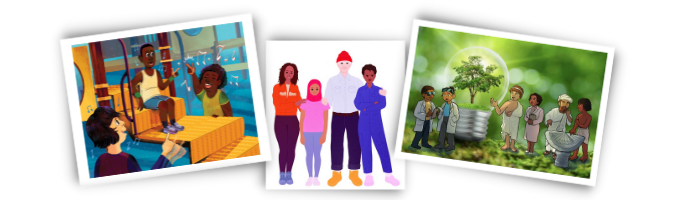
With these new units, students will soar to new heights with Dr. Ellen Ochoa, Amelia Earhart, and the Tuskegee Airmen. They’ll feel the rhythm as they learn about Jazz legends Miles Davis, Tito Puente, and Duke Ellington. And they’ll explore the far reaches of the world with Jacques Cousteau, Matthew Henson, and Eugenie Clark.
- Grade K: Art and the World Around Us/El arte y el mundo que nos rodea
- Grade 1: Adventure Stories: Tales from the Edge of the World/Cuentos de aventuras: relatos desde los confines de la Tierra
- Grade 2: Up, Up, and Away: The Age of Aviation/¡A volar! La era de la aviación
- Grade 3: All That Jazz/Jazz y más
- Grade 4: Energy: Past, Present, and Future/Energía: pasado, presente y futuro
- Grade 5: Beyond Juneteenth: 1865 to present/Más allá de Juneteenth: de 1865 al presente
Units are available in English and Spanish, and will include the following components:
- Teacher Guide
- Student Activity Books
- Image Cards
- Trade Book Collection
- Digital Components (grades K–3 and 5)
Grade K: Art and the World Around Us/El arte y el mundo que nos rodea
“Every child is an artist,” said Picasso, meaning that every child uses art to explore and understand the world around them. Art and the World Around Us honors that truth by introducing Kindergarten students to some of the ways in which artists have explored and understood the worlds around them, too.
This domain introduces students to artists from different time periods, countries, and cultures. Throughout the unit, students learn about different kinds of art and how artists use the world around them as they make art. They also connect this to what they have already learned about the earth, plants, and animals in other Amplify CKLA and Amplify Caminos domains: Farms/Granjas, Plants/Plantas, and Taking Care of the Earth/Cuidar el planeta Tierra. In addition, students connect this to what they have learned about sculptors in the Presidents and American Symbols/Presidentes y símbolos de los Estados Unidos domain. As they explore different artists and artistic traditions, they develop their ideas about how humans are connected to each other and to the world around them.
As you read the texts in this unit, students may observe ways in which the characters or subjects are both similar to and different from students. This is a good opportunity to teach students awareness and sensitivity, building on the idea that all people share some things in common, and have other things that make them unique. This unit also offers an excellent opportunity to collaborate with your school’s art teacher, as many lessons have suggested activities to help students understand the kind of art they are studying.
Within this unit, students have opportunities to:
- Use details to describe art.
- Identify three ways to create art.
- Identify characteristics of cave art.
- Sequence the steps of making pottery.
- Describe how artists can create work connected to the world around them.
- Describe what makes Kehinde Wiley’s portraits unique.
- Explain how the texture of a surface can affect artwork created on it.
- Explain what a sculpture is.
- Describe what makes James Turrell’s artwork about the sky unique.
- Explain what a museum is and what kinds of things you can see or do there.
Instruction in this unit revolves around the following collection of high-interest authentic trade books. One copy of each trade book is included with the unit materials.
- The First Drawing by Mordicai Gerstein
- Van Gogh and the Sunflowers by Laurence Anholt
- My Name is Georgia by Jeanette Winter
- A Life Made by Hand by Andrea D’Aquino
- Rainbow Weaver by Linda Elovitz Marshall
- Luna Loves Art by Joseph Coelho
Grade 1: Adventure Stories: Tales from the Edge of the World/Cuentos de aventuras: relatos desde los confines de la Tierra
This domain introduces students to adventure stories set around the world and challenges students to dig into the adventures through research. By listening to the Read-Alouds and trade books, students increase their vocabulary and reading comprehension skills, learn valuable lessons about perseverance and teamwork, and become familiar with gathering information for research.
In this unit, students study the careers of real-world explorers Dr. Eugenie Clark and Sophia Danenberg, marvel at the inventions of Jacques Cousteau, think critically about how teamwork and collaboration can make greater adventures possible, learn about the science and technology that enable adventures, and research some of the ways humans have confronted challenges at the edges of the world, from the oceans below to space above.
Each lesson in the domain builds students’ research skills as they ask questions, gather information, and write a paragraph about their findings. Students share what they have learned about adventures in an Adventure Gallery Walkthrough. By taking on the persona of one of the adventurers they meet in the Read-Alouds and trade books, students deliver their final paragraphs as if they are a “speaking portrait” of that person. Students are invited to dress up as that adventurer if they desire.
In addition, teachers can set aside time outside of the instructional block to create the picture frames students will hold as they present to the Adventure Gallery Walk guests. Frames can be made from shirt boxes, cardboard, construction paper, or any art supplies that are on hand. This might be an opportunity to collaborate with the school’s art department if resources are available. Another option is to ask students to make their frames at home with their caregivers. On the day of the Adventure Gallery Walk, students will be the hosts and take on specific jobs, such as welcoming the guests, describing their work throughout the unit, and pointing out the areas of study on the domain bulletin board. You can find a complete list of student jobs in Lesson 13.
This unit builds upon the following Amplify CKLA and Amplify Caminos units that students will have encountered in the previous grade.
- Nursery Rhymes and Fables/Rimas y fábulas infantiles (Kindergarten)
- Stories/Cuentos (Kindergarten)
The specific core content targeted in these domains is particularly relevant to the Read-Alouds students will hear in Adventure Stories: Tales from the Edge of the World. The background knowledge students bring to this unit will greatly enhance their understanding of the trade books used in this unit.
Instruction in this unit revolves around the following collection of high-interest authentic trade books. One copy of each trade book is included with the unit materials.
- My Name is Gabito/Me llamo Gabito by Monica Brown
- Tomas and the Galápagos Adventure by Carolyn Lunn
- The Astronaut with a Song for the Stars: The Story of Dr. Ellen Ochoa by Julia Finley Mosca
- Mae Among the Stars by Roda Ahmed
- Shark Lady: The True Story of How Eugenie Clark Became the Ocean’s Most Fearless Scientist by Jess Keating
- Manfish by Jennifer Berne
- Keep On! The Story of Matthew Henson, Co-Discoverer of the North Pole by Deborah Hopkinson
- The Top of the World: Climbing Mount Everest by Steve Jenkins
Grade 2: Up, Up, and Away: The Age of Aviation/¡A volar! La era de la aviación
With this domain, students head up, up, and away with an introduction to the soaring history of aviation. Students learn the stories of early aviators, such as the Montgolfier brothers, the Wright brothers, Aída de Acosta, and Amelia Earhart.
During the unit, students study the science of flight, including the physics concept of lift, and research the social impacts of the world of flight. Finally, students let their research skills take flight as they explore key figures from the world of aviation.
The lessons in this domain build on earlier Grade 2 CKLA and Amplify Caminos domains about the westward expansion, early Greek civilizations, and Greek myths, and lay the foundation for learning about other periods of world history in future grades.
This unit builds upon the following Amplify CKLA and Amplify Caminos units that students will have encountered earlier in the year.
- The Ancient Greek Civilization/La civilización griega antigua (Grade 2)
- Greek Myths/Mitos griegos (Grade 2)
- Westward Expansion/La expansión hacia el oeste (Grade 2)
The specific core content targeted in these domains is particularly relevant to the Read-Alouds students will hear in Up, Up, and Away: The Age of Aviation. The background knowledge students bring to this unit will greatly enhance their understanding of the trade books used in this unit.
Instruction in this unit revolves around the following collection of high-interest authentic trade books. One copy of each trade book is included with the unit materials.
- Up and Away!: How Two Brothers Invented the Hot-Air Balloon by Jason Henry
- The Glorious Flight: Across the Channel with Louis Blériot by Alice and Martin Provensen
- The Flying Girl: How Aída de Acosta Learned to Soar by Margarita Engle
- Wood, Wire, Wings: Emma Lilian Todd Invents an Airplane by Kirsten Larson
- Helicopter Man: Igor Sikorsky and His Amazing Invention by Edwin Brit Wyckoff
- The Tuskegee Airmen Story by Lynn Homan and Thomas Reilly
- Skyward: The Story of Female Pilots in WWII by Sally Deng
- Aim for the Skies: Jerrie Mock and Joan Merriam Smith’s Race to Complete Amelia Earhart’s Quest by Aimee Bissonette
Grade 3: All That Jazz/Jazz y más
This domain teaches students about the vibrant music, poetry, and culture of the Jazz Age in the United States. Students learn about famous writers and musicians like Langston Hughes, Louis Armstrong, Billie Holiday, Melba Liston, Tito Puente, and Miles Davis. They study how the jazz art form took root in the South, then spread to the North to become the sound of the Harlem Renaissance, eventually connecting people around the world in musical expression.
During this unit, students perform guided research to further explore both the history of jazz and what jazz is today. They develop research skills and then use those skills to find deeper connections between the stories and music of the Jazz Age and music today. As students learn about the world of jazz, they collaborate and share ideas with their classmates. They also practice sharing feedback focused on their written work, and, at the end of the unit, students present their research to the group.
The lessons give students opportunities to dive into the rhythms and stories of jazz, utilizing the knowledge sequence in this unit to:
- Collaboratively generate research questions about jazz, jazz musicians, contemporary musicians from the state where they live or have lived, and the evolution of jazz music.
- Utilize Read-Alouds, independent reading, and partner reading to learn about the Jazz Age, the Harlem Renaissance, jazz music, and biographies of celebrated jazz musicians and writers.
- Research the answers to their generated questions, gather information, write a short research essay about a famous jazz musician, write a short essay about a contemporary musician from the state where they live or have lived, and give a presentation about their research.
Within this unit, students have opportunities to:
- Ask relevant questions and make pertinent comments
- Identify details in texts
- Determine key ideas of texts by evaluating details
- Make text-based inferences
- Generate questions based on prior knowledge and gathered information
- Synthesize details across texts to demonstrate comprehension
- Discuss and explain an author’s purpose
- Identify and cite reliable primary and secondary sources of information
- Compose a well-organized and focused informative essay
- Make connections between topics
- Present information using appropriate media
Instruction in this unit revolves around the following collection of high-interest authentic trade books. One copy of each trade book is included with the unit materials.
- Birth of the Cool: How Jazz Great Miles Davis Found His Sound by Kathleen Cornell Berman
- Little Melba and Her Big Trombone by Kathryn Russell-Brown
- Benny Goodman and Teddy Wilson: Taking the Stage as the First Black and White Jazz Band in History by Lesa Cline-Ransome
- Tito Puente, Mambo King by Monica Brown
- Drum Dream Girl: How One Girl’s Courage Changed Music by Margarita Engle
- Duke Ellington: The Piano Prince and His Orchestra by Andrea Pinkney
In this unit, students also read the poem “Harlem” by Langston Hughes. (Available for free through the Academy of American Poets website and the Poetry Foundation website, with recorded audio available through the website for John Hancock College Preparatory High School.)
Grade 4: Energy: Past, Present, and Future/Energía: pasado, presente y futuro
With this domain, students become tomorrow’s problem solvers in this study of energy in the United States. Analytical reading skills are developed by examining the challenges of early energy innovators. Students then read about current energy practices and young energy change-makers across the world.
Throughout the unit, students conduct research into different sources of energy and present a proposal, putting them in the shoes of future energy innovators. They also use the knowledge sequence in this unit to:
- Collaboratively analyze texts to identify cause-effect and problem-solution relationships.
- Generate questions and conduct research about energy.
- Write an opinion essay making their case for a fuel of the future.
- Create energy proposals using primary and secondary resources.
This unit builds upon the following Amplify CKLA units that students will have encountered in previous grades as well as earlier in the year.
- Plants/Plantas (Grade K)
- The History of the Earth/La historia de la Tierra (Grade 1)
- Eureka! Student Inventor/¡Eureka! El arte de la invención (Grade 4)
The specific core content targeted in these domains is particularly relevant to the Read-Alouds students will hear in Energy: Past, Present, and Future. The background knowledge students bring to this unit will greatly enhance their understanding of the trade books used in this unit.
Instruction in this unit revolves around the following collection of high-interest authentic trade books. One copy of each trade book is included with the unit materials.
- Buried Sunlight: How Fossil Fuels Have Changed the Earth by Molly Bang and Penny Chisholm
- Energy Island: How One Community Harnessed the Wind and Changed their World by Allan Drummond
- The Boy Who Harnessed the Wind: Picture Book Edition by William Kamkwamba and Bryan Mealer
Grade 5: Beyond Juneteenth: 1865 to present/Más allá de Juneteenth: de 1865 al presente
Within this domain, Students learn about General Granger’s announcement in Galveston, Texas on June 19, 1865, a day marked in history as Juneteenth. Texts and multimedia sources will support foundational knowledge-building about the end of slavery in the United States. A review of the first freedom announcement, President Lincoln’s Emancipation Proclamation, provides students with background knowledge to further emphasize the significance of Juneteenth in American history.
This unit also takes students on a journey beyond Juneteenth, as they study specific contributions of African Americans from 1865 to the present day. Students participate in a virtual field trip to Emancipation Park in Houston, Texas and use the knowledge sequence in this unit to:
- Collaboratively generate research questions about Juneteenth, The Great Migration, innovators and inventors, education, the humanities, activists, and allies.
- Use Read-Alouds, independent, and partner reading to learn about African American contributions from 1865 to the present.
- Research to find answers to their generated questions, gather information, and write a four-chapter Beyond Juneteenth book.
This unit builds upon the following Amplify CKLA units that students will have encountered in previous grades.
- Native Americans/Los nativos americanos (Grade K)
- A New Nation: American Independence/Una nueva nación: la independencia de los Estados Unidos
(Grade 1) - The U.S. Civil War/La Guerra Civil de los Estados Unidos (Grade 2)
- Immigration/La inmigración (Grade 2)
- Native Americans/Los nativos americanos (Grade 5)
The specific core content targeted in these domains is particularly relevant to the Read-Alouds students will hear in Beyond Juneteenth: 1865 to present. The background knowledge students bring to this unit will greatly enhance their understanding of the trade books used in this unit.
Instruction in this unit revolves around the following collection of high-interest authentic trade books. One copy of each trade book is included with the unit materials.
- All Different Now: Juneteenth, the First Day of Freedom by Angela Johnson
- The Great Migration: An American Story by Jacob Lawrence
- Sing a Song: How “Lift Every Voice and Sing” Inspired Generations by Kelly Starling Lyons
- Side by Side/ Lado a lado: The Story of Dolores Huerta and Cesar Chavez/ La Historia de Dolores Huerta y Cesar Chavez by Monica Brown
- Of Thee I Sing: A Letter to My Daughters by Barack Obama
Amplify CKLA Review for Alabama
Summer ’24 Interlude: One-pagers make literacy research more accessible, with Jamie Clark


Meet Our Guest(s):
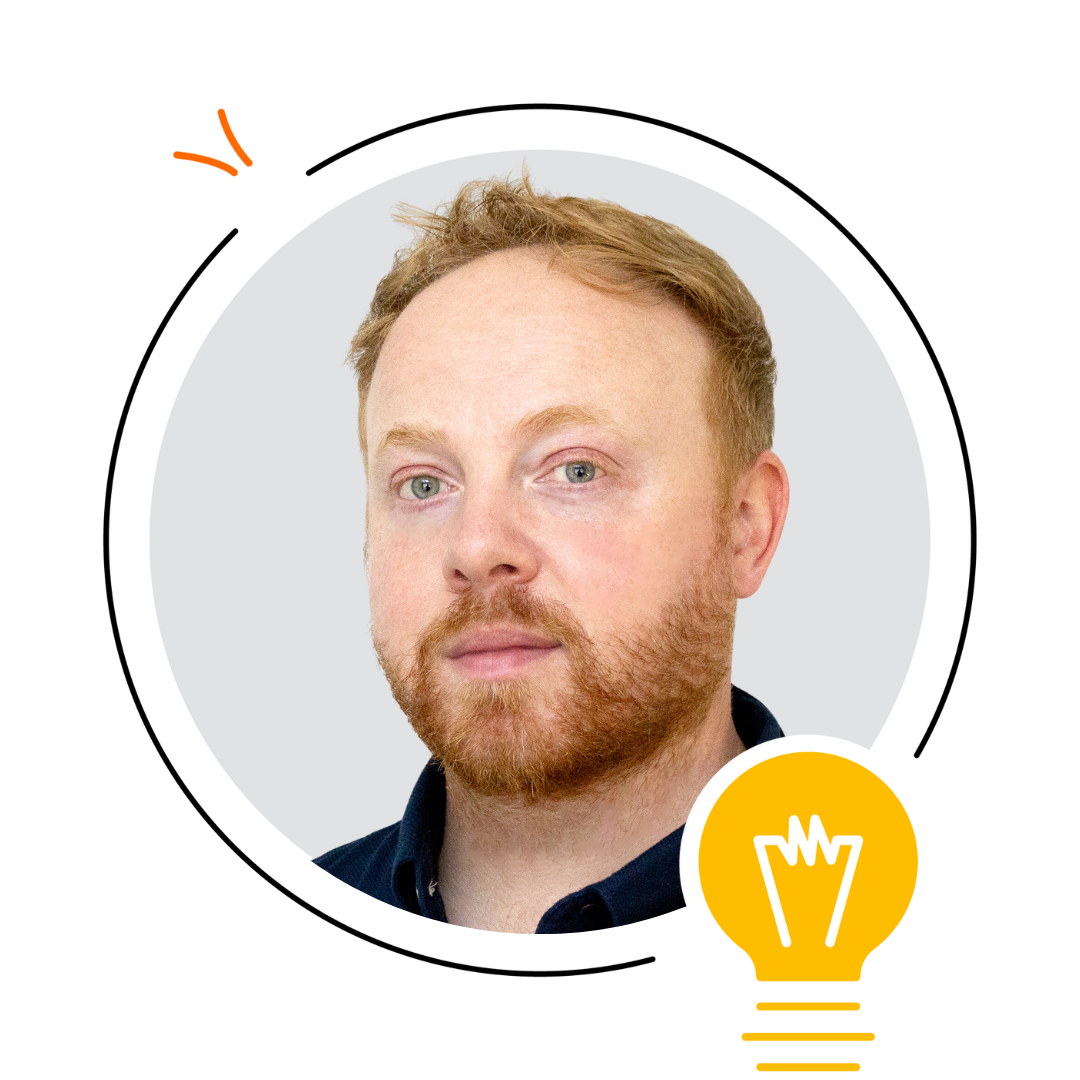
Jamie Clark
Jamie Clark is Team Leader of Learning and Innovation at a K–12 school in Perth, Western Australia. Originally from Huddersfield in West Yorkshire, Jamie taught English in the United Kingdom for six years before moving to Australia with his family. Jamie is also a lead practitioner specializing in pedagogy and digital learning. He regularly provides professional learning workshops for educators and leaders and has spoken at various educational conferences around the Asia-Pacific region. Jamie’s passion is instructional coaching and driving good practice through research-based, high-impact strategies.
Meet our host, Susan Lambert
Susan Lambert is the Chief Academic Officer of Elementary Humanities at Amplify, and the host of Science of Reading: The Podcast. Her career has been focused on creating high-quality learning environments using evidence-based practices. Lambert is a mom of four, a grandma of four, a world traveler, and a collector of stories.
As the host of Science of Reading: The Podcast, Lambert explores the increasing body of scientific research around how reading is best taught. As a former classroom teacher, administrator, and curriculum developer, Lambert is dedicated to turning theory into best practices that educators can put right to use in the classroom, and to showcasing national models of reading instruction excellence.
Quotes
“One thing that people often get wrong about one-pagers is that it has all the answers, it has all the strategies. But I always say that it's a reminder, it's a conversation starter.”
“In order to help our students learn effectively, teachers need to know how they learn and sometimes why they do not learn.”
“Think-pair-share is important because it makes students feel safe before they share with the class.”
“The main thing as a teacher for me is that you always need to learn and that you never stop learning.”
“The best research is the stuff that you can glean information from and then do something with that's actionable and practical.”
Episode 12: Fostering accessible instruction for all with DeJunne’ Clark Jackson


USBE Data Analysis for K-3 Reading Assessment Program
Introduction
mCLASS Assessment: Acadience™ Reading
How it works: Quickly identify the needs of each student and inform next steps with instant analysis, reports, and instructional planning tools included in the only licensed mobile version of the research-based Acadience Reading assessment.
- Use short, 1-minute fluency measures for foundational reading skills.
- Replace manual calculations with instant results and recommended activities.
- Compare student progress with predictive, research-based benchmark goals.
- Track progress and target instruction to individual student needs.
- Support decision-making at every level using aggregate reports.
- Translate class- and student-level reports into individualized instruction using the Now What?Tools.
- Get a more complete view of early literacy skills with the new mCLASS:Early Literacy Measures (ELM).
Enrollment for mClass
Please review the Utah Enrollment for mCLASS document for important information about the rostering process for LEAs in Utah.
Benchmark Windows
The USBE has required that each Acadience Reading testing benchmark window occur within the below dates:
BOY — the first benchmark before October 14
MOY — the second benchmark between December 1 and February 5
EOY — the third benchmark between the middle of April and June 15
Benchmark windows for LEAs are set to the state benchmark window dates in mCLASS. Each LEA is to have 2-4 week benchmark period that is within the state benchmark window dates and LEA leaders are to share those dates with staff. The benchmark windows in mCLASS are set to the state benchmark window dates; not the LEA benchmark window dates and this can not be changed in mCLASS. If a student moves into your LEA and your benchmark window is closed, but the state benchmark period is still open, the student must be benchmarked. Should your LEA need an extension of a benchmark window beyond the close of the state benchmark windows, that must be approved by the USBE Assessment Department. Once the benchmark window closes, do not give the benchmark to a student, instead, educators can progress monitor the student on the measures they would have received a benchmark in order to get the students current instructional levels.
If you have questions regarding your current benchmark window dates, feel free to reach out to Amplify Customer Services at help@amplify.com.
Acadience Reading Benchmark Invalidations
Before you invalidate a benchmark probe, review the USBE’s list of acceptable reasons for invalidating on the Frequently Asked Questions: Acadience Reading Invalidations document. If a district/charter has a significant percentage of invalidations, contact and further action will be deployed. If you believe an invalidation is required, please contact your District/Charter Literacy Director. If they need support, they can contact Sara Wiebke, sara.wiebke@schools.utah.gov, to request an invalidation.
Progress Monitoring
The impact of progress monitoring
Progress monitoring is the most powerful tool we offer with regards to student achievement.
“Scores for Daze increase more slowly than they do for other Acadience Reading measures, so more frequent monitoring may not be as informative. For students who need to be monitored on Daze, we recommend monitoring once per month.”
Progress Monitoring with Acadience Reading
© Acadience Learning
October 2012
The Acadience Reading authors recommend progress monitoring students in the Well Below Benchmark category once every 7-10 days (and once every 10-12 days for students in the Below Benchmark category).
Progress monitoring is the practice of testing students briefly but frequently on the skill areas in which they are receiving instruction, to ensure that they are making adequate progress. When students are identified as at risk for reading difficulties, they can receive progress monitoring testing more frequently to ensure that the instruction they are receiving is helping them make progress. (Acadience Learning/October 2012, Progress Monitoring Guide)
The purposes of progress monitoring are:
- to provide ongoing feedback about the effectiveness of instruction,
- to determine students’ progress toward important and meaningful goals, and
- to make timely decisions about changes to instruction so that students will meet those goals.
How to progress monitor?
- Select students for progress monitoring
- Select Acadience Reading materials for progress monitoring
- Set progress monitoring goals
- Determine the frequency of progress monitoring
- Conduct progress monitoring assessment
- Access data through class and student reports
- Evaluate progress and modify instruction.
The key to progress monitoring: Instruction should link to progress monitoring and progress monitoring should link to instruction. They should run parallel and merge as one to confirm student growth in reading.
Check your progress monitoring fidelity report in mCLASS to ensure you are on track with these students. For more information regarding progress monitoring guidelines, visit the official progress monitoring guidelines.
Support Team
Amplify Customer Services
(800) 823-1969
Monday to Friday, 5 a.m. to 5 p.m. MT
help@amplify.com
Educational Support Team
Pedagogical Questions
(800) 823-1969
Monday to Friday, 5 a.m. to 5 p.m. MT
edsupport@amplify.com
For more information, please contact:
Sarah McCarty
Associate Director, Educational Partnership
(812) 593-5776
smccarty@amplify.com
Donna Bright
Educational Partnership Manager
(303) 960-3772
dbright@amplify.com
Robert McCarty
Regional Director of Educational Partnership
(435) 655-1731
rmccarty@amplify.com
Cydnee Carter
Assessment Development Coordinator
(801) 538-7654
cydnee.carter@schools.utah.gov
Liz Williams
Elementary ELA Assessment Specialist
(801) 538-7542
Liz.williams@schools.utah.gov
Sara Wiebke
Literacy Coordinator
(801) 538-7935
sara.wiebke@schools.utah.gov
Krista Hotelling
K-3 Literacy Specialist
(801) 538-7794
krista.hotelling@schools.utah.gov
Christine Elegante
K-3 Literacy Specialist
(801) 538-7551
christine.elegante@schools.utah.gov
Julie Clark
K-3 Literacy Specialist
801-499-2515
julie.clark@schools.utah.gov
Melissa Preziosi
Assessment Data Specialist
(801) 538-7949
melissa.preziosi@schools.utah.gov
Resources
Helpful tips and guides
- Implementation Roadmap Every school system has different objectives and needs, and this document is designed to help you define how the mCLASS system can best support you in achieving your goals.
- Checklist Use this checklist to ensure your staff is trained and your programmatic expectations are clearly communicated to all stakeholders. Completing each of these steps during the correlated benchmark window will help you realize the full value of your mCLASS assessment program.
- mCLASS: Online Help
- Acadience Reading Assessment Manual (Note: You will need to register as a user to get access to the materials; both registration and materials are available at no cost.)
- Acadience Reading Benchmark Goals and Composite Score
- Grouping Worksheets for Acadience Reading
- Acadience Reading Key Skills This document correlates the Acadience Reading measures to Basic Early Literacy Skills.
- The Big Ideas in Early Reading This document is a reference of the five Big Ideas in Early Reading.
- Acadience Reading Reminders A list of reminders the teacher can give to students while assessing Acadience Reading.
- USBE Literacy Framework
- Utah School Report Card: Early Literacy
- Utah State Board of Education Reading on Grade Level Targets for Acadience Reading K-6
- Five leadership practices that drive success in K-2 literacy
mCLASS:Acadience Reading tutorials
- mCLASS:Acadience Reading Next Scoring Practice
- mCLASS Now What? Tools Tutorial
- Pathways of Progress: Purpose
- ?Pathways of Progress: Setting Meaningful Goals
- Pathways of Progress: Highly Skilled Learners Criteria
- ?Goal Setting in mCLASS
- mCLASS How to calculate student pathways video
- Calculating Pathways from DYD Presentation
Technical resources
Amplify Enrollment This guide walks you through the necessary steps to complete enrollment using the manual enrollment tools on Amplify Home. It shows you how to manage staff, student, and class assignment information, and maintain the accuracy of your staff, student, and class assignments.
Devices & Requirements Ensure mCLASS is compatible with your devices and systems for optimal performance and support.
Remote Assessing
Videos:
Remote Assessment Guidance from the Acadience Team:
mCLASS®: Acadience® Reading (formerly known as DIBELS Next)
Key Points:
Before you assess:
1. Determine how you will show student materials and score in mCLASS at the same time.
| Description | |
|
Description Recommended set up |
|
| Modified set up |
Note: mCLASS app is optimized for touchscreen; scoring with a mouse may need more practice. |
2. Familiarize yourself with the digital copies of student materials.
3. Schedule virtual meetings with students. To communicate with English-speaking caregivers, consider sending this email or video. To communicate with Spanish-speaking caregivers, consider sending this email or video.
4. Determine how you will handle scenarios where there’s a lag:
| Description | |
| Record the meeting |
|
| Use a phone |
|
While you assess:
1. Take the opportunity to connect individually with your students as they experience so much change. Don’t make the session solely about testing, and remind caregivers and students that the assessment is a way to see how you can best tailor instruction.
2. Make student materials visible to your student.
For Maze, choose the model that works best for you:
Enter results into the mCLASS web reports
- Students complete online Maze during a video conference
- Put a link to the student assessment site (mclass.amplify.com/student) and the student’s credentials into the chat box (learn how to generate student credentials in this video)
- Ask your student to complete Maze.
- Students complete online Maze outside of a video conference (caregiver support is needed with log-in)
- Students complete Maze on paper
- Locate the benchmark Maze Acadience Learning’s site.
- Print a copy of the form you need (e.g. BOY) for each student in your class.
- Send the form home in a sealed envelope with students, mail the form to caregivers, or have caregivers get forms via school-based pick-up. Provide instructions not to open the envelope until the student is ready to take the assessment.
- Provide parents with instructions on how to proctor the assessment for their child. They need to:
- Give the form to their child
- Sit with their child and read the instructions and practice items
- Tell their child to stop when 3 minutes has elapsed
- Send screenshots of their child’s work via email or text, or return the completed form to the school in a sealed envelope provided by the school.
| Guidance | |
| Acadience:Reading |
Use the share screen feature to display student materials on your screen. Optional next step for measures that have student materials: Zoom users: grant your student control of your screen so you can see their cursor as they read:
Note: For Mac OSX, you will need to give Zoom access in the Accessibility tab in the Privacy and Security preferences of your Mac. For more information on giving Zoom access in Security and Privacy, click here. |
3. Score in mCLASS.
| Benchmark | Progress monitoring | |
| Acadience Reading (formerly known as DIBELS Next) | Available for free download on the Acadience Learning website | |
Amplify and SFUSD Partnership
We recognize and respect the unique differences of each of our partnering districts—and that includes San Francisco USD.
Out of the box, Amplify Caminos offers districts a rich, comprehensive, research-based SELA experience. That said, no two districts are exactly alike. To that end, we are committed to working with San Francisco USD to ensure that Amplify Caminos addresses the needs of your community. This includes providing implementation guidance and support, as well as collaborating with your staff to determine which domains need to be modified or exchanged.
What is Amplify Caminos?
Amplify Caminos is a core Spanish language arts program for grades TK–5 that delivers:
- Authentic instruction built from the ground up for the Spanish language.
- A unique research-based approach truly built on the Science of Reading.
- A combination of explicit foundational skills with meaningful knowledge-building.
- Embedded support and differentiation that gets all students reading grade-level texts together.
- Opportunities for students to see the strengths and experiences that all people share while also celebrating each others’ unique identities and experiences.
Watch the video below to learn more about Amplify Caminos for Grades K–2.
Watch the video below to learn more about Amplify Caminos for Grades 3–5.
How does Amplify Caminos work?
Amplify Caminos is built on the science of how kids learn to read—in Spanish.
Amplify Caminos is all about helping you teach students how to read, all while giving them authentic and engaging reasons to read. That’s why Amplify Caminos develops foundational skills and builds knowledge in tandem.
- Knowledge: Through complex and authentic Spanish read-alouds with an emphasis on classroom interactivity, oral comprehension, and contextual vocabulary, students start to build their awareness of the world around them—and the way the reading skills they’re building give them access to it.
- Skills: Starting with the sounds at the core of the Spanish
language, students practice their phonemic awareness, handwriting skills, vocabulary, spelling, and grammar. Through daily practice, students become aware of the connection between reading and writing, building confidence as they go.

Respecting the development differences between grade ranges, Amplify Caminos teaches foundational skills and background knowledge as two distinct strands in grades K–2, and combines them into one integrated strand in grades 3–5.
Grades K–2:
Every day, students in grades K–2 complete one full lesson that explicitly and systematically builds foundational reading skills in the Amplify Caminos Lectoescritura strand, as well as one full lesson that builds robust background knowledge to access complex text in the Amplify Caminos Conocimiento strand. Through learning in each of these strands, students develop the early literacy skills necessary to help them become confident readers and build the context to understand what they’re reading.
Grades 3–5:
In grades 3–5, the Amplify Caminos Lectoescritura and Conocimiento strands are integrated in one set of instructional materials. Lessons begin to combine skills and knowledge with increasingly complex texts, close reading, and a greater writing emphasis. Students can then use their skills to go on their own independent reading adventures.
What do Amplify Caminos students explore?
Amplify Caminos builds students’ knowledge about the world.
In addition to teaching all students to crack the written code (which is vital for equity), the Amplify Caminos program helps students see the strengths and experiences we all share while celebrating their own unique identities and experiences.
This is accomplished through the exploration of topics and text that feature people who resemble students and familiar situations or experiences while also exposing them to people whose appearances, lives, beliefs, and backgrounds differ from their own.
Engaging domains
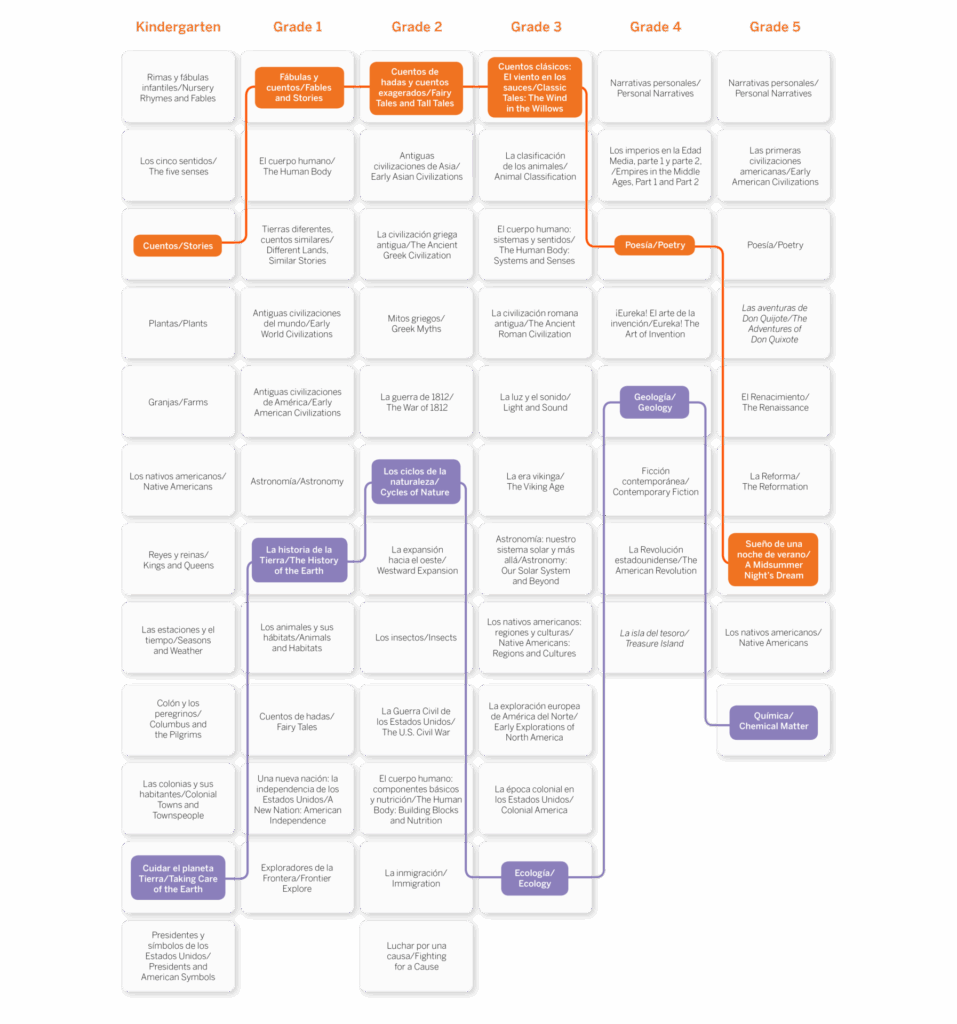
Amplify Caminos builds knowledge coherently across subjects and grades.
Throughout the program, students use their skills to explore domains that relate to storytelling, science, and the history of our world as seen through the eyes of many different groups.
Carefully selected to build from year-to-year, our grade-appropriate topics help students make and deepen connections while also reading, writing, and thinking creatively and for themselves.
New Knowledge Research Units for Grades K–5
Our brand-new Knowledge Research units carry forward Amplify Caminos’ powerful and proven instructional approach while also:
- Adding more diversity. The rich topics and highly visual components featured in these units provide students with even more “windows and mirrors” and perspectives as they work to build knowledge.
- Adding more authentic literature. Each new research unit revolves around a collection of high-interest authentic trade books that will spark more curiosity and inspire more inquiry.
- Adding more flexibility. Units can be implemented for extended core instruction during flex periods, district-designated Pausing Points, or enrichment periods.
Units cover a variety of rich and relevant topics:
With these new units, students will soar to new heights with Dr. Ellen Ochoa, Amelia Earhart, and the Tuskegee Airmen. They’ll feel the rhythm as they learn about Jazz legends Miles Davis, Tito Puente, and Duke Ellington. And they’ll explore the far reaches of the world with Jacques Cousteau, Matthew Henson, and Eugenie Clark.
- Grade K: El arte y el mundo que nos rodea
- Grade 1: Cuentos de aventuras: relatos desde los confines de la Tierra
- Grade 2: ¡A volar! La era de la aviación
- Grade 3: Jazz y más
- Grade 4: Energía: pasado, presente y futuro
- Grade 5: Más allá de Juneteenth: de 1865 al presente
Units will be made available in English and Spanish, and will include the following components:
Why we added this unit:
“Every child is an artist,” said Picasso, meaning that every child uses art to explore and understand the world around them. El arte y el mundo que nos rodea honors that truth by introducing Kindergarten students to some of the ways in which artists have explored and understood the world around them.
This domain introduces students to artists from different time periods, countries, and cultures. Throughout the unit, students learn about different kinds of art and how artists use the world around them as they make art. They also connect this to what they have already learned about the earth, plants, and animals in other Caminos domains: Granjas, Plantas, and Cuidar el planeta Tierra. In addition, students connect this to what they have learned about sculptors in the Presidentes y símbolos de los Estados Unidos domain. As they explore different artists and artistic traditions, they develop their ideas about how humans are connected to each other and to the world around them.
As you read the texts in this unit, students may observe ways in which the characters or subjects are both similar to and different from students. This is a good opportunity to teach students awareness and sensitivity, building on the idea that all people share some things in common, even as they have other things that make them unique. This unit also offers an excellent opportunity to collaborate with your school’s art teacher, as many lessons have suggested activities to help students understand the kind of art they are studying.
Within this unit, students have opportunities to:
- Use details to describe art.
- Identify three ways to create art.
- Identify characteristics of cave art.
- Sequence the steps of making pottery.
- Describe how artists can create work connected to the world around them.
- Describe what makes Kehinde Wiley’s portraits unique.
- Explain how the texture of a surface can affect artwork created on it.
- Explain what a sculpture is.
- Describe what makes James Turrell’s artwork about the sky unique.
- Explain what a museum is and what kinds of things you can see or do there.
Trade books in this unit:
Instruction in this unit revolves around the following collection of high-interest authentic trade books. One copy of each trade book is included with the unit materials.
- Georgia O’Keeffe por Erica Salcedo
- Yayoi Kusama: De aquí al infinito por Sarah Suzuki
- Tejedora del arcoíris por Linda Elovitz Marshall
- Las tijeras de Matisse por Jeanette Winter
- El museo por Susan Verde
- Quizás algo hermoso: Cómo el arte transformó un barrio por F. Isabel Campoy
Sample materials:
Take a sneak peek at the rich instruction and engaging activities for this unit by viewing the PDFs below.
Why we added this unit:
This domain introduces students to adventure stories set around the world and challenges students to dig into the adventures through research. By listening to the Read-Alouds and trade books, students increase their vocabulary and reading comprehension skills, learn valuable lessons about perseverance and teamwork, and become familiar with gathering information for research.
In this unit, students study the careers of real-world explorers Dr. Eugenie Clark and Sophia Danenberg, marvel at the inventions of Jacques Cousteau, think critically about how teamwork and collaboration can make greater adventures possible, learn about the science and technology that enable adventures, and research some of the ways humans have confronted challenges at the edges of the world, from the oceans below to space above.
Each lesson in the domain builds students’ research skills as they ask questions, gather information, and write a paragraph about their findings. Students share what they have learned about adventures in an Adventure Gallery Walkthrough. By taking on the persona of one of the adventurers they meet in the Read-Alouds and trade books, students deliver their final paragraphs as if they are a “speaking portrait” of that person. Students are invited to dress up as that adventurer if they desire.
In addition, teachers can set aside time outside the instructional block to create the picture frames students will hold as they present to the Adventure Gallery Walk guests. Frames can be made from shirt boxes, cardboard, construction paper, or any art supplies that are on hand. This might be an opportunity to collaborate with the school’s art department if resources are available. Another option is to ask students to make their frames at home with their caregivers. On the day of the Adventure Gallery Walk, students will be the hosts and take on specific jobs, such as welcoming the guests, describing their work throughout the unit, and pointing out the areas of study on the domain bulletin board. You can find a complete list of student jobs in Lesson 13.
How this unit builds knowledge:
This unit builds upon the following Caminos units that students will have encountered in the previous grade.
- Rimas y fábulas infantiles (Kindergarten)
- Cuentos (Kindergarten)
The specific core content targeted in these domains is particularly relevant to the Read-Alouds students will hear in Cuentos de aventuras: relatos desde los confines de la Tierra. The background knowledge students bring to this unit will greatly enhance their understanding of the trade books used in this unit.
Trade books in this unit:
Instruction in this unit revolves around the following collection of high-interest authentic trade books. One copy of each trade book is included with the unit materials.
- My Name Is Gabito/Me llamo Gabito por Monica Brown
- Galápagos Girl/Galapagueña por Marsha Diane Arnold
- My Name Is Gabriela/Me llamo Gabriela por Monica Brown
- El viaje de Kalak por María Quintana Silva y Marie-Noëlle Hébert
- Señorita Mariposa por Ben Gundersheimer
- Sharuko, el arqueólogo peruano/Peruvian Archaeologist Julio C. Tello por Monica Brown
- Abuelita fue al mercado por Stella Blackstone
Sample materials:
Take a sneak peek at the rich instruction and engaging activities for this unit by viewing the PDFs below.
- Guía del maestro: Cuentos de aventuras: relatos desde los confines de la Tierra
- Cuaderno de actividades: Cuentos de aventuras: relatos desde los confines de la Tierra
- Tarjetas de imágenes: Cuentos de aventuras: relatos desde los confines de la Tierra
- Componentes digitales: Cuentos de aventuras: relatos desde los confines de la Tierra
Why we added this unit:
With this domain, students head up, up, and away with an introduction to the soaring history of aviation. Students learn the stories of early aviators, such as the Montgolfier brothers, the Wright brothers, Aida de Acosta, and Amelia Earhart.
During the unit, students study the science of flight, including the physics concept of lift, and research the social impacts of the world of flight. Finally, students let their research skills take flight as they explore key figures from the world of aviation.
The lessons in this domain build on earlier Grade 2 Caminos domains about the westward expansion, early Greek civilizations, and Greek myths, and lay the foundation for learning about other periods of world history in future grades.
How this unit builds knowledge:
This unit builds upon the following Caminos units that students will have encountered earlier in the year.
- La civilización griega antigua (Grade 2)
- Mitos griegos (Grade 2)
- La expansión hacia el oeste (Grade 2)
The specific core content targeted in these domains is particularly relevant to the Read-Alouds students will hear in ¡A volar! La era de la aviación. The background knowledge students bring to this unit will greatly enhance their understanding of the trade books used in this unit.
Trade books in this unit:
Instruction in this unit revolves around the following collection of high-interest authentic trade books. One copy of each trade book is included with the unit materials.
- ¡A volar! Todo sobre aviones por Jennifer Prior
- Amelia sabe volar por Mara dal Corso
- Héroes de la aviación que cambiaron el mundo por Dan Green
- El niño que alcanzó las estrellas por José M. Hernández
- La niña que aprendió a volar por Sylvia Acevedo
- Buenas Noches Capitán Mamá por Graciela Tiscareño-Sato
Sample materials:
Take a sneak peek at the rich instruction and engaging activities for this unit by viewing the PDFs below.
Why we added this unit:
This domain teaches students about the vibrant music, poetry, and culture of the Jazz Age in the United States. Students learn about famous writers and musicians like Langston Hughes, Louis Armstrong, Billie Holiday, Melba Liston, Tito Puente, and Miles Davis. They study how the jazz art form took root in the South, then spread to the North to become the sound of the Harlem Renaissance, eventually connecting people around the world in musical expression.
During this unit, students perform guided research to further explore both the history of jazz and what jazz is today. They develop research skills and then use those skills to find deeper connections between the stories and music of the Jazz Age and music today. As students learn about the world of jazz, they collaborate and share ideas with their classmates. They also practice sharing feedback focused on their written work, and, at the end of the unit, students present their research to the group.
The lessons give students opportunities to dive into the rhythms and stories of jazz, utilizing the knowledge sequence in this unit to:
- Collaboratively generate research questions about jazz, jazz musicians, contemporary musicians from the state where they live or have lived, and the evolution of jazz music.
- Utilize Read-Alouds, independent reading, and partner reading to learn about the Jazz Age, the Harlem Renaissance, jazz music, and biographies of celebrated jazz musicians and writers.
- Research the answers to their generated questions, gather information, write a short research essay about a famous jazz musician, write a short essay about a contemporary musician from the state where they live or have lived, and give a presentation about their research.
How this unit builds knowledge:
Within this unit, students have opportunities to:
- Ask relevant questions and make pertinent comments
- Identify details in texts
- Determine key ideas of texts by evaluating details
- Make text-based inferences
- Generate questions based on prior knowledge and gathered information
- Synthesize details across texts to demonstrate comprehension
- Discuss and explain an author’s purpose
- Identify and cite reliable primary and secondary sources of information
- Compose a well-organized and focused informative essay
- Make connections between topics
- Present information using appropriate media
Trade books in this unit:
Instruction in this unit revolves around the following collection of high-interest authentic trade books. One copy of each trade book is included with the unit materials.
- ¡Esquivel! Un artista del sonido de la era espacial por Susan Wood
- Ray Charles por Sharon Bell Mathis
- Tito Puente, el Rey del Mambo por Monica Brown
- Me llamo Celia, la vida de Celia Cruz por Monica Brown
- ¡Azúcar! por Ivar Da Coll
In this unit, students also read the poem “Harlem” by Langston Hughes. (Available for free through the Academy of American Poets website and the Poetry Foundation website, with recorded audio available through the website for John Hancock College Preparatory High School.)
Sample materials:
Take a sneak peek at the rich instruction and engaging activities for this unit by viewing the PDFs below.
Why we added this unit:
With this domain, students become tomorrow’s problem solvers in this study of energy in the United States. Analytical reading skills are developed by examining the challenges of early energy innovators. Students then read about current energy practices and young energy change-makers across the world.
Throughout the unit, students conduct research into different sources of energy and present a proposal, putting them in the shoes of future energy innovators. They also use the knowledge sequence in this unit to:
- Collaboratively analyze texts to identify cause-effect and problem-solution relationships.
- Generate questions and conduct research about energy.
- Write an opinion essay making their case for a fuel of the future.
- Create energy proposals using primary and secondary resources.
How this unit builds knowledge:
This unit builds upon the following Caminos units that students will have encountered in previous grades as well as earlier in the year.
- Plantas (Grade K)
- La historia de la Tierra (Grade 1)
- ¡Eureka! Estudiante inventor (Grade 4)
The specific core content targeted in these domains is particularly relevant to the Read-Alouds students will hear in Energía: pasado, presente y futuro. The background knowledge students bring to this unit will greatly enhance their understanding of the trade books used in this unit.
Trade books in this unit:
Instruction in this unit revolves around the following collection of high-interest authentic trade books. One copy of each trade book is included with the unit materials.
- La historia de los combustibles fósiles por William B. Rice
- El niño que domó el viento por William Kamkwamba y Bryan Mealer
Sample materials:
Take a sneak peek at the rich instruction and engaging activities for this unit by viewing the PDFs below.
Why we added this unit:
Within this domain, Students learn about General Granger’s announcement in Galveston, Texas on June 19, 1865, a day marked in history as Juneteenth. Texts and multimedia sources will support foundational knowledge-building about the end of slavery in the United States. A review of the first freedom announcement, President Lincoln’s Emancipation Proclamation, provides students with background knowledge to further emphasize the significance of Juneteenth in American history.
This unit also takes students on a journey beyond Juneteenth, as they study specific contributions of African Americans from 1865 to the present day. Students participate in a virtual field trip to Emancipation Park in Houston, Texas and use the knowledge sequence in this unit to:
- Collaboratively generate research questions about Juneteenth, The Great Migration, innovators and inventors, education, the humanities, activists, and allies.
- Use Read-Alouds, independent, and partner reading to learn about African American contributions from 1865 to the present.
- Research to find answers to their generated questions, gather information, and write a four-chapter Beyond Juneteenth book.
How this unit builds knowledge:
This unit builds upon the following Caminos units that students will have encountered in previous grades.
- Los nativos americanos (Grade K)
- Una nueva nación: la independencia de los Estados Unidos (Grade 1)
- La Guerra Civil de los Estaods Unidos (Grade 2)
- La inmigración (Grade 2)
- Los nativos americanos (Grade 5)
The specific core content targeted in these domains is particularly relevant to the Read-Alouds students will hear in Más allá de Juneteenth: de 1865 al presente
. The background knowledge students bring to this unit will greatly enhance their understanding of the trade books used in this unit.
Trade books in this unit:
Instruction in this unit revolves around the following collection of high-interest authentic trade books. One copy of each trade book is included with the unit materials.
- Martí’s Song for Freedom/Martí y sus versos por la libertad escrito por Emma Otheguy
- ¡Celebremos Juneteenth! escrito por Carole Boston Weatherford
- Side by Side/Lado a Lado: The Story of Dolores Huerta and Cesar Chavez/La Historia de Dolores Huerta y César Chávez escrito por Monica Brown
- Canto de alabanza para el día: Poema para la ceremonia inaugural del mandato de Barack Obama escrito por Elizabeth Alexander, traducido por Rodrigo Rojas
Sample materials:
Take a sneak peek at the rich instruction and engaging activities for this unit by viewing the PDFs below.
Diverse texts
Amplify Caminos puts a variety of texts in the hands of students every day.
Amplify Caminos includes both transadaptations and authentic texts written by Latin American and Spanish authors. In addition to featuring a diverse range of authors and topics, our texts represent individuals and characters with a broad range of identity factors, including socioeconomic status, age, ability, race, ethnicity, country of origin, religion, and more.
Amplify Caminos texts include:
- Authentic literature: Authentic literature exposes students to a variety of text types and perspectives to deepen their knowledge of fascinating topics in social studies, science, literature, and the arts. Authentic texts support text-to-self, text-to-world, and text-to-text connections for readers.
- Decodable Student Readers: Amplify Caminos is built on the conviction that equitable instruction is vital to an effective program. Decodable Student Readers at grades K–2 are newly re-designed to celebrate students’ diverse experiences and feature individuals with a broad range of identity factors, including socioeconomic status, age, ability, race, ethnicity, country of origin, religion, and more.
- ReadWorks® texts: Amplify and ReadWorks have partnered to deliver high-quality texts curated to support the Amplify Caminos Knowledge Sequence and to extend student learning. Texts include high-interest nonfiction articles in topics in social studies, science, literature, and the arts. These texts are accompanied by vocabulary supports and standards-aligned formative assessment opportunities. Teachers can monitor their students’ progress using the ReadWorks reporting features.

Amplify Caminos Trade Book Collection Guide
Each book in our authentic literature collection was selected specifically to support and enhance the content of the K-2 Conocimiento Strand. These anchor texts are intended for use as an introduction to each domain—engaging students, piquing their curiosity, and building initial background knowledge—before diving into the deeper content of the domain Read-Alouds.
Every trade book has an instructional guide that includes the following:
- Author and illustrator
- Book summary
- The Essential Question of the Knowledge domain, connecting the book to the domain
- Key Tier 2 and Tier 3 vocabulary words found in the book
- A group activity to reinforce and extend students’ knowledge and understanding
- A performance task to help gauge students’ comprehension of concepts in the text
- Writing prompts to expand understanding and critical thinking
- Text complexity ratings and descriptors for quantitative, qualitative, and reader/task categories
Download the Amplify Caminos Trade Book Collection Guide for Grades K–2.
Detailed information about text complexity ratings and descriptors; additional uses for the books before, during, and after domain instruction; and the complete list of domains and books for each grade level can be found in the More About the Books section of this guide.
What makes Amplify Caminos different?
Built on the Science of Reading
Built out of the latest research in the Science of Reading, Amplify Caminos delivers explicit instruction in both foundational literacy skills (systematic phonics, decoding, and fluency) and background knowledge in grades K–2 with an integrated approach to explicit instruction in grades 3–5.

Explicit systematic skills instruction
The skills instruction in Amplify Caminos was distinctly developed with the Spanish language in mind. Its foundational lessons are specific to the language, rather than a direct translation from Amplify CKLA’s English skills instruction.
Reading instruction begins with the vowels first, then the most common consonants, and finally the least common consonants. Students will blend and segment sounds to form syllables, and syllables to form words.
Although Spanish has a highly predictable orthography, there are a few silent letters (h is always silent, u is silent after g or q), as well as letters that can make different sounds, depending on the letters that follow them. For that reason, syllables with these letters are taught somewhat later in the progression. The same is true for syllables with infrequently occurring consonants, such as z, k, x, and w.
Coherent knowledge instruction
While students are learning how to read, the Conocimiento strand gives them authentic and engaging reasons to read.
Amplify Caminos uses spiral learning to reinforce every student’s ability to develop skills like reading, writing, speaking, and listening in Spanish that can be transferred to English. As students engage with their lessons, they explore the similarities and differences in grammar, vocabulary, writing, and language use between Spanish and English. This bridge helps students learning two languages to strengthen their knowledge in both.
Through cross-curricular content, students explore units that relate to storytelling, science, and the history of our world in a holistic and thoughtful way. With these units, you’ll bring the world to your students, showing them how reading can become an exciting, rewarding, and useful part of their lives.

Embedded differentiation for all learners
Amplify Caminos provides built-in differentiation strategies and supports in every lesson.
- Apoyo a la enseñanza y desafío: Support and Challenge suggestions in every lesson provide assistance or opportunities for more advanced work toward the goal of the lesson.
- Notas culturales: These point-of-use notes provide additional information about the traditions, foods, holidays, word variations, and more from across the Spanish-speaking world.
- Apoyo adicional: Every lesson in the Lectoescritura (Skills) Strand provides additional support activities suggested to reinforce foundational skills instruction. These activities can be given to any student who requires extra help, including students with special needs.
Systematic and cohesive writing instruction
Writing instruction in Amplify Caminos builds systematically and cohesively within and across grades.
In Grades K-2, writing mechanics—including handwriting and spelling—are taught in the Amplify Caminos Lectoescritura strand. Starting in Grade 1, instruction includes four steps in the writing process: planning, drafting, editing, and publishing and features lessons that have modeling, collaboration, and sharing. As students gain skills and confidence, they are able to take on more of these steps independently. Students learn to use planning techniques, including brainstorming and graphic organizers.
Beginning in Grade 4, the Amplify Caminos writing process expands to also include sharing and evaluating. In Grades 4 and 5, the writing process is no longer conceptualized as a series of scaffolded, linear steps (an important change from the Grade 3 writing process). Rather, students move between components of the writing process in a flexible manner, similar to the process mature and experienced writers follow naturally.

Amplify Caminos’ writing instruction provides a clear progression through the text types in each grade.
Because Amplify Caminos has two strands of lessons in Grades K-2, Lectoescritura and Conocimiento, students are exposed to both narrative and informational texts throughout the year. In Grades 3-5, the integrated units feature study in literary, informational, or a mix of both types of texts, depending on the content of the unit.
- Grades K–2 introduce and establish the key elements of each text type, allowing students to gain comfort and confidence writing narratives, opinions, and informative texts. This enables students to practice thinking about content in different ways, offering more depth and breadth to their understanding of core content and of the writing text types.
- By Grade 3, students will have gained significant practice in narrative, opinion/argumentative, and informational/explanatory forms of writing and will continue to apply those skills through Grade 5.
How does Amplify Caminos integrate with the other parts of the literacy system?
Amplify Caminos + mCLASS® Lectura
Achieve complete parity between English and Spanish assessments with mCLASS Lectura for K–6. mCLASS Lectura allows teachers to connect with their Spanish-speaking students face-to-face, one-on-one, and in the language most comfortable to them. The result? Valid and reliable student data reports
available in both English and Spanish, enabling teachers to pinpoint where their Spanish-speaking or emergent bilingual students really are in their skill development and what instruction to prioritize.

Amplify Caminos + Amplify Reading
Amplify Reading is an engaging, adaptive digital program that extends the learning in Amplify Caminos. Amplify Reading offers support to a large sub-group of English learners (ELs) through Spanish voice-over. Spanish voiceover instructions are available in vocabulary and sentence-level comprehension games so ELs can build their vocabulary, language, and critical comprehension skills before moving into analyzing complex texts

Demo access and sample materials
Ready to explore on your own? First, watch the videos below to learn about the program’s components and how to navigate the digital platform.
Physical materials walkthrough video
Digital navigation video
Demo access
Next, follow the instructions below to access your demo account.

- Click the CKLA and Caminos Demo button below.
- Select Log in with Amplify.
- To explore as a teacher, enter this username: t1.sfusdreviewer@demo.tryamplify.net
- To explore as a student, enter this username: s1.sfusdreviewer@demo.tryamplify.net
- Enter the password: Amplify1-sfusdreviewer
- Click the Programs and apps menu
- Select CKLA Teacher Resource Site
- Select the desire grade level
- Use the toggle to switch between English (CKLA) and Spanish (Caminos) resources.
Sample materials
Finally, click on the grade levels below to explore your requested sample units.
Each book in our authentic literature collection was selected specifically to support and enhance the content of the K-2 Conocimiento Strand. These anchor texts are intended for use as an introduction to each domain—engaging students, piquing their curiosity, and building initial background knowledge—before diving into the deeper content of the domain Read-Alouds.
Every trade book has an instructional guide that includes the following:
- Author and illustrator
- Book summary
- The Essential Question of the Knowledge domain, connecting the book to the domain
- Key Tier 2 and Tier 3 vocabulary words found in the book
- A group activity to reinforce and extend students’ knowledge and understanding
- A performance task to help gauge students’ comprehension of concepts in the text
- Writing prompts to expand understanding and critical thinking
- Text complexity ratings and descriptors for quantitative, qualitative, and reader/task categories
Download the Amplify Caminos Trade Book Collection Guide for Grades K–2.
Detailed information about text complexity ratings and descriptors; additional uses for the books before, during, and after domain instruction; and the complete list of domains and books for each grade level can be found in the More About the Books section of this guide.
Conocimiento Strand:
- Guía del maestro, Conocimiento 12: Luchar por una causa
- Cuaderno de actividades, Conocimientos 7–12
- Rotafolio de imágenes, Conocimiento 12
- Tarjetas de imágenes, Conocimiento 12
Lectoescritura Strand:
Additional resources
- Caminos Program Guide
- Biliteracy and Science of Reading Principles
- Amplify Caminos Conocimiento Scopes and Sequences
- Grade K Knowledge Strand
- Grade 1 Knowledge Strand
- Grade 2 Knowledge Strand
- Grade 3 Integrated Strand
- Grade 4 Integrated Strand
- Grade 5 Intgrated Strand
Utah – USBE Data Analysis for K-3 Reading Assessment Program – New
Amplify Caminos for SFUSD
Amplify Caminos is an authentic elementary Spanish language arts program. Like its English language counterpart, Amplify CKLA, Amplify Caminos provides explicit, systematic foundational skills instruction sequenced with deep knowledge-building content to foster comprehension. When used with Amplify CKLA, Amplify Caminos provides full parity across English and Spanish that’s suitable for any dual language implementation model.

Amplify and SFUSD Partnership
We recognize and respect the unique differences of each of our partnering districts—and that includes San Francisco USD.
Out of the box, Amplify Caminos offers districts a rich, comprehensive, research-based SELA experience. That said, no two districts are exactly alike. To that end, we are committed to working with San Francisco USD to ensure that Amplify Caminos addresses the needs of your community. This includes providing implementation guidance and support, as well as collaborating with your staff to determine which domains need to be modified or exchanged.
What is Amplify Caminos?
Amplify Caminos is a core Spanish language arts program for grades TK–5 that delivers:
- Authentic instruction built from the ground up for the Spanish language.
- A unique research-based approach truly built on the Science of Reading.
- A combination of explicit foundational skills with meaningful knowledge-building.
- Embedded support and differentiation that gets all students reading grade-level texts together.
- Opportunities for students to see the strengths and experiences that all people share while also celebrating each others’ unique identities and experiences.
Watch the video below to learn more about Amplify Caminos for Grades K–2.
Watch the video below to learn more about Amplify Caminos for Grades 3–5.
How does Amplify Caminos work?
Amplify Caminos is built on the science of how kids learn to read—in Spanish.
Amplify Caminos is all about helping you teach students how to read, all while giving them authentic and engaging reasons to read. That’s why Amplify Caminos develops foundational skills and builds knowledge in tandem.
- Knowledge: Through complex and authentic Spanish read-alouds with an emphasis on classroom interactivity, oral comprehension, and contextual vocabulary, students start to build their awareness of the world around them—and the way the reading skills they’re building give them access to it.
- Skills: Starting with the sounds at the core of the Spanish
language, students practice their phonemic awareness, handwriting skills, vocabulary, spelling, and grammar. Through daily practice, students become aware of the connection between reading and writing, building confidence as they go.

Respecting the development differences between grade ranges, Amplify Caminos teaches foundational skills and background knowledge as two distinct strands in grades K–2, and combines them into one integrated strand in grades 3–5.
Grades K–2:
Every day, students in grades K–2 complete one full lesson that explicitly and systematically builds foundational reading skills in the Amplify Caminos Lectoescritura strand, as well as one full lesson that builds robust background knowledge to access complex text in the Amplify Caminos Conocimiento strand. Through learning in each of these strands, students develop the early literacy skills necessary to help them become confident readers and build the context to understand what they’re reading.
Grades 3–5:
In grades 3–5, the Amplify Caminos Lectoescritura and Conocimiento strands are integrated in one set of instructional materials. Lessons begin to combine skills and knowledge with increasingly complex texts, close reading, and a greater writing emphasis. Students can then use their skills to go on their own independent reading adventures.
What do Amplify Caminos students explore?
Amplify Caminos builds students’ knowledge about the world.
In addition to teaching all students to crack the written code (which is vital for fairness), the Amplify Caminos program helps students see the strengths and experiences we all share while celebrating their own unique identities and experiences.
This is accomplished through the exploration of topics and text that feature people who resemble students and familiar situations or experiences while also exposing them to people whose appearances, lives, beliefs, and backgrounds differ from their own.
Engaging domains
Amplify Caminos builds knowledge coherently across subjects and grades.
Throughout the program, students use their skills to explore domains that relate to storytelling, science, and the history of our world as seen through the eyes of many different groups.
Carefully selected to build from year-to-year, our grade-appropriate topics help students make and deepen connections while also reading, writing, and thinking creatively and for themselves.
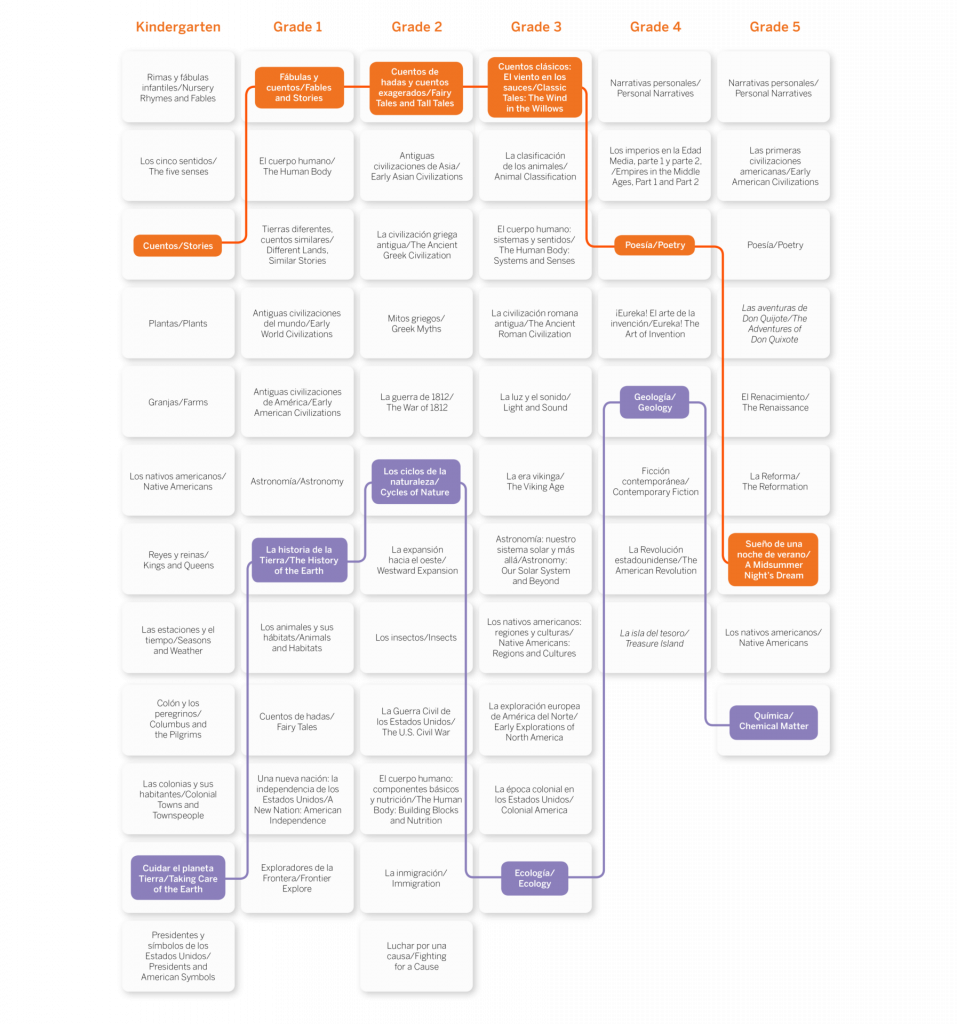
New Knowledge Research Units for Grades K–5
Our brand-new Knowledge Research units carry forward Amplify Caminos’ powerful and proven instructional approach while also:
- Adding more content for students from all walks of life. The rich topics and highly visual components featured in these units provide students with even more “windows and mirrors” and perspectives as they work to build knowledge.
- Adding more authentic literature. Each new research unit revolves around a collection of high-interest authentic trade books that will spark more curiosity and inspire more inquiry.
- Adding more flexibility. Units can be implemented for extended core instruction during flex periods, district-designated Pausing Points, or enrichment periods.
Units cover a variety of rich and relevant topics:
With these new units, students will soar to new heights with Dr. Ellen Ochoa, Amelia Earhart, and the Tuskegee Airmen. They’ll feel the rhythm as they learn about Jazz legends Miles Davis, Tito Puente, and Duke Ellington. And they’ll explore the far reaches of the world with Jacques Cousteau, Matthew Henson, and Eugenie Clark.
- Grade K: El arte y el mundo que nos rodea
- Grade 1: Cuentos de aventuras: relatos desde los confines de la Tierra
- Grade 2: ¡A volar! La era de la aviación
- Grade 3: Jazz y más
- Grade 4: Energía: pasado, presente y futuro
- Grade 5: Más allá de Juneteenth: de 1865 al presente
Units will be made available in English and Spanish, and will include the following components:
- Teacher Guide
- Student Activity Books
- Image Cards
- Trade Book Collection
- Digital Components (for Grades K–3 and Grade 5 only)
Why we added this unit:
“Every child is an artist,” said Picasso, meaning that every child uses art to explore and understand the world around them. El arte y el mundo que nos rodea honors that truth by introducing Kindergarten students to some of the ways in which artists have explored and understood the world around them.
This domain introduces students to artists from different time periods, countries, and cultures. Throughout the unit, students learn about different kinds of art and how artists use the world around them as they make art. They also connect this to what they have already learned about the earth, plants, and animals in other Caminos domains: Granjas, Plantas, and Cuidar el planeta Tierra. In addition, students connect this to what they have learned about sculptors in the Presidentes y símbolos de los Estados Unidos domain. As they explore different artists and artistic traditions, they develop their ideas about how humans are connected to each other and to the world around them.
As you read the texts in this unit, students may observe ways in which the characters or subjects are both similar to and different from students. This is a good opportunity to teach students awareness and sensitivity, building on the idea that all people share some things in common, even as they have other things that make them unique. This unit also offers an excellent opportunity to collaborate with your school’s art teacher, as many lessons have suggested activities to help students understand the kind of art they are studying.
Within this unit, students have opportunities to:
- Use details to describe art.
- Identify three ways to create art.
- Identify characteristics of cave art.
- Sequence the steps of making pottery.
- Describe how artists can create work connected to the world around them.
- Describe what makes Kehinde Wiley’s portraits unique.
- Explain how the texture of a surface can affect artwork created on it.
- Explain what a sculpture is.
- Describe what makes James Turrell’s artwork about the sky unique.
- Explain what a museum is and what kinds of things you can see or do there.
Trade books in this unit:
Instruction in this unit revolves around the following collection of high-interest authentic trade books. One copy of each trade book is included with the unit materials.
- Georgia O’Keeffe por Erica Salcedo
- Yayoi Kusama: De aquí al infinito por Sarah Suzuki
- Tejedora del arcoíris por Linda Elovitz Marshall
- Las tijeras de Matisse por Jeanette Winter
- El museo por Susan Verde
- Quizás algo hermoso: Cómo el arte transformó un barrio por F. Isabel Campoy
Sample materials:
Take a sneak peek at the rich instruction and engaging activities for this unit by viewing the PDFs below.
- Guía del maestro: Cuentos de aventuras: relatos desde los confines de la Tierra
- Cuaderno de actividades: Cuentos de aventuras: relatos desde los confines de la Tierra
- Tarjetas de imágenes: Cuentos de aventuras: relatos desde los confines de la Tierra
- Componentes digitales: Cuentos de aventuras: relatos desde los confines de la Tierra
Why we added this unit:
This domain introduces students to adventure stories set around the world and challenges students to dig into the adventures through research. By listening to the Read-Alouds and trade books, students increase their vocabulary and reading comprehension skills, learn valuable lessons about perseverance and teamwork, and become familiar with gathering information for research.
In this unit, students study the careers of real-world explorers Dr. Eugenie Clark and Sophia Danenberg, marvel at the inventions of Jacques Cousteau, think critically about how teamwork and collaboration can make greater adventures possible, learn about the science and technology that enable adventures, and research some of the ways humans have confronted challenges at the edges of the world, from the oceans below to space above.
Each lesson in the domain builds students’ research skills as they ask questions, gather information, and write a paragraph about their findings. Students share what they have learned about adventures in an Adventure Gallery Walkthrough. By taking on the persona of one of the adventurers they meet in the Read-Alouds and trade books, students deliver their final paragraphs as if they are a “speaking portrait” of that person. Students are invited to dress up as that adventurer if they desire.
In addition, teachers can set aside time outside the instructional block to create the picture frames students will hold as they present to the Adventure Gallery Walk guests. Frames can be made from shirt boxes, cardboard, construction paper, or any art supplies that are on hand. This might be an opportunity to collaborate with the school’s art department if resources are available. Another option is to ask students to make their frames at home with their caregivers. On the day of the Adventure Gallery Walk, students will be the hosts and take on specific jobs, such as welcoming the guests, describing their work throughout the unit, and pointing out the areas of study on the domain bulletin board. You can find a complete list of student jobs in Lesson 13.
How this unit builds knowledge:
This unit builds upon the following Caminos units that students will have encountered in the previous grade.
- Rimas y fábulas infantiles (Kindergarten)
- Cuentos (Kindergarten)
The specific core content targeted in these domains is particularly relevant to the Read-Alouds students will hear in Cuentos de aventuras: relatos desde los confines de la Tierra. The background knowledge students bring to this unit will greatly enhance their understanding of the trade books used in this unit.
Trade books in this unit:
Instruction in this unit revolves around the following collection of high-interest authentic trade books. One copy of each trade book is included with the unit materials.
- My Name Is Gabito/Me llamo Gabito por Monica Brown
- Galápagos Girl/Galapagueña por Marsha Diane Arnold
- My Name Is Gabriela/Me llamo Gabriela por Monica Brown
- El viaje de Kalak por María Quintana Silva y Marie-Noëlle Hébert
- Señorita Mariposa por Ben Gundersheimer
- Sharuko, el arqueólogo peruano/Peruvian Archaeologist Julio C. Tello por Monica Brown
- Abuelita fue al mercado por Stella Blackstone
Sample materials:
Take a sneak peek at the rich instruction and engaging activities for this unit by viewing the PDFs below.
Why we added this unit:
With this domain, students head up, up, and away with an introduction to the soaring history of aviation. Students learn the stories of early aviators, such as the Montgolfier brothers, the Wright brothers, Aida de Acosta, and Amelia Earhart.
During the unit, students study the science of flight, including the physics concept of lift, and research the social impacts of the world of flight. Finally, students let their research skills take flight as they explore key figures from the world of aviation.
The lessons in this domain build on earlier Grade 2 Caminos domains about the westward expansion, early Greek civilizations, and Greek myths, and lay the foundation for learning about other periods of world history in future grades.
How this unit builds knowledge:
This unit builds upon the following Caminos units that students will have encountered earlier in the year.
- La civilización griega antigua (Grade 2)
- Mitos griegos (Grade 2)
- La expansión hacia el oeste (Grade 2)
The specific core content targeted in these domains is particularly relevant to the Read-Alouds students will hear in ¡A volar! La era de la aviación. The background knowledge students bring to this unit will greatly enhance their understanding of the trade books used in this unit.
Trade books in this unit:
Instruction in this unit revolves around the following collection of high-interest authentic trade books. One copy of each trade book is included with the unit materials.
- ¡A volar! Todo sobre aviones por Jennifer Prior
- Amelia sabe volar por Mara dal Corso
- Héroes de la aviación que cambiaron el mundo por Dan Green
- El niño que alcanzó las estrellas por José M. Hernández
- La niña que aprendió a volar por Sylvia Acevedo
- Buenas Noches Capitán Mamá por Graciela Tiscareño-Sato
Sample materials:
Take a sneak peek at the rich instruction and engaging activities for this unit by viewing the PDFs below.
Why we added this unit:
This domain teaches students about the vibrant music, poetry, and culture of the Jazz Age in the United States. Students learn about famous writers and musicians like Langston Hughes, Louis Armstrong, Billie Holiday, Melba Liston, Tito Puente, and Miles Davis. They study how the jazz art form took root in the South, then spread to the North to become the sound of the Harlem Renaissance, eventually connecting people around the world in musical expression.
During this unit, students perform guided research to further explore both the history of jazz and what jazz is today. They develop research skills and then use those skills to find deeper connections between the stories and music of the Jazz Age and music today. As students learn about the world of jazz, they collaborate and share ideas with their classmates. They also practice sharing feedback focused on their written work, and, at the end of the unit, students present their research to the group.
The lessons give students opportunities to dive into the rhythms and stories of jazz, utilizing the knowledge sequence in this unit to:
- Collaboratively generate research questions about jazz, jazz musicians, contemporary musicians from the state where they live or have lived, and the evolution of jazz music.
- Utilize Read-Alouds, independent reading, and partner reading to learn about the Jazz Age, the Harlem Renaissance, jazz music, and biographies of celebrated jazz musicians and writers.
- Research the answers to their generated questions, gather information, write a short research essay about a famous jazz musician, write a short essay about a contemporary musician from the state where they live or have lived, and give a presentation about their research.
How this unit builds knowledge:
Within this unit, students have opportunities to:
- Ask relevant questions and make pertinent comments
- Identify details in texts
- Determine key ideas of texts by evaluating details
- Make text-based inferences
- Generate questions based on prior knowledge and gathered information
- Synthesize details across texts to demonstrate comprehension
- Discuss and explain an author’s purpose
- Identify and cite reliable primary and secondary sources of information
- Compose a well-organized and focused informative essay
- Make connections between topics
- Present information using appropriate media
Trade books in this unit:
Instruction in this unit revolves around the following collection of high-interest authentic trade books. One copy of each trade book is included with the unit materials.
- ¡Esquivel! Un artista del sonido de la era espacial por Susan Wood
- Ray Charles por Sharon Bell Mathis
- Tito Puente, el Rey del Mambo por Monica Brown
- Me llamo Celia, la vida de Celia Cruz por Monica Brown
- ¡Azúcar! por Ivar Da Coll
In this unit, students also read the poem “Harlem” by Langston Hughes. (Available for free through the Academy of American Poets website and the Poetry Foundation website, with recorded audio available through the website for John Hancock College Preparatory High School.)
Sample materials:
Take a sneak peek at the rich instruction and engaging activities for this unit by viewing the PDFs below.
Why we added this unit:
With this domain, students become tomorrow’s problem solvers in this study of energy in the United States. Analytical reading skills are developed by examining the challenges of early energy innovators. Students then read about current energy practices and young energy change-makers across the world.
Throughout the unit, students conduct research into different sources of energy and present a proposal, putting them in the shoes of future energy innovators. They also use the knowledge sequence in this unit to:
- Collaboratively analyze texts to identify cause-effect and problem-solution relationships.
- Generate questions and conduct research about energy.
- Write an opinion essay making their case for a fuel of the future.
- Create energy proposals using primary and secondary resources.
How this unit builds knowledge:
This unit builds upon the following Caminos units that students will have encountered in previous grades as well as earlier in the year.
- Plantas (Grade K)
- La historia de la Tierra (Grade 1)
- ¡Eureka! Estudiante inventor (Grade 4)
The specific core content targeted in these domains is particularly relevant to the Read-Alouds students will hear in Energía: pasado, presente y futuro. The background knowledge students bring to this unit will greatly enhance their understanding of the trade books used in this unit.
Trade books in this unit:
Instruction in this unit revolves around the following collection of high-interest authentic trade books. One copy of each trade book is included with the unit materials.
- La historia de los combustibles fósiles por William B. Rice
- El niño que domó el viento por William Kamkwamba y Bryan Mealer
Sample materials:
Take a sneak peek at the rich instruction and engaging activities for this unit by viewing the PDFs below.
Why we added this unit:
Within this domain, Students learn about General Granger’s announcement in Galveston, Texas on June 19, 1865, a day marked in history as Juneteenth. Texts and multimedia sources will support foundational knowledge-building about the end of slavery in the United States. A review of the first freedom announcement, President Lincoln’s Emancipation Proclamation, provides students with background knowledge to further emphasize the significance of Juneteenth in American history.
This unit also takes students on a journey beyond Juneteenth, as they study specific contributions of African Americans from 1865 to the present day. Students participate in a virtual field trip to Emancipation Park in Houston, Texas and use the knowledge sequence in this unit to:
- Collaboratively generate research questions about Juneteenth, The Great Migration, innovators and inventors, education, the humanities, activists, and allies.
- Use Read-Alouds, independent, and partner reading to learn about African American contributions from 1865 to the present.
- Research to find answers to their generated questions, gather information, and write a four-chapter Beyond Juneteenth book.
How this unit builds knowledge:
This unit builds upon the following Caminos units that students will have encountered in previous grades.
- Los nativos americanos (Grade K)
- Una nueva nación: la independencia de los Estados Unidos (Grade 1)
- La Guerra Civil de los Estaods Unidos (Grade 2)
- La inmigración (Grade 2)
- Los nativos americanos (Grade 5)
The specific core content targeted in these domains is particularly relevant to the Read-Alouds students will hear in Más allá de Juneteenth: de 1865 al presente
. The background knowledge students bring to this unit will greatly enhance their understanding of the trade books used in this unit.
Trade books in this unit:
Instruction in this unit revolves around the following collection of high-interest authentic trade books. One copy of each trade book is included with the unit materials.
- Martí’s Song for Freedom/Martí y sus versos por la libertad escrito por Emma Otheguy
- ¡Celebremos Juneteenth! escrito por Carole Boston Weatherford
- Side by Side/Lado a Lado: The Story of Dolores Huerta and Cesar Chavez/La Historia de Dolores Huerta y César Chávez escrito por Monica Brown
- Canto de alabanza para el día: Poema para la ceremonia inaugural del mandato de Barack Obama escrito por Elizabeth Alexander, traducido por Rodrigo Rojas
Sample materials:
Take a sneak peek at the rich instruction and engaging activities for this unit by viewing the PDFs below.
Wide-ranging texts
Amplify Caminos puts a variety of texts in the hands of students every day.
Amplify Caminos includes both transadaptations and authentic texts written by Latin American and Spanish authors. Our texts feature a wide variety of authors, topics, individuals and characters representing many different socioeconomic statuses, ages, abilities, races, ethnicities, countries of origin, religions, and more.
Amplify Caminos texts include:
- Authentic literature: Authentic literature exposes students to a variety of text types and perspectives to deepen their knowledge of fascinating topics in social studies, science, literature, and the arts. Authentic texts support text-to-self, text-to-world, and text-to-text connections for readers.
- Decodable Student Readers: Decodable Student Readers at grades K–2 are newly redesigned to include students from all walks of life and educational backgrounds. They feature characters with a broad range of backgrounds, experiences, ages, races, religions, and more.
- ReadWorks® texts: Amplify and ReadWorks have partnered to deliver high-quality texts curated to support the Amplify Caminos Knowledge Sequence and to extend student learning. Texts include high-interest nonfiction articles in topics in social studies, science, literature, and the arts. These texts are accompanied by vocabulary supports and standards-aligned formative assessment opportunities. Teachers can monitor their students’ progress using the ReadWorks reporting features.

Amplify Caminos Trade Book Collection Guide
Each book in our authentic literature collection was selected specifically to support and enhance the content of the K-2 Conocimiento Strand. These anchor texts are intended for use as an introduction to each domain—engaging students, piquing their curiosity, and building initial background knowledge—before diving into the deeper content of the domain Read-Alouds.
Every trade book has an instructional guide that includes the following:
- Author and illustrator
- Book summary
- The Essential Question of the Knowledge domain, connecting the book to the domain
- Key Tier 2 and Tier 3 vocabulary words found in the book
- A group activity to reinforce and extend students’ knowledge and understanding
- A performance task to help gauge students’ comprehension of concepts in the text
- Writing prompts to expand understanding and critical thinking
- Text complexity ratings and descriptors for quantitative, qualitative, and reader/task categories
Download the Amplify Caminos Trade Book Collection Guide for Grades K–2.
Detailed information about text complexity ratings and descriptors; additional uses for the books before, during, and after domain instruction; and the complete list of domains and books for each grade level can be found in the More About the Books section of this guide.
What makes Amplify Caminos different?
Built on the Science of Reading
Built out of the latest research in the Science of Reading, Amplify Caminos delivers explicit instruction in both foundational literacy skills (systematic phonics, decoding, and fluency) and background knowledge in grades K–2 with an integrated approach to explicit instruction in grades 3–5.

Explicit systematic skills instruction
The skills instruction in Amplify Caminos was distinctly developed with the Spanish language in mind. Its foundational lessons are specific to the language, rather than a direct translation from Amplify CKLA’s English skills instruction.
Reading instruction begins with the vowels first, then the most common consonants, and finally the least common consonants. Students will blend and segment sounds to form syllables, and syllables to form words.
Although Spanish has a highly predictable orthography, there are a few silent letters (h is always silent, u is silent after g or q), as well as letters that can make different sounds, depending on the letters that follow them. For that reason, syllables with these letters are taught somewhat later in the progression. The same is true for syllables with infrequently occurring consonants, such as z, k, x, and w.
Coherent knowledge instruction
While students are learning how to read, the Conocimiento strand gives them authentic and engaging reasons to read.
Amplify Caminos uses spiral learning to reinforce every student’s ability to develop skills like reading, writing, speaking, and listening in Spanish that can be transferred to English. As students engage with their lessons, they explore the similarities and differences in grammar, vocabulary, writing, and language use between Spanish and English. This bridge helps students learning two languages to strengthen their knowledge in both.
Through cross-curricular content, students explore units that relate to storytelling, science, and the history of our world in a holistic and thoughtful way. With these units, you’ll bring the world to your students, showing them how reading can become an exciting, rewarding, and useful part of their lives.
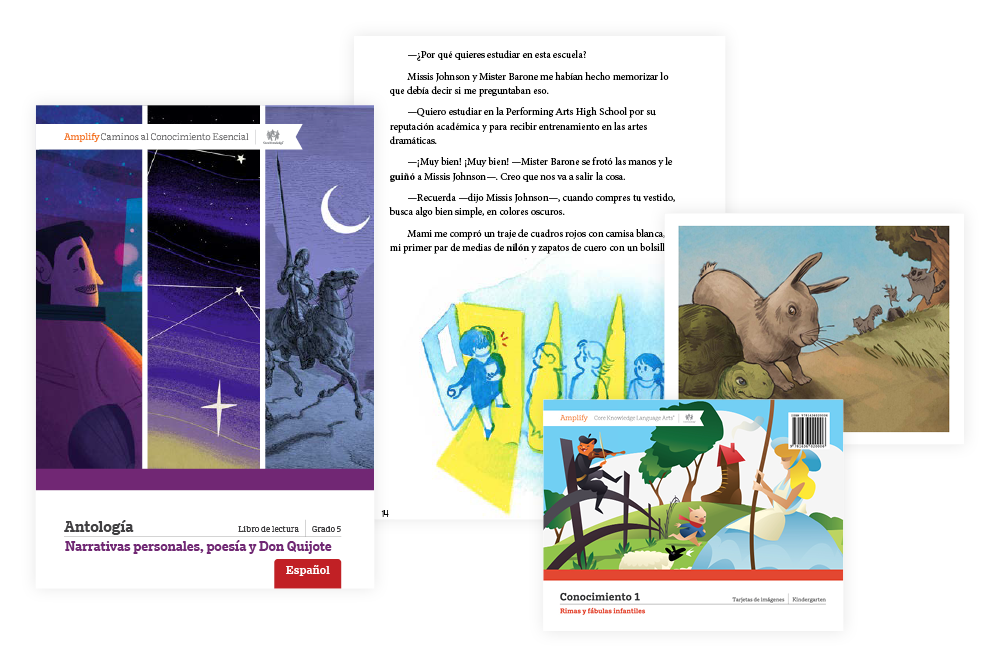
Embedded differentiation for all learners
Amplify Caminos provides built-in differentiation strategies and supports in every lesson.
- Apoyo a la enseñanza y desafío: Support and Challenge suggestions in every lesson provide assistance or opportunities for more advanced work toward the goal of the lesson.
- Notas culturales: These point-of-use notes provide additional information about the traditions, foods, holidays, word variations, and more from across the Spanish-speaking world.
- Apoyo adicional: Every lesson in the Lectoescritura (Skills) Strand provides additional support activities suggested to reinforce foundational skills instruction. These activities can be given to any student who requires extra help, including students with special needs.
Systematic and cohesive writing instruction
Writing instruction in Amplify Caminos builds systematically and cohesively within and across grades.
In Grades K-2, writing mechanics—including handwriting and spelling—are taught in the Amplify Caminos Lectoescritura strand. Starting in Grade 1, instruction includes four steps in the writing process: planning, drafting, editing, and publishing and features lessons that have modeling, collaboration, and sharing. As students gain skills and confidence, they are able to take on more of these steps independently. Students learn to use planning techniques, including brainstorming and graphic organizers.
Beginning in Grade 4, the Amplify Caminos writing process expands to also include sharing and evaluating. In Grades 4 and 5, the writing process is no longer conceptualized as a series of scaffolded, linear steps (an important change from the Grade 3 writing process). Rather, students move between components of the writing process in a flexible manner, similar to the process mature and experienced writers follow naturally.

Amplify Caminos’ writing instruction provides a clear progression through the text types in each grade.
Because Amplify Caminos has two strands of lessons in Grades K-2, Lectoescritura and Conocimiento, students are exposed to both narrative and informational texts throughout the year. In Grades 3-5, the integrated units feature study in literary, informational, or a mix of both types of texts, depending on the content of the unit.
- Grades K–2 introduce and establish the key elements of each text type, allowing students to gain comfort and confidence writing narratives, opinions, and informative texts. This enables students to practice thinking about content in different ways, offering more depth and breadth to their understanding of core content and of the writing text types.
- By Grade 3, students will have gained significant practice in narrative, opinion/argumentative, and informational/explanatory forms of writing and will continue to apply those skills through Grade 5.
How does Amplify Caminos integrate with the other parts of the literacy system?
Amplify Caminos + mCLASS® Lectura
Achieve complete parity between English and Spanish assessments with mCLASS Lectura for K–6. mCLASS Lectura allows teachers to connect with their Spanish-speaking students face-to-face, one-on-one, and in the language most comfortable to them. The result? Valid and reliable student data reports
available in both English and Spanish, enabling teachers to pinpoint where their Spanish-speaking or emergent bilingual students really are in their skill development and what instruction to prioritize.

Amplify Caminos + Amplify Reading
Amplify Reading is an engaging, adaptive digital program that extends the learning in Amplify Caminos. Amplify Reading offers support to a large sub-group of English learners (ELs) through Spanish voice-over. Spanish voiceover instructions are available in vocabulary and sentence-level comprehension games so ELs can build their vocabulary, language, and critical comprehension skills before moving into analyzing complex texts

Demo access and sample materials
Ready to explore on your own? First, watch the videos below to learn about the program’s components and how to navigate the digital platform.
Physical materials walkthrough video
Digital navigation video
Demo access
Next, follow the instructions below to access your demo account.
- Click the CKLA and Caminos Demo button below.
- Select Log in with Amplify.
- To explore as a teacher, enter this username: t1.sfusdreviewer@demo.tryamplify.net
- To explore as a student, enter this username: s1.sfusdreviewer@demo.tryamplify.net
- Enter the password: Amplify1-sfusdreviewer
- Click the Programs and apps menu
- Select CKLA Teacher Resource Site
- Select the desire grade level
- Use the toggle to switch between English (CKLA) and Spanish (Caminos) resources.
Sample materials
Finally, click on the grade levels below to explore your requested sample units.
Conocimiento Strand:
- Guía del maestro, Conocimiento 12: Luchar por una causa
- Cuaderno de actividades, Conocimientos 7–12
- Rotafolio de imágenes, Conocimiento 12
- Tarjetas de imágenes, Conocimiento 12
Lectoescritura Strand:
Additional resources
- Caminos Program Guide
- Biliteracy and Science of Reading Principles
- Amplify Caminos Conocimiento Scopes and Sequences
- Grade K Knowledge Strand
- Grade 1 Knowledge Strand
- Grade 2 Knowledge Strand
- Grade 3 Integrated Strand
- Grade 4 Integrated Strand
- Grade 5 Intgrated Strand
Welcome to Amplify ELA!
Amplify ELA is a cutting-edge and effective program that engages middle school students through a unique blend of digital and print lessons, dynamic texts, lively discussions, and interactive Quests. Not only is it the only ELA curriculum truly built for the needs of middle school teachers and students, its instructional approach is designed to extend the Science of Reading into the middle grades.
Note: We’re continually adding information to this site, including specific details regarding our alignment with your non-negotiables. Keep checking back with us between now and April 20, 2023.
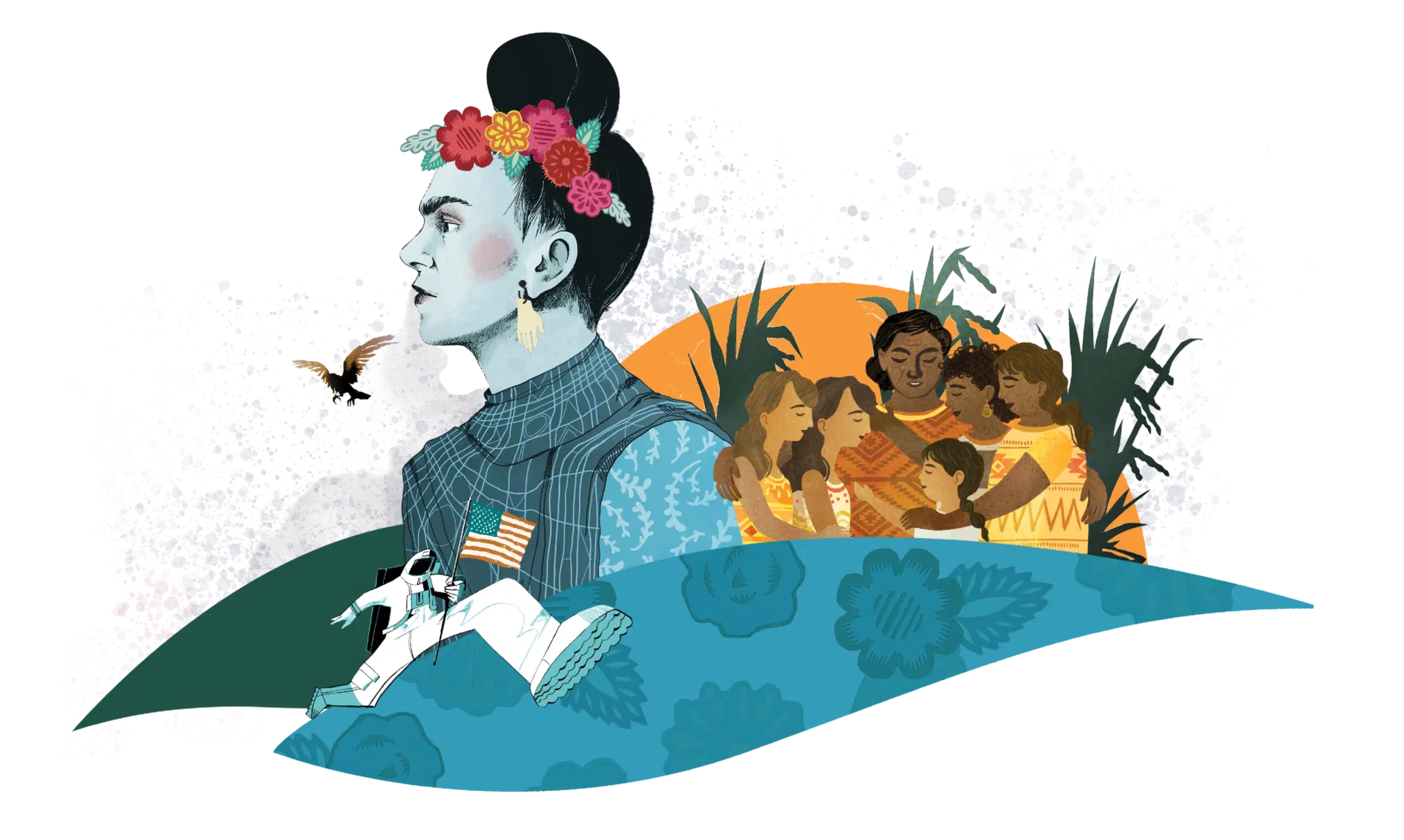
Getting started
On this site, you’ll find a variety of resources designed to support your review and evaluation of the program. Before you start scrolling, watch the video below to learn about Amplify ELA’s alignment to Nevada’s literacy initiatives as well as where to find key program resources.
Curriculum overivew
Amplify ELA helps students develop the essential skills of reading, writing, speaking, and listening, and features:
- Comprehensive print materials, including Teacher Editions, Student Editions, and Writing Journals for grades 6–8.
- A year’s worth of instruction for each grade.
- Complex, content-rich literary and informational texts.
- Differentiation that supports all students with reading complex texts, and an interactive eReader with an array of multimedia tools.
- Embedded assessments that allow for uninterrupted instructional time.
- The Amplify Library—a digital collection of more than 700 full-length texts.
In the videos below, hear about current educators’ experience with Amplify ELA and the positive impact it has made in their classrooms.
Engaging and effective content
Powerful digital tools and assessments
Program features
Amplify ELA’s hybrid curriculum empowers teachers to decide when and how their students use technology without the worry of compromising learning. Whether implemented in high tech or low tech classrooms, teachers can easily and confidently provide 100% standards coverage.
Amplify ELA’s structured yet flexible lessons are grounded in regular routines while still allowing for a variety of learning experiences and continuous student engagement.
Take a closer look at the program’s structure and the sequence of activity types that appear in a typical lesson.
There is never a dull moment on a middle school campus. For that reason, some schools appreciate having a flexible pacing option. Our abridged lesson pathways ensure full coverage of the standards in just 100 lessons.
Amplify ELA features high-quality lessons grounded in great books, with powerful multimedia tools to immerse young adolescents in reading, writing, and speaking.
Our rich and relevant texts are more than just excerpts. With more than 700 full titles in our digital library plus a variety of Novel Guides, Amplify ELA engages and inspires middle schoolers with great works, including poetry, rhetoric, and Spanish selections.
Based on individual student needs and performance measures within Amplify ELA reports, teachers are able to select the differentiation level that’s best for each student. When students reach an activity, the platform delivers the assigned differentiation, allowing all students to experience the same lesson with supports tailored to their unique needs.
- Our close reading apps bring texts to life for students. Students zoom in on specific moments of the text and trace characters’ emotions throughout a text, gather evidence to build a case, and create storyboards that render their understanding of a text.
- The Vocab App strengthens vocabulary skills with fun and fully differentiated adaptive games, repeated encounters with new words across multiple contexts, and an interactive stats page that helps students track their own progress.
- Quests are fun, week-long explorations that help students practice analytical reading, writing, speaking, and listening skills while building a strong classroom community. In each Quest, students step into the world of the text they have been reading. They interact with different complex texts in multiple formats and media, gather evidence from these texts and interactions with classmates, and work together to achieve the Quest goal.
With Amplify ELA, your students will benefit from embedded assessments that maximize instructional time and allow them to keep learning without the disruption of step-away performance tests.
In addition, as students complete activities within lessons and units, Amplify ELA teacher and admin reports provide a continuously updated picture of how each student is progressing with key skills and standards. Data is gathered from daily learning moments, allowing you to keep teaching while building a clear understanding of student performance.
Providing feedback has never been easier. With Classwork, teachers can review student writing and multiple choice answers and easily add scores and comments (and even emojis) all in one place, giving students the immediate feedback they need to further develop their confidence and literacy skills.
Curriculum review
Digital navigation walkthrough
Physical materials walkthrough
Curriculum implementation
See our Science of Reading solutions in action! Click here to see a real example of how one Ohio district is implementing and educating their K–8 community on the Science of Reading as a response to Ohio’s Plan to Raise Literacy Achievement Initiative.
Access the program
Before logging in, download and review this digital navigation guide.
Explore as a teacher
Ready to explore as a teacher? Follow these instructions:
- Click the ELA Digital Platform button below.
- Select Log in with Amplify.
- Enter the username: t1.ccsd-68-ela@demo.tryamplify.net
- Enter the password: Amplify1-ccsd-68-ela
- Click the ELA icon
- Select a grade level
Explore as a student
Ready to explore as a student? Follow these instructions:
- Click the ELA Digital Platform button below.
- Select Log in with Amplify.
- Enter the username: s1.ccsd-68-ela@demo.tryamplify.net
- Enter the password: Amplify1-ccsd-68-ela
- Click the ELA icon
- Select a grade level
Check out these additional resources
Nevada submission resources:
- Amplify ELA Program Alignment to the Standards (Nevada Rubric: Category 1)
- Amplify ELA Program Social Justice Alignment (Nevada Rubric: Category 2)
- Amplify ELA Lesson Alignment to the Nevada Academic Content Standards for English Language Arts
Amplify ELA review resources:
Welcome to Amplify CKLA!
Amplify Core Knowledge Language Arts (CKLA) is a cutting-edge and effective core ELA program for students in grades K–5. It was developed in partnership with the Core Knowledge Foundation, features proven evidence-based instructional practices, and was specifically designed to help teachers implement Science of Reading principles.
Note: We’re continually adding information to this site, including specific details regarding our alignment with your non-negotiables. Keep checking back with us between now and April 20, 2023.
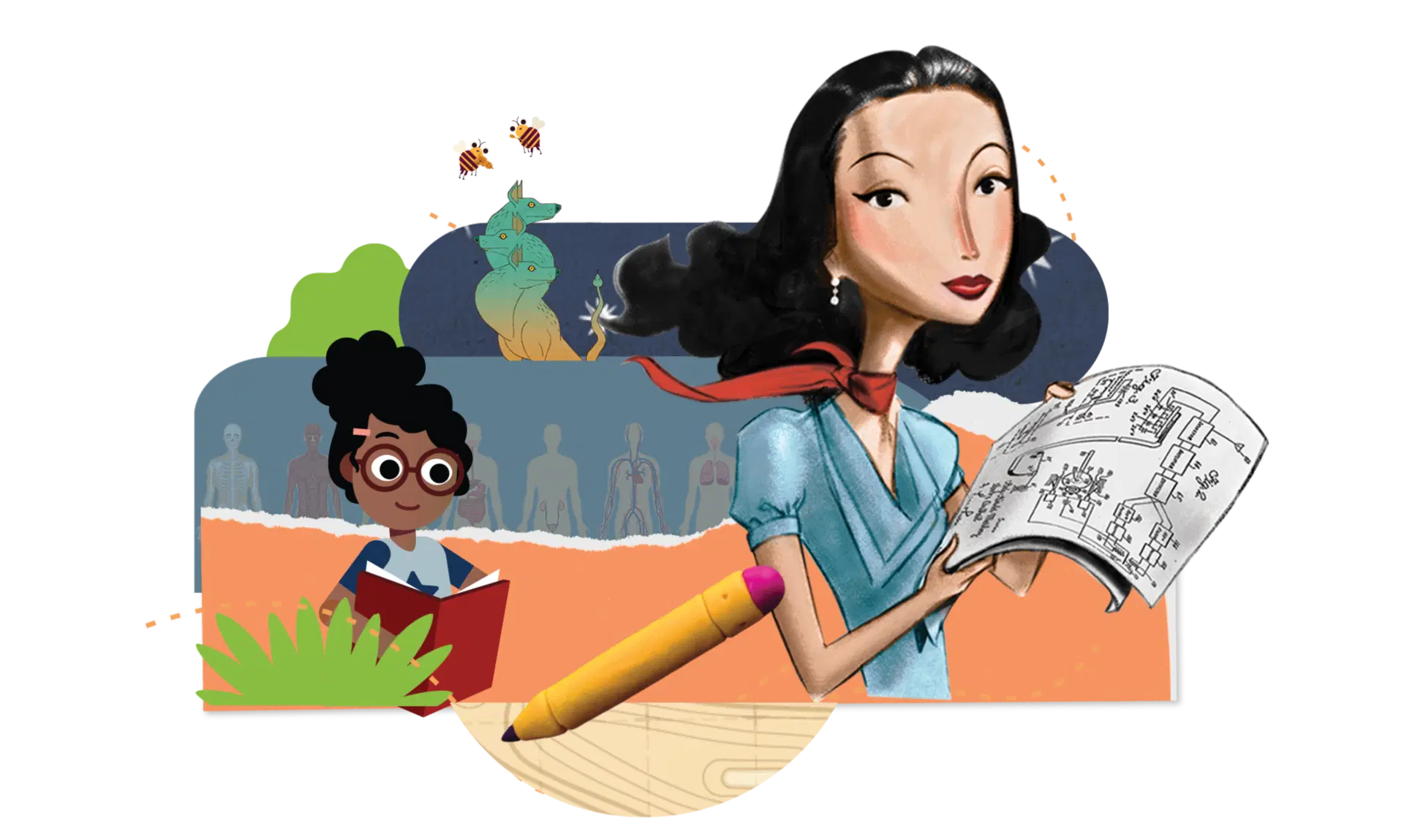
Getting Started
On this site, you’ll find a variety of resources designed to support your review and evaluation of the program. Before you dive in, watch the Orientation Overview and Program Overview videos below to learn about CKLA’s alignment to CCSD’s ELA adoption requirements, as well as where to find key program resources.
[Video] Orientation Overview
[Video] Program Overview
In the video below, learn about CKLA’s structure and materials, as well the research behind the curriculum.
Evidence-Based
[Video] Pedagogical Overview with Simple View of Reading
In the video below, Amplify’s Chief Academic Officer Susan Lambert shares the big picture of CKLA, and explains why it was created and the impact it’s making across the country. Below are a few portions of the video that you may find particularly helpful as you conduct your review.
- 0-1:00 Why CKLA?
- 1:00-4:40 How CKLA was built on the Simple View of Reading
- 4:40-8:00 How to review the CKLA Components
- 8:00-end Teacher Testimonial
[Features] Supporting the Simple View of Reading
Built out of the latest research in the Science of Reading, Amplify CKLA delivers explicit instruction in both foundational literacy skills (systematic phonics, decoding, and fluency) and background knowledge in grades K–2 with an integrated approach to explicit instruction in grades 3–5.
Review this Science of Reading toolkit to learn more about the Science of Reading best practices integrated throughout CKLA.
See our Science of Reading solutions in action! Click here to see a real example of how one Ohio district is implementing and educating their K–8 community on the Science of Reading as a response to Ohio’s Plan to Raise Literacy Achievement Initiative.
Great reading instruction starts with helping kids develop great decoding skills. By building a solid foundation of phonological awareness and phonics, reading the words on the page becomes automatic so that comprehension and critical thinking can happen. Our instruction is supported by:
- Step-by-step lessons with multisensory approaches, clear lesson objectives, and embedded formative assessments.
- Decodable books and student readers with ebook and audiobook versions that feature engaging plots and relatable characters.
- An engaging sound library with fun songs and videos that develop phonological awareness.
- An interactive Vocab App featuring engaging activities with immediate feedback and automated, customized instruction based on student performance.
Students build grade-appropriate subject-area knowledge and vocabulary in history, science, literature, and the arts while learning to read, write, and think creatively and for themselves. Our instruction is supported by:
- Knowledge builders that provide a quick overview of each domain with its key ideas.
- Interactive Read-Alouds designed to build knowledge and vocabulary.
- Content-rich anchor texts that support students as they tackle increasingly complex text and sharpen their analytical skills.
- Social and emotional learning paired with lessons in civic responsibility.
Easy-to-Use Materials
Amplify CKLA offers a number of digital and multimedia resources to support instruction and enhance the teacher and student experience.
- Amplify CKLA Digital Experience Site: All teacher and student materials are posted on this site for planning and information purposes, including Teacher Guides, Readers, Activity Books, Ancillary Materials, videos, additional resources, and links to other useful sites, such as the Professional Learning site.
- The Professional Learning Site: This site includes training materials, best practices, and other resources to develop program expertise. Access professional development anywhere, anytime.
- Intervention Toolkit: The Intervention Toolkit provides easy-to use resources to assist teachers in filling gaps in students’ foundational skills. Teachers will find hundreds of activities to support phonics, fluency, comprehension, handwriting, and other key skills.
- The Science of Reading: The Podcast: Hosted by Susan Lambert, The Podcast delivers the latest insights from researchers and practitioners in early reading. Each episode takes a conversational approach and explores a timely topic related to the Science of Reading.
In addition to the videos below, our CKLA Components Guide can be a helpful tool as you explore the materials provided within your sample tubs.
[Video] Physical Materials Walkthrough
As you explore your physical samples, the material walkthrough video below can be a helpful resource. In particular, we suggest watching the following portions of the video.
- 0-4:38 CKLA components for K–2
- 4:38-7:00 CKLA components for 3–5
- 7-7:30 CKLA Program Guide
- 10:12-13:20 CKLA’s Teacher Resource Site
Note: The below video covers both our K-5 program (Amplify CKLA) as well as our 6-8 program (Amplify ELA).
[Video] Digital Materials Walkthrough
In the video below, learn about CKLA’s digital tools for teachers and students across both classroom and asynchronous environments.
As you prepare to explore our digital platform, be sure to watch and refer to the video below.
Diverse Texts
In Amplify CKLA, texts serve a variety of purposes, from building background knowledge, vocabulary, and comprehension to building decoding and fluency skills.
In grades K–2, instruction is segmented between two strands: Knowledge and Skills.
- Reading within the Knowledge Strand is centered around authentic read-alouds and trade books that are intentionally sequenced to build content knowledge and vocabulary in specific domain topics around literature, history, science, and the arts. Because research shows that students’ listening comprehension outpaces their reading comprehension until their early teens, Amplify CKLA strategically uses read-aloud text in this strand, allowing students to focus their cognitive energy on gaining meaning from the words and better understanding from the images.
- Reading within the Skills Strand centers around carefully crafted Student Readers that teach students how to read. Structured as chapter books, these readers are 100% decodable and were developed to align with Amplify CKLA’s scope and sequence for phonics, directly connecting instruction to student practice in connected texts. Students use the Readers to practice decoding, fluency, and comprehension during shared reading lessons, targeted close reading sessions, in small groups, and independently.
In grades 3–5, integrated units bring the Skills and Knowledge strands together as students become increasingly automatic and strategic in their word recognition and language comprehension skills. Student reading and comprehension activities involve a variety of reading materials:
- Authentic Read-Alouds and trade books ensure students encounter a variety of perspectives as they use these complex text to increase their knowledge while practicing vocabulary and listening comprehension skills.
- Student Readers connect to each theme and are designed to increase in complexity over time, providing a continual challenge as students’ reading and listening comprehension skills develop and strengthen throughout the year.
- Novel Guides provide teachers a flexible option for extending authentic reading and text-based activities in the classroom using award-winning and acclaimed novels.
- ReadWorks articles give students access to additional high-quality texts aligned to both Amplify CKLA knowledge topics and the topics outlined in the Common Core State Standards.
Decodable Readers at Grades K–2
Our Decodable Readers are designed to progress in skills, mirroring the scope and sequence of instruction, which allows students to immediately apply what they are learning to 100% decodable text. More specifically, our decodables:
- Are uniquely designed to provide intensive practice with the CKLA code while students read compelling and engaging stories and informational texts for the first time.
- Gradually introduce students to “tricky” spelling concepts, such as different sounds that use the same letter code.
- Increase in text complexity (i.e., content, length, and vocabulary) as students progress through the grades.
- Include fiction and nonfiction text.
- Are available as ebooks and audiobooks.
Below, you can see how students grow from year-to-year across grades K–2.
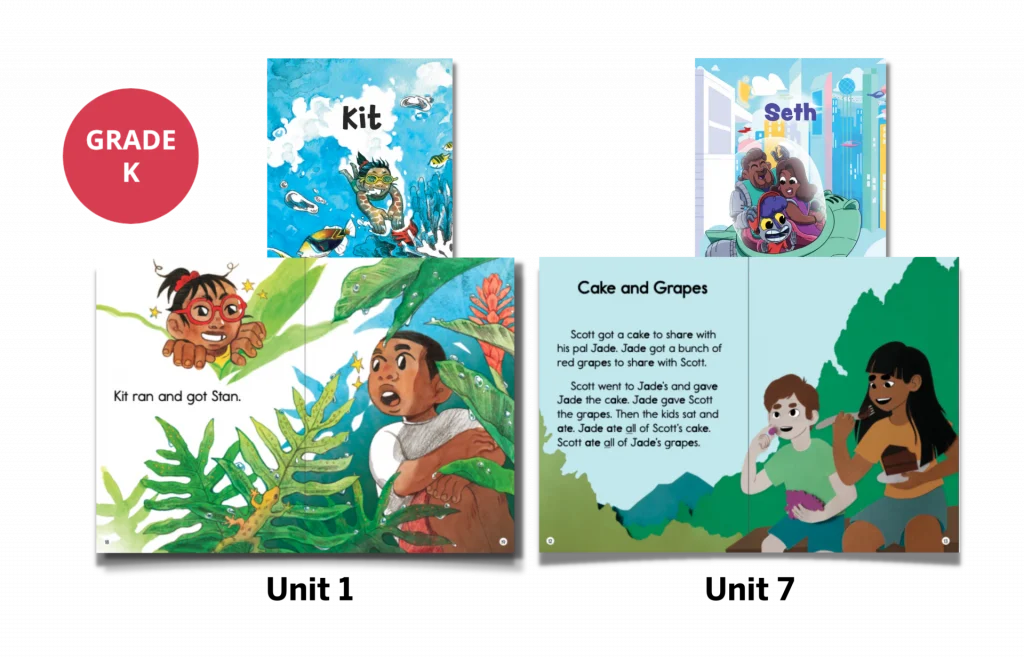
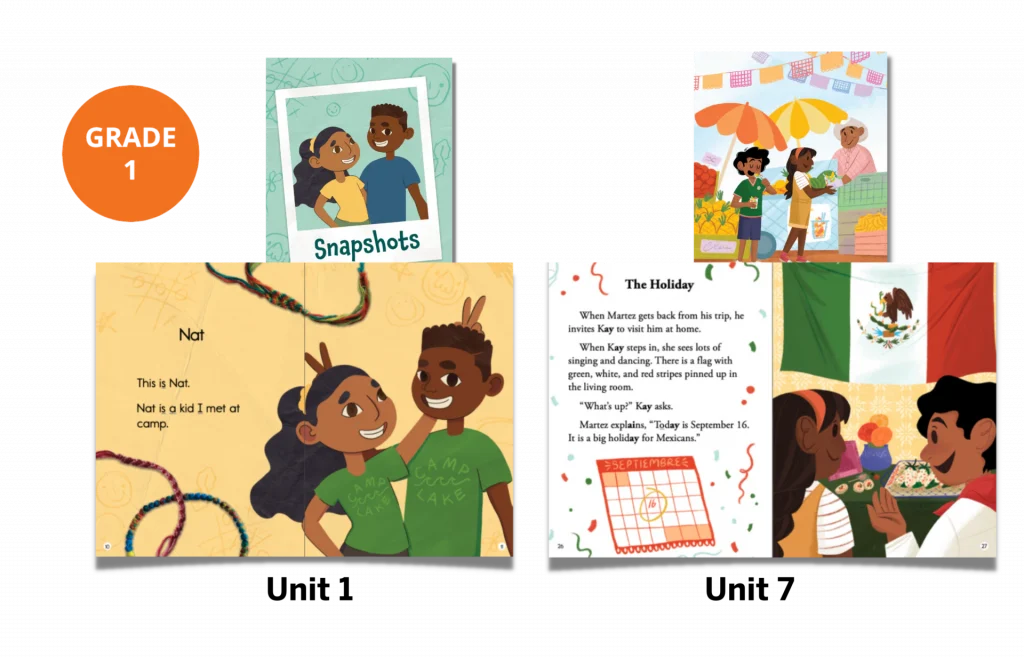
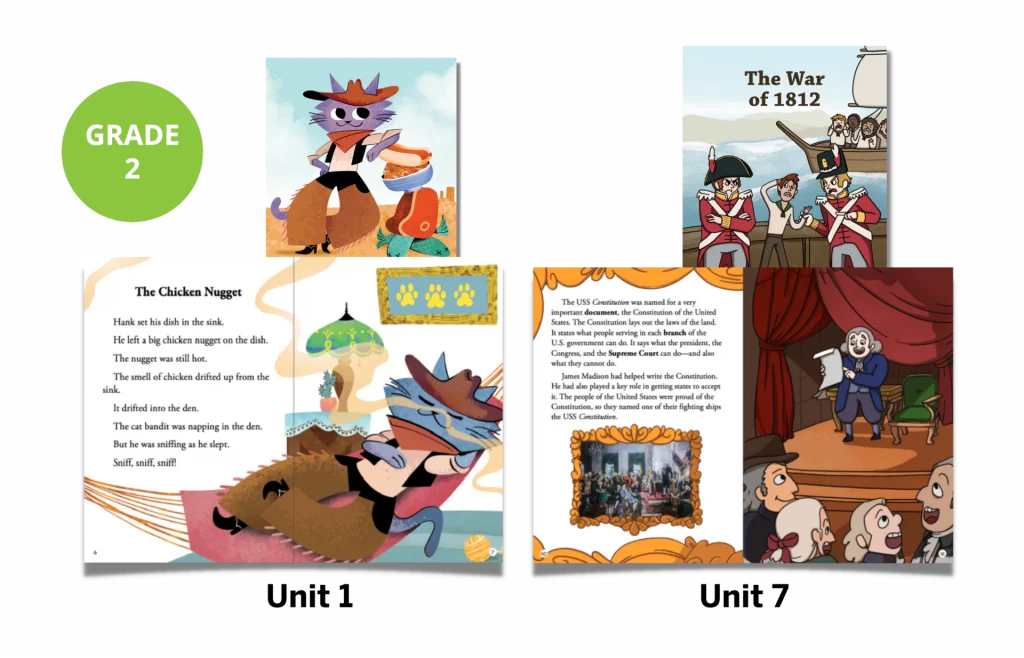
Student Readers at Grades 3–5
By grades 3–5, students have mastered the basics of decoding and are hungry to use what they’ve learned to reach out to the world. Although Read-Alouds remain an important part of lessons, students are also encouraged to practice independent reading starting in grade 3 with the support of carefully crafted Student Readers. These readers are chock-full of various text types, cultural stories, and a blend of fiction and nonfiction texts that are tied to and support the overarching theme of the unit.

Read-alouds
Authentic literature exposes students to a variety of text types and perspectives to deepen their knowledge of fascinating topics in social studies, science, literature, and the arts. Authentic texts support text-to-self, text-to-world, and text-to-text connections for readers.

Trade books
Our optional Trade Book Collection (and suggested list of additional trade books) align with our grade-level topics, and extend the knowledge students are learning through an authentic text.
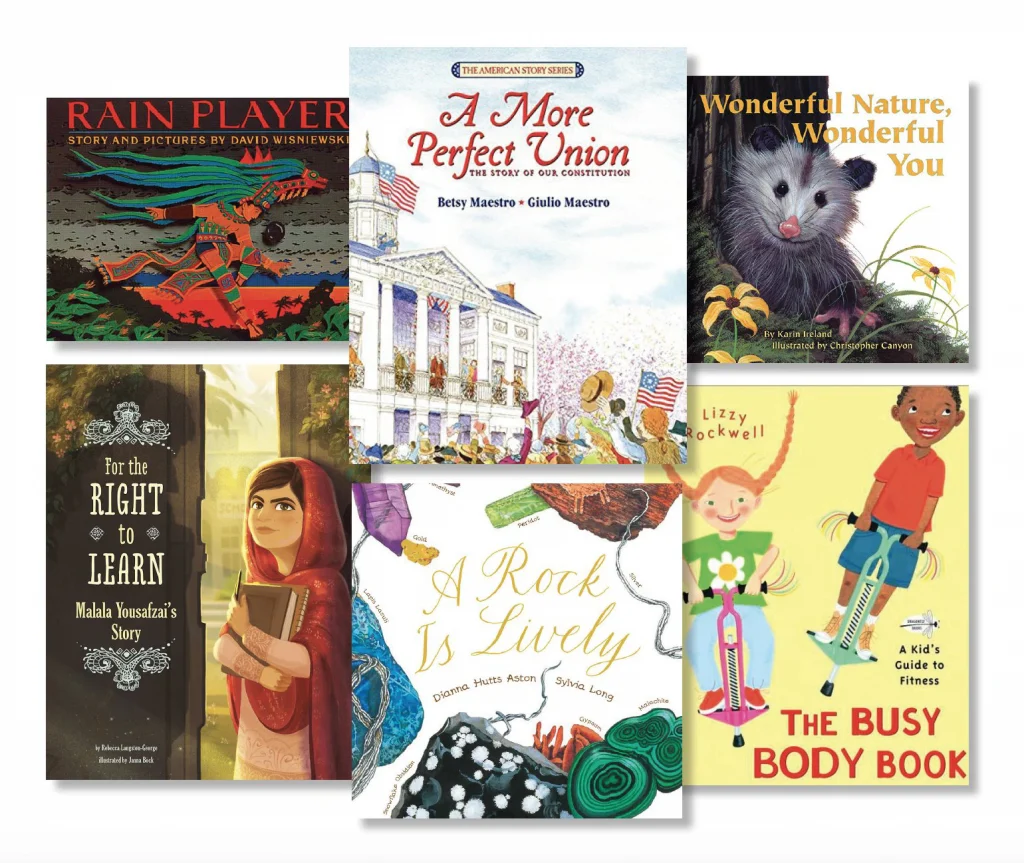
Novel Guides
Novel Guides bring students beyond the CKLA curriculum. We provide fifteen full days of instruction on contemporary trade books, as well as writing prompts that help students navigate the authentic literature they love.

ReadWorks
Amplify CKLA and ReadWorks® have partnered to deliver high-quality texts curated to support the Amplify CKLA Knowledge Sequence and to extend student learning. Texts include high-interest nonfiction articles in topics in social studies, science, literature, and the arts. These texts are accompanied by vocabulary supports and standards-aligned formative assessment opportunities. Teachers can monitor their students’ progress using the ReadWorks reporting features.
Reading resources
The following resources may be helpful as you explore our approach to reading and the role that diverse texts play in the program.
- CKLA Text Complexity Guide
- What students read in Grade K
- What students read in Grade 1
- What students read in Grade 2
- What students read in Grade 3
- What students read in Grade 4
- What students read in Grade 5
Writing
CKLA is rich with opportunities for students to develop, practice, and hone their writing skills. While the shape of writing instruction looks slightly different at each grade level, a commonality across all grades K–5 is that writing isn’t taught in isolation. Rather, it’s embedded within the context of each unit, and is connected to what students read.
At Grades K–2, writing takes place in both the Skills and Knowledge strands.
- Explicit instruction in writing skills (such as sentence structure) and handwriting takes place in the Skills Strand, and is tied to the decodable readers used within each unit.
- Extended writing and writing process activities take place in the Knowledge Strand.
At Grades 3–5, writing is embedded through the integrated units.
- Across each unit, students work on smaller, more discrete writing skills alongside their Student Reader. These skills eventually culminate at the end of each unit in the form of a writing project.
- In 4th and 5th grades, we expand writing even further with the addition of Poetry units.
Writing and text-dependent questions
The overwhelming majority of questions, tasks, and assignments in CKLA materials are text-dependent. Every CKLA unit and domain is based around key texts that are either read aloud, with a peer, or independently. These readings are followed by class discussions where students are expected to refer to these texts when answering literal, inferential, and evaluative questions, both orally during class discussions and through written responses.
- Literal questions assess students’ recall of key details from the text. These are text-dependent questions that require students to paraphrase and/or refer back to the portion of the text where the specific answer is provided.
- Inferential questions ask students to infer information from the text and to think critically. These text-dependent questions require students to summarize and/or reference the portions of the text that lead to and support the inference they are making.
- Evaluative questions ask students to build on what they have learned from the text using analytical and application skills, often to form an opinion or make a judgment. These questions require students to paraphrase and/or cite the textual evidence that substantiates their argument or opinion.
In addition, students are often asked to generate additional questions based on the texts. Students further demonstrate understanding in writing by applying what they have learned and providing evidence from the text to back up their answers and opinions. For example, Grade 3 students learning about sea exploration write a paragraph from the perspective of a sailor on John Cabot’s ship, stating their opinion of whether the hardships they experienced are worth the adventure or glory and citing examples from the text to support their response. Grade 5 students studying the Adventures of Don Quixote write a four-paragraph persuasive essay arguing whether they believe Don Quixote’s good intentions justify his often calamitous actions, using reasons and evidence from the text to support their claims.
Writing with authentic literature
Novel Guides are designed around authentic texts students love. They not only help students foster a love for reading, they also present authentic opportunities for students to express themselves through writing. Novel Guides provide daily text-based writing and discussion through five activity types:
- Ask contains questions for discussion, reflection, or brief written responses. These questions cover information all students should understand as they read the text.
- Explore prompts offer brief research opportunities centered around items mentioned in the text.
- Imagine activities promote creativity and further reflection.
- Observe items ask students to take notes or make other kinds of observations about what they have read.
- Understand questions push students to explore connections to the text.
Writing and enrichment
Writing tasks throughout the program provide almost limitless opportunities for extension. Feedback from the teacher, peers, and self-reflection provide students opportunities to strengthen their writing. For example, advanced students can be encouraged to:
- Use more complex and unusual descriptive vocabulary.
- Incorporate figurative language into their writing.
- Write multi-clause sentences with more complex joining words.
- Create longer or richer opinion, explanatory, and narrative pieces.
- Evaluate the use of informational textual characteristics and use in their own writing (e.g., headers, bullets).
Writing resources
The following resources may be helpful as you explore our approach to writing and how writing develops across the program.
Access the program
Explore as a teacher
Before logging in, watch this brief video on navigating the CKLA Teacher Resource Site.
Ready to explore as a teacher? Follow these instructions:
- Click the CKLA Teacher Resource Site button below.
- Select Log in with Amplify.
- Enter the username: t1.ccsd-k5-ckla@demo.tryamplify.net
- Enter the password: Amplify1-ccsd-k5-ckla
- Click the CKLA Teacher Resource icon
- Select a grade level
Explore as a student
Before logging in, watch this brief video on navigating the CKLA Student Hub.
Ready to explore as a student? Follow these instructions:
- Click the CKLA Teacher Resource Site button below.
- Select Log in with Amplify.
- Enter the username: s1.ccsd-k5-ckla@demo.tryamplify.net
- Enter the password: Amplify1-ccsd-k5-ckla
- Click the CKLA Teacher Resource icon
- Select a grade level
Check out these additional resources
Nevada submission resources:
- CKLA Program Alignment to the Standards (Nevada Rubric: Category 1)
- CKLA Program Social Justice Alignment (Nevada Rubric 2: Category 2)
- CKLA Grade K Lesson Alignment to the Nevada Academic Content Standards for English Language Arts
- CKLA Grade 1 Lesson Alignment to the Nevada Academic Content Standards for English Language Arts
- CKLA Grade 2 Lesson Alignment to the Nevada Academic Content Standards for English Language Arts
- CKLA Grade 3 Lesson Alignment to the Nevada Academic Content Standards for English Language Arts
- CKLA Grade 4 Lesson Alignment to the Nevada Academic Content Standards for English Language Arts
- CKLA Grade 5 Lesson Alignment to the Nevada Academic Content Standards for English Language Arts
CKLA review resources:
- CKLA Program guide
- Diversity, equity, and inclusion in CKLA
- Text complexity in CKLA
- Trade books in CKLA
- Assessments in CKLA
- Remote and hybrid learning with CKLA
- Amplify ELA Technical Specifications
- CKLA Scopes and Sequences
- Grade K Skills and Knowledge
- Grade 1 Skills and Knowledge
- Grade 2 Skills and Knowledge
- Grade 3 Integrated
- Grade 4 Integrated
- Grade 5 Integrated
CCSD ELA Review Site
Tulsa, exciting updates in CKLA 2nd Edition!
Exciting updates in CKLA 2nd Edition!
As part of our commitment to creating even richer and more wide-ranging curricula, we have built on the foundation of the 1st Edition to release a new edition of Amplify CKLA with a collection of program enhancements that save you time and help you reach every student.
Amplify Caminos for equitable Spanish literacy
Amplify Core Knowledge Language Arts® (CKLA) is proud to introduce Amplify Caminos al Conocimiento Esencial, a Spanish language arts program for Grades K–5 that will inspire and engage your students to become confident readers, writers, and thinkers.
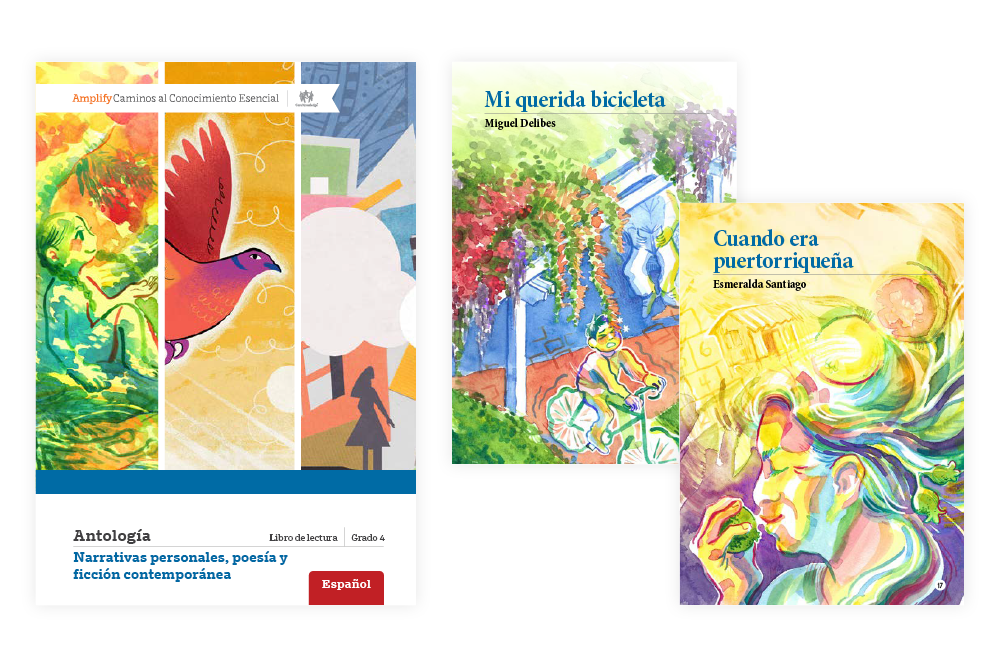
Like Amplify CKLA, Amplify Caminos is designed to spark curiosity through content-rich instruction. Amplify Caminos features complex interactive Read-Alouds and authentic Spanish literature to develop reading and writing skills and build bridges across Spanish and English.
Explore the Amplify Caminos Program Guide.
Research units to inspire inquiry and curiosity
Our brand-new Knowledge Research units carry forward Amplify CKLA’s powerful and proven instructional approach while also:
- Adding more diversity. The rich topics and highly visual components featured in these units provide students with even more “windows and mirrors” and perspectives as they work to build knowledge.
- Adding more authentic literature. Each new research unit revolves around a collection of high-interest authentic trade books that will spark more curiosity and inspire more inquiry.
- Adding more flexibility. Units can be implemented for extended core instruction during flex periods, district-designated Pausing Points, or enrichment periods.
Units cover a variety of rich and relevant topics:
With these new units, students will soar to new heights with Dr. Ellen Ochoa, Amelia Earhart, and the Tuskegee Airmen. They’ll feel the rhythm as they learn about Jazz legends Miles Davis, Tito Puente, and Duke Ellington. And they’ll explore the far reaches of the world with Jacques Cousteau, Matthew Henson, and Eugenie Clark.
- Grade K: Art and the World Around Us
- Grade 1: Adventure Stories: Tales from the Edge of the World
- Grade 2: Up, Up, and Away: The Age of Aviation
- Grade 3: All That Jazz
- Grade 4: Energy: Past, Present, and Future
- Grade 5: Beyond Juneteenth: 1865 to present
Watch the overview webinar to learn more.
Units will be made available in English and Spanish, and will include the following components:
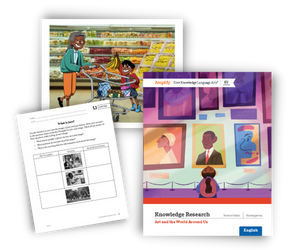
- Teacher Guide
- Student Activity Books
- Image Cards
- Trade Book Collection
- Digital Components (grades K–3 and 5)
Richly illustrated Skills Readers
Student Readers in grades K–2 are newly redesigned with gorgeous illustrations that celebrate students’ diverse experiences. The new readers feature individuals with a broad range of identities and culture, providing students with more windows and mirrors. Each reimagined reader has a unique illustration style to draw students into the engaging stories, characters, and plots.
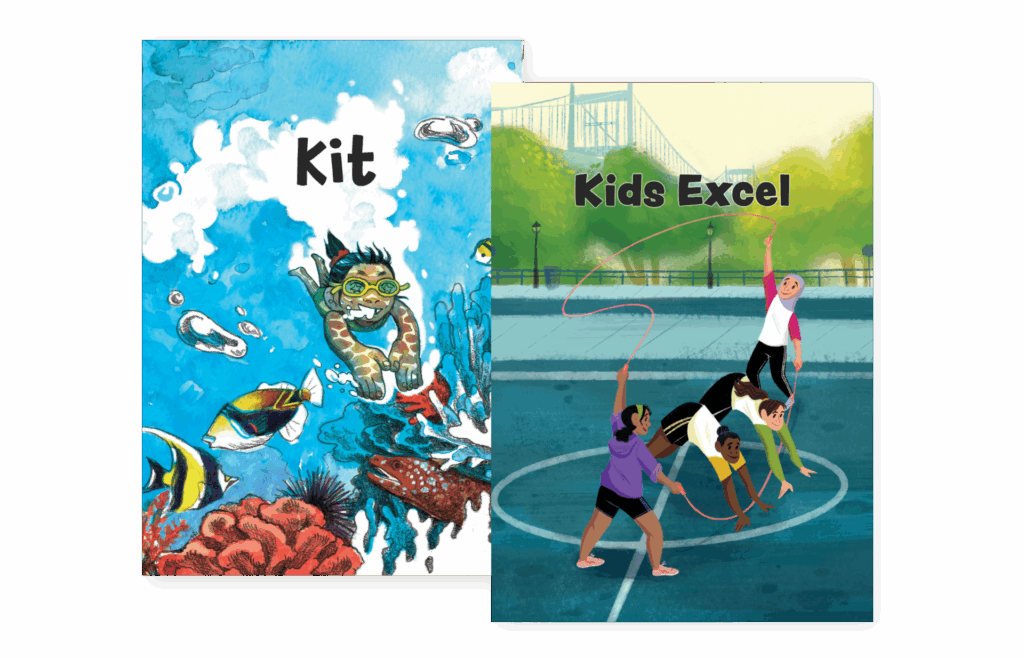
New digital platform with presentation slides
Amplify CKLA 2nd Edition is on the digital experience, a new digital platform, that makes it easier and more engaging than ever to plan lessons, present digital content, and review and assign student work online.
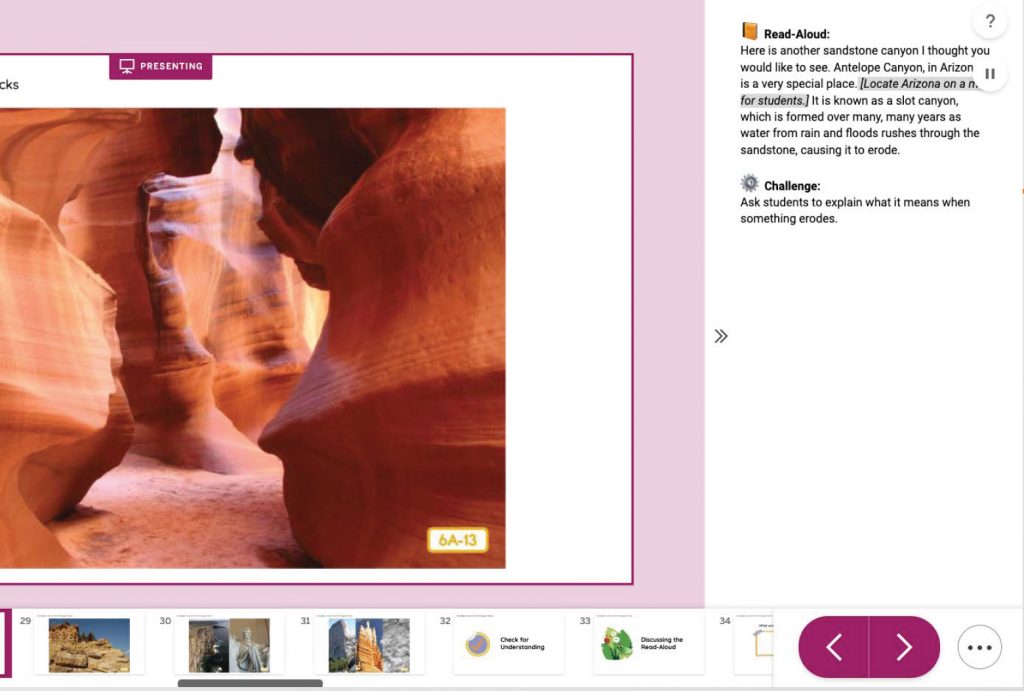
The digital experience provides ready-to-use, customizable lesson slides, complete with all the prompts from the Teacher Guide embedded in the teacher view. As teachers deliver each lesson, students engage with the content through slides that include digital activities, digital components, multimedia, Student Readers, and more. Students can complete work in the platform through digital Activity Pages that allow them to type, draw, record audio, and more.
Explore the digital experience overview brochure.
Improved layout, more focused lessons, new content and more
From 1st Edition to 2nd Edition, we made updates to make it easier to plan and deliver Amplify CKLA lessons, including a variety of ways to differentiate instruction to meet the needs of all students.
Key enhancements include:
- Scaffolds for English Language Learners added to all lessons
- In-the-moment differentiation opportunities added to support and challenge all students
- Integrated grade 3 into one instructional strand to better match students’ learning trajectories
- New layout to make Teacher Guides easier to scan and use.
New content at the beginning of each lesson:
- Primary Focus Objectives identify the goals of each lesson. Each objective is standards-aligned and corresponds to a formative assessment.
- Formative Assessment opportunities are explicitly called out in a chart at the beginning of each lesson. Formative assessments are aligned to the Primary Focus Objectives.
- Universal Access suggests modifications to the lesson to support a diversity of learning styles.
New content within each lesson:
- Support and Challenge sidebars added throughout for extensions, support, and enrichment.
- Access Supports provide scaffolds to support English Language Learners across five proficiency levels.
New content in each Skills Strand lesson:
- Additional Support section at the end of every Skills lesson provides opportunities for re-teaching and reinforcing skills taught in the lesson. Specific activities and extensions are provided to meet the needs of all learners.
New content in all grades, including:
- Grade K: Picture Reader with supporting instruction.
- Grade 3: Content integrated into one instructional strand to improve pacing and closely match students’ learning trajectories; excerpts of read-aloud text now appear in select student readers; added new Vikings Quest (problem-based interactive learning).
- Grade 4: Updated the Personal Narratives unit, added The Contraption Quest (writing across the year).
- Grade 5: Updated Personal Narratives unit, added Chemical Matter unit, added The Robot Quest (writing across the year).
- Moved Contemporary Fiction unit from grade 5 to grade 4.
- Supplemental cursive instruction and activity book added for grades 3 and 4.
Take a deeper look at the enhancements.
Language Studio for English Language Learners
Language Studio is a companion English Language Development program to 2nd Edition designed to support students learning English at all proficiency levels. Aligned to WIDA, the program helps students strengthen vocabulary and academic language skills while deepening the background knowledge developed in the core program. This unique approach provides an effective structure for moving English Language Learners students towards English proficiency.
View sample lessons to see how it works.
Multimedia Hub for teachers and students
Students will be able to access multimedia resources and engage in a new way on the Amplify CKLA Hub. Students can access digital resources independently from anywhere, taking full advantage of the instructional multimedia experiences that Amplify CKLA has to offer. Students can access the Hub at home, in the classroom, and on the go, making it ideal for remote learning. It’s compatible with laptops, Chromebooks, tablets, and desktops.
Grades K–2
Grades K–2 students will have access to Knowledge Builder videos to introduce each domain; Sound Library videos and songs for each sound in the English language; and audio-enabled eBooks of grade-level Student Readers.
Grades 3–5
Grades 3–5 students will have access to the Vocab App for independent practice with domain vocabulary and audio-enabled eBooks of grade-level Student Readers in English and Spanish.
Tulsa, exciting updates in CKLA 2nd Edition!
As part of our commitment to creating even richer and more wide-ranging curricula, we have built on the foundation of 1st Edition to release a new edition of Amplify CKLA with a collection of program enhancements that save you time and help you reach every student.

Amplify Caminos for Spanish literacy
Amplify Core Knowledge Language Arts® (CKLA) is proud to introduce Amplify Caminos al Conocimiento Esencial, a Spanish language arts program that will inspire and engage your students to become confident readers, writers, and thinkers.

Like Amplify CKLA, Amplify Caminos is designed to spark curiosity through content-rich instruction. Amplify Caminos features complex interactive Read-Alouds and authentic Spanish literature to develop reading and writing skills and build bridges across Spanish and English.
Explore the Amplify Caminos Program Guide.
Research units to inspire inquiry and curiosity
Our brand-new Knowledge Research units carry forward Amplify CKLA’s powerful and proven instructional approach while also:
- Adding more content for students from all walks of life. The rich topics and highly visual components featured in these units provide students with even more “windows and mirrors” and perspectives as they work to build knowledge.
- Adding more authentic literature. Each new research unit revolves around a collection of high-interest authentic trade books that will spark more curiosity and inspire more inquiry.
- Adding more flexibility. Units can be implemented for extended core instruction during flex periods, district-designated Pausing Points, or enrichment periods.
Units cover a variety of rich and relevant topics:
With these new units, students will soar to new heights with Dr. Ellen Ochoa, Amelia Earhart, and the Tuskegee Airmen. They’ll feel the rhythm as they learn about Jazz legends Miles Davis, Tito Puente, and Duke Ellington. And they’ll explore the far reaches of the world with Jacques Cousteau, Matthew Henson, and Eugenie Clark.
- Grade K: Art and the World Around Us
- Grade 1: Adventure Stories: Tales from the Edge of the World
- Grade 2: Up, Up, and Away: The Age of Aviation
- Grade 3: All That Jazz
- Grade 4: Energy: Past, Present, and Future
- Grade 5: Beyond Juneteenth: 1865 to present
Watch the overview webinar to learn more.
Units will be made available in English and Spanish, and will include the following components:
- Teacher Guide
- Student Activity Books
- Image Cards
- Trade Book Collection
- Digital Components (grades K–3 and 5)
Richly illustrated Skills Readers
Student Readers in grades K–2 are newly redesigned with gorgeous illustrations that celebrate students’ diverse experiences. The new readers feature individuals with a broad range of identities and culture, providing students with more windows and mirrors. Each reimagined reader has a unique illustration style to draw students into the engaging stories, characters, and plots.
Review the new readers.
New digital platform with presentation slides
Amplify CKLA 2nd Edition is on Interactive Classroom, a new digital platform, that makes it easier and more engaging than ever to plan lessons, present digital content, and review and assign student work online.
Interactive Classroom provides ready-to-use, customizable lesson slides, complete with all the prompts from the Teacher Guide embedded in the teacher view. As teachers deliver each lesson, students engage with the content through slides that include digital activities, digital components, multimedia, Student Readers, and more. Students can complete work in the platform through digital Activity Pages that allow them to type, draw, record audio, and more.
Explore the Interactive Classroom overview brochure.
Improved layout, more focused lessons, new content & more
From 1st Edition to 2nd Edition, we made updates to make it easier to plan and deliver Amplify CKLA lessons, including a variety of ways to differentiate instruction to meet the needs of all students.
Key enhancements include:
- Scaffolds for English Language Learners added to all lessons
- In-the-moment differentiation opportunities added to support and challenge all students
- Integrated Grade 3 into one instructional strand to better match students’ learning trajectories
- New layout to make Teacher Guides easier to scan and use.
New content at the beginning of each lesson:
- Primary Focus Objectives identify the goals of each lesson. Each objective is standards-aligned and corresponds to a formative assessment.
- Formative Assessment opportunities are explicitly called out in a chart at the beginning of each lesson. Formative assessments are aligned to the Primary Focus Objectives.
- Universal Access suggests modifications to the lesson to support a diversity of learning styles.
New content within each lesson:
- Support and Challenge sidebars added throughout for extensions, support, and enrichment.
- Access Supports provide scaffolds to support English Language Learners across five proficiency levels.
New content in each Skills Strand lesson:
- Additional Support section at the end of every Skills lesson provides opportunities for re-teaching and reinforcing skills taught in the lesson. Specific activities and extensions are provided to meet the needs of all learners.
New content in all grades, including:
- Grade K: Picture Reader with supporting instruction
- Grade 3: Content integrated into one instructional strand to improve pacing and closely match students’ learning trajectories; excerpts of read-aloud text now appear in select student readers; added new Vikings Quest (problem-based interactive learning).
- Grade 4: Updated the Personal Narratives unit, added The Contraption Quest (writing across the year).
- Grade 5: Updated Personal Narratives unit, added Chemical Matter unit, added The Robot Quest (writing across the year).
- Moved Contemporary Fiction unit from Grade 5 to Grade 4.
- Supplemental cursive instruction and activity book added for Grades 3 and 4.
Take a deeper look at the enhancements.
Language Studio for English Language Learners
Language Studio is a companion English Language Development program to 2nd Edition designed to support students learning English at all proficiency levels. Aligned to WIDA, the program helps students strengthen vocabulary and academic language skills while deepening the background knowledge developed in the core program. This unique approach provides an effective structure for moving English Language Learners students towards English proficiency.
View sample lessons to see how it works.
Multimedia Hub for teachers and students
Students will be able to access multimedia resources and engage in a new way on the Amplify CKLA Hub. Students can access digital resources independently from anywhere, taking full advantage of the instructional multimedia experiences that Amplify CKLA has to offer. Students can access the Hub at home, in the classroom, and on the go, making it ideal for remote learning. It’s compatible with laptops, Chromebooks, tablets, and desktops.
Grades K–2
Grades K–2 students will have access to Knowledge Builder videos to introduce each domain; Sound Library videos and songs for each sound in the English language; and audio-enabled eBooks of grade-level Student Readers.
Grades 3–5
Grades 3–5 students will have access to the Vocab App for independent practice with domain vocabulary and audio-enabled eBooks of grade-level Student Readers in English and Spanish.
S2-01: How teachers are really feeling this school year
In this special solo episode, Eric Cross starts the season by sharing his personal journey as an educator, and how the difficulties of the last few years have shaped his mindset going into the upcoming school year. Eric also addresses teacher burnout and what inspires him to continue working as a classroom educator. Explore more from Science Connections by visiting our main page.
Eric Cross (00:02):
Welcome to Science Connection, Season Two. As we begin the next season, I thought it would be a good time to share my story. As the host, I get to ask people questions about their journey, but I’ve actually never shared much about my own. So I’ve taken some of my most frequently asked questions to guests and asked them to myself. I hope you enjoy.
Eric Cross (00:23):
So the origin story question, I think really gets to the heart of why a person does what they do, because so much of who we are, especially as adults and teachers, is a result of experiences that we had in our lives when we were kids or in school with other teachers. And my life’s no different. I was born to a 19-year-old single mom. And when you’re a young boy growing up, especially with a young single mom, you often look to older men in different positions as kinda like a surrogate or like a mentor. And you may not even tell them that they are that to you. You kind of keep it close to the chest. And that’s what I did growing up. One of the ones that really stood out to me is, in seventh grade, I went to a middle school here in San Diego that was called Keiller Middle School. And we were a magnet program that specialized in science. And they had this program that brought professors from the local universities and they did this high-level enrichment. They would even take us to the college campus and we would work in these labs as seventh graders. It was amazing. And one of the people there, his name was Dr. Tress, and he was a professor. And Dr. Tress took a liking to me. I reminded him of his son. We were doing this great embryology experiment. We would take purple sea urchins. And we would inject them with potassium chloride, which would cause them to spawn. And we would fertilize these eggs, and then we would run different experiments using them. And these were things that I had never done before. I had always loved science. I’d always loved tinkering and building things. But this was my introduction, really, to high-level biology and to higher levels of education. I didn’t—I didn’t have many figures like that in my life growing up. I mean, I’m a first-generation, you know, high school, college graduate. Many of these are first generations for me. So, this was a new experience. And so Dr. Tress really unlocked a core memory and was one of my first mentors, as far as academics are concerned. And during my seventh-grade year, I entered the science fair and won first place, which was a huge deal. They took us out to Balboa Park. We got to miss school for a week. We got to go to all the museums for free. It was the best. And I think at that point in time, it really solidified something in me that would lay dormant until later on in my adult life. High school, I was really fortunate: the high school I went to was Morse High School, not too far from Keiller, and they had an aeronautics program. So I was able to enroll in that aeronautics program. And I learned how to fly before I learned how to drive. And I had this great instructor named Mr. Klon, who was this like 6′ 4″, 250-pound hippie guy. And he—we would get in the plane and we would have these like philosophical conversations. And through that, especially looking back now as a teacher, I realized that he was making connections with me and investing into who I was as a person. And it was something that I so needed at the time. Because at home I didn’t have that. You know, my safe place, a lot of time, was school. It was my only structure. It was where I knew I would get encouragement. It was where I knew things were reliable and consistent. For a lot of people, and a lot of kids, their home life isn’t like that. School was that for me. So Mr. Klon, I mean, he was this authentic, you know, consistent person in my life and made a huge difference at this time.
Eric Cross (03:23):
After I graduated high school, I left home just to get away from a difficult environment. And I was homeless for a little while and that was a huge moment in my life. And around that time, an aunt found out and she said, “You’re gonna come stay with us.” And this was like this three-year process of me living with them in this, like, functional family that ate dinner together. And they went to the zoo. They had family passes. And they took family photos at Christmastime. This was all weird stuff. Like, I didn’t know—I didn’t know who did these things. It was—I felt like a puppy that like lived in a home that was like…it was a home that was just always kind of like violent or like just really toxic. And then it gets put into a healthy home and doesn’t know how to act. That’s how it felt. And this was around like 19, 20 years old. During that time I started putting myself through school. So I went to community college and I was broke as a joke. And so I couldn’t afford the textbooks while I was going. So I would just go to the bookstore, the Barnes and Noble bookstore in Mira Mesa here in San Diego. And I would stay there all night using the textbooks or using the books there for doing my work. And then I would just put the books back on the shelves. Because let’s just face it. Textbooks are expensive, brother wasn’t trying to pay for all that. So I really had to earn that time. So I was working full-time. I was going to school. And, eventually I got a job in working in finance with a really great friend who mentored me during my younger twenties. And I didn’t wanna be broke and finance made sense.
Eric Cross (04:44):
And so I did that for a little while, until I got to a point in my career where I was watching an episode of The Office, the UK version, the Ricky Gervais version, and a character said, “I’d rather be at the bottom of a ladder I want to climb than halfway up one I don’t.” And I realized, working in finance, that I was halfway up a ladder I never wanted to climb. So I wanted to move into something that, if I was gonna spend eight hours a day or 10 hours a day doing something, I wanted it to be something that actually filled me up inside. And this is how I got into teaching. So I had always been working with young people, specifically 12- to 18-year-olds, like a non-profit or volunteering, mentoring, after-school programs. And I’ve always managed to rationalize my job in the finance world as meaningful because it let me do the real work that fulfilled me. So the real work was working with the kids. But my day job, my, like, Clark Kent-type job, was just, you know, doing the finance thing of like helping people that have a lot of money make more money. Which at the end of my life, I look back and I said, “That’s not what I want my legacy to be.”
Eric Cross (05:43):
And when the finance crash happened in 2008, that’s when I think I started looking back on it and said, “If I’m gonna spend all my time doing something and spending 40 or 60 or 80 hours of my day of my week doing things, I want it to matter. And that’s when I decided to pivot and leave that field and go and get my master’s in education and get my teaching credential, teaching science specifically. Now, one of the questions we get asked a lot and I’ve been asked is, is “How has teaching changed as a result of the pandemic?” And I feel like this could be several podcasts in and of itself, and it’s also regional, because everybody’s experienced it differently, And we’re still experiencing it! That’s the crazy thing! It’s like, it’s not over, we’re still in it. And some places have innovated and pivoted and some places just did what they needed to and they are trying to go back to business as usual. But if anything has happened, the pandemic revealed how much more, how much schools are more than places of just content learning. For many students it’s where they have their only community, their structure, their emotional wellness. They get regular meals, access to tech, and adults that care about them that are outside of their family. The schools are so much more than that. I mean, my school, they were a place, like a hub, that was giving out food every single day during the pandemic to families that would kind of drive by. So for a lot of schools, they became places like that. It also…the pandemic revealed the intensity of the educator workload. I mean, being able to manage your family, having the capacity, to be a content expert, you need to be a counselor, a trauma-care specialist, a coach, an encourager, a tech expert.
Eric Cross (07:23):
I mean, the term mental health is now more common and starting to become prioritized. Now we’re focusing so much more on the whole child. And we know from research that how a child feels about themselves and their safety and their security impacts their ability to learn. So the more comfortable and safe a student feels in the classroom with teachers and with friends, the better they’re gonna be able to learn. And ultimately the higher they’re gonna be able to achieve. You can’t, you can’t have one without the other. In addition, I think less teachers, see themselves teaching into retirement. I think that’s a big thing. I read these articles about teacher shortages and I think the reality is it’s actually teacher exodus. It’s teachers leaving. And that’s been really difficult. I’ve had many friends who’ve left for the private sector. And I get it, especially if you’re one that has—if you’re the first in your family to graduate from college, with a STEM degree, to them taking a teaching position can mean walking away from a salary in the private sector that pays two or three times more.
Eric Cross (08:23):
And in many places around the country, in order to be a teacher and maintain a median standard of living, you need either dual income, multiple jobs, or a multi-generational household. For a lot of people it just doesn’t make sense. And even right now, today, as I’m recording this, I’m reading articles and getting text messages…and I received a text message three days ago from a teacher that said, “My goal this year is to just not resign.” And that’s where a lot of teachers are feeling right now: isolated, challenged, and under-appreciated. And Plato said, “What’s honored in a country is cultivated there.” And I’ve been looking at how teachers are honored and one of the ways is just, like, practical. Like, look, I gotta pay my bills. You know, love the Starbucks gift card. Love the CPK, the gift card. The cards, all those other things…but brother got a car payment. And at the end of the day, if we care about our kids, we need to take care of the people that take care of them. And there’s very practical ways for that to happen. And everybody in different sectors around the country is dealing with that in different ways. I think the pandemic also revealed, now the public can see how our kids don’t receive the same quality of education. And once you’re aware of that, you can’t put the genie back in the bottle. So once you see on Zoom or once you see in a meeting, or once you see on the news, that students in different areas, whether it’s the rural South or a suburb in Seattle, are not getting equitable educations, well, ultimately that impacts all of us. Now. It’s not all doom and gloom. Good things have come from, as a result of, the pandemic. Many schools have made progress towards narrowing the technology gap, ’cause they had to! ‘Cause you can’t do Zoom and you can’t do Google Meet and all that stuff with a packet! You gotta get those Chromebooks. And Chromebooks and the internet and access to tech is not a new thing. It’s been out for a long time. The technology gap is not a new thing. It’s been written about extensively, but all of a sudden districts and schools started figuring out how to close that gap. And that’s awesome. We didn’t want a pandemic to be the catalyst for that to happen. But at the end of the day, we started closing it. A lot of schools did an amazing job and districts did an amazing job with deploying the hardware, sending out buses with wifi, putting lessons and videos on USB sticks and dropping them off to parents who live in sparsely populated areas. I mean, there were so many stories that I’ve heard about schools and teachers just doing amazing things, going above and beyond what they needed to on behalf of kids.
Eric Cross (10:51):
I think in addition to that, there’s also been students and families are now having more options to personalize their learning. So we have this in-person model, we have this Zoom or kind of online model, and this hybrid model, and it hasn’t all been perfect, you know, at all. But some families have come out and said, you know what actually doing this hybrid model is better for my son or better for my daughter or better for my student, because they’re able to get the socialization, but also able to focus better at home than they are in a classroom of 36. And that’s legitimate. You know, we talk about personalized learning, but it’s not exactly personalized when everybody has to wake up at the same time, same schedule, go to the same, the same classroom of, you know, up to 40 kids, and do the same lesson. I mean, we have to be honest about our limitations with personalizing learning for students. And when we can provide more options and we give teachers the infrastructure to be able to use different platforms, then we’re able to personalize learning a lot more.
Eric Cross (11:51):
There’s also been an emphasis on the whole-child wellness. I think the spotlight on mental well-being heavily impacts their academic success, but counseling teams, social workers, school psychologists—I think more than ever we’ve realized the value that they bring to the schools. And unfortunately many of them have caseloads of 200 students or more. And they’re seeing students most often that are in crisis. And especially after the pandemic, we’re realizing how valuable they are and how much we need to, one, honor them and give them the support that they need, and also recruit more. Because as we start recognizing how our brains are impacted by the things that we’re dealing with, we’re also gonna see how that’s gonna impact our students’ performance. And we need the specialists in those positions to be able to support our kids. I think, last, I think more innovation and lesson design and how we assess students. And so we’ve been talking about in education just kind of critiquing: how do we assess what a student knows? How do we make what a student actually does at school relevant to real life? I mean, so many times I have students who’ve graduated that are like, “I feel like the things I learned in school, like, they’re not always transferable to real life. It helped me on a test, but like, I don’t know how to do my taxes.” Or “I memorized these facts, but I don’t really apply it in my job.” Or “The facts that I learned I could have actually learned on the fly in my job. I wish I would’ve actually focused on the skills or had an earlier opportunity to get some experience because when I’m trying to apply for a job, <laugh> they ask for experience and I’m 22 years old.”
Eric Cross (13:28):
And so all these things kind of come up. And so I think there’s been some great conversations around “how do we rethink what education looks like?” And there’s different pockets around the country that have been doing that, I think, really well. And I think it’s important for us as teachers to stay connected to those people who are kind of pushing the boundaries and thinking outside the box, because when we get siloed, it’s really easy to get calcified and cynical. I get it. And it impacts me too. But when we’re around those people who have those fresh ideas, who are really pushing the limits, it inspires us. And that’s something I think during the pandemic that I’m grateful that I was intentional about, is staying connected with other teachers. There’s a big question; Why do you continue your work in the classroom and what keeps you motivated? And I was thinking really hard about this question, because depending on <laugh>, depending on my day, I feel like my answer’s gonna be a little bit different. So I’ve had to step back from this 30-foot, thousand-foot perspective and answer the question. And my answer is this: I think because I still feel like I can be effective to influence positive change in my classroom with my students and within the larger education system as a whole. I think if I lost either of those two, then I’d rethink my profession. Look, I’m an innovator. I like asking “why” questions and things like that. And I’m not always the most popular person when you do that. But education is like just a huge ship. It doesn’t pivot on a dime. And asking why questions and pushing for change on behalf of kids isn’t easy, fun, or glamorous, but it’s it’s necessary. And I feel like over the last few years, I’ve been able to see these kind of glimmers of a trajectory change, at least where I am locally. And that’s something that has given me a lot of hope. I’m very fortunate to be connected to educators and people in leadership that are really about making a difference beyond just kind of the cliched platitudes. They actually wanna make systemic change, in a way that’s positive. And that’s been really helpful for me. So as long as I feel like I’m useful in the classroom for students, and as long as I feel like I’m bringing, I think change, on behalf of teachers and students and administrators and our community in a way that moves the ball down the field, that’s what keeps me motivated. And what I like to ask teachers when I close in the podcast is. “What teacher or teachers have inspired you?”
Eric Cross (15:54):
And for me, I think it would start off with the teachers who cared about me when they didn’t have to, in elementary school all the way through college. And there are numerous teachers. My science-teacher community of practice. For the last two years, I’ve been fortunate to spend every month, once a month, meeting with just a core group of science teachers that really care about some of the things that we are impacted by in the classroom. And when the pandemic was going on, we still met regularly. And because we’re not all teaching in the same place, we kind of were able to bring different perspectives to the table. I think the current classroom teachers and former classroom teachers that I have in my community really inspire me. The ones who are dedicated to opening doors for students. The graduate students that I teach at the University of San Diego, they keep me fresh. I love leaving teaching my 12- and 13-year-olds, and then driving down the street to the university and teaching 20somethings who are all about to be in the classroom. They come with new ideas, they’re asking questions, and I get to actually share things that I just did three hours ago. I think that’s one thing that continues to inspire me. And it’s one of the reasons why I love teaching at the University of San Diego. Their energy and enthusiasm is super-refreshing. And then all the teachers that are willing to take risks and fail forward, to try things different, to ask hard questions, to push the envelope. Teaching’s hard. It’s easy to point out the problems in education as a whole. But after we do that, it’s important to figure out the practical ways we can make the changes that we wanna see.
Eric Cross (17:23):
Now, that’s to say that if you have the capacity for it and the resources and the support. Some of us, we don’t. Some of us, we are on an island, and that’s a really, really difficult place to be, especially when you have family and kids to take care of. And you have to make decisions on what’s best for you and for your own students. We do this work on behalf of kids. And it’s one of the most honorable services a person can provide to our community. But one area for growth that I think we have kind of as a society, is teachers spend their lives, daily, on behalf of the future of our country. For other people’s children. They fall asleep at night worrying about other people’s kids. They spend their own money to create opportunities and experiences that students might not otherwise have. And it’s important that we collectively, and I know I’m preaching the choir when I say this, but this is one of my messages, is that we honor them in turn. We create programs that allow them to be able to afford housing. We create opportunities for them to be able to generate wealth. We create ways for them to be able to find rest, to get connection. And then internally we create systems where they can just work on themselves, fill themselves, get trained, and be whole, so they can bring their best self to the kids in front of them. That’s one of my personal platforms. It’s something that I think is vital. We gotta take care of the people that take care of our kids. So there’s a saying that says, “It’s better to light a candle than to curse the darkness.” And it takes one person to blow out a candle, but one candle can light thousands of other candles, without diminishing its own light. And that’s what we have to be. So my encouragement, teachers, as you’re going into this new school year, and you’re thinking about what’s going on, you’re thinking about all the challenges—and they’re there, and they’re real, and trust me, it’s not like some Pollyanna, like, “Hey, just be positive!” mindset and everything’s gonna be great—no, no, no, no, no. It’s not that. But my encouragement…if I can tell you one thing that’s helped me more than anything else, it’s being connected to other people who are candle-lighters. Because there are a lot of places that are gonna blow out the candle. It could be the staff lounge. It could be Twitter, it could be Reddit. It could be Instagram. It could be TikTok. It could be, you know, anybody. Someone next door to you. There’s a lot of folks that are gonna be willing to point out and say, “Look, this is what’s wrong.” But find the helpers. Find the people that are candle-lighters. And stay connected with them. Find that community. I can tell you for me, that’s been the thing that’s been able to help me sojourn through all of this—I couldn’t do this by myself—is being able to share my story with other teachers and knowing that I’m doing this work alongside of other folks who are doing this work, and I can share my story with them and listen to their stories, is something that’s been able to fill my cup. And so I hope I can do the same for you and for other people listening to other people I come in contact with.
Eric Cross (20:08):
Teachers, I wish you a great school year. Hang in there. Be those candle-lighters and bring your best self on behalf of the students. Thanks so much for listening. Now, we wanna hear more about you. If you have any stories you wanna share about the classroom, please email stem@amplify.com. That’s STEM at amplifycom.wpengine.com. And make sure to click subscribe wherever you listen to podcasts. And join our Facebook group, Science Connections: The Community. Until next time.
Stay connected!
Join our community and get new episodes every other Tuesday!
We’ll also share new and exciting free resources for your classroom every month.


Meet the guest
Eric Cross is a 7th grade science/technology teacher, grade level lead, and digital learning innovator for Albert Einstein Academies, International Baccalaureate schools. He is also an adjunct professor of learning and technology at the University of San Diego and a Google certified innovator. Eric earned a bachelor’s degree from Azusa Pacific University and a Master of Education from the University of San Diego. He had 17 years of experience working with at-risk youth and underserved populations before becoming a middle school teacher. By building relationships with students, colleagues, and the community, he has become an empowered leader in and out of the classroom. Through meaningful learning experiences centered around student agency, STEM has become accessible to students through highly engaging lesson design, thoughtful integration of digital tools, and culturally relevant pedagogy.
About Science Connections
Welcome to Science Connections! Science is changing before our eyes, now more than ever. So…how do we help kids figure that out? We will bring on educators, scientists, and more to discuss the importance of high-quality science instruction. In this episode, hear from our host Eric Cross about his work engaging students as a K-8 science teacher. Listen here!

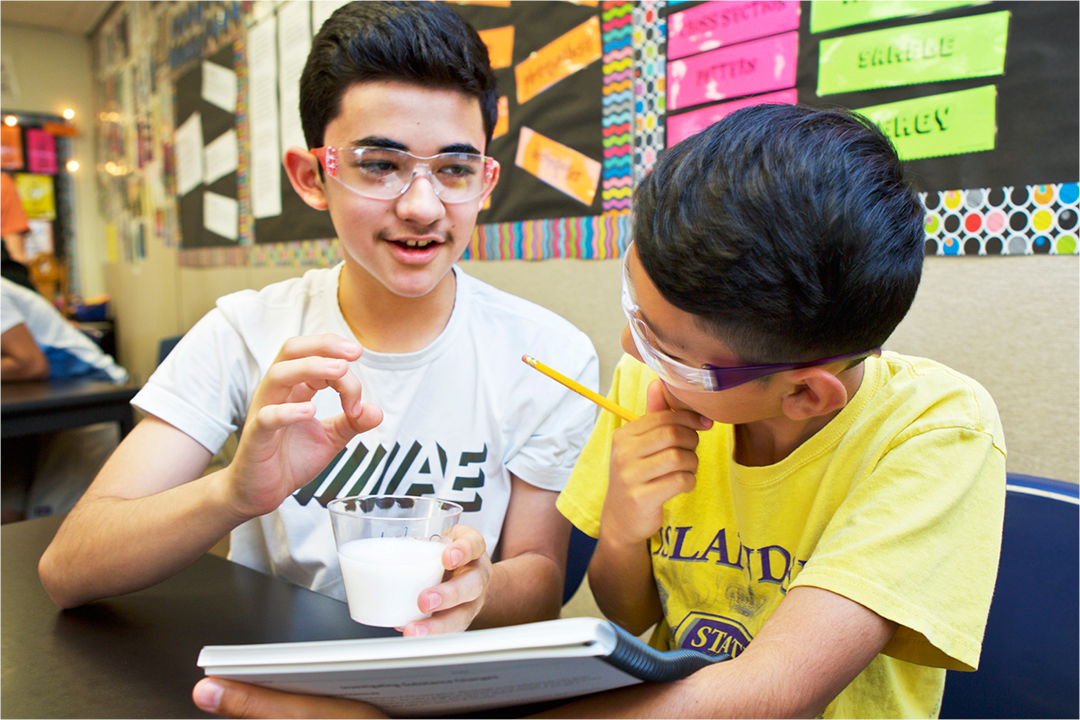

S3-05: Thinking is power
Join us as we sit down with Melanie Trecek-King, college professor and creator of Thinking is Power, to explore how much of an asset science can truly be in developing the skills students need to navigate the real world. You’ll learn about “fooling” students and the importance of developing critical thinking, information literacy, and science literacy in the classroom. We’ll also share real strategies and lesson examples that help build these essential skills and engage students in learning.
And don’t forget to grab your Science Connections study guide to track your learning and find additional resources!
We hope you enjoy this episode and explore more from Science Connections by visiting our main page!
Melanie Trecek-King (00:00):
We say knowledge is power, but it’s not enough to know things. And there’s too much to know. So being able to think and not fall for someone’s bunk is my goal for my students.
Eric Cross (00:12):
Welcome to Science Connections. I’m your host, Eric Cross. On this third season, we’ve been talking about science’s underdog status. And just this past March at the NSTA conference in Atlanta, I had the chance to speak with science educators from around the country about this very topic.
Hermia Simanu (00:28):
Right now, there’s only two teachers in our high school teaching science.
Shane Dongilli (00:32):
I have 45 minutes once a week with each class. The focus is reading and math.
Alexis Tharpe (00:38):
Oftentimes science gets put by the wayside. And you know, I love math and I love my language arts, but I also think science needs to place be placed on that high pedestal as well.
Askia Little (00:46):
In fifth grade, oh, they teach science, because that’s the only grade that it’s tested.
Eric Cross (00:50):
That was Hermia Simanu from American Samoa. Her team flew for three days to make it to the conference. You also heard from Shane Dongilli from North Carolina, Alexis Tharpe from Virginia, and Askia Little from Texas. All of these teachers were excited to be at the conference and had a lot to say about the state of science education in their local schools. Throughout this season, we’ve been trying to make the case for science, showing how science can be utilized more effectively in the classroom. We’ve explored the evidence showing that science supports literacy instruction. We’ve talked about science and the responsible use of technology like AI. My hope is that all of you listeners out there can use some of this evidence to feel empowered to make the case for science in your own communities. And on this episode, we’re going to examine how science can help develop what might be the most important skill that we try to develop in our students: Good thinking. On this episode, I’m joined by a biologist who actually advocated for eliminating the Intro to Bio course at her college. Instead, Professor Trecek-King created a new course focused on critical thinking, information literacy, and science literacy skills. In this conversation, we discuss why the science classroom is such a good environment for helping students become better thinkers. Now, I don’t think that you can make a much stronger argument for science than using it to develop the skills that Melanie describes in this conversation. So, without further ado, I’m thrilled to bring you this conversation with Melanie Trecek-King, Associate Professor of Biology at Massasoit Community College, and creator of Thinking Is Power. Here’s Melanie.
Eric Cross (02:29):
Well, Melanie, thank you for joining us on the show. It’s so good to have you.
Melanie Trecek-King (02:34):
I am so happy to be here.
Eric Cross (02:35):
Now, I went to your session at NSTA in Chicago … I think it was two years ago. A couple years ago. And I was listening to your session, and as I was listening to you, I started Reverse Engineering in my mind what you were doing with your college students. I started reverse engineering the K–8. I was like, “This is amazing.” Where has what you’ve been doing been hiding? We need this not just in the college, higher ed. We need this all the way up and down. Because I hadn’t seen it before. So I think a good place for us to start is gonna be like the story of how and why you as a biologist wound up making the case to actually eliminate the Intro to Biology course at your college. So can you start off and tell us a little bit about that story?
Melanie Trecek-King (03:20):
Sure. So I started teaching at a community college in Massachusetts. And I absolutely love teaching at a community college. And I was teaching the courses that people who don’t wanna be scientists when they grow up have to take to fulfill their science requirement. And that course was Intro Bio. And I tried every way I could figure out to make that class be useful,] relevant to students. I mean, the thing is, our world is based on science and you have to understand science to be a good consumer of information, to make good decisions. And I’m a biologist, so it pains me to say this, but you know, somewhere in the middle of teaching students about the stages of mitosis and protein synthesis, I thought, “Is this really — like, if I have one semester that’s gonna be the last chance that someone’s gonna get a science education, is this really what they need?” And I just decided, “No.” So, to my college’s credit, they were very supportive. I went to them and said, “You know, I think we should assess the non-majors courses. Like, why do we teach non-majors science?” And we all agreed, well, it was for science literacy. OK, great. Do our existing non-majors courses do that? And so we evaluated each of the courses. I made a case that Intro Bio was not doing it. And so we actually replaced it with a course that I call Science for Life. And the whole course is designed to teach science literacy, critical thinking, and information literacy skills.
Eric Cross (04:48):
And so you did this while you were looking at mitosis. And you’re looking at students who may or may not be science majors. And then kind of asking that question. I know every educator asks this, and whether or not it’s welcomed or supported is a different question: “Is what I’m teaching actually gonna be relevant and useful later on down the road for this group of students?” And you actually got to run with it and then create this course, this new course. So, what were the skills that you were hoping to achieve with the new course you developed, and and why were those skills so important?
Melanie Trecek-King (05:21):
Well, if I just go back for a second to what you said, ’cause it, really hit me: I remember the actual moment — it had been building up to that point, but the actual moment that it hit me — I was teaching students the stages of mitosis. And I was applying it to cancer, because the thought is that if we use issues that are relevant to students to teach concepts, that it will be more meaningful to them. They’ll learn it better; they’ll be able to apply it. And they just looked absolutely deflated. They didn’t wanna be there. And I had this moment where I thought, “You know, if, if these students ever have cancer somewhere in their lives, is what I taught them going to be something that they remember? Is it going to be useful to them?” And quite frankly, like, no. <Laugh> They’re not gonna remember proto-oncogenes. And quite frankly, is that really what they need to know at that moment? What they need to know is, “What does this mean? Who is a reliable source of information here? If these treatments are recommended, what is the evidence for them? What are the cost-benefit analyses? Where do I go to find reliable information?” And in that space, cancer in particular, we have this whole field of — I wanna say charlatans, ’cause they may not actually be lying, but they’re pedaling false cures, false hopes. And people need that kind of hope, and so in their time of need, they’re more likely to fall for that kind of thing. Which leads me to the skills that I teach students. I call them this tree of skills. And the order is important. I start — and there’s a lot of overlap to be fair — but critical thinking, and then information literacy, and science literacy. The idea is that students carry in their pockets access to basically all of human’s knowledge at this moment in time. And if they needed to access it, they could. The question is, do they know what they’re looking for? Are they aware of their own biases that are leading them to certain sources, or certain false hopes? Are there certain things that are making them more vulnerable to the people that might prey on them? Are they able to use that information to make good decisions? There’s a great Carl Sagan quote, and it’s something like, “If we teach people only the findings of science, no matter how useful or even inspiring they may be, without communicating the method, then how is anyone to be able to tell the difference between science and pseudoscience?” So yes, the process of science is a process of critical thinking. However, we do tend to present science most of the time. Like, here’s what science has learned. And to be fair, those things that we’ve learned from science are really useful and inspiring. But if we don’t teach the process, so you’ve got somebody now who let’s say has been diagnosed with cancer and is on their phone and they’re scrolling through social media and everything looks the same. And of course the algorithms learn who you are. Next thing you know, there’s all of these like pseudo-treatments popping up. It all looks the same. Somebody who says that acupuncture can be used to cure cancer can feel the same, from someone who doesn’t understand the process of science, as a medical fact. And so the process is the process of critical thinking. My class everything is open note. The quizzes are open note. The exams — and I say open note, they’re also open online, because I know for the rest of their life they’re gonna have resources available to them; I want them to be good consumers with that information, which to me requires metacognition and critical thinking and information literacy and all those skills that I’m trying to teach them.
Eric Cross (08:58):
You’re basically taking what … we’ve taught science for so long. And more recently, it’s changed to more focusing on skills. At least in K through 12. But a lot of it was just memorization of a ton of different things that now we can pull up our phone, go on the internet. You can pull up a lot of those facts. But those facts don’t necessarily translate to actual real-world skills. When I listen to… I kind of make this analogy sometimes: students say … it’s funny, I have 12-year-olds that say this. They go, “How come they don’t teach us how to do our taxes?” And you know they’re regurgitating what they hear from adults, right? “Teach us real-world skills!” And I was like, really, if we taught you right now how to do your taxes, how many of you would really be like, “Oh, this is an awesome lesson! We’re really engaged!” But their point is that “I wanna learn something that I could actually use later on, that’s that I’m gonna carry on.” And in your course, you’re talking about these skills that actually can apply. Like you said, if I had cancer and I’m looking at different types of medical procedures, do I have the skills to really be able to evaluate and make informed decisions on that? And that’s, that’s not something that I’ve seen explicitly taught really anywhere. And I hadn’t heard anybody talk about it, really, until I heard your session, where you’ve kind of unpacked this, and over the last couple of years, have created some programs or resources for educators, where they can take this into their classroom. So what were some of those skills, again? What were were some of the skills that you thought, “I wanna make sure that my students can walk out and they know how to do this and apply it to maybe several different fields”?
Melanie Trecek-King (10:35):
Oh, that’s a really good question. Because the whole thing was a process for me. Like, when I finally let go of Intro Bio, I was so glad to see that class go, by the way. ‘Cause I just felt like I was beating a dead horse. So when I let go of it, I thought, “What do they need instead?” And for me, what I realized was I was trying to make the class I would’ve wanted to take. I realized the things that I personally didn’t know, that my own education maybe let me down a bit. But things that I thought were important. So then I took all of those, synthesized them, tried to figure out the best order. The class is currently in its third iteration. And I hope every iteration is an improvement. But I’m thinking about the students that I taught before the pandemic. It was Intro Bio. Up to just maybe the couple years before the pandemic, and during the pandemic, we had a new virus and we had a new vaccine and we had new treatments. There was hydroxychloroquine and there was ivermectin and then there’s masks. Are masks effective? Well, you know, in what circumstances? What kind of mask? There are all of these questions. And that whole thing was we saw science playing out in real time.
Eric Cross (11:50):
Absolutely.
Melanie Trecek-King (11:51):
And so were my students able to follow that? And then what happened in that process is that science became politicized. And in a time where things are uncertain and we need answers, ’cause it’s scary, people want certainty and science doesn’t tend to provide that. Especially when it’s just starting out. And then when it becomes politicized, people decide that they’re going to — it’s not necessarily a conscious decision — but they retreat into what people in their camps are saying or their groups are saying. Which actually leads me to one of the more important parts of information literacy skills in there, which is most of our knowledge is shared. We tend to have overinflated senses of what we individually know. And studies actually show that with Google, if you have access to Google, you think you’re smarter than if you don’t have access to Google. But we all have access to knowledge in our communities, and that’s one of the reasons humans are so successful, is that we can each specialize in different things and share our expertise and become greater than the sum of our parts. The problem with that, of course, is that we forget what we don’t know, and we assume that we know what the community knows. And so recognizing the limits of your own knowledge and how different communities produce knowledge, like the different epistemic processes that communities use to come to knowledge. When it comes down to it, an important part of knowing is knowing who to trust, right? Knowing where the source of knowledge lives. And in order to do that, you have to understand the processes that they’re using to come to that knowledge and the limits of your own knowledge. And then how to find who has that knowledge so that you can use that to make better decisions.
Eric Cross (13:38):
So, when I hear what you’re doing with your college students, and I think about what I’m doing in the classroom, in the middle school, we are really focusing on literacy as skills. Reading, writing, speaking, listening. And then when I think of the next step of the journey, your information literacy and the literacy you’re teaching is really the application of those things in the real world. And the examples that you gave are very critical examples. Evaluating claims about Covid. Making informed decisions about a medical procedure that you might need. And we all get that applied to us. We’re scrolling through social media and somehow social media is listening. It’s figuring out exactly what I’m doing, because all of a sudden the ads are telling me … how did you know I was alking about KitchenAid mixers now? I just said KitchenAid mixers and it’s gonna show up in my feed! But <laugh> I take that in the same way from the same place that I take in maybe an oncologist. So it’s it’s coming through the same channels. So now I kind of wanna pivot. So we’ve talked about what you’re doing, why you’re doing it, the connection between “am I really teaching the skills that my students need in the science class? Is it really critical thinking explicitly or is it just kind of implied?” Now I wanna ask you how you do it. What’s the annotated, abbreviated kind of syllabus of your course?
Melanie Trecek-King (15:03):
So the course is called Science for Life. And the premise behind it is the kinds of skills and understanding of the process of science that they would need to make good decisions to be empowered in a world based on science. And so the very first lecture, I say, “OK, I’m gonna tell you a story and I just want you to listen to the story. And at the end I’m gonna ask you why I told the story.” And the story that I tell them is some of the history of the witchcraft trials in Europe. And I start with the Malleus Maleficarum, or the Hammer of Witches, from the Pope, and about how people would accuse witches of causing birth defects or storms or crops dying. And, the best evidence that they had to absolutely know somebody was a witch was if somebody accused them, and then if they were accused, if they confessed. OK? But the problem is, to get them to confess, they would torture them. Roasting over coals, or splitting until somebody broke. And so I tell my students, “OK, this was absolute proof that someone was guilty of witchcraft. I don’t know about you; I would confess to anything, right? Make it stop!” So this is where I get to ask students, “Why would I ask you this? Why would I tell you this story? And traumatize you on the very first day of lecture?” And they see the reasoning, right? They thought they had evidence. The question was, is that good evidence? And so, you know, I’m getting students to have a basic understanding of epistemology, right? Without calling it that, or without going into all of the philosophical background of epistemology. Apply this to your own reasoning. What are you wrong about? Well, you probably wouldn’t know. OK, how would you know if you were wrong? Like what kinds of things do you feel that you’re so right about? How good is your evidence for that? So what I want them to do is internalize the thinking about thinking, and analyzing how they come to conclusions, and proportioning how strongly they believe. Their confidence in how right they are. So I think starting with that kind of misinformation, and getting students to internalize that process is important. But I think the example is really useful, because most of my students don’t believe in witchcraft. Right? So it’s not an issue that would immediately threaten them in some way. So when, when a belief is tied to identity or how we see ourselves or is really important to us, then it’s very difficult to be objective about that belief. And so by starting with witchcraft, it’s not triggering. I get them to think about thinking and practice that muscle so that when we get to those more important issues, they have the skills they need to evaluate them.
Eric Cross (17:55):
So would it be fair to say that your Science for Life class is really applied scientific thinking for the real world?
Melanie Trecek-King (18:01):
Absolutely. That’s the idea. I mean, science is too good to keep to ourselves, right? And it’s everywhere. So how can you understand the world through a scientific lens?
Eric Cross (18:10):
What are the nuts and bolts of how you teach your students these strategies? What do you do? What are some strategies and techniques that we can maybe share with listeners? And then where I want to go after that is I wanna ask you, how early do you think this can be started? So lemme start off first with, what do you do?
Melanie Trecek-King (18:28):
So I use three different strategies. One is, I provide students with a toolkit. And the toolkit is one that I created and it is like my one toolkit to rule them all. It is trying to apply critical thinking and science reasoning all together in one place. So that if students are met with a claim, they’ve got the toolkit with an acronym. They can now start and have somewhere to go. In that if I gave you a claim and said, “Just critically think through this claim,” I mean, that’s a mighty task. But if you have a structured toolkit, then it’s hopefully a systemic way that’s helpful. The toolkit is summarized by FLOATER. I have published it on Skeptical Inquirer. It’s free. So it’s Falsifiability, Logical, Objectivity, Alternative Explanations, Tentative Conclusions, Evidence, and Reproducibility. So I provide students with a toolkit. The next thing I do is I use a lot of misinformation in class. Back to what Carl Sagan says: What I heard was we should use pseudoscience to teach students the difference between a pseudo-scientific process and a scientific process. So, I use science denial, conspiracy theories, and give my students a lot of opportunities to practice evaluating claims with the toolkit. And the other thing I do is, I use inoculation activities. So inoculation theory is based on William McGuire’s original research in the ’60s, which is basically like a vaccine analogy. Where you can inject a small amount of a virus or bacterium into the body, so that it creates an immune response, so that it can learn the real thing. And so in the real world, it can fight it off. Inoculation theory does the same thing, but with misinformation. So, what we can do is, in controlled environments, expose students to little bits of misinformation so that they can recognize it in the real world. There’s different kinds of inoculation, but I’m a big fan of what’s called active and technique-based inoculation. So technique-based means that students are learning not the facts of misinformation, not factually why this thing is wrong, but about the technique used to deceive. So maybe the use of fake experts. Or maybe the use of anecdotes. Or the use of logical fallacies. The other part of that is active, which is where students create the misinformation. So for example, my students, just now, we finished covering pseudoscience. And I teach students the characteristics of pseudoscience. And basically we have fun with it. Where they pretend to be grifters and they sell a pseudoscience product. And so they have to make an ad like they’d see on social media, using the different techniques. And the point there is that it’s supposed to be funny, right? And lighthearted. But in a real way, by using the techniques used to sell something like pseudoscience, it’s opening their eyes. You can’t unsee how every alternative product has, “it’s an all-natural and used for centuries and millions use it and look at this person who says, ‘Wow, it worked for me!’ And it’s certified by some society that doesn’t exist, but this doctor behind it says that it’s really great!” I mean, it’s all the same stuff. So they create the misinformation using their own techniques.
Eric Cross (22:02):
That’s one of my favorite things that you’ve talked about, and I want to dive in that a little bit more. But when you’re teaching the toolkit, FLOATER, what does that look like in the classroom, when you’re actually breaking all of those things down? What does it look like as you’re walking your students through this, and you’re kind of coaching them on all of those different things? ‘Cause I feel like some things might be like, “Oh yeah, I got that.” And then some of them might be, “Oh, what is that?”
Melanie Trecek-King (22:24):
Yeah, it takes me probably a good solid lecture to get through the basis of the toolkit. But then over the rest of the semester, I’ll spend more time going into different parts, different rules, a bit more in-depth. So, for example, logical fallacies and objectivity. So the rule of objectivity basically states that you need to be honest with yourself. I’m gonna quote Feynman here, so: “The first principle is that you must not fool yourself — and you are the easiest person to fool.” We don’t tend to think that we can be fooled. But of course we can. So actually, if you wanna talk about it, I start class by fooling my students.
Eric Cross (23:03):
Wait, what do you do? What do you do for that?
Melanie Trecek-King (23:05):
Oh, so this is really fun. Day 1 of class, after the syllabus, I tell my … so you’re in my class now, Eric. “So I have a friend, and she’s a psychic. She’s an astrologer and she’s pretty good at what she does. I mean, she’s got books and she’s been on TV and stuff. She knows I teach this course about skepticism. And so she’s agreed to test how effective she is by providing personality assessments to students in class. So if you wanna participate, what I need from you is your birthday, your full name, answer a few questions. Like, if your house was on fire and you could take one thing, what would it be? Or if you could get paid for anything to do anything for a living, what would it be? Um, there’s a third one. Oh! If you could have any superpower, what would it be?” So the next class, it’s usually over a weekend. The next class I say, “OK, I’ve got your personality assessments back, but remember, we wanna test how effective she is. So in order to do that, I need you to read your profile as quietly as possible. And then I’m gonna have you rate her accuracy on a scale of 1 to 5. OK? So close your eyes; rate her.” Over the years doing this, it’s about a 4.3 to 4.5 out of 5. They think she’s pretty accurate. OK? “So now, if you feel comfortable, get with a person next to you. And I want you to talk about what parts of the personality assessment really spoke to you and, and why, and why you thought she was accurate or not.” And it takes them 5, 10 minutes before they realize they all got the same one. So, this is not my original experiment. It was first done by Bertram Forer in … I think it was the ’50s. And it’s done in psychology classrooms. James Randi made it famous. But the personality assessment itself is full of what are called Barnum statements. So, named after P.T. Barnum. These are statements that are very generic. So, “You have a need to be liked and admired by people. You are often quiet and reserved, but there are times where you can be the life of the party.”
Eric Cross (25:13):
How do you know this about me, by the way? This is a — I feel like you know me right now.
Melanie Trecek-King (25:17):
“There are times where you’ve wondered whether you’ve done the right thing.”
Eric Cross (25:19):
This is getting weird.
Melanie Trecek-King (25:21):
I’m just on fire, right? So these are Barnum statements. They’re the basis of personality assessment.
Eric Cross (25:29):
Mel, can I pause you right there? You said Barnum. Is that the same Barnum, like Barnum & Bailey Circus?
Melanie Trecek-King (25:34):
Yeah. P.T. Barnum, who didn’t actually say “There’s a sucker born every minute,” but we attribute him with that kind of ethos. These statements though, if you read a horoscope or even like personality indicators, like the MBTI, it is basically pseudo-scientific. And it ends up with lots of these Barnum statements. They produce what’s called the Barnum Effect, which is, “Wow, that’s so me! How did you know me?” I could even do more. Like, you have a box of photos in your house that need to be sorted. Or unused prescriptions. And these can apply to nearly everyone, but they produce this effect where we go, “Wow, that is so me!” Right? So by fooling them this way, I get to … well, so the next thing is, “Yes, I lied to you. And I’d like to tell you I won’t do that again. But I’m not going to, ’cause I might. So be on your guard.” But I did it for free. And why did I do it? “I did it because I could tell you ‘I could fool you,’ but you wouldn’t necessarily believe me. So I fooled you, so that you would learn what it feels like to be fooled.” It’s not fun. But we’re gonna make a joke outta this. And students are almost never upset about this ’cause it’s a fun process and they’re all fooled. And again, the point is, I didn’t disprove psychic powers. I didn’t just disprove psychics with this exercise. But I did show you how easy it was to fake. So if somebody is gonna tell you that they can know these things about you through some way, hopefully the evidence they provide should be stronger than something that’s easily faked. Right? Extraordinary claims require extraordinary evidence. If you claim to be able to read my personality based on my birthdate, then I need more than something that you can be taught to do in 15 minutes. So, I fool them to convince them that they could be fooled.
Eric Cross (27:27):
You’re giving them a practice scenario for thinking. And I was thinking about basketball. I grew up playing basketball. And my coach would have our own team be the defenders of the next team we were gonna play, so that we can be prepared for the defense. We were gonna see. Now, when I’m thinking about education, and what you just said reminded me of this, it’s like we’re often just teaching offense. We’re always teaching the plays. We’re always teaching what to do. But we rarely teach defense. What happens when someone comes towards you and, and they challenge you or they come at you with claims? How do we evaluate this? And I think in pockets we do it. We do claim-evidence-reasoning. We present claims and evidence and reasoning. But we don’t always have practice defending them. And I think there’s great resources. There’s Argumentation Toolkit and there’s all these awesome resources that do this. But does that fit? You’re kind of having them practice defense?
Melanie Trecek-King (28:26):
Yeah. You know, that’s brilliant. I never considered that analogy. But, yeah, in the real world, you don’t just get to always try to score all the time. Someone’s gonna challenge you and give you a claim that maybe you haven’t heard before. So how do you think through it?
Eric Cross (28:41):
Yeah. And you become better. So now I’m thinking about how early could we start doing this? For one, I love the idea of lying to your students, because I do that. And it’s just such a fun scenario. How early could we start implementing these strategies or these ideas or these toolkits? In your mind, what do you imagine? How early could we start this with young people?
Melanie Trecek-King (29:07):
Yeah. I’m so glad you asked that question, ’cause honestly, by the time they get to me, it’s almost too late. And I don’t wanna say it’s too late, ’cause it’s never too late. But, oh, we need to start so much earlier! That example that I gave about the selling pseudoscience argument? I have a wonderful colleague, Bertha Vasquez, who’s a middle school teacher in Miami and the director of TIES at CFI. She did this with her middle school students. And quite frankly, their examples were just as good, or in some cases better, than my college students. And they had so much fun with it, too. And she just said that, you know, <laugh>, they actually are more savvy with the kinds of things that they see online than we — I don’t wanna say give them credit for. But almost that we want to believe. My students give me examples of things that are from corners of the internet that I didn’t know existed. And quite frankly, that’s probably a good thing for my own mental health. But students are on there too, like middle school students, and we need to prepare them for the kinds of things that they see in the wild.
Eric Cross (30:13):
So in middle school, definitely. Now, you’ve also done some work in high school as well, right? In Oklahoma? Did you do some. …?
Melanie Trecek-King (30:17):
Yeah.
Eric Cross (30:18):
…some work with high schoolers? What was that like? Did you see any impact there?
Melanie Trecek-King (30:21):
So I didn’t actually do it in Oklahoma. I have taught the course … actually, you were talking about younger kids. I’ve taught the course to high schoolers in my area that are parts of dual enrollment. And they absolutely ate up the curriculum. And they were wonderful, wonderful students. And it was completely appropriate for … they were juniors, actually. But the course has also been taught in Oklahoma, through a dual enrollment program as well. And it was a small sample size. But we have pre-post testing that showed that it improved their critical thinking, their acceptance of science. But anecdotally the head of the program there said that in his years doing this, he’d never seen a course that helped them improve in their other courses so well. So, I felt very rewarded by hearing this. But apparently their critical thinking skills and information literacy skills helped them succeed in their other courses that they were taking. And I love that the students were transferring those skills to other classes. That’s the whole point.
Eric Cross (31:23):
And that’s a big … I think that what you just said is really the core, especially of what we’ve been talking about this season: What you’re talking about and what you’re teaching can transfer and supports literacy. And this is an example of science doing that across all other content areas. So I think that that’s huge, that that was said. What do people say about this course? I know I went on your website, and I looked at some of the comments that some folks were saying, and I know it’s just a snippet, but what do you hear from the education world about this? Because I don’t see it in many places. I see it kind of embedded, sprinkled into different content areas. But you’re actually teaching it explicitly. Do you tend to find positive feedback, overwhelmingly? Or do you get pushback on on some of this? What’s it been like for you?
Melanie Trecek-King (32:16):
I think the biggest pushback — and it’s good pushback, and I would agree entirely — is with inoculation activities, you do need to be careful to, when you debrief students, you wanna tell them why you did what you did and to use their powers for good and not for fooling other people. And I think importantly, for not putting misinformation out into the wild without having context around it. So if you do these kinds of inoculation activities, like if you have your students create pseudoscience ads, don’t just let them put them on social media. Obviously, you can’t control everything that they’re doing. But explain to them why you wouldn’t wanna do that. As far as everything else, I’ve heard really great feedback. You’re referencing my website. So, when I put together the course, I was trying to find resources for students to read. Textbooks are ridiculously expensive and I couldn’t find anything that I really wanted students to buy. So I just started writing, and I put it on my site. I have a site that’s basically the core of the curriculum. More in progress. And then I’ve got some of the topics that we explore and those are all assigned readings. My students are captive, in that I know they want a grade, and for four months they have to sit with me for the entire semester, in that I’ve specifically ordered the content in a way that would be most conducive to them learning these things. On the internet, though, and on social media, ’cause I post on there as well, people come in from all kinds of entry points, and so the goal would be to have them start at the beginning and go to the end. But people … I’m pleasantly surprised that there is an audience for critical thinking and science literacy content out there. And so that really warms my heart. But I am doing more and more for educators. And so I have a section for educators. I put content on there. I put assignments, the assignments that we’ve talked about and more, are on there. And the educators that I’ve had use it have just been really wonderful. Like, I hear great things. If I might, the biggest issue that I’m having is actually reaching educators. I’ve gone to — I met you at NSCA, actually, that was only last summer.
Eric Cross (34:30):
Oh, wow. Wow.
Melanie Trecek-King (34:32):
Right?
Eric Cross (34:32):
Yeah, you’re right. It wasn’t even a year.
Melanie Trecek-King (34:35):
Yeah, I think it was like July last year. So, um, you’ve been to the conferences. And I just went to the last one as well. But I have yet to figure out a way to really get in front of enough educators to share the content. So if anybody’s listening and is interested in learning more, please let me know! <Laugh>
Eric Cross (34:52):
Yes. And we talked about your website, but I didn’t say what the website was. So it’s ThinkingIsPower.com.
Melanie Trecek-King (34:57):
Yes.
Eric Cross (34:58):
And on there, there’s tons of resources. There is the toolkit. And it’s all free.
Melanie Trecek-King (35:06):
Yes.
Eric Cross (35:07):
And there’s a dope t-shirt on there that I just bought today, that Melanie’s actually wearing right now. It says, “Be curious, be skeptical, and be humble.” And I love that. Because I think one of the things that we can’t forget about teaching people how to think and critically evaluating information, sometimes those conversations can become very dehumanizing. And what I mean by that is it sometimes can become, like, intellectual sport, where we forget that there’s a human being on the other other side. And we lose that empathy and compassion. We can kind of see that. It just becomes this intellectual jousting and arguing. And one of the things I know about you, and when you talk about this or you talk about the work that you do, and even the shirt that you’re wearing, there’s this, “be humble.” There’s this human that is never lost in this. And you said it, too: When you’re teaching your students and you’re equipping them with all of these intellectual skills and all of these tools, to use it for good. So to maintain your humanity, to maintain your character, and then to use it to edify and lift people up, not to go out and do harm. That balance, I think, is so, so important. So it’s something that I really appreciate about you and how you teach.
Melanie Trecek-King (36:19):
I appreciate those kind words. Actually—
Eric Cross (36:21):
Oh, of course!
Melanie Trecek-King (36:22):
—and if I might, I sometimes see people using critical thinking like a weapon. It’s like, “I have learned fallacies and I’m just gonna use the tools of critical thinking to tell you why you’re stupid, or why you’re wrong, and why my position is right!” But real critical thinking involves applying those same standards to your own thought processes. And even something like argumentation: the goal of our argumentation is not to BE right; it’s to GET it right. And so we’re on the same team. If we’re arguing about something, if the idea is in scientific argumentation we’re trying to find the truth, which one of us is making a better argument based on the evidence? Can your perspective help me see my own blind spots and vice versa? And the more different perspectives that we have, the more able we are to find whatever reality is. But we are in this together. And so, yeah, I think … I’m glad to hear that that’s coming through. But if you don’t have the kind of humility that says, “You know, I could be wrong,” then you’re never gonna change your mind anyway. So having the humility to say, I’m wrong. <Laugh>
Eric Cross (37:33):
Yeah. You end up just seeing people just defend turf, as opposed to support “look for truth.” And I know for me, my own education journey, I end up with more questions than answers anyways. So I go in trying to find an answer for something and I end up with 10 more questions. And I go, “OK, this is kind of how it is.” You go down this rabbit hole and you just end up with all these different questions. And it forces the humility, because you’re like, “I don’t know! I think this is what it could be, but it could also be these other answers or explanations. So this is just where I’m at, based on what we know right now, at this present time, which might shift.”
Melanie Trecek-King (38:07):
And that sounds reasonable. Yes. Which might shift. Yes.
Eric Cross (38:11):
And especially for us as life-science biology teachers, our content is something that definitely shifts. I know some of the things I teach now are not things that I learned when I was even in middle school. Just because things evolve. They change. We learn, we get new data. That’s just the way it is.
Melanie Trecek-King (38:24):
<Sighs> And Pluto is no longer a planet.
Eric Cross (38:26):
I know. Rest in — well, no, Pluto’s still there. Yeah. It’s no longer a planet. But that was one part of my kindergarten memorizations <laugh> is Pluto being in there.
Melanie Trecek-King (38:36):
Gotta change your mind.
Eric Cross (38:38):
I know. Any words of advice for science educators out there who want to focus more on honing these critical thinking skills and strategies with their own students, but they don’t know where to start? Where would you point them? Or what advice would you give them?
Melanie Trecek-King (38:52):
I think start with what you want the students to know. And not necessarily the FACTS that you want students to know, but start with the skills that you want them to know. And then really be honest with your process. When I designed Science for Life, I started with, “these are the skills that I want students to know.” And everything was in service of that. So this sort of backwards design, I think, helped me follow a path that was more likely to be useful, if that makes any sense. But it really required doing it all over again. So don’t be afraid to question the things that you’re currently doing, even if that’s all you’ve been taught or all you know.
Eric Cross (39:41):
What I’m hearing is, don’t be afraid to question your own assumptions about what you’re doing. And don’t be afraid to adapt or change or modify. Kinda, pivot. Be flexible.
Melanie Trecek-King (39:51):
Yes, be flexible and pivot. And this is where I’m in a different position than middle school and high school educators. Because I have complete freedom over what I teach in my class.
Eric Cross (40:01):
Sure.
Melanie Trecek-King (40:01):
At the end of the semester, I always joke with non-majors that there’s nothing they have to know, which actually gives me a lot of flexibility, because I could teach ’em a lot of different things. So if there are things that you have to teach students, obviously that’s one thing. But I personally think that the way that we’ve been teaching science needs a refresher. A rethinking. And so I would say, “If you want your students to learn science literacy, honestly ask, what does that mean to you? And what would that look like to get to that point?” For me, though, it was also keeping in mind that maybe I didn’t already know the best way to do that.
Eric Cross (40:43):
One of the things you mentioned earlier is trying to reach out to educators. And I know that when we work together, it’s a force multiplier. And what you’re doing is developing skills. And there’s these skills that are happening right now in academia that you’re doing. And then how do we transfer that into middle and high school. Or, I’m sorry, middle and elementary school, high school. We need to get more people into this conversation to kind of brainstorm and figure that out. We have a Facebook group, Science Connections: The Community, where we have educators that gather. That can be one place we start the conversation. And again, I know on your website you’ve been super active on social media; you’ve grown your presence on Twitter and all these different places, engaging with folks. Which is awesome. ‘Cause I know I see your posts and I’m saving the things that you’re posting and I’m thinking of ways that I can do it in my classroom. I’m gonna take that product. By the way, is that on your website, the lesson that you do with the product?
Melanie Trecek-King (41:43):
No, actually. So the article, “How to Sell Pseudoscience” is … I know Bertha Vasquez wrote up a version of it.
Eric Cross (41:50):
Maybe we can grab that. ‘Cause we might be able to put that into the show notes for folks, because she’s a middle school educator. If there’s already something that’s been done for teachers like us, we’re like, “Yeah, let me get that and let me remix it and make it my own!” if there’s already a exemplar out there.
Melanie Trecek-King (42:04):
Yeah, she’s done it. And so I will absolutely share that with you.
Eric Cross (42:08):
So, all season long, we’ve been talking about science as the underdog. We kind of framed it, you know, science oftentimes takes a back seat to math and English. It’s kinda the first thing to go. Or the first area where time can get cut. Because of what gets tested gets focused on, oftentimes. And then in addition to that, when you’re a multi-subject teacher, elementary science isn’t just one thing — it’s every field. You know, you’re a biologist, which is different than a geologist. And when you’re teaching every subject, that’s a lot. And you might not have had a science class for years. And the realities that we’re seeing over and over with different researchers and practitioners is that science could actually enhance literacy, and building those skills. And I think you really talked about it with the critical thinking skills. Those can transfer. Or the administrator that said, “This is one of the only courses I’ve seen where it transfers to other areas.” Could you share maybe with our listeners, just any advice for advocating for science in their own world?
Melanie Trecek-King (43:13):
Wow, I’m not sure I’m qualified to answer that question! One of the things that comes to mind though — because I was listening to your last episode and educators … I honestly didn’t realize how little time they had for science. And how often science was then the first to go, to allow room for other subjects. But science overlaps with a lot of other issues. And so I feel like there could be a way to bring in science when teaching these other subjects. So, for example, argumentation and logical fallacies are easy to apply to reading and writing. Information literacy, and being able to find good information online, teaching students how to laterally read, to be able to check a source, or how to use Google effectively, to put in neutral search terms to find sources, or teaching students how to recognize the characteristics of conspiratorial thinking: All of these things can overlap with so many other subjects. So the scientist in me is a little biased towards science being important enough to do this. But try to bring it into the other subjects. It doesn’t have to be completely separate.
Eric Cross (44:43):
So integrating science into other things. And I … big believer. And a hundred percent agree with you. Now I’m gonna ask a question that kinda like takes us backwards. You shared an app with me when we first met that I thought was really cool. And I know it’s a friend or colleague of yours. But as a middle school teacher, I thought it was great, because it was something that my students could download and practice some of the skills that you’re talking about. Would you talk a little bit about the cranky uncle? Is it the Cranky Uncle app?
Melanie Trecek-King (45:17):
Cranky Uncle.
Eric Cross (45:18):
Could you share a little bit about that?
Melanie Trecek-King (45:20):
Yeah. Cranky Uncle is awesome. So, Cranky Uncle is the brainchild of John Cook, who is the founder of Skeptical Science and the author of the 97% Consensus study on climate change. Cranky Uncle … so he’s also a cartoonist. And Cranky Uncle is a cartoon game where … I don’t even have to explain who Cranky Uncle is to my students. Everybody inherently gets the, the character, right? So he’s like the guy at Thanksgiving that you don’t wanna talk to because he denies climate change and he’s just really cranky. But Cranky Uncle uses the techniques of science denial, which are summarized by the acronym FLICC: So it’s Fake experts, Logical fallacies, Impossible expectations, Cherry-picking, and Conspiratorial thinking. So he uses those techniques. Again, this is technique-based inoculation. So they recognize the techniques in the game, and you earn cranky points. And as you make Cranky crankier and crankier because you’re recognizing his techniques, you learn the techniques of science denial, and level up and open up other techniques. This is another one of those examples where climate change has a lot of science behind it, right? And if you wanted to get to the science behind climate change for any particular issue … so let’s say it’s cold today, so I’m gonna say there’s no climate change. OK? If I’m gonna unpack that at a factual level, and with science, we could be here for a while. But if I told you, “That’s like saying, ‘I just ate a sandwich so there’s no global hunger.’” OK? So that’s a parallel argument. Humorous. Love to use this kind of argumentation, ’cause it makes for some … I mean, it’s funny, but you get the point. It’s an anecdote. And anecdotes aren’t good evidence. So just like that, you could teach the technique of using an anecdotal fallacy for climate-change denial. So, I have my students play this game. You could do it when you’re studying argumentation. You could do it for science denial. I use an inoculation extension with that, where I have my students pretend that … um, actually, back up for a second. So I teach a class on critical thinking. And at the end of semesters I would get emails from students on, well, they’re failing the class, but they really shouldn’t, for all of these reasons. And reading these emails, I’m like, “If you think that’s a good argument, you clearly didn’t learn what I was hoping you would learn.” So I now have my students, early in the semester, after they play Cranky, pretend that it is the end of the semester and you’re failing the class and you’re failing because you didn’t do the work. Use at least four of the fallacies from class to argue for why you should pass. So they have to put it on a discussion forum, and they’ll say things like, “Well, if you fail me, then I won’t get into graduate school and then people will die and it will all be your fault.” Or, “My dog died, and so I was really sad.” Or, um, “You’re just a terrible teacher. And you’re short. So I don’t like you.” Or that kind of thing. So, oh, they love to attack my character. It’s really funny. But it’s supposed to be funny. And the point is, the students are using those arguments, they’re using the fallacies, to argue for something. And so by creating that misinformation themselves, they learn how those fallacies work. But taken together, I mean, everything that we just talked about there, Cranky Uncle, and the fallacy assignment, or whatever iteration you want that to be in, that doesn’t have to be in a purely science unit. Right? That could be sociology. It could be argumentation. It could be English.
Eric Cross (49:01):
Absolutely. That could be totally a prompt in an English class. And practiced in there. And then this could be an interdisciplinary thing, going back and forth between English and and science. Just having these discussions and looking at it from different angles. And you’re practicing the skills in two different contexts. So you get into argumentation. And then that app, I know I had fun with it. And the questions on there definitely resonate with people in my own family. I’m like, “I feel like I’m talking to exactly somebody that I’m related to right now.” <Laugh> Melanie, anything else that you wanna share, or discuss or highlight, before we wrap up?
Melanie Trecek-King (49:39):
So we could talk about lateral reading, if you like. ‘Cause I know a lot of educators use the crap test.
Eric Cross (49:45):
Please, please, please talk about that.
Melanie Trecek-King (49:47):
So, when evaluating sources, a lot of educators teach what’s called the CRAP test. And I wish I remembered what it stood for. But basically what you do, a lot of us have been taught when you go to a website, to figure out if it’s reliable, you wanna go to the about page. Read the mission; see who they are; maybe read some of the content; evaluate the language. So is it inflammatory? Are they making logical arguments? Are the links to reputable sources as well? And the problem is that if a site wants to mislead you, they’re not going to tell you that it’s a bunk site, right? They’re just gonna do a good job of misleading you. And so, what you wanna do instead … the CRAP test basically is an evaluation of a site. And that’s what’s called vertical reading. So you’re looking through a site to determine if it’s reliable. Uh, I think his name’s Sam Wineberg at Stanford, proposed something called lateral reading. Where, instead of on the site, what you wanna do is literally open a new tab and into the search engine type the source. You could do the claim, too. And then something like Reliability or FactCheck or whatever it’s that you’re checking, and then see what other reputable sites have to say about it. So, in their study, actually, they did a really interesting study where they compared professional fact checkers to PhD historians to Stanford undergrads. And they evaluated — I wish you could … um, there’s two pediatrician organizations. One’s like the American Association of Pediatrics and the American Academy of Pediatricians, something like that. They’re very similar sounding. So you give them to students. I do this with my students as well, the same study. So I give my students those two websites. And I say, “Which one of these is more reliable?” And they do exactly what most of us do, which is spend time on the site looking around. And most of the time, if not nearly all the time, they come to the wrong conclusion. And so then I tell them what lateral reading is: “OK, instead of looking through the site, open a new tab, search the organization and reliability.” Something like that. And it takes probably 30 seconds before they realize one of them has been dubbed by the Southern Poverty Law Center as a hate group. As opposed to the other one, which is like a hundred year old huge pediatrician organization that produces their own journals and so on. But nearly all my students are fooled. And in the study, none of the fact checkers were fooled. I’m gonna get the number right. It’s something like 50% of the historians and 20% of the Stanford undergraduates got the correct answer. And they spent a lot more time on it. So it’s a great way to teach students how to use the power of the internet to evaluate sources much more quickly and, effectively. And yes, use Wikipedia, right? Wikipedia is not a final answer, but Wikipedia is actually pretty accurate. So if Wikipedia is the first place you stop, then yes, go there, see what Wikipedia says, and then follow some of their sources.
Eric Cross (52:47):
What popped in my head was like, Yelp reviews for websites. That almost sounds like what it was. It’s like when I search for a product, I don’t go and read the product description marketing. ‘Cause that’s all designed to sell me on something. But I’ll go and look in Reliability, if it’s like a car, or just other sites to cross-reference. And that sounds like what you were talking about is like cross-referencing. Seeing what FactChecker [sic] said about this site, versus seeing what a site says about itself.
Melanie Trecek-King (53:14):
Well, that’s a great analogy. Because if I wanted to know if a product was effective, what the manufacturer says about the product, clearly there’s a strong chance of bias. Right? They’re going to be on their best, um, put their best foot forward. Versus, what do independent reviewers say about this product?
Eric Cross (53:35):
Yep. And I am known to research something to death. And I get something called “paralysis by analysis.”
Melanie Trecek-King (53:42):
Ohhhh, yeah.
Eric Cross (53:44):
And it’s so bad that even if I’m trying to buy, like, towels, I need to find the best-bang-for-the-buck towel. I have to defer some of these decisions out, because I’m on the internet for three hours now. I’ll be a pseudo-expert in towels, and thread count, and all of that stuff. But yeah, that maybe that’s just the science person.
Melanie Trecek-King (54:03):
I mean, I feel your pain. I do the same thing. <Laugh> It’s annoying. Like, it’s just towels. What does it really matter? But yeah.
Eric Cross (54:10):
Coffee! It doesn’t matter what it is. I just need to go, “OK, I have to use these powers for good. Otherwise I’m gonna be researching forever.”
Melanie Trecek-King (54:16):
I wanna say one other thing. So, again, this is a college class and I have a lot of freedom. But one of the driving philosophies behind the class is a wonderful quote in a book, Schick and Vaughn, How to Think about Weird Things. And they said, “The quality of your life is determined by the quality of your decisions, and the quality of your decisions is determined by the quality of your thinking.” And I know my students want a grade. But I’m really trying to teach them how to be empowered through better thinking. That’s where the name “Thinking is Power” came from. I mean, we say “Knowledge is Power,” but it’s not enough to know things. And there’s too much to know. So being able to think and be empowered to have your own agency and not fall for someone’s bunk is my goal for my students.
Eric Cross (55:07):
And doing that is gonna help them through the rest of their lives. Not be swindled, not be taken advantage of, be able to make better decisions. There’s so many benefits to building that skill. And I know your students have definitely grown and benefited. I’m sure you’ve heard, long after you’ve taught them, heard back from them and how they’ve applied that course to their lives. Melanie, thank you so much for being here. For a few things. One, for providing and filling this space where there’s such a need. Again, the critical thinking resources, the tools that you used, are so, so important. If we ever lived in a time where they were critical, it was really what we experienced during the pandemic in the last few years. We watched people’s information literacy and science literacy play out in real time. And we literally saw life-and-death decisions being made based off those skills. That highlighted, I think how important this is. And then, taking the time to generate resources for educators like myself, that we can take and adapt and put into our classroom and start teaching our students. ‘Cause like you said, by the time they get to you, they’re, they’re so far downstream or so far in a system that, depending on the teachers that they’ve had and the education system they’ve been in, may or may not have even touched on these things. They might have learned a lot of facts, but they may not have built their muscle to be able to critically analyze and interpret the world around them. And you’ve just — even the last year, it hasn’t even been a year since we talked the first time — I’ve watched your resources continue to grow, and you share them. And so I, on behalf of those of us in K–12, thank you. And thank you for being here.
Melanie Trecek-King (56:49):
Oh, well, thank you so much for this opportunity. Thank you for everything that you do, reaching out to other educators and for giving me a platform to hopefully reach other educators.
Eric Cross (57:00):
Thanks so much for listening to my conversation with Melanie Trecek-King, Associate Professor of Biology at Massasoit Community College and creator of Thinking Is Power. Make sure you don’t miss any new episodes of Science Connections by subscribing to the show, wherever you get podcasts. And while you’re there, we’d really appreciate it if you can leave us a review. It’ll help more listeners to find the show. You can find more information on all of Amplify shows at our podcast hub, Amplify.com/Hub. Thanks again for listening.
Stay connected!
Join our community and get new episodes every other Wednesday!
We’ll also share new and exciting free resources for your classroom every month!
Meet the guest
Melanie Trecek-King is the creator of Thinking is Power, an online resource that provides critical thinking education to the general public. She is currently an associate professor of biology at Massasoit Community College, where she teaches a general-education science course designed to equip students with empowering critical thinking, information literacy, and science literacy skills. An active speaker and consultant, Trecek-King loves to share her “teach skills, not facts” approach with other science educators, and help schools and organizations meet their goals through better thinking. Trecek-King is also the education director for the Mental Immunity Project and CIRCE (Cognitive Immunology Research Collaborative), which aim to advance and apply the science of mental immunity to inoculate minds against misinformation.
About Science Connections
Welcome to Science Connections! Science is changing before our eyes, now more than ever. So…how do we help kids figure that out? We will bring on educators, scientists, and more to discuss the importance of high-quality science instruction. In this episode, hear from our host Eric Cross about his work engaging students as a K-8 science teacher.
You might also like:

With diversity, ease of use, and maximizing instruction time foremost in mind, Amplify makes significant updates to its K–8 core ELA programs
Brooklyn, NY (October 17, 2019) Amplify, a publisher of next-generation curriculum and assessment programs, today announced significant updates to its K-8 core ELA curriculum programs based on input from educators and schools.
Using a fundamentally different approach to PreK–5 language arts curriculum, Amplify CKLA combines rich, diverse content knowledge in history, science, literature, and the arts with systematic, research-based foundational skills instruction. The program’s more intentional approach to background knowledge allows students to build a robust base for accessing and unpacking complex texts, so real comprehension can occur.
Among the new and updated features to Amplify CKLA are:
- Animated videos for grades K–2 called Knowledge Builders that provide students with a wealth of background information on each knowledge domain. Knowledge Builders introduce students to exciting characters, places, and concepts, introducing them to the diverse worlds of the content.
- A sound library of videos and songs for every phoneme in the English language, supporting the program’s phonics approach. The Sound Library combines modeling, repetition, guided practice, and engaging animation for teachers to incorporate into activities.
- Additional support for vocabulary development, including supplemental vocabulary lessons for teachers to use, and a highly engaging Vocab App, our first digital app for Amplify CKLA students (for grades 3–5).
Designed specifically to meet the unique needs of middle school students and teachers, Amplify ELA is a standards-aligned, blended language arts curriculum that places text at the center of every lesson. The recently published second edition features rich, updated content and captivating illustrations that reflect the diversity of the students that use the program every day.
Alexandra Clarke, senior vice president of product and general manager for ELA curriculum at Amplify, says the lesson content and rich illustrations provide next-level engagement for students, and Amplify’s new Embedded Assessment Measure (EAM) is a game-changer for teachers. “The first of its kind, our EAM system monitors progress and provides teachers with weighted scoring based on daily assignments, supporting data-driven, uninterrupted instruction for students,” Clarke said. “It’s a win-win situation. We are helping both middle school educators and students—by enabling more teaching and less testing.” With EAM, assessment moments are woven into the instructional sequence and embedded in student activities and assignments. Students don’t even feel they are being assessed, but teachers get powerful data on their progress to support stronger whole-class instruction and effective personalized support.
Additional new and updated features of Amplify ELA include:
- New units of study in each grade level, covering literary and informational texts.
- Significant increases in resources for English Language Learners, including embedded differentiation and other specific tools that support ELL student achievement.
- Classwork, a completely redesigned dashboard of all student work, intuitively designed to allow teachers to spend less time looking for student work and more time reviewing it.
- Accessibility updates that support the needs of all students, including improved screen readability with expanded text-to-speech capabilities, increased keyboard navigational support, and read-aloud technology for assessments.
About Amplify
A pioneer in K–12 education since 2000, Amplify is leading the way in next-generation curriculum and assessment. Our captivating core and supplemental programs in ELA, math, and science engage all students in rigorous learning and inspire them to think deeply, creatively, and for themselves. Our formative assessment products turn data into practical instructional support to help students at every skill level build a strong foundation in early reading and math. Our programs provide teachers with powerful tools that help them understand and respond to the needs of all their students. Today, Amplify serves five million students in all 50 states. For more information, visit Amplify.com.
The latest edition of Amplify ELA receives highest rating from EdReports for grades six through eight
Brooklyn, NY— (June 4, 2020) Amplify ELA’s second edition for middle school received an all-green rating and perfect scores from EdReports for grades six through eight. Green ratings represent EdReports’ highest ranking, indicating that the curriculum meets expectations for every gateway of their rigorous, educator-led reviews for quality curriculum programs.
Amplify ELA is a standards-aligned, blended language arts curriculum that places text at the center of every lesson. The second edition features rich, updated content and captivating illustrations that reflect the diversity of the students that use the program every day.
Amplify ELA’s new edition was crafted to respond to the distinct challenges and opportunities faced by middle school students and their teachers. This blended program supports digital, print, and hybrid classrooms. It also features Amplify’s Embedded Assessment Measure (EAM), which is a game-changer for teachers. With EAM, assessment moments are woven into the instructional sequence and embedded in student activities and assignments. Students don’t feel they are being assessed, but teachers get powerful data on their progress to support stronger whole-class instruction and effective personalized support.
“We are delighted to see this all-green rating,” said Alexandra Clarke, senior vice president of product and general manager for ELA curriculum at Amplify, “At a time when student engagement is more crucial than ever, Amplify ELA is designed to support teachers in connecting with middle school students across ever-changing instructional scenarios. With resources they can trust and fully integrated insights, data, and guidance, educators can spend their time bringing great texts to life. We’re thrilled to see that reality recognized by EdReports.”
Amplify ELA enables educators to establish classroom environments where students thrive academically, socially, and emotionally, while developing the essential skills of reading, writing, speaking, and listening.
About Amplify
A pioneer in K–12 education since 2000, Amplify is leading the way in next-generation curriculum and assessment. Our captivating core and supplemental programs in ELA, math, and science engage all students in rigorous learning and inspire them to think deeply, creatively, and for themselves. Our formative assessment products turn data into practical instructional support to help all students build a strong foundation in early reading and math. All of our programs provide teachers with powerful tools that help them understand and respond to the needs of every student. Today, Amplify serves more than five million students in all 50 states. For more information, visit amplify.com.
Contact: media@amplify.com
Amplify Core Knowledge Language Arts, 2nd Edition, given Tier 1 Rating in Louisiana
New York, NY – (May 30, 2018) Amplify, a company that creates next-generation curriculum and assessment programs, announced today that Louisiana rated the second edition of Amplify Core Knowledge Language Arts (Amplify CKLA) as Tier 1, the top rating in the state. Amplify CKLA is the only K–5 Tier 1 ELA program in Louisiana that includes foundational skills.
Amplify CKLA is a comprehensive curriculum that brings a proven, systematic approach to foundational skills together with knowledge-rich reading, writing, speaking, and listening activities. Based on widely recognized cognitive science and reading research, Amplify CKLA offers two distinct strands (knowledge and skills) for grades K–2 and integrates them into one for grades 3–5.
Amplify CKLA 1st Edition materials had been previously listed as Tier 1 in Louisiana. According to the Louisiana Department of Education website, Tier 1 materials exemplify quality, meet all non-negotiable criteria, and scored the best possible on all indicators of superior quality.
“We are thrilled that Louisiana recognized the strength of Amplify CKLA and gave it a Tier-1 rating,” said Alexandra Clarke, senior vice president and general manager of ELA curriculum at Amplify. “Many educators in Louisiana have seen exciting progress in their classrooms with Amplify CKLA, and we hope that this Tier-1 rating will enable more schools in the state to bring the world to their students with our knowledge-rich curriculum.”
About Amplify
A pioneer in K-12 education since 2000, Amplify is leading the way in next-generation curriculum and assessment. Our captivating core and supplemental programs in ELA, math, and science engage all students in rigorous learning and inspire them to think deeply, creatively, and for themselves. Our formative assessment products turn data into practical instructional support to help all students build a strong foundation in early reading and math. All of our programs provide teachers with powerful tools that help them understand and respond to the needs of all their students. Today, Amplify serves more than three million students in all 50 states. For more information, visit amplify.com.
Contact: media@amplify.com
Amplify announces new reading acceleration program to address learning gaps next fall
BROOKLYN, N.Y., May 18, 2021 — Amplify, a publisher of next-generation curriculum and assessment programs, announced the launch of Amplify Skills Boost, a grades 1–6 solution that works alongside any core program to provide 30 minutes of highly targeted foundational skills instruction each day.
Based on Amplify’s 20 years of expertise in early literacy, and built on the science of reading, Amplify Skills Boost is an easy-to-implement, integrated system that schools and districts can use to identify reading gaps and accelerate student learning. The offering includes quick assessment tools, targeted instruction, personalized practice, and intervention. By focusing on the skills each student needs most, Amplify Skills Boost enables educators to stay focused on grade-level instruction the rest of the day.
“Amplify Skills Boost raises the bar in terms of quality and accessibility — any teacher can use this alongside any core program to boost their students’ reading skills after a year of interrupted instruction,” said Alexandra Clarke, senior vice president and general manager of ELA curriculum at Amplify. “It integrates quick assessment with instruction, practice, and intervention, allowing educators to focus on connecting and teaching versus testing.”
Drawn from Amplify’s rigorous assessment, core, personalized practice, and intervention programs, Amplify Skills Boost can be combined with any existing program. Instructional content is easy for any teacher to implement and is adaptable for use with entire classrooms, small groups, or individual students.
The product includes a series of videos on phonemic awareness developed in collaboration with literacy experts David and Meredith Liben. In conjunction with the Amplify Skills Boost release, Amplify is partnering with the Right to Read Project to develop and make available for free a groundbreaking series of student-facing Science of Reading videos that teach students how their reading brain develops over time.
District and school leaders interested in learning more about Amplify Skills Boost may visit www.amplify.com/skills-boost.
About Amplify
A pioneer in K–12 education since 2000, Amplify is leading the way in next-generation curriculum and assessment. Our captivating core and supplemental programs in ELA, math, and science engage all students in rigorous learning and inspire them to think deeply, creatively, and for themselves. Our formative assessment products turn data into practical instructional support to help all students build a strong foundation in early reading and math. All of our programs provide teachers with powerful tools that help them understand and respond to the needs of every student. Today, Amplify serves more than seven million students in all 50 states.
Amplify ELA earns prestigious Tier 1 rating in Louisiana
Brooklyn, NY (November 3, 2021) Amplify, a publisher of next-generation curriculum and assessment programs, announced today that Louisiana rated Amplify ELA for grades 6–8 as Tier 1, the top rating in the state. According to the Louisiana Department of Education website, Tier 1 materials meet all non-negotiable criteria and score the best possible on all indicators of superior quality.
Built specifically for middle school, Amplify ELA is a blended English language arts curriculum that brings complex text to life for early adolescents. For teachers, the program helps to establish classroom environments where students thrive, while developing the essential skills of reading, writing, speaking, and listening. With Amplify ELA, students learn to tackle complex texts, grapple with interesting ideas, and find relevance for themselves.
“After a difficult year for schools across the country, Amplify is honored to be recognized by the state of Louisiana for continuing to provide the highest-quality ELA instruction to middle school students and teachers,” said Alexandra Clarke, chief product officer at Amplify. “Amplify has been committed to working with Louisiana educators to implement a strong literacy curriculum with Amplify Core Knowledge Language Arts (CKLA) since 2014. We are excited to deepen these partnerships and continue supporting teachers in building strong, confident readers across the state.”
Amplify ELA is being used by middle school students and educators nationwide, with particularly strong pockets in California and Tennessee and lighthouse adoptions in Atlanta, Tulsa, and San Diego.
About Amplify
A pioneer in K–12 education since 2000, Amplify is leading the way in next-generation curriculum and assessment. Our captivating core and supplemental programs in ELA, math, and science engage all students in rigorous learning and inspire them to think deeply, creatively, and for themselves. Our formative assessment products turn data into practical instructional support to help students at every skill level build a strong foundation in early reading and math. Our programs provide teachers with powerful tools that help them understand and respond to the needs of all their students. Today, Amplify serves ten million students in all 50 states.
For more information, visit Amplify.com.
Contact:
Molly McCue
media@amplify.com