Eureka Math²
Level K
Module 1: Counting and Cardinality
Topic A: Classify to Make Categories and Count
| Lesson 1: Compare objects based on their attributes. | Connecting Cubes |
| Lesson 3: Classify objects into two categories and count. | Skye’s Style |
Topic B: Answer How Many Questions with Up to 5 Objects
| Lesson 3: Sort by Same Color | Matching Groups |
Topic C: Write Numerals and Create Sets of Up to 5 Objects
| Lesson 10: Count out a group of objects to match a numeral. | Designing Shoes with Skye |
Topic E: Answer How Many Questions with Up to 10 Objects
| Lesson 19: Organize, count, and represent a collection of objects. | Investigate: Cafeteria Math |
| Lesson 20: Count objects in 5-group and array configurations and match to a numeral. | Fingers as Math Tools |
| Lesson 23: Conserve number regardless of the order in which objects are counted. | Moving and Grooving |
Module 2: Two- and Three- Dimensional Shapes
Topic A: Analyze and Name Two-Dimensional Shapes
| Lesson 1: Find and describe attributes of flat shapes. | So Much Sorting |
| Lesson 2: Classify shapes as triangles or nontriangles. | What’s That Shape Called? |
| Lesson 3: Classify shapes as circles, hexagons, or neither. | What’s That Shape Called? |
| Lesson 4: Classify shapes as rectangles or nonrectangles, with square rectangles as a special case. | Another Shape |
Module 3: Comparison
Topic C: Compare Sets Within 10
| Lesson 12: Relate more and fewer to length. | More, Fewer, or the Same Forest Friends |
| Lesson 13: Compare sets by using more than, fewer than, and the same number as. | Fingers and Counters Comparing Words |
Module 4: Composition and Decomposition
Topic A: Explore Composition and Decomposition
| Lesson 1: Compose flat shapes and count the parts. | Investigate: Casey’s Town |
| Lesson 2: Decompose flat shapes and count the parts. | How Many Objects? |
| Lesson 3: Decompose a group to identify parts and total. | How Many Objects in Pictures? |
Topic B: Record Composition and Decomposition
| Lesson 5: Sort to decompose a number in more than one way. | How Will You Count? |
| Lesson 6: Decompose a number in more than one way and record. | Harry Explores the Ocean |
Module 5: Addition and Subtraction
Topic A: Represent Addition
| Lesson 1: Represent add to with result unknown story problems by using drawings and numbers. | What Does It Mean to Add? |
Topic B: Represent Subtraction
| Lesson 8: Understand taking away as a type of subtraction. | What Does It Mean to Subtract? |
Topic C: Make Sense of Problems
| Lesson 15: Identify the action in a problem to represent and solve it. | The Bus Depot |
Level 1
Module 1: Counting, Comparison, and Addition
Topic A: Count and Compare with Data
| Lesson 2: Organize and represent data to compare two categories. | Shapes Ying Saw |
Module 2: Addition and Subtraction Relationships
Topic A: Reason About Take From Situations
| Lesson 1: Represent result unknown problems and record as addition or subtraction number sentences. | Packing for a Picnic |
| Lesson 3: Subtract 1 or subtract 1 less than the total. | What’s the Difference? Leaping Lily Pads! |
Topic B: Relate and Distinguish Addition and Subtraction
| Lesson 5: Use the Read–Draw–Write process to solve result unknown problems. | Investigate: Let’s Grow! |
| Lesson 6: Represent and solve related addition and subtraction result unknown problems. | Tutu’s Garden in Maui |
| Lesson 7: Count on or count back to solve related addition and subtraction problems. | The Kalo Plants |
Topic C: Find an Unknown Part in Change Unknown Problems
| Lesson 8: Interpret and find an unknown change. | Replanting Huli |
| Lesson 11: Represent and solve take from with change unknown problems. | Helping Others A Community Working Together |
Module 3: Properties of Operations to Make Easier Problems
Topic B: Make Easier Problems to Add
| Lesson 9: Make ten with either addend. | Making 10 Kitten Coaster |
Topic D: Reason about Ten as a Unit to Add or Subtract
| Lesson 16: Identify ten as a unit. | Same Number, Different Ways |
Module 5: Place Value Concepts to Compare, Add, and Subtract
Topic A: Grouping Units in Tens and Ones
| Lesson 2: Count a collection and record the total in units of tens and ones. | Investigate: Game Points Meeting Yara |
| Lesson 4: Represent a number in multiple ways by trading 10 ones for a ten. | It’s a Match |
| Lesson 6: Add 10 or take 10 from a two-digit number. | How Many Cubes? |
Topic D: Addition and Subtraction of Tens
| Lesson 15: Count on and back by tens to add and subtract. | Boris’s Thimbles |
| Lesson 16: Use related single-digit facts to add and subtract multiples of ten. | How Many Tens? |
Level 2
Module 1: Place Value Concepts Through Metric Measurement and Data · Place Value, Counting, and Comparing Within 1,000
Topic A: Representing Data to Solve Problems
| Lesson 3: Use information presented in a bar graph to solve put together and take apart problems. | Exploring Within 10 Ways to Make 10 |
| Lesson 4: Use information presented in a bar graph to solve compare problems. | Awesome Aquariums |
Topic C: Estimate, Measure, and Compare Lengths
| Lesson 12: Model and reason about the difference in length. | Lengths of Jungle Animals |
Topic D: Solve Compare Problems by Using the Ruler as a Number Line
| Lesson 15: Use a measuring tape as a number line to add efficiently. | Investigate: Where Am I? Time to Line Up! What’s That Number? |
| Lesson 17: Represent and solve comparison problems by using measurement contexts. | Greater Than, Less Than, or Equal to |
Module 2: Addition and Subtraction Within 200
Topic A: Simplifying Strategies for Addition
| Lesson 1: Reason about addition with four addends. | Investigate: Activities at the Block Party |
Module 5: Money, Data, and Customary Measurement
Topic A: Problem Solving with Coins and Bills
| Lesson 1: Organize, count, and represent a collection of coins. | Discovering Coins (Part 1) Discovering Coins (Part 2) |
| Lesson 2: Use the fewest number of coins to make a given value. | How Much Money? |
| Lesson 5: Use different strategies to make 1 dollar or to make change from 1 dollar. | The Toy Stand |
| Lesson 3: Solve one- and two-step word problems to find the total value of a group of coins. | The Craft Stand at the Block Party |
Topic B: Use Customary Units to Measure and Estimate Length
| Lesson 12: Identify unknown numbers on a number line by using the interval as a reference point. | In Full Bloom |
Topic C: Use Measurement and Data to Solve Problems
| Lesson 15: Use measurement data to create a line plot. | Messy Measurements |
| “Lesson 16: Create a line plot to represent data and ask and answer questions. 60 min | Bracelets and Wristbands |
Level 3
Module 1: Multiplication and Division with Units of 2, 3, 4, 5, and 10
Topic A: Conceptual Understanding of Multiplication
| Lesson 2: Interpret equal groups as multiplication. | Equal Groups |
Topic C: Properties of Multiplication
| Lesson 10: Demonstrate the commutative property of multiplication using a unit of 2 and the array model. | Arrays of Flavor |
Topic D: Two Interpretations of Division
| Lesson 15: Model division as an unknown factor problem. | It’s Chili in Here |
Module 2: Place Value Concepts Through Metric Measurement
Topic A: Understanding Place Value Concepts Through Metric Measurement
| Lesson 1: Connect the composition of 1 kilogram to the composition of 1 thousand. | Investigate: Create a Photo Gallery |
Topic C: Simplifying Strategies to Find Sums and Differences
| Lesson 13: Collect and represent data in a scaled bar graph and solve related problems. | Puppy Pile |
| Lesson 14: Use place value understanding to add and subtract like units. | Adding Your Way |
| Lesson 15: Use the associative property to make the next ten to add. | Panda Patterns |
| Lesson 16: Use compensation to add. | How Would You Solve It? |
Topic D: Two- and Three-Digit Measurement Addition and Subtraction
| Lesson 20: Add measurements using the standard algorithm to compose larger units once. | What is an Algorithm? Using Fewer Digits |
| Lesson 21: Add measurements using the standard algorithm to compose larger units twice. | Determining Sums of 2 or More Addends Adding Strategically |
Module 3: Multiplication and Division with Units of 0, 1, 6, 7, 8, and 9
Topic B: Multiplication and Division Concepts with an Emphasis on the Unit of 7
| Lesson 11: Use the break apart and distribute strategy to divide with units of 7. | Relating Quotients to Familiar Products |
| Lesson 12: Solve one-step word problems involving multiplication and division. | Division and Multiplication Equations |
Module 4: Multiplication and Area
Topic A: Foundations for Understanding Area
| Lesson 2: Recognize area as an attribute of polygons. | Investigate: Comparing Rugs Which Covers More Space? |
| Lesson 3: Tile polygons to find their areas. | Tiling Figures Area Hunt |
Topic B: Concepts of Area Measurement
| Lesson 6: Tile rectangles with squares to make arrays and relate the side lengths to area. | Rectangles and Arrays |
| Lesson 7: Draw rows and columns to complete a rectangular array and determine its area. | Area Hunt |
Module 6: Geometry, Measurement, and Data
Topic D: Collecting and Displaying Dat
| Lesson 23: Solve problems by creating scaled picture graphs and scaled bar graphs. | 2, 5, or 10? |
Level 4
Module 1: Place Value Concepts for Addition and Subtraction
Topic A: Multiplication as Multiplicative Comparison
| Lesson 1: Interpret multiplication as multiplicative comparison. | How Does It Grow? |
Module 2: Place Value Concepts for Multiplication and Division
Topic E: Factors and Multiples
| Lesson 24: Recognize that a number is a multiple of each of its factors. | Hamster Homes Factor or Multiple? |
| Lesson 25: Explore properties of prime and composite numbers up to 100 by using multiples. | A Number Game |
Module 4: Foundations for Fraction Operations
Lesson 1: Decompose whole numbers into a sum of unit fractions.
| Lesson 1: Decompose whole numbers into a sum of unit fractions. | Investigate: Building Your Own Number Line |
| Lesson 3: Decompose fractions into a sum of fractions. | Math Pizzeria |
| Lesson 4: Represent fractions by using various fraction models. | Fraction Strips Chop It |
| Lesson 5: Rename fractions greater than 1 as mixed numbers. | All Kinds of Fractions |
Topic D: Add and Subtract Fractions
| Lesson 21: Solve addition and subtraction word problems and estimate the reasonableness of the answers. | Pizza Problems |
Topic F: Repeated Addition of Fractions as Multiplication
| Lesson 32: Multiply a fraction by a whole number by using the associative property. | Equal Groups of Fractions |
Module 5: Place Value Concepts for Decimal Fractions
Topic A: Exploration of Tenths
| Lesson 1: Organize, count, and represent a collection of money. | Investigate: Different Units |
| Lesson 3: Represent tenths as a place value unit. | A New Way to Write Tenths |
| Lesson 4: Write mixed numbers in decimal form with tenths. | A New Way to Write Tenths |
Topic B: Tenths and Hundredths
| Lesson 5: Decompose 1 one and express hundredths in fraction form and decimal form. | Are They Equivalent? |
| Lesson 6: Represent hundredths as a place value unit. | A New Way to Write Hundredths |
| Lesson 7: Write mixed numbers in decimal form with hundredths. | A New Way to Write Hundredths |
Topic C: Comparison of Decimal Numbers
| Lesson 10: Use pictorial representations to compare decimal numbers. | How Can You Compare? |
| Lesson 11: Compare and order decimal numbers. | Robot Factory What’s the Order? |
Level 5
Module 1: Place Value Concepts for Multiplication and Division with Whole Numbers
Topic B: Multiplication of Whole Numbers
| Lesson 8: Multiply two- and three-digit numbers by two-digit numbers by using the distributive property. | Partial Products Everywhere |
| Lesson 9: Multiply two- and three-digit numbers by two-digit numbers by using the standard algorithm. | How Do They Compare? |
Topic C: Division of Whole Numbers
| Lesson 15: Divide three-digit numbers by two-digit numbers in problems that result in two-digit quotients. | Emptying the Water Tank |
Module 2: Addition and Subtraction with Fractions
Topic A: Fractions and Division
| Lesson 1: Interpret a fraction as division. | Investigate: Sharing Sandwiches Sharing More Sandwiches Dance Breaks |
| Lesson 3: Represent fractions as division by using models. | Making Generalizations |
| Lesson 4: Solve word problems involving division and fractions. | Division Story Problems |
Module 3: Multiplication and Division with Fractions
Topic B: Multiplication of Fractions
| Lesson 7: Multiply fractions less than 1 by unit fractions pictorially. | Investigate: Folding Paper |
| Lesson 8: Multiply fractions less than 1 pictorially. | Parts of Parts One Part of One Part Rows and Columns |
| Lesson 9: Multiply fractions by unit fractions by making simpler problems. | Messy Multiplication |
| Lesson 10: Multiply fractions greater than 1 by fractions. | Making Food Installing Turf |
| Lesson 11: Multiply fractions. | Applying Fraction Multiplication Chores at Animal Haven The Re-size-inator |
Module 5: Addition and Multiplication with Area and Volume
Topic C: Volume Concepts
| Lesson 17: Find the volume of right rectangular prisms by packing with unit cubes and counting. | Which is Largest |
| Lesson 18: Find the volume of right rectangular prisms by packing with improvised units. | Packing the Barge |
Topic D: Volume and the Operations of Multiplication and Addition
| Lesson 25: Find the volumes of solid figures composed of right rectangular prisms. | Putting It Together Figures Made of Prisms |
Level 6
Module 1: Ratios, Rates, and Percents
Topic A: Ratios
| Lesson 2: Introduction to Ratios | Pizza Maker |
Topic B: Collections of Equivalent Ratios
| Lesson 6: Ratios Tables and Double Number Lines | Fruit Lab |
| Lesson 9: Multiplication Patterns in Ratio Relationships | Disaster Preparation |
Topic D: Rates
| Lesson 16: Speed | World Records |
| Lesson 17: Rates | Many Measurements Soft Serve |
| Lesson 18: Comparing Rates | Welcome to the Robot Factory |
| Lesson 19: Unit Rates to Convert Units | Model Trains More Soft Serve |
| Lesson 20: Solving Rate Problems | Lucky Duckies |
Module 2: Operations with Fractions and Multi-Digit Numbers
Topic B: Dividing Fractions
| Lesson 6: Dividing a Whole Number by a Fraction | Flour Planner |
| Lesson 8: Dividing Fractions by Making Common Denominators | Fill the Gap |
Topic C: Dividing Fractions Fluently
| Lesson 9: Dividing Fractions by Using Tape Diagrams | Puzzling Areas |
Topic D: Decimal Addition, Subtraction, and Multiplication
| Lesson 13: Decimal Addition and Subtraction | Dishing Out Decimals |
| Lesson 16: Applications of Decimal Operations | Decimal Diagrams and Algorithms |
Topic F: Decimal Division
| Lesson 21: Dividing a Decimals by a Whole Number | Movie Time |
| Lesson 22: Dividing a Decimal by a Decimal Greater than 1 | Movie Time |
| Lesson 23: Dividing a Decimal by a Decimal Less than 1 | Movie Time |
Module 3: Rational Numbers
Topic A: Integers and Rational Numbers
| Lesson 1: Positive and Negative Numbers | Can You Dig It? |
| Lesson 3: Rational Numbers | Order in the Class |
Module 4: Expressions and One-Step Equations
Topic B: Expressions and Real-World Problems
| Lesson 9: Addition and Subtraction Expressions from the Real-World | Subway Fares |
Topic C: Equivalent Expressions Using the Properties of Operations
| Lesson 13: The Distributive Property | Products and Sums |
Topic D: Equations and Inequalities
| Lesson 17: Equations and Solutions | Five Equations |
| Lesson 18: Inequalities and Solutions | Hanging It Up Tunnel Travels |
| Lesson 19: Solving Equations with Addition and Subtraction | Weight for It |
| Lesson 20: Solving Equations with Multiplication and Division | Hanging Around |
| Lesson 21: Solving Problems with Equations | Swap and Solve |
Module 5: Area, Surface Area, and Volume
Topic A: Areas of Polygons
| Lesson 1: The Area of a Parallelogram | Exploring Parallelograms, Part 1 |
| Lesson 2: The Area of a Right Triangle | Off the Grid, Part 2 |
| Lesson 3: The Area of a Triangle | Exploring Parallelograms, Part 2 Off the Grid, Part 1 |
| Lesson 4: Areas of Triangles in Real-World Situations | Exploring Triangles |
Topic B: Problem Solving with Area
| Lesson 5: Perimeter and Area in the Coordinate Plane | Shapes on a Plane |
| Lesson 6: Problem Solving with Area in the Coordinate Plane | Letters |
| Lesson 7: Areas of Trapezoids and Other Polygons | Triangles and Parallelograms |
| Lesson 8: Areas of Composite Rigures in Real-World Situations | Pile of Polygons |
Topic C: Nets and Surface Area
| Lesson 12: From Nets to Surface Area | Renata’s Stickers |
Module 6: Statistics
Topic A: Understanding Distributions
| Lesson 2: Describing a Data Distribution | Hoops |
| Lesson 3: Creating a Dot Plot | Minimum Wage |
| Lesson 4: Creating a Histogram | The Plot Thickens |
Topic B: Mean and Mean Absolute Deviation
| Lesson 7: Using the Mean to Describe Center | Toy Cars |
Level 7
Module 1: Ratios and Proportional Relationships
Topic A: Understanding Proportional Relationships
| Lesson 1: An Experiment with Ratios and Rates | Paint |
| Lesson 2: Exploring Tables and Proportional Relationships | Two and Two |
| Lesson 4: Exploring Graphs of Proportional Relationships | DinoPops |
Topic C: Scale Drawing and Proportional Relationships
| Lesson 14: Extreme Bicycles | Scaling Machines |
| Lesson 15: Scale Drawing | Scaling Robots |
| Lesson 16: Using Scale Factor | Scale Factor Challenges |
| Lesson 17: Finding Actual Distances from Scale | Make it Scale |
| Lesson 18: Relating Areas of Scale Drawing | Tiles Will It Fit |
Module 2: Operations with Rational Numbers
Topic A: Adding Rational Numbers
| Lesson 2: Adding Integers | Floats and Anchors |
Topic B: Subtracting Rational Numbers
| Lesson 8: Subtracting Integers, Part 1 | More Floats and Anchors |
| Lesson 10: Subtracting Rational Numbers, Part 1 | Draw Your Own |
Topic E: Numberical Expressions with Rational Numbers
| Lesson 25: Writing and Evaluating Expressions with Rational Numbers | Integer Puzzles |
Module 3: Expressions, Equations, and Inequalities
Topic A: Equivalent Expressions
| Lesson 1: Equivalent Expressions | Collect the Squares |
Topic B: Unknown Angle Measurements
| Lesson 7: Angle Relationships and Unknown Angle Measures | Friendly Angles |
Topic C: Solving Equations
| Lesson 11: Dominoes and Dominoes | Keeping it True |
Topic D: Inequalities
| Lesson 18: Understanding Inequalities and Their Solutions | I Saw the Signs |
| Lesson 19: Using Equations to Solve Inequalities | Unbalanced Hangers |
| Lesson 20: Preserving and Reversing | Shira the Sheep |
| Lesson 21: Solving Two-Step Inequalities | Budgeting |
| Lesson 22: Solving Problems Involving Inequalities | Write Them and Solve Them |
Module 4: Geometry
Topic A: Constructing Geometric Figures
| Lesson 3: Side Lengths of a Triangle | Can You Build It |
| Lesson 4: Angles of a Triangle | Friendly Angles |
Topic C: Circumference and Areas of Circles
| Lesson 10: The Outside of a Cicle | Measuring Around |
| Lesson 11: The Inside of a Circle | Why Pi? |
| Lesson 14: Composite Figures with Circular Regions | Area Challenges |
Module 5: Percent and Applications of Percent
Topic A: Proportion and Percent
| Lesson 3: Percent as a Rate per 100 | Mosaics |
| Lesson 4: Proportion and Percent | More and Less |
Topic C: More of Less Than 100%
| Lesson 10: Percent Increase | All the Equations |
Topic D: Applications of Percent
| Lesson 16: Markups and Discount | 100% |
| Lesson 18: Simple Interest – Solving for Unknown Values | Percent Machines |
Topic E: Problems Involving Percent
| Lesson 20: Making Money, Day 1 | Back in My Day |
Module 6: Probability and Populations
Topic A: Calculating and Interpreting Probabilities
| Lesson 2: Empirical Probability | How Likely |
| Lesson 4: Theoretical Probability | Prob-bear-bilities |
Topic B: Estimating Probabilities
| Lesson 7: The Law of Large Numbers | Is It Fair? |
Topic C: Random Sampling
| Lesson 11: Populations and Samples | Crab Island |
Level 8
Module 1: Scientific Notation, Exponents, and Irrational Numbers
Topic A: Introduction to Scientific Notation
| Lesson 2: Comparing Large Numbers | Specific and Scientific (formerly Solar System) |
| Lesson 4: Adding and Subtracting Numbers Written in Scientific Notation | Balance the Scale |
Topic B: Properties and Definitions of Exponents
| Lesson 6: More Properties of Exponents | Circles |
| Lesson 7: Making Sense of the Exponent 0 | Power Pairs |
Topic D: Perfect Squares, Perfect Cubes, and the Pythagorean Theorem
| Lesson 18: The Pythagorean Theorem | Triangle Tracing Turtle |
| Lesson 19: Using the Pythagorean Theorem | Taco Truck |
| Lesson 23: Ordering Irrational Numbers | Root Down |
Module 2: Rigid Motions and Congruent Figures
Topic A: Rigid Motion and Their Properties
| Lesson 1: Motions in the Plane | Transformers Moving Day |
| Lesson 2: Translations | Spinning, Flipping, Sliding Moving Day |
| Lesson 4: Translations and Reflections on the Coordinate Plane | Getting Coordinated, Part 1 |
| Lesson 6: Rotations on the Coordinate Plane | Getting Coordinated, Part 2 |
Topic B: Rigid Motions and Congruent Figures
| Lesson 8: Sequencing the Rigid Motions | Transformation Golf |
Topic C: Angle Relationships
| Lesson 12: Lines Cut by a Transversal | Puzzling It Out |
Module 3: Dilations and Similar Figures
Topic A: Dilations
| Lesson 1: Exploring Dilations | Sketchy Dilations |
| Lesson 3: Reductions and More Enlargments | Dilation Mini Golf |
Topic B: Properties of Dilations
| Lesson 5: Figures and Dilations | Social Scavenger Hunt |
Module 4: Linear Equations in One and Two Variables
Topic A: Linear Equations in One Variable
| Lesson 3: Solving Linear Equations with Rational Coefficients | Equation Roundtable |
Topic D: Slope of a Line
| Lesson 16: Proportional Relationships and Slope | Turtle Time Trials |
| Lesson 17: Slopes of Rising Lines | Flags Ups and Downs |
| Lesson 18: Slopes of Falling Lines | Flags Water Cooler Ups and Downs |
Topic E: Different Forms of a Linear Equation
| Lesson 20: Slope-Intercept form of the Equation of a Line | Stacking Cups (Optional) |
| Lesson 21: Slopes and Parallel Lines | Translations |
Module 5: Systems of Linear Equations
Topic A: Solving Systems of Linear Equations Graphically
| Lesson 1: Solving Problems with Equations and Their Graphs | Make Them Balance |
Topic B: Solving Systems of Linear Equations Algebraically
| Lesson 6: Solving Systems of Linear Equations without Graphing | Line Zapper |
Module 6: Functions and Bivariate Statistics
Topic A: Functions
| Lesson 1: Motion and Speed | Turtle Crossing |
| Lesson 2: Definition of a Function | Guess My Rule |
Topic B: Linear and Nonlinear Functions
| Lesson 9: Increasing and Decreasing Functions | The Tortoise and the Hare |
Topic C: Bivariate Numerical Data
| Lesson 11: Scatter Plots | Robots Dapper Cats |
| Lesson 12: Patterns in Scatter Plots | Interpreting Scatter Plots |
| Lesson 13: Informally Fitting a Line to Data | Find the Fit (called Fit Fights in Desmos Math) |
| Lesson 14: Determining an Equation of a Line Fit to Data | Interpreting Slopes |
| Lesson 15: Linear Model | Animal Brains |
| Lesson 16: Using the Investigative Process | Scatter Plot City |
| Lesson 17: Analyzing the Modle | Scatter Plot City |
Topic D: Bivariate Categorical Data
| Lesson 18: Bivariate Categorical Data | Finding Associations |
Topic E: Volume
Algebra 1
Module 1: Expressions, Equations and Inequalities in One Variable
| Lesson 1: The Growing Pattern of Ducks | More Visual Patterns |
| Lesson 8: Solution Sets for Equations and Inequalities in One Variable | Same Position |
| Lesson 9: Solving Linear Equations in One Variable | Working Backwards Solving Strategies |
| Lesson 12: Rearranging Formulas | Subway Seats Various Variables Shelley the Snail Five Representations |
| Lesson 13: Solving Linear Inequalities in One Variable | Pizza Delivery |
| Lesson 21: Describing Variability in a Univariate Distribution with Standard Deviation | Finding Desmo |
Module 2: Equations and Inequalities in Two Variables
| Lesson 1: Solution Sets of Linear Equations in Two Variables | Subway Seats Various Variables Shelley the Snail Five Representations |
| Lesson 6: Applications of Linear Equations and Inequalities | Subway Seats Various Variables Shelley the Snail Five Representations Pizza Delivery |
| Lesson 8: Systems of Linear Equations in Two Variables | Shape It Up Lizard Lines |
| Lesson 12: Solution Sets of Systems of Linear Inequalities | Quilts |
| Lesson 13: Graphing Solution Sets of Systems of Linear Inequalities | Seeking Solutions |
| Lesson 16: Using Lines to Model Bivariate Quantitative Data | City Data |
| Lesson 17: Modeling Relationships with a Line | Penguin Populations |
| Lesson 18: Calculating and Analyzing Residuals | Residual Fruit |
| Lesson 20: Interpreting Correlation | Correlation Coefficient How Hot Is It? City Slopes |
| Lesson 21: Analyzing Bivariate Quantitative Data | Behind the Headlines |
Module 3: Functions and Their Representations
| Lesson 7: Exploring Key Features of a Function and Its Graph | Craft-a-Graph |
| Lesson 17: Piecewise Linear Functions in Context | Pumpkin Prices |
Module 4: Quadratic Functions
| Topic A: Quadratic Functions and Their Graphs | Robot Launch |
| Lesson 1: Falling Objects | Quadratic Visual Patterns |
| Lesson 2: Projectile Motion | Stomp Rockets |
| Lesson 3: Analyzing Functions That Model Projectile Motion | Stomp Rockets in Space |
| Lesson 4: Graphs of Quadratic Functions | On the Fence Plenty of Parabolas |
| Lesson 5: Solving Equations that Contain Factored Expressions | Shooting Stars |
| Lesson 11: Graphing Quadratic Functions from Factored Form | Two for One Parabola Zapper |
| Lesson 14: Solving Quadratic Equations by Completing the Square | Square Tactic |
| Lesson 27: Search and Rescue Helicopter | City Data |
Module 5: Linear and Exponential Functions
| Topic A: Arithmetic and Geometric Sequences | More Visual Patterns Sequence Carnival |
| Lesson 8: Exponential Functions | Carlos’s Fish |
| Topic A: Arithmetic and Geometric Sequences | Sequence Carnival |
| Topic A: Arithmetic and Geometric Sequences | Revisiting Visual Patterns, Part 1 |
| Lesson 18: Modeling Populations | Sorting Relationships |
| Lesson 20: Comparing Growth of Functions | Plane, Train, and Automobile Sorting Relationships |
Module 6: Modeling with Functions
| Topic A: Modeling Bivariate Quantitative Data | City Data |
| Topic B: Developing Models for Contexts | Detroit’s Population, Part 1 Detroit’s Population, Part 2 |
Grade K
Unit 1: Math Is…
| Lesson 1-2: Math is Exploring and Thinking | Connecting Cubes |
Unit 4: Sort, Classify and Count Objects
| Lesson 4-1: Alike and Different | So Much Sorting |
| Lesson 4-2: Sort Objects into Groups | So Much Sorting |
| Lesson 4-3: Count Objects in Groups | What’s that Shape called? Another Shape |
Unit 5: 2-Dimensional Shapes
| Lesson 5-1: Triangles | What’s that Shape called? |
| Lesson 5-2: Squares and Rectangles | Another Shape |
| Lesson 5-4: Circles | What’s that Shape called? |
Unit 6: Understand Addition
| Lesson 6-1: Represent and Solve Add To Problems | How Many Objects? |
| Lesson 6-2: Represent and Solve More Add to Problems | What does it mean to add? |
| Lesson 6-3: Represent and Solve Put Together Problems | What does it mean to add? |
Unit 7: Understand Subtraction
| Lesson 7-1: Represent Take Apart Problems | What does it mean to subtract? |
| Lesson 7-2: Represent and Take From Problems | What does it mean to subtract? |
Unit 8: Addition and Subtraction Strategies
| Lesson 8-4: Ways to Decompose 6 and 7 | Harry Explores the Ocean |
| Lesson 8-6: Ways to Decompose 8 and 9 | Harry Explores the Ocean |
| Lesson 8-7: Ways to Make 10 | Harry Explores Space |
| Lesson 8-8: Ways to Decompose 10 | Showing What We Know About 10 |
Unit 13: Analyze, Compare and Compose Shapes
| Lesson 13-1: Compare and Contrast 2-Dimensional Shapes | What’s that Shape called? |
Unit 14: Compare Measurable Attributes
| Lesson 14-1: Describe Attributes of Objects | Another Shape |
Grade 1
Unit 2: Number Patterns
| Lesson 2-5: Patterns when Representing Objects in a Group | Meeting Yara |
Unit 3: Place Value
| Lesson 3-1: Numbers 11 to 19 | Same Number, Different Ways |
| Lesson 3-2: Understand 10s | Boris’s Thimbles |
| Lesson 3-4: Represent 2-Digits | Same Number, Different Ways |
| Lesson 3-5: Represent 2-Digits in Different Ways | Same Number, Different Ways |
Unit 4: Addition within 20: Facts and Strategies
| Lesson 4-1: Relate Counting to Addition | Investigate: Game Points Meeting Yara |
| Lesson 4-5: Make a Ten to Add | Making 10 |
| Lesson 4-9: Find an Unknown Number in an Addition Equation | A Community Working Together |
| Lesson 4-10: Understand The Equal Sign | Kitten Coaster |
| Lesson 4-11: True Addition Equations | Kitten Coaster Replanting Huli |
Unit 5: Subtraction within 20: Facts and Strategies
| Lesson 5-1: Relate Counting to Subtraction | Packing a Picnic |
Unit 7: Meanings of Addition
| Lesson 7-1: Represent and Solve Add to Problems | The Kalo Plants Tutu’s Garden in Maui |
| Lesson 7-2: Represent and Solve More Add to Problems | Helping Others |
Unit 8: Meanings of Subtraction
| Lesson 8-1: Represent and Solve Take From Problems | The Kalo Plants Tutu’s Garden in Maui |
| Lesson 8-2: Represent and Solve More Take From Problems | Helping Others |
Unit 13: Equal Shares
| Lesson 13-1: Understand Equal Shares | A Bigger Part |
| Lesson 13-2: Partition Shapes into Halves | Fair and Square |
| Lesson 13-3: Partition Shapes into Fourths | Fair and Square |
| Lesson 13-4: Describe the Whole | One of the Parts, All of the Parts |
| Lesson 13-5: Describe the Halves and Fourths of Shapes | One of the Parts, All of the Parts |
Grade 2
Unit 2: Place Value to 1,000
| Lesson 2-1: Understand Hundreds | What Makes a Hundred? |
| Lesson 2-2: Understand 3-digit numbers | What’s the Value? |
| Lesson 2-3: Read and Write Numbers to 1000 | All the Ways! |
| Lesson 2-4: Decompose 3-digit numbers | A New Representation |
Unit 3: Patterns within Numbers
| Lesson 3-1: Counting Patterns | Investigate: A Mistake in Mom’s Office |
| Lesson 3-2: Patterns when Skip Counting by 5? | What’s that Number? |
| Lesson 3-3: Patterns when Skip Counting by 10s and 100s | Looking for Patterns |
Unit 4: Meanings of Addition and Subtraction
| Lesson 4-7: Represent and Solve Compare Problems | Awesome Aquariums |
Unit 5: Strategies to Add Fluently Within 100
| Lesson 5-9: Add More Than Two Numbers | How Much Money? |
Unit 7: Measure and Compare Lengths
| Lesson 7-10: Solve Problems using Length | Lengths of Jungle Animals |
Unit 8: Measurement, Time and Money
| Lesson 8-1: Understand the Value of Coins | Discovering Coins (Part I) Discovering Coins (Part 2) |
| Lesson 8-2: Solving Money Problems Using Coins | How Much Money? |
Unit 9: Strategies to Add 3-Digit Numbers
| 9-2: Represent Addition with 3-Digit Numbers | There’s Something About Berries |
| 9-3: Represent Addition with 3-Digit Numbers With Regrouping | Baking with Skunk |
Unit 11: Data Analysis
| Lesson 11-5: Understand Line Plots | Messy Measurements |
| Lesson 11-6: Show Data on a Line Plot | Bracelets and Wristbands |
Grade 3
Unit 2: Use Place Value Fluently to Add and Subtract within 1001
| Lesson 2-3: Estimate Sums and Differences | Adding Strategically |
| Lesson 2-6: Use Partial Sums to Add | What is an Algorithm |
| Lesson 2-10: Fluently Add Within 1,000 | How Would You Solve It? Determining the Sum of 2 or More Addends |
Unit 3: Multiplication and Division
| Lesson 3-1: Understand Equal Groups | Equal Groups |
| Lesson 3-3: Understand the Commutative Property | Arrays of Flavor |
| Lesson 3-7: Find the Unknown | It’s Chilli In Here! |
Unit 4: Use Patterns to Multiply by 0,1, 2, 5 and 11
| Lesson 4-6: Solve Problems Using Equal Groups | Division and Multiplication Equations |
Unit 6: Connect Area and Multiplication
| Lesson 6-1: Understand Area | Tiling Figures |
| Lesson 6-2: Count Unit Squares to Determine Area | Rectangles and Arrays Unit 2: Lesson 4: Area Hunt |
Unit 7: Fractions
| Lesson 7-5: Represent Whole Numbers as Fractions | Cat Crossing |
| Lesson 7-6: Represent a Greater Than One on a Number Line | Fractions on the Number Line |
Unit 9: Use Multiplication to Divide
| Lesson 9-1: Use Multiplication to Solve Division Problems | Relating Quotients to Familar Products |
Unit 12: Measurement and Data
| Lesson 12-10: Measure to Halves or Fourths of an Inch | How Long Is It? More Precise Measurements |
| Lesson 12-11: Show Measurement Data on a Line Plot | The Plot Chickens |
Unit 13: Describe and Analyze 2-Dimensional Shapes
| Lesson 13-1: Describe and Classify Polygons | Piho’s Shapes |
| Lesson 13-2: Classify Quadrilaterals | Rectangles, Squares and Rhombuses |
Grade 4
Unit 4: Multiplication as Comparison
| Lesson 4-1: Understanding Comparing with Multiplication | Representing “Times as Many” |
| Lesson 4-2: Represent Comparison Problems | Sticker Mania |
| Lesson 4-3: Solve Comparison Problems Using Multiplication | Going Swimming |
Unit 5: Numbers and Number Patterns
| Lesson 5-1: Understand Factors of a Number | Hamster Homes |
| Lesson 5-3: Understand Multiples | Factor or Multiple |
| Lesson 5-4: Number or Shape Patterrns | How Does it Grow? |
| Lesson 5-5: Generate a Pattern | How Does it Grow? |
Unit 6: Multiplication Strategies with Multi-Digit Numbers
| Lesson 6-2: Estimate Products | A Reasonable Answer |
| Lesson 6-4: Multiply 2-Digit by 1-Digit Factors | Counting Flowers for Lei |
| Lesson 6-5: Multiply Multi-Digit 1-Digit Factors | A Lei Making Workshop |
| Lesson 6-7: Multiply 2-Digit Factors | Double Decomposition |
Unit 9: Addition and Subtractions Meanings and Strategies with Fractions
| Lesson 9-2: Represent Adding Fractions | Pizza Problems |
| Lesson 9-3: Add Fractions with Like Denominators | Pizza Problems |
| Lesson 9-4: Represent Subtracting Fractions | Pizza Problems |
| Lesson 9-5: Subtract Fractions with Like Denominators | Pizza Problems |
| Lesson 9-6: Solve Problems Using Fractions | Pizza Problems |
Unit 10: Addition and Subtraction Strategies with Mixed Numbers
| Lesson 10-1: Understand Decomposing Mixed Numbers | Math Pizzeria |
Unit 11: Multiply Fractions by Whole Numbers
| Lesson 11-1: Represent Multiplication of a Unit Fraction by a Whole Number | Equal Groups of Fractions |
Unit 12: Decimal Fractions
| Lesson 12-2: Understand Decimal Notation | A New Way to Write Tenths A New Way to Write Hundredths |
| Lesson 12-3: Compare Decimals | Can You Compare? |
Grade 5
Unit 2: Volume
| Lesson 2-2: Use Unit Cubes to Determine Volume | Putting It Together |
| Lesson 2-3: Use Formula to Determine Volume | Putting It Together |
| Lesson 2-4: Determine the Volume of Composite Figures | Figures Made of Prisms |
Unit 3: Place Value and Number Relationships
| Lesson 3-1: Generalize Place Value | Place Value Patterns |
| Lesson 3-4: Compare Decimals | Selling Collectibles |
| Lesson 3-5: Use Place Value to Round Decimals | Which Way Down the Mountain? |
Unit 5: Multiply Multi-Digit Whole Numbers
| Lesson 5-1: Understand Powers and Exponents | Monarch Butterflies |
| Lesson 5-2: Patterns When Multiplying a Whole Number by Powers of 10 | All About that Base |
| Lesson 5-5: Use Partial Products to Multiply Multi-Digit Factors | How Do They Compare? |
| Lesson 5-6: Relate Partial Products to an Algorithm | Patrial Products Everywhere |
| Lesson 5-7: Multiply Multi-Digit Factors Fluently | Patrial Products Everywhere |
Unit 6: Multiply Decimals
| Lesson 6-1: Patterns when Multiplying Decimals by Powers of 10 | Powers of 10 Parade |
Unit 7: Divide Whole Numbers
| Lesson 7-5: Use Partial Quotients to Divide | Emptying the Water Tank |
Unit 8: Divide Decimals
| Lesson 8-1: Division Patterns with Decimals and Patterns of 10 | Powers of 10 Parade |
Unit 10: Multiply Fractions
| Lesson 10-3: Represent Multiplication of a Fraction By A Fraction | Making Food |
| Lesson 10-4: Multiply a Fraction By A Fraction | Making Food |
| Lesson 10-5: Determine the Area of Rectanges with Fractional Side Lengths | Installing Turf |
| Lesson 10-6: Represent Multiplication of Mixed Numbers | Installing Turf |
| Lesson 10-7: Multiply Mixed Numbers | Installing Turf |
Unit 13: Geometry
| Lesson 13-2: Plot Ordered Pairs on the Coordinate Plane | Bullseye! |
Grade 6
Module 1: Ratios and Rates
| Reveal Math | Amplify Classroom |
| Lesson 1: Understand ratios | Unit 2 Lesson 1: Pizza Maker |
| Lesson 2: Tables of Equivalent Ratios | Unit 2 Lesson 10: Disaster Preparation |
| Lesson 4: Compare Ratio Relationships | Unit 2 Lesson 4: Fruit Lab |
| Lesson 6: Convert Customary Measurement Units | Unit 3 Lesson 1: Many Measurements |
| Lesson 7: Understand Rates and Unit Rates | Unit 3 Lesson 6: Soft Serve |
Module 2: Fractions, Decimals, and Percents
| Lesson 1: Understand Percents | Unit 3 Lesson 9: Lucky Duckies |
| Lesson 3: Relate Fractions, Decimals, and Percents | Unit 5 Lesson 2: Decimal Diagrams and Algorithms |
Module 3: Compute with Multi-Digit Numbers and Fractions
| Lesson 1: Divide Multi-Digit Whole Numbers | Unit 5 Lesson 13: Movie Time |
| Lesson 3: Divide Whole Numbers by Fractions | Unit 4 Lesson 3: Flour Planner |
| Lesson 4: Divide Fractions by Fractions | Unit 4 Lesson 6: Fill the Gap |
| Lesson 5: Divide with Whole and Mixed Numbers | Unit 4 Lesson 6: Fill the Gap |
Module 4: Integers, Rational Numbers, and the Coordinate Plane
| Lesson 1: Represent Integers | Unit 7 Lesson 1: Can You Dig It? |
| Lesson 3: Compare and Order Integers | Unit 7 Lesson 4: Order in the Class |
Module 5: Numerical and Algebraic Expressions
| Lesson 3: Write Algebraic Expressions Lesson 4: Evaluate Algebraic Expressions | Unit 6 Lesson 8: Products and Sums Take Away (coming soon!) |
| Lesson 6: Use the Distributive Property | Unit 6 Lesson 8: Products and Sums Take Away (coming soon!) |
| Lesson 7: Equivalent Algebraic Expressions | Unit 6 Lesson 1: Weight for It |
Module 6: Relationships in Geometry
| Lesson 2: One-Step Addition Equations Lesson 3: One-Step Subtraction Equations | Unit 6 Lesson 1: Weight for It |
| Lesson 6: Inequalities | Unit 7 Lesson 7: Tunnel Travels |
Module 7: Relationships Between Two Variables
| Lesson 4: Multiple Representations | Unit 6 Lesson 16: Subway Fares Take Away (coming soon!) |
Module 8: Area
| Lesson 1: Area of Parallelograms | Unit 1 Lesson 3: Exploring Parallelograms, Part 1 Exploring Parallelograms, Part 2 |
Module 9: Volume and Surface Area
| Lesson 2: Surface Area of Rectangular Prisms | Unit 1 Lesson 10: Renata’s Stickers |
Module 10: Statistical Measures and Displays
| Lesson 1: Statistical Questions | Unit 8 Lesson 3: Minimum Wage |
| Lesson 2: Dot Plots and Histograms | Unit 8 Lesson 5: The Plot Thickens |
| Lesson 3: Measures of Center | Unit 8 Lesson 11: Toy Cars |
| Lesson 7: Interpret Graphical Displays | Unit 8 Lesson 3: Minimum Wage |
Grade 7
Module 1: Proportional Relationships
| Reveal Math | Amplify Classroom |
| Lesson 1: Unit Rates Involving Ratios of Fractions | Unit 2 Lesson 1: Paint |
| Lesson 3: Tables of Proportional Reasoning | Unit 2 Lesson 1: Paint |
| Lesson 4: Graphs of Proportional Reasoning | Unit 2 Lesson 8: Dino Pops |
| Lesson 5: Equations of Proportional Reasoning | Unit 2 Lesson 6: Two and Two |
Module 2: Solve Percent Problems
| Lesson 1: Percent of Change | Unit 4 Lesson 5: Percent Machines Lesson 12: Posing Percent Problems (coming soon!) |
| Lesson 3: Tips and Markups | Unit 4 Lesson 5: Percent Machines |
| Lesson 4: Discounts | Unit 4 Lesson 5: Percent Machines |
Module 3: Operations with Integers
| Lesson 1: Add Integers Lesson 2: Subtract Integers | Unit 5 Lesson 4: Draw Your Own Lesson 10: Integer Puzzles |
| Lesson 3: Multiply Integers | Unit 5 Lesson 10: Integer Puzzles |
| Lesson 5: Apply Integers Operations | Unit 5 Lesson 10: Integer Puzzles |
Module 4: Operations with Rational Numbers
| Lesson 1: Add Integers Lesson 2: Subtract Integers | Unit 5 Lesson 4: Draw Your Own Lesson 10: Integer Puzzles |
| Lesson 3: Multiply Integers | Unit 5 Lesson 10: Integer Puzzles |
| Lesson 5: Apply Integers Operations | Unit 5 Lesson 10: Integer Puzzles |
Module 5: Simplify Algebraic Expressions
| Lesson 2: Add Linear Expressions Lesson 3: Subtract Linear Expressions | Unit 6 Lesson 10: Collect the Squares |
| Lesson 4: Solve Inequalities Using Addition or Subtraction | Unit 6 Lesson 16: Shira the Sheep |
Module 6: Write and Solve Equations
| Lesson 1: Write and Solve One-Step Equations | Unit 6 Lesson 16: Shira the Sheep |
Module 7: Write and Solve Inequalities
| Lesson 6: Wirte and Solve Two-Step Inequalities | Unit 6 Lesson 16: Shira the Sheep |
Module 8: Geometric Figures
| Lesson 1: Vertical and Adjacent Angles | Unit 7 Lesson 4: Missing Measures |
| Lesson 2: Complementary and Supplementary Angles | Unit 7 Lesson 2: Friendly Angles |
| Lesson 3: Triangles | Unit 7 Lesson 5: Can You Build It? |
| Lesson 4: Scale Drawings | Unit 1 Lesson 1: Scaling Machines Lesson 7: Will It Fit? |
Module 9: Measure Figures
| Lesson 1: Circumference of Circles | Unit 3 Lesson 3: Measuring Around |
| Lesson 2: Area of Circles | Unit 3 Lesson 9: Area Challenges |
Module 10: Probability
| Lesson 1: Find Likelihoods Lesson 2: Relative Frequency of Simple Events Lesson 3: Theoretical Probability of Events | Unit 8 Lesson 1: How Likely? Lesson 2: Prob-bear-bilities |
Module 11: Sampling and Statistics
| Lesson 1: Biased and Unbiased Samples | Unit 8 Lesson 10: Crab Island |
| Lesson 2: Make Predictions Lesson 3: Generate Multiple Samples | Unit 8 Lesson 10: Crab Island |
| Lesson 4: Compare Two Populations | Unit 8 Lesson 10: Crab Island |
Grade 8
Module 1: Exponents and Scientific Notation
| Reveal Math | Amplify Classroom |
| Lesson 1: Powers and Exponents | Unit 7 Lesson 1: Circles |
| Lesson 2: Multiply and Divide Monomials | Unit 7 Lesson 3: Power Pairs |
| Lesson 3: Power of Monomials | Unit 7 Lesson 3: Power Pairs |
| Lesson 5: Scientific Notation | Unit 7 Lesson 9: Specific and Scientific Lesson 11: Balance the Scale |
| Lesson 6: Compute with Scientific Notation | Unit 7 Lesson 9: Specific and Scientific Lesson 11: Balance the Scale |
Module 2: Real Numbers
| Lesson 2: Roots | Unit 8 Lesson 4: Root Down |
Module 3: Solve Equations with Variables on Each Side
| Lesson 1: Solve Equations with Variables on Each Side | Unit 4 Lesson 5: Equation Roundtable |
| Lesson 2: Write and Solve Equations with Variables on Each Side | Unit 4 Lesson 5: Equation Roundtable |
| Lesson 5: Determine the Number of Solutions |
Module 4: Linear Relationships and Slope
| Lesson 1: Proportional Relationships and Slope | Unit 3 Lesson 1: Turtle Time Trials |
| Lesson 2: Slope of a Line | Unit 3 Lesson 4: Flags |
| Lesson 5: Slope-Intercept Form | Unit 4 Lesson 5: Equation Roundtable |
| Lesson 6: Graph Linear Equations | Unit 3 Lesson 4: Flags Unit 5 Lesson 5: The Tortoise and the Hare |
Module 5: Functions
| Lesson 1: Identify Functions | Unit 5 Lesson 1: Turtle Crossing Lesson 2: Guess My Rule |
| Lesson 6: Qualitative Graphs | Unit 5 Lesson 5: The Tortoise and the Hare |
Module 6: Systems of Linear Equations
| Lesson 1: Solve Systems of Equations by Graphing | Unit 4 Lesson 11: Make Them Balance |
Module 7: Triangles and the Pythagorean Theorem
| Lesson 2: Angle Relationships and Triangles | Unit 1 Lesson 12: Puzzling It Out |
Module 8: Transformations
| Lesson 1: Translations Lesson 2: Reflections Lesson 3: Rotations | Unit 1 Lesson 1: Transformers Lesson 2: Spinning, Flipping, Sliding Lesson 4: Moving Day |
| Lesson 4: Dilations | Unit 2 Lesson 1: Sketchy Dilations Lesson 2: Dilation Mini Golf |
Module 9: Congruence and Similarity
| Lesson 3: Similarity and Transformations | Unit 2 Lesson 6: Social Scavenger Hunt |
Module 10: Volume
| Lesson 1: Volume of Cylinders | Unit 5 Lesson 11: Cylinders |
| Lesson 2: Volume of Cones | Unit 5 Lesson 13: Cones |
Module 11: Scatter Plots and Two-Way Tables
| Lesson 1: Scatter Plots | Unit 6 Lesson 3: Robots |
| Lesson 2: Draw Lines of Fit | Unit 6 Lesson 4: Dapper Cats Lesson 6: Find the Fit |
| Lesson 4: Two-Way Tables | Unit 6 Lesson 11: Finding Associations |
| Lesson 5: Associations in Two-Way Tables | Unit 6 Lesson 11: Finding Associations |
Disclaimer
This document is for informational purposes only; references to third-party programs do not imply endorsement or affiliation, and all trademarks are the property of their respective owners.
What’s included in our Spanish language arts curriculum
Amplify Core Knowledge Language Arts® (CKLA) is available in both English and Spanish. Amplify Caminos al Conocimiento Esencial, our robust Spanish language arts companion for grades K–5, supports multiple teaching models, including dual language immersion and transitional classrooms.

Year at a glance
The program’s intentional Knowledge Sequence from K–5 connects knowledge and vocabulary within a grade level and across grade levels, for deeper reading comprehension and preparation for college, career, and life. Instead of “activating prior knowledge,” Amplify Caminos helps you build it in the classroom from day one, for every child, expanding each student’s knowledge base long before they transition to reading to learn.

Units & domains at a glance
Each Knowledge Domain in grades K–2 and Unit in grades 3–5 varies in the number of days based on instructional purpose. Just as with our top-rated Amplify CKLA program, the Amplify Caminos materials engage and delight young learners with resources that are both appealing and original.
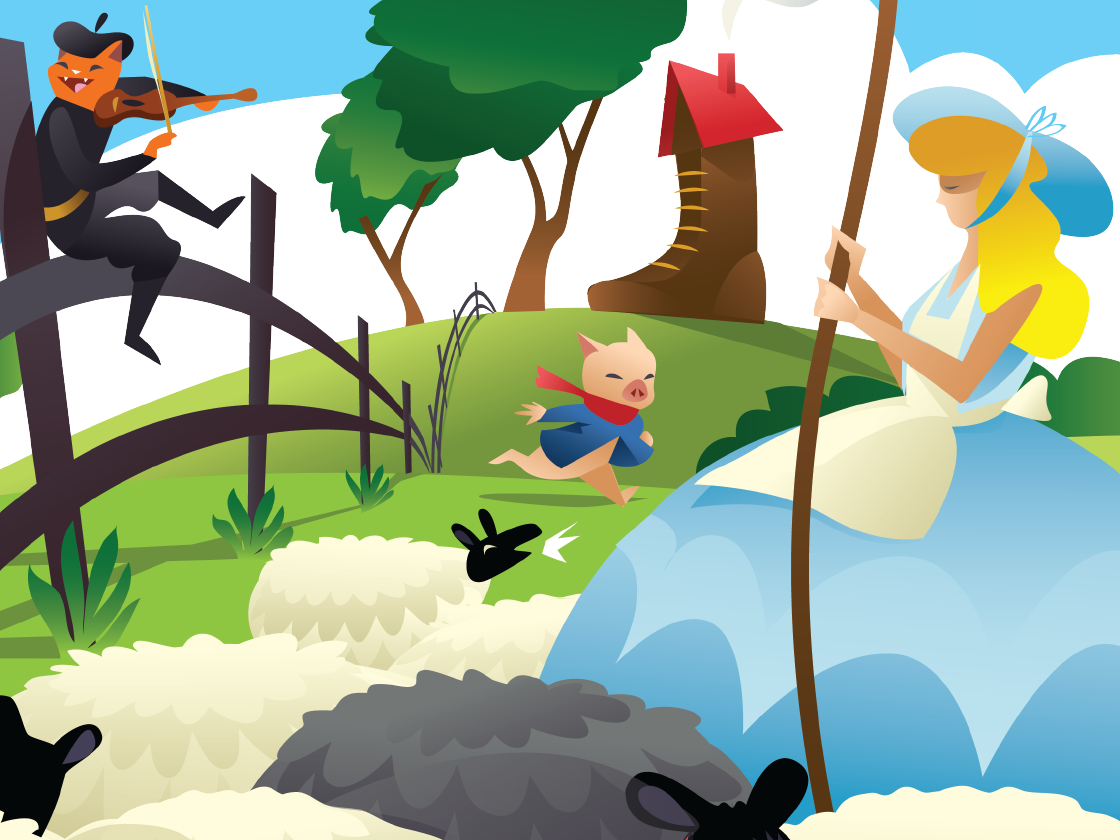
Domain
Nursery Rhymes and Fables/Rimas y fábulas infantiles
Start learning about literature with these classic Mother Goose rhymes.
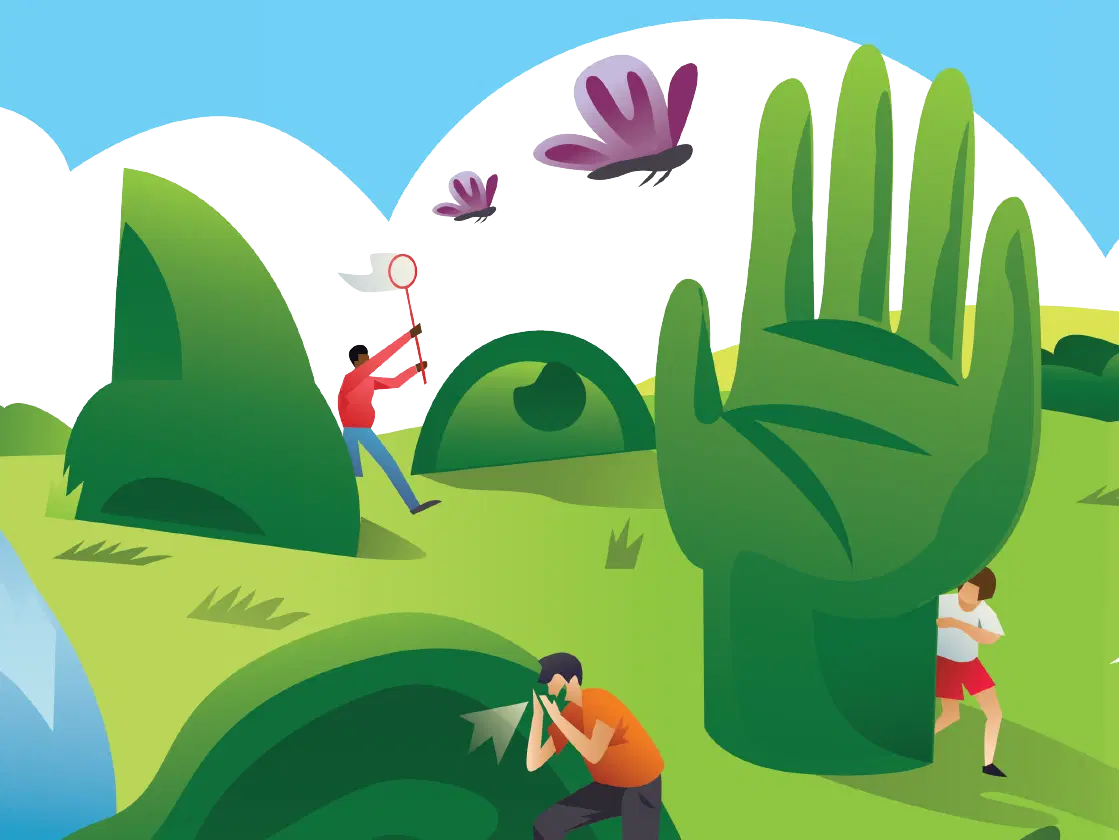
Domain
The Five Senses/Los cinco sentidos
Learning about the body starts with learning about how we experience the world.

Domain
Stories/Cuentos
Learn about the parts of a book and some of the stories that go in one.

Domain
Plants/Plantas
Discover the lifecycle of plants and the history of George Washington Carver.
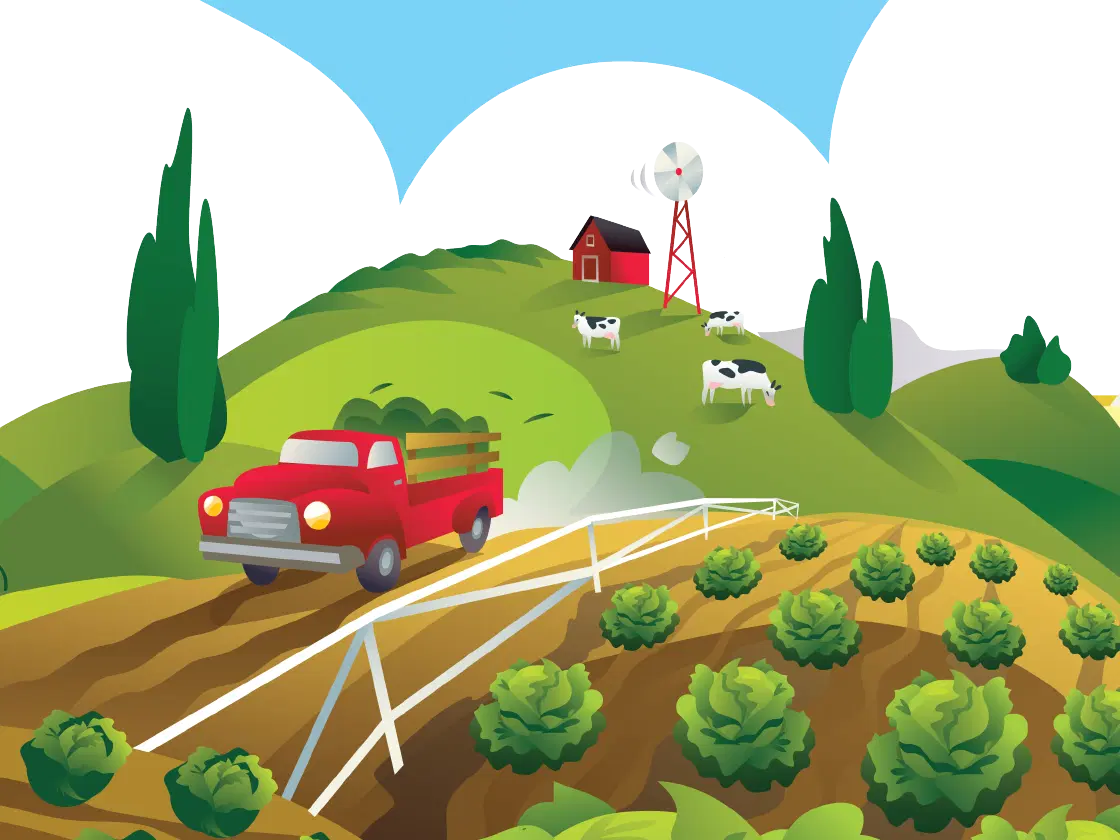
Domain
Farms/Granjas
Now we know how plants make their food… but what about animals?
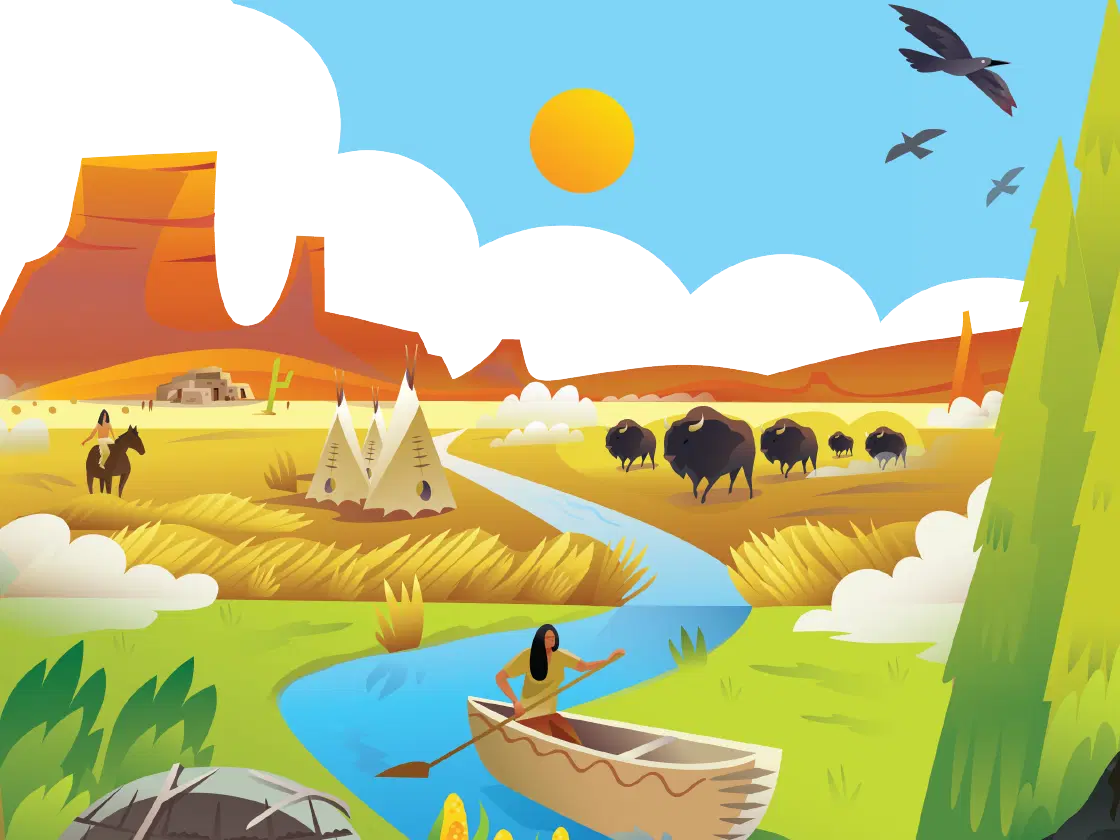
Domain
Native Americans/Los nativos americanos
Who were the first people in America? A look at the Lenape, Wampanoag, and Lakota Sioux.

Domain
Kings and Queens/Reyes y reinas
To understand fairy tales, it’s best to first understand royalty.
Domain
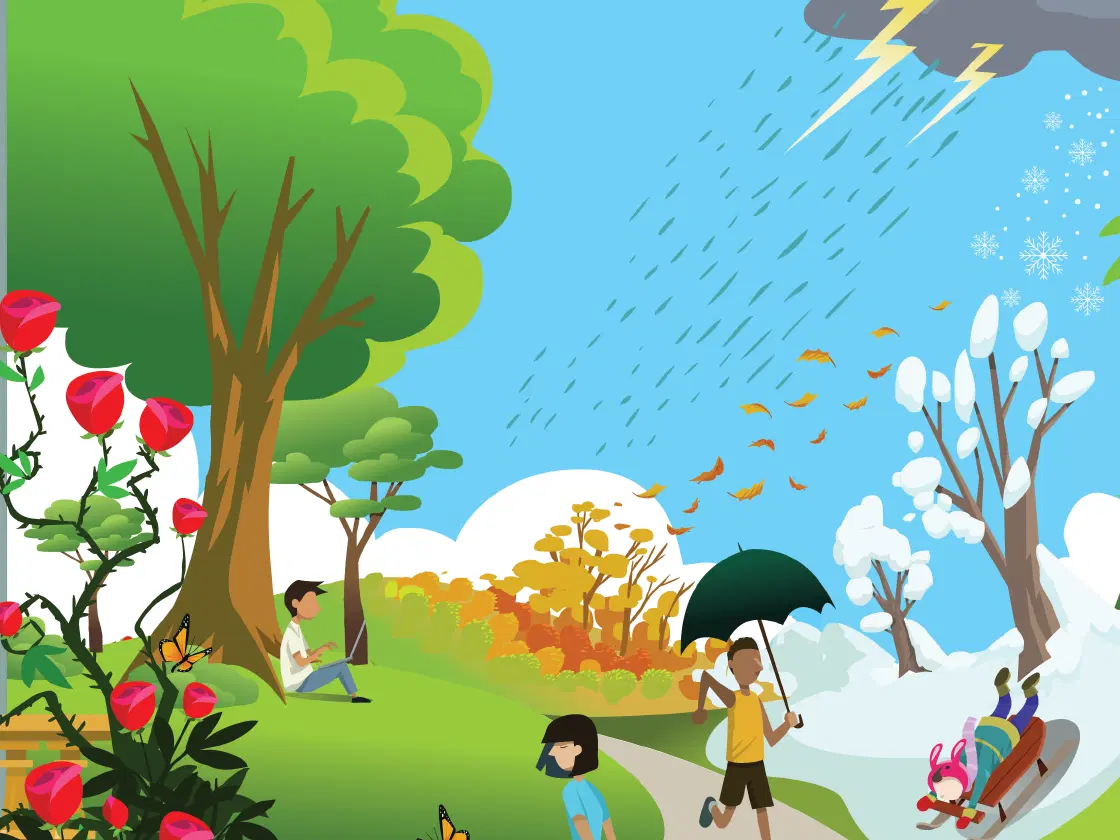
Seasons and Weather/Las estaciones y el tiempo
The study of natural cycles continues with the weather and why it happens.

Domain
Columbus and the Pilgrims/Colón y los peregrinos
A look at the first contact between Europe and the Americas, and some of its results.
Domain
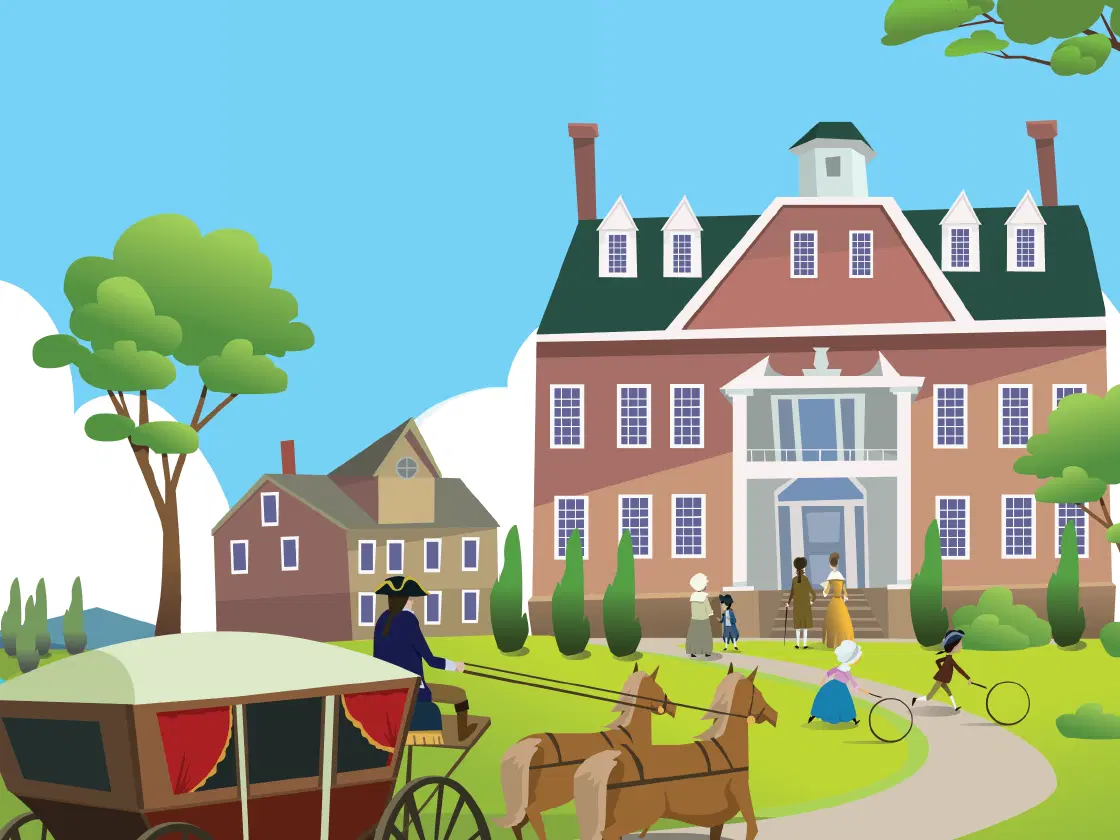
Colonial Towns and Townspeople/Las colonias y sus habitantes
Before the War for Independence, how did the town and country depend on one another?

Domain
Taking Care of the Earth/Cuidar el planeta Tierra
We only have one Earth—here are some ways to help care for it.

Domain
Presidents and American Symbols/Presidentes y símbolos de los Estados Unidos
Start learning about government through the lives of five presidents.
Domain
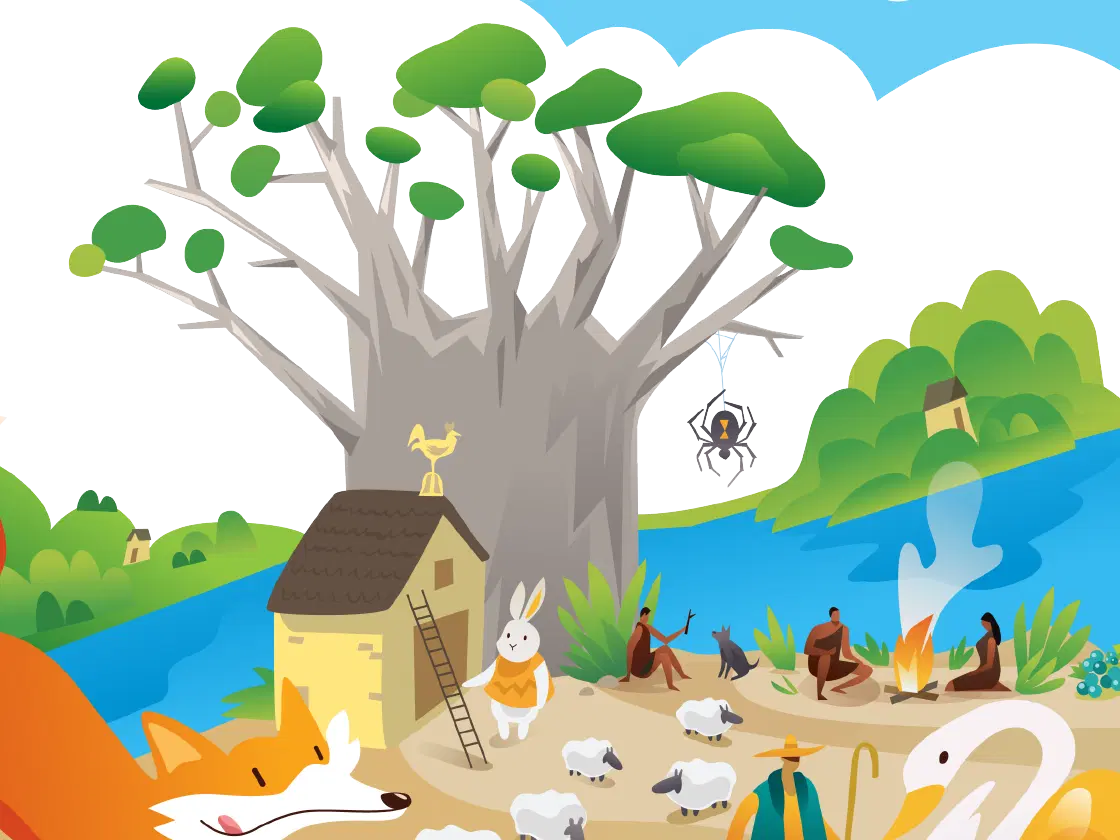
Fables and Stories/Fábulas y cuentos
Learn some of the key elements of a story through classic fables.

Domain
The Human Body/El cuerpo humano
What are germs? What are the organs? And what does it all have to do with health?

Domain
Different Lands, Similar Stories/Tierras diferentes, cuentos similares
A world tour of storytelling, and the stories that stay the same across the world.
Domain
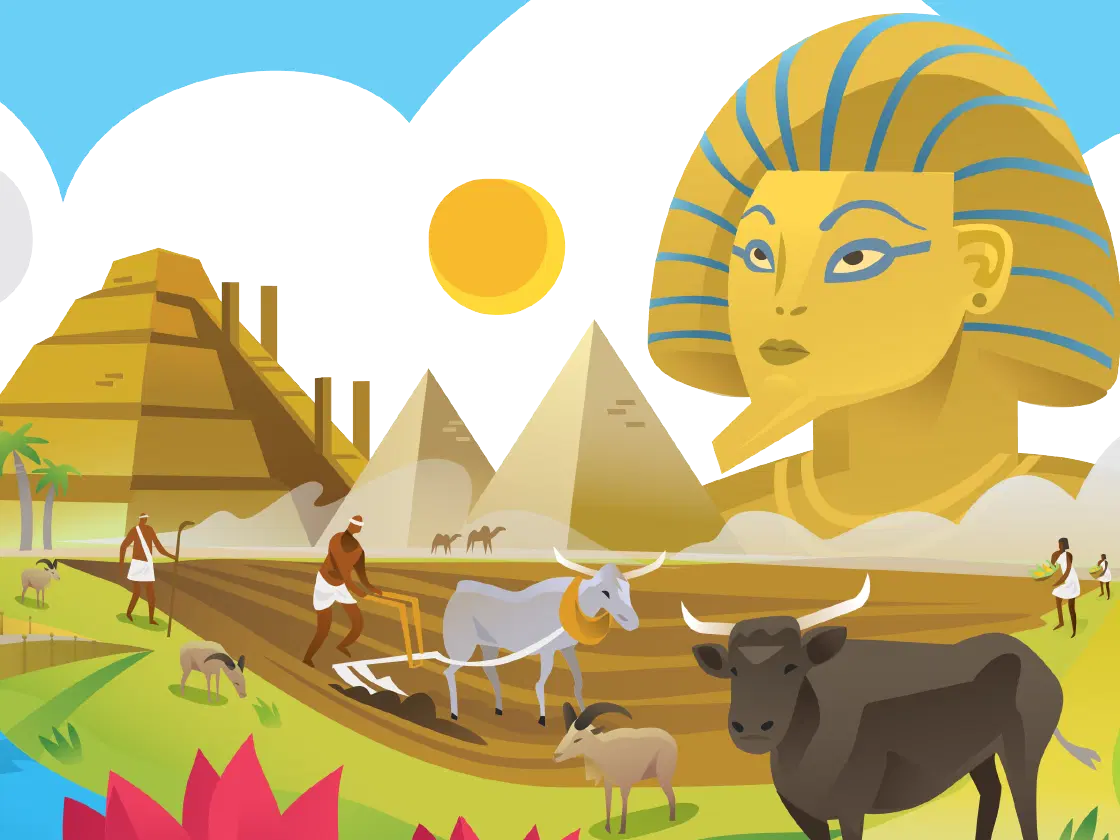
Early World Civilizations/Antiguas civilizaciones del mundo
Rivers, farming, writing, and laws: just what does it take to build a civilization?
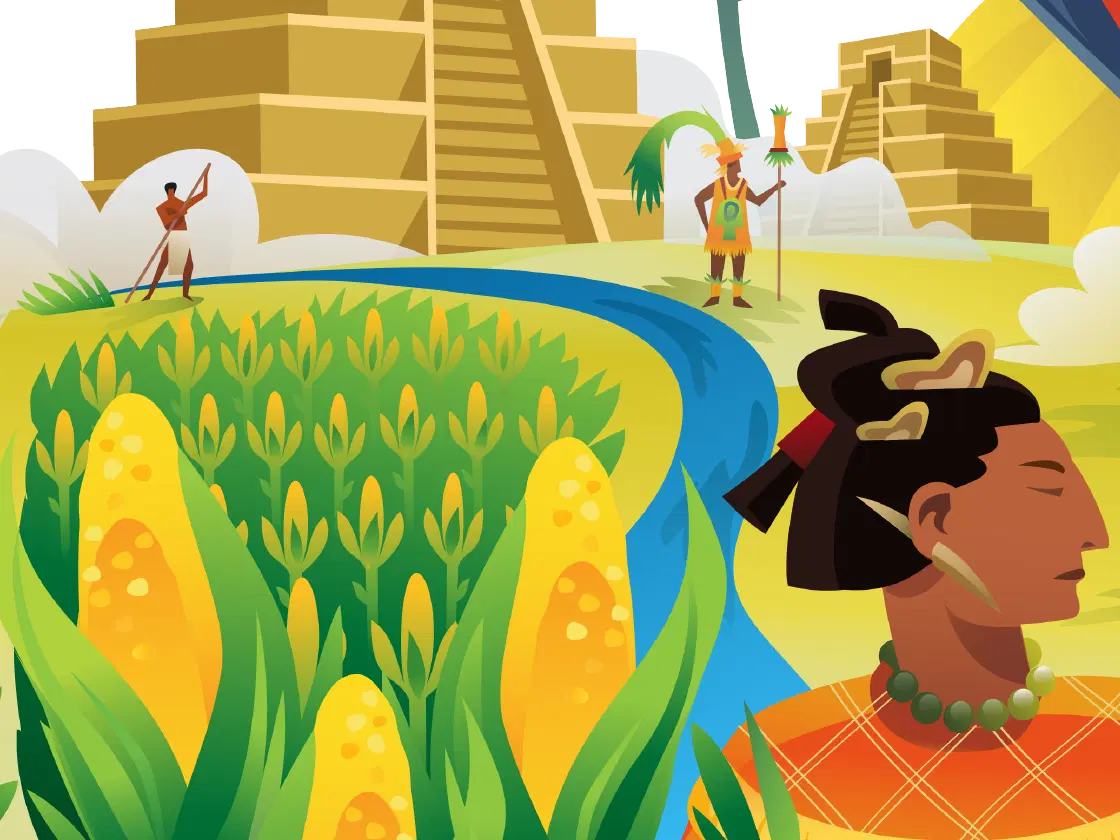
Domain
Early American Civilizations/Antiguas civilizaciones de América
What will we find in the great temples of the Aztec, Maya, and Inca civilizations?

Domain
Astronomy/Astronomía
How the Earth relates to the moon, the sun, and the rest of the planets.
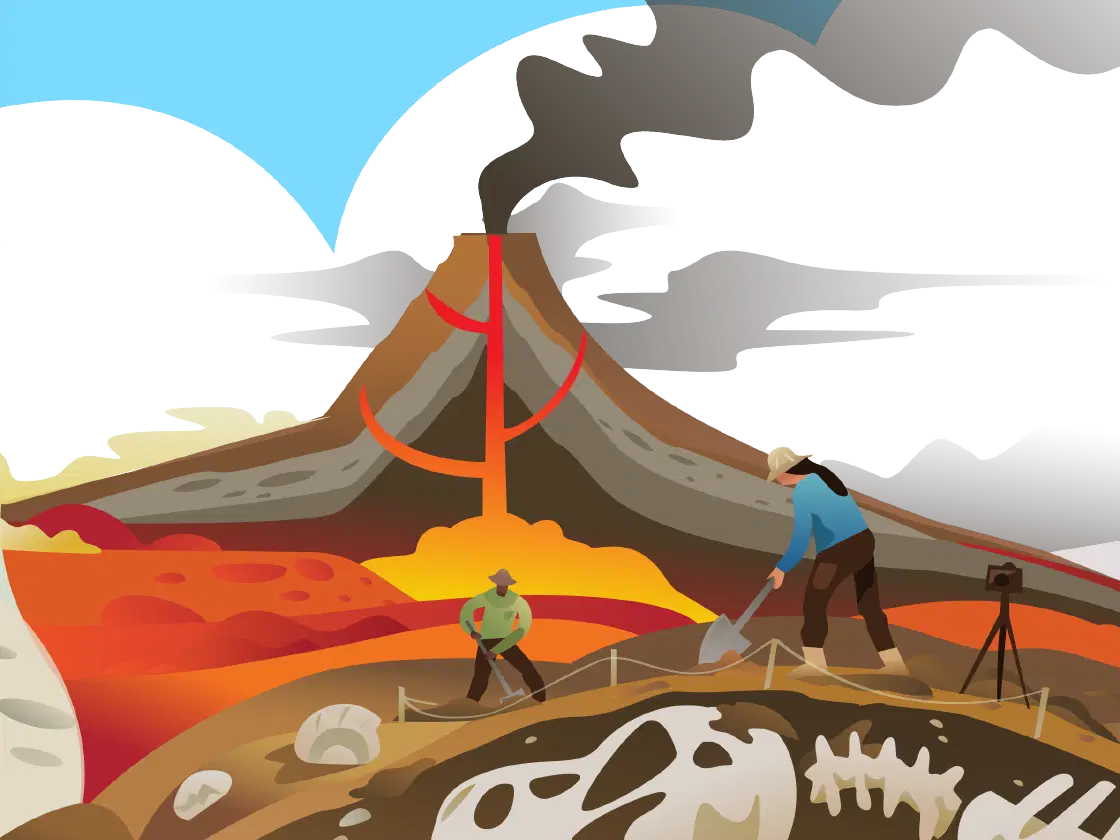
Domain
The History of the Earth/La historia de la Tierra
Just what lies beneath the Earth’s surface, and what can it teach us about the past?
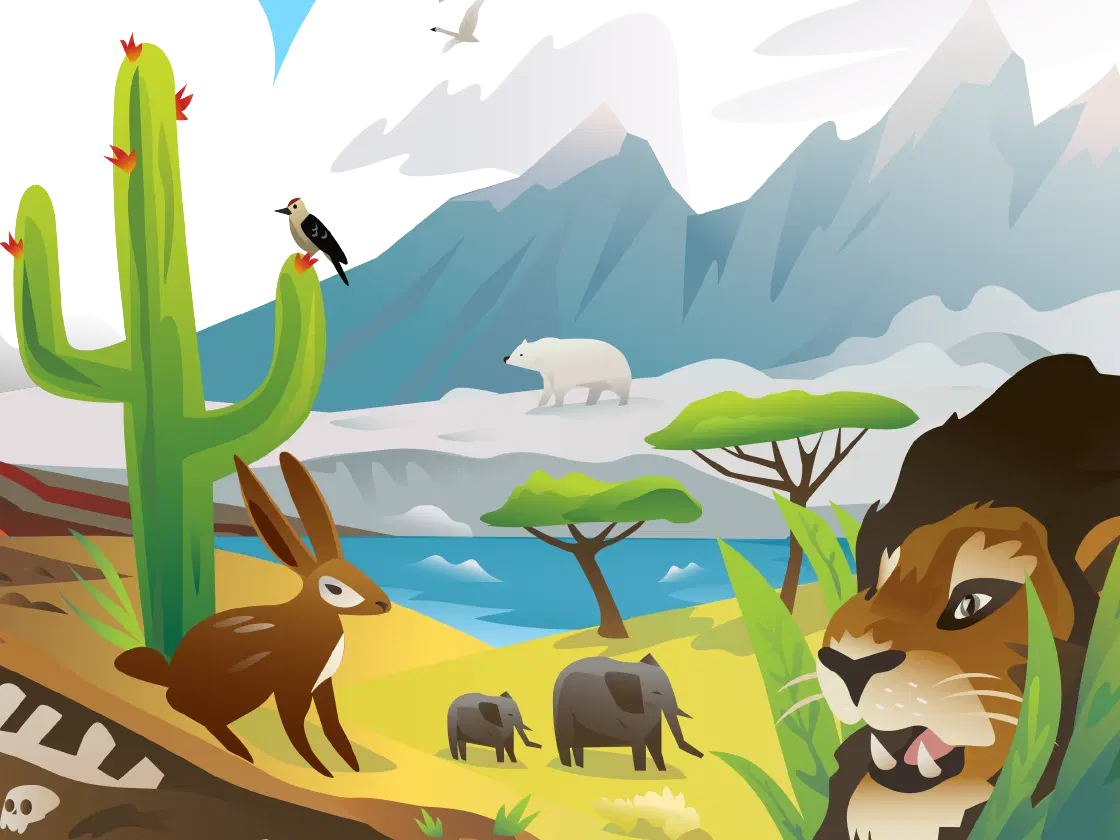
Domain
Animals and Habitats/Los animales y sus hábitats
A look at the connection between how animals live and where they make their homes.
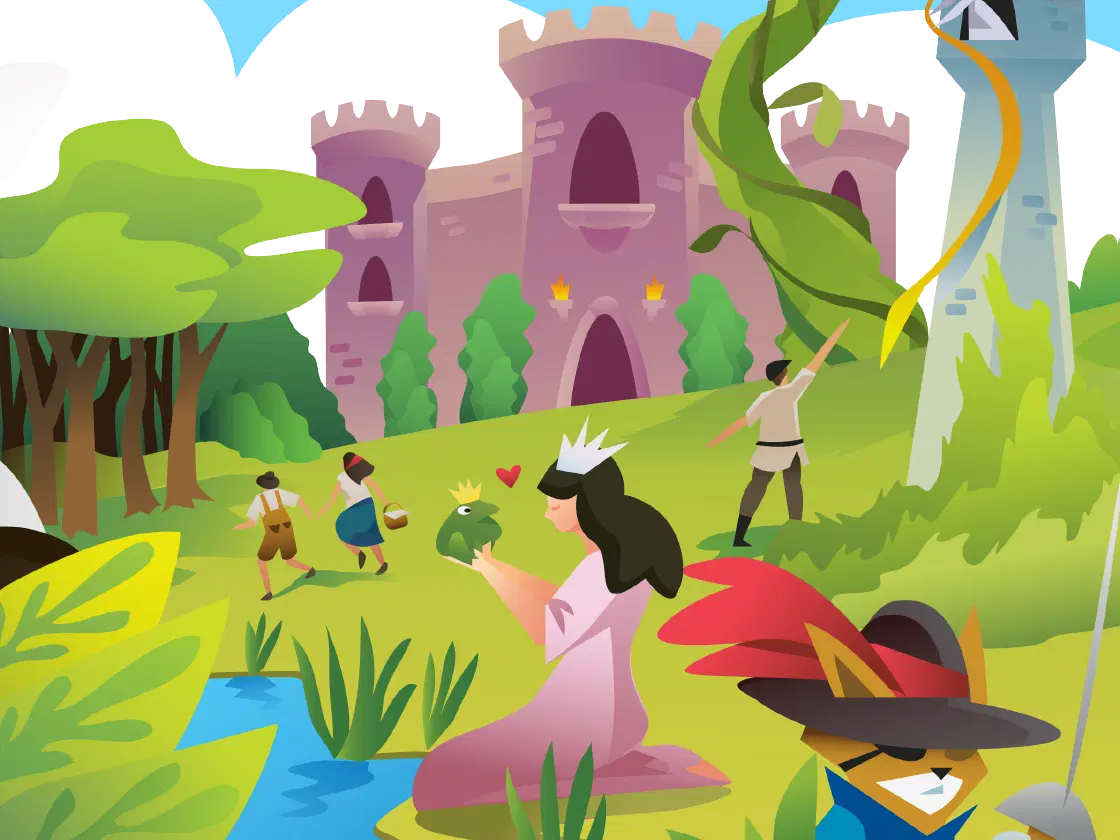
Domain
Fairy Tales/Cuentos de hadas
What do fairy tales have to teach us about how stories are told?
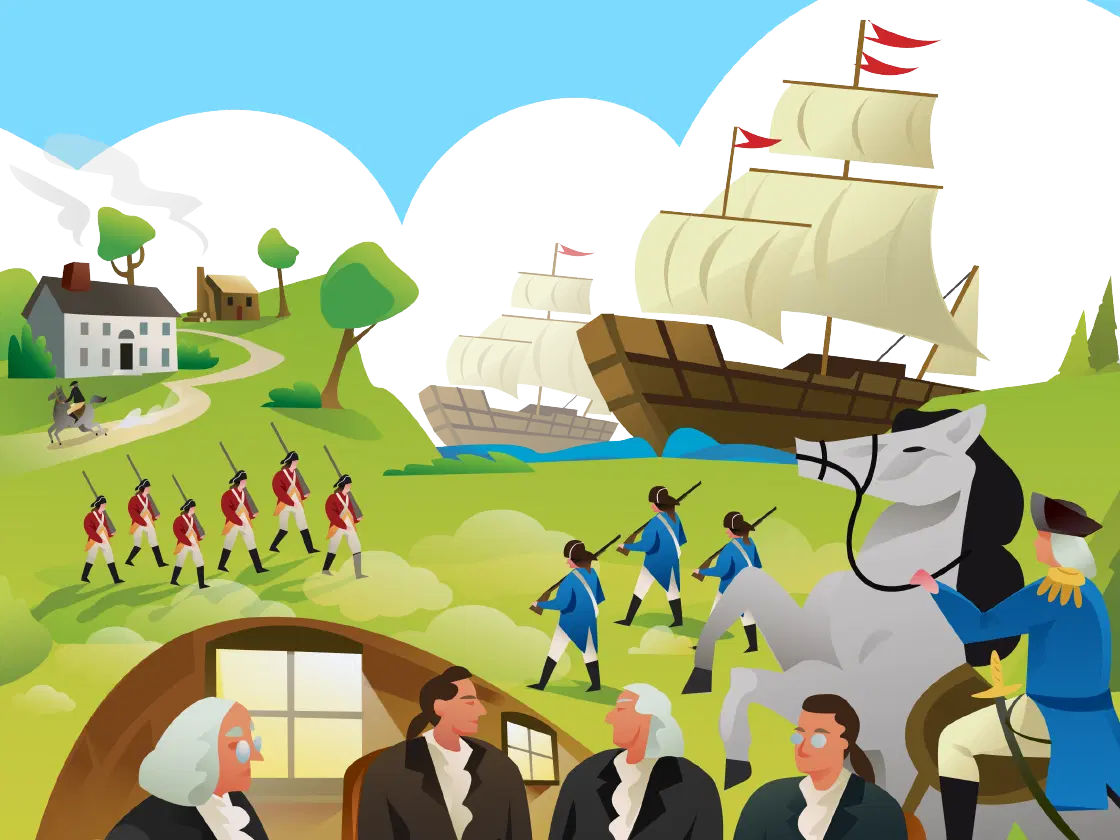
Domain
A New Nation: American Independence/Una nueva nación: la independencia de los Estados Unidos
The story of the birth of the United States out of the 13 Colonies.
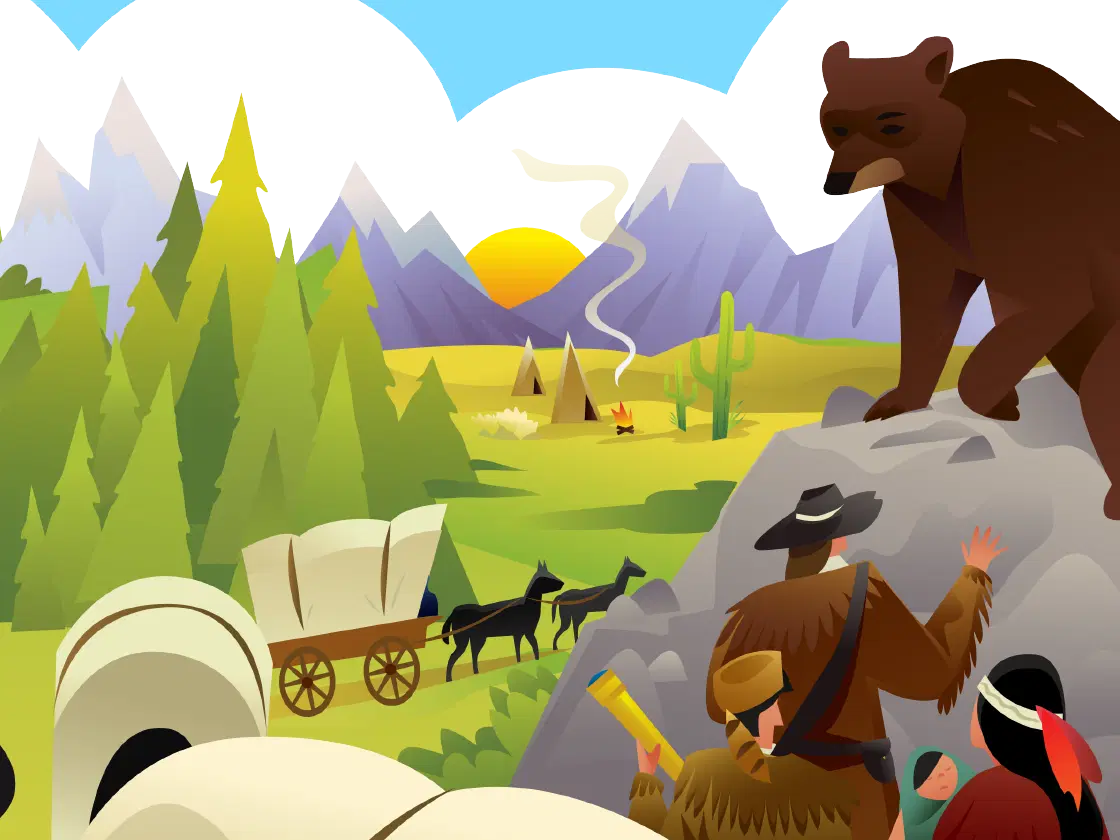
Domain
Frontier Explorers/Exploradores de la Frontera
The story of the journey west from the newborn U.S.A. to find the Pacific Ocean.
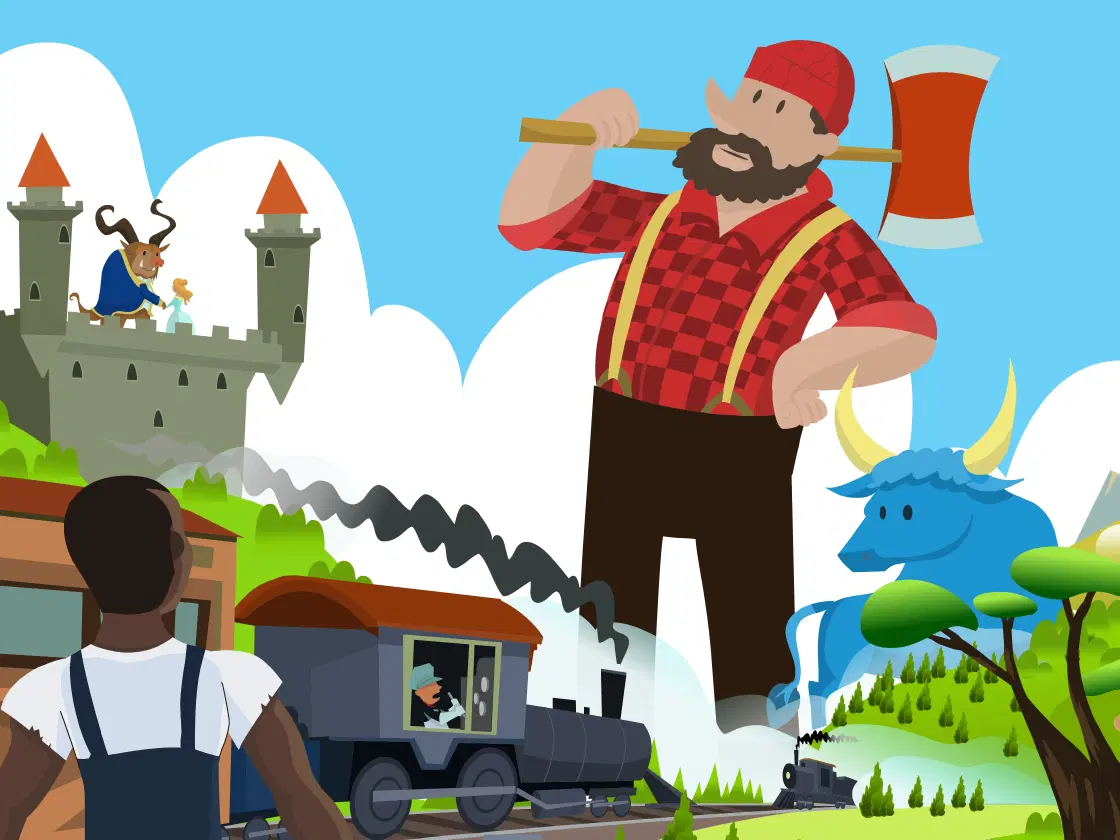
Domain
Fairy Tales and Tall Tales/Cuentos de hadas y cuentos exagerados
Learn about exaggeration and characterization on the frontier.
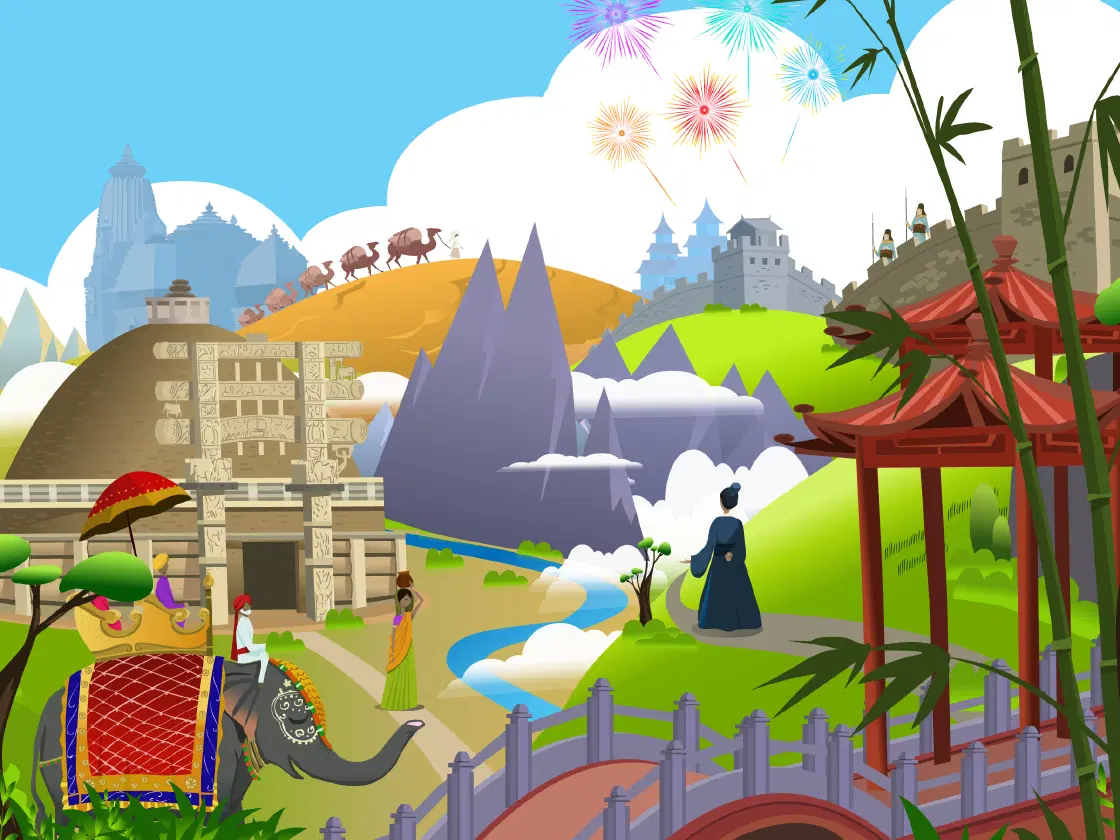
Domain
Early Asian Civilizations/Antiguas civilizaciones de Asia
Tour the world of classical civilization, starting with India and China.
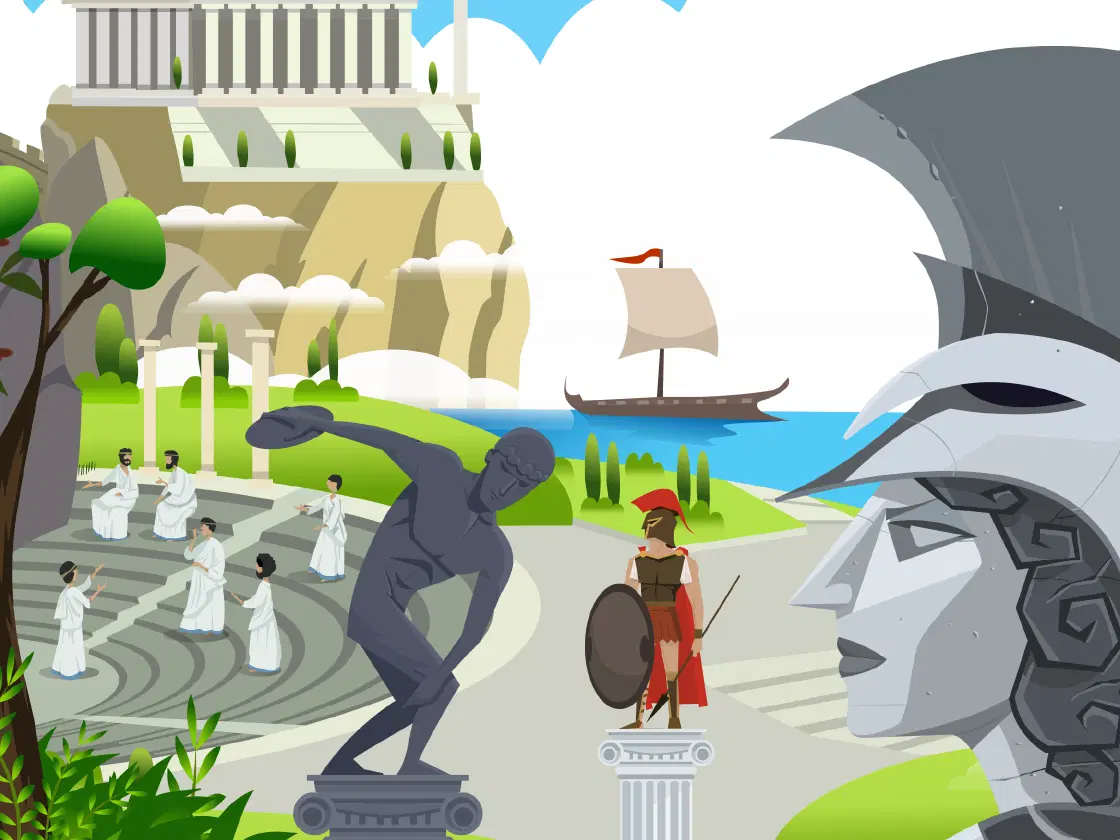
Domain
Ancient Greek Civilization/La civilización griega antigua
The tour continues with the philosophy and politics of Greece.
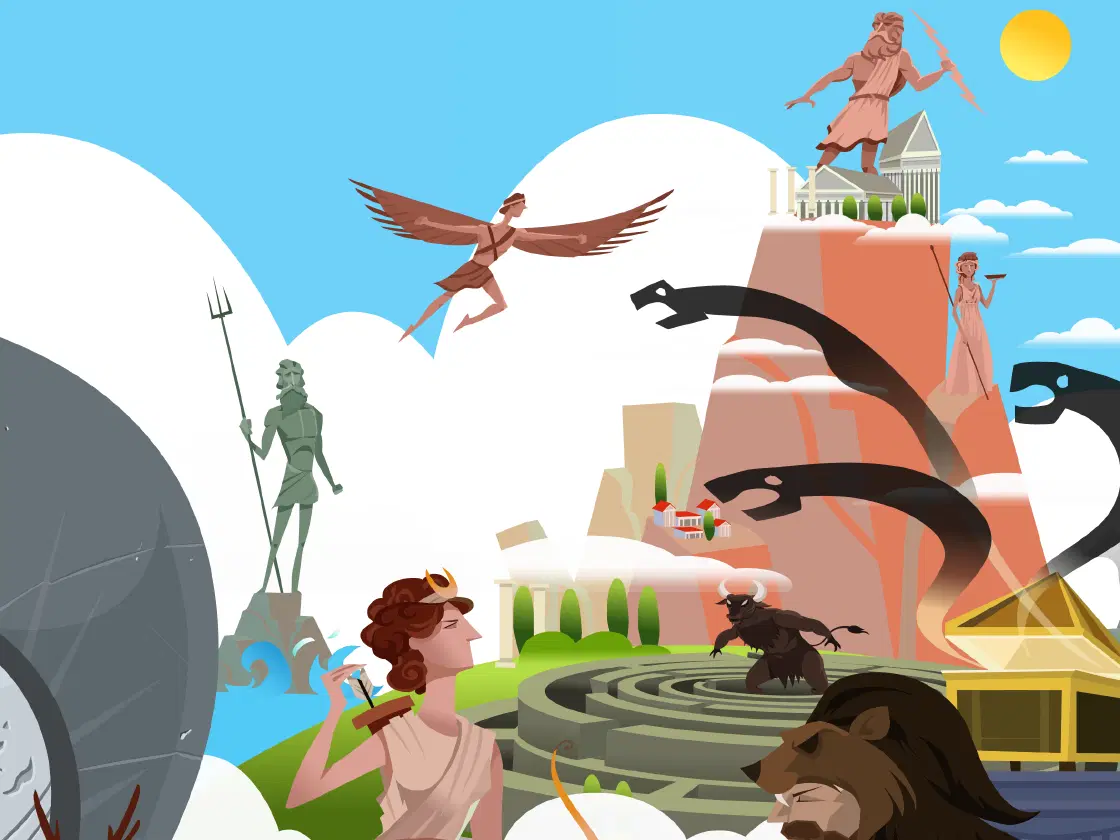
Domain
Greek Myths/Mitos griegos
Dive deep into the characters and storytelling of classic myths.
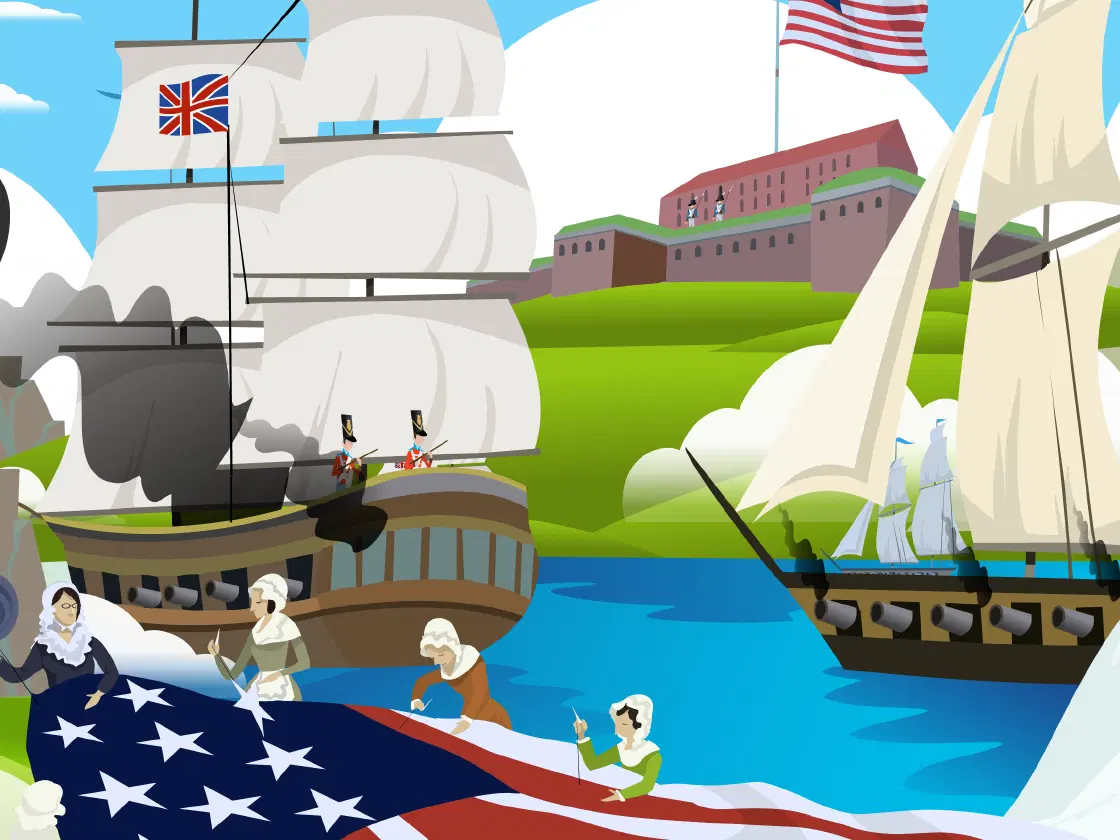
Domain
The War of 1812/La guerra de 1812
Learn about America’s “Second War for Independence.”
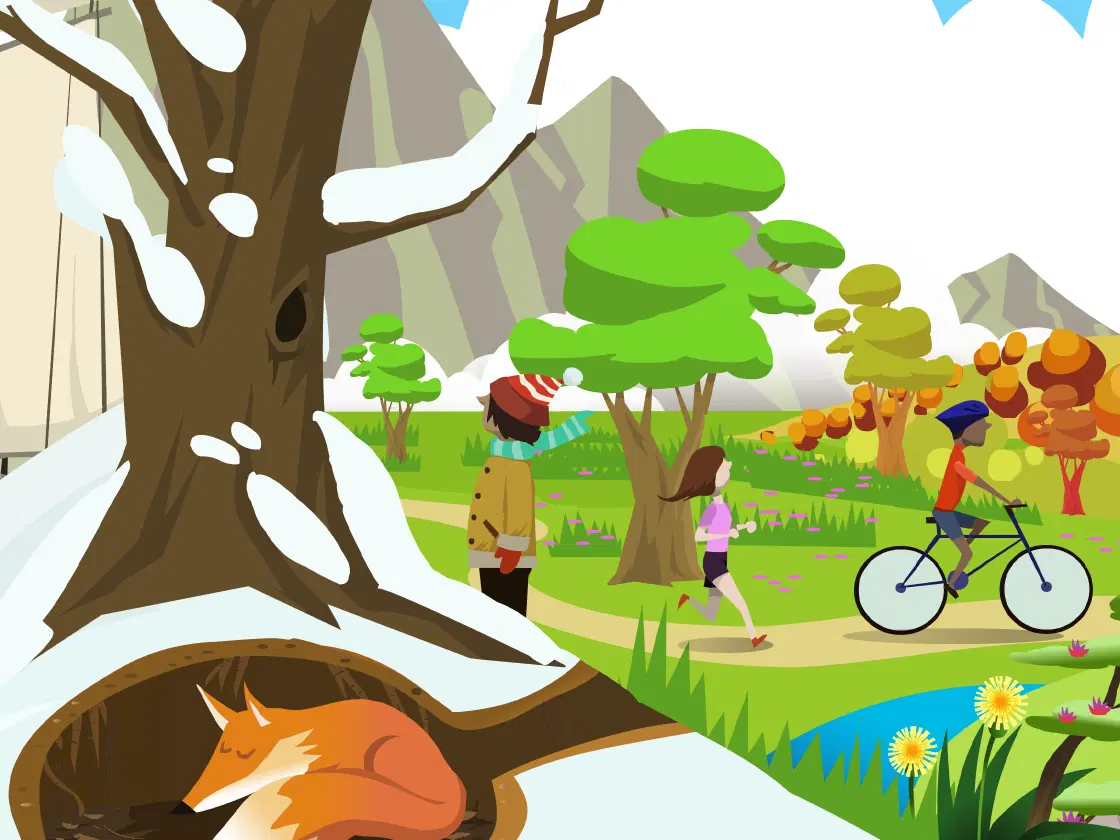
Domain
Cycles in Nature/Los ciclos de la naturaleza
Introducing the natural cycles that make our lives possible.
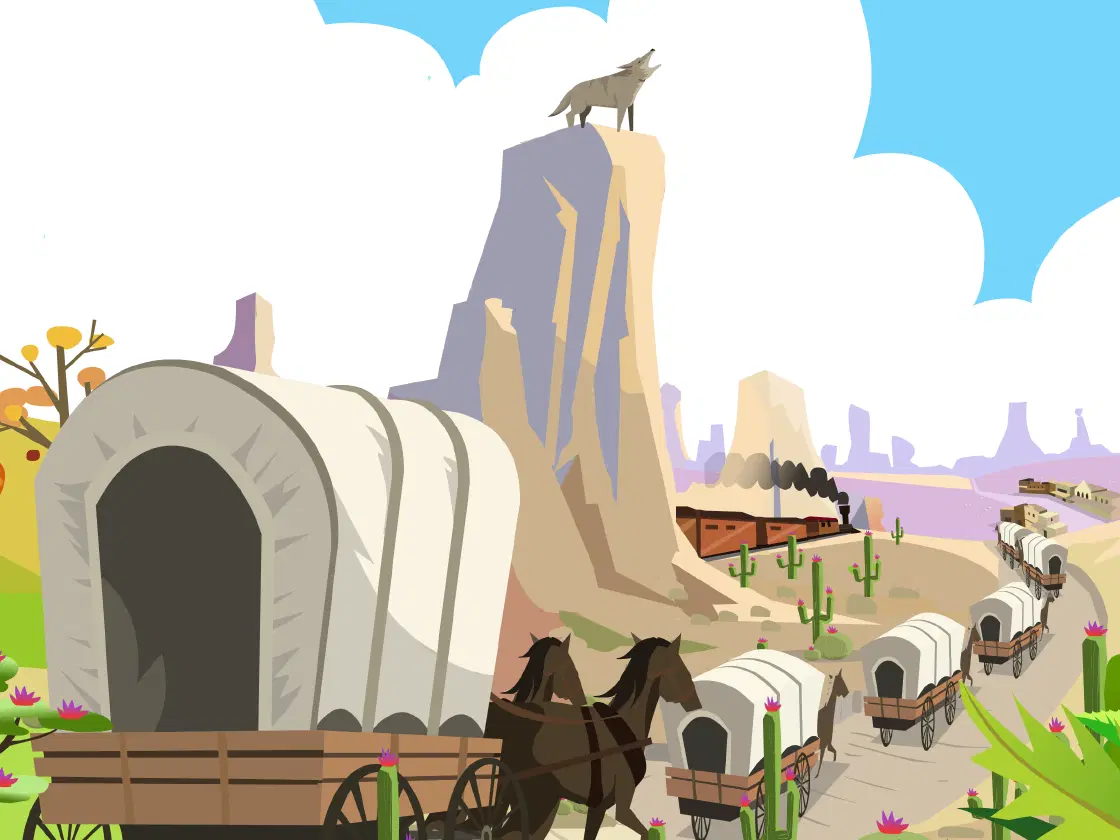
Domain
Westward Expansion/La expansión hacia el oeste
Why did pioneers go west? What happened to the people who were there?
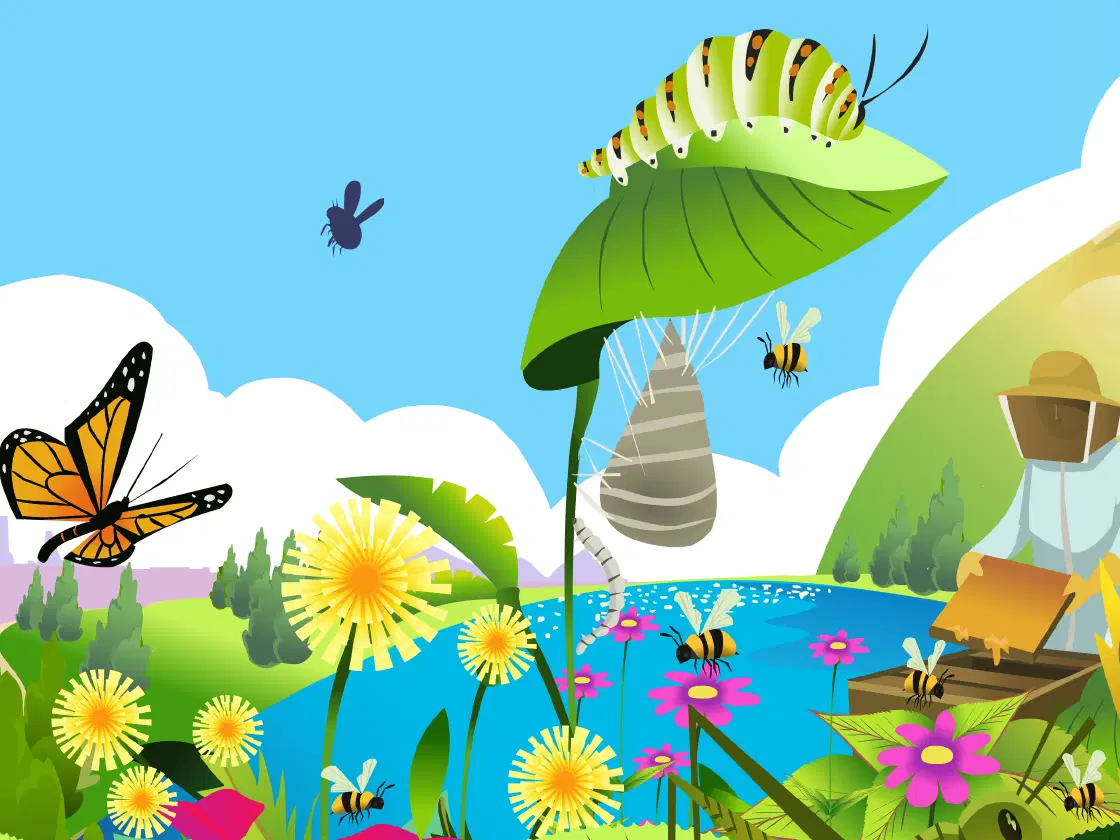
Domain
Insects/Los insectos
Lay the grounds for animal classification by looking at solitary and social insects.

Domain
The U.S. Civil War/La Guerra Civil de los Estados Unidos
Begin to grapple with U.S. history’s central crisis over slavery.
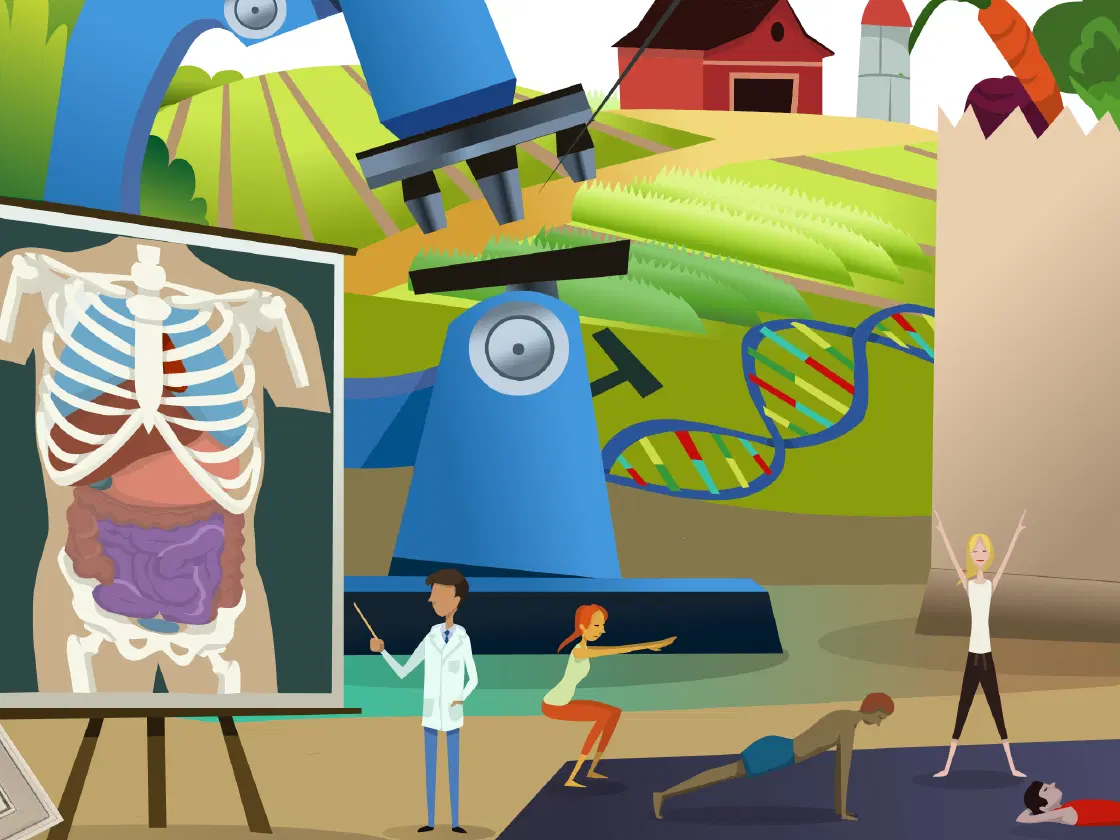
Domain
Human Body: Building Blocks and Nutrition/El cuerpo humano: componentes básicos y nutrición
A deeper dive into the digestive system and the nutrition process.

Domain
Immigration/La inmigración
Why did people immigrate to the United States, and what did they find here?
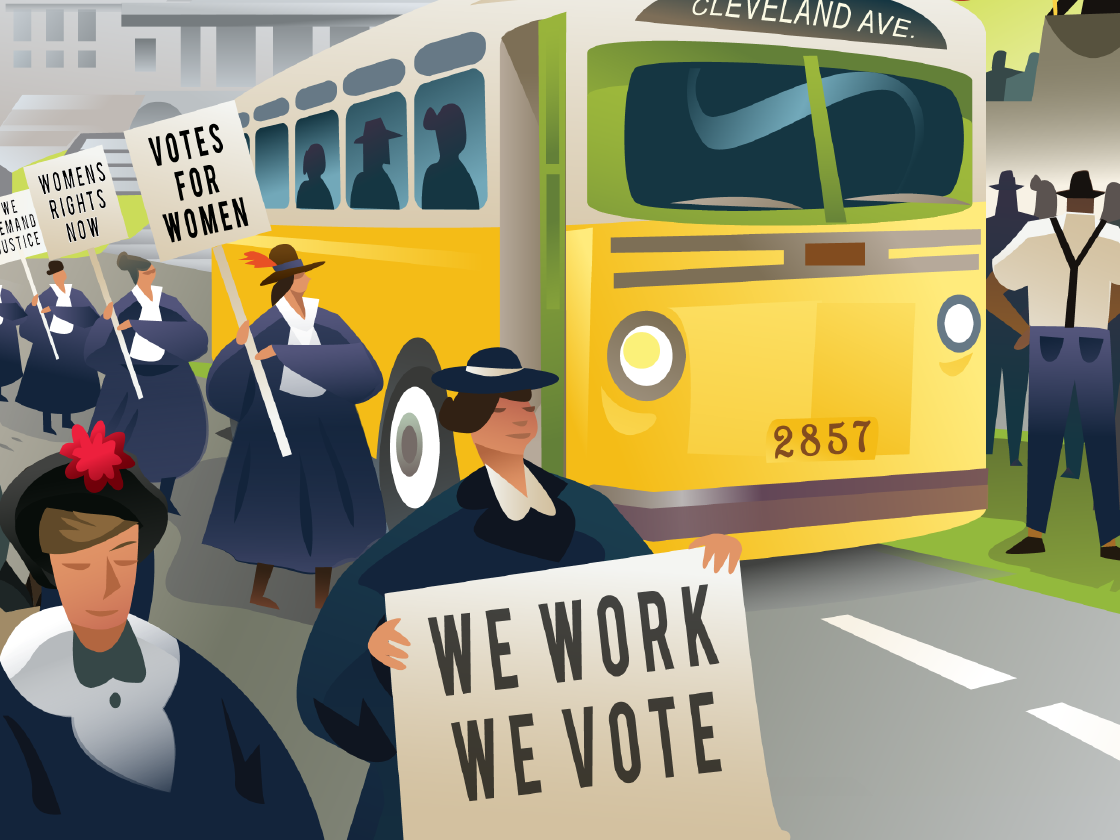
Domain
Fighting for a Cause/Luchar por una causa
How people can do extraordinary things to make the world better for everyone.
Unit 1
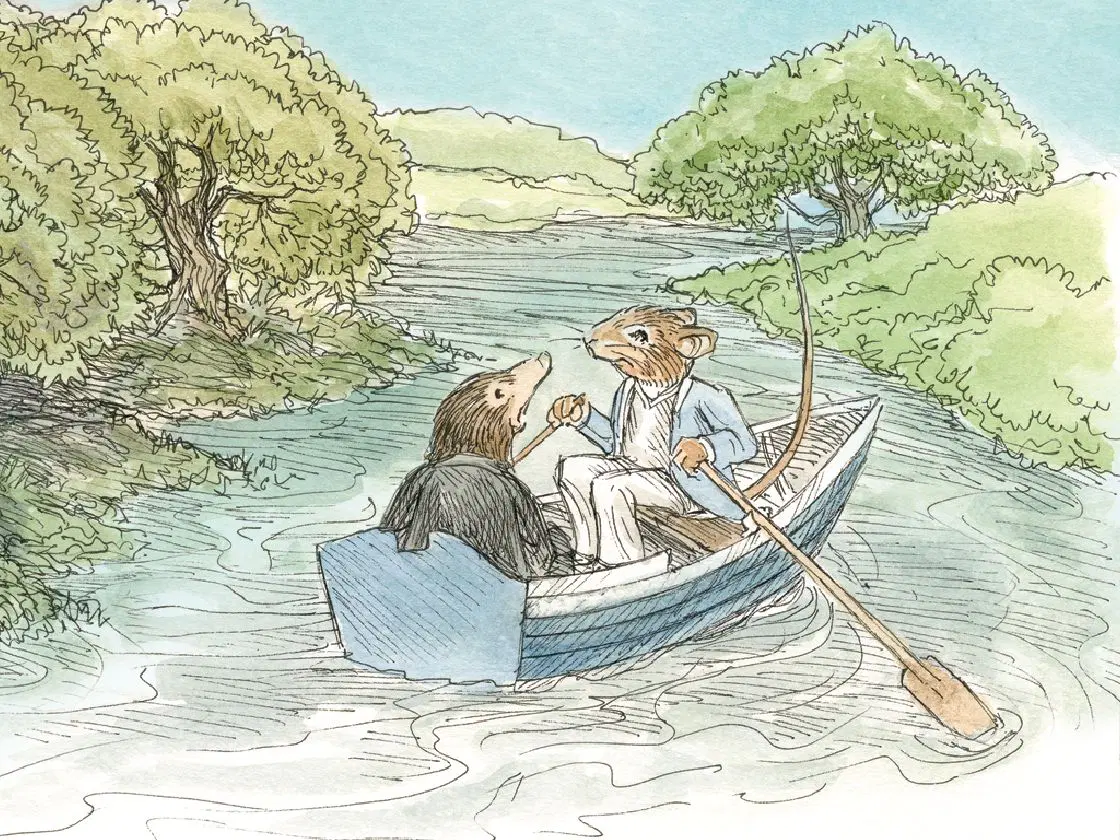
Classic Tales: The Wind in the Willows/Cuentos Clásicos: El viento en los sauces
A deep dive into character, theme, and POV in classic stories from around the world.
Unit 2
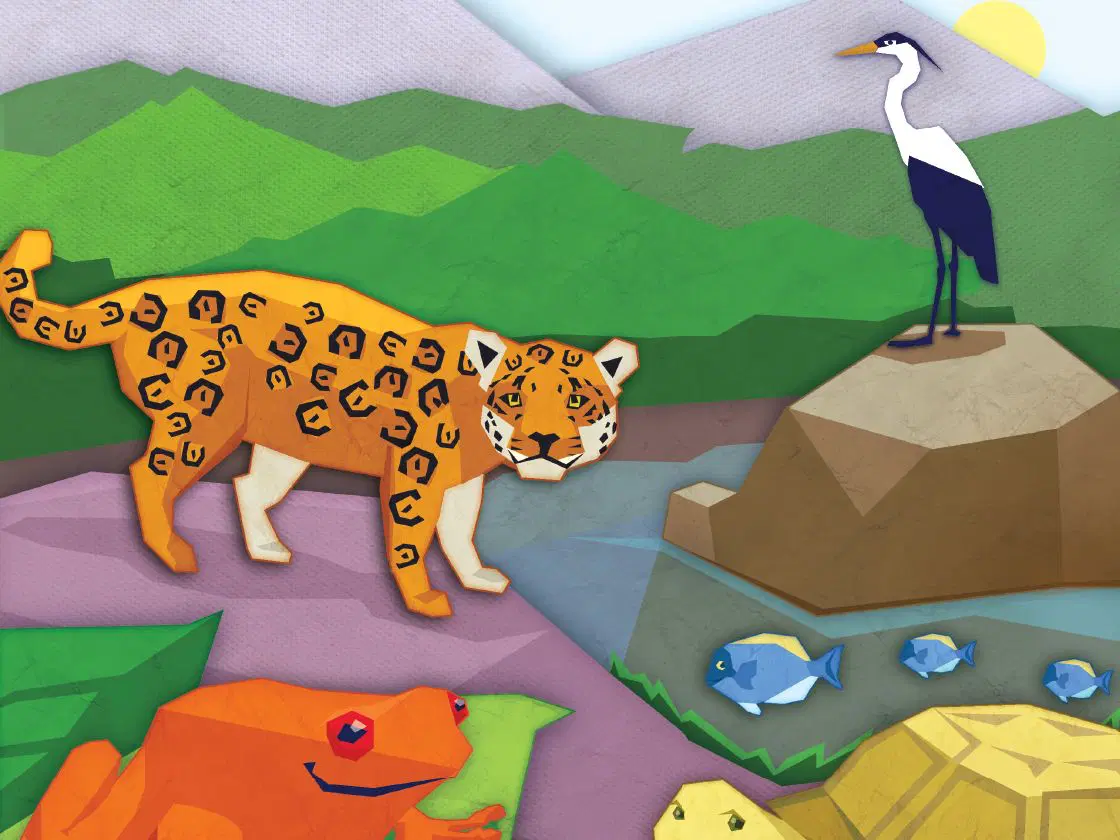
Animal Classification/La clasificación de los animales
How do we classify different animals by their appearance and behavior?
Unit 3
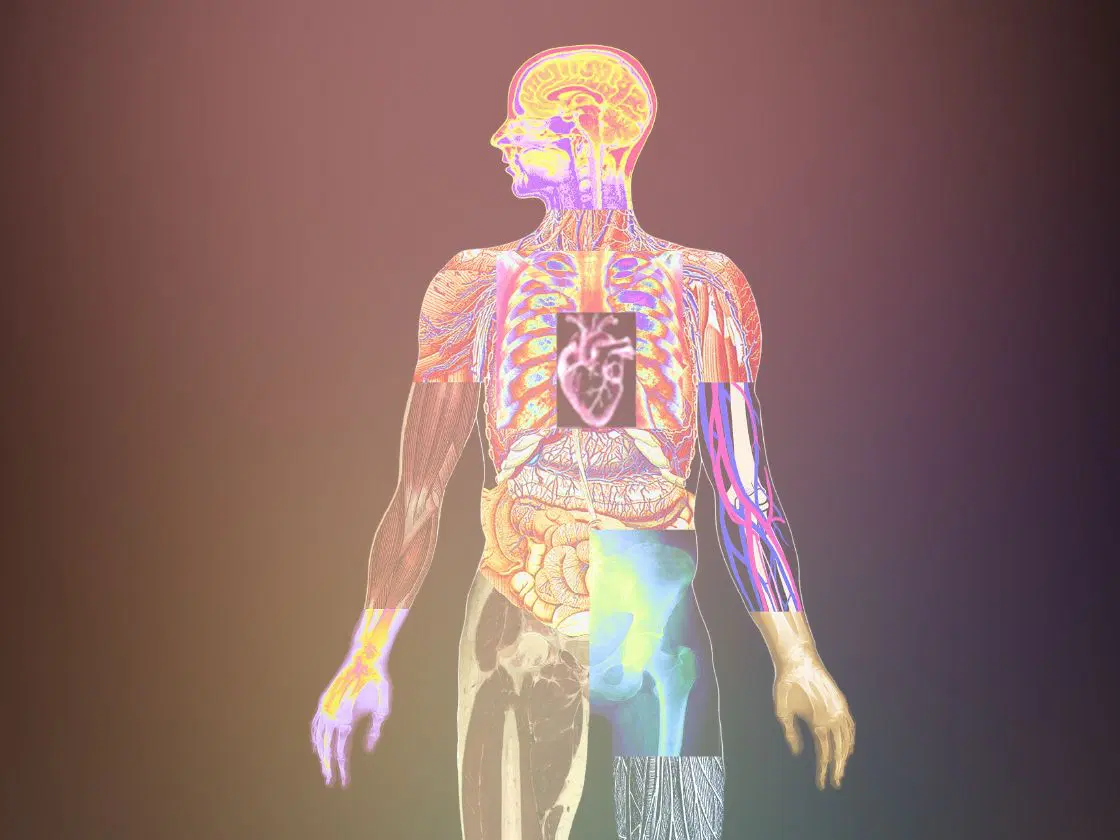
The Human Body: Systems and Senses/El cuerpo humano: sistemas y sentidos
Let’s take a closer look at how the skeleton, muscles, and nervous system all work.
Unit 4
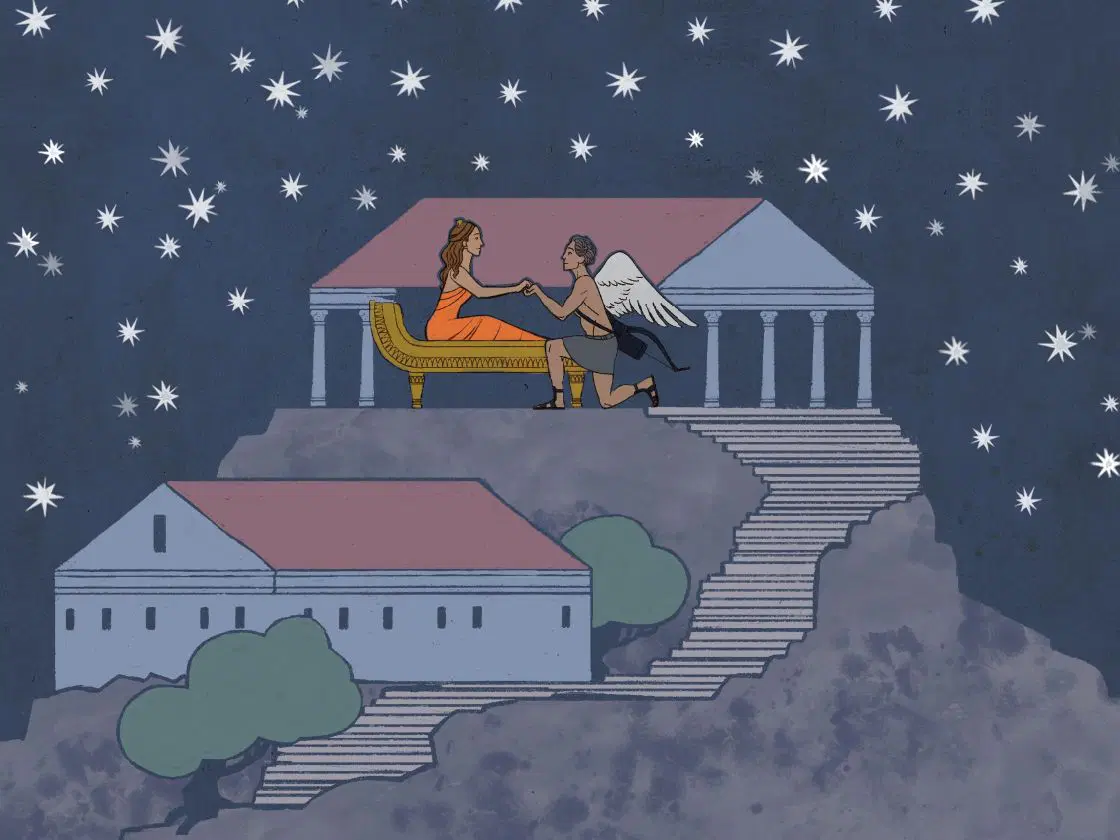
The Ancient Roman Civilization/La civilización romana antigua
What is Rome’s greatest cultural contribution? In this unit, your students decide.
Unit 5
Light and Sound/La luz y el sonido
The science behind all the ways we see and hear the world.
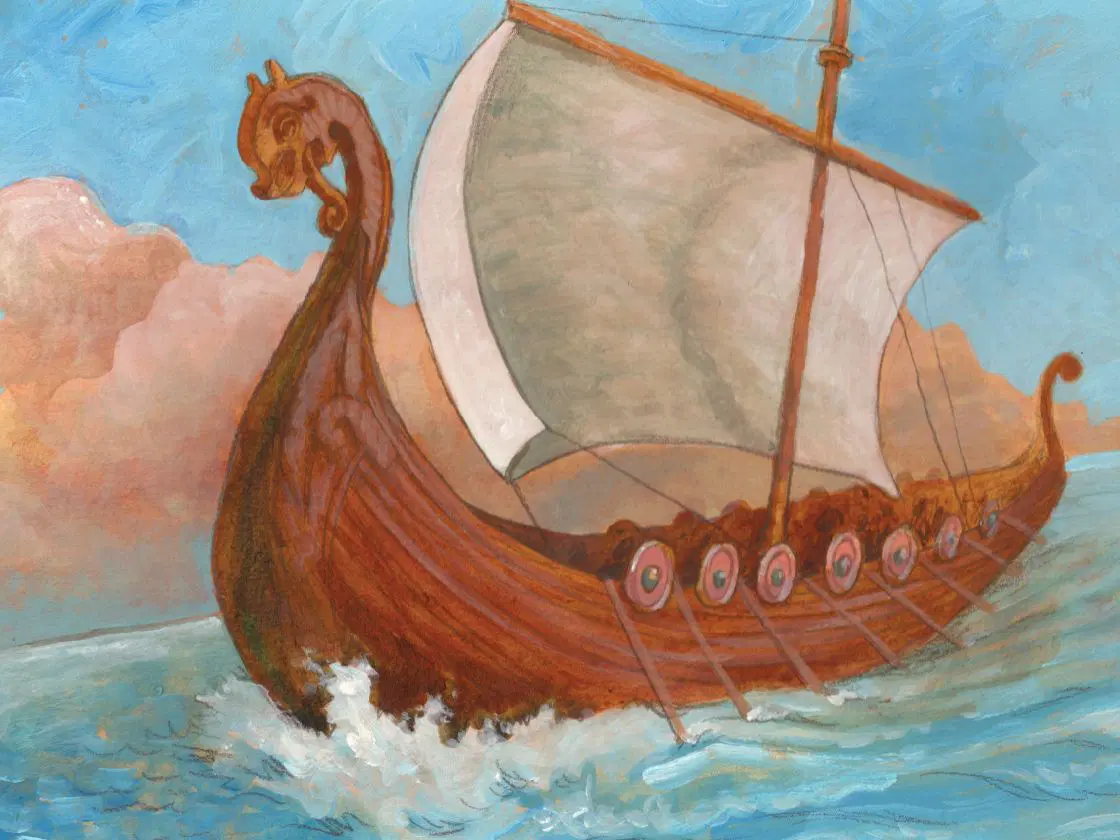
Unit 6
The Viking Age/La era vikinga
An immersive narrative experience about what life was like in Viking communities.
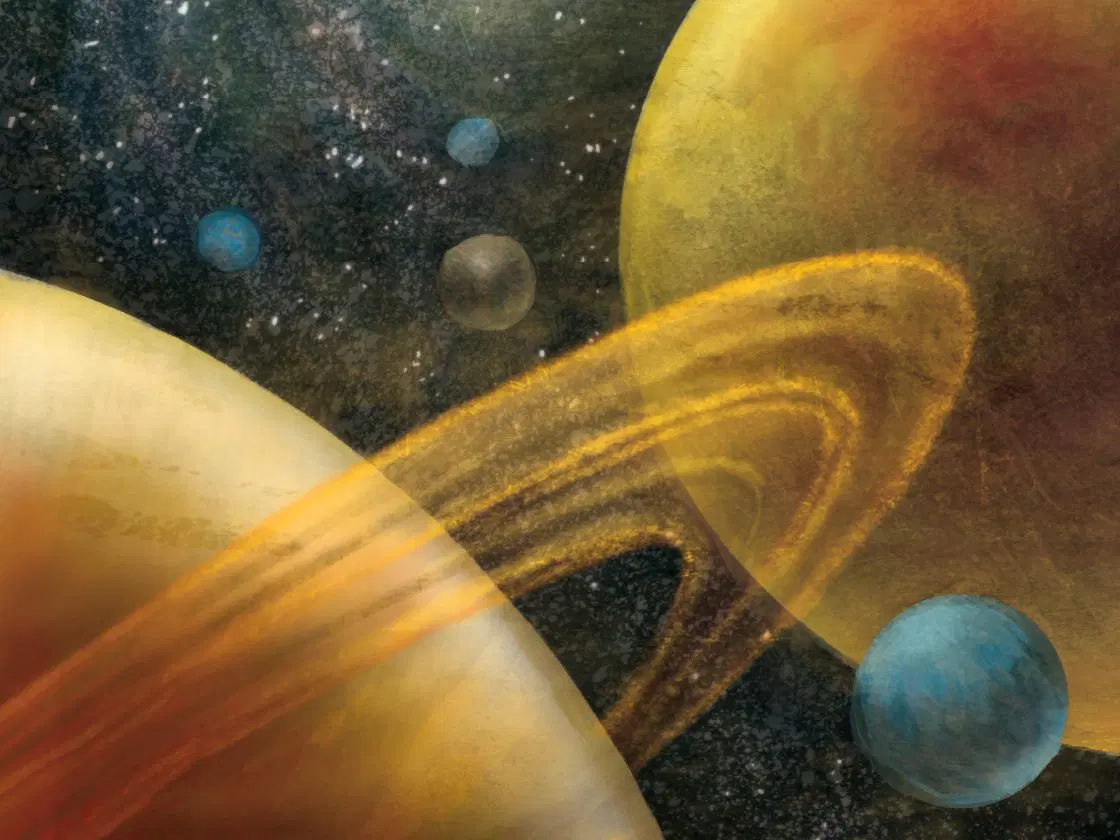
Unit 7
Astronomy: Our Solar System and Beyond/Astronomía: nuestro sistema solar y más allá
More about our universe, including a writing project about daily life on a space station.
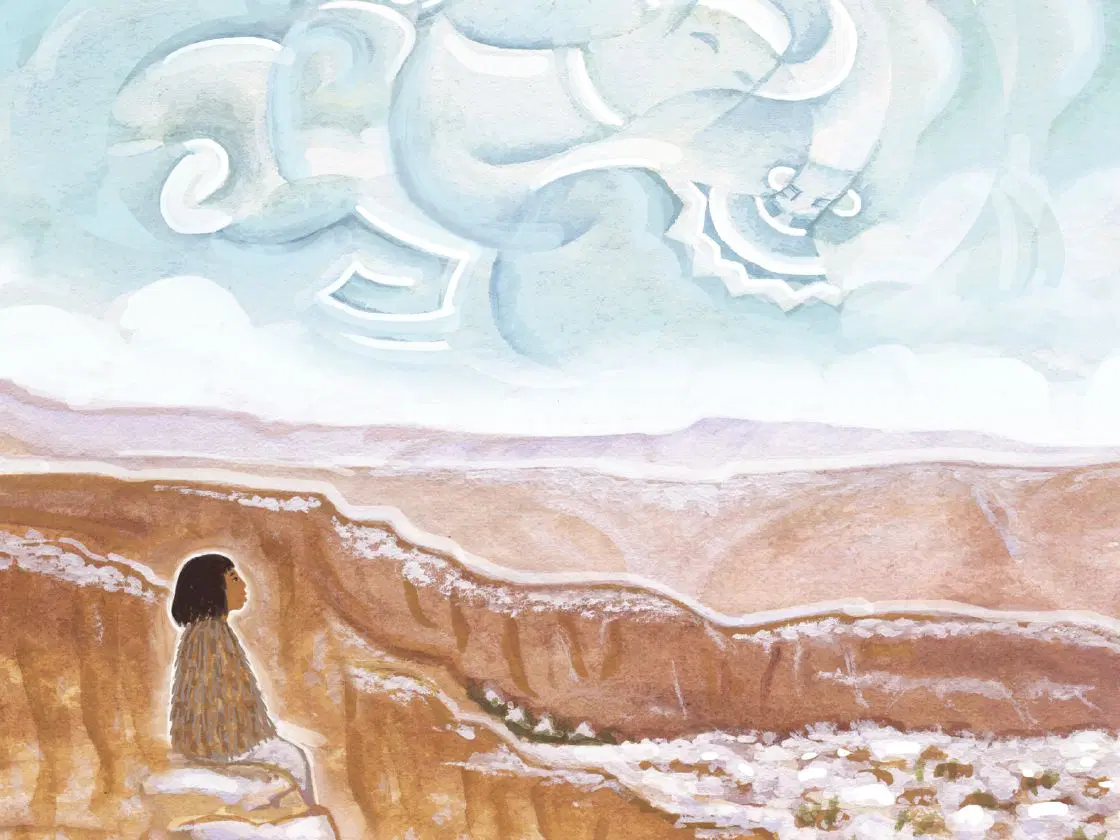
Unit 8
Native Americans: Regions and Cultures/Los nativos americanos: regiones y culturas
How did Native American nations change their way of life in different parts of the world?
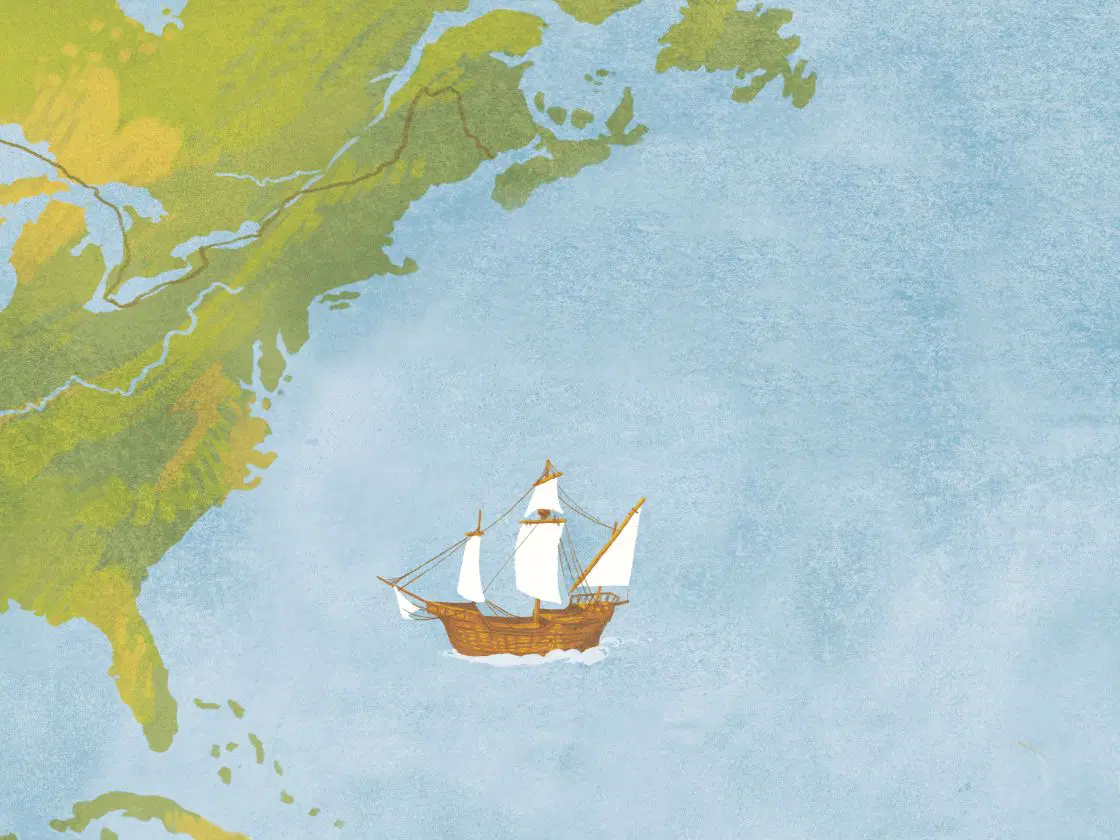
Unit 9
Early Explorations of North America/La exploración europea de América del Norte
What was it like to sail to North America with the early European explorers?
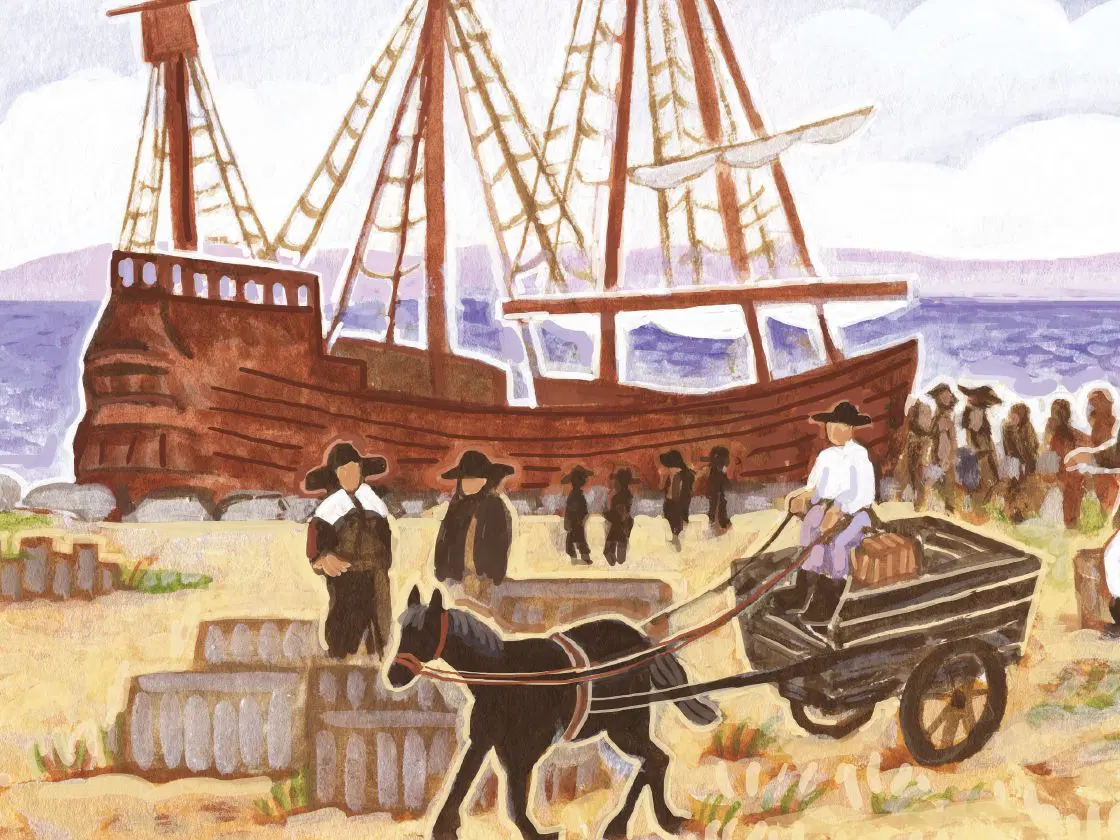
Unit 10
Colonial America/La época colonial en los Estados Unidos
A study of the very different ways of life in the different pre-U.S. colonies.
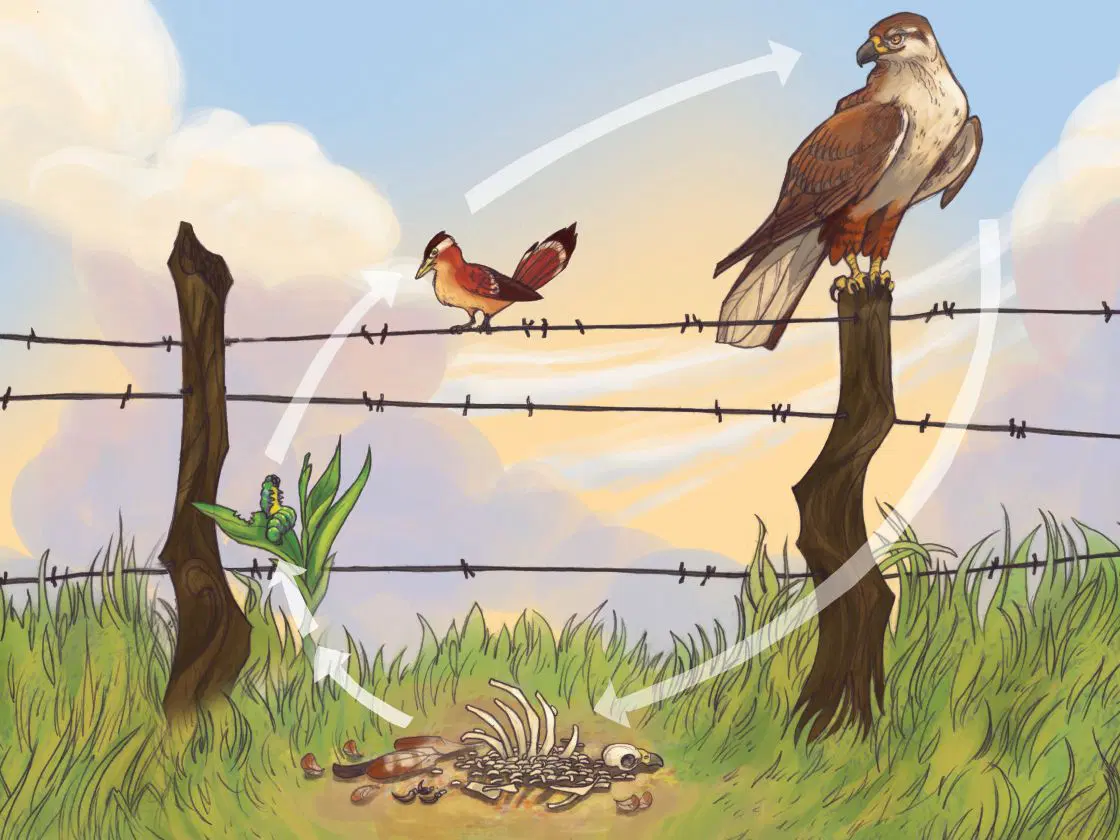
Unit 11
Ecology/Ecología
Students keep ecologist’s journals to learn about our world and how best to protect it.
Unit 1
Personal Narratives/Narrativas personales
Read stories of personal experience… and learn to reflect on your own.
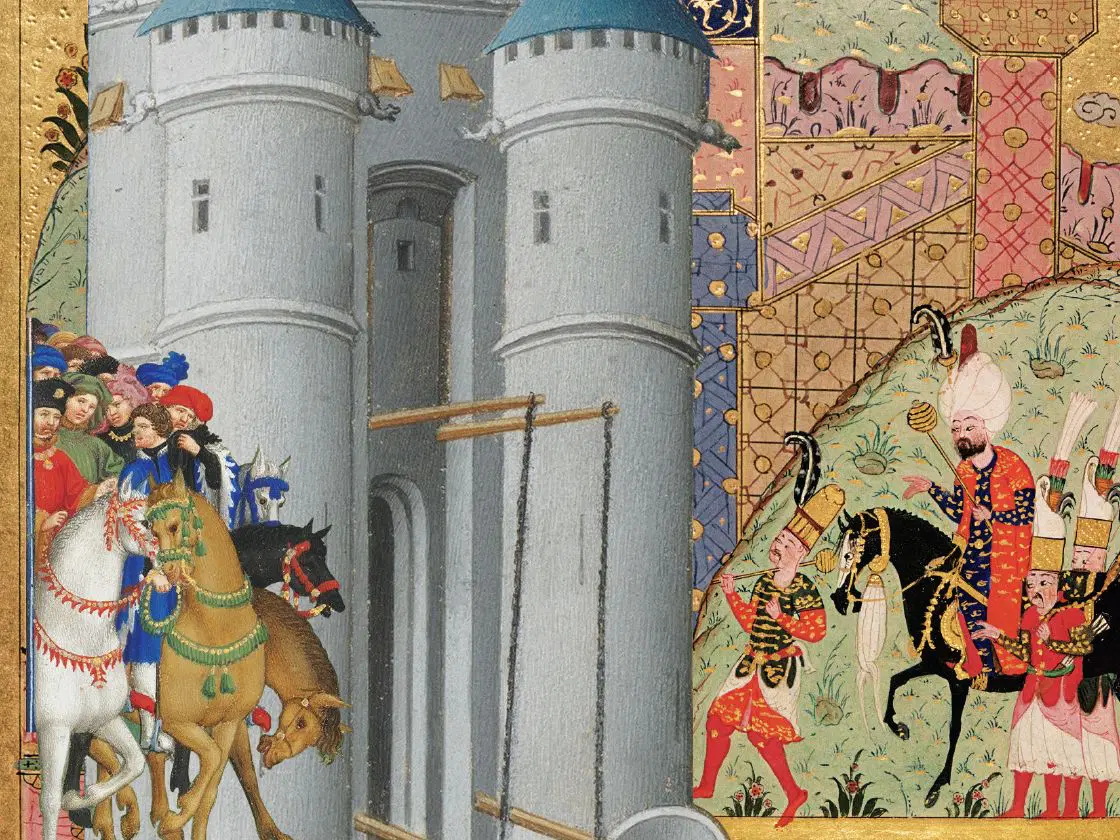
Unit 2
Empires in the Middle Ages/Los imperios en la Edad Media, parte 1 & Los imperios en la Edad Media, parte 2
Explore the medieval history of Europe and the Middle East.
Unit 3
Poetry/Poesía
Study the poetry of many nations using licensed text anthologies, and begin to write your own.
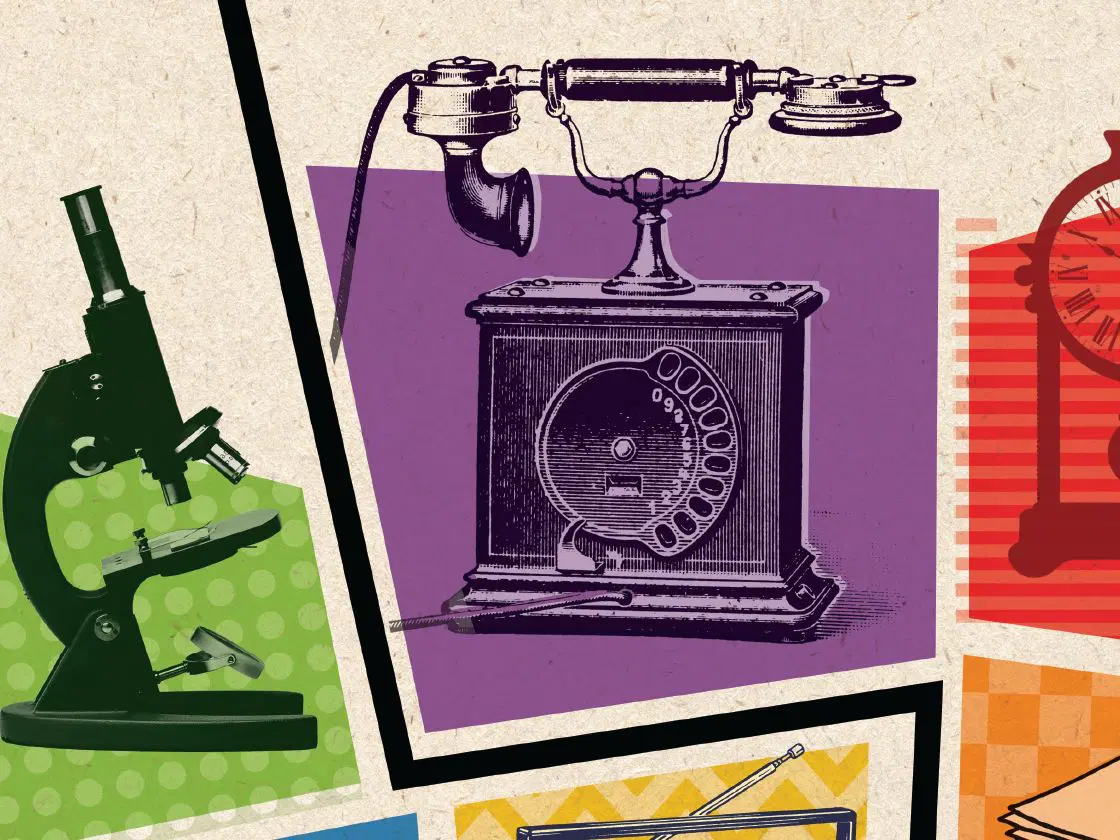
Unit 4
Eureka! Student Inventor/¡Eureka! Estudiante inventor
Transform the class into a lab for students to build and present inventions.

Unit 5
Geology/Geología
Plate tectonics, volcanoes, erosion: all the forces that shape the Earth.
Unit 6
Contemporary Fiction with excerpts from The House on Mango Street/Ficción Contemporánea con Fragmentos de La Casa en Mango Street
Explore The House on Mango Street… and write a book while doing it.
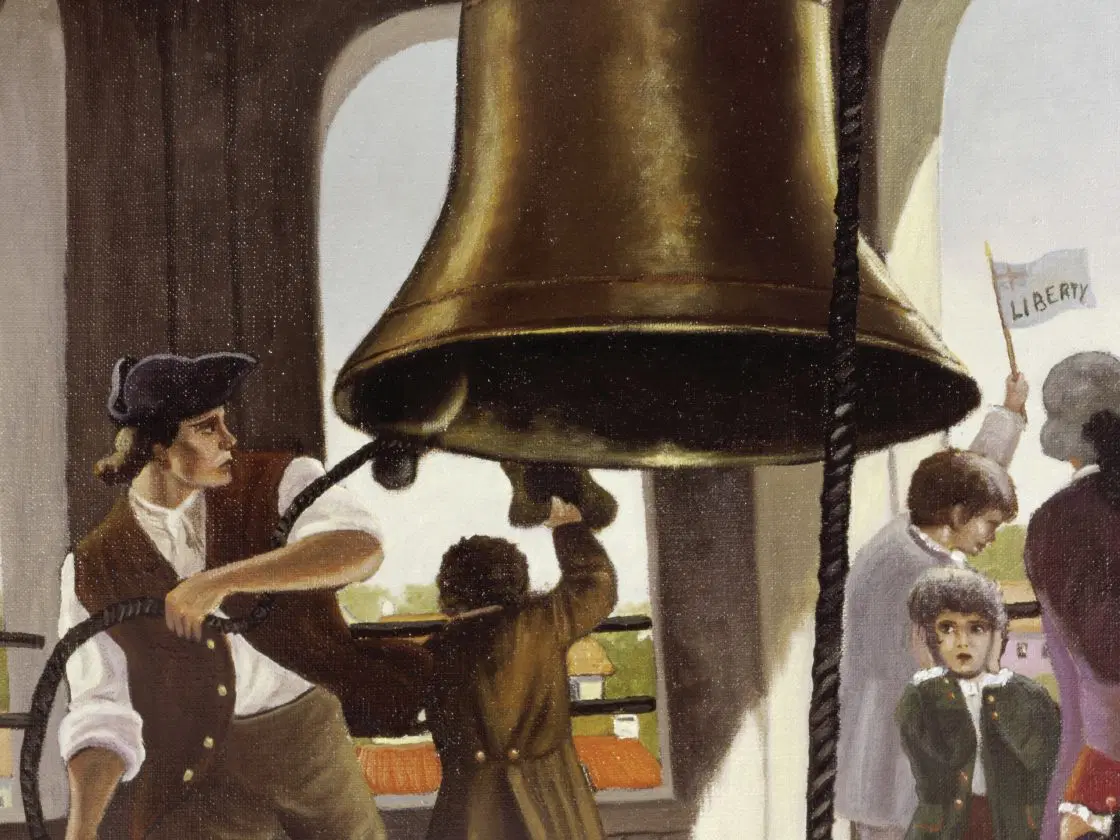
Unit 7
American Revolution/La Revolución estadounidense
Why did America seek independence? Let’s investigate the causes and effects.
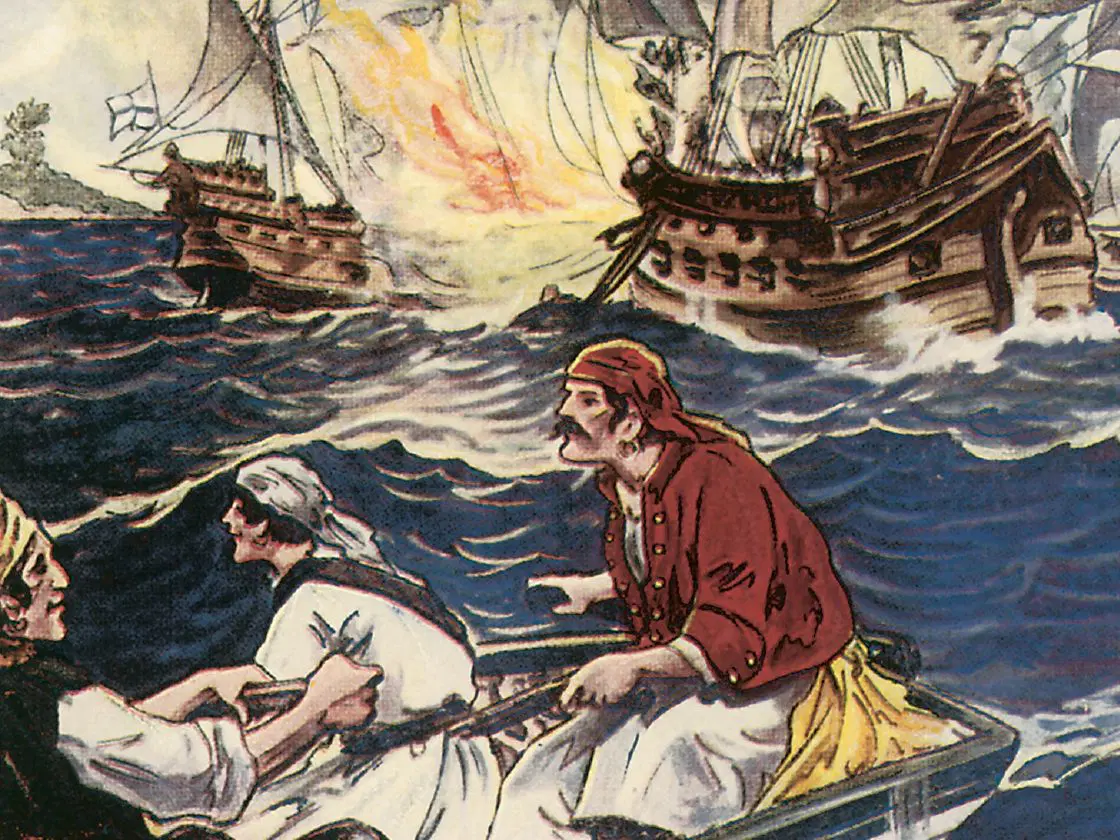
Unit 8
Treasure Island/La Isla del Tesoro
How dSeek the treasure of plot in this detailed study of a classic fiction adventure.
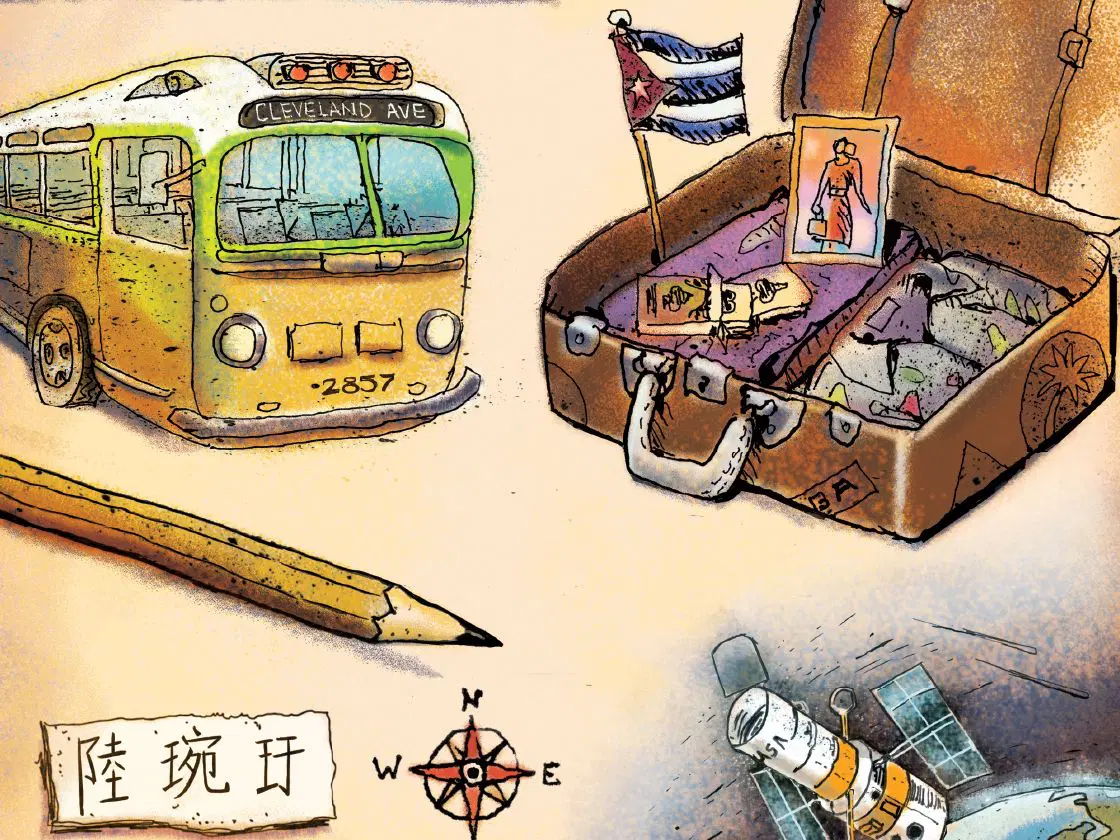
Unit 1
Personal Narratives/Narrativas personales
Through writing and sharing their writing, students begin to identify themselves as writers.
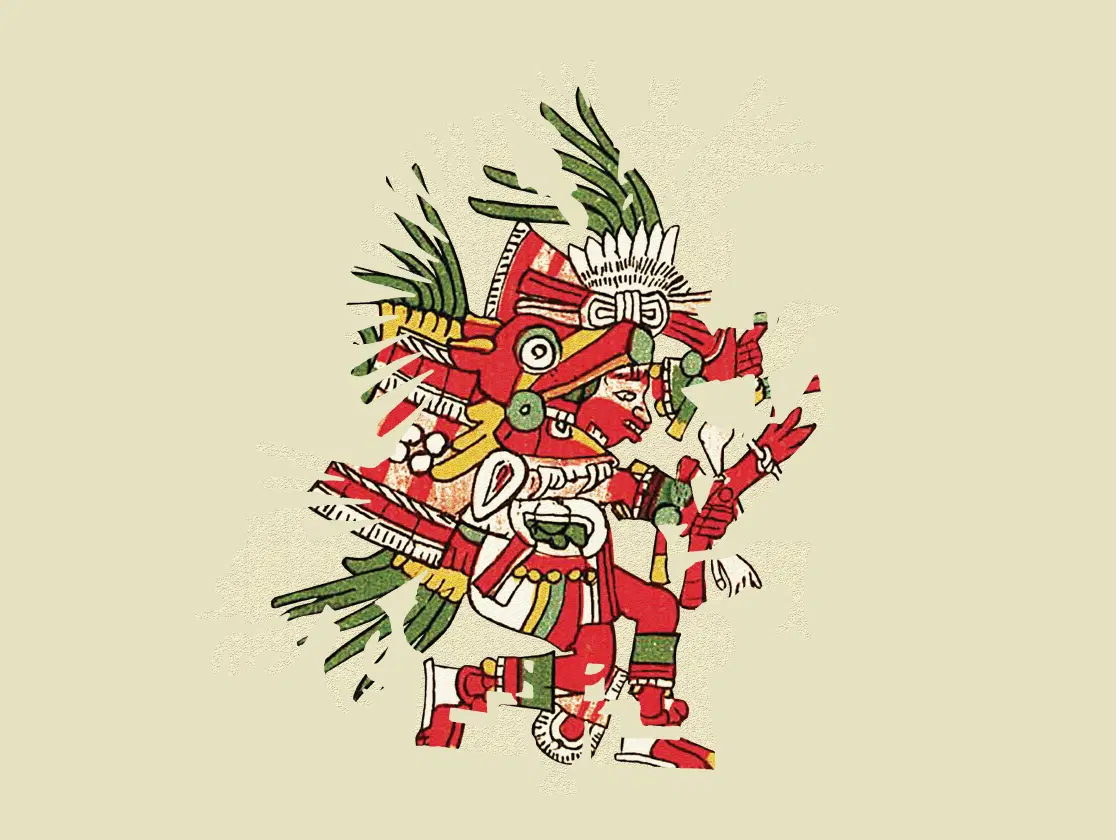
Unit 2
Early American Civilizations/Las primeras civilizaciones americanas
Students craft a codex to explain the rise and fall of the Maya, Aztec, and Inca people.
Unit 3
Poetry/Poesía
Students close read many forms of poetry… and learn to write them.
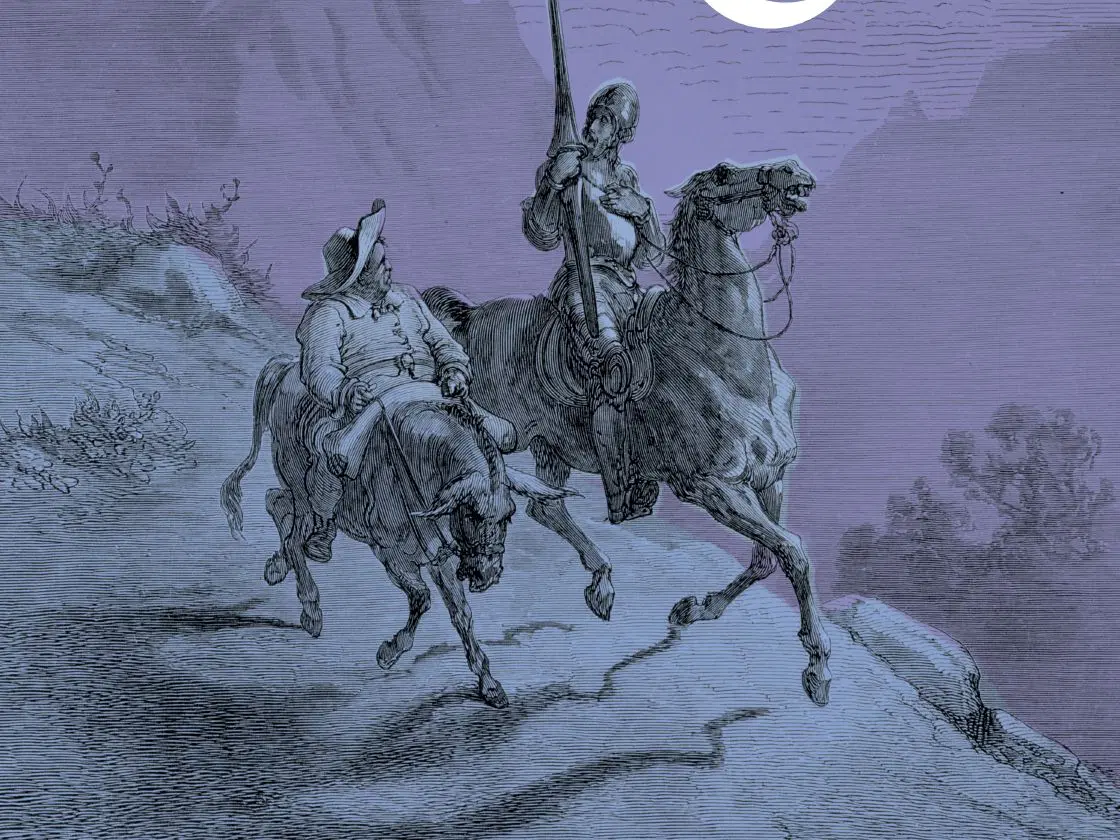
Unit 4
Adventures of Don Quixote/Las Aventuras de Don Quijote
Was Don Quixote right to fight the windmill? In this full-length novel study, students decide.
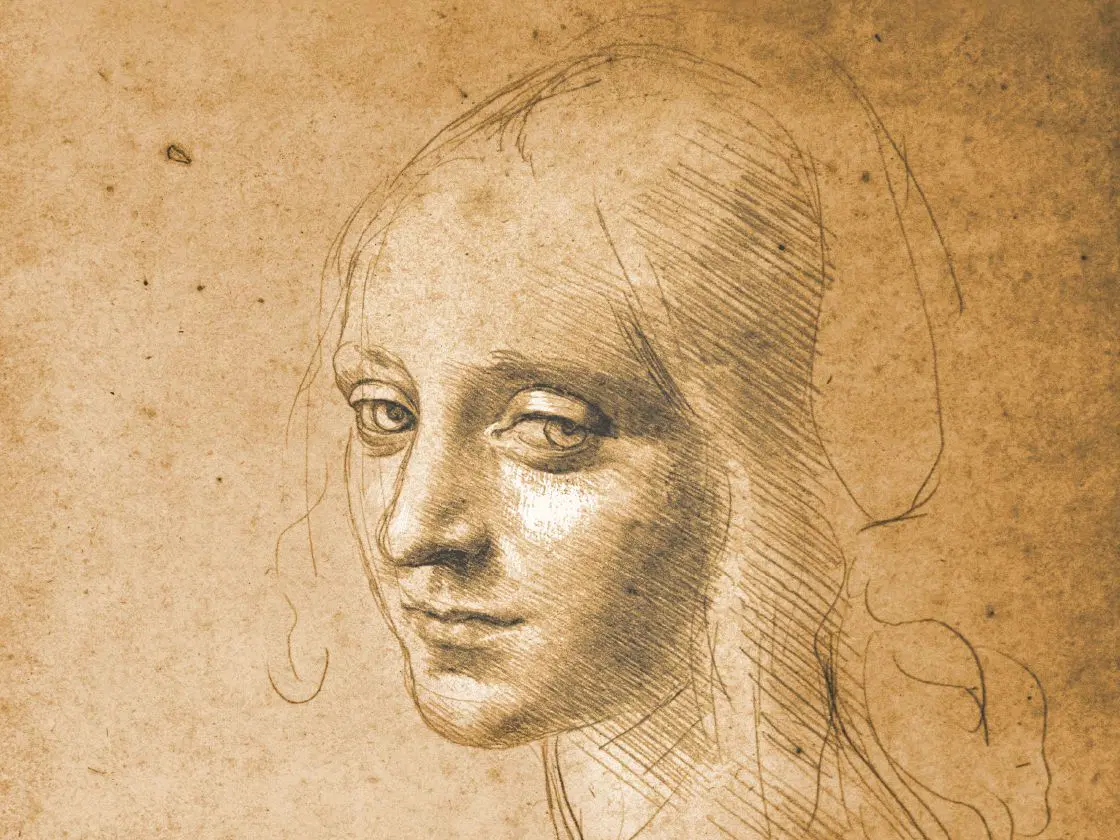
Unit 5
The Renaissance/El Renacimiento
Exploring the art and literature of the Renaissance through the works of its masters.
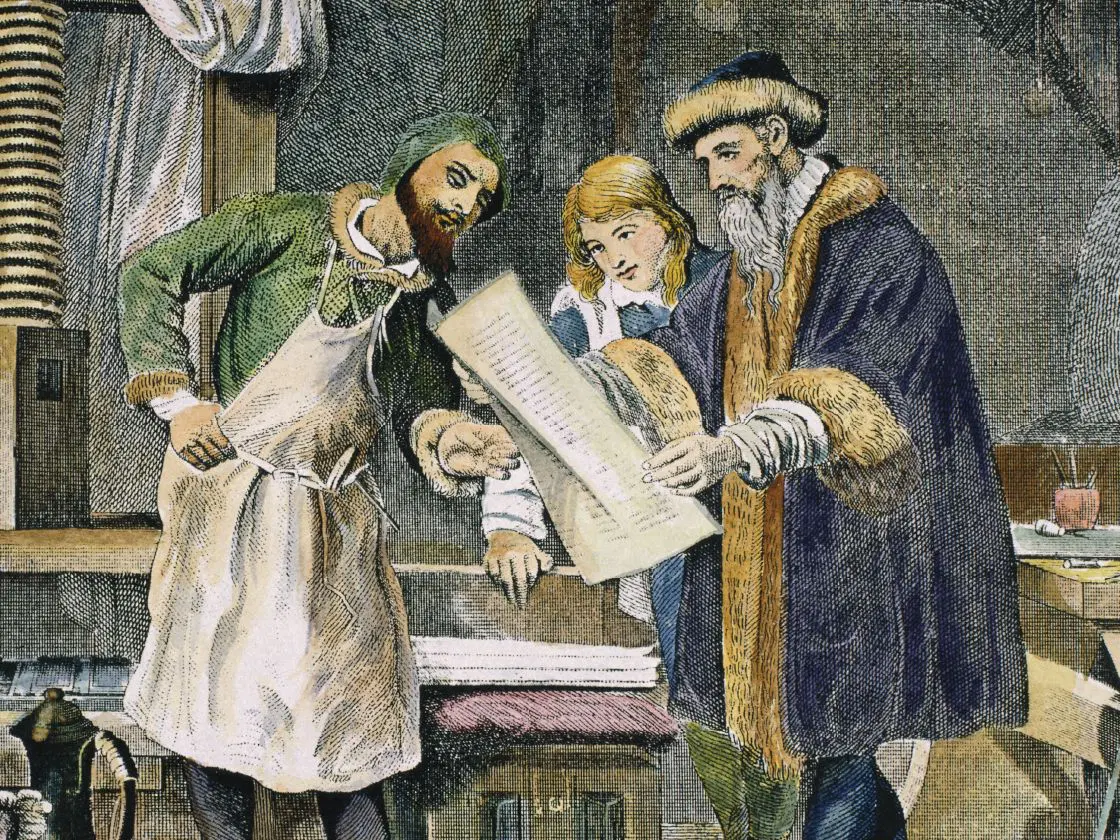
Unit 6
The Reformation/La Reforma
How did the printing press transform the religion and society of Europe?

Unit 7
William Shakespeare’s A Midsummer Night’s Dream/Sueño de Una Noche de Verano de William Shakespeare
Students enter the world of Shakespeare by reading, designing, and acting out his work.

Unit 8
Native Americans/Los nativos americanos
How did the policies of the U.S. government impact Native American culture and lives?
Unit 9
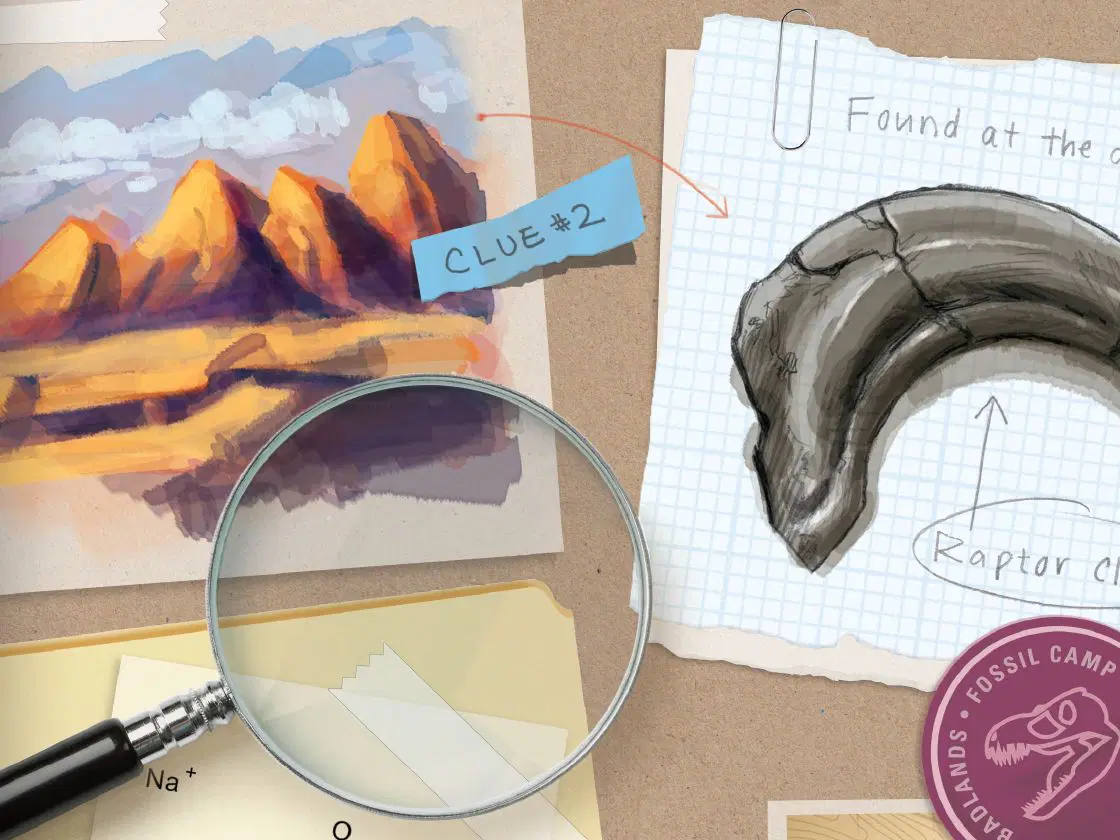
Chemical Matter/Química
Students use knowledge of chemistry to solve a mystery.
Print & digital components
The program includes instructional guidance and student materials for a year of instruction, with lessons and activities that keep students engaged every day.
Component
FORMAT
Knowledge (Conocimientos) Teacher Guides (K–2)
Knowledge Strand Teacher Guides contain Amplify CKLA’s cross-curricular read-alouds and application activities, all of which are standards-based to build mastery of content knowledge and literacy skills. There is one Teacher Guide per Knowledge Domain.
Print and digital
Knowledge Image Cards (K–2)
Amplify Caminos includes Image Cards for each Knowledge Domain to bring each topic to life through vivid visuals.
Print and digital
Knowledge Flip Books (K–2)
Projectable Flip Books are provided to accompany the read-alouds in each Knowledge Domain.
Digital
Teacher Guides (3–5)
Teacher Guides for grades 3–5 units are based on content-rich topics and incorporate reading, writing, speaking, and listening skills in the context of background knowledge. There is one Teacher Guide per unit.
Print or digital
Teacher Resource Site (K–5)
The program includes a one-stop-shop website for lesson projections, digital versions of all Amplify Caminos materials, lesson planning resources, multimedia (such as eBooks), and more.
Digital
Professional Learning Site (K–5)
The Professional Learning site includes training materials, best practices, and other resources to develop program expertise. Access professional development anywhere, anytime.
Digital
Component
FORMAT
Knowledge (Conocimiento) Activity Books (K–2)
Activity Books provide students with the opportunity to deepen world and word knowledge by responding to text in a diversity of ways.
Student Readers (3–5)
Student Readers serve as content-rich anchor texts for each unit. Units such as Poetry and Contemporary Fiction feature authentic texts originally written in Spanish.
Activity Books (3–5)
Activity Books in grades 3–5 provide daily opportunities for students to hone reading and writing skills within the context of each unit.
Print and digital
Explore more programs
Our programs are designed to support and complement one another. Learn more about our related programs.
Grade K
Unit 1: Position, Length, Height, and Sorting
| Lesson 2: Describe and Compare Length and Height, Session 3 | Connecting Cubes |
Unit 2: Numbers to 5, Shapes and Weight
| Lesson 4: Count, Show and Write Numbers to 5, Session 2 | Skye’s Style |
| Lesson 5: Compare Numbers to 5, Session 4 | Matching Groups |
| Lesson 5: Compare Numbers to 5, Session 5 | Designing Shoes With Skye |
| Lesson 6: Three-Dimensional Shapes and Weight, Session 1 | What’s That Shape? |
| Lesson 6: Three-Dimensional Shapes and Weight, Session 2 | Building Solid Shapes |
| Lesson 6: Three-Dimensional Shapes and Weight, Session 5 | Putting Solid Shapes Together |
Unit 3: Addition and Subtractions with 5 and Shapes,
| Lesson 8: Two-Dimensional Shapes, Session 1 | So Much Sorting |
| Lesson 8: Two-Dimensional Shapes, Session 2 | What’s That Shape Called? Another Shape |
Unit 4: Numbers to 10 and Shapes
| Lesson 11: Count, Show, and Write Numbers to 10, Session 1 | Investigate: Cafeteria Math Fingers as Math Tools |
| Lesson 12: Compare Numbers to 10, Session 1 | Moving and Grooving Fingers and Counters |
| Lesson 12: Compare Numbers to 10, Session 2 | More, Fewer, or the Same Comparing Words |
| Lesson 12: Compare Numbers to 10, Session 5 | Forest Friends |
| Lesson 14: Compose and Decompose 10, Session 2 | Harry’s Hamster Wheel |
| Lesson 14: Compose and Decompose 10, Session 3 | Harry Explores Space |
| Lesson 14: Compose and Decompose 10, Session 4 | Showing What We Know About 10 |
| Lesson 14: Compose and Decompose 10, Session 5 | Harry Explores the Ocean |
Unit 6: Addition and Subtraction Within 10
| Lesson 20: Add Within 10, Session 1 | Investigate: Casey’s Town What Does It Mean to Add? |
| Lesson 20: Add Within 10, Session 2 | How Many Objects? |
| Lesson 20: Add Within 10, Session 3 | How Many Objects in Pictures? How Will You Count? |
| Lesson 21: Subtract Within 10, Session 1 | What Does It Mean to Subtract? |
| Lesson 22: Add and Subtract to Solve Wold Problems, Session 1 | The Bus Depot |
Unit 7: Teen Numbers and Shapes
| Lesson 23: Compose and Decompose Teen Numbers with Tools and Drawings, Session 2 | Investigate: Packing Snacks Getting Ready for the Game Pass, Shoot, Score |
| Lesson 23: Compose and Decompose Teen Numbers with Tools and Drawings, Session 3 | How Many on the Field? |
| Lesson 25: Compose and Decompose Teen Numbers with Symbols, Session 2 | Jersey Jam! People at the Park |
Grade 1
Unit 1: Relating Addition and Subtraction
| Lesson 2: Add and Subtract Within 10, Session 1 | What’s the Difference? Leaping Lily Pads! Investigate: Let’s Grow! |
| Lesson 2: Add and Subtract Within 10, Session 3 | Packing a Picnic |
| Lesson 5: Solve Word Problems to 10, Session 2 | Tutu’s Garden in Maui |
| Lesson 5: Solve Word Problems to 10, Session 2 | Replanting Huli |
| Lesson 5: Solve Word Problems to 10, Session 3 | The Kalo Plants |
| Lesson 5: Solve Word Problems to 10, Session 4 | A Community Working Together |
| Lesson 5: Solve Word Problems to 10, Session 5 | Helping Others |
Unit 2: Addition and Subtraction Within 20
| Lesson 6: Teen Numbers, Session 2 | Same Number, Different Ways |
| Lesson 7: Add Three Numbers, Session 2 | Making 10 Kitten Coaster |
Unit 4: Using Tens and Ones to Organize and Count
| Lesson 15: Tens and Ones, Session 1 | Investigate: Game Points |
| Lesson 15: Tens and Ones, Session 3 | Meeting Yara It’s a Match |
| Lesson 16: Numbers to 120, Session 1 | How Many Cubes? Boris’s Thimbles |
| Lesson 21: Add Two-Digit Numbers, Session 1 | How Many Tens? Investigate: Squashes at the Playground |
| Lesson 21: Add Two-Digit Numbers, Session 2 | Town Helpers |
| Lesson 21: Add Two-Digit Numbers, Session 3 | Making Squash Butter |
Unit 5: Operations with Tens and Ones
| Lesson 19: Addition with Two-Digit Numbers, Session 2 | From Park to Table |
Unit 6: Geometry and Measurement
| Lesson 22: Shapes, Session 1 | Shapes Ying Saw |
| Lesson 23: Break Shapes Into Equal Parts, Session 2 | Fair and Square One of the Parts, All of the Parts |
| Lesson 23: Break Shapes Into Equal Parts, Session 5 | A Bigger Part |
Grade 1 (ADM G2)
Unit 1: Relating Addition and Subtraction
| Lesson 1: Partner Pairs for 10, Session 3 | Ways to Make 10 |
| Lesson 2: Add and Subtract Within 10, Session 3 | Exploring Within 10 |
Grade 2
Unit 1: Numbers Within 20
| Lesson 2: Using Mental Math Strategies to Subtract, Session 1 | Awesome Aquariums |
Unit 2: Numbers Within 100
| Lesson 10: Solve Word Problems Involving Money, Session 1 | Investigate |
| Lesson 10: Solve Word Problems Involving Money, Session 2 | Discovering Coins (Part 1) The Toy Stand |
| Lesson 10: Solve Word Problems Involving Money, Session 3 | How Much Money? Discovering Coins (Part 2) |
| Lesson 10: Solve Word Problems Involving Money, Session 4 | The Craft Stand at the Block Party |
Unit 3: Numbers Within 1000
| Lesson 12: Three-Digit Numbers, Session 1 | Investigate: A Mistake in Mom’s Office What Makes a Hundred? |
| Lesson 12: Three-Digit Numbers, Session 2 | Looking for Patterns |
| Lesson 13: Read and Write Three-Digit Numbers, Session 1 | What’s the Value? |
| Lesson 13: Read and Write Three-Digit Numbers, Session 2 | Mail Call! |
| Lesson 13: Read and Write Three-Digit Numbers, Session 3 | A New Representation What’s Your Name? All the Ways! |
| Lesson 15: Mental Addition and Subtraction, Session 2 | Turtle Hurdle |
| Lesson 16: Add Three-Digit Numbers, Session 2 | There’s Something About Berries |
| Lesson 18: Using Addition and Subtraction Strategies with Three-Digit Numbers, Session 2 | Baking With Skunk |
Unit 4: Length
| Lesson 25: Solving Problems About Length, Session 2 | Lengths of Jungle Animals |
| Lesson 27: Sorting and Organizing Data, Session 1 | Messy Measurements |
| Lesson 27: Sorting and Organizing Data, Session 3 | Bracelets and Wristbands |
| Lesson 26: Add and Subtract on the Number Line, Session 1 | Investigate Time to Line Up! In Full Bloom |
| Lesson 26: Add and Subtract on the Number Line, Session 2 | What’s That Number? |
| Lesson 26: Add and Subtract on the Number Line, Session 3 | Greater Than, Less Than, or Equal to |
Unit 5: Shapes and Arrays
| Lesson 28: Recognize and Draw Shapes, Session 2 | Frame It! |
| Lesson 28: Recognize and Draw Shapes, Session 3 | Measure It, Draw It |
| Lesson 32: Even and Odd Numbers, Session 1 | Can You Share? |
| Lesson 32: Even and Odd Numbers, Session 2 | Everybody, Find A Partner! |
| Lesson 32: Even and Odd Numbers, Session 3 | Is It Even or Odd? |
Grade 2 (ADM G3)
Unit 2: Numbers Within 100
| Lesson 6: Adding Two-Digit Numbers, Session 1 | Panda Patterns |
| Lesson 12: Understand Three-Digit Numbers, Session 2 | Investigate: Creating a Photo Gallery |
| Lesson 16: Add Three-Digit Numbers, Session 2 | How Would You Solve It? Adding Your Way What Is an Algorithm? |
| Lesson 16: Add Three-Digit Numbers, Session 3 | Using Fewer Digits Determining Sums of 2 or More Addends |
| Lesson 16: Add Three-Digit Numbers, Session 3 | Adding Strategically |
Unit 4: Length
| Lesson 27: Read and Make Line Plots, Session 2 | The Plot Chickens Let’s Make a Line Plot |
Grade 3
Unit 2: Multiplication and Division
| Lesson 4: Understand the Meaning of Multiplication, Session 1 | Equal Groups |
| Lesson 6: Multiply with 3, 4, and 6, Session 2 | Rectangles and Arrays |
| Lesson 8: Use Order and Grouping to Multiply, Session 2 | Arrays of Flavor |
| Lesson 11: Understand How Multiplication and Division Are Connected, Session 1 | It’s Chili in Here! |
| Lesson 12: Multiplication and Division Facts, Session 3 | Relating Quotients to Familiar Products |
Unit 3: Multiplication
| Lesson 19: Scaled Graphs, Session 1 | Puppy Pile |
| Lesson 19: Scaled Graphs, Session 4 | 2, 5, or 10? |
| Lesson 14: Understand Area, Session 1 | Tiling Figures |
| Lesson 14: Understand Area, Session 2 | Which Covers More Space? |
| Lesson 15: Multiply to Find Area, Session 3 | Area Hunt |
| Lesson 17: Solve One-Step Word Problems Using Multiplication and Division, Session 2 | Division and Multiplication Equations |
Unit 4: Fractions
| Lesson 21: Understand Fractions on a Number Line, Session 1 | Cat Crossing |
| Lesson 21: Understand Fractions on a Number Line, Session 2 | Fractions on the Number Line |
| Lesson 21: Understand Fractions on a Number Line, Session 3 | Location, Location, Location |
Unit 6: Shapes
| Performance Task | Investigate: Comparing Rugs |
| Lesson 30: Understand Categories of Shapes, Session 1 | Piho’s Shapes |
| Lesson 31: Classify Quadrilaterals, Session 1 | Rectangles, Squares, and Rhombuses |
| Lesson 31: Classify Quadrilaterals, Session 3 | More Quadrilaterals |
Grade 4
Unit 2: Operations
| Lesson 6: Understand Multiplication as a Comparison, Session 1 | Sticker Mania |
| Lesson 6: Understand Multiplication as a Comparison, Session 2 | Representing “Times as Many” Going Swimming |
| Lesson 8: Multiples and Factors, Session 1 | Hamster Homes |
| Lesson 8: Multiples and Factors, Session 3 | Factor or Multiple? |
| Lesson 8: Multiples and Factors, Session 4 | A Number Game |
| Lesson 9: Number and Shape Patterns, Session 1 | How Does It Grow? |
Unit 3: Multi-Digit Operations and Measurement
| Lesson 11: Multiply by One-Digit Numbers, Session 1 | Investigate: Packing Lei Counting Flowers for Lei |
| Lesson 11: Multiply by One-Digit Numbers, Session 3 | A Lei Making Workshop A Reasonable Answer Three of a Kind |
| Lesson 12: Multiply by Two-Digit Numbers, Session 2 | Growing Flowers for the Lei Double Decomposition |
| Lesson 12: Multiply by Two-Digit Numbers, Session 3 | Revisiting Strategies How Many Supplies? |
Unit 4: Fractions, Decimals, and Measurement
| Lesson 17: Understand Equivalent Fractions, Session 1 | Investigate: Building Your Own Number Line Fraction Strips |
| Lesson 18: Understand Equivalent Fractions, Session 3 | Chop It All Kinds of Fractions |
| Lesson 19: Fraction Addition and Subtraction, Session 1 | Pizza Problems |
| Lesson 20: Add and Subtract Fractions, Session 4 | Math Pizzeria |
| Lesson 24: Multiply Fractions by Whole Numbers, Session 2 | Equal Groups of Fractions |
| Lesson 25: Fractions as Tenths and Hundredths, Session 3 | Investigate: Different Units |
| Lesson 26: Relate Decimals and Fractions, Session 2 | A New Way to Write Tenths A New Way to Write Hundredths |
| Lesson 26: Relate Decimals and Fractions, Session 4 | Are They Equivalent? |
| Lesson 27: Compare Decimals, Session 2 | How Can You Compare? |
| Lesson 27: Compare Decimals, Session 3 | Robot Factory |
| Lesson 27: Compare Decimals, Session 4 | What’s the Order |
Unit 5: Geometry and Measurement
| Lesson 30: Points, Lines, Rays, and Angles, Session 3 | Angle Adventures |
| Lesson 31: Angles, Session 1 | The Spin on Angles |
| Lesson 32: Add and Subtract with Angles, Session 3 | Angles in Motion |
Grade 5
Unit 1: Whole Number Operations and Applications
| Lesson 2: Find Volume Using Unit Cubes, Session 1 | Which is Largest |
| Lesson 2: Find Volume Using Unit Cubes, Session 2 | Packing the Barge |
| Lesson 3: Find Volume Using Formulas, Session 3 | Putting it Together Figures Made of Prisms |
| Lesson 4: Multiply Multi-Digit Numbers, Session 1 | Partial Products Everywhere |
| Lesson 4: Multiply Multi-Digit Numbers, Session 4 | How Do They Compare? |
| Lesson 5: Divide Multi-Digit Numbers, Session 4 | Emptying the Water Tank |
Unit 2: Decimals and Fractions
| Lesson 6: Understand Decimal Place Value, Session 1 | Investigate: Numbers Between Numbers |
| Lesson 6: Understand Decimal Place Value, Session 2 | What Is One Thousandth? |
| Lesson 8: Read and Write Decimals, Session 1 | Say What? Place Value Patterns |
| Lesson 9: Compare and Round Decimals, Session 2 | Selling Collectibles |
| Lesson 9: Compare and Round Decimals, Session 3 | The Claw Which Way Down the Mountain? |
| Lesson 9: Compare and Round Decimals, Session 4 | Rounding Races |
| Lesson 7: Understand Powers of 10, Session 1 | Monarch Butterflies All About That Base Powers of 10 Parade |
Unit 3: More Decimals & Fractions
| Lesson 18: Fractions as Division, Session 1 | Investigate: Sharing Sandwiches Division Story Problems Making Generalizations Investigate: Folding Paper |
| Lesson 18: Fractions as Division, Session 2 | Sharing More Sandwiches Dance Breaks |
| Lesson 19: Multiplication by a Fraction, Session 2 | Parts of Parts |
| Lesson 20: Multiply Fractions to Find Area, Session 2 | One Part of One Part |
| Lesson 20: Multiply Fractions to Find Area, Session 3 | Making Food |
| Lesson 22: Multiply Fractions in Word Problems, Session 3 | Installing Turf Rows and Columns |
| Lesson 22: Multiply Fractions in Word Problems, Session 4 | Messy Multiplication Applying Fraction Multiplication |
| Lesson 21: Exploring Multiplication as Scaling, Session 1 | Chores at Animal Haven The Re-size-inator |
Unit 5: Algebraic Thinking and the Coordinate Plane
| Lesson 31: Understand the Coordinate Plane, Session 1 | Bullseye! |
| Lesson 31: Understand the Coordinate Plane, Session 2 | Creating a Coordinate System Coordinating Satellite Repairs |
Grade 6
Unit 1: Expressions and Equations: Area, Algebraic Expressions, and Exponents
| iReady Classroom | Amplify Classroom |
| Lesson 1: Find the Area of a Parallelogram | Unit 1 Lesson 3: Exploring Parallelograms Exploring Parallelograms, Part 2 |
Unit 2: Decimals and Fractions: Base-Ten Operations, Division with Fractions, and Volume
| Lesson 7: Add, Subtract, and Multiply Multi-Digit Decimals | Unit 4 Lesson 1: Dishing Out Decimals |
| Lesson 8: Divide Whole Numbers and Multi-Digit Decimals | Unit 5 Lesson 13: Movie Time |
| Lesson 9: Understand Division with Fractions | Unit 4 Lesson 3: Flour Planner |
| Lesson 10: Divide Fractions | Unit 4 Lesson 6: Fill the Gap |
Unit 3: Ratio Reasoning: Ratio Concepts and Equivalent Ratios
| Lesson 12: Understand Ratio Concepts | Unit 2 Lesson 1: Pizza Maker |
| Lesson 13: Find Equivalent Ratios | Unit 2 Lesson 4: Fruit Lab Lesson 10: Disaster Preparation |
Unit 4: Ratio Reasoning: Unit Rates and Percent
| Lesson 15: Understand Rate Concepts | Unit 3 Lesson 1: Many Measurements |
| Lesson 16: Use Unit Rates to Solve Problems | Unit 3 Lesson 6: Soft Serve |
| Lesson 17: Understand Percents | Unit 3 Lesson 9: Lucky Duckies |
Unit 5: Algebraic Thinking: Equivalent Expressions and Equations with Variables
| Lesson 19: Write and Identify Equivalent Expressions | Unit 6 Lesson 8: Products and Sums Take Away (coming soon!) |
| Lesson 22: Analyze Two-Variable Relationships | Unit 6 Lesson 16: Subway Fares Take Away (coming soon!) |
Unit 6: Positive and Negative Numbers: Absolute Value, Inequalities, and the Coordinate Plane
| Lesson 23: Understand Positive and Negative Numbers | Unit 7 Lesson 1: Can You Dig It? |
| Lesson 24: Order Positive and Negative Numbers | Unit 7 Lesson 4: Order in the Class |
| Lesson 26: Write and Graph One-Variable Inequalities | Unit 7 Lesson 7: Tunnel Travels |
Unit 7: Statistical Thinking: Data Distributions and Measures of Center and Variability
| Lesson 30: Use Dot Plots and Histograms to Describe Data Distributions | Unit 8 Lesson 3: Minimum Wage Lesson 5: The Plot Thickens |
| Lesson 31: Interpret Median and Interquartile Range in Box Plots | Unit 8 Lesson 11: Toy Cars |
Grade 7
Unit 1: Proportional Relationships: Ratios, Rates, and Circles
| iReady Classroom | Amplify Classroom |
| Lesson 2: Find Unit Rates Involving Ratios and Fractions | Unit 2 Lesson 1: Paint |
| Lesson 4: Represent Proportional Relationships | Unit 2 Lesson 6: Two and Two |
| Lesson 5: Solve Proportional Relationship Problems | |
| Lesson 6: Solve Area and Circumference Problems Involving Circles | Unit 3 Lesson 3: Measuring Around Lesson 9: Area Challenges |
Unit 2: Numbers and Operations: Add and Subtract Rational Numbers
| Lesson 7: Understand Addition with Negative Numbers | Unit 5 Lesson 1: Floats and Anchors |
| Lesson 8: Add with Negative Numbers | Unit 5 Lesson 1: Floats and Anchors |
| Lesson 9: Understand Subtraction with Negative Integers | Unit 5 Lesson 1: Floats and Anchors |
| Lesson 10: Add and Subtract Positive and Negative Numbers | Unit 5 Lesson 1: Floats and Anchors |
Unit 3: Numbers and Operations: Multiply and Divide Rational Numbers
| Lesson 14: Use the Four Operations with Negative Numbers | Unit 5 Lesson 10: Integer Puzzles |
Unit 4: Algebraic Thinking: Expressions, Equations, and Inequalities
| Lesson 19: Write and Solve Inequalities | Unit 6 Lesson 16: Shira the Sheep |
Unit 5: Proportional Reasoning: Percents and Statistical Samples
| Lesson 20: Solve Problems Involving Percents | Unit 4 Lesson 5: Percent Machines Lesson 12: Posing Percent Problems (coming soon!) |
| Lesson 22: Understand Random Sampling | Unit 8 Lesson 2: Prob-bear-bilities |
| Lesson 24: Compare Populations | Unit 8 Lesson 10: Crab Island |
Unit 6: Geometry: Solids, Triangles, and Angles
| Lesson 28: Find Unknown Angle Measures | Unit 7 Lesson 2: Friendly Angles Lesson 4: Missing Measures |
Unit 7: Probability: Theoretical Probability, Experimental Probability, and Compound Events
| Lesson 30: Understand Probability | Unit 8 Lesson 1: How Likely? Lesson 2: Prob-bear-bilities |
Grade 8
Unit 1: Geometric Figures: Rigid Transformations and Congruence
| iReady Classroom | Amplify Classroom |
| Lesson 1: Understand Rigid Transformations and Their Properties | Unit 1 Lesson 1: Transformers Lesson 2: Spinning, Flipping, Sliding |
| Lesson 2: Work with Single Rigid Transformations in the Coordinate Plane | Unit 1 Lesson 4: Moving Day |
Unit 2: Geometric Figures: Transformations, Similarity, and Angle Relationships
| Lesson 4: Understand Dilations and Similarity | Unit 2 Lesson 2: Dilation Mini Golf |
| Lesson 6: Describe Angle Relationships | Unit 2 Lesson 6: Social Scavenger Hunt |
| Lesson 7: Describe Angle Relationships in Triangles | Unit 1 Lesson 12: Puzzling It Out |
Unit 3: Linear Relationships: Slope, Linear Equations, and Systems
| Lesson 8: Graph Proportional Relationships and Define Slope | Unit 3 Lesson 1: Turtle Time Trials |
| Lesson 13: Solve Systems of Linear Equations Algebraically | Unit 4 Lesson 11: Make Them Balance Lesson 12: Line Zapper |
Unit 4: Functions: Linear and Nonlinear Relationships
| Lesson 15: Understand Functions | Unit 5 Lesson 1: Turtle Crossing Lesson 2: Guess My Rule |
| Lesson 16: Use Functions to Model Linear Relationships | Unit 5 Lesson 5: The Tortoise and the Hare |
Unit 5: Integer Exponents: Properties and Scientific Notation
| Lesson 19: Apply Exponent Properties for Positive Integer Exponents | Unit 7 Lesson 1: Circles Lesson 3: Power Pairs |
| Lesson 22: Work with Scientific Notation | Unit 7 Lesson 9: Specific and Scientific Lesson 11: Balance the Scale |
Unit 6: Real Numbers: Rational Numbers, Irrational Numbers, and the Pythagorean Theorem
| Lesson 23: Find Square Roots and Cube Roots to Solve Problems | Unit 8 Lesson 4: Root Down |
| Lesson 25: Find Rational Approximations of Irrational Numbers | Unit 8 Lesson 10: Taco Truck |
| Lesson 27: Apply the Pythagorean Theorem | Unit 8 Lesson 8: Triangle-Tracing Turtle |
| Lesson 28: Solve Problems with Volumes of Cylinders, Cones, and Spheres | Unit 8 Lesson 11: Cylinders Lesson 13: Cones |
Unit 7: Statistics: Two-Variable Data and Fitting a Linear Model
| Lesson 29: Analyze Scatter Plots and Fit a Linear Model to Data | Unit 6 Lesson 3: Robots Lesson 4: Dapper Cats Lesson 6: Find the Fit |
Disclaimer
This document is for informational purposes only; references to third-party programs do not imply endorsement or affiliation, and all trademarks are the property of their respective owners.
Introduction
If your district uses firewall allowlisting by IP Address, you will need to change your firewall rules to ensure access to your Amplify products.
The appropriate IT administrator for your school or district can update your allowlist. If you have any questions, please contact Customer Services at (800) 823-1969.
Amplify Curriculum
To ensure access to all our curriculum products, add the following URLs to the appropriate district- and school-level filters. Please consult this list.
Amplify Email
In some cases, district-level spam filters may mistakenly classify Amplify messages as junk mail. Add the following domains to your allowlist to ensure important email communications are not blocked.
| DOMAIN |
| amplify.com |
| mclasshome.com |
| dibels.amplify.com |
Content
| DOMAIN | PORTS | PROTOCOLS |
| www.corestandards.org | 80 | HTTP |
Legal
| DOMAIN | PORTS | PROTOCOLS |
| www.amplify.com/customer-privacy | 80 | HTTP |
| www.amplify.com/user-terms | 80 | HTTP |
Families and caregivers, welcome to Amplify Desmos Math Texas K–5!
Welcome to the Amplify Desmos Math Texas K–5 Caregiver Hub. We’re here to support your student as they explore math, work with friends to solve problems, and learn new and interesting concepts—and to support you as you go on this math journey with them! Below are some suggestions and resources for how you can support their learning at home.
Learn more about Amplify Desmos Math Texas.
Para la versión en español, haga clic aquí.

Unit Caregiver Resources
For every unit of the program, we’ve created a Caregiver Resource that provides a summary of key concepts. You’ll find a Caregiver Resource for each unit, in both English and Spanish.
Unit 1: Beginning Number Concepts
Unit 2: Numbers 1–10
Unit 3: Shapes, Coins, and Financial Literacy
Unit 4: Understanding Addition and Subtraction
Unit 5: Make and Break Apart Numbers Within 10
Unit 6: Numbers 0–20
Unit 7: Solid Shapes All Around Us
Unit 1: Adding, Subtracting, and Working With Data
Unit 2: Story Problems Within 10
Unit 3: Adding and Subtracting Within 20
Unit 4: Numbers to 99 and Financial Literacy
Unit 5: Adding Within 120
Unit 6: Length Measurement Within 120 Units
Unit 7: Geometry and Time
Unit 1: Working With Data and Developing Financial Literacy
Unit 2: Adding and Subtracting Within 100
Unit 3: Measuring and Solving Problems Using Length
Unit 4: Numbers to 1,200
Unit 5: Geometry and Time
Unit 6: Adding and Subracting Within 1,000
Unit 7: Equal Groups and Area
Unit 1: Introducing Multiplication
Unit 2: Adding, Subtracting, and Rounding Larger Numbers
Unit 3: Relating Multiplication to Division
Unit 4: Fractions as Numbers
Unit 5: Measurement and Financial Literacy
Unit 6: Sorting and Classifying Shapes
Unit 1: Fraction Equivalence and Comparison
Unit 2: Extending Operations to Fractions
Unit 3: From Hundredths to One Billion
Unit 4: Mathematical Relationships and Financial Literacy
Unit 5: Multiplying and Dividing Multi-Digit Numbers
Unit 6: Angles and Properties of Shapes
Unit 1: Volume, Factors, and Expresssions
Unit 2: Multiplying and Dividing Fractions
Unit 3: Multi-Digit Multiplication and Division and Financial Literacy
Unit 4: Place Value Patterns and Decimal Operations
Unit 5: Measurement, Fraction Operations, and Data
Unit 6: Geometry and Algebraic Reasoning
Sub-Unit Summaries
- Unit 1 – Volume, Factors, and Expressions
- Unit 2 – Multiplying and Dividing Fractions
- Unit 3 – Multi-Digit Multiplication and Division and Financial Literacy
- Unit 4 – Place Value Patterns and Decimal Operations
- Unit 5 – Measurement, Fraction Operations, and Data
- Unit 6 – Geometry and Algebraic Reasoning
Access Amplify Desmos Math at home.
In addition to a print Student Edition workbook, your student will have digital access to all learning, practice, and assessment materials through the Amplify platform. The digital curriculum can be accessed in school and at home by following these instructions:
- Select the Amplify Desmos Math button.
- Select Log in with Amplify.
- Enter your student’s username and password provided by your student’s teacher.
- Select the desired grade level.
Once logged in, caregivers can view student work by opening previous assignments.
Learn how to navigate the student home page.
Materials overview
Amplify Desmos Math Texas supports blended learning with supporting print materials and a unique digital experience. All K–5 lessons are available in a write-in Student Edition book. Many of the lessons include hands-on activities with manipulatives, tools that help students understand abstract concepts by making them tangible. Your student will also work with digital devices for an age-appropriate number of lessons.
When students use devices, teachers can monitor their work in real time, making sure they get the exact support that they need at every part of the lesson, in and outside of class.
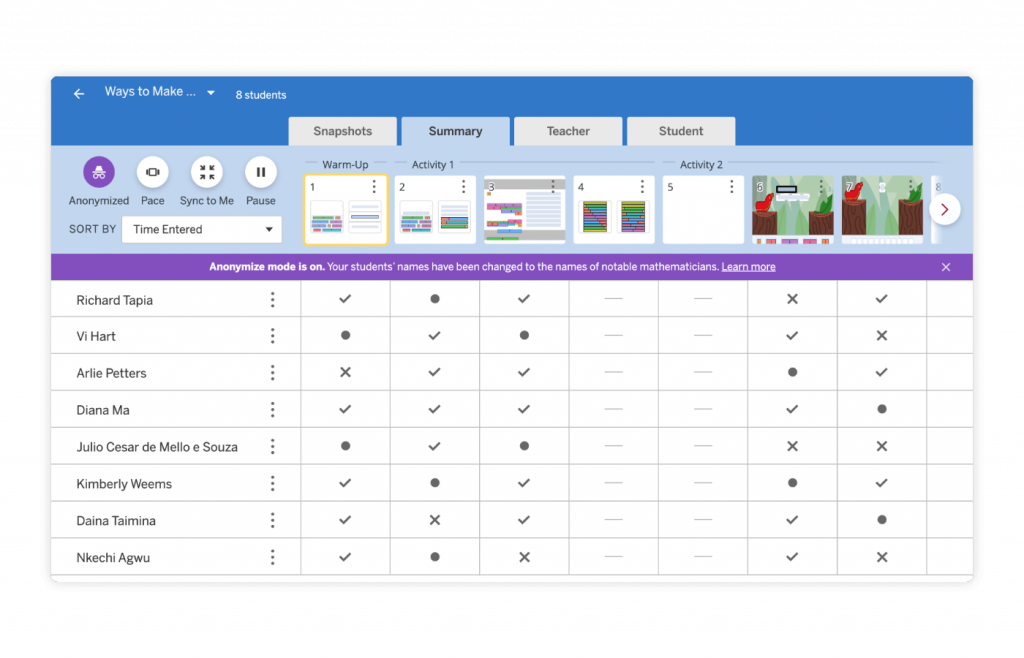
Components of a lesson
Students in an Amplify Desmos Math Texas classroom can be seen (and heard!) asking questions, debating answers, justifying their thinking, grappling with problems, and working together and independently.
A typical Amplify Desmos Math Texas lesson includes:
- Warm-up: A short, attention-getting problem to pique students’ interest in the lesson.
- Activities: One to two mini-activities that challenge students’ problem-solving skills.
- Synthesis: Discussion to review and bring together the important concepts from the lesson.
- Show What You Know and Reflection: Questions for students to show what they know from the lesson. (Note: The Show What You Know lesson assessment is optional for kindergarten and grade 1.)
- Centers: Student-led activity stations that reinforce the math learned during lesson activities through interactive and often game-like formats. In kindergarten and grade 1, time for Centers is built into the last 15 minutes of every lesson.
To support, strengthen, and stretch students’ learning after the lesson, Amplify Desmos Math Texas offers options for:
- Differentiation: Mini-Lessons, Centers, Extensions, Boost Personalized Learning, and Fluency Practice.
- Practice: Additional problems your student’s teacher may assign for classwork or homework.
Support math learning at home.
You can support your student’s math learning outside of school in many ways:
Your student’s teacher may assign practice problems at the end of each lesson for classwork or homework. If your student has already completed the practice problems for the lesson, ask them to walk you through how they solved each problem, or talk about any parts that were challenging for them. Ask your student follow-up questions to encourage the use of math language as they explain their thinking, such as, “How do you know?,” “How can you show your thinking?,” or “How would you describe that?” If students are stuck, ask support questions, such as, “What information do you know here?” or “How could you represent this problem?”
Your student’s teacher may introduce a Center game with students in the lesson or beyond the lesson. These games are aligned to the math of the unit and can be played with students outside of class. Your student’s teacher may introduce a Center game to students during or after completing a lesson, or you may need to teach the game before you play by using easy-to-follow instructions. Try out the following Center games with your student!
- Kindergarten
- Connecting Cubes: Build to Match
- Math Fingers: Show and Say
- Grade 1
- Find the Pair: Make 10
- Check It Off: Add or Subtract Within 10
- Grade 2
- Capture Squares: Add Within 10
- How Close? Add to 100
- Grade 3
- Capture Squares: Add Within 20
- Capture Squares: Multiply With 2, 5, and 10
- Grade 4
- Can You Draw It: Area and Perimeter
- Fraction Math: Beginner Fraction Models
- Grade 5
- Rectangle Rumble: Factors 1–5
- Compare: Divide Within 100
Each unit in Amplify Desmos Math begins with a Read-Aloud to engage students and provide context for the math of the unit. Elements and characters from the Unit Story then appear in lessons throughout the unit.
Kindergarten
- Unit 1 Story: The First Day of School
- Unit 2 Story: What’s in a Restaurant?
- Unit 3 Story: A Great Shape Adventure
- Unit 4 Story: Casey’s Town
- Unit 5 Story: Where is Harry?
- Unit 6 Story: Winners
- Unit 7 Story: Everybody Needs Help Sometimes
Grade 1
- Unit 1 Story: Ying’s New Town
- Unit 2 Story: Let’s Grow!
- Unit 3 Story: Impossible
- Unit 4 Story: The Collectors
- Unit 5 Story: The Day of the Wazzle-Squash
- Unit 6 Story: Side by Side
- Unit 7 Story: A Potluck for Pia
Grade 2
- Unit 1 Story: A New Class Pet
- Unit 2 Story: The Heroes of Pineapple Street
- Unit 3 Story: What Orson Imagined
- Unit 4 Story: 302 Ricotta Drive
- Unit 5 Story: Arjun the Artist
- Unit 6 Story: Where Eli Went
- Unit 7 Story: On Clementine Court
Grade 3
- Unit 1 Story: My Name Is Harper
- Unit 2 Story: The View From Up Here
- Unit 3 Story: Home Cooking
- Unit 4 Story: Coen and Obita
- Unit 5 Story: Just Stick With It, Sasha
- Unit 6 Story: Through Piho’s Eyes
Grade 4
- Unit 1 Story: One Step at a Time
- Unit 2 Story: Finny
- Unit 3 Story: Myles and the Loggerheads
- Unit 4 Story: Just for Fun
- Unit 5 Story: Special Day, Special Le
- Unit 6 Story: Captain Bogwart’s Treasure
Grade 5
- Unit 1 Story: Joyful Green
- Unit 2 Story: Princess Sweetsocks
- Unit 3 Story: Andrea
- Unit 4 Story: Market Day
- Unit 5 Story: The Monarchs
- Unit 6 Story: Hanan Pacha
Relate math to daily activities at home, whether grocery shopping, preparing a meal, or planning for a trip to the store. Your student can help you figure out how many more apples there are than oranges in the grocery cart, show how to split a sandwich into fourths, or figure out how much change you’ll receive in exchange for a $10 bill. Encourage your student to point out ways that you use math in your daily tasks.
Remind your student that getting stuck is part of the process—a necessary and beneficial part of learning. Many students (and adults) fear making mistakes, but research shows that mistakes help our brains grow! When your student gets stuck on a problem, encourage them to keep trying different strategies even if they’re not sure they’re right.
What’s included in our Spanish language arts curriculum
Amplify Core Knowledge Language Arts® (CKLA) is available in both English and Spanish. Amplify Caminos al Conocimiento Esencial, our robust Spanish language arts companion for grades K–5, supports multiple teaching models, including dual language immersion and transitional classrooms.
Year at a glance
The program’s intentional Knowledge Sequence from K–5 connects knowledge and vocabulary within a grade level and across grade levels, for deeper reading comprehension and preparation for college, career, and life. Instead of “activating prior knowledge,” Amplify Caminos helps you build it in the classroom from day one, for every child, expanding each student’s knowledge base long before they transition to reading to learn.
Units & domains at a glance
Each Knowledge Domain in grades K–2 and Unit in grades 3–5 varies in the number of days based on instructional purpose. Just as with our top-rated Amplify CKLA program, the Amplify Caminos materials engage and delight young learners with resources that are both appealing and original.
Domain
Nursery Rhymes and Fables/Rimas y fábulas infantiles
Start learning about literature with these classic Mother Goose rhymes.
Domain
The Five Senses/Los cinco sentidos
Learning about the body starts with learning about how we experience the world.
Domain
Stories/Cuentos
Learn about the parts of a book and some of the stories that go in one.
Domain
Plants/Plantas
Discover the lifecycle of plants and the history of George Washington Carver.
Domain
Farms/Granjas
Now we know how plants make their food… but what about animals?
Domain
Native Americans/Los nativos americanos
Who were the first people in America? A look at the Lenape, Wampanoag, and Lakota Sioux.
Domain
Kings and Queens/Reyes y reinas
To understand fairy tales, it’s best to first understand royalty.
Domain
Seasons and Weather/Las estaciones y el tiempo
The study of natural cycles continues with the weather and why it happens.
Domain
Columbus and the Pilgrims/Colón y los peregrinos
A look at the first contact between Europe and the Americas, and some of its results.
Domain
Colonial Towns and Townspeople/Las colonias y sus habitantes
Before the War for Independence, how did the town and country depend on one another?
Domain
Taking Care of the Earth/Cuidar el planeta Tierra
We only have one Earth—here are some ways to help care for it.
Domain
Presidents and American Symbols/Presidentes y símbolos de los Estados Unidos
Start learning about government through the lives of five presidents.
Domain
Fables and Stories/Fábulas y cuentos
Learn some of the key elements of a story through classic fables.
Domain
The Human Body/El cuerpo humano
What are germs? What are the organs? And what does it all have to do with health?
Domain
Different Lands, Similar Stories/Tierras diferentes, cuentos similares
A world tour of storytelling, and the stories that stay the same across the world.
Domain
Early World Civilizations/Antiguas civilizaciones del mundo
Rivers, farming, writing, and laws: just what does it take to build a civilization?
Domain
Early American Civilizations/Antiguas civilizaciones de América
What will we find in the great temples of the Aztec, Maya, and Inca civilizations?
Domain
Astronomy/Astronomía
How the Earth relates to the moon, the sun, and the rest of the planets.
Domain
The History of the Earth/La historia de la Tierra
Just what lies beneath the Earth’s surface, and what can it teach us about the past?
Domain
Animals and Habitats/Los animales y sus hábitats
A look at the connection between how animals live and where they make their homes.
Domain
Fairy Tales/Cuentos de hadas
What do fairy tales have to teach us about how stories are told?
Domain
A New Nation: American Independence/Una nueva nación: la independencia de los Estados Unidos
The story of the birth of the United States out of the 13 Colonies.
Domain
Frontier Explorers/Exploradores de la Frontera
The story of the journey west from the newborn U.S.A. to find the Pacific Ocean.
Domain
Fairy Tales and Tall Tales/Cuentos de hadas y cuentos exagerados
Learn about exaggeration and characterization on the frontier.
Domain
Early Asian Civilizations/Antiguas civilizaciones de Asia
Tour the world of classical civilization, starting with India and China.
Domain
Ancient Greek Civilization/La civilización griega antigua
The tour continues with the philosophy and politics of Greece.
Domain
Greek Myths/Mitos griegos
Dive deep into the characters and storytelling of classic myths.
Domain
The War of 1812/La guerra de 1812
Learn about America’s “Second War for Independence.”
Domain
Cycles in Nature/Los ciclos de la naturaleza
Introducing the natural cycles that make our lives possible.
Domain
Westward Expansion/La expansión hacia el oeste
Why did pioneers go west? What happened to the people who were there?
Domain
Insects/Los insectos
Lay the grounds for animal classification by looking at solitary and social insects.
Domain
The U.S. Civil War/La Guerra Civil de los Estados Unidos
Begin to grapple with U.S. history’s central crisis over slavery.
Domain
Human Body: Building Blocks and Nutrition/El cuerpo humano: componentes básicos y nutrición
A deeper dive into the digestive system and the nutrition process.
Domain
Immigration/La inmigración
Why did people immigrate to the United States, and what did they find here?
Domain
Fighting for a Cause/Luchar por una causa
How people can do extraordinary things to make the world better for everyone.
Unit 1
Classic Tales: The Wind in the Willows/Cuentos Clásicos: El viento en los sauces
A deep dive into character, theme, and POV in classic stories from around the world.
Unit 2
Animal Classification/La clasificación de los animales
How do we classify different animals by their appearance and behavior?
Unit 3
The Human Body: Systems and Senses/El cuerpo humano: sistemas y sentidos
Let’s take a closer look at how the skeleton, muscles, and nervous system all work.
Unit 4
The Ancient Roman Civilization/La civilización romana antigua
What is Rome’s greatest cultural contribution? In this unit, your students decide.
Unit 5
Light and Sound/La luz y el sonido
The science behind all the ways we see and hear the world.
Unit 6
The Viking Age/La era vikinga
An immersive narrative experience about what life was like in Viking communities.
Unit 7
Astronomy: Our Solar System and Beyond/Astronomía: nuestro sistema solar y más allá
More about our universe, including a writing project about daily life on a space station.
Unit 8
Native Americans: Regions and Cultures/Los nativos americanos: regiones y culturas
How did Native American nations change their way of life in different parts of the world?
Unit 9
Early Explorations of North America/La exploración europea de América del Norte
What was it like to sail to North America with the early European explorers?
Unit 10
Colonial America/La época colonial en los Estados Unidos
A study of the very different ways of life in the different pre-U.S. colonies.
Unit 11
Ecology/Ecología
Students keep ecologist’s journals to learn about our world and how best to protect it.
Unit 1
Personal Narratives/Narrativas personales
Read stories of personal experience… and learn to reflect on your own.
Unit 2
Empires in the Middle Ages/Los imperios en la Edad Media, parte 1 & Los imperios en la Edad Media, parte 2
Explore the medieval history of Europe and the Middle East.
Unit 3
Poetry/Poesía
Study the poetry of many nations using licensed text anthologies, and begin to write your own.
Unit 4
Eureka! Student Inventor/¡Eureka! Estudiante inventor
Transform the class into a lab for students to build and present inventions.
Unit 5
Geology/Geología
Plate tectonics, volcanoes, erosion: all the forces that shape the Earth.
Unit 6
Contemporary Fiction with excerpts from The House on Mango Street/Ficción Contemporánea con Fragmentos de La Casa en Mango Street
Explore The House on Mango Street… and write a book while doing it.
Unit 7
American Revolution/La Revolución estadounidense
Why did America seek independence? Let’s investigate the causes and effects.
Unit 8
Treasure Island/La Isla del Tesoro
How dSeek the treasure of plot in this detailed study of a classic fiction adventure.
Unit 1
Personal Narratives/Narrativas personales
Through writing and sharing their writing, students begin to identify themselves as writers.
Unit 2
Early American Civilizations/Las primeras civilizaciones americanas
Students craft a codex to explain the rise and fall of the Maya, Aztec, and Inca people.
Unit 3
Poetry/Poesía
Students close read many forms of poetry… and learn to write them.
Unit 4
Adventures of Don Quixote/Las Aventuras de Don Quijote
Was Don Quixote right to fight the windmill? In this full-length novel study, students decide.
Unit 5
The Renaissance/El Renacimiento
Exploring the art and literature of the Renaissance through the works of its masters.
Unit 6
The Reformation/La Reforma
How did the printing press transform the religion and society of Europe?
Unit 7
William Shakespeare’s A Midsummer Night’s Dream/Sueño de Una Noche de Verano de William Shakespeare
Students enter the world of Shakespeare by reading, designing, and acting out his work.
Unit 8
Native Americans/Los nativos americanos
How did the policies of the U.S. government impact Native American culture and lives?
Unit 9
Chemical Matter/Química
Students use knowledge of chemistry to solve a mystery.
Print & digital components
The program includes instructional guidance and student materials for a year of instruction, with lessons and activities that keep students engaged every day.
Component
FORMAT
Knowledge (Conocimientos) Teacher Guides (K–2)
Knowledge Strand Teacher Guides contain Amplify CKLA’s cross-curricular read-alouds and application activities, all of which are standards-based to build mastery of content knowledge and literacy skills. There is one Teacher Guide per Knowledge Domain.
Print and digital
Knowledge Image Cards (K–2)
Amplify Caminos includes Image Cards for each Knowledge Domain to bring each topic to life through vivid visuals.
Print and digital
Knowledge Flip Books (K–2)
Projectable Flip Books are provided to accompany the read-alouds in each Knowledge Domain.
Digital
Teacher Guides (3–5)
Teacher Guides for grades 3–5 units are based on content-rich topics and incorporate reading, writing, speaking, and listening skills in the context of background knowledge. There is one Teacher Guide per unit.
Print or digital
Teacher Resource Site (K–5)
The program includes a one-stop-shop website for lesson projections, digital versions of all Amplify Caminos materials, lesson planning resources, multimedia (such as eBooks), and more.
Digital
Professional Learning Site (K–5)
The Professional Learning site includes training materials, best practices, and other resources to develop program expertise. Access professional development anywhere, anytime.
Digital
Component
FORMAT
Knowledge (Conocimiento) Activity Books (K–2)
Activity Books provide students with the opportunity to deepen world and word knowledge by responding to text in a diversity of ways.
Student Readers (3–5)
Student Readers serve as content-rich anchor texts for each unit. Units such as Poetry and Contemporary Fiction feature authentic texts originally written in Spanish.
Activity Books (3–5)
Activity Books in grades 3–5 provide daily opportunities for students to hone reading and writing skills within the context of each unit.
Print and digital
Explore more programs
Our programs are designed to support and complement one another. Learn more about our related programs.
What’s included in our Grades 3–5 language arts curriculum
Grounded in the science of reading, Amplify CKLA for grades 3–5 integrates foundational skills students have learned in grades K–2 while continuing to build rich content knowledge. With Amplify CKLA, you’ll have the instruction and guidance of proven, evidence-based practices to help all of your students become strong readers, writers, and thinkers.
Year at a glance
The Amplify CKLA curriculum is modeled after proven research in early literacy that supports a two-strand approach to literacy instruction in the early years. With this approach, students in Grades K–2 complete one full lesson per day that builds foundational reading skills in the Skills Strand, as well as one full lesson that builds background knowledge in the Knowledge Strand. The deep content knowledge is sequenced together with research-based foundational skills in Grades K–2 so that students develop the early literacy skills necessary to help them become confident readers, as well as build the context to understand what they’re reading.
In Grades 3–5, lessons combine skills and knowledge with increasingly complex texts, close reading, and a greater emphasis on writing. Students start to use their skills to go on their own independent reading adventures, further opening up their worlds.
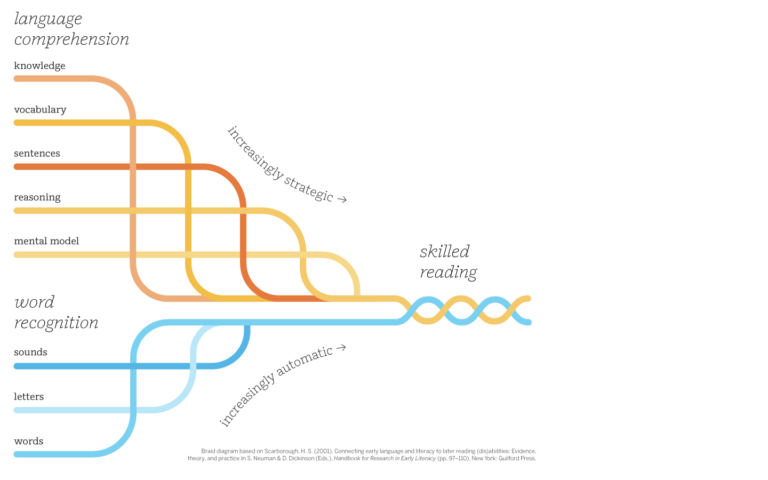
Units at a glance
Students move fluidly between reading, writing, speaking and listening, and language activities, with increasingly complex texts, close reading, and a greater writing emphasis.
Unit 1
Classic Tales: The Wind in the Willows
Students explore international classic tales, including The Wind in the Willows, Alice in Wonderland, and “Aladdin and the Wonderful Lamp.”
Number of Lessons: 15
Unit 2
Animal Classification
Students learn how scientists use animals’ characteristics to classify and study them; students apply knowledge through text-based discussions and writing exercises.
Number of Lessons: 15
Unit 3
The Human Body: Systems and Senses
This unit involves the study of the human body, building students’ understanding of its senses and skeletal, muscular, and nervous systems.
Number of Lessons: 14
Unit 4
The Ancient Roman Civilization
Students dive into ancient Rome, studying its history, culture, and myths about Roman gods and goddesses.
Number of Lessons: 15
Unit 5
Light and Sound
Students learn the science behind light and sound, read biographies of Alexander Graham Bell and Thomas Edison, and write newspaper articles.
Number of Lessons: 17
Unit 6
The Viking Age (with Core Quest)
This unit’s informational and literary texts convey information about the Vikings, their culture, and their exploration.
Number of Lessons: 11
Unit 7
Astronomy: Our Solar System and Beyond
Students learn about astronomy, the universe, and important figures in the history of space exploration, including Nicolaus Copernicus and Mae Jemison.
Number of Lessons: 20
Unit 8
Native Americans: Regions and Cultures
Students compare, contrast, assemble information, and reflect on what they have learned about Native Americans and their ways of life.
Number of Lessons: 13
Unit 9
Early Explorations of North America
Students explore reasons for European exploration, what exploration was like, and who went exploring; then students write opinion pieces using this information.
Number of Lessons: 14
Unit 10
Colonial America
Students learn about colonies in early America, including how colonies were started and the progress colonists made after settling.
Number of Lessons: 16
Unit 11
Ecology
Students learn about different aspects of ecology, including food chains, the balance of nature, changes to the environment, and protecting the environment.
Number of Lessons: 12
Unit 1
Personal Narratives
This unit examines the genre of personal narratives, including nonfiction works written by a first-person narrator involved in the events being described.
Number of Lessons: 15
Unit 2
Empires in the Middle Ages
This unit covers the history of various empires and geographical regions throughout the Middle Ages.
Number of Lessons: 25
Unit 3
Poetry
Students explore poetry, training in methods and devices poets use and learning to read, write, and interpret formal and free verse poems.
Number of Lessons: 15
Unit 4
Eureka! Student Inventor
This Core Quest, a narrative-driven unit, immerses students in close-reading adventures and scientific and historical content about inventions. Students write and read opinion, informational, and narrative texts.
Number of Lessons: 10
Unit 5
Geology
This unit focuses on the composition of Earth and the forces that change its surface.
Number of Lessons: 15
Unit 6
Contemporary Fiction with excerpts from The House on Mango Street
This unit explores narrative literature and writing, using excerpts from The House on Mango Street as its anchor text.
Number of Lessons: 13
Unit 7
American Revolution
Students learn that disagreements about principles of government led colonists in North America to seek independence from Great Britain.
Number of Lessons: 17
Unit 8
Treasure Island
Students focus on character development, setting, plot, and literary devices while reading an abridged version of a classic novel, Treasure Island.
Number of Lessons: 19
Unit 5
Writing Quest (supplemental): The Contraption
In this supplemental Quest, students interact with a mysterious machine fueled by their writing and solve the machine’s puzzles. This Quest features a digital environment controlled by the teacher.
Unit 1
Personal Narratives
This unit examines the genre of personal narratives, including nonfiction works written by a first-person narrator involved in the events being described.
Number of Lessons: 15
Unit 2
Early American Civilizations
Students study the geography, climate, flora, and fauna of the Americas and the rise and fall of the Maya, Aztec, and Inca civilizations.
Number of Lessons: 15
Unit 3
Poetry
Students explore poetry, training in methods and devices poets use and learning to read, write, and interpret formal and free verse poems.
Number of Lessons: 13
Unit 4
Adventures of Don Quixote
In this unit students trace the development of plot, characters, and literary elements while reading a full-length, adapted version of Don Quixote.
Number of Lessons: 15
Unit 5
The Renaissance
This unit provides students with a broad exposure to the art and literature of the Renaissance through the works of renowned masters.
Number of Lessons: 19
Unit 6
The Reformation
This unit teaches students about the Reformation, a movement involving religious and political upheaval that shifted the political power in Europe.
Number of Lessons: 10
Unit 7
A Midsummer Night’s Dream (Core Quest)
This unit is an immersive Quest that treats Shakespeare’s comedy as both literature and a living text for interpretation and performance.
Number of Lessons: 15
Unit 8
Native Americans
Students learn how settlers, explorers, and the American government in the 1800s affected Native American cultures and their relationship with the land.
Number of Lessons: 15
Unit 9
Chemical Matter
Students learn about chemistry and close-reading through a literary and informational work, The Badlands Sleuth, in which the protagonist uses chemistry to solve mysteries.
Number of Lessons: 15
Unit 10
Writing Quest (supplemental): The Robot
Students interact with a classroom pet that learns and grows with their writing. This Quest features a digital environment controlled by the teacher.
Program components
The program includes instructional guidance and student materials for a year of instruction, with lessons and activities that keep students engaged every day.
Component
FORMAT
Teacher Guides
Teacher Guides for each unit provide engaging lessons with standards-based objectives and formative assessments that empower teachers with proven strategies and research-based tools.
Print or digital
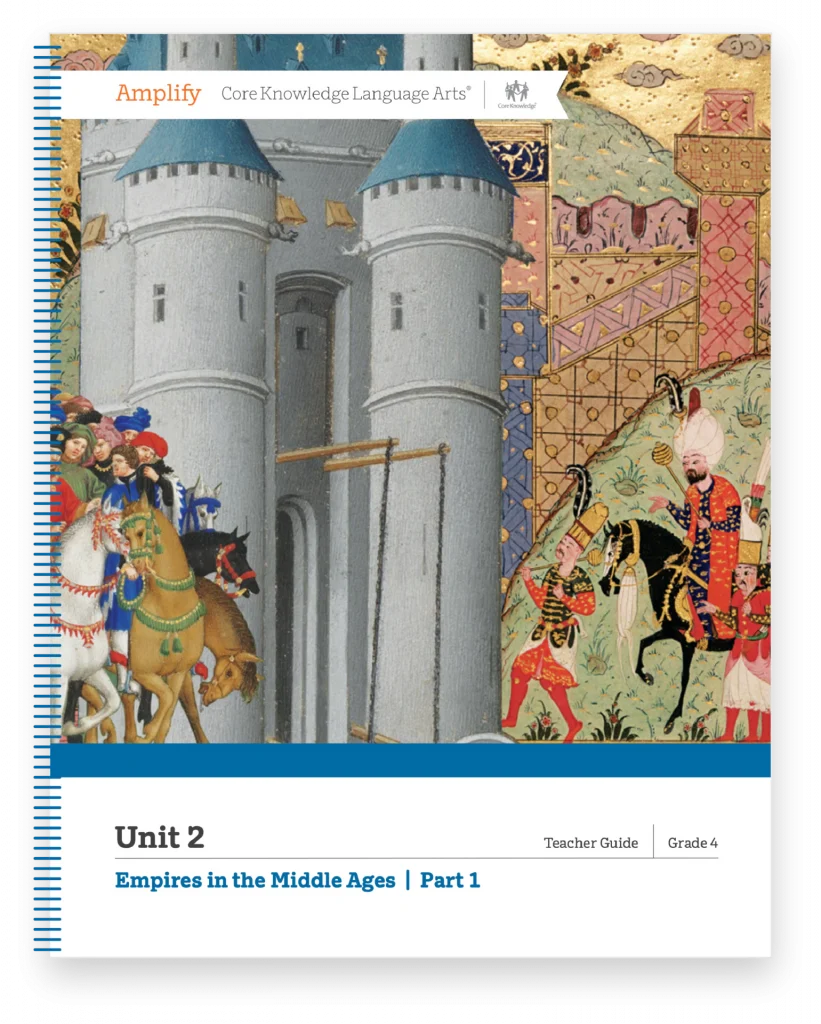
Differentiation resources
The online Assessment and Remediation Guide (Grade 3) and the Decoding and Encoding Supplement (Grades 4–5) provide thousands of pages of targeted activities in decoding, spelling, and other core literacy skills. Supplemental Guides provide opportunities for enrichment.
Digital

Writing Studio
A riveting connected writing program for more time, practice, and challenge in writing, with a focus on informative, narrative, and opinion modes of writing.
Print or digital

Digital experience
The Amplify CKLA digital experience delivers ready-made, customizable, slides-based lesson presentations to enhance instruction and save time. Everything needed to plan and present high-quality, engaging early literacy instruction is in one convenient place.
Digital
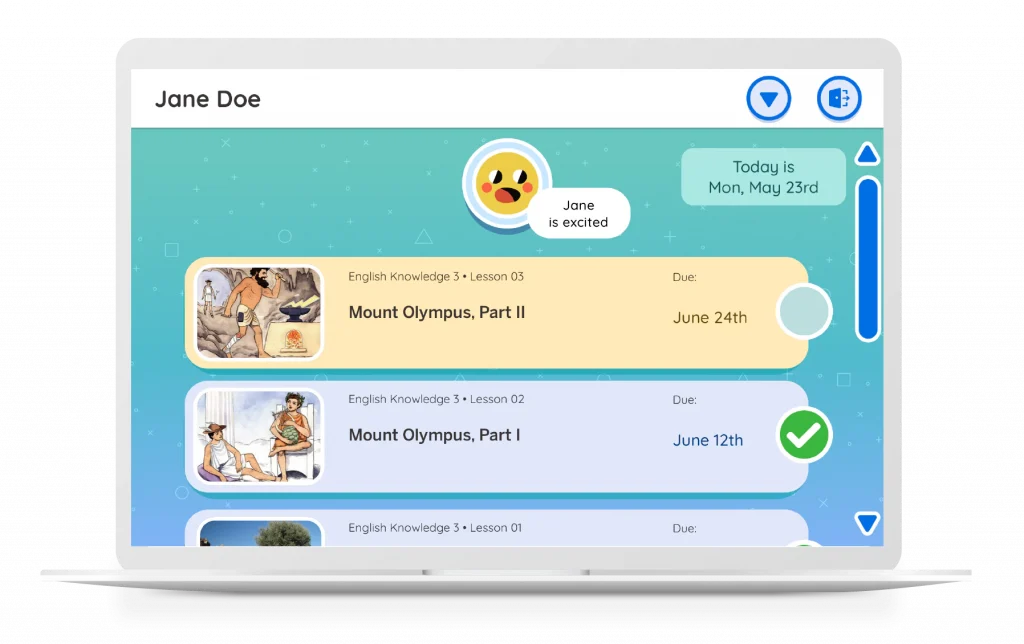
Component
FORMAT
Student Readers
Amplify CKLA’s Student Readers anchor each of the content-based units, providing a close-reading experience fueled by rich background knowledge that inspires students to dig deeper.
Activity Books
In addition to providing daily opportunities for students to respond to text and apply skills and knowledge, Activity Books feature formative assessments for each day’s objectives.
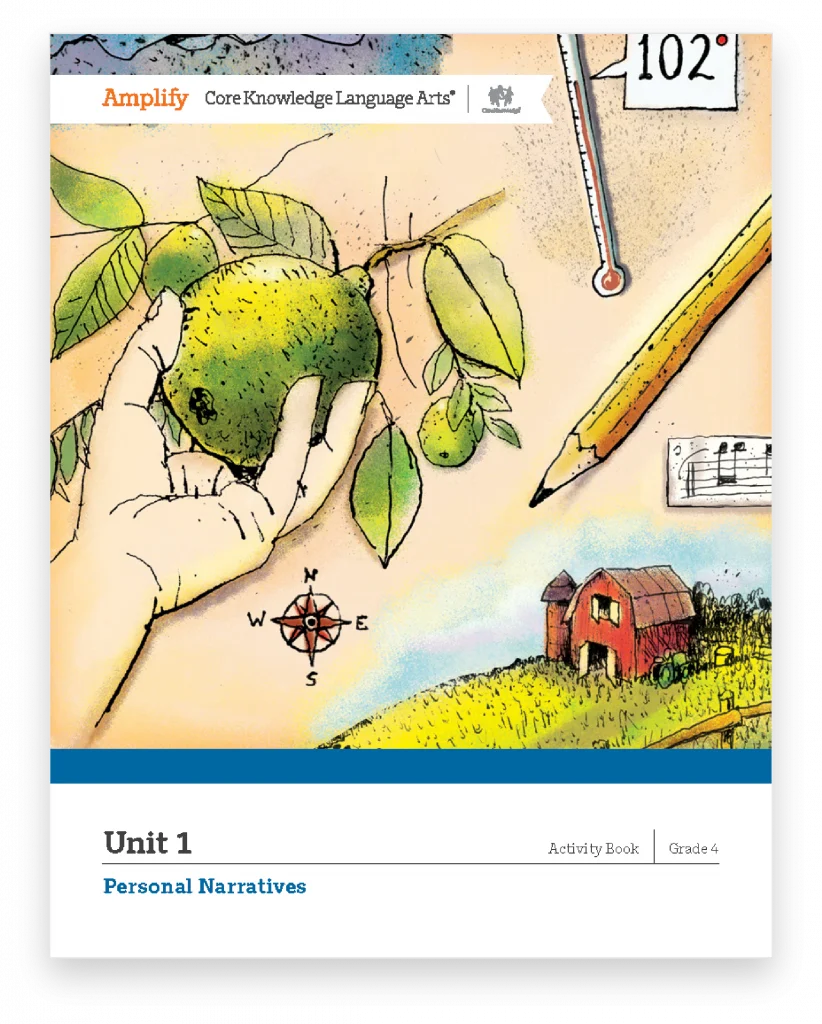
Digital experience
The Amplify CKLA digital experience delivers ready-made, customizable, slides-based lesson presentations to enhance instruction and save time. Everything needed to plan and present high-quality, engaging early literacy instruction is in one convenient place.
Digital
Explore more programs
Our programs are designed to support and complement one another. Learn more about our related programs.

Vulnerability Disclosure Policy
As a provider of technology solutions to schools, Amplify’s commitment to data privacy and security is essential to our organization. Amplify demonstrates that commitment in part through the physical, technical, and administrative safeguards we maintain to protect student data and other sensitive information entrusted to our care.
Amplify looks forward to working with the security community to find security vulnerabilities and support our efforts to keep our data and systems safe and secure.
Before reporting a vulnerability, please read our program rules, eligibility overview, report submission rules and guidelines, legal terms, and out-of-scope list set out below.
General Rules
- We appreciate reports on any Amplify-owned asset, but only vulnerabilities that prove to be outside of expected behavior are eligible for acceptance.
- Reports involving third party services or providers not under Amplify’s control are out-of-scope for submission.
- Amplify places a high priority on privacy. Vulnerabilities in the areas of inadvertent exposure of our customers’ personally identifiable information (PII) are considered to be of Critical severity.
- We classify vulnerability severity per CVSS (the Common Vulnerability Scoring Standard). These are general guidelines, and the ultimate decision over a reward – whether to give one and in what amount – is a decision that lies entirely within our discretion on a case-by-case basis.
- In order to receive an award for validated reports, you must have a HackerOne account. Please note reward decisions are subject to the discretion of Amplify. Please note these are general guidelines, and that reward decisions are subject to the discretion of Amplify.
- Only interact with test accounts that you created via self sign-up or were provided by Amplify. The use of any credentials outside of these areas for testing purposes, including legacy credentials supplied through the program and leaked credentials from third parties is strictly prohibited.
- Do not contact Amplify’s customer support for questions or to submit a vulnerability report.
- Amplify may, in its sole discretion, disqualify you if you breach this policy or fail to comply with any of the program’s rules and terms.
- Amplify reserves the right to cancel or modify this program without notice at any time.
Eligibility
- You are not eligible for participation if you 1) are employed by Amplify or any of its affiliates 2) are an immediate family member of a person employed by Amplify or any of its affiliates or 3) left the employment of Amplify or its affiliates or subsidiaries within the past (12) months.
- You are not eligible for participation if you have been prohibited in writing from participating in the Bug Bounty Program by Amplify at any time.
- You may not be in violation of any national, state, or local law or regulation with respect to any activities directly or indirectly related to conducting your tests.
- You may not compromise the privacy or safety of our customer and the operation of our services;
- You may not cause harm to Amplify, our customers, or others;
- You must follow the policy guidelines to responsibly disclose vulnerabilities to Amplify.
Vulnerability Submission Rules & Guidelines
- Any testing conducted on customer data or accounts is strictly prohibited and will result in removal from the program.
- If during the course of testing you encounter any sensitive data outside of your test accounts (including student or teacher names, login info, assessment data, activity data, and student work, etc.), please cease testing immediately and report what you have found. DO NOT include any text, screenshots, etc. with PII in the report. This action safeguards both potentially vulnerable data and yourself.
- Do not access, download, or share any data you encounter in your testing.
- Only interact with test accounts that you created or that we provided. The use of any credentials outside of these areas for testing purposes is strictly prohibited.
- Provide detailed reports with reproducible steps. If the report is not detailed enough to reproduce the issue, the issue will not be eligible for a reward.
- In some cases, you may not have all of the context information to assess the impact of a vulnerability. If you’re unsure of the direct impact but are reasonably certain that you have identified a vulnerability, we encourage you to submit a detailed report and state the open questions on impact.
- When duplicate submissions for the same vulnerability occur, we only award the first report that was received, provided that it can be fully reproduced.
- Multiple reports describing the same vulnerability against multiple assets or endpoints must be submitted within a single report.
- Avoid destruction of data and interruption or degradation of our service.
- Proof of Concept (POC) videos that do not include PII are highly recommended to help verify the issue, provide clarity, and save time on triage.
- Please provide timely responses to any follow-up questions and requests for additional information.
- Understand that there could be submissions for which we accept the risk, have other compensating controls, or will not address in the manner expected. When this happens, we will act as transparently as we can to provide you with the necessary context as to how the decision was made.
- Reports submitted using methods that violate policy rules will not be accepted and may result in account suspension from/denial of entrance to the program.
- Please refer to any noted out-of-scope areas listed under Out-of-Scope Vulnerabilities.
Out-of-Scope Vulnerabilities
When reporting vulnerabilities, please consider (1) attack scenario / exploitability, and (2) security impact of the bug. The following issues are considered out-of scope. In addition, please refer to any noted Out of Scope areas listed under the program assets.
- Social engineering (e.g. phishing, vishing, smishing) is prohibited.
- Clickjacking on pages with no sensitive actions.
- Unauthenticated/logout/login CSRF.
- Attacks requiring MITM or physical access to a user’s device.
- Previously known vulnerable libraries without a working Proof of Concept.
- Comma Separated Values (CSV) injection without demonstrating a vulnerability.
- Missing best practices in SSL/TLS configuration.
- Any activity that could lead to the disruption of our service (DoS).
- Content spoofing and text injection issues without showing an attack vector/without being able to modify HTML/CSS.
- XSRF that requires the knowledge of a secret.
- Automated tools that could generate significant traffic and possibly impair the functioning of our services.
- Testing or demonstrating the ability to upload unlimited audio/video files to exhaust resources.
- Leaked credentials from third party providers, including invalid or stale employee credential dumps, and/or leaked personal information of Amplify staff.
- Leaked credentials for Amplify customers not caused by vulnerabilities in our systems.
- Vulnerabilities identified via third party services or providers where Amplify is not the owner.
- Issues that merely result in spam/annoyance without additional impact (e.g sending emails without sufficient rate limiting)
- Attempts to access our offices or data centers.
- Any activity that could contribute to the disruption of our service (DoS). Automated scanning tests should be kept to 10 requests per second or less.
- Self XSS.
- Broken links and/or crashes in general.
- Issues that require unlikely user interaction.
- Issues that do not affect the latest version of modern browsers
- Issues that require physical access to a victim’s computer/device.
- Disclosure of information that does not present a significant risk
- Please refer to any noted out-of-scope areas listed under program assets.
Legal
- Any information you receive or collect about us, our affiliates or any of our users, employees or agents in connection with the Bug Bounty Program (“Confidential Information”) must be kept confidential and only used in connection with the Bug Bounty Program. You may not use, disclose or distribute any such Confidential Information, including without limitation any information regarding your Submission, without our prior written consent. You must get written consent by submitting a disclosure request through the HackerOne platform.
- Researchers must follow HackerOne’s disclosure guidelines. Public disclosure or disclosure to other third parties without the explicit permission of Amplify is prohibited.
- We will not take legal action against you if vulnerabilities are found and responsibly reported in compliance with all of the terms and conditions outlined in this policy.
- Amplify reserves the right to modify the terms and conditions of this program without notice at any time, and your participation in the Program constitutes acceptance of all terms.