Customer Privacy Policy

Last Modified: January 23, 2026 | Update History

Most recent update: This Privacy Policy has been updated to address additional rights for individuals in the European Union/UK.

We advise you to read this Privacy Policy in its entirety, including the jurisdiction-specific provisions in the appendix. Click here to review Our U.S. Notice At Collection.

Customer Privacy Policy: K–12 Schools

Who We Are

Amplify Education, Inc. (“Amplify”) is leading the way in next-generation curriculum and assessment. Amplify’s programs provide teachers with powerful tools that help them understand and respond to the needs of each student and use data in a way that is safe, secure, and effective.

Our Products and Services

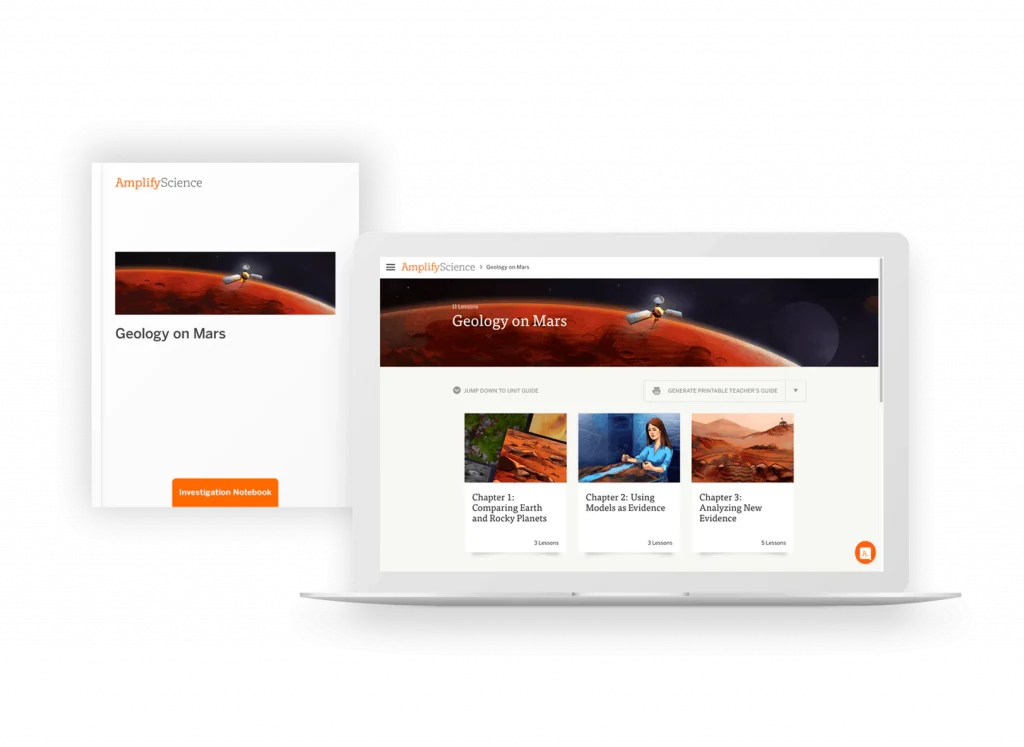
Amplify’s products support classroom instruction and learning and include Amplify CKLA, Amplify ELA, Amplify Caminos, Amplify Science, Amplify Desmos Math, Boost Reading, Boost Math, mCLASS, Mathigon, associated professional development and tutoring services, and services at classroom.amplify.com (for creating and assigning activities) and student.amplify.com (for use of the activities or curricula as directed by an instructor), and any other product or service that links to this Privacy Policy (together, the “Products”).

Our Approach to Student Data Privacy 

In the course of providing the Products to Schools and their Authorized School Users, Amplify collects, receives, generates, or has access to Student Data (defined below). We consider Student Data to be confidential and we collect and use Student Data solely for educational purposes in connection with providing our Products to, or on behalf of the School as described in this Privacy Policy and our Agreements (defined below). We work to maintain the security and confidentiality of Student Data that we collect or store, and we enable Schools to control the use, access, sharing, and retention of Student Data.

Our Products are geared towards K–12 students (“Students”), and the educators, agents and staff members who use the Products as authorized by their School (“Educators”). Information that directly relates to an identifiable Student (“Student Data”) is owned and controlled by the School, and Amplify receives Student Data as a “school official” under Section 99.31 of the Family Educational Rights and Privacy Act of 1974 (“FERPA”) for the purpose of providing the Products hereunder. In addition, we rely on the School acknowledging that it is acting as the parent’s agent and consenting on the parent’s behalf to process personal information of Students under the age of 13 (“Child Users”) in accordance with the Children’s Online Privacy Protection Act (“COPPA”).

Our collection and use of Student Data is governed by our Agreements with Schools, including this Privacy Policy (“Privacy Policy”), and applicable laws which may include FERPA, COPPA, the Protection of Pupil Rights Amendment (“PPRA”), as well as other applicable federal, state, and local privacy laws and regulations (“Applicable Laws”). As noted above, with respect to FERPA, Amplify receives Student Data as a “school official” under Section 99.31 of FERPA for the purpose of providing its Products, and such Student Data is owned and controlled by the School.

Schools may provide authorization in two ways:

  1. by the School agreeing to our Customer Terms and Conditions located at amplify.com/customer-terms or another written agreement between Amplify and the School, as applicable; or
  2. by an Educator agreeing to the Acceptable Use Policy located at amplify.com/acceptable-use-policy/ (“AUP”) on behalf of the School as outlined in the AUP.

In each case, we collect Student Data and provide these Products solely for the use and benefit of the School and for no other commercial purpose. We require all Schools to review this Privacy Policy, available at amplify.com/customer-privacy, and to make a copy of the Privacy Policy available to the parents or guardians of Child Users.

We also provide limited opportunities for individual users to sign up for an account for use of our Products at-home or otherwise outside of the authorization of a School (“Home Users”). See the Appendix–Supplemental Disclosures for additional information that applies to our Home Users.

What This Privacy Policy Covers 

This Customer Privacy Policy (“Privacy Policy”) describes how Amplify collects, uses, and discloses personal information through the provision of Products.

For purposes of this Privacy Policy, “you” and “your” means Authorized Users (defined below).

This Privacy Policy does not apply to Amplify’s handling of:

  • information collected from users of Amplify’s company website, which is governed by our Website Privacy Policy.
  • job applicant data that we process in accordance with our applicant privacy notice.

There may be different contractual terms or privacy policies in place with some Schools. Such other terms or policies supersede this Privacy Policy for information collected or released under those terms. If you have any questions as to which legal agreement or privacy policy controls the collection and use of your personal information, please contact us using the information provided below. Unless expressly superseded, this Privacy Policy is incorporated into and is subject to the Agreement that governs your use of the Products.

Our Role

Amplify as a processor/service provider: Our School customers are the controllers of Student Data (as well as certain other Educator personal information to the extent required by law or Amplify’s agreement with the School) (together “School Data”).

Amplify acts as a processor/service provider for our School customers with respect to School Data, which means when we use School Data, we do so solely on the instruction of the School. School Data is subject to the School’s privacy policies; therefore, you will need to contact the School directly if you have any questions or would like to exercise your rights with respect to School Data.

Amplify as a controller: We are the controller of all other personal information we collect from non-Student Authorized Users (“Amplify Data”) and can be reached by email at privacy@amplify.com or by mail at Amplify Education, Inc., 55 Washington St.#800, Brooklyn, NY, 11201.

Policy

1. Definitions

Capitalized terms not defined in this section or elsewhere in this Privacy Policy will have the meaning set forth by Applicable Laws.

Agreement” means the underlying contractual agreement between Amplify and the School.

Authorized Users” means all users of our Products, including Authorized School Users, parents and legal guardians, and Home Users.

Authorized School Users” means Students and Educators.

Local Education Authority” means a local education agency or authority, school district, school network, independent school, or other regional education system.

Non-Student Data” means information that is linked or linkable to Authorized Users who are not Students.

School” means the Local Education Authority or State Agency.

State Agency” means the educational agency primarily responsible for the supervision of public elementary and secondary schools in any of the 50 states, the Commonwealth of Puerto Rico, the District of Columbia, or other territories and possessions of the United States, as well as a national or regional ministry or department of education in other countries, as applicable.

2. What personal information do we collect?

When you access or use our Products, you may choose to provide us with personal information, including Student Data. This information may be provided to us directly (e.g. when an account is created or through communications with us) or through your interactions with our Products.

Student Data. Below is a list of the categories of Student Data that may be collected by Amplify or its Products, either directly or through the Authorized School User’s use of the various features and configurations of the Products:

  • Identifier and Enrollment Data, such as name, email, school / state ID number, username and password, grade level, homeroom, courses, teacher names.
    • Why? Most of Amplify’s Products require some basic information about who is in a classroom and who teaches the class—Student or teacher Identifier and Enrollment data. This information is provided to Amplify by the School, either directly from the School’s student information system or via a third party with whom the School contracts to provide that information.
  • Demographic Data, such as date of birth, socioeconomic status, race, national origin, and preferred or primary language.
    • Why? To support school instructional and reporting requirements, Amplify’s Products allow Schools to view reports and analyze data using Demographic Data. Generally, Demographic Data is provided on a voluntary basis by the School. For example, a School may wish to analyze Student literacy assessment results based on English Language Learner status to better tailor classroom instruction, and in that case, the School may provide Demographic Data to enable that reporting.
  • School Records, such as grades, attendance, assessment results, and whether an Individualized Education Plan (IEP or local equivalent) is in place.
    • Why? Some of our Products support grading assignments and administering formative, diagnostic, and curriculum-based assessments. Teachers use that information to support Students’ progress in the program or help with instructional decisions. We do not collect specific details from an IEP, nor do we collect protected health information or other sensitive information.
  • Schoolwork and Student Generated Content, which includes any information contained in Student assignments and assessments, including information in response to instructional activities and participation in collaborative or interactive features of our Products, such as Student responses to academic questions and Student-written essays, as well as images, video, and audio recordings.
    • Why? As part of the digital learning experience, some of our Products may enable Students to write text and create and upload images, video, and audio recordings. For example, in Amplify ELA, students may write essays or submit short-form responses in our platform as part of a lesson on literature. As another example, in Boost Reading, student interactions with reading skills games are recorded to keep track of the student’s progress to level up in the program and to provide visibility to teachers on how students are mastering the skills.
  • Teacher Comments and Feedback, such as scores, written comments, or other feedback that Educators may provide about Student responses or student course performance.
    • Why? To enable teachers to track the performance and provide feedback to their students.
  • Non-Student Data. We may collect the following types of personal information from all other Authorized Users:
    • Contact Information, such as name and email address, as well as grade level taught, school name and school location, whether you are an Educator or Home User that creates an account or uses our Products or communicates with us.
    • Account Information, such as user login and password, for account creation and access purposes.
    • Survey Responses, which you provide in response to surveys or questionnaires.
  • Device and Usage Data. Depending on the Product, we may collect certain information about the device used to connect to our Product, such as device type and model, browser configurations, and persistent identifiers, such as IP addresses and unique device identifiers. We may collect device diagnostic information, such as battery level, usage logs, and error logs, as well as usage, viewing, and technical information (e.g., email open rates), such as the number of requests a device makes, to ensure proper system capacity for all Authorized Users. We may collect IP addresses and use that information to approximate device location to support operation of the Product. To the extent that we collect this information, this data is solely used to support operation of the Product and is not linked to Student Data. For purposes of clarity, Amplify does not use Student Data for marketing or advertising purposes (see section 6 of this Privacy Policy for more information about our commitments regarding Student Data).
    • Why? We use this information to remember returning users and facilitate ease of login, to customize the function and appearance of the Products, and to improve the learning experience. This information also helps us track product usage for various purposes, including website optimization, to ensure proper system capacity, troubleshoot and fix errors, provide technical assistance and customer support, provide and monitor the effectiveness of our Products, monitor and address security concerns, and compile analytics for product improvement and other internal purposes.
    • How? Cookies and Similar Technologies. We collect device and usage data through “cookies,” Web beacons, HTML5 local storage, and other similar technologies, which are used in some of our Products solely to support operation of the Products as described above. While we may use third party cookies and similar technologies for advertising and marketing purposes on our website (in accordance with our Website Privacy Policy), we do not permit such tracking technologies to be present on Student-facing portions of the Products. In particular, we only use the following types of cookies in our Products:
      • Strictly necessary cookies – These are cookies that are required for the operation of our websites and applications that host our Products. They include, for example, cookies that enable you to log into secure areas of our Products. These cookies are not generally stored beyond the browser session and are less likely to include personal information. This category of cookies cannot be disabled.
      • Functionality Cookies – We use these cookies so that we recognize you on the websites and apps that host our Products and remember your previously selected preferences. These cookies are stored on your device between browsing sessions but expire after a pre-defined period. These cookies enable us to “recognize” you when you use our Products, including your preferences such as your preferred language, time, and location. A mix of first party (placed by us) and third-party cookies (placed by third parties) are used.
      • Performance Cookies – These cookies help us and service providers acting on our behalf compile statistics and analytics about users of our Products that are accessed via websites and apps, including Device and Usage Information.
    • Learn how to opt out of cookies and similar technologies by reading the “What Rights and Choices Do You Have?” section of this Privacy Policy below.

3. How do we use personal information?

Student Data. Amplify uses Student Data for educational purposes, to provide the Products, and to ensure secure and effective operation of our Products, including:

  • to provide and improve our educational Products;
  • to support School and Authorized School Users’ activities;
  • to ensure secure and effective operation of our Products;
  • for purposes requested or authorized by the School or Authorized School User or as otherwise permitted by Applicable Laws;
  • for customer support purposes, to respond to the inquiries and fulfill the requests of the School and their Authorized School Users;
  • to enforce Product access and security controls; and
  • to conduct system audits and improve protections against the misuse of our Products, or to detect and prevent fraud and other harmful activities.
  • to enable the adaptive and personalized learning features of the Products.

Non-Student Data. Amplify may use Non-Student Data for the purposes for which Student Data is used as set forth above. In addition, Amplify may use Non-Student Data to provide customized content, advertising and marketing in limited circumstances (e.g. to periodically send newsletters and other promotional materials) directed to Educators and Home Users. For sake of clarity, we do not use Student Data for marketing purposes and we do not direct marketing to Students. Amplify may also use Non-Student Data for internal research and analytics, including generating insights on the use of our Products by Educators in certain Schools so that we can better serve those communities. We will also use Non-Student Data as otherwise required or permitted by law, or as we may notify you at the time of collection. Learn how to opt out of these communications by reading the “What Rights and Choices Do You Have?” section of this Privacy Policy below.

Amplify may use aggregate or de-identified data as described in the Aggregate/De-identified Data section below.

4. To whom do we disclose personal information?

Student Data. We disclose Student Data to third parties only as needed to provide the Products under the Agreement, as directed or permitted by the School or Authorized School User, and as required by law. Such disclosures may include but are not limited to the following:

  • to other Authorized School Users of the School entitled to access such data in connection with the Products;
  • to our service providers, subprocessors, or vendors who have a legitimate need to access such data in order to assist us in providing or supporting our Products, such as platform, infrastructure, and application software. We contractually bind such parties to protect Student Data in a manner consistent with those practices set forth in this Privacy Policy and in accordance with Applicable Laws. A list of Amplify subprocessors is available at https://www.amplify.com/subprocessors;
  • to comply with the law, respond to requests in legal or government enforcement proceedings (such as complying with a subpoena), protect our rights in a legal dispute, or seek assistance of law enforcement in the event of a threat to our rights, security, or property or that of our affiliates, customers, Authorized Users, or others;
  • in the event Amplify or all or part of its assets are acquired or transferred to another party, including in connection with any bankruptcy or similar proceedings, provided that successor entity will be required to comply with the privacy protections in this Privacy Policy with respect to information collected under this Privacy Policy, or we will provide the School with notice and an opportunity to opt out of the transfer of such data prior to the transfer; and
  • except as restricted by Applicable Laws or contracts with the School, we may also share Student Data with Amplify’s affiliated education companies, provided that such disclosure is solely for the purposes of providing Products and at all times is subject to this Policy.

Non-Student Data. Amplify discloses Non-Student Data for the purposes for which Student Data is used as set forth above. Amplify may also disclose Non-Student Data as otherwise required or permitted, or as disclosed at the time of collection. Please note that we do not share mobile information or opt-in consent with third parties / affiliates for their own marketing or promotional purposes.

5. Aggregate/De-identified data

Amplify may use de-identified or aggregate data for purposes allowed under FERPA and other Applicable Laws, to research, develop, and improve educational sites, services, and applications and to demonstrate the effectiveness of the Amplify Products. Amplify will not attempt to re-identify de-identified data. We may use aggregate information (which is information that has been collected in summary form such that the data cannot be associated with any individual) for analytics and reports. For example, our promotional materials may note the total number of students served by our programs in the prior year, but that information cannot be used to identify any one student. We may also share de-identified or aggregate data with research partners to help us analyze the information for product improvement and development purposes.

Records and information are de-identified when all personal information has been removed or obscured, such that the remaining information does not reasonably identify a specific individual. We de-identify Student Data in compliance with Applicable Laws and in accordance with the guidelines of NIST SP 800-122. Amplify has implemented internal procedures and controls to protect against the re-identification of de-identified Student Data. Amplify does not disclose de-identified data to its research partners unless that party has agreed in writing not to attempt to re-identify such data.

6. Data prohibitions, Advertising, Advertising limitations

Amplify will not:

  • sell Student Data to third parties;
  • use or disclose Student Data to inform, influence, or enable targeted advertising to a Student based on Student Data or information or data inferred over time from the Student’s usage of the Products;
  • use Student Data to develop a profile of a Student for any purpose other than providing the Products to a School or Authorized School User, or as authorized by a parent or legal guardian;
  • use Student Data for any commercial purpose other than to provide the Products to the School or Authorized School User, or as permitted by Applicable Laws.

7. External third-party services

This Privacy Policy applies solely to Amplify’s Products and practices. Schools and other Authorized Users may choose to connect or use our Products in conjunction with third-party services and Products. Additionally, our sites and Products may contain links to third-party websites or services . This Privacy Policy does not address, and Amplify is not responsible for, the privacy, information, or other practices of such third parties. Schools should carefully consider which third-party applications to include among the Products and services they provide to Students and vet the privacy and data security standards of those providers.

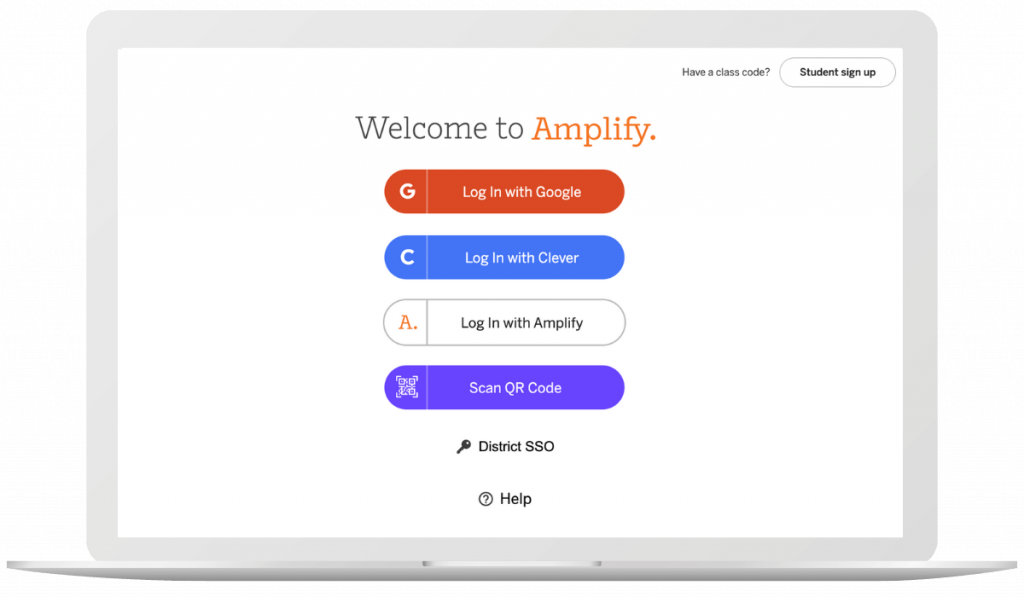
Authorized Users may be able to log in to our Products using third-party sign-in services such as Clever, ClassLink or Google. These services authenticate your identity and provide you with the option to share certain personal information with us, including your name and email address, to pre-populate our account sign-up form. If you choose to enable a third party to share your third-party account credentials with Amplify, we may obtain personal information via that mechanism. You may configure your accounts on these third-party platform services to control what information they share.

8. Security

Amplify maintains a comprehensive information security program and uses industry standard administrative, technical, operational, and physical measures to safeguard Student Data in its possession against loss, theft and unauthorized use, disclosure, or modification. Amplify performs periodic risk assessments of its information security program and prioritizes the remediation of identified security vulnerabilities. Please see https://amplify.com/security for a detailed description of Amplify’s security program.

In the event Amplify discovers or is notified that Student Data within our possession or control was disclosed to, or acquired by, an unauthorized party, we will investigate the incident, take steps to mitigate the potential impact, and notify the School in accordance with Applicable Laws.

Non-Student Data

Outside of Student Data, Amplify uses commercially reasonable administrative, technical, personnel, and physical measures to safeguard personal information in its possession against loss, theft, and unauthorized use, disclosure or modification.

9. Data Storage and Transfers

We are a United States Company, and our servers are hosted, managed, and controlled by us in the United States. If you are outside of the United States, we use industry standards to protect your data when it leaves your country of residence and your data will always be protected in accordance with this Privacy Policy, Applicable Laws and our Agreement regardless of the storage location.

Additionally, where we transfer your personal information to service providers outside of the United Kingdom (UK), European Economic Area (EEA), or other region that offers similar protections, we use specific appropriate safeguards to contractually obligate such service providers to protect personal information in accordance with Amplify’s commitment to privacy and security and applicable data protection laws.

If you have questions or wish to obtain more information about the international transfer of your personal information or the implemented safeguards, please contact us using the contact information below.

10. Data Retention / Deletion

Student Data

Upon request, we provide the School the opportunity to review and delete the personal information collected from Students. We will retain Student Data for the period necessary to fulfill the purposes outlined in this Privacy Policy and our Agreement with the School. We do not knowingly retain Student Data beyond the time period required to support the School or Authorized School User’s educational purpose, unless authorized by the School or Authorized School User. Upon request, Amplify will return, delete, or destroy Student Data stored by Amplify in accordance with applicable law and customer requirements. We may not be able to delete all data in all circumstances, such as information retained in technical support records, customer service records, back-ups, and similar business records. All such information will be protected in accordance with this Privacy Policy and our Agreement until it has been permanently deleted. Unless otherwise notified by the School, we will delete or de-identify Student Data after termination of our Agreement with the School.

Non-Student Data

Outside of Student Data, we keep personal information as long as it is necessary or relevant for the practices described in this Privacy Policy or as otherwise required by our Agreement with the School, if applicable. We determine the appropriate retention period for personal information on the basis of the amount, nature and sensitivity of the personal information being processed, the potential risk of harm from unauthorized use or disclosure of the personal information, whether we can achieve the purposes of the processing through other means, and on the basis of applicable legal requirements (such as applicable statutes of limitations).

11. What rights and choices do you have?

What Choices Do You Have?

Marketing/Advertising

As noted above, we do not use Student Data for marketing purposes and we do not direct marketing to Students. Amplify does not use third party cookies and similar technologies for advertising and marketing purposes on Student-facing portions of the Products. The choices below apply to Non-Student Authorized Users.

Opt-out of Marketing Communications. If you want to stop receiving promotional materials from Amplify, you can follow the unsubscribe instructions at the bottom of each email or email us at privacy@amplify.com. Amplify does not send marketing communications to Students.

Opt-out of Cookies and Similar Tracking Technologies. With respect to cookies, you may be able to reject cookies through your browser or device controls. Note that you have to opt-out of cookies on each browser or device that you use. If you replace, change, or upgrade your browser or device, or delete your cookies, you may need to use these opt-out tools again. Please be aware that disabling cookies may negatively impact your experience as some features may not work properly. To learn more about browser cookies, including how to manage or delete them, check the “Help,” “Tools,” or similar section of your browser.

What Rights Do You Have?

Individuals in the U.S.

  • What Rights Do You Have With Respect to Student Data?
    • Review and Correction. FERPA requires schools to provide parents with access to their children’s education records, and parents may request that the school correct records that they believe to be inaccurate or misleading.
    • If you are a parent or guardian and would like to review, correct, or update your child’s data stored in our Products, contact your School. Amplify will work with your School to enable your access to and, if applicable, correction of your child’s education records.
    • If you have any questions about whom to contact or other questions about your child’s data, you may contact us using the information provided below.
    • Other Privacy Rights? Please see section 3 of our supplemental disclosures: “Additional U.S. State Privacy Law Rights” for more information about your U.S. privacy rights

Individuals in the EU/UK

Please see section 4 of our supplemental disclosures: “Notice for European Economic Area and United Kingdom Customers” for more information about your EU/UK privacy rights.

12. COPPA

We do not knowingly collect personal information from a Child User unless and until a School or Educator, with the permission of the School, has authorized us to collect such information to provide the Products. Amplify relies on the School acknowledging that it is acting as the parent’s agent and consenting on the parent’s behalf to process personal information of Child Users in accordance with all applicable provisions of COPPA. To the extent COPPA applies to the information we collect, we process such information for educational purposes only, and no other commercial purpose, at the direction of the School and on the basis of the School’s authorization. If you are a parent or guardian and have questions about your child’s use of the Products and any personal information collected, please direct these questions to your child’s school.

Please refer to the Appendix–Supplemental Disclosures if you are a Home User.

13. Updates to this Privacy Policy

We may change this Privacy Policy in the future. For example, we may update it to comply with new laws or regulations, to conform to industry best practices, or to reflect changes in our product offerings. When these changes do not reflect material changes in our practices with respect to use and/or disclosure of Authorized Users’ personal information, including Student Data, such changes to the Privacy Policy will become effective when we post the revised Privacy Policy on our website. In the event there are material changes in our practices that would result in Authorized Users’ personal information being used in a materially different manner than was disclosed when the information was collected, with respect to Student Data, we will notify the School, and with respect to other information, we will notify you via email and provide an opportunity to opt out before such changes take effect.

14. Contact us

If you have questions about this Privacy Policy, please contact us at:

Email: privacy@amplify.com
Mail: Amplify Education, Inc.
55 Washington St.#800
Brooklyn, NY, 11201
Phone: (800) 823-1969
Attn: General Counsel

To report a security vulnerability, visit https://amplify.com/report-a-vulnerability/.

Appendix – Supplemental Disclosures

1. Mathigon and Amplify Classroom accounts

While our Products are geared towards Schools we do provide a limited opportunity for Home Users to use the Products at home—outside of the school context. We do not allow persons under the age of 13 (or those under the age of consent in any applicable jurisdiction) to register for an account with us outside the school context.

If you are a Home User, you are prohibited from collecting or providing any personal information from students or minors. You are permitted to access the platform for instructional purposes, but you may not enroll or roster minors, create accounts for minors, or input any personal information of minors into the Product.

Please note that most parts of Mathigon can be used without creating an account or providing any personal information that directly identifies you.

What Rights Do You Have? If you are a Child User who is 13 or older with a legacy Mathigon account (or the parent or guardian of a Child User with a legacy Mathigon account), you may request that we provide for your review, delete from our records, or cease collecting any Child User personal information. To the extent that you are unable to exercise these rights through self-service features within your account with us, please contact us by sending an email to: help@amplify.com and we will provide assistance.

2. U.S. Notice at Collection

Personal Information We Collect How We Use Personal Information

Student Data, which includes:

  • Roster Information
  • Demographic Data, such as race and national origin
  • School Records
  • Account Information
  • Schoolwork and Student Generated Content
  • Teacher Comments and Feedback
  • Device and Usage Data
  • To provide and improve our educational Products;
  • To support Schools’ and Authorized School Users’ activities;
  • To ensure secure and effective operation of our Products;
  • For purposes requested or authorized by the School or Authorized School Users, or as otherwise permitted by Applicable Laws;
  • For adaptive or personalized learning features of the Products; provided that Student Data is not disclosed;
  • For customer support purposes, to respond to the inquiries and fulfill the requests of the School and their Authorized School Users;
  • To enforce product access and security controls; and
  • To conduct system audits and improve protections against the misuse of our Products, or to detect and prevent fraud and other harmful activities.

Authorized Users, which includes:

  • Contact Information
  • Account Information
  • Survey Responses
  • Device and Usage Data
  • For the purposes for which Student Data is used as set forth above;
  • For marketing purposes in limited circumstances (e.g. to periodically send newsletters and other promotional materials), which will not be based on Student Data or directed to K–12 students;
  • For internal research and analytics; and
  • As otherwise required or permitted, or as we may notify you at the time of collection.

Some of the information described above may be considered “sensitive” under the laws of certain jurisdictions (i.e., account credentials and race/national origin) (“Sensitive Information”). We use Sensitive Information for necessary or reasonably expected purposes – specifically, to provide you with our Services (i.e., account credentials are used to allow account logins and race/national origin are used for the School’s reporting purposes when voluntarily provided by the School).

We do not sell or share your personal information, as described in California law.

We retain your personal information for as long as reasonably necessary for the purposes disclosed in the chart above. Additional information about our retention of Student Data and personal information from other Authorized Users can be found in Section 10 of this Privacy Policy.

Please see the Additional U.S. State Privacy Law Rights section of this appendix for information about your privacy rights pursuant to applicable U.S. law.

Notice of Financial Incentive

From time to time, to support our services, we offer opportunities to complete surveys and questionnaires. As an incentive for completing the survey or questionnaire, you can voluntarily provide personal information as an entry into a raffle drawing or to obtain other benefits, discounts, offers, or deals that may constitute a financial incentive under California law (“Financial Incentive”). The categories of personal information required for us to provide the Financial Incentives include: contact information and any other information that you choose to provide when you complete the survey.

Participation is voluntary and you can opt out at any time before the survey is complete. We do not allow students to participate in our surveys.

The value of the personal information we collect in connection with our Financial Incentives is equivalent to the value of the benefit offered.

3. Additional U.S. State Privacy Law Rights

Note for Requests Relating to Student Data: Because Amplify provides the Products to Schools as a “School Official,” we collect, retain, use, and disclose Student Data only for or on behalf of the School for educational purposes, including the purpose of providing the Products specified in our Agreement with the School and for no other commercial purpose. Accordingly, we act as a “service provider” for the School with respect to School Data. We work with the School to support and assist them in addressing privacy requests relating to School Data. Please reach out to your School directly if you wish to exercise any privacy rights that may be available to you.

For all other requests: With respect to Amplify Data, individuals residing in certain U.S. states have the following rights, regarding your personal information (each of which is subject to various exceptions and limitations):

  • Access. You have the right to request, up to two times every 12 months, that we disclose to you the categories of personal information collected about you; the categories of sources from which the personal information is collected; the categories of personal information sold or shared; the business or commercial purpose for collecting, selling, or sharing the personal information; the categories of third parties with whom personal information was shared; and the specific pieces of personal information collected about you.
  • Correction. You have the right to request that we correct inaccurate personal information collected from you.
  • Deletion. You have the right to request that we delete the personal information that we maintain about you. Even after the deletion of your account, some personal information may remain on our servers, such as in technical support logs, server caches, data backups, or email conversations. These will be automatically deleted after a reasonable amount of time, unless we are legally required to retain information for longer, or unless there is a legitimate business reason (e.g. security and fraud prevention or financial record-keeping). We are not required to delete any information which has been aggregated or de-identified in accordance with Section 5.
  • No Discrimination. You have the right not to be discriminated against for exercising these rights.
  • Appeals. You have a right to appeal decisions concerning your ability to exercise your consumer rights.

See Submitting Requests section below for details on submitting a request to exercise these rights.

4. Notice for European Economic Area (EEA) and United Kingdom (UK) Customers

As detailed at the beginning of our Privacy Policy (under the section titled “Our Role”), Amplify operates primarily as a processor that collects personal information on behalf of the School, and we act as a controller in limited circumstances where we offer Products outside the school context.

If you represent a School in the EEA or the UK, please note that we process personal information in accordance with this Privacy Policy, our Acceptable Use Policy, and our standard Data Protection Agreement, which sets out our responsibilities when it comes to our processing activities. Schools must send an email to privacy@amplify.com to enter into that DPA.

Lawful Basis for Processing

We rely on the following lawful bases for our processing activities:

  • Consent;
    • We obtain your consent to use cookies to collect and process device and usage data to understand how individuals use our Products.
  • Pursuant to a contract for use of our Products;
    • We process School Data to provide our Products (e.g., to create, authenticate and manage your account, to verify your identity, to manage our Products) pursuant to the Agreement between us and the School, as required in order for us to perform our obligations.
  • To comply with our legal obligations;
    • We process all categories of personal information that we collect to ensure the safety and security of our Products where we are complying with security requirements under data protection and cyber and information security law.
    • We process all categories of personal information that we collect to comply with our legal obligations which includes, for example, to access, retain or share certain personal information where we receive a valid request from a government body, law enforcement body, judicial body regulator or similar, to deal with legal claims and prospective legal claims, and to ensure we are complying with applicable laws.
  • When we have a legitimate interest in doing so, which is not outweighed by the risks to the individual.
    • We process all categories of personal information that we collect to support the provision, effective management, and improvement of our Products where such activities are not strictly required under our contract. This is in our legitimate interests to ensure that we are providing the best possible service.
    • We process all categories of personal information that we collect to ensure the safety and security of our services where this is important but not required under the data protection law or cyber and information security laws. This is in our legitimate interests to ensure the security of our services and systems, to prevent threats, abuse or fraudulent or unlawful activity, to promote safety and security and to ensure our Products are used in accordance with our terms and conditions.
    • We process the contact information of Non-Student Authorized Users to manage our relationship, including to respond to queries or otherwise communicate with you in relation to our Products and the operation of our business where this is not strictly required under a contract with you. This is in our legitimate interests to communicate with and resolve queries from users of our Products and to ensure that we are providing the best possible service.

We process the contact information and survey data of Non-Student Authorized Users for internal research and marketing purposes in limited circumstances (e.g. to periodically send newsletters and other promotional materials), which will not be based on Student Data or directed to Students. This is in our legitimate interests to understand our customers and prospective customers, understand how our products and services are perceived in the market, to promote our products, and to grow and develop our business.

Your Data Subject Rights

Note for Requests Relating to School Data: Amplify acts as processor to its School customers with respect to all School Data. We work with our School customers to support and assist them in addressing privacy requests relating to School Data. Please reach out to your School directly if you wish to exercise any privacy rights that may be available to you.

For all other Requests With respect to Amplify Data, you have the following rights if you are in the EEA or UK, subject to certain exceptions:

  • Right of access: You have the right to ask us for confirmation on whether we are processing your personal information and access to that personal information.
  • Right to correction: You have the right to have your personal information corrected.
  • Right to erasure: You have the right to ask us to delete your personal information.
  • Right to withdraw consent: You have the right to withdraw consent that you have provided.
  • Right to lodge a complaint with a supervisory authority: You have the right to lodge a complaint with a supervisory authority.
  • Right to restriction of processing: You have the right to request the limiting of our processing under limited circumstances.
  • Right to data portability: You have the right to receive the personal information that you have provided to us, in a structured, commonly used, and machine-readable format, and you have the right to transmit that information to another controller, including to have it transmitted directly, where technically feasible.
  • Right to object: You have the right to object to our processing of your personal information

See Submitting Requests section below for details on submitting a request to exercise these rights.

5. Submitting Requests

To exercise any of the rights described in sections 2 and 3 of this appendix, email us at privacy@amplify.com and specify which privacy right you intend to exercise. We may require additional information from you to allow us to confirm your identity. The verification steps will vary depending on the sensitivity of the personal information and whether you have an account with us. Please note that your rights may not apply in all cases. For example, we may need to retain your personal information to comply with our legal obligations, resolve disputes, prevent fraud and enforce our agreements. We will inform you if we are not able to fully respond to your requests. You may designate an authorized agent to make a request on your behalf. When submitting the request, please ensure the authorized agent identifies himself/herself/itself as an authorized agent and can show written permission from you to represent you. We may contact you directly to confirm that you have authorized the agent to act on your behalf or confirm your identity.

Complaints

If you have any issues, you have the right to lodge a complaint with an EEA or UK supervisory authority. We would, however, appreciate the opportunity to address your concerns before you approach a data protection regulator and would welcome you directing an inquiry first to us. To do so, please contact us by email at privacy@amplify.com or by mail at Amplify Education, Inc., 55 Washington St.#800, Brooklyn, NY, 11201.

6. Google APIs

Amplify uses Google’s Application Programming Interface (API) Services to enable Authorized Users to log in to Amplify, import classes and rosters from Google Classroom, create assignments in Google Classroom, and copy, edit, and publish Amplify content using Google Slides. Amplify will use and transfer information received from Google’s API in accordance with Google API Service User Data Policy, including the Limited Use requirements.

Update History:

Update: 6/13/2025: This Policy has been updated to align with product updates and to provide additional context for authorized educational use of Amplify’s Products.

Update 6/27/2024: The Policy has been updated to include an explanation regarding Google APIs in the Appendix — Supplemental Disclosures section.

Update 6/30/2023: This Privacy Policy has been updated to address new state law data privacy requirements.

Website Privacy Policy

Last Modified:  February 2026

Update: February 2, 2026: This Privacy Policy has been updated to address additional rights for individuals in the European Union/UK.

Below is the Website Privacy Policy for the amplify.com site (“Privacy Policy”). For purposes of clarity and as further outlined below, this Privacy Policy does not apply to student data. You can visit this page to read about the principles and policy governing student data collected and maintained on behalf of our school customers.

We advise you to read this Privacy Policy in its entirety, including the jurisdiction-specific provisions in the appendix. Our Notice at Collection for California Residents is available in the Notice for our California Customers.

Who We Are / What This Privacy Policy Covers

Amplify Education, Inc. (“Amplify”) recognizes the importance of protecting the privacy and security of your personal information. This Privacy Policy describes our practices in connection with information that we may collect through your use of this website (the “Site”).

This Privacy Policy does not apply to Amplify’s handling of:

  • student data or other information collected from users of Amplify’s products that support classroom instruction and learning, which are governed by our Customer Privacy Policy.
  • staff or applicant data that we process in accordance with our staff or applicant privacy notice, respectively.

If you have any question as to what legal agreement or privacy policy controls the collection and use of your information, please contact us using information below in the Contact Us section.

This Privacy Policy is incorporated into and is subject to our Website Terms of Use, which governs your use of the Site.

Our Role: We are the controller of all personal information (as defined below) that we receive through our Site and can be reached by email at privacy@amplify.com or by mail at Amplify Education, Inc., 55 Washington St.#800, Brooklyn, NY, 11201.

1. What personal information do we collect?

When you visit and / or interact with our Site, we may collect the following information about you that, alone or in combination, could be used to identify you or your device (“personal information”):

  • Contact Information, such as name, district / school name, professional affiliation, title / role, email address, shipping address, address and phone number.
  • Account Information, such as customer user login and password. 
  • Demographic Information, such as age and gender.
  • Information You Submit, such as information voluntarily provided on message boards, feedback sections, and other public areas of the Site.
  • Site Activity Information, which is collected when you access and interact with the Site, we and our Service Providers (as defined below) may collect certain information about those visits. For example, we or our Service Providers may receive and record information about your computer and browser, including your IP address, browser type, and other software or hardware information. If you access the Site from a mobile or other device, we may collect a unique device identifier assigned to that device, or other characteristics of the device hardware, operating system and configurations for that device. On certain pages of the Site, we may use third party tools to help us look at mouse movements, clicks, keystrokes, data or text entered, and the pages you visit.
  • Location Information, such as state, country and / or zip code, which we use to help us customize your experience, as well as to help us facilitate your privacy rights.
  • Audio, electronic, visual, or similar information: such as customer service interactions, call recordings, chat transcripts, files you attach, and email, text, or other correspondence.

If you make a purchase through our online store, you may provide payment and other information directly to our third party e-commerce platform to complete your purchase.

We ask that you not send us, and you not disclose, any government identifiers (such as social security numbers) or information related to racial or ethnic origin, health, or criminal background on or through the Site or otherwise.

2. Where/How do we collect personal information?

Amplify may collect personal information directly from you at various points, including the following:

  • Product Information and Newsletters. When you submit a request to obtain information about our products, services or other informational material or subscribe to one of our newsletters, you may be asked to submit information such as name, professional affiliation, email address, company name, address and phone and details on your query or interests in our products and services. This information is collected to help us process your request.
  • Customer Support. When you submit a form to contact our customer service, you may be asked to submit information such as name, e-mail, district, customer user login and password and details on your query. In addition, some features of our Site, such as our customer live chat functionality or other customer service systems may allow you to voluntarily provide personal information to us. This information is collected to help us process your request. Please only provide what is needed to facilitate the support request.
  • Product Orders. If you use e-commerce areas of our Site to order our products, we request information from you on our order form. To purchase products through the Site, you must provide contact information (such as name and shipping address) and financial information (such as credit card number). This information is used for billing purposes and to fill your orders. We will also use this information to contact you to confirm your order or to inform you of any issues or delays.
  • Registration. You may be asked to submit information to use certain parts of the Site (such as posting comments on certain areas of the Site), register for an event or webinar, or view restricted content that may be available on the Site. For instance, you may be asked to provide your name, email address and event or webinar-related preferences to help us process your registration or content request.
  • Public Areas and Discussion Forums. Any information you share in public areas, such as message boards or feedback sections, becomes public. Please be careful about what you disclose and do not post any personal information that you expect to keep private.
  • Contests and Sweepstakes. When we run a contest or sweepstakes relating to the Site or Amplify, it will be accompanied by a set of rules. The rules for each contest/sweepstakes will specify how the information gathered from you for your entry will be used and disclosed.

As you visit or use our Site, we may collect Site activity information through cookies and similar technologies.

  • Cookies, Pixels, and Other Tracking Technologies. Cookies and other tracking technologies (such as pixels, beacons, and Adobe Flash technology) are small data files that are placed on your computer or mobile device when you visit a website. They allow the website or mobile app to remember your actions and preferences over a period of time. We use the following types of cookies:
    • Strictly necessary cookies – These are cookies that are required for the operation of our Site. They include, for example, cookies that enable you to log into secure areas of our Site. These cookies are not generally stored beyond the browser session and are less likely to include personal information. This category of cookies cannot be disabled.
    • Functionality Cookies – We use these cookies so that we recognize you on our Site and remember your previously selected preferences. These cookies are stored on your device between browsing sessions but expire after a pre-defined period. These cookies enable our Site to “recognize” you when you use our Site, including your preferences such as your preferred language , time, and location. A mix of first party (placed by us) and third-party cookies (placed by third parties) are used.
    • Analytics Cookies – These cookies help us and our Service Providers compile statistics and analytics about users of the Site, including Site Activity Information. For example, we use Google Analytics to help us understand how users interact with the Platform. Google Analytics uses cookies to track your interactions with the Site, then collects that information and reports it to us. This information helps us improve the Site so that we can better serve you. To learn more about Google Analytics, visit https://support.google.com/analytics/answer/6004245?hl=en. If you wish, you can opt-out of Google Analytics by installing the Google Analytics Opt-out Browser Add-on, available on https://tools.google.com/dlpage/gaoptout.
    • Advertising Cookies – We use these cookies to collect information about your visit to our Site, the content you viewed, the links you followed and information about your browser, device, and your IP address. We sometimes share some limited aspects of this data with third parties for advertising purposes. We may also share Site Activity Information collected through cookies with our advertising partners. This means that when you visit another website, you may be shown advertising based on your browsing patterns on our Site.

For information on how to opt-out of these technologies, please see What Choices Do You Have? below.

  • Social Plugins. Certain areas of our Site permit you to utilize social media functionality, such as the Facebook “Like” or Google “+1” buttons (“Social Plugins”). To use a Social Plugin, you must authorize the third-party provider of that Social Plugin, e.g. Facebook or Google, to access, collect, and/or disclose your information related to your use of that Social Plugin, subject to that company’s privacy policies, which may differ from this Privacy Policy. In addition, such providers may be able to collect information about you, including your activity on the Site, and they may notify your connections on their social networking platform about your use of the Site. Such services may also employ unique identifiers that allow your activity to be monitored across multiple websites for purposes of delivering more targeted advertising to you.

Amplify also receives information from other sources.

  • Information from Other Sources. We may supplement any information we collect via this Site with information from publicly or commercially available sources.

3. How do we use personal information?

We may use any personal information and other information we collect from and about you for the following purposes and as described elsewhere in this Privacy Policy:

  • To provide and manage the Site. We use the personal information we collect from and about you to provide the Site and features to you, including to measure and improve its services and features, to personalize your experience by delivering relevant content, to deliver marketing messages, to allow you to comment on content, to provide you with customer support, and to respond to inquiries. We may also use and disclose aggregate or anonymous data about your use of and activity on the Site to assist us in this regard and for any other purpose.
  • To contact you. Amplify may periodically send promotional materials (e.g., newsletters) or notifications related to the Site and to Amplify’s business to the contact information you provided to us at registration.
  • To improve our products and services. We may use your personal information for our business purposes, such as data analysis, audits, developing new products and services, enhancing the Site, improving our services, identifying usage trends, and determining the effectiveness of our promotional campaigns.
  • For marketing and advertising. We may use your personal information to help us market our products to you or your school district.

4. To whom do we disclose personal information?

We may disclose any personal information and other information we collect from and about you for the following purposes and as described elsewhere in this Privacy Policy:

  • To share with our affiliated education companies. Amplify may share your personal information with Amplify’s affiliated education companies for the purposes described in this Privacy Policy.
  • To allow service providers to assist us. We may engage third party service providers, agents and partners (“Service Providers”) to perform functions on our behalf, such as analytics, credit card processing, shipping or stocking orders and providing customer service. We may disclose your personal information to such Service Providers to enable them to assist us in these efforts.
  • To allow our marketing and advertising partners to assist us. We may engage marketing and advertising partners to help us market and advertise our products and services, including via digital ads sent in connection with your visit to the Site. We may disclose Site Activity information, as well as contact information and other aggregate insights to such partners to enable them to assist us in these efforts.
  • To protect the rights of Amplify and our users. There may be instances when Amplify may disclose your personal information, in situations where Amplify has a good faith belief that such disclosure is necessary or appropriate in order to: (i) protect, enforce, or defend the legal rights, privacy, safety, operations, or property of Amplify, our parents, subsidiaries or affiliates or our or their employees, agents and contractors (including enforcement of our agreements, including our terms of use); (ii) protect the rights, safety, privacy, security or property of users of the Site or others; (iii) protect against fraud or for risk management purposes; (iv) comply with the law or legal process, including laws outside your country of residence; (v) respond to requests from public and government authorities, including those outside your country of residence; or (vi) allow us to pursue available remedies or limit the damages that we may sustain.
  • To complete a merger or sale of assets. If Amplify sells all or part of its business or makes a sale or transfer of its assets or is otherwise involved in a merger, transfer or other disposition of all or part of its business, assets or stock (including in connection with any bankruptcy or similar proceedings), Amplify may transfer your personal information to the party or parties involved in the transaction.

5. What rights and choices do you have?

Opt-out of Marketing Communications. If you want to stop receiving promotional materials from Amplify, you can follow the unsubscribe instructions at the bottom of each email. There are certain service notification emails that you may not opt-out of, such as notifications of changes to the Site or policies. If you have additional questions, please contact us using information below in the Contact Us section.

Opt-of Cookies and Similar Tracking Technologies. There are a few ways to opt out or delete cookies.

  • On Your Browser. Most browsers are initially set to accept cookies, but your browser may permit you to change your settings to notify you of a cookie being set or updated, or to block cookies altogether. Please consult the “Help” section of your browser for more information. Please note that by blocking any or all cookies you may not have access to certain features, content or personalization that may be available through the Site. Please also note that you must opt out separately on each device (including each web browser on each device) that you use to access our Site if you wish to opt out, and if you clear your cookies or if you use a different browser or device, you will need to renew your opt-out preferences.
  • Interest-Based Advertising. Some advertisers and marketing companies participate in the self-regulatory programs of the Digital Advertising Alliance (“DAA”) and European Interactive Digital Advertising Alliance (“eDAA”) in connection with online interest-based advertising. DAA and eDAA provide consumers with the ability to opt out of receiving interest-based advertising from their program participants at the following links:

What Rights Do You Have?

6. Security

Amplify uses commercially reasonable administrative, technical, personnel and physical measures to safeguard personal information in its possession against loss, theft and unauthorized use, disclosure or modification.

7. Data retention / Deletion

We will retain your personal information for the period necessary to fulfill the purposes outlined in this Privacy Policy unless a longer retention period is required or allowed by law. Even after we have deleted your personal information from our systems, copies of some information from your account may remain viewable in some circumstances – where, for example, you have shared information with social media platforms and other unaffiliated services. We may also retain backup information related to your account on our servers for some time after cancellation for fraud detection or to comply with applicable law or our internal security policies. Because of the nature of caching technology, your account may not be instantly inaccessible to others, and there may be a delay in the removal of the content from elsewhere on the Internet and from search engines.

8. Data Storage and Transfers

We are a United States Company, and our servers are hosted, managed, and controlled by us in the United States. If you are outside of the United States, we use industry standards to protect your data when it leaves your country of residence and your data will always be protected in accordance with this Privacy Policy, Applicable Laws and our Agreement regardless of the storage location.

Additionally, where we transfer your personal information to service providers outside of the United Kingdom (UK), European Economic Area (EEA), or other region that offers similar protections, we use specific appropriate safeguards to contractually obligate such service providers to protect personal information in accordance with Amplify’s commitment to privacy and security and applicable data protection laws.

If you have questions or wish to obtain more information about the international transfer of your personal information or the implemented safeguards, please contact us using the contact information below.

9. External third-party services

The Site may be linked to sites operated by unaffiliated companies, and may carry advertisements or offer content, functionality, games, newsletters, contests or sweepstakes, or applications developed and maintained by unaffiliated companies. Amplify is not responsible for the privacy practices of unaffiliated companies, and once you leave the Site via a link or enable an unaffiliated service, you are subject to the applicable privacy policy of the unaffiliated service.

10. Updates to this policy

Amplify may modify this Privacy Policy. Please look at the Last Revised Date at the top of this Privacy Policy to see when this Privacy Policy was last revised. Any changes to this Privacy Policy will become effective when we post the revised Privacy Policy on the Site. If you do not wish to be bound by the terms of the revised Privacy Policy, you must discontinue your use of the Site.

11. Contact us

If you have questions about this Privacy Policy, please contact us at:

Email: privacy@amplify.com
Mail: Amplify Education, Inc.
55 Washington St.#800
Brooklyn, NY, 11201
Phone: (800) 823-1969
Attn: General Counsel

Appendix – Supplemental Disclosures

1. Notice for our California Customers

We retain your personal information for as long as you are an active user of our Site or continue to have an account with us, and in accordance with our legal obligations (which may require us to hold information to provide financial and other reporting and to defend against potential claims). If you are a California resident, please see below for information about your rights pursuant to California law.

Personal Information We Collect
How We Use Personal Information
Contact Information
  • To provide you with customer support and respond to inquiries.
  • To contact you with promotional emails (e.g. newsletters) or notifications related to the Site
  • To help us verify the identity of our user
  • As otherwise required or permitted by law, or as we may notify you at the time of collection
Account Information
  • To provide and manage the Site
  • To improve our products and services
  • As otherwise required or permitted by law, or as we may notify you at the time of collection
Payment Information
  • To complete your payment of purchases made through the Site
  • For internal operations (e.g. to improve and update our products)
  • For security and fraud prevention
  • As otherwise required or permitted by law, or as we may notify you at the time of collection
Information You Submit
  • To provide the Site and features to you, including to allow you to comment
  • To improve our products and services
  • As otherwise required or permitted by law, or as we may notify you at the time of collection.
Site Activity Information
  • We sell or share information about your Site activity with third parties for targeted advertisements on and off of Amplify. We also use this information to:
    • To provide and manage the Site
    • To improve our products and services
    • For internal operations (e.g. to improve and update our products)
    • For security, safety, and due diligence purposes
    • As otherwise required or permitted by law, or as we may notify you at the time of collection
Location Information
  • We use location information , such as state, country and / or zip code, which we use to help us customize your experience, as well as to help us facilitate your privacy rights.
Inferences
  • We may make inferences about your interests and personal preferences (such as the content you like to consume). We also use this information to:
    • To personalize your experience on the Site
    • For internal operations (e.g. to improve and update our products)
    • As otherwise required or permitted by law, or as we may notify you at the time of collection

Some of the information described above may be considered “sensitive” under the laws of certain jurisdictions (including payment information and account login credentials (“Sensitive Information”). Whether information is Sensitive Information will depend on the laws of your jurisdiction. We only use Sensitive Information, such as payment information and account credentials for necessary or reasonably expected purposes – specifically, to provide you with our Services (i.e., fulfill purchases and to allow account logins).

Shine the Light

California’s Shine the Light law (Civil Code § 1798.83) permits California residents to request certain information regarding our disclosure of certain categories of personal information to third parties for their own direct marketing purposes in the preceding calendar year. We do not share personal information, as defined by California’s Shine the Light law, with third parties for their own direct marketing purposes.

Notice of Financial Incentive 

 As part of our services, there may be opportunities for you to complete surveys and questionnaires. As an incentive for completing the survey or questionnaire, you can voluntarily provide your personal information, which in turn enters you into a raffle drawing or enables us to provide you with other benefits, discounts, offers, or deals that may constitute a financial incentive under California law (“Financial Incentive”). The categories of personal information required for us to provide the Financial Incentives include: contact information and any other information that you choose to provide when you complete the survey.

Participation is voluntary and you can opt out at any time before your survey is complete.

The value of the personal information we collect in connection with our Financial Incentives is equivalent to the value of the benefit offered.

2. Additional U.S. State Privacy Law Rights

Residents of certain U.S. states have the following rights, regarding your personal information (each of which are subject to various exceptions and limitations):

  • Access. You have the right to request, up to two times every 12 months, that we disclose to you the categories of personal information collected about you, the categories of sources from which the personal information is collected, the categories of personal information sold or shared, the business or commercial purpose for collecting, selling, or sharing the personal information, the categories of third parties with whom personal information was shared, and the specific pieces of personal information collected about you.
  • Correct. You have the right to request that we correct inaccurate personal information collected from you. 
  • Deletion. You can request that we delete your personal information that we maintain about you.
  • Opt-out (Do Not Sell or Share My Personal Information). Under several U.S. state privacy laws, consumers have the right to opt-out of the “sale” of their personal information (defined very broadly to include situations where we provide personal information to partners who provide advertising services to us) and the “sharing” of personal information in connection with the display of targeted advertising across third party websites. While we do not sell your personal information, we do share it in connection with our advertising efforts. Please also note that we do not knowingly sell or share the Personal Information of minors under 16 years of age.

We also honor the Global Privacy Control, a browser-based opt-out signal. We do not respond to other browser-based signals that do not meet applicable state law requirements, which may include older Do Not Track signals.

  • No Discrimination. You have the right not to be discriminated against for exercising these rights.
  • Appeals. You have a right to appeal decisions concerning your ability to exercise your consumer rights. 
  • Submission of Requests. You may exercise the above rights by emailing us at privacy@amplify.com. Note that we may deny certain requests, or fulfill a request only in part, based on our legal rights and obligations. For example, we may retain personal information as permitted by law, such as for tax or other record keeping purposes, to maintain an active account, and to process transactions and facilitate customer requests.
  • Authorized Agent. You may designate an authorized agent to make a request on your behalf. When submitting the request, please ensure the authorized agent identifies himself/herself/itself as an authorized agent and can show written permission from you to represent you. We may contact you directly to confirm that you have authorized the agent to act on your behalf or confirm your identity.
  • Verification. Whether you submit a request directly on your own behalf, or through an authorized agent, we will take reasonable steps to verify your identity prior to responding to your requests. The verification steps will vary depending on the sensitivity of the personal information and whether you have an account with us.
3. Notice for European Economic Area and United Kingdom Customers

As detailed at the beginning of our Privacy Policy (under the section titled “Our Role”), Amplify acts as a controller with respect to personal information collected as you interact with our Site.

Lawful Basis for Processing

We rely on the following lawful bases for our processing activities:

  • Consent;
    • We obtain your consent to collect and process device and usage data via cookies on our Site to understand how individuals use our Site and to help us measure the effectiveness of our advertising and marketing campaigns.
  • Pursuant to a contract with the user of our Site;
    • We process all categories of personal information that we collect to provide and manage our Site, including payment processing, where this is required in order for us to perform our obligations under our contract with you.
  • To comply with our legal obligations;
    • We process all categories of personal information that we collect to ensure the safety and security of our Site where we are complying with security requirements under data protection and cyber and information security law.
    • We process all categories of personal information that we collect to comply with our legal obligations which includes, for example, to access, retain or share certain personal information where we receive a valid request from a government body, law enforcement body, judicial body regulator or similar, to deal with legal claims and prospective legal claims, and to ensure we are complying with applicable laws.
  • When we have a legitimate interest in doing so, which is not outweighed by the risks to the individual. We rely on our legitimate interest to process all categories of personal information:
    • to provide, manage, and improve the Site where such activities are not strictly required under our contract, including personalizing your experience on the Site.
    • to ensure the safety and security of our Site where this is important but not required under the data protection law or cyber and information security laws.
    • to respond to queries or otherwise communicate with you in relation to our Site and the operation of our business where this is not strictly required under a contract with you.
    • internal research and certain marketing purposes (e.g. to periodically send newsletters and other promotional materials), which will not be based on Student Data or directed to K–12 students.

Your Data Subject Rights

If you are located in the EEA/UK, you have the following rights, subject to certain exceptions:

  • Right of access: You have the right to ask us for confirmation on whether we are processing your personal information and access to that personal information.
  • Right to correction: You have the right to have your personal information corrected.
  • Right to erasure: You have the right to ask us to delete your personal information.
  • Right to withdraw consent: You have the right to withdraw consent that you have provided.
  • Right to lodge a complaint with a supervisory authority: You have the right to lodge a complaint with a supervisory authority.
  • Right to restriction of processing: You have the right to request the limiting of our processing under limited circumstances.
  • Right to data portability: You have the right to receive the personal information that you have provided to us, in a structured, commonly used, and machine-readable format, and you have the right to transmit that information to another controller, including to have it transmitted directly, where technically feasible.
  • Right to object: You have the right to object to our processing of your personal information

To exercise any of these rights, contact us as set forth in the section entitled “Contact Us” above and specify which European privacy right you intend to exercise. We may require additional information from you to allow us to confirm your identity. Please note that we store information as necessary to fulfill the purposes for which it was collected, and may continue to retain and use the information even after a data subject request for purposes of our legitimate interests, including to comply with our legal obligations, resolve disputes, prevent fraud, and enforce our agreements.

Complaints

If you have any issues with our compliance, you have the right to lodge a complaint with an EEA or UK supervisory authority. We would, however, appreciate the opportunity to address your concerns before you approach a data protection regulator, and would welcome you directing an inquiry first to us. To do so, please contact us by email at privacy@amplify.com or by mail at Amplify Education, Inc., 55 Washington St.#800, Brooklyn, NY, 11201.

Oregon Enhanced ELA State Review for K–5

To view this protected page, enter the password below:


West Virginia’s review of the program built for middle schools, Amplify ELA

To view this protected page, enter the password below:


Welcome Amplify Science educators!

To view this protected page, enter the password below:


Plan your professional development

We’re excited to partner with you on your Amplify journey. Flexible professional development pathways have been designed to meet your needs.

Illustration of three educational phases: a teacher launches a rocket, another reads a book, and four individuals discuss in a meeting setting.

Recommended Professional Development Plan

Our team has curated a recommended professional learning path from initial launch to continuous support. Use the Professional Development Planning Guide below to discuss the plan that best meets your school or district needs with your Account Executive.

mCLASS with DIBELS 8th Edition sessions overview

AudienceTitleDurationModality
Launch
New mCLASS with DIBELS 8th Edition customers with limited time for PDmCLASS with DIBELS 8th Edition program overviewHalf dayOnsite/Remote
New mCLASS with DIBELS 8th Edition customersInitial training1 day onsite or 2 half days remoteOnsite/Remote
Initial training: Train the Trainer1 day onsite or 2 half days remoteOnsite/Remote
Initial trainingSelf-pacedOnline course
Strengthen
mCLASS with DIBELS 8th Edition customers with limited time for PDUnderstanding your classroom dataHalf dayOnsite/Remote
All mCLASS with DIBELS 8th Edition customersClassroom data analysis and instructional planning1 day onsite or 2 half days remoteOnsite/Remote
Classroom data analysis and instructional planning: Train the Trainer1 day onsite or 2 half days remoteOnsite/Remote
Classroom data analysis and instructional planningSelf-pacedOnline course
All mCLASS with DIBELS 8th Edition customersUnderstanding your school or district dataHalf dayOnsite/Remote
Data-driven leadership practices 1 day onsite or 2 half days remoteOnsite/Remote
Data-driven leadership practices: Train the Trainer1 day onsite or 2 half days remoteOnsite/Remote
Data-driven leadership practicesSelf-pacedOnline course
Strengthening consultation session60 min.Remote
Strengthening consultation session package3 60-min. sessionsRemote
Coach
All mCLASS with DIBELS 8th Edition customersCoaching session1 dayOnsite
Coaching sessionHalf dayOnsite/Remote
Building readers
All mCLASS with DIBELS 8th Edition customersBuilding readers for leaders2 half daysOnsite/Remote
Building readers for teachers3 half daysOnsite/Remote

Launch

mCLASS with DIBELS 8th edition program overview

Half day (3 hours)

This PD prepares participants to implement the assessment and collect reliable data using standardized guidelines.

Audience: Teachers (administrators welcome), maximum 30 participants
Modality: Onsite/Remote

Initial training

1 day onsite (6 hours) or 2 half days remote (6 hours)

This PD prepares participants to implement the assessment, collect reliable data using standardized guidelines, and use the targeted lessons available on mCLASS to drive differentiated instruction.

Audience: Teachers (administrators welcome), maximum 30 participants
Modality: Onsite/Remote

Initial training: Train the Trainer

1 day onsite (6 hours) or 2 half days remote (6 hours)

This PD prepares participants to implement the assessment, collect reliable data using standardized guidelines, and use the targeted lessons available on mCLASS to drive differentiated instruction. Participants receive annotated session materials to turnkey the session to colleagues.

Audience: Teachers (administrators welcome), maximum 30 participants
Modality: Onsite/Remote

Initial training

Self-paced

This PD is an individual seat to our self-paced, on-demand online course that contains approximately 6 hours of training. Participants will learn how to implement the assessment, collect reliable data using standardized guidelines, and use the targeted lessons available on mCLASS to drive differentiated instruction. Participants will access and revisit the course anytime for up to one year as a refresher.

Audience: Teachers (administrators welcome)
Modality: Online

Strengthen

Understanding your classroom data

Half day (3 hours)

This PD prepares participants to understand their students’ data by utilizing the reports available on mCLASS. This session should be scheduled after the most recent benchmark window has closed so that participants can work with their own data.

Audience: Teachers (administrators welcome), maximum 30 participants
Modality: Onsite/Remote

Classroom data analysis and instructional planning

1 day onsite (6 hours) or 2 half days remote (6 hours)

This PD prepares participants to deeply understand their students’ data and create actionable instructional plans by utilizing the reports and skills-focused lesson plans available on mCLASS.

Audience: Teachers (administrators welcome), maximum 30 participants
Modality: Onsite/Remote

*This session should be scheduled after the most recent benchmark window has closed so that participants can work with their own data.

Classroom data analysis and instructional planning: Train the Trainer

1 day onsite (6 hours) or 2 half days remote (6 hours)

This PD prepares participants to deeply understand their students’ data and create actionable instructional plans by utilizing the reports and skills-focused lesson plans available on mCLASS. Participants receive annotated session materials to turnkey the session to colleagues.

Audience: Teachers (administrators welcome), maximum 30 participants
Modality: Onsite/Remote

*This session should be scheduled after the most recent benchmark window has closed so that participants can work with their own data.

Classroom data analysis and instructional planning

Online course (self-paced)

This PD is an individual seat to our self-paced, on-demand online course that contains approximately 6 hours of training. Participants will learn how to deeply understand their students’ data and create actionable instructional plans by utilizing the reports and skills-focused lesson plans available on mCLASS. Participants will access and revisit the course anytime for up to one year as a refresher.

Audience: Teachers (administrators welcome)
Modality: Online

Understanding your school or district data

Half day (3 hours)

This PD prepares participants to use their data in making schoolwide decisions. This session should be scheduled after the most recent benchmark window has closed so that participants can work with their own data.

Audience: Administrators, maximum 30 participants
Modality: Onsite/Remote

Data-driven leadership practices

1 day onsite (6 hours) or 2 half days remote (6 hours)

This PD prepares participants to use their data in making school-wide decisions and build a schoolwide culture of data-driven instruction. This session should be scheduled after the most recent benchmark window has closed so that participants can work with their own data.

Audience: Administrators, maximum 30 participants
Modality: Onsite/Remote

Data-driven leadership practices: Train the Trainer

1 day onsite (6 hours) or 2 half days remote (6 hours)

This PD prepares participants to use their data in making school-wide decisions and build a schoolwide culture of data-driven instruction. This session should be scheduled after the most recent benchmark window has closed so that participants can work with their own data. Participants receive annotated session materials to turnkey the session to colleagues.

Audience: Administrators, maximum 30 participants
Modality: Onsite/Remote

Data-driven leadership practices

Online course (self-paced)

This PD is an individual seat to our self-paced, on-demand online course that contains approximately 6 hours of training. Participants will learn how to use their data in making school-wide decisions and build a schoolwide culture of data-driven instruction. Participants will access and revisit the course anytime for up to one year as a refresher.

Audience: Administrators
Modality: Online

Strengthening consultation session

(60-min.)

This 60-minute session will focus on a specific topic that will deepen educators’ understanding of mCLASS and equip them with the tools needed to drive stronger student outcomes. An Amplify facilitator will align with the school or district leadership team in advance of the session on the topic (chosen from a menu of options) that will best meet educators’ unique needs.
Topics include:

  • Progress Monitoring
  • Zones of Growth
  • Data Walkthrough for Leaders

Audience: Teachers and/or administrators, maximum 30 participants
Modality: Remote

Strengthening consultation session package

(3 hours)

This package consists of three 60-minute sessions that can be delivered on the same day or on different days. Each session will focus on a specific topic that will deepen educators’ understanding of mCLASS and equip them in driving towards stronger student outcomes. An Amplify facilitator will align with the school or district’s leadership team in advance on the topics that will best meet educators’ unique needs.
Topics include:

  • Progress Monitoring
  • Zones of Growth
  • Data Walkthrough for Leaders

Audience: Teachers and/or administrators, maximum 30 participants
Modality: Remote

Coach

Coaching session

1 day (6 hours)

This PD will deepen educators’ understanding of how to utilize mCLASS in order to accelerate data-driven student outcomes. An Amplify facilitator will visit one or two school sites for one day and work with teachers and/or leaders. Prior to the visit, the Amplify facilitator will align with each school’s leadership team on their needs and customize the visit schedule accordingly.

Audience: Teachers and/or administrators, maximum 30 participants
Modality: Onsite

Coaching session

Half day (3 hours)

This PD is up to 3 hours of training and will deepen educators’ understanding of how to utilize mCLASS in order to accelerate data-driven student outcomes. An Amplify facilitator will visit one school site for a half-day and work with teachers and/or leaders. Prior to the visit, the Amplify facilitator will align with each school’s leadership team on their needs and customize the visit schedule accordingly.

Audience: Teachers and/or administrators, maximum 30 participants
Modality: Onsite/Remote

Building readers

Building readers for leaders

2 half days (6 hours)

This training session is split into 2 half-day sessions (3 hours each). The same participants should attend both sessions in order to receive all content, which includes learning the Science of Reading and how to align this theory with schoolwide instruction. Part 2 should be scheduled two to three weeks after Part 1.

Audience: Administrators, maximum 30 participants
Modality: Onsite

Building readers for teachers

3 half days (9 hours)

This training series is split into three half-day sessions (3 hours each). The same participants should attend all sessions in order to receive all content, which includes learning the Science of Reading and how to align this theory with classroom instruction. Part 2 should be scheduled two to three weeks after Part 1, and Part 3 should be scheduled two to three weeks after Part 2.

Audience: Teachers (administrators welcome), maximum 30 participants
Modality: Onsite/Remote

mCLASS with DIBELS 8th Edition and TRC sessions overview

AudienceTitleDurationModality
Launch
New mCLASS with DIBELS 8th Edition and TRC customersInitial training1 day onsite or 2 half days remoteOnsite/Remote
Initial training: Train the Trainer1 day onsite or 2 half days remoteOnsite/Remote
Initial trainingSelf-pacedOnline course
Strengthen
All mCLASS with DIBELS 8th Edition and TRC customersClassroom data analysis and instructional planning1 day onsite or 2 half days remoteOnsite/Remote
Data-driven leadership practices1 day onsite or 2 half days remoteOnsite/Remote
Coach
All mCLASS with DIBELS 8th Edition and TRC customersCoaching session1 dayOnsite
Coaching sessionHalf dayOnsite/Remote

Launch

Initial training

1 day onsite (6 hours) or 2 half days remote (6 hours)

This PD prepares participants to implement the assessment, collect reliable data using standardized guidelines, and use the targeted lessons available on mCLASS to drive differentiated instruction.

Audience: Teachers (administrators welcome), maximum 30 participants
Modality: Onsite/Remote

Initial training: Train the Trainer

1 day onsite (6 hours) or 2 half days remote (6 hours)

This PD prepares participants to implement the assessment, collect reliable data using standardized guidelines, and use the targeted lessons available on mCLASS to drive differentiated instruction. Participants receive annotated session materials to turnkey the session to colleagues.

Audience: Teachers (administrators welcome), maximum 30 participants
Modality: Onsite/Remote

Initial training

Self-paced

This PD is an individual seat to our self-paced, on-demand online course that contains approximately 6 hours of training. Participants will learn how to implement the assessment, and collect reliable data using standardized guidelines and use the targeted lessons available on mCLASS to drive differentiated instruction. Participants will access and revisit the course anytime for up to one year as a refresher.

Audience: Teachers (administrators welcome)
Modality: Online

Strengthen

Classroom data analysis and instructional planning

1 day onsite (6 hours) or 2 half days remote (6 hours)

This PD prepares participants to deeply understand their students’ data and create actionable instructional plans by utilizing the reports and skills-focused lesson plans available on mCLASS.

Audience: Teachers (administrators welcome), maximum 30 participants
Modality: Onsite/Remote

*This session should be scheduled after the most recent benchmark window has closed so that participants can work with their own data.

Data-driven leadership practices

1 day onsite (6 hours) or 2 half days remote (6 hours)

This PD prepares participants to use their data in making schoolwide decisions and build a schoolwide culture of data-driven instruction. This session should be scheduled after the most recent benchmark window has closed so that participants can work with their own data.

Audience: Administrators, maximum 30 participants
Modality: Onsite/Remote

Coach

Coaching session

1 day onsite (6 hours)

This PD will deepen educators’ understanding of how to utilize mCLASS in order to accelerate data-driven student outcomes. An Amplify facilitator will visit one or two school sites for one day and work with teachers and/or leaders. Prior to the visit, the Amplify facilitator will align with each school’s leadership team on their needs and customize the visit schedule accordingly.

Audience: Teachers and/or administrators, maximum 30 participants
Modality: Onsite/Remote

Coaching session

Half day (3 hours)

This PD is up to 3 hours of training and will deepen educators’ understanding of how to utilize mCLASS in order to accelerate data-driven student outcomes. An Amplify facilitator will visit one school site for a half-day and work with teachers and/or leaders. Prior to the visit, the Amplify facilitator will align with each school’s leadership team on their needs and customize the visit schedule accordingly.

Audience: Teachers and/or administrators, maximum 30 participants
Modality: Onsite/Remote

mCLASS Lectura sessions overview

AudienceTitleDurationModality
Launch
New mCLASS Lectura Customers with limited time for PDmCLASS Lectura program overviewHalf dayOnsite/Remote
New mCLASS Lectura customersmCLASS Lectura initial training1 day onsite or 2 half days remoteOnsite/Remote
mCLASS Lectura initial training: Train the Trainer1 day onsite or 2 half days remoteOnsite/Remote
mCLASS Lectura Initial trainingSelf-pacedOnline course
Strengthen
All mCLASS Lectura customers with limited time for PDUnderstanding your classroom dataHalf dayOnsite/Remote
All mCLASS Lectura customersClassroom data analysis and instructional planning1 day onsite or 2 half days remoteOnsite/Remote
Classroom data analysis and instructional planning: Train the Trainer1 day onsite or 2 half days remoteOnsite/Remote
Understanding your school or district dataHalf dayOnsite/Remote
Data-driven leadership practices 1 day onsite or 2 half days remoteOnsite/Remote
Data-driven leadership practices: Train the Trainer1 day onsite or 2 half days remoteOnsite/Remote
Strengthening consultation session60 min.Remote
Coach
All mCLASS Lectura customersCoaching session1dayOnsite
Coaching sessionHalf dayOnsite/Remote

Launch

mCLASS Lectura program overview

Half day (3 hours)

This PD prepares participants to implement the assessment and collect reliable data using standardized guidelines.

Audience: Teachers (administrators welcome), maximum 30 participants
Modality: Onsite/Remote

mCLASS Lectura initial training

1 day onsite (6 hours) or 2 half days remote (6 hours)

This PD prepares participants to implement the assessment, collect reliable data using standardized guidelines, and use the targeted lessons available on mCLASS to drive differentiated instruction. While the assessment must be administered in Spanish, English-speaking educators educators who would like to learn about the program but will not be administering the assessment may attend.

Audience: Teachers (administrators welcome), maximum 30 participants
Modality: Onsite/Remote

mCLASS Lectura initial training: Train the Trainer

1 day onsite (6 hours) or 2 half days remote (6 hours)

This PD prepares participants to implement the assessment and collect reliable data using standardized guidelines. While the assessment must be administered in Spanish, English-only speaking educators who would like to learn about the program but will not be administering the assessment may attend. Participants receive annotated session materials to turnkey the session to colleagues.

Audience: Teachers (administrators welcome), maximum 30 participants
Modality: Onsite/Remote

mCLASS Lectura initial training

Online course (self-paced)

This PD is an individual seat to our self-paced, on-demand online course that contains approximately 6 hours of training. Participants will learn how to implement the assessment, collect reliable data using standardized guidelines, and use the targeted lessons available on mCLASS to drive differentiated instruction. Participants will access and revisit the course anytime for up to one year as a refresher.

Audience: Teachers (administrators welcome)
Modality: Online

Strengthen

Understanding your classroom data

Half day (3 hours)

This PD prepares participants to understand their students’ data by utilizing the reports available on mCLASS. This session should be scheduled after the most recent benchmark window has closed so that participants can work with their own data.

Audience: Teachers (administrators welcome), maximum 30 participants
Modality: Onsite/Remote

Classroom data analysis and instructional planning

1 day onsite (6 hours) or 2 half days remote (6 hours)

This PD prepares participants to deeply understand their students’ data and create actionable instructional plans by utilizing the reports and skills-focused lesson plans available on mCLASS.

Audience: Teachers (administrators welcome), maximum 30 participants
Modality: Onsite/Remote

*This session should be scheduled after the most recent benchmark window has closed so that participants can work with their own data.

Classroom data analysis and instructional planning: Train the Trainer

1 day onsite (6 hours) or 2 half days remote (6 hours)

This PD prepares participants to deeply understand their students’ data and create actionable instructional plans by utilizing the reports and skills-focused lesson plans available on mCLASS. Participants receive annotated session materials to turnkey the session to colleagues.

Audience: Teachers (administrators welcome), maximum 30 participants
Modality: Onsite/Remote

*This session should be scheduled after the most recent benchmark window has closed so that participants can work with their own data.

Understanding your school or district data

Half day (3 hours)

This PD prepares participants to use their data in making schoolwide decisions. This session should be scheduled after the most recent benchmark window has closed so that participants can work with their own data.

Audience: Administrators, maximum 30 participants
Modality: Onsite/Remote

Data-driven leadership practices

1 day onsite (6 hours) or 2 half days remote (6 hours)

This PD prepares participants to use their data in making school-wide decisions and build a schoolwide culture of data-driven instruction. This session should be scheduled after the most recent benchmark window has closed so that participants can work with their own data.

Audience: Administrators, maximum 30 participants
Modality: Onsite/Remote

Data-driven leadership practices: Train the Trainer

1 day onsite (6 hours) or 2 half days remote (6 hours)

This PD prepares participants to use their data in making schoolwide decisions and build a schoolwide culture of data-driven instruction. This session should be scheduled after the most recent benchmark window has closed so that participants can work with their own data. Participants receive annotated session materials to turnkey the session to colleagues.

Audience: Administrators, maximum 30 participants
Modality: Onsite/Remote

Strengthening consultation session package

(3 hours)

This package consists of three 60-minute sessions that can be delivered on the same day or on different days. Each session will focus on a specific topic that will deepen educators’ understanding of mCLASS and equip them with the tools needed to drive stronger student outcomes. An Amplify facilitator will align with the school or district leadership team in advance of the session on the topic (chosen from a menu of options) that will best meet educators’ unique needs. Topics include progress monitoring, goal setting, and a data walkthrough for leaders.

Audience: Teachers (administrators welcome), maximum 30 participants
Modality: Remote

Coach

Coaching session

1 day (6 hours)

This PD will deepen educators’ understanding of how to utilize mCLASS in order to accelerate data-driven student outcomes. An Amplify facilitator will visit 1–2 school sites for one day and work with teachers and/or leaders. Prior to the visit, the Amplify facilitator will align with each school’s leadership team on their needs and customize the visit schedule accordingly.

Audience: Teachers and/or administrators, maximum 30 participants
Modality: Onsite

Coaching session

Half day (3 hours)

This PD is up to 3 hours of training and will deepen educators’ understanding of how to utilize mCLASS in order to accelerate data-driven student outcomes. An Amplify facilitator will visit 1 school site for a half-day and work with teachers and/or leaders. Prior to the visit, the Amplify facilitator will align with each school’s leadership team on their needs and customize the visit schedule accordingly.

Audience: Teachers and/or administrators, maximum 30 participants
Modality: Onsite/Remote

LaunchStrengthenOngoing
BOYAfter BOY or MOYAfter BOY or MOY
New customersProgram overviewUnderstanding your classroom dataCoaching session
Initial trainingUnderstanding your school or district dataBuilding readers for teachers
Strengthening consultation session/packageBuilding readers for leaders
Returning customersCoaching session (refresher content)Classroom data analysis and instructional planningCoaching session
Data-driven leadership practicesBuilding readers for teachers
Strengthening consultation session/packageBuilding readers for leaders
*Note: If you are currently delivering instruction in a hybrid or remote model, we recommend that all of the sessions above be delivered remotely.

mCLASS Express sessions overview

TitleDurationModality
Launch
Initial trainingHalf dayOnsite/Remote
Initial trainingSelf-pacedOnline course

Launch

Initial training

Half day (3 hours)

Take the first step in launching mCLASS Express! The half-day initial training will help educators understand how mCLASS Express’ voice-recognition scoring generates immediate instructional recommendations for students reading below grade level. Educators will also learn how to utilize the teacher portal to assign assessments, review and correct scoring, track student growth over time, and leverage the program’s activities to create an action plan for a single classroom or across classes/grades.

Audience: Teachers (administrators welcome), maximum 30 participants
Modality: Onsite/Remote

Initial training

Self-paced (2 hours)

Take the first step in launching mCLASS Express! The two-hour initial training will help educators understand how mCLASS Express’ voice-recognition scoring generates immediate instructional recommendations for students reading below grade level. Educators will also learn how to utilize the teacher portal to assign assessments, review and correct scoring, track student growth over time, and leverage the program’s activities to create an action plan for a single classroom or across classes/grades.

As this is a self-paced, on-demand online course, participants will be able to access the course anytime, move as quickly or slowly as needed through different sections, and revisit the course up to one year as a refresher in the future.

Audience: Teachers (administrators welcome), maximum 30 participants
Modality: Online

mCLASS: IDEL sessions overview

TitleDurationModality
Launch
mCLASS IDEL program overviewHalf dayOnsite/Remote
Initial training1 dayOnsite/Remote
Initial training: Train the Trainer1 dayOnsite/Remote
Initial trainingSelf-pacedOnline course

Launch

mCLASS IDEL program overview

Half day (3 hours)

This PD prepares participants to implement the assessment and collect reliable data using standardized guidelines.

Audience: Teachers (administrators welcome), maximum 30 participants
Modality: Onsite/Remote

Initial training

1 day onsite (6 hours) or 2 half days remote (6 hours)

Prepare to implement your mCLASS:IDEL assessment with fidelity! Learn about the five basic early literacy skills that are crucial for reading development, and understand how they are assessed on the mCLASS:IDEL assessment. Then, practice administering and scoring each assessment measure and receive targeted feedback from a facilitator. Upon completion of this session, participants will be on their way to collecting reliable data to support all students.

Audience: Teachers and/or administrators, maximum 30 participants
Modality: Onsite/Remote

Initial training: Train the Trainer

1 day onsite (6 hours) or 2 half days remote (6 hours)

Prepare to implement your mCLASS:IDEL assessment with fidelity! Learn about the five basic early literacy skills that are crucial for reading development, and understand how they are assessed on the mCLASS:IDEL assessment. Then, practice administering and scoring each assessment measure and compare your responses to exemplars. As this is a Train the Trainer session, participants will receive annotated session materials in order to turnkey the session to colleagues.

Audience: Teachers and/or administrators, maximum 30 participants
Modality: Onsite/Remote

Initial training

Online course (self-paced)

This PD is an individual seat to our self-paced, on-demand online course that contains approximately 6 hours of training. Participants will learn how to implement the assessment, collect reliable data using standardized guidelines, and use the targeted lessons available on mCLASS to drive differentiated instruction. Participants will access and revisit the course anytime for up to one year as a refresher.

Audience: Teachers (administrators welcome)
Modality: Online

TRC Atlas Español

Launch

TRC Atlas Español program overview

Half day (3 hours)

This PD prepares participants to implement the assessment and collect reliable data using standardized guidelines.

Audience: Teachers (administrators welcome), maximum 30 participants
Modality: Onsite/Remote

mCLASS Math sessions overview

AudienceTitleDurationModality
Launch
New mCLASS Math customers with limited time for PDmCLASS Math program overviewHalf dayOnsite/Remote
New mCLASS Math customersInitial training1 day onsite or 2 half days remoteOnsite/Remote
Initial training: Train the Trainer1 day onsite or 2 half days remoteOnsite/Remote
Strengthen
All mCLASS Math customers with limited time for PDUnderstanding your classroom dataHalf dayOnsite/Remote
All mCLASS Math customersClassroom data analysis and instructional planning1 day onsite or 2 half days remoteOnsite/Remote
Classroom data analysis and instructional planning: Train the Trainer1 day onsite or 2 half days remoteOnsite/Remote
Understanding your school or district dataHalf dayOnsite/Remote
Data-driven leadership practices1 day onsite or 2 half days remoteOnsite/Remote
Data-driven leadership practices: Train the Trainer1 day onsite or 2 half days remoteOnsite/Remote

Launch

mCLASS Math program overview

Half day (3 hours)

This PD prepares participants to implement the assessment and collect reliable data using standardized guidelines.

Audience: Teachers (administrators welcome), maximum 30 participants
Modality: Onsite/Remote

Initial training

1 day onsite (6 hours) or 2 half days remote (6 hours)

Learn the foundational research for mCLASS Math and how it supports students’ abilities in mathematical reasoning. Understand the various assessment components and develop techniques for interviewing students and documenting their thinking. Interpret assessment results, and brainstorm suggested instructional activities. Upon completion of this session, participants will be on their way to collecting reliable data.

Audience: Teachers (administrators welcome), maximum 30 participants
Modality: Onsite/Remote

Initial training: Train the Trainer

1 day onsite (6 hours) or 2 half days remote (6 hours)

Learn the foundational research for mCLASS Math and how it supports students’ abilities in mathematical reasoning. Understand the various assessment components, and develop techniques for interviewing students and documenting their thinking. Interpret assessment results, and brainstorm suggested instructional activities. Upon completion of this session, participants will be on their way to collecting reliable data. Participants receive annotated session materials to turnkey the session to colleagues.

Audience: Teachers (administrators welcome), maximum 30 participants
Modality: Onsite/Remote

Strengthen

Understanding your classroom data

Half day (3 hours)

This PD prepares participants to understand their students’ data by utilizing the reports available on mCLASS. This session should be scheduled after the most recent benchmark window has closed so that participants can work with their own data.

Audience: Teachers (administrators welcome), maximum 30 participants
Modality: Onsite/Remote

Classroom data analysis and instructional planning

1 day onsite (6 hours) or 2 half days remote (6 hours)

This PD prepares participants to deeply understand their students’ data and create actionable instructional plans by utilizing the reports available on mCLASS.

Audience: Teachers (administrators welcome), maximum 30 participants
Modality: Onsite/Remote

*This session should be scheduled after the most recent benchmark window has closed so that participants can work with their own data.

Classroom data analysis and instructional planning: Train the Trainer

1 day Onsite (6 hours) or 2 half days Remote (6 hours)

This PD prepares participants to deeply understand their students’ data and create actionable instructional plans by utilizing the reports available on mCLASS. Participants receive annotated session materials to turnkey the session to colleagues.

Audience: Teachers (administrators welcome), maximum 30 participants
Modality: Onsite/Remote

*This session should be scheduled after the most recent benchmark window has closed so that participants can work with their own data.

Understanding your School or District Data

Half day (3 hours)

This PD prepares participants to use their data in making schoolwide decisions. This session should be scheduled after the most recent benchmark window has closed so that participants can work with their own data.

Audience: Administrators, maximum 30 participants
Modality: Onsite/Remote

Data-driven leadership practices

1 day onsite (6 hours) or 2 half days remote (6 hours)

This PD prepares participants to use their data in making schoolwide decisions and build a schoolwide culture of data-driven instruction. This session should be scheduled after the most recent benchmark window has closed so that participants can work with their own data.

Audience: Administrators, maximum 30 participants
Modality: Onsite/Remote

Data-driven leadership practice: Train the Trainer

1 day onsite (6 hours) or 2 half days remote (6 hours)

This PD prepares participants to use their data in making schoolwide decisions and build a schoolwide culture of data-driven instruction. This session should be scheduled after the most recent benchmark window has closed so that participants can work with their own data. Participants receive annotated session materials to turnkey the session to colleagues.

Audience: Administrators, maximum 30 participants
Modality: Onsite/Remote

Contact

Amplify welcomes the opportunity to partner with schools and districts to design professional development plans and answer your questions.

If you would like to order any of our professional development services, please contact your local Amplify sales representative or call (800) 823-1969.

Welcome Amplify Science educators! Test

To view this protected page, enter the password below:


mCLASS Professional Development

To view this protected page, enter the password below:


Welcome to the Amplify CKLA 3rd Edition program review site!

We’re excited to share everything you need to review Amplify CKLA 3rd Edition, our K–5 core literacy program. On this site, you’ll find a range of materials, including Teacher Guides, Activity Books, and Student Readers, organized by grade and unit.

Please note that the files on this site are static representations of the high-quality materials you’ll receive with your purchase.

We hope you find the site helpful! If you have any questions, please reach out to your Amplify representative.

Reviewer resources

Access key materials designed to support your review of Amplify CKLA 3rd Edition.

Kindergarten

Explore all available resources for Kindergarten, organized by strand and unit.

Knowledge Strand

Unit 1: Star Light, Star Bright: Nursery Rhymes and Fables

Unit 2: See, Hear, Smell, Taste, Touch: The Five Senses

Unit 3: Underdogs and Heroes: Stories

Unit 4: See How They Grow: Plants

Unit 5: Moo, Cluck, Oink: Farms

Unit 6: Deep Roots: Introduction to Native American Cultures

Unit 7: All Around the World: Geography

Unit 8 (Choice): Royal Tales: Monarchs

Unit 8 (Choice): National Icons: Presidents and American Symbols

Unit 9 (Choice): Our Planet: Taking Care of the Earth

Unit 9 (Choice): Rain and Rainbows: Seasons and Weather

Unit 10: Shaped by Nature: Art and the World Around Us

Skills Strand

Unit 1

Unit 2

Unit 3

Unit 4

Unit 5

Unit 6

Unit 7

Unit 8

Unit 9

Unit 10

Ancillary Components


Grade 1

Explore all available resources for Grade 1, organized by strand and unit.

Knowledge Strand

Unit 1: The Moral of the Story: Fables and Tales

Unit 2: From Nose to Toes: How Your Body Works

Unit 3: Common Threads: Different Lands, Similar Stories

Unit 4: Reach for the Stars: Astronomy

Unit 5: Charting the World: Geography

Unit 6: A World of Homes: Animals and Habitats

Unit 7: A New Nation: American Independence

Unit 8 (Choice): Once Upon a Time: Fairy Tales

Unit 8 (Choice): Our Planet: The History of the Earth

Unit 9 (Choice): From Babylon to the Nile: Early World Civilizations

Unit 9 (Choice): Early Americas: Maya, Aztec, and Inca

Unit 10: Adventure Stories: Tales from the Edge

Skills Strand

Unit 1

Unit 2

Unit 3

Unit 4

Unit 5

Unit 6

Unit 7

Ancillary Components


Grade 2

Explore all available resources for Grade 2, organized by strand and unit.

Knowledge Strand

Unit 1: Fortunes and Feats: Fairy Tales and Tall Tales

Unit 2: The Birthplace of Democracy: Ancient Greece

Unit 3: Legends and Heroes: Greek Myths

Unit 4: Our Planet: Cycles in Nature

Unit 5: Butterflies, Bees, and Beetles: Insects

Unit 6: A House Divided: The American Civil War

Unit 7: Sounds and Stanzas: Poetry

Unit 8 (Choice): Journeys to America: Immigration

Unit 8 (Choice): Making a Difference: Creating Change

Unit 9 (Choice): Building Blocks: All About Nutrition

Unit 9 (Choice): Early Asian Civilizations: India and China

Unit 10: Taking Flight: The Age of Aviation

Skills Strand

Unit 1

Unit 2

Unit 3

Unit 4

Unit 5

Unit 6

Ancillary Components


Grade 3

Explore all available resources for Grade 3, organized by unit.

Core Units

Unit 1: Timeless Tales: Classic Stories

Unit 2: Fur, Fins, and Feathers: Animal Classification

Unit 3: Rhythm and Rhyme: Poetry

Unit 4: Rise and Fall: Ancient Rome

Unit 5: Our Solar System and Beyond: Astronomy

Unit 6: Regions and Cultures: Native Americans

Unit 7 (Choice): Novel Study: Charlotte’s Web

Unit 7 (Choice): Novel Study: Stella Díaz Has Something to Say

Unit 8 (Choice): Systems and Senses: The Human Body

Unit 8 (Choice): From Glow to Echo: Light and Sound

Unit 9: From Blues to Bebop: All That Jazz


Supplemental Skills

Grade 3 Skills resources are included in core classroom kits, although the instruction isn’t required for Grade 3 standards coverage.

Unit 1

Unit 2

Unit 3

Unit 4


Grade 4

Explore all available resources for Grade 4, organized by unit.

Unit 1: My Story, My Voice: Personal Narratives

Unit 2: Knights and Castles: Europe’s Middle Ages

Unit 3: Meaning and Metaphor: Poetry

Unit 4: Eureka! Student Inventor

Unit 5: Our Planet: Geology

Unit 6: Road to Independence: The American Revolution

Unit 7 (Choice): Novel Study: From the Mixed-Up Files of Mrs. Basil E. Frankweiler

Unit 7 (Choice): Novel Study: The Season of Styx Malone

Unit 8 (Choice): Crafting Stories: A World of Tales

Unit 8 (Choice): Adventure on the High Seas: Treasure Island

Unit 9: Inspiration and Ingenuity: American Innovation

Grade 5

Explore all available resources for Grade 5, organized by unit.

Unit 1: In My Own Words: Personal Narratives

Unit 2: Early Americas: Maya, Aztec, and Inca

Unit 3: Visions in Verse: Poetry

Unit 4: A Knight’s Tale: Don Quixote

Unit 5: The Deep Blue World: Oceans

Unit 6: Cultures and Histories: Native Americans

Unit 7 (Choice): Novel Study: The Phantom Tollbooth

Unit 7 (Choice): Novel Study: The Science of Breakable Things

Unit 8 (Choice): Arts and Culture: The Renaissance

Unit 8 (Choice): Through the Forest: A Midsummer Night’s Dream

Unit 9: Building Up the World: Global Architecture


Digital platform

Amplify CKLA’s all-in-one platform offers essential tools that streamline instruction for teachers and engage students with meaningful content. Teachers can plan and deliver lessons efficiently, while students can access assignments, assessments, and fun practice games.

A digital interface showing an assessment report on a monitor and a multiple-choice question on a tablet screen. Both screens display educational content from Amplify's assessment tools, providing personalized learning for multilingual learners.

Presentation Screens
Deliver interactive lessons with ready-made, customizable slides for every lesson.

Auto-scored digital assessments
Assess vocabulary, comprehension, and knowledge development at the end of each K–2 Knowledge and 3–5 Integrated Unit.

Standards-based reports
Identify strengths and growth areas for individuals, small groups, or your entire class. Interactive dashboards offer detailed results from assessments and activities.

Skill-building practice games
Engage students with interactive games that reinforce concepts and make learning fun. Powered by Boost Reading™, these games align with lessons and provide real-time feedback.

eReader
Students access texts, take notes, and use audio-enabled eReaders to enhance their reading experience.

Sound Library
Students watch articulation videos and listen to songs for each sound to support phonological awareness.

Vocab App
Helps students in Grades 3–5 practice Amplify CKLA Tier 2 vocabulary words with fun, interactive games.

Intervention Toolkit
Offers user-friendly resources designed to aid educators in identifying and addressing deficiencies in students’ foundation skills.

Amplify and SFUSD Partnership

We recognize and respect the unique differences of each of our partnering districts—and that includes San Francisco USD.

Out of the box, Amplify Caminos offers districts a rich, comprehensive, research-based SELA experience. That said, no two districts are exactly alike. To that end, we are committed to working with San Francisco USD to ensure that Amplify Caminos addresses the needs of your community. This includes providing implementation guidance and support, as well as collaborating with your staff to determine which domains need to be modified or exchanged.

What is Amplify Caminos?

Amplify Caminos is a core Spanish language arts program for grades TK–5 that delivers:

  • Authentic instruction built from the ground up for the Spanish language.
  • A unique research-based approach truly built on the Science of Reading.
  • A combination of explicit foundational skills with meaningful knowledge-building.
  • Embedded support and differentiation that gets all students reading grade-level texts together.
  • Opportunities for students to see the strengths and experiences that all people share while also celebrating each others’ unique identities and experiences.


Watch the video below to learn more about Amplify Caminos for Grades K–2.


Watch the video below to learn more about Amplify Caminos for Grades 3–5.

How does Amplify Caminos work?

Amplify Caminos is built on the science of how kids learn to read—in Spanish.

Amplify Caminos is all about helping you teach students how to read, all while giving them authentic and engaging reasons to read. That’s why Amplify Caminos develops foundational skills and builds knowledge in tandem.

  • Knowledge: Through complex and authentic Spanish read-alouds with an emphasis on classroom interactivity, oral comprehension, and contextual vocabulary, students start to build their awareness of the world around them—and the way the reading skills they’re building give them access to it.
  • Skills: Starting with the sounds at the core of the Spanish
    language, students practice their phonemic awareness, handwriting skills, vocabulary, spelling, and grammar. Through daily practice, students become aware of the connection between reading and writing, building confidence as they go.
Illustration depicting the flow of genetic information, represented by ribbons transitioning from dna to rna, connected to various educational images and diagrams.

Respecting the development differences between grade ranges, Amplify Caminos teaches foundational skills and background knowledge as two distinct strands in grades K–2, and combines them into one integrated strand in grades 3–5.

Grades K–2:
Every day, students in grades K–2 complete one full lesson that explicitly and systematically builds foundational reading skills in the Amplify Caminos Lectoescritura strand, as well as one full lesson that builds robust background knowledge to access complex text in the Amplify Caminos Conocimiento strand. Through learning in each of these strands, students develop the early literacy skills necessary to help them become confident readers and build the context to understand what they’re reading.

Grades 3–5:
In grades 3–5, the Amplify Caminos Lectoescritura and Conocimiento strands are integrated in one set of instructional materials. Lessons begin to combine skills and knowledge with increasingly complex texts, close reading, and a greater writing emphasis. Students can then use their skills to go on their own independent reading adventures.

What do Amplify Caminos students explore?

Amplify Caminos builds students’ knowledge about the world.

In addition to teaching all students to crack the written code (which is vital for equity), the Amplify Caminos program helps students see the strengths and experiences we all share while celebrating their own unique identities and experiences.

This is accomplished through the exploration of topics and text that feature people who resemble students and familiar situations or experiences while also exposing them to people whose appearances, lives, beliefs, and backgrounds differ from their own.
 

Engaging domains

Amplify Caminos builds knowledge coherently across subjects and grades.

Throughout the program, students use their skills to explore domains that relate to storytelling, science, and the history of our world as seen through the eyes of many different groups.

Carefully selected to build from year-to-year, our grade-appropriate topics help students make and deepen connections while also reading, writing, and thinking creatively and for themselves.

Curriculum flowchart for Kindergarten to Grade 5, showing subject progression in language, science, and social studies, with highlighted and connected units.

New Knowledge Research Units for Grades K–5

Our brand-new Knowledge Research units carry forward Amplify Caminos’ powerful and proven instructional approach while also:

  • Adding more diversity. The rich topics and highly visual components featured in these units provide students with even more “windows and mirrors” and perspectives as they work to build knowledge.
  • Adding more authentic literature. Each new research unit revolves around a collection of high-interest authentic trade books that will spark more curiosity and inspire more inquiry.
  • Adding more flexibility. Units can be implemented for extended core instruction during flex periods, district-designated Pausing Points, or enrichment periods.

Units cover a variety of rich and relevant topics:

With these new units, students will soar to new heights with Dr. Ellen Ochoa, Amelia Earhart, and the Tuskegee Airmen. They’ll feel the rhythm as they learn about Jazz legends Miles Davis, Tito Puente, and Duke Ellington. And they’ll explore the far reaches of the world with Jacques Cousteau, Matthew Henson, and Eugenie Clark.

  • Grade K: El arte y el mundo que nos rodea
  • Grade 1: Cuentos de aventuras: relatos desde los confines de la Tierra
  • Grade 2: ¡A volar! La era de la aviación
  • Grade 3: Jazz y más
  • Grade 4: Energía: pasado, presente y futuro
  • Grade 5: Más allá de Juneteenth: de 1865 al presente

Units will be made available in English and Spanish, and will include the following components:

Why we added this unit:
“Every child is an artist,” said Picasso, meaning that every child uses art to explore and understand the world around them. El arte y el mundo que nos rodea honors that truth by introducing Kindergarten students to some of the ways in which artists have explored and understood the world around them.

This domain introduces students to artists from different time periods, countries, and cultures. Throughout the unit, students learn about different kinds of art and how artists use the world around them as they make art. They also connect this to what they have already learned about the earth, plants, and animals in other Caminos domains: GranjasPlantas, and Cuidar el planeta Tierra. In addition, students connect this to what they have learned about sculptors in the Presidentes y símbolos de los Estados Unidos domain. As they explore different artists and artistic traditions, they develop their ideas about how humans are connected to each other and to the world around them.

As you read the texts in this unit, students may observe ways in which the characters or subjects are both similar to and different from students. This is a good opportunity to teach students awareness and sensitivity, building on the idea that all people share some things in common, even as they have other things that make them unique. This unit also offers an excellent opportunity to collaborate with your school’s art teacher, as many lessons have suggested activities to help students understand the kind of art they are studying.

Within this unit, students have opportunities to:

  • Use details to describe art.
  • Identify three ways to create art.
  • Identify characteristics of cave art.
  • Sequence the steps of making pottery.
  • Describe how artists can create work connected to the world around them.
  • Describe what makes Kehinde Wiley’s portraits unique.
  • Explain how the texture of a surface can affect artwork created on it.
  • Explain what a sculpture is.
  • Describe what makes James Turrell’s artwork about the sky unique.
  • Explain what a museum is and what kinds of things you can see or do there.

Trade books in this unit:
Instruction in this unit revolves around the following collection of high-interest authentic trade books. One copy of each trade book is included with the unit materials.

  • Georgia O’Keeffe por Erica Salcedo
  • Yayoi Kusama: De aquí al infinito por Sarah Suzuki
  • Tejedora del arcoíris por Linda Elovitz Marshall
  • Las tijeras de Matisse por Jeanette Winter
  • El museo por Susan Verde
  • Quizás algo hermoso: Cómo el arte transformó un barrio por F. Isabel Campoy

Sample materials:
Take a sneak peek at the rich instruction and engaging activities for this unit by viewing the PDFs below.

Why we added this unit:
This domain introduces students to adventure stories set around the world and challenges students to dig into the adventures through research. By listening to the Read-Alouds and trade books, students increase their vocabulary and reading comprehension skills, learn valuable lessons about perseverance and teamwork, and become familiar with gathering information for research.

In this unit, students study the careers of real-world explorers Dr. Eugenie Clark and Sophia Danenberg, marvel at the inventions of Jacques Cousteau, think critically about how teamwork and collaboration can make greater adventures possible, learn about the science and technology that enable adventures, and research some of the ways humans have confronted challenges at the edges of the world, from the oceans below to space above.

Each lesson in the domain builds students’ research skills as they ask questions, gather information, and write a paragraph about their findings. Students share what they have learned about adventures in an Adventure Gallery Walkthrough. By taking on the persona of one of the adventurers they meet in the Read-Alouds and trade books, students deliver their final paragraphs as if they are a “speaking portrait” of that person. Students are invited to dress up as that adventurer if they desire.

In addition, teachers can set aside time outside the instructional block to create the picture frames students will hold as they present to the Adventure Gallery Walk guests. Frames can be made from shirt boxes, cardboard, construction paper, or any art supplies that are on hand. This might be an opportunity to collaborate with the school’s art department if resources are available. Another option is to ask students to make their frames at home with their caregivers. On the day of the Adventure Gallery Walk, students will be the hosts and take on specific jobs, such as welcoming the guests, describing their work throughout the unit, and pointing out the areas of study on the domain bulletin board. You can find a complete list of student jobs in Lesson 13.

How this unit builds knowledge:
This unit builds upon the following Caminos units that students will have encountered in the previous grade.

  • Rimas y fábulas infantiles (Kindergarten)
  • Cuentos (Kindergarten)

The specific core content targeted in these domains is particularly relevant to the Read-Alouds students will hear in Cuentos de aventuras: relatos desde los confines de la Tierra. The background knowledge students bring to this unit will greatly enhance their understanding of the trade books used in this unit.

Trade books in this unit:
Instruction in this unit revolves around the following collection of high-interest authentic trade books. One copy of each trade book is included with the unit materials.

  • My Name Is Gabito/Me llamo Gabito por Monica Brown
  • Galápagos Girl/Galapagueña por Marsha Diane Arnold
  • My Name Is Gabriela/Me llamo Gabriela por Monica Brown
  • El viaje de Kalak por María Quintana Silva y Marie-Noëlle Hébert
  • Señorita Mariposa por Ben Gundersheimer
  • Sharuko, el arqueólogo peruano/Peruvian Archaeologist Julio C. Tello por Monica Brown
  • Abuelita fue al mercado por Stella Blackstone

Sample materials:
Take a sneak peek at the rich instruction and engaging activities for this unit by viewing the PDFs below.

Why we added this unit:
With this domain, students head up, up, and away with an introduction to the soaring history of aviation. Students learn the stories of early aviators, such as the Montgolfier brothers, the Wright brothers, Aida de Acosta, and Amelia Earhart.

During the unit, students study the science of flight, including the physics concept of lift, and research the social impacts of the world of flight. Finally, students let their research skills take flight as they explore key figures from the world of aviation.

The lessons in this domain build on earlier Grade 2 Caminos domains about the westward expansion, early Greek civilizations, and Greek myths, and lay the foundation for learning about other periods of world history in future grades.

How this unit builds knowledge:
This unit builds upon the following Caminos units that students will have encountered earlier in the year.

  • La civilización griega antigua (Grade 2)
  • Mitos griegos (Grade 2)
  • La expansión hacia el oeste (Grade 2)

The specific core content targeted in these domains is particularly relevant to the Read-Alouds students will hear in ¡A volar! La era de la aviación. The background knowledge students bring to this unit will greatly enhance their understanding of the trade books used in this unit.

Trade books in this unit:
Instruction in this unit revolves around the following collection of high-interest authentic trade books. One copy of each trade book is included with the unit materials.

  • ¡A volar! Todo sobre aviones por Jennifer Prior
  • Amelia sabe volar por Mara dal Corso
  • Héroes de la aviación que cambiaron el mundo por Dan Green
  • El niño que alcanzó las estrellas por José M. Hernández
  • La niña que aprendió a volar por Sylvia Acevedo
  • Buenas Noches Capitán Mamá por Graciela Tiscareño-Sato

Sample materials:
Take a sneak peek at the rich instruction and engaging activities for this unit by viewing the PDFs below.

Why we added this unit:
This domain teaches students about the vibrant music, poetry, and culture of the Jazz Age in the United States. Students learn about famous writers and musicians like Langston Hughes, Louis Armstrong, Billie Holiday, Melba Liston, Tito Puente, and Miles Davis. They study how the jazz art form took root in the South, then spread to the North to become the sound of the Harlem Renaissance, eventually connecting people around the world in musical expression.

During this unit, students perform guided research to further explore both the history of jazz and what jazz is today. They develop research skills and then use those skills to find deeper connections between the stories and music of the Jazz Age and music today. As students learn about the world of jazz, they collaborate and share ideas with their classmates. They also practice sharing feedback focused on their written work, and, at the end of the unit, students present their research to the group.

The lessons give students opportunities to dive into the rhythms and stories of jazz, utilizing the knowledge sequence in this unit to:

  • Collaboratively generate research questions about jazz, jazz musicians, contemporary musicians from the state where they live or have lived, and the evolution of jazz music.
  • Utilize Read-Alouds, independent reading, and partner reading to learn about the Jazz Age, the Harlem Renaissance, jazz music, and biographies of celebrated jazz musicians and writers.
  • Research the answers to their generated questions, gather information, write a short research essay about a famous jazz musician, write a short essay about a contemporary musician from the state where they live or have lived, and give a presentation about their research.

How this unit builds knowledge:
Within this unit, students have opportunities to:

  • Ask relevant questions and make pertinent comments
  • Identify details in texts
  • Determine key ideas of texts by evaluating details
  • Make text-based inferences
  • Generate questions based on prior knowledge and gathered information
  • Synthesize details across texts to demonstrate comprehension
  • Discuss and explain an author’s purpose
  • Identify and cite reliable primary and secondary sources of information
  • Compose a well-organized and focused informative essay
  • Make connections between topics
  • Present information using appropriate media

Trade books in this unit:
Instruction in this unit revolves around the following collection of high-interest authentic trade books. One copy of each trade book is included with the unit materials.

  • ¡Esquivel! Un artista del sonido de la era espacial por Susan Wood
  • Ray Charles por Sharon Bell Mathis
  • Tito Puente, el Rey del Mambo por Monica Brown
  • Me llamo Celia, la vida de Celia Cruz por Monica Brown
  • ¡Azúcar! por Ivar Da Coll

In this unit, students also read the poem “Harlem” by Langston Hughes. (Available for free through the Academy of American Poets website and the Poetry Foundation website, with recorded audio available through the website for John Hancock College Preparatory High School.)

Sample materials:
Take a sneak peek at the rich instruction and engaging activities for this unit by viewing the PDFs below.

Why we added this unit:
With this domain, students become tomorrow’s problem solvers in this study of energy in the United States. Analytical reading skills are developed by examining the challenges of early energy innovators. Students then read about current energy practices and young energy change-makers across the world.

Throughout the unit, students conduct research into different sources of energy and present a proposal, putting them in the shoes of future energy innovators. They also use the knowledge sequence in this unit to:

  • Collaboratively analyze texts to identify cause-effect and problem-solution relationships.
  • Generate questions and conduct research about energy.
  • Write an opinion essay making their case for a fuel of the future.
  • Create energy proposals using primary and secondary resources.

How this unit builds knowledge:
This unit builds upon the following Caminos units that students will have encountered in previous grades as well as earlier in the year.

  • Plantas (Grade K)
  • La historia de la Tierra (Grade 1)
  • ¡Eureka! Estudiante inventor (Grade 4)

The specific core content targeted in these domains is particularly relevant to the Read-Alouds students will hear in Energía: pasado, presente y futuro. The background knowledge students bring to this unit will greatly enhance their understanding of the trade books used in this unit.

Trade books in this unit:
Instruction in this unit revolves around the following collection of high-interest authentic trade books. One copy of each trade book is included with the unit materials.

  • La historia de los combustibles fósiles por William B. Rice
  • El niño que domó el viento por William Kamkwamba y Bryan Mealer

Sample materials:
Take a sneak peek at the rich instruction and engaging activities for this unit by viewing the PDFs below.

Why we added this unit:
Within this domain, Students learn about General Granger’s announcement in Galveston, Texas on June 19, 1865, a day marked in history as Juneteenth. Texts and multimedia sources will support foundational knowledge-building about the end of slavery in the United States. A review of the first freedom announcement, President Lincoln’s Emancipation Proclamation, provides students with background knowledge to further emphasize the significance of Juneteenth in American history.

This unit also takes students on a journey beyond Juneteenth, as they study specific contributions of African Americans from 1865 to the present day. Students participate in a virtual field trip to Emancipation Park in Houston, Texas and use the knowledge sequence in this unit to:

  • Collaboratively generate research questions about Juneteenth, The Great Migration, innovators and inventors, education, the humanities, activists, and allies.
  • Use Read-Alouds, independent, and partner reading to learn about African American contributions from 1865 to the present.
  • Research to find answers to their generated questions, gather information, and write a four-chapter Beyond Juneteenth book.

How this unit builds knowledge:
This unit builds upon the following Caminos units that students will have encountered in previous grades.

  • Los nativos americanos (Grade K)
  • Una nueva nación: la independencia de los Estados Unidos (Grade 1)
  • La Guerra Civil de los Estaods Unidos (Grade 2)
  • La inmigración (Grade 2)
  • Los nativos americanos (Grade 5)

The specific core content targeted in these domains is particularly relevant to the Read-Alouds students will hear in Más allá de Juneteenth: de 1865 al presente
. The background knowledge students bring to this unit will greatly enhance their understanding of the trade books used in this unit.

Trade books in this unit:
Instruction in this unit revolves around the following collection of high-interest authentic trade books. One copy of each trade book is included with the unit materials.

  • Martí’s Song for Freedom/Martí y sus versos por la libertad escrito por Emma Otheguy
  • ¡Celebremos Juneteenth! escrito por Carole Boston Weatherford
  • Side by Side/Lado a Lado: The Story of Dolores Huerta and Cesar Chavez/La Historia de Dolores Huerta y César Chávez escrito por Monica Brown
  • Canto de alabanza para el día: Poema para la ceremonia inaugural del mandato de Barack Obama escrito por Elizabeth Alexander, traducido por Rodrigo Rojas

Sample materials:
Take a sneak peek at the rich instruction and engaging activities for this unit by viewing the PDFs below.

Diverse texts

Amplify Caminos puts a variety of texts in the hands of students every day.

Amplify Caminos includes both transadaptations and authentic texts written by Latin American and Spanish authors. In addition to featuring a diverse range of authors and topics, our texts represent individuals and characters with a broad range of identity factors, including socioeconomic status, age, ability, race, ethnicity, country of origin, religion, and more.

Amplify Caminos texts include:

  • Authentic literature: Authentic literature exposes students to a variety of text types and perspectives to deepen their knowledge of fascinating topics in social studies, science, literature, and the arts. Authentic texts support text-to-self, text-to-world, and text-to-text connections for readers.
  • Decodable Student Readers: Amplify Caminos is built on the conviction that equitable instruction is vital to an effective program. Decodable Student Readers at grades K–2 are newly re-designed to celebrate students’ diverse experiences and feature individuals with a broad range of identity factors, including socioeconomic status, age, ability, race, ethnicity, country of origin, religion, and more.
  • ReadWorks® texts: Amplify and ReadWorks have partnered to deliver high-quality texts curated to support the Amplify Caminos Knowledge Sequence and to extend student learning. Texts include high-interest nonfiction articles in topics in social studies, science, literature, and the arts. These texts are accompanied by vocabulary supports and standards-aligned formative assessment opportunities. Teachers can monitor their students’ progress using the ReadWorks reporting features.
Three book covers displaying children's books in spanish, each featuring colorful and stylized illustrations related to cultural stories.

Amplify Caminos Trade Book Collection Guide

Each book in our authentic literature collection was selected specifically to support and enhance the content of the K-2 Conocimiento Strand. These anchor texts are intended for use as an introduction to each domain—engaging students, piquing their curiosity, and building initial background knowledge—before diving into the deeper content of the domain Read-Alouds.

Every trade book has an instructional guide that includes the following:

  • Author and illustrator
  • Book summary
  • The Essential Question of the Knowledge domain, connecting the book to the domain
  • Key Tier 2 and Tier 3 vocabulary words found in the book
  • A group activity to reinforce and extend students’ knowledge and understanding
  • A performance task to help gauge students’ comprehension of concepts in the text
  • Writing prompts to expand understanding and critical thinking
  • Text complexity ratings and descriptors for quantitative, qualitative, and reader/task categories

Download the Amplify Caminos Trade Book Collection Guide for Grades K–2.

Detailed information about text complexity ratings and descriptors; additional uses for the books before, during, and after domain instruction; and the complete list of domains and books for each grade level can be found in the More About the Books section of this guide.

What makes Amplify Caminos different?

Built on the Science of Reading

Built out of the latest research in the Science of Reading, Amplify Caminos delivers explicit instruction in both foundational literacy skills (systematic phonics, decoding, and fluency) and background knowledge in grades K–2 with an integrated approach to explicit instruction in grades 3–5.

Three connected orange blocks labeled

Explicit systematic skills instruction

The skills instruction in Amplify Caminos was distinctly developed with the Spanish language in mind. Its foundational lessons are specific to the language, rather than a direct translation from Amplify CKLA’s English skills instruction.

Reading instruction begins with the vowels first, then the most common consonants, and finally the least common consonants. Students will blend and segment sounds to form syllables, and syllables to form words.

Although Spanish has a highly predictable orthography, there are a few silent letters (h is always silent, u is silent after g or q), as well as letters that can make different sounds, depending on the letters that follow them. For that reason, syllables with these letters are taught somewhat later in the progression. The same is true for syllables with infrequently occurring consonants, such as z, k, x, and w.

Coherent knowledge instruction

While students are learning how to read, the Conocimiento strand gives them authentic and engaging reasons to read.

Amplify Caminos uses spiral learning to reinforce every student’s ability to develop skills like reading, writing, speaking, and listening in Spanish that can be transferred to English. As students engage with their lessons, they explore the similarities and differences in grammar, vocabulary, writing, and language use between Spanish and English. This bridge helps students learning two languages to strengthen their knowledge in both.

Through cross-curricular content, students explore units that relate to storytelling, science, and the history of our world in a holistic and thoughtful way. With these units, you’ll bring the world to your students, showing them how reading can become an exciting, rewarding, and useful part of their lives.

A collage of illustrated book covers, including themes of Don Quixote, space exploration, and anthropomorphic animals in various scenarios, all enriched with Spanish language elements.

Embedded differentiation for all learners

Amplify Caminos provides built-in differentiation strategies and supports in every lesson.

  • Apoyo a la enseñanza y desafío: Support and Challenge suggestions in every lesson provide assistance or opportunities for more advanced work toward the goal of the lesson.
  • Notas culturales: These point-of-use notes provide additional information about the traditions, foods, holidays, word variations, and more from across the Spanish-speaking world.
  • Apoyo adicional: Every lesson in the Lectoescritura (Skills) Strand provides additional support activities suggested to reinforce foundational skills instruction. These activities can be given to any student who requires extra help, including students with special needs.

Systematic and cohesive writing instruction

Writing instruction in Amplify Caminos builds systematically and cohesively within and across grades.

In Grades K-2, writing mechanics—including handwriting and spelling—are taught in the Amplify Caminos Lectoescritura strand. Starting in Grade 1, instruction includes four steps in the writing process: planning, drafting, editing, and publishing and features lessons that have modeling, collaboration, and sharing. As students gain skills and confidence, they are able to take on more of these steps independently. Students learn to use planning techniques, including brainstorming and graphic organizers.

Beginning in Grade 4, the Amplify Caminos writing process expands to also include sharing and evaluating. In Grades 4 and 5, the writing process is no longer conceptualized as a series of scaffolded, linear steps (an important change from the Grade 3 writing process). Rather, students move between components of the writing process in a flexible manner, similar to the process mature and experienced writers follow naturally.

young male students writing with a pencil

Amplify Caminos’ writing instruction provides a clear progression through the text types in each grade.

Because Amplify Caminos has two strands of lessons in Grades K-2, Lectoescritura and Conocimiento, students are exposed to both narrative and informational texts throughout the year. In Grades 3-5, the integrated units feature study in literary, informational, or a mix of both types of texts, depending on the content of the unit.

  • Grades K–2 introduce and establish the key elements of each text type, allowing students to gain comfort and confidence writing narratives, opinions, and informative texts. This enables students to practice thinking about content in different ways, offering more depth and breadth to their understanding of core content and of the writing text types.
  • By Grade 3, students will have gained significant practice in narrative, opinion/argumentative, and informational/explanatory forms of writing and will continue to apply those skills through Grade 5.

How does Amplify Caminos integrate with the other parts of the literacy system?

Amplify Caminos + mCLASS® Lectura

Achieve complete parity between English and Spanish assessments with mCLASS Lectura for K–6. mCLASS Lectura allows teachers to connect with their Spanish-speaking students face-to-face, one-on-one, and in the language most comfortable to them. The result? Valid and reliable student data reports
available in both English and Spanish, enabling teachers to pinpoint where their Spanish-speaking or emergent bilingual students really are in their skill development and what instruction to prioritize.

Reading assessment validated for benchmark, progress monitoring, and dyslexia screening

Amplify Caminos + Amplify Reading

Amplify Reading is an engaging, adaptive digital program that extends the learning in Amplify Caminos. Amplify Reading offers support to a large sub-group of English learners (ELs) through Spanish voice-over. Spanish voiceover instructions are available in vocabulary and sentence-level comprehension games so ELs can build their vocabulary, language, and critical comprehension skills before moving into analyzing complex texts

Spanish Support

Demo access and sample materials

Ready to explore on your own? First, watch the videos below to learn about the program’s components and how to navigate the digital platform.

Physical materials walkthrough video


Digital navigation video

Demo access

Next, follow the instructions below to access your demo account.

Laptop screen displaying a login page for
  • Click the CKLA and Caminos Demo button below.
  • Select Log in with Amplify.
  • To explore as a teacher, enter this username: t1.sfusdreviewer@demo.tryamplify.net
  • To explore as a student, enter this username: s1.sfusdreviewer@demo.tryamplify.net
  • Enter the password: Amplify1-sfusdreviewer
  • Click the Programs and apps menu
  • Select CKLA Teacher Resource Site
  • Select the desire grade level
  • Use the toggle to switch between English (CKLA) and Spanish (Caminos) resources.

Sample materials

Finally, click on the grade levels below to explore your requested sample units.

Each book in our authentic literature collection was selected specifically to support and enhance the content of the K-2 Conocimiento Strand. These anchor texts are intended for use as an introduction to each domain—engaging students, piquing their curiosity, and building initial background knowledge—before diving into the deeper content of the domain Read-Alouds.

Every trade book has an instructional guide that includes the following:

  • Author and illustrator
  • Book summary
  • The Essential Question of the Knowledge domain, connecting the book to the domain
  • Key Tier 2 and Tier 3 vocabulary words found in the book
  • A group activity to reinforce and extend students’ knowledge and understanding
  • A performance task to help gauge students’ comprehension of concepts in the text
  • Writing prompts to expand understanding and critical thinking
  • Text complexity ratings and descriptors for quantitative, qualitative, and reader/task categories

Download the Amplify Caminos Trade Book Collection Guide for Grades K–2.
Detailed information about text complexity ratings and descriptors; additional uses for the books before, during, and after domain instruction; and the complete list of domains and books for each grade level can be found in the More About the Books section of this guide.

Additional resources

Grade 6

Module 1: Ratios and Unit Rates

Eureka MathDesmos Math 6–A1
Topic A Representing and Reasoning About Ratios 
Lesson 1: Ratios
Lesson 2: Ratios
Unit 2
Lesson 1: Pizza Maker [Free lesson]
Lesson 2: Ratio Rounds (Print available)
Lesson 3: Equivalent Ratios
Lesson 4: Equivalent Ratios
Unit 2
Lesson 3: Rice Ratios
Lesson 4: Fruit Lab [Free lesson]
Lesson 5: Balancing Act
Lesson 7: Mixing Paint, Part 1
Lesson 8 World Records (Print available)
Lesson 11 Community Life (Print available)
Practice Day 1 (Print available)
Lesson 5: Solving Problems by Finding Equivalent Ratios
Lesson 6: Solving Problems by Finding Equivalent Ratios
Unit 2
Lesson 5 Balancing Act
 
Lesson 7: Associated Ratios and the Value of a Ratio
Lesson 8: Equivalent Ratios Defined Through the Value of a Ratio
Unit 2
Lesson 6: Product Prices (Print available)
Lesson 7: Mixing Paint, Part 1
Topic B Collections of Equivalent Ratios 
Lesson 9: Tables of Equivalent RatiosUnit 2
Lesson 6: Product Prices (Print available)
Lesson 7: Mixing Paint, Part 1
Lesson 10: The Structure of Ratio Tables-Additive and MultiplicativeUnit 2
Lesson 10: Balloons
Lesson 11: Community Life (Print available)
Lesson 11: Comparing Ratios Using Ratio TablesUnit 2
Lesson 10: Balloons
Lesson 12: From Ratio Tables to Double Number Line DiagramsUnit 2
Lesson 6: Product Prices (Print available)
Lesson 8: World Records (Print available)
Lesson 12: Mixing Paint, Part 2
Lesson 14: Lunch Waste (Print available)
Practice Day 2 (Print available)
Lesson 13: From Ratio Tables to Equations Using the Value of a Ratio 
Lesson 14: From Ratio Tables, Equations, and Double Number Line Diagrams to Plots on the Coordinate Plane 
Lesson 15: A Synthesis of Representations of Equivalent Ratio Collections 
Topic C Unit Rates 
Lesson 16: From Ratio to RatesUnit 2
Lesson 8: World Records (Print available)
 
Unit 3
Lesson 4: Model Trains
Lesson 5: Soft Serve [Free lesson]
Lesson 6: Welcome to the Robot Factory
Lesson 17: From Rates to Ratios 
Lesson 18: Finding a Rate by Dividing Two QuantitiesUnit 3
Lesson 4: Model Trains
Lesson 5: Soft Serve [Free lesson]
Lesson 6: Welcome to the Robot Factory
Lesson 7: More Soft Serve
Lesson 19: Comparison Shopping-Unit Price and Related Measurement Conversions
Lesson 20: Comparison Shopping-Unit Price and Related Measurement Conversions
Lesson 21: Getting the Job Done—Speed, Work, and Measurement Units
Lesson 22: Getting the Job Done—Speed, Work, and Measurement Units
Unit 3
Lesson 2: Counting Classrooms
Lesson 3: Pen Pals
Lesson 23: Problem-Solving Using Rates, Unit Rates, and Conversions.Unit 3
Lesson 13: A Country as a Village
Topic D Percent 
Lesson 24: Percent and Rates per 100Unit 3
Lesson 8: Lucky Duckies [Free lesson]
Lesson 9: Bicycle Goals
Lesson 25: A Fraction as a Percent 
Lesson 26: Percent of a Quantity.Unit 3
Lesson 10: What´s Missing? (Print available)
Lesson 11: Cost Breakdown
Lesson 27: Solving Percent Problems
Lesson 28: Solving Percent Problems
Lesson 29: Solving Percent Problems
Unit 3
Lesson 10: What´s Missing? (Print available)
Lesson 11: Cost Breakdown
Lesson 12: More Bicycle Goals
Lesson 13: A Country as a Village
Practice Day 2 (Print available)

Module 2: Arithmetic Operations Including Division of Fractions

Lesson 1: Interpreting Division of a Fraction by a Whole Number—Visual Models.Unit 4
Lesson 2: Making Connections (Print available)
Lesson 2: Interpreting Division of a Whole Number by a Fraction —Visual Models.Unit 4
Lesson 1: Cookie Cutter
Lesson 3: Flour Planner [Free lesson]
Lesson 4: Flower Planters
Lesson 5: Garden Bricks (Print available)
Lesson 3: Interpreting and Computing Division of a Fraction by a Fraction—More Models
Lesson 4: Interpreting and Computing Division of a Fraction by a Fraction—More Models
Unit 4
Lesson 5: Garden Bricks
Lesson 6: Fill the Gap [Free lesson]
Lesson 7: Break It Down
Lesson 8: Potting Soil
Lesson 9: Division Challenges
Lesson 10: Swap Meet (Print available)
Practice Day
Lesson 5: Creating Division Stories. 
Lesson 6: More Division Stories. 
Lesson 7: The Relationship Between Visual Fraction Models and Equations 
Lesson 8: Dividing Fractions and Mixed NumbersUnit 4
Lesson 5: Garden Bricks (Print available)
Lesson 6: Fill the Gap [Free lesson]
Topic B Multi-Digit Decimal Operations—Adding, Subtracting, and Multiplying
Lesson 9: Sums and Differences of DecimalsUnit 5
Lesson 2: Decimal Diagrams [Free lesson]
Lesson 3: Fruit by the Pound
Lesson 4: Missing Digits
Lesson 10: The Distributive Property and the Products of DecimalsUnit 5
Lesson 5: Decimal Multiplication
Lesson 6: Multiplying with Areas
Lesson 7: Multiplication Methods (Print available)
Lesson 11: Fraction Multiplication and the Products of DecimalsUnit 5
Lesson 7: Multiplication Methods (Print available)
Topic C Dividing Whole Numbers and Decimals
Lesson 12: Estimating Digits in a Quotient 
Lesson 13: Dividing Multi-Digit Numbers Using the AlgorithmUnit 5
Lesson 9: Long Division Launch
Practice Day 1 (Print available)
Practice Day 2 (Print available)
Lesson 14: The Division Algorithm—Converting Decimal Division into Whole Number Division Using Fractions. 
Lesson 15: The Division Algorithm—Converting Decimal Division into Whole Number Division Using Mental Math 
Topic D Number Theory—Thinking Logically About Multiplicative Arithmetic 
Lesson 16: Even and Odd Numbers 
Lesson 17: Divisibility Tests for 3 and 9 
Lesson 18: Least Common Multiple and Greatest Common FactorUnit 5
Lesson 14: Common Multiples
Lesson 15: Common Factors
Practice Day 2 (Print available)
Lesson 19: The Euclidean Algorithm as an Application of the Long Division Algorithm 

Module 3: Rational Numbers

Lesson 1: Positive and Negative Numbers on the Number Line—Opposite Direction and ValueUnit 7Lesson 2: Digging Deeper
Lesson 2: Real-World Positive and Negative Numbers and Zero.
Lesson 3: Real-World Positive and Negative Numbers and Zero.
Unit 7 Lesson 4: Sub-Zero
Lesson 4: The Opposite of a Number
Lesson 5: The Opposite of a Number’s Opposite
Lesson 6: Rational Numbers on the Number Line
Unit 7Lesson 2: Digging Deeper
Topic B Order and Absolute Value
Lesson 7: Ordering Integers and Other Rational Numbers
Lesson 8: Ordering Integers and Other Rational Numbers
Lesson 9: Comparing Integers and Other Rational Numbers
Unit 7Lesson 3: Order in the Class (Print available) [Free lesson]
Lesson 10: Writing and Interpreting Inequality Statements Involving Rational Numbers 
Lesson 11: Absolute Value—Magnitude and Distance
Lesson 12: The Relationship Between Absolute Value and Order
Unit 7Lesson 5: Distance on the Number Line
Lesson 13: Statements of Order in the Real World. 
Topic C Rational Numbers and the Coordinate Plane 
Lesson 14: Ordered Pairs
Lesson 15: Locating Ordered Pairs on the Coordinate Plane
Unit 7Lesson 9: Sand Dollar SearchLesson 10: The A-maze-ing Coordinate PlaneLesson 11: Polygon Maker
Lesson 16: Symmetry in the Coordinate Plane. 
Lesson 17: Drawing the Coordinate Plane and Points on the PlaneLesson 10: The A-maze-ing Coordinate Plane
Lesson 18: Distance on the Coordinate PlaneUnit 7Lesson 11: Polygon Maker
Lesson 19: Problem Solving and the Coordinate PlaneUnit 7Lesson 12: Graph Telephone (Print available)Practice Day 2 (Print available)

Module 4: Expressions and Equations

Topic A Relationships of the Operations 
Lesson 1: The Relationship of Addition and Subtraction 
Lesson 2: The Relationship of Multiplication and Division 
Lesson 3: The Relationship of Multiplication and Addition. 
Lesson 4: The Relationship of Division and Subtraction 
Topic B Special Notations of Operations 
Lesson 5: ExponentsUnit 6Lesson 10: PowersLesson 11: Exponent Expressions (Print available)Practice Day 2 (Print available)
Lesson 6: The Order of Operations 
Topic C Replacing Letters and Numbers 
Lesson 7: Replacing Letters with Numbers
Lesson 8: Replacing Numbers with Letters
Unit 6Lesson 7: Border TilesLesson 12: Squares and Cubes
Topic D Expanding, Factoring, and Distributing Expressions 
Lesson 9: Writing Addition and Subtraction ExpressionsUnit 6Lesson 6: Vari-applesLesson 8: Products and Sums [Free lesson]Lesson 9: Products, Sums, and Differences
Lesson 10: Writing and Expanding Multiplication Expressions
Lesson 11: Factoring Expressions
Lesson 12: Distributing Expressions
Unit 6Lesson 8: Products and Sums [Free lesson]Lesson 9: Products, Sums, and Differences
Lesson 13: Writing Division Expressions 
Lesson 14: Writing Division Expressions 
Topic E Expressing Operations in Algebraic Form 
Lesson 15: Read Expressions in Which Letters Stand for Numbers
Lesson 16: Write Expressions in Which Letters Stand for Numbers
Lesson 17: Write Expressions in Which Letters Stand for Numbers
Unit 6Lesson 6: Vari-applesLesson 7: Border Tiles
Topic F Writing and Evaluating Expressions and Formulas 
Lesson 18: Writing and Evaluating Expressions—Addition and Subtraction
Lesson 19: Substituting to Evaluate Addition and Subtraction Expressions
Lesson 20: Writing and Evaluating Expressions—Multiplication and Division
Lesson 21: Writing and Evaluating Expressions—Multiplication and Addition
Unit 6Lesson 7: Border TilesLesson 8: Products and Sums [Free lesson]Lesson 9: Products, Sums, and DifferencesLesson 12: Squares and Cubes
Lesson 22: Writing and Evaluating Expressions—ExponentsUnit 6Lesson 10: PowersLesson 11: Exponent Expressions (Print available)Lesson 12: Squares and CubesPractice Day 2 (Print available)
Topic G Solving Equations 
Lesson 23: True and False Number Sentences
Lesson 24: True and False Number Sentences
Unit 6Lesson 1: Weight for It [Free lesson]
Lesson 25: Finding Solutions to Make Equations TrueUnit 6Lesson 1: Weight for It [Free lesson]Lesson 2: Five Equations
Lesson 26: One-Step Equations—Addition and SubtractionUnit 6Lesson 1: Weight for It [Free lesson]Lesson 2: Five EquationsLesson 3: Hanging Around
Lesson 27: One-Step Equations—Multiplication and Division
Lesson 28: Two-Step Problems—All Operations
Lesson 29: Multi-Step Problems—All Operations
Unit 6Lesson 3: Hanging AroundLesson 4: Hanging It UpLesson 5: Swap and Solve
Topic H Applications of Equations 
Lesson 30: One-Step Problems in the Real World
Lesson 31: Problems in Mathematical TermsLesson Lesson 32: Multi-Step Problems in the Real World
Unit 6Lesson 3: Hanging AroundLesson 4: Hanging It UpLesson 5: Swap and SolvePractice Day 1 (Print available)
Lesson 33: From Equations to Inequalities
Lesson 34: Writing and Graphing Inequalities in Real-World Problems
Unit 7Lesson 6: Tunnel Travel [Free lesson]Lesson 7: Comparing WeightsLesson 8: Shira´s Solutions

Module 5: Area, Surface Area, and Volume Problems

Topic A: Area of Triangles, Quadrilaterals, and Polygons
Lesson 1: The Area of Parallelograms Through Rectangle FactsUnit 1Lesson 3: Exploring Parallelograms (Print available) [Free lesson]Lesson 4: Off the Grid
Lesson 2: The Area of Right Triangles
Lesson 3: The Area of Acute Triangles Using Height and Base
Unit 1Lesson 5: Exploring Triangles (Print available)Lesson 6: Triangles and ParallelogramsLesson 7: Off the Grid, Part 2
Lesson 4: The Area of All Triangles Using Height and BaseUnit 1Lesson 6: Triangles and ParallelogramsLesson 7: Off the Grid, Part 2
Lesson 5: The Area of Polygons Through Composition and DecompositionUnit 1Lesson 2: LettersLesson 8: Pile of PolygonsPractice Day 1 (Print available)
Lesson 6: Area in the Real World 
Topic B Polygons on the Coordinate Plane 
Lesson 7: Distance on the Coordinate PlaneUnit 1Lesson 8: Pile of Polygons
Lesson 8: Drawing Polygons in the Coordinate PlaneUnit 7Lesson 11: Polygon Maker
Lesson 9: Determining Perimeter and Area of Polygons on the Coordinate PlaneUnit 1Lesson 8: Pile of Polygons
Lesson 10: Distance, Perimeter, and Area in the Real World 
Topic C Volume of Right Rectangular Prisms 
Lesson 11: Volume with Fractional Edge Lengths and Unit CubesUnit 4Lesson 11: Classroom ComparisonsLesson 12: Puzzling Areas (Print available) [Free lesson]Lesson 13: Volume ChallengesLesson 14: Planter Planner (Print available)
Lesson 12: From Unit Cubes to the Formulas for Volume  
Lesson 13: The Formulas for Volume 
Lesson 14: Volume in the Real WorldUnit 4Lesson 14: Planter Planner (Print available)
Topic D Nets and Surface Area 
Lesson 15: Representing Three-Dimensional Figures Using Nets
Lesson 16: Constructing Nets
Lesson 17: From Nets to Surface Area
Unit 1Lesson 10: Plenty of PolyhedraLesson 11: Nothing But Nets (Print available)Lesson 13: Take It To Go (Print available)
Lesson 18: Determining Surface Area of Three-Dimensional FiguresUnit 1Lesson 9: Renata´s Stickers [Free lesson]Lesson 10: Plenty of PolyhedraLesson 11: Nothing But Nets (Print available)Lesson 13: Take It To Go (Print available)Practice Day 2 (Print available)
Lesson 19: Surface Area and Volume in the Real World 
Lesson 19a: Addendum Lesson for Modeling―Applying Surface Area and Volume to Aquariums 
Lesson 3: The Area of Acute Triangles Using Height and BaseUnit 1Lesson 5 Exploring TrianglesLesson 6 Triangles and ParallelogramsLesson 7 Off the Grid, Part 2

Module 6: Statistics

Topic A Understanding Distributions 
Lesson 1: Posing Statistical QuestionsUnit 8 Lesson 1: Screen TimeLesson 2: Dot Plots
Lesson 2: Displaying a Data Distribution
Lesson 3: Creating a Dot Plot
Unit 8 Lesson 2: Dot PlotsLesson 3: Minimum Wage (Print available) [Free lesson]Lesson 4: Lots More Dots
Lesson 4: Creating a Histogram
Lesson 5: Describing a Distribution Displayed in a Histogram
Unit 8Lesson 5: The Plot Thickens [Free lesson]Lesson 6: DIY Histograms (Print available)
Topic B Summarizing a Distribution That Is Approximately Symmetric Using the Mean and Mean Absolute Deviation 
Lesson 6: Describing the Center of a Distribution Using the Mean
Lesson 7: The Mean as a Balance Point
Unit 8Lesson 7: Snack Time
Lesson 8: Variability in a Data DistributionUnit 8Lesson 8: Pop It!
Topic 9: The Mean Absolute Deviation (MAD).Unit 8Lesson 9: Hoops
Lesson 10: Describing Distributions Using the Mean and MAD
Lesson 11: Describing Distributions Using the Mean and MAD
Unit 8Lesson 10 Hollywood Part 1Practice Day 1 (Print available)
Topic C Summarizing a Distribution That Is Skewed Using the Median and the Interquartile Range 
Lesson 12: Describing the Center of a Distribution Using the MedianUnit 8Lesson 11: Toy Cars [Free lesson]Lesson 12: In the News
Lesson 13: Describing Variability Using the Interquartile Range (IQR)Unit 8Lesson 13: Pumpkin Patch
Lesson 14: Summarizing a Distribution Using a Box Plot
Lesson 15: More Practice with Box Plots
Unit 8Lesson 14: Car, Plane, Bus, or Train? (Print available)
Lesson 16: Understanding Box PlotsUnit 8Lesson 14: Car, Plane, Bus, or Train? (Print available)Lesson 15: Hollywood Part 2Lesson 16: Hollywood Part 3 (Print available)Practice Day 2 (Print available)
Topic D Summarizing and Describing Distributions 
Lesson 17: Developing a Statistical Project 
Lesson 18: Connecting Graphical Representations and Numerical SummariesUnit 8Lesson 5: The Plot Thickens [Free lesson]
Lesson 19: Comparing Data DistributionsUnit 8Lesson 15: Hollywood Part 2
Lesson 20: Describing Center, Variability, and Shape of a Data Distribution from a Graphical Representation
Lesson 21: Summarizing a Data Distribution by Describing Center, Variability, and Shape
Unit 8Lesson 16: Hollywood Part 3 (Print available)
Lesson 22: Presenting a Summary of a Statistical Project 
Lesson 3: Creating a Dot PlotUnit 8Lesson 2 Dot PlotsLesson 3 Minimum Wage [Free lesson]Lesson 4 Lots More Dots

Grade 7

Module 1: Ratios and Proportional Relationships

Eureka MathDesmos Math 6–A1
Topic A Proportional Relationships 
Lesson 1: An Experience in Relationships as Measuring RateUnit 2
Lesson 1: Paint [Free lesson]
Lesson 2: Balloon Float
 
Unit 4
Lesson 1: Mosaics [Free lesson]
Lesson 2: Peach Cobbler (Print available)
Lesson 2: Proportional RelationshipsUnit 2  
Lesson 2: Balloon Float
Lesson 3: Sugary Drinks (Print available)
 
Unit 4
Lesson 3: Sticker Sizes
Lesson 3: Identifying Proportional and Non-Proportional Relationships in Tables
Lesson 4: Identifying Proportional and Non-Proportional Relationships in Tables
Unit 2
Lesson 2: Balloon Float
Lesson 3: Sugary Drinks (Print available)
Lesson 4: Robot Factory
Lesson 5: Identifying Proportional and Non-Proportional Relationships in Graphs
Lesson 6: Identifying Proportional and Non-Proportional Relationships in Graphs
Unit 2
Lesson 8: Dino Pops [Free lesson]
Lesson 9: Gallon Challenge
Lesson 10: Three Turtles
Lesson 11: Four Representations (Print available)
Lesson 12: Water Efficiency
Topic B Unit Rate and the Constant of Proportionality 
Lesson 7: Unit Rate as the Constant of ProportionalityUnit 2
Lesson 2: Balloon Float
Lesson 8: Representing Proportional Relationships with Equations
Lesson 9: Representing Proportional Relationships with Equations
Unit 2
Lesson 4: Robot Factory
Lesson 5: Snapshots
Lesson 6: Two and Two (Print available) [Free lesson]
Lesson 7: All Kinds of Equations
Lesson 10: Interpreting Graphs of Proportional RelationshipsUnit 2
Lesson 8: Dino Pops [Free lesson]
Lesson 9: Gallon Challenge
Lesson 10: Three Turtles
Lesson 11: Four Representations (Print available)
Lesson 12: Water Efficiency
Topic C Ratios and Rates Involving Fractions 
Lesson 11: Ratios of Fractions and Their Unit Rates
Lesson 12: Ratios of Fractions and Their Unit Rates
Unit 2
Lesson 3: Sugary Drinks (Print available)
Lesson 4: Robot Factory
Lesson 5: Snapshots
Lesson 6: Two and Two [Free lesson]
Lesson 13: Finding Equivalent Ratios Given the Total QuantityUnit 2  
Lesson 2: Balloon Float
Lesson 3: Sugary Drinks (Print available)
Lesson 14: Multi-Step Ratio Problems 
Lesson 15: Equations of Graphs of Proportional Relationships Involving FractionsUnit 2
Lesson 8: Dino Pops [Free lesson]
Lesson 9: Gallon Challenge
Lesson 10: Three Turtles
Lesson 11: Four Representations
Lesson 12: Water Efficiency
Topic D Ratios of Scale Drawings 
Lesson 16: Relating Scale Drawings to Ratios and RatesUnit 1
Lesson 1: Scaling Machines [Free lesson]
Lesson 17: The Unit Rate as the Scale FactorUnit 1
Lesson 2: Scaling Robots
Lesson 3: Make It Scale
Lesson 4: Scale Factor Challenges
Practice Day 1 (Print available)
Lesson 18: Computing Actual Lengths from a Scale DrawingUnit 1
Lesson 6: Introducing Scale
Lesson 7: Will It Fit? (Print available) [Free lesson]
Lesson 19: Computing Actual Areas from a Scale DrawingUnit 1
Lesson 5: Tiles
Lesson 6: Introducing Scale
Lesson 7: Will It Fit? (Print available) [Free lesson]
Lesson 8: Scaling States (Print available)
Lesson 20: An Exercise in Creating a Scale Drawing
Lesson 21: An Exercise in Changing Scales
Lesson 22: An Exercise in Changing Scales
Unit 1
Lesson 8: Scaling States (Print available)
Lesson 9: Scaling Buildings
Lesson 10: Room Redesign (Print available)
Practice Day 2 (Print available)

Module 2: Rational Numbers

Topic A Addition and Subtraction of Integers and Rational Numbers 
Lesson 1: Opposite Quantities Combine to Make ZeroUnit 5
Lesson 1: Floats and Anchors [Free lesson]
Lesson 2: Using the Number Line to Model the Addition of Integers
Lesson 3: Understanding Addition of Integers
Lesson 4: Efficiently Adding Integers and Other Rational Numbers
Lesson 5: Understanding Subtraction of Integers and Other Rational Numbers
Unit 5
Lesson 2: More Floats and Anchors
Lesson 4: Draw Your Own (Print available) [Free lesson]
Lesson 5: Number Puzzles
Lesson 10: Integer Puzzles [Free lesson]
Lesson 11: Changing Temperatures
Lesson 13: Solar Panels and More (Print available)
Lesson 6: The Distance Between Two Rational Numbers 
Lesson 7: Addition and Subtraction of Rational NumbersUnit 5
Lesson 3: Bumpers
Lesson 4: Draw Your Own (Print available) [Free lesson]
Lesson 5: Number Puzzles
Lesson 10; Integer Puzzles [Free lesson]
Lesson 11: Changing Temperatures
Lesson 13: Solar Panels and More (Print available)
Practice Day 1 (Print available)
Lesson 8: Applying the Properties of Operations to Add and Subtract Rational Numbers 
Lesson 9: Applying the Properties of Operations to Add and Subtract Rational Numbers 
Topic B Multiplication and Division of Integers and Rational Numbers 
Lesson 10: Understanding Multiplication of Integers
Lesson 11: Develop Rules for Multiplying Signed Numbers
Unit 5
Lesson 6: Floating in Groups
Lesson 7: Back in Time
Lesson 8: Speeding Turtles
Lesson 10: Integer Puzzles [Free lesson]
Practice Day 2 (Print available)
Lesson 12: Division of IntegersUnit 5
Lesson 8: Speeding Turtles
Lesson 13: Converting Between Fractions and Decimals Using Equivalent Fractions 
Lesson 14: Converting Rational Numbers to Decimals Using Long DivisionUnit 4
Lesson 13: Decimal Deep Dive (Print available)
Lesson 15: Multiplication and Division of Rational NumbersUnit 5
Lesson 8: Speeding Turtles
Lesson 10: Integer Puzzles [Free lesson]
Lesson 12: Arctic Sea Ice (Print available)
Lesson 13: Solar Panels and More (Print available)
Practice Day 2 (Print available)
Lesson 16: Applying the Properties of Operations to Multiply and Divide Rational Numbers 
Topic C Applying Operations with Rational Numbers to Expressions and Equations 
Lesson 17: Comparing Tape Diagram Solutions to Algebraic SolutionsUnit 6
Lesson 2: Smudged Receipts
Lesson 3: Equations
Lesson 4: Seeing Structure (Print available)
Lesson 18: Writing, Evaluating, and Finding Equivalent Expressions with Rational Numbers
Lesson 19: Writing, Evaluating, and Finding Equivalent Expressions with Rational Numbers
Unit 5
Lesson 9 Expressions
Lesson 20: Investments—Performing Operations with Rational Numbers
Lesson 21: If-Then Moves with Integer Number Cards
Lesson 22: Solving Equations Using Algebra
Lesson 23: Solving Equations Using Algebra
Unit 6
Lesson 3: Equations
Lesson 4: Seeing Structure (Print available)
Lesson 6: Balancing Equations
Lesson 7: Keeping It True (Print available)
Lesson 12: Community Day (Print available)
 
Unit 5
Lesson 3: Bumpers

Module 3: Expressions and Equations

Topic A Use Properties of Operations to Generate Equivalent Expressions 
Lesson 1: Generating Equivalent Expressions
Lesson 2: Generating Equivalent Expressions
Unit 5 Lesson 9: Expressions (Print available)Unit 6Lesson 9: Always-Equal MachinesLesson 11: Equation Roundtable (Print available)
Lesson 3: Writing Products as Sums and Sums as Products
Lesson 4: Writing Products as Sums and Sums as Products
Unit 6 Lesson 2: Smudged ReceiptsLesson 6: Balancing EquationsLesson 7: Keeping It True (Print available)Lesson 8: Factoring and ExpandingLesson 9: Always-Equal MachinesLesson 10: Collect the Squares [Free lesson]Lesson 11: Equation Roundtable (Print available)Lesson 12: Community Day (Print available)
Lesson 5: Using the Identity and Inverse to Write Equivalent Expressions 
Lesson 6: Collecting Rational Number Like Terms 
Topic B Solve Problems Using Expressions, Equations, and Inequalities 
Lesson 7: Understanding EquationsUnit 6Lesson 2: Smudged ReceiptsLesson 5: Balancing MovesLesson 6: Balancing Equations
Lesson 8: Using If-Then Moves in Solving Equations
Lesson 9: Using If-Then Moves in Solving Equations
Unit 6Lesson 2: Smudged ReceiptsLesson 6: Balancing EquationsLesson 7: Keeping It True (Print available)Lesson 8: Factoring and Expanding (Print available)Lesson 9: Always-Equal MachinesLesson 10: Collect the Squares [Free lesson]Lesson 11: Equation Roundtable (Print available)Lesson 12: Community Day (Print available)Practice Day 1 (Print available)
Lesson 10: Angle Problems and Solving EquationsUnit 7Lesson 2: Friendly Angles [Free lesson]Lesson 3: Angle DiagramsLesson 4: Missing Measures (Print available) [Free lesson]
Lesson 11: Angle Problems and Solving Equations 
Lesson 12: Properties of Inequalities
Lesson 13: Inequalities
Lesson 14: Solving Inequalities
Unit 6Lesson 14: Unbalanced HangersLesson 15: Budgeting (Print available)Lesson 16: Shira the Sheep [Free lesson]Lesson 17: Write Them and Solve Them (Print available)
Lesson 15: Graphing Solutions to InequalitiesUnit 6Lesson 13: I Saw the SignsPractice Day 2 (Print available)
Topic C Use Equations and Inequalities to Solve Geometry Problems 
Lesson 16: The Most Famous Ratio of AllUnit 3Lesson 2: Is It a Circle?Lesson 3: Measuring Around [Free lesson]
Lesson 17: The Area of a CircleUnit 3Lesson 5: Area StrategiesLesson 6: Radius Squares (Print available)Lesson 7: Why Pi? (Print available)Lesson 8: Area Challenges [Free lesson]Lesson 9: Circle vs. SquarePractice Day 2 (Print available)
Lesson 18: More Problems on Area and CircumferenceUnit 3Lesson 4: Perimeter ChallengesLesson 5: Area StrategiesLesson 6: Radius Squares (Print available)Lesson 7: Why Pi? (Print available)Lesson 8: Area Challenges [Free lesson]Lesson 9: Circle vs. Square
Lesson 19: Unknown Area Problems on the Coordinate Plane
Lesson 20: Composite Area Problems
Unit 3Lesson 4: Perimeter ChallengesPractice Day 2 (Print available)
Lesson 21: Surface Area
Lesson 22: Surface Area
Lesson 23: The Volume of a Right Prism
Lesson 24: The Volume of a Right Prism
Unit 7Lesson 10: Simple PrismsLesson 11: More Complicated Prisms Lesson 12: Surface Area Strategies (Print Available)Lesson 13: Popcorn PossibilitiesPractice Day 2 (Print available)
Lesson 25: Volume and Surface Area
Lesson 26: Volume and Surface Area
Unit 7Lesson 13: Popcorn PossibilitiesPractice Day 2

Module 4: Percent and Proportional Relationships

Topic A Finding the Whole 
Lesson 1: PercentUnit 4Lesson 1: Mosaics [Free lesson]Lesson 2: Peach Cobbler (Print available)Lesson 3: Sticker Sizes
Lesson 2: Part of a Whole as a PercentUnit 4Lesson 1: Mosaics [Free lesson]Lesson 2: Peach Cobbler (Print available)
Lesson 3: Comparing Quantities with PercentUnit 4Lesson 1: Mosaics [Free lesson]Lesson 2: Peach Cobbler (Print available)Lesson 3: Sticker Sizes
Lesson 4: Percent Increase and DecreaseUnit 4Lesson 4: More and LessLesson 5: All the EquationsLesson 6: 100% (Print available)Lesson 7: Percent machines [Free lesson]Lesson 8: Tax and TipLesson 9: Minimum Wage (Print available)Lesson 10: Cost of College (Print available)Lesson 11: Bookcase BuilderLesson 12: Posing Percent Problems [Free lesson]
Lesson 5: Finding One Hundred Percent Given Another Percent 
Lesson 6: Fluency with PercentsUnit 4Lesson 7: Percent machines [Free lesson]Lesson 8: Tax and TipLesson 9: Minimum Wage (Print available)Lesson 10: Cost of College (Print available)Lesson 11: Bookcase BuilderLesson 12: Posing Percent Problems [Free lesson]
Topic B Percent Problems Including More Than One Whole 
Lesson 7: Markup and Markdown ProblemsUnit 4Lesson 7: Percent machines [Free lesson]Lesson 8: Tax and TipLesson 9: Minimum Wage (Print available)Lesson 10: Cost of College (Print available)Lesson 11: Bookcase BuilderLesson 12: Posing Percent Problems [Free lesson]
Lesson 8: Percent Error Problems
Lesson 9: Problem Solving When the Percent Changes
Unit 4Lesson 4: More and LessLesson 5: All the EquationsLesson 6: 100% (Print available)Lesson 7: Percent machines [Free lesson]Lesson 8: Tax and TipLesson 9: Minimum Wage (Print available)Lesson 10: Cost of College (Print available)Lesson 11: Bookcase BuilderLesson 12: Posing Percent Problems [Free lesson]
Lesson 10: Simple Interest 
Lesson 11: Tax, Commissions, Fees, and Other Real-World Percent ApplicationsUnit 4Lesson 8: Tax and TipLesson 9: Minimum Wage (Print available)Lesson 10: Cost of College (Print available)Lesson 11: Bookcase BuilderLesson 12: Posing Percent Problems [Free lesson]Practice Day (Print available)
Topic C Scale Drawings 
Lesson 12: The Scale Factor as a Percent for a Scale Drawing 
Lesson 13: Changing ScalesUnit 1Lesson 1: Scaling Machines [Free lesson]Lesson 2: Scaling RobotsLesson 3: Make It ScaleLesson 4: Scale Factor ChallengesLesson 5: TilesLesson 6: Introducing ScaleLesson 7: Will It Fit? (Print available) [Free lesson]Lesson 8: Scaling States (Print available)Lesson 9: Scaling BuildingsLesson 10: Room Redesign (Print available)Practice Day 1 (Print available)Practice Day 2 (Print available) Unit 3Lesson 1 Toothpicks
Lesson 14: Computing Actual Lengths from a Scale DrawingUnit 1Lesson 6: Introducing ScaleLesson 7: Will It Fit? (Print available) [Free lesson]Lesson 8: Scaling States (Print available)Lesson 9: Scaling BuildingsLesson 10: Room Redesign (Print available) Unit 3Lesson 1: Toothpicks
Lesson 15: Solving Area Problems Using Scale DrawingsUnit 1Lesson 5: Tiles
Topic D Population, Mixture, and Counting Problems Involving Percents 
Lesson 16: Population ProblemsUnit 8Lesson 10: Crab Island [Free lesson]Lesson 11: Headlines
Lesson 17: Mixture Problems 
Lesson 18: Counting Problems 

Module 5: Statistics and Probability

Topic A Calculating and Interpreting Probabilities 
Lesson 1: Chance ExperimentsUnit 8Lesson 1: How Likely? (Print available) [Free lesson]Lesson 2: Prob-bear-bilities [Free lesson]Lesson 3: Mystery Bag
Lesson 2: Estimating Probabilities by Collecting Data
Lesson 3: Chance Experiments with Equally Likely Outcomes
Lesson 4: Calculating Probabilities for Chance Experiments with Equally Likely Outcomes
Unit 8Lesson 3: Mystery BagLesson 4: Spin ClassLesson 5: Is It Fair?Lesson 6: Fair Games
Lesson 5: Chance Experiments with Outcomes That Are Not Equally LikelyUnit 8Lesson 4: Spin ClassLesson 5: Is It Fair?Lesson 6: Fair GamesLesson 7: Weather or Not
Lesson 6: Using Tree Diagrams to Represent a Sample Space and to Calculate ProbabilitiesUnit 8Lesson 6: Fair GamesLesson 7: Weather or Not
Lesson 7: Calculating Probabilities of Compound EventsUnit 8Lesson 8: Simulate It! (Print available)Lesson 9: Car, Bike, or Train? (Print available)Practice Day 1 (Print available)
Topic B Estimating Probabilities 
Lesson 8: The Difference Between Theoretical Probabilities and Estimated Probabilities
Lesson 9: Comparing Estimated Probabilities to Probabilities Predicted by a Model
Unit 8Lesson 6: Fair GamesLesson 7: Weather or NotLesson 8: Simulate It! (Print available)Lesson 9: Car, Bike, or Train? (Print available)
Lesson 10: Conducting a Simulation to Estimate the Probability of an EventUnit 8Lesson 7: Weather or NotLesson 8: Simulate It! (Print available)Lesson 9: Car, Bike, or Train? (Print available)
Lesson 11: Conducting a Simulation to Estimate the Probability of an Event
Lesson 12: Applying Probability to Make Informed Decisions
Unit 8Lesson 7: Weather or NotLesson 8: Simulate It! (Print available)
Topic C Random Sampling and Estimating Population Characteristics 
Lesson 13: Populations, Samples, and Generalizing from a Sample to a PopulationUnit 8Lesson 9: Car, Bike, or Train? (Print available)Lesson 10: Crab Island [Free lesson]Lesson 11: HeadlinesLesson 12: Flower Power
Lesson 14: Selecting a Sample
Lesson 15: Random Sampling
Lesson 16: Methods for Selecting a Random Sample
Unit 8Lesson 10: Crab Island [Free lesson]Lesson 11: Headlines
Lesson 17: Sampling VariabilityUnit 8Lesson 9: Car, Bike, or Train? (Print available)Lesson 13: Plots and Samples
Lesson 18: Sampling Variability and the Effect of Sample Size
Lesson 19: Understanding Variability When Estimating a Population Proportion
Unit 8Lesson 9: Car, Bike, or Train? (Print available)Lesson 13: Plots and SamplesLesson 14: School Newspaper (Print available)
Lesson 20: Estimating a Population Proportion 
Topic D Comparing Populations 
Lesson 21: Why Worry About Sampling Variability?Unit 8Lesson 9: Car, Bike, or Train? (Print available)Lesson 13: Plots and SamplesLesson 14: School Newspaper (Print available)
Lesson 22: Using Sample Data to Compare the Means of Two or More Populations
Lesson 23: Using Sample Data to Compare the Means of Two or More Populations
Unit 8Lesson 9: Car, Bike, or Train? (Print available)Lesson 10: Crab Island [Free lesson]Lesson 13: Plots and SamplesLesson 14: School Newspaper (Print available)Lesson 15: Asthma Rates (Print available)

Module 6: Geometry

Topic A Unknown Angles 
Lesson 1: Complementary and Supplementary AnglesUnit 7Lesson 2: Friendly Angles [Free lesson]Lesson 3: Angle Diagrams
Lesson 2: Solving for Unknown Angles Using Equations
Lesson 3: Solving for Unknown Angles Using Equations
Lesson 4: Solving for Unknown Angles Using Equations
Unit 7Lesson 1: PinwheelsLesson 2: Friendly AnglesLesson 3: Angle DiagramsLesson 4: Missing Measures (Print available) [Free lesson]
Topic B Constructing Triangles 
Lesson 5: Identical TrianglesUnit 7Lesson 6: Is It Enough?Lesson 7: More Than One
Lesson 6: Drawing Geometric ShapesUnit 7Lesson 6: Is It Enough?Lesson 7: More Than OneLesson 8: Can You Draw It? (Print available)
Lesson 7: Drawing Parallelograms 
Lesson 8: Drawing TrianglesUnit 7Lesson 5: Can You Build It? [Free lesson]Lesson 6: Is It Enough?Lesson 7: More Than OneLesson 8: Can You Draw It? (Print available)Practice Day 1 (Print available)
Lesson 9: Conditions for a Unique Triangle―Three Sides and Two Sides and the Included
Lesson 10: Conditions for a Unique Triangle—Two Angles and a Given Side Angle
Unit 7Lesson 8: Can You Draw It? (Print available)
Lesson 11: Conditions on Measurements That Determine a TriangleUnit 7Lesson 5: Can You Build It? [Free lesson]Lesson 6: Is It Enough?Lesson 7: More Than OneLesson 8: Can You Draw It? (Print available)Practice Day 1 (Print available)
Lesson 12: Unique Triangles―Two Sides and a Non-Included Angle 
Lesson 13: Checking for Identical Triangles
Lesson 14: Checking for Identical Triangles
Unit 7Lesson 6: Is It Enough?Lesson 7: More Than OnePractice Day 1
Lesson 15: Using Unique Triangles to Solve Real-World and Mathematical Problems 
Topic C Slicing Solids 
Lesson 16: Slicing a Right Rectangular Prism with a Plane
Lesson 17: Slicing a Right Rectangular Pyramid with a Plane
Lesson 18: Slicing on an Angle
Unit 7Lesson 9: Slicing Solids
Lesson 19: Understanding Three-Dimensional Figures 
Topic D Problems Involving Area and Surface Area 
Lesson 20: Real-World Area ProblemsUnit 3Lesson 5: Area Strategies
Lesson 21: Mathematical Area ProblemsUnit 3Lesson 5: Area StrategiesLesson 6: Radius Squares (Print available)
Lesson 22: Area Problems with Circular RegionsUnit 3Lesson 5: Area StrategiesLesson 8: Area Challenges [Free lesson]
Lesson 23: Surface Area
Lesson 24: Surface Area
Unit 7Lesson 12: Surface Area Strategies (Print available)Lesson 13: Popcorn Possibilities
Topic E Problems Involving Volume 
Lesson 25: Volume of Right PrismsUnit 7Lesson 10: Simple PrismsLesson 11: More Complicated PrismsLesson 13: Popcorn Possibilities
Lesson 26: Volume of Composite Three-Dimensional ObjectsUnit 7Lesson 11: More Complicated Prisms
Lesson 27: Real-World Volume ProblemsUnit 7Lesson 13: Popcorn Possibilities

Grade 8

Module 1: Integer Exponents and Scientific Notation

Eureka MathDesmos Math 6–A1
Topic A Exponential Notation and Properties of Integer Exponents 
Lesson 1: Exponential NotationUnit 7 Lesson 1 Circles [Free lesson]Lesson 2 Combining Exponents
Lesson 2: Multiplication of Numbers in Exponential Form
Lesson 3: Numbers in Exponential Form Raised to a Power
Unit 7 Lesson 2 Combining ExponentsLesson 3 Power Pairs (Print available) [Free lesson]Lesson 4 Rewriting Powers
Lesson 4: Numbers Raised to the Zeroth Power
Lesson 5: Negative Exponents and the Laws of Exponents
Unit 7 Lesson 5 Zero and Negative ExponentsLesson 6 Write a Rule (Print available)Practice Day 1 (Print available)
Lesson 6: Proofs of Laws of Exponents 
Topic B Magnitude and Scientific Notation 
Lesson 7: MagnitudeUnit 7 Lesson 7 Scales and Weights
Lesson 8: Estimating QuantitiesUnit 7 Lesson 7: Scales and WeightsLesson 8: Point ZapperLesson 9: Use Your Powers
Lesson 9: Scientific Notation
Lesson 10: Operations with Numbers in Scientific Notation
Unit 7 Lesson 10: Solar System [Free lesson]Lesson 11: Balance the Scales [Free lesson]Lesson 13: Star Power
Lesson 11: Efficacy of Scientific NotationUnit 7 Lesson 13: Star Power
Lesson 12: Choice of Unit 
Lesson 13: Comparison of Numbers Written in Scientific Notation and Interpreting Scientific Notation Using TechnologyUnit 7  Lesson 13: Star Power Practice Day 2 (Print available)

Module 2: The Concept of Congruence

Topic A Definitions and Properties of the Basic Rigid Motions 
Lesson 1: Why Move Things Around?
Lesson 2: Definition of Translation and Three Basic Properties
Unit 1Lesson 1: Transformers [Free lesson]Lesson 2: Spinning, Flipping, Sliding [Free lesson]
Lesson 3: Translating LinesUnit 1Lesson 1: Transformers [Free lesson]Lesson 2: Spinning, Flipping, Sliding [Free lesson] Unit 3Lesson 6: Translations
Lesson 4: Definition of Reflection and Basic Properties
Lesson 5: Definition of Rotation and Basic Properties
Lesson 6: Rotations of 180 Degrees
Unit 1Lesson 1: Transformers [Free lesson]Lesson 2: Spinning, Flipping, Sliding [Free lesson]Lesson 4: Moving Day (Print available) [Free lesson]Lesson 5: Getting Coordinated
Topic B Sequencing the Basic Rigid Motions 
Lesson 7: Sequencing Translations
Lesson 8: Sequencing Reflections and Translations
Unit 1Lesson 3: Transformation GolfLesson 6: Connecting the Dots [Free lesson]
Lesson 9: Sequencing Rotations
Lesson 10: Sequences of Rigid Motions
Unit 1Lesson 3: Transformation GolfLesson 6: Connecting the Dots [Free lesson]Lesson 13: Tessellate [Free lesson]Practice Day
Topic C Congruence and Angle Relationships 
Lesson 11: Definition of Congruence and Some Basic PropertiesUnit 1 Lesson 7: Are They the Same?Lesson 8: No Bending, No StretchingLesson 9: Are They Congruent?Practice Day
Lesson 12: Angles Associated with Parallel LinesUnit 1 Lesson 10: Transforming Angles  
Lesson 13: Angle Sum of a TriangleUnit 1 Lesson 11: Tearing It Up (Print available)
Lesson 14: More on the Angles of a TriangleUnit 1 Lesson 11: Tearing It Up (Print available)Lesson 12: Puzzling It Out [Free lesson]
Topic D: The Pythagorean Theorem 
Lesson 15: Informal Proof of the Pythagorean TheoremUnit 8Lesson 7: Pictures to Prove It
Lesson 16: Applications of the Pythagorean TheoremUnit 8Lesson 10: Taco TruckPractice Day 2 (Print available)

Module 3: Similarity

Topic A Dilation 
Lesson 1: What Lies Behind “Same Shape”?Unit 2Lesson 1: Sketchy Dilations [Free lesson]Lesson 2: Dilation Mini Golf [Free lesson]
Lesson 2: Properties of Dilations
Lesson 3: Examples of Dilations
Unit 2Lesson 1: Sketchy Dilations [Free lesson]Lesson 2: Dilation Mini Golf [Free lesson]Lesson 3: Match My DilationLesson 4: Dilations on a Plane (Print available)
Lesson 4: Fundamental Theorem of Similarity
Lesson 5: First Consequences of FTS
Unit 2Lesson 5: Transformations Golf with DilationsLesson 6: Social Scavenger Hunt (Print available) [Free lesson]
Lesson 6: Dilations on the Coordinate PlaneUnit 8Lesson 4: Dilations on a Plane (Print available)
Lesson 7: Informal Proofs of Properties of Dilations 
Topic B Similar Figures 
Lesson 8: Similarity
Lesson 9: Basic Properties of Similarity
Unit 2Lesson 5: Transformations Golf with DilationsLesson 6: Social Scavenger Hunt (Print available) [Free lesson]
Lesson 10: Informal Proof of AA Criterion for SimilarityUnit 2Lesson 7: Are Angles Enough?
Lesson 11: More About Similar TrianglesUnit 2Lesson 7: Are Angles Enough?Lesson 8: Shadows
Lesson 12: Modeling Using SimilarityUnit 2Lesson 8: ShadowsLesson 9: Water SlideLesson 10: Points on a PlanePractice Day 
Topic C The Pythagorean Theorem 
Lesson 13: Proof of the Pythagorean TheoremUnit 8Lesson 6: The Pythagorean TheoremLesson 7: Pictures to Prove ItLesson 8: Triangle-Tracing Turtle [Free lesson]
Lesson 14: The Converse of the Pythagorean TheoremUnit 8 Lesson 9: Make It Right

Module 4: Linear Equations

Topic A Writing and Solving Linear Equations 
Lesson 1: Writing Equations Using Symbols 
Lesson 2: Linear and Nonlinear Expressions in x 
Lesson 3: Linear Equations in xUnit 4Lesson 3: Balanced MovesLesson 4: More Balanced Moves (Print available)
Lesson 4: Solving a Linear EquationUnit 4Lesson 3: Balanced MovesLesson 4: More Balanced MovesLesson 4: More Balanced Moves (Print available)Lesson 5: Equation Roundtable (Print available) [Free lesson]Lesson 6: Strategic Solving (Print available)
Lesson 5: Writing and Solving Linear EquationsUnit 3Lesson 1: Turtle Time Trials Unit 4Lesson 3: Balanced MovesLesson 4: More Balanced Moves (Print available)Lesson 5: Equation Roundtable (Print available) [Free lesson]Lesson 6: Strategic Solving (Print available)
Lesson 6: Solutions of a Linear EquationUnit 3Lesson 10: Solutions Unit 4Lesson 3: Balanced MovesLesson 4: More Balanced Moves (Print available)Lesson 5: Equation Roundtable (Print available) [Free lesson]Lesson 6: Strategic Solving (Print available)
Lesson 7: Classification of SolutionsUnit 4Lesson 7: All, Some, or None?
Lesson 8: Linear Equations in Disguise 
Lesson 9: An Application of Linear Equations 
Topic B Linear Equations in Two Variables and Their GraphsUnit 3Lesson 2: Water TankLesson 3: PostersLesson 4: Stacking CupsLesson 5: Flags [Free lesson]Lesson 6: Translations
Lesson 10: A Critical Look at Proportional RelationshipsUnit 3Lesson 1: Turtle Time Trials [Free lesson]Lesson 2: Water TankLesson 4: Stacking CupsLesson 5: Flags [Free lesson]Lesson 7: Water CoolerLesson 8: Landing PlanesLesson 9: Coin Capture
Lesson 11: Constant RateUnit 2Lesson 9: Water SlideLesson 10: Points on a PlanePractice Day  Unit 3Lesson 3: PostersLesson 4: Stacking CupsLesson 5: Flags [Free lesson]Lesson 6: Translations Unit 4Lesson 8: When Are They the Same?
Lesson 12: Linear Equations in Two VariablesUnit 3Lesson 3: PostersLesson 6: Translations Unit 4Lesson 3: Balanced MovesLesson 4: More Balanced Moves (Print available)
Lesson 13: The Graph of a Linear Equation in Two VariablesUnit 3 Lesson 4: Stacking CupsLesson 5: Flags [Free lesson]Lesson 6: TranslationsLesson 7: Water CoolerLesson 10: SolutionsLesson 11: Pennies and Quarters
Lesson 14: The Graph of a Linear Equation―Horizontal and Vertical LinesUnit 3 Lesson 9: Coin CapturePractice Day  [Free lesson]
Topic C Slope and Equations of Lines 
Lesson 15: The Slope of a Non-Vertical LineUnit 3Lesson 5: Flags [Free lesson]Lesson 6: TranslationsLesson 7: Water CoolerLesson 8: Landing Planes
Lesson 16: The Computation of the Slope of a Non-Vertical LineUnit 3Lesson 7: Water CoolerLesson 8: Landing Planes
Lesson 17: The Line Joining Two Distinct Points of the Graph 𝑦 = 𝑚x + 𝑏 Has Slope mUnit 3Lesson 7: Water Cooler
Lesson 18: There Is Only One Line Passing Through a Given Point with a Given SlopeUnit 3Lesson 5: Flags [Free lesson]Lesson 7: Water Cooler
Lesson 19: The Graph of a Linear Equation in Two Variables Is a LineUnit 3Lesson 4: Stacking CupsLesson 5: Flags [Free lesson]Lesson 6: Translations
Lesson 20: Every Line Is a Graph of a Linear EquationUnit 3Lesson 3: PostersLesson 4: Stacking CupsLesson 5: Flags [Free lesson]Lesson 6: Translations
Lesson 21: Some Facts About Graphs of Linear Equations in Two VariablesUnit 3Lesson 3: PostersLesson 6: TranslationsPractice Day 
Lesson 22: Constant Rates RevisitedUnit 2Lesson 9: Water SlideLesson 10: Points on a Plane Unit 3Lesson 1: Turtle Time Trials [Free lesson]Lesson 2: Water TankLesson 3: Posters
Lesson 23: The Defining Equation of a LineUnit 3Lesson 10: SolutionsLesson 11: Pennies and Quarters
Topic D Systems of Linear Equations and Their Solutions 
Lesson 24: Introduction to Simultaneous EquationsUnit 4Lesson 7: All, Some, or None?Lesson 8: When Are They the Same?Lesson 13: All, Some, or None? Part 2
Lesson 25: Geometric Interpretation of the Solutions of a Linear SystemUnit 4  Lesson 9: On or Off the Line?Lesson 10: On Both LinesLesson 11: Make Them Balance [Free lesson]Lesson 12: Line Zapper [Free lesson]Lesson 13: All, Some, or None? Part 2Practice Day 2 (Print available)
Lesson 26: Characterization of Parallel LinesUnit 3 Lesson 6: Translations
Lesson 27: Nature of Solutions of a System of Linear EquationsUnit 4  Lesson 9: On or Off the Line?
Lesson 28: Another Computational Method of Solving a Linear System 
Lesson 29: Word Problems 
Lesson 30: Conversion Between Celsius and Fahrenheit 
Topic E Pythagorean Theorem 
Lesson 31: System of Equations Leading to Pythagorean Triples 

Module 5: Examples of Functions from Geometry

Topic A Functions 
Lesson 1: The Concept of a FunctionUnit 5 Lesson 1: Turtle Crossing [Free lesson]Lesson 2: Guess My Rule [Free lesson]
Lesson 2: Formal Definition of a FunctionUnit 5 Lesson 1: Turtle Crossing [Free lesson]Lesson 2: Guess My Rule [Free lesson] Lesson 3: Function or Not?
Lesson 3: Linear Functions and ProportionalityUnit 3Lesson 1: Turtle Time Trials [Free lesson] Unit 5Lesson 4: Window Frames
Lesson 4: More Examples of FunctionsUnit 5Lesson 3: Function or Not?Lesson 4: Window Frames
Lesson 5: Graphs of Functions and EquationsUnit 5Lesson 4: Window FramesLesson 5: The Tortoise and the Hare [Free lesson]Lesson 6: Graphing StoriesLesson 7: Feel the Burn (Print available) [Free lesson]Lesson 8: Charge! (Print available)
Lesson 6: Graphs of Linear Functions and Rate of ChangeUnit 2Lesson 9: Water SlideLesson 10: Points on a Plane Unit 3Lesson 4: Stacking CupsLesson 5: Flags [Free lesson]Lesson 6: Translations
Lesson 7: Comparing Linear Functions and GraphsUnit 5Lesson 3: PostersLesson 5: The Tortoise and the Hare [Free lesson]Lesson 6: Graphing StoriesLesson 7: Feel the Burn (Print available) [Free lesson]
Lesson 8: Graphs of Simple Nonlinear Functions 
Topic B Volume 
Lesson 9: Examples of Functions from GeometryUnit 8Lesson 1: Tilted SquaresLesson 2: From Squares to Roots
Lesson 10: Volumes of Familiar Solids—Cones and CylindersUnit 5Lesson 10: Volume LabLesson 11: Cylinders [Free lesson]Lesson 12: Scaling CylindersLesson 13: Cones [Free lesson]Lesson 14: Missing Dimensions (Print available)
Lesson 11: Volume of a SphereUnit 5 Lesson 15: Spheres Practice Day 2 (Print available)

Module 6: Linear Functions

Topic A Linear Functions 
Lesson 1: Modeling Linear RelationshipsUnit 5 Lesson 6: Graphing StoriesLesson 7: Feel the Burn (Print available) [Free lesson]Lesson 8: Charge! (Print available)
Lesson 2: Interpreting Rate of Change and Initial ValueUnit 2Lesson 9: Water SlideLesson 10: Points on a Plane Unit 3Lesson 1: Turtle Time Trials [Free lesson]Lesson 2: Water TankLesson 3: PostersLesson 4: Stacking Cups
Lesson 3: Representations of a LineUnit 5Lesson 6: Graphing StoriesLesson 7: Feel the Burn (Print available) [Free lesson]Lesson 8: Charge! (Print available)
Lesson 4: Increasing and Decreasing Functions
Lesson 5: Increasing and Decreasing Functions
Unit 5Lesson 1: Turtle Crossing [Free lesson]Lesson 5: The Tortoise and the Hare [Free lesson]Lesson 6: Graphing Stories
Topic B Bivariate Numerical Data 
Lesson 6: Scatter Plots
Lesson 7: Patterns in Scatter Plots
Unit 6 Lesson 1: Click BattleLesson 2: Wing SpanLesson 3: Robots [Free lesson]Practice Day 1 (Print available) [Free lesson]
Lesson 8: Informally Fitting a LineUnit 6 Lesson 4: Dapper Cats [Free lesson]Lesson 5: Fit Fights [Free lesson]Lesson 6: Interpreting SlopesLesson 7: Scatter Plot CityLesson 8: Animal BrainsPractice Day 1 (Print available) [Free lesson]Practice Day 2 (Print available)
Lesson 9: Determining the Equation of a Line Fit to Data 
Topic C Linear and Nonlinear Models 
Lesson 10: Linear Models
Lesson 11: Using Linear Models in a Data Context
Unit 5 Lesson 4: Window FramesLesson 5: The Tortoise and the Hare [Free lesson]Lesson 6: Graphing StoriesUnit 6 Lesson 6: Interpreting SlopesLesson 8: Animal BrainsPractice Day 2 (Print available)
Lesson 12: Nonlinear Models in a Data Context 
Topic D Bivariate Categorical Data 
Lesson 13: Summarizing Bivariate Categorical Data in a Two-Way TableUnit 6 Lesson 9: Tasty Fruit
Lesson 14: Association Between Categorical VariablesUnit 6 Lesson 10: Finding Associations [Free lesson] Lesson 11: Federal Budgets Practice Day 3

Module 7: Introduction to Irrational Numbers Using Geometry

Topic A Square and Cube Roots 
Lesson 1: The Pythagorean TheoremUnit 8
Lesson 6: The Pythagorean Theorem
Lesson 2: Square RootsUnit 8
Lesson 2: From Squares to Roots
Lesson 3: Between Squares
Lesson 4: Root Down [Free lesson]
Lesson 3: Existence and Uniqueness of Square Roots and Cube RootsUnit 8
Lesson 5: Filling Cubes
Lesson 4: Simplifying Square RootsUnit 8
Lesson 2: From Squares to Roots
Lesson 3: Between Squares
Lesson 4: Root Down [Free lesson]
Practice Day 1 (Print available)
Lesson 5: Solving Equations with Radicals 
Topic B Decimal Expansions of Numbers 
Lesson 6: Finite and Infinite Decimals
Lesson 7: Infinite Decimals
Lesson 8: The Long Division Algorithm
Lesson 9: Decimal Expansions of Fractions, Part 1
Lesson 10: Converting Repeating Decimals to Fractions
Unit 8
Lesson 12: Fractions to Decimals
Lesson 13: Decimals to Fractions
Lesson 11: The Decimal Expansion of Some Irrational Numbers 
Lesson 12: Decimal Expansions of Fractions, Part 2 
Lesson 13: Comparing Irrational NumbersUnit 8
Lesson 14: Hit the Target
Lesson 14: Decimal Expansion of π 
Topic C The Pythagorean Theorem 
Lesson 15: Pythagorean Theorem, RevisitedUnit 8
Lesson 6: The Pythagorean Theorem
Lesson 7: Pictures to Prove It
Lesson 16: Converse of the Pythagorean TheoremUnit 8
Lesson 9: Make It Right
Lesson 17: Distance on the Coordinate PlaneUnit 8
Lesson 11: Pond Hopper
Lesson 18: Applications of the Pythagorean TheoremUnit 8
Lesson 10: Taco Truck [Free lesson]
Practice Day 2 (Print available)
Topic D Applications of Radicals and Roots 
Lesson 19: Cones and Spheres 
Lesson 20: Truncated Cones 
Lesson 21: Volume of Composite Solids 
Lesson 22: Average Rate of Change 
Lesson 23: Nonlinear Motion 

Welcome to the Amplify CKLA 3rd Edition program review site!

To view this protected page, enter the password below:


What’s included in our literacy curriculum for 6–8

Amplify ELA is a blended literacy curriculum designed specifically for grades 6–8. The heart of every lesson is the text. Our core English Language Arts curriculum enables teachers to teach skills through texts and develop their students’ muscles for building meaning through reading. With Amplify ELA, students learn to attack any complex text and make observations, grapple with interesting ideas, and find relevance for themselves.

Year at a glance

Each grade includes six core units centered on literary or informational texts, delivered in several forms of media. In addition to these main units, students will engage with targeted Grammar lessons and a dedicated Story Writing unit, plus two to three immersive learning experiences called Quests.

Dahl & Narrative

1 assessment lesson
4 sub-units | 28 lessons | 4-6 weeks

A man with a mustache looks through a microscope at a slide, with abstract yellow lines in the background.

Mysteries & Investigations

1 assessment lesson
5 sub-units | 32 lessons | 4-6 weeks

A man with a mustache looks through a microscope at a slide, with abstract yellow lines in the background.

The Chocolate Collection

1 assessment lesson
5 sub-units | 25 lessons | 4-6 weeks

The Greeks

Myth World Quest

1 assessment lesson
4 sub-units | 25 lessons | 4-6 weeks

A man with a mustache looks through a microscope at a slide, with abstract yellow lines in the background.

Summer of the Mariposas

1 assessment lesson
2 sub-units | 27 lessons | 4-6 weeks

A man with a mustache looks through a microscope at a slide, with abstract yellow lines in the background.

The Titanic Collection

1 assessment lesson
5 sub-units | 25 lessons | 4-6 weeks

A man with a mustache looks through a microscope at a slide, with abstract yellow lines in the background.

Red Scarf Girl

1 assessment lesson
4 sub-units | 31 lessons | 4-6 weeks

A man with a mustache looks through a microscope at a slide, with abstract yellow lines in the background.

Character & Conflict

1 assessment lesson
4 sub-units | 29 lessons | 4-6 weeks

A man with a mustache looks through a microscope at a slide, with abstract yellow lines in the background.

Brain Science

Perception Academy Quest

1 assessment lesson
4 sub-units | 25 lessons | 4-6 weeks

A man with a mustache looks through a microscope at a slide, with abstract yellow lines in the background.

Poetry & Poe

The “Who Killed Edgar Allen Poe” Quest

1 assessment lesson
5 sub-units | 29 lessons | 4-6 weeks

A man with a mustache looks through a microscope at a slide, with abstract yellow lines in the background.

The Frida & Diego Collection

1 assessment lesson
5 sub-units | 25 lessons | 4-6 weeks

A man with a mustache looks through a microscope at a slide, with abstract yellow lines in the background.

The Gold Rush Collection

1 assessment lesson
5 sub-units | 25 lessons | 4-6 weeks

A man with a mustache looks through a microscope at a slide, with abstract yellow lines in the background.

Perspectives & Narrative

1 assessment lesson
4 sub-units | 27 lessons | 4-6 weeks

A man with a mustache looks through a microscope at a slide, with abstract yellow lines in the background.

Liberty & Equality

1 assessment lesson
6 sub-units | 38 lessons | 4-6 weeks

A man with a mustache looks through a microscope at a slide, with abstract yellow lines in the background.

Science & Science Fiction

1 assessment lesson
3 sub-units | 29 lessons | 4-6 weeks

A man with a mustache looks through a microscope at a slide, with abstract yellow lines in the background.

Shakespeare’s Romeo & Juliet

1 assessment lesson
2 sub-units | 22 lessons | 4-6 weeks

A man with a mustache looks through a microscope at a slide, with abstract yellow lines in the background.

The Holocaust: Memory & Meeting

1 assessment lesson
6 sub-units | 21 lessons | 4-6 weeks

A man with a mustache looks through a microscope at a slide, with abstract yellow lines in the background.

The Space Race Collection

1 assessment lesson
5 sub-units | 25 lessons | 4-6 weeks

Units at a glance

Amplify ELA lessons follow a structure both grounded in regular routines and flexible enough to allow for a variety of learning experiences. Lesson structures vary from day to day, ensuring that students are always engaged.

Learn more in the Amplify ELA Grade Overview.

Unit 6A

Dahl & Narrative

Students begin with narrative writing to develop foundational Focus skills and establish key classroom routines. Teachers use this work to create targeted feedback cycles and build a vibrant community centered on diverse experiences. Students then apply observational skills to Roald Dahl’s Boy: Tales of Childhood, learning to work closely with textual evidence.

Unit 6B

Mysteries & Investigations

Students read like an investigator to embark on a multi-genre study into the mesmerizing world of scientific and investigative sleuthing. The Secret of the Yellow Death: A True Story of Medical Sleuthing by Suzanne Jurmain, and Sir Arthur Conan Doyle’s Sherlock Holmes stories take place in the late 19th century, when medical diagnostics and criminal investigations were still evolving into scientific fields.

Unit 6C

The Chocolate Collection

Students explore primary documents and research the diverse cultural roles chocolate has played over 3,700 years, from its various uses in ancient Mexico to issues with modern production. Along the way, they build information literacy skills, craft research questions, and collaborate in Socratic seminars. Students also learn how to construct an evidence-based argument and use those skills to write pieces aimed at convincing readers about chocolate preferences, school lunch policies, and recommendations for local candy stores.

Unit 6D

The Greeks

Students closely explore and analyze three stories from Greek mythology: “Prometheus,” “Odysseus,” and “Arachne.” Drawing on the routines and skills established in previous units, these lessons ask students to move from considering the state of a single person to contemplating broader questions concerning the role people play in the world and the various communities they inhabit.

Unit 6E

Summer of the Mariposas

Students read Summer of the Mariposas by Guadalupe García McCall, a contemporary Latino retelling of The Odyssey. Following five sisters on their journey into Mexico and back, students explore this reimagining of the hero’s journey as they encounter Mexican folklore and Aztec legends along the way. Students analyze character development, compare the novel to Homer’s original, research Aztec mythology, explore symbolism, and engage in collaborative discussions before writing an essay about what makes the heroes successful.

Unit 6F

The Titanic Collection

Students explore primary documents and conduct research to understand the 1912 Titanic disaster, building information literacy skills by examining artifacts such as dining menus, ship photos, telegraph transcripts, and newspaper accounts. Each student is assigned a passenger from the manifest and writes a narrative account from that person’s perspective, considering different views. Students also participate in Socratic seminars to examine the complicated issues within the Titanic story.

Unit 7A

Red Scarf Girl & Narrative

Students begin with narrative writing to develop foundational Focus skills while teachers establish targeted feedback cycles and build a classroom community centered on diverse experiences. After exploring how they describe their own experiences and emotions, students apply the same close attention to analyzing details in Ji-li Jiang’s Red Scarf Girl: A Memoir of the Cultural Revolution.

Unit 7B

Character & Conflict

Students analyze characters’ responses to conflict and examine how authors use character interactions to develop theme and perspective. They read Carson McCullers’ “Sucker” and Lorraine Hansberry’s A Raisin in the Sun, both texts that explore how families facing hardships can support and harm one another. Students observe complex character growth and discuss issues of identity, family obligations, and differing notions of success.

Unit 7C

Brain Science

Students explore narrative nonfiction and informational texts about brain science to understand what it means to be human and how their developing brains impact daily experiences. They also build awareness of their cognitive strengths and analyze the structures of informational texts and scientific arguments. Key texts include Phineas Gage, Inventing Ourselves: The Secret Life of the Teenage Brain, and Oliver Sacks’ The Man Who Mistook His Wife for a Hat.

Unit 7D

Poetry & Poe

Students learn visualization techniques to read like a movie director, beginning with poems by D.H. Lawrence, Federico García Lorca, and Emily Dickinson to form mental images. They then read three Edgar Allan Poe texts, creating storyboards and analyzing narrative elements to learn about unreliable narrators. Students also participate in the murder-mystery Quest “Who Killed Edgar Allan Poe?” and write an essay arguing whether they can trust a narrator in the unit’s texts.

Unit 7E

The Frida & Diego Collection

Students explore primary source documents and research on Mexican artists Diego Rivera and Frida Kahlo, learning how they drew inspiration from Latin American folklore, politics, and customs. Along the way, students build information literacy by generating research questions and visual analysis skills through close reading of key paintings. They also compare the artists’ descriptive writing to Shakespeare’s and analyze figurative language. The unit culminates in a research project showcasing their interpretation of Frida and Diego’s work and legacy.

Unit 7F

The Gold Rush Collection

Students explore primary documents and conduct research on the California Gold Rush, building information literacy skills and constructing research questions. They also learn about the diverse people who participated, compare fictional and historical accounts, and participate in Socratic seminars. Students write narrative accounts from specific perspectives and complete a culminating research assignment combining essay and media project elements.

Unit 8A

Perspectives & Narrative

Students learn to read like writers, paying attention to craft and writing moves that shape reader experience and developing Focus and Showing skills as they build collaborative classroom routines. Students study three narrative texts, exploring themes of belonging and identity through close reading. They also practice alternating between analytic and narrative writing, and conclude with an essay arguing whether the mothers in Amy Tan’s “Fish Cheeks” are role models. 

Unit 8B

Liberty & Equality

Students study Civil War-era writings that debate the meaning of “all men are created equal,” exploring various perspectives on American ideals. Key texts include Walt Whitman’s Leaves of Grass, Frederick Douglass’ Narrative, and Harriet Ann Jacobs’s Incidents in the Life of a Slave Girl. The unit culminates with an essay examining Douglass’s arguments and Lincoln’s Gettysburg Address to consider what America means by “all men are created equal.”

Unit 8C

Science & Science Fiction

Students read Gris Grimly’s Frankenstein, a graphic novel adaptation of Mary Shelley’s novel, exploring themes of creator responsibility, societal influence, and the risks of scientific inquiry. They trace Victor’s sympathy for his creation, rewrite scenes from the creature’s perspective, and debate whether Victor owes the creature a companion. The unit concludes with an essay determining whether the creature should be considered human.

Unit 8D

Shakespeare’s Romeo & Juliet

Students read five excerpts from Shakespeare’s Romeo and Juliet to learn key elements of Shakespearean English through close reading. They practice memorizing and reciting the famous “Prologue,” put on stage performances, translate Shakespeare’s language into contemporary terms, and study the Shakespearean sonnet form. The unit concludes with an essay arguing whether love or hate is responsible for Romeo’s death.

Unit 8E

Holocaust: Memory & Meaning

Students use close reading to explore memoirs and primary sources that address two key Holocaust questions: How do societies become participants in atrocity, and what are our responsibilities as witnesses? Students analyze multiple perspectives through texts, including Alexander Kimel’s “I Cannot Forget,” Irene Butter’s Shores Beyond Shores, 1936 Olympics propaganda, and excerpts from Maus and Night.

Unit 8F

The Space Race Collection

Students explore primary documents and conduct research on the Space Race. They build information literacy skills, construct research questions, and learn about diverse participants from Soviet cosmonauts to American heroes like Buzz Aldrin and Katherine Johnson. Each student researches an assigned cosmonaut or astronaut and writes space blog entries from their perspective. Students also complete a capstone research essay and media project.

Print & digital components

The program includes instructional guidance and student materials for a year of instruction, with lessons and activities that keep students engaged every day.

A diagram shows the Amplify ELA curriculum with examples of the digital teacher edition on a tablet, print teacher edition pages, and a teacher projection of an artwork on a screen.

Teacher materials

Teacher Edition

Available digitally and in print, the Teacher’s Edition contains all the information teachers need to facilitate classroom instruction, including detailed lesson plans, video teacher tips, presentation slides, standards alignment, Exit Tickets, real-time differentiation strategies, and robust reporting.

Student materials

Student Edition

Available digitally and in print, student materials guide middle schoolers through complex texts and writing by engaging them with high-quality narrative and informational texts—providing videos, audio supports, and a digital experience that captures their attention. They also keep all of their writing in one place with a personal Writing Journal.

A collection of Amplify ELA materials including a print student edition, a digital student edition on a laptop, a writing journal, and an Arachne literature module.

Explore more programs

Our programs are designed to support and complement one another. Learn more about our related programs.

Amplify Caminos for SFUSD

Amplify Caminos is an authentic elementary Spanish language arts program. Like its English language counterpart, Amplify CKLA, Amplify Caminos provides explicit, systematic foundational skills instruction sequenced with deep knowledge-building content to foster comprehension. When used with Amplify CKLA, Amplify Caminos provides full parity across English and Spanish that’s suitable for any dual language implementation model.

Colorful illustration featuring a child in traditional Andean clothing, tropical plants, a volcano, a toucan, a horse rider, and the word "Gracias!" written in Spanish.

Amplify and SFUSD Partnership

We recognize and respect the unique differences of each of our partnering districts—and that includes San Francisco USD.

Out of the box, Amplify Caminos offers districts a rich, comprehensive, research-based SELA experience. That said, no two districts are exactly alike. To that end, we are committed to working with San Francisco USD to ensure that Amplify Caminos addresses the needs of your community. This includes providing implementation guidance and support, as well as collaborating with your staff to determine which domains need to be modified or exchanged.

What is Amplify Caminos?

Amplify Caminos is a core Spanish language arts program for grades TK–5 that delivers:

  • Authentic instruction built from the ground up for the Spanish language.
  • A unique research-based approach truly built on the Science of Reading.
  • A combination of explicit foundational skills with meaningful knowledge-building.
  • Embedded support and differentiation that gets all students reading grade-level texts together.
  • Opportunities for students to see the strengths and experiences that all people share while also celebrating each others’ unique identities and experiences.

Watch the video below to learn more about Amplify Caminos for Grades K–2.

Watch the video below to learn more about Amplify Caminos for Grades 3–5.

How does Amplify Caminos work?

Amplify Caminos is built on the science of how kids learn to read—in Spanish.

Amplify Caminos is all about helping you teach students how to read, all while giving them authentic and engaging reasons to read. That’s why Amplify Caminos develops foundational skills and builds knowledge in tandem.

  • Knowledge: Through complex and authentic Spanish read-alouds with an emphasis on classroom interactivity, oral comprehension, and contextual vocabulary, students start to build their awareness of the world around them—and the way the reading skills they’re building give them access to it.
  • Skills: Starting with the sounds at the core of the Spanish
    language, students practice their phonemic awareness, handwriting skills, vocabulary, spelling, and grammar. Through daily practice, students become aware of the connection between reading and writing, building confidence as they go.
A diagram illustrating reading development as intertwined strands: language comprehension and word recognition, progressing from basic skills to increasingly strategic and automatic reading.

Respecting the development differences between grade ranges, Amplify Caminos teaches foundational skills and background knowledge as two distinct strands in grades K–2, and combines them into one integrated strand in grades 3–5.

Grades K–2:
Every day, students in grades K–2 complete one full lesson that explicitly and systematically builds foundational reading skills in the Amplify Caminos Lectoescritura strand, as well as one full lesson that builds robust background knowledge to access complex text in the Amplify Caminos Conocimiento strand. Through learning in each of these strands, students develop the early literacy skills necessary to help them become confident readers and build the context to understand what they’re reading.

Grades 3–5:
In grades 3–5, the Amplify Caminos Lectoescritura and Conocimiento strands are integrated in one set of instructional materials. Lessons begin to combine skills and knowledge with increasingly complex texts, close reading, and a greater writing emphasis. Students can then use their skills to go on their own independent reading adventures.

What do Amplify Caminos students explore?

Amplify Caminos builds students’ knowledge about the world.

In addition to teaching all students to crack the written code (which is vital for fairness), the Amplify Caminos program helps students see the strengths and experiences we all share while celebrating their own unique identities and experiences.

This is accomplished through the exploration of topics and text that feature people who resemble students and familiar situations or experiences while also exposing them to people whose appearances, lives, beliefs, and backgrounds differ from their own.

Engaging domains

Amplify Caminos builds knowledge coherently across subjects and grades.

Throughout the program, students use their skills to explore domains that relate to storytelling, science, and the history of our world as seen through the eyes of many different groups.

Carefully selected to build from year-to-year, our grade-appropriate topics help students make and deepen connections while also reading, writing, and thinking creatively and for themselves.

Curriculum flowchart showing reading themes and activities from Kindergarten to Grade 5, organized by grade level and literary theme, with interconnected boxes for each topic.

New Knowledge Research Units for Grades K–5

Our brand-new Knowledge Research units carry forward Amplify Caminos’ powerful and proven instructional approach while also:

  • Adding more content for students from all walks of life. The rich topics and highly visual components featured in these units provide students with even more “windows and mirrors” and perspectives as they work to build knowledge.
  • Adding more authentic literature. Each new research unit revolves around a collection of high-interest authentic trade books that will spark more curiosity and inspire more inquiry.
  • Adding more flexibility. Units can be implemented for extended core instruction during flex periods, district-designated Pausing Points, or enrichment periods.

Units cover a variety of rich and relevant topics:

With these new units, students will soar to new heights with Dr. Ellen Ochoa, Amelia Earhart, and the Tuskegee Airmen. They’ll feel the rhythm as they learn about Jazz legends Miles Davis, Tito Puente, and Duke Ellington. And they’ll explore the far reaches of the world with Jacques Cousteau, Matthew Henson, and Eugenie Clark.

  • Grade K: El arte y el mundo que nos rodea
  • Grade 1: Cuentos de aventuras: relatos desde los confines de la Tierra
  • Grade 2: ¡A volar! La era de la aviación
  • Grade 3: Jazz y más
  • Grade 4: Energía: pasado, presente y futuro
  • Grade 5: Más allá de Juneteenth: de 1865 al presente

Units will be made available in English and Spanish, and will include the following components:

  • Teacher Guide
  • Student Activity Books
  • Image Cards
  • Trade Book Collection
  • Digital Components (for Grades K–3 and Grade 5 only)

Why we added this unit:
“Every child is an artist,” said Picasso, meaning that every child uses art to explore and understand the world around them. El arte y el mundo que nos rodea honors that truth by introducing Kindergarten students to some of the ways in which artists have explored and understood the world around them.

This domain introduces students to artists from different time periods, countries, and cultures. Throughout the unit, students learn about different kinds of art and how artists use the world around them as they make art. They also connect this to what they have already learned about the earth, plants, and animals in other Caminos domains: GranjasPlantas, and Cuidar el planeta Tierra. In addition, students connect this to what they have learned about sculptors in the Presidentes y símbolos de los Estados Unidos domain. As they explore different artists and artistic traditions, they develop their ideas about how humans are connected to each other and to the world around them.

As you read the texts in this unit, students may observe ways in which the characters or subjects are both similar to and different from students. This is a good opportunity to teach students awareness and sensitivity, building on the idea that all people share some things in common, even as they have other things that make them unique. This unit also offers an excellent opportunity to collaborate with your school’s art teacher, as many lessons have suggested activities to help students understand the kind of art they are studying.

Within this unit, students have opportunities to:

  • Use details to describe art.
  • Identify three ways to create art.
  • Identify characteristics of cave art.
  • Sequence the steps of making pottery.
  • Describe how artists can create work connected to the world around them.
  • Describe what makes Kehinde Wiley’s portraits unique.
  • Explain how the texture of a surface can affect artwork created on it.
  • Explain what a sculpture is.
  • Describe what makes James Turrell’s artwork about the sky unique.
  • Explain what a museum is and what kinds of things you can see or do there.

Trade books in this unit:
Instruction in this unit revolves around the following collection of high-interest authentic trade books. One copy of each trade book is included with the unit materials.

  • Georgia O’Keeffe por Erica Salcedo
  • Yayoi Kusama: De aquí al infinito por Sarah Suzuki
  • Tejedora del arcoíris por Linda Elovitz Marshall
  • Las tijeras de Matisse por Jeanette Winter
  • El museo por Susan Verde
  • Quizás algo hermoso: Cómo el arte transformó un barrio por F. Isabel Campoy

Sample materials:
Take a sneak peek at the rich instruction and engaging activities for this unit by viewing the PDFs below.

Why we added this unit:
This domain introduces students to adventure stories set around the world and challenges students to dig into the adventures through research. By listening to the Read-Alouds and trade books, students increase their vocabulary and reading comprehension skills, learn valuable lessons about perseverance and teamwork, and become familiar with gathering information for research.

In this unit, students study the careers of real-world explorers Dr. Eugenie Clark and Sophia Danenberg, marvel at the inventions of Jacques Cousteau, think critically about how teamwork and collaboration can make greater adventures possible, learn about the science and technology that enable adventures, and research some of the ways humans have confronted challenges at the edges of the world, from the oceans below to space above.

Each lesson in the domain builds students’ research skills as they ask questions, gather information, and write a paragraph about their findings. Students share what they have learned about adventures in an Adventure Gallery Walkthrough. By taking on the persona of one of the adventurers they meet in the Read-Alouds and trade books, students deliver their final paragraphs as if they are a “speaking portrait” of that person. Students are invited to dress up as that adventurer if they desire.

In addition, teachers can set aside time outside the instructional block to create the picture frames students will hold as they present to the Adventure Gallery Walk guests. Frames can be made from shirt boxes, cardboard, construction paper, or any art supplies that are on hand. This might be an opportunity to collaborate with the school’s art department if resources are available. Another option is to ask students to make their frames at home with their caregivers. On the day of the Adventure Gallery Walk, students will be the hosts and take on specific jobs, such as welcoming the guests, describing their work throughout the unit, and pointing out the areas of study on the domain bulletin board. You can find a complete list of student jobs in Lesson 13.

How this unit builds knowledge:
This unit builds upon the following Caminos units that students will have encountered in the previous grade.

  • Rimas y fábulas infantiles (Kindergarten)
  • Cuentos (Kindergarten)

The specific core content targeted in these domains is particularly relevant to the Read-Alouds students will hear in Cuentos de aventuras: relatos desde los confines de la Tierra. The background knowledge students bring to this unit will greatly enhance their understanding of the trade books used in this unit.

Trade books in this unit:
Instruction in this unit revolves around the following collection of high-interest authentic trade books. One copy of each trade book is included with the unit materials.

  • My Name Is Gabito/Me llamo Gabito por Monica Brown
  • Galápagos Girl/Galapagueña por Marsha Diane Arnold
  • My Name Is Gabriela/Me llamo Gabriela por Monica Brown
  • El viaje de Kalak por María Quintana Silva y Marie-Noëlle Hébert
  • Señorita Mariposa por Ben Gundersheimer
  • Sharuko, el arqueólogo peruano/Peruvian Archaeologist Julio C. Tello por Monica Brown
  • Abuelita fue al mercado por Stella Blackstone

Sample materials:
Take a sneak peek at the rich instruction and engaging activities for this unit by viewing the PDFs below.

Why we added this unit:
With this domain, students head up, up, and away with an introduction to the soaring history of aviation. Students learn the stories of early aviators, such as the Montgolfier brothers, the Wright brothers, Aida de Acosta, and Amelia Earhart.

During the unit, students study the science of flight, including the physics concept of lift, and research the social impacts of the world of flight. Finally, students let their research skills take flight as they explore key figures from the world of aviation.

The lessons in this domain build on earlier Grade 2 Caminos domains about the westward expansion, early Greek civilizations, and Greek myths, and lay the foundation for learning about other periods of world history in future grades.

How this unit builds knowledge:
This unit builds upon the following Caminos units that students will have encountered earlier in the year.

  • La civilización griega antigua (Grade 2)
  • Mitos griegos (Grade 2)
  • La expansión hacia el oeste (Grade 2)

The specific core content targeted in these domains is particularly relevant to the Read-Alouds students will hear in ¡A volar! La era de la aviación. The background knowledge students bring to this unit will greatly enhance their understanding of the trade books used in this unit.

Trade books in this unit:
Instruction in this unit revolves around the following collection of high-interest authentic trade books. One copy of each trade book is included with the unit materials.

  • ¡A volar! Todo sobre aviones por Jennifer Prior
  • Amelia sabe volar por Mara dal Corso
  • Héroes de la aviación que cambiaron el mundo por Dan Green
  • El niño que alcanzó las estrellas por José M. Hernández
  • La niña que aprendió a volar por Sylvia Acevedo
  • Buenas Noches Capitán Mamá por Graciela Tiscareño-Sato

Sample materials:
Take a sneak peek at the rich instruction and engaging activities for this unit by viewing the PDFs below.

Why we added this unit:
This domain teaches students about the vibrant music, poetry, and culture of the Jazz Age in the United States. Students learn about famous writers and musicians like Langston Hughes, Louis Armstrong, Billie Holiday, Melba Liston, Tito Puente, and Miles Davis. They study how the jazz art form took root in the South, then spread to the North to become the sound of the Harlem Renaissance, eventually connecting people around the world in musical expression.

During this unit, students perform guided research to further explore both the history of jazz and what jazz is today. They develop research skills and then use those skills to find deeper connections between the stories and music of the Jazz Age and music today. As students learn about the world of jazz, they collaborate and share ideas with their classmates. They also practice sharing feedback focused on their written work, and, at the end of the unit, students present their research to the group.

The lessons give students opportunities to dive into the rhythms and stories of jazz, utilizing the knowledge sequence in this unit to:

  • Collaboratively generate research questions about jazz, jazz musicians, contemporary musicians from the state where they live or have lived, and the evolution of jazz music.
  • Utilize Read-Alouds, independent reading, and partner reading to learn about the Jazz Age, the Harlem Renaissance, jazz music, and biographies of celebrated jazz musicians and writers.
  • Research the answers to their generated questions, gather information, write a short research essay about a famous jazz musician, write a short essay about a contemporary musician from the state where they live or have lived, and give a presentation about their research.

How this unit builds knowledge:
Within this unit, students have opportunities to:

  • Ask relevant questions and make pertinent comments
  • Identify details in texts
  • Determine key ideas of texts by evaluating details
  • Make text-based inferences
  • Generate questions based on prior knowledge and gathered information
  • Synthesize details across texts to demonstrate comprehension
  • Discuss and explain an author’s purpose
  • Identify and cite reliable primary and secondary sources of information
  • Compose a well-organized and focused informative essay
  • Make connections between topics
  • Present information using appropriate media

Trade books in this unit:
Instruction in this unit revolves around the following collection of high-interest authentic trade books. One copy of each trade book is included with the unit materials.

  • ¡Esquivel! Un artista del sonido de la era espacial por Susan Wood
  • Ray Charles por Sharon Bell Mathis
  • Tito Puente, el Rey del Mambo por Monica Brown
  • Me llamo Celia, la vida de Celia Cruz por Monica Brown
  • ¡Azúcar! por Ivar Da Coll

In this unit, students also read the poem “Harlem” by Langston Hughes. (Available for free through the Academy of American Poets website and the Poetry Foundation website, with recorded audio available through the website for John Hancock College Preparatory High School.)

Sample materials:
Take a sneak peek at the rich instruction and engaging activities for this unit by viewing the PDFs below.

Why we added this unit:
With this domain, students become tomorrow’s problem solvers in this study of energy in the United States. Analytical reading skills are developed by examining the challenges of early energy innovators. Students then read about current energy practices and young energy change-makers across the world.

Throughout the unit, students conduct research into different sources of energy and present a proposal, putting them in the shoes of future energy innovators. They also use the knowledge sequence in this unit to:

  • Collaboratively analyze texts to identify cause-effect and problem-solution relationships.
  • Generate questions and conduct research about energy.
  • Write an opinion essay making their case for a fuel of the future.
  • Create energy proposals using primary and secondary resources.

How this unit builds knowledge:
This unit builds upon the following Caminos units that students will have encountered in previous grades as well as earlier in the year.

  • Plantas (Grade K)
  • La historia de la Tierra (Grade 1)
  • ¡Eureka! Estudiante inventor (Grade 4)

The specific core content targeted in these domains is particularly relevant to the Read-Alouds students will hear in Energía: pasado, presente y futuro. The background knowledge students bring to this unit will greatly enhance their understanding of the trade books used in this unit.

Trade books in this unit:
Instruction in this unit revolves around the following collection of high-interest authentic trade books. One copy of each trade book is included with the unit materials.

  • La historia de los combustibles fósiles por William B. Rice
  • El niño que domó el viento por William Kamkwamba y Bryan Mealer

Sample materials:
Take a sneak peek at the rich instruction and engaging activities for this unit by viewing the PDFs below.

Why we added this unit:
Within this domain, Students learn about General Granger’s announcement in Galveston, Texas on June 19, 1865, a day marked in history as Juneteenth. Texts and multimedia sources will support foundational knowledge-building about the end of slavery in the United States. A review of the first freedom announcement, President Lincoln’s Emancipation Proclamation, provides students with background knowledge to further emphasize the significance of Juneteenth in American history.

This unit also takes students on a journey beyond Juneteenth, as they study specific contributions of African Americans from 1865 to the present day. Students participate in a virtual field trip to Emancipation Park in Houston, Texas and use the knowledge sequence in this unit to:

  • Collaboratively generate research questions about Juneteenth, The Great Migration, innovators and inventors, education, the humanities, activists, and allies.
  • Use Read-Alouds, independent, and partner reading to learn about African American contributions from 1865 to the present.
  • Research to find answers to their generated questions, gather information, and write a four-chapter Beyond Juneteenth book.

How this unit builds knowledge:
This unit builds upon the following Caminos units that students will have encountered in previous grades.

  • Los nativos americanos (Grade K)
  • Una nueva nación: la independencia de los Estados Unidos (Grade 1)
  • La Guerra Civil de los Estaods Unidos (Grade 2)
  • La inmigración (Grade 2)
  • Los nativos americanos (Grade 5)

The specific core content targeted in these domains is particularly relevant to the Read-Alouds students will hear in Más allá de Juneteenth: de 1865 al presente
. The background knowledge students bring to this unit will greatly enhance their understanding of the trade books used in this unit.

Trade books in this unit:
Instruction in this unit revolves around the following collection of high-interest authentic trade books. One copy of each trade book is included with the unit materials.

  • Martí’s Song for Freedom/Martí y sus versos por la libertad escrito por Emma Otheguy
  • ¡Celebremos Juneteenth! escrito por Carole Boston Weatherford
  • Side by Side/Lado a Lado: The Story of Dolores Huerta and Cesar Chavez/La Historia de Dolores Huerta y César Chávez escrito por Monica Brown
  • Canto de alabanza para el día: Poema para la ceremonia inaugural del mandato de Barack Obama escrito por Elizabeth Alexander, traducido por Rodrigo Rojas

Sample materials:
Take a sneak peek at the rich instruction and engaging activities for this unit by viewing the PDFs below.

Wide-ranging texts

Amplify Caminos puts a variety of texts in the hands of students every day.

Amplify Caminos includes both transadaptations and authentic texts written by Latin American and Spanish authors. Our texts feature a wide variety of authors, topics, individuals and characters representing many different socioeconomic statuses, ages, abilities, races, ethnicities, countries of origin, religions, and more.

Amplify Caminos texts include:

  • Authentic literature: Authentic literature exposes students to a variety of text types and perspectives to deepen their knowledge of fascinating topics in social studies, science, literature, and the arts. Authentic texts support text-to-self, text-to-world, and text-to-text connections for readers.
  • Decodable Student Readers: Decodable Student Readers at grades K–2 are newly redesigned to include students from all walks of life and educational backgrounds. They feature characters with a broad range of backgrounds, experiences, ages, races, religions, and more.
  • ReadWorks® texts: Amplify and ReadWorks have partnered to deliver high-quality texts curated to support the Amplify Caminos Knowledge Sequence and to extend student learning. Texts include high-interest nonfiction articles in topics in social studies, science, literature, and the arts. These texts are accompanied by vocabulary supports and standards-aligned formative assessment opportunities. Teachers can monitor their students’ progress using the ReadWorks reporting features.
Three children's book covers in Spanish are shown: "La Flor de Oro," "El conejo en la Luna," and "El secreto de las hormigas," each featuring illustrated artwork.

Amplify Caminos Trade Book Collection Guide

Each book in our authentic literature collection was selected specifically to support and enhance the content of the K-2 Conocimiento Strand. These anchor texts are intended for use as an introduction to each domain—engaging students, piquing their curiosity, and building initial background knowledge—before diving into the deeper content of the domain Read-Alouds.

Every trade book has an instructional guide that includes the following:

  • Author and illustrator
  • Book summary
  • The Essential Question of the Knowledge domain, connecting the book to the domain
  • Key Tier 2 and Tier 3 vocabulary words found in the book
  • A group activity to reinforce and extend students’ knowledge and understanding
  • A performance task to help gauge students’ comprehension of concepts in the text
  • Writing prompts to expand understanding and critical thinking
  • Text complexity ratings and descriptors for quantitative, qualitative, and reader/task categories

Download the Amplify Caminos Trade Book Collection Guide for Grades K–2.

Detailed information about text complexity ratings and descriptors; additional uses for the books before, during, and after domain instruction; and the complete list of domains and books for each grade level can be found in the More About the Books section of this guide.

What makes Amplify Caminos different?

Built on the Science of Reading

Built out of the latest research in the Science of Reading, Amplify Caminos delivers explicit instruction in both foundational literacy skills (systematic phonics, decoding, and fluency) and background knowledge in grades K–2 with an integrated approach to explicit instruction in grades 3–5.

Flowchart showing "Language comprehension" times "Word recognition" equals "Skilled reading," with text in both Spanish and English inside orange boxes.

Explicit systematic skills instruction

The skills instruction in Amplify Caminos was distinctly developed with the Spanish language in mind. Its foundational lessons are specific to the language, rather than a direct translation from Amplify CKLA’s English skills instruction.

Reading instruction begins with the vowels first, then the most common consonants, and finally the least common consonants. Students will blend and segment sounds to form syllables, and syllables to form words.

Although Spanish has a highly predictable orthography, there are a few silent letters (h is always silent, u is silent after g or q), as well as letters that can make different sounds, depending on the letters that follow them. For that reason, syllables with these letters are taught somewhat later in the progression. The same is true for syllables with infrequently occurring consonants, such as z, k, x, and w.

Coherent knowledge instruction

While students are learning how to read, the Conocimiento strand gives them authentic and engaging reasons to read.

Amplify Caminos uses spiral learning to reinforce every student’s ability to develop skills like reading, writing, speaking, and listening in Spanish that can be transferred to English. As students engage with their lessons, they explore the similarities and differences in grammar, vocabulary, writing, and language use between Spanish and English. This bridge helps students learning two languages to strengthen their knowledge in both.

Through cross-curricular content, students explore units that relate to storytelling, science, and the history of our world in a holistic and thoughtful way. With these units, you’ll bring the world to your students, showing them how reading can become an exciting, rewarding, and useful part of their lives.

Embedded differentiation for all learners

Amplify Caminos provides built-in differentiation strategies and supports in every lesson.

  • Apoyo a la enseñanza y desafío: Support and Challenge suggestions in every lesson provide assistance or opportunities for more advanced work toward the goal of the lesson.
  • Notas culturales: These point-of-use notes provide additional information about the traditions, foods, holidays, word variations, and more from across the Spanish-speaking world.
  • Apoyo adicional: Every lesson in the Lectoescritura (Skills) Strand provides additional support activities suggested to reinforce foundational skills instruction. These activities can be given to any student who requires extra help, including students with special needs.

Systematic and cohesive writing instruction

Writing instruction in Amplify Caminos builds systematically and cohesively within and across grades.

In Grades K-2, writing mechanics—including handwriting and spelling—are taught in the Amplify Caminos Lectoescritura strand. Starting in Grade 1, instruction includes four steps in the writing process: planning, drafting, editing, and publishing and features lessons that have modeling, collaboration, and sharing. As students gain skills and confidence, they are able to take on more of these steps independently. Students learn to use planning techniques, including brainstorming and graphic organizers.

Beginning in Grade 4, the Amplify Caminos writing process expands to also include sharing and evaluating. In Grades 4 and 5, the writing process is no longer conceptualized as a series of scaffolded, linear steps (an important change from the Grade 3 writing process). Rather, students move between components of the writing process in a flexible manner, similar to the process mature and experienced writers follow naturally.

young male students writing with a pencil

Amplify Caminos’ writing instruction provides a clear progression through the text types in each grade.

Because Amplify Caminos has two strands of lessons in Grades K-2, Lectoescritura and Conocimiento, students are exposed to both narrative and informational texts throughout the year. In Grades 3-5, the integrated units feature study in literary, informational, or a mix of both types of texts, depending on the content of the unit.

  • Grades K–2 introduce and establish the key elements of each text type, allowing students to gain comfort and confidence writing narratives, opinions, and informative texts. This enables students to practice thinking about content in different ways, offering more depth and breadth to their understanding of core content and of the writing text types.
  • By Grade 3, students will have gained significant practice in narrative, opinion/argumentative, and informational/explanatory forms of writing and will continue to apply those skills through Grade 5.

How does Amplify Caminos integrate with the other parts of the literacy system?

Amplify Caminos + mCLASS® Lectura

Achieve complete parity between English and Spanish assessments with mCLASS Lectura for K–6. mCLASS Lectura allows teachers to connect with their Spanish-speaking students face-to-face, one-on-one, and in the language most comfortable to them. The result? Valid and reliable student data reports
available in both English and Spanish, enabling teachers to pinpoint where their Spanish-speaking or emergent bilingual students really are in their skill development and what instruction to prioritize.

A laptop screen displays a slide describing the Lectura data-driven instructional cycle with sections for Assessment, Reporting, and Instruction, each illustrated with sample interface screenshots.

Amplify Caminos + Amplify Reading

Amplify Reading is an engaging, adaptive digital program that extends the learning in Amplify Caminos. Amplify Reading offers support to a large sub-group of English learners (ELs) through Spanish voice-over. Spanish voiceover instructions are available in vocabulary and sentence-level comprehension games so ELs can build their vocabulary, language, and critical comprehension skills before moving into analyzing complex texts

Language selection screen with options for English and Spanish, and an illustrated girl saying “¡Hola!” in a speech bubble. The heading reads “Idiomas.”.

Demo access and sample materials

Ready to explore on your own? First, watch the videos below to learn about the program’s components and how to navigate the digital platform.

Physical materials walkthrough video

Digital navigation video

Demo access

Next, follow the instructions below to access your demo account.

  • Click the CKLA and Caminos Demo button below.
  • Select Log in with Amplify.
  • To explore as a teacher, enter this username: t1.sfusdreviewer@demo.tryamplify.net
  • To explore as a student, enter this username: s1.sfusdreviewer@demo.tryamplify.net
  • Enter the password: Amplify1-sfusdreviewer
  • Click the Programs and apps menu
  • Select CKLA Teacher Resource Site
  • Select the desire grade level
  • Use the toggle to switch between English (CKLA) and Spanish (Caminos) resources.

Sample materials

Finally, click on the grade levels below to explore your requested sample units.

Additional resources

Introduction

Amplify Education, Inc. (“Amplify” or “we”) recognizes the importance of protecting the privacy and security of your personal information. This App Privacy Policy describes our practices in connection with information that we may collect through your use of the Cell Simulator iOS application (the “App”).

This App Privacy Policy describes Amplify’s practices for handling non-personal information (e.g., site activity) in connection with the App.

Children. The App does not collect personal information from any users, including children under 13 years of age.

By using the App, you agree to the terms and conditions of this App Privacy Policy. If you do not agree to this App Privacy Policy, please discontinue your use of the App.

Collection of information

Amplify may collect information from you at various points, including the following:

App activity information. When you access and interact with the App, we and our Third Party Agents (as defined below) may collect certain information about those visits. For example, we or our Third Party Agents may receive and record information about your computing device, including potentially your IP address, a unique application identifier assigned to that copy of the App (the “App ID”), or other characteristics of the device hardware, operating system and configurations for that device. The App ID and any other persistent identifiers we collect will be used solely for the purpose of recording information about your usage of the App, and will not be used to collect information through any other product or service.

Notice and choice

Updates to App Privacy Policy; Choice. Amplify may modify this App Privacy Policy. Please look at the Last Revised Date at the top of this App Privacy Policy to see when this App Privacy Policy was last revised. Any changes to this App Privacy Policy will become effective when we post the revised App Privacy Policy to this URL: http://amplify.com/curriculum/cell-module/privacy. If you do not wish to be bound by the terms of the revised App Privacy Policy, you must discontinue your use of the App.

Location of Data. The App is hosted in and managed and controlled by us from the United States and is not intended to subject us to the laws or jurisdiction of any jurisdiction other than that of the United States. If you are a user located outside the United States, you understand and consent to having any personal information processed in the United States. United States data protection and other relevant laws may not be the same as those in your jurisdiction.

Linked Services.The App may be linked to sites operated by unaffiliated companies. Amplify is not responsible for the privacy practices of unaffiliated companies, and once you leave the App via a link, you are subject to the applicable privacy policy of the unaffiliated service.

Use and disclosure

We may use and/or disclose any information we collect from you for the following purposes and as described elsewhere in this App Privacy Policy:

To provide and manage the App. We use the usage information we collect from you to provide the App and features to you, including to measure and improve its services and features, and to personalize your experience by delivering relevant content. We may also use and disclose aggregate or anonymous data about your use of and activity in the App to assist us in this regard and for any other purpose.

To improve our products and services. We may use your usage information for our internal business purposes, such as data analysis, developing new products and services, enhancing the App, and improving our services. To share with our affiliated education companies. Amplify may share your usage information with Amplify’s affiliated education companies for the purposes described in this App Privacy Policy.

To allow Third Party Agents to assist us. We may engage third party service providers, agents and partners (“Third Party Agents”) to perform functions on our behalf, such as analytics. We may disclose your usage information to such Third Party Agents to enable them to assist us in these efforts, for the purposes described in this App Privacy Policy.

To protect the rights of Amplify and our users. There may be instances when Amplify may disclose your usage information, in situations where Amplify has a good faith belief that such disclosure is necessary or appropriate in order to: (i) protect, enforce, or defend the legal rights, privacy, safety, operations, or property of Amplify, our parents, subsidiaries or affiliates or our or their employees, agents and contractors (including enforcement of our agreements, including our terms of use); (ii) protect the rights, safety, privacy, security or property of users of the Site or others; (iii) protect against fraud or for risk management purposes; (iv) comply with the law or legal process, including laws outside your country of residence; (v) respond to requests from public and government authorities, including those outside your country of residence; or (vi) allow us to pursue available remedies or limit the damages that we may sustain.

To complete a merger or sale of assets. If Amplify sells all or part of its business or makes a sale or transfer of its assets or is otherwise involved in a merger, transfer or other disposition of all or part of its business, assets or stock (including in connection with any bankruptcy or similar proceedings), Amplify may transfer your information to the party or parties involved in the transaction.

Security

Amplify uses commercially reasonable administrative, technical, personnel and physical measures to safeguard information in its possession against loss, theft and unauthorized use, disclosure or modification.

Sensitive information

We ask that you not send or disclose to us any personal and/or sensitive information (e.g., name, address, social security numbers, information related to racial or ethnic origin, health, or criminal background) on or through the App or otherwise.

Contact us

If you have questions about this App Privacy Policy, please contact us at:

Email: privacy@amplify.com

Mail: Amplify, 55 Washington St., Ste 900, Brooklyn, NY, 11201 Attn: General Counsel

Website Terms of Use

Description of Site Services; Acceptance of Terms of Use

Welcome to www.amplify.com (together with any successor sites and the Site Services and Company Content (each as defined below), in whole and in part, the “Site”). The Site is operated by Amplify Education, Inc. (“Company” or “we”). The services that Company makes available on or through the Site include education-related articles, information and instructional services, purchasing functionality, support chat functionality and any other features, content, services, functionality and applications offered from time to time by Company on or through the Site (collectively, “Site Services”).

BY ACCESSING OR USING THE SITE, YOU REPRESENT AND WARRANT THAT YOU ARE OF LEGAL AGE TO ENTER INTO THIS TERMS OF USE AGREEMENT (“AGREEMENT”) AND YOU AGREE TO BE BOUND BY THE TERMS AND CONDITIONS OF THIS AGREEMENT. BY PURCHASING GOODS AND SERVICES ON THE SITE, YOU ARE ACCEPTING THE PRACTICES DESCRIBED IN THIS AGREEMENT AS WELL AS ANY ADDITIONAL TERMS OF USE THAT MAY BE ASSOCIATED WITH THE PARTICULAR GOODS AND SERIVICES YOU ARE PURCHASING.

Please read this Agreement carefully. If you are an employee or other representative of a school or other organization who is accessing or using the Site on behalf of such organization, then you are agreeing to this Agreement on behalf of yourself and such organization. We may modify this Agreement at any time in our discretion, and we may provide such modifications to you by any reasonable means, including by posting the revised version of this Agreement on the Site. You can determine when this Agreement was last revised by referring to the “LAST UPDATED” legend at the top of this Agreement. Your access to or use of the Site following any changes to this Agreement will constitute your acceptance of those changes. Notwithstanding the foregoing, any changes to this Agreement shall not apply to any dispute between you and us arising prior to the date on which we posted the revised version of this Agreement incorporating such changes or otherwise notified you of such changes. If you do not agree to be bound by this Agreement, you must not access or use the Site. Your access to and use of certain parts of the Site may require you to accept additional terms and conditions, and may require you to download certain Software or Content (each as defined below).

Jurisdictional Issues

The Site is controlled and operated by Company from the United States, and is not intended to subject Company to the laws or jurisdiction of any state, country or territory other than that of the United States. Company does not represent or warrant that the Site is appropriate or available for use in any particular jurisdiction other than the United States. In choosing to access and use the Site, you do so on your own initiative and at your own risk, and you are responsible for complying with all local laws, rules and regulations. You are also subject to United States export controls and are responsible for any violations of such controls, including any United States embargoes and other federal rules and regulations restricting exports. We may limit the Site’s availability to any person, geographic area or jurisdiction we choose, at any time and in our discretion. Not all products or services described on the Site are available in all states or territories.

Company content

The Site contains information, text, files, images, video, sounds, musical works, computer code, works of authorship, applications, and other materials and content (collectively, “Content”) of Company or its licensors (“Company Content”). The Site (including the Company Content) is protected by copyright, trademark, trade secret and other laws, and as between you and Company, Company owns and retains all rights in the Site. Company hereby grants to you a limited, revocable, non-sublicensable license, during the term of the Agreement, to access, display and perform the Company Content (excluding any computer code) solely for your personal, non-commercial use and solely as necessary to access and use the Site. Except as expressly permitted by Company in this Agreement or on the Site, you may not copy, download, stream, capture, reproduce, duplicate, archive, upload, modify, translate, create derivative works based upon, publish, broadcast, transmit, retransmit, distribute, perform, display, sell or otherwise use or transfer any Content. You may not, either directly or through the use of any device, software, online resource or other means, remove, alter, bypass, avoid, interfere with or circumvent any copyright, trademark or other proprietary notice on the Content or any digital rights management mechanism, device, or other content protection or access control measure associated with the Content.

User content

You may not access or use the Site for any commercial purpose. You are responsible for all Content that you post, upload, transmit, e-mail or otherwise make available on, through or in connection with the Site (collectively, “User Content”). Please choose carefully the Content that you make available on, through or in connection with the Site. Company does not control any Content other than Company Content, and as such you may be exposed to offensive, indecent, inaccurate or otherwise objectionable Content by accessing or using the Site. Company is not responsible or liable for any Content or the conduct of any Site user. If you become aware of any misuse of the Site, please report such misuse immediately to Company at general@amplify.com. Company reserves the right (but has no obligation) to monitor the Site, including for inappropriate Content or conduct, and to remove any Content in Company’s discretion and without liability to you or any third party.

Your proprietary rights

You retain any ownership rights that you have in your User Content. You hereby grant to Company and its affiliates, licensees and authorized users, a perpetual, non-exclusive, fully paid-up and royalty-free, sublicensable (through multiple tiers), transferable (in whole or in part), worldwide license to use, modify, excerpt, adapt, create derivative works and compilations based upon, publicly perform, publicly display, reproduce and distribute such User Content on, through or in connection with the Site and/or any other commercial or non-commercial endeavor of Company or any of its affiliates, including in connection with any distribution or syndication thereof to Third Party Services (as defined below), on and through all media formats now known or hereafter devised, for any and all purposes including promotional, marketing, trade and commercial purposes. The exercise of such rights shall not require any further permission or notice, payment or attribution to you or any third party. Company reserves the right to limit the storage capacity made available for User Content.

You represent and warrant that: (a) you own the User Content made available by you, or otherwise have the right to grant the license set forth in this Section, and (b) the posting of such User Content through or in connection with the Site does not violate the privacy rights, publicity rights, copyrights, contract rights or any other rights of any person or entity. You agree to pay for all royalties, fees and any other monies owing to any person or entity by reason of the use of such User Content.

Use of the site

You agree not to:

  • Post, upload or otherwise transmit or link to Content that is: unlawful; threatening; harmful; abusive; pornographic or includes nudity; offensive; harassing; excessively violent; tortious; defamatory; false or misleading; obscene; vulgar; libelous; hateful; or discriminatory.
  • Violate the rights of others, including patent, trademark, trade secret, copyright, privacy, publicity, contract or other proprietary rights.
  • Harass or harm another person.
  • Exploit or endanger a minor.
  • Impersonate any person or entity.
  • Introduce or engage in activity that involves the use of viruses, bots, worms, Trojan horses, Easter eggs, time bombs, spyware or any other computer code, files or programs that interrupt, destroy or limit the functionality of any computer software or hardware or telecommunications equipment, or otherwise permit the unauthorized access to or use of a computer or a computer network.
  • Interfere with, damage, disable, disrupt, impair, create an undue burden on, or gain unauthorized access to the Site or any Account, or Company’s servers or networks;
  • Restrict or inhibit any other person from using the Site (including by hacking or defacing the Site). Cover, remove, disable, block or obscure the Site (including advertisements on the Site).
  • Use technology or any automated system, such as scripts or bots, to collect user names, passwords, e-mail addresses or any other data from or through the Site, or to circumvent or modify any security technology or software that is part of the Site.
  • Send or cause to send (directly or indirectly) unsolicited bulk messages or other unsolicited bulk communications of any kind through the Site. If you do so, you acknowledge you will have caused substantial harm to Company, and that the amount of such harm would be extremely difficult to measure. As a reasonable estimation of such harm, you agree to pay to Company $50.00 for each actual or intended recipient of such communication.
  • Modify, adapt, translate, reverse engineer, decompile or disassemble the Site.
  • Solicit, collect or request any information for commercial or unlawful purposes.
  • Post, upload or otherwise transmit an image or video of another person without that person’s consent.
  • Use the Site to advertise, promote or engage in any commercial activity (including engaging in sales, contests or sweepstakes) without Company’s prior written consent.
  • Frame or mirror the Site without Company’s express prior written consent.
  • Use the Site in a manner inconsistent with any applicable law, rule or regulation.
  • Use any robot, spider, site search/retrieval application or other manual or automatic device to retrieve, index, “scrape,” “data mine,” or in any way gather content of the Site or reproduce or circumvent the navigational structure or presentation of the Site without Company’s express prior written consent. Notwithstanding the foregoing, Company grants to the operators of public search engines the permission to use spiders to copy material from the Site for the sole purpose of, and solely to the extent necessary for, creating publicly-available searchable indices of such material, but not caches or archives of such material. Company reserves the right to revoke these exceptions either generally or in specific cases.
  • Attempt, facilitate or encourage others to do any of the foregoing.

Company reserves the right to investigate and take appropriate legal action against anyone who, in Company’s discretion, violates this Agreement or attempts to do so, including terminating or suspending a user’s Account or access to or use of the Site, or reporting any User Content or conduct to law enforcement authorities.

You (and not Company) are responsible for obtaining and maintaining all telecommunications, broadband and computer hardware, equipment and services needed to access and use the Site, and for paying all charges related thereto.

User disputes

You are solely responsible for your interactions with other users of the Site, providers of Third Party Services (as defined below) or any other third parties with whom you interact on, through or in connection with the Site.

Purchases

Company may make available products and services for purchase through the Site, and may use third-party suppliers and service providers to enable e-commerce functionality on the Site. You may only purchase products and services that appear on the Site and that are delivered to an address located in the United States. You may only purchase products and services for personal, non-commercial use by you, your educational institution or students of your educational institution. We may limit quantities or refuse any order for any reason or no reason, including if we have reasonable cause to believe an order is for onward sale or resale other than through distribution channels approved by us. We make no promise that products or services available on the Site are appropriate or available for use in locations outside the United States, and purchasing products or services for delivery to or use in territories where their contents are unlawful is prohibited. If you choose to purchase products or services from locations outside the United States, you do so at your own risk. It is your responsibility to ascertain and obey all applicable local, state, federal and international laws (including minimum age requirements) in regard to the possession, use and sale of any product or service made available through the Site.

If you wish to purchase any product or service made available through the Site, you may be asked to supply certain information relevant to your transaction, including your credit card number, the expiration date of your credit card, your billing address and your shipping information. YOU REPRESENT AND WARRANT THAT YOU HAVE THE LEGAL RIGHT TO USE ANY CREDIT CARD(S) USED IN CONNECTION WITH ANY TRANSACTION. By submitting such information, you grant to Company the right to provide such information to third parties for purposes of facilitating the completion of transactions initiated by you or on your behalf. Verification of information may be required prior to the acknowledgement or completion of any transaction. While it is our practice to confirm orders by e-mail, the receipt of an e-mail order confirmation does not constitute our acceptance of an order or our confirmation of an offer to sell a product or service.

Details of the products and services available for purchase are set forth on the Site. All prices are displayed exclusive of all taxes and shipping/freight charges. Available payment methods, methods of shipping and shipping charges (including charges for expedited shipping, if available) are detailed on the Site. Company may also collect and remit sales tax on your purchase as required by United States law. If you are a tax-exempt entity, please enter the appropriate information where requested on your order form and we will not collect sales tax on your purchase.

Generally, credit and debit cards are not charged until we either ship the product(s) or confirm store availability (at which time you will be charged only for the products we have actually shipped along with any applicable taxes and shipping charges). However, we may pre-authorize your order amount with your credit or debit card issuer at the time you place the order, which may have an effect on your available credit line. When paying for a preorder with a debit card, you will be charged at the time you place your preorder. Please contact your credit or debit card issuer for more information. If you ordered a special delivery product, you will be charged once a delivery time is confirmed. For digitally delivered orders, your credit or debit card will be charged at the time that you initiate the download of the product.

All purchases made through the Site are made pursuant to a shipment contract. As a result, risk of loss and title for products purchased through the Site pass to you upon delivery of the products to the carrier. You are responsible for filing any claims with carriers for damaged and/or lost shipments. Please note that all shipping addresses must be compliant with the shipping restrictions contained on the Site.

Products, services and specifications

All products and services described or depicted on the Site, and all related features, content, specifications and prices, are subject to change at any time without notice. Certain weights, measures and similar descriptions are approximate and are provided for convenience purposes only. Packaging may vary from that shown. We make reasonable efforts to accurately display the attributes of our products, including the applicable colors; however, the actual color you see will depend on your computer system, and we cannot guarantee that your computer will accurately display such colors. The inclusion of any product or service on the Site at a particular time does not imply or warrant that such product or service will be available at any time. Occasionally, the manufacture or distribution of a certain product or service may be delayed for a number of reasons. In such event, we will make reasonable efforts to notify you of the delay and keep you informed of the revised delivery schedule. By placing an order, you represent that the products and services ordered will be used only in a lawful manner. All DVDs and similar products are sold for private, non-commercial home use (where no admission fee is charged), non-public performance, or classroom or instructional use only, and may not be duplicated.

Return and exchange policy

Unless otherwise specified in the terms associated with a particular product, you may return or exchange any product purchased through the Site within fourteen (14) days of receipt, by calling our customer service hotline, 1–800–823–1969, in the event that the purchased product is defective or you received the wrong product. Except for the foregoing, you may not return, cancel or exchange any product or service. Certain jurisdictions may provide additional statutory rights. Nothing herein is meant to limit your return or cancellation rights under local law. In the event that a return or exchange is due to an incorrect order or faulty product, we will be responsible for the shipping costs associated with such return. We will ship a replacement product upon receiving your defective or incorrect product and verifying the reason for the return or exchange.

Accuracy of information

We attempt to ensure that information on the Site is complete, accurate and current. Despite our efforts, the information on the Site may occasionally be inaccurate, incomplete or out of date. We make no representation as to the completeness, accuracy or currency of any information on the Site. For example, products or services included on the Site may be unavailable, may have different attributes than those listed, or may carry a different price than that stated on the Site. If an item’s correct price is higher than our stated price, we will, at our discretion, either contact you for instructions before shipping or cancel your order and notify you of such cancellation. Items in your “Shopping Bag” reflect the current price displayed on the item’s product detail page. Please note that this price may differ from the price displayed when the item was first placed in your Shopping Bag. In addition, we may make changes in information about price and availability without notice.

Chemicals, agricultural materials, and other hazardous materials

Certain products made available through the Site may include chemicals, agricultural materials or other material that may be subject to regulations or restrictions with respect to import or export, or to whom we may sell such material or where or how such material may be used. It is your responsibility to read and abide by all warning notices that accompany any products that you purchase. In addition, we reserve the right to request additional information from you, verify your identity, limit sales to certified educational or research institutions, or cancel or delay your order if required by law or if we believe it is necessary or advisable. Due to special shipping and handling requirements, freight companies routinely impose a surcharge on each package of hazardous material shipped. In such event, we will add such surcharge to your order.

Registration and account security

You may have the ability to create an account on or through the Site (an “Account”). If you submit registration information to create an Account, you represent and warrant that all information submitted to Company in connection with such registration is complete and accurate, and that you will update such information if it changes. If you create an Account, you are responsible for all use of your Account, and for maintaining the confidentiality of the information used to access your Account (including user name and password). You agree not to share your user name or password with anyone, or use anyone else’s Account at any time. You agree to notify Company immediately if you suspect any unauthorized use of, or access to, your Account (including your user name and password). You acknowledge that the reuse of your password in connection with accounts on other websites increases the risk that the security of your Account may be compromised.

The Site may make available, or third parties may provide, links to other websites, applications, resources, advertisements, Content or other products or services created, hosted or made available by third parties (“Third Party Services”), and such third party may use other third parties to provide portions of the Third Party Service to you, such as technology, development or payment services. When you access or use a Third Party Service, you are interacting with the applicable third party, not with Company, and you do so at your own risk. Company is not responsible for and makes no warranties, express or implied, as to the Third Party Services or the providers of such Third Party Services (including the accuracy or completeness of the information provided by such Third Party Service or the privacy practices of any third party). Inclusion of any Third Party Service or a link thereto on the Site does not imply approval or endorsement of such Third Party Service. Company is not responsible or liable for the content or practices of any Third Party Service or third party, even if such Third Party Service links to or is linked by the Site, and even if such Third Party Service is operated by an affiliate of Company or a company otherwise connected with us or the Site

Feedback

Unless we expressly agree otherwise in writing, if you provide us with any ideas, proposals, suggestions or materials (“Feedback”), whether related to the Site or otherwise, you hereby acknowledge and agree that (a) your provision of any Input is gratuitous, unsolicited and without restriction and does not place Company under any fiduciary or other obligation; and (b) any Feedback is not confidential and Company has no confidentiality obligations with respect to such Feedback.. You hereby grant to us a world-wide, royalty-free, fully paid-up, exclusive, perpetual, irrevocable, transferable and fully sublicensable (through multiple tiers) license, without additional consideration to you or any third party, to reproduce, distribute, perform and display (publicly or otherwise), adapt, modify and otherwise use and exploit such Feedback, in any format or media now known or hereafter developed, and you hereby represent and warrant that you have all necessary rights to grant the foregoing license. We may use Feedback for any purpose whatsoever without permission or notice, compensation or attribution to you or any third party. You are and remain responsible and liable for the content of any Feedback.

Privacy

Please review the Privacy Policy for the Site, available at http://www.amplify.com/privacy, to learn about our information collection, usage and disclosures practices with respect to information collected by us through the Site. Please note that certain products or services made available by us, other than the Site, may be subject to different privacy policies. In addition, the Site’s Privacy Policy does not address, and we are not responsible or liable for, the information collection, usage and disclosures practices of any third party or Third Party Service.

Disclaimers

THE SITE, USER CONTENT, THIRD PARTY SERVICES, AND ALL PRODUCTS AND SERVICES SOLD THROUGH THE SITE (COLLECTIVELY, THE “SITE PRODUCTS”) ARE MADE AVAILABLE “AS-IS” AND “AS AVAILABLE” AND COMPANY DOES NOT GUARANTEE OR PROMISE ANY SPECIFIC RESULTS FROM USE OF THE SITE PRODUCTS. COMPANY AND ITS AFFILIATES EXPRESSLY DISCLAIM ANY WARRANTIES AND CONDITIONS OF ANY KIND, WHETHER EXPRESS OR IMPLIED, INCLUDING THE IMPLIED WARRANTIES OF MERCHANTABILITY, FITNESS FOR A PARTICULAR PURPOSE AND NON-INFRINGEMENT. IN PARTICULAR, COMPANY AND ITS AFFILIATES MAKE NO WARRANTY THAT THE SITE OR USER CONTENT OR THIRD PARTY SERVICES, OR YOUR ACCESS TO OR USE THEREOF, WILL BE UNINTERRUPTED, TIMELY, SECURE, ERROR-FREE, ACCURATE OR RELIABLE. UNDER NO CIRCUMSTANCES SHALL WE BE LIABLE FOR ANY CONSEQUENCES OF ANY UNAUTHORIZED USE OF THE SITE PRODUCTS THAT VIOLATES ANY APPLICABLE LAW OR REGULATION. CERTAIN STATE LAWS DO NOT ALLOW LIMITATIONS ON IMPLIED WARRANTIES OR THE EXCLUSION OR LIMITATION OF CERTAIN DAMAGES. IF THESE LAWS APPLY TO YOU, SOME OR ALL OF THE ABOVE DISCLAIMERS, EXCLUSIONS, OR LIMITATIONS MAY NOT APPLY TO YOU, AND YOU MIGHT HAVE ADDITIONAL RIGHTS.

Under no circumstances will Company or its affiliates be responsible for any loss or damage, including property damage, personal injury or death, resulting from use of the Site, Products, problems or technical malfunction in connection with use of the Site, Products, attendance at any Company event or the conduct of any Site users, whether online or offline. Your use of the Site, Products is solely your responsibility and at your own risk. The User Content and Third Party Services do not necessarily reflect the opinions or policies of Company or its affiliates.

Limitations on liability

IN NO EVENT WILL COMPANY OR ITS AFFILIATES BE LIABLE TO YOU OR ANY THIRD PARTY FOR ANY INDIRECT, CONSEQUENTIAL, EXEMPLARY, INCIDENTAL, SPECIAL OR PUNITIVE DAMAGES, INCLUDING LOST PROFIT DAMAGES, ARISING FROM YOUR USE OF THE SITE PRODUCTS, EVEN IF COMPANY OR ONE OF ITS AFFILIATES HAS BEEN ADVISED OF THE POSSIBILITY OF SUCH DAMAGES. NOTWITHSTANDING ANYTHING TO THE CONTRARY CONTAINED HEREIN, THE TOTAL LIABILITY OF COMPANY AND ITS AFFILIATES TO YOU FOR ANY CAUSE WHATSOEVER AND REGARDLESS OF THE FORM OF THE ACTION, WILL AT ALL TIMES BE LIMITED TO THE AMOUNT PAID, IF ANY, BY YOU TO COMPANY FOR THE SITE PRODUCTS.

Indemnity

You agree to indemnify and hold harmless Company, its affiliates, subcontractors and other partners, and each of their respective officers, agents, partners and employees, from any losses, costs, expenses (including reasonable attorneys’ fees), liabilities, claims or demands, due to or arising out of your use of the Site, your breach or alleged breach of this Agreement, your violation or alleged violation of any rights of another, or any Content that you post or otherwise submit on, through or in connection with the Site.

Termination

This Agreement remains in full force and effect while you access or use the Site. If you create an Account, you may terminate your Account at any time, for any reason, by contacting us at general@amplify.com. Company may terminate or suspend your Account and/or your access to or use of the Site at any time, for any or no reason, with or without prior notice or explanation, and without liability. Upon any such suspension or termination, your right to access and use the Site will immediately cease, and Company may immediately deactivate or delete your Account and all files and other information associated with it, and/or bar any further access to such files and other information. Company shall not be liable to you or any third party for any suspension or termination of your Account or of access to or use of the Site or any such files or other information, and shall not be required to make such files and other information available to you after any such suspension or termination. Sections 2, 5, 13, 17, 18, 19, 22, and 26 shall survive any expiration or termination of this Agreement.

U.S. export controls

All software made available in connection with the Site (“Software”) may be subject to United States export controls. No Software may be downloaded from or through the Site or otherwise exported or re-exported in violation of U.S. export laws.

Governing law

The terms of this Agreement are governed by the laws of the State of New York, U.S.A., without regard to its conflicts of law provisions, and regardless of your location.

Arbitration

EXCEPT FOR DISPUTES THAT QUALIFY FOR SMALL CLAIMS COURT, ALL DISPUTES ARISING OUT OF OR RELATED TO THIS AGREEMENT, WHETHER BASED IN CONTRACT, TORT, STATUTE, FRAUD, MISREPRESENTATION OR ANY OTHER LEGAL THEORY, WILL BE RESOLVED THROUGH FINAL AND BINDING ARBITRATION BEFORE A NEUTRAL ARBITRATOR INSTEAD OF IN A COURT BY A JUDGE OR JURY, AND YOU AGREE THAT COMPANY AND YOU ARE EACH WAIVING THE RIGHT TO TRIAL BY A JURY. YOU AGREE THAT ANY ARBITRATION UNDER THIS AGREEMENT WILL TAKE PLACE ON AN INDIVIDUAL BASIS; CLASS ARBITRATIONS AND CLASS ACTIONS ARE NOT PERMITTED AND YOU ARE AGREEING TO GIVE UP THE ABILITY TO PARTICIPATE IN A CLASS ACTION.

Arbitration procedure

Any arbitration under Section 23 above will be administered by the American Arbitration Association under its Commercial Arbitration Rules and Supplementary Procedures for Consumer-Related Disputes (“Supplementary Procedures”), as amended by this Agreement. The Supplementary Procedures are available online at http://www.adr.org/aaa/ShowPDF?doc=ADRSTG_015820. The arbitrator will conduct hearings, if any, by teleconference or videoconference, rather than by personal appearances, unless the arbitrator determines upon request by you or by us that an in-person hearing is appropriate. Any in-person appearances will be held at a location which is reasonably convenient to both parties with due consideration of their ability to travel and other pertinent circumstances. If the parties are unable to agree on a location, such determination should be made by the AAA or by the arbitrator. The arbitrator’s decision will follow the terms of this Agreement and will be final and binding. The arbitrator will have authority to award temporary, interim or permanent injunctive relief or relief providing for specific performance of this Agreement, but only to the extent necessary to provide relief warranted by the individual claim before the arbitrator. The award rendered by the arbitrator may be confirmed and enforced in any court having jurisdiction thereof. Notwithstanding any of the foregoing, nothing in this Agreement will preclude you from bringing issues to the attention of federal, state, or local agencies, and, if the law allows, they can seek relief against us for you.

Employment opportunities

Company may, from time to time, post Company employment opportunities on the Site and/or invite users to submit resumes to Company. If you choose to submit your name, contact information, resume and/or other personal information to Company in response to such employment listings, you are authorizing Company to use this information for all lawful and legitimate hiring, employment and other business purposes. Company also reserves the right, at its discretion, to forward such information to Company’s affiliates for their legitimate business purposes. Nothing in this Agreement or contained on the Site will constitute a promise by Company to review any such information, or to contact, interview, hire or employ any individual who submits such information.

The Digital Millennium Copyright Act of 1998 (“DMCA”) provides recourse for copyright owners who believe that material appearing on the Internet infringes their rights under U.S. copyright law. If you believe that any material residing on or linked to from the Site infringes your copyright, please send (or have your agent send) to Company’s Copyright Agent a notification of claimed infringement with all of the following information: (a) identification of the copyrighted work claimed to have been infringed, or, if multiple copyrighted works are covered by a single notification, a representative list of such works; (b) identification of the claimed infringing material and information reasonably sufficient to permit us to locate the material on the Site (such as the URL(s) of the claimed infringing material); (c) information reasonably sufficient to permit us to contact you, such as an address, telephone number, and, if available, an e-mail address; (d) a statement by you that you have a good-faith belief that the disputed use is not authorized by the copyright owner, the copyright owner’s agent or the law; (e) a statement by you that the above information in your notification is accurate and a statement by you, made under penalty of perjury, that you are the owner of an exclusive right that is allegedly infringed or are authorized to act on such owner’s behalf; and (f) your physical or electronic signature. Company’s Copyright Agent for notification of claimed infringement can be reached as follows: Copyright Agent, Amplify Education, Inc., 55 Washington Street, Brooklyn, NY 11201; Facsimile: 212-796-2311; Attn: Legal. Company’s Copyright Agent for notification of claimed infringement can also be reached electronically at: legal@amplify.com. Company reserves the right to terminate infringers’ and suspected infringers’ Accounts or their access to or use of the Site.

Notice for California residents

Under California Civil Code Section 1789.3, California users are entitled to the following consumer rights notice: If you have a question or complaint regarding the Site, please contact us by writing to Amplify Education, Inc., 55 Washington Street, Brooklyn, NY 11201 or by calling us at 212–213–8177 or sending a fax to 212–796–2311. California residents may reach the Complaint Assistance Unit of the Division of Consumer Services of the California Department of Consumer Affairs by mail at 1625 North Market Blvd., Sacramento, CA 95834, or by telephone at (916) 445–1254 or (800) 952–5210.

Other terms

This Agreement does not, and shall not be construed to, create any partnership, joint venture, employer-employee, agency or franchisor-franchisee relationship between you and Company. You may not assign, transfer or sublicense any or all of your rights or obligations under this Agreement without our express prior written consent. We may assign, transfer or sublicense any or all of our rights or obligations under this Agreement without restriction. The failure of Company to exercise or enforce any right or provision of this Agreement will not operate as a waiver of such right or provision. The Section titles in this Agreement are for convenience only and have no legal or contractual effect. References to and mentions of the word “include,” “includes,” “including,” or “e.g.” will mean “including, without limitation.” References to “discretion” will mean “sole discretion.” This Agreement operates to the fullest extent permissible by law. If any provision of this Agreement is unlawful, void or unenforceable, that provision is deemed severable from this Agreement and does not affect the validity or enforceability of any remaining provisions. Without limitation, you agree that a printed version of this Agreement and of any notice given in electronic form shall be admissible in judicial or administrative proceedings based upon or relating to this Agreement to the same extent and subject to the same conditions as other business documents and records originally generated and maintained in printed form. Company will not be responsible for failures to fulfill any obligations due to causes beyond its control.

Please contact us at legal@amplify.com with any questions regarding this Agreement.

Acceptable Use Policy

Amplify Education, Inc. (“Amplify”) products support classroom instruction and learning and include Amplify CKLA, Amplify ELA, Amplify Science, Amplify Desmos Math, Desmos Math, Boost Reading, Boost Math, mCLASS, Mathigon, services at classroom.amplify.com (for creating and assigning activities) and student.amplify.com (for use of the activities or curricula as directed by an instructor), and any other product or service that links to this Acceptable Use Policy (together, the “Products”). This Acceptable Use Policy (the “AUP”) provides the general terms and conditions applicable to your use of the Products. By accessing, downloading, or using the Products, you agree to be bound by the terms of this AUP. 

Notwithstanding the foregoing, nothing in this AUP supersedes or limits your rights under the terms of any other agreement you or your institution have entered into with Amplify regarding the use of Products. In the event of any conflict between the AUP and the terms and conditions of an applicable agreement that you or your institution have entered into with Amplify, the terms and conditions of such agreement shall control.

Our Products are geared towards K–12 students, educators, and staff who use the Products as authorized by their School District or State Agency (each as defined in the Privacy Policy (defined below), and together, “School”) (“Authorized School Users”). Student Data (defined below) is owned and controlled by the School, and Amplify receives Student Data as a “school official” under Section 99.31 of the Family Educational Rights and Privacy Act of 1974 (“FERPA”) for the purpose of providing the Products hereunder. In addition, we rely on the School acknowledging that it is acting as the parent’s agent and consenting on the parent’s behalf to process personal information of students under the age of 13 (“Child Users”) in accordance with the Children’s Online Privacy Protection Act (“COPPA”). 

Schools may provide authorization in two ways: 

(1) by the School agreeing to our Customer Terms and Conditions located at amplify.com/customer-terms or another agreement between Amplify and the School, as applicable; or 

(2) by an educator, staff member, or agent of a School (“Educator”) agreeing to this AUP. If you are an Educator and wish to use the Products in your classroom, you represent and warrant that the use of the Products in your classroom has been authorized by your School, and that you are authorized to accept this AUP on behalf of the School.

In each case, we provide these Products solely for the benefit of the School and for no other commercial purpose. We require all Schools to review our Privacy Policy, available at amplify.com/customer-privacy (“Privacy Policy”), and to make a copy of the Privacy Policy available to the parents or guardians of Child Users.

We also provide limited opportunities for individual users to sign up for a restricted account for at-home use of our Products (together, with Authorized School Users, “Authorized Users”). Please see Additional terms for Mathigon and Amplify Classroom accounts (Section 18) for additional information.

1. License

Subject to compliance with this AUP, you are granted a non-transferable, non-exclusive, non-sublicensable license to access and use the Products. You understand that your use of the Products does not confer to you any intellectual property rights held by Amplify or its licensors. Unless otherwise indicated, any future release, update, or other addition to functionality or content of the Products will be subject to this AUP. 

2. Restrictions

You may access and use the Products solely for non-commercial instructional and administrative purposes. Guidelines for such purposes may be set forth at http://amplify.com/amplify-program-usage-guidelines and additional guidelines may be detailed in materials associated with the Product You are accessing. Further, You may not, except as expressly authorized by Amplify: (a) copy, modify, translate, distribute, disclose, or create derivative works based on the contents of, sell, or otherwise exploit, the Products, or any part thereof; (b) decompile, disassemble, reverse engineer the Products, or otherwise use the Products to develop functionally similar products or services; (c) modify, alter, or delete any of the copyright, trademark, or other proprietary notices in or on the Products; (d) rent, lease, or lend the Products or use the Products for the benefit of any third party; (e) avoid, circumvent, or disable any security or digital rights management device, procedure, protocol, or mechanism in the Products; (f) use any content from the Products, including but not limited to text, images, videos, assessments, lesson plans, or code, as input or training material for any machine learning or artificial intelligence system, including large language models, neural networks, or other algorithmic models, for any purposes, commercial or non-commercial; or (g) permit any Authorized User or third party to do any of the foregoing. You also agree that any works created in violation of this section are derivative works, and, as such, You agree to assign, and hereby assign, all right, title, and interest in such works to Amplify. The Products and derivatives thereof may be subject to export control laws, restrictions, regulations, and orders of the U.S. and other jurisdictions (together, “Export Laws”). You agree to comply with all applicable Export Laws, and will not, and will not permit Authorized Users to, export, or transfer for the purpose of re-export, any Product to any prohibited or embargoed country in violation of any U.S. export law or regulation. Further, You represent that You are not located in a country that is subject to a U.S. Government embargo, subject to sanctions by the U.S. Office of Foreign Assets Control, or included on any restricted party list maintained by the U.S. Bureau of Industry and Security. The software and associated documentation portions of the Products are “commercial items” (as defined at 48 CFR 2.101), comprising “commercial computer software” and “commercial computer software documentation,” as those terms are used in 48 CFR 12.212. Accordingly, if You are associated with the U.S. Government or its contractor, You will receive only those rights set forth in this Agreement in accordance with 48 CFR 227.7201-227.7204 (for Department of Defense and their contractors) or 48 CFR 12.212 (for other U.S. Government licensees and their contractors).

3. Use of the products

In connection with your access to and use of the Products, you agree not to: (a) post, upload, or otherwise transmit or link to content that is: unlawful; threatening; harmful; abusive; pornographic or includes nudity; offensive; harassing; excessively violent; tortious; defamatory; false or misleading; obscene; vulgar; libelous; hateful; or discriminatory; (b) violate the rights of others, including patent, trademark, trade secret, copyright, privacy, publicity, contract, or other proprietary rights; (c) harass or harm another person; (d) exploit or endanger a minor; (e) impersonate any person or entity; (f) introduce or engage in activity that involves the use of viruses, bots, worms, Trojan horses, time bombs, spyware, or any other computer code, files, or programs that interrupt, destroy, or limit the functionality of any computer software or hardware or telecommunications equipment, or otherwise permit the unauthorized access to or use of a computer or a computer network; (g) interfere with, damage, disable, disrupt, impair, create an undue burden on, or gain unauthorized access to the Products or any account (as defined below), or Amplify’s servers or networks; (h) restrict or inhibit any other person from using the Products (including by hacking or defacing the Products); (i) remove, disable, block, or obscure any portion of the Products; (j) use technology or any automated system, such as scripts or bots, to collect user names, passwords, email addresses, or any other data from or through the Products, or to circumvent or modify any security technology or software that is part of the Products; (k) send or cause to send (directly or indirectly) unsolicited bulk messages or other unsolicited bulk communications of any kind through the Products; (l) solicit, collect, or request any information for commercial or unlawful purposes; (m) post, upload, or otherwise transmit an image, audio recording, or video of another person without that person’s consent; (n) use the Products to advertise, promote, or engage in any commercial activity (including engaging in advertising, sales, contests, sweepstakes, or other promotions) without Amplify’s prior written consent; (o) frame or mirror the Products without Amplify’s express prior written consent; (p) use the Products in a manner inconsistent with any applicable law, rule, or regulation; (q) use any robot, spider, search/retrieval application, or other manual or automatic device to retrieve, index, “scrape,” “data mine,” or in any way gather content of the Products or reproduce or circumvent the navigational structure or presentation of the Products; (r) attempt, facilitate, or encourage others to do any of the foregoing. In addition to the foregoing restrictions, your use of the Products may also be subject to an additional acceptable use policy provided to you by your School, as applicable. You are responsible for meeting the hardware, software, telecommunications, and other requirements listed at amplify.com/customer-requirements.
4. Intellectual property

The Products and any Product logo, and certain other of the names, logos, and materials displayed in the Products, may constitute trademarks, trade names, or service marks (“Marks”) of Amplify or other entities. You are not authorized to use any such Marks. Ownership of all such Marks and the goodwill associated therewith remains with Amplify or those other entities. The content provided to you in the Products, including the software, graphs, text, and graphics, is protected under copyright laws, is subject to other intellectual property and proprietary rights and laws, and is owned by Amplify or its licensors. Your access to the Products does not transfer to you or any third party any rights, title, or interest in or to such intellectual property rights. You may not use the content of the Products, in whole or in part, to train or fine-tune any machine learning or artificial intelligence model or system, including for research, product development, commercial services, or any other purpose, commercial or non-commercial. Such use constitutes unauthorized derivative work and a violation of Amplify’s intellectual property rights. Your rights to make use of the Products are limited to those provided under this AUP, any additional terms as may be agreed upon between your School and Amplify, and any available exceptions under applicable intellectual property laws. Amplify Products are protected by patents (see amplify.com/virtual-patent-marking).

5. Account information

Your authentication to enable your access and use of these Products is based in part upon information supplied by you. You are required to (a) provide accurate information to Amplify and promptly report any changes to such information, (b) not share or allow others to use your account, (c) maintain the confidentiality and security of your account information, and (d) use the Products solely via such authorized accounts. You may not share your credentials (i.e., username and password) to access the Products with anyone except the person for whom that account was created. You agree to notify Amplify immediately of any unauthorized use of your account or related authentication information. Amplify will not be responsible for any losses arising out of the unauthorized use of your account.

6. Student data

The parties acknowledge and agree that in the course of providing the Products, Amplify may collect, receive, or generate information that directly relates to an identifiable current or former student of a School (“Student Data”). Student Data may include personal information from a student’s “educational records,” as defined by FERPA. Student Data is owned and controlled by the School and Amplify receives Student Data as a “school official” under Section 99.31 of FERPA for the purpose of providing the Products hereunder. Individually and collectively, Amplify and School agree to uphold our obligations, as applicable, under FERPA, COPPA, the Protection of Pupil Rights Amendment (“PPRA”), and applicable state laws relating to Student Data privacy. Amplify’s Privacy Policy governs the collection, use, and disclosure of Student Data collected or stored on behalf of the School under this AUP. The School is responsible for providing notice or obtaining appropriate consents under applicable laws to authorize Authorized School Users’ use of the Products, including making a copy of the Privacy Policy available to the parents or guardians of Child Users. Please see Additional Terms for Mathigon and Amplify Classroom accounts (Section 18) for additional information.

7. Confidentiality

You acknowledge that in connection with these terms, Amplify may provide you with certain sensitive or proprietary information (“Confidential Information”), including software, source code, assessment instruments, research, designs, methods, processes, customer lists, training materials, product documentation, know-how, or trade secrets, in whatever form. You agree (a) not to use Confidential Information for any purpose other than use of the Products in accordance with the AUP, and (b) to take all steps reasonably necessary to maintain and protect the Confidential Information of Amplify in strict confidence. Confidential Information shall not include information that, as evidenced by your contemporaneous written records: (i) is or becomes publicly available through no fault of your own; (ii) is rightfully known to you prior to the time of its disclosure; (iii) has been independently developed by you without any use of the Confidential Information; or (iv) is subsequently learned from a third party not under any confidentiality obligation.  

8. User materials

You represent, warrant, and covenant that you have all the necessary rights, including consents and intellectual property rights, in connection with any data, information, content, and other materials provided to or collected by Amplify from you or on your behalf in connection with your use of the Products, including materials and content that you post, upload, transmit, email, or otherwise make available on, through, or in connection with the Products (“User Materials”), and that except as otherwise agreed by your School and Amplify, you retain any ownership rights that you have in your User Materials. You hereby grant to Amplify and its affiliates, licensees, and authorized users, a perpetual, non-exclusive, fully paid-up, royalty-free, sublicensable (through multiple tiers), transferable (in whole or in part), worldwide license to use, modify, excerpt, adapt, create derivative works and compilations based upon, publicly perform, publicly display, reproduce, and distribute such User Materials in connection with the Products, subject to Amplify’s Privacy Policy. You and your School are responsible for the accuracy, integrity, completeness, quality, legality, and safety of such User Materials. You further represent and warrant that the posting of such User Materials through or in connection with the Products does not violate the privacy rights, publicity rights, copyrights, contract rights, or any other rights of any person or entity. Amplify and your School reserve the right (but have no obligation) to monitor the Products, including for inappropriate content or conduct, and to remove any content in their discretion without liability to you or any third party. Further, Amplify reserves the right to investigate and take appropriate legal action against anyone who, in Amplify’s discretion, violates this AUP or attempts to do so, including terminating or suspending a user’s account or access to or use of the Products, or reporting any content or conduct to law enforcement authorities. You are solely responsible for creating and maintaining your own backup copies of your User Materials. Amplify is not responsible for any loss, theft, or damage of any kind to any User Materials. 

9. Feedback

If you provide us with any ideas, proposals, or suggestions related to the Products (“Feedback”), you hereby acknowledge and agree that your provision of any Feedback is gratuitous, unsolicited, and without restriction, and does not place Amplify under any fiduciary or other obligation. You hereby grant to Amplify a worldwide, royalty-free, fully paid-up, exclusive, perpetual, irrevocable, transferable, and fully sublicensable (through multiple tiers) license to reproduce, distribute, perform and/or display (publicly or otherwise), adapt, modify, and otherwise use such Feedback, in any format or media now known or hereafter developed, and you hereby represent and warrant that you have all necessary rights to grant the foregoing license.

10. Third party links and services

The Products may make available, or third parties may provide, links to websites, software, applications, resources, advertisements, content, or other products or services created, hosted, or made available by third parties (“Third Party Services”). When you access or use a Third-Party Service, you are interacting with the applicable third party, not with Amplify, and you do so at your own risk. Inclusion of any Third-Party Service or a link thereto within the Products does not imply approval or endorsement of such Third-Party Service. Amplify does not control any content that is not Amplify content, and as such, you may be exposed to offensive, indecent, inaccurate, or otherwise objectionable content in the course of accessing or using such Third-Party Services linked from the Products. You are solely responsible for your interactions with other users of the Products, providers of Third-Party Services, and any other third parties with whom you interact on, through, or in connection with the Products. AMPLIFY IS NEITHER RESPONSIBLE NOR LIABLE FOR ANY THIRD-PARTY SERVICES, INCLUDING THE ACCURACY, INTEGRITY, COMPLETENESS, QUALITY, LEGALITY, USEFULNESS, OR SAFETY OF, OR INTELLECTUAL PROPERTY RIGHTS RELATING TO, SUCH THIRD-PARTY SERVICES. ANY ACCESS TO OR USE OF SUCH THIRD-PARTY SERVICES MAY BE SUBJECT TO THE TERMS AND CONDITIONS AND INFORMATION COLLECTION, USAGE, AND DISCLOSURE PRACTICES OF THIRD PARTIES. THIS AUP DOES NOT CREATE ANY RELATIONSHIP BETWEEN YOU AND ANY PROVIDER OF THIRD-PARTY SERVICES, AND NOTHING IN THIS AUP WILL BE DEEMED TO BE A REPRESENTATION OR WARRANTY BY AMPLIFY WITH RESPECT TO ANY THIRD-PARTY SERVICE.

11. Digital Millennium Copyright Act

The Digital Millennium Copyright Act of 1998 (“DMCA”) provides recourse for copyright owners who believe that material appearing on the Internet infringes their rights under U.S. copyright law. If you believe that any material residing on or linked to from the Products infringes your copyright, please send (or have your agent send) to Amplify’s Copyright Agent, by email, fax, or regular mail, a written notification of claimed infringement with all of the following information: (a) identification of the copyrighted work claimed to have been infringed, or, if multiple copyrighted works are covered by a single notification, a representative list of such works; (b) identification of the claimed infringing material and information reasonably sufficient to permit us to locate the material on the Products (such as the URL(s) of the claimed infringing material); (c) information reasonably sufficient to permit us to contact you, such as an address, telephone number, and, if available, an e-mail address; (d) a statement by you that you have a good-faith belief that the disputed use is not authorized by the copyright owner, the copyright owner’s agent or the law; (e) a statement by you that the above information in your notification is accurate, and a statement by you, made under penalty of perjury, that you are the owner of an exclusive right that is allegedly infringed, or that you are authorized to act on such owner’s behalf; and (f) your physical or electronic signature. Amplify’s Copyright Agent for notification of claimed infringement can be reached as follows: Amplify Education, Inc., 55 Washington Street #800, Brooklyn NY 11201; Attn: Copyright Agent. Amplify’s Copyright Agent for notification of claimed infringement can also be reached electronically at legal@amplify.com. Amplify reserves the right to terminate infringers’ and suspected infringers’ accounts or their access to or use of the Products.

12. Changes to the products

Amplify may, without prior notice, change any Product or stop providing any features of any Product. We may permanently or temporarily terminate or suspend your access to any Product features without notice for any reason, including if in our sole determination you violate any provision of this AUP. Upon termination, you continue to be bound by this AUP.

13. Warranty disclaimer

PRODUCTS ARE PROVIDED “AS IS” AND WITHOUT WARRANTY OF ANY KIND BY AMPLIFY. AMPLIFY EXPRESSLY DISCLAIMS ALL WARRANTIES, EXPRESS OR IMPLIED, INCLUDING ANY WARRANTY AS TO TITLE, NON-INFRINGEMENT, MERCHANTABILITY, OR FITNESS FOR A PARTICULAR PURPOSE OR USE. YOU ASSUME RESPONSIBILITY FOR SELECTING THE PRODUCTS TO ACHIEVE YOUR INTENDED RESULTS AND FOR THE ACCESS AND USE OF THE PRODUCTS, INCLUDING THE RESULTS OBTAINED FROM THE PRODUCTS. WITHOUT LIMITING THE FOREGOING, AMPLIFY MAKES NO WARRANTY THAT THE PRODUCTS WILL BE ERROR-FREE OR FREE FROM INTERRUPTIONS OR OTHER FAILURES OR WILL MEET YOUR REQUIREMENTS. AMPLIFY IS NEITHER RESPONSIBLE NOR LIABLE FOR ANY THIRD-PARTY CONTENT OR SOFTWARE INCLUDED IN PRODUCTS, INCLUDING THE ACCURACY, INTEGRITY, COMPLETENESS, QUALITY, LEGALITY, USEFULNESS, OR SAFETY OF, OR IP RIGHTS RELATING TO, SUCH THIRD-PARTY CONTENT AND SOFTWARE. ANY ACCESS TO OR USE OF SUCH THIRD-PARTY CONTENT AND SOFTWARE MAY BE SUBJECT TO THE TERMS AND CONDITIONS AND INFORMATION COLLECTION, USAGE, AND DISCLOSURE PRACTICES OF THIRD PARTIES.

14. Limitation of liability

IN NO EVENT WILL AMPLIFY BE LIABLE TO YOU FOR ANY INCIDENTAL, SPECIAL, CONSEQUENTIAL, PUNITIVE, RELIANCE, OR COVER DAMAGES, DAMAGES FOR LOST PROFITS, LOST DATA, LOST BUSINESS, OR ANY OTHER INDIRECT DAMAGES, EVEN IF AMPLIFY HAS BEEN ADVISED OF THE POSSIBILITY OF SUCH DAMAGES. TO THE EXTENT PERMITTED BY APPLICABLE LAW, AMPLIFY’S ENTIRE LIABILITY TO YOU ARISING OUT OF PERFORMANCE OR NONPERFORMANCE BY AMPLIFY OR IN ANY WAY RELATED TO THE SUBJECT MATTER OF THIS AUP, REGARDLESS OF WHETHER THE CLAIM FOR SUCH DAMAGES IS BASED IN CONTRACT, TORT, STRICT LIABILITY, OR OTHERWISE, WILL NOT EXCEED $100 IN AGGREGATE. UNDER NO CIRCUMSTANCES WILL AMPLIFY BE LIABLE FOR ANY CONSEQUENCES OF ANY UNAUTHORIZED USE OF THE PRODUCTS THAT VIOLATES THIS AUP OR ANY APPLICABLE LAW OR REGULATION.

15. Termination

Amplify may terminate or suspend your access to the Products at any time for any reason, including if Amplify believes that you have violated the AUP or have engaged in conduct that violates applicable law or is otherwise harmful to the interests of Amplify, any other Amplify user, or any third party. Upon termination, you will: cease using the Products and return, purge, or destroy all copies of any Products and, if so requested, certify to Amplify in writing that such surrender or destruction has occurred. Sections 3–13, 16, and 17 will survive the termination of this Agreement.

16. Governing Law

This Agreement will be governed by and construed and enforced in accordance with the laws of the U.S., state of New York, without giving effect to the choice of law rules thereof.

17. Additional terms for iOS apps

By downloading any Products through Apple, Inc.’s App Store (“iOS Products”), you agree that the following additional terms apply to your use of our iOS Products:

  1. This AUP is not a legal agreement with Apple, Inc. (“Apple”). As between Amplify and Apple, Amplify (not Apple) is responsible for the iOS Products and the contents thereof.
  2. The license to use the iOS Products under Section 3 above is limited to use (i) on iOS devices that you or your School owns or controls, separate from and in addition to any specific technical requirements for any iOS Product, and (ii) as permitted by the Usage Rules set forth in Apple Media Services Terms and Conditions.
  3. You must comply with applicable third-party terms of agreement when using the Products.
  4. Without limiting Section 13 above and solely as between Amplify and Apple, you acknowledge that: (i) Apple has no obligation whatsoever to furnish any maintenance and support services with respect to the iOS Products; (ii) Amplify (not Apple) is responsible for addressing any claims of yours or of any third party relating to the iOS Products or your possession and/or use of the iOS products, including but not limited to (1) product liability claims, (2) any claim that the iOS Products fail to conform to any applicable legal or regulatory requirement, and (3) claims arising under consumer protection, privacy, or similar legislation; (iii) in the event of any failure of the iOS Products to conform to any applicable warranty, you may notify Apple, and Apple will refund the purchase price for the iOS Products to you; to the maximum extent permitted by applicable law, Apple will have no other warranty obligation whatsoever with respect to the iOS Products, and any other claims, losses, liabilities, damages, costs, or expenses attributable to any failure to conform to any warranty will be Amplify’s sole responsibility; and (iv) in the event of any third-party claim that the iOS Products or your possession and use of the iOS Products infringes that third party’s intellectual property rights, Amplify (not Apple) will be responsible for any investigation, defense, settlement, and discharge of any such intellectual property infringement claim.
  5. You represent and warrant that: (i) you are not located in a country that is subject to a U.S. Government embargo, or that has been designated by the U.S. Government as a “terrorist supporting” country; and (ii) you are not listed on any U.S. Government list of prohibited or restricted parties.
  6. Apple and Apple’s subsidiaries are third-party beneficiaries of these Terms, and upon your acceptance of these Terms, Apple will have the right (and will be deemed to have accepted the right) to enforce these Terms against you as a third-party beneficiary thereof.
  7.  Any questions, complaints, or claims with respect to the Products should be directed to: 

Email: privacy@amplify.comMail: Amplify Education, Inc., 55 Washington St. #800, Brooklyn, NY, 11201

18. Additional terms for Mathigon and Amplify Classroom accounts.

a. Mathigon updates: Amplify no longer offers accounts for Child Users, but we will continue to allow Child Users to access their active legacy Mathigon accounts where verifiable parental consent was obtained. We will continue to protect personal information in accordance with the Privacy Policy and applicable law.

b. Mathigon and Amplify Classroom:

i. School Use:

  1. Educators: If you are an Educator, you can create a Mathigon or an Amplify Classroom account using any existing email or through an existing third-party account (e.g. Google, Microsoft). Go to https://mathigon.org/signup#teacher  to sign up for Mathigon. Go to classroom.amplify.com to sign up for Amplify Classroom.
  2. Students can also sign up using a unique class code provided by an Educator. Educators are responsible for gaining appropriate authorization or permission from their School to use the Products with students, including Child Users, before providing their unique class code or linking the Products to a third-party service like Google Classroom. For such use in the school context, we do not request additional consent from parents in accordance with the “school official” exception under FERPA and relevant COPPA guidance. For more information, visit our Privacy Policy, which describes how we collect, use, and disclose personal information and data through the provision of our Products in schools. 

ii. Outside of School Use: If you are an individual user using the Products at home or otherwise outside of the school context, you are prohibited from collecting or providing any personal information from students or minors. You are permitted to access the platform for instructional purposes, but you may not enroll or roster minors, create accounts for minors, or input any personal information of minors into the Product.

19. Updates to this policy

We may change this Acceptable Use Policy in the future. For example, we may update it to address changes in our product offerings, or to address changes in the law or best practices. If we make changes that materially impact your legal rights or use of our products, we will provide prominent notification to you (e.g. via the Site or by email).  Otherwise, we will post any updates to the policy with an updated “Last Revised Date” and all changes will become effective immediately. Please check the Last Revised Date to confirm if the policy has been revised.

Last Modified: February 2, 2026

FL review ELA (state)

To view this protected page, enter the password below:


Pasco County’s review of the B.E.S.T. program for middle schools, Amplify ELA Florida Edition

To view this protected page, enter the password below:


Review of the B.E.S.T. program for middle schools, Amplify ELA Florida Edition

To view this protected page, enter the password below:


Welcome, Richmond City reviewers!

Thank you for taking the time to review Amplify ELA for middle school. The items below will allow you to experience our blended program with access to our print materials, digital curriculum, and resources to support your review.

Amplify ELA’s blended model enables teachers to design instruction based on their classroom needs and resources. Our engaging print edition highlights the many digital experiences teachers can share with students through classroom projections. Teachers can make choices about when their students use devices while providing 100% standards coverage and without compromising learning.

Digital program

The content and instruction in Amplify ELA’s digital program mirrors the content provided in the print Teacher Edition and Student Edition. However, the digital program offers more opportunity to engage students through the use of multimedia and a variety of learning apps. Teachers will also find embedded apps to help with scoring, providing student feedback, and reporting.

Visit learning.amplify.com/ela-v2 to review Amplify ELA’s digital program.

Grade 6 materials

Student Edition:

Grade 7 materials

Student Edition:

Grade 8 materials

Student Edition:

Resources

Welcome, Lake Washington reviewers!

To view this protected page, enter the password below:


Plan your professional development

We’re excited to partner with you on your Amplify journey. Flexible professional development pathways have been designed to meet your needs.

Illustration of three educational phases: a teacher launches a rocket, another reads a book, and four individuals discuss in a meeting setting.

Recommended Professional Development Plan

Our team has curated a recommended professional learning path from initial launch to continuous support. Use the Professional Development Planning Guide below to discuss the plan that best meets your school or district needs with your Account Executive.

Sessions overview

Recommended sessions are highlighted below.
AudienceTitleDurationModality
mCLASS Texas Edition Launch
All mCLASS Texas Edition customersInitial training2 half days or self-pacedRemote/Online course
New mCLASS Texas Edition customersInitial training1 dayOnsite
Initial training: Train the Trainer1 day onsite or 2 half days remoteOnsite/Remote
New mCLASS Texas Edition customers with limited time for PDmCLASS program overview, English measures onlyHalf dayOnsite/Remote
mCLASS program overview, Spanish measures onlyHalf dayOnsite/Remote
Experienced mCLASS Texas Edition customersRefresher trainingHalf dayOnsite/Remote
mCLASS Texas Edition and Amplify Reading Launch
New mCLASS Texas Edition and Amplify Reading customersInitial training with Amplify Reading overview1 day onsite or 2 half days remoteOnsite/Remote
Initial training with Amplify Reading overview: Train the Trainer1 day onsite or 2 half days remoteOnsite/Remote
mCLASS Texas Edition and TRC Launch
New mCLASS Texas Edition and TRC customersInitial training with TRC overview1 day onsite or 2 half days remoteOnsite/Remote
Initial training with TRC overview: Train the Trainer1 day onsite or 2 half days remoteOnsite/Remote
Experienced mCLASS Texas Edition customersTRC initial trainingHalf dayOnsite/Remote
TRC initial training: Train the TrainerHalf dayOnsite/Remote
mCLASS Express Launch
New mCLASS Express customersInitial trainingHalf dayOnsite/Remote
Initial trainingSelf-pacedOnline course
mCLASS Texas Edition Strengthen
All mCLASS Texas Edition customers with limited time for PDUnderstanding your classroom dataHalf dayOnsite/Remote
All mCLASS Texas Edition customersClassroom data analysis and instructional planning1 day Onsite
All mCLASS Texas Edition customersClassroom data analysis and instructional planning 2 half daysRemote
Classroom data analysis and instructional planning: Train the Trainer1 day onsite or 2 half days remoteOnsite/Remote
Classroom data analysis and instructional planningSelf-pacedOnline
All mCLASS Texas Edition customersData-driven leadership practices1 day onsiteOnsite
All mCLASS Texas Edition customersData-driven leadership practices 2 half daysRemote
Data-driven leadership practices: Train the Trainer1 day onsite or 2 half days remoteOnsite/Remote
Data-driven leadership practicesSelf-pacedOnline
Understanding your school or district dataHalf dayOnsite/Remote
Strengthening consultation session1-hour sessionRemote
All mCLASS Texas Edition customersStrengthening consultation session package3 1-hour sessionsRemote
mCLASS Texas Edition Coach
All mCLASS Texas Edition customersCoaching session1 dayOnsite
All mCLASS Texas Edition customersCoaching sessionHalf dayOnsite/Remote

Launch

mCLASS Texas Edition

Initial training

1 day onsite (6 hours) or 2 half days remote (6 hours)

This PD prepares participants to implement the assessment, collect reliable data using standardized guidelines, and use the targeted lessons available on mCLASS to drive differentiated instruction.

Audience: Teachers (administrators welcome), maximum 30 participants
Modality: Onsite/Remote

Initial training: Train the Trainer

1 day onsite (6 hours) or 2 half days remote (6 hours)

This PD prepares participants to implement the assessment, collect reliable data using standardized guidelines, and use the targeted lessons available on mCLASS to drive differentiated instruction. Participants receive annotated session materials to turnkey the session to colleagues.

Audience: Teachers (administrators welcome), maximum 30 participants
Modality: Onsite/Remote

mCLASS program overview, English measures only

Half day (3 hours)

This PD prepares participants to implement the English measures of the mCLASS Texas assessment and collect reliable data using standardized guidelines. Only English measures are covered in this half-day training.

Audience: Teachers (administrators welcome), maximum 30 participants
Modality: Onsite/Remote

mCLASS program overview, Spanish measures only

Half day (3 hours)

This PD prepares participants to implement the Spanish measures of the mCLASS Texas assessment and collect reliable data using standardized guidelines. Only Spanish measures are covered in this half-day training.

Audience: Teachers (administrators welcome), maximum 30 participants
Modality: Onsite/Remote

Refresher training

Half day (3 hours)

The half-day refresher training is designed for teachers and instructional leaders who are experienced with any version of DIBELS® and/or Acadience Reading and are invested in successfully implementing mCLASS Texas Edition. This session will help educators focus on what’s new to the assessment and understand mCLASS Texas Edition’s potential to impact all students through improved measures, stronger insight into students’ instructional needs, and bolstered skills-focused lessons to support instructional planning. Upon completion of this session, participants will be prepared to implement the new assessment, collect reliable data using standardized guidelines, and use the targeted lessons available on mCLASS Texas Edition to drive differentiated instruction as part of their regular classroom practice.

Audience: Teachers (administrators welcome), maximum 30 participants
Modality: Onsite/Remote

mCLASS Texas Edition and Amplify Reading

Initial training with Amplify Reading overview

1 day onsite (6 hours) or 2 half days remote (6 hours)

Take the first step in launching mCLASS Texas Edition and Amplify Reading! The initial training will help educators understand how mCLASS Texas Edition assesses the basic early literacy skills that are crucial for reading development, gain hands-on experience administering and scoring the assessment using standardized guidelines, and access the Instruction page in order to find skills-focused lessons that will support instructional planning. A high-level overview of how to get started with Amplify Reading will also be provided at the end of the training along with supplementary, on-demand resources. Upon completion of this session, participants will be prepared to implement the new assessment, collect reliable data using standardized guidelines, use the targeted lessons available on mCLASS Texas Edition to drive differentiated instruction as part of their regular classroom practice, and understand key Amplify Reading features.

Audience: Teachers (administrators welcome), maximum 30 participants
Modality: Onsite/Remote

Initial training with Amplify Reading overview: Train the Trainer

1 day onsite (6 hours) or 2 half days remote (6 hours)

Take the first step in launching mCLASS Texas Edition and Amplify Reading! The initial training will help educators understand how mCLASS Texas Edition assesses the basic early literacy skills that are crucial for reading development, gain hands-on experience administering and scoring the assessment using standardized guidelines, and access the Instruction page in order to find skills-focused lessons that will support instructional planning. A high-level overview of how to get started with Amplify Reading will also be provided at the end of the training along with supplementary, on-demand resources. Upon completion of this session, participants will be prepared to implement the new assessment, collect reliable data using standardized guidelines, use the targeted lessons available on mCLASS Texas Edition to drive differentiated instruction as part of their regular classroom practice, and understand key Amplify Reading features. Participants receive annotated session materials to turnkey the session to colleagues.

Audience: Teachers (administrators welcome), maximum 30 participants
Modality: Onsite/Remote

mCLASS Texas Edition and TRC

Initial training with TRC overview

1 day onsite (6 hours) or 2 half days remote (6 hours)

Take the first step in launching mCLASS Texas Edition and Amplify Reading! The initial training will help educators understand how mCLASS Texas Edition assesses the basic early literacy skills that are crucial for reading development, gain hands-on experience administering and scoring the assessment using standardized guidelines, and access the Instruction page in order to find skills-focused lessons that will support instructional planning. A high-level overview of how to get started with Amplify Reading will also be provided at the end of the training along with supplementary, on-demand resources. Upon completion of this session, participants will be prepared to implement the new assessment, collect reliable data using standardized guidelines, use the targeted lessons available on mCLASS Texas Edition to drive differentiated instruction as part of their regular classroom practice, and understand key Amplify Reading features.

Audience: Teachers (administrators welcome), maximum 30 participants
Modality: Onsite/Remote

Initial training with TRC overview: Train the Trainer

1 day onsite (6 hours) or 2 half days remote (6 hours)

Take the first step in launching mCLASS Texas Edition and TRC! The initial training will help educators understand how mCLASS Texas Edition assesses the basic early literacy skills that are crucial for reading development, gain hands-on experience administering and scoring the assessment using standardized guidelines, and access the Instruction page in order to find skills-focused lessons that will support instructional planning. A high-level overview of how to get started with TRC will also be provided at the end of the training along with supplementary, on-demand resources. Upon completion of this session, participants will be prepared to implement the new assessment, collect reliable data using standardized guidelines, use the targeted lessons available on mCLASS Texas Edition to drive differentiated instruction as part of their regular classroom practice, and understand key TRC features. Participants receive annotated session materials to turnkey the session to colleagues.

Audience: Teachers (administrators welcome), maximum 30 participants
Modality: Onsite/Remote

TRC initial training

Half day (3 hours)

Take the first step in launching TRC! The half-day initial training will help educators understand how TRC assesses the basic early literacy skills that are crucial for reading development, gain hands-on experience administering and scoring the assessment using standardized guidelines, and access the Instruction page in order to find skills-focused lessons that will support instructional planning.

Audience: Teachers (administrators welcome), maximum 30 participants
Modality: Remote

TRC initial training: Train the Trainer

Half day (3 hours)

Take the first step in launching TRC! The half-day initial training will help educators understand how TRC assesses the basic early literacy skills that are crucial for reading development, gain hands-on experience administering and scoring the assessment using standardized guidelines, and access the Instruction page in order to find skills-focused lessons that will support instructional planning. Participants receive annotated session materials to turnkey the session to colleagues.

Audience: Teachers (administrators welcome), maximum 30 participants
Modality: Remote

mCLASS Express

Initial training

Half day (3 hours)

Take the first step in launching mCLASS Express! The half-day initial training will help educators understand how mCLASS Express’ voice-recognition scoring generates immediate instructional recommendations for students reading below grade level. Educators will also learn how to utilize the teacher portal to assign assessments, review and correct scoring, track student growth over time, and leverage the program’s activities to create an action plan for a single classroom or across classes/grades.

Audience: Teachers (administrators welcome), maximum 30 participants
Modality: Remote

Initial training

Self-paced

Take the first step in launching mCLASS Express! The two-hour initial training will help educators understand how mCLASS Express’ voice-recognition scoring generates immediate instructional recommendations for students reading below grade level. Educators will also learn how to utilize the teacher portal to assign assessments, review and correct scoring, track student growth over time, and leverage the program’s activities to create an action plan for a single classroom or across classes/grades. As this is a self-paced, on-demand online course, participants will be able to access the course anytime, move as quickly or as slowly as needed through different sections, and revisit the course for up to one year as a refresher in the future.

Audience: Teachers (administrators welcome)
Modality: Remote

Strengthen

Understanding your classroom data

Half day (3 hours)

This PD prepares participants to understand their students’ data by utilizing the reports available on mCLASS. This session should be scheduled after the most recent benchmark window has closed so that participants can work with their own data.

Audience: Teachers (administrators welcome), maximum 30 participants
Modality: Onsite/Remote

Classroom data analysis and instructional planning

1 day onsite (6 hours) or 2 half days remote (6 hours)

This PD prepares participants to deeply understand their students’ data and create actionable instructional plans by utilizing the reports and skills-focused lesson plans available on mCLASS.

Audience: Teachers (administrators welcome), maximum 30 participants
Modality: Onsite/Remote

*This session should be scheduled after the most recent benchmark window has closed so that participants can work with their own data.

Classroom data analysis and instructional planning: Train the Trainer

1 day onsite (6 hours) or 2 half days remote (6 hours)

This PD prepares participants to deeply understand their students’ data and create actionable instructional plans by utilizing the reports and skills-focused lesson plans available on mCLASS. Participants receive annotated session materials to turnkey the session to colleagues.

Audience: Teachers (administrators welcome), maximum 30 participants
Modality: Onsite/Remote

*This session should be scheduled after the most recent benchmark window has closed so that participants can work with their own data.

Classroom data analysis and instructional planning

Self-paced

This PD is an individual seat to our self-paced, on-demand online course that contains approximately 6 hours of training. Participants will learn how to deeply understand their students’ data and create actionable instructional plans by utilizing the reports and skills-focused lesson plans available on mCLASS. Participants will access and revisit the course anytime for up to one year as a refresher. Note: The online course focuses on the English measures only.

Audience: Teachers (administrators welcome)
Modality: Online

Understanding your school or district data

Half day (3 hours)

This PD prepares participants to use their data in making schoolwide decisions. This session should be scheduled after the most recent benchmark window has closed so that participants can work with their own data.

Audience: Administrators, maximum 30 participants
Modality: Onsite/Remote

Data-driven leadership practices

1 day onsite (6 hours) or 2 half days remote (6 hours)

This PD prepares participants to use their data in making schoolwide decisions and build a schoolwide culture of data-driven instruction. This session should be scheduled after the most recent benchmark window has closed so that participants can work with their own data.

Audience: Administrators, maximum 30 participants
Modality: Onsite/Remote

Data-driven leadership practices: Train the Trainer

1 day onsite (6 hours) or 2 half days remote (6 hours)

This PD prepares participants to use their data in making schoolwide decisions and build a schoolwide culture of data-driven instruction. This session should be scheduled after the most recent benchmark window has closed so that participants can work with their own data. Participants receive annotated session materials to turnkey the session to colleagues.

Audience: Administrators, maximum 30 participants
Modality: Onsite/Remote

Data driven leadership practices

Self-paced

This PD is an individual seat to our self-paced, on-demand online course that contains approximately 6 hours of training. Participants will learn how to use their data in making schoolwide decisions and build a schoolwide culture of data-driven instruction. Participants will access and revisit the course anytime for up to one year as a refresher. Note: The online course focuses on the English measures only.

Audience: Administrators
Modality: Online

Strengthening consultation session

60 minutes

This 60-minute session will focus on a specific topic that will deepen educators’ understanding of mCLASS and equip them in driving towards stronger student outcomes. An Amplify facilitator will align with the school or district’s leadership team in advance on the topic from a menu of options that will best meet educators’ unique needs. Topics include progress monitoring, zones of growth, and a data walkthrough for leaders.

Audience: Teachers and/or administrators, maximum 30 participants
Modality: Remote

Strengthening consultation session package

3 hours

This package consists of three 60-minute sessions that can be delivered on the same day or on different days. Each session will focus on a specific topic that will deepen educators’ understanding of mCLASS and equip them in driving towards stronger student outcomes. An Amplify facilitator will align with the school or district’s leadership team in advance on the topics that will best meet educators’ unique needs. Topics include progress monitoring, zones of growth, and a data walkthrough for leaders.

Audience: Teachers and/or administrators, maximum 30 participants
Modality: Remote

Coach

Coaching session

1 day onsite (6 hours)

This PD will deepen educators’ understanding of how to utilize mCLASS in order to accelerate data-driven student outcomes. An Amplify facilitator will visit one or two school sites for one day and work with teachers and/or leaders. Prior to the visit, the Amplify facilitator will align with each school’s leadership team on their needs and customize the visit schedule accordingly.

Audience: Teachers and/or administrators, maximum 30 participants
Modality: Onsite/Remote

Coaching session

Half day (3 hours)

This PD is up to 3 hours of training and will deepen educators’ understanding of how to utilize mCLASS in order to accelerate data-driven student outcomes. An Amplify facilitator will visit one school site for a half-day and work with teachers and/or leaders. Prior to the visit, the Amplify facilitator will align with each school’s leadership team on their needs and customize the visit schedule accordingly.

Audience: Teachers and/or administrators, maximum 30 participants
Modality: Remote

Pricing

We offer the following pricing for training sessions and packages:

Session typePricing
1-day onsite session$3,200
1-day onsite session: Train the Trainer$3,500
2 half-day remote sessions$1,500
2 half-day remote sessions: Train the Trainer$2,000
Half-day onsite session$2,500
Half-day remote session$750
2-hour self-paced online course$20 per individual seat
6-hour self-paced online course$49 per individual seat

Please note that the prices are general ranges and may be subject to change.

Contact

Amplify welcomes the opportunity to partner with schools and districts to design professional development plans and answer your questions.

If you would like to order any of our professional development services, please contact your local Amplify sales representative or call (800) 823-1969.

Welcome, NYC reviewers!

To view this protected page, enter the password below:


CKLA – Knowledge Research Units for K–5

To view this protected page, enter the password below:


Introducing new units for Amplify CKLA and Amplify Caminos K–5

As part of our commitment to creating even richer and more wide-ranging curricula, we are excited to release six new units for both Amplify CKLA and Amplify Caminos!

Click here to learn more about Amplify CKLA.

Click here to learn more about Amplify Caminos.

About these units

Our brand-new Knowledge Research units carry forward the powerful and proven instructional approach of both Amplify CKLA and Amplify Caminos while also:

  • Adding more variety to engage students from many walks of life. The rich topics and highly visual components featured in these units provide students with even more “windows and mirrors” and perspectives as they work to build knowledge.
  • Adding more authentic literature. Each new research unit revolves around a collection of high-interest authentic trade books that will spark more curiosity and inspire more inquiry.
  • Adding more flexibility. Units can be implemented for extended core instruction during flex periods, district-designated Pausing Points, or enrichment periods.

Units cover a variety of rich and relevant topics:

Three illustrations: one shows people at a gaming session, the middle depicts a diverse group standing together, and the third portrays a group gardening outdoors.

With these new units, students will soar to new heights with Dr. Ellen Ochoa, Amelia Earhart, and the Tuskegee Airmen. They’ll feel the rhythm as they learn about Jazz legends Miles Davis, Tito Puente, and Duke Ellington. And they’ll explore the far reaches of the world with Jacques Cousteau, Matthew Henson, and Eugenie Clark.

  • Grade K: Art and the World Around Us/El arte y el mundo que nos rodea
  • Grade 1: Adventure Stories: Tales from the Edge of the World/Cuentos de aventuras: relatos desde los confines de la Tierra
  • Grade 2: Up, Up, and Away: The Age of Aviation/¡A volar! La era de la aviación
  • Grade 3: All That Jazz/Jazz y más
  • Grade 4: Energy: Past, Present, and Future/Energía: pasado, presente y futuro
  • Grade 5: Beyond Juneteenth: 1865 to present/Más allá de Juneteenth: de 1865 al presente

Units are available in English and Spanish, and will include the following components:

  • Teacher Guide
  • Student Activity Books
  • Image Cards
  • Trade Book Collection
  • Digital Components (grades K–3 and 5)

Grade K: Art and the World Around Us/El arte y el mundo que nos rodea

“Every child is an artist,” said Picasso, meaning that every child uses art to explore and understand the world around them. Art and the World Around Us honors that truth by introducing Kindergarten students to some of the ways in which artists have explored and understood the worlds around them, too.

This domain introduces students to artists from different time periods, countries, and cultures. Throughout the unit, students learn about different kinds of art and how artists use the world around them as they make art. They also connect this to what they have already learned about the earth, plants, and animals in other Amplify CKLA and Amplify Caminos domains: Farms/Granjas, Plants/Plantas, and Taking Care of the Earth/Cuidar el planeta Tierra. In addition, students connect this to what they have learned about sculptors in the Presidents and American Symbols/Presidentes y símbolos de los Estados Unidos domain. As they explore different artists and artistic traditions, they develop their ideas about how humans are connected to each other and to the world around them.

As you read the texts in this unit, students may observe ways in which the characters or subjects are both similar to and different from students. This is a good opportunity to teach students awareness and sensitivity, building on the idea that all people share some things in common, and have other things that make them unique. This unit also offers an excellent opportunity to collaborate with your school’s art teacher, as many lessons have suggested activities to help students understand the kind of art they are studying.

Within this unit, students have opportunities to:

  • Use details to describe art.
  • Identify three ways to create art.
  • Identify characteristics of cave art.
  • Sequence the steps of making pottery.
  • Describe how artists can create work connected to the world around them.
  • Describe what makes Kehinde Wiley’s portraits unique.
  • Explain how the texture of a surface can affect artwork created on it.
  • Explain what a sculpture is.
  • Describe what makes James Turrell’s artwork about the sky unique.
  • Explain what a museum is and what kinds of things you can see or do there.

Instruction in this unit revolves around the following collection of high-interest authentic trade books. One copy of each trade book is included with the unit materials.

  • The First Drawing by Mordicai Gerstein
  • Van Gogh and the Sunflowers by Laurence Anholt
  • My Name is Georgia by Jeanette Winter
  • A Life Made by Hand by Andrea D’Aquino
  • Rainbow Weaver by Linda Elovitz Marshall
  • Luna Loves Art by Joseph Coelho

Grade 1: Adventure Stories: Tales from the Edge of the World/Cuentos de aventuras: relatos desde los confines de la Tierra

This domain introduces students to adventure stories set around the world and challenges students to dig into the adventures through research. By listening to the Read-Alouds and trade books, students increase their vocabulary and reading comprehension skills, learn valuable lessons about perseverance and teamwork, and become familiar with gathering information for research.

In this unit, students study the careers of real-world explorers Dr. Eugenie Clark and Sophia Danenberg, marvel at the inventions of Jacques Cousteau, think critically about how teamwork and collaboration can make greater adventures possible, learn about the science and technology that enable adventures, and research some of the ways humans have confronted challenges at the edges of the world, from the oceans below to space above.

Each lesson in the domain builds students’ research skills as they ask questions, gather information, and write a paragraph about their findings. Students share what they have learned about adventures in an Adventure Gallery Walkthrough. By taking on the persona of one of the adventurers they meet in the Read-Alouds and trade books, students deliver their final paragraphs as if they are a “speaking portrait” of that person. Students are invited to dress up as that adventurer if they desire.

In addition, teachers can set aside time outside of the instructional block to create the picture frames students will hold as they present to the Adventure Gallery Walk guests. Frames can be made from shirt boxes, cardboard, construction paper, or any art supplies that are on hand. This might be an opportunity to collaborate with the school’s art department if resources are available. Another option is to ask students to make their frames at home with their caregivers. On the day of the Adventure Gallery Walk, students will be the hosts and take on specific jobs, such as welcoming the guests, describing their work throughout the unit, and pointing out the areas of study on the domain bulletin board. You can find a complete list of student jobs in Lesson 13.

This unit builds upon the following Amplify CKLA and Amplify Caminos units that students will have encountered in the previous grade.

  • Nursery Rhymes and Fables/Rimas y fábulas infantiles (Kindergarten)
  • Stories/Cuentos (Kindergarten)

The specific core content targeted in these domains is particularly relevant to the Read-Alouds students will hear in Adventure Stories: Tales from the Edge of the World. The background knowledge students bring to this unit will greatly enhance their understanding of the trade books used in this unit.

Instruction in this unit revolves around the following collection of high-interest authentic trade books. One copy of each trade book is included with the unit materials.

  • My Name is Gabito/Me llamo Gabito by Monica Brown
  • Tomas and the Galápagos Adventure by Carolyn Lunn
  • The Astronaut with a Song for the Stars: The Story of Dr. Ellen Ochoa by Julia Finley Mosca
  • Mae Among the Stars by Roda Ahmed
  • Shark Lady: The True Story of How Eugenie Clark Became the Ocean’s Most Fearless Scientist by Jess Keating
  • Manfish by Jennifer Berne
  • Keep On! The Story of Matthew Henson, Co-Discoverer of the North Pole by Deborah Hopkinson
  • The Top of the World: Climbing Mount Everest by Steve Jenkins

Grade 2: Up, Up, and Away: The Age of Aviation/¡A volar! La era de la aviación

With this domain, students head up, up, and away with an introduction to the soaring history of aviation. Students learn the stories of early aviators, such as the Montgolfier brothers, the Wright brothers, Aída de Acosta, and Amelia Earhart.

During the unit, students study the science of flight, including the physics concept of lift, and research the social impacts of the world of flight. Finally, students let their research skills take flight as they explore key figures from the world of aviation.

The lessons in this domain build on earlier Grade 2 CKLA and Amplify Caminos domains about the westward expansion, early Greek civilizations, and Greek myths, and lay the foundation for learning about other periods of world history in future grades.

This unit builds upon the following Amplify CKLA and Amplify Caminos units that students will have encountered earlier in the year.

  • The Ancient Greek Civilization/La civilización griega antigua (Grade 2)
  • Greek Myths/Mitos griegos (Grade 2)
  • Westward Expansion/La expansión hacia el oeste (Grade 2)

The specific core content targeted in these domains is particularly relevant to the Read-Alouds students will hear in Up, Up, and Away: The Age of Aviation. The background knowledge students bring to this unit will greatly enhance their understanding of the trade books used in this unit.

Instruction in this unit revolves around the following collection of high-interest authentic trade books. One copy of each trade book is included with the unit materials.

  • Up and Away!: How Two Brothers Invented the Hot-Air Balloon by Jason Henry
  • The Glorious Flight: Across the Channel with Louis Blériot by Alice and Martin Provensen
  • The Flying Girl: How Aída de Acosta Learned to Soar by Margarita Engle
  • Wood, Wire, Wings: Emma Lilian Todd Invents an Airplane by Kirsten Larson
  • Helicopter Man: Igor Sikorsky and His Amazing Invention by Edwin Brit Wyckoff
  • The Tuskegee Airmen Story by Lynn Homan and Thomas Reilly
  • Skyward: The Story of Female Pilots in WWII by Sally Deng
  • Aim for the Skies: Jerrie Mock and Joan Merriam Smith’s Race to Complete Amelia Earhart’s Quest by Aimee Bissonette

Grade 3: All That Jazz/Jazz y más

This domain teaches students about the vibrant music, poetry, and culture of the Jazz Age in the United States. Students learn about famous writers and musicians like Langston Hughes, Louis Armstrong, Billie Holiday, Melba Liston, Tito Puente, and Miles Davis. They study how the jazz art form took root in the South, then spread to the North to become the sound of the Harlem Renaissance, eventually connecting people around the world in musical expression.

During this unit, students perform guided research to further explore both the history of jazz and what jazz is today. They develop research skills and then use those skills to find deeper connections between the stories and music of the Jazz Age and music today. As students learn about the world of jazz, they collaborate and share ideas with their classmates. They also practice sharing feedback focused on their written work, and, at the end of the unit, students present their research to the group.

The lessons give students opportunities to dive into the rhythms and stories of jazz, utilizing the knowledge sequence in this unit to:

  • Collaboratively generate research questions about jazz, jazz musicians, contemporary musicians from the state where they live or have lived, and the evolution of jazz music.
  • Utilize Read-Alouds, independent reading, and partner reading to learn about the Jazz Age, the Harlem Renaissance, jazz music, and biographies of celebrated jazz musicians and writers.
  • Research the answers to their generated questions, gather information, write a short research essay about a famous jazz musician, write a short essay about a contemporary musician from the state where they live or have lived, and give a presentation about their research.

Within this unit, students have opportunities to:

  • Ask relevant questions and make pertinent comments
  • Identify details in texts
  • Determine key ideas of texts by evaluating details
  • Make text-based inferences
  • Generate questions based on prior knowledge and gathered information
  • Synthesize details across texts to demonstrate comprehension
  • Discuss and explain an author’s purpose
  • Identify and cite reliable primary and secondary sources of information
  • Compose a well-organized and focused informative essay
  • Make connections between topics
  • Present information using appropriate media

Instruction in this unit revolves around the following collection of high-interest authentic trade books. One copy of each trade book is included with the unit materials.

  • Birth of the Cool: How Jazz Great Miles Davis Found His Sound by Kathleen Cornell Berman
  • Little Melba and Her Big Trombone by Kathryn Russell-Brown
  • Benny Goodman and Teddy Wilson: Taking the Stage as the First Black and White Jazz Band in History by Lesa Cline-Ransome
  • Tito Puente, Mambo King by Monica Brown
  • Drum Dream Girl: How One Girl’s Courage Changed Music by Margarita Engle
  • Duke Ellington: The Piano Prince and His Orchestra by Andrea Pinkney

In this unit, students also read the poem “Harlem” by Langston Hughes. (Available for free through the Academy of American Poets website and the Poetry Foundation website, with recorded audio available through the website for John Hancock College Preparatory High School.)

Grade 4: Energy: Past, Present, and Future/Energía: pasado, presente y futuro

With this domain, students become tomorrow’s problem solvers in this study of energy in the United States. Analytical reading skills are developed by examining the challenges of early energy innovators. Students then read about current energy practices and young energy change-makers across the world.

Throughout the unit, students conduct research into different sources of energy and present a proposal, putting them in the shoes of future energy innovators. They also use the knowledge sequence in this unit to:

  • Collaboratively analyze texts to identify cause-effect and problem-solution relationships.
  • Generate questions and conduct research about energy.
  • Write an opinion essay making their case for a fuel of the future.
  • Create energy proposals using primary and secondary resources.

This unit builds upon the following Amplify CKLA units that students will have encountered in previous grades as well as earlier in the year.

  • Plants/Plantas (Grade K)
  • The History of the Earth/La historia de la Tierra (Grade 1)
  • Eureka! Student Inventor/¡Eureka! El arte de la invención (Grade 4)

The specific core content targeted in these domains is particularly relevant to the Read-Alouds students will hear in Energy: Past, Present, and Future. The background knowledge students bring to this unit will greatly enhance their understanding of the trade books used in this unit.

Instruction in this unit revolves around the following collection of high-interest authentic trade books. One copy of each trade book is included with the unit materials.

  • Buried Sunlight: How Fossil Fuels Have Changed the Earth by Molly Bang and Penny Chisholm
  • Energy Island: How One Community Harnessed the Wind and Changed their World by Allan Drummond
  • The Boy Who Harnessed the Wind: Picture Book Edition by William Kamkwamba and Bryan Mealer

Grade 5: Beyond Juneteenth: 1865 to present/Más allá de Juneteenth: de 1865 al presente

Within this domain, Students learn about General Granger’s announcement in Galveston, Texas on June 19, 1865, a day marked in history as Juneteenth. Texts and multimedia sources will support foundational knowledge-building about the end of slavery in the United States. A review of the first freedom announcement, President Lincoln’s Emancipation Proclamation, provides students with background knowledge to further emphasize the significance of Juneteenth in American history.

This unit also takes students on a journey beyond Juneteenth, as they study specific contributions of African Americans from 1865 to the present day. Students participate in a virtual field trip to Emancipation Park in Houston, Texas and use the knowledge sequence in this unit to:

  • Collaboratively generate research questions about Juneteenth, The Great Migration, innovators and inventors, education, the humanities, activists, and allies.
  • Use Read-Alouds, independent, and partner reading to learn about African American contributions from 1865 to the present.
  • Research to find answers to their generated questions, gather information, and write a four-chapter Beyond Juneteenth book.

This unit builds upon the following Amplify CKLA units that students will have encountered in previous grades.

  • Native Americans/Los nativos americanos (Grade K)
  • A New Nation: American Independence/Una nueva nación: la independencia de los Estados Unidos
    (Grade 1)
  • The U.S. Civil War/La Guerra Civil de los Estados Unidos (Grade 2)
  • Immigration/La inmigración (Grade 2)
  • Native Americans/Los nativos americanos (Grade 5)

The specific core content targeted in these domains is particularly relevant to the Read-Alouds students will hear in Beyond Juneteenth: 1865 to present. The background knowledge students bring to this unit will greatly enhance their understanding of the trade books used in this unit.

Instruction in this unit revolves around the following collection of high-interest authentic trade books. One copy of each trade book is included with the unit materials.

  • All Different Now: Juneteenth, the First Day of Freedom by Angela Johnson
  • The Great Migration: An American Story by Jacob Lawrence
  • Sing a Song: How “Lift Every Voice and Sing” Inspired Generations by Kelly Starling Lyons
  • Side by Side/ Lado a lado: The Story of Dolores Huerta and Cesar Chavez/ La Historia de Dolores Huerta y Cesar Chavez by Monica Brown
  • Of Thee I Sing: A Letter to My Daughters by Barack Obama

Eureka Math²

Level K

Module 1: Counting and Cardinality

Topic A: Classify to Make Categories and Count

Lesson 1: Compare objects based on their attributes.Connecting Cubes
Lesson 3: Classify objects into two categories and count.Skye’s Style

Topic B: Answer How Many Questions with Up to 5 Objects

Lesson 3: Sort by Same ColorMatching Groups

Topic C: Write Numerals and Create Sets of Up to 5 Objects

Lesson 10: Count out a group of objects to match a numeral.Designing Shoes with Skye

Topic E: Answer How Many Questions with Up to 10 Objects

Lesson 19: Organize, count, and represent a collection of objects.Investigate: Cafeteria Math
Lesson 20: Count objects in 5-group and array configurations and match to a numeral.Fingers as Math Tools
Lesson 23: Conserve number regardless of the order in which objects are counted.Moving and Grooving

Module 2: Two- and Three- Dimensional Shapes

Topic A: Analyze and Name Two-Dimensional Shapes

Lesson 1: Find and describe attributes of flat shapes.So Much Sorting
Lesson 2: Classify shapes as triangles or nontriangles.What’s That Shape Called?
Lesson 3: Classify shapes as circles, hexagons, or neither.What’s That Shape Called?
Lesson 4: Classify shapes as rectangles or nonrectangles, with square rectangles as a special case.Another Shape

Module 3: Comparison

Topic C: Compare Sets Within 10

Lesson 12: Relate more and fewer to length.More, Fewer, or the Same
Forest Friends
Lesson 13: Compare sets by using more than, fewer than, and the same number as.Fingers and Counters
Comparing Words

Module 4: Composition and Decomposition

Topic A: Explore Composition and Decomposition

Lesson 1: Compose flat shapes and count the parts.Investigate: Casey’s Town
Lesson 2: Decompose flat shapes and count the parts.How Many Objects?
Lesson 3: Decompose a group to identify parts and total.How Many Objects in Pictures?

Topic B: Record Composition and Decomposition

Lesson 5: Sort to decompose a number in more than one way.How Will You Count?
Lesson 6: Decompose a number in more than one way and record.Harry Explores the Ocean

Module 5: Addition and Subtraction

Topic A: Represent Addition

Lesson 1: Represent add to with result unknown story problems by using drawings and numbers.What Does It Mean to Add?

Topic B: Represent Subtraction

Lesson 8: Understand taking away as a type of subtraction.What Does It Mean to Subtract?

Topic C: Make Sense of Problems

Lesson 15: Identify the action in a problem to represent and solve it.The Bus Depot

Level 1

Module 1: Counting, Comparison, and Addition

Topic A: Count and Compare with Data

Lesson 2: Organize and represent data to compare two categories.Shapes Ying Saw

Module 2: Addition and Subtraction Relationships

Topic A: Reason About Take From Situations

Lesson 1: Represent result unknown problems and record as addition or subtraction number sentences.Packing for a Picnic
Lesson 3: Subtract 1 or subtract 1 less than the total.What’s the Difference?
Leaping Lily Pads!

Topic B: Relate and Distinguish Addition and Subtraction

Lesson 5: Use the Read–Draw–Write process to solve result unknown problems.Investigate: Let’s Grow!
Lesson 6: Represent and solve related addition and subtraction result unknown problems.Tutu’s Garden in Maui
Lesson 7: Count on or count back to solve related addition and subtraction problems.The Kalo Plants

Topic C: Find an Unknown Part in Change Unknown Problems

Lesson 8: Interpret and find an unknown change.Replanting Huli
Lesson 11: Represent and solve take from with change unknown problems.Helping Others
A Community Working Together

Module 3: Properties of Operations to Make Easier Problems

Topic B: Make Easier Problems to Add

Lesson 9: Make ten with either addend.Making 10
Kitten Coaster

Topic D: Reason about Ten as a Unit to Add or Subtract

Lesson 16: Identify ten as a unit.Same Number, Different Ways

Module 5: Place Value Concepts to Compare, Add, and Subtract

Topic A: Grouping Units in Tens and Ones

Lesson 2: Count a collection and record the total in units of tens and ones.Investigate: Game Points
Meeting Yara
Lesson 4: Represent a number in multiple ways by trading 10 ones for a ten.It’s a Match
Lesson 6: Add 10 or take 10 from a two-digit number.How Many Cubes?

Topic D: Addition and Subtraction of Tens

Lesson 15: Count on and back by tens to add and subtract.Boris’s Thimbles
Lesson 16: Use related single-digit facts to add and subtract multiples of ten.How Many Tens?

Level 2

Module 1: Place Value Concepts Through Metric Measurement and Data · Place Value, Counting, and Comparing Within 1,000

Topic A: Representing Data to Solve Problems

Lesson 3: Use information presented in a bar graph to solve put together and take apart problems.Exploring Within 10
Ways to Make 10
Lesson 4: Use information presented in a bar graph to solve compare problems.Awesome Aquariums

Topic C: Estimate, Measure, and Compare Lengths

Lesson 12: Model and reason about the difference in length.Lengths of Jungle Animals

Topic D: Solve Compare Problems by Using the Ruler as a Number Line

Lesson 15: Use a measuring tape as a number line to add efficiently.Investigate: Where Am I?
Time to Line Up!
What’s That Number?
Lesson 17: Represent and solve comparison problems by using measurement contexts.Greater Than, Less Than, or Equal to

Module 2: Addition and Subtraction Within 200

Topic A: Simplifying Strategies for Addition

Lesson 1: Reason about addition with four addends.Investigate: Activities at the Block Party

Module 5: Money, Data, and Customary Measurement

Topic A: Problem Solving with Coins and Bills

Lesson 1: Organize, count, and represent a collection of coins.Discovering Coins (Part 1)
Discovering Coins (Part 2)
Lesson 2: Use the fewest number of coins to make a given value.How Much Money?
Lesson 5: Use different strategies to make 1 dollar or to make change from 1 dollar.The Toy Stand
Lesson 3: Solve one- and two-step word problems to find the total value of a group of coins.The Craft Stand at the Block Party

Topic B: Use Customary Units to Measure and Estimate Length

Lesson 12: Identify unknown numbers on a number line by using the interval as a reference point.In Full Bloom

Topic C: Use Measurement and Data to Solve Problems

Lesson 15: Use measurement data to create a line plot.Messy Measurements
“Lesson 16: Create a line plot to represent data and ask and answer questions.
60 min
Bracelets and Wristbands

Level 3

Module 1: Multiplication and Division with Units of 2, 3, 4, 5, and 10

Topic A: Conceptual Understanding of Multiplication

Lesson 2: Interpret equal groups as multiplication.Equal Groups

Topic C: Properties of Multiplication

Lesson 10: Demonstrate the commutative property of multiplication using a unit of 2 and the array model.Arrays of Flavor

Topic D: Two Interpretations of Division

Lesson 15: Model division as an unknown factor problem.It’s Chili in Here

Module 2: Place Value Concepts Through Metric Measurement

Topic A: Understanding Place Value Concepts Through Metric Measurement

Lesson 1: Connect the composition of 1 kilogram to the composition of 1 thousand.Investigate: Create a Photo Gallery

Topic C: Simplifying Strategies to Find Sums and Differences

Lesson 13: Collect and represent data in a scaled bar graph and solve related problems.Puppy Pile
Lesson 14: Use place value understanding to add and subtract like units.Adding Your Way
Lesson 15: Use the associative property to make the next ten to add.Panda Patterns
Lesson 16: Use compensation to add.How Would You Solve It?

Topic D: Two- and Three-Digit Measurement Addition and Subtraction

Lesson 20: Add measurements using the standard algorithm to compose larger units once.What is an Algorithm?
Using Fewer Digits
Lesson 21: Add measurements using the standard algorithm to compose larger units twice.Determining Sums of 2 or More Addends
Adding Strategically

Module 3: Multiplication and Division with Units of 0, 1, 6, 7, 8, and 9

Topic B: Multiplication and Division Concepts with an Emphasis on the Unit of 7

Lesson 11: Use the break apart and distribute strategy to divide with units of 7.Relating Quotients to Familiar Products
Lesson 12: Solve one-step word problems involving multiplication and division.Division and Multiplication Equations

Module 4: Multiplication and Area

Topic A: Foundations for Understanding Area

Lesson 2: Recognize area as an attribute of polygons.Investigate: Comparing Rugs
Which Covers More Space?
Lesson 3: Tile polygons to find their areas.Tiling Figures
Area Hunt

Topic B: Concepts of Area Measurement

Lesson 6: Tile rectangles with squares to make arrays and relate the side lengths to area.Rectangles and Arrays
Lesson 7: Draw rows and columns to complete a rectangular array and determine its area.Area Hunt

Module 6: Geometry, Measurement, and Data

Topic D: Collecting and Displaying Dat

Lesson 23: Solve problems by creating scaled picture graphs and scaled bar graphs.2, 5, or 10?

Level 4

Module 1: Place Value Concepts for Addition and Subtraction

Topic A: Multiplication as Multiplicative Comparison

Lesson 1: Interpret multiplication as multiplicative comparison.How Does It Grow?

Module 2: Place Value Concepts for Multiplication and Division

Topic E: Factors and Multiples

Lesson 24: Recognize that a number is a multiple of each of its factors.Hamster Homes
Factor or Multiple?
Lesson 25: Explore properties of prime and composite numbers up to 100 by using multiples.A Number Game

Module 4: Foundations for Fraction Operations

Lesson 1: Decompose whole numbers into a sum of unit fractions.

Lesson 1: Decompose whole numbers into a sum of unit fractions.Investigate: Building Your Own Number Line
Lesson 3: Decompose fractions into a sum of fractions.Math Pizzeria
Lesson 4: Represent fractions by using various fraction models.Fraction Strips
Chop It
Lesson 5: Rename fractions greater than 1 as mixed numbers.All Kinds of Fractions

Topic D: Add and Subtract Fractions

Lesson 21: Solve addition and subtraction word problems and estimate the reasonableness of the answers.Pizza Problems

Topic F: Repeated Addition of Fractions as Multiplication

Lesson 32: Multiply a fraction by a whole number by using the associative property.Equal Groups of Fractions

Module 5: Place Value Concepts for Decimal Fractions

Topic A: Exploration of Tenths

Lesson 1: Organize, count, and represent a collection of money.Investigate: Different Units
Lesson 3: Represent tenths as a place value unit.A New Way to Write Tenths
Lesson 4: Write mixed numbers in decimal form with tenths.A New Way to Write Tenths

Topic B: Tenths and Hundredths

Lesson 5: Decompose 1 one and express hundredths in fraction form and decimal form.Are They Equivalent?
Lesson 6: Represent hundredths as a place value unit.A New Way to Write Hundredths
Lesson 7: Write mixed numbers in decimal form with hundredths.A New Way to Write Hundredths

Topic C: Comparison of Decimal Numbers

Lesson 10: Use pictorial representations to compare decimal numbers.How Can You Compare?
Lesson 11: Compare and order decimal numbers.Robot Factory
What’s the Order?

Level 5

Module 1: Place Value Concepts for Multiplication and Division with Whole Numbers

Topic B: Multiplication of Whole Numbers

Lesson 8: Multiply two- and three-digit numbers by two-digit numbers by using the distributive property.Partial Products Everywhere
Lesson 9: Multiply two- and three-digit numbers by two-digit numbers by using the standard algorithm.How Do They Compare?

Topic C: Division of Whole Numbers

Lesson 15: Divide three-digit numbers by two-digit numbers in problems that result in two-digit quotients.Emptying the Water Tank

Module 2: Addition and Subtraction with Fractions

Topic A: Fractions and Division

Lesson 1: Interpret a fraction as division.Investigate: Sharing Sandwiches
Sharing More Sandwiches
Dance Breaks
Lesson 3: Represent fractions as division by using models.Making Generalizations
Lesson 4: Solve word problems involving division and fractions.Division Story Problems

Module 3: Multiplication and Division with Fractions

Topic B: Multiplication of Fractions

Lesson 7: Multiply fractions less than 1 by unit fractions pictorially.Investigate: Folding Paper
Lesson 8: Multiply fractions less than 1 pictorially.Parts of Parts
One Part of One Part
Rows and Columns
Lesson 9: Multiply fractions by unit fractions by making simpler problems.Messy Multiplication
Lesson 10: Multiply fractions greater than 1 by fractions.Making Food
Installing Turf
Lesson 11: Multiply fractions.Applying Fraction Multiplication
Chores at Animal Haven
The Re-size-inator

Module 5: Addition and Multiplication with Area and Volume

Topic C: Volume Concepts

Lesson 17: Find the volume of right rectangular prisms by packing with unit cubes and counting.Which is Largest
Lesson 18: Find the volume of right rectangular prisms by packing with improvised units.Packing the Barge

Topic D: Volume and the Operations of Multiplication and Addition

Lesson 25: Find the volumes of solid figures composed of right rectangular prisms.Putting It Together
Figures Made of Prisms

Level 6

Module 1: Ratios, Rates, and Percents

Topic A: Ratios

Lesson 2: Introduction to RatiosPizza Maker

Topic B: Collections of Equivalent Ratios

Lesson 6: Ratios Tables and Double Number LinesFruit Lab
Lesson 9: Multiplication Patterns in Ratio RelationshipsDisaster Preparation

Topic D: Rates

Lesson 16: SpeedWorld Records
Lesson 17: RatesMany Measurements
Soft Serve
Lesson 18: Comparing RatesWelcome to the Robot Factory
Lesson 19: Unit Rates to Convert UnitsModel Trains
More Soft Serve
Lesson 20: Solving Rate ProblemsLucky Duckies

Module 2: Operations with Fractions and Multi-Digit Numbers

Topic B: Dividing Fractions

Lesson 6: Dividing a Whole Number by a FractionFlour Planner
Lesson 8: Dividing Fractions by Making Common DenominatorsFill the Gap

Topic C: Dividing Fractions Fluently

Lesson 9: Dividing Fractions by Using Tape DiagramsPuzzling Areas

Topic D: Decimal Addition, Subtraction, and Multiplication

Lesson 13: Decimal Addition and SubtractionDishing Out Decimals
Lesson 16: Applications of Decimal OperationsDecimal Diagrams and Algorithms

Topic F: Decimal Division

Lesson 21: Dividing a Decimals by a Whole NumberMovie Time
Lesson 22: Dividing a Decimal by a Decimal Greater than 1Movie Time
Lesson 23: Dividing a Decimal by a Decimal Less than 1Movie Time

Module 3: Rational Numbers

Topic A: Integers and Rational Numbers

Lesson 1: Positive and Negative NumbersCan You Dig It?
Lesson 3: Rational NumbersOrder in the Class

Module 4: Expressions and One-Step Equations

Topic B: Expressions and Real-World Problems

Lesson 9: Addition and Subtraction Expressions from the Real-WorldSubway Fares

Topic C: Equivalent Expressions Using the Properties of Operations

Lesson 13: The Distributive PropertyProducts and Sums

Topic D: Equations and Inequalities

Lesson 17: Equations and SolutionsFive Equations
Lesson 18: Inequalities and SolutionsHanging It Up
Tunnel Travels
Lesson 19: Solving Equations with Addition and SubtractionWeight for It
Lesson 20: Solving Equations with Multiplication and DivisionHanging Around
Lesson 21: Solving Problems with EquationsSwap and Solve

Module 5: Area, Surface Area, and Volume

Topic A: Areas of Polygons

Lesson 1: The Area of a ParallelogramExploring Parallelograms, Part 1
Lesson 2: The Area of a Right TriangleOff the Grid, Part 2
Lesson 3: The Area of a TriangleExploring Parallelograms, Part 2
Off the Grid, Part 1
Lesson 4: Areas of Triangles in Real-World SituationsExploring Triangles

Topic B: Problem Solving with Area

Lesson 5: Perimeter and Area in the Coordinate PlaneShapes on a Plane
Lesson 6: Problem Solving with Area in the Coordinate PlaneLetters
Lesson 7: Areas of Trapezoids and Other PolygonsTriangles and Parallelograms
Lesson 8: Areas of Composite Rigures in Real-World SituationsPile of Polygons

Topic C: Nets and Surface Area

Lesson 12: From Nets to Surface AreaRenata’s Stickers

Module 6: Statistics

Topic A: Understanding Distributions

Lesson 2: Describing a Data DistributionHoops
Lesson 3: Creating a Dot PlotMinimum Wage
Lesson 4: Creating a HistogramThe Plot Thickens

Topic B: Mean and Mean Absolute Deviation

Lesson 7: Using the Mean to Describe CenterToy Cars

Level 7

Module 1: Ratios and Proportional Relationships

Topic A: Understanding Proportional Relationships

Lesson 1: An Experiment with Ratios and RatesPaint
Lesson 2: Exploring Tables and Proportional RelationshipsTwo and Two
Lesson 4: Exploring Graphs of Proportional RelationshipsDinoPops

Topic C: Scale Drawing and Proportional Relationships

Lesson 14: Extreme BicyclesScaling Machines
Lesson 15: Scale DrawingScaling Robots
Lesson 16: Using Scale FactorScale Factor Challenges
Lesson 17: Finding Actual Distances from ScaleMake it Scale
Lesson 18: Relating Areas of Scale DrawingTiles
Will It Fit

Module 2: Operations with Rational Numbers

Topic A: Adding Rational Numbers

Lesson 2: Adding IntegersFloats and Anchors

Topic B: Subtracting Rational Numbers

Lesson 8: Subtracting Integers, Part 1More Floats and Anchors
Lesson 10: Subtracting Rational Numbers, Part 1Draw Your Own

Topic E: Numberical Expressions with Rational Numbers

Lesson 25: Writing and Evaluating Expressions with Rational NumbersInteger Puzzles

Module 3: Expressions, Equations, and Inequalities

Topic A: Equivalent Expressions

Lesson 1: Equivalent ExpressionsCollect the Squares

Topic B: Unknown Angle Measurements

Lesson 7: Angle Relationships and Unknown Angle MeasuresFriendly Angles

Topic C: Solving Equations

Lesson 11: Dominoes and DominoesKeeping it True

Topic D: Inequalities

Lesson 18: Understanding Inequalities and Their SolutionsI Saw the Signs
Lesson 19: Using Equations to Solve InequalitiesUnbalanced Hangers
Lesson 20: Preserving and ReversingShira the Sheep
Lesson 21: Solving Two-Step InequalitiesBudgeting
Lesson 22: Solving Problems Involving InequalitiesWrite Them and Solve Them

Module 4: Geometry

Topic A: Constructing Geometric Figures

Lesson 3: Side Lengths of a TriangleCan You Build It
Lesson 4: Angles of a TriangleFriendly Angles

Topic C: Circumference and Areas of Circles

Lesson 10: The Outside of a CicleMeasuring Around
Lesson 11: The Inside of a CircleWhy Pi?
Lesson 14: Composite Figures with Circular RegionsArea Challenges

Module 5: Percent and Applications of Percent

Topic A: Proportion and Percent

Lesson 3: Percent as a Rate per 100Mosaics
Lesson 4: Proportion and PercentMore and Less

Topic C: More of Less Than 100%

Lesson 10: Percent IncreaseAll the Equations

Topic D: Applications of Percent

Lesson 16: Markups and Discount100%
Lesson 18: Simple Interest – Solving for Unknown ValuesPercent Machines

Topic E: Problems Involving Percent

Lesson 20: Making Money, Day 1Back in My Day

Module 6: Probability and Populations

Topic A: Calculating and Interpreting Probabilities

Lesson 2: Empirical ProbabilityHow Likely
Lesson 4: Theoretical ProbabilityProb-bear-bilities

Topic B: Estimating Probabilities

Lesson 7: The Law of Large NumbersIs It Fair?

Topic C: Random Sampling

Lesson 11: Populations and SamplesCrab Island

Level 8

Module 1: Scientific Notation, Exponents, and Irrational Numbers

Topic A: Introduction to Scientific Notation

Lesson 2: Comparing Large NumbersSpecific and Scientific (formerly Solar System)
Lesson 4: Adding and Subtracting Numbers Written in Scientific NotationBalance the Scale

Topic B: Properties and Definitions of Exponents

Lesson 6: More Properties of ExponentsCircles
Lesson 7: Making Sense of the Exponent 0Power Pairs

Topic D: Perfect Squares, Perfect Cubes, and the Pythagorean Theorem

Lesson 18: The Pythagorean TheoremTriangle Tracing Turtle
Lesson 19: Using the Pythagorean TheoremTaco Truck
Lesson 23: Ordering Irrational NumbersRoot Down

Module 2: Rigid Motions and Congruent Figures

Topic A: Rigid Motion and Their Properties

Lesson 1: Motions in the PlaneTransformers
Moving Day
Lesson 2: TranslationsSpinning, Flipping, Sliding
Moving Day
Lesson 4: Translations and Reflections on the Coordinate PlaneGetting Coordinated, Part 1
Lesson 6: Rotations on the Coordinate PlaneGetting Coordinated, Part 2

Topic B: Rigid Motions and Congruent Figures

Lesson 8: Sequencing the Rigid MotionsTransformation Golf

Topic C: Angle Relationships

Lesson 12: Lines Cut by a TransversalPuzzling It Out

Module 3: Dilations and Similar Figures

Topic A: Dilations

Lesson 1: Exploring DilationsSketchy Dilations
Lesson 3: Reductions and More EnlargmentsDilation Mini Golf

Topic B: Properties of Dilations

Lesson 5: Figures and DilationsSocial Scavenger Hunt

Module 4: Linear Equations in One and Two Variables

Topic A: Linear Equations in One Variable

Lesson 3: Solving Linear Equations with Rational CoefficientsEquation Roundtable

Topic D: Slope of a Line

Lesson 16: Proportional Relationships and SlopeTurtle Time Trials
Lesson 17: Slopes of Rising LinesFlags
Ups and Downs
Lesson 18: Slopes of Falling LinesFlags
Water Cooler
Ups and Downs

Topic E: Different Forms of a Linear Equation

Lesson 20: Slope-Intercept form of the Equation of a LineStacking Cups (Optional)
Lesson 21: Slopes and Parallel LinesTranslations

Module 5: Systems of Linear Equations

Topic A: Solving Systems of Linear Equations Graphically

Lesson 1: Solving Problems with Equations and Their GraphsMake Them Balance

Topic B: Solving Systems of Linear Equations Algebraically

Lesson 6: Solving Systems of Linear Equations without GraphingLine Zapper

Module 6: Functions and Bivariate Statistics

Topic A: Functions

Lesson 1: Motion and SpeedTurtle Crossing
Lesson 2: Definition of a FunctionGuess My Rule

Topic B: Linear and Nonlinear Functions

Lesson 9: Increasing and Decreasing FunctionsThe Tortoise and the Hare

Topic C: Bivariate Numerical Data

Lesson 11: Scatter PlotsRobots
Dapper Cats
Lesson 12: Patterns in Scatter PlotsInterpreting Scatter Plots
Lesson 13: Informally Fitting a Line to DataFind the Fit (called Fit Fights in Desmos Math)
Lesson 14: Determining an Equation of a Line Fit to DataInterpreting Slopes
Lesson 15: Linear ModelAnimal Brains
Lesson 16: Using the Investigative ProcessScatter Plot City
Lesson 17: Analyzing the ModleScatter Plot City

Topic D: Bivariate Categorical Data

Lesson 18: Bivariate Categorical DataFinding Associations

Topic E: Volume

Lesson 22: Volume of a CylinderCylinders
Lesson 23: Volume of ConesCones

Algebra 1

Module 1: Expressions, Equations and Inequalities in One Variable

Lesson 1: The Growing Pattern of DucksMore Visual Patterns
Lesson 8: Solution Sets for Equations and Inequalities in One VariableSame Position
Lesson 9: Solving Linear Equations in One VariableWorking Backwards
Solving Strategies
Lesson 12: Rearranging FormulasSubway Seats
Various Variables
Shelley the Snail
Five Representations
Lesson 13: Solving Linear Inequalities in One VariablePizza Delivery
Lesson 21: Describing Variability in a Univariate Distribution with Standard DeviationFinding Desmo

Module 2: Equations and Inequalities in Two Variables

Lesson 1: Solution Sets of Linear Equations in Two VariablesSubway Seats
Various Variables
Shelley the Snail
Five Representations
Lesson 6: Applications of Linear Equations and InequalitiesSubway Seats
Various Variables
Shelley the Snail
Five Representations
Pizza Delivery
Lesson 8: Systems of Linear Equations in Two VariablesShape It Up
Lizard Lines
Lesson 12: Solution Sets of Systems of Linear InequalitiesQuilts
Lesson 13: Graphing Solution Sets of Systems of Linear InequalitiesSeeking Solutions
Lesson 16: Using Lines to Model Bivariate Quantitative DataCity Data
Lesson 17: Modeling Relationships with a LinePenguin Populations
Lesson 18: Calculating and Analyzing ResidualsResidual Fruit
Lesson 20: Interpreting CorrelationCorrelation Coefficient
How Hot Is It?
City Slopes
Lesson 21: Analyzing Bivariate Quantitative DataBehind the Headlines

Module 3: Functions and Their Representations

Lesson 7: Exploring Key Features of a Function and Its GraphCraft-a-Graph
Lesson 17: Piecewise Linear Functions in ContextPumpkin Prices

Module 4: Quadratic Functions

Topic A: Quadratic Functions and Their GraphsRobot Launch
Lesson 1: Falling ObjectsQuadratic Visual Patterns
Lesson 2: Projectile MotionStomp Rockets
Lesson 3: Analyzing Functions That Model Projectile MotionStomp Rockets in Space
Lesson 4: Graphs of Quadratic FunctionsOn the Fence
Plenty of Parabolas
Lesson 5: Solving Equations that Contain Factored ExpressionsShooting Stars
Lesson 11: Graphing Quadratic Functions from Factored FormTwo for One
Parabola Zapper
Lesson 14: Solving Quadratic Equations by Completing the SquareSquare Tactic
Lesson 27: Search and Rescue HelicopterCity Data

Module 5: Linear and Exponential Functions

Topic A: Arithmetic and Geometric SequencesMore Visual Patterns
Sequence Carnival
Lesson 8: Exponential FunctionsCarlos’s Fish
Topic A: Arithmetic and Geometric SequencesSequence Carnival
Topic A: Arithmetic and Geometric SequencesRevisiting Visual Patterns, Part 1
Lesson 18: Modeling PopulationsSorting Relationships
Lesson 20: Comparing Growth of FunctionsPlane, Train, and Automobile
Sorting Relationships

Module 6: Modeling with Functions

Topic A: Modeling Bivariate Quantitative DataCity Data
Topic B: Developing Models for ContextsDetroit’s Population, Part 1
Detroit’s Population, Part 2

Welcome to Amplify CKLA 3rd Edition, Utah Reviewers!

We’re excited to share everything you need to review Amplify CKLA 3rd Edition, our K–5 core literacy program. On this site, you’ll find a comprehensive collection of resources and overviews to get you started, as well as a range of materials to explore the program, including Teacher Guides, Activity Books, Student Readers, and more, organized by grade and unit.

Please note that the files on this site are static representations of the high-quality materials you’ll review on the digital platform.

Reviewer resources

Access key materials designed to support your review of Amplify CKLA 3rd Edition.

Digital platform access

Amplify CKLA’s all-in-one platform offers essential tools that streamline instruction for teachers and engage students with meaningful content.

In order to access your digital materials, you’ll need to log into our platform using your unique login credentials found on the Start Here flyer inside of your Reviewer Binder. Once you have located the flyer:

  • Click the orange button below to access the platform.
  • Click “Log in with Amplify.”
  • Enter the username and password provided on your Start Here flyer.

The video below will provide you with instructions on how to access and navigate the digital platform.

Teachers can plan and deliver lessons efficiently, while students can access assignments, assessments, and fun practice games within the CKLA digital platform. The digital experience includes:

Presentation Screens
Deliver interactive lessons with ready-made, customizable slides for every lesson.

Auto-scored digital assessments
Assess vocabulary, comprehension, and knowledge development at the end of each K–2 Knowledge and 3–5 Integrated Unit.

Standards-based reports
Identify strengths and growth areas for individuals, small groups, or your entire class. Interactive dashboards offer detailed results from assessments and activities.

Skill-building practice games
Engage students with interactive games that reinforce concepts and make learning fun. Powered by Boost Reading™, these games align with lessons and provide real-time feedback.

eReader
Students access texts, take notes, and use audio-enabled eReaders to enhance their reading experience.

Sound Library
Students watch articulation videos and listen to songs for each sound to support phonological awareness.

Vocab App
Helps students in Grades 3–5 practice Amplify CKLA Tier 2 vocabulary words with fun, interactive games.

Intervention Toolkit
Offers user-friendly resources designed to aid educators in identifying and addressing deficiencies in students’ foundation skills.

Kindergarten

Explore all available resources for Kindergarten, organized by strand and unit.

Knowledge Strand

Unit 1: Star Light, Star Bright: Nursery Rhymes and Fables

Unit 2: See, Hear, Smell, Taste, Touch: The Five Senses

Unit 3: Underdogs and Heroes: Stories

Unit 4: See How They Grow: Plants

Unit 5: Moo, Cluck, Oink: Farms

Unit 6: Deep Roots: Introduction to Native American Cultures

Unit 7: All Around the World: Geography

Unit 8 (Choice): Royal Tales: Monarchs

Unit 8 (Choice): National Icons: Presidents and American Symbols

Unit 9 (Choice): Our Planet: Taking Care of the Earth

Unit 9 (Choice): Rain and Rainbows: Seasons and Weather

Unit 10: Shaped by Nature: Art and the World Around Us

Skills Strand

Unit 1

Unit 2

Unit 3

Unit 4

Unit 5

Unit 6

Unit 7

Unit 8

Unit 9

Grade 1

Explore all available resources for Grade 1, organized by strand and unit.

Knowledge Strand

Unit 1: The Moral of the Story: Fables and Tales

Unit 2: From Nose to Toes: How Your Body Works

Unit 3: Common Threads: Different Lands, Similar Stories

Unit 4: Reach for the Stars: Astronomy

Unit 5: Charting the World: Geography

Unit 6: A World of Homes: Animals and Habitats

Unit 7: A New Nation: American Independence

Unit 8 (Choice): Once Upon a Time: Fairy Tales

Unit 8 (Choice): Our Planet: The History of the Earth

Unit 9 (Choice): From Babylon to the Nile: Early World Civilizations

Unit 9 (Choice): Early Americas: Maya, Aztec, and Inca

Unit 10: Adventure Stories: Tales from the Edge

Skills Strand

Unit 1

Unit 2

Unit 3

Unit 4

Unit 5

Unit 6

Unit 7

Ancillary Components


Grade 2

Explore all available resources for Grade 2, organized by strand and unit.

Knowledge Strand

Unit 1: Fortunes and Feats: Fairy Tales and Tall Tales

Unit 2: The Birthplace of Democracy: Ancient Greece

Unit 3: Legends and Heroes: Greek Myths

Unit 4: Our Planet: Cycles in Nature

Unit 5: Butterflies, Bees, and Beetles: Insects

Unit 6: A House Divided: The American Civil War

Unit 7: Sounds and Stanzas: Poetry

Unit 8 (Choice): Journeys to America: Immigration

Unit 8 (Choice): Making a Difference: Creating Change

Unit 9 (Choice): Building Blocks: All About Nutrition

Unit 9 (Choice): Early Asian Civilizations: India and China

Unit 10: Taking Flight: The Age of Aviation

Skills Strand

Unit 1

Unit 2

Unit 3

Unit 4

Unit 5

Unit 6

Ancillary Components


Grade 3

Explore all available resources for Grade 3, organized by unit.

Core Units

Unit 1: Timeless Tales: Classic Stories

Unit 2: Fur, Fins, and Feathers: Animal Classification

Unit 3: Rhythm and Rhyme: Poetry

Unit 4: Rise and Fall: Ancient Rome

Unit 5: Our Solar System and Beyond: Astronomy

Unit 6: Regions and Cultures: Native Americans

Unit 7 (Choice): Novel Study: Charlotte’s Web

Unit 7 (Choice): Novel Study: Stella Díaz Has Something to Say

Unit 8 (Choice): Systems and Senses: The Human Body

Unit 8 (Choice): From Glow to Echo: Light and Sound

Unit 9: From Blues to Bebop: All That Jazz


Supplemental Skills

Grade 3 Skills resources are included in core classroom kits, although the instruction isn’t required for Grade 3 standards coverage.

Unit 1

Unit 2

Unit 3

Unit 4


Grade 4

Explore all available resources for Grade 4, organized by unit.

Unit 1: My Story, My Voice: Personal Narratives

Unit 2: Knights and Castles: Europe’s Middle Ages

Unit 3: Meaning and Metaphor: Poetry

Unit 4: Eureka! Student Inventor

Unit 5: Our Planet: Geology

Unit 6: Road to Independence: The American Revolution

Unit 7 (Choice): Novel Study: From the Mixed-Up Files of Mrs. Basil E. Frankweiler

Unit 7 (Choice): Novel Study: The Season of Styx Malone

Unit 8 (Choice): Crafting Stories: A World of Tales

Unit 8 (Choice): Adventure on the High Seas: Treasure Island

Unit 9: Inspiration and Ingenuity: American Innovation


Grade 5

Explore all available resources for Grade 5, organized by unit.

Unit 1: In My Own Words: Personal Narratives

Unit 2: Early Americas: Maya, Aztec, and Inca

Unit 3: Visions in Verse: Poetry

Unit 4: A Knight’s Tale: Don Quixote

Unit 5: The Deep Blue World: Oceans

Unit 6: Cultures and Histories: Native Americans

Unit 7 (Choice): Novel Study: The Phantom Tollbooth

Unit 7 (Choice): Novel Study: The Science of Breakable Things

Unit 8 (Choice): Arts and Culture: The Renaissance

Unit 8 (Choice): Through the Forest: A Midsummer Night’s Dream

Unit 9: Building Up the World: Global Architecture

AL review ELA (state)

To view this protected page, enter the password below:


Miami review ELA

To view this protected page, enter the password below:


FL review ELA (state)

To view this protected page, enter the password below:


Amplify CKLA Review for Alabama

To view this protected page, enter the password below:


Professional development for assessment and intervention programs

Amplify professional development (PD) provides learning experiences that intentionally develop the knowledge and skills you need for effective and self-sustaining implementation.

Learn how to administer and score your assessment and develop a deeper understanding of reporting and instruction by investing in professional development.

Professional Learning Partner Guide Certified Provider

Amplify professional development has been vetted by Rivet Education’s team through a rigorous three-step process and is listed in the Professional Learning Partner Guide.

A teacher talks to a student at a desk; two other students, a boy and a girl, are shown smiling and sitting at desks in separate portraits.

About Amplify PD

Change is more likely to stick and get results if you take a systemic approach. Partner with us to do just that by developing a learning plan that will drive your program implementation, enrich your instructional practices, and increase student impact.

Amplify’s professional development is designed to ensure successful, sustained implementation of our programs. Sessions are strategically bundled to provide continuous support, adapting to your K–8 educators’ evolving needs throughout the year.

Four circular icons in a row showing a lightbulb, pencil, whiteboard, and podium, connected by arrows in a cycle, representing stages of a process.

Prepare

Begin

Practice

Advance

Program-agnostic sessions will set up educators for success in areas such as the Science of Reading and/or problem-based approaches to math.

Program-aligned packages will support those who are new to Amplify’s programs.

Program-aligned packages will support those who have experience using Amplify’s programs.

Offerings will support advanced implementation, build capacity for instructional leaders, certify in-house trainers to deliver Launch sessions, and more.

Our packages include:

  • Launch sessions: Propel your teachers into the new school year by introducing them to their Amplify program, laying a strong foundation for effective implementation.
  • Strengthen sessions: Enhance implementation with mid-year sessions that target specific instructional practices, providing the support needed to enhance program efficacy.
  • Coach sessions: Provide tailored guidance and support for educators and leaders to address specific needs, refining and advancing their instructional practices.

About Amplify assessment and intervention programs

Amplify’s high-quality programs make it easier for K–8 educators to teach inspiring, impactful lessons that celebrate and develop the brilliance of their students. Equipped with tools that provide robust scaffolding and differentiated instruction, assessment, and intervention, educators gain real-time insights and can provide personalized, actionable plans that support every learner.

Learn how to get the most out of your assessment and intervention program(s) through Amplify’s PD.

Assessment

  • mCLASS® DIBELS® 8th Edition (grades K–8)
  • mCLASS Lectura (grades K–6)
  • mCLASS DIBELS 8th Edition and mCLASS Lectura biliteracy
  • mCLASS Math (grades K–8)

Intervention

  • mCLASS Intervention

We provide PD sessions for all Amplify programs. Contact your account executive to discuss the extended catalog of PD session options or request a quote.

mCLASS Assessments

We’ve created professional development offerings that will help you meet your unique needs this school year. Explore the Begin and Practice packages available for mCLASS DIBELS 8th Edition (K–8), mCLASS Lectura (K–6), and/or mCLASS Math (K–8) by selecting the session titles to learn more.

Please note that mCLASS DIBELS 8th Edition and mCLASS Lectura biliteracy sessions are currently unavailable for the Hybrid 4 and Virtual 4 packages.

Begin packages for mCLASS Literacy

Assessment programs

  On-site package
(9 hours)
Hybrid 9 package
(9 hours)
Hybrid 4 package
(4 hours)
Virtual 9 package
(9 hours)
Virtual 4 package
(4 hours)
  One Launch and Strengthen session per package
Launch sessions
  On-site
6 hr.
On-site or virtual 3 hr. On-site
3 hr.
Virtual
6 hr.
(2 half-days)
Virtual
3 hr.
Administration and instruction essentials for K–8 teachers A large, light peach-colored checkmark on a transparent background. A large, light peach-colored checkmark on a transparent background.   A large, light peach-colored checkmark on a transparent background.  
Administration and scoring training for K–8 teachers
    A large, light peach-colored checkmark on a transparent background.   A large, light peach-colored checkmark on a transparent background.
Administration and reporting training for K–8 leaders     A large, light peach-colored checkmark on a transparent background.   A large, light peach-colored checkmark on a transparent background.
      Virtual
1 hr.
  Virtual
1 hr.
NEW: mCLASS additional assessment measures training for K–3 teachers     A large, light peach-colored checkmark on a transparent background.   A large, light peach-colored checkmark on a transparent background.
NEW: mCLASS Español assessment measures training for K–3 teachers     A large, light peach-colored checkmark on a transparent background.   A large, light peach-colored checkmark on a transparent background.
NEW: mCLASS/mCLASS Español additional assessment measures training for K–3 teachers     A large, light peach-colored checkmark on a transparent background.   A large, light peach-colored checkmark on a transparent background.
Strengthen sessions
  On-site
3 hr.
Virtual 
3 hr.
Virtual
1 hr.
Virtual 
3 hr.
Virtual 
1 hr.
Creating a data-driven classroom for K–8 teachers A large, light peach-colored checkmark on a transparent background. A large, light peach-colored checkmark on a transparent background.   A large, light peach-colored checkmark on a transparent background.  
Building a data-driven culture for K–8 leaders A large, light peach-colored checkmark on a transparent background. A large, light peach-colored checkmark on a transparent background.   A large, light peach-colored checkmark on a transparent background.  
Assessing with fidelity for K–8 teachers
    A large, light peach-colored checkmark on a transparent background.   A large, light peach-colored checkmark on a transparent background.
Reporting and instruction basics for K–8 teachers     A large, light peach-colored checkmark on a transparent background.   A large, light peach-colored checkmark on a transparent background.
Goal setting and growth outcomes for K–8 teachers     A large, light peach-colored checkmark on a transparent background.   A large, light peach-colored checkmark on a transparent background.
Progress monitoring for K–8 teachers     A large, light peach-colored checkmark on a transparent background.   A large, light peach-colored checkmark on a transparent background.
Reporting basics for K–8 leaders
    A large, light peach-colored checkmark on a transparent background.   A large, light peach-colored checkmark on a transparent background.

*Assessment Strengthen sessions should be scheduled after the most recent benchmark window has closed for participants to work with their own data.

Add-on
  On-site or virtual,
3 hr.
On-site,
6 hr.
Self-paced,
online course
Coach session for individual teachers, grade-level teams, PLCs, and/or instructional leaders A large, light peach-colored checkmark on a transparent background. A large, light peach-colored checkmark on a transparent background.  
mCLASS DIBELS 8th Edition/Lectura: Administration and instruction essentials training for teachers     A large, light peach-colored checkmark on a transparent background.
mCLASS DIBELS 8th Edition: Calibration training for teachers     A large, light peach-colored checkmark on a transparent background.
mCLASS DIBELS 8th Edition: Transition training for DDS teachers     A large, light peach-colored checkmark on a transparent background.

Begin: Launch: Administration and instruction essentials for K–8 teachers


On-site or virtual, 6 hours

Dive into the essentials of your mCLASS assessment program. Learn how to administer and score the assessment(s) and leave ready to leverage mCLASS reports and lessons to accelerate data-driven student outcomes.

Session options: mCLASS DIBELS 8th Edition (K–8), mCLASS Lectura (K–6), and/or mCLASS DIBELS 8th Edition/Lectura

Audience: Teachers, instructional staff (maximum 30 participants)

Language: The mCLASS Lectura session is facilitated in English or Spanish.

Begin: Launch: Administration and scoring training for K–8 teachers

On-site or virtual, 3 hours

Learn how to administer and score your mCLASS assessment(s) and leave ready to collect data using standardized guidelines.

Session options: mCLASS DIBELS 8th Edition (K–8), mCLASS Lectura (K–6)

Audience: Teachers, instructional staff (maximum 30 participants)

Language: The mCLASS Lectura session is facilitated in English or Spanish.

Begin: Launch: Administration and reporting training for K–8 leaders

On-site or virtual, 3 hours

Prepare to implement your assessment program(s) at your school site(s). Determine systems-level actions that will ensure assessment fidelity and leave ready to leverage key admin reports to support data-informed decisions.

Session options: mCLASS DIBELS 8th Edition (K–8), mCLASS Lectura (K–6), and/or mCLASS DIBELS 8th Edition/Lectura

Audience: Leaders (maximum 30 participants)

Language: The mCLASS Lectura session is facilitated in English only.

Available July 2026

Begin: Launch: mCLASS additional assessment measures training for K–3 teachers

Virtual, 1 hour

Participants will dive into the essentials of mCLASS Spelling, RAN, Vocabulary, and/or Oral Language and leave ready to administer the assessment to collect data using standardized guidelines.

Session options: mCLASS DIBELS 8th Edition (K–3)

Audience: Teachers, instructional staff (maximum 30 participants)

Available July 2026

Begin: Launch: mCLASS Español assessment measures training for K–3 teachers

Virtual, 1 hour

Participants will dive into the essentials of mCLASS Spelling Español, Vocabulary Español, and/or Oral Language Español and leave ready to administer the assessment to collect data using standardized guidelines.

Session options: mCLASS Lectura (K–3)

Audience: Teachers, instructional staff (maximum 30 participants)

Language: The mCLASS Lectura session is facilitated in English.

Available July 2026

Begin: Launch: mCLASS/mCLASS Español additional assessment measures training for K–3 teachers

Virtual, 1 hour

Participants will dive into the essentials of mCLASS Spelling/Spelling Español, RAN, Vocabulary/Vocabulary Español, and/or Oral Language/Oral Language Español and leave ready to administer the assessment to collect data using standardized guidelines.

Session options: mCLASS DIBELS 8th Edition (K–3) and mCLASS Lectura (K–3)

Audience: Teachers, instructional staff (maximum 30 participants)

Language: The mCLASS Lectura session is facilitated in English or Spanish.

Begin: Strengthen: Creating a data-driven classroom for K–8 teachers

On-site or virtual, 3 hours

Dive deep into mCLASS reports and instructional recommendations to drive stronger student outcomes in your classroom. You will leave ready to leverage mCLASS progress monitoring and grouping tools to support a robust MTSS program.

Session options: mCLASS DIBELS 8th Edition (K–8), mCLASS Lectura (K–6), and/or mCLASS DIBELS 8th Edition/Lectura

Audience: Teachers, instructional staff (maximum 30 participants)

Language: The mCLASS Lectura session is facilitated in English or Spanish.

Begin: Strengthen: Building a data-driven culture for K–8 leaders

On-site or virtual, 3 hours

Cultivate a schoolwide culture of data-driven practices. Use mCLASS reports to drill into key school-level data and leave with a systems-level action plan to drive stronger student and teacher outcomes.

Session options: mCLASS DIBELS 8th Edition (K–8), mCLASS Lectura (K–6), and/or mCLASS DIBELS 8th Edition/Lectura

Audience: Leaders (maximum 30 participants)

Language: The mCLASS Lectura session is facilitated in English only.

Begin: Strengthen Focus: Assessing with fidelity for K–8 teachers

Virtual, 1 hour

Fortify your assessment administration with trainer-led practice targeted to your unique needs.

Session options: mCLASS DIBELS 8th Edition (K–8), mCLASS Lectura (K–6), and/or mCLASS DIBELS 8th Edition/Lectura

Audience: Teachers, instructional staff (maximum 30 participants)

Language: The mCLASS Lectura session is facilitated in English or Spanish.

Begin: Strengthen Focus: Reporting and instruction basics for K–8 teachers

Virtual, 1 hour

Learn how to use mCLASS classroom reporting, instructional tools, and resources to accelerate data-driven student outcomes.

Session options: mCLASS DIBELS 8th Edition (K–8), mCLASS Lectura (K–6), and/or mCLASS DIBELS 8th Edition/Lectura

Audience: Teachers, instructional staff (maximum 30 participants)

Language: The mCLASS Lectura session is facilitated in English or Spanish.

Begin: Strengthen Focus: Goal setting and growth outcomes for K–8 teachers

Virtual, 1 hour

Learn how to use mCLASS Zones of Growth (Zonas de crecimiento for mCLASS Lectura) reports to set meaningful, ambitious, and attainable student goals that drive student progress and growth.

Session options: mCLASS DIBELS 8th Edition (K–8), mCLASS Lectura (K–6), and/or mCLASS DIBELS 8th Edition/Lectura

Audience: Teachers, instructional staff (maximum 30 participants)

Language: The mCLASS Lectura session is facilitated in English or Spanish.

Begin: Strengthen Focus: Progress monitoring for K–8 teachers

Virtual, 1 hour

Implement mCLASS progress monitoring and MTSS best practices to track student progress and accelerate growth.

Session options: mCLASS DIBELS 8th Edition (K–8), mCLASS Lectura (K–6), and/or mCLASS DIBELS 8th Edition/Lectura

Audience: Teachers, instructional staff (maximum 30 participants)

Language: The mCLASS Lectura session is facilitated in English or Spanish.

Begin: Strengthen Focus: Reporting basics for K–8 leaders

Examine your school-level mCLASS benchmark assessment data to identify key levers for improving student outcomes.

Session options: mCLASS DIBELS 8th Edition (K–8), mCLASS Lectura (K–6), and/or mCLASS DIBELS 8th Edition/Lectura

Audience: Leaders (maximum 30 participants)

Language: The mCLASS Lectura session is facilitated in English only.

Coach session

On-site, 6 hours or virtual, 3 hours

Coach sessions focus on building internal school and district capacity and leadership excellence to accelerate data-driven student outcomes for teachers using mCLASS. Coaching is customized to meet a school or district’s needs and can include observations, modeling, real-time coaching, and/or co-planning.

Audience: Individual teachers, grade-level teams, PLCs, and/or instructional leaders (maximum 30 participants)

mCLASS DIBELS 8th Edition/Lectura: Administration and instruction essentials for teachers

Online course, self-paced

Dive into the essentials of your mCLASS assessment program through this on-demand course. Learn how to administer and score the assessment and leave ready to leverage mCLASS reports and lessons to accelerate data-driven student outcomes.

Upon finishing the course, participants can download a certificate of completion. This subscription includes an individual seat to the course, which takes approximately 8 hours to complete. Participants will be able to access and revisit the course as needed for up to one year.

Course options: mCLASS DIBELS 8th Edition, mCLASS Lectura

Audience: Teachers, instructional staff (individual seat)

Available July 2026

mCLASS DIBELS 8th Edition: Calibration training course for teachers

Online course, self-paced

Ensure accuracy and reliability of mCLASS DIBELS 8th Edition test administration through this on-demand course. Review how to administer and score each teacher-administered measure, then calibrate your scoring through scoring mastery checks.

Upon finishing the course, participants can download a certificate of completion. This subscription includes an individual seat to the course, which takes approximately 1–3 hours to complete, depending on learner needs. Participants will be able to access and revisit the course as needed for up to one year.

Course options: mCLASS DIBELS 8th Edition

Audience: Teachers, instructional staff (individual seat)

mCLASS DIBELS 8th Edition: Transition training course for DDS teachers

Online course, self-paced

Prepare to administer and score the DIBELS 8th Edition assessment in the mCLASS platform through this on-demand course. Learn the essentials of your mCLASS assessment program and leave ready to leverage mCLASS reports and lessons to accelerate data-driven student outcomes.

Upon finishing the course, participants can download a certificate of completion. This subscription includes an individual seat to the course, which takes approximately 8 hours to complete. Participants will be able to access and revisit the course as needed for up to one year.

Course options: mCLASS DIBELS 8th Edition

Audience: Teachers, instructional staff (individual seat)

Begin packages for mCLASS Math 2nd Edition

Assessment programs

  On-site package
(6 hours)
Hybrid 6 package
(6 hours)
Hybrid 4 package
(4 hours)
Virtual 6 package
(6 hours)
Virtual 4 package
(4 hours)
  One Launch and Strengthen session per package
Launch sessions
  On-site
3 hr.
On-site
6 hr.
On-site
3 hr.
Virtual
3 hr.
Virtual
3 hr.
mCLASS Math 2nd Edition: Program overview for K–5 or 6–8 teachers A large, light peach-colored checkmark on a transparent background.   A large, light peach-colored checkmark on a transparent background. A large, light peach-colored checkmark on a transparent background. A large, light peach-colored checkmark on a transparent background.
NEW: mCLASS Math 2nd Edition: Program overview for K–8 leaders A large, light peach-colored checkmark on a transparent background.   A large, light peach-colored checkmark on a transparent background. A large, light peach-colored checkmark on a transparent background. A large, light peach-colored checkmark on a transparent background.
Strengthen sessions
  On-site
3 hr.
Virtual 
3 hr.
Virtual
1 hr.
Virtual 
3 hr.
Virtual 
1 hr.
mCLASS Math 2nd Edition: Student thinking and instructional next steps for K–5 or 68 teachers A large, light peach-colored checkmark on a transparent background. A large, light peach-colored checkmark on a transparent background.   A large, light peach-colored checkmark on a transparent background.  
mCLASS Math 2nd Edition: Leveraging assessment data to strengthen mathematical explanations for K–5 teachers     A large, light peach-colored checkmark on a transparent background.   A large, light peach-colored checkmark on a transparent background.
mCLASS Math and Boost Math: Understanding and using data to plan intervention for K–5 or 6–8 teachers A large, light peach-colored checkmark on a transparent background. A large, light peach-colored checkmark on a transparent background.   A large, light peach-colored checkmark on a transparent background.  
Add-on
mCLASS Math 2nd Edition: Program overview and instructional next steps course for K–5 teachers

Self-paced online course
mCLASS Math 2nd Edition: Program overview and instructional next steps course for 6–8 teachers

Self-paced online course

New

Begin: mCLASS Math: Program overview for K–5 or 6–8 teachers

Available for grades 6–8 teachers July 2026

On-site or virtual, 3 hours

Dive into the essentials of your mCLASS Math assessment program. Learn how these assessments both highlight students’ strengths and help identify what’s next through an asset-based approach. Leave ready to administer assessments and understand reporting.

Audience: Teachers, instructional staff (maximum 30 participants)

New

Begin: mCLASS Math: Program overview for K–5 or 6–8 leaders

Available for grades K–5 and grades 6–8 leaders July 2026

On-site or virtual, 3 hours

Prepare to implement your mCLASS Math assessment program at your school site(s). Determine systems-level actions that will ensure successful assessment administration and leave ready to leverage key admin reports to support data-informed decisions.

Audience: Teachers, instructional staff (maximum 30 participants)

New

Begin: mCLASS Math: Student thinking and instructional next steps for grades K–5 teachers

Available for grades 6–8 teachers Oct. 2026

On-site or virtual, 3 hours

Explore how mCLASS Math helps determine what students know in relation to grade-level content, and how to use data to inform instructional next steps that support, strengthen, and stretch student thinking. Dig into your own student data and leave with actionable next steps that connect directly to the ways your students are thinking about mathematics.

Audience: Teachers, instructional staff (maximum 30 participants)

New

Begin: mCLASS Math + Boost Math: Understanding and using data to plan intervention for grades K–5 or 6–8 teachers

Available for grades K–5 teachers July 2026 and grades 6–8 teachers Oct. 2026

On-site or virtual, 3 hours

Explore how Boost Math uses mCLASS Math data to inform intervention recommendations and monitor student progress. Dig into your student data, explore relevant instructional resources, and leave with actionable next steps for intervention.

Audience: Teachers, instructional staff (maximum 30 participants)

New

Begin: Strengthen Focus: mCLASS Math: Leveraging assessment data to strengthen mathematical explanations for grades K–5 or 6–8 teachers

Available for grades K–5 teachers July 2026 and grades 6–8 teachers Oct. 2026

Virtual, 1 hour

Dig into mCLASS Math to reveal what students understand about mathematical concepts and give them the tools to become more clear and confident communicators in math class.

Audience: Teachers, instructional staff (maximum 30 participants)

Available July 2026

Begin: mCLASS Math 2nd Edition: Program overview and instructional next steps for grades K–5 teachers

Online course, self-paced

Through this self-paced, on-demand online course, participants will dive into the essentials of mCLASS Math K–5 and leave ready to administer the assessment, understand reporting, and take instructional next steps based on the data.

Upon finishing the course, participants can download a certificate of completion. This subscription includes an individual seat to the course, which takes approximately six hours to complete. Participants will be able to access and revisit the course as needed for up to one year.

Course options: mCLASS DIBELS 8th Edition

Audience: Teachers, instructional staff (individual seat)

Available July 2026

Begin: mCLASS Math 2nd Edition: Program overview and instructional next steps for grades 6–8 teachers

Online course, self-paced

Through this self-paced, on-demand online course, participants will dive into the essentials of mCLASS Math 6–8 and leave ready to administer the assessment, understand reporting, and take instructional next steps based on the data.

Upon finishing the course, participants can download a certificate of completion. This subscription includes an individual seat to the course, which takes approximately six hours to complete. Participants will be able to access and revisit the course as needed for up to one year.

Course options: mCLASS DIBELS 8th Edition

Audience: Teachers, instructional staff (individual seat)

Practice packages for mCLASS Literacy

  On-site package
(6 hours)
Virtual 6 package
(6 hours)
Virtual 4 package
(4 hours)
Virtual 2 package
(2 hours)
Two Strengthen sessions per package
Strengthen session titles*
  On-site
3 hr.
Virtual
3 hr.
Virtual
3 hr. and 1 hr.
Virtual
1 hr.
Creating a data-driven classroom for K–8 teachers A large, light peach-colored checkmark on a transparent background. A large, light peach-colored checkmark on a transparent background. A large, light peach-colored checkmark on a transparent background.  
Building a data-driven culture for K–8 leaders A large, light peach-colored checkmark on a transparent background. A large, light peach-colored checkmark on a transparent background. A large, light peach-colored checkmark on a transparent background.  
Assessing with fidelity for K–8 teachers     A large, light peach-colored checkmark on a transparent background. A large, light peach-colored checkmark on a transparent background.
Reporting and instruction basics for K–8 teachers     A large, light peach-colored checkmark on a transparent background. A large, light peach-colored checkmark on a transparent background.
Progress monitoring for K–8 teachers     A large, light peach-colored checkmark on a transparent background. A large, light peach-colored checkmark on a transparent background.
Goal setting and growth outcomes for K–8 teachers     A large, light peach-colored checkmark on a transparent background. A large, light peach-colored checkmark on a transparent background.
Reporting basics for K–8 leaders      A large, light peach-colored checkmark on a transparent background. A large, light peach-colored checkmark on a transparent background.
NEW: mCLASS DIBELS 8 additional assessment measures training for K–8 teachers       A large, light peach-colored checkmark on a transparent background.
NEW: mCLASS Español assessment measures training for K–8 teachers       A large, light peach-colored checkmark on a transparent background.
NEW: mCLASS DIBELS 8 and mCLASS Lectura additional assessment measures training for K–8 teachers       A large, light peach-colored checkmark on a transparent background.

*Assessment Strengthen sessions should be scheduled after the most recent benchmark window has closed for participants to work with their own data.

Add-on
  On-site or virtual, 3 hr. On-site, 6 hr. Self-paced, online course
Coach session for individual teachers, grade-level teams, PLCs, and/or instructional leaders A large, light peach-colored checkmark on a transparent background. A large, light peach-colored checkmark on a transparent background.  
mCLASS DIBELS 8th Edition and Amplify CKLA 3rd Edition: Data-driven instruction for K–5 teachers A large, light peach-colored checkmark on a transparent background.    
mCLASS DIBELS 8th Edition and mCLASS Lectura: Administration and instruction essentials training for teachers     A large, light peach-colored checkmark on a transparent background.
mCLASS DIBELS 8th Edition: Calibration training for teachers     A large, light peach-colored checkmark on a transparent background.
mCLASS DIBELS 8th Edition: Transition training for DDS teachers     A large, light peach-colored checkmark on a transparent background.

Practice: Creating a data-driven classroom for K–8 teachers

On-site or virtual, 3 hours

Dive deep into mCLASS reports and instructional recommendations to drive stronger student outcomes in your classroom. You will leave ready to leverage mCLASS progress monitoring and grouping tools to support a robust MTSS program.

Session options: mCLASS DIBELS 8th Edition (K–8), mCLASS Lectura (K–6), and/or mCLASS DIBELS 8th Edition/Lectura

Audience: Teachers, instructional staff (maximum 30 participants)

Language: The mCLASS Lectura session is facilitated in English or Spanish.

Practice: Building a data-driven culture for K–8 leaders

On-site or virtual, 3 hours

Cultivate a schoolwide culture of data-driven practices. Use mCLASS reports to drill into key school-level data and leave with a systems-level action plan to drive stronger student and teacher outcomes.

Session options: mCLASS DIBELS 8th Edition (K–8), mCLASS Lectura (K–6), and/or mCLASS DIBELS 8th Edition/Lectura

Audience: Leaders (maximum 30 participants)

Language: The mCLASS Lectura session is facilitated in English only.

Practice: Strengthen Focus: Assessing with fidelity for K–8 teachers

Virtual, 1 hour

Fortify your mCLASS DIBELS 8th Edition assessment administration with trainer-led practice targeted to your unique needs.

Session options: mCLASS DIBELS 8th Edition (K–8), mCLASS Lectura (K–6), and/or mCLASS DIBELS 8th Edition/Lectura

Audience: Teachers, instructional staff (maximum 30 participants)

Language: The mCLASS Lectura session is facilitated in English or Spanish.

Practice: Strengthen Focus: Reporting and instruction basics for K–8 teachers

Virtual, 1 hour

Learn how to use mCLASS classroom reporting, instructional tools, and resources to accelerate data-driven student outcomes.

Session options: mCLASS DIBELS 8th Edition (K–8), mCLASS Lectura (K–6), and/or mCLASS DIBELS 8th Edition/Lectura

Audience: Teachers, instructional staff (maximum 30 participants)

Language: The mCLASS Lectura session is facilitated in English or Spanish.

Practice: Strengthen Focus: Progress monitoring for K–8 teachers

Virtual, 1 hour

Implement mCLASS progress monitoring and MTSS best practices to track student progress and accelerate growth.

Session options: mCLASS DIBELS 8th Edition (K–8), mCLASS Lectura (K–6), and/or mCLASS DIBELS 8th Edition/Lectura

Audience: Teachers, instructional staff (maximum 30 participants)

Language: The mCLASS Lectura session is facilitated in English or Spanish.

Practice: Goal setting and growth outcomes for K–8 teachers

Virtual, 1 hour

Learn how to use mCLASS Zones of Growth (Zonas de crecimiento for mCLASS Lectura) reports to set meaningful, ambitious, and attainable student goals that drive student progress and growth.

Session options: mCLASS DIBELS 8th Edition (K–8), mCLASS Lectura (K–6), and/or mCLASS DIBELS 8th Edition/Lectura

Audience: Teachers, instructional staff (maximum 30 participants)

Language: The mCLASS Lectura session is facilitated in English or Spanish.

Practice: Reporting basics for K–8 leaders

Virtual, 1 hour

Examine your school-level mCLASS benchmark assessment data to identify key levers for improving student outcomes.

Session options: mCLASS DIBELS 8th Edition (K–8), mCLASS Lectura (K–6), and/or mCLASS DIBELS 8th Edition/Lectura

Audience: Leaders (maximum 30 participants)

Language: The mCLASS Lectura session is facilitated in English.

Available July 2026

Practice: Strengthen Focus: mCLASS DIBELS 8th Edition additional assessment measures training for K–8 teachers

Virtual, 1 hour

Participants will dive into the essentials of mCLASS Spelling, RAN, Vocabulary, and/or Oral Language and leave ready to administer the assessment to collect data using standardized guidelines.

Session options: mCLASS DIBELS 8th Edition (K–8)

Audience: Leaders (maximum 30 participants)

Available July 2026

Practice: Strengthen Focus: mCLASS Español assessment measures training for K–8 teachers

Virtual, 1 hour

Participants will dive into the essentials of mCLASS Spelling Español, Vocabulary Español, and/or Oral Language Español and leave ready to administer the assessment to collect data using standardized guidelines.

Session options: mCLASS Lectura (K–6)

Audience: Teachers, instructional staff (maximum 30 participants)

Language: The mCLASS Lectura session is facilitated in English.

Available July 2026

Practice: Strengthen Focus: mCLASS DIBELS 8th Edition and mCLASS Lectura additional assessment measures training for K–8 teachers

Virtual, 1 hour

Participants will dive into the essentials of mCLASS Spelling/Spelling Español, RAN, Vocabulary/Vocabulary Español, and/or Oral Language/Oral Language Español and leave ready to administer the assessment to collect data using standardized guidelines.

Session options: mCLASS DIBELS 8th Edition (K–8) and mCLASS Lectura (K–6)

Audience: Teachers, instructional staff (maximum 30 participants)

Language: The mCLASS Lectura session is facilitated in English or Spanish.

Add on: Coach session

On-site, 6 hours or virtual, 3 hours

Coach sessions focus on building internal school and district capacity and leadership excellence to accelerate data-driven student outcomes for teachers using mCLASS. Coaching is customized to meet a school or district’s needs and can include observations, modeling, real-time coaching, and/or co-planning.

Audience: Individual teachers, grade-level teams, PLCs, and/or instructional leaders (maximum 30 participants)

Available October 2026

Add on: mCLASS DIBELS 8th Edition and Amplify CKLA 3rd Edition: Data-driven instruction for K–5 teachers

On-site or virtual, 3 hours

Dive deep into mCLASS reports and instructional recommendations to drive instructional decisions in Amplify CKLA and stronger student outcomes in your classroom. You will leave ready to leverage mCLASS progress monitoring and grouping tools to support a robust Multi-Tiered System of Supports program with Amplify CKLA as your core instruction.

Course options: mCLASS DIBELS 8th Edition and Amplify CKLA 3rd Edition

Audience: K–2 or 3–5 teachers, instructional staff (maximum 30 participants)

Add on: mCLASS DIBELS 8th Edition and mCLASS Lectura: Administration and instruction essentials for teachers

Online course, self-paced

Dive into the essentials of your mCLASS assessment program through this on-demand course. Learn how to administer and score the assessment and leave ready to leverage mCLASS reports and lessons to accelerate data-driven student outcomes.

Upon finishing the course, participants can download a certificate of completion. This subscription includes an individual seat to the course, which takes approximately eight hours to complete. Participants will be able to access and revisit the course as needed for up to one year.

Course options: mCLASS DIBELS 8th Edition, mCLASS Lectura

Audience: Teachers, instructional staff (individual seat)

Available July 2026

Add on: mCLASS DIBELS 8th Edition: Calibration training course for teachers

Online course, self-paced

Ensure accuracy and reliability of mCLASS DIBELS 8th Edition test administration through this on-demand course. Review how to administer and score each teacher-administered measure, then calibrate your scoring through scoring mastery checks.

Upon finishing the course, participants can download a certificate of completion. This subscription includes an individual seat to the course, which takes approximately 1–3 hours to complete, depending on learner needs. Participants will be able to access and revisit the course as needed for up to one year.

Course options: mCLASS DIBELS 8th Edition

Audience: Teachers, instructional staff (individual seat)

Available July 2026

Add on: mCLASS DIBELS 8th Edition: Transition training course for DDS teachers

Online course, self-paced

Prepare to administer and score the DIBELS 8th Edition assessment in the mCLASS platform through this on-demand course. Learn the essentials of your mCLASS assessment program and leave ready to leverage mCLASS reports and lessons to accelerate data-driven student outcomes.

Upon finishing the course, participants can download a certificate of completion. This subscription includes an individual seat to the course, which takes approximately eight hours to complete. Participants will be able to access and revisit the course as needed for up to one year.

Course options: mCLASS DIBELS 8th Edition

Audience: Teachers, instructional staff (individual seat)

Amplify intervention PD sessions

Each intervention program offers Launch and Coach sessions for up to 30 participants per program for year one and beyond. Our interactive sessions are available on-site or virtually, empowering teachers and leaders anywhere with the tools and skills they need to inspire all students to think deeply, creatively, and for themselves.

mCLASS Intervention

mCLASS Intervention is a staff-led Tier 2 and Tier 3 reading intervention program that does the heavy lifting of data analysis and lesson sequencing, freeing up teachers to teach the reading skills each student needs. View the table and select the session title to learn more about each mCLASS Intervention PD session.

  On-site or virtual sessions
6 hr.
Self-paced course
Launch sessions
Initial training for K–6 interventionists and intervention coordinators A large, light peach-colored checkmark on a transparent background.  
Initial training for K–6 interventionists and intervention coordinators   A large, light peach-colored checkmark on a transparent background. 

Coach sessions

  On-site sessions
6 hr.
On-site or virtual sessions
3 hr.
Coach session
 
Coach session
 

Launch

Propel your teachers into the new school year with sessions that introduce them to their Amplify program(s) and support a strong implementation.

Initial training for K–6 interventionists and intervention coordinators

On-site or virtual, 6 hours

In part 1 of this training, interventionists and intervention coordinators will prepare to deliver mCLASS Intervention lessons and learn how to administer the diagnostic and progress monitoring measures. In part 2, intervention coordinators will learn the essentials of coordinating mCLASS Intervention and leave ready to implement the program at their school site.

Audience: Teachers, instructional staff, intervention coordinators (maximum 30 participants)

Initial training course for K–6 interventionists and intervention coordinators

Online course, self-paced

Prepare to deliver mCLASS Intervention lessons and learn how to administer the diagnostic and progress monitoring measures through this on-demand course. Intervention coordinators will additionally learn the essentials of coordinating mCLASS Intervention to support implementation at their school site.

Upon finishing the course, participants can download a certificate of completion. This subscription includes an individual seat to the course, which takes approximately three hours to complete. Participants will be able to access and revisit the course as needed for up to one year.

Audience: Teachers, instructional staff (individual seat)

Coach

Support teachers and leaders with learning experiences tailored to meet their specific needs.

Coach session

On-site, 6 hours

Coach sessions focus on building internal school and district capacity and leadership excellence to accelerate data-driven student outcomes for teachers using mCLASS Intervention. Coaching is customized to meet a school or district’s needs and can include observations, modeling, real-time coaching, and/or co-planning.

Audience: Individual teachers, grade-level teams, PLCs, and/or instructional leaders (maximum 30 participants)

Coach session

On-site or virtual, 3 hours

Coach sessions focus on building internal school and district capacity and leadership excellence to accelerate data-driven student outcomes for teachers using mCLASS Intervention. Coaching is customized to meet a school or district’s needs and can include observations, modeling, real-time coaching, and/or co-planning.

Audience: Individual teachers, grade-level teams, PLCs, and/or instructional leaders (maximum 30 participants)

Additional assessment and intervention programs

Additional sessions and online courses are also available for other mCLASS programs (Paper DIBELS 8th Edition and mCLASS Intervention Universal).

To learn more about enhancing your Amplify experience by purchasing other mCLASS programs and/or accompanying PD sessions, please contact your account executive.

Contact us

Welcome, Atlanta reviewers!

To view this protected page, enter the password below:


1. Scope

These Customer Terms and Conditions are a legal agreement between Amplify Education, Inc. (“Amplify”) and the local education agency or authority, school district, school network, independent school, or other regional education system (“Customer”) for the license and use of one or more of Amplify products or services (the “Products”), as specified in the receipt, price quote, proposal, renewal letter, or other ordering document containing the details of this purchase (the “Quote”). These Customer Terms and Conditions, all addenda, attachments, and the Quote, as applicable (together, the “Agreement”), constitute the entire agreement between the parties relating to the subject matter hereof. The provisions of this Agreement will supersede any conflicting terms and conditions in any Customer purchase order, other correspondence or verbal communication, and will supersede and cancel all prior agreements, written or oral, between the parties relating to the subject matter hereof.

2. Agreement Acceptance

This Agreement becomes effective at the earliest of the following: (i) issuing a purchase order, shipment request, or payment against the Quote; (ii) accessing, downloading, or using the Products; or (iii) otherwise accepting this Agreement. This term of the Agreement will be as specified in the Quote and may be renewed or extended by mutual agreement of the parties. Customer represents and warrants that: (1) Customer is of legal age to accept this Agreement; (2) Customer is authorized to accept this Agreement and to access and use the Products; and (3) Customer’s use of the Products will comply at all times with Amplify’s Acceptable Use Policy available at amplify.com/acceptable-use (“AUP”). The Customer may not access, download, or use the Products if the Customer does not agree to this Agreement.

3. License

Subject to the terms and conditions of the Agreement, Amplify grants to Customer a non-exclusive, non-transferable, non-sublicensable license to access and use, and permit Authorized School Users, as defined below, to access and use the Products in accordance with the AUP, for the duration specified in the Quote (the “Term”), and for the number of Authorized School Users specified in the Quote for whom Customer has paid the applicable fees to Amplify. “Authorized School User” means the K–12 students registered or authorized for instruction with Customer and the educators, agents and staff members who use the Products as authorized by Customer who Customer permits to access and use the Products subject to the terms and conditions of the Agreement, solely while such individual is so employed or so registered. Each Authorized School User’s access and use of the Products will be subject to the AUP in addition to the terms and conditions of the Agreement. Violations of this Agreement or the AUP may result in suspension or termination of the applicable account.

4. Restrictions

Customer may access and use the Products solely for non-commercial instructional and administrative purposes. Guidelines for such purposes may be set forth at
https://amplify.com/amplify-program-usage-guidelines/ and additional guidelines may be detailed in materials associated with the Product the Customer is accessing. Further, Customer may not, except as expressly authorized by Amplify: (a) copy, modify, translate, distribute, disclose, or create derivative works based on the contents of, sell, or otherwise exploit, the Products, or any part thereof; (b) decompile, disassemble, reverse engineer the Products, or otherwise use the Products to develop functionally similar products or services; (c) modify, alter, or delete any of the copyright, trademark, or other proprietary notices in or on the Products; (d) rent, lease, or lend the Products or use the Products for the benefit of any third party; (e) avoid, circumvent, or disable any security or digital rights management device, procedure, protocol, or mechanism in the Products; (f) use any content from the Products, including but not limited to text, images, videos, assessments, lesson plans, or code, as input or training material for any machine learning or artificial intelligence system, including large language models, neural networks, or other algorithmic models, for any purposes, commercial or non-commercial; or (g) permit any Authorized School User or third party to do any of the foregoing. Customer also agrees that any works created in violation of this section are derivative works, and, as such, Customer agrees to assign, and hereby assigns, all right, title, and interest in such works to Amplify. The Products and derivatives thereof may be subject to export control laws, restrictions, regulations, and orders of the U.S. and other jurisdictions (together, “Export Laws”). Customer agrees to comply with all applicable Export Laws, and will not, and will not permit Authorized School Users to, export, or transfer for the purpose of re-export, any Product to any prohibited or embargoed country in violation of any U.S. export law or regulation. Further, Customer represents that it is not a party subject to sanctions by the U.S. Office of Foreign Assets Control or included on any restricted party list maintained by the U.S. Bureau of Industry and Security. The software and associated documentation portions of the Products are “commercial items” (as defined at 48 CFR 2.101), comprising “commercial computer software” and “commercial computer software documentation,” as those terms are used in 48 CFR 12.212. Accordingly, if Customer is the U.S. Government or its contractor, Customer will receive only those rights set forth in this Agreement in accordance with 48 CFR 227.7201-227.7204 (for Department of Defense and their contractors) or 48 CFR 12.212 (for other U.S. Government licensees and their contractors).

5. Reservation of Rights

SUBSCRIPTION PRODUCTS ARE LICENSED, NOT SOLD. Subject to the limited rights expressly granted hereunder, all rights, title, and interest in and to all Products, including all related IP Rights, are and will remain the sole and exclusive property of Amplify or its third-party licensors. “IP Rights” means, collectively, rights under patent, trademark, copyright, and trade secret laws, and any other intellectual property or proprietary rights recognized in any country or jurisdiction worldwide. Customer must promptly notify Amplify of any violation of Amplify’s IP Rights in the Products, and will reasonably assist Amplify as necessary to remedy any such violation. Amplify Products are protected by patents (see amplify.com/virtual-patent-marking). Amplify reserves the right to update or modify the Products at any time and to discontinue the Products upon reasonable notice.

6. Payments

In consideration of the Products, Customer will pay to Amplify (or other party designated on the Quote) the fees specified in the Quote in full within 30 days of the date of invoice, except as otherwise agreed by the parties or for those amounts that are subject to a good faith dispute of which Customer has notified Amplify in writing. Customer will be responsible for all state or local sales, use or gross receipts taxes, and federal excise taxes unless Customer provides a then-current tax exemption certificate in advance of the delivery, license, or performance of any Product, as applicable.

7. Shipments

Unless otherwise specified on the Quote, physical Products will be shipped FOB origin in the US (Incoterms 2010 EXW outside of the US) and are deemed accepted by Customer upon receipt. Upon acceptance of such Products, orders are non-refundable, non-returnable, and non-exchangeable, except in the case of defective or missing materials reported to Amplify by Customer within 60 days of receipt. In such case, Customer may not return Products without Amplify’s written authorization.

8. Account Information

For subscription Products, the authentication of Authorized School Users is based in part upon information supplied by Customer or Authorized School Users, as applicable. Customer will and will cause its Authorized School Users to (a) provide accurate information to Amplify or a third-party service as applicable, and promptly report any changes to such information, (b) not share login credentials or otherwise allow others to use their account, (c) maintain the confidentiality and security of their account information, and (d) use the Products solely via such authorized accounts. Customer agrees to notify Amplify immediately of any unauthorized use of its or its Authorized School Users’ accounts or related authentication information. Amplify will not be responsible for any losses arising out of the unauthorized use of accounts created by or for Customer and its Authorized School Users. 

9. Confidentiality

Customer acknowledges that, in connection with this Agreement, Amplify has provided or will provide to Customer and its Authorized School Users certain sensitive or proprietary information, including software, source code, assessment instruments, research, designs, methods, processes, customer lists, training materials, product documentation, know-how, or trade secrets, in whatever form (“Confidential Information”). Customer agrees (a) not to use Confidential Information for any purpose other than use of the Products in accordance with this Agreement and (b) to take all steps reasonably necessary to maintain and protect the Confidential Information of Amplify in strict confidence. Confidential Information shall not include information that, as evidenced by Customer’s contemporaneous written records: (i) is or becomes publicly available through no fault of Customer; (ii) is rightfully known to Customer prior to the time of its disclosure; (iii) has been independently developed by Customer without any use of the Confidential Information; or (iv) is subsequently learned from a third party not under any confidentiality obligation. 

10. Student Data

The parties acknowledge and agree that in the course of providing the Products to the Customer, Amplify may collect, receive, or generate information that directly relates to an identifiable student of Customer (“Student Data”). Student Data may include personal information from a student’s “educational records,” as defined by the Family Educational Rights and Privacy Act of 1974 (“FERPA”). Student Data is owned and controlled by the Customer and Amplify receives Student Data as a “school official” under Section 99.31 of FERPA for the purpose of providing the Products hereunder. Individually and collectively, Amplify and Customer agree to uphold our obligations, as applicable, under FERPA, the Children’s Online Privacy Protection Act (“COPPA”), the Protection of Pupil Rights Amendment (“PPRA”), and applicable state laws relating to student data privacy. Amplify’s Customer Privacy Policy at amplify.com/customer-privacy (“Privacy Policy”) will govern collection, use, and disclosure of Student Data collected or stored on behalf of Customer under this Agreement. In addition, Amplify has entered into the data privacy agreements listed at amplify.com/privacy-security aligned with state and national templates to facilitate compliance with applicable state laws and help expedite Customer’s student data privacy documentation process. Customer is responsible for providing notice and obtaining appropriate consents under applicable laws to authorize Authorized School Users’ use of the Products, including making a copy of the Privacy Policy available to the parents or guardians of users who are under the age of 13.  

11. Customer Materials and Requirements

Customer represents, warrants, and covenants that it has all the necessary rights, including consents and IP Rights, in connection with any data, information, content, and other materials provided to or collected by Amplify on behalf of Customer or its Authorized School Users using the Products or otherwise in connection with this Agreement (“Customer Materials”), and that Amplify has the right to use such Customer Materials as contemplated hereunder or for any other purposes required by Customer. Customer is solely responsible for the accuracy, integrity, completeness, quality, legality, and safety of such Customer Materials. Customer is responsible for meeting hardware, software, telecommunications, and other requirements listed at amplify.com/customer-requirements

12. Warranty Disclaimer

PRODUCTS ARE PROVIDED “AS IS” AND WITHOUT WARRANTY OF ANY KIND BY AMPLIFY. AMPLIFY EXPRESSLY DISCLAIMS ALL WARRANTIES, EXPRESS OR IMPLIED, INCLUDING ANY WARRANTY AS TO TITLE, NON-INFRINGEMENT, MERCHANTABILITY, OR FITNESS FOR A PARTICULAR PURPOSE OR USE. CUSTOMER ASSUMES RESPONSIBILITY FOR SELECTING THE PRODUCTS TO ACHIEVE CUSTOMER’S INTENDED RESULTS AND FOR THE ACCESS AND USE OF THE PRODUCTS, INCLUDING THE RESULTS OBTAINED FROM THE PRODUCTS. WITHOUT LIMITING THE FOREGOING, AMPLIFY MAKES NO WARRANTY THAT THE PRODUCTS WILL BE ERROR-FREE OR FREE FROM INTERRUPTIONS OR OTHER FAILURES OR WILL MEET CUSTOMER’S REQUIREMENTS. AMPLIFY IS NEITHER RESPONSIBLE NOR LIABLE FOR ANY THIRD-PARTY CONTENT OR SOFTWARE INCLUDED IN PRODUCTS, INCLUDING THE ACCURACY, INTEGRITY, COMPLETENESS, QUALITY, LEGALITY, USEFULNESS, OR SAFETY OF, OR IP RIGHTS RELATING TO, SUCH THIRD-PARTY CONTENT AND SOFTWARE. ANY ACCESS TO OR USE OF SUCH THIRD-PARTY CONTENT AND SOFTWARE MAY BE SUBJECT TO THE TERMS AND CONDITIONS AND INFORMATION COLLECTION, USAGE, AND DISCLOSURE PRACTICES OF THIRD PARTIES.

13. Limitation of Liability

 TO THE EXTENT SUCH LIMITATION IS NOT PROHIBITED BY APPLICABLE LAW, IN NO EVENT WILL AMPLIFY BE LIABLE TO CUSTOMER OR TO ANY AUTHORIZED SCHOOL USER FOR ANY INCIDENTAL, SPECIAL, CONSEQUENTIAL, PUNITIVE, RELIANCE, OR COVER DAMAGES, DAMAGES FOR LOST PROFITS, LOST DATA OR LOST BUSINESS, OR ANY OTHER INDIRECT DAMAGES, EVEN IF AMPLIFY HAS BEEN ADVISED OF THE POSSIBILITY OF SUCH DAMAGES. TO THE EXTENT SUCH LIMITATION IS NOT PROHIBITED BY APPLICABLE LAW, AMPLIFY’S ENTIRE LIABILITY TO CUSTOMER OR ANY AUTHORIZED USER ARISING OUT OF PERFORMANCE OR NONPERFORMANCE BY AMPLIFY OR IN ANY WAY RELATED TO THE SUBJECT MATTER OF THIS AGREEMENT, REGARDLESS OF WHETHER THE CLAIM FOR SUCH DAMAGES IS BASED IN CONTRACT, TORT, STRICT LIABILITY, OR OTHERWISE, MAY NOT EXCEED THE AGGREGATE OF CUSTOMER’S OR ANY AUTHORIZED USER’S DIRECT DAMAGES UP TO THE FEES PAID BY CUSTOMER TO AMPLIFY FOR THE AFFECTED PORTION OF THE PRODUCTS IN THE PRIOR 12-MONTH PERIOD. UNDER NO CIRCUMSTANCES WILL AMPLIFY BE LIABLE FOR ANY CONSEQUENCES OF ANY UNAUTHORIZED USE OF THE PRODUCTS BY AN AUTHORIZED SCHOOL USER THAT VIOLATES THIS AGREEMENT OR ANY APPLICABLE LAW OR REGULATION.

14. Termination

Without prejudice to any rights either party may have under this Agreement, in law, equity, or otherwise, a party will have the right to terminate this Agreement if the other party (or in the case of Amplify, an Authorized School User) materially breaches any term, provision, warranty, or representation under this Agreement and fails to correct the breach within 30 days of its receipt of written notice thereof. Upon termination, Customer will: (a) cease using the Products, (b) return, purge, or destroy (as directed by Amplify) all copies of any Products and, if so requested, certify to Amplify in writing that such surrender or destruction has occurred, (c) pay any fees due and owing hereunder, and (d) not be entitled to a refund of any fees previously paid, unless otherwise specified in the Quote. Customer will be responsible for the cost of any continued use of the Products following termination. Upon termination, Amplify will return or destroy any Student Data provided to Amplify hereunder. Notwithstanding the foregoing, nothing will require Amplify to return or destroy any data that does not include Student Data, including de-identified information or data that is derived from access to Student Data but which does not contain Student Data. Sections 3–14 will survive the termination of this Agreement.

15. Miscellaneous

This Agreement may not be modified except in writing signed by both parties. All defined terms in this Agreement will apply to their singular and plural forms, as applicable. The word “including” means “including without limitation.” For United States-based Customers, this Agreement will be governed by  and construed and enforced in accordance with the laws of the U.S., state, commonwealth, or territory in which Customer resides based on the address set forth in the Quote, without regard to that state’s, commonwealth’s, or territory’s choice of law rules. For Customers based outside of the United States, this Agreement will be governed by the laws of the U.S., state of New York, without giving effect to the choice of law rules thereof. This Agreement will be binding upon and inure to the benefit of the parties and their respective successors and assigns. The parties expressly understand and agree that their relationship is that of independent contractors. Nothing in this Agreement will constitute one party as an employee, agent, joint venture partner, or servant of another. Each party is solely responsible for all of its employees and agents and its labor costs and expenses arising in connection herewith. Neither this Agreement nor any of the rights, interests or obligations hereunder may be assigned or delegated by Customer or any Authorized School User without the prior written consent of Amplify. If one or more of the provisions contained in this Agreement will for any reason be held to be unenforceable at law, such provisions will be construed by the appropriate judicial body to limit or reduce such provision or provisions so as to be enforceable to the maximum extent compatible with applicable law. Amplify will have no liability to Customer or to third parties for any failure or delay in performing any obligation under this Agreement due to circumstances beyond its reasonable control, including acts of God or nature, fire, earthquake, flood, epidemic, pandemic, strikes, labor stoppages or slowdowns, civil disturbances or terrorism, national or regional emergencies, supply shortages or delays, action by any governmental authority, or interruptions in power, communications, satellites, the Internet, or any other network. Each party represents and warrants that it has all necessary right, power, and authority to enter into this Agreement and to comply with the obligations hereunder.

Last Modified: February 2, 2026

Collaborate on collections

We love connection and creativity for students and teachers. Now, teachers can work together to collaboratively create collections of activities. Get your whole department involved! To get started, find the dropdown menu in your collection and select “manage editors.” Add as many editors as you want, then dive in.

Demos Math Collaboration on collections

Algebra 1 is now available

Students can now meet the complete cast of Algebra 1 characters, from Shelley the Snail to Carlos’s fish, while deepening their understanding of algebraic relationships, functions, and statistics. 

Laptop screen displaying a Desmos Math 6–A1 game interface with a farm theme, featuring animated animals like a rabbit, penguin, snail, and frog, and a data table

Hablamos español!

The full Desmos 6–A1 curriculum is available in Spanish. To access, click on the globe icon in the top right-hand corner and select Español (LATAM). 

Desmos Math Spanish

Beautiful new design updates

We’ve updated the appearance of our entire digital platform to provide a cohesive experience for users across Amplify and Desmos Classroom. We’re continuing to improve accessibility while considering use of color, contrast, font sizes, text spacing, and hierarchy. These exciting navigation updates will mean an updated look and feel. You’ll still be able to access every feature you know, plus more!

Desmos Math Warm up

New features you can add to your lessons

Polypad

Using Polypad inside Desmos Math 6–A1 activities is easy—just add a Polypad component! You can start by creating Polypad content, or easily importing pre-made Polypad content.

Learn more in our latest Polypad Pointer video:

Desmos Math comparing fractions

Challenge Creator

Add a social and creative experience to lessons with Challenge Creator! Teachers can now design their own challenges for students to create, share, and discuss ideas in activities. Check out our activity or try building your own.

Desmos Math Class Gallery

Students can now share their thinking in more ways!

With our improved Free Response components, students can now share responses using text, uploaded images, or recorded audio.

Desmos Math lesson synthesis

Live chat support

If you need help, just click on the Amplify chat icon in the button right-hand corner of your screen. You can ask a question or share your feedback. Our team is here to help you!

Desmos Math live chat support

Grade 6

Chapter 2: Fractions and Decimals

Big IdeasAmplify Classroom
Lesson 2: Dividing FractionsUnit 4
Lesson 3: Flour Planner
Lesson 4: Adding and Subtracting DecimalsUnit 5
Lesson 1: Dishing Out Decimals
Lesson 2: Decimal Diagrams and Algorithms
Lesson 5: Multiplying DecimalsUnit 5
Lesson 1: Dishing Out Decimals
Lesson 6: Dividing Whole NumbersUnit 5
Lesson 13: Movie Time
Lesson 7: Dividing DecimalsUnit 5
Lesson 13: Movie Time

Chapter 3: Ratios and Rates

Lesson 1: RatiosUnit 2
Lesson 1: Pizza Maker
Lesson 4: Fruit Lab
Lesson 8: Products and SumsTake Away (coming soon!)
Lesson 3: Using Ratio TablesUnit 2
Lesson 10: Disaster Preparation
Lesson 4: Graphing Ratio RelationshipsUnit 2
Lesson 10: Disaster Preparation
Lesson 5: Rates and Unit RatesUnit 3
Lesson 6: Soft Serve
Lesson 6: Converting MeasuresUnit 3
Lesson 1: Many Measurements

Chapter 4: Percents

Lesson 1: Percent and FractionsUnit 3
Lesson 9: Lucky Duckies
Lesson 2: Percent and DecimalsUnit 5
Lesson 2: Decimal Diagrams and Algorithms

Chapter 5: Algebraic Expressions and Properties

Lesson 2: Writing ExpressionsUnit 6
Lesson 8: Products and SumsTake Away (coming soon!)
Lesson 3: Properties of Addition and MultiplicationUnit 6
Lesson 8: Products and SumsTake Away (coming soon!)
Lesson 4: The Distributive PropertyUnit 6
Lesson 8: Products and SumsTake Away (coming soon!)

Chapter 6: Equations

Lesson 1: Writing Equations in One VariableUnit 6
Lesson 1: Weight for It

Chapter 7: Area, Surface Area, and Volume

Lesson 1: Areas of ParallelogramsUnit 1
Lesson 3: Exploring Parallelograms
Exploring Parallelograms, Part 2
Lesson 5: Surface Area of prismsUnit 1
Lesson 10: Renata’s Stickers

Chapter 8: Integers, Number Lines, and the Coordinate Plane

Lesson 1: IntegersUnit 7
Lesson 1: Can You Dig It?
Lesson 2: Comparing and Ordering IntegersUnit 7
Lesson 4: Order in the Class
Lesson 3: Rational NumbersUnit 7
Lesson 4: Order in the Class
Lesson 7: Writing and Graphing InequalitiesUnit 7
Lesson 7: Tunnel Travels

Chapter 9: Statistical Measures

Lesson 1: Introduction to StatisticsUnit 8
Lesson 3: Minimum Wage
Lesson 2: MeanUnit 8
Lesson 11: Toy Cars
Lesson 3: Measures of CenterUnit 8
Lesson 11: Toy Cars
Lesson 4: Measures of VariationUnit 8
Lesson 11: Toy Cars

Chapter 10: Data Displays

Lesson 2: HistogramsUnit 8
Lesson 5: The Plot Thickens
Lesson 4: Choosing Appropriate MeasuresUnit 8
Lesson 3: Minimum Wage
Lesson 11: Toy Cars

Grade 7

Chapter 1: Adding and Subtracting Rational Numbers

Big IdeasAmplify Classroom
Lesson 1: Rational NumbersUnit 5
Lesson 1: Floats and Anchors
Lesson 2: Adding Integers
Lesson 4: Subtracting Integers
Unit 5
Lesson 4: Draw Your Own
Lesson 10: Integer Puzzles
Lesson 3: Adding Rational Numbers
Lesson 5: Subtracting Rational Numbers
Unit 5
Lesson 4: Draw Your Own
Lesson 10: Integer Puzzles

Chapter 2: Multiplying and Dividing Rational Numbers

Lesson 1: Multiplying IntegersUnit 5
Lesson 10: Integer Puzzles

Chapter 3: Expressions

Lesson 1: Algebraic ExpressionsUnit 6
Lesson 10: Collect the Squares
Lesson 2: Adding and Subtracting Linear ExpressionsUnit 6
Lesson 10: Collect the Squares
Lesson 3: The Distributive PropertyUnit 6
Lesson 10: Collect the Squares

Chapter 4: Equations and Inequalities

Lesson 1: Solving Equations Using Addition or Subtraction
Lesson 2: Solving Equations Using Multiplication or Division
Unit 6
Lesson 16: Shira the Sheep
Lesson 4: Writing and Graphing InequalitiesUnit 6
Lesson 16: Shira the Sheep
Lesson 5: Solving Inequalities Using Addition or Subtraction
Lesson 6: Solving Inequalities Using Multiplication or Division
Unit 6
Lesson 16: Shira the Sheep
Lesson 7: Solving Two-Step InequalitiesUnit 6
Lesson 16: Shira the Sheep

Chapter 5: Ratios and Proportions

Lesson 1: Ratio and Ratio TablesUnit 2
Lesson 1: Paint
Lesson 3: Identifying Proportional RelationshipsUnit 2
Lesson 6: Two and Two
Lesson 3: Measuring Around
Lesson 5: Graphs of Proportional RelationshipsUnit 2
Lesson 8: Dino Pops

Chapter 6: Percents

Lesson 1: Fraction, Decimals, and PercentsUnit 4
Lesson 1: Mosaics
 
Lesson 4: Percents of Increase and DecreaseUnit 4
Lesson 5: Percent Machines
Lesson 12: Posing Percent Problems (coming soon!)
Lesson 5: Discounts and MarkupsUnit 4
Lesson 5: Percent Machines
Lesson 12: Posing Percent Problems (coming soon!)

Chapter 7: Probability

Chapter 8: Statistics

Lesson 1: Samples and PopulationsUnit 8
Lesson 10: Crab Island
Lesson 2: Using Random Samples to Describe populationsUnit 8 
Lesson 10: Crab Island
Lesson 3: Comparing Populations
Lesson 4: Using Random Samples to Compare Populations
Unit 8
Lesson 10: Crab Island

Chapter 9: Geometric Shapes and Angles

Lesson 1: Circle and CircumferenceUnit 3
Lesson 3: Measuring Around
Lesson 2: Areas of CirclesUnit 3
Lesson 9: Area Challenges
Lesson 5: Finding Unknown Angle MeasuresUnit 7
Lesson 4: Missing Measures

Grade 8

Chapter 1: Equations

Big ideasAmplify Classroom
Lesson 2: Solving Multi-Step EquationsUnit 4
Lesson 5: Equation Roundtable
Lesson 3: Solving Equations with Variables on Both SidesUnit 4
Lesson 5: Equation Roundtable

Chapter 2: Transformations

Chapter 3: Angles and Triangles

Lesson 2: Angles and TrianglesUnit 1
Lesson 12: Puzzling It Out
Lesson 4: Using Similar TrianglesUnit 2
Lesson 1: Sketchy Dilations
Lesson 2: Dilation Mini Golf

Chapter 4: Graphing and Writing Linear Equations

Lesson 1: Graphing Linear EquationsUnit 3 Lesson 4: Flags
Lesson 2: Slope of a LineUnit 3 Lesson 4: Flags
Lesson 3: Graphing Proportional RelationshipsUnit 3
Lesson 1: Turtle Time Trials
Lesson 4: Graphing Linear Equations in Slope-Intercept FormUnit 3
Lesson 4: Flags

Chapter 5: Systems of Linear Equations

Lesson 1: Solving Systems of Linear Equations by GraphingUnit 4
Lesson 11: Make Them Balance
Lesson 12: Line Zapper

Chapter 6: Data Analysis and Displays

Lesson 1: Scatter PlotsUnit 6
Lesson 3: Robots
Lesson 2: Lines of FitUnit 6
Lesson 4: Dapper Cats
Lesson 3: Two-Way TablesUnit 6
Lesson 11: Finding Associations

Chapter 7: Functions

Lesson 1: Relations and FunctionsUnit 5
Lesson 1: Turtle Crossing
Lesson 2: Guess My Rule
Lesson 2: Representations of FunctionsUnit 5
Lesson 5: The Tortoise and the Hare

Chapter 8: Exponents and Scientific Notation

Lesson 1: ExponentsUnit 7
Lesson 3: Power Pairs
Lesson 2: Products of Powers PropertyUnit 7
Lesson 3: Power Pairs
Lesson 6: Scientific Notation
Lesson 7: Operations in Scientific Notation
Unit 7
Lesson 9: Specific and Scientific
Lesson 11: Balance the Scale

Chapter 9: Real Numbers and the Pythagorean Theorem

Lesson 1: Finding Square RootsUnit 8
Lesson 4: Root Down
Lesson 3: Finding Cube RootsUnit 8
Lesson 4: Root Down

Chapter 10: Volume and Similar Solids

Lesson 1: Volumes of CylindersUnit 5
Lesson 11: Cylinders
Lesson 2: Volumes of ConesUnit 5
Lesson 13: Cones

Algebra 1

Chapter 1: Solving Linear Equations

Lesson 1.1: Solving Simple EquationsWorking Backwards
Lesson 1.3: Solving Equations with Variables on Both SidesSolving Strategies
Same Position
Lesson 1.5: Rewriting Equations and FormulasSubway Seats
Various Variables

Chapter 2: Solving Linear Inequalities

Lesson 2.4: Solving Multi-Step InequalitiesPizza Delivery

Chapter 3: Graphing Linear Functions

Lesson 3.2: Linear FunctionsShelley the Snail
Lesson 3.5: Graphing Linear Equations in Slope Intercept FormFive Representations

Chapter 4: Writing Linear Functions

Lesson 4.4: Scatter Plots and Lines of FitCorrelation Coefficient
How Hot Is It?
City Slopes
Lesson 4.5: Analyzing Lines of FitPenguin Populations
Behind the Headlines
City Data
Residual Fruit
Lesson 4.6: Arithmetic SequencesMore Visual Patterns
Sequence Carnival
Lesson 4.7: Piecewise FunctionsPumpkin Prices

Chapter 5: Solving Systems of Linear Equations

Lesson 5.2: Solving Systems of Linear Equations by SubstitutionShape It Up
Lesson 5.4: Solving Special Systems of Linear EquationsLizard Lines
Lesson 5.7: Systems of Linear InequalitiesQuilts
Seeking Solutions

Chapter 6: Exponential Functions and Sequences

Lesson 6.3: Exponential FunctionsCarlos’s Fish
Lesson 6.6: Geometric SequencesMore Visual Patterns
Sequence Carnival

Chapter 8: Graphing Quadratic Functions

Lesson 8.1: Solving Systems of Linear Equations by SubstitutionCraft-a-Graph
Quadratic Visual Patterns
Lesson 8.4: Solving Special Systems of Linear EquationsOn the Fence
Stomp Rockets
Plenty of Parabolas
Robot Launch
Lesson 8.5: Systems of Linear InequalitiesParabola Zapper
Two for One
Shooting Stars
Lesson 8.6: Systems of Linear InequalitiesPlane, Train, and Automobile
Detroit’s Population, Part 1
Detroit’s Population, Part 2
Revisiting Visual Patterns, Part 1
Sorting Relationships

Chapter 9: Solving Quadratic Equations

Lesson 9.4: Solving Quadratic Equations by Completing the SquareSquare Tactic
Lesson 9.5: Solving Quadratic Equations Using the Quadratic FormulaStomp Rockets in Space

Chapter 10: Radical Functions and Equations

Lesson 10.4: Inverse of a FunctionChip the Robot

Chapter 11: Data Analysis and Displays

Lesson 11.1: Measures of Center and VariationFinding Desmo

Disclaimer

This document is for informational purposes only; references to third-party programs do not imply endorsement or affiliation, and all trademarks are the property of their respective owners.

Corona-Norco Unified School District

To view this protected page, enter the password below:


Amplify ELA – Atlanta Review3

To view this protected page, enter the password below:


Welcome, Minnesota Educators!

To view this protected page, enter the password below:


Welcome to the Amplify Caminos 3rd Edition program review site.

To view this protected page, enter the password below:


Welcome to the Amplify CKLA 3rd Edition program review site!

To view this protected page, enter the password below:


Overview Video

The Lawrence Hall of Science

Developed by the science education experts at UC Berkeley’s Lawrence Hall of Science and the digital learning team at Amplify, our program features:

  • phenomena-based approach where students construct a complex understanding of each unit’s anchor phenomenon.
  • A blend of cohesive storylines, hands-on investigations, rich discussions, literacy-rich activities, and digital tools.
  • Carefully crafted units, chapters, lessons, and activities designed to deliver true 3-dimensional learning.
  • An instructional design that supports all learners in accessing all standards.
The logo for The Lawrence Hall of Science, University of California, Berkeley, features blue text on a light background and is recognized by educators using Amplify Science for middle school science programs.

Instructional model

The Amplify Science program is rooted in the proven, research-based pedagogy of Do, Talk, Read, Write, Visualize. Here’s how each element works:

DO

First-hand investigations are an important part of any science classroom, and Amplify Science has students getting hands-on in every unit—from building models of protein molecules to experimenting with electrical systems.

TALK

Student-to-student discourse and full-class discussions are an integral part of the program. Students are provided with numerous opportunities to engage in meaningful oral scientific argumentation, all while fostering a collaborative classroom environment.

READ

Students read scientific articles, focusing their reading activities on searching for evidence related to their investigation and, importantly, on asking and recording questions as they read through fascinating texts on 21st-century topics.

WRITE

Following real-world practices, students write scientific arguments based on evidence they’ve collected, making clear their reasoning about how a given piece of evidence connects to one of several claims.

VISUALIZE

By manipulating digital simulations and using modeling tools to craft visualizations of their thinking— just as real scientists and engineers do—students take their learning far beyond the confines of what they can physically see in the classroom in an exciting and authentic way.

Program structure

Our cyclical lesson design ensures students receive multiple exposures to concepts through a variety of modalities. As they progress through the lessons within a unit, students build and deepen their understanding, increasing their ability to develop and refine complex explanations of the unit’s phenomenon.

It’s this proven program structure and lesson design that enables Amplify Science to address 100% of the NGSS, and support students in mastering the standards.

Graphic showing a research process with four steps: spark intrigue with a real-world problem, explore evidence, explain and elaborate, and evaluate claims, connected in a cycle with arrows.

Unit types

While every unit delivers three-dimensional learning experiences and engages students in gathering evidence from a rich collection of sources, each unit also serves a unique instructional purpose.

In grades 6–8:

  • One unit is a launch unit.
  • Three units are core units.
  • Two units are engineering internships.

Launch units are the first units taught in each year of Amplify Science. The goal of the Launch unit is to introduce students to norms, routines, and practices that will be built on throughout the year, including argumentation, active reading, and using the program’s technology. For example, rather than taking the time to explain the process of active reading in every unit in a given year, it is explained thoroughly in the Launch unit, thereby preparing students to read actively in all subsequent units.

Core units establish the context of the unit by introducing students to a real-world problem. As students move through lessons in a Core unit, they figure out the unit’s anchoring phenomenon, gain an understanding of the unit’s disciplinary core ideas and science and engineering practices, and make linkages across topics through the crosscutting concepts. Each Core unit culminates with a Science Seminar and final writing activity.

Engineering Internship units invite students to design solutions for real-world problems as interns for a fictional company called Futura. Students figure out how to help those in need, from tsunami victims in Sri Lanka to premature babies, through the application of engineering practices. In the process, they apply and deepen their learning from Core units.

Unit sequence

Our lessons follow a structure that is grounded in regular routines while still being flexible enough to allow for a variety of learning experiences.

In fact, our multi-modal instruction offers more opportunities for students to construct meaning, and practice and apply concepts than any other program. What’s more, our modular design means our units can be flexibly arranged to support your instructional goals.

Three columns listing education curriculum topics for grades 6, 7, and 8, focusing on science themes such as microbiomes, mars geology, and harnessing human energy.

Program components

Available digitally and in print, our unit-specific reference guides are chock full of helpful resources, including scientific background knowledge, planning information and resources, color-coded 3-D Statements, detailed lesson plans, tips for delivering instruction, and differentiation strategies.

Amplify Science TG

Hands-on learning is an essential part of Amplify Science, and is integrated into every unit. Students actively participate in science, playing the roles of scientists and engineers as they gather evidence, think critically, solve problems, and develop and defend claims about the world around them. Every unit includes hands-on investigations that are critical to achieving the unit’s learning goals.

A young person wearing gloves looks through a microscope at a table with laboratory supplies, including bottles, slides, and a tray, against a plain blue background.

More hands-on with Flextensions:
Hands-on Flextensions are additional, optional investigations that are included at logical points in the learning progression and give students an opportunity to dig deeper if time permits. These activities offer teachers flexibility to choose to dedicate more time to hands-on learning. Materials referenced in Hands-on Flextension activities will either be included in the unit kit or are easily sourced. Supporting resources such as student worksheets will be included as downloadable PDF files.

Our kits include enough materials to support 200 student uses. In other words, teachers can easily support all five periods and small groups of 4-5 students each. Plus, our unit-specific kits mean teachers just grab the tub they need and then put it all back with ease.

Amplify Science California supports 3-D learning with more materials than any other program.

Our digital Simulations and Practice Tools are powerful resources for exploration, data collection, and student collaboration. They allow students the ability to explore scientific concepts that might otherwise be invisible or impossible to see with the naked eye.

Available for every unit, our Student Investigation Notebooks contain instructions for activities and space for students to record data and observations, reflect on ideas from texts and investigations, and construct explanations and arguments.

In grades 6–8, one copy of the Student Investigation Notebook is included in each unit’s materials kit for use as a blackline master. Each notebook is also available as a downloadable PDF on the Unit Guide page of the digital Teacher’s Guide.

Two booklets titled "El clima cambiante de la Tierra: la desaparición del hielo" and "Earth’s Changing Climate: Vanishing Ice" with landscape illustrations on the covers.

These customizable PowerPoints are available for every lesson of the program and make delivering instruction a snap with visual prompts, colorful activity instructions, investigation set-up videos and animations, and suggested teacher talk in the notes section of each slide.

A laptop displays a PowerPoint presentation in presenter view, with slides about observing objects in plastic containers and related sensory instructions.

Explore your print samples

With your Amplify Science print samples, you’ll find unit-specific Teacher’s References Guides and Student Investigation Notebooks for each grade level.

A note about the Teacher’s Reference Guides:

It’s important that your committee sees the full breadth and depth of our instruction. For that reason, we provided a copy of each of our unit-specific Teacher Reference Guides.

Rest assured that teachers do not use these robust reference guides for day-to-day teaching. For that, we have a hands-free TG!

A laptop screen shows an energy simulation, with surrounding text and diagrams explaining the Earth's system and energy flow.
  • Teacher Reference Guide: Unlike a typical TG that requires a series of supplemental books to support it, our encyclopedic reference guide is chock-full of everything a teacher needs to fully implement our program and the NGSS.
  • Ready-to-Teach Lesson Slides: For daily instruction, teachers need their hands free. That’s why we created ready-to-teach lesson slides for every single lesson. What’s more, they are editable and include suggested teacher talk and point-of-use differentiation and other instructional tips. Click to learn more.

A note about the Materials Kits:

Hands-on learning is at the heart of Amplify Science, and is integrated into every unit. In order to make hands-on learning more manageable for busy teachers, Amplify Science materials are organized into unit-specific kits.

Stacked storage bins with labels, arranged neatly; caption notes they are a sample and may not reflect actual quantities or sizes.

Our unit-specific kits:

  • Include more materials — We give teachers enough materials to support 200 student uses.
  • Are more manageable — Unlike other programs that require large groups of students to share limited sets of materials, our kits include enough to support small groups of 4–5 students.
  • Include supportive videos — Each hands-on activity provides clear instructions for the teacher, with more complex activities supported by video demonstrations and illustrations.

What comes in each grade level kit? Click the links below to see the grade-specific lists of all materials included in each kit.

Access your digital samples

Explore as a teacher

Follow these instructions to explore the Amplify Science digital platform as a teacher.

  • Click the Access Amplify Science Platform button below and bookmark it.
  • Select Log in with Amplify.
  • Enter the username: t1.jeffersoncounty@demo.tryamplify.net
  • Enter the password: Amplify1-jeffersoncounty
  • Click the Science icon.
  • Click on the Program Menu in the top center of the screen and select any grade.
  • Select any unit.

To help familiarize yourself with navigating the digital platform,watch the below navigational video.

Explore as a student

Follow these instructions to explore the Amplify Science digital platform as a student.

  • Click the Access Amplify Science Platform button below and bookmark it.
  • Select Log in with Amplify.
  • Enter the username: s1.jeffersoncounty@demo.tryamplify.net
  • Enter the password: Amplify1-jeffersoncounty
  • Click the Science icon.
  • Click on the Grade Menu in the top center of the screen and select any grade.
  • Select any unit.

Resources to support your review

Welcome to the Amplify CKLA 3rd Edition program review site!

To view this protected page, enter the password below:


Welcome, Amplify ELA families!

We’re excited to welcome you and your student to the Amplify ELA program for the new school year, and to provide you with exceptional learning opportunities through ELA. We’ve assembled the following resources and guides to help you support your student and enable them to have the most productive experience with our platform throughout the year.

Para la versión en español, haga clic aquí.

Illustrated collage with people playing sports, riding bikes, and a thoughtful person’s portrait, framed by natural elements and a rocket launching, next to an "EdReports Review Year 2020" badge.

What is Amplify ELA?

Amplify ELA helps students in grades 6–8 read and understand complex texts that encourage them to grapple with interesting ideas and find relevance for themselves. Amplify ELA is a blended program that includes both digital and print materials, but can also be used as a print-only version. Students using Amplify ELA read text passages closely, interpret what they find, discuss their thinking with peers, and develop their ideas in writing. The lesson structure is easy to follow, but flexible enough to allow for a variety of learning experiences and varied enough to keep students engaged. 

Features include:

  • Functionality that allows individual students to work at their own level while also being challenged appropriately.
  • Built-in tools that allow teachers to track and respond to student work.
  • The digital Amplify Library, which contains more than 700 downloadable, full-length fiction and nonfiction books.
  • The Vocab App, which uses game-like activities to help students master keywords from the program’s texts. (Students using print materials will see keywords highlighted.)
  • Independent writing assignments called Solos, available on mobile devices.
  • Interactive projects called Quests that accompany certain units to provide additional practice with analytical reading, writing, speaking, and listening skills.

Getting started

How you can support the child in your care:

  • If possible, read with your student daily; even 15 minutes of reading together each day can make a huge impact. You can read aloud sections of the text together—many middle grade students enjoy performing sections of dialogue by taking on the role of a character in a play, or adding some dramatic flair to a poem with which they are working. If your student struggles with reading aloud, you might try reading the text to them with expression, then having them read it back to you. For additional practice, there are an array of fluency activities in the program’s Flex Days. Ask your student to help you find these activities.
  • Find moments to discuss what they are reading and discovering. Examples of questions you could ask: What stood out to you from what you read today? Were any sentences or words confusing? What was most surprising? What do you think the writer was trying to communicate? Do you agree with the writer’s ideas or descriptions? What connections can you make between what you are reading and your own life, or other issues you’ve heard about?
  • Listen to your student read their written responses or have them share with a friend over the phone or video chat. 
  • Browse the Amplify Library with your student to find books they’ll enjoy and be able to read fluently and independently.
  • Review this Protecting Kids Online website by the Federal Trade Commission addressing digital safety.

Accessing texts in the Amplify Library

We encourage students to utilize the core texts from the Amplify Library while at home! Please follow these steps to download a text for offline reading:

1. Navigate to the Program & Apps menu at the top of your screen and scroll through to find the Amplify Library icon. When you select it, the Amplify Library will open in a new tab.

A digital menu displays various educational tools and resources, with "Amplify ELA" highlighted at the top and the "Library" option outlined in orange.

2. If prompted, follow the directions to set up a pin for the Amplify Library; otherwise, proceed to the next step.

A pop-up window prompts the user to create a four-character PIN of lowercase letters and/or numbers for offline reading, with Cancel and Submit buttons.

3. In the upper right corner of your screen, search for the book you would like to download. Example: The Secret of the Yellow Death: A True Story of Medical Sleuthing.

A digital library search page displays "yellow death" in the search bar with no results found for title, authors, or genre. Book covers are visible in the left sidebar.

4. Select the Download button.

A digital library interface displays the book "The Secret of the Yellow Death" by Suzanne Jurmain, showing its cover, synopsis, and options to read or download.

5.  If you lose connection while still in the Amplify Library, you can continue to access and read the downloaded book(s). If the page refreshes without internet access, or you try to login on another device without internet access, you will lose access to the downloaded book(s) until the internet connection is restored. 

To retrieve your downloaded texts: 

  1.  In the Amplify Library app, open the My Library drop-down menu in the upper left corner.
  2. Select Downloaded. 
  3. Choose the text you wish to read from all of your pre-downloaded texts.
A dropdown menu under "My Library" shows options: Recently Read, Favorites, Downloaded (highlighted), and All Books. Below, a Recently Read section displays three book covers.

Materials overview

Not every school will operate the same way, but students attending schools that have both the print and digital editions of the program will likely have the following print materials at home:

  • Student Edition: This includes all of the readings and activities necessary for instruction throughout the year. Students can read the selections both digitally and in print, annotating in either format. The lessons in the print Student Edition reflect each digital lesson, but have been modified to work effectively in print. 
  • Writing Journals: This provides space for students to respond to Writing Prompts and complete other written assignments. 

In the case that students are without access to devices or the internet, they can continue to complete key reading and writing assignments using the print Student Editions and student Writing Journals.

Teachers can also access, print, and mail student Novel Guides for up to 12 commonly taught novels. Six of these novels are available in the Amplify Library, and most should be available in a public library.

Unit overviews

Below are quick overviews of each unit your student will be working through in their grade throughout the year. Included along with each unit is a downloadable guide that provides a more in-depth look at what content is covered and how you can help your student advance their understanding of the topics.

  • Unit 6A: Dahl & Narrative  
    • Students begin with narrative writing to quickly boost their writing production, learn the foundational skill of focus, and become comfortable with key classroom habits and routines they will use all year. Students then apply their new observational focus to some lively readings from Roald Dahl’s memoir Boy and learn how to work closely with textual evidence.
  • Unit 6B: Mysteries & Investigations
    • Students read like an investigator to embark on a multi-genre study of the mesmerizing world of scientific and investigative sleuthing. At the end of the unit, students write an essay explaining which trait is most useful to problem-solving investigators.
  • Unit 6C: The Chocolate Collection
    • The Aztecs used it as currency. Robert Falcon Scott took it to the Antarctic. The Nazis made it into a bomb designed to kill Churchill. The 3,700-year-long history of chocolate is full of twists and turns, making it a rich and rewarding research topic. In this unit, students explore primary source documents and conduct independent research to better understand the strange and wonderful range of roles that chocolate has played for centuries around the world.
  • Unit 6D: The Greeks
    • Greek myths help us understand not only ancient Greek culture but also the world around us and our role in it. Drawing on the routines and skills established in previous units, these lessons ask students to move from considering the state of a single person—themselves or a character—to contemplating broader questions concerning the role people play in the world and the communities they inhabit within it.
  • Unit 6E: Summer of Mariposas
    • The borderlands between the United States and Mexico are the place of legends, both true and fictional. Summer of the Mariposas, by Guadalupe Garcia McCall, plants a retelling of the Odyssey into this setting, launching five sisters on an adventure into a world of heroes and evildoers derived from Aztec myths and Latinx legends. On the journey, the sisters reconcile the dissolution of their parent’s marriage and find new strength in their identity and connection to Aztec lineage. Students consider how McCall uses the structure of the hero’s journey to celebrate women, heritage, and a broad definition of family. Students also have the opportunity to compare these characters’ fictional journey into Mexico to a description of one boy’s true journey into the United States.
  • Unit 6F: The Titanic Collection 
    • In this research unit, students learn to tell the difference between primary, secondary, and tertiary sources; determine if a given source is reliable; and understand the ethical uses of information. Students then construct their own research questions and explore the internet for answers. They also take on the role of a passenger from the Titanic’s manifest to consider gender and class issues as they research and write narrative accounts from the point of view of their passenger.  
  • Unit 6G: Beginning Story Writing
    • In this unit, students get to practice their creative writing skills and learn the elements of storytelling and character development, as well as the importance of vivid language. Students gain a sense of ownership over their writing as they experiment with the impact of their authorial choices on sentences, language, character traits, and plot twists.
  • Grade 6: Grammar
    • In this unit, students complete self-guided grammar instruction and practice that teachers assign to them throughout the year. Sub-units are organized by key grammar topics, so teachers can assign the content that best meets their student’s needs while making sure students work with the key grammar topics for their grades.
  • Unit 7A: Red Scarf Girl & Narrative
    • In this study of a highly engaging memoir of a young woman growing up in China during the Cultural Revolution, students quickly learn the history and politics of this tumultuous period by focusing on the story of someone living through the upheaval. As students follow her journey through a world turned upside down, they will track the changes in her feelings and motivations over time.
  • Unit 7B: Character & Conflict
    • By reading the play A Raisin in the Sun and the short story “Sucker,” students explore how people facing hardships can inflict unintentional harm on the people around them. The two narratives work together to provide opportunities for students to analyze characters’ responses to conflict and the author’s development of ideas over the course of a piece of fiction.
  • Unit 7C: Brain Science
    • Could you survive an iron rod through your skull? Phineas Gage did, and his gruesome-but-true story allows students to build background information and analyze other informational texts, including the contemporary The Man Who Mistook His Wife For A Hat and the relevant Demystifying the Adolescent Brain.
  • Unit 7D: Poetry & Poe
    • Poe’s texts always offer so much to notice, decipher, talk about—and creep us out. Since things are not always what they seem, students must use close reading skills to question whether they should believe what Poe’s narrator is telling them … or not.
  • Unit 7E: The Frida & Diego Collection
    • Mexico’s most famous and provocative artists, Diego Rivera and Frida Kahlo, were an extraordinary couple who lived in extraordinary times. They were both soul mates and complete opposites. Their multifaceted lives and work offer students rich and fascinating subjects to study as they examine primary source documents and conduct independent research.
  • Unit 7F: The Gold Rush Collection
    • In this research unit, students choose from a large collection of primary and secondary sources to learn about the wide range of people who took part in the California Gold Rush. They also take on the role of someone who lived during the gold rush and write journal entries from their perspective.
  • Unit 7G: Intermediate Story Writing
    • In this unit, students get to practice their creative writing skills and learn the elements of storytelling and character development, as well as the importance of vivid language. Students gain a sense of ownership over their writing as they experiment with the impact of their authorial choices on sentences, language, character traits, and plot twists.
  • Grade 7: Grammar
    • In this unit, students complete self-guided grammar instruction and practice that teachers assign to them throughout the year. Sub-units are organized by key grammar topics, so teachers can assign the content that best meets their student’s needs while making sure students work with the key grammar topics for their grades.
  • Unit 8A: Perspectives & Narrative
    • This unit aims to teach students to read like writersThey practice paying attention to the craft of writing and to the moves a good writer makes to shape the way we see a scene or feel about a character—to stir us up, surprise us, or leave us wondering what will happen next. Students closely read examples of rich, layered narrative nonfiction, analyze the techniques each author uses to make their writing resonate, and practice applying these techniques to their own narrative writing.
  • Unit 8B: Liberty & Equality
    • In this unit, students look at the words of a range of creators—from poet Walt Whitman to abolitionist Frederick Douglass to President Abraham Lincoln—to see how their writing contributed to an extreme shift in social organization: a whole new concept of what it means for people to be considered “equal.” They also study multiple perspectives on the Civil War, including the memoir of a girl who was enslaved, a confederate girl’s diary, and a nonfiction account of the young boys who served as soldiers during the war. 
  • Unit 8C: Science & Science Fiction
    • Students read Gris Grimly’s Frankenstein, a graphic novel that adds captivating illustrations to an abridgment of the 1818 edition of Mary Shelley’s book. Paired with Shelley’s text, Grimly’s haunting—and, at times, horrific—representations of Frankenstein’s creature push students to wrestle with some of the text’s central themes: the source of humanity and the root of evil. Students then write an essay in which, after arguing both sides of the question, they determine whether or not Frankenstein’s creature should ultimately be considered human.
  • Unit 8D: Shakespeare’s Romeo & Juliet
    • Romeo and Juliet combines romance with action, offering a wide range of themes and scenes for students to read about and act out. Your middle schoolers are at the right age to identify with the lovers’ strong feelings—and also old enough to think critically about the choices Romeo and Juliet make.
  • Unit 8E: Holocaust: Memory & Meaning
    • This unit uses a range of primary source articles, images, and videos, as well as literary nonfiction and graphic nonfiction, to study what made the atrocities of the Holocaust possible. Students investigate how propaganda was generated and employed to create a political environment that ultimately corrupted a society. The Olympics are seen through the lens of an international propaganda campaign, providing cover for Nazis to begin eliminating non-Aryans from their culture. The final sub-unit examines the outcomes of Nazi doctrine and the impact on Jewish victims and survivors.
  • Unit 8F: The Space Race Collection
    • In this unit, students to put their research and close-reading skills to the test to distinguish between reliable  and unreliable sources, explore primary documents, and conduct independent research to better understand the space race that took place between two of the world’s superpowers. This dramatic story offers students a rich research topic to explore as they build information literacy skills, learn how to construct their own research questions, and explore the internet for answers.
  • Grade 8: Grammar
    • In this unit, students complete self-guided grammar instruction and practice that teachers assign to them throughout the year. Sub-units are organized by key grammar topics, so teachers can assign the content that best meets their student’s needs while making sure students work with the key grammar topics for their grades.
  • Unit 8G: Advanced Story Writing
    • In this unit, students get to practice their creative writing skills. They’ll learn the elements of storytelling and character development, and the power of vivid language to grab readers and pull them into a story.

Additional activities

Quests: 

You may notice your student working with peers on the same interactive project over several days, trying to solve a mystery or explain a historical event. That’s what happens when a teacher assigns a Quest: an in-depth week-long exploration that requires collaboration and deepens engagement with texts and topics.

Vocab App:

The Vocab App helps students master vocabulary words through game-like activities that challenge them to think through morphology, analogy, and synonyms/antonyms, and to decipher meaning through context.

Have a question about Amplify ELA?

Visit our help library to search for articles with answers to your program questions. 

For additional curriculum support, please contact your student’s teacher.

Welcome, Michigan Committee for Literacy Achievement!

We’re excited to share everything you need to critically evaluate Amplify CKLA 3rd Edition, our K–5 core literacy program. On this site, you’ll find a range of materials and literacy tools, including Reviewer Resources and Teaching Materials (Teacher Guides, Activity Books, and Student Readers) organized by grade and unit.

We hope you find the site helpful. We welcome your thoughts and questions!

Reviewer resources

Key bid documents:

Overview and program resources:

Alignment and scope and sequence:

Curriculum maps by grade:

Kindergarten

Explore all available resources for Kindergarten, organized by strand and unit.

Knowledge Strand

Unit 1: Star Light, Star Bright: Nursery Rhymes and Fables

Unit 2: See, Hear, Smell, Taste, Touch: The Five Senses

Unit 3: Underdogs and Heroes: Stories

Unit 4: See How They Grow: Plants

Unit 5: Moo, Cluck, Oink: Farms

Unit 6: Deep Roots: Introduction to Native American Cultures

Unit 7: All Around the World: Geography

Unit 8 (Choice): Royal Tales: Monarchs

Unit 8 (Choice): National Icons: Presidents and American Symbols

Unit 9 (Choice): Our Planet: Taking Care of the Earth

Unit 9 (Choice): Rain and Rainbows: Seasons and Weather

Unit 10: Shaped by Nature: Art and the World Around Us

Skills Strand

Unit 1

Unit 2

Unit 3

Unit 4

Unit 5

Unit 6

Unit 7

Unit 8

Unit 9

Unit 10

Ancillary Components


Grade 1

Explore all available resources for Grade 1, organized by strand and unit.

Knowledge Strand

Unit 1: The Moral of the Story: Fables and Tales

Unit 2: From Nose to Toes: How Your Body Works

Unit 3: Common Threads: Different Lands, Similar Stories

Unit 4: Reach for the Stars: Astronomy

Unit 5: Charting the World: Geography

Unit 6: A World of Homes: Animals and Habitats

Unit 7: A New Nation: American Independence

Unit 8 (Choice): Once Upon a Time: Fairy Tales

Unit 8 (Choice): Our Planet: The History of the Earth

Unit 9 (Choice): From Babylon to the Nile: Early World Civilizations

Unit 9 (Choice): Early Americas: Maya, Aztec, and Inca

Unit 10: Adventure Stories: Tales from the Edge

Skills Strand

Unit 1

Unit 2

Unit 3

Unit 4

Unit 5

Unit 6

Unit 7

Ancillary Components


Grade 2

Explore all available resources for Grade 2, organized by strand and unit.

Knowledge Strand

Unit 1: Fortunes and Feats: Fairy Tales and Tall Tales

Unit 2: The Birthplace of Democracy: Ancient Greece

Unit 3: Legends and Heroes: Greek Myths

Unit 4: Our Planet: Cycles in Nature

Unit 5: Butterflies, Bees, and Beetles: Insects

Unit 6: A House Divided: The American Civil War

Unit 7: Sounds and Stanzas: Poetry

Unit 8 (Choice): Journeys to America: Immigration

Unit 8 (Choice): Making a Difference: Creating Change

Unit 9 (Choice): Building Blocks: All About Nutrition

Unit 9 (Choice): Early Asian Civilizations: India and China

Unit 10: Taking Flight: The Age of Aviation

Skills Strand

Unit 1

Unit 2

Unit 3

Unit 4

Unit 5

Unit 6

Ancillary Components


Grade 3

Explore all available resources for Grade 3, organized by unit.

Unit 1: Timeless Tales: Classic Stories

Unit 2: Fur, Fins, and Feathers: Animal Classification

Unit 3: Rhythm and Rhyme: Poetry

Unit 4: Rise and Fall: Ancient Rome

Unit 5: Our Solar System and Beyond: Astronomy

Unit 6: Regions and Cultures: Native Americans

Unit 7 (Choice): Novel Study: Charlotte’s Web

Unit 7 (Choice): Novel Study: Stella Díaz Has Something to Say

Unit 8 (Choice): Systems and Senses: The Human Body

Unit 8 (Choice): From Glow to Echo: Light and Sound

Unit 9: From Blues to Bebop: All That Jazz

Ancillary Components

Grade 4

Explore all available resources for Grade 4, organized by unit.

Unit 1: My Story, My Voice: Personal Narratives

Unit 2: Knights and Castles: Europe’s Middle Ages

Unit 3: Meaning and Metaphor: Poetry

Unit 4: Eureka! Student Inventor

Unit 5: Our Planet: Geology

Unit 6: Road to Independence: The American Revolution

Unit 7 (Choice): Novel Study: From the Mixed-Up Files of Mrs. Basil E. Frankweiler

Unit 7 (Choice): Novel Study: The Season of Styx Malone

Unit 8 (Choice): Crafting Stories: A World of Tales

Unit 8 (Choice): Adventure on the High Seas: Treasure Island

Unit 9: Inspiration and Ingenuity: American Innovation

Ancillary Components

Grade 5

Explore all available resources for Grade 5, organized by unit.

Unit 1: In My Own Words: Personal Narratives

Unit 2: Early Americas: Maya, Aztec, and Inca

Unit 3: Visions in Verse: Poetry

Unit 4: A Knight’s Tale: Don Quixote

Unit 5: The Deep Blue World: Oceans

Unit 6: Cultures and Histories: Native Americans

Unit 7 (Choice): Novel Study: The Phantom Tollbooth

Unit 7 (Choice): Novel Study: The Science of Breakable Things

Unit 8 (Choice): Arts and Culture: The Renaissance

Unit 8 (Choice): Through the Forest: A Midsummer Night’s Dream

Unit 9: Building Up the World: Global Architecture

Ancillary Components

Skills Supplement (Grades 3-5)

These supplementary units for Grades 3-5 reinforce and build on K-2 foundational skills instruction.

Unit 1

Unit 2

Unit 3

Unit 4


Digital platform

In the 2025-26 school year, Amplify CKLA’s all-in-one platform will offer essential tools that streamline instruction for teachers and engage students with meaningful content. Teachers can plan and deliver lessons efficiently, while students can access assignments, assessments, and fun practice games.

A digital interface showing an assessment report on a monitor and a multiple-choice question on a tablet screen. Both screens display educational content from Amplify's assessment tools, providing personalized learning for multilingual learners.

Presentation Screens
Deliver interactive lessons with ready-made, customizable slides for every lesson.

Auto-scored digital assessments
Assess vocabulary, comprehension, and knowledge development at the end of each K–2 Knowledge and 3–5 Integrated Unit.

Standards-based reports
Identify strengths and growth areas for individuals, small groups, or your entire class. Interactive dashboards offer detailed results from assessments and activities.

Skill-building practice games
Engage students with interactive games that reinforce concepts and make learning fun. Powered by Boost Reading™, these games align with lessons and provide real-time feedback.

eReader
Students access texts, take notes, and use audio-enabled eReaders to enhance their reading experience.

Sound Library
Students watch articulation videos and listen to songs for each sound to support phonological awareness.

Vocab App
Helps students in Grades 3–5 practice Amplify CKLA Tier 2 vocabulary words with fun, interactive games.

Intervention Toolkit
Offers user-friendly resources designed to aid educators in identifying and addressing deficiencies in students’ foundation skills.

Program support resources

Additional program resource documents:

Welcome, Atlanta reviewers!

To view this protected page, enter the password below:


Welcome, San Diego reviewers!

To view this protected page, enter the password below:


What’s included in our phenomena-based science curriculum

Amplify Science is a phenomena-based science curriculum for grades K-8. This program is designed to give students engaging, realistic experiences that mirror how scientists and engineers actually work. To do this, the Lawrence Hall of Science and Amplify created compelling print and digital resources that work seamlessly together to enable students’ investigations and explorations.

Year at a glance

Amplify Science is organized around units where students are introduced to compelling phenomena and real-world problems, develop and strengthen claims by collecting evidence and testing assumptions, and apply their learning in new contexts.

Un gráfico que muestra secuencias de lecciones de ciencias desde jardín de infantes hasta quinto grado, detallando temas, números de lecciones, días de evaluación y duración de las lecciones para cada grado.

Units at a glance

In each Amplify Science unit, students are asked to inhabit the role of a scientist or engineer in order to investigate a real-world problem. These problems provide relevant, 21st-century contexts through which students investigate different scientific phenomena.

1

Needs of Plants and Animals

Students take on the role of scientists in order to figure out why there have been no monarch caterpillars in the community garden since vegetables were planted. They investigate how plants and animals get what they need to live and grow, and make a new plan for the community garden that provides for the needs of the monarch caterpillars in addition to producing vegetables for humans.

2

Pushes and Pulls

Students take on the role of pinball machine engineers as they investigate the effects of forces on the motion of an object. They conduct tests in their own prototypes (models) of a pinball machine and use what they learn to contribute to the design of a class pinball machine. Over the course of the unit, students construct a foundational understanding of why things move in different ways

Silueta de una estructura de parque infantil contra un cielo azul con nubes y tres soles amarillos.

3

Sunlight and Weather

The principals of Woodland Elementary and Carver Elementary need student weather scientists to help them explain why Woodland’s playground is warmer than Carver’s at recess. Students gather data from models of the sun and Earth’s surface and observe their own playgrounds to figure out how sunlight causes changes in the temperatures of different surfaces. Students then use models to figure out why Woodland’s playground sometimes floods.

1

Animal and Plant Defenses

Students play the role of marine scientists. In their role, students apply their understanding of plant and animal defense structures to explain to aquarium visitors how a sea turtle and her offspring can defend themselves from ocean predators when they are released into the wild.

Dos manos sosteniendo un papel con un dibujo de pirámide y árbol, iluminado por una linterna, proyectando otra sombra de la imagen en la pared.

2

Light and Sound

Students take on the role of light and sound engineers for a puppet show company as they investigate cause and effect relationships to learn about the nature of light and sound. They apply what they learn to design shadow scenery and sound effects for a puppet show.

Ilustración que muestra un paisaje urbano dividido en noche a la izquierda con una luna y estrellas, y día a la derecha con un sol, nubes y un avión.

3

Spinning Earth

As sky scientists, students explain why a boy living in a place near them sees different things in the sky than his grandma does when he talks to her on the phone. Students record, organize, and analyze observations of the sun and other sky objects as they look for patterns and make sense of the cycle of daytime and nighttime.

1

Plant and Animal Relationships

In their role as plant scientists, students work to figure out why there are no new chalta trees growing in the Bengal Tiger Reserve, which is part of a broadleaf forest. Students investigate what the chalta tree needs to survive, then collect and analyze qualitative and quantitative data to solve the mystery.

Una mano sostiene un frijol rojo sobre una mesa, mientras un palo de madera esparce pegamento blanco y frijoles esparcidos. Sobre la mesa también hay una taza blanca y una pluma amarilla.

2

Properties of Materials

As glue engineers, students are challenged to create a glue for use at their school that meets a set of design goals. Students present an evidence-based argument for why their glue mixture will be good for their school to use.

Ilustración de una costa con acantilados, un edificio de centro recreativo con un techo rojo y un letrero, árboles de hoja perenne, una bandera azul y una playa de arena debajo.

3

Changing Landforms

The director of the Oceanside Recreation Center gets a scare when a nearby cliff collapses overnight. Research reveals that the distance between the Recreation Center’s flagpole and the edge of the cliff have changed over time. Students play the role of geologists and work to figure out why the cliff has changed over time. Based on what they learn about erosion, they advise on whether it is safe to keep the center open even though the cliff is changing.

Una ilustración de un tren de alta velocidad moderno y aerodinámico que viaja por una vía elevada con un paisaje verde de fondo.

1

Balancing Forces

People in Faraday are excited to hear that a new train service will be built for their city, but concerned when they hear that it will be a floating train. Students are challenged to figure out how a floating train works in order to explain it to the citizens of Faraday. They develop models of how the train rises, floats, and then falls back to the track, and then write an explanation of how the train works.

Ilustración de una escena de bosque con un oso, un alce, pájaros en una rama y un grupo de lobos en primer plano. Las colinas y los árboles están al fondo bajo un cielo despejado.

2

Inheritance and Traits

Students play the role of wildlife biologists working in Greystone National Park. They study two wolf packs and are challenged to figure out why an adopted wolf (“Wolf 44”) in one of the packs has certain traits. Students observe variation between and within different species, investigate inherited traits and those that result from the environment, and explain the origin of several of the adopted wolf’s traits.

Ilustración de un pájaro mirando un caracol en el suelo, con hojas verdes en el lado izquierdo y un fondo de cielo azul.

3

Environments and Survival

In their role as biomimicry engineers, students work to figure out how the traits of grove snails affect their survival in different environments. They then explore how the traits of different organisms make them more likely or less likely to survive, collecting and interpreting data to understand how organisms’ traits affect their survival in different environments. Students then apply their understanding to a new challenge: designing effective solutions for the removal of invasive plants.

4

Weather and Climate

In their role as meteorologists, students gather evidence to decide where to build an orangutan reserve by analyzing patterns in weather data. After choosing the strongest evidence, students use data to make arguments about which of three fictional islands has weather most like that of orangutans’ existing habitats, Borneo and Sumatra. They then discern patterns in the locations of natural hazards in order to figure out which ones the Wildlife Protection Organization must prepare for.

Ilustración de un paisaje urbano nocturno con ventanas iluminadas y farolas, una luna visible y estrellas en el cielo. Una figura solitaria se recorta en una de las ventanas.

1

Energy Conversions

Students take on the role of systems engineers for Ergstown, a fictional town that experiences frequent blackouts, and explore reasons why an electrical system can fail. Students apply what they learned as they choose new energy sources and energy converters for the town, then write arguments for why their design choices will make the town’s electrical system more reliable.

Un gecko se prepara para atrapar un grillo bajo una farola por la noche. Las flechas amarillas ilustran la luz de la lámpara que golpea al grillo y se refleja en los ojos del gecko.

2

Vision and Light

As conservation biologists, students work to figure out why a population of Tokay geckos has decreased since the installation of new highway lights in the rainforest. Students use their understanding of vision, light, and information processing to figure out why an increase in light in the geckos’ habitat is affecting the population.

3

Earth’s Features

Playing the role of geologists, students help the director of Desert Rocks National Park explain how and when a particular fossil formed and how it came to be in its current location. Students figure out what the environment of the park was like in the past and why it has so many visible rock layers.

Dos delfines nadan bajo el agua en un ambiente teñido de azul, uno frente al otro, y uno parece abrir ligeramente la boca.

4

Waves, Energy, and Information

In their role as marine scientists, students work to figure out how mother dolphins communicate with their calves. They write a series of scientific explanations with diagrams to demonstrate their growing understanding of how sound waves travel. Then they apply what they’ve learned about waves, energy, and patterns in communication to figure out how to create patterns that can communicate information over distances.

1

Patterns of Earth and Sky

Playing the role of astronomers, students help a team of archaeologists figure out what the missing piece of a recently discovered artifact might have depicted. As they learn about the sun and other stars and the movement of Earth, students can explain what is shown on the artifact and what might be on the missing piece.

2

Modeling Matter

In their role as food scientists at a fictional company, students are introduced to the idea that all matter is made of particles too small to see, and that each different substance is made of particles (molecules) that are unique. They are then challenged to solve two problems: one requires them to separate a mixture, and the other requires them to make unmixable substances mix. Students are challenged to use the particulate model of matter to explain their work to the CEO of the company.

Ilustración de un paisaje costero con una montaña y flechas que representan el flujo del viento sobre y alrededor de la montaña, lo que indica la dinámica del flujo de aire.

3

The Earth System

The cities of East Ferris and West Ferris are located on different sides of a mountain on the fictional Ferris Island. East Ferris is having a water shortage while West Ferris is not. As water resource engineers, students learn about the Earth system to help figure out what is causing the water shortage problem and design possible solutions, including freshwater collection systems and proposals for using chemical reactions to treat wastewater.

Ilustración de una escena de la jungla en la que aparecen un guepardo y un perezoso entre un denso follaje verde y varias plantas coloridas.

4

Ecosystem Restoration

As ecologists, students work to figure out why the organisms in a part of a Costa Rican rainforest ecosystem aren’t growing and thriving. As they solve this problem, students learn more generally how organisms in an ecosystem get the matter and energy they need to survive, and then write a series of restoration plans that include arguments about why the rainforest ecosystem is not thriving and recommend actions to restore its health.

Print & digital components

The program includes instructional guidance and student materials for a year of instruction, with lessons and activities that keep students engaged every day.

Component

Format

Teacher’s Guides

Available digitally and in print, the Teacher’s Guides contain all of the information teachers need to facilitate classroom instruction, including detailed lesson plans, high-level overview documentation, differentiation strategies, standards alignments, materials and preparation steps, teacher support strategies and in-context professional development, possible student responses, and more.

Print and digital

Hands-on materials kits

Hands-on learning is integrated into every unit of Amplify Science. Each hands-on activity is supported through clear instructions for the teacher, as well as easily accessible materials in unit-specific kits. Each kit contains hands-on materials, both consumable and nonconsumable, and various print materials (e.g., Vocabulary and Key Concept cards). With Amplify Science, students can actively participate in science: gathering evidence, thinking critically, making observations, and communicating their claims.

Kit

A collection of gardening supplies including a blue bucket, soil bags, plastic cups, hose, fertilizer pellets, and a black tray on a white background.

Component

Format

Student Investigation Notebooks

Available for every unit, the Student Investigation Notebooks contain instructions for activities and space for students to record data, reflect on ideas from texts and investigations, and construct explanations and arguments.

Print and digital

Student books

The age-appropriate Student Books in Amplify Science allow students to engage with content-rich text, obtain evidence, develop research and close reading skills, and construct arguments and explanations about the ideas they are learning in class.

Print and digital

Simulations and practice tools (grades 2+)

Developed exclusively for the Amplify Science program, these serve as venues for exploration and data collection, allowing students to explore scientific concepts that might otherwise be invisible or impossible to see with the naked eye.

Digital

Laptop screen displaying a geographical simulation of a river system with zones: Upper River, Floodplain, and River Delta, including an elevation chart and controls for speed and time adjustment.

Explore more programs

Our programs are designed to support and complement one another. Learn more about our related programs.

Grade 6

Unit 1: Area and Surface Area

Illustrative MathematicsDesmos Math 6–A1
Topic A: Reasoning to Find Area 
Lesson 1: Tiling the PlaneUnit 1
Lesson 1: Shapes on a Plane [Free lesson]
Lesson 2: Finding Area by Decomposing and Rearranging
Lesson 3: Reasoning to Find Area
Unit 1
Lesson 2: Letters
Topic 2: Parallelograms
Lesson 4: Parallelograms
Lesson 5: Bases and Heights of Parallelograms
Lesson 6: Area of Parallelograms
Unit 1
Lesson 3: Exploring Parallelograms (Print available) [Free lesson]
Lesson 4: Off the Grid
Topic 3: Triangles
Lesson 7: From Parallelograms to TrianglesUnit 1
Lesson 3: Exploring Parallelograms (Print available) [Free lesson]
Lesson 4: Off the Grid
Lesson 6: Triangles and Parallelograms
Lesson 8: Area of TrianglesUnit 1
Lesson 5: Exploring Triangles (Print available)
Lesson 9: Formula for the Area of a Triangle
Lesson 10: Bases and Heights of Triangles
Unit 1
Lesson 4: Off the Grid
Lesson 6: Triangles and Parallelograms
Topic 4: Polygons
Lesson 11: PolygonsUnit 1
Lesson 2: Letters
Lesson 8: Pile of Polygons
Practice Day 1 (Print available)
Unit 7
Lesson 11: Polygon Maker
Topic 5: Surface Area
Lesson 12: What is Surface Area?Unit 1
Lesson 9: Renata´s Stickers [Free lesson]
Lesson 13: PolyhedraUnit 1Lesson 10: Plenty of Polyhedra
Lesson 14: Nets and Surface AreaUnit 1
Lesson 10: Plenty of Polyhedra
Lesson 11: Nothing But Nets (Print available)
Lesson 13: Take It To Go
Lesson 15: More Nets, More Surface AreaUnit 1
Lesson 10: Plenty of Polyhedra
Lesson 11: Nothing But Nets (Print available)
Lesson 12: Face Value
Lesson 13: Take It To Go (Print available)
Practice Day 2 (Print available)
Lesson 16: Distinguishing Between Surface Area and Volume
Topic 6: Squares and Cubes 
Lesson 17: Squares and CubesUnit 6
Lesson 12: Squares and Cubes
Lesson 18: Surface Area of a Cube 
Topic 7: Let’s Put It to Work 
Lesson 19: Designing a TentUnit 1
Lesson 13: Take It To Go (Print available)

Unit 2: Introducing Ratios

Topic 1: Introducing Ratios
Lesson 1: Introducing Ratios and Ratio LanguageUnit 2Lesson 1: Pizza Maker [Free lesson]Lesson 2: Ratio Rounds (Print available)
Lesson 2: Representing Ratios with DiagramsUnit 2Lesson 1: Pizza Maker [Free lesson]Lesson 2: Ratio Rounds (Print available)Lesson 3: Rice Ratios (Print available)
Topic 2: Equivalent Ratios
Lesson 3: RecipesUnit 2Lesson 1: Pizza Maker [Free lesson]Lesson 3: Rice Ratios (Print available)
Lesson 4: Color MixturesUnit 2Lesson 7: Mixing Paint, Part 1Lesson 12: Mixing paint, Part 2
Lesson 5: Defining Equivalent RatiosUnit 2Lesson 3: Rice Ratios (Print available)Lesson 4: Fruit Lab [Free lesson]Lesson 11: Community LifePractice Day 1 (Print available)
Topic 3: Representing Equivalent ratios
Lesson 6: Introducing Double Number Line DiagramsUnit 2Lesson 5: Balancing Act
Lesson 7: Creating Double Line DiagramsUnit 2Lesson 5: Balancing ActLesson 6: Product prices (Print available)
Lesson 8: How Much for One?Unit 2Lesson 6: Product prices (Print available)
Lesson 9: Constant SpeedUnit 2Lesson 8: World Records (Print available)
Lesson 10: Comparing Situations by Examining RatiosUnit 2Lesson 7: Mixing Paint, Part 1 
Topic 4: Solving Ratio and Rate Problems
Lesson 11: Representing Ratios with TablesUnit 2Lesson 9: Disaster Preparation [Free lesson]
Lesson 12: Navigating a Table of Equivalent Ratios
Lesson 13: Tables and Double Line Diagrams
Unit 2Lesson 6: Product prices (Print available)Lesson 7: Mixing Paint, Part 1
Lesson 14: Solving Equivalent Ratio ProblemsUnit 2Lesson 6: Product prices (Print available)Lesson 7: Mixing Paint, Part 1Lesson 10: BalloonsLesson 11: Community Life (Print available)
Topic 5: Part-Part-Whole Ratios
Lesson 15: Part-Part-Whole RatiosUnit 2Lesson 12: Mixing paint, Part 2Lesson 13: City Planning
Lesson 16: Solving More Ratio ProblemsUnit 2Lesson 13: City PlanningLesson 14: Lunch Waste (Print available)
Topic 6: Let’s Put It to Work 
Lesson 17: A Fermi ProblemUnit 2Lesson 13: City PlanningLesson 14: Lunch Waste (Print available)Practice Day 2 (Print available)

Unit 3: Rates and Percentages

Topic 1: Units of Measurement 
Lesson 1: The Burj KhalifaUnit 3
Lesson 4: Model Trains
Topic 2: Unit Conversion
Lesson 2: Anchoring Units of MeasurementUnit 3
Lesson 1: Many Measurements (Print available) [Free lesson]
Lesson 3: Measuring with Different-Sized Units
Lesson 4: Converting Units
Unit 3
Lesson 2: Counting Classrooms
Lesson 3: Pen Pals
Topic 3: Rates
Lesson 5: Comparing Speeds and PricesUnit 2
Lesson 8: World Records (Print available) 

Unit 3
Lesson 4: Model Trains
Lesson 5: Soft Serve [Free lesson]
Lesson 6: Welcome to the Robot Factory
Lesson 6: Interpreting Rates
Lesson 7: Equivalent Ratios Have the Same Unit Rates
Unit 3
Lesson 4: Model Trains
Lesson 5: Soft Serve [Free lesson]
Lesson 8: More About Constant SpeedUnit 2
Lesson 8: World Records (Print available) 

Unit 3
Lesson 4: Model Trains
Lesson 9: Solving Rate ProblemsUnit 3
Lesson 7: More Soft Serve
Topic 4: Percentages
Lesson 10: What Are percentagesUnit 3
Lesson 8: Lucky Duckies [Free lesson]
Lesson 9: Bicycle Goals
Lesson 11: Percentages and Double Number LinesUnit 3
Lesson 9: Bicycle Goals
Lesson 10: What’s Missing? (Print available)
Lesson 12: Percentages and Tape DiagramsUnit 3
Lesson 10: What’s Missing? (Print available)
Lesson 13: Benchmark percentagesUnit 3
Lesson 8: Lucky Duckies [Free lesson]
Lesson 14: Solving Percentage Problems
Lesson 15: Finding This Percent of That
Lesson 16: Finding the Percentage
Unit 3
Lesson 10: What’s Missing? (Print available)
Lesson 11: Cost Breakdown
Lesson 12: More Bicycle Goals
Lesson 13: A Country as a Village
Topic 5: Let’s Put It to Work 
Lesson 17: Painting a RoomUnit 3
Lesson 13: A Country as a Village
Lesson 7: Equivalent Ratios Have the Same Unit RatesUnit 3
Lesson 4: Model Trains
Lesson 5: Soft Serve [Free lesson]

Unit 4: Dividing Fractions

Topic 1: Making Sense of Division 
Lesson 1: Size of Divisor and Size of Quotient
Lesson 2: Meanings of Division
Unit 4Lesson 1: Cookie Cutter
Lesson 3: Interpreting Division SituationsUnit 4Lesson 2: Making Connections (Print available)
Topic 2: Meanings of Fraction Division
Lesson 4: How Many Groups (Part 1)Unit 4Lesson 3: Flour Planner [Free lesson]Lesson 4: Flower Planters 
Lesson 5: How Many Groups (Part 2)Unit 4Lesson 5: Garden Bricks (Print available)
Lesson 6: Using Diagrams to Find the Number of GroupsUnit 4Lesson 5: Garden Bricks (Print available)Lesson 6: Fill the Gap [Free lesson]
Lesson 7: What Fraction of a Group?
Lesson 8: How Much in Each Group? (Part 1)
Lesson 9: How Much in Each Group? (Part 2)
Unit 4Lesson 8: Potting Soil
Topic 3: Algorithm for Fraction Division
Lesson 10: Dividing by Unit and Non-Unit FractionsUnit 4Lesson 7: Break It DownLesson 8: Potting SoilLesson 9: Division Challenges 
Lesson 11: Using an Algorithm to Divide FractionsUnit 4Lesson 9: Division ChallengesPractice Day
Topic 4: Fractions in Lengths, Areas, and Volumes
Lesson 12: Fractional LengthsUnit 4Lesson 11: Classroom Comparisons
Lesson 13: Rectangles with Fractional Side LengthsUnit 4Lesson 12: Puzzling Areas (Print available) [Free lesson]
Lesson 14: Fractional Lengths in Triangles and Prisms
Lesson 15: Volume of PrismsUnit 4Lesson 13: Volume Challenges
Topic 5: Let’s Put It to Work
Lesson 16: Solving Problems with FractionsUnit 4Lesson 10: Swap Meet (Print available)
Lesson 17: Fitting Boxes into BoxesUnit 4Lesson 14: Planter Planner (Print available)

Unit 5: Arithmetic in Base Ten

Topic 1: Warming Up to Decimals 
Lesson 1: Using Decimals in a Shopping ContextUnit 5Lesson 1: Dishing Out Decimals (Print available) [Free lesson]
Topic 2: Adding and Subtracting Decimals
Lesson 2: Using Decimals to Represent Addition and SubtractionUnit 5Lesson 3: Fruit by the PoundLesson 4: Missing Digits
Lesson 3: Adding and Subtracting Decimals with Few Non-Zero DigitsUnit 5Lesson 4: Missing Digits
Lesson 4: Adding and Subtracting Decimals with Many Non-Zero Digits 
Topic 3: Multiplying Decimals
Lesson 5: Decimal Points in ProductsUnit 5Lesson 5: Decimal Multiplication
Lesson 6: Methods for Multiplying DecimalsUnit 5Lesson 5: Decimal MultiplicationLesson 6: Multiplying with AreasLesson 7: Multiplication methods (Print available)
Lesson 7: Using Diagrams to Represent MultiplicationUnit 5Lesson 5: Decimal MultiplicationLesson 6: Multiplying with Areas
Lesson 8: Calculating Products of DecimalsUnit 5Lesson 6: Multiplying with Areas
Topic 4: Dividing Decimals
Lesson 9: Using the Partial Quotients MethodUnit 5Lesson 8: Division Diagrams
Lesson 10: Using Long DivisionUnit 5Lesson 8: Division DiagramsLesson 9: Long Division Launch (Print available)Lesson 10: Return of the Long Division (Print available)
Lesson 11: Dividing Numbers That Result in Decimals
Lesson 12: Dividing Decimals by Whole Numbers
Lesson 13: Dividing Decimals by Decimals
Unit 5Lesson 9: Long Division Launch (Print available)Lesson 10: Return of the Long Division (Print available)
Topic 5: Let’s Put It to Work
Lesson 14: Using Operations on Decimals to Solve ProblemsUnit 5Lesson 11: Movie Time [Free lesson]
Lesson 15: Making and Measuring Boxes
Lesson 12: Dividing Decimals by Whole Numbers 
Lesson 13: Dividing Decimals by DecimalsUnit 5Lesson 9: Long Division Launch (Print available)Lesson 10: Return of the Long Division (Print available)

Unit 6: Expressions and Equations

Lesson 1: Tape Diagrams and Equations
Lesson 2: Truth and Equations
Unit 6Lesson 1: Weight for It [Free lesson]Lesson 2: Five Equations (Print available)
Lesson 3: Staying in BalanceUnit 6Lesson 1: Weight for It [Free lesson]Lesson 2: Five Equations (Print available)Lesson 3: Hanging Around
Lesson 4: Practice Solving Equations and Representing Situations with EquationsUnit 6Lesson 3: Hanging AroundLesson 4: Hanging It UpLesson 5: Swap and Solve (Print available)
Lesson 5: A New Way to Interpret a and bUnit 6Lesson 4: Hanging It UpLesson 5: Swap and Solve (Print available)
Topic 2: Equal and Equivalent
Lesson 6: Write Expressions Where Letters Stand for NumbersUnit 6Lesson 6: Vari-applesLesson 7: Border Tiles
Lesson 7: Revisit PercentagesUnit 3Lesson 10: What’s Missing?Lesson 11: Cost BreakdownLesson 12: More Bicycle Goals
Lesson 8: Equal and EquivalentUnit 6Lesson 1: Weight for It [Free lesson]Lesson 2: Five Equations (Print available)Lesson 3: Hanging AroundLesson 6: Vari-apples
Topic 9: The Distributive Property, Part 1Unit 6Lesson 8: Products and Sums [Free lesson]
Lesson 10: The Distributive Property, Part 2
Lesson 11: The Distributive Property, Part 3
Unit 6Lesson 8: Products and Sums [Free lesson]Lesson 9: Products, Sums, and Differences (Print available)
Topic 3: Expressions with Exponents
Lesson 12: Meaning of ExponentsUnit 6Lesson 10: PowersLesson 11: Exponent Expressions (Print available)
Lesson 13: Expressions with Exponents
Lesson 14: Evaluating Expressions with Exponents
Lesson 15: Equivalent Exponential Expressions
Unit 6Lesson 11: Exponent Expressions (Print available)Lesson 12: Squares and Cubes
Topic 4: Relationships Between Quantities 
Lesson 16: Two Related Quantities, Part 1
Lesson 17: Two Related Quantities, Part 2
Lesson 18: More Relationships
Unit 6Lesson 13: Turtles All the WayLesson 14: Representing RelationshipsLesson 15: Connecting Representations (Print available)
Topic 5: Let’s Put It to Work
Lesson 19: Tables, Equations, and Graphs, Oh My!Unit 6Lesson 16: Subway fares (Print available) [Free lesson]

Unit 7: Rational Numbers

Topic 1: Positive and Negative Numbers
Lesson 1: Positive and Negative NumbersUnit 7Lesson 1: Can You Dig In [Free lesson]Lesson 2: Digging Deeper
Lesson 2: Points on the Number LineUnit 7Lesson 2: Digging Deeper
Lesson 3: Comparing Positive and Negative Numbers
Lesson 4: Ordering Rational Numbers
Unit 7Lesson 3: Order in the Class (Print available) [Free lesson]
Lesson 5: Using Negative Numbers to make Sense of ContextsUnit 7 Lesson 4: Sub-Zero
Lesson 6: Absolute Value of Numbers
Lesson 7: Comparing Numbers and Distance from Zero
Unit 7Lesson 5: Distance on the Number Line
Topic 2: Inequalities
Lesson 8: Writing and Graphing InequalitiesUnit 7Lesson 13: Popcorn Possibilities
Lesson 9: Solutions of Inequalities
Lesson 10: Interpreting Inequalities
Unit 7Lesson 6: Tunnel Travel [Free lesson]Lesson 7: Comparing WeightsLesson 8: Shira´s Solutions
Topic 3: The Coordinate Plane
Lesson 11: Points on the Coordinate Plane
Lesson 12: Constructing the Coordinate Plane
Unit 7Lesson 9: Sand Dollar SearchLesson 10: The A-maze-ing Coordinate Plane
Lesson 13: Interpreting Points on a Coordinate PlaneUnit 7Lesson 9: Sand Dollar SearchLesson 10: The A-maze-ing Coordinate PlaneLesson 11: Polygon Maker
Lesson 14: Distances on a Coordinate PlaneUnit 7Lesson 11: Polygon MakerLesson 12: Graph Telephone (Print available)
Lesson 15: Shapes on the Coordinate PlaneUnit 1Lesson 1: Shapes on a Plane [Free lesson]Lesson 2: LettersLesson 5: Exploring Triangles (Print available)Lesson 6: Triangles and ParallelogramsUnit 7Lesson 3: Exploring Parallelograms (Print available)Lesson 11: Polygon MakerLesson 12: Graph Telephone (Print available)
Topic 4: Common Factors and Common Multiples
Lesson 16: Common FactorsUnit 5Lesson 15: Common factors
Lesson 17: Common MultiplesUnit 5Lesson 14: Common Multiples
Lesson 18: Using Common Multiples and Common FactorsUnit 5Lesson 14: Common MultiplesLesson 15: Common factorsPractice Day 2 (Print available)
Topic 5: Let’s Put It to Work
Lesson 19: Drawing on the Coordinate PlaneUnit 7Lesson 11: Polygon MakerLesson 12: Graph Telephone (Print available)

Unit 8: Data Sets and Distributions

Topic 1: Data, Variability, and Statistical Questions
Lesson 1: Got Data?
Lesson 2: Statistical Questions
Unit 8Lesson 1: Screen TimeLesson 2: Dot Plots
Topic 2: Dot Plots and Distributions
Lesson 3: Representing Data Graphically
Lesson 4: Dot Plots
Lesson 5: Using Dot Plots to Answer Statistical Questions
Unit 8Lesson 2: Dot PlotsLesson 3: Minimum Wage (Print available) [Free lesson]Lesson 4: Lots More Dots
Lesson 6: Interpreting Histograms
Lesson 7: Using Histograms to Answer Statistical Questions
Lesson 8: Describing Distributions on Histograms
Unit 8Lesson 5: The Plot Thickens [Free lesson]Lesson 6: DIY Histograms (Print available)
Topic 3: Measures of Center and Variability
Lesson 9: Mean
Lesson 10: Finding and Interpreting the Mean as a Balance Point
Unit 8Lesson 7: Snack Time
Lesson 11: Variability and MADUnit 8Lesson 8: Pop It!
Lesson 12: Using Mean and MAD to Make ComparisonsUnit 8Lesson 9: Hoops
Topic 4: Median and IQR
Lesson 13: MedianUnit 8Lesson 11: Toy Cars [Free lesson]Lesson 12: In the News
Lesson 14: Comparing Mean and MedianUnit 8Lesson 12: In the News
Lesson 15: Quartiles and Interquartile RangeUnit 8Lesson 13: Pumpkin Patch
Lesson 16: Box PlotsUnit 8Lesson 14: Car, Plane, Bus, or Train? (Print available)
Lesson 17: Using Box PlotsUnit 8Lesson 14: Car, Plane, Bus, or Train? (Print available)Lesson 15: Hollywood Part 2Lesson 16: Hollywood Part 3 (Print available)Practice Day 2 (Print available)
Topic 5: Let’s Put It to Work
Lesson 18: Using Data to Solve ProblemsUnit 8Lesson 16: Hollywood Part 3 (Print available)

Unit 9: Putting It All Together

Topic 1: Making Connections
Lesson 1: Fermi Problems
Lesson 2: In Our Class Were the World
Unit 3Lesson 13: A Country as a Village
Lesson 3: Rectangle MadnessUnit 5Lesson 14: Common MultiplesLesson 15: Common factors
Topic 2: Voting
Lesson 4: How Do We Choose?Unit 2Lesson 13: City PlanningLesson 14: Lunch Waste (Print available)
Lesson 5: More than Two ChoicesUnit 3Lesson 13: A Country as a Village
Lesson 6: Picking RepresentativesUnit 8Lesson 16: Hollywood Part 3 (Print available)

Grade 7

Unit 1: Scale Drawings

Illustrative MathematicsDesmos Math 6–A1
Topic 1: Scaled Copies 
Lesson 1: What are Scaled Copies?Unit 1Lesson 1: Scaling Machines [Free lesson]
Lesson 2: Corresponding Parts and Scale FactorsUnit 1Lesson 2: Scaling Robots Unit 3Lesson 1: Toothpicks
Lesson 3: Making Scaled Copies
Lesson 4: Scaled Relationship
Unit 1Lesson 3: Make It Scale Unit 4Lesson 3: Sticker Sizes
Lesson 5: The Size and the Scale FactorUnit 1Lesson 4: Scale Factor Challenges
Lesson 6: Scaling and AreaUnit 1Lesson 5: TilesPractice Day 1 (Print available)
Topic 2: Scale Drawings 
Lesson 7: Scale DrawingsUnit 1Lesson 6: Introducing ScaleLesson 7: Will It Fit? (Print available) [Free lesson]
Lesson 8: Scale Drawings and Maps 
Lesson 9: Creating Scale Drawings
Lesson 10: Changing Scales in Scale Drawings
Unit 1Lesson 8: Scaling StatesLesson 9: Scaling BuildingsLesson 10: Room Redesign (Print available)
Lesson 11: Scales without Units 
Lesson 12: Units in Scale DrawingsUnit 1Lesson 8: Scaling StatesLesson 9: Scaling BuildingsLesson 10: Room Redesign (Print available)Practice Day 2 (Print available)
Topic 3: Let’s Put It to Work
Lesson 13: Draw It to ScaleUnit 1Lesson 10: Room Redesign (Print available)

Unit 2: Introducing Proportional Relationships

Topic 1: Representing Proportional Relationships with Tables
Lesson 1: One of These Things Is Not Like the OthersUnit 2Lesson 1: Paint [Free lesson] 
Lesson 2: Introducing Proportional Relationships with TablesUnit 2Lesson 2: Balloon FloatLesson 3: Sugary Drinks (Print available)Lesson 4: Robot Factory
Lesson 3: More About Constant of ProportionalityUnit 2Lesson 3: Sugary Drinks (Print available)Unit 4Lesson 3: Sticker Sizes
Topic 2: Representing Proportional Relationships with Equations 
Lesson 4: Proportional Relationships with EquationsUnit 2Lesson 4: Robot FactoryLesson 5: SnapshotsLesson 6: Two and Two (Print available) [Free lesson]Lesson 7: All Kinds of Equations
Lesson 5: Two Equations for Each Relationship
Lesson 6: Using Equations to Solve Problems
Unit 2Lesson 6: Two and Two (Print available) [Free lesson]Lesson 7: All Kinds of EquationsPractice Day
Topic 3: Comparing Proportional and Nonproportional Relationships 
Lesson 7: Comparing Relationships with TablesUnit 2Lesson 2: Balloon FloatLesson 3: Sugary Drinks (Print available)Lesson 4: Robot Factory
Lesson 8: Comparing Relationships with EquationsUnit 2Lesson 4: Robot FactoryLesson 5: SnapshotsLesson 6: Two and Two (Print available) [Free lesson]Lesson 7: All Kinds of EquationsLesson 11: Four RepresentationsLesson 12: Water Efficiency
Lesson 9: Solving Problems About Proportional RelationshipsUnit 2Lesson 12: Water Efficiency
Topic 4: Representing Proportional Relationships with Graphs
Lesson 10: Introducing Graphs of Proportional Relationships
Lesson 11: Interpreting Graphs of Proportional Relationships
Lesson 12: Using Graphs to Compare Relationships
Lesson 13: Two Graphs for Each Relationship
Unit 2Lesson 8: Dino Pops [Free lesson]Lesson 9: Gallon ChallengeLesson 10: Three TurtlesLesson 11: Four RepresentationsLesson 12: Water Efficiency
Topic 5: Let’s Put It to Work
Lesson 14: For RepresentationsUnit 2Lesson 11: Four Representations (Print available)
Lesson 15: Using Water EfficiencyUnit 2Lesson 12: Water Efficiency

Unit 3: Measuring Circles

Topic 1: Circumference of a Circle 
Lesson 1: How Well Can You Measure?Unit 3Lesson 1: Toothpicks
Lesson 2: Exploring Circles
Lesson 3: Exploring Circumference
Lesson 4: Applying Circumference
Unit 3Lesson 2: Is It a Circle?Lesson 3: Measuring Around [Free lesson]
Lesson 5: Circumference and Wheels 
Topic 2: Area of a Circle
Lesson 6: Estimating AreasUnit 3Lesson 5: Area Strategies
Lesson 7: Exploring the Area of a Circle
Lesson 8: Relating Area to Circumference
Unit 3Lesson 5: Area StrategiesLesson 6: Radius Squares (Print available)Lesson 7: Why Pi?Lesson 8: Area Challenges [Free lesson]Lesson 9: Circle vs. SquarePractice Day 2 (Print available)
Lesson 9: Applying Area of CirclesUnit 3Lesson 6: Radius Squares (Print available)
Topic 3: Let’s Put It to Work
Lesson 10: Distinguishing Circumference and AreaUnit 3Lesson 7: Why Pi?
Lesson 11: Stained-Glass WindowsUnit 3Lesson 5: Area StrategiesLesson 6: Radius Squares (Print available)

Unit 4: Proportional Relationships and Percentages

Topic 1: Proportional Relationships with Fractions 
Lesson 1: Lots of Flags
Lesson 2: Ratios and Rates with Fractions
Lesson 3: Revisiting Proportional Relationships
Lesson 4: Half as Much Again
Unit 4Lesson 1: Mosaics [Free lesson]Lesson 2: Peach Cobbler (Print available)Lesson 3: Sticker Sizes
Lesson 5: Say It with Decimals 
Topic 2: Percent Increase and Decrease 
Lesson 6: Increasing and DecreasingUnit 4Lesson 4: More and LessLesson 5: All the EquationsLesson 6: 100% (Print available)Lesson 7: Percent machines [Free lesson]Lesson 8: Tax and TipLesson 9: Minimum Wage (Print available)Lesson 10: Cost of College (Print available)Lesson 11: Bookcase BuilderLesson 12: Posing Percent Problems [Free lesson]
Lesson 7: One Hundred percentUnit 4Lesson 6: 100% (Print available)
Lesson 8: Percent Increase and Decrease with EquationsUnit 4Lesson 5: All the Equations
Lesson 9: More and Less than 1% 
Topic 3: Applying Percentages
Lesson 10: Tax and Tip
Lesson 11: Percentage Contexts
Unit 4Lesson 8: Tax and TipLesson 9: Minimum Wage (Print available)Lesson 10: Cost of College (Print available)Lesson 11: Bookcase BuilderLesson 12: Posing Percent Problems [Free lesson]
Lesson 12: Finding the PercentagesUnit 4Lesson 4: More and Less
Lesson 13: Measurement Error
Lesson 14: Percent Error
Lesson 15: Error Intervals
Unit 4Lesson 11: Bookcase Builder
Topic 4: Let’s Put It to Work 
Lesson 16: Posing Percent ProblemsUnit 4Lesson 8: Tax and TipLesson 9: Minimum Wage (Print available)Lesson 10: Cost of College (Print available)Lesson 11: Bookcase BuilderLesson 12: Posing Percent Problems [Free lesson]Practice Day

Unit 5: Rational Number Arithmetic

Topic 1: Interpreting Negative Numbers 
Lesson 1: Interpreting Negative NumbersUnit 5Lesson 1: Floats and Anchors [Free lesson]
Topic 2: Adding and Subtracting Rational Numbers
Lesson 2: Changing Temperatures
Lesson 3: Changing Elevation
Unit 5Lesson 2: More Floats and AnchorsLesson 3: BumpersLesson 4: Draw Your Own (Print available) [Free lesson]
Lesson 4: Money and Debts 
Lesson 5: Representing SubtractionUnit 5Lesson 5: Number Puzzles
Lesson 6: Subtracting Rational Numbers
Lesson 7: Adding and Subtracting to Solve Problems
Unit 5Lesson 3: BumpersLesson 4: Draw Your Own (Print available) [Free lesson]Lesson 5: Number PuzzlesLesson 10: Integer Puzzles [Free lesson]Lesson 11: Changing TemperaturesLesson 13: Solar Panels and More (Print available)Practice Day 1 (Print available)
Topic 3: Multiplying and Dividing Rational Numbers
Lesson 8: Position, Speed, and Direction
Lesson 9: Multiplying Rational Numbers
Lesson 10: Multiply!
Unit 5Lesson 7: Back in Time
Lesson 11: Dividing Rational NumbersUnit 5Lesson 8: Speeding Turtles
Lesson 12: Negative Rates 
Topic 4: Four Operations with Rational Numbers 
Lesson 13: Expressions with Rational NumbersUnit 5Lesson 9: Expressions (Print available)
Lesson 14: Solving Problems with Rational NumbersLesson 11: Changing Temperatures
Lesson 12: Arctic Ice Sea (Print available)
Lesson 13: Solar Panels and More (Print available)
Topic 5: Solving Equations When There Are Negative Numbers 
Lesson 15: Making and Measuring Boxes 
Lesson 16: Representing Contexts with Equations 
Topic 6: Let’s Put It to Work 
Lesson 17: The Stock market

Unit 6: Expressions, Equations, and Inequalities

Topic 1: Representing Situations of the Form px + q and p(+ q) = r
Lesson 1: Relationships Between Quantities
Unit 2 Lesson 1: Paint [Free lesson] Lesson 2: Balloon Float
Unit 4 Lesson 1: Mosaics [Free lesson] Lesson 2: Peach Cobbler (Print available)
Unit 6 Lesson 1: Toothpicks and Tiles
Lesson 2: Reasoning about Contexts with Tape Diagrams
Lesson 3: Reasoning about Equations with Tape Diagrams
Lesson 4: Reasoning about Equations and Tape Diagrams (Part 1)
Lesson 5: Reasoning about Equations and Tape Diagrams (Part 2)
Unit 6Lesson 2: Smudged ReceiptsLesson 3: EquationsLesson 4: Seeing Structure (Print available)
Lesson 6: Distinguishing between Two Types of SituationsUnit 6Lesson 6: Balancing EquationsLesson 7: Keeping It True (Print available)
Topic 2: Solving Equations of the Form px + q and p(+ q) = and Problems That lead to Those Equations 
Lesson 7: Reasoning about Solving Equations (Part 1)Unit 6Lesson 5: Balancing MovesLesson 6: Balancing EquationsLesson 7: Keeping It True (Print available) 
Lesson 8: Reasoning about Solving Equations (Part 2)Unit 6Lesson 5: Balancing MovesLesson 6: Balancing EquationsLesson 7: Keeping It True (Print available)Lesson 9: Always-Equal Machines
Topic 9 Dealing with Negative Numbers 
Lesson 10: Different Options for Solving One EquationUnit 6Lesson 7: Keeping It True (Print available)Lesson 9: Always-Equal MachinesLesson 10: Collect the Squares [Free lesson]Lesson 11: Equation Roundtable (Print available)
Lesson 11: Using Equations to Solve ProblemsUnit 6Lesson 12: Community Day (Print available)
Lesson 12: Solving Problems about Percent Increase or DecreaseUnit 4Lesson 10: Cost of College (Print available)
Topic 3: Inequalities 
Lesson 13: Reintroducing InequalitiesUnit 6Lesson 13: I Saw the SignsLesson 15: BudgetingLesson 16: Shira the Sheep [Free lesson]
Lesson 14: Finding Solutions to Inequalities in Context
Lesson 15: Efficiency Solving Inequalities
Unit 6Lesson 14: Unbalanced HangersLesson 15 Budgeting (Print available)Lesson 16: Shira the Sheep [Free lesson]Lesson 17: Write Them and Solve Them (Print available)
Lesson 16: Interpreting Inequalities
Lesson 17: Modeling with Inequalities
Unit 6Lesson 16: Shira the Sheep [Free lesson]Lesson 17: Write Them and Solve Them (Print available)Practice Day 2 (Print available)
Topic 4: Writing Equivalent Expressions 
Lesson 18: Subtraction in Equivalent ExpressionsUnit 6Lesson 9: Always-Equal MachinesLesson 10: Collect the Squares [Free lesson]Lesson 11: Equation Roundtable (Print available) 
Lesson 19: Expanding and FactoringUnit 6Lesson 8: Factoring and Expanding (Print available)Lesson 11: Equation Roundtable (Print available)
Lesson 20: Combining Like Terms (Part 1)
Lesson 21: Combining Like Terms (Part 2)
Lesson 22: Combining Like Terms (Part 3)
Unit 6Lesson 2: Smudged ReceiptsLesson 6: Balancing EquationsLesson 8: Factoring and Expanding (Print available)Lesson 9: Always-Equal MachinesLesson 10: Collect the Squares [Free lesson]Lesson 11: Equation Roundtable (Print available)Practice Day 1 (Print available)
Topic 5: Let’s Put It to Work
Lesson 23: Applications of ExpressionsUnit 6Lesson 12: Community Day (Print available)

Unit 7: Angles, Triangles, and Prisms

Topic 1: Angle Relationships
Lesson 1:Relationships of Angles
Unit 7 Lesson 1: Pinwheels Lesson 2: Friendly Angles [Free lesson] Lesson 3: Angle Diagrams
Lesson 2: Adjacent Angles
Lesson 3: Nonadjacent Angles
Unit 7Lesson 2: Friendly Angles [Free lesson]Lesson 3: Angle Diagrams
Lesson 4: Solving for Unknown AnglesUnit 7Lesson 2: Friendly Angles [Free lesson]Lesson 3: Angle DiagramsLesson 4: Missing Measures (Print available)
Lesson 5: Using Equations to Solve for Unknown AnglesUnit 7Lesson 3: Angle DiagramsLesson 4: Missing Measures (Print available) [Free lesson]
Topic 2: Drawing Polygons with Given Conditions 
Lesson 6: Building Polygons (Part 1)
Lesson 7: Building Polygons (Part 2)
Unit 7Lesson 6: Is It Enough?
Lesson 8: Triangles with 3 Common MeasuresUnit 7Lesson 13: Popcorn Possibilities
Lesson 9: Drawing Triangles (Part 1)
Lesson 10: Drawing Triangles (Part 2)
Unit 7Lesson 5: Can You Build It? [Free lesson]Lesson 6: Is It Enough?Lesson 7: More Than OneLesson 8: Can You Draw It? (Print available)Practice Day 1 (Print available)
Topic 3: Solid Geometry
Lesson 11: Slicing SolidsUnit 7Lesson 9: Slicing Solids
Lesson 12: Volume of Right PrismsUnit 7Lesson 10: Simple Prisms
Lesson 13: Decomposing Bases for AreasUnit 7Lesson 11: More Complicated Prisms
Lesson 14: Surface Area of Right PrismsUnit 7Lesson 10: Simple PrismsLesson 11: More Complicated PrismsLesson 12: Surface Area Strategies (Print available)
Lesson 15: Distinguishing Volume and Surface Area
Lesson 16: Applying Volume and Surface AreaUnit 7Lesson 13: Popcorn Possibilities
Topic 4: Let’s Put It to Work
Lesson 17: Building Prisms

Unit 8: Probability and Sampling

Topic 1: Probabilities of Single Step Events
Lesson 1: Mystery Bags
Lesson 2: Chance Experiments
Lesson 3: What Are Probabilities?
Unit 8 Lesson 1: How Likely? (Print available) [Free lesson] Lesson 2: Prob-bear-bilities [Free lesson] Lesson 3: Mystery Bag
Lesson 4: Estimating Probabilities Through Repeated ExperimentsUnit 8Lesson 4: Spin ClassLesson 5: Is It Fair?Lesson 6: Fair Games
Lesson 5: More Estimating ProbabilitiesUnit 8Lesson 6: Fair GamesLesson 7: Weather or NotLesson 9: Car, Bike, or Train? (Print available)
Lesson 6: Estimating Probabilities Using SimulationUnit 8Lesson 6: Fair GamesLesson 7: Weather or NotLesson 8: Simulate ItLesson 9: Car, Bike, or Train? (Print available)
Topic 2: Probabilities of Multi-step Events
Lesson 7: Simulating Multi-step EventsUnit 8Lesson 7: Weather or NotLesson 8: Simulate ItLesson 9: Car, Bike, or Train? (Print available)
Lesson 8: Keeping Track of All Possible OutcomesUnit 8Lesson 4: Spin ClassLesson 5: Is It Fair?Lesson 6: Fair Games
Topic 9: Multi-step experiments
Lesson 10: Designing SimulationsUnit 8Lesson 7: Weather or NotLesson 8: Simulate ItLesson 9: Car, Bike, or Train? (Print available)
Topic 3: Sampling
Lesson 11: Comparing Groups
Lesson 12: Larger Populations
Lesson 13: What Makes a Good Sample?
Lesson 14: Sampling in a Fair Way
Unit 8Lesson 10: Crab Island [Free lesson]Lesson 11: Headlines
Topic 4: Using Samples
Lesson 15: Estimating Population Measures of Center
Lesson 16: Estimating Population Proportions
Unit 8 Lesson 9: Car, Bike, or Train? (Print available)Lesson 10: Crab Island [Free lesson]Lesson 11: HeadlinesLesson 12: Flower Power
Lesson 17: More about Sampling Variability
Lesson 18: Comparing Populations Using Samples
Lesson 19: Comparing Populations with Friends
Unit 8Lesson 9: Car, Bike, or Train? (Print available)Lesson 10: Crab Island [Free lesson]Lesson 13: Plots and SamplesLesson 14: School Newspaper (Print available)Lesson 15: Asthma Rates (Print available)
Topic 5: Let’s Put It to Work
Lesson 20: Memory TestUnit 8Lesson 14: School Newspaper (Print available)Lesson 15: Asthma Rates (Print available)

Grade 8

Unit 1: Rigid Transformations and Congruence

Illustrative MathematicsDesmos Math 6–A1
Topic 1: Rigid Transformations 
Lesson 1: Moving in the PlaneUnit 1Lesson 1: Transformers [Free lesson]
Lesson 2: Naming the MovesUnit 1Lesson 2: Spinning, Flipping, Sliding [Free lesson]
Lesson 3: Grid MovesUnit 1Lesson 3: Transformation GolfLesson 4: Moving Day (Print available) [Free lesson]Lesson 5: Getting CoordinatedUnit 3Lesson 6: Translations
Lesson 4: Making the MovesUnit 1Lesson 1: Transformers [Free lesson]Lesson 2: Spinning, Flipping, Sliding [Free lesson]Lesson 4: Moving Day (Print available) [Free lesson]Lesson 5: Getting Coordinated
Lesson 5: Coordinate MovesUnit 1Lesson 4: Moving Day (Print available) [Free lesson]Lesson 5: Getting Coordinated
Lesson 6: Describing TransformationsUnit 1Lesson 5: Getting CoordinatedLesson 6: Connecting the Dots [Free lesson]
Topic 2: Properties of Rigid Transformations 
Lesson 7: No Bending or StretchingUnit 1Lesson 7: No Bending, No Stretching
Lesson 8: Rotation PatternsUnit 1Lesson 1: Transformers [Free lesson]Lesson 2: Spinning, Flipping, Sliding [Free lesson]Lesson 4: Moving Day (Print available) [Free lesson]Lesson 5: Getting Coordinated
Lesson 9: Moves in Parallel
Lesson 10: Composing Figures
Unit 1 Lesson 10: Transforming Angles
Topic 3: Congruence 
Lesson 11: What is the Same?
Lesson 12: Congruent Polygons
Lesson 13: Congruence
Unit 1 Lesson 7: Are They the Same?Lesson 9: Are They Congruent?Practice Day (Print available)
Topic 4: Angles in a Triangle
Lesson 14: Alternate Interior Angles
Lesson 15: Adding the Angles in a Triangle
Unit 1 Lesson 11: Tearing It Up (Print available)
Lesson 16: Parallel Lines and the Angles in a TriangleUnit 1 Lesson 10: Transforming Angles
Topic 5: Let’s Put It to Work
Lesson 17: Rotate and TessellateLesson 13: Tessellate [Free lesson]

Unit 2: Dilations, Similarity, and Introducing Slope

Topic 1: Dilations
Lesson 1: Projecting and ScalingUnit 2Lesson 1: Sketchy Dilations [Free lesson]Lesson 2: Dilation Mini Golf (Print available) [Free lesson]
Lesson 2: Circular Grid
Lesson 3: Dilations with No Grid
Lesson 4: Dilations on a Square Grid
Lesson 5: More Dilations
Unit 2Lesson 1: Sketchy Dilations [Free lesson]Lesson 2: Dilation Mini Golf (Print available) [Free lesson]Lesson 3: Match My DilationLesson 4: Dilations on a Plane
Topic 2: Similarity 
Lesson 6: SimilarityUnit 2Lesson 5: Transformations Golf with DilationsLesson 6: Social Scavenger Hunt (Print available) [Free lesson]
Lesson 7: Similar Polygons 
Lesson 8: Similar Triangles
Lesson 9: Side Length Quotients in Similar Triangles
Unit 2Lesson 7: Are Angles Enough?Lesson 8: Shadows
Topic 3: Slope
Lesson 10: Meet SlopeUnit 2Lesson 9: Water SlideLesson 10: Points on a PlanePractice Day (Print available)Unit 3Lesson 3: PostersLesson 4: Stacking CupsLesson 5: Flags [Free lesson]Lesson 6: Translations Unit 4Lesson 8: When Are They the Same?
Lesson 11: Writing Equations of LinesUnit 3Lesson 3: PostersLesson 6: TranslationsLesson 10: SolutionsLesson 11: Pennies and Quarters Unit 4Lesson 3: Balanced MovesLesson 4: More Balanced Moves (Print available)
Lesson 12: Using Equations of LinesUnit 3Lesson 9: Coin Capture
Topic 4: Let’s Put It to Work
Lesson 13: The Shadow KnowsUnit 2Lesson 8: Shadows

Unit 3: Linear Relationships

Topic 1: Proportional Relationships 
Lesson 1: Understanding Proportional RelationshipsUnit 3Lesson 1: Turtle Time Trials [Free lesson]
Lesson 2: Graphs of Proportional RelationshipsUnit 3Lesson 1: Turtle Time Trials [Free lesson]Lesson 2: Water Tank Unit 5Lesson 4: Window Frames
Lesson 3: Representing Proportional RelationshipsUnit 3Lesson 1: Turtle Time Trials [Free lesson] Unit 5Lesson 4: Window FramesLesson 6: Graphing StoriesLesson 7: Feel the Burn (Print available) [Free lesson]Lesson 8: Charge! (Print available)
Lesson 4: Comparing Proportional RelationshipsUnit 3Lesson 3: Posters
Topic 2: Representing Linear Relationships
Lesson 5: Introduction to Linear RelationshipsUnit 3Lesson 1: Turtle Time Trials [Free lesson]Lesson 4: Stacking CupsUnit 5Lesson 6: Graphing StoriesLesson 7: Feel the Burn (Print available) [Free lesson]Lesson 8: Charge! (Print available)
Lesson 6: More Linear RelationshipsUnit 5Lesson 6: Graphing StoriesLesson 7: Feel the Burn (Print available) [Free lesson]Lesson 8: Charge! (Print available)
Lesson 7: Representations of Linear RelationshipsUnit 3Lesson 5: Flags [Free lesson]Lesson 6: Graphing StoriesLesson 7: Feel the Burn (Print available) [Free lesson]Lesson 8: Charge! (Print available)
Lesson 8: Translating mx + bUnit 3Lesson 3: PostersLesson 6: Translations
Topic 3: Finding Slopes 
Lesson 9: Slopes Don’t Have to be PositiveUnit 3Lesson 5: Flags [Free lesson]Lesson 6: TranslationsLesson 7: Water CoolerLesson 8: Landing Planes
Lesson 10: Calculating SlopeUnit 3Lesson 7: Water CoolerLesson 8: Landing Planes
Lesson 11: Equations of All Kinds of LinesUnit 3Lesson 3: PostersLesson 4: Stacking CupsLesson 5: Flags [Free lesson]Lesson 6: Translations
Topic 4: Linear Equations 
Lesson 12: Solutions to Linear EquationsUnit 3Lesson 3: PostersLesson 6: TranslationsLesson 10: Solutions Unit 4Lesson 3: Balanced MovesLesson 4: More Balanced Moves (Print available)
Lesson 13: More Solutions to Linear EquationsUnit 3 Lesson 4: Stacking CupsLesson 5: Flags [Free lesson]Lesson 6: TranslationsLesson 7: Water CoolerLesson 10: Solutions
Topic 5: Let’s Put It to Work 
Lesson 14: Using Linear Relations to Solve ProblemsUnit 3 Lesson 11: Pennies and Quarters

Unit 4: Linear Equations and Linear Systems

Topic 1: Puzzle Problems 
Lesson 1: Number PuzzlesUnit 4Lesson 1: Number machines
Topic 2: Linear Equation in One Variable 
Lesson 2: Keeping the Equation BalancedUnit 4Lesson 2: Keep It Balanced
Lesson 3: Balanced MovesUnit 4Lesson 3: Balanced Moves
Lesson 4: More Balanced MovesUnit 4Lesson 4: More Balanced Moves (Print available)
Lesson 5: Solving Any Linear EquationUnit 4Lesson 4: More Balanced Moves (Print available)Lesson 5: Equation Roundtable (Print available) [Free lesson]Lesson 6: Strategic Solving (Print available)
Lesson 6: Strategic SolvingUnit 4Lesson 5: Equation Roundtable (Print available) [Free lesson]Lesson 6: Strategic Solving (Print available)
Lesson 7: All, Some, or No Solutions
Lesson 8: How many Solutions?
Unit 4Lesson 7: All, Some, or None?
Lesson 9: When Are They the SameUnit 4Lesson 8: When Are They the Same?
Topic 3: Systems of Linear Equations
Lesson 10: On or Off the Line?Unit 4Lesson 7: All, Some, or None?Lesson 8: When Are They the Same?Lesson 13: All, Some, or None? Part 2
Lesson 11: On Both of the Lines
Lesson 12: Systems of Equations
Lesson 13: Solving Systems of Equations
Unit 4 Lesson 9: On or Off the Line?Lesson 10: On Both LinesLesson 11: Make Them Balance [Free lesson]Lesson 12: Line Zapper [Free lesson]Lesson 13: All, Some, or None? Part 2Practice Day 2 (Print available)
Lesson 14: Solving More Systems 
Lesson 15: Writing Systems of EquationsUnit 4 Lesson 14: Strategic Solving, Part 2 (Print available)
Topic 4: Let’s Put It to Work 
Lesson 16: Posing Problems with Systems of EquationsUnit 4 Lesson 14: Strategic Solving, Part 2 (Print available)

Unit 5: Functions and Volume

Topic 1: Inputs and Outputs 
Lesson 1: Inputs and OutputsUnit 5Lesson 1: Turtle Crossing [Free lesson]Lesson 2: Guess My Rule [Free lesson]
Lesson 2: Introduction to FunctionsUnit 5Lesson 1: Turtle Crossing [Free lesson]Lesson 2: Guess My Rule [Free lesson]Lesson 3: Function or Not?
Topic 2: Representing and Interpreting Functions 
Lesson 3: Equations of FunctionsUnit 3Lesson 1: Turtle Time Trials [Free lesson] Unit 5Lesson 3: Function or Not?Lesson 4: Window Frames
Lesson 4: Tables, Equations, and Graphs of Functions
Lesson 5: More Graphs of Functions
Unit 5Lesson 4: Window FramesLesson 5: The Tortoise and the Hare [Free lesson]Lesson 6: Graphing StoriesLesson 7: Feel the Burn (Print available) [Free lesson]Lesson 8: Charge! (Print available)
Lesson 6: Even More Graphs of Functions 
Lesson 7: Connecting Representations of FunctionsUnit 5Lesson 7: Feel the Burn (Print available) [Free lesson]Lesson 8: (Print available)Charge!
Topic 3: Linear Functions and Rates of Change
Lesson 8: Linear FunctionsUnit 2Lesson 9: Water SlideLesson 10: Points on a PlaneUnit 3Lesson 4: Stacking CupsLesson 5: Flags [Free lesson]Lesson 6: Translations
Lesson 9: Linear ModelsUnit 5Lesson 3: PostersLesson 5: The Tortoise and the Hare [Free lesson]Lesson 6: Graphing StoriesLesson 7: Feel the Burn (Print available) [Free lesson]
Lesson 10: Piecewise Linear FunctionsUnit 5Lesson 9: Piecing It Together
Topic 4: Cylinder and Cones 
Lesson 11: Filling Containers 
Lesson 12: How Much Will Fit? 
Lesson 13: The Volume of a CylinderUnit 5Lesson 10: Volume LabLesson 11: Cylinders [Free lesson]Lesson 12: Scaling Cylinders
Lesson 14: Finding Cylinder DimensionsUnit 5Lesson 10: Volume LabLesson 11: Cylinders [Free lesson]Lesson 12: Scaling CylindersLesson 14: Missing Dimensions (Print available)
Lesson 15: The Volume of a ConeUnit 5Lesson 10: Volume LabLesson 13: Cones [Free lesson]Lesson 14: Missing Dimensions (Print available)
Lesson 16: Finding Cone DimensionsUnit 5Lesson 12: Scaling CylindersLesson 13: Cones [Free lesson]Lesson 14: Missing Dimensions (Print available)
Topic 5: Dimensions and Spheres 
Lesson 17: Scaling One DimensionUnit 5Lesson 12: Scaling Cylinders
Lesson 18: Scaling Two Dimensions 
Lesson 19: Estimating a Hemisphere 
Lesson 20: The Volume of a Sphere
Lesson 21: Cylinders, Cones, and Spheres
Unit 5Lesson 15: SpheresPractice Day 2 (Print available)
Topic 6: Let’s Put It to Work 
Lesson 22: Volume As a Function of …Unit 5Lesson 15: Spheres

Unit 6: Associations in Data

Topic 1: Does This Predict That? 
Lesson 1: Organizing DataUnit 6 Lesson 1: Click Battle
Lesson 2: Plotting DataUnit 6 Lesson 2: Wing Span
Topic 2: Associations in Numerical Data 
Lesson 3: What a Point in a Scatter Plot MeansUnit 6 Lesson 1: Click BattleLesson 2: Wing SpanLesson 3: Robots [Free lesson]Lesson 7: Scatter Plot City
Lesson 4: Fitting a LineUnit 6 Lesson 4: Dapper Cats [Free lesson]Lesson 5: Fit Fights [Free lesson]Lesson 6: Interpreting SlopesLesson 8: Animal BrainsPractice Day 1 (Print available) [Free lesson]Practice Day 2 (Print available)
Lesson 5: Describing Trends in Scatter PlotsUnit 6 Lesson 1: Click BattleLesson 2: Wing SpanLesson 3: Robots [Free lesson]Lesson 7: Scatter Plot City(Print available)Practice Day 1 [Free lesson]
Lesson 6: The Slope of a Fitted LineUnit 6 Lesson 6: Interpreting SlopesLesson 7: Scatter Plot CityPractice Day 1 (Print available) [Free lesson]Practice Day 2 (Print available)
Lesson 7: Observing More patterns in Scatter PlotsUnit 6 Lesson 1: Click BattleLesson 2: Wing SpanLesson 3: Robots [Free lesson]Lesson 7: Scatter Plot City
Lesson 8: Analyzing Bivariate DataUnit 6Lesson 9: Tasty Fruit
Topic 3: Associations in Categorical data 
Lesson 9: Looking for AssociationsUnit 6Lesson 10: Finding Associations [Free lesson]Lesson 11: Federal BudgetsPractice Day 3 (Print available)
Lesson 10: Using Data Displays to Find associationsUnit 6Lesson 10: Finding Associations [Free lesson]Lesson 9: Tasty Fruit
Topic 4: Let’s Put It to Work
Lesson 11: Gone in 30 SecondsUnit 6Lesson 11: Federal Budgets

Unit 7: Exponents and Scientific Notation

Topic 1: Exponent Review 
Lesson 1: Exponent ReviewUnit 7 Lesson 1: Circles [Free lesson]Lesson 2: Combining Exponents
Topic 2: Exponent Rules 
Lesson 2: Multiplying Powers of 10
Lesson 3: Powers of Powers of 10
Lesson 4: Dividing Powers of 10
Unit 7 Lesson 3: Power Pairs (Print available) [Free lesson]Lesson 4: Rewriting Powers  
Lesson 5: Negative Exponents with Powers of 10Unit 7 Lesson 5: Zero and Negative ExponentsLesson 6: Write a Rule (Print available)Practice Day 1 (Print available)
Lesson 6: What about Other Bases? 
Lesson 7: Practice with Rational Bases
Lesson 8: Combining Bases 
Topic 3: Scientific Notation 
Lesson 9: Describing Large and Small Numbers using Powers of 10Unit 7 Lesson 7: Scales and Weights
Lesson 10: Representing Large Numbers on the Number Line
Lesson 11: Representing Small Numbers on the Number Line
Unit 7 Lesson 8: Point Zapper
Lesson 12: Applications of Arithmetic with Powers of 10Unit 7  Lesson 8: Point ZapperLesson 9: Use Your Powers
Lesson 13: Defining Scientific Notation
Lesson 14: Multiplying, Dividing, and Estimating with Scientific Notation
Unit 7 Lesson 10: Solar System [Free lesson]Lesson 11: Balance the Scales [Free lesson]Lesson 13: Star Power
Lesson 15: Adding and Subtracting with Scientific NotationUnit 7 Lesson 10: Solar System [Free lesson]Lesson 11: Balance the Scales [Free lesson]Lesson 12: City LightsLesson 13: Star Power
Topic 4: Let’s Put It to Work
Lesson 16: Is a Smartphone Smart Enough to Go to the Moon?Lesson 13: Star Power Practice Day 2 (Print available)

Unit 8: Pythagorean Theorem and Irrational Numbers

Topic 1: Side Lengths and Areas of Squares
Lesson 1: The Areas of Squares and Their Side LengthsUnit 8Lesson 1: Tilted Squares
Lesson 2: Side Lengths and AreasUnit 8Lesson 2: From Squares to RootsLesson 3: Between Squares
Lesson 3: Rational and Irrational Numbers
Lesson 4: Square Roots on the Number Line
Lesson 5: Reasoning about Square RootsUnit 8Lesson 2: From Squares to RootsLesson 3: Between SquaresLesson 4: Root Down [Free lesson]Practice Day 1 (Print available)
Topic 2: The Pythagorean Theorem
Lesson 6: Finding Side Lengths of TrianglesUnit 8Lesson 6: The Pythagorean TheoremLesson 7: Pictures to Prove ItLesson 8: Triangle-Tracing Turtle [Free lesson]
Lesson 7: A Proof of the Pythagorean TheoremUnit 8Lesson 7: Pictures to Prove It
Lesson 8: Finding Unknown Side LengthsUnit 8Lesson 11: Pond Hopper
Lesson 9: The ConverseUnit 8Lesson 9: Make It Right
Lesson 10: Applications of the Pythagorean TheoremUnit 8Lesson 10: Taco Truck [Free lesson]
Lesson 11: Finding Distances in the Coordinate PlaneUnit 8Lesson 11: Pond Hopper
Topic 3: Side Lengths and Volumes of Cubes
Lesson 12: Edge Lengths and Volumes
Lesson 13: Cube Roots
Unit 8Lesson 5: Filling Cubes
Topic 4: Decimal Representation of Rational and Irrational Numbers
Lesson 14: Decimal Representation of Rational and Numbers
Lesson 15: Infinite Decimal expansions
Unit 8Lesson 12: Fractions to DecimalsLesson 13: Decimals to Fractions
Topic 5: Let’s Put It to Work
Lesson 16: When Is the Same Size Not the Same Size?Unit 8Lesson 10: Taco Truck [Free lesson]

Unit 9: Putting It All Together

Topic 1: Tessellations
Lesson 1: Tessellations of the Plane
Lesson 2: Regular Tessellations
Lesson 3: Tessellating Polygons
Topic 2: The Weather
Lesson 4: What Influences Temperature?
Lesson 5: Plotting the Weather
Lesson 6: Using and Interpreting a Mathematical Model

Amplify ELA – Review for grades 6-8

To view this protected page, enter the password below:


What’s included

Along with compelling print materials, powerful digital resources, and more hands-on materials than any other program, Amplify Science California also includes engaging and realistic experiences, access to diverse role models, countless a-ha moments, and the inspiration and confidence to consider a future as a scientist or engineer.

Choose level

Year at a glance

Amplify Science California is organized around units where students explore compelling phenomena and real-world problems, develop and strengthen claims by collecting evidence and testing assumptions, and apply their learning in new contexts.

Educational curriculum chart showcasing a progression of amplify science lessons from kindergarten to grade 5, categorized by grade and subject areas like plants, animals, weather, and energy.

Units at a glance

In each Amplify Science California unit, students are asked to inhabit the role of a scientist or engineer in order to investigate a real-world problem. These problems provide relevant, 21st-century contexts through which students investigate different scientific phenomena.

An illustration from Needs of Plants and Animals unit

1

Needs of Plants and Animals

Students take on the role of scientists in order to figure out why there have been no monarch caterpillars in the community garden since vegetables were planted. They investigate how plants and animals get what they need to live and grow, and make a new plan for the community garden that provides for the needs of the monarch caterpillars in addition to producing vegetables for humans.

An illustration from the Pushes and Pulls unit

2

Pushes and Pulls

Students take on the role of pinball machine engineers as they investigate the effects of forces on the motion of an object. They conduct tests in their own prototypes (models) of a pinball machine and use what they learn to contribute to the design of a class pinball machine. Over the course of the unit, students construct a foundational understanding of why things move in different ways.

Silueta de una estructura de parque infantil contra un cielo azul con nubes y tres soles amarillos.

3

Sunlight and Weather

The principals of Woodland Elementary and Carver Elementary need student weather scientists to help them explain why Woodland’s playground is warmer than Carver’s at recess. Students gather data from models of the sun and Earth’s surface and observe their own playgrounds to figure out how sunlight causes changes in the temperatures of different surfaces. Students then use models to figure out why Woodland’s playground sometimes floods.

Illustration of sea turtles swimming among seaweed in the ocean, with a large shark in the background.

1

Animal and Plant Defenses

Students play the role of marine scientists. In their role, students apply their understanding of plant and animal defense structures to explain to aquarium visitors how a sea turtle and her offspring can defend themselves from ocean predators when they are released into the wild.

Dos manos sosteniendo un papel con un dibujo de pirámide y árbol, iluminado por una linterna, proyectando otra sombra de la imagen en la pared.

2

Light and Sound

Students take on the role of light and sound engineers for a puppet show company as they investigate cause and effect relationships to learn about the nature of light and sound. They apply what they learn to design shadow scenery and sound effects for a puppet show.

An illustration from the Spinning Earth unit

3

Spinning Earth

As sky scientists, students explain why a boy living in a place near them sees different things in the sky than his grandma does when he talks to her on the phone. Students record, organize, and analyze observations of the sun and other sky objects as they look for patterns and make sense of the cycle of daytime and nighttime.

An elephant standing next to a tree uses its trunk to pick a fruit from a branch while more fruit hangs above.

1

Plant and Animal Relationships

In their role as plant scientists, students work to figure out why there are no new chalta trees growing in the Bengal Tiger Reserve, which is part of a broadleaf forest. Students investigate what the chalta tree needs to survive, then collect and analyze qualitative and quantitative data to solve the mystery.

A hand holds a red bean on a table, while a wooden stick spreads white glue and scattered beans. Also on the table are a white cup and a yellow pen.

2

Properties of Materials

As glue engineers, students are challenged to create a glue for use at their school that meets a set of design goals. Students present an evidence-based argument for why their glue mixture will be good for their school to use.

Ilustración de una costa con acantilados, un edificio de centro recreativo con un techo rojo y un letrero, árboles de hoja perenne, una bandera azul y una playa de arena debajo.

3

Changing Landforms

The director of the Oceanside Recreation Center gets a scare when a nearby cliff collapses overnight. Research reveals that the distance between the Recreation Center’s flagpole and the edge of the cliff have changed over time. Students play the role of geologists and work to figure out why the cliff has changed over time. Based on what they learn about erosion, they advise on whether it is safe to keep the center open even though the cliff is changing.

An illustration from the Balancing Forces unit

1

Balancing Forces

People in Faraday are excited to hear that a new train service will be built for their city, but concerned when they hear that it will be a floating train. Students are challenged to figure out how a floating train works in order to explain it to the citizens of Faraday. They develop models of how the train rises, floats, and then falls back to the track, and then write an explanation of how the train works.

An illustration from the Inheritance and Traits unit

2

Inheritance and Traits

Students play the role of wildlife biologists working in Greystone National Park. They study two wolf packs and are challenged to figure out why an adopted wolf (“Wolf 44”) in one of the packs has certain traits. Students observe variation between and within different species, investigate inherited traits and those that result from the environment, and explain the origin of several of the adopted wolf’s traits.

An illustration from the Environments and Survival unit

3

Environments and Survival

In their role as biomimicry engineers, students work to figure out how the traits of grove snails affect their survival in different environments. They then explore how the traits of different organisms make them more likely or less likely to survive, collecting and interpreting data to understand how organisms’ traits affect their survival in different environments. Students then apply their understanding to a new challenge: designing effective solutions for the removal of invasive plants.

An illustration from the Weather and Climate unit

4

Weather and Climate

In their role as meteorologists, students gather evidence to decide where to build an orangutan reserve by analyzing patterns in weather data. After choosing the strongest evidence, students use data to make arguments about which of three fictional islands has weather most like that of orangutans’ existing habitats, Borneo and Sumatra. They then discern patterns in the locations of natural hazards in order to figure out which ones the Wildlife Protection Organization must prepare for.

An illustration from the Energy Conversions unit

1

Energy Conversions

Students take on the role of systems engineers for Ergstown, a fictional town that experiences frequent blackouts, and explore reasons why an electrical system can fail. Students apply what they learned as they choose new energy sources and energy converters for the town, then write arguments for why their design choices will make the town’s electrical system more reliable.

An illustration from the Vision and Light unit

2

Inheritance and Traits

As conservation biologists, students work to figure out why a population of Tokay geckos has decreased since the installation of new highway lights in the rainforest. Students use their understanding of vision, light, and information processing to figure out why an increase in light in the geckos’ habitat is affecting the population.

An illustration from the Earth's Features unit

3

Environments and Survival

Playing the role of geologists, students help the director of Desert Rocks National Park explain how and when a particular fossil formed and how it came to be in its current location. Students figure out what the environment of the park was like in the past and why it has so many visible rock layers.

An illustration from the Waves, Energy, and Information unit

4

Weather and Climate

In their role as marine scientists, students work to figure out how mother dolphins communicate with their calves. They write a series of scientific explanations with diagrams to demonstrate their growing understanding of how sound waves travel. Then they apply what they’ve learned about waves, energy, and patterns in communication to figure out how to create patterns that can communicate information over distances.

An illustration from the Patterns of Earth and Sky unit

1

Patterns of Earth and Sky

Playing the role of astronomers, students help a team of archaeologists figure out what the missing piece of a recently discovered artifact might have depicted. As they learn about the sun and other stars and the movement of Earth, students can explain what is shown on the artifact and what might be on the missing piece.

An illustration from the Modeling Matter unit

2

Modeling Matter

In their role as food scientists at a fictional company, students are introduced to the idea that all matter is made of particles too small to see, and that each different substance is made of particles (molecules) that are unique. They are then challenged to solve two problems: one requires them to separate a mixture, and the other requires them to make unmixable substances mix. Students are challenged to use the particulate model of matter to explain their work to the CEO of the company.

An illustration from the Earth System unit

3

The Earth System

The cities of East Ferris and West Ferris are located on different sides of a mountain on the fictional Ferris Island. East Ferris is having a water shortage while West Ferris is not. As water resource engineers, students learn about the Earth system to help figure out what is causing the water shortage problem and design possible solutions, including freshwater collection systems and proposals for using chemical reactions to treat wastewater.

An illustration from the Ecosystem Restoration unit

4

Ecosystem Restoration

As ecologists, students work to figure out why the organisms in a part of a Costa Rican rainforest ecosystem aren’t growing and thriving. As they solve this problem, students learn more generally how organisms in an ecosystem get the matter and energy they need to survive, and then write a series of restoration plans that include arguments about why the rainforest ecosystem is not thriving and recommend actions to restore its health.

Print & digital components

Amplify Science California includes instructional guidance and student materials in English and Spanish for a year of instruction, with lessons and activities that keep students engaged every day.

Component

FORMAT

NEW! Classroom Slides

Meet your new hands-free TG! These lesson-specific PowerPoints make delivering daily instruction a snap with embedded links to related resources and suggested teacher talk in the Notes section of each slide.

Digital

Most adopted curriculum for the NGSS California

Teacher’s Reference Guide

Available digitally and in print, this unit-specific reference guide includes scientific background knowledge, planning information and resources, color-coded 3-D Statements, detailed lesson plans, and tips for delivering instruction and differentiating learning.

Print and digital

Two digital devices displaying educational content, one a tablet showing a green-themed start page, and the other a laptop depicting various science chapters.

Hands-on materials kits

Each unit-specific kit contains consumable and nonconsumable materials for use during hands-on investigations. In each kit you will find:

  • Hands-on materials
  • 18 copies of each of the Student Books
  • Big books (grades K–1)
  • Classroom display materials
  • One Student Investigation Notebook

Kit

Amplify Science California supports 3-D learning with more materials than any other program.

NGSS Benchmark Assessments

Delivered four times per year in grades 3–5 and three times per year in grades 6–8, our benchmark assessments report on students’ facility with each of the grade-level appropriate DCIs, SEPs, CCCs, and performance expectations of the California NGSS.

And now, Amplify Science California users can choose to administer the NGSS Benchmark Assessments (grades 3–8) through their Illuminate assessment platform.

*Also available in Spanish

Digital

An open laptop displaying a website with a quiz question about geographical changes over time, featuring a series of island maps from different years.

Component

FORMAT

Student Investigation Notebooks

Available for every unit, the Student Investigation Notebooks contain instructions for activities and space for students to record data, reflect on ideas from texts and investigations, and construct explanations and arguments.

*Also available in Spanish

Print and digital

Two educational books titled "amplifyscience," one in spanish and one in english, featuring illustrations of desert canyon landscapes on the covers.

Big books (grades K–1)

Amplify Science California never asks our youngest readers to read alone. Rather, we provide scaffolded literacy experiences every step of the way. With our large-format big books, introducing and revisiting concepts though read-aloud and shared reading experiences is a breeze.

*Also available in Spanish

Print

Two hardcover books titled "maravillas rocas" and "rocky wonders" by amplify science, lying open, showing a continuous desert rock formation across both covers.

Simulations and practice tools (grades 2+)

Developed exclusively for the Amplify Science California program, these serve as venues for exploration and data collection, allowing students to explore scientific concepts that might otherwise be invisible or impossible to see with the naked eye.

*Spanish versions coming soon

Digital

A computer screen displays an educational website titled "Earth's Features" with chapters and illustrations of canyons; a printed teacher’s guide is shown beside it.

Explore more programs

Our programs are designed to support and complement one another. Learn more about our related programs.

Core STEM programs: Strengthen sessions

Professional development sets teachers and leaders up for success, whether they are new to or experienced with a program. Each Strengthen session promotes a deeper understanding of the program through targeted instructional practices.

Explore STEM Strengthen sessions by program below.

Professional Learning Partner Guide Certified Provider

Amplify professional development has been vetted by Rivet Education’s team through a rigorous three-step process and is listed in the Professional Learning Partner Guide.

A man works on a laptop at a desk with pencils, next to an illustration of math equations and scales.

About Strengthen sessions

Target specific instructional practices with Strengthen sessions designed for teachers and leaders in year one and beyond.

Ready to schedule? Contact us and an Amplify expert will help identify the session(s) that best support your students’ success.

Each package includes one Strengthen session. Additional sessions can be added as enhancements.
Amplify Math

Amplify Math is a core math curriculum that serves 100% of students in accessing grade-level math every day. The program delivers engaging grade-level math lessons; flexible, social problem-solving experiences both online and off, and insights, data, and reporting that drive performance.

Explore the Amplify Math Strengthen sessions (for grade bands 6–Algebra 1 and Geometry–Algebra 2) for Begin packages and beyond. Click the session title or scroll down to learn more about each session.

Begin packages

  On-site package
(15 hr.)
Hybrid
on-site package

(15 hr.)
Hybrid 10 package
(10 hr.)
Hybrid
virtual package

(15 hr.)
Virtual package
(7 hr.)
One Strengthen session per package On-site
3 hr. sessions
On-site
3 hr. sessions
Virtual
1 hr. sessions
Virtual
3 hr. sessions
Virtual
1 hr. sessions
Enhancing planning for 6–A1 teachers A large, light peach-colored checkmark on a transparent background. A large, light peach-colored checkmark on a transparent background.   A large, light peach-colored checkmark on a transparent background.  
Enhancing practice for 6–A1 teachers
A large, light peach-colored checkmark on a transparent background. A large, light peach-colored checkmark on a transparent background.   A large, light peach-colored checkmark on a transparent background.  
Enhancing observations for leaders A large, light peach-colored checkmark on a transparent background. A large, light peach-colored checkmark on a transparent background.   A large, light peach-colored checkmark on a transparent background.  
Unit-level planning for 6–A1 teachers
    A large, light peach-colored checkmark on a transparent background.   A large, light peach-colored checkmark on a transparent background.
Lesson-level planning for 6–A1 teachers
    A large, light peach-colored checkmark on a transparent background.   A large, light peach-colored checkmark on a transparent background.
Increasing engagement with instructional routines for 6–A1 teachers     A large, light peach-colored checkmark on a transparent background.   A large, light peach-colored checkmark on a transparent background.

Begin: Enhancing planning for grade 6–A1 teachers

On-site or virtual, 3 hours

Prepare to teach Amplify Math lessons effectively by engaging in collaborative backward planning with experts. Work alongside our facilitators to understand how to target key concepts and make successful instructional decisions across a unit, and leave with a completed unit plan for your class.

Audience: Teachers, instructional staff (maximum 30 participants)

Begin: Enhancing practice for grade 6–A1 teachers

On-site or virtual, 3 hours

See the Launch, Monitor, Connect problem-based learning model in action, and practice integrating these practices into your facilitation of lesson activities. Leave with guidelines for using the Launch, Monitor, Connect model that you can implement during your next lesson.

Audience: Teachers, instructional staff (maximum 30 participants)

Begin: Enhancing observations for leaders

On-site or virtual, 3 hours

Learn to use our non-evaluative classroom look-for tool for Amplify Math to promote the use of instructional resources, focus on instructional delivery, and monitor instruction. Leave with an action plan for collecting and analyzing observation data to support teachers in their implementation of Amplify Math.

Audience: Leaders (maximum 30 participants)

Begin: Strengthen Focus: Unit-level planning for grade 6–A1 teachers

Virtual, 1 hour

Dive into unit planning as you learn the story of how your upcoming unit is tied to other units and grade levels, and discover the big ideas you will explore alongside your students in Amplify Math.

Audience: Teachers, instructional staff (maximum 30 participants)

Begin: Strengthen Focus: Lesson-level planning for grade 6–A1 teachers

Virtual, 1 hour

Dive into lesson-level planning as you learn how to create a road map that guides student learning, makes connections across lessons, and measures student understanding of the learning goals in Amplify Math.

Audience: Teachers, instructional staff (maximum 30 participants)

Begin: Strengthen Focus: Increasing engagement with Instructional Routines for grade 6–A1 teachers

Virtual, 1 hour

Explore how to use Instructional Routines such as Notice and Wonder to support and engage students as they make sense of new contexts and mathematical problems in Amplify Math.

Audience: Teachers, instructional staff (maximum 30 participants)

Practice packages

  On-site package
(15 hr.)
Hybrid 15,
on-site package

(15 hr.)
Hybrid 13 package
(13 hr.)
Virtual package
(9 hr.)
One Strengthen session per package On-site
3 hr. sessions
On-site
3 hr. sessions
Virtual
1 hr. sessions
Virtual
3 hr. session
Enhancing planning for 6–A1 teachers A large, light peach-colored checkmark on a transparent background. A large, light peach-colored checkmark on a transparent background.   A large, light peach-colored checkmark on a transparent background.
Enhancing practice for 6–A1 teachers
A large, light peach-colored checkmark on a transparent background. A large, light peach-colored checkmark on a transparent background.   A large, light peach-colored checkmark on a transparent background.
Enhancing observations for leaders A large, light peach-colored checkmark on a transparent background. A large, light peach-colored checkmark on a transparent background.   A large, light peach-colored checkmark on a transparent background.
Using differentiation supports for 6–A1 teachers A large, light peach-colored checkmark on a transparent background. A large, light peach-colored checkmark on a transparent background.    A large, light peach-colored checkmark on a transparent background. 
Using data to drive instruction for 6–A1 teachers A large, light peach-colored checkmark on a transparent background. A large, light peach-colored checkmark on a transparent background.   A large, light peach-colored checkmark on a transparent background.
Addressing prerequisite skills for 6–A1 teachers A large, light peach-colored checkmark on a transparent background. A large, light peach-colored checkmark on a transparent background.   A large, light peach-colored checkmark on a transparent background.
Orchestrating math discussions for 6–A1 teachers A large, light peach-colored checkmark on a transparent background. A large, light peach-colored checkmark on a transparent background.   A large, light peach-colored checkmark on a transparent background.
Building language with math routines for 6–A1 teachers     A large, light peach-colored checkmark on a transparent background.  
Unit-level planning for 6–A1 teachers     A large, light peach-colored checkmark on a transparent background.  
Lesson-level planning for 6–A1 teachers     A large, light peach-colored checkmark on a transparent background.  
Increasing engagement with Instructional Routines for 6–A1 teachers     A large, light peach-colored checkmark on a transparent background.  

Practice: Enhancing planning for grade 6–A1 teachers

On-site or virtual, 3 hours

Prepare to effectively teach Amplify Math lessons by engaging in collaborative backward planning with experts. Work alongside our facilitators to understand how to target key concepts and make effective instructional decisions across a unit, and leave with a completed unit plan for your class.

Audience: Teachers, instructional staff (maximum 30 participants)

Practice: Enhancing practice for grade 6–A1 teachers

On-site or virtual, 3 hours

See the Launch, Monitor, Connect problem-based learning model in action, and practice integrating these practices into your facilitation of lesson activities. Leave with guidelines for using the Launch, Monitor, Connect model that you can implement during your next lesson.

Audience: Teachers, instructional staff (maximum 30 participants)

Practice: Enhancing observations for leaders

On-site or virtual, 3 hours

Learn to use our non-evaluative classroom look-for tool for Amplify Math to promote the use of instructional resources, focus on instructional delivery, and monitor instruction. Leave with an action plan for collecting and analyzing observation data to support teachers in their implementation of Amplify Math.

Audience: Leaders (maximum 30 participants)

Practice: Using differentiation supports for grade 6–A1 teachers

On-site or virtual, 3 hours

Learn how to leverage embedded differentiated supports in Amplify Math to ensure that all students can be successful. Walk away with a plan for supporting students in your classroom including multilingual/English learners (ML/ELs), students with disabilities, students who may need extra support, and advanced students.

Audience: Teachers, instructional staff (maximum 30 participants)

Practice: Using data to drive instruction for grade 6–A1 teachers

On-site or virtual, 3 hours

Grow your proficiency in data analysis. Turn student data gathered within Amplify Math into differentiated instruction targeting specific skills. Walk away ready to use the data provided in the curriculum to align embedded support to your students’ unique needs.

Audience: Teachers, instructional staff (maximum 30 participants)

Practice: Addressing prerequisite skills for grade 6–A1 teachers

On-site or virtual, 3 hours

Explore Amplify Math’s just-in-time approach to addressing prerequisite skills. Leave with a deeper understanding of how to use embedded curriculum resources to identify and support prerequisite skills essential for your next unit.

Audience: Teachers, instructional staff (maximum 30 participants)

Practice: Orchestrating math discussions for grade 6–A1 teachers

On-site or virtual, 3 hours

Learn strategies for leading discussions that promote more math talk among all students in your classroom. Walk away with strategies and Amplify Math curriculum tools you can bring back to your classroom to enhance discussion in your next lesson.

Audience: Teachers, instructional staff (maximum 30 participants)

Practice: Strengthen Focus: Building language with math routines for grade 6–A1 teachers

Virtual, 1 hour

Explore how Math Language Routines support students as they make sense of new contexts and mathematical problems in Amplify Math. Leave with strategies for using these routines to support students in learning mathematical practices, content, and language in your upcoming lessons.

Audience: Teachers, instructional staff (maximum 30 participants)

Practice: Strengthen Focus: Unit-level planning for grade 6–A1 teachers

Virtual, 1 hour

Dive into unit planning as you learn the story of how your upcoming unit is tied to other units and grade levels, and discover the big ideas you’ll explore alongside your students in Amplify Math.

Audience: Teachers, instructional staff (maximum 30 participants)

Practice: Strengthen Focus: Lesson-level planning for grade 6–A1 teachers

Virtual, 1 hour

Dive into lesson-level planning as you learn how to create a roadmap for a lesson that guides student learning, makes connections across lessons, and measures student understanding of the learning goals in Amplify Math.

Audience: Teachers, instructional staff (maximum 30 participants)

Practice: Strengthen Focus: Increasing engagement with Instructional Routines for grade 6–A1 teachers

Virtual, 1 hour

Explore how to leverage Instructional Routines such as Notice and Wonder to support students as they make sense of new contexts and mathematical problems in Amplify Math.

Audience: Teachers, instructional staff (maximum 30 participants)

Amplify Desmos Math

Amplify Desmos Math is a core K–12 program—available in English and Spanish—that applies a problem-based approach to develop deep conceptual understanding, procedural fluency, and application. Using technology inspired by students’ natural curiosity, Amplify Desmos Math connects the classroom and fosters real collaboration, discourse, and perseverance in problem-solving. Captivating activities, powerful teaching tools, and lots of support enable students to develop math proficiency that lasts a lifetime.

Explore the Amplify Desmos Math Strengthen sessions (for grades K–5, 6–A1, and high school) for Begin packages and beyond. Click the session title or scroll down to learn more about each session.

Begin packages

Strengthen sessions

  On-site package
(15 hr.)
Hybrid 15,
on-site package

(15 hr.)
Hybrid 10 package
(10 hr.)
Hybrid 15, virtual package
(15 hr.)
Virtual package
(7 hr.)
One Strengthen session per package On-site,
3 hr.
On-site,
3 hr.
Virtual,
1 hr.
Virtual,
3 hr.
Virtual,
1 hr.
Enhancing planning for
K–5, 6
–A1, or high school teachers
A large, light peach-colored checkmark on a transparent background. A large, light peach-colored checkmark on a transparent background.   A large, light peach-colored checkmark on a transparent background.  
Enhancing practice for
K–5, 6
–A1, or high school teachers
A large, light peach-colored checkmark on a transparent background. A large, light peach-colored checkmark on a transparent background.   A large, light peach-colored checkmark on a transparent background.  
Enhancing observations for K–5, 6–A1 leaders, or high school leaders A large, light peach-colored checkmark on a transparent background. A large, light peach-colored checkmark on a transparent background.   A large, light peach-colored checkmark on a transparent background.  
Supporting all learners: Differentiation in Amplify Desmos Math for K–5 or 6–A1 teachers A large, light peach-colored checkmark on a transparent background. A large, light peach-colored checkmark on a transparent background.   A large, light peach-colored checkmark on a transparent background.  
Unit-level planning for
K–5, 6–A1, or high school teachers
    A large, light peach-colored checkmark on a transparent background.   A large, light peach-colored checkmark on a transparent background.

Begin: Amplify Desmos Math: Enhancing planning for K–5, 6–A1, or high school teachers

On-site or virtual, 3 hours

Dive into planning for Amplify Desmos Math, both big picture and day-to-day. Practice using lesson- and unit-planning protocols that will help you build a deep understanding of the math content you’ll be teaching and the planning resources available to you in the curriculum. Walk away with practical strategies for planning, even when you may not have much time.

Audience: Teachers, instructional staff (maximum 30 participants)

Begin: Amplify Desmos Math: Enhancing practice for K–5, 6–A1, or high school teachers

On-site or virtual, 3 hours

Dig into Amplify Desmos Math’s Launch, Monitor, Connect framework to level-up the student discourse in your math class. Explore in-the-moment differentiation support to help you orchestrate discussion and make the most out of key opportunities for conversation and collaboration.

Audience: Teachers, instructional staff (maximum 30 participants)

New session

Begin: Strengthen: Supporting all learners: Differentiation in Amplify Desmos Math for K–5 or 6–A1 teachers

On-site or virtual, 3 hours

Learn how to use the differentiation supports in Amplify Desmos Math to effectively support all learners, both in the moment during a lesson and beyond the lesson. Leave with a plan for implementing resources to support, strengthen, and stretch students’ thinking.

Audience: Teachers, instructional staff (maximum 30 participants)

New session

Begin: Amplify Desmos Math: Enhancing observations for K–5, 6–A1, or high school leaders

High school sessions are available October 2026.

On-site or virtual, 3 hours

Elevate your program knowledge to support teachers with effective Amplify Desmos Math implementation. Leave prepared to identify key instructional elements in a problem-based math lesson, analyze data, and conduct effective classroom observations.

Audience: Leaders (maximum 30 participants)

New session

Begin: Strengthen Focus: Amplify Desmos Math: Unit-level planning for K–5, 6–A1, or high school teachers

Virtual, 1 hour

Dive into unit-level planning to learn the story of your upcoming unit, and discover the big ideas you will explore alongside your students in Amplify Desmos Math.

Audience: Teachers, instructional staff (maximum 30 participants)

Practice packages

Strengthen sessions

  On-site package
(15 hr.)
Hybrid 15,
on-site package

(15 hr.)
Hybrid 13 package
(13 hr.)
Virtual package
(9 hr.)
One Strengthen session per package On-site,
3 hr.
Virtual,
3 hr.
Virtual,
1 hr.
Virtual,
3 hr.
Amplify Desmos Math: Enhancing planning for K–5, 6–A1, or high school teachers A large, light peach-colored checkmark on a transparent background. A large, light peach-colored checkmark on a transparent background.   A large, light peach-colored checkmark on a transparent background.
Amplify Desmos Math: Enhancing practice for K–5, 6–A1, or high school teachers A large, light peach-colored checkmark on a transparent background. A large, light peach-colored checkmark on a transparent background.   A large, light peach-colored checkmark on a transparent background.
Amplify Desmos Math: Enhancing observations for K–5, 6–A, or high school leaders A large, light peach-colored checkmark on a transparent background. A large, light peach-colored checkmark on a transparent background.   A large, light peach-colored checkmark on a transparent background.
Amplify Desmos Math: Supporting all learners: Differentiation in Amplify Desmos Math for K–5 or 6–A1 teachers A large, light peach-colored checkmark on a transparent background. A large, light peach-colored checkmark on a transparent background.   A large, light peach-colored checkmark on a transparent background.
Amplify Desmos Math: Supporting and facilitating meaningful discussions for K–5, 6–A1, or high school teachers A large, light peach-colored checkmark on a transparent background. A large, light peach-colored checkmark on a transparent background.   A large, light peach-colored checkmark on a transparent background.
Amplify Desmos Math: Assessment in action: Analyzing data, reports, and planning next steps for K–5 or 6–A1 teachers A large, light peach-colored checkmark on a transparent background. A large, light peach-colored checkmark on a transparent background.   A large, light peach-colored checkmark on a transparent background.
Amplify Desmos Math: Unit-level planning for K–5, 6–A1, or high school teachers
    A large, light peach-colored checkmark on a transparent background.  
Amplify Desmos Math: Teaching a lesson with digital student screens for K–5 teachers     A large, light peach-colored checkmark on a transparent background.  
Amplify Desmos Math: Snapshots in the Teacher Dashboard for
6–A1 teachers
    A large, light peach-colored checkmark on a transparent background.  
Amplify Desmos Math: Increasing engagement with instructional routines for K–5, 6–A1, or high school teachers     A large, light peach-colored checkmark on a transparent background.  

Practice: Amplify Desmos Math: Enhancing planning for K–5, 6–A1, or high school teachers

On-site or virtual, 3 hours

Dive into both big-picture and day-to-day planning for Amplify Desmos Math. Practice using lesson- and unit-planning protocols that will help you build a deep understanding of the math content you’ll be teaching and the planning resources available to you in the curriculum. Walk away with practical strategies for planning, even when you may not have much time.

Audience: Teachers, instructional staff (maximum 30 participants)

Practice: Amplify Desmos Math: Enhancing practice for K–5, 6–A1, or high school teachers

On-site or virtual, 3 hours

Dig into Amplify Desmos Math’s Launch, Monitor, Connect framework to level up the student discourse in your math class. Explore in-the-moment differentiation support to help you orchestrate discussion and make the most out of key opportunities for conversation and collaboration.

Audience: Teachers, instructional staff (maximum 30 participants)

New session

Practice: Amplify Desmos Math: Enhancing observations for K–5, 6–A1, or high school leaders

High school sessions are available October 2026.

On-site or virtual, 3 hours

Elevate your program knowledge to support teachers with effective Amplify Desmos Math implementation. Leave prepared to identify key instructional elements in a problem-based math lesson, analyze data, and conduct effective classroom observations.

Audience: Leaders (maximum 30 participants)

New session

Practice: Amplify Desmos Math: Supporting all learners: Differentiation in Amplify Desmos Math for K–5 or 6–A1 teachers

On-site or virtual, 3 hours

Learn how to use the differentiation supports in Amplify Desmos Math to effectively support all learners, both in the moment during a lesson and beyond the lesson. Leave with a plan for implementing resources to support, strengthen, and stretch students’ thinking.

Audience: Teachers, instructional staff (maximum 30 participants)

Available October 2026

Practice: Amplify Desmos Math: Supporting and facilitating meaningful discussions for K–5, 6–A1, or high school teachers

On-site or virtual, 3 hours

Explore how to transform your mathematics classroom into a social and collaborative environment where students deepen their understanding by sharing their mathematical thinking. Learn more about how Amplify Desmos Math provides support for these meaningful mathematical conversations.

Audience: Teachers, instructional staff (maximum 30 participants)

Available October 2026

Practice: Amplify Desmos Math: Assessment in action: Analyzing data, reports, and planning next steps for K–5 or 6–A1 teachers

On-site or virtual, 3 hours

Deepen your understanding of the different types of assessments in Amplify Desmos Math and how they provide evidence of student learning. Analyze sample student work to calibrate on assessment scoring, interpret student thinking, and make a plan for instructional next steps.

Audience: Teachers, instructional staff (maximum 30 participants)

New session

Practice: Strengthen Focus: Amplify Desmos Math: Unit-level planning for K–5, 6–A1, or high school teachers

Virtual, 1 hour

Dive into unit-level planning to learn the story of your upcoming unit, and discover the big ideas you will explore alongside your students in Amplify Desmos Math.

Audience: Teachers, instructional staff (maximum 30 participants)

Practice: Strengthen Focus: Amplify Desmos Math: Teaching a lesson with digital student screens for K–5 teachers

Virtual, 1 hour

Get ready to facilitate lessons with digital student screens. Explore what’s possible with the Teacher Dashboard and plan to make the most of these exciting instructional moments.
Audience: Teachers, instructional staff (maximum 30 participants)

Practice: Strengthen Focus: Amplify Desmos Math: Snapshots in the Teacher Dashboard for 6–A1 teachers

Virtual, 1 hour

Explore how to use the Snapshots tool in the Teacher Dashboard to create a collaborative classroom that invites and celebrates student thinking. Leave with planning tips and tricks that will get you ready to use Snapshots during your busy math classes.

Audience: Teachers, instructional staff (maximum 30 participants)

Available October 2026

Practice: Strengthen Focus: Amplify Desmos Math: Increasing engagement with instructional routines for K–5, 6–A1, or high school teachers

Virtual, 1 hour

Explore how to use the instructional routines in Amplify Desmos Math to support and engage students as they make sense of new contexts, develop mathematical language, and solve problems.

Audience: Teachers, instructional staff (maximum 30 participants)

Amplify Science

Amplify Science is a K–8 science curriculum that blends hands-on investigations, literacy-rich activities, and interactive digital tools to empower students to think, read, write, and argue like real scientists and engineers. 

Explore the Amplify Science sessions (for grade bands K–5 and 6–8) for year-one packages and beyond. Select the session title or scroll to learn more about each session.

Begin packages

Strengthen sessions

  On-site package
(15 hr.)
Hybrid 15,
on-site package

(15 hr.)
Hybrid 10 package
(10 hr.)
Hybrid 15, virtual package
(15 hr.)
Virtual package
(7 hr.)
One Strengthen session per package On-site,
3 hr.
Virtual,
3 hr.
Virtual,
1 hr.
Virtual,
3 hr.
Virtual,
1 hr.
Amplify Science: Enhancing planning for K–5 or 6–8 teachers A large, light peach-colored checkmark on a transparent background. A large, light peach-colored checkmark on a transparent background.   A large, light peach-colored checkmark on a transparent background.  
Amplify Science: Enhancing practice
for K–5 or 6–8 teachers

A large, light peach-colored checkmark on a transparent background. A large, light peach-colored checkmark on a transparent background.   A large, light peach-colored checkmark on a transparent background.  
Amplify Science: Enhancing observations for K–8 leaders A large, light peach-colored checkmark on a transparent background. A large, light peach-colored checkmark on a transparent background.   A large, light peach-colored checkmark on a transparent background.  
Amplify Science: Planning an Amplify Science lesson for K–8 teachers
    A large, light peach-colored checkmark on a transparent background.   A large, light peach-colored checkmark on a transparent background.
Amplify Science: Supporting all learners: Exploring the resources for K–8 teachers
    A large, light peach-colored checkmark on a transparent background.   A large, light peach-colored checkmark on a transparent background.
Amplify Science: Supporting all learners: Teacher modeling and student discourse
for K–8 teachers

    A large, light peach-colored checkmark on a transparent background.   A large, light peach-colored checkmark on a transparent background.

Begin: Amplify Science: Enhancing planning for K–5 or 6–8 teachers

On-site or virtual, 3 hours

Learn how to use a planning protocol to internalize an upcoming Amplify Science unit. Leave with a plan to support students engaging in three-dimensional learning while also meeting the needs of all students in your classroom.

Audience: Teachers, instructional staff grades K–5 or 6–8 (maximum 30 participants)

Begin: Amplify Science: Enhancing practice for K–5 or 6–8 teachers

On-site or virtual, 3 hours

Learn how Amplify Science supports phenomenon-based learning. Experience a sequence of model instruction from the curriculum, and walk away with a plan for how you can enhance the curriculum through your teaching practice to build a powerful culture of figuring out in your science classroom.

Audience: Teachers, instructional staff grades K–5 or 6–8 (maximum 30 participants)

Begin: Amplify Science: Enhancing observations for K–8 leaders

On-site or virtual, 3 hours

Learn to use the non-evaluative classroom look-for tool for Amplify Science to promote the use of instructional materials, focus on instructional delivery, and monitor instruction. Leave with an action plan for collecting and analyzing observation data to support teachers in their implementation of Amplify Science.

Audience: Leaders grades K–8 (maximum 30 participants)

Begin: Strengthen Focus: Amplify Science: Planning an Amplify Science lesson for K–8 teachers

Virtual, 1 hour

Develop structure and routines for planning Amplify Science lessons and leave prepared for an upcoming lesson.

Audience: Teachers, instructional staff grades K–8 (maximum 30 participants)

Begin: Strengthen Focus: Amplify Science: Supporting all learners: Exploring the resources for K–8 teachers

Virtual, 1 hour

Learn how to use lesson-specific differentiation briefs, embedded assessments, and activity-specific teacher support notes to maximize instruction for all learners with Amplify Science.

Audience: Teachers, instructional staff grades K–8 (maximum 30 participants)

Begin: Strengthen Focus: Amplify Science: Supporting all learners: Teacher modeling and student discourse for K–8 teachers

Virtual, 1 hour

Explore ways to leverage and build upon two key instructional elements in Amplify Science, and plan how you’ll use these supports to engage all learners in your next lesson.

Audience: Teachers, instructional staff grades K–8 (maximum 30 participants)

Practice packages

Strengthen sessions

  On-site package
(15 hr.)
Hybrid 15,
on-site package

(15 hr.)
Hybrid 13 package
(13 hr.)
Virtual package
(9 hr.)
One Strengthen session per package On-site,
3 hr.
Virtual,
3 hr.
Virtual,
1 hr.
Virtual,
3 hr.
Amplify Science: Enhancing planning for K–5 or 6–8 teachers A large, light peach-colored checkmark on a transparent background. A large, light peach-colored checkmark on a transparent background.   A large, light peach-colored checkmark on a transparent background.
Amplify Science: Enhancing practice for K–5 or 6–8 teachers
A large, light peach-colored checkmark on a transparent background. A large, light peach-colored checkmark on a transparent background.   A large, light peach-colored checkmark on a transparent background.
Amplify Science: Enhancing observations for K–8 leaders A large, light peach-colored checkmark on a transparent background. A large, light peach-colored checkmark on a transparent background.   A large, light peach-colored checkmark on a transparent background.
Amplify Science: Supporting all learners with complex texts for K–5 or 6–8 teachers
A large, light peach-colored checkmark on a transparent background. A large, light peach-colored checkmark on a transparent background.   A large, light peach-colored checkmark on a transparent background.
Amplify Science: Supporting multilingual/English learners for K–5 or 6–8 teachers
A large, light peach-colored checkmark on a transparent background. A large, light peach-colored checkmark on a transparent background.   A large, light peach-colored checkmark on a transparent background.
Amplify Science: Writing in science for K–5 or 6–8 teachers A large, light peach-colored checkmark on a transparent background. A large, light peach-colored checkmark on a transparent background.   A large, light peach-colored checkmark on a transparent background.
Amplify Science: Assessment system for K–5 or 6–8 teachers
A large, light peach-colored checkmark on a transparent background. A large, light peach-colored checkmark on a transparent background.    
Amplify Science: Engineering Internships for 6–8 teachers
A large, light peach-colored checkmark on a transparent background. A large, light peach-colored checkmark on a transparent background.   A large, light peach-colored checkmark on a transparent background.
Amplify Science: Science Seminar for 6–8 teachers
A large, light peach-colored checkmark on a transparent background. A large, light peach-colored checkmark on a transparent background.   A large, light peach-colored checkmark on a transparent background.
Amplify Science: Planning an Amplify Science lesson for K–8 teachers
    A large, light peach-colored checkmark on a transparent background.  
Amplify Science: Supporting all learners: Exploring the resources for K–8 teachers
    A large, light peach-colored checkmark on a transparent background.  
Amplify Science: Supporting all learners: Teacher modeling and student discourse for K–8 teachers
    A large, light peach-colored checkmark on a transparent background.  
Amplify Science: Analyzing student work for K–8 teachers
    A large, light peach-colored checkmark on a transparent background.  
Amplify Science: Supporting all learners: Multimodal learning and multiple at-bats for K–8 teachers
    A large, light peach-colored checkmark on a transparent background.  
Amplify Science: Grading with Amplify Science for K–8 teachers
    A large, light peach-colored checkmark on a transparent background.  
Amplify Science: Enhancing the digital experience for K–5 teachers
    A large, light peach-colored checkmark on a transparent background.  
Amplify Science: Planning with the Coherence Flowchart for K–8 teachers
    A large, light peach-colored checkmark on a transparent background.  

Practice: Amplify Science: Enhancing planning for K–5 or 6–8 teachers

On-site or virtual, 3 hours

Learn how to use a planning protocol to internalize an upcoming Amplify Science unit. Walk away with a plan to support students engaging in three-dimensional learning while also meeting the all needs of students in your classroom.

Audience: Teachers, instructional staff grades K–5 or 6–8 (maximum 30 participants)

Practice: Amplify Science: Enhancing practice for K–5 or 6–8 teachers

On-site or virtual, 3 hours

Learn how Amplify Science supports phenomenon-based learning. Experience a sequence of model instruction from the curriculum, and walk away with a plan for how you can enhance the curriculum through your teaching practice to build a powerful culture of “figuring out” in your science classroom.

Audience: Teachers, instructional staff grades K–5 or 6–8 (maximum 30 participants)

Practice: Amplify Science: Enhancing observations for K–5 or 6–8 leaders

On-site or virtual, 3 hours

Learn to use the non-evaluative classroom look-for tool for Amplify Science to promote the use of instructional materials, focus on instructional delivery, and monitor instruction. Leave with an action plan for collecting and analyzing observation data to support teachers in their implementation of Amplify Science.

Audience: Leaders grades K–5 or 6–8 (maximum 30 participants)

Practice: Amplify Science: Supporting all learners with complex texts for K–5 or 6–8 teachers

On-site or virtual, 3 hours

Collaborate to solve common reading challenges alongside other educatorsLearn strategies to support students in grades K–5 or 6–8 in accessing complex texts in Amplify Science units by engaging in a model-reading sequence. Leave with a plan for incorporating effective strategies into your upcoming Amplify Science reading lesson.

Audience: Teachers, instructional staff grades K–5 or 6–8 (maximum 30 participants)

Practice: Amplify Science: Supporting multilingual/English learners for K–5 or 6–8 teachers

On-site or virtual, 3 hours

Explore strategies and engage in model activities to support multilingual/English learners in grades K–5 or 6–8 in developing their abilities to do, talk, read, write, visualize, and construct arguments in Amplify Science. Leave with strategies to support a deeper understanding of the critical role that language and literacy play in developing scientific understanding.

Audience: Teachers, instructional staff grades K–5 or 6–8 (maximum 30 participants)

Practice: Amplify Science: Writing in science for K–5 or 6–8 teachers

On-site or virtual, 3 hours

Develop an understanding of how the Amplify Science writing approach supports students in grades K–5 or 6–8 in engaging in science practices, making sense of science ideas, and growing as writers. Leave with a plan for supporting student writing in your next unit.

Audience: Teachers, instructional staff grades K–5 or 6–8 (maximum 30 participants)

Practice: Amplify Science: Assessment system for K–5 or 6–8 teachers

On-site or virtual, 3 hours

Analyze a sample formative assessment, deepen your understanding of learning progressions in each Amplify Science unit, and participate in discussions to understand the relationships between different types of assessments and your unit’s learning goals. Walk away with strategies for collecting, analyzing, and responding to student assessment data.

Audience: Teachers, instructional staff grades of K–5 or 6–8 (maximum 30 participants)

Practice: Amplify Science: Engineering Internships for 6–8 teachers

On-site or virtual, 3 hours

Plan for the first Amplify Science Engineering Internship course of your grade level (6–8) by exploring the Futura workspace and digital tools students will use during the internship experience. Leave with an understanding of how students will apply science concept knowledge to construct design solutions. This session will feature one of the following Engineering Internships based on your need: Metabolism, Plate Motion, or Force and Motion.

Audience: Teachers, instructional staff grades 6–8 (maximum 30 participants)

Practice: Amplify Science: Science Seminar for 6–8 teachers

On-site or virtual, 3 hours

Experience a Science Seminar sequence of a sample unit from Amplify Science grade 6–8 from the student perspective! Gain an understanding of how students apply science concepts to engage in argumentation about a phenomenon, and leave with a plan for teaching a Science Seminar unit in your own classroom.

Audience: Teachers, instructional staff grades 6–8 (maximum 30 participants)

Practice: Strengthen Focus: Amplify Science: Planning an Amplify Science lesson for K–8 teachers

Virtual, 1 hour

Develop a structure for planning Amplify Science lessons and leave prepared for an upcoming lesson.

Audience: Teachers, instructional staff grades K–8 (maximum 30 participants)

Practice: Strengthen Focus: Amplify Science: Supporting all learners: Exploring the resources for K–8 teachers

Virtual, 1 hour

Learn how to use lesson-specific differentiation briefs, embedded assessments, and activity-specific teacher support notes to supplement instruction for all learners with Amplify Science.

Audience: Teachers, instructional staff grades K–8 (maximum 30 participants)

Practice: Strengthen Focus: Amplify Science: Supporting all learners: Teacher modeling and student discourse for K–8 teachers

Virtual, 1 hour

Explore ways to leverage and build upon two key instructional elements in Amplify Science and plan for ways to use these supports to engage all learners in your next lesson.

Audience: Teachers, instructional staff grades K–8 (maximum 30 participants)

Practice: Strengthen Focus: Amplify Science: Analyzing student work for K–8 teachers

Virtual, 1 hour

Engage with a protocol to analyze real student work and plan for instructional next steps in Amplify Science. (You are required to bring student formative assessment samples to this session.)

Audience: Teachers, instructional staff grades K–8 (maximum 30 participants)

Practice: Strengthen Focus: Amplify Science: Supporting all learners: Multimodal learning and multiple at-bats for K–8 teachers

Virtual, 3 hours

Learn strategies to develop an understanding of how Amplify Science’s multimodal approach supports all learners.

Audience: Teachers, instructional staff grades K–8 (maximum 30 participants)

Practice: Strengthen Focus: Amplify Science: Grading with Amplify Science for K–8 teachers

Virtual, 1 hour

Develop an understanding of how to use assessment resources in Amplify Science to grade students three-dimensionally and use practices that align with district/school guidelines.

Audience: Teachers, instructional staff grades K–8 (maximum 30 participants)

Practice: Strengthen Focus: Amplify Science: Enhancing the digital experience for K–5 teachers

Virtual, 1 hour

Learn how to go further with Amplify Science digital experience tools to enhance teaching and learning.

Audience: Teachers, instructional staff grades K–5 (maximum 30 participants)

Practice: Strengthen Focus: Amplify Science: Planning with the Coherence Flowchart for K–8 teachers

Virtual, 1 hour

Practice using the Coherence Flowchart resource to plan an upcoming Amplify Science unit.

Audience: Teachers, instructional staff grades K–8 (maximum 30 participants)

Get in touch with a PD expert.

Core STEM programs: Strengthen sessions

Professional development sets teachers and leaders up for success, whether they are new to or experienced with a program. Each Strengthen session promotes a deeper understanding of the program through targeted instructional practices.

Explore STEM Strengthen sessions by program below.

Professional Learning Partner Guide Certified Provider

Amplify professional development has been vetted by Rivet Education’s team through a rigorous three-step process and is listed in the Professional Learning Partner Guide.

Teacher attentively watching two children build with blocks at a colorful classroom table.

About Strengthen sessions

Support Amplify implementation with sessions that target specific instructional practices for teachers and leaders in year one and beyond. When you’re ready to schedule your Strengthen session, contact us. An Amplify expert will support you in selecting the session that best fits your needs and that will help you push student results forward.

Each package includes one Strengthen session. Additional sessions can be added as enhancements.

Amplify Math

Amplify Math is a core math curriculum that serves 100% of students in accessing grade-level math every day. The program delivers engaging grade-level math lessons; flexible, social problem-solving experiences both online and off ; and insights, data, and reporting that drive performance.

Explore the Amplify Math Strengthen sessions (for grade bands 6–Algebra 1) for Begin packages and beyond. Click the session title or scroll down to learn more about each session.

Begin packages

  On-site package
(15 hr.)
Hybrid
on-site package

(15 hr.)
Hybrid 10 package
(10 hr.)
Hybrid
virtual package

(15 hr.)
Virtual package
(7 hr.)
One session per package On-site
3 hr. sessions
On-site
3 hr. sessions
Virtual
1 hr. sessions
Virtual
3 hr. sessions
Virtual
1 hr. sessions
Enhancing planning A large, light peach-colored checkmark on a transparent background. A large, light peach-colored checkmark on a transparent background.   A large, light peach-colored checkmark on a transparent background.  
Enhancing practice
A large, light peach-colored checkmark on a transparent background. A large, light peach-colored checkmark on a transparent background.   A large, light peach-colored checkmark on a transparent background.  
Enhancing observations for leaders A large, light peach-colored checkmark on a transparent background. A large, light peach-colored checkmark on a transparent background.   A large, light peach-colored checkmark on a transparent background.  
Unit-level planning
    A large, light peach-colored checkmark on a transparent background.   A large, light peach-colored checkmark on a transparent background.
Lesson-level planning
    A large, light peach-colored checkmark on a transparent background.   A large, light peach-colored checkmark on a transparent background.
Increasing engagement with instructional routines     A large, light peach-colored checkmark on a transparent background.   A large, light peach-colored checkmark on a transparent background.

Begin: Enhancing planning for teachers

On-site or virtual, 3 hours

Prepare to teach Amplify Math lessons effectively, by engaging in collaborative backward planning with experts. Work alongside our facilitators to understand how to target key concepts and make successful instructional decisions across a unit, and leave with a completed unit plan for your class.

Audience: Teachers, instructional staff (maximum 30 participants)

Begin: Enhancing practice for teachers

On-site or virtual, 3 hours

See the Launch, Monitor, Connect problem-based learning model in action, and practice integrating these practices into your facilitation of lesson activities. Leave with guidelines for using the Launch, Monitor, Connect model that you can implement during your next lesson.

Audience: Teachers, instructional staff (maximum 30 participants)

Begin: Enhancing observations for leaders

On-site or virtual, 3 hours

Learn to use our non-evaluative classroom look-for tool for Amplify Math to promote the use of instructional resources, focus on instructional delivery, and monitor instruction. Leave with an action plan for collecting and analyzing observation data to support teachers in their implementation of Amplify Math.

Audience: Leaders (maximum 30 participants)

Begin: Strengthen Focus: Unit-level planning

Virtual, 1 hour

Dive into unit planning as you learn the story of how your upcoming unit is tied to other units and grade levels, and discover the big ideas you will explore alongside your students in Amplify Math.

Audience: Teachers, instructional staff (maximum 30 participants)

Begin: Strengthen Focus: Lesson-level planning

Virtual, 1 hour

Dive into lesson-level planning as you learn how to create a road map that guides student learning, makes connections across lessons, and measures student understanding of the learning goals in Amplify Math.

Audience: Teachers, instructional staff (maximum 30 participants)

Begin: Strengthen Focus: Increasing engagement with instructional routines

Virtual, 1 hour

Explore how to use Instructional Routines such as Notice and Wonder to support and engage students as they make sense of new contexts and mathematical problems in Amplify Math.

Audience: Teachers, instructional staff (maximum 30 participants)

Practice packages

  On-site package
(15 hr.)
Hybrid 15,
on-site package

(15 hr.)
Hybrid 13 package
(13 hr.)
Virtual package
(9 hr.)
One session per package On-site
3 hr. sessions
On-site
3 hr. sessions
Virtual
1 hr. sessions
Virtual
1 hr. sessions
Enhancing planning for teachers A large, light peach-colored checkmark on a transparent background. A large, light peach-colored checkmark on a transparent background.   A large, light peach-colored checkmark on a transparent background.
Enhancing practice for teachers
A large, light peach-colored checkmark on a transparent background. A large, light peach-colored checkmark on a transparent background.   A large, light peach-colored checkmark on a transparent background.
Enhancing observations for leaders A large, light peach-colored checkmark on a transparent background. A large, light peach-colored checkmark on a transparent background.   A large, light peach-colored checkmark on a transparent background.
Using differentiation supports for teachers A large, light peach-colored checkmark on a transparent background. A large, light peach-colored checkmark on a transparent background.    A large, light peach-colored checkmark on a transparent background. 
Using data to drive instruction for teachers A large, light peach-colored checkmark on a transparent background. A large, light peach-colored checkmark on a transparent background.   A large, light peach-colored checkmark on a transparent background.
Addressing prerequisite skills for teachers A large, light peach-colored checkmark on a transparent background. A large, light peach-colored checkmark on a transparent background.   A large, light peach-colored checkmark on a transparent background.
Orchestrating math discussions for teachers A large, light peach-colored checkmark on a transparent background. A large, light peach-colored checkmark on a transparent background.   A large, light peach-colored checkmark on a transparent background.
Building language with math routines for teachers     A large, light peach-colored checkmark on a transparent background.  
Unit-level planning for teachers     A large, light peach-colored checkmark on a transparent background.  
Lesson-level planning for teachers     A large, light peach-colored checkmark on a transparent background.  
Increasing engagement with Instructional Routines for teachers     A large, light peach-colored checkmark on a transparent background.  

Practice: Enhancing planning for teachers

On-site or virtual, 3 hours

Prepare to effectively teach Amplify Math lessons by engaging in collaborative backward planning with experts. Work alongside our facilitators to understand how to target key concepts and make effective instructional decisions across a unit, and leave with a completed unit plan for your class.

Audience: Teachers, instructional staff (maximum 30 participants)

Practice: Enhancing practice for teachers

On-site or virtual, 3 hours

See the Launch, Monitor, Connect problem-based learning model in action, and practice integrating these practices into your facilitation of lesson activities. Leave with guidelines for using the Launch, Monitor, Connect model that you can implement during your next lesson.

Audience: Teachers, instructional staff (maximum 30 participants)

Practice: Enhancing observations for leaders

On-site or virtual, 3 hours

Learn to use our non-evaluative classroom look-for tool for Amplify Math to promote the use of instructional resources, focus on instructional delivery, and monitor instruction. Leave with an action plan for collecting and analyzing observation data to support teachers in their implementation of Amplify Math.

Audience: Leaders (maximum 30 participants)

Practice: Using differentiation supports for teachers

On-site or virtual, 3 hours

Learn how to leverage embedded differentiated supports in Amplify Math to ensure that all students can be successful. Walk away with a plan for supporting students in your classroom including English Language Learners (ELLs), students with disabilities, students who may need extra support, and advanced students.

Audience: Teachers, instructional staff (maximum 30 participants)

Practice: Using data to drive instruction for teachers

On-site or virtual, 3 hours

Grow your proficiency in data analysis.Turn student data gathered within Amplify Math into differentiated instruction targeting specific skills. Walk away ready to use the data provided in the curriculum to align embedded support to your students’ unique needs.

Audience: Teachers, instructional staff (maximum 30 participants)

Practice: Addressing prerequisite skills for teachers

On-site or virtual, 3 hours

Explore Amplify Math’s just-in-time approach to addressing prerequisite skills. Leave with a deeper understanding of how to use embedded curriculum resources to identify and support prerequisite skills essential for your next unit.

Audience: Teachers, instructional staff (maximum 30 participants)

Practice: Orchestrating math discussions for teachers

On-site or virtual, 3 hours

Learn strategies for leading discussions that promote more math talk among all students in your classroom. Walk away with strategies and Amplify Math curriculum tools you can bring back to your classroom to enhance discussion in your next lesson.

Audience: Teachers, instructional staff (maximum 30 participants)

Practice: Strengthen Focus: Building language with math routines for teachers

Virtual, 1 hour

Explore how Math Language Routines support students as they make sense of new contexts and mathematical problems in Amplify Math. Leave with strategies for using these routines to support students in learning mathematical practices, content, and language in your upcoming lessons.

Audience: Teachers, instructional staff (maximum 30 participants)

Practice: Strengthen Focus: Unit-level planning for teachers

Virtual, 1 hour

Dive into unit planning as you learn the story of how your upcoming unit is tied to other
units and grade levels, and discover the big ideas you’ll explore alongside your students in Amplify Math.

Audience: Teachers, instructional staff (maximum 30 participants)

Practice: Strengthen Focus: Lesson-level planning for teachers

Virtual, 1 hour

Dive into lesson-level planning as you learn how to create a roadmap for a lesson that guides student learning, makes connections across lessons, and measures student understanding of the learning goals in Amplify Math.

Audience: Teachers, instructional staff (maximum 30 participants)

Practice: Strengthen Focus: Increasing engagement with Instructional Routines for teachers

Virtual, 1 hour

Explore how to leverage Instructional Routines such as Notice and Wonder to support students as they make sense of new contexts and mathematical problems in Amplify Math.

Audience: Teachers, instructional staff (maximum 30 participants)

Amplify Desmos Math

Amplify Desmos Math is a new core K–12 program from Amplify and Desmos Classroom —available in English and Spanish—that applies a problem-based approach to develop deep conceptual understanding, procedural fluency, and application. Using technology inspired by students’ natural curiosity, Amplify Desmos Math connects the classroom and fosters real collaboration, discourse, and perseverance in problem-solving. Captivating activities, powerful teaching tools, and lots of support enable students to develop math proficiency that lasts a lifetime.

Explore the Amplify Desmos Math Strengthen sessions (for grades PreK–Algebra 2) for Begin packages and beyond. Click the session title or scroll down to learn more about each session.

Begin packages

Strengthen sessions

  On-site package
(15 hr.)
Hybrid 15,
on-site package

(15 hr.)
Hybrid 10 package
(10 hr.)
Hybrid 15, virtual package
(15 hr.)
Virtual package
(7 hr.)
One session per package On-site,
3 hr.
On-site,
3 hr.
Virtual,
1 hr.
Virtual,
3 hr.
Virtual,
1 hr.
Enhancing planning for K–5 teachers A large, light peach-colored checkmark on a transparent background. A large, light peach-colored checkmark on a transparent background.   A large, light peach-colored checkmark on a transparent background.  
Enhancing planning for 6–A1 teachers
A large, light peach-colored checkmark on a transparent background. A large, light peach-colored checkmark on a transparent background.   A large, light peach-colored checkmark on a transparent background.  
Enhancing practice for K–5 teachers A large, light peach-colored checkmark on a transparent background. A large, light peach-colored checkmark on a transparent background.   A large, light peach-colored checkmark on a transparent background.  
Enhancing practice for 6–A1 teachers
A large, light peach-colored checkmark on a transparent background. A large, light peach-colored checkmark on a transparent background.   A large, light peach-colored checkmark on a transparent background.  
Desmos Math to Amplify Desmos Math 6–A1 transition training for teachers     A large, light peach-colored checkmark on a transparent background.   A large, light peach-colored checkmark on a transparent background.

Begin: Enhancing planning for K–5 teachers

On-site or virtual, 3 hours

Dive into planning for Amplify Desmos Math, both big picture and day-to-day. Practice using lesson and unit planning protocols that will help you build a deep understanding of the math content you’ll be teaching and the planning resources available to you in the curriculum. Walk away with practical strategies for planning, even when you may not have much time.

Audience: Teachers, instructional staff (maximum 30 participants)

Begin: Enhancing planning for 6–A1 teachers

On-site or virtual, 3 hours

Dive into both big-picture and day-to-day planning for Amplify Desmos Math. Practice using lesson and unit planning protocols that will help you build a deep understanding of the math content you’ll be teaching and the planning resources available to you in the curriculum. Walk away with practical strategies for planning, even when you may not have much time.

Audience: Teachers, instructional staff (maximum 30 participants)

Begin: Enhancing practice for K–5 teachers

On-site or virtual, 3 hours

Dig into Amplify Desmos Math’s Launch, Monitor, Connect framework to level-up the student discourse in your math class. Explore in-the-moment differentiation support to help you orchestrate discussion and make the most out of key opportunities for conversation and collaboration.

Audience: Teachers, instructional staff (maximum 30 participants)

Begin: Enhancing practice for 6–A1 teachers

On-site or virtual, 3 hours

Dig into Amplify Desmos Math’s Launch, Monitor, Connect framework to level up the student discourse in your math classroom. Learn strategies for leveraging the tools in the Teacher Dashboard to orchestrate discussion, and practice planning moves to make the most out of key discussion moments.
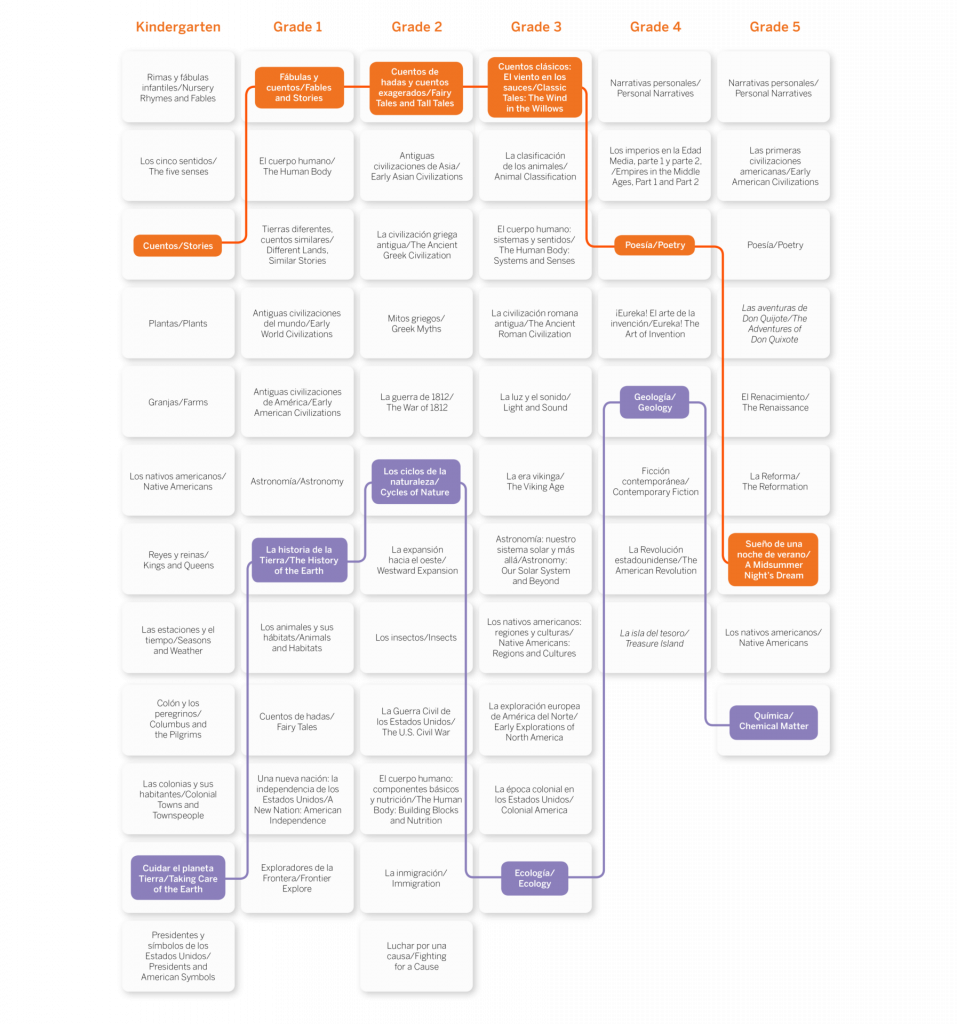
Audience: Teachers, instructional staff (maximum 30 participants)

Begin: Strengthen Focus: Desmos Math to Amplify Desmos Math 6–A1 transition training for teachers

Virtual, 1 hour

Participants will get an overview of the similarities and differences between Desmos Math and Amplify Desmos Math, including becoming familiar with changes in materials, the digital platform, and key lesson, assessment, and reporting components.

Audience: Teachers, instructional staff (maximum 30 participants)

Practice packages

Strengthen sessions

  On-site package
(15 hr.)
Hybrid 15,
on-site package

(15 hr.)
Hybrid 13 package
(13 hr.)
Virtual package
(9 hr.)
One session per package On-site,
3 hr.
Virtual,
3 hr.
Virtual,
1 hr.
Virtual,
3 hr.
Enhancing planning for
K–5 teachers
A large, light peach-colored checkmark on a transparent background. A large, light peach-colored checkmark on a transparent background.   A large, light peach-colored checkmark on a transparent background.
Enhancing planning for
6–A1 teachers

A large, light peach-colored checkmark on a transparent background. A large, light peach-colored checkmark on a transparent background.   A large, light peach-colored checkmark on a transparent background.
Enhancing practice for
K–5 teachers
A large, light peach-colored checkmark on a transparent background. A large, light peach-colored checkmark on a transparent background.   A large, light peach-colored checkmark on a transparent background.
Enhancing practice for
6–A1 teachers

A large, light peach-colored checkmark on a transparent background. A large, light peach-colored checkmark on a transparent background.   A large, light peach-colored checkmark on a transparent background.
Strengthen Focus: Teaching a digital lesson for K–5 teachers     A large, light peach-colored checkmark on a transparent background.  
Strengthen Focus: Snapshots in the Teacher Dashboard for 6–A1 teachers     A large, light peach-colored checkmark on a transparent background.  

Practice: Enhancing planning for K–5 teachers

On-site or virtual, 3 hours

Dive into both big-picture and day-to-day planning for Amplify Desmos Math. Practice using lesson and unit planning protocols that will help you build a deep understanding of the math content you’ll be teaching and the planning resources available to you in the curriculum. Walk away with practical strategies for planning, even when you may not have much time.

Audience: Teachers, instructional staff (maximum 30 participants)

Practice: Enhancing planning for 6–A1 teachers

On-site or virtual, 3 hours

Dive into both big-picture and day-to-day planning for Amplify Desmos Math. Practice using lesson and unit planning protocols that will help you build a deep understanding of the math content you’ll be teaching and the planning resources available to you in the curriculum. Walk away with practical strategies for planning, even when you may not have much time.

Audience: Teachers, instructional staff (maximum 30 participants)

Practice: Enhancing practice for K–5 teachers

On-site or virtual, 3 hours

Dig into Amplify Desmos Math’s Launch, Monitor, Connect framework to level-up the student discourse in your math class. Explore in-the-moment differentiation support to help you orchestrate discussion and make the most out of key opportunities for conversation and collaboration.

Audience: Teachers, instructional staff (maximum 30 participants)

Practice: Enhancing practice for 6–A1 teachers

On-site or virtual, 3 hours

Dig into Amplify Desmos Math’s Launch, Monitor, Connect framework to level up the student discourse in your math classroom. Learn strategies for leveraging the tools in the Teacher Dashboard to orchestrate discussion, and practice planning moves to make the most out of key discussion moments.

Audience: Teachers, instructional staff (maximum 30 participants)

Practice: Strengthen Focus: Teaching a digital lesson for K–5 teachers

Virtual, 1 hour

Get ready to facilitate digital lessons with your students. Explore what’s possible with the Teacher Dashboard and plan to make the most of these exciting instructional moments.

Audience: Teachers, instructional staff (maximum 30 participants)

Practice: Strengthen Focus: Snapshots in the Teacher Dashboard for 6–A1 teachers

Virtual, 1 hour

Explore how to use the Snapshots tool in the Teacher Dashboard to create a collaborative classroom that invites and celebrates student thinking. Leave with planning tips and tricks that will get you ready to use Snapshots during your busy math classes.

Audience: Teachers, instructional staff (maximum 30 participants)

Amplify Science

Amplify Science is a K–8 science curriculum that blends hands-on investigations, literacy-rich activities, and interactive digital tools to empower students to think, read, write, and argue like real scientists and engineers. 

Explore the Amplify Science sessions (for grade bands K–5 and 6–8) for year one packages and beyond. Select the session title or scroll to learn more about each session.

Begin packages

Strengthen sessions

  On-site package
(15 hr.)
Hybrid 15,
on-site package

(15 hr.)
Hybrid 10 package
(10 hr.)
Hybrid 15, virtual package
(15 hr.)
Virtual package
(7 hr.)
One session per package On-site,
3 hr.
Virtual,
3 hr.
Virtual,
1 hr.
Virtual,
3 hr.
Virtual,
1 hr.
Enhancing planning
(K–5 or 6–8)
A large, light peach-colored checkmark on a transparent background. A large, light peach-colored checkmark on a transparent background.   A large, light peach-colored checkmark on a transparent background.  
Enhancing practice
(K–5 or 6–8)

A large, light peach-colored checkmark on a transparent background. A large, light peach-colored checkmark on a transparent background.   A large, light peach-colored checkmark on a transparent background.  
Enhancing observations for leaders
(K–8)
A large, light peach-colored checkmark on a transparent background. A large, light peach-colored checkmark on a transparent background.   A large, light peach-colored checkmark on a transparent background.  
Planning an Amplify Science lesson
(K–8) 

    A large, light peach-colored checkmark on a transparent background.   A large, light peach-colored checkmark on a transparent background.
Supporting diverse learners: Exploring the resources
(K–8)

    A large, light peach-colored checkmark on a transparent background.   A large, light peach-colored checkmark on a transparent background.
Supporting diverse learners with embedded supports: Teacher modeling and student discourse
(K–8) 

    A large, light peach-colored checkmark on a transparent background.   A large, light peach-colored checkmark on a transparent background.

Begin: Enhancing planning for teachers
(grades K–5 or 6–8)

On-site or virtual, 3 hours

Learn how to use a planning protocol to internalize an upcoming Amplify Science unit. Leave with a plan to support students engaging in three-dimensional learning while also meeting the diverse needs of students in your classroom.

Audience: Teachers, instructional staff grades K–5 or 6–8 (maximum 30 participants)

Begin: Enhancing practice for teachers
(grades K–5 or 6–8)

On-site or virtual, 3 hours

Learn how Amplify Science supports phenomenon-based learning. Experience a sequence of model instruction from the curriculum, and walk away with a plan for how you can enhance the curriculum through your teaching practice to build a powerful culture of “figuring out” in your science classroom.

Audience: Teachers, instructional staff grades K–5 or 6–8 (maximum 30 participants)

Begin: Enhancing observations for leaders (grades K–8)

On-site or virtual, 3 hours

Learn to use the non-evaluative classroom walkthrough tool for Amplify Science to promote the use of instructional resources, focus on instructional delivery, and monitor instruction. Leave with an action plan for collecting and analyzing observation data to support teachers in their implementation of Amplify Science.

Audience: Leaders grades K–8 (maximum 30 participants)

Begin: Strengthen Focus: Planning an Amplify Science lesson

Virtual, 1 hour

Develop structure and routines for planning Amplify Science lessons and leave prepared for an upcoming lesson.

Audience: Teachers, instructional staff grades K–8 (maximum 30 participants)

Begin: Strengthen Focus: Supporting diverse learners: Exploring the resources (grades K–8)

Virtual, 1 hour

Learn how to use lesson-specific differentiation briefs, embedded assessments, and activity-specific teacher support notes to maximize instruction for diverse learners with Amplify Science.

Audience: Teachers, instructional staff grades K–8 (maximum 30 participants)

Begin: Strengthen Focus: Supporting diverse learners with embedded supports: Teacher modeling and student discourse (grades K–8)

Virtual, 1 hour

Explore ways to leverage and build upon two key instructional elements in Amplify Science, and plan how you’ll use these supports to engage diverse learners in your next lesson.

Audience: Teachers, instructional staff grades K–8 (maximum 30 participants)

Practice packages

Strengthen sessions

  On-site package
(15 hr.)
Hybrid 15,
on-site package

(15 hr.)
Hybrid 13 package
(13 hr.)
Virtual package
(9 hr.)
One session per package On-site,
3 hr.
Virtual,
3 hr.
Virtual,
1 hr.
Virtual,
3 hr.
Enhancing planning
(K–5 or 6–8)
A large, light peach-colored checkmark on a transparent background. A large, light peach-colored checkmark on a transparent background.   A large, light peach-colored checkmark on a transparent background.
Enhancing practice
(K–5 or 6–8)

A large, light peach-colored checkmark on a transparent background. A large, light peach-colored checkmark on a transparent background.   A large, light peach-colored checkmark on a transparent background.
Enhancing observations for leaders
(K–8)
A large, light peach-colored checkmark on a transparent background. A large, light peach-colored checkmark on a transparent background.   A large, light peach-colored checkmark on a transparent background.
Supporting all learners with complex texts
(K–5 or 6–8)

A large, light peach-colored checkmark on a transparent background. A large, light peach-colored checkmark on a transparent background.   A large, light peach-colored checkmark on a transparent background.
Supporting English learners (K–5 or 6–8)
A large, light peach-colored checkmark on a transparent background. A large, light peach-colored checkmark on a transparent background.   A large, light peach-colored checkmark on a transparent background.
Writing in science (K–5 or 6–8) A large, light peach-colored checkmark on a transparent background. A large, light peach-colored checkmark on a transparent background.   A large, light peach-colored checkmark on a transparent background.
Assessment system (K–5 or 6–8)
A large, light peach-colored checkmark on a transparent background. A large, light peach-colored checkmark on a transparent background.    
Engineering Internships (6–8)
A large, light peach-colored checkmark on a transparent background. A large, light peach-colored checkmark on a transparent background.   A large, light peach-colored checkmark on a transparent background.
Science Seminar (6–8)
A large, light peach-colored checkmark on a transparent background. A large, light peach-colored checkmark on a transparent background.   A large, light peach-colored checkmark on a transparent background.
Planning an Amplify Science lesson (K–8)
    A large, light peach-colored checkmark on a transparent background.  
Supporting diverse learners: Exploring the resources (K–8)
    A large, light peach-colored checkmark on a transparent background.  
Supporting diverse learners: Teacher modeling and student discourse (K–8)
    A large, light peach-colored checkmark on a transparent background.  
Analyzing student work (K–8)
    A large, light peach-colored checkmark on a transparent background.  
Supporting diverse learners: Multimodal learning and multiple at-bats (K–8)
    A large, light peach-colored checkmark on a transparent background.  
Grading with Amplify Science (K–8)
    A large, light peach-colored checkmark on a transparent background.  
Enhancing the digital experience (K–5)
    A large, light peach-colored checkmark on a transparent background.  
Planning with the Coherence Flowchart (K–8)
    A large, light peach-colored checkmark on a transparent background.  

Practice: Enhancing planning for teachers
(grades K–5 or 6–8)

On-site or virtual, 3 hours

Learn how to use a planning protocol to internalize an upcoming Amplify Science unit. Walk away with a plan to support students engaging in three-dimensional learning while also meeting the diverse needs of students in your classroom.

Audience: Teachers, instructional staff grades K–5 or 6–8 (maximum 30 participants)

Practice: Enhancing practice for teachers
(grades K–5 or 6–8)

On-site or virtual, 3 hours

Learn how Amplify Science supports phenomenon-based learning. Experience a sequence of model instruction from the curriculum, and walk away with a plan for how you can enhance the curriculum through your teaching practice to build a powerful culture of “figuring out” in your science classroom.

Audience: Teachers, instructional staff grades K–5 or 6–8 (maximum 30 participants)

Practice: Enhancing observations for leaders
(grades K–5 or 6–8)

On-site or virtual, 3 hours

Learn to use the non-evaluative classroom walkthrough tool for Amplify Science to promote the use of instructional resources, focus on instructional delivery, and monitor instruction. Leave with an action plan for collecting and analyzing observation data to support teachers in their implementation of Amplify Science.

Audience: Leaders grades K–5 or 6–8 (maximum 30 participants)

Practice: Supporting all learners with complex texts (grades K–5 or 6–8)

On-site or virtual, 3 hours

Collaborate to solve common reading challenges alongside other educatorsLearn strategies to support students in grades K–5 or 6–8 in accessing complex texts in Amplify Science units by engaging in a model reading sequence. Leave with a plan for incorporating effective strategies into your upcoming Amplify Science reading lesson.

Audience: Teachers, instructional staff grades K–5 or 6–8 (maximum 30 participants)

Practice: Supporting English learners (grades K–5 or 6–8)

On-site or virtual, 3 hours

Explore strategies and engage in model activities to support multilingual/English learners in grades K–5 or 6–8 in developing their abilities to do, talk, read, write, visualize, and construct arguments in Amplify Science. Leave with strategies to support a deeper understanding of the critical role that language and literacy play in developing scientific understanding.

Audience: Teachers, instructional staff grades K–5 or 6–8 (maximum 30 participants)

Practice: Writing in science (grades K–5 or 6–8)

On-site or virtual, 3 hours

Develop an understanding of how the Amplify Science writing approach supports students in grades K–5 or 6–8 in engaging in science practices, making sense of science ideas, and growing as writers. Leave with a plan for supporting student writing in your next unit.

Audience: Teachers, instructional staff grades K–5 or 6–8 (maximum 30 participants)

Practice: Assessment system (grades K–5 or 6–8)

On-site or virtual, 3 hours

Available: Fall 2024

Analyze a sample formative assessment, deepen your understanding of Amplify Science unit learning progressions, and participate in discussions to understand the relationships between different types of assessments and your unit’s learning goals. Walk away with strategies for collecting, analyzing, and responding to student assessment data.

Audience: Teachers, instructional staff grades of K–5 or 6–8 (maximum 30 participants)

Practice: Engineering Internships (grades 6–8)

On-site or virtual, 3 hours

Plan for the first Amplify Science Engineering Internship course of your grade level (6–8) by exploring the Futura workspace and digital tools students will use during the Internship experience. Leave with an understanding of how students will apply science concept knowledge to construct design solutions. This session will feature one of the following Engineering Internships based on your need: Metabolism, Plate Motion, or Force and Motion unit.

Audience: Teachers, instructional staff grades 6–8 (maximum 30 participants)

Practice: Science Seminar (grades 6–8)

On-site or virtual, 3 hours

Experience a Science Seminar sequence of a sample Amplify Science grade 6–8 unit from the student perspective to gain an understanding of how students apply science concepts to engage in argumentation about a phenomenon. Leave with a plan for teaching a Science Seminar unit in your own classroom.

Audience: Teachers, instructional staff grades 6–8 (maximum 30 participants)

Practice: Strengthen Focus: Planning an Amplify Science lesson (grades K–8)

Virtual, 1 hour

Develop a structure for planning Amplify Science lessons and leave prepared for an upcoming lesson.

Audience: Teachers, instructional staff grades K–8 (maximum 30 participants)

Practice: Strengthen Focus: Supporting diverse learners: Exploring the resources (grades K–8)

Virtual, 1 hour

Learn how to use lesson-specific differentiation briefs, embedded assessments, and activity-specific teacher support notes to supplement instruction for diverse learners with Amplify Science.

Audience: Teachers, instructional staff grades K–8 (maximum 30 participants)

Practice: Strengthen Focus: Supporting diverse learners: Teacher modeling and student discourse (grades K–8)

Virtual, 1 hour

Explore ways to leverage and build upon two key instructional elements in Amplify Science and plan for ways to use these supports to engage diverse learners in your next lesson.

Audience: Teachers, instructional staff grades K–8 (maximum 30 participants)

Practice: Strengthen Focus: Analyzing student work (grades K–8)

Virtual, 1 hour

Engage with a protocol to analyze real student work and plan for instructional next steps in Amplify Science. (You are required to bring student formative assessment samples to this session.)

Audience: Teachers, instructional staff grades K–8 (maximum 30 participants)

Practice: Strengthen Focus: Supporting diverse learners: Multimodal learning and multiple at-bats (grades K–8)

Virtual, 3 hours

Learn strategies to develop an understanding of how Amplify Science’s multimodal approach supports diverse learners.

Audience: Teachers, instructional staff grades K–8 (maximum 30 participants)

Practice: Strengthen Focus: Grading with Amplify Science (grades K–8)

Virtual, 1 hour

Develop an understanding of how to use assessment resources in Amplify Science to grade students three dimensionally and use practices that align with district/school guidelines.

Audience: Teachers, instructional staff grades K–8 (maximum 30 participants)

Practice: Strengthen Focus: Enhancing the digital experience (grades K–5)

Virtual, 1 hour

Learn how to go further with Amplify Science digital experience tools to enhance teaching and learning.

Audience: Teachers, instructional staff grades K–5 (maximum 30 participants)

Practice: Strengthen Focus: Planning with the Coherence Flowchart (grades K–8)

Virtual, 1 hour

Practice using the Coherence Flowchart resource to plan an upcoming Amplify Science unit.

Audience: Teachers, instructional staff grades K–8 (maximum 30 participants)

Get in touch with a PD expert

We’re here to provide answers and guidance as you explore your PD journey. Fill out the form to connect with us and discover how Amplify PD can enhance your educational journey.

Tennessee’s review of Amplify ELA student materials

Thank you for taking the time to review Amplify ELA for middle school. The items below will allow you to experience our blended program with access to our student print materials and digital curriculum.

Amplify ELA’s blended model enables teachers to design instruction based on their classroom needs and resources. Our engaging print edition highlights the many digital experiences that can be shared with students through classroom projections. Teachers can make choices about when their students use devices while providing 100% standards coverage and without compromising learning.

Illustration of a woman with long hair and earrings, eyes closed in a serene pose, surrounded by plants and butterflies.

Digital Program

The content and instruction in Amplify ELA’s digital program mirrors the content provided in the print Teacher Edition and Student Edition. However, the digital program offers more opportunity to engage students through the use of multimedia and a variety of learning apps.

To access the Student Edition within the digital program, visit learning.amplify.com and enter the following credentials when logging in with Amplify:

USERNAME: t.elav2-autologin@tryamplify.net
PASSWORD: Demo1234

Grade 6

Grade 7

Grade 8

Welcome, Amplify ELA reviewers!

To view this protected page, enter the password below:


Amplify raises $215 million in a growth funding round from Learn Capital, A-Street Ventures, and current investor Emerson Collective

(Brooklyn, NY – October 26, 2021) Amplify, a publisher of next-generation curriculum and assessment programs, announced today it has raised $215 million in a growth funding round with Learn Capital and A-Street Ventures, joining current investor Emerson Collective in this round. The funding will accelerate Amplify’s remarkable growth in providing students and teachers with high-quality, digital-forward instructional programs and helping districts address unfinished learning from the pandemic. Rob Hutter from Learn Capital and Marc Sternberg from A-Street Ventures have joined the company’s board, currently made up of Emerson Collective Managing Director and XQ Institute CEO Russlynn Ali, Amplify CEO Larry Berger, Monarch Global Strategies President and CEO Michael Camuñez, Emerson Collective Managing Director Brad Powell, and former Secretary of Education Margaret Spellings.

Amplify currently reaches more than 10 million students in 4,000 districts across all 50 states, with a growing international presence. All three of Amplify’s existing core programs have garnered top ratings on third-party curriculum evaluation site EdReports.org, resulting in strong demand across the country, including in California, where Amplify Science was the lead publisher and won approximately 35 percent of the market in the most recent adoption. Digital supplemental program Amplify Reading also continues to gain traction, as does Amplify’s gold-standard early reading assessment, mCLASS®, which was recently selected as the K–3 formative and diagnostic assessment for North Carolina’s Read to Achieve program. By meeting the demand for research-based, technology-enabled programs, Amplify’s bookings have grown by 50 percent year-over-year for the last four years (2017-2020).

“Our educators and our students have been hit hard by the events of the last two years, which have only exacerbated existing gaps in reading and math skills. Amplify is working to provide the best resources possible to schools and districts while they work to recover and support all students in achieving at high levels,” said board member and former secretary of education Margaret Spellings. “We are deeply grateful for our new partners, their K–12 expertise, and their ongoing commitment to investing in the high-quality, digital-forward learning our students need now and in the future.”

Amplify plans to use the funds to make strategic acquisitions in best-of-breed education companies and to accelerate product development across its portfolio, with a focus on its digital supplemental programs.

“Amplify has experienced remarkable growth for six years in a row, is profitable, and is earning the trust of teachers and students. This moment is urgent for accelerating our ability to serve the needs of schools and districts. The magnitude of learning loss and the range of hybrid models for delivering instruction call for the kinds of products that Amplify builds,” said Larry Berger, chief executive officer of Amplify. “As impact-oriented investors, Emerson, Learn Capital, and A-Street Ventures raised a significant round in order to help us address these urgent needs by being a rapid reaction partner for districts across the country.”

Learn Capital, based in Silicon Valley, is one of the world’s leading venture capital funds with a dedicated focus on education technology and companies that leverage technology for better and smarter learning worldwide.

“We focus on finding the most extraordinary teams working in education, and Amplify is a natural fit,” said Rob Hutter, head of Learn Capital. “Amplify stands at the center of a profound shift in K–12 curriculum delivery that pairs an acceleration of digital learning with an unprecedented emphasis on quality in core instructional materials design. Amplify is uniquely positioned to benefit from both of these trends, and we’re thrilled to have this opportunity to participate in the company’s journey. ”

A-Street Ventures is a privately sponsored investment fund with a strategic focus on seeding and scaling innovative K–12 student learning and achievement solutions for students, families, and schools with a current focus on digital-first instructional materials in curriculum and new paradigms for student assessment.

“At A-Street, we believe education can serve as a powerful engine of mobility, and now is the time for big leaps forward in transforming how students learn and how teachers teach,” said Marc Sternberg, Founder and Managing Director of A-Street Ventures. “That’s why we are excited to partner with Amplify, a company that is lifting up the quality of daily instruction and leaning into digital-forward tools to accelerate learning.”

“We could not be happier to have Rob Hutter and Marc Sternberg join the team,” said Brad Powell, board member and managing director of Emerson Collective. “Rob and Marc each bring deep knowledge about K–12 education and share a long-term, impact-oriented vision to investment in this industry. They, along with their firms, will bring important new expertise to our governance, our network, and our brain trust. We are grateful to have such strong partners supporting Amplify’s future growth.”

About Amplify
A pioneer in K–12 education since 2000, Amplify is leading the way in next-generation curriculum and assessment. Our captivating core and supplemental programs in ELA, math, and science engage all students in rigorous learning and inspire them to think deeply, creatively, and for themselves. Our formative assessment products turn data into practical instructional support to help all students build a strong foundation in early reading and math. All of our programs provide teachers with powerful tools that help them understand and respond to the needs of every student. Today, Amplify reaches more than ten million students in all 50 states. To learn more, visit https://amplify.com.

About Emerson Collective
Emerson Collective deploys a wide range of tools—from impact investing to philanthropy to advocacy—in pursuit of a more equal and just America. Emerson focuses on creating systemic change in education, immigration, climate, and cancer research and treatment. To learn more, visit https://www.emersoncollective.com.

About Learn Capital
Learn Capital, based in Silicon Valley, is one of the world’s leading venture capital funds with a dedicated focus on education technology and companies that leverage technology for better and smarter learning worldwide. Since 2009, Learn Capital has backed extraordinary teams building market transforming services for every age and stage of learning, on nearly every continent. The company’s practice spans seed, early stage and emerging growth companies that are committed to the improvement of individual and societal capacities at scale, propelling the generation of inclusive prosperity worldwide. For more information and to view the fund’s portfolio, please visit http://www.learncapital.com.

About A-Street Ventures
A-Street Ventures is a privately sponsored investment fund with a strategic focus on seeding and scaling innovative K- 12 student learning and achievement solutions for students, families, and schools. A-Street intends to invest in a mix of early-, growth- and late-stage ventures, with a current focus on digital-first instructional materials in curriculum and new paradigms for student assessment. A-Street was founded because the time is now for big leaps forward in how students learn, and for what teaching and learning can look like; for lifting up the teaching profession by reorienting the teacher to his or her most sacred task: the human-centered work of facilitating learning; for leveraging digital-forward tools to accelerate learning; and for leaning into the surging digital access, breakthrough, and platforms that can transform at long last the Industrial Age classroom and into the modern hub of learning. For additional information about A-Street Ventures, please visit https://www.astreet.ventures and on Twitter @astreetventures.

Contact:
Kay Moffett
Chief Marketing Officer
kmoffett@amplify.com

Pasco County’s review of the B.E.S.T. program for middle schools, Amplify ELA Florida Edition

To view this protected page, enter the password below:


Inspiring the next generation of Massachusetts scientists, engineers, and curious citizens

To view this protected page, enter the password below:


A powerful partnership

Amplify Science was developed by the science education experts at UC Berkeley’s Lawrence Hall of Science and the digital learning team at Amplify. This partnership extends to 2032, allowing us to continuously improve our program and provide our customers with the most up-to-date enhancements, free of charge. Get a glimpse at our latest back-to-school updates here.

Instructional model

The Amplify Science program is rooted in the proven, research-based pedagogy of Do, Talk, Read, Write, Visualize. Here’s how each element works:

Three blue panels describing educational activities: "hands-on science" with lab experiments, "discuss" with collaborative learning, and "read" with literacy in science articles.

Phenomena-based approach

In each Amplify Science unit, students take on the roles of scientists or engineers in order to investigate a real-world problem. Students work to define the problem and collect and make sense of evidence. Once the context is clear, students collect evidence from multiple sources and through a variety of modalities. At the end of the unit, students are presented with a brand new problem, giving them an opportunity to apply what they’ve learned over the course of the unit to a new context. This represents a shift from asking students to learn about science to supporting students in figuring out the science.

Flowchart of a learning unit divided into four chapters, showing stages of student engagement from introduction to application, with assessments indicated at various points.

Resources to support your review

Remote and hybrid learning support

A child sits at a desk using a laptop. Next to the desk is a bookshelf with books, a fishbowl, and a soccer ball.

See an example of our remote and hybrid learning support below:

This fall, Amplify launched a new remote learning solution called Amplify Science@Home. Intended to make extended remote and hybrid learning easier, Amplify Science @Home includes two useful options for continuing instruction: @Home Videos and @Home Units.
Amplify Science @Home Videos are recordings of real Amplify Science teachers teaching the lessons. For those teachers who are unable to meet synchronously with their students, the recorded lessons are a great way to keep their students on track and engaged with Amplify Science while at home. These videos will be produced for all K–5 units, and for the first four units of each 6–8 grade level. Their release will be rolling, beginning in August.

Amplify Science @Home Units are modified versions of Amplify Science units, strategically designed to highlight key activities from the program. The @Home Units take significantly less instructional time than the complete Amplify Science program and allow students to engage with science at home. @Home Units will be developed for all Amplify Science K–8 units. Each @Home unit includes:

  • Teacher overviews explaining how to use the materials, including suggestions for enhancing the @Home Units if synchronous learning or in-class time with students is available
  • Overviews to send home to families

Student materials will be available in two formats:

  • @Home Slides (PDF/PPT) + Student Sheets (PDF) for students with access to technology at home
  • Downloadable @Home Packets (PDF) for students without access to technology at home

Download the remote and hybrid learning guide

Benchmark Assessments

Amplify’s Benchmark Assessments are designed to help teachers measure student progress toward the three dimensions—Disciplinary Core Ideas (DCIs), Science and Engineering Practices (SEPs), and Crosscutting Concepts(CCCs)—and performance expectations (PEs) of the NGSS. The assessments provide important insight into how students are progressing toward mastery of different standards ahead of high-stakes, end-of-year assessments.

The Benchmark Assessments are built to be delivered after specific units in the recommended Amplify Science scope and sequence.* They are given three or four times per year, depending on the grade level. The benchmarks are intended to show progress at various points in time across a school year, and are therefore not summative in nature. Digital items and item clusters are also tagged to specific NGSS standards, allowing customization to align with other course sequences. The assessments are available via the following platforms:

Print
PDF files: For administering Benchmark Assessments on paper

Digital platforms

  • Illuminate
  • SchoolCity
  • Otus
  • QTI (“Question and Test Interoperability”) files
    Not sure whether QTI files are compatible with your assessment platform? Contact your school IT or assessment platform representative for more information.
    Please note that Amplify is able to provide access to the QTI files themselves, but is not able to support the integration process. Your assessment platform provider should be able to assist with QTI file integration.

Flexible implementation

One of the key features of Amplify Science is the flexibility that it offers. We give students authentic opportunities to experience the full breadth of what it means to be a scientist or engineer. Just as scientists gather evidence from many types of sources, so do students in our program. Like scientists, students gather evidence not just from physical models, but also from digital models, texts, videos, photographs, maps, data sets, and even their peers!
Simply put, real scientists don’t just get messy—they read, write, analyze, hypothesize, model, test, and communicate with purpose, too.

Science articles

The middle school science articles serve as sources for evidence collection and were authored by science and literacy experts at the Lawrence Hall of Science.

Illustration of the indirect effects of overfishing on northern benguela jelly populations displayed on a laptop screen.

Student Books
Beginning and young readers have unique developmental needs, and science instruction should support these students in reading more independently as they progress through sections of content, the school year, and each grade. One way Amplify Science meets these needs is by strategically deploying different modes of reading throughout each unit: Read-Aloud, Shared Reading, and Partner Reading.

A collage of various educational book covers related to science and math, featuring illustrated themes like sports, nature, and energy.

Student Investigation Notebooks

Available for every unit, the Student Investigation Notebooks provide space for students to:

  • record data.
  • reflect on ideas from texts and investigations.
  • construct explanations and arguments.

Available with full-color article compilations for middle school units.

Collection of educational books from 'amplify science' on topics including ocean atmosphere, matter and energy ecosystems, and insect interactions, displayed in various angles.

Digital student experience

Students access the digital simulations and Modeling Tools, as well as lesson activities and assessments, through the digital student experience. Students can interact with the digital student experience as they:

  • conduct hands-on investigations.
  • engage in Active Reading and writing activities.
  • participate in discussions.
  • record observations.
  • craft end-of-unit scientific arguments.

Dive into a quick example of our powerful simulations

A digital illustration showcasing a laptop and a tablet displaying complex data analysis software interfaces with graphs and heatmaps.

Hands-on materials kits

Hands-on learning is at the heart of Amplify Science and is integrated
into every unit. Students actively take on the roles of scientists and engineers as they gather evidence, think critically, solve problems, and develop and defend claims about the world around them.

Check out these 2-minute videos to see an Amplify Science hands-on investigation in action.

Each unit kit contains:

  • consumable and non-consumable hands-on materials.
  • print classroom display materials.
  • premium print materials for student use (sorting cards, maps, etc.).
A perforated rectangular board, three small containers with different powders, a black battery holder with red wires, and three colored alligator clips are arranged on a white background.

Teacher’s Guides

Available digitally and in print, the Teacher’s Guides contain all of the information teachers need to facilitate classroom instruction, including:

  • detailed lesson plans.
  • unit and chapter overview documentation.
  • differentiation strategies.
  • standards alignments.
  • in-context professional development.
A laptop displaying the Geology on Mars webpage sits beside a book titled "Geology on Mars," both featuring the same cover image of Mars and a spacecraft, perfect for enhancing three-dimensional learning in any science classroom.

Scope and Sequence

GRADE UNITS
Kindergarten
  • Needs of Plants and Animals
  • Pushes and Pulls
  • Sunlight and Water
Grade 1
  • Animal and Plant Defenses
  • Light and Sound
  • Spinning Earth
Grade 2
  • Plant and Animal Relationships
  • Properties of Materials
  • Changing Landforms
Grade 3
  • Balancing Forces
  • Inheritance and Traits
  • Environments and Survival
  • Weather and Climate
Grade 4
  • Energy Conversions
  • Vision and Light
  • Earth’s Features
  • Waves, Energy, and Information
Grade 5
  • Patterns of Earth and Sky
  • Modeling Matter
  • The Earth System
  • Ecosystem Restoration
GRADE UNITS
Grade 6: Earth Science
  • Launch: Geology on Mars
  • Plate Motion
  • Plate Motion: Engineering Internship
  • Rock Transformations
  • Earth, Moon, and Sun
  • Ocean, Atmosphere, and Climate
  • Weather Patterns
  • Earth’s Changing Climate
  • Earth’s Changing Climate: Engineering Internship
Grade 7: Life Science
  • Launch: Microbiome
  • Metabolism
  • Metabolism: Engineering Internship
  • Traits and Reproduction
  • Populations and Resources
  • Matter and Energy in Ecosystems
  • Natural Selection
  • Natural Selection: Engineering Internship
  • Evolutionary History
Grade 8: Physical Science 
  • Launch: Harnessing Human Energy
  • Force and Motion
  • Force and Motion: Engineering Internship
  • Magnetic Fields
  • Thermal Energy
  • Phase Change
  • Phase Change: Engineering Internship
  • Chemical Reactions
  • Light Waves

Minnesota Academic Standards in Science coverage

Amplify Science was designed from the ground up to meet the NGSS, a set of standards that closely align with the K–8 Minnesota Academic Standards in Science (MASS). Therefore, most grade levels’ respective set of Amplify Science units address the necessary MASS (see K–5 reverse alignment and/or correlations for K–5 and 6–8). However, for grades 2–4, teachers should also use the resources provided in the sections below to achieve full coverage of the appropriate standards before their students move on to the next grade level. Organized by grade level, each section outlines:

  • companion lesson materials that were written to support 100% alignment to the Minnesota Academic Standards in Science when used with the core Amplify Science units for the grade level
  • the standard being addressed with each companion lesson; and
  • the recommended placement of each companion lesson within a specific Amplify Science unit 

Companion lesson: “Shelter”

Standard: 1P.4.2.2.1 Communicate solutions that use materials to provide shelter, food, or warmth needs for communities including Minnesota American Indian tribes and communities.* (P: 8, CC: 2, CI: PS1, ETS2)

Recommended placement: Following Lesson 5.1 of Spinning Earth

Materials: Shelter Classroom Slides and Student Sheet

Companion lesson: “Describing Climates”

Standard: 2E.4.2.1.2 Obtain and use information from multiple sources, including electronic sources, to describe climates in different regions of the world.** (P: 8, CC: 1, CI: ESS2)

Recommended placement: Following Lesson 4.5 of Changing Landforms

Materials: Describing Climates Classroom Slides and Student Sheet

Note: Students will further investigate the content in this standard, and revisit the book used in this companion lesson, in 3rd grade (Weather and Climate unit)

Companion lesson 1: Light and Vision

Standard: 3P.3.1.1.1 Develop a model to describe that light reflecting from objects and entering the eye allows objects to be seen. (P: 2, CC: 2, CI: PS4)

Recommended placement: Following Lesson 4.5 of Environments and Survival

Materials: Light and Vision Part 1 Classroom Slides and Student Sheet; Light and Vision Part 2 Classroom Slides and Student Sheet 

Note: Students will further investigate the content in this standard, and revisit the book used in this companion lesson, in 4th grade (Vision and Light unit)

Companion lesson 2: Studying Stars

Standard: 3E.4.2.2.1 Gather information and communicate how Minnesota American Indian Tribes and communities and other cultures use patterns in stars to make predictions and plans. (P 8, CC: 1, CI: ESS1) 

Recommended placement: Following Lesson 4.4 of Weather and Climate

Materials: Studying Stars Classroom Slides and Student Sheet

Note: Students will further investigate the content in this standard, and revisit the book used in this companion lesson, in 5th grade (Patterns of Earth and Sky unit)

Companion lesson 1: Salt Water and Freshwater

Standard: 4E.2.2.1.1 Interpret charts, maps and/or graphs of the amounts of salt water and fresh water in various reservoirs to provide evidence about the distribution of water on Earth.** (P: 5, CC: 4, CI: ESS2) 

Recommended placement: Following Lesson 2.6 of Earth’s’ Features

Materials: Salt Water and Freshwater Classroom Slides and Student Sheet

Note: Students will further investigate the content in this standard, and revisit the book used in this companion lesson, in 5th grade (The Earth System unit)

Companion lesson 2: How Raindrops Form

Standard: 4E.1.1.1.2 Ask questions about how water moves through the Earth system and identify the type of question. (P: 1, CC: 5, CI: ESS2) 

Recommended placement: Following Lesson 4.5 of Earth’s’ Features

Materials: How Raindrops Form Classroom Slides and Student Sheet

Note: Students will further investigate the content in this standard, and revisit the book used in this companion lesson, in 5th grade (The Earth System unit)

Explore the digital Teacher’s Guide

To familiarize yourself with navigation of the digital Teacher’s Guide, watch our navigational guide videos:

Grades K–5:

Grades 6–8:

Looking for help?

Powerful (and free!) pedagogical support

Amplify provides a unique kind of support you won’t find from other publishers. We’ve developed an educational support team of former teachers and administrators who provide pedagogical support for every Amplify curriculum, assessment, and intervention program. This service is completely free for all educators who are using our programs and includes:

  • Guidance for developing lesson plans and intervention plans.
  • Information on where to locate standards and other planning materials.
  • Recommendations and tips for day-to-day teaching with Amplify programs.
  • Support with administering and interpreting assessment data and more.

Timely technical and program support

Our technical and program support is included and available Monday through Friday, from 7 a.m. to 7 p.m. ET, through a variety of channels, including a live chat program that enables teachers to get immediate help in the middle of the school day.

Ready to dive in?

Contact your Minnesota representative:
Kristi Stengel
Account Executive
kstengel@amplify.com
(612) 306-3941

Tammy Sigwarth
Account Executive
tsigwarth@amplify.com
(563) 663-0056

Review of the B.E.S.T. program for Palm Beach middle schools, Amplify ELA Florida

To view this protected page, enter the password below:


Families & Caregivers — Welcome to Amplify Desmos Math New York for grades K–5!

This is the initial version of the Caregiver Hub for Amplify Desmos Math New York. Para la versión en español, haga clic aquí.

Welcome to the Amplify Desmos Math New York K–5 Caregiver Hub for grades K–5. We’re so excited your student’s school has chosen our program! We designed this space to help you support your student in their math journey this year. Your hard work plays an essential role in your student’s math experience.

We hope your student enjoys using technology to explore math, working with friends to solve problems, and learning all sorts of new and interesting concepts. And we hope you love experiencing it with them!

Excited to learn together,
—The Amplify Desmos Math team

A math activity interface instructs to determine platform heights using a tube length. A student workbook titled "Amplify Desmos Math, New York, Volume 1" featuring children playing is also visible.

Introducing Amplify Desmos Math

Amplify Desmos Math is a core math curriculum built for kindergarten through grade 5. We developed the program around the idea that a structured approach to problem-based learning builds on students’ curiosity to develop lasting grade-level understandings for all students. Each lesson offers opportunities to develop students’ understanding; connect their ideas; grow their skill fluency; and empower them to ask questions, explore, and make discoveries.

Amplify Desmos Math uses a student-centered approach to instruction, which has been proven to significantly increase math learning. Our mission is for your students to learn math—and to love learning math!

In every lesson, the Amplify Desmos Math curriculum poses engaging and relevant problems to solve, giving students daily opportunities to think critically, work collaboratively, and actively participate in their own learning.

Screenshot of the Amplify Desmos Math New York, K-5 section on the Desmos Classroom website displaying a list of ADM lessons for different grade levels.

About student-centered math instruction

Student-centered instruction may look different from the way students have learned math in the past, and perhaps from the way you learned math. Instead of memorizing formulas and tricks, student-centered learning focuses on giving students opportunities to figure out how math works. Research shows that students and teachers alike prefer this method, and teachers report that student-centered instruction has helped their students learn more math.

A diverse group of students, one wearing a unicorn headband, looks at a teacher pointing to an amplify math bar graph on a board.

This way of learning helps students:

  • Understand how math concepts work.
  • Remember what they learn in class and apply their knowledge to new situations.
  • Perform better on standardized tests and have more growth in their grades than their peers who learn through other methods.
  • Learn to communicate in writing and verbally, understand and challenge the opinions of others, and build confidence in solving new problems.
  • Develop key skills for success in college and the workplace, like using technology, completing projects independently and with others, and persevering through difficult problems.

What materials do students use?

Amplify Desmos Math supports blended learning with supportive print materials and a unique digital experience. All Amplify Desmos Math K–5 lessons are available in a write-in Student Edition book. Many of the lessons are designed to include hands-on activities with manipulatives. An age-appropriate number of lessons are designed for students to use digital devices like laptops or tablets. These include enhanced digital experiences that teachers can assign to students.

Three animated women of diverse ethnicities smiling and discussing a math curriculum around a laptop at a table, with colorful abstract shapes in the background.

Here’s what you can expect for your students from Amplify Desmos Math:

  • Lessons that drive classroom discussions so students can work toward a shared understanding and sense of community.
  • Responsive feedback that interprets student responses in context and encourages perseverance and revision.
  • Easy-to-follow lesson plans tested in classrooms across the country, with clear teaching suggestions, strategies, and Math Language Routines.
  • Practice problems to support fluency and help students review previous topics.
  • Recommended differentiation suggestions for teachers so that they can meet the needs of diverse learners.
  • Formative assessments that provide information on student understanding so that they can adjust their instruction to meet the needs of all students in their class.
  • Summative assessments that help teachers understand what students know about the math content they have been learning.
  • Daily lesson-level assessments so that teachers can frequently check for understanding.
  • A caregiver resource for each unit that includes explanations of key math concepts and problems to try with your student.

When students use devices, teachers can monitor students’ work in real time, making sure they get the exact support that they need at every part of the lesson, in and outside of class. Here is a sample of what a teacher sees on their dashboard to help them monitor thinking and support student learning.

Screenshot of a digital class attendance and activity tracker with student names and checkboxes indicating their participation in various New York math tasks.

Students are also able to access their digital work at home. Here’s an article on how to navigate the student home page.

What does a lesson look like?

Students in an Amplify Desmos Math classroom can be seen (and heard!)—asking questions, debating answers, justifying their thinking, grappling with problems, and working together and independently.

Two students, one male and one female, are sitting at a desk with a laptop, discussing a project under a "math club" sign, with speech bubble icons above them.

Here’s what a typical Amplify Desmos Math lesson includes:

  • Warm-up: A short, attention-getting problem to get students interested in the lesson.
  • Activities: 1-2 mini-activities that challenge students’ problem-solving skills.
  • Synthesis: Discussion to review and bring together the important concepts from the lesson.
  • Show What You Know and Reflection: Questions for students to show what they know from the lesson. (Note: The “Show What You Know” lesson assessment is optional for the teacher to assign in kindergarten and grade 1)
  • Centers: Student-led activity stations that reinforce the math learned during lesson activities through interactive and often game-like formats. In kindergarten and grade 1, time for Centers is built into the last 15 minutes of every lesson.

Here’s what is available after the lesson to support, strengthen, and stretch students’ learning:

  • Differentiation: Mini-lessons, Centers, extensions, personalized learning, and fluency practice.
  • Practice: Additional problems your student’s teacher may assign for classwork or homework.

How can caregivers support math learning at home?

Use our Unit Support for Caregivers

We’ve created a Caregiver Resource for every unit of the program that provides a summary of key concepts, plus a problem from the lesson practice set you can work through with your student. Within each of the grade-level links below, you’ll find a Caregiver Resource document for each unit, in both English and Spanish.

Grade 1
Unit 1: Adding, Subtracting, and Working With Data
English
Spanish

Grade 3
Unit 1: Introducing Multiplication
English
Spanish

Grade 5
Unit 1: Volume
English
Spanish

Review practice problems together

Your student’s teacher may assign practice problems at the end of each lesson for classwork or homework. If your student has already completed the practice problems for the lesson, ask your student to walk you through how they solved each problem, or talk about any parts that were challenging for them. Ask your students follow-up questions to encourage the use of math language as they explain their thinking, such as: “How do you know?,” “How can you show your thinking?,” or “How would you describe that?” If students are stuck, ask support questions such as, “What information do you know here?” or “How could you represent this problem?”

Getting stuck is okay!

Emphasize that getting stuck is part of the process and a necessary part of learning. Many students (and adults!) fear making mistakes. However, research shows that making mistakes helps your brain grow more. When your student gets stuck on a problem, encourage them to try different strategies, even if they are not sure if they are right.

Find the math in everyday life.

Relate math to daily activities at home, whether grocery shopping, preparing a meal, or planning for a trip to the store. Your student can help you figure out how many more apples there are than oranges in the grocery cart, show how to split a sandwich into fourths, or figure out how much change you’ll receive in exchange for a ten dollar bill. Encourage your student to point out ways that you use math in daily tasks.

Read the Unit Story with your student.

Each unit in Amplify Desmos Math K–5 begins with a read-aloud story to engage students and provide context for the math of the unit. Elements and characters from the Unit Story then appear in lessons throughout the rest of the unit.

Access our Featured Collection of free K–5 Lessons and Activities.

Explore our latest free K–5 content in our Desmos Classroom Featured Collection. With our free collection, you can access:

  • Digital Lessons: Engaging interactive lessons
  • Mini-Lessons: A mix of print and digital activities designed for small-group instruction
  • Math Routines: Short digital activities to kick-start instruction and encourage math discussions
  • Bite-Sized Math Moments: Digital practice activities that use Polypad virtual manipulatives, designed to be used flexibly

Click here to access the collection and sign up for a free account.

How do caregivers access the program at home?

Your student will have access to all learning, practice, and assessment materials through the Amplify platform. Students can access the digital curriculum in school and at home by following these simple instructions.

  • Click the orange Login to Amplify Desmos Math button below.
  • Select Log in with Amplify.
  • Enter your student’s username and password provided by your student’s teacher.
  • Select your student’s grade level.

Grade K

Unit 1: Count Sequence and Numbers to 5

Module 1: Represent Numbers to 5 with Objects

Lesson 1: Represent 1 and 2Connecting Cubes
Lesson 2: Represent 3 and 4Skye’s Style
Matching Groups
Designing Shoes With Skye

Unit 2: Count Sequence and Numbers to 10

Module 7: Represent Numbers 6 to 10 with Objects

Module 10: Compare Numbers to 10

Lesson 4: Compare Groups Within 10 by CountingMore, Fewer, or the Same
Fingers and Counters
Lesson 5: Compare Groups Within 10 by MatchingComparing Words
Forest Friends

Module 11: Add To and Take From Within 10

Module 12: Put Together and Take Apart Within 10

Lesson 3: Solve Put Together Problems Within 10How Many Objects in Pictures?
How Will You Count?
What Does It Mean to Add?
Lesson 4: Solve Take Apart Problems Within 10What Does It Mean to Subtract?
Lesson 5: Solve Word Problems Within 10The Bus Depot

Module 13: Ways to Make Numbers to 10

Lesson 4: Ways to Make 10Harry’s Hamster Wheel
Harry Explores Space
Lesson 5: Make 10 From a Given NumberShowing What We Know About 10
Lesson 1: Ways to Make 6 and 7Harry Explores the Ocean

Unit 3: Geometry

Module 14: Analyze and Compare Three-Dimensional Shapes

Module OpenerWhat’s That Shape?
Lesson 5: Build ShapesBuilding Solid Shapes

Module 15: Describe Position of Objects

Module 16: Analyze and Compare Two-Dimensional Shapes

Lesson 7: Compare Two-Dimensional and Three-Dimensional ShapesSo Much Sorting
What’s That Shape Called?
Another Shape

Unit 4: Number and Operations in Base Ten

Module 17: Place Value Foundations-Represent Numbers to 20

Lesson 3: Compose Ten Ones and Some More Ones to 19Investigate: Packing Snacks
Lesson 4: Represent Numbers to 20Getting Ready for the Game
How Many on the Field?
Pass, Shoot, Score

Module 18: Place Value Foundations-Represent Number to 20 with a Written Numeral

Lesson 1: Count and Write 11 to 14Jersey Jam!
Lesson 3: Count and Write 16-19People at the Park

Grade 1

Unit 1: Ways to Add and Subtract

Module 2: Subtraction Strategies

Lesson 2.1: Represent SubtractionPacking a Picnic
Lesson 2.2: Count BackWhat’s the Difference?
Lesson 2.3: Count on to SubtractLeaping Lily Pads!

Module 3: Properties of Operations

Lesson 3.6: Determin Equatl and Not EqualReplanting Huli

Module 4: Apply Addition and Subtraction Relationships

Lesson 4.2: Represent Related FactsSame Number, Different Ways
Lesson 4.3: Identify Related FactsKitten Coaster
Lesson 4.6: Solve for Unknow AddendTutu’s Garden in Maui

Module 5: Understand Add to and Take From Problems

Lesson 5.4: Solve Add To and Take From ProblemsA Community Working Together
Helping Others
Making 10

Module 6: Understand Put Together and Take Apart Problems

Lesson 6.3: Represent Addend and Unknown Problems with Objects and DrawingInvestigate: Let’s Grow!

Module 8: Data

Lesson: 8.2 Represent Data with Picture GraphsShapes Ying Saw

Unit 3: Numbers to 120

Module 10: Count and Represent Numbers

Lesson 10.4: Decompose Numbers in Different WaysInvestigate: Game Points
Lesson 10.5: Represent, Read, and Write Numbers from 100 to 110From Head to Claw
From Wing Tip to Wing Tip
Measuring More Wingspans
Lesson 10.5: Represent, Read, and Write Numbers from 110 to 120From Head to Claw
From Wing Tip to Wing Tip
Measuring More Wingspans

Unit 4: Addition and Subtractoin in Base Ten

Module 12: Understand Addition and Subtraction with Tens and Ones

Lesson 12.1: Representing Adding TensMeeting Yara
It’s a Match
From Park to Table
Lesson 12.3: Add and Subtract TensHow Many Cubes?
Boris’s Thimbles
How Many Tens?

Module 13: Two-Digita Addition and Subtraction

Lesson 13.1: Use Hundred Charts to Show Two-Digit Addtion and Subtraction.Investigate: Squashes at the Playground
Lesson 13.2: Understand and Explain Place Value AdditionTown Helpers
Making Squash Butter

Unit 6: Measurment

Module 16: Fraction Foundations

Lesson 16.1: TAke Apart Two-Dimensional ShapesFair and Square
Lesson 16.2: Identify Equal or Unequal PartsOne of the Parts, All of the Parts
Lesson 16.4: Partition Shapes into FourthsA Bigger Part

Grade 2

Unit 1: Numbers and Data

Module 1: Fluency for Addition and Subtraction Within 20

Lesson 1.5: Use the Make a Ten Strategy to AddExploring Within 10
Ways to Make 10

Module 1: Fluency for Addition and Subtraction Within 21

Lesson 1.6: Use a Tens Fact to SubtractExploring Within 10
Ways to Make 10

Module 2: Equal Groups

Lesson 2.1: Identify Even and Odd NumbersCan You Share?
Is It Even or Odd?
Lesson 2.2: Write Equations to Represent Even NumbersEverybody, Find A Partner!

Module 3: Data

Lesson 3.5: Draw bar graphs to Represent DataAwesome Aquariums

Unit 2: Place Value

Module 4: Understand Place Value

Lesson 4.1: Group Tens as HundredsWhat Makes a Hundred?
Lesson 4.2: Understand Three-Digit NumbersWhat’s the Value?
Lesson 4.4: Represent Numbers with Hundreds, Tens, and OnesMail Call!
What’s Your Name?

Module 5: Read, Write, and Show Numbers to 1000

Lesson 5.3: Different Ways to Write NumbersA New Representation
Lesson 5.4: Different Ways to Show NumbersAll the Ways!

Module 6: Use Place Value

Lesson 6.1: Count Within 1000Investigate
Turtle Hurdle
Lesson 6.5: Use Symbols to Compare NumbersTime to Line Up!

Unit 3: Money and Time

Module 7: Coins

Lesson 7.1: Relate Place Value to CoinsInvestigate
Lesson 7.2 Identify and Find Value of CoinsDiscovering Coins (Part 1)
Lesson 7.3: Compute the Value of Coin CombinationsHow Much Money?
Lesson 7.4: Show Amounts in Different WaysDiscovering Coins (Part 2)
The Toy Stand

Module 8: Dollar Amounts

Lesson 8.3: Solve Problems Involving MoneyThe Craft Stand at the Block Party

Unit 5: Three-Digita Addition and Subtraction

Module 16: Three-Digit Addition

Lesson 16.1: Use Drawing to Represent Three-Digit AdditionThere’s Something About Berries
Lesson 16.2: Decomposte Three-Digit AddendsBaking With Skunk

Unit 6: Measurement

Module 18: Lengths in Inches, Feet, and Yards

Lesson 18.4: Make Line Ploits to Show Measurement DataMessy Measurements
Bracelets and Wristbands

Module 20: Relate Addition and Subtraction to Length

Lesson 20.1: Relate Inches to a Number LineInvestigate
Time to Line Up!
What’s That Number?
Lesson 20.2: Add and Subtract Lengths in InchesLengths of Jungle Animals
Lesson 20.3: Relate Centimeters to a Number LineInvestigate
Time to Line Up!
In Full Bloom

Unit 7: Geometry and Fractions

Module 21: Two- and Three- Dimensional Shapes

Lesson 21.2 Identify and Draw Three-Dimensional ShapesMore to Measure
Lesson 21.2: Identify and Draw Two-Dimensional ShapesFrame It!
Measure It, Draw It

Grade 3

Unit 1: Understand Multiplication and Area

Module 1: Understand Multiplication

Lesson 1.1: Count Equal GroupsEqual Groups
Lesson 1.3: Represent Multiplication with ArraysArrays of Flavor
Lesson 1.4: Understand the Commutative Property of MultiplicationArrays of Flavor

Module 2: Relate Multiplication and Area

Lesson 2.1 Understand Area by Counting Unit SquareInvestigate: Comparing Rugs
Which Covers More Space?
Lesson 2.2: Measuring Area by Counting Unit SquaresTiling Figures
Area Hunt
Lesson 2.3: Relate Area to Addition and MultiplicationRectangles and Arrays

Unit 2: Multiplication and Division

Module 7: Relate Multiplication and Division

Lesson 7.7: Build Fluency with Multiplication and DivisionRelating Quotients to Familiar Products

Module 8: Apply Multiplication and Division

Lesson 8.3: Use Multiplication and Division to Solve Problem SituationsIt’s Chili in Here!
Lesson 8.4: Solve Two-Step ProblemsDivision and Multiplication Equations

Unit 3: Addition and Subtraction Strategies

Module 9: Addition and Subtraction Strategies

Lesson 9.3: Use Properties to AddHow Would You Solve It?
Lesson 9.4: Use Mental Math to Assess ReasonablenessAdding Strategically

Module 10: Addition and Subtraction Within 1000

Lesson 10.1: Use Expanded Form to AddWhat Is an Algorithm?
Lesson 10.2: Use Place Value to AddAdding Your Way
Using Fewer Digits
Lesson 10.5: Choose a Strategy to Add or SubtractDetermining Sums of 2 or More Addends

Unit 4: Fractions

Module 13: Understand Fractions as Numbers

Lesson 13.4: Represent and Name Fractions on a Number LineFractions on the Number Line
Lesson 13.5: Express Whole Numbers as FractionsCat Crossing
Lesson 13.6: Represent and Name Fractions Greater Than 1Location, Location, Location

Unit 5: Measurement and Data

Module 18: Represent and Interpret Data

Lesson 18.4: Make a Bar GraphPuppy Pile
2, 5, or 10?
Egg-cellent Pick
Lesson 18.5: Use Line Plots to Display Measurement DataHow Long Is It?
More Precise Measurements
Same Lengths, Different Names
Lesson 18.6: Make Line Plots to Display Measurement DataThe Plot Chickens
Let’s Make a Line Plot

Unit 6: Geometry

Module 19: Define Two-Dimensional Shapes

Lesson 19.1: Describe ShapesPiho’s Shapes
Lesson 19.4: Define QuadrilateralsRectangles, Squares, and Rhombuses

Module 20: Categorize Two-Dimensional Shapes

Lesson 20.1: Draw QuadrilateralsMore Quadrilaterals

Grade 4

Unit 1: Place Value and Whole Number Operations

Module 3: Interpret and Solve Problem Situations

Lesson 3.1: Explore Multiplicative ComparisonsSticker Mania
Lesson 3.4: Use Comparison to Solve Problem SituationsRepresenting “Times as Many”
Going Swimming

Unit 2: Multiplication and Division Problems

Module 4: Mental Math and Estimation Strategies

Lesson 4.3: Estimate Products by 1-Digit NumbersA Reasonable Answer

Module 5: Multiply by 1-Digit Numbers

Lesson 5.1: Represent MultiplicationInvestigate: Packing Lei
Lesson 5.2: Use Area Models and the Distributive Property to MultiplyCounting Flowers for Lei
Lesson 5.4: Multiplying Using Partial ProductsThree of a Kind
Lesson 5.6: Multiplying 3-Digit and 4-Digit NumbersA Lei Making Workshop

Unit 3: Extend and Apply Multiplication

Module 8: Extend and Apply Multiplication

Lesson 8.1: Multiply with TensGrowing Flowers for the Lei
Lesson 8.3: Relate Area Model and Partial ProductsDouble Decomposition
Lesson 8.4: Multiplying Using Partial ProductsRevisiting Strategies
Lesson 8.7: Solve Multi-step Problems and Assess ReasonablenessHow Many Supplies?

Unit 4: Fractions and Decimals

Module 10: Algebraic Thinking and Number Theory

Lesson 10.1: Investigate FactorsHamster Homes
Lesson 10.2: Identify FactorsFactor or Multiple?
Lesson 10.4: Identify Prime and Composite NumbersA Number Game
Lesson 10.5 Generate and Analyze Number PatternsHow Does It Grow?

Module 11: Fraction Equivalence and Comparison

Lesson 11.1: Compare Fractions Using Viaula ModelsInvestigate: Building Your Own Number Line
Lesson 11.2: Compare Fractions Using BenchmarksFraction Strips
Lesson 11.6: Compare Fractions Using Common DenominatorsChop It
Lesson 11.7: Use Comparison to Order FractionsAll Kinds of Fractions

Module 12: Relate Fractions and Decimals

Lesson 12.1: Represent Tenths as Fractions and DecimalsA New Way to Write Tenths
Lesson 12.2 Represent Hundredths as Fractions and DecimalsA New Way to Write Hundredths
Lesson 12.3: Identify Equivalent Fractions and DecimalsAre They Equivalent?
Lesson 12.4: Compare DecimalsHow Can You Compare?
Robot Factory
What’s the Order

Module 13: Use Fractions to Understand Angles

Lesson 13.2: Explore AnglesAngle Adventures
Lesson 13.3: Relate Angles to Fraction Part of a CircleThe Spin on Angles
Lesson 13.6: Join and Separate AnglesAngles in Motion

Module 14: Understand Addition and Subtraction of Fractions with Like Denominators

Lesson 14.2: Joining Parts of the Same WholePizza Problems

Module 15: Add and Subtract Fractions and Mixed Numbers with Like Denominators

Lesson 15.1: Add and Subtract Fractions to Solve ProblemsMath Pizzeria

Unit 6: Two-Dimensional Figures and Symmetry

Module 18: Symmetry and Patterns

Lesson 18.3: Generate and Identify Shape PattersHow Does It Grow?

Grade 5

Unit 1: Whole Numbers, Expressions, and Volume

Module 1: Whole Number Place Value and Multiplication

Lesson 1.3: Use a Pattern to Multiply by Multiplies of 10, 100, and 1000Partial Products Everywhere
Monarch Butterflies
All About That Base
Lesson 1.5: Multiply Multi-Digit NumbersHow Do They Compare?

Module 2: Understand Division of Whole Numbers

Lesson 2.4: Use Partial QuotientsEmptying the Water Tank

Module 5: Volume

Lesson 5.2: Understand VolumeWhich is Largest
Lesson 5.3: Estimate VolumePacking the Barge
Lesson 5.6: Find Volume of Composed FiguresPutting it Together
Figures Made of Prisms

Unit 3: Multiplying Fractions and Mixed Numbers

Module 8: Understand Multiplication of Fractions

Lesson 8.1: Explore Groups of Equal Shares to Show MultiplicationInvestigate: Sharing Sandwiches
Investigate: Folding Paper
Lesson 8.2: Represent Multiplication of Whole Numbers by FractionsSharing More Sandwiches
Lesson 8.3: Represent Multiplication with Unit FractionOne Part of One Part
Lesson 8.4: Represent Multiplication of FractionsDance Breaks
Parts of Parts
Making Food
Lesson 8.5: Use Representations of Area to Develop ProceduresOne Part of One Part
Installing Turf
Rows and Columns
Lesson 8.6: Interpret Fraction Multiplication as ScalingChores at Animal Haven
The Re-size-inator
Lesson 8.7: Multiplying FractionsMessy Multiplication

Module 9: Understand and Apply Multiplication of Mixed Numbers

Lesson 9.3: Practice Multiplication with Fractions and Mixed NumbersMessy Multiplication
Applying Fraction Multiplication

Unit 4: Divide Fractions and Convert Customary Units

Module 10: Understand Division with Whole Numbers and Unit Fractions

Lesson 10.1: Interpret a Fraction as DivisionDivision Story Problems
Making Generalizations

Unit 5: Add and Subtract Decimals

Module 13: Decimal Place Value

Lesson 13.1: Understand ThousandthsWhat Is One Thousandth?
Lesson 13.2: Read and Write Decimals to ThousandthsSay What?
Lesson 13.3: Round DecimalsWhich Way Down the Mountain?
Rounding Races
Lesson 13.4: Compare and Order DecimalsInvestigate: Numbers Between Numbers
The Claw
Selling Collectibles

Unit 6: Multiply Decimals

Module 15: Multiply Decimals and Whole Numbers

Lesson 15.1: Understand Decimal Multiplication PatternsPlace Value Patterns
Powers of 10 Parade

Unit 7: Divide Decimals and Convert Customary Units

Module 17: Understand Decimal Division Patterns

Lesson 17.1: Understand Decimal Division PatternsPowers of 10 Parade

Unit 8: Graphs, Patterns, and Geometry

Module 19: Graphs and Patterns

Lesson 19.1: Describe a Coordinate SystemCreating a Coordinate System
Lesson 19.2: Understand Ordered PairsBullseye!
Lesson19.4: Generate and Identify Numerical PattermsCoordinating Satellite Repairs

Grade 6

Unit 1: Number Systems and Operations

Module 1: Integer Concepts

Lesson 1: Identify and Interpret IntegersCan You Dig It?
Lesson 2: Compare and Order Integers on a Number LineOrder in the Class

Module 3: Fraction Division

Lesson 1: Understand Fraction DivisionFlour Planner
Fill the Gap

Module 4: Fluency with Multi-Digit Decimal Operations

Lesson 1: Add and Subtract Multi-Digit DecimalsDishing Out Decimals
Decimal Diagrams and Algorithms
Lesson 4: Divide Multi-Digit DecimalsMovie Time

Unit 2: Ratio and Rate Reasoning

Module 5: Ratio and Rates

Lesson 1: Understand the Concept and Language of RatiosPizza Maker
Lesson 2: Represent Ratios and Rates with Tables and GraphsFruit Lab
Disaster Preparation
Lesson 3: Compare Ratios and RatesModel Trains
Lesson 4: Find and Apply Unit RatesWorld Records
Lesson 5: Solve Ratio and Rate Problems Using Proportional ReasoningWelcome to the Robot Factory
More Soft Serve

Module 6: Apply Ratios and Rates to Measurement

Lesson 2: Use Rate Reasoning to Convert withing Measurement SystemsSoft Serve
Many Measurements

Module 7: Understand, Express, and Compare Percent Ratios

Lesson 1: Understand, Express, and Compare Percent RatiosLucky Duckies

Unit 3: Expressions, Equations, and Inequalities

Module 8: Numerical and Algebraic Expressions

Lesson 3: Write Algebraic Expressions to Model SituationsProducts and Sums

Module 9: Solve Problems Using Equations and Inequalities

Lesson 1: Write Equations to Represent SituationsWeight for It
Five Equations
Lesson 2: USe Additions and Subtraction Equations to Solve ProblemsHanging Around
Hanging It Up
Lesson 3: Use Multiplication and Division Equations to Solve ProblemsHanging Around
Hanging It Up
Lesson 4: Use One-Step Equations to Solve a Variety of ProblemsSwap and Solve
Lesson 5: Write and Graph InequalitiesTunnel Travels

Module 10: Real-World Relationships Between Variables

Lesson 1: Represent Equations in Tables and GraphsSubway Fares
Lesson 2: Write Equations from Verbal DescriptionsSubway Fares

Unit 4: Relationships in Geometry

Module 11: Polygons on the Coordinate Plane

Lesson 4: Find the Perimeter and Area on the Coordinate PlaneShapes on a Plane

Module 12: Area of Triangles and Special Quadrilaterals

Lesson 1: Develop and Use the Formula for Area of ParallelogramsExploring Parallelograms, Part 1
Exploring Parallelograms, Part 2
Off the Grid, Part 1
Lesson 2: Develop and Use the Formula for Area of TrianglesExploring Triangles
Triangles and Parallelograms
Off the Grid, Part 2
Lesson 3: Develop and Use the Formula for Area of TrapezoidsPile of Polygons
Lesson 4: Find Area of Composite FiguresPuzzling Areas
Letters

Module 13: Surface Area and Volume

Lesson 1: Explore Nets and Surface AreaRenata’s Stickers

Unit 5: Data Collection and Analysis

Module 14: Data Collection and Displays

Lesson 2: Display Data in Dot PlotsMinimum Wage
Lesson 3: Make Histograms and Frequency TablesThe Plot Thickens

Module 15: Measure of Center

Lesson 2: Find Measures of CenterToy Cars
Lesson 3: Choose a Measure of CenterHoops

Grade 7

Unit 1: Proportional Relationships

Module 1: Identify and Represent Proportional Relationships

Lesson 1: Explore RelationshipsPaint
Lesson 2: Recognize Proportional Relationships in TablesTwo and Two
Lesson 3: Compute Unit Rates Involving FractionsDinoPops
Lesson 4: Recognize Proportional Relationships in GraphsScale Factor Challenges
Lesson 5: Use Proportional Relationships to Solve Rate ProblemsScaling Robots
Lesson 6: Practice Proportional Reasoning with Scale DrawingsScaling Machines
Make it Scale
Tiles
Will It Fit

Module 2: Proportional Reasoning with Percents

Lesson 1: Percent ChangeMosaics
Percent Machines
Lesson 2: Markups and DiscountsMore and Less
All the Equations
Lesson 3: Taxes and Gratuities100%
Lesson 5: Simple InterestBack in My Day

Unit 2: Rational Number Operations

Module 3: Understand Addition and Subtraction of Rational Numbers

Lesson 1: Add or Subtract a Positive Integer on a Number lineFloats and Anchors
Lesson 3: Use a Number Line to Add and Subtract Rational NumbersDraw Your Own

Module 4: Add and Subtract Rational Numbers

Lesson 1: Compute Sums of IntegersMore Floats and Anchors
Lesson 2: Compute Differences of IntegersMore Floats and Anchors
Lesson 4: Apply Properties to Multi-step Addition and Subtraction ProblemsInteger Puzzles

Unit 3: Model with Expressions, Equations, and Inequalities

Module 7: Solve Problems Using Expressions and Equations

Lesson 1: Write Linear Expressions in Different Forms for Different SituationsCollect the Squares
Lesson 3: Write Two-Step Equations for SituationsKeeping it True
Lesson 5: Apply Two-Step Equations fo Find Angle MeasuresFriendly Angles
Missing Measures

Module 8: Solve Problems Using Inequalities

Lesson 1: Understand and Apply Properties to Solve One-Step InequalitiesI Saw the Signs
Lesson 2: Write Two-Step Inequalities for SituationsUnbalanced Hangers
Shira the Sheep
Lesson 3: Apply Two-Step Inequalities to Solve ProblemsBudgeting
Write Them and Solve Them

Unit 4: Geometry

Module 9: Draw and Analyze Two-Dimensional Figures

Lesson 2: Draw Circles and Other FiguresCan You Build It

Module 10: Analyze Figures to Find Circumference and Area

Lesson 1: Derive and Apply Formulas for CircumferenceMeasuring Around
Lesson 2: Derive and Apply a Formula for the Area of a CircleWhy Pi?
Lesson 4: Areas of Composite FiguresArea Challenges

Unit 5: Sampling and Data Analysis

Module 13: Use Statistics and Graphs to Compare Data

Lesson 3: Compare Means Using MAD and Repeated SamplingCrab Island

Module 14: Understand and Apply Experimental Probability

Lesson 1: Understand Probability of an EventHow Likely
Lesson 2: Find Experimental Probability of Simple EventsProb-bear-bilities

Module 15: Find Theoretical Probability of Simple Events

Lesson 1: Find Theoretical Probability of Simple EventsIs It Fair?

Grade 8

Unit 1: Transformational Geometry

Module 1: Transformations and Congruence

Module 2: Transformations and Similarity

Lesson 1: Investigate Reductions and EnlargementsSketchy Dilations
Lesson 2: Explore DilationsDilation Mini Golf
Lesson 3: Understand and Recognize Similar FiguresSocial Scavenger Hunt

Unit 2: Linear Equations and Applications

Module 3: Solve Linear Equations

Lesson 1: Solve Multi-Step Linear EquationsEquation Roundtable
Lesson 3: Apply Linear Equations

Module 4: Angle Relationships

Lesson 1: Develop Angle Relationships for TrianglesPuzzling It Out
Lesson 3: Explore Prarallel Lines Cut by a TransversalPuzzling It Out

Unit 3: Relationships and Functions

Module 5: Proportional Relationships

Lesson 2: Derive y = mxTurtle Time Trials
Lesson 3: Interpret and Graph Proportional RelationshipsTurtle Time Trials
Lesson 4: Compare Proportional RelationshipsTurtle Time Trials

Module 6: Understand and Analyze Functions

Lesson 1: Understand and Graph FunctionsGuess My Rule
Lesson 2: Derive and Interpret y = mx + bFlags
Translations
Lesson 3: Interpret Rat of Change and Initial ValueStacking Cups (Optional)
Lesson 4: Construct FunctionsWater Cooler
Lesson 5: Compare FunctionsUps and Downs
Lesson 6: Describe and Sketch Nonlinear FunctionsTurtle Crossing
The Tortoise and the Hare

Module 7: Systems of Linear Equations

Lesson 1: Represent Systems by GraphingMake Them Balance
Lesson 2: Solve Systems by GraphingLine Zapper

Unit 4: Statistics and Probability

Module 8: Scatter Plots

Lesson 1: Construct Scatter Plots and Examine AssociationRobots
Dapper Cats
Lesson 2: Draw and Analyze Trend LinesInterpreting Scatter Plots
Find the Fit (called Fit Fights in Desmos Math)
Lesson 3: Interpret Linear Data in ContextInterpreting Slopes
Scatter Plot City
Animal Brains

Module 9: Two-Way Tables

Lesson 1: Construct and Interpret Two-Way Frequency TablesFinding Associations
Lesson 3: Interpret Two-Way Relative Freqency TablesFinding Associations

Unit 5: Real Numbers and the Pythagorean Theorem

Module 10: Real Numbers

Lesson 2: Investigate RootsRoot Down

Module 11: The Pythagorean Theorem

Lesson 1: Prove the Pythagorean TheoremTriangle Tracing Turtle
Lesson 3: Apply the Pythagorean TheoremTaco Truck

Unit 6: Exponents, Scientific Notation, and Volume

Module 12: Exponents and Scientific Notation

Lesson 1: Know and Apply Properties of ExponentsCircles
Power Pairs
Lesson 2: Understand Scientific NotationSpecific and Scientific (formerly Solar System)
Lesson 3: Compute with Scientific NotationBalance the Scale

Module 13: Volume

Lesson 1: Find Volume of CylindersCylinders
Lesson 2: Find Volumes of ConesCones

Algebra 1

Intro/Launch

Unit 1: Real Numbers and Connections to Algebra

Module 2: Linear Equations and Inequalities in One Variable

Lesson 2.2: Write and Solve EquationsWorking Backwards
Solving Strategies
Same Position
Lesson 2.3: Rewrite Formulas and Solve Literal EquationsVarious Variables
Lesson 2.4: Write and Solve InequalitiesPizza Delivery

Unit 2: Linear Functions and Equations

Module 3: Linear Equations in Two Variables

Lesson 3.1: Linear Equations in Standard FormShelley the Snail
Five Representations
Lesson 3.2: Slopes of Lines and Rates of ChangePlane, Train, and Automobile

Module 4: Linear Functions and Models

Lesson 4.3: Characteristics of Linear FunctionsCraft-a-Graph

Module 5: Relationships Among Linear Functions

Lesson 5.3: Compare Linear FunctionsSubway Seats
Lesson 5.4: Inverses of Linear FunctionsChip the Robot

Unit 3: Build Linear Functions and Models

Module 6: Fit Linear Functions to Data

Lesson 6.1: Scatter Plots, Correlation, and Fitted LinesCorrelation Coefficient
How Hot Is It?
City Slopes
Behind the Headlines
City Data
Lesson 6.2: Residualts and Best-Fit LinesResidual Fruit
Penguin Populations

Module 7: Discrete Linear Functions

Lesson 7.1: Arithmetic Sequences Defined RecursivelySequence Carnival
Lesson 7.2: Arithmetic Sequences Defined ExplicitlyMore Visual Patterns

Module 8: Piecewise-Defined Functions

Lesson 8.1: Graph Piecewise-Defined FunctionsPumpkin Prices

Unit 4: Linear Systems

Module 9: Systems of Linear Equations

Lesson 9.1: Solve Linear Systems by GraphingLizard Lines
Lesson 9.2: Solve Linear Systems by SubstitutionShape It Up

Module 10: Linear Inequalities

Lesson 10.2: Graph Systems of Linear InequalitiesQuilts
Seeking Solutions

Unit 5: Exponential Functions and Equations

Module 11: Exponential Functions and Models

Lesson 11.1: Exponential Growth FunctionsCarlos’s Fish

Unit 6: Build Exponential Functions and Models

Module 13: Fit Exponential Functions to Data

Lesson 13.1: Scatter Plots and Fitted Exponential CurvesDetroit’s Population, Part 1
Detroit’s Population, Part 2

Module 14: Discrete Exponential Functions

Lesson 14.1: Geometric Sequences Defined RecursivelySequence Carnival
Lesson 14.2: Geometric Sequences Defined ExplicitlyMore Visual Patterns

Unit 8: Quadratic Functions and Equations

Module 17: Use Graphing and Factoring to Solve Quadratic Equations

Lesson 17.1: Solve Quadratic Equations by Graphing Quadratic FunctionsRevisiting Visual Patterns, Part 1
Quadratic Visual Patterns
On the Fence
Plenty of Parabolas
Lesson 17.3: Solve Quadratic Equations by Factoring ax^2+bx+cStomp Rockets
Two for One
Robot Launch
Lesson 17.4: Use Special Factoring Patterns to Solve Quadratic EquationsParabola Zapper
Shooting Stars

Module 18: Use Square Roots to Solve Quadratic Equations

Lesson 18.2: Solve Quadratic Equations by Completing the SquareSquare Tactic
Lesson 18.3: Use the Quadratic Formula to Solve EquationsStomp Rockets in Space

Unit 9: Function Analysis

Module 20: Function Analysis

Lesson 20.1: Choose Among Linear, Exponential, and Quadratic ModelsSorting Relationships

Unit 10: Data Analysis

Module 22: Numerical Data

Lesson 22.1: Data Distributions and Appropriate StatisticsFinding Desmo

Disclaimer

This document is for informational purposes only; references to third-party programs do not imply endorsement or affiliation, and all trademarks are the property of their respective owners.

Review of the B.E.S.T. program for middle schools, Amplify ELA Florida Edition

Thank you for taking the time to review Amplify ELA Florida Edition for middle school. The items below will allow you to experience our fully blended program, with access to our print materials, digital curriculum, and additional resources to support your review. 

With the Benchmarks for Excellent Student Thinking (B.E.S.T.) standards as the foundation, our robust curriculum is built with a full appreciation of rich text, history, art, music, and other disciplines. This thoughtful development encourages a broader view of literacy that promotes knowledge-building across varied domains and subjects. 

Illustration of a diverse group of people and nature elements, featuring a prominent figure with floral hair decorations and a scene of communal interaction in the background.

Review digital program

The content and instruction in Amplify ELA’s digital program mirror the content provided in the print Teacher Guides and Student Editions found below. Additionally, the digital program offers enhanced opportunities to engage students through the use of multimedia and a variety of learning apps. Teachers will also find embedded apps that make it easy to score student work, provide feedback, differentiate instruction, and report on progress.

Screenshot of the "amplify" login page featuring options to log in with google, amplify, or sso, set against a background with abstract line drawings of a rocket and astronaut.

To review the digital program, visit learning.amplify.com.

Click Login with Amplify, and use the following credentials:

Student view

  • Username: s2.elafl@tryamplify.net
  • Password:  AmplifyNumber1

Amplify ELA Florida overview

https://youtu.be/stFHJj77sAA

Review grade 6 materials

Collage of illustrated scenes, including a boy thinking, people at a table, and various narrative elements like books and historical figures. text: "amplify ela florida, dahl & narrative.

Teacher Guides:

Bid #1274: 9781636025216, Amplify ELA Florida Grade 6 Teacher Blended Package

Available digitally and in print, the Teacher Guides contain all of the information teachers need to facilitate classroom instruction.

Illustration of the state of Florida on a pink and purple background with star-like symbols surrounding it.

Reading with the B.E.S.T. Modules  have been built to guide teachers and students as they begin to work with Florida’s new reading standards, providing an introduction to each grade-level B.E.S.T. Reading benchmark.

Cover of "amplify ela" featuring a colorful collage of diverse people and elements like plants, animals, and abstract shapes. central to the image is a girl in a white dress.

Student Edition (single volume per year):

Bid #1274: 9781643830766, Amplify ELA Grade 6 Student Edition (single)

Available digitally and in print, the Student Edition guides middle schoolers through complex texts and writing by:

  • Engaging students with high-quality narrative and informational texts.
  • Providing videos, audio supports, and digital experiences that capture their attention.
  • Presenting text in a single print volume for students to annotate on the page
Black and white patterned journal covers featuring a mix of icons like lollipops, bicycles, and anchors, with one labeled "Dahl & Narrative.

Student Writing Journals:

Bid #1274: 9781636025186 Amplify ELA Florida Grade 6 Student Blended Package

Review grade 7 materials

Illustrated cover of "Red Scarf Girl & Narrative" by Amplify ELA, depicts a young girl with a red scarf and braided hair, surrounded by Communist figures, stars, and images of people.

Teacher Guides:

Bid #1276: 9781636025223, Amplify ELA Florida Grade 7 Teacher Blended Package

Available digitally and in print, the Teacher Guides contain all of the information teachers need to facilitate classroom instruction.

Illustration of the state of Florida on a pink and purple background with star-like symbols surrounding it.

Reading with the B.E.S.T. Modules have been built to guide teachers and students as they begin to work with Florida’s new reading standards, providing an introduction to each grade-level B.E.S.T. Reading benchmark.

Collage featuring Frida Kahlo, historical figures, diverse people, a brain, a skull, and other educational symbols. Title reads "Amplify ELA.

Student Edition (single volume per year)

Bid #1276: 9781643831114, Amplify ELA Grade 7 Student Edition (single)

Available digitally and in print, the Student Edition guides middle schoolers through complex texts and writing by:

  • Engaging students with high-quality narrative and informational texts.
  • Providing videos, audio supports, and digital experiences that capture their attention.
  • Presenting text in a single-volume print student experience to annotate on the page.

Review grade 8 materials

Stack of illustrated books titled "Amplify ELA Florida Perspectives & Narrative" with various cover art featuring historical and cultural illustrations.

Teacher Guides:

Bid #1277: 9781636025230, Amplify ELA Florida Grade 8 Teacher Blended Package

Available digitally and in print, the Teacher Guides contain all of the information teachers need to facilitate classroom instruction.

Illustration of the state of Florida on a pink and purple background with star-like symbols surrounding it.

Reading with the B.E.S.T. Modules have been built to guide teachers and students as they begin to work with Florida’s new reading standards, providing an introduction to each grade-level B.E.S.T. Reading benchmark.

Collage featuring historical figures, literary characters, and space exploration elements with the text "Amplify ELA" at the top.

Student Edition (one volume per year)

Bid #1277: 9781643831466, Amplify ELA Grade 8 Student Edition (single)

Available digitally and in print, the student edition guides middle schoolers through complex texts and writing by:

  • Engaging students with high-quality narrative and informational texts.
  • Providing videos, audio supports, and digital experiences that capture their attention.
  • Presenting text in a single-volume print student experience to annotate on the page.

Florida-required guidance

Resources

Additional materials to support your review:

Exciting updates are coming for Desmos Math 6–A1!

As you return to school in 2023, Desmos Math 6–A1 will be releasing new and exciting features that save you time, extend your reach, and support you with delivering grade-level math to all students.

Two hikers with backpacks consulting a map by a mountain lake, with crabs and a colorful landscape in the background as part of an "Amplify Program" orientation.

Collaborate on collections

We love connection and creativity for students and teachers. Now, teachers can work together to collaboratively create collections of activities. Get your whole department involved! To get started, find the dropdown menu in your collection and select “manage editors.” Add as many editors as you want, then dive in.

Demos Math Collaboration on collections

Algebra 1 is now available

Students can now meet the complete cast of Algebra 1 characters, from Shelley the Snail to Carlos’s fish, while deepening their understanding of algebraic relationships, functions, and statistics. 

Laptop screen displaying a Desmos Math 6–A1 game interface with a farm theme, featuring animated animals like a rabbit, penguin, snail, and frog, and a data table

Hablamos español!

The full Desmos 6–A1 curriculum is available in Spanish. To access, click on the globe icon in the top right-hand corner and select Español (LATAM). 

Desmos Math Spanish

Beautiful new design updates

We’ve updated the appearance of our entire digital platform to provide a cohesive experience for users across Amplify and Desmos Classroom. We’re continuing to improve accessibility while considering use of color, contrast, font sizes, text spacing, and hierarchy. These exciting navigation updates will mean an updated look and feel. You’ll still be able to access every feature you know, plus more!

Desmos Math Warm up

New features you can add to your lessons

Polypad

Using Polypad inside Desmos Math 6–A1 activities is easy—just add a Polypad component! You can start by creating Polypad content, or easily importing pre-made Polypad content.

Learn more in our latest Polypad Pointer video:

Desmos Math comparing fractions

Challenge Creator

Add a social and creative experience to lessons with Challenge Creator! Teachers can now design their own challenges for students to create, share, and discuss ideas in activities. Check out our activity or try building your own.

Desmos Math Class Gallery

Students can now share their thinking in more ways!

With our improved Free Response components, students can now share responses using text, uploaded images, or recorded audio.

Desmos Math lesson synthesis

Live chat support

If you need help, just click on the Amplify chat icon in the button right-hand corner of your screen. You can ask a question or share your feedback. Our team is here to help you!

Desmos Math live chat support

The High Impact Tutoring Implementation Workshop Series

To view this protected page, enter the password below:


Power up with
Amplify Science!

You’re the heart and soul of the meaningful learning experiences delivered through Amplify Science, so we’ve curated this page with resources designed to supercharge your Amplify Science journey. Get started on a path of discovery, inspiration, and enhanced learning with Amplify Science.

Two women standing in a classroom, smiling while looking at a tablet together. Classroom decorations and supplies are visible in the background.
A man in a dress shirt and tie sits at a desk, looking at papers and writing, with bookshelves and office supplies in the background. Colorful doodle accents frame the image.

Enriching Science webinars

Ready to transform your science lessons with collaborative, effective, and engaging methods? Our science webinars are just what you need!

Amplify Science classroom showcase

Explore our collection of Classroom Walls and hands-on activities in photos from educators like you around the country.

A teacher engages with young students at a table while one child in a green headscarf raises her arms in excitement next to a colorful structure.
Two boys work together on a laptop in a classroom while a woman observes. Decorative school supply graphics frame the image.

Downloadable STEM resources

Check out our collection of activities, posters, and guides designed to enhance teaching and learning in your classroom.

Collection of monthly newsletters

Have you missed the latest edition of the Amplify Science monthly newsletter? Easily locate and reference past newsletters in our archive.

Woman sitting at a table indoors, smiling while using a tablet, with abstract yellow and purple graphics decorating the image.
Two boys sit at a desk using a laptop in a classroom. Insets show a close-up of sewing, and a child in rain boots splashing in water.

Join our engaging Facebook community

In our Amplify Science Facebook community, educators share advice, ideas, encouragement, and concrete examples from their own experiences with the curriculum. Join to find out how your colleagues are making the program their own and keeping students engaged!

Turning students into scientists

Check out our Success Stories page to hear from real Amplify Science teachers and students.

Do, Talk, Read, Write students out-perform their peers in science content knowledge

Grounded in research and proven effective

UC Berkeley’s Lawrence Hall of Science (the authors behind Amplify Science) developed the Do, Talk, Read, Write, Visualize approach, which gold-standard research shows is highly effective—and our own efficacy research is pretty exciting, too!

“It is so fun and encouraging to hear students engaged in conversation and building their ideas off of one another. [Students] finding the confidence to challenge one another and use evidence to support their thinking is so fun to watch and listen to as well. Amplify Science has been a great resource to incorporate into my classroom.”

—Sarah Loess, IL

“When Amplify first came in, I was overwhelmed and, honestly, a little skeptical. It's proven itself to be a strong curriculum that guides students to thinking and communicating as scientists. ”

—Christy Flynn, LA

“I love the Science Seminars! Seeing my students in action and applying their knowledge and hard work to something new is fantastic! I always invite my admin as well as district staff to observe. Even my lowest readers and writers have a true chance to shine!”

—Ryan Renee Rudkin, CA

Welcome, Ohio educators!

Thank you for taking the time to review Amplify’s CKLA resources for K–5.

Amplify Core Knowledge Language Arts® (CKLA) is an effective core literacy resource for students in grades K–5 and is aligned to Ohio’s Rule for Phonics. CKLA was developed in partnership with the Core Knowledge Foundation and was specifically designed to help teachers implement proven evidence-based instructional practices.

Click here for correlations to the Ohio Learning Standards for English Language Arts.

Click here to view Amplify CKLA’s Alignment to Ohio’s “Shifting to the Science of Reading” Framework.

Illustration featuring diverse cultural and historical elements like an african woman, an egyptian sphinx, a space rocket, and urban and natural landscapes under a starry sky.

Recognized Quality

Amplify CKLA is one of only a few high-quality, knowledge-building literacy curricula recognized by the Knowledge Matters campaign. Our shared message: Background knowledge is essential to literacy and learning.

A diagram showing "Knowledge x Skills = Amplify CKLA," with Knowledge as language comprehension, Skills as word recognition, and Amplify CKLA as skilled reading. Knowledge Matters badge included.

Independently and rigorously reviewed

Amplify CKLA not only received an all-green rating from the rigorous evaluators at EdReports, but it was also recently recognized by the Knowledge Matters Campaign as a literacy program that excels in building knowledge.

Intentional knowledge-building

The Science of Reading reveals knowledge as an essential pillar of reading comprehension and lifelong literacy. Hear from author Natalie Wexler and CKLA customers on edWebinar about the importance of knowledge-building in reading instruction.

Program Overview

Amplify CKLA is a core ELA program for grades K–5 that delivers:

  • A unique research-based approach truly built on the Science of Reading.
  • A combination of explicit foundational skills with meaningful knowledge building.
  • Embedded support and differentiation that gets all students reading grade-level texts together.
  • Opportunities for students to see the strengths and experiences that all people share while also celebrating each others’ unique identities and experiences.
  • Authentic Spanish language arts instruction with Amplify Caminos.

Amplify CKLA for Grades K–2

After watching the K–2 video below, scroll down to learn even more, download resources, and access a demo.

Amplify CKLA for Grades 3–5

After watching the 3–5 video below, scroll down to learn even more, download resources, and access a demo.

How it works

Amplify CKLA teaches both foundational skills and background knowledge in K–2 and combines them in 3–5, as required by the science of reading.

  • In grades K–2, students complete one full lesson that builds foundational reading skills, as well as one full lesson that builds background knowledge.
  • In grades 3–5, student complete one integrated lesson that combines skills and knowledge with increasingly complex texts, close reading, and a greater writing emphasis.
A flowchart showing word recognition and language comprehension strands intertwining to form skilled reading, with progression labeled as increasingly automatic and strategic.

Rich topics

Amplify CKLA builds knowledge coherently across subjects and grades.

Students make connections from year-to-year by exploring grade-appropriate subject-area knowledge and vocabulary in history, science, literature, and the arts while learning to read, write, and think creatively and for themselves.

Illustration showing diverse cultural representations: two native american figures, a bear in a forest, and a medieval european woman, all set against colorful abstract backgrounds.

Diverse text

Amplify CKLA puts a variety of texts in the hands of students every day to build and strengthen background knowledge and vocabulary, listening and reading comprehension, and decoding and fluency skills.

More than that, we ensure the texts students read represent the world around them. With a diverse range of authors, topics, and characters, all students have ample access to both windows and mirrors. Our texts include:

  • authentic books.
  • authentic text passages.
  • student readers.
  • novel guides (grades 3–5).

Aligned to LETRS and Orton Gillingham

Amplify CKLA aligns with the instructional principles recommended by Orton Gillingham and LETRS.

  • Structured–Concepts are taught through consistent routines
  • Sequential–Concepts are taught in a logical, well-planned sequence
  • Systematic–Phonemes are taught from simplest to most complex
  • Explicit–Decoding and encoding concepts are taught directly and explicitly
  • Multi-sensory–Instruction is delivered through visual, auditory, and kinesthetic-tactile pathways
  • Cumulative–Concepts are applied in decodable, connected texts with constant review and reinforcement

Universal access

We believe we have a responsibility to provide literacy instruction that gives every student the same opportunity to succeed and excel.

We know that early reading affects achievement throughout school and beyond—well into college and career. Yet most literacy programs continue to fall short of supporting early literacy success. That’s why we’re so proud that CKLA is helping close the reading gap between students within diverse communities.

A boy with glasses smiles while reading a book, with illustrated objects like a telescope, gourd, and cartoon insect in the background.

Complete curriculum

A strong literacy program is not just about a reading program or an assessment tool: it brings together curriculum, instruction, regular practice, intervention, and assessments.

Amplify has brought these components together in our early literacy suite of curriculum, ensure that you have what you need for multi-tiered support.

Science of Reading Resources

Watching students learn to read: magic. Knowing how they get there: science.

As you consider your next core ELA program, it’s critically important to understand what the Science of Reading really means and what it tells us about how to teach more effectively. Unlike other programs, Amplify CKLA was built upon these insights and practices, making it easier for teachers to implement this proven approach.

A girl runs outdoors holding a kite with colorful ribbons labeled knowledge, vocabulary, sentences, connections, gist, sounds, letters, and words.

Access demo

Ready to explore on your own? Follow the instructions below to access your demo account.

Explore the CKLA Teacher Digital Site

First, watch the quick navigation video to the right. Then follow the directions below:

  • Click the CKLA Teacher Digital Site button
  • Select Log in with Amplify.
  • Enter this username: t1.cklareviewohio@demo.tryamplify.net
  • Enter this password: Amplify1-cklareviewohio
  • Select the desired grade level

Explore the CKLA Student Digital Site

To access the student digital site follow the directions below:

  • Click the CKLA Student Digital Site button
  • Select Log in with Amplify.
  • Enter this username: s1.cklareviewohio@demo.tryamplify.net
  • Enter this password: Amplify1-cklareviewohio
  • From the Home page, scroll down to the robot and “Click to go to the Hub
  • From the Hub, click the Grade button to select the grade.

A closer look at grades 3–5

Amplify Science is based on the latest research on teaching and learning and helps teachers deliver age-appropriate, high-quality, literacy-rich instruction that enables students to take on the roles of scientists and engineers to solve real-world phenomena every day.

In the 3–5 classroom, this looks like students:

  • Collecting evidence from a variety of sources.
  • Making sense of evidence in a variety of ways.
  • Formulating convincing scientific arguments.
Collage of four educational activities: 1) drying a paper model with a hairdryer, 2) two girls observing a science experiment, 3) children making a mixture, 4) adult hand watering a plant in a clear container.
Graphic showing a research process with four steps: spark intrigue with a real-world problem, explore evidence, explain and elaborate, and evaluate claims, connected in a cycle with arrows.

Program structure

Our cyclical lesson design ensures students receive multiple exposures to concepts through a variety of modalities. As they progress through the lessons within a unit, students build and deepen their understanding, increasing their ability to develop and refine complex explanations of the unit’s phenomenon.

It’s this proven program structure and lesson design that enables Amplify Science California to teach less, but achieve more. Rather than asking teachers to wade through unnecessary content, we designed our 3–5 program to address 100% of the California NGSS in just 88 days.

Scope and sequence

Every year of our grades 3–5 sequence consists of 4 units and 88 lessons. Said another way, each unit contains 20 lessons plus two dedicated assessment days (a Pre-Unit Assessment and End-of-Unit Assessment).

Lessons for grades 3–5 are written to last a minimum of 60 minutes, though teachers can expand or contract the timing to meet their needs.

Educational curriculum chart showcasing a progression of amplify science lessons from kindergarten to grade 5, categorized by grade and subject areas like plants, animals, weather, and energy.

Unit types

Each unit delivers three-dimensional learning experiences and engages students in gathering evidence from a rich collection of sources, while also emphasizing a particular science and engineering practice.

In grades 3–5:

  • One unit emphasizes the practice of investigation.
  • One unit emphasizes the practice of modeling.
  • One unit emphasizes the practice of engineering design.
  • One unit emphasizes the practice of argumentation.
Investigation Units

Investigation units focus on the process of strategically developing investigations and gathering data to answer questions. Students are first asked to consider questions about what happens in the natural world and why, and are then involved in designing and conducting investigations that produce data to help answer those questions.

Modeling Units

Modeling units provide extra support to students engaging in the practice of modeling. Students use physical models, investigate with computer models, and create their own diagrams to help them visualize what might be happening on the nanoscale.

Engineering Design Units

Engineering design units provide opportunities for students to solve complex problems by applying science principles to the design of functional solutions, and iteratively testing those solutions to determine how well they meet preset criteria.

Argumentation units

Argumentation units provide students with regular opportunities to explore and discuss available evidence, time and support to consider how evidence may be leveraged in support of claims, and independence that increases as they mount written arguments in support of their claims.

Units at a glance

Una ilustración de un tren de alta velocidad moderno y aerodinámico que viaja por una vía elevada con un paisaje verde de fondo.
Balancing Forces

Domain: Physical Science

Unit type: Modeling

Student role: Engineers

Phenomenon: The town of Faraday is getting a new train that floats above its tracks.  

Download unit guide

Download lesson planner

An illustration from the Inheritance and Traits unit
Inheritance and Traits

Domain: Life Science

Unit type: Investigation

Student role: Wildlife biologists

Phenomenon: An adopted wolf in Graystone National Park (“Wolf 44”) has some traits that appear similar to one wolf pack in the park and other traits that appear to be similar to a different wolf pack. 

Download unit guide

Download lesson planner

An illustration from the Environments and Survival unit
Environments and Survival

Domains: Life Science, Engineering Design

Unit type: Engineering design

Student role: Biomimicry engineers

Phenomenon: Over the last 10 years, a population of grove snails has changed: The number of grove snails with yellow shells has decreased, while the number of snails with banded shells has increased.  

Download unit guide

Download lesson planner

An illustration from the Weather and Climate unit
Weather and Climate

Domains: Earth and Space Science, Engineering Design

Unit type: Argumentation

Student role: Meteorologists

Phenomenon: Three different islands, each a contender for becoming an Orangutan reserve, experience different weather patterns.  

Download unit guide

Download lesson planner

An illustration from the Energy Conversions unit
Energy Conversions

Domains: Physical Science, Earth and Space Science, Engineering Design

Unit type: Engineering design

Student role: System engineers

Phenomenon: The fictional town of Ergstown experiences frequent blackouts.  

Download unit guide

Download lesson planner

An illustration from the Vision and Light unit
Vision and Light

Domain: Physical Science, Life Science, Engineering Design

Unit type: Investigation

Student role: Conservation biologists

Phenomenon: The population of Tokay geckos in a rain forest in the Philippines has decreased since the installation of new highway lights.  

Download unit guide

Download lesson planner

An illustration from the Earth's Features unit
Earth’s Features

Domain: Earth and Space Science

Unit type: Argumentation

Student role: Geologists

Phenomenon: A mysterious fossil is discovered in a canyon within the fictional Desert Rocks National Park.  

Download unit guide

Download lesson planner

An illustration from the Waves, Energy, and Information unit
Waves, Energy, and Information

Domains: Physical Science, Life Science, Earth and Space Science, Engineering Design

Unit type: Modeling

Student role: Marine scientists

Phenomenon: Mother dolphins in the fictional Blue Bay National Park seem to be communicating with their calves when they are separated at a distance underwater.

Download unit guide

Download lesson planner

An illustration from the Patterns of Earth and Sky unit
Patterns of Earth and Sky

Domains: Physical Science, Earth and Space Science

Unit type: Investigation

Student role: Astronomers

Phenomenon: An ancient artifact depicts what we see in the sky at different times — the sun during the daytime and different stars during the nighttime — but it is missing a piece.  

Download unit guide

Download lesson planner

An illustration from the Modeling Matter unit
Modeling Matter

Domain: Physical Science

Unit type: Modeling

Student role: Food scientists

Phenomenon: Chromatography is a process for separating mixtures. Some solids dissolve in a salad dressing while others do not. Oil and vinegar appear to separate when mixed in a salad dressing.  

Download unit guide

Download lesson planner

An illustration from the Earth System unit
The Earth System

Domains: Earth and Space Science, Physical Science, Engineering Design

Unit type: Engineering Design

Student role: Water resource engineers

Phenomenon: East Ferris, a city on one side of the fictional Ferris Island, is experiencing a water shortage, while West Ferris is not.  

Download unit guide

Download lesson planner

An illustration from the Ecosystem Restoration unit
Ecosystem Restoration

Domains:Physical Science, Life Science, Earth and Space Science, Engineering Design

Unit type: Argumentation

Student role: Ecologists

Phenomenon: The jaguars, sloths, and cecropia trees in a reforested section of a Costa Rican rain forest are not growing and thriving.  

Download unit guide

Download lesson planner

A closer look at grades 6–8

Amplify Science California is based on the latest research on teaching and learning and helps teachers deliver rigorous and riveting lessons through hands-on investigations, literacy-rich activities, and interactive digital tools that empower students to think, read, write, and argue like real scientists.

In the 6–8 classroom, this looks like students:

  • Collecting evidence from a variety of sources.
  • Making sense of evidence in a variety of ways.
  • Formulating convincing scientific arguments.

Is your school implementing the domain model? Click here.

Collage of four images showing children engaged in educational activities such as conducting experiments and crafting in a classroom setting.
A four-step process diagram with icons: spark a real-world problem, explore sources, explain and elaborate, and evaluate claims, all linking to engage with cohesive storylines.

Program structure

Our cyclical lesson design ensures students receive multiple exposures to concepts through a variety of modalities. As they progress through the lessons within a unit, students build and deepen their understanding, increasing their ability to develop and refine complex explanations of the unit’s phenomenon.

It’s this proven program structure and lesson design that enables Amplify Science California to teach less, but achieve more. Rather than asking teachers to wade through unnecessary content, we designed our 6–8 program to address 100% of the California NGSS in fewer lessons than other programs.

Scope and sequence

Every year our grades 6–8 sequence consists of 9 units, with each unit containing 10–19 lessons. Lessons are written to last a minimum of 45-minutes, though teachers can expand or contract the timing to meet their needs.

Chart displaying educational science topics for grades 6 to 8, categorized by grade level, duration in days, and number of classes. Includes subjects like microbiome, geology, and natural selection.

Unit types

Each unit delivers three-dimensional learning experiences and engages students in gathering evidence from a rich collection of sources, while also serving a unique purpose.

In grades 6–8, there are three types of units:

  • One unit is a launch unit.
  • Three units are core units.
  • Two units are engineering internships.
Launch units

Launch units are the first units taught in each year of Amplify Science California. The goal of the Launch unit is to introduce students to norms, routines, and practices that will be built on throughout the year, including argumentation, active reading, and using the program’s technology. For example, rather than taking the time to explain the process of active reading in every unit in a given year, it is explained thoroughly in the Launch unit, thereby preparing students to read actively in all subsequent units.

Core units

Core units establish the context of the unit by introducing students to a real-world problem. As students move through lessons in a Core unit, they figure out the unit’s anchoring phenomenon, gain an understanding of the unit’s disciplinary core ideas and science and engineering practices, and make linkages across topics through the crosscutting concepts. Each Core unit culminates with a Science Seminar and final writing activity.

Engineering Internship units

Engineering Internship units invite students to design solutions for real-world problems as interns for a fictional company called Futura. Students figure out how to help those in need, from tsunami victims in Sri Lanka to premature babies, through the application of engineering practices. In the process, they apply and deepen their learning from Core units.

Units at a glance

Abstract art with vibrant colors featuring a yellow silhouette of a person holding a book against a background of geometric shapes, swirling patterns, and bold textures.
Microbiome

Domain: Life Science

Unit type: Launch

Student role: Microbiological researchers

Phenomenon: The presence of 100 trillion microorganisms living on and in the human body may keep the body healthy.  

Abstract artwork of a person's side profile with geometric shapes and colorful patterns flowing from the head, holding a small sledgehammer. A vision chart is visible in the corner.
Metabolism

Domain: Life Science

Unit type: Core

Student role: Medical researchers

Phenomenon: Elisa, a young patient, feels tired all the time.  

Download unit guide

Orange abstract background with hexagonal shapes featuring icons of a bar chart, plant, safety vest, test tube, peach, and stethoscope.
Metabolism Engineering Internship

Domains: Life Science, Engineering Design

Unit type: Engineering internship

Student role: Food engineers

Phenomenon: Designing health bars with different molecular compositions can effectively meet the metabolic needs of patients or rescue workers.  

Imagen que muestra un gráfico de arañas de diferentes colores con patrones distintos de patas y cuerpo, incluidas variaciones de color marrón, amarillo y azul. El fondo es una superficie oscura y texturizada.
Traits and Reproduction

Domain: Life Science

Unit type: Core

Student role: Biomedical students

Phenomenon: Darwin’s bark spider offspring have different silk flexibility traits, even though they have the same parents.  

Download unit guide

Illustration of a person in a red hat and fur-lined coat with eyes closed, surrounded by large orange circles on a dark background.
Thermal Energy

Domain: Physical Science

Unit type: Core

Student role: Thermal scientists

Phenomenon: One of two proposed heating systems for Riverdale School will best heat the school. 

Download unit guide

Abstract artwork depicting a bright sun with blue and orange swirling patterns next to green hills under a sky with shades of blue, orange, and red.
Ocean, Atmosphere, and Climate

Domains: Earth and Space Science, Physical Science

Unit type: Core

Student role: Climatologists

Phenomenon: During El Niño years, the air temperature in Christchurch, New Zealand is cooler than usual.  

An illustration from the Weather Patterns unit
Weather Patterns

Domains: Earth and Space Science, Physical Science

Unit type: Core

Student role: Forensic meteorologists

Phenomenon: In recent years, rainstorms in Galetown have been unusually severe.  

Download unit guide

An illustration from the Earth's Changing Climate unit
Earth’s Changing Climate

Domains: Earth and Space Science, Life Science

Unit type: Core

Student role: Climatologists

Phenomenon: The ice on Earth’s surface is melting.  

Download unit guide

Abstract geometric design in shades of blue and purple featuring a hexagon with icons of a building, wrench, molecules, sun, paint can, and screwdriver.
Earth’s Changing Climate Engineering Internship

Domains: Earth and Space Science, Engineering Design

Unit type: Engineering internship

Student role: Civil engineers

Phenomenon: Designing rooftops with different modifications can reduce a city’s impact on climate change.  

A barren, rocky desert landscape with rover tracks leading to a distant vehicle on a hill under a hazy sky.
Geology on Mars

Domain: Earth and Space Science

Unit type: Launch

Student role: Planetary geologists

Phenomenon: Analyzing data about landforms on Mars can provide evidence that Mars may have once been habitable. 

Two prehistoric reptiles with long snouts and tails are near the shore, one on land and one in water, with plants, rocks, and an island in the background.
Plate Motion

Domain: Earth and Space Science

Unit type: Core

Student role: Geologists

Phenomenon: Mesosaurus fossils have been found on continents separated by thousands of kilometers of ocean, even though the Mesosaurus species once lived all together.  

Download unit guide

Geometric design featuring a telescope, mountain, sound waves, and cosmic elements on a purple hexagonal background.
Plate Motion Engineering Internship

Domains: Earth and Space Science, Engineering Design

Unit type: Engineering internship

Student role: Mechanical engineering interns

Phenomenon: Patterns in earthquake data can be used to design an effective tsunami warning system.  

Illustration of a cross-section of Earth showing a volcano near the ocean. Trees, mountains, and clouds are visible above, with subterranean layers below.
Rock Transformations

Domain: Earth and Space Science

Unit type: Core

Student role: Geologists

Phenomenon: Rock samples from the Great Plains and from the Rocky Mountains — regions hundreds of miles apart — look very different, but have surprisingly similar mineral compositions.  

Download unit guide

Ilustración que muestra las etapas de fusión de una paleta de naranja: entera, parcialmente derretida, más derretida y casi derretida por completo, con palitos de madera, sobre un fondo morado.
Phase Change

Domains: Physical Science, Earth and Space Science

Unit type: Core

Student role: Chemists

Phenomenon: A methane lake on Titan no longer appears in images taken by a space probe two years apart

Download unit guide

Green geometric background with a hexagonal emblem containing a parachute icon, ruler, bandage, and stacked layers on a gradient pattern.
Force and Motion Engineering Internship

Domains: Engineering Design, Physical Science

Unit type: Engineering internship

Student role: Mechanical engineering interns

Phenomenon: Designing emergency supply delivery pods with different structures can maintain the integrity of the supply pods and their contents.  

An illustration from the Chemical Reactions unit
Chemical Reactions

Domains: Physical Science, Life Science, Earth and Space Science

Unit type: Core

Student role: Forensic chemists

Phenomenon: A mysterious brown substance has been detected in the tap water of Westfield.  

Download unit guide

An illustration of a whale with jellyfish and turtles from Amplify Science
Populations and Resources

Domains: Life Science, Earth and Space Science

Unit type: Core

Student role: Biologists

Phenomenon: The size of the moon jelly population in Glacier Sea has increased. 

Download unit guide

Low-poly landscape with trees and mushrooms. A fox sniffs the ground, a rabbit sits nearby, and mountains and sun are in the background.
Matter and Energy in Ecosystems

Domains: Life Science, Earth and Space Science, Physical Science

Unit type: Core

Student role: Ecologists

Phenomenon: The biodome ecosystem has collapsed.  

Download unit guide

Two people climbing rocky terrain; illustrations show a hiking boot and a belt with gear.
Harnessing Human Energy

Domains: Physical Science, Earth and Space Science, Engineering Design

Unit type: Launch

Student role: Energy scientists

Phenomenon: Rescue workers can use their own human kinetic energy to power the electrical devices they use during rescue missions.  

Illustration of a futuristic space station with large solar panels, orbiting in deep space, emitting a blue glow from its propulsion system.
Force and Motion

Domain: Physical Science

Unit type: Core

Student role: Physicists

Phenomenon: The asteroid sample-collecting pod failed to dock at the space station as planned.

Download unit guide

Green geometric graphic featuring icons: a baby, thermometer, layers, medical alert, and a flame.
Phase Change Engineering Internship

Domains: Engineering Design, Physical Science

Unit type: Engineering internship

Student role: Chemical engineering interns

Phenomenon: Designing portable baby incubators with different combinations of phase change materials can keep babies at a healthy temperature.  

Illustration of a roller coaster filled with people, hands raised, going down a steep track against a bright blue sky with clouds.
Magnetic Fields

Domain: Physical Science

Unit type: Core

Student role: Physicists

Phenomenon: During a test launch, a spacecraft traveled much faster than expected.  

An illustration from the Light Waves unit
Light Waves

Domains: Physical Science, Life Science, Earth and Space Science

Unit type: Core

Student role: Spectroscopists

Phenomenon: The rate of skin cancer is higher in Australia than in other parts of the world.

Download unit guide

A city skyline at night with a prominent full moon, stars in the sky, and a bridge silhouette on the left.
Earth, Moon, and Sun

Domains: Earth and Space Science, Physical Science

Unit type: Core

Student role: Astronomers

Phenomenon: An astrophotographer can only take pictures of specific features on the Moon at certain times.  

Download unit guide

Four low-poly dinosaurs with missing body sections are standing in a row; one is yellow, and the others are green. They have purple spikes and red patches on their bodies.
Natural Selection

Domains: Life Science, Earth and Space Science

Unit type: Core

Student role: Biologists

Phenomenon: The newt population in Oregon State Park has become more poisonous over time.  

Download unit guide

Red geometric background with icons including a mosquito, DNA strand, bar chart, and world map inside a hexagon.
Natural Selection Engineering Internship

Domains: Engineering Design, Life Science

Unit type: Engineering internship

Student role: Clinical engineers

Phenomenon: Designing malaria treatment plans that use different combinations of drugs can reduce drug resistance development while helping malaria patients.  

Two giant tortoises with long necks stand near water; one tortoise feeds on leaves from a tree while the other is near dense vegetation.
Evolutionary History

Domains: Life Science, Earth and Space Science

Unit type: Core

Student role: Paleontologists

Phenomenon: A mystery fossil at the Natural History Museum has similarities with both wolves and whales.    

Download unit guide

A closer look at grades 6–8 (domain)

Amplify Science is based on the latest research on teaching and learning and helps teachers deliver rigorous and riveting lessons through hands-on investigations, literacy-rich activities, and interactive digital tools that empower students to think, read, write, and argue like real scientists.

In the 6–8 classroom, this looks like students:

  • Collecting evidence from a variety of sources.
  • Making sense of evidence in a variety of ways.
  • Formulating convincing scientific arguments.

Is your school implementing the domain model? Click here.

Collage of four images showing children engaged in educational activities such as conducting experiments and crafting in a classroom setting.
A four-step process: Spark intrigue, Explore evidence, Explain and elaborate, and Evaluate claims, leading to ongoing engagement and building complexity.

Program structure

Our cyclical lesson design ensures students receive multiple exposures to concepts through a variety of modalities. As they progress through the lessons within a unit, students build and deepen their understanding, increasing their ability to develop and refine complex explanations of the unit’s phenomenon.

It’s this proven program structure and lesson design that enables Amplify Science to teach less, but achieve more. Rather than asking teachers to wade through unnecessary content, we designed our 6–8 program to address 100% of the NGSS in fewer lessons than other programs.

Scope and sequence

Every year our grades 6–8 sequence consists of 9 units, with each unit containing 10–19 lessons. Lessons are written to last a minimum of 45-minutes, though teachers can expand or contract the timing to meet their needs.

A grid of educational icons, each representing a different science topic, such as earth and space science, life science, and physical science, with titles and lesson counts.

Unit types

Each unit delivers three-dimensional learning experiences and engages students in gathering evidence from a rich collection of sources, while also serving a unique purpose.

In grades 6–8, there are three types of units:

  • One unit is a launch unit.
  • Three units are core units.
  • Two units are engineering internships.
Launch units

Launch units are the first units taught in each year of Amplify Science. The goal of the Launch unit is to introduce students to norms, routines, and practices that will be built on throughout the year, including argumentation, active reading, and using the program’s technology. For example, rather than taking the time to explain the process of active reading in every unit in a given year, it is explained thoroughly in the Launch unit, thereby preparing students to actively read in all subsequent units.

Core units

Core units establish the context of the unit by introducing students to a real-world problem. As students move through lessons in a Core unit, they figure out the unit’s anchoring phenomenon, gain an understanding of the unit’s disciplinary core ideas and science and engineering practices, and make linkages across topics through the crosscutting concepts. Each Core unit culminates with a Science Seminar and final writing activity.

Engineering Internship units

Engineering Internship units invite students to design solutions for real-world problems as interns for a fictional company called Futura. Students figure out how to help those in need, from tsunami victims in Sri Lanka to premature babies, through the application of engineering practices. In the process, they apply and deepen their learning from Core units.

Units at a glance

A rover sits on a rocky, reddish hill under a hazy sky, leaving visible tire tracks across the barren landscape.
Geology on Mars

Domain: Earth and Space Science

Unit type: Launch

Student role: Planetary geologists

Phenomenon: Analyzing data about landforms on Mars can provide evidence that Mars may have once been habitable.    

Two prehistoric marine reptiles with long snouts are near a rocky shoreline, one on land and one in the water, with an island and clouds in the background.
Plate Motion

Domain: Earth and Space Science

Unit type: Core

Student role: Geologists

Phenomenon: Mesosaurus fossils have been found on continents separated by thousands of kilometers of ocean, even though the Mesosaurus species once lived all together.    

A geometric badge with a mountain, telescope, and audio wave icons on a purple background with polygonal shapes.
Plate Motion Engineering Internship

Domain: Earth and Space Science

Unit type: Engineering internship

Student role: Mechanical engineering interns

Phenomenon: Patterns in earthquake data can be used to design an effective tsunami warning system.    

Illustration of a volcano by the sea with smoke, trees, mountains, and a cross-section showing a fault line beneath the ground.
Rock Transformations

Domain: Earth and Space Science

Unit type: Core

Student role: Geologists

Phenomenon: Rock samples from the Great Plains and from the Rocky Mountains — regions hundreds of miles apart — look very different, but have surprisingly similar mineral compositions.    

Illustration of a city skyline at night with buildings, a bridge, and a large full moon in a starry sky.
Earth, Sun, and Moon

Domain: Earth and Space Science

Unit type: Core

Student role: Astronomers

Phenomenon: An astrophotographer can only take pictures of specific features on the Moon at certain times.    

Abstract digital painting of a landscape with green hills, a red-orange horizon, and a large yellow sun surrounded by blue and orange swirling shapes on the right.
Ocean, Atmosphere, and Climate

Domain: Earth and Space Science

Unit type: Core

Student role: Climatologists

Phenomenon: During El Niño years, the air temperature in Christchurch, New Zealand is cooler than usual.    

Illustration of a town with houses and fields under a sky with large clouds and swirling wind patterns, set against a backdrop of hills and mountains.
Weather Patterns

Domain: Earth and Space Science

Unit type: Core

Student role: Forensic meteorologists

Phenomenon: In recent years, rainstorms in Galetown have been unusually severe.    

A polar bear stands on a small ice floe surrounded by water and floating ice under a red sun in an Arctic landscape.
Earth’s Changing Climate

Domain: Earth and Space Science

Unit type: Core

Student role: Climatologists

Phenomenon: The ice on Earth’s surface is melting.    

Hexagonal badge with icons including a wrench, building, sun, screwdriver, paint can, and molecules on a purple geometric background.
Earth’s Changing Climate Engineering Internship

Domain: Earth and Space Science

Unit type: Engineering internship

Student role: Civil engineers

Phenomenon: Designing rooftops with different modifications can reduce a city’s impact on climate change.    

Colorful abstract digital artwork featuring a yellow figure holding a device, with blue and red shapes and textured patterns in the background.
Microbiome

Domain: Life Science

Unit type: Launch

Student role: Microbiological researchers

Phenomenon: The presence of 100 trillion microorganisms living on and in the human body may keep the body healthy.    

An abstract illustration of a person having their mouth and throat examined with a tongue depressor, surrounded by colorful shapes, with an eye chart in the background.
Metabolism

Domain: Life Science

Unit type: Core

Student role: Medical researchers

Phenomenon: Elisa, a young patient, feels tired all the time.    

Geometric orange background with a hexagon icon displaying symbols for statistics, farming, healthcare, safety vest, chemistry, and agriculture.
Metabolism Engineering Internship

Domain: Life Science

Unit type: Engineering internship

Student role: Food engineers

Phenomenon: Designing health bars with different molecular compositions can effectively meet the metabolic needs of patients or rescue workers.    

Six spiders with different colors and stripe patterns are arranged in a grid pattern on a dark background, showing variations in leg and body color.
Traits and Reproduction

Domain: Life Science

Unit type: Core

Student role: Biomedical students

Phenomenon: Darwin’s bark spider offspring have different silk flexibility traits, even though they have the same parents.    

An underwater scene shows a whale surrounded by jellyfish, sea turtles, and fish, with sunlight filtering through the water.
Populations and Resources

Domain: Life Science

Unit type: Core

Student role: Biologists

Phenomenon: The size of the moon jelly population in Glacier Sea has increased.    

A low-poly landscape with trees, mushrooms, a rabbit sitting, and a fox bending down near another rabbit under a sunny sky with mountains in the background.
Matter and Energy in Ecosystems

Domain: Life Science

Unit type: Core

Student role: Ecologists

Phenomenon: What caused the mysterious crash of a biodome ecosystem?    

Three green dinosaurs and one yellow dinosaur stand in a row on grass, each with purple spikes and a red spot on their backs. The sky is blue with light clouds.
Natural Selection

Domain: Life Science

Unit type: Core

Student role: Biologists

Phenomenon: The newt population in Oregon State Park has become more poisonous over time.    

Red-toned graphic with hexagonal badge featuring a world map, a mosquito, a DNA strand, charts, cubes, and circular icons. Geometric background pattern.
Natural Selection Engineering Internship

Domain: Life Science

Unit type: Engineering internship

Student role: Clinical engineers

Phenomenon: Designing malaria treatment plans that use different combinations of drugs can reduce drug resistance development while helping malaria patients.  

Two giant tortoises are near a river; one is by the water and the other is standing on land and stretching its neck toward a leafy tree.

Evolutionary History

Domain: Life Science

Unit type: Core

Student role: Paleontologists

Phenomenon: A mystery fossil at the Natural History Museum has similarities with both wolves and whales.    

Two people climb over rocky terrain strewn with electronic waste, with illustrated insets showing a hiking boot, a solar-powered device, and a person adjusting a belt-like gadget.
Harnessing Human Energy

Domain: Physical Science

Unit type: Launch

Student role: Energy scientists

Phenomenon: Rescue workers can use their own human kinetic energy to power the electrical devices they use during rescue missions.    

A spacecraft approaches a modular space station with large solar panels, set against a backdrop of outer space.
Force and Motion

Domain: Physical Science

Unit type: Core

Student role: Physicists

Phenomenon: The asteroid sample-collecting pod failed to dock at the space station as planned.    

Green geometric background with a hexagonal badge showing a parachute, a box, a ruler, a bandage, and stacked layers.
Force and Motion Engineering Internship

Domain: Physical Science

Unit type: Engineering internship

Student role: Mechanical engineering interns

Phenomenon: Designing emergency supply delivery pods with different structures can maintain the integrity of the supply pods and their contents. 

Illustration of a roller coaster car full of people with raised arms, speeding down a loop against a blue sky with clouds.
Magnetic Fields

Domain: Physical Science

Unit type: Core

Student role: Physicists

Phenomenon: During a test launch, a spacecraft traveled much faster than expected.    

Illustration of a person in a red coat and hat with arms crossed, eyes closed, surrounded by large orange and brown circles, possibly representing snow or lights.
Thermal Energy

Domain: Physical Science

Unit type: Core

Student role: Thermal scientists

Phenomenon: One of two proposed heating systems for Riverdale School will best heat the school.    

An orange popsicle gradually melts, shown in four stages from solid to completely melted, with wooden sticks visible, against a purple background.
Phase Change

Domain: Physical Science

Unit type: Core

Student role: Chemists

Phenomenon: A methane lake on Titan no longer appears in images taken by a space probe two years apart.    

A green background with a picture of a person and a sandwich.
Phase Change Engineering Internship

Domain: Physical Science

Unit type: Engineering internship

Student role: Chemical engineering interns

Phenomenon: Designing portable baby incubators with different combinations of phase change materials can keep babies at a healthy temperature.    

Digital illustration showing red and blue molecules on a blue background transitioning to a lighter background, representing molecular diffusion across a boundary.
Chemical Reactions

Domain: Physical Science

Unit type: Core

Student role: Forensic chemists

Phenomenon: A mysterious brown substance has been detected in the tap water of Westfield.    

Illustration of Earth with yellow arrows and colored waves approaching from the left, representing incoming solar or cosmic radiation.
Light Waves

Domain: Physical Science

Unit type: Core

Student role: Spectroscopists

Phenomenon: The rate of skin cancer is higher in Australia than in other parts of the world.    

A closer look at grades 6–8

Amplify Science is based on the latest research on teaching and learning and helps teachers deliver rigorous and riveting lessons through hands-on investigations, literacy-rich activities, and interactive digital tools that empower students to think, read, write, and argue like real scientists.

In the 6–8 classroom, this looks like students:

  • Collecting evidence from a variety of sources.
  • Making sense of evidence in a variety of ways.
  • Formulating convincing scientific arguments.

Is your school implementing the domain model? Click here.

Collage of four images showing children engaged in educational activities such as conducting experiments and crafting in a classroom setting.
A four-step process diagram: Spark intrigue, Explore evidence, Explain and elaborate, and Evaluate claims, connected by arrows, with an engagement statement below.

Program structure

Our cyclical lesson design ensures students receive multiple exposures to concepts through a variety of modalities. As they progress through the lessons within a unit, students build and deepen their understanding, increasing their ability to develop and refine complex explanations of the unit’s phenomenon.

It’s this proven program structure and lesson design that enables Amplify Science to teach less, but achieve more. Rather than asking teachers to wade through unnecessary content, we designed our 6–8 program to address 100% of the NGSS in fewer lessons than other programs.

Scope and sequence

Every year our grades 6–8 sequence consists of 9 units, with each unit containing 10–19 lessons. Lessons are written to last a minimum of 45-minutes, though teachers can expand or contract the timing to meet their needs.

A grid of educational icons, each representing a different science topic, such as earth and space science, life science, and physical science, with titles and lesson counts.

Unit types

Each unit delivers three-dimensional learning experiences and engages students in gathering evidence from a rich collection of sources, while also serving a unique purpose.

In grades 6–8, there are three types of units:

  • One unit is a launch unit.
  • Three units are core units.
  • Two units are engineering internships.
Launch units

Launch units are the first units taught in each year of Amplify Science. The goal of the Launch unit is to introduce students to norms, routines, and practices that will be built on throughout the year, including argumentation, active reading, and using the program’s technology. For example, rather than taking the time to explain the process of active reading in every unit in a given year, it is explained thoroughly in the Launch unit, thereby preparing students to read actively in all subsequent units.

Core units

Core units establish the context of the unit by introducing students to a real-world problem. As students move through lessons in a Core unit, they figure out the unit’s anchoring phenomenon, gain an understanding of the unit’s disciplinary core ideas and science and engineering practices, and make linkages across topics through the crosscutting concepts. Each Core unit culminates with a Science Seminar and final writing activity.

Engineering Internship units

Engineering Internship units invite students to design solutions for real-world problems as interns for a fictional company called Futura. Students figure out how to help those in need, from tsunami victims in Sri Lanka to premature babies, through the application of engineering practices. In the process, they apply and deepen their learning from Core units.

Units at a glance

Abstract digital artwork featuring a yellow human figure, red shapes, and a blue-toned screen, with vibrant, multicolored patterns and textures in the background.
Microbiome

Domain: Life Science

Unit type: Launch

Student role: Microbiological researchers

Phenomenon: The presence of 100 trillion microorganisms living on and in the human body may keep the body healthy.  

An abstract illustration of a person receiving an oral examination, with colorful geometric shapes and an eye chart in the background.
Metabolism

Domain: Life Science

Unit type: Core

Student role: Medical researchers

Phenomenon: Elisa, a young patient, feels tired all the time.  

Abstract orange background with geometric shapes, featuring icons of a vest, bar chart, leaf, beaker, fruit, medical stethoscope, and an envelope within a hexagonal frame.
Metabolism Engineering Internship

Domains: Life Science, Engineering Design

Unit type: Engineering internship

Student role: Food engineers

Phenomenon: Designing health bars with different molecular compositions can effectively meet the metabolic needs of patients or rescue workers.  

Six spiders with varying body colors (brown, yellow, blue, and red) and patterns are arranged on a dark, textured background, seemingly in a diagram or chart formation.
Traits and Reproduction

Domain: Life Science

Unit type: Core

Student role: Biomedical students

Phenomenon: Darwin’s bark spider offspring have different silk flexibility traits, even though they have the same parents.  

Illustration of a person with closed eyes in a red winter coat and hat, surrounded by falling snow and orange circles on a dark background.
Thermal Energy

Domain: Physical Science

Unit type: Core

Student role: Thermal scientists

Phenomenon: One of two proposed heating systems for Riverdale School will best heat the school. 

Abstract illustration of a sun with blue and orange rays over a colorful landscape featuring green hills and a vibrant sky.
Ocean, Atmosphere, and Climate

Domains: Earth and Space Science, Physical Science

Unit type: Core

Student role: Climatologists

Phenomenon: During El Niño years, the air temperature in Christchurch, New Zealand is cooler than usual.  

Illustration of clouds above a small town and farmland, with wind currents depicted swirling through the landscape under a blue sky.
Weather Patterns

Domains: Earth and Space Science, Physical Science

Unit type: Core

Student role: Forensic meteorologists

Phenomenon: In recent years, rainstorms in Galetown have been unusually severe.  

A polar bear stands on a small floating ice sheet in the ocean, surrounded by melting ice, with a red sun in the sky.
Earth’s Changing Climate

Domains: Earth and Space Science, Life Science

Unit type: Core

Student role: Climatologists

Phenomenon: The ice on Earth’s surface is melting.  

A purple hexagonal graphic with icons including a building, wrench, screwdriver, sun, molecules, paint bucket, and tiles on a geometric patterned background.
Earth’s Changing Climate Engineering Internship

Domains: Earth and Space Science, Engineering Design

Unit type: Engineering internship

Student role: Civil engineers

Phenomenon: Designing rooftops with different modifications can reduce a city’s impact on climate change.  

A robotic rover sits on a hill in a rocky, reddish landscape, with visible tracks in the dust leading to its current position under a hazy sky.
Geology on Mars

Domain: Earth and Space Science

Unit type: Launch

Student role: Planetary geologists

Phenomenon: Analyzing data about landforms on Mars can provide evidence that Mars may have once been habitable. 

Two green prehistoric reptiles with long snouts are near the shore; one is on land while the other swims in blue water, with plants, rocks, and an island in the background.
Plate Motion

Domain: Earth and Space Science

Unit type: Core

Student role: Geologists

Phenomenon: Mesosaurus fossils have been found on continents separated by thousands of kilometers of ocean, even though the Mesosaurus species once lived all together.  

A purple geometric background featuring a hexagonal badge with a telescope, mountain, audio wave, and star symbols inside.
Plate Motion Engineering Internship

Domains: Earth and Space Science, Engineering Design

Unit type: Engineering internship

Student role: Mechanical engineering interns

Phenomenon: Patterns in earthquake data can be used to design an effective tsunami warning system.  

Illustration showing an ocean, forest, and mountains with a smoking volcano, plus a cross-section of underground tectonic plates.
Rock Transformations

Domain: Earth and Space Science

Unit type: Core

Student role: Geologists

Phenomenon: Rock samples from the Great Plains and from the Rocky Mountains — regions hundreds of miles apart — look very different, but have surprisingly similar mineral compositions.  

Four stages of an orange popsicle melting on a stick, from fully frozen on the left to completely melted on the right, against a plain background.
Phase Change

Domains: Physical Science, Earth and Space Science

Unit type: Core

Student role: Chemists

Phenomenon: A methane lake on Titan no longer appears in images taken by a space probe two years apart

Green geometric background with an outlined hexagon containing icons: a parachute, ruler, letter "A," bandage, stacked blocks, and a folded corner paper.
Force and Motion Engineering Internship

Domains: Engineering Design, Physical Science

Unit type: Engineering internship

Student role: Chemical engineering interns

Phenomenon: Designing portable baby incubators with different combinations of phase change materials can keep babies at a healthy temperature. Domains: Engineering Design, Physical Science

Abstract illustration showing red and blue circles on a split blue and light background, representing molecular movement across a membrane or barrier.
Chemical Reactions

Domains: Physical Science, Life Science, Earth and Space Science

Unit type: Core

Student role: Forensic chemists

Phenomenon: A mysterious brown substance has been detected in the tap water of Westfield.  

An underwater scene with a large whale surrounded by turtles, jellyfish, and various fish swimming in different directions.
Populations and Resources

Domains: Life Science, Earth and Space Science

Unit type: Core

Student role: Biologists

Phenomenon: The size of the moon jelly population in Glacier Sea has increased. 

Low-poly digital illustration of a fox hunting a rabbit in a forest with pine trees, mushrooms, mountains, and the sun in the background. Another rabbit sits near the trees.
Matter and Energy in Ecosystems

Domains: Life Science, Earth and Space Science, Physical Science

Unit type: Core

Student role: Ecologists

Phenomenon: The biodome ecosystem has collapsed.  

Two people climb over rocks filled with electronic devices; inset illustrations show a boot, a belt of batteries, and a radio.
Harnessing Human Energy

Domains: Physical Science, Earth and Space Science, Engineering Design

Unit type: Launch

Student role: Energy scientists

Phenomenon: Rescue workers can use their own human kinetic energy to power the electrical devices they use during rescue missions.  

A spacecraft approaches and docks with a modular space station featuring large blue solar panels, set against a black space background.
Force and Motion

Domain: Physical Science

Unit type: Core

Student role: Physicists

Phenomenon: The asteroid sample-collecting pod failed to dock at the space station as planned.

Green graphic with hexagonal emblem showing an infant, a thermometer, layered materials, a medical symbol, and a flame icon.
Force and Motion Engineering Internship

Domains: Engineering Design, Physical Science

Unit type: Engineering internship

Student role: Chemical engineering interns

Phenomenon: Designing emergency supply delivery pods with different structures can maintain the integrity of the supply pods and their contents.

Illustration of a roller coaster car with passengers raising their arms as they descend a steep track against a blue sky with clouds.
Magnetic Fields

Domain: Physical Science

Unit type: Core

Student role: Physicists

Phenomenon: During a test launch, a spacecraft traveled much faster than expected.  

Illustration of the Earth with arrows representing radiation or energy entering the atmosphere from space, focused on the Asia-Pacific region.
Light Waves

Domains: Physical Science, Life Science, Earth and Space Science

Unit type: Core

Student role: Spectroscopists

Phenomenon: The rate of skin cancer is higher in Australia than in other parts of the world.

A city skyline at night with illuminated windows, a large full moon, stars in the sky, and a bridge visible on the left side.
Earth, Moon, and Sun

Domains: Earth and Space Science, Physical Science

Unit type: Core

Student role: Astronomers

Phenomenon: An astrophotographer can only take pictures of specific features on the Moon at certain times.  

Four polygonal dinosaurs walking in a row, three green and one yellow, each with a rock and purple spikes on their backs, set against a grassy background with a blue sky.
Natural Selection

Domains: Life Science, Earth and Space Science

Unit type: Core

Student role: Biologists

Phenomenon: The newt population in Oregon State Park has become more poisonous over time.  

Red geometric background featuring a hexagonal emblem with icons of a world map, mosquito, DNA strand, bar chart, and interconnected blocks.
Natural Selection Engineering Internship

Domains: Engineering Design, Life Science

Unit type: Engineering internship

Student role: Clinical engineers

Phenomenon: Designing malaria treatment plans that use different combinations of drugs can reduce drug resistance development while helping malaria patients.  

Two tortoises with long necks are by a river; one is browsing leaves from a bush while the other is walking near the water's edge.
Evolutionary History

Domains: Life Science, Earth and Space Science

Unit type: Core

Student role: Paleontologists

Phenomenon: A mystery fossil at the Natural History Museum has similarities with both wolves and whales.    

A closer look at grades 6–8 (domain)

Amplify Science California is based on the latest research on teaching and learning and helps teachers deliver rigorous and riveting lessons through hands-on investigations, literacy-rich activities, and interactive digital tools that empower students to think, read, write, and argue like real scientists.

In the 6–8 classroom, this looks like students:

  • Collecting evidence from a variety of sources.
  • Making sense of evidence in a variety of ways.
  • Formulating convincing scientific arguments.

Is your school implementing the integrated model? Click here.

Collage of four images showing children engaged in educational activities such as conducting experiments and crafting in a classroom setting.
Graphic showing a research process with four steps: spark intrigue with a real-world problem, explore evidence, explain and elaborate, and evaluate claims, connected in a cycle with arrows.

Program structure

Our cyclical lesson design ensures students receive multiple exposures to concepts through a variety of modalities. As they progress through the lessons within a unit, students build and deepen their understanding, increasing their ability to develop and refine complex explanations of the unit’s phenomenon.

It’s this proven program structure and lesson design that enables Amplify Science California to teach less, but achieve more. Rather than asking teachers to wade through unnecessary content, we designed our 6–8 program to address 100% of the California NGSS in fewer lessons than other programs.

Scope and sequence

Every year of our grades 6–8 sequence consists of 9 units, with each unit containing 10–19 lessons. Lessons are written to last a minimum of 45 minutes, though teachers can expand or contract the timing to meet their needs.

A grid of educational icons, each representing a different science topic, such as earth and space science, life science, and physical science, with titles and lesson counts.

Unit types

Each unit delivers three-dimensional learning experiences and engages students in gathering evidence from a rich collection of sources, while also serving a unique purpose.

In grades 6–8, there are three types of units:

  • One unit is a launch unit.
  • Three units are core units.
  • Two units are engineering internships.
Launch units

Launch units are the first units taught in each year of Amplify Science California. The goal of the Launch unit is to introduce students to norms, routines, and practices that will be built on throughout the year, including argumentation, active reading, and using the program’s technology. For example, rather than taking the time to explain the process of active reading in every unit in a given year, it is explained thoroughly in the Launch unit, thereby preparing students to actively read in all subsequent units.

Core units

Core units establish the context of the unit by introducing students to a real-world problem. As students move through lessons in a Core unit, they figure out the unit’s anchoring phenomenon, gain an understanding of the unit’s disciplinary core ideas and science and engineering practices, and make linkages across topics through the crosscutting concepts. Each Core unit culminates with a Science Seminar and final writing activity.

Engineering Internship units

Engineering Internship units invite students to design solutions for real-world problems as interns for a fictional company called Futura. Students figure out how to help those in need, from tsunami victims in Sri Lanka to premature babies, through the application of engineering practices. In the process, they apply and deepen their learning from Core units.

Units at a glance

A barren, rocky desert landscape with rover tracks leading to a distant vehicle on a hill under a hazy sky.
Geology on Mars

Domain: Earth and Space Science

Unit type: Launch

Student role: Planetary geologists

Phenomenon: Analyzing data about landforms on Mars can provide evidence that Mars may have once been habitable.    

Two prehistoric reptiles with long snouts and tails are near the shore, one on land and one in water, with plants, rocks, and an island in the background.
Plate Motion

Domain: Earth and Space Science

Unit type: Core

Student role: Geologists

Phenomenon: Mesosaurus fossils have been found on continents separated by thousands of kilometers of ocean, even though the Mesosaurus species once lived all together.    

Download unit guide

Geometric design featuring a telescope, mountain, sound waves, and cosmic elements on a purple hexagonal background.
Plate Motion Engineering Internship

Domain: Earth and Space Science

Unit type: Engineering internship

Student role: Mechanical engineering interns

Phenomenon: Patterns in earthquake data can be used to design an effective tsunami warning system.    

Illustration of a cross-section of Earth showing a volcano near the ocean. Trees, mountains, and clouds are visible above, with subterranean layers below.
Rock Transformations

Domain: Earth and Space Science

Unit type: Core

Student role: Geologists

Phenomenon: Rock samples from the Great Plains and from the Rocky Mountains — regions hundreds of miles apart — look very different, but have surprisingly similar mineral compositions.    

Download unit guide

A city skyline at night with a prominent full moon, stars in the sky, and a bridge silhouette on the left.
Earth, Sun, and Moon

Domain: Earth and Space Science

Unit type: Core

Student role: Astronomers

Phenomenon: An astrophotographer can only take pictures of specific features on the Moon at certain times.    

Download unit guide

Abstract artwork depicting a bright sun with blue and orange swirling patterns next to green hills under a sky with shades of blue, orange, and red.
Ocean, Atmosphere, and Climate

Domain: Earth and Space Science

Unit type: Core

Student role: Climatologists

Phenomenon: During El Niño years, the air temperature in Christchurch, New Zealand is cooler than usual.    

Ilustración de un pueblo con casas, campos y montañas bajo un cielo nublado con olas de viento o lluvia.
Weather Patterns

Domain: Earth and Space Science

Unit type: Core

Student role: Forensic meteorologists

Phenomenon: In recent years, rainstorms in Galetown have been unusually severe.    

Download unit guide

Un oso polar se encuentra sobre un pequeño témpano de hielo en el océano con un sol naranja en el cielo y lejanas montañas heladas al fondo.
Earth’s Changing Climate

Domain: Earth and Space Science

Unit type: Core

Student role: Climatologists

Phenomenon: The ice on Earth’s surface is melting.    

Download unit guide

Abstract geometric design in shades of blue and purple featuring a hexagon with icons of a building, wrench, molecules, sun, paint can, and screwdriver.
Earth’s Changing Climate Engineering Internship

Domain: Earth and Space Science

Unit type: Engineering internship

Student role: Civil engineers

Phenomenon: Designing rooftops with different modifications can reduce a city’s impact on climate change.    

Abstract art with vibrant colors featuring a yellow silhouette of a person holding a book against a background of geometric shapes, swirling patterns, and bold textures.
Microbiome

Domain: Life Science

Unit type: Launch

Student role: Microbiological researchers

Phenomenon: The presence of 100 trillion microorganisms living on and in the human body may keep the body healthy.    

Abstract artwork of a person's side profile with geometric shapes and colorful patterns flowing from the head, holding a small sledgehammer. A vision chart is visible in the corner.
Metabolism

Domain: Life Science

Unit type: Core

Student role: Medical researchers

Phenomenon: Elisa, a young patient, feels tired all the time.    

Download unit guide

Orange abstract background with hexagonal shapes featuring icons of a bar chart, plant, safety vest, test tube, peach, and stethoscope.
Metabolism Engineering Internship

Domain: Life Science

Unit type: Engineering internship

Student role: Food engineers

Phenomenon: Designing health bars with different molecular compositions can effectively meet the metabolic needs of patients or rescue workers.    

Imagen que muestra un gráfico de arañas de diferentes colores con patrones distintos de patas y cuerpo, incluidas variaciones de color marrón, amarillo y azul. El fondo es una superficie oscura y texturizada.
Traits and Reproduction

Domain: Life Science

Unit type: Core

Student role: Biomedical students

Phenomenon: Darwin’s bark spider offspring have different silk flexibility traits, even though they have the same parents.    

Download unit guide

An illustration of a whale with jellyfish and turtles from Amplify Science
Populations and Resources

Domain: Life Science

Unit type: Core

Student role: Biologists

Phenomenon: The size of the moon jelly population in Glacier Sea has increased.    

Download unit guide

Low-poly landscape with trees and mushrooms. A fox sniffs the ground, a rabbit sits nearby, and mountains and sun are in the background.
Matter and Energy in Ecosystems

Domain: Life Science

Unit type: Core

Student role: Ecologists

Phenomenon: What caused the mysterious crash of a biodome ecosystem?    

Download unit guide

Four low-poly dinosaurs with missing body sections are standing in a row; one is yellow, and the others are green. They have purple spikes and red patches on their bodies.
Natural Selection

Domain: Life Science

Unit type: Core

Student role: Biologists

Phenomenon: The newt population in Oregon State Park has become more poisonous over time.    

Download unit guide

Red geometric background with icons including a mosquito, DNA strand, bar chart, and world map inside a hexagon.
Natural Selection Engineering Internship

Domain: Life Science

Unit type: Engineering internship

Student role: Clinical engineers

Phenomenon: Designing malaria treatment plans that use different combinations of drugs can reduce drug resistance development while helping malaria patients.  

Two giant tortoises with long necks stand near water; one tortoise feeds on leaves from a tree while the other is near dense vegetation.
Evolutionary History

Domain: Life Science

Unit type: Core

Student role: Paleontologists

Phenomenon: A mystery fossil at the Natural History Museum has similarities with both wolves and whales.    

Download unit guide

Two people climbing rocky terrain; illustrations show a hiking boot and a belt with gear.
Harnessing Human Energy

Domain: Physical Science

Unit type: Launch

Student role: Energy scientists

Phenomenon: Rescue workers can use their own human kinetic energy to power the electrical devices they use during rescue missions.    

Illustration of a futuristic space station with large solar panels, orbiting in deep space, emitting a blue glow from its propulsion system.
Force and Motion

Domain: Physical Science

Unit type: Core

Student role: Physicists

Phenomenon: The asteroid sample-collecting pod failed to dock at the space station as planned.    

Download unit guide

Green geometric background with a hexagonal emblem containing a parachute icon, ruler, bandage, and stacked layers on a gradient pattern.
Force and Motion Engineering Internship

Domain: Physical Science

Unit type: Engineering internship

Student role: Mechanical engineering interns

Phenomenon: Designing emergency supply delivery pods with different structures can maintain the integrity of the supply pods and their contents. 

Illustration of a roller coaster filled with people, hands raised, going down a steep track against a bright blue sky with clouds.
Magnetic Fields

Domain: Physical Science

Unit type: Core

Student role: Physicists

Phenomenon: During a test launch, a spacecraft traveled much faster than expected.    

Illustration of a person in a red hat and fur-lined coat with eyes closed, surrounded by large orange circles on a dark background.
Thermal Energy

Domain: Physical Science

Unit type: Core

Student role: Thermal scientists

Phenomenon: One of two proposed heating systems for Riverdale School will best heat the school.    

Download unit guide

Ilustración que muestra las etapas de fusión de una paleta de naranja: entera, parcialmente derretida, más derretida y casi derretida por completo, con palitos de madera, sobre un fondo morado.
Phase Change

Domain: Physical Science

Unit type: Core

Student role: Chemists

Phenomenon: A methane lake on Titan no longer appears in images taken by a space probe two years apart.    

Download unit guide

Green geometric graphic featuring icons: a baby, thermometer, layers, medical alert, and a flame.
Phase Change Engineering Internship

Domain: Physical Science

Unit type: Engineering internship

Student role: Chemical engineering interns

Phenomenon: Designing portable baby incubators with different combinations of phase change materials can keep babies at a healthy temperature.    

Obra de arte digital abstracta que presenta numerosos círculos rojos y grises superpuestos sobre un fondo dividido de azul y violeta claro, creando una composición dinámica y enérgica.
Chemical Reactions

Domain: Physical Science

Unit type: Core

Student role: Forensic chemists

Phenomenon: A mysterious brown substance has been detected in the tap water of Westfield.    

Download unit guide

An illustration from the Light Waves unit
Light Waves

Domain: Physical Science

Unit type: Core

Student role: Spectroscopists

Phenomenon: The rate of skin cancer is higher in Australia than in other parts of the world.    

Download unit guide

Welcome, Program 6 reviewers, to Amplify CKLA California Transitional Kindergarten!

We’re honored to introduce you to Amplify Core Knowledge Language Arts (CKLA) California Transitional Kindergarten (TK). We’re confident you’ll find this comprehensive program to be a powerful tool for bringing the vision of the California ELA/ELD Framework and the California Preschool/Transitional Kindergarten Learning Foundations (PTKLF) to life in classrooms across the state.

Please start with the video on the right to learn how to navigate the program and access key features referenced within our submission. Below you’ll find additional resources to support your review.

Your review samples

Print samples

You will receive three boxes of physical samples as part of your review. Box 1 will contain your Reviewer Binder. This binder contains logistical information and printed copies of the Evaluation Criteria Map and Foundations Alignment Map. Boxes 2 and 3 will contain physical samples. As you begin the process of organizing your materials, please refer to the inventory checklist found inside each box as well as within your Reviewer Binder.

Digital samples

In order to access your digital samples, you’ll need to log in to our platform using your unique login credentials found on a Digital Access Flyer inside of your Reviewer Binder. Once you have located the flyer:

  • Click the orange button below to access the platform.
  • Click “Log in with Amplify.”
  • Enter the username and password provided on your Digital Review Credential flyer.

Navigation tips

Before you get started, please review these important functionality notes:

Criteria Map and Standards Maps must be opened on Microsoft Word on your desktop to function as intended. If you open the documents without Microsoft Word on your desktop, citations will be cut off at the bottom of most tables within the document.

Many of our citations are deep-links to PDFs, meaning they will take you to the right page or the first page in the sequence for the citation in question. To ensure this functionality works, please disable any PDF-viewing extensions or plug-ins such as Adobe Acrobat Pro Browser Extension.

[Reviewer navigation video] Amplify CKLA California TK

Category 1: English Language Arts (ELA) content/alignment with Foundations

Alignment documents

The links below provide the alignment documents for Amplify CKLA California Transitional Kindergarten.

Category 2: Program Organization

Program structure

Amplify CKLA California Transitional Kindergarten is a comprehensive English language arts curriculum designed to prepare young children for later reading success by building foundational language and literacy skills. Amplify CKLA California TK materials and instruction provide explicit, systematic support for developing young children’s language, literacy, and content knowledge within the context of developmentally-appropriate early childhood settings, incorporating and reflecting the key themes and practices of the CA PTKLF and Framework.

[Reviewer highlight video] Program organization

The flexible pacing recommendations of the program provide teachers with options to decide how best to keep students engaged while completing Amplify CKLA California Transitional Kindergarten instruction (e.g., wiggle breaks, hands-on participation, singing songs, brain breaks, etc.).

[Reviewer highlight video] Lesson organization

The literacy skills, vocabulary, and content knowledge developed in Amplify CKLA California Transitional Kindergarten are explicitly designed to provide a foundation for the skills and content taught in TK classrooms. The teacher-directed and student-led activities in Amplify CKLA California Transitional Kindergarten reflect all strands of the CA PTKLF foundational language sub-domains:

  • Listening and speaking
  • Foundational literacy skills
  • Reading and writing

Amplify CKLA California TK domains of instruction are carefully chosen and sequenced to build prerequisite knowledge so that students can use that knowledge as they assimilate new, more complex information. The seven domains in Amplify CKLA California Transitional Kindergarten are:

  • Important People in American History
  • All About Me
  • Families and Communities
  • Classic Tales
  • Plants
  • Animals
  • Habitats

Amplify CKLA California TK empowers teachers to deliver effective instruction and keeps students engaged with with the following resources:

  • Teacher Guides
  • Flip Books
  • Image Cards
  • Center Cards
  • Activity Pages and Take-Home Pages
  • Nursery Rhymes and Songs Posters
  • Big Book: Classic Tales
  • Trade Books

Activities are play-based, engaging, challenging, and adaptive for the full range of TK learners. Teacher materials also support teachers and aides in facilitating activities, establishing routines, and identifying effective procedures.

Scope and sequence

Click here to view the scope and sequence for Amplify CKLA California Transitional Kindergarten. 

Category 3: Assessments

Amplify CKLA California TK assessments are designed to provide a snapshot of whether or not each student is mastering specific Core Content and Language Arts Objectives. The program incorporates multiple methods of assessing what students know and are able to do in each domain. Methods of assessments include:

  • Observational/anecdotal assessments.
  • Reteaching moments with aligned progress monitoring.
  • Portfolio Collections (student work samples).
  • Task assessments.
  • Developmental progression monitoring.

Amplify CKLA California TK provides tools to facilitate collecting, analyzing, and sharing data on student progress and development. These include:

  • Ready-made data collection forms with scoring guidelines (Not Yet, Progressing, Ready).
  • Caregiver communication letters.

[Reviewer highlight video] Program alignment to Category 3

Category 4: Universal Access

Amplify CKLA California Transitional Kindergarten materials provide students with a range of skills and abilities, with opportunities for participation across all contexts of differentiated instruction in reading, writing, speaking, listening, and language.

Examples include the following:

  • Teacher Guides feature sidebar differentiation tips.
  • Classroom routines, such as taking attendance, rely on both visual and verbal prompts that can be individually tailored to students’ needs.
  • Small-group activities often include suggested rounds of play that increase with difficulty and give teachers the choice to move forward to increase the level of challenge or repeat levels of play that prove challenging.
  • Extension activities involve materials that can be adapted to scaffold students in a variety of ways; teachers can provide more or less structure and input depending on the needs of the students.
  • Differentiation supports grounded in UDL include visuals, realia, multimodal instruction, and other materials relevant to all students.

Category 5: Instructional Planning and Teacher Support

Amplify CKLA California TK empowers teachers to deliver effective instruction with various resources. The program provides comprehensive planning and support materials designed to help teachers prepare for and execute lessons effectively and fulfill the requirements of Category 5.

Teacher materials

Planning and preparation resources

Each Teacher Guide contains all the information needed for each day of instruction. The following sections are included in each Teacher Guide:

  • Assessments
  • Introduction
  • Learning Centers
  • Transitions
  • Starting the Day
  • Skills Instruction
  • Listening & Learning Instruction
  • Pausing Points

The Domain Calendar shows the titles of activities and read-alouds taught on each day of instruction throughout the entire domain during the three main contexts for instruction:

  • Starting the Day
  • Skills
  • Listening & Learning

Caregiver supports

The home-school connection letter template provides an easy way to share important information and set expectations with caregivers at the beginning of the school year.

Caregiver letters suggest ways parents and caregivers can support and reinforce learning at home through everyday activities. They also include high-quality texts and nursery rhymes and songs that parents can use to support students’ learning.

Artificial intelligence at Amplify

Amplify is committed to using artificial intelligence (AI) capabilities transparently, safely, responsibly, and ethically to deliver tools and resources that continue to fulfill our purpose. We are also committed to aiding students, teachers, and our staff with the skills and understanding required to use AI technology effectively and fairly.

Thoughtful and intentional integration of AI technology supports Amplify’s purpose by extending teachers’ reach, saving them time, enhancing their understanding of each student, and providing new ways to engage students in powerful and rigorous learning experiences.

At the core of our work is our belief that these technologies, if used wisely, can support teachers in creating the kind of classroom experiences every student deserves—collaborative, interesting, and personalized.

Amplify’s AI principles

Governance and risk management: Amplify is developing and maintaining a governance and risk-management program aligned to EDSAFE AI Alliance’s S.A.F.E. Benchmarks Framework and the NIST AI Risk Management Framework, which includes internal policies and procedures to support compliance and safe and responsible use of AI. Amplify’s program guides the design, development, deployment, and overall implementation of AI in Amplify’s products and the tools used in Amplify’s operations. The governance program applies both to Amplify-developed capabilities and third-party development and integrations.

Amplify aligns to EDSAFE AI Alliance’s S.A.F.E. Benchmarks Framework as follows:

SAFETY: Uphold privacy, security, and reliability.
ACCOUNTABILITY: Be human-centered, responsive to human guidance, and transparent.
FAIRNESS AND TRANSPARENCY: Avoid creating or reinforcing unfair bias, and assess for impact.
EFFICACY: Be purposeful and rigorous.

Privacy and security: Amplify ensures that privacy protections are included by default in AI systems, including ensuring that data collection conforms to reasonable expectations and that only data strictly necessary for the specific context is collected, in conformance with our policies around the collection, use, and sharing of personal information. Amplify’s applications use student personal information solely for the purpose of performing the service, in alignment with Family Educational Rights and Privacy Act (FERPA) and applicable state law and district policies and contracts. In addition, Amplify monitors security risks specific to AI systems, including dataset poisoning, prompt injection, and adversarial attacks, and shores up resilience against attempts to alter use, behavior, or performance, or to compromise security properties. Read more about Amplify privacy and security programs.

AI in Amplify’s products and services

Amplify uses AI in our programs in ways that respond to the demonstrated needs of districts, teachers, and students and that meet our high standards for safety, accountability, fairness, and efficacy. Amplify has established an AI Center of Excellence, with AI scientists, engineers, product managers, and designers dedicated to establishing best practices and guiding development in key areas that meet these criteria. 

Some ways Amplify leverages AI in products and services:

Amplify ELA: Amplify ELA’s Automated Writing Evaluation (AWE) tools give teachers the ability to understand, track, and support student progress with key foundational skills, which are strong indicators of students’ analytic writing proficiency. Developed in conjunction with the Writing Prompts in Amplify ELA, AWE assesses student writing for Focus, Use of Evidence, and Conventions, providing critical feedback for teachers and data for Amplify’s writing reports.

Boost Reading: Students in grades K–5 may take the Boost Reading Benchmark Assessment to determine their placement in Boost when they first log in. Students receive a set of word recognition, fluency, and comprehension activities, supported by automatic speech recognition.

Boost Math: Personalized Learning activities feature Spark, a virtual tutor that uses text-to-speech to provide personalized, engaging support to help students build mastery. The tutor incorporates student numerical responses in its conversation, but does not use student personal information.

Inspiring the next generation of South Carolina scientists, engineers, and curious citizens

Amplify Science is an engaging new core curriculum designed for three-dimensional, phenomena-based learning.

Amplify Science was developed by the science education experts at UC Berkeley’s Lawrence Hall of Science and the digital learning team at Amplify.

Collage showing students engaged in classroom science activities and two scientific illustrations: a cheetah in foliage and a diagram of clouds and raindrops above a hill.

Our Instructional model

The Amplify Science program is rooted in the proven, research-based pedagogy of Do, Talk, Read, Write, Visualize. Here’s how each element works:

DO
First-hand investigations are an important part of any science classroom, and Amplify Science has students getting hands-on in every unit, from building models of protein molecules to experimenting with electrical systems.

TALK
Student-to-student discourse and full class discussions are an integral part of the program. Students are provided with numerous opportunities to engage in meaningful oral scientific argumentation, all while fostering a collaborative classroom environment.

READ
Students read scientific articles, focusing their reading activities on searching for evidence related to their investigation, and importantly, on asking and recording questions as they read through fascinating texts on 21st-century topics.

WRITE
Following real-world practices, students write scientific arguments based on evidence they’ve collected, making clear their reasoning about how a given piece of evidence connects to one of several claims.

VISUALIZE
By manipulating digital simulations and using modeling tools to craft visualizations of their thinking— just as real scientists and engineers do—students take their learning far beyond the confines of what they can physically see in the classroom in an exciting and authentic way.

Explore the Digital Teacher’s Guide

When you’re ready to review, click the orange button below and use your provided login credentials to access the Amplify Science Digital Teacher’s Guide. If you need login credentials, contact Jeff Rutter, jrutter@amplify.com.

Resources to support your review

Scope and sequence

GRADE
UNIT
Kindergarten
  • Needs of Plants and Animals
  • Pushes and Pulls
  • Sunlight and Water
Grade 1 
  • Animal and Plant Defenses
  • Light and Sound
  • Spinning Earth
Grade 2 
  • Plant and Animal Relationships
  • Properties of Materials
  • Changing Landforms
Grade 3 
  • Balancing Forces
  • Inheritance and Traits
  • Environments and Survival
  • Weather and Climate
Grade 4 
  • Energy Conversions
  • Vision and Light
  • Earth’s Features
  • Waves, Energy, and Information
Grade 5 
  • Patterns of Earth and Sky
  • Modeling Matter
  • The Earth System
  • Ecosystem Restoration
Grade
Units

Grade 6

  • Launch: Microbiome
  • Metabolism
  • Metabolism Engineering Internship
  • Thermal Energy
  • Plate Motion
  • Plate Motion Engineering Internship
  • Rock Transformations
  • Weather Patterns
  • Ocean, Atmosphere, and Climate

Grade 7

  • Launch: Harnessing Human Energy
  • Phase Change
  • Phase Change Engineering Internship
  • Magnetic Fields
  • Earth’s Changing Climate
  • Earth’s Changing Climate Engineering Internship
  • Chemical Reactions
  • Populations and Resources
  • Matter and Energy in Ecosystems

Grade 8

  • Launch: Geology on Mars
  • Earth, Moon, and Sun
  • Light Waves
  • Force and Motion
  • Force and Motion Engineering Internship
  • Traits and Reproduction
  • Natural Selection
  • Natural Selection Engineering Internship
  • Evolutionary History

South Carolina College- and Career-Ready Science Standards 2021

Amplify Science was designed from the ground up to meet the Next Generation Science Standards (NGSS), and the South Carolina College- and Career-Ready Science Standards 2021 are closely aligned to the NGSS at K-8. The guidance below is meant to provide support for integrating additional companion activities that support full coverage of the South Carolina College- and Career-Ready Science Standards 2021.

Organized by grade level, each section below will outline:

  • Additional activities that support 100% alignment to the  South Carolina College- and Career-Ready Science Standards 2021; 
  • The standard being addressed with the activities; 
  • The recommended placement of the activities within a specific Amplify Science unit; and 
  • PDFs of any accompanying materials that are necessary to implement the activities.

Standard: MS-PS1-4: Develop a model that predicts and describes changes in particle motion, temperature, and state of a pure substance when thermal energy is added or removed.
Recommended placementThermal Energy unit, Lesson 4.4, addition to Activity 3
Materials“Liquid Oxygen”
By reading the article “Liquid Oxygen,” which describes how the relationship between attraction and kinetic energy determines when a substance changes phase, students extend their understanding of the possible effects of adding or removing thermal energy to include changes in state (phase). Oxygen is one of the most common elements in the world, but most people are only familiar with oxygen in the gas phase. Because oxygen molecules are only weakly attracted to one another, condensing oxygen is difficult. This article introduces students to molecular attraction and discusses its role in phase change, including how it can be used to turn oxygen from a gas to a liquid.
Instructions:
Download PDFs of the “Liquid Oxygen” and distribute it to students. Before they begin reading, remind students of the Active Reading Guidelines. 

Standard: MS-PS4-2: Develop and use a model to describe that waves are reflected, absorbed, or transmitted through various materials.
Recommended placementWeather Patterns unit, Lesson 4.4, addition to Activity 3
Materials“Harvesting Sunlight”, “Why No One in Space Can Hear You Scream” and “Making Waves at Swim Practice”
After investigating weather patterns, which includes a focus of the effects of energy from sunlight, students extend their learning about light by reading three articles about light and other waves.
“Harvesting Sunlight:” Students read this article to learn about the types of light from the sun that plants use for photosynthesis. The article describes how the sun emits all types of light, but plants can only use certain types of visible light for photosynthesis, mostly red and blue light. Plants also absorb other types of light, and these types of light affect plants in different ways. Students use this information to gather evidence that there are different types of light that can affect a material in different ways.
“Why No One in Space Can Hear You Scream:” Students read this article to learn about how waves are transmitted. Explosions that would be deafening on Earth are silent in space. This is because sound is produced by sound waves and, unlike light waves, sound waves need matter to travel through. Reading about this phenomenon helps students understand the similarities and differences between mechanical and electromagnetic waves.
“Making Waves at Swim Practice:” A practice for the school swim team provides an everyday context for discussing light waves and sound waves in this engaging article. First, the article explores sound waves traveling through different materials–the air, the water of the pool, and even a metal poolside bench. Students discover that sound waves travel at different speeds in different materials. The later part of the article discusses light waves, which also travel at different speeds in different materials. As light waves move from one material to another, they change speed and bend. This bending of light waves is called refraction, and it explains why objects that are partly in the water and partly out of the water (such as the legs of a person sitting on the side of a pool) appear ripply and bent.
Instructions:
Plan one class period for each article. Download PDFs of the  “Harvesting Sunlight,” “Why No One in Space Can Hear You Scream,” and “Making Waves at Swim Practice” articles. For each article, before students begin reading, preview the article and discuss what students already know and what they wonder about the topic, then remind students of the Active Reading Guidelines. 

Standard: MS-PS2-3: Ask questions about data to determine the factors that affect the strength of electric and magnetic forces. MS-PS2-5: Conduct an investigation and evaluate the experimental design to provide evidence that fields exist between objects exerting forces on each other even though the objects are not in contact.
Recommended placementHarnessing Human Energy unit, Lesson 3.4, after Activity 1
Materials“Earth’s Geomagnetism” and “Painting with Static Electricity”
After concluding their investigations of energy transfers and conversions, students read two articles that introduce the topic of forces that act at a distance.
“Earth’s Geomagnetism:” What makes a compass needle point north, no matter what? This article introduces students to Earth’s geomagnetic field and the field lines scientists use to show its direction.
“Painting with Static Electricity:” This article gives students the opportunity to learn about electrostatic fields and forces in the context of spray painting without making a mess. Electrostatic painting systems use electrostatics to draw spray paint toward the object being painted, and nowhere else. Painters charge the object they are painting with a negative charge and the paint with a positive charge. The opposite charges are attracted to one another, causing the paint to move toward the object. This surprising use of electrostatics saves time and paint and keeps things tidy!
Instructions
Plan one class period for each article. Download PDFs of the “Earth’s Geomagnetism” and “Painting with Electricity” articles. For each article, before students begin reading, preview the article and discuss what students already know and what they wonder about the topic, then remind students of the Active Reading Guidelines. 

What’s included

Science articles
The middle school science articles serve as sources for evidence collection and were authored by science and literacy experts at the Lawrence Hall of Science.

Illustration of the indirect effects of overfishing on northern benguela jelly populations displayed on a laptop screen.

Student Investigation Notebooks
Available for every unit, the Student Investigation Notebooks provide space for students to:

  • Record data
  • Reflect on ideas from texts and investigations
  • Construct explanations and arguments

Available with full-color article compilations for middle school units.

Collection of educational books from 'amplify science' on topics including ocean atmosphere, matter and energy ecosystems, and insect interactions, displayed in various angles.

Digital student experience
Students access the digital simulations and modeling tools, as well as lesson activities and assessments, through the digital student experience. Students can interact with the digital student experience as they:

  • Conduct hands-on investigations
  • Engage in active reading and writing activities
  • Participate in discussions
  • Record observations
  • Craft end-of-unit scientific arguments
A digital illustration showcasing a laptop and a tablet displaying complex data analysis software interfaces with graphs and heatmaps.

Teacher’s Guides
Available digitally and in print, the Teacher’s Guides contain all of the information teachers need to facilitate classroom instruction, including:

  • Classroom Slides
  • Detailed lesson plans
  • Unit and chapter overview documentation
  • Differentiation strategies
  • Standards alignments
  • In-context professional development
A laptop displaying a website about Mars exploration with a brochure next to it. Both screens show Mars-related images.

Hands-on materials kits
Hands-on learning is at the heart of Amplify Science. Each unit kit contains:

  • Consumable and non-consumable hands-on materials
  • Print classroom display materials
  • Premium print materials for student use (sorting cards, maps, etc.)
A perforated rectangular board, three small containers with different powders, a black battery holder with red wires, and three colored alligator clips are arranged on a white background.

Remote and hybrid learning supports

A person sitting at a desk using a laptop, with a bookshelf containing books, a fish tank, and a soccer ball nearby.

Amplify has launched a new remote learning solution called Amplify Science@Home. Intended to make extended remote learning and hybrid learning easier, Amplify Science@Home includes two useful options for continuing instruction: @Home Videos and @Home Units. 

Amplify Science @Home Videos are recordings of real Amplify Science teachers teaching the lessons. For those teachers who are unable to meet synchronously with their students, the recorded lessons are a great way to keep their students on track and engaged with Amplify Science while at home. These videos will be produced for all K–5 units, and for the first four units of each 6–8 grade level. Their release will be rolling, beginning in August.   

Amplify Science@Home Units are modified versions of Amplify Science units, strategically designed to highlight key activities from the program. The @Home Units take significantly less instructional time than the complete Amplify Science program and allow students to engage with science at home. @Home Units will be developed for all Amplify Science K–8 units. Each @Home unit includes:

  • Teacher overviews explaining how to use the materials, including suggestions for enhancing the @Home Units if synchronous learning or in-class time with students is available.
  • Overviews to send home to families.

Student materials are available in two formats:

  • @Home Slides (PDF/PPT) + Student Sheets (PDF) for students with access to technology at home.
  • Downloadable @Home Packets (PDF) for students without access to technology at home.

Download the Remote and hybrid learning guide.

Looking for help?

Powerful (and free!) pedagogical support

Amplify provides a unique kind of support you won’t find from other publishers. We have developed an educational support team of former teachers and administrators who provide pedagogical support for every Amplify curriculum, assessment, and intervention program. This service is completely free for all educators who are using our programs and includes:

  • Guidance for developing lesson plans and intervention plans
  • Information on where to locate standards and other planning materials
  • Recommendations and tips for day-to-day teaching with Amplify programs
  • Support with administering and interpreting assessment data and more

To reach our pedagogical team, use our live chat within your program, call (800) 823-1969, or email edsupport@amplify.com

Timely technical and program support

Our technical and program support is included and available from 7 a.m. to 7 p.m. ET, Monday through Friday, through a variety of channels, including a live chat program that enables teachers to get immediate help in the middle of the school day.

For your most urgent questions:

  • Use our live chat within your program
  • Call our toll-free number: (800) 823-1969

For less urgent questions:

Contact us

Contact your South Carolina team representatives:
Jeff Rutter
Field Manager
jrutter@amplify.com
(727) 512-8440

Cathy McMillan
Senior Account Executive
cmcmillan@amplify.com
(904) 465-9904

Tulsa, exciting updates in CKLA 2nd Edition!

To view this protected page, enter the password below:


Exciting updates in CKLA 2nd Edition!

As part of our commitment to creating even richer and more wide-ranging curricula, we have built on the foundation of the 1st Edition to release a new edition of Amplify CKLA with a collection of program enhancements that save you time and help you reach every student.

Explore the 2nd Edition Program Guide to learn more.

Amplify Caminos for equitable Spanish literacy

Amplify Core Knowledge Language Arts® (CKLA) is proud to introduce Amplify Caminos al Conocimiento Esencial, a Spanish language arts program for Grades K–5 that will inspire and engage your students to become confident readers, writers, and thinkers.

Three colorful book covers featuring artistic styles: a bird in flight, a bicycle near a vine-covered wall, and a vibrant portrait of a woman with flowing hair.

Like Amplify CKLA, Amplify Caminos is designed to spark curiosity through content-rich instruction. Amplify Caminos features complex interactive Read-Alouds and authentic Spanish literature to develop reading and writing skills and build bridges across Spanish and English.

Explore the Amplify Caminos Program Guide.

Research units to inspire inquiry and curiosity

Our brand-new Knowledge Research units carry forward Amplify CKLA’s powerful and proven instructional approach while also:

  • Adding more diversity. The rich topics and highly visual components featured in these units provide students with even more “windows and mirrors” and perspectives as they work to build knowledge.
  • Adding more authentic literature. Each new research unit revolves around a collection of high-interest authentic trade books that will spark more curiosity and inspire more inquiry.
  • Adding more flexibility. Units can be implemented for extended core instruction during flex periods, district-designated Pausing Points, or enrichment periods.

Units cover a variety of rich and relevant topics:

Three illustrations: one shows people at a gaming session, the middle depicts a diverse group standing together, and the third portrays a group gardening outdoors.

With these new units, students will soar to new heights with Dr. Ellen Ochoa, Amelia Earhart, and the Tuskegee Airmen. They’ll feel the rhythm as they learn about Jazz legends Miles Davis, Tito Puente, and Duke Ellington. And they’ll explore the far reaches of the world with Jacques Cousteau, Matthew Henson, and Eugenie Clark.

  • Grade K: Art and the World Around Us
  • Grade 1: Adventure Stories: Tales from the Edge of the World
  • Grade 2: Up, Up, and Away: The Age of Aviation
  • Grade 3: All That Jazz
  • Grade 4: Energy: Past, Present, and Future
  • Grade 5: Beyond Juneteenth: 1865 to present

Watch the overview webinar to learn more.

Units will be made available in English and Spanish, and will include the following components:

A collage of educational materials including comic panels, illustrated worksheets, and classroom posters featuring diverse characters.
  • Teacher Guide
  • Student Activity Books
  • Image Cards
  • Trade Book Collection
  • Digital Components (grades K–3 and 5)

Richly illustrated Skills Readers

Student Readers in grades K–2 are newly redesigned with gorgeous illustrations that celebrate students’ diverse experiences. The new readers feature individuals with a broad range of identities and culture, providing students with more windows and mirrors. Each reimagined reader has a unique illustration style to draw students into the engaging stories, characters, and plots.

Illustration split in two: left side shows children diving underwater with marine life, labeled "kit"; right side shows children playing jump rope on a court, labeled "kids excel.

Review the new readers.

New digital platform with presentation slides

Amplify CKLA 2nd Edition is on the digital experience, a new digital platform, that makes it easier and more engaging than ever to plan lessons, present digital content, and review and assign student work online.

A person navigating through the curved, narrow sandstone walls of antelope canyon. the natural rock formation casts pink and orange hues.

The digital experience provides ready-to-use, customizable lesson slides, complete with all the prompts from the Teacher Guide embedded in the teacher view. As teachers deliver each lesson, students engage with the content through slides that include digital activities, digital components, multimedia, Student Readers, and more. Students can complete work in the platform through digital Activity Pages that allow them to type, draw, record audio, and more.

Explore the digital experience overview brochure.

Improved layout, more focused lessons, new content and more

From 1st Edition to 2nd Edition, we made updates to make it easier to plan and deliver Amplify CKLA lessons, including a variety of ways to differentiate instruction to meet the needs of all students.

Key enhancements include:

  • Scaffolds for English Language Learners added to all lessons
  • In-the-moment differentiation opportunities added to support and challenge all students
  • Integrated grade 3 into one instructional strand to better match students’ learning trajectories
  • New layout to make Teacher Guides easier to scan and use.

New content at the beginning of each lesson:

  • Primary Focus Objectives identify the goals of each lesson. Each objective is standards-aligned and corresponds to a formative assessment.
  • Formative Assessment opportunities are explicitly called out in a chart at the beginning of each lesson. Formative assessments are aligned to the Primary Focus Objectives.
  • Universal Access suggests modifications to the lesson to support a diversity of learning styles.

New content within each lesson:

  • Support and Challenge sidebars added throughout for extensions, support, and enrichment.
  • Access Supports provide scaffolds to support English Language Learners across five proficiency levels.

New content in each Skills Strand lesson:

  • Additional Support section at the end of every Skills lesson provides opportunities for re-teaching and reinforcing skills taught in the lesson. Specific activities and extensions are provided to meet the needs of all learners.

New content in all grades, including:

  • Grade K: Picture Reader with supporting instruction.
  • Grade 3: Content integrated into one instructional strand to improve pacing and closely match students’ learning trajectories; excerpts of read-aloud text now appear in select student readers; added new Vikings Quest (problem-based interactive learning).
  • Grade 4: Updated the Personal Narratives unit, added The Contraption Quest (writing across the year).
  • Grade 5: Updated Personal Narratives unit, added Chemical Matter unit, added The Robot Quest (writing across the year).
  • Moved Contemporary Fiction unit from grade 5 to grade 4.
  • Supplemental cursive instruction and activity book added for grades 3 and 4.

Take a deeper look at the enhancements.

Language Studio for English Language Learners

Language Studio is a companion English Language Development program to 2nd Edition designed to support students learning English at all proficiency levels. Aligned to WIDA, the program helps students strengthen vocabulary and academic language skills while deepening the background knowledge developed in the core program. This unique approach provides an effective structure for moving English Language Learners students towards English proficiency.

View sample lessons to see how it works.

Multimedia Hub for teachers and students

Students will be able to access multimedia resources and engage in a new way on the Amplify CKLA Hub. Students can access digital resources independently from anywhere, taking full advantage of the instructional multimedia experiences that Amplify CKLA has to offer. Students can access the Hub at home, in the classroom, and on the go, making it ideal for remote learning. It’s compatible with laptops, Chromebooks, tablets, and desktops.

Grades K–2

Grades K–2 students will have access to Knowledge Builder videos to introduce each domainSound Library videos and songs for each sound in the English language; and audio-enabled eBooks of grade-level Student Readers.

Grades 3–5

Grades 3–5 students will have access to the Vocab App for independent practice with domain vocabulary and audio-enabled eBooks of grade-level Student Readers in English and Spanish.

Inspiring the next generation of Rochester scientists, engineers, and curious scholars

Dear Rochester educator,

We’re extremely excited to be part of your science review process.

Built from the ground up for three-dimensional, phenomena-based learning, Amplify Science helps your Rochester scholars go from learning about to figuring out scientific concepts.

Explore the sections below and learn how Amplify creates rigorous, relevant learning experiences for the next generation of scientists, engineers, and curious citizens.

—Jennifer Fosegan, Rochester Senior Account Executive

Standards-based and grounded in research

Amplify Science is an engaging new core curriculum designed for three-dimensional, phenomena-based learning. Developed by the science education experts at UC Berkeley’s Lawrence Hall of Science and the digital learning team at Amplify, our program is used by hundreds of schools across the country, including New York City Public Schools, Chicago Public Schools, and Denver Public Schools.

Amplify Science was designed from the ground up to meet the Next Generation Science Standards. To ensure alignment to the New York State Science Learning Standards (NYSSLS), our partners at the New York City Department of Education created additional resources that can be made available for RCSD to implement.

Instructional model

The Amplify Science program is rooted in the proven, research-based pedagogy of Do, Talk, Read, Write, Visualize. Here’s how each element works:

Phenomena-based approach

In each Amplify Science unit, students take on the roles of scientists or engineers in order to investigate a real-world problem. Students work to define the problem and collect and make sense of evidence. Once the context is clear, students collect evidence from multiple sources and through a variety of modalities.

At the end of the unit, students are presented with a brand-new problem, giving them an opportunity to apply what they’ve learned over the course of the unit to a new context. This represents a shift from asking students to learn about science to supporting students in figuring out the science.

Resources to support your review

What’s included

COMPONENT

FORMAT

Teacher’s Guides and digital experience

Available digitally and in print, the Teacher’s Guides contain all of the information teachers need to facilitate classroom instruction, including detailed lesson plans, classroom slides, high-level overview documentation, differentiation strategies, standards alignments, materials and preparation steps, teacher support strategies, and in-context professional development, possible student responses, and more.

Print and digital

Hands-on materials kits

Hands-on learning is integrated into every unit of Amplify Science. Each hands-on activity is supported through clear instructions for the teacher, as well as easily accessible materials in unit-specific kits. Each kit contains hands-on materials, both consumable and nonconsumable, and various print materials (e.g., Vocabulary and Key Concept cards). With Amplify Science, students can actively participate in science: gathering evidence, thinking critically, making observations, and communicating their claims

Kit

COMPONENT

FORMAT

Student Investigation Notebooks

Available for every unit, the Student Investigation Notebooks contain instructions for activities and space for students to record data, reflect on ideas from texts and investigations, and construct explanations and arguments.

Print and digital

Student books

The age-appropriate Student Books in Amplify Science allow students to engage with content-rich text, obtain evidence, develop research and close reading skills, and construct arguments and explanations about the ideas they are learning in class.

Print and digital

Student digital experience

Students can easily engage with the student digital experience, so effective learning can occur in every type of classroom environment.

In grades 4–5, students are introduced to digital simulations. Developed exclusively for Amplify Science, these digital tools serve as venues of exploration and data collection, allowing students to discover and construct their understanding of science concepts and phenomena.

Digital

Spanish parity

Amplify Science is committed to providing support to meet the needs of all learners. For Spanish-speaking students, greater access to rich science content is achieved with Amplify Science through the use of a pedagogical approach that offers multiple points of entry. In addition, Spanish language supports are available across the curriculum, including Spanish kits that offer Spanish versions of all student-facing print materials, as well as Spanish digital licenses for teachers. Learn more about the Spanish components available across Amplify Science.

The same rigor in terms of scientific accuracy, literacy development, and the use of rich content and language in the creation of the Amplify Science Spanish materials. To ensure equity, all Spanish materials were carefully translated using academic Spanish, paying particular attention to consistency and the use of grade-level-appropriate language in order to support language development.

Review online

Ready to explore on your own? Follow the instructions below to access your demo account.

First, watch this navigation video. Then, click the orange button “Log in to Amplify Science” to log in.

  • Select Log in with Amplify.
  • Enter username and password:
    • Teacher username: t1.rcsdtrial@demo.tryamplify.net
    • Student username: s1.rcsdtrial@demo.tryamplify.net
    • Password (both teacher and student): Amplify1-rcsdtrial

Disciplinary Core Ideas (DCI) review
Each Amplify Science unit is designed around a unit-specific learning progression that aligns with NGSS disciplinary core ideas (DCI) and crosscutting concepts. The levels that comprise the unit’s learning progression are cumulative. As students progress through the unit, they are able to integrate prior understandings with new insights, and there are continuing opportunities for students to master conceptual understanding of early unit content in subsequent chapters of the unit.

This means that standards are often addressed across entire units instead of in one particular activity or lesson. Thus, the lessons noted below are examples of where the concept represented in the listed DCI is addressed, but this list should not be considered exhaustive. Instead, students have frequent opportunities to engage with these ideas throughout the unit, the grade, and the grade band. 

To view the specified lessons, explore our RCSD Digital Review Guide or select a grade level below.

DCI ESS2.D: Weather and Climate
Before you begin reviewing these lessons, make sure to locate the following Student Books from your Unit Kit: What is the Weather Like Today? and Tornado! Predicting Severe Weather

Select the Sunlight and Weather unit, click Chapter 1, and locate the lessons below:

Lesson 1.1

  • Activities 2 and 3, Step-by-step tab
  • Student bookWhat is the Weather Like Today? (note: located in your Unit Kit)

Lesson 1.2

  • Activities 1 and 3, Step-by-step tab

Lesson 1.3

  • Activities 1 and 2, Step-by-step tab

Lesson 1.4

  • Lesson Brief, Digital Resources, “Playground Weather Calendars and Playground Weather Graphs (Completed)”
  • Activity 1, Step-by-step tab (especially steps 5, 9, and 10) and Teacher Support tab (“Assessment, Assessment Opportunity: Assessing Students’ Understanding of Types of Weather”)

Lesson 5.1

  • Activity 1, Step-by-step tab (especially steps 6–7) and Teacher Support, Assessment tab (“Assessment Opportunity: Assessing Students’ Understanding of Weather and Why We Measure It”)
  • Student book, Tornado! Predicting Severe Weather (note: located in your Unit Kit), pages 6–9

DCI PS4.A: Wave Properties
Before you begin reviewing these lessons, make sure to locate the following materials from your Unit Kit: Light and Sound Student Investigation Notebook; Student Book: What Vibrates?

Select the Light and Sound unit, click Chapter 4, and locate the lessons below:

Lesson 4.1

  • Lesson Brief, Digital Resources, “Assessment Guide”
  • Activity 3, Step-by-step tab (especially steps 1–12)
  • Light and Sound Student Investigation Notebook, page 24 (note: located in your Unit Kit)

Lesson 4.2

  • Activity 2, Step-by-step tab and On-the-Fly Assessment (hummingbird icon)
  • Activity 3, Step-by-step tab and On-the-Fly Assessment (hummingbird icon)
  • Activity 4, Instructional Guide
  • Student bookWhat Vibrates? (note: located in your Unit Kit)
  • Light and Sound Student Investigation Notebook, page 25 (note: located in your Unit Kit)

Lesson 4.3

  • Lesson Brief, Digital Resources, “I Hear a Sound. What Vibrates? Mini-Book copymaster”
  • Activity 1, Step-by-step tab (especially steps 5–11, 13), and Teacher Support tab (“Instructional Suggestion, Going Further: Sound Can Cause Vibrations”)
  • Activity 3, Step-by-step tab
  • Activity 4, Step-by-step tab and On-the-Fly Assessment (hummingbird icon)

DCI LS2.A: Interdependent Relationships in Ecosystems
Before you begin reviewing these lessons, make sure to locate the following materials from your Unit Kit: Plant and Animal Relationships Student Investigation Notebook; Student book A Plant is a System.

Select the Plant and Animal Relationships unit, click Chapter 1, and locate the lessons below:

Lesson 1.6

  • Activities 2–4, Step-by-step tab
  • Plant and Animal Relationships Student Investigation Notebook (note: located in your Unit Kit), pages 15–19

Lesson 1.7

  • Activity 2, Step-by-step tab, Possible Responses tab, and Critical Juncture Assessment (hummingbird icon)
  • Activity 3, Step-by-step tab

Lesson 2.2

  • Activity 2, Step-by-step tab (especially steps 4–12) and Possible Responses tab
  • Student bookA Plant is a System (note: located in your Unit Kit)

DCI ESS2.D: Weather and Climates
Before you begin reviewing these lessons, make sure to locate the following materials from your Unit Kit: Weather and Climate Student Investigation Notebook; Student Books Dangerous Weather Ahead and Sky Notebook.

Select the Weather and Climate unit, click Chapter 4, and locate the lessons below:

Lesson 1.4

  • Activity 2, Step-by-step tab 
  • Student bookSky Notebook (note: located in your Unit Kit)

Lesson 2.3

  • Activity 3, Step-by-step tab and Possible Responses tab
  • Weather and Climate Student Investigation Notebook, page 28 (note: located in your Unit Kit)

Lesson 3.2

  • Lesson Brief, Digital Resources, “Anchorage, Queenstown, and Saint Petersburg Graphs copymaster”
  • Activities 2 and 3, Step-by-step tab

Lesson 3.3,

  • Activity 2, Step-by-step tab, Possible Responses tab, and On-the-Fly Assessment (hummingbird icon)

Lesson 3.6

  • Activity 1, Step-by-step tab (especially steps 3–5) and On-the-Fly Assessment (hummingbird icon)

Lesson 3.7

  • Lesson Brief,  Digital Resources, “End-of-Unit Writing: Arguing About Future Island Weather Version A copymaster” and “Assessment Guide”
  • Activity 3, Step-by-step tab (especially steps 3–7)

Lesson 4.2

  • Activity 2, Step-by-step tab, Possible Responses tab, and On-the-Fly Assessment (hummingbird icon)
  • Student book, Dangerous Weather Ahead (note: located in your Unit Kit)

DCI PS4.A: Wave Properties
Before you begin reviewing these lessons, make sure to locate the following materials from your Unit Kit: Student books Warning: Tsunami! and Patterns in Communication.

Select the Waves, Energy, and Information unit, click Chapters 1 and 3, and locate the lessons below:

Chapter 1

Lesson 1.4

  • Activity 1, Step-by-step tab (especially steps 1, and 4)
  • Student bookWarning: Tsunami! (note: located in your Unit Kit)
  • Activity 2, Step-by-step tab, On-the-Fly Assessment (hummingbird icon), and Teacher Support tab (“Instructional Suggestion, Providing More Experience: Waves in Water”)

Chapter 3

Lesson 3.1

  • Activity 2, Step-by-step tab (especially steps 4–8) and On-the-Fly Assessment (hummingbird icon)
  • Activity 3, Step-by-step tab and Waves, Energy, and Information Simulation

Lesson 3.2

  • Activity 3, Step-by-step tab, On-the-Fly Assessment (hummingbird icon), and Waves, Energy, and Information Simulation 

Lesson 3.3

  • Activity 4, Step-by-step tab and On-the-Fly Assessment (hummingbird icon)
  • Student bookPatterns in Communication (note: located in your Unit Kit), pages 6–7

DCI LS2.A: Interdependent Relationships in Ecosystems
Before you begin reviewing these lessons, make sure to take out the following materials from your Unit Kit: Student books Restoration Case Studies and Walk in the Woods; Organism Print Name Cards: Set 1.

Select the Ecosystem Restoration unit, click Chapters 1, 2, and 3, and locate the lessons below:

Lesson 1.6

  • Activity 2, Step-by-step tab, Possible Responses tab, and Ecosystem Modeling Tool (Box 2 on student apps page, “1.6 Healthy Ecosystem Model”)
  • Activity 3, Step-by-step tab (especially steps 2 and 3), Possible Responses tab, and Critical Juncture Assessment (hummingbird icon)

Lesson 1.7

  • Activity 2, Step-by-step tab
  • Activity 3, Step-by-step tab (especially steps 3–7) and On-the-Fly Assessment (hummingbird icon)
  • Printable Resources, Print Materials (8.5” x 11”), Organism Name Cards: Set 1, pages 12–17 (note: located in your Unit Kit)

Lesson 1.8

  • Activity 3, Step-by-step tab (especially steps 6–8) and Possible Responses tab

Lesson 2.3

  • Activity 3, Step-by-step tab (especially steps 1–4), Possible Responses tab, and Ecosystem Modeling Tool (Box 3 on student apps page, “2.3 Plant Needs Model”)

Lesson 2.5

  • Activity 3, Step-by-step tab
  • Student bookRestoration Case Studies (note: located in your Unit Kit)

Lesson 3.2

  • Activity 2, Step-by-step tab
  • Student bookWalk in the Woods (note: located in your Unit Kit), pages 6–10

Lesson 3.3

  • Activity 4, Step-by-step tab and Ecosystem Restoration Simulation

Lesson 3.4

  •  Activity 2, Step-by-step tab, Possible Responses tab, On-the-Fly Assessment (hummingbird icon), and Ecosystem Restoration Simulation

Lesson 3.5

  • Activity 2, Step-by-step tab and Teacher Support tab (“Instructional Suggestion, Going Further: Balance and Interdependence of Ecosystems: Impacts of Invasive Species”)
  • Student bookRestoration Case Studies (note: located in your Unit Kit), pages 11, 31, and 47

Lesson 3.6

  • Activity 2, Step-by-step tab (especially steps 4–5), Possible Responses tab, and Critical Juncture Assessment (hummingbird icon)

Lesson 3.7

  • Activity 1, Step-by-step tab, Possible Responses tab, and Ecosystem Modeling Tool (Box 5 on student apps page, “3.7 No Decomposers Model”)

Looking for help?

Contact your Rochester Account Executive:

Jennifer Fosegan
(585) 590-4200
jfosegan@amplify.com

Tulsa, exciting updates in CKLA 2nd Edition!

As part of our commitment to creating even richer and more wide-ranging curricula, we have built on the foundation of 1st Edition to release a new edition of Amplify CKLA with a collection of program enhancements that save you time and help you reach every student.

Explore the 2nd Edition Program Guide to learn more.

A couple gazes at three circular vignettes showing an astronaut, a president at a podium with an american flag, and a person breaking a wall with a hammer.

Amplify Caminos for Spanish literacy

Amplify Core Knowledge Language Arts® (CKLA) is proud to introduce Amplify Caminos al Conocimiento Esencial, a Spanish language arts program that will inspire and engage your students to become confident readers, writers, and thinkers.

Three colorful book covers featuring artistic styles: a bird in flight, a bicycle near a vine-covered wall, and a vibrant portrait of a woman with flowing hair.

Like Amplify CKLA, Amplify Caminos is designed to spark curiosity through content-rich instruction. Amplify Caminos features complex interactive Read-Alouds and authentic Spanish literature to develop reading and writing skills and build bridges across Spanish and English.

Explore the Amplify Caminos Program Guide.

Research units to inspire inquiry and curiosity

Our brand-new Knowledge Research units carry forward Amplify CKLA’s powerful and proven instructional approach while also:

  • Adding more content for students from all walks of life. The rich topics and highly visual components featured in these units provide students with even more “windows and mirrors” and perspectives as they work to build knowledge.
  • Adding more authentic literature. Each new research unit revolves around a collection of high-interest authentic trade books that will spark more curiosity and inspire more inquiry.
  • Adding more flexibility. Units can be implemented for extended core instruction during flex periods, district-designated Pausing Points, or enrichment periods.

Units cover a variety of rich and relevant topics:

Three illustrations: one shows people at a gaming session, the middle depicts a diverse group standing together, and the third portrays a group gardening outdoors.

With these new units, students will soar to new heights with Dr. Ellen Ochoa, Amelia Earhart, and the Tuskegee Airmen. They’ll feel the rhythm as they learn about Jazz legends Miles Davis, Tito Puente, and Duke Ellington. And they’ll explore the far reaches of the world with Jacques Cousteau, Matthew Henson, and Eugenie Clark.

  • Grade K: Art and the World Around Us
  • Grade 1: Adventure Stories: Tales from the Edge of the World
  • Grade 2: Up, Up, and Away: The Age of Aviation
  • Grade 3: All That Jazz
  • Grade 4: Energy: Past, Present, and Future
  • Grade 5: Beyond Juneteenth: 1865 to present

Watch the overview webinar to learn more.

Units will be made available in English and Spanish, and will include the following components:

A collage of educational materials including comic panels, illustrated worksheets, and classroom posters featuring diverse characters.
  • Teacher Guide
  • Student Activity Books
  • Image Cards
  • Trade Book Collection
  • Digital Components (grades K–3 and 5)

Richly illustrated Skills Readers

Student Readers in grades K–2 are newly redesigned with gorgeous illustrations that celebrate students’ diverse experiences. The new readers feature individuals with a broad range of identities and culture, providing students with more windows and mirrors. Each reimagined reader has a unique illustration style to draw students into the engaging stories, characters, and plots.
Review the new readers.

New digital platform with presentation slides

Amplify CKLA 2nd Edition is on Interactive Classroom, a new digital platform, that makes it easier and more engaging than ever to plan lessons, present digital content, and review and assign student work online.

A person navigating through the curved, narrow sandstone walls of antelope canyon. the natural rock formation casts pink and orange hues.

Interactive Classroom provides ready-to-use, customizable lesson slides, complete with all the prompts from the Teacher Guide embedded in the teacher view. As teachers deliver each lesson, students engage with the content through slides that include digital activities, digital components, multimedia, Student Readers, and more. Students can complete work in the platform through digital Activity Pages that allow them to type, draw, record audio, and more.

Explore the Interactive Classroom overview brochure.

Improved layout, more focused lessons, new content & more

From 1st Edition to 2nd Edition, we made updates to make it easier to plan and deliver Amplify CKLA lessons, including a variety of ways to differentiate instruction to meet the needs of all students.
Key enhancements include:

  • Scaffolds for English Language Learners added to all lessons
  • In-the-moment differentiation opportunities added to support and challenge all students
  • Integrated Grade 3 into one instructional strand to better match students’ learning trajectories
  • New layout to make Teacher Guides easier to scan and use.

New content at the beginning of each lesson:

  • Primary Focus Objectives identify the goals of each lesson. Each objective is standards-aligned and corresponds to a formative assessment.
  • Formative Assessment opportunities are explicitly called out in a chart at the beginning of each lesson. Formative assessments are aligned to the Primary Focus Objectives.
  • Universal Access suggests modifications to the lesson to support a diversity of learning styles.

New content within each lesson:

  • Support and Challenge sidebars added throughout for extensions, support, and enrichment.
  • Access Supports provide scaffolds to support English Language Learners across five proficiency levels.

New content in each Skills Strand lesson:

  • Additional Support section at the end of every Skills lesson provides opportunities for re-teaching and reinforcing skills taught in the lesson. Specific activities and extensions are provided to meet the needs of all learners.

New content in all grades, including:

  • Grade K: Picture Reader with supporting instruction
  • Grade 3: Content integrated into one instructional strand to improve pacing and closely match students’ learning trajectories; excerpts of read-aloud text now appear in select student readers; added new Vikings Quest (problem-based interactive learning).
  • Grade 4: Updated the Personal Narratives unit, added The Contraption Quest (writing across the year).
  • Grade 5: Updated Personal Narratives unit, added Chemical Matter unit, added The Robot Quest (writing across the year).
  • Moved Contemporary Fiction unit from Grade 5 to Grade 4.
  • Supplemental cursive instruction and activity book added for Grades 3 and 4.

Take a deeper look at the enhancements.

Language Studio for English Language Learners

Language Studio is a companion English Language Development program to 2nd Edition designed to support students learning English at all proficiency levels. Aligned to WIDA, the program helps students strengthen vocabulary and academic language skills while deepening the background knowledge developed in the core program. This unique approach provides an effective structure for moving English Language Learners students towards English proficiency.

View sample lessons to see how it works.

Multimedia Hub for teachers and students

Students will be able to access multimedia resources and engage in a new way on the Amplify CKLA Hub. Students can access digital resources independently from anywhere, taking full advantage of the instructional multimedia experiences that Amplify CKLA has to offer. Students can access the Hub at home, in the classroom, and on the go, making it ideal for remote learning. It’s compatible with laptops, Chromebooks, tablets, and desktops.

Grades K–2

Grades K–2 students will have access to Knowledge Builder videos to introduce each domainSound Library videos and songs for each sound in the English language; and audio-enabled eBooks of grade-level Student Readers.

Grades 3–5

Grades 3–5 students will have access to the Vocab App for independent practice with domain vocabulary and audio-enabled eBooks of grade-level Student Readers in English and Spanish.