Showing results for consist
Welcome, Program 3 reviewers!
We’re honored to introduce you to Amplify California Language Arts. We’re confident you’ll find this comprehensive program to be a powerful tool for bringing the vision of the California ELA/ELD Framework to life in classrooms across the state.
Please start with the video on the right to learn how to navigate the program and access key features referenced within our submission. Below you’ll find additional resources to support your review.
Your review samples
We’re excited for you to begin your review of Amplify California Language Arts, a comprehensive biliteracy program for kindergarten through grade 6.
Reviewer Binders (K–6)
Your physical samples should have arrived in grade-specific boxes with three Reviewer Binders.
- The first binder will contain logistical program review information and the printed Evaluation Criteria Map.
- The second binder will contain the printed Standards Maps for grades K–2.
- The third binder will contain the printed Standards Maps for grades 3–6.
Physical samples (trade books)
Your review of the program will be entirely digital with the exception of the trade books that you will be receiving as physical samples. You can expect to receive 13 boxes of physical materials for your review. Twelve boxes of trade books, one for each grade K–5, in English and Spanish, and one box containing your Reviewer Binders.
As you begin the process of organizing your materials, please refer to the inventory checklist found inside each box as well as within your Reviewer Binder.
Digital review materials
In order to access your digital review materials, you’ll need to log in to our platform using your unique login credentials found on a Digital Review Credential flyer inside of your Reviewer Binder. Once you have located the flyer:
- Click the orange button below to access the platform.
- Click “Log in with Amplify.”
- Enter the username and password provided on your Digital Review Credential flyer.
Navigation tips
Before you get started, please review these important functionality notes:
Criteria Map and Standards Maps must be opened on Microsoft Word on your desktop to function as intended. If you open the documents without Microsoft Word on your desktop, citations will be cut off at the bottom of most tables within the document.
Many of our citations are deep-links to PDFs, meaning they will take you to the right page or the first page in the sequence for the citation in question. To ensure this functionality works, please disable any PDF-viewing extensions or plug-ins such as Adobe Acrobat Pro Browser Extension.
[Reviewer program navigation video] Grades K–5
[Reviewer program navigation video] Grade 6
Click here for additional information on navigating the program for grade 6.
Category 1: English Language Arts (ELA) and English Language Development (ELD) content/alignment to standards
Evaluation Criteria Map
Linked below is the Evaluation Criteria Map. Please note that you will need to be logged into the digital platform to access the links in the Evaluation Criteria Map.
ELA Standards Maps
The links below provide the Standards Maps for Amplify California Language Arts for each grade level.
ELD Standards Maps
Category 2: Program organization
Amplify California Language Arts’ biliteracy program is a comprehensive curriculum provides a full year of evidence-based instruction for each grade level, with both integrated and designated English Language Development instruction designed to give multilingual/English learners the tools to thrive. Amplify’s biliteracy program for grades K–6 includes:
- Core English language arts instruction: Amplify Core Knowledge Language Arts (CKLA) California (grades K–5) and Amplify ELA California (grade 6) covering knowledge building and foundational skills.
- Provides upper grade foundational skills instruction for grades 3–6.
- Core Spanish language arts instruction: Amplify Caminos California, a fully parallel SLA program that works in tandem with English core instruction across all grades.
- Provides upper grade foundational skills instruction for grades 3–6.
- Designated English Language Development: Language Studio California is the designated English Language Development companion that directly aligns with and supports core English instruction.
- Newcomer Support: Amplify California Language Arts Newcomer Support to facilitate instruction for students who are new to both English and the United States.
Program structure
Amplify’s California Language Arts programs are built on what the research shows: Strong readers need both word recognition and language comprehension. Our comprehensive curriculum suite follows the Simple View of Reading bringing together foundational skills and knowledge building to deliver instruction grounded in the Science of Reading.
This model is integral to the structure of the Amplify biliteracy program, which directly aligns with the CA CCSS ELA and ELD standards by combining rigorous decoding and skills instruction with research-based knowledge and language development instruction. In its early grades, the Amplify biliteracy program uses a two-strand structure—Skills/Lectoescritura and Knowledge/Conocimiento—to effectively address this learning challenge while meeting standards expectations for both language development and academic content mastery.

[Reviewer highlight video] Program organization for Category 2
[Reviewer highlight video] Program structure for grades K–2
[Reviewer highlight video] Program structure for grades 3–5
[Reviewer highlight video] Program structure for grade 6
Amplify Caminos California lessons are designed to allow all students time to work toward learning objectives, including peer collaboration and discussion. Since each lesson activity is aligned to subsequent activities, students’ understanding and analysis develops progressively throughout the lesson.
Each lesson follows a predictable structure with clearly marked components, beginning with warm-up routines, progressing through explicit instruction with guided practice, and concluding with independent application activities. The program provides detailed teacher language, including question stems and discussion prompts, ensuring clear and consistent delivery of instruction.
Amplify CKLA California and Amplify Caminos California empower teachers to deliver effective instruction and keep students engaged with the following resources:
- Teacher Guides
- Assessment Guides
- Authentic texts and trade books
- Knowledge Image Cards
- Knowledge Flip Books
- Remediation and intervention resources
- Decodable readers
- Student Readers and novels
- Student Activity Books
- Dedicated ELD support with Language Studio California
- Poet’s Journals
- eReaders
- Sound Library featuring articulation videos and songs
- Instructional routine modeling videos
- Assignable Practice Games
- On-demand professional development
Amplify ELA California students stay engaged with the following resources:
- Teacher Guides that include:
- Detailed lesson plans
- Standards alignment and exit tickets
- Real-time differentiation strategies
- Robust reporting
- Student Editions that include:
- High-quality narrative and informational texts
- Videos, audio supports, and digital experiences that capture their attention
- Personal Writing Journal to keep all student writing in one place
- Dedicated ELD support with Language Studio California
- Trade books
Core literacy philosophy
Support every learner. Meet all learning needs with a Multi-Tiered System of Supports (MTSS) that brings together universal screening, scaffolded core instruction, support for multilingual/English learners, and data-driven intervention to ensure every student gets what they need to succeed.
Deliver consistent foundational skills instruction. Daily explicit, systematic skills instruction in grades K–2, with targeted yet flexible support for students still building decoding confidence in grades 3–6, ensures mastery of essential reading foundations.
Build lasting knowledge across all grades. Through coherently sequenced, content-rich instruction that revisits key vocabulary and concepts with increasing complexity, students build meaningful connections that deepen their vocabulary and reading comprehension.
Strengthen reading through writing at every level. Regular writing instruction grounded in the Science of Writing supports reading comprehension, improves sentence-level writing, and provides the foundation for high-quality composition. As students progress through the upper grades, they engage in increasingly complex analytical tasks—synthesizing ideas, drawing generalizations, and interpreting multiple textual layers through both focused quick-writes and comprehensive essays.
Foster oral language development. Structured opportunities for academic conversation and evidence-based dialogue build students’ ability to express complex ideas with precision and allow them to participate confidently in classroom discussions.
Measure growth with comprehensive assessments. Assessments range from in-the-moment checks for understanding to summative assessments that measure progress toward skills mastery and standards proficiency, providing the data needed to drive targeted instruction.
Scope and sequence
Below you can view the scope and sequence documents for each grade level.
- Kindergarten
- Grade 1
- Grade 2
- Grade 3
- Grade 4
- Grade 5
- Grade 6
- Newcomer Support Grades K–6
Routines
Amplify CKLA California, Amplify Caminos California, and Amplify ELA California include several structured instructional routines that provide predictable patterns for both teachers and students:
Discussion and collaboration routines:
- Turn and Talk: Partners discuss text-specific content using sentence starters and frames
- Think-Pair-Share: Students engage in individual thinking, partner discussion, and whole-class sharing
- Partner reading: Students sit shoulder-to-shoulder, taking turns reading and listening
Foundational Skills routines:
- Sound-spelling review: Warm-up activities that reinforce phonics patterns
- Oral blending warm-ups: Teacher-guided practice progressing to independent application
- Finger-tapping: Techniques for blending sounds
- Chaining activities: Students manipulate letters to transform one word into another
- Word Work: Daily short activities focused on domain-specific and academic vocabulary
Knowledge-building routines:
- Teacher modeling: Demonstration of proper intonation, expression, and pacing
- Choral reading: Whole-class reading practice
- Partner reading: Paired fluency practice
Close reading routines
The program includes carefully structured close reading activities that guide students through multiple encounters with complex texts. These routines help students develop deeper comprehension through systematic analysis and discussion.
Each routine includes comprehensive instructional guides with clear-cut directions for implementation, straightforward explanations of concepts, and suggestions for discussion.
Cross-Linguistic Transfer routines
The Cross-Linguistic Transfer (CLT) routines are easy-to-implement, 10–15 minute mini-lessons designed to help bridge English and Spanish literacy and language development. These structured routines are organized by grade bands for K–2, grades 3–5 and grade 6, covering five skill areas:
- Oral language
- Reading
- Vocabulary
- Language
- Writing
[Reviewer highlight video] Amplify’s program alignment to Cross-Linguistic Transfer criteria
Designated English Language Development materials
Language Studio California is a K–8 content-based companion for English language learners. Built on Amplify CKLA California and Amplify ELA California’s carefully sequenced Knowledge Domains, it combines engaging content knowledge with targeted supports and research-based strategies to help students move swiftly toward language proficiency. This program includes:
- Real-world content to provide authentic opportunities to practice reading, writing, speaking, and listening.
- Scaffolding strategies and differentiated instruction to offer targeted support along five English proficiency levels.
- Progress monitoring tools to help teachers provide consistent and effective support.
- Teacher Guides that:
- Provide impactful progress monitoring tools including formative and summative assessments, and Language Proficiency Assessment rubrics.
- Offer varied differentiation strategies including Support, Challenge, and Access supports in each lesson segment.
- Are organized into thoughtful lesson segments—Talk Time, Building Background, On Stage and more—that make learning objectives concrete.
- Activities that:
- Expand on domain knowledge from core content and read-alouds and prompt collaborative conversation to practice oral fluency.
- Support hands-on language activities to promote authentic interaction in the classroom.
- Help students bridge experiences and knowledge with images, vocabulary activities, graphic organizers, anticipation guides, writing space, and more.
Category 3: Assessments
Systematic MTSS alignment
In alignment with the additional 2025 Guidance 3.1.a, the assessment systems align with MTSS tiers, including universal screening, diagnostic assessments for students demonstrating a need for additional support, and progress monitoring tools that complement California’s required reading difficulties screening schedule per SB 114.
| Tier 1: Universal/ differentiated support | Tier 2: Supplemental/ targeted support | Tier 3: Intensified/ intensive support | |
| Core instruction assessments Frequency of administration | Amplify CKLA California, Amplify Caminos California, Amplify ELA California assessments Daily, Weekly, Monthly | Amplify CKLA California, Amplify Caminos California, Amplify ELA California assessments Daily, Weekly, Monthly | Amplify CKLA California, Amplify Caminos California, Amplify ELA California assessments Daily, Weekly, Monthly |
| Universal screening assessments Frequency of administration | mCLASS DIBELS and Lectura 3 times per year – BOY, MOY, EOY | mCLASS DIBELS and Lectura 3 times per year – BOY, MOY, EOY | mCLASS DIBELS and Lectura 3 times per year – BOY, MOY, EOY |
| Formal progress monitoring assessments Frequency of administration | mCLASS DIBELS and Lectura 3 times per year – BOY, MOY, EOY | mCLASS DIBELS and Lectura Monthly | mCLASS DIBELS and Lectura Bi-weekly |
| Informal progress monitoring assessments Frequency of administration | Amplify CKLA California, Amplify Caminos California, Amplify ELA California core assessments Daily | Intervention Toolkit progress monitoring assessments When linked to a lesson in the toolkit | Intervention Toolkit progress monitoring assessments When linked to a lesson in the toolkit |
| Diagnostic assessment Frequency of administration | Amplify skill diagnostic assessment Amplify Spanish skill diagnostic assessment Optional after universal screening assessment is administered | Amplify skill diagnostic assessment Amplify Spanish skill diagnostic assessment After universal screening assessment is administered |
Universal assessment system
Amplify’s mCLASS® DIBELS® 8th Edition (K–8) and mCLASS Lectura (K–6) are universal and dyslexia screening assessments that should be administered three times per year (BOY, MOY, and EOY) to all students. The assessments evaluate student literacy risk, determine progress toward grade-level goals, and indicate the level of instructional support a student may need. Beginning-of-year screenings require adequate instructional time before administration, particularly in grades K–1, while mid-year and end-of-year assessments evaluate instructional effectiveness and guide tier placement adjustments. These screenings also identify students at risk for dyslexia. Universal screening provides essential data for targeting instruction and measuring instructional system effectiveness.
Core instruction assessments
Amplify CKLA California, Amplify Caminos California, and Amplify ELA California provide a comprehensive suite of assessments for grades K–6 that range from low-stakes, informal formative assessments to more formal summative assessments. These assessments incorporate a variety of methods and question types, including multiple-choice questions, open-ended questions, and oral and written responses.
Formative assessments:
- Checks for Understanding: Incorporated into each lesson segment throughout daily instruction. Quick pulse-checks that provide immediate feedback during lesson delivery (grades K–5).
- Daily formative assessments: Highlighted moments within each lesson for teachers to plan to track mastery of Primary Focus objectives and standards of each lesson to get a clear snapshot of individual and whole-class progress (grades K–5).
- Activity pages: Completed as part of lessons and can be used to assess lesson content understanding through various formats (grades K–5).
- Exit Tickets: Located at the end of lessons, these provide a quick gauge of students’ ability to meet the lesson’s focus standards (grade 6).
- Writing Prompts: Prompts integrated throughout lessons during writing activities that provide skill snapshots within lessons and tracks patterns of skill development over time (grade 6).
- Independent reading activities (Solos): At the end of every lesson, students complete an independent reading activity (“Solo”) with reading questions that are scored to measure comprehension (grade 6).
Summative assessments:
- Skills end-of-unit assessments (grades K–2)
- Knowledge end-of-domain assessments (grades K–2)
- End-of-unit assessments (grades 3–5)
- Unit essays: A culminating end-of-unit set of lessons that guide students through crafting an essay with a rubric to score mastery of writing skills (grade 6)
- Unit reading assessments: Auto-scored responses and two constructed response items evaluate comprehension, content understanding, and reading skills using the passages students read during the unit (grade 6)
Performance assessments
Student Performance Assessments are multi-day assessments administered in Grades K–5 at the beginning, middle, and end of year to help teachers gauge student mastery of grade-level Core content. These assessments provide critical data to help teachers set targeted instructional goals and monitor individual and class-wide progress towards core objectives.
Progress monitoring
Amplify’s mCLASS® DIBELS® 8th Edition and mCLASS Lectura provide formal progress monitoring in the discrete skills that are indicative of reading growth and predictive of overall success to provide the most instructionally meaningful information to teachers.
Informal progress monitoring tools can be found within the Intervention Toolkit, including materials for teachers to record, track, and evaluate student progress.
Diagnostic assessment
Interventions within Amplify’s literacy programs are informed by a skill diagnostic assessment that provides detailed data on foundational literacy skill deficits. The Amplify Skill Diagnostic Assessment and Amplify Spanish Skill Diagnostic assessment serve as critical tools in this process, administered specifically to students identified as at risk for reading difficulty through universal screening assessments—particularly those demonstrating mCLASS DIBELS 8th Edition or mCLASS Lectura composite scores in the Well Below or Below Benchmark ranges. These diagnostic assessments provide teachers with the precise skills to begin intervention and remediation.
Category 4: Universal Access
Amplify CKLA California, Amplify Caminos California, and Amplify ELA California are developed using the Universal Design for Learning framework to proactively ensure that all learners can access and participate in meaningful, challenging learning opportunities.
Universal Design for Learning
Amplify CKLA California, Amplify Caminos California, and Amplify ELA California incorporate opportunities for engagement, representation, action, and expression based on the guidelines of Universal Design for Learning.
- Multiple Means of Engagement: The programs incorporate interesting and motivating ways for students to interact with information and content. The Universal Access section in the introduction of each lesson provides specific lesson-level options based on the needs of individual classrooms and students. Scaffolding for students with various levels of need is incorporated into the design of each lesson.
- Multiple Means of Representation: The programs provide multiple means of presenting content to maximize student understanding. This includes digital component files that allow for a range of presentations of images and text to support learning. Amplify provides access to universal supports such as point-of-use audio for all core texts, embedded definitions for critical vocabulary, and glossaries in multiple languages. The programs include clarification on language found throughout the program, with sidebars that include support on transition words and syntax, and illustrations to help students understand the concepts they are learning.
- Multiple Means of Action and Expression: The programs include a range of methods for all students, including Multilingual/English Learners, to navigate and demonstrate learning. This includes physical actions, a range of methods for response, appropriate tools for composition, and varied scaffolding. Lessons provide multiple ways for students to interact with text, allowing their brains to process the language through distinct pathways. Activities harness multiple learning modes, using media tools, digital apps, and a variety of visual and physical experiences to strategically support and enhance student learning.
- Accessibility: Universal access features include visual aids, enlarged materials, physical objects, and multiple learning modalities through activities like Push & Say and Wiggle Cards. The Universal Access section in the introduction of each lesson provides specific lesson-level options based on the needs of individual classrooms and students.
Embedded differentiation
Amplify CKLA California, Amplify Caminos California, and Amplify ELA California provide built-in differentiation strategies in every lesson for all students.
- Pre-teaching supports include mini-lessons on:
- Core vocabulary building
- Core connections
- Essential background information building
- What Have We Already Learned?/What Do We Already Know?
- Differentiated Support for Core Instruction tables, located in the overview of each K–2 Skills Teacher Guide, provide a list of specific opportunities for reteaching and additional support in each lesson based on skill.
- Support and Challenge Sidebars in lesson margins offer educators immediate guidance in implementing point-of-use differentiation techniques.
- Flexible Grouping within lessons provides opportunities for teachers to facilitate small groups, partners, or individualized support based on students’ needs. In the Skills Strand, teachers receive specific guidance for differentiated small group instruction, with targeted support and activities outlined for both Group 1 (students needing additional support) and Group 2 (on-level students) based on data.
- Amplify ELA California and Amplify Caminos California provide point-of-use supports embedded within key core lesson activities with six levels of differentiation. The goal of these supports is to fully enable access to grade-level content for all students, including students with disabilities, English learners, and students ready for an additional level of challenge.
- The Universal Access section of Advance Preparation in each lesson includes varied strategies to ensure all students can access and engage in each lesson.
- Frequent use of graphic organizers and visual supports in lessons provide opportunities for differentiation based on need. The program also includes a variety of technological supports, such as eReaders with audio.
- Extension opportunities are suggested throughout lessons, often embedded in writing tasks, which include prompts to use more complex and descriptive vocabulary, figurative language, multi-clause and complex sentences, and informational text characteristics.
Assessment-driven MTSS resources
- The K–6 Intervention Toolkit is available online and provides easy-to-use resources that assist teachers in filling gaps in students’ reading skills, with activities to support print concepts, phonological awareness, phonics, fluency, and other key skills.
- Fluency packets (Grades 2–6)
- Foundational Skills Intervention Program for Grades 3–6 support students who would benefit from direct and explicit intervention instruction in the full continuum of foundational skills in the upper grades
- Flexible Instructional Time including:
- Pausing Points built into the curriculum that provide teachers with dedicated time to address specific student needs through targeted reteaching, remediation, practice, and extension activities
- Pausing Point activities designed to support multilingual/English learners’ competence and confidence through differentiated whole-group, small-group, or individual instruction
- Boost Reading and Boost Lectura are student-led digital intervention programs that follow the scope and sequences of Amplify CKLA California and Amplify Caminos California respectively, to reinforce the same foundational skills taught in core instruction. It integrates easily into daily routines, while the robust data provided by mCLASS® DIBELS® 8th Edition offers a detailed view of how students progress across all instructional tiers.
Category 5: Instructional Planning and Teacher Support
Amplify CKLA California, Amplify Caminos California, and Amplify ELA California teachers are empowered to deliver effective instruction with various print and digital resources. The program provides comprehensive planning and support materials designed to help teachers prepare for and execute lessons effectively and fulfill the requirements of Category 5.
Implementation supports across K–6
Planning and preparation resources
- Unit Overviews that provide important background and context for the texts students will read, including highlighted elements within the text and guidance for how students will work with those elements
- Sub-unit Overviews (Grade 6) that provide an overview of Lesson Objectives and reading and writing assignments, as well as a list of any projections, multimedia, or digital apps that can be projected from the teacher’s included digital license
- Lesson-by-lesson preparation checklists (Grade 6) accompanying each Sub-unit Overview
- Lesson Briefs for each individual lesson providing important background and context
- Content knowledge materials regarding topics that students will examine
Point-of-use instructional guidance
- Teacher Editions that feature insets of the same text and activity instructions as the corresponding Student Edition, wrapping teacher instruction around these materials
- Activity guidance at point of use
- Lesson standards clearly called out
- Discussion suggestions embedded in lessons
- Differentiation tips at point of use
- Detailed Instructional Guides in each activity that include sequencing and grouping suggestions, tips for facilitating discussion, possible student responses and exemplars
- On-the-Fly supports (Grade 6)—quick call-outs to the identifying features of “on track” and “needs support” students accompanied by short models of student guidance to foster strong performance
Multimedia and digital support
- Teacher tip videos provide modeling and guidance for implementing key foundational skills routines within the program
- Digital platform access where teachers can access printable PDFs of differentiated support materials for multilingual/English learners and students struggling to read, including translated Unit Background and Context documents and Text Previews
- Teacher Dashboard and reporting tools provide real-time visibility into student progress and work for immediate instructional response
Caregiver supports
Communication and overview resources
- Caregiver Hub available in English and Spanish that provides an overview of the curriculum
- Caregiver Letters for each K–2 Knowledge Domain and unit in Grades 3–5 that provide an overview of the content, the skills students learn, as well as practical methods that continue the learning and knowledge building at home
- Unit-specific Caregiver Letters (Grade 6) that provide detailed information regarding what students will read and learn in each unit, including conversation starters that allow caregivers to ask questions and discuss specific aspects of a unit with their student
- Welcome letters that explain the assessment and placement process while inviting parent involvement and offering support
- Editable Home-School Communication letters available in English and Spanish
- Editable Progress Reports for teachers to update parents and guardians on what their child is learning
Content and learning support materials
- Unit Background and Context documents that provide an introduction and overview to the unit’s topic and themes, available in English and Spanish
- Text Previews that provide a brief introduction to formative, independent reading assignments (called Solos in Grade 6), available in English and Spanish
- Unit Overview and Support documents (Grade 6) designed for caregivers that provide information about important questions, assignments, and key aspects of the unit texts, available in English and Spanish
- Conversation starters included in Knowledge Strand Caregiver Letters to discuss domain topics at home
Home practice and extension activities
- Take-Home pages in the Skills Strand that include copies of decodable passages, enabling students to share their reading progress with families and continue practicing their skills outside of school
- Take-Home Letters in the Skills Strand that provide specific guidance for parents to support skills practice at home, such as sound-sorting activities, with detailed instructions and materials for home practice activities
- Take-Home pages in the Knowledge Strand that provide suggested activities families can do together to reinforce and extend learning beyond the classroom
- Games and activities on Take-Home Pages that extend classroom instruction, including all the materials and instruction necessary to help families assist students in a fun and engaging way
- Digital access to decodable texts through the Amplify Caregiver Hub, allowing students to practice their reading skills both in class and at home
- Weekly spelling lists and directions to decoding activities that can be practiced at home
Welcome, K–8 Program 2 reviewers!
We’re honored to introduce you to Amplify California Language Arts. We’re confident you’ll find this comprehensive program to be a powerful tool for bringing the vision of the California ELA/ELD Framework to life in classrooms across the state.
Please start with the video on the right to learn how to navigate the program and access key features referenced within our submission. Below you’ll find additional resources to support your review.
Your review samples
We’re excited for you to begin your review of Amplify Core Knowledge Language Arts (CKLA) California and Amplify ELA California, Language Studio California for grades K–8. Physical and digital review materials will vary by grade level.
Reviewer Binders (K–8)
Your physical samples should have arrived in grade-specific boxes with three Reviewer Binders.
- The first binder will contain logistical program review information and the printed Evaluation Criteria Map.
- The second binder will contain the printed Standards Maps for grades K–4.
- The third binder will contain the printed Standards Maps for grades 5–8.
Physical samples (K–5)
You can expect to receive 15 boxes of physical materials for your review. As you begin the process of organizing your materials, please refer to the inventory checklist found inside each box as well as within your Reviewer Binder. Please note you will not receive any physical samples for grades 6–8 ELA or Language Studio for grades K-8. Your review of the program for grades 6–8 ELA and Language Studio for grades K-8 will be entirely digital.
Digital samples
In order to access your digital samples, you’ll need to log in to our platform using your unique login credentials found on a Digital Review Credential flyer inside of your Reviewer Binder. Once you have located the flyer:
- Click the orange button below to access the platform.
- Click “Log in with Amplify.”
- Enter the username and password provided on your Digital Review Credential flyer.
Navigation tips
Before you get started, please review these important functionality notes:
Criteria Map and Standards Maps must be opened on Microsoft Word on your desktop to function as intended. If you open the documents without Microsoft Word on your desktop, citations will be cut off at the bottom of most tables within the document.
Many of our citations are deep-links to PDFs, meaning they will take you to the right page or the first page in the sequence for the citation in question. To ensure this functionality works, please disable any PDF-viewing extensions or plug-ins such as Adobe Acrobat Pro Browser Extension.
[Reviewer program navigation video] Grades K–5
[Reviewer program navigation video] Grades 6–8
Click here for additional information on navigating the digital materials for grades 6–8.
Category 1: English Language Arts (ELA) and English Language Development (ELD) Content/Alignment to Standards
Evaluation Criteria Map
Linked below is the Evaluation Criteria Map for grades K–8. Please note that you will need to be logged into the digital platform to access the links in the Evaluation Criteria Map.
ELA Standards Maps
The links below provide the Standards Maps for Amplify California Language Arts for each grade level. Please note that you will need to be logged into the digital platform to access the links in the Standards Maps.
ELD Standards Maps
The links below provide the ELD Standards Maps for Amplify California Core Language Arts for each grade level.
Category 2: Program Organization
The Amplify California Language Arts Program 2 submission includes Amplify CKLA California for Grades K–5, Amplify ELA California for Grades 6–8, and Amplify Language Studio California for Grades K–8. This comprehensive curriculum provides a full year of evidence-based instruction for each grade level, with both integrated and designated English Language Development instruction designed to give English learners the tools to thrive.
Program structure
Amplify’s California Language Arts programs are built on what the research shows: Strong readers need both word recognition and language comprehension. Our comprehensive curriculum suite follows the Simple View of Reading and The Reading Rope–bringing together foundational skills and knowledge building to deliver instruction grounded in the Science of Reading.
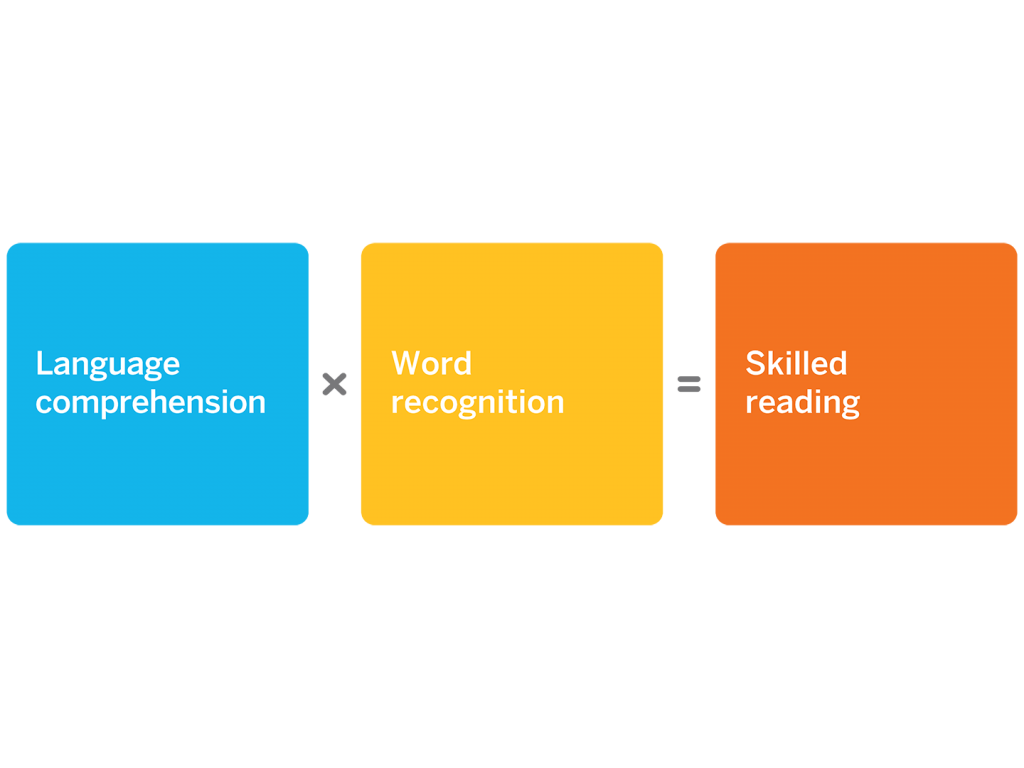
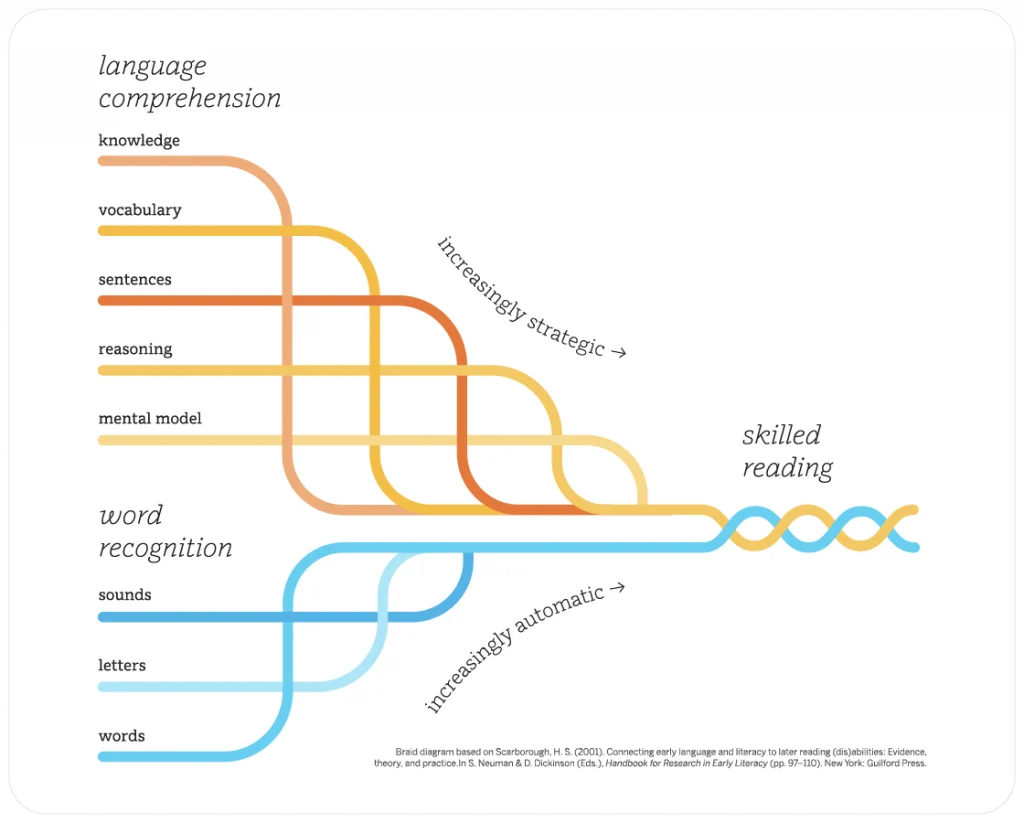
Each lesson follows a predictable structure with clearly marked components, beginning with warm-up routines, progressing through explicit instruction with guided practice, and concluding with independent application activities. The program provides detailed teacher language, including question stems and discussion prompts, ensuring clear and consistent delivery of instruction.
[Reviewer highlight video] Program organization for Category 2
[Reviewer highlight video] Program structure for grades K–2
[Reviewer highlight video] Program structure for grades 3–5
[Reviewer highlight video] Program structure for grades 6–8
Amplify CKLA California empowers teachers to deliver effective instruction and keeps students engaged with with the following resources:
- Teacher Guides
- Assessment Guides
- Authentic texts and trade books
- Knowledge Image Cards
- Knowledge Flip Books
- Remediation and intervention resources
- Decodable readers
- Student Readers and novels
- Student Activity Books
- Dedicated ELD support with Language Studio California
- Poet’s Journals
- eReaders
- Sound Library featuring articulation videos and songs
- Instructional routine modeling videos
- Assignable Practice Games
- On-demand professional development
Amplify ELA California students stay engaged with the following resources:
- Teacher Guides that include:
- Detailed lesson plans
- Standards alignment and exit tickets
- Real-time differentiation strategies
- Robust reporting
- Student Editions that include:
- High-quality narrative and informational texts
- Videos, audio supports, and digital experiences that capture their attention
- Personal Writing Journal to keep all student writing in one place
- Dedicated ELD support with Language Studio California
- Trade Books
Core literacy philosophy
Support every learner. Meet all learning needs with a Multi-Tiered System of Supports (MTSS) that brings together universal screening, scaffolded core instruction, support for English learners, and data-driven intervention to ensure every student gets what they need to succeed.
Provide intentional ELD support. Honor students’ linguistic assets while building academic English through both integrated and designated instruction.
Deliver consistent foundational skills instruction. Daily explicit, systematic skills instruction in grades K–2, with targeted yet flexible support for students still building decoding confidence in grades 3–8, ensures mastery of essential reading foundations.
Build lasting knowledge across all grades. Through coherently sequenced, content-rich instruction that revisits key vocabulary and concepts with increasing complexity, students build meaningful connections that deepen their vocabulary and reading comprehension.
Strengthen reading through writing at every level. Regular writing instruction grounded in the Science of Writing supports reading comprehension, improves sentence-level writing, and provides the foundation for high-quality composition. As students progress through the upper grades, they engage in increasingly complex analytical tasks—synthesizing ideas, drawing generalizations, and interpreting multiple textual layers through both focused quick-writes and comprehensive essays.
Foster oral language development. Structured opportunities for academic conversation and evidence-based dialogue build students’ ability to express complex ideas with precision and allow them to participate confidently in classroom discussions.
Measure growth with comprehensive assessments. Assessments range from in-the-moment checks for understanding to summative assessments that measure progress toward skills mastery and standards proficiency, providing the data needed to drive targeted instruction.
Scope and sequence
Below you can view the scope and sequence for each grade level.
- Kindergarten
- Grade 1
- Grade 2
- Grade 3
- Grade 4
- Grade 5
- Grade 6
- Grade 7
- Grade 8
- Newcomer Support Grades K–8
Routines
Amplify CKLA California and Amplify ELA California include several structured instructional routines that provide predictable patterns for both teachers and students:
Discussion and collaboration routines:
- Turn and Talk: Partners discuss text-specific content using sentence starters and frames
- Think-Pair-Share: Students engage in individual thinking, partner discussion, and whole-class sharing
- Partner reading: Students sit shoulder-to-shoulder, taking turns reading and listening
Foundational Skills routines:
- Sound-spelling review: Warm-up activities that reinforce phonics patterns
- Oral blending warm-ups: Teacher-guided practice progressing to independent application
- Finger-tapping: Techniques for blending sounds
- Chaining activities: Students manipulate letters to transform one word into another
- Word Work: Daily short activities focused on domain-specific and academic vocabulary
Knowledge-Building Routines:
- Teacher modeling: Demonstration of proper intonation, expression, and pacing
- Choral reading: Whole-class reading practice
- Partner reading: Paired fluency practice
Close reading routines
The program includes carefully structured close reading activities that guide students through multiple encounters with complex texts. These routines help students develop deeper comprehension through systematic analysis and discussion.
Each routine includes comprehensive instructional guides with clear-cut directions for implementation, straightforward explanations of concepts, and suggestions for discussion.
Designated English Language Development materials
Language Studio California is a K–8 content-based companion for English language learners. Built on Amplify CKLA California’s and Amplify ELA California’s carefully sequenced Knowledge Domains and units, it combines engaging content knowledge with targeted supports and research-based strategies to help students move swiftly toward language proficiency. This program includes:
- Real-world content to provide authentic opportunities to practice reading, writing, speaking, and listening.
- Scaffolding strategies and differentiated instruction to offer targeted support along with five English proficiency levels.
- Progress-monitoring tools to help teachers provide consistent and effective support.
- Teacher Guides that:
- Provide impactful progress monitoring tools including formative and summative assessments and Language Proficiency Assessment rubrics.
- Offer varied differentiation strategies including Support, Challenge, and Access Supports in each lesson segment.
- Are organized into thoughtful lesson segments—Talk Time, Building Background, On Stage and more—that make learning objectives concrete.
- Activities that:
- Expand on domain knowledge from core content and read-alouds and prompt collaborative conversation to practice oral fluency.
- Support hands-on language activities to promote authentic interaction in the classroom.
- Help students bridge experiences and knowledge with images, vocabulary activities, graphic organizers, anticipation guides, writing space, and more.
Category 3: Assessments
Systematic MTSS alignment
In alignment with the additional 2025 Guidance 3.1.a, the assessment systems align with MTSS tiers, including universal screening, diagnostic assessments for students demonstrating a need for additional support, and progress monitoring tools that complement the California’s required universal screening schedule per SB 114.
| Tier 1: Universal/ differentiated support | Tier 2: Supplemental/ targeted support | Tier 3: Intensified/ intensive support | |
| Core instruction assessments Frequency of administration | Amplify CKLA California, Amplify Caminos California, Amplify ELA California assessments Daily, Weekly, Monthly | Amplify CKLA California, Amplify Caminos California, Amplify ELA California assessments Daily, Weekly, Monthly | Amplify CKLA California, Amplify Caminos California, Amplify ELA California assessments Daily, Weekly, Monthly |
| Universal screening assessments Frequency of administration | mCLASS DIBELS and Lectura 3 times per year – BOY, MOY, EOY | mCLASS DIBELS and Lectura 3 times per year – BOY, MOY, EOY | mCLASS DIBELS and Lectura 3 times per year – BOY, MOY, EOY |
| Formal progress monitoring assessments Frequency of administration | mCLASS DIBELS and Lectura 3 times per year – BOY, MOY, EOY | mCLASS DIBELS and Lectura Monthly | mCLASS DIBELS and Lectura Bi-weekly |
| Informal progress monitoring assessments Frequency of administration | Amplify CKLA California, Amplify Caminos California, Amplify ELA California core assessments Daily | Intervention Toolkit progress monitoring assessments When linked to a lesson in the toolkit | Intervention Toolkit progress monitoring assessments When linked to a lesson in the toolkit |
| Diagnostic assessment Frequency of administration | Amplify skill diagnostic assessment Amplify Spanish skill diagnostic assessment Optional after universal screening assessment is administered | Amplify skill diagnostic assessment Amplify Spanish skill diagnostic assessment After universal screening assessment is administered |
Universal assessment system
Amplify’s mCLASS® DIBELS® 8th Edition and mCLASS Lectura are universal and dyslexia screening assessments that should be administered three times per year (BOY, MOY and EOY) to all students. The assessments evaluate student literacy risk, determine progress toward grade-level goals, and indicate the level of instructional support a student may need. Beginning-of-year screenings require adequate instructional time before administration, particularly in grades K–1, while mid-year and end-of-year assessments evaluate instructional effectiveness and guide tier placement adjustments. These screenings also identify students at risk for dyslexia. Universal screening provides essential data for targeting instruction and measuring instructional system effectiveness.
Core instruction assessments
Amplify CKLA California and Amplify ELA California provide a comprehensive suite of assessments for Grades K–8 that range from low-stakes, informal formative assessments to more formal summative assessments. These assessments incorporate a variety of methods and question types, including multiple-choice questions, open-ended questions, and oral and written responses.
Formative assessments:
- Checks for Understanding: Incorporated into each lesson segment throughout daily instruction. Quick pulse-checks that provide immediate feedback during lesson delivery (grades K–5).
- Daily formative assessments: Highlighted moments within each lesson for teachers to plan to track mastery of Primary Focus objectives and standards of each lesson to get a clear snapshot of individual and whole-class progress (grades K–5).
- Activity pages: Completed as part of lessons and can be used to assess lesson content understanding through various formats (grades K–5).
- Exit Tickets: Located at the end of lessons, these provide a quick gauge of students’ ability to meet the lesson’s focus standards (grades 6–8).
- Writing Prompts: Prompts integrated throughout lessons during writing activities that provide skill snapshots within lessons and tracks patterns of skill development over time (grades 6–8).
- Independent reading activities (Solos): At the end of every lesson, students complete an independent reading activity (“solo”) with reading questions that are scored to measure comprehension (grades 6–8).
Summative assessments:
- Skills end-of-unit assessments (grades K–2)
- Knowledge end-of-domain assessments (grades K–2)
- End-of-unit assessments (grades 3–5)
- Unit essays: A culminating end-of-unit set of lessons that guide students through crafting an essay with a rubric to score mastery of writing skills (grades 6–8)
- Unit Reading Assessments: Auto-scored responses and two constructed response items evaluate comprehension, content understanding, and reading skills using the passages students read during the unit (grades 6–8)
Performance Assessments
Student Performance Assessments are multi-day assessments administered in Grades K-5 at the beginning, middle, and end of year to help teachers gauge student mastery of grade-level Core content. These assessments provide critical data to help teachers set targeted instructional goals and monitor individual and class-wide progress towards core objectives.
Progress monitoring
Amplify’s mCLASS® DIBELS® 8th Edition and mCLASS Lectura provide formal progress monitoring in the discrete skills that are indicative of reading growth and predictive of overall success to provide the most instructionally meaningful information to teachers.
Informal progress monitoring tools can be found within the Intervention Toolkit, including materials for teachers to record, track, and evaluate student progress.
Diagnostic assessment
Interventions within Amplify’s literacy programs are informed by a skill diagnostic assessment that provides detailed data on foundational literacy skill deficits. The Amplify Skill Diagnostic Assessment and Amplify Spanish Skill Diagnostic assessment serve as critical tools in this process, administered specifically to students identified as at risk for reading difficulty through universal screening assessments—particularly those demonstrating mCLASS DIBELS 8th Edition or mCLASS Lectura composite scores in the Well Below or Below Benchmark ranges. These diagnostic assessments provide teachers with the precise skills to begin intervention and remediation.
Category 4: Universal Access
Amplify CKLA California and Amplify ELA California were built on the principles of Universal Design for Learning (UDL) and reviewed by CAST, a nonprofit education research and development organization. The program is developed using the Universal Design for Learning framework to proactively ensure that all learners can access and participate in meaningful, challenging learning opportunities.
Universal Design for Learning
The programs incorporate opportunities for engagement, representation, action, and expression based on the guidelines of Universal Design for Learning.
- Multiple Means of Engagement: The programs incorporate interesting and motivating ways for students to interact with information and content. In Amplify CKLA California, the Universal Access section in the introduction of each lesson provides specific lesson-level options based on the needs of individual classrooms and students. Scaffolding for students with various levels of need is incorporated into the design of each lesson.
- Multiple Means of Representation: The programs provide multiple means of presenting content to maximize student understanding. This includes digital component files that allow for a range of presentations of images and text to support learning. Amplify provides access to universal supports such as point-of-use audio for all core texts, embedded definitions for critical vocabulary, and glossaries in multiple languages. Amplify CKLA California includes clarification on language found throughout the program, with sidebars that include support on transition words and syntax, and illustrations to help students understand the concepts they are learning.
- Multiple Means of Action and Expression: The programs include a range of methods for all students, including English Learners, to navigate and demonstrate learning. This includes physical actions, a range of methods for response, appropriate tools for composition, and varied scaffolding. In Amplify ELA California, lessons provide multiple ways for students to interact with text, allowing their brains to process the language through distinct pathways. Activities harness multiple learning modes, using media tools, digital apps, and a variety of visual and physical experiences to strategically support and enhance student learning.
- Accessibility: Universal access features include visual aids, enlarged materials, physical objects, and multiple learning modalities through activities like Push & Say and Wiggle Cards. The Universal Access section in the introduction of each lesson provides specific lesson-level options based on the needs of individual classrooms and students.
Embedded differentiation
Amplify CKLA California and Amplify ELA California provide built-in differentiation strategies in every lesson for all students.
Throughout the Teacher Guides, point-of-use Differentiation icons provide targeted instructional strategies and supports. These icons indicate specific guidance for advanced learners, students who need additional support, and English learners, allowing teachers to easily identify and implement appropriate scaffolds and extensions during instruction. In addition, teachers are provided with recommendations for resources to use with each group of students.
- Pre-teaching supports include mini-lessons on:
- Core vocabulary words
- Core Connections
- Essential Background Information or Terms
- What Have We Already Learned/What Do We Already Know?
- Differentiated Support for Core Instruction tables, located in the overview of each K–2 Skills Teacher Guide, provide a list of specific opportunities for reteaching and additional support in each lesson based on skill.
- Support and Challenge Sidebars in lesson margins offer educators immediate guidance in implementing point-of-use differentiation techniques.
- Flexible Grouping within lessons provides opportunities for teachers to facilitate small groups, partners, or individualized support based on students’ needs. In the Skills Strand, teachers receive specific guidance for differentiated small-group instruction, with targeted support and activities outlined for both Group 1 (students needing additional support) and Group 2 (on-level students) based on data.
- Amplify ELA California provides point-of-use supports embedded within key core lesson activities with six levels of differentiation. The goal of these supports is to fully enable access to grade-level content for all students, including students with disabilities, English learners, and students ready for an additional level of challenge.
- The Universal Access section of Advance Preparation in each lesson includes varied strategies to ensure all students can access and engage in each lesson.
- Frequent use of graphic organizers and visual supports in lessons provide opportunities for differentiation based on need. The program also includes a variety of technological supports, such as eReaders with audio.
- Extension opportunities are suggested throughout lessons, often embedded in writing tasks, which include prompts to use more complex and descriptive vocabulary, figurative language, multi-clause and complex sentences, and informational text characteristics.
Assessment-Driven MTSS resources
- The K–8 Intervention Toolkit is available online and provides easy-to-use resources that assist teachers in filling gaps in students’ reading skills, with activities to support print concepts, phonological awareness, phonics, fluency, and other key skills
- Fluency Packets (Grades 2–5)
- Foundational Skills Intervention Program for Grades 3–8 support students who would benefit from direct and explicit intervention instruction in the full continuum of foundational skills in the upper grades
- Flexible Instructional Time including:
- Pausing Points built into the curriculum that provide teachers with dedicated time to address specific student needs through targeted reteaching, remediation, practice, and extension activities
- Pausing Point activities designed to support English learners’ competence and confidence through differentiated whole-group, small-group, or individual instruction
- Boost Reading is a K–5 student-led digital intervention program. Boost Reading follows Amplify CKLA California’s scope and sequence to reinforce the same foundational skills taught in core instruction. It integrates easily into daily routines, while the robust data provided by mCLASS® DIBELS® 8th Edition offers a detailed view of how students progress across all instructional tiers.
Category 5: Instructional Planning and Teacher Support
Amplify CKLA California and Amplify ELA California teachers are empowered to deliver effective instruction with various print and digital resources. The program provides comprehensive planning and support materials designed to help teachers prepare for and execute lessons effectively and fulfill the requirements of Category 5.
Implementation supports across K–8
Planning and preparation resources
- Unit Overviews that provide important background and context for the texts students will read, including highlighted elements within the text and guidance for how students will work with those elements
- Sub-unit Overviews (Grades 6–8) that provide an overview of Lesson Objectives and reading and writing assignments, as well as a list of any projections, multimedia, or digital apps that can be projected from the teacher’s included digital license
- Lesson-by-lesson preparation checklists (Grades 6–8) accompanying each Sub-unit Overview
- Lesson Briefs for each individual lesson providing important background and context
- Content knowledge materials regarding topics that students will examine
Point-of-use instructional guidance
- Teacher Editions that feature insets of the same text and activity instructions as the corresponding Student Edition, wrapping teacher instruction around these materials
- Activity guidance at point of use
- Lesson standards clearly called out
- Discussion suggestions embedded in lessons
- Differentiation tips at point of use
- Detailed Instructional Guides in each activity that include sequencing and grouping suggestions, tips for facilitating discussion, possible student responses and exemplars
- Student Supports in all core lessons that provide teachers with targeted supports in daily core instruction, addressing which might serve the student best in the moment—support, strengthen, stretch—with additional call-outs for newcomers
Multimedia and digital support
- Teacher tip videos provide modeling and guidance for implementing key foundational skills routines within the program
- Digital platform access where teachers can access printable PDFs of differentiated support materials for English learners and students struggling with reading, including translated Unit Background and Context documents and Text Previews
- Teacher dashboard and reporting tools (Grade 6–8) provide real-time visibility into student progress and work for immediate instructional response
Caregiver supports
Communication and overview resources
- Caregiver Hub available in English and Spanish that provides an overview of the curriculum
- Caregiver Letters for each K–2 Knowledge Domain and unit in Grades 3–5 that provide an overview of the content, the skills students learn, as well as practical methods that continue the learning and knowledge building at home
- Unit-specific Caregiver Letters (Grades 6–8) that provide detailed information regarding what students will read and learn in each unit, including conversation starters that allow caregivers to ask questions and discuss specific aspects of a unit with their student
- Welcome letters that explain the assessment and placement process while inviting parent involvement and offering support
- Editable Home-School Communication letters available in English and Spanish
- Editable Progress Reports for teachers to update parents and guardians on what their child is learning
Content and learning support materials
- Unit Background and Context documents that provide an introduction and overview to the unit’s topic and themes, available in English and Spanish
- Text Previews that provide a brief introduction to formative, independent reading assignments (called Solos in Grades 6–8), available in English and Spanish
- Unit Overview and Support documents (Grades 6–8) designed for caregivers that provide information about important questions, assignments, and key aspects of the unit texts, available in English and Spanish
- Conversation starters included in Knowledge Strand Caregiver Letters to discuss domain topics at home
Home practice and extension activities
- Take-Home pages in the Skills Strand that include copies of decodable passages, enabling students to share their reading progress with families and continue practicing their skills outside of school
- Take-Home Letters in the Skills Strand that provide specific guidance for parents to support skills practice at home, such as sound-sorting activities, with detailed instructions and materials for home practice activities
- Take-Home pages in the Knowledge Strand that provide suggested activities families can do together to reinforce and extend learning beyond the classroom
- Games and activities on take-home pages that extend classroom instruction, including all the materials and instruction necessary to help families assist students in a fun and engaging way
- Digital access to decodable texts through the Amplify Caregiver Hub, allowing students to practice their reading skills both in class and at home
- Weekly spelling lists and directions to decoding activities that can be practiced at home
mCLASS K–8 Literacy & Math Assessment System | Amplify
Amplify professional development: coaching and tutoring
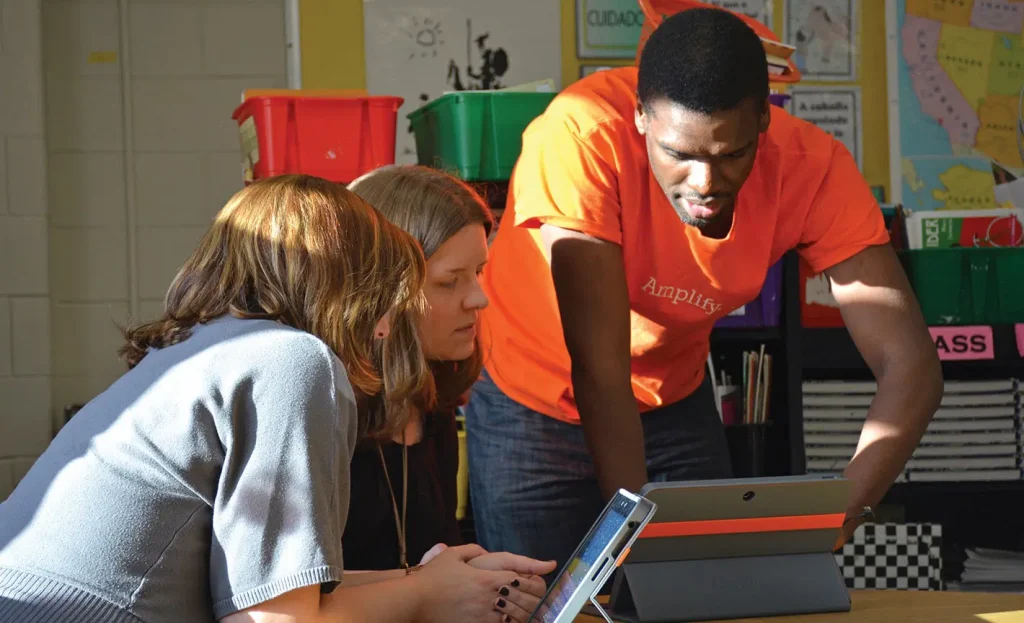
Amplify provides consistent, job-embedded coaching services to deepen teacher capacity in planning data-driven instruction. Amplify’s high-impact tutoring extends teachers’ reach to all students through data-driven small group instruction.
We have a wide suite of tutoring and coaching services that will help meet your unique needs this school year. Find out more below!
Coaching Overview
| Grade(s) | Coaching Program | Audience | Modality |
|---|---|---|---|
| K–2 | Start Strong Virtual Coaching | Kindergarten, First Grade, and Second Grade teacher teams and school leaders using DIBELS Next OR DIBELS 8th Edition | Remote |
| K–12 | Data Coaching | Teacher teams and school leaders | Remote or Onsite |
Download the overview as a PDF.
Coaching Sessions
Start Strong Virtual Coaching, K–2
Amplify provides virtual coaching to schools and districts using DIBELS to ensure that all K–2 students receive high-quality early literacy instruction that will put them on the pathway for future success.
Start Strong is a consistent, year-long, and job-embedded program where coaches meet virtually with school leaders and K–2 teacher teams in order to build their capacity in planning whole group and small group data-driven instruction based on DIBELS error patterns. School leaders will also receive support on how to lead data and planning meetings and optimize their school schedules.
Through an increased understanding of early literacy development and data-driven instruction, teachers and school leaders in the Start Strong program will be better positioned to increase K–2 student reading achievement as measured by DIBELS.
Audience: K–2 teacher teams and school leaders
Modality: Remote, maximum 8 participants per grade level team
To learn more about launching Start Strong in your school or district, please click here: Start Strong Overview
Data Coaching
Amplify’s data coaching program provides educators throughout a school, district and/or state with ongoing support to take action with their data, make changes to their teaching practices and realize significant gains in student achievement.
The data coaching program is offered in remote and/or onsite sessions and tailored to a school, district or state’s specific needs around intensity and frequency.
Teachers and school leaders work closely with their Amplify data coach to understand, analyze, and develop instructional plans using current student data sources in a collaborative learning environment. Through their participation in the data coaching program, teachers and leaders will be able to create a stronger data-driven culture and increase investment in realizing both short and long term goals in student achievement.
Audience: Teachers and school leaders
Modality: Remote or Onsite
To learn more about launching data coaching in your school or district, please click here: Data Coaching Overview
Tutoring Overview
| Title | Audience | Modality |
|---|---|---|
| Comprehensive Virtual Reading Tutoring Program | Kindergarten through Fifth Grade students | Remote |
| Training for District Tutors | Tutors hired at the district/school level | Remote |
Tutoring Sessions
Comprehensive Virtual Reading Tutoring Program
Amplify will support schools, districts, and states in ensuring all K–5 students have a strong foundation in early literacy skills by providing tutors who develop trusting relationships with students and meet their data-based needs.
In this program, tutors meet with students for 30 minutes, three days each week and use research-based, high-quality instructional materials to close literacy gaps and develop stronger social-emotional learning. While Amplify collaborates with school leaders to determine scheduling and identify participating students, Amplify will manage all other aspects of the program, thus reducing the burden for school leaders to launch this program independently. Amplify services will include, but not be limited to: creating homogeneous student groups, progress monitoring students on a consistent schedule, and hiring, training and managing tutors.
Through targeted, data-driven virtual reading tutoring, participating schools increase their capacity to provide high-quality instruction with caring adults in a small group setting to the students most in need.
Audience: K–5 students
Modality: Remote
To learn more about launching Comprehensive Virtual Tutoring in your school or district, please click the link below: Virtual Tutoring Overview
Training for District Tutors
Amplify will provide guidance and support to schools, districts, and states that are interested in developing systems and structures for launching a tutoring program focused on increasing early literacy skills for K–5 students.
At the start of the planning process, Amplify will support program managers in understanding the necessary systems, structures, and action steps required to implement the program (e.g., hiring and managing tutors). Amplify will help create a tailored training plan for tutors using the Amplify products of either mCLASS Intervention and/or Amplify Reading. The training plan for tutors will include initial product training and best practices for tutoring. Ongoing training will focus on topics such as, but not limited to: data analysis needed for flexible small groups, underlying theories for early literacy development, and strategies for engaging all students. Amplify will also provide ongoing individual support through observation/ feedback cycles for tutors.
Through their participation in the training for district tutors, districts and schools will be able to strategically launch high-quality tutoring programs and support tutors through initial and ongoing training.
Audience: District tutors
Modality: Remote
Contact
We are happy to discuss how to scale any of our coaching and tutoring services to meet the needs of a school or district’s budget or scheduling realities.
If you would like to discuss any of our coaching or tutoring services, please call Dr. Lindsay Sullivan, Ed.D. at (800) 823-1969 or email lsullivan@amplify.com.
GREAT NEWS!
High-Impact Tutoring Grant for 2025–26 is released by DESE!
Built on the Science of Reading, Amplify Tutoring engages students and achieves real results. Let’s partner and support Arkansas students to become confident, proficient readers.

Arkansas Districts, Welcome to Amplify Tutoring
At Amplify Tutoring, we’re dedicated to assisting you every step of the way. From grant writing and planning to full implementation — including tutors, materials, and everything you need — we’re here to help you.
- Maximize Your Opportunity
Watch our quick 3-minute video to discover how Amplify Tutoring can help you make the most of this chance and ensure Arkansas students receive the support they deserve! - Our Impact
Interested in how we’re already making a difference? Explore our impact across Arkansas here. - Connect with Us
Schedule a 1:1 meeting with us today to learn more and get grant writing support. - Learn More About Us:
Visit amplify.com/tutoring for more information.Register for an information session:- Register for an information session:
- August 19: 10 a.m. CT or 2 p.m. CT
- August 20: 10 a.m. CT or 2 p.m. CT
- August 21: 10 a.m. CT or 2 p.m. CT
- August 25: 10 a.m. CT or 2 p.m. CT
- August 26: 10 a.m. CT or 2 p.m. CT
- August 27: 10 a.m. CT or 2 p.m. CT
- Resources to Support
See the Commissioner’s Memo here and 2025–2026 grant application here. - Questions?
Contact us at tutoring@amplify.com
Hear from leaders like you!
See what other district leaders are saying about Amplify Tutoring.
Overview

Accelerate student achievement.
Amplify Tutoring supports and accelerates student proficiency in foundational literacy skills. Results show that students in Amplify Tutoring outperformed similarly at-risk peers on a nationally normed reading assessment, and those who attended most consistently made the largest gains.

Reimagine instructional supports.
Amplify’s scaled tutoring offerings can be customized to help you meet the needs of your students. Whether you need high-quality tutoring materials, help designing your tutoring program, professional development, or tutors, Amplify can support you at every stage.

Increase insight into student learning.
Grounded in data, mCLASS® Intervention provides educators and tutors with visibility into lessons, progress monitoring, and instruction tailored to the needs of each student.
Our approach
Amplify Tutoring offers research-aligned tutoring materials, services, and training. From design consultations to full-service tutoring programs, our models reflect the principles of high-impact tutoring.


Data-driven instructional materials that are aligned with the Science of Reading and meet ESSA criteria
Amplify Tutoring features research-backed lessons aligned with the Science of Reading and grounded in mCLASS Intervention (an ESSA aligned program). This program groups students with common strengths and needs and provides progress monitoring.
Frequent and consistent sessions
Tutors engage with students in three or more 30-minute skill-building sessions per week to build confidence in students’ early literacy skills.


Positive relationship building
When students feel safe and cared for, they are motivated to achieve their goals. Our approach supports consistent, positive tutor-student relationships.
Training for district and tutoring personnel
District and tutoring personnel receive flexible, comprehensive training, enabling high-quality tutoring instruction to meet student needs.

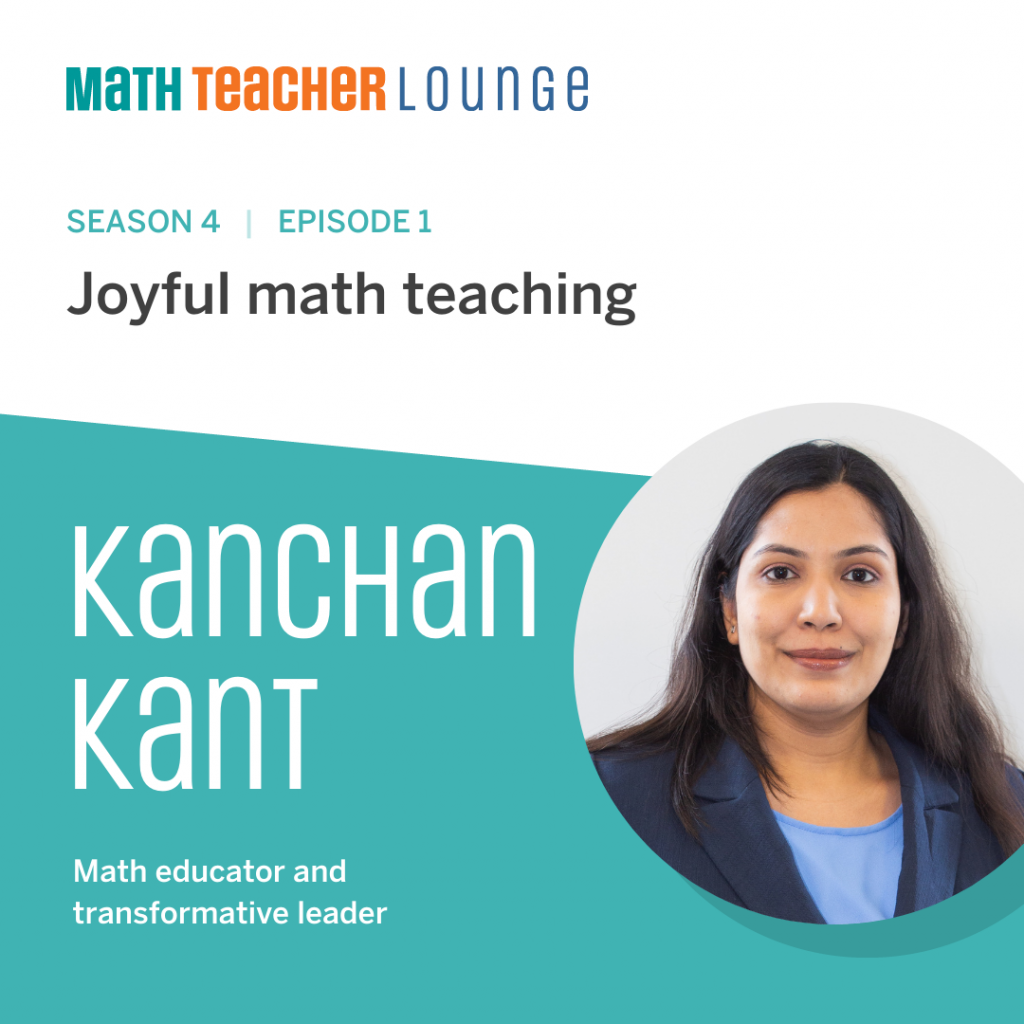
S4 – 01. Joyful math teaching with Kanchan Kant
This season on the Math Teacher Lounge podcast, we follow the theme “joyful math” and uncover its meaning.
In this episode, Kanchan Kant joins Bethany Lockhart Johnson and Dan Meyer to discuss the key, early investment she makes at the start of the school year to ensure her math teaching will be joyful for herself and for her students for the rest of the year.
Explore more from Math Teacher Lounge by visiting our main page.
Dan Meyer (00:00):
Okay, we are recording. Hey folks. Welcome back to Math Teacher Lounge. (laugh)
Bethany Lockhart Johnson (00:06):
Hardly off to a rocking start.
Dan Meyer (00:06):
Yeah. Yeah. <laugh> Did you like my energy there? Hey folks. Welcome back to Math Teacher Lounge. It’s a new season with your host Dan Meyer. And…
Bethany Lockhart Johnson (00:15):
I’m Bethany, Lockhart Johnson. How’s your summer Dan?
Dan Meyer (00:22):
Summer for me feels really hectic as we prepare, here at Amplify, for the new school year, and everyone’s starting these new math programs. So I’ve been feeling quite amped up, like usual in the summer. But also, my kids started big kid school. So I’ve been seeing the educational system from the role of a parent and all the anxieties and I worry, will I be my kids’ teacher’s most annoying parent <laugh> … So what kind of math curriculum you using? Oh, have you heard of core counting? Can I lead a math center? What’s this worksheet about? I’m really worried my kids are just overall gonna hate my vibe when I come around their classes. Uh, <laugh> so lots going on with me.
Bethany Lockhart Johnson (01:06):
It’s already happening for me and I have a toddler.
Dan Meyer (01:10):
<laugh> There we go. Anyway, that’s what I’m up to. That’s how I’m feeling. I’m curious how you’re doing. We haven’t chatted in a while. We’re excited about the podcast, but it’s been a bit, you know? Bethany got a break from me and my antics over the summer. So, how are we finding you here, as we ramp up to the new season?
Bethany Lockhart Johnson (01:24):
Uhhhh. Well, let me just tell you, I have a toddler. That’s kind of all I need to say. Except that’s not all I will say. Of course, I’ll say more. I am exploring, I’m dipping my toe into the extracurricular toddler activities; the music classes of the toddler world, the creative movement of the toddler world. And yeah, I have lots of opinions and lots of things to say about the teachers. And I’m like, Ugh, I can’t wait to be room mom. And just like…<laugh>
Dan Meyer (01:55):
Just let it rip, you know?
Bethany Lockhart Johnson (01:57):
I have opinions on everything and just hope I don’t get kicked out of the class.
Bethany Lockhart Johnson (02:05):
It’s been an eventfully recharging summer and we are ready for this new season. And in fact, we’re so ready that we decided that we were gonna mix up this season. Just a, just a tiny bit. Shall I explain Dan?
Dan Meyer (02:21):
Yeah. Let’s do it.
Bethany Lockhart Johnson (02:22):
So we have loved all the different topics that we have explored in the Math Teacher Lounge world, but we kind of feel like we need to do some more deep dives. So for this season and the foreseeable seasons …
Dan Meyer (02:38):
We’ll see how it goes.
Bethany Lockhart Johnson (02:38):
Let’s stick with this season. For this season. We’re going to be exploring a singular theme.
Dan Meyer (02:46):
We’re not bouncing around. Yep. We’re not bouncing around from a guest to guest going on whatever shiny thing in the river bed catches our eye. We’re gonna take one theme and see where it goes. What we working with here this season?
Bethany Lockhart Johnson (02:57):
This season, we are going to be exploring the idea of joyful math, joyful math. And Dan, the question I have for you is, is the term joyful math one that you use on the regular?
Dan Meyer (03:10):
No, it definitely is not. I think that joy and math are very rarely, you know, connected in the popular mind. Number one, and number two, you know, I’m kind of an ornery fellow, so that’s not my natural kind of description of math. But we decided that it feels like an important one at the moment, because a lot of math teaching–a lot of teaching in general, math teaching in particular–math teaching is often not a joyful discipline for students, where, you know, I’ve done some research where you look at what people type into Google. And I looked at like, what they…why am I bad at X? And I looked at that for where X is math, where it’s science, where it’s reading, where it’s history. And it was just wild to see how many more hits there are out there on the Internet for “why am I bad at math?” People don’t really associate math with joy, but also we’re looking at joyful math in terms of joyful math teaching. Math teaching, teaching in general, is a tough field at the moment with a lot of teachers leaving teaching. And those who remain are having a lot of soul searching and thinking about, why am I here and how do I sustain this work? And in an environment that seems hostile to my interests or my talents, or work-life balance. And so that’ll be the theme that we’re gonna kind of uncover over the course of our season, talking to various interesting guests, including one today about, yeah, joyful math teaching and joyful math.
Dan Meyer (04:43):
And to help us think about what joyful math teaching looks like, we figured we’d first look at what UN-joyful math teaching looks like. It happens to be the case that we’ve been in a pandemic as you might be aware, and teaching has been challenging. And the NEA, our National Education Association, surveyed its member teachers and asked them the following question … Gave a list of issues that school employees have experienced and asked, for each one indicate how serious of a problem this is for you. This is a survey where more than half of members said they are more likely to leave or retire sooner than planned because of the pandemic. And this is almost double the numbers from July, 2020. It’s really hard to keep track of teacher departures and unfilled vacancies across states. So I don’t wanna like blow this up out of proportion, but it does indicate some real challenges in teaching. So Bethany, I was curious, what do you think like at the top of the list, like what kinds of factors, issues facing educators would you imagine there are?
Bethany Lockhart Johnson (05:48):
So if I’m to understand you correctly, these are reasons someone is not actively experiencing joy in the profession of teaching. Like why would they leave?
Dan Meyer (05:58):
Exactly.
Bethany Lockhart Johnson (05:59):
Well, the number one thing that came to mind for me, well, okay. Wait, wait, one other caveat I need to ask about, you said specifically pandemic-related or just in general, because if it’s pandemic-related, then I think, well, there’s health issues, right? That people are concerned about, but in general, the thing that came to mind was a lack of support from administration districts, lack of funding, and overcrowding in classrooms. Like, you know, I saw somebody had 40 students in their classroom. So those are the two things that I can imagine like top on someone’s list that would make them experience less than a joyful day.
Dan Meyer (06:44):
Yeah. There’s a bunch of you’re kind of identifying here. So number seven on the list is lack of respect from parents and the public, which is like 76% of teachers call that out as serious for them. Others that you kind of circled around in terms of resources go like, not enough planning or unstructured time in the job kind of ties into resources. Yeah. But there’s others that are on the list that I’m curious, you wanna take on the swing at it, given what I’ve said here,
Bethany Lockhart Johnson (07:15):
I feel like too much being asked of them, like being asked to wear too many hats, like they’re being asked to not only teach their class, but also cover all the vacancies and supervise recess and, you know, make a delicious, nutritious lunch. That’s what came to mind. Am am I close?
Dan Meyer (07:33):
Yeah. Number four on the list, unfilled job openings leading to more work for remaining staff. People covering, you know, not just the kind of external to teaching work like you’re describing, but also just taking on like losing your prep period, to take on a class that has been unfilled for all kinds of reasons. Yeah.
Bethany Lockhart Johnson (07:54):
Yeah. I’ve only gotten the fourth. Give me one clue, one clue about …
Dan Meyer (07:59):
So, I mean like, so number one is general stress from the coronavirus pandemic, you know, which I feel like …
Bethany Lockhart Johnson (08:06):
I mentioned that.
Dan Meyer (08:07):
I’ll give you that one. Yep, yep, sure. And then number two, close behind, is feeling burned out, which I think ties into what you’re describing as well. I’m giving Bethany credit on that one. The third one is very different from the ones you’ve been describing. I think I cannot in good faith give you even partial credit for this one. I’ll just say it. Student…
Bethany Lockhart Johnson (08:28):
Wait! Dan, this is not how you give clues.
Dan Meyer (08:31):
Here’s a clue. It’s student absences due to COVID19. It’s really hard to deal student absences. That’s your clue.
Bethany Lockhart Johnson (08:40):
That wasn’t a clue that you told me.
Dan Meyer (08:43):
Yeah, let’s see. I think that’s largely it. There’s also pay is too low, is on the list; student behavioral issues, on the list. And I think that about covers it. So all of that, that basket of items has led to more than half of teachers in this survey, saying that they’re more likely to leave or retire from education sooner than planned. And I don’t know. I think we all know teachers who have bailed.
Bethany Lockhart Johnson (09:08):
I’ve never played a board game with you, Dan, but if we ever play a board game, we’re gonna work on your clue giving, ’cause I want to keep guessing. And you just told me.
Dan Meyer (09:22):
Yeah. Yeah.
Bethany Lockhart Johnson (09:22):
In all seriousness, the <laugh>. In all seriousness, I think yes, the stress of the pandemic and students being absent, what some folks are calling unfinished learning, all of those pieces do play into it. But a lot of those things that you’re mentioning on the list are things that are not unique to the pandemic, right? Like those are things that I feel like there is some modicum of control that we could have over shifting the way the culture of the teaching profession is going so that we could create a more joyful experience for educators, administrators, and students.
Dan Meyer (10:03):
Yeah. Good call out. That’s exactly right. We could tax the people who are not in the classrooms more and increase the pay to classroom teachers. You know, there we go.
Bethany Lockhart Johnson (10:11):
Oh. Bingo. Why didn’t we ask you sooner Dan, for your wisdom.
Dan Meyer (10:15):
Yeah. I’m … solved by Dan. Yeah, good point though. So I read that and yeah, I think that there’s been some … people have critiqued the NEA for being very alarmist about teacher departures as the year has ramped up. It has not been quite the flood of departing teachers as was predicted and thank heavens for that, but we should still be very bummed if teachers are unhappy and wanting to leave and feel like they can’t leave. That is definitely not good. So we were really excited to bring to the table, someone who is just a very joyful teacher and one in a very intentional way. Someone who has a lot of discipline in how she approaches the job and the students in it and tries to create a joyful environment for herself, Kanchan Kant. Kanchan is a math and computer science teacher at Newton North High School in Newton, Massachusetts. She’s been sharing her love for math with her students for the past four years, while also being instrumental in setting the culture and ethos of the math department at her school in her role as the assistant department head. We welcome you on the show Kanchan to help us understand joy and math teaching. Thanks for being here.
Bethany Lockhart Johnson (11:29):
Welcome!
Kanchan Kant (11:30):
Thank you for having me. I really appreciate it.
Bethany Lockhart Johnson (11:33):
One of my friends, her son was asked as his first math homework assignment to write out his math bio. And I loved that idea because we got to hear a little bit about your bio from like a broader perspective. But if we were to ask about your math bio, I will speak for myself to say like, automatically certain images flash into my mind, right? To think about my relationship, my evolving relationship with math. But I’m so curious if I was to ask you, what’s your math bio? How did you become the person, mathematically speaking, that you are today? Would you mind sharing a bit about that?
Kanchan Kant (12:10):
Of course I would love to. So I was born and raised in India and I belong to a family which considers mathematics to be extremely important to succeed in life. My father used to have me add and subtract license plates since I was four years old, when we were out and about. I loved math in school, it just made like complete sense to me. It was logical and you know, it was my favorite subject. I loved it all through high school. I had a confidence speed breaker in undergrad. When in my second semester I almost failed the engineering math course that I took. That was the first time math felt like too much and not like my best friend, which it was supposed to be. So it was a while before I could summon the courage to take on another math course in college.
Kanchan Kant (12:56):
But once I did that, it was like old times. I realized I had to persevere through the challenging bits. And once I did that, it started to make sense again. And through my journey, as an educator speaking to people from various backgrounds and like coming to the United States, I realized that math is challenging for everyone at one time or another. For some people that is elementary school. And for some others, it is college or even later. Either way does not mean that you are not a math person. When I was in college, I felt I was not a math person. Whereas my sister, my very own sister said the same thing about math in middle school. Both of us use math every day. And we are definitely, definitely math people. So for me to be a math person is to persevere, to approach problem-solving in a logical manner, and to find the joy in the process ,as well as the answer.
Dan Meyer (13:47):
That’s wonderful. Yeah. A lot of people, have a moment where they feel like almost betrayed by what they thought was a close friend of theirs, with math, where it’s like, wait, I thought we were tight. You know, I thought we were cool. You and me. And there’s that moment. And I wonder if that’s been a useful moment for you to, you know, bring back now and then as a teacher with students who might feel that even, you know, in high school or in a secondary school as a kid.
Kanchan Kant (14:15):
Absolutely. Like when I talk to students and tell them, yes, I had difficulty in math too. It has not always been easy for men and there are still things I struggle with sometimes, then it’s like more modeling for them that you have to persevere, you should persevere. And once you do that, it makes sense and you can feel successful. So, almost every year I end up sharing the story with my students.
Bethany Lockhart Johnson (14:38):
There’s so much value in that, right? That you are sharing that vulnerability with students. And to say your relationship with mathematics has not been, you know, smooth sailing the whole way through. There were times when you had to work harder than others.
Dan Meyer (14:55):
Yeah. Really fun to hear about you and your father as well. I tried to ask my five-year-old to do some skip counting the other day, like, okay, cool, you’re hot stuff. You can count, you know, up by ones, but what about by twos? And the moment really fell flat. And I watched myself becoming the kind of parent who is whose enthusiasm for math is one day resented by his children. I feel a lot of, yeah, I felt your anxiety Kanchan, with math itself. And now I feel anxiety as like someone who loves math and loves to teach math and may one day alienate the people closest to him. <laugh>
Kanchan Kant (15:31):
I don’t like that future. I have a three-month-old. I do not like this future of mine. If I have to go through what you’re going through. Uh, oh, <laugh>
Dan Meyer (15:38):
You got this. So Kanchan, you’re going back to the classroom coming up here at the time of this recording. It’s a few weeks out. And we’re thinking about like the kind of ways that math teachers sustain a disposition that is joyful. How are you feeling right now, as far as going back to class after this summer? Are you feeling excited, anxious, some combo, tell us about it.
Kanchan Kant (16:01):
I would say combo, but more excited than anxious. I was on maternity leave, as I mentioned, before the school year ended, and I missed the students dearly. Like, my students are what gives me hope in the darkest times. They are thoughtful. They’re empathetic. They’re so eager to learn. And very soon into my teaching career, I realized that if I take the time to get to know my students and make them feel safe and seen in my class, teaching them math would be so much easier and so much more fun. So I’m a little worried about this being like fourth year into the pandemic, but let’s see. Last year I felt the students were finding it difficult to interact with and work with their classmates because they had not been doing it for so long. So I’m hoping this year would go a little better and I’m really looking forward to working with them and building community and see how it goes.
Dan Meyer (16:53):
So if I’m understanding you correctly, you are feeling very well recharged here. You had basically an extended summer with this maternity leave, basically just like a lot of rest and relaxation over the last, like several months. Um, if I get you here. So anyway, I’m glad for that for you. And, yeah. I also hear you on the difficulties of teaching post pandemic or mid pandemic. Anyway, thanks for sharing that.
Bethany Lockhart Johnson (17:19):
What I love is I hear you being so intentional, like thinking about those relationships and thinking about that community that you want to build, you know? How do you hope that you’re gonna cultivate joy in your teaching this year? I mean like, are there certain routines or disciplines that you specifically call forth or that you think other teachers should think about?
Kanchan Kant (17:41):
So at the start of every school year, I dedicate like about three to four weeks to set up the classroom culture, both social and academic. I call my classroom a learning community. We start with community circles, we do icebreaker activities, group building and all those kinds of things. But most importantly, we do a lot of collective problem solving. So I try to present students with problems, which can be solved using multiple strategies and have multiple entry points, basically they are low floor, high ceiling problems. These could be stretch problems that they have seen before, like concepts that they already know or logical puzzles, or just wrapping their heads around different problems. Then I have students share their strategies. The more strategies they have on the board, the more successful I think the problem was. Every year, inevitably, students come up with strategies that I’ve never ever seen before for the same problems that I do.
Kanchan Kant (18:35):
And so I have students come up to the board, they would share their strategies. If they’re not ready for that, they would walk me through their strategies. And I would write their name on the board with different colored markers and everything. Basically to give them choice and agency. It also shows them that the process of doing the problem is so much more important than just getting the right answer and that it is okay to make mistakes in our learning community. I use a lot of vertical whiteboards, some concepts and problems align so well with the vertical surfaces, especially when students can explore together, learn from each other. So I do a lot of that. As for routines, I would say consistency is the key. I consistently reinforce that I want to hear multiple strategies, that it is okay to make mistakes. I am willing to learn from you as much as you’re willing to learn from me. So all like that consistency in culture more than the routines, is I feel important to bring that joy.
Dan Meyer (19:29):
That’s super interesting. Thanks for that. So I’ve heard, I hear two common objections or two common concerns to using rich tasks or doing problem solving. And I think I heard like answers to those two common reservations within what you described there, but I wonder if we can kind of bring it to the surface. And so one of the reservations is around the time that those problems take and another is that teachers often feel like, well, I might be surprised, you know, I might not know what to do with what a student does. And I thought I was hearing like some very interesting answers to both of those kinds of reservations from you, but would you just surface those up if you have some.
Kanchan Kant (20:09):
So in terms of time, I feel if I spend the time at the beginning of the year, setting up that community and doing those problems, it makes learning the math and learning the concepts much more faster throughout the rest of the year. And even when I am trying, like, even throughout the year, if we are doing a warm up problem, as I call it, which has multiple strategies, that’s gonna clarify so many more concepts when we talk about those five, 10 strategies of doing the same problem, then going through multiple problems to clarify those concepts. So for me, it actually saves time instead of taking more time.
Dan Meyer (20:43):
Hmm. That’s super interesting. It’s an investment I’m hearing from you that, yeah, you might not be hitting the curriculum quite as hard early on, but that all of a sudden you’re in the spring and it’s like, oh wow, we’ve been moving so much faster through territory that has been more challenging. What would you say to you know, comfort concerned educators or to address the concern that I don’t know what I’ll do with these five, 10 different strategies. You say, I always see strategies that I’ve never anticipated. Like, it’s a good thing, you know, like you’re happy about that. I think that’s a very intimidating thing for lots of educators. What would you say to that?
Kanchan Kant (21:19):
I think like, for me, it’s a good kind of discomfort. That means like a student is teaching me something, which is actually doing two things. One modeling for them that I’m willing to learn and that I don’t know everything. And two, also telling them that they’re mathematicians. They know what they’re doing. They’re not just receivers of math, they’re actually creating it. So for me, that is very, very important.
Bethany Lockhart Johnson (21:43):
I love that so much. When you think about your students and you’re about to start this new school year, how do you hope your students will experience math in your classroom?
Kanchan Kant (21:53):
So I hope my students can see the beauty and joy of math. They can see that math is a way to see the world and not as something we have to do to get through school. So my hope for my classroom is that we can learn to problem-solve and persevere through problems and learn from each other and not just get through the curriculum. Because like, I think math is a wonderful way to learn these skills, which are so important when you get out of high school. Most importantly, I just wanna make sure that my students see themselves as mathematicians. And like one of the things that like I have to share with you that, because one of my highlights for the year has to be the Desmos art project. I do it every year for the past three years, I think since I’ve started teaching sophomores. And I do it as a unit assessment for functions and my students design something that is meaningful to them, using all the different kinds of functions and colors and shading and everything that you can think of in Desmos.
Kanchan Kant (22:49):
Thank you so much for that though. It is such a cool way for me to see them do that. Like I have seen such amazing creations. One of my students once made a scaled working model of a solar system wherein the planets were rotating at relative speed. The Saturn had rings and they were like asteroids and everything. And then it was beautifully done. Then there was another one who did a very, very detailed whale scenery, her reasoning. I wanna be a Marine biologist and I wanna study whales. So this is what is meaningful to me. So like that one project is just a culmination of everything that I want students to see in math and in my classroom. And like I do more of those kinds of things, but that is one thing that it’s one of the highlights of my year.
Dan Meyer (23:32):
That’s awesome. I love hearing that. Yeah. Shout out to the team at Desmos Studio for building and continuing to develop a tool list that so good for art and animation, even, in addition to some mathematics with a more computational kind. Yeah, that’s really exciting. What’s interesting to me is that you teach high school, and I think that like students at that age have a very well-defined sense of what math is and who they are as mathematicians. And then along you come, you know, and like offer this really interesting disruption, you know, in their sophomore year of high school that like, oh, this can be totally different, this relationship who I am. And that’s just really exciting. I imagine it’s a very surprising year. I would imagine that first month, I would imagine is a very surprising month for a lot of your sophomores.
Kanchan Kant (24:20):
Yeah, it is. I mean, that’s why I take that time to build that community because then that sets the tone and the relationship that we’re gonna have for the rest of the year. Students get to know how to work with each other. They get to know each other, that whole piece is like super important because of that.
Dan Meyer (24:35):
Yeah. That’s awesome. So here’s the thing, like we’re exploring these ideas about joyful math teaching and what it will take to cultivate restore, reclaim joy in math, teaching this next year. And you’ve offered us these really interesting ideas some, some very, you know, philosophical and some technical about how you spend time in ways that lead to joy in the spring for you and your students. Love that. We don’t want to as hosts, as researchers, investigators of this joyful math teaching idea, we don’t wanna say it’s all up to teachers to change their mindset, to do different technical practices, and that will lead to joy. We also wanna be really attentive to the environment that surrounds you, the people who are around to support you, the policy makers, the social structures that influence your joy in very significant ways. So what we would love to know from you is, how are you supported by the greater educational community in keeping your joy in your work? I’m thinking, especially about administrators, you know, front office, staff, parents, even, can you name a few ways for those sorts of people who listen to this podcast, how they can cultivate a math teacher’s joy this coming year?
Kanchan Kant (25:54):
I would say trust. I think more than anything, educators want administrators, parents, the greater educational community, to trust them to be professionals and experts in what they do. That does not mean that we don’t want to learn, that we don’t want feedback, that we don’t wanna get better. It just means that we keep the wellbeing of our students as our top priority. And we would like to be trusted to do just that. Also just keeping in mind that whether we like it or not, we are still adjusting to the new normal while recovering from the worst of the pandemic times. A lot of us are recovering from trauma, a lot of our students are recovering from trauma, and we need time and space for our social and emotional wellbeing.
Dan Meyer (26:35):
Yeah. I’m really curious, Kanchan, you’ve done a lot of work in your area with your grading team and in thinking about equitable and biased resistant instruction. I’m curious how you see those efforts lining up with creating joyful math learning conditions for all students, not just students from a dominant culture of math doing, let’s say.
Kanchan Kant (26:55):
For me, creating an equitable environment in a classroom is most important because once you have that, that’s when you have the relationships, that’s when you have the culture, that’s when all students actually thrive. So to that end, our school and our department has been doing a lot of work around grading practices. We actually assess how we grade students, where the bias is, what we can do to make them more bias resistant. Should we move to mastery based grading? Like that’s something I’ve been experimenting with for the past two years. Through the pandemic, I started doing mastery based grading so that my students can get more opportunities to show that they have learned the content. And so like just little things which help bridge the opportunity gap. I would say another project that our school undertakes is called the calculus project wherein we have students in Black, Latinx, and low income families sign up for that and are recommended for that. And then we do summer classes and yearlong support to preview the material for next year, not as a remedial class, but to actually set students up for success in AP classes for the coming year. So we have the community buildup. We have the courses we have like math support. It’s a very beautiful thing actually. And I’ve been working with that program for four years now. So yeah, so those are my ways of creating more equity in our school.
Bethany Lockhart Johnson (28:19):
That’s so beautiful and I deeply, deeply wish you had been my high school math teacher. And I have to say that the theme that I kind of keep hearing is this intentionality. How you are so intentional about your work, not just with what your students are learning, but how they’re learning it, how they are engaging with this subject and how they are building their own relationship. You talked a little bit about your relationship over the years with mathematics, but how are your students building that relationship? And so I’m just very appreciative of you sharing that with us and with our listeners. And we are so excited to have learned a little bit about, like, I feel like I got a little mini peek into your classroom.
Kanchan Kant (29:03):
Thank you.
Bethany Lockhart Johnson (29:04):
And can I say that if you are listening to this prior to October at NCTM Los Angeles, you will get to hear Kanchan Kant speak at Shadow Con. Can I give that away, Dan? Is that, is that …
Dan Meyer (29:23):
You can drop that. Yeah, It’s pretty top secret.
Bethany Lockhart Johnson (29:26):
Can I drop it?
Dan Meyer (29:27):
Yeah. Do it. Yeah.
Bethany Lockhart Johnson (29:28):
Dan and I will be in the audience cheering you on. It’s been a joy to learn with and from you, and we are so excited to just, you know, kind of keep marinating on some of these ideas about how we can continue to be intentional about creating joyful math spaces for our students. Thank you so much for joining us today.
Kanchan Kant (29:49):
Thank you so much. It was a real pleasure.
Dan Meyer (29:57):
So Bethany, I loved hearing Kanchan talk about both her, just her joyful personality, but how she cultivates joy through craft and technique through, you know, through the various ways she interacts with students in intentional ways, that those make the job more joyful for her. And I thought it was really interesting to hear her talk about how autonomy is the thing that she needs most in her job environment to feel like she can be joyful in her work. In that context, I saw … something on Twitter popped up for me in my, you know, my many Twitter wanderings. This is a segment we might call, Dan finds something on Twitter and shares it with Bethany. Which we’ll tighten that up a little bit, but I’m sending this over to you right now, and I’d love to know as you check this out, what you’re seeing and what you’re thinking and we’ll chat about how it relates to our interview here in a moment.
Bethany Lockhart Johnson (30:47):
All right. I’m ready, send it over. It’s opening. So this appears to be a document by the way, outlining, maybe it’s a district, maybe it’s administration, they’re outlining expectation type and expectation guidelines. Hmm. Okay. And these are lesson plan expectations. Expectation type. Timeliness. Plans are due no later than 6 p.m.. Friday prior to the week of instruction. Comprehensive, all activities for the week for all subjects taught should be included and complete by due date and time. Plans should have at minimum, the following, see template for detail. Okay. So then it goes through the things that the plans need to have, the topic title, target, the objective, the activities, the sequence, the display agendas to be displayed backward design. Okay. So basically <laugh>, we were just talking about, overwhelm. And when I see this document, listeners, have you ever received something from your administrator or anyone, let’s take it more broadly, that is requesting something of you that would take so much time to complete and be so out of touch with your lived reality that it really genuinely sucks the joy out of the experience.
Bethany Lockhart Johnson (32:25):
So the first thing that I see that this document, and again, the goal of whichever district’s plan this is, is that these expectations will lead–now, mind you, I am a fan of like, you know, looking ahead, I’m not a like, oh, hey, what am I gonna teach in five minutes? No, but the idea that then it lays out all of the things in such detail that you’re gonna be teaching feels like one of those pacing guides where, oh, move on to the next page, whether or not your students have any sort of sense making whatsoever. So my first thought is, oh, sad. I have to stay here. I’ll be there past 6 p.m. But I’m gonna be there trying to make the plans for the next week based on what I think my students have learned. Hmm it’s sounds like a little bit of a bummer. Dan, what did you think when you saw this and did I do a fair description of what it is?
Dan Meyer (33:25):
No, it’s, it’s a tough one to describe, ’cause it’s basically a wall of text and commands from an administrator who like, I just have to imagine has just like acres and acres of teachers trying to beat down their door to teach at this school, if this is how you’re gonna treat your teachers. I mean just, yeah. The idea of having a week… I’m with you, you don’t wanna just like, just jump in by the seat of your pants, but the idea of having a full week of lessons for every section you teach, every prep you teach, planned and submitted with every minute, basically morseled out to different goals. It says down here, you gotta like, for all of these, download a CSV of grades and whatnot and attach those. It’s the sort of thing, like you said, there are some edicts that you get from administration where you just have to laugh or just like, you have definitely missed like what I am willing to do here. It’s so far beyond. Yeah. I can’t imagine it. And it just felt like, yeah, it was a great way to get teachers like Kanchan to feel like a real lack of autonomy. Like it’s this would not work. I don’t think.
Bethany Lockhart Johnson (34:33):
And it’s not even like willing to do. Like, let’s say you’re even willing to produce it. Let’s say that me, the rule follower is like, okay. I’m gonna attempt to meet these demands. One, most teachers were just, you know, they probably would put baloney down there anyway. Not saying that I would, but I’m saying like, it’s clearly just a hoop that they’re having to jump through and two…
Dan Meyer (35:04):
Yeah. Compliance, right?
Bethany Lockhart Johnson (35:05):
Yeah. Compliance, compliance. There you go. And two, yeah, it feels like it’s about control and not trusting the teacher. And I love that. Kanchan said that trust is what she needs. Right? You’re hiring me. Yes. I still have lots to learn, but you’re trusting me and you’re creating an environment where I can continue to learn from and with my students. And if I was being asked to submit this tome every Friday before six, that is predicting, what does it say, anticipating the steps necessary for student mastery? You know, I kind of feel like maybe it’s like that one or two teachers where maybe they feel like, oh, I don’t trust that teacher or that teacher isn’t doing a good job, whatever. We better do this for all of the teachers, but then it’s not gonna change the practices of that one teacher and all the other teachers are gonna be resentful.
Dan Meyer (36:00):
Like if there was like feedback that came back to you on, you know, on lesson plans or there was some like something that was very constructive or productive, like maybe that would be different, but it really just feels like these are gonna go into a digital drawer somewhere and not be looked at, at all.
Bethany Lockhart Johnson (36:15):
Yes. The digital drawer. Like I’m gonna send you this report and then nothing is going to happen with it. Except that four hours of my time. Well, you wouldn’t do it, but <laugh>…
Dan Meyer (36:29):
You’ve worn me down. You’ve worn me down. I’m now putty in your hands and more compliant for the next thing. And I also just wanna shout out the administrator today, who I emailed asking about like a teacher participating in a project and this administrator said, I have a standing policy not to email teachers over summer break, which you know, as administrators out there doing just the good work, you know, trusting teachers, watching out for them, trying to be a force multiplier for teachers, making the road wider, the way easier for teachers. So shout out to y’all doing the out there. Really appreciate that.
Bethany Lockhart Johnson (37:04):
Okay. Wait, wait. About that email thing, quick question. Did you ever check your email over the summer?
Dan Meyer (37:11):
Uh, yeah. That’s one way in which I was the, you know, I just love email, you know? Oh. Someone wanted to reach out. Oh, oh, Banana Republic wants to tell me about new clothes that are on offer. <laugh> I mean like, it’s just, I love those personal emails. So yeah, I did check my email over the summer.
Bethany Lockhart Johnson (37:26):
Somebody emailed me recently and they emailed me at like two in the morning. And because I currently have a toddler, I received the email at four in the morning because you know, the best thing to help myself fall back asleep is to hop on my phone, right? Like I’m already up trying to get my toddler back to sleep. I might as well start scrolling. Anyway, so the person had this little thing at the bottom of their email and it said, I have, something to the effect of, I have really like wonky work hours. I may be sending this outside of the like more standard nine to five. But please don’t feel pressure in any way to respond outside of your time. Would you appreciate that, seeing that or does it make you feel like you should respond? ‘Cause I almost responded at four in the morning, and maybe that says something about …
Dan Meyer (38:15):
They’re telling you not to respond.
Bethany Lockhart Johnson (38:16):
I know it was helpful.
Dan Meyer (38:18):
It says don’t, but you’re like, what if they’re saying that because they really expect me to respond and this is one of many ways that you and I are different. I’m always happy to see that.
Bethany Lockhart Johnson (38:29):
Do you respond? I’ve texted you in the evening because you know I have some wonky hours. Do you respond to things, like where’s your boundary there? Or when you were in the classroom, where was your boundary there? Did parents have your phone number?
Dan Meyer (38:43):
No. I gave kids my cell phone number for a couple years and it was a wobbly experiment. But parents will email, you know, back and forth with you. And I think the best thing to like … I love just like adding some friction, some latency into the kind of the chain, you know, like I hate going like back and forth, like da, da, da, da, and then like respond and then da, da da respond. And it just like goes back and forth. So just like just sitting back for an hour or two hours, you know, not responding, just let someone cool down, calm down. Email just gets you more email. That’s like if you send an email, you are just making it more likely to get more email. It’s a, you know, it’s a problem.
Bethany Lockhart Johnson (39:20):
Are you one of the zero people?
Dan Meyer (39:23):
My inbox is at zero. Most days before work.
Bethany Lockhart Johnson (39:26):
You’re joking!
Dan Meyer (39:28):
I end work every day with inbox, at zero.
Bethany Lockhart Johnson (39:31):
You’re joking!
Dan Meyer (39:32):
That’s just, you know.
Bethany Lockhart Johnson (39:33):
Who are you?
Dan Meyer (39:34):
You know, you should take my life coaching, Bethany. I’ll give you a discount since we’re math teacher, lunch pals. But, um yeah. I can help.
Bethany Lockhart Johnson (39:44):
Thank you for qualifying where our pal-dom lives. I wouldn’t even tell you how many are in my inbox. Point is, if you are actively starting the school year, we celebrate you and we are here and over the next few months, we’re gonna be diving into joyful math and that definition’s gonna keep evolving. But I wanna say something that is making me feel a little joyful, Dan. You ready?
Dan Meyer (40:15):
Tell me.
Bethany Lockhart Johnson (40:16):
You and I, in person, at NCTM, the National Council for Teachers and Mathematics. It’s coming up and we are going to be recording Math Teacher Lounge, live. Live, in person! And I hear there’s gonna be like a t-shirt cannon and there’s gonna be, you know, like musicians marching through the aisles or something.
Dan Meyer (40:46):
A marching band?
Bethany Lockhart Johnson (40:46):
A marching band!
Dan Meyer (40:46):
Trained animals. Yeah.
Bethany Lockhart Johnson (40:48):
But the point is, I’m so excited, Dan. And you know, when I see you, I might just, it’s been so long since I’ve seen you, Dan. I’d love to give you a big old embrace.
Dan Meyer (41:04):
You might just, you might just cry. Yeah. Yeah. It’ll be great. Yeah. It’s gonna be awesome for you folks to see me and Bethany have a real awkward first hug since the pandemic. And, uh, but it’s gonna be a blast to hang with us in person. We’ll have some special guests, probably, some interesting segments. You folks should stop on by at NCTM, if you’re gonna be there. Highly recommended.
Bethany Lockhart Johnson (41:29):
Now, we will be broadcasting that episode. You’re gonna get to hear … we’re gonna record it live. It’s gonna happen. In the meantime, you can find us at MTLshow on Twitter, or you can find us in our Facebook group, Math Teacher Lounge. We can’t wait to hear from you. And we’d love to hear what makes math joyful for you? Where can we add a little bit more joy to you this, this season? So thrilled to be back. Thanks for listening.
Stay connected!
Join our community and get new episodes every other Tuesday!
We’ll also share new and exciting free resources for your classroom every month.


Meet the guest
As a math and computer science teacher at Newton North High School, Newton, MA, Kanchan has been sharing her love for math with her students for the past four years. Kanchan is instrumental in setting the culture and ethos of the mathematics department at her school in her role as the Assistant Department Head. Kanchan also leads the Math Department Grading Team and has been instrumental in making grading policies which are more equitable and bias resistant. In her new role as a Transformative Leaders of Massachusetts Fellow in collaboration with Springpoint and Barr Foundation, Kanchan looks forward to making equity and joy of learning the foundation of many more classrooms.
About Math Teacher Lounge: The podcast
Math Teacher Lounge is a biweekly podcast created specifically for K–12 math educators. In each episode co-hosts Bethany Lockhart Johnson (@lockhartedu) and Dan Meyer (@ddmeyer) chat with guests, taking a deep dive into the math and educational topics you care about.
Join the Math Teacher Lounge Facebook group to continue the conversation, view exclusive content, interact with fellow educators, participate in giveaways, and more!
You might also like:
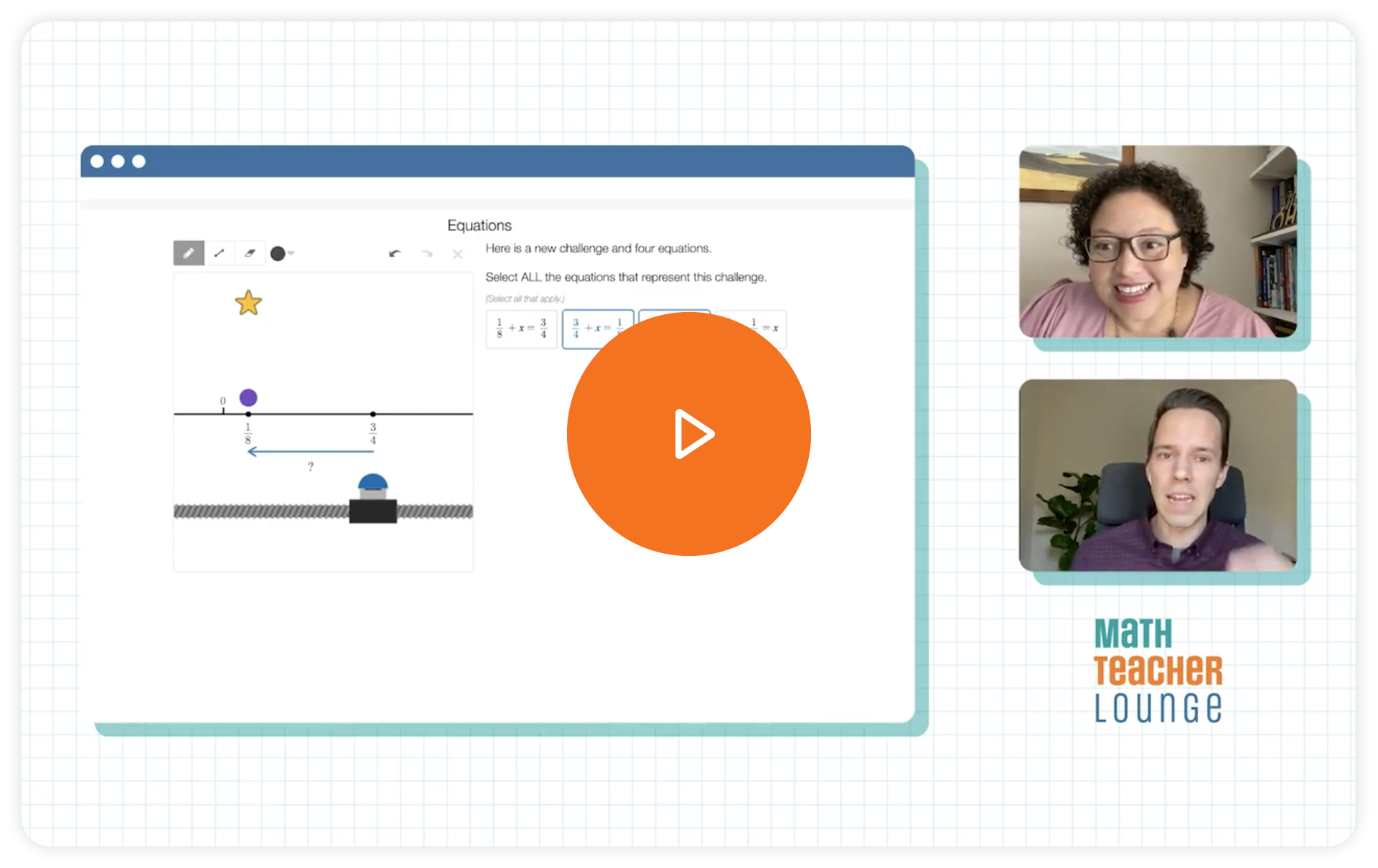
End-of-year data show significant reading gains for students receiving consistent, high-impact tutoring in school districts across nation
BROOKLYN, NY (October 31, 2023) — Amplify, a publisher of next-generation curriculum and assessment programs, shared a research brief on national end-of-school-year (EOY) reading data for K–5 students in several districts engaged in Amplify Tutoring. The data reveal that students who received high-dosage tutoring were more likely to make outsized gains in reading and narrow skills gaps on a nationally normed reading assessment compared to similarly at-risk peers who attended the same schools but did not participate in tutoring.
According to the data, during the 2022–23 school year, students who scored well-below or below benchmark on the nationally-normed mCLASS® DIBELS 8th Edition assessment (an indicator that students are not on track for grade-level reading proficiency) and attended Amplify Tutoring sessions regularly demonstrated significant growth.
Compelling growth was demonstrated in districts using both Amplify’s tutors and district-sourced tutors from the local community to deliver mCLASS Intervention lessons for elementary tutoring programs with coaching and training provided by Amplify.
- Within a single semester in a Midwest urban district, 36% of K–2 students and 37% of grade 3–5 students who scored well-below or below benchmark at the beginning of the semester and regularly attended Amplify Tutoring achieved above-average or well-above-average growth compared to national norms on mCLASS DIBELS 8th Edition. In comparison, only 25% of similarly at-risk readers in the same schools who did not participate saw gap-closing growth during the same semester.
- In a large, urban district in the West, 58% of the K–2 students who started the semester scoring well-below benchmark or below benchmark on mCLASS DIBELS 8th Edition and attended full-service Amplify Tutoring sessions more than twice a week, on average, made above-average or well-above-average growth, compared to national norms. Comparatively, only 42% of similarly at-risk peers who attended the same schools but did not participate in Amplify Tutoring made gap-closing growth.
- In a large, urban Northeast district implementing Amplify Tutoring’s full-service solution for kindergarten through 5th grade students, 23% of at-risk readers who participated in Amplify Tutoring at least once per week changed risk levels by moving from well-below and below benchmark at the beginning of year to at or above benchmark by the end of the year. In comparison, only 14% of similarly at-risk peers in the same schools who were not participating in Amplify Tutoring changed performance level.
In the state of Texas, students who participated in small-group tutoring using mCLASS Intervention lessons were more likely to achieve above-average or well-above-average reading growth on mCLASS Texas Edition, compared to similarly at-risk Texas students not accessing Amplify Tutoring materials. In addition, the thousands of Texas students with access to Amplify Tutoring materials were more likely to raise their reading proficiency level from mid-year to the end of year, as measured by their benchmark composite scores on mCLASS Texas Edition, compared to similar Texas students without access to the materials.
“Providing post-pandemic support to students and educators around the country has been our purpose and privilege,” said Alanna Phelan, vice president of Amplify Tutoring. ”High-impact tutoring is another important way Amplify can fulfill its goal of supporting students in becoming confident, proficient readers and extending the reach of classroom teachers.”
Amplify launched its tutoring program in the summer of 2020. By providing high-quality instructional materials, training and ongoing coaching for tutors hired by districts, as well as hiring and managing tutors directly, the program has since scaled to serve over 200,000 students and is a trusted tutoring partner to hundreds of school districts and states nationally.
Students are engaged in Amplify Tutoring in various ways based on each local education agency’s needs. Models include:
- full-service tutoring programs that include sessions with trained Amplify-provided tutors administering lessons virtually to students throughout the school day, outside core instructional time, with an emphasis on creating a consistent, positive student-tutor relationship. Tutors and school/district leaders receive consistent coaching and program management from Amplify staff to support program quality and student success.
- equipping school staff, community partners and other tutoring providers with research-backed tutoring materials, training and program management.
- consultancies with local education agencies to design and launch high-impact tutoring programs.
The data was collected using the mCLASS platform, which automates the data collection of Dynamic Indicators of Basic Early Literacy Skills (DIBELS). DIBELS is a widely-used series of short tests developed by the University of Oregon that assess K–8 literacy. It is an observational assessment collected by educators interacting with students one-on-one, either live or over video. DIBELS is typically administered three times a year (beginning, middle and end of year) and is used to identify reading difficulty, monitor progress and inform instruction, especially for struggling readers.
About Amplify
A pioneer in K–12 education since 2000, Amplify is leading the way in next-generation curriculum and assessment. Our captivating core and supplemental programs in literacy, math, and science engage all students in rigorous learning and inspire them to think deeply, creatively, and for themselves. Our formative assessment products turn data into practical instructional support to help all students build a strong foundation in early reading and math. All of our programs provide teachers with powerful tools that help them understand and respond to the needs of every student. Today, Amplify reaches more than 15 million students in all 50 states. To learn more, visit amplify.com.
Media Contact
Kristine Frech
media@amplify.com
High-impact, evidence-based programs that help students make gap-closing gains in reading and math
Amplify Tutoring engages students and drives measurable academic gains. We partner with districts to ensure that children become confident, proficient readers and mathematical thinkers.

About Amplify Tutoring
Grounded in evidence-based practices and taught by caring, consistent tutors, our high-impact tutoring programs use high-quality instructional materials and data-driven mCLASS® products to support and engage students.
- Personalized, data-driven instruction
- Research-backed solutions tailored to support your Multi-Tiered System of Supports (MTSS) framework
- Customizable—before, during, or after school; year-long, semester-long, and summer programming
- Comprehensive, hands-on program management and staffing support
Amplify Literacy Tutoring supports K–6 readers through engaging, systematic instruction aligned to the Science of Reading and driven by mCLASS DIBELS® data.
Amplify Math Tutoring accelerates student achievement in grades 3–5 and builds students’ confidence in speaking, writing, and thinking mathematically.
More than a program: a true partner
Hear directly from district leaders and educators who’ve experienced the Amplify Tutoring difference. In these candid conversations, they share how we partner to deliver solutions for schools, gains for students, and support for teachers.


Our impact
Amplify Tutoring accelerates learning for students who need it most. Students in Amplify Tutoring are more likely to achieve outsized academic gains than similarly at-risk peers in the same schools who are not enrolled in the program.
Amplify Tutoring has been awarded the National Student Support Accelerator (NSSA) Tutoring Program Design Badge by Stanford University!
Learn moreReliable, easy-to-read data
With valid and reliable mCLASS assessments and real-time reporting always within reach, everyone involved in a child’s learning journey—from teachers and tutors to school leaders and families—can support student growth.
- Teachers have visibility into students’ data and all tutoring lesson content.
- School and district administrators receive regular tutoring attendance and progress-monitoring reports.
- Caregivers receive Home Connect letters and activities to help their child practice foundational skills at home.


High-quality instructional materials that power Amplify Literacy Tutoring
Amplify Literacy Tutoring includes high-quality resources to support students’ growth.
Targeted lessons generated by precise data
mCLASS Intervention is a research-backed, ESSA rated program that targets instruction based on students’ mCLASS DIBELS 8th Edition assessment results. With engaging lessons aligned to the Science of Reading that adapt based on students’ progress monitoring results, mCLASS Intervention streamlines time-consuming data analysis for teachers and makes sure that tutoring focuses on the literacy skills students need.


Transparency into student performance
mCLASS DIBELS 8th Edition is our nationally normed benchmarking and progress monitoring assessment tool to measure students’ foundational literacy skills. Students take the benchmark assessment three times a year and progress monitoring occurs every 7–10 lessons in between.
Proven impact for students who need it most
Boost Reading delivers targeted, adaptive practice that meets students where they are, while teachers get simple and meaningful insights into student progress. The program consistently moves students toward grade-level proficiency with just 30 minutes of use per week. Students can continue learning through Boost Reading between tutoring sessions or at home.

High-quality instructional materials that power Amplify Math Tutoring
Amplify Math Tutoring includes high-quality resources to support students’ growth.
Intervention Mini-Lessons aligned to core instruction
Amplify Desmos Math Mini-Lessons provide targeted intervention for students who require additional support or need more time. These lessons are aligned to the most critical topics throughout a unit; they enhance conceptual understanding while improving procedural fluency and application.

Valuable insights into student mathematical thinking
mCLASS Math is our benchmarking and progress monitoring assessment tool. Students take the benchmark assessment three times a year; progress monitoring occurs every 7–10 lessons in between.
Personalized practice—anytime and at home
Fact fluency practice provides students with regular practice beyond rote memorization. The program is used during tutoring sessions and is available on non-tutoring days. Students also have access to Boost Math’s independent learning activities, to continue practicing between tutoring sessions or at home.

Consultation and collaboration
Amplify Tutoring tailors our support for educators, schools, districts, caregivers, and state-level leaders, helping to realize the promise of high-impact tutoring programs. Through collaborative partnerships at every level, Amplify Tutoring engages communities in driving academic improvement and boosting attendance.
Our services can include:
Program design consultation: Amplify Tutoring offers expert program design consultation services to help schools and districts create effective and scalable high-impact tutoring programs.
Tailored onboarding: We provide customized training sessions for school, district, and state leaders, ensuring that Amplify Tutoring services are integrated smoothly into existing systems.
Ongoing professional development and coaching: Our program management includes continuous training, coaching support, and office hours with pedagogical experts to fortify the program’s success and adaptability.
Caregiver engagement: We offer resources and support for families and caregivers, including tips for at-home support, helping them stay informed and involved in their child’s progress.
Seamless communication and support: We provide transparent communication and engage all stakeholders—district and school leaders, teachers, caregivers, and students—to keep everyone aligned and informed.
Data reporting: We provide detailed reports and analytics to district and school leaders, giving them the power to monitor progress, make data-driven decisions, and celebrate successes.
Amplify Tutoring is part of a connected early literacy and math suite.
Our literacy and math suite programs are designed to support and complement each other in a Multi-Tiered System of Supports (MTSS). Learn more about our related programs.



Texas SLAR Literacy Adoption
Welcome, K–8 Program 1 reviewers!
We’re honored to introduce you to Amplify California Language Arts. We’re confident you’ll find this comprehensive program to be a powerful tool for bringing the vision of the California ELA Framework to life in classrooms across the state.
Please start with the video on the right to learn how to navigate the program and access key features referenced within our submission. Below you’ll find additional resources to support your review.
Your review samples
We’re excited for you to begin your review of Amplify Core Knowledge Language Arts (CKLA) California and Amplify ELA California. Physical and digital review materials will vary by grade level.
Reviewer Binders (K–8)
Your physical samples should have arrived in grade-specific boxes with three Reviewer Binders.
- The first binder will contain logistical program review information and the printed Evaluation Criteria Map.
- The second binder will contain the printed Standards Maps for grades K–4.
- The third binder will contain the printed Standards Maps for grades 5–8.
Physical samples (K–5)
You can expect to receive 15 boxes of physical materials for your review. As you begin the process of organizing your materials, please refer to the inventory checklist found inside each box as well as within your Reviewer Binder. Please note you will not receive any physical samples for grades 6–8. Your review of the program for grades 6–8 will be entirely digital.
Digital samples (K–8)
In order to access your digital samples, you’ll need to log in to our platform using your unique login credentials found on a Digital Review Credential flyer inside of your Reviewer Binder. Once you have located the flyer:
- Click the orange button below to access the platform.
- Click “Log in with Amplify.”
- Enter the username and password provided on your Digital Review Credential flyer.
Navigation tips
Before you get started, please review these important functionality notes:
Criteria Map and Standards Maps must be opened on Microsoft Word on your desktop to function as intended. If you open the documents without Microsoft Word on your desktop, citations will be cut off at the bottom of most tables within the document.
Many of our citations are deep-links to PDFs, meaning they will take you to the right page or the first page in the sequence for the citation in question. To ensure this functionality works, please disable any PDF-viewing extensions or plug-ins such as Adobe Acrobat Pro Browser Extension.
[Reviewer program navigation video] Grades K–5
[Reviewer program navigation video] Grades 6–8
Click here for additional information on navigating the digital materials for grades 6–8.
Category 1: English Language Arts (ELA) and English Language Development (ELD) Content/Alignment to Standards
Evaluation Criteria Map
Linked below is the Evaluation Criteria Map for grades K–8. Please note that you will need to be logged into the digital platform to access the links in the Evaluation Criteria Map.
ELA Standards Maps
The links below provide the Standards Maps for Amplify California Core Language Arts for each grade level. Please note that you will need to be logged into the digital platform to access the links in the Standards Maps.
Category 2: Program Organization
The Amplify California Language Arts Program 1 submission includes Amplify CKLA California for Grades K–5 and Amplify ELA California for Grades 6–8. This comprehensive curriculum provides a full year of evidence-based instruction for each grade level, transitioning from foundational literacy to advanced text analysis.
Program structure
Amplify’s California Language Arts programs are built on what the research shows: Strong readers need both word recognition and language comprehension. Our comprehensive curriculum suite follows the Simple View of Reading and The Reading Rope–bringing together foundational skills and knowledge building to deliver instruction grounded in evidence-based literacy practices.
Each lesson follows a predictable structure with clearly marked components, beginning with warm-up routines, progressing through explicit instruction with guided practice, and concluding with independent application activities. The program provides detailed teacher language, including question stems and discussion prompts, ensuring clear and consistent delivery of instruction.
[Reviewer highlight video] Program organization for Category 2
[Reviewer highlight video] Program structure for grades K–2
[Reviewer highlight video] Program structure for grades 3–5
[Reviewer highlight video] Program structure for grades 6–8
Amplify CKLA California empowers teachers to deliver effective instruction and keeps students engaged with the following resources:
- Teacher Guides
- Assessment Guides
- Authentic texts and trade books
- Knowledge Image Cards
- Knowledge Flip Books
- Remediation and intervention resources
- Decodable readers
- Student Readers and novels
- Student Activity Books
- Poet’s Journals
- eReaders
- Sound Library featuring articulation videos and songs
- Instructional routine modeling videos
- Assignable Practice Games
- On-demand professional development
Amplify ELA California students stay engaged with the following resources:
- Teacher Guides that include:
- Detailed lesson plans
- Standards alignment and exit tickets
- Real-time differentiation strategies
- Robust reporting
- Student Editions that include:
- High-quality narrative and informational texts
- Videos, audio supports, and digital experiences that capture their attention
- Personal Writing Journal to keep all student writing in one place
- Trade Books
Core literacy philosophy
Support every learner. Meet all learning needs with a Multi-Tiered System of Supports (MTSS) that brings together universal screening, scaffolded core instruction, support for English learners, and data-driven intervention to ensure every student gets what they need to succeed.
Deliver consistent foundational skills instruction. Daily explicit, systematic skills instruction in grades K–2, with targeted yet flexible support for students still building decoding confidence in grades 3–8, ensures mastery of essential reading foundations.
Build lasting knowledge across all grades. Through coherently sequenced, content-rich instruction that revisits key vocabulary and concepts with increasing complexity, students build meaningful connections that deepen their vocabulary and reading comprehension.
Strengthen reading through writing at every level. Regular writing instruction grounded in the Science of Writing supports reading comprehension, improves sentence-level writing, and provides the foundation for high-quality composition. As students progress through the upper grades, they engage in increasingly complex analytical tasks—synthesizing ideas, drawing generalizations, and interpreting multiple textual layers through both focused quick-writes and comprehensive essays.
Foster oral language development. Structured opportunities for academic conversation and evidence-based dialogue build students’ ability to express complex ideas with precision and allow them to participate confidently in classroom discussions.
Measure growth with comprehensive assessments. Assessments range from in-the-moment checks for understanding to summative assessments that measure progress toward skills mastery and standards proficiency, providing the data needed to drive targeted instruction.
Scope and sequence
Below you can view the scope and sequence for each grade level.
Routines
Amplify CKLA California and Amplify ELA California include several structured instructional routines that provide predictable patterns for both teachers and students:
Discussion and collaboration routines:
- Turn and Talk: Partners discuss text-specific content using sentence starters and frames
- Think-Pair-Share: Students engage in individual thinking, partner discussion, and whole-class sharing
- Partner reading: Students sit shoulder-to-shoulder, taking turns reading and listening
Foundational Skills routines:
- Sound-spelling review: Warm-up activities that reinforce phonics patterns
- Oral blending warm-ups: Teacher-guided practice progressing to independent application
- Finger tapping: Techniques for blending sounds
- Chaining activities: Students manipulate letters to transform one word into another
- Word Work: Daily short activities focused on domain-specific and academic vocabulary
Knowledge-building routines:
- Vocabulary preview: Introduction of new words before reading
- Read-aloud procedures: Established routines for introducing and discussing complex texts
- Text discussions: Structured comprehension conversations with scaffolded questioning
Fluency routines:
- Teacher modeling: Demonstration of proper intonation, expression, and pacing
- Choral reading: Whole-class reading practice
- Partner reading: Paired fluency practice
Close reading routines
The program includes carefully structured close reading activities that guide students through multiple encounters with complex texts. These routines help students develop deeper comprehension through systematic analysis and discussion.
Each routine includes comprehensive instructional guides with clear-cut directions for implementation, straightforward explanations of concepts, and suggestions for discussion.
Category 3: Assessments
Systematic MTSS alignment
In alignment with the additional 2025 Guidance 3.1.a, the assessment systems align with MTSS tiers, including universal screening, diagnostic assessments for students demonstrating a need for additional support, and progress monitoring tools that complement California’s required universal screening schedule per SB 114.
| Tier 1: Universal/ differentiated support | Tier 2: Supplemental/ targeted support | Tier 3: Intensified/ intensive support | |
| Core instruction assessments Frequency of administration | Amplify CKLA California, Amplify ELA California assessments Daily, Weekly, Monthly | Amplify CKLA California, Amplify ELA California assessments Daily, Weekly, Monthly | Amplify CKLA California, Amplify ELA California assessments Daily, Weekly, Monthly |
| Universal screening assessments Frequency of administration | mCLASS DIBELS and mCLASS Lectura 3 times per year – BOY, MOY, EOY | mCLASS DIBELS and mCLASS Lectura 3 times per year – BOY, MOY, EOY | mCLASS DIBELS and mCLASS Lectura 3 times per year – BOY, MOY, EOY |
| Formal progress monitoring assessments Frequency of administration | mCLASS DIBELS and mCLASS Lectura 3 times per year – BOY, MOY, EOY | mCLASS DIBELS and mCLASS Lectura Monthly | mCLASS DIBELS and mCLASS Lectura Bi-weekly |
| Informal progress monitoring assessments Frequency of administration | Amplify CKLA California, Amplify ELA California core assessments Daily | Intervention Toolkit progress monitoring assessments When linked to a lesson in the toolkit | Intervention Toolkit progress monitoring assessments When linked to a lesson in the toolkit |
| Diagnostic assessment Frequency of administration | Amplify skill diagnostic assessment Optional after universal screening assessment is administered | Amplify skill diagnostic assessment After universal screening assessment is administered |
Universal assessment system
Amplify’s mCLASS® DIBELS® 8th Edition (K–8) and mCLASS Lectura (K–6) are universal and dyslexia screening assessments that should be administered three times per year (BOY, MOY and EOY) to all students. The assessments evaluate student literacy risk, determine progress toward grade-level goals, and indicate the level of instructional support a student may need. Beginning-of-year screenings require adequate instructional time before administration, particularly in grades K–1, while mid-year and end-of-year assessments evaluate instructional effectiveness and guide tier placement adjustments. These screenings also identify students at risk for dyslexia. Universal screening provides essential data for targeting instruction and measuring instructional system effectiveness.
Core instruction assessments
Amplify CKLA California and Amplify ELA California provide a comprehensive suite of assessments for Grades K–8 that range from low-stakes, informal formative assessments to more formal summative assessments. These assessments incorporate a variety of methods and question types, including multiple-choice questions, open-ended questions, and oral and written responses.
Formative assessments:
- Checks for Understanding: Incorporated into each lesson segment throughout daily instruction. Quick pulse-checks that provide immediate feedback during lesson delivery (grades K–5).
- Daily formative assessments: Highlighted moments within each lesson for teachers to plan to track mastery of Primary Focus objectives and standards of each lesson to get a clear snapshot of individual and whole-class progress (grades K–5).
- Activity pages: Completed as part of lessons and can be used to assess lesson content understanding through various formats (grades K–5).
- Exit Tickets: Located at the end of lessons, these provide a quick gauge of students’ ability to meet the lesson’s focus standards (grades 6–8).
- Writing Prompts: Prompts integrated throughout lessons during writing activities that provide skill snapshots within lessons and tracks patterns of skill development over time (grades 6–8).
- Independent reading activities (Solos): At the end of every lesson, students complete an independent reading activity (“Solo”) with reading questions that are scored to measure comprehension (grades 6–8).
Summative assessments:
- Skills end-of-unit assessments (grades K–2)
- Knowledge end-of-domain assessments (grades K–2)
- End-of-unit assessments (grades 3–5)
- Unit essays: A culminating end-of-unit set of lessons that guide students through crafting an essay with a rubric to score mastery of writing skills (grades 6–8)
- Unit Reading Assessments: Auto-scored responses and two constructed response items evaluate comprehension, content understanding, and reading skills using the passages students read during the unit (grades 6–8)
Performance Assessments
Student Performance Assessments are multi-day assessments administered in Grades K–5 at the beginning, middle, and end of year to help teachers gauge student mastery of grade-level Core content. These assessments provide critical data to help teachers set targeted instructional goals and monitor individual and class-wide progress towards core objectives.
Progress monitoring
Amplify’s mCLASS® DIBELS® 8th Edition and mCLASS Lectura provide formal progress monitoring in the discrete skills that are indicative of reading growth and predictive of overall success to provide the most instructionally meaningful information to teachers.
Informal progress monitoring tools can be found within the Intervention Toolkit, including materials for teachers to record, track, and evaluate student progress.
Diagnostic assessment
Interventions within Amplify’s literacy programs are informed by a skill diagnostic assessment that provides detailed data on foundational literacy skill deficits. The Amplify Skill Diagnostic Assessment and Amplify Spanish Skill Diagnostic assessment serve as critical tools in this process, administered specifically to students identified as at risk for reading difficulty through universal screening assessments—particularly those demonstrating mCLASS DIBELS 8th Edition or mCLASS Lectura composite scores in the Well Below or Below Benchmark ranges. These diagnostic assessments provide teachers with the precise skills to begin intervention and remediation.
Category 4: Universal Access
Amplify CKLA California and Amplify ELA California were built on the principles of Universal Design for Learning (UDL) and reviewed by CAST, a nonprofit education research and development organization. The program is developed using the Universal Design for Learning framework to proactively ensure that all learners can access and participate in meaningful, challenging learning opportunities.
Universal Design for Learning
The programs incorporate opportunities for engagement, representation, action, and expression based on the guidelines of Universal Design for Learning.
- Multiple Means of Engagement: The programs incorporate interesting and motivating ways for students to interact with information and content. In Amplify CKLA California, the Universal Access section in the introduction of each lesson provides specific lesson-level options based on the needs of individual classrooms and students. Scaffolding for students with various levels of need is incorporated into the design of each lesson.
- Multiple Means of Representation: The programs provide multiple means of presenting content to maximize student understanding. This includes digital component files that allow for a range of presentations of images and text to support learning. Amplify provides access to universal supports such as point-of-use audio for all core texts, embedded definitions for critical vocabulary, and glossaries in multiple languages. Amplify CKLA California includes clarification on language found throughout the program, with sidebars that include support on transition words and syntax, and illustrations to help students understand the concepts they are learning.
- Multiple Means of Action and Expression: The programs include a range of methods for all students, including English learners, to navigate and demonstrate learning. This includes physical actions, a range of methods for response, appropriate tools for composition, and varied scaffolding. In Amplify ELA California, lessons provide multiple ways for students to interact with text, allowing their brains to process the language through distinct pathways. Activities harness multiple learning modes, using media tools, digital apps, and a variety of visual and physical experiences to strategically support and enhance student learning.
- Accessibility: Universal access features include visual aids, enlarged materials, physical objects, and multiple learning modalities through activities like Push & Say and Wiggle Cards. The Universal Access section in the introduction of each lesson provides specific lesson-level options based on the needs of individual classrooms and students.
Embedded differentiation
Amplify CKLA California and Amplify ELA California provide built-in differentiation strategies in every lesson for all students.
- Pre-teaching supports include mini-lessons on:
- Core vocabulary building
- Core connections
- Essential background information building
- What Have We Already Learned?/What Do We Already Know?
- Differentiated Support for Core Instruction tables, located in the overview of each K–2 Skills Teacher Guide, provide a list of specific opportunities for reteaching and additional support in each lesson based on skill.
- Support and Challenge Sidebars in lesson margins offer educators immediate guidance in implementing point-of-use differentiation techniques.
- Flexible Grouping within lessons provides opportunities for teachers to facilitate small groups, partners, or individualized support based on students’ needs. In the Skills Strand, teachers receive specific guidance for differentiated small-group instruction, with targeted support and activities outlined for both Group 1 (students needing additional support) and Group 2 (on-level students) based on data.
- Amplify ELA California provides point-of-use supports embedded within key core lesson activities with six levels of differentiation. The goal of these supports is to fully enable access to grade-level content for all students, including students with disabilities, English learners, and students ready for an additional level of challenge.
- The Universal Access section of Advance Preparation in each lesson includes varied strategies to ensure all students can access and engage in each lesson.
- Frequent use of graphic organizers and visual supports in lessons provide opportunities for differentiation based on need. The program also includes a variety of technological supports, such as eReaders with audio.
- Extension opportunities are suggested throughout lessons, often embedded in writing tasks, which include prompts to use more complex and descriptive vocabulary, figurative language, multi-clause and complex sentences, and informational text characteristics.
Assessment-driven MTSS resources
- The K–8 Intervention Toolkit is available online and provides easy-to-use resources that assist teachers in filling gaps in students’ reading skills, with activities to support print concepts, phonological awareness, phonics, fluency, and other key skills
- Fluency Packets (Grades 2–5)
- Foundational Skills Intervention Program for Grades 3–8 support students who would benefit from direct and explicit intervention instruction in the full continuum of foundational skills in the upper grades
- Flexible Instructional Time including:
- Pausing Points built into the curriculum that provide teachers with dedicated time to address specific student needs through targeted reteaching, remediation, practice, and extension activities
- Pausing Point activities designed to support English learners’ competence and confidence through differentiated whole-group, small-group, or individual instruction
- Boost Reading is a K–5 student-led digital intervention program. Boost Reading follows Amplify CKLA California’s scope and sequence to reinforce the same foundational skills taught in core instruction. It integrates easily into daily routines, while the robust data provided by mCLASS® DIBELS® 8th Edition offers a detailed view of how students progress across all instructional tiers.
Category 5: Instructional Planning and Teacher Support
Amplify CKLA California and Amplify ELA California teachers are empowered to deliver effective instruction with various print and digital resources. The program provides comprehensive planning and support materials designed to help teachers prepare for and execute lessons effectively and fulfill the requirements of Category 5.
Implementation supports across K–8
Planning and preparation resources
- Unit Overviews that provide important background and context for the texts students will read, including highlighted elements within the text and guidance for how students will work with those elements
- Sub-unit Overviews (Grades 6–8) that provide an overview of Lesson Objectives and reading and writing assignments, as well as a list of any projections, multimedia, or digital apps that can be projected from the teacher’s included digital license
- Lesson-by-lesson preparation checklists (Grades 6–8) accompanying each Sub-unit Overview
- Lesson Briefs for each individual lesson providing important background and context
- Content knowledge materials regarding topics that students will examine
Point-of-use instructional guidance
- Teacher Editions that feature insets of the same text and activity instructions as the corresponding Student Edition, wrapping teacher instruction around these materials
- Activity guidance at point of use
- Lesson standards clearly called out
- Discussion suggestions embedded in lessons
- Differentiation tips at point of use
- Detailed Instructional Guides in each activity that include sequencing and grouping suggestions, tips for facilitating discussion, possible student responses and exemplars
- Student Supports in all core lessons provide teachers with targeted supports in daily core instruction, addressing which might serve the student best in the moment—support, strengthen, stretch—with additional call-outs for newcomers
Multimedia and digital support
- Teacher tip videos provide modeling and guidance for implementing key foundational skills routines within the program
- Digital platform access where teachers can access printable PDFs of differentiated support materials for English learners and readers struggling with text, including translated Unit Background and Context Documents and Text Previews
- Teacher Dashboard and reporting tools (Grade 6–8) that provide real-time visibility into student progress and work for immediate instructional response
Caregiver supports
Communication and overview resources
- Caregiver Hub available in English and Spanish that provides an overview of the curriculum
- Caregiver Letters for each K–2 Knowledge Domain and unit in Grades 3–5 that provide an overview of the content, the skills students learn, as well as practical methods that continue the learning and knowledge building at home
- Unit-specific Caregiver Letters (Grades 6–8) that provide detailed information regarding what students will read and learn in each unit, including conversation starters that allow caregivers to ask questions and discuss specific aspects of a unit with their student
- Welcome letters that explain the assessment and placement process while inviting parent involvement and offering support
- Editable Home-School Communication letters available in English and Spanish
- Editable Progress Reports for teachers to update parents and guardians on what their child is learning
Content and learning support materials
- Unit Background and Context documents that provide an introduction and overview to the unit’s topic and themes, available in English and Spanish
- Text Previews that provide a brief introduction to formative, independent reading assignments (called Solos in Grades 6–8), available in English and Spanish
- Unit Overview and Support documents (Grades 6–8) designed for caregivers that provide information about important questions, assignments, and key aspects of the unit texts, available in English and Spanish
- Conversation starters included in Knowledge Strand Caregiver Letters to discuss domain topics at home
Home practice and extension activities
- Take-Home pages in the Skills Strand that include copies of decodable passages, enabling students to share their reading progress with families and continue practicing their skills outside of school
- Take-Home Letters in the Skills Strand that provide specific guidance for parents to support skills practice at home, such as sound-sorting activities, with detailed instructions and materials for home practice activities
- Take-Home pages in the Knowledge Strand that provide suggested activities families can do together to reinforce and extend learning beyond the classroom
- Games and activities on Take-Home Pages that extend classroom instruction, including all the materials and instruction necessary to help families assist students in a fun and engaging way
- Digital access to decodable texts through the Amplify Caregiver Hub, allowing students to practice their reading skills both in class and at home
- Weekly spelling lists and directions to decoding activities that can be practiced at home
Why fluency matters in K–5 math education

If you’re fluent in Farsi, let’s say, you don’t search for every word or stop to translate every sentence in your head. You understand, process, and respond automatically, in real time.
Math fluency works the same way. This kind of fluency is something you can use naturally to understand what’s presented and respond to it meaningfully.
In K–5 math, fluency allows students to move beyond getting through the problem toward real mathematical thinking. Without it, even confident students can get stuck. With it, students gain access to deeper understanding, flexibility, and confidence.
What is math fluency?
Fluency in math is sometimes misunderstood as speed or memorization—but research and classroom experience tell a fuller story.
The National Council of Teachers of Mathematics defines procedural fluency as the ability to: “…apply procedures efficiently, flexibly, and accurately; to transfer procedures to different problems and contexts; to build or modify procedures from other procedures; and to recognize when one strategy or procedure is more appropriate to apply than another.”
In other words, the skills often referred to as computational fluency and math fact fluency tell only part of the story. Full mathematical fluency means knowing how and why strategies work, and being able to choose among them.
Memorization does have a role in math learning, but it alone does not lead to fluency. A student who has memorized facts but doesn’t understand relationships between numbers may still struggle when problems change slightly or require reasoning.
By contrast, a fluent student can adapt. They can explain their thinking, check whether an answer makes sense, and shift strategies when needed.
This is why fluency acts as a bridge between conceptual understanding and procedural application. It connects what students know to what they can do, and helps them do it with confidence.
Why procedural fluency matters in K–5 math
In the elementary grades, students are building the foundational math skills they’ll rely on for years to come. When procedural fluency is weak, students can feel overwhelmed by basic calculations, leaving little mental energy for problem-solving or new concepts.
Students without strong procedural fluency often feel stuck. For them, math can start to feel like an endless series of obstacles rather than a meaningful, engaging exploration—and that experience does not set anyone up to feel like a math person.
Fluency is what frees students up to focus on the heart of a problem. When they’re not bogged down by calculations, they’re able to reason, explore patterns, and tackle more complex tasks. Fluency opens doors—to higher-level math, to confidence, and to a more positive math identity.
In their paper, “Eight Unproductive Practices in Developing Fact Fluency,” Gina King and Jennifer Bay-Williams write: “Being fluent contributes to a productive disposition about mathematics, opens doors to a range of mathematics topics, and arms students with a skillset applicable to whatever they wish to pursue.”
What teaching math fluency looks like in the classroom
Effective K–5 math instruction treats fluency as something that develops over time, through meaningful practice, discussion, and reflection. Students need opportunities to explore number relationships, explain their thinking, and revisit strategies in different contexts.
In classrooms where math fluency is developing, instruction consistently supports flexible thinking, reflection, and revisiting ideas over time. You might see and hear the following:
- Revisiting strategies across problems. Students are encouraged to solve the same problem in more than one way and to compare approaches. Classroom discussions focus on how strategies work and when one might be more efficient than another, helping students build strategic thinking and confidence.
- Frequent, well-spaced opportunities for practice. Key facts and strategies reappear over time rather than being practiced once and set aside. This spacing helps students retain learning and apply it more accurately and efficiently when they encounter familiar ideas in new contexts.
- Regular routines that emphasize reasoning. Short, consistent routines invite students to mentally compute, explain their thinking, and listen to others’ ideas. The focus is on understanding number relationships and reasoning through solutions rather than relying on memorized steps.
- Thoughtful use of visual representations. Tools such as number lines, arrays, and other models help students see how numbers and operations relate. These representations support flexible thinking and make procedures more meaningful and accessible.
Across these experiences, fluency is something you can hear as well as see. Students explain their reasoning, reference strategies they’ve used before, and check whether their answers make sense, building accuracy, efficiency, and flexibility over time.
Math fluency helps students open their minds to the richness of math, and to their own power as math learners.
Utah ELA Review for Grades PK–5
Thank you for taking the time to review Amplify’s core ELA program for PK–5. Amplify Core Knowledge Language Arts® (CKLA) is a state-approved core ELA curriculum designated as a primary core program that fully meets the Science of Reading requirements outlined in SB 127.
Amplify CKLA, developed in partnership with the Core Knowledge Foundation, was designed to help teachers implement Science of Reading principles and evidence-based instructional practices. Scroll down to learn how CKLA is uniquely designed to help all your students make learning leaps in literacy.

Step 1: Program Introduction
Welcome to Amplify CKLA! Before you dive into our materials, watch the video below to learn about the big picture behind Amplify CKLA’s pedagogy.
In this video, Susan Lambert (Chief Academic Officer and host of Science of Reading: The Podocast) shares why Amplify CKLA was created, how it is built on the Science of Reading, and the impact it’s making across the country.
Step 2: Program Overview
Amplify CKLA is different for a reason. Watch the overview video below to learn about these differences and why educators love them.
In this video, you’ll get an in-depth look at the program’s overall structure and organization, the design behind our proven lessons, and the materials included to support teaching and learning.
The Amplify CKLA Program Guide also provides an in-depth view of how Amplify CKLA works, how it’s structured, and why it’s uniquely capable of helping you bring reading instruction based on the Science of Reading to your classroom.
Evidence-based design
Amplify CKLA is rooted in Science of Reading research. Mirroring Scarborough’s Rope, Amplify CKLA delivers a combination of explicit foundational skills with meaningful knowledge-building.
- In Grades PK–2, dedicated knowledge-building and explicit skills instruction are taught simultaneously through two distinct instructional strands.
- In Grades 3–5, dedicated knowledge-building and explicit skills instruction are woven together and delivered through one integrated strand.

Grades K–2 Skills and Knowledge Strands
Every day students in Grades K–2 complete one full lesson that explicitly and systematically builds foundational reading skills in the Skills Strand, as well as one full lesson that builds robust background knowledge to access complex text in the Knowledge Strand. Through learning in each of these strands, students develop the early literacy skills necessary to help them become confident readers and build the context to understand what they’re reading.
Grades 3–5 Integrated Strand
In Grades 3–5, Knowledge and Skills are integrated in one set of instructional materials. Lessons begin to combine skills and knowledge with increasingly complex texts, close reading, and a greater writing emphasis. Students can then use their skills to go on their own independent reading adventures.
Key features
For each Amplify CKLA key feature below, click the drop down arrow to learn more.
Built out of the latest research in the Science of Reading, Amplify CKLA delivers explicit instruction in both foundational literacy skills (systematic phonics, decoding, and fluency) and background knowledge in grades PK–2 with an integrated approach to explicit instruction in grades 3–5.
Review this Science of Reading toolkit to learn more about the Science of Reading best practices integrated throughout CKLA.
Amplify CKLA aligns with the instructional principles recommended by Orton Gillingham and LETRS.
- Structured–Concepts are taught through consistent routines
- Sequential–Concepts are taught in a logical, well-planned sequence
- Systematic–Phonemes are taught from simplest to most complex
- Explicit–Decoding and encoding concepts are taught directly and explicitly
- Multi-sensory–Instruction is delivered through visual, auditory, and kinesthetic-tactile pathways
- Cumulative–Concepts are applied in decodable, connected texts with constant review and reinforcement
Watch this video to learn more!
Additionally, great reading instruction starts with helping kids develop great decoding skills. Our instruction is supported by:
- Step-by-step lessons with multi-sensory approaches, clear lesson objectives, and embedded formative assessments.
- Decodable books and student readers with ebook and audiobook versions that feature engaging plots and relatable characters.
The Science of Reading reveals knowledge as an essential pillar of reading comprehension and lifelong literacy. Hear from author Natalie Wexler and CKLA customers on edWebinar about the importance of knowledge-building in reading instruction.
Students build grade-appropriate subject-area knowledge and vocabulary in history, science, literature, and the arts while learning to read, write, and think creatively and for themselves. Our instruction is supported by:
- Knowledge builders that provide a quick overview of each domain with its key ideas.
- Interactive Read-Alouds designed to build knowledge and vocabulary.
- Content-rich anchor texts that support students as they tackle increasingly complex text and sharpen their analytical skills.
- Social and emotional learning paired with lessons in civic responsibility.
Amplify CKLA not only received an all-green rating from the rigorous evaluators at EdReports, but it was also recently recognized by the Knowledge Matters Campaign as a high-quality literacy program that excels in building knowledge. Our shared message: background knowledge is essential to literacy and learning.
Student-led reading practice should be purposeful and connected to the core. That’s why Amplify createdBoost Reading. As an optional add-on to Amplify CKLA, students have the opportunity to practice skills directly tied to the skills they’ve been working on during core reading time. Boost Reading also adapts to each student to address their personal gaps and bolsters foundational skills at a pace that supports their individual development.
Boost Reading’s collection of 40+ adaptive games target foundational reading skills and develops them in alignment with Science of Reading principles. Unlike other adaptive games, we ensure students:
- Practice the right skills at the right time. Our embedded placement tool ensures students receive the content and skill practice most appropriate for their current reading level. From there, students move through our curriculum along their own learning pathway where they encounter personalized content tailored to their evolving skill and grade levels.
- Progress along a pathway that adapts on multiple dimensions, not just one. For example, a student can work on early first-grade decoding in one game while building more advanced vocabulary knowledge in another.
- Practice skills in tandem. For example, a student is never forced to master one skill area before proceeding to the next. Instead, we offer students that opportunity to work on multiple skills concurrently.
- Feel supported with scaffolding, instruction, and practice that adapts based on student performance.
- Stay engaged by giving them immediate and clear feedback. These results are never punitive. Instead our always-positive feedback is delivered in the context of the game world and is designed to motivate students to keep trying.
Click the buttons below to learn more:
Step 3: Program Resources
Easy-to-use print materials
Amplify CKLA’s easy-to-use materials bring foundational skills and knowledge to life in the classroom.
Download the Amplify CKLA Components guide to see components by grade and watch the print materials walkthrough below.
Engaging CKLA digital experience
The top-rated content of Amplify CKLA is now live with the digital experience that enhances instruction and saves time.
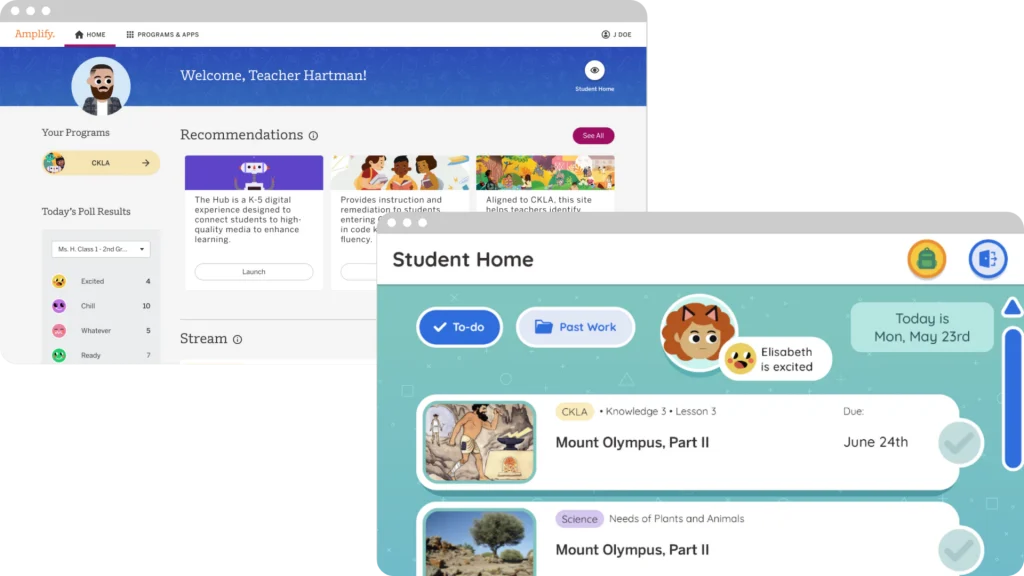
With the digital experience, everything is in one place, making it easier and more engaging than ever to plan lessons, present digital content, and review student work. Click the arrows below to learn more.
With the digital experience, teachers have access to ready-to-use and customizable lesson presentation slides, complete with all the prompts from the print Teacher Guide embedded in the teacher view. As teachers deliver each lesson, students can engage with the content in one cohesive experience—through these CKLA resources: Activity Books, slides, digital components, videos, Student Readers, and more.
The innovative live review tool found in the digital experience enables you to keep an eye on all of your students as they work on drawing, recording audio, uploading and capturing images, and typing or writing in pre-placed textboxes in their Activity Pages. This dynamic tool provides countless classroom management benefits, enabling you to spot and correct common mistakes as they’re happening, praise your students for thoughtful work, and identify students who are not engaged in the task at hand. Simply put, it will give you those valuable “eyes in the back of your head” you’ve warned your students about!
The digital experience integrates with various LMSs, allowing you and your students to access Amplify CKLA with the software you’re already comfortable using.
In the Amplify CKLA student digital experience, your students have one intuitive access point to fully engage with classroom instruction. Through the Student Home, students can easily access digital lessons with slides, Activity Pages, ebooks, videos, and other interactives from one simple dashboard. Students can draw, record audio, upload and capture images, and type or write in pre-placed text boxes in their Activity Pages.
CKLA review resources
- CKLA Program Guide
- Language Studio (ELD)
- Writing Studio (Writing)
- CKLA Research Hub (Efficacy and Case Studies)
- Text complexity in CKLA
- Trade books in CKLA
- Assessments in CKLA
- Amplify Caminos (K-5 Spanish Language Arts Program)
- Amplify CKLA Video for Families and Caregivers
- Amplify CKLA Caregivers Hub
- ELA Curriculum Evaluation Tools
- Remote and hybrid learning with CKLA
- CKLA Scopes and Sequences
- Grade K Skills and Knowledge
- Grade 1 Skills and Knowledge
- Grade 2 Skills and Knowledge
- Grade 3 Integrated
- Grade 4 Integrated
- Grade 5 Integrated
Step 4: State Review Resources
- Utah State Standards Alignment K-5
- Utah Instructional Strategies and Routines
- Utah Science of Reading Evidence-Informed Core Criteria Checklist (Amplify created)
- Utah Critical Features of Tiered Literacy Interventions (featuring Boost Reading)
- Amplify ELA Technical Specifications
Step 5: Program Access
Explore as a teacher
Before logging in, watch this brief video on navigating the CKLA Teacher Platform.
Ready to explore as a teacher? Follow these instructions:
- Click the Amplify CKLA Teacher Platform button below.
- Select Log in with Amplify.
- Enter the teacher username: t1.utcklapk5@demo.tryamplify.net
- Enter the teacher password: Amplify1-utcklapk5
- Choose CKLA from the “Your Programs” menu on Educator Home.
- Select a grade level from the drop-down menu at the top of the page.
Ready to explore as a Student? Follow these instructions:
- Click the Amplify CKLA Teacher Platform button below.
- Select Log in with Amplify.
- Enter the student username: s1.utahcklapk5@demo.tryamplify.net
- Enter the student password: Amplify1-utahcklapk5
What is mCLASS?
mCLASS is a best-in-class assessment platform that houses a suite of proven, gold-standard assessment measures and tools that can be flexibly combined to meet the unique literacy needs of both teachers and students across grades K–6, including:
- Universal screening
- Diagnostic assessment
- Dyslexia screening
- Progress monitoring
- Dual language reporting
- Targeted teacher-led instruction
What is the Lectura assessment?
The Lectura assessment is a brand-new interim and diagnostic assessment that consists of measures based on the latest research of how Spanish literacy develops.
Co-developed with the Center on Teaching and Learning at the University of Oregon (UO CTL) and validated in partnership with Dr. Lillian Durán, the Lectura assessment was created to provide educators with a high-quality, evidence-based tool to support understanding of Spanish-speaking students’ biliteracy development, specifically foundational Spanish reading skills, which includes measures of phonological awareness, alphabetic understanding and decoding, reading fluency, and reading comprehension.
The measures in Lectura were written from the ground-up to assess students’ literacy development based on how Spanish literacy develops. Measures explicitly account for the syllabic and morphological structures of Spanish, and connected text was written and calibrated with respect to syntactical, lexical, and grammatical rules of Spanish. For example, phonological awareness is measured using syllable segmentation, and letter sounds and syllable reading are included in the decoding subtests for greater face-validity (in lieu of pseudowords). Word choice reflects the multisyllabic word complexity and variety of Spanish, driven by how decoding skills develop in Spanish. As such, Lectura provides instructionally actionable data for all students, including those scoring below the benchmark and those who meet or exceed the benchmark.
The Lectura assessment measures were purposefully designed, developed, field tested, and evaluated to address limitations that educators of Spanish speaking students have experienced in assessments. Specifically in these ways:
- Assessment measures based on current research on how Spanish literacy is developed
- Culturally responsive word choice and content reflecting the regional diversity of Spanish
- Technical adequacy established through rigorous study
- A sample size and geographic diversity reflecting the broad population of Spanish speakers across the U.S.
- Complete parity with English solutions (instructional tools, skill coverage)
Assessment measures by grade
| Lectura measures at each grade level | ||||
| Measure | Grade K | Grade 1 | Grade 2 | Grade 3 |
| Fluidez en nombrar letras |  |
|
 |
|
| Fluidez en la segmentación de sílabas | |
|
||
| ¿Qué queda? | |
|
|
|
| Fluidez en los sonidos de letras | |
|
||
| Fluidez en los sonidos de sílabas | |
|
||
| Fluidez en las palabras | |
|
|
|
| Fluidez en la lectura oral | |
|
|
|
| ¿Cuál palabra? | |
|
|
|
| Amplify measures at each grade level | ||||
| Oral Language Español | |
|
|
|
| Vocabulario | |
|
|
|
Assessment measures sample videos
Please note that the videos below are intended for illustrative purposes only. Performance levels in mCLASS Lectura have yet to be finalized.
mCLASS Lectura measure: Fluidez en nombrar letras (FNL)
Students are asked to identify as many uppercase and lowercase letter names as they can in one minute.
mCLASS Lectura measure: Fluidez en los sonidos de letras (FSL)
Students are asked to identify the sounds of as many uppercase and lowercase letters as they can in one minute.
mCLASS Lectura measure: Fluidez en los sonidos de sílabas (LSS)
Students are presented with a page of printed orthographically regular Spanish syllables and asked to read as many syllables as they can in one minute.
mCLASS Lectura measure: Fluidez en la lectura oral (FLO)
Students are presented with an authentically written informational or narrative passage of Spanish connected text and asked to read as much of the passage as they can in one minute.
mCLASS Lectura measure: ¿Qué Queda? (QQ)
Students are presented with a word orally and then the examiner omits part of the word (i.e., compound word part, syllable, or phoneme). Students are asked to identify what word remains after the word part has been elided.
How is mCLASS Lectura different?
mCLASS Lectura combines the power of the mCLASS assessment platform and the effectiveness of the Lectura assessment measures. As a result – educators across the state are empowered with latest and greatest assessment tool.
More than a test, mCLASS Lectura is an integrated system that closes the knowing-doing gap by helping teachers take immediate instructional action that’s right for each and every student. What’s more, it addresses the classroom inequities Spanish-speaking students face along their early literacy journeys.
Spanish-speaking students have been underserved and misclassified for decades. With mCLASS Lectura, teachers of Spanish-speaking students finally have access to the same robust assessment tools that have been available to teachers of English-speaking students for years.
Plus! When mCLASS Lectura and DIBELS 8th Edition are used together, teachers are empowered with a more holistic view of their Spanish-speaking students abilities in both English and Spanish, making instructional next steps more targeted and effective.
How is mCLASS Lectura different?
- It gives teachers access to authentic Spanish measures. Amplify is the only provider of the Lectura assessment. Rather than a direct translation of an English assessment, our solution is the only one to provide teachers a research-based, authentic Spanish assessment that is both valid and reliable.
- It makes it faster and easier to understand where every student is in their early literacy journey. By combining 1:1 observational diagnostic assessments, dyslexia screening, progress monitoring, instant scoring, rigorous reporting, automatic student grouping, and targeted instruction all in one place, it reduces the instructional delays associated with manual scoring, manual data analysis, and manual lesson planning.
- It brings more equity to the classroom. When used in conjunction with mCLASS DIBELS 8th Edition, teachers have access to Dual Language Reports that highlight a students strengths and weaknesses in both English and Spanish.
- It makes every instructional minute count. In addition to one-minute measures that quickly gauge student progress toward reading proficiency, it leverages a teacher’s most powerful instructional tool — their own 1:1 observations.
- It drives growth more efficiently. Rather than relying on broad composite scores alone, granular data and in-depth insights for every student help teachers pinpoint exact skill gaps and areas of unfinished learning, making whole-group, small-group, and 1:1 instruction more targeted and effective.
- It saves teachers time. Instant reports, automatic student groups, and ready-to-teach lessons mean teachers spend less time cobbling together materials and more time working directly with students and responding to their needs.
Assessment systems must enable and compel educators to answer not just the “What?” questions, but also the “So What?” and “Now What?” questions. These are the questions that are essential in transforming classroom instruction, and the questions that mCLASS Lectura helps teachers answer with confidence.
How does mCLASS Lectura support screening for dyslexia risk?
mCLASS Lectura subtests have been specifically designed and validated to screen for dyslexia risks.
mCLASS Lectura was specifically developed to ensure the measure is able to meet state-level screening requirements for both dyslexia and universal reading screening. The research and development of Lectura was designed with this use in mind to accurately identify reading difficulties, including difficulties related to risk for dyslexia.
How does mCLASS Lectura turn data into instant action?
mCLASS Lectura gives you instant results and clear next steps for each student.
Quick and actionable reports provide detailed insight into students’ reading development across foundational literacy skills for teachers, specialists, administrators, and caregivers.

Diagnostic assessment
mCLASS Lectura analyzes individual student response data through a scoring algorithm which aligns to the Colorado Department of Education’s stated purpose of a diagnostic assessment.
Our innovative approach to diagnostic assessment leverages an item-level evaluation of individual student responses in order to provide deeper insights into specific student weaknesses and areas of improvement. mCLASS Lectura analyzes individual student response data through a scoring algorithm which aligns to the Colorado Department of Education’s stated purpose of a diagnostic: “… to pinpoint a student’s specific area(s) of weakness and provide in-depth information about students’ skills and instructional needs.”
Ready-to-teach instruction
Immediately following the analysis of individual student responses, mCLASS Lectura provides an in-depth diagnostic report complete with suggested next steps, also known as “mCLASS Instruction.”
mCLASS Instruction evaluates each student’s responses on each individual subtest and instantly:
- Provides a list of specific needs by student, such as struggling with medial vowel sounds or difficulty reading words with consonant blends.
- Groups students automatically based on similar discrete skill needs, not simply composite scores like other assessment tools.
- Recommends a variety of ready-to-teach lessons that specifically target each individual student’s areas of need or common areas of need for small-group instruction.
Classroom skill and benchmark summary
The Classroom Skill Summary report is a dashboard showing benchmark performance on each skill. Teachers can use it to determine which skill areas need instructional focus at a classroom level.
The Classroom Benchmark Summary report is a classroom-wide view of overall reading performance. Teachers can use this report to determine if composite scores improved, declined, or remained the same each semester.
Detailed benchmark performance
Teachers can see each student’s performance during the current school year, on each subtest as well as the overall composite. The benchmark goal displays below the subtest name when applicable. The ability to sort the columns in this report gives teachers more flexibility to analyze data the way they prefer.
Dual language reports
When mCLASS Lectura and mCLASS with DIBELS 8th Edition are used together, teachers will receive an asset-based picture of a student’s biliteracy and instructional guidance on how to leverage literacy skills in one language to support literacy skill development in the second language.
- Side-by-side view of foundational literacy skills in English and Spanish
- Explicit guidance to teachers to support asset-based instruction using cross-linguistic transfer strategies

Progress monitoring summary
See which subtests have been assessed since the most recent benchmark assessment, how students performed on the three most recent progress monitoring assessments for each measure, and which students have not been progress monitored since the benchmark assessment.
Colorado READ Plans
The Colorado READ Act places importance on considering students’ English proficiency and the impact it may have on assessment. Thus the READ Act provides an option for districts to assess Spanish-speaking students in their native language, who are not yet partially proficient in English.
Amplify recommends that a student who is categorized by the mCLASS Lectura composite score as “At High Risk” (denoted in all reports as “red”) be considered as potentially having a “Significant Reading Deficiency,” then further diagnosed using mCLASS’ Instruction diagnostics.
When devising a READ Plan, teachers and instructional staff should first consider students at high risk on mCLASS Lectura as potentially having a “Significant Reading Deficiency,” and eligible for a READ Plan. Students are then further diagnosed using mCLASS’ Instruction diagnostics. When devising a READ Plan, teachers can rely on the relevant mCLASS Instruction and Reports to comply with the READ Act.
Caregiver supports
The mCLASS Home Connect letter provides parent and caregivers information in English or Spanish about the student’s literacy and guidance on how to support their child at home.

Explore our self-guided tour
Our self-guided tour is a great way to orient yourself to the organization of our mCLASS platform. Click the button below to get started.
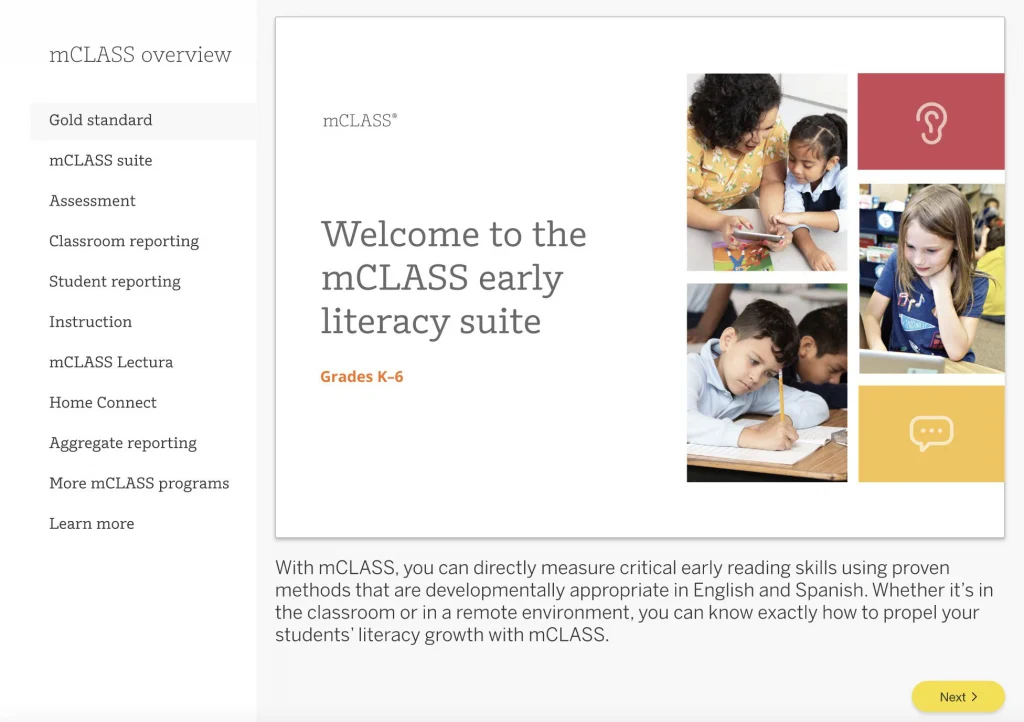
Contact us
Looking to speak directly with your Colorado representative? Get in touch with a team member by emailing HelloColorado@amplify.com or by calling us directly.
What is mCLASS?
mCLASS is a best-in-class assessment platform that houses a suite of proven, gold-standard assessment measures and tools that can be flexibly combined to meet the unique literacy needs of both teachers and students across grades K–6, including:
- Universal screening
- Diagnostic assessment
- Text Reading and Comprehension (a.k.a. running records via Amplify Atlas Español)
- Dyslexia screening
- Progress monitoring
- Dual language reporting
- Targeted teacher-led instruction
What is the Lectura assessment?
The Lectura assessment is a brand-new interim and diagnostic assessment that consists of measures based on the latest research of how Spanish literacy develops.
Co-developed with the Center on Teaching and Learning at the University of Oregon (UO CTL) and validated in partnership with Dr. Lillian Durán, the Lectura assessment was created to provide educators with a high-quality, evidence-based tool to support understanding of Spanish-speaking students’ biliteracy development, specifically foundational Spanish reading skills, which includes measures of phonological awareness, alphabetic understanding and decoding, reading fluency, and reading comprehension.
The measures in Lectura were written from the ground-up to assess students’ literacy development based on how Spanish literacy develops. Measures explicitly account for the syllabic and morphological structures of Spanish, and connected text was written and calibrated with respect to syntactical, lexical, and grammatical rules of Spanish. For example, phonological awareness is measured using syllable segmentation, and letter sounds and syllable reading are included in the decoding subtests for greater face-validity (in lieu of pseudowords). Word choice reflects the multisyllabic word complexity and variety of Spanish, driven by how decoding skills develop in Spanish. As such, Lectura provides instructionally actionable data for all students, including those scoring below the benchmark and those who meet or exceed the benchmark.
The Lectura assessment measures were purposefully designed, developed, field tested, and evaluated to address limitations that educators of Spanish speaking students have experienced in assessments. Specifically in these ways:
- Assessment measures based on current research on how Spanish literacy is developed
- Culturally responsive word choice and content reflecting the regional diversity of Spanish
- Technical adequacy established through rigorous study
- A sample size and geographic diversity reflecting the broad population of Spanish speakers across the U.S.
- Complete parity with English solutions (instructional tools, skill coverage)
Assessment measures by grade
| Lectura measures at each grade level | |||||
| Measure | Grade K | Grade 1 | Grade 2 | Grade 3 | Grades 4–6 |
| Fluidez en nombrar letras | |
|
|
||
| Fluidez en la segmentación de sílabas | |
|
|||
| ¿Qué queda? | |
|
|
||
| Fluidez en los sonidos de letras | |
|
|||
| Fluidez en los sonidos de sílabas | |
|
|||
| Fluidez en las palabras | |
|
|
|
|
| Fluidez en la lectura oral | |
|
|
|
|
| ¿Cuál palabra? | |
|
|
|
|
| Amplify measures at each grade level | |||||
| Oral Language Español | |
|
|
||
| Vocabulario | |
|
|
|
|
Assessment measures sample videos
Please note that the videos below are intended for illustrative purposes only. Performance levels in mCLASS Lectura have yet to be finalized.
mCLASS Lectura measure: Fluidez en nombrar letras (FNL)
Students are asked to identify as many uppercase and lowercase letter names as they can in one minute.
mCLASS Lectura measure: Fluidez en los sonidos de letras (FSL)
Students are asked to identify the sounds of as many uppercase and lowercase letters as they can in one minute.
mCLASS Lectura measure: Fluidez en los sonidos de sílabas (LSS)
Students are presented with a page of printed orthographically regular Spanish syllables and asked to read as many syllables as they can in one minute.
mCLASS Lectura measure: Fluidez en la lectura oral (FLO)
Students are presented with an authentically written informational or narrative passage of Spanish connected text and asked to read as much of the passage as they can in one minute.
mCLASS Lectura measure: ¿Qué Queda? (QQ)
Students are presented with a word orally and then the examiner omits part of the word (i.e., compound word part, syllable, or phoneme). Students are asked to identify what word remains after the word part has been elided.
What makes mCLASS Lectura different?
mCLASS Lectura combines the power of the mCLASS assessment platform and the effectiveness of the Lectura assessment measures. As a result – educators are empowered with latest and greatest assessment tool.
More than a test, mCLASS Lectura is an integrated system that closes the knowing-doing gap by helping teachers take immediate instructional action that’s right for each and every student. What’s more, it addresses the classroom inequities Spanish-speaking students face along their early literacy journeys.
Spanish-speaking students have been underserved and misclassified for decades. With mCLASS Lectura, teachers of Spanish-speaking students finally have access to the same robust assessment tools that have been available to teachers of English-speaking students for years.
Plus! When mCLASS Lectura and DIBELS 8th Edition are used together, teachers are empowered with a more holistic view of their Spanish-speaking students abilities in both English and Spanish, making instructional next steps more targeted and effective.
What makes mCLASS Lectura different?
- It gives teachers access to authentic Spanish measures. Amplify is the only provider of the Lectura assessment. Rather than a direct translation of an English assessment, our solution is the only one to provide teachers a research-based, authentic Spanish assessment that is both valid and reliable.
- It makes it faster and easier to understand where every student is in their early literacy journey. By combining 1:1 observational diagnostic assessments, dyslexia screening, progress monitoring, instant scoring, rigorous reporting, automatic student grouping, and targeted instruction all in one place, it reduces the instructional delays associated with manual scoring, manual data analysis, and manual lesson planning.
- It brings more equity to the classroom. When used in conjunction with mCLASS DIBELS 8th Edition, teachers have access to Dual Language Reports that highlight a students strengths and weaknesses in both English and Spanish.
- It makes every instructional minute count. In addition to one-minute measures that quickly gauge student progress toward reading proficiency, it leverages a teacher’s most powerful instructional tool — their own 1:1 observations.
- It drives growth more efficiently. Rather than relying on broad composite scores alone, granular data and in-depth insights for every student help teachers pinpoint exact skill gaps and areas of unfinished learning, making whole-group, small-group, and 1:1 instruction more targeted and effective.
- It saves teachers time. Instant reports, automatic student groups, and ready-to-teach lessons mean teachers spend less time cobbling together materials and more time working directly with students and responding to their needs.
Assessment systems must enable and compel educators to answer not just the “What?” questions, but also the “So What?” and “Now What?” questions. These are the questions that are essential in transforming classroom instruction, and the questions that mCLASS Lectura helps teachers answer with confidence.
How does mCLASS Lectura support screening for dyslexia risk?
mCLASS Lectura subtests have been specifically designed and validated to screen for dyslexia risks.
mCLASS Lectura was specifically developed to ensure the measure is able to meet state-level screening requirements for both dyslexia and universal reading screening. The research and development of Lectura was designed with this use in mind to accurately identify reading difficulties, including difficulties related to risk for dyslexia.
How does mCLASS Lectura support the use of running records?
Track your students’ reading progress from every angle with the Text Reading and Comprehension (TRC) assessment. When TRC is paired with the Lectura assessment, classroom teachers unlock the ability to record reading behaviors through running digital records. Available in English and Spanish, it measures reading comprehension and provides insight into how each student finds meaning in text.

How does mCLASS Lectura turn data into instant action?
mCLASS Lectura gives you instant results and clear next steps for each student.
Quick and actionable reports provide detailed insight into students’ reading development across foundational literacy skills for teachers, specialists, administrators, and caregivers.
Diagnostic assessment
mCLASS Lectura analyzes individual student response data through a proprietary scoring algorithm that pinpoints a student’s specific area(s) of growth and improvement, providing classroom teachers in-depth insight into a students’ instructional needs.
Ready-to-teach instruction
Immediately following the analysis of individual student responses, mCLASS Lectura provides an in-depth diagnostic report complete with suggested next steps, also known as “mCLASS Instruction.”
mCLASS Instruction evaluates each student’s responses on each individual subtest and instantly:
- Provides a list of specific needs by student, such as struggling with medial vowel sounds or difficulty reading words with consonant blends.
- Groups students automatically based on similar discrete skill needs, not simply composite scores like other assessment tools.
- Recommends a variety of ready-to-teach lessons that specifically target each individual student’s areas of need or common areas of need for small-group instruction.
Classroom skill and benchmark summary
The Classroom Skill Summary report is a dashboard showing benchmark performance on each skill. Teachers can use it to determine which skill areas need instructional focus at a classroom level.
The Classroom Benchmark Summary report is a classroom-wide view of overall reading performance. Teachers can use this report to determine if composite scores improved, declined, or remained the same each semester.
Detailed benchmark performance
Teachers can see each student’s performance during the current school year, on each subtest as well as the overall composite. The benchmark goal displays below the subtest name when applicable. The ability to sort the columns in this report gives teachers more flexibility to analyze data the way they prefer.
Dual language reports
When mCLASS Lectura and mCLASS with DIBELS 8th Edition are used together, teachers will receive an asset-based picture of a student’s biliteracy and instructional guidance on how to leverage literacy skills in one language to support literacy skill development in the second language.
- Side-by-side view of foundational literacy skills in English and Spanish
- Explicit guidance to teachers to support asset-based instruction using cross-linguistic transfer strategies
Progress monitoring summary
See which subtests have been assessed since the most recent benchmark assessment, how students performed on the three most recent progress monitoring assessments for each measure, and which students have not been progress monitored since the benchmark assessment.
Caregiver supports
The mCLASS Home Connect letter provides parent and caregivers information in English or Spanish about the student’s literacy and guidance on how to support their child at home.
What is mCLASS?
mCLASS is a best-in-class assessment platform that houses a suite of proven, gold-standard assessment measures and tools that can be flexibly combined to meet the unique literacy needs of both teachers and students across grades K–6, including:
- Universal screening
- Diagnostic assessment
- Text Reading and Comprehension (a.k.a. running records via Amplify Atlas Español)
- Dyslexia screening
- Progress monitoring
- Dual language reporting
- Targeted teacher-led instruction
What is the Lectura assessment?
The Lectura assessment is a brand-new interim and diagnostic assessment that consists of measures based on the latest research of how Spanish literacy develops.
Co-developed with the Center on Teaching and Learning at the University of Oregon (UO CTL) and validated in partnership with Dr. Lillian Durán, the Lectura assessment was created to provide educators with a high-quality, evidence-based tool to support understanding of Spanish-speaking students’ biliteracy development, specifically foundational Spanish reading skills, which includes measures of phonological awareness, alphabetic understanding and decoding, reading fluency, and reading comprehension.
The measures in Lectura were written from the ground-up to assess students’ literacy development based on how Spanish literacy develops. Measures explicitly account for the syllabic and morphological structures of Spanish, and connected text was written and calibrated with respect to syntactical, lexical, and grammatical rules of Spanish. For example, phonological awareness is measured using syllable segmentation, and letter sounds and syllable reading are included in the decoding subtests for greater face-validity (in lieu of pseudowords). Word choice reflects the multisyllabic word complexity and variety of Spanish, driven by how decoding skills develop in Spanish. As such, Lectura provides instructionally actionable data for all students, including those scoring below the benchmark and those who meet or exceed the benchmark.
The Lectura assessment measures were purposefully designed, developed, field tested, and evaluated to address limitations that educators of Spanish speaking students have experienced in assessments. Specifically in these ways:
- Assessment measures based on current research on how Spanish literacy is developed
- Culturally responsive word choice and content reflecting the regional diversity of Spanish
- Technical adequacy established through rigorous study
- A sample size and geographic diversity reflecting the broad population of Spanish speakers across the U.S.
- Complete parity with English solutions (instructional tools, skill coverage)
Assessment measures by grade
| Lectura measures at each grade level | |||||
| Measure | Grade K | Grade 1 | Grade 2 | Grade 3 | Grades 4–6 |
| Fluidez en nombrar letras | |
|
|
||
| Fluidez en la segmentación de sílabas | |
|
|||
| ¿Qué queda? | |
|
|
||
| Fluidez en los sonidos de letras | |
|
|||
| Fluidez en los sonidos de sílabas | |
|
|||
| Fluidez en las palabras | |
|
|
|
|
| Fluidez en la lectura oral | |
|
|
|
|
| ¿Cuál palabra? | |
|
|
|
|
| Amplify measures at each grade level | |||||
| Oral Language Español | |
|
|
||
| Vocabulario | |
|
|
|
|
Assessment measures sample videos
Please note that the videos below are intended for illustrative purposes only. Performance levels in mCLASS Lectura have yet to be finalized.
mCLASS Lectura measure: Fluidez en nombrar letras (FNL)
Students are asked to identify as many uppercase and lowercase letter names as they can in one minute.
mCLASS Lectura measure: Fluidez en los sonidos de letras (FSL)
Students are asked to identify the sounds of as many uppercase and lowercase letters as they can in one minute.
mCLASS Lectura measure: Fluidez en los sonidos de sílabas (LSS)
Students are presented with a page of printed orthographically regular Spanish syllables and asked to read as many syllables as they can in one minute.
mCLASS Lectura measure: Fluidez en la lectura oral (FLO)
Students are presented with an authentically written informational or narrative passage of Spanish connected text and asked to read as much of the passage as they can in one minute.
mCLASS Lectura measure: ¿Qué Queda? (QQ)
Students are presented with a word orally and then the examiner omits part of the word (i.e., compound word part, syllable, or phoneme). Students are asked to identify what word remains after the word part has been elided.
What makes mCLASS Lectura different?
mCLASS Lectura combines the power of the mCLASS assessment platform and the effectiveness of the Lectura assessment measures. As a result – educators are empowered with latest and greatest assessment tool.
More than a test, mCLASS Lectura is an integrated system that closes the knowing-doing gap by helping teachers take immediate instructional action that’s right for each and every student. What’s more, it addresses the classroom inequities Spanish-speaking students face along their early literacy journeys.
Spanish-speaking students have been underserved and misclassified for decades. With mCLASS Lectura, teachers of Spanish-speaking students finally have access to the same robust assessment tools that have been available to teachers of English-speaking students for years.
Plus! When mCLASS Lectura and DIBELS 8th Edition are used together, teachers are empowered with a more holistic view of their Spanish-speaking students abilities in both English and Spanish, making instructional next steps more targeted and effective.
What makes mCLASS Lectura different?
- It gives teachers access to authentic Spanish measures. Amplify is the only provider of the Lectura assessment. Rather than a direct translation of an English assessment, our solution is the only one to provide teachers a research-based, authentic Spanish assessment that is both valid and reliable.
- It makes it faster and easier to understand where every student is in their early literacy journey. By combining 1:1 observational diagnostic assessments, dyslexia screening, progress monitoring, instant scoring, rigorous reporting, automatic student grouping, and targeted instruction all in one place, it reduces the instructional delays associated with manual scoring, manual data analysis, and manual lesson planning.
- It brings more equity to the classroom. When used in conjunction with mCLASS DIBELS 8th Edition, teachers have access to Dual Language Reports that highlight a students strengths and weaknesses in both English and Spanish.
- It makes every instructional minute count. In addition to one-minute measures that quickly gauge student progress toward reading proficiency, it leverages a teacher’s most powerful instructional tool — their own 1:1 observations.
- It drives growth more efficiently. Rather than relying on broad composite scores alone, granular data and in-depth insights for every student help teachers pinpoint exact skill gaps and areas of unfinished learning, making whole-group, small-group, and 1:1 instruction more targeted and effective.
- It saves teachers time. Instant reports, automatic student groups, and ready-to-teach lessons mean teachers spend less time cobbling together materials and more time working directly with students and responding to their needs.
Assessment systems must enable and compel educators to answer not just the “What?” questions, but also the “So What?” and “Now What?” questions. These are the questions that are essential in transforming classroom instruction, and the questions that mCLASS Lectura helps teachers answer with confidence.
How does mCLASS Lectura support screening for dyslexia risk?
mCLASS Lectura subtests have been specifically designed and validated to screen for dyslexia risks.
mCLASS Lectura was specifically developed to ensure the measure is able to meet state-level screening requirements for both dyslexia and universal reading screening. The research and development of Lectura was designed with this use in mind to accurately identify reading difficulties, including difficulties related to risk for dyslexia.
How does mCLASS Lectura support the use of running records?
Track your students’ reading progress from every angle with the Text Reading and Comprehension (TRC) assessment. When TRC is paired with the Lectura assessment, classroom teachers unlock the ability to record reading behaviors through running digital records. Available in English and Spanish, it measures reading comprehension and provides insight into how each student finds meaning in text.

How does mCLASS Lectura turn data into instant action?
mCLASS Lectura gives you instant results and clear next steps for each student.
Quick and actionable reports provide detailed insight into students’ reading development across foundational literacy skills for teachers, specialists, administrators, and caregivers.

Diagnostic assessment
mCLASS Lectura analyzes individual student response data through a proprietary scoring algorithm that pinpoints a student’s specific area(s) of growth and improvement, providing classroom teachers in-depth insight into a students’ instructional needs.
Ready-to-teach instruction
Immediately following the analysis of individual student responses, mCLASS Lectura provides an in-depth diagnostic report complete with suggested next steps, also known as “mCLASS Instruction.”
mCLASS Instruction evaluates each student’s responses on each individual subtest and instantly:
- Provides a list of specific needs by student, such as struggling with medial vowel sounds or difficulty reading words with consonant blends.
- Groups students automatically based on similar discrete skill needs, not simply composite scores like other assessment tools.
- Recommends a variety of ready-to-teach lessons that specifically target each individual student’s areas of need or common areas of need for small-group instruction.
Classroom skill and benchmark summary
The Classroom Skill Summary report is a dashboard showing benchmark performance on each skill. Teachers can use it to determine which skill areas need instructional focus at a classroom level.
The Classroom Benchmark Summary report is a classroom-wide view of overall reading performance. Teachers can use this report to determine if composite scores improved, declined, or remained the same each semester.
Detailed benchmark performance
Teachers can see each student’s performance during the current school year, on each subtest as well as the overall composite. The benchmark goal displays below the subtest name when applicable. The ability to sort the columns in this report gives teachers more flexibility to analyze data the way they prefer.
Dual language reports
When mCLASS Lectura and mCLASS with DIBELS 8th Edition are used together, teachers will receive an asset-based picture of a student’s biliteracy and instructional guidance on how to leverage literacy skills in one language to support literacy skill development in the second language.
- Side-by-side view of foundational literacy skills in English and Spanish
- Explicit guidance to teachers to support asset-based instruction using cross-linguistic transfer strategies
Progress monitoring summary
See which subtests have been assessed since the most recent benchmark assessment, how students performed on the three most recent progress monitoring assessments for each measure, and which students have not been progress monitored since the benchmark assessment.
Caregiver supports
The mCLASS Home Connect letter provides parent and caregivers information in English or Spanish about the student’s literacy and guidance on how to support their child at home.

Clickable demo
Our clickable demo is a great way to orient yourself to the organization of our mCLASS platform and the mCLASS Lectura assessment. Click the button below to get started.
Here you will find 10 interactive screens:
- Screen 2: Scroll down to the class list. Find Gabriel Archulata. Click on his score for “Decodificación”.
- Screen 3: Explore Gabriel’s measure transcript. Then click on the gray arrow to the far right to advance to the next screen.
- Screen 4: Click on the “Instruction” tab.
- Screen 5: Scroll down to “Decoding Group 4” and click “See Activities”.
- Screen 6: Click on the first activity called “Identificar y leer palabras con los dígrafos ch y ll.”
- Screen 7: Click on the gray arrow to the far right to advance to the next screen.
- Screen 8: Explore the detailed “Student” tab and then click the “Dual Language” tab.
- Screen 9: Scroll down to the section about Gabriel’s phonological awareness skills. Click on the link called “Cross-Linguistic Transfer: Phonological Awareness”.
- Screen 10: Click on the gray arrow to the far right to advance to the next screen. Explore the “Home Connect” letter.
What is mCLASS?
mCLASS is a best-in-class assessment platform that houses a suite of proven, gold-standard assessment measures and tools that can be flexibly combined to meet the unique literacy needs of both teachers and students across grades K–6, including:
- Universal screening
- Diagnostic assessment
- Text Reading and Comprehension (a.k.a. running records via Amplify Atlas Español)
- Dyslexia screening
- Progress monitoring
- Dual language reporting
- Targeted teacher-led instruction
What is the Lectura assessment?
The Lectura assessment is a brand-new interim and diagnostic assessment that consists of measures based on the latest research of how Spanish literacy develops.
Co-developed with the Center on Teaching and Learning at the University of Oregon (UO CTL) and validated in partnership with Dr. Lillian Durán, the Lectura assessment was created to provide educators with a high-quality, evidence-based tool to support understanding of Spanish-speaking students’ biliteracy development, specifically foundational Spanish reading skills, which includes measures of phonological awareness, alphabetic understanding and decoding, reading fluency, and reading comprehension.
The measures in Lectura were written from the ground-up to assess students’ literacy development based on how Spanish literacy develops. Measures explicitly account for the syllabic and morphological structures of Spanish, and connected text was written and calibrated with respect to syntactical, lexical, and grammatical rules of Spanish. For example, phonological awareness is measured using syllable segmentation, and letter sounds and syllable reading are included in the decoding subtests for greater face-validity (in lieu of pseudowords). Word choice reflects the multisyllabic word complexity and variety of Spanish, driven by how decoding skills develop in Spanish. As such, Lectura provides instructionally actionable data for all students, including those scoring below the benchmark and those who meet or exceed the benchmark.
The Lectura assessment measures were purposefully designed, developed, field tested, and evaluated to address limitations that educators of Spanish speaking students have experienced in assessments. Specifically in these ways:
- Assessment measures based on current research on how Spanish literacy is developed
- Culturally responsive word choice and content reflecting the regional diversity of Spanish
- Technical adequacy established through rigorous study
- A sample size and geographic diversity reflecting the broad population of Spanish speakers across the U.S.
- Complete parity with English solutions (instructional tools, skill coverage)
Assessment measures by grade
| Lectura measures at each grade level | |||||
| Measure | Grade K | Grade 1 | Grade 2 | Grade 3 | Grades 4–6 |
| Fluidez en nombrar letras | |
|
|
||
| Fluidez en la segmentación de sílabas | |
|
|||
| ¿Qué queda? | |
|
|
||
| Fluidez en los sonidos de letras | |
|
|||
| Fluidez en los sonidos de sílabas | |
|
|||
| Fluidez en las palabras | |
|
|
|
|
| Fluidez en la lectura oral | |
|
|
|
|
| ¿Cuál palabra? | |
|
|
|
|
| Amplify measures at each grade level | |||||
| Oral Language Español | |
|
|
||
| Vocabulario | |
|
|
|
|
Assessment measures sample videos
Please note that the videos below are intended for illustrative purposes only. Performance levels in mCLASS Lectura have yet to be finalized.
mCLASS Lectura measure: Fluidez en nombrar letras (FNL)
Students are asked to identify as many uppercase and lowercase letter names as they can in one minute.
mCLASS Lectura measure: Fluidez en los sonidos de letras (FSL)
Students are asked to identify the sounds of as many uppercase and lowercase letters as they can in one minute.
mCLASS Lectura measure: Fluidez en los sonidos de sílabas (LSS)
Students are presented with a page of printed orthographically regular Spanish syllables and asked to read as many syllables as they can in one minute.
mCLASS Lectura measure: Fluidez en la lectura oral (FLO)
Students are presented with an authentically written informational or narrative passage of Spanish connected text and asked to read as much of the passage as they can in one minute.
mCLASS Lectura measure: ¿Qué Queda? (QQ)
Students are presented with a word orally and then the examiner omits part of the word (i.e., compound word part, syllable, or phoneme). Students are asked to identify what word remains after the word part has been elided.
What makes mCLASS Lectura different?
mCLASS Lectura combines the power of the mCLASS assessment platform and the effectiveness of the Lectura assessment measures. As a result – educators are empowered with latest and greatest assessment tool.
More than a test, mCLASS Lectura is an integrated system that closes the knowing-doing gap by helping teachers take immediate instructional action that’s right for each and every student. What’s more, it addresses the classroom inequities Spanish-speaking students face along their early literacy journeys.
Spanish-speaking students have been underserved and misclassified for decades. With mCLASS Lectura, teachers of Spanish-speaking students finally have access to the same robust assessment tools that have been available to teachers of English-speaking students for years.
Plus! When mCLASS Lectura and DIBELS 8th Edition are used together, teachers are empowered with a more holistic view of their Spanish-speaking students abilities in both English and Spanish, making instructional next steps more targeted and effective.
What makes mCLASS Lectura different?
- It gives teachers access to authentic Spanish measures. Amplify is the only provider of the Lectura assessment. Rather than a direct translation of an English assessment, our solution is the only one to provide teachers a research-based, authentic Spanish assessment that is both valid and reliable.
- It makes it faster and easier to understand where every student is in their early literacy journey. By combining 1:1 observational diagnostic assessments, dyslexia screening, progress monitoring, instant scoring, rigorous reporting, automatic student grouping, and targeted instruction all in one place, it reduces the instructional delays associated with manual scoring, manual data analysis, and manual lesson planning.
- It brings more equity to the classroom. When used in conjunction with mCLASS DIBELS 8th Edition, teachers have access to Dual Language Reports that highlight a students strengths and weaknesses in both English and Spanish.
- It makes every instructional minute count. In addition to one-minute measures that quickly gauge student progress toward reading proficiency, it leverages a teacher’s most powerful instructional tool — their own 1:1 observations.
- It drives growth more efficiently. Rather than relying on broad composite scores alone, granular data and in-depth insights for every student help teachers pinpoint exact skill gaps and areas of unfinished learning, making whole-group, small-group, and 1:1 instruction more targeted and effective.
- It saves teachers time. Instant reports, automatic student groups, and ready-to-teach lessons mean teachers spend less time cobbling together materials and more time working directly with students and responding to their needs.
Assessment systems must enable and compel educators to answer not just the “What?” questions, but also the “So What?” and “Now What?” questions. These are the questions that are essential in transforming classroom instruction, and the questions that mCLASS Lectura helps teachers answer with confidence.
How does mCLASS Lectura support screening for dyslexia risk?
mCLASS Lectura subtests have been specifically designed and validated to screen for dyslexia risks.
mCLASS Lectura was specifically developed to ensure the measure is able to meet state-level screening requirements for both dyslexia and universal reading screening. The research and development of Lectura was designed with this use in mind to accurately identify reading difficulties, including difficulties related to risk for dyslexia.
How does mCLASS Lectura support the use of running records?
Track your students’ reading progress from every angle with the Text Reading and Comprehension (TRC) assessment. When TRC is paired with the Lectura assessment, classroom teachers unlock the ability to record reading behaviors through running digital records. Available in English and Spanish, it measures reading comprehension and provides insight into how each student finds meaning in text.
How does mCLASS Lectura turn data into instant action?
mCLASS Lectura gives you instant results and clear next steps for each student.
Quick and actionable reports provide detailed insight into students’ reading development across foundational literacy skills for teachers, specialists, administrators, and caregivers.
Diagnostic assessment
mCLASS Lectura analyzes individual student response data through a proprietary scoring algorithm that pinpoints a student’s specific area(s) of growth and improvement, providing classroom teachers in-depth insight into a students’ instructional needs.
Ready-to-teach instruction
Immediately following the analysis of individual student responses, mCLASS Lectura provides an in-depth diagnostic report complete with suggested next steps, also known as “mCLASS Instruction.”
mCLASS Instruction evaluates each student’s responses on each individual subtest and instantly:
- Provides a list of specific needs by student, such as struggling with medial vowel sounds or difficulty reading words with consonant blends.
- Groups students automatically based on similar discrete skill needs, not simply composite scores like other assessment tools.
- Recommends a variety of ready-to-teach lessons that specifically target each individual student’s areas of need or common areas of need for small-group instruction.
Classroom skill and benchmark summary
The Classroom Skill Summary report is a dashboard showing benchmark performance on each skill. Teachers can use it to determine which skill areas need instructional focus at a classroom level.
The Classroom Benchmark Summary report is a classroom-wide view of overall reading performance. Teachers can use this report to determine if composite scores improved, declined, or remained the same each semester.
Detailed benchmark performance
Teachers can see each student’s performance during the current school year, on each subtest as well as the overall composite. The benchmark goal displays below the subtest name when applicable. The ability to sort the columns in this report gives teachers more flexibility to analyze data the way they prefer.
Dual language reports
When mCLASS Lectura and mCLASS with DIBELS 8th Edition are used together, teachers will receive an asset-based picture of a student’s biliteracy and instructional guidance on how to leverage literacy skills in one language to support literacy skill development in the second language.
- Side-by-side view of foundational literacy skills in English and Spanish
- Explicit guidance to teachers to support asset-based instruction using cross-linguistic transfer strategies

Progress monitoring summary
See which subtests have been assessed since the most recent benchmark assessment, how students performed on the three most recent progress monitoring assessments for each measure, and which students have not been progress monitored since the benchmark assessment.
Caregiver supports
The mCLASS Home Connect letter provides parent and caregivers information in English or Spanish about the student’s literacy and guidance on how to support their child at home.

Clickable demo
Our clickable demo is a great way to orient yourself to the organization of our mCLASS platform and the mCLASS Lectura assessment. Click the button below to get started.
Here you will find 10 interactive screens:
- Screen 2: Scroll down to the class list. Find Gabriel Archulata. Click on his score for “Decodificación”.
- Screen 3: Explore Gabriel’s measure transcript. Then click on the gray arrow to the far right to advance to the next screen.
- Screen 4: Click on the “Instruction” tab.
- Screen 5: Scroll down to “Decoding Group 4” and click “See Activities”.
- Screen 6: Click on the first activity called “Identificar y leer palabras con los dígrafos ch y ll.”
- Screen 7: Click on the gray arrow to the far right to advance to the next screen.
- Screen 8: Explore the detailed “Student” tab and then click the “Dual Language” tab.
- Screen 9: Scroll down to the section about Gabriel’s phonological awareness skills. Click on the link called “Cross-Linguistic Transfer: Phonological Awareness”.
- Screen 10: Click on the gray arrow to the far right to advance to the next screen. Explore the “Home Connect” letter.
What is mCLASS?
mCLASS is a best-in-class assessment platform that houses a suite of proven, gold-standard assessment measures and tools that can be flexibly combined to meet the unique literacy needs of both teachers and students across grades K–6, including:
- Universal screening
- Diagnostic assessment
- Dyslexia screening
- Progress monitoring
- Dual language reporting
- Quick 1-minute assessment measures
- Real-time results, instant analysis, automatic student grouping
- Targeted teacher-led instruction with ready-to-use mini-lessons
What is the Lectura assessment?
The Lectura assessment is a brand-new interim and diagnostic assessment that consists of measures based on the latest research of how Spanish literacy develops.
Co-developed with the Center on Teaching and Learning at the University of Oregon (UO CTL) and validated in partnership with Dr. Lillian Durán, the Lectura assessment was created to provide educators with a high-quality, evidence-based tool to support understanding of Spanish-speaking students’ biliteracy development, specifically foundational Spanish reading skills, which includes measures of phonological awareness, alphabetic understanding and decoding, reading fluency, and reading comprehension.
The measures in Lectura were written from the ground-up to assess students’ literacy development based on how Spanish literacy develops. Measures explicitly account for the syllabic and morphological structures of Spanish, and connected text was written and calibrated with respect to syntactical, lexical, and grammatical rules of Spanish. For example, phonological awareness is measured using syllable segmentation, and letter sounds and syllable reading are included in the decoding subtests for greater face-validity (in lieu of pseudowords). Word choice reflects the multisyllabic word complexity and variety of Spanish, driven by how decoding skills develop in Spanish. As such, Lectura provides instructionally actionable data for all students, including those scoring below the benchmark and those who meet or exceed the benchmark.
The Lectura assessment measures were purposefully designed, developed, field tested, and evaluated to address limitations that educators of Spanish speaking students have experienced in assessments. Specifically in these ways:
- Assessment measures based on current research on how Spanish literacy is developed
- Culturally responsive word choice and content reflecting the regional diversity of Spanish
- Technical adequacy established through rigorous study
- A sample size and geographic diversity reflecting the broad population of Spanish speakers across the U.S.
- Complete parity with English solutions (instructional tools, skill coverage)
Assessment measures by grade
| Lectura measures at each grade level | ||||
| Measure | Grade K | Grade 1 | Grade 2 | Grade 3 |
| Fluidez en nombrar letras | |
|
|
|
| Fluidez en la segmentación de sílabas | |
|
||
| ¿Qué queda? | |
|
|
|
| Fluidez en los sonidos de letras | |
|
||
| Fluidez en los sonidos de sílabas | |
|
||
| Fluidez en las palabras | |
|
|
|
| Fluidez en la lectura oral | |
|
|
|
| ¿Cuál palabra? | |
|
|
|
| Amplify measures at each grade level | ||||
| Oral Language Español | |
|
|
|
| Vocabulario | |
|
|
|
Assessment measures sample videos
Please note that the videos below are intended for illustrative purposes only. Performance levels in mCLASS Lectura have yet to be finalized.
mCLASS Lectura measure: Fluidez en nombrar letras (FNL)
Students are asked to identify as many uppercase and lowercase letter names as they can in one minute.
mCLASS Lectura measure: Fluidez en los sonidos de letras (FSL)
Students are asked to identify the sounds of as many uppercase and lowercase letters as they can in one minute.
mCLASS Lectura measure: Fluidez en los sonidos de sílabas (LSS)
Students are presented with a page of printed orthographically regular Spanish syllables and asked to read as many syllables as they can in one minute.
mCLASS Lectura measure: Fluidez en la lectura oral (FLO)
Students are presented with an authentically written informational or narrative passage of Spanish connected text and asked to read as much of the passage as they can in one minute.
mCLASS Lectura measure: ¿Qué Queda? (QQ)
Students are presented with a word orally and then the examiner omits part of the word (i.e., compound word part, syllable, or phoneme). Students are asked to identify what word remains after the word part has been elided.
How is mCLASS Lectura different?
mCLASS Lectura combines the power of the mCLASS assessment platform and the effectiveness of the Lectura assessment measures. As a result – educators across the state are empowered with latest and greatest assessment tool.
More than a test, mCLASS Lectura is an integrated system that closes the knowing-doing gap by helping teachers take immediate instructional action that’s right for each and every student. What’s more, it addresses the classroom inequities Spanish-speaking students face along their early literacy journeys.
Spanish-speaking students have been underserved and misclassified for decades. With mCLASS Lectura, teachers of Spanish-speaking students finally have access to the same robust assessment tools that have been available to teachers of English-speaking students for years.
Plus! When mCLASS Lectura and DIBELS 8th Edition are used together, teachers are empowered with a more holistic view of their Spanish-speaking students abilities in both English and Spanish, making instructional next steps more targeted and effective.
How is mCLASS Lectura different?
- It gives teachers access to authentic Spanish measures. Amplify is the only provider of the Lectura assessment. Rather than a direct translation of an English assessment, our solution is the only one to provide teachers a research-based, authentic Spanish assessment that is both valid and reliable.
- It makes it faster and easier to understand where every student is in their early literacy journey. By combining 1:1 observational diagnostic assessments, dyslexia screening, progress monitoring, instant scoring, rigorous reporting, automatic student grouping, and targeted instruction all in one place, it reduces the instructional delays associated with manual scoring, manual data analysis, and manual lesson planning.
- It brings more equity to the classroom. When used in conjunction with mCLASS DIBELS 8th Edition, teachers have access to Dual Language Reports that highlight a students strengths and weaknesses in both English and Spanish.
- It makes every instructional minute count. In addition to one-minute measures that quickly gauge student progress toward reading proficiency, it leverages a teacher’s most powerful instructional tool — their own 1:1 observations.
- It drives growth more efficiently. Rather than relying on broad composite scores alone, granular data and in-depth insights for every student help teachers pinpoint exact skill gaps and areas of unfinished learning, making whole-group, small-group, and 1:1 instruction more targeted and effective.
- It saves teachers time. Instant reports, automatic student groups, and ready-to-teach lessons mean teachers spend less time cobbling together materials and more time working directly with students and responding to their needs.
Assessment systems must enable and compel educators to answer not just the “What?” questions, but also the “So What?” and “Now What?” questions. These are the questions that are essential in transforming classroom instruction, and the questions that mCLASS Lectura helps teachers answer with confidence.
How does mCLASS Lectura support screening for dyslexia risk?
mCLASS Lectura subtests have been specifically designed and validated to screen for dyslexia risks.
mCLASS Lectura was specifically developed to ensure the measure is able to meet state-level screening requirements for both dyslexia and universal reading screening. The research and development of Lectura was designed with this use in mind to accurately identify reading difficulties, including difficulties related to risk for dyslexia.
How does mCLASS Lectura turn data into instant action?
mCLASS Lectura gives you instant results and clear next steps for each student.
Quick and actionable reports provide detailed insight into students’ reading development across foundational literacy skills for teachers, specialists, administrators, and caregivers.

Diagnostic assessment
mCLASS Lectura analyzes individual student response data through a innovative scoring algorithm that leverages an item-level evaluation of individual student responses in order to provide deeper insights into specific student weaknesses and areas of improvement.
Ready-to-teach instruction
Immediately following the analysis of individual student responses, mCLASS Lectura provides an in-depth diagnostic report complete with suggested next steps, also known as “mCLASS Instruction.”
mCLASS Instruction evaluates each student’s responses on each individual subtest and instantly:
- Provides a list of specific needs by student, such as struggling with medial vowel sounds or difficulty reading words with consonant blends.
- Groups students automatically based on similar discrete skill needs, not simply composite scores like other assessment tools.
- Recommends a variety of ready-to-teach lessons that specifically target each individual student’s areas of need or common areas of need for small-group instruction.
Classroom skill and benchmark summary
The Classroom Skill Summary report is a dashboard showing benchmark performance on each skill. Teachers can use it to determine which skill areas need instructional focus at a classroom level.
The Classroom Benchmark Summary report is a classroom-wide view of overall reading performance. Teachers can use this report to determine if composite scores improved, declined, or remained the same each semester.
Detailed benchmark performance
Teachers can see each student’s performance during the current school year, on each subtest as well as the overall composite. The benchmark goal displays below the subtest name when applicable. The ability to sort the columns in this report gives teachers more flexibility to analyze data the way they prefer.
Dual language reports
When mCLASS Lectura and mCLASS with DIBELS 8th Edition are used together, teachers will receive an asset-based picture of a student’s biliteracy and instructional guidance on how to leverage literacy skills in one language to support literacy skill development in the second language.
- Side-by-side view of foundational literacy skills in English and Spanish
- Explicit guidance to teachers to support asset-based instruction using cross-linguistic transfer strategies

Progress monitoring summary
See which subtests have been assessed since the most recent benchmark assessment, how students performed on the three most recent progress monitoring assessments for each measure, and which students have not been progress monitored since the benchmark assessment.
Caregiver supports
The mCLASS Home Connect letter provides parent and caregivers information in English or Spanish about the student’s literacy and guidance on how to support their child at home.

Explore our self-guided tour
Our self-guided tour is a great way to orient yourself to the organization of our mCLASS platform. Click the button below to get started.

What is mCLASS?
mCLASS is a best-in-class assessment platform that houses a suite of proven, gold-standard assessment measures and tools that can be flexibly combined to meet the unique literacy needs of both teachers and students across grades K–6, including:
- Universal screening
- Diagnostic assessment
- Dyslexia screening
- Progress monitoring
- Dual language reporting
- Targeted teacher-led instruction
What is the Lectura assessment?
The Lectura assessment is a brand-new interim and diagnostic assessment that consists of measures based on the latest research of how Spanish literacy develops.
Co-developed with the Center on Teaching and Learning at the University of Oregon (UO CTL) and validated in partnership with Dr. Lillian Durán, the Lectura assessment was created to provide educators with a high-quality, evidence-based tool to support understanding of Spanish-speaking students’ biliteracy development, specifically foundational Spanish reading skills, which includes measures of phonological awareness, alphabetic understanding and decoding, reading fluency, and reading comprehension.
The measures in Lectura were written from the ground-up to assess students’ literacy development based on how Spanish literacy develops. Measures explicitly account for the syllabic and morphological structures of Spanish, and connected text was written and calibrated with respect to syntactical, lexical, and grammatical rules of Spanish. For example, phonological awareness is measured using syllable segmentation, and letter sounds and syllable reading are included in the decoding subtests for greater face-validity (in lieu of pseudowords). Word choice reflects the multisyllabic word complexity and variety of Spanish, driven by how decoding skills develop in Spanish. As such, Lectura provides instructionally actionable data for all students, including those scoring below the benchmark and those who meet or exceed the benchmark.
The Lectura assessment measures were purposefully designed, developed, field tested, and evaluated to address limitations that educators of Spanish speaking students have experienced in assessments. Specifically in these ways:
- Assessment measures based on current research on how Spanish literacy is developed
- Culturally responsive word choice and content reflecting the regional diversity of Spanish
- Technical adequacy established through rigorous study
- A sample size and geographic diversity reflecting the broad population of Spanish speakers across the U.S.
- Complete parity with English solutions (instructional tools, skill coverage)
Assessment measures by grade
| Lectura measures at each grade level | ||||
| Measure | Grade K | Grade 1 | Grade 2 | Grade 3 |
| Fluidez en nombrar letras |  | |  | |
| Fluidez en la segmentación de sílabas | | | ||
| ¿Qué queda? | | | | |
| Fluidez en los sonidos de letras | | | ||
| Fluidez en los sonidos de sílabas | | | ||
| Fluidez en las palabras | | | | |
| Fluidez en la lectura oral | | | | |
| ¿Cuál palabra? | | | | |
| Amplify measures at each grade level | ||||
| Oral Language Español | | | | |
| Vocabulario | | | | |
Assessment measures sample videos
Please note that the videos below are intended for illustrative purposes only. Performance levels in mCLASS Lectura have yet to be finalized.
mCLASS Lectura measure: Fluidez en nombrar letras (FNL)
Students are asked to identify as many uppercase and lowercase letter names as they can in one minute.
mCLASS Lectura measure: Fluidez en los sonidos de letras (FSL)
Students are asked to identify the sounds of as many uppercase and lowercase letters as they can in one minute.
mCLASS Lectura measure: Fluidez en los sonidos de sílabas (LSS)
Students are presented with a page of printed orthographically regular Spanish syllables and asked to read as many syllables as they can in one minute.
mCLASS Lectura measure: Fluidez en la lectura oral (FLO)
Students are presented with an authentically written informational or narrative passage of Spanish connected text and asked to read as much of the passage as they can in one minute.
mCLASS Lectura measure: ¿Qué Queda? (QQ)
Students are presented with a word orally and then the examiner omits part of the word (i.e., compound word part, syllable, or phoneme). Students are asked to identify what word remains after the word part has been elided.
How is mCLASS Lectura different?
mCLASS Lectura combines the power of the mCLASS assessment platform and the effectiveness of the Lectura assessment measures. As a result – educators across the state are empowered with latest and greatest assessment tool.
More than a test, mCLASS Lectura is an integrated system that closes the knowing-doing gap by helping teachers take immediate instructional action that’s right for each and every student. What’s more, it addresses the classroom inequities Spanish-speaking students face along their early literacy journeys.
Spanish-speaking students have been underserved and misclassified for decades. With mCLASS Lectura, teachers of Spanish-speaking students finally have access to the same robust assessment tools that have been available to teachers of English-speaking students for years.
Plus! When mCLASS Lectura and DIBELS 8th Edition are used together, teachers are empowered with a more holistic view of their Spanish-speaking students abilities in both English and Spanish, making instructional next steps more targeted and effective.
How is mCLASS Lectura different?
- It gives teachers access to authentic Spanish measures. Amplify is the only provider of the Lectura assessment. Rather than a direct translation of an English assessment, our solution is the only one to provide teachers a research-based, authentic Spanish assessment that is both valid and reliable.
- It makes it faster and easier to understand where every student is in their early literacy journey. By combining 1:1 observational diagnostic assessments, dyslexia screening, progress monitoring, instant scoring, rigorous reporting, automatic student grouping, and targeted instruction all in one place, it reduces the instructional delays associated with manual scoring, manual data analysis, and manual lesson planning.
- It brings more equity to the classroom. When used in conjunction with mCLASS DIBELS 8th Edition, teachers have access to Dual Language Reports that highlight a student’s strengths and weaknesses in both English and Spanish.
- It makes every instructional minute count. In addition to one-minute measures that quickly gauge student progress toward reading proficiency, it leverages a teacher’s most powerful instructional tool — their own 1:1 observations.
- It drives growth more efficiently. Rather than relying on broad composite scores alone, granular data and in-depth insights for every student help teachers pinpoint exact skill gaps and areas of unfinished learning, making whole-group, small-group, and 1:1 instruction more targeted and effective.
- It saves teachers time. Instant reports, automatic student groups, and ready-to-teach lessons mean teachers spend less time cobbling together materials and more time working directly with students and responding to their needs.
Assessment systems must enable and compel educators to answer not just the “What?” questions, but also the “So What?” and “Now What?” questions. These are the questions that are essential in transforming classroom instruction, and the questions that mCLASS Lectura helps teachers answer with confidence.
How does mCLASS Lectura support screening for dyslexia risk?
mCLASS Lectura subtests have been specifically designed and validated to screen for dyslexia risks.
mCLASS Lectura was specifically developed to ensure the measure is able to meet state-level screening requirements for both dyslexia and universal reading screening. The research and development of Lectura was designed with this use in mind to accurately identify reading difficulties, including difficulties related to risk for dyslexia.
How does mCLASS Lectura turn data into instant action?
mCLASS Lectura gives you instant results and clear next steps for each student.
Quick and actionable reports provide detailed insight into students’ reading development across foundational literacy skills for teachers, specialists, administrators, and caregivers.

Diagnostic assessment
mCLASS Lectura analyzes individual student response data through a scoring algorithm which aligns to the Colorado Department of Education’s stated purpose of a diagnostic assessment.
Our innovative approach to diagnostic assessment leverages an item-level evaluation of individual student responses in order to provide deeper insights into specific student weaknesses and areas of improvement. mCLASS Lectura analyzes individual student response data through a scoring algorithm which aligns to the Colorado Department of Education’s stated purpose of a diagnostic: “… to pinpoint a student’s specific area(s) of weakness and provide in-depth information about students’ skills and instructional needs.”
Ready-to-teach instruction
Immediately following the analysis of individual student responses, mCLASS Lectura provides an in-depth diagnostic report complete with suggested next steps, also known as “mCLASS Instruction.”
mCLASS Instruction evaluates each student’s responses on each individual subtest and instantly:
- Provides a list of specific needs by student, such as struggling with medial vowel sounds or difficulty reading words with consonant blends.
- Groups students automatically based on similar discrete skill needs, not simply composite scores like other assessment tools.
- Recommends a variety of ready-to-teach lessons that specifically target each individual student’s areas of need or common areas of need for small-group instruction.
Classroom skill and benchmark summary
The Classroom Skill Summary report is a dashboard showing benchmark performance on each skill. Teachers can use it to determine which skill areas need instructional focus at a classroom level.
The Classroom Benchmark Summary report is a classroom-wide view of overall reading performance. Teachers can use this report to determine if composite scores improved, declined, or remained the same each semester.
Detailed benchmark performance
Teachers can see each student’s performance during the current school year, on each subtest as well as the overall composite. The benchmark goal displays below the subtest name when applicable. The ability to sort the columns in this report gives teachers more flexibility to analyze data the way they prefer.
Dual language reports
When mCLASS Lectura and mCLASS with DIBELS 8th Edition are used together, teachers will receive an asset-based picture of a student’s biliteracy and instructional guidance on how to leverage literacy skills in one language to support literacy skill development in the second language.
- Side-by-side view of foundational literacy skills in English and Spanish
- Explicit guidance to teachers to support asset-based instruction using cross-linguistic transfer strategies

Progress monitoring summary
See which subtests have been assessed since the most recent benchmark assessment, how students performed on the three most recent progress monitoring assessments for each measure, and which students have not been progress monitored since the benchmark assessment.
Colorado READ Plans
The Colorado READ Act places importance on considering students’ English proficiency and the impact it may have on assessment. Thus the READ Act provides an option for districts to assess Spanish-speaking students in their native language, who are not yet partially proficient in English.
Amplify recommends that a student who is categorized by the mCLASS Lectura composite score as “At High Risk” (denoted in all reports as “red”) be considered as potentially having a “Significant Reading Deficiency,” then further diagnosed using mCLASS’ Instruction diagnostics.
When devising a READ Plan, teachers and instructional staff should first consider students at high risk on mCLASS Lectura as potentially having a “Significant Reading Deficiency,” and eligible for a READ Plan. Students are then further diagnosed using mCLASS’ Instruction diagnostics. When devising a READ Plan, teachers can rely on the relevant mCLASS Instruction and Reports to comply with the READ Act.
Caregiver supports
The mCLASS Home Connect letter provides parent and caregivers information in English or Spanish about the student’s literacy and guidance on how to support their child at home.

Explore our self-guided tour
Our self-guided tour is a great way to orient yourself to the organization of our mCLASS platform. Click the button below to get started.
Welcome, Amplify Tutoring caregivers!
Welcome to Amplify Tutoring! We’re excited to support your student with high-impact tutoring in both reading and/or math. Our program is grounded in research and designed to build confidence, strengthen foundational skills, and accelerate learning. We also provide tools and resources to help teachers and caregivers work together to create a strong culture of learning at home and at school. Para la versión en español, haga clic aquí.

What is high impact tutoring?
High-impact tutoring is small-group, targeted instruction that can lead to significant learning gains. Amplify Tutoring achieves these gains through the following best practices:

High-quality
materials
Tutors use high-quality reading and math lessons that are proven to work. You’ll see real progress and growth through your child’s individual data.

Frequent and consistent high-impact
tutoring sessions
Tutors provide personalized attention in small groups. Our program is designed for students to participate in three or more 30-minute sessions per week.

Supportive relationships and training
Consistent tutor-student pairings support relationship-building and higher achievement. Tutors receive ongoing professional development.
Amplify Tutoring provides your student with engaging and effective tutoring programming throughout the year.
Minutes matter
Every minute counts in helping your child learn and grow. To get the most out of tutoring, it’s important they come on time and attend regularly. Here are a few quick reminders:
How you can help your child get the most from tutoring
- Communicate with your child’s teacher. If your child can’t make it to tutoring, just let the teacher or coordinator know so they can support them.
- Make tutoring days a priority. Try your best to make sure your child is at school on tutoring days. Every session helps them grow!
- Ask for the tutoring schedule. Reach out to your child’s teacher or the tutoring coordinator to find out the days and times for tutoring.
- Plan around tutoring time. If you can, schedule appointments and other activities at different times so your child doesn’t miss a session.
Talking to your student about their Amplify Tutoring sessions
Discuss tutoring with your student at home or while getting ready for the day. To support their learning, you may consider:
Celebrating progress
Ask:
- What new reading skills or strategies have you learned?
- How has your reading improved since starting tutoring?
- Do you have any favorite books or activities in tutoring?
Setting goals together
Ask:
- What reading skills would you like to improve in tutoring?
- What goal would you like to achieve by the end of the tutoring program?
- What steps can you take to help achieve those goals?
- How can I help support your goals?
Sharing your support
Ask:
- How can I help you with your reading or math?
- Can we set aside time each day for you to practice your skills?
- What was the most interesting part of your tutoring session?
- What do you feel proud of achieving in this week’s sessions?
- When did you feel really excited about what you were learning?
Amplify Tutoring literacy support materials and resources
Caregivers, please find materials and resources below that may be helpful to you and your student.
mCLASS:
- Schools participating in Amplify Tutoring use mCLASS assessment and mCLASS Intervention.
- mCLASS assessment identifies reading risks and helps address student needs through targeted interventions such as high-impact tutoring.
- Check the Understanding mCLASS guide for reading assessments, caregiver resources, and growth.
- Explore the mCLASS caregiver hub in English and Spanish.
- View the sample HomeConnect letter that highlights your student’s strengths and growth areas.
- Visit the HomeConnect site which offers activities for your family to practice important literacy skills with your child.
Boost Reading:
- Boost Reading provides personalized instruction based on the Science of Reading.
- It complements your student’s high-impact tutoring, giving them a place to practice the same skills.
- Explore Boost Reading caregiver resources.
Note: All schools participating in Amplify Tutoring use mCLASS Intervention. Ask your student or their teacher about the implementation of Boost Reading.
Amplify Tutoring math support materials and resources
Caregivers, please find materials and resources below that may be helpful to you and your student.
Amplify Math Tutoring materials:
Learn more about the mCLASS Math Assessment your student will take.
- Schools participating in Amplify Math Tutoring use Amplify’s mCLASS math assessment, Amplify Desmos Math Mini-Lessons, and Amplify’s Fluency by Heart.
- mCLASS assessment provides valuable insights into student math thinking. It shows how students think about grade-level math and what they already understand.
- Amplify Desmos Math Mini-Lessons are the lessons tutors use to help guide your student through grade-level math concepts.
- Amplify’s Fluency by Heart is the fact fluency program your student will use during tutoring. Students are encouraged to continue to practice their fact fluency through this program outside of tutoring, too!
- Explore the Math Caregiver Hub in English and Spanish to learn more about Amplify Desmos Math!
- View the HomeConnect letter homepage, which includes a sample letter that highlights your student’s development of math skills against the grade-level expectations.
- Visit the Caregiver Resources, which offers activities for your family to practice key concepts.
- Learn more about the mCLASS Math Assessment your student will take.
Tutoring impacts

Amplify Tutoring works for students who need it most! In one large study of Amplify Tutoring in action, 70 percent of students who scored below benchmark and participated regularly in Amplify Tutoring made above-average growth. Tutored students were 22 percentage points more likely to make outsized growth than peers with a similar profile who did not receive high-impact tutoring at their school.
By providing targeted support tailored to individual needs, Amplify Tutoring enables students to receive the assistance they need and deserve.
See how Amplify Tutoring accelerates learning.
Looking for help or more information?
Visit amplify.com/tutoring to learn more about Amplify Tutoring.
For additional support, please contact your student’s teacher.
Thank you for everything you do to support your student’s learning!
Amplify Science professional development
Amplify Science blends hands-on investigations, literacy-rich activities, and interactive digital tools to empower students to think, read, write, and argue like real scientists and engineers. We’ve created a wide suite of professional development offerings that will help you meet your unique needs this school year. Find out more below!

Amplify CKLA, ELA, and Science professional development has been vetted by Rivet Education’s team through a rigorous three-step process and is listed in the Professional Learning Partner Guide.

Plan your professional development
We’re excited to partner with you on your Amplify journey. Flexible professional development pathways have been designed to meet your needs.
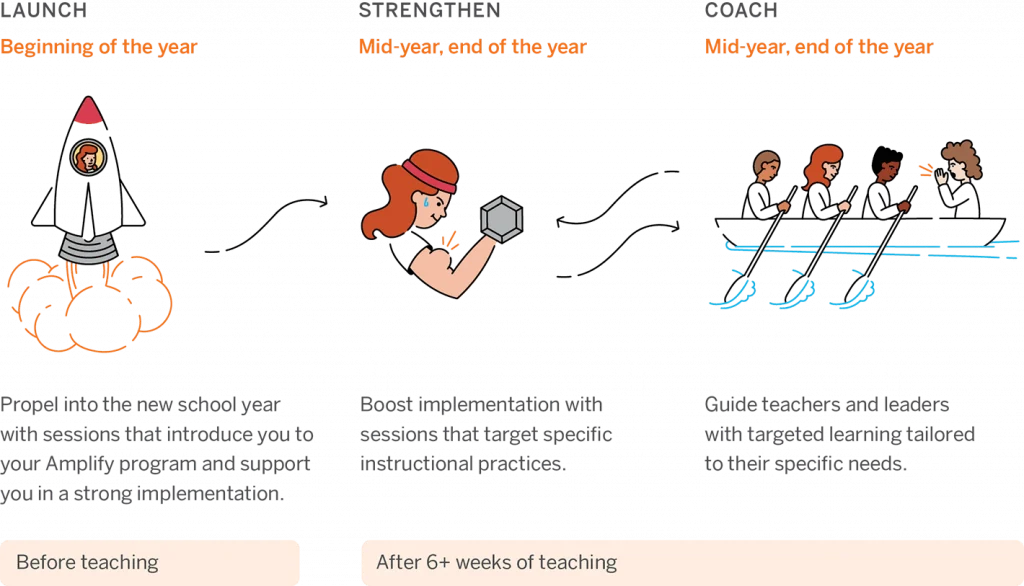
Recommended Professional Development Plan
Our team has curated a recommended professional learning path from initial launch to continuous support. Use the Professional Development Planning Guide below to discuss the plan that best meets your school or district needs with your Account Executive.
Sessions overview
| Audience | Title | Duration | Modality | Available |
|---|---|---|---|---|
| Foundations | ||||
| K–5 instructional leaders | Administrators’ program overview | Half day | Onsite/Remote | 6/2022 |
| Administrators’ program overview for interactive classroom | Half day | Onsite/Remote | 6/2022 | |
| K–5 teachers | Initial training | 1 day onsite or 2 half days remote | Onsite/Remote | Yes* |
| Program overview | Half day | Onsite/Remote | Yes | |
| Initial training for Interactive Classroom | 1 day onsite or 2 half days remote | Onsite/Remote | 6/2022 | |
| Program overview for Interactive Classroom | Half day | Onsite/Remote | Yes | |
| 6–8 instructional leaders | Administrators’ program overview | Half day | Onsite/Remote | Yes |
| 6–8 teachers | Initial training | 1 day onsite or 2 half days remote | Onsite/Remote | 6/2022 |
| Program overview | Half day | Onsite/Remote | Yes | |
| Strengthening | ||||
| K–5 instructional leaders | Strengthening consultation session | 60 min. | Remote | 6/2022 |
| Strengthening consultation package | 3 1-hour sessions | Remote | 6/2022 | |
| K–5 teachers | Guided unit internalization | Half day | Onsite/Remote | Yes |
| Strengthening consultation session | 60 min. | Remote | 6/2022 | |
| Strengthening consultation package | 3 1-hour sessions | Remote | 6/2022 | |
| 6–8 instructional leaders | Strengthening consultation session | 60 min. | Remote | 6/2022 |
| Strengthening consultation package | 3 1-hour sessions | Remote | 6/2022 | |
| 6–8 teachers | Guided unit internalization | Half day | Onsite/Remote | Yes |
| Strengthening consultation session | 60 min. | Remote | 6/2022 | |
| Strengthening consultation package | 3 1-hour sessions | Remote | 6/2022 | |
| Coaching | ||||
| K–5 instructional leaders | Job-Embedded Coaching (JEC) | 1 day | Onsite | Yes |
| K–5 teachers | Job-Embedded Coaching (JEC) | 1 day | Onsite/Remote | Yes |
| 6–8 instructional leaders | Job-Embedded Coaching (JEC) | 1 day | Onsite | Yes |
| 6–8 teachers | Job-Embedded Coaching (JEC) | 1 day | Onsite/Remote | Yes |
Note for all workshops: Any single three-hour offering can be repeated on the same day with different audiences to make one full-day session.
*When delivered remotely, this full-day initial training session (6 hours) is split into two half-day sessions (3 hours each). Part 1 and Part 2 may be scheduled consecutively on the same day or on different days, ideally within ~2 weeks. The same participants should attend both sessions in order to receive all content. This flexible scheduling opportunity for remote sessions will be available starting 6/2022.
Launch sessions
For teachers
Initial training
1 day onsite (6 hours) or 2 half days remote (6 hours)*
Grade band: K–5 / 6–8
Grade level: K, 1, 2, 3, 4, 5, 6, 7, 8
In the first half of this session, participants learn the essentials necessary to implement Amplify Science with success. They learn to navigate the digital Amplify Science platform and become familiar with planning resources and strategies. Through a model lesson and guided reflection, participants build an understanding of the instructional approach to teaching and learning. In the second half of this session, participants dig deeper into unit resources to start planning for instruction for their first grade-level unit.
When delivered as a grade band session, Part 1 will feature an exemplar from the following units:
- K–5 workshops feature an exemplar from the grade 4 unit Energy Conversions.
- 6–8 workshops feature an exemplar from the Metabolism Core unit.
When delivered as a grade level session, Part 1 features the following units:
- K: Needs of Plants and Animals
- 1: Animal and Plant Defenses
- 2: Plant and Animal Relationships
- 3: Balancing Forces
- 4: Energy Conversions
- 5: Patterns of Earth and Sky
6–8 workshops feature one of the following units:
- Metabolism
- Ocean, Atmosphere, and Climate
- Phase Change
Available starting 6/2022.
Audience: Teachers (administrators welcome), maximum 30 participants
Modality: Onsite/Remote
*When delivered remotely, this full-day initial training session (6 hours) is split into two half-day sessions (3 hours each). Part 1 and Part 2 may be scheduled consecutively on the same day or on different days, ideally within two weeks. The same participants should attend both sessions in order to receive all content. This flexible scheduling opportunity for remote sessions will be available starting 6/2022.
Initial training for Interactive Classroom
1 day onsite (6 hours) or 2 half days remote (6 hours)*
Grade band: K–5
Grade level: K, 1, 2, 3, 4, 5, 6, 7, 8
In the first half of this session, participants learn to navigate with Amplify Science Interactive Classroom and prepare to start teaching. The session opens with a model lesson that introduces the functionality of the Interactive Classroom interface and highlights the Amplify Science instructional approach. Next, participants experience a guided navigation walkthrough that prepares them to use the full suite of Interactive Classroom features with their students. The session closes with time to reflect on implementation and a walkthrough of additional resources available to support further professional learning. In the second half of this session, participants dig deeper into unit resources to start planning for instruction for their first grade-level unit.
When delivered as a grade band session, Part 1 will feature an exemplar from the grade 4 unit Energy Conversions.
When delivered as a grade level session, Part 1 features the following units:
- K: Needs of Plants and Animals
- 1: Animal and Plant Defenses
- 2: Plant and Animal Relationships
- 3: Balancing Forces
- 4: Energy Conversions
- 5: Patterns of Earth and Sky
Audience: Teachers (administrators welcome), maximum 30 participants
Modality: Onsite/Remote
*When delivered remotely, this full-day initial training session (6 hours) is split into two half-day sessions (3 hours each). Part 1 and Part 2 may be scheduled consecutively on the same day or on different days, ideally within two weeks. The same participants should attend both sessions in order to receive all content. This flexible scheduling opportunity for remote sessions will be available starting 6/2022.
Program overview
Half day (3 hours)
Grade band: K–5 / 6–8
Grade level: 6, 7, 8
In this session, participants learn the essentials necessary to implement Amplify Science with success. They learn to navigate the digital Amplify Science platform and become familiar with planning resources and strategies. Through a model lesson and guided reflection, participants build an understanding of the instructional approach to teaching and learning.
When delivered as a grade band session, an exemplar will be featured from the following units:
- K–5 workshops feature an exemplar from the grade 4 unit Energy Conversions.
- 6–8 workshops feature an exemplar from Metabolism.
When delivered as a grade level session, the following units will be featured:
- K: Needs of Plants and Animals
- 1: Animal and Plant Defenses
- 2: Plant and Animal Relationships
- 3: Balancing Forces
- 4: Energy Conversions
- 5: Patterns of Earth and Sky
6–8 workshops feature one of the following units:
- Metabolism
- Ocean, Atmosphere, and Climate
- Phase Change
Audience: Teachers (administrators welcome), maximum 30 participants
Modality: Onsite/Remote
Program overview for Interactive Classroom
Half day (3 hours)
Grand band: K–5
Grade level: K, 1, 2, 3, 4, 5
In this session, participants learn to navigate with Amplify Science Interactive Classroom and prepare to start teaching. The session opens with a model lesson that introduces the functionality of the Interactive Classroom interface and highlights the Amplify Science instructional approach. Next, participants experience a guided navigation walkthrough that prepares them to use the full suite of Interactive Classroom features with their students. The session closes with time to reflect on implementation and a walkthrough of additional resources available to support further professional learning.
When delivered as a grade band session, the workshop features an exemplar from the Grade 4 unit Energy Conversions.
When delivered as a grade level session, the workshop features the following units:
- K: Needs of Plants and Animals
- 1: Animal and Plant Defenses
- 2: Plant and Animal Relationships
- 3: Balancing Forces
- 4: Energy Conversions
- 5: Patterns of Earth and Sky
Audience: Teachers (administrators welcome), maximum 30 participants
Modality: Onsite/Remote
For instructional leaders
Administrators’ program overview
Half day (3 hours)
Grade band: K–5 / 6–8
In this session, instructional leaders become familiar with the principles of phenomenon-based teaching and learning, and experience the instructional approach of Amplify Science units. Leaders consider their essential role supporting teachers and students with the implementation of a new science curriculum.
Available starting 6/2022.
Audience: Administrators, department chairs, coaches, maximum 30 participants
Modality: Onsite/Remote
Administrators’ program overview for Interactive Classroom
Half day (3 hours)
Grade band: K-5
In this session, instructional leaders become familiar with the functionality of Amplify Science with Interactive Classroom and are introduced to the instructional approach of Amplify Science units. Leaders consider their essential role supporting teachers and students with the implementation of a new science curriculum.
Available starting 6/2022.
Audience: Administrators, department chairs, coaches, maximum 30 participants
Modality: Onsite/Remote
Strengthening sessions
For teachers
Guided unit internalization
Half day (3 hours)
Grade band: K–5 / 6–8
Grade level: K, 1, 2, 3, 4, 5, 6, 7, 8
Prerequisite: Initial training or program overview
In this session, participants leverage a planning protocol to internalize an upcoming unit. They apply their understanding of how students engage in three-dimensional learning throughout the unit to plan for the diverse needs of their classrooms and students.
Audience: Teachers (administrators welcome), maximum 30 participants
Modality: Onsite/Remote
Strengthening consultation session
60-minute session
Grade band: K–5 / 6–8
Grade level: K, 1, 2, 3, 4, 5, 6, 7, 8
Prerequisite: Initial training or program overview
This 60-minute session focuses on a specific topic that will deepen teachers understanding of Amplify Science. An Amplify facilitator will align with the school or district leadership team in advance on the topic (chosen from a menu of options) that will best meet teachers unique options.
Topics include supporting diverse learners (for K–8 teachers), Classwork/My Work/Assign/Reporting (for 6–8 teachers), and planning an Amplify Science lesson (for K–8 teachers).
Available starting 6/2022.
Audience: Teachers, maximum 30 participants
Modality: Remote
Strengthening consultation package
3 1-hour sessions
Grade band: K–5 / 6–8
Grade level: K, 1, 2, 3, 4, 5, 6, 7, 8
Prerequisite: Initial training or program overview
This package consists of three 60-minute sessions that can be delivered on the same day or on different days. Each session will focus on a specific topic that will deepen teachers understanding of Amplify Science. An Amplify facilitator will align with the school or district’s leadership team in advance on the topic from a menu of options that will best meet teachers unique needs.
Available starting 6/2022.
Audience: Teachers, maximum 30 participants
Modality: Remote
For instructional leaders
Strengthening consultation session
60-minute session
Grade band: K–5 / 6–8
Grade level: K, 1, 2, 3, 4, 5, 6, 7, 8
Prerequisite: Administrators’ program overview
These 60 minute sessions will focus on a specific topic that will deepen instructional leaders’ understanding in Amplify Science and equip them in driving towards stronger student outcomes. An Amplify facilitator will align with the school or district’s leadership team in advance on the topic from a menu of options that will best meet instructional leaders’ unique needs.
Topics include data analysis with Admin Reports (for 6-8 leaders), and Amplify Science classroom look-fors (for K-8 leaders).
Available starting 6/2022.
Audience: Administrators, department chairs, coaches, maximum 30 participants
Modality: Remote
Strengthening consultation package
3 1-hour sessions
Grade band: K–5 / 6–8
Prerequisite: Administrators’ program overview
This package consists of three 60-minute sessions that can be delivered on the same day or on different days. Each session will focus on a specific topic that will deepen leaders’ understanding of Amplify Science. An Amplify facilitator will align with the school or district’s leadership team in advance on the topic from a menu of options that will best meet leaders’ unique needs.
Available starting 6/2022.
Audience: Administrators, department chairs, coaches, maximum 30 participants
Modality: Remote
Coaching sessions
For teachers
Job-Embedded Coaching (JEC) services: Teachers
1 day (6 hours)
Grade band: K–5 / 6–8
Grade level: K, 1, 2, 3, 4, 5, 6, 7, 8
Prerequisite: Initial training or program overview
Strengthen your implementation of Amplify Science with a coaching onsite visit for your teachers. An Amplify Science Professional Learning Specialist can visit classrooms for observation and debriefs with focused feedback and/or facilitate PLC or grade-level meetings to support teachers with planning decisions. The flexible coaching design allows for a collaborative and personalized approach to support effective program implementation.
Audience: Teachers, maximum 30 participants
Modality: Onsite/Remote
For instructional leaders
Job-Embedded Coaching (JEC): Administrators
1 day (6 hours)
Grade band: K–5 / 6–8
Prerequisite: Administrators’ program overview
In our Coaching sessions, instructional leaders engage in facilitated Professional Learning Walks (PLW)—non-evaluative classroom observations of Amplify Science classrooms that focus on building capacity to identify indicators of strong implementation of the program. Classroom look-fors focus on the use of instructional resources (material access/use and the Classroom Wall), instructional delivery (unpacking the unit phenomena and multimodal instruction), and monitoring of instruction (supporting all learners and use of the Assessment System). Leaders collaboratively analyze collected data in order to identify strengths and areas for growth specific to the implementation of Amplify Science for their teaching teams. Leaders leave with an action plan for supporting their teachers based on the analysis and reflection from the PLW.
Audience: Administrators, department chairs, coaches, maximum 30 participants
Modality: Onsite
Pricing
We offer the following pricing for training sessions and packages:
| Session type | Pricing |
|---|---|
| 2 consecutive full day onsite sessions | $4,800 |
| 1-day onsite session | $3,200 |
| 1-day remote session (2 half days) | $1,500 |
| 1-day remote coaching session | $1,200 |
| Half-day onsite session | $2,500 |
| Half-day remote session | $750 |
| 60-minute remote session | $350 |
| 3 1-hour remote sessions | $1,000 |
| Customized Amplify Science onsite or remote packages | Price will vary |
Please note that the prices are general ranges and may be subject to change.
Contact
Amplify welcomes the opportunity to partner with schools and districts to design professional development plans and answer your questions.
If you would like to order any of our professional development services, please contact your local Amplify sales representative or call (800) 823-1969.
Plan your professional development
We’re excited to partner with you on your Amplify journey. Flexible professional development pathways have been designed to meet your needs.

Recommended Professional Development Plan
Our team has curated a recommended professional learning path from initial launch to continuous support. Use the Professional Development Planning Guide below to discuss the plan that best meets your school or district needs with your Account Executive.
mCLASS with DIBELS 8th Edition sessions overview
| Audience | Title | Duration | Modality |
|---|---|---|---|
| Launch | |||
| New mCLASS with DIBELS 8th Edition customers with limited time for PD | mCLASS with DIBELS 8th Edition program overview | Half day | Onsite/Remote |
| New mCLASS with DIBELS 8th Edition customers | Initial training | 1 day onsite or 2 half days remote | Onsite/Remote |
| Initial training: Train the Trainer | 1 day onsite or 2 half days remote | Onsite/Remote | |
| Initial training | Self-paced | Online course | |
| Strengthen | |||
| mCLASS with DIBELS 8th Edition customers with limited time for PD | Understanding your classroom data | Half day | Onsite/Remote |
| All mCLASS with DIBELS 8th Edition customers | Classroom data analysis and instructional planning | 1 day onsite or 2 half days remote | Onsite/Remote |
| Classroom data analysis and instructional planning: Train the Trainer | 1 day onsite or 2 half days remote | Onsite/Remote | |
| Classroom data analysis and instructional planning | Self-paced | Online course | |
| All mCLASS with DIBELS 8th Edition customers | Understanding your school or district data | Half day | Onsite/Remote |
| Data-driven leadership practices | 1 day onsite or 2 half days remote | Onsite/Remote | |
| Data-driven leadership practices: Train the Trainer | 1 day onsite or 2 half days remote | Onsite/Remote | |
| Data-driven leadership practices | Self-paced | Online course | |
| Strengthening consultation session | 60 min. | Remote | |
| Strengthening consultation session package | 3 60-min. sessions | Remote | |
| Coach | |||
| All mCLASS with DIBELS 8th Edition customers | Coaching session | 1 day | Onsite |
| Coaching session | Half day | Onsite/Remote | |
| Building readers | |||
| All mCLASS with DIBELS 8th Edition customers | Building readers for leaders | 2 half days | Onsite/Remote |
| Building readers for teachers | 3 half days | Onsite/Remote | |
Launch
mCLASS with DIBELS 8th edition program overview
Half day (3 hours)
This PD prepares participants to implement the assessment and collect reliable data using standardized guidelines.
Audience: Teachers (administrators welcome), maximum 30 participants
Modality: Onsite/Remote
Initial training
1 day onsite (6 hours) or 2 half days remote (6 hours)
This PD prepares participants to implement the assessment, collect reliable data using standardized guidelines, and use the targeted lessons available on mCLASS to drive differentiated instruction.
Audience: Teachers (administrators welcome), maximum 30 participants
Modality: Onsite/Remote
Initial training: Train the Trainer
1 day onsite (6 hours) or 2 half days remote (6 hours)
This PD prepares participants to implement the assessment, collect reliable data using standardized guidelines, and use the targeted lessons available on mCLASS to drive differentiated instruction. Participants receive annotated session materials to turnkey the session to colleagues.
Audience: Teachers (administrators welcome), maximum 30 participants
Modality: Onsite/Remote
Initial training
Self-paced
This PD is an individual seat to our self-paced, on-demand online course that contains approximately 6 hours of training. Participants will learn how to implement the assessment, collect reliable data using standardized guidelines, and use the targeted lessons available on mCLASS to drive differentiated instruction. Participants will access and revisit the course anytime for up to one year as a refresher.
Audience: Teachers (administrators welcome)
Modality: Online
Strengthen
Understanding your classroom data
Half day (3 hours)
This PD prepares participants to understand their students’ data by utilizing the reports available on mCLASS. This session should be scheduled after the most recent benchmark window has closed so that participants can work with their own data.
Audience: Teachers (administrators welcome), maximum 30 participants
Modality: Onsite/Remote
Classroom data analysis and instructional planning
1 day onsite (6 hours) or 2 half days remote (6 hours)
This PD prepares participants to deeply understand their students’ data and create actionable instructional plans by utilizing the reports and skills-focused lesson plans available on mCLASS.
Audience: Teachers (administrators welcome), maximum 30 participants
Modality: Onsite/Remote
*This session should be scheduled after the most recent benchmark window has closed so that participants can work with their own data.
Classroom data analysis and instructional planning: Train the Trainer
1 day onsite (6 hours) or 2 half days remote (6 hours)
This PD prepares participants to deeply understand their students’ data and create actionable instructional plans by utilizing the reports and skills-focused lesson plans available on mCLASS. Participants receive annotated session materials to turnkey the session to colleagues.
Audience: Teachers (administrators welcome), maximum 30 participants
Modality: Onsite/Remote
*This session should be scheduled after the most recent benchmark window has closed so that participants can work with their own data.
Classroom data analysis and instructional planning
Online course (self-paced)
This PD is an individual seat to our self-paced, on-demand online course that contains approximately 6 hours of training. Participants will learn how to deeply understand their students’ data and create actionable instructional plans by utilizing the reports and skills-focused lesson plans available on mCLASS. Participants will access and revisit the course anytime for up to one year as a refresher.
Audience: Teachers (administrators welcome)
Modality: Online
Understanding your school or district data
Half day (3 hours)
This PD prepares participants to use their data in making schoolwide decisions. This session should be scheduled after the most recent benchmark window has closed so that participants can work with their own data.
Audience: Administrators, maximum 30 participants
Modality: Onsite/Remote
Data-driven leadership practices
1 day onsite (6 hours) or 2 half days remote (6 hours)
This PD prepares participants to use their data in making school-wide decisions and build a schoolwide culture of data-driven instruction. This session should be scheduled after the most recent benchmark window has closed so that participants can work with their own data.
Audience: Administrators, maximum 30 participants
Modality: Onsite/Remote
Data-driven leadership practices: Train the Trainer
1 day onsite (6 hours) or 2 half days remote (6 hours)
This PD prepares participants to use their data in making school-wide decisions and build a schoolwide culture of data-driven instruction. This session should be scheduled after the most recent benchmark window has closed so that participants can work with their own data. Participants receive annotated session materials to turnkey the session to colleagues.
Audience: Administrators, maximum 30 participants
Modality: Onsite/Remote
Data-driven leadership practices
Online course (self-paced)
This PD is an individual seat to our self-paced, on-demand online course that contains approximately 6 hours of training. Participants will learn how to use their data in making school-wide decisions and build a schoolwide culture of data-driven instruction. Participants will access and revisit the course anytime for up to one year as a refresher.
Audience: Administrators
Modality: Online
Strengthening consultation session
(60-min.)
This 60-minute session will focus on a specific topic that will deepen educators’ understanding of mCLASS and equip them with the tools needed to drive stronger student outcomes. An Amplify facilitator will align with the school or district leadership team in advance of the session on the topic (chosen from a menu of options) that will best meet educators’ unique needs.
Topics include:
- Progress Monitoring
- Zones of Growth
- Data Walkthrough for Leaders
Audience: Teachers and/or administrators, maximum 30 participants
Modality: Remote
Strengthening consultation session package
(3 hours)
This package consists of three 60-minute sessions that can be delivered on the same day or on different days. Each session will focus on a specific topic that will deepen educators’ understanding of mCLASS and equip them in driving towards stronger student outcomes. An Amplify facilitator will align with the school or district’s leadership team in advance on the topics that will best meet educators’ unique needs.
Topics include:
- Progress Monitoring
- Zones of Growth
- Data Walkthrough for Leaders
Audience: Teachers and/or administrators, maximum 30 participants
Modality: Remote
Coach
Coaching session
1 day (6 hours)
This PD will deepen educators’ understanding of how to utilize mCLASS in order to accelerate data-driven student outcomes. An Amplify facilitator will visit one or two school sites for one day and work with teachers and/or leaders. Prior to the visit, the Amplify facilitator will align with each school’s leadership team on their needs and customize the visit schedule accordingly.
Audience: Teachers and/or administrators, maximum 30 participants
Modality: Onsite
Coaching session
Half day (3 hours)
This PD is up to 3 hours of training and will deepen educators’ understanding of how to utilize mCLASS in order to accelerate data-driven student outcomes. An Amplify facilitator will visit one school site for a half-day and work with teachers and/or leaders. Prior to the visit, the Amplify facilitator will align with each school’s leadership team on their needs and customize the visit schedule accordingly.
Audience: Teachers and/or administrators, maximum 30 participants
Modality: Onsite/Remote
Building readers
Building readers for leaders
2 half days (6 hours)
This training session is split into 2 half-day sessions (3 hours each). The same participants should attend both sessions in order to receive all content, which includes learning the Science of Reading and how to align this theory with schoolwide instruction. Part 2 should be scheduled two to three weeks after Part 1.
Audience: Administrators, maximum 30 participants
Modality: Onsite
Building readers for teachers
3 half days (9 hours)
This training series is split into three half-day sessions (3 hours each). The same participants should attend all sessions in order to receive all content, which includes learning the Science of Reading and how to align this theory with classroom instruction. Part 2 should be scheduled two to three weeks after Part 1, and Part 3 should be scheduled two to three weeks after Part 2.
Audience: Teachers (administrators welcome), maximum 30 participants
Modality: Onsite/Remote
mCLASS with DIBELS 8th Edition and TRC sessions overview
| Audience | Title | Duration | Modality |
|---|---|---|---|
| Launch | |||
| New mCLASS with DIBELS 8th Edition and TRC customers | Initial training | 1 day onsite or 2 half days remote | Onsite/Remote |
| Initial training: Train the Trainer | 1 day onsite or 2 half days remote | Onsite/Remote | |
| Initial training | Self-paced | Online course | |
| Strengthen | |||
| All mCLASS with DIBELS 8th Edition and TRC customers | Classroom data analysis and instructional planning | 1 day onsite or 2 half days remote | Onsite/Remote |
| Data-driven leadership practices | 1 day onsite or 2 half days remote | Onsite/Remote | |
| Coach | |||
| All mCLASS with DIBELS 8th Edition and TRC customers | Coaching session | 1 day | Onsite |
| Coaching session | Half day | Onsite/Remote | |
Launch
Initial training
1 day onsite (6 hours) or 2 half days remote (6 hours)
This PD prepares participants to implement the assessment, collect reliable data using standardized guidelines, and use the targeted lessons available on mCLASS to drive differentiated instruction.
Audience: Teachers (administrators welcome), maximum 30 participants
Modality: Onsite/Remote
Initial training: Train the Trainer
1 day onsite (6 hours) or 2 half days remote (6 hours)
This PD prepares participants to implement the assessment, collect reliable data using standardized guidelines, and use the targeted lessons available on mCLASS to drive differentiated instruction. Participants receive annotated session materials to turnkey the session to colleagues.
Audience: Teachers (administrators welcome), maximum 30 participants
Modality: Onsite/Remote
Initial training
Self-paced
This PD is an individual seat to our self-paced, on-demand online course that contains approximately 6 hours of training. Participants will learn how to implement the assessment, and collect reliable data using standardized guidelines and use the targeted lessons available on mCLASS to drive differentiated instruction. Participants will access and revisit the course anytime for up to one year as a refresher.
Audience: Teachers (administrators welcome)
Modality: Online
Strengthen
Classroom data analysis and instructional planning
1 day onsite (6 hours) or 2 half days remote (6 hours)
This PD prepares participants to deeply understand their students’ data and create actionable instructional plans by utilizing the reports and skills-focused lesson plans available on mCLASS.
Audience: Teachers (administrators welcome), maximum 30 participants
Modality: Onsite/Remote
*This session should be scheduled after the most recent benchmark window has closed so that participants can work with their own data.
Data-driven leadership practices
1 day onsite (6 hours) or 2 half days remote (6 hours)
This PD prepares participants to use their data in making schoolwide decisions and build a schoolwide culture of data-driven instruction. This session should be scheduled after the most recent benchmark window has closed so that participants can work with their own data.
Audience: Administrators, maximum 30 participants
Modality: Onsite/Remote
Coach
Coaching session
1 day onsite (6 hours)
This PD will deepen educators’ understanding of how to utilize mCLASS in order to accelerate data-driven student outcomes. An Amplify facilitator will visit one or two school sites for one day and work with teachers and/or leaders. Prior to the visit, the Amplify facilitator will align with each school’s leadership team on their needs and customize the visit schedule accordingly.
Audience: Teachers and/or administrators, maximum 30 participants
Modality: Onsite/Remote
Coaching session
Half day (3 hours)
This PD is up to 3 hours of training and will deepen educators’ understanding of how to utilize mCLASS in order to accelerate data-driven student outcomes. An Amplify facilitator will visit one school site for a half-day and work with teachers and/or leaders. Prior to the visit, the Amplify facilitator will align with each school’s leadership team on their needs and customize the visit schedule accordingly.
Audience: Teachers and/or administrators, maximum 30 participants
Modality: Onsite/Remote
mCLASS Lectura sessions overview
| Audience | Title | Duration | Modality |
|---|---|---|---|
| Launch | |||
| New mCLASS Lectura Customers with limited time for PD | mCLASS Lectura program overview | Half day | Onsite/Remote |
| New mCLASS Lectura customers | mCLASS Lectura initial training | 1 day onsite or 2 half days remote | Onsite/Remote |
| mCLASS Lectura initial training: Train the Trainer | 1 day onsite or 2 half days remote | Onsite/Remote | |
| mCLASS Lectura Initial training | Self-paced | Online course | |
| Strengthen | |||
| All mCLASS Lectura customers with limited time for PD | Understanding your classroom data | Half day | Onsite/Remote |
| All mCLASS Lectura customers | Classroom data analysis and instructional planning | 1 day onsite or 2 half days remote | Onsite/Remote |
| Classroom data analysis and instructional planning: Train the Trainer | 1 day onsite or 2 half days remote | Onsite/Remote | |
| Understanding your school or district data | Half day | Onsite/Remote | |
| Data-driven leadership practices | 1 day onsite or 2 half days remote | Onsite/Remote | |
| Data-driven leadership practices: Train the Trainer | 1 day onsite or 2 half days remote | Onsite/Remote | |
| Strengthening consultation session | 60 min. | Remote | |
| Coach | |||
| All mCLASS Lectura customers | Coaching session | 1day | Onsite |
| Coaching session | Half day | Onsite/Remote | |
Launch
mCLASS Lectura program overview
Half day (3 hours)
This PD prepares participants to implement the assessment and collect reliable data using standardized guidelines.
Audience: Teachers (administrators welcome), maximum 30 participants
Modality: Onsite/Remote
mCLASS Lectura initial training
1 day onsite (6 hours) or 2 half days remote (6 hours)
This PD prepares participants to implement the assessment, collect reliable data using standardized guidelines, and use the targeted lessons available on mCLASS to drive differentiated instruction. While the assessment must be administered in Spanish, English-speaking educators educators who would like to learn about the program but will not be administering the assessment may attend.
Audience: Teachers (administrators welcome), maximum 30 participants
Modality: Onsite/Remote
mCLASS Lectura initial training: Train the Trainer
1 day onsite (6 hours) or 2 half days remote (6 hours)
This PD prepares participants to implement the assessment and collect reliable data using standardized guidelines. While the assessment must be administered in Spanish, English-only speaking educators who would like to learn about the program but will not be administering the assessment may attend. Participants receive annotated session materials to turnkey the session to colleagues.
Audience: Teachers (administrators welcome), maximum 30 participants
Modality: Onsite/Remote
mCLASS Lectura initial training
Online course (self-paced)
This PD is an individual seat to our self-paced, on-demand online course that contains approximately 6 hours of training. Participants will learn how to implement the assessment, collect reliable data using standardized guidelines, and use the targeted lessons available on mCLASS to drive differentiated instruction. Participants will access and revisit the course anytime for up to one year as a refresher.
Audience: Teachers (administrators welcome)
Modality: Online
Strengthen
Understanding your classroom data
Half day (3 hours)
This PD prepares participants to understand their students’ data by utilizing the reports available on mCLASS. This session should be scheduled after the most recent benchmark window has closed so that participants can work with their own data.
Audience: Teachers (administrators welcome), maximum 30 participants
Modality: Onsite/Remote
Classroom data analysis and instructional planning
1 day onsite (6 hours) or 2 half days remote (6 hours)
This PD prepares participants to deeply understand their students’ data and create actionable instructional plans by utilizing the reports and skills-focused lesson plans available on mCLASS.
Audience: Teachers (administrators welcome), maximum 30 participants
Modality: Onsite/Remote
*This session should be scheduled after the most recent benchmark window has closed so that participants can work with their own data.
Classroom data analysis and instructional planning: Train the Trainer
1 day onsite (6 hours) or 2 half days remote (6 hours)
This PD prepares participants to deeply understand their students’ data and create actionable instructional plans by utilizing the reports and skills-focused lesson plans available on mCLASS. Participants receive annotated session materials to turnkey the session to colleagues.
Audience: Teachers (administrators welcome), maximum 30 participants
Modality: Onsite/Remote
*This session should be scheduled after the most recent benchmark window has closed so that participants can work with their own data.
Understanding your school or district data
Half day (3 hours)
This PD prepares participants to use their data in making schoolwide decisions. This session should be scheduled after the most recent benchmark window has closed so that participants can work with their own data.
Audience: Administrators, maximum 30 participants
Modality: Onsite/Remote
Data-driven leadership practices
1 day onsite (6 hours) or 2 half days remote (6 hours)
This PD prepares participants to use their data in making school-wide decisions and build a schoolwide culture of data-driven instruction. This session should be scheduled after the most recent benchmark window has closed so that participants can work with their own data.
Audience: Administrators, maximum 30 participants
Modality: Onsite/Remote
Data-driven leadership practices: Train the Trainer
1 day onsite (6 hours) or 2 half days remote (6 hours)
This PD prepares participants to use their data in making schoolwide decisions and build a schoolwide culture of data-driven instruction. This session should be scheduled after the most recent benchmark window has closed so that participants can work with their own data. Participants receive annotated session materials to turnkey the session to colleagues.
Audience: Administrators, maximum 30 participants
Modality: Onsite/Remote
Strengthening consultation session package
(3 hours)
This package consists of three 60-minute sessions that can be delivered on the same day or on different days. Each session will focus on a specific topic that will deepen educators’ understanding of mCLASS and equip them with the tools needed to drive stronger student outcomes. An Amplify facilitator will align with the school or district leadership team in advance of the session on the topic (chosen from a menu of options) that will best meet educators’ unique needs. Topics include progress monitoring, goal setting, and a data walkthrough for leaders.
Audience: Teachers (administrators welcome), maximum 30 participants
Modality: Remote
Coach
Coaching session
1 day (6 hours)
This PD will deepen educators’ understanding of how to utilize mCLASS in order to accelerate data-driven student outcomes. An Amplify facilitator will visit 1–2 school sites for one day and work with teachers and/or leaders. Prior to the visit, the Amplify facilitator will align with each school’s leadership team on their needs and customize the visit schedule accordingly.
Audience: Teachers and/or administrators, maximum 30 participants
Modality: Onsite
Coaching session
Half day (3 hours)
This PD is up to 3 hours of training and will deepen educators’ understanding of how to utilize mCLASS in order to accelerate data-driven student outcomes. An Amplify facilitator will visit 1 school site for a half-day and work with teachers and/or leaders. Prior to the visit, the Amplify facilitator will align with each school’s leadership team on their needs and customize the visit schedule accordingly.
Audience: Teachers and/or administrators, maximum 30 participants
Modality: Onsite/Remote
| Launch | Strengthen | Ongoing | |
|---|---|---|---|
| BOY | After BOY or MOY | After BOY or MOY | |
| New customers | Program overview | Understanding your classroom data | Coaching session |
| Initial training | Understanding your school or district data | Building readers for teachers | |
| Strengthening consultation session/package | Building readers for leaders | ||
| Returning customers | Coaching session (refresher content) | Classroom data analysis and instructional planning | Coaching session |
| Data-driven leadership practices | Building readers for teachers | ||
| Strengthening consultation session/package | Building readers for leaders | ||
| *Note: If you are currently delivering instruction in a hybrid or remote model, we recommend that all of the sessions above be delivered remotely. | |||
mCLASS Express sessions overview
| Title | Duration | Modality |
|---|---|---|
| Launch | ||
| Initial training | Half day | Onsite/Remote |
| Initial training | Self-paced | Online course |
Launch
Initial training
Half day (3 hours)
Take the first step in launching mCLASS Express! The half-day initial training will help educators understand how mCLASS Express’ voice-recognition scoring generates immediate instructional recommendations for students reading below grade level. Educators will also learn how to utilize the teacher portal to assign assessments, review and correct scoring, track student growth over time, and leverage the program’s activities to create an action plan for a single classroom or across classes/grades.
Audience: Teachers (administrators welcome), maximum 30 participants
Modality: Onsite/Remote
Initial training
Self-paced (2 hours)
Take the first step in launching mCLASS Express! The two-hour initial training will help educators understand how mCLASS Express’ voice-recognition scoring generates immediate instructional recommendations for students reading below grade level. Educators will also learn how to utilize the teacher portal to assign assessments, review and correct scoring, track student growth over time, and leverage the program’s activities to create an action plan for a single classroom or across classes/grades.
As this is a self-paced, on-demand online course, participants will be able to access the course anytime, move as quickly or slowly as needed through different sections, and revisit the course up to one year as a refresher in the future.
Audience: Teachers (administrators welcome), maximum 30 participants
Modality: Online
mCLASS: IDEL sessions overview
| Title | Duration | Modality |
|---|---|---|
| Launch | ||
| mCLASS IDEL program overview | Half day | Onsite/Remote |
| Initial training | 1 day | Onsite/Remote |
| Initial training: Train the Trainer | 1 day | Onsite/Remote |
| Initial training | Self-paced | Online course |
Launch
mCLASS IDEL program overview
Half day (3 hours)
This PD prepares participants to implement the assessment and collect reliable data using standardized guidelines.
Audience: Teachers (administrators welcome), maximum 30 participants
Modality: Onsite/Remote
Initial training
1 day onsite (6 hours) or 2 half days remote (6 hours)
Prepare to implement your mCLASS:IDEL assessment with fidelity! Learn about the five basic early literacy skills that are crucial for reading development, and understand how they are assessed on the mCLASS:IDEL assessment. Then, practice administering and scoring each assessment measure and receive targeted feedback from a facilitator. Upon completion of this session, participants will be on their way to collecting reliable data to support all students.
Audience: Teachers and/or administrators, maximum 30 participants
Modality: Onsite/Remote
Initial training: Train the Trainer
1 day onsite (6 hours) or 2 half days remote (6 hours)
Prepare to implement your mCLASS:IDEL assessment with fidelity! Learn about the five basic early literacy skills that are crucial for reading development, and understand how they are assessed on the mCLASS:IDEL assessment. Then, practice administering and scoring each assessment measure and compare your responses to exemplars. As this is a Train the Trainer session, participants will receive annotated session materials in order to turnkey the session to colleagues.
Audience: Teachers and/or administrators, maximum 30 participants
Modality: Onsite/Remote
Initial training
Online course (self-paced)
This PD is an individual seat to our self-paced, on-demand online course that contains approximately 6 hours of training. Participants will learn how to implement the assessment, collect reliable data using standardized guidelines, and use the targeted lessons available on mCLASS to drive differentiated instruction. Participants will access and revisit the course anytime for up to one year as a refresher.
Audience: Teachers (administrators welcome)
Modality: Online
TRC Atlas Español
Launch
TRC Atlas Español program overview
Half day (3 hours)
This PD prepares participants to implement the assessment and collect reliable data using standardized guidelines.
Audience: Teachers (administrators welcome), maximum 30 participants
Modality: Onsite/Remote
mCLASS Math sessions overview
| Audience | Title | Duration | Modality |
|---|---|---|---|
| Launch | |||
| New mCLASS Math customers with limited time for PD | mCLASS Math program overview | Half day | Onsite/Remote |
| New mCLASS Math customers | Initial training | 1 day onsite or 2 half days remote | Onsite/Remote |
| Initial training: Train the Trainer | 1 day onsite or 2 half days remote | Onsite/Remote | |
| Strengthen | |||
| All mCLASS Math customers with limited time for PD | Understanding your classroom data | Half day | Onsite/Remote |
| All mCLASS Math customers | Classroom data analysis and instructional planning | 1 day onsite or 2 half days remote | Onsite/Remote |
| Classroom data analysis and instructional planning: Train the Trainer | 1 day onsite or 2 half days remote | Onsite/Remote | |
| Understanding your school or district data | Half day | Onsite/Remote | |
| Data-driven leadership practices | 1 day onsite or 2 half days remote | Onsite/Remote | |
| Data-driven leadership practices: Train the Trainer | 1 day onsite or 2 half days remote | Onsite/Remote | |
Launch
mCLASS Math program overview
Half day (3 hours)
This PD prepares participants to implement the assessment and collect reliable data using standardized guidelines.
Audience: Teachers (administrators welcome), maximum 30 participants
Modality: Onsite/Remote
Initial training
1 day onsite (6 hours) or 2 half days remote (6 hours)
Learn the foundational research for mCLASS Math and how it supports students’ abilities in mathematical reasoning. Understand the various assessment components and develop techniques for interviewing students and documenting their thinking. Interpret assessment results, and brainstorm suggested instructional activities. Upon completion of this session, participants will be on their way to collecting reliable data.
Audience: Teachers (administrators welcome), maximum 30 participants
Modality: Onsite/Remote
Initial training: Train the Trainer
1 day onsite (6 hours) or 2 half days remote (6 hours)
Learn the foundational research for mCLASS Math and how it supports students’ abilities in mathematical reasoning. Understand the various assessment components, and develop techniques for interviewing students and documenting their thinking. Interpret assessment results, and brainstorm suggested instructional activities. Upon completion of this session, participants will be on their way to collecting reliable data. Participants receive annotated session materials to turnkey the session to colleagues.
Audience: Teachers (administrators welcome), maximum 30 participants
Modality: Onsite/Remote
Strengthen
Understanding your classroom data
Half day (3 hours)
This PD prepares participants to understand their students’ data by utilizing the reports available on mCLASS. This session should be scheduled after the most recent benchmark window has closed so that participants can work with their own data.
Audience: Teachers (administrators welcome), maximum 30 participants
Modality: Onsite/Remote
Classroom data analysis and instructional planning
1 day onsite (6 hours) or 2 half days remote (6 hours)
This PD prepares participants to deeply understand their students’ data and create actionable instructional plans by utilizing the reports available on mCLASS.
Audience: Teachers (administrators welcome), maximum 30 participants
Modality: Onsite/Remote
*This session should be scheduled after the most recent benchmark window has closed so that participants can work with their own data.
Classroom data analysis and instructional planning: Train the Trainer
1 day Onsite (6 hours) or 2 half days Remote (6 hours)
This PD prepares participants to deeply understand their students’ data and create actionable instructional plans by utilizing the reports available on mCLASS. Participants receive annotated session materials to turnkey the session to colleagues.
Audience: Teachers (administrators welcome), maximum 30 participants
Modality: Onsite/Remote
*This session should be scheduled after the most recent benchmark window has closed so that participants can work with their own data.
Understanding your School or District Data
Half day (3 hours)
This PD prepares participants to use their data in making schoolwide decisions. This session should be scheduled after the most recent benchmark window has closed so that participants can work with their own data.
Audience: Administrators, maximum 30 participants
Modality: Onsite/Remote
Data-driven leadership practices
1 day onsite (6 hours) or 2 half days remote (6 hours)
This PD prepares participants to use their data in making schoolwide decisions and build a schoolwide culture of data-driven instruction. This session should be scheduled after the most recent benchmark window has closed so that participants can work with their own data.
Audience: Administrators, maximum 30 participants
Modality: Onsite/Remote
Data-driven leadership practice: Train the Trainer
1 day onsite (6 hours) or 2 half days remote (6 hours)
This PD prepares participants to use their data in making schoolwide decisions and build a schoolwide culture of data-driven instruction. This session should be scheduled after the most recent benchmark window has closed so that participants can work with their own data. Participants receive annotated session materials to turnkey the session to colleagues.
Audience: Administrators, maximum 30 participants
Modality: Onsite/Remote
Contact
Amplify welcomes the opportunity to partner with schools and districts to design professional development plans and answer your questions.
If you would like to order any of our professional development services, please contact your local Amplify sales representative or call (800) 823-1969.
Program overview
Boost Math is a personalized learning math instruction and practice program. The game-based experience engages all students in grade-level mathematics in ways that prepare them for success in, and build enthusiasm around, algebra and later math.
Student experience
When students click on their Curioso icon, they are taken into their quest. Quests consist of brief narrative scenes, punctuated with skill practice in the form of games. Once a student completes a scene, their very own collection of personalized skill games appears on the right side of the screen. Students can play these games in any order.
- Students in grades 1 and 2 will experience games related to comparing numbers, measuring, and more.
- Students in grades 3, 4, and 5 will experience games related to fractions, area, multiplication, and more.
- Students will also experience activities known as “Makers,” which are open-ended activities within each quest related to the quest narrative, giving students an opportunity to apply different math applications to the real world.
Note: This is an early subsection of the product. Some content may be appropriate for some students, but difficult for others. This is feedback we want to hear. The designs are also still in-progress, with many aspects yet to be featured. We welcome all suggestions!
Implementation guidelines
We recommend that students should play for a total of 60 minutes per week, broken up into 3–4, 15–20 minute sessions. Consider using Boost Math during the following times:
- Small group or centers time
- Choice time
- During intervention blocks
- After school
- At home
- Remote learning
Getting your students online
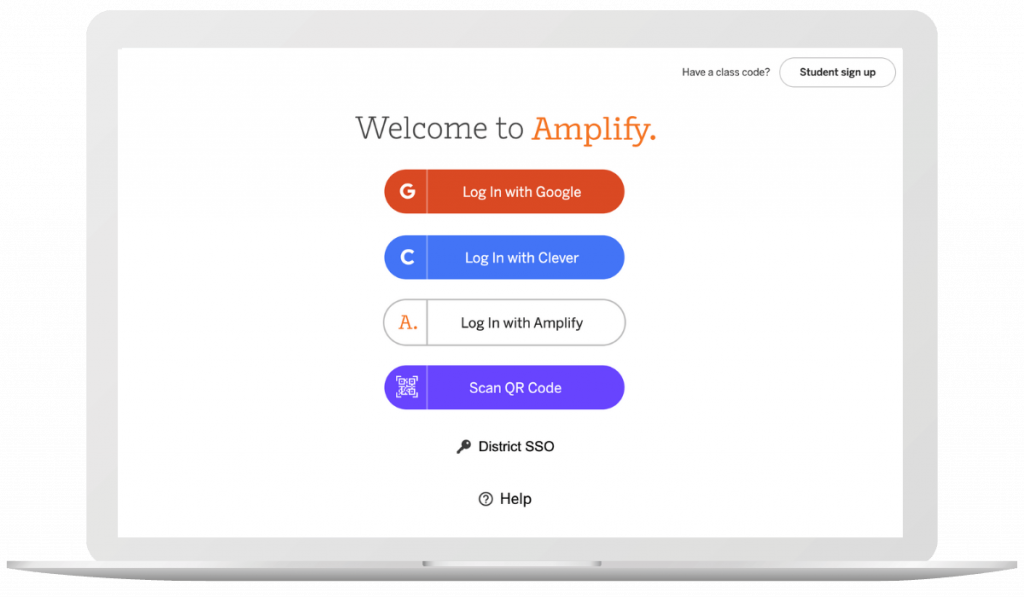
Instruct students to navigate to learning.amplify.com, and log in using the method you typically use when logging into Amplify Reading.

Find and click on the icon for Boost Math, as shown above.
Students will then see the screen showing Sequence Falls, the location in which their Boost Math journey takes place.
Troubleshooting guide
To clear your Chrome browser cache/cookies:
- On your computer, open Chrome.
- At the top right, click the three vertical dots.
- Click More Tools, Clear browsing data.
- At the top, choose a time range, select All time.
- Check the boxes next to “Cookies and other site data” and “Cached images and files.”
- Click Clear data.
- From the Safari menu at the top of the screen, select “Safari”
- Select “Preferences” from the drop-down menu
- Open the “Privacy” tab
- Select the “Manage Website Data” button
- Choose “amplify.com” from the list of sites
- Select the “Remove” button
- Select “Done”, then close the window
Please check to ensure “cookies” are accepted on your device.
If you still receive an error message or blank screen when accessing an Amplify page, please email Aya Bukres.
Please email Jehan Miah to confirm your login credentials.
To reset your Amplify password: click Login with Amplify, then click the Forgot Password link. If you do not receive an email with password reset instructions, please check your Spam folder. To ensure messages to not go to your Spam inbox, make sure to include the following addresses as trusted sources:
- do-not-reply@amplify.com
- noreply@amplify.com
- noreply@welcome.amplify.com
Students take on the role of a scientist or engineer every day.
Amplify Science is a blended curriculum developed to align with the New York City PK–8 Science Scope and Sequence that meets the New York State Science Learning Standards.
Amplify Science for grades K–8 has been rated all-green by EdReports.
Check out the New York City Resource Site for supporting resources designed for the New York City Department of Education Amplify Science adoption for grades K–8.

Begin your review
What sets Amplify Science apart?
- Aligned to the New York City PK–8 Science Scope and Sequence, and meets New York State Science Learning Standards.
- State-of-the-art, highly-engaging curriculum that invites students to take on the role of a scientist or engineer in every unit to solve relevant real-world problems.
- Flexible, truly blended program that combines comprehensive print components and compelling online content with hands-on learning in every unit.
- Robust teacher support for ease of use by a wide range of teachers in diverse classroom contexts, with carefully crafted lessons, standards alignment, differentiation strategies, and ELL supports throughout the program.
- Embedded assessments throughout the program, including both formative and summative assessments for every grade level.
- Authored by the industry-leading science curriculum team at U.C. Berkeley’s Lawrence Hall of Science, who have 50 years of experience in K–12 science education and who will continue to enhance and update the program for years to come. To learn more about how the Lawrence Hall of Science collected research, designed the curriculum, and field tested the program with teachers, download our research base document.
The Amplify Science approach
The scope and sequence of the program is designed to show that scientific concepts are interconnected and multifaceted. Each unit focuses on a specific learning goal in the form of an overarching unit question. Rather than following linear steps in an experiment, the program leaves room for students to make connections across concepts and make their own discoveries. In this way, Amplify Science replicates the realities and ambiguities of scientific research and thinking.
Each course in Amplify Science K–5 consists of 3–4 units, with each unit containing 22 lessons. Each lesson in grades K and 1 is written for a 45-minute session, while lessons in grades 2–5 are written for 60-minute sessions. Teachers can always expand or contract the timing to fit their needs.
Each course in Amplify Science 6–8 consists of 7-9 units, with each core unit containing 19 lessons, each launch unit containing 11 lessons, and each engineering internship containing 10 lessons. Each lesson in grades 6–8 is written for a 45-minute session. Teachers can always expand or contract the timing to fit their needs..
Download the K–5 unit sequence
Download the 6–8 unit sequence
Components overview
Amplify Science blends physical materials with a suite of digital tools, presenting students with the resources they need to investigate real-world problems, and empowering and supporting teachers as they lead instruction and gain insight into student growth and progress.
Grades K–5
- Student Investigation Notebooks (K–2) for every unit allow students to interact with content while taking notes, answering questions, and conducting investigations. Review a sample from the Grade 2 Plant and Animal Relationships unit.
- Student Books enhance science topics and allow students to practice reading within the science content area.
- Instructional materials for teachers. The Amplify Science curriculum website hosts all lesson content, media, digital simulations, and more, and is the primary tool “open” for teachers during class time. Print Teacher’s Guides are included. You can view complete unit samples by accessing the curriculum at the bottom of this page.
- Robust digital simulations and digital applications, developed exclusively for the Amplify Science program. Supported devices include: iPad 3+, Chromebook, Windows PC, and MacBook.
- Unit Kits for each unit in the program including consumable and nonconsumable hands-on materials, printed classroom display materials, and the students books.
- Embedded formative and summative assessments are meant to support and guide student instruction.
- Pacing guides have been developed for teachers to support the implementation of the program.
Grades 6–8
- New York City Student Editions enhance science topics and allow students to practice reading within the science content area.
- Special “NYC Companion Lessons” directly target the additional standards in NYSSLS not found in the NGSS.
- Instructional materials for teachers. The Amplify Science curriculum website hosts all lesson content, media, digital simulations, and more, and is the primary tool “open” for teachers during class time. Print Teacher’s Guides are included. You can view complete unit samples by accessing the curriculum at the bottom of this page.
- Robust digital simulations and digital applications, developed exclusively for the Amplify Science program. Supported devices include: iPad 3+, Chromebook, Windows PC, and MacBook.
- Unit Kits for each unit in the program including consumable and nonconsumable hands-on materials and printed classroom display materials for 5 uses of a class of 40 students.
- Embedded formative and summative assessments are meant to support and guide student instruction.
- Pacing guides have been developed for teachers to support the implementation of the program.
Review grades K–5
Amplify Science K-5 is an elementary science curriculum that provides teachers with the tools and practices necessary to meet the expectations of the NYSED P–12 Science Learning Standards. The program also aligns to the new NYCDOE PK–8 Science Scope and Sequence. Learn more about Amplify Science K-5 by reviewing the following::
- NYS Correlations (K–5)
- Reading and Literacy Integration
- Assessments
- Hands-On and Print Materials (“Kits”)
- Digital Simulations (Grades 4-5)
- Supporting ELLs
- Spanish resources
- Phenomena in Grades K–5
Click the orange button below to access the digital Teacher’s Guide and begin your review.
Review grades 6–8
Amplify Science 6–8 New York City Edition is a new blended curriculum developed to align to 100 percent of the New York City PK–8 Science Scope and Sequence 2018 that meets 100 percent of the New York State Science Learning Standards. Learn more about Amplify Science 6-8 New York City Edition by reviewing the following:
Click the orange button below to access the digital Teacher’s Guide and begin your review.
Watch an overview
Watch curriculum experts walk through the Amplify Science K–5 and 6–8 programs and share information on how you can start to make the shifts to the NGSS with a literacy-rich approach to science instruction.
Ready to order?
When you are ready to place an order for Amplify Science, please reference the ordering checklist on the Core Curriculum Ordering Guide, and then head to:
- The Core Curriculum Ordering Tool for Core Curriculum materials (Grades K–8)
- Shop DOE for optional materials (Grades K–5)
- Investigation Notebook Price List
Amplify Science professional development
Amplify Science blends hands-on investigations, literacy-rich activities, and interactive digital tools to empower students to think, read, write, and argue like real scientists and engineers. We’ve created a wide suite of professional development offerings that will help you meet your unique needs this school year. Find out more below!
Amplify CKLA, ELA, and Science professional development has been vetted by Rivet Education’s team through a rigorous three-step process and is listed in the Professional Learning Partner Guide.
Plan your professional development
We’re excited to partner with you on your Amplify journey. Flexible professional development pathways have been designed to meet your needs.
Recommended professional development plan
Our team has curated a recommended professional learning path from initial launch to continuous support. Use the Professional Development Planning Guide below to discuss the plan that best meets your school or district needs with your Account Executive.
Sessions overview
| Audience | Title | Duration | Modality | Available |
|---|---|---|---|---|
| Launch | ||||
| K–5 instructional leaders | Administrators’ program overview | Half day | Onsite/Remote | Yes^ |
| TK teachers | Transitional kindergarten program overview | Half day | Onsite/Remote | Yes |
| K–5 teachers | Initial training | 1 day onsite or 2 days remote |
Onsite/Remote | Yes*^ |
| K–5 teachers | Program overview | Half day | Onsite/Remote | Yes |
| Interactive Classroom consultation | 90 min. | Remote | Yes | |
| 6–8 instructional leaders | Administrators’ program overview | Half day | Onsite/Remote | Yes |
| 6–8 teachers | Initial training | 1 day onsite or 2 days remote |
Onsite/Remote | Yes* |
| 6–8 teachers | Program overview | Half day | Onsite/Remote | Yes |
| Strengthen | ||||
| K–5 instructional leaders | Strengthening consultation session | 60 min. | Remote | 6/2022 |
| Strengthening consultation package | 3 1-hour sessions | Remote | 6/2022 | |
| K–5 teachers | Guided unit internalization | Half day | Onsite/Remote | Yes |
| K–5 teachers | The Assessment System | Half day | Onsite/Remote | Yes |
| Supporting all learners with complex texts | Half day | Onsite/Remote | Yes | |
| Writing in science | Half day | Onsite/Remote | Yes | |
| Supporting English learners | Half day | Onsite/Remote | Yes | |
| Strengthening consultation session | 60 min. | Remote | 6/2022 | |
| Strengthening consultation package | 3 1-hour sessions | Remote | 6/2022 | |
| 6–8 instructional leaders | Strengthening consultation session | 60 min. | Remote | 6/2022 |
| Strengthening consultation package | 3 1-hour sessions | Remote | 6/2022 | |
| 6–8 teachers | Guided unit internalization | Half day | Onsite/Remote | Yes |
| 6–8 teachers | The Assessment System | Half day | Onsite/Remote | Yes |
| Supporting all learners with complex texts | Half day | Onsite/Remote | Yes | |
| Writing in science | Half day | Onsite/Remote | Yes | |
| Supporting English learners | Half day | Onsite/Remote | Yes | |
| Engineering Internships | Half day | Onsite/Remote | Yes | |
| Science Seminar | Half day | Onsite/Remote | Yes | |
| Strengthening consultation session | 60 min. | Remote | 6/2022 | |
| Strengthening consultation package | 3 1-hour sessions | Remote | 6/2022 | |
| Coach | ||||
| K–5 instructional leaders | Job-Embedded Coaching (JEC) | 1 day | Onsite | Yes |
| K–5 teachers | Job-Embedded Coaching (JEC) | 1 day | Onsite/Remote | Yes |
| 6–8 instructional leaders | Job-Embedded Coaching (JEC) | 1 day | Onsite | Yes |
| 6–8 teachers | Job-Embedded Coaching (JEC) | 1 day | Onsite/Remote | Yes |
| Note for all workshops: Any single three-hour offering can be repeated on the same day with different audiences to make one full-day session. | ||||
| *When delivered remotely, this full-day initial training session (6 hours) is split into two half-day sessions (3 hours each). Part 1 and Part 2 may be scheduled consecutively on the same day or on different days, ideally within ~2 weeks. The same participants should attend both sessions in order to receive all content. This flexible scheduling opportunity for remote sessions will be available starting 6/2022. | ||||
^Session will be available for IC customers after June 1, 2022.
Launch
For teachers
Initial training
1 day onsite (6 hours) or 2 half days remote (6 hours)*
Grade band: K–1 / K–5 / 6–8
Grade level: K, 1, 2, 3, 4, 5, 6, 7, 8
In the first half of this session, participants learn the essentials necessary to implement Amplify Science with success. They learn to navigate the digital Amplify Science platform and become familiar with planning resources and strategies. Through a model lesson and guided reflection, participants build an understanding of the instructional approach to teaching and learning. In the second half of this session, participants dig deeper into unit resources to start planning for instruction for their first grade-level unit.
When delivered as a grade band session, Part 1 will feature an exemplar from the following units:
- K–1 workshops feature an exemplar from the grade 1 unit Animal and Plant Defenses.
- K–5 workshops feature an exemplar from the grade 4 unit Energy Conversions.
- 6–8 workshops feature an exemplar from the Metabolism Core unit.
When delivered as a grade level session, Part 1 features the following units:
- K: Needs of Plants and Animals
- 1: Animal and Plant Defenses
- 2: Plant and Animal Relationships
- 3: Balancing Forces
- 4: Energy Conversions
- 5: Patterns of Earth and Sky
6–8 workshops feature one of the following units:
- Metabolism
- Plate Motion
- Force and Motion
Interactive Classroom customers: Select K-5 grade band or K, 1, 2, 3, 4, 5 grade level sessions (available starting 6/2022)
Audience: Teachers (administrators welcome), maximum 30 participants
Modality: Onsite/Remote
*When delivered remotely, this full-day initial training session (6 hours) is split into two half-day sessions (3 hours each). Part 1 and Part 2 may be scheduled consecutively on the same day or on different days, ideally within two weeks. The same participants should attend both sessions in order to receive all content. This flexible scheduling opportunity for remote sessions will be available starting 6/2022.
Interactive Classroom consultation
90 minutes
Grade band: K–5
Prerequisite: Initial training or program overview
In this remote consultation session, participants prepare to leverage Amplify Science’s new K-5 Interactive Classroom experience. The session includes a walkthrough of new digital features available to teachers and an opportunity for participants to experience these enhancements through modeled activities from an exemplar K-5 unit. The session closes with time for participants to explore the digital features and ask questions to support their planning.
*This session is designed for experienced Amplify Science users who are new to adding Interactive Classroom.
Audience: Teachers, maximum 30 participants
Modality: Remote
Program overview
Half day (3 hours)
Grand band: K–1, K–5, 6–8
Grade level: K, 1, 2, 3, 4, 5, 6, 7, 8
In this session, participants learn the essentials necessary to implement Amplify Science with success. They learn to navigate the digital Amplify Science platform and become familiar with planning resources and strategies. Through a model lesson and guided reflection, participants build an understanding of the instructional approach to teaching and learning.
When delivered as a grade band session, an exemplar will be featured from the following units:
- K–1 workshops feature an exemplar from the grade 1 unit Animal and Plant Defenses.
- K–5 workshops feature an exemplar from the grade 4 unit Energy Conversions.
- 6–8 workshops feature an exemplar from Metabolism.
When delivered as a grade level session, the following units will be featured:
- K: Needs of Plants and Animals
- 1: Animal and Plant Defenses
- 2: Plant and Animal Relationships
- 3: Balancing Forces
- 4: Energy Conversions
- 5: Patterns of Earth and Sky
6–8 workshops feature one of the following units:
- Metabolism
- Plate Motion
- Force and Motion
Interactive Classroom customers: Select K-5 grade band or K, 1, 2, 3, 4, 5 grade level sessions
Audience: Teachers (administrators welcome), maximum 30 participants
Modality: Onsite/Remote
Transitional kindergarten program overview
Half day (3 hours)
Grade level: TK
In this session, participants dive into exploring and planning for the first TK unit, Wondering About Noises in Trees. They engage with model activities, experience key instructional routines, and plan how they’ll implement this flexible curriculum in their classrooms. Participants collaborate to build a deep understanding of the TK instructional approach and structure. They will leave ready to start instruction in their classrooms, and take away a suite of additional resources to support their preparation for other TK units.
Audience: Teachers (administrators welcome), maximum 30 participants
Modality: Onsite/Remotewelcome), maximum 30 participants
Modality: Onsite/Remote
For instructional leaders
Administrators’ program overview
Half day (3 hours)
Grade band: K–5 / 6–8
In this session, instructional leaders become familiar with the principles of phenomenon-based teaching and learning, and experience the instructional approach of Amplify Science units. Leaders consider their essential role supporting teachers and students with the implementation of a new science curriculum.
Interactive Classroom customers: Select K-5 grade band session (available starting 6/2022)
Audience: Administrators, department chairs, coaches, maximum 30 participants
Modality: Onsite/Remote
Strengthen
For teachers
The Assessment System
Half day (3 hours)
Grade band: K–5 / 6–8
Prerequisite: Initial training or program overview
In this session, participants learn about the structure and purpose of the varied formative and summative opportunities in the Amplify Science Assessment System. Participants experience and analyze a sample formative assessment, deepen their understanding of unit learning progressions, and acquire strategies for collecting, analyzing, and responding to student assessment data. Collaborative reflections and discussions support participants’ understanding of the relationships among different types of assessments and their unit’s learning goals.
Audience: Teachers (administrators welcome), maximum 30 participants
Modality: Onsite/Remote
Supporting all learners with complex texts
Half day (3 hours)
Grade band: K–5 / 6–8
Prerequisite: Initial training or program overview
In this session, participants learn strategies to support all students as they access the complex texts in Amplify Science units. They explore the connections among the ways professional scientists read and how Amplify Science lessons build students’ capacity as science readers. The workshop includes a model reading sequence, collaborative problem-solving around common student reading challenges, and planning time for upcoming reading lessons in participants’ units.
Audience: Teachers (administrators welcome), maximum 30 participants
Modality: Onsite/Remote
Writing in science
Half day (3 hours)
Grade band: K–5 / 6–8
Prerequisite: Initial training or program overview
K–5: In this session, participants develop an understanding of how the Amplify Science writing approach supports students to engage in science practices, make sense of science ideas, and develop as writers. Participants experience an example multimodal instructional sequence that demonstrates the connections among informal daily writing and the more structured formal scientific explanations and arguments students write in each Amplify Science unit. They dig into resources for analyzing student writing then apply their learning to plan for supporting student writing in their unit.
6-8: In this session, participants develop an understanding of how the Amplify Science writing approach supports students to engage in science practices, make sense of science ideas, and develop as writers. Participants experience an example instructional sequence that demonstrates the varied purposes for frequent small, informal writing opportunities in multimodal science instruction, then they analyze how each core unit’s culminating Science Seminar experience works as a scaffold to support students as they write sophisticated scientific arguments. The session closes with a guided reflection on strategies for supporting student writing.
Audience: Teachers (administrators welcome), maximum 30 participants
Modality: Onsite/Remote
Supporting English learners
Half day (3 hours)
Grade band: K–5 / 6–8
Prerequisite: Initial training or program overview
In this session, participants explore strategies to support English learners’ ability to do, talk, read, write, visualize, and construct arguments like scientists. By engaging in model activities, participants deepen their knowledge of the critical role that language and literacy play in developing scientific understanding. Participants become familiar with the research-based principles underlying the embedded supports and strategies in Amplify Science, which aid in students’ development of disciplinary literacy in science.
Audience: Teachers (administrators welcome), maximum 30 participants
Modality: Onsite/Remote
Guided unit internalization
Half day (3 hours)
Grade band: K–5 / 6–8
Grade level: TK, K, 1, 2, 3, 4, 5, 6, 7, 8
Prerequisite: Initial training or program overview
In this session, participants leverage a planning protocol to internalize an upcoming unit. They apply their understanding of how students engage in three-dimensional learning throughout the unit to plan for the diverse needs of their classrooms and students.
Audience: Teachers (administrators welcome), maximum 30 participants
Modality: Onsite/Remote
Engineering Internships
Half day (3 hours)
Grade level: 6, 7, 8
Prerequisite: Initial training or program overview
In this session, participants explore and plan for the first Engineering Internship of their grade-level course. Participants are oriented to the Futura Workspace and other digital tools used with students in the internship experience. Participants also dive deeper into how students apply science concepts from core units to construct design solutions, learning engineering concepts and practices throughout the process.
Workshop will feature one of the following units:
- Metabolism Engineering Internship
- Plate Motion Engineering Internship
- Force and Motion Engineering Internship
Audience: Teachers (administrators welcome), maximum 30 participants
Modality: Onsite/Remote
Science Seminar
Half day (3 hours)
Grade band: 6–8
Prerequisite: Initial training or program overview
This session focuses on the culminating Science Seminar sequence at the end of the grades 6–8 core units, in which students apply the conceptual understanding built throughout the unit to engage in argumentation about a unique but related phenomenon. Participants experience a Science Seminar sequence from an exemplar unit as students do, then dive into a unit at their grade level to internalize the Science Seminar sequence and plan for instruction.
Audience: Teachers (administrators welcome), maximum 30 participants
Modality: Onsite/Remote
Strengthening consultation session
60-minute session
Grade band: K–5 / 6–8
Grade level: K, 1, 2, 3, 4, 5, 6, 7, 8
Prerequisite: Initial training or program overview
This 60-minute session focuses on a specific topic that will deepen teachers understanding of Amplify Science. An Amplify facilitator will align with the school or district leadership team in advance on the topic (chosen from a menu of options) that will best meet teachers’ unique options.
Topics include:
- Supporting Diverse Learners: Exploring the resources (for K–8 teachers)
- Supporting Diverse Learners: Leveraging and Building upon Embedded Supports A: Teacher modeling and student discourse (for K–8 teachers)
- Supporting Diverse Learners: Leveraging and Building upon Embedded Supports B: Multimodal instruction
- Planning an Amplify Science lesson (for K–8 teachers)
- Unit kits and materials prep (for K–5 teachers)
- Grading with Amplify Science (for K–8 teachers)
- Analyzing Student Work (for K–8 teachers)
Available starting 6/2022.
Audience: Teachers, maximum 30 participants
Modality: Remote
Strengthening consultation package
3 1-hour sessions
Grade band:K–5 / 6–8
Grade level:K, 1, 2, 3, 4, 5, 6, 7, 8
Prerequisite:Initial training or program overview
This package consists of three 60-minute sessions that can be delivered on the same day or on different days. Each session will focus on a specific topic that will deepen teachers understanding of Amplify Science. An Amplify facilitator will align with the school or district’s leadership team in advance on the topic from a menu of options that will best meet teachers’ unique needs.
Available starting 6/2022.
Audience:Teachers, maximum 30 participants
Modality: Remote
For instructional leaders
Strengthening consultation session
60-minute session
Grade band: K–5 / 6–8
Grade level: K, 1, 2, 3, 4, 5, 6, 7, 8
Prerequisite: Administrators’ program overview
These 60 minute sessions will focus on a specific topic that will deepen instructional leaders’ understanding in Amplify Science and equip them in driving towards stronger student outcomes. An Amplify facilitator will align with the school or district’s leadership team in advance on the topic from a menu of options that will best meet instructional leaders’ unique needs.
Topic available for summer 2022: Amplify Science classroom look-fors (for K-8 leaders).
Available starting 6/2022.
Audience: Administrators, department chairs, coaches, maximum 30 participants
Modality: Remote
Strengthening consultation package
3 1-hour sessions
Grade band: K–5 / 6–8
Prerequisite: Administrators’ program overview
This package consists of three 60-minute sessions that can be delivered on the same day or on different days. Each session will focus on a specific topic that will deepen leaders’ understanding of Amplify Science. An Amplify facilitator will align with the school or district’s leadership team in advance on the topic from a menu of options that will best meet leaders’ unique needs.
Available starting 6/2022.
Audience: Administrators, department chairs, coaches, maximum 30 participants
Modality: Remote
Coach
For teachers
Job-Embedded Coaching (JEC) services: Teachers
1 day (6 hours)
Grade band: K–5 / 6–8
Grade level: K, 1, 2, 3, 4, 5, 6, 7, 8
Prerequisite: Initial training or program overview
Strengthen your implementation of Amplify Science with a coaching onsite visit for your teachers. An Amplify Science Professional Learning Specialist can visit classrooms for observation and debriefs with focused feedback and/or facilitate PLC or grade-level meetings to support teachers with planning decisions. The flexible coaching design allows for a collaborative and personalized approach to support effective program implementation.
Audience: Teachers, maximum 30 participants
Modality: Onsite/Remote
For instructional leaders
Job-Embedded Coaching (JEC): Administrators
1 day (6 hours)
Grade band: K–5 / 6–8
Prerequisite: Administrators’ program overview
In our Coaching sessions, instructional leaders engage in facilitated Professional Learning Walks (PLW)—non-evaluative classroom observations of Amplify Science classrooms that focus on building capacity to identify indicators of strong implementation of the program. Classroom look-fors focus on the use of instructional resources (material access/use and the Classroom Wall), instructional delivery (unpacking the unit phenomena and multimodal instruction), and monitoring of instruction (supporting all learners and use of the Assessment System). Leaders collaboratively analyze collected data in order to identify strengths and areas for growth specific to the implementation of Amplify Science for their teaching teams. Leaders leave with an action plan for supporting their teachers based on the analysis and reflection from the PLW.
Audience: Administrators, department chairs, coaches, maximum 30 participants
Modality: Onsite
Pricing
We offer the following pricing for training sessions and packages:
| Session type | Pricing |
|---|---|
| 2 consecutive full day onsite sessions | $4,800 |
| 1-day onsite session | $3,200 |
| 1-day remote session (2 half days) | $1,500 |
| 1-day remote coaching session | $1,200 |
| Half-day onsite session | $2,500 |
| Half-day remote session | $750 |
| 90-minute remote session | $500 |
| 60-minute remote session | $350 |
| 3 1-hour remote sessions | $1,000 |
| Customized Amplify Science onsite or remote packages | Price will vary |
Please note that the prices are general ranges and may be subject to change.
Contact
Amplify welcomes the opportunity to partner with schools and districts to design professional development plans and answer your questions.
If you would like to order any of our professional development services, please contact your local Amplify sales representative or call (800) 823-1969.
The 5 patterns we found in schools with improved reading

After a decade of tracking students’ pathways in early reading, we’ve been able to identify the schools getting outsized results—so we called them to ask what they’re doing! And so far, we’ve identified five consistent patterns.
1. Start early.
Schools that deliver the strongest results work hard to get kids on track — and often ahead — in kindergarten. Why? Those who get through the decoding stage by age eight begin building vocabulary and background knowledge through reading itself. These schools reason that it’s easier to get students ahead from the start than to try to catch them up later.
2. Surround kids with books.
Reading at the right level improves decoding, vocabulary, knowledge, and stamina. In a recent study, 11 students who read an extra seven minutes per day in class had substantially higher reading rates than other students. Those minutes add up to 160,020 additional words read each school year, and reading volume is important in building knowledge—even more so than cognitive ability.
3. Measure.
All schools collect data; the best ones think of it as measurement. For instance, they measure whether an intervention is having the expected impact. If not, they introduce new, temporary measures for attendance, perhaps, or fidelity of implementation. They are constantly tinkering and learning. They describe themselves as never satisfied.
4. Create a support team.
One of the most effective practices we found is ensuring that students get extra support when they need it. Classroom teachers can have a hard time reaching everyone, even with the best intentions. A cross-classroom team can base its decisions on careful data analysis and do whatever it takes to ensure extra resources are found and allocated where they’re needed most.
5. Beat summer.
Summer is brutal. Students often lose as much as half of their hard-won gains from the school year over the summer weeks, and the loss is especially steep for students from lower-income households. But even a few minutes a week of reminder exercises can reverse these losses, just as using a muscle prevents atrophy.
Reading at a college-entry level is a virtuoso performance. Even reading on level by third grade requires a constellation of successes — from mastering the sound-spelling patterns of English, to the painstaking accumulation of vocabulary and knowledge necessary to make sense of sentences. The simple verb to read hardly feels adequate to describe what students are doing when they make sense of the text. Ensuring the effortless enjoyment of reading for all is one of the great social undertakings of our time. We’re so happy to be working toward this noble goal with you.
The importance of reading fluency in effective literacy instruction
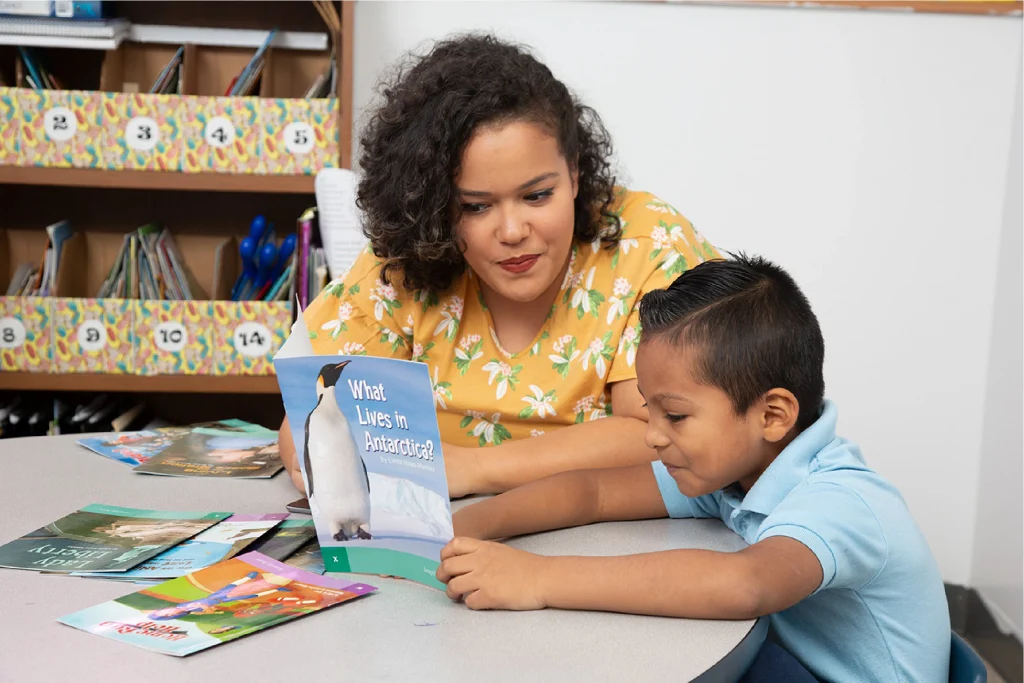
There’s a difference between the ability to sound out words on a page and the ability to truly understand their meaning. That difference? Reading fluency.
Fluency is one of the five foundational reading skills. (The other four, as you likely know, are phonological awareness, phonics, vocabulary, and comprehension.) Fluency connects readers not just to words, but to emotions and expressions, characters and connotations. And it’s also where reading really starts to foster joy.
In this post, we’ll explore what fluency is, why it matters, and how to successfully incorporate it into your literacy instruction.
Defining fluency
The International Literacy Association defines reading fluency as “reasonably accurate reading, at an appropriate rate, with suitable expression, that leads to accurate and deep comprehension and motivation to read.”
In other words, fluency is not just reading fast. And it goes beyond merely decoding words, to developing a deep understanding of what they’re trying to say. Fluency allows readers to connect ideas, recognize patterns, and infer meanings.
“I call fluency the bridge to comprehension,” says Kent State literary education professor Tim Rasinski, discussing the topic on Amplify’s Science of Reading: The Podcast.
Why fluency in reading matters
Rasinski is also director of Kent State’s award-winning reading clinic, and in his podcast episode, he describes encountering students as old as grade 5 who have decoding skills, but not fluency. “[These students] can sound words out, but if you were to hear them read orally, it would be slow, laborious reading in a monotone,” he says. According to Rasinski, these students aren’t getting “much joy and satisfaction, or even comprehension” from their reading.
While oral expression in reading is not the ultimate goal, it is an indicator. “The way you read orally reflects the way you read silently,” Rasinski says. “Most of us would say when we read silently we ‘hear’ ourselves with our internal voice.”
When readers develop fluency, they also develop:
- Comprehension. As decoding becomes more effortless, readers can focus on understanding meaning. Fluent readers recognize words automatically, allowing them to dedicate cognitive resources to complex sentence structures and connections among ideas. They grasp both main points and nuances. All told, they get what they’re reading.
- Confidence. Fluent readers are more likely to feel accomplished, proud, and motivated with regards to their reading abilities. And it’s a virtuous cycle: As their confidence grows, they’re more likely to engage in and enjoy reading—and continue to improve.
- Vocabulary. Fluency plays a significant role in vocabulary acquisition and language development. Fluent readers encounter a larger variety of words in context. This exposure enhances their language and communication skills across academic topics and life experiences.
- Academic success. Fluency helps students read to learn. As students advance through school, fluency becomes increasingly important for comprehension and analysis of more advanced and content-rich texts.
- Emotional connection. Fluency enables readers to connect with the characters, emotions, experiences, and implications in a given text. That’s what makes reading immersive and enjoyable—in the moment and for a lifetime.
The fluency journey: learning and assessment
The Science of Reading tells us that foundational reading skills must be taught explicitly and systematically, and fluency is no exception. Developing reading fluency is a gradual process that requires consistent practice and exposure to different types of texts. There are several stages and skills that support the development of reading fluency.
- Fluency starts with accuracy in decoding. As students practice and improve their phonics skills, they can accurately recognize and decode more and more words. This helps them move from laborious reading toward more efficient reading.
- Speed comes as a result of accuracy. As students become more accurate in decoding, they can read words more quickly. Accuracy helps reduce the time it takes to identify and process each word, allowing for a smoother and faster reading experience.
- Fluency practice helps with automaticity. And the more students develop both accuracy and speed, the more they develop automaticity.
As you may know, there’s a tool called Oral Reading Fluency (ORF) that reading professionals use as a quick-read thermometer of sorts to measure reading speed and accuracy. It’s a simple assessment, measuring how many words a student reads correctly in an unpracticed passage. It’s considered one of the best indicators of a student’s reading progress.
“It works! It has validity. It gives us good, useful information,” says researcher, educational consultant, and author Dr. Jan Hasbrouck on Science of Reading: The Podcast. That’s why it’s widely used—but, she adds, it’s also widely misunderstood.
It is a reliable and helpful measure of fluency in terms of reading rate and accuracy, she says. At the same time, “It was unfortunate to put the label ‘fluency’ on it,” she says. “We reading teachers think of fluency as something much more multifaceted and complex that at minimum includes prosody, or expression. It is accuracy, rate, expression, metacognition, background knowledge—it’s all of this stuff that really experienced reading teachers think of as fluency.”
Fluency best practices for literary instruction
Automaticity frees up cognitive space for comprehension, but fluency isn’t just about reading fast—it’s also about making meaning, which is where prosody comes in.
Prosody refers to the rhythm, intonation, and expression used by someone reading aloud.
But it’s not just for the natural performers in the classroom. Prosody can be influenced. How do we help students develop that external, and internal, prosodic voice?
Through targeted read-aloud practice. By explicitly teaching students about prosody and providing systematic practice opportunities, educators can nurture fluency and comprehension simultaneously—a connection to overall reading success that is well-supported by evidence-based research.
Some fluency strategies include:
- Reader’s Theater in the classroom: Students don’t have to be skilled actors to take on roles and read from scripts. Theater activities allow them to practice recognition and expressions of drama and emotion as they bring the lines to life.
- Assisted reading: When students read aloud simultaneously with a more fluent reader, they practice their own skills while also hearing someone else make meaning of the same text. This can also take the form of choral reading, i.e., students reading aloud as a group, focusing on using appropriate intonation and expression. Reading together allows them to practice prosody in a supportive and collaborative environment.
- Consistent reinforcement and rewards: Rasinski works with students on snippets of text, first with prosody modeled by teachers, then practiced alone and together (repeated reading), then performed for each other or even parents or other adults who offer praise. This regular practice helps boost the confidence and motivation that assists students in developing fluency. “We want children to experience reading success every single day,” says Rasinski.
More to explore
S3-02: How science strengthens literacy and language development
In our second episode of the season, we continue finding ways that science is overlooked and how it can be better utilized in schools—and as an ally to other subjects!
We sat down with Susan Gomez Zwiep, former middle school science teacher and senior science educator and staff advocate at BSCS Science Learning. She shared past experiences and research that shows the benefits of integrating science and literacy, as well as strategies for applying these ideas in the classroom.
We hope you enjoy this episode and explore more from Science Connections by visiting our main page!
Dr. Susan Gomez Zwiep (00:00):
We started to see this trend of students communicating more in English because they were excited about the science that they had been learning.
Eric Cross (00:10):
Welcome to Science Connections. I’m your host Eric Cross. In this third season, we’re exploring the theme of science as the underdog. And last time around, we delved into the data showing that compared to other subjects, science is often put on the back burner. Now it’s time to explore why it’s so important to change that and how to do it effectively. So over the course of these coming episodes, we’re gonna make the case for science and equip you with data and strategies for advancing science in your own home, school, or community. To kick things off, we’re going to spend a few episodes going in depth on the integration of science and English instruction. We know we need to dramatically improve literacy rates in this country, and as we’ll show in the coming episodes, science can be a key ally in that goal. We’ll also show how language development and literacy instruction can support science. Yes, it can be a win-win, folks. To start out, I’m joined by someone who has been studying science and language development for more than a decade. Dr. Susan Gomez Zwiep is a senior science educator and staff advocate for BSCS Science Learning. On this episode, she talks about her own experience as a middle school science teacher and share some key insights and strategies from the research on integrating science and English language development. Please enjoy this conversation with Dr. Susan Gomez Zwiep.
Eric Cross (01:36):
Welcome to the podcast. Thank you for being here and having this really important conversation. So I’m so glad you can make it, Susan.
Dr. Susan Gomez Zwiep (01:43):
Yeah, I’m excited to be here.
Eric Cross (01:44):
We’re gonna talk all about language development and science. But first I was hoping that you can just kind of set the stage and tell the listeners about yourself and how you came about to studying this specific subject.
Dr. Susan Gomez Zwiep (01:57):
Sure. So I am a California native. I grew up in the San Gabriel Valley and that’s where I started teaching. I have an undergraduate degree in integrated biology from UC Berkeley. And I thought I was gonna go be a field scientist. And while I was waiting for grad school applications to run their course, I took a substitute job in Montebello to kind of bide my time. And because I had a science degree, they asked if I would take a permanent placement, well, a temporary permanent placement. And I said sure. And found myself teaching seventh and eighth grade general science to a population that at the time was about 68% English language learners, in a school that you would consider urban, under-resourced with a community that was large percentage immigrants from Mexico, Central and South America. And I never looked back. I kept that job.
Dr. Susan Gomez Zwiep (03:04):
I loved it. I love the middle school classroom. I love teaching science to my middle school students and truly, truly just found a really good home for my love of science, but also my love for talking about science and helping other people understand science. So at some point I was entertained with the idea of going to graduate school. So while I was still teaching, I actually did a Ph.D. At the University of Southern California in the science education field. And once there, realized that I actually had a unique experience in higher ed, that experience of teaching with populations that are learning English or have home languages other than English, was actually not common in higher ed circles. And being from that community was also not common. And so I pretty quickly leveraged that experience to combat what I think is universally agreed as an equity issue that in my school where I taught, the district had advocated for ELs to get an extra hour of language development in order to promote their English language proficiency.
Dr. Susan Gomez Zwiep (04:28):
And, our principal wisely said, there are not enough English-only students in this school to do that without losing all of our science teachers because there’s not enough kids left to actually fill a day, a teacher’s day. And she said, these kids learn more language in their science courses than they do anywhere else, so I don’t wanna remove that. But the reality is, is that at that time–this was in the late nineties, early two thousands–if you were not proficient in English, you went to more time with language development. And that makes a lot of sense in some ways. But when you look at the big picture, you realize, well, that means those kids aren’t going to science and they’re not having opportunities to have consistent quality science learning opportunities simply because they spoke a language other than English at home. And so that’s really how I fell into this work.
Eric Cross (05:28):
And that has a downstream effect. I mean, once you start pulling students from a course, that automatically sets the trajectory for later outcomes, which we ultimately see in STEM fields where we, we don’t see the population of our students represented in the STEM fields. Now, I know this goes back a few years, but you were doing research for your Ph.D. What did you start to follow?
Dr. Susan Gomez Zwiep (05:50):
Yeah, so I eventually took a position at Cal State Long Beach, which was not by chance, it’s a Hispanic-serving institution, and that’s where I wanted to do my academic work. And once I was there, sought funding with a district to support elementary science learning. So it had a teacher professional learning component that was both summer and in-class, sort of like PD in the classroom component. And the district came back and said, the only way you are gonna get time to even talk about science in elementary school is if it’s attached to language development. And so that’s what we did. It was a three-year grant, there was a sister grant that followed–so all told, it was about a five-year program where we basically said, what if instead of following the traditional ELD, English Language Development curriculum, we modified and put science as the context for language development in the K2 bands.
Dr. Susan Gomez Zwiep (07:01):
Teachers at the district traditionally had not been excited about their language development curriculum until we said, we’re gonna take that and we’re gonna do some science instead. And then they were like, no, no, no! We love our ELD curriculum. But they hung in there with us. The project was successful enough that it actually became a K4 and then a K5 project. The district ended up having to put in a ton of money into this because the grant only paid for so much. But their schools actually wanted “in” ’cause what they heard is when we put science as a context for language development, kids were talking more. Kids were speaking in English more. Kids were writing more. Kids were engaged. And the ultimate, kids were developing English quickly and in a community where you could actually operate within the community without speaking English. These are Spanish-speaking communities and the schools operated in Spanish outside the classroom. So if you walked into the school’s office, the principal secretary, the person who manned the door, spoke Spanish. The field supervisors that the lunch supervisors spoke Spanish.
Eric Cross (08:17):
The non-teaching staff that are supporting the rest of the students outside of the classroom.
Dr. Susan Gomez Zwiep (08:23):
Yeah. Everybody spoke Spanish and they spoke Spanish at school. And even the principals came back and said, from being in this project, that the kids were coming into the office and had transitioned to communicating in English, especially when they wanted to talk about science, and they really wanted to talk about science ’cause they were super excited about the stuff that they were learning. So we started to see this trend of students communicating more in English because they were excited about the science that they had been learning. And yeah, that sold itself and we had schools jumping in.
Eric Cross (09:01):
So you started off in a situation where you were told that you had to, if you wanna get science and you had to merge it into English, basically. And is it fair to say that that’s because of testing requirements that schools have on them? Like this is what gets analyzed or what was the purpose behind that?
Dr. Susan Gomez Zwiep (09:15):
It was district policy and it was site policy and those policies were put into place for very good intentions. Students don’t get reclassified into English only, and reclassification is how you traditionally got access to all this other programming, electives, AP college prep, all those other things. And the best way to get them reclassified was to learn English, and to learn it sooner rather than later. So it was in an attempt to get kids reclassified from English learner to English proficient.
Eric Cross (09:55):
And then during that process it was able to be expanded to K4. And then with these open-minded teachers, you gave them the content, they used science as the context for learning. And then your students who were mostly emerging bilinguals and multilingual students, you found that they started speaking English more frequently. What did you make of that result? Like what did you come to after seeing all that happen?
Dr. Susan Gomez Zwiep (10:20):
So I do wanna say that there’s a couple of reasons why we think this works so well. But I have to really acknowledge that there were linguistics, second language acquisition experts that were part of this team. And we wouldn’t have been able to make any of this work if it was purely science educators leading this cause. There’s a lot we didn’t understand about language development, and they really helped us. But one of the things that we think is unique about science, there’s a few really important aspects–one is that we all have experiences in the natural world, since we can process outside information, right? We all have observations, things we’ve observed with our eyes, we’ve heard, we’ve felt, and all of those experiences build some pretty good science ideas before we enter formal schooling. You know, kids already have ideas about this.
Dr. Susan Gomez Zwiep (11:20):
We don’t have to give them language for it. They already have these concepts and experiences. The other thing is that we are inherently interested in the natural world we occupy. And so we’re curious, science is often considered cool, there are science channels and science fiction movies and science fiction books and magazines–and this is just … it’s just cool. And that tended to be the trigger, you know, when we gave kids something interesting to observe. A Ziploc bag with water that we added an Alka-Seltzer to, and strange things starts happening in the baggie. That curiosity, that excitement allowed kids to leap over any concerns they had about the language they were supposed to use in the classroom. One of the most difficult things about learning a language is using a language that is imperfect. So saying things and communicating in a language that you are not a hundred percent confident about, that you’re not sure you’re using the right words or the right tenses. But when kids were excited about this thing in a Ziploc bag, they didn’t care. They communicated however they could, sometimes in their primary language or their home language, sometimes in imperfect English, but by and large they just communicated. They did it in oral language, like listening and speaking, but they also did it in writing. And that was easy. Like we didn’t have to do anything other than provide interesting science experiences. And that’s, that’s pretty common.
Eric Cross (13:06):
Yeah. I feel like, to co-sign on the science is cool, it is objectively, if a matter of fact, even just looking at the Oscars, like we have multiverse, you know, we have sci-fi you know, the costume designer of Wakanda Forever. We have all of these different movies that are all founded in some kind of these scientific principles. And so the idea that science is cool and organic, naturally engaging is something I think we, we all can connect to and it resonates with all of us. So I feel like is sort of your origin story too.
Dr. Susan Gomez Zwiep (13:33):
That’s the origin story.
Eric Cross (13:34):
That’s the origin story right there, to continue with this like movie theme. Now if we fast forward to today, based on all the research that you’ve seen since then, and your experience, why would you advocate merging English language development and science?
Dr. Susan Gomez Zwiep (13:49):
Well, for one, the research that we conducted actually provided some really nice evidence that showed, even though we had essentially stole minutes from language development time and inserted science. And on state mandated tests and on their students’ language proficiency measures, the kids in the program with the blended, did significantly better than students who were getting ELD instruction alone. Traditional ELD instruction. And that kind of blew our mind. We would’ve been happy if they had done just fine. Like we could put science into a student’s day and do no harm. They could get their language development; they could get science. But in fact, what we found was that they did better. That they actually gained English more quickly and it showed up in multiple measures, including the state English language arts assessment, which again, kind of blew our mind.
Eric Cross (14:55):
So just to be clear about the study that you did, you looked at two groups and one was the blended science and English language development, and then the other one was a control group. And the blended group ended up showing more improvement.
Dr. Susan Gomez Zwiep (15:09):
Yes. So there’s quite a bit of research now, this research was done in the early two thousands, and the research has built around it to really suggest that this does seem to be a more efficient way to promote language development while still maintaining students’ access to a core content area. But in recent years, the standards have shifted and that has been just a remarkable, wonderful change. And both standards have shifted. So when we did our research, we did it under the old California Science standards that were fairly heavy in technical terms. They were heavy in science concepts rather than kids doing things. And they were a much narrower focus.
Eric Cross (16:04):
And these are the standards that most of us grew up on, right? Those of us who are pretty much teachers in the classroom today pretty much grew up on what you’re talking about. Is that fair to say?
Dr. Susan Gomez Zwiep (16:12):
That’s fair to say, yes. So the new standards that we have now, the California NGSS Standards emphasize not just ideas, but they also emphasize students doing things in science. And we didn’t have to build-in language portions to the standards. They now exist. The NGSS is a very, very rich linguistic opportunity for students. And at the same time, the way we’ve thought about language development has also shifted. We used to talk about language and science… we used to think about science as a lot of words, and you had to know the words, you had to have this technical language. And we’ve sort of shifted that to really thinking about, language is no longer a prerequisite for science learning. Language is now developed through the science learning or the content learning experiences.
Eric Cross (17:11):
So now there’s more chances to integrate English into science. Have you seen success stories or have you seen examples of this? Maybe just anecdotes of teachers kind of doing this since you’ve been doing this research and kind of watching. If so, would you mind sharing one or two?
Dr. Susan Gomez Zwiep (17:30):
Yeah. And I will just give a nod to Dr. Dr. Okie Lee who’s now at NYU who has really led sort of this reconception of language and science. And one of the ways she talks about it is this notion that I enter this learning experience, I enter this observation of this phenomena with fairly naive, simple scientific ideas. And my language about it is equally simple. But as I develop more and more ideas, as my understanding of the phenomenon, what I figured out becomes more sophisticated, I need more sophisticated language. And so what we’re starting to see are these spaces where teachers are building science ideas and science and understanding along with the language. And in order to do that, you really need to know what’s the storyline arc of my science lesson? What do they figure out in lesson one? What do they figure out in lesson two?
Dr. Susan Gomez Zwiep (18:35):
What do they figure out in lesson three? How are the science ideas building over time? So that I can then look at the language that they’re using and what language supports do I need in order to allow students to not only engage and figure things out, but communicate their ideas about it. And so we’re seeing teachers blow up what we call language, what we call text. It’s not just words. It’s not just sentences written on a paper, but it’s models, it’s pictorial representations, it’s gestures, it’s this wide range. We pretty much said, let’s blow language up. Let’s like use all of the linguistic registers that we have in order to make meaning of what we’re seeing it in together in this classroom. So that’s one thing that we’re starting to see. The other thing is that teachers are really allowing students opportunities to use what we call social language, non-standard dialects.
Dr. Susan Gomez Zwiep (19:40):
The language I use at home and with my friends. Because earlier I had said, we have all these experiences and those experiences in the world are tied up in my social register. They’re tied up in my home language ’cause that’s where I experience them. And to let students have access to using that language in the classroom, especially initially in a unit, means we’re giving ’em access to those experiences that they have that are related to the phenomena under study. So I totally understand the benefit of promoting academic language and promoting language frames and forms that we use in more academic settings. But it’s a sticky wicket. You have to be careful how you tell students about the way you want them to communicate. Because when we tell them that language that you use at home with your friends and family is not welcome here, we can send a message that they’re not welcome here. And that those experiences that they have outside of classroom about how things fall, the way sunlight heats up different surfaces, where you’ll find plants and what plants you will find based on conditions. All of those experiences, we’re sending a message that those are not welcome in the classroom. And so this expansion of language, including non-standard dialects and even home language, is really important for letting students bring their whole selves into the classroom.
Eric Cross (21:23):
I love what you just said. It legitimizes the funds of knowledge, the language, the cultures that our students are bringing to the table. I remember when I first learned the word code-switching in college and you know, I’m biracial, I grew up in my home community and my school community were two different communities and I ethnically, culturally belonged to both. And I had to code-switch in order to kind of survive and be accepted into different communities. And not until I was in college did I actually understand what I was doing. Now there were all kinds of teasing and jokes that went on to how I would talk if I code-switched improperly. And in my classroom, I would see students who would explain concepts in a way that was maybe like a casual register. They just were explaining it the best way they could.
Eric Cross (22:10):
And the way they were speaking was kind of denigrated or it was seen as negative even though they were communicating their concept. And when I became a middle school teacher, one of my, I don’t know, it’s like sometimes when you teach, you get to, you change how you were taught or what you experience and legitimizing my students’ language, and they would tell these beautiful stories and in their most common like, casual language, but they’re explaining the concept brilliantly. And it was phenomenal to see this barrier be removed of saying, you have to talk like this in order to be a scientist or you have to say these right words. And, and that’s what I feel like I’m hearing that in how you’re describing kind of how science has been done and what language can do to certain groups of students.
Dr. Susan Gomez Zwiep (22:58):
Yeah, very much so. And you know, back to the origin story, you know, I grew up in a multi-generational household. My mom, my aunt, my grandmother, Spanish was their first language, but they lost it because my mom was raised in Riverside and she, you know, went to school in the, the fifties and sixties and back then you weren’t allowed to speak Spanish at school. And so they lost the language.
Eric Cross (23:27):
They weren’t allowed to speak it at all.
Dr. Susan Gomez Zwiep (23:29):
At all. I didn’t directly observe it, but that is the story that my family tells, that there was no English spoken anywhere on school grounds. And that was a different issue. Right? That was very much for people unfamiliar with some of the history in Southern California. Their segregated schools, severe racism, linguistic racism, racial racism against Mexicans was a real thing. But yet I grew up in this household where the sort of way of speaking, like I think many Mexican households, the context is everything. So you can’t get to the facts until you’ve told the whole context of everything happening around it. So we used to joke that we couldn’t send my grandmother to the doctor by herself ’cause he had 15 minutes, and she was gonna take 20 just to tell him how she got there before she got to why she was there. But this telling of the context, the telling of the story around the idea is part of the linguistic, this sort of linguistic way of my household. When I got to school, I had to learn to drop it because teachers found me off topic. You know, I still have to be careful how I express things and sometimes I’m not a fast storyteller <laugh>, and I monitor that for myself. So I can only imagine what it’s like to be a kid in a classroom.
Eric Cross (24:59):
Right. And there are so many constraints in the school day, you know, especially if you’re multi-subject and you’re elementary and you’re teaching multiple subjects and someone’s trying to tell a story and you’re just like, land the plane! And they’ve, you know, gotta tell ’em the story, but realizing that when you look at it through a lens of like, culturally, this is how we communicate, then it reframes what the student is trying to do. They’re communicating to you based on how they’ve learned to communicate and they’re including essential parts of the story. And so how do you both honor that while also, you know, certain things like brevity and being concise and things like that that they’ll have to learn. But also honoring that and making sure that there’s space for that in your classroom. Even me, I’m thinking about this where I had students record this video and it was one minute to two-and-a-half minutes explaining three concepts. And I had students coming up to me afterwards saying, Mr. Cross, I need to record two videos because two-and-a-half minutes is not long enough. And I was like, how? I even extended it. But I’m realizing and listening to you and going, they’re probably not just getting to the point. They’re probably including more context into this because that’s how they story tell and that was actually part of the lesson.
Eric Cross (26:12):
So now I need to go back and extend their time that I’ve given them for <laugh> that project. I wanna come back to kind of, since we’re on this topic about why this is also an equity issue. Mm-hmm. <affirmative>. So we were talking about language, you touched on this a bit, and we were talking about integrating into science, but can we go a little bit further into how this integrated approach maybe can benefit English language learners in particular? And maybe anything else that’s related to equity that comes to mind.
Dr. Susan Gomez Zwiep (26:40):
So there’s a couple of layers of the equity issue. The most tangible and clear is student access. If we wait until students develop English proficiency to allow them access to quality science learning, we lose a tremendous number of students that could not only could they benefit from science, we could benefit from their entering this science conversation. And I was at a university and I was in a college of natural sciences and we were dedicated to increasing the diversity of the faculty. And it was a struggle ’cause the number of Ph.D. science ed or biology or chemistry academics that come from marginalized populations is very, very small. And it’s not by accident. You know, the number of students that make it into the next level, that make it into college prep courses, that make it into STEM majors, that complete STEM majors and go on to either careers or advanced degrees narrows at every possible step.
Dr. Susan Gomez Zwiep (28:01):
And so the equity issue is really one of access. And as basic as that is, it’s the easiest to solve. So that’s the first layer of equity. But the second issue around equity is how we engage these students once they’re in this space. Do we make it possible for them to see themselves as a scientist or an engineer? Are we creating learning experiences that not only allow them to use all the sense-making resources that they have, but do we make them feel like they’re valuable and useful in that space? Because there’s a lot of people that will say, I could be successful as a scientist, but I’m not willing to give up who I am in order to do that. And that’s a real thing. There’s a lot of research about like, why are they leaving? Like why, you know, is it because they’re not able?
Dr. Susan Gomez Zwiep (29:05):
Is it because they don’t see themselves as being capable? And now I think we’re looking at this as a different issue. It’s not that students don’t see themselves as capable and not that they’re not achieving. They see the cost that it will take to enter these fields and essentially not be able to be their full selves. So that’s the second equity issue. And in both cases we lose. As a society, we lose. We lose access to the full range of human resources that we have, and we lose access to their unique perspectives that they would bring to real problems facing us. It’s like all hands-on deck. We need to stop making it too difficult to participate in the conversation and we need to be more inclusive about how we invite these other perspectives and how we respect and utilize their ways of sense-making. That may not be Western science ways that we have in our books now, but hopefully those science materials are gonna change and we’re gonna start to see other ways of sense-making and other people involved in the stories that we tell around science concepts.
Eric Cross (30:29):
And just to be clear, this practice in integration, while it lifts up equity for marginalized or underrepresented groups or students who are emerging bilinguals or students who typically we don’t see representation of, this approach also benefits native speakers as well. Correct?
Dr. Susan Gomez Zwiep (30:47):
Yeah. And there’s actually a group of native speakers that come from text poor homes. It’s typical in underserved communities. Poor people living in poverty that may be native English speakers. They may not be marginalized populations. But they don’t have access to like text. And so that’s another group altogether that needs linguistic support. And then once you have all voices in the room contributing, everybody benefits because now the conversation, the building understanding conversation we’re having or the sense-making conversation that we’re having has everybody involved. And we all benefit from that.
Eric Cross (31:33):
And we see, I think one of the benefits about a country like the U.S., is we have such a heterogeneous group of people. And when we’re moving in the same direction, we’re all coming to the same problem, but from different perspectives and we’re able to come up with more innovative and novel solutions to them. And that’s kind of what I’m hearing is like as we generate scientists that are all coming from different backgrounds, we’re gonna be able to solve future problems, current problems a lot more effectively because nobody has a monopoly on perspective. Nobody has a monopoly on knowledge or the fastest way to do something or the best way to do something.
Dr. Susan Gomez Zwiep (32:11):
Right. Right. And traditionally we really have privileged particular experiences, particular ways of sense-making particular linguistic registers. And if we could just kind of put that privileged ways aside and open up space for everybody to feel like they have a voice, I think the next generation could change the world. I think they could solve some real problems. I’m truly hopeful that they would see themselves not just as capable, but as necessary in these pursuits.
Eric Cross (32:50):
So what does it actually look like today to do this work in instruction well? So to integrate the science, to integrate literacy, to take the benefits of the things that we’ve been talking about. What are some practical things that educators could do to get started, whether it’s in early, you know, K5 or middle school or even high school.
Dr. Susan Gomez Zwiep (33:13):
So I will say, I’m gonna kind of separate ’cause in the elementary space, students are primarily developing literacy in multiple languages. The language of the classroom, typically English, home language, languages, they may be multilingual. In the secondary setting where students tend to have developed social language in some language, it’s a little different. So I’m gonna kind of separate those two. So for elementary spaces where teachers tend to teach multiple things, I recommend that you get a partner. Don’t do this work alone. You cannot do this work alone. I mean you can, but it’s very frustrating and not nearly as much fun. So you really wanna take a look at what is the science that kids are going to be engaged in. Because when we look at science first and build language development around it, the experience tends to be more authentic and organic.
Dr. Susan Gomez Zwiep (34:18):
And what we used to do is we used to, like when we were talking about the science, we’d monitor the language we were using and then use that to say these are the registers. This is the language that we use when we were thinking about this. So if students are gonna use this, these are the scaffolds they’re gonna need. ‘Cause to do it, well, to do it efficiently, the scaffolds need to be specific to the science learning. So if we’re doing cause and effect, those are specific linguistic scaffolds that are different than if, say we’re doing model and systems and systems models, those are a whole other slew of scaffolds. And so you wanna be really tending to, what is the science being discussed and what is the language that kids are going to use and build scaffolds around it.
Dr. Susan Gomez Zwiep (35:10):
And then you also wanna think about what is the social language? What are the experience that kids will have either in words or pictures that I can leverage in this space. And then you wanna do that for the arc of the unit and slowly increase sophistication around those linguistic supports, as well as the science learning. But if kids have social language and they’re now in, there’s a group we call long-term English learners who have not been reclassified way beyond what the typical reclassification is. And that actually is important to think about because if you think about the kinder group, the group of kindergartners that enter a school when they’re five or six, those kids are going to go from grade to grade to grade. And as students develop proficiency, will get reclassified and they move out of this group that we’re still calling English learners.
Dr. Susan Gomez Zwiep (36:10):
So by the time you get to like seventh, eighth, ninth grade, if they’re still students in that category, they have very different needs on average than the group we started with. Often when we talk about secondary or these long-term English learners, we can leverage social language a lot more, but have to build the scaffolds more carefully around, for lack of a better word, the more academic content transferring that those social nonverbal language into more sophisticated forms. I think in any setting, you wanna utilize your resources. If I’m in a secondary space and I have a language development teacher and I’m not talking to her or him or they, that’s a problem. You need to go talk to the other people that have these same kids and talk to them about, how are you engaging in language, what are you doing?
Dr. Susan Gomez Zwiep (37:07):
Because you know, you could actually have a lesson, maybe this is a lesson about energy and you’re using a model and the kids are creating an initial model. And over in ELD land, they’re doing some linguistic supports. They’re working on some forms and functions of language. You could talk about the catapult, you could talk about the solar heater. You could use the context of the science conversation, which has a whole bunch of tangible experiences. You know, there’s the solar heater in front of you. I don’t need to keep it all in my head ’cause it’s in front of me and we can point to things and talk about things by manipulating the materials. And then I can take all of that and my ELD partner can use that as context when available. But it takes collaboration, but it’s collaboration well spent. And it’s more challenging in the initial phases of the collaboration. Once you kind of the get into the groove, it becomes a lot easier.
Eric Cross (38:16):
The meta of this, as we talk about integrating science and literacy is, and this is great advice, but it’s basically integrate your science teachers with your English teachers and co-plan and do this work together. It’s a force multiplier. One, you’re both, you’re getting two specialists together. It also, I’m just listening to just the parallels. It also resembles what you actually do in the STEM fields of collaboration working together to problem-solve, and you’re modeling for your students what you want to happen. And if I was an administrator listening to this, someone who had control, like master schedules and things like that, there also needs to be space created for these teachers to talk to each other and plan and do all these other things to kind of maybe come up with like interdisciplinary units or even just meet and begin the conversation. It just seems like such great advice.
Dr. Susan Gomez Zwiep (39:07):
Yeah. We’re professionals. We have academic degrees and credentials and experience in the classroom and yet more often than not, we leave it to the students in the seats to make the connections between my class and the class they go to next. And that’s not fair. We need to be talking to each other. So if we’re talking about argumentation, argumentation in science and argumentation in ELA and argumentation in math–we’re not even talking about the same thing. I mean, cognitively we’re talking about taking some evidence and creating a claim and supporting it, but what we mean by evidence is very different in the different disciplines. What counts as more convincing evidence changes. And yet we assume that because we say evidence in one class, the kids know what we’re talking about. And the kids are sitting there going, which one is this? Which evidence are you talking about? Because last period it was something else. And so I think we also need to really consider who’s in the best position to clarify the connections and the integration because we leave it to kids more often than not right now.
Eric Cross (40:19):
I agree. Just having those conversations and defining your terms and agreeing on them just to make it easier for students. ‘Cause you’re right, they are left to make those connections or bridge the gaps. And when you have an education system for many schools, I think most of us, it’s still pretty siloed. You’re still kind of like, especially when you’re in secondary, it’s we’re doing this or even elementary, different times of the day you do different subjects, versus the way that we experience life itself or even our professions. We’re actually integrating science and math and reading and writing throughout the day, and ebbs and flows going back and forth. And without making those explicit connections, we’re leaving a lot of things to chance, hoping that the learning’s there in such a valuable moment. Before we go, I’m wondering if you have a parting message for listeners about the topic of integrating science and literacy. You’ve already said so many amazing things, but you have the platform speaking to educators and folks out there. What would you wanna say to them?
Dr. Susan Gomez Zwiep (41:18):
This is not an easy endeavor. The system that we operate in does not make this effort easy, but it is worth it. It is worth it to the kids in our classrooms. It is worth it to the building of a scientific community and a scientifically literate populace. It’s important to solving problems in the future. It’s important to have kids feel like regardless of how they say things, that they belong in a classroom. If we can relax the sort of linguistic demands on kids and let them enter science learning in a way that allows them to use all their resources and they’re curious, they can really leverage both areas in a way that they don’t do individually. It’s really hard to think about what it is I’m trying to say if I’m worried about how I have to say it. And so we really need to think about, when are those times that we’re gonna let kids just tell us what it is that they’re excited about and when is it that we’re going to help them craft a more formalized language around those ideas. Right now we do a really good job at that second half. We need to do better at the first.
Eric Cross (42:46):
Susan, thank you so much for joining us today and for sharing your expertise and your wisdom and your passion for serving the students and for bringing everybody to the table through language and through science. We really appreciate it and the listeners will too.
Dr. Susan Gomez Zwiep (43:03):
Thank you so much. This is my favorite topic.
Eric Cross (43:06):
Thanks so much for listening to my conversation with Dr. Susan Gomez Zwiep, senior science educator and staff advocate at BSCS Science Learning. And please remember to subscribe to Science Connections so that you don’t miss any of the episodes in this exciting third season. And while you’re there, we’d really appreciate it if you can leave us a review. It’ll help more listeners find the show. Next time on the show, we’re going to continue exploring the how and why of integrating science and literacy instruction.
Speaker 3 (43:35):
When we interview scientists, they spend a lot of their time reading the work of other scientists and writing their findings, writing grant proposals, presenting at conferences. A huge part of the work of a scientist is not just at a bench conducting experiments, but even if you’re conducting experiments, you’re using your literacy processes to think about what you’re seeing in your experiment.
Eric Cross (43:57):
That’s next time on Science Connections. Thanks so much for listening.
Stay connected!
Join our community and get new episodes every other Wednesday!
We’ll also share new and exciting free resources for your classroom every month!
Meet the guests
Susan Gomez Zwiep began her career in science education as a middle school science teacher in Los Angeles where she spent over 12 years working in urban schools. Prior to joining BSCS, Susan worked at California State University, Long Beach as a Professor of Science Education.
Susan has also worked as a Regional Director for the K-12 Alliance, providing high-quality professional development in science and mathematics for K12 educators, including the CA NGSS Early Implementer Initiative. Susan consistently works toward establishing equitable access for all students to rigorous, inquiry-based science instruction and supporting teachers in their journey to become advocates for students, science education, and their own professional development.

About Science Connections
Welcome to Science Connections! Science is changing before our eyes, now more than ever. So…how do we help kids figure that out? We will bring on educators, scientists, and more to discuss the importance of high-quality science instruction. In this episode, hear from our host Eric Cross about his work engaging students as a K-8 science teacher.
You might also like:



S2-01: How teachers are really feeling this school year
In this special solo episode, Eric Cross starts the season by sharing his personal journey as an educator, and how the difficulties of the last few years have shaped his mindset going into the upcoming school year. Eric also addresses teacher burnout and what inspires him to continue working as a classroom educator. Explore more from Science Connections by visiting our main page.
Eric Cross (00:02):
Welcome to Science Connection, Season Two. As we begin the next season, I thought it would be a good time to share my story. As the host, I get to ask people questions about their journey, but I’ve actually never shared much about my own. So I’ve taken some of my most frequently asked questions to guests and asked them to myself. I hope you enjoy.
Eric Cross (00:23):
So the origin story question, I think really gets to the heart of why a person does what they do, because so much of who we are, especially as adults and teachers, is a result of experiences that we had in our lives when we were kids or in school with other teachers. And my life’s no different. I was born to a 19-year-old single mom. And when you’re a young boy growing up, especially with a young single mom, you often look to older men in different positions as kinda like a surrogate or like a mentor. And you may not even tell them that they are that to you. You kind of keep it close to the chest. And that’s what I did growing up. One of the ones that really stood out to me is, in seventh grade, I went to a middle school here in San Diego that was called Keiller Middle School. And we were a magnet program that specialized in science. And they had this program that brought professors from the local universities and they did this high-level enrichment. They would even take us to the college campus and we would work in these labs as seventh graders. It was amazing. And one of the people there, his name was Dr. Tress, and he was a professor. And Dr. Tress took a liking to me. I reminded him of his son. We were doing this great embryology experiment. We would take purple sea urchins. And we would inject them with potassium chloride, which would cause them to spawn. And we would fertilize these eggs, and then we would run different experiments using them. And these were things that I had never done before. I had always loved science. I’d always loved tinkering and building things. But this was my introduction, really, to high-level biology and to higher levels of education. I didn’t—I didn’t have many figures like that in my life growing up. I mean, I’m a first-generation, you know, high school, college graduate. Many of these are first generations for me. So, this was a new experience. And so Dr. Tress really unlocked a core memory and was one of my first mentors, as far as academics are concerned. And during my seventh-grade year, I entered the science fair and won first place, which was a huge deal. They took us out to Balboa Park. We got to miss school for a week. We got to go to all the museums for free. It was the best. And I think at that point in time, it really solidified something in me that would lay dormant until later on in my adult life. High school, I was really fortunate: the high school I went to was Morse High School, not too far from Keiller, and they had an aeronautics program. So I was able to enroll in that aeronautics program. And I learned how to fly before I learned how to drive. And I had this great instructor named Mr. Klon, who was this like 6′ 4″, 250-pound hippie guy. And he—we would get in the plane and we would have these like philosophical conversations. And through that, especially looking back now as a teacher, I realized that he was making connections with me and investing into who I was as a person. And it was something that I so needed at the time. Because at home I didn’t have that. You know, my safe place, a lot of time, was school. It was my only structure. It was where I knew I would get encouragement. It was where I knew things were reliable and consistent. For a lot of people, and a lot of kids, their home life isn’t like that. School was that for me. So Mr. Klon, I mean, he was this authentic, you know, consistent person in my life and made a huge difference at this time.
Eric Cross (03:23):
After I graduated high school, I left home just to get away from a difficult environment. And I was homeless for a little while and that was a huge moment in my life. And around that time, an aunt found out and she said, “You’re gonna come stay with us.” And this was like this three-year process of me living with them in this, like, functional family that ate dinner together. And they went to the zoo. They had family passes. And they took family photos at Christmastime. This was all weird stuff. Like, I didn’t know—I didn’t know who did these things. It was—I felt like a puppy that like lived in a home that was like…it was a home that was just always kind of like violent or like just really toxic. And then it gets put into a healthy home and doesn’t know how to act. That’s how it felt. And this was around like 19, 20 years old. During that time I started putting myself through school. So I went to community college and I was broke as a joke. And so I couldn’t afford the textbooks while I was going. So I would just go to the bookstore, the Barnes and Noble bookstore in Mira Mesa here in San Diego. And I would stay there all night using the textbooks or using the books there for doing my work. And then I would just put the books back on the shelves. Because let’s just face it. Textbooks are expensive, brother wasn’t trying to pay for all that. So I really had to earn that time. So I was working full-time. I was going to school. And, eventually I got a job in working in finance with a really great friend who mentored me during my younger twenties. And I didn’t wanna be broke and finance made sense.
Eric Cross (04:44):
And so I did that for a little while, until I got to a point in my career where I was watching an episode of The Office, the UK version, the Ricky Gervais version, and a character said, “I’d rather be at the bottom of a ladder I want to climb than halfway up one I don’t.” And I realized, working in finance, that I was halfway up a ladder I never wanted to climb. So I wanted to move into something that, if I was gonna spend eight hours a day or 10 hours a day doing something, I wanted it to be something that actually filled me up inside. And this is how I got into teaching. So I had always been working with young people, specifically 12- to 18-year-olds, like a non-profit or volunteering, mentoring, after-school programs. And I’ve always managed to rationalize my job in the finance world as meaningful because it let me do the real work that fulfilled me. So the real work was working with the kids. But my day job, my, like, Clark Kent-type job, was just, you know, doing the finance thing of like helping people that have a lot of money make more money. Which at the end of my life, I look back and I said, “That’s not what I want my legacy to be.”
Eric Cross (05:43):
And when the finance crash happened in 2008, that’s when I think I started looking back on it and said, “If I’m gonna spend all my time doing something and spending 40 or 60 or 80 hours of my day of my week doing things, I want it to matter. And that’s when I decided to pivot and leave that field and go and get my master’s in education and get my teaching credential, teaching science specifically. Now, one of the questions we get asked a lot and I’ve been asked is, is “How has teaching changed as a result of the pandemic?” And I feel like this could be several podcasts in and of itself, and it’s also regional, because everybody’s experienced it differently, And we’re still experiencing it! That’s the crazy thing! It’s like, it’s not over, we’re still in it. And some places have innovated and pivoted and some places just did what they needed to and they are trying to go back to business as usual. But if anything has happened, the pandemic revealed how much more, how much schools are more than places of just content learning. For many students it’s where they have their only community, their structure, their emotional wellness. They get regular meals, access to tech, and adults that care about them that are outside of their family. The schools are so much more than that. I mean, my school, they were a place, like a hub, that was giving out food every single day during the pandemic to families that would kind of drive by. So for a lot of schools, they became places like that. It also…the pandemic revealed the intensity of the educator workload. I mean, being able to manage your family, having the capacity, to be a content expert, you need to be a counselor, a trauma-care specialist, a coach, an encourager, a tech expert.
Eric Cross (07:23):
I mean, the term mental health is now more common and starting to become prioritized. Now we’re focusing so much more on the whole child. And we know from research that how a child feels about themselves and their safety and their security impacts their ability to learn. So the more comfortable and safe a student feels in the classroom with teachers and with friends, the better they’re gonna be able to learn. And ultimately the higher they’re gonna be able to achieve. You can’t, you can’t have one without the other. In addition, I think less teachers, see themselves teaching into retirement. I think that’s a big thing. I read these articles about teacher shortages and I think the reality is it’s actually teacher exodus. It’s teachers leaving. And that’s been really difficult. I’ve had many friends who’ve left for the private sector. And I get it, especially if you’re one that has—if you’re the first in your family to graduate from college, with a STEM degree, to them taking a teaching position can mean walking away from a salary in the private sector that pays two or three times more.
Eric Cross (08:23):
And in many places around the country, in order to be a teacher and maintain a median standard of living, you need either dual income, multiple jobs, or a multi-generational household. For a lot of people it just doesn’t make sense. And even right now, today, as I’m recording this, I’m reading articles and getting text messages…and I received a text message three days ago from a teacher that said, “My goal this year is to just not resign.” And that’s where a lot of teachers are feeling right now: isolated, challenged, and under-appreciated. And Plato said, “What’s honored in a country is cultivated there.” And I’ve been looking at how teachers are honored and one of the ways is just, like, practical. Like, look, I gotta pay my bills. You know, love the Starbucks gift card. Love the CPK, the gift card. The cards, all those other things…but brother got a car payment. And at the end of the day, if we care about our kids, we need to take care of the people that take care of them. And there’s very practical ways for that to happen. And everybody in different sectors around the country is dealing with that in different ways. I think the pandemic also revealed, now the public can see how our kids don’t receive the same quality of education. And once you’re aware of that, you can’t put the genie back in the bottle. So once you see on Zoom or once you see in a meeting, or once you see on the news, that students in different areas, whether it’s the rural South or a suburb in Seattle, are not getting equitable educations, well, ultimately that impacts all of us. Now. It’s not all doom and gloom. Good things have come from, as a result of, the pandemic. Many schools have made progress towards narrowing the technology gap, ’cause they had to! ‘Cause you can’t do Zoom and you can’t do Google Meet and all that stuff with a packet! You gotta get those Chromebooks. And Chromebooks and the internet and access to tech is not a new thing. It’s been out for a long time. The technology gap is not a new thing. It’s been written about extensively, but all of a sudden districts and schools started figuring out how to close that gap. And that’s awesome. We didn’t want a pandemic to be the catalyst for that to happen. But at the end of the day, we started closing it. A lot of schools did an amazing job and districts did an amazing job with deploying the hardware, sending out buses with wifi, putting lessons and videos on USB sticks and dropping them off to parents who live in sparsely populated areas. I mean, there were so many stories that I’ve heard about schools and teachers just doing amazing things, going above and beyond what they needed to on behalf of kids.
Eric Cross (10:51):
I think in addition to that, there’s also been students and families are now having more options to personalize their learning. So we have this in-person model, we have this Zoom or kind of online model, and this hybrid model, and it hasn’t all been perfect, you know, at all. But some families have come out and said, you know what actually doing this hybrid model is better for my son or better for my daughter or better for my student, because they’re able to get the socialization, but also able to focus better at home than they are in a classroom of 36. And that’s legitimate. You know, we talk about personalized learning, but it’s not exactly personalized when everybody has to wake up at the same time, same schedule, go to the same, the same classroom of, you know, up to 40 kids, and do the same lesson. I mean, we have to be honest about our limitations with personalizing learning for students. And when we can provide more options and we give teachers the infrastructure to be able to use different platforms, then we’re able to personalize learning a lot more.
Eric Cross (11:51):
There’s also been an emphasis on the whole-child wellness. I think the spotlight on mental well-being heavily impacts their academic success, but counseling teams, social workers, school psychologists—I think more than ever we’ve realized the value that they bring to the schools. And unfortunately many of them have caseloads of 200 students or more. And they’re seeing students most often that are in crisis. And especially after the pandemic, we’re realizing how valuable they are and how much we need to, one, honor them and give them the support that they need, and also recruit more. Because as we start recognizing how our brains are impacted by the things that we’re dealing with, we’re also gonna see how that’s gonna impact our students’ performance. And we need the specialists in those positions to be able to support our kids. I think, last, I think more innovation and lesson design and how we assess students. And so we’ve been talking about in education just kind of critiquing: how do we assess what a student knows? How do we make what a student actually does at school relevant to real life? I mean, so many times I have students who’ve graduated that are like, “I feel like the things I learned in school, like, they’re not always transferable to real life. It helped me on a test, but like, I don’t know how to do my taxes.” Or “I memorized these facts, but I don’t really apply it in my job.” Or “The facts that I learned I could have actually learned on the fly in my job. I wish I would’ve actually focused on the skills or had an earlier opportunity to get some experience because when I’m trying to apply for a job, <laugh> they ask for experience and I’m 22 years old.”
Eric Cross (13:28):
And so all these things kind of come up. And so I think there’s been some great conversations around “how do we rethink what education looks like?” And there’s different pockets around the country that have been doing that, I think, really well. And I think it’s important for us as teachers to stay connected to those people who are kind of pushing the boundaries and thinking outside the box, because when we get siloed, it’s really easy to get calcified and cynical. I get it. And it impacts me too. But when we’re around those people who have those fresh ideas, who are really pushing the limits, it inspires us. And that’s something I think during the pandemic that I’m grateful that I was intentional about, is staying connected with other teachers. There’s a big question; Why do you continue your work in the classroom and what keeps you motivated? And I was thinking really hard about this question, because depending on <laugh>, depending on my day, I feel like my answer’s gonna be a little bit different. So I’ve had to step back from this 30-foot, thousand-foot perspective and answer the question. And my answer is this: I think because I still feel like I can be effective to influence positive change in my classroom with my students and within the larger education system as a whole. I think if I lost either of those two, then I’d rethink my profession. Look, I’m an innovator. I like asking “why” questions and things like that. And I’m not always the most popular person when you do that. But education is like just a huge ship. It doesn’t pivot on a dime. And asking why questions and pushing for change on behalf of kids isn’t easy, fun, or glamorous, but it’s it’s necessary. And I feel like over the last few years, I’ve been able to see these kind of glimmers of a trajectory change, at least where I am locally. And that’s something that has given me a lot of hope. I’m very fortunate to be connected to educators and people in leadership that are really about making a difference beyond just kind of the cliched platitudes. They actually wanna make systemic change, in a way that’s positive. And that’s been really helpful for me. So as long as I feel like I’m useful in the classroom for students, and as long as I feel like I’m bringing, I think change, on behalf of teachers and students and administrators and our community in a way that moves the ball down the field, that’s what keeps me motivated. And what I like to ask teachers when I close in the podcast is. “What teacher or teachers have inspired you?”
Eric Cross (15:54):
And for me, I think it would start off with the teachers who cared about me when they didn’t have to, in elementary school all the way through college. And there are numerous teachers. My science-teacher community of practice. For the last two years, I’ve been fortunate to spend every month, once a month, meeting with just a core group of science teachers that really care about some of the things that we are impacted by in the classroom. And when the pandemic was going on, we still met regularly. And because we’re not all teaching in the same place, we kind of were able to bring different perspectives to the table. I think the current classroom teachers and former classroom teachers that I have in my community really inspire me. The ones who are dedicated to opening doors for students. The graduate students that I teach at the University of San Diego, they keep me fresh. I love leaving teaching my 12- and 13-year-olds, and then driving down the street to the university and teaching 20somethings who are all about to be in the classroom. They come with new ideas, they’re asking questions, and I get to actually share things that I just did three hours ago. I think that’s one thing that continues to inspire me. And it’s one of the reasons why I love teaching at the University of San Diego. Their energy and enthusiasm is super-refreshing. And then all the teachers that are willing to take risks and fail forward, to try things different, to ask hard questions, to push the envelope. Teaching’s hard. It’s easy to point out the problems in education as a whole. But after we do that, it’s important to figure out the practical ways we can make the changes that we wanna see.
Eric Cross (17:23):
Now, that’s to say that if you have the capacity for it and the resources and the support. Some of us, we don’t. Some of us, we are on an island, and that’s a really, really difficult place to be, especially when you have family and kids to take care of. And you have to make decisions on what’s best for you and for your own students. We do this work on behalf of kids. And it’s one of the most honorable services a person can provide to our community. But one area for growth that I think we have kind of as a society, is teachers spend their lives, daily, on behalf of the future of our country. For other people’s children. They fall asleep at night worrying about other people’s kids. They spend their own money to create opportunities and experiences that students might not otherwise have. And it’s important that we collectively, and I know I’m preaching the choir when I say this, but this is one of my messages, is that we honor them in turn. We create programs that allow them to be able to afford housing. We create opportunities for them to be able to generate wealth. We create ways for them to be able to find rest, to get connection. And then internally we create systems where they can just work on themselves, fill themselves, get trained, and be whole, so they can bring their best self to the kids in front of them. That’s one of my personal platforms. It’s something that I think is vital. We gotta take care of the people that take care of our kids. So there’s a saying that says, “It’s better to light a candle than to curse the darkness.” And it takes one person to blow out a candle, but one candle can light thousands of other candles, without diminishing its own light. And that’s what we have to be. So my encouragement, teachers, as you’re going into this new school year, and you’re thinking about what’s going on, you’re thinking about all the challenges—and they’re there, and they’re real, and trust me, it’s not like some Pollyanna, like, “Hey, just be positive!” mindset and everything’s gonna be great—no, no, no, no, no. It’s not that. But my encouragement…if I can tell you one thing that’s helped me more than anything else, it’s being connected to other people who are candle-lighters. Because there are a lot of places that are gonna blow out the candle. It could be the staff lounge. It could be Twitter, it could be Reddit. It could be Instagram. It could be TikTok. It could be, you know, anybody. Someone next door to you. There’s a lot of folks that are gonna be willing to point out and say, “Look, this is what’s wrong.” But find the helpers. Find the people that are candle-lighters. And stay connected with them. Find that community. I can tell you for me, that’s been the thing that’s been able to help me sojourn through all of this—I couldn’t do this by myself—is being able to share my story with other teachers and knowing that I’m doing this work alongside of other folks who are doing this work, and I can share my story with them and listen to their stories, is something that’s been able to fill my cup. And so I hope I can do the same for you and for other people listening to other people I come in contact with.
Eric Cross (20:08):
Teachers, I wish you a great school year. Hang in there. Be those candle-lighters and bring your best self on behalf of the students. Thanks so much for listening. Now, we wanna hear more about you. If you have any stories you wanna share about the classroom, please email stem@amplify.com. That’s STEM at amplifycom.wpengine.com. And make sure to click subscribe wherever you listen to podcasts. And join our Facebook group, Science Connections: The Community. Until next time.
Stay connected!
Join our community and get new episodes every other Tuesday!
We’ll also share new and exciting free resources for your classroom every month.
Meet the guest
Eric Cross is a 7th grade science/technology teacher, grade level lead, and digital learning innovator for Albert Einstein Academies, International Baccalaureate schools. He is also an adjunct professor of learning and technology at the University of San Diego and a Google certified innovator. Eric earned a bachelor’s degree from Azusa Pacific University and a Master of Education from the University of San Diego. He had 17 years of experience working with at-risk youth and underserved populations before becoming a middle school teacher. By building relationships with students, colleagues, and the community, he has become an empowered leader in and out of the classroom. Through meaningful learning experiences centered around student agency, STEM has become accessible to students through highly engaging lesson design, thoughtful integration of digital tools, and culturally relevant pedagogy.

About Science Connections
Welcome to Science Connections! Science is changing before our eyes, now more than ever. So…how do we help kids figure that out? We will bring on educators, scientists, and more to discuss the importance of high-quality science instruction. In this episode, hear from our host Eric Cross about his work engaging students as a K-8 science teacher. Listen here!

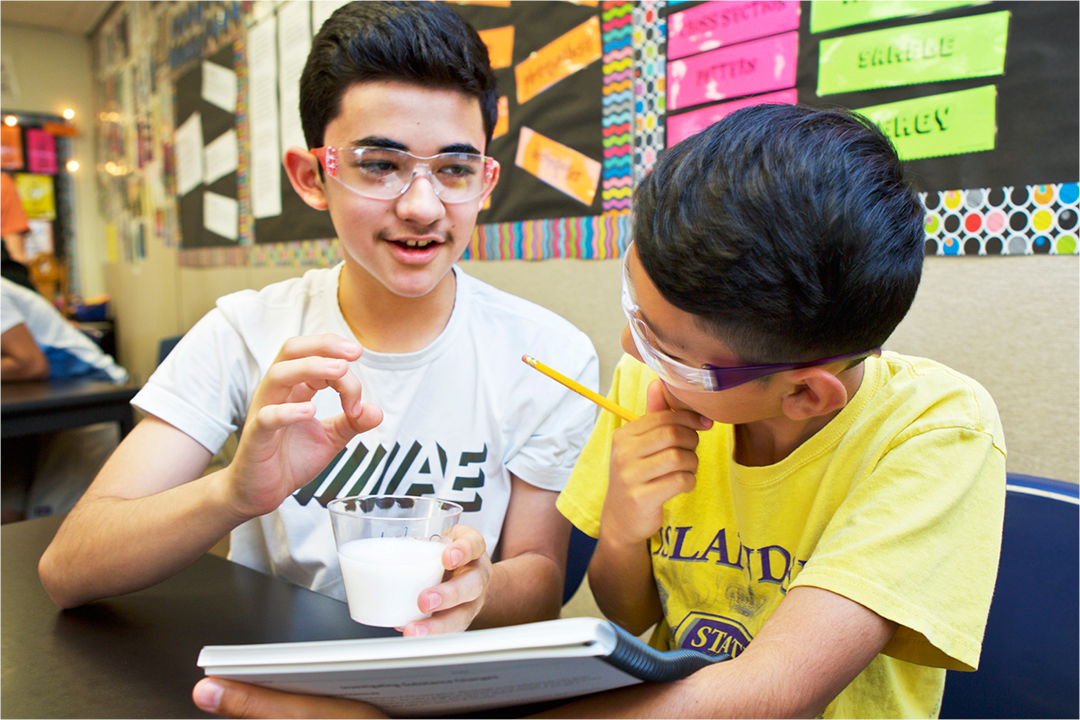

A closer look at grades 3–5
Amplify Science is based on the latest research on teaching and learning and helps teachers deliver age-appropriate, high-quality, literacy-rich instruction that enables students to take on the roles of scientists and engineers to solve real-world phenomena every day.
In the 3–5 classroom, this looks like students:
- Collecting evidence from a variety of sources.
- Making sense of evidence in a variety of ways.
- Formulating convincing scientific arguments.

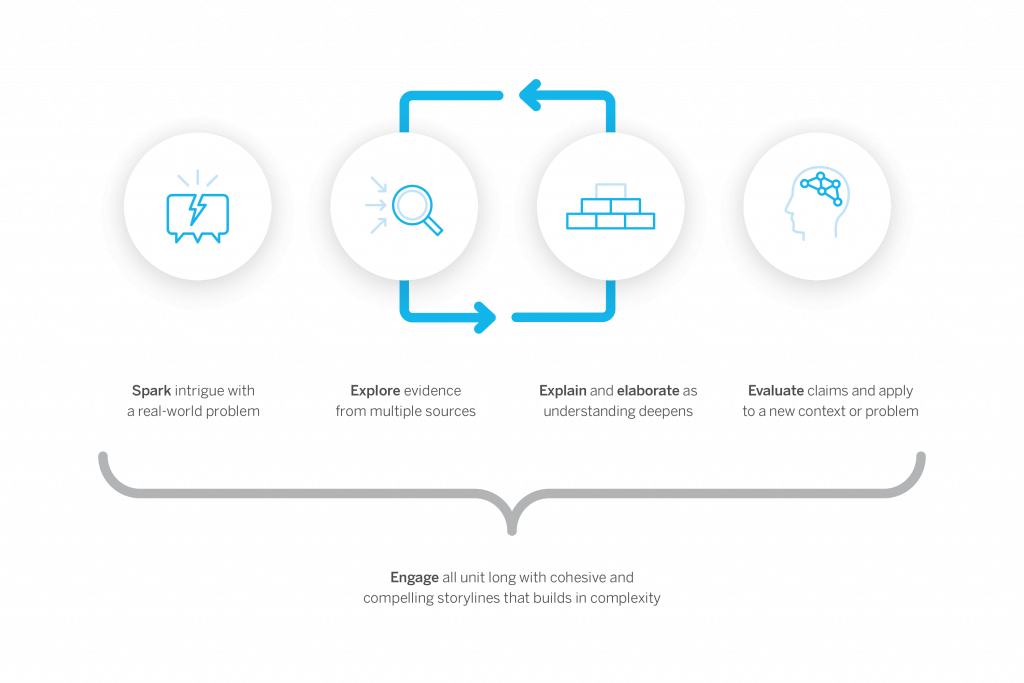
Program structure
Our cyclical lesson design ensures students receive multiple exposures to concepts through a variety of modalities. As they progress through the lessons within a unit, students build and deepen their understanding, increasing their ability to develop and refine complex explanations of the unit’s phenomenon.
It’s this proven program structure and lesson design that enables Amplify Science California to teach less, but achieve more. Rather than asking teachers to wade through unnecessary content, we designed our 3–5 program to address 100% of the California NGSS in just 88 days.
Scope and sequence
Every year of our grades 3–5 sequence consists of 4 units and 88 lessons. Said another way, each unit contains 20 lessons plus two dedicated assessment days (a Pre-Unit Assessment and End-of-Unit Assessment).
Lessons for grades 3–5 are written to last a minimum of 60 minutes, though teachers can expand or contract the timing to meet their needs.

Unit types
Each unit delivers three-dimensional learning experiences and engages students in gathering evidence from a rich collection of sources, while also emphasizing a particular science and engineering practice.
In grades 3–5:
- One unit emphasizes the practice of investigation.
- One unit emphasizes the practice of modeling.
- One unit emphasizes the practice of engineering design.
- One unit emphasizes the practice of argumentation.
Investigation Units
Investigation units focus on the process of strategically developing investigations and gathering data to answer questions. Students are first asked to consider questions about what happens in the natural world and why, and are then involved in designing and conducting investigations that produce data to help answer those questions.
Modeling Units
Modeling units provide extra support to students engaging in the practice of modeling. Students use physical models, investigate with computer models, and create their own diagrams to help them visualize what might be happening on the nanoscale.
Engineering Design Units
Engineering design units provide opportunities for students to solve complex problems by applying science principles to the design of functional solutions, and iteratively testing those solutions to determine how well they meet preset criteria.
Argumentation units
Argumentation units provide students with regular opportunities to explore and discuss available evidence, time and support to consider how evidence may be leveraged in support of claims, and independence that increases as they mount written arguments in support of their claims.
Units at a glance

Balancing Forces
Domain: Physical Science
Unit type: Modeling
Student role: Engineers
Phenomenon: The town of Faraday is getting a new train that floats above its tracks.

Inheritance and Traits
Domain: Life Science
Unit type: Investigation
Student role: Wildlife biologists
Phenomenon: An adopted wolf in Graystone National Park (“Wolf 44”) has some traits that appear similar to one wolf pack in the park and other traits that appear to be similar to a different wolf pack.

Environments and Survival
Domains: Life Science, Engineering Design
Unit type: Engineering design
Student role: Biomimicry engineers
Phenomenon: Over the last 10 years, a population of grove snails has changed: The number of grove snails with yellow shells has decreased, while the number of snails with banded shells has increased.

Weather and Climate
Domains: Earth and Space Science, Engineering Design
Unit type: Argumentation
Student role: Meteorologists
Phenomenon: Three different islands, each a contender for becoming an Orangutan reserve, experience different weather patterns.

Energy Conversions
Domains: Physical Science, Earth and Space Science, Engineering Design
Unit type: Engineering design
Student role: System engineers
Phenomenon: The fictional town of Ergstown experiences frequent blackouts.

Vision and Light
Domain: Physical Science, Life Science, Engineering Design
Unit type: Investigation
Student role: Conservation biologists
Phenomenon: The population of Tokay geckos in a rain forest in the Philippines has decreased since the installation of new highway lights.

Earth’s Features
Domain: Earth and Space Science
Unit type: Argumentation
Student role: Geologists
Phenomenon: A mysterious fossil is discovered in a canyon within the fictional Desert Rocks National Park.

Waves, Energy, and Information
Domains: Physical Science, Life Science, Earth and Space Science, Engineering Design
Unit type: Modeling
Student role: Marine scientists
Phenomenon: Mother dolphins in the fictional Blue Bay National Park seem to be communicating with their calves when they are separated at a distance underwater.

Patterns of Earth and Sky
Domains: Physical Science, Earth and Space Science
Unit type: Investigation
Student role: Astronomers
Phenomenon: An ancient artifact depicts what we see in the sky at different times — the sun during the daytime and different stars during the nighttime — but it is missing a piece.

Modeling Matter
Domain: Physical Science
Unit type: Modeling
Student role: Food scientists
Phenomenon: Chromatography is a process for separating mixtures. Some solids dissolve in a salad dressing while others do not. Oil and vinegar appear to separate when mixed in a salad dressing.

The Earth System
Domains: Earth and Space Science, Physical Science, Engineering Design
Unit type: Engineering Design
Student role: Water resource engineers
Phenomenon: East Ferris, a city on one side of the fictional Ferris Island, is experiencing a water shortage, while West Ferris is not.

Ecosystem Restoration
Domains:Physical Science, Life Science, Earth and Space Science, Engineering Design
Unit type: Argumentation
Student role: Ecologists
Phenomenon: The jaguars, sloths, and cecropia trees in a reforested section of a Costa Rican rain forest are not growing and thriving.
Resources
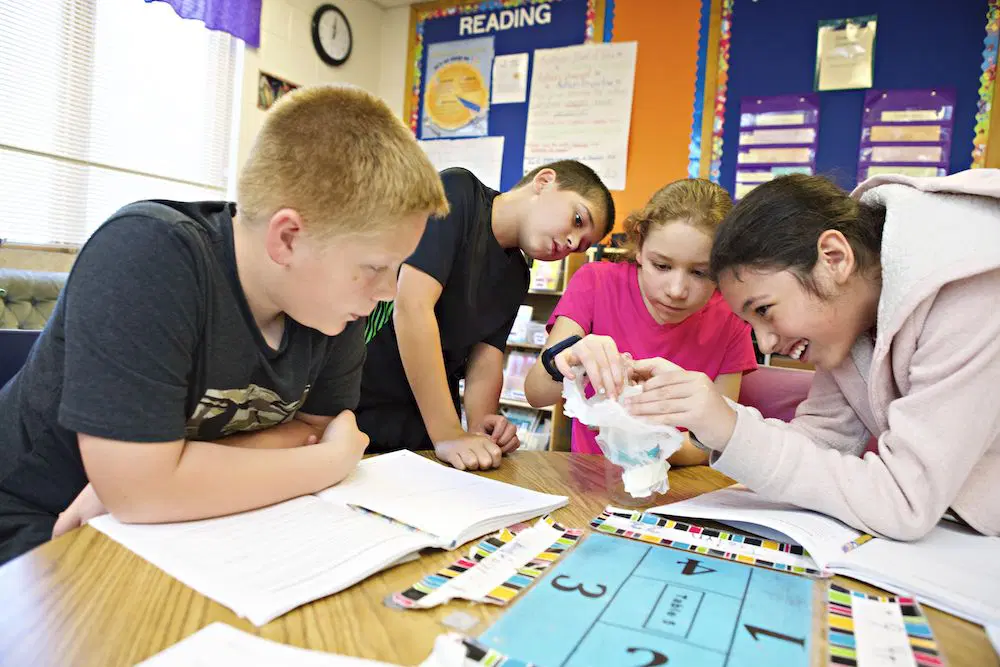

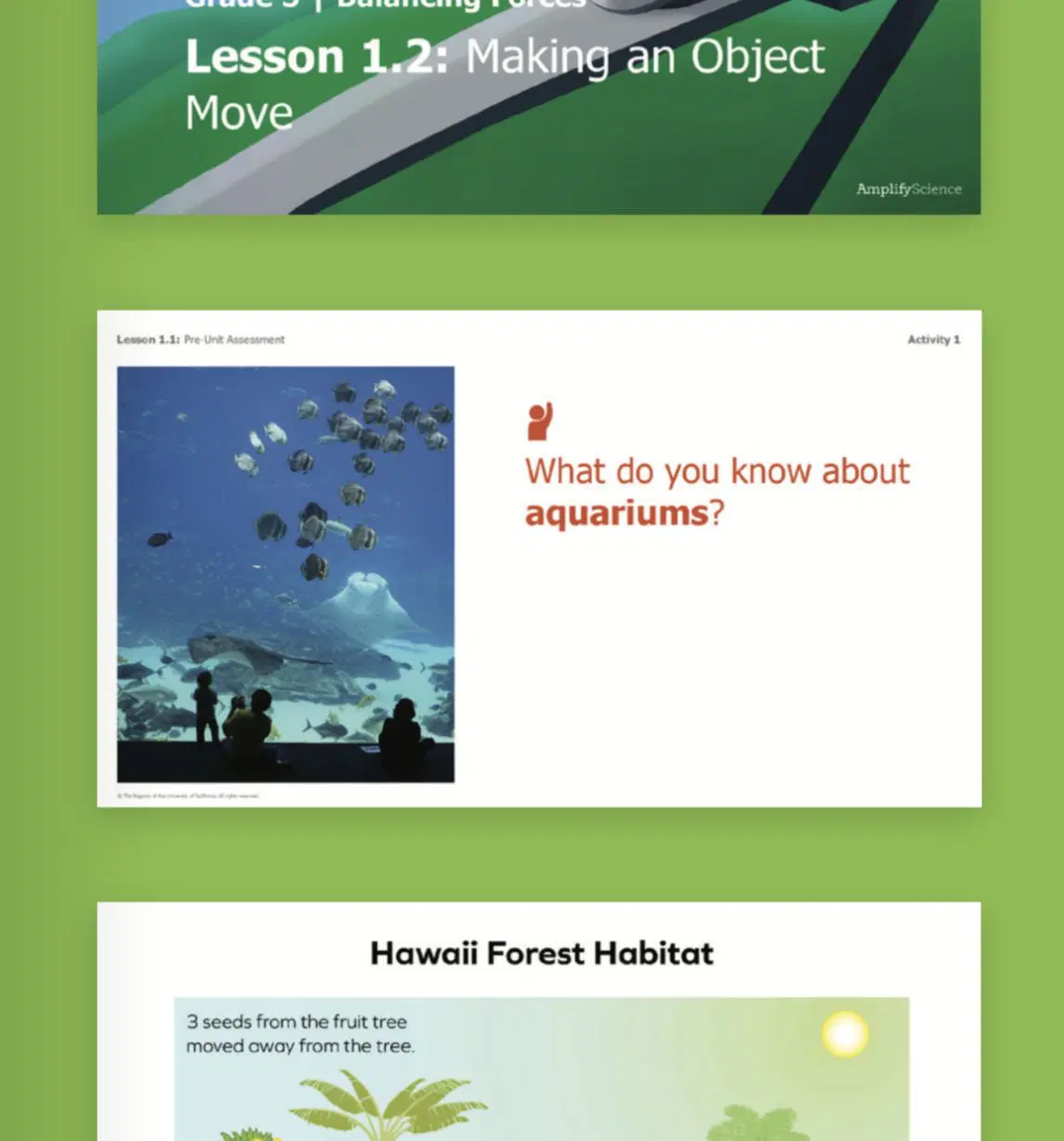

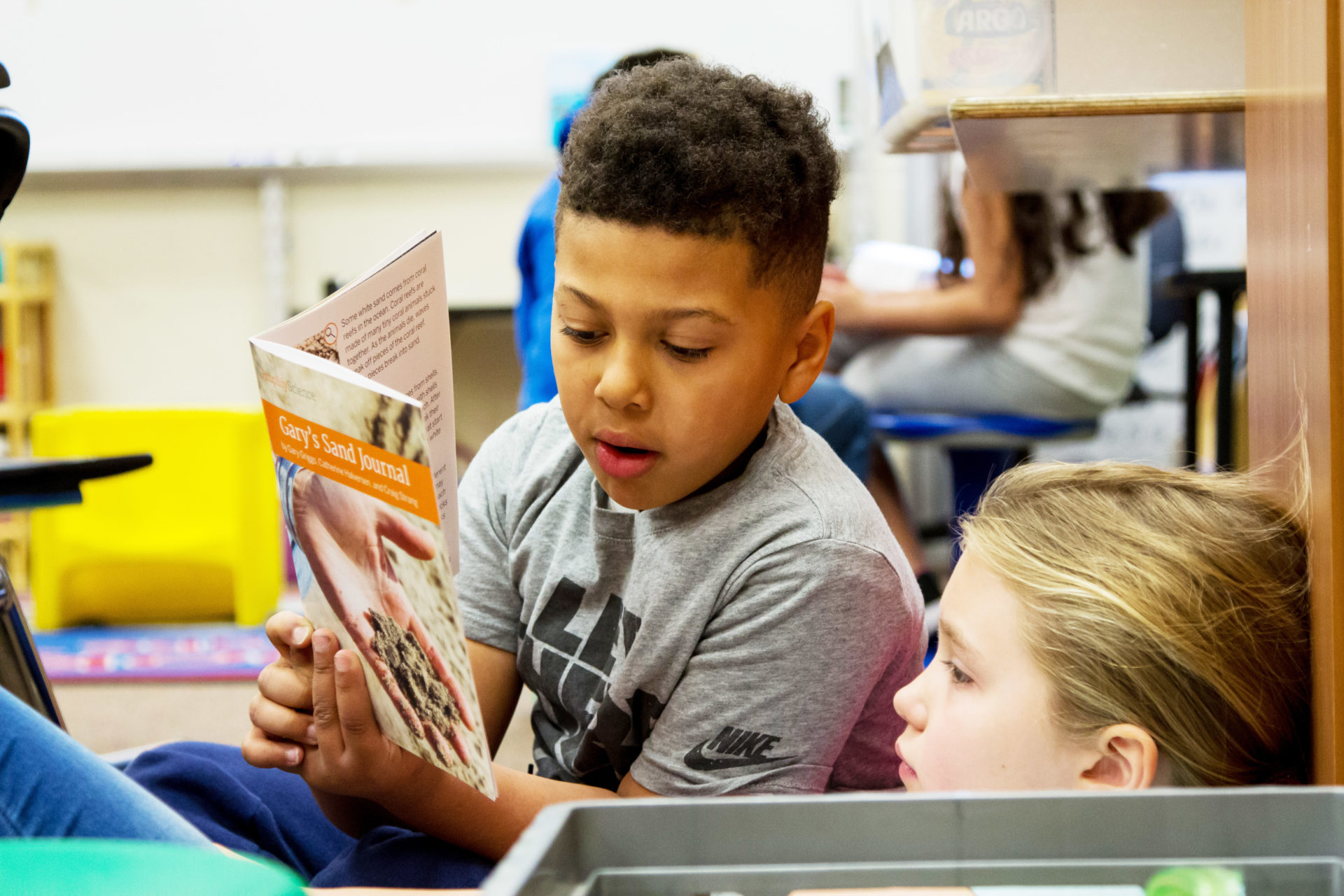

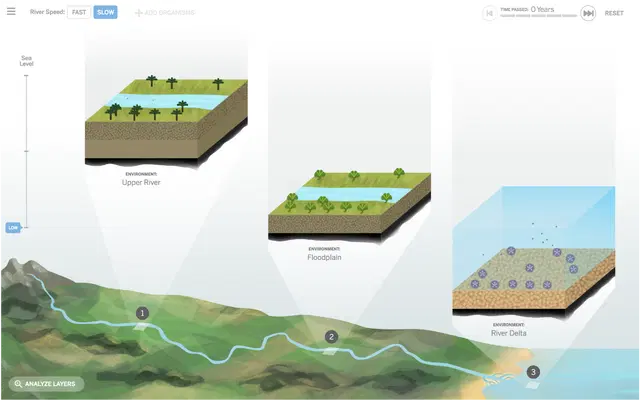
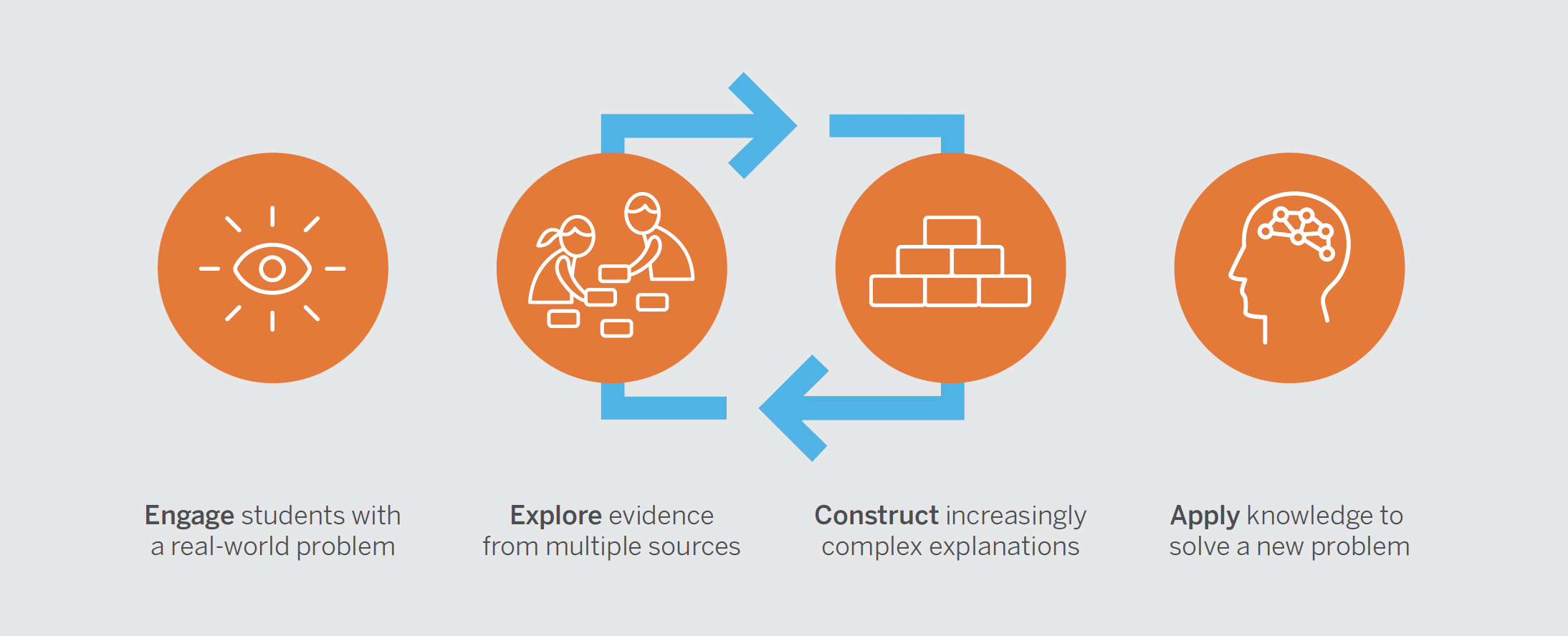
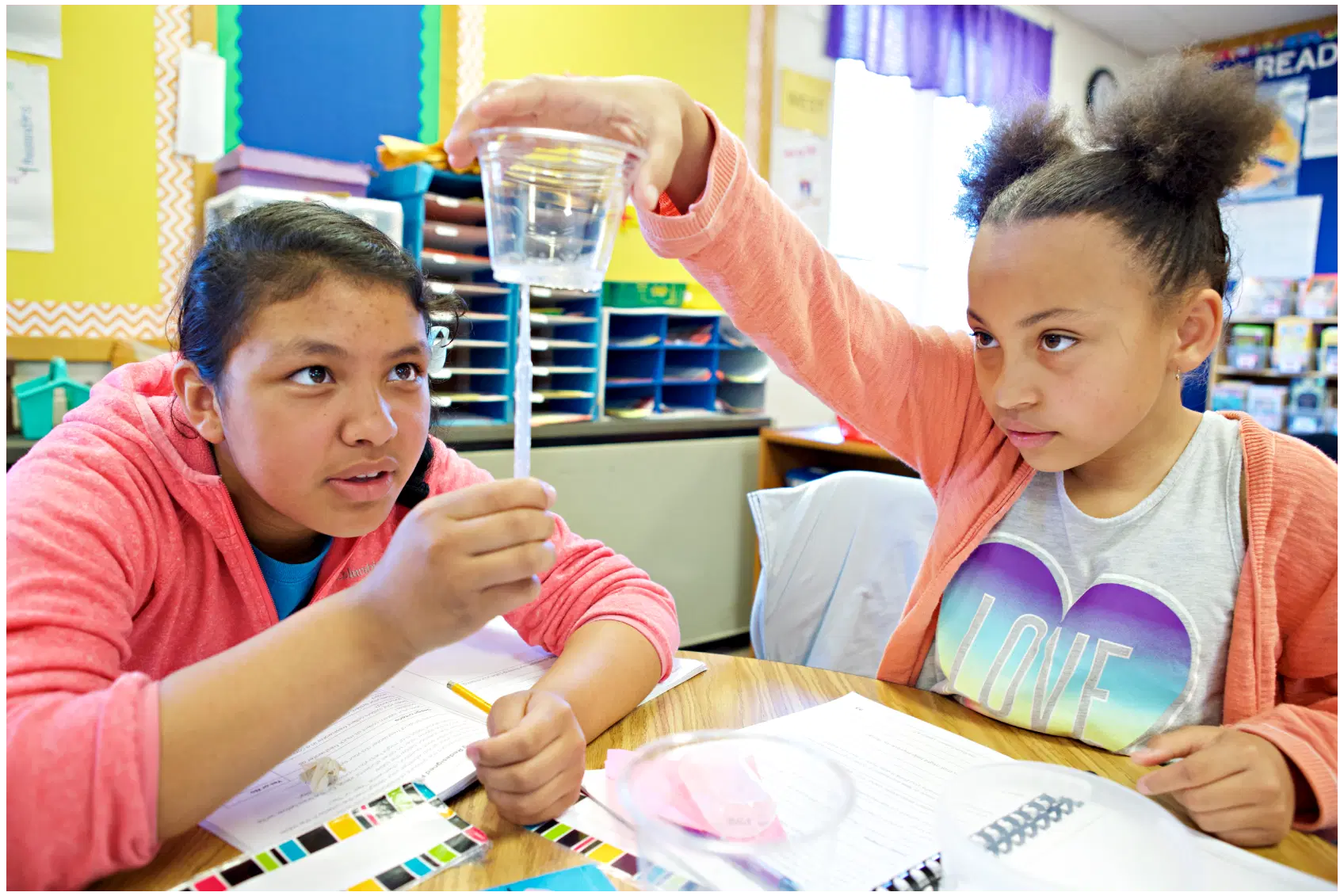


High-impact literacy tutoring for K–6 built on the Science of Reading-NEW | Amplify
Create transformation that lasts.
Embarking on educational change takes heart, intention, and determination. It also requires proven strategies and practical tools. With data, resources, and countless stories of successful implementations to guide us, we can take the first step toward true transformation together.


Principles for Educational Change Management
Whether you’re looking for transformative change in math, literacy, or science instruction, some essential principles apply across the board. As a teacher, administrator, or community leader, you’ll find these guiding principles can help you manage your new curriculum implementation and help each student reach their potential.

Leading instructional shifts across all disciplines

Make the shift to the Science of Reading.
Learn the key steps that will drive the success you need.

Change in math is different.
Managing change in math doesn’t have to mean starting over. It starts with a few simple shifts.

Be a science inspiration.
Intentional shifts help transform students into concerned global citizens ready to take on the world. Find out how.
Let data guide your transformation.
The right data at the right time is crucial in planning lasting instructional change. With specific metrics to guide your implementation, you’ll know exactly how to monitor your progress. Download our literacy assessment infographic as a model for the key data questions to ask at critical points in the school year.

Achieve implementation success.
Ready to navigate educational implementation with confidence? The following resources will help you discover practical strategies for decision-making, managing change, and engaging stakeholders.

Discover five steps to successful implementation.
Balancing decision-making, data collection, and transparent communication doesn’t have to be overwhelming. Discover the five essential steps to making implementation manageable.

Think like a leader.
Strategic leadership requires more than sharp management skills. Find out how the leadership brain model can help you, as a district leader, connect initiatives with your broader vision.

Turn plans into results.
Educational change requires intentional effort. Key leadership imperatives can provide the framework you need for effective implementation.

What district leaders are saying

What district leaders are saying

What district leaders are saying
Educational leaders share their success.
Find out how educational leaders have transformed their districts through successful implementation, revealing the commitment and strategic approach that led to real academic improvements.

Change needs commitment.
Change is achievable when everyone commits to the process. See how one district turned collaboration into a successful implementation of Amplify CKLA.

Existing strengths need focused direction.
Strong district foundations require intentional focus. Learn how systematic analysis helped one district turn comprehensive resources into meaningful impact for teachers.

Shared responsibility transforms implementation.
Managing implementation alone limits success. Discover how one district leader used stakeholder mapping to create shared leadership and building-level ownership.

See implementation in action.
Learn how one district achieved positive test results across grades 1–5 within their first year of adopting Amplify CKLA.

Strategic change delivers results.
Results happen when change is managed strategically. Check out how one district turned thoughtful planning into successful Amplify CKLA adoption.

Curriculum evaluation leads to confident decisions.
Explore how one district implemented Amplify CKLA (after piloting seven different programs!) and achieved powerful kindergarten reading gains.

Regular communication fosters growth.
Structured coaching support transforms implementation outcomes. Find out how regular communication helped one district achieve consistency and sustained student growth with Amplify CKLA.

Preparation creates lasting results.
Comprehensive training creates the foundation for sustained success. Read about how strategic summer preparation and ongoing professional learning helped one county achieve significant academic improvements.
A closer look at grades K–2
Amplify Science California is based on the latest research on teaching and learning and helps teachers deliver age-appropriate, high-quality, literacy-rich instruction that enables students to take on the roles of scientists and engineers to solve real-world phenomena every day.
In the K–2 classroom, this looks like students:
- Collecting evidence from a variety of sources.
- Making sense of evidence in a variety of ways.
- Formulating convincing scientific arguments.

Program structure
Our cyclical lesson design ensures students receive multiple exposures to concepts through a variety of modalities. As they progress through the lessons within a unit, their understanding gradually builds and deepens, ultimately leading to their ability to develop and refine increasingly complex explanations of the unit’s phenomenon.
It’s this proven program structure and lesson design that enables Amplify Science California to teach less, but achieve more. Rather than asking teachers to wade through unnecessary content, we designed our K–2 program to address 100% of the California NGSS in just 66 days.
Scope and sequence
Every year of our K–2 consists of 3 units and 66 total lessons. Said another way, each unit contains 20 lessons plus two dedicated assessment days (a Pre-Unit Assessment and End-of-Unit Assessment).
Lessons at grades K–1 are written for a minimum of 45-minutes, and grade 2 lessons are written for a minimum of 60-minutes—though teachers can expand or contract the timing to meet their needs.
Unit types
While every unit delivers three-dimensional learning experiences and engages students in gathering evidence from a rich collection of sources, each unit also emphasizes a particular science and engineering practice.
In each grade K–2:
- One unit emphasizes the practice of investigation.
- One unit emphasizes the practice of modeling.
- One unit emphasizes the practice of engineering design.
Investigation Units
Investigation units focus on the process of strategically developing investigations and gathering data to answer questions. Students are first asked to consider questions about what happens in the natural world and why, and are then involved in designing and conducting investigations that produce data to help answer those questions.
Modeling Units
Modeling units provide extra support to students engaging in the practice of modeling. Students use physical models, investigate with computer models, and create their own diagrams to help them visualize what might be happening on the nanoscale.
Engineering Design Units
Engineering design units provide opportunities for students to solve complex problems by applying science principles to the design of functional solutions, and iteratively testing those solutions to determine how well they meet preset criteria.
Units at a glance

Needs of Plants and Animals
Domains: Life Science, Earth and Space Science, Engineering Design
Unit type: Investigation
Student role: Scientists
Phenomenon: There are no monarch caterpillars in the Mariposa Grove community garden since vegetables were planted.

Pushes and Pulls
Domains: Physical Science, Engineering Design
Unit type: Engineering design
Student role: Pinball engineers
Phenomenon: Pinball machines allow people to control the direction and strength of forces on a ball.

Sunlight and Weather
Domains: Earth and Space Science, Life Science, Engineering Design
Unit type: Modeling
Student role: Weather scientists
Phenomenon: Students at Carver Elementary School are too cold during morning recess, while students at Woodland Elementary School are too hot during afternoon recess.

Animal and Plant Defenses
Domain: Life Science
Unit type: Modeling
Student role: Marine scientists
Phenomenon: Spruce the Sea Turtle lives in an aquarium and will soon be released back into the ocean, where she will survive despite ocean predators.

Light and Sound
Domains: Physical Science, Engineering Design
Unit type: Engineering design
Student role: Light and sound engineers
Phenomenon: A puppet show company uses light and sound to depict realistic scenes in puppet shows.

Spinning Earth
Domain: Earth and Space Science
Unit type: Investigation
Student role: Sky scientists
Phenomenon: The sky looks different to Sai and his grandma when they talk on the phone.

Plant and Animal Relationships
Domains: Life Science, Engineering Design
Unit type: Investigation
Student role: Plant scientists
Phenomenon: No new chalta trees are growing in the fictional Bengal Tiger Reserve in India.

Properties of Materials
Domains: Physical Science, Engineering Design
Unit type: Engineering design
Student role: Glue engineers
Phenomenon: Different glue recipes result in glues that have different properties.

Changing Landforms
Domain: Earth and Space Science
Unit type: Modeling
Student role: Geologists
Phenomenon: The cliff that Oceanside Recreation Center is situated on appears to be receding over time.
Resources



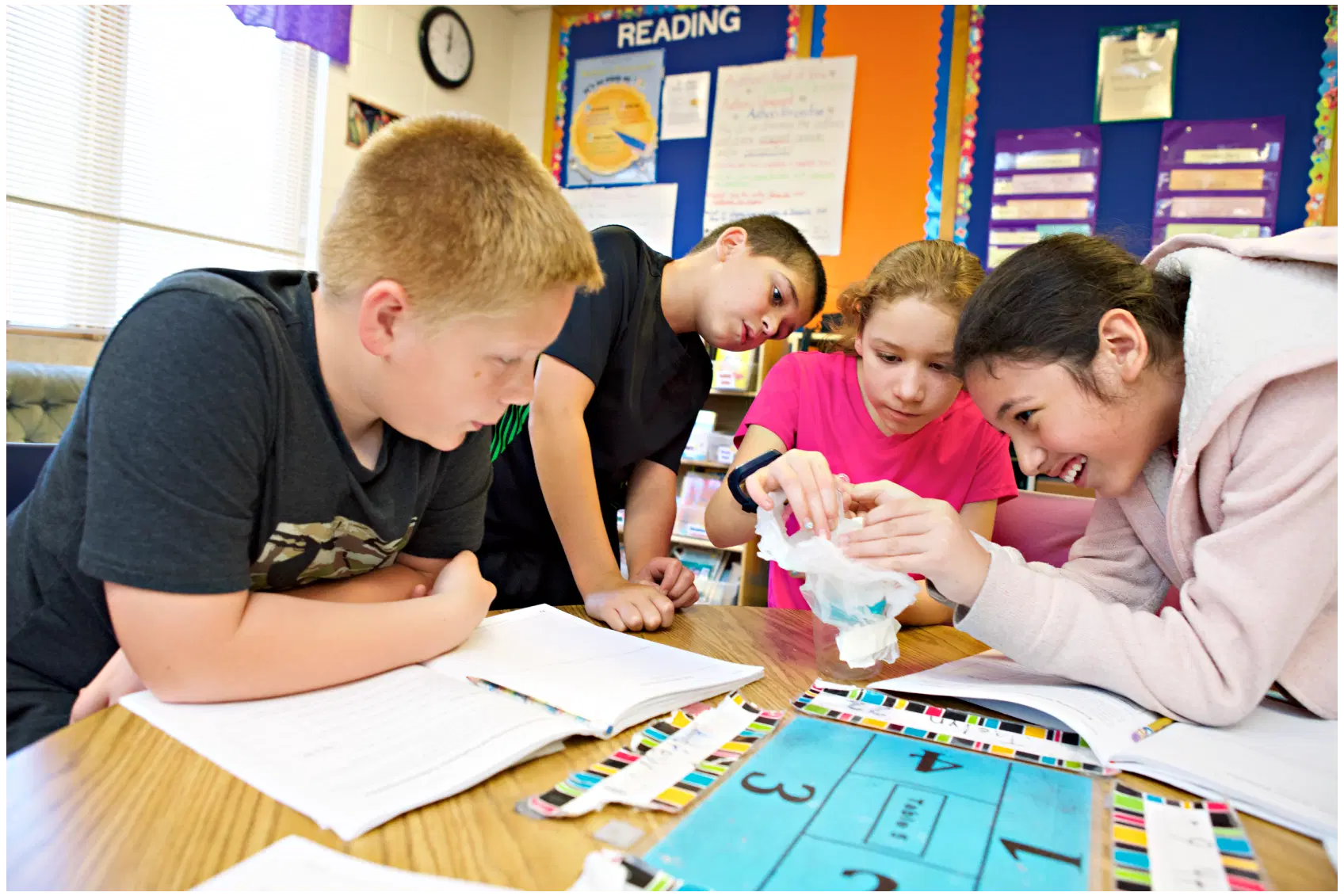

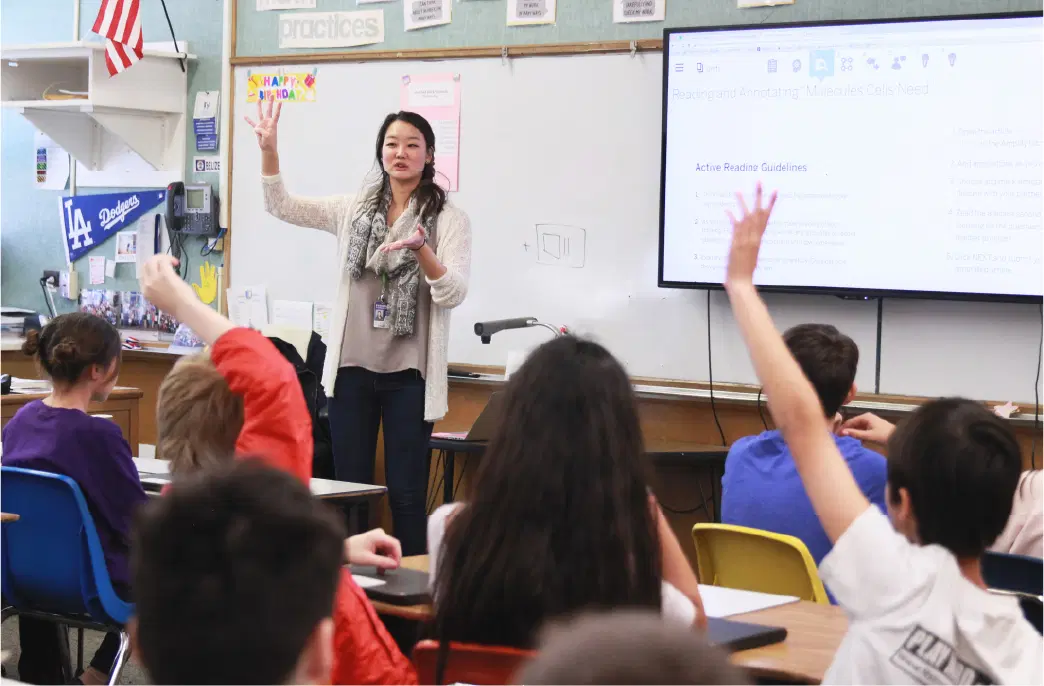
A closer look at grades 3–5
Amplify Science is based on the latest research on teaching and learning and helps teachers deliver age-appropriate, high-quality, literacy-rich instruction that enables students to take on the roles of scientists and engineers to solve real-world phenomena every day.
In the 3–5 classroom, this looks like students:
- Collecting evidence from a variety of sources.
- Making sense of evidence in a variety of ways.
- Formulating convincing scientific arguments.
Program structure
Our cyclical lesson design ensures students receive multiple exposures to concepts through a variety of modalities. As they progress through the lessons within a unit, students build and deepen their understanding, increasing their ability to develop and refine complex explanations of the unit’s phenomenon.
It’s this proven program structure and lesson design that enables Amplify Science California to teach less, but achieve more. Rather than asking teachers to wade through unnecessary content, we designed our 3–5 program to address 100% of the California NGSS in just 88 days.
Scope and sequence
Every year of our grades 3–5 sequence consists of 4 units and 88 lessons. Said another way, each unit contains 20 lessons plus two dedicated assessment days (a Pre-Unit Assessment and End-of-Unit Assessment).
Lessons for grades 3–5 are written to last a minimum of 60 minutes, though teachers can expand or contract the timing to meet their needs.
Unit types
Each unit delivers three-dimensional learning experiences and engages students in gathering evidence from a rich collection of sources, while also emphasizing a particular science and engineering practice.
In grades 3–5:
- One unit emphasizes the practice of investigation.
- One unit emphasizes the practice of modeling.
- One unit emphasizes the practice of engineering design.
- One unit emphasizes the practice of argumentation.
Investigation Units
Investigation units focus on the process of strategically developing investigations and gathering data to answer questions. Students are first asked to consider questions about what happens in the natural world and why, and are then involved in designing and conducting investigations that produce data to help answer those questions.
Modeling Units
Modeling units provide extra support to students engaging in the practice of modeling. Students use physical models, investigate with computer models, and create their own diagrams to help them visualize what might be happening on the nanoscale.
Engineering Design Units
Engineering design units provide opportunities for students to solve complex problems by applying science principles to the design of functional solutions, and iteratively testing those solutions to determine how well they meet preset criteria.
Argumentation units
Argumentation units provide students with regular opportunities to explore and discuss available evidence, time and support to consider how evidence may be leveraged in support of claims, and independence that increases as they mount written arguments in support of their claims.
Units at a glance
Balancing Forces
Domain: Physical Science
Unit type: Modeling
Student role: Engineers
Phenomenon: The town of Faraday is getting a new train that floats above its tracks.
Inheritance and Traits
Domain: Life Science
Unit type: Investigation
Student role: Wildlife biologists
Phenomenon: An adopted wolf in Graystone National Park (“Wolf 44”) has some traits that appear similar to one wolf pack in the park and other traits that appear to be similar to a different wolf pack.
Environments and Survival
Domains: Life Science, Engineering Design
Unit type: Engineering design
Student role: Biomimicry engineers
Phenomenon: Over the last 10 years, a population of grove snails has changed: The number of grove snails with yellow shells has decreased, while the number of snails with banded shells has increased.
Weather and Climate
Domains: Earth and Space Science, Engineering Design
Unit type: Argumentation
Student role: Meteorologists
Phenomenon: Three different islands, each a contender for becoming an Orangutan reserve, experience different weather patterns.
Energy Conversions
Domains: Physical Science, Earth and Space Science, Engineering Design
Unit type: Engineering design
Student role: System engineers
Phenomenon: The fictional town of Ergstown experiences frequent blackouts.
Vision and Light
Domain: Physical Science, Life Science, Engineering Design
Unit type: Investigation
Student role: Conservation biologists
Phenomenon: The population of Tokay geckos in a rain forest in the Philippines has decreased since the installation of new highway lights.
Earth’s Features
Domain: Earth and Space Science
Unit type: Argumentation
Student role: Geologists
Phenomenon: A mysterious fossil is discovered in a canyon within the fictional Desert Rocks National Park.
Waves, Energy, and Information
Domains: Physical Science, Life Science, Earth and Space Science, Engineering Design
Unit type: Modeling
Student role: Marine scientists
Phenomenon: Mother dolphins in the fictional Blue Bay National Park seem to be communicating with their calves when they are separated at a distance underwater.
Patterns of Earth and Sky
Domains: Physical Science, Earth and Space Science
Unit type: Investigation
Student role: Astronomers
Phenomenon: An ancient artifact depicts what we see in the sky at different times — the sun during the daytime and different stars during the nighttime — but it is missing a piece.
Modeling Matter
Domain: Physical Science
Unit type: Modeling
Student role: Food scientists
Phenomenon: Chromatography is a process for separating mixtures. Some solids dissolve in a salad dressing while others do not. Oil and vinegar appear to separate when mixed in a salad dressing.
The Earth System
Domains: Earth and Space Science, Physical Science, Engineering Design
Unit type: Engineering Design
Student role: Water resource engineers
Phenomenon: East Ferris, a city on one side of the fictional Ferris Island, is experiencing a water shortage, while West Ferris is not.
Ecosystem Restoration
Domains:Physical Science, Life Science, Earth and Space Science, Engineering Design
Unit type: Argumentation
Student role: Ecologists
Phenomenon: The jaguars, sloths, and cecropia trees in a reforested section of a Costa Rican rain forest are not growing and thriving.
Resources
A closer look at grades 6–8
Amplify Science California is based on the latest research on teaching and learning and helps teachers deliver rigorous and riveting lessons through hands-on investigations, literacy-rich activities, and interactive digital tools that empower students to think, read, write, and argue like real scientists.
In the 6–8 classroom, this looks like students:
- Collecting evidence from a variety of sources.
- Making sense of evidence in a variety of ways.
- Formulating convincing scientific arguments.
Is your school implementing the domain model? Click here.
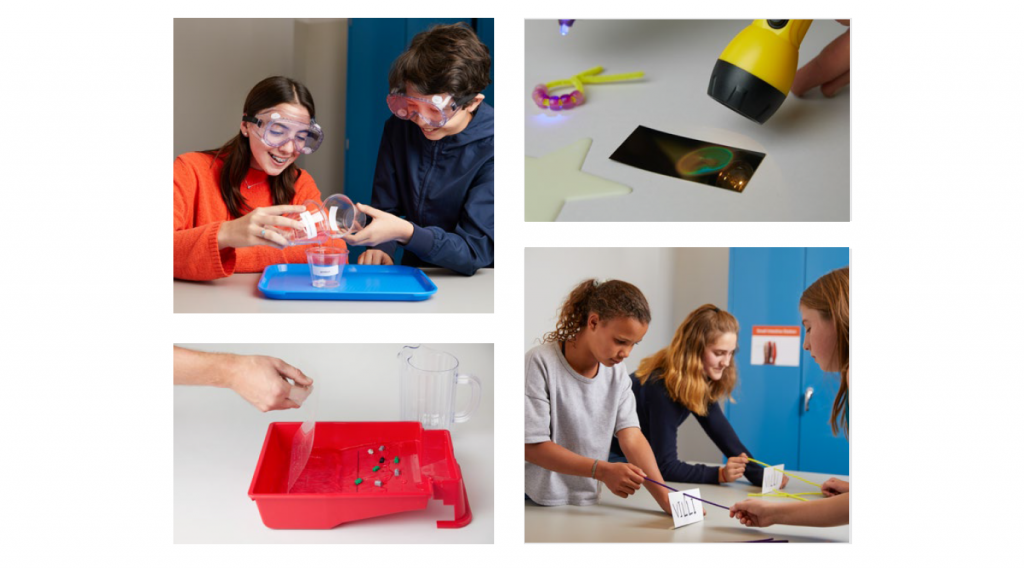

Program structure
Our cyclical lesson design ensures students receive multiple exposures to concepts through a variety of modalities. As they progress through the lessons within a unit, students build and deepen their understanding, increasing their ability to develop and refine complex explanations of the unit’s phenomenon.
It’s this proven program structure and lesson design that enables Amplify Science California to teach less, but achieve more. Rather than asking teachers to wade through unnecessary content, we designed our 6–8 program to address 100% of the California NGSS in fewer lessons than other programs.
Scope and sequence
Every year our grades 6–8 sequence consists of 9 units, with each unit containing 10–19 lessons. Lessons are written to last a minimum of 45-minutes, though teachers can expand or contract the timing to meet their needs.
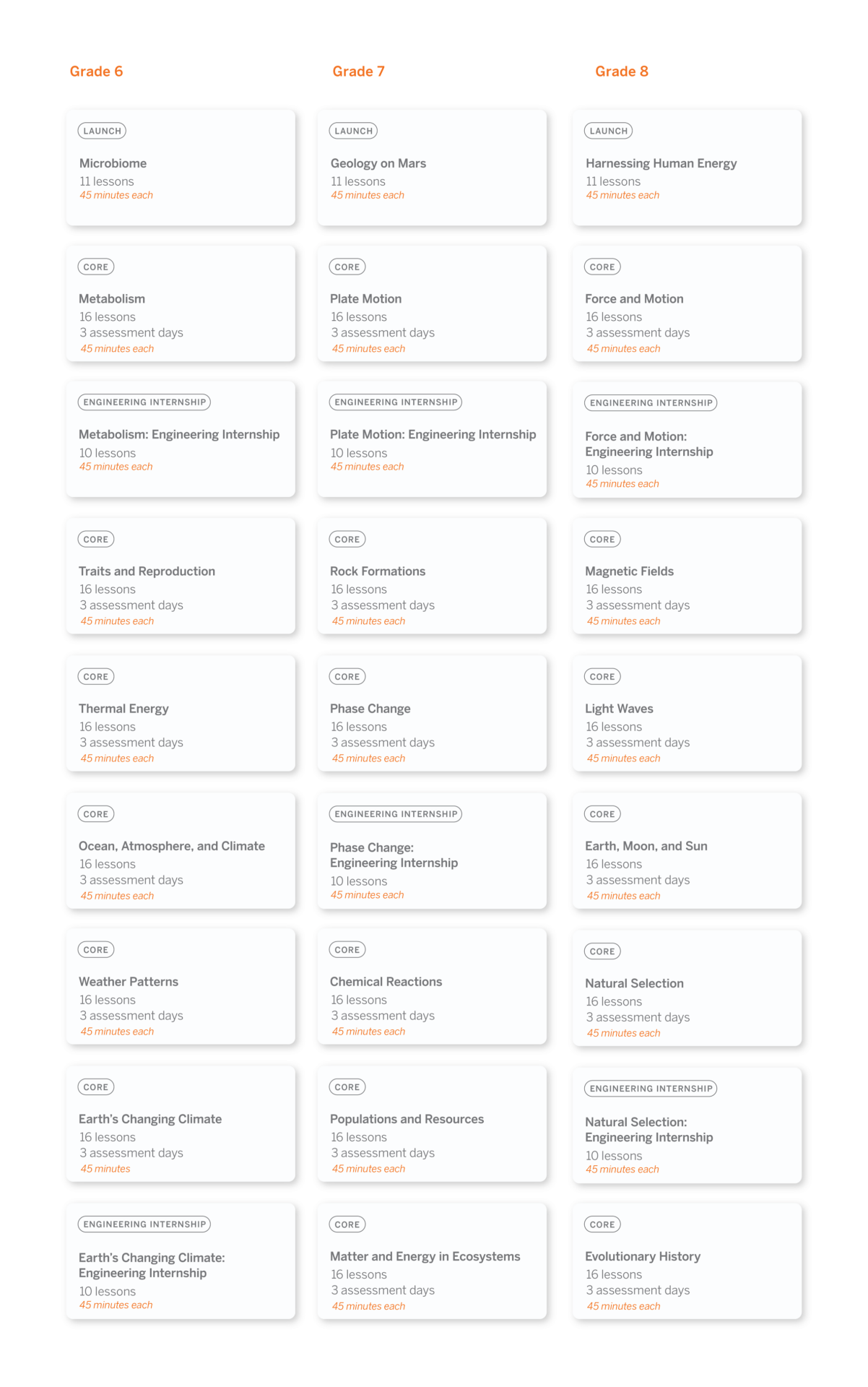
Unit types
Each unit delivers three-dimensional learning experiences and engages students in gathering evidence from a rich collection of sources, while also serving a unique purpose.
In grades 6–8, there are three types of units:
- One unit is a launch unit.
- Three units are core units.
- Two units are engineering internships.
Launch units
Launch units are the first units taught in each year of Amplify Science California. The goal of the Launch unit is to introduce students to norms, routines, and practices that will be built on throughout the year, including argumentation, active reading, and using the program’s technology. For example, rather than taking the time to explain the process of active reading in every unit in a given year, it is explained thoroughly in the Launch unit, thereby preparing students to read actively in all subsequent units.
Core units
Core units establish the context of the unit by introducing students to a real-world problem. As students move through lessons in a Core unit, they figure out the unit’s anchoring phenomenon, gain an understanding of the unit’s disciplinary core ideas and science and engineering practices, and make linkages across topics through the crosscutting concepts. Each Core unit culminates with a Science Seminar and final writing activity.
Engineering Internship units
Engineering Internship units invite students to design solutions for real-world problems as interns for a fictional company called Futura. Students figure out how to help those in need, from tsunami victims in Sri Lanka to premature babies, through the application of engineering practices. In the process, they apply and deepen their learning from Core units.
Units at a glance

Microbiome
Domain: Life Science
Unit type: Launch
Student role: Microbiological researchers
Phenomenon: The presence of 100 trillion microorganisms living on and in the human body may keep the body healthy.

Metabolism
Domain: Life Science
Unit type: Core
Student role: Medical researchers
Phenomenon: Elisa, a young patient, feels tired all the time.

Metabolism Engineering Internship
Domains: Life Science, Engineering Design
Unit type: Engineering internship
Student role: Food engineers
Phenomenon: Designing health bars with different molecular compositions can effectively meet the metabolic needs of patients or rescue workers.

Traits and Reproduction
Domain: Life Science
Unit type: Core
Student role: Biomedical students
Phenomenon: Darwin’s bark spider offspring have different silk flexibility traits, even though they have the same parents.

Thermal Energy
Domain: Physical Science
Unit type: Core
Student role: Thermal scientists
Phenomenon: One of two proposed heating systems for Riverdale School will best heat the school.

Ocean, Atmosphere, and Climate
Domains: Earth and Space Science, Physical Science
Unit type: Core
Student role: Climatologists
Phenomenon: During El Niño years, the air temperature in Christchurch, New Zealand is cooler than usual.

Weather Patterns
Domains: Earth and Space Science, Physical Science
Unit type: Core
Student role: Forensic meteorologists
Phenomenon: In recent years, rainstorms in Galetown have been unusually severe.

Earth’s Changing Climate
Domains: Earth and Space Science, Life Science
Unit type: Core
Student role: Climatologists
Phenomenon: The ice on Earth’s surface is melting.

Earth’s Changing Climate Engineering Internship
Domains: Earth and Space Science, Engineering Design
Unit type: Engineering internship
Student role: Civil engineers
Phenomenon: Designing rooftops with different modifications can reduce a city’s impact on climate change.

Geology on Mars
Domain: Earth and Space Science
Unit type: Launch
Student role: Planetary geologists
Phenomenon: Analyzing data about landforms on Mars can provide evidence that Mars may have once been habitable.

Plate Motion
Domain: Earth and Space Science
Unit type: Core
Student role: Geologists
Phenomenon: Mesosaurus fossils have been found on continents separated by thousands of kilometers of ocean, even though the Mesosaurus species once lived all together.

Plate Motion Engineering Internship
Domains: Earth and Space Science, Engineering Design
Unit type: Engineering internship
Student role: Mechanical engineering interns
Phenomenon: Patterns in earthquake data can be used to design an effective tsunami warning system.

Rock Transformations
Domain: Earth and Space Science
Unit type: Core
Student role: Geologists
Phenomenon: Rock samples from the Great Plains and from the Rocky Mountains — regions hundreds of miles apart — look very different, but have surprisingly similar mineral compositions.

Phase Change
Domains: Physical Science, Earth and Space Science
Unit type: Core
Student role: Chemists
Phenomenon: A methane lake on Titan no longer appears in images taken by a space probe two years apart

Force and Motion Engineering Internship
Domains: Engineering Design, Physical Science
Unit type: Engineering internship
Student role: Mechanical engineering interns
Phenomenon: Designing emergency supply delivery pods with different structures can maintain the integrity of the supply pods and their contents.

Chemical Reactions
Domains: Physical Science, Life Science, Earth and Space Science
Unit type: Core
Student role: Forensic chemists
Phenomenon: A mysterious brown substance has been detected in the tap water of Westfield.

Populations and Resources
Domains: Life Science, Earth and Space Science
Unit type: Core
Student role: Biologists
Phenomenon: The size of the moon jelly population in Glacier Sea has increased.

Matter and Energy in Ecosystems
Domains: Life Science, Earth and Space Science, Physical Science
Unit type: Core
Student role: Ecologists
Phenomenon: The biodome ecosystem has collapsed.

Harnessing Human Energy
Domains: Physical Science, Earth and Space Science, Engineering Design
Unit type: Launch
Student role: Energy scientists
Phenomenon: Rescue workers can use their own human kinetic energy to power the electrical devices they use during rescue missions.

Force and Motion
Domain: Physical Science
Unit type: Core
Student role: Physicists
Phenomenon: The asteroid sample-collecting pod failed to dock at the space station as planned.

Phase Change Engineering Internship
Domains: Engineering Design, Physical Science
Unit type: Engineering internship
Student role: Chemical engineering interns
Phenomenon: Designing portable baby incubators with different combinations of phase change materials can keep babies at a healthy temperature.

Magnetic Fields
Domain: Physical Science
Unit type: Core
Student role: Physicists
Phenomenon: During a test launch, a spacecraft traveled much faster than expected.

Light Waves
Domains: Physical Science, Life Science, Earth and Space Science
Unit type: Core
Student role: Spectroscopists
Phenomenon: The rate of skin cancer is higher in Australia than in other parts of the world.

Earth, Moon, and Sun
Domains: Earth and Space Science, Physical Science
Unit type: Core
Student role: Astronomers
Phenomenon: An astrophotographer can only take pictures of specific features on the Moon at certain times.
Natural Selection
Domains: Life Science, Earth and Space Science
Unit type: Core
Student role: Biologists
Phenomenon: The newt population in Oregon State Park has become more poisonous over time.

Natural Selection Engineering Internship
Domains: Engineering Design, Life Science
Unit type: Engineering internship
Student role: Clinical engineers
Phenomenon: Designing malaria treatment plans that use different combinations of drugs can reduce drug resistance development while helping malaria patients.

Evolutionary History
Domains: Life Science, Earth and Space Science
Unit type: Core
Student role: Paleontologists
Phenomenon: A mystery fossil at the Natural History Museum has similarities with both wolves and whales.
Resources






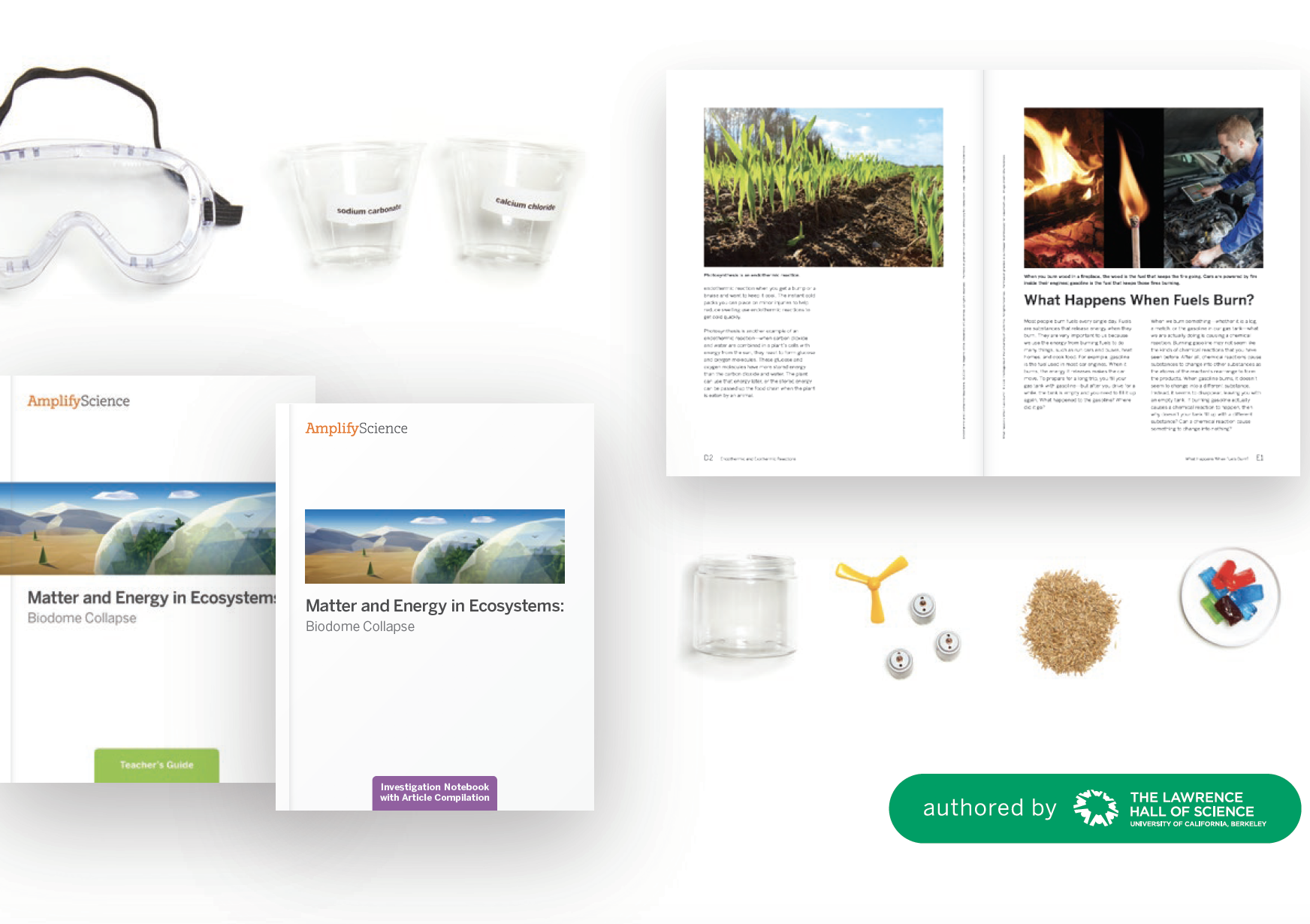
Registration is now closed.
Thank you for your interest, but registration is unfortunately closed.
If you’re interested in hearing about other virtual learning opportunities this fall, please contact us at STEM@amplify.com.
About the event
The 1.5-day interactive retreat for math and science district leaders will be held at the Intercontinental Hotel in Chicago, Illinois from October 20–21, 2022. During the retreat, you will spend your time in interactive workshops while learning from thought-leaders, and will also have time to collaborate with other district leaders.
By attending, you will:
- Immerse yourself in the latest math and science education trends with thought leaders and subject-matter experts.
- Expand your leadership network while sharing challenges and success stories with other district leaders.
- Build action plans that you can bring back to your district in interactive workshops.
Logistics
We will have an optional welcome reception on the evening of October 19, and the event will run from 8 a.m. on Thursday, October 20 through 1 p.m. on Friday, October 21.
Participants will be provided breakfast, lunch, dinner, and snacks on the 20th and breakfast, lunch, and snacks on the 21st.
Amplify will cover on-site hotel and meal fees. Attendees are responsible for their own travel costs.

Meet a few of our speakers
Rebecca Abbott

Professional Learning Lead
UC Berkeley’s Lawrence Hall of Science
Eric Cross

Middle school science educator
Host, Science Connections: The Podcast
Kristin Gray

Math Content Consultant
Amplify
Sunil Singh

Storyteller and author
Desiré Whitmore

Senior Physics Educator
The Exploratorium
Jason Zimba

Chief Academic Officer, STEM
Amplify
The fine print
While we’ve made every effort to ensure that this invitation is consistent with the gift and ethics rules adopted by most jurisdictions, we recognize that many public officials are subject to rules that do not permit acceptance of this offer or require approval of other officials at your agency. If you do plan to attend our event, please ensure that acceptance of our invitation is fully compliant with your local rules regarding travel, lodging, and meals for events with vendors. Please let us know if we can provide any additional information to support your determination.

Join us for an Oklahoma Amplify Science workshop
These fun and informative workshops will give you a sneak peak into Amplify Science for grades K-8. Enjoy dinner with your colleagues and Amplify Science team, preview the program, walk away with free samples, and maybe even a door prize!
Space is limited—register today!
In-person workshops
Agenda
4:00 p.m. Registration
4:30 p.m. Workshop
5:30 p.m. Dinner and door prizes
Tuesday, September 29
Stride Bank Center
301 S. Independence Street
Enid, OK 73701
Wednesday, September 30
Hampton Inn & Suites Stillwater West
615 S. Country Club Road
Stillwater, OK 74074
Thursday, October 1
Science Museum
2020 Remington Place
Oklahoma City, OK 73111
Tuesday, October 20
Oklahoma Aquarium
300 Aquarium Drive
Jenks, OK 74037
Thursday, October 22
Sam Noble Museum
University of Oklahoma
2401 Chautauqua Avenue
Norman, OK 73072
Virtual workshops
Agenda
4:00 p.m. Workshop begins
4:45 p.m. Q&A
5:00 p.m. Dinner gift card and door prizes
Wednesday, October 21
4:00 p.m. CDT
Tuesday, October 27
4:00 p.m. CDT
Wednesday, October 28
4:00 p.m. CDT
Thursday, October 29
4:00 p.m. CDT
Submit the form to register for an event!
The fine print
While we’ve made every effort to ensure that this invitation is consistent with the gift and ethics rules adopted by most jurisdictions, we recognize that many public officials are subject to rules that do not permit acceptance of this offer or require approval of other officials at your agency. If you do plan to attend our event, please ensure that acceptance of our invitation is fully compliant with your local rules regarding travel, lodging, and meals for events with vendors. Please let us know if we can provide any additional information to support your determination.

Join us!
Meet like-minded educators Lorem ipsum dolor sit amet, consectetur adipiscing elit, sed do eiusmod tempor incididunt ut magna aliqua.
March 2–4
The US Grant Hotel, San Diego
About the event
Join us for two days of interactive and inspirational talks with math education leaders from around the country to discuss where math education is headed. Meet like-minded K–12 leaders as well as change-makers from major universities, EdTech companies, and professional learning organizations dedicated to improving teacher experiences and student outcomes in mathematics.
We’re hosting an optional pre-conference workshop featuring Patrick Callahan and Chris Weber on Monday, March 2. The pre-conference starts at 12 p.m.
What to expect:
- Two full days of keynote and breakout sessions covering a variety of K–12 math topics
- Sessions led by district leaders sharing their work to raise math achievement
- Evening networking events
- Engaging speakers with a variety of expertise
- Insights you can put to use in your district immediately

Meet a few of our speakers
Use this version when there are multiple presenters.

Jason Zimba
Founding Partner of Student Achievement Partners
Lead writer of the Common Core State Standards for Mathematics

Sunil Singh
Founding Partner of Student Achievement Partners
Lead writer of the Common Core State Standards for Mathematics

Christina Lincoln-Moore
Founding Partner of Student Achievement Partners
Lead writer of the Common Core State Standards for Mathematics
Meet our featured presenter
Use this version when there is only one presenter, rather than many.

Natalie Wexler
Lorem ipsum dolor sit amet, consectetur adipiscing elit, sed do eiusmod tempor incididunt ut labore et dolore magna aliqua. Quis ipsum suspendisse ultrices gravida dictum fusce. Convallis posuere morbi leo urna molestie. In metus vulputate eu scelerisque felis imperdiet proin fermentum leo.
Lorem ipsum dolor sit amet, consectetur adipiscing elit, sed do eiusmod tempor incididunt ut labore et dolore magna aliqua. Quis ipsum suspendisse ultrices gravida dictum fusce.
Event agenda
Monday, March 2
Arrivals
Pre-conference workshop featuring Chris Weber and Patrick Callahan
Sessions begin at 1 p.m. Pacific and include:
- Adult and Student Mindsets and Math Supports
- Enhanced Mathematics
3:00 p.m. Hotel check-in available
6:00 p.m. Welcome reception and dinner
Tuesday, March 3
8:30 a.m. Sessions begin
Sessions include:
- Math milestones with Jason Zimba
- Unfinished learning with Phil Daro
- Powerful moments in math class with Mike Flynn
- Utilizing math history to embrace equity, failure, and authentic problem-solving in leadership communities with Sunil Singh
- Radical change in high school mathematics: Addressing wicked problems of tracking, acceleration, and curricular change with Mike Steele
6:30 p.m. Evening event
Wednesday, March 4
8:30 a.m. Sessions begin
Sessions include:
- Embedding problem-solving into your curriculum with Fawn Nguyen
- Writing in mathematics: The power of mathematics explanations with Jessica Balli
- Talk Number 2 Me: Mathematics and mindfulness with Christina Lincoln-Moore
- Writing in mathematics: The power of mathematical explanations with Patrick Callahan
4:00 p.m. Departures
Submit the form to register for the event!
Note: this is a Hubspot form but, when this page is used, we will be using Gravity forms. I put in an HS form now since the CSS has not been added.

The fine print
While we’ve made every effort to ensure that this invitation is consistent with the gift and ethics rules adopted by most jurisdictions, we recognize that many public officials are subject to rules that do not permit acceptance of this offer or require approval of other officials at your agency. If you do plan to attend our event, please ensure that acceptance of our invitation is fully compliant with your local rules regarding travel, lodging, and meals for events with vendors. Please let us know if we can provide any additional information to support your determination.
A closer look at grades 6–8 (domain)
Amplify Science is based on the latest research on teaching and learning and helps teachers deliver rigorous and riveting lessons through hands-on investigations, literacy-rich activities, and interactive digital tools that empower students to think, read, write, and argue like real scientists.
In the 6–8 classroom, this looks like students:
- Collecting evidence from a variety of sources.
- Making sense of evidence in a variety of ways.
- Formulating convincing scientific arguments.
Is your school implementing the domain model? Click here.

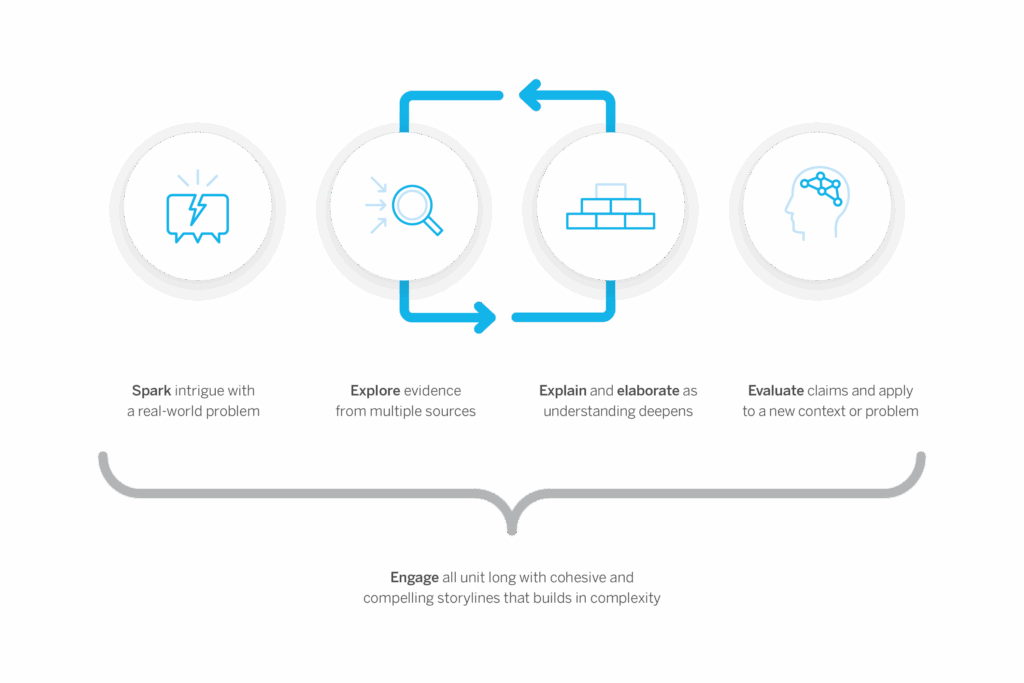
Program structure
Our cyclical lesson design ensures students receive multiple exposures to concepts through a variety of modalities. As they progress through the lessons within a unit, students build and deepen their understanding, increasing their ability to develop and refine complex explanations of the unit’s phenomenon.
It’s this proven program structure and lesson design that enables Amplify Science to teach less, but achieve more. Rather than asking teachers to wade through unnecessary content, we designed our 6–8 program to address 100% of the NGSS in fewer lessons than other programs.
Scope and sequence
Every year our grades 6–8 sequence consists of 9 units, with each unit containing 10–19 lessons. Lessons are written to last a minimum of 45-minutes, though teachers can expand or contract the timing to meet their needs.

Unit types
Each unit delivers three-dimensional learning experiences and engages students in gathering evidence from a rich collection of sources, while also serving a unique purpose.
In grades 6–8, there are three types of units:
- One unit is a launch unit.
- Three units are core units.
- Two units are engineering internships.
Launch units
Launch units are the first units taught in each year of Amplify Science. The goal of the Launch unit is to introduce students to norms, routines, and practices that will be built on throughout the year, including argumentation, active reading, and using the program’s technology. For example, rather than taking the time to explain the process of active reading in every unit in a given year, it is explained thoroughly in the Launch unit, thereby preparing students to actively read in all subsequent units.
Core units
Core units establish the context of the unit by introducing students to a real-world problem. As students move through lessons in a Core unit, they figure out the unit’s anchoring phenomenon, gain an understanding of the unit’s disciplinary core ideas and science and engineering practices, and make linkages across topics through the crosscutting concepts. Each Core unit culminates with a Science Seminar and final writing activity.
Engineering Internship units
Engineering Internship units invite students to design solutions for real-world problems as interns for a fictional company called Futura. Students figure out how to help those in need, from tsunami victims in Sri Lanka to premature babies, through the application of engineering practices. In the process, they apply and deepen their learning from Core units.
Units at a glance

Geology on Mars
Domain: Earth and Space Science
Unit type: Launch
Student role: Planetary geologists
Phenomenon: Analyzing data about landforms on Mars can provide evidence that Mars may have once been habitable.

Plate Motion
Domain: Earth and Space Science
Unit type: Core
Student role: Geologists
Phenomenon: Mesosaurus fossils have been found on continents separated by thousands of kilometers of ocean, even though the Mesosaurus species once lived all together.

Plate Motion Engineering Internship
Domain: Earth and Space Science
Unit type: Engineering internship
Student role: Mechanical engineering interns
Phenomenon: Patterns in earthquake data can be used to design an effective tsunami warning system.

Rock Transformations
Domain: Earth and Space Science
Unit type: Core
Student role: Geologists
Phenomenon: Rock samples from the Great Plains and from the Rocky Mountains — regions hundreds of miles apart — look very different, but have surprisingly similar mineral compositions.

Earth, Sun, and Moon
Domain: Earth and Space Science
Unit type: Core
Student role: Astronomers
Phenomenon: An astrophotographer can only take pictures of specific features on the Moon at certain times.

Ocean, Atmosphere, and Climate
Domain: Earth and Space Science
Unit type: Core
Student role: Climatologists
Phenomenon: During El Niño years, the air temperature in Christchurch, New Zealand is cooler than usual.

Weather Patterns
Domain: Earth and Space Science
Unit type: Core
Student role: Forensic meteorologists
Phenomenon: In recent years, rainstorms in Galetown have been unusually severe.

Earth’s Changing Climate
Domain: Earth and Space Science
Unit type: Core
Student role: Climatologists
Phenomenon: The ice on Earth’s surface is melting.

Earth’s Changing Climate Engineering Internship
Domain: Earth and Space Science
Unit type: Engineering internship
Student role: Civil engineers
Phenomenon: Designing rooftops with different modifications can reduce a city’s impact on climate change.

Microbiome
Domain: Life Science
Unit type: Launch
Student role: Microbiological researchers
Phenomenon: The presence of 100 trillion microorganisms living on and in the human body may keep the body healthy.

Metabolism
Domain: Life Science
Unit type: Core
Student role: Medical researchers
Phenomenon: Elisa, a young patient, feels tired all the time.

Metabolism Engineering Internship
Domain: Life Science
Unit type: Engineering internship
Student role: Food engineers
Phenomenon: Designing health bars with different molecular compositions can effectively meet the metabolic needs of patients or rescue workers.

Traits and Reproduction
Domain: Life Science
Unit type: Core
Student role: Biomedical students
Phenomenon: Darwin’s bark spider offspring have different silk flexibility traits, even though they have the same parents.

Populations and Resources
Domain: Life Science
Unit type: Core
Student role: Biologists
Phenomenon: The size of the moon jelly population in Glacier Sea has increased.

Matter and Energy in Ecosystems
Domain: Life Science
Unit type: Core
Student role: Ecologists
Phenomenon: What caused the mysterious crash of a biodome ecosystem?

Natural Selection
Domain: Life Science
Unit type: Core
Student role: Biologists
Phenomenon: The newt population in Oregon State Park has become more poisonous over time.

Natural Selection Engineering Internship
Domain: Life Science
Unit type: Engineering internship
Student role: Clinical engineers
Phenomenon: Designing malaria treatment plans that use different combinations of drugs can reduce drug resistance development while helping malaria patients.

Evolutionary History
Domain: Life Science
Unit type: Core
Student role: Paleontologists
Phenomenon: A mystery fossil at the Natural History Museum has similarities with both wolves and whales.

Harnessing Human Energy
Domain: Physical Science
Unit type: Launch
Student role: Energy scientists
Phenomenon: Rescue workers can use their own human kinetic energy to power the electrical devices they use during rescue missions.

Force and Motion
Domain: Physical Science
Unit type: Core
Student role: Physicists
Phenomenon: The asteroid sample-collecting pod failed to dock at the space station as planned.
Force and Motion Engineering Internship
Domain: Physical Science
Unit type: Engineering internship
Student role: Mechanical engineering interns
Phenomenon: Designing emergency supply delivery pods with different structures can maintain the integrity of the supply pods and their contents.

Magnetic Fields
Domain: Physical Science
Unit type: Core
Student role: Physicists
Phenomenon: During a test launch, a spacecraft traveled much faster than expected.

Thermal Energy
Domain: Physical Science
Unit type: Core
Student role: Thermal scientists
Phenomenon: One of two proposed heating systems for Riverdale School will best heat the school.

Phase Change
Domain: Physical Science
Unit type: Core
Student role: Chemists
Phenomenon: A methane lake on Titan no longer appears in images taken by a space probe two years apart.
Phase Change Engineering Internship
Domain: Physical Science
Unit type: Engineering internship
Student role: Chemical engineering interns
Phenomenon: Designing portable baby incubators with different combinations of phase change materials can keep babies at a healthy temperature.

Chemical Reactions
Domain: Physical Science
Unit type: Core
Student role: Forensic chemists
Phenomenon: A mysterious brown substance has been detected in the tap water of Westfield.

Light Waves
Domain: Physical Science
Unit type: Core
Student role: Spectroscopists
Phenomenon: The rate of skin cancer is higher in Australia than in other parts of the world.
Resources
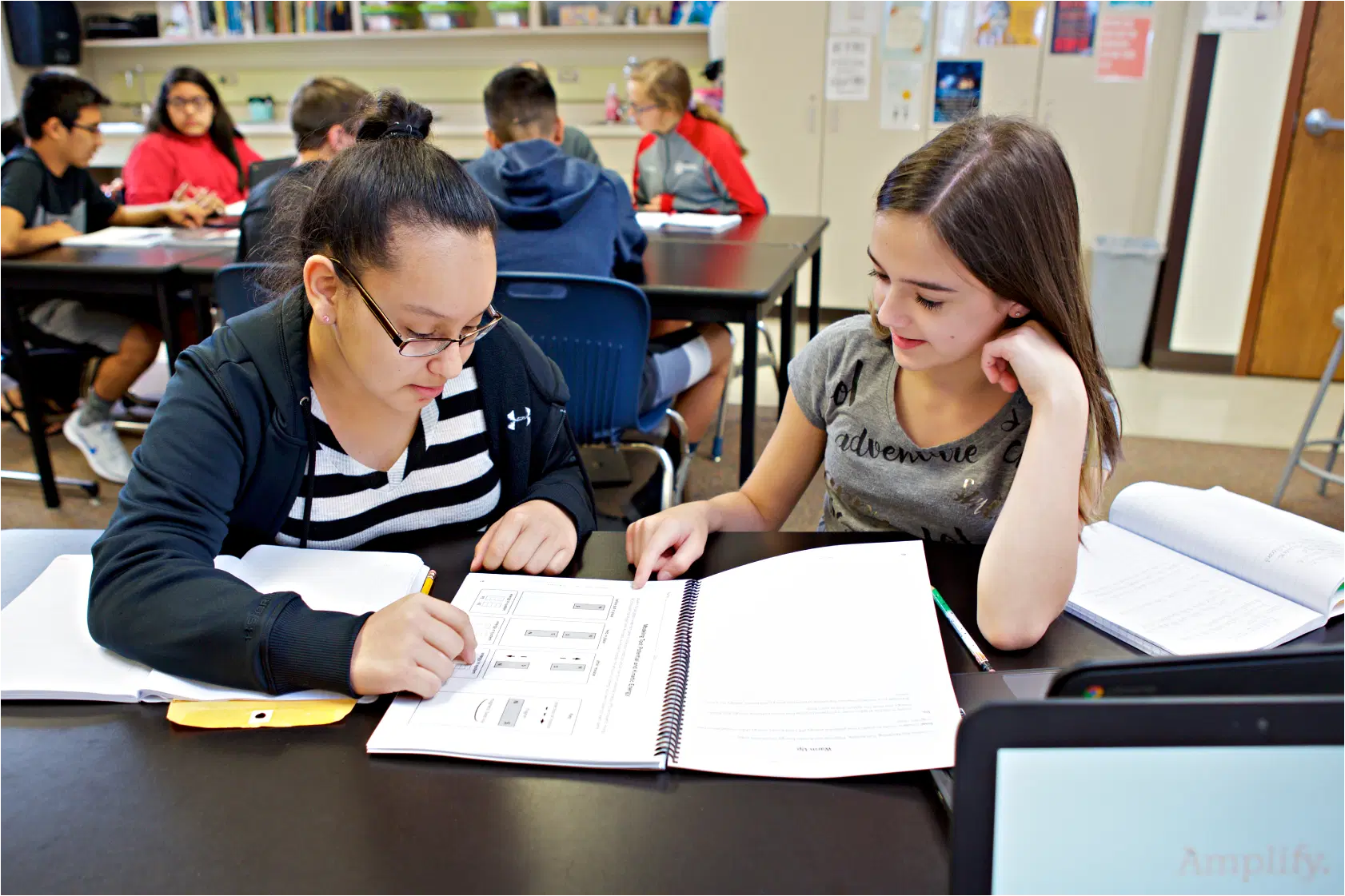

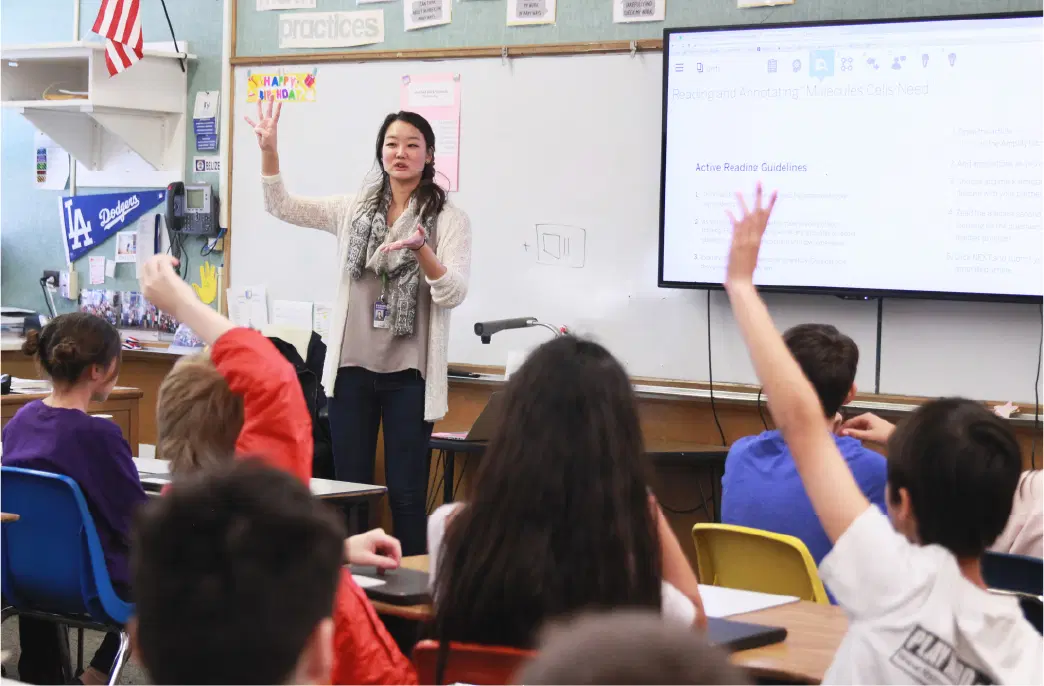



A closer look at grades 6–8
Amplify Science is based on the latest research on teaching and learning and helps teachers deliver rigorous and riveting lessons through hands-on investigations, literacy-rich activities, and interactive digital tools that empower students to think, read, write, and argue like real scientists.
In the 6–8 classroom, this looks like students:
- Collecting evidence from a variety of sources.
- Making sense of evidence in a variety of ways.
- Formulating convincing scientific arguments.
Is your school implementing the domain model? Click here.

Program structure
Our cyclical lesson design ensures students receive multiple exposures to concepts through a variety of modalities. As they progress through the lessons within a unit, students build and deepen their understanding, increasing their ability to develop and refine complex explanations of the unit’s phenomenon.
It’s this proven program structure and lesson design that enables Amplify Science to teach less, but achieve more. Rather than asking teachers to wade through unnecessary content, we designed our 6–8 program to address 100% of the NGSS in fewer lessons than other programs.
Scope and sequence
Every year our grades 6–8 sequence consists of 9 units, with each unit containing 10–19 lessons. Lessons are written to last a minimum of 45-minutes, though teachers can expand or contract the timing to meet their needs.
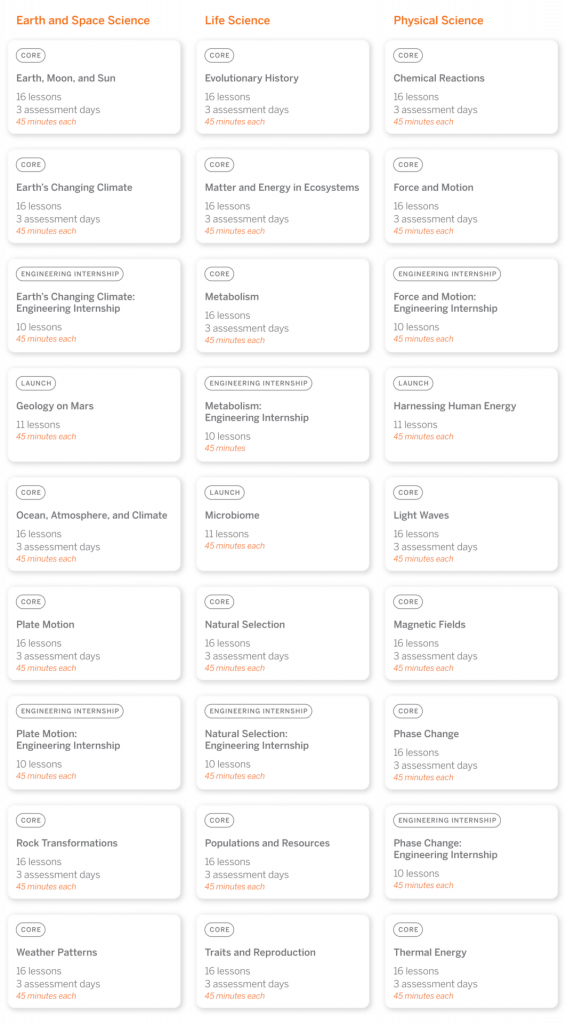
Unit types
Each unit delivers three-dimensional learning experiences and engages students in gathering evidence from a rich collection of sources, while also serving a unique purpose.
In grades 6–8, there are three types of units:
- One unit is a launch unit.
- Three units are core units.
- Two units are engineering internships.
Launch units
Launch units are the first units taught in each year of Amplify Science. The goal of the Launch unit is to introduce students to norms, routines, and practices that will be built on throughout the year, including argumentation, active reading, and using the program’s technology. For example, rather than taking the time to explain the process of active reading in every unit in a given year, it is explained thoroughly in the Launch unit, thereby preparing students to read actively in all subsequent units.
Core units
Core units establish the context of the unit by introducing students to a real-world problem. As students move through lessons in a Core unit, they figure out the unit’s anchoring phenomenon, gain an understanding of the unit’s disciplinary core ideas and science and engineering practices, and make linkages across topics through the crosscutting concepts. Each Core unit culminates with a Science Seminar and final writing activity.
Engineering Internship units
Engineering Internship units invite students to design solutions for real-world problems as interns for a fictional company called Futura. Students figure out how to help those in need, from tsunami victims in Sri Lanka to premature babies, through the application of engineering practices. In the process, they apply and deepen their learning from Core units.
Units at a glance

Microbiome
Domain: Life Science
Unit type: Launch
Student role: Microbiological researchers
Phenomenon: The presence of 100 trillion microorganisms living on and in the human body may keep the body healthy.

Metabolism
Domain: Life Science
Unit type: Core
Student role: Medical researchers
Phenomenon: Elisa, a young patient, feels tired all the time.

Metabolism Engineering Internship
Domains: Life Science, Engineering Design
Unit type: Engineering internship
Student role: Food engineers
Phenomenon: Designing health bars with different molecular compositions can effectively meet the metabolic needs of patients or rescue workers.

Traits and Reproduction
Domain: Life Science
Unit type: Core
Student role: Biomedical students
Phenomenon: Darwin’s bark spider offspring have different silk flexibility traits, even though they have the same parents.

Thermal Energy
Domain: Physical Science
Unit type: Core
Student role: Thermal scientists
Phenomenon: One of two proposed heating systems for Riverdale School will best heat the school.

Ocean, Atmosphere, and Climate
Domains: Earth and Space Science, Physical Science
Unit type: Core
Student role: Climatologists
Phenomenon: During El Niño years, the air temperature in Christchurch, New Zealand is cooler than usual.

Weather Patterns
Domains: Earth and Space Science, Physical Science
Unit type: Core
Student role: Forensic meteorologists
Phenomenon: In recent years, rainstorms in Galetown have been unusually severe.

Earth’s Changing Climate
Domains: Earth and Space Science, Life Science
Unit type: Core
Student role: Climatologists
Phenomenon: The ice on Earth’s surface is melting.

Earth’s Changing Climate Engineering Internship
Domains: Earth and Space Science, Engineering Design
Unit type: Engineering internship
Student role: Civil engineers
Phenomenon: Designing rooftops with different modifications can reduce a city’s impact on climate change.

Geology on Mars
Domain: Earth and Space Science
Unit type: Launch
Student role: Planetary geologists
Phenomenon: Analyzing data about landforms on Mars can provide evidence that Mars may have once been habitable.

Plate Motion
Domain: Earth and Space Science
Unit type: Core
Student role: Geologists
Phenomenon: Mesosaurus fossils have been found on continents separated by thousands of kilometers of ocean, even though the Mesosaurus species once lived all together.

Plate Motion Engineering Internship
Domains: Earth and Space Science, Engineering Design
Unit type: Engineering internship
Student role: Mechanical engineering interns
Phenomenon: Patterns in earthquake data can be used to design an effective tsunami warning system.

Rock Transformations
Domain: Earth and Space Science
Unit type: Core
Student role: Geologists
Phenomenon: Rock samples from the Great Plains and from the Rocky Mountains — regions hundreds of miles apart — look very different, but have surprisingly similar mineral compositions.

Phase Change
Domains: Physical Science, Earth and Space Science
Unit type: Core
Student role: Chemists
Phenomenon: A methane lake on Titan no longer appears in images taken by a space probe two years apart
Force and Motion Engineering Internship
Domains: Engineering Design, Physical Science
Unit type: Engineering internship
Student role: Chemical engineering interns
Phenomenon: Designing portable baby incubators with different combinations of phase change materials can keep babies at a healthy temperature. Domains: Engineering Design, Physical Science

Chemical Reactions
Domains: Physical Science, Life Science, Earth and Space Science
Unit type: Core
Student role: Forensic chemists
Phenomenon: A mysterious brown substance has been detected in the tap water of Westfield.

Populations and Resources
Domains: Life Science, Earth and Space Science
Unit type: Core
Student role: Biologists
Phenomenon: The size of the moon jelly population in Glacier Sea has increased.

Matter and Energy in Ecosystems
Domains: Life Science, Earth and Space Science, Physical Science
Unit type: Core
Student role: Ecologists
Phenomenon: The biodome ecosystem has collapsed.

Harnessing Human Energy
Domains: Physical Science, Earth and Space Science, Engineering Design
Unit type: Launch
Student role: Energy scientists
Phenomenon: Rescue workers can use their own human kinetic energy to power the electrical devices they use during rescue missions.

Force and Motion
Domain: Physical Science
Unit type: Core
Student role: Physicists
Phenomenon: The asteroid sample-collecting pod failed to dock at the space station as planned.
Force and Motion Engineering Internship
Domains: Engineering Design, Physical Science
Unit type: Engineering internship
Student role: Chemical engineering interns
Phenomenon: Designing emergency supply delivery pods with different structures can maintain the integrity of the supply pods and their contents.

Magnetic Fields
Domain: Physical Science
Unit type: Core
Student role: Physicists
Phenomenon: During a test launch, a spacecraft traveled much faster than expected.

Light Waves
Domains: Physical Science, Life Science, Earth and Space Science
Unit type: Core
Student role: Spectroscopists
Phenomenon: The rate of skin cancer is higher in Australia than in other parts of the world.

Earth, Moon, and Sun
Domains: Earth and Space Science, Physical Science
Unit type: Core
Student role: Astronomers
Phenomenon: An astrophotographer can only take pictures of specific features on the Moon at certain times.

Natural Selection
Domains: Life Science, Earth and Space Science
Unit type: Core
Student role: Biologists
Phenomenon: The newt population in Oregon State Park has become more poisonous over time.

Natural Selection Engineering Internship
Domains: Engineering Design, Life Science
Unit type: Engineering internship
Student role: Clinical engineers
Phenomenon: Designing malaria treatment plans that use different combinations of drugs can reduce drug resistance development while helping malaria patients.

Evolutionary History
Domains: Life Science, Earth and Space Science
Unit type: Core
Student role: Paleontologists
Phenomenon: A mystery fossil at the Natural History Museum has similarities with both wolves and whales.
Resources
A closer look at grades 3–5
Amplify Science is based on the latest research on teaching and learning and helps teachers deliver age-appropriate, high-quality, literacy-rich instruction that enables students to take on the roles of scientists and engineers to solve real-world phenomena every day.
In the 3–5 classroom, this looks like students:
- Collecting evidence from a variety of sources.
- Making sense of evidence in a variety of ways.
- Formulating convincing scientific arguments.


Program structure
Our cyclical lesson design ensures students receive multiple exposures to concepts through a variety of modalities. As they progress through the lessons within a unit, students build and deepen their understanding, increasing their ability to develop and refine complex explanations of the unit’s phenomenon.
It’s this proven program structure and lesson design that enables Amplify Science to teach less, but achieve more. Rather than asking teachers to wade through unnecessary content, we designed our 3–5 program to address 100% of the NGSS in just 88 days.
Scope and sequence
Every year of our grades 3–5 sequence consists of 4 units and 88 lessons. Said another way, each unit contains 20 lessons plus two dedicated assessment days (a Pre-Unit Assessment and End-of-Unit Assessment).
Lessons for grades 3–5 are written to last a minimum of 60 minutes, though teachers can expand or contract the timing to meet their needs.

Unit types
Each unit delivers three-dimensional learning experiences and engages students in gathering evidence from a rich collection of sources, while also emphasizing a particular science and engineering practice.
In grades 3–5:
- One unit emphasizes the practice of investigation.
- One unit emphasizes the practice of modeling.
- One unit emphasizes the practice of engineering design.
- One unit emphasizes the practice of argumentation.
Investigation Units
Investigation units focus on the process of strategically developing investigations and gathering data to answer questions. Students are first asked to consider questions about what happens in the natural world and why, and are then involved in designing and conducting investigations that produce data to help answer those questions.
Modeling Units
Modeling units provide extra support to students engaging in the practice of modeling. Students use physical models, investigate with computer models, and create their own diagrams to help them visualize what might be happening on the nanoscale.
Engineering Design Units
Engineering design units provide opportunities for students to solve complex problems by applying science principles to the design of functional solutions, and iteratively testing those solutions to determine how well they meet preset criteria.
Argumentation units
Argumentation units provide students with regular opportunities to explore and discuss available evidence, time and support to consider how evidence may be leveraged in support of claims, and independence that increases as they mount written arguments in support of their claims.
Units at a glance

Balancing Forces
Domain: Physical Science
Unit type: Modeling
Student role: Engineers
Phenomenon: The town of Faraday is getting a new train that floats above its tracks.

Inheritance and Traits
Domains: Life Science
Unit type: Investigation
Student role: Wildlife biologists
Phenomenon: An adopted wolf in Graystone National Park (“Wolf 44”) has some traits that appear similar to one wolf pack in the park and other traits that appear to be similar to a different wolf pack.

Environments and Survival
Domains: Life Science, Engineering Design
Unit type: Engineering design
Student role: Biomimicry engineers
Phenomenon: Over the last 10 years, a population of grove snails has changed: The number of grove snails with yellow shells has decreased, while the number of snails with banded shells has increased.

Weather and Climate
Domains: Earth and Space Science, Engineering Design
Unit type: Argumentation
Student role: Meteorologists
Phenomenon: Three different islands, each a contender for becoming an Orangutan reserve, experience different weather patterns.

Energy Conversions
Domains: Physical Science, Earth and Space Science, Engineering Design
Unit type: Engineering design
Student role: System engineers
Phenomenon: The fictional town of Ergstown experiences frequent blackouts.

Vision and Light
Domain: Physical Science, Life Science, Engineering Design
Unit type: Investigation
Student role: Conservation biologists
Phenomenon: The population of Tokay geckos in a rain forest in the Philippines has decreased since the installation of new highway lights.

Earth’s Features
Domain: Earth and Space Science
Unit type: Argumentation
Student role: Geologists
Phenomenon: A mysterious fossil is discovered in a canyon within the fictional Desert Rocks National Park.

Waves, Energy, and Information
Domains: Physical Science, Life Science, Earth and Space Science, Engineering Design
Unit type: Modeling
Student role: Marine scientists
Phenomenon: Mother dolphins in the fictional Blue Bay National Park seem to be communicating with their calves when they are separated at a distance underwater.

Patterns of Earth and Sky
Domains: Physical Science, Earth and Space Science
Unit type: Investigation
Student role: Astronomers
Phenomenon: An ancient artifact depicts what we see in the sky at different times — the sun during the daytime and different stars during the nighttime — but it is missing a piece.

Modeling Matter
Domain: Physical Science
Unit type: Modeling
Student role: Food scientists
Phenomenon: Chromatography is a process for separating mixtures. Some solids dissolve in a salad dressing while others do not. Oil and vinegar appear to separate when mixed in a salad dressing.

The Earth System
Domains: Earth and Space Science, Physical Science, Engineering Design
Unit type: Engineering Design
Student role: Water resource engineers
Phenomenon: East Ferris, a city on one side of the fictional Ferris Island, is experiencing a water shortage, while West Ferris is not.

Ecosystem Restoration
Domains:Physical Science, Life Science, Earth and Space Science, Engineering Design
Unit type: Argumentation
Student role: Ecologists
Phenomenon: The jaguars, sloths, and cecropia trees in a reforested section of a Costa Rican rain forest are not growing and thriving.
Resources


A closer look at grades K–2
Amplify Science is based on the latest research on teaching and learning and helps teachers deliver age-appropriate, high-quality, literacy-rich instruction that enables students to take on the roles of scientists and engineers to solve real-world phenomena every day.
In the K–2 classroom, this looks like students:
- Collecting evidence from a variety of sources.
- Making sense of evidence in a variety of ways.
- Formulating convincing scientific arguments.


Program structure
Our cyclical lesson design ensures students receive multiple exposures to concepts through a variety of modalities. As they progress through the lessons within a unit, their understanding gradually builds and deepens, ultimately leading to their ability to develop and refine increasingly complex explanations of the unit’s phenomenon.
It’s this proven program structure and lesson design that enables Amplify Science to teach less, but achieve more. Rather than asking teachers to wade through unnecessary content, we designed our K–2 program to address 100% of the NGSS in just 66 days.
Scope and sequence
Every year of our K–2 consists of 3 units and 66 total lessons. Said another way, each unit contains 20 lessons plus two dedicated assessment days (a Pre-Unit Assessment and End-of-Unit Assessment).
Lessons at grades K–1 are written for a minimum of 45-minutes, and grade 2 lessons are written for a minimum of 60-minutes—though teachers can expand or contract the timing to meet their needs.
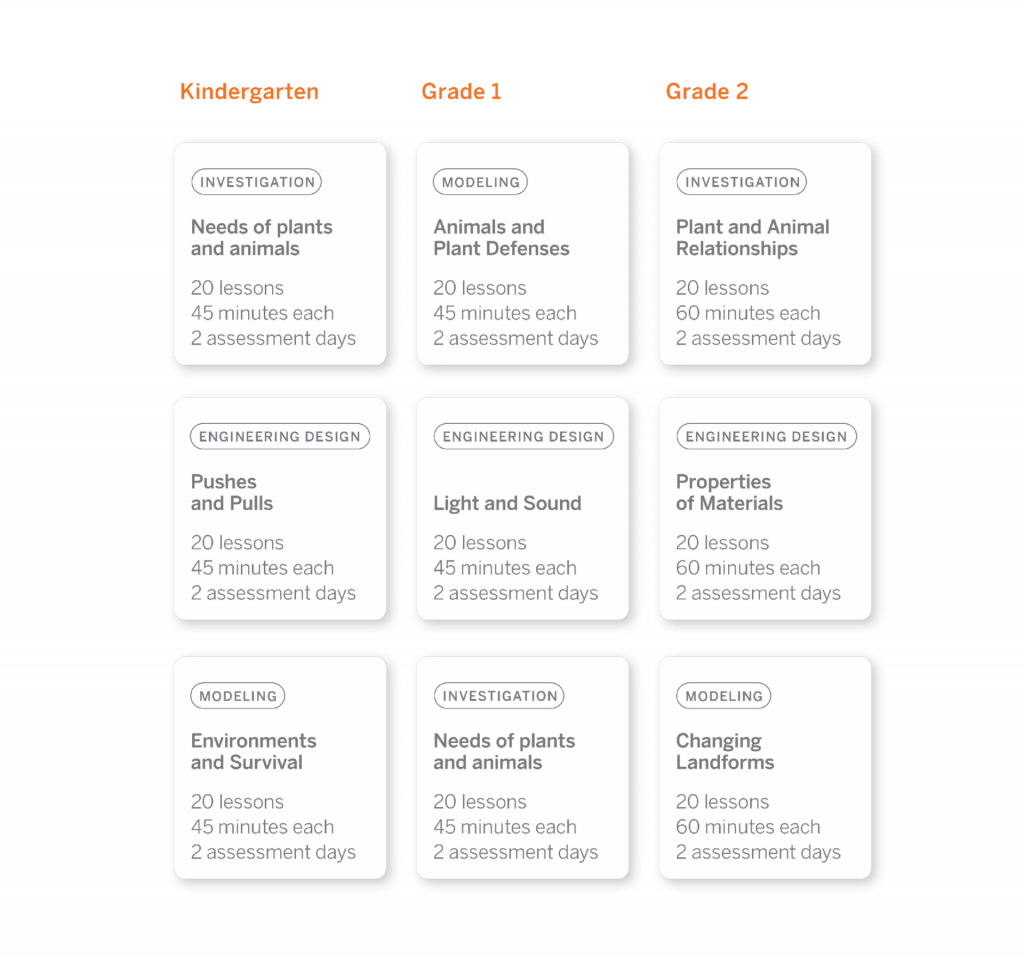
Unit types
While every unit delivers three-dimensional learning experiences and engages students in gathering evidence from a rich collection of sources, each unit also emphasizes a particular science and engineering practice.
In each grade K–2:
- One unit emphasizes the practice of investigation.
- One unit emphasizes the practice of modeling.
- One unit emphasizes the practice of engineering design.
Investigation Units
Investigation units focus on the process of strategically developing investigations and gathering data to answer questions. Students are first asked to consider questions about what happens in the natural world and why, and are then involved in designing and conducting investigations that produce data to help answer those questions.
Modeling Units
Modeling units provide extra support to students engaging in the practice of modeling. Students use physical models, investigate with computer models, and create their own diagrams to help them visualize what might be happening on the nanoscale.
Engineering Design Units
Engineering design units provide opportunities for students to solve complex problems by applying science principles to the design of functional solutions, and iteratively testing those solutions to determine how well they meet preset criteria.
Units at a glance

Needs of Plants and Animals
Domains: Life Science, Earth and Space Science, Engineering Design
Unit type: Investigation
Student role: Scientists
Phenomenon: There are no monarch caterpillars in the Mariposa Grove community garden since vegetables were planted.

Pushes and Pulls
Domains: Physical Science, Engineering Design
Unit type: Engineering design
Student role: Pinball engineers
Phenomenon: Pinball machines allow people to control the direction and strength of forces on a ball.

Sunlight and Weather
Domains: Earth and Space Science, Life Science, Engineering Design
Unit type: Modeling
Student role: Weather scientists
Phenomenon: Students at Carver Elementary School are too cold during morning recess, while students at Woodland Elementary School are too hot during afternoon recess.

Animal and Plant Defenses
Domain: Life Science
Unit type: Modeling
Student role: Marine scientists
Phenomenon: Spruce the Sea Turtle lives in an aquarium and will soon be released back into the ocean, where she will survive despite ocean predators.

Light and Sound
Domains: Physical Science, Engineering Design
Unit type: Engineering design
Student role: Light and sound engineers
Phenomenon: A puppet show company uses light and sound to depict realistic scenes in puppet shows.

Spinning Earth
Domain: Earth and Space Science
Unit type: Investigation
Student role: Sky scientists
Phenomenon: The sky looks different to Sai and his grandma when they talk on the phone.

Plant and Animal Relationships
Domains: Life Science, Engineering Design
Unit type: Investigation
Student role: Plant scientists
Phenomenon: No new chalta trees are growing in the fictional Bengal Tiger Reserve in India.

Properties of Materials
Domains: Physical Science, Engineering Design
Unit type: Engineering design
Student role: Glue engineers
Phenomenon: Different glue recipes result in glues that have different properties.

Changing Landforms
Domain: Earth and Space Science
Unit type: Modeling
Student role: Geologists
Phenomenon: The cliff that Oceanside Recreation Center is situated on appears to be receding over time.
Resources
Amplify Science – Oklahoma
Amplify Science – Oklahoma
Join us!
Meet like-minded educators Lorem ipsum dolor sit amet, consectetur adipiscing elit, sed do eiusmod tempor incididunt ut magna aliqua.
March 2–4
The US Grant Hotel, San Diego
About the event
Join us for two days of interactive and inspirational talks with math education leaders from around the country to discuss where math education is headed. Meet like-minded K–12 leaders as well as change-makers from major universities, EdTech companies, and professional learning organizations dedicated to improving teacher experiences and student outcomes in mathematics.
We’re hosting an optional pre-conference workshop featuring Patrick Callahan and Chris Weber on Monday, March 2. The pre-conference starts at 12 p.m.
What to expect:
- Two full days of keynote and breakout sessions covering a variety of K–12 math topics
- Sessions led by district leaders sharing their work to raise math achievement
- Evening networking events
- Engaging speakers with a variety of expertise
- Insights you can put to use in your district immediately

Meet a few of our speakers
Use this version when there are multiple presenters.
Jason Zimba
Founding Partner of Student Achievement Partners
Lead writer of the Common Core State Standards for Mathematics
Sunil Singh
Founding Partner of Student Achievement Partners
Lead writer of the Common Core State Standards for Mathematics
Christina Lincoln-Moore
Founding Partner of Student Achievement Partners
Lead writer of the Common Core State Standards for Mathematics
Meet our featured presenter
Use this version when there is only one presenter, rather than many.

Natalie Wexler
Lorem ipsum dolor sit amet, consectetur adipiscing elit, sed do eiusmod tempor incididunt ut labore et dolore magna aliqua. Quis ipsum suspendisse ultrices gravida dictum fusce. Convallis posuere morbi leo urna molestie. In metus vulputate eu scelerisque felis imperdiet proin fermentum leo.
Lorem ipsum dolor sit amet, consectetur adipiscing elit, sed do eiusmod tempor incididunt ut labore et dolore magna aliqua. Quis ipsum suspendisse ultrices gravida dictum fusce.
Event agenda
Monday, March 2
Arrivals
Pre-conference workshop featuring Chris Weber and Patrick Callahan
Sessions begin at 1 p.m. Pacific and include:
- Adult and Student Mindsets and Math Supports
- Enhanced Mathematics
3:00 p.m. Hotel check-in available
6:00 p.m. Welcome reception and dinner
Tuesday, March 3
8:30 a.m. Sessions begin
Sessions include:
- Math milestones with Jason Zimba
- Unfinished learning with Phil Daro
- Powerful moments in math class with Mike Flynn
- Utilizing math history to embrace equity, failure, and authentic problem-solving in leadership communities with Sunil Singh
- Radical change in high school mathematics: Addressing wicked problems of tracking, acceleration, and curricular change with Mike Steele
6:30 p.m. Evening event
Wednesday, March 4
8:30 a.m. Sessions begin
Sessions include:
- Embedding problem-solving into your curriculum with Fawn Nguyen
- Writing in mathematics: The power of mathematics explanations with Jessica Balli
- Talk Number 2 Me: Mathematics and mindfulness with Christina Lincoln-Moore
- Writing in mathematics: The power of mathematical explanations with Patrick Callahan
4:00 p.m. Departures
Submit the form to register for the event!
Note: this is a Hubspot form but, when this page is used, we will be using Gravity forms. I put in an HS form now since the CSS has not been added.

The fine print
While we’ve made every effort to ensure that this invitation is consistent with the gift and ethics rules adopted by most jurisdictions, we recognize that many public officials are subject to rules that do not permit acceptance of this offer or require approval of other officials at your agency. If you do plan to attend our event, please ensure that acceptance of our invitation is fully compliant with your local rules regarding travel, lodging, and meals for events with vendors. Please let us know if we can provide any additional information to support your determination.
A closer look at grades 6–8 (domain)
Amplify Science California is based on the latest research on teaching and learning and helps teachers deliver rigorous and riveting lessons through hands-on investigations, literacy-rich activities, and interactive digital tools that empower students to think, read, write, and argue like real scientists.
In the 6–8 classroom, this looks like students:
- Collecting evidence from a variety of sources.
- Making sense of evidence in a variety of ways.
- Formulating convincing scientific arguments.
Is your school implementing the integrated model? Click here.
Program structure
Our cyclical lesson design ensures students receive multiple exposures to concepts through a variety of modalities. As they progress through the lessons within a unit, students build and deepen their understanding, increasing their ability to develop and refine complex explanations of the unit’s phenomenon.
It’s this proven program structure and lesson design that enables Amplify Science California to teach less, but achieve more. Rather than asking teachers to wade through unnecessary content, we designed our 6–8 program to address 100% of the California NGSS in fewer lessons than other programs.
Scope and sequence
Every year of our grades 6–8 sequence consists of 9 units, with each unit containing 10–19 lessons. Lessons are written to last a minimum of 45 minutes, though teachers can expand or contract the timing to meet their needs.
Unit types
Each unit delivers three-dimensional learning experiences and engages students in gathering evidence from a rich collection of sources, while also serving a unique purpose.
In grades 6–8, there are three types of units:
- One unit is a launch unit.
- Three units are core units.
- Two units are engineering internships.
Launch units
Launch units are the first units taught in each year of Amplify Science California. The goal of the Launch unit is to introduce students to norms, routines, and practices that will be built on throughout the year, including argumentation, active reading, and using the program’s technology. For example, rather than taking the time to explain the process of active reading in every unit in a given year, it is explained thoroughly in the Launch unit, thereby preparing students to actively read in all subsequent units.
Core units
Core units establish the context of the unit by introducing students to a real-world problem. As students move through lessons in a Core unit, they figure out the unit’s anchoring phenomenon, gain an understanding of the unit’s disciplinary core ideas and science and engineering practices, and make linkages across topics through the crosscutting concepts. Each Core unit culminates with a Science Seminar and final writing activity.
Engineering Internship units
Engineering Internship units invite students to design solutions for real-world problems as interns for a fictional company called Futura. Students figure out how to help those in need, from tsunami victims in Sri Lanka to premature babies, through the application of engineering practices. In the process, they apply and deepen their learning from Core units.
Units at a glance
Geology on Mars
Domain: Earth and Space Science
Unit type: Launch
Student role: Planetary geologists
Phenomenon: Analyzing data about landforms on Mars can provide evidence that Mars may have once been habitable.
Plate Motion
Domain: Earth and Space Science
Unit type: Core
Student role: Geologists
Phenomenon: Mesosaurus fossils have been found on continents separated by thousands of kilometers of ocean, even though the Mesosaurus species once lived all together.
Plate Motion Engineering Internship
Domain: Earth and Space Science
Unit type: Engineering internship
Student role: Mechanical engineering interns
Phenomenon: Patterns in earthquake data can be used to design an effective tsunami warning system.
Rock Transformations
Domain: Earth and Space Science
Unit type: Core
Student role: Geologists
Phenomenon: Rock samples from the Great Plains and from the Rocky Mountains — regions hundreds of miles apart — look very different, but have surprisingly similar mineral compositions.
Earth, Sun, and Moon
Domain: Earth and Space Science
Unit type: Core
Student role: Astronomers
Phenomenon: An astrophotographer can only take pictures of specific features on the Moon at certain times.
Ocean, Atmosphere, and Climate
Domain: Earth and Space Science
Unit type: Core
Student role: Climatologists
Phenomenon: During El Niño years, the air temperature in Christchurch, New Zealand is cooler than usual.
Weather Patterns
Domain: Earth and Space Science
Unit type: Core
Student role: Forensic meteorologists
Phenomenon: In recent years, rainstorms in Galetown have been unusually severe.
Earth’s Changing Climate
Domain: Earth and Space Science
Unit type: Core
Student role: Climatologists
Phenomenon: The ice on Earth’s surface is melting.
Earth’s Changing Climate Engineering Internship
Domain: Earth and Space Science
Unit type: Engineering internship
Student role: Civil engineers
Phenomenon: Designing rooftops with different modifications can reduce a city’s impact on climate change.
Microbiome
Domain: Life Science
Unit type: Launch
Student role: Microbiological researchers
Phenomenon: The presence of 100 trillion microorganisms living on and in the human body may keep the body healthy.
Metabolism
Domain: Life Science
Unit type: Core
Student role: Medical researchers
Phenomenon: Elisa, a young patient, feels tired all the time.
Metabolism Engineering Internship
Domain: Life Science
Unit type: Engineering internship
Student role: Food engineers
Phenomenon: Designing health bars with different molecular compositions can effectively meet the metabolic needs of patients or rescue workers.
Traits and Reproduction
Domain: Life Science
Unit type: Core
Student role: Biomedical students
Phenomenon: Darwin’s bark spider offspring have different silk flexibility traits, even though they have the same parents.
Populations and Resources
Domain: Life Science
Unit type: Core
Student role: Biologists
Phenomenon: The size of the moon jelly population in Glacier Sea has increased.
Matter and Energy in Ecosystems
Domain: Life Science
Unit type: Core
Student role: Ecologists
Phenomenon: What caused the mysterious crash of a biodome ecosystem?
Natural Selection
Domain: Life Science
Unit type: Core
Student role: Biologists
Phenomenon: The newt population in Oregon State Park has become more poisonous over time.
Natural Selection Engineering Internship
Domain: Life Science
Unit type: Engineering internship
Student role: Clinical engineers
Phenomenon: Designing malaria treatment plans that use different combinations of drugs can reduce drug resistance development while helping malaria patients.
Evolutionary History
Domain: Life Science
Unit type: Core
Student role: Paleontologists
Phenomenon: A mystery fossil at the Natural History Museum has similarities with both wolves and whales.
Harnessing Human Energy
Domain: Physical Science
Unit type: Launch
Student role: Energy scientists
Phenomenon: Rescue workers can use their own human kinetic energy to power the electrical devices they use during rescue missions.
Force and Motion
Domain: Physical Science
Unit type: Core
Student role: Physicists
Phenomenon: The asteroid sample-collecting pod failed to dock at the space station as planned.
Force and Motion Engineering Internship
Domain: Physical Science
Unit type: Engineering internship
Student role: Mechanical engineering interns
Phenomenon: Designing emergency supply delivery pods with different structures can maintain the integrity of the supply pods and their contents.
Magnetic Fields
Domain: Physical Science
Unit type: Core
Student role: Physicists
Phenomenon: During a test launch, a spacecraft traveled much faster than expected.
Thermal Energy
Domain: Physical Science
Unit type: Core
Student role: Thermal scientists
Phenomenon: One of two proposed heating systems for Riverdale School will best heat the school.
Phase Change
Domain: Physical Science
Unit type: Core
Student role: Chemists
Phenomenon: A methane lake on Titan no longer appears in images taken by a space probe two years apart.
Phase Change Engineering Internship
Domain: Physical Science
Unit type: Engineering internship
Student role: Chemical engineering interns
Phenomenon: Designing portable baby incubators with different combinations of phase change materials can keep babies at a healthy temperature.
Chemical Reactions
Domain: Physical Science
Unit type: Core
Student role: Forensic chemists
Phenomenon: A mysterious brown substance has been detected in the tap water of Westfield.
Light Waves
Domain: Physical Science
Unit type: Core
Student role: Spectroscopists
Phenomenon: The rate of skin cancer is higher in Australia than in other parts of the world.
Resources
A digital reading intervention that delivers growth across every tier of instruction
Boost Reading is a student-led K–5 digital intervention, built on the Science of Reading, that delivers systematic instruction. Students receive targeted, adaptive practice that meets them where they are, while teachers get simple and meaningful insights into student progress without extra work. Fully aligned to Amplify CKLA and mCLASS®, Boost Reading brings powerful support to every tier of instruction. Para la versión en español, haga clic aquí.
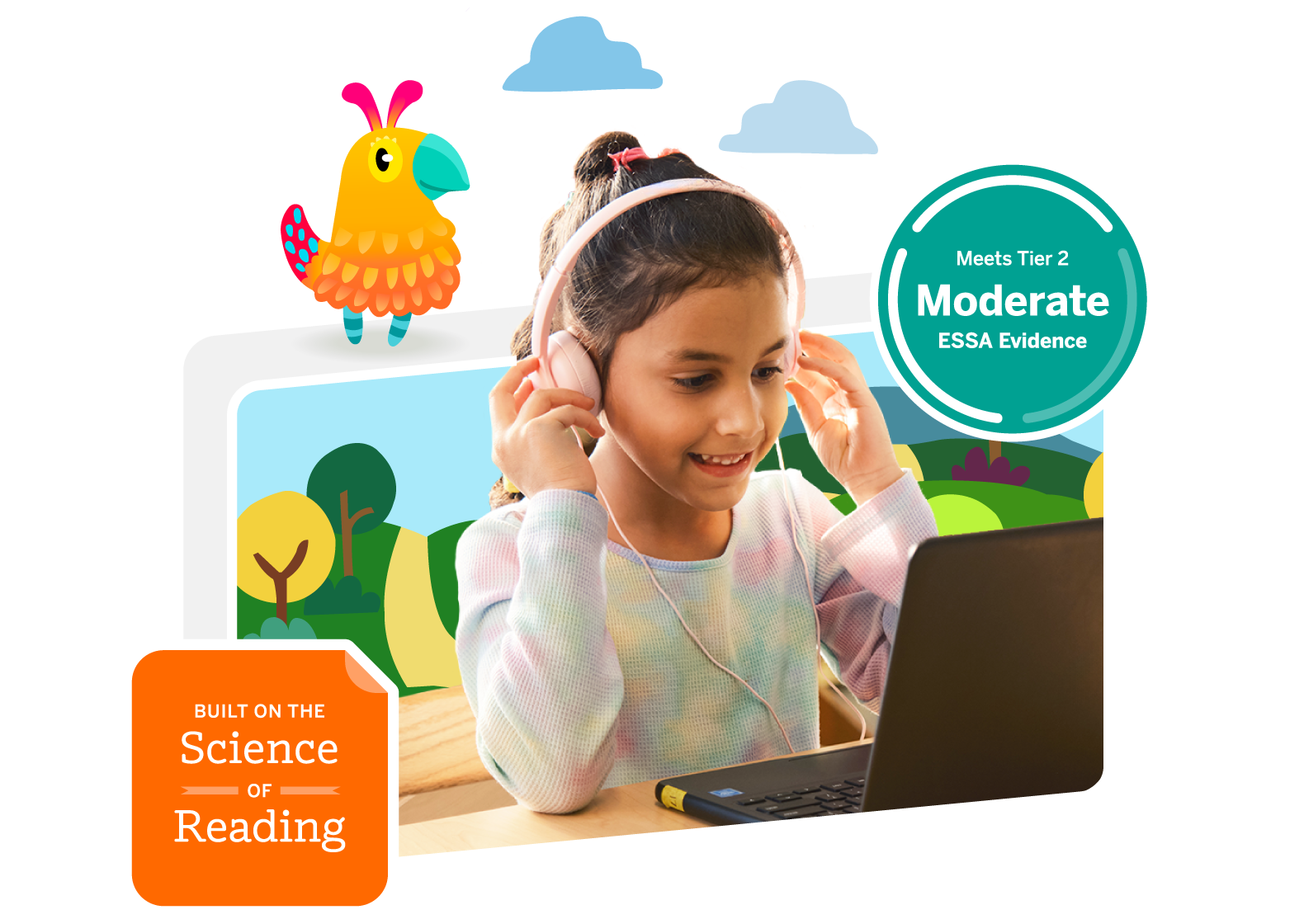
Proven impact for students who need it most
Boost Reading meets ESSA’s Moderate (Tier 2) Evidence criteria and consistently moves students who score below and well-below benchmark toward benchmark with just 30 minutes of use per week. Boost Reading provides extra support to students (including multilingual/English learners and students with dyslexia) struggling with reading, with practice that builds a strong foundation for future reading success from the ground up. Learn more about the program’s impact on the Boost Reading research page.
Critical to MTSS with differentiated support for every learner
Boost Reading adapts automatically, so students practice the right skills at the right moment. Tier 2 students get meaningful independent intervention support, while Tier 3 students receive additional skill reinforcement between their staff-led sessions with mCLASS Intervention. Boost Reading follows the same foundational skills sequence as Amplify CKLA, which means that students practice skills unique to them, making Boost Reading an effective part of a Multi-Tiered System of Support (MTSS).
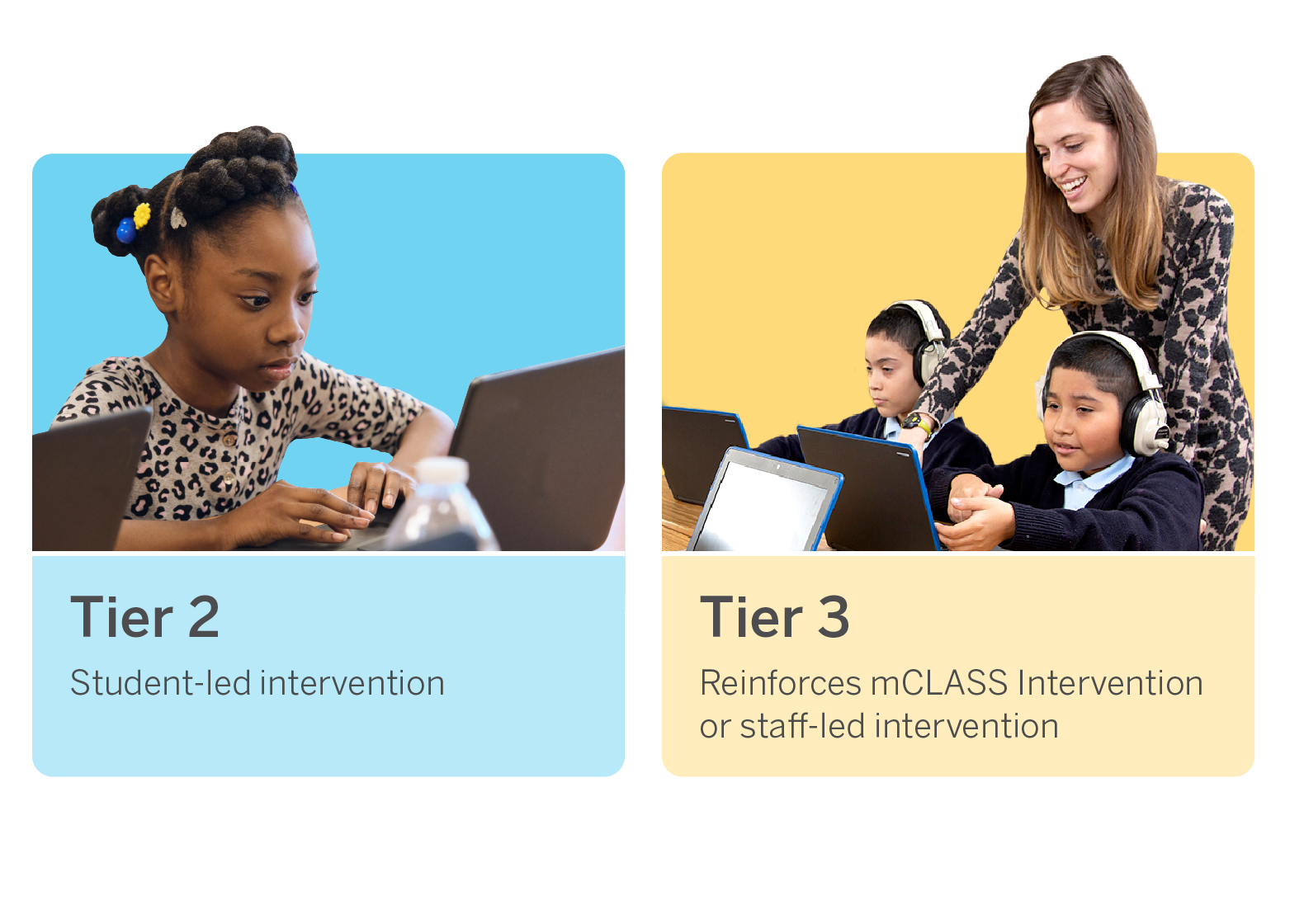
Data you can actually use in your classroom
Boost Reading shows you exactly what you need to know about student progress, through simple growth reporting on the Teacher Dashboard. See who’s improving, who needs support, and which skills to target next without having to spend time digging through complicated data.
Aligned to Amplify CKLA and mCLASS DIBELS 8th Edition
Boost Reading follows Amplify CKLA’s scope and sequence, making it easy to integrate into your daily routines by reinforcing the same skills you’re already teaching. It uses mCLASS DIBELS® 8th Edition data to provide targeted support and placement, giving teachers a clear view of how students progress across all instructional tiers.

Closing the gap for
K–2 multilingual/English learners
Boost Reading’s Spanish literacy partner, Boost Lectura, strengthens early literacy for Spanish-speaking multilingual/English learners. When used together, the two programs give teachers side-by-side insight into skill progression in Spanish and English, helping accelerate learning across both languages.

What’s included
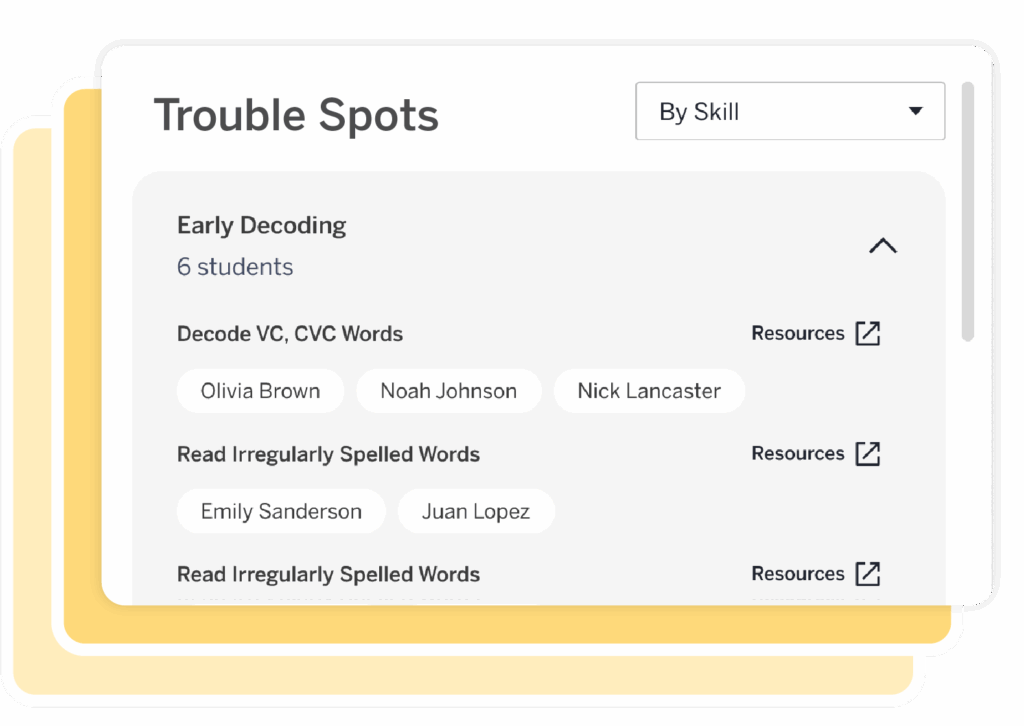
Pinpoint the skills that need your attention
The Trouble Spots section makes it easy to see which students are struggling and what skills they need to work on. Printable, ready-to-teach lessons allow you to pull together small groups in minutes.
Watch your students grow
Never miss a moment of your students’ literacy development, with monthly growth reporting! You’ll be able to track how students are developing skills month over month, and see their reading trajectory unfold.
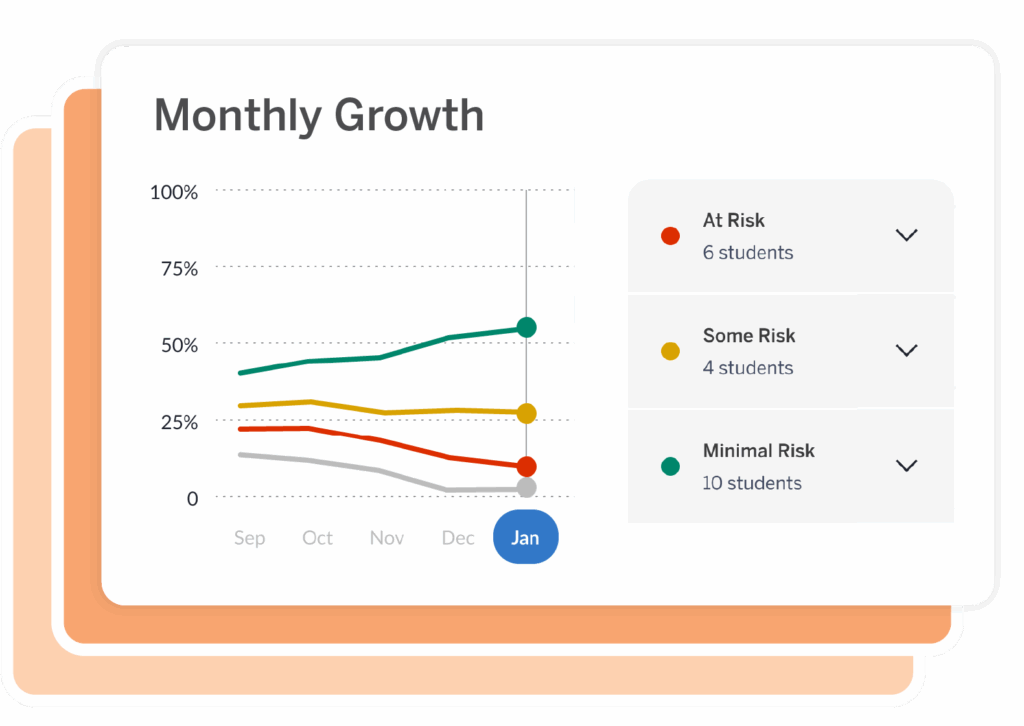
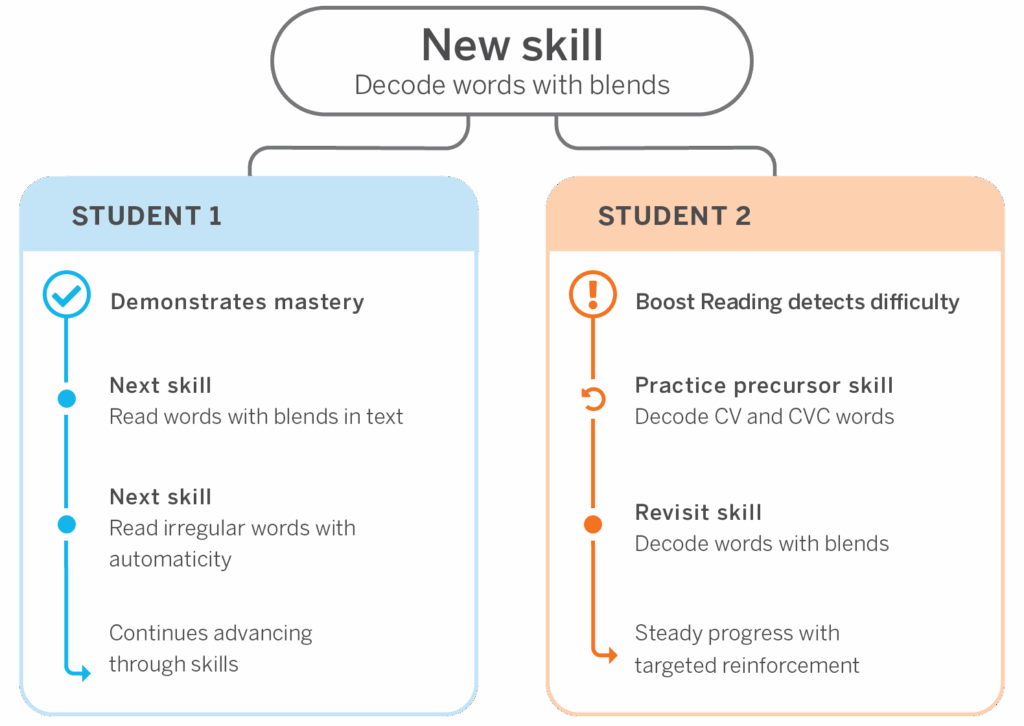
A program that grows with your students
Boost Reading continuously tailors instruction based on individual student performance. That means scaffolding foundational skills while building proficiency, one engaging activity at a time. There’s no stalled practice, and you’ll see steady progress across key reading skills.
Benchmark and growth assessments
Boost Reading combines built-in benchmark assessments with monthly skill scans to give teachers a holistic view of progress from the beginning of the year to the end of the year. The monthly skill scans act as check-ins between benchmark windows, so you’ll always know where students stand with a complete picture of their learning.
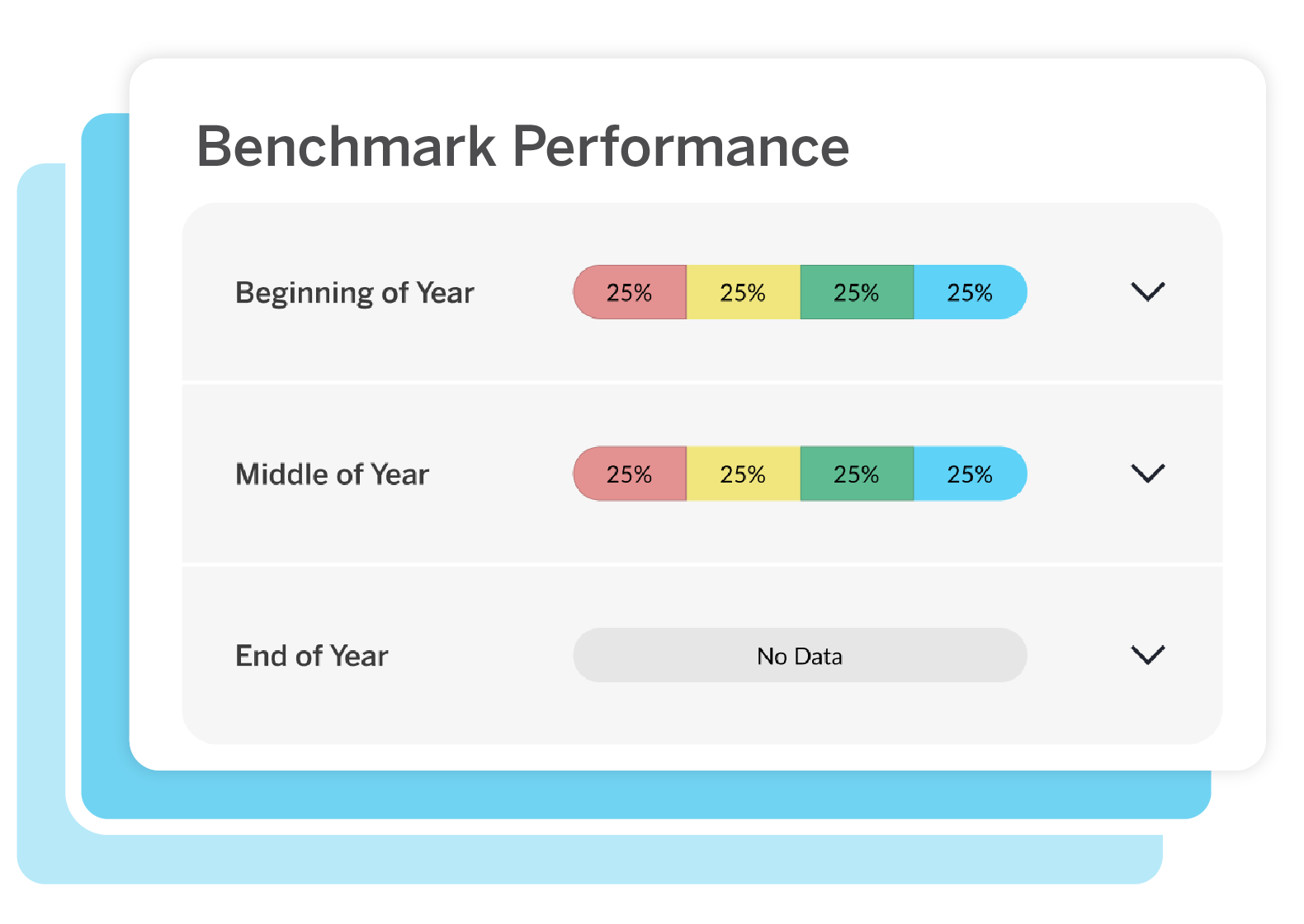
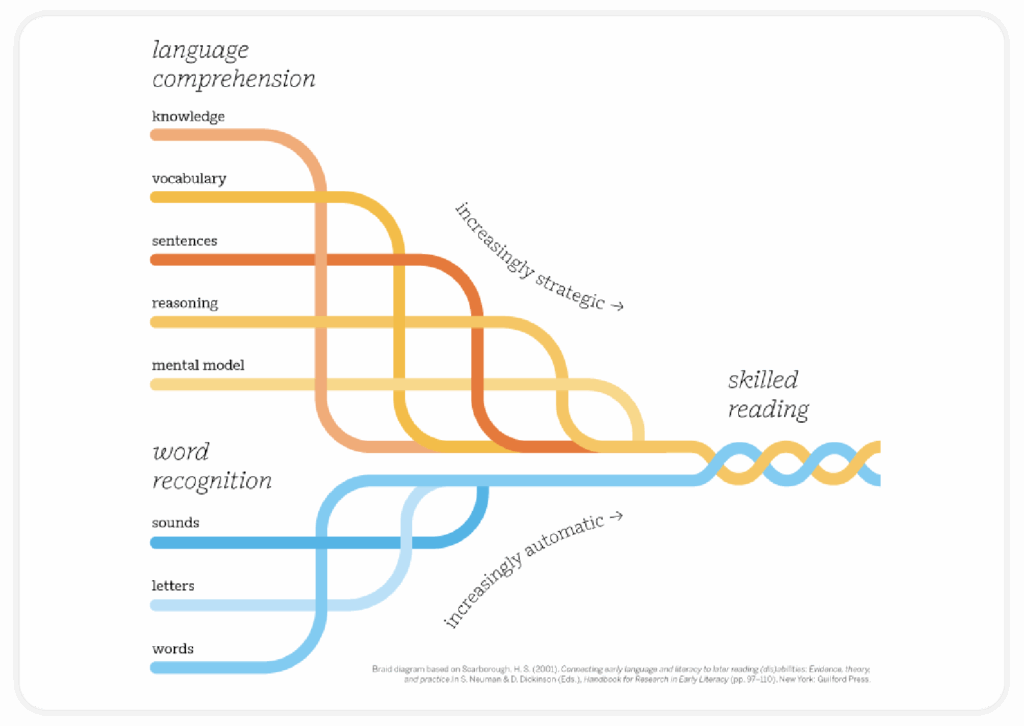
Science of Reading scope and sequence
Boost Reading introduces skills in the order research shows students learn best. Phonological awareness builds into phonics, vocabulary, and comprehension for a solid foundation and confident readers.
Administrator and caregiver reports
Administrators and caregivers are welcomed into the student reading journey with data on program usage, reading progress, and skill mastery.
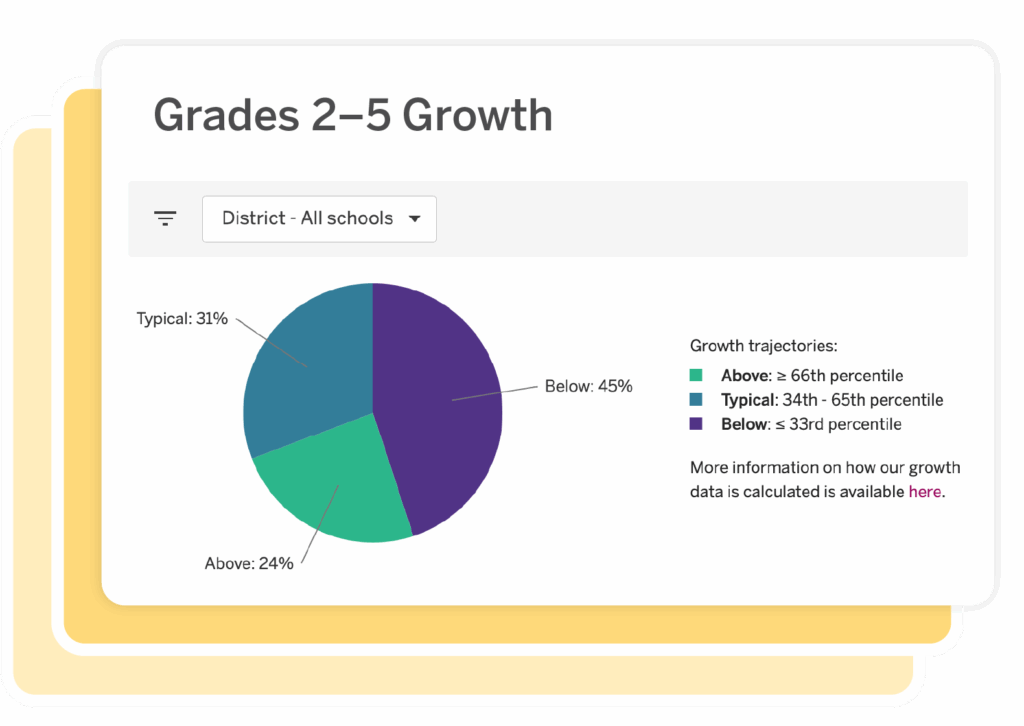
Explore more programs based on the Science of Reading.
All of the programs in our literacy suite are designed to support and complement each other. Learn more about our related programs:

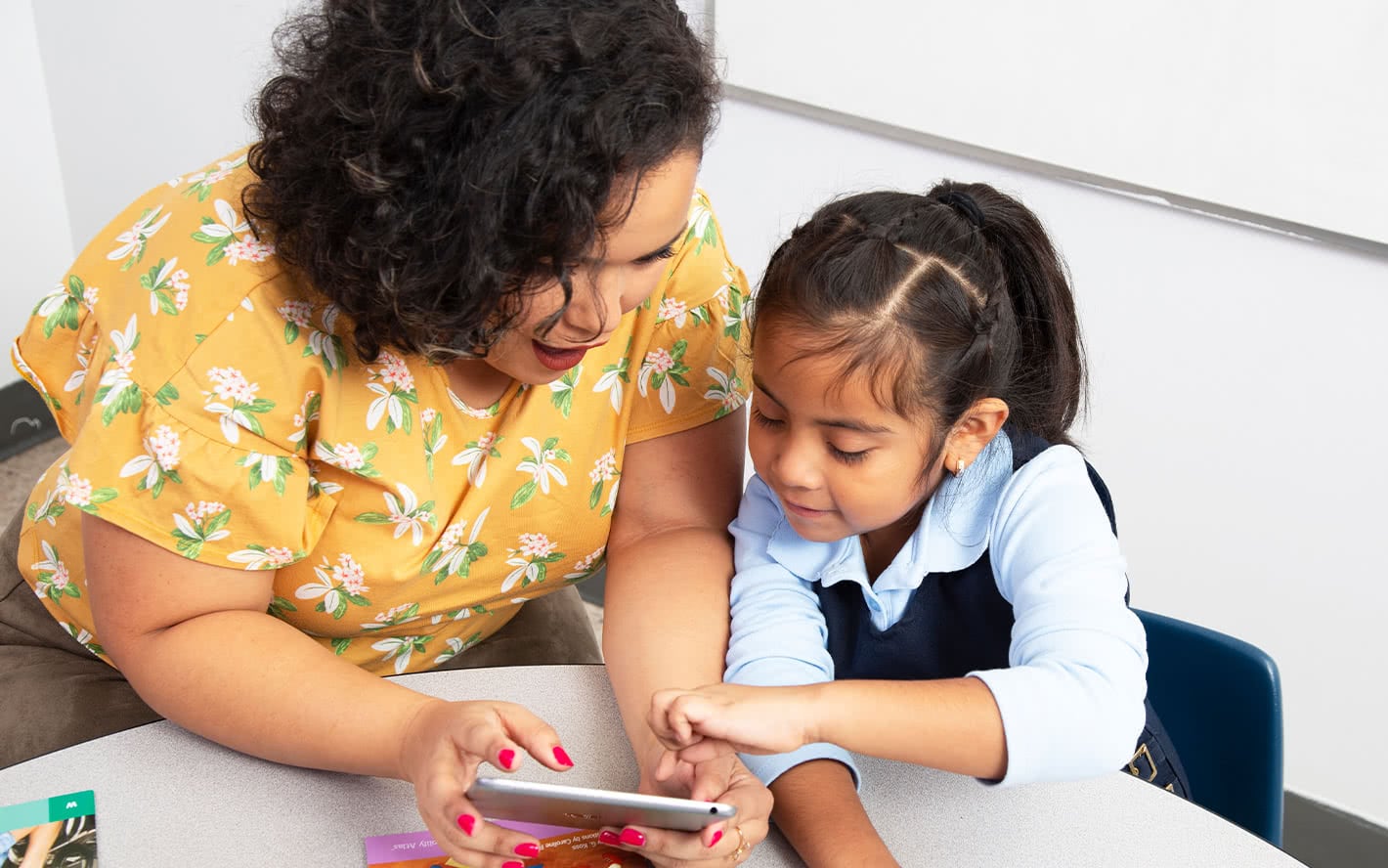
Embedded routine modeling for Amplify K–2 Skills instruction
New embedded support for Amplify Core Knowledge Language Arts (CKLA) and Amplify Caminos 3rd Edition brings expert guidance to the point of instruction. Short instructional modeling videos clarify how critical foundational literacy routines look, sound, and feel, taking the guesswork out of teaching and allowing educators to focus on cultivating more aha moments with students.
High-impact literacy routines
Lead K–2 foundational literacy instruction with clarity. These videos model the exact pacing, teaching script, physical cues, and feedback required for critical routines like Introducing the Spelling, Chaining, Blending, and more.
Just-in-time support
Embedded at the lesson level in the Amplify Classroom digital platform, modeling videos paired with downloadable routine guides provide immediate, point-of-use support. This eliminates the need to track down resources and ensures that foundational literacy skills are taught with consistency and fidelity across classrooms.
Parity across programs
With dedicated modeling videos and routine guides for both Amplify CKLA and Amplify Caminos, every teacher has access to expert guidance for foundational literacy instruction.
Real-time scaffolding and differentiation
Moving beyond the what of the lesson helps educators master the how. Each video provides specific scaffolds and strategies to help differentiate instruction and reach all learners in the moment.
The power of high-quality instructional materials for K–8 science

Simply put, quality teaching means quality learning. But there is another key part of the equation: quality curriculum.
Research confirms that the instructional materials used in classrooms play a powerful role in shaping how teachers teach, and how students learn.
Shifting from low-quality or pieced-together materials to well-designed, high-quality instructional materials can significantly improve student achievement. This growing evidence—sometimes described as “the curriculum effect”—is one reason that states and districts across the country are paying closer attention to the quality of the materials they adopt.
So what does high-quality instructional materials actually mean? And what does it look like in a real science classroom?
What does HQIM mean in science education?
High-quality instructional materials (often called HQIM) are curriculum materials intentionally designed to support student learning: aligned to rigorous standards, grounded in research, and built to support teachers.
High-quality instructional materials work alongside teachers, shaping instructional practices in ways that reduce guesswork, support consistency, and free up time and energy. This lets teachers do what they do best: interact with students. HQIM provide a coherent system that supports both teaching and learning over time.
And high-quality science curriculum materials go the extra mile, clearly articulating learning goals, providing guidance for facilitation and discussion, and including embedded opportunities to check for understanding. They also support a range of learners by offering scaffolds, differentiation strategies, and multiple ways for students to engage with content.
How HQIM align with NGSS science standards
The Next Generation Science Standards (NGSS) define what students should know and be able to do in science. At their core, these academic standards emphasize three-dimensional learning, integrating science practices, core ideas, and crosscutting concepts.
In science, HQIM are designed for three-dimensional learning: where students don’t just learn about science, but actively figure out how the natural world works. Three-dimensional learning integrates:
- Science and engineering practices (what scientists do).
- Disciplinary core ideas (what scientists know).
- Crosscutting concepts (how scientific ideas connect).
HQIM are designed from the ground up to weave these dimensions together, rather than adding them on as an afterthought. That coherence helps students build understanding over time, and helps teachers see how each lesson fits into a larger learning story.
What do HQIM look like in a science classroom?
One of the best ways to recognize high-quality instructional content is to look not only at the materials, but also at the students using them.
Instead of memorizing disconnected facts, students taught with HQIM are engaged in the kinds of practices scientists use every day.
In classrooms using HQIM for science, you’ll often see students:
- Investigating real-world phenomena that spark curiosity.
- Asking questions, analyzing data, and building explanations.
- Using evidence from multiple sources—texts, simulations, discussions, and investigations.
- Revisiting ideas over time to deepen understanding.
“It is so encouraging to hear students engaged in conversation and building their ideas off of one another,” says classroom teacher Sarah Loessl of Big Hollow School District 38 in Illinois. “Students finding the confidence to challenge one another and use evidence to support their thinking is so much fun to watch.”
How HQIM support teachers
A key feature of high-quality instructional materials is that they’re designed by teachers, with teachers in mind.
This means materials that:
- Clearly articulate learning goals.
- Provide guidance for facilitation and discussion.
- Include embedded formative assessment opportunities.
- Support a range of learners, including multilingual/English learners and students who need additional scaffolds or challenges.
When materials shoulder this heavy lifting, teachers can spend less time creating from scratch and more time engaging with students.
How can teachers start engaging with HQIM?
Even if curriculum adoption decisions happen at the district level, teachers play a critical role in bringing HQIM to life.
Getting familiar with high-quality instructional materials can start with questions like:
- What are students expected to figure out in this lesson?
- How does this activity connect to a larger phenomenon or question?
- Where are students using evidence to explain their thinking?
- How does the curriculum support discussion, sense-making, and revision of ideas?
Developing a shared understanding of what high-quality science instruction looks like helps everyone—teachers, coaches, and leaders—move in the same direction.
Where does Amplify Science fit in?
Amplify Science is an example of high-quality instructional materials designed specifically for K–8 science and aligned to NGSS science standards.
It’s built around phenomena-based, three-dimensional learning and developed with educators, researchers, and scientists to support both student learning and teacher practice. The goal is coherence, engagement, and understanding that grows over time.
Ready to learn more?
To support educators and leaders in building a shared understanding of HQIM, we’ve created a free science HQIM resource bundle, including:
- A classroom look-fors checklist.
- A three-dimensional learning explainer.
- An NGSS alignment overview.
- A closer look at the HQIM student experience.
- Registration for two upcoming webinars focused on HQIM in science.
Whether you’re new to the concept or ready to deepen your practice, these resources are designed to make high-quality instructional materials highly understandable and accessible to all.
Explore the HQIM bundle and upcoming webinars to learn more.
Exciting updates are coming for mCLASS Math!
As we plan for the upcoming school year, we’re continuing to enhance mCLASS® Math—finding ways to provide you with clearer insights, stronger reporting, and more flexible support for assessment and progress monitoring activities. These updates are designed to help educators better understand student performance and take action with confidence.
Whether you’re using mCLASS Math on its own or alongside Boost Math® or Amplify Desmos Math, this page highlights what’s already available and what’s coming next.

Updates coming for the 2026–27 school year
To help you plan for the year ahead with confidence, we’re previewing some of the exciting enhancements coming your way.
Expanded mCLASS Math for grades K–8
mCLASS Math is expanding into grades 6–8! Reporting for grades 6–8 will align with the K–5 experience, ensuring consistency across grade levels. Interested in samples? Check out our sample mCLASS Math items for grades K–8.
mCLASS Math K–5 Spanish
Spanish translations will be available for K–5 assessments, helping educators broaden their reach and serve more students effectively.
Boost Math driven by mCLASS Math data
We’re also excited to announce Boost Math product enhancements that are designed to streamline your Multi-Tiered System of Supports (MTSS). Beginning July 1, 2026, Boost Math will be powered by mCLASS Math Benchmark data, using both performance results and student thinking insights to inform instruction. Interested in learning more about how you can use Boost Math alongside mCLASS Math? Reach out to your rep or admin to get started!
Already using Boost Math as part of your math solution? Learn more about upcoming enhancements to Boost Math, including new Learning Pathways to support your MTSS implementation.
Noteworthy mCLASS Math feature enhancements
These features are already available or will be rolling out soon to help you plan lessons, target learning, and support students more efficiently.
Stronger mCLASS Math reporting and visibility into student learning
We’ve made reporting easier to understand and more actionable, so you can spend less time searching for information and more time responding to student needs.

- Student Thinking Reports now include direct links to recommended activities, so you can move from insight to action more quickly.

- Admin reports are available for download to support school- and district-level analysis.

- K–1 progress bars clearly indicate skipped questions for greater clarity.

- Home Connect letters can be batch-downloaded, making family communication easier to manage.
- Benchmark assessments align to district-defined benchmark windows, with flexible date management in the Admin Portal. Learn more.
Using Amplify Desmos Math? Explore upcoming updates and noteworthy features on the Amplify Desmos Math Program Highlights page.
New and noteworthy updates to mCLASS, mCLASS Lectura, and mCLASS Intervention!
mCLASS®, mCLASS Lectura, and mCLASS Intervention are introducing enhancements for the next school year. Explore the following improvements designed to save you time, extend your reach, and support your efforts to deliver the rigorous and riveting learning experiences your students deserve.
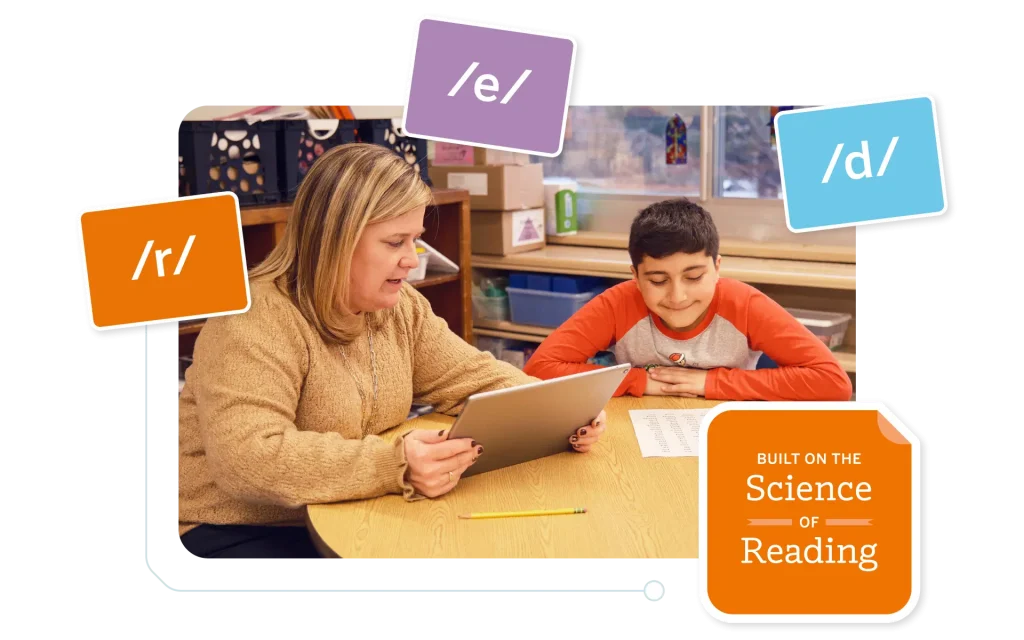
Updates
Enhanced mCLASS enrollment
Amplify’s enrollment improvements will provide mCLASS users with a quicker and more efficient set up this back-to-school season. These enhancements will also provide a consistent experience across your Amplify programs. Please note that our current mCLASS enrollment system will be retired, and customers who are affected have been contacted.
Additional benefits include the ability to set benchmark windows through Amplify’s Admin Portal and to create groups of students to which you can assign assessments.
More information can be found at https://start.amplify.com/24-25-mclass-enrollment/.
New mCLASS DIBELS 8th Edition and mCLASS Lectura Admin Reports
We are excited to announce that changes to the Admin Reports for mCLASS are coming next school year. With these updates, you will experience a new admin reporting suite, replacing the previous Reporting and Analysis Suite (RAS), that delivers a more robust and user-friendly experience. This update includes several enhancements, including:
- Faster performance: Spend less time waiting and more time making decisions with significantly reduced load and refresh times.
- Improved user interface: Enjoy a cleaner, more intuitive design that makes navigation and data analysis even easier.
- Saved filters between reports: Enjoy seamless transitions with the ability to maintain your filters across various reports.
- National reference data analysis: Compare your school or district’s performance with the national data of all students assessed with mCLASS.
- Enhanced assessment tracking: Complete data analysis for all students, including those with partial or no assessment results, through Benchmark Download Your Data (DYD) updates.
- Improved student list for reports: Access better-organized student lists within the benchmark completion reports for more efficient monitoring.
- Custom demographics in reports: Tailor your benchmark and progress monitoring DYDs using custom demographics for a more personalized analysis.
- New monitoring capabilities: Track progress monitoring fidelity and download details about students who participate in mCLASS Intervention groups.
Former Acadience and IDEL users, please note: As a result of the transition to new Admin Reports, historical data for Acadience Reading (formerly DIBELS® Next), and IDEL will not be available next year. Please be sure to download any data from these programs for your records.
Learn how to download historical data for teachers and admin.
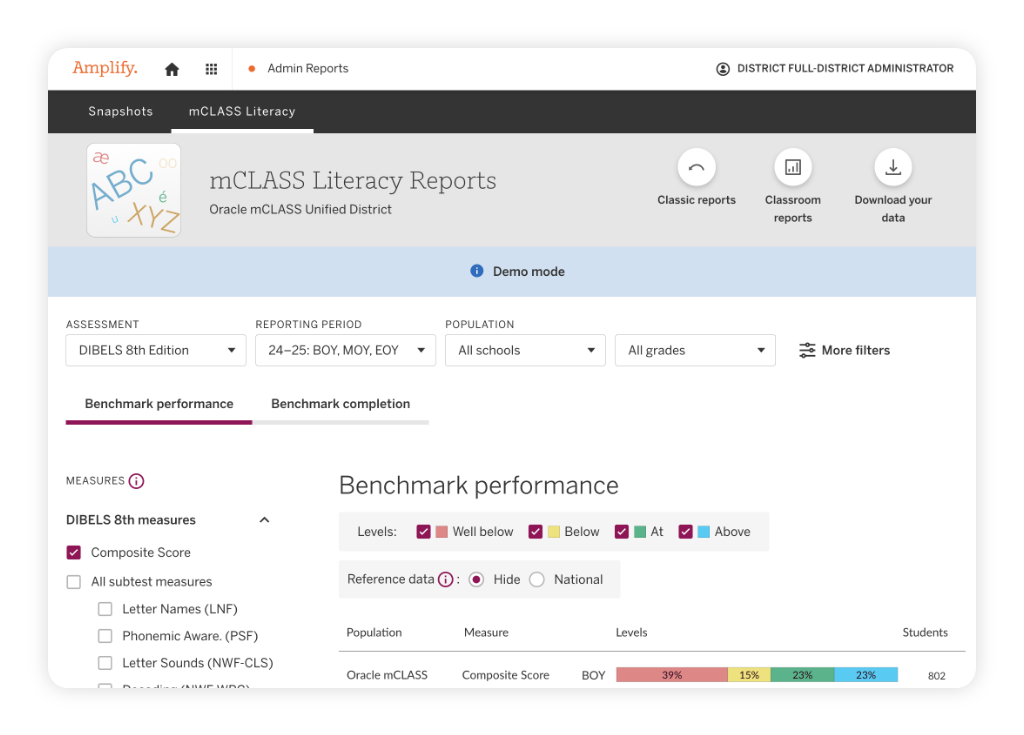
mCLASS Intervention updates
mCLASS Intervention’s Decode assessment will have a new look and feel, resembling the DIBELS 8th Edition measures. mCLASS Intervention will also be integrated with Amplify’s global navigation menu, giving educators quicker access to Classroom Reporting, the teacher-facing Assessment app and more.
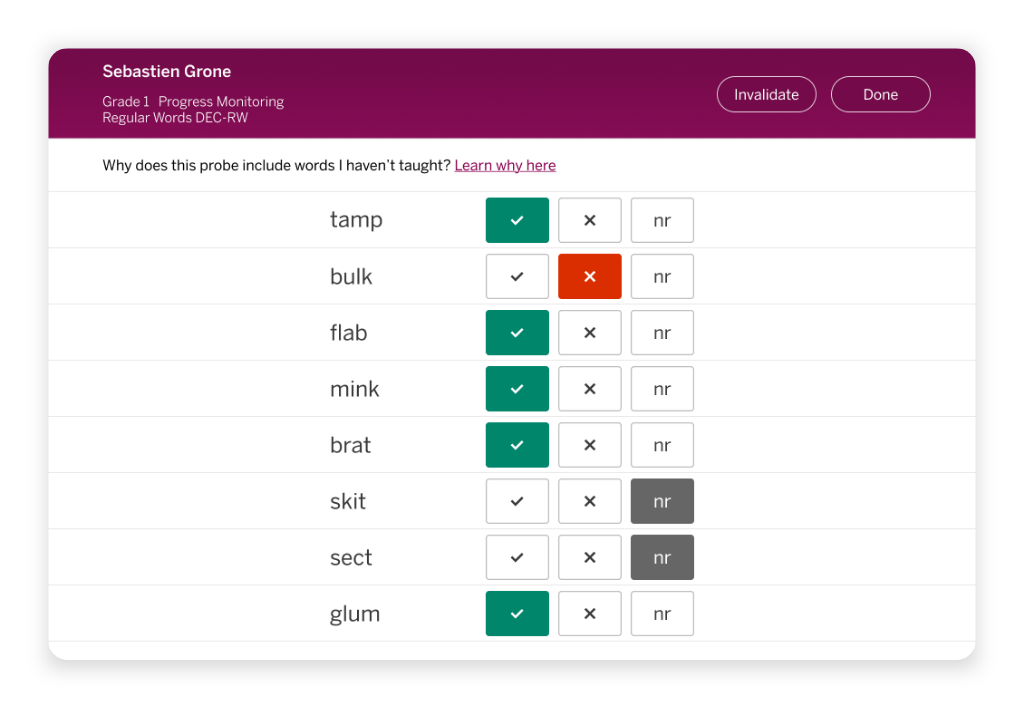
Enhancements to student-led assessments
Students and educators will notice helpful updates to the student-facing platform:
The owl animations in the student-facing mCLASS assessments will be replaced with a familiar character from the Boost Reading and Boost Lectura program, Alyx!
There will also be additional accessibility updates, including an in-app magnification tool that will allow for the size of all on-screen text to increase, and an option to turn off animations to reduce distractions.
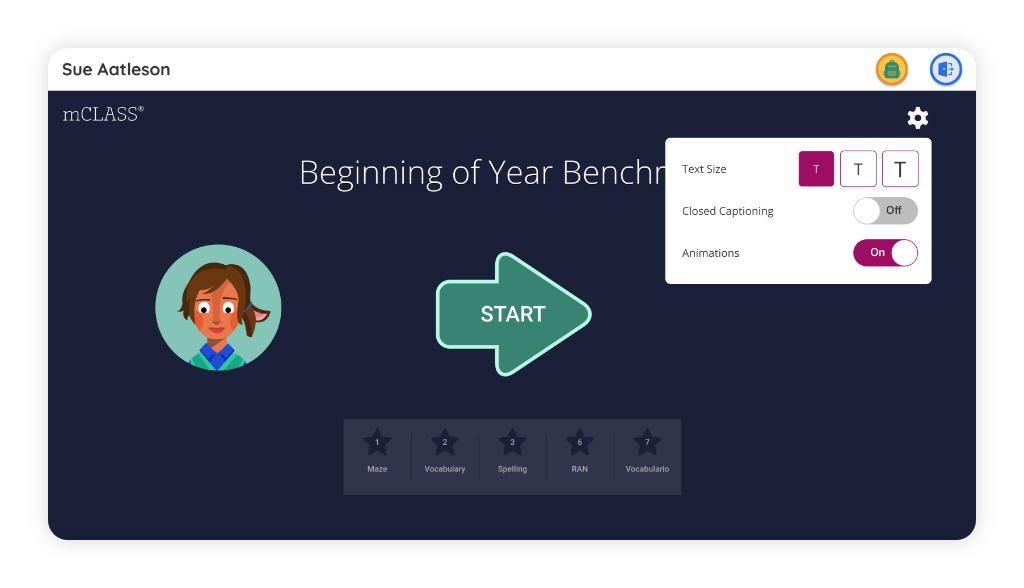
Improved navigation
This year, we’re rolling out a more user-friendly navigation experience with:
- An accessible sidebar menu for quick access to key educator resources within sections like Content, PD Library, and Apps.
- A new Apps menu organized by subject.
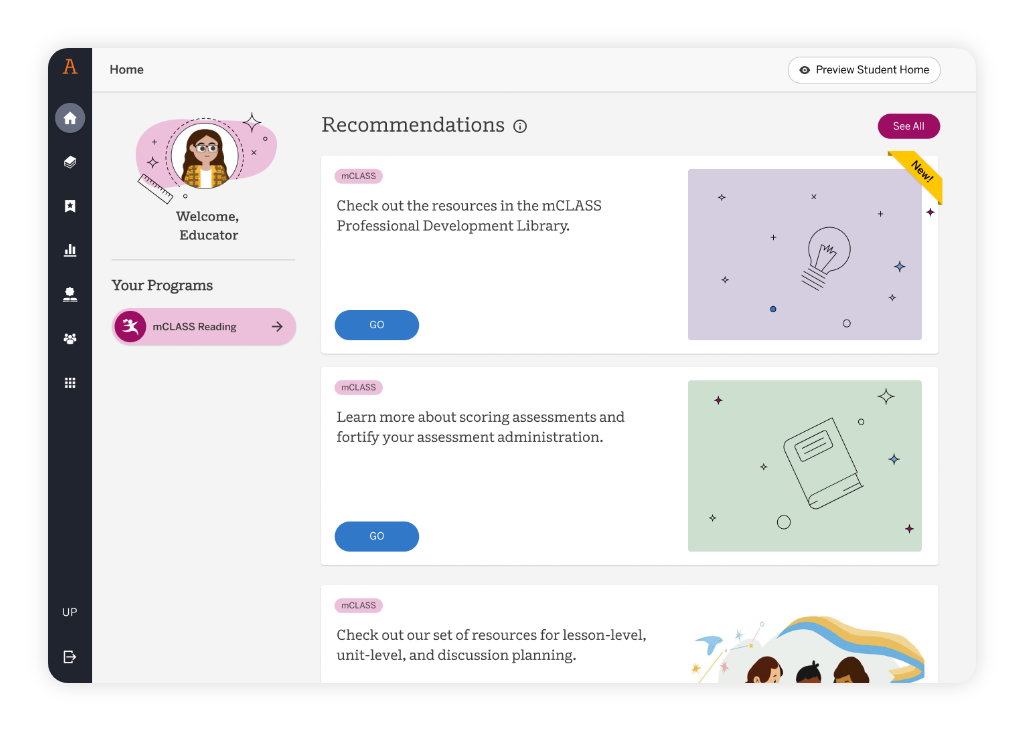
Free content for you to explore
Explore a growing library of free math, science, and literacy content using the Discover button. You can even assign these activities to students through the digital platform, giving them more ways than ever to explore, engage, and learn!
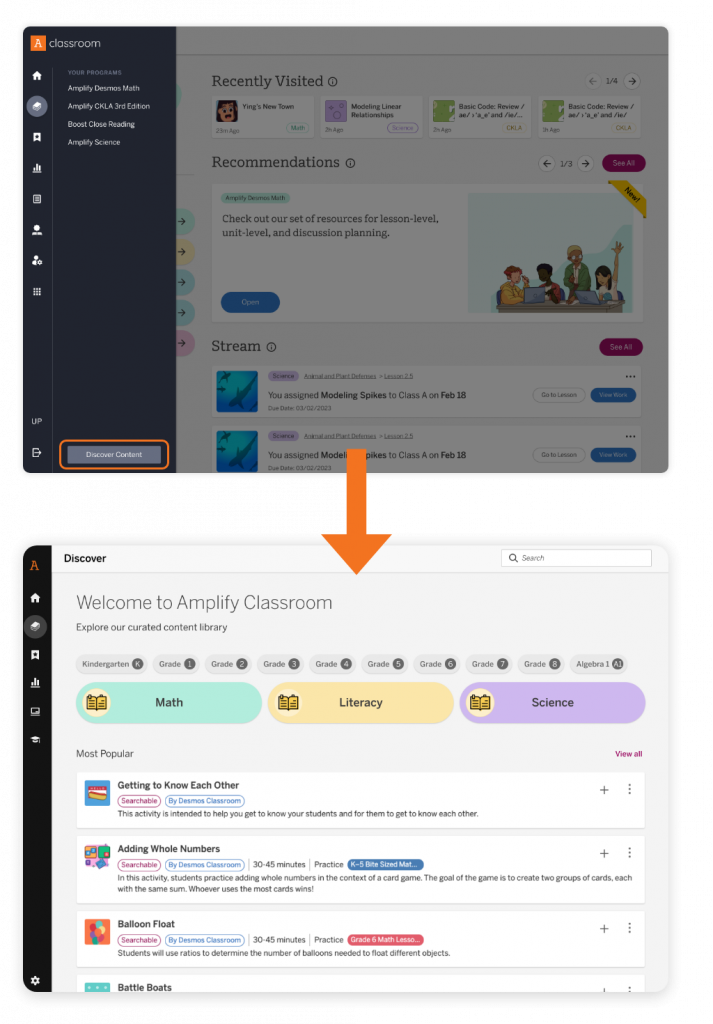
Noteworthy features
PD Library
You’ll find helpful professional development (PD) resources in the PD Library to ensure your mCLASS implementation runs smoothly. The PD Library can be accessed through the Programs & Apps menu in the top navigation bar when you’re logged into mCLASS.
Demo mode in English Classroom Reporting
mCLASS English Classroom Reporting features a demo mode that guides teachers through sample classroom and student reports, highlighting realistic student data within the complete set of mCLASS instructional tools. This demo mode is especially helpful for onboarding purposes with teachers new to using mCLASS.
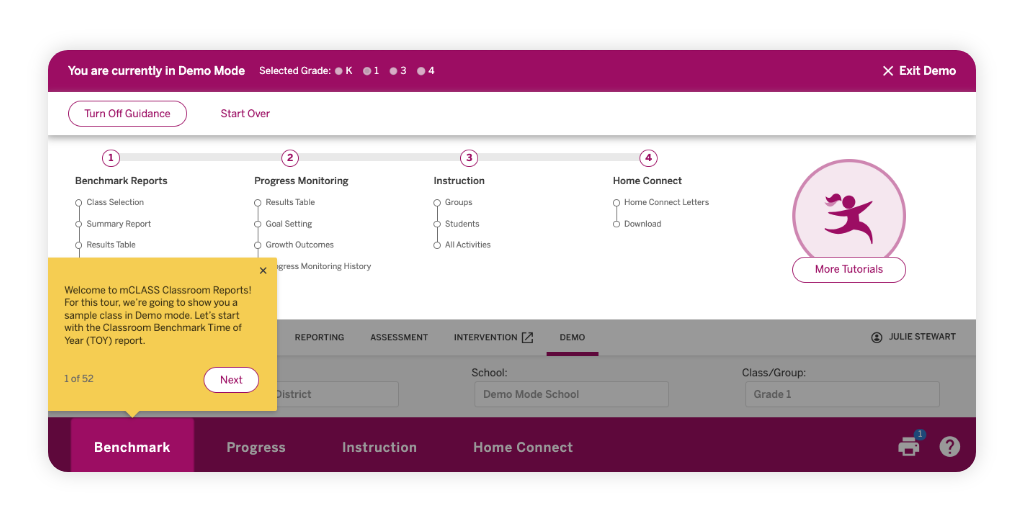
This is one of the best things I have ever worked on.

Every discussion teaches kids about math—and about themselves.
Among many other reasons, discussions are important because they’re moments when the teacher assigns value to students. In a discussion, the teacher says, “Hey—I have precious little time to teach what I know. Still, I’m going to dedicate some of that time for you to share and talk about what you know.” That’s a moment when students learn about math, but also that their own ideas have value.
Discussions are difficult, and “more wait time” is rarely the reason.
There are a few reasons why discussions frequently fail, and it’s rarely because the teacher didn’t give students enough “wait time” to respond, as is commonly believed.
1. The question was hard to understand or find your way into. For a long time, I’d ask my kids at dinner, “How was your day? What happened?” And my kids wouldn’t have much to say. Lately, I ask them to tell me two things about their day that happened and one thing that didn’t, and we all guess which was which. It’s an easier prompt, one that kids can find their way into with ease and then use as a launching pad into a larger conversation.
2. There isn’t enough to talk about. If your math class consists of a lot of binary, right/wrong questions, what is there for anyone to talk about? “A lot of us got this one wrong. Here’s a pie chart that shows how wrong we were. How about I show you how to do it?” That’s fine, but it isn’t a discussion, and it’s quite often a very dreary classroom environment for children.
In Amplify Desmos Math, a curriculum I work on, kids generally have plenty to talk about. Our interactives stir a kid’s imagination for even the most abstract areas of math. For example, this submarine interactive stirs up a kid’s ideas about adding positive and negative integers.
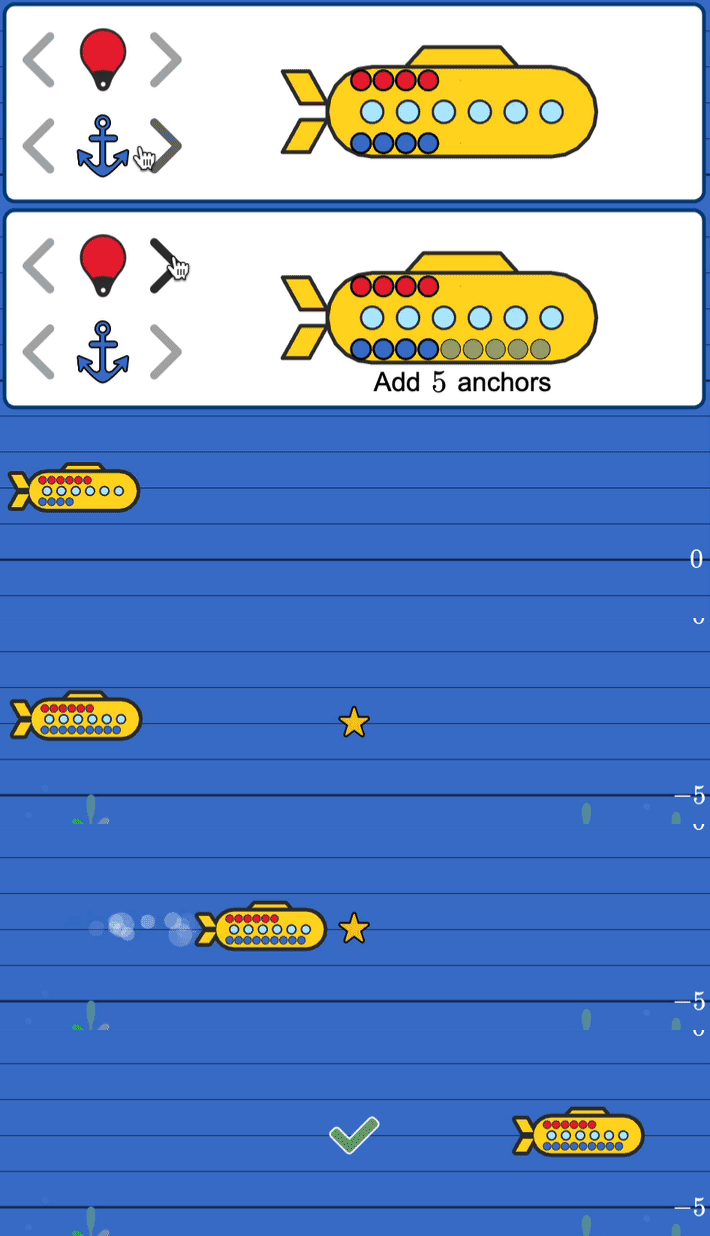
And then we ask kids, “Hey, what do you think about the star at +5? Can you come up with something that none of your classmates do?”
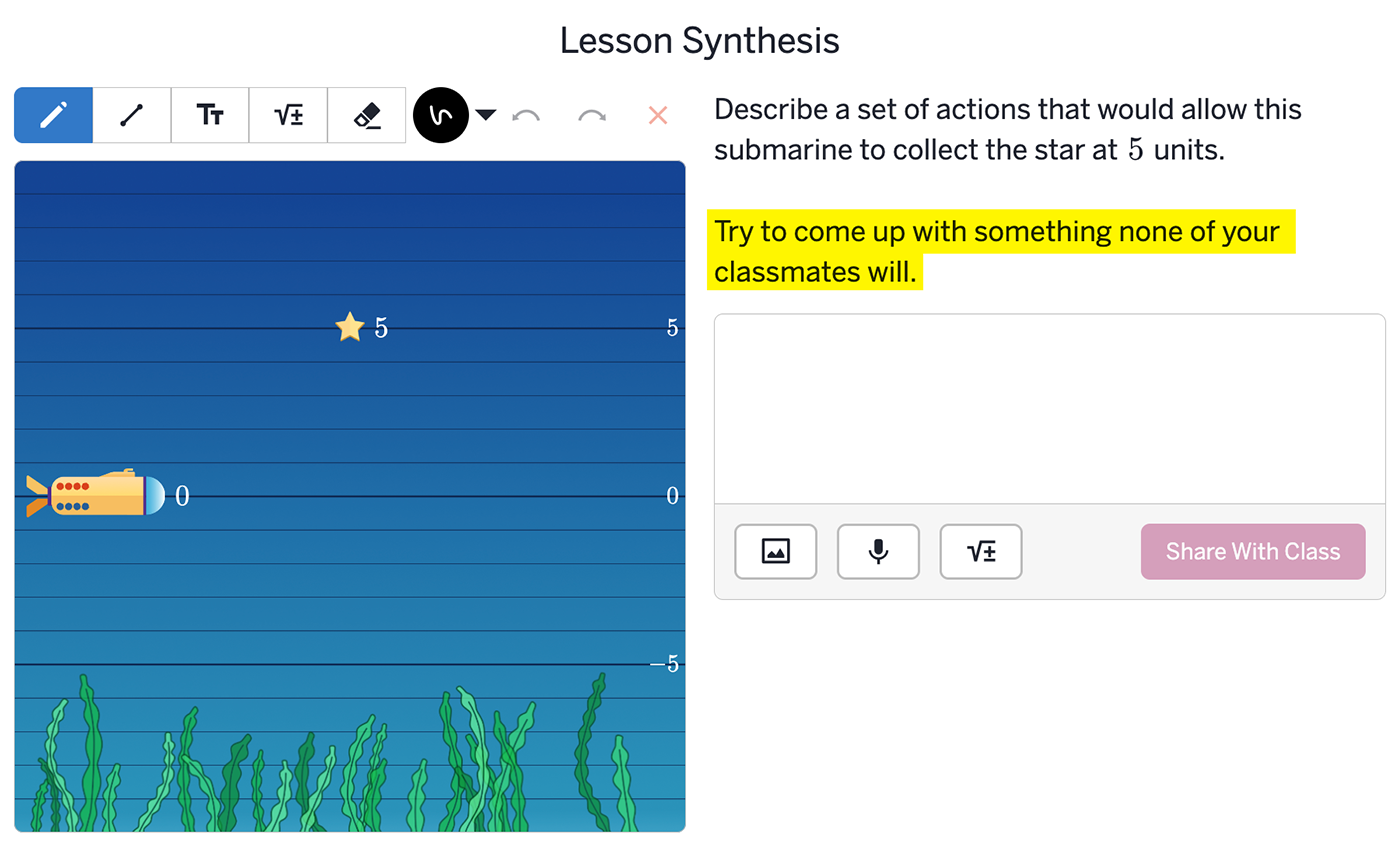
Let me tell you: Kids accept that challenge.
3. There is too much to talk about.
This is a good problem to have, but it’s still a problem. In the class screenshotted below, 25 students have put 300 thoughtful words in front of the teacher, every response different from every other!
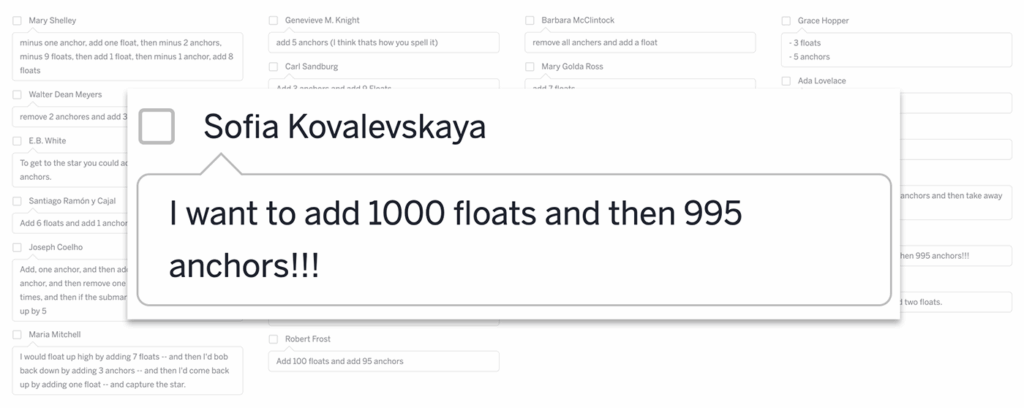
Teachers now have a problem of abundance, not scarcity. They have to decide which responses to select, and why, in an environment of cognitive overload.
This is very hard work for teachers, especially novices, especially teachers who lack mathematical content knowledge, especially teachers who are hanging onto the school year by their fingernails.
We offer teachers lots of different support for discussions throughout our curriculum—both in print and digital activities—but our new discussion support for digital activities is first-of-its-kind and best-in-class.
Discussion Moments.
- Student responses stream into the teacher’s dashboard.
- A message appears: “Analyzing Student Responses.”
- Shortly after, the message changes: “Open Discussion Moment.”

You click the message and see a classroom-ready discussion screen.
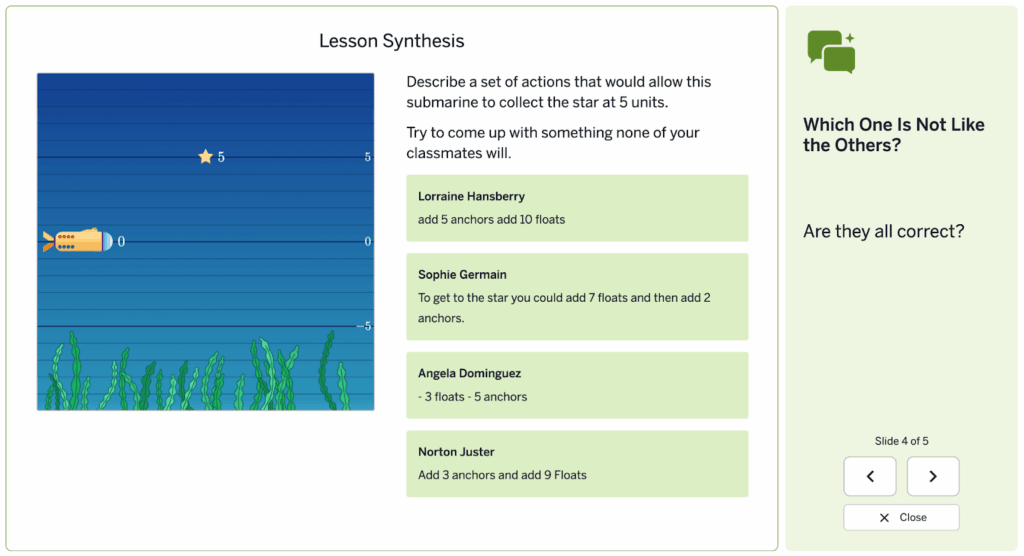
First, you see four student responses, each one authored by a student in the class, each one interesting on its own. This was not luck. Those responses were curated by a large language model at the direction of our curriculum experts. “Find three responses that capture the star in different ways,” our experts prompted the AI. “Responses that add anchors. That remove anchors. Find one response that might not capture the star.”
Next to those responses you see a question: ”Which one is not like the others?” That question feels surprisingly well-matched for this math and for those student responses. This, also, isn’t an accident. Curriculum experts made that decision.
You click the right arrow and see a suggested narration for the Discussion Moment, narration which was authored, again, by our human authors for this particular problem, to help novices learn to facilitate productive discussions in math.
That’s a “Discussion Moment.”
In the past, coaches, experts, and publishers have all asked teachers to . . .
- Select and sequence student responses.
- Construct a student-facing discussion resource.
- Lead the conversation.
Now we are asking teachers to . . .
- Lead the conversation.
In our experience, computers do quite well with the first two jobs while teachers obliterate computers at the work of leading a conversation, at connecting student ideas, at asking one kid what they think of another kid’s idea, at pulling ideas out of a kid who maybe doesn’t think they have ideas to offer. Discussion Moments delegate to humans and computers the best work for each of them.
Discussion Moments are different.
Lots of edtech companies are putting AI to work in lots of different ways. Discussion Moments are unique.
First, they’re designed to work through rather than around the teacher, during class rather than outside of class. They’re designed to support social interactions between students and teachers in the moment of instruction. This is the action.
Second, this is a classroom-ready resource. So many AI applications just output a ChatGPT-style resource. Lots of text. Several main bullets. Lots of sub-bullets. An emoji or two. And I am very sorry, but they are not useful in class. The teacher has to read all of that text, copy and paste and edit it, and then construct the student-facing resource all in the middle of class. That’s fantasyland, folks. At Amplify, we have, instead, created a one-click, classroom-ready resource.
Third, we’ve fortified these digital Discussion Moments with gallons of human expertise. Since December, I’ve worked with several of our curriculum experts—Casey Nelson, Brian Kam, and Tom Snarsky—and for every problem across several units of middle school math, they:
- Reviewed thousands of student responses to each problem.
- Identified thematic trends in the student responses.
- Decided whether or not those themes demand a discussion.
- Decided which of several discussion frames would be most appropriate, given those themes.
- Wrote an AI prompt specific to each problem to increase the odds that the large language model will curate useful student responses.
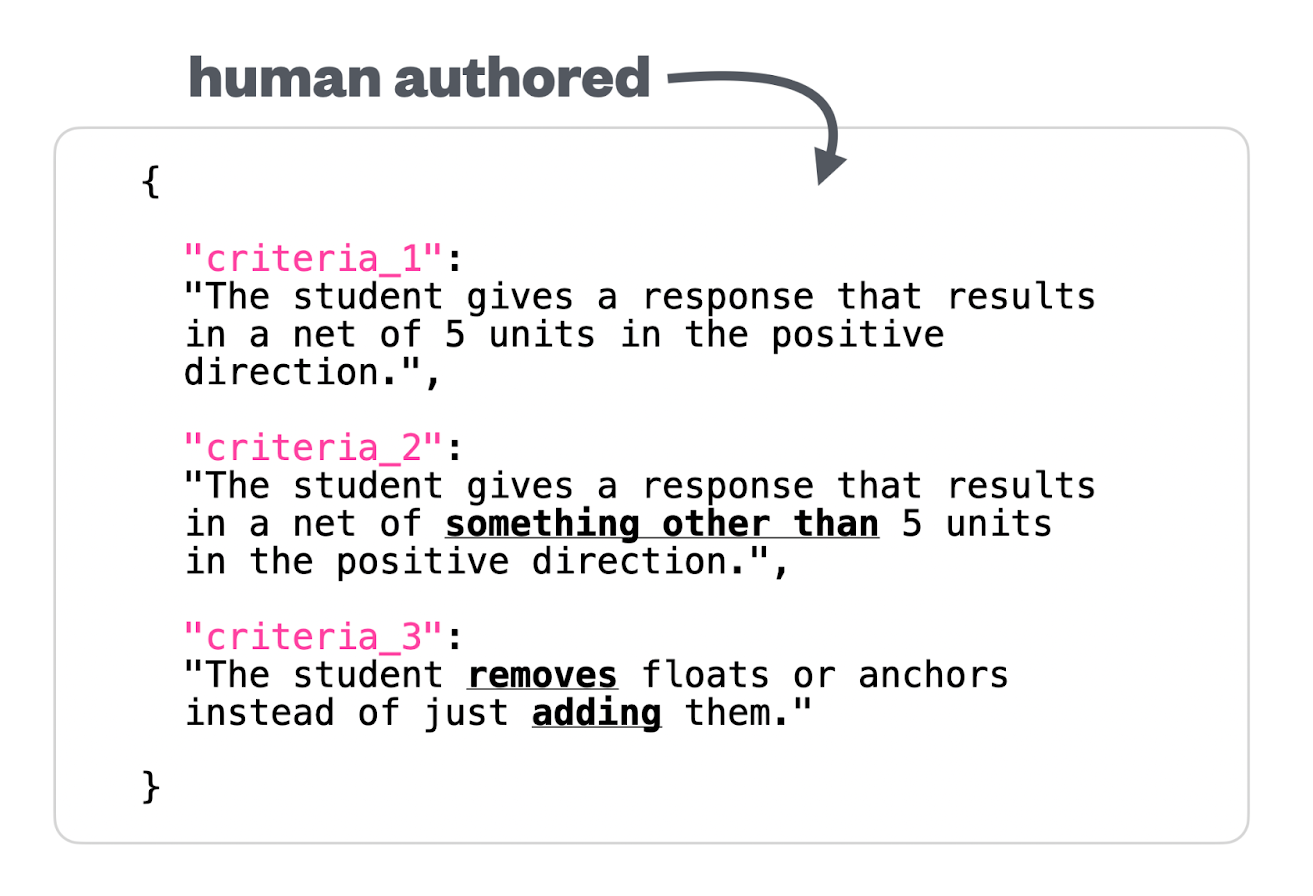
Most edtech companies would prefer to let AI lead this process from end to end, using the same prompt for every problem, even at the cost of the teacher and student experience. Meanwhile, we only ask AI to execute instructions and construct a resource. The nature of those instructions, the type of resource, and how it’s used—that is all determined by different humans and their expertise.
What do teachers and administrators think?
I ran a small-scale pilot of this feature last spring and kicked off a larger-scale pilot last week. A couple hundred teachers overall. I have never had an easier time recruiting teachers for a project than with this one. Every district math curriculum lead knows how challenging it is for teachers to lead discussions, and every one I asked was eager to support.
Two other examples of Discussion Moments.
Compare and Connect. We asked a large language model to locate responses that have one of a couple of important features but ideally not both. Then we constructed a Discussion Moment asking students to write a response that combines the best of both answers.

Critique, Correct, Clarify. Our curriculum authors noticed a frequent incorrect answer to a question. We told the LLM to watch out for it and frame it in a Discussion Moment where the class is asked to find value in the wrong answer before correcting it. Try to imagine what it does to a kid to hear their incorrect answer described as valuable.
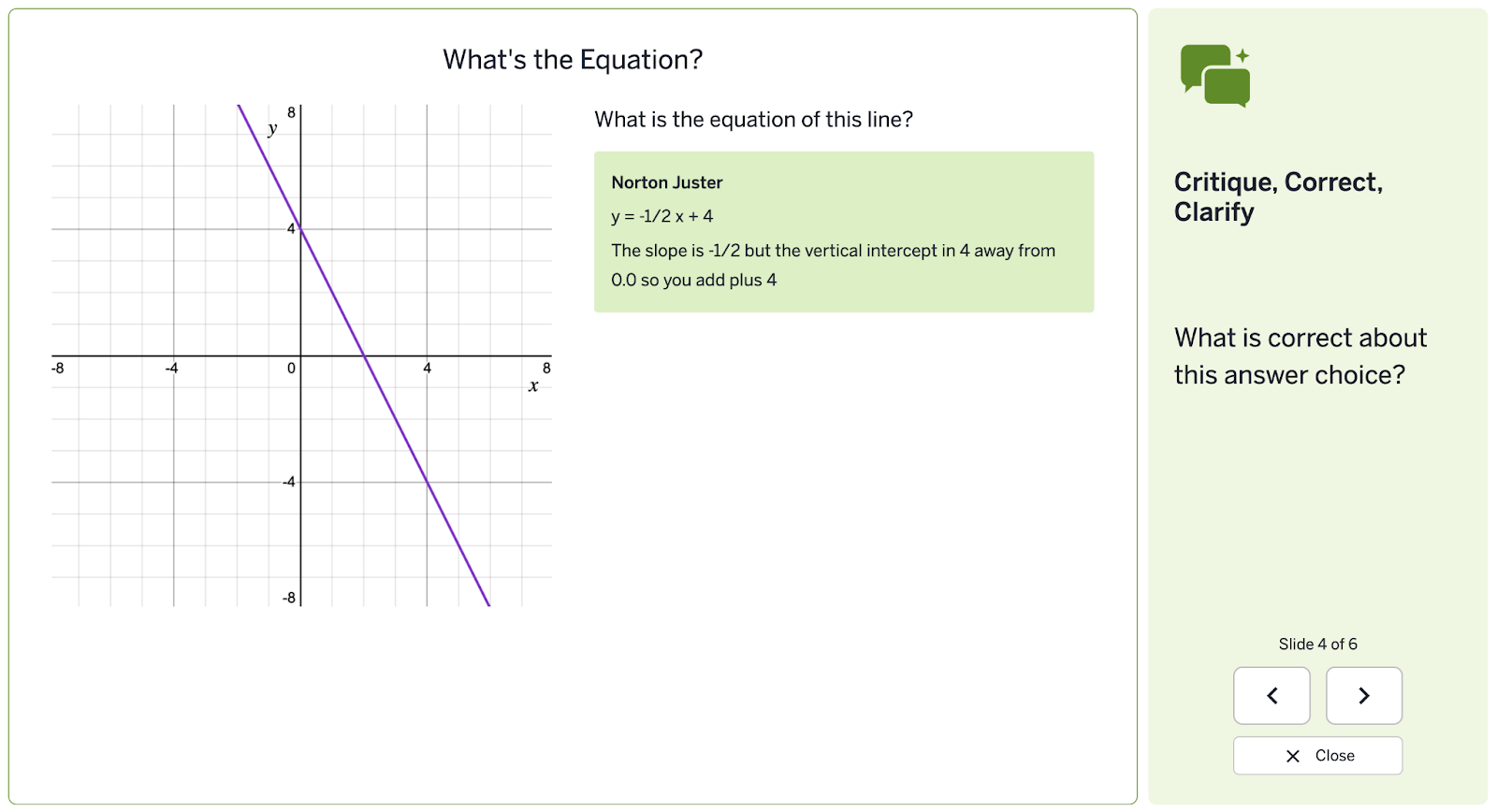
Wait—don’t you hate AI?
I get why you might ask me that, but no. I think generative AI is perhaps the most overrated education technology of my lifetime; I don’t think the chatbot tutors or lessonslop generators are going to transform K–12 education. But I do think generative AI is neat. And look, I have tried to support discussion work with K–12 teachers for the last ten years in other ways, too. I have run in-person and remote PD. I have written math lessons and teacher supports for those lessons. I have sent nifty little customized email sequences tailored to teacher usage. None of those supports have been as promising as AI is here. None of them has moved the needle like Discussion Moments because none of them has been able to meet teachers in their moment of need, at the point of use.
That’s it. You can find Discussion Moments in Amplify Desmos Math next school year.
Welcome, Amplify Reading families
Welcome to the Amplify Reading Caregiver hub. We are here to support you and your child with all things Amplify!

Welcome to Amplify Reading!
Welcome to Amplify Reading! We know how important—and challenging—it is for parents and caregivers to support kids’ remote learning. That’s why we are here to support you. On this site, you’ll find valuable information and resources to help you guide your child as they use Amplify Reading.
What is Amplify Reading?
Amplify Reading provides your child with the opportunity to learn and practice literacy skills within an engaging story world that adapts to each student as they move through the program. Your child can learn with Amplify Reading during school hours and independently at home.
Learn about Amplify Reading in middle school here.
What is my role in Amplify Reading?
Ensuring your child can log in independently
We recommend that caregivers assist their children by helping them log in at home. Below, you’ll find a step-by-step video on how to log in to the program with the login information or QR code provided by your child’s teacher.
Note that your child may log in via Clever or another platform. Reach out to your child’s teacher if you’re unsure or did not receive login information.
Watch the video below for an overview of how to get your elementary schooler started with Amplify Reading:
How to get your child started with Amplify Reading
Tips
- Practice logging in with your child consistently until they can log in independently.
- Keep your child’s login information in a single place so they know where to go if they forget it!
Giving your child the time and space to play independently
Amplify Reading is personalized to your child’s needs, so you do not need to assist students with their learning. Once your child can log in, they’re ready to start using the program. Students will need headphones or to be in a quiet place when they play.
Some students will begin with a placement Quest. Their answers help the Amplify Reading program match them to the best content and games for their reading skill levels. To ensure the most accurate placement, it is important that your child complete each activity independently. If your child needs help understanding the instructions, you can refer to this instruction guide. And it is always helpful to encourage your child to have fun and do their best!
We recommend reviewing this Protecting Kids Online article by the Federal Trade Commission addressing digital safety.
Joining in on the fun!
Each child in grades K–3 has a customizable companion called a Curioso. Print these Curioso Coloring Pages so your child can design their own!
Students in grades K–5 encounter eReader texts along their adaptive learning path. These texts give students the opportunity to transfer the skills they practice in the games to actual texts. Consider watching the following read aloud videos with your child for some extra exposure to the texts and skill transfer activities, as well as opportunities for discussion.
Hedgehog and Fox – Fox keeps taunting Hedgehog that he can beat him in a race. But Hedgehog may have a trick up his sleeve that Fox doesn’t know about…
Lifting Up the Sky – A Snohomish legend that explains how the constellations came to be in the sky.
The Best Present – Anjali and Anuj try to find Mom the best birthday present while they’re at a baseball game. What will they choose?
The Big Ride – Rosa and her dad are about to go on a roller coaster, but Rosa is a little frightened. Will she enjoy it after all?
The Busy Wolf – The Big Bad Wolf wasn’t trying to be bad, he was just too busy! Join us in Bookerton to hear this spin on classic fairy tales and engage with embedded skill practice and discussion prompts!
The Day They Became Americans – Three students who were born in different countries come together on a special day when they become American citizens.
Knowing where to go for help
Whether you have questions about your technology or want to know more about the program, Amplify’s Support Team is here to help!
Contact Support via telephone at (833) 97-Care-8 (833-972-2738) or caregiver@amplify.com.
Our support hours are Monday through Friday, 7 a.m. to 9 p.m. ET.
Frequently asked questions for caregivers
We recommend that your child use Amplify Reading two to three times per week for a weekly total of 30-45 minutes. However, your child’s teacher might have different daily or weekly recommendations.
If your child is having trouble with the content, Amplify Reading will adapt to provide your child with additional support and instructions within the game. For this reason, it is not recommended that caregivers help their child. While this can be hard, the program is carefully designed to provide the level of support your child needs to move forward.
If your child is having any technical challenges, please contact Amplify customer support at (833) 972-2738 or caregiver@amplify.com from Monday – Friday, 7 a.m. – 9 p.m. EDT and Saturday – Sunday from 10 a.m. – 6 pm. EDT.
We’re excited that you want to learn more! This recorded webinar for caregivers provides a deeper dive on the program and how you can support your child.
Amplify ELA: Florida Edition professional development
Amplify ELA is an engaging and rigorous curriculum designed specifically for grades 6–8. With Amplify ELA, students learn to tackle any complex text and make observations, grapple with interesting ideas, and find relevance for themselves.
We’ve created a wide suite of professional development offerings that will help you meet your unique needs this school year. Find out more below!
Amplify CKLA, ELA, and Science professional development has been vetted by Rivet Education’s team through a rigorous three-step process and is listed in the Professional Learning Partner Guide.
Plan your professional development
We’re excited to partner with you on your Amplify journey. Flexible professional development pathways have been designed to meet your needs.

Recommended professional development plan
Our team has curated a recommended professional learning path from initial launch to continuous support. Use the Professional Development Planning Guide below to discuss the plan that best meets your school or district needs with your Account Executive.
Sessions overview
Recommended sessions are highlighted below
| Title | Duration | Modality | Available |
|---|---|---|---|
| Launch | |||
| Comprehensive initial training for teachers | 2 days consecutive | Onsite | Yes |
| Initial training for teachers | 1 day | Onsite | Yes |
| Initial training for teachers | 2 half days | Remote | Yes |
| Program overview | Half day | Onsite/Remote | Yes |
| Initial training for instructional leaders | Half day | Onsite/Remote | Yes |
| Strengthen | |||
| Enhancing observations for leaders | Half day | Onsite/Remote | 09/01/22 |
| Enhancing planning and practice | Half day | Onsite/Remote | Yes |
| Analytic reading | Half day | Onsite/Remote | Yes |
| Supporting all learners | Half day | Onsite/Remote | Yes |
| Data-informed instruction | Half day | Onsite/Remote | Yes |
| Strengthen consultation session | 1 hour | Remote | Yes |
| Strengthen consultation package | 3 1-hour sessions | Remote | Yes |
| Coach | |||
| Coaching sessions | 2 days consecutive | Onsite | Yes |
| Coaching sessions | 1 day | Onsite/Remote | Yes |
| Half day | Onsite/Remote | Yes | |
Launch
Comprehensive initial training for teachers
2 days consecutive (6 hours per day, 12 hours total)
Prepare to implement and support Amplify ELA instruction in your schools! Learn how Amplify ELA supports students through rigorous and engaging ELA instruction. Participants will navigate the Amplify ELA platform, learn to give feedback on student work, and explore how to use Amplify ELA’s embedded supports and Reporting app to monitor student progress. Participants will engage in multiple opportunities to practice components of Amplify ELA and leave confident to begin teaching.
Audience: Teachers and coaches, maximum 30 participants
Modality: Onsite/Remote
Initial training for teachers
1 day (6 hours)
Prepare to implement and support Amplify ELA instruction in your schools! Learn how Amplify ELA supports students through rigorous and engaging ELA instruction. Participants will navigate the Amplify ELA platform, learn to give feedback on student work, and explore how to use Amplify ELA’s embedded supports and Reporting app to monitor student progress. Participants will leave with an action plan to begin teaching Amplify ELA.
Audience: Teachers and coaches, maximum 30 participants
Modality: Onsite
Initial training for teachers
Two half days (3 hours per day, 6 hours total)
This full-day initial training session (6 hours) is split into two half-day sessions (3 hours each). Part 1 and Part 2 may be scheduled consecutively on the same day or on different days, ideally within ~2 weeks. The same participants should attend both sessions in order to receive all content about key components of Amplify ELA, which includes learning how to navigate, teach, and monitor student progress.
Audience: Teachers and coaches, maximum 30 participants
Modality: Remote
Program essentials
Half day (3 hours)
Learn the program essentials including how to navigate the digital curriculum, print materials components and how to locate assessments, data reports and other features associated with the curriculum.
Audience: Teachers and coaches, maximum 30 participants.
Modality: Onsite/Remote
Initial training for instructional leaders
Half day (3 hours)
This training will provide district- and school-level instructional leaders with an overview of Amplify ELA so that they can support their staff in implementing Amplify. Learn basic navigation and gain an understanding of Amplify ELA’s approach to reading, writing, and language instruction. Participants will then have the opportunity to choose how to best support teachers by either developing a school-wide implementation plan or learning strategies for effective classroom observations.
Audience: Ideal for instructional leaders, principals, and district staff who oversee the implementation of the new curriculum, maximum 30 participants
Modality: Onsite/Remote
Strengthen
Enhancing observations for leaders
Half day (3 hours)
Elevate your program knowledge to support colleagues with effective ELA implementation! Practice analyzing ELA lessons and identify key instructional elements and next steps. Participants will be prepared to analyze data and enhance classroom observations.
Prerequisite training: Initial training for leaders
Audience: Ideal for instructional leaders, principals, and district staff who oversee the implementation of the new curriculum, maximum 30 participants
Modality: Onsite/Remote
Enhancing planning and practice
Half day (3 hours)
Dig into one unit to unpack standards, assessments, and student engagement. Through backward planning, this session guides teachers to think deeply about learning outcomes and key moments of formative assessments. Teachers will leave this session with a detailed plan of a unit of their choice that includes learning outcomes, key assessment moments, and aligned instructional strategies.
Audience: Ideal for new or experienced Amplify ELA teachers or coaches, maximum 30 participants
Modality: Onsite/Remote
Analytic reading
Half day (3 hours)
Participants will learn how close reading functions in Amplify ELA and which teacher moves support students as they tackle complex texts. Participants will learn how to facilitate a close reading session to support key reading routines, as well as promote academic discourse and the type of collaboration that drives analysis and deepens understanding.
Audience: Ideal for new or experienced Amplify ELA teachers, maximum 30 participants
Modality: Onsite/Remote
Supporting all learners
Half day (3 hours)
Participants will learn how to effectively use embedded and differentiated supports and the Classwork app to support all students, including English language learners (ELLs), students with learning disabilities, struggling readers and writers, and advanced students.
Audience: Ideal for new teachers or instructional leaders who want to learn more about included supports in Amplify ELA, maximum 30 participants
Modality: Onsite/Remote
Data-informed instruction
Half day (3 hours)
Participants will review their own student data using the Reporting and Classwork apps and align embedded supports to specific student needs. The goal of this session is to become proficient in turning Amplify ELA data into differentiated and targeted instruction.
Note: This course can be combined with the supporting all learners session to make a full day of training.
Prerequisite: 4–6 weeks of student data in Amplify’s Reporting app. It is recommended that teachers are in at least Unit B.
Audience: Ideal for teachers or support staff who want to learn how to use student data to inform instruction and provide differentiation, maximum 30 participants
Modality: Onsite/Remote
Strengthening consultation session
1 hour
This 60-minute session will focus on a specific topic that will deepen educators’ understanding of ELA and equip them with the tools needed to drive stronger student outcomes. An Amplify facilitator will align with the school or district leadership team in advance of the session on the topic (chosen from a menu of options) that will best meet educators’ unique needs. The menu includes sessions on engagement, pacing, and grading/assessment.
Audience: Teachers and coaches, maximum 30 participants
Modality: Remote
Strengthening consultation package
3 1-hour sessions
This package consists of three 60-minute sessions that can be delivered on the same day or on different days. Each session will focus on a specific topic that will deepen educators’ understanding in ELA and equip them with the tools needed to drive stronger student outcomes. An Amplify facilitator will align with the school or district leadership team in advance of the session on the topic (chosen from a menu of options) that will best meet educators’ unique needs. The menu includes sessions on: engagement, pacing and grading/assessment.
Audience: Teachers and coaches, maximum 30 participants
Modality: Remote
Coach
Coaching session
2 days consecutive (6 hours per day, 12 total)
Strengthen your implementation of Amplify ELA with an onsite Coaching visit for your teachers and/or leaders. Participants can choose from a variety of topics that include, but are not limited to: lesson modeling and debrief (conducted by an Amplify ELA coach), grade-level planning, classroom observations, and leadership consultation. The flexible onsite coaching design allows for a collaborative approach to support effective program implementation.
Audience: Teachers, coaches, and/or instructional leaders, maximum 30 participants
Modality: Onsite/Remote
Coaching session
1 day (6 hours)
Strengthen your implementation of Amplify ELA with an onsite Coaching visit for your teachers and/or leaders. Participants can choose from a variety of topics that include, but are not limited to: lesson modeling and debrief (conducted by an Amplify ELA coach), grade-level planning, classroom observations, and leadership consultation. The flexible onsite coaching design allows for a collaborative approach to support effective program implementation.
Audience: Teachers, coaches, and/or instructional leaders, maximum 30 participants
Modality: Onsite/Remote
Coaching session
Half day (3 hours)
Strengthen your implementation of Amplify ELA with a Coaching session for your teachers and/or leaders. Participants can choose from a variety of topics that include, but are not limited to: lesson modeling and debrief (conducted by an Amplify ELA coach), grade-level planning, classroom observations, and leadership consultation. The flexible coaching design allows for a collaborative approach to support effective program implementation.
Audience: Teachers, coaches, and/or instructional leaders, maximum 30 participants
Modality: Onsite/Remote
Pricing
We offer the following pricing for training sessions and packages:
| Session type | Pricing |
|---|---|
| 2-day onsite session | $4,800 |
| 1-day onsite session | $3,200 |
| 1-day remote session (2 half days remote) | $1,500 |
| Half-day onsite session | $2,500 |
| Half-day remote session | $750 |
| 1-hour remote session | $350 |
| 3 1-hour remote sessions | $1,000 |
Please note that the prices are general ranges and may be subject to change.
Contact
Amplify welcomes the opportunity to partner with schools and districts to design professional development plans and answer your questions.
If you would like to order any of our professional development services, please contact your local Amplify sales representative or call (800) 823-1969.
Madison County Schools: Early literacy success through the Science of Reading

Madison County Schools is a diverse district serving nearly 13,000 students across 23 schools in central Mississippi. Over the past few years, the district has shifted its approach from balanced literacy to structured literacy. The transition wasn’t quick or simple—but it worked.
In 2016, the district’s elementary ELA proficiency was at 47.1%. By the spring of 2024, it had reached almost 70%, with all elementary schools receiving A ratings for the first time.
“Today, structured literacy is at the core of our instruction, and the results speak for themselves,” said Kacey Matthews, dyslexia coordinator for the district. “This historic achievement affirms that when we commit to evidence-based instruction, students thrive.”
That commitment, and the resulting achievement, has earned Madison County Schools our 2025 Science of Reading Star Awards District Captain award. These teacher awards honor educators, schools, and districts who’ve transformed their classrooms and empowered their students with the Science of Reading.
The constants: Building literacy and a love of reading
Madison County Schools spans four zones, from suburban to rural. Roughly one-third of its schools are Title I, and its teachers support more than 1,200 multilingual/English learners representing 36 languages. Nearly 40% of students in the district receive free or reduced-price lunch.
Madison County originally followed a balanced literacy model, but over time, educators began to see gaps—particularly among students experiencing reading difficulty and students with dyslexia.
“Our diverse student body underscores our belief that literacy is the key to unlocking potential,” Matthews said. Teachers came to understand that their shared desire to support a love of reading in their students and their dedication to paramount literacy goals had to be anchored in a curriculum aligned to the Science of Reading: explicit, systematic instruction in phonemic awareness, decoding, and language comprehension.

Shifting practices and mindsets
According to Matthews, transitioning from balanced to structured literacy required more than a change in instructional methods. “The biggest challenge,” she said, “was shifting instructional mindsets.”
In classrooms, educators needed to trade in the familiar tools of running records and predictable texts for a new framework built on foundational skills data. “Initially, some educators were hesitant, but ongoing professional learning, hands-on support, and student success stories built trust and proved the effectiveness of this approach,” Matthews said.
District leaders, principals, and teachers also worked together to create a shared vision for literacy grounded in evidence and collaboration. Madison County invested in professional learning through LETRS, Phonics First, and the AIM Institute, ensuring every educator had the tools to teach early literacy skills effectively.
Each school added trained literacy specialists who provided classroom coaching and MTSS interventions, and the district instituted dyslexia training for all 1,500 staff members every three years, ensuring consistent understanding of structured literacy principles across every grade.
Principals received targeted professional development to lead with clarity, and the district introduced new, research-based curricula—including Amplify Core Knowledge Language Arts (CKLA)—to align instruction from kindergarten through fifth grade. To unify these efforts, Madison County also rewrote its Literacy Expectations guide, a districtwide roadmap detailing the five essential components of literacy, classroom strategies, and links to foundational research.
All told, Madison County teachers and leaders have reimagined classroom practice, embracing a structured literacy framework grounded in the Science of Reading.
From anxiety to confidence
In addition to the district’s impressive leap in literacy proficiency of more than 20 percentage points, they also saw transformation on the Mississippi Third-Grade Reading Assessment, a high-stakes gate test of readiness for fourth grade. Equipped with strong foundational skills, Madison County’s third graders are now thriving—with a 99.7% promotion rate in 2024.
“Instead of facing [the test] with fear, our students now enter with confidence,” Matthews said. In other words, data only tells one part of the story. “Students who previously dreaded assessments now approach them with readiness,” she said. “Students who once struggled with decoding now read with confidence and fluency.”
Sustaining a culture of literacy and growth
Madison County’s progress rests on persistence as much as innovation. The district’s educators continue to meet regularly for data discussions, lesson study, and reflection—sustaining the same mindset shift that began this journey. Professional learning remains a constant for them, demonstrating their dedication to teaching excellence and their belief that educational approaches are never static.
According to Matthews, Amplify has been a trusted partner in that work. Teachers can target support with precision by using mCLASS® for progress monitoring and the mCLASS Dyslexia Screener for early identification. Several schools also use Amplify CKLA to build decoding and comprehension simultaneously, engaging students with content-rich texts that deepen knowledge and vocabulary.
“When we commit to the Science of Reading, we are not just building better readers,” Matthews said, “we’re building a brighter future.”
More to explore
Dual language assessment and instruction for K–6
mCLASSⓇ Lectura Texas is a universal screener for K–6 built on modern Spanish literacy research. Delivering complete parity between English and Spanish reading assessments, the program supports educators in accelerating reading growth for Spanish-speaking students.
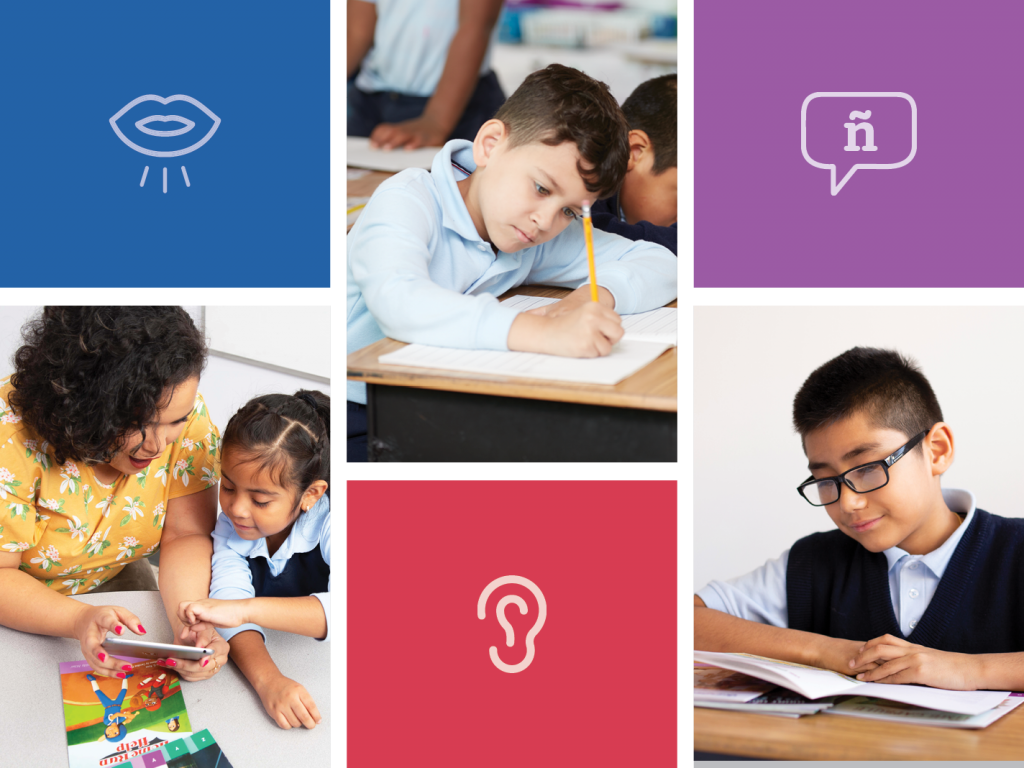

Built by leading biliteracy experts
The mCLASS Lectura Texas universal screener was co-developed with the Center on Teaching and Learning at the University of Oregon. The assessment was validated by Amplify in partnership with Lillian Durán of the University of Oregon.
The development of mCLASS Lectura Texas also involved a team of nationally recognized experts representing a range of regions (Mexico, Central America, South America, and the Caribbean), along with focus groups featuring classroom teachers, special education teachers, specialists, and administrators.
Our approach
Aligned to the Science of Teaching Reading, mCLASS Lectura Texas enables teachers to connect with their students through observational assessment and in the language most comfortable to them. When used in tandem with mCLASS Texas Edition, the program helps you achieve complete parity between English and Spanish literacy skills.
Complete parity between English and Spanish
mCLASS Lectura Texas is an authentic Spanish assessment that integrates seamlessly with mCLASS Texas Edition. It offers consistent reporting across both English and Spanish assessments and provides specialized dual-language reporting.


Listen to your students read in both languages, one-on-one.
mCLASS Lectura Texas provides teacher-administered assessments in Spanish that deliver accurate and reliable measurements of each student’s literacy progress.
Built from the latest research in Spanish literacy development
mCLASS Lectura Texas is a high-quality assessment that accounts for the major differences between English and Spanish, not simply a direct translation or transadaptation between the two languages.


Transfer skills in one language to the other.
By providing teachers with insights into the skill areas in which their students are proficient in their native language, the program helps multilingual/English learners build on their strengths and make connections. Educators also receive guidance on the cross-linguistic transfer of critical skills in both languages.
What’s included
mCLASS Lectura Texas includes one-minute measures validated for universal and dyslexia screening, and provides dual language reports for teachers and administrators.

Comprehensive Spanish literacy measures in mCLASS Lectura Texas
mCLASS Lectura Texas is validated to assess for all key foundational skills for K–6, including:
- Letter Naming.
- Phonological Awareness.
- Alphabetic Principle.
- Fluency.
- Comprehension.
Reports in English and Spanish
mCLASS Lectura Texas analyzes Spanish literacy and English literacy development side by side, enabling you to see where kids are in both languages.


Instructional activities to build Spanish literacy skills
With mCLASS Lectura Texas, educators get hundreds of step-by-step instructional activities for small groups or individual students and receive effective activities to target the Spanish literacy skills with which students need the most support.
Comprehensive reporting
mCLASS Lectura Texas provides reporting for everyone. This is available at all levels, from classroom teachers and literacy specialists to principles and district leaders, as well as parents and guardians at home.


Detailed assessment data
mCLASS Lectura Texas provides transcripts of every assessment and identifies error patterns to help educators make instructional decisions for students on the skills they need to work on the most. The program also includes letters with student assessment results and analysis to send home or to use as a basis for discussion at conferences.
Explore more programs based in the Science of Teaching Reading.
Learn more about the Amplify Texas biliteracy suite at texas.amplify.com.
¡El futuro es bilingüe! | The future is bilingual!
Pave the path to biliteracy with Amplify Caminos 3rd
Edition—a K–5 Spanish language arts program grounded in the Science of Reading and aligned with Amplify CKLA. It builds deep content knowledge and foundational skills through daily opportunities to read, write, and speak in Spanish.
Coming soon: Early release begins in the 2026–27 school year

Built for biliteracy success
Amplify Caminos isn’t just a translation of English instruction; it’s an authentic Spanish language arts program designed for Spanish literacy development. Flexible across transitional, dual language, and immersion programs, it pairs with Amplify CKLA to deliver a complete, research-based K–5 biliteracy solution.
Our approach
Guided by our core biliteracy principles, Amplify Caminos delivers instruction that’s structured, intentional, and aligned with how Spanish language learning develops.
Rooted in biliteracy research
At the heart of the Science of Reading is the Simple View of Reading: language comprehension x word recognition = skilled reading. Amplify Caminos and CKLA support both from day one—starting with two-strand instruction in grades K–2 and moving to an integrated approach in grades 3–5.
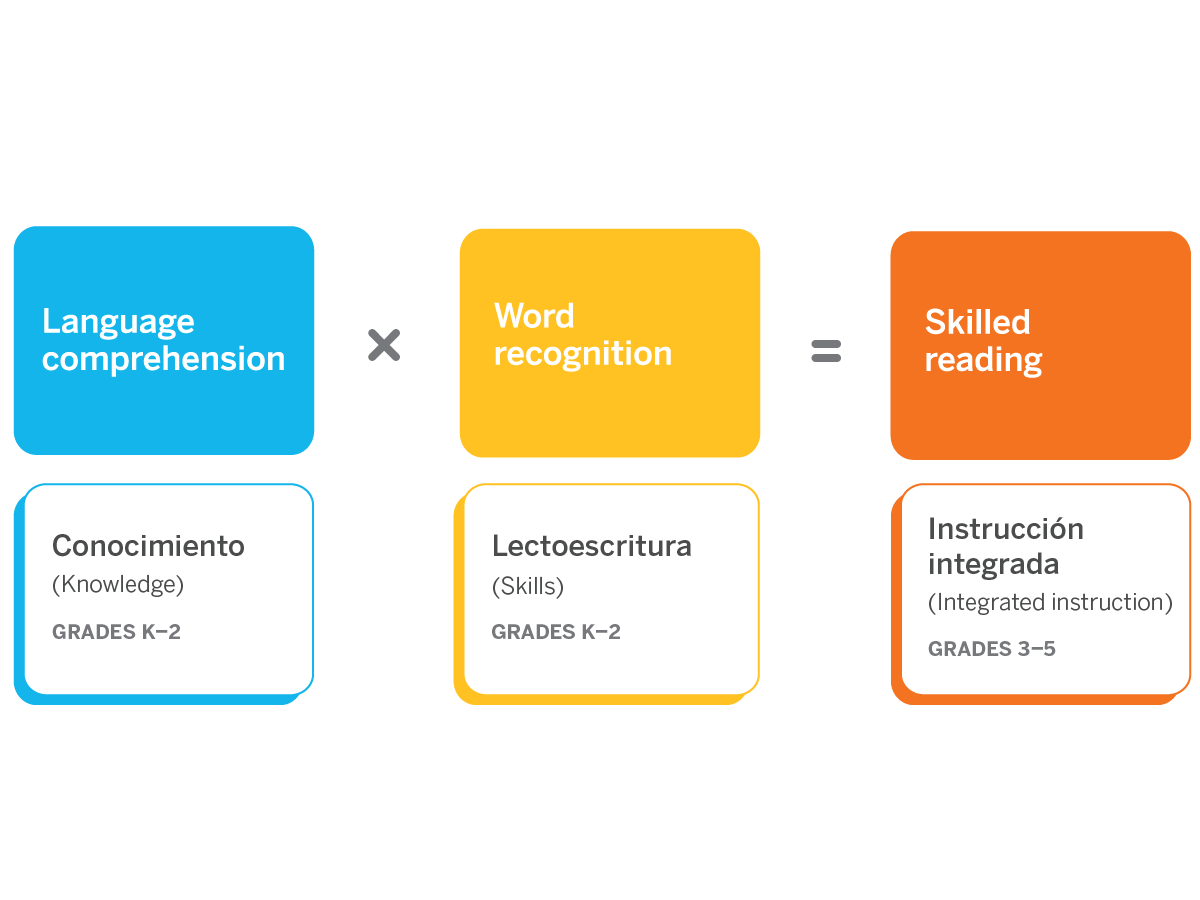
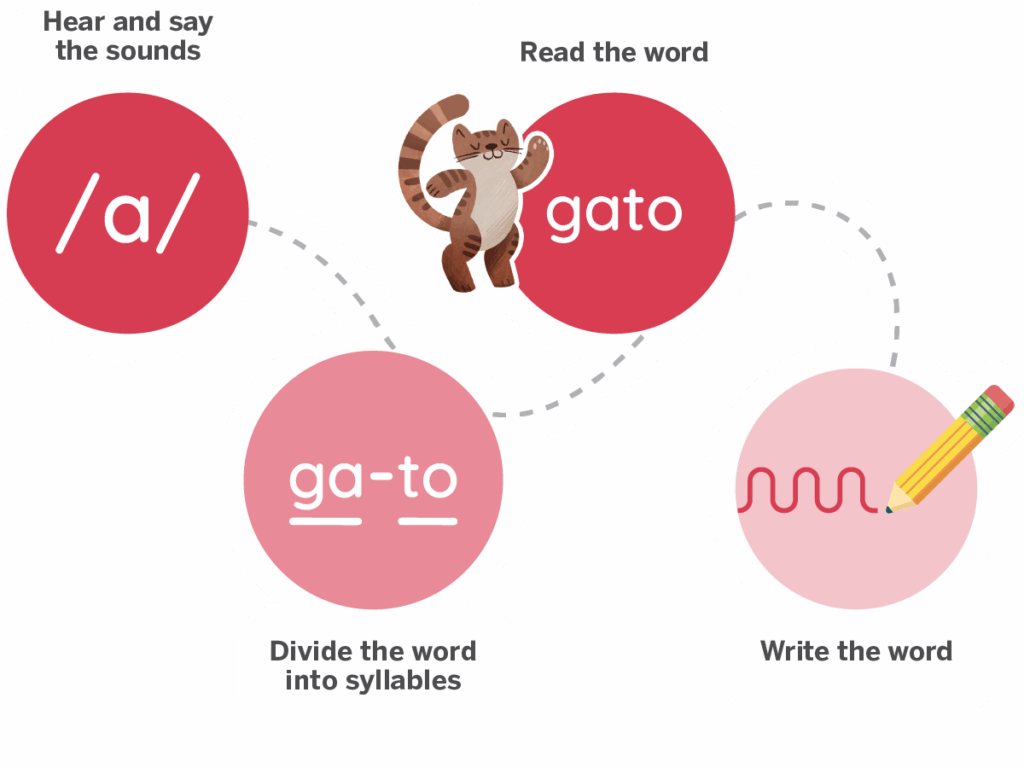
Foundational skills built for Spanish
Reading fluency starts with a sounds-first approach—beginning with the most common vowels and consonants before moving to syllables and words. In grades K–2, Lectoescritura lessons develop decoding with 100% decodable readers. In grades 3–5, foundational skills are woven into content-rich lessons.
Knowledge that sticks
Topic-based instruction across science, social studies, literature, and the arts helps students develop the knowledge they need to understand complex texts. Amplify Caminos and CKLA follow the Core Knowledge Sequence with aligned—but not identical—topics for consistent Tier 1 instruction in both languages.
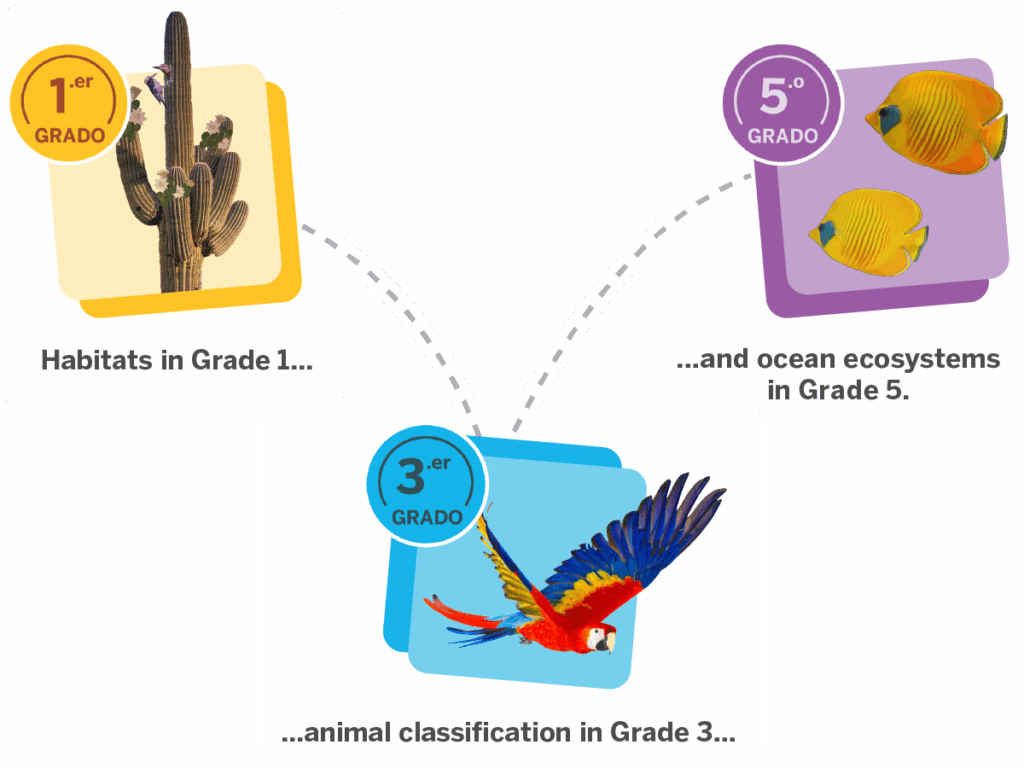
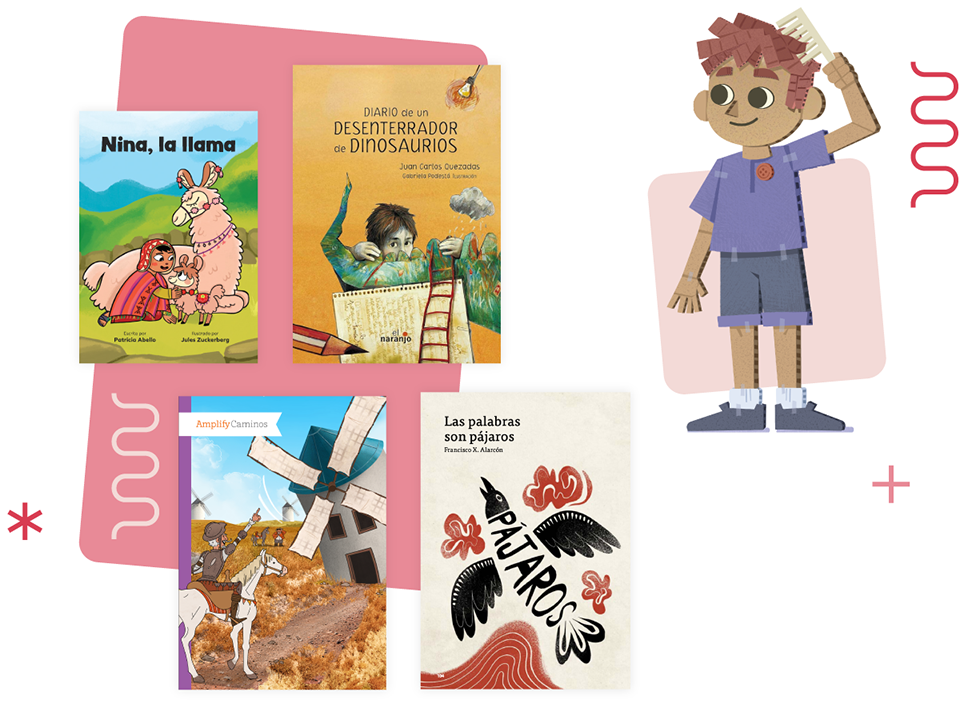
Stories that reflect and connect
From 100% decodable readers in grades K–2 to authentic poetry and novel studies in grades 3–5, each selection is either written in Spanish or transadapted to reflect students’ language, culture, and lived experiences.
Aligned, not identical
Amplify Caminos mirrors Amplify CKLA with intentional unit-level alignment and authentic Spanish content where it matters most. The result? A seamless biliteracy path that honors each language and promotes cross-linguistic transfer.
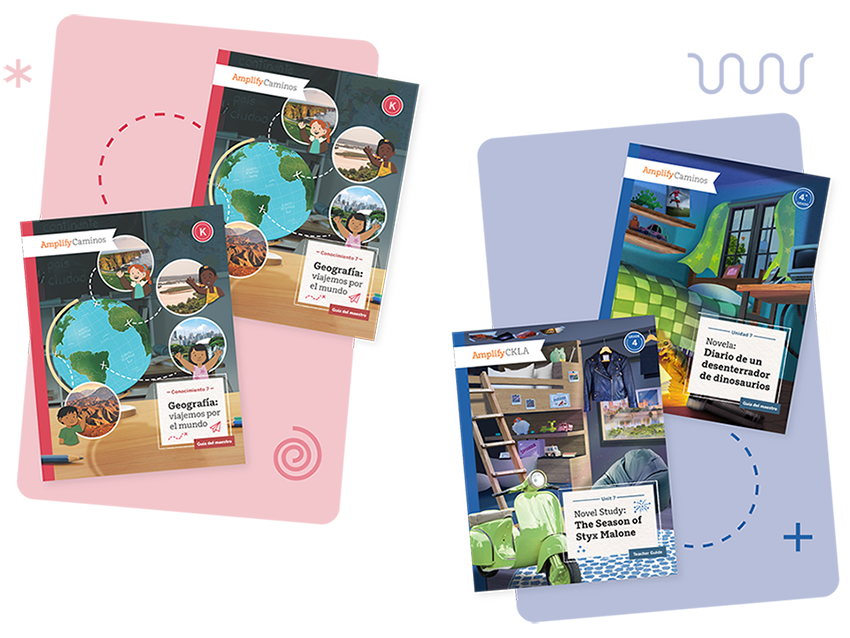
Reach every learner, every day
Built-in scaffolds, multilingual supports, and small-group guidance help teachers reach students who need more support—and those who are ready for a challenge. Amplify Caminos and CKLA make it easy to differentiate in the moment and keep every student growing.
Celebrate bilingualism
Bilingualism strengthens brains and bridges cultures. Amplify Caminos and CKLA honor bilingual identities and support academic growth in both Spanish and English.
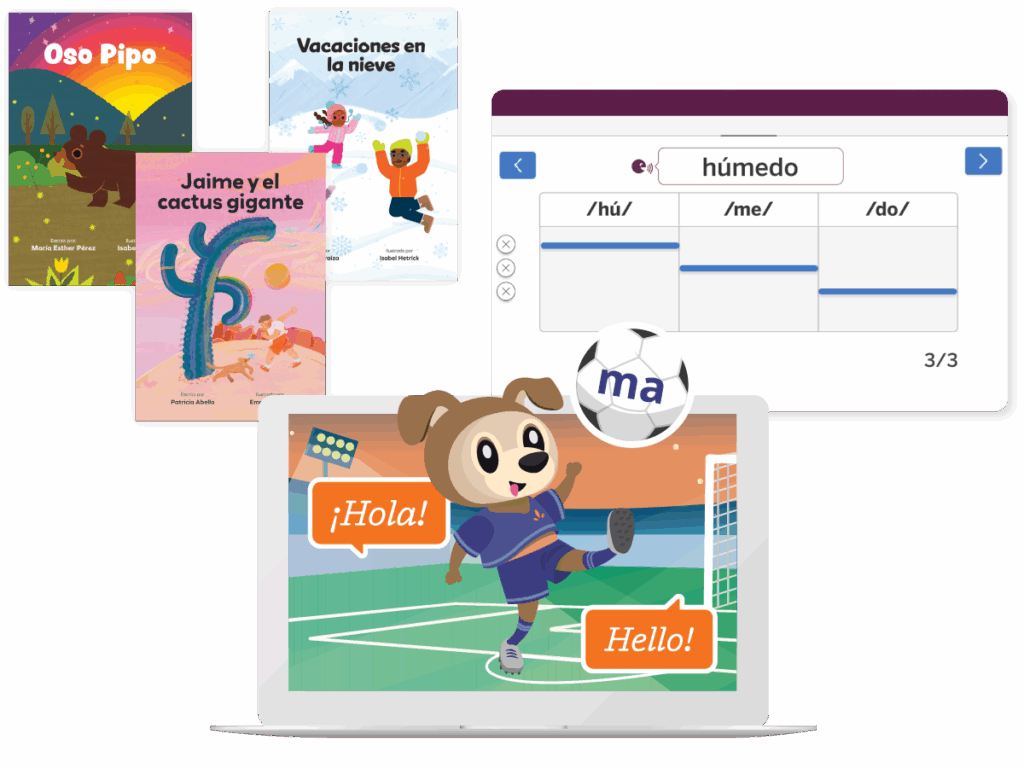
A complete biliteracy suite
One system. Two languages. Every learner.
Unite core instruction, assessment, and intervention—aligned across Spanish and English, grounded in the Science of Reading, and built to support every student within your MTSS framework.
- Instruct with Amplify Caminos + Amplify CKLA: Partnered programs build knowledge and skills—with shared structure and distinct content where it matters.
- Screen with mCLASS® Lectura + DIBELS® 8th Edition: The only screener with a dual-language report that connects student strengths across Spanish and English.
- Practice with Boost Lectura + Boost Reading: Digital, student-led intervention that adapts to each learner—reinforcing core skills in both languages.
- Grow with Amplify professional development: Science of Reading and biliteracy-focused training—plus real educator communities to grow and learn together.
Maximize bilingual education with Amplify PD.
Amplify Caminos offers targeted professional development (PD) to help educators deliver bilingual education effectively. Our sessions provide strategies and insights to support biliteracy and maximize student engagement.

What’s included
Explore the tools, texts, and tech that power great Spanish language arts instruction.
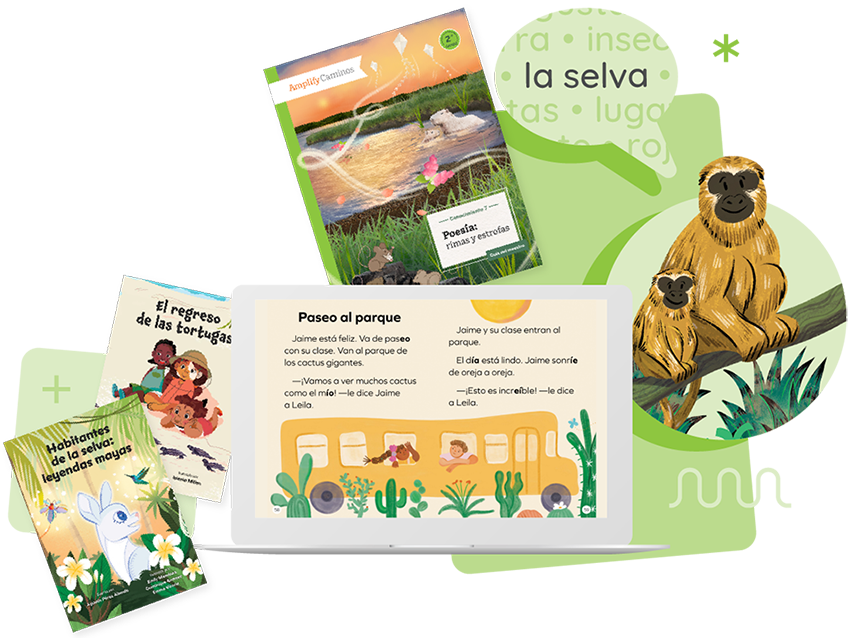
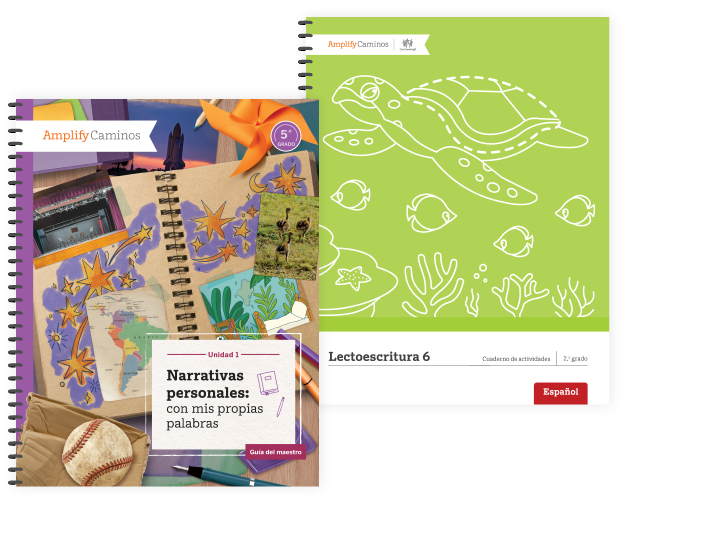
High-quality teacher materials
Teacher Guides, biliteracy implementation support, assessments, and lesson screens
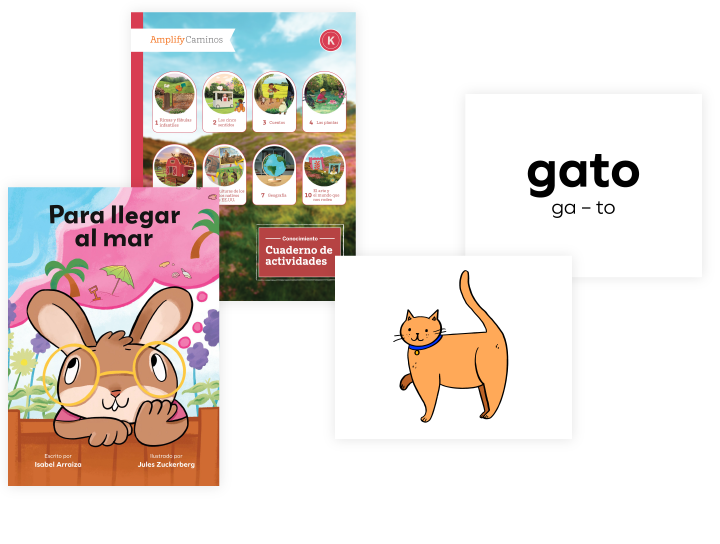
Immersive student resources
Decodables, authentic and transadapted texts, activity books, and multisensory phonics tools
Robust digital platform
eBooks, interactive tools, teacher resources, and on-demand professional development with support for dual language implementation
Explore more programs based on the Science of Reading
All of the programs in our literacy suite are designed to support and complement each other. Learn more about our related programs:


How asset-based assessments can revolutionize math instruction

Many of today’s math classrooms are facing a perfect storm: declining scores, widening learning gaps, and growing pressure on teachers to deliver solutions. According to the National Assessment of Educational Progress, students are experiencing the steepest drop in math scores since 1990. EdWeek Research Center reports that a persistent gap between educational theory and day-to-day practice is putting added stress on teachers, often leaving them to navigate complex pedagogical demands without adequate support.
So how can we provide both students and teachers with the tools they need to succeed? How can math assessments and math intervention programs provide real help and drive student progress—without piling on more work?
One promising answer lies in rethinking how we assess what students know.
Rethinking the role of math assessments
Traditional assessments tend to focus on correctness alone. Did the student get it right or wrong? How many points did they earn?
But this binary approach misses a lot. A skipped question could mean a tech hiccup or a moment of confusion—not a lack of understanding. A wrong answer might come at the end of otherwise solid problem-solving.
An asset-based assessment approach shifts the focus from mistakes to meaning. It looks beyond outcomes to understanding how students think—their strategies, reasoning, and partial understandings. And when teachers can see that thinking, they gain far more useful data to guide instruction and inform their math intervention program.
This approach doesn’t lower expectations—it raises the quality of insight and gives struggling students (and really all students) a better shot at meeting standards with instruction that’s tailored to their actual needs.
Honoring students’ thinking and teachers’ time
Every student thinks differently. Asset-based assessments help reveal individual thinking, often through short-answer or open-response formats that ask students to explain how they solved a problem.
But this shift isn’t just for students. Teachers can benefit enormously when assessments are designed to surface trends in student thinking. If 30% of a class misinterprets the same concept, that result reveals a teaching opportunity. Rather than reteach an entire unit, teachers can adjust with focused, targeted support. That means less time spent diagnosing, and more time actually helping.
And when technology in the math classroom makes this data easy to collect, analyze, and act on, teachers get a level of consistent insight that is not only helpful, but actionable.
From student performance to student performance + thinking
The ultimate goal of asset-based assessments isn’t to replace performance data—it’s to enhance it. Knowing how a student got to an answer (or why they didn’t) can make all the difference in determining what to do next.
Here’s an example involving a division problem:

When real students were given this problem, they responded with answers like:
- 33/4 = 8.25, round up to 9 so all kids can sit!
- 33/4 = 8 with a remainder of 1. She needs 8 tables.
- 8 x 4 = 32, but 9 x 4 = 36. I don’t know if we can leave one student sitting lonely on the floor, though.
Traditional grading might stop at “correct” or “incorrect” for these responses. But when students are asked to explain their thinking, teachers can uncover a range of reasoning—from successful multiplication strategies to misunderstandings about remainders.
These glimpses into student thinking aren’t just informative—they’re transformative. They can illuminate the performance of students in a deeper, more actionable way. They can help teachers take smarter next steps, and they can help students feel understood, capable, and more like “math people” every day.
More to explore
- Download our ebook Asset-Based Assessment: What It Is and Why It’s Needed in K–12 Classrooms.
- Amplify is investing in assessment and intervention tools that make this kind of insight possible. Our latest suite was designed with asset-based thinking at its core. You can learn more here:
USBE Data Analysis for K-3 Reading Assessment Program
Introduction
mCLASS Assessment: Acadience™ Reading
How it works: Quickly identify the needs of each student and inform next steps with instant analysis, reports, and instructional planning tools included in the only licensed mobile version of the research-based Acadience Reading assessment.
- Use short, 1-minute fluency measures for foundational reading skills.
- Replace manual calculations with instant results and recommended activities.
- Compare student progress with predictive, research-based benchmark goals.
- Track progress and target instruction to individual student needs.
- Support decision-making at every level using aggregate reports.
- Translate class- and student-level reports into individualized instruction using the Now What?Tools.
- Get a more complete view of early literacy skills with the new mCLASS:Early Literacy Measures (ELM).
Enrollment for mClass
Please review the Utah Enrollment for mCLASS document for important information about the rostering process for LEAs in Utah.
Benchmark Windows
The USBE has required that each Acadience Reading testing benchmark window occur within the below dates:
BOY — the first benchmark before October 14
MOY — the second benchmark between December 1 and February 5
EOY — the third benchmark between the middle of April and June 15
Benchmark windows for LEAs are set to the state benchmark window dates in mCLASS. Each LEA is to have 2-4 week benchmark period that is within the state benchmark window dates and LEA leaders are to share those dates with staff. The benchmark windows in mCLASS are set to the state benchmark window dates; not the LEA benchmark window dates and this can not be changed in mCLASS. If a student moves into your LEA and your benchmark window is closed, but the state benchmark period is still open, the student must be benchmarked. Should your LEA need an extension of a benchmark window beyond the close of the state benchmark windows, that must be approved by the USBE Assessment Department. Once the benchmark window closes, do not give the benchmark to a student, instead, educators can progress monitor the student on the measures they would have received a benchmark in order to get the students current instructional levels.
If you have questions regarding your current benchmark window dates, feel free to reach out to Amplify Customer Services at help@amplify.com.
Acadience Reading Benchmark Invalidations
Before you invalidate a benchmark probe, review the USBE’s list of acceptable reasons for invalidating on the Frequently Asked Questions: Acadience Reading Invalidations document. If a district/charter has a significant percentage of invalidations, contact and further action will be deployed. If you believe an invalidation is required, please contact your District/Charter Literacy Director. If they need support, they can contact Sara Wiebke, sara.wiebke@schools.utah.gov, to request an invalidation.
Progress Monitoring
The impact of progress monitoring
Progress monitoring is the most powerful tool we offer with regards to student achievement.
“Scores for Daze increase more slowly than they do for other Acadience Reading measures, so more frequent monitoring may not be as informative. For students who need to be monitored on Daze, we recommend monitoring once per month.”
Progress Monitoring with Acadience Reading
© Acadience Learning
October 2012
The Acadience Reading authors recommend progress monitoring students in the Well Below Benchmark category once every 7-10 days (and once every 10-12 days for students in the Below Benchmark category).
Progress monitoring is the practice of testing students briefly but frequently on the skill areas in which they are receiving instruction, to ensure that they are making adequate progress. When students are identified as at risk for reading difficulties, they can receive progress monitoring testing more frequently to ensure that the instruction they are receiving is helping them make progress. (Acadience Learning/October 2012, Progress Monitoring Guide)
The purposes of progress monitoring are:
- to provide ongoing feedback about the effectiveness of instruction,
- to determine students’ progress toward important and meaningful goals, and
- to make timely decisions about changes to instruction so that students will meet those goals.
How to progress monitor?
- Select students for progress monitoring
- Select Acadience Reading materials for progress monitoring
- Set progress monitoring goals
- Determine the frequency of progress monitoring
- Conduct progress monitoring assessment
- Access data through class and student reports
- Evaluate progress and modify instruction.
The key to progress monitoring: Instruction should link to progress monitoring and progress monitoring should link to instruction. They should run parallel and merge as one to confirm student growth in reading.
Check your progress monitoring fidelity report in mCLASS to ensure you are on track with these students. For more information regarding progress monitoring guidelines, visit the official progress monitoring guidelines.
Support Team
Amplify Customer Services
(800) 823-1969
Monday to Friday, 5 a.m. to 5 p.m. MT
help@amplify.com
Educational Support Team
Pedagogical Questions
(800) 823-1969
Monday to Friday, 5 a.m. to 5 p.m. MT
edsupport@amplify.com
For more information, please contact:
Sarah McCarty
Associate Director, Educational Partnership
(812) 593-5776
smccarty@amplify.com
Donna Bright
Educational Partnership Manager
(303) 960-3772
dbright@amplify.com
Robert McCarty
Regional Director of Educational Partnership
(435) 655-1731
rmccarty@amplify.com
Cydnee Carter
Assessment Development Coordinator
(801) 538-7654
cydnee.carter@schools.utah.gov
Liz Williams
Elementary ELA Assessment Specialist
(801) 538-7542
Liz.williams@schools.utah.gov
Sara Wiebke
Literacy Coordinator
(801) 538-7935
sara.wiebke@schools.utah.gov
Krista Hotelling
K-3 Literacy Specialist
(801) 538-7794
krista.hotelling@schools.utah.gov
Christine Elegante
K-3 Literacy Specialist
(801) 538-7551
christine.elegante@schools.utah.gov
Julie Clark
K-3 Literacy Specialist
801-499-2515
julie.clark@schools.utah.gov
Melissa Preziosi
Assessment Data Specialist
(801) 538-7949
melissa.preziosi@schools.utah.gov
Resources
Helpful tips and guides
- Implementation Roadmap Every school system has different objectives and needs, and this document is designed to help you define how the mCLASS system can best support you in achieving your goals.
- Checklist Use this checklist to ensure your staff is trained and your programmatic expectations are clearly communicated to all stakeholders. Completing each of these steps during the correlated benchmark window will help you realize the full value of your mCLASS assessment program.
- mCLASS: Online Help
- Acadience Reading Assessment Manual (Note: You will need to register as a user to get access to the materials; both registration and materials are available at no cost.)
- Acadience Reading Benchmark Goals and Composite Score
- Grouping Worksheets for Acadience Reading
- Acadience Reading Key Skills This document correlates the Acadience Reading measures to Basic Early Literacy Skills.
- The Big Ideas in Early Reading This document is a reference of the five Big Ideas in Early Reading.
- Acadience Reading Reminders A list of reminders the teacher can give to students while assessing Acadience Reading.
- USBE Literacy Framework
- Utah School Report Card: Early Literacy
- Utah State Board of Education Reading on Grade Level Targets for Acadience Reading K-6
- Five leadership practices that drive success in K-2 literacy
mCLASS:Acadience Reading tutorials
- mCLASS:Acadience Reading Next Scoring Practice
- mCLASS Now What? Tools Tutorial
- Pathways of Progress: Purpose
- ?Pathways of Progress: Setting Meaningful Goals
- Pathways of Progress: Highly Skilled Learners Criteria
- ?Goal Setting in mCLASS
- mCLASS How to calculate student pathways video
- Calculating Pathways from DYD Presentation
Technical resources
Amplify Enrollment This guide walks you through the necessary steps to complete enrollment using the manual enrollment tools on Amplify Home. It shows you how to manage staff, student, and class assignment information, and maintain the accuracy of your staff, student, and class assignments.
Devices & Requirements Ensure mCLASS is compatible with your devices and systems for optimal performance and support.
Remote Assessing
Videos:
Remote Assessment Guidance from the Acadience Team:
mCLASS®: Acadience® Reading (formerly known as DIBELS Next)
Key Points:
Before you assess:
1. Determine how you will show student materials and score in mCLASS at the same time.
| Description | |
|
Description Recommended set up |
|
| Modified set up |
Note: mCLASS app is optimized for touchscreen; scoring with a mouse may need more practice. |
2. Familiarize yourself with the digital copies of student materials.
3. Schedule virtual meetings with students. To communicate with English-speaking caregivers, consider sending this email or video. To communicate with Spanish-speaking caregivers, consider sending this email or video.
4. Determine how you will handle scenarios where there’s a lag:
| Description | |
| Record the meeting |
|
| Use a phone |
|
While you assess:
1. Take the opportunity to connect individually with your students as they experience so much change. Don’t make the session solely about testing, and remind caregivers and students that the assessment is a way to see how you can best tailor instruction.
2. Make student materials visible to your student.
For Maze, choose the model that works best for you:
Enter results into the mCLASS web reports
- Students complete online Maze during a video conference
- Put a link to the student assessment site (mclass.amplify.com/student) and the student’s credentials into the chat box (learn how to generate student credentials in this video)
- Ask your student to complete Maze.
- Students complete online Maze outside of a video conference (caregiver support is needed with log-in)
- Students complete Maze on paper
- Locate the benchmark Maze Acadience Learning’s site.
- Print a copy of the form you need (e.g. BOY) for each student in your class.
- Send the form home in a sealed envelope with students, mail the form to caregivers, or have caregivers get forms via school-based pick-up. Provide instructions not to open the envelope until the student is ready to take the assessment.
- Provide parents with instructions on how to proctor the assessment for their child. They need to:
- Give the form to their child
- Sit with their child and read the instructions and practice items
- Tell their child to stop when 3 minutes has elapsed
- Send screenshots of their child’s work via email or text, or return the completed form to the school in a sealed envelope provided by the school.
| Guidance | |
| Acadience:Reading |
Use the share screen feature to display student materials on your screen. Optional next step for measures that have student materials: Zoom users: grant your student control of your screen so you can see their cursor as they read:
Note: For Mac OSX, you will need to give Zoom access in the Accessibility tab in the Privacy and Security preferences of your Mac. For more information on giving Zoom access in Security and Privacy, click here. |
3. Score in mCLASS.
| Benchmark | Progress monitoring | |
| Acadience Reading (formerly known as DIBELS Next) | Available for free download on the Acadience Learning website | |
Inspiring the next generation of Oklahoma scientists, engineers, and curious citizens
Amplify Science is an engaging new core curriculum designed for three-dimensional, phenomena-based learning.
A powerful partnership
Amplify Science was developed by the science education experts at UC Berkeley’s Lawrence Hall of Science and the digital learning team at Amplify.
Our Instructional Model
The Amplify Science program is rooted in the proven, research-based pedagogy of Do, Talk, Read, Write, Visualize. Here’s how each element works:
DO
First-hand investigations are an important part of any science classroom, and Amplify Science has students getting hands-on in every unit, from building models of protein molecules to experimenting with electrical systems.
TALK
Student-to-student discourse and full class discussions are an integral part of the program. Students are provided with numerous opportunities to engage in meaningful oral scientific argumentation, all while fostering a collaborative classroom environment.
READ
Students read scientific articles, focusing their reading activities on searching for evidence related to their investigation, and importantly, on asking and recording questions as they read through fascinating texts on 21st-century topics.
WRITE
Following real-world practices, students write scientific arguments based on evidence they’ve collected, making clear their reasoning about how a given piece of evidence connects to one of several claims.
VISUALIZE
By manipulating digital simulations and using modeling tools to craft visualizations of their thinking— just as real scientists and engineers do—students take their learning far beyond the confines of what they can physically see in the classroom in an exciting and authentic way.
Resources to support your review
- What’s so phenomenal about phenomena? – ebook
- Phenomena in grades K–5
- Phenomena in grades 6–8
- Student Books in grades K–5
- Literacy-rich science instruction in grades K–5
- Active Reading in grades 6–8
- Engineering in Amplify Science
- Oklahoma standards correlation for grades K–8
- Program structure for grades K–5
- Program structure for grades 6–8
- Oklahoma recommended scope and sequence for grades 6–8
Remote and hybrid learning supports

Oklahoma remote and hybrid overview video
Amplify has launched a new remote learning solution called Amplify Science@Home. Intended to make extended remote learning and hybrid learning easier, Amplify Science@Home includes two useful options for continuing instruction: @Home Videos and @Home Units.
Amplify Science @Home Videos are recordings of real Amplify Science teachers teaching the lessons. For those teachers who are unable to meet synchronously with their students, the recorded lessons are a great way to keep their students on track and engaged with Amplify Science while at home. These videos will be produced for all K–5 units, and for the first four units of each 6–8 grade level. Their release will be rolling, beginning in August.
Amplify Science@Home Units are modified versions of Amplify Science units, strategically designed to highlight key activities from the program. The @Home Units take significantly less instructional time than the complete Amplify Science program and allow students to engage with science at home. @Home Units will be developed for all Amplify Science K–8 units. Each @Home unit includes:
- Teacher overviews explaining how to use the materials, including suggestions for enhancing the @Home Units if synchronous learning or in-class time with students is available.
- Overviews to send home to families.
Student materials are available in two formats:
- @Home Slides (PDF/PPT) + Student Sheets (PDF) for students with access to technology at home.
- Downloadable @Home Packets (PDF) for students without access to technology at home.
Download the Remote and hybrid learning guide.
What’s included
Flexible resources that work seamlessly together
Science articles
The middle school science articles serve as sources for evidence collection and were authored by science and literacy experts at the Lawrence Hall of Science.

Student Investigation Notebooks
Available for every unit, the Student Investigation Notebooks provide space for students to:
- Record data
- Reflect on ideas from texts and investigations
- Construct explanations and arguments
Available with full-color article compilations for middle school units.

Digital student experience
Students access the digital simulations and modeling tools, as well as lesson activities and assessments, through the digital student experience. Students can interact with the digital student experience as they:
- Conduct hands-on investigations
- Engage in active reading and writing activities
- Participate in discussions
- Record observations
- Craft end-of-unit scientific arguments

Teacher’s Guides
Available digitally and in print, the Teacher’s Guides contain all of the information teachers need to facilitate classroom instruction, including:
- Classroom Slides
- Detailed lesson plans
- Unit and chapter overview documentation
- Differentiation strategies
- Standards alignments
- In-context professional development

Hands-on materials kits
Hands-on learning is at the heart of Amplify Science. Each unit kit contains:
- Consumable and non-consumable hands-on materials
- Print classroom display materials
- Premium print materials for student use (sorting cards, maps, etc.)

Scope and sequence
GRADE |
UNIT |
| Kindergarten |
|
| Grade 1 |
|
| Grade 2 |
|
| Grade 3 |
|
| Grade 4 |
|
| Grade 5 |
|
Grade |
Units |
|
Grade 6 |
|
|
Grade 7 |
|
|
Grade 8 |
|
Oklahoma Academic Standards for Science coverage
Amplify Science was designed from the ground up to meet the Next Generation Science Standards (NGSS), and the Oklahoma Academic Standards for Science (OASS) are closely aligned to the NGSS at K-8. The guidance below is meant to provide support for integrating additional activities that support full coverage of the OASS. You can view the full K–8 OASS correlation here.
Organized by grade level, each section below will outline:
- additional activities that support 100% alignment to the Oklahoma Academic Standards for Science;
- the standard being addressed with the activities;
- the recommended placement of the activities within a specific Amplify Science unit; and
- PDFs of any accompanying materials that are necessary to implement the activities.
Standard: 1.ESS3.1: Communicate solutions that will reduce the impact of humans on the land, water, air, and/or other living things in the local environment.
Recommended placement: Animal and Plant Defenses unit, Chapter 1
Materials: The Student Book Investigating Monarchs from the unit Needs of Plants and Animals
Investigating Monarchs emphasizes the needs of monarch caterpillars and butterflies and shows what happens when these animals are not able to meet their needs. The book first introduces the life cycle of monarchs, explaining that monarch caterpillars must eat milkweed to survive and change into butterflies. Their summer habitat must have milkweed. The butterflies then migrate a long distance, from the United States to a forest in the mountains of Mexico, where they take shelter in the trees. Their winter habitat must have trees. Scientists discovered that the monarch population in Mexico was greatly reduced because people were cutting down the trees. The forest was then protected, but the monarch population did not recover as expected. Scientists in the United States found evidence that this was because fields with milkweed are being replaced by farms and buildings. This book could be read with the class either before or after Chapter 1 of the Animal and Plant Defenses unit, which focuses on what plants and animals need to do to survive. Students could be asked to reflect on what the monarchs need to survive (including food and shelter), and how human activities impacted the monarchs’ ability to meet those needs. After reading the book, students could brainstorm ideas for how to reduce the impact of humans on the local environment.
Standard: MS-PS4-2: Develop and use a model to describe that waves are reflected, absorbed, or transmitted through various materials.
Recommended placement: Metabolism unit, Lesson 3.3, addition to Activity 5
Materials: “What Eyes Can See” science article
As students investigate metabolism and the body systems, the article “What Eyes Can See” should be assigned to deepen their understanding of information processing and sense receptors and connect that understanding to the emerging idea of the interaction of waves with various materials. The article explores how the only thing we can really see is light. Light travels from a light source to the eye, passing through some materials and bouncing off others. Tiny organs inside the eye called rods and cones absorb energy from light, making vision possible. These interactions between light and materials determine our visible world.
Instructions:
Download the PDF “What Eyes Can See” above and remind students of the Active Reading Guidelines. Before students read the article, invite them to share prior experiences. For example, “Have you ever had an experience where something looked different in one kind of light than in another kind of light? Or where something seemed to appear or disappear when the light changed?”
Standard: MS-PS3-1: Construct and interpret graphical displays of data to describe the relationships of kinetic energy to the mass of an object and to the speed of an object.
Recommended placement: Harnessing Human Energy unit, Lesson 1.4, after Activity 4
Materials: Force and Motion Simulation; Activity instructions and copymasters
In this activity, students use the Force and Motion Simulation to investigate the relationship between kinetic energy, mass, and velocity.
Instructions
Download the PDF linked above for the Lesson Guide and copymasters needed for the activity. Note that this investigation is typically implemented during the Force and Motion unit. This means the Lesson Guide will contain some incongruous labeling (e.g., unit name), as well as instructions that are out of context and unnecessary for the purposes of addressing this standard at grade 7. We suggest skipping to step 4 of the Instructional Guide to avoid some of this. Your students will get additional exposure to this activity, and indeed the standard as a whole, when they get to the Force and Motion unit in grade 8.
Standards:
- MS-PS2-3: Ask questions about data to determine the factors that affect the strength of electric and magnetic forces.
- MS-PS2-5: Conduct an investigation and evaluate the experimental design to provide evidence that fields exist between objects exerting forces on each other even though the objects are not in contact.
Recommended placement: Force and Motion unit, after Lesson 1.5
Materials: Flextension PDF
This hands-on activity builds on and reinforces students’ understanding of forces that act at a distance, with a focus on electrostatic force. Students explore electrostatic forces, prompted by a set of challenges that they try to accomplish. Next, students generate scientific questions based on their observations. Electrostatic force is less predictable and consistent than magnetic force, and investigating it can be both challenging and intriguing. The purpose of this lesson is for students to gain firsthand experience with electrostatic force and to gain experience generating scientific questions based on observations. You might choose to include this Flextension if you would like your students to have more exposure to electrostatic force, and if you would like to challenge your students to explore and ask questions about a challenging type of force.
Instructions:
Download the PDF linked above for a detailed Lesson Guide and the copymasters associated with the activity. Note that this activity is typically implemented as an add-on Flextension during the Magnetic Fields unit. This means that you will see some information that is out of context (e.g., placement information, unit title), but the activity itself also works for the purposes of the Force and Motion unit. If you have any questions, please reach out to our support team via the chat icon in your account or help@amplify.com.
Explore the Digital Teacher’s Guide
When you’re ready to review, click the orange button below and use your provided login credentials to access the Amplify Science Digital Teacher’s Guide.
To help familiarize yourself with navigating the digital Teacher’s Guide, watch our navigational guide videos:
Grades K–5:
Grades 6–8:
Looking for help?
Powerful (and free!) pedagogical support
Amplify provides a unique kind of support you won’t find from other publishers. We have developed an educational support team of former teachers and administrators who provide pedagogical support for every Amplify curriculum, assessment, and intervention program. This service is completely free for all educators who are using our programs and includes:
- Guidance for developing lesson plans and intervention plans
- Information on where to locate standards and other planning materials
- Recommendations and tips for day-to-day teaching with Amplify programs
- Support with administering and interpreting assessment data and more
To reach our pedagogical team, use our live chat within your program, call (800) 823-1969, or email edsupport@amplify.com
Timely technical and program support
Our technical and program support is included and available from 7 a.m. to 7 p.m. ET, Monday through Friday, through a variety of channels, including a live chat program that enables teachers to get immediate help in the middle of the school day.
For your most urgent questions:
- Use our live chat within your program
- Call our toll-free number: (800) 823-1969
For less urgent questions:
Contact us
Contact your South Carolina team representatives:
Jeff Rutter
Field Manager
jrutter@amplify.com
(727) 512-8440
Cathy McMillan
Senior Account Executive
cmcmillan@amplify.com
(904) 465-9904
Inspiring the next generation of Rochester scientists, engineers, and curious scholars
Dear Rochester educator,
We’re extremely excited to be part of your science review process.
Built from the ground up for three-dimensional, phenomena-based learning, Amplify Science helps your Rochester scholars go from learning about to figuring out scientific concepts.
Explore the sections below and learn how Amplify creates rigorous, relevant learning experiences for the next generation of scientists, engineers, and curious citizens.
—Jennifer Fosegan, Rochester Senior Account Executive

Standards-based and grounded in research
Amplify Science is an engaging new core curriculum designed for three-dimensional, phenomena-based learning. Developed by the science education experts at UC Berkeley’s Lawrence Hall of Science and the digital learning team at Amplify, our program is used by hundreds of schools across the country, including New York City Public Schools, Chicago Public Schools, and Denver Public Schools.
Amplify Science was designed from the ground up to meet the Next Generation Science Standards. To ensure alignment to the New York State Science Learning Standards (NYSSLS), our partners at the New York City Department of Education created additional resources that can be made available for RCSD to implement.
Instructional model
The Amplify Science program is rooted in the proven, research-based pedagogy of Do, Talk, Read, Write, Visualize. Here’s how each element works:

Phenomena-based approach
In each Amplify Science unit, students take on the roles of scientists or engineers in order to investigate a real-world problem. Students work to define the problem and collect and make sense of evidence. Once the context is clear, students collect evidence from multiple sources and through a variety of modalities.
At the end of the unit, students are presented with a brand-new problem, giving them an opportunity to apply what they’ve learned over the course of the unit to a new context. This represents a shift from asking students to learn about science to supporting students in figuring out the science.

Resources to support your review
- Recommended Scope and Sequence
- RCSD Digital Review Guide
- Amplify Science Student Books
- Phenomena in Grades K–5
- Literacy-rich science instruction
- Engineering in Amplify Science
- Amplify Science in Action classroom videos
What’s included
COMPONENT
FORMAT
Teacher’s Guides and digital experience
Available digitally and in print, the Teacher’s Guides contain all of the information teachers need to facilitate classroom instruction, including detailed lesson plans, classroom slides, high-level overview documentation, differentiation strategies, standards alignments, materials and preparation steps, teacher support strategies, and in-context professional development, possible student responses, and more.
Print and digital

Hands-on materials kits
Hands-on learning is integrated into every unit of Amplify Science. Each hands-on activity is supported through clear instructions for the teacher, as well as easily accessible materials in unit-specific kits. Each kit contains hands-on materials, both consumable and nonconsumable, and various print materials (e.g., Vocabulary and Key Concept cards). With Amplify Science, students can actively participate in science: gathering evidence, thinking critically, making observations, and communicating their claims
Kit

COMPONENT
FORMAT
Student Investigation Notebooks
Available for every unit, the Student Investigation Notebooks contain instructions for activities and space for students to record data, reflect on ideas from texts and investigations, and construct explanations and arguments.
Print and digital
Student books
The age-appropriate Student Books in Amplify Science allow students to engage with content-rich text, obtain evidence, develop research and close reading skills, and construct arguments and explanations about the ideas they are learning in class.
Print and digital

Student digital experience
Students can easily engage with the student digital experience, so effective learning can occur in every type of classroom environment.
In grades 4–5, students are introduced to digital simulations. Developed exclusively for Amplify Science, these digital tools serve as venues of exploration and data collection, allowing students to discover and construct their understanding of science concepts and phenomena.
Digital

Spanish parity
Amplify Science is committed to providing support to meet the needs of all learners. For Spanish-speaking students, greater access to rich science content is achieved with Amplify Science through the use of a pedagogical approach that offers multiple points of entry. In addition, Spanish language supports are available across the curriculum, including Spanish kits that offer Spanish versions of all student-facing print materials, as well as Spanish digital licenses for teachers. Learn more about the Spanish components available across Amplify Science.
The same rigor in terms of scientific accuracy, literacy development, and the use of rich content and language in the creation of the Amplify Science Spanish materials. To ensure equity, all Spanish materials were carefully translated using academic Spanish, paying particular attention to consistency and the use of grade-level-appropriate language in order to support language development.
Review online
Ready to explore on your own? Follow the instructions below to access your demo account.
First, watch this navigation video. Then, click the orange button “Log in to Amplify Science” to log in.
- Select Log in with Amplify.
- Enter username and password:
- Teacher username: t1.rcsdtrial@demo.tryamplify.net
- Student username: s1.rcsdtrial@demo.tryamplify.net
- Password (both teacher and student): Amplify1-rcsdtrial
Disciplinary Core Ideas (DCI) review
Each Amplify Science unit is designed around a unit-specific learning progression that aligns with NGSS disciplinary core ideas (DCI) and crosscutting concepts. The levels that comprise the unit’s learning progression are cumulative. As students progress through the unit, they are able to integrate prior understandings with new insights, and there are continuing opportunities for students to master conceptual understanding of early unit content in subsequent chapters of the unit.
This means that standards are often addressed across entire units instead of in one particular activity or lesson. Thus, the lessons noted below are examples of where the concept represented in the listed DCI is addressed, but this list should not be considered exhaustive. Instead, students have frequent opportunities to engage with these ideas throughout the unit, the grade, and the grade band.
To view the specified lessons, explore our RCSD Digital Review Guide or select a grade level below.
DCI ESS2.D: Weather and Climate
Before you begin reviewing these lessons, make sure to locate the following Student Books from your Unit Kit: What is the Weather Like Today? and Tornado! Predicting Severe Weather
Select the Sunlight and Weather unit, click Chapter 1, and locate the lessons below:
Lesson 1.1
- Activities 2 and 3, Step-by-step tab
- Student book, What is the Weather Like Today? (note: located in your Unit Kit)
Lesson 1.2
- Activities 1 and 3, Step-by-step tab
Lesson 1.3
- Activities 1 and 2, Step-by-step tab
Lesson 1.4
- Lesson Brief, Digital Resources, “Playground Weather Calendars and Playground Weather Graphs (Completed)”
- Activity 1, Step-by-step tab (especially steps 5, 9, and 10) and Teacher Support tab (“Assessment, Assessment Opportunity: Assessing Students’ Understanding of Types of Weather”)
Lesson 5.1
- Activity 1, Step-by-step tab (especially steps 6–7) and Teacher Support, Assessment tab (“Assessment Opportunity: Assessing Students’ Understanding of Weather and Why We Measure It”)
- Student book, Tornado! Predicting Severe Weather (note: located in your Unit Kit), pages 6–9
DCI PS4.A: Wave Properties
Before you begin reviewing these lessons, make sure to locate the following materials from your Unit Kit: Light and Sound Student Investigation Notebook; Student Book: What Vibrates?
Select the Light and Sound unit, click Chapter 4, and locate the lessons below:
Lesson 4.1
- Lesson Brief, Digital Resources, “Assessment Guide”
- Activity 3, Step-by-step tab (especially steps 1–12)
- Light and Sound Student Investigation Notebook, page 24 (note: located in your Unit Kit)
Lesson 4.2
- Activity 2, Step-by-step tab and On-the-Fly Assessment (hummingbird icon)
- Activity 3, Step-by-step tab and On-the-Fly Assessment (hummingbird icon)
- Activity 4, Instructional Guide
- Student book, What Vibrates? (note: located in your Unit Kit)
- Light and Sound Student Investigation Notebook, page 25 (note: located in your Unit Kit)
Lesson 4.3
- Lesson Brief, Digital Resources, “I Hear a Sound. What Vibrates? Mini-Book copymaster”
- Activity 1, Step-by-step tab (especially steps 5–11, 13), and Teacher Support tab (“Instructional Suggestion, Going Further: Sound Can Cause Vibrations”)
- Activity 3, Step-by-step tab
- Activity 4, Step-by-step tab and On-the-Fly Assessment (hummingbird icon)
DCI LS2.A: Interdependent Relationships in Ecosystems
Before you begin reviewing these lessons, make sure to locate the following materials from your Unit Kit: Plant and Animal Relationships Student Investigation Notebook; Student book A Plant is a System.
Select the Plant and Animal Relationships unit, click Chapter 1, and locate the lessons below:
Lesson 1.6
- Activities 2–4, Step-by-step tab
- Plant and Animal Relationships Student Investigation Notebook (note: located in your Unit Kit), pages 15–19
Lesson 1.7
- Activity 2, Step-by-step tab, Possible Responses tab, and Critical Juncture Assessment (hummingbird icon)
- Activity 3, Step-by-step tab
Lesson 2.2
- Activity 2, Step-by-step tab (especially steps 4–12) and Possible Responses tab
- Student book, A Plant is a System (note: located in your Unit Kit)
DCI ESS2.D: Weather and Climates
Before you begin reviewing these lessons, make sure to locate the following materials from your Unit Kit: Weather and Climate Student Investigation Notebook; Student Books Dangerous Weather Ahead and Sky Notebook.
Select the Weather and Climate unit, click Chapter 4, and locate the lessons below:
Lesson 1.4
- Activity 2, Step-by-step tab
- Student book, Sky Notebook (note: located in your Unit Kit)
Lesson 2.3
- Activity 3, Step-by-step tab and Possible Responses tab
- Weather and Climate Student Investigation Notebook, page 28 (note: located in your Unit Kit)
Lesson 3.2
- Lesson Brief, Digital Resources, “Anchorage, Queenstown, and Saint Petersburg Graphs copymaster”
- Activities 2 and 3, Step-by-step tab
Lesson 3.3,
- Activity 2, Step-by-step tab, Possible Responses tab, and On-the-Fly Assessment (hummingbird icon)
Lesson 3.6
- Activity 1, Step-by-step tab (especially steps 3–5) and On-the-Fly Assessment (hummingbird icon)
Lesson 3.7
- Lesson Brief, Digital Resources, “End-of-Unit Writing: Arguing About Future Island Weather Version A copymaster” and “Assessment Guide”
- Activity 3, Step-by-step tab (especially steps 3–7)
Lesson 4.2
- Activity 2, Step-by-step tab, Possible Responses tab, and On-the-Fly Assessment (hummingbird icon)
- Student book, Dangerous Weather Ahead (note: located in your Unit Kit)
DCI PS4.A: Wave Properties
Before you begin reviewing these lessons, make sure to locate the following materials from your Unit Kit: Student books Warning: Tsunami! and Patterns in Communication.
Select the Waves, Energy, and Information unit, click Chapters 1 and 3, and locate the lessons below:
Chapter 1
Lesson 1.4
- Activity 1, Step-by-step tab (especially steps 1, and 4)
- Student book, Warning: Tsunami! (note: located in your Unit Kit)
- Activity 2, Step-by-step tab, On-the-Fly Assessment (hummingbird icon), and Teacher Support tab (“Instructional Suggestion, Providing More Experience: Waves in Water”)
Chapter 3
Lesson 3.1
- Activity 2, Step-by-step tab (especially steps 4–8) and On-the-Fly Assessment (hummingbird icon)
- Activity 3, Step-by-step tab and Waves, Energy, and Information Simulation
Lesson 3.2
- Activity 3, Step-by-step tab, On-the-Fly Assessment (hummingbird icon), and Waves, Energy, and Information Simulation
Lesson 3.3
- Activity 4, Step-by-step tab and On-the-Fly Assessment (hummingbird icon)
- Student book, Patterns in Communication (note: located in your Unit Kit), pages 6–7
DCI LS2.A: Interdependent Relationships in Ecosystems
Before you begin reviewing these lessons, make sure to take out the following materials from your Unit Kit: Student books Restoration Case Studies and Walk in the Woods; Organism Print Name Cards: Set 1.
Select the Ecosystem Restoration unit, click Chapters 1, 2, and 3, and locate the lessons below:
Lesson 1.6
- Activity 2, Step-by-step tab, Possible Responses tab, and Ecosystem Modeling Tool (Box 2 on student apps page, “1.6 Healthy Ecosystem Model”)
- Activity 3, Step-by-step tab (especially steps 2 and 3), Possible Responses tab, and Critical Juncture Assessment (hummingbird icon)
Lesson 1.7
- Activity 2, Step-by-step tab
- Activity 3, Step-by-step tab (especially steps 3–7) and On-the-Fly Assessment (hummingbird icon)
- Printable Resources, Print Materials (8.5” x 11”), Organism Name Cards: Set 1, pages 12–17 (note: located in your Unit Kit)
Lesson 1.8
- Activity 3, Step-by-step tab (especially steps 6–8) and Possible Responses tab
Lesson 2.3
- Activity 3, Step-by-step tab (especially steps 1–4), Possible Responses tab, and Ecosystem Modeling Tool (Box 3 on student apps page, “2.3 Plant Needs Model”)
Lesson 2.5
- Activity 3, Step-by-step tab
- Student book, Restoration Case Studies (note: located in your Unit Kit)
Lesson 3.2
- Activity 2, Step-by-step tab
- Student book, Walk in the Woods (note: located in your Unit Kit), pages 6–10
Lesson 3.3
- Activity 4, Step-by-step tab and Ecosystem Restoration Simulation
Lesson 3.4
- Activity 2, Step-by-step tab, Possible Responses tab, On-the-Fly Assessment (hummingbird icon), and Ecosystem Restoration Simulation
Lesson 3.5
- Activity 2, Step-by-step tab and Teacher Support tab (“Instructional Suggestion, Going Further: Balance and Interdependence of Ecosystems: Impacts of Invasive Species”)
- Student book, Restoration Case Studies (note: located in your Unit Kit), pages 11, 31, and 47
Lesson 3.6
- Activity 2, Step-by-step tab (especially steps 4–5), Possible Responses tab, and Critical Juncture Assessment (hummingbird icon)
Lesson 3.7
- Activity 1, Step-by-step tab, Possible Responses tab, and Ecosystem Modeling Tool (Box 5 on student apps page, “3.7 No Decomposers Model”)
Looking for help?
Contact your Rochester Account Executive:
Jennifer Fosegan
(585) 590-4200
jfosegan@amplify.com
Meet Science of Reading changemaker Altramez Simone McQuaige

Awards for teachers—we should probably give them out every day. We try to honor teachers and their exceptional contributions in as many ways as we can at Amplify. That’s why our annual Science of Reading Star Awards is one of our biggest events of the year!
We’re currently accepting nominations through Jan. 31. Apply now!
This annual award program is a great opportunity for us to shine a spotlight on the classroom teachers, school administrators, and educators who are improving student literacy outcomes in schools and communities across the country—like 2024 Changemaker Award winner Altramez Simone McQuaige. We hope her significant contributions inspire you in your work—and inspire you to nominate a teacher for an award next year!
A leadership role: Experience and experimentation
Altramez Simone McQuaige has spent more than 30 years in education, so it’s probably safe to assume she knows what she’s doing. But she’s not afraid to embrace change, or even take risks. “We didn’t go into this profession to do the same thing every day,” she says.
As supervisor of elementary reading and English language arts at Prince George’s County Public Schools, McQuaige took on the challenge of improving literacy instruction in her district by focusing on the Science of Reading.
Foundational skills: Noticing the problem
Several years ago, McQuaige and her team noticed a specific issue with foundational skills instruction, especially in first and second grades. “We were seeing a population of students that we weren’t seeing progress with consistency,” she says.
Under McQuaige’s leadership, a team of coaches, reading leaders, and administrators met to discuss how to improve their foundational skills instruction and student outcomes, asking themselves questions like: Should they shift their curriculum? Their classroom methods? Their entire literacy approach?
Then the pandemic hit.
Coming together: Exploring a new approach
Despite pandemic disruptions, McQuaige and her team convened and launched a cohort of 240 teachers, central office personnel, and reading leaders to learn more about the Science of Reading.
Openness to change was key. The cohort had to be willing to look at the latest research and see—as McQuaige puts it— that “some of the practices that may have been used from yesteryear were not effective.”
Their decision? Start to shift from a balanced literacy environment to a structured literacy approach involving explicit, systematic teaching of the elements of reading and a strong emphasis on phonological and phonemic awareness, phonics, vocabulary, and comprehension strategies.
Varied stakeholders building energy for change
There was “energy around the shift,” she recalls. The excitement coming from that large team of varied stakeholders helped build further buy-in—and success.
“We wanted to ensure that our reading leaders and our central office personnel with ESOL teachers and special educators had an opportunity to engage in these conversations,” she says. “That led us to have teachers practice or pilot programs before we chose the best products to meet the needs of our teachers.”
“We were building capacity across our district,” she says, “and building leaders and allies to talk about why the shift is necessary, and what they noticed as they started to embed those practices in their instruction.”
Professional development: Continued improvement and support
The result? The district successfully moved to a structured literacy approach in just three years, and improvements in student performance data demonstrate the effectiveness of the changes. “Even those who were once reticent are seeing the shift in their students,” McQuaige says of the teachers around her.
She also acknowledges the essential role of their partners: “Amplify’s support was crucial as we shifted. We know that as you make the shift, it will never be one and done. The continuous learning across our district, using our Amplify team, is invaluable.”
But McQuaige knows that even if the shift in approach is technically complete, she—like her students—must always be learning. “Let’s follow the research,” she says. “I know research is always changing, and that means we’re always changing.”
Here’s your nomination form!
Inspired? We’re looking for our shining 2025 Science of Reading leaders now! Visit our Star Awards page for information like our submission deadline, and nominate a teacher for an award today!
Welcome, Granite SD, to Amplify CKLA!
Thank you for taking the time to review Amplify’s core ELA program for K–5. Amplify Core Knowledge Language Arts® (CKLA) is a state-approved core ELA curriculum designated as a primary core program that fully meets the Science of Reading requirements outlined in SB 127.
Amplify CKLA, developed in partnership with the Core Knowledge Foundation, was designed to help teachers implement Science of Reading principles and evidence-based instructional practices. Scroll down to learn how CKLA is uniquely designed to help all your students make learning leaps in literacy.

Step 1: Program Introduction
Welcome to Amplify CKLA! Before you dive into our materials, watch the video below to learn about the big picture behind Amplify CKLA’s pedagogy.
In this video, Susan Lambert (Chief Academic Officer and host of Science of Reading: The Podcast) shares why Amplify CKLA was created, how it is built on the Science of Reading, and the impact it’s making across the country.
Step 2: Program Overview
Amplify CKLA is different for a reason. Watch the overview video below to learn about these differences and why educators love them.
In this video, you’ll get an in-depth look at the program’s overall structure and organization, the design behind our proven lessons, and the materials included to support teaching and learning.
The Amplify CKLA Program Guide also provides an in-depth view of how Amplify CKLA works, how it’s structured, and why it’s uniquely capable of helping you bring reading instruction based on the Science of Reading to your classroom.
Evidence-based design
Amplify CKLA is rooted in Science of Reading research. Mirroring Scarborough’s Rope, Amplify CKLA delivers a combination of explicit foundational skills with meaningful knowledge-building.
- In Grades K–2, dedicated knowledge-building and explicit skills instruction are taught simultaneously through two distinct instructional strands.
- In Grades 3–5, dedicated knowledge-building and explicit skills instruction are woven together and delivered through one integrated strand.
Grades K–2 Skills and Knowledge Strands
Every day students in Grades K–2 complete one full lesson that explicitly and systematically builds foundational reading skills in the Skills Strand, as well as one full lesson that builds robust background knowledge to access complex text in the Knowledge Strand. Through learning in each of these strands, students develop the early literacy skills necessary to help them become confident readers and build the context to understand what they’re reading.
Grades 3–5 Integrated Strand
In Grades 3–5, Knowledge and Skills are integrated in one set of instructional materials. Lessons begin to combine skills and knowledge with increasingly complex texts, close reading, and a greater writing emphasis. Students can then use their skills to go on their own independent reading adventures.
Key features
For each Amplify CKLA key feature below, click the drop down arrow to learn more.
Built out of the latest research in the Science of Reading, Amplify CKLA delivers explicit instruction in both foundational literacy skills (systematic phonics, decoding, and fluency) and background knowledge in grades K–2 with an integrated approach to explicit instruction in grades 3–5.
Review this Science of Reading toolkit to learn more about the Science of Reading best practices integrated throughout CKLA.
Amplify CKLA aligns with the instructional principles recommended by Orton Gillingham and LETRS.
- Structured–Concepts are taught through consistent routines
- Sequential–Concepts are taught in a logical, well-planned sequence
- Systematic–Phonemes are taught from simplest to most complex
- Explicit–Decoding and encoding concepts are taught directly and explicitly
- Multi-sensory–Instruction is delivered through visual, auditory, and kinesthetic-tactile pathways
- Cumulative–Concepts are applied in decodable, connected texts with constant review and reinforcement
Watch this video to learn more!
Additionally, great reading instruction starts with helping kids develop great decoding skills. Our instruction is supported by:
- Step-by-step lessons with multi-sensory approaches, clear lesson objectives, and embedded formative assessments.
- Decodable books and student readers with ebook and audiobook versions that feature engaging plots and relatable characters.
The Science of Reading reveals knowledge as an essential pillar of reading comprehension and lifelong literacy. Hear from author Natalie Wexler and CKLA customers on edWebinar about the importance of knowledge-building in reading instruction.
Students build grade-appropriate subject-area knowledge and vocabulary in history, science, literature, and the arts while learning to read, write, and think creatively and for themselves. Our instruction is supported by:
- Knowledge builders that provide a quick overview of each domain with its key ideas.
- Interactive Read-Alouds designed to build knowledge and vocabulary.
- Content-rich anchor texts that support students as they tackle increasingly complex text and sharpen their analytical skills.
- Social and emotional learning paired with lessons in civic responsibility.
Amplify CKLA not only received an all-green rating from the rigorous evaluators at EdReports, but it was also recently recognized by the Knowledge Matters Campaign as a high-quality literacy program that excels in building knowledge. Our shared message: background knowledge is essential to literacy and learning.
Student-led reading practice should be purposeful and connected to the core. That’s why Amplify createdBoost Reading. As an optional add-on to Amplify CKLA, students have the opportunity to practice skills directly tied to the skills they’ve been working on during core reading time. Boost Reading also adapts to each student to address their personal gaps and bolsters foundational skills at a pace that supports their individual development.
Boost Reading’s collection of 40+ adaptive games target foundational reading skills and develops them in alignment with Science of Reading principles. Unlike other adaptive games, we ensure students:
- Practice the right skills at the right time. Our embedded placement tool ensures students receive the content and skill practice most appropriate for their current reading level. From there, students move through our curriculum along their own learning pathway where they encounter personalized content tailored to their evolving skill and grade levels.
- Progress along a pathway that adapts on multiple dimensions, not just one. For example, a student can work on early first-grade decoding in one game while building more advanced vocabulary knowledge in another.
- Practice skills in tandem. For example, a student is never forced to master one skill area before proceeding to the next. Instead, we offer students that opportunity to work on multiple skills concurrently.
- Feel supported with scaffolding, instruction, and practice that adapts based on student performance.
- Stay engaged by giving them immediate and clear feedback. These results are never punitive. Instead our always-positive feedback is delivered in the context of the game world and is designed to motivate students to keep trying.
Click the buttons below to learn more:
Step 3: Program Resources
Easy-to-use print materials
Amplify CKLA’s easy-to-use materials bring foundational skills and knowledge to life in the classroom.
Download the Amplify CKLA Components guide to see components by grade and watch the print materials walkthrough below.
Engaging CKLA digital experience
The top-rated content of Amplify CKLA is now live with the digital experience that enhances instruction and saves time.
With the digital experience, everything is in one place, making it easier and more engaging than ever to plan lessons, present digital content, and review student work. Click the arrows below to learn more.
With the digital experience, teachers have access to ready-to-use and customizable lesson presentation slides, complete with all the prompts from the print Teacher Guide embedded in the teacher view. As teachers deliver each lesson, students can engage with the content in one cohesive experience—through these CKLA resources: Activity Books, slides, digital components, videos, Student Readers, and more.
The innovative live review tool found in the digital experience enables you to keep an eye on all of your students as they work on drawing, recording audio, uploading and capturing images, and typing or writing in pre-placed textboxes in their Activity Pages. This dynamic tool provides countless classroom management benefits, enabling you to spot and correct common mistakes as they’re happening, praise your students for thoughtful work, and identify students who are not engaged in the task at hand. Simply put, it will give you those valuable “eyes in the back of your head” you’ve warned your students about!
The digital experience integrates with various LMSs, allowing you and your students to access Amplify CKLA with the software you’re already comfortable using.
In the Amplify CKLA student digital experience, your students have one intuitive access point to fully engage with classroom instruction. Through the Student Home, students can easily access digital lessons with slides, Activity Pages, ebooks, videos, and other interactives from one simple dashboard. Students can draw, record audio, upload and capture images, and type or write in pre-placed text boxes in their Activity Pages.
CKLA review resources
- CKLA Program Guide
- Language Studio (ELD)
- Writing Studio (Writing)
- Text complexity in CKLA
- Trade books in CKLA
- Assessments in CKLA
- ELA Curriculum Evaluation Tools
- Remote and hybrid learning with CKLA
- CKLA Scopes and Sequences
- Grade K Skills and Knowledge
- Grade 1 Skills and Knowledge
- Grade 2 Skills and Knowledge
- Grade 3 Integrated
- Grade 4 Integrated
- Grade 5 Integrated
Step 4: State Review Resources
- Utah State Standards Alignment K-5
- Utah Instructional Strategies and Routines
- Utah Science of Reading Evidence-Informed Core Criteria Checklist (Amplify created)
- Utah Critical Features of Tiered Literacy Interventions (featuring Boost Reading)
- Amplify ELA Technical Specifications
Step 5: Program Access
Explore as a teacher
Before logging in, watch this brief video on navigating the CKLA Teacher Platform.
Ready to explore as a teacher? Follow these instructions:
- Click the Amplify CKLA Teacher Platform button below.
- Select Log in with Amplify.
- Enter the teacher username: t1.graniteckla@demo.tryamplify.net
- Enter the teacher password: Amplify1-graniteckla
- Choose CKLA from the “Your Programs” menu on Educator Home.
- Select a grade level from the drop-down menu at the top of the page.
Washington County ELA Review for Grades PK–5
Thank you for taking the time to review Amplify’s core ELA program for PK–5. Amplify Core Knowledge Language Arts® (CKLA) is a state-approved core ELA curriculum designated as a primary core program that fully meets the Science of Reading requirements outlined in SB 127.
Amplify CKLA, developed in partnership with the Core Knowledge Foundation, was designed to help teachers implement Science of Reading principles and evidence-based instructional practices. Scroll down to learn how CKLA is uniquely designed to help all your students make learning leaps in literacy.

Step 1: Program Introduction
Welcome to Amplify CKLA! Before you dive into our materials, watch the video below to learn about the big picture behind Amplify CKLA’s pedagogy.
In this video, Susan Lambert (Chief Academic Officer and host of Science of Reading: The Podocast) shares why Amplify CKLA was created, how it is built on the Science of Reading, and the impact it’s making across the country.
Step 2: Program Overview
Amplify CKLA is different for a reason. Watch the overview video below to learn about these differences and why educators love them.
In this video, you’ll get an in-depth look at the program’s overall structure and organization, the design behind our proven lessons, and the materials included to support teaching and learning.
The Amplify CKLA Program Guide also provides an in-depth view of how Amplify CKLA works, how it’s structured, and why it’s uniquely capable of helping you bring reading instruction based on the Science of Reading to your classroom.
Evidence-based design
Amplify CKLA is rooted in Science of Reading research. Mirroring Scarborough’s Rope, Amplify CKLA delivers a combination of explicit foundational skills with meaningful knowledge-building.
- In Grades PK–2, dedicated knowledge-building and explicit skills instruction are taught simultaneously through two distinct instructional strands.
- In Grades 3–5, dedicated knowledge-building and explicit skills instruction are woven together and delivered through one integrated strand.

Grades K–2 Skills and Knowledge Strands
Every day students in Grades K–2 complete one full lesson that explicitly and systematically builds foundational reading skills in the Skills Strand, as well as one full lesson that builds robust background knowledge to access complex text in the Knowledge Strand. Through learning in each of these strands, students develop the early literacy skills necessary to help them become confident readers and build the context to understand what they’re reading.
Grades 3–5 Integrated Strand
In Grades 3–5, Knowledge and Skills are integrated in one set of instructional materials. Lessons begin to combine skills and knowledge with increasingly complex texts, close reading, and a greater writing emphasis. Students can then use their skills to go on their own independent reading adventures.
Key features
For each Amplify CKLA key feature below, click the drop down arrow to learn more.
Built out of the latest research in the Science of Reading, Amplify CKLA delivers explicit instruction in both foundational literacy skills (systematic phonics, decoding, and fluency) and background knowledge in grades PK–2 with an integrated approach to explicit instruction in grades 3–5.
Review this Science of Reading toolkit to learn more about the Science of Reading best practices integrated throughout CKLA.
Amplify CKLA aligns with the instructional principles recommended by Orton Gillingham and LETRS.
- Structured–Concepts are taught through consistent routines
- Sequential–Concepts are taught in a logical, well-planned sequence
- Systematic–Phonemes are taught from simplest to most complex
- Explicit–Decoding and encoding concepts are taught directly and explicitly
- Multi-sensory–Instruction is delivered through visual, auditory, and kinesthetic-tactile pathways
- Cumulative–Concepts are applied in decodable, connected texts with constant review and reinforcement
Watch this video to learn more!
Additionally, great reading instruction starts with helping kids develop great decoding skills. Our instruction is supported by:
- Step-by-step lessons with multi-sensory approaches, clear lesson objectives, and embedded formative assessments.
- Decodable books and student readers with ebook and audiobook versions that feature engaging plots and relatable characters.
The Science of Reading reveals knowledge as an essential pillar of reading comprehension and lifelong literacy. Hear from author Natalie Wexler and CKLA customers on edWebinar about the importance of knowledge-building in reading instruction.
Students build grade-appropriate subject-area knowledge and vocabulary in history, science, literature, and the arts while learning to read, write, and think creatively and for themselves. Our instruction is supported by:
- Knowledge builders that provide a quick overview of each domain with its key ideas.
- Interactive Read-Alouds designed to build knowledge and vocabulary.
- Content-rich anchor texts that support students as they tackle increasingly complex text and sharpen their analytical skills.
- Social and emotional learning paired with lessons in civic responsibility.
Amplify CKLA not only received an all-green rating from the rigorous evaluators at EdReports, but it was also recently recognized by the Knowledge Matters Campaign as a high-quality literacy program that excels in building knowledge. Our shared message: background knowledge is essential to literacy and learning.
Student-led reading practice should be purposeful and connected to the core. That’s why Amplify created Boost Reading. As an optional add-on to Amplify CKLA, students have the opportunity to practice skills directly tied to the skills they’ve been working on during core reading time. Boost Reading also adapts to each student to address their personal gaps and bolsters foundational skills at a pace that supports their individual development.
Boost Reading’s collection of 40+ adaptive games target foundational reading skills and develops them in alignment with Science of Reading principles. Unlike other adaptive games, we ensure students:
- Practice the right skills at the right time. Our embedded placement tool ensures students receive the content and skill practice most appropriate for their current reading level. From there, students move through our curriculum along their own learning pathway where they encounter personalized content tailored to their evolving skill and grade levels.
- Progress along a pathway that adapts on multiple dimensions, not just one. For example, a student can work on early first-grade decoding in one game while building more advanced vocabulary knowledge in another.
- Practice skills in tandem. For example, a student is never forced to master one skill area before proceeding to the next. Instead, we offer students that opportunity to work on multiple skills concurrently.
- Feel supported with scaffolding, instruction, and practice that adapts based on student performance.
- Stay engaged by giving them immediate and clear feedback. These results are never punitive. Instead our always-positive feedback is delivered in the context of the game world and is designed to motivate students to keep trying.
Click the buttons below to learn more:
Step 3: Program Resources
Easy-to-use print materials
Amplify CKLA’s easy-to-use materials bring foundational skills and knowledge to life in the classroom.
Download the Amplify CKLA Components guide to see components by grade and watch the print materials walkthrough below.
Engaging CKLA digital experience
The top-rated content of Amplify CKLA is now live with the digital experience that enhances instruction and saves time.
With the digital experience, everything is in one place, making it easier and more engaging than ever to plan lessons, present digital content, and review student work. Click the arrows below to learn more.
With the digital experience, teachers have access to ready-to-use and customizable lesson presentation slides, complete with all the prompts from the print Teacher Guide embedded in the teacher view. As teachers deliver each lesson, students can engage with the content in one cohesive experience—through these CKLA resources: Activity Books, slides, digital components, videos, Student Readers, and more.
The innovative live review tool found in the digital experience enables you to keep an eye on all of your students as they work on drawing, recording audio, uploading and capturing images, and typing or writing in pre-placed textboxes in their Activity Pages. This dynamic tool provides countless classroom management benefits, enabling you to spot and correct common mistakes as they’re happening, praise your students for thoughtful work, and identify students who are not engaged in the task at hand. Simply put, it will give you those valuable “eyes in the back of your head” you’ve warned your students about!
The digital experience integrates with various LMSs, allowing you and your students to access Amplify CKLA with the software you’re already comfortable using.
In the Amplify CKLA student digital experience, your students have one intuitive access point to fully engage with classroom instruction. Through the Student Home, students can easily access digital lessons with slides, Activity Pages, ebooks, videos, and other interactives from one simple dashboard. Students can draw, record audio, upload and capture images, and type or write in pre-placed text boxes in their Activity Pages.
CKLA review resources
- CKLA Program Guide
- Language Studio (ELD)
- Writing Studio (Writing)
- CKLA Research Hub (Efficacy and Case Studies)
- Text complexity in CKLA
- Trade books in CKLA
- Assessments in CKLA
- Amplify Caminos (K-5 Spanish Language Arts Program)
- Amplify CKLA Video for Families and Caregivers
- Amplify CKLA Caregivers Hub
- ELA Curriculum Evaluation Tools
- Remote and hybrid learning with CKLA
- CKLA Scopes and Sequences
- Grade K Skills and Knowledge
- Grade 1 Skills and Knowledge
- Grade 2 Skills and Knowledge
- Grade 3 Integrated
- Grade 4 Integrated
- Grade 5 Integrated
Step 4: State Review Resources
- Utah State Standards Alignment K-5
- Utah Instructional Strategies and Routines
- Utah Science of Reading Evidence-Informed Core Criteria Checklist (Amplify created)
- Utah Critical Features of Tiered Literacy Interventions (featuring Boost Reading)
- Amplify ELA Technical Specifications
Step 5: Program Access
Explore as a teacher
Before logging in, watch this brief video on navigating the CKLA Teacher Platform.
Ready to explore as a teacher? Follow these instructions:
- Click the Amplify CKLA Teacher Platform button below.
- Select Log in with Amplify.
- Enter the teacher username: t1.cklaidaho@tryamplify.net
- Enter the teacher password: AmplifyNumber1
- Choose CKLA from the “Your Programs” menu on Educator Home.
- Select a grade level from the drop-down menu at the top of the page.
Idaho ELA Review for Grades PK–5
Thank you for taking the time to review Amplify’s core ELA program for PK–5, Amplify Core Knowledge Language Arts® (CKLA). Amplify CKLA, developed in partnership with the Core Knowledge Foundation, was designed to help teachers implement Science of Reading principles and evidence-based instructional practices. Scroll down to learn how CKLA is uniquely designed to help all Idaho students make learning leaps in literacy.
Step 1: Program Introduction
Welcome to Amplify CKLA! Before you dive into our materials, watch the video below to learn about the big picture behind Amplify CKLA’s pedagogy.
In this video, Susan Lambert (Chief Academic Officer and host of Science of Reading: The Podocast) shares why Amplify CKLA was created, how it is built on the Science of Reading, and the impact it’s making across the country.
Step 2: Program Overview
Amplify CKLA is different for a reason. Watch the overview video below to learn about these differences and why educators love them.
In this video, you’ll get an in-depth look at the program’s overall structure and organization, the design behind our proven lessons, and the materials included to support teaching and learning.
The Amplify CKLA Program Guide also provides an in-depth view of how Amplify CKLA works, how it’s structured, and why it’s uniquely capable of helping you bring reading instruction based on the Science of Reading to your classroom.
Evidence-based design
Amplify CKLA is rooted in Science of Reading research. Mirroring Scarborough’s Rope, Amplify CKLA delivers a combination of explicit foundational skills with meaningful knowledge-building.
- In Grades PK–2, dedicated knowledge-building and explicit skills instruction are taught simultaneously through two distinct instructional strands.
- In Grades 3–5, dedicated knowledge-building and explicit skills instruction are woven together and delivered through one integrated strand.
Grades K–2 Skills and Knowledge Strands
Every day students in Grades K–2 complete one full lesson that explicitly and systematically builds foundational reading skills in the Skills Strand, as well as one full lesson that builds robust background knowledge to access complex text in the Knowledge Strand. Through learning in each of these strands, students develop the early literacy skills necessary to help them become confident readers and build the context to understand what they’re reading.
Grades 3–5 Integrated Strand
In Grades 3–5, Knowledge and Skills are integrated in one set of instructional materials. Lessons begin to combine skills and knowledge with increasingly complex texts, close reading, and a greater writing emphasis. Students can then use their skills to go on their own independent reading adventures.
Key features
For each Amplify CKLA key feature below, click the drop down arrow to learn more.
Built out of the latest research in the Science of Reading, Amplify CKLA delivers explicit instruction in both foundational literacy skills (systematic phonics, decoding, and fluency) and background knowledge in grades PK–2 with an integrated approach to explicit instruction in grades 3–5.
Review this Science of Reading toolkit to learn more about the Science of Reading best practices integrated throughout CKLA.
Amplify CKLA aligns with the instructional principles recommended by Orton Gillingham and LETRS.
- Structured–Concepts are taught through consistent routines
- Sequential–Concepts are taught in a logical, well-planned sequence
- Systematic–Phonemes are taught from simplest to most complex
- Explicit–Decoding and encoding concepts are taught directly and explicitly
- Multi-sensory–Instruction is delivered through visual, auditory, and kinesthetic-tactile pathways
- Cumulative–Concepts are applied in decodable, connected texts with constant review and reinforcement
Watch this video to learn more!
Additionally, great reading instruction starts with helping kids develop great decoding skills. Our instruction is supported by:
- Step-by-step lessons with multi-sensory approaches, clear lesson objectives, and embedded formative assessments.
- Decodable books and student readers with ebook and audiobook versions that feature engaging plots and relatable characters.
The Science of Reading reveals knowledge as an essential pillar of reading comprehension and lifelong literacy. Hear from author Natalie Wexler and CKLA customers on edWebinar about the importance of knowledge-building in reading instruction.
Students build grade-appropriate subject-area knowledge and vocabulary in history, science, literature, and the arts while learning to read, write, and think creatively and for themselves. Our instruction is supported by:
- Knowledge builders that provide a quick overview of each domain with its key ideas.
- Interactive Read-Alouds designed to build knowledge and vocabulary.
- Content-rich anchor texts that support students as they tackle increasingly complex text and sharpen their analytical skills.
- Social and emotional learning paired with lessons in civic responsibility.
Amplify CKLA not only received an all-green rating from the rigorous evaluators at EdReports, but it was also recently recognized by the Knowledge Matters Campaign as a high-quality literacy program that excels in building knowledge. Our shared message: background knowledge is essential to literacy and learning.
Student-led reading practice should be purposeful and connected to the core. That’s why Amplify created Boost Reading. As an optional add-on to Amplify CKLA, students have the opportunity to practice skills directly tied to the skills they’ve been working on during core reading time. Boost Reading also adapts to each student to address their personal gaps and bolsters foundational skills at a pace that supports their individual development.
Boost Reading’s collection of 40+ adaptive games target foundational reading skills and develops them in alignment with Science of Reading principles. Unlike other adaptive games, we ensure students:
- Practice the right skills at the right time. Our embedded placement tool ensures students receive the content and skill practice most appropriate for their current reading level. From there, students move through our curriculum along their own learning pathway where they encounter personalized content tailored to their evolving skill and grade levels.
- Progress along a pathway that adapts on multiple dimensions, not just one. For example, a student can work on early first-grade decoding in one game while building more advanced vocabulary knowledge in another.
- Practice skills in tandem. For example, a student is never forced to master one skill area before proceeding to the next. Instead, we offer students that opportunity to work on multiple skills concurrently.
- Feel supported with scaffolding, instruction, and practice that adapts based on student performance.
- Stay engaged by giving them immediate and clear feedback. These results are never punitive. Instead our always-positive feedback is delivered in the context of the game world and is designed to motivate students to keep trying.
Click the buttons below to learn more:
Step 3: Program Resources
Easy-to-use print materials
Amplify CKLA’s easy-to-use materials bring foundational skills and knowledge to life in the classroom.
Download the Amplify CKLA Components guide to see components by grade and watch the print materials walkthrough below.
Engaging CKLA digital experience
The top-rated content of Amplify CKLA is now live with the digital experience that enhances instruction and saves time.
With the digital experience, everything is in one place, making it easier and more engaging than ever to plan lessons, present digital content, and review student work. Click the arrows below to learn more.
With the digital experience, teachers have access to ready-to-use and customizable lesson presentation slides, complete with all the prompts from the print Teacher Guide embedded in the teacher view. As teachers deliver each lesson, students can engage with the content in one cohesive experience—through these CKLA resources: Activity Books, slides, digital components, videos, Student Readers, and more.
The innovative live review tool found in the digital experience enables you to keep an eye on all of your students as they work on drawing, recording audio, uploading and capturing images, and typing or writing in pre-placed textboxes in their Activity Pages. This dynamic tool provides countless classroom management benefits, enabling you to spot and correct common mistakes as they’re happening, praise your students for thoughtful work, and identify students who are not engaged in the task at hand. Simply put, it will give you those valuable “eyes in the back of your head” you’ve warned your students about!
The digital experience integrates with various LMSs, allowing you and your students to access Amplify CKLA with the software you’re already comfortable using.
In the Amplify CKLA student digital experience, your students have one intuitive access point to fully engage with classroom instruction. Through the Student Home, students can easily access digital lessons with slides, Activity Pages, ebooks, videos, and other interactives from one simple dashboard. Students can draw, record audio, upload and capture images, and type or write in pre-placed text boxes in their Activity Pages.
CKLA review resources
- CKLA Program Guide
- Language Studio (ELD)
- Writing Studio (Writing)
- CKLA Research Hub (Efficacy and Case Studies)
- Text complexity in CKLA
- Trade books in CKLA
- Assessments in CKLA
- Amplify Caminos (K-5 Spanish Language Arts Program)
- Amplify CKLA Video for Families and Caregivers
- Amplify CKLA Caregivers Hub
- ELA Curriculum Evaluation Tools
- Remote and hybrid learning with CKLA
- CKLA Scopes and Sequences
- Grade K Skills and Knowledge
- Grade 1 Skills and Knowledge
- Grade 2 Skills and Knowledge
- Grade 3 Integrated
- Grade 4 Integrated
- Grade 5 Integrated
Step 4: State Review Resources
- Amplify CKLA Correlations to Idaho ELA Standards
- Amplify CKLA Evaluation Form (IMET)
- Amplify CKLA Brief Form
Step 5: Program Access
Explore as a teacher
Before logging in, watch this brief video on navigating the CKLA Teacher Platform.
Ready to explore as a teacher? Follow these instructions:
- Click the Amplify CKLA Teacher Platform button below.
- Select Log in with Amplify.
- Enter the teacher username: t1.cklaidaho@tryamplify.net
- Enter the teacher password: AmplifyNumber1
- Choose CKLA from the “Your Programs” menu on Educator Home.
- Select a grade level from the drop-down menu at the top of the page.
Explore as a student
Ready to explore as a student? Follow these instructions:
- Click the Amplify CKLA Student Platform button below.
- Select Log in with Amplify.
- Enter the student username: s1.cklaidaho@tryamplify.net
- Enter the student password: AmplifyNumber1
Iowa CKLA review for Grades 6-8
Welcome to the Amplify ELA community review site for Iowa. This site is designed to help you learn about Amplify ELA—a core English Language Arts curriculum for Grades 6-8.
Amplify ELA is a blended curriculum designed to help teachers implement the Iowa Core Literacy Standards by delivering a structured, yet flexible instructional approach grounded in the Science of Reading.

What is Amplify ELA?
Amplify ELA is a core program for grades 6–8 that delivers:
- A unique research-based approach designed to get all students reading grade-level text together.
- An instructional design that inspires students to read more deeply, write more vividly, and think more critically.
- A rich combination of dynamic texts, lively discussions, and interactive Quests that truly engages middle schoolers and inspires them to participate in learning.


How does it work?
Amplify ELA lessons follow a structure that is grounded in regular routines, but that is flexible enough to allow for a variety of learning experiences for your student. To see the structure of the program at each grade level, please click below.


What do students explore?
Amplify ELA provides everything teachers need to deliver a full year’s worth of standards-based instruction.
Each grade level of Amplify ELA consists of six multimedia units. Four or five of the units are focused on complex literary texts and one or two are collections based on primary source documents and research. Each grade also provides two or three immersive learning experiences called Quests, a dedicated story writing unit, and a poetry unit.
Download the unit overviews below to learn more.


How does it engage all students?
Watching students mature into adolescents: inspiring. Knowing how to engage and motivate their changing brains: science.
The middle school years are marked by a period of tremendous growth and change for students – physically, emotionally, and socially. Amplify ELA understands and embraces these changes, and delivers instruction specifically designed to tap into adolescents’ natural inclinations toward collaboration, exploration, and autonomy.

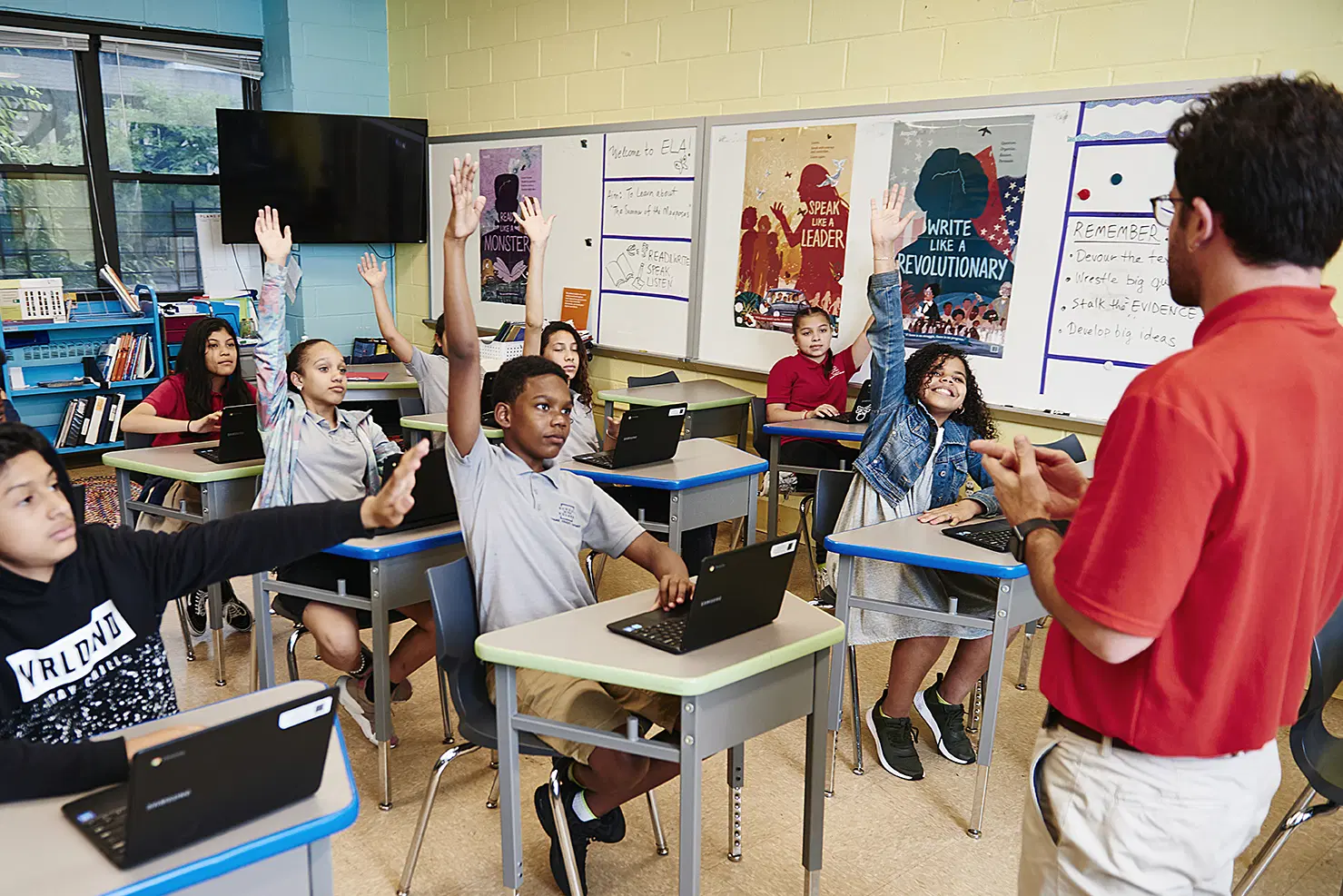
Differentiation
Amplify believes all students are capable of reading grade level text together.
Amplify ELA ensures all students have access to the same text. With six distinct levels of differentiation, your student is supported or challenged in a way that meets their unique needs. This includes ELLs at the Developing, Expanding, and Bridging levels as well as students needing substantial support or an extra challenge.


Virginia 6–8 ELA Review Site
Achieve life-changing results with the
Science of Reading—we’ll show you how.
Watching students learn to read is magic. But knowing how they get there? That’s science.
Making the shift to the Science of Reading is commendable, but it is no small feat. Our extensive experience, field-tested resources, and stories of literacy success will help you deliver the true transformation you need in your district—and see the results your students deserve.
Exploring the Science of Writing
Discover the captivating journey of writing with our new guide, Science of Writing: A Primer. This resource delves into the history of writing, highlights the crucial link between combining reading and writing instruction, and reveals why handwriting still matters in today’s digital world. Designed to complement CKLA 3rd Edition and our other literacy tools, this primer is set to become a trusted companion, just like those before it.
MTSS Playbook
Explore our new ebook designed to help you build an evidence-based Multi-Tiered System of Supports (MTSS) tailored to diverse literacy goals. This resource provides actionable steps and essential questions to fortify your MTSS with the Science of Reading, enhancing its effectiveness and achieving better outcomes for your students.
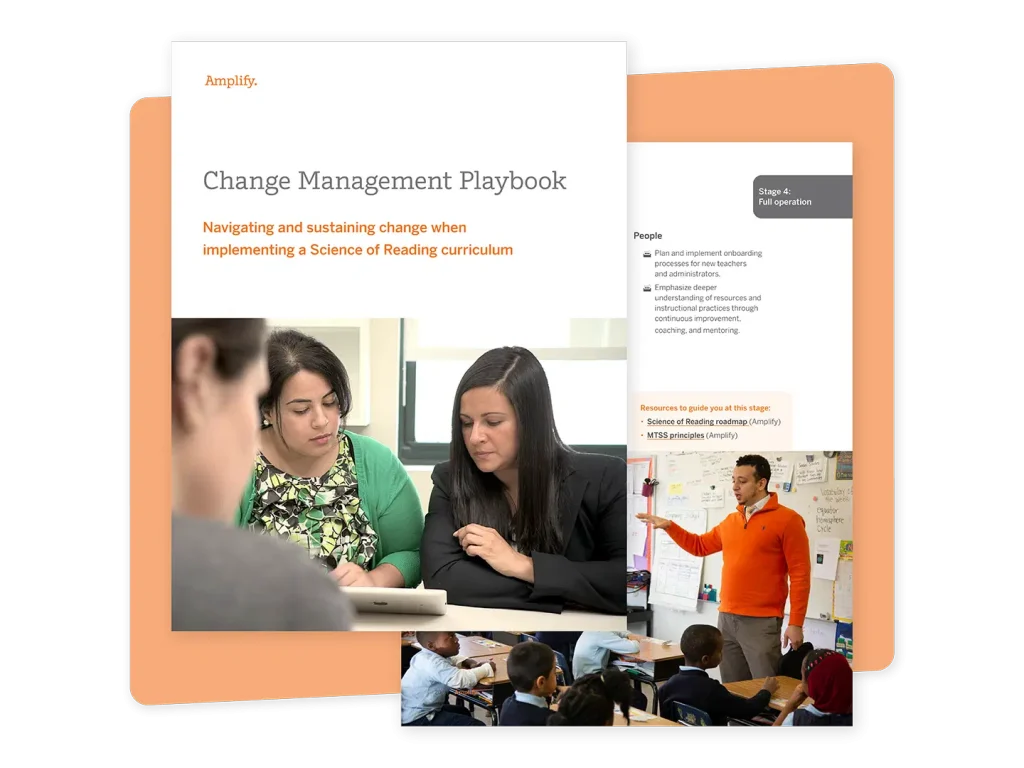
The science of teaching reading, coupled with the art of change management
Shifting to the Science of Reading isn’t just an overnight curriculum swap—it’s a profound culture change with multiple stages and stakeholders. We’ve helped educators succeed in that shift for years, and now we’re here to guide you every step of the way. Through each stage of implementation, our Change Management Playbook will help you mobilize your practice, process, and people to make the shift that matters most.
What is the Science of Reading?
Learning to read is not innate, but it can be taught—and science tells us how. The Science of Reading refers to the vast body of growing research that deconstructs how children learn to read, and the instructional practices that can get them there.
Reading fluency requires a complex combination of skills, taught explicitly and systematically. There are two main frameworks that can help us break it all down: The Simple View of Reading and Scarborough’s Rope.

Science of Reading starter kit for new teachers
New to the classroom? We’ve compiled a collection of resources and insights about the Science of Reading to help you acquire more knowledge and build confidence. You’ll find the tools, information, and support you need to foster successful readers and writers in your classroom this school year—and beyond.
The Simple View of Reading
The Simple View of Reading, formulated by Philip Gough and William Tunmer in 1986, is the theory that proficient reading requires two main components:
- Converting written words into speech, otherwise known as decoding.
- Understanding that speech, otherwise known as reading comprehension.
The Reading Rope
The Reading Rope, developed by Dr. Hollis Scarborough in 2001, helps us visualize the strands of specific skills and instruction that support students in decoding and comprehension.
Professional development to support your shift to the Science of Reading
Ignite literacy transformation with Amplify’s Science of Reading: The Learning Lab—an inspiring three-course series.
- Dive into a comprehensive overview with course one, Foundations to the Science of Reading.
- Examine assessments and their roles in course two, Advanced Topics in the Science of Reading: Assessment and Reading Difficulties.
- Apply effective literacy instruction to your classroom in course three, Applied Structured Literacy.
Crafted to the standards of the International Dyslexia Association, this self-paced online series provides unparalleled, research-backed instruction. Explore enriching activities, curated resources, and learn from Susan Lambert, chief academic officer and host of Science of Reading: The Podcast.
The best investment you can make is in knowledge, and the returns are priceless.
Learn more about the online courses or request a quote!
Tap into individual online course seats.

Science of Reading: The Podcast
Tune in to hear the latest insights and trends in early reading, right from leading literacy experts and practitioners.
Listen nowBuild your background knowledge of the Science of Reading.
Our Science of Reading principles and primers explain the essentials: what the Science of Reading is, how it works, and why it matters for every student.
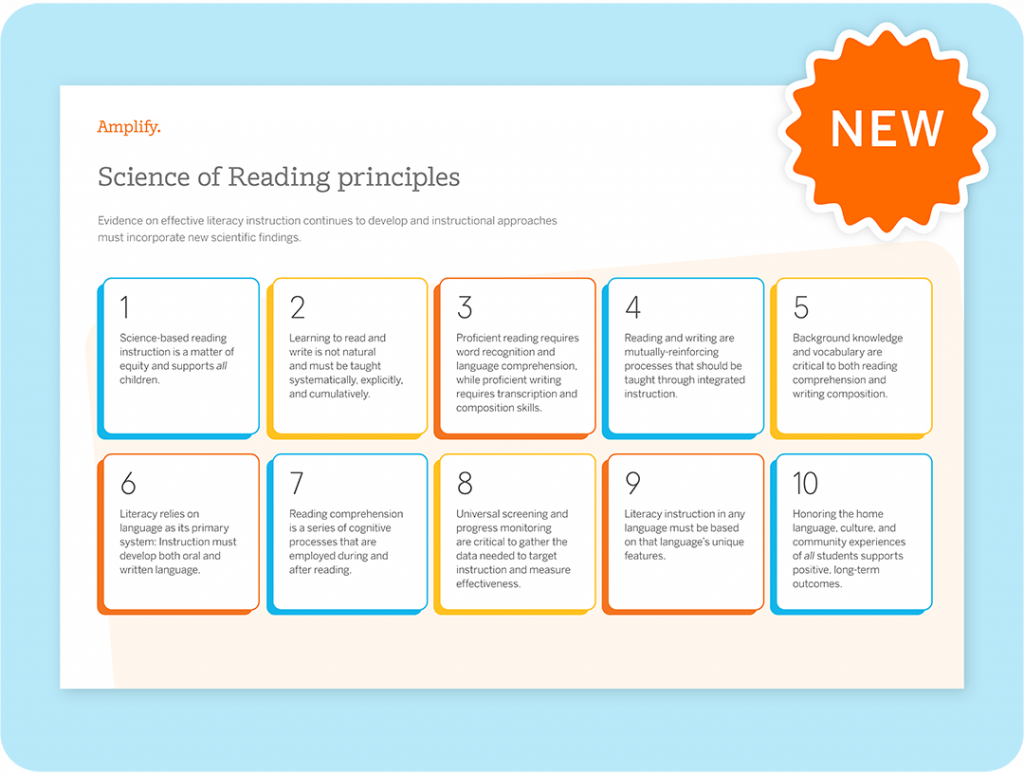
New Science of Reading principles placemat!
Decades of research inform the updated Science of Reading principles placemat. Use these insights as a guide for evidence-based literacy instruction—perfect for committed educators aiming to achieve real improvements in student reading outcomes.
Science of Reading
A Primer: Part 1
In part 1 of our definitive Science of Reading primer, we discuss literacy as a societal goal, walk you through how the brain learns to decode and comprehend text, and present the patterns that top-performing schools and districts follow to achieve early reading success.
Science of Reading
A Primer: Part 2
In part 2 of our Science of Reading primer, we establish the importance of prior knowledge for comprehension, lay out the process of micro-comprehension, and demonstrate how literacy skills build on and accelerate themselves.
Why undertake this crucial change?
When we bring proven methods based on the Science of Reading into schools, we make sure kids are learning to read and help teachers and caregivers support a culture of reading. Together, we can solve the reading crisis and make literacy a reality everywhere.
You’ll change lives with literacy.
According to the National Assessment of Educational Progress (NAEP), only 35% of fourth graders in the United States are proficient in reading. But schools using a Science of Reading approach have seen significant improvements in literacy rates. Using research-based methods, educators can help give all children the chance to become successful readers.
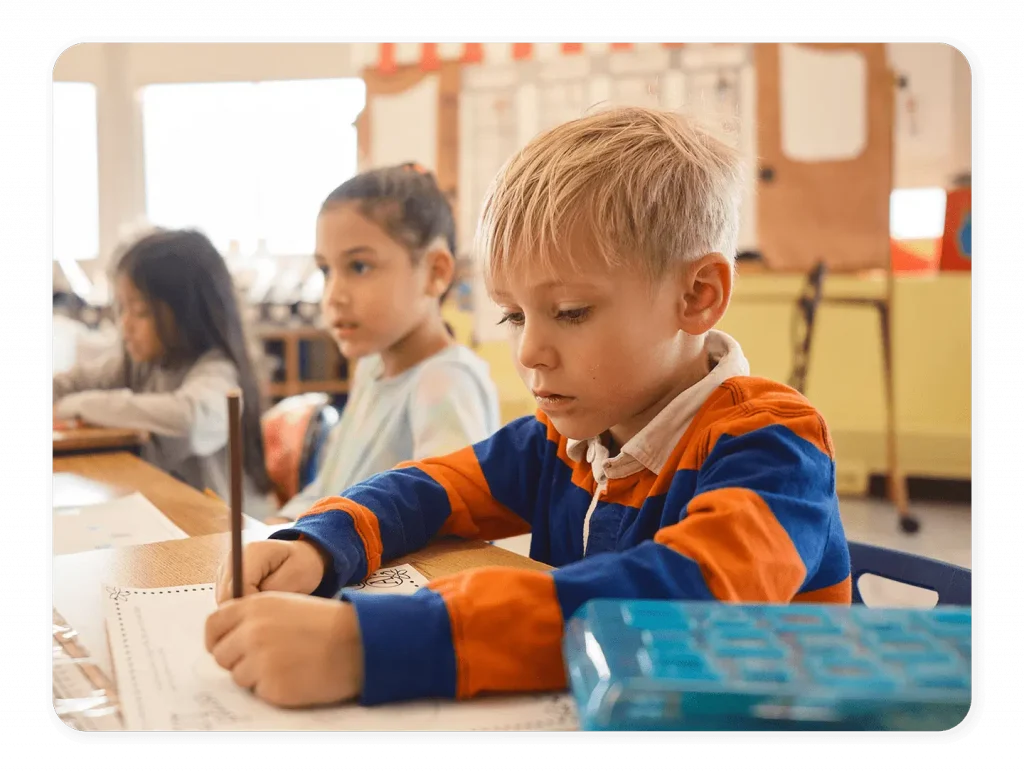
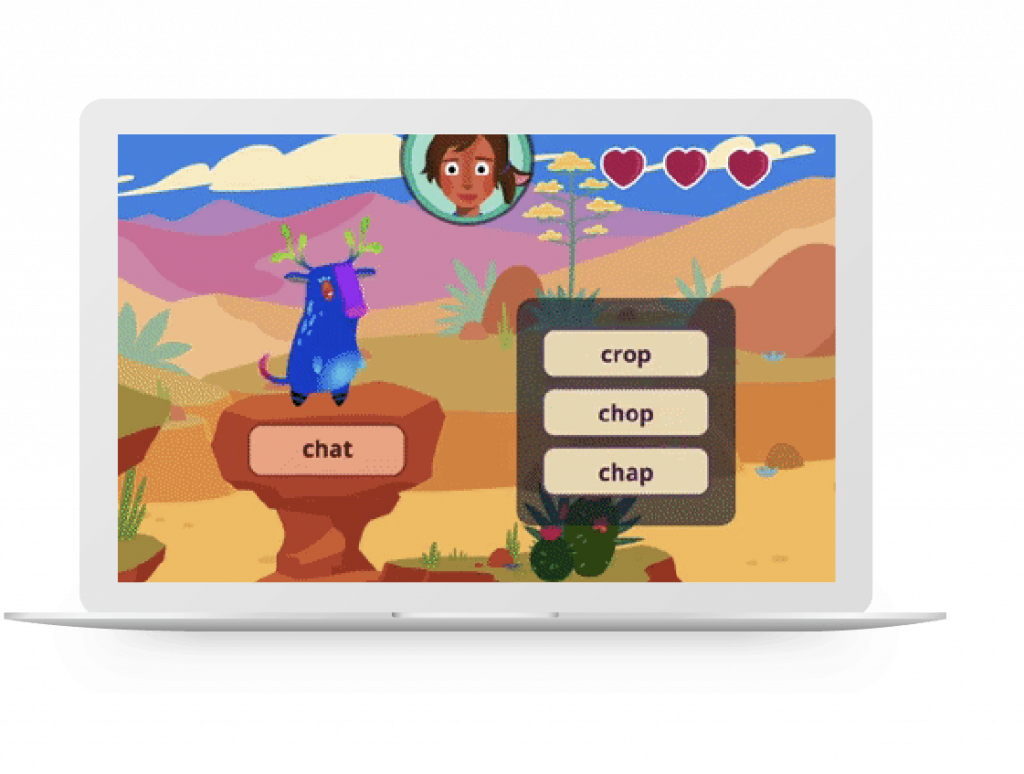
You’ll build a foundation with explicit, systematic skills instruction.
Reading skills don’t come naturally. We actually need to rewire our brains with intentional, structured literacy instruction—starting with sounds.
You’ll improve outcomes with knowledge building.
Longitudinal research shows that knowledge building doesn’t just happen as a result of reading, but is also a vital prerequisite for and component of it. And when delivered intentionally and systematically, knowledge delivers literacy results.


Science of Reading & Early Literacy Resources FAQ
Amplify understands that making the shift to the Science of Reading is no small feat. Get some early literacy resources and guidance with our Science of Reading FAQ.
Learning to read is not innate. It needs to be taught intentionally and systematically—and science tells us how. The vast and growing body of research on early literacy is referred to as the Science of Reading. It draws on extensive research in cognitive science, linguistics, and neuroscience. It emphasizes the systematic teaching of foundational skills—such as phonics, phonological awareness, and decoding—in building vocabulary and comprehension. In other words, it deconstructs the processes behind how children learn to read, and provides evidence for the instructional practices and early literacy resources that can get them there.
The Science of Reading refers to the pedagogy and practices proven by extensive research to effectively teach children how to read. It places a strong emphasis on both components of the Simple View of Reading, demonstrating that systematic and explicit instruction in phonics and and intentionally sequenced knowledge building are critical to reading success.
In a balanced literacy environment, learning happens through reading and writing immersion, where the need for explicit instruction in phonics is recognized but is not the primary focus.
The key difference between the approaches lies in their emphasis on foundational reading skills and a coherent approach to building language comprehension.
A balanced literacy approach typically includes a combination of whole language approaches (emphasizing meaning and context) and phonics instruction. Balanced literacy instruction is designed to be flexible and open to interpretation by the instructor. It may include the three-cueing system, which encourages students to rely on syntactic and semantic clues in a text to read an unfamiliar word, rather than decoding (Does it look right? Does it sound right? Does it make sense?). Balanced literacy practitioners may also use leveled reading to differentiate instruction, which can can limit vocabulary exposure, hinder in-depth comprehension skills, and further widen achievement gaps.
Balanced literacy has long been a popular approach to reading instruction, with educators appreciating its openness to variation. But advocates for the Science of Reading argue that an evidence-based approach aligned with known cognitive processes and a focus on foundational skills and language comprehension provides the most solid foundation for reading instruction—for confident and struggling readers alike.
According to our friends at The Reading League, the Science of Reading is important not because it gives us an effective way to teach reading, but because it gives us the most effective way to teach reading.
“The Science of Reading is critical because it emphasizes evidence-based instruction. Decades of scientific research on reading have consistently shown the most effective ways to teach reading. The Science of Reading incorporates this research, which includes phonemic awareness, phonics, fluency, vocabulary, and comprehension.”
The Reading League also takes it to the next level: What happens when all children have access to the most effective early literacy and reading education? “We believe in a future where a collective focus on applying the Science of Reading through teacher and leader preparation, classroom application, and community engagement will elevate and transform every community, every nation, through the power of literacy.”
The Science of Reading has identified five foundational reading skills that are considered crucial for early reading development. One of those skills is phonics. In other words, the Science of Reading has established that phonics are crucial, but the Science of Reading is not the same as phonics.
Phonics instruction helps students learn how to sound out and blend letters to read words accurately. As we know from the Simple View of Reading, two fundamental skills are required for reading with comprehension:
- Decoding—the ability to recognize written words (via phonics)
- Language comprehension—understanding what words mean
And the Science of Reading also reminds us that students do not have to learn phonics or decoding before knowledge comes into the equation. “The background knowledge that children bring to a text is also a contributor to language comprehension,” says Sonia Cabell, Ph.D., associate professor at Florida State University’s School of Teacher Education, on Science of Reading: The Podcast.
The Science of Reading is an evolving field built on decades of high-quality, evidence-based research that continually integrates new insights gathered from cognitive neuroscience, psychology, and linguistics. These ongoing studies constantly refine our understanding of how the human brain processes language and learning, enabling more personalized and effective teaching strategies that can adapt to the wide-ranging learning needs of students.
Like other sciences such as medicine, astronomy, or engineering – new advancements in reading technology allow us to understand how the brain works and refine our practices. Every scientific advancement in this field of reading science deepens our comprehension of reading-related challenges like dyslexia and informs the development of evidence-based interventions. We don’t believe that the Science of Reading can be reduced to a fad or trend. Rather, it is a continually evolving, enduringly effective discipline, grounded in rigorous research and driven by the quest for better comprehension of how we read and learn.
Assessment grounded in the Science of Reading can help identify children at risk of dyslexia at the earliest possible moments, creating the widest opportunity for intervention.
People with dyslexia often experience challenges in phonological awareness. They may struggle to break down words into their component sounds and to recognize the relationships between letters and sounds. Systematic and explicit instruction in phonics and phonological awareness can help individuals with dyslexia develop necessary phonological skills. This evidence-based instruction can also help students who have difficulty with decoding.
Further, evidence-based comprehension instruction, including explicit instruction in vocabulary and comprehension strategies, can support students with dyslexia in understanding and making meaning from text.
The Science of Reading can be integrated with a Multi-Tiered System of Supports (MTSS) to provide comprehensive and targeted reading instruction for all students. The Science of Reading aligns with a tiered model by providing evidence-based practices for instruction at each tier. An MTSS includes universal screening to identify students at risk of reading difficulties; the Science of Reading can also guide the selection of screening measures to assess specific foundational skills. Aligning the Science of Reading with an MTSS framework can also enhance instructional practices and interventions, ensure data-driven decision making, and help meet the needs of all students.
Integrating the Science of Reading and the Science of Writing strengthens our approach to teaching literacy. Reading and writing are interdependent. Understanding how sentences are built not only contributes to better reading comprehension, it also helps writers develop clear, logical text. As students grow as readers, they also grow as writers, leading to a comprehensive literacy education. Clear thinking and effective writing are crucial for expressing ideas. By fostering both skills, teachers better support students in becoming confident readers and writers, prepared for academic challenges and beyond.
One of the research-based frameworks used in the Science of Reading is the Simple View of Reading. According to the Simple View, two cognitive capacities are needed for proficient reading: (1) understanding the language (comprehension) and (2) recognizing words in print (decoding). A true Science of Reading program is designed from the start for students to build these skills, in a developmentally appropriate way.
It will also emphasize the importance of knowledge building by exposing students to a diverse array of new topics spanning history, science, and literature, organized intentionally and coherently within and across grades. Deep and intentionally sequenced knowledge domains will help build a student’s vocabulary and understanding of complex texts. And it will include instruction in all five foundational skills: phonics, phonemic awareness, vocabulary, fluency, and comprehension.
Download our free ebook, Science of Reading: Making the Shift, which includes a checklist of what to look for in a curriculum based on the Science of Reading. Learn more from our friends at The Reading League.
Actually, we have a full literacy suite built on the Science of Reading! It includes:
- mCLASS® assessment, powered by DIBELS® 8th Edition, a gold-standard universal and dyslexia screener, plus a progress monitoring tool, all in one.
- Amplify Core Knowledge Language Arts (CKLA), which provides explicit, systematic foundational skills instruction combined with intentional knowledge building.
- Boost Reading, a highly adaptive personalized reading program that reinforces the core curriculum and supports enrichment, remediation, and intervention for each student in your classroom.
- mCLASS Intervention, a staff-led intervention program targeted to Tiers 2 and 3, made easy with automatic data-driven grouping and sequenced explicit, systematic skills lesson plans to support at-risk students.
Reading requires deliberate, systematic attention—and so does shifting to the Science of Reading in your school or district. It requires not only the right curriculum, but also all-new mindsets, metrics, and more. Reflecting years of experience supporting real educators, our resources will walk you through the process of change management in your community—and show you why the shift is worth it. View our Science of Reading change management playbook.
Amplify CKLA Review for Alabama
What’s new
The Tech User Manual has been updated for EOY.
About mCLASS in Louisiana
The Louisiana Department of Education is committed to providing literacy instruction for all by:
- Aligning core curriculum, instruction, and assessments with the Science of Reading.
- Providing appropriate literacy interventions to address difficulty with reading development.
- Implementing practices based on the Science of Reading in every classroom, every day.
- Offering aligned resources to parents, guardians, and family members.
Built on decades of research at the Center on Teaching and Learning at the University of Oregon (a national center for early childhood assessment and instruction), the mCLASS suite meets Louisiana’s early literacy goals for its students with a robust core curriculum and a suite of reporting, grouping, lesson, and caregiver support features.
| DIBELS measures at each grade level | ||||
| Measure | Grade K | Grade 1 | Grade 2 | Grade 3 |
| Letter naming fluency | |
|
||
| Phonemic segmentation fluency | |
|
||
| Nonsense word fluency | |
|
|
|
| Word reading fluency | |
|
|
|
| Oral reading fluency | |
|
|
|
| Maze (basic comprehension) | |
|
||
Enrollment resources
EOY enrollment timeline:
- 3/3- 3/17: Admin Portal closed
- Students and staff are still able to log into mCLASS
- Students are still able to assess Progress Monitoring
- No EOY assessments taking place at this time
- Data Reporting (classroom and aggregate reports) is still available
- 3/18: Admin Portal reopens
- 4/1: EOY begins
Student Transfers:
For instructions on transferring students into a district from a different district within the state, see the Transferring Students section of the Test Coordinator Manual: K–3 EOY.
To add students to your district who are transferring to your school from outside of LDOE, please follow the process in the Enrolling Students section of this article.
End of Year and G3 Summer window resources
- Test Coordinator Manual (District and School Test Coordinators only): This manual provides instructions for administrative tasks for DTCs and STCs.
- Test Administrator Manual for the Secure K–2 End of Year Literacy Assessment: This manual for Test Administrators provides instructions for administering the secure EOY assessment.
- Test Administration Manual: Grade 3 End of Year Literacy Assessment: This manual for Test Administrators provides instructions for administering EOY assessment to Grade 3 students.
- Grade 3 Additional Attempts support video
- Tech User Guide: This manual for District and School Technology Coordinators provides instructions for installing the safe browser (Windows/Mac) or kiosk mode applications (Chromebook) needed for secure EOY assessment.
- Accessibility and Accommodations Manual: This manual includes information about the accessibility features offered for secure EOY assessment, as well as the standard DIBELS 8th Edition Accommodations.
- For information about student demographics in the Admin Portal, see LDOE Admin Portal: Demographics.
- New Troubleshooting for ChromeOS Kiosk Mode guide is available for Technology Coordinators supporting Test Administrators who encounter an error message when launching the Chrome kiosk mode applications.
How to: Install the Safe Exam Browser
This section provides instructions for installing the Safe Exam Browser (SEB), which is needed to assess K-2 students during EOY in Louisiana. Depending on your device type, download the SEB app from the Apple App Store or this site.
If you are using a Chromebook, you will use kiosk mode instead of the SEB. The Tech User Guide includes instructions for installing the applications needed to use kiosk mode, as well as instructions for installing the SEB and additional information to set up devices for secure End of Year (EOY) assessment.
Windows
Browser: Chrome (latest 2 versions)
- Download the desired installer file type:
- A download page opens in a new tab, displaying the download progress. When the download is complete, close the tab.
- For instructions on installing the SEB, see the Tech User Manual.
iPad
- Navigate to Safe Exam Browser in the App Store on your iPad.
- Tap the Safe Exam Browser app icon to open the app page.
- Tap Get to download and install the app.
- For instructions on installing the SEB, see the Tech User Manual.
macOS
- Download the DMG file.
- Depending on your browser, a download page may open in a new tab, displaying the download progress. When the download is complete, close the tab.
- For instructions on installing the SEB, see the Tech User Manual.
Progress Monitoring
This guide provides instructions for administering progress monitoring (PM) assessments in Louisiana schools.
Please note that the steps for accessing and administering PM assessments are different for schools with an mCLASS Intervention license than for schools that do not have an mCLASS Intervention license.
Amplify Tutoring: HDT driven by mCLASS data

Grounded in evidence-based practices and taught by caring, consistent tutors, our high-impact tutoring programs use high-quality instructional materials and data-driven mCLASS® products to empower students.
- Data-driven, personalized instruction
- Research-backed solutions tailored to support your MTSS framework
- Customizable–before, during or after school year-long, semester-long and summer programming
- Comprehensive program management and staffing support
Professional development
Amplify professional development (PD) provides learning experiences that intentionally develop the knowledge and skills you need for effective and self-sustaining implementation.
Go to the PD Library to access self-paced online courses, webinar recordings, videos, and more to help you learn how to administer and score the assessment and develop a deeper understanding of reporting and instruction.
If you are interested in purchasing additional PD for your school or district, please reach out to your account executive.
Additional mCLASS information
mCLASS gives you instant results and clear next steps for each student. Quick and actionable reports provide detailed insight into students’ reading development across foundational literacy skills for teachers, specialists, administrators, and caregivers.
View the EOY mCLASS Reporting Guide to learn more.
View the BOY/MOY mCLASS Reporting Guide to learn more.
Additional resources around mCLASS reporting can be found by navigating to the Programs & Apps section and then selecting PD Library.

To continue your own professional learning around the Science of Reading, join your colleagues who’ve subscribed to our podcasts and communities!
Science of Reading: The Podcast delivers the latest insights from researchers and practitioners in early reading. Further your professional development with each episode by subscribing and downloading now.
Science of Reading: The Community is built for those committed to fostering conversation around the Science of Reading and implementing best practices in the classroom (including the virtual classroom).
What does classroom instruction look like when it is based on Science of Reading practices? We’ve outlined a Science of Reading action plan to guide your evaluation in our new FREE ebook, Science of Reading: Making the shift.
The mCLASS Home Connect website houses literacy resources for parents and caregivers, including at-home lessons organized by skill to help students at home during remote learning. Our mCLASS parent/caregiver letters in English and Spanish ensure that families know how to best support their students.
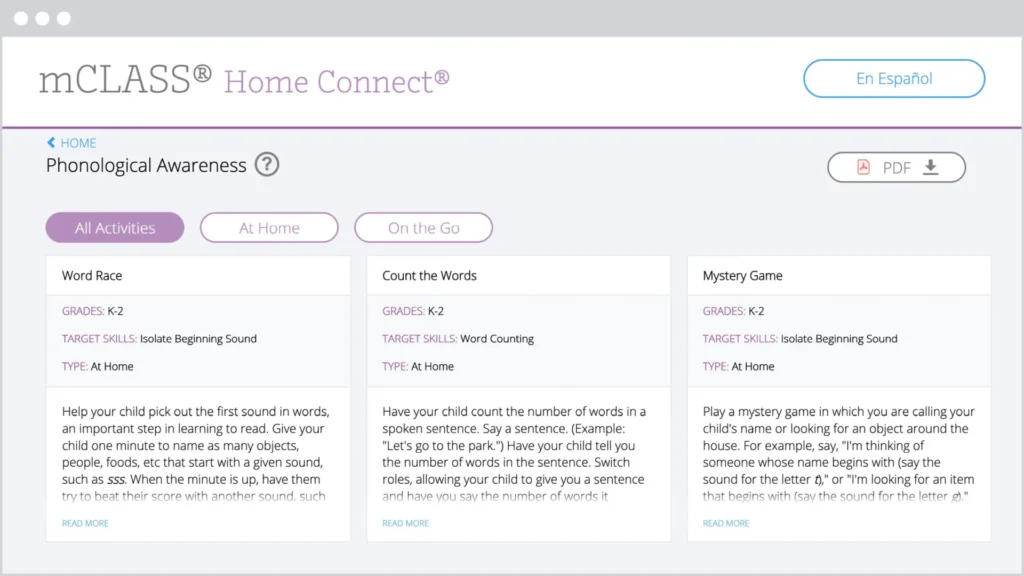
mCLASS support
Our chat agents are standing by to assist you!
Simply log in at my.amplify.com/login/louisiana and select the orange button in the lower right corner to chat live with our support team.
Important note:
Our support hours are Monday through Friday, 7 a.m. to 6 p.m. CT.
Check out the DIBELS 8 LDOE Help Center for more help at any point during implementation.

Additional Amplify products
Get in touch with us to learn more about bringing other high-quality Amplify programs to your school or district.
Welcome, Boost Reading families!
What is Amplify CKLA?
Amplify CKLA is a core ELA program for grades PK–5 that delivers:
- A unique research-based approach truly built on the Science of Reading.
- A combination of explicit foundational skills with meaningful knowledge-building.
- Embedded support and differentiation that gets all students reading grade-level texts together.
- Opportunities for students to see the strengths and experiences that all people share while also celebrating each others’ unique identities and experiences.
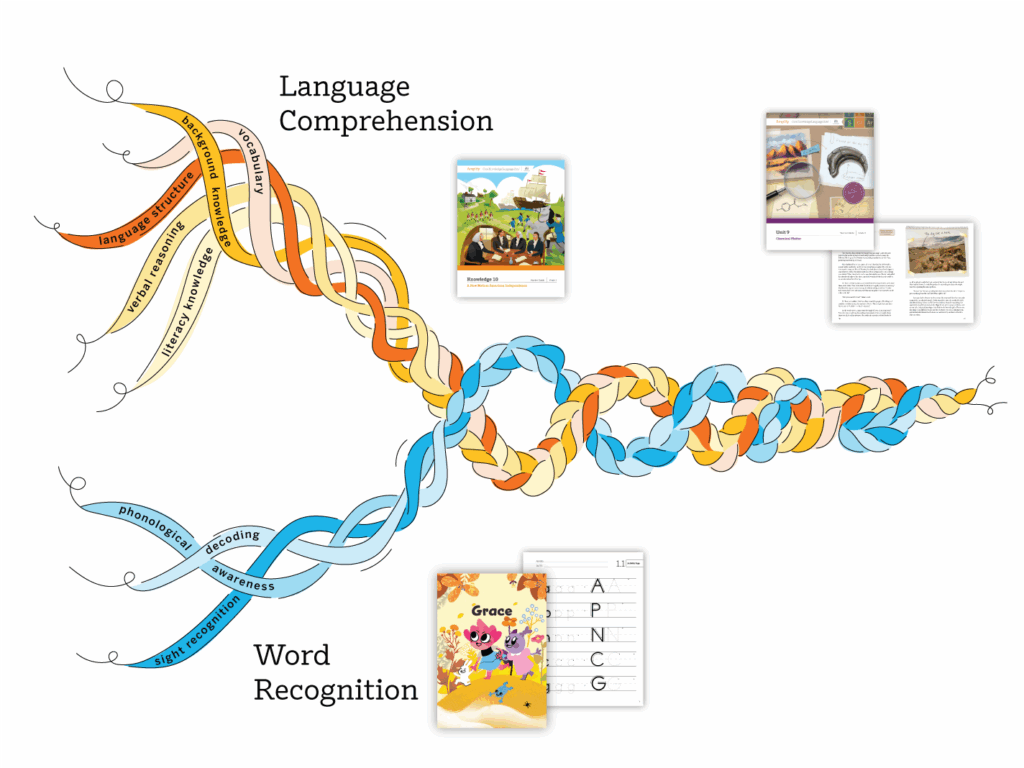
How does Amplify CKLA work?
Daily instruction
Grade PreK: Developmentally appropriate foundational knowledge
Our PreK program delivers developmentally appropriate instruction and activities that do more than lay the groundwork for foundational skills—they offer content knowledge, incorporating research that shows true literacy requires background knowledge in history, science, art, and literature. Amplify CKLA PreK easily fits into any class routine, with 45 minutes of interactive instruction designed to accommodate full-day or half-day schedules.
Grades K–2: Dedicated knowledge-building and explicit skills instruction
Every day, students in Grades K–2 complete one full lesson that explicitly and systematically builds foundational reading skills in the Skills Strand, as well as one full lesson that builds robust background knowledge to access complex text in the Knowledge Strand. Through learning in each of these strands, students develop the early literacy skills necessary to help them become confident readers and build the context to understand what they’re reading.
Grades 3–5: Integrated instruction
In Grades 3–5, Knowledge and Skills are integrated in one set of instructional materials. Lessons begin to combine skills and knowledge with increasingly complex texts, close reading, and a greater writing emphasis. Students can then use their skills to go on their own independent reading adventures.
Formative and summative assessments

Amplify CKLA features a progression of moment-by-moment assessments to benchmark assessments. Assessment and feedback give teachers the information they need to differentiate instruction effectively.
Checks for Understanding
Each lesson segment incorporates checks for understanding to increase engagement and to let teachers make real-time adjustments to their instruction.
Formative Assessment
Each lesson goal is tied to a formative assessment opportunity, allowing teachers to see which students need more support with a benchmark.
Mid- and End-of-Unit Assessments
Mid-Unit and End-of-Unit Assessments provide valuable information on the skills and content students have mastered. Digital end-of-unit assessments are available on a variety of platforms.
Benchmark and Placement Assessments
Benchmark and Placement Assessments help teachers set goals and monitor the growth of each student, providing a baseline at the beginning of the year and ensuring students are advancing toward grade-level objectives.
Download our CKLA Assessment Sampler
What makes Amplify CKLA different?
Integration with mCLASS DIBELS 8
Amplify CKLA is the only core ELA program that integrates with mCLASS DIBELS 8th Edition.
The CKLA Connect feature matches your students with targeted CKLA lessons based on their mCLASS DIBELS 8th Edition assessment data. In other words, it aligns your assessments more closely with your core curriculum while recommending effective differentiated instruction.
Download this guide to connecting mCLASS DIBELS 8 with Amplify CKLA
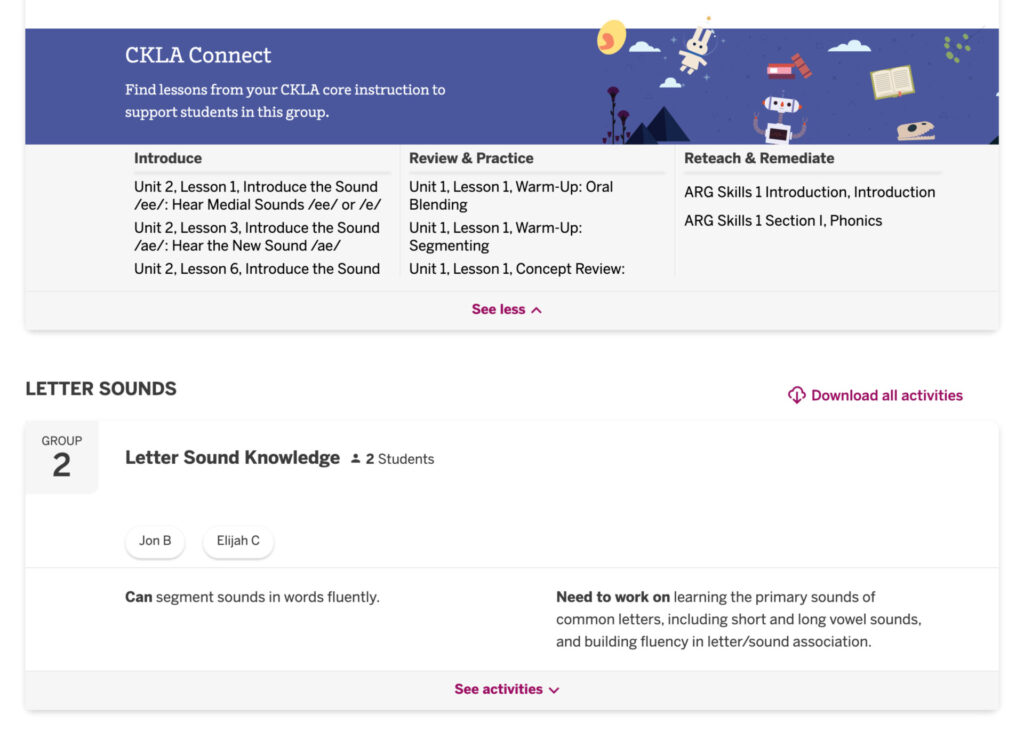
Built on the Science of Reading
Built out of the latest research in the Science of Reading, Amplify CKLA delivers explicit instruction in foundational knowledge in PreK, both foundational literacy skills (systematic phonics, decoding, and fluency) and background knowledge in grades K–2, and an integrated approach to explicit instruction in grades 3–5.
Review this Science of Reading toolkit to learn more about the Science of Reading best practices integrated throughout CKLA.
Explicit systematic skills instruction
Great reading instruction starts with helping kids develop great decoding skills. By building a solid foundation of phonological awareness and phonics, reading the words on the page becomes automatic so that comprehension and critical thinking can happen. Our instruction is supported by:
- Step-by-step lessons with multisensory approaches, clear lesson objectives, and embedded formative assessments.
- Decodable books and student readers with ebook and audiobook versions that feature interesting plots and relatable characters.
- An engaging sound library with fun songs and videos that develop phonological awareness.
- An interactive Vocab App featuring engaging activities with immediate feedback and automated, customized instruction based on student performance.
Coherent knowledge instruction
Students build grade-appropriate subject-area knowledge and vocabulary in history, science, literature, and the arts while learning to read, write, and think creatively and for themselves. Our instruction is supported by:
- Knowledge builders that provide a quick overview of each domain with its key ideas.
- Interactive Read-Alouds designed to build knowledge and vocabulary.
- Content-rich anchor texts that support students as they tackle increasingly complex text and sharpen their analytical skills.
- Social and emotional learning paired with lessons in civic responsibility.

Embedded differentiation for all learners
Amplify CKLA provides built-in differentiation strategies in every lesson for all students, including supports for English language learners and Standard English learners.
- Access supports for ELLs: Integrated ELD supports in each lesson segment for English learners and Standard English learners are specific to students’ mastery of the lesson’s objectives.
- Support and Challenge for all learners: Lessons include Support and Challenge suggestions that provide assistance or opportunities for more advanced work toward the goal of the lesson. These supports are suitable for all learners, including ELLs.
- 30 minutes of Additional Support in every Skills lesson: In the Skills Strand, every lesson concludes with an Additional Support section of recommendations for 30 minutes of extended instruction and activities, directly aligned to the skills taught in the lesson to assist students who need more support in mastering the lesson’s objectives.
- Intervention Toolkit: The Intervention Toolkit provides easy-to-use resources to assist teachers in filling gaps in students’ foundational skills. Teachers will find of hundreds of activities to support phonics, fluency, comprehension, handwriting, and other key skills.
Designated ELD with Language Studio
Amplify CKLA’s designated English Language Development (ELD) component—Language Studio—helps English learners preview and revisit key content within core instruction, building a foundation of academic vocabulary and background knowledge. Core instruction lessons include point-of-use supports for English learners and Support and Challenge strategies for all learners.

This carefully developed program follows the CKLA Knowledge domains, previewing and reinforcing skills and content from core instruction using instruction specifically built for English learners. The program is also designed around frequent formative assessment, including assessment of language proficiency, giving you effective ways to guide and support your English learners.
Language Studio supports teachers and English learners through the following:
- 30 minutes of instruction with lesson segments are carefully designed around Content Knowledge, Meaning Making, Language Development, Effective Expression, and Foundational Skills.
- Every Language Studio lesson accompanies a core lesson, helping English learners deepen domain and academic vocabulary that will help them access core content.
- Culminating tasks support core projects and target the same skills as primary instruction.
Writing emphasis with Writing Studio
With Writing Studio, students in Grades K-5 focus deeply on the three key text types informative, narrative, and opinion–while applying both the skills and knowledge from the core program.
Writing Studio supports students through:
- Expanding on core writing instruction to develop analytical thinking through writing.
- Lessons that focus on writing standards, providing intensive focus and application to strengthen skills.
- Opportunities to apply knowledge in new contexts and deepen comprehension through writing.
- Scaffolded writing projects to help all students find success within the stages of the writing process.

Writing Studio lessons:
- Allow teachers to differentiate through Support and Challenge prompts for students at all levels, and Access Supports for ELLs.
- Spark creativity with authentic writing projects that call on students to engage deeply with rich topics and sources.
- Implement careful design and provide rubrics so that students’ writing skills can visibly grow throughout the year.
A culminating project in each grade asks students to apply their knowledge and understanding of text types and to select the appropriate text type for a final piece of writing.
Personalized practice with Boost Reading
Boost Reading is the student-driven skill practice program within CKLA, providing differentiated, digital instruction in both foundational skills and comprehension strategies. Because Boost Reading is built on the same approach to reading as CKLA, students are able to extend their learning from the core program further, at their own pace.
Amplify CKLA and Boost Reading reinforce each other through:
- An aligned scope and sequence and instructional approach: In both programs, students get instruction and practice in phonological awareness and phonics, with the most common, least ambiguous spellings first.
- Consistent vocabulary words: Many Amplify CKLA words are taught and practiced in Boost Reading vocabulary games.
- Complementary texts: Fiction and nonfiction books within Boost Reading reinforce Amplify CKLA knowledge domains.
- Seamless integrations between platforms: Students can easily access Boost Reading directly from the Amplify CKLA Student Hub.
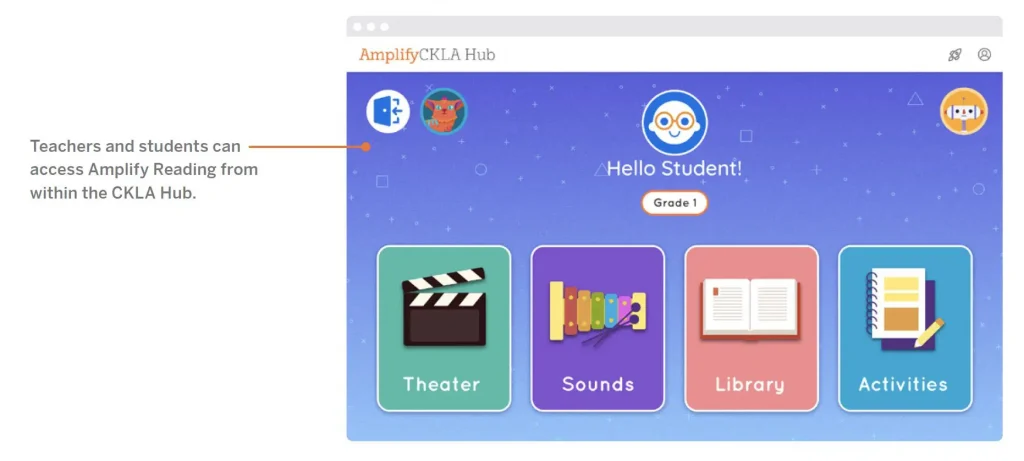
Ready-to-go slides and all-in-one platform
The slides-based Amplify CKLA digital experience enhances instruction while saving you time. Everything you need is all in one place, making it easier than ever to plan lessons, present digital content, and review student work.
- Simplify planning and instruction: Teachers have access to ready-to-use and customizable lesson presentation slides, complete with all the prompts from the print Teacher Guide embedded in the teacher view. As teachers deliver each lesson, students can engage with the content in one cohesive
experience—through Activity Books, slides, digital components, videos, Student Readers, and more. - Interactive student activities: Through the Student Home, students can easily access digital lessons with slides, Activity Pages, ebooks, videos, and other interactive resources from one simple dashboard.
- Your teacher command center: You’re provided with the tools you need to ensure a productive digital experience that’s personalized to meet your students’ needs. This includes a teacher home from which to launch and track lessons, LMS integrations such as Google Classroom and Microsoft Teams, and other customizations based on classroom needs.
- Get real-time insights into your students’ work: The innovative live review tool enables you to keep an eye on students drawing, recording audio, uploading and capturing images, and typing or writing in pre-placed text boxes in their Activity Pages.
Navigating the program
Digital navigation walkthrough
Physical materials walkthrough
Sample materials
Integrated Strand
Demo access
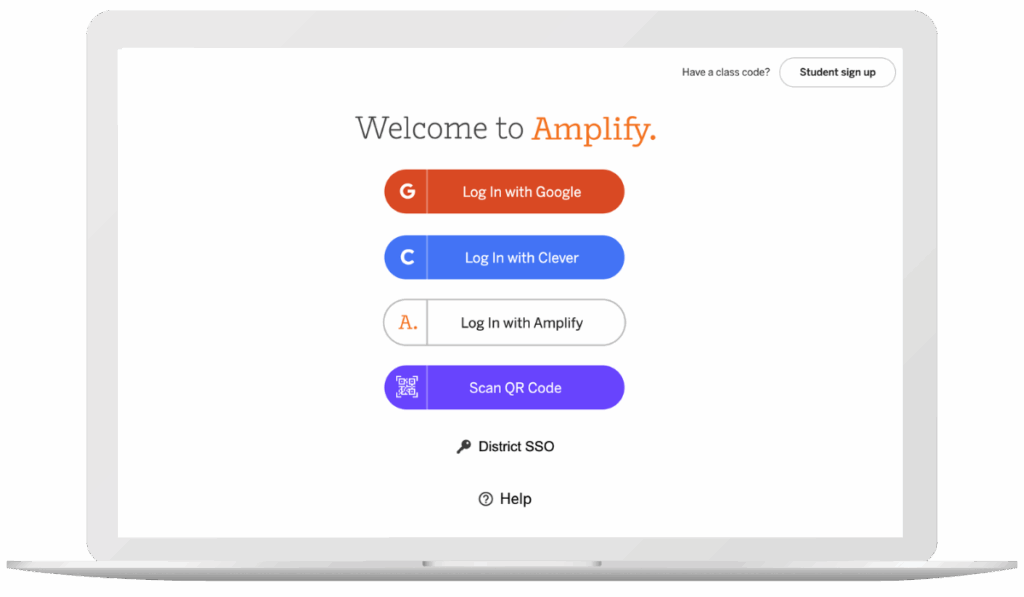
Follow the instructions below to access your demo account.
- Click the CKLA Demo button below.
- Go to learning.amplify.com
- Select Log in with Amplify
- To explore as a student, enter this username:
- Enter the password: Amplify1-mcps2024
- Click the desired program on the left side of the page.
Additional resources
Amplify CKLA review resources:
- CKLA Program Guide for Grades K–5
- CKLA Program Guide for PreK
- Diversity, equity, and inclusion in CKLA
- CKLA Culturally Responsive Curriculum Scorecard
- CKLA Equity Guide for Grades K–5
- CKLA and Social Emotional Competencies
- Text complexity in CKLA
- CKLA Caregiver Hub
- CKLA Sample Caregiver Letters
- Assessments in CKLA for Grades K–5
- Assessments in CKLA PreK
- Remote and hybrid learning with CKLA
- Amplify CKLA Scopes and Sequences
- Grade K Skills and Knowledge
- Grade 1 Skills and Knowledge
- Grade 2 Skills and Knowledge
- Grade 3 Integrated
- Grade 4 Integrated
- Grade 5 Integrated
What is mCLASS?
mCLASS is a best-in-class assessment platform that houses a suite of proven, gold-standard assessment measures and tools that can be flexibly combined to meet the unique literacy needs of both teachers and students across grades K–6, including:
- Universal screening
- Diagnostic assessment
- Dyslexia screening
- Text Reading and Comprehension (a.k.a. running records via mCLASS: Reading 3D)
- Progress monitoring
- Dual language reporting
- Targeted teacher-led instruction
What is the DIBELS 8th Edition assessment?
Developed by the University of Oregon, the DIBELS 8th Edition is the latest version of the DIBELS® (Dynamic Indicators of Basic Early Literacy Skills) assessment.
With this latest version, the University of Oregon Center on Teaching and Learning (UO CTL) made significant efforts to ensure measures would meet state-level screening requirements for universal screening, diagnostic assessment, and dyslexia screening. To support this, measures were updated based on the latest research to meet increased standards of reliability and validity. In addition, adaptive procedures and discontinue rules focus on the assessment of priority skills and prevent over-testing.
Summary of changes:
- Consistent measures within grades will provide improved growth measurement.
- All subtests have been revised to be grade-specific and to increase in difficulty, covering a full progression of skills and minimizing floor and ceiling effects. This provides the opportunity for students to demonstrate what they know and further pinpoint what they don’t know.
- Phoneme Segmentation Fluency replaces First Sound Fluency. The expanded coverage minimizes floor effect and provides information about difficulty in Phonemic Awareness skills without the additional First Sound Fluency measure.
- A new subtest, Word Reading Fluency, helps identify students with poor sight word reading skills that other subtests miss.
- For all measures, the basic scoring procedures remain the same. For Nonsense Word Fluency, credit is given for recording words as whole words even if the student misses in the first attempt.
- Oral Reading Fluency is now only one passage, instead of three. Retell has been removed. Thus, Oral Reading Fluency assessment will take a third of the time.
Assessment measures by grade
| DIBELS measures at each grade level | |||||
| Measure | Grade K | Grade 1 | Grade 2 | Grade 3 | Grades 4–6 |
| Letter naming fluency | |
|
|||
| Phonemic segmentation fluency | |
|
|||
| Nonsense word fluency | |
|
|
|
|
| Word reading fluency | |
|
|
|
|
| Oral reading fluency | |
|
|
|
|
| Maze (basic comprehension) | |
|
|
||
| Amplify measures at each grade level | |||||
| Oral language | |
|
|
|
|
| Vocabulary | |
|
|
|
|
Assessment measures sample videos
DIBELS 8th Edition measure: Phonemic Segmentation Fluency (PSF)
DIBELS 8th Edition measure: Nonsense Word Fluency (NWF)
DIBELS 8th Edition measure: Letter Naming Fluency (LNF)
DIBELS 8th Edition measure: Word Reading Fluency (WRF)
DIBELS 8th Edition measure: Oral Reading Fluency (ORF)
What makes mCLASS with DIBELS 8th Edition different?
mCLASS with DIBELS 8th Edition combines the power of the mCLASS assessment platform and the effectiveness of the DIBELS 8th Edition assessment measures. As a result – educators are empowered with the latest and greatest assessment tool.
More than a test, mCLASS with DIBELS 8th Edition is an integrated system that closes the knowing-doing gap by helping teachers take immediate instructional action that’s right for each and every student.
Assessment systems must enable and compel educators to answer not just the “What” questions, but also the “So What” and “Now What” questions. These are the questions that are essential in transforming classroom instruction, and the questions that mCLASS with DIBELS 8th Edition helps teachers answer with confidence.
What makes mCLASS with DIBELS 8th Edition different?
- It gives teachers access to the latest digital version of the DIBELS assessment. Amplify is the only licensed provider of the digital DIBELS 8th Edition assessment. As such, our solution is the only one to enhance the DIBELS 8th Edition assessment with the power, reliability, and quickness of the mCLASS system.
- It makes it faster and easier to understand where every student is in their early literacy journey. By combining 1:1 observational diagnostic assessments, dyslexia screening, progress monitoring, instant scoring, rigorous reporting, automatic student grouping, and targeted instruction all in one place, it reduces the instructional delays associated with manual scoring, manual data analysis, and manual lesson planning.
- It makes every instructional minute count. In addition to one-minute measures that quickly gauge student progress toward reading proficiency, it leverages a teacher’s most powerful instructional tool — their own 1:1 observations.
- It drives growth more efficiently. Rather than relying on broad composite scores alone, granular data and in-depth insights for every student help teachers pinpoint exact skill gaps and areas of unfinished learning, making whole-group, small-group, and 1:1 instruction more targeted and effective.
- It saves teachers time. Instant reports, automatic student groups, and ready-to-teach lessons mean teachers spend less time cobbling together materials and more time working directly with students and responding to their needs.
How does mCLASS with DIBELS 8th Edition support screening for dyslexia risk?
DIBELS 8th Edition measures have been updated based on the latest research. They now offer stronger measures of processing speed, phonological awareness, and alphabetic principles for dyslexia screening purposes.
To support this, a new subtest in Word Reading Fluency was introduced and revisions were made to Letter Naming Fluency, Phonemic Segmentation Fluency, and Nonsense Fluency subtests to improve their ability to screen for deficits commonly associated with dyslexia risk, such as phonological awareness, rapid naming ability, and alphabetic principle. These measures provide early warning signs for neurological processing difficulties that contribute to risk for dyslexia (Wolf & Bowers, 1999; Denckla & Rudel, 1974).
Moreover, measures in Oral Language and Vocabulary are included to provide additional information to help evaluate additional risk areas associated with dyslexia risk.
How does mCLASS with DIBELS 8th Edition support the use of running records?
Track your students’ reading progress from every angle with the Text Reading and Comprehension (TRC) assessment. When TRC is paired with the DIBELS 8th Edition assessment, classroom teachers unlock the ability to record reading behaviors through running digital records. Available in English and Spanish, it measures reading comprehension and provides insight into how each student finds meaning in text.

Measures include:
- Lesson plans for whole class, small-group, and one-on-one instruction.
- Small-group advisor, which organizes students into groups based on strengths and gaps.
- Item-level advisor, which drills deep into student responses to uncover patterns, strengths, and gaps.
- Instructional resources for each student’s parent/guardian(s).
How does mCLASS with DIBELS 8th Edition turn data into instant action?
mCLASS with DIBELS 8th Edition gives you instant results and clear next steps for each student.
Quick and actionable reports provide detailed insight into students’ reading development across foundational literacy skills for teachers, specialists, administrators, and caregivers.
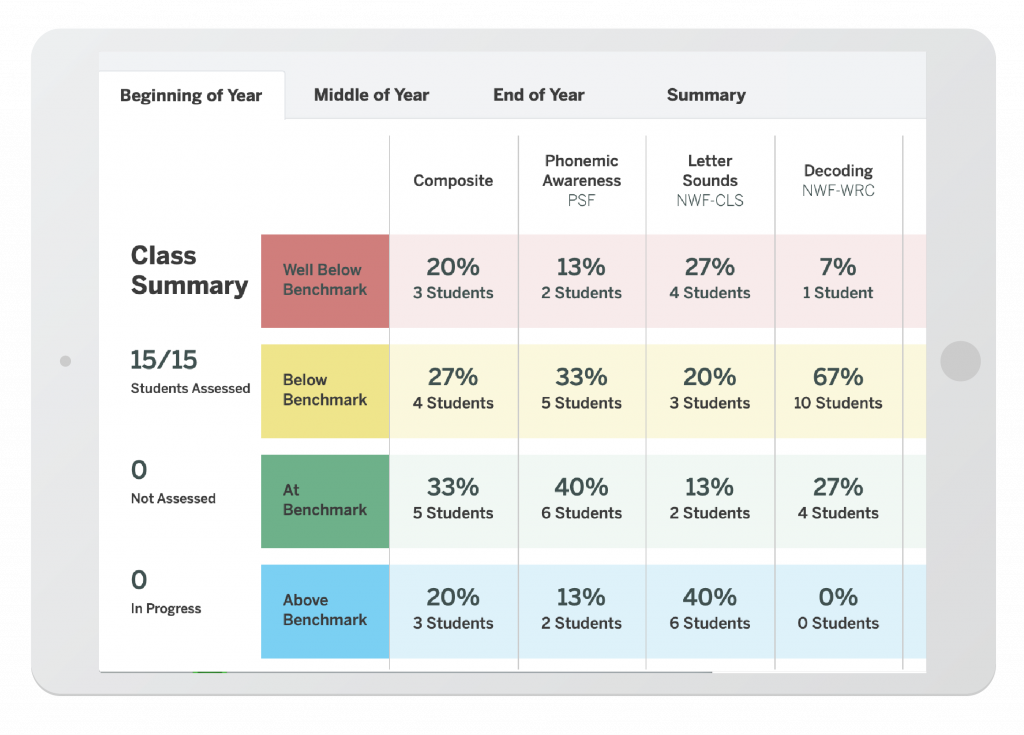
Diagnostic assessment
mCLASS with DIBELS 8th Edition analyzes individual student response data through a proprietary scoring algorithm that pinpoints a student’s specific area(s) of growth and improvement, providing classroom teachers in-depth insight into a students’ instructional needs.
Ready-to-teach instruction
Immediately following the analysis of individual student responses, mCLASS with DIBELS 8th Edition provides an in-depth diagnostic report complete with suggested next steps, also known as “mCLASS Instruction.”
mCLASS Instruction evaluates each student’s responses on each individual subtest and instantly:
- Provides a list of specific needs by student, such as struggling with medial vowel sounds or difficulty reading words with consonant blends.
- Groups students automatically based on similar discrete skill needs, not simply composite scores like other assessment tools.
- Recommends a variety of ready-to-teach lessons that specifically target each individual student’s areas of need or common areas of need for small-group instruction.
Classroom skill and benchmark summary
The Classroom Skill Summary report is a dashboard showing benchmark performance on each skill. Teachers can use it to determine which skill areas need instructional focus at a classroom level.
The Classroom Benchmark Summary report is a classroom-wide view of overall reading performance. Teachers can use this report to determine if composite scores improved, declined, or remained the same each semester.
Detailed benchmark performance
Teachers can see each student’s performance during the current school year, on each subtest as well as the overall composite. The benchmark goal displays below the subtest name when applicable. The ability to sort the columns in this report gives teachers more flexibility to analyze data the way they prefer.
Dyslexia screening
Identify students who are at risk for reading difficulties, including dyslexia, based on their results from foundational skills measures and additional measures as needed by local policies.
Progress monitoring summary
See which subtests have been assessed since the most recent benchmark assessment, how students performed on the three most recent progress monitoring assessments for each measure, and which students have not been progress monitored since the benchmark assessment.
Goal setting tool
The Zones of Growth (ZoG) analysis uses a rich set of national data to determine student goals for the next benchmark period. Teachers can use the Goal Setting Tool to view these recommended goals or modify the default goals for individual students as they see fit, if the default goal is too challenging or not challenging enough.
Growth outcomes
Teachers and interventionists can see each student’s actual growth achieved and how it compares to the goal that was set for the student.
Caregiver supports
The mCLASS Home Connect website houses literacy resources for parents and caregivers, including at-home lessons organized by skill. Our mCLASS parent/caregiver letters in English and Spanish ensure that families know how to best support their child.
Self-guided tour
Our self-guided tour is a great way to orient yourself to the organization of our mCLASS platform. Click the button below to get started.

Demo access
Follow the instructions below to login to your demo account.
- Click the mCLASS Demo button below.
- Select Log in with Amplify.
- Enter the username: d8demoD
- Enter the password: 1234
- Click the Reading tile.
Once you are logged in:
- Find the Class/Group dropdown field and select Grade 1.
- Right above the Class Summary, click Beginning of Year or Middle of Year and explore the data.
- Scroll down to the class list. Each column within the class list is sortable by clicking the double arrow in the column header.
- Click on any score to see the measure transcript.
- Click on a student’s name to see historical data and progress monitoring graphs.
After exploring the Benchmark tab in the purple bar:
- Click on the Instruction tab.
- If you don’t see groups, click Updated recommendations.
- Explore freely! The Groups, Students, and All Activities tabs have rich information.
- Click the Progress tab.
- Click on Home Connect to see a sample of our caregiver letters.
What is Boost Reading?
Boost Reading is a K–5 student-driven literacy program that provides both enrichment and remediation for all students, leveraging the power of compelling storytelling to engage students in personalized reading instruction and practice. It features:
- High quality, research-based instruction based on the science of reading
- Unparalleled personalized learning pathways
- Compelling and imaginative storylines
- Social and emotional learning
- Insightful reports tied to actionable next steps

How does Boost Reading work?
Boost Reading uses students’ latest reading assessment data to ensure they practice the right skills at the right time. In cases where no student assessment data is available, our embedded placement tool ensures students receive the content and skill practice most appropriate for their current reading level.
From there, students move through our curriculum along their own learning pathway where they encounter personalized content tailored to their evolving skill and grade levels.
Summary of games
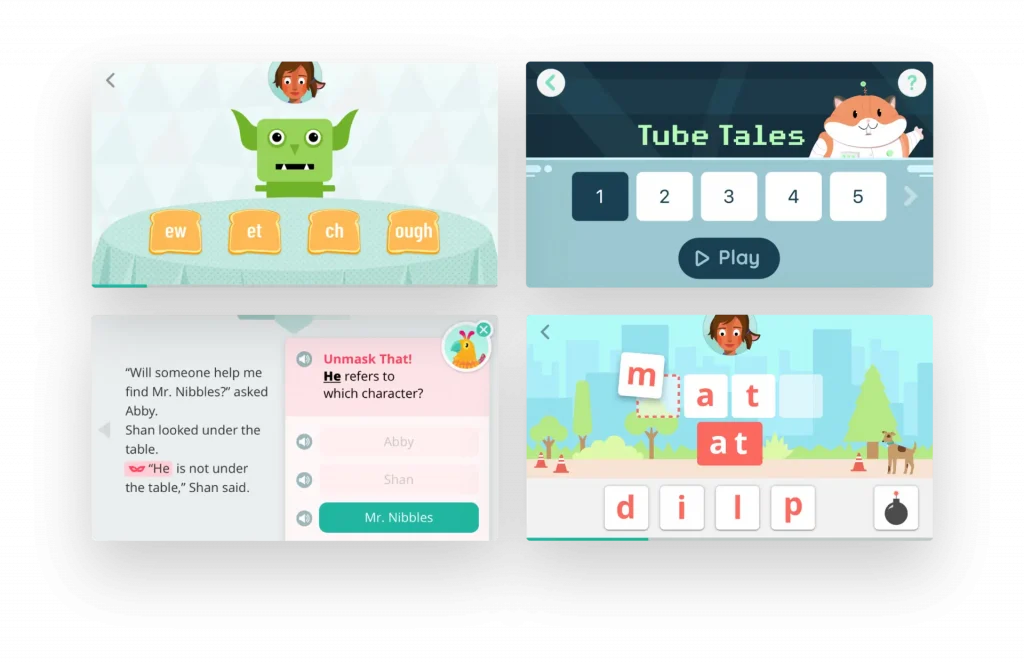
With over 40 adaptive games, Boost Reading helps students of all levels grow across 13 critical skills areas, including explicit instruction in comprehension processes.
- Phonological awareness
- Letter sound correspondence
- Letter combinations
- Early decoding
- Advanced decoding
- Comprehension processes
- Key ideas and details
- Craft and structure
- Integration of knowledge and ideas
- Vocabulary
- Connected texts
- Fluency
- Close reading
See pages 16-78 of this guide for a detailed explanation of every game in the program.
How does Boost Reading integrate with the other parts of the literacy system?
Boost Reading + mCLASS® with DIBELS® 8th Edition
mCLASS automatically places students on an adaptive path within Boost Reading, which provides them the exact practice–both remediation and acceleration–that they need.
Click here to learn more about how Boost Reading and the mCLASS Assessment System work together.
Boost Reading + Amplify CKLA
Boost Reading extends core instruction with Amplify CKLA with personalized practice that follows the same scope and sequence.
Click here to learn more about how Boost Reading and Amplify CKLA work together.
What makes Boost Reading different?
Multiple dimensions
Boost Reading features full adaptivity. That means students progress along a pathway that adapts on multiple dimensions, not just one. For example, a student can work on early first-grade decoding in one game while building more advanced vocabulary knowledge in another.
Always-positive feedback
Boost Reading supports positive participation by giving students immediate and clear feedback. These results are never punitive. Instead our always-positive feedback is delivered in the context of the game world and is designed to motivate students to keep trying.
Focus on SEL
Sustained academic success depends upon social and emotional learning (SEL) as well as the mastery of fundamental literacy skills. Consistent with the most widely-recognized framework and standards for SEL (from the CASEL consortium, which includes 25 states), Boost Reading also focuses on the five areas of social and emotional learning:
- Self-awareness
- Self-management
- Social awareness
- Relationship skills
- Responsible decision-making
Ready-to-teach mini-lessons
Boost Reading turns data into action with reports that help educators know exactly who needs support and ready-to-teach mini-lessons that deliver targeted reinforcement and remediation.
Accelerated growth
Boost Reading accelerates student growth at all reading levels and reduces the number of students at risk of reading difficulty. In one study of 3rd graders in a large urban district who used Boost Reading for only one semester:
- 54% of students who used Boost Reading made above average progress, whereas only 44% of students in the comparison group made above average progress.
- 54% of English learners in that same study made above average growth, whereas only 45% of English learners in the comparison group made above average growth.
Check out the above results and more in this efficacy paper.
Demo access
Follow the instructions below to login to your demo account.
- Click the Boost Reading Demo button below.
- Select Log in with Amplify.
- Enter the username: atahan
- Enter the password: Abcd1234
- Click the mCLASS®: Boost Reading Edition tile.
Check out these additional resources
Boost Reading review resources:
What is Amplify CKLA?
Amplify CKLA is a core ELA program for grades K–5 that delivers:
- A unique research-based approach truly built on the Science of Reading.
- A combination of explicit foundational skills with meaningful knowledge-building.
- Embedded support and differentiation that gets all students reading grade-level texts together.
- Opportunities for students to see the strengths and experiences that all people share while also celebrating each others’ unique identities and experiences.
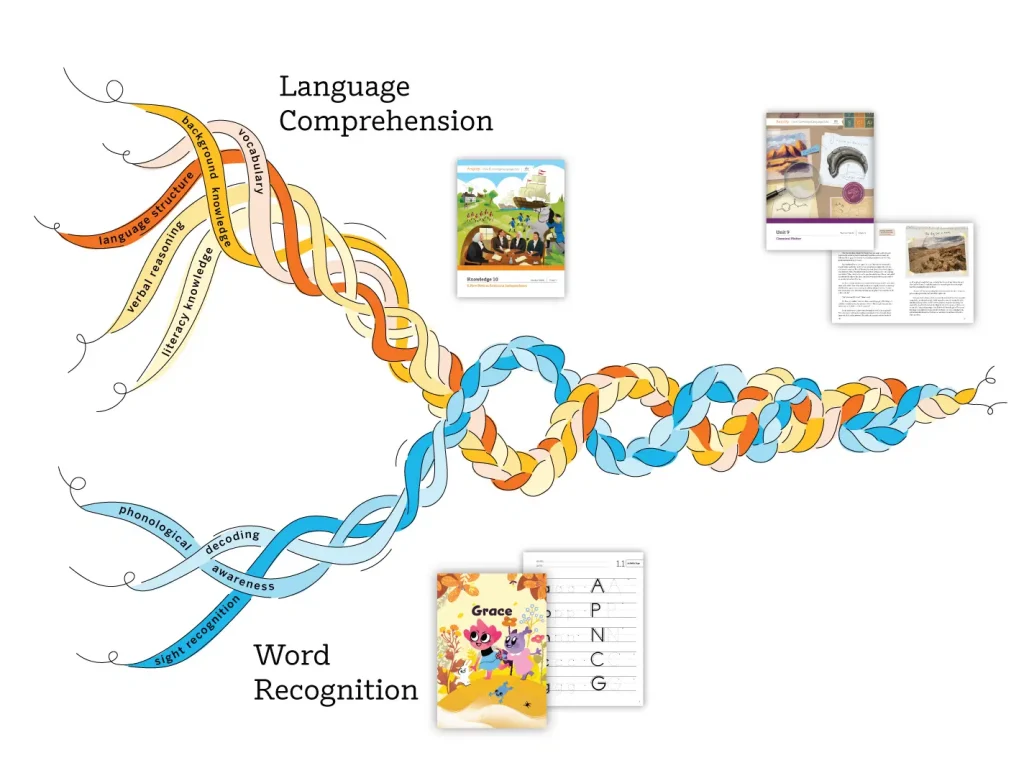
How does Amplify CKLA work?
Grades K–2: Dedicated knowledge-building and explicit skills instruction
Every day, students in Grades K–2 complete one full lesson that explicitly and systematically builds foundational reading skills in the Skills Strand, as well as one full lesson that builds robust background knowledge to access complex text in the Knowledge Strand. Through learning in each of these strands, students develop the early literacy skills necessary to help them become confident readers and build the context to understand what they’re reading.
Grades 3–5: Integrated instruction
In Grades 3–5, Knowledge and Skills are integrated in one set of instructional materials. Lessons begin to combine skills and knowledge with increasingly complex texts, close reading, and a greater writing emphasis. Students can then use their skills to go on their own independent reading adventures.
How does Amplify CKLA integrate with the other parts of the literacy system?
Amplify CKLA + mCLASS® with DIBELS® 8th Edition
Amplify CKLA integrates with your mCLASS assessment through the CKLA Connect feature, which matches your students with targeted CKLA lessons based on their mCLASS assessment data. In other words, it aligns your assessments more closely with your core curriculum while recommending effective differentiated instruction.

Amplify CKLA + Amplify Reading
Amplify Reading is the student-driven skill practice program within CKLA, providing differentiated, digital instruction in both foundational skills and comprehension strategies. Because Amplify Reading is built on the same approach to reading as CKLA, students are able to extend their learning from the core program further, at their own pace.
Amplify CKLA and Amplify Reading reinforce each other through:
- An aligned scope and sequence and instructional approach: In both programs, students get instruction and practice in phonological awareness and phonics, with the most common, least ambiguous spellings first.
- Consistent vocabulary words: Many Amplify CKLA words are taught and practiced in Amplify Reading vocabulary games.
- Complementary texts: Fiction and nonfiction books within Amplify Reading reinforce Amplify CKLA knowledge domains.
- Seamless integrations between platforms: Students can easily access Amplify Reading directly from the Amplify CKLA Student Hub.
What makes Amplify CKLA different?
Built on the Science of Reading
Built out of the latest research in the Science of Reading, Amplify CKLA delivers explicit instruction in both foundational literacy skills (systematic phonics, decoding, and fluency) and background knowledge in grades K–2 with an integrated approach to explicit instruction in grades 3–5.
Review this Science of Reading toolkit to learn more about the Science of Reading best practices integrated throughout CKLA.
Explicit systematic skills instruction
Great reading instruction starts with helping kids develop great decoding skills. By building a solid foundation of phonological awareness and phonics, reading the words on the page becomes automatic so that comprehension and critical thinking can happen. Our instruction is supported by:
- Step-by-step lessons with multisensory approaches, clear lesson objectives, and embedded formative assessments.
- Decodable books and student readers with ebook and audiobook versions that feature interesting plots and relatable characters.
- An engaging sound library with fun songs and videos that develop phonological awareness.
- An interactive Vocab App featuring engaging activities with immediate feedback and automated, customized instruction based on student performance.
Coherent knowledge instruction
Students build grade-appropriate subject-area knowledge and vocabulary in history, science, literature, and the arts while learning to read, write, and think creatively and for themselves. Our instruction is supported by:
- Knowledge builders that provide a quick overview of each domain with its key ideas.
- Interactive Read-Alouds designed to build knowledge and vocabulary.
- Content-rich anchor texts that support students as they tackle increasingly complex text and sharpen their analytical skills.
- Social and emotional learning paired with lessons in civic responsibility.
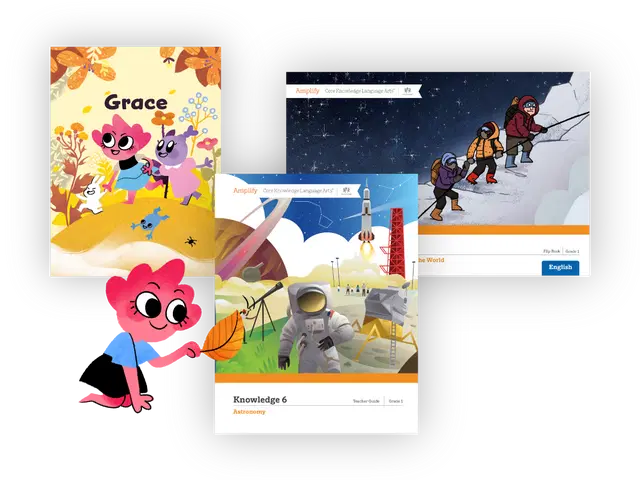
Embedded differentiation for all learners
Amplify CKLA provides built-in differentiation strategies in every lesson for all students, including supports for English learners and Standard English learners.
- Access supports for ELs: Integrated ELD supports in each lesson segment
for English learners and Standard English learners are specific to students’ mastery of the lesson’s objectives. - Support and Challenge for all learners: Lessons include Support and Challenge suggestions that provide assistance or opportunities for more advanced work toward the goal of the lesson. These supports are suitable for all learners, including ELs.
- 30 minutes of Additional Support in every Skills lesson: In the Skills Strand, every lesson concludes with an Additional Support section of recommendations for 30 minutes of extended instruction and activities, directly aligned to the skills taught in the lesson to assist students who need more support in mastering the lesson’s objectives.
- Intervention Toolkit: The Intervention Toolkit provides easy-to-use resources to assist teachers in filling gaps in students’ foundational skills. Teachers will find of hundreds of activities to support phonics, fluency, comprehension, handwriting, and other key skills.
Designated ELD
Amplify CKLA’s designated English Language Development (ELD) component—Language Studio—helps English learners preview and revisit key content within core instruction, building a foundation of academic vocabulary and background knowledge. Core instruction lessons include point-of-use supports for English learners and Support and Challenge strategies for all learners.
This carefully developed program follows the CKLA Knowledge domains, previewing and reinforcing skills and content from core instruction using instruction specifically built for English learners. The program is also designed around frequent formative assessment, including assessment of language proficiency, giving you effective ways to guide and support your English learners.
Language Studio supports teachers and English learners through the following:
- 30 minutes of instruction with lesson segments are carefully designed around Content Knowledge, Meaning Making, Language Development, Effective Expression, and Foundational Skills.
- Every Language Studio lesson accompanies a core lesson, helping English learners deepen domain and academic vocabulary that will help them access core content.
- Culminating tasks support core projects and target the same skills as primary instruction.
Ready-to-go slides and all-in-one platform
The slides-based Amplify CKLA digital experience enhances instruction while saving you time. Everything you need is all in one place, making it easier than ever to plan lessons, present digital content, and review student work.
- Simplify planning and instruction: Teachers have access to ready-to-use and customizable lesson presentation slides, complete with all the prompts from the print Teacher Guide embedded in the teacher view. As teachers deliver each lesson, students can engage with the content in one cohesive
experience—through Activity Books, slides, digital components, videos, Student Readers, and more. - Interactive student activities: Through the Student Home, students can easily access digital lessons with slides, Activity Pages, ebooks, videos, and other interactive resources from one simple dashboard.
- Your teacher command center: You’re provided with the tools you need to ensure a productive digital experience that’s personalized to meet your students’ needs. This includes a teacher home from which to launch and track lessons, LMS integrations such as Google Classroom and Microsoft Teams, and other customizations based on classroom needs.
- Get real-time insights into your students’ work: The innovative live review tool enables you to keep an eye on students drawing, recording audio, uploading and capturing images, and typing or writing in pre-placed text boxes in their Activity Pages.
Navigating the program
Digital navigation walkthrough
Physical materials walkthrough
Sample materials
Demo access
Follow the instructions below to access your demo account.
- Click the CKLA Demo button below.
- Select Log in with Amplify.
- To explore as a teacher, enter this username: t1.alaskareads@demo.tryamplify.net
- To explore as a student, enter this username: s1.alaskareads@demo.tryamplify.net
- Enter the password: Amplify1-alaskareads
- Click the Programs and apps menu
- Select CKLA Teacher Resource Site
- Select the desire grade level
Check out these additional resources
Amplify CKLA review resources:
- Correlations to the Alaska English Language Arts Standards
- CKLA Program Guide
- Text complexity in CKLA
- Trade books in CKLA
- Assessments in CKLA
- Remote and hybrid learning with CKLA
- Amplify CKLA Scopes and Sequences
- Grade K Skills and Knowledge
- Grade 1 Skills and Knowledge
- Grade 2 Skills and Knowledge
- Grade 3 Integrated
- Grade 4 Integrated
- Grade 5 Integrated
What is mCLASS?
mCLASS is a best-in-class assessment platform that houses a suite of proven, gold-standard assessment measures and tools that can be flexibly combined to meet the unique literacy needs of both teachers and students across grades K–6, including:
- Universal screening
- Diagnostic assessment
- Dyslexia screening
- Progress monitoring
- Dual language reporting
- Targeted teacher-led instruction
What is the DIBELS 8th Edition assessment?
Developed by the University of Oregon, the DIBELS 8th Edition is the latest version of the DIBELS® (Dynamic Indicators of Basic Early Literacy Skills) assessment.
With this latest version, the University of Oregon Center on Teaching and Learning (UO CTL) made significant efforts to ensure measures would meet state-level screening requirements for universal screening, diagnostic assessment, and dyslexia screening. To support this, measures were updated based on the latest research to meet increased standards of reliability and validity. In addition, adaptive procedures and discontinue rules focus on the assessment of priority skills and prevent over-testing.
Summary of changes:
- Consistent measures within grades will provide improved growth measurement.
- All subtests have been revised to be grade-specific and to increase in difficulty, covering a full progression of skills and minimizing floor and ceiling effects. This provides the opportunity for students to demonstrate what they know and further pinpoint what they don’t know.
- Phoneme Segmentation Fluency replaces First Sound Fluency. The expanded coverage minimizes floor effect and provides information about difficulty in Phonemic Awareness skills without the additional First Sound Fluency measure.
- A new subtest, Word Reading Fluency, helps identify students with poor sight word reading skills that other subtests miss.
- For all measures, the basic scoring procedures remain the same. For Nonsense Word Fluency, credit is given for recording words as whole words even if the student misses in the first attempt.
- Oral Reading Fluency is now only one passage, instead of three. Retell has been removed. Thus, Oral Reading Fluency assessment will take a third of the time.
Assessment measures by grade
| DIBELS measures at each grade level | ||||
| Measure | Grade K | Grade 1 | Grade 2 | Grade 3 |
| Letter naming fluency | | | ||
| Phonemic segmentation fluency | | | ||
| Nonsense word fluency | | | | |
| Word reading fluency | | | | |
| Oral reading fluency | | | | |
| Maze (basic comprehension) | | | ||
| Amplify measures at each grade level | ||||
| Oral language | | | | |
| Vocabulary | | | | |
Assessment measures sample videos
DIBELS 8th Edition measure: Phonemic Segmentation Fluency (PSF)
DIBELS 8th Edition measure: Nonsense Word Fluency (NWF)
DIBELS 8th Edition measure: Letter Naming Fluency (LNF)
DIBELS 8th Edition measure: Word Reading Fluency (WRF)
DIBELS 8th Edition measure: Oral Reading Fluency (ORF)
How is mCLASS with DIBELS 8th Edition different?
mCLASS with DIBELS 8th Edition combines the power of the mCLASS assessment platform and the effectiveness of the DIBELS 8th Edition assessment measures. As a result – educators across the state are empowered with the latest and greatest assessment tool.
More than a test, mCLASS with DIBELS 8th Edition is an integrated system that closes the knowing-doing gap by helping teachers take immediate instructional action that’s right for each and every student.
Assessment systems must enable and compel educators to answer not just the “What” questions, but also the “So What” and “Now What” questions. These are the questions that are essential in transforming classroom instruction, and the questions that mCLASS with DIBELS 8th Edition helps teachers answer with confidence.
How is mCLASS with DIBELS 8th Edition different?
- It gives teachers access to the latest digital version of the DIBELS assessment. Amplify is the only licensed provider of the digital DIBELS 8th Edition assessment. As such, our solution is the only one to enhance the DIBELS 8th Edition assessment with the power, reliability, and quickness of the mCLASS system.
- It makes it faster and easier to understand where every student is in their early literacy journey. By combining 1:1 observational diagnostic assessments, dyslexia screening, progress monitoring, instant scoring, rigorous reporting, automatic student grouping, and targeted instruction all in one place, it reduces the instructional delays associated with manual scoring, manual data analysis, and manual lesson planning.
- It brings more equity to the classroom. When used in conjunction with mCLASS Lectura, teachers have access to dual language reports that highlight a student’s strengths and weaknesses in both English and Spanish.
- It makes every instructional minute count. In addition to one-minute measures that quickly gauge student progress toward reading proficiency, it leverages a teacher’s most powerful instructional tool — their own 1:1 observations.
- It drives growth more efficiently. Rather than relying on broad composite scores alone, granular data and in-depth insights for every student help teachers pinpoint exact skill gaps and areas of unfinished learning, making whole-group, small-group, and 1:1 instruction more targeted and effective.
- It saves teachers time. Instant reports, automatic student groups, and ready-to-teach lessons mean teachers spend less time cobbling together materials and more time working directly with students and responding to their needs.
How does mCLASS with DIBELS 8th Edition support screening for dyslexia risk?
DIBELS 8th Edition measures have been updated based on the latest research. They now offer stronger measures of processing speed, phonological awareness, and alphabetic principles for dyslexia screening purposes.
To support this, a new subtest in Word Reading Fluency was introduced and revisions were made to Letter Naming Fluency, Phonemic Segmentation Fluency, and Nonsense Fluency subtests to improve their ability to screen for deficits commonly associated with dyslexia risk, such as phonological awareness, rapid naming ability, and alphabetic principle. These measures provide early warning signs for neurological processing difficulties that contribute to risk for dyslexia (Wolf & Bowers, 1999; Denckla & Rudel, 1974).
Moreover, measures in Oral Language and Vocabulary are included to provide additional information to help evaluate additional risk areas associated with dyslexia risk.
How does mCLASS with DIBELS 8th Edition turn data into instant action?
mCLASS with DIBELS 8th Edition gives you instant results and clear next steps for each student.
Quick and actionable reports provide detailed insight into students’ reading development across foundational literacy skills for teachers, specialists, administrators, and caregivers.

Diagnostic assessment
mCLASS with DIBELS 8th Edition analyzes individual student response data through a scoring algorithm which aligns to the Colorado Department of Education’s stated purpose of a diagnostic assessment.
Our innovative approach to diagnostic assessment leverages an item-level evaluation of individual student responses in order to provide deeper insights into specific student weaknesses and areas of improvement. mCLASS with DIBELS 8th Edition analyzes individual student response data through a scoring algorithm which aligns to the Colorado Department of Education’s stated purpose of a diagnostic: “… to pinpoint a student’s specific area(s) of weakness and provide in-depth information about students’ skills and instructional needs.”
Ready-to-teach instruction
Immediately following the analysis of individual student responses, mCLASS with DIBELS 8th Edition provides an in-depth diagnostic report complete with suggested next steps, also known as “mCLASS Instruction.”
mCLASS Instruction evaluates each student’s responses on each individual subtest and instantly:
- Provides a list of specific needs by student, such as struggling with medial vowel sounds or difficulty reading words with consonant blends.
- Groups students automatically based on similar discrete skill needs, not simply composite scores like other assessment tools.
- Recommends a variety of ready-to-teach lessons that specifically target each individual student’s areas of need or common areas of need for small-group instruction.
Classroom skill and benchmark summary
The Classroom Skill Summary report is a dashboard showing benchmark performance on each skill. Teachers can use it to determine which skill areas need instructional focus at a classroom level.
The Classroom Benchmark Summary report is a classroom-wide view of overall reading performance. Teachers can use this report to determine if composite scores improved, declined, or remained the same each semester.
Detailed benchmark performance
Teachers can see each student’s performance during the current school year, on each subtest as well as the overall composite. The benchmark goal displays below the subtest name when applicable. The ability to sort the columns in this report gives teachers more flexibility to analyze data the way they prefer.
Dyslexia screening
Identify students who are at risk for reading difficulties, including dyslexia, based on their results from foundational skills measures and additional measures as needed by local policies.
Progress monitoring summary
See which subtests have been assessed since the most recent benchmark assessment, how students performed on the three most recent progress monitoring assessments for each measure, and which students have not been progress monitored since the benchmark assessment.
Goal setting tool
The Zones of Growth (ZoG) analysis uses a rich set of national data to determine student goals for the next benchmark period. Teachers can use the Goal Setting Tool to view these recommended goals or modify the default goals for individual students as they see fit, if the default goal is too challenging or not challenging enough.
Growth outcomes
Teachers and interventionists can see each student’s actual growth achieved and how it compares to the goal that was set for the student.
Colorado READ Plans
Amplify recommends that a student who is categorized by the DIBELS 8th Edition composite score as “At High Risk” (denoted in all reports as “red”) be considered as potentially having a “Significant Reading Deficiency,” then further diagnosed using mCLASS’ Instruction diagnostics.
When devising a READ Plan, teachers and instructional staff should first consider students at high risk on DIBELS 8th Edition as potentially having a “Significant Reading Deficiency,” and eligible for a READ Plan. Students are then further diagnosed using mCLASS’ Instruction diagnostics. When devising a READ Plan, teachers can rely on the relevant mCLASS Instruction and Reports to comply with the READ Act.
Caregiver supports
The mCLASS Home Connect website houses literacy resources for parents and caregivers, including at-home lessons organized by skill. Our mCLASS parent/caregiver letters in English and Spanish ensure that families know how to best support their child.

Explore our self-guided tour
Our self-guided tour is a great way to orient yourself to the organization of our mCLASS platform. Click the button below to get started.

Contact us
Looking to speak directly with your Colorado representative? Get in touch with a team member by emailing HelloColorado@amplify.com or by calling us directly.
| Enrollment over 2,500 students | Enrollment under 2,500 students |


| Monty LammersSenior Account Executive(719) 964-4501mlammers@amplify.com | Vanessa ScottAccount Executive(602) 690-9216vscott@amplify.com |
What is Boost Reading?
Boost Reading is a K–5 student-driven literacy program that provides both enrichment and remediation for all students, leveraging the power of compelling storytelling to engage students in personalized reading instruction and practice. It features:
- High quality, research-based instruction based on the Science of Reading.
- Unparalleled personalized learning pathways.
- Compelling and imaginative storylines.
- Social and emotional learning.
- Insightful reports tied to actionable next steps.
How does Boost Reading work?
Boost Reading uses students’ latest reading assessment data to ensure they practice the right skills at the right time. In cases where no student assessment data is available, our embedded placement tool ensures students receive the content and skill practice most appropriate for their current reading level.
From there, students move through our curriculum along their own learning pathway where they encounter personalized content tailored to their evolving skill and grade levels.
Summary of games
With over 40 adaptive games, Boost Reading helps students of all levels grow across 13 critical skills areas, including explicit instruction in comprehension processes.
- Phonological awareness
- Letter sound correspondence
- Letter combinations
- Early decoding
- Advanced decoding
- Comprehension processes
- Key ideas and details
- Craft and structure
- Integration of knowledge and ideas
- Vocabulary
- Connected texts
- Fluency
- Close reading
See pages 16-78 of this guide for a detailed explanation of every game in the program.
What makes Boost Reading different?
Multiple dimensions
Boost Reading features full adaptivity. That means students progress along a pathway that adapts on multiple dimensions, not just one. For example, a student can work on early first-grade decoding in one game while building more advanced vocabulary knowledge in another.
Always-positive feedback
Boost Reading supports positive participation by giving students immediate and clear feedback. These results are never punitive. Instead our always-positive feedback is delivered in the context of the game world and is designed to motivate students to keep trying.
Focus on SEL
Sustained academic success depends upon social and emotional learning (SEL) as well as the mastery of fundamental literacy skills. Consistent with the most widely-recognized framework and standards for SEL (from the CASEL consortium, which includes 25 states), Boost Reading also focuses on the five areas of social and emotional learning:
- Self-awareness
- Self-management
- Social awareness
- Relationship skills
- Responsible decision-making
Ready-to-teach mini-lessons
Boost Reading turns data into action with reports that help educators know exactly who needs support and ready-to-teach mini-lessons that deliver targeted reinforcement and remediation.
Accelerated growth
Boost Reading accelerates student growth at all reading levels and reduces the number of students at risk of reading difficulty. In one study of 3rd graders in a large urban district who used Boost Reading for only one semester:
- 54% of students who used Boost Reading made above average progress, whereas only 44% of students in the comparison group made above average progress.
- 54% of English learners in that same study made above average growth, whereas only 45% of English learners in the comparison group made above average growth.
Check out the above results and more in this efficacy paper.
How does Boost Reading integrate with the other parts of the literacy system?
Boost Reading + mCLASS® with DIBELS® 8th Edition
mCLASS automatically places students on an adaptive path within Boost Reading, which provides them the exact practice–both remediation and acceleration–that they need.
Click here to learn more about how Boost Reading and the mCLASS Assessment System work together.
Boost Reading + Amplify CKLA
Boost Reading extends core instruction with Amplify CKLA with personalized practice that follows the same scope and sequence.
Click here to learn more about how Boost Reading and Amplify CKLA work together.
Check out these additional resources
Boost Reading review resources:
What is Amplify CKLA?
Amplify CKLA is a core ELA program for grades TK–5 that delivers:
- A unique research-based approach truly built on the Science of Reading.
- A combination of explicit foundational skills with meaningful knowledge-building.
- Embedded support and differentiation that gets all students reading grade-level texts together.
- Opportunities for students to see the strengths and experiences that all people share while also celebrating each others’ unique identities and experiences.
- Equitable and authentic Spanish language arts instruction with Amplify Caminos.
How does Amplify CKLA work?
Grades K–2: Dedicated knowledge-building and explicit skills instruction
Every day, students in Grades K–2 complete one full lesson that explicitly and systematically builds foundational reading skills in the Skills Strand, as well as one full lesson that builds robust background knowledge to access complex text in the Knowledge Strand. Through learning in each of these strands, students develop the early literacy skills necessary to help them become confident readers and build the context to understand what they’re reading.
Grades 3–5: Integrated instruction
In Grades 3–5, Knowledge and Skills are integrated in one set of instructional materials. Lessons begin to combine skills and knowledge with increasingly complex texts, close reading, and a greater writing emphasis. Students can then use their skills to go on their own independent reading adventures.
What makes Amplify CKLA different?
Built on the Science of Reading
Built out of the latest research in the Science of Reading, Amplify CKLA delivers explicit instruction in both foundational literacy skills (systematic phonics, decoding, and fluency) and background knowledge in grades K–2 with an integrated approach to explicit instruction in grades 3–5.
Review this Science of Reading toolkit to learn more about the Science of Reading best practices integrated throughout CKLA.
Explicit systematic skills instruction
Great reading instruction starts with helping kids develop great decoding skills. By building a solid foundation of phonological awareness and phonics, reading the words on the page becomes automatic so that comprehension and critical thinking can happen. Our instruction is supported by:
- Step-by-step lessons with multisensory approaches, clear lesson objectives, and embedded formative assessments.
- Decodable books and student readers with ebook and audiobook versions that feature interesting plots and relatable characters.
- An engaging sound library with fun songs and videos that develop phonological awareness.
- An interactive Vocab App featuring engaging activities with immediate feedback and automated, customized instruction based on student performance.
Coherent knowledge instruction
Students build grade-appropriate subject-area knowledge and vocabulary in history, science, literature, and the arts while learning to read, write, and think creatively and for themselves. Our instruction is supported by:
- Knowledge builders that provide a quick overview of each domain with its key ideas.
- Interactive Read-Alouds designed to build knowledge and vocabulary.
- Content-rich anchor texts that support students as they tackle increasingly complex text and sharpen their analytical skills.
- Social and emotional learning paired with lessons in civic responsibility.

Embedded differentiation for all learners
Amplify CKLA provides built-in differentiation strategies in every lesson for all students, including supports for English learners and Standard English learners.
- Access supports for ELs: Integrated ELD supports in each lesson segment
for English learners and Standard English learners are specific to students’ mastery of the lesson’s objectives. - Support and Challenge for all learners: Lessons include Support and Challenge suggestions that provide assistance or opportunities for more advanced work toward the goal of the lesson. These supports are suitable for all learners, including ELs.
- 30 minutes of Additional Support in every Skills lesson: In the Skills Strand, every lesson concludes with an Additional Support section of recommendations for 30 minutes of extended instruction and activities, directly aligned to the skills taught in the lesson to assist students who need more support in mastering the lesson’s objectives.
- Intervention Toolkit: The Intervention Toolkit provides easy-to-use resources to assist teachers in filling gaps in students’ foundational skills. Teachers will find of hundreds of activities to support phonics, fluency, comprehension, handwriting, and other key skills.
Designated ELD
Amplify CKLA’s designated English Language Development (ELD) component—Language Studio— helps English learners preview and revisit key content within core instruction, building a foundation of academic vocabulary and background knowledge. Core instruction lessons include point-of-use supports for English learners and Support and Challenge strategies for all learners.

Built on the California ELA/ELD Framework, our carefully developed program follows the CKLA Knowledge domains, previewing and reinforcing skills and content from core instruction using instruction specifically built for English learners. The program is also designed around frequent formative assessment, including assessment of language proficiency, giving you effective ways to guide and support your English learners.
Language Studio supports teachers and English learners through the following:
- 30 minutes of instruction with lesson segments are carefully designed around Content Knowledge, Meaning Making, Language Development, Effective Expression, and Foundational Skills.
- Every Language Studio lesson accompanies a core lesson, helping English learners deepen domain and academic vocabulary that will help them access core content.
- Culminating tasks support core projects and target the same skills as primary instruction.
Ready-to-go slides and all-in-one platform
The slides-based Amplify CKLA digital experience enhances instruction while saving you time. Everything you need is all in one place, making it easier than ever to plan lessons, present digital content, and review student work.
- Simplify planning and instruction: Teachers have access to ready-to-use and customizable lesson presentation slides, complete with all the prompts from the print Teacher Guide embedded in the teacher view. As teachers deliver each lesson, students can engage with the content in one cohesive
experience—through Activity Books, slides, digital components, videos, Student Readers, and more. - Interactive student activities: Through the Student Home, students can easily access digital lessons with slides, Activity Pages, ebooks, videos, and other interactive resources from one simple dashboard.
- Your teacher command center: You’re provided with the tools you need to ensure a productive digital experience that’s personalized to meet your students’ needs. This includes a teacher home from which to launch and track lessons, LMS integrations such as Google Classroom and Microsoft Teams, and other customizations based on classroom needs.
- Get real-time insights into your students’ work: The innovative live review tool enables you to keep an eye on students drawing, recording audio, uploading and capturing images, and typing or writing in pre-placed text boxes in their Activity Pages.
How does Amplify CKLA integrate with the other parts of the literacy system?
Amplify CKLA + mCLASS® with DIBELS® 8th Edition
Amplify CKLA integrates with your mCLASS assessment through the CKLA Connect feature, which matches your students with targeted CKLA lessons based on their mCLASS assessment data. In other words, it aligns your assessments more closely with your core curriculum while recommending effective differentiated instruction.
Amplify CKLA + Amplify Reading
Amplify Reading is the student-driven skill practice program within CKLA, providing differentiated, digital instruction in both foundational skills and comprehension strategies. Because Amplify Reading is built on the same approach to reading as CKLA, students are able to extend their learning from the core program further, at their own pace.
Amplify CKLA and Amplify Reading reinforce each other through:
- An aligned scope and sequence and instructional approach: In both probrams, students get instruction and practice in phonological awareness and phonics, with the most common, least ambiguous spellings first.
- Consistent vocabulary words: Many Amplify CKLA words are taught and practiced in Amplify Reading vocabulary games.
- Complementary texts: Fiction and nonfiction books within Amplify Reading reinforce Amplify CKLA knowledge domains.
- Seamless integrations between platforms: Students can easily access Amplify Reading directly from the Amplify CKLA Student Hub.
Navigating the program
Digital navigation walkthrough
Physical materials walkthrough
Check out these additional resources
Amplify CKLA review resources:
- CKLA Program Guide
- Diversity, equity, and inclusion in CKLA
- Text complexity in CKLA
- Trade books in CKLA
- Assessments in CKLA
- Remote and hybrid learning with CKLA
- Amplify ELA technical specifications
- Amplify CKLA Scopes and Sequences
- Grade K Skills and Knowledge
- Grade 1 Skills and Knowledge
- Grade 2 Skills and Knowledge
- Grade 3 Integrated
- Grade 4 Integrated
- Grade 5 Integrated
What is mCLASS?
mCLASS is a best-in-class assessment platform that houses a suite of proven, gold-standard assessment measures and tools that can be flexibly combined to meet the unique literacy needs of both teachers and students across grades K–6, including:
- Universal screening
- Diagnostic assessment
- Dyslexia screening
- Text Reading and Comprehension (a.k.a. running records via mCLASS: Reading 3D)
- Progress monitoring
- Dual language reporting
- Targeted teacher-led instruction
What is the DIBELS 8th Edition assessment?
Developed by the University of Oregon, the DIBELS 8th Edition is the latest version of the DIBELS® (Dynamic Indicators of Basic Early Literacy Skills) assessment.
With this latest version, the University of Oregon Center on Teaching and Learning (UO CTL) made significant efforts to ensure measures would meet state-level screening requirements for universal screening, diagnostic assessment, and dyslexia screening. To support this, measures were updated based on the latest research to meet increased standards of reliability and validity. In addition, adaptive procedures and discontinue rules focus on the assessment of priority skills and prevent over-testing.
Summary of changes:
- Consistent measures within grades will provide improved growth measurement.
- All subtests have been revised to be grade-specific and to increase in difficulty, covering a full progression of skills and minimizing floor and ceiling effects. This provides the opportunity for students to demonstrate what they know and further pinpoint what they don’t know.
- Phoneme Segmentation Fluency replaces First Sound Fluency. The expanded coverage minimizes floor effect and provides information about difficulty in Phonemic Awareness skills without the additional First Sound Fluency measure.
- A new subtest, Word Reading Fluency, helps identify students with poor sight word reading skills that other subtests miss.
- For all measures, the basic scoring procedures remain the same. For Nonsense Word Fluency, credit is given for recording words as whole words even if the student misses in the first attempt.
- Oral Reading Fluency is now only one passage, instead of three. Retell has been removed. Thus, Oral Reading Fluency assessment will take a third of the time.
Assessment measures by grade
| DIBELS measures at each grade level | |||||
| Measure | Grade K | Grade 1 | Grade 2 | Grade 3 | Grades 4–6 |
| Letter naming fluency | |
|
|||
| Phonemic segmentation fluency | |
|
|||
| Nonsense word fluency | |
|
|
|
|
| Word reading fluency | |
|
|
|
|
| Oral reading fluency | |
|
|
|
|
| Maze (basic comprehension) | |
|
|
||
| Amplify measures at each grade level | |||||
| Oral language | |
|
|
|
|
| Vocabulary | |
|
|
|
|
Assessment measures sample videos
DIBELS 8th Edition measure: Phonemic Segmentation Fluency (PSF)
DIBELS 8th Edition measure: Nonsense Word Fluency (NWF)
DIBELS 8th Edition measure: Letter Naming Fluency (LNF)
DIBELS 8th Edition measure: Word Reading Fluency (WRF)
DIBELS 8th Edition measure: Oral Reading Fluency (ORF)
What makes mCLASS with DIBELS 8th Edition different?
mCLASS with DIBELS 8th Edition combines the power of the mCLASS assessment platform and the effectiveness of the DIBELS 8th Edition assessment measures. As a result – educators are empowered with the latest and greatest assessment tool.
More than a test, mCLASS with DIBELS 8th Edition is an integrated system that closes the knowing-doing gap by helping teachers take immediate instructional action that’s right for each and every student.
Assessment systems must enable and compel educators to answer not just the “What” questions, but also the “So What” and “Now What” questions. These are the questions that are essential in transforming classroom instruction, and the questions that mCLASS with DIBELS 8th Edition helps teachers answer with confidence.
What makes mCLASS with DIBELS 8th Edition different?
- It gives teachers access to the latest digital version of the DIBELS assessment. Amplify is the only licensed provider of the digital DIBELS 8th Edition assessment. As such, our solution is the only one to enhance the DIBELS 8th Edition assessment with the power, reliability, and quickness of the mCLASS system.
- It makes it faster and easier to understand where every student is in their early literacy journey. By combining 1:1 observational diagnostic assessments, dyslexia screening, progress monitoring, instant scoring, rigorous reporting, automatic student grouping, and targeted instruction all in one place, it reduces the instructional delays associated with manual scoring, manual data analysis, and manual lesson planning.
- It brings more equity to the classroom. When used in conjunction with mCLASS Lectura, teachers have access to dual language reports that highlight a student’s strengths and weaknesses in both English and Spanish.
- It makes every instructional minute count. In addition to one-minute measures that quickly gauge student progress toward reading proficiency, it leverages a teacher’s most powerful instructional tool — their own 1:1 observations.
- It drives growth more efficiently. Rather than relying on broad composite scores alone, granular data and in-depth insights for every student help teachers pinpoint exact skill gaps and areas of unfinished learning, making whole-group, small-group, and 1:1 instruction more targeted and effective.
- It saves teachers time. Instant reports, automatic student groups, and ready-to-teach lessons mean teachers spend less time cobbling together materials and more time working directly with students and responding to their needs.
How does mCLASS with DIBELS 8th Edition support screening for dyslexia risk?
DIBELS 8th Edition measures have been updated based on the latest research. They now offer stronger measures of processing speed, phonological awareness, and alphabetic principles for dyslexia screening purposes.
To support this, a new subtest in Word Reading Fluency was introduced and revisions were made to Letter Naming Fluency, Phonemic Segmentation Fluency, and Nonsense Fluency subtests to improve their ability to screen for deficits commonly associated with dyslexia risk, such as phonological awareness, rapid naming ability, and alphabetic principle. These measures provide early warning signs for neurological processing difficulties that contribute to risk for dyslexia (Wolf & Bowers, 1999; Denckla & Rudel, 1974).
Moreover, measures in Oral Language and Vocabulary are included to provide additional information to help evaluate additional risk areas associated with dyslexia risk.
How does mCLASS with DIBELS 8th Edition support the use of running records?
Track your students’ reading progress from every angle with the Text Reading and Comprehension (TRC) assessment. When TRC is paired with the DIBELS 8th Edition assessment, classroom teachers unlock the ability to record reading behaviors through running digital records. Available in English and Spanish, it measures reading comprehension and provides insight into how each student finds meaning in text.
Measures include:
- Lesson plans for whole class, small-group, and one-on-one instruction.
- Small-group advisor, which organizes students into groups based on strengths and gaps.
- Item-level advisor, which drills deep into student responses to uncover patterns, strengths, and gaps.
- Instructional resources for each student’s parent/guardian(s).
How does mCLASS with DIBELS 8th Edition turn data into instant action?
mCLASS with DIBELS 8th Edition gives you instant results and clear next steps for each student.
Quick and actionable reports provide detailed insight into students’ reading development across foundational literacy skills for teachers, specialists, administrators, and caregivers.
Diagnostic assessment
mCLASS with DIBELS 8th Edition analyzes individual student response data through a proprietary scoring algorithm that pinpoints a student’s specific area(s) of growth and improvement, providing classroom teachers in-depth insight into a students’ instructional needs.
Ready-to-teach instruction
Immediately following the analysis of individual student responses, mCLASS with DIBELS 8th Edition provides an in-depth diagnostic report complete with suggested next steps, also known as “mCLASS Instruction.”
mCLASS Instruction evaluates each student’s responses on each individual subtest and instantly:
- Provides a list of specific needs by student, such as struggling with medial vowel sounds or difficulty reading words with consonant blends.
- Groups students automatically based on similar discrete skill needs, not simply composite scores like other assessment tools.
- Recommends a variety of ready-to-teach lessons that specifically target each individual student’s areas of need or common areas of need for small-group instruction.
Classroom skill and benchmark summary
The Classroom Skill Summary report is a dashboard showing benchmark performance on each skill. Teachers can use it to determine which skill areas need instructional focus at a classroom level.
The Classroom Benchmark Summary report is a classroom-wide view of overall reading performance. Teachers can use this report to determine if composite scores improved, declined, or remained the same each semester.
Detailed benchmark performance
Teachers can see each student’s performance during the current school year, on each subtest as well as the overall composite. The benchmark goal displays below the subtest name when applicable. The ability to sort the columns in this report gives teachers more flexibility to analyze data the way they prefer.
Dyslexia screening
Identify students who are at risk for reading difficulties, including dyslexia, based on their results from foundational skills measures and additional measures as needed by local policies.
Progress monitoring summary
See which subtests have been assessed since the most recent benchmark assessment, how students performed on the three most recent progress monitoring assessments for each measure, and which students have not been progress monitored since the benchmark assessment.
Goal setting tool
The Zones of Growth (ZoG) analysis uses a rich set of national data to determine student goals for the next benchmark period. Teachers can use the Goal Setting Tool to view these recommended goals or modify the default goals for individual students as they see fit, if the default goal is too challenging or not challenging enough.
Growth outcomes
Teachers and interventionists can see each student’s actual growth achieved and how it compares to the goal that was set for the student.
Caregiver supports
The mCLASS Home Connect website houses literacy resources for parents and caregivers, including at-home lessons organized by skill. Our mCLASS parent/caregiver letters in English and Spanish ensure that families know how to best support their child.
What is mCLASS?
mCLASS is a best-in-class assessment platform that houses a suite of proven, gold-standard assessment measures and tools that can be flexibly combined to meet the unique literacy needs of both teachers and students across grades K–6, including:
- Universal screening
- Diagnostic assessment
- Dyslexia screening
- Text Reading and Comprehension (a.k.a. running records via mCLASS: Reading 3D)
- Progress monitoring
- Dual language reporting
- Targeted teacher-led instruction
What is the DIBELS 8th Edition assessment?
Developed by the University of Oregon, the DIBELS 8th Edition is the latest version of the DIBELS® (Dynamic Indicators of Basic Early Literacy Skills) assessment.
With this latest version, the University of Oregon Center on Teaching and Learning (UO CTL) made significant efforts to ensure measures would meet state-level screening requirements for universal screening, diagnostic assessment, and dyslexia screening. To support this, measures were updated based on the latest research to meet increased standards of reliability and validity. In addition, adaptive procedures and discontinue rules focus on the assessment of priority skills and prevent over-testing.
Summary of changes:
- Consistent measures within grades will provide improved growth measurement.
- All subtests have been revised to be grade-specific and to increase in difficulty, covering a full progression of skills and minimizing floor and ceiling effects. This provides the opportunity for students to demonstrate what they know and further pinpoint what they don’t know.
- Phoneme Segmentation Fluency replaces First Sound Fluency. The expanded coverage minimizes floor effect and provides information about difficulty in Phonemic Awareness skills without the additional First Sound Fluency measure.
- A new subtest, Word Reading Fluency, helps identify students with poor sight word reading skills that other subtests miss.
- For all measures, the basic scoring procedures remain the same. For Nonsense Word Fluency, credit is given for recording words as whole words even if the student misses in the first attempt.
- Oral Reading Fluency is now only one passage, instead of three. Retell has been removed. Thus, Oral Reading Fluency assessment will take a third of the time.
Assessment measures by grade
| DIBELS measures at each grade level | |||||
| Measure | Grade K | Grade 1 | Grade 2 | Grade 3 | Grades 4–6 |
| Letter naming fluency | |
|
|||
| Phonemic segmentation fluency | |
|
|||
| Nonsense word fluency | |
|
|
|
|
| Word reading fluency | |
|
|
|
|
| Oral reading fluency | |
|
|
|
|
| Maze (basic comprehension) | |
|
|
||
| Amplify measures at each grade level | |||||
| Oral language | |
|
|
|
|
| Vocabulary | |
|
|
|
|
Assessment measures sample videos
DIBELS 8th Edition measure: Phonemic Segmentation Fluency (PSF)
DIBELS 8th Edition measure: Nonsense Word Fluency (NWF)
DIBELS 8th Edition measure: Letter Naming Fluency (LNF)
DIBELS 8th Edition measure: Word Reading Fluency (WRF)
DIBELS 8th Edition measure: Oral Reading Fluency (ORF)
What makes mCLASS with DIBELS 8th Edition different?
mCLASS with DIBELS 8th Edition combines the power of the mCLASS assessment platform and the effectiveness of the DIBELS 8th Edition assessment measures. As a result – educators are empowered with the latest and greatest assessment tool.
More than a test, mCLASS with DIBELS 8th Edition is an integrated system that closes the knowing-doing gap by helping teachers take immediate instructional action that’s right for each and every student.
Assessment systems must enable and compel educators to answer not just the “What” questions, but also the “So What” and “Now What” questions. These are the questions that are essential in transforming classroom instruction, and the questions that mCLASS with DIBELS 8th Edition helps teachers answer with confidence.
What makes mCLASS with DIBELS 8th Edition different?
- It gives teachers access to the latest digital version of the DIBELS assessment. Amplify is the only licensed provider of the digital DIBELS 8th Edition assessment. As such, our solution is the only one to enhance the DIBELS 8th Edition assessment with the power, reliability, and quickness of the mCLASS system.
- It makes it faster and easier to understand where every student is in their early literacy journey. By combining 1:1 observational diagnostic assessments, dyslexia screening, progress monitoring, instant scoring, rigorous reporting, automatic student grouping, and targeted instruction all in one place, it reduces the instructional delays associated with manual scoring, manual data analysis, and manual lesson planning.
- It brings more equity to the classroom. When used in conjunction with mCLASS Lectura, teachers have access to dual language reports that highlight a student’s strengths and weaknesses in both English and Spanish.
- It makes every instructional minute count. In addition to one-minute measures that quickly gauge student progress toward reading proficiency, it leverages a teacher’s most powerful instructional tool — their own 1:1 observations.
- It drives growth more efficiently. Rather than relying on broad composite scores alone, granular data and in-depth insights for every student help teachers pinpoint exact skill gaps and areas of unfinished learning, making whole-group, small-group, and 1:1 instruction more targeted and effective.
- It saves teachers time. Instant reports, automatic student groups, and ready-to-teach lessons mean teachers spend less time cobbling together materials and more time working directly with students and responding to their needs.
How does mCLASS with DIBELS 8th Edition support screening for dyslexia risk?
DIBELS 8th Edition measures have been updated based on the latest research. They now offer stronger measures of processing speed, phonological awareness, and alphabetic principles for dyslexia screening purposes.
To support this, a new subtest in Word Reading Fluency was introduced and revisions were made to Letter Naming Fluency, Phonemic Segmentation Fluency, and Nonsense Fluency subtests to improve their ability to screen for deficits commonly associated with dyslexia risk, such as phonological awareness, rapid naming ability, and alphabetic principle. These measures provide early warning signs for neurological processing difficulties that contribute to risk for dyslexia (Wolf & Bowers, 1999; Denckla & Rudel, 1974).
Moreover, measures in Oral Language and Vocabulary are included to provide additional information to help evaluate additional risk areas associated with dyslexia risk.
How does mCLASS with DIBELS 8th Edition support the use of running records?
Track your students’ reading progress from every angle with the Text Reading and Comprehension (TRC) assessment. When TRC is paired with the DIBELS 8th Edition assessment, classroom teachers unlock the ability to record reading behaviors through running digital records. Available in English and Spanish, it measures reading comprehension and provides insight into how each student finds meaning in text.

Measures include:
- Lesson plans for whole class, small-group, and one-on-one instruction.
- Small-group advisor, which organizes students into groups based on strengths and gaps.
- Item-level advisor, which drills deep into student responses to uncover patterns, strengths, and gaps.
- Instructional resources for each student’s parent/guardian(s).
How does mCLASS with DIBELS 8th Edition turn data into instant action?
mCLASS with DIBELS 8th Edition gives you instant results and clear next steps for each student.
Quick and actionable reports provide detailed insight into students’ reading development across foundational literacy skills for teachers, specialists, administrators, and caregivers.

Diagnostic assessment
mCLASS with DIBELS 8th Edition analyzes individual student response data through a proprietary scoring algorithm that pinpoints a student’s specific area(s) of growth and improvement, providing classroom teachers in-depth insight into a students’ instructional needs.
Ready-to-teach instruction
Immediately following the analysis of individual student responses, mCLASS with DIBELS 8th Edition provides an in-depth diagnostic report complete with suggested next steps, also known as “mCLASS Instruction.”
mCLASS Instruction evaluates each student’s responses on each individual subtest and instantly:
- Provides a list of specific needs by student, such as struggling with medial vowel sounds or difficulty reading words with consonant blends.
- Groups students automatically based on similar discrete skill needs, not simply composite scores like other assessment tools.
- Recommends a variety of ready-to-teach lessons that specifically target each individual student’s areas of need or common areas of need for small-group instruction.
Classroom skill and benchmark summary
The Classroom Skill Summary report is a dashboard showing benchmark performance on each skill. Teachers can use it to determine which skill areas need instructional focus at a classroom level.
The Classroom Benchmark Summary report is a classroom-wide view of overall reading performance. Teachers can use this report to determine if composite scores improved, declined, or remained the same each semester.
Detailed benchmark performance
Teachers can see each student’s performance during the current school year, on each subtest as well as the overall composite. The benchmark goal displays below the subtest name when applicable. The ability to sort the columns in this report gives teachers more flexibility to analyze data the way they prefer.
Dyslexia screening
Identify students who are at risk for reading difficulties, including dyslexia, based on their results from foundational skills measures and additional measures as needed by local policies.
Progress monitoring summary
See which subtests have been assessed since the most recent benchmark assessment, how students performed on the three most recent progress monitoring assessments for each measure, and which students have not been progress monitored since the benchmark assessment.
Goal setting tool
The Zones of Growth (ZoG) analysis uses a rich set of national data to determine student goals for the next benchmark period. Teachers can use the Goal Setting Tool to view these recommended goals or modify the default goals for individual students as they see fit, if the default goal is too challenging or not challenging enough.
Growth outcomes
Teachers and interventionists can see each student’s actual growth achieved and how it compares to the goal that was set for the student.
Caregiver supports
The mCLASS Home Connect website houses literacy resources for parents and caregivers, including at-home lessons organized by skill. Our mCLASS parent/caregiver letters in English and Spanish ensure that families know how to best support their child.

Self-guided tour
Our self-guided tour is a great way to orient yourself to the organization of our mCLASS platform. Click the button below to get started.

Demo access
Follow the instructions below to login to your demo account.
- Click the mCLASS Demo button below.
- Select Log in with Amplify.
- Enter the username: d8demoD
- Enter the password: 1234
- Click the Reading tile.
Once you are logged in:
- Find the Class/Group dropdown field and select Grade 1.
- Right above the Class Summary, click Beginning of Year or Middle of Year and explore the data.
- Scroll down to the class list. Each column within the class list is sortable by clicking the double arrow in the column header.
- Click on any score to see the measure transcript.
- Click on a student’s name to see historical data and progress monitoring graphs.
After exploring the Benchmark tab in the purple bar:
- Click on the Instruction tab.
- If you don’t see groups, click Updated recommendations.
- Explore freely! The Groups, Students, and All Activities tabs have rich information.
- Click the Progress tab.
- Click on Home Connect to see a sample of our caregiver letters.