Overview

Among English Language Learner (ELL) students, Spanish is the most common language spoken at home—77% of students with limited English proficiency in the U.S. public schools claim Spanish as their primary language at home.

Amplify’s new Spanish-language companion program for Amplify CKLA meets an essential need for educators, and fulfills a central mission for all of us who aspire to achieve true equity in education. With Amplify Caminos, teachers will be able to develop student comprehension in Spanish through a content-rich curriculum while also building bridges to English literacy.

Amplify Caminos was developed by a bilingual team from across the Latinx Hispanic diaspora with a concerted effort to create relevant connections for students so the classroom experience strikes the ideal balance between the security of the familiar and the excitement of the unknown.

Amplify Caminos is a Spanish language arts curriculum for grades K–5 and can be used on its own. It can also be used alongside Amplify CKLA to provide students with equitable instruction in Spanish and English across a range of instructional models, including dual language immersion and transitional classrooms.

Amplify Caminos is a program for Grades K–5.

In Grades K-2, the Knowledge Strand builds background knowledge and vocabulary through carefully sequenced read-alouds and complex texts. Teachers read stories aloud that are more complex than the text students can decode on their own, enabling children to engage with complex texts and build background knowledge of a variety of connected topics in history, science, literature, and the arts.

In Grades 3–5, students are still focused on building reading and writing skills as well as knowledge and vocabulary, but the program no longer has two strands. The various lessons in each unit include read-alouds; whole group, small group, and partner reading; close reading; literal, inferential, and evaluative comprehension questions; vocabulary; grammar; writing; and unit assessments.

The Amplify Caminos Skills Strand for K–2 is under development.

Available for the 2021–22 school year, Amplify Caminos can support teachers in multiple language teaching models, including dual language immersion classrooms, transitional classrooms, newcomer or bridge programs, and other unique models.

It can be taught alongside Amplify CKLA or as a standalone.

Program design

Grades K–2
Knowledge Teacher Guides, Flip Books, Student Knowledge Activity Books, Image Cards, recorded Read-Alouds, and planning and professional development resources.

Grades 3–5
Teacher Guides, Student Readers, Activity Books, Poet’s Journal, Writer’s Journal, Text Anthologies for Grades 4 and 5, Core Quests, Writing Quests (The Contraption in Grade 4, The Robot in Grade 5), and planning and professional development resources.

Overview

Among English Language Learner (ELL) students, Spanish is the most common language spoken at home—77% of students with limited English proficiency in the U.S. public schools claim Spanish as their primary language at home.

Amplify’s new Spanish-language companion program for Amplify CKLA meets an essential need for educators, and fulfills a central mission for all of us who aspire to achieve true equity in education. With Amplify Caminos, teachers will be able to develop student comprehension in Spanish through a content-rich curriculum while also building bridges to English literacy.

Amplify Caminos was developed by a bilingual team from across the Latinx Hispanic diaspora with a concerted effort to create relevant connections for students so the classroom experience strikes the ideal balance between the security of the familiar and the excitement of the unknown.

Amplify Caminos is a Spanish language arts curriculum for grades K–5 and can be used on its own. It can also be used alongside Amplify CKLA to provide students with equitable instruction in Spanish and English across a range of instructional models, including dual language immersion and transitional classrooms.

Amplify Caminos is a program for Grades K–5.

In Grades K-2, the Knowledge Strand builds background knowledge and vocabulary through carefully sequenced read-alouds and complex texts. Teachers read stories aloud that are more complex than the text students can decode on their own, enabling children to engage with complex texts and build background knowledge of a variety of connected topics in history, science, literature, and the arts.

In Grades 3–5, students are still focused on building reading and writing skills as well as knowledge and vocabulary, but the program no longer has two strands. The various lessons in each unit include read-alouds; whole group, small group, and partner reading; close reading; literal, inferential, and evaluative comprehension questions; vocabulary; grammar; writing; and unit assessments.

The Amplify Caminos Skills Strand for K–2 is under development.

Available for the 2021–22 school year, Amplify Caminos can support teachers in multiple language teaching models, including dual language immersion classrooms, transitional classrooms, newcomer or bridge programs, and other unique models.

It can be taught alongside Amplify CKLA or as a standalone.

Program design

Grades K–2
Knowledge Teacher Guides, Flip Books, Student Knowledge Activity Books, Image Cards, recorded Read-Alouds, and planning and professional development resources.

Grades 3–5
Teacher Guides, Student Readers, Activity Books, Poet’s Journal, Writer’s Journal, Text Anthologies for Grades 4 and 5, Core Quests, Writing Quests (The Contraption in Grade 4, The Robot in Grade 5), and planning and professional development resources.

Back to School '23, Interlude Episode 1

Keeping up with educational research on teaching reading with Dr. Neena Saha

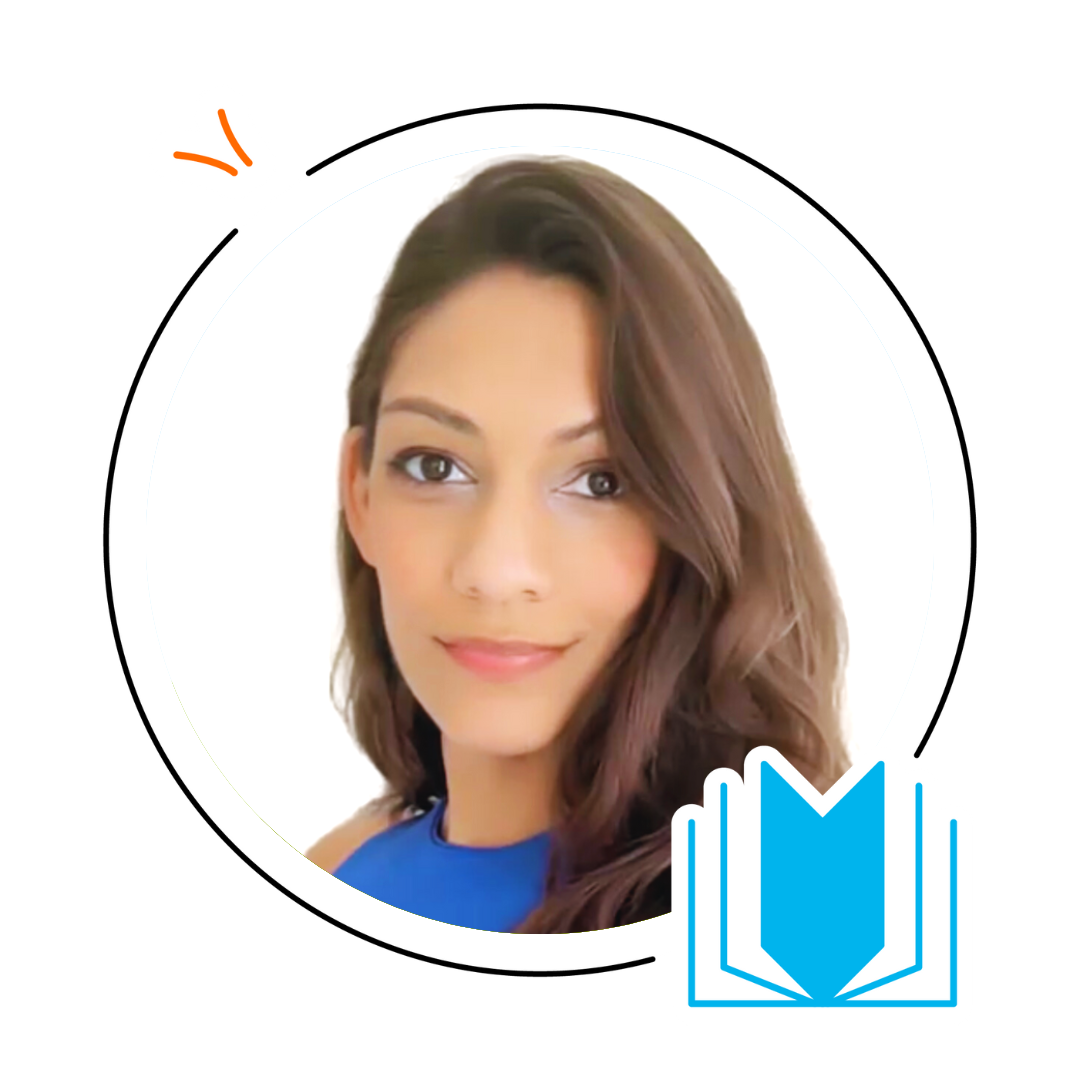
With a background as a classroom teacher, a master’s in educational neuroscience, and a doctorate in special education, Dr. Neena Saha has seen all facets of education. In her work, she noticed a gap in the research-to-practice workflow for early literacy and dedicated herself to streamlining the process of finding and disseminating the best educational research for educators. Together, Susan Lambert and Neena discuss the need for reading researchers to work together and collaborate in a more focused and concerted group effort, the challenges of implementation, and how educators can best keep up with research that often feels overwhelming.

Meet Our Guest(s):

Dr. Neena Saha

Dr. Neena Saha

Dr. Neena Saha began her career in education as a classroom teacher for children with exceptional needs. She received her master’s degree in educational neuroscience from Columbia University and her doctorate in special education from Vanderbilt University. Neena’s doctoral work on decoding resulted in a patent for a new measure of text decoding difficulty. Her educational research can be found in publications such as The Journal of Learning Disabilities, Annals of Dyslexia, and Reading and Writing: An Interdisciplinary Journal. Upon graduating, Neena founded Elemeno® to help bridge the research-to-practice gap in early literacy and started publishing a newsletter called the Reading Research recap that translates recent research in education into useful information for teachers. Both the Recap and Elemeno were acquired by MetaMetrics in 2021, and Neena joined their team to help build out their early literacy products, tools, and services. She continues to publish the Reading Research Recap, and is currently exploring better ways to translate research at scale.

Meet our host, Susan Lambert

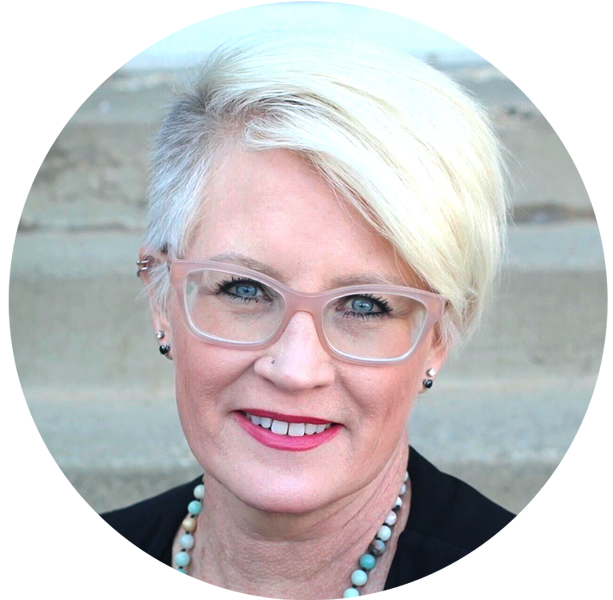
Susan Lambert is the Chief Academic Officer of Elementary Humanities at Amplify, and the host of Science of Reading: The Podcast. Her career has been focused on creating high-quality learning environments using evidence-based practices. Susan is a mom of four, a grandma of four, a world traveler, and a collector of stories.

As the host of Science of Reading: The Podcast, Susan explores the increasing body of scientific research around how reading is best taught. As a former classroom teacher, administrator, and curriculum developer, Susan is dedicated to turning theory into best practices that educators can put right to use in the classroom, and to showcasing national models of reading instruction excellence.

Retrato de una mujer caucásica sonriente con cabello rubio corto, involucrada en un podcast sobre la ciencia de la lectura, con gafas, lápiz labial rojo y un collar de perlas.

Quotes

“It's not enough to do the science. You have to make sure that it gets out there.”

—Dr. Neena Saha

“We need a more concerted effort. There needs to be a bunch of researchers that come together and, you know, kind of hash it out. It can't just be single ones here and there.”

—Dr. Neena Saha