Showing results for casting

Welcome to Amplify Science!

This site contains supporting resources designed for LAUSD Amplify Science for grades TK–8. Check back for exciting updates!

Sync Grades to Schoology – Amplify Classwork

Navigate to the Amplify Science Program Hub (video walk-through)

Share the The Caregiver Hub (Eng/Span)

ES Science Teachers

MS (6-8) Unpacking the Unit Videos

Upcoming Amplify Science PDs:

  • ES (K-5) – Refer to MyPLN: (Search Amplify 24)
  • MS (6-8) – Refer to MyPLN
  • Click here to go back to the LAUSD homepage.
A woman in glasses examining a glass of water, surrounded by illustrations of scientific icons like satellites, a rocket, a telescope, moons, and clouds on an abstract orange and black background.

Program Introduction

Learn more about Amplify Science

Click the buttons below to explore the Amplify Science California Program Guide. You can access the full digital Teacher’s Guide from the Program Guide to explore the program.

2024-2025 Session Materials

Supplemental Materials

Lesson Prep Videos

Unit 1

Grade 3 Lesson Prep Videos can be found in the Resources section in the Amplify Science- Elementary group in Schoology. Access code: W4PK-W466-63F5B

Grade 4 Lesson Prep Videos can be found in the Resources section in the Amplify Science- Elementary group in Schoology. Access code: W4PK-W466-63F5B

Grade 5 Lesson Prep Videos can be found in the Resources section in the Amplify Science- Elementary group in Schoology. Access code: W4PK-W466-63F5B

New Teachers – Start Here

To start using Amplify Science quickly in your classroom, check out the following onboarding videos. They cover what you need to know to get started fast, from unpacking materials to logging in and navigating the digital Teacher’s Guide.

The following videos give you a quick look into our Amplify Science classroom kits. For each grade level, we have a video for the first unit in the scope and sequence, and we show you how to unpack the kits for all the units.

Looking for help?

Technical, program and pedagogical support

Our technical, program and pedagogical support is available from 7 a.m. to 7 p.m. ET, Monday through Friday.

For your most urgent questions (immediate help during the school day):

  • Use our live chat within your program
  • Call (800) 823-1969
  • Email help@amplify.com

We have developed an educational support team of former teachers and administrators who provide pedagogical support for every Amplify curriculum, assessment, and intervention program. This service is completely free for all educators who are using our programs and includes:

  • Guidance for developing lesson plans and intervention plans
  • Information on where to locate standards and other planning materials
  • Recommendations and tips for day-to-day teaching with Amplify programs
  • Support with administering and interpreting assessment data and more

To reach our pedagogical team:

Collaborate on collections

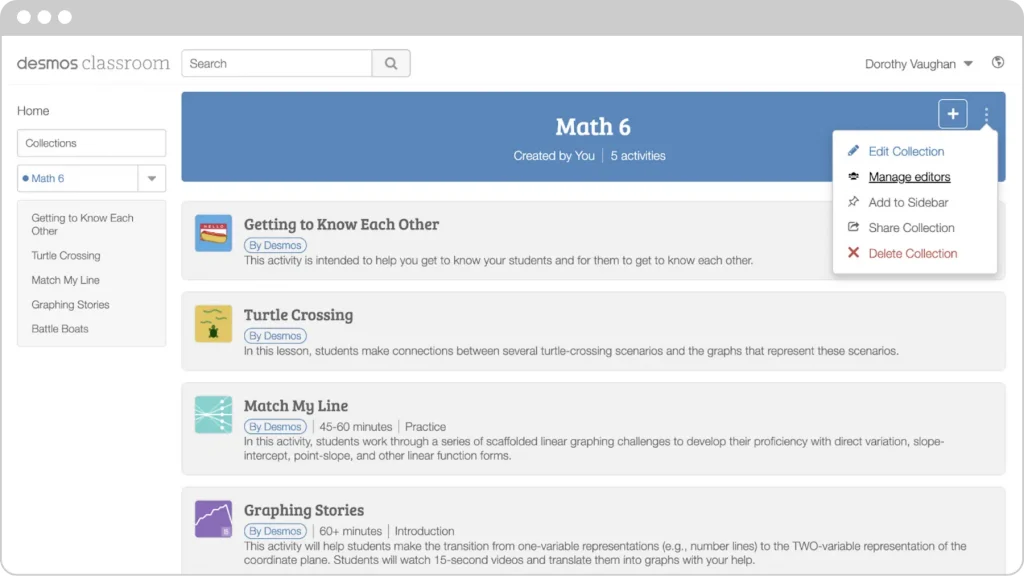
We love connection and creativity for students and teachers. Now, teachers can work together to collaboratively create collections of activities. Get your whole department involved! To get started, find the dropdown menu in your collection and select “manage editors.” Add as many editors as you want, then dive in.

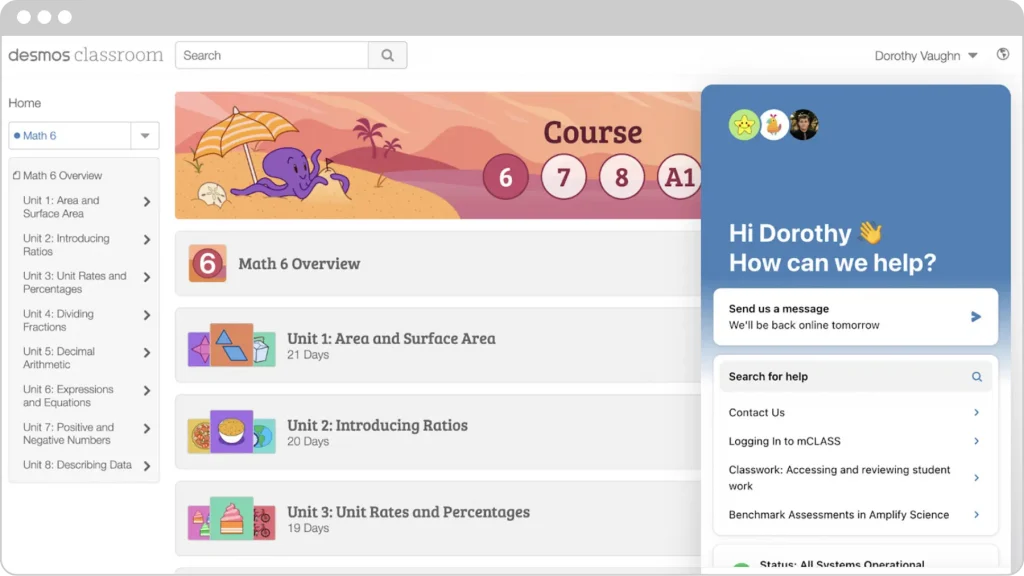
Demos Math Collaboration on collections

Algebra 1 is now available

Students can now meet the complete cast of Algebra 1 characters, from Shelley the Snail to Carlos’s fish, while deepening their understanding of algebraic relationships, functions, and statistics. 

Laptop screen displaying a Desmos Math 6–A1 game interface with a farm theme, featuring animated animals like a rabbit, penguin, snail, and frog, and a data table

Hablamos español!

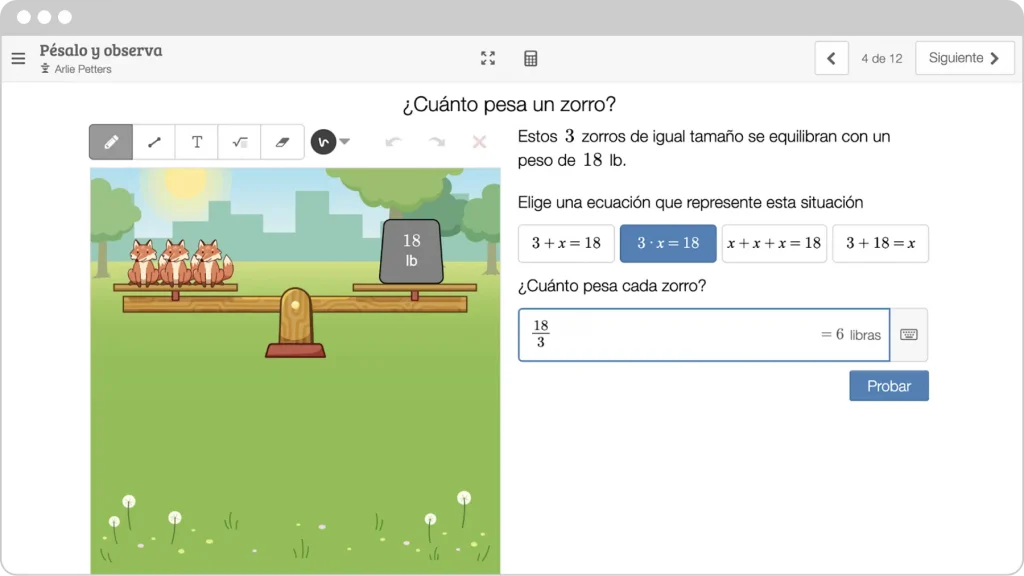
The full Desmos 6–A1 curriculum is available in Spanish. To access, click on the globe icon in the top right-hand corner and select Español (LATAM). 

Desmos Math Spanish

Beautiful new design updates

We’ve updated the appearance of our entire digital platform to provide a cohesive experience for users across Amplify and Desmos Classroom. We’re continuing to improve accessibility while considering use of color, contrast, font sizes, text spacing, and hierarchy. These exciting navigation updates will mean an updated look and feel. You’ll still be able to access every feature you know, plus more!

Desmos Math Warm up

New features you can add to your lessons

Polypad

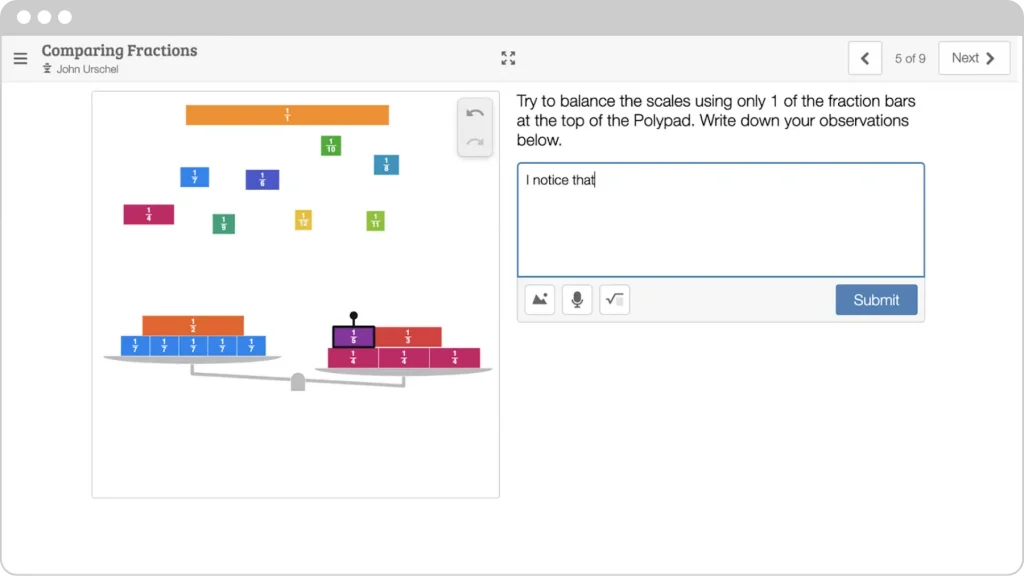
Using Polypad inside Desmos Math 6–A1 activities is easy—just add a Polypad component! You can start by creating Polypad content, or easily importing pre-made Polypad content.

Learn more in our latest Polypad Pointer video:

Desmos Math comparing fractions

Challenge Creator

Add a social and creative experience to lessons with Challenge Creator! Teachers can now design their own challenges for students to create, share, and discuss ideas in activities. Check out our activity or try building your own.

Desmos Math Class Gallery

Students can now share their thinking in more ways!

With our improved Free Response components, students can now share responses using text, uploaded images, or recorded audio.

Desmos Math lesson synthesis

Live chat support

If you need help, just click on the Amplify chat icon in the button right-hand corner of your screen. You can ask a question or share your feedback. Our team is here to help you!

Desmos Math live chat support

Welcome, K–8 Program 2 reviewers!

We’re honored to introduce you to Amplify California Language Arts. We’re confident you’ll find this comprehensive program to be a powerful tool for bringing the vision of the California ELA/ELD Framework to life in classrooms across the state.

Please start with the video on the right to learn how to navigate the program and access key features referenced within our submission. Below you’ll find additional resources to support your review.

Your review samples

We’re excited for you to begin your review of Amplify Core Knowledge Language Arts (CKLA) California and Amplify ELA California, Language Studio California for grades K–8. Physical and digital review materials will vary by grade level.

Reviewer Binders (K–8)

Your physical samples should have arrived in grade-specific boxes with three Reviewer Binders.

  • The first binder will contain logistical program review information and the printed Evaluation Criteria Map.
  • The second binder will contain the printed Standards Maps for grades K–4.
  • The third binder will contain the printed Standards Maps for grades 5–8.

Physical samples (K–5)

You can expect to receive 15 boxes of physical materials for your review. As you begin the process of organizing your materials, please refer to the inventory checklist found inside each box as well as within your Reviewer Binder. Please note you will not receive any physical samples for grades 6–8 ELA or Language Studio for grades K-8. Your review of the program for grades 6–8 ELA and Language Studio for grades K-8 will be entirely digital.

Digital samples

In order to access your digital samples, you’ll need to log in to our platform using your unique login credentials found on a Digital Review Credential flyer inside of your Reviewer Binder. Once you have located the flyer:

  • Click the orange button below to access the platform.
  • Click “Log in with Amplify.”
  • Enter the username and password provided on your Digital Review Credential flyer.

Navigation tips

Before you get started, please review these important functionality notes:

Criteria Map and Standards Maps must be opened on Microsoft Word on your desktop to function as intended. If you open the documents without Microsoft Word on your desktop, citations will be cut off at the bottom of most tables within the document.

Many of our citations are deep-links to PDFs, meaning they will take you to the right page or the first page in the sequence for the citation in question. To ensure this functionality works, please disable any PDF-viewing extensions or plug-ins such as Adobe Acrobat Pro Browser Extension.

[Reviewer program navigation video] Grades K–5

[Reviewer program navigation video] Grades 6–8

Click here for additional information on navigating the digital materials for grades 6–8.

Category 1: English Language Arts (ELA) and English Language Development (ELD) Content/Alignment to Standards

Evaluation Criteria Map

Linked below is the Evaluation Criteria Map for grades K–8. Please note that you will need to be logged into the digital platform to access the links in the Evaluation Criteria Map.

ELA Standards Maps

The links below provide the Standards Maps for Amplify California Language Arts for each grade level. Please note that you will need to be logged into the digital platform to access the links in the Standards Maps.

ELD Standards Maps

Category 2: Program Organization

The Amplify California Language Arts Program 2 submission includes Amplify CKLA California for Grades K–5, Amplify ELA California for Grades 6–8, and Amplify Language Studio California for Grades K–8. This comprehensive curriculum provides a full year of evidence-based instruction for each grade level, with both integrated and designated English Language Development instruction designed to give English learners the tools to thrive.

Program structure

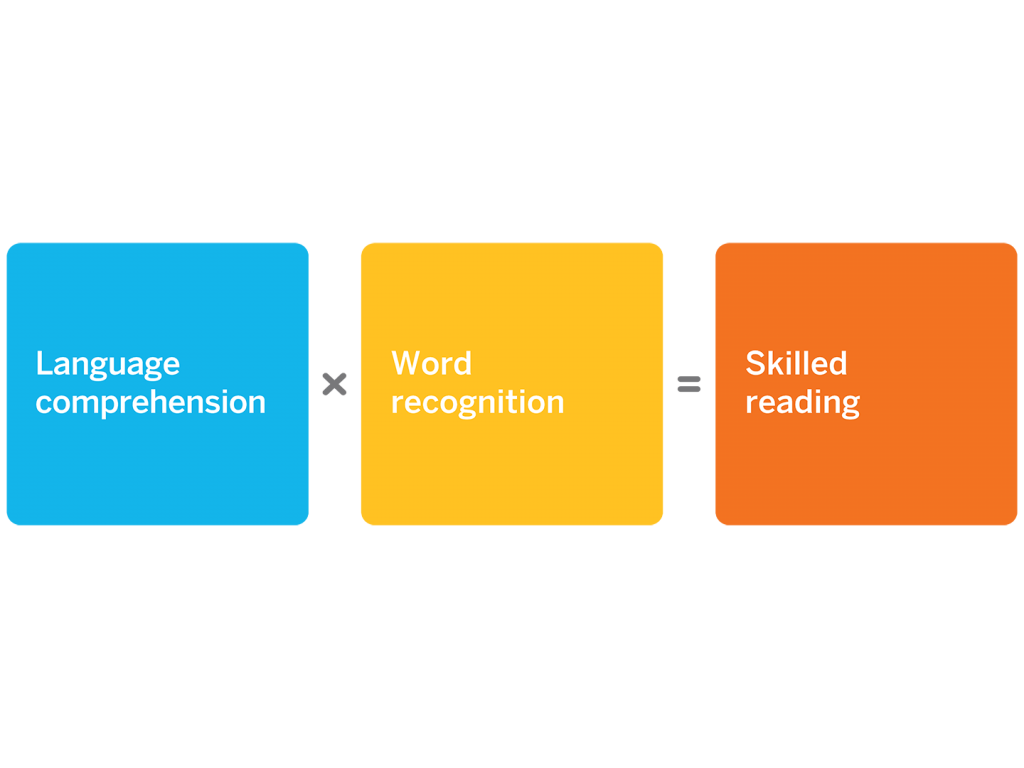
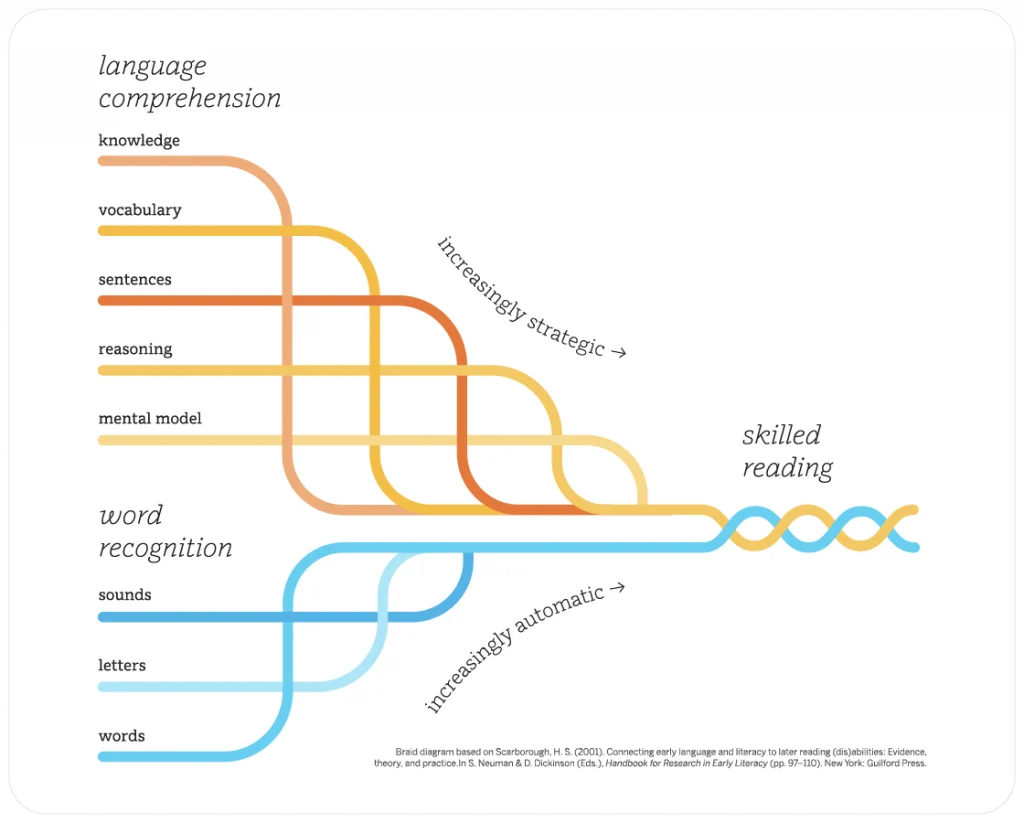
Amplify’s California Language Arts programs are built on what the research shows: Strong readers need both word recognition and language comprehension. Our comprehensive curriculum suite follows the Simple View of Reading and The Reading Rope–bringing together foundational skills and knowledge building to deliver instruction grounded in the Science of Reading.

Flowchart illustrating skilled reading as the product of language comprehension and word recognition, grounded in the science of reading.
Diagram illustrating the interplay between language comprehension and word recognition in reading, as seen in early literacy stages. It highlights pathways through knowledge, vocabulary, and sentence understanding, reflecting principles from the CKLA reading program.

Each lesson follows a predictable structure with clearly marked components, beginning with warm-up routines, progressing through explicit instruction with guided practice, and concluding with independent application activities. The program provides detailed teacher language, including question stems and discussion prompts, ensuring clear and consistent delivery of instruction.

[Reviewer highlight video] Program organization for Category 2

[Reviewer highlight video] Program structure for grades K–2

[Reviewer highlight video] Program structure for grades 3–5

[Reviewer highlight video] Program structure for grades 6–8

Amplify CKLA California empowers teachers to deliver effective instruction and keeps students engaged with with the following resources:

  • Teacher Guides
  • Assessment Guides
  • Authentic texts and trade books
  • Knowledge Image Cards
  • Knowledge Flip Books
  • Remediation and intervention resources
  • Decodable readers
  • Student Readers and novels
  • Student Activity Books
  • Dedicated ELD support with Language Studio California
  • Poet’s Journals
  • eReaders
  • Sound Library featuring articulation videos and songs
  • Instructional routine modeling videos
  • Assignable Practice Games
  • On-demand professional development

Amplify ELA California students stay engaged with the following resources:

  • Teacher Guides that include:
    • Detailed lesson plans
    • Standards alignment and exit tickets
    • Real-time differentiation strategies
    • Robust reporting
  • Student Editions that include:
    • High-quality narrative and informational texts
    • Videos, audio supports, and digital experiences that capture their attention
    • Personal Writing Journal to keep all student writing in one place
  • Dedicated ELD support with Language Studio California
  • Trade Books

Core literacy philosophy

Support every learner. Meet all learning needs with a Multi-Tiered System of Supports (MTSS) that brings together universal screening, scaffolded core instruction, support for English learners, and data-driven intervention to ensure every student gets what they need to succeed.

Provide intentional ELD support. Honor students’ linguistic assets while building academic English through both integrated and designated instruction.

Deliver consistent foundational skills instruction. Daily explicit, systematic skills instruction in grades K–2, with targeted yet flexible support for students still building decoding confidence in grades 3–8, ensures mastery of essential reading foundations.

Build lasting knowledge across all grades. Through coherently sequenced, content-rich instruction that revisits key vocabulary and concepts with increasing complexity, students build meaningful connections that deepen their vocabulary and reading comprehension.

Strengthen reading through writing at every level. Regular writing instruction grounded in the Science of Writing supports reading comprehension, improves sentence-level writing, and provides the foundation for high-quality composition. As students progress through the upper grades, they engage in increasingly complex analytical tasks—synthesizing ideas, drawing generalizations, and interpreting multiple textual layers through both focused quick-writes and comprehensive essays. 

Foster oral language development. Structured opportunities for academic conversation and evidence-based dialogue build students’ ability to express complex ideas with precision and allow them to participate confidently in classroom discussions.

Measure growth with comprehensive assessments. Assessments range from in-the-moment checks for understanding to summative assessments that measure progress toward skills mastery and standards proficiency, providing the data needed to drive targeted instruction.

Scope and sequence

Below you can view the scope and sequence for each grade level. 

Routines

Amplify CKLA California and Amplify ELA California include several structured instructional routines that provide predictable patterns for both teachers and students:

Discussion and collaboration routines:

  • Turn and Talk: Partners discuss text-specific content using sentence starters and frames
  • Think-Pair-Share: Students engage in individual thinking, partner discussion, and whole-class sharing
  • Partner reading: Students sit shoulder-to-shoulder, taking turns reading and listening

Foundational Skills routines:

  • Sound-spelling review: Warm-up activities that reinforce phonics patterns
  • Oral blending warm-ups: Teacher-guided practice progressing to independent application
  • Finger-tapping: Techniques for blending sounds
  • Chaining activities: Students manipulate letters to transform one word into another
  • Word Work: Daily short activities focused on domain-specific and academic vocabulary

Knowledge-Building Routines:

  • Teacher modeling: Demonstration of proper intonation, expression, and pacing
  • Choral reading: Whole-class reading practice
  • Partner reading: Paired fluency practice

Close reading routines

The program includes carefully structured close reading activities that guide students through multiple encounters with complex texts. These routines help students develop deeper comprehension through systematic analysis and discussion.

Each routine includes comprehensive instructional guides with clear-cut directions for implementation, straightforward explanations of concepts, and suggestions for discussion.

Designated English Language Development materials

Language Studio California is a K–8 content-based companion for English language learners. Built on Amplify CKLA California’s and Amplify ELA California’s carefully sequenced Knowledge Domains and units, it combines engaging content knowledge with targeted supports and research-based strategies to help students move swiftly toward language proficiency. This program includes:

  • Real-world content to provide authentic opportunities to practice reading, writing, speaking, and listening.
  • Scaffolding strategies and differentiated instruction to offer targeted support along with five English proficiency levels.
  • Progress-monitoring tools to help teachers provide consistent and effective support.
  • Teacher Guides that:
    • Provide impactful progress monitoring tools including formative and summative assessments and Language Proficiency Assessment rubrics.
    • Offer varied differentiation strategies including Support, Challenge, and Access Supports in each lesson segment.
    • Are organized into thoughtful lesson segments—Talk Time, Building Background, On Stage and more—that make learning objectives concrete.
  • Activities that:
    • Expand on domain knowledge from core content and read-alouds and prompt collaborative conversation to practice oral fluency.
    • Support hands-on language activities to promote authentic interaction in the classroom.
    • Help students bridge experiences and knowledge with images, vocabulary activities, graphic organizers, anticipation guides, writing space, and more.

Category 3: Assessments

Systematic MTSS alignment

In alignment with the additional 2025 Guidance 3.1.a, the assessment systems align with MTSS tiers, including universal screening, diagnostic assessments for students demonstrating a need for additional support, and progress monitoring tools that complement the California’s required universal screening schedule per SB 114.

Tier 1:
Universal/ differentiated support
Tier 2: 
Supplemental/ targeted support
Tier 3: 
Intensified/ intensive support
Core instruction assessments


Frequency of administration
Amplify CKLA California, Amplify Caminos California, Amplify ELA California assessments

Daily, Weekly, Monthly
Amplify CKLA California, Amplify Caminos California, Amplify ELA California assessments

Daily, Weekly, Monthly
Amplify CKLA California, Amplify Caminos California, Amplify ELA California assessments

Daily, Weekly, Monthly
Universal screening assessments

Frequency of administration
mCLASS DIBELS and Lectura


3 times per year – BOY, MOY, EOY
mCLASS DIBELS and Lectura


3 times per year – BOY, MOY, EOY
mCLASS DIBELS and Lectura


3 times per year – BOY, MOY, EOY
Formal progress monitoring assessments

Frequency of administration
mCLASS DIBELS and Lectura


3 times per year – BOY, MOY, EOY
mCLASS DIBELS and Lectura


Monthly
mCLASS DIBELS and Lectura


Bi-weekly
Informal progress monitoring assessments


Frequency of administration
Amplify CKLA California, Amplify Caminos California, Amplify ELA California core assessments

Daily
Intervention Toolkit progress monitoring assessments


When linked to a lesson in the toolkit
Intervention Toolkit progress monitoring assessments


When linked to a lesson in the toolkit
Diagnostic assessment


Frequency of administration
Amplify skill diagnostic assessment

Amplify Spanish skill diagnostic assessment

Optional after universal screening assessment is administered
Amplify skill diagnostic assessment

Amplify Spanish skill diagnostic assessment

After universal screening assessment is administered

Universal assessment system

Amplify’s mCLASS® DIBELS® 8th Edition and mCLASS Lectura are universal and dyslexia screening assessments that should be administered three times per year (BOY, MOY and EOY) to all students. The assessments evaluate student literacy risk, determine progress toward grade-level goals, and indicate the level of instructional  support a student may need. Beginning-of-year screenings require adequate instructional time before administration, particularly in grades K–1, while mid-year and end-of-year assessments evaluate instructional effectiveness and guide tier placement adjustments. These screenings also identify students at risk for dyslexia. Universal screening provides essential data for targeting instruction and measuring instructional system effectiveness.

Core instruction assessments

Amplify CKLA California and Amplify ELA California provide a comprehensive suite of assessments for Grades K–8 that range from low-stakes, informal formative assessments to more formal summative assessments. These assessments incorporate a variety of methods and question types, including multiple-choice questions, open-ended questions, and oral and written responses.

Formative assessments:

  • Checks for Understanding: Incorporated into each lesson segment throughout daily instruction. Quick pulse-checks that provide immediate feedback during lesson delivery (grades K–5). 
  • Daily formative assessments: Highlighted moments within each lesson for teachers to plan to track mastery of Primary Focus objectives and standards of each lesson to get a clear snapshot of individual and whole-class progress (grades K–5). 
  • Activity pages: Completed as part of lessons and can be used to assess lesson content understanding through various formats (grades K–5).
  • Exit Tickets: Located at the end of lessons, these provide a quick gauge of students’ ability to meet the lesson’s focus standards (grades 6–8).  
  • Writing Prompts: Prompts integrated throughout lessons during writing activities that provide skill snapshots within lessons and tracks patterns of skill development over time (grades 6–8).
  • Independent reading activities (Solos): At the end of every lesson, students complete an independent reading activity (“solo”) with reading questions that are scored to measure comprehension (grades 6–8).

Summative assessments:

  • Skills end-of-unit assessments (grades K–2) 
  • Knowledge end-of-domain assessments (grades K–2) 
  • End-of-unit assessments (grades 3–5) 
  • Unit essays: A culminating end-of-unit set of lessons that guide students through crafting an essay with a rubric to score mastery of writing skills (grades 6–8)
  • Unit Reading Assessments: Auto-scored responses and two constructed response items evaluate comprehension, content understanding, and reading skills using the passages students read during the unit (grades 6–8)

Performance Assessments

Student Performance Assessments are multi-day assessments administered in Grades K-5 at the beginning, middle, and end of year to help teachers gauge student mastery of grade-level Core content. These assessments provide critical data to help teachers set targeted instructional goals and monitor individual and class-wide progress towards core objectives.

Progress monitoring

Amplify’s mCLASS® DIBELS® 8th Edition and mCLASS Lectura provide formal progress monitoring in the discrete skills that are indicative of reading growth and predictive of overall success to provide the most instructionally meaningful information to teachers.

Informal progress monitoring tools can be found within the Intervention Toolkit, including materials for teachers to record, track, and evaluate student progress.

Diagnostic assessment

Interventions within Amplify’s literacy programs are informed by a skill diagnostic assessment that provides detailed data on foundational literacy skill deficits. The Amplify Skill Diagnostic Assessment and Amplify Spanish Skill Diagnostic assessment serve as critical tools in this process, administered specifically to students identified as at risk for reading difficulty through universal screening assessments—particularly those demonstrating mCLASS DIBELS 8th Edition or mCLASS Lectura composite scores in the Well Below or Below Benchmark ranges. These diagnostic assessments provide teachers with the precise skills to begin intervention and remediation.

Category 4: Universal Access

Amplify CKLA California and Amplify ELA California were built on the principles of Universal Design for Learning (UDL) and reviewed by CAST, a nonprofit education research and development organization. The program is developed using the Universal Design for Learning framework to proactively ensure that all learners can access and participate in meaningful, challenging learning opportunities.

Universal Design for Learning

The programs incorporate opportunities for engagement, representation, action, and expression based on the guidelines of Universal Design for Learning.

  • Multiple Means of Engagement: The programs incorporate interesting and motivating ways for students to interact with information and content. In Amplify CKLA California, the Universal Access section in the introduction of each lesson provides specific lesson-level options based on the needs of individual classrooms and students. Scaffolding for students with various levels of need is incorporated into the design of each lesson.
  • Multiple Means of Representation: The programs provide multiple means of presenting content to maximize student understanding. This includes digital component files that allow for a range of presentations of images and text to support learning. Amplify provides access to universal supports such as point-of-use audio for all core texts, embedded definitions for critical vocabulary, and glossaries in multiple languages. Amplify CKLA California includes clarification on language found throughout the program, with sidebars that include support on transition words and syntax, and illustrations to help students understand the concepts they are learning.
  • Multiple Means of Action and Expression: The programs include a range of methods for all students, including English Learners, to navigate and demonstrate learning. This includes physical actions, a range of methods for response, appropriate tools for composition, and varied scaffolding. In Amplify ELA California, lessons provide multiple ways for students to interact with text, allowing their brains to process the language through distinct pathways. Activities harness multiple learning modes, using media tools, digital apps, and a variety of visual and physical experiences to strategically support and enhance student learning.
  • Accessibility: Universal access features include visual aids, enlarged materials, physical objects, and multiple learning modalities through activities like Push & Say and Wiggle Cards. The Universal Access section in the introduction of each lesson provides specific lesson-level options based on the needs of individual classrooms and students.

Embedded differentiation

Amplify CKLA California and Amplify ELA California provide built-in differentiation strategies in every lesson for all students.

Throughout the Teacher Guides, point-of-use Differentiation icons provide targeted instructional strategies and supports. These icons indicate specific guidance for advanced learners, students who need additional support, and English learners, allowing teachers to easily identify and implement appropriate scaffolds and extensions during instruction. In addition, teachers are provided with recommendations for resources to use with each group of students.

  • Pre-teaching supports include mini-lessons on:
    • Core vocabulary words
    • Core Connections
    • Essential Background Information or Terms
    • What Have We Already Learned/What Do We Already Know?
  • Differentiated Support for Core Instruction tables, located in the overview of each K–2 Skills Teacher Guide, provide a list of specific opportunities for reteaching and additional support in each lesson based on skill.
  • Support and Challenge Sidebars in lesson margins offer educators immediate guidance in implementing point-of-use differentiation techniques.
  • Flexible Grouping within lessons provides opportunities for teachers to facilitate small groups, partners, or individualized support based on students’ needs. In the Skills Strand, teachers receive specific guidance for differentiated small-group instruction, with targeted support and activities outlined for both Group 1 (students needing additional support) and Group 2 (on-level students) based on data. 
  • Amplify ELA California provides point-of-use supports embedded within key core lesson activities with six levels of differentiation. The goal of these supports is to fully enable access to grade-level content for all students, including students with disabilities, English learners, and students ready for an additional level of challenge.
  • The Universal Access section of Advance Preparation in each lesson includes varied strategies to ensure all students can access and engage in each lesson.
  • Frequent use of graphic organizers and visual supports in lessons provide opportunities for differentiation based on need. The program also includes a variety of technological supports, such as eReaders with audio.
  • Extension opportunities are suggested throughout lessons, often embedded in writing tasks, which include prompts to use more complex and descriptive vocabulary, figurative language,  multi-clause and complex sentences, and  informational text characteristics.

Assessment-Driven MTSS resources

  • The K–8 Intervention Toolkit is available online and provides easy-to-use resources that assist teachers in filling gaps in students’ reading skills, with activities to support print concepts, phonological awareness, phonics, fluency, and other key skills
  • Fluency Packets (Grades 2–5)
  • Foundational Skills Intervention Program for Grades 3–8 support students who would benefit from direct and explicit intervention instruction in the full continuum of foundational skills in the upper grades
  • Flexible Instructional Time including:
    • Pausing Points built into the curriculum that provide teachers with dedicated time to address specific student needs through targeted reteaching, remediation, practice, and extension activities 
    • Pausing Point activities designed to support English learners’ competence and confidence through differentiated whole-group, small-group, or individual instruction
  • Boost Reading is a K–5 student-led digital intervention program. Boost Reading follows Amplify CKLA California’s scope and sequence to reinforce the same foundational skills taught in core instruction. It integrates easily into daily routines, while the robust data provided by mCLASS® DIBELS® 8th Edition offers a detailed view of how students progress across all instructional tiers.

Category 5: Instructional Planning and Teacher Support

Amplify CKLA California and Amplify ELA California teachers are empowered to deliver effective instruction with various print and digital resources. The program provides comprehensive planning and support materials designed to help teachers prepare for and execute lessons effectively and fulfill the requirements of Category 5.

Implementation supports across K–8

Planning and preparation resources

  • Unit Overviews that provide important background and context for the texts students will read, including highlighted elements within the text and guidance for how students will work with those elements
  • Sub-unit Overviews (Grades 6–8) that provide an overview of Lesson Objectives and reading and writing assignments, as well as a list of any projections, multimedia, or digital apps that can be projected from the teacher’s included digital license
  • Lesson-by-lesson preparation checklists (Grades 6–8) accompanying each Sub-unit Overview
  • Lesson Briefs for each individual lesson providing important background and context
  • Content knowledge materials regarding topics that students will examine

Point-of-use instructional guidance

  • Teacher Editions that feature insets of the same text and activity instructions as the corresponding Student Edition, wrapping teacher instruction around these materials
  • Activity guidance at point of use
  • Lesson standards clearly called out
  • Discussion suggestions embedded in lessons
  • Differentiation tips at point of use
  • Detailed Instructional Guides in each activity that include sequencing and grouping suggestions, tips for facilitating discussion, possible student responses and exemplars
  • Student Supports in all core lessons that provide teachers with targeted supports in daily core instruction, addressing which might serve the student best in the moment—support, strengthen, stretch—with additional call-outs for newcomers

Multimedia and digital support

  • Teacher tip videos provide modeling and guidance for implementing key foundational skills routines within the program
  • Digital platform access where teachers can access printable PDFs of differentiated support materials for English learners and students struggling with reading, including translated Unit Background and Context documents and Text Previews
  • Teacher dashboard and reporting tools (Grade 6–8) provide real-time visibility into student progress and work for immediate instructional response

Caregiver supports

Communication and overview resources

  • Caregiver Hub available in English and Spanish that provides an overview of the curriculum
  • Caregiver Letters for each K–2 Knowledge Domain and unit in Grades 3–5 that provide an overview of the content, the skills students learn, as well as practical methods that continue the learning and knowledge building at home
  • Unit-specific Caregiver Letters (Grades 6–8) that provide detailed information regarding what students will read and learn in each unit, including conversation starters that allow caregivers to ask questions and discuss specific aspects of a unit with their student
  • Welcome letters that explain the assessment and placement process while inviting parent involvement and offering support
  • Editable Home-School Communication letters available in English and Spanish
  • Editable Progress Reports for teachers to update parents and guardians on what their child is learning

Content and learning support materials

  • Unit Background and Context documents that provide an introduction and overview to the unit’s topic and themes, available in English and Spanish
  • Text Previews that provide a brief introduction to formative, independent reading assignments (called Solos in Grades 6–8), available in English and Spanish
  • Unit Overview and Support documents (Grades 6–8) designed for caregivers that provide information about important questions, assignments, and key aspects of the unit texts, available in English and Spanish
  • Conversation starters included in Knowledge Strand Caregiver Letters to discuss domain topics at home

Home practice and extension activities

  • Take-Home pages in the Skills Strand that include copies of decodable passages, enabling students to share their reading progress with families and continue practicing their skills outside of school
  • Take-Home Letters in the Skills Strand that provide specific guidance for parents to support skills practice at home, such as sound-sorting activities, with detailed instructions and materials for home practice activities
  • Take-Home pages in the Knowledge Strand that provide suggested activities families can do together to reinforce and extend learning beyond the classroom
  • Games and activities on take-home pages that extend classroom instruction, including all the materials and instruction necessary to help families assist students in a fun and engaging way
  • Digital access to decodable texts through the Amplify Caregiver Hub, allowing students to practice their reading skills both in class and at home
  • Weekly spelling lists and directions to decoding activities that can be practiced at home

Welcome, K–8 Program 1 reviewers!

We’re honored to introduce you to Amplify California Language Arts. We’re confident you’ll find this comprehensive program to be a powerful tool for bringing the vision of the California ELA Framework to life in classrooms across the state.

Please start with the video on the right to learn how to navigate the program and access key features referenced within our submission. Below you’ll find additional resources to support your review.

Your review samples

We’re excited for you to begin your review of Amplify Core Knowledge Language Arts (CKLA) California and Amplify ELA California. Physical and digital review materials will vary by grade level.

Reviewer Binders (K–8)

Your physical samples should have arrived in grade-specific boxes with three Reviewer Binders.

  • The first binder will contain logistical program review information and the printed Evaluation Criteria Map.
  • The second binder will contain the printed Standards Maps for grades K–4.
  • The third binder will contain the printed Standards Maps for grades 5–8.

Physical samples (K–5)

You can expect to receive 15 boxes of physical materials for your review. As you begin the process of organizing your materials, please refer to the inventory checklist found inside each box as well as within your Reviewer Binder. Please note you will not receive any physical samples for grades 6–8. Your review of the program for grades 6–8 will be entirely digital.

Digital samples (K–8)

In order to access your digital samples, you’ll need to log in to our platform using your unique login credentials found on a Digital Review Credential flyer inside of your Reviewer Binder. Once you have located the flyer:

  • Click the orange button below to access the platform.
  • Click “Log in with Amplify.”
  • Enter the username and password provided on your Digital Review Credential flyer.

Navigation tips

Before you get started, please review these important functionality notes:

Criteria Map and Standards Maps must be opened on Microsoft Word on your desktop to function as intended. If you open the documents without Microsoft Word on your desktop, citations will be cut off at the bottom of most tables within the document.

Many of our citations are deep-links to PDFs, meaning they will take you to the right page or the first page in the sequence for the citation in question. To ensure this functionality works, please disable any PDF-viewing extensions or plug-ins such as Adobe Acrobat Pro Browser Extension.

[Reviewer program navigation video] Grades K–5

[Reviewer program navigation video] Grades 6–8

Click here for additional information on navigating the digital materials for grades 6–8.

Category 1: English Language Arts (ELA) and English Language Development (ELD) Content/Alignment to Standards

Evaluation Criteria Map

Linked below is the Evaluation Criteria Map for grades K–8. Please note that you will need to be logged into the digital platform to access the links in the Evaluation Criteria Map.

ELA Standards Maps

The links below provide the Standards Maps for Amplify California Core Language Arts for each grade level. Please note that you will need to be logged into the digital platform to access the links in the Standards Maps.

Category 2: Program Organization

The Amplify California Language Arts Program 1 submission includes Amplify CKLA California for Grades K–5 and Amplify ELA California for Grades 6–8. This comprehensive curriculum provides a full year of evidence-based instruction for each grade level, transitioning from foundational literacy to advanced text analysis.

Program structure

Amplify’s California Language Arts programs are built on what the research shows: Strong readers need both word recognition and language comprehension. Our comprehensive curriculum suite follows the Simple View of Reading and The Reading Rope–bringing together foundational skills and knowledge building to deliver instruction grounded in evidence-based literacy practices.

Flowchart illustrating skilled reading as the product of language comprehension and word recognition, grounded in the science of reading.
Diagram illustrating the interplay between language comprehension and word recognition in reading, as seen in early literacy stages. It highlights pathways through knowledge, vocabulary, and sentence understanding, reflecting principles from the CKLA reading program.

Each lesson follows a predictable structure with clearly marked components, beginning with warm-up routines, progressing through explicit instruction with guided practice, and concluding with independent application activities. The program provides detailed teacher language, including question stems and discussion prompts, ensuring clear and consistent delivery of instruction.

[Reviewer highlight video] Program organization for Category 2

[Reviewer highlight video] Program structure for grades K–2

[Reviewer highlight video] Program structure for grades 3–5

[Reviewer highlight video] Program structure for grades 6–8

Amplify CKLA California empowers teachers to deliver effective instruction and keeps students engaged with the following resources:

  • Teacher Guides
  • Assessment Guides
  • Authentic texts and trade books
  • Knowledge Image Cards
  • Knowledge Flip Books
  • Remediation and intervention resources
  • Decodable readers
  • Student Readers and novels
  • Student Activity Books
  • Poet’s Journals
  • eReaders
  • Sound Library featuring articulation videos and songs
  • Instructional routine modeling videos
  • Assignable Practice Games
  • On-demand professional development

Amplify ELA California students stay engaged with the following resources:

  • Teacher Guides that include:
    • Detailed lesson plans
    • Standards alignment and exit tickets
    • Real-time differentiation strategies
    • Robust reporting
  • Student Editions that include:
    • High-quality narrative and informational texts
    • Videos, audio supports, and digital experiences that capture their attention
    • Personal Writing Journal to keep all student writing in one place
  • Trade Books

Core literacy philosophy

Support every learner. Meet all learning needs with a Multi-Tiered System of Supports (MTSS) that brings together universal screening, scaffolded core instruction, support for English learners, and data-driven intervention to ensure every student gets what they need to succeed.

Deliver consistent foundational skills instruction. Daily explicit, systematic skills instruction in grades K–2, with targeted yet flexible support for students still building decoding confidence in grades 3–8, ensures mastery of essential reading foundations.

Build lasting knowledge across all grades. Through coherently sequenced, content-rich instruction that revisits key vocabulary and concepts with increasing complexity, students build meaningful connections that deepen their vocabulary and reading comprehension.

Strengthen reading through writing at every level. Regular writing instruction grounded in the Science of Writing supports reading comprehension, improves sentence-level writing, and provides the foundation for high-quality composition. As students progress through the upper grades, they engage in increasingly complex analytical tasks—synthesizing ideas, drawing generalizations, and interpreting multiple textual layers through both focused quick-writes and comprehensive essays. 

Foster oral language development. Structured opportunities for academic conversation and evidence-based dialogue build students’ ability to express complex ideas with precision and allow them to participate confidently in classroom discussions.

Measure growth with comprehensive assessments. Assessments range from in-the-moment checks for understanding to summative assessments that measure progress toward skills mastery and standards proficiency, providing the data needed to drive targeted instruction.

Scope and sequence

Below you can view the scope and sequence for each grade level. 

Routines

Amplify CKLA California and Amplify ELA California include several structured instructional routines that provide predictable patterns for both teachers and students:

Discussion and collaboration routines:

  • Turn and Talk: Partners discuss text-specific content using sentence starters and frames
  • Think-Pair-Share: Students engage in individual thinking, partner discussion, and whole-class sharing
  • Partner reading: Students sit shoulder-to-shoulder, taking turns reading and listening

Foundational Skills routines:

  • Sound-spelling review: Warm-up activities that reinforce phonics patterns
  • Oral blending warm-ups: Teacher-guided practice progressing to independent application
  • Finger tapping: Techniques for blending sounds
  • Chaining activities: Students manipulate letters to transform one word into another
  • Word Work: Daily short activities focused on domain-specific and academic vocabulary

Knowledge-building routines:

  • Vocabulary preview: Introduction of new words before reading
  • Read-aloud procedures: Established routines for introducing and discussing complex texts
  • Text discussions: Structured comprehension conversations with scaffolded questioning

Fluency routines:

  • Teacher modeling: Demonstration of proper intonation, expression, and pacing
  • Choral reading: Whole-class reading practice
  • Partner reading: Paired fluency practice

Close reading routines

The program includes carefully structured close reading activities that guide students through multiple encounters with complex texts. These routines help students develop deeper comprehension through systematic analysis and discussion.

Each routine includes comprehensive instructional guides with clear-cut directions for implementation, straightforward explanations of concepts, and suggestions for discussion.

Category 3: Assessments

Systematic MTSS alignment

In alignment with the additional 2025 Guidance 3.1.a, the assessment systems align with MTSS tiers, including universal screening, diagnostic assessments for students demonstrating a need for additional support, and progress monitoring tools that complement California’s required universal screening schedule per SB 114.

Tier 1:
Universal/ differentiated support
Tier 2: 
Supplemental/ targeted support
Tier 3: 
Intensified/ intensive support
Core instruction assessments


Frequency of administration
Amplify CKLA California, Amplify ELA California assessments


Daily, Weekly, Monthly
Amplify CKLA California, Amplify ELA California assessments


Daily, Weekly, Monthly
Amplify CKLA California, Amplify ELA California assessments


Daily, Weekly, Monthly
Universal screening assessments

Frequency of administration
mCLASS DIBELS and mCLASS Lectura

3 times per year – BOY, MOY, EOY
mCLASS DIBELS and mCLASS Lectura

3 times per year – BOY, MOY, EOY
mCLASS DIBELS and mCLASS Lectura

3 times per year – BOY, MOY, EOY
Formal progress monitoring assessments


Frequency of administration
mCLASS DIBELS and mCLASS Lectura


3 times per year – BOY, MOY, EOY
mCLASS DIBELS and mCLASS Lectura


Monthly
mCLASS DIBELS and mCLASS Lectura


Bi-weekly
Informal progress monitoring assessments


Frequency of administration
Amplify CKLA California, Amplify ELA California core assessments


Daily
Intervention Toolkit progress monitoring assessments


When linked to a lesson in the toolkit
Intervention Toolkit progress monitoring assessments


When linked to a lesson in the toolkit
Diagnostic assessment


Frequency of administration
Amplify skill diagnostic assessment


Optional after universal screening assessment is administered
Amplify skill diagnostic assessment


After universal screening assessment is administered

Universal assessment system

Amplify’s mCLASS® DIBELS® 8th Edition (K–8) and mCLASS Lectura (K–6) are universal and dyslexia screening assessments that should be administered three times per year (BOY, MOY and EOY) to all students. The assessments evaluate student literacy risk, determine progress toward grade-level goals, and indicate the level of instructional  support a student may need. Beginning-of-year screenings require adequate instructional time before administration, particularly in grades K–1, while mid-year and end-of-year assessments evaluate instructional effectiveness and guide tier placement adjustments. These screenings also identify students at risk for dyslexia. Universal screening provides essential data for targeting instruction and measuring instructional system effectiveness.

Core instruction assessments

Amplify CKLA California and Amplify ELA California provide a comprehensive suite of assessments for Grades K–8 that range from low-stakes, informal formative assessments to more formal summative assessments. These assessments incorporate a variety of methods and question types, including multiple-choice questions, open-ended questions, and oral and written responses.

Formative assessments:

  • Checks for Understanding: Incorporated into each lesson segment throughout daily instruction. Quick pulse-checks that provide immediate feedback during lesson delivery (grades K–5). 
  • Daily formative assessments: Highlighted moments within each lesson for teachers to plan to track mastery of Primary Focus objectives and standards of each lesson to get a clear snapshot of individual and whole-class progress (grades K–5). 
  • Activity pages: Completed as part of lessons and can be used to assess lesson content understanding through various formats (grades K–5).
  • Exit Tickets: Located at the end of lessons, these provide a quick gauge of students’ ability to meet the lesson’s focus standards (grades 6–8).  
  • Writing Prompts: Prompts integrated throughout lessons during writing activities that provide skill snapshots within lessons and tracks patterns of skill development over time (grades 6–8).
  • Independent reading activities (Solos): At the end of every lesson, students complete an independent reading activity (“Solo”) with reading questions that are scored to measure comprehension (grades 6–8).

Summative assessments:

  • Skills end-of-unit assessments (grades K–2) 
  • Knowledge end-of-domain assessments (grades K–2) 
  • End-of-unit assessments (grades 3–5) 
  • Unit essays: A culminating end-of-unit set of lessons that guide students through crafting an essay with a rubric to score mastery of writing skills (grades 6–8)
  • Unit Reading Assessments: Auto-scored responses and two constructed response items evaluate comprehension, content understanding, and reading skills using the passages students read during the unit (grades 6–8)

Performance Assessments

Student Performance Assessments are multi-day assessments administered in Grades K–5 at the beginning, middle, and end of year to help teachers gauge student mastery of grade-level Core content. These assessments provide critical data to help teachers set targeted instructional goals and monitor individual and class-wide progress towards core objectives.

Progress monitoring

Amplify’s mCLASS® DIBELS® 8th Edition and mCLASS Lectura provide formal progress monitoring in the discrete skills that are indicative of reading growth and predictive of overall success to provide the most instructionally meaningful information to teachers.


Informal progress monitoring tools can be found within the Intervention Toolkit, including materials for teachers to record, track, and evaluate student progress.

Diagnostic assessment

Interventions within Amplify’s literacy programs are informed by a skill diagnostic assessment that provides detailed data on foundational literacy skill deficits. The Amplify Skill Diagnostic Assessment and Amplify Spanish Skill Diagnostic assessment serve as critical tools in this process, administered specifically to students identified as at risk for reading difficulty through universal screening assessments—particularly those demonstrating mCLASS DIBELS 8th Edition or mCLASS Lectura composite scores in the Well Below or Below Benchmark ranges. These diagnostic assessments provide teachers with the precise skills to begin intervention and remediation.

Category 4: Universal Access

Amplify CKLA California and Amplify ELA California were built on the principles of Universal Design for Learning (UDL) and reviewed by CAST, a nonprofit education research and development organization. The program is developed using the Universal Design for Learning framework to proactively ensure that all learners can access and participate in meaningful, challenging learning opportunities.

Universal Design for Learning

The programs incorporate opportunities for engagement, representation, action, and expression based on the guidelines of Universal Design for Learning.

  • Multiple Means of Engagement: The programs incorporate interesting and motivating ways for students to interact with information and content. In Amplify CKLA California, the Universal Access section in the introduction of each lesson provides specific lesson-level options based on the needs of individual classrooms and students. Scaffolding for students with various levels of need is incorporated into the design of each lesson.
  • Multiple Means of Representation: The programs provide multiple means of presenting content to maximize student understanding. This includes digital component files that allow for a range of presentations of images and text to support learning. Amplify provides access to universal supports such as point-of-use audio for all core texts, embedded definitions for critical vocabulary, and glossaries in multiple languages. Amplify CKLA California includes clarification on language found throughout the program, with sidebars that include support on transition words and syntax, and illustrations to help students understand the concepts they are learning.
  • Multiple Means of Action and Expression: The programs include a range of methods for all students, including English learners, to navigate and demonstrate learning. This includes physical actions, a range of methods for response, appropriate tools for composition, and varied scaffolding. In Amplify ELA California, lessons provide multiple ways for students to interact with text, allowing their brains to process the language through distinct pathways. Activities harness multiple learning modes, using media tools, digital apps, and a variety of visual and physical experiences to strategically support and enhance student learning.
  • Accessibility: Universal access features include visual aids, enlarged materials, physical objects, and multiple learning modalities through activities like Push & Say and Wiggle Cards. The Universal Access section in the introduction of each lesson provides specific lesson-level options based on the needs of individual classrooms and students.

Embedded differentiation

Amplify CKLA California and Amplify ELA California provide built-in differentiation strategies in every lesson for all students.

  • Pre-teaching supports include mini-lessons on:
    • Core vocabulary building
    • Core connections
    • Essential background information building
    • What Have We Already Learned?/What Do We Already Know?
  • Differentiated Support for Core Instruction tables, located in the overview of each K–2 Skills Teacher Guide, provide a list of specific opportunities for reteaching and additional support in each lesson based on skill.
  • Support and Challenge Sidebars in lesson margins offer educators immediate guidance in implementing point-of-use differentiation techniques.
  • Flexible Grouping within lessons provides opportunities for teachers to facilitate small groups, partners, or individualized support based on students’ needs. In the Skills Strand, teachers receive specific guidance for differentiated small-group instruction, with targeted support and activities outlined for both Group 1 (students needing additional support) and Group 2 (on-level students) based on data. 
  • Amplify ELA California provides point-of-use supports embedded within key core lesson activities with six levels of differentiation. The goal of these supports is to fully enable access to grade-level content for all students, including students with disabilities, English learners, and students ready for an additional level of challenge.
  • The Universal Access section of Advance Preparation in each lesson includes varied strategies to ensure all students can access and engage in each lesson.
  • Frequent use of graphic organizers and visual supports in lessons provide opportunities for differentiation based on need. The program also includes a variety of technological supports, such as eReaders with audio.
  • Extension opportunities are suggested throughout lessons, often embedded in writing tasks, which include prompts to use more complex and descriptive vocabulary, figurative language,  multi-clause and complex sentences, and  informational text characteristics.

Assessment-driven MTSS resources

  • The K–8 Intervention Toolkit is available online and provides easy-to-use resources that assist teachers in filling gaps in students’ reading skills, with activities to support print concepts, phonological awareness, phonics, fluency, and other key skills
  • Fluency Packets (Grades 2–5)
  • Foundational Skills Intervention Program for Grades 3–8 support students who would benefit from direct and explicit intervention instruction in the full continuum of foundational skills in the upper grades
  • Flexible Instructional Time including:
    • Pausing Points built into the curriculum that provide teachers with dedicated time to address specific student needs through targeted reteaching, remediation, practice, and extension activities 
    • Pausing Point activities designed to support English learners’ competence and confidence through differentiated whole-group, small-group, or individual instruction
  • Boost Reading is a K–5 student-led digital intervention program. Boost Reading follows Amplify CKLA California’s scope and sequence to reinforce the same foundational skills taught in core instruction. It integrates easily into daily routines, while the robust data provided by mCLASS® DIBELS® 8th Edition offers a detailed view of how students progress across all instructional tiers.

Category 5: Instructional Planning and Teacher Support

Amplify CKLA California and Amplify ELA California teachers are empowered to deliver effective instruction with various print and digital resources. The program provides comprehensive planning and support materials designed to help teachers prepare for and execute lessons effectively and fulfill the requirements of Category 5.

Implementation supports across K–8

Planning and preparation resources

  • Unit Overviews that provide important background and context for the texts students will read, including highlighted elements within the text and guidance for how students will work with those elements
  • Sub-unit Overviews (Grades 6–8) that provide an overview of Lesson Objectives and reading and writing assignments, as well as a list of any projections, multimedia, or digital apps that can be projected from the teacher’s included digital license
  • Lesson-by-lesson preparation checklists (Grades 6–8) accompanying each Sub-unit Overview
  • Lesson Briefs for each individual lesson providing important background and context
  • Content knowledge materials regarding topics that students will examine

Point-of-use instructional guidance

  • Teacher Editions that feature insets of the same text and activity instructions as the corresponding Student Edition, wrapping teacher instruction around these materials
  • Activity guidance at point of use
  • Lesson standards clearly called out
  • Discussion suggestions embedded in lessons
  • Differentiation tips at point of use
  • Detailed Instructional Guides in each activity that include sequencing and grouping suggestions, tips for facilitating discussion, possible student responses and exemplars
  • Student Supports in all core lessons provide teachers with targeted supports in daily core instruction, addressing which might serve the student best in the moment—support, strengthen, stretch—with additional call-outs for newcomers

Multimedia and digital support

  • Teacher tip videos provide modeling and guidance for implementing key foundational skills routines within the program
  • Digital platform access where teachers can access printable PDFs of differentiated support materials for English learners and readers struggling with text, including translated Unit Background and Context Documents and Text Previews
  • Teacher Dashboard and reporting tools (Grade 6–8) that provide real-time visibility into student progress and work for immediate instructional response

Caregiver supports

Communication and overview resources

  • Caregiver Hub available in English and Spanish that provides an overview of the curriculum
  • Caregiver Letters for each K–2 Knowledge Domain and unit in Grades 3–5 that provide an overview of the content, the skills students learn, as well as practical methods that continue the learning and knowledge building at home
  • Unit-specific Caregiver Letters (Grades 6–8) that provide detailed information regarding what students will read and learn in each unit, including conversation starters that allow caregivers to ask questions and discuss specific aspects of a unit with their student
  • Welcome letters that explain the assessment and placement process while inviting parent involvement and offering support
  • Editable Home-School Communication letters available in English and Spanish
  • Editable Progress Reports for teachers to update parents and guardians on what their child is learning

Content and learning support materials

  • Unit Background and Context documents that provide an introduction and overview to the unit’s topic and themes, available in English and Spanish
  • Text Previews that provide a brief introduction to formative, independent reading assignments (called Solos in Grades 6–8), available in English and Spanish
  • Unit Overview and Support documents (Grades 6–8) designed for caregivers that provide information about important questions, assignments, and key aspects of the unit texts, available in English and Spanish
  • Conversation starters included in Knowledge Strand Caregiver Letters to discuss domain topics at home

Home practice and extension activities

  • Take-Home pages in the Skills Strand that include copies of decodable passages, enabling students to share their reading progress with families and continue practicing their skills outside of school
  • Take-Home Letters in the Skills Strand that provide specific guidance for parents to support skills practice at home, such as sound-sorting activities, with detailed instructions and materials for home practice activities
  • Take-Home pages in the Knowledge Strand that provide suggested activities families can do together to reinforce and extend learning beyond the classroom
  • Games and activities on Take-Home Pages that extend classroom instruction, including all the materials and instruction necessary to help families assist students in a fun and engaging way
  • Digital access to decodable texts through the Amplify Caregiver Hub, allowing students to practice their reading skills both in class and at home
  • Weekly spelling lists and directions to decoding activities that can be practiced at home

S5-03. Cultivating a joy of learning with Sesame Workshop

A blue graphic with text reading "Math Teacher Lounge" in multicolored letters and "Amplify." at the bottom, with abstract geometric shapes and lines as decoration.

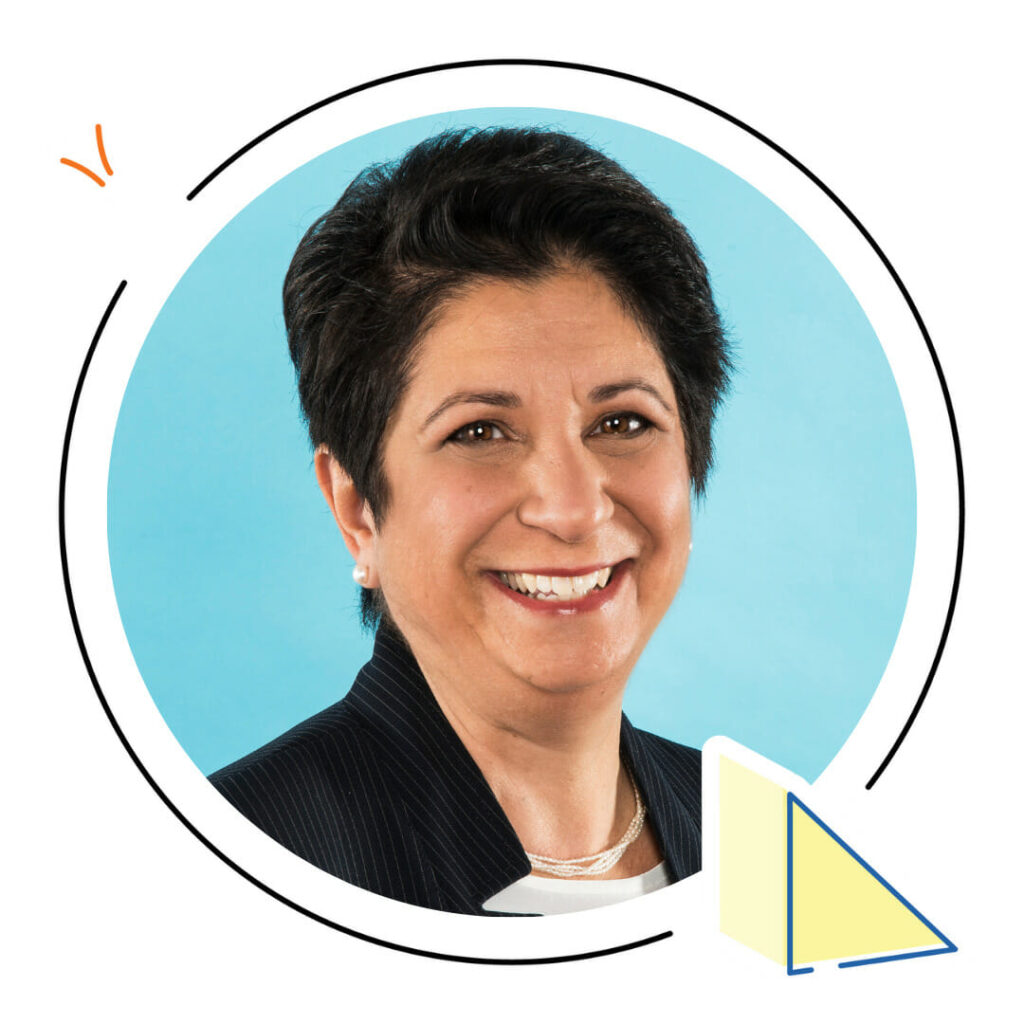
Listen as we chat with Dr. Rosemarie Truglio, senior vice president of curriculum and content for Sesame Workshop! Continuing our theme of math anxiety this season, we sat down with Dr. Truglio to chat about Sesame Street and her thoughts on how to spread a growth mindset to young children and put them on course to academic achievement and long-term success.
 
Listen today and don’t forget to grab your MTL study guide to track your learning and make the most of this episode!

Download Transcript

Dr. Rosemarie Truglio (00:00):
Children don’t come with this math anxiety. Math anxiety is learned.

Bethany Lockhart Johnson (00:07):
Welcome back to Math Teacher Lounge. I’m Bethany Lockhart Johnson.

Dan Meyer (00:11):
And I’m Dan Meyer.

Bethany Lockhart Johnson (00:12):
Hello, Dan Meyer.

Dan Meyer (00:14):
Great to see you, Bethany. We are on episode three. Can you believe it?

Bethany Lockhart Johnson (00:18):
So, I feel like we’ve just started scratching the surface about math anxiety. We’ve talked to two amazing researchers. We’ve talked about what math anxiety is, how it’s often screened for some of the causes, some of the consequences … I mean, we’ve had some good conversations. Dan, what do you think?

Dan Meyer (00:38):
Definitely, I think that the consequences have only grown more dire in my head. I’m not sure how you feel about the consequences. But, you know, it is enough for me that we ask students to take mathematics for much of their childhoods, to worry about their anxiety, taking that. But to hear about from these researchers about all the different things that correlate with math achievement and math anxiety—talking about future careers, certainly, but even some other, more serious lifelong concerns? That gives me a lot of motivation to continue this study of math anxiety here with you on the show.

Bethany Lockhart Johnson (01:14):
It is really widespread. It has a big impact, not only on students, but on parents, on educators. You know, it’s—

Dan Meyer (01:23):
Multi-generational.

Bethany Lockhart Johnson (01:25):
Yes. And you know, so often when folks think of math anxiety, what I hear them say is, “Oh, yeah, in high school is when math really ramps up. That’s when anxiety starts.” But we know that it starts in our youngest learners. And our research has already backed that up. We know it. I’ve seen it in my classroom. You may have seen it with some students you work with. And let me tell you, it starts young.

Dan Meyer (01:52):
It does start early. Right now, I have a son that’s just started kindergarten, and he seems relatively math-positive, but we’ve known from our interviews on this show and other kinds of experiences that oftentimes, that feeling —that math is for me, and I am for math, and we are all friends — can turn on a single moment. It seems like one teacher says a thing that changes a student’s perception of themselves as a mathematician or of math itself. So I keep waiting with bated breath, hoping not to find that one moment that changes our current open posture towards mathematics. So now it’s time to really dive into some strategies for combating math anxiety.

Bethany Lockhart Johnson (02:34):
To help us out, we’ve called on a pretty exciting guest. I am so excited, Dan Meyer! We are being joined by Dr. Rosemarie Truglio. She is Senior Vice President of Curriculum and Content at Sesame Workshop. Sesame Workshop! As in, “Tell me how to get to Sesame Street.” Dan, I have to tell you, I spent many, many hours of my childhood watching Sesame Street. I have to ask, do you have happy Sesame Street memories? Is this part of your formation, Dan Meyer?

Dan Meyer (03:08):
At this point? In my advancing years, and the brain cells that I have left, Sesame Street is really kind of just a vibe in my head. But that vibe is such a pleasant one. One in which like nothing bad could happen. One in which learning is common and normalized and fun. And you just kind of feel at home, constantly.

Bethany Lockhart Johnson (03:33):
I don’t know about the “just the vibe” part, because for me, it is visceral. I’m there. I am actually … I mean, I might still be there.

Dan Meyer (03:42):
You could reenact some of the skits?

Bethany Lockhart Johnson (03:44):
. You didn’t watch Sesame Street with your kiddos when they were younger?

Dan Meyer (03:49):
We watched a lot of Elmo. A lot of Elmo. Yeah.

Bethany Lockhart Johnson (03:52):
Next-generation Sesame Street. Well, I think it’s so perfect that we’re gonna be talking about what Sesame Workshop does to help combat math anxiety and create a positive connection and relationship with mathematics. So I’m really excited to hear what Dr. Truglio and her team have been working on. And here’s our conversation with Dr. Truglio.

Dan Meyer (04:15):
Welcome to the show, Dr. Truglio. It is an honor.

Dr. Rosemarie Truglio (04:18):
Great to be here. Thank you for inviting me.

Dan Meyer (04:20):
You are Senior Vice President of Curriculum and Content at Sesame Workshop, which definitely sounds like the coolest job in the world to both four-year-old me and also Now me. Would you just help us help us with some backstory of how you ended up here, and what you do at Sesame Workshop?

Dr. Rosemarie Truglio (04:38):
Sure. It is a pretty cool job. And I am very fortunate that I’ve been in this position for the past 26 years. So, I am a developmental psychologist, and my job is to help Sesame Workshop identify curriculum needs, so that we could address them in the content that we create on the show and across our various platforms. So, Sesame Street is currently in its 53rd season. And we just, wrapped production for the 54th season, which we’ll debut next fall. And Sesame Street began with an experiment: Can television actually teach children school readiness skills, to have them better prepared for school? Especially those children who did not have access to formal education during the preschool years? And it is what we call a whole-child curriculum, because we’re dealing with all of the school readiness needs. So that that includes the academic needs, their social-emotional needs, and their health needs, as well as what we call these cognitive processing skills—how children learn content. Right? So it’s not just content skills, but how you approach learning and how you actually learn content. So as a grad student, I was fortunate to work at the Center for Research on the Influences of Television on Children. Very special center. It was at the University of Kansas. And my advisors, developmental psychologists, they studied the effects of television on children, both the positive effects and the negative effects. And so part of their research was to actually look at the longterm educational effects of Sesame Street. So I was working with Sesame Street content as a grad student, and then came to New York City. My first job was Assistant Professor at Teachers College, Columbia University. And when this position became available, Director of Research at the time, it was called, I took that job. And so my job was to oversee both the curriculum and the implementation of the curriculum, as well as the research. Because what we know, our co-founder, Joan Ganz Cooney has always said, for Sesame Street to be a successful educational program, production has to work closely with early childhood educators. They are the ones who know the curriculum and, and develop the curriculum goals, as well as the developmental psychologists who actually study how children are paying attention to the content. But more importantly, what are they comprehending from the content? And we all have to work together. Because even though we are the experts, the real experts are the children themselves. So nothing is deemed final until we actually show the children and see what they are learning from the content that we are producing.

Dan Meyer (07:54):
Are you referring to like, test audiences of kids then?

Dr. Rosemarie Truglio (07:57):
Yeah, I guess you could call it test audiences. I mean, I don’t. I don’t like to call it that because I see them as co-collaborators. I don’t see them as a test audience. Because, as I said, they’re the experts. It’s a collaboration. I mean, they’re the experts. And so I wanna know—

Dan Meyer (08:12):
As collaborators. I got it now. Yeah.

Dr. Rosemarie Truglio (08:14):
They help us. So that’s exactly what we tell the children too. So it’s called formative research. You know, we, we do what we call, um, storybook testing, an animated version of a storybook to have some little movement and see are they finding the story engaging, but more importantly, are they picking up on the intended educational lesson that we’re trying to teach in the story. So they are co-collaborators. they’re the ones who are helping us get the story just right for them.

Dan Meyer (08:46):
That’s really exciting, and makes me think about what classes might be like if students were regarded in that kind of lens as well. I just wanna say that my four-year-old self is on this interview as well, and is re-contextualizing all the stuff I saw as a kid. And it just felt like, at the time, you folks turned the camera on and went down to the street and we just had this real natural time. And it’s great to hear about all the intense preparation and co-construction at work and work that went into that time. Yeah,

Dr. Rosemarie Truglio (09:12):
It’s about a year preparation from start to finish. From the start of identifying, “What is the educational need? Is it an academic need? Is it a social-emotional need? Is it a health need? Is it a cognitive-processing need?” And then once we have the need identified, we have what we call a curriculum seminar. We bring in the experts who are studying this topic with preschoolers, because we wanna get it, we wanna get it right.

Bethany Lockhart Johnson (09:41):
Which, by the way, little behind the scenes: How often do you get to go to set?

Dr. Rosemarie Truglio (09:46):
So we’re in a production probably about six weeks out of the year. Covid really messed things up. ‘Cause we have to be really—we have very strict Covid protocols, but there is someone on my team—and sometimes we have to, you know, rotate for availability—but there’s always an educator on set.

Bethany Lockhart Johnson (10:06):
Awesome.

Dr. Rosemarie Truglio (10:07):
Because even though you stick to the script, questions arise; they wanna make changes; sometimes they have to cut; things are running too long and they have to cut and we gotta figure out where to cut. So there’s always an educator on set.

Bethany Lockhart Johnson (10:19):
But sometimes you go and have lunch, like—.

Dr. Rosemarie Truglio (10:21):
Oh, I go, yes. Sometimes I go—

Bethany Lockhart Johnson (10:23):
And just hang out with Big Bird, right?

Dr. Rosemarie Truglio (10:24):
Sometimes I go hang out with Big Bird. No, those are my friends!

Bethany Lockhart Johnson (10:27):
They are!

Dr. Rosemarie Truglio (10:28):
No, no, I go hang out with them. They’re my friends. Yes.

Bethany Lockhart Johnson (10:32):
When I think about Sesame Street and I think about … like, I can’t help but smile. Because I think I have such fond memories of the characters. I mean, we invited them, my mom invited them, into our home, right? And, you know, now I have a two-year-old and there’s no doubt that I’m gonna introduce him to Sesame Street. And I see how it really does feel like the folks who are doing this work, you and your team, you have a deep respect for children. So it makes sense that you call your test collaborators “collaborators,” right? They’re a part of it. And you know, I love that. And Sesame Street makes me smile. However, I’m like, we’re talking about math anxiety. And it’s so interesting, because as Dan and I were talking about our memories of Sesame Street … you know, it’s like Sesame Street feels like there’s not much anxiety. I mean, there are problems, and there’s problem solving, and it’s not like everything is perfect. But we figure it out. And it’s OK to make mistakes and it’s OK to try again. And a lot of times, we don’t see that in the math classroom—or at least, how folks talk about math. So, how do you all think about anxiety, about how to prevent it? Like, when you’re doing your work, you know that math anxiety is a real thing. But then that’s not translated in these experiences and the relationships with math that you’re building with your viewers.

Dr. Rosemarie Truglio (12:07):
Yeah, that’s a really good question, because it’s really easy, because our core audience are two- to four-year-olds and they love math. And what’s not to love, right? Because they are figuring the world out as they’re exploring the world. So you said something really interesting, that when you turn on the TV—when you turned on the TV when you were a child, and now you’re a mom of a two-year-old, we wanna make sure that the show represents content that is relevant and meaningful to our target audience. And that comes through with the characters. So all of our characters have very specific personalities, as all children do. And our characters represent all children, in terms of not only personality, but interest and learning styles, ’cause we wanna see—we wanna make sure that children see themselves in these characters. And we have a character who actually loves math. And he’s The Count.

Bethany Lockhart Johnson (13:12):
I’m like, “I know! I know who it is!” I will save you my impression. Although I have done it for my child. But I’ll save our listeners .

Dr. Rosemarie Truglio (13:20):
And you know, he’s an adult character. Some of our characters are preschoolers, like Elmo and Abby—they’re preschoolers—and Zoe. But The Count is an adult. He lives in the castle and he just loves numbers. But what’s really important is while we have The Count to explain—not explain to, but to portray to children, cause we don’t explain anything; we show children that math is more than number, right? Math is a pretty wide concept. Which is what I love about math. And the other thing about math is math language. The language of math. ‘Cause when we’re teaching children vocabulary words, we’re also teaching children the concept. Be it a math concept or a science concept or a social-emotional concept. So children don’t come with this math anxiety. Math anxiety is learned and it’s unfortunate. It’s picked up by their observations of the adults in their lives, who sometimes say out loud, “I don’t like math,” or “Math is hard,” or even worse, “I’m not good at math.” Or may even label it as math anxiety. That word won’t mean anything to a young child. But it then provides a, whaddya call it, like a negative valence for something that they never felt negative about. Because as they’re growing and interacting with the world, math is all around them. And there’s that sense of awe and wonder and joy, especially as they’re learning and they’re figuring it out. So I think we have to reframe math. Instead of saying “math anxiety,” we have to talk about the joy of math and all the wonderful joys that come with the exploration of these math concepts. Number is great. We know kids love numbers. We know that they love to count and use a big word here: enumerate . Because so many parents don’t make this distinction. They’ll say, “Oh, my child is counting!” Well, there’s rote counting, 1, 2, 3, 4, 5, 6, 7, 8, 9, 10, which is important. But then it’s like there’s an item for each number. So it’s one Cheerio, two Cheerios. And then as you point to each number, you are then figuring out what the set is, of the number of objects that you have. And then you get at what I love to call the meaningfulness of math. Right? Number has meaning. And as I said, it’s all part of your everyday activities. It’s part of—it’s in your kitchen; you’re following recipes; you’re measuring; you’re weighing. It’s at bath time, right? You could have the sorting of nested cups and you could, you know, and once again, the math language: big, bigger, biggest. These are relational concepts. You could then count what sinks and what floats, if you’re doing science. And then you could put them in two different buckets, and count. These are the items that sunk and these are the items that float. So math and bath time could be a lot of fun. And then there’s math and music. Music is so rich with math, as you talk about rhythm and tempo and dynamics and pitch and duration. That’s all math.

Bethany Lockhart Johnson (16:57):
The way that you talk about it, it is so rich, right? It is so multi-layered. And you know, I’ve shared on the podcast before: I’ve actually had parents in parent-teacher conferences say that, “Well, I wasn’t good at math either,” or “Math’s really not my thing.” And it’s really—it is, it’s rooted in that fear. And so I do see the way that you’re talking about it; I see that come through in Sesame Street. That, in a lot of ways, it’s reeducating parents, right? Because we hope that our caregivers are sitting next to their kiddo and enjoying it together and having conversations about it later. And there’s a way that parents then are also getting their own sense of what math can be, expanded. And I think there’s such a beauty in that. And I love the way that you talk about that, that you really are looking at, “Well, we wanna celebrate counting and the joyfulness of that. And let’s use math talk, you know, and let’s use these words and try out these ideas.” And it’s not because you’re trying to check some list. But you’re really exploring it and having fun together.

Dr. Rosemarie Truglio (18:03):
And you’re embracing it. And you mentioned the word “mistake.” So often when it comes to math, if you make a mistake—you make a mistake in counting or, you know, we’re not doing a lot of math equations on Sesame Street, but that’s when people feel like they can’t do math. ‘Cause they made a mistake. And that’s something that we are trying to address on Sesame Street, that it’s OK to make mistakes and you learn through mistakes. But you have to have—and I’m gonna come up with this other phrase now—you have to have what we call a growth mindset. What that means is that I may not be able to do this yet. Like, it’s called “the power of yet.” So we know that learning any concept, it takes time and practice. And how do we have children embrace the process, right? So often we focus on right and wrong. Now, there is right and wrong with math, of course. You know, there’s a right answer and there’s a wrong answer. But how do we focus, not on the end product, but the process through which you are engaging in? So let’s talk about measurement. Let’s talk about measuring the length and the width or the height of something. You might make some mistakes along the way, but you’re processing it. My son used to make all of these little structures for all his little play animals. Well, you know, he would measure and think he got it right. And then when he put the animals in, of course, you know, either the animal was too wide or it was too tall. And he would have to redo it. But you’re not redoing it from scratch, you’re redoing it now from experience. “I realize that if I’m gonna put the giraffe in with the elephant, I’m gonna need something wide as well as high.” Right? For the length, tall. And that’s process. And then, for children, when they figure it out, that “oops” and “aha”—the “aha” was like, “I did it!” And it’s so empowering, you know, giving them agency—not swooping in and saying, “All right, I’ll fix it for you. You know, we got the wide elephant and the tall giraffe and I’ll you know…”. NO! Having them do it. And another fun activity is in what we call informal measurement. And that’s like getting something of an equal size. It could be paper clips or it could be same-size blocks, and then measuring how long something is. So if it’s measured by blocks versus paperclips, you’re gonna have a lot more paperclips than you are blocks. And that kind of comparison is so fascinating for children. And so that’s measurement. And now we have counting. Like, how many paperclips long is something versus how many blocks long is something.

Dan Meyer (21:02):
So checking my understanding here, you’ve talked about how caregivers and other adults can transmit math anxiety by naming it and claiming it for themselves. And you’ve talked about, some really exciting ways that adults can involve students and kids in different kinds of math. I’d love to go upstream with you a little bit and wonder out loud, where does this anxiety come from initially? It’s gotta be more than adult one to kid two talking about anxiety, and transmitting it from human to human. What is the original spring from which all this anxiety flows?

Dr. Rosemarie Truglio (21:36):
Yeah. I do think it does—a lot of it does come from the adults in their lives. It’s unfortunate, because there is a lot of math talk about it, right? I can’t do math; I’m not good at math. Even when you’re at a restaurant and you get the bill and someone’s figuring out the tip, I can’t tell you how often it’s like, “Pass the bill, because I can’t do math.” Or if you actually then bring gender into it, you know, “Oh, girls aren’t good at math,” and that’s not true. There’s no evidence of that whatsoever, right? So in the younger grades, there’s no gender difference in terms of math ability. What’s also interesting about even socioeconomic status differences, you don’t see a lot of differences between low-income and middle-income children when it comes to math skills. Where you see differences is children’s ability to talk about their mathematical thinking. So if a child doing a math problem is asked, “How did you solve the problem?”, low-income children don’t often have the language to explain their thinking. So that’s something that we did on Sesame Street, where we focused a lot on what we call math talk. So, not just show number and show doing math, but actually narrate and giving the language. Because math literacy is one of the predictors of overall school achievement. So there’s that. They’re getting it from the adults in their lives. They’re getting it, unfortunately, sometimes from their teachers. But I think the anxiety comes from the fear of making mistakes. Because math, there is right and wrong, and always wanting to get the right answer. So that’s why this whole idea of reframing, and saying, “But really, it’s in the process.” So, you know, my son, math is not his strong suit. And I’ve been doing a lot of growth mindset with him as well. And there was a teacher that he had—I think in like 10th or 11th grade—who said, “In a test, I don’t wanna—I’m not even gonna look at the answer. I wanna see the process through which you GOT to this answer. And I’m going to grade the process. So the process could yield a right answer; it could yield a wrong answer. But you’re gonna get graded on the process. Because I wanna see how you are approaching the problem and how you’re thinking it through.” And I think that is a great example of, maybe, to try to reduce math anxiety. Because if you can get people excited about the process through which you’re learning—and that applies to all subjects, it’s not just math!

Bethany Lockhart Johnson (24:36):
I’m like, that applies to life! Right?

Dr. Rosemarie Truglio (24:38):
That applies to life!

Bethany Lockhart Johnson (24:39):
That’s so spot on. Wow. Yeah.

Dr. Rosemarie Truglio (24:41):
But I think that there’s so much focus on right and wrong, and not really understanding the value of the process. So on Sesame, we’ve been doing a lot of “oops” and “ahas.” You know, we’re gonna make mistakes, but what’s important is what do you DO when you make a mistake? So there’s a great episode with The Count. A couple of years ago. The Count was counting. Something he does every day. A lot of time, every day, ’cause he’s obsessed with counting and numbers. And he was counting an array of items.

Gladys the Cow (25:17):
I need 10 sandwiches all together.

The Count (25:22):
Well, of course.

Dr. Rosemarie Truglio (25:23):
And he made a mistake.

Elmo (25:25):
The Count?

The Count (25:25):
Hmm?

The Count (25:25):
Elmo thinks The Count made a little mistake.

The Count (25:31):
No mistake.

The Count (25:32):
Mm-hmm. Yeah.

Dr. Rosemarie Truglio (25:33):
And first time ever, did he make a mistake. And he fell apart.

The Count (25:38):
I must make sure that that never happens again. So I shall never count again.

Dr. Rosemarie Truglio (25:46):
And that’s an example of showing that, you know, you could get upset when you make a mistake, but what’s important is you gotta come back and you gotta come back to doing what you love. In his case, is counting and letting him know that it was an “oops.” But you learn that mistakes are OK. It’s OK to make a mistake and continue to do what you love.

The Count (26:13):
I must keep trying and you should, too.

Elmo (26:17):
Yeah!

The Count (26:17):
So come, let’s count the carrots together!

Elmo (26:18):
Oh, cool!

Bethany Lockhart Johnson (26:19):
And what a beautiful gift to show kiddos. Show that to kiddos, right? And to the adults. I wanna, you know, really acknowledge it, and say, “Hey look this, it’s OK.” And again, you’re giving them that language. That’s such a gift.

Dr. Rosemarie Truglio (26:34):
Thank you.

Dan Meyer (26:34):
We spend a lot of time wondering why other subjects don’t seem to suffer from this negative perception. And I think you’ve unlocked a lot of that. You’ve mentioned that there are issues that cut across different subject areas, but I think from my own experience and research and interviews, it seems that in ELA and the social sciences, there’s this aspect where you need to come up with a claim and “how are you seeing this?” And there are multiple defensible claims. And I love how you imported that generous pedagogy over into math with this example of a teacher who says, “You know what? It’s about the process here.” Disassociating answer and process.

Dr. Rosemarie Truglio (27:09):
And I think the other thing is like, when children are engaged in a project, for parents to point out: “You’re doing math!” Because they don’t realize that they’re doing math. Once again, math is so often equated solely with numbers and mathematical computations. So it was really interesting—the same is true for science. You know, when we’re talking to parents about the use of everyday—like, going to the supermarket or making dinner or bath time, there’s so much math and science in the everyday. And then when you point it out to them—”you’re doing math”—it’s like, “I’m doing math!” Like, you’re setting the table for a family of six: you’re doing math. That’s called one one-to-one correspondence. “I’m doing math: I’m setting the table.” Yeah, but you’re doing math. You can’t set the table because you have to know how many people are gonna be sitting at the table for dinner. You can’t follow a recipe without doing math. You can’t go shopping without doing math. There’s quantity; you gotta figure out how many peppers you gotta buy, or pounds. “I gotta get a bunch of potatoes and I gotta put ’em in the scale. And I have to get two pounds of potatoes.”

Bethany Lockhart Johnson (28:29):
So your book Ready for School: A Parent’s Guide to Playful Learning for Children Ages Two to Five. First, as a parent of a young toddler, I gotta say it’s such a tool; it’s such a resource. It’s very conversational. And I think about these ideas a lot, both in my work and, you know, just for fun. And yet, even if this wasn’t my chosen field, I still feel like it’s just so accessible. And I wanna flag something.

Dr. Rosemarie Truglio (29:01):
Thank you.

Bethany Lockhart Johnson (29:01):
Yeah, no. Thank YOU. . I wanna flag something that you said in the math chapter You were talking about the joy of math, and you said when it comes to our children, caregivers: “take pleasure in reading stories together, especially at bedtime, which in many households is a regular part of a child’s routine. But somehow the notion of introducing math concepts to our children seems daunting. In fact, some studies have shown that parents harbor a strong belief that while it’s important and pleasurable to support their child’s reading skills, it’s the responsibility of the schools to take care of teaching math.” And that quote, I highlighted it, I starred it! And I would love for you to say a little more about that, because you have given us already, like, a bounty of ideas that as caregivers we can do with our kiddos or the kiddos in our lives. And we’ve seen that even what they’re learning in school, it may not be the freeing, joyful math language that we hope our kiddos have access to.

Dr. Rosemarie Truglio (30:05):
Yeah, I’m glad you brought that up. Because a lot of our focus is on how children learn through playful experiences, and how they learn through play in particular. And there are so many playing, either a game or even playing ideas—like we talked about building, you know, a house for animals or building a fort. It’s just so filled with math. And I wish I could narrate for every young parent how I would hope that they would talk as they are co-engaged in this activity. And I think … we asked about, with the anxiety, the adults have to find the joy in math first. They have to see the math. That’s the problem. That’s why I hope that my book provides that. I want you to know that you are doing math and I want you to know that your child is what we call a mathematician—or in the science chapter, is a STEMist. Your child is already doing science, technology, engineering, and math. STEM is so integrated. So to acknowledge them—because babies are doing math! Babies know, they can distinguish between a small quantity and something that is a of a larger quantity and want the larger. Right? So, it’s natural for them. And they are taking it all in. I mean, the joy of watching a child just early counting: you know, one, two. And trying to then figure out the meaningfulness of two. It’s not three objects. There are actually two. And for a parent to see the joy in that I think is step one. And then to see the richness and how expansive math is, and that power of, oops, “I made a mistake, don’t freak out,” and then [not] say, “See, I’m not good at math,” but say, “Let me try again. I know I could figure this out.” Right? It’s all of that supportive language and supportive experiences that builds this mindset, a positive mindset. So that you hope that when you get into the higher grades, they’re not walking in and saying, “I can’t, I can’t do math.”

Dan Meyer (32:26):
Yeah. Super helpful. I think you point at one of the grownups—great powers in the world of kids, which is to label. To name things. And you know, you’ve talked about how grownups should ideally downplay some of their negative experiences with mathematics for the sake of the kid, but also to play up the positive stuff that they’re doing as mathematics. Like that right there, that’s math. I would love to know … you have an extremely loud megaphone to communicate messages about math and the world and everything through Sesame Street. One of the biggest that there is—and I just wonder if you could step out and imagine you had a magic wand to wave over the world in which students grow up, play and learn—what would you do like to help students have better associations or less math anxiety? And, you know, learn more about math itself?

Dr. Rosemarie Truglio (33:19):
If I had a magic wand, I would give everyone what we call a growth mindset that nothing is fixed and everything can be changed if you put the time and effort into the process, and enjoy the process. The joy of learning. I think, you know, it’s really sad. I don’t wanna be sad on your show. But when we were getting ready for the 50th anniversary, I was wondering, “What is gonna be the curriculum focus?” You know, we just came off of literacy and math literacy and social-emotional development. And we talked about the power of play. Playful learning. And building careers. Give children sophisticated play scenarios so that they could explore what they may wanna be when they grow up. Because there’s a concept: If I can see it, I can play it, I can be it. Right? So where are those portrayals? And it’s like, “What are we gonna do for the 50th?” And I had a convening of experts across all disciplines, and brought them into a room. And I said, you know, “What keeps you up at night? Like, what are you worried about?” Sort of like the State of the Union of Child Development. And this is where the sad part is. They talked about how that sense of joy, that sense of wonder, that sense of curiosity, that sense of flexible thinking and creative thinking, was disappearing in early childhood. Wow. If it’s disappearing in early childhood, we are in big, big trouble . ‘Cause I could see it disappearing later on, you know, as you advance in grade. But what do you mean, it’s disappearing in childhood? And then they talked about the fear of making mistakes. And that goes against—it’s the opposite of a growth mindset. And so we have to bring back that sense of joy, wonder, asking those why questions and embracing them. So it’s another problem parents have. They’re fine with the “why” questions until the “whys” become so difficult they don’t have the answers. And then they don’t want the “why” questions, because now they feel like they’re not smart enough to answer their child’s “why” questions. How do I flip that around to be much more positive and say, “You know, I don’t know! But let’s find out together. Let’s explore together; let’s experiment together.” That’s what I mean about the shift in the mindset, that growth mindset. We should not know all of the answers, but where’s the joy of, “Wow, I don’t know, let’s go find out together”? And that applies to math too. But you have to have that open mindset. You have to—you, as yourself, have to have that growth mindset.

Bethany Lockhart Johnson (36:20):
I love that magic wand. I want that magic wand! And I think what—like Dan said about this megaphone, this opportunity to reach so many young people, so many caregivers—what a gift! And I’m so grateful that you took time to be in the lounge with us, and that you have shared these ideas. Because truly, I think, like you said, it’s really our youngest learners, right? How can we create and cultivate these opportunities for our youngest learners to find the joy in mathematics and just in learning, right?

Dr. Rosemarie Truglio (36:54):
Yeah.

Bethany Lockhart Johnson (36:55):
So thank you. Thank you so much, Dr. Truglio. We are deeply grateful for your insight and for all the work you do. And we continue to invite the world of Sesame Street into our homes.

Dr. Rosemarie Truglio (37:08):
Thank you. Thank you for allowing us to come into your home, and for you to re-learn with your child as you’re watching Sesame Street. Because it’s very much a parenting show, as it is for a child-directed show, because we are blessed to have these wonderful human cast members who are the stand-ins for parents. And so we are often giving you the language for how to talk about and how to problem-solve together. So thank you.

Dan Meyer (37:43):
Thanks so much for listening to our conversation with Dr. Rosemarie Truglio, Senior Vice President of Curriculum and Content at Sesame Workshop.

Bethany Lockhart Johnson (37:51):
Dr. Truglio is also the author of Sesame Street Ready for School, A Parents Guide to Playful Learning for Children Ages Two to Five, and we’re gonna make sure we put a link to that in the show notes because it is really, really a rich resource. I’m diving in. I have so many ideas bookmarked that I wanna try out with my kiddo.

Dan Meyer (38:09):
Yeah, it’s really exciting to see—like, for a classroom educator, I just kinda assumed that a lot of math learning happens in the classroom context. That’s my lens. So yeah, I loved reading the book and seeing all the different opportunities for parents for just out there in the world, in front of your house, at the supermarket. All the different opportunities there are for mathematical thinking, and then to think about how to bring that into some of those routines and ideas into the classroom, into formal schooling.

Bethany Lockhart Johnson (38:35):
Exactly. Exactly. Like Dr. Truglio said, the caregivers’s disposition about mathematics matters so deeply. Your teachers’ dispositions about mathematics, their beliefs, the way that you hear people talking about math, that impacts our learners. That impacts—like, as a student, that impacts what you think is possible for yourself. So I love this, re-educating ourselves about what math can look like out in the world, in everyday conversations. I don’t know. I really, really appreciated this conversation with Dr. Truglio.

Dan Meyer (39:12):
Same. Yeah. We’d love to hear what you folks think about the work. the book, her ideas. Definitely get in touch with us. Subscribe to Math Teacher Lounge, wherever you get podcasts. And keep in touch with us on Facebook at Math Teacher Lounge Community, and on Twitter at MTL show.

Bethany Lockhart Johnson (39:27):
Also, if you haven’t already, please subscribe to Math Teacher Lounge wherever you get your podcast. And if you like what you’re hearing, please leave us a rating and a review. It’ll help more listeners find the show. And while you’re at it, let a friend know about this episode, because you enjoyed it; they might enjoy it. On our next episode, we’re gonna be chatting with Dr. Heidi Sabnani and taking a closer look at best practices for coaching teachers to reduce their own math anxiety.

Dr. Heidi Sabnani (39:56):
One of the teachers that I worked with had done her student teaching with a teacher who had math anxiety and who never taught math. And so she entered her teaching career never having taught math before or seeing it taught.

Dan Meyer (40:10):
Thanks again for listening, folks.

Bethany Lockhart Johnson (40:12):
Bye.

Stay connected!

Join our community and get new episodes every other Tuesday!

We’ll also share new and exciting free resources for your classroom every month.

What Dr. Rosemarie Truglio says about math

“We all have to work together, because even though we are the experts [on curriculum and education], the real experts are the children themselves.”

– Dr. Rosemarie Truglio

Senior Vice President of Curriculum and Content, Sesame Workshop

Meet the guest

Rosemarie T. Truglio, Ph.D. is the Senior Vice President of Curriculum and Content at Sesame Workshop. Dr. Truglio is responsible for the development of the interdisciplinary curriculum on which Sesame Street is based and oversees content development across platforms (e.g., television, publishing, toys, home video, and theme park activities).  She also oversees the curriculum development for all new show production, including  Bea’s Block, Mecha BuildersEsme & RoyHelpsters, and Ghostwriter. Dr. Truglio has written numerous articles in child and developmental psychology journals and presented her work at national and international conferences. Her current book is Ready for School! A Parent’s Guide to Playful Learning for Children Ages 2 to 5, published by Running Press (2019).

A person with short dark hair, wearing a dark blazer and white top, smiles at the camera against a blue background with graphic elements, evoking the inviting atmosphere of a math teacher lounge and highlighting useful math teacher resources.
A laptop displaying a Facebook group page for "Math Teacher Lounge Community," featuring profile photos, a group banner, and geometric shapes in the image background.

About Math Teacher Lounge

Math Teacher Lounge is a biweekly podcast created specifically for K–12 math educators. In each episode co-hosts Bethany Lockhart Johnson (@lockhartedu) and Dan Meyer (@ddmeyer) chat with guests, taking a deep dive into the math and educational topics you care about.

Join the Math Teacher Lounge Facebook group to continue the conversation, view exclusive content, interact with fellow educators, participate in giveaways, and more!

Tulsa, exciting updates in CKLA 2nd Edition!

To view this protected page, enter the password below:


Exciting updates in CKLA 2nd Edition!

As part of our commitment to creating even richer and more wide-ranging curricula, we have built on the foundation of the 1st Edition to release a new edition of Amplify CKLA with a collection of program enhancements that save you time and help you reach every student.

Explore the 2nd Edition Program Guide to learn more.

Amplify Caminos for equitable Spanish literacy

Amplify Core Knowledge Language Arts® (CKLA) is proud to introduce Amplify Caminos al Conocimiento Esencial, a Spanish language arts program for Grades K–5 that will inspire and engage your students to become confident readers, writers, and thinkers.

Three colorful book covers featuring artistic styles: a bird in flight, a bicycle near a vine-covered wall, and a vibrant portrait of a woman with flowing hair.

Like Amplify CKLA, Amplify Caminos is designed to spark curiosity through content-rich instruction. Amplify Caminos features complex interactive Read-Alouds and authentic Spanish literature to develop reading and writing skills and build bridges across Spanish and English.

Explore the Amplify Caminos Program Guide.

Research units to inspire inquiry and curiosity

Our brand-new Knowledge Research units carry forward Amplify CKLA’s powerful and proven instructional approach while also:

  • Adding more diversity. The rich topics and highly visual components featured in these units provide students with even more “windows and mirrors” and perspectives as they work to build knowledge.
  • Adding more authentic literature. Each new research unit revolves around a collection of high-interest authentic trade books that will spark more curiosity and inspire more inquiry.
  • Adding more flexibility. Units can be implemented for extended core instruction during flex periods, district-designated Pausing Points, or enrichment periods.

Units cover a variety of rich and relevant topics:

Three illustrations: one shows people at a gaming session, the middle depicts a diverse group standing together, and the third portrays a group gardening outdoors.

With these new units, students will soar to new heights with Dr. Ellen Ochoa, Amelia Earhart, and the Tuskegee Airmen. They’ll feel the rhythm as they learn about Jazz legends Miles Davis, Tito Puente, and Duke Ellington. And they’ll explore the far reaches of the world with Jacques Cousteau, Matthew Henson, and Eugenie Clark.

  • Grade K: Art and the World Around Us
  • Grade 1: Adventure Stories: Tales from the Edge of the World
  • Grade 2: Up, Up, and Away: The Age of Aviation
  • Grade 3: All That Jazz
  • Grade 4: Energy: Past, Present, and Future
  • Grade 5: Beyond Juneteenth: 1865 to present

Watch the overview webinar to learn more.

Units will be made available in English and Spanish, and will include the following components:

A collage of educational materials including comic panels, illustrated worksheets, and classroom posters featuring diverse characters.
  • Teacher Guide
  • Student Activity Books
  • Image Cards
  • Trade Book Collection
  • Digital Components (grades K–3 and 5)

Richly illustrated Skills Readers

Student Readers in grades K–2 are newly redesigned with gorgeous illustrations that celebrate students’ diverse experiences. The new readers feature individuals with a broad range of identities and culture, providing students with more windows and mirrors. Each reimagined reader has a unique illustration style to draw students into the engaging stories, characters, and plots.

Illustration split in two: left side shows children diving underwater with marine life, labeled "kit"; right side shows children playing jump rope on a court, labeled "kids excel.

Review the new readers.

New digital platform with presentation slides

Amplify CKLA 2nd Edition is on the digital experience, a new digital platform, that makes it easier and more engaging than ever to plan lessons, present digital content, and review and assign student work online.

A person navigating through the curved, narrow sandstone walls of antelope canyon. the natural rock formation casts pink and orange hues.

The digital experience provides ready-to-use, customizable lesson slides, complete with all the prompts from the Teacher Guide embedded in the teacher view. As teachers deliver each lesson, students engage with the content through slides that include digital activities, digital components, multimedia, Student Readers, and more. Students can complete work in the platform through digital Activity Pages that allow them to type, draw, record audio, and more.

Explore the digital experience overview brochure.

Improved layout, more focused lessons, new content and more

From 1st Edition to 2nd Edition, we made updates to make it easier to plan and deliver Amplify CKLA lessons, including a variety of ways to differentiate instruction to meet the needs of all students.

Key enhancements include:

  • Scaffolds for English Language Learners added to all lessons
  • In-the-moment differentiation opportunities added to support and challenge all students
  • Integrated grade 3 into one instructional strand to better match students’ learning trajectories
  • New layout to make Teacher Guides easier to scan and use.

New content at the beginning of each lesson:

  • Primary Focus Objectives identify the goals of each lesson. Each objective is standards-aligned and corresponds to a formative assessment.
  • Formative Assessment opportunities are explicitly called out in a chart at the beginning of each lesson. Formative assessments are aligned to the Primary Focus Objectives.
  • Universal Access suggests modifications to the lesson to support a diversity of learning styles.

New content within each lesson:

  • Support and Challenge sidebars added throughout for extensions, support, and enrichment.
  • Access Supports provide scaffolds to support English Language Learners across five proficiency levels.

New content in each Skills Strand lesson:

  • Additional Support section at the end of every Skills lesson provides opportunities for re-teaching and reinforcing skills taught in the lesson. Specific activities and extensions are provided to meet the needs of all learners.

New content in all grades, including:

  • Grade K: Picture Reader with supporting instruction.
  • Grade 3: Content integrated into one instructional strand to improve pacing and closely match students’ learning trajectories; excerpts of read-aloud text now appear in select student readers; added new Vikings Quest (problem-based interactive learning).
  • Grade 4: Updated the Personal Narratives unit, added The Contraption Quest (writing across the year).
  • Grade 5: Updated Personal Narratives unit, added Chemical Matter unit, added The Robot Quest (writing across the year).
  • Moved Contemporary Fiction unit from grade 5 to grade 4.
  • Supplemental cursive instruction and activity book added for grades 3 and 4.

Take a deeper look at the enhancements.

Language Studio for English Language Learners

Language Studio is a companion English Language Development program to 2nd Edition designed to support students learning English at all proficiency levels. Aligned to WIDA, the program helps students strengthen vocabulary and academic language skills while deepening the background knowledge developed in the core program. This unique approach provides an effective structure for moving English Language Learners students towards English proficiency.

View sample lessons to see how it works.

Multimedia Hub for teachers and students

Students will be able to access multimedia resources and engage in a new way on the Amplify CKLA Hub. Students can access digital resources independently from anywhere, taking full advantage of the instructional multimedia experiences that Amplify CKLA has to offer. Students can access the Hub at home, in the classroom, and on the go, making it ideal for remote learning. It’s compatible with laptops, Chromebooks, tablets, and desktops.

Grades K–2

Grades K–2 students will have access to Knowledge Builder videos to introduce each domainSound Library videos and songs for each sound in the English language; and audio-enabled eBooks of grade-level Student Readers.

Grades 3–5

Grades 3–5 students will have access to the Vocab App for independent practice with domain vocabulary and audio-enabled eBooks of grade-level Student Readers in English and Spanish.

Tulsa, exciting updates in CKLA 2nd Edition!

As part of our commitment to creating even richer and more wide-ranging curricula, we have built on the foundation of 1st Edition to release a new edition of Amplify CKLA with a collection of program enhancements that save you time and help you reach every student.

Explore the 2nd Edition Program Guide to learn more.

A couple gazes at three circular vignettes showing an astronaut, a president at a podium with an american flag, and a person breaking a wall with a hammer.

Amplify Caminos for Spanish literacy

Amplify Core Knowledge Language Arts® (CKLA) is proud to introduce Amplify Caminos al Conocimiento Esencial, a Spanish language arts program that will inspire and engage your students to become confident readers, writers, and thinkers.

Three colorful book covers featuring artistic styles: a bird in flight, a bicycle near a vine-covered wall, and a vibrant portrait of a woman with flowing hair.

Like Amplify CKLA, Amplify Caminos is designed to spark curiosity through content-rich instruction. Amplify Caminos features complex interactive Read-Alouds and authentic Spanish literature to develop reading and writing skills and build bridges across Spanish and English.

Explore the Amplify Caminos Program Guide.

Research units to inspire inquiry and curiosity

Our brand-new Knowledge Research units carry forward Amplify CKLA’s powerful and proven instructional approach while also:

  • Adding more content for students from all walks of life. The rich topics and highly visual components featured in these units provide students with even more “windows and mirrors” and perspectives as they work to build knowledge.
  • Adding more authentic literature. Each new research unit revolves around a collection of high-interest authentic trade books that will spark more curiosity and inspire more inquiry.
  • Adding more flexibility. Units can be implemented for extended core instruction during flex periods, district-designated Pausing Points, or enrichment periods.

Units cover a variety of rich and relevant topics:

Three illustrations: one shows people at a gaming session, the middle depicts a diverse group standing together, and the third portrays a group gardening outdoors.

With these new units, students will soar to new heights with Dr. Ellen Ochoa, Amelia Earhart, and the Tuskegee Airmen. They’ll feel the rhythm as they learn about Jazz legends Miles Davis, Tito Puente, and Duke Ellington. And they’ll explore the far reaches of the world with Jacques Cousteau, Matthew Henson, and Eugenie Clark.

  • Grade K: Art and the World Around Us
  • Grade 1: Adventure Stories: Tales from the Edge of the World
  • Grade 2: Up, Up, and Away: The Age of Aviation
  • Grade 3: All That Jazz
  • Grade 4: Energy: Past, Present, and Future
  • Grade 5: Beyond Juneteenth: 1865 to present

Watch the overview webinar to learn more.

Units will be made available in English and Spanish, and will include the following components:

A collage of educational materials including comic panels, illustrated worksheets, and classroom posters featuring diverse characters.
  • Teacher Guide
  • Student Activity Books
  • Image Cards
  • Trade Book Collection
  • Digital Components (grades K–3 and 5)

Richly illustrated Skills Readers

Student Readers in grades K–2 are newly redesigned with gorgeous illustrations that celebrate students’ diverse experiences. The new readers feature individuals with a broad range of identities and culture, providing students with more windows and mirrors. Each reimagined reader has a unique illustration style to draw students into the engaging stories, characters, and plots.
Review the new readers.

New digital platform with presentation slides

Amplify CKLA 2nd Edition is on Interactive Classroom, a new digital platform, that makes it easier and more engaging than ever to plan lessons, present digital content, and review and assign student work online.

A person navigating through the curved, narrow sandstone walls of antelope canyon. the natural rock formation casts pink and orange hues.

Interactive Classroom provides ready-to-use, customizable lesson slides, complete with all the prompts from the Teacher Guide embedded in the teacher view. As teachers deliver each lesson, students engage with the content through slides that include digital activities, digital components, multimedia, Student Readers, and more. Students can complete work in the platform through digital Activity Pages that allow them to type, draw, record audio, and more.

Explore the Interactive Classroom overview brochure.

Improved layout, more focused lessons, new content & more

From 1st Edition to 2nd Edition, we made updates to make it easier to plan and deliver Amplify CKLA lessons, including a variety of ways to differentiate instruction to meet the needs of all students.

Key enhancements include:

  • Scaffolds for English Language Learners added to all lessons
  • In-the-moment differentiation opportunities added to support and challenge all students
  • Integrated Grade 3 into one instructional strand to better match students’ learning trajectories
  • New layout to make Teacher Guides easier to scan and use.

New content at the beginning of each lesson:

  • Primary Focus Objectives identify the goals of each lesson. Each objective is standards-aligned and corresponds to a formative assessment.
  • Formative Assessment opportunities are explicitly called out in a chart at the beginning of each lesson. Formative assessments are aligned to the Primary Focus Objectives.
  • Universal Access suggests modifications to the lesson to support a diversity of learning styles.

New content within each lesson:

  • Support and Challenge sidebars added throughout for extensions, support, and enrichment.
  • Access Supports provide scaffolds to support English Language Learners across five proficiency levels.

New content in each Skills Strand lesson:

  • Additional Support section at the end of every Skills lesson provides opportunities for re-teaching and reinforcing skills taught in the lesson. Specific activities and extensions are provided to meet the needs of all learners.

New content in all grades, including:

  • Grade K: Picture Reader with supporting instruction
  • Grade 3: Content integrated into one instructional strand to improve pacing and closely match students’ learning trajectories; excerpts of read-aloud text now appear in select student readers; added new Vikings Quest (problem-based interactive learning).
  • Grade 4: Updated the Personal Narratives unit, added The Contraption Quest (writing across the year).
  • Grade 5: Updated Personal Narratives unit, added Chemical Matter unit, added The Robot Quest (writing across the year).
  • Moved Contemporary Fiction unit from Grade 5 to Grade 4.
  • Supplemental cursive instruction and activity book added for Grades 3 and 4.

Take a deeper look at the enhancements.

Language Studio for English Language Learners

Language Studio is a companion English Language Development program to 2nd Edition designed to support students learning English at all proficiency levels. Aligned to WIDA, the program helps students strengthen vocabulary and academic language skills while deepening the background knowledge developed in the core program. This unique approach provides an effective structure for moving English Language Learners students towards English proficiency.

View sample lessons to see how it works.

Multimedia Hub for teachers and students

Students will be able to access multimedia resources and engage in a new way on the Amplify CKLA Hub. Students can access digital resources independently from anywhere, taking full advantage of the instructional multimedia experiences that Amplify CKLA has to offer. Students can access the Hub at home, in the classroom, and on the go, making it ideal for remote learning. It’s compatible with laptops, Chromebooks, tablets, and desktops.

Grades K–2

Grades K–2 students will have access to Knowledge Builder videos to introduce each domainSound Library videos and songs for each sound in the English language; and audio-enabled eBooks of grade-level Student Readers.

Grades 3–5

Grades 3–5 students will have access to the Vocab App for independent practice with domain vocabulary and audio-enabled eBooks of grade-level Student Readers in English and Spanish.

Oregon Math State Review for 9–12

To view this protected page, enter the password below:


Oregon Math State Review for 6–8

To view this protected page, enter the password below:


Exciting updates are coming for Desmos Math 6–A1!

As you return to school in 2023, Desmos Math 6–A1 will be releasing new and exciting features that save you time, extend your reach, and support you with delivering grade-level math to all students.

Two hikers with backpacks consulting a map by a mountain lake, with crabs and a colorful landscape in the background as part of an "Amplify Program" orientation.

Collaborate on collections

We love connection and creativity for students and teachers. Now, teachers can work together to collaboratively create collections of activities. Get your whole department involved! To get started, find the dropdown menu in your collection and select “manage editors.” Add as many editors as you want, then dive in.

Demos Math Collaboration on collections

Algebra 1 is now available

Students can now meet the complete cast of Algebra 1 characters, from Shelley the Snail to Carlos’s fish, while deepening their understanding of algebraic relationships, functions, and statistics. 

Laptop screen displaying a Desmos Math 6–A1 game interface with a farm theme, featuring animated animals like a rabbit, penguin, snail, and frog, and a data table

Hablamos español!

The full Desmos 6–A1 curriculum is available in Spanish. To access, click on the globe icon in the top right-hand corner and select Español (LATAM). 

Desmos Math Spanish

Beautiful new design updates

We’ve updated the appearance of our entire digital platform to provide a cohesive experience for users across Amplify and Desmos Classroom. We’re continuing to improve accessibility while considering use of color, contrast, font sizes, text spacing, and hierarchy. These exciting navigation updates will mean an updated look and feel. You’ll still be able to access every feature you know, plus more!

Desmos Math Warm up

New features you can add to your lessons

Polypad

Using Polypad inside Desmos Math 6–A1 activities is easy—just add a Polypad component! You can start by creating Polypad content, or easily importing pre-made Polypad content.

Learn more in our latest Polypad Pointer video:

Desmos Math comparing fractions

Challenge Creator

Add a social and creative experience to lessons with Challenge Creator! Teachers can now design their own challenges for students to create, share, and discuss ideas in activities. Check out our activity or try building your own.

Desmos Math Class Gallery

Students can now share their thinking in more ways!

With our improved Free Response components, students can now share responses using text, uploaded images, or recorded audio.

Desmos Math lesson synthesis

Live chat support

If you need help, just click on the Amplify chat icon in the button right-hand corner of your screen. You can ask a question or share your feedback. Our team is here to help you!

Desmos Math live chat support

S1-04: Connecting with students and caregivers in the science classroom: Ryan Rudkin

Promotional graphic for "science connections", season 1, episode 4, featuring a smiling woman named Ryan Rudkin, themed with science illustrations like atoms and a globe, highlighting how to engage students

In this special episode, our host Eric Cross sits down with veteran middle school teacher Ryan Rudkin. Ryan shares her expertise after almost two decades in the classroom, discussing ways to incorporate aspects of problem-based learning into the K–8 science classroom. Eric and Ryan talk about how to increase parent engagement, involve community members, and add excitement to lessons.

Explore more from Science Connections by visiting our main page.

Download Transcript

Ryan Renee Rudkin (00:00):

I know there’s other goals in mind, you know, standards and test scores. But at the end of the day, I wanna come back and I want them to come back.

Eric Cross (00:35):

My name’s Eric Cross, host of our science podcast, and I am with Ryan Rudkin, middle-school teacher out here in California just to the north up near Sacramento? El Dorado Hills?

Ryan Renee Rudkin (00:46):

Yeah. 20 miles east of Sacramento.

Eric Cross (00:49):

Nice. And I am down here in San Diego. And so Ryan, to start off, what I wanna do is ask you about your origin story, like a superhero. So how did you become a middle-school science teacher to become part of this elite profession of science folks that get to do awesome things with kids?

Ryan Renee Rudkin (01:08):

I would agree with you that it is definitely an elite profession. I got my credential and I thought I was gonna teach third or fourth grade elementary school. And the second day I got called for a sub job for middle school. And I just thought, “We’ll take it,” you know? And by second period, I knew: This is where I belong. The kids, middle school, students are just a species of their own. And you have to appreciate them. And if you do appreciate them, then you’re in the right spot. And I quickly looked at my coursework and I was able to get authorizations in science, history, and English, and I love science. So I chose science. And the rest is history. It’s been a wild ride and I wouldn’t have changed or asked for anything different. I love it.

Eric Cross (02:02):

I definitely agree with you. So, your history—you’ve been in various middle-school classrooms. Can you tell us a little bit about that? What classrooms have you been in? What disciplines of science have you taught or are currently teaching?

Ryan Renee Rudkin (02:14):

I was hired for seventh grade life science, and then I did that for a few years and then I got moved into eighth physical science, and I was there for 12 years. Love eighth grade science. I love eighth graders. Chemistry and physics are my favorite. There’s just so much opportunity for just awesome labs, great conversations, student discourse, all of that. And then the past three years I’ve been in sixth grade and now we’re integrated. So,a sixth grade integrated science and I also teach social studies and a technology design class.

Eric Cross (02:52):

Oh, nice. What do you do in your technology design class? That sounds cool.

Ryan Renee Rudkin (02:56):

Right now it’s mostly internet media and we use WeVideo, it’s an editing-video program, and we produce and put on our school weekly news bulletin. And then we weave in other projects. We do some interdisciplinary projects. Right now my students are working on a mythology God, Goddess, and Monster project that relates to our social studies curriculum. And we’re learning about Greece. So yeah, we just try to give them added projects and they’re using the WeVideo platform. By sixth grade, they’re coming to us now with wonderful skills with all the tech. I mean, if I need help, I ask them like, “How do you do something on Google Docs?” Or, “How do you do something on Drive?” The kids are definitely tech-savvy.

Eric Cross (03:49):

They must love being the teacher in the classroom. They get to—it kind of switches power roles, where they get to teach the teacher something.

Ryan Renee Rudkin (03:56):

Yes. And especially WeVideo, sometimes we’ve had some hiccups, and the kids show everybody, and that’s part of the design class. They’re trying to solve—we’re teaching them how to solve their own problems. So if there’s any kind of issue with anything with the technology, honestly, I usually tell them, “Go ask a friend,” or we kind of shout out, “Hey, who knows how to troubleshoot this?” And the kids are eager to help each other, which is nice.

Eric Cross (04:21):

And they have this authentic experience where they’re actually doing real problem-solving, as opposed to something that we manufactured. Like, those are real things that we have to deal with in life. And that’s exactly like how we solve it, right? We just go ask people! We look it up, and the ahas are genuine too. Throughout!

Ryan Renee Rudkin (04:36):

Yes, especially thinking on the fly. Especially yesterday, I was in the middle of teaching and my laptop froze, and it’s like, “OK, everybodytake a couple minutes, you know, work on this, this, or that while I switch out laptops!” And so I’m modeling, too, how to solve my own problems. And I think it teaches the kids how to do that too.

Eric Cross (04:59):

I’ve always thought it was interesting that when teachers get to teach in real time, how do we handle stress and frustration when it’s really happening? And I think the tech—at times, failure is the real one where you feel this chill or this sweat that kind of comes over you and you’re trying to present or cast or the video won’t play and things like that. I think I’ve done enough times in my years of teaching where now my students know what to do, or they want to come up and help, and we’re good with it. But I remember in the beginning when those things would kind of glitch or go wrong or the wifi goes down, and you’re like, OK, what do we need now?

Ryan Renee Rudkin (05:33):

I think it’s honestly, after the fact, when I think in the moment, I’m not thinking of feeling stressed, but just afterwards, then I’m like, “Oh my gosh, this has just been a wild day.” But yeah, you just have to kind of go with it. And that’s just the beast of middle school. I just added to the list of why we love it.

Eric Cross (05:53):

You said something about interdisciplinary work, and I wanna kind of ask about that. Because it sounds like you’ve had your hand in several different areas of science and grade levels. Working, doing design courses, working with tech. Are there certain lessons that are your favorites to teach? The ones that you really enjoy, or that no matter what, you’re like, “We need to do this; this is such a rich experience for students”?

Ryan Renee Rudkin (06:17):

Yeah. I definitely try to do lessons or activities along the way. I like to do projects at the end of my units. When I taught physics, we did a project and it was mainly an assessment tool called the Wheeling and Dealing. The kids, they would all get a different car. And then they to sell their car. And so they had to pretend to be a car salesman, and they did that with their knowledge of the physics unit. So everything we did on forces and speed and motion. So I like doing culminating projects like that. And you’re kind of tricking them into assessing them.

Eric Cross (06:57):

When I think about your car salesman project, I’m thinking of a bunch of students, but they’re like on Shark Tank, but they’re just littler versions. And they’re doing these sales pitches, but they’re speaking in scientific terms as they’re trying to do it. Do you record these or do they just exist in the classroom?

Ryan Renee Rudkin (07:12):

No…And that was a long time ago, when I taught eighth grade. I wish I had; I wish I had recorded. That was definitely—it was fun, ’cause the kids, they would get their little piece of paper and they—some of ’em didn’t know what car it was. And so they’re like “A Boo… A Boo-gatti? What’s a Boo-gatti?” And then someone from across the room would be like, “Ooh, I want it! Here, I’ll trade you my Ford Focus!” And <laugh> so they would kind of wheel-and-deal which car they would…and then once they got their choice, then they would do the project.

Eric Cross (07:44):

So they’re really embodying this persona of a car salesman. The wheeling and doing back-and-forth and trying to trade a Bugatti for a Ford Focus. <Laugh>

Ryan Renee Rudkin (07:53):

I know. <Laugh> I like to make my class, my learning environment, enjoyable. You know, I gotta be there; they gotta be there. So I know there’s other goals in mind—you know, standards and test scores—but at the end of the day, I wanna come back, and I want them to come back. And I just have that as a priority.

Eric Cross (08:18):

Well, based on the projects that you’re doing and the way that you approach education with students, I can see why middle-school students would want to come back, even if they had the option not to. Just because of the cool things that you’re doing. Now we’re on this—hopefully, fingers crossed—tail end of COVID in the classroom and schools, and I know it’s impacted all of us differently. Has student engagement changed since COVID and if so, how, and what have you done in these last two years to maybe adjust your approach, to continue that engagement and that richness that you provide for your kids?

Ryan Renee Rudkin (08:57):

I definitely—I think for me, I recognize that when the students are in my classroom, I want them to, I dunno, for lack of a better word, just escape the noise at home. And I know we’ve always had students that are going through divorce situations or their dog died, other things, but I think with COVID, it’s definitely been compounded. And just creating a safe place for the kids to want to be and…it’s hard. We’ve had a lot of students that have been out, absent, for various reasons and on quarantine. And they’re struggling with doing work from home, ’cause their parents are stressed and their parents are dealing with their work issues. And so I think just having grace for the kids and just keeping…I don’t know, I guess like I said, I’ve always had student engagement as top of my list.

Eric Cross (10:06):

It sounds like—the things I hear you say really have to do with who these students are as people.

Ryan Renee Rudkin (10:12):

Yeah.

Eric Cross (10:13):

And then as a second, who they are as students. How do relationships fit into your engagement? ‘Cause I’m hearing this connection that you seem to be making with kids as you’re talking about things that are beyond academics: their home life, how they’re impacted.

Ryan Renee Rudkin (10:28):

Yes.

Eric Cross (10:28):

Is there anything that you do to build these relationships, or to connect with your students, to make them feel wanted or feel connected to the classroom or to you?

Ryan Renee Rudkin (10:37):

Yeah, I do. I do a few things to build those connections. And again, this timeframe in their life is so out of their control, their peer relationships, relationships with their parents. And when they’re in my classroom, I want them to feel loved and appreciated. Something I do it’s called Phone Fridays. And in one of the social media groups, someone posted about it, and I’ve been doing it for over a year now, actually. So on Fridays I call parents and give good news. And so I’ll pick maybe one or two students. And it could be academic reasons. It could be behavior, I’ve seen a slight improvement of behavior. Maybe a role model in the classroom. And my goal is to get everybody every trimester. So everybody gets a phone call by the end of the trimester. And it’s funny ’cause sometimes the parents are a little like “Uh-oh”! When they pick up, they see the caller ID, and their school’s calling. ‘Cause Some kids don’t get good calls. So it’s a really—I would say every single parent that I’ve called, I usually get a follow-up email, either to me or my admin, just saying it’s such a cool idea I do this; thank you so much. And yeah, I just call and give good news and just put ’em on the spot. And usually the kids are a little embarrassed, but you can tell, even though they’re kind of—I think they’re faking it, that they’re embarrassed! ‘Cause You know that they got the Phone Friday, and everybody’s like, “Who’s gonna get the phone Friday?!” And so it’s a very big deal in my class.

Eric Cross (12:07):

What a great way to—I mean, it seems like that hits on so many levels. You’re making these positive calls home. You’re praising publicly, which a lot of times can happen where students can get criticized or redirected publicly and then praised privately, which is a lot of times the reverse what we should be doing. But here you are praising them publicly. And then you’re not only building a relationship with yourself, but you’re also connecting them with their parent or whoever is caring for them, because now when they go home, there’s this, “Hey, your teacher called; you’re doing awesome!” So it’s this kind of triangle that’s forming there. I think that’s super-cool and a great thing for teachers to do.

Ryan Renee Rudkin (12:45):

It takes, you know, the last five minutes of my class. I do it every class. And then I have a system. Like I said, I keep track of all the kids. That way, by the end of the trimester I’ve gotten everybody. Sometimes I let the students, whoever I call first, then I let them pick a peer and I tell them, “OK, we have to have a solid reason. Why are we calling?” And a couple times they’ll have a student, like one of my energized ones, they’ll raise their hand. “How About me? How about me?” And I and the kids kind of laugh a little and I said, “Well, how about this? Let’s make a goal. How about next week we’re gonna make a goal and we’re gonna have a reason to call home.” So just working on the kids that need a little push in the right direction. That’s other reasoning to it. But yeah, it’s fun. I love it.

Eric Cross (13:33):

And you have the community. You have this goal setting. We were talking a little earlier about this transition—so you’re becoming this…your school’s going through the IB process, is that right?

Ryan Renee Rudkin (13:44):

Yes.

Eric Cross (13:44):

And we were talking about the ATL skills and one of them is goal-setting management. You already kind of organically do this in your classroom, which is really neat. I know being an IB teacher, a lot of times I find the things that I’ve already been doing and find, “Oh, this is actually an approach to learning!” or “This is something that has a title!” I just thought it was just being helpful! Ah…So the kids are connected. You have this process where you’re calling parents; it’s working; students are involved, so it’s building this community. Now you’re engaging students. Do you have any favorite student engagement tools that you use in your classroom or when you’re teaching that you feel like you get a lot of bang for your buck? There’s so many things out there these days. And so many approaches, tools, web apps. Do you have any favorites that you use?

Ryan Renee Rudkin (14:40):

No. Nothing comes up top of my mind right now. Mostly just projects, like I said. And being excited. I think having my students see me excited about something…and I’m honest when we’re doing something that’s not quite my favorite, then I’m honest about that too. But just having my—like, we just started thermal energy this week and I told my students, I said, “OK guys, I’m gonna weave in some chemistry in there. I’m gonna weave in some particle motion,” and they’re like, “Oh! That’s when you taught eighth grade, huh!” Cause I talk a lot about when I taught eighth grade before. I don’t know, just showing my own enthusiasm, I think, is a good payoff to me. That’s a bang for your buck. Other things…I try to give ’em cool videos and Mark Grober, he’s definitely a favorite of mine I like to show my students. I like to bring in guest speakers from our community. When I taught eighth grade for physics, I always brought in a local CHP officer and they would bring in the radar and lidar guns and the kids would mark off the parking lot and they would calculate their speed. And then they would verify it with the radar gun. Two years ago when I taught math, I brought in a local landscaper company, a father-and-son outfit, and they showed the kids how they would do bids on jobs. And so, relate it to our chapter on volume and area. So just making that connection with real life. Plus it’s just a nice opportunity, too, for the community to come in. With our design class, put on our newscast. And then one of our units in our sixth grade curriculum is weather. And so I brought in a local weatheruh, chief meteorologist. And he actually talked to the students about his job as a meteorologist and then also being on the news and putting on a newscast. So we got him on our green screen and did a little like Mark Finan, you know, little cameo on our newscast for the week for school. So that was kind of cool.

Eric Cross (16:45):

They must have been excited.

Ryan Renee Rudkin (16:47):

Yeah. They’re pretty starstruck by him. So that was pretty fun.

Eric Cross (16:51):

This person was on their local news? So they would know him?

Ryan Renee Rudkin (16:56):

Yeah, he’s on Channel 3 out of Sacramento. Yeah. KCRA Channel 3, Mark Finan.

Eric Cross (17:00):

So all these guest speakers that you have…how do you reach out to these people? And you sound like you get a lot of success. Do you ever get nos? Like if I’m sitting here listening and that inspires me, but you’re getting celebrities and you see a few people…like, how do you reach out to them? And does everybody say yes? How does it go?

Ryan Renee Rudkin (17:21):

Well, usually at my back-to-school night, I always ask the parents if they have a career or hobby that could lend itself to the curriculum. And so sometimes I’ll hear about—students will talk about, like, “My mom’s a doctor.” And so I’ll reach out to parents and just say, “Hey, you know, your kiddo said, you’re a doctor. May I ask what type?” And most of the time the nos that I’ve received are just because of schedule conflicts. You just have to get creative! Look in your community and see what you have. People want to come and talk to kids. I’ve had some presentations that the person is so intelligent and amazing, but they just, weren’t very kid-friendly. I mean, that happens. Butsomeone knows someone. And just ask! I mean, it doesn’t hurt to ask to have ’em come out, come hang out for the day, with my students. Andone time I had a nurse practitioner she was in the cardiac unit. And so she brought in hearts and led a heart dissection with my students. And we did a station set-up. I’ve had elaborate ones like that, or just a mom come in to tell my students about her job as a nutritionist and relate it to our unit on metabolism. And so just did like a little 15-minute Q&A with the kids on nutrition. And I would just say, look at your community and/or post on social media. I always do that. Post in your school’s PTA groups. So the parents know someone, that’s for sure. Or someone’s retired. One time I had—I think he was a grandfather of one of the kids—he was into rocks. And he had a bunch of meteorites <laugh> and brought in his meteorites.

Eric Cross (19:15):

Bring in your rocks!

Ryan Renee Rudkin (19:15):

I know! Right? And he <laugh> just brought in his meteorite collection! I was like, sure, come on in!

Eric Cross (19:23):

That’s one of the things I love about being a middle-school teacher is that my students have such varied interests and I’ll get the Rock Kid every once in a while and he’ll come in and he’ll have all these rocks and crystals. And a lot of times there’s a grandfather that’s responsible for this inherited geologic treasure that they have.

Ryan Renee Rudkin (19:45):

Yeah, something like that—I mean rocks are not my favorites, but I don’t really tell the kids that. I was like, “Sure, yeah, come on in! We can have a whole-day lesson on rocks!”

Eric Cross (19:55):

<Weakly> “This is great!”

Ryan Renee Rudkin (19:58):

Just utilizing your resources. That’s all it’s about.

Eric Cross (20:02):

Well, I think the back-to-school night was really helpful. That’s something that’s super doable. You have a bunch of parents and you just simply ask, “Who do you know? What do you do?” And then just collecting that and then just asking people to come in. I’ve I’ve been reluctant to do it more often than I’ve wanted to, because I haven’t figured out—and maybe you can help me with this—I have three class periods a day plus other class periods that are not necessarily science. And I don’t want to dominate a person’s schedule. Do they tend to be willing to stay all day? Or do you do, one class gets it, and you record it? Like, how do you balance out the speakers with your school schedule?

Ryan Renee Rudkin (20:39):

Mostly they’ll they’ll just come for the whole day. When I taught eighth grade, I had five classes, so that was easy. That was an all-day thing. And then usually I’ll offer to call lunch, have lunch delivered, or snacks during the day. I mean—

Eric Cross (20:53):

Feeding them is key.

Ryan Renee Rudkin (20:54):

Yeah. Just something kind of nice. Donuts in the morning. I mean, you’d be very surprised. Most people that are in the field or retired, like I said, they’re more than willing to come. And even if they have to wait an hour, while you teach another class that doesn’t pertain to it, then they’ll either leave or come back or just hang out in the back and pretend to be a student during that history class that you have.

Eric Cross (21:20):

It’s my own limiting belief where I feel guilty. I don’t think about it. I need to think about it through the perspective that you do, that these people WANT to talk. I just assume everybody’s so busy. But I do know, the times I’ve had speakers come out, at the end of the day, they’re so energized or they’re so happy or they’re so grateful. ‘Cause They’re like, “This is what it’s like to teach every day?” I’m like, “Yeah, this is what it’s like.”

Ryan Renee Rudkin (21:42):

I think too, a lot of parents…usually being being in the stops at elementary. A Lot of parents don’t get the opportunity to come help out in the classroom, because the middle school kids, you know, it’s not very cool or it’s just not needed like in the elementary classes. So a lot of times, like I said, you’d be surprised. A lot of the parents they’re more than happy to come and hang out. And again, some students, they don’t want their mom or dad to be there, but then I talk it up. I’m like, “Everyone’s gonna be so like impressed that your dad’s a doctor,” or “your mom’s a doctor” or —so then I kind of like downplay it. Like, “Oh, whatever, you’re you’re faking it. It’ll be fine. Don’t be embarrassed.” Leading up to their parent coming into the classroom.

Eric Cross (22:36):

Right. Kind of redirect that energy toward something positive. With guest speakers, projects, pacing, all these awesome things that you have going on, how do you find balance as a teacher, as a person? And what encouragement would you give to new or aspiring teachers? We work in a profession that will take as much as you give it. And you fall asleep at night worrying about other people’s kids and we love it. And teachers by personality can just give and give and give and give. But in order for us to last—I’m thinking about those new teachers who are going into it, who are gonna go in and be there before the sun gets up and stay after the sun gets down. How do you maintain balance, taking care of yourself? You’ve been in education for—how long have you been teaching for?

Ryan Renee Rudkin (23:29):

Sixteen. This is my 16th year.

Eric Cross (23:31):

Enough to be that veteran. So how do you find balance? And then, what encouragement would you give to new or aspiring teachers?

Ryan Renee Rudkin (23:39):

I would say each year, pick one or two things to add on. You can’t add on 10 things, even though you’re gonna find 10 things that are awesome. But just make a little list, put ’em in a file, and every year, just get good at what you do and then just add on one or two things. And reflect on what’s not going well that you can get rid of to make room to add something else. Try to be patient with yourself. And don’t reinvent the wheel. There’s so many things out there that you can borrow and make it your own. Again, I think that’s a time-saver, just leaning on your colleagues. And take lots of notes, because then when you do it again next year, you can refresh yourself and, “Oh yeah, this lesson, wasn’t the best…” What can you add in to make it a little bit better? And yeah, I would say just take on one or two things each year. And then by the time you get to, you know, being a veteran, you can do all these awesome things and it’ll feel natural ’cause you’ve been practicing and just adding in one thing at a time. I coached Science Olympiad a bunch of years ago, and Science Olympiad is so rewarding. It’s just so amazing.

Eric Cross (24:59):

What is Science Olympiad, for the people who’ve never heard of it?

Ryan Renee Rudkin (25:03):

Oh, Science Olympiad is so awesome. Google it. I think it’s just ScienceOlympiad.org. It’s 23 different events across all disciplines of science, different topics. And then you have a team of 15 students. And so your 15 students have to cover the 23 events. So for example, if the student’s on the anatomy team, usually there’s a team of two kids they’re gonna study and learn. They provide all the rules and the guidelines. So the students learn and study whatever the parameters are for that year. And then they take a test. And then they compete against other schools. And there’s build events, the engineering events, they can build things like trebuchets matchbox cars or mousetrap cars. Oh gosh, there’s all kinds of things. There’s like a Rube Goldberg device. It changes every year. And it’s so rewarding to see the kids; they pick their area of science that they love. And sometimes you have to put them on an event that they don’t know, and then they end up loving it. It’s so rewarding as a teacher to see these kids that are just on fire and you know that one day they’re gonna go off and do amazing things. They just commit. They commit to their event. And then they blow it outta the water and they win medals and just the recognition…it’s super, it’s just an amazing program.

Eric Cross (26:42):

One of the competitions that’s really low-tech that I’ve taken into my classroom is Write It, Do It. Have you done that one before?

Ryan Renee Rudkin (26:50):

Oh, yes. Yeah. That’s one. Yep.

Eric Cross (26:52):

It’s such a low-tech, simple one to do, but it teaches such great skills. And for those people who haven’t heard of the Write It, Do It project, you create kinda some abstract art out of random crafts. That’s very difficult to describe. You have pipe cleaners and foam and balls and you know, all these different things. And you make it. And then one person on the team is the writer, and they look at it and they write the procedures, and then their teammate, who’s in a different room and doesn’t get to see it, gets all the materials to build it and the procedures, and they have to rebuild it as closely as possible to the actual original. Even though they don’t get to see the original. So they have to rely on their partner’s ability to write procedures step-by-step. And it was fun to watch my students become teammates in that. And they learned how to communicate in a really fun competition. So I expanded it to do it with all of my students as an activity, just to teach them how write descriptively, to write procedurally, to be technical writers. And it’s, it’s fun! It’s fun to see what they build based on what the students say. <Laugh> And it’s also fun to watch them interact with each other, which for seventh graders, usually it’s conflict. <Laugh> But, like, playful conflict. <Laugh> It’s pretty funny to see what they build.

Ryan Renee Rudkin (28:11):

They’re like, “Man, what are you talking about? That doesn’t mean this; it means this!”

Eric Cross (28:16):

<Laugh> I know part of me feels guilty, but not enough to stop the project. ‘Cause I know for some of ’em, it’s gonna be a really trial by fire being able to practice their skills with writing procedures.

Ryan Renee Rudkin (28:27):

But they’re learning among themselves how to provide more details and to be more thorough with their writing and and their thoughts, put their thoughts onto paper. So yeah, that’s a funny event. Definitely.

Eric Cross (28:41):

Earlier you had mentioned something about connecting your kids with kids and students outside of your classroom. What is it that you do with that? Because I thought that was a really cool project. Can you speak to that a little bit?

Ryan Renee Rudkin (28:57):

Yes, I’ve done—they haven’t had it in a few years, but there’s something called the Pringles Challenge. And if you Google that, I’m sure it’s on the Internet still. So you sign your class up, or your classes, and you get partnered with another school somewhere in the U.S., someplace else. And you decide individually teams, whatever they build. And they make a package to ship a single Pringle chip through the mail. And then you actually mail a Pringle chip through the mail. And then your partner team or partner school, they send their chips to you and then you open everything and then you can take pictures and video. And then there was a whole scoring process where you would score when you receive the chips. And then you input all the data on the website so you can see like how your—and most schools would trade pictures, so that the kids found out how their chip survived. March Mammal Madness is so much fun. Again, Google that.

Eric Cross (30:01):

Did you say March Mammal Madness?

Ryan Renee Rudkin (30:02):

Yes.

Eric Cross (30:03):

Like March Madness, with mammals?

Ryan Renee Rudkin (30:05):

Yes.

Eric Cross (30:05):

  1. What is this?

Ryan Renee Rudkin (30:06):

It starts up in March. And you can sign your students up. And that one—it’s not too interactive with other schools, but this is opportunity to get the kids interacting within your site or within your district. Or if you have teacher friends at other schools. There’s like 60…I think it’s 64 animals? And they have this massive bracket that they post. And then you can have the students, I did it—it would be very time-consuming to have the kids individually research each animal. So I just gave one animal per student and so as a class we researched all the animals and then, I think it’s every three days or so, they have these bouts. And it’s all posted on YouTube. Google it. It’s kind of fun.

Eric Cross (30:56):

I’ve already got the website up, ready to go! Folks, everybody who needs to Google this: <articulates carefully> March Mammal Madness. And is it Arizona State University? Is that the main site, ASU?

Ryan Renee Rudkin (31:04):

Yes.

Eric Cross (31:04):

So people, listen to this. Check it out. March Mammal Madness. Look, I’m doing this! I’m already,—you’ve already sold me on this.

Ryan Renee Rudkin (31:14):

It is so much fun, oh my gosh. And then, then the kids—each round, they pick their pick, just like basketball. They do their picks and then you wait for the video. And they do it live on—I think it’s live on Instagram, or the next day on YouTube. And then the kids get all excited. And then usually the kids, whatever animal they got as their research animal, they’re rooting for that one to win, the whole thing.

Eric Cross (31:42):

But we still have time; we still have time to—

Ryan Renee Rudkin (31:45):

You can jump in anytime. Even if it’s already started, you can jump into it. It usually lasts—I believe it’s a two-week from beginning to end. When they do the first round, the wild card, and then all the way to the winner, I believe it’s a two-week process. Oh, maybe three, actually.

Eric Cross (31:59):

I’m already seeing this lead-up to the video being watched in class to see…I’m already thinking about like, “How do I prevent my students from finding the video?” Or like, “When does it go live so that I could be the one to show them so they didn’t go find it early?”

Ryan Renee Rudkin (32:13):

It takes time out of the class, but I believe it’s one of those things where you have to just…it takes 10 minutes out of the class, but it’s important. So when they each round and then the next day, they release the YouTube video. Last year, when it got down to the final round, we were on spring break. And so I told my students, “You guys, let’s do some optional Zooms. And so I had a bunch of kids log on and we all watched the videos together. So that was kind of fun. And then this year, the other thing, the first time I’ve ever done this and it’s going really well is—on social media, I was talking with one of the teachers from Ohio who teaches science and she and I decided we’re gonna do penpals for our students this year. Paper-And-Pen penpals. So that’s been a lot of fun. We just partnered up all the students, her students and my students, and once a month we send and receive the letters to each other. So that’s been a really cool experience.

Eric Cross (33:14):

If you keep doing that, and you need more teachers to be involved, can my students be penpals with your students?

Ryan Renee Rudkin (33:20):

Yeah!

Eric Cross (33:20):

If you open it up to more people? I think that, to get a letter, old-school? Letter in the mail? It would be so exciting.

Ryan Renee Rudkin (33:28):

It is. We mail them, the teacher and I, we just put them all together in one package. But yeah, it’s an actual handwritten letter.

Eric Cross (33:37):

The only letters I feel like I get in the mail now are bills.

Ryan Renee Rudkin (33:42):

Right? Exactly.

Eric Cross (33:42):

But I feel like the digital version of that is if someone calls me, it’s probably bad news. I don’t know if I’m the only one that’s like that, but I’m like, “Who’s calling me? Why aren’t you texting me? What’s going on? Text me first, then call! I need to know who’s going on, and if you’re unknown, you’re going to voicemail.

Ryan Renee Rudkin (34:00):

Exactly. The penpals has been a lot of fun.

Eric Cross (34:03):

You’ve been in education for a while. You’re on the other side of what it’s like to be a student in the classroom. Which can be surreal in itself, when we think about our own experiences as being a student. Is there a teacher or a learning experience that’s had an impact on you while you were a student in school that really stands out to you? And you can interpret the question however you want. But is there someone that’s memorable or an experience that’s memorable that you still carry with you today?

Ryan Renee Rudkin (34:32):

Definitely. My favorite teacher, and we actually still keep in contact on social media is Mrs. Sheldon. She was my fifth and sixth grade teacher. I had the pleasure when I was in elementary school, I was in an all-day contained GATE class—Gifted and Talented Education class. I vividly remember doing so many amazing projects. We built this big, giant—she brought in a big ol’, like, TV box. It was big, big, big. And you could stick like three kids inside there, standing up shoulder-to-shoulder. And we built this big dragon. The head, and we had the whole rest of the class in a big sheet behind us, and we would do a little parade around the school. And she had that thing for years after. They had to repair it every year, and they would do the little parade around school. She did a lot of traveling and when we would go on vacation and then come back, that was always the big deal: “Where did Mrs Sheldon go?” And she had sand from Egypt and pictures from the rainforest. And later when I became a teacher and then I looked her up and we reconnected I did ask her, “Did you go to those places? Or did you, like, lie about it? <Laugh> To get us engaged?

Eric Cross (35:52):

You went for the real questions!

Ryan Renee Rudkin (35:54):

I did. And she laughed and thought that was funny. And she did travel for real. But yeah, she’s an amazing woman. We still keep in contact. And I remember, you know, little things…like we would be out there doing our PE time and she’d have her long skirt, you know, dress on, with her tennies, and she’s out there playing kickball with us. Just a very kindhearted, smart, amazing woman. I’m very fortunate and I’m grateful that we are able to keep in contact. Love social media for that reason. So.

Eric Cross (36:33):

Yeah. And that’s Miss Sheldon?

Ryan Renee Rudkin (36:35):

Mrs. Sheldon. Marlene Sheldon. Yeah.

Eric Cross (36:37):

Shout-Out to Marlene Sheldon influencing the next generation of teachers, with engagement with your world travels and all those different things.

Eric Cross (37:04):

Ryan, thank you so much for one, serving our students. And in the classroom, our middle-school students who need us. I think that middle school especially, elementary school, those years are when students are really starting to decide, “What am I good at?” And the experiences that we create for our students really shape what they believe they can do. These really cool, engaging experiences, these projects that you’re giving them, whether they’re doing these car sales, Shark Tanks, or they’re doing penpals, or you have guest speakers, or they’re designing planets. These are things that students don’t forget. And then when they move on to higher grades, they remember more than anything, I think, how they felt about something. And it sounds like you’re crafting these awesome experiences. And so I just wanna thank you for your time. I know as a teacher it’s very short. And I thank you for being on the podcast with us.

Ryan Renee Rudkin (38:04):

Thank you. This has been a great experience. I just—I really enjoy my students. And I feel very, very grateful and very blessed for finding where I belong.
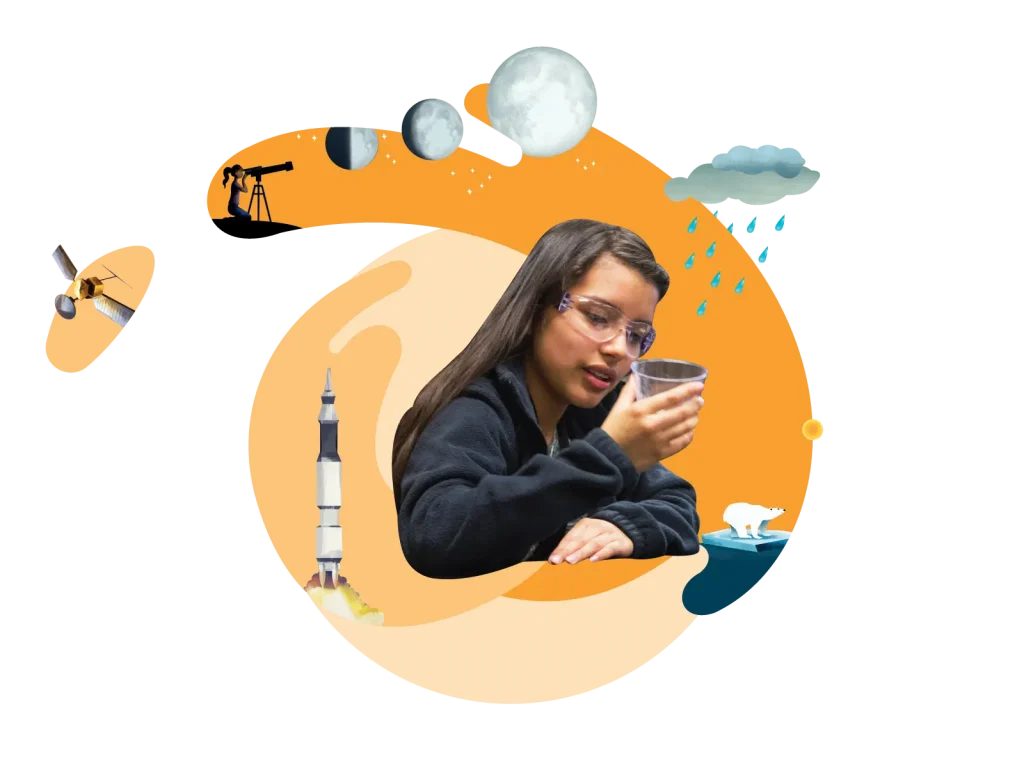
Stay connected!

Join our community and get new episodes every other Tuesday!

We’ll also share new and exciting free resources for your classroom every month.

What Ryan Rudkin says about science

“I like to make my class and my learning environment enjoyable. I know there’s other goals in mind… but at the end of the day, I want to come back and I want [students] to come back. It’s so rewarding as a teacher to see these kids that are just on fire… and you know that one day they’re going to go off and do amazing things. ”

– Ryan Renee Rudkin

Middle school science teacher

Meet the guest

Ryan Rudkin is a middle school science educator near Sacremento, California. Although she originally thought she would teach elementary students, Ryan connected with middle school and never looked back. Now in her 16th year in the classroom, Ryan also supports teachers in her district with professional development. Ryan’s favorite part of teaching science is seeing students grapple with concepts and explore phenomena.

A woman with shoulder-length blonde hair smiles at the camera, wearing earrings and a dark top. The background is blurred green and gray.

About Science Connections: The podcast

Welcome to Science Connections: The Podcast! Science is changing before our eyes, now more than ever. So…how do we help kids figure that out? We will bring on educators, scientists, and more to discuss the importance of high-quality science instruction. In this episode, hear from our host Eric Cross about his work engaging students as a K-8 science teacher.

S5.E6. Why skepticism is essential to the Science of Reading, with Dr. Claude Goldenberg

To view this protected page, enter the password below:


S3 – 03. Math professional learning experiences with Elham Kazemi

Podcast episode poster for "Math Teacher Lounge" featuring Elham Kazemi, a Mathematics Education Professor at the University of Washington.

How do we continue to grow and be more reflective about our own teaching? In this episode, Bethany Lockhart Johnson and Dan Meyer chat with Elham Kazemi to explore how to look at teaching as a collaborative experiment. Moving more toward analyzing student thinking and how that contributes to teaching itself, leaves more space for one’s own understanding of math to grow throughout your career. When one revises their teaching based on the data we’re collecting from students and peers, this allows us to be both teachers and learners forever.

Explore more from Math Teacher Lounge by visiting our main page.

Download Transcript

Dan Meyer (00:04):
Hey folks, welcome to math teacher lounge. My name is Dan Meyer

Bethany Lockhart Johnson (00:07):
And I’m Bethany, Lockhart Johnson.

Dan Meyer (00:09):
And this is the teacher learning week. We’re thinking this week about how we grow as teachers. And to start with, I just wanted to ask Bethany, uh, first Bethany, how are you doing? And second <laugh>. Um, what is, what, what has been your like most favorite and least favorite, most effective least effective professional learning experience when you were a classroom teacher?

Bethany Lockhart Johnson (00:30):
I think for me, most effective was definitely when I could use it right away. Right. Whatever we were talking about, whatever we were learning, like I got to go put it into practice. Sure. Uh, I, I remember we did something where we designed a lesson and then we went and taught it like one person taught it and the rest of the people watched. And then we kind of like got to workshop it, which that was like a one off the fact that we got to go out of our classroom and go observe somebody teaching. It was gold. It was gold. Um, so that was probably the most effective, because there was so much opportunity for reflection and least effective was something that felt like just completely unconnected to, you know, kind of either so theoretical that it wasn’t like touching on what we were navigating right there in the classroom. I don’t know. What about you? What can you think of times that, are you gonna say times you led a PD? Those were the most effective?

Dan Meyer (01:26):
Yeah. My favorite ones are my sessions, of course. But if I had to throw those out for a second, um, yeah, I, I like, I want, I want both, I want it all. I want the, um, the big ideas that take a long time to settle in that also have like small bits that can carve off and use relatively quickly to test my understanding of the ID is, yeah. I’ve had some, some PD where I’m like, this is very relevant to tomorrow. And I also don’t care. Like for instance, like how to use the CD, the, the, like the, the software, you know, on the, on my curriculum, for instance, it’s like, okay, yeah, this is just a little, little too practical. You know what I’m saying? I want some bigger ideas to chew on. Um, I would also say like, I love my favorite PD by a long was writing up thoughts about how the day went and putting that on the internet in a public place that we used to call a blog and where people would come along, cuz there was like 10 blogs and like, tell me like that’s no good.

Dan Meyer (02:16):
Like the thing that you like is not a thing you should like, here’s the thing you should like instead, or try instead, or just this weird community that sprung up, you know, when I was, uh, starting to teach relatively new teacher and uh, I feel like I grew a lot

Bethany Lockhart Johnson (02:28):
Go back to this idea blog. If people would call you, they’d call you on the phone. What, what
Dan Meyer (02:32):
Was they would fax me? They, it would be a fact. So

Bethany Lockhart Johnson (02:35):
Fax,

Dan Meyer (02:36):
I got it. Fax a comment. Yeah. Got it. So, uh, that’s, that’s Bethany and I, and we’re super excited to have people who have a bit broader of a perspective, a bit more of the land than what, what the two of us, um, think about with our own professional learning experiences.

Dan Meyer (02:52):
We’ve invited on an expert. We hope will help us understand alternate ways to do professional learning as teachers to grow as teachers besides, you know, all of us getting into the same room once every, every, uh, few months together, Elm Cosmi is a professor of mathematics education at the university of Washington, Elm studies, how strong professional communities develop in schools and how schools can be organized. So teachers learn from and what their students, this work is informed by equity oriented research on thinking, uh, on children’s mathematical thinking and classroom practice. She is co-author with Allison hints of intentional talk, which focuses on leading productive discussions in mathematics. And she edited coral counting and counting collections with Megan Frankie and Angela tau, which focuses on the importance of counting from preschool to fifth grade. Looking forward to a great chat with Elham, welcome Elham to the show.

Elham Kazemi (03:43):
Thanks for having me, my favorite topic ever to talk with you both about,

Bethany Lockhart Johnson (03:47):
I think something that I just deeply, deeply respected admire is that I feel like you are constantly sharing about how you are learning. You’re continue to learn, continue to, to try out new ideas and you do a very good job of like highlighting things that you’ve learned, whether that’s sharing it through a tweet or sharing it amongst colleagues or peers. And I, I just really appreciate that because I feel like being in the mathematics community with you, I feel like I grow by, I just like paying attention to like, Hey, she’s a learner, she’s done all these amazing things and thinks in these amazing ways and has shifted my thinking in such amazing ways. But she’s saying, Hey, I I’m still learning. So yeah. Hi, thank you. Thank you for your, I don’t know. We’re just glad to have you here.

Elham Kazemi (04:41):
Thanks. I do feel like the perpetual student, like I’ve never left school and I wonder like one day maybe I will, when I grow older, when I grow up, will I ever leave school? Maybe not.

Bethany Lockhart Johnson (04:52):
<laugh>

Dan Meyer (04:53):
Great. Let’s dig in. Yeah. So please tell us you partnered with a school for some professional learning that wasn’t the sort where you would go in and offer brilliant ideas and then leave. But rather it, it seemed like it was more of a job embedded sort, the sort of thing that might have a life of its own after, you know, after the, the grant ends or the program ends. Can you describe what it was you did and what the effect was?

Elham Kazemi (05:15):
I think I wanna first say that everything that I have done and experimented with as really the result of working with fabulous people, teachers, coaches, principals, other, um, colleagues and peers in the field who are constantly trying to work on what good teaching looks like and how you learn to do it. And mostly because we care about kids and we care about what students experience in the classroom. And we want kids to love school, to have school, be a place where they’re known, they’re loved, um, that they look forward to being in every day. And I think there’s that, um, the why that, that, um, per that makes you want to learn is really about the students and being, doing things in service of them. Because when, uh, as one of my colleagues said, when children thrive, teachers thrive. So what does it mean for us to thrive?

Elham Kazemi (06:06):
If we are focused on our kids’ experiences in schools, what we did at this, this particular school and a group of schools is kind of tap into a, all that curiosity and drive that teachers have to do a good job and to use their imaginations well, and to engage the actual ideas that children have in their classroom together, not separately, not like get a great idea and be inspired by it and then go figure it out by yourself, but be inspired by ideas and then try to figure them out together. Because, um, as you both know, very talented teachers, uh, who also have been inspired to change your classroom teaching. Once you figure something out or as you’re figuring it out, there’s all kinds of intricacies. Like I remember when I first learned about three act tasks, I thought what a brilliant idea, but it’s not so simple to try to enact the brilliance of it because you can simplify it too much or you can get stuck and not really know how do you move from one act to the next, or what’s the point of the third act?

Elham Kazemi (07:12):
Do you just like reveal the answer and that’s it. And then you move on. Um, how do you even do design the tasks to begin with all of those things, raise questions and working on them together, uh, and carving up that space and time to work on them together is sorely missing in schools. And so that’s what we were able to do with the schools that I parted and it is find the time and then design the structures so that teachers could, um, <affirmative> think about their teaching together and then also be in the classroom together with kids. So the kids see that we are also learning to be responsive to them. That’s the point. So we have to work stuff out when kids are present, which is the part that usually trips a lot of people up.

Bethany Lockhart Johnson (07:55):
Well, that to me is I think the part that shifted my teaching and continues to is this, it is a culture shift to tell your students, to invite your students into your learning, to tell them I’m, I’m learning too. It was an invitation to, to be vulnerable in a way that I think sometimes teachers are very afraid to be vulnerable. Uh, if they don’t know what the student response is gonna be, or they don’t know, they don’t wanna seem like they don’t know the answers or they don’t know how to figure out a problem. I think that’s a real shift in the, in the culture for, for compared to maybe what we, we experienced growing up.

Dan Meyer (08:33):
I hated not knowing the answer to a math problem. I admitting I, I was uncertain with the mathematics, but to admit that I am like a, a work in aggress as a teacher, feels like an extra admission, an extra layer of humility, which is, I don’t know, it’s a really special thing that you were up to with that school. I’d love to hear like about specific structures that you worked with to help make that transition feel, you know, more natural, more welcoming, more productive.

Elham Kazemi (08:58):
So, I mean, you probably have experienced common planning time, right? This is a thing that often happens for us teachers. I think that common planning time looks a lot sometimes like, uh, what are we gonna do on Monday, Tuesday, Wednesday? Okay. What do we need? What are the materials we need? Who is gonna do that? Will you write this? And that’s what kind of common planning time, and then it’s over. And then you might see each other at lunch and say, well, how did that go? And you’ll talk a little bit about it, but common planning time and learning labs, which is sort of what the, what we call the, the PD that we designed means. Okay. So let’s take three act task. We, we write a little bit about it. We’ve seen a couple, but okay. What would it really mean to plan this particular one?

Elham Kazemi (09:42):
So common planning time is thinking like, how are we gonna launch that first act? What are we actually gonna say? What do we think the kids are gonna say? Why would we say it that way? What if they say something else? Um, and then, okay, so what does it actually sounds like to transition from act one, to act two? What might we say, what would happen with this particular task and actually getting into the details of how you imagine, like, what, what you would do when you were actually planning the specifics of a particular lesson, but leaving it loose enough that you’re not trying to make it perfect. And I think that’s the trick. So, so that you are not so invested, that goes in that particular way or that you fail. If it doesn’t go that way. Um, but that you have something you wanna learn together and trying out this three act task with a particular group of kids so that when you go into the classroom, first of all, you’ve all thought through the full R of the lesson.

Elham Kazemi (10:40):
And you’re curious enough about what’s gonna happen at particular points that you’ve left room for uncertainty and the taking of some risks. So then when you go together into a classroom and kids start to say things that you didn’t anticipate you or, or they start to do something that you’re so jazzed about, that you didn’t anticipate that you’re like, this is the thing we should pursue more. You give each other permission to do that. You’re like, whoa, wait, did you hear what so? And so said, I think we should follow that road and see where it takes us, or, huh. Okay, hold on. And that’s what we call teacher timeouts, where you actually confer briefly and you tell the kids, this is a super special day. We’ve tried to design something. We’re very curious how you are gonna react to it. So we’re gonna try it out. And along the way, we might pause to get your ideas or for us to make some decisions and steer the ship in a, in a new directions and see what happens. So we’re gonna be sitting closely to you among you. Um, and you get to be our teachers today while we teach. That’s how it’s framed.

Bethany Lockhart Johnson (11:46):
Like, what were you seeing in professional development or in that wasn’t happening amongst teachers? Like where, where are the gaps? Because it feels like so much of your work. You’ve just looked in such nuanced ways at how teachers can continue to grow and be more reflective of their own teaching. And I’m just kind of curious where that came from or where you’re seeing the landscape.

Elham Kazemi (12:10):
Yeah, that’s a good question. Well, I, oh, everything I know about, children’s thinking to Megan Frankie and the beautiful body of work called CGI, but, um, one of the things that we noticed, there’s so many great CGI workshops, and even like all the seminars and conference presentations and amazing things that you can design to have engaging work time for teach in, in professional development, outside of their classroom, people get super jazzed, you know, they get, um, uh, they have meaningful experiences, but to contextualize that back into their classrooms with their own students is like where, where often I would see like, wait, the same group of teachers I just saw in my classroom or in either in math methods or in this PD seminar, or even myself, like noticing, like I have seen and thought about stuff a lot. But when I went to go do it with a particular group of kids, holy moly was that so hard. And I saw all kinds of new complexities that I didn’t anticipate. And if I were just left to my own devices, I might very easily say, whew, this seems a little too hard.

Bethany Lockhart Johnson (13:21):
Right,

Elham Kazemi (13:22):
Right. And that’s the thing that I always hated. I was like, oh, if only we had, or you, or if you watched somebody do a demo lesson and you saw something that was like, kind of cool that you wish you had done afterwards. I often this happened in reflections. I wish we had, because we weren’t allowed to interrupt each other during teaching. Cuz somehow that would be rude or that would undermine the teacher’s authority. But that’s only the way we frame it. If we say actually we’re all capable people. So a question we ask ourselves during instruction doesn’t mean you don’t know what you’re doing. It means actually we’re thinking together then the interruptions aren’t about undermining authority. They’re about thinking together.

Dan Meyer (14:04):
There’s a performative aspect to a lot of teaching. Like the like teaching feels like a performance and you don’t, the movie’s playing or there’s a play that’s going on. It feels like inappropriate to interrupt that in any way. Cause the performance is going and I, I love what this that’s. I love what this idea does to kind of, to redefine teaching is not a performance, but this, this co-constructed thing. Or if it’s a performance, it’s a performance, the stars, all of us, like we’re all a part of the cast and always a it’s always the dress rehearsal.

Elham Kazemi (14:30):
<laugh> it is like the dress rehearsal. Although some of my brilliant colleagues with backgrounds in drama and theater, Sarah Kavanaugh and Holly GU and Elizabeth dure, they actually were at a meeting together. And they talked about how this like breaks the fourth wall, you know, mm-hmm, <affirmative> like, which is out of theater, um, where the performer speaks to the audience, you know, I know you’re there and I have something to say to you. Yep. And I was like, well, we should, why can’t we do that in teaching? So we actually wrote a little paper, um, that’s called breaking the fourth wall as a way. That’s so cool as a metaphor for understanding and reframing what these interruptions could meet. Cuz we often get people when we about this for academic audience who say like, aren’t you using the children and what are the children gonna do while you just pause? Are they supposed to freeze? And uh, you know, while you talk about them, but it’s not really that it’s like, Hey students, we’re here because of you. So shouldn’t, we try to involve you and are decision making. To some extent, it’s not like we don’t know what we’re doing, but we’re doing things because we wanna advance your learning.

Bethany Lockhart Johnson (15:40):
I mean, I still remember the first time I did a teacher time out and it, it was, I, it was breaking the four, it was this like, okay, you’re gonna see what happens, kids like, look at my, my tap dances stopped. And you’re you mean like, you know, whoa, wait a second. And I think it is about how you frame it. Right? It’s a celebration of their thinking and you, you use the term ambitious teaching and it, to me that is such a joyful way to think about it.

Elham Kazemi (16:06):
It is risky. And you would never say anything to shame any student, no. Or to shame your colleagues. Clearly it’s not a about that kind of discussion. Right. And they’re so brief. They’re like, it, it seconds. It’s not like you’re wasting time. You’re actually trying to understand what’s happening here. And I’ve just had so many instances where something goes on. Um, like we were doing a growing patterns task in a classroom and the student built the fourth term and they built stuff that did not follow the pattern. And I was so confused. I, I just didn’t understand like what was going on. And one of the kids said, well, if you, if you did follow the pattern, that’s not her words. But you know, she’s like, well, if we built it this way, that would be too obvious. Because if you just, if you saw that and you’re like, oh, that lesson failed.

Elham Kazemi (16:59):
Now we, our kids don’t understand what patterns are. We did it. Like, we gotta pause here and we gotta say, and we’re like, well, what do you mean? Can you say more about that? And basically what they said is that, um, well, first of all, they’re, they’re right. A pattern could change at any time, but it’s like, it would be more interesting if they, they knew how many cubes it would take for the fourth term that it would be nine, but they’re like, Hey, let’s rearrange that nine in some cool new ways. <laugh> cause that’s more interesting. It was like more interesting to them if, if they didn’t keep the pattern. So like, you kind of had to wrestle with that in the moment <affirmative> with them. And that’s how they can actually be partners with you in the teacher, timeout.

Bethany Lockhart Johnson (17:40):
Right. That’s making it about them and their learning. It’s not about that. It’s not about your performance and like looking all shiny and, and I’ve got it all together and I know exactly how this lesson’s gonna go. It that’s so interesting.

Elham Kazemi (17:53):
And sometimes you pause and like some cuz somebody else who’s watching is noticing something about what the kids are doing. And while you’re, if you’re happen to be the person who’s upfront at the time leading, you’ve got so many things going on in your head that some times the person who’s just been sitting on the rug with the kids mm-hmm <affirmative> has noticed something. And they’re like, can I ask something right now? And that’s a great teacher timeout too. Mm. Because they’re interrupting you cuz they’re like, I think I, I wanna see what kids will say. If we ask this question next and those moments have been like amazing because someone has noticed something that another person hasn’t in the room and it’s been very helpful to illuminate how kids are processing something or what two ideas they could connect. That would be really powerful based on what we were hoping to learn that day or do with the kids that day.

Dan Meyer (18:47):
It’s like you have a bonus brain attached to you there in the room. Sounds really powerful. I wonder a couple about the student experience of this. I’m imagine if I was a student in the room and I heard the two teachers like kind of pause, take this time out and like talk about how interesting my thinking was like behind my back a little bit, like trying to strategize about something interesting. I had said, I just imagine I would, I would feel very good about like, that would be a very positive experience for me. Um, but I’m just curious, can you speak to how students reacted when they’re,

Bethany Lockhart Johnson (19:16):
You mean, if you had been a student in the class and you saw two teachers conferring about your work?

Dan Meyer (19:21):
Yeah. Yeah. Like I, my classmates had of thing that was like, it, it kind of like was so novel that it stymied the teachers and then they like had to pause and like talk about what are we doing? Oh, I don’t know. I can imagine that’d be like know a fun feeling. Maybe I just tell more about me than about the kids, but

Elham Kazemi (19:35):
<laugh> it points to like, how would you go about starting to do this work? Right. Because one is you do, you do have to tell kids, Hey, I’m here with so and so and so, and so, and so, and so it might be just two of you. It might be five of you. It might be more and you know how we’ve been working on X thing in class? Well, today we wanted to try this new thing and, but we’re not sure how it’s gonna go and we need, we need your feedback. Right. So here’s something that might happen. We might pause you, you, I mean, you really do directly tell the kids to do that. And then we’re gonna ask you how it felt and we’re gonna share those feelings with one another. So you do that, you do a little exit card or you,

Bethany Lockhart Johnson (20:19):
How, what felt the pause or how,

Elham Kazemi (20:22):
How, yeah. How did it feel that, how did this lesson go or how did a lesson, how did it feel when you heard, you know, ALM and Dan talk to each other, doing this lesson and they might say, Hey, it’s cool. It’s fun. Kids have definitely chimed in, in like, if we ask a question like, should we do this next or this, somebody will pipe in and say, do that, you know, do this thing. Instead. If, if you kind of pipe in to say, can I ask a question? They just turn to you and look at you and answer your question. Right. So, and we always thank them and we just like pump it up. Right? Like this is so cool because this is all about you. And usually when you say today, you’re gonna be our teachers, especially the little kids. They like get all giggly. Totally.

Bethany Lockhart Johnson (21:02):
Right.

Elham Kazemi (21:04):
Love it.

Bethany Lockhart Johnson (21:05):
You know, you, you were sharing about this really unique situation, which I wish it wasn’t as unique where you had the whole school involved, but how did that happen? And what if you don’t have the whole school involved? What if it’s just me in my grade level, who’s like, I kind of wanna try this, but what

Elham Kazemi (21:22):
<laugh>, I think you could start with your, a peer in your school or a colleague in your school. Yeah. I mean, it’s a little seed, right. And it’s a little seed and then you could make it grow. I also believe in starting small and growing, cuz you do have to invite people into a different way of thinking about what it means to learn together. So you need to experience it, um, in order to believe it.

Dan Meyer (21:49):
Yeah. It feels like we would not want to write off any student as like, oh, they just don’t wanna learn. I think a lot of, a lot of us just like don’t buy that, that there’s other reasons why people need that. A teacher shouldn’t like shouldn’t, that’s not true of students that they have been told they can’t learn or there’s various circumstances the same. I, I suppose the same as like should be true is true of teachers. Like no teacher doesn’t want to learn more about teaching is at least a helpful Axiom to use, to approach the work of teacher growth. And so maybe they, yeah, maybe I feel like I’m the only person in my school who wants to do this, but perhaps that’s not actually true. Perhaps it’s just a matter of creating an imagination or the right kind of enticement or I don’t know what, um, but to start small and grow from there makes a lot of sense.

Elham Kazemi (22:32):
I feel now, like it would be weird and a lot harder for me to invite someone to just come in and watch me teach and sit quietly in the back when I don’t know anything about what they’re thinking and wait until afterwards to get their opinion.

Bethany Lockhart Johnson (22:46):
Oh yes.

Elham Kazemi (22:47):
I would be much more willing to co-plan with someone so that we were both on the same page about what we were trying to do and then when you’re in the classroom with me. So that’s the other thing that’s important cuz I don’t think you can just be in the classroom together and I, you know, interrupt each other’s teachers, if you haven’t planned together, cuz you do have to have some common understanding of what are we trying to do here? Oh the

Dan Meyer (23:10):
Intent here.

Elham Kazemi (23:11):
Yeah. So I would definitely say don’t just show up in each other’s classroom and start interrupting each other. <laugh> if you don’t know what the heck is going on. Yeah.

Dan Meyer (23:21):
Yeah. I, I know that’s directed at one person on this call in particular. I hear that.

Elham Kazemi (23:25):
I know who we’re talking about, but you know, I would be way more intimidating for me if I was trying to do a three act task and Dan just came to watch me do it <laugh> and he hadn’t planned with me. He didn’t know why I selected that task. I had no opportunity to talk to him. Then it would be, Hey Dan, would you just like do this with me? Let’s think through this. Why would you do this then? What, what have you normally done? Oh, okay. Why have you done that? Right. And then to like, okay, let’s try it together. Um, and then, and then along the way, if I have questions, you’re there with me. So sometimes there is someone more experience like if right. And sometimes you’re both just like, I just don’t have that much experience with this. I’m learning this for the first time.

Elham Kazemi (24:04):
Right. And the beauty of the math ed community, whether it’s on Twitter or is that we’re kind of pretty accessible to each other. Right. So if I read something and I have a question about it, you bet I’m gonna reach out to the author <laugh> and say, I’ve been thinking about your work and this is what’s been coming up for us. Can you? So like, it definitely happened with hands down conversations. We tried it in the learning lab and we just couldn’t figure out like that. How do you intercede, like into the hands down conversation cuz the kids are supposed to have a conversation. So we had to like give Kaia and her co-author a few specific examples so they could help our thinking so that we could try it again. Right. And make it better. And I think that is, is what it means to be learning in community is that you use the resources more broadly.

Bethany Lockhart Johnson (24:52):
That’s a beautiful reminder too. And it also helps me feel a little better about all the messages I’ve sent you. Like what does this mean? Can you help me with this?

Elham Kazemi (24:59):
<laugh> I mean, that just makes you feel alive. <laugh> I think

Bethany Lockhart Johnson (25:06):
So. I think P part of the beauty of you talking about starting small is that it does give those of us who maybe aren’t seeing that those opportunities for collaboration reflected in our school culture, it gives us kind of some hope for like, wait, don’t just like, think you can’t start. I, how do you, how do you see, how do you see it growing? Or, or do you think like if you could magically <laugh> like wave your wand and, and create some shifts around, around, uh, the culture where folks are feeling isolated or maybe don’t feel like they have the needs to do this work. What could that look like?

Elham Kazemi (25:51):
Yeah. What could that look like? So time, like we need some imagination around the use of time in schools and I have seen some really amazing opportunities where teachers get to co-teach, which means that they really have to co-plan when, um, there’s a break in a regular school session and there’s like an intercession or like a, like an elective that, um, that doesn’t, I haven’t seen it happen a lot in public schools, but I have seen it happen a lot in independent schools where they’ll have like, stop, stop the presses. It’s like a drop everything and read, but it’s like a drop everything and do an R arts week. And then all the kids in the school get shuffled. So they into multiage groupings and the teachers get to plan something special for like the week. But you could start with like a day, which would at least get you to plan something together and try to teach together and be just in each other’s spaces. And I think that might be kind of an interesting way to start where you have to like mess with the schedule somehow. Cuz the schedule is the beast in schools

Bethany Lockhart Johnson (26:59):
Is kind of the first step. Like we are going to create a shared activity, a shared instructional goal, a shared like where do I start?

Elham Kazemi (27:09):
What, where do you start? I mean, there’s so many good books. We all read, start with something that grabs your imagination. That you’re like, if I got to do this in my class, I’d be so jazzed. And I think my kids would love it. Why would they love it? You know, whatever it is. There’s so many good ideas that people are instantly blogging about publishing, um, slow reveal graphs. I love those two. I have like all these things. I was like, I would love to try these out, but I, I gotta do them with somebody cuz I need a sounding board about like how, what does it mean to do it well? And what does it mean to just do it at the surface level and do it a, you know, in a kind of a crappy way. And we don’t wanna do a crappy job. We wanna do a good job, but you have to start, you have to start sometimes in an awkward, crappy way. Like, you know, and get past that stage. Cause often we try a bunch of stuff, eh, and then we drop it. But like you gotta work on it to make it really

Bethany Lockhart Johnson (27:58):
Good. And if you’ve already tried it and it didn’t go so well it’s, this could be an invitation, like, you know, it doesn’t mean give up on the idea. It means like, Hey let, let’s let’s collaborate. Let’s you know, come into my class. Let’s co plan this.

Elham Kazemi (28:10):
So I would challenge people to think about the schedule. <laugh> try to do something just a little bit different. You know, like when we do learning labs, people are like, well, how do you do that? And there’s no money for it. Actually. We just use our money in a slightly different way to make or that everybody four people get a sub, which I know right now, sub shortages is crazy, crazy, but then combine your classes or do something different. Yeah. You know, um, involve people differently somehow in your, in your school environment to get that time,

Bethany Lockhart Johnson (28:43):
Really see this as a priority. This is a, this is there’s is intense value in this time to collaborate. Yeah.

Elham Kazemi (28:51):
Yeah. There’s so many side benefits for, I think for kids and teachers when you’re able to do this.

Dan Meyer (28:58):
Yeah. You’ve heard of folks. Uh, usually our, our math teacher challenge, our lounge challenge has been, uh, pedagogical in nature or a new CU. And uh, this is a different kind of one. This is, uh, go, go be a Rabel Razr go Rouse rabble at your, uh, front office and figure out the right way to get some funding or some time or shuffle a master schedule in such a way that you have collaboration, time to plan to co-teach to interrupt one another and uh, let us know how it goes. We are super excited and super interested in all of that. Thank you, uh, Elham for being with us here today and sharing all of your wisdom about how teachers grow.

Elham Kazemi (29:36):
Thanks for reminding me. You too loved

Bethany Lockhart Johnson (29:38):
It. We’re never done learning. We’re never done learning. Nope.

Bethany Lockhart Johnson (29:44):
Aha. Thank you so much for joining us in the lounge. I think all of us have sat through effective and ineffective professional learning sessions and just helping us to envision of how this can truly help PD can truly transform our classrooms. It is it’s exciting. It’s exciting. And I think we’ve all learned a lot from our conversation. So thank you. Thank you. Thank you. And don’t forget, you can connect with us in the lounge on Facebook at math teacher lounge or on Twitter at MTL show. Let’s keep this conversation going. Keep it going. Thanks so much for joining us. Thanks

Speaker 4 (30:20):
Everybody. <silence>.

Stay connected!

Join our community and get new episodes every other Tuesday!

We’ll also share new and exciting free resources for your classroom every month.

What Elham Kazemi says about math

“ When children thrive, teachers thrive. So what does it mean for us to thrive if we are focused on our kids’ experiences at school?”

– Elham Kazemi

Professor of Mathematics Education, University of Washington

Meet the guest

Elham Kazemi is a professor of mathematics education at the University of Washington. She studies how strong professional communities develop in schools and how schools can be organized so teachers learn from and with their students. This work is informed by equity-oriented research on organizational learning, children’s mathematical thinking, and classroom practice.  She is co-author with Allison Hintz of Intentional Talk, which focuses on leading productive discussions in mathematics. She also edited Choral Counting and Counting Collections with Megan Franke and Angela Turrou, which focuses on the importance of counting from preschool to 5th grade.

Follow Elham on Twitter

A woman with long dark hair and streaks of gray smiles at the camera, wearing a black top and necklace, with a blurred green and pink outdoor background—ideal for sharing in a math teacher lounge or featuring math teacher resources.
A graphic with the text "Math Teacher Lounge with Bethany Lockhart Johnson and Dan Meyer" on colored overlapping circles.

About Math Teacher Lounge: The podcast

Math Teacher Lounge is a biweekly podcast created specifically for K–12 math educators. In each episode co-hosts Bethany Lockhart Johnson (@lockhartedu) and Dan Meyer (@ddmeyer) chat with guests, taking a deep dive into the math and educational topics you care about.

Join the Math Teacher Lounge Facebook group to continue the conversation, view exclusive content, interact with fellow educators, participate in giveaways, and more!

Meet the Illustrator Edel Ferri

We believe that all students have the right to read complex texts and engage in rich classroom discussions. They should also see themselves reflected and experience new worlds through reading.

This commitment guides our text selection, unique artwork, and dedication to reaching every student where they are.

A woman in a red blazer and floral blouse speaking during an interview, with illustrations and photos in background. play button icon overlay.
Young woman in a red blazer smiling at camera, holding a purple tumbler, seated at a desk with sketches on the wall behind her.

What is your name and pronoun?
Edel, she/her

What would we never be able to know about you, just by looking at you?
I have an extensive knowledge of reef aquariums. I also do a really good Jerry Seinfeld impression.

Where are you from?
I currently live in Greenpoint, Brooklyn. Throughout my life I’ve found myself constantly drifting between New York and New Jersey. I would spend many summers in the city as a child, as well as swimming and building sandcastles on the Jersey shore.

What is illustration?
Hm! The term itself is pretty expansive and ever changing, so this is a tough one. On a personal level, illustration is what happens when art meets narrative. It can take many forms: comics, editorial, storyboarding.

How does that differ from “fine art”?
Oof. I could write an entire book on this. For the sake of brevity, I would say that my main take would be that the line between illustration years that the terms could be interchangeable at this point.

Were you making art as a kid?
I’ve been drawing as long as I could hold a pencil in my hand. In many ways it was an escape, thinking up characters in my head, creating worlds where anything was possible. I continue to do that to this day.

Was your environment—your family, friends, teachers—supportive of your interest in art?
Growing up, I was mostly told to stop by many adults and even some of my peers, but I’m glad I didn’t. I am very thankful to have had close friends and parents that understood that art is what made me feel whole, and encouraged me to continue.

Illustration of a stylized white hand casting a spider web, followed by an animated warrior character wielding a spear.

The illustrating of: The Space Race

What is this unit about?
This unit has absolutely revived that wonder and fascination in me. It’s about the technological competition that took place between two superpowers, the United States and the USSR, to get human beings into space. There’s something so inspiring about the space race, ethics; the fact that our different societies were constantly looking to the future with such hope. That all feels so distant now.

How did you relate to the subject matter?
When I was a kid I was extremely fascinated by astronomy, I remember in particular buying an
atlas-sized book on nebulae, thinking that they were the most beautiful thing I’ve ever seen.

A hand holds a postcard reading "Greetings from Mars" with an image of a Mars rover on a rocky surface; simple sky elements are in the background.
Four illustrated panels show animals in space helmets floating progressively farther from a broken spaceship, ending with them drifting in open space against a starry background.
A sequence of four images shows a satellite with antennas orbiting Earth, progressing from a rough sketch to a detailed, colored rendering.

Season 9, Episode 3

S9 E3: Know the non-negotiables in a program aligned to the Science of Reading, with Kari Kurto

On this episode, Kari Kurto, National Science of Reading Project Director at The Reading League, discusses The Reading League’s curriculum evaluation tool, which assesses a curriculum’s research-based practices. Kurto's conversation with Susan Lambert touches on her background teaching students with dyslexia, the non-negotiables in curriculum aligned to the Science of Reading, and how educators can use information about an evaluated curriculum to inform instruction. While Kurto stresses that no program is perfect, she and her colleagues have worked to equip educators with a tool to more easily and objectively access information when making curriculum choices.

Meet Our Guest(s):

Kari Kurto

Kari Kurto

Kari Kurto is the National Science of Reading Project Director at The Reading League. She directs all work related to The Reading League Compass, the Curriculum Evaluation Guidelines, and the Curriculum Navigation Reports. She also leads work to support multilingual and English learners and runs several communities of practice. Kari is a Path Forward advisory group member and has presented to schools, districts, professional organizations, and state education departments. She formerly worked as a literacy specialist at the Rhode Island Department of Education, leading statewide efforts to implement the Rhode Island Right to Read Act. Kari is an Orton Gillingham practitioner who worked at Middlebridge School in Narragansett, RI and Rawson Saunders School in Austin, TX. Before her career in education, Kari worked as a casting director in Los Angeles. She and her three wonderful children live in southern Rhode Island.

Meet our host, Susan Lambert

Susan Lambert is the Chief Academic Officer of Elementary Humanities at Amplify, and the host of Science of Reading: The Podcast. Throughout her career, she has focused on creating high-quality learning environments using evidence-based practices. Lambert is a mom of four, a grandma of four, a world traveler, and a collector of stories.

As the host of Science of Reading: The Podcast, Lambert explores the increasing body of scientific research around how reading is best taught. As a former classroom teacher, administrator, and curriculum developer, Lambert is dedicated to turning theory into best practices that educators can put right to use in the classroom, and to showcasing national models of reading instruction excellence.

Portrait of a woman with short blonde hair, wearing glasses, a black top, and a necklace. She is smiling and facing the camera.

Quotes

“[On dyslexia instruction] It's instruction that we know that all students should have, because that's the instruction that is most aligned to the scientific evidence. But it's instruction that they need with multiple practice opportunities and multiple repetitions.”

—Kari Kurto

“Just because we have this report and we say, ‘All right, this curriculum has all the stuff,’ if you don't teach it, then you're a red flag of your own.”

—Kari Kurto

“Thank you to those folks who have been listening. Thank you to the folks who are curious about learning more, those who have spent years implementing and tweaking and improving literacy outcomes for our country's next generation. I mean, that's huge.”

—Kari Kurto

“It's a movement of improvement, right? We're constantly striving to improve. And don't give up. Share your stories; share your success stories.”

—Kari Kurto