Showing results for couches

Welcome, California Reviewers for 6–8!

BACK TO WELCOME PAGE

We’re so honored you’re considering Amplify Science California—the #1 most adopted NGSS curriculum across the state.

  • It meets 100% of the NGSS.
  • It has demonstrated effectiveness across all student groups.
  • It helps students make the shift from learning about to figuring out scientific concepts.
  • It empowers students to think, read, write, and argue like real scientists and engineers each and every day.
  • It can flexibly adapt to remote and hybrid learning scenarios.
A person wearing safety goggles examines a glass of water. The background includes illustrations of space exploration, a rocket, a polar bear, and weather symbols such as clouds and raindrops.

Overview

Developed by UC Berkeley’s Lawrence Hall of Science, our program features:

  • phenomena-based approach where students construct a complex understanding of each unit’s anchor phenomenon.
  • A blend of cohesive storylines, hands-on investigations, rich discussions, literacy-rich activities, and digital tools.
  • Newly crafted units, chapters, lessons, and activities designed to deliver true 3-dimensional learning.
  • An instructional design that supports all learners in accessing all standards.

Hear what these educators have to say about the program. >

Explore your grade

Get started by watching this class share what they’re figuring out with Amplify Science. >

Select a grade level below to learn more about how we make rich learning accessible to all students at every grade.

Grades 6–8 Integrated

Grades 6–8 Domain

Welcome, Middle School Science Reviewers!

Thank you for taking the time to review Amplify Science for grades 6–8. On this site, you’ll find all the resources you need to learn more about this engaging and robust NGSS program. Plus, we make it easy to experience our program firsthand with a live demo account that features our interactive learning platform.

A person in protective glasses examines a glass of water, surrounded by illustrations of a rocket, telescope, polar bear, clouds, rain, and moon phases on a colorful abstract background.

Overview

With Amplify Science, students don’t just passively learn about science concepts.

No matter where your students are learning—whether at school or at home—they take on the role of scientists and engineers to actively investigate and make sense of real-world phenomena. They do this through a blend of cohesive and compelling storylines, hands-on investigations, collaborative discussions, literacy-rich activities, and interactive digital tools.

Listen to these educators share how the program empowers students to think, read, write, and argue like real scientists and engineers every day.

EdReports All-Green

Amplify Science for grades K–8 has been rated all-green by EdReports.

Read the review on EdReports.

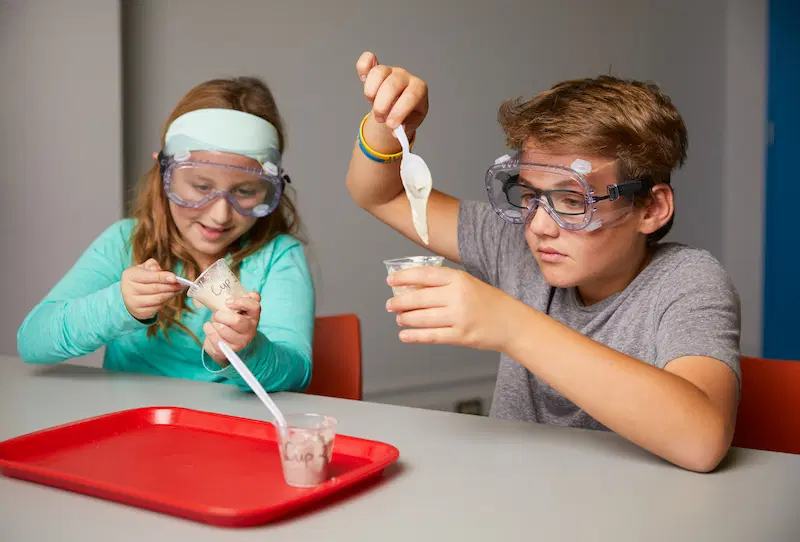
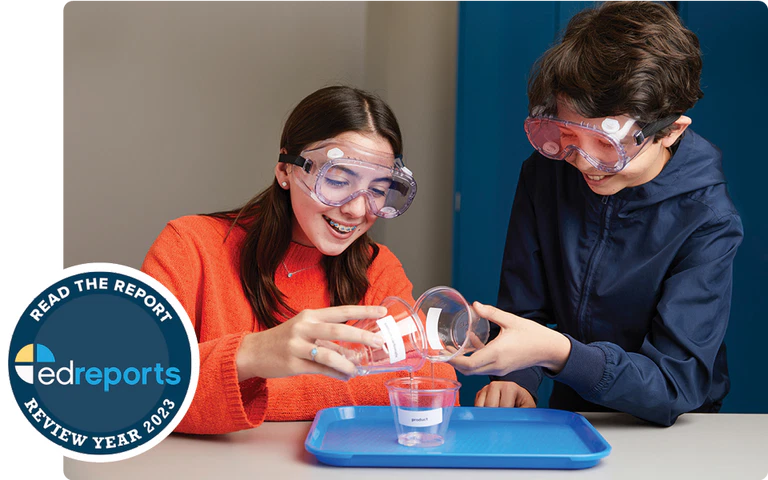
A boy stirs a clear liquid in a plastic cup while a girl smiles beside him in a classroom with students and a teacher in the background. EdReports badge is overlaid in the corner.

Program structure

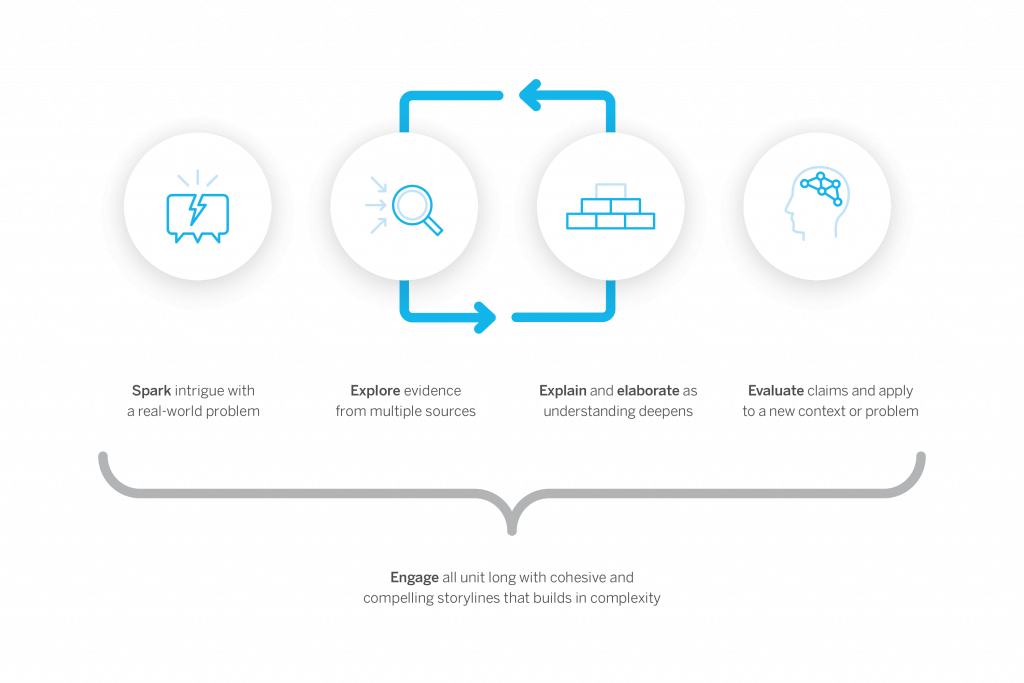
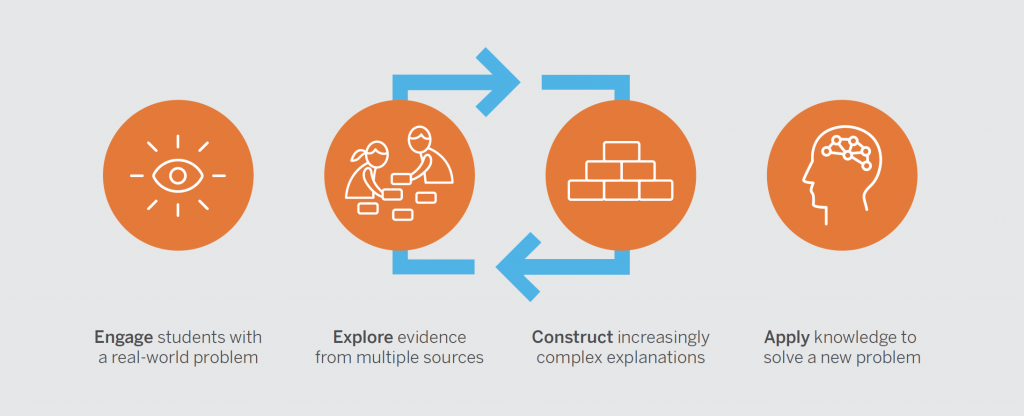
Our cyclical lesson design ensures students receive multiple exposures to concepts through a variety of modalities.

As they progress through the lessons within a unit, students build and deepen their understanding, increasing their ability to develop and refine complex explanations of the unit’s phenomenon. It’s this proven program structure and lesson design that enables Amplify Science to address 100% of the NGSS in fewer days than other programs.

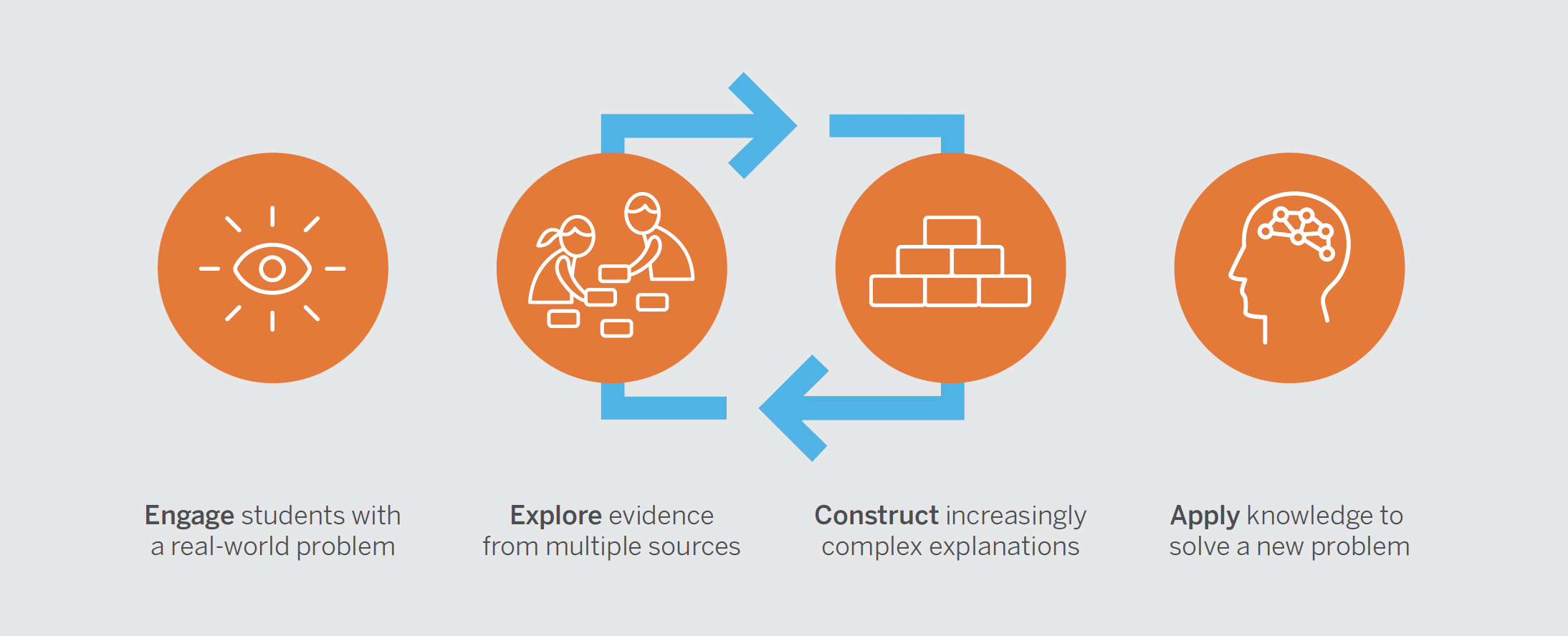
Graphic showing a research process with four steps: spark intrigue with a real-world problem, explore evidence, explain and elaborate, and evaluate claims, connected in a cycle with arrows.

Unit Sequence

Our lessons follow a structure that is grounded in regular routines while still being flexible enough to allow for a variety of learning experiences.
 
In fact, our multi-modal instruction offers more opportunities for students to construct meaning, and practice and apply concepts than any other program. What’s more, our modular design means our units can be flexibly arranged to support your instructional goals.

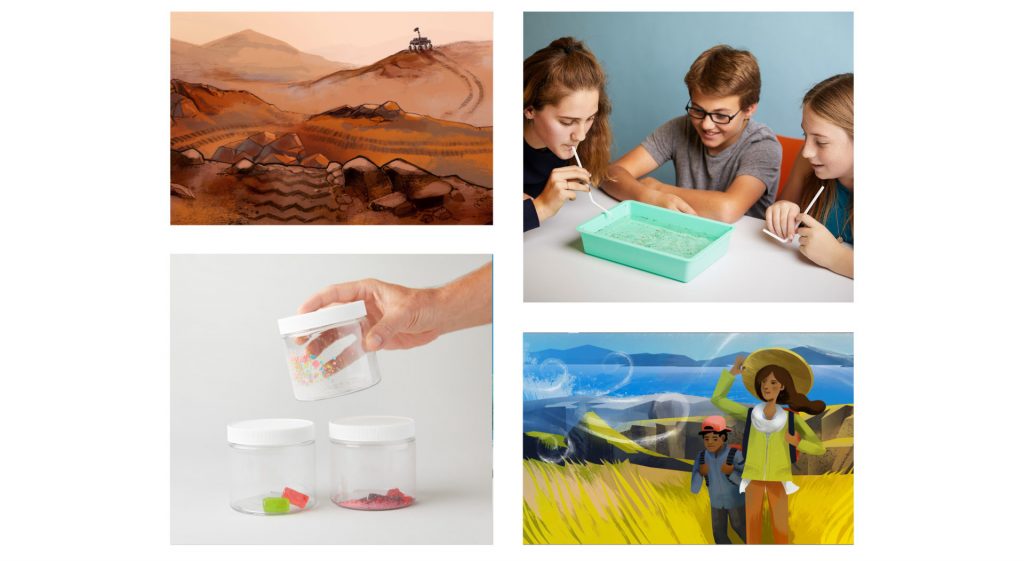
Collage of four images: a watercolor desert scene, three kids examining a gadget, a hand placing beads into a container, and a woman in a sunhat in a stylized field.
Abstract art with vibrant colors featuring a yellow silhouette of a person holding a book against a background of geometric shapes, swirling patterns, and bold textures.

Unit 1

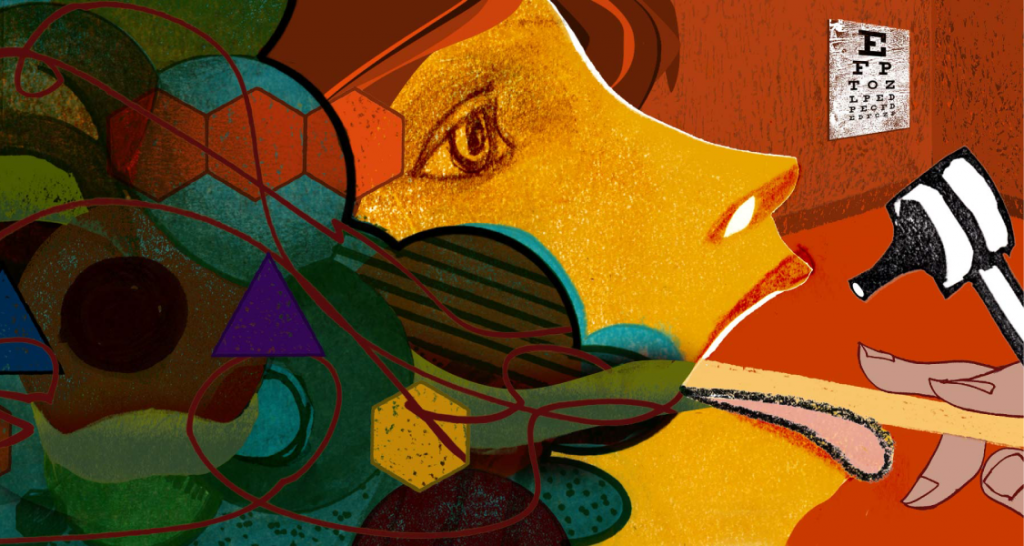
Microbiome

Domain: Life Science

Unit type: Launch

Student role: Microbiological researchers

Phenomenon: The presence of 100 trillion microorganisms living on and in the human body may keep the body healthy.  

Abstract artwork of a person's side profile with geometric shapes and colorful patterns flowing from the head, holding a small sledgehammer. A vision chart is visible in the corner.

Unit 2

Metabolism

Domain: Life Science

Unit type: Core

Student role: Medical researchers

Phenomenon: Elisa, a young patient, feels tired all the time.  

Orange abstract background with hexagonal shapes featuring icons of a bar chart, plant, safety vest, test tube, peach, and stethoscope.

Unit 3

Metabolism Engineering Internship

Domains: Life Science, Engineering Design

Unit type: Engineering internship

Student role: Food engineers

Phenomenon: Designing health bars with different molecular compositions can effectively meet the metabolic needs of patients or rescue workers.  

An image showing a graphic of spiders of different colors with distinct leg and body patterns, including brown, yellow, and blue variations. The background is a dark, textured surface.

Unit 4

Traits and Reproduction

Domain: Life Science

Unit type: Core

Student role: Biomedical students

Phenomenon: Darwin’s bark spider offspring have different silk flexibility traits, even though they have the same parents.  

Illustration of a person in a red hat and fur-lined coat with eyes closed, surrounded by large orange circles on a dark background.

Unit 5

Thermal Energy

Domain: Physical Science

Unit type: Core

Student role: Thermal scientists

Phenomenon: One of two proposed heating systems for Riverdale School will best heat the school. 

Abstract artwork depicting a bright sun with blue and orange swirling patterns next to green hills under a sky with shades of blue, orange, and red.

Unit 6

Ocean, Atmosphere, and Climate

Domains: Earth and Space Science, Physical Science

Unit type: Core

Student role: Climatologists

Phenomenon: During El Niño years, the air temperature in Christchurch, New Zealand is cooler than usual.  

Illustration of a village with houses, fields and mountains under a cloudy sky with waves of wind or rain.

Unit 7

Weather Patterns

Domains: Earth and Space Science, Physical Science

Unit type: Core

Student role: Forensic meteorologists

Phenomenon: In recent years, rainstorms in Galetown have been unusually severe.  

A polar bear stands on a small ice floe in the ocean with an orange sun in the sky and distant icy mountains in the background.

Unit 8

Earth’s Changing Climate

Domains: Earth and Space Science, Life Science

Unit type: Core

Student role: Climatologists

Phenomenon: The ice on Earth’s surface is melting.  

Abstract geometric design in shades of blue and purple featuring a hexagon with icons of a building, wrench, molecules, sun, paint can, and screwdriver.

Unit 9

Earth’s Changing Climate Engineering Internship

Domains: Earth and Space Science, Engineering Design

Unit type: Engineering internship

Student role: Civil engineers

Phenomenon: Designing rooftops with different modifications can reduce a city’s impact on climate change.  

A barren, rocky desert landscape with rover tracks leading to a distant vehicle on a hill under a hazy sky.

Unit 1

Geology on Mars

Domain: Earth and Space Science

Unit type: Launch

Student role: Planetary geologists

Phenomenon: Analyzing data about landforms on Mars can provide evidence that Mars may have once been habitable. 

Two prehistoric reptiles with long snouts and tails are near the shore, one on land and one in water, with plants, rocks, and an island in the background.

Unit 2

Plate Motion

Domain: Earth and Space Science

Unit type: Core

Student role: Geologists

Phenomenon: Mesosaurus fossils have been found on continents separated by thousands of kilometers of ocean, even though the Mesosaurus species once lived all together.  

Geometric design featuring a telescope, mountain, sound waves, and cosmic elements on a purple hexagonal background.

Unit 3

Plate Motion Engineering Internship

Domains: Earth and Space Science, Engineering Design

Unit type: Engineering internship

Student role: Mechanical engineering interns

Phenomenon: Patterns in earthquake data can be used to design an effective tsunami warning system.  

Illustration of a cross-section of Earth showing a volcano near the ocean. Trees, mountains, and clouds are visible above, with subterranean layers below.

Unit 4

Rock Transformations

Domain: Earth and Space Science

Unit type: Core

Student role: Geologists

Phenomenon: Rock samples from the Great Plains and from the Rocky Mountains — regions hundreds of miles apart — look very different, but have surprisingly similar mineral compositions.  

Illustration showing the stages of melting an orange popsicle: whole, partially melted, more melted, and almost completely melted, with wooden sticks, on a purple background.

Unit 5

Phase Change

Domains: Physical Science, Earth and Space Science

Unit type: Core

Student role: Chemists

Phenomenon: A methane lake on Titan no longer appears in images taken by a space probe two years apart

Green geometric background with a hexagonal emblem containing a parachute icon, ruler, bandage, and stacked layers on a gradient pattern.

Unit 6

Force and Motion Engineering Internship

Domains: Engineering Design, Physical Science

Unit type: Engineering internship

Student role: Mechanical engineering interns

Phenomenon: Designing emergency supply delivery pods with different structures can maintain the integrity of the supply pods and their contents.  

Abstract digital artwork featuring numerous red and gray circles overlapping a split background of blue and light purple, creating a dynamic and energetic composition.

Unit 7

Chemical Reactions

Domains: Physical Science, Life Science, Earth and Space Science

Unit type: Core

Student role: Forensic chemists

Phenomenon: A mysterious brown substance has been detected in the tap water of Westfield.  

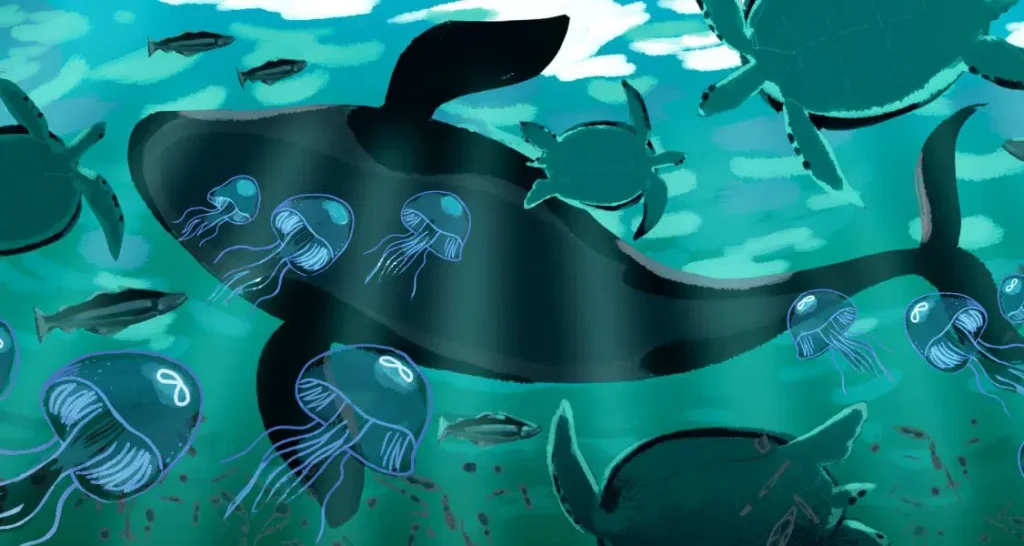
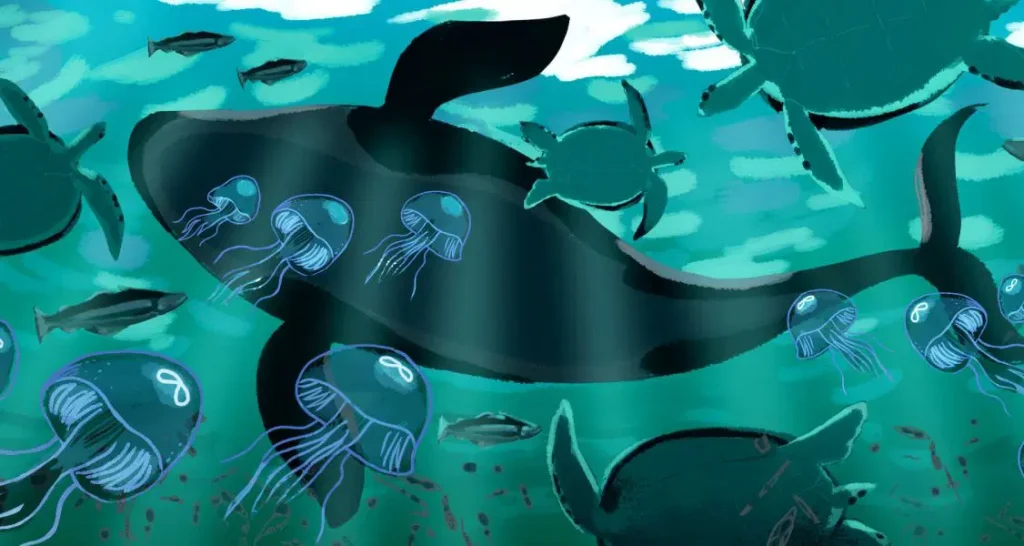
An illustration of a whale with jellyfish and turtles from Amplify Science

Unit 8

Populations and Resources

Domains: Life Science, Earth and Space Science

Unit type: Core

Student role: Biologists

Phenomenon: The size of the moon jelly population in Glacier Sea has increased. 

Low-poly landscape with trees and mushrooms. A fox sniffs the ground, a rabbit sits nearby, and mountains and sun are in the background.

Unit 9

Matter and Energy in Ecosystems

Domains: Life Science, Earth and Space Science, Physical Science

Unit type: Core

Student role: Ecologists

Phenomenon: The biodome ecosystem has collapsed.  

Two people climbing rocky terrain; illustrations show a hiking boot and a belt with gear.

Unit 1

Harnessing Human Energy

Domains: Physical Science, Earth and Space Science, Engineering Design

Unit type: Launch

Student role: Energy scientists

Phenomenon: Rescue workers can use their own human kinetic energy to power the electrical devices they use during rescue missions.  

A spacecraft approaches and docks with a space station featuring large blue solar panels, set against a backdrop of outer space.

Unit 2

Force and Motion

Domain: Physical Science

Unit type: Core

Student role: Physicists

Phenomenon: The asteroid sample-collecting pod failed to dock at the space station as planned.

Green geometric graphic featuring icons: a baby, thermometer, layers, medical alert, and a flame.

Unit 3

Phase Change Engineering Internship

Domains: Engineering Design, Physical Science

Unit type: Engineering internship

Student role: Chemical engineering interns

Phenomenon: Designing portable baby incubators with different combinations of phase change materials can keep babies at a healthy temperature.  

Illustration of a roller coaster filled with people, hands raised, going down a steep track against a bright blue sky with clouds.

Unit 4

Magnetic Fields

Domain: Physical Science

Unit type: Core

Student role: Physicists

Phenomenon: During a test launch, a spacecraft traveled much faster than expected.  

Illustration of Earth with arrows and wavy lines representing solar radiation entering the atmosphere, showing a focus on the Asia-Pacific region.

Unit 5

Light Waves

Domains: Physical Science, Life Science, Earth and Space Science

Unit type: Core

Student role: Spectroscopists

Phenomenon: The rate of skin cancer is higher in Australia than in other parts of the world.

A city skyline at night with a prominent full moon, stars in the sky, and a bridge silhouette on the left.

Unit 6

Earth, Moon, and Sun

Domains: Earth and Space Science, Physical Science

Unit type: Core

Student role: Astronomers

Phenomenon: An astrophotographer can only take pictures of specific features on the Moon at certain times.  

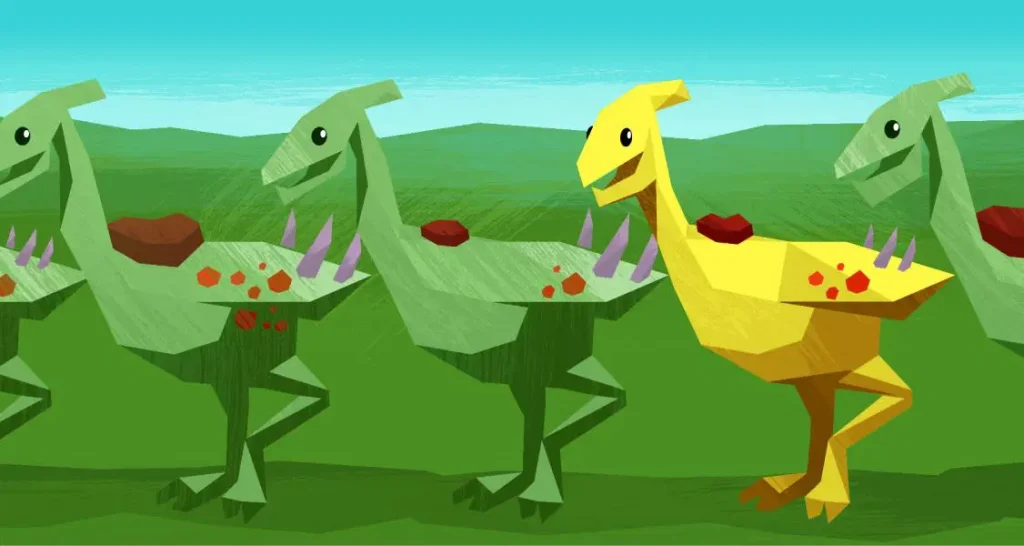
Four low-poly dinosaurs with missing body sections are standing in a row; one is yellow, and the others are green. They have purple spikes and red patches on their bodies.

Unit 7

Natural Selection

Domains: Life Science, Earth and Space Science

Unit type: Core

Student role: Biologists

Phenomenon: The newt population in Oregon State Park has become more poisonous over time.  

Red geometric background with icons including a mosquito, DNA strand, bar chart, and world map inside a hexagon.

Unit 8

Natural Selection Engineering Internship

Domains: Engineering Design, Life Science

Unit type: Engineering internship

Student role: Clinical engineers

Phenomenon: Designing malaria treatment plans that use different combinations of drugs can reduce drug resistance development while helping malaria patients.  

Two giant tortoises with long necks stand near water; one tortoise feeds on leaves from a tree while the other is near dense vegetation.

Unit 9

Evolutionary History

Domains: Life Science, Earth and Space Science

Unit type: Core

Student role: Paleontologists

Phenomenon: A mystery fossil at the Natural History Museum has similarities with both wolves and whales.    

Access program

Watch the video to the right plus the ones below showing you how to navigate our digital platform. When you’re ready, follow the instructions below to log into our live demo account.

  • Click the orange button below to access the platform.
  • Choose the resources you’d like to review.
  • Pick your grade level from the drop-down menu.
  • Scroll down to find additional grade-level resources.

Navigating an Engineering Internship (Part 1)

This Part 1 video demonstrates how Engineering Internship units invite students to design solutions for real-world problems as interns for a fictional company called Futura. In the process, they apply and deepen their learning from Core units.

Navigating an Engineering Internship (Part 2)

This Part 2 video demonstrates how to use the Futura Workspace to manage the immersive experience of the Engineering Internship units. This includes guidance on how to create student groups, how to review student work, and how to send students targeted feedback on their designs.

Navigating our reporting tools

Teachers of Amplify Science grades 6–8 have access to a feature called Reporting. When unit assessments are administered digitally, the Reporting tool enables teachers to analyze student performance on the unit assessments.

Differentiation post-assessment

Every core unit of Amplify Science 6–8 features a formal formative assessment opportunity at the mid-way point, or “Critical Juncture,” of the unit, which provides an important opportunity for differentiation.

Get in touch

Smiling man with short hair and a trimmed beard wearing a light blue collared shirt against a plain white background.

Have questions? Bob McCarty is standing by and ready to help.

Robert “Bob” McCarty
Senior Account Executive
(435) 655-1731
rmccarty@amplify.com

Welcome to the Baltimore Tutoring Project!

Baltimore City Schools and Amplify have partnered to provide virtual reading tutoring services. Amplify Tutoring aligns with the mission of Amplify in extending the reach of classroom teachers and supporting rigorous and riveting learning experiences for students. The purpose of this high impact tutoring is to support and accelerate student achievement in foundational literacy skills in order to address unfinished learning and achievement gaps. Classroom teachers teach foundational literacy skills in whole group and small group settings; Amplify tutoring is one way to support teachers in meeting the needs of their students by providing additional opportunities for struggling students to work in small groups with a tutor. 

Two students using a laptop in a classroom with "amplify" and "baltimore city public schools" logos displayed.

Welcome, Baltimore Educators!

We’ve created this website with resources that will help ensure the success of your high-impact tutoring program.

Log In to Amplify Tutoring

Logging in with a personal device

  1. If you’re already logged into Clever, go to tutor.amplify.com and click Log In with Clever. You will be taken directly to Amplify Tutoring.
  2. If you’re NOT logged into Clever, go to tutor.amplify.com and click Log In with Clever.
  3. Scan the Clever badge OR enter your school name and your Clever username and password and click Log in
Young girl with headphones using a laptop for online learning, interacting with a school login page.
Screenshot of a login page with options to log in with google, clever, amplify, and a qr code, highlighted by a red arrow pointing at the "log in with amplify" button.

Logging in with a shared device

  1. If you’re using a shared device, go to tutor.amplify.com and click Log In with Amplify.
  2. Enter your Amplify Reading username and password.
  3. Click Log in.

Logging in for the first time

After you log in for the first time, scroll down to complete the welcome tutorial.

Illustration of a computer monitor displaying a page labeled "abc" with a welcoming message, "welcome to the new blackboard!" above it.

Join a Tutoring Session

  1. After you log in, click your class.
  2. Click Blackboard Collaborate and then click Join session.
  3. In the list that displays, click your class name to join the scheduled session. Note: You can only join a session at the time it is scheduled. If the scheduled session isn’t in progress, you will see “Room disabled” under Blackboard Collaborate.
  4. If you’re joining for the first time, click Allow to give your browser permission to use the microphone and camera. Check to make sure each is working.
  5. To stop seeing onscreen instructions: click Later under Start Tutorial, then click X on the next prompt.

You should now be able to see and hear your tutor and the other students in your session.

Screenshot of an online education platform interface labeled "rmeyer tutoring grade 1 - test" with a menu on the left and a large red arrow pointing to "attendence.

Test Session Audio and Video

A minimalistic user interface of an online platform displayed on a laptop screen, showing a welcome message and options for uploading content and checking audio.
  1. To test audio and video, you must first join a session. Audio and video settings can only be tested in a session.
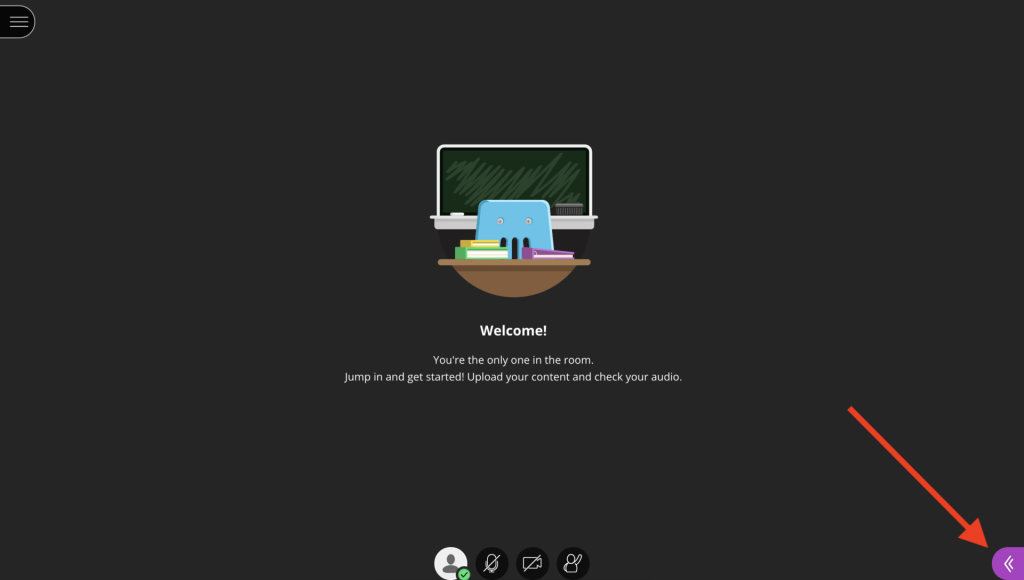
  2. Open the Collaborate panel by clicking the purple icon in the lower-right corner of the page.
  3. Click the My Settings icon in the panel that opens.
  4. Click Set up your camera and microphone.
  5. Test your microphone, and grant permission to your microphone if asked.
  6. Test your camera, and grant permission to your camera if asked.

Your tutor and the other students in your session should now be able to see and hear you.

Clearing cache and cookies

Here are instructions to clearing cache and cookies

Download PDF

Two women, one middle-aged and one younger, working together on a laptop in a library, with two other people in the background.

Webinars

View our latest webinars for more information

Amplify Tutoring – Scheduling Training Session for School POCs

https://youtu.be/H-3PZHVNBRY

Watch now

Amplify Tutoring Identifying Students Training

https://youtu.be/3eKSWtsMgQ4

Watch now

Student-friendly resources

Student log-in instructions

Here is a PDF of student log-in instructions

Download PDF

Two young girls, smiling and looking at a tablet together in a colorful classroom, engaged in an online reading program.

Additional resources

Three colleagues, one holding a laptop and another holding a tablet, discuss work in front of a wall covered in colorful sticky notes.

Amplify family letter

Here is an Amplify family letter for your use.

Download PDF

Student inventory of devices

How to obtain an additional inventory of student devices PDF

Download PDF

Boost Reading classroom of learning children reading program
An adult sits on a couch using a laptop while a child next to them does homework in a notebook.

Family Letter- Pivoting to Remote Learning

Here is an Amplify Family Letter- Pivoting to Remote Learning for your use.

Download PDF

Connect, Reflect, Share!

Una mujer ayuda a dos estudiantes con una computadora portátil en un salón de clases. Un estudiante escribe en un cuaderno mientras el otro mira la pantalla. Los carteles adornan la pared detrás de ellos.

Complete this optional Google form to share highlights from tutoring. We would love to capture and share your a-ha moments, the practices/strategies/resources you have found helpful, and/or celebrations of your students’ growth as readers and your development as a tutor!

Please use the form below to alert us of issues and concerns. We will look at trends, solutions, and reach out to schools if needed.

Contact us for support

Want to learn more?

Visit our main tutoring page for more information

Visit site

Welcome to Amplify Science Pennsylvania
(6–8)!

Amplify Science is an engaging core curriculum designed for three-dimensional, phenomena-based learning.

With Amplify Science, Pennsylvania students shift from learning about to figuring out science, through authentic three-dimensional (3D) learning and phenomena-based exploration. In each unit, students take on the role of a scientist or engineer to investigate a real-world problem. This prepares them to become critical thinkers who can solve problems in their communities and beyond.

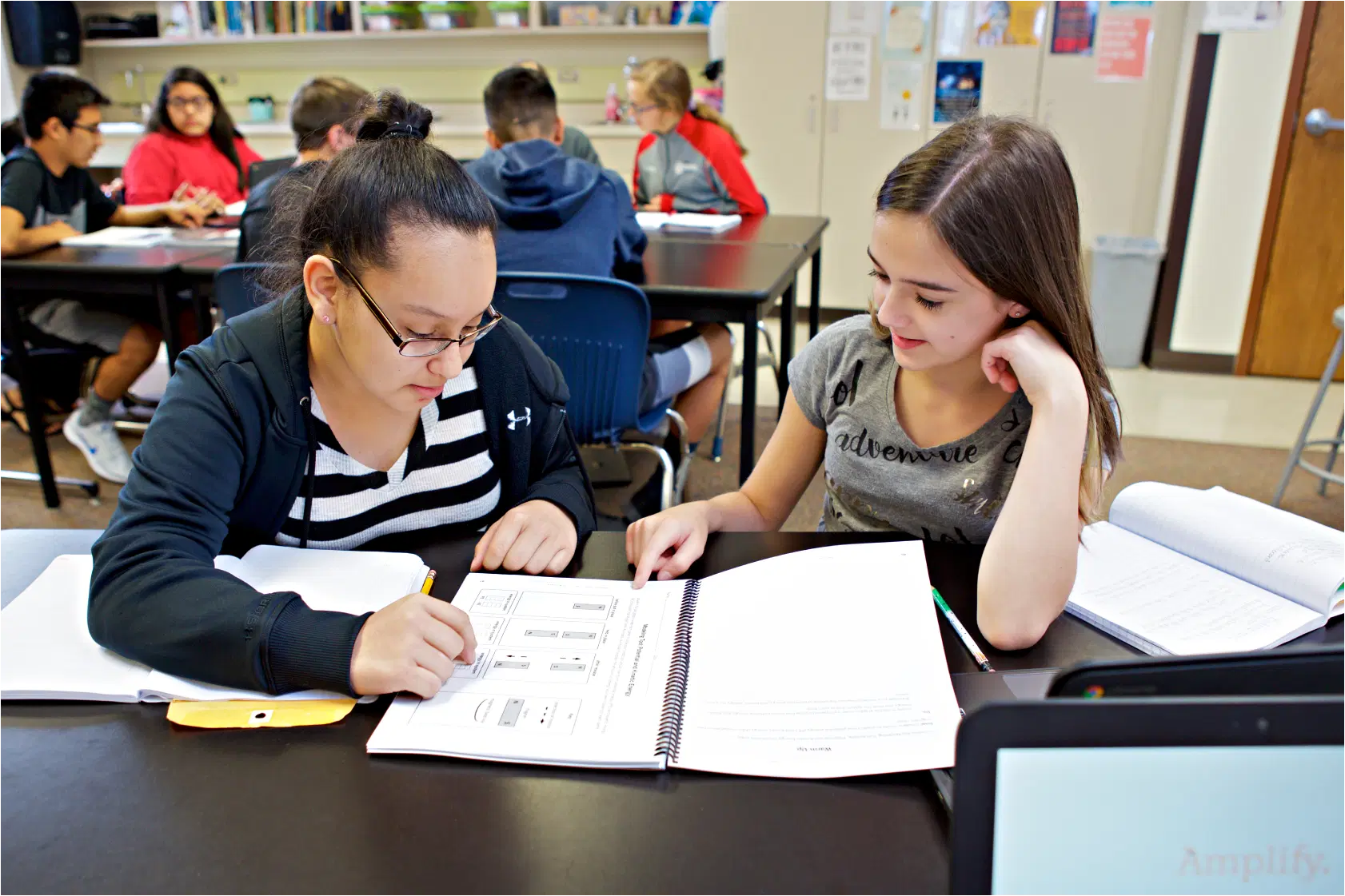
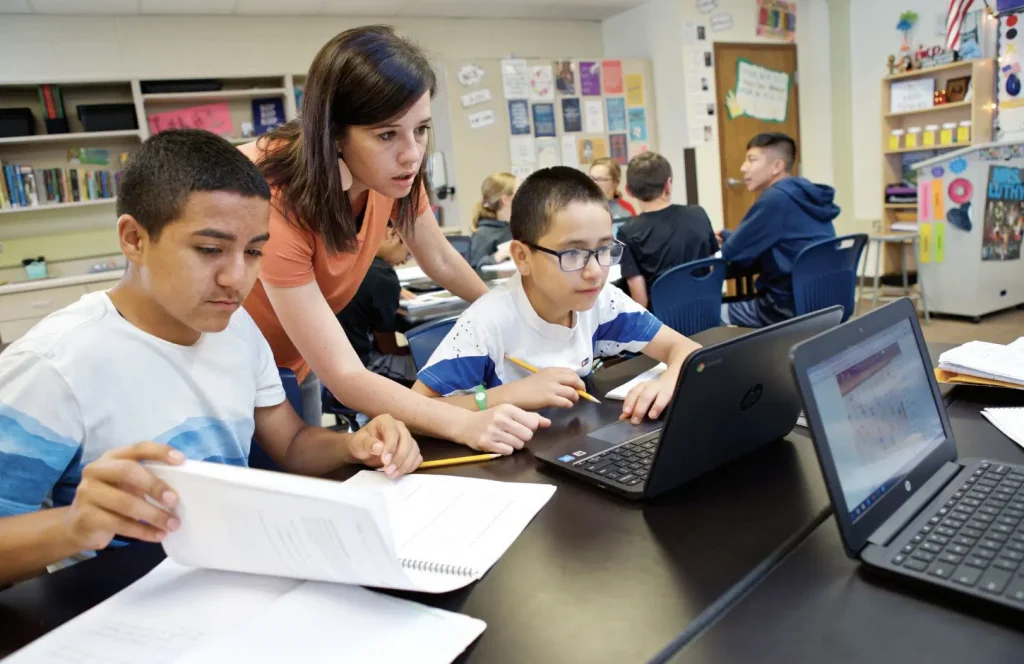
Two students sit at a classroom table, smiling and working together on a laptop and worksheet, guided by Pennsylvania teachers, with other students in the background.

What is Amplify Science Pennsylvania?

Customized lessons for Pennsylvania

Amplify Science Pennsylvania (6–8) combines our nationally recognized, proven curriculum with custom lessons specifically designed to ensure that you are meeting Pennsylvania’s STEELS standards.

A digital dashboard displays six science lesson tiles, featuring "Designing for Energy Sustainability" in the lower right corner, and supports three-dimensional learning inspired by Amplify Science and PA STEELS standards.

The Lawrence Hall of Science

Developed by the science education experts at UC Berkeley’s Lawrence Hall of Science and the digital learning team at Amplify, our program features:

  • phenomena-based approach, in which students construct a complex understanding of each unit’s anchor phenomenon.
  • A blend of cohesive storylines, hands-on investigations, rich discussions, literacy-rich activities, and digital tools.
  • Carefully crafted units, chapters, lessons, and activities designed to deliver true three-dimensional learning.
  • An instructional design that supports all learners in accessing all standards.
Aerial view of the lawrence hall of science at the university of california, berkeley, showcasing the building and surrounding trees with a foggy city backdrop.

Proven to work

A pdf cover from wested titled "learning and literacy development together: initial results from a curriculum study," featuring an adult helping children with schoolwork in a classroom.

WestEd Randomized
Control Trial for Grade 1

Read More

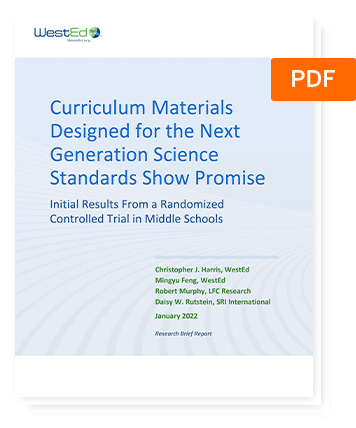
Pdf cover titled "curriculum materials designed for the next generation science standards: initial results from gold standard research trials", published by wested.

WestEd Randomized
Control Trial for Grade 7

Read More

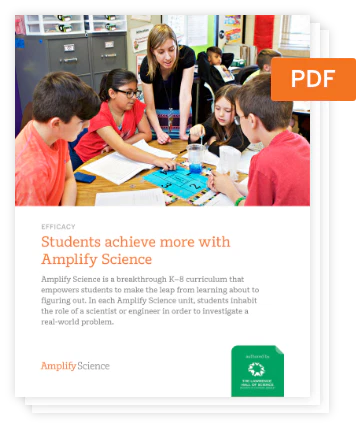
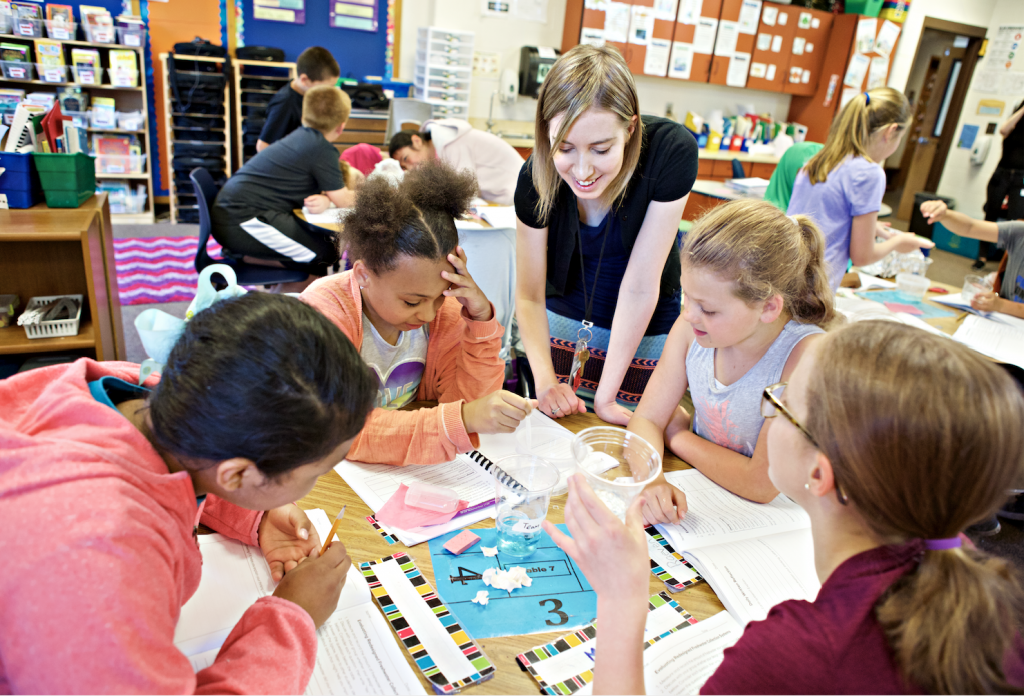
A teacher and students engage in a science activity around a table. The text promotes the Amplify Science K–8 curriculum, highlighting its focus on hands-on learning and real-world problem-solving.

Amplify Science Pennsylvania NE
Grades K–5

Read More

Instructional model

The Amplify Science Pennsylvania program is rooted in the proven, research-based pedagogy of Do, Talk, Read, Write, Visualize. Here’s how each element works:

Do

First-hand investigations are an important part of any science classroom, and Amplify Science Pennsylvania has students getting hands-on in every unit—from building models of protein molecules to experimenting with electrical systems.

Talk

Student-to-student discourse and full-class discussions are an integral part of the program. Students are provided with numerous opportunities to engage in meaningful oral scientific argumentation while fostering a collaborative classroom environment.

Read

Students read scientific articles, focusing on searching for evidence related to their investigation and on asking and recording questions as they read through fascinating texts on 21st-century topics.

Write

Following real-world practices, students write scientific arguments based on evidence they’ve collected, making clear their reasoning about how a given piece of evidence connects to one of several claims.

Visualize

By manipulating digital simulations and using modeling tools to craft visualizations of their thinking— just as real scientists and engineers
do—students take their learning far beyond the confines of what they can physically see in the classroom in an exciting and authentic way.

Program structure

Our cyclical lesson design ensures that students receive multiple exposures to concepts through a variety of modalities. As they progress through the lessons within a unit, students build and deepen their understanding, increasing their ability to develop and refine complex explanations of the unit’s phenomenon.

It’s this proven program structure and lesson design that enables Amplify Science Pennsylvania to address 100% of the Next Generation Science Standards (NGSS), and support students in mastering the Pennsylvania Science Standards.

Flowchart depicting a critical thinking process with four circular nodes connected by arrows, each node representing a step: posing a real-world problem, exploring evidence, elaborating concepts, and evaluating claims.

Unit types

While every unit delivers three-dimensional learning experiences and engages students in gathering evidence from a rich collection of sources, each unit also serves a unique instructional purpose.

In grades 6–8:

  • One unit is a launch unit.
  • Three units are core units.
  • Two units are engineering internships.

Launch units are the first units taught in each year of Amplify Science Pennsylvania. The goal of the Launch unit is to introduce students to norms, routines, and practices that will be built on throughout the year, including argumentation, active reading, and using the program’s technology. For example, rather than taking the time to explain the process of active reading in every unit in a given year, it is explained thoroughly in the Launch unit, thereby preparing students to read actively in all subsequent units.

Core units establish the context of the unit by introducing students to a real-world problem. As students move through lessons in a Core unit, they figure out the unit’s anchoring phenomenon, gain an understanding of the unit’s disciplinary core ideas and science and engineering practices, and make linkages across topics through the crosscutting concepts. Each Core unit culminates with a Science Seminar and final writing activity.

Engineering Internship units invite students to design solutions for real-world problems as interns for a fictional company called Futura. Students figure out how to help those in need, from tsunami victims in Sri Lanka to premature babies, through the application of engineering practices. In the process, they apply and deepen their learning from Core units.

Unit sequence

Our lessons follow a structure that is grounded in regular routines while still being flexible enough to allow for a variety of learning experiences.

In fact, our multimodal instruction offers more opportunities for students to construct meaning, and practice and apply concepts, than any other program. What’s more, our modular design means our units can be flexibly arranged to support your instructional goals.

Three columns listing education curriculum topics for grades 6, 7, and 8, focusing on science themes such as microbiomes, mars geology, and harnessing human energy.

Program components

Available digitally and in print, our unit-specific reference guides are chock full of helpful resources, including scientific background knowledge, planning information and resources, color-coded 3D Statements, detailed lesson plans, tips for delivering instruction, and differentiation strategies.

Amplify Science TG

Hands-on learning is an essential part of Amplify Science Pennsylvania, and is integrated into every unit. Students actively participate in science, playing the roles of scientists and engineers as they gather evidence, think critically, solve problems, and develop and defend claims about the world around them. Every unit includes hands-on investigations that are critical to achieving the unit’s learning goals.

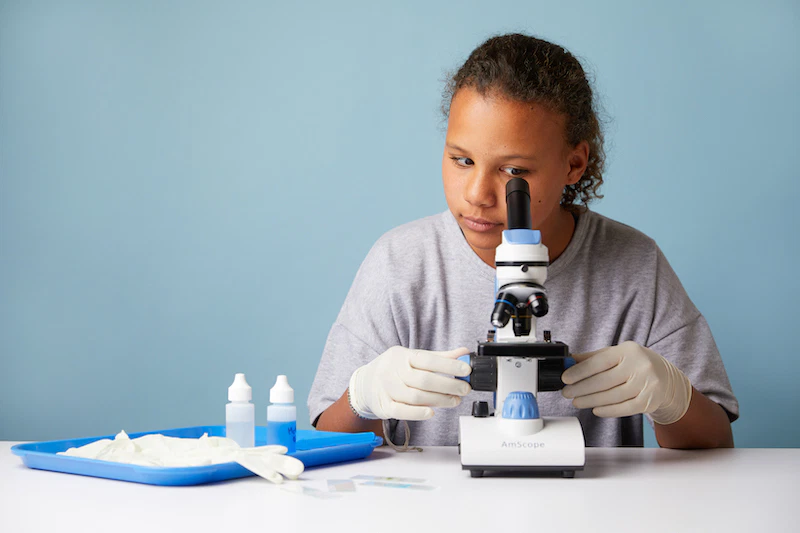
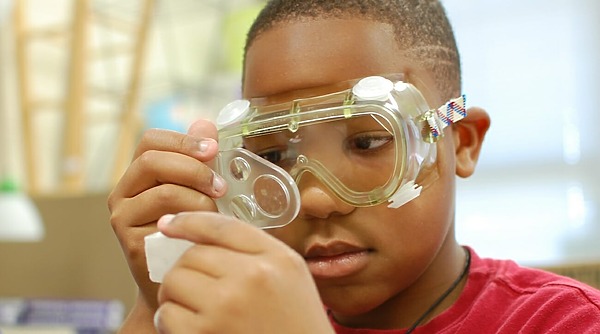
A young person wearing gloves looks through a microscope at a table with laboratory supplies, including bottles, slides, and a tray, against a plain blue background.

More hands-on with Flextensions:
Hands-on Flextensions are additional, optional investigations that are included at logical points in the learning progression and give students an opportunity to dig deeper if time permits. These activities offer teachers flexibility to choose to dedicate more time to hands-on learning. Materials referenced in Hands-on Flextension activities will either be included in the unit kit or are easily sourced. Supporting resources such as student worksheets will be included as downloadable PDF files.

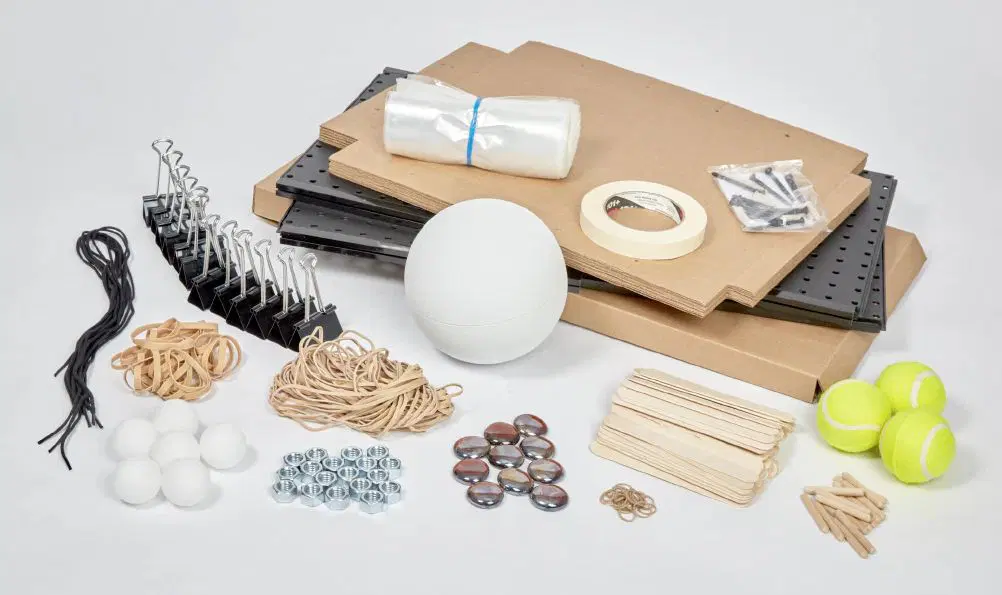
Our kits include enough materials to support 200 student uses. In other words, teachers can easily support all five periods and small groups of 4–5 students each. Plus, our unit-specific kits mean teachers just grab the tub they need and then put all the materials back with ease.

Assorted office and household items displayed on a white background, including rubber bands, binder clips, cardboard, and sports balls.

Our digital Simulations and Practice Tools are powerful resources for exploration, data collection, and student collaboration. They allow students the ability to explore scientific concepts that might otherwise be invisible or impossible to see with the naked eye.

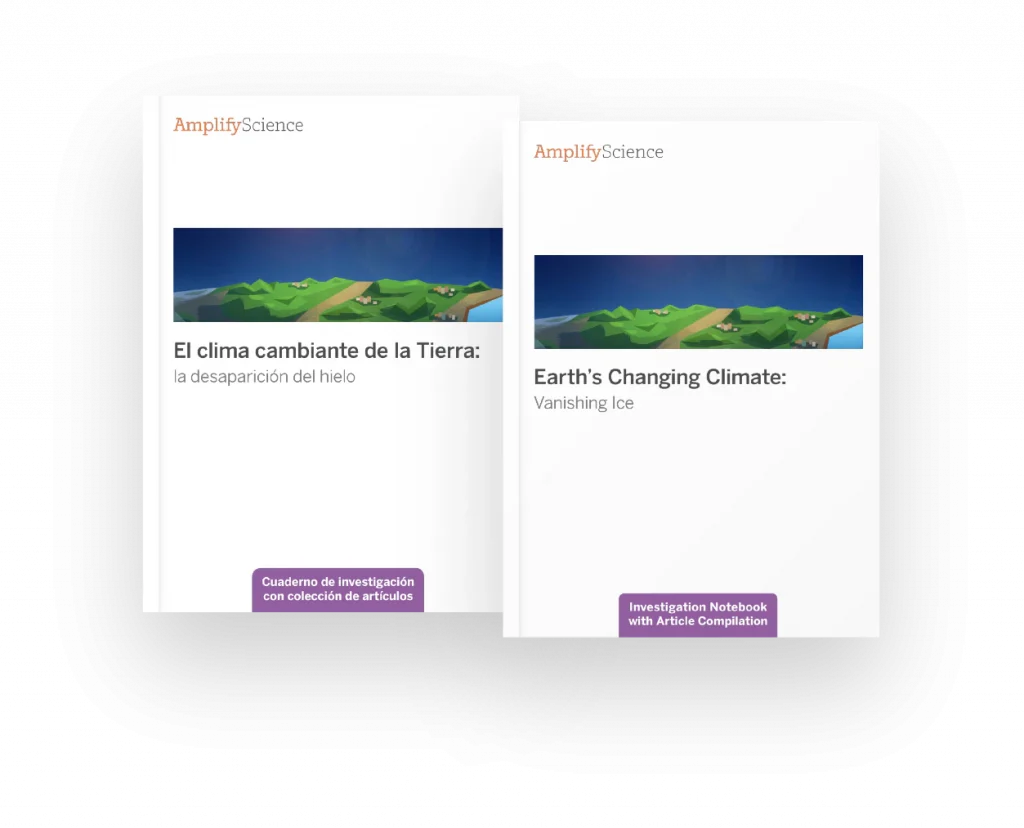
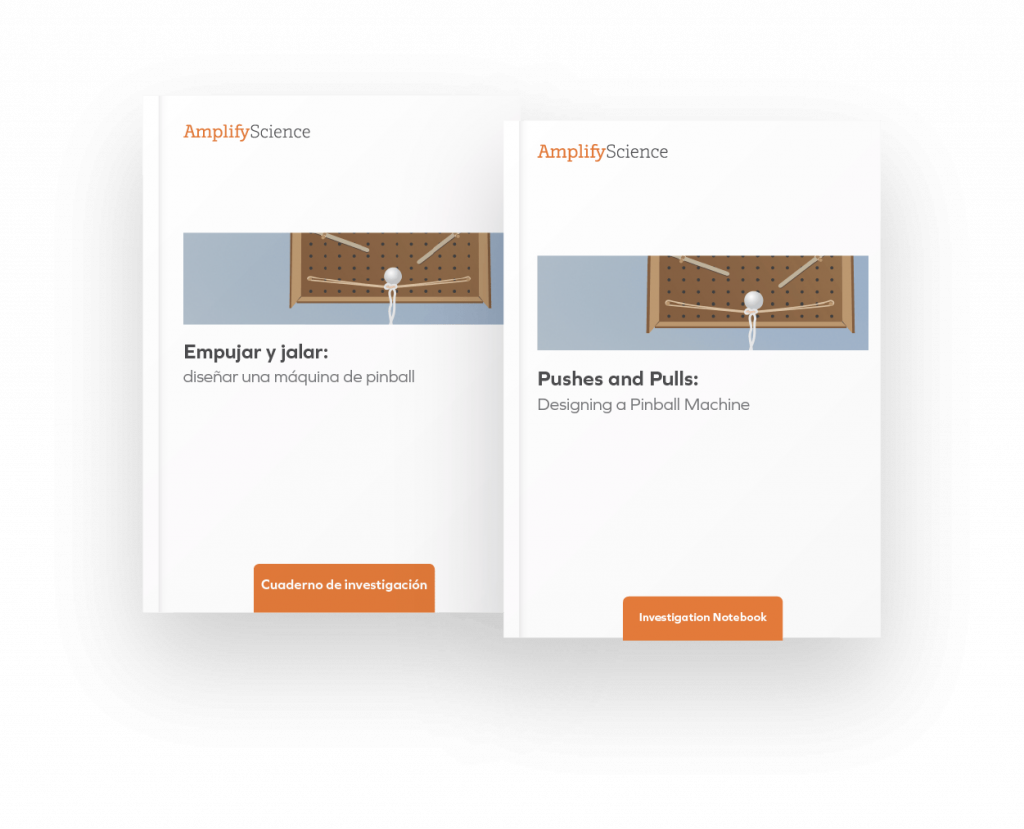
Available for every unit, our Student Investigation Notebooks contain instructions for activities and space for students to record data and observations, reflect on ideas from texts and investigations, and construct explanations and arguments.

In grades 6–8, one copy of the Student Investigation Notebook is included in each unit’s materials kit for use as a blackline master. Each notebook is also available as a downloadable PDF on the Unit Guide page of the digital Teacher’s Guide.

Two booklets titled "El clima cambiante de la Tierra: la desaparición del hielo" and "Earth’s Changing Climate: Vanishing Ice" with landscape illustrations on the covers.

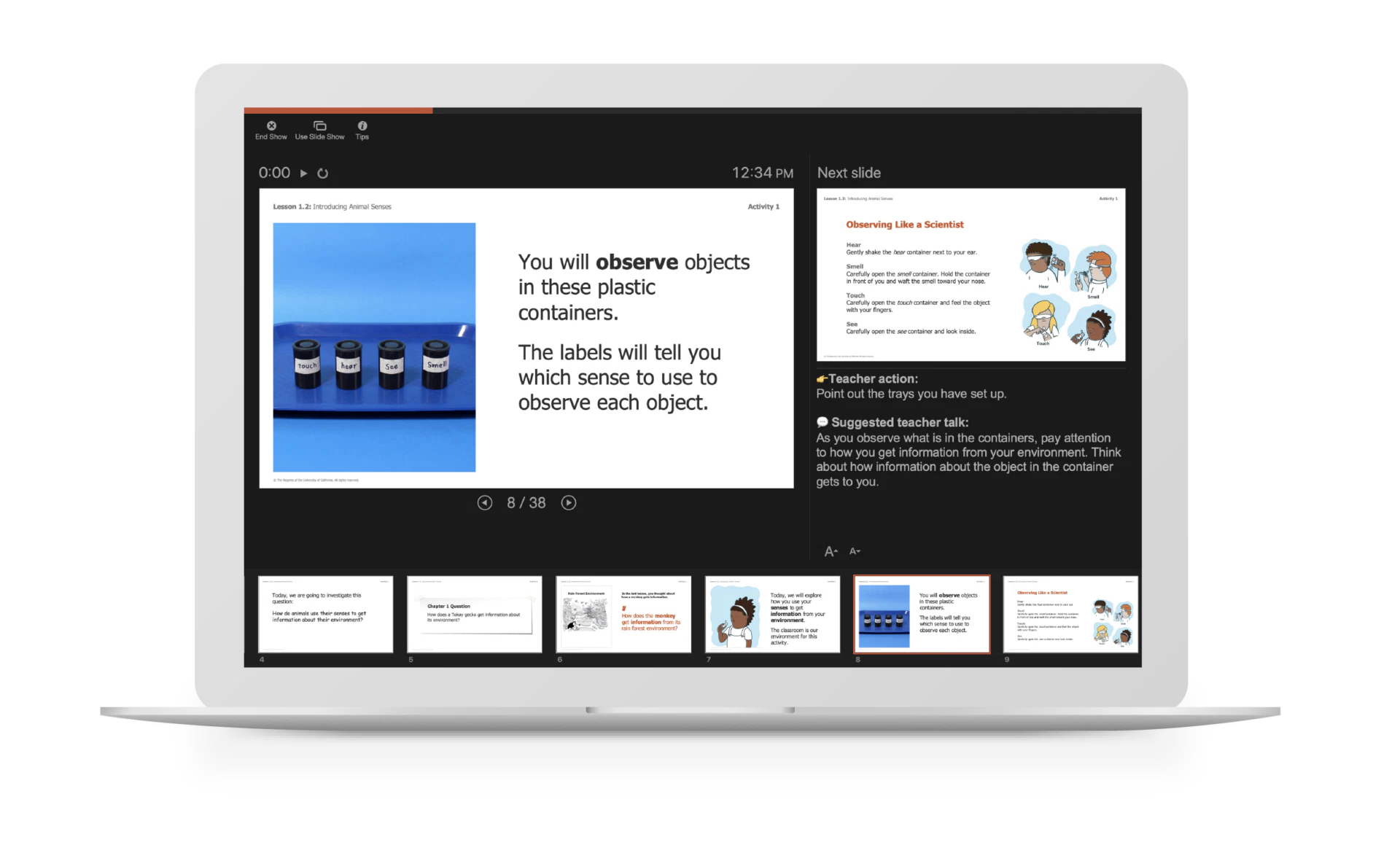
These customizable PowerPoints are available for every lesson of the program and make delivering instruction a snap with visual prompts, colorful activity instructions, investigation set-up videos and animations, and suggested teacher talk in the notes section of each slide.

Amplify Science Classroom Slides

Explore your print samples

With your Amplify Science Pennsylvania print samples, you’ll find unit-specific Teacher’s References Guides and Student Investigation Notebooks for each grade level.

A note about the Teacher Reference Guides:

It’s important that your committee sees the full breadth and depth of our instruction. For that reason, we’ve provided a copy of each of our unit-specific Teacher Reference Guides.

Teachers do not use these robust reference guides for day-to-day teaching. For that, we have a hands-free Teacher’s Guide!

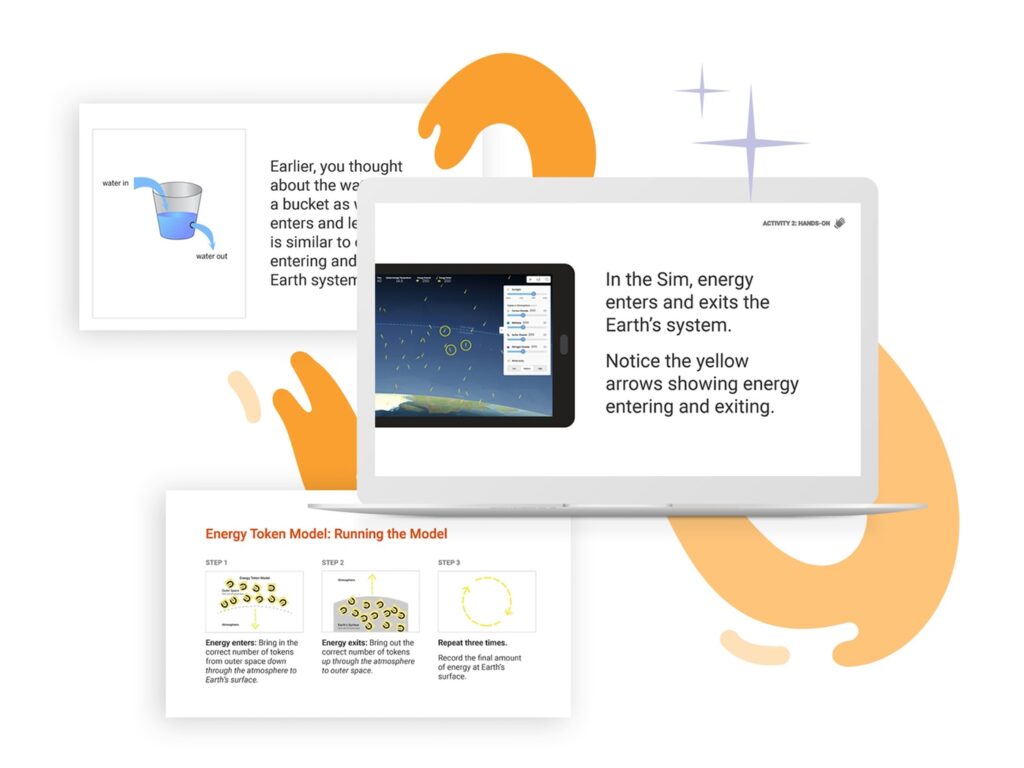
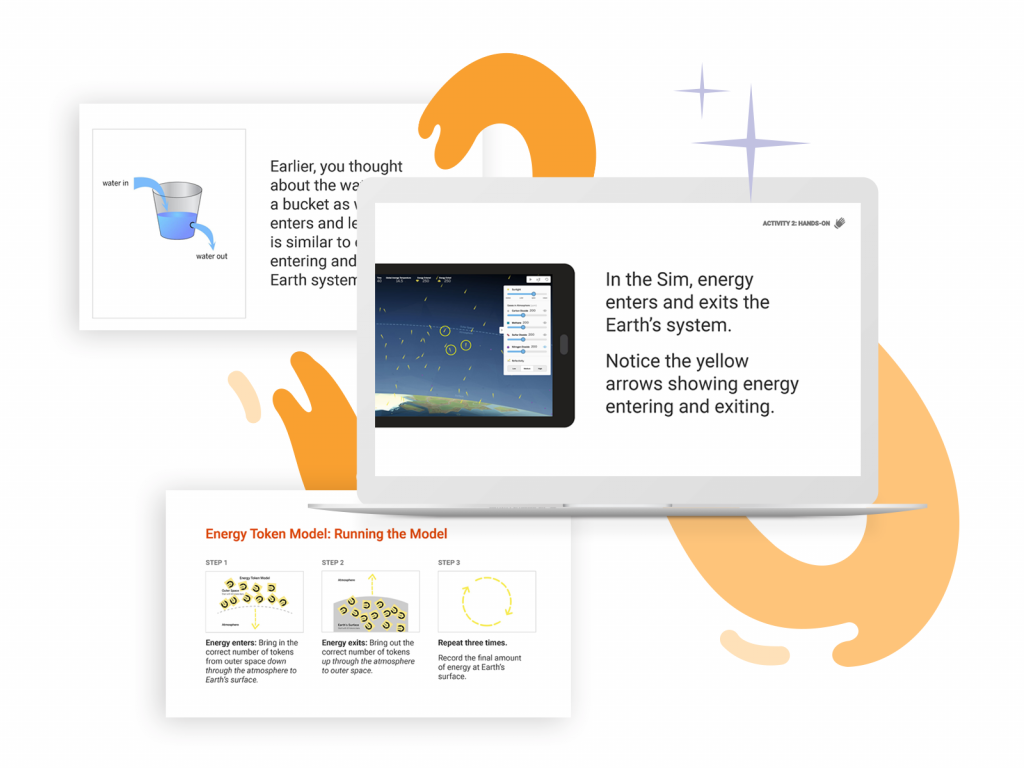
Three laptop screens displaying educational content on earth's energy system, including diagrams and text annotations.
  • Teacher Reference Guide: Unlike a typical Teacher Guide that requires a series of supplemental books to support it, our encyclopedic reference guide is chock-full of everything a teacher needs to fully implement our program and the NGSS.
  • Ready-to-Teach Lesson Slides: For daily instruction, teachers need their hands free. That’s why we created ready-to-teach lesson slides for every single lesson. What’s more, they are editable and include suggested teacher talk and point-of-use differentiation and other instructional tips. Click to learn more.

A note about the Materials Kits:

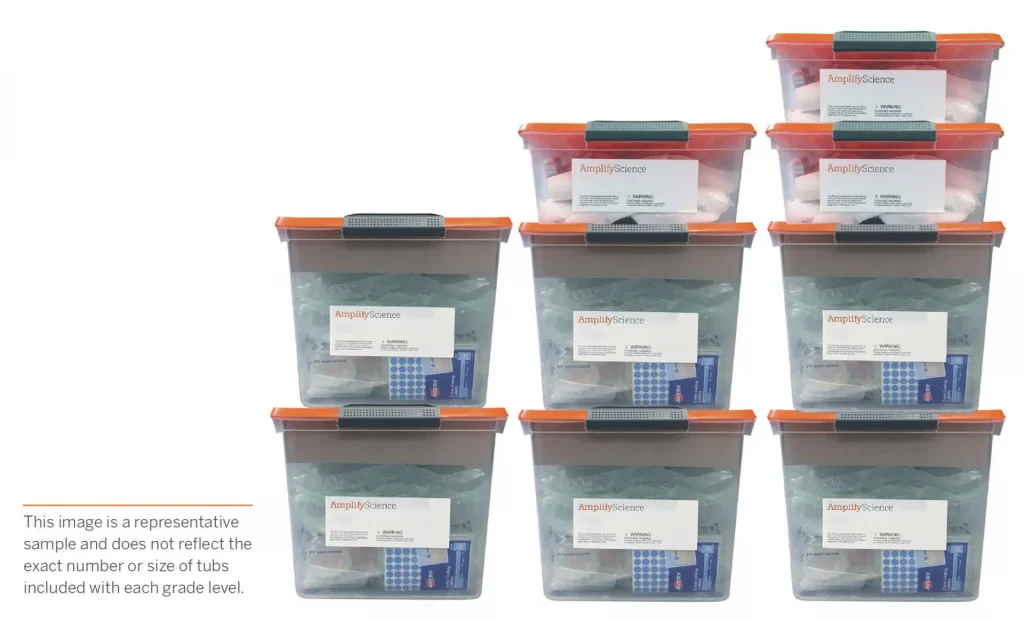
Hands-on learning is at the heart of Amplify Science Pennsylvania, and is integrated into every unit. In order to make hands-on learning more manageable for busy teachers, Amplify Science Pennsylvania materials are organized into unit-specific kits.

Stacked storage bins with labels, arranged neatly; caption notes they are a sample and may not reflect actual quantities or sizes.

Our unit-specific kits:

  • Include more materials. We give teachers enough materials to support 200 student uses.
  • Are more manageable. Unlike other programs that require large groups of students to share limited sets of materials, our kits include enough to support small groups of four to five students.
  • Include supportive videos. Each hands-on activity provides clear instructions for the teacher, with more complex activities supported by video demonstrations and illustrations.

Within each kit, we provide grade-specific lists of all materials included, which you can also find using the links below.

Spanish-language support

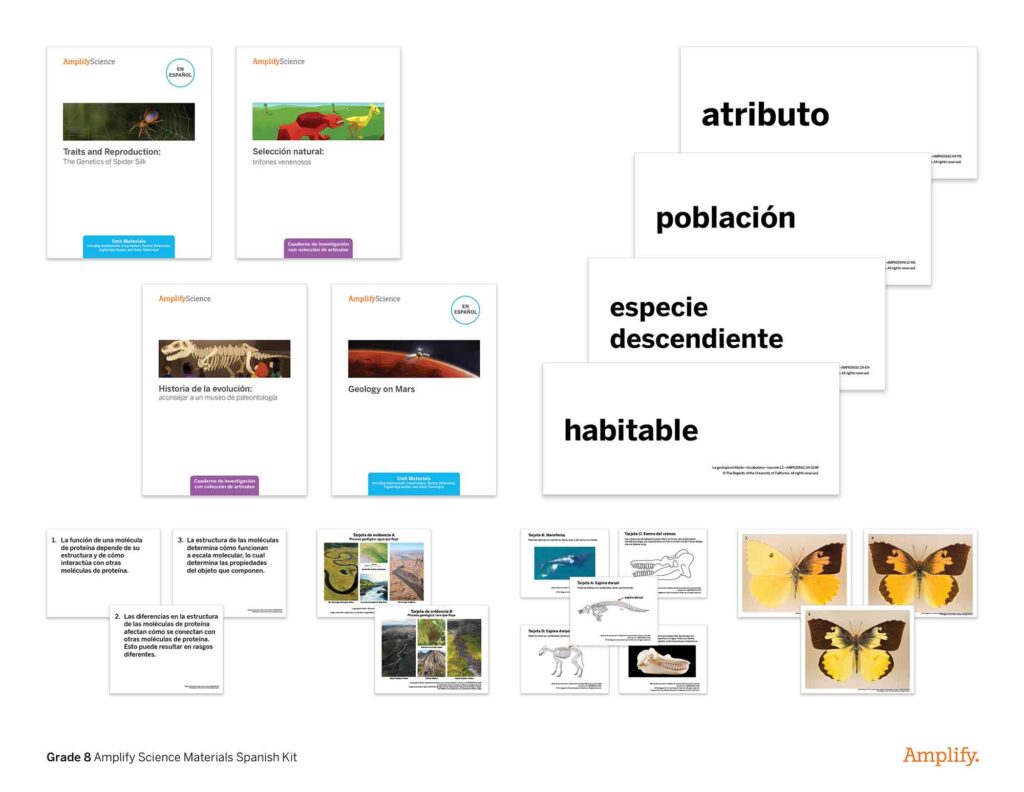
Amplify Science Pennsylvania is committed to providing support to meet the needs of all learners, including multiple access points for Spanish-speaking students. Developed in conjunction with Spanish-language experts and classroom teachers, several components are available in Spanish across the Amplify Science Pennsylvania curriculum.

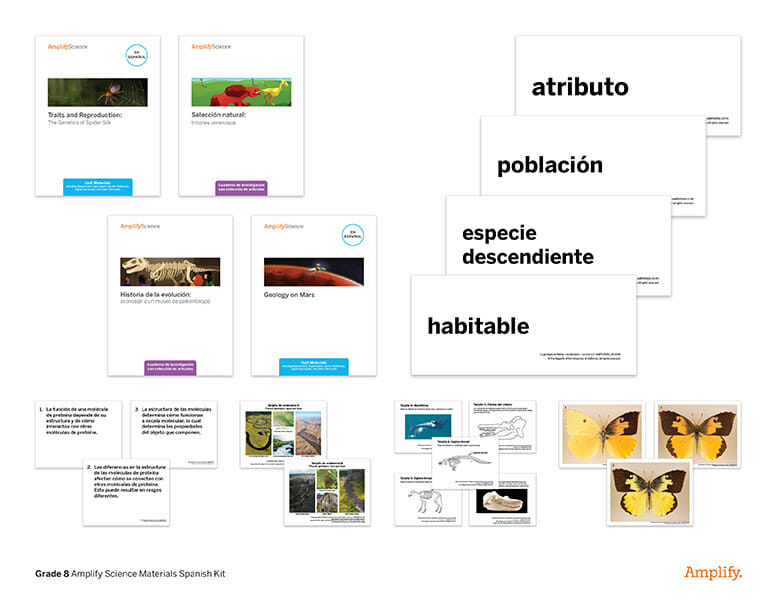
Spanish-language materials include:

COMPONENT TEACHER/STUDENT
Student Investigation Notebooks Student
Science articles Student
Video transcripts Student
Digital simulation translation keys Student
Printed classroom materials
Unit and chapter questions, key concepts, vocabulary cards, etc.
Teacher
Copymasters Teacher
Assessments Teacher
Digital student experience license
This license gives students access to the student resources in Spanish, including instructional text, articles, and assessments. Teachers can control student access to Spanish-language content through the digital Teacher’s Guide.
Teacher
Spanish teacher support license
This license includes teacher talk, projections, downloadable PDFs of all print resources, and video transcripts and closed captioning in Spanish.
Teacher

Resources to support your review

Contact us

Support is always available. Our team is dedicated to helping you every step of the way.

Contact your dedicated Pennsylvania representative here.

A woman with long brown hair and glasses wearing a light blue sweater, smiling at the camera against a gray background.

Julie Couch

District Enrollment
<1800 students

A woman with long blonde hair and blue eyes is smiling at the camera, wearing a black top, in a well-lit indoor setting.

Jen Mee

Western PA

A smiling person with shoulder-length gray hair, wearing a peach-colored scarf and a gray sweater, stands against a plain white background. This image captures the essence of Pennsylvania teachers who are dedicated to enriching Science programs for elementary students.

Monica Vincent

Southeast PA

A man with curly brown hair and a beard, smiling broadly, wearing a suit, dress shirt, and floral tie, standing outdoors with trees and grass in the background.

Keenan Zambelli

Northeast & Central PA

Welcome to Amplify Science Pennsylvania
(K–5)!

Amplify Science is an engaging core curriculum designed for three-dimensional, phenomena-based learning.

With Amplify Science, Pennsylvania students shift from learning about to figuring out science through authentic three-dimensional (3D) learning and phenomena-based exploration. In each unit, students take on the role of a scientist or engineer to investigate a real-world problem. This prepares them to become critical thinkers who can solve problems in their communities and beyond.

Four children gather around a classroom table, engaging with their Amplify Science project, as notebooks and papers are spread out in front of them—an inspiring scene supported by Pennsylvania teachers.

What is Amplify Science Pennsylvania?

Customized lessons for Pennsylvania

Amplify Science Pennsylvania (K–5) combines our nationally recognized, proven curriculum with custom lessons specifically designed to ensure you are meeting Pennsylvania’s STEELS standards.

A digital interface displays six science lessons from Amplify Science, with "Ancient Water Purification" in Lesson 2.9 highlighted as a PA STEELS Custom Lesson. Each lesson features a simple sky and mountain graphic, perfect for Science programs for elementary.

The Lawrence Hall of Science

Developed by the science education experts at UC Berkeley’s Lawrence Hall of Science and the digital learning team at Amplify, our program features:

  • phenomena-based approach in which students construct a complex understanding of each unit’s anchor phenomenon.
  • A blend of cohesive storylines, hands-on investigations, rich discussions, literacy-rich activities, and digital tools.
  • Carefully crafted units, chapters, lessons, and activities designed to deliver true three-dimensional learning.
  • An instructional design that supports all learners in accessing all standards.
Aerial view of the lawrence hall of science at the university of california, berkeley, showcasing the building and surrounding trees with a foggy city backdrop.

Proven to work

A pdf cover from wested titled "learning and literacy development together: initial results from a curriculum study," featuring an adult helping children with schoolwork in a classroom.

WestEd Randomized
Control Trial for Grade 1

Read More

Pdf cover titled "curriculum materials designed for the next generation science standards: initial results from gold standard research trials", published by wested.

WestEd Randomized
Control Trial for Grade 7

Read More

A teacher and students engage in a science activity around a table. The text promotes the Amplify Science K–8 curriculum, highlighting its focus on hands-on learning and real-world problem-solving.

Amplify Science Pennsylvania NE
Grades K–5

Read More

Instructional model

The Amplify Science Pennsylvania program is rooted in the proven, research-based pedagogy of Do, Talk, Read, Write, Visualize. Here’s how each element works:

Do

Firsthand investigations are an important part of any science classroom, and Amplify Science Pennsylvania has students getting hands-on in every unit—from building models of protein molecules to experimenting with electrical systems.

Talk

Student-to-student discourse and full-class discussions are an integral part of the program. Students are provided with numerous opportunities to engage in meaningful oral scientific argumentation, all while fostering a collaborative classroom environment.

Read

Students read scientific articles, focusing their reading activities on searching for evidence related to their investigation and on asking and recording questions as they read through fascinating texts on 21st-century topics.

Write

Following real-world practices, students write scientific arguments based on evidence they’ve collected, making clear their reasoning about how a given piece of evidence connects to one of several claims.

Visualize

By manipulating digital simulations and using modeling tools to craft visualizations of their thinking— just as real scientists and engineers
do—students take their learning far beyond the confines of what they can physically see in the classroom in an exciting and authentic way.

Program structure

Our cyclical lesson design ensures that students receive multiple exposures to concepts through a variety of modalities. As they progress through the lessons within a unit, students build and deepen their understanding, increasing their ability to develop and refine complex explanations of the unit’s phenomenon.

It’s this proven program structure and lesson design that enables Amplify Science Pennsylvania to address 100% of the Next Generation Science Standards (NGSS) and support students in mastering the Pennsylvania Science Standards.

Flowchart depicting a critical thinking process with four circular nodes connected by arrows, each node representing a step: posing a real-world problem, exploring evidence, elaborating concepts, and evaluating claims.

Unit types

While every unit delivers three-dimensional learning experiences and engages students in gathering evidence from a rich collection of sources, each unit also emphasizes a particular science and engineering practice.

In grades K–2:

  • One unit emphasizes the practice of investigation.
  • One unit emphasizes the practice of modeling.
  • One unit emphasizes the practice of engineering design.

In grades 3–5, students experience the three unit types above, plus:

One additional unit that emphasizes the practice of argumentation.

Investigation units focus on the process of strategically developing investigations and gathering data to answer questions. Students are first asked to consider questions about what happens in the natural world and why, and are then involved in designing and conducting investigations that produce data to help answer those questions.

Modeling units provide extra support to students engaging in the practice of modeling. Students use physical models, investigate with computer models, and create their own diagrams to help them visualize what might be happening on the nanoscale.

Engineering design units provide opportunities for students to solve complex problems by applying science principles to the design of functional solutions, and iteratively testing those solutions to determine how well they meet preset criteria.

Argumentation units provide students with regular opportunities to explore and discuss available evidence, time and support to consider how evidence may be leveraged in support of claims, and independence that increases as they mount written arguments in support of their claims.

Unit sequence

Our lessons follow a structure that is grounded in regular routines while still being flexible enough to allow for a variety of learning experiences.

In fact, our multimodal instruction offers more opportunities for students to construct meaning, and practice and apply concepts, than any other program. What’s more, our modular design means our units can be flexibly arranged to support your instructional goals.

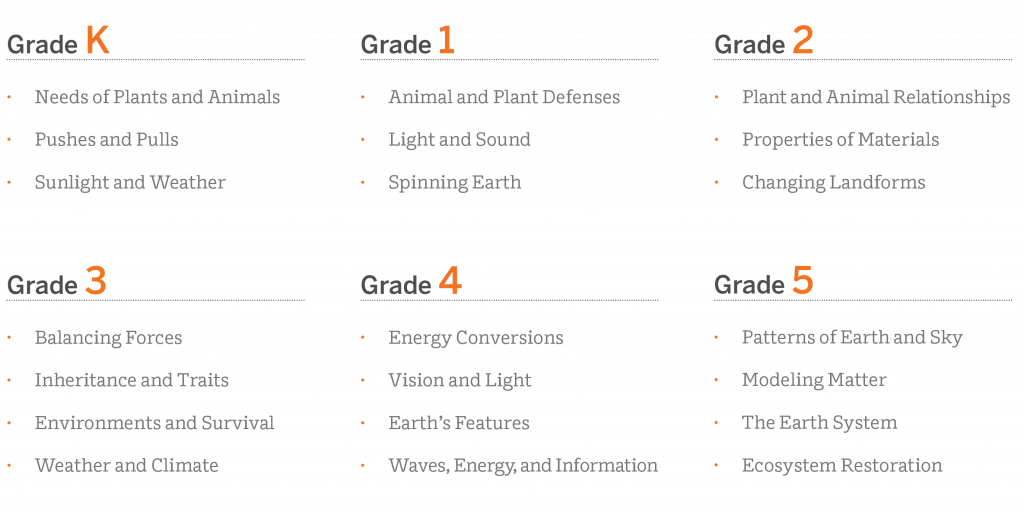
Chart outlining science curriculum by grade, from kindergarten through grade 5, listing topics such as

Program components

Available digitally and in print, our unit-specific reference guides are chock-full of helpful resources, including scientific background knowledge, planning information and resources, color-coded 3D Statements, detailed lesson plans, tips for delivering instruction, and differentiation strategies.

Amplify Science TG

Hands-on learning is an essential part of Amplify Science Pennsylvania and is integrated into every unit. Students actively participate in science, playing the roles of scientists and engineers as they gather evidence, think critically, solve problems, and develop and defend claims about the world around them. Every unit includes hands-on investigations that are critical to achieving the unit’s learning goals.

Two children sit at a table blowing into plastic straws held together, likely making musical sounds, with containers and rubber bands on the table.

More hands-on with Flextensions:
Hands-on Flextensions are additional, optional investigations that are included at logical points in the learning progression and give students an opportunity to dig deeper if time permits. These activities offer teachers flexibility to choose to dedicate more time to hands-on learning. Materials referenced in Hands-on Flextension activities will either be included in the unit kit or are easily sourced. Supporting resources such as student worksheets will be included as downloadable PDF files.

Our kits include enough non-consumable materials to support a class of 36 students and enough consumable items to support 72 students. In other words, each kit can last two years! Plus, our unit-specific kits mean teachers just grab the tub they need for the unit and then put it all back with ease.

Assorted office and household items displayed on a white background, including rubber bands, binder clips, cardboard, and sports balls.

Each unit of Amplify Science Pennsylvania (K–5) includes six unique Student Books written by educators at the Lawrence Hall of Science specifically for the program. These content-rich nonfiction and informational texts provide opportunities for students to search for evidence relevant to their firsthand investigations, see science practices and dispositions modeled, extend their science knowledge, provide real-world connections as they master reading-to-learn and close reading skills, and construct evidence-based arguments.

Important note:
Students in grades K–5 are never asked to read alone. Rather, books are read to, with, and by students with ample scaffolding and support provided by the teacher. Big Books are read aloud or together with the class to introduce ideas. Student Books allow for small-group reading and reading in pairs.

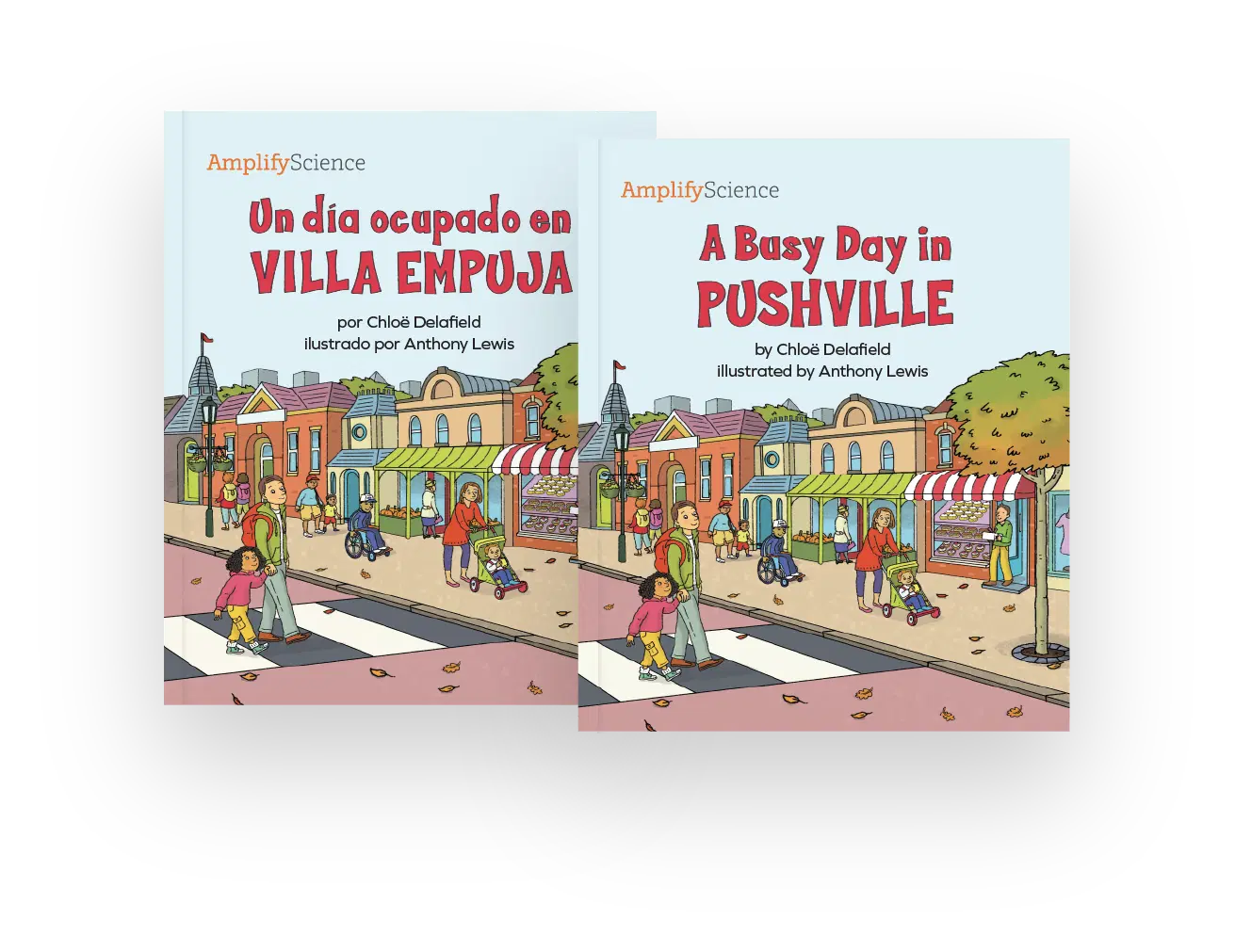
Two children's books, one in Spanish "Un día ocupado en Villa Empuja" and one in English "A Busy Day in Pushville," both illustrated by Anthony Lewis and depicting a busy town scene.

Available for every unit, our Student Investigation Notebooks contain instructions for activities and space for students to record data and observations, reflect on ideas from texts and investigations, and construct explanations and arguments.

In grades K–5, one copy of the Student Investigation Notebook is included in each unit’s materials kit for use as a blackline master. Each notebook is also available as a downloadable PDF on the Unit Guide page of the digital Teacher’s Guide.

Amplify Science Student Investigation Notebooks

Amplify Science Pennsylvania offers digital experience licenses that make elementary instruction more flexible for students and teachers and provide additional means to engage in remote, hybrid, or in-person learning!

Student-facing digital lessons
With the digital experience, students can engage with digital lesson content in one cohesive experience. It’s the same content from Amplify Science Pennsylvania in a new, integrated format, in which students can interact with slides, Sims, modeling tools, videos, books, and more.

Ecosystem Restoration digital simulation

Digital student notebook pages
Students can draw, write, record audio, and insert images into their Investigation Notebook pages. Their work is automatically saved and delivered to you in real time. When students edit their work, those edits are immediately reflected on your teacher work review page. You can access student responses by clicking “View Work,” where you can see students’ Investigation Notebook pages from the lesson, updating live.

Assign in Amplify
The digital experience allows flexibility with optional features such as scheduling assignments in advance and setting due dates. You can use Scheduling to determine the date and time that the assignment appears in Student Home. You also have the flexibility to schedule when assignments appear and to use dates to remove assignments from Student Home.

Assign in LMS
You can also assign lessons via our integrations with learning management systems (LMS) such as Google Classroom and Microsoft Teams, or by copying a lesson link and sharing it with students through the platform of your choice. The assignment link you send will provide students with direct access to the full lesson—slides, videos, digital tools, and worksheet activities—no student platform navigation required!

Teacher platform and presentation
Teacher-facing lesson content—including sample teacher talk, student responses, pedagogical support, and possible student responses—shows on a teacher’s private Teacher Guide tab. Students only see the lesson slides that are being presented.

Graphic depicting a teacher's device synced with a class presentation for K—5 students. The teacher's laptop displays an Amplify Science lesson on environments, which is mirrored on a larger screen for the class

Explore your print samples

With your Amplify Science Pennsylvania print samples, you’ll find unit-specific Teacher’s References Guides, Student Investigation Notebooks, and sets of Student Books for each grade level.

A note about the Teacher Reference Guides:

It’s important that you see the full breadth and depth of our instruction. For that reason, we provide a copy of each of our unit-specific Teacher Reference Guides.

Teachers do not use these robust reference guides for day-to-day teaching. For that, we have a hands-free Teacher’s Guide!

Three laptop screens displaying educational content on earth's energy system, including diagrams and text annotations.
  • Teacher’s Reference Guide: Unlike a typical Teacher’s Guide that requires a series of supplemental books to support it, our encyclopedic reference guide is chock-full of everything a teacher needs to fully implement our program and the NGSS.
  • Ready-to-Teach Lesson Slides: For daily instruction, teachers need their hands free. That’s why we created ready-to-teach lesson slides for every single lesson. What’s more, the slides are editable and include suggested teacher talk and point-of-use differentiation and other instructional tips. Click to learn more.

A note about the Materials Kits:

Hands-on learning is at the heart of Amplify Science Pennsylvania, and is integrated into every unit. To make hands-on learning more manageable for busy teachers, Amplify Science Pennsylvania materials are organized into unit-specific kits.

Stacked storage bins with labels, arranged neatly; caption notes they are a sample and may not reflect actual quantities or sizes.

What’s different about Amplify’s unit-specific material kits?

  • They include more materials. We give teachers enough non-consumable materials to support a class of 36 students and enough consumables to support 72 student uses. In other words, each kit will last two years.
  • They’re more manageable. Unlike other programs that require large groups of students to share limited sets of materials, our kits include enough to support small groups of four to five students.
  • They include supportive videos. Each hands-on activity provides clear instructions for the teacher, with more complex activities supported by video demonstrations and illustrations.

Grade-specific lists of all materials included in each kit:

Spanish-language support

Amplify Science Pennsylvania is committed to providing support to meet the needs of all learners, including multiple access points for Spanish-speaking students. Developed in conjunction with Spanish-language experts and classroom teachers, several components are available in Spanish across the Amplify Science Pennsylvania curriculum.

Spanish-language materials include:

COMPONENT TEACHER/STUDENT
Student Investigation Notebooks Student
Student Books Student
Printed classroom materials
Unit and chapter questions, key concepts, vocabulary cards, etc.
Teacher and student
Copymasters Teacher
Assessments Teacher
Spanish teacher support license
This license includes teacher talk, projections, and downloadable PDFs of all print materials in Spanish.
Teacher

Resources to support your review

Contact us

Support is always available. Our team is dedicated to helping you every step of the way.

Contact your dedicated Pennsylvania representative.

A woman with long brown hair and glasses wearing a light blue sweater, smiling at the camera against a gray background.

Julie Couch

District Enrollment
<1800 students

A woman with long blonde hair and blue eyes is smiling at the camera, wearing a black top, in a well-lit indoor setting.

Jen Mee

Western PA

A smiling person with shoulder-length gray hair, wearing a peach-colored scarf and a gray sweater, stands against a plain white background. This image captures the essence of Pennsylvania teachers who are dedicated to enriching Science programs for elementary students.

Monica Vincent

Southeast PA

A man with curly brown hair and a beard, smiling broadly, wearing a suit, dress shirt, and floral tie, standing outdoors with trees and grass in the background.

Keenan Zambelli

Northeast & Central PA

Core literacy programs: Strengthen sessions

Professional development sets teachers and leaders up for success, whether they are new to or experienced with a program. Each Strengthen session promotes a deeper understanding of the program through targeted instructional practices.

Explore literacy Strengthen sessions by program below.

Amplify professional development has been vetted by Rivet Education’s team through a rigorous three-step process and is listed in the Professional Learning Partner Guide.

A woman sits reading a book to two young children on a couch in a colorful library setting.

About Strengthen sessions

Support Amplify implementation with sessions that target specific instructional practices for teachers and leaders who are in year one and beyond. When you’re ready to schedule your Strengthen session, contact us. An Amplify expert will support you in selecting the session that best fits your needs in order to push student results forward.

Each package includes one Strengthen session. Additional sessions can be added as enhancements.

Amplify ELAR and Amplify SLAR K–5

Built on the Science of Reading, Amplify Texas English Language Arts and Reading (ELAR) sequences deep content knowledge with research-based foundational skills. Amplify ELAR is a PreK–5 literacy curriculum that inspires curiosity and drives results, empowering all students with rich background knowledge.

Amplify SLAR is the perfect Spanish language arts partner to Amplify ELAR for grades K–5. Following biliteracy principles and supporting multiple teaching models, the aligned programs combine rich content knowledge with systematic foundational skills instruction grounded in the Science of Reading.

The table below lists Amplify ELAR and Amplify SLAR Strengthen sessions by package for Begin and beyond. Click the session title or scroll down to learn more about each session.

Begin packages

Strengthen sessions

  On-site package
(15 hr.)
Hybrid on-site package (15 hr.) Hybrid 10 package
(10 hr.)
Hybrid virtual package
(15 hr.)
Virtual  package
(7 hr.)
One session per package On-site,   3 hr. sessions On-site,   3 hr. sessions Virtual,     1 hr. session Virtual,    3 hr. sessions Virtual,     1 hr. session
Enhancing planning for teachers
A large, light peach-colored checkmark on a transparent background. A large, light peach-colored checkmark on a transparent background.   A large, light peach-colored checkmark on a transparent background.  
Enhancing practice for teachers
A large, light peach-colored checkmark on a transparent background. A large, light peach-colored checkmark on a transparent background.   A large, light peach-colored checkmark on a transparent background.  
Enhancing observations for leaders
A large, light peach-colored checkmark on a transparent background. A large, light peach-colored checkmark on a transparent background.   A large, light peach-colored checkmark on a transparent background.  
Supporting all learners for teachers
    A large, light peach-colored checkmark on a transparent background.   A large, light peach-colored checkmark on a transparent background.
Pacing for teachers
    A large, light peach-colored checkmark on a transparent background.   A large, light peach-colored checkmark on a transparent background.
Student engagement for teachers
    A large, light peach-colored checkmark on a transparent background.   A large, light peach-colored checkmark on a transparent background.

Begin: Enhancing planning for teachers

On-site or virtual, 3 hours

Deepen your understanding of your next unit by engaging in a step-by-step unit- and lesson-planning protocol. Leave prepared to implement your next unit with a completed unit plan and internalized lessons for your particular biliteracy model.

Session options: Amplify ELAR, Amplify SLAR, or Amplify ELAR/SLAR biliteracy

Audience: K–2 or 3–5 teachers, instructional staff (maximum 30 participants)

Language: The Amplify ELAR session is facilitated in English. The Amplify SLAR session is facilitated in Spanish. The Amplify ELAR/SLAR biliteracy session is facilitated in English and Spanish.

Begin: Enhancing practice for teachers

On-site or virtual, 3 hours

Practice implementing key lesson routines to strengthen your instruction. Leave with guidelines for routines you can implement in your biliteracy classroom tomorrow.

Session options: Amplify ELAR, Amplify SLAR, or Amplify ELAR/SLAR biliteracy

Audience: K–2 or 3–5 teachers, instructional staff (maximum 30 participants)

Language: The Amplify ELAR session is facilitated in English. The Amplify SLAR session is facilitated in Spanish. The Amplify ELAR/SLAR biliteracy session is facilitated in English and Spanish.

Begin: Enhancing observations for leaders

On-site or virtual, 3 hours

Sharpen your program knowledge to support educators with effective program implementation. Observe a lesson in action and practice providing high-leverage feedback. Walk away prepared to provide educators with actionable feedback during your next classroom observation.

Session options: Amplify ELAR, Amplify SLAR, or Amplify ELAR/SLAR biliteracy

Prerequisite: Participants must complete the Program overview for leaders before attending this session.

Audience: Leaders (maximum 30 participants)

Language: This session is facilitated in English.

Begin: Strengthen Focus: Supporting all learners for teachers

Virtual, 1 hour

Dig into embedded supports offered in the Amplify curriculum and prepare to support all learners in your next lesson.

Session options: Amplify ELAR, Amplify SLAR, or Amplify ELAR/SLAR biliteracy

Audience: K–5 teachers, instructional staff (maximum 30 participants)

Language: The Amplify ELAR session is facilitated in English. The Amplify SLAR session is facilitated in Spanish. The Amplify ELAR/SLAR biliteracy session is facilitated in English and Spanish.

Begin: Strengthen Focus: Pacing for teachers

Virtual, 1 hour

Learn five specific strategies to support pacing in your next lesson.

Session options: Amplify ELAR, Amplify SLAR, or Amplify ELAR/SLAR biliteracy

Audience: K–5 teachers, instructional staff (maximum 30 participants)

Language: The Amplify ELAR session is facilitated in English. The Amplify SLAR session is facilitated in Spanish. The Amplify ELAR/SLAR biliteracy session is facilitated in English and Spanish.

Begin: Strengthen Focus: Student engagement for teachers

Virtual, 1 hour

Explore engagement strategies that cultivate a student-centered classroom. Leave with a plan to incorporate these strategies in an upcoming lesson.

Session options: Amplify ELAR, Amplify SLAR, or Amplify ELAR/SLAR biliteracy

Audience: K–5 teachers, instructional staff (maximum 30 participants)

Language: The Amplify ELAR session is facilitated in English. The Amplify SLAR session is facilitated in Spanish. The Amplify ELAR/SLAR biliteracy session is facilitated in English and Spanish.

Practice packages

Strengthen sessions

  On-site package
(15 hr.)
Hybrid 15 package
(15 hr.)
Hybrid 13 package
(13 hr.)
Virtual package
(9 hr.)
One session per package On-site,      3 hr. session Virtual,      3 hr. session Virtual, 1 hr. session Virtual, 3 hr. session
Enhancing planning for teachers
A large, light peach-colored checkmark on a transparent background. A large, light peach-colored checkmark on a transparent background.   A large, light peach-colored checkmark on a transparent background.
Enhancing practice for teachers A large, light peach-colored checkmark on a transparent background. A large, light peach-colored checkmark on a transparent background.   A large, light peach-colored checkmark on a transparent background.
Enhancing observations for leaders A large, light peach-colored checkmark on a transparent background. A large, light peach-colored checkmark on a transparent background.   A large, light peach-colored checkmark on a transparent background.
Writing for teachers
A large, light peach-colored checkmark on a transparent background. A large, light peach-colored checkmark on a transparent background.   A large, light peach-colored checkmark on a transparent background.
Supporting all learners for teachers
    A large, light peach-colored checkmark on a transparent background.  
Pacing for teachers
    A large, light peach-colored checkmark on a transparent background.  
Student engagement for teachers     A large, light peach-colored checkmark on a transparent background.  
Amplify ELAR 2nd Edition Grade 3 Skills supplement for teachers     A large, light peach-colored checkmark on a transparent background.  

Practice: Enhancing planning for teachers

On-site or virtual, 3 hours

Deepen your understanding of your next unit by engaging in a step-by-step unit- and lesson-planning protocol. Leave prepared to implement your next unit with a completed unit plan and internalized lessons for your particular biliteracy model.

Session options: Amplify ELAR, Amplify SLAR, or Amplify ELAR/SLAR biliteracy

Audience: K–2 or 3–5 teachers, instructional staff (maximum 30 participants)

Language: The Amplify ELAR session is facilitated in English. The Amplify SLAR session is facilitated in Spanish. The Amplify ELAR/SLAR biliteracy session is facilitated in English and Spanish.

Practice: Enhancing practice for teachers

On-site or virtual, 3 hours

Practice implementing key lesson routines to strengthen your instruction. Leave with guidelines for routines you can implement in your biliteracy classroom tomorrow.

Session options: Amplify ELAR, Amplify SLAR, or Amplify ELAR/SLAR biliteracy

Audience: K–2 or 3–5 teachers, instructional staff (maximum 30 participants)

Language: The Amplify ELAR session is facilitated in English. The Amplify SLAR session is facilitated in Spanish. The Amplify ELAR/SLAR biliteracy session is facilitated in English and Spanish.

Practice: Enhancing observations for leaders

On-site or virtual, 3 hours

Sharpen your program knowledge to support educators with effective program implementation. Observe a lesson in action and practice providing high-leverage feedback. Walk away prepared to provide educators with actionable feedback during your next classroom observation.

Session options: Amplify ELAR K–5

Prerequisite: Participants must complete the Program overview for leaders before attending this session.

Audience: Leaders (maximum 30 participants)

Language: This session is facilitated in English.

Practice: Writing for teachers

On-site or virtual, 3 hours

Deepen your understanding of how to support students as they build writing skills. Leave this session prepared to teach an upcoming writing lesson based on your student work analysis. Bring samples of your students’ writing responses from your Amplify programs to this session.

Session options: Amplify ELAR, Amplify SLAR, or Amplify ELAR/SLAR biliteracy

Audience: K–2 or 3–5 teachers, instructional staff (maximum 30 participants)

Language: The Amplify ELAR session is facilitated in English. The Amplify SLAR session is facilitated in Spanish. The Amplify ELAR/SLAR biliteracy session is facilitated in English and Spanish.

Practice: Strengthen Focus: Supporting all learners for teachers

Virtual, 1 hour

Dig into the many embedded supports offered in the curriculum and prepare for specific ways to bolster all learners in your next lesson.

Session options: Amplify ELAR, Amplify SLAR, or Amplify ELAR/SLAR biliteracy

Audience: K–5 teachers, instructional staff (maximum 30 participants)

Language: The Amplify ELAR K–5 session is facilitated in English. The Amplify SLAR K–5 session is facilitated in Spanish. The Amplify ELAR K–5/SLAR K–5 biliteracy session is facilitated in English and Spanish.

Practice: Strengthen Focus: Pacing for teachers

Virtual, 1 hour

Learn five specific strategies to support pacing in your next lesson.

Session options: Amplify ELAR, Amplify SLAR, or Amplify ELAR/SLAR biliteracy

Audience: K–5 teachers, instructional staff (maximum 30 participants)

Language: The Amplify ELAR session is facilitated in English. The Amplify SLAR session is facilitated in Spanish. The Amplify ELAR/SLAR biliteracy session is facilitated in English and Spanish.

Practice: Strengthen Focus: Student engagement for teachers

Virtual, 1 hour

Explore engagement strategies that cultivate a student-centered classroom. Leave with a plan to incorporate these strategies in an upcoming lesson.

Session options: Amplify ELAR, Amplify SLAR, or Amplify ELAR/SLAR biliteracy

Audience: K–5 teachers, instructional staff (maximum 30 participants)

Language: The Amplify ELAR session is facilitated in English. The Amplify SLAR session is facilitated in Spanish. The Amplify ELAR/SLAR biliteracy session is facilitated in English and Spanish.

New

Begin: Strengthen Focus: Amplify ELAR 2nd Edition Grade 3 Skills supplement for teachers

Virtual, 1 hour

Participants will get an overview of how to implement Amplify ELAR 2nd Edition Grade 3 Skills in their classrooms! Learn the foundational elements of Amplify ELAR 2nd Edition Grade 3 Skills, including becoming familiar with materials and key lesson components.

Session options: Amplify ELAR 2nd Edition

Audience: Grade 3 teachers, instructional staff (maximum 30 participants)

Amplify ELAR 6–8

Amplify ELAR 6–8 is a blended English language arts curriculum designed specifically to support students in grades 6–8 and prepare them for high school and beyond. With Amplify ELAR 6–8, students learn to tackle any complex text and make observations, grapple with interesting ideas, and find relevance for themselves. The table below lists Amplify ELAR 6–8 Strengthen sessions for Begin and beyond by package.

Click the session title or scroll down to learn more about each session.

Begin packages

  On-site package
(15 hr.)
Hybrid 15,
on-site package

(15 hr.)
Hybrid 10 package
(10 hr.)
Hybrid 15, virtual package
(15 hr.)
Virtual package
(7 hr.)
One session per package On-site,
3 hr. session
On-site,
3 hr. session
Virtual,
1 hr. session
Virtual,
3 hr. session
Virtual,
1 hr. session
Enhancing planning for teachers A large, light peach-colored checkmark on a transparent background. A large, light peach-colored checkmark on a transparent background.   A large, light peach-colored checkmark on a transparent background.  
Enhancing practice for teachers
A large, light peach-colored checkmark on a transparent background. A large, light peach-colored checkmark on a transparent background.   A large, light peach-colored checkmark on a transparent background.  
Enhancing observations for leaders A large, light peach-colored checkmark on a transparent background. A large, light peach-colored checkmark on a transparent background.   A large, light peach-colored checkmark on a transparent background.  
Teaching with print and digital
    A large, light peach-colored checkmark on a transparent background.   A large, light peach-colored checkmark on a transparent background.
Lesson-planning
    A large, light peach-colored checkmark on a transparent background.   A large, light peach-colored checkmark on a transparent background.
Pacing
    A large, light peach-colored checkmark on a transparent background.   A large, light peach-colored checkmark on a transparent background.

Begin: Enhancing planning for teachers

On-site or virtual, 3 hours

Deepen your program knowledge by unpacking learning outcomes, key assessment moments, and student engagement opportunities from an Amplify ELAR 6–8 unit. Use backward planning to create a detailed plan for a unit of your choice and leave ready to begin the unit with your students.

Audience: Teachers, instructional staff (maximum 30 participants)

Begin: Enhancing practice for teachers

On-site or virtual, 3 hours

Experience a close reading lesson to increase your understanding of how close reading is taught in Amplify ELAR 6–8. Uncover which teacher moves will support students in tackling complex texts. Leave with a strong understanding of how to facilitate a close reading lesson that encourages student collaboration, drives analysis, and deepens understanding.

Audience: Teachers, instructional staff (maximum 30 participants)

Begin: Enhancing observations for leaders

On-site or virtual, 3 hours

Elevate your program knowledge to support colleagues with effective Amplify ELAR 6–8 implementation. Leave prepared to identify key instructional elements in an Amplify ELAR 6–8 lesson, analyze data, and conduct effective classroom observations.

Audience: Leaders (maximum 30 participants)

Begin: Strengthen Focus: Teaching with print and digital

Virtual, 1 hour

Learn how to administer Amplify ELAR 6–8 lessons in your classroom using both digital and print curricula.

Audience: Teachers, instructional staff (maximum 30 participants)

Begin: Strengthen Focus: Lesson-planning

Virtual, 1 hour

Deepen your understanding of the lessons in your next Amplify ELAR 6–8 unit by engaging in a step-by-step lesson-planning protocol.

Audience: Teachers, instructional staff (maximum 30 participants)

Begin: Strengthen Focus: Pacing

Virtual, 1 hour

Learn how to identify and use essential activities, timing guidance, and knowledge of your students’ strengths and needs to determine pacing for individual activities and lessons within Amplify ELAR 6–8.

Audience: Teachers, instructional staff (maximum 30 participants)

Practice packages

  On-site package
(15 hr.)
Hybrid 15,
on-site 
package
(15 hr.)
Hybrid 13 package
(13 hr.)
Virtual package
(9 hr.)
One session per package On-site,
3 hr. sessions
Virtual,
3 hr. sessions
Virtual,
1 hr. session
Virtual,
3 hr. sessions
Enhancing planning for teachers A large, light peach-colored checkmark on a transparent background. A large, light peach-colored checkmark on a transparent background.   A large, light peach-colored checkmark on a transparent background.
Enhancing practice for teachers
A large, light peach-colored checkmark on a transparent background. A large, light peach-colored checkmark on a transparent background.   A large, light peach-colored checkmark on a transparent background.
Enhancing observations for leaders A large, light peach-colored checkmark on a transparent background. A large, light peach-colored checkmark on a transparent background.   A large, light peach-colored checkmark on a transparent background.
Writing: Improving through feedback
A large, light peach-colored checkmark on a transparent background. A large, light peach-colored checkmark on a transparent background.   A large, light peach-colored checkmark on a transparent background.
Supporting all learners
A large, light peach-colored checkmark on a transparent background. A large, light peach-colored checkmark on a transparent background.   A large, light peach-colored checkmark on a transparent background.
Data-informed instruction
A large, light peach-colored checkmark on a transparent background. A large, light peach-colored checkmark on a transparent background.   A large, light peach-colored checkmark on a transparent background.
Teaching with print and digital
    A large, light peach-colored checkmark on a transparent background.  
Lesson-planning
    A large, light peach-colored checkmark on a transparent background.  
Pacing
    A large, light peach-colored checkmark on a transparent background.  
Increasing student engagement
    A large, light peach-colored checkmark on a transparent background.  
Grading and assessment
    A large, light peach-colored checkmark on a transparent background.  

Practice: Enhancing planning for teachers

On-site or virtual, 3 hours

Deepen your program knowledge by unpacking learning outcomes, key assessment moments, and student engagement opportunities from an Amplify ELAR 6–8 unit. Use backward planning to create a detailed plan for a unit of your choice and leave ready to begin the unit with your students.

Audience: Teachers, instructional staff (maximum 30 participants)

Practice: Enhancing practice for teachers

On-site or virtual, 3 hours

Experience a close reading lesson to increase your understanding of how close reading is taught in Amplify ELAR 6–8. Uncover which teacher moves will support students in tackling complex texts. Leave with a strong understanding of how to facilitate a close reading lesson that encourages collaboration, drives analysis, and deepens understanding.

Audience: Teachers, instructional staff (maximum 30 participants)

Practice: Enhancing observations for leaders

On-site or virtual, 3 hours

Elevate your program knowledge to support colleagues with effective Amplify ELAR 6–8 implementation. Leave prepared to identify key instructional elements in an Amplify ELAR 6–8 lesson, analyze data, and conduct effective classroom observations.

Audience: Leaders (maximum 30 participants)

Practice: Writing: Improving through feedback

On-site or virtual, 3 hours

Deepen your understanding of how to support students as they build writing skills in Amplify ELAR 6–8. Leave this session prepared to provide targeted feedback that supports student growth in writing. Bring samples of your students’ writing responses from Amplify ELAR 6–8 to this session.

Audience: Teachers, instructional staff (maximum 30 participants)

Practice: Supporting all learners

On-site or virtual, 3 hours

Learn how to effectively use embedded differentiated supports in Amplify ELAR 6–8 and the Classwork app to support all students—including English language learners, students with learning disabilities, struggling readers and writers, and advanced students. Walk away with a plan for supporting specific students within your classroom.

Audience: Teachers, instructional staff (maximum 30 participants)

Practice: Data-informed instruction

On-site or virtual, 3 hours

Analyze your own student data and learn to turn Amplify ELAR 6–8 data into differentiated and targeted instruction. Walk away ready to use the data provided in the Reporting and Classwork apps to align embedded support to your specific student needs. This session requires educators to analyze student data, so please bring 4–6 weeks of student data from Amplify ELAR 6–8’s Reporting app to this session.

Audience: Teachers, instructional staff (maximum 30 participants)

Practice: Strengthen Focus: Teaching with print and digital

Virtual, 1 hour

Learn how to administer Amplify ELAR 6–8 lessons in your classroom using both digital and print curricula.

Audience: Teachers, instructional staff (maximum 30 participants)

Practice: Strengthen Focus: Lesson-planning

Virtual, 1 hour

Deepen your understanding of the lessons in your next Amplify ELAR 6–8 unit by engaging in a step-by-step lesson-planning protocol.

Audience: Teachers, instructional staff (maximum 30 participants)

Practice: Strengthen Focus: Pacing

Virtual, 1 hour

Learn how to identify and use essential activities, timing guidance, and knowledge of your students’ strengths and needs to determine pacing for individual activities and lessons within Amplify ELAR 6–8.

Audience: Teachers, instructional staff (maximum 30 participants)

Practice: Strengthen Focus: Increasing student engagement

Virtual, 1 hour

Identify features within Amplify ELAR 6–8 that increase student engagement, and determine ways to incorporate additional engagement strategies into lessons.

Audience: Teachers, instructional staff (maximum 30 participants)

Practice: Strengthen Focus: Grading and assessment

Virtual, 1 hour

Learn how to use key formative and summative assessments within Amplify ELAR 6–8 to develop a plan for grading based on the specific requirements of your school or district.

Audience: Teachers, instructional staff (maximum 30 participants)

Get in touch with a PD expert

We’re here to provide answers and guidance as you explore your PD journey. Fill out the form to connect with us and discover how Amplify PD can enhance your educational journey.

Welcome, Ohio educators!

Designed from the ground up to teach students to think, read, write, and argue like real scientists and engineers, Amplify Science combines literacy-rich activities with hands-on learning and digital tools to engage students in exploring compelling phenomena in every unit.

Students in a classroom interact with educational technology, featuring a diagram and charts on a screen, while working collaboratively on a laptop.

Overview

Developed by UC Berkeley’s Lawrence Hall of Science, our program features:

  • phenomena-based approach where students construct a more complex understanding of each unit’s anchor phenomenon.
  • A blend of cohesive storylines, hands-on investigations, rich discussions, literacy-rich activities, and digital tools.
  • Newly crafted units, chapters, lessons, and activities designed to deliver true 3-dimensional learning.
  • An instructional design that supports all learners in accessing all standards.

Approach to literacy

Two young children sit at a classroom table reading a book together, with educational materials spread out in front of them.

[Video] Literacy in action (K–5)

Watch students use scientific text to obtain information and practice reading skills, while using writing prompts to create arguments using evidence.

A student sits at a desk writing with a pencil while focused on his work, with classroom materials visible in the background.

[Video] Literacy in action (6–8)

Watch students use scientific text to obtain information and practice reading skills, while using writing prompts to create arguments using evidence.

A teacher in a green shirt helps a young student with writing at a classroom table, with other students and large numbers visible on the wall in the background.

Literacy-rich science instruction (K–5)

Immersing young students in reading, writing, and arguing like real scientists and engineers.

Two students sit at a table in a classroom, working on an assignment together. Other students are also seated and appear to be engaged in their work. Papers and books are spread out on the tables.

Active Reading in grades 6–8

Engaging middle school students in complex science texts.

Elementary school

Get started by watching this class share what they’re figuring out with Amplify Science. >

In Grades K–3 we recommend the national grade level units of Amplify Science to provide students with the appropriate grade level literacy and background knowledge. Individual units are available to purchase.

When you’re ready:

  1. Find a summary of each unit below including each unit’s student role and anchor phenomenon.
  2. Download some helpful resources to support your review.
  3. Explore the digital Teacher’s Guide by clicking the orange “Review now” button.
An illustration from Needs of Plants and Animals unit

Unit 1

Needs of Plants and Animals

Student role: Scientists

Phenomenon: There are no monarch caterpillars in the Mariposa Grove community garden ever since vegetables were planted.

An illustration from the Pushes and Pulls unit

Unit 2

Pushes and Pulls

Student role: Pinball engineers

Phenomenon: Pinball machines allow people to control the direction and strength of forces on a ball.

Silueta de una estructura de parque infantil contra un cielo azul con nubes y tres soles amarillos.

Unit 3

Sunlight and Weather

Student role: Weather scientists

Phenomenon: Students at one school are too cold during morning recess, while students at another are too hot during afternoon recess.

Illustration of sea turtles swimming among seaweed in the ocean, with a large shark in the background.

Unit 1

Animal and Plant Defenses

Student role: Marine scientists

Phenomenon: Spruce the Sea Turtle will soon be released back into the ocean, where she will survive despite predators.

An illustration from the Light and Sound unit

Unit 2

Light and Sound

Student role: Light and sound engineers

Phenomenon: A puppet show company uses light and sound to depict realistic scenes in puppet shows.

An illustration from the Spinning Earth unit

Unit 3

Spinning Earth

Student role: Sky scientists

Phenomenon: The sky looks different to Sai and his grandma when they talk on the phone at night.

An elephant standing next to a tree uses its trunk to pick a fruit from a branch while more fruit hangs above.

Unit 1

Plant and Animal Relationships

Student role: Plant scientists

Phenomenon: No new chalta trees are growing in the fictional Bengal Tiger Reserve in India.

A hand holds a red bean on a table, while a wooden stick spreads white glue and scattered beans. Also on the table are a white cup and a yellow pen.

Unit 2

Properties of Materials

Student role: Glue engineers

Phenomenon: Different glue recipes result in glues that have different properties.

Ilustración de una costa con acantilados, un edificio de centro recreativo con un techo rojo y un letrero, árboles de hoja perenne, una bandera azul y una playa de arena debajo.

Unit 3

Changing Landforms

Student role: Geologists

Phenomenon: The cliff on which Oceanside Recreation Center is situated appears to be receding.

Una ilustración de un tren de alta velocidad moderno y aerodinámico que viaja por una vía elevada con un paisaje verde de fondo.

Unit 1

Balancing Forces

Student role: Engineers

Phenomenon: The fictional town of Faraday is getting a new train. Unlike typical trains, this one floats, which is causing some concern among the town’s citizens.

An illustration from the Inheritance and Traits unit

Unit 2

Inheritance and Traits

Student role: Wildlife biologists

Phenomenon: An adopted wolf in Graystone National Park has some traits in common with one wolf pack in the park and other traits in common with a different pack.

An illustration from the Environments and Survival unit

Unit 3

Environments and Survival

Student role: Biomimicry engineers

Phenomenon: Over 10 years, a population of grove snails has changed. Populations with yellow shells have decreased, while those with banded shells have increased.

An illustration from the Weather and Climate unit

Unit 4

Weather and Climate

Student role: Meteorologists

Phenomenon: Three different islands, each a contender for becoming an orangutan reserve, experience different weather patterns.

An illustration from the Energy Conversions unit

Unit 1

Energy Conversions

Student role: System engineers

Phenomenon: The fictional town of Ergstown experiences frequent blackouts. Their electrical system seems to be failing.

An illustration from the Earth's Features unit

Unit 2

Earth’s Features

Student role: Geologists

Phenomenon: A mysterious fossil is discovered in a canyon within the fictional Desert Rocks National Park.

An illustration from the Modeling Matter unit

Unit 3

Modeling Matter

Student role: Food scientists

Phenomenon: Some ingredients dissolve in a salad dressing while others, like oil and vinegar, appear to separate.

An illustration from the Earth System unit

Unit 4

The Earth System

Student role: Water resource engineers

Phenomenon: East Ferris, a city on one side of the fictional Ferris Island, is experiencing a water shortage, while West Ferris is not.

An illustration from the Patterns of Earth and Sky unit

Unit 1

Patterns of Earth and Sky

Student role: Astronomers

Phenomenon: An ancient artifact depicts what we see in the sky at different times of the day, but it appears to be missing a piece.

An illustration from the Vision and Light unit

Unit 2

Vision and Light

Student role: Conservation biologists

Phenomenon: The population of Tokay geckos in a rain forest in the Philippines has decreased since the installation of new highway lights.

An illustration from the Waves, Energy, and Information unit

Unit 3

Waves, Energy, and Information

Student role: Marine scientists

Phenomenon: Mother dolphins in the fictional Blue Bay National Park communicate with their calves despite the distance between them.

An illustration from the Ecosystem Restoration unit

Unit 4

Ecosystem Restoration

Student role: Ecologists

Phenomenon: The jaguars, sloths, and cecropia trees in a reforested section of a Costa Rican rain forest are not growing or thriving.

Middle school

When you’re ready:

  1. Find a summary of each unit below including each unit’s student role and anchor phenomenon.
  2. Download some helpful resources to support your review.
  3. Explore the digital Teacher’s Guide by clicking the orange “Review now” button.
Illustration of a cross-section of Earth showing a volcano near the ocean. Trees, mountains, and clouds are visible above, with subterranean layers below.

CORE

Rock Transformations

Domain: Earth and Space Science

Unit type: Core

Student role: Geologists

Phenomenon: Rock samples from the Great Plains and from the Rocky Mountains — regions hundreds of miles apart — look very different, but have surprisingly similar mineral compositions.

Ilustración que muestra las etapas de fusión de una paleta de naranja: entera, parcialmente derretida, más derretida y casi derretida por completo, con palitos de madera, sobre un fondo morado.

CORE

Phase Change

Domains: Physical Science, Earth and Space Science

Unit type: Core

Student role: Chemists

Phenomenon: A methane lake on Titan no longer appears in images taken by a space probe two years apart.

Green geometric graphic featuring icons: a baby, thermometer, layers, medical alert, and a flame.

ENGINEERING INTERNSHIP

Phase Change Engineering Internship

Domains: Engineering Design, Physical Science

Unit type: Engineering internship

Student role: Chemical engineering interns

Phenomenon: Designing portable baby incubators with different combinations of phase change materials can keep babies at a healthy temperature.

Illustration of a person in a red hat and fur-lined coat with eyes closed, surrounded by large orange circles on a dark background.

CORE

Thermal Energy

Domain: Physical Science

Unit type: Core

Student role: Thermal scientists

Phenomenon: One of two proposed heating systems for Riverdale School will best heat the school.

Abstract art with vibrant colors featuring a yellow silhouette of a person holding a book against a background of geometric shapes, swirling patterns, and bold textures.

LAUNCH

Microbiome

Domain: Life Science

Unit type: Launch

Student role: Microbiological researchers

Phenomenon: The presence of 100 trillion microorganisms living on and in the human body may keep the body healthy.

Abstract artwork of a person's side profile with geometric shapes and colorful patterns flowing from the head, holding a small sledgehammer. A vision chart is visible in the corner.

CORE

Metabolism

Domain: Life Science

Unit type: Core

Student role: Medical researchers

Phenomenon: Elisa, a young patient, feels tired all the time.

Orange abstract background with hexagonal shapes featuring icons of a bar chart, plant, safety vest, test tube, peach, and stethoscope.

ENGINEERING INTERNSHIP

Metabolism Engineering Internship

Domains: Life Science, Engineering Design

Unit type: Engineering internship

Student role: Food engineers

Phenomenon: Designing health bars with different molecular compositions can effectively meet the metabolic needs of patients or rescue workers.

Two people climbing rocky terrain; illustrations show a hiking boot and a belt with gear.

LAUNCH

Harnessing Human Energy

Domains: Physical Science, Earth and Space Science, Engineering Design

Unit type: Launch

Student role: Energy scientists

Phenomenon: Rescue workers can use their own human kinetic energy to power the electrical devices they use during rescue missions.

A girl runs with a colorful kite displaying literacy skills; text reads "Amplify. Science of Reading: A Primer | Part One" on a grassy landscape background.

CODING SCIENCE INTERNSHIP

Coding Science Internship: Coral Restoration (Optional)

Domains: Life Science, Coding Science

Unit type: Coding Science Internship

Student role: Coding science interns

Phenomenon: Implementing a restoration project to improve the health of coral reef populations in Hawaii.

Abstract artwork depicting a bright sun with blue and orange swirling patterns next to green hills under a sky with shades of blue, orange, and red.

CORE

Ocean, Atmosphere, and Climate

Domains: Earth and Space Science, Physical Science

Unit type: Core

Student role: Climatologists

Phenomenon: During El Niño years, the air temperature in Christchurch, New Zealand is cooler than usual.

An illustration from the Weather Patterns unit

CORE

Weather Patterns

Domains: Earth and Space Science, Physical Science

Unit type: Core

Student role: Forensic meteorologists

Phenomenon: In recent years, rainstorms in Galetown have been unusually severe.

An illustration from the Earth's Changing Climate unit

CORE

Earth’s Changing Climate

Domains: Earth and Space Science, Life Science

Unit type: Core

Student role: Climatologists

Phenomenon: The ice on Earth’s surface is melting.

Abstract geometric design in shades of blue and purple featuring a hexagon with icons of a building, wrench, molecules, sun, paint can, and screwdriver.

ENGINEERING INTERNSHIP

Earth’s Changing Climate Engineering Internship

Domains: Earth and Space Science, Engineering Design

Unit type: Engineering internship

Student role: Civil engineers

Phenomenon: Designing rooftops with different modifications can reduce a city’s impact on climate change.

A city skyline at night with a prominent full moon, stars in the sky, and a bridge silhouette on the left.

CORE

Earth, Moon, and Sun

Domains: Earth and Space Science, Physical Science

Unit type: Core

Student role: Astronomers

Phenomenon: An astrophotographer can only take pictures of specific features on the Moon at certain times.

An illustration from the Chemical Reactions unit

CORE

Chemical Reactions

Domains: Physical Science, Life Science, Earth and Space Science

Unit type: Core

Student role: Forensic chemists

Phenomenon: A mysterious brown substance has been detected in the tap water of Westfield.

An illustration from the Light Waves unit

CORE

Light Waves

Domains: Physical Science, Life Science, Earth and Space Science

Unit type: Core

Student role: Spectroscopists

Phenomenon: The rate of skin cancer is higher in Australia than in other parts of the world.

An illustration of a whale with jellyfish and turtles from Amplify Science

CORE

Populations and Resources

Domains: Life Science, Earth and Space Science

Unit type: Core

Student role: Biologists

Phenomenon: The size of the moon jelly population in Glacier Sea has increased.

Low-poly landscape with trees and mushrooms. A fox sniffs the ground, a rabbit sits nearby, and mountains and sun are in the background.

CORE

Matter and Energy in Ecosystems

Domains: Life Science, Earth and Space Science, Physical Science

Unit type: Core

Student role: Ecologists

Phenomenon: The biodome ecosystem has collapsed.

A girl runs with a colorful kite displaying literacy skills; text reads "Amplify. Science of Reading: A Primer | Part One" on a grassy landscape background.

CODING SCIENCE INTERNSHIP

Coding Science Internship: Coral Restoration (Optional)

Domains: Life Science, Coding Science

Unit type: Coding Science Internship

Student role: Coding science interns

Phenomenon: Implementing a restoration project to improve the health of coral reef populations in Hawaii.

A barren, rocky desert landscape with rover tracks leading to a distant vehicle on a hill under a hazy sky.

LAUNCH

Geology on Mars

Domain: Earth and Space Science

Unit type: Launch

Student role: Planetary geologists

Phenomenon: Analyzing data about landforms on Mars can provide evidence that Mars may have once been habitable.

Two prehistoric reptiles with long snouts and tails are near the shore, one on land and one in water, with plants, rocks, and an island in the background.

CORE

Plate Motion

Domain: Earth and Space Science

Unit type: Core

Student role: Geologists

Phenomenon: Mesosaurus fossils have been found on continents separated by thousands of kilometers of ocean, even though the Mesosaurus species once lived all together.

Geometric design featuring a telescope, mountain, sound waves, and cosmic elements on a purple hexagonal background.

ENGINEERING INTERNSHIP

Plate Motion Engineering Internship

Domains: Earth and Space Science, Engineering Design

Unit type: Engineering internship

Student role: Mechanical engineering interns

Phenomenon: Patterns in earthquake data can be used to design an effective tsunami warning system.

Una nave espacial se acerca a una estación espacial modular con paneles solares extendidos en una ilustración ambientada en el espacio.

CORE

Force and Motion

Domain: Physical Science

Unit type: Core

Student role: Physicists

Phenomenon: The asteroid sample-collecting pod failed to dock at the space station as planned.

Green geometric background with a hexagonal emblem containing a parachute icon, ruler, bandage, and stacked layers on a gradient pattern.

ENGINEERING INTERNSHIP

Force and Motion Engineering Internship

Domains: Engineering Design, Physical Science

Unit type: Engineering internship

Student role: Mechanical engineering interns

Phenomenon: Designing emergency supply delivery pods with different structures can maintain the integrity of the supply pods and their contents.

Illustration of a roller coaster filled with people, hands raised, going down a steep track against a bright blue sky with clouds.

CORE

Magnetic Fields

Domain: Physical Science

Unit type: Core

Student role: Physicists

Phenomenon: During a test launch, a spacecraft traveled much faster than expected.

Imagen que muestra un gráfico de arañas de diferentes colores con patrones distintos de patas y cuerpo, incluidas variaciones de color marrón, amarillo y azul. El fondo es una superficie oscura y texturizada.

CORE

Traits and Reproduction

Domain: Life Science

Unit type: Core

Student role: Biomedical students

Phenomenon: Darwin’s bark spider offspring have different silk flexibility traits, even though they have the same parents.

Four low-poly dinosaurs with missing body sections are standing in a row; one is yellow, and the others are green. They have purple spikes and red patches on their bodies.

CORE

Natural Selection

Domains: Life Science, Earth and Space Science

Unit type: Core

Student role: Biologists

Phenomenon: The newt population in Oregon State Park has become more poisonous over time.

Red geometric background with icons including a mosquito, DNA strand, bar chart, and world map inside a hexagon.

ENGINEERING INTERNSHIP

Natural Selection Engineering Internship

Domains: Life Science, Earth and Space Science

Student role: Clinical engineers

Phenomenon: Designing malaria treatment plans that use different combinations of drugs can reduce drug resistance development while helping malaria patients.

Illustration of a cross-section of Earth showing a volcano near the ocean. Trees, mountains, and clouds are visible above, with subterranean layers below.

CORE

Rock Transformations (optional)

Domain: Earth and Space Science

Unit type: Core

Student role: Geologists

Phenomenon: Rock samples from the Great Plains and from the Rocky Mountains — regions hundreds of miles apart — look very different, but have surprisingly similar mineral compositions.

Two giant tortoises with long necks stand near water; one tortoise feeds on leaves from a tree while the other is near dense vegetation.

CORE

Evolutionary History

Domains: Life Science, Earth and Space Science

Unit type: Core

Student role: Paleontologists

Phenomenon: A mystery fossil at the Natural History Museum has similarities with both wolves and whales.

A girl runs with a colorful kite displaying literacy skills; text reads "Amplify. Science of Reading: A Primer | Part One" on a grassy landscape background.

CODING SCIENCE INTERNSHIP

Coding Science Internship: Coral Restoration (Optional)

Domains: Life Science, Coding Science

Unit type: Coding Science Internship

Student role: Coding science interns

Phenomenon: Implementing a restoration project to improve the health of coral reef populations in Hawaii.

Resources to support your review

Select a topic below to explore helpful resources with more information about Amplify Science, the program’s development, and pedagogy.

Two young girls, one with braided hair and the other with blonde hair, smiling and looking at a laptop screen in a classroom.
Four-step educational infographic depicting problem-solving process: engaging with real-world problems, exploring multiple sources, constructing explanations, and applying knowledge to new problems.
Integrated 5e model

Learn how the 5E elements are integrated throughout every unit.

Two children engaged in an animated conversation while sitting at a school desk with laptops and books.
Phenomena and storylines (K–5)

Read more about the real-world phenomena featured in each unit.

Children doing schoolwork at home
Phenomena and storylines (6–8)

Read more about the real-world phenomena featured in each unit.

A screenshot from a video titled "amplify science in action: a week in the..." featuring a smiling woman sitting in a classroom setting.
[Video] Planning in action (K–5)

Watch how easy it is for Amplify Science teachers to prep their 3-D instruction.

A woman smiling and gesturing while speaking, seated in a classroom with computers and educational materials around her, with a paused video screen featuring text about "amplify science.
[Video] Planning in action (6–8)

Watch how easy it is for Amplify Science teachers to prep their 3-D instruction.

Two young children sit at a classroom table, one smiling broadly, during an Amplify Science educational activity.
[Video] Hands-on in action (K–5)

Watch Amplify Science students conduct hands-on investigations.

A student in a classroom uses a dropper to add liquid to clear plastic cups during a science experiment. Other students and lab materials are visible in the background.
[Video] Hands-on in action (6–8)

Watch Amplify Science students conduct hands-on investigations.

Two young girls sit side by side at a desk, looking at a laptop screen and working together in a classroom setting.
[Video] Simulations and modeling tools (K–5)

Watch how students investigate phenomena with the help of digital tools.

Two students sit at a table in a classroom, working on laptops and talking, with other students visible in the background.
[Video] Simulations and modeling tools (6–8)

Watch how students investigate phenomena with the help of digital tools.

A young girl wearing safety goggles stretches a gooey substance from a cup in a kitchen or classroom setting.
Summary of Investigations (K–5) coming soon

Explore the types of investigations that students conduct.

A young person wearing gloves looks through a microscope at a table with laboratory supplies, including bottles, slides, and a tray, against a plain blue background.
Summary of Investigations (6–8) coming soon

Explore the types of investigations that students conduct.

A young boy and girl sitting in a classroom, reading a book together with focused expressions.
Program structure and components (K–5)

Take a closer look at how the program is organized.

Teacher assisting two students working on laptops in a classroom; other students are in the background.
Program structure and components (6–8)

Take a closer look at how the program is organized.

Digital collage of various devices displaying educational content about earth’s energy system, including graphs and text explanations.
[Video] New! Classroom Slides

Learn more about our customizable PowerPoints for every lesson.

A laptop screen displays a writing lesson with prompts and a student's response in Amplify Classwork. The student's answer discusses dangers related to a specific scenario involving a sick child.
Classwork (6–8)

A new, intuitive approach to reviewing student work online.

An adult sits on a couch using a laptop while a child next to them does homework in a notebook.
Remote and hybrid learning guide

Amplify is here to help! Amplify Science will soon feature product enhancements and new resources that will help manage the new landscape of back-to-school 2020.

Educational presentation slides from grade 8 amplify science materials spanish kit, displaying various science topics like geology and biology.
Spanish-language supports

Learn more about the Spanish-language supports in Amplify Science.

students collaborating and using laptops
English Learners

Learn how we make learning accessible for English learners.

Amplify Science California supports you every step of the way on your journey to the California NGSS.
Students needing support

Learn how we make learning accessible for students who need more support.

Teacher using a tablet while conducting an mCLASS reading intervention with three young students seated around a table in a classroom.
Students ready for more

Learn how we make learning more rigorous for students ready for a challenge.

Two boys work together on a laptop while a woman—likely one of their middle school teachers—sits beside them, observing and smiling in a classroom setting.
Accessibility

Read more about text design and accessibility, including embedded Read-Aloud audio.

A teacher discusses educational content in front of a whiteboard while students in the classroom raise their hands eagerly.
Approach to assessment (K–5)

Learn about our embedded formative and summative assessments.

Two students sit at desks writing in notebooks and using laptops in a classroom setting.
Approach to assessment (6–8)

Learn about our embedded formative and summative assessments.

A teacher and a young student looking at a laptop together in a colorful classroom decorated with children's artwork.
NGSS Benchmark assessments

Learn more about the Next Generation Science Standards Benchmark assessments created by Amplify.

A young girl in a classroom gives a thumbs up with both hands, smiling broadly, while other students look on in the background.
NGSS Benchmark assessments

NGSS alignment by performance expectation.

Two students in a classroom, one looking at the camera and the other listening intently, with a whiteboard displaying educational content in the background.
NGSS alignment (6–8)

NGSS alignment by performance expectation.

Ready to explore with digital access and physical samples?

Start your digital review and request physical samples with these three easy steps.

  1. Note these Ohio specific login credentials for your digital access.
    Username: t.ohscience@tryamplify.net
    Password: AmplifyNumber1
  2. Click Review now.
  3. Complete the form and select Log in with Amplify to input the Ohio specific login.
A woman sits at a desk in a classroom, working on a laptop with an open binder and papers in front of her.

Contact an Amplify representative

For any questions, fill out the form to the right and a member of our sales team will reach out to you soon.

Katie Cannon
Senior Account Executive

Casie Rayes
Account executive

Matt Paupore
Senior Account Executive

mCLASS® with DIBELS® 8th Edition is Washington approved!

mCLASS DIBELS 8th Edition and mCLASS Rapid Automatic Naming (RAN) helps teachers identify COVID-related learning loss and literacy needs firsthand through a quick five-minute assessment that can be done virtually or in person. What’s more, it helps teachers take immediate instructional action that’s right for each and every student.

Now that mCLASS has been approved by the Washington Department of Education and the Dyslexia Advisory Council, every district can confidently address student needs and meet the state’s dyslexia legislation.

A teacher helps a young student with a tablet; below, a girl listens attentively. Icons of a book and a puzzle piece appear on colored backgrounds.

What is mCLASS?

mCLASS® DIBELS® 8th Edition and mCLASS RAN is an integrated, gold standard literacy system for grades K–6.

The mCLASS comprehensive system includes efficient one-minute measures, a built-in Enhanced Early Learning Measures screener, teacher-led and student-driven instruction, intervention, and robust reports for teachers and administrators.

With mCLASS, you can say goodbye to cobbling together tools and second guessing the results of other screeners.

A girl sits at a desk reading and writing, with educational words in the background; text highlights mCLASS as a gold standard in early literacy.

University of Oregon

Together with the University of Oregon (U of O), we have made the DIBELS® (Dynamic Indicators of Basic Early Literacy Skills) assessment that you know and love more powerful and user-friendly than ever before.

As the only licensed provider of the digital DIBELS 8th Edition assessment, we make it faster and easier to understand where every student is in their early literacy journey. As an all-in-one universal and dyslexia screener, DIBELS 8th edition gives teachers actionable data with targeted instructional recommendations to ensure all students’ reading needs are met. To learn more about DIBELS 8th edition as a screener for reading difficulties, download the University of Oregon’s “Dyslexia Screening and DIBELS 8th Edition” whitepaper.
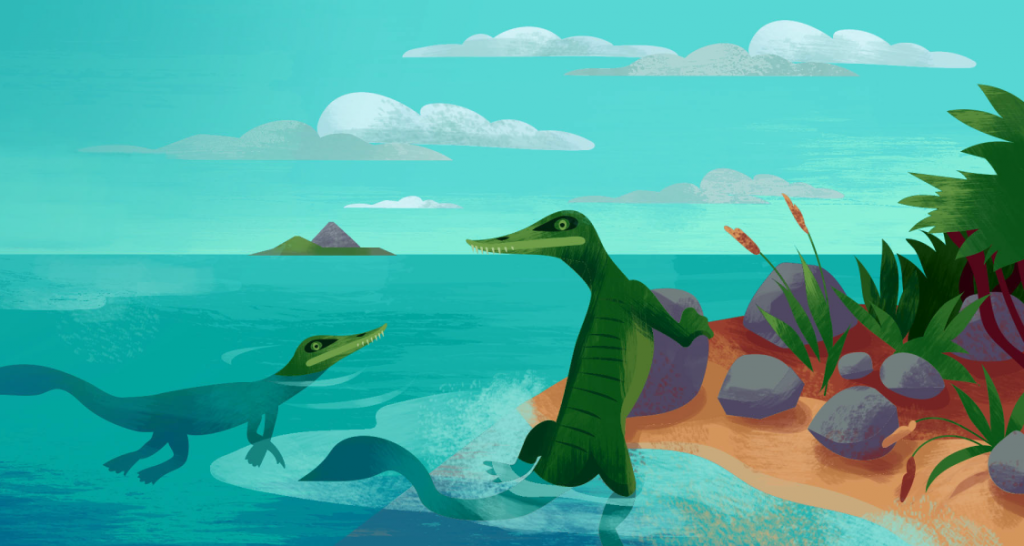
Why mCLASS?

It’s a single solution that meets all of the state’s requirements for Early Screening of Dyslexia.

  • It’s a universal early literacy and dyslexia screener with Enhanced Early Learning Measures and a diagnostic tool in one.
  • It allows for real-time assessment and instant scoring as well as offline assessment capabilities.
  • It includes explicit literacy instruction and intervention strategies based on student performance.
  • It’s flexible and can be implemented in a variety of scenarios, including in-person, remote, and hybrid learning environments.
  • It includes a variety of parent notification resources and at-home reading strategies.
  • It’s continually enhanced with new features and regular updates that are made available to our entire user community.
Tablet displaying a student performance table. Columns for assessment times; rows for performance levels. Percentages and student counts are provided in each assessment area and level.

Instant data and action

Quick and actionable reports provide detailed insight into students’ reading development across foundational literacy skills for classroom teachers and literacy specialists, principals and district leaders, and parents and guardians at home.

What’s more, mCLASS® DIBELS® 8th Edition and mCLASS RAN gives you instant results and clear next instructional steps for each and every student.

Enhanced Early Learning Measures

Early intervention is critical. That’s why we help you meet state dyslexia legislation with one single powerful tool—no additional assessment system required.

Our additional measures in vocabulary, spelling, and rapid automatic naming (RAN) address the full range of skills associated with dyslexia risk and help identify students at varying levels of risk for reading difficulties, including dyslexia.

A young man with a beard, wearing a yellow hoodie, is working on a laptop at a desk beside a bookshelf with a fishbowl and soccer ball.

Assess anywhere

mCLASS has created a collection of resources to help you plan for a variety of assessment scenarios.

Whether your school is engaged in in-person, hybrid, or remote instruction, we know how important it is for teachers and administrators to have a full (and firsthand!) picture of every student’s literacy development.

Personalized practice

Boost Reading (formerly Amplify Reading) is the practice and remediation companion to mCLASS. At its heart, there are three main areas that make Boost Reading a unique and essential supplemental learning program.

  • The program meets all students where they are with powerful individualized instruction and practice.
  • Age-appropriate narratives create a learning experience that leaps off the screen.
  • Research shows Boost Reading improves student performance–particularly among English Learners–reducing the overall percentage of students at risk of reading difficulty.
Young girl with curly hair sits indoors, looking at a tablet device with a focused expression.

Funding

Schools may utilize LAP Funds, Early Literacy Grants, or federal CARES Act funds to purchase assessments to meet Washington’s screening legislation.

Get in touch

Ready to discuss how mCLASS can support your specific needs? Please contact your Amplify Account Executive:

Alicia O’Neil

Senior Account Executive

(425) 890-6103

aoneil@amplify.com

Erin Elfving-Strayhan

Senior Account Executive

(971) 291-9854

estrayan@amplify.com

Kristen Rockstroh

Account Executive

(480) 639-8367

krockstroh@amplify.com

mCLASS® with DIBELS® 8th Edition is Oregon approved!

mCLASS with DIBELS 8th Edition and mCLASS Rapid Automatic Naming (RAN) helps teachers identify COVID-related learning loss and literacy needs firsthand through a quick, five-minute assessment that can be done virtually or in person. What’s more, it helps teachers take immediate instructional action that’s right for each and every student.

A teacher helps a young student with a tablet; below, a girl listens attentively. Icons of a book and a puzzle piece appear on colored backgrounds.

What is mCLASS?

mCLASS® with DIBELS® 8th Edition and mCLASS RAN is an integrated, gold standard literacy system for grades K–6.

The mCLASS comprehensive system includes efficient one-minute measures, a built-in Enhanced Early Learning Measures screener, teacher-led and student-driven instruction, intervention, and robust reports for teachers and administrators.

With mCLASS, you can say goodbye to cobbling together tools and second guessing the results of other screeners.

A girl sits at a desk reading and writing, with educational words in the background; text highlights mCLASS as a gold standard in early literacy.

University of Oregon

Together with the University of Oregon, we have made the DIBELS® (Dynamic Indicators of Basic Early Literacy Skills) assessment that you know and love more powerful and user-friendly than ever before.

As the only licensed provider of the digital DIBELS 8th Edition assessment, we make it faster and easier to understand where every student is in their early literacy journey.

Why mCLASS?

It’s a single solution that meets all of the state’s requirements for Early Screening of Dyslexia.

  • It’s a universal early literacy screener, dyslexia screener, and a diagnostic tool in one.
  • It allows for real-time assessment and instant scoring as well as offline assessment capabilities.
  • It includes explicit literacy instruction and intervention strategies based on student performance.
  • It’s flexible and can be implemented in a variety of scenarios, including in-person, remote, and hybrid learning environments.
  • It includes a variety of parent notification resources and at-home reading strategies.
  • It’s continually enhanced with new features and regular updates that are made available to our entire user community.
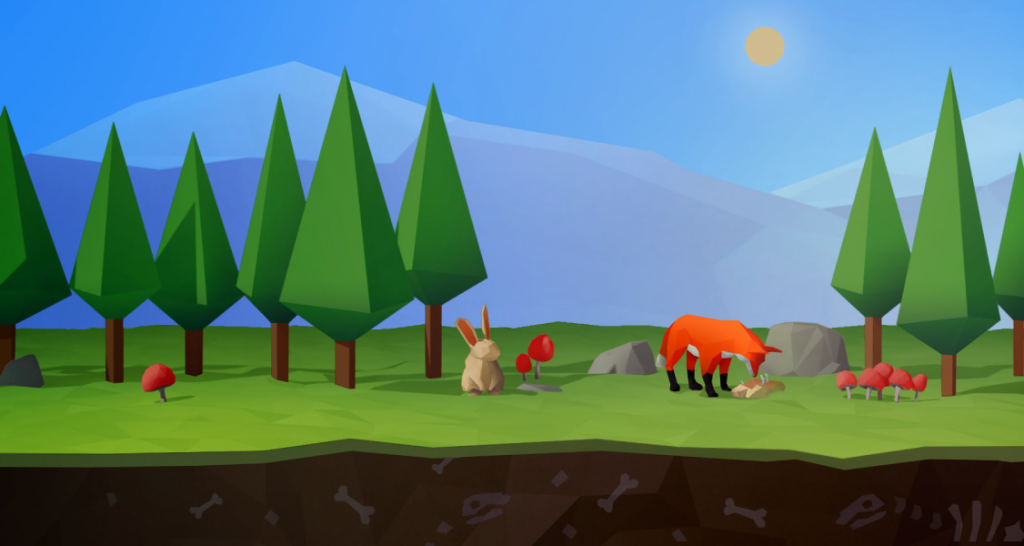
Amplify Reading is the proven, adaptive skills practice and remediation companion for mCLASS. Try it for free for the remainder of the school year with a no-cost trial.
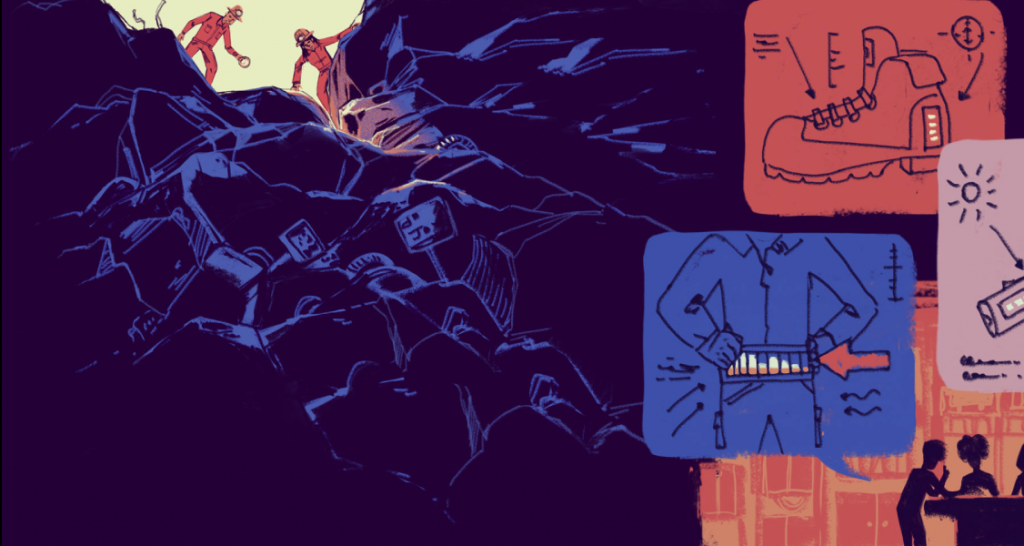
Request a free trial today!
Tablet displaying a student performance table. Columns for assessment times; rows for performance levels. Percentages and student counts are provided in each assessment area and level.

Instant data and action

Quick and actionable reports provide detailed insight into students’ reading development across foundational literacy skills for classroom teachers and literacy specialists, principals and district leaders, and parents and guardians at home.

What’s more, mCLASS® with DIBELS® 8th Edition and mCLASS RAN gives you instant results and clear next instructional steps for each and every student.

Dyslexia screener

Early intervention is critical. That’s why we help you meet state dyslexia legislation with one single powerful tool—no additional assessment system required.

Our additional measures in vocabulary, spelling, and rapid automatic naming (RAN) address the full range of skills associated with dyslexia risk and help identify students at varying levels of risk for reading difficulties, including dyslexia.

A child sits at a desk using a laptop. Next to the desk is a bookshelf with books, a fishbowl, and a soccer ball.

Assess anywhere

mCLASS has created a collection of resources to help you plan for a variety of assessment scenarios.

Whether your school is engaged in in-person, hybrid, or remote instruction, we know how important it is for teachers and administrators to have a full (and firsthand!) picture of every student’s literacy development.

Personalized practice

Amplify Reading is the practice and remediation companion to mCLASS. At its heart, there are three main areas that make Amplify Reading a unique and essential supplemental learning program.

  • The program meets all students where they are with powerful individualized instruction and practice.
  • Age-appropriate narratives create a learning experience that leaps off the screen.
  • Research shows Amplify Reading improves student performance–particularly among English Learners–reducing the overall percentage of students at risk of reading difficulty.

A young girl with curly hair sits indoors, looking at a tablet device with a focused expression.

Funding

Schools may utilize Early Literacy Grants or federal CARES Act funds to purchase assessments to meet Oregon’s screening legislation.

Get in touch

Ready to discuss how mCLASS can support your specific needs? A brief 30-minute call is all we need to determine if mCLASS with DIBELS 8th Edition is the right fit for you.

Simply fill out the form below and we’ll be in touch.

A middle-aged man with short brown hair wearing a light blue button-up shirt, smiling at the camera against a plain white background.

Patric Momsen

District Manager

A man with short dark hair wearing a dark blazer and light-colored collared shirt, smiling at the camera against a plain white background.

Jonathan Cohen

Account Executive

A man with short dark hair smiles at the camera. The photo is in black and white with a blurred outdoor background.

Immanuel Moon

Field Manager

Welcome, Arizona educators!

The Arizona Department of Education just released its first-ever list of approved universal literacy screeners. According to the state, these screeners “shall be used by schools in the 2020-2021 school year to meet the requirements of both the Move On When Reading (MOWR) legislation and the dyslexia screening legislation.”
 
We’re excited to announce that mCLASS® with DIBELS® 8th Edition and mCLASS RAN is on that list.

A teacher shows a tablet to a young student at a table; below, a girl listens in class. Two squares feature icons of a book and a puzzle piece on colored backgrounds.

Why mCLASS?

mCLASS® with DIBELS® 8th Edition and mCLASS RAN is a single solution that meets all of the requirements of the law.

  • It’s a universal early literacy screenerdyslexia screener, and diagnostic tool in one.
  • It includes immediate and actionable literacy instruction and intervention strategies based on student performance.
  • It’s flexible and can be implemented in a variety of scenarios, including in-person, remote, and hybrid learning environments.
  • It allows for non-paper assessment and scoring as well as offline assessment capabilities.
  • It includes a variety of parent notification resources and at-home reading strategies.
A timeline with milestones from 2000 to 2018 shows Amplify’s focus on literacy, with a large play button in the center and the text: "We have been laser-focused on literacy for two decades.

Funding

Schools may utilize Move On When Reading (MOWR)Early Literacy Grants, or federal CARES Act funds to purchase assessments to meet both MOWR legislation and the dyslexia screening legislation (A.R.S §15-701 and A.R.S. §15-4704).
 
Visit our CARES Act resource hub or download this CARES Act flyer to learn more.

Young girl with curly hair sits indoors, looking at a tablet device with a focused expression.

More than a test

mCLASS is an integrated, gold standard literacy system that closes the knowing-doing gap. By combining assessment, reporting, and instruction in one, it eliminates the need for cobbled together tools.

  • Data gathered through efficient one-minute measures is made available to teachers instantly.
  • Easy-to-read reports make teachers aware of potential reading difficulties as well as observed patterns.
  • Ready-to-teach literacy instruction and intervention strategies help teachers target specific skill deficits immediately.

Remote learning

mCLASS has created a collection of resources to help you plan for a variety of scenarios for the 2020–2021 school year.
 
Whether your school is engaged in in-person, hybrid, or remote instruction, we know how important it is for teachers and administrators to have a full picture of every student’s literacy development.
 
Download our Remote and Hybrid Learning Guide to learn more.

A person sitting at a desk using a laptop, with a bookshelf containing books, a fish tank, and a soccer ball nearby.

Personalized practice

Amplify Reading is the practice and remediation companion to mCLASS.
 
At its heart, there are three main areas that make Amplify Reading a unique and essential supplemental learning program for the 2020-2021 school year.

  • The program meets all students where they are with powerful individualized instruction and practice.
  • Age-appropriate narratives create a learning experience that leaps off the screen.
  • Research shows Amplify Reading improves student performance–particularly among English Learners–reducing the overall percentage of students at risk of reading difficulty.

Get in touch

Ready to discuss how mCLASS can support your specific needs? A brief 30-minute call is all we need to determine if mCLASS with DIBELS 8th Edition is the right fit for you.
 
Simply fill out the form below and we’ll be in touch.

Man with a trimmed beard and shaved head, wearing a dark suit, blue shirt, and orange tie, posing against a plain white background.

Tommy Gearhart

Senior Account Executive

A woman with shoulder-length brown hair smiles in front of a brick wall.

Laina Armbruster

Account Executive

A smiling man in a jacket is shown in a black-and-white portrait with a blurred outdoor background.

Laina Armbruster

Field Manager

Request a meeting

Welcome, Portland K–5 Science Reviewers!

Thank you for taking the time to review Amplify Science for grades K–5. On this site, you’ll find all the resources you need to learn more about this engaging and robust NGSS program. Plus, we make it easy to experience our program firsthand with a live demo account that features our interactive learning platform.

A boy reads a book titled "Gary's Seed Journal," surrounded by illustrated elements like a globe, trees, and clouds. Upper left shows an illustration of a dinosaur skull.

Review Materials

Teacher Reference Guides

It’s important that your committee sees the full breadth and depth of our instruction. For that reason, we provided a copy of each of our unit-specific Teacher Reference Guides. Before you panic, rest assured that teachers do not use these robust reference guides for day-to-day teaching. For that, we have a hands-free TG!

A laptop screen shows an energy simulation, with surrounding text and diagrams explaining the Earth's system and energy flow.
  • Teacher Reference Guide: Unlike a typical TG that requires a series of supplemental books to support it, our encyclopedic reference guide is chock-full of everything a teacher needs to fully implement our program and the NGSS.
  • Ready-to-Teach Lesson Slides: For daily instruction, teachers need their hands free. That’s why we created ready-to-teach lesson slides for every single lesson What’s more, they are editable and include suggested teacher talk and point-of-use differentiation and other instructional tips. Click to learn more.

Hands-on kits

Knowing how important hands-on learning is to your district, we provided your committee every kit included in our K–5 program. While it looks like a lot of materials to manage, our unit-specific kits enable teachers to grab the tub they need and then put it all back with ease. Plus, items needed for multiple units are duplicated and found in each tub.

Amplify Science hands-on kits

Our unit-specific kits:

  • Include more materials — We give you enough non-consumable materials to support a class of 36 students and enough consumables to support 72 student uses. In other words, each kit will last two years.
  • Are more manageable — Unlike other programs that require large groups of students to share limited sets of materials, our kits include enough to support small groups of 4–5 students.
  • Include supportive videos — Each hands-on activity provides clear instructions for the teacher, with more complex activities supported by video demonstrations and illustrations.

Overview

Developed by UC Berkeley’s Lawrence Hall of Science, our program features:

  • phenomena-based approach where students construct a more complex understanding of each unit’s anchor phenomenon.
  • A blend of cohesive storylines, hands-on investigations, rich discussions, literacy-rich activities, and digital tools.
  • Cohesive units, chapters, lessons, and activities designed to deliver true 3-dimensional learning.
  • An instructional design that supports all learners in accessing all standards.

Hands-on investigations

Classroom discussions

Vocabulary

Simulations and digital modeling tools

Program structure

Our cyclical lesson design ensures students receive multiple exposures to concepts through a variety of modalities. As they progress through the lessons within a unit, students build and deepen their understanding, increasing their ability to develop and refine complex explanations of the unit’s phenomenon.

It’s this proven program structure and lesson design that enables Amplify Science to teach less, but achieve more. We designed our program to address 100% of the NGSS in just 66 days for grades K–2 and 88 days for grades 3–5.

Graphic showing a research process with four steps: spark intrigue with a real-world problem, explore evidence, explain and elaborate, and evaluate claims, connected in a cycle with arrows.

Unit sequence

Our lessons follow a structure that is grounded in regular routines while still being flexible enough to allow for a variety of learning experiences.

In fact, our multi-modal instruction offers more opportunities for students to construct meaning, practice and apply concepts than any other program. What’s more, our modular design means our units can be flexibly arranged to support your instructional goals.

Four images: a hair dryer blowing on a stick structure; an illustration of an orangutan climbing; two children playing a wall-mounted game; and hands with toy dinosaurs sorting paper strips.
An illustration from Needs of Plants and Animals unit
Needs of Plants and Animals

Domains: Life Science, Earth and Space Science, Engineering Design

Unit type: Investigation

Student role: Scientists

Phenomenon: There are no monarch caterpillars in the Mariposa Grove community garden since vegetables were planted.  

An illustration from the Pushes and Pulls unit
Pushes and Pulls

Domains: Physical Science, Engineering Design

Unit type: Engineering design

Student role: Pinball engineers

Phenomenon: Pinball machines allow people to control the direction and strength of forces on a ball.

Silueta de una estructura de parque infantil contra un cielo azul con nubes y tres soles amarillos.
Sunlight and Weather

Domains: Earth and Space Science, Life Science, Engineering Design

Unit type: Modeling

Student role: Weather scientists

Phenomenon: Students at Carver Elementary School are too cold during morning recess, while students at Woodland Elementary School are too hot during afternoon recess.  

Illustration of sea turtles swimming among seaweed in the ocean, with a large shark in the background.
Animal and Plant Defenses

Domain: Life Science

Unit type: Modeling

Student role: Marine scientists

Phenomenon: Spruce the Sea Turtle lives in an aquarium and will soon be released back into the ocean, where she will survive despite ocean predators.  

An illustration from the Light and Sound unit
Light and Sound

Domains: Physical Science, Engineering Design

Unit type: Engineering design

Student role: Light and sound engineers

Phenomenon: A puppet show company uses light and sound to depict realistic scenes in puppet shows.

An illustration from the Spinning Earth unit
Spinning Earth

Domain: Earth and Space Science

Unit type: Investigation

Student role: Sky scientists

Phenomenon: The sky looks different to Sai and his grandma when they talk on the phone.

An elephant standing next to a tree uses its trunk to pick a fruit from a branch while more fruit hangs above.
Plant and Animal Relationships

Domains: Life Science, Engineering Design

Unit type: Investigation

Student role: Plant scientists

Phenomenon: No new chalta trees are growing in the fictional Bengal Tiger Reserve in India.

A hand holds a red bean on a table, while a wooden stick spreads white glue and scattered beans. Also on the table are a white cup and a yellow pen.
Properties of Materials

Domains: Physical Science, Engineering Design

Unit type: Engineering design

Student role: Glue engineers

Phenomenon: Different glue recipes result in glues that have different properties.

Ilustración de una costa con acantilados, un edificio de centro recreativo con un techo rojo y un letrero, árboles de hoja perenne, una bandera azul y una playa de arena debajo.
Changing Landforms

Domain: Earth and Space Science

Unit type: Modeling

Student role: Geologists

Phenomenon: The cliff that Oceanside Recreation Center is situated on appears to be receding over time.

Una ilustración de un tren de alta velocidad moderno y aerodinámico que viaja por una vía elevada con un paisaje verde de fondo.
Balancing Forces

Domain: Physical Science

Unit type: Modeling

Student role: Engineers

Phenomenon: The town of Faraday is getting a new train that floats above its tracks.  

An illustration from the Inheritance and Traits unit
Inheritance and Traits

Domain: Life Science

Unit type: Investigation

Student role: Wildlife biologists

Phenomenon: An adopted wolf in Graystone National Park (“Wolf 44”) has some traits that appear similar to one wolf pack in the park and other traits that appear to be similar to a different wolf pack.

An illustration from the Environments and Survival unit
Environments and Survival

Domains: Life Science, Engineering Design

Unit type: Engineering design

Student role: Biomimicry engineers

Phenomenon: Over the last 10 years, a population of grove snails has changed: The number of grove snails with yellow shells has decreased, while the number of snails with banded shells has increased.

An illustration from the Weather and Climate unit
Weather and Climate

Domains: Earth and Space Science, Engineering Design

Unit type: Argumentation

Student role: Meteorologists

Phenomenon: Three different islands, each a contender for becoming an Orangutan reserve, experience different weather patterns.

An illustration from the Energy Conversions unit
Energy Conversions

Domains: Physical Science, Earth and Space Science, Engineering Design

Unit type: Engineering design

Student role: System engineers

Phenomenon: The fictional town of Ergstown experiences frequent blackouts.

An illustration from the Vision and Light unit
Vision and Light

Domain: Physical Science, Life Science, Engineering Design

Unit type: Investigation

Student role: Conservation biologists

Phenomenon: The population of Tokay geckos in a rain forest in the Philippines has decreased since the installation of new highway lights.

An illustration from the Earth's Features unit
Earth’s Features

Domain: Earth and Space Science

Unit type: Argumentation

Student role: Geologists

Phenomenon: A mysterious fossil is discovered in a canyon within the fictional Desert Rocks National Park.

An illustration from the Waves, Energy, and Information unit
Waves, Energy, and Information

Domains: Physical Science, Life Science, Earth and Space Science, Engineering Design

Unit type: Modeling

Student role: Marine scientists

Phenomenon: Mother dolphins in the fictional Blue Bay National Park seem to be communicating with their calves when they are separated at a distance underwater.

An illustration from the Patterns of Earth and Sky unit
Patterns of Earth and Sky

Domains: Physical Science, Earth and Space Science

Unit type: Investigation

Student role: Astronomers

Phenomenon: An ancient artifact depicts what we see in the sky at different times — the sun during the daytime and different stars during the nighttime — but it is missing a piece.

An illustration from the Modeling Matter unit
Modeling Matter

Domain: Physical Science

Unit type: Modeling

Student role: Food scientists

Phenomenon: Chromatography is a process for separating mixtures. Some solids dissolve in a salad dressing while others do not. Oil and vinegar appear to separate when mixed in a salad dressing.

An illustration from the Earth System unit
The Earth System

Domains: Earth and Space Science, Physical Science, Engineering Design

Unit type: Engineering Design

Student role: Water resource engineers

Phenomenon: East Ferris, a city on one side of the fictional Ferris Island, is experiencing a water shortage, while West Ferris is not.

An illustration from the Ecosystem Restoration unit
Ecosystem Restoration

Domains:Physical Science, Life Science, Earth and Space Science, Engineering Design

Unit type: Argumentation

Student role: Ecologists

Phenomenon: The jaguars, sloths, and cecropia trees in a reforested section of a Costa Rican rain forest are not growing and thriving.

Access program

Watch the video to the right showing you how to navigate our digital platform. When you’re ready, follow the instructions below to log into our live demo account.

  • Click the orange button below to access the program digitally.
  • Choose the resources you’d like to review.
  • Pick your grade level from the drop-down menu.
  • Scroll down to find additional grade-level resources.

Contact us

A smiling woman with blond hair, wearing a blue top and a light brown jacket, with autumn leaves in the background.

Have questions? Please contact:

Erin Elfving-Strayhan
Senior Account Executive

971-291-9854
estrayhan@amplify.com

Overview

Developed by UC Berkeley’s Lawrence Hall of Science, our program features:

  • phenomena-based approach where students construct a complex understanding of each unit’s anchor phenomenon.
  • A blend of cohesive storylines, hands-on investigations, rich discussions, literacy-rich activities, and digital tools.
  • Newly crafted units, chapters, lessons, and activities designed to deliver true 3-dimensional learning.
  • An instructional design that supports all learners in accessing all standards.

Hear what these educators have to say about the program. >

Explore your grade

Access the Science Digital Platform

Get started by watching this class share what they’re figuring out with Amplify Science. >

Select a grade level below to learn more about how we make rich learning accessible to all students at every grade.

Grades TK–2 Grades 3–5
Grade TK Grade 3
Grade K Grade 4
Grade 1 Grade 5
Grade 2  

Committed to reading equity

We believe that all students have the right to read complex texts and engage in rich classroom discussions. They should also see themselves reflected and experience new worlds through reading.

This commitment guides our text selection, unique artwork, and dedication to reaching every student where they are.

A student with curly hair reads a book in a classroom, while other students are visible in the background, sitting at desks.

Text selection

Texts in the Amplify ELA curriculum cover a wide range of topics, themes, and genres, with differentiated supports that ensure that all students can work through each reading and lesson. Taken as a whole, the texts show students a diverse picture of the world, while fostering a lifelong love of reading.

Illustration of diverse people and landscapes, featuring native designs, botanical elements, and a silhouetted airplane against a script background.
A painted scene shows a blue sky with scattered white dots resembling stars and red clouds, against a backdrop of dark and light color gradients.

In the Liberty & Equality unit, students reflect on the harrowing journeys and avenues to freedom that enslaved African-Americans were forced to forge.

Character & Conflict

Students read A Raisin in the Sun, a play that focuses on the impact of poverty and racial tensions on family relationships and identity within an African-American family.

Summer of the Mariposas

In the Summer of the Mariposas unit, students dive into a retelling of the Odyssey through a contemporary Hispanic lens as they explore sibling and extended-family relationships.

A pencil sketch of an airplane is shown on a textured background with orange and yellow watercolor paint.

In the Perspectives and Narrative unit, students explore a coming of age moment for an adolescent daughter of immigrant parents.

Red Scarf Girl

In the Red Scarf Girl and Narrative unit, students learn about a key historic moment in Asian and world history, while making connections to relatable themes like authority figures imposing rules on children, and family and peer loyalties standing at odds.

Mysteries & Investigations

In the Mysteries & Investigations unit, many of the texts present an ethnically and culturally diverse group of characters, including many pre-teen or teen protagonists rebelling against authority, navigating their relationships with their peers and families, and figuring out their unique identities.

Created with diverse perspectives

With our new illustrations, time spent in our classrooms will feel relevant and relatable to every student. We’ve brought together an art team with unique perspectives and visual styles so that their diversity can shine along with the
complex texts in our curriculum, and illuminate their relationship with our literature. Everyone deserves to see themselves as the hero of a story. It is our hope that our students will find themselves within our program, and will be ever more curious in their learning, and engaged in their reading.

https://youtu.be/_FLV_Le7Zoc
A person sits at a desk with art supplies, flowers, and plants, speaking on camera. An orange play button overlays the image, indicating a video. A colorful artwork hangs on the wall behind them.

Dive into the world of Mysteries &
Investigations with Dr. Womack,
the illustrator who may have once
become a scientist…

A person sits on a couch in a room decorated with colorful artwork and a wooden sculpture; a play button icon is overlaid at the center.

Meet Tre, a seeker and traveller that became homies Fredrick Douglass through illustrating his narrative for our program…

A woman with long dark hair in a red top sits indoors near a window with yellow flowers and colorful decorations; a play button overlay is at the center.

There’s no one way to be a maker, and Jackie certainly has made a lot of things. Check out the weird and mysterious world of her miniatures…

A person with curly hair and hoop earrings speaks indoors, with colorful posters and decorations visible in the background. An orange play button overlays the image.

She’s been drawing characters and comics ever since middle school. Now see the drama of Edel’s work in the mythos of the Greeks…

A woman stands in front of a wall covered with colorful artwork. An orange play button icon is overlaid on the center of the image.

Travel through countries and narratives with Caroline, as she shares her delicate watercolors for illustrating the hero’s journey…

A man with short brown hair and a beard sits at a desk near a window, with artwork displayed on the wall behind him. An orange play button is centered over the image.

The haunting work that Patrick creates will leave you feeling a sense of melancholy and longing, but not without hope for the future…

A woman in a red blazer sits in an office with open books and art prints on the wall. An orange play button is overlaid in the center of the image.

She’s been drawing characters and comics ever since middle school. Now see the drama of Edel’s work in the mythos of the Greeks…

A man in a light blue shirt speaks while seated in a creative workspace with colorful artwork and sketches displayed on the wall behind him.

As a latino American, Eddie is an illustrator, a father, and a teacher. He is working in collaboration with Poetry in America to use his heritage as inspiration…

A woman sits in front of a wall covered with colorful educational posters, partially obscured by a large play button icon in the center.

Listen to a word from Tory, the Art Director at Amplify, on how the vision
was set for the project and how she brought the team together that would get to illustrate ELA…

Fanart

Here is a library of all the inspiring art that our beloved fans have submitted for our program. Do you or your students have a favorite literary character from our program? Send us your fanart to be shared with our community here!

A collage of various portrait illustrations and drawings, including stylized faces, historical figures, animals, and astronauts, in both color and black and white.

Amplify Tutor Hiring

To view this protected page, enter the password below:


At Amplify, we believe Pennsylvania students and teachers deserve high quality instructional materials.

That’s why we partner with schools across the Keystone State to meet their core curriculum, assessment, and intervention goals. With solutions grounded in research and evidence-based practices, Amplify is leading the way with rigorous and relevant learning experiences.

Select a program below to learn more.

Illustration of Pennsylvania featuring cows, a barn, city skyline, groundhog, pretzel, chocolate bar, Liberty Bell, and a train on a green landscape.
Group of diverse middle school students working on laptops and discussing in classroom.

Amplify Desmos Math (K–12)

Amplify Desmos Math is a comprehensive K–12 math suite that has everything in one place: benchmark and progress monitoring, core instruction, integrated personal learning, embedded intervention, and more. This structured, problem-based approach builds on students’ curiosity while strategically developing math fluency and lasting grade-level understanding. The program delivers:

  • Engaging, discourse-rich math lessons that fuel classroom conversations and drive the learning process.
  • Comprehensive integrated resources, including print and digital, along with manipulatives and Centers Kits in K–5.
  • Real-time insights, data, and reporting that inform instruction and celebrate student thinking.

Flexible, social problem-solving experiences

Digital lessons should be able to bring student thinking to the surface and spark productive discussions. We bring this vision to life with interactive social, collaborative lessons powered by Desmos technology.

A teacher using a tablet interacts with a young student in a classroom, with educational posters in the background.

mCLASS early literacy assessment and intervention (K–8)

Effective universal screening and progress monitoring means that every student is an individual and targeted instruction should become a reality, not a dream. 

mCLASS® is the gold-standard K–8 assessment and intervention suite for early literacy that helps every child learn to read confidently.

  • Universal screening presented in one-minute measures shows where your students are, who is at risk, and where to target instruction.
  • Dyslexia screening identifies students who are at risk for reading difficulties without needing an additional assessment system
  • Elimination of manual assessment process gives you instant results and clear next steps for each student.
  • Progress monitoring allows you to quickly adjust to student needs, based on how they are responding to instruction.

The power of mCLASS

Based on decades of leading literacy research, mCLASS lets you know exactly which part of a skill a student is struggling with, then gives you effective next steps and lesson plans.

Watch how mCLASS can help teachers:

  • Save hours of time.
  • Catch at-risk students earlier.
  • Connect data to personalized learning.
Several students listening attentively

Amplify Core Knowledge Language Arts (PreK–5)

High-quality, content-rich instruction should combine multisensory phonics instruction with knowledge-rich texts and interactive multimedia resources.

Built on the Science of Reading, Amplify Core Knowledge Language Arts® (CKLA) sequences deep content knowledge with research-based foundational skills.

  • Explicit, systematic foundational skills lessons are easy to teach and exciting to learn.
  • Deep knowledge-building across units and grades helps access complex text, so real comprehension can happen.
  • Rich, authentic texts with engaging topics and immersive learning support students wherever they are.

Students love CKLA. But don’t just take our word for it.

Amplify CKLA is impactful for teachers, administrators, families, and most of all—students! Hear what students think about Amplify CKLA.

A young girl focuses on a laptop with a stack of books, a colorful creature, and autumn leaves in a stylized graphic.

Boost Reading (K–5)

Authentic personalized learning should be developmentally appropriate, grounded in research, and truly adaptive.

Boost Reading is a personalized, digital supplemental reading tool for grades K–5 featuring:

  • Research-based approach to critical literacy skill development that is proven to accelerate reading growth in just 30 minutes per week.
  • Captivating storylines and games with powerful individualized reading instruction and practice to bridge learning gaps while learning independently.
  • Actionable data that offers deeper insights into student performance and needs.

Boost Reading keeps all students playing and motivated to learn.

Boost Reading includes age-appropriate storylines that excite students’ curiosity. Regardless of their reading ability, students are placed in a year-long storyline that is developmentally appropriate for them. As students grow, so do the immersive worlds around them.

A student reading "Summer of the Mariposas"

Amplify ELA (6–8)

Amplify ELA is the only program truly designed to support middle school students at this critical developmental moment. We ensure that skills are taught, standards are covered, and the test is prepped – all while bringing texts to life and differentiating instruction.

  • Rich, complex text and research-based instruction at the center of every lesson to build the vocabulary, knowledge, and skills needed in middle school, high school, and beyond.
  • Multiple points of entry and differentiated support allow every student, regardless of fluency or ability, to engage deeply in the same curriculum.
  • Immersive digital apps that offer engaging interactive experiences where students work with key skills in brand new ways.

We are the program for middle schoolers.

Let’s face it– middle school students are different from high school students. That’s why they deserve a program of their own.

A futuristic cityscape with a figure in a red hood looking at a large digital billboard displaying a "wanted for unlawful reading" alert.

Boost Close Reading (6–8)

Middle school students need to exercise their close reading skills in order to deeply comprehend across the curriculum. Based on a riveting storyline designed especially for middle schoolers, Boost Close Reading helps students find deeper meaning in a digital journey like no other.

  • Inspire engagement via high-interest storytelling, choose-your-own adventure experiences, and skill-building features.
  • Explore topics like claim, evidence, reasoning, word choice, and tone in both literary and informational texts.
  • Detailed teacher dashboards display student progress, performance, and usage information, offering easy-to-access insights on areas of strength and weakness.

Fight the machines and save the world.

Before the machines took over, humans could fend for themselves. Now humanity is trapped. And their only hope? You.

A badge for EdReports Review Year 2023, two students at a computer, two students discussing with a tablet, and an educational diagram of a spider on a screen.

Amplify Science Pennsylvania (K–8)

Amplify Science Pennsylvania is a proven K–8 curriculum that develops critical thinkers who are prepared to solve problems in their communities and beyond. It features:

  • Phenomena-based exploration and three-dimensional learning where students take on the roles of scientists and engineers to solve real-world problems.
  • Immersive hands-on activities that teach students how to gather evidence, ask questions, and develop and defend claims.
  • Literacy-rich science instruction that enables young scientists to become excellent readers, writers, and speakers.
  • Custom lessons specifically designed to meet Pennsylvania’s STEELS standards.
Bar chart comparing science content knowledge: Do-Talk-Read-Write approach at 51.5% and Business-as-usual approach at 36.6%.

Do, Talk, Read, Write students outperform their peers.

Bar graph comparing middle school science vocabulary, showing 48.6% for the Do-Talk-Read-Write approach with Amplify Science and 22.5% for the Business-as-usual approach.

English language learners who use Do, Talk, Read, Write outperform their ELL peers.

Bar chart compares middle school science learning progression outcomes before and after a unit, showing similar distributions with the highest value at category 3 in both cases, illustrating the impact of Amplify Science instruction.

Do, Talk, Read, Write increases learning outcomes.

Get Support

Get support

Do you use already use an Amplify program in Pennsylvania? Our support team is here to provide technical and instructional support by phone, live chat, or email.

Get help now

Contact us

A woman with long brown hair and glasses wearing a light blue sweater, smiling at the camera against a gray background.

Julie Couch

District Enrollment <1800 students

A woman with long blonde hair and blue eyes is smiling at the camera, wearing a black top, in a well-lit indoor setting.

Jen Mee

Western PA

A smiling person with shoulder-length gray hair, wearing a peach-colored scarf and a gray sweater, stands against a plain white background. This image captures the essence of Pennsylvania teachers who are dedicated to enriching Science programs for elementary students.

Monica Vincent

Southeast PA

A man with curly brown hair and a beard, smiling broadly, wearing a suit, dress shirt, and floral tie, standing outdoors with trees and grass in the background.

Keenan Zambelli

Northeast & Central PA