Plan your professional development
We’re excited to partner with you on your Amplify journey. Flexible professional development pathways have been designed to meet your needs.

Recommended Professional Development Plan
Our team has curated a recommended professional learning path from initial launch to continuous support. Use the Professional Development Planning Guide below to discuss the plan that best meets your school or district needs with your Account Executive.
mCLASS with DIBELS 8th Edition sessions overview
| Audience | Title | Duration | Modality |
|---|---|---|---|
| Launch | |||
| New mCLASS with DIBELS 8th Edition customers with limited time for PD | mCLASS with DIBELS 8th Edition program overview | Half day | Onsite/Remote |
| New mCLASS with DIBELS 8th Edition customers | Initial training | 1 day onsite or 2 half days remote | Onsite/Remote |
| Initial training: Train the Trainer | 1 day onsite or 2 half days remote | Onsite/Remote | |
| Initial training | Self-paced | Online course | |
| Strengthen | |||
| mCLASS with DIBELS 8th Edition customers with limited time for PD | Understanding your classroom data | Half day | Onsite/Remote |
| All mCLASS with DIBELS 8th Edition customers | Classroom data analysis and instructional planning | 1 day onsite or 2 half days remote | Onsite/Remote |
| Classroom data analysis and instructional planning: Train the Trainer | 1 day onsite or 2 half days remote | Onsite/Remote | |
| Classroom data analysis and instructional planning | Self-paced | Online course | |
| All mCLASS with DIBELS 8th Edition customers | Understanding your school or district data | Half day | Onsite/Remote |
| Data-driven leadership practices | 1 day onsite or 2 half days remote | Onsite/Remote | |
| Data-driven leadership practices: Train the Trainer | 1 day onsite or 2 half days remote | Onsite/Remote | |
| Data-driven leadership practices | Self-paced | Online course | |
| Strengthening consultation session | 60 min. | Remote | |
| Strengthening consultation session package | 3 60-min. sessions | Remote | |
| Coach | |||
| All mCLASS with DIBELS 8th Edition customers | Coaching session | 1 day | Onsite |
| Coaching session | Half day | Onsite/Remote | |
| Building readers | |||
| All mCLASS with DIBELS 8th Edition customers | Building readers for leaders | 2 half days | Onsite/Remote |
| Building readers for teachers | 3 half days | Onsite/Remote | |
Launch
mCLASS with DIBELS 8th edition program overview
Half day (3 hours)
This PD prepares participants to implement the assessment and collect reliable data using standardized guidelines.
Audience: Teachers (administrators welcome), maximum 30 participants
Modality: Onsite/Remote
Initial training
1 day onsite (6 hours) or 2 half days remote (6 hours)
This PD prepares participants to implement the assessment, collect reliable data using standardized guidelines, and use the targeted lessons available on mCLASS to drive differentiated instruction.
Audience: Teachers (administrators welcome), maximum 30 participants
Modality: Onsite/Remote
Initial training: Train the Trainer
1 day onsite (6 hours) or 2 half days remote (6 hours)
This PD prepares participants to implement the assessment, collect reliable data using standardized guidelines, and use the targeted lessons available on mCLASS to drive differentiated instruction. Participants receive annotated session materials to turnkey the session to colleagues.
Audience: Teachers (administrators welcome), maximum 30 participants
Modality: Onsite/Remote
Initial training
Self-paced
This PD is an individual seat to our self-paced, on-demand online course that contains approximately 6 hours of training. Participants will learn how to implement the assessment, collect reliable data using standardized guidelines, and use the targeted lessons available on mCLASS to drive differentiated instruction. Participants will access and revisit the course anytime for up to one year as a refresher.
Audience: Teachers (administrators welcome)
Modality: Online
Strengthen
Understanding your classroom data
Half day (3 hours)
This PD prepares participants to understand their students’ data by utilizing the reports available on mCLASS. This session should be scheduled after the most recent benchmark window has closed so that participants can work with their own data.
Audience: Teachers (administrators welcome), maximum 30 participants
Modality: Onsite/Remote
Classroom data analysis and instructional planning
1 day onsite (6 hours) or 2 half days remote (6 hours)
This PD prepares participants to deeply understand their students’ data and create actionable instructional plans by utilizing the reports and skills-focused lesson plans available on mCLASS.
Audience: Teachers (administrators welcome), maximum 30 participants
Modality: Onsite/Remote
*This session should be scheduled after the most recent benchmark window has closed so that participants can work with their own data.
Classroom data analysis and instructional planning: Train the Trainer
1 day onsite (6 hours) or 2 half days remote (6 hours)
This PD prepares participants to deeply understand their students’ data and create actionable instructional plans by utilizing the reports and skills-focused lesson plans available on mCLASS. Participants receive annotated session materials to turnkey the session to colleagues.
Audience: Teachers (administrators welcome), maximum 30 participants
Modality: Onsite/Remote
*This session should be scheduled after the most recent benchmark window has closed so that participants can work with their own data.
Classroom data analysis and instructional planning
Online course (self-paced)
This PD is an individual seat to our self-paced, on-demand online course that contains approximately 6 hours of training. Participants will learn how to deeply understand their students’ data and create actionable instructional plans by utilizing the reports and skills-focused lesson plans available on mCLASS. Participants will access and revisit the course anytime for up to one year as a refresher.
Audience: Teachers (administrators welcome)
Modality: Online
Understanding your school or district data
Half day (3 hours)
This PD prepares participants to use their data in making schoolwide decisions. This session should be scheduled after the most recent benchmark window has closed so that participants can work with their own data.
Audience: Administrators, maximum 30 participants
Modality: Onsite/Remote
Data-driven leadership practices
1 day onsite (6 hours) or 2 half days remote (6 hours)
This PD prepares participants to use their data in making school-wide decisions and build a schoolwide culture of data-driven instruction. This session should be scheduled after the most recent benchmark window has closed so that participants can work with their own data.
Audience: Administrators, maximum 30 participants
Modality: Onsite/Remote
Data-driven leadership practices: Train the Trainer
1 day onsite (6 hours) or 2 half days remote (6 hours)
This PD prepares participants to use their data in making school-wide decisions and build a schoolwide culture of data-driven instruction. This session should be scheduled after the most recent benchmark window has closed so that participants can work with their own data. Participants receive annotated session materials to turnkey the session to colleagues.
Audience: Administrators, maximum 30 participants
Modality: Onsite/Remote
Data-driven leadership practices
Online course (self-paced)
This PD is an individual seat to our self-paced, on-demand online course that contains approximately 6 hours of training. Participants will learn how to use their data in making school-wide decisions and build a schoolwide culture of data-driven instruction. Participants will access and revisit the course anytime for up to one year as a refresher.
Audience: Administrators
Modality: Online
Strengthening consultation session
(60-min.)
This 60-minute session will focus on a specific topic that will deepen educators’ understanding of mCLASS and equip them with the tools needed to drive stronger student outcomes. An Amplify facilitator will align with the school or district leadership team in advance of the session on the topic (chosen from a menu of options) that will best meet educators’ unique needs.
Topics include:
- Progress Monitoring
- Zones of Growth
- Data Walkthrough for Leaders
Audience: Teachers and/or administrators, maximum 30 participants
Modality: Remote
Strengthening consultation session package
(3 hours)
This package consists of three 60-minute sessions that can be delivered on the same day or on different days. Each session will focus on a specific topic that will deepen educators’ understanding of mCLASS and equip them in driving towards stronger student outcomes. An Amplify facilitator will align with the school or district’s leadership team in advance on the topics that will best meet educators’ unique needs.
Topics include:
- Progress Monitoring
- Zones of Growth
- Data Walkthrough for Leaders
Audience: Teachers and/or administrators, maximum 30 participants
Modality: Remote
Coach
Coaching session
1 day (6 hours)
This PD will deepen educators’ understanding of how to utilize mCLASS in order to accelerate data-driven student outcomes. An Amplify facilitator will visit one or two school sites for one day and work with teachers and/or leaders. Prior to the visit, the Amplify facilitator will align with each school’s leadership team on their needs and customize the visit schedule accordingly.
Audience: Teachers and/or administrators, maximum 30 participants
Modality: Onsite
Coaching session
Half day (3 hours)
This PD is up to 3 hours of training and will deepen educators’ understanding of how to utilize mCLASS in order to accelerate data-driven student outcomes. An Amplify facilitator will visit one school site for a half-day and work with teachers and/or leaders. Prior to the visit, the Amplify facilitator will align with each school’s leadership team on their needs and customize the visit schedule accordingly.
Audience: Teachers and/or administrators, maximum 30 participants
Modality: Onsite/Remote
Building readers
Building readers for leaders
2 half days (6 hours)
This training session is split into 2 half-day sessions (3 hours each). The same participants should attend both sessions in order to receive all content, which includes learning the Science of Reading and how to align this theory with schoolwide instruction. Part 2 should be scheduled two to three weeks after Part 1.
Audience: Administrators, maximum 30 participants
Modality: Onsite
Building readers for teachers
3 half days (9 hours)
This training series is split into three half-day sessions (3 hours each). The same participants should attend all sessions in order to receive all content, which includes learning the Science of Reading and how to align this theory with classroom instruction. Part 2 should be scheduled two to three weeks after Part 1, and Part 3 should be scheduled two to three weeks after Part 2.
Audience: Teachers (administrators welcome), maximum 30 participants
Modality: Onsite/Remote
mCLASS with DIBELS 8th Edition and TRC sessions overview
| Audience | Title | Duration | Modality |
|---|---|---|---|
| Launch | |||
| New mCLASS with DIBELS 8th Edition and TRC customers | Initial training | 1 day onsite or 2 half days remote | Onsite/Remote |
| Initial training: Train the Trainer | 1 day onsite or 2 half days remote | Onsite/Remote | |
| Initial training | Self-paced | Online course | |
| Strengthen | |||
| All mCLASS with DIBELS 8th Edition and TRC customers | Classroom data analysis and instructional planning | 1 day onsite or 2 half days remote | Onsite/Remote |
| Data-driven leadership practices | 1 day onsite or 2 half days remote | Onsite/Remote | |
| Coach | |||
| All mCLASS with DIBELS 8th Edition and TRC customers | Coaching session | 1 day | Onsite |
| Coaching session | Half day | Onsite/Remote | |
Launch
Initial training
1 day onsite (6 hours) or 2 half days remote (6 hours)
This PD prepares participants to implement the assessment, collect reliable data using standardized guidelines, and use the targeted lessons available on mCLASS to drive differentiated instruction.
Audience: Teachers (administrators welcome), maximum 30 participants
Modality: Onsite/Remote
Initial training: Train the Trainer
1 day onsite (6 hours) or 2 half days remote (6 hours)
This PD prepares participants to implement the assessment, collect reliable data using standardized guidelines, and use the targeted lessons available on mCLASS to drive differentiated instruction. Participants receive annotated session materials to turnkey the session to colleagues.
Audience: Teachers (administrators welcome), maximum 30 participants
Modality: Onsite/Remote
Initial training
Self-paced
This PD is an individual seat to our self-paced, on-demand online course that contains approximately 6 hours of training. Participants will learn how to implement the assessment, and collect reliable data using standardized guidelines and use the targeted lessons available on mCLASS to drive differentiated instruction. Participants will access and revisit the course anytime for up to one year as a refresher.
Audience: Teachers (administrators welcome)
Modality: Online
Strengthen
Classroom data analysis and instructional planning
1 day onsite (6 hours) or 2 half days remote (6 hours)
This PD prepares participants to deeply understand their students’ data and create actionable instructional plans by utilizing the reports and skills-focused lesson plans available on mCLASS.
Audience: Teachers (administrators welcome), maximum 30 participants
Modality: Onsite/Remote
*This session should be scheduled after the most recent benchmark window has closed so that participants can work with their own data.
Data-driven leadership practices
1 day onsite (6 hours) or 2 half days remote (6 hours)
This PD prepares participants to use their data in making schoolwide decisions and build a schoolwide culture of data-driven instruction. This session should be scheduled after the most recent benchmark window has closed so that participants can work with their own data.
Audience: Administrators, maximum 30 participants
Modality: Onsite/Remote
Coach
Coaching session
1 day onsite (6 hours)
This PD will deepen educators’ understanding of how to utilize mCLASS in order to accelerate data-driven student outcomes. An Amplify facilitator will visit one or two school sites for one day and work with teachers and/or leaders. Prior to the visit, the Amplify facilitator will align with each school’s leadership team on their needs and customize the visit schedule accordingly.
Audience: Teachers and/or administrators, maximum 30 participants
Modality: Onsite/Remote
Coaching session
Half day (3 hours)
This PD is up to 3 hours of training and will deepen educators’ understanding of how to utilize mCLASS in order to accelerate data-driven student outcomes. An Amplify facilitator will visit one school site for a half-day and work with teachers and/or leaders. Prior to the visit, the Amplify facilitator will align with each school’s leadership team on their needs and customize the visit schedule accordingly.
Audience: Teachers and/or administrators, maximum 30 participants
Modality: Onsite/Remote
mCLASS Lectura sessions overview
| Audience | Title | Duration | Modality |
|---|---|---|---|
| Launch | |||
| New mCLASS Lectura Customers with limited time for PD | mCLASS Lectura program overview | Half day | Onsite/Remote |
| New mCLASS Lectura customers | mCLASS Lectura initial training | 1 day onsite or 2 half days remote | Onsite/Remote |
| mCLASS Lectura initial training: Train the Trainer | 1 day onsite or 2 half days remote | Onsite/Remote | |
| mCLASS Lectura Initial training | Self-paced | Online course | |
| Strengthen | |||
| All mCLASS Lectura customers with limited time for PD | Understanding your classroom data | Half day | Onsite/Remote |
| All mCLASS Lectura customers | Classroom data analysis and instructional planning | 1 day onsite or 2 half days remote | Onsite/Remote |
| Classroom data analysis and instructional planning: Train the Trainer | 1 day onsite or 2 half days remote | Onsite/Remote | |
| Understanding your school or district data | Half day | Onsite/Remote | |
| Data-driven leadership practices | 1 day onsite or 2 half days remote | Onsite/Remote | |
| Data-driven leadership practices: Train the Trainer | 1 day onsite or 2 half days remote | Onsite/Remote | |
| Strengthening consultation session | 60 min. | Remote | |
| Coach | |||
| All mCLASS Lectura customers | Coaching session | 1day | Onsite |
| Coaching session | Half day | Onsite/Remote | |
Launch
mCLASS Lectura program overview
Half day (3 hours)
This PD prepares participants to implement the assessment and collect reliable data using standardized guidelines.
Audience: Teachers (administrators welcome), maximum 30 participants
Modality: Onsite/Remote
mCLASS Lectura initial training
1 day onsite (6 hours) or 2 half days remote (6 hours)
This PD prepares participants to implement the assessment, collect reliable data using standardized guidelines, and use the targeted lessons available on mCLASS to drive differentiated instruction. While the assessment must be administered in Spanish, English-speaking educators educators who would like to learn about the program but will not be administering the assessment may attend.
Audience: Teachers (administrators welcome), maximum 30 participants
Modality: Onsite/Remote
mCLASS Lectura initial training: Train the Trainer
1 day onsite (6 hours) or 2 half days remote (6 hours)
This PD prepares participants to implement the assessment and collect reliable data using standardized guidelines. While the assessment must be administered in Spanish, English-only speaking educators who would like to learn about the program but will not be administering the assessment may attend. Participants receive annotated session materials to turnkey the session to colleagues.
Audience: Teachers (administrators welcome), maximum 30 participants
Modality: Onsite/Remote
mCLASS Lectura initial training
Online course (self-paced)
This PD is an individual seat to our self-paced, on-demand online course that contains approximately 6 hours of training. Participants will learn how to implement the assessment, collect reliable data using standardized guidelines, and use the targeted lessons available on mCLASS to drive differentiated instruction. Participants will access and revisit the course anytime for up to one year as a refresher.
Audience: Teachers (administrators welcome)
Modality: Online
Strengthen
Understanding your classroom data
Half day (3 hours)
This PD prepares participants to understand their students’ data by utilizing the reports available on mCLASS. This session should be scheduled after the most recent benchmark window has closed so that participants can work with their own data.
Audience: Teachers (administrators welcome), maximum 30 participants
Modality: Onsite/Remote
Classroom data analysis and instructional planning
1 day onsite (6 hours) or 2 half days remote (6 hours)
This PD prepares participants to deeply understand their students’ data and create actionable instructional plans by utilizing the reports and skills-focused lesson plans available on mCLASS.
Audience: Teachers (administrators welcome), maximum 30 participants
Modality: Onsite/Remote
*This session should be scheduled after the most recent benchmark window has closed so that participants can work with their own data.
Classroom data analysis and instructional planning: Train the Trainer
1 day onsite (6 hours) or 2 half days remote (6 hours)
This PD prepares participants to deeply understand their students’ data and create actionable instructional plans by utilizing the reports and skills-focused lesson plans available on mCLASS. Participants receive annotated session materials to turnkey the session to colleagues.
Audience: Teachers (administrators welcome), maximum 30 participants
Modality: Onsite/Remote
*This session should be scheduled after the most recent benchmark window has closed so that participants can work with their own data.
Understanding your school or district data
Half day (3 hours)
This PD prepares participants to use their data in making schoolwide decisions. This session should be scheduled after the most recent benchmark window has closed so that participants can work with their own data.
Audience: Administrators, maximum 30 participants
Modality: Onsite/Remote
Data-driven leadership practices
1 day onsite (6 hours) or 2 half days remote (6 hours)
This PD prepares participants to use their data in making school-wide decisions and build a schoolwide culture of data-driven instruction. This session should be scheduled after the most recent benchmark window has closed so that participants can work with their own data.
Audience: Administrators, maximum 30 participants
Modality: Onsite/Remote
Data-driven leadership practices: Train the Trainer
1 day onsite (6 hours) or 2 half days remote (6 hours)
This PD prepares participants to use their data in making schoolwide decisions and build a schoolwide culture of data-driven instruction. This session should be scheduled after the most recent benchmark window has closed so that participants can work with their own data. Participants receive annotated session materials to turnkey the session to colleagues.
Audience: Administrators, maximum 30 participants
Modality: Onsite/Remote
Strengthening consultation session package
(3 hours)
This package consists of three 60-minute sessions that can be delivered on the same day or on different days. Each session will focus on a specific topic that will deepen educators’ understanding of mCLASS and equip them with the tools needed to drive stronger student outcomes. An Amplify facilitator will align with the school or district leadership team in advance of the session on the topic (chosen from a menu of options) that will best meet educators’ unique needs. Topics include progress monitoring, goal setting, and a data walkthrough for leaders.
Audience: Teachers (administrators welcome), maximum 30 participants
Modality: Remote
Coach
Coaching session
1 day (6 hours)
This PD will deepen educators’ understanding of how to utilize mCLASS in order to accelerate data-driven student outcomes. An Amplify facilitator will visit 1–2 school sites for one day and work with teachers and/or leaders. Prior to the visit, the Amplify facilitator will align with each school’s leadership team on their needs and customize the visit schedule accordingly.
Audience: Teachers and/or administrators, maximum 30 participants
Modality: Onsite
Coaching session
Half day (3 hours)
This PD is up to 3 hours of training and will deepen educators’ understanding of how to utilize mCLASS in order to accelerate data-driven student outcomes. An Amplify facilitator will visit 1 school site for a half-day and work with teachers and/or leaders. Prior to the visit, the Amplify facilitator will align with each school’s leadership team on their needs and customize the visit schedule accordingly.
Audience: Teachers and/or administrators, maximum 30 participants
Modality: Onsite/Remote
| Launch | Strengthen | Ongoing | |
|---|---|---|---|
| BOY | After BOY or MOY | After BOY or MOY | |
| New customers | Program overview | Understanding your classroom data | Coaching session |
| Initial training | Understanding your school or district data | Building readers for teachers | |
| Strengthening consultation session/package | Building readers for leaders | ||
| Returning customers | Coaching session (refresher content) | Classroom data analysis and instructional planning | Coaching session |
| Data-driven leadership practices | Building readers for teachers | ||
| Strengthening consultation session/package | Building readers for leaders | ||
| *Note: If you are currently delivering instruction in a hybrid or remote model, we recommend that all of the sessions above be delivered remotely. | |||
mCLASS Express sessions overview
| Title | Duration | Modality |
|---|---|---|
| Launch | ||
| Initial training | Half day | Onsite/Remote |
| Initial training | Self-paced | Online course |
Launch
Initial training
Half day (3 hours)
Take the first step in launching mCLASS Express! The half-day initial training will help educators understand how mCLASS Express’ voice-recognition scoring generates immediate instructional recommendations for students reading below grade level. Educators will also learn how to utilize the teacher portal to assign assessments, review and correct scoring, track student growth over time, and leverage the program’s activities to create an action plan for a single classroom or across classes/grades.
Audience: Teachers (administrators welcome), maximum 30 participants
Modality: Onsite/Remote
Initial training
Self-paced (2 hours)
Take the first step in launching mCLASS Express! The two-hour initial training will help educators understand how mCLASS Express’ voice-recognition scoring generates immediate instructional recommendations for students reading below grade level. Educators will also learn how to utilize the teacher portal to assign assessments, review and correct scoring, track student growth over time, and leverage the program’s activities to create an action plan for a single classroom or across classes/grades.
As this is a self-paced, on-demand online course, participants will be able to access the course anytime, move as quickly or slowly as needed through different sections, and revisit the course up to one year as a refresher in the future.
Audience: Teachers (administrators welcome), maximum 30 participants
Modality: Online
mCLASS: IDEL sessions overview
| Title | Duration | Modality |
|---|---|---|
| Launch | ||
| mCLASS IDEL program overview | Half day | Onsite/Remote |
| Initial training | 1 day | Onsite/Remote |
| Initial training: Train the Trainer | 1 day | Onsite/Remote |
| Initial training | Self-paced | Online course |
Launch
mCLASS IDEL program overview
Half day (3 hours)
This PD prepares participants to implement the assessment and collect reliable data using standardized guidelines.
Audience: Teachers (administrators welcome), maximum 30 participants
Modality: Onsite/Remote
Initial training
1 day onsite (6 hours) or 2 half days remote (6 hours)
Prepare to implement your mCLASS:IDEL assessment with fidelity! Learn about the five basic early literacy skills that are crucial for reading development, and understand how they are assessed on the mCLASS:IDEL assessment. Then, practice administering and scoring each assessment measure and receive targeted feedback from a facilitator. Upon completion of this session, participants will be on their way to collecting reliable data to support all students.
Audience: Teachers and/or administrators, maximum 30 participants
Modality: Onsite/Remote
Initial training: Train the Trainer
1 day onsite (6 hours) or 2 half days remote (6 hours)
Prepare to implement your mCLASS:IDEL assessment with fidelity! Learn about the five basic early literacy skills that are crucial for reading development, and understand how they are assessed on the mCLASS:IDEL assessment. Then, practice administering and scoring each assessment measure and compare your responses to exemplars. As this is a Train the Trainer session, participants will receive annotated session materials in order to turnkey the session to colleagues.
Audience: Teachers and/or administrators, maximum 30 participants
Modality: Onsite/Remote
Initial training
Online course (self-paced)
This PD is an individual seat to our self-paced, on-demand online course that contains approximately 6 hours of training. Participants will learn how to implement the assessment, collect reliable data using standardized guidelines, and use the targeted lessons available on mCLASS to drive differentiated instruction. Participants will access and revisit the course anytime for up to one year as a refresher.
Audience: Teachers (administrators welcome)
Modality: Online
TRC Atlas Español
Launch
TRC Atlas Español program overview
Half day (3 hours)
This PD prepares participants to implement the assessment and collect reliable data using standardized guidelines.
Audience: Teachers (administrators welcome), maximum 30 participants
Modality: Onsite/Remote
mCLASS Math sessions overview
| Audience | Title | Duration | Modality |
|---|---|---|---|
| Launch | |||
| New mCLASS Math customers with limited time for PD | mCLASS Math program overview | Half day | Onsite/Remote |
| New mCLASS Math customers | Initial training | 1 day onsite or 2 half days remote | Onsite/Remote |
| Initial training: Train the Trainer | 1 day onsite or 2 half days remote | Onsite/Remote | |
| Strengthen | |||
| All mCLASS Math customers with limited time for PD | Understanding your classroom data | Half day | Onsite/Remote |
| All mCLASS Math customers | Classroom data analysis and instructional planning | 1 day onsite or 2 half days remote | Onsite/Remote |
| Classroom data analysis and instructional planning: Train the Trainer | 1 day onsite or 2 half days remote | Onsite/Remote | |
| Understanding your school or district data | Half day | Onsite/Remote | |
| Data-driven leadership practices | 1 day onsite or 2 half days remote | Onsite/Remote | |
| Data-driven leadership practices: Train the Trainer | 1 day onsite or 2 half days remote | Onsite/Remote | |
Launch
mCLASS Math program overview
Half day (3 hours)
This PD prepares participants to implement the assessment and collect reliable data using standardized guidelines.
Audience: Teachers (administrators welcome), maximum 30 participants
Modality: Onsite/Remote
Initial training
1 day onsite (6 hours) or 2 half days remote (6 hours)
Learn the foundational research for mCLASS Math and how it supports students’ abilities in mathematical reasoning. Understand the various assessment components and develop techniques for interviewing students and documenting their thinking. Interpret assessment results, and brainstorm suggested instructional activities. Upon completion of this session, participants will be on their way to collecting reliable data.
Audience: Teachers (administrators welcome), maximum 30 participants
Modality: Onsite/Remote
Initial training: Train the Trainer
1 day onsite (6 hours) or 2 half days remote (6 hours)
Learn the foundational research for mCLASS Math and how it supports students’ abilities in mathematical reasoning. Understand the various assessment components, and develop techniques for interviewing students and documenting their thinking. Interpret assessment results, and brainstorm suggested instructional activities. Upon completion of this session, participants will be on their way to collecting reliable data. Participants receive annotated session materials to turnkey the session to colleagues.
Audience: Teachers (administrators welcome), maximum 30 participants
Modality: Onsite/Remote
Strengthen
Understanding your classroom data
Half day (3 hours)
This PD prepares participants to understand their students’ data by utilizing the reports available on mCLASS. This session should be scheduled after the most recent benchmark window has closed so that participants can work with their own data.
Audience: Teachers (administrators welcome), maximum 30 participants
Modality: Onsite/Remote
Classroom data analysis and instructional planning
1 day onsite (6 hours) or 2 half days remote (6 hours)
This PD prepares participants to deeply understand their students’ data and create actionable instructional plans by utilizing the reports available on mCLASS.
Audience: Teachers (administrators welcome), maximum 30 participants
Modality: Onsite/Remote
*This session should be scheduled after the most recent benchmark window has closed so that participants can work with their own data.
Classroom data analysis and instructional planning: Train the Trainer
1 day Onsite (6 hours) or 2 half days Remote (6 hours)
This PD prepares participants to deeply understand their students’ data and create actionable instructional plans by utilizing the reports available on mCLASS. Participants receive annotated session materials to turnkey the session to colleagues.
Audience: Teachers (administrators welcome), maximum 30 participants
Modality: Onsite/Remote
*This session should be scheduled after the most recent benchmark window has closed so that participants can work with their own data.
Understanding your School or District Data
Half day (3 hours)
This PD prepares participants to use their data in making schoolwide decisions. This session should be scheduled after the most recent benchmark window has closed so that participants can work with their own data.
Audience: Administrators, maximum 30 participants
Modality: Onsite/Remote
Data-driven leadership practices
1 day onsite (6 hours) or 2 half days remote (6 hours)
This PD prepares participants to use their data in making schoolwide decisions and build a schoolwide culture of data-driven instruction. This session should be scheduled after the most recent benchmark window has closed so that participants can work with their own data.
Audience: Administrators, maximum 30 participants
Modality: Onsite/Remote
Data-driven leadership practice: Train the Trainer
1 day onsite (6 hours) or 2 half days remote (6 hours)
This PD prepares participants to use their data in making schoolwide decisions and build a schoolwide culture of data-driven instruction. This session should be scheduled after the most recent benchmark window has closed so that participants can work with their own data. Participants receive annotated session materials to turnkey the session to colleagues.
Audience: Administrators, maximum 30 participants
Modality: Onsite/Remote
Contact
Amplify welcomes the opportunity to partner with schools and districts to design professional development plans and answer your questions.
If you would like to order any of our professional development services, please contact your local Amplify sales representative or call (800) 823-1969.
Professional development for assessment and intervention programs
Amplify professional development (PD) provides learning experiences that intentionally develop the knowledge and skills you need for effective and self-sustaining implementation.
Learn how to administer and score your assessment and develop a deeper understanding of reporting and instruction by investing in professional development.

Amplify professional development has been vetted by Rivet Education’s team through a rigorous three-step process and is listed in the Professional Learning Partner Guide.
About Amplify PD
Change is more likely to stick and get results if you take a systemic approach. As our partner, you’ll develop a learning plan that will drive your program implementation, enrich your instructional practices, and increase student impact.
Amplify’s professional development is designed to ensure successful, sustained implementation of our programs. Through strategically bundled packages, our PD sessions provide continuous support that adapts to your educators’ evolving needs.

Our packages include:
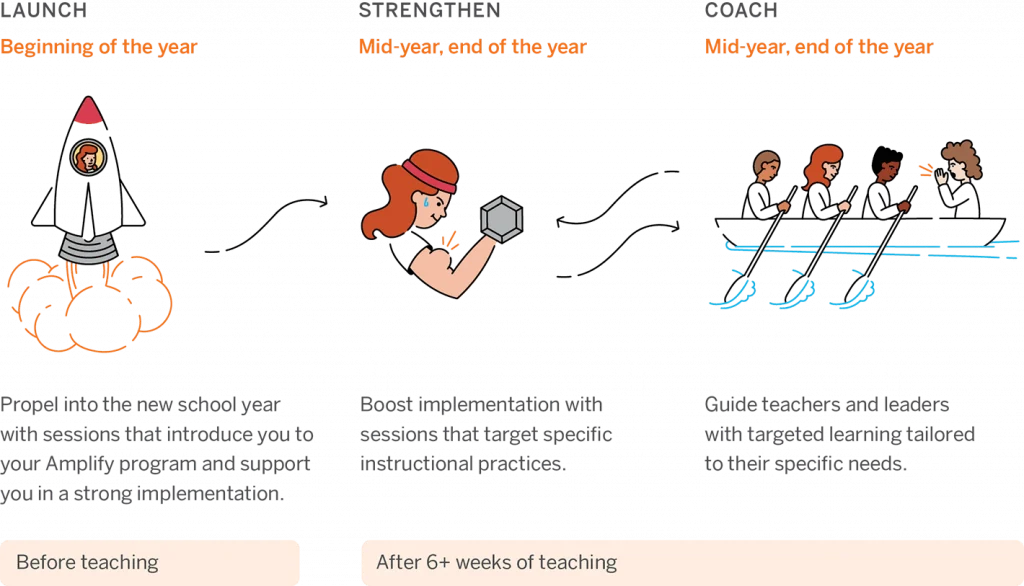
- Launch sessions: Propel your teachers into the new school year by introducing them to their Amplify program, laying a strong foundation for effective implementation.
- Strengthen sessions: Boost implementation with mid-year sessions that target specific instructional practices, providing the support needed to enhance program efficacy.
- Coach sessions: Provide tailored guidance and support for educators and leaders to address specific needs, refining and advancing their instructional practices.
About mCLASS Texas® assessment PD packages:
- Begin packages: Ideal for the first year of implementation, these packages help educators transition to evidence-based practices. Each package includes Launch and Strengthen sessions to set the foundation and support the initial phases of program adoption.
- Format options: On-site, Hybrid, Virtual
- Components: One Launch session introduces and supports a strong implementation and one Strengthen session deepens understanding of the program.
- Practice packages: Designed for the second year of implementation and beyond, these packages deepen educators’ knowledge and refine their practice. They focus on continuous improvement, using data to drive instructional decisions and enhance student outcomes.
- Format options: On-site, Hybrid, Virtual
- Components: Two Strengthen sessions expand practice and drive outcomes. We recommend enhancement Coach sessions for ongoing support and addressing customized needs.
About mCLASS Intervention PD sessions:
- Each intervention program offers Launch and Coach sessions for up to 30 participants per program for year one and beyond.
- Our interactive sessions are available on-site or virtually, empowering teachers and leaders anywhere with the tools and skills they need to inspire all students to think deeply, creatively, and for themselves.
About Amplify assessment and intervention programs
Amplify’s high-quality programs make it easier for educators to teach inspiring, impactful lessons that celebrate and develop the brilliance of their students. Empowering teachers with tools to provide robust scaffolding and differentiated instruction, assessment, and intervention programs take the hassle and guesswork out of assessments with real-time, actionable plans personalized for every learner.
Learn how to get the most out of your assessment and intervention program(s) through Amplify’s PD.
Assessment
- mCLASS Texas
- mCLASS Lectura Texas
- mCLASS Texas + Lectura
Intervention
- mCLASS Intervention
We provide PD sessions for all Amplify programs. Contact your account executive to discuss the extended catalog of PD session options or request a quote.
mCLASS Texas Assessments
We’ve created professional development offerings that will help you meet your unique needs this school year. Explore the Begin and Practice packages available for mCLASS Texas Edition and mCLASS Lectura Texas by selecting the session titles to learn more.
Please note that mCLASS Texas and mCLASS Texas + Lectura biliteracy sessions are currently unavailable for the Hybrid 4 and Virtual 4 packages.
Begin packages
Assessment programs
| On-site package (9 hours) |
Hybrid 9 package (9 hours) |
Hybrid 4 package (4 hours) |
Virtual 9 package (9 hours) |
Virtual 4 package (4 hours) |
|
| One Launch and Strengthen session per package | |||||
| Launch sessions | |||||
| On-site 6 hr. |
On-site 6 hr. |
On-site 3 hr. |
Virtual 6 hr. (2 half-days) |
Virtual 3 hr. |
|
| Administration and instruction essentials for teachers |  |
|
|
||
| Administration and scoring training for teachers |
|
|
|||
| Administration and reporting training for leaders | |
|
|||
| Strengthen sessions | |||||
| On-site 3 hr. |
Virtual 3 hr. |
Virtual 1 hr. |
Virtual 3 hr. |
Virtual 1 hr. |
|
| Creating a data-driven classroom for teachers | |
|
|
||
| Building a data-driven culture for leaders | |
|
|
||
| Assessing with fidelity for teachers |
|
|
|||
| Reporting and instruction basics for teachers | |
|
|||
| Goal setting and growth outcomes for teachers | |
|
|||
| Progress monitoring for teachers | |
|
|||
| Reporting basics for leaders |
|
|
|||
*Assessment Strengthen sessions should be scheduled after the most recent benchmark window has closed for participants to work with their own data.
| Coach session | |||
| Suggested enhancements |
On-site | On-site or virtual | |
| 6 hr. | 3 hr. | ||
Begin: Administration and instruction essentials for teachers
On-site or virtual, 6 hours
Dive into the essentials of your mCLASS Texas assessment program. Learn how to administer and score the assessment and leave ready to leverage mCLASS Texas reports and lessons to accelerate data-driven student outcomes.
Session options: mCLASS Texas, mCLASS Lectura Texas, and/or mCLASS Texas + Lectura biliteracy
Audience: Teachers, instructional staff (maximum 30 participants)
Language: The mCLASS Lectura Texas session is facilitated in English or Spanish.
Begin: Administration and scoring training for teachers
On-site or virtual, 3 hours
Learn how to administer and score your mCLASS Texas assessment(s) and leave ready to collect data using standardized guidelines.
Session options: mCLASS Texas, mCLASS Lectura Texas, and/or mCLASS Texas + Lectura biliteracy
Audience: Teachers, instructional staff (maximum 30 participants)
Language: The mCLASS Lectura Texas session is facilitated in English or Spanish.
Begin: Administration and reporting training for leaders
On-site or virtual, 3 hours
Prepare to implement your assessment program(s) at your school site(s). Determine systems-level actions that will ensure assessment fidelity and leave ready to leverage key admin reports to support data-informed decisions.
Session options: mCLASS Texas, mCLASS Lectura Texas, and/or mCLASS Texas + Lectura biliteracy
Audience: Leaders (maximum 30 participants)
Language: The mCLASS Lectura Texas session is facilitated in English only.
Begin: Creating a data-driven classroom for teachers
On-site or virtual, 3 hours
Dive deep into mCLASS Texas reports and instructional recommendations to drive stronger student outcomes in your classroom. You will leave ready to leverage mCLASS Texas progress monitoring and grouping tools to support a robust MTSS program.
Session options: mCLASS Texas, mCLASS Lectura Texas, and/or mCLASS Texas + Lectura biliteracy
Audience: Teachers, instructional staff (maximum 30 participants)
Language: The mCLASS Lectura Texas session is facilitated in English or Spanish.
Begin: Building a data-driven culture for leaders
On-site or virtual, 3 hours
Cultivate a schoolwide culture of data-driven practices. Use mCLASS Texas reports to drill into key school-level data and leave with a systems-level action plan to drive stronger student and teacher outcomes.
Session options: mCLASS Texas, mCLASS Lectura Texas, and/or mCLASS Texas + Lectura biliteracy
Audience: Leaders (maximum 30 participants)
Language: The mCLASS Lectura Texas session is facilitated in English only.
Begin: Strengthen Focus: Assessing with fidelity for teachers
Virtual, 1 hour
Fortify your assessment administration with trainer-led practice targeted to your unique needs.
Session options: mCLASS Texas, mCLASS Lectura Texas, and/or mCLASS Texas + Lectura biliteracy
Audience: Teachers, instructional staff (maximum 30 participants)
Language: The mCLASS Lectura Texas session is facilitated in English or Spanish.
Begin: Strengthen Focus: Reporting and instruction basics for teachers
Virtual, 1 hour
Learn how to use mCLASS Texas classroom reporting, instructional tools, and resources to accelerate data-driven student outcomes.
Session options: mCLASS Texas, mCLASS Lectura Texas, and/or mCLASS Texas + Lectura biliteracy
Audience: Teachers, instructional staff (maximum 30 participants)
Language: The mCLASS Lectura Texas session is facilitated in English or Spanish.
Begin: Strengthen Focus: Goal setting and growth outcomes for teachers
Virtual, 1 hour
Learn how to use mCLASS Texas Zones of Growth (Zonas de crecimiento for mCLASS Lectura) reports to set meaningful, ambitious, and attainable student goals that drive student progress and growth.
Session options: mCLASS Texas, mCLASS Lectura Texas, and/or mCLASS Texas + Lectura biliteracy
Audience: Teachers, instructional staff (maximum 30 participants)
Language: The mCLASS Lectura Texas session is facilitated in English or Spanish.
Begin: Strengthen Focus: Progress monitoring for teachers
Virtual, 1 hour
Implement mCLASS progress monitoring and MTSS best practices to track student progress and accelerate growth.
Session options: mCLASS Texas, mCLASS Lectura Texas, and/or mCLASS Texas + Lectura biliteracy
Audience: Teachers, instructional staff (maximum 30 participants)
Language: The mCLASS Lectura Texas session is facilitated in English or Spanish.
Begin: Strengthen Focus: Reporting basics for leaders
Virtual, 1 hour
Examine your school-level mCLASS benchmark assessment data to identify key levers for improving student outcomes.
Session options: mCLASS Texas, mCLASS Lectura Texas, and/or mCLASS Texas + Lectura biliteracy
Audience: Leaders (maximum 30 participants)
Language: The mCLASS Lectura Texas session is facilitated in English only.
Practice packages
| On-site package (6 hours) |
Virtual 6 package (6 hours) |
Virtual 4 package (4 hours) |
Virtual 2 package (2 hours) |
|
| Two Strengthen sessions per package | ||||
| Strengthen session titles* | ||||
| On-site 3 hr. |
Virtual 3 hr. |
Virtual 3 hr. and 1 hr. |
Virtual 1 hr. |
|
| Creating a data-driven classroom for teachers | |
|
|
|
| Building a data-driven culture for leaders |
|
|
|
|
| Assessing with fidelity for teachers | |
|
||
| Reporting and instruction basics for teachers | |
|
||
| Progress monitoring for teachers |
|
|
||
| Goal setting and growth outcomes for teachers |
|
|
||
| Reporting basics for leaders | |
|
||
*Assessment Strengthen sessions should be scheduled after the most recent benchmark window has closed for participants to work with their own data.
| Coach session | |||
| Suggested enhancements |
On-site | On-site or virtual | |
| 6 hr. | 3 hr. | ||
Practice: Creating a data-driven classroom for teachers
On-site or virtual, 3 hours
Dive deep into mCLASS Texas reports and instructional recommendations to drive stronger student outcomes in your classroom. You will leave ready to leverage mCLASS Texas progress monitoring and grouping tools to support a robust MTSS program.
Session options: mCLASS Texas, mCLASS Lectura Texas, and/or mCLASS Texas + Lectura biliteracy
Audience: Teachers, instructional staff (maximum 30 participants)
Language: The mCLASS Lectura Texas session is facilitated in English or Spanish.
Practice: Building a data-driven culture for leaders
On-site or virtual, 3 hours
Cultivate a schoolwide culture of data-driven practices. Use mCLASS Texas reports to drill into key school-level data and leave with a systems-level action plan to drive stronger student and teacher outcomes.
Session options: mCLASS Texas, mCLASS Lectura Texas, and/or mCLASS Texas + Lectura biliteracy
Audience: Leaders (maximum 30 participants)
Language: The mCLASS Lectura Texas session is facilitated in English only.
Practice: Strengthen Focus: Assessing with fidelity for teachers
Virtual, 1 hour
Fortify your mCLASS Texas Edition assessment administration with trainer-led practice targeted to your unique needs.
Session options: mCLASS Texas, mCLASS Lectura Texas, and/or mCLASS Texas + Lectura biliteracy
Audience: Teachers, instructional staff (maximum 30 participants)
Language: The mCLASS Lectura Texas session is facilitated in English or Spanish.
New session
Practice: Strengthen Focus: Reporting and instruction basics for teachers
Virtual, 1 hour
Learn how to use mCLASS Texas classroom reporting, instructional tools, and resources to accelerate data-driven student outcomes.
Session options: mCLASS Texas, mCLASS Lectura Texas, and/or mCLASS Texas + Lectura biliteracy
Audience: Teachers, instructional staff (maximum 30 participants)
Language: The mCLASS Lectura Texas session is facilitated in English or Spanish.
Practice: Strengthen Focus: Progress monitoring for teachers
Virtual, 1 hour
Implement mCLASS Texas progress monitoring and MTSS best practices to track student progress and accelerate growth.
Session options: mCLASS Texas, mCLASS Lectura Texas, and/or mCLASS Texas + Lectura biliteracy
Audience: Teachers, instructional staff (maximum 30 participants)
Language: The mCLASS Lectura Texas session is facilitated in English or Spanish.
New session for mCLASS Lectura Texas and mCLASS Texas + Lectura biliteracy
Practice: Goal setting and growth outcomes for teachers
Virtual, 1 hour
Learn how to use mCLASS Texas Zones of Growth (Zonas de crecimiento for mCLASS Lectura Texas) reports to set meaningful, ambitious, and attainable student goals that drive student progress and growth.
Session options: mCLASS Texas, mCLASS Lectura Texas, and/or mCLASS Texas + Lectura biliteracy
Audience: Teachers, instructional staff (maximum 30 participants)
Language: The mCLASS Lectura Texas session is facilitated in English or Spanish.
Practice: Reporting basics for leaders
Virtual, 1 hour
Examine your school-level mCLASS Texas benchmark assessment data to identify key levers for improving student outcomes.
Session options: mCLASS Texas, mCLASS Lectura Texas, and/or mCLASS Texas + Lectura biliteracy
Audience: Leaders (maximum 30 participants)
Language: The mCLASS Lectura Texas session is facilitated in English.
Amplify intervention PD sessions
Intervention programs
Each intervention program offers Launch and Coach sessions for up to 30 participants per program for year one and beyond.
mCLASS Texas Intervention
mCLASS Intervention is a staff-led Tier 2 and Tier 3 reading intervention program that does the heavy lifting of data analysis and lesson sequencing, freeing up teachers to teach the reading skills each student needs. View the table and select the session title to learn more about each mCLASS Intervention PD session.
| On-site or virtual sessions 3 hr. |
Self-paced course | |
| Launch sessions | ||
| Program overview for interventionists | |
|
| Program overview for intervention coordinators | |
|
| Program overview course for interventionists | |
|
Coach sessions
| On-site sessions 6 hr. |
On-site or virtual sessions 3 hr. |
|
| Coach session |
|
|
| Coach session |
|
Launch
Propel your teachers into the new school year with sessions that introduce them to their Amplify program(s) and support a strong implementation.
Program overview for interventionists
On-site or virtual, 3 hours
Prepare to deliver mCLASS Intervention lessons and learn how to administer the diagnostic and progress monitoring measures.
Audience: Teachers, instructional staff (maximum 30 participants)
Program overview for intervention coordinators
On-site or virtual, 3 hours
Intervention coordinators will learn the essentials of coordinating mCLASS Intervention and leave ready to implement the program at their school site.
Audience: Intervention coordinators (maximum 30 participants)
Program overview for interventionists
Online course, self-paced
Prepare to deliver mCLASS Intervention lessons and learn how to administer the diagnostic and progress monitoring measures through this on-demand course. This subscription includes an individual seat to the course, which takes approximately 3 hours to complete. Participants will be able to access and revisit the course as needed for up to one year.
Audience: Teachers, instructional staff (individual seat)
Coach
Support teachers and leaders with learning experiences tailored to meet their specific needs.
Coach session
On-site, 6 hours
Coach sessions focus on building internal school and district capacity and leadership excellence to accelerate data-driven student outcomes for teachers using mCLASS Intervention. Coaching is customized to meet a school or district’s needs and can include observations, modeling, real-time coaching, and/or co-planning.
Audience: Individual teachers, grade-level teams, PLCs, and/or instructional leaders (maximum 30 participants)
Coach session
On-site or virtual, 3 hours
Coach sessions focus on building internal school and district capacity and leadership excellence to accelerate data-driven student outcomes for teachers using mCLASS Intervention. Coaching is customized to meet a school or district’s needs and can include observations, modeling, real-time coaching, and/or co-planning.
Audience: Individual teachers, grade-level teams, PLCs, and/or instructional leaders (maximum 30 participants)
Enhancement options
Enhancement options are available for assessment programs such as:
- mCLASS Texas
- mCLASS Lectura Texas
Enhancements can be purchased for all teachers/leaders or a subset of educators.
Enhancement offerings for assessment programs
Add the following session to any assessment or intervention package.
| On-site 6 hr. |
Virtual 6 hr. |
On-site or virtual 3 hr. |
|
| Coach session for individual teachers, grade-level teams, PLCs, and/or instructional leaders |
|
|
Coach session
On-site or virtual, 6 hours; On-site or virtual, 3 hours
Coach sessions focus on building internal school and district capacity and leadership excellence to accelerate data-driven student outcomes for teachers using mCLASS Texas. Coaching is customized to meet a school or district’s needs and can include observations, modeling, real-time coaching, and/or co-planning.
Audience: Individual teachers, grade-level teams, PLCs, and/or instructional leaders (maximum 30 participants)
Online courses
Launch online courses are available for the following assessment programs:
- mCLASS Texas
- mCLASS Lectura Texas
Please view the table below for more information.
Online courses for assessment programs
| Self-paced Online course |
|
| Administration and instruction essentials for teachers |
|
Administration and instruction essentials for teachers
Online course, self-paced
Dive into the essentials of your mCLASS Texas assessment program through this on-demand course. Learn how to administer and score the assessment and leave ready to leverage mCLASS Texas reports and lessons to accelerate data-driven student outcomes. This subscription includes an individual seat to the course, which takes approximately 8 hours to complete. Participants will be able to access and revisit the course as needed for up to one year.
Course options: mCLASS Texas, mCLASS Lectura Texas, and/or mCLASS Math
Audience: Teachers, instructional staff (individual seat)
Additional assessment and intervention programs
Additional sessions and online courses are available for other mCLASS programs (mCLASS Express, mCLASS Math, and mCLASS Intervention Universal).
To learn more about enhancing your Amplify experience by purchasing other mCLASS Texas programs and/or accompanying PD sessions, contact your account executive.
Contact us
We’re here to provide answers and guidance as you explore your PD options. Fill out the form to connect with us and discover how Amplify PD can enhance your educational journey.
Plan your professional development
We’re excited to partner with you on your Amplify journey. Flexible professional development pathways have been designed to meet your needs.
Recommended Professional Development Plan
Our team has curated a recommended professional learning path from initial launch to continuous support. Use the Professional Development Planning Guide below to discuss the plan that best meets your school or district needs with your Account Executive.
Sessions overview
| Recommended sessions are highlighted below. |
| Audience | Title | Duration | Modality |
|---|---|---|---|
| mCLASS Texas Edition Launch | |||
| All mCLASS Texas Edition customers | Initial training | 2 half days or self-paced | Remote/Online course |
| New mCLASS Texas Edition customers | Initial training | 1 day | Onsite |
| Initial training: Train the Trainer | 1 day onsite or 2 half days remote | Onsite/Remote | |
| New mCLASS Texas Edition customers with limited time for PD | mCLASS program overview, English measures only | Half day | Onsite/Remote |
| mCLASS program overview, Spanish measures only | Half day | Onsite/Remote | |
| Experienced mCLASS Texas Edition customers | Refresher training | Half day | Onsite/Remote |
| mCLASS Texas Edition and Amplify Reading Launch | |||
| New mCLASS Texas Edition and Amplify Reading customers | Initial training with Amplify Reading overview | 1 day onsite or 2 half days remote | Onsite/Remote |
| Initial training with Amplify Reading overview: Train the Trainer | 1 day onsite or 2 half days remote | Onsite/Remote | |
| mCLASS Texas Edition and TRC Launch | |||
| New mCLASS Texas Edition and TRC customers | Initial training with TRC overview | 1 day onsite or 2 half days remote | Onsite/Remote |
| Initial training with TRC overview: Train the Trainer | 1 day onsite or 2 half days remote | Onsite/Remote | |
| Experienced mCLASS Texas Edition customers | TRC initial training | Half day | Onsite/Remote |
| TRC initial training: Train the Trainer | Half day | Onsite/Remote | |
| mCLASS Express Launch | |||
| New mCLASS Express customers | Initial training | Half day | Onsite/Remote |
| Initial training | Self-paced | Online course | |
| mCLASS Texas Edition Strengthen | |||
| All mCLASS Texas Edition customers with limited time for PD | Understanding your classroom data | Half day | Onsite/Remote |
| All mCLASS Texas Edition customers | Classroom data analysis and instructional planning | 1 day | Onsite |
| All mCLASS Texas Edition customers | Classroom data analysis and instructional planning | 2 half days | Remote |
| Classroom data analysis and instructional planning: Train the Trainer | 1 day onsite or 2 half days remote | Onsite/Remote | |
| Classroom data analysis and instructional planning | Self-paced | Online | |
| All mCLASS Texas Edition customers | Data-driven leadership practices | 1 day onsite | Onsite |
| All mCLASS Texas Edition customers | Data-driven leadership practices | 2 half days | Remote |
| Data-driven leadership practices: Train the Trainer | 1 day onsite or 2 half days remote | Onsite/Remote | |
| Data-driven leadership practices | Self-paced | Online | |
| Understanding your school or district data | Half day | Onsite/Remote | |
| Strengthening consultation session | 1-hour session | Remote | |
| All mCLASS Texas Edition customers | Strengthening consultation session package | 3 1-hour sessions | Remote |
| mCLASS Texas Edition Coach | |||
| All mCLASS Texas Edition customers | Coaching session | 1 day | Onsite |
| All mCLASS Texas Edition customers | Coaching session | Half day | Onsite/Remote |
Launch
mCLASS Texas Edition
Initial training
1 day onsite (6 hours) or 2 half days remote (6 hours)
This PD prepares participants to implement the assessment, collect reliable data using standardized guidelines, and use the targeted lessons available on mCLASS to drive differentiated instruction.
Audience: Teachers (administrators welcome), maximum 30 participants
Modality: Onsite/Remote
Initial training: Train the Trainer
1 day onsite (6 hours) or 2 half days remote (6 hours)
This PD prepares participants to implement the assessment, collect reliable data using standardized guidelines, and use the targeted lessons available on mCLASS to drive differentiated instruction. Participants receive annotated session materials to turnkey the session to colleagues.
Audience: Teachers (administrators welcome), maximum 30 participants
Modality: Onsite/Remote
mCLASS program overview, English measures only
Half day (3 hours)
This PD prepares participants to implement the English measures of the mCLASS Texas assessment and collect reliable data using standardized guidelines. Only English measures are covered in this half-day training.
Audience: Teachers (administrators welcome), maximum 30 participants
Modality: Onsite/Remote
mCLASS program overview, Spanish measures only
Half day (3 hours)
This PD prepares participants to implement the Spanish measures of the mCLASS Texas assessment and collect reliable data using standardized guidelines. Only Spanish measures are covered in this half-day training.
Audience: Teachers (administrators welcome), maximum 30 participants
Modality: Onsite/Remote
Refresher training
Half day (3 hours)
The half-day refresher training is designed for teachers and instructional leaders who are experienced with any version of DIBELS® and/or Acadience Reading and are invested in successfully implementing mCLASS Texas Edition. This session will help educators focus on what’s new to the assessment and understand mCLASS Texas Edition’s potential to impact all students through improved measures, stronger insight into students’ instructional needs, and bolstered skills-focused lessons to support instructional planning. Upon completion of this session, participants will be prepared to implement the new assessment, collect reliable data using standardized guidelines, and use the targeted lessons available on mCLASS Texas Edition to drive differentiated instruction as part of their regular classroom practice.
Audience: Teachers (administrators welcome), maximum 30 participants
Modality: Onsite/Remote
mCLASS Texas Edition and Amplify Reading
Initial training with Amplify Reading overview
1 day onsite (6 hours) or 2 half days remote (6 hours)
Take the first step in launching mCLASS Texas Edition and Amplify Reading! The initial training will help educators understand how mCLASS Texas Edition assesses the basic early literacy skills that are crucial for reading development, gain hands-on experience administering and scoring the assessment using standardized guidelines, and access the Instruction page in order to find skills-focused lessons that will support instructional planning. A high-level overview of how to get started with Amplify Reading will also be provided at the end of the training along with supplementary, on-demand resources. Upon completion of this session, participants will be prepared to implement the new assessment, collect reliable data using standardized guidelines, use the targeted lessons available on mCLASS Texas Edition to drive differentiated instruction as part of their regular classroom practice, and understand key Amplify Reading features.
Audience: Teachers (administrators welcome), maximum 30 participants
Modality: Onsite/Remote
Initial training with Amplify Reading overview: Train the Trainer
1 day onsite (6 hours) or 2 half days remote (6 hours)
Take the first step in launching mCLASS Texas Edition and Amplify Reading! The initial training will help educators understand how mCLASS Texas Edition assesses the basic early literacy skills that are crucial for reading development, gain hands-on experience administering and scoring the assessment using standardized guidelines, and access the Instruction page in order to find skills-focused lessons that will support instructional planning. A high-level overview of how to get started with Amplify Reading will also be provided at the end of the training along with supplementary, on-demand resources. Upon completion of this session, participants will be prepared to implement the new assessment, collect reliable data using standardized guidelines, use the targeted lessons available on mCLASS Texas Edition to drive differentiated instruction as part of their regular classroom practice, and understand key Amplify Reading features. Participants receive annotated session materials to turnkey the session to colleagues.
Audience: Teachers (administrators welcome), maximum 30 participants
Modality: Onsite/Remote
mCLASS Texas Edition and TRC
Initial training with TRC overview
1 day onsite (6 hours) or 2 half days remote (6 hours)
Take the first step in launching mCLASS Texas Edition and Amplify Reading! The initial training will help educators understand how mCLASS Texas Edition assesses the basic early literacy skills that are crucial for reading development, gain hands-on experience administering and scoring the assessment using standardized guidelines, and access the Instruction page in order to find skills-focused lessons that will support instructional planning. A high-level overview of how to get started with Amplify Reading will also be provided at the end of the training along with supplementary, on-demand resources. Upon completion of this session, participants will be prepared to implement the new assessment, collect reliable data using standardized guidelines, use the targeted lessons available on mCLASS Texas Edition to drive differentiated instruction as part of their regular classroom practice, and understand key Amplify Reading features.
Audience: Teachers (administrators welcome), maximum 30 participants
Modality: Onsite/Remote
Initial training with TRC overview: Train the Trainer
1 day onsite (6 hours) or 2 half days remote (6 hours)
Take the first step in launching mCLASS Texas Edition and TRC! The initial training will help educators understand how mCLASS Texas Edition assesses the basic early literacy skills that are crucial for reading development, gain hands-on experience administering and scoring the assessment using standardized guidelines, and access the Instruction page in order to find skills-focused lessons that will support instructional planning. A high-level overview of how to get started with TRC will also be provided at the end of the training along with supplementary, on-demand resources. Upon completion of this session, participants will be prepared to implement the new assessment, collect reliable data using standardized guidelines, use the targeted lessons available on mCLASS Texas Edition to drive differentiated instruction as part of their regular classroom practice, and understand key TRC features. Participants receive annotated session materials to turnkey the session to colleagues.
Audience: Teachers (administrators welcome), maximum 30 participants
Modality: Onsite/Remote
TRC initial training
Half day (3 hours)
Take the first step in launching TRC! The half-day initial training will help educators understand how TRC assesses the basic early literacy skills that are crucial for reading development, gain hands-on experience administering and scoring the assessment using standardized guidelines, and access the Instruction page in order to find skills-focused lessons that will support instructional planning.
Audience: Teachers (administrators welcome), maximum 30 participants
Modality: Remote
TRC initial training: Train the Trainer
Half day (3 hours)
Take the first step in launching TRC! The half-day initial training will help educators understand how TRC assesses the basic early literacy skills that are crucial for reading development, gain hands-on experience administering and scoring the assessment using standardized guidelines, and access the Instruction page in order to find skills-focused lessons that will support instructional planning. Participants receive annotated session materials to turnkey the session to colleagues.
Audience: Teachers (administrators welcome), maximum 30 participants
Modality: Remote
mCLASS Express
Initial training
Half day (3 hours)
Take the first step in launching mCLASS Express! The half-day initial training will help educators understand how mCLASS Express’ voice-recognition scoring generates immediate instructional recommendations for students reading below grade level. Educators will also learn how to utilize the teacher portal to assign assessments, review and correct scoring, track student growth over time, and leverage the program’s activities to create an action plan for a single classroom or across classes/grades.
Audience: Teachers (administrators welcome), maximum 30 participants
Modality: Remote
Initial training
Self-paced
Take the first step in launching mCLASS Express! The two-hour initial training will help educators understand how mCLASS Express’ voice-recognition scoring generates immediate instructional recommendations for students reading below grade level. Educators will also learn how to utilize the teacher portal to assign assessments, review and correct scoring, track student growth over time, and leverage the program’s activities to create an action plan for a single classroom or across classes/grades. As this is a self-paced, on-demand online course, participants will be able to access the course anytime, move as quickly or as slowly as needed through different sections, and revisit the course for up to one year as a refresher in the future.
Audience: Teachers (administrators welcome)
Modality: Remote
Strengthen
Understanding your classroom data
Half day (3 hours)
This PD prepares participants to understand their students’ data by utilizing the reports available on mCLASS. This session should be scheduled after the most recent benchmark window has closed so that participants can work with their own data.
Audience: Teachers (administrators welcome), maximum 30 participants
Modality: Onsite/Remote
Classroom data analysis and instructional planning
1 day onsite (6 hours) or 2 half days remote (6 hours)
This PD prepares participants to deeply understand their students’ data and create actionable instructional plans by utilizing the reports and skills-focused lesson plans available on mCLASS.
Audience: Teachers (administrators welcome), maximum 30 participants
Modality: Onsite/Remote
*This session should be scheduled after the most recent benchmark window has closed so that participants can work with their own data.
Classroom data analysis and instructional planning: Train the Trainer
1 day onsite (6 hours) or 2 half days remote (6 hours)
This PD prepares participants to deeply understand their students’ data and create actionable instructional plans by utilizing the reports and skills-focused lesson plans available on mCLASS. Participants receive annotated session materials to turnkey the session to colleagues.
Audience: Teachers (administrators welcome), maximum 30 participants
Modality: Onsite/Remote
*This session should be scheduled after the most recent benchmark window has closed so that participants can work with their own data.
Classroom data analysis and instructional planning
Self-paced
This PD is an individual seat to our self-paced, on-demand online course that contains approximately 6 hours of training. Participants will learn how to deeply understand their students’ data and create actionable instructional plans by utilizing the reports and skills-focused lesson plans available on mCLASS. Participants will access and revisit the course anytime for up to one year as a refresher. Note: The online course focuses on the English measures only.
Audience: Teachers (administrators welcome)
Modality: Online
Understanding your school or district data
Half day (3 hours)
This PD prepares participants to use their data in making schoolwide decisions. This session should be scheduled after the most recent benchmark window has closed so that participants can work with their own data.
Audience: Administrators, maximum 30 participants
Modality: Onsite/Remote
Data-driven leadership practices
1 day onsite (6 hours) or 2 half days remote (6 hours)
This PD prepares participants to use their data in making schoolwide decisions and build a schoolwide culture of data-driven instruction. This session should be scheduled after the most recent benchmark window has closed so that participants can work with their own data.
Audience: Administrators, maximum 30 participants
Modality: Onsite/Remote
Data-driven leadership practices: Train the Trainer
1 day onsite (6 hours) or 2 half days remote (6 hours)
This PD prepares participants to use their data in making schoolwide decisions and build a schoolwide culture of data-driven instruction. This session should be scheduled after the most recent benchmark window has closed so that participants can work with their own data. Participants receive annotated session materials to turnkey the session to colleagues.
Audience: Administrators, maximum 30 participants
Modality: Onsite/Remote
Data driven leadership practices
Self-paced
This PD is an individual seat to our self-paced, on-demand online course that contains approximately 6 hours of training. Participants will learn how to use their data in making schoolwide decisions and build a schoolwide culture of data-driven instruction. Participants will access and revisit the course anytime for up to one year as a refresher. Note: The online course focuses on the English measures only.
Audience: Administrators
Modality: Online
Strengthening consultation session
60 minutes
This 60-minute session will focus on a specific topic that will deepen educators’ understanding of mCLASS and equip them in driving towards stronger student outcomes. An Amplify facilitator will align with the school or district’s leadership team in advance on the topic from a menu of options that will best meet educators’ unique needs. Topics include progress monitoring, zones of growth, and a data walkthrough for leaders.
Audience: Teachers and/or administrators, maximum 30 participants
Modality: Remote
Strengthening consultation session package
3 hours
This package consists of three 60-minute sessions that can be delivered on the same day or on different days. Each session will focus on a specific topic that will deepen educators’ understanding of mCLASS and equip them in driving towards stronger student outcomes. An Amplify facilitator will align with the school or district’s leadership team in advance on the topics that will best meet educators’ unique needs. Topics include progress monitoring, zones of growth, and a data walkthrough for leaders.
Audience: Teachers and/or administrators, maximum 30 participants
Modality: Remote
Coach
Coaching session
1 day onsite (6 hours)
This PD will deepen educators’ understanding of how to utilize mCLASS in order to accelerate data-driven student outcomes. An Amplify facilitator will visit one or two school sites for one day and work with teachers and/or leaders. Prior to the visit, the Amplify facilitator will align with each school’s leadership team on their needs and customize the visit schedule accordingly.
Audience: Teachers and/or administrators, maximum 30 participants
Modality: Onsite/Remote
Coaching session
Half day (3 hours)
This PD is up to 3 hours of training and will deepen educators’ understanding of how to utilize mCLASS in order to accelerate data-driven student outcomes. An Amplify facilitator will visit one school site for a half-day and work with teachers and/or leaders. Prior to the visit, the Amplify facilitator will align with each school’s leadership team on their needs and customize the visit schedule accordingly.
Audience: Teachers and/or administrators, maximum 30 participants
Modality: Remote
Pricing
We offer the following pricing for training sessions and packages:
| Session type | Pricing |
|---|---|
| 1-day onsite session | $3,200 |
| 1-day onsite session: Train the Trainer | $3,500 |
| 2 half-day remote sessions | $1,500 |
| 2 half-day remote sessions: Train the Trainer | $2,000 |
| Half-day onsite session | $2,500 |
| Half-day remote session | $750 |
| 2-hour self-paced online course | $20 per individual seat |
| 6-hour self-paced online course | $49 per individual seat |
Please note that the prices are general ranges and may be subject to change.
Contact
Amplify welcomes the opportunity to partner with schools and districts to design professional development plans and answer your questions.
If you would like to order any of our professional development services, please contact your local Amplify sales representative or call (800) 823-1969.
Professional development for assessment and intervention programs
Amplify professional development (PD) provides learning experiences that intentionally develop the knowledge and skills you need for effective and self-sustaining implementation.
Learn how to administer and score your assessment and develop a deeper understanding of reporting and instruction by investing in professional development.
Amplify professional development has been vetted by Rivet Education’s team through a rigorous three-step process and is listed in the Professional Learning Partner Guide.

About Amplify PD
Change is more likely to stick and get results if you take a systemic approach. Partner with us to do just that by developing a learning plan that will drive your program implementation, enrich your instructional practices, and increase student impact.
Amplify’s professional development is designed to ensure successful, sustained implementation of our programs. Sessions are strategically bundled to provide continuous support, adapting to your K–8 educators’ evolving needs throughout the year.
Our packages include:
- Launch sessions: Propel your teachers into the new school year by introducing them to their Amplify program, laying a strong foundation for effective implementation.
- Strengthen sessions: Enhance implementation with mid-year sessions that target specific instructional practices, providing the support needed to enhance program efficacy.
- Coach sessions: Provide tailored guidance and support for educators and leaders to address specific needs, refining and advancing their instructional practices.
About Amplify assessment and intervention programs
Amplify’s high-quality programs make it easier for K–8 educators to teach inspiring, impactful lessons that celebrate and develop the brilliance of their students. Equipped with tools that provide robust scaffolding and differentiated instruction, assessment, and intervention, educators gain real-time insights and can provide personalized, actionable plans that support every learner.
Learn how to get the most out of your assessment and intervention program(s) through Amplify’s PD.
Assessment
- mCLASS® DIBELS® 8th Edition (grades K–8)
- mCLASS Lectura (grades K–6)
- mCLASS DIBELS 8th Edition and mCLASS Lectura biliteracy
- mCLASS Math (grades K–8)
Intervention
- mCLASS Intervention
We provide PD sessions for all Amplify programs. Contact your account executive to discuss the extended catalog of PD session options or request a quote.
mCLASS Assessments
We’ve created professional development offerings that will help you meet your unique needs this school year. Explore the Begin and Practice packages available for mCLASS DIBELS 8th Edition (K–8), mCLASS Lectura (K–6), and/or mCLASS Math (K–8) by selecting the session titles to learn more.
Please note that mCLASS DIBELS 8th Edition and mCLASS Lectura biliteracy sessions are currently unavailable for the Hybrid 4 and Virtual 4 packages.
Begin packages for mCLASS Literacy
Assessment programs
*Assessment Strengthen sessions should be scheduled after the most recent benchmark window has closed for participants to work with their own data.
Begin: Launch: Administration and instruction essentials for K–8 teachers
On-site or virtual, 6 hours
Dive into the essentials of your mCLASS assessment program. Learn how to administer and score the assessment(s) and leave ready to leverage mCLASS reports and lessons to accelerate data-driven student outcomes.
Session options: mCLASS DIBELS 8th Edition (K–8), mCLASS Lectura (K–6), and/or mCLASS DIBELS 8th Edition/Lectura
Audience: Teachers, instructional staff (maximum 30 participants)
Language: The mCLASS Lectura session is facilitated in English or Spanish.
Begin: Launch: Administration and scoring training for K–8 teachers
On-site or virtual, 3 hours
Learn how to administer and score your mCLASS assessment(s) and leave ready to collect data using standardized guidelines.
Session options: mCLASS DIBELS 8th Edition (K–8), mCLASS Lectura (K–6)
Audience: Teachers, instructional staff (maximum 30 participants)
Language: The mCLASS Lectura session is facilitated in English or Spanish.
Begin: Launch: Administration and reporting training for K–8 leaders
On-site or virtual, 3 hours
Prepare to implement your assessment program(s) at your school site(s). Determine systems-level actions that will ensure assessment fidelity and leave ready to leverage key admin reports to support data-informed decisions.
Session options: mCLASS DIBELS 8th Edition (K–8), mCLASS Lectura (K–6), and/or mCLASS DIBELS 8th Edition/Lectura
Audience: Leaders (maximum 30 participants)
Language: The mCLASS Lectura session is facilitated in English only.
Available July 2026
Begin: Launch: mCLASS additional assessment measures training for K–3 teachers
Virtual, 1 hour
Participants will dive into the essentials of mCLASS Spelling, RAN, Vocabulary, and/or Oral Language and leave ready to administer the assessment to collect data using standardized guidelines.
Session options: mCLASS DIBELS 8th Edition (K–3)
Audience: Teachers, instructional staff (maximum 30 participants)
Available July 2026
Begin: Launch: mCLASS Español assessment measures training for K–3 teachers
Virtual, 1 hour
Participants will dive into the essentials of mCLASS Spelling Español, Vocabulary Español, and/or Oral Language Español and leave ready to administer the assessment to collect data using standardized guidelines.
Session options: mCLASS Lectura (K–3)
Audience: Teachers, instructional staff (maximum 30 participants)
Language: The mCLASS Lectura session is facilitated in English.
Available July 2026
Begin: Launch: mCLASS/mCLASS Español additional assessment measures training for K–3 teachers
Virtual, 1 hour
Participants will dive into the essentials of mCLASS Spelling/Spelling Español, RAN, Vocabulary/Vocabulary Español, and/or Oral Language/Oral Language Español and leave ready to administer the assessment to collect data using standardized guidelines.
Session options: mCLASS DIBELS 8th Edition (K–3) and mCLASS Lectura (K–3)
Audience: Teachers, instructional staff (maximum 30 participants)
Language: The mCLASS Lectura session is facilitated in English or Spanish.
Begin: Strengthen: Creating a data-driven classroom for K–8 teachers
On-site or virtual, 3 hours
Dive deep into mCLASS reports and instructional recommendations to drive stronger student outcomes in your classroom. You will leave ready to leverage mCLASS progress monitoring and grouping tools to support a robust MTSS program.
Session options: mCLASS DIBELS 8th Edition (K–8), mCLASS Lectura (K–6), and/or mCLASS DIBELS 8th Edition/Lectura
Audience: Teachers, instructional staff (maximum 30 participants)
Language: The mCLASS Lectura session is facilitated in English or Spanish.
Begin: Strengthen: Building a data-driven culture for K–8 leaders
On-site or virtual, 3 hours
Cultivate a schoolwide culture of data-driven practices. Use mCLASS reports to drill into key school-level data and leave with a systems-level action plan to drive stronger student and teacher outcomes.
Session options: mCLASS DIBELS 8th Edition (K–8), mCLASS Lectura (K–6), and/or mCLASS DIBELS 8th Edition/Lectura
Audience: Leaders (maximum 30 participants)
Language: The mCLASS Lectura session is facilitated in English only.
Begin: Strengthen Focus: Assessing with fidelity for K–8 teachers
Virtual, 1 hour
Fortify your assessment administration with trainer-led practice targeted to your unique needs.
Session options: mCLASS DIBELS 8th Edition (K–8), mCLASS Lectura (K–6), and/or mCLASS DIBELS 8th Edition/Lectura
Audience: Teachers, instructional staff (maximum 30 participants)
Language: The mCLASS Lectura session is facilitated in English or Spanish.
Begin: Strengthen Focus: Reporting and instruction basics for K–8 teachers
Virtual, 1 hour
Learn how to use mCLASS classroom reporting, instructional tools, and resources to accelerate data-driven student outcomes.
Session options: mCLASS DIBELS 8th Edition (K–8), mCLASS Lectura (K–6), and/or mCLASS DIBELS 8th Edition/Lectura
Audience: Teachers, instructional staff (maximum 30 participants)
Language: The mCLASS Lectura session is facilitated in English or Spanish.
Begin: Strengthen Focus: Goal setting and growth outcomes for K–8 teachers
Virtual, 1 hour
Learn how to use mCLASS Zones of Growth (Zonas de crecimiento for mCLASS Lectura) reports to set meaningful, ambitious, and attainable student goals that drive student progress and growth.
Session options: mCLASS DIBELS 8th Edition (K–8), mCLASS Lectura (K–6), and/or mCLASS DIBELS 8th Edition/Lectura
Audience: Teachers, instructional staff (maximum 30 participants)
Language: The mCLASS Lectura session is facilitated in English or Spanish.
Begin: Strengthen Focus: Progress monitoring for K–8 teachers
Virtual, 1 hour
Implement mCLASS progress monitoring and MTSS best practices to track student progress and accelerate growth.
Session options: mCLASS DIBELS 8th Edition (K–8), mCLASS Lectura (K–6), and/or mCLASS DIBELS 8th Edition/Lectura
Audience: Teachers, instructional staff (maximum 30 participants)
Language: The mCLASS Lectura session is facilitated in English or Spanish.
Begin: Strengthen Focus: Reporting basics for K–8 leaders
Examine your school-level mCLASS benchmark assessment data to identify key levers for improving student outcomes.
Session options: mCLASS DIBELS 8th Edition (K–8), mCLASS Lectura (K–6), and/or mCLASS DIBELS 8th Edition/Lectura
Audience: Leaders (maximum 30 participants)
Language: The mCLASS Lectura session is facilitated in English only.
Coach session
On-site, 6 hours or virtual, 3 hours
Coach sessions focus on building internal school and district capacity and leadership excellence to accelerate data-driven student outcomes for teachers using mCLASS. Coaching is customized to meet a school or district’s needs and can include observations, modeling, real-time coaching, and/or co-planning.
Audience: Individual teachers, grade-level teams, PLCs, and/or instructional leaders (maximum 30 participants)
mCLASS DIBELS 8th Edition/Lectura: Administration and instruction essentials for teachers
Online course, self-paced
Dive into the essentials of your mCLASS assessment program through this on-demand course. Learn how to administer and score the assessment and leave ready to leverage mCLASS reports and lessons to accelerate data-driven student outcomes.
Upon finishing the course, participants can download a certificate of completion. This subscription includes an individual seat to the course, which takes approximately 8 hours to complete. Participants will be able to access and revisit the course as needed for up to one year.
Course options: mCLASS DIBELS 8th Edition, mCLASS Lectura
Audience: Teachers, instructional staff (individual seat)
Available July 2026
mCLASS DIBELS 8th Edition: Calibration training course for teachers
Online course, self-paced
Ensure accuracy and reliability of mCLASS DIBELS 8th Edition test administration through this on-demand course. Review how to administer and score each teacher-administered measure, then calibrate your scoring through scoring mastery checks.
Upon finishing the course, participants can download a certificate of completion. This subscription includes an individual seat to the course, which takes approximately 1–3 hours to complete, depending on learner needs. Participants will be able to access and revisit the course as needed for up to one year.
Course options: mCLASS DIBELS 8th Edition
Audience: Teachers, instructional staff (individual seat)
mCLASS DIBELS 8th Edition: Transition training course for DDS teachers
Online course, self-paced
Prepare to administer and score the DIBELS 8th Edition assessment in the mCLASS platform through this on-demand course. Learn the essentials of your mCLASS assessment program and leave ready to leverage mCLASS reports and lessons to accelerate data-driven student outcomes.
Upon finishing the course, participants can download a certificate of completion. This subscription includes an individual seat to the course, which takes approximately 8 hours to complete. Participants will be able to access and revisit the course as needed for up to one year.
Course options: mCLASS DIBELS 8th Edition
Audience: Teachers, instructional staff (individual seat)
Begin packages for mCLASS Math 2nd Edition
Assessment programs
New
Begin: mCLASS Math: Program overview for K–5 or 6–8 teachers
Available for grades 6–8 teachers July 2026
On-site or virtual, 3 hours
Dive into the essentials of your mCLASS Math assessment program. Learn how these assessments both highlight students’ strengths and help identify what’s next through an asset-based approach. Leave ready to administer assessments and understand reporting.
Audience: Teachers, instructional staff (maximum 30 participants)
New
Begin: mCLASS Math: Program overview for K–5 or 6–8 leaders
Available for grades K–5 and grades 6–8 leaders July 2026
On-site or virtual, 3 hours
Prepare to implement your mCLASS Math assessment program at your school site(s). Determine systems-level actions that will ensure successful assessment administration and leave ready to leverage key admin reports to support data-informed decisions.
Audience: Teachers, instructional staff (maximum 30 participants)
New
Begin: mCLASS Math: Student thinking and instructional next steps for grades K–5 teachers
Available for grades 6–8 teachers Oct. 2026
On-site or virtual, 3 hours
Explore how mCLASS Math helps determine what students know in relation to grade-level content, and how to use data to inform instructional next steps that support, strengthen, and stretch student thinking. Dig into your own student data and leave with actionable next steps that connect directly to the ways your students are thinking about mathematics.
Audience: Teachers, instructional staff (maximum 30 participants)
New
Begin: mCLASS Math + Boost Math: Understanding and using data to plan intervention for grades K–5 or 6–8 teachers
Available for grades K–5 teachers July 2026 and grades 6–8 teachers Oct. 2026
On-site or virtual, 3 hours
Explore how Boost Math uses mCLASS Math data to inform intervention recommendations and monitor student progress. Dig into your student data, explore relevant instructional resources, and leave with actionable next steps for intervention.
Audience: Teachers, instructional staff (maximum 30 participants)
New
Begin: Strengthen Focus: mCLASS Math: Leveraging assessment data to strengthen mathematical explanations for grades K–5 or 6–8 teachers
Available for grades K–5 teachers July 2026 and grades 6–8 teachers Oct. 2026
Virtual, 1 hour
Dig into mCLASS Math to reveal what students understand about mathematical concepts and give them the tools to become more clear and confident communicators in math class.
Audience: Teachers, instructional staff (maximum 30 participants)
Available July 2026
Begin: mCLASS Math 2nd Edition: Program overview and instructional next steps for grades K–5 teachers
Online course, self-paced
Through this self-paced, on-demand online course, participants will dive into the essentials of mCLASS Math K–5 and leave ready to administer the assessment, understand reporting, and take instructional next steps based on the data.
Upon finishing the course, participants can download a certificate of completion. This subscription includes an individual seat to the course, which takes approximately six hours to complete. Participants will be able to access and revisit the course as needed for up to one year.
Course options: mCLASS DIBELS 8th Edition
Audience: Teachers, instructional staff (individual seat)
Available July 2026
Begin: mCLASS Math 2nd Edition: Program overview and instructional next steps for grades 6–8 teachers
Online course, self-paced
Through this self-paced, on-demand online course, participants will dive into the essentials of mCLASS Math 6–8 and leave ready to administer the assessment, understand reporting, and take instructional next steps based on the data.
Upon finishing the course, participants can download a certificate of completion. This subscription includes an individual seat to the course, which takes approximately six hours to complete. Participants will be able to access and revisit the course as needed for up to one year.
Course options: mCLASS DIBELS 8th Edition
Audience: Teachers, instructional staff (individual seat)
Practice packages for mCLASS Literacy
| On-site package (6 hours) |
Virtual 6 package (6 hours) |
Virtual 4 package (4 hours) |
Virtual 2 package (2 hours) |
|
| Two Strengthen sessions per package | ||||
| Strengthen session titles* | ||||
| On-site 3 hr. |
Virtual 3 hr. |
Virtual 3 hr. and 1 hr. |
Virtual 1 hr. |
|
| Creating a data-driven classroom for K–8 teachers |  |
|
|
|
| Building a data-driven culture for K–8 leaders | |
|
|
|
| Assessing with fidelity for K–8 teachers | |
|
||
| Reporting and instruction basics for K–8 teachers | |
|
||
| Progress monitoring for K–8 teachers | |
|
||
| Goal setting and growth outcomes for K–8 teachers | |
|
||
| Reporting basics for K–8 leaders | |
|
||
| NEW: mCLASS DIBELS 8 additional assessment measures training for K–8 teachers | |
|||
| NEW: mCLASS Español assessment measures training for K–8 teachers | |
|||
| NEW: mCLASS DIBELS 8 and mCLASS Lectura additional assessment measures training for K–8 teachers | |
|||
*Assessment Strengthen sessions should be scheduled after the most recent benchmark window has closed for participants to work with their own data.
Practice: Creating a data-driven classroom for K–8 teachers
On-site or virtual, 3 hours
Dive deep into mCLASS reports and instructional recommendations to drive stronger student outcomes in your classroom. You will leave ready to leverage mCLASS progress monitoring and grouping tools to support a robust MTSS program.
Session options: mCLASS DIBELS 8th Edition (K–8), mCLASS Lectura (K–6), and/or mCLASS DIBELS 8th Edition/Lectura
Audience: Teachers, instructional staff (maximum 30 participants)
Language: The mCLASS Lectura session is facilitated in English or Spanish.
Practice: Building a data-driven culture for K–8 leaders
On-site or virtual, 3 hours
Cultivate a schoolwide culture of data-driven practices. Use mCLASS reports to drill into key school-level data and leave with a systems-level action plan to drive stronger student and teacher outcomes.
Session options: mCLASS DIBELS 8th Edition (K–8), mCLASS Lectura (K–6), and/or mCLASS DIBELS 8th Edition/Lectura
Audience: Leaders (maximum 30 participants)
Language: The mCLASS Lectura session is facilitated in English only.
Practice: Strengthen Focus: Assessing with fidelity for K–8 teachers
Virtual, 1 hour
Fortify your mCLASS DIBELS 8th Edition assessment administration with trainer-led practice targeted to your unique needs.
Session options: mCLASS DIBELS 8th Edition (K–8), mCLASS Lectura (K–6), and/or mCLASS DIBELS 8th Edition/Lectura
Audience: Teachers, instructional staff (maximum 30 participants)
Language: The mCLASS Lectura session is facilitated in English or Spanish.
Practice: Strengthen Focus: Reporting and instruction basics for K–8 teachers
Virtual, 1 hour
Learn how to use mCLASS classroom reporting, instructional tools, and resources to accelerate data-driven student outcomes.
Session options: mCLASS DIBELS 8th Edition (K–8), mCLASS Lectura (K–6), and/or mCLASS DIBELS 8th Edition/Lectura
Audience: Teachers, instructional staff (maximum 30 participants)
Language: The mCLASS Lectura session is facilitated in English or Spanish.
Practice: Strengthen Focus: Progress monitoring for K–8 teachers
Virtual, 1 hour
Implement mCLASS progress monitoring and MTSS best practices to track student progress and accelerate growth.
Session options: mCLASS DIBELS 8th Edition (K–8), mCLASS Lectura (K–6), and/or mCLASS DIBELS 8th Edition/Lectura
Audience: Teachers, instructional staff (maximum 30 participants)
Language: The mCLASS Lectura session is facilitated in English or Spanish.
Practice: Goal setting and growth outcomes for K–8 teachers
Virtual, 1 hour
Learn how to use mCLASS Zones of Growth (Zonas de crecimiento for mCLASS Lectura) reports to set meaningful, ambitious, and attainable student goals that drive student progress and growth.
Session options: mCLASS DIBELS 8th Edition (K–8), mCLASS Lectura (K–6), and/or mCLASS DIBELS 8th Edition/Lectura
Audience: Teachers, instructional staff (maximum 30 participants)
Language: The mCLASS Lectura session is facilitated in English or Spanish.
Practice: Reporting basics for K–8 leaders
Virtual, 1 hour
Examine your school-level mCLASS benchmark assessment data to identify key levers for improving student outcomes.
Session options: mCLASS DIBELS 8th Edition (K–8), mCLASS Lectura (K–6), and/or mCLASS DIBELS 8th Edition/Lectura
Audience: Leaders (maximum 30 participants)
Language: The mCLASS Lectura session is facilitated in English.
Available July 2026
Practice: Strengthen Focus: mCLASS DIBELS 8th Edition additional assessment measures training for K–8 teachers
Virtual, 1 hour
Participants will dive into the essentials of mCLASS Spelling, RAN, Vocabulary, and/or Oral Language and leave ready to administer the assessment to collect data using standardized guidelines.
Session options: mCLASS DIBELS 8th Edition (K–8)
Audience: Leaders (maximum 30 participants)
Available July 2026
Practice: Strengthen Focus: mCLASS Español assessment measures training for K–8 teachers
Virtual, 1 hour
Participants will dive into the essentials of mCLASS Spelling Español, Vocabulary Español, and/or Oral Language Español and leave ready to administer the assessment to collect data using standardized guidelines.
Session options: mCLASS Lectura (K–6)
Audience: Teachers, instructional staff (maximum 30 participants)
Language: The mCLASS Lectura session is facilitated in English.
Available July 2026
Practice: Strengthen Focus: mCLASS DIBELS 8th Edition and mCLASS Lectura additional assessment measures training for K–8 teachers
Virtual, 1 hour
Participants will dive into the essentials of mCLASS Spelling/Spelling Español, RAN, Vocabulary/Vocabulary Español, and/or Oral Language/Oral Language Español and leave ready to administer the assessment to collect data using standardized guidelines.
Session options: mCLASS DIBELS 8th Edition (K–8) and mCLASS Lectura (K–6)
Audience: Teachers, instructional staff (maximum 30 participants)
Language: The mCLASS Lectura session is facilitated in English or Spanish.
Add on: Coach session
On-site, 6 hours or virtual, 3 hours
Coach sessions focus on building internal school and district capacity and leadership excellence to accelerate data-driven student outcomes for teachers using mCLASS. Coaching is customized to meet a school or district’s needs and can include observations, modeling, real-time coaching, and/or co-planning.
Audience: Individual teachers, grade-level teams, PLCs, and/or instructional leaders (maximum 30 participants)
Available October 2026
Add on: mCLASS DIBELS 8th Edition and Amplify CKLA 3rd Edition: Data-driven instruction for K–5 teachers
On-site or virtual, 3 hours
Dive deep into mCLASS reports and instructional recommendations to drive instructional decisions in Amplify CKLA and stronger student outcomes in your classroom. You will leave ready to leverage mCLASS progress monitoring and grouping tools to support a robust Multi-Tiered System of Supports program with Amplify CKLA as your core instruction.
Course options: mCLASS DIBELS 8th Edition and Amplify CKLA 3rd Edition
Audience: K–2 or 3–5 teachers, instructional staff (maximum 30 participants)
Add on: mCLASS DIBELS 8th Edition and mCLASS Lectura: Administration and instruction essentials for teachers
Online course, self-paced
Dive into the essentials of your mCLASS assessment program through this on-demand course. Learn how to administer and score the assessment and leave ready to leverage mCLASS reports and lessons to accelerate data-driven student outcomes.
Upon finishing the course, participants can download a certificate of completion. This subscription includes an individual seat to the course, which takes approximately eight hours to complete. Participants will be able to access and revisit the course as needed for up to one year.
Course options: mCLASS DIBELS 8th Edition, mCLASS Lectura
Audience: Teachers, instructional staff (individual seat)
Available July 2026
Add on: mCLASS DIBELS 8th Edition: Calibration training course for teachers
Online course, self-paced
Ensure accuracy and reliability of mCLASS DIBELS 8th Edition test administration through this on-demand course. Review how to administer and score each teacher-administered measure, then calibrate your scoring through scoring mastery checks.
Upon finishing the course, participants can download a certificate of completion. This subscription includes an individual seat to the course, which takes approximately 1–3 hours to complete, depending on learner needs. Participants will be able to access and revisit the course as needed for up to one year.
Course options: mCLASS DIBELS 8th Edition
Audience: Teachers, instructional staff (individual seat)
Available July 2026
Add on: mCLASS DIBELS 8th Edition: Transition training course for DDS teachers
Online course, self-paced
Prepare to administer and score the DIBELS 8th Edition assessment in the mCLASS platform through this on-demand course. Learn the essentials of your mCLASS assessment program and leave ready to leverage mCLASS reports and lessons to accelerate data-driven student outcomes.
Upon finishing the course, participants can download a certificate of completion. This subscription includes an individual seat to the course, which takes approximately eight hours to complete. Participants will be able to access and revisit the course as needed for up to one year.
Course options: mCLASS DIBELS 8th Edition
Audience: Teachers, instructional staff (individual seat)
Amplify intervention PD sessions
Each intervention program offers Launch and Coach sessions for up to 30 participants per program for year one and beyond. Our interactive sessions are available on-site or virtually, empowering teachers and leaders anywhere with the tools and skills they need to inspire all students to think deeply, creatively, and for themselves.
mCLASS Intervention
mCLASS Intervention is a staff-led Tier 2 and Tier 3 reading intervention program that does the heavy lifting of data analysis and lesson sequencing, freeing up teachers to teach the reading skills each student needs. View the table and select the session title to learn more about each mCLASS Intervention PD session.
| On-site or virtual sessions 6 hr. |
Self-paced course | |
| Launch sessions | ||
| Initial training for K–6 interventionists and intervention coordinators | |
|
| Initial training for K–6 interventionists and intervention coordinators | |
|
Coach sessions
| On-site sessions 6 hr. |
On-site or virtual sessions 3 hr. |
|
| Coach session |
|
|
| Coach session |
|
Launch
Propel your teachers into the new school year with sessions that introduce them to their Amplify program(s) and support a strong implementation.
Initial training for K–6 interventionists and intervention coordinators
On-site or virtual, 6 hours
In part 1 of this training, interventionists and intervention coordinators will prepare to deliver mCLASS Intervention lessons and learn how to administer the diagnostic and progress monitoring measures. In part 2, intervention coordinators will learn the essentials of coordinating mCLASS Intervention and leave ready to implement the program at their school site.
Audience: Teachers, instructional staff, intervention coordinators (maximum 30 participants)
Initial training course for K–6 interventionists and intervention coordinators
Online course, self-paced
Prepare to deliver mCLASS Intervention lessons and learn how to administer the diagnostic and progress monitoring measures through this on-demand course. Intervention coordinators will additionally learn the essentials of coordinating mCLASS Intervention to support implementation at their school site.
Upon finishing the course, participants can download a certificate of completion. This subscription includes an individual seat to the course, which takes approximately three hours to complete. Participants will be able to access and revisit the course as needed for up to one year.
Audience: Teachers, instructional staff (individual seat)
Coach
Support teachers and leaders with learning experiences tailored to meet their specific needs.
Coach session
On-site, 6 hours
Coach sessions focus on building internal school and district capacity and leadership excellence to accelerate data-driven student outcomes for teachers using mCLASS Intervention. Coaching is customized to meet a school or district’s needs and can include observations, modeling, real-time coaching, and/or co-planning.
Audience: Individual teachers, grade-level teams, PLCs, and/or instructional leaders (maximum 30 participants)
Coach session
On-site or virtual, 3 hours
Coach sessions focus on building internal school and district capacity and leadership excellence to accelerate data-driven student outcomes for teachers using mCLASS Intervention. Coaching is customized to meet a school or district’s needs and can include observations, modeling, real-time coaching, and/or co-planning.
Audience: Individual teachers, grade-level teams, PLCs, and/or instructional leaders (maximum 30 participants)
Additional assessment and intervention programs
Additional sessions and online courses are also available for other mCLASS programs (Paper DIBELS 8th Edition and mCLASS Intervention Universal).
To learn more about enhancing your Amplify experience by purchasing other mCLASS programs and/or accompanying PD sessions, please contact your account executive.
Contact us
Bring the world to students with a proven PreK–5 literacy curriculum
Amplify Core Knowledge Language Arts (CKLA) is the leading early literacy curriculum grounded in the Science of Reading. By combining knowledge-building and research-based foundational skills, our instruction guides educators in developing strong readers, writers, and thinkers.
With a powerful online platform and a parallel Spanish language arts curriculum, Amplify CKLA provides a comprehensive solution for PreK–5 educators and students. Para la versión en español, haga clic aquí.
Background knowledge drives results
The Amplify CKLA PreK–5 literacy curriculum equips students with rich knowledge that intentionally builds to inspire curiosity and drive results. Explore research revealing the power of our knowledge-based curriculum including a study that meets qualifications for ESSA Tier I: Strong Evidence.
Amplify CKLA serves
38,000+
Classrooms
2,700,000+
Students
50
U.S. States and D.C.
Independently and rigorously reviewed
Amplify CKLA is among the few curricula that is both recognized by the Knowledge Matters Campaign—for its excellence in intentionally building knowledge—and rated all-green on EdReports, earning green scores across all gateways.

Our approach
Grounded in the Science of Reading and following the Core Knowledge approach, the Amplify CKLA PreK–5 curriculum combines rich content knowledge in history, science, literature, and the arts with systematic, research-based foundational skills instruction.
Grounded in the Science of Reading
As the first publisher to build a curriculum based on the Science of Reading, we put research into action with explicit systematic foundational skills instruction alongside a proven knowledge-building sequence. In collaboration with education experts and practitioners, we provide powerful resources that drive real results. Explore our Science of Reading success stories.
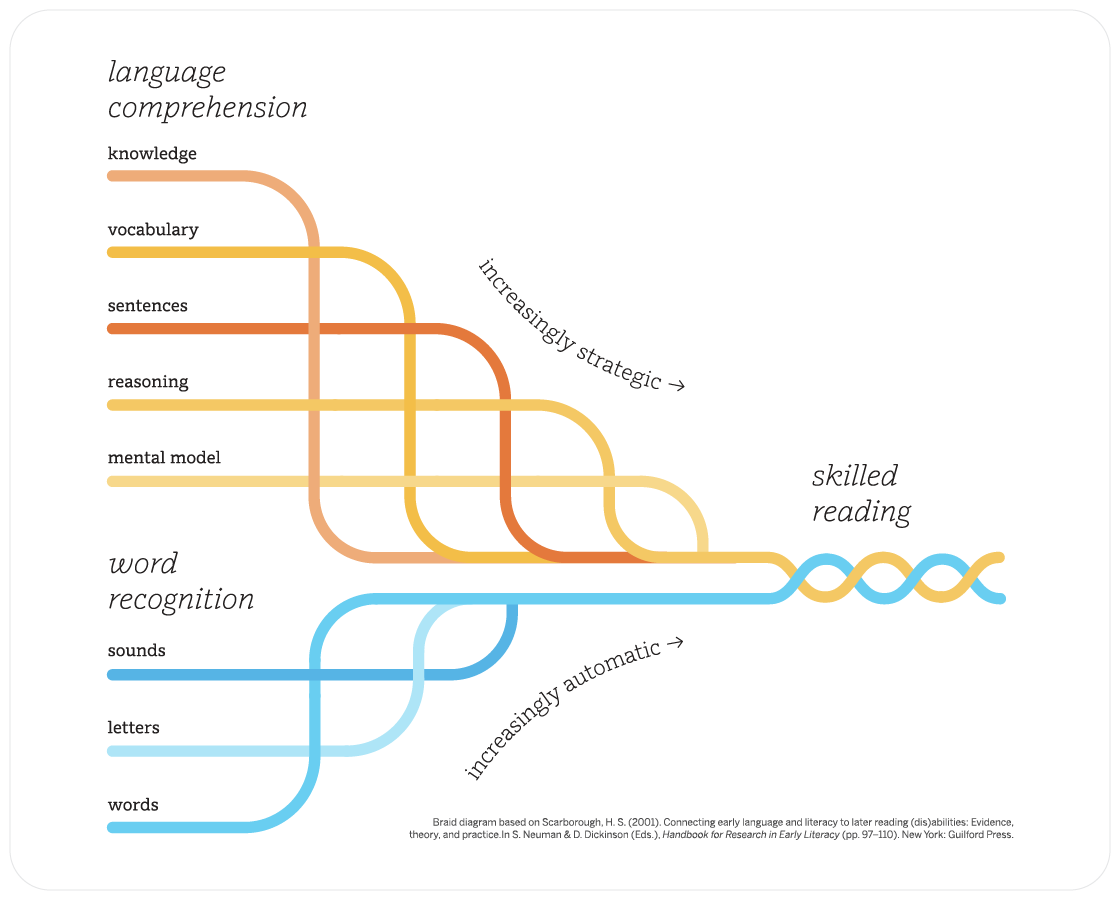
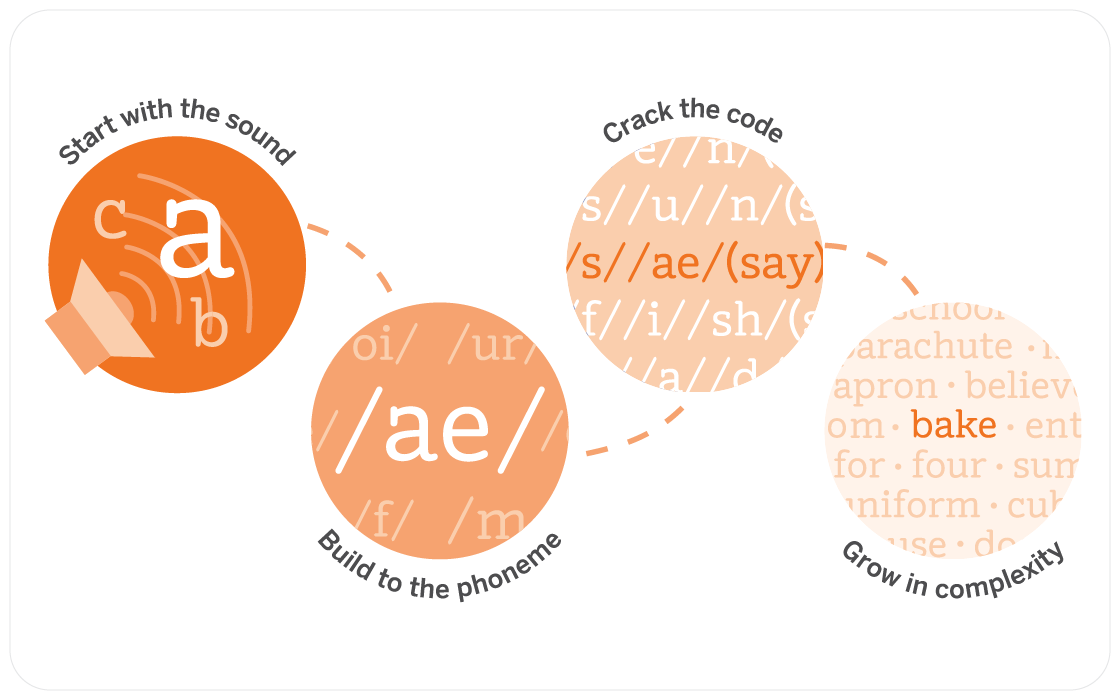
Developing foundational skills with explicit, systematic instruction
Amplify CKLA’s research-based scope and sequence progresses from simple to more complex skill development, starting with phonological and phonemic awareness. Instruction guides you in explicitly teaching the 150 spellings for the 44 sounds of English, with an intentional progression and review of skills to set your students up for success.
Following a proven knowledge-building approach
Following the Core Knowledge Sequence–a content-specific, cumulative, and coherent approach to building knowledge–students dig deeper and make connections across content areas to build a robust knowledge base for comprehending complex texts. See how the Core Knowledge curriculum is proven to improve reading scores and eliminate achievement gaps.
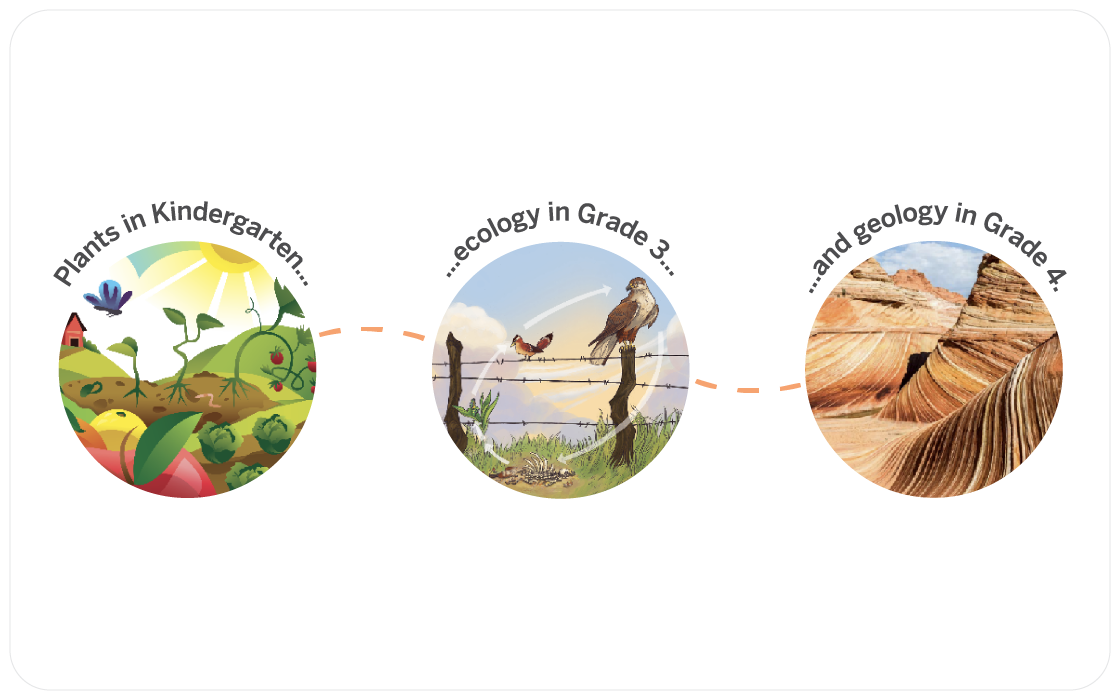

Built in partnership with the Core Knowledge Foundation
Amplify CKLA is the premier high-quality instructional materials offering for elementary language arts, built in partnership with the Core Knowledge Foundation to help students effectively develop deep content knowledge and foundational skills.
Cultivating biliteracy with parallel English and Spanish programs
Amplify Caminos is the perfect Spanish language arts partner to Amplify CKLA. The aligned programs combine rich content knowledge with systematic foundational skills instruction grounded in the Science of Reading that follows biliteracy principles, and supports multiple teaching models.


Amplify CKLA efficacy study
Tier I ESSA Evidence: Amplify CKLA knowledge-building improves achievement.
Download nowWhat’s included
The program provides engaging print and multimedia materials designed to build a robust literacy-rich foundation in every classroom.
CoreELD and companions
High-quality teacher materials
Amplify CKLA teachers effectively deliver instruction with print and digital resources, including:
- Teacher Guides with embedded differentiation.
- Formal and informal assessments.
- Ready-made and customizable lesson slides.
- Trade books and Novel Guides.
- Teacher resources and on-demand professional development.
Immersive student resources
Amplify CKLA students stay engaged with a variety of print and digital resources, including:
- Original decodables and read-aloud Big Books (K–2), Student Readers (3–5), and trade books (K–5).
- Student Activity Books with embedded assessments (K–5).
- Research units for independent research built around a trade book (K–5).
- Poet’s Journal and Writer’s Journal (write-in student readers for Grades 4–5).
- Quests for the Core to support immersive, problem-based learning in Grades 3–5.
Hands-on phonics materials
Multisensory phonics and foundational skills resources help students practice key skills using fun, varied approaches that build independence.
- Chaining Folder (K)
- Letter Cards (K–2)
- Syllable Cards (K–2)
- Image Cards (K–3)
- Blending Picture Cards (K)
- Consonant and Vowel Code Flip Books (1–2)
- Exclusive digital Sound Library
Robust digital experience
Amplify CKLA teacher and student resources are available through a digital experience platform that enhances instruction and saves you time. With everything you need in one place, you can effectively plan lessons, present content, and review student work.
- Ready-made yet customizable lesson presentation slide decks
- Dynamic live-review student tool
- Interactive and student-friendly experience
- LMS integration
- Knowledge Builder animated videos
- Recorded Read-Alouds
- Professional development website
- Real-time program support via email, live chat, and phone


English Language Learner program
Language Studio, designed for Amplify CKLA, provides WIDA-aligned daily instruction for English Language Learners to deepen their academic English.
Writing explorations program
A unique companion for Amplify CKLA, Writing Studio provides a deep dive into informational, narrative, and opinion writing to build strong, passionate writers.

Explore more programs based on the Science of Reading
All of the programs in our literacy suite are designed to support and complement each other. Learn more about our related programs:



What is a professional learning specialist (PLS)?
About this role
Amplify professional learning specialists deliver professional development for educators that drives change, leading to increased and effective use of our Amplify programs and positive impacts on students’ learning. New professional learning specialists:
- Are selected and supported by Amplify.
- Receive onboarding and become certified with an Amplify program, with opportunities to extend product certifications throughout the year.
- Deliver virtual and on-site sessions for schools and districts throughout the country.
Dive deeper into the responsibilities, requirements, and compensation of the professional learning specialist role within the professional learning specialist overview flipbook!
Why join?
The PLS advantage
Professional development for educators is one of the most powerful levers to shift learning, action, and beliefs.
As a professional learning specialist, you’ll be able to impact educators—and, ultimately, students—nationwide and see how schools across the country are driving success. Over time, you’ll also deepen your facilitation and leadership skills and build relationships with fellow professional learning specialists who are current or former educators.
Uncover additional advantages of being in the professional learning specialist network (pages 7–14).

Is this right for me?
Becoming a PLS is ideal for:
| Current educators* | Former educators | Retired educators |
| who want to gain a new perspective and develop leadership and adult facilitation skills. | who are seeking part-time, contract work and a more flexible schedule. | who want to stay connected to a network of education leaders and continue to make an impact. |
Availability requirements:
- 15-20 hours per week of paid remote onboarding in May or June, with one mandatory in person training at the end of week 4 of onboarding.
- Available to deliver in person PD a minimum of 18 business days (average of 3 days per week) from July 13th – August 21st.
More information:
Further evaluate if this is the right role for you (pages 25–29).
This year, nearly 30% of our professional learning specialists were current educators and 70% were former or retired educators. While our professional learning specialists are in different places within their classroom or educational leadership careers, they all have several key qualities in common. These include:
- A deep knowledge of high-quality instruction and adult learning principles.
- The drive to be a strong colleague and team player.
- Proven excellence in delivering in-person and online professional development.
- Exceptional customer service skills.
- High comfort with navigating ambiguity and responding confidently to in-the-moment challenges.
Access more detailed requirements of the role (pages 16–29).
S1-10: Empowering the science educator: Jessica Kesler

In the final episode of the season, Eric sits down with his friend and professional development facilitator, Jessica Kesler. Jessica describes her passion for sharing free, high-quality, empathy-centered professional development for K12 educators. Jessica also shares her experience jumping into leadership positions while teaching in Philadelphia. Eric also chats with Jessica about how students often lean on teachers for more than delivering content. Explore more from Science Connections by visiting our main page.
Jessica Kesler (00:01):
One student at a time, isn’t gonna bring a million students through the door. But if we focus on their teachers, then they can implement it in their classroom and have this multiplicative effect that can continue on and help us to reach those millions of kids and helping them be prepared for future careers.
Eric Cross (00:19):
Welcome to science connections. I’m your host. Eric Cross. My guest today is Jessica Kessler. Jessica’s director of professional learning at TGR foundation, which is a tiger woods charity. There she creates and leads free stem, professional learning opportunities for educators across the country. Prior to working at TGR, Jessica worked as an elementary, middle and high school science teacher while fulfilling several leadership roles, including science department, chair and principal intern. In this episode, Jessica shares some of her classroom experiences while working in Philadelphia, where she was in classrooms, where her students needed her to be more than just her content. She also addresses how designing professional learning with empathy for teachers in mind creates better experiences for teachers. And now please enjoy my discussion with Jessica Kessler. So let’s, let’s start off with St. Joseph’s chemistry college to the classroom, like your origin story. What led you to ultimately get into the classroom and being successful, even just looking at, at your kinda like your resume or your CV of all of the things that you’ve done. You definitely weren’t idle, but start off with chem. Yeah. Like where did that passion come from?
Jessica Kesler (01:27):
Yeah. So when I was younger, I just had this burning passion to help people. Right. And when you’re young and you think about helping people, you think about doctors, doctors help people. Right. So I had this idea that I wanna be a surgeon. I wanna be a black surgeon. I wanna be a young girl, female Charles drew, and I just wanna go out there and do it. And so my mom is actually an alum of St Joe’s. So I spent a lot of time on campus cuz as she was getting her mini master’s degrees I will visit campus with her often. And so when I applied, I had the scholarships, had everything and I went in ready to be bio ready to be a surgeon. I took my first bio class and I was like, yes, let’s talk about the human body. And let’s get into dissections and sections. And they were like, okay, so a plant so has this. And I was like, Ooh <laugh> I was like, this is not what I was expecting at all. It just felt so detached from the trajectory that I wanted to take. And it just did not feed that passion of helping people in the immediate moment.
Eric Cross (02:31):
Did it, did it feel too abstract?
Jessica Kesler (02:33):
It felt abstract. It felt boring. Okay. And one thing I didn’t want was to be like stuck, bored. Like if I’m not being stimulated in a good way, mm-hmm <affirmative> then it’s not gonna last, but I love science. So I switched over to chemistry cuz I’m like this chemistry is exciting. I’m mixing things together. I’m producing new things. I’m doing extractions. I’m being introduced to machinery that I haven’t seen before. I’m loving it. I’m doing a math. The math is awesome. And so I switched over to chem and I started doing research in the summers and things like that. My research was around water quality in Philadelphia and looking at different natural water sources and comparing them and all those great things. But I was in a lab and the lab had no windows and I was stuck talking to this atomic absorption specter every day.
Jessica Kesler (03:24):
And I hit that, that wall again, where it was like, is this the rest of my life? Like talking to these machines and not having windows and not being able to interact with people. What is this? This can’t be life. And so I was seeking out some new opportunities that said, Hey, I need more money. First of all. So I’m like, I call the financial aid office like every week, like, Hey, what’s out today. What new scholarships do you have? I’m applying for everything. Like it was my goal to not have to pay for much of my education. And so I was talking to them and they’re like, Hey, you’re in science. There’s this awesome opportunity called a noise scholarship where they’ll pay for your last year and your master’s degree. If you go into education mm-hmm <affirmative> and I sat on it and I was like, this makes so much sense to me.
Jessica Kesler (04:12):
I was like, I’ve been literally tutoring my peers and teaching in churches and all this other kind of stuff. My whole life. It makes so much sense. How come nobody ever said this before? <Laugh> and so I applied for the noise scholarship, got in and started, you know, mm-hmm, <affirmative> doing practicums in the classroom as I went through my last year as a chemistry major and my first year for my masters and it just felt so right. And I was like, I can do this. And of course there were a lot of people who told me, no, Josh, you can’t do that. Like these kids will eat you alive. And I’m like I don’t think so. <Laugh> but, but that’s give it a go. And I stepped into the classroom and it, it just felt like, felt like it was always meant to be there.
Eric Cross (04:57):
So you were able to, you were able to make that connection between, I mean, if you’re, if you’re studying chemistry and bio and going into stem, I mean, there’s, there’s an aptitude there, but then you realize that this there’s a road that you could take that leads you into a room with no windows. And you’re just hanging out with machines all day
Jessica Kesler (05:14):
And I’m not helping people. Right. Right. And that was, my passion was like, I’m not helping people sitting in this room. I need to be a person that’s outside telling people about what happens in the room. Right. And how they can get involved and like what’s going on in here. Like that’s, that’s where I can be useful.
Eric Cross (05:28):
When you were, you were in Philly when you were teaching, what were you teaching when you were there?
Jessica Kesler (05:33):
So I started off teaching eighth grade science first job in north Philadelphia, teaching eighth grade science and just a, a funding tangent that first day a student called me a B
Eric Cross (05:44):
Trial by fire
Jessica Kesler (05:45):
Trial by fire called me out in front of like the whole floor. We were outside doing line drills and just was like, I hate you miss Kusa your B. And I was like, oh, this is it. This is it. This is where you stand your ground and you take it or you, you bail out <laugh> and you go back into the lab mm-hmm <affirmative>. And of course at the end of that, that traumatic experience between all the kids, like two months later, she wanted me to adopt her. So like everything comes full circles. Right.
Eric Cross (06:10):
That’s how it is. Right.
Jessica Kesler (06:11):
But I started teaching eighth grade science. There’s not a lot of science teachers at that level who actually have a science background. Most of them have elementary school background. So I’m the only scientist walking into the science classroom and saying, this is how science actually works. And so I ended up taking a lot of onus of science while I was there. Ended up building out the K through eight curriculum for science. I ended up doing like a science strategic plan to submit to the district. I ended up leading out our first couple stem nights and like really leading the stem department and kind of our science department. And this was as like a second, third year teacher <laugh> know, but nobody else had the science mm-hmm, <affirmative> the way that I had the science and the education. So it really opened up a door for me to be able to, to run full steam with all those things.
Eric Cross (07:04):
So MI was it primarily middle school during those, those years that you were there?
Jessica Kesler (07:07):
So there, I started with middle school and I did that purposefully because I was still young and I wanted there to be a good age gap between me and the students. And then I moved up to high school and taught high school chemistry, also taught a couple other different subjects while I was at that school. But primarily high school chemistry. Then I actually took a big leap down and I said, okay. I was going for my second master’s degree in educational leadership. And I was going for my principal cert. And I said, if I’m gonna be a principal of a school, then I need to understand all the levels of education and how they operate, cuz they operate really differently. So I said, I started in middle school, went to high school. I don’t have elementary school experience. In fact, I’d spent a day in a kindergarten classroom and I was like this never again, but I was like, I need to go back down there and I need to figure out how this system works because you know, I never know where I’m gonna land as far as principalship.
Jessica Kesler (08:01):
So I went and taught fourth grade.
Eric Cross (08:03):
How was that experience?
Jessica Kesler (08:05):
So imagine me going from teaching high school, seniors and juniors Uhhuh and like they’re self-sufficient and you know, they’re independent, they’re driving to school and all these things. And then I immediately drop down and go into fourth grade where these kids are crying every five seconds. They still have like a lot of bodily fluids, like there’s noses running and things. And like <laugh>, I was like a fish outta water. I was like, what is this? What’s going on down here. But those kids pour out so much love. And they, you, you become another parent to them. Mm-Hmm <affirmative> your high schoolers know who their parents are. They kind of are finding their place in society, but the little ones, they only know big people as parents, small people as equal. So they see you as another parent. So it taught me a lot about, you know, patience and breaking information down, even smaller. I had to figure out new and inventive ways to teach science and bring it down so far that they would be able to grab onto it and achieve it. And it was a challenge, but at the end it paid off, we were running, we were hitting like great markers for all of our PSSA goals that year. I mean, we were really knocking it out the park
Eric Cross (09:17):
And this backstory leads into how we met and adds to the picture as to why I really want to have you on, because your involvement with TGR, which is where I want to go next for the folks listening. I bet a lot of them have no idea what it’s about, just like I did. And now me learning about TGR foundation and meeting you I would love to make sure that everyone knows about it and what they offer.
Jessica Kesler (09:39):
Absolutely. So TGR foundation, a tiger woods charity was founded by tiger woods and his father with a mission to really introduced them education to students in low income minority populations and prepare them for success in their world and their future careers moving forward. And so was founded in 1996 and went through several changes in iterations since 1996. But eventually opened up its first learning lab, which is in Anaheim, California. And through the learning lab, they opened up these satellite sites. So they basically partner with schools to provide after school education and robotics and wearable electronics and things like that. And they would partner with schools to teach these courses after school, they would pay the teacher, pay for the materials and stuff like that to provide more opportunity for students in different areas. And so that’s how I was introduced to the foundation because while I was teaching high school my good friend and previous manager, Jason Porter shout out to JP Jason Porter used to lead the tiger woods foundation when it was the tiger woods foundation.
Jessica Kesler (10:52):
He used to lead the afterschool program. And when I joined that high school, he said, Jess, you got all this great content, knowledge, all this great enthusiasm, and we wanna get more women into this robotics. We wanna get them engaged in this process of, of stuff. And you will be a great role model to start bringing in more of our female students. And I was like, great, sign me up. And that’s where I started working with the TGR foundation, right after school programs, getting my students into robotics, competitions and clubs, doing different challenges and design challenges. And then after some time, a few years, they actually needed someone to come to the DC area and support the development of professional learning and partnerships here in DC, as they were continuing to expand. And really it came out of the idea that tiger gave this big mission to the organization that he wanted to reach millions of kids.
Jessica Kesler (11:48):
He said millions and everybody said, what millions, what M <laugh>. So the foundation was like, okay, well we can’t reach millions by just tackling one student at a time, right? Not one student at a time, isn’t gonna bring a million people or students through the door. But if we focus on their teachers, mm-hmm <affirmative>, then those teachers not only spend most of their day with these students and learn the basics of their skills with these students. But each one of those teachers has 30 to 150 200 students that they see every day. And that’s how we multiply this effect. So we train the teachers on all the stem competencies and the pedagogical tools and strategies to implement the stem that we’re doing in our learning labs. And then they can implement it in our classroom and have this multiplicative effect that can continue on and help us to reach those millions of kids and helping them be prepared for future careers.
Eric Cross (12:44):
And so D divide the effort, multiply the effects. Exactly. And then when I was exposed to it, this was over zoom. Now, how long has it been going on? Has it always been virtualized or did you do the, were you all doing this before? We all went online
Jessica Kesler (12:57):
Before the pandemic man, the glory days, right before pandemic, it feels like I’m talking about prehistoric times, right? Like back in the dinosaur, like era, like, I don’t know, pre we actually did these workshops in a person. So we would invite people to come to DC, invite teachers in Philadelphia to do a Philly one. We were in New Mexico. We were in Florida. We were, I mean, we were everywhere and this would be a extremely hands on engaging workshops. So not only do we focus on this is the theory and the philosophy behind the pedagogy, but we would also focus on like creating a student experience for the teacher, having the teacher flip into student mode and put on that student hat and actually go through sample lessons, model lessons and activities as the student so that they can feel it. So you can feel if, if you feel confused, your students are gonna feel confused.
Jessica Kesler (13:52):
If you feel like this is challenging, you, your students are gonna feel the challenge. If you are, don’t understand the instructions, your students will understand the instructions. So it gives us a different perspective and it puts us in their shoes. So we can better empathize with them and create more responsive lesson planning. So we flipped them into that student role for that purpose. When COVID hit, we went virtual, but virtual allowed us to reach teachers that we probably would’ve never hit. So it was kind of that blessing and disguise, right? It was like we didn’t keep people as long cuz obviously virtually you’re not, you don’t wanna stare at a screen for eight hours. So we cut it down. We revised it a little bit, but we kept the hands on philosophy and feel of it going by, you know, using materials that they could find at home really modeling what education could look like.
Jessica Kesler (14:41):
Mm-Hmm <affirmative> if you used your Z zoom room to capacity, or if you had these materials and resources or rethought your lesson plans and structures. So we went virtual and not only were we able to hit so many more thirst that first year thirsty educators ready to get, dive into it, ready for some comradery with fellow educators. But we were also able to expand our international network. We were able to get so many international educators through our global work that it was, it was beyond what we had when we were in person. So it really had this skyrocketing effect.
Eric Cross (15:20):
There’s professional learning pathways and then virtual stem studio. Is that right for professional development for like teachers who are listening, are those the two kind of main prongs?
Jessica Kesler (15:30):
Yeah. So a stem studio is basically just one, right? And a pathway is a collection. So we now offer four stem studios, four separate stem studios. The first one is on inquiry mindset. You attended that one area. And it’s really about for teachers who are changing their perspective on what the classroom should look and feel like, especially administrators too. It’s about developing that inquiry mindset. So you understand and you feel, and you practice and you learn the tools that are necessary for inquiry to happen in your classroom. We never promote overhauling your classroom. We’re just saying, add a little bit here and there and see how it impacts your students. The second one is on making inquiry, visible, making inquiry visible is all about making students thinking visible in the moment. What are tools and strategies that you use so that students can illuminate their thinking for themselves, but for you and their peers as well and how we benefit from that.
Jessica Kesler (16:28):
So not only do the students get to see their own thinking as they progress and you get to tell the story of how their minds have evolved, but you, as the teacher get to see, oh, this is where everyone is making the mistake, or this is how this misconception came about. Or this is where I need to target for my next lesson. So it makes you more responsive in the moment. And then the third and fourth one where we’re actually launching for a small group this summer, it won’t be available to the masses until maybe a year or two down the line. We have one small group that we’re just going to test it out with. The third one is about developing your inquiry environment. So thinking not just about your physical space, but thinking about your intellectual space too. So what are the things that you can embed into your physical space and develop in a student’s intellectual space that will help you create a holistic inquiry environment?
Eric Cross (17:22):
So this is this inquiry space, not just physical, but then also the intellectual environment
Jessica Kesler (17:26):
Intellectual. Exactly. And it focuses in on the design process and how we design spaces. Because as a teacher, we take a lot of background in the background onus of de creating these spaces. If you take someone out of an old habit or space and tell them, oh, we are gonna change in your minds and teach inquiry, but put them back in the same environment, they’re gonna be conflicted, right? Their bodies wanna do one thing, their minds wanna do another thing. And they don’t know how to bridge the gap between the two. So this is a really illuminating, like how do you change all the spaces? How do you design a flow in space in your classroom and in your students thinking that allows them to be productive in that inquiry environment. It’s really good stuff
Eric Cross (18:11):
Who creates these experiences for teachers.
Jessica Kesler (18:14):
We do. So me and my teammate, Holly, Dard shout out HD. Holly Dard, we really put our brains together and developed these. So it’s a really a team effort because like Jason Porter, Eric even David Tong when he was with us, really collectively thought about what it is that we wanted educators to experience. And then Holly and I do a lot of the grunt work, but then we really collectively put it all together and make it what it is. So I have a heavy hand and a lot of that. And in fact, inquiry four is all about the entrepreneurial mindset. So oftentimes educators don’t consider themselves entrepreneurs, but if you take a look at what an entrepreneur is and what they do on a regular basis, educators are entrepreneurs, but we are missing an opportunity to use our entrepreneurialship in the classroom to drive for stem competencies in inquiry based practices. And so in, in stem studio, four, we really focus in on how the educator is the entrepreneur of their classroom, but also uses entrepreneurial techniques to tackle issues in their schools, districts, and spheres of influence. So it’s really taking the educator to the next level of their teaching practice through entrepreneurship. This is some deep stuff.
Eric Cross (19:37):
It is, well, this entrepreneurial mindset is, is something that I’ve heard before. And I definitely see the link between even the term teacherpreneur beyond just selling lessons on teachers, pay teachers. <Laugh> it’s way bigger than that,
Jessica Kesler (19:52):
Where entrepreneurs actually in the classroom, not just because we do things on the side to make money. Exactly.
Eric Cross (19:57):
A lot of teachers hear that. They’re like, yeah, I got, you know, I got, got a few jobs going on. Exactly. Yeah. And, and I think one thing we, I should have said this earlier, and I’ll, I’ll say the intro, but these are all free.
Jessica Kesler (20:07):
This is largely sponsored by do OD stem as well. So we have a partnership with D O D stem and they have been driving forth the department of defenses, strategic stem plan for years. And as a part of that, they give us funding in order to provide these opportunities for educators for free. So literally educators don’t have to come with anything. And we are giving you not only the content of our, our lessons and our instruction, but we’re also going give you a chance to earn a free micro credential. So people are spending 12 plus hours with us in a workshop which sounds like a lot of time, but it’s over a series of time and days. But we wanna give you something that means something after that, we wanna give you a micro credential to add to your resume, to show your administrator, to show that you have achieved the next level in your professional learning career.
Jessica Kesler (20:59):
Right? And if you finish the pathway, which is all for, then we give you our TGR foundation certificate that says that you’ve completed so much professional learning in these areas that you are basically a warrior of inquiry that you are ready to go out and really lay inquiry out in new creative ways, not in your CLA just in your classroom, but everywhere you go in your district, in your school. And on top of that, we just offer so many other great free partnership incentives like discovery, education, experience licenses. We’re doing raffles this summer. We’re giving out free a free meal voucher so that you can get some lunch. One of these days we’re offering $50 gift cards so that people can get school supplies. So anything you do with us, and you’re like, man, I really wish I could have this so that I can do that in my classroom. We wanna break down all the barriers that prevent teachers from doing this stuff in their classroom, actively engaging in this stuff. And we give you a free copy of the books that we reference. Again, trying to break down the barriers,
Eric Cross (22:00):
What are some of the things that you’ve noticed kind of being on both sides of science teaching in the classroom, and then in training trends with teachers, things like moments that have been great or, or challenges that you’re noticing teachers experiencing, especially maybe changes in differences from a, from, you know, an outsider’s perspective. Seeing what teachers are experiencing are like, since you’ve been doing PDs for folks.
Jessica Kesler (22:22):
Yeah. So it’s actually really interesting being on both sides of the fence. You know, what I always noticed is that teachers are eager, but they’re tired. They’re wanting to learn, but they can’t take advantage of every opportunity to learn. And especially during COVID time, if you take a look at even all the professional learning that’s happening across the world right now, attendance is going down because teachers are so burnt out this hybrid space, this either we’re in person, but we’re still wearing masks and still social distancing and all this other stuff, or I’m still virtual or I’m virtual some days and I’m in person other days, it’s just wearing our teachers out. And I think we notice that as we see a large numbers of friends and family just start to retire, right? Like people are just like, I don’t know if I can adapt to another change in education.
Jessica Kesler (23:14):
Like education goes through these waves of big changes and it’s hard for everybody to adapt to, but for those who are willing to stick it out and those who are able to stick it out and, and still have that energy and enthusiasm to learn, they come in so hungry for more resources, so hungry to learn more and they still have their why at the top of their minds, as they think about why they do this it’s for the kids it’s to drive this mission is to get more kids excited about this. And they just come in so passionate. So once they come in, once we can get them to come in they stick with us for a really long time. They’re like, what else do you have? What else do you have? What else do you have? But we hear, still hear the common threads of like, do I have time for this?
Jessica Kesler (23:58):
Do I have the funding for this? Do I have the energy for this? Do, will my students understand this? And we are constantly facing that challenge of trying to address those things by, but keeping the excitement going, like we know you don’t have enough time. We’re gonna call it out from the start. I know you don’t have enough time to try to do 29 extra things. Mm-Hmm <affirmative>. But my advice is always, but do one thing at a time, start with something small, asking your students a few questions rather than lecturing to them. Doesn’t take a whole lot of extra time, but it gives you so much extra insight. So let’s not work, you know, harder, let’s work smarter. Let’s embed this into our, our work together. And I always say that we’re not asking you to add to your plate. You know, it’s not Thanksgiving where you just pile, keep piling on a plate.
Jessica Kesler (24:47):
It’s it’s a time where you organize the plate. It’s allowing inquiry to restructure your plate so that everything has its place and its time mm-hmm <affirmative> do you wanna leave room so that the educator feels comfortable trying some new initiative? That’s why we encourage admin. We have librarians attend elementary school teachers, administrators, we, and we encourage it because everyone can support the classroom. And if administrators are more in touch with these new practices and tools and strategies, then they can help facilitate the learning. As the teachers are trying new things and coaching them in specific areas. So we really opened the door for some studios, for any and all who are gonna participate in that child’s education, because us all rallying around them as that three-legged stool helps to create that environment and helps support the teacher. The teachers need support, and we’re trying to do our part by providing the resources and the tools, but they need everyone else to.
Eric Cross (25:42):
We don’t always think about it as a way to support, to get support in our classrooms for ourselves. But I agree with you by, by educating vertically up the chain, you know, vice principal, principal, whoever it is, mm-hmm <affirmative> superintendent getting them on boarding and, and educating them to see what’s ex expected. We’ll open up doors and more freedoms for you because now you just have this vertical alignment of folks kind of on the same wave length. Exactly.
Jessica Kesler (26:07):
Yep. And that’s why we love districts. Anaheim union school district is actually one of our partners this year, where they have invited their teachers to participate in the whole pathway because they know how important it is that we practice these tools and strategies. And they want as many educators in the same space going through this at the same time as possible so that we can support each other through it. And so that we don’t feel like islands, oftentimes as educators, we feel like islands we’re in our classroom day in and day out. And we don’t feel like there’s anybody else who’s doing the same things we’re doing and supporting the work that we’re doing. So when we get administrators who support it, it’s magical. It can be magical.
Eric Cross (26:47):
What are some opportunities that are coming up if somebody’s listening and they, they wanna sign up for something, are there things coming up this month or next month or in the summer that they can participate in?
Jessica Kesler (26:55):
Yeah, for sure. So we’ve been doing our monthly workshops. And if you go to our website, so if you actually go to TGR foundation.org and slash stem studio you’ll actually see our summer events already posted, already live for everybody to start engaging in. And again, everything is free. So registration is open and available for everybody to participate. We are offering that first inquiry stem studio inquiry mindset twice the week of June 21st and the week of June 28th, two opportunities for educators to join us for inquiry mindset for the first one. And then also in July, we’re offering the second one making inquiry visible, and that’s the week of July 12th. So again, all free stuff, raffle prizes are available for those who register early and get in there and reserve their seat. It is limited seating. And so, yeah, a bunch of opportunities coming up this summer and guess what all you have to do is sign up and then you get all these free things coming your way. You get to look forward to all this exciting stuff. So TGR foundation.org/studio.
Eric Cross (28:01):
And if folks wanna follow you in your career, your journey.
Jessica Kesler (28:05):
Yeah. I’m on Twitter and LinkedIn, for sure. And it’s Jessica Kessler, K E S L E R one S
Eric Cross (28:12):
I wanna honor your time. And as we close, you’ve been an educator of impact in, in your own classroom. And I know you’re still teaching actively now, and you’ve also made an impact on me and other educators through your professional development. And, and the last question I’d like to end with is who’s the most memorable teacher or learning experience that you had during K eight. When you think about you, your time in school, who was a memorable teacher or a moment that kind of stands out to you and what was it that they did that made them memorable?
Jessica Kesler (28:44):
It was that one teacher who brought me my first T I, 84. You remember when a new calculators came out, I had a teacher give me one amazing, but I think in high school, there was really a turn about where I had miss Caroline and Mr. Canello math and Spanish teacher. So two opposite wings of the, the education spectrum there. But most of all, they listened. They listened to me. I felt seen with those teachers, they supported me. They listened to me, they saw my potential. And they just rallied around me and continued to support me thereafter. Even afterwards, I continued to reach out to those educators. And I think that’s what drives me to be that force for, for my students. And I remember my most memorable heart touching education experience was probably, I had a high school student get interviewed by the newspaper.
Jessica Kesler (29:38):
And they were like, oh, what’s your favorite classes? And what’s your favorite this, and what’s your favorite of that? And he was like, well, I love chemistry, which is what I was teaching. It was like, and I love my after school robotics team. I was leading and I love this and this and this. And he basically listed all the stuff that I was doing that I was teaching and that I was leading in the school. And I was like this one student, literally out of all the classes and experiences he’s experiencing is really just calling out everything that I’m doing. And I feel like it’s because he felt seen, he felt heard. He was like, this person is listening to me. And no matter what space we’re in this teacher is, is there for me. And so I try to be that wherever I go, <laugh>,
Eric Cross (30:16):
It’s amazing how making someone feel seen and, and making them feel important and heard, and, and being present for them. All of a sudden opens up their interests into the subjects that you’re teaching. Thank you for, for making time for serving our kids for serving teachers during a hard time, and for making PD one, being part of an organization that made it free and serve teachers, but also making PD fun and enthusiastic. I think that was one of the things in addition to the empathy that you led with, but also your enthusiasm and passion was something that really resonated with me. And it made our time together. Feel like something that was, was making me a better teacher for my kids. And so, thanks for making time for us tonight. Oh,
Jessica Kesler (30:53):
Bless face.
Eric Cross (30:57):
Thanks so much for joining me and Jessica today. If you have any great lessons or ways that you connect with students, please email us@stemamplifycom.wpengine.com. That’s S TM amplifycom.wpengine.com. And please remember to support the podcast by clicking subscribe, wherever you listen to podcasts, you can also hear more about the podcast in our Facebook group, science connections, the community until next time.
Stay connected!
Join our community and get new episodes every other Tuesday!
We’ll also share new and exciting free resources for your classroom every month.


Meet the guest
In the final episode of the season, Eric sits down with his friend and professional development facilitator, Jessica Kesler. Jessica describes her passion for sharing free, high-quality, empathy-centered professional development for K12 educators. Jessica also shares her experience jumping into leadership positions while teaching in Philadelphia. Eric also chats with Jessica about how students often lean on teachers for more than delivering content.
About Science Connections
Welcome to Science Connections! Science is changing before our eyes, now more than ever. So…how do we help kids figure that out? We will bring on educators, scientists, and more to discuss the importance of high-quality science instruction. In this episode, hear from our host Eric Cross about his work engaging students as a K-8 science teacher. Listen here!



What is a professional learning specialist (PLS)?
About this role
Amplify professional learning specialists deliver professional development for educators that drives change, leading to increased and effective use of our Amplify programs and positive impacts on students’ learning. New professional learning specialists:
- Are selected and supported by Amplify.
- Receive onboarding and become certified with an Amplify program, with opportunities to extend product certifications throughout the year.
- Deliver virtual and on-site sessions for schools and districts throughout the country.
Dive deeper into the responsibilities, requirements, and compensation of the professional learning specialist role within the professional learning specialist overview flipbook!
Why join?
The PLS advantage
Professional development for educators is one of the most powerful levers to shift learning, action, and beliefs.
As a professional learning specialist, you’ll be able to impact educators—and, ultimately, students—nationwide and see how schools across the country are driving success. Over time, you’ll also deepen your facilitation and leadership skills and build relationships with fellow professional learning specialists who are current or former educators.
Uncover additional advantages of being in the professional learning specialist network (pages 7–14).

Is this right for me?
Becoming a PLS is ideal for:
| Current educators* | Former educators | Retired educators |
| who want to gain a new perspective and develop leadership and adult facilitation skills. | who are seeking part-time, contract work and a more flexible schedule. | who want to stay connected to a network of education leaders and continue to make an impact. |
*Must be available to onboard in May or June and facilitate on-site sessions from July through August.
Further evaluate if this is the right role for you (pages 25–29).
This year, nearly 30% of our professional learning specialists were current educators and 70% were former or retired educators. While our professional learning specialists are in different places within their classroom or educational leadership careers, they all have several key qualities in common. These include:
- A deep knowledge of high-quality instruction and adult learning principles.
- The drive to be a strong colleague and team player.
- Proven excellence in delivering in-person and online professional development.
- Exceptional customer service skills.
- High comfort with navigating ambiguity and responding confidently to in-the-moment challenges.
Access more detailed requirements of the role (pages 16–29).
Apply now
Are you interested in helping shape professional development for educators?
Review the job descriptions for our current roles Professional Learning Specialist, Bilingual Literacy and Professional Learning Specialist, Literacy or STEM.
S5-01. Investigating math anxiety in the classroom
Season 5 is here! This season, we’ll be talking all about math anxiety: what it is, what causes it, and what we can do to prevent or ease this anxiety in the math classroom. To launch this very important theme, we sat down with Dr. Gerardo Ramirez, associate professor of educational psychology at Ball State University.
As someone who’s been studying math anxiety for more than a decade, he had some interesting research and advice to share on why math anxiety affects so many students (and adults), and tips for how to start reducing it.
Listen now and don’t forget to grab your MTL study guide to track your learning and make the most of this episode!
Enjoy this episode and explore more from Math Teacher Lounge by visiting our main page.
Dan Meyer (00:01):
Hey, folks. Welcome back to Math Teacher Lounge. I’m one of your hosts, Dan Meyer.
Bethany Lockhart Johnson (00:05):
And I am your other host. I’m Bethany Lockhart Johnson. Season five! Hello!
Dan Meyer (00:11):
Bethany, how are you doing? How have you been spending the long break between our recording sessions?
Bethany Lockhart Johnson (00:16):
As much as I loved sharing content from previous seasons, I am so thrilled that we’re back for season five. I have been, you know, chasing a toddler. I think he’s already tired of me saying, “Ooh, can we count that?” He’s like [sighs] “One two, one two.” Like, he’s done already.
Dan Meyer (00:36):
Too much counting. Yeah, I worry about that so much, that my love of mathematics might be perceived by my kids as smothering. Yeah, I worry about the same. We shared with you folks some bangers of reruns, in my humble opinion. Some great guests. But, we’ve been excited—me and Bethany—to hop back on the mics, on the ones and twos, and explore some new ideas together.
Bethany Lockhart Johnson (01:01):
Well, I loved our season talking about joy in mathematics. And personally I could…like, we could turn this whole podcast into joy in mathematics. However, we’re kind of going a different route. Because if you ask folks why they don’t feel joy in mathematics, a lot of times at the root of that is some really intense math anxiety. So this whole season, we’re going to be delving into math anxiety. Exploring what it is, who has it, why do we think it happens, what do we think we can do about it, and how can we navigate through it, so that we can experience that joy in math? These are questions that we’re gonna explore over the course of the season. Dan Meyer, how do you feel about that?
Dan Meyer (01:49):
It feels big and it feels personal. I mean, as we shared in our math stories back from season…whatever it was, math anxiety was a huge part.
Bethany Lockhart Johnson (01:59):
It was last season, Dan.
Dan Meyer (02:00):
Last…? I mean, who can remember? Big part of your journey. I’ve had some very punctuated but intense moments of anxiety in math class. And socially, we have built math up to be this incredibly powerful thing. You know, restricting movement on economic ladders, preventing people from getting into careers they want. Whether or not they have much to do with math class, math anxiety is a really large part of educational but also social life. And yeah, I’m really excited to explore it with you. We’re bringing on some really excellent guests. Some researchers, yes. But not just researchers! Also people who practice in the field and know firsthand what it looks like to resolve issues of anxiety with students.
Bethany Lockhart Johnson (02:45):
Yeah, you’re right, Dan. My math story contained quite a bit of math anxiety, so I am particularly invested in this season. I mean, I still navigate math anxiety. And, you know, many of us do, and let’s talk about it. And let’s—I love that you reminded me. We’re gonna have a lot of great researchers all throughout the season, and a lot of times folks feel like the research happening, there’s sometimes a gap between researchers and what’s actually happening in the classroom. Not in all cases, but a lot of times. Right? And I remember a lot of conversation about the latest research when I was in grad school, but unless you’re actively studying something, sometimes we don’t know what’s happening. Right? We’re really focused on what’s happening right in front of us in our classroom. So let’s take some of that research; let’s break it down; let’s talk to some of the folks who are thinking about this for the bulk of their day, right?
Dan Meyer (03:41):
Yep. So we got our first guest coming up in a moment here.
Bethany Lockhart Johnson (03:45):
So to kick off this season, we’re starting episode one by talking to Dr. Gerardo Ramirez, Associate Professor of Educational Psychology at Ball State University. And he’s been researching math anxiety for more than a decade. He’s worked with so many amazing folks in the field. He’s worked with students, he’s worked with teachers, with educators…I’m just so excited to talk to him. If you look up math anxiety, you see his name as one of the folks who is really thinking about this at so many different angles, and we get to talk to him. So enjoy our conversation with Dr. Gerardo Ramirez.
Dan Meyer (04:29):
We are so excited to have Dr. Gerardo Ramirez on the show with us. Dr. Ramirez is an Associate Professor of Educational Psychology at Ball State University. Thanks so much for joining us.
Dr. Gerardo Ramirez (04:40):
Yeah, thank you for inviting me to talk about math anxiety.
Bethany Lockhart Johnson (04:43):
So with your interview, Dr. Ramirez, we are actually launching the season. We’re gonna be talking about all different aspects of math anxiety, and it feels pretty perfect that you are first guest of the season, because of the sheer breadth of research and conversations you’ve had about math anxiety. Could you start us off kind of telling us a story of how did you get interested in studying math anxiety? Or why, you know, why did you dive into this topic that, you know, I think a lot of folks might…like, if you’re on a plane, and you say, “Oh, I study math anxiety,” what kind of reaction are you gonna get?
Dr. Gerardo Ramirez (05:24):
Oh, sure. Yeah. I think most people are actually very interested because they all have their own story about feeling anxious about math, or just being anxious about evaluation situations that involve math. And, yeah, they wanna share those stories. People feel quite comfortable talking about their anxiety about math, for some reason. But for me, I started off, when I was in undergrad, I was studying to take the GRE quiz. I was hoping to go into a psych program. But I wasn’t exactly sure what direction yet. As I took some of the practice tests, there’s some situations in which I was very nervous about taking the practice test. And I just noticed that I did really poorly on some of these exams. And so I became very interested in issues like choking under pressure, which means when you underperform relative to what you expected to perform. And so, as I was researching these issues, I started to come across this whole field of math anxiety. And I saw that while there are some people who choke under pressure during tests, there are other people who just have a strong general fear of mathematics.
Dan Meyer (06:29):
That’s really helpful. I can imagine you’re doing a lot of free psychology sessions, free therapy for people on airplanes when they bring to you their own stories of math. So let’s thank you for your service in that sense. I’m super-curious. So Bethany and I have both taught math. We both have seen firsthand what it looks like when a student is anxious in math class, though maybe we don’t have kind of the clinical language to describe it. And I’m curious, from a clinical sense, how do we define math anxiety?
Dr. Gerardo Ramirez (06:57):
Sure. So first off, math anxiety is not something that you would find in the DSM, for instance. But we generally define that as a fear or apprehension to situations that involve math. So it doesn’t have to necessarily be educational situations. It could be someone asks you a math-related question during a party, or you have to calculate the tip at a restaurant, for instance. It doesn’t have to be about schooling situations, although that’s obviously where it seems to matter a lot for many people. So it is basically a fear or apprehension to situations that involve math. And I think distinguishing the term “fear” from “anxiety” is really important here. A lot of times people use those terms interchangeably, and the term “fear” is obviously within our definition of math anxiety. But oftentimes what differentiates anxiety from fear is that, anxiety is—think of it like a recipe. Anxiety is fear plus a little bit of unknown. OK? So if, for instance, if you hated snakes, and they threw a snake at you, you’d be in intense fear. Whereas if you hated snakes and they said, “There is a snake in the room, but I’m not gonna tell you where,” that’s gonna cause anxiety. And so the reason why we call it math anxiety is because a lot of times people experience this fear for a possible unknown future that involves math or possible unknown evaluations that people might have about your competence, because of math. And so for a lot of kids, they feel anxious about how they’re gonna do on a test or whether they’re gonna be able to pass a class or whether they’ll be able to understand what you’re saying in your lessons, for instance. And so the anxiety component really gets at fear of something that’s unknown, but related to mathematics situations.
Dan Meyer (08:47):
Math is somewhere in the ceiling right now. Perhaps I might be surprised with a math situation!
Dr. Gerardo Ramirez (08:52):
Yeah. yep.
Dan Meyer (08:52):
So I have this tendency to assume that every other subject that we teach has it better and easier than math does. It’s not true. I know this is not true. But I’m kind of curious here. Is math anxiety, like, part of a general just set of anxiety around schooling itself? Like, is there a reading anxiety, a writing anxiety, and does that all just flow from the same kind of fount of anxiety around schooling or situations about learning? And what makes math special in this regard? If it is its own special anxiety, for instance?
Dr. Gerardo Ramirez (09:27):
There are different…so some people obviously suffer from generalized anxiety. Right? And so they would, you know, feel anxious both for evaluative and non-evaluative situations. But in the research that we’ve done and that other people have done, there are differences between things like reading anxiety, math anxiety; I’ve also studied spatial and creativity anxiety. A lot of times what we’re trying to do in these studies is we measure all of the above, and we try to show that, look, math anxiety predicts math situations above and beyond these other things. So yeah, we definitely distinguish those things. And so what’s special about math is that, well, I think the symbolic nature is a big part of it. The abstract symbolic nature is just not as tangible to students. They can’t touch it. And so it doesn’t allow ’em to use their full cognitive faculties to play with it, as you might see, for instance, in science. Or it doesn’t allow people to relate math to their own interests the way you might see, for instance, in English. So maybe I hate reading novels, but I’m interested in zombies and you give me a book on zombies, well, ok, great, you’ve connected my personal assets to the topic. Whereas with math, either that’s harder to do or instructors don’t do such a good job of setting that connection up.
Bethany Lockhart Johnson (10:46):
Also, I think, you know, I’ve heard of students being really anxious, let’s say, during a reading session, when teachers used to do—hopefully they’re still not doing it—the popcorn reading, where you just randomly call on a student to read out a sentence. Right? But you don’t really hear students or adults talking about, “Oh, no, no, no, I don’t read; I don’t mess with reading.” You know? Whereas with math, you do hear, “Oh, I’m not a math person. Oh no, no, no, don’t ask me any math questions.” And that is such a distinction.
Dr. Gerardo Ramirez (11:18):
Yeah. And I think a lot of that’s because it’s just so common. As an adult, to be nervous about reading is kind of an uncommon thing. So people feel a stigma around admitting that. But math is something that everyone feels like they’re inadequate in. And so there’s a lot of comfort in telling you how they’re just one of the many people who don’t like math. And that, you know, can have a lot of different consequences and outcomes. I think on the one hand, I think for a lot of kids it becomes a normalized message that if you fear math, that’s OK, join the club. Right? But we have to be careful about that, ’cause a lot of math anxiety researchers will oftentimes say, part of what leads to math anxiety is adults normalizing that it’s OK to be scared of math. So I think a lot of times adults, teachers, for instance, math teachers, they’ll tell kids, “You know, if you’re scared, that’s OK.” And so a lot of the math anxiety community says, “No, no, no, you’re not supposed to do that.” But my recent view is different. I view that as a form of validation. Because math is hard. And so telling kids, “Hey, look, it’s actually easy if you just try,” I don’t think that’s true. It’s actually just hard. And I think even if it was easy, to the kid, it feels hard! And I think something that’s not really well-studied right now in our field is the value of validating people’s math negative math experiences. We don’t want to validate that, ’cause we think that we’re gonna reinforce that. But actually, I think the opposite. I think when you validate people’s negative math experiences, it helps ’em to feel that they can handle it. They can start to take control over their own emotions.
Bethany Lockhart Johnson (12:52):
I love that. And I, I actually, I think that’s so powerful, what you’re talking about, that validation. I taught kindergarten, and I vividly remember being in a parent-teacher conference and that parent saying, “Oh, I wasn’t a math person either,” right? Or, you know, their language and their experience with their own math schooling, their anxiety about math was actually impacting their students’ experience of math. Or the conversation that, when I would go to talk about a math assessment, let’s say, you could see the parent actually tensing up. And there was this moment of validation, that I felt like we needed to make space for that in the conversation with the parents, right?
Dr. Gerardo Ramirez (13:38):
Yeah.
Bethany Lockhart Johnson (13:38):
Like, this is a real thing. And we are working on teaching students that math is something that gets to—your experience with math gets to look all sorts of different ways. And it’s OK if we, you know, make a mistake, or if we kind of only get this part, but we’ve really got that part. Or let’s talk about it; let’s write about it. So I really feel like that that validation is something that’s so missing. And instead of the validation, like you said, you see folks being like, “Oh yeah, me neither. I’m not a math person either.” Right?
Dr. Gerardo Ramirez (14:10):
Yeah. I think…part of the reason why people are comfortable sharing this because they’re looking for validation also. When they say, “Oh, I’m not a math person,” you know, I think they’re hoping that, you’ll say like, “Yeah, me neither,” or “Of course not, ’cause math is terrible.” Right? They’re looking for validation, not to reinforce their perspective, but to feel that it’s OK not to be a math person. And I think that’s one of the techniques that I’m trying to work on in my research right now, is to provide evidence that actually people will work harder when you validate their math experience. You don’t have to tell them a positive story per se. If your current story is “Math is hard and I’m very, very anxious; I’m scared,” then we can just validate that and help you work through that. And it actually will strengthen our relationships. Because if you’re a student and you’re struggling with math and I tell you, “Yeah, it’s hard; it’s OK to struggle with math,” that makes you feel seen. And that’s gonna lead you to want to ask me more for help, because I’m someone who understands you. And that’s a great, you know, remediation opportunity.
Dan Meyer (15:14):
A common thread that I think I’m seeing here in several answers is that math sometimes asks students to disassociate part of themselves. Where success in math oftentimes means working from an a level of abstraction with symbols, like you said, that can feel alien. Like, who am I here? And in the same way, I love that you’re proposing we validate and reassociate people with a very deeply felt part of themselves that is anxious about mathematics.
Dr. Gerardo Ramirez (15:44):
Yeah. I mean, I think that’s what validation’s supposed to do, right? So a lot of us, when we feel these strong emotions, we wonder, “Is this even a real thing? Are other people feeling this? Is there something wrong with me?” So we feel the emotions, but we can’t actually deal with them, because we wonder if they’re legitimate. And so when someone says, like, “Yeah, this is hard,” it crystallizes that emotion. And once something is made real, you can actually choose how you want to deal with it. Some kids are gonna deal with it by staying anxious. But some people are gonna choose to deal with it by saying, “Well, there’s nothing I can do about it now; I have to take this math test, so I’m just gonna think positive.” And that’s great. If the kid can end up saying that to themselves, that’s much more effective than me telling the kid, “Hey, you just gotta think positive. You’re gonna start the test anyway.” And so we want the kid to make meaning of their experience, and the way we do that is by crystallizing their emotions through validation.
Dan Meyer (16:36):
Yeah. I love that. And so what you’re proposing there, I think, sounds like, a solution, like a post-talk solution after students are feeling anxiety.
Dr. Gerardo Ramirez (16:43):
Yes.
Dan Meyer (16:43):
To validate and empathize.
Dr. Gerardo Ramirez (16:45):
Yes.
Dan Meyer (16:45):
And over the course of our season, we hope to explore a lot about solutions to math anxiety that are preventative, that reduce the odds of anxiety arising, through instruction and curriculum, before it arises. And I’m just wondering if you’ve seen anything that would hint at either specific or general words of wisdom you wanna share with the educators, about not just addressing it after the fact, but preventing math anxiety before it arises?
Dr. Gerardo Ramirez (17:14):
To be honest, at this point, I haven’t seen enough evidence for me to recommend anything concretely as an intervention for math anxiety, or an intervention to prevent its development. All I can really do here is rely a lot on the more broad cognitive-behavioral research on anxiety, which says that one of the ways we prevent people from developing anxiety is by helping them to make more positive appraisals of challenge situations. So a lot of times, when kids are challenged, they don’t know how to interpret that. “What does it mean that I’m struggling with this thing?” And so that’s where I think a lot of teachers can help students’ interpretations of that. ‘Cause if you leave kids to their own devices, they’re gonna think, “I’m struggling because I’m stupid. I’m struggling because I’m not good enough. I’m struggling because my dad is right; I’m gonna be a failure.” You know? They’re going to impose an interpretation to a challenge situation regardless. And so, as teachers, one thing we can do is we can help shape that interpretation and say, “What does it mean to struggle with math? People will say it means you’re stupid. That’s one interpretation. What’s another one? It means that your brain is working really hard to think through something. That’s another interpretation. What’s better? What do you think is more helpful?” And then, helping students to see how interpretations matter to how you ultimately feel about something. And that’s a very metacognitive way of thinking about things. So yeah, I would say that one way to prevent it is to help students to take more positive interpretations of their experience. But another way, and I think a more successful way, I think, is to give students early experiences where they feel efficacious dealing with math. One of the ways you do that, for instance, is by obviously making sure that the students understand the material—but that’s obvious; people are trying to do that. One of my favorite recommendations is to keep reassigning assignments, the same exact assignment, for, say, three weeks, back-to-back. So if in week one you do the homework assignment, you do OK, you don’t do so great, when week two you do it, you give the exact same assignment, and now the student can see like, “Wow, OK, this was much easier.” And then, week three, you give the exact same assignment; now the kid’s feeling really confident. And the reason why that’s great is because it helps kids to see that they’re growing in confidence. A lot of times kids don’t get to see that because we’re constantly throwing new assessments at them. And so they’re never seeing that growth. All they’re seeing is a new challenge, a new challenge, a new challenge. So I think we need to set up situations where they can feel that they’re growing, when we keep the assessment static. That can be a formative assessment, for instance—doesn’t have to be a summative assessment.
Bethany Lockhart Johnson (19:55):
That feels so powerful and it feels like it really connects to that validation piece, right? We are actually helping to create a culture in our math classroom where we might struggle with something, but we keep revisiting it. And it’s not so much to reach mastery, but as Dr. Megan Franke — we talked to her about this partial understanding and about pulling on those threads of things that you do understand, so that you can build your confidence…build, not just confidence, but build your…I guess, kind of get your footing, right? You’re saying, “Well, I do understand this. I see how this works.” And if I’m revisiting an assignment, I feel like that would give me permission to like, “Hey, I don’t have to have this figured out on the first pass. You know?
Dr. Gerardo Ramirez (20:44):
Yes, yes. Yeah. I mean, I’m gonna give you a silly analogy, but I think it works. You know, a lot of times people will have nightmares, right? And they’ll keep having the same nightmare over and over again, right? And so one reason that we suspect this happens is because they haven’t worked through whatever that nightmare’s supposed to be about. So if, say, I’m scared of driving, I may be having the same dream about driving and crashing over and over. And we keep having these nightmares. And I think math anxiety is kind of like a waking nightmare, where you keep rehashing something because you haven’t had the chance to finally address that dragon. You know? And so if someone was having a lot of fear over driving, then one behavioral approach would be, you know, to work with a therapist to actually get behind the wheel and maybe drive around the same track over and over until you feel comfortable at that, and then the nightmares stop. Well, the same thing is true, I think, about math, math and math anxiety, is that you wanna give people these opportunities to feel confident by going back to that original experience that caused them to feel anxious, and saying, “This one assignment that we did in week three that really freaked you out, let’s try it again now in week five. How was that?” “Yeah, it wasn’t so bad. It was still kind of annoying.” “OK, we’ll we’ll come back to it.” “Now it’s week seven. Now let’s go back to that assignment. How is it now?” “That’s actually…it wasn’t that terrible.” And that gives people the opportunity to reflect on how they’ve grown past that nightmare.
Bethany Lockhart Johnson (22:05):
I have to say, Dan talked about you being like a therapist. I’m like, wait, “How did you know, Dr. Ramirez? I did have this recurring dream! I did! And I had to face it. No, but I had such intense math anxiety in high school and it was debilitating. And the biggest thing for me, I thought I was the only one. I thought there was something wrong with me. I thought, “Why can’t I figure this out?” There wasn’t a conversation about “Here are some tools,” or “Here are some, some, some…”. Like, “This is OK, for you to feel scared about this or overwhelmed!”
Dr. Gerardo Ramirez (22:41):
Mm-hmm. Mm-hmm.
Bethany Lockhart Johnson (22:42):
You know, I think often when we talk about how widespread math anxiety is, I think a lot of folks automatically jump to high schoolers or college students avoiding math courses. But we see this in really young kids.
Dr. Gerardo Ramirez (22:56):
Yeah. So people are…people are just constantly making meaning of themselves, regardless of the age range. And that’s true even with young kids; they are trying to figure out who they are. Right? And so one of the things you see oftentimes with young kids is you ask ’em, “What are you good at?” And they say, “Everything!” And that’s their attempt to, you know, make meaning of themselves. But sometimes they’re not good at everything. Sometimes they actually struggle in math. And I think even early on, they have to make meaning of that. They say, “Well, I’m good at everything except math.” And how do you make sense of that? Well, why not math? “Oh, because math is terrible. It’s not for everybody. You know, it’s not something that I like.” And so, yeah, in a lot of the studies that we did early on, we basically went into these first-grade classrooms with the purpose of trying to assess whether we can actually show variability in kids’ math anxiety, even early on. In other other words, do kids even report feeling anxious about math situations? Or do they tell us that they’re great at everything? And what we found was that in fact, a good chunk of kids are, again, perfectly willing to tell you that “No, certain situations involving math make me very anxious.” Counting or addition, or doing a problem on the board. And the way we do that is by—I think there are probably more sophisticated ways that can be done, but this is the best we have at this point—is we go in there and we ask them, we show them a bunch of smiley faces and anxious faces. And we say, “I want you to tell me how you feel about these different situations that involve math.” And so we say, “If you feel kind of nervous, I want you to point to this face. If you feel very nervous, point to this face.” And we basically will read to them situations. We’ll say, “How would you feel if your teacher asked you to open up your new math textbook and you saw all the numbers inside of it?” And they’ll point to the really nervous face. So right now, those are some of the more reliable assessments for math anxiety among young kids. And that work showed us that even young kids are self-reporting math anxiety.
Dan Meyer (24:51):
Obviously this is worth our study, because we would hope people would not feel anxious in general, and especially if we have a mandated…kids are mandated to be in math classes for their entire childhood. So I see the need for this study, these studies. I’m curious: What are the consequences, though? Like what, what correlates with math anxiety? What are other reasons why we should care about math anxiety and work to remediate it?
Dr. Gerardo Ramirez (25:16):
Oh, sure. So it correlates with their actual math performance. It can correlate when they choose to do homework. Right? So a lot of times, the parents report having to fight with their kids over math homework a lot. And you also oftentimes see a lot of frustration over mathematics specifically. And so it can, you know, not only affect their academic ongoing outcomes, like math tests and math assignments, but it can also affect their relationship with their parents. So if every time you come home, your dad’s screaming at you because you haven’t done your math homework, and when he asks you to solve the problem in front of them, you don’t remember, ’cause you were checked out, ’cause you’re so stressed out, that’s gonna cause a really negative experience. You know, a lot of times people grow up and they still remember their dad screaming at them over the math homework. You know, it’ll affect your relationship with your teacher. So if you’re making me feel incompetent, if you’re stressing me out, you’re not the kind of person I wanna come to for help. So it can predict relational outcomes as well as academic outcomes. And down the line, of course, when it affects students’ opportunities to get into things like AP classes, it affects students standardized test performance and their choice of colleges, as well as scholarship opportunities.
Dan Meyer (26:29):
Once you show that it correlates to performance, then that opens up a whole range of other correlations that are pretty important, it sounds like. Whether that’s career options or, you know, post-secondary education and the like.
Dr. Gerardo Ramirez (26:40):
Yeah. And a lot of times, when people are choosing a career at college, a lot of times students will make a decision specifically based on what career has less math requirements or less math courses. So I think this finding needs to be verified further. But, there’s some studies showing that, for instance, elementary ed teachers, one factor that feeds into the decision to go into elementary ed is the math requirements are very low in elementary ed. So that can…obviously it’s not what we wanna hear, because these are our first formal math teachers, right? For our kids.
Bethany Lockhart Johnson (27:16):
It feels so powerful, the impact that math anxiety can have, not only while you’re in, let’s say, elementary school, high middle school, high school, but then the impacts beyond that in terms of your career. And I shared this last season, when we talked about our personal math story, but I know when I was navigating the deepest part of my math anxiety, I really felt like, maybe this is a reason I can’t be an elementary school teacher. Because I was so worried that I wouldn’t be able…not that I wouldn’t understand the math for fourth grade, fifth grade, but that there was something about my ability to teach it or understand it or develop a love and passion for it that I wouldn’t be able to do. And I really had to reclaim it in my own way. But, you know, something that I think is so powerful about your research is just the applicability — not only to the field of mathematics, but folks’ everyday lives. And the way that you have talked in the past about math being a gatekeeper…I have a family member who, brilliant American Sign Language interpreter. I mean, amazing. Like a dance with her fingers. I could just watch it all day. And she actually didn’t complete the program because she couldn’t complete the math requirements. And I remember talking to her about like, “Well, have you gone to the free tutoring? Have you gone to, you know, this or that?” But it was a paralyzing fear, you know? So Dr. Ramirez, what do you wish educators understood about math anxiety? Or the research about math anxiety? Or maybe even the general public at large, what do you wish folks understood about math anxiety?
Dr. Gerardo Ramirez (28:58):
Oh, I think that a lot of students, they struggle with math. And I think we wanna normalize that struggle as much as possible. We want to create a culture where it’s OK to do math slow; it’s ok to take your time. And I know that’s not possible with a lot of these requirements that a lot of math teachers have to do. But I think if we want to prevent math anxiety, we have to create opportunities to tell better stories. So that’s ultimately what I tell people is, why do people develop math anxiety? Because they had experiences that challenged their competency and they told a negative story. And so making space to reflect in math classrooms about what does it mean to go slow in math, or what does it mean to make mistakes, and then helping kids to tell better stories, I think it’s really the best thing we can do as math educators. ‘Cause you know, your job is not to be a therapist ultimately. You know, there’s only so much math teachers can do. But I think one of the most powerful things we can create is setting up students’ experiences where they feel confident, and they can tell better stories, so they can have better dreams about math.
Dan Meyer (30:06):
Really appreciate this introduction to math anxiety. It’s been a fantastic kickoff to our season. Dr. Ramirez, thank you so much for joining us.
Dr. Gerardo Ramirez (30:14):
Sure. Thank you.
Dan Meyer (30:16):
Thank you folks so much for listening to that conversation with Dr. Gerardo Ramirez, Associate Professor of Educational Psychology at Ball State University.
Bethany Lockhart Johnson (30:25):
Dan, OK, if not for your frantic signaling, I would’ve probably asked another 20 questions. I need to know what you thought .
Dan Meyer (30:34):
I found it interesting at all points. And especially I think I started to understand a little bit better where the anxiety comes from for some students. I got a little bit here, which is that I think math, more than other disciplines, involves alienation. Check that word. You like that? Alienation? I’m into it. I’m feeling it. It’s like…to get good at math, to be successful in math, you gotta, as a kid, lose your attachment to the world you understand. And I mean, “got to” as in like, “you are asked to” — many times, unfortunately, by curriculum and instruction. Which is to say, you’re turning things you can hold onto into numerals. Right? You’re turning the world and its patterns that you can see and touch into Xs and Ys. And I just don’t know that other disciplines deal with that as much. Maybe I’m wrong and just guilty of, you know, “grass is always greener” syndrome here. But I think that’s an experience that kids have in math. And I thought that Dr. Ramirez got at that when he’s talking about the need to validate a student’s experience of anxiety. Like, in treating anxiety, sometimes we alienate people further by just like saying, “Oh, no, no, no, it’s just like, you need to, you know, drill yourself more, practice more,” and kind of invalidate that. So this feeling of alienation, I think permeates a lot of math instruction. I’m looking forward to learning more about that with our future episodes
Bethany Lockhart Johnson (32:00):
Alienation. That’s interesting. I definitely felt, I definitely felt isolated and alone many times in my math journey, when I was having my…you know, in high school, when I was feeling like, “Clearly everyone can look at tan, sign, cosign, and that means something to them.” Right? I think it’s really interesting, because I’m thinking about the other disciplines; I’m running through them, and I’m like, even in science, which can seem abstract, so oftentimes there’s these experiments that accompany these concepts, where you’re like, “Look at this concept made real in front of you.” Right? . And so yeah, that’s really interesting.
Dan Meyer (32:39):
You’re always one step away from blowing something up! Or, you know, dissecting something that’s tangible to you.
Bethany Lockhart Johnson (32:46):
Yeah. That’s really interesting. I did really love how he brought up the abstract. And how, I think, even validating it…he talked so much about validation. Which to me was like, YES. If somebody just said, “Hey, it’s not only possible to have math anxiety, but it also doesn’t mean that you don’t belong here.” If somebody had said that, it would’ve literally changed the trajectory, you know? And I wonder what those conversations could look like in our classrooms, where teachers celebrate that. Like, WHOA, this is a new way to think of this. This is a new way. Asking how many, or what do you notice for this image, through a mathematical lens, or looking…we talked to Alison Hintz and Antony Smith, like mathematizing books, like looking through these lenses — it’s an invitation to step into this other world, right? But there’s not only one way to do it. And I think oftentimes it’s like that anxiety of “Am I gonna say the right thing?” or “Am I gonna notice the right thing?” Right? How do we create that space more, where there’s so many possibilities and we want kiddos to notice what they notice, right?
Dan Meyer (33:54):
You gotta become a certain kind of person to be successful in math class. I feel like is part of the implied deal. Where you’ve gotta—like how you said—say a certain thing or think about a certain thing a certain kind of way. You’re trying to become someone who is not necessarily you. Which I think is fundamentally an experience of alienation, separating you from important parts of yourself.
Bethany Lockhart Johnson (34:19):
I will never, ever dive into mathematics on the scale and level that you have with your PhD. You understand math in a way that my brain just…I won’t get there, right? And yet I’m allowed to call myself a mathematician, with all of my deep dives in elementary math and my love of early numeracy and thinking about how we start thinking about counting and numbers. Right? It’s like, if we make more space for what mathematicians can look like, and what is your personal relationship with math…I mean, that to me feels really exciting. ‘Cause I think we both have something to offer each other.
Dan Meyer (35:03):
I think I have never found early math more interesting than when I talk to early math educators. And learn just like all the different ways that students come to understand a concept that I had thought was simple. Like addition of whole numbers. Whoa! There’s a lot of ways kids do that work, and their brains think those thoughts. And, yeah. That’s a good word there you’re offering us and our listeners.
Bethany Lockhart Johnson (35:27):
Yeah. Yeah. I’m really excited about this season. I think there’s — again, there’s no way we’re gonna cover all facets of math anxiety. But I think having the chance to explore it over the course of a season is going to be really fascinating. And really, I hope, destigmatize it and open up the conversation for our listeners. And, you know, if you listeners…we wanna know what you thought of this episode. Do you have any particular questions? Do you have questions related to math anxiety? Questions related to this episode? We are in development for this season, so we’re gonna do our best to get those questions answered. You can keep in touch with us in our Facebook discussion group, Math Teacher Lounge Community, and on Twitter at MTLshow.
Dan Meyer (36:14):
Next time, we’re gonna go deeper into the causes and consequences of math anxiety.
Dr. Erin Maloney (36:20):
It’s not just the case that people who are bad at math are anxious about it. It’s actually that the anxiety itself can cause you to do worse in math. And that for me is really exciting, ’cause it means that if we can change your mindset, then we can really set you on a path with several more options available to you.
Dan Meyer (36:41):
Til next time folks,
Bethany Lockhart Johnson (36:41):
Bye.
Stay connected!
Join our community and get new episodes every other Tuesday!
We’ll also share new and exciting free resources for your classroom every month.
Meet the guest
Dr. Gerardo Ramirez obtained his Ph.D. from the University of Chicago, where he studied the role of teachers and parents in shaping the math attitudes of their students, as well as reappraisal techniques to help students cope with anxiety during testing situations.
Dr. Ramirez is currently an associate professor at Ball State, where he examines the role of frustration, empathy, and cultural capital in shaping students’ success and persistence.

About Math Teacher Lounge
Math Teacher Lounge is a biweekly podcast created specifically for K–12 math educators. In each episode co-hosts Bethany Lockhart Johnson (@lockhartedu) and Dan Meyer (@ddmeyer) chat with guests, taking a deep dive into the math and educational topics you care about.
Join the Math Teacher Lounge Facebook group to continue the conversation, view exclusive content, interact with fellow educators, participate in giveaways, and more!
You might also like:



Winter Wrap-Up 03: Ideas to build math fluency
Join us for the third episode in our Winter Wrap-Up! In this episode from season 3 of Math Teacher Lounge: The Podcast, we sit down with Dr. Valerie Henry to talk about math fluency and what that means for students. Listen as we dig into the research, hear Val’s three-part definition of fluency, and explore her five principles for developing it.
Explore more from Math Teacher Lounge by visiting our main page.
Dan Meyer (00:03)
Hey folks. Welcome back. This is Math Teacher Lounge, and I am one of your hosts, Dan Meyer.
Bethany Lockhart Johnson (00:07):
And I’m your other host, Bethany Lockhart Johnson. Hi, Dan.
Dan Meyer (00:11):
Hey, great to see you. We have a big one this week to chat about and some fantastic guests. We are chatting about fluency, which is the sort of word and concept that I feel like people have very, very non-neutral associations with it. A lot of them are very negative, for a lot of people.
Bethany Lockhart Johnson (00:26):
I saw you frown a little. What’s up with that, Dan? You kind of, like, shrank.
Dan Meyer (00:30):
I have strong feelings about it. You know, there’s lots of ways that people go about helping people become fluent in mathematics. And a lot of them are harmful for students, and ineffective. And it got me thinking about fluency as it exists outside of the world of mathematics, where we have a lot of very clear images of it. We’re getting fluent in things all the time. Like, as humans. Human development is the story of fluency. And I just was wondering….Bethany, would you describe yourself as fluent at something outside of the world of mathematics? What is that? How’d you get fluent at it? What was the process?
Bethany Lockhart Johnson (01:05):
Hmm, I think I’m a pretty fluent reader. I read all the time. I’m a happier person if I’ve read that day. I once saw this poster in a classroom; it said “10 Ways to Become a Better Reader: Read, Read, Read, Read, Read…you know, 10 times. Get it? Reading? You get better at reading by reading! So I would say reading. And it’s been kind of cool—I have a one-year-old who, it’s been really exciting slash overwhelmingly anxiety-producing to see him get very fluent with walking slash running, ’cause he’s getting faster every day. And it’s kind of fun. When I think of what’s something somebody’s trying to get fluent with…walking! He’s trying to be more fluid. He’s practicing transitions. He doesn’t wanna hold my hand while he traverses rocky terrain. He’s getting better at it. He’s practicing. What about you? What’s something…?
Dan Meyer (02:08):
I think about driving a lot. I’m a very fluent driver and I think a lot about when I was first a driver, you know? And how l have my hands on 10 and 2, vice grip, and do not talk to me; do not ask me anything; don’t ask me my NAME. I need to focus so hard. And then a year later, you know, I’m driving with one hand, smash the turn signal, take a sip off of whatever, change the CD. And then it’s no big deal.
Bethany Lockhart Johnson (02:38):
Wait, did you pass the first time? Your test?
Dan Meyer (02:40):
Yeah, I don’t like to brag about it. <laugh> But I do all the time. <laugh> But I got a hundred on my driving test. I don’t care who knows it. And I hope it’s everybody. But I guess all of this is just to say there are areas of life where fluency feels natural, with the case of walking. There’s areas of life where fluency feels motivating, with like driving—I wanna be able to switch the CD out or whatever. And there’s areas where fluency feels terrifying and hard to come by, like mathematics, sometimes. So we have a set of guests here. Our first guest will help us figure out what do we mean by fluency? And what’s the research say about what fluency is and how students develop it in mathematics? And then our other guests will help us think about what it looks like in practice in the classroom. What are some novel, new ways to work on fluency? So first up we have Val Henry, Dr. Val Henry.
Bethany Lockhart Johnson (03:32):
So we knew we needed help with the fluency definition, because when we think about it, it’s kind of big, right? And we wanted to look at what research about fluency really says. So we called on Valerie Henry. Val is a nationally board-certified teacher, taught middle school for 17 years, and since 2002 has worked with undergraduates graduates, credential candidates as a lecturer at the University of California, Irvine, one of my alma maters. So after doing her dissertation on addition and subtraction fluency in first grade, Val created a project to study ways to build addition and subtraction and multiplication and division fluency while also developing number sense in algebraic thinking. And the pilot grew and grew over the last 18 years into a powerful daily mini-lesson approach to facts fluency called FactsWise. And when we thought of fluency, the first person I thought of was Val. Welcome, Val Henry, to the Lounge! I’m so excited to have you here. Welcome.
Valerie Henry (04:36):
Thanks, Bethany. And thanks to you, Dan. It’s great to be here today.
Dan Meyer (04:41):
Great to have you; help yourself to whatever you find in the fridge. The names that people write down on those things in the bags are just recommendations. It’s potluck-style here. I’m curious, Val, if you’re, like, on an airplane, someone asks you what you do, and you say you study fluency…what is the layperson’s definition of what does it mean to be fluent in mathematics? And if you can give a brief tour through what the research says about what works and what doesn’t that would really help us orient our conversation here.
Valerie Henry (05:12):
The first thing I have to do when I talk to somebody on a plane is define the idea of fluency. And I often use an example of tying your shoelaces. Because that works with first graders as well as adults. This idea that when we first start trying to put our shoes on and get those shoelaces tied, somebody tries to, first of all, just do it for us. But then of course maybe tries to teach us the bunny-ears approach. And we struggle and struggle as little kids and eventually either the bunny-ears approach or something else starts to work for us. But we still have to pay attention to it. We have to think hard and it’s not easy. And then over time we get to the point where we basically don’t even think about it. When I tie my shoes in the morning. I’m not thinking about right-over-left and left-over-right and all of those things. I just do it. And so that’s a good, easy example of becoming fluent with something. I think what we’re talking about today though, is the basics, the adding and subtracting that we hope kids are going to have mastered maybe by second grade, and the multiplication and division facts that we wanna maybe have mastered by third, maybe fourth grade. So now what does that mean to become fluent with those basics? I have a three-part definition that seems to match up really nicely with the common core approach to fluency. Which is, first of all, we want the answers to be correct. And then second, we want the answers to be easy to know. And so what does that mean? Well, to me, it means without needing to count,
Bethany Lockhart Johnson (07:12):
You mean without having to kind of muscle through it? Or say more about you mean.
Valerie Henry (07:16):
Well, I guess what I mean is that when you watch a young child try and solve something even as simple as two plus three, they might put up two fingers and then go 3, 4, 5 with three more fingers winding up on their hand, one or the other of their hands. While they’re doing that, they don’t really have a sense of whether even their answer is right or not, quite often. Especially when you get to the larger adding and subtracting problems, you can see a lot of errors happening as they’re trying to count. And it’s taking up cognitive energy to do that counting process, especially as you get to the larger quantities. So my definition of fluency now is “getting it right without needing to do that hard work like counting.” Now, some people might say, well, we just want them to have ’em memorized. But in my research, I’ve learned that a lot of very fluid adults don’t always have every fact memorized. In fact, if you ask a room full of adults, what’s seven plus nine, you might learn that they can all get it correct quickly, quickly…but they don’t all have it memorized. And so when you ask them, “How did you get that?” Many of them will say, “Well, I just gave one from the 7 to the 9 and I know that 10 plus 6 is 16.”
Bethany Lockhart Johnson (08:53):
That’s such an important distinction. My brain literally just did that actually!
Valerie Henry (08:58):
<laugh> Right? <laugh> But you’re fluid with it, because it doesn’t take you much cognitive energy at all.
Bethany Lockhart Johnson (09:05):
Right.
Valerie Henry (09:07):
So now we have “correct without needing to put that cognitive energy,” which usually means that you’re counting. And then the third thing is “relatively quickly,” so that you’re not spending 15 seconds trying to figure it out. Even that part-whole strategy approach can be done really quickly, almost instantaneously. Or it can take a long time. So if a student can get the answer correct within, you know, three or four seconds— is I’m pretty generous—I figure that they’re pretty darn fluent with that fact. So that’s my three-part definition of these basics, fluency.
Dan Meyer (09:55):
I love the distinction between getting it correct and getting it quick. It’s possible to be quick with wrong answers. It’s possible to be like, “Those are separate components there.” And I echo Bethany’s appreciation for this third option in between knowing it instantaneously through memorization and muscling through it. But there’s like a continuum there of how much energy it took you to come up with it that all feels extremely helpful.
Valerie Henry (10:21):
And you know, one of the things that I’ve noticed is that when kids are pressured to come up with those instantaneous answers, they often default to guessing and get it wrong.
Bethany Lockhart Johnson (10:30):
Mm, yeah.
Valerie Henry (10:30):
So that’s one of the things that I’ve learned is that as we’re trying to help students develop fluency, it’s important to start with building their conceptual understanding of what it means to do, you know, 3 times 9 and what the correct answer is, maybe using manipulatives or representations of some sort. Not skip-counting! I really have found that skip-counting just perpetuates itself in many students’ minds and that they never stop skip-counting, which means they’re putting in not very much mental energy if it’s 2 times 3 but a ton of mental energy if it’s 7 times 8. Because frankly, it’s really hard to skip count by sevens. And by eights.
Bethany Lockhart Johnson (11:18):
I can get to 14 and then I’m like, wait, wait, what was next? Right? No, no, no…21! What do you feel are some misconceptions that maybe teachers, maybe parents have about fluency in math?
Valerie Henry (11:30):
I think maybe one of the first ones is that if students count or skip-count, their answers repetitively over and over and over and over, that they’re bound to memorize them. And the study that I did back in 2004, I actually had a school that had decided that they were going to do time tests with their students every day, all year. And that undoubtedly by the end of the year, those students would be fluent.
Bethany Lockhart Johnson (12:06):
And to clarify by time test, you mean like, sit down, pencil, paper, ready, go, worksheet kind of thing.
Valerie Henry (12:15):
Yes.
Bethany Lockhart Johnson (12:16):
Some of us might remember quite vividly.
Valerie Henry (12:18):
<laugh> Very vividly. And you know, you have to get it done within a certain amount of time. So they made it fun for the students. Apparently the students enjoyed it. I was a little leery about that, but in the end, when I went and checked on the students and I did one-on-one assessments with half of the students in every class that were randomly selected so that I could get a sense of where they were with their fluency—and these were first graders—they basically had nothing memorized. They were simply counting as fast as they possibly could. And, you know, mostly getting the right answers. But they had not memorized. So that’s one of the myths, I think, is that repetitive practice of counting gets you to memorization.
Bethany Lockhart Johnson (13:10):
If I put it in front of you enough times, you’ll become fluent.
Valerie Henry (13:14):
Right, right. Now these students didn’t really get any instruction, any help learning these. They just simply tested over and over and over. So that’s another thing that I think is a misconception. It’s that if we test students, but don’t really teach them fluency, then they’re going to become fluent. If we just test them every Friday or that kind of thing. And that they’ll learn them at home. But really what that means is a few lucky kids who have parents who have the time and the energy and the background to know how to help will take that job on at home. Not that many students are really that fortunate.
Dan Meyer (14:01):
It’s almost like the traditional approach, or the approach you’re describing, confuses process and product. It says, “Well, the product is that eventually fluent students will be able to do something like this, see these problems and answer them, answer them quickly,” and says, “Well, that must be the process then as well; let’s give them that products a whole lot.” But as I hear you describe fluency with bunny ears on shoelaces, there’s these images and approaches and techniques that require a very active teacher presence to support the development of it. That’s just kind of interesting to me.
Valerie Henry (14:35):
My initial project, the pilot project that I tried, was to simply ask teachers to follow five key principles. And the first one was to do something in the classroom every day for—I told them, even if you’ve only got five or 10 minutes, work on fluency for five or 10 minutes a day, and let’s see what happens. So that was one key element was just to teach it and to give students opportunities to get what the research calls for when you’re trying to memorize, which is actually immediate feedback. When I talk about immediate feedback with my student teachers, I say, “I’m talking about within one or two seconds of trying a problem, and then sort of immediately knowing, getting feedback of whether you got the answer right or not so that your brain can kind of gain that confidence. ‘Oh, not only did I come up with an answer, but somebody’s telling me it’s the correct answer.’”
Dan Meyer (15:38):
There’s a lot of apps now in the digital world that offer students questions about arithmetic or other kinds of mathematical concepts and give immediate feedback of a sort: the feedback of “You’re right; you’re wrong” sort. Is that effective fluency development, in your view?
Valerie Henry (15:57):
I haven’t heard and I haven’t seen them being super-effective. The ways I think about this are “Immediate feedback isn’t the only thing we need.” Probably one of the biggest things that we need is for students to develop strategies. And this is one of the other things I’ve learned from international research, from countries that do have students who become very fluent very early, is that they don’t shoot straight for memorization, but they go through this process of taking students from doing some counting and then quickly moving them to trying to use logic. So, “Hey, you really are confident that 2 + 2 is 4; so now let’s use that to think about 2 + 3.” Actually, as an algebra teacher, I would much rather have students that have a combination of memorization and these strategies, than students who’ve only memorized. Isn’t that interesting that my most successful algebra students were good strategy thinkers. Not just good memorizers.
Bethany Lockhart Johnson (17:09):
So you mentioned there were five that kind of helped root this idea in like, “What can teachers do? What is the best thing that teachers can do to support with fact fluency?” So, everyday was key.
Valerie Henry (17:22):
Then the next principle that I really focus on is switching immediately to the connected subtractions so that students—
Bethany Lockhart Johnson (17:33):
Not waiting until you’ve gotten all the way through addition. But making “Ooh!”
Valerie Henry (17:38):
Totally. And I didn’t do that the first year. And when we looked at the results of the assessments at the end of the year, we realized that our students were so much weaker in subtraction than addition. So the following pilot year, we tried this other approach of doing subtraction right after the students had developed some fluency with that small chunk of addition. And we got such better subtraction results.
Bethany Lockhart Johnson (18:11):
What are the other principles?
Valerie Henry (18:13):
The biggest one is to use these strategies. So the strategies makes the third. And then the fourth I would say is to go from concrete to representational to abstract.
Bethany Lockhart Johnson (18:27):
Don’t put away those manipulatives. Don’t put away those tools.
Valerie Henry (18:31):
Oh, so important to come back to them for multiplication and division. And my fifth principle is to wait on assessment. To use it as true assessment, but not race to start testing before students have had a chance to go through this three-phase process. Which is conceptual understanding with manipulatives; building strategies, usually with representations; and then working on building some speed until it’s just that natural fluency.
Bethany Lockhart Johnson (19:07):
I wanna say thank you so much for offering your really learned perspective, because you have not only done the research, but seen it in action and seen how shifting our notions of fluency and what fluency can be and what a powerful foundation it can be for all mathematicians. Really, that shift is so powerful. And I appreciate you sharing it with our listeners and with us. So we’re so excited that we got to talk with you today, Val—
Dan Meyer (19:35):
Thank you, Dr. Henry.
Valerie Henry (19:37):
You’re welcome!
Dan Meyer (19:41):
With us now we have Graham Fletcher and Tracy Zager, a couple of people who understand fluency at a very deep and classroom level. I wanna introduce them and get their perspective on what we’re trying to solve here with fluency. So Graham Fletcher has served in education in a lot of different roles: as a classroom teacher, math coach, math specialist, and he’s continually seeking new and innovative ways to support students and teachers in their development of conceptual understanding in elementary math. He’s the author, along with Tracy, of Building Fact Fluency, a fluency kit we’ll talk about, and openly shares so much of his wisdom and resources at gfletchy.com. Tracy Johnson Zager is a district math coach who loves to get teachers hooked on listening to kids’ mathematical ideas. She is a co-author of this toolkit, Building Fact Fluency, and the author of Becoming the Math Teacher You Wish You’d Had: Ideas and Strategies from Vibrant Classrooms. Tracy also edits professional books for teachers at Stenhouse Publishers, including, yours truly. Thank you for all that insight, Tracy, and support on the book.
Bethany Lockhart Johnson (20:49):
Dan and I were talking at the beginning of the episode about things we feel like, “Hey, I’m fluent in that. I’m fluent in that.”
Dan Meyer (20:55):
Just very curious: What’s something you would like to get fluent in outside of the world of mathematics, let’s say?
Tracy Zager (21:00):
I’ll say understanding the teenage brain, as the parent of a 13-year-old and 15-year-old. That’s the main thing I’m working on becoming fluent in!
Bethany Lockhart Johnson (21:10):
Ooh!
Dan Meyer (21:13):
A language fluency, perhaps. All right, Graham. How about you?
Graham Fletcher (21:16):
For me typing, it’s always been an Achilles heel of mine. So voice-to-text has been my friend. But it’s also been my nemesis in much of my texting here and working virtually over the last couple years. So yeah, typing.
Dan Meyer (21:33):
Do you folks have some way of helping us understand the difference in how fluency is handled by instructors and by learners?
Tracy Zager (21:40):
I would say that the lay meaning of fluency is definitely a little different than what we mean in the math education realm. When we’re talking about math fact fluency, which is just one type of fluency. So you gotta think about procedural fluency and computational fluency; there are lots of types of fluency in math. And Graham and I had the luxury of really focusing in specifically on math fact fluency. We’re looking at kind of a subset of the procedural fluency. So the words you hear in all the citations are accurate, efficient, and flexible. There’s this combination of kids get the right answer in a reasonable amount of time and with a reasonable amount of work and they can match their strategy or their approach to the situation. That’s where that flexibility comes in. And there’s like lots more I wanna say about that about sort of…I think one issue that comes up around fluency is that people are in a little bit of a rush. So they tend to think of the fluency as this automaticity or recall of known facts without having to think about it. And that is part of the end goal, but that’s not the journey to fluency. So this is one of the things that Graham and I thought about a lot was the path to fluency. The goal here it’s that student in middle school who’s learning something new doesn’t have to expend any effort to gather that fact. And they might do it because they’ve done it so many different ways that they’ve got it, and now they just know it, or they might be like my friend who’s a mathematician who still, if you say, “Six times 8,” she thinks in her head, “Twelve, 24, 48…” and she does this double-double-double associative property strategy. And it’s so efficient, you would never know. And that’s totally great. That’s fine. That’s not slowing her down. That’s not providing a drag in the middle of a more complex problem or new learning. So we’re really focused on having elementary school students be able to enter the middle and high school standards without having that pull out of the new thinking.
Graham Fletcher (23:53):
And as I think about that, I think about how so many students will memorize their facts, but then they haven’t memorized them with understanding. So that when they move into middle school and they move into high school, it’s almost like new knowledge and new understanding that’s applied from a stand-alone skill.
Bethany Lockhart Johnson (24:10):
So something that felt really unique to me, Graham, as I was diving into the toolkit, is your use of images, Tracy, Graham, is the way that you use images to help students notice and wonder to start making sense of these quantities and the decomposition of numbers using images. Can you talk a little bit about how images played a part in the way that you think about this building a fact fluency?
Graham Fletcher (24:41):
What I realized is so many times when we approach math with just naked numbers with so many of our elementary students, the numbers aren’t visible. The quantities. They can’t see them; they can’t move them. They’re just those squiggly figures that we were talking about earlier on. So how is it that we make the quantities visible, to where students feel as if they can grab an apple and move it around? Because a lot of times we start with the naked numbers and then if kids don’t get the naked numbers, then we kind of backfill it. But what would happen if we start with the images? And then from there, these rich, flourishing mathematical conversations develop from the images. And I think that was the premise and the goal of the toolkit.
Tracy Zager (25:22):
When you look at how fact fluency has traditionally been taught, it’s all naked numbers. And sometimes we wrote ’em sideways. Like, that’s it. That was our variety of task type. Right? Sometimes it’s vertical; sometimes it’s horizontal. And that was it. And I’ve just known way too many kids who couldn’t find a hook to hang their hat on with that. It didn’t connect to anything. And so part of why I knew Graham was the perfect person for this project was his strength in multimedia photography, art, video. And so we started from this idea of contexts that for each lesson string in the toolkit, there’s some kind of context. An everyday object, arranged in some kind of a way that reveals mathematical structure and invites students to notice the properties. So we start with images of everyday objects: tennis balls, paint pots…um, help me out; here are a million of them. Crayons—
Bethany Lockhart Johnson (26:18):
Crayons, markers.
Tracy Zager (26:18):
Shoes, right? Sushi, origami paper, all kinds of things in the different toolkits. So there’s a series of images or a three-act task or both around those everyday objects, and then story problems grounded in that context. And then there are images with mathematical tools that bring out different ideas, but relate in some way to the image talks. And we do all of that before we get to the naked number talk. Which we do, and by the time you get to the number talk, it’s pretty quick, ’cause they’ve been reasoning about cups of lemonade. And now when you give them the actual numerals, they’re all over it.
Bethany Lockhart Johnson (27:03):
I have to say too, as somebody who—particularly in middle school—navigated math anxiety, we recently talked with Allison Hintz and Anthony Smith about their amazing book Mathematizing Children’s Literature.
Tracy Zager (27:14):
Yay!
Bethany Lockhart Johnson (27:14):
And I was explaining, like, if I sat down at the beginning of a math class and my teacher opened a picture book and said, “We’re gonna start here,” I felt my whole body relax. And if we start with this image, if we start with just looking at an image and making sense of an image, I feel like that could be such a powerful touchstone for all the work you do from there.
Tracy Zager (27:41):
That’s core. That’s a core design principle, is that invitational access. There are no barriers to entry. There’s nothing to decode. There’s nothing formal. We’ve been learning from Dan for years about this, right? Of starting with the informal and then eventually layering in the formal. I was in a class in Maine where they were doing an image talk and it’s these boxes of pencils. It’s a stack of boxes of pencils and they’re open and you can see there are 10 pencils in each box. And so there are five boxes of pencils each with 10 pencils in it. And then the next image is 10 boxes of pencils and each box is half full. So now it’s 10 boxes each with five. And the kids are talking and talking and then the third image, I think there are seven boxes each with 10 pencils in it. And she said, “What do you think the next picture’s gonna be?” And this girl said, “You just never know with these people!” <laugh> I dunno!”
Bethany Lockhart Johnson (28:37):
That’s kinda true. Knowing you both, it’s kinda true.
Tracy Zager (28:42):
Like if it’s seven boxes with 10 in it, one kid said, I think it’s gonna be 14 boxes of five. And other kids are like, I think it’s gonna be 10 boxes with seven. And they start talking about which of those there are and the relationships between—
Bethany Lockhart Johnson (28:58):
But they’re making sense of numbers!
Tracy Zager (28:59):
Totally. So all the kids felt invited. They can offer something up. They’re noticing and wondering about that image. They’re talking about it in whatever informal language or home language that they speak. And that was core to us. That was a huge priority, because honestly, one of the motivations to talk about fluency is that it’s always been this gatekeeper. It has served to keep kids out of meaningful math. Particularly kids from marginalized or historically excluded communities. So they’re back at the round table, doing Mad Minutes, while the more advantaged kids are getting to do rich problem solving. And so, we thought, what if we could teach fact fluency through rich problem solving that everybody could access? That was like square one for us.
Bethany Lockhart Johnson (29:45):
That’s huge.
Dan Meyer (29:46):
That’s great to hear. What’s been helpful for me is to understand that students who are automatic, that’s just kind of what’s on the surface of things. And that below that might be some really robust kind of foundation or scaffolding that bleeds to a larger building being built, or it might be just really rickety and not offer a sturdy place to build farther up. It’s been really exciting to hear that. I wonder if you’d comment for a moment about, in the digital age and—I’m at Desmos and our sponsors are Amplify and we all work in the digital world quite a bit. There are a lot of what report to be solutions to the fluency issue, to developing fluency in the digital world. Just lots and lots of them. Some that are quite well used, others that are just like X, Y, or Z app on the market. You can find something. Do you have perspectives on these kinds of digital fluency building apps? Like, what about them works or doesn’t work? Let us know. Graham, how about you? And then Tracy, I’d love to hear your thoughts too.
Graham Fletcher (30:47):
Yeah, I think that’s a great question, ’cause there’s a lot of shiny bells and whistles out there right now that can really excite a lot of teachers. But I always come back to what works for me as a classroom teacher is probably gonna work in a digital world as well. So what are the things that I love and honor most about being in front of students, and how can I capture that in that virtual world? I think one of the things that really helps students make connections is coherence. I think coherence, especially when you leave students for—you don’t get to talk with them after the lesson is done—so I think about how we can purposefully sequence things through a day-to-day basis. I think coherence is something that gets really lost when we talk about fluency, especially with whether it be digital or whether it be print, because what ends up happening is we say, “OK, we have all these strategies we need to teach,” and it becomes a checklist. So how is it that we can just provide students the opportunity to play around in a space, whether it be digital or in person, but in a meaningful way that allows them the time and the space and that area to breathe and think, but be coherent. And connecting those lessons along the way. And I think coherence is one thing that a lot of the times it’s harder to—when we’re in the weeds, it’s so hard and difficult to zoom back out and say, “Do all these lessons connect? How do they intentionally connect? And how do they purposefully connect?” And without coherence, everything’s kind of broken down into that granular level. So when looking at—I think about Desmos and I think about the Toolkit and I think about how Tracy and I talked a lot about, “Well, this, does it connect with the context problem, does it connect with the image talk, or the lessons? Like, how does it all connect and how are we providing students an opportunity to make connections between the day-to-day instruction and lessons that we tackle?”
Tracy Zager (32:44):
I’m reminded of a conversation that Dan, you and I had a long time ago, in Portland, Maine, in a bar. I’ll just be honest. <laugh> And we were talking about how, in the earlier days of Desmos, you were stressed out by what you saw, which was kids one-on-one, on a device, in a silent room. And you were like, no, this is not it. This is not what technology is here to serve. We can do so many things better using technology appropriately, but we can’t lose talk and we can’t lose relationships and we can’t lose formative assessment and teachers listening to kids and kids listening to each other and helping each other understand their thinking. Right? So when I think about the tech that’s out there for fact fluency, most of it is gonna violate all rules I have around time testing. So that a whole bunch of it, I would just toss on that premise. They’re really no different than flashcards. It’s just flashcards set in junkyard heaps. Or, you know, underground caverns. Or with a volcano or whatever. It’s the same thing. There are some lovely visuals—I’m thinking of Berkeley Everett’s Math Flips. Those are really pretty. Mathigon has some really nice stuff that’s digital. And I think that those resources invite you to kind of ponder and notice things and talk about them. All the tools that we design in the toolkit are designed to get people talking to each other, and give teachers opportunities to pull alongside kids and listen in and understand where they are. For example, our games, we didn’t design the games to be played digitally, even though you could, and people did during COVID, because we want kids on the rug, next to each other, on their knees; I’ve seen kids like across tables. I was in a school recently where a kid was like, “I hope you believe in God, ’cause you’re going…!” You know what I mean? <laugh>. Like they’re all pumped up.
Bethany Lockhart Johnson (34:41):
They’re invested!
Tracy Zager (34:45):
They’re psyching each other up and down and they’re interacting and it’s social and the teacher’s walking around and she’s listening to the games. And they don’t actually need any bells and whistles. They need dice and they need counters and they need this game that is actually a game. In all of our conversations, games have to actually be games. Games cannot be “roll and record.” Games have to involve strategy. They have to be fun. So in designing those games, we didn’t feel like it brought any advantage to make that a digital platform. But things that did bring advantages digitally, like the ability to project these beautiful images or to use short video in the classroom, that really was a value-add that enabled us to do something different in math class than we had done before, and to get kids talking in a different way than they ever had before. When I think about fluency, historically, if you say like, “OK, it’s time to practice our math facts,” you hear a lot of groans. And when I see a Building Fact Fluency classroom and I say, “OK, it’s BFF time!” There’s like a “YEAAAAHHH!” You know? And so that’s what we’re after.
Graham Fletcher (35:47):
It’s all about kids, really, for us. And I think at the heart of it, we made all the decisions with teachers and kids at the forefront of it.
Tracy Zager (35:55):
I know of high schoolers who are newcomers, who have experienced very little formal education, and speak in other languages, are using it as high schoolers, because it involves language and math and all the deep work in the properties and it’s accessible, but it’s also not at all condescending or patronizing. Like we designed it to be appropriate for older kids. So that’s just something that I think we’re both really proud of. One thing we thought a lot about, especially in the multiplication-division kit is how a classroom teacher could use it and a coordinating educator in EL, Title, special education, intervention could also use it because there’s so much in it, that students could get to be experts, if they got extra time in it, using something that’s related and would give them additional practice. So they could play a game a little bit earlier than the rest of the classes. And they could come in already knowing about that game, or they could do a related task. We have all these optional tasks that no classroom teacher would ever have time to teach it all. So the special educator could use it and have kids doing a Same and Different or a True/False, or some of the optional games. And then the work in both special education and general education could connect.
Dan Meyer (37:20):
I just wanna say that this is an area that for so many students, as you’ve said, Tracy, it presents a barrier. It’s a very emotionally fraught area of mathematics. And we really appreciate the wisdom you brought here. And just the care you’ve brought to the product itself. Your knowledge of teaching, knowledge of math, and yeah, especially a love for students feels like it’s really infused throughout Building Fact Fluency. If our listeners want to know more outside of this podcast, outside of the product itself, where can they find your words, your voice? Where you folks at these days? Tell ’em, Graham would you?
Graham Fletcher (37:57):
You can find us at Stenhouse, Building Fact Fluency. And then Tracy and I, currently playing around, sharing ideas a lot on Twitter, under the hashtag #BuildingFactFluency. That’s kind of where we can all come together and share ideas. And then also on the Facebook community, where there’s lots of teachers sharing ideas.
Bethany Lockhart Johnson (38:19):
If you were to ask our listeners like, “Hey, if you wanna keep thinking about this, here’s something you could try or here’s something you could go do,” what could be a challenge that we could share that could help us continue this conversation?
Graham Fletcher (38:35):
Online you can actually download a full lesson string. And a lesson string is a series of activities and resources that are purposefully connected. You can pick one or two of those from the Stenhouse web site, Building Fact Fluency. You can try the game. You can try one of those strategy-based games. You can try an image talk and just see how it goes. And just share and reflect back, whether on Twitter or on Facebook. But it’s kind of there, if you wanna give it a whirl. And as Tracy was sharing, even if you’re a middle-school teacher or a high-school teacher, we really tried to think about those middle-school and high-school students keeping it grade level-agnostic. Just so every student has those opportunities for those mathematical conversations. So download a lesson string and give it a whirl, and we’d love to hear how it goes.
Dan Meyer (39:25):
Bethany and I will be working the same challenge with people in our life.
Bethany Lockhart Johnson (39:29):
Yes.
Dan Meyer (39:29):
Enjoying some fact fluency with people in our homes, perhaps. We’ll see. And we’ll be sharing the results in the Math Teacher Lounge Facebook group. Graham and Tracy, thanks so much for being here. It was such a treat to chat with you both.
Bethany Lockhart Johnson (39:42):
I love learning with you and just helping to shift this idea of fluency into something that can be accessible and powerful and positive.
Stay connected!
Join our community and get new episodes every other Tuesday!
We’ll also share new and exciting free resources for your classroom every month.
Meet the guest
Valerie Henry has been a math educator since 1986. She taught middle school math for 17 years and has worked as a lecturer at University of California Irvine since 2002. After doing her 2004 dissertation research on addition/subtraction fluency in first grade, Valerie created FactsWise, a daily mini-lesson approach that simultaneously develops fluency, number sense, and algebraic thinking. Additionally, she has provided curriculum and math professional development for K-12 teachers throughout her career, working with individual schools, districts, county offices of education, Illustrative Mathematics, the SBAC Digital Library, and the UCI Math Project.


About Math Teacher Lounge: The podcast
Math Teacher Lounge is a biweekly podcast created specifically for K–12 math educators. In each episode co-hosts Bethany Lockhart Johnson (@lockhartedu) and Dan Meyer (@ddmeyer) chat with guests, taking a deep dive into the math and educational topics you care about.
Join the Math Teacher Lounge Facebook group to continue the conversation, view exclusive content, interact with fellow educators, participate in giveaways, and more!
You might also like:
Use stimulus funding to drive Rhode Island transformation
Rhode Island districts have significant flexibility in how to use the ESSER money, with ESSER II and III specifying that some of the funds should be used to address unfinished learning. Given the enormous influx of resources flowing into K-12, now is the time to drive important, sustainable change in your district.
Rhode Island recognizes how imperative it is to provide high-quality curriculum to prepare students for college and career readiness. We’ve assembled resources so you can explore how to support your district or school in adopting a high-quality program.
All K-12 Amplify programs and services meet the criteria for funding. Contact Ali Weis, account executive to learn more.
Amplify Science K–8
Amplify Science K–8 is a hands-on, phenomena-based curriculum that helps students make the shift from learning about to figuring out scientific concepts. With demonstrated unparalleled effectiveness across all student groups, Amplify Science empowers students to think, read, write, and argue like real scientists and engineers each and every day.
Developed by UC Berkeley’s Lawrence Hall of Science, our program features:
- A phenomena-based approach where students construct a more complex understanding of each unit’s anchor phenomenon.
- A blend of cohesive storylines, hands-on investigations, rich discussions, literacy-rich activities, and digital tools.
- Newly crafted units, chapters, lessons, and activities designed to deliver true 3-dimensional learning.
Hear what these educators have to say about the program, then click the orange button below to learn more.
Amplify Math K–12

Amplify Math K–12 is a brand new program designed around the idea that a core math curriculum needs to serve 100 percent of students in accessing grade-level math every day. Powered by Desmos technology, Amplify Math delivers:
- Engaging, discourse-rich math lessons that are easier to teach.
- Flexible, social problem-solving experiences both online and off.
- Real-time insights, data, and reporting that inform instruction.
Additional Amplify programs and resources
A pioneer in K–12 education since 2000, Amplify programs provide Rhode Island teachers with powerful tools that help them understand and respond to the needs of every student. View our entire suite of K-12 core and supplemental curriculum, assessment, and intervention solutions. Ready to learn even more? Contact Ali Weis, Account Executive.
Meet Ali
Hi, I’m Ali! I partner with Rhode Island school districts because I believe every student should have the opportunity for a rigorous, engaging, and impactful learning experience. For more information, please fill out the form below, and I’ll be in touch soon!
Ali Weis
Account Executive
aweis@amplify.com
(480) 510-6703

S3 – 04. Ideas to build math fluency with Valerie Henry, Graham Fletcher, and Tracy Zager

Fluency in math can oftentimes be associated with negative experiences with its development— timed worksheets, for example. Bethany and Dan are joined by three guests to better understand fluency and how to make its approach fun. Dr. Val Henry shares her three-part definition of fluency and her five principles for developing it. Additionally, Tracy Zager and Graham Fletcher join Bethany and Dan to better understand fluency through a lens of equity and using multimedia as a tool.
Explore more from Math Teacher Lounge by visiting our main page.
Dan Meyer (00:03)
Hey folks. Welcome back. This is Math Teacher Lounge, and I am one of your hosts, Dan Meyer.
Bethany Lockhart Johnson (00:07):
And I’m your other host, Bethany Lockhart Johnson. Hi, Dan.
Dan Meyer (00:11):
Hey, great to see you. We have a big one this week to chat about and some fantastic guests. We are chatting about fluency, which is the sort of word and concept that I feel like people have very, very non-neutral associations with it. A lot of them are very negative, for a lot of people.
Bethany Lockhart Johnson (00:26):
I saw you frown a little. What’s up with that, Dan? You kind of, like, shrank.
Dan Meyer (00:30):
I have strong feelings about it. You know, there’s lots of ways that people go about helping people become fluent in mathematics. And a lot of them are harmful for students, and ineffective. And it got me thinking about fluency as it exists outside of the world of mathematics, where we have a lot of very clear images of it. We’re getting fluent in things all the time. Like, as humans. Human development is the story of fluency. And I just was wondering….Bethany, would you describe yourself as fluent at something outside of the world of mathematics? What is that? How’d you get fluent at it? What was the process?
Bethany Lockhart Johnson (01:05):
Hmm, I think I’m a pretty fluent reader. I read all the time. I’m a happier person if I’ve read that day. I once saw this poster in a classroom; it said “10 Ways to Become a Better Reader: Read, Read, Read, Read, Read…you know, 10 times. Get it? Reading? You get better at reading by reading! So I would say reading. And it’s been kind of cool—I have a one-year-old who, it’s been really exciting slash overwhelmingly anxiety-producing to see him get very fluent with walking slash running, ’cause he’s getting faster every day. And it’s kind of fun. When I think of what’s something somebody’s trying to get fluent with…walking! He’s trying to be more fluid. He’s practicing transitions. He doesn’t wanna hold my hand while he traverses rocky terrain. He’s getting better at it. He’s practicing. What about you? What’s something…?
Dan Meyer (02:08):
I think about driving a lot. I’m a very fluent driver and I think a lot about when I was first a driver, you know? And how l have my hands on 10 and 2, vice grip, and do not talk to me; do not ask me anything; don’t ask me my NAME. I need to focus so hard. And then a year later, you know, I’m driving with one hand, smash the turn signal, take a sip off of whatever, change the CD. And then it’s no big deal.
Bethany Lockhart Johnson (02:38):
Wait, did you pass the first time? Your test?
Dan Meyer (02:40):
Yeah, I don’t like to brag about it. <laugh> But I do all the time. <laugh> But I got a hundred on my driving test. I don’t care who knows it. And I hope it’s everybody. But I guess all of this is just to say there are areas of life where fluency feels natural, with the case of walking. There’s areas of life where fluency feels motivating, with like driving—I wanna be able to switch the CD out or whatever. And there’s areas where fluency feels terrifying and hard to come by, like mathematics, sometimes. So we have a set of guests here. Our first guest will help us figure out what do we mean by fluency? And what’s the research say about what fluency is and how students develop it in mathematics? And then our other guests will help us think about what it looks like in practice in the classroom. What are some novel, new ways to work on fluency? So first up we have Val Henry, Dr. Val Henry.
Bethany Lockhart Johnson (03:32):
So we knew we needed help with the fluency definition, because when we think about it, it’s kind of big, right? And we wanted to look at what research about fluency really says. So we called on Valerie Henry. Val is a nationally board-certified teacher, taught middle school for 17 years, and since 2002 has worked with undergraduates graduates, credential candidates as a lecturer at the University of California, Irvine, one of my alma maters. So after doing her dissertation on addition and subtraction fluency in first grade, Val created a project to study ways to build addition and subtraction and multiplication and division fluency while also developing number sense in algebraic thinking. And the pilot grew and grew over the last 18 years into a powerful daily mini-lesson approach to facts fluency called FactsWise. And when we thought of fluency, the first person I thought of was Val. Welcome, Val Henry, to the Lounge! I’m so excited to have you here. Welcome.
Valerie Henry (04:36):
Thanks, Bethany. And thanks to you, Dan. It’s great to be here today.
Dan Meyer (04:41):
Great to have you; help yourself to whatever you find in the fridge. The names that people write down on those things in the bags are just recommendations. It’s potluck-style here. I’m curious, Val, if you’re, like, on an airplane, someone asks you what you do, and you say you study fluency…what is the layperson’s definition of what does it mean to be fluent in mathematics? And if you can give a brief tour through what the research says about what works and what doesn’t that would really help us orient our conversation here.
Valerie Henry (05:12):
The first thing I have to do when I talk to somebody on a plane is define the idea of fluency. And I often use an example of tying your shoelaces. Because that works with first graders as well as adults. This idea that when we first start trying to put our shoes on and get those shoelaces tied, somebody tries to, first of all, just do it for us. But then of course maybe tries to teach us the bunny-ears approach. And we struggle and struggle as little kids and eventually either the bunny-ears approach or something else starts to work for us. But we still have to pay attention to it. We have to think hard and it’s not easy. And then over time we get to the point where we basically don’t even think about it. When I tie my shoes in the morning. I’m not thinking about right-over-left and left-over-right and all of those things. I just do it. And so that’s a good, easy example of becoming fluent with something. I think what we’re talking about today though, is the basics, the adding and subtracting that we hope kids are going to have mastered maybe by second grade, and the multiplication and division facts that we wanna maybe have mastered by third, maybe fourth grade. So now what does that mean to become fluent with those basics? I have a three-part definition that seems to match up really nicely with the common core approach to fluency. Which is, first of all, we want the answers to be correct. And then second, we want the answers to be easy to know. And so what does that mean? Well, to me, it means without needing to count,
Bethany Lockhart Johnson (07:12):
You mean without having to kind of muscle through it? Or say more about you mean.
Valerie Henry (07:16):
Well, I guess what I mean is that when you watch a young child try and solve something even as simple as two plus three, they might put up two fingers and then go 3, 4, 5 with three more fingers winding up on their hand, one or the other of their hands. While they’re doing that, they don’t really have a sense of whether even their answer is right or not, quite often. Especially when you get to the larger adding and subtracting problems, you can see a lot of errors happening as they’re trying to count. And it’s taking up cognitive energy to do that counting process, especially as you get to the larger quantities. So my definition of fluency now is “getting it right without needing to do that hard work like counting.” Now, some people might say, well, we just want them to have ’em memorized. But in my research, I’ve learned that a lot of very fluid adults don’t always have every fact memorized. In fact, if you ask a room full of adults, what’s seven plus nine, you might learn that they can all get it correct quickly, quickly…but they don’t all have it memorized. And so when you ask them, “How did you get that?” Many of them will say, “Well, I just gave one from the 7 to the 9 and I know that 10 plus 6 is 16.”
Bethany Lockhart Johnson (08:53):
That’s such an important distinction. My brain literally just did that actually!
Valerie Henry (08:58):
<laugh> Right? <laugh> But you’re fluid with it, because it doesn’t take you much cognitive energy at all.
Bethany Lockhart Johnson (09:05):
Right.
Valerie Henry (09:07):
So now we have “correct without needing to put that cognitive energy,” which usually means that you’re counting. And then the third thing is “relatively quickly,” so that you’re not spending 15 seconds trying to figure it out. Even that part-whole strategy approach can be done really quickly, almost instantaneously. Or it can take a long time. So if a student can get the answer correct within, you know, three or four seconds— is I’m pretty generous—I figure that they’re pretty darn fluent with that fact. So that’s my three-part definition of these basics, fluency.
Dan Meyer (09:55):
I love the distinction between getting it correct and getting it quick. It’s possible to be quick with wrong answers. It’s possible to be like, “Those are separate components there.” And I echo Bethany’s appreciation for this third option in between knowing it instantaneously through memorization and muscling through it. But there’s like a continuum there of how much energy it took you to come up with it that all feels extremely helpful.
Valerie Henry (10:21):
And you know, one of the things that I’ve noticed is that when kids are pressured to come up with those instantaneous answers, they often default to guessing and get it wrong.
Bethany Lockhart Johnson (10:30):
Mm, yeah.
Valerie Henry (10:30):
So that’s one of the things that I’ve learned is that as we’re trying to help students develop fluency, it’s important to start with building their conceptual understanding of what it means to do, you know, 3 times 9 and what the correct answer is, maybe using manipulatives or representations of some sort. Not skip-counting! I really have found that skip-counting just perpetuates itself in many students’ minds and that they never stop skip-counting, which means they’re putting in not very much mental energy if it’s 2 times 3 but a ton of mental energy if it’s 7 times 8. Because frankly, it’s really hard to skip count by sevens. And by eights.
Bethany Lockhart Johnson (11:18):
I can get to 14 and then I’m like, wait, wait, what was next? Right? No, no, no…21! What do you feel are some misconceptions that maybe teachers, maybe parents have about fluency in math?
Valerie Henry (11:30):
I think maybe one of the first ones is that if students count or skip-count, their answers repetitively over and over and over and over, that they’re bound to memorize them. And the study that I did back in 2004, I actually had a school that had decided that they were going to do time tests with their students every day, all year. And that undoubtedly by the end of the year, those students would be fluent.
Bethany Lockhart Johnson (12:06):
And to clarify by time test, you mean like, sit down, pencil, paper, ready, go, worksheet kind of thing.
Valerie Henry (12:15):
Yes.
Bethany Lockhart Johnson (12:16):
Some of us might remember quite vividly.
Valerie Henry (12:18):
<laugh> Very vividly. And you know, you have to get it done within a certain amount of time. So they made it fun for the students. Apparently the students enjoyed it. I was a little leery about that, but in the end, when I went and checked on the students and I did one-on-one assessments with half of the students in every class that were randomly selected so that I could get a sense of where they were with their fluency—and these were first graders—they basically had nothing memorized. They were simply counting as fast as they possibly could. And, you know, mostly getting the right answers. But they had not memorized. So that’s one of the myths, I think, is that repetitive practice of counting gets you to memorization.
Bethany Lockhart Johnson (13:10):
If I put it in front of you enough times, you’ll become fluent.
Valerie Henry (13:14):
Right, right. Now these students didn’t really get any instruction, any help learning these. They just simply tested over and over and over. So that’s another thing that I think is a misconception. It’s that if we test students, but don’t really teach them fluency, then they’re going to become fluent. If we just test them every Friday or that kind of thing. And that they’ll learn them at home. But really what that means is a few lucky kids who have parents who have the time and the energy and the background to know how to help will take that job on at home. Not that many students are really that fortunate.
Dan Meyer (14:01):
It’s almost like the traditional approach, or the approach you’re describing, confuses process and product. It says, “Well, the product is that eventually fluent students will be able to do something like this, see these problems and answer them, answer them quickly,” and says, “Well, that must be the process then as well; let’s give them that products a whole lot.” But as I hear you describe fluency with bunny ears on shoelaces, there’s these images and approaches and techniques that require a very active teacher presence to support the development of it. That’s just kind of interesting to me.
Valerie Henry (14:35):
My initial project, the pilot project that I tried, was to simply ask teachers to follow five key principles. And the first one was to do something in the classroom every day for—I told them, even if you’ve only got five or 10 minutes, work on fluency for five or 10 minutes a day, and let’s see what happens. So that was one key element was just to teach it and to give students opportunities to get what the research calls for when you’re trying to memorize, which is actually immediate feedback. When I talk about immediate feedback with my student teachers, I say, “I’m talking about within one or two seconds of trying a problem, and then sort of immediately knowing, getting feedback of whether you got the answer right or not so that your brain can kind of gain that confidence. ‘Oh, not only did I come up with an answer, but somebody’s telling me it’s the correct answer.’”
Dan Meyer (15:38):
There’s a lot of apps now in the digital world that offer students questions about arithmetic or other kinds of mathematical concepts and give immediate feedback of a sort: the feedback of “You’re right; you’re wrong” sort. Is that effective fluency development, in your view?
Valerie Henry (15:57):
I haven’t heard and I haven’t seen them being super-effective. The ways I think about this are “Immediate feedback isn’t the only thing we need.” Probably one of the biggest things that we need is for students to develop strategies. And this is one of the other things I’ve learned from international research, from countries that do have students who become very fluent very early, is that they don’t shoot straight for memorization, but they go through this process of taking students from doing some counting and then quickly moving them to trying to use logic. So, “Hey, you really are confident that 2 + 2 is 4; so now let’s use that to think about 2 + 3.” Actually, as an algebra teacher, I would much rather have students that have a combination of memorization and these strategies, than students who’ve only memorized. Isn’t that interesting that my most successful algebra students were good strategy thinkers. Not just good memorizers.
Bethany Lockhart Johnson (17:09):
So you mentioned there were five that kind of helped root this idea in like, “What can teachers do? What is the best thing that teachers can do to support with fact fluency?” So, everyday was key.
Valerie Henry (17:22):
Then the next principle that I really focus on is switching immediately to the connected subtractions so that students—
Bethany Lockhart Johnson (17:33):
Not waiting until you’ve gotten all the way through addition. But making “Ooh!”
Valerie Henry (17:38):
Totally. And I didn’t do that the first year. And when we looked at the results of the assessments at the end of the year, we realized that our students were so much weaker in subtraction than addition. So the following pilot year, we tried this other approach of doing subtraction right after the students had developed some fluency with that small chunk of addition. And we got such better subtraction results.
Bethany Lockhart Johnson (18:11):
What are the other principles?
Valerie Henry (18:13):
The biggest one is to use these strategies. So the strategies makes the third. And then the fourth I would say is to go from concrete to representational to abstract.
Bethany Lockhart Johnson (18:27):
Don’t put away those manipulatives. Don’t put away those tools.
Valerie Henry (18:31):
Oh, so important to come back to them for multiplication and division. And my fifth principle is to wait on assessment. To use it as true assessment, but not race to start testing before students have had a chance to go through this three-phase process. Which is conceptual understanding with manipulatives; building strategies, usually with representations; and then working on building some speed until it’s just that natural fluency.
Bethany Lockhart Johnson (19:07):
I wanna say thank you so much for offering your really learned perspective, because you have not only done the research, but seen it in action and seen how shifting our notions of fluency and what fluency can be and what a powerful foundation it can be for all mathematicians. Really, that shift is so powerful. And I appreciate you sharing it with our listeners and with us. So we’re so excited that we got to talk with you today, Val—
Dan Meyer (19:35):
Thank you, Dr. Henry.
Valerie Henry (19:37):
You’re welcome!
Dan Meyer (19:41):
With us now we have Graham Fletcher and Tracy Zager, a couple of people who understand fluency at a very deep and classroom level. I wanna introduce them and get their perspective on what we’re trying to solve here with fluency. So Graham Fletcher has served in education in a lot of different roles: as a classroom teacher, math coach, math specialist, and he’s continually seeking new and innovative ways to support students and teachers in their development of conceptual understanding in elementary math. He’s the author, along with Tracy, of Building Fact Fluency, a fluency kit we’ll talk about, and openly shares so much of his wisdom and resources at gfletchy.com. Tracy Johnson Zager is a district math coach who loves to get teachers hooked on listening to kids’ mathematical ideas. She is a co-author of this toolkit, Building Fact Fluency, and the author of Becoming the Math Teacher You Wish You’d Had: Ideas and Strategies from Vibrant Classrooms. Tracy also edits professional books for teachers at Stenhouse Publishers, including, yours truly. Thank you for all that insight, Tracy, and support on the book.
Bethany Lockhart Johnson (20:49):
Dan and I were talking at the beginning of the episode about things we feel like, “Hey, I’m fluent in that. I’m fluent in that.”
Dan Meyer (20:55):
Just very curious: What’s something you would like to get fluent in outside of the world of mathematics, let’s say?
Tracy Zager (21:00):
I’ll say understanding the teenage brain, as the parent of a 13-year-old and 15-year-old. That’s the main thing I’m working on becoming fluent in!
Bethany Lockhart Johnson (21:10):
Ooh!
Dan Meyer (21:13):
A language fluency, perhaps. All right, Graham. How about you?
Graham Fletcher (21:16):
For me typing, it’s always been an Achilles heel of mine. So voice-to-text has been my friend. But it’s also been my nemesis in much of my texting here and working virtually over the last couple years. So yeah, typing.
Dan Meyer (21:33):
Do you folks have some way of helping us understand the difference in how fluency is handled by instructors and by learners?
Tracy Zager (21:40):
I would say that the lay meaning of fluency is definitely a little different than what we mean in the math education realm. When we’re talking about math fact fluency, which is just one type of fluency. So you gotta think about procedural fluency and computational fluency; there are lots of types of fluency in math. And Graham and I had the luxury of really focusing in specifically on math fact fluency. We’re looking at kind of a subset of the procedural fluency. So the words you hear in all the citations are accurate, efficient, and flexible. There’s this combination of kids get the right answer in a reasonable amount of time and with a reasonable amount of work and they can match their strategy or their approach to the situation. That’s where that flexibility comes in. And there’s like lots more I wanna say about that about sort of…I think one issue that comes up around fluency is that people are in a little bit of a rush. So they tend to think of the fluency as this automaticity or recall of known facts without having to think about it. And that is part of the end goal, but that’s not the journey to fluency. So this is one of the things that Graham and I thought about a lot was the path to fluency. The goal here it’s that student in middle school who’s learning something new doesn’t have to expend any effort to gather that fact. And they might do it because they’ve done it so many different ways that they’ve got it, and now they just know it, or they might be like my friend who’s a mathematician who still, if you say, “Six times 8,” she thinks in her head, “Twelve, 24, 48…” and she does this double-double-double associative property strategy. And it’s so efficient, you would never know. And that’s totally great. That’s fine. That’s not slowing her down. That’s not providing a drag in the middle of a more complex problem or new learning. So we’re really focused on having elementary school students be able to enter the middle and high school standards without having that pull out of the new thinking.
Graham Fletcher (23:53):
And as I think about that, I think about how so many students will memorize their facts, but then they haven’t memorized them with understanding. So that when they move into middle school and they move into high school, it’s almost like new knowledge and new understanding that’s applied from a stand-alone skill.
Bethany Lockhart Johnson (24:10):
So something that felt really unique to me, Graham, as I was diving into the toolkit, is your use of images, Tracy, Graham, is the way that you use images to help students notice and wonder to start making sense of these quantities and the decomposition of numbers using images. Can you talk a little bit about how images played a part in the way that you think about this building a fact fluency?
Graham Fletcher (24:41):
What I realized is so many times when we approach math with just naked numbers with so many of our elementary students, the numbers aren’t visible. The quantities. They can’t see them; they can’t move them. They’re just those squiggly figures that we were talking about earlier on. So how is it that we make the quantities visible, to where students feel as if they can grab an apple and move it around? Because a lot of times we start with the naked numbers and then if kids don’t get the naked numbers, then we kind of backfill it. But what would happen if we start with the images? And then from there, these rich, flourishing mathematical conversations develop from the images. And I think that was the premise and the goal of the toolkit.
Tracy Zager (25:22):
When you look at how fact fluency has traditionally been taught, it’s all naked numbers. And sometimes we wrote ’em sideways. Like, that’s it. That was our variety of task type. Right? Sometimes it’s vertical; sometimes it’s horizontal. And that was it. And I’ve just known way too many kids who couldn’t find a hook to hang their hat on with that. It didn’t connect to anything. And so part of why I knew Graham was the perfect person for this project was his strength in multimedia photography, art, video. And so we started from this idea of contexts that for each lesson string in the toolkit, there’s some kind of context. An everyday object, arranged in some kind of a way that reveals mathematical structure and invites students to notice the properties. So we start with images of everyday objects: tennis balls, paint pots…um, help me out; here are a million of them. Crayons—
Bethany Lockhart Johnson (26:18):
Crayons, markers.
Tracy Zager (26:18):
Shoes, right? Sushi, origami paper, all kinds of things in the different toolkits. So there’s a series of images or a three-act task or both around those everyday objects, and then story problems grounded in that context. And then there are images with mathematical tools that bring out different ideas, but relate in some way to the image talks. And we do all of that before we get to the naked number talk. Which we do, and by the time you get to the number talk, it’s pretty quick, ’cause they’ve been reasoning about cups of lemonade. And now when you give them the actual numerals, they’re all over it.
Bethany Lockhart Johnson (27:03):
I have to say too, as somebody who—particularly in middle school—navigated math anxiety, we recently talked with Allison Hintz and Anthony Smith about their amazing book Mathematizing Children’s Literature.
Tracy Zager (27:14):
Yay!
Bethany Lockhart Johnson (27:14):
And I was explaining, like, if I sat down at the beginning of a math class and my teacher opened a picture book and said, “We’re gonna start here,” I felt my whole body relax. And if we start with this image, if we start with just looking at an image and making sense of an image, I feel like that could be such a powerful touchstone for all the work you do from there.
Tracy Zager (27:41):
That’s core. That’s a core design principle, is that invitational access. There are no barriers to entry. There’s nothing to decode. There’s nothing formal. We’ve been learning from Dan for years about this, right? Of starting with the informal and then eventually layering in the formal. I was in a class in Maine where they were doing an image talk and it’s these boxes of pencils. It’s a stack of boxes of pencils and they’re open and you can see there are 10 pencils in each box. And so there are five boxes of pencils each with 10 pencils in it. And then the next image is 10 boxes of pencils and each box is half full. So now it’s 10 boxes each with five. And the kids are talking and talking and then the third image, I think there are seven boxes each with 10 pencils in it. And she said, “What do you think the next picture’s gonna be?” And this girl said, “You just never know with these people!” <laugh> I dunno!”
Bethany Lockhart Johnson (28:37):
That’s kinda true. Knowing you both, it’s kinda true.
Tracy Zager (28:42):
Like if it’s seven boxes with 10 in it, one kid said, I think it’s gonna be 14 boxes of five. And other kids are like, I think it’s gonna be 10 boxes with seven. And they start talking about which of those there are and the relationships between—
Bethany Lockhart Johnson (28:58):
But they’re making sense of numbers!
Tracy Zager (28:59):
Totally. So all the kids felt invited. They can offer something up. They’re noticing and wondering about that image. They’re talking about it in whatever informal language or home language that they speak. And that was core to us. That was a huge priority, because honestly, one of the motivations to talk about fluency is that it’s always been this gatekeeper. It has served to keep kids out of meaningful math. Particularly kids from marginalized or historically excluded communities. So they’re back at the round table, doing Mad Minutes, while the more advantaged kids are getting to do rich problem solving. And so, we thought, what if we could teach fact fluency through rich problem solving that everybody could access? That was like square one for us.
Bethany Lockhart Johnson (29:45):
That’s huge.
Dan Meyer (29:46):
That’s great to hear. What’s been helpful for me is to understand that students who are automatic, that’s just kind of what’s on the surface of things. And that below that might be some really robust kind of foundation or scaffolding that bleeds to a larger building being built, or it might be just really rickety and not offer a sturdy place to build farther up. It’s been really exciting to hear that. I wonder if you’d comment for a moment about, in the digital age and—I’m at Desmos and our sponsors are Amplify and we all work in the digital world quite a bit. There are a lot of what report to be solutions to the fluency issue, to developing fluency in the digital world. Just lots and lots of them. Some that are quite well used, others that are just like X, Y, or Z app on the market. You can find something. Do you have perspectives on these kinds of digital fluency building apps? Like, what about them works or doesn’t work? Let us know. Graham, how about you? And then Tracy, I’d love to hear your thoughts too.
Graham Fletcher (30:47):
Yeah, I think that’s a great question, ’cause there’s a lot of shiny bells and whistles out there right now that can really excite a lot of teachers. But I always come back to what works for me as a classroom teacher is probably gonna work in a digital world as well. So what are the things that I love and honor most about being in front of students, and how can I capture that in that virtual world? I think one of the things that really helps students make connections is coherence. I think coherence, especially when you leave students for—you don’t get to talk with them after the lesson is done—so I think about how we can purposefully sequence things through a day-to-day basis. I think coherence is something that gets really lost when we talk about fluency, especially with whether it be digital or whether it be print, because what ends up happening is we say, “OK, we have all these strategies we need to teach,” and it becomes a checklist. So how is it that we can just provide students the opportunity to play around in a space, whether it be digital or in person, but in a meaningful way that allows them the time and the space and that area to breathe and think, but be coherent. And connecting those lessons along the way. And I think coherence is one thing that a lot of the times it’s harder to—when we’re in the weeds, it’s so hard and difficult to zoom back out and say, “Do all these lessons connect? How do they intentionally connect? And how do they purposefully connect?” And without coherence, everything’s kind of broken down into that granular level. So when looking at—I think about Desmos and I think about the Toolkit and I think about how Tracy and I talked a lot about, “Well, this, does it connect with the context problem, does it connect with the image talk, or the lessons? Like, how does it all connect and how are we providing students an opportunity to make connections between the day-to-day instruction and lessons that we tackle?”
Tracy Zager (32:44):
I’m reminded of a conversation that Dan, you and I had a long time ago, in Portland, Maine, in a bar. I’ll just be honest. <laugh> And we were talking about how, in the earlier days of Desmos, you were stressed out by what you saw, which was kids one-on-one, on a device, in a silent room. And you were like, no, this is not it. This is not what technology is here to serve. We can do so many things better using technology appropriately, but we can’t lose talk and we can’t lose relationships and we can’t lose formative assessment and teachers listening to kids and kids listening to each other and helping each other understand their thinking. Right? So when I think about the tech that’s out there for fact fluency, most of it is gonna violate all rules I have around time testing. So that a whole bunch of it, I would just toss on that premise. They’re really no different than flashcards. It’s just flashcards set in junkyard heaps. Or, you know, underground caverns. Or with a volcano or whatever. It’s the same thing. There are some lovely visuals—I’m thinking of Berkeley Everett’s Math Flips. Those are really pretty. Mathigon has some really nice stuff that’s digital. And I think that those resources invite you to kind of ponder and notice things and talk about them. All the tools that we design in the toolkit are designed to get people talking to each other, and give teachers opportunities to pull alongside kids and listen in and understand where they are. For example, our games, we didn’t design the games to be played digitally, even though you could, and people did during COVID, because we want kids on the rug, next to each other, on their knees; I’ve seen kids like across tables. I was in a school recently where a kid was like, “I hope you believe in God, ’cause you’re going…!” You know what I mean? <laugh>. Like they’re all pumped up.
Bethany Lockhart Johnson (34:41):
They’re invested!
Tracy Zager (34:45):
They’re psyching each other up and down and they’re interacting and it’s social and the teacher’s walking around and she’s listening to the games. And they don’t actually need any bells and whistles. They need dice and they need counters and they need this game that is actually a game. In all of our conversations, games have to actually be games. Games cannot be “roll and record.” Games have to involve strategy. They have to be fun. So in designing those games, we didn’t feel like it brought any advantage to make that a digital platform. But things that did bring advantages digitally, like the ability to project these beautiful images or to use short video in the classroom, that really was a value-add that enabled us to do something different in math class than we had done before, and to get kids talking in a different way than they ever had before. When I think about fluency, historically, if you say like, “OK, it’s time to practice our math facts,” you hear a lot of groans. And when I see a Building Fact Fluency classroom and I say, “OK, it’s BFF time!” There’s like a “YEAAAAHHH!” You know? And so that’s what we’re after.
Graham Fletcher (35:47):
It’s all about kids, really, for us. And I think at the heart of it, we made all the decisions with teachers and kids at the forefront of it.
Tracy Zager (35:55):
I know of high schoolers who are newcomers, who have experienced very little formal education, and speak in other languages, are using it as high schoolers, because it involves language and math and all the deep work in the properties and it’s accessible, but it’s also not at all condescending or patronizing. Like we designed it to be appropriate for older kids. So that’s just something that I think we’re both really proud of. One thing we thought a lot about, especially in the multiplication-division kit is how a classroom teacher could use it and a coordinating educator in EL, Title, special education, intervention could also use it because there’s so much in it, that students could get to be experts, if they got extra time in it, using something that’s related and would give them additional practice. So they could play a game a little bit earlier than the rest of the classes. And they could come in already knowing about that game, or they could do a related task. We have all these optional tasks that no classroom teacher would ever have time to teach it all. So the special educator could use it and have kids doing a Same and Different or a True/False, or some of the optional games. And then the work in both special education and general education could connect.
Dan Meyer (37:20):
I just wanna say that this is an area that for so many students, as you’ve said, Tracy, it presents a barrier for their inclusion in mathematics. It’s a very emotionally fraught area of mathematics. And we really appreciate the wisdom you brought here. And just the care you’ve brought to the product itself. Your knowledge of teaching, knowledge of math, and yeah, especially a love for students feels like it’s really infused throughout Building Fact Fluency. If our listeners want to know more outside of this podcast, outside of the product itself, where can they find your words, your voice? Where you folks at these days? Tell ’em, Graham would you?
Graham Fletcher (37:57):
You can find us at Stenhouse, Building Fact Fluency. And then Tracy and I, currently playing around, sharing ideas a lot on Twitter, under the hashtag #BuildingFactFluency. That’s kind of where we can all come together and share ideas. And then also on the Facebook community, where there’s lots of teachers sharing ideas.
Bethany Lockhart Johnson (38:19):
If you were to ask our listeners like, “Hey, if you wanna keep thinking about this, here’s something you could try or here’s something you could go do,” what could be a challenge that we could share that could help us continue this conversation?
Graham Fletcher (38:35):
Online you can actually download a full lesson string. And a lesson string is a series of activities and resources that are purposefully connected. You can pick one or two of those from the Stenhouse web site, Building Fact Fluency. You can try the game. You can try one of those strategy-based games. You can try an image talk and just see how it goes. And just share and reflect back, whether on Twitter or on Facebook. But it’s kind of there, if you wanna give it a whirl. And as Tracy was sharing, even if you’re a middle-school teacher or a high-school teacher, we really tried to think about those middle-school and high-school students keeping it grade level-agnostic. Just so every student has those opportunities for those mathematical conversations. So download a lesson string and give it a whirl, and we’d love to hear how it goes.
Dan Meyer (39:25):
Bethany and I will be working the same challenge with people in our life.
Bethany Lockhart Johnson (39:29):
Yes.
Dan Meyer (39:29):
Enjoying some fact fluency with people in our homes, perhaps. We’ll see. And we’ll be sharing the results in the Math Teacher Lounge Facebook group. Graham and Tracy, thanks so much for being here. It was such a treat to chat with you both.
Bethany Lockhart Johnson (39:42):
I love learning with you and just helping to shift this idea of fluency into something that can be accessible and powerful and positive.
Stay connected!
Join our community and get new episodes every other Tuesday!
We’ll also share new and exciting free resources for your classroom every month.
Meet the guests
Valerie Henry has been a math educator since 1986. She taught middle school math for 17 years and has worked as a lecturer at University of California Irvine since 2002. After doing her 2004 dissertation research on addition/subtraction fluency in first grade, Valerie created FactsWise, a daily mini-lesson approach that simultaneously develops fluency, number sense, and algebraic thinking. Additionally, she has provided curriculum and math professional development for K-12 teachers throughout her career, working with individual schools, districts, county offices of education, Illustrative Mathematics, the SBAC Digital Library, and the UCI Math Project.
Graham Fletcher has served in education as a classroom teacher, a math coach, and currently as a math specialist. He is continually seeking new and innovative ways to support students and teachers in their development of conceptual understanding in elementary mathematics. He is the author of Building Fact Fluency and openly shares many of his resources at gfletchy.com. Follow him on Twitter.
Tracy Johnston Zager is a district math coach who loves to get teachers hooked on listening to kids’ mathematical ideas. She is a co-author of the Building Fact Fluency toolkits and the author of Becoming the Math Teacher You Wish You’d Had: Ideas and Strategies from Vibrant Classrooms. Tracy also edits professional books by teachers, for teachers at Stenhouse Publishers. Follow her on Facebook.

About Math Teacher Lounge: The podcast
Math Teacher Lounge is a biweekly podcast created specifically for K–12 math educators. In each episode co-hosts Bethany Lockhart Johnson (@lockhartedu) and Dan Meyer (@ddmeyer) chat with guests, taking a deep dive into the math and educational topics you care about.
Join the Math Teacher Lounge Facebook group to continue the conversation, view exclusive content, interact with fellow educators, participate in giveaways, and more!
You might also like:
A curiosity-driven K–12 program that builds students’ lifelong math proficiency
Meet Amplify Desmos Math. Our structured, problem-based approach builds on students’ curiosity while strategically developing math fluency and lasting grade-level understanding. Amplify Desmos Math for grades K–8 has been rated all-green by EdReports.
Math that motivates
Picture a classroom where students are so eagerly engaged in a lesson, they wish it wouldn’t end. The room is buzzing with the sounds of natural curiosity. This is what an Amplify Desmos Math classroom looks and sounds like.
Request a demo to see how math can motivate.
A structured approach to problem-based learning
Amplify Desmos Math combines and connects conceptual understanding, procedural fluency, and application. Lessons are designed with the Proficiency Progression™, a model that provides teachers with clear instructional moves to build from students’ prior knowledge to grade-level learning.

A powerful suite of math resources
Amplify Desmos Math fuses problem-based lessons, intervention, personalized practice, and assessments to create a cohesive and engaging experience that maintains academic rigor while meeting the needs of both students and teachers.
Data informs instruction. Comprehensive student profiles provide full data on students’ assets and skills, empowering teachers to provide just-in-time scaffolds throughout core instruction and targeted intervention when needed. Connect with a product expert to see it in action.

Student thinking is valuable and can be made evident.
We believe that math class is a place where teachers can elicit, celebrate, and build on their students’ interesting ideas. Those ideas fuel meaningful classroom conversations and drive the learning process.
Robust assessments that drive learning and inform instruction
A variety of performance data in Amplify Desmos Math provides evidence of student learning, while helping students bolster their skills. With explicit guidance on what to look for and how to respond, teachers can effectively support students as they develop their understanding.


Diagnostic screening and progress monitoring assessments identify what students know and can do.
Integrated mCLASS® Math assessments go beyond accuracy to reveal students’ math thinking through an asset-based approach. This data provides better insights about what students know, what math assets to leverage, and where students need support.
Reporting and insights
Teachers and administrators have visibility into what students know about grade-level math with a variety of data reports. By evaluating not only what students know about grade-level math but also providing insight into how they think, teachers can confidently plan whole-class instruction and targeted intervention.

Access to grade-level math for every student, every day
Amplify Desmos Math provides teachers with lessons, strategies, and resources to eliminate barriers and increase access to grade-level-content without reducing the mathematical demand of tasks—all while supporting students in building strong number sense, fluency, and conceptual understanding.

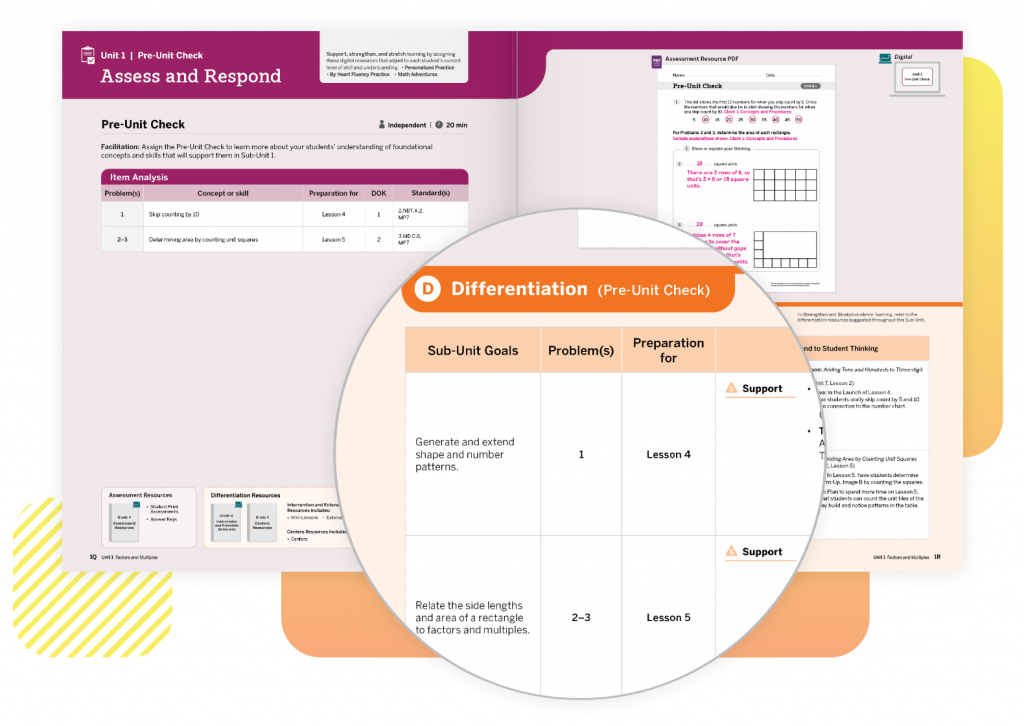
Differentiation when and where it matters most
Teachers are provided with clear student actions to look for, matched with immediately usable suggestions for how to respond to student thinking. Each lesson also includes recommendations for resources to use with students to support, strengthen, and stretch their understanding of the lesson goal.
Connect with a product expert to learn more.
Boost Math
Boost Math® drives tiered intervention and practice for grades K–8, bringing grade-level math within reach of every learner. Students are grouped into learning pathways based on assessment data for key math topics.
Visit Boost Math to learn more.

Personalized Learning
Personalized Learning™ extends each Amplify Desmos Math lesson with short, targeted digital activities designed around the day’s core concepts. Students receive just-in-time support based on their current understanding, helping them build fluency and confidence in the exact skills they’re working on in class.
Intervention Mini-Lessons aligned to core instruction
Amplify Desmos Math Mini-Lessons are aligned to the most critical topics throughout a unit and provide targeted intervention for small groups of students who need additional support or need more time.


Elevate math instruction with Amplify PD.
Amplify Desmos Math offers targeted professional development (PD) sessions designed to enhance teaching strategies, improving student engagement and mastery of mathematical concepts. Gain insights and techniques to maximize instructional effectiveness.
What’s included
The program integrates print and digital resources, along with manipulatives and Centers Kits in grades K–5, to help students build mathematical understanding, reason through mathematical ideas, and express their mathematical thinking. Resources are designed to support the educational rigor of daily core math instruction.

For students
- Print Student Edition (two-volume)
- Digital access to lesson resources and practice
- Interactive Student Activity Screens
- Responsive Feedback™
- Collaboration tools
- Personalized Learning
- Hands-on manipulative kits
- Additional Practice

For teachers
- Print Teacher Edition (two-volume)
- Digital access to planning and instruction resources
- Presentation Screens
- Facilitation and progress monitoring tools
- Assessment and reporting suite, featuring mCLASS Assessments (grades K–8)
- Assessment Resources
- Center Resources (grades K–5)
- Intervention and Extension Resources (grades K–A1)
- Math Language Development Resources
- Additional Practice

Visual and dynamic interactions pique student interest and invite all students to engage in the mathematics.
- Engaging interactions
- Social, collaborative experiences
- Teacher Dashboard
- Teacher Presentation Screens
- Digital facilitation tools
- A powerful conversation toolkit
Amplify Classroom
Amplify Classroom is a free teaching and learning platform that places student engagement at the center of instruction.
Amplify Classroom features free lessons, lesson-building tools, sharing features, and more. Built by math educators, the platform makes leaning into good pedagogy easier for teachers—which makes the lesson a more interactive experience for students.
Create your teacher account at classroom.amplify.com.
Our free lessons can be used alongside any core math program. Click here to view crosswalks to core programs.
Explore more programs.
Our programs are designed to support and complement one another. Learn more about our related programs.


A curiosity-driven K–12 program that builds students’ lifelong math proficiency
Meet Amplify Desmos Math. Our structured, problem-based approach builds on students’ curiosity while strategically developing math fluency and lasting grade-level understanding. Amplify Desmos Math for grades K–8 has been rated all-green by EdReports.
Math that motivates
Picture a classroom where students are so eagerly engaged in a lesson, they wish it wouldn’t end. The room is buzzing with the sounds of natural curiosity. This is what an Amplify Desmos Math classroom looks and sounds like.
Request a demo to see how math can motivate.
A structured approach to problem-based learning
Amplify Desmos Math combines and connects conceptual understanding, procedural fluency, and application. Lessons are designed with the Proficiency Progression™, a model that provides teachers with clear instructional moves to build from students’ prior knowledge to grade-level learning.

A powerful suite of math resources
Amplify Desmos Math fuses problem-based lessons, intervention, personalized practice, and assessments to create a cohesive and engaging experience that maintains academic rigor while meeting the needs of both students and teachers.
Data informs instruction. Comprehensive student profiles provide full data on students’ assets and skills, empowering teachers to provide just-in-time scaffolds throughout core instruction and targeted intervention when needed. Connect with a product expert to see it in action.
Student thinking is valuable and can be made evident.
We believe that math class is a place where teachers can elicit, celebrate, and build on their students’ interesting ideas. Those ideas fuel meaningful classroom conversations and drive the learning process.
Robust assessments that drive learning and inform instruction
A variety of performance data in Amplify Desmos Math provides evidence of student learning, while helping students bolster their skills. With explicit guidance on what to look for and how to respond, teachers can effectively support students as they develop their understanding.
Diagnostic screening and progress monitoring assessments identify what students know and can do.
Integrated mCLASS® Math assessments go beyond accuracy to reveal students’ math thinking through an asset-based approach. This data provides better insights about what students know, what math assets to leverage, and where students need support.
Reporting and insights
Teachers and administrators have visibility into what students know about grade-level math with a variety of data reports. By evaluating not only what students know about grade-level math but also providing insight into how they think, teachers can confidently plan whole-class instruction and targeted intervention.
Access to grade-level math for every student, every day
Amplify Desmos Math provides teachers with lessons, strategies, and resources to eliminate barriers and increase access to grade-level-content without reducing the mathematical demand of tasks—all while supporting students in building strong number sense, fluency, and conceptual understanding.
Differentiation when and where it matters most
Teachers are provided with clear student actions to look for, matched with immediately usable suggestions for how to respond to student thinking. Each lesson also includes recommendations for resources to use with students to support, strengthen, and stretch their understanding of the lesson goal.
Connect with a product expert to learn more.
Boost Math
Boost Math® drives tiered intervention and practice for grades K–8, bringing grade-level math within reach of every learner. Students are grouped into learning pathways based on assessment data for key math topics.
Visit Boost Math to learn more.
Personalized Learning
Personalized Learning™ extends each Amplify Desmos Math lesson with short, targeted digital activities designed around the day’s core concepts. Students receive just-in-time support based on their current understanding, helping them build fluency and confidence in the exact skills they’re working on in class.
Intervention Mini-Lessons aligned to core instruction
Amplify Desmos Math Mini-Lessons are aligned to the most critical topics throughout a unit and provide targeted intervention for small groups of students who need additional support or need more time.
Elevate math instruction with Amplify PD.
Amplify Desmos Math offers targeted professional development (PD) sessions designed to enhance teaching strategies, improving student engagement and mastery of mathematical concepts. Gain insights and techniques to maximize instructional effectiveness.
What’s included
The program integrates print and digital resources, along with manipulatives and Centers Kits in grades K–5, to help students build mathematical understanding, reason through mathematical ideas, and express their mathematical thinking. Resources are designed to support the educational rigor of daily core math instruction.
For students
- Student Edition (two-volume)
- Digital access to lesson resources and practice
- Interactive Student Activity Screens
- Responsive Feedback™
- Collaboration tools
- Personalized Learning
- Hands-on manipulative kits
For teachers
- Teacher Edition (two-volume)
- Digital access to planning and instruction resources
- Presentation Screens
- Facilitation and progress monitoring tools
- Assessment and reporting suite, featuring mCLASS Assessments (grades K–8)
- Assessment Resources
- Center Resources (grades K–5)
- Intervention and Extension Resources (grades K–8)
Visual and dynamic interactions pique student interest and invite all students to engage in the mathematics.
- Engaging interactions
- Social, collaborative experiences
- Teacher Dashboard
- Teacher Presentation Screens
- Digital facilitation tools
- A powerful conversation toolkit
Amplify Classroom
Amplify Classroom is a free teaching and learning platform that places student engagement at the center of instruction.
Amplify Classroom features free lessons, lesson-building tools, sharing features, and more. Built by math educators, the platform makes leaning into good pedagogy easier for teachers—which makes the lesson a more interactive experience for students.
Create your teacher account at classroom.amplify.com.
Our free lessons can be used alongside any core math program. Click here to view crosswalks to core programs.
Explore more programs.
Our programs are designed to support and complement one another. Learn more about our related programs.
Bring the world to students with a proven PreK–5 literacy curriculum
Amplify Core Knowledge Language Arts (CKLA) is the leading early literacy curriculum grounded in the Science of Reading. By combining knowledge-building and research-based foundational skills, our instruction guides educators in developing strong readers, writers, and thinkers.
With a powerful online platform and a parallel Spanish language arts curriculum, Amplify CKLA provides a comprehensive solution for PreK–5 educators and students. Para la versión en español, haga clic aquí.
Background knowledge drives results
The Amplify CKLA PreK–5 literacy curriculum equips students with rich knowledge that intentionally builds to inspire curiosity and drive results. Explore research revealing the power of our knowledge-based curriculum including a study that meets qualifications for ESSA Tier I: Strong Evidence.
Amplify CKLA serves
38,000+
Classrooms
2,700,000+
Students
50
U.S. States and D.C.
Independently and rigorously reviewed
Amplify CKLA is among the few curricula that is both recognized by the Knowledge Matters Campaign—for its excellence in intentionally building knowledge—and rated all-green on EdReports, earning green scores across all gateways.
Our approach
Grounded in the Science of Reading and following the Core Knowledge approach, the Amplify CKLA PreK–5 curriculum combines rich, diverse content knowledge in history, science, literature, and the arts with systematic, research-based foundational skills instruction.
Grounded in the Science of Reading
As the first publisher to build a curriculum based on the Science of Reading, we put research into action with explicit systematic foundational skills instruction alongside a proven knowledge-building sequence. In collaboration with education experts and practitioners, we provide powerful resources that drive real results. Explore our Science of Reading success stories.
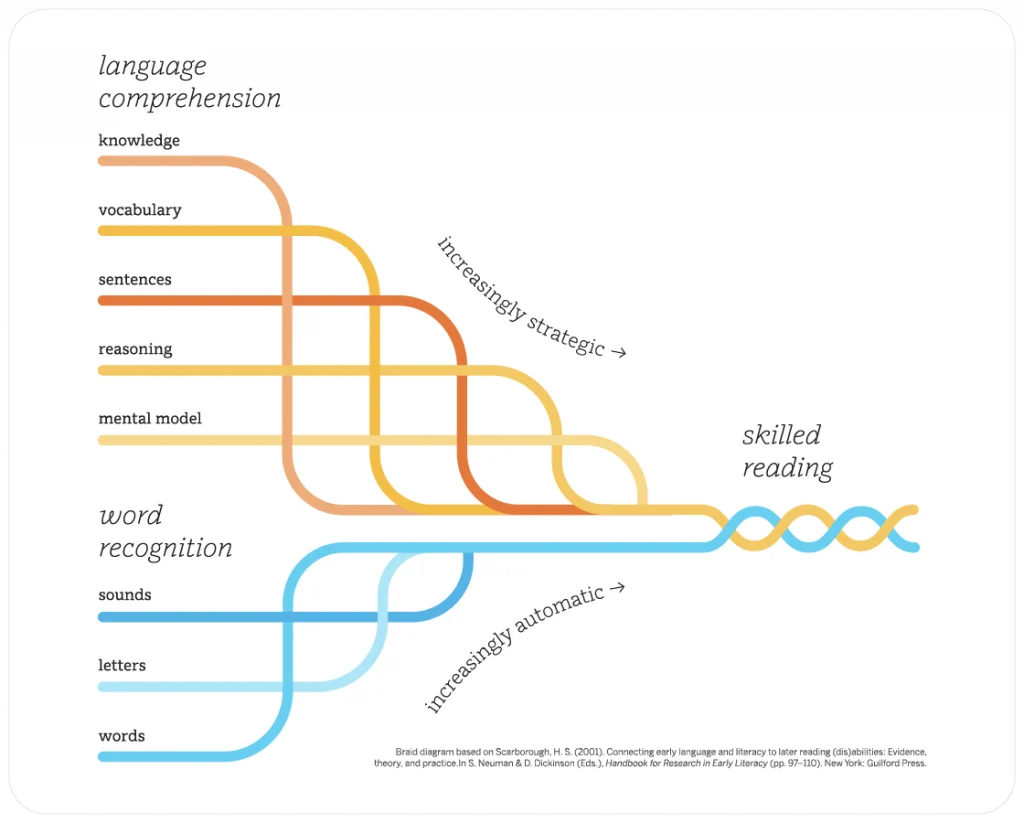

Developing foundational skills with explicit, systematic instruction
Amplify CKLA’s research-based scope and sequence progresses from simple to more complex skill development, starting with phonological and phonemic awareness. Instruction guides you in explicitly teaching the 150 spellings for the 44 sounds of English, with an intentional progression and review of skills to set your students up for success.
Following a proven knowledge-building approach
Following the Core Knowledge Sequence–a content-specific, cumulative, and coherent approach to building knowledge–students dig deeper and make connections across content areas to build a robust knowledge base for comprehending complex texts. See how the Core Knowledge curriculum is proven to improve reading scores and eliminate achievement gaps.


Built in partnership with the Core Knowledge Foundation
Amplify CKLA is the premier high-quality instructional materials offering for elementary language arts, built in partnership with the Core Knowledge Foundation to help students effectively develop deep content knowledge and foundational skills.
Cultivating biliteracy with parallel English and Spanish programs
Amplify Caminos is the perfect Spanish language arts partner to Amplify CKLA. The aligned programs combine rich content knowledge with systematic foundational skills instruction grounded in the Science of Reading that follows biliteracy principles, and supports multiple teaching models.


What’s included
The program provides engaging print and multimedia materials designed to build a robust literacy-rich foundation in every classroom.
CoreELD and Companions
High-quality teacher materials
Amplify CKLA teachers effectively deliver instruction with print and digital resources, including:
- Teacher Guides with embedded differentiation.
- Formal and informal assessments.
- Ready-made and customizable lesson slides.
- Trade books and Novel Guides.
- Teacher resources and on-demand professional development.
Immersive student resources
Amplify CKLA students stay engaged with a variety of print and digital resources, including:
- Original decodables and read-aloud Big Books (K–2), Student Readers (3–5), and trade books (K–5).
- Student Activity Books with embedded assessments (K–5).
- Research units for independent research built around a trade book (K–5).
- Poet’s Journal and Writer’s Journal (write-in student readers for Grades 4–5).
- Quests for the Core to support immersive, problem-based learning in Grades 3–5.
Hands-on phonics materials
Multisensory phonics and foundational skills resources help students practice key skills using fun, varied approaches that build independence.
- Chaining Folder (K)
- Letter Cards (K–2)
- Syllable Cards (K–2)
- Image Cards (K–3)
- Blending Picture Cards (K)
- Consonant and Vowel Code Flip Books (1–2)
- Exclusive digital Sound Library
Robust digital experience
Amplify CKLA teacher and student resources are available through a digital experience platform that enhances instruction and saves you time. With everything you need in one place, you can effectively plan lessons, present content, and review student work.
- Ready-made yet customizable lesson presentation slide decks
- Dynamic live-review student tool
- Interactive and student-friendly experience
- LMS integration
- Knowledge Builder animated videos
- Recorded Read-Alouds
- Professional development website
- Real-time program support via email, live chat, and phone
English Language Learner program
Language Studio, designed for Amplify CKLA, provides WIDA-aligned daily instruction for English Language Learners to deepen their academic English.
Writing explorations program
A unique companion for Amplify CKLA, Writing Studio provides a deep dive into informational, narrative, and opinion writing to build strong, passionate writers.
Explore more programs based on the Science of Reading.
All of the programs in our literacy suite are designed to support and complement each other. Learn more about our related programs:

Welcome, Idaho SMART educators and schools!
In alignment with the Idaho Department of Education’s K–3 Idaho SMART Project, mCLASSⓇ DIBELSⓇ 8th Edition has been selected to support the initiative’s goals. This selection reinforces Idaho’s commitment to ensuring every child reads proficiently by the end of third grade using evidence-based practices grounded in the Science of Reading.
Log in to access your mCLASS program and hundreds of resources at learning.amplify.com.
What’s new?
- Contact Yvonne Rhode at yrohde@amplify.com for dedicated account support.
- New episodes of Amplify’s Science of Reading: The Podcast are now available!
Want advice and answers from the Amplify team?

About mCLASS in Idaho
mCLASS DIBELS 8th Edition will enable the early identification of students requiring additional reading support, providing the data and insights needed to build the strong literacy foundations envisioned in Idaho’s SMART Project through its collaborative work with leadership, district/building coaches, and educators.
mCLASS in Idaho is committed to providing literacy instruction for all by:
- Aligning core curriculum, instruction, and assessments with the Science of Reading.
- Providing appropriate literacy interventions to address the varying needs and challenges of reading development.
- Implementing practices based on the Science of Reading in every classroom, every day.
- Providing aligned resources to parents, guardians, and family members.
mCLASS is built on decades of research from the Center on Teaching and Learning at the University of Oregon, a national center for early childhood assessment and instruction. The measures are already in use in many districts in Idaho. The additional mCLASS suite includes reporting, grouping, lessons, and caregiver support.
Interested in more information? Watch the recording of the Idaho Department of Education’s overview of what is being offered to educators.
Transform your assessment and instructional skills with mCLASS DIBELS 8th Edition training.
Ready to master one of education’s most powerful assessment tools? Join our comprehensive mCLASS DIBELS 8th Edition training sessions and unlock the full potential of data-driven instruction!
You’ll gain:
- Complete mastery of mCLASS essentials, from administration to scoring.
- Confidence in using standardized assessment guidelines.
- Expertise in leveraging powerful mCLASS reports and lessons.
- Proven strategies to accelerate student outcomes through data-driven decisions.
Perfect for: Teachers, reading specialists, interventionists, and administrators who want to maximize student growth through precise assessment and targeted instruction.
Walk away ready to: Immediately implement what you’ve learned and start making a measurable impact on student reading achievement in your classroom or school.
Explore the abundant learning opportunities available for Idaho teachers and leaders below, including session recordings, training resources, and more. Don’t miss this opportunity to elevate your assessment expertise and drive real results for your students!
Interest Survey
Interested in hearing more and determining your school or district’s eligibility? Complete the interest survey below.
What to expect next:
- An email from Amplify will be sent to schedule professional development based on your survey responses
- Idaho SMART Project will verify school eligibility
- Once approved, an Amplify representative will reach out to your technical contact and yourself and provide information on completing the Digital Onboarding
- Schools or districts will then share roster data with Amplify
Register now—limited spots available!
Support your implementation with our half-day virtual mCLASS DIBELS 8th Edition training sessions offered throughout the 2025–26 school year. Various session topics will be offered at strategic times to support teachers at critical times. Sessions will be conducted via Zoom, providing a convenient online format for districts seeking flexible professional development without full-site commitments.
mCLASS DIBELS 8th Edition initial training (3 hrs)
Participants will dive into the essentials of mCLASS DIBELS 8th Edition and leave ready to administer and score the assessment to collect data using standardized guidelines.
Register now!
mCLASS DIBELS 8th Edition: Creating a data-driven culture for teachers (3 hrs)
What’s next? Dive deep into mCLASS DIBELS 8th Edition reports and instructional recommendations to drive stronger student outcomes in your classroom. You will leave ready to leverage mCLASS progress monitoring and grouping tools to support a robust MTSS program.
Sessions coming soon.
mCLASS DIBELS 8th Edition: Administration and reporting training for leaders (3 hrs)
Prepare to implement mCLASS with your school or district. Determine systems-level actions that will ensure assessment fidelity and leave ready to leverage key admin reports to support data-informed decision making.
Sessions coming soon.
mCLASS DIBELS 8th Edition: Creating a data-driven culture for leaders (3 hrs)
Cultivate a school-wide culture of data-driven practices. Use mCLASS reports to drill into key school-level data and leave with a systems-level action plan to drive stronger student and teacher outcomes.
Sessions coming soon.
Looking for additional training? No problem. Reach out to your local Account Executive to explore our flexible training alternatives that work with your district’s unique schedule.
Coming soon!
Training resources

Explore the complete professional development library and the Amplify webinar library.
View the mCLASS DIBELS 8th Edition Benchmark Scoring in action:
- Practice videos and forms
- Video: How to Assign Online Assessments (3:36)
- How To: Use District-Level Student Online Assessment Management
- mCLASS DIBELS 8th Edition assessment materials (for print)
Learn about additional assessment measures (RAN, Spelling, Vocabulary, Oral Language).
Explore more programs.

Amplify’s proven suite of assessment, instruction, and intervention is the gold standard in early literacy. Our programs are designed to enable students to build robust foundational skills and grow at all reading levels. Unlock the full suite and learn more about our related programs today!
Contact us!
Yvonne Rhode
Senior Account Executive
yrohde@amplify.com
Skyler Dario
Account Executive
sdario@amplify.com
Amplify ELA: Florida Edition professional development
Amplify ELA is an engaging and rigorous curriculum designed specifically for grades 6–8. With Amplify ELA, students learn to tackle any complex text and make observations, grapple with interesting ideas, and find relevance for themselves.
We’ve created a wide suite of professional development offerings that will help you meet your unique needs this school year. Find out more below!
Amplify CKLA, ELA, and Science professional development has been vetted by Rivet Education’s team through a rigorous three-step process and is listed in the Professional Learning Partner Guide.
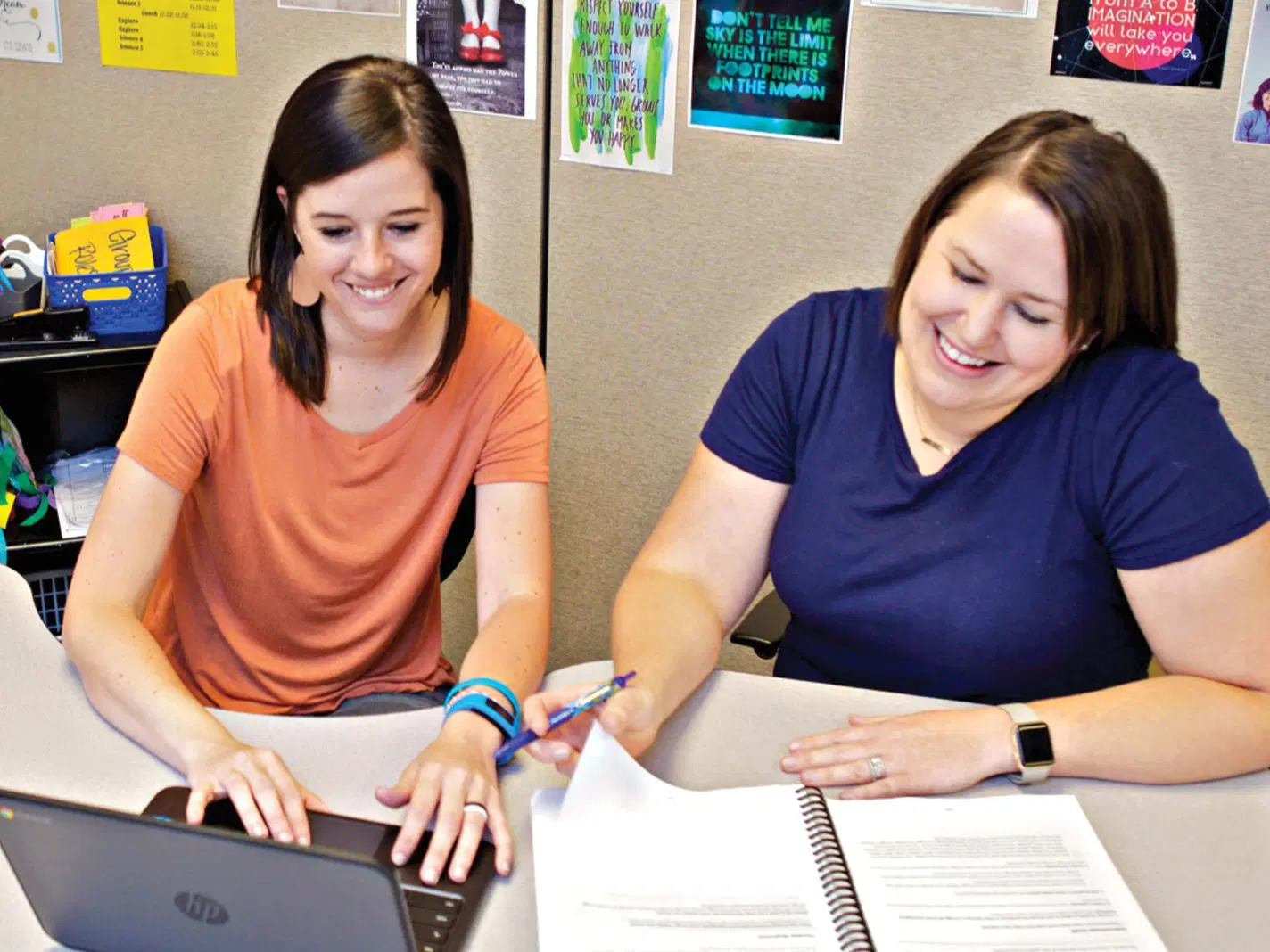
Plan your professional development
We’re excited to partner with you on your Amplify journey. Flexible professional development pathways have been designed to meet your needs.

Recommended professional development plan
Our team has curated a recommended professional learning path from initial launch to continuous support. Use the Professional Development Planning Guide below to discuss the plan that best meets your school or district needs with your Account Executive.
Sessions overview
Recommended sessions are highlighted below
| Title | Duration | Modality | Available |
|---|---|---|---|
| Launch | |||
| Comprehensive initial training for teachers | 2 days consecutive | Onsite | Yes |
| Initial training for teachers | 1 day | Onsite | Yes |
| Initial training for teachers | 2 half days | Remote | Yes |
| Program overview | Half day | Onsite/Remote | Yes |
| Initial training for instructional leaders | Half day | Onsite/Remote | Yes |
| Strengthen | |||
| Enhancing observations for leaders | Half day | Onsite/Remote | 09/01/22 |
| Enhancing planning and practice | Half day | Onsite/Remote | Yes |
| Analytic reading | Half day | Onsite/Remote | Yes |
| Supporting all learners | Half day | Onsite/Remote | Yes |
| Data-informed instruction | Half day | Onsite/Remote | Yes |
| Strengthen consultation session | 1 hour | Remote | Yes |
| Strengthen consultation package | 3 1-hour sessions | Remote | Yes |
| Coach | |||
| Coaching sessions | 2 days consecutive | Onsite | Yes |
| Coaching sessions | 1 day | Onsite/Remote | Yes |
| Half day | Onsite/Remote | Yes | |
Launch
Comprehensive initial training for teachers
2 days consecutive (6 hours per day, 12 hours total)
Prepare to implement and support Amplify ELA instruction in your schools! Learn how Amplify ELA supports students through rigorous and engaging ELA instruction. Participants will navigate the Amplify ELA platform, learn to give feedback on student work, and explore how to use Amplify ELA’s embedded supports and Reporting app to monitor student progress. Participants will engage in multiple opportunities to practice components of Amplify ELA and leave confident to begin teaching.
Audience: Teachers and coaches, maximum 30 participants
Modality: Onsite/Remote
Initial training for teachers
1 day (6 hours)
Prepare to implement and support Amplify ELA instruction in your schools! Learn how Amplify ELA supports students through rigorous and engaging ELA instruction. Participants will navigate the Amplify ELA platform, learn to give feedback on student work, and explore how to use Amplify ELA’s embedded supports and Reporting app to monitor student progress. Participants will leave with an action plan to begin teaching Amplify ELA.
Audience: Teachers and coaches, maximum 30 participants
Modality: Onsite
Initial training for teachers
Two half days (3 hours per day, 6 hours total)
This full-day initial training session (6 hours) is split into two half-day sessions (3 hours each). Part 1 and Part 2 may be scheduled consecutively on the same day or on different days, ideally within ~2 weeks. The same participants should attend both sessions in order to receive all content about key components of Amplify ELA, which includes learning how to navigate, teach, and monitor student progress.
Audience: Teachers and coaches, maximum 30 participants
Modality: Remote
Program essentials
Half day (3 hours)
Learn the program essentials including how to navigate the digital curriculum, print materials components and how to locate assessments, data reports and other features associated with the curriculum.
Audience: Teachers and coaches, maximum 30 participants.
Modality: Onsite/Remote
Initial training for instructional leaders
Half day (3 hours)
This training will provide district- and school-level instructional leaders with an overview of Amplify ELA so that they can support their staff in implementing Amplify. Learn basic navigation and gain an understanding of Amplify ELA’s approach to reading, writing, and language instruction. Participants will then have the opportunity to choose how to best support teachers by either developing a school-wide implementation plan or learning strategies for effective classroom observations.
Audience: Ideal for instructional leaders, principals, and district staff who oversee the implementation of the new curriculum, maximum 30 participants
Modality: Onsite/Remote
Strengthen
Enhancing observations for leaders
Half day (3 hours)
Elevate your program knowledge to support colleagues with effective ELA implementation! Practice analyzing ELA lessons and identify key instructional elements and next steps. Participants will be prepared to analyze data and enhance classroom observations.
Prerequisite training: Initial training for leaders
Audience: Ideal for instructional leaders, principals, and district staff who oversee the implementation of the new curriculum, maximum 30 participants
Modality: Onsite/Remote
Enhancing planning and practice
Half day (3 hours)
Dig into one unit to unpack standards, assessments, and student engagement. Through backward planning, this session guides teachers to think deeply about learning outcomes and key moments of formative assessments. Teachers will leave this session with a detailed plan of a unit of their choice that includes learning outcomes, key assessment moments, and aligned instructional strategies.
Audience: Ideal for new or experienced Amplify ELA teachers or coaches, maximum 30 participants
Modality: Onsite/Remote
Analytic reading
Half day (3 hours)
Participants will learn how close reading functions in Amplify ELA and which teacher moves support students as they tackle complex texts. Participants will learn how to facilitate a close reading session to support key reading routines, as well as promote academic discourse and the type of collaboration that drives analysis and deepens understanding.
Audience: Ideal for new or experienced Amplify ELA teachers, maximum 30 participants
Modality: Onsite/Remote
Supporting all learners
Half day (3 hours)
Participants will learn how to effectively use embedded and differentiated supports and the Classwork app to support all students, including English language learners (ELLs), students with learning disabilities, struggling readers and writers, and advanced students.
Audience: Ideal for new teachers or instructional leaders who want to learn more about included supports in Amplify ELA, maximum 30 participants
Modality: Onsite/Remote
Data-informed instruction
Half day (3 hours)
Participants will review their own student data using the Reporting and Classwork apps and align embedded supports to specific student needs. The goal of this session is to become proficient in turning Amplify ELA data into differentiated and targeted instruction.
Note: This course can be combined with the supporting all learners session to make a full day of training.
Prerequisite: 4–6 weeks of student data in Amplify’s Reporting app. It is recommended that teachers are in at least Unit B.
Audience: Ideal for teachers or support staff who want to learn how to use student data to inform instruction and provide differentiation, maximum 30 participants
Modality: Onsite/Remote
Strengthening consultation session
1 hour
This 60-minute session will focus on a specific topic that will deepen educators’ understanding of ELA and equip them with the tools needed to drive stronger student outcomes. An Amplify facilitator will align with the school or district leadership team in advance of the session on the topic (chosen from a menu of options) that will best meet educators’ unique needs. The menu includes sessions on engagement, pacing, and grading/assessment.
Audience: Teachers and coaches, maximum 30 participants
Modality: Remote
Strengthening consultation package
3 1-hour sessions
This package consists of three 60-minute sessions that can be delivered on the same day or on different days. Each session will focus on a specific topic that will deepen educators’ understanding in ELA and equip them with the tools needed to drive stronger student outcomes. An Amplify facilitator will align with the school or district leadership team in advance of the session on the topic (chosen from a menu of options) that will best meet educators’ unique needs. The menu includes sessions on: engagement, pacing and grading/assessment.
Audience: Teachers and coaches, maximum 30 participants
Modality: Remote
Coach
Coaching session
2 days consecutive (6 hours per day, 12 total)
Strengthen your implementation of Amplify ELA with an onsite Coaching visit for your teachers and/or leaders. Participants can choose from a variety of topics that include, but are not limited to: lesson modeling and debrief (conducted by an Amplify ELA coach), grade-level planning, classroom observations, and leadership consultation. The flexible onsite coaching design allows for a collaborative approach to support effective program implementation.
Audience: Teachers, coaches, and/or instructional leaders, maximum 30 participants
Modality: Onsite/Remote
Coaching session
1 day (6 hours)
Strengthen your implementation of Amplify ELA with an onsite Coaching visit for your teachers and/or leaders. Participants can choose from a variety of topics that include, but are not limited to: lesson modeling and debrief (conducted by an Amplify ELA coach), grade-level planning, classroom observations, and leadership consultation. The flexible onsite coaching design allows for a collaborative approach to support effective program implementation.
Audience: Teachers, coaches, and/or instructional leaders, maximum 30 participants
Modality: Onsite/Remote
Coaching session
Half day (3 hours)
Strengthen your implementation of Amplify ELA with a Coaching session for your teachers and/or leaders. Participants can choose from a variety of topics that include, but are not limited to: lesson modeling and debrief (conducted by an Amplify ELA coach), grade-level planning, classroom observations, and leadership consultation. The flexible coaching design allows for a collaborative approach to support effective program implementation.
Audience: Teachers, coaches, and/or instructional leaders, maximum 30 participants
Modality: Onsite/Remote
Pricing
We offer the following pricing for training sessions and packages:
| Session type | Pricing |
|---|---|
| 2-day onsite session | $4,800 |
| 1-day onsite session | $3,200 |
| 1-day remote session (2 half days remote) | $1,500 |
| Half-day onsite session | $2,500 |
| Half-day remote session | $750 |
| 1-hour remote session | $350 |
| 3 1-hour remote sessions | $1,000 |
Please note that the prices are general ranges and may be subject to change.
Contact
Amplify welcomes the opportunity to partner with schools and districts to design professional development plans and answer your questions.
If you would like to order any of our professional development services, please contact your local Amplify sales representative or call (800) 823-1969.
Making reading comprehension connections

Comprehension isn’t just a process, or just a product—it’s both. And connecting reading and understanding is what most teachers are working on every day.
That fundamental connection was the focus of our recent Science of Reading Webinar Week: Comprehension Connections—Building the Bridge Between Reading and Understanding, a five-day, expert-filled series that unpacked what really drives comprehension, from early decoding to middle school mastery.
Here’s a quick look at what you’ll learn when you watch—and a few ideas you can use right away.
Day 1: What Is Reading Comprehension, Anyway?
Speaker: Susan Lambert, Ed.D., Chief Academic Officer, Literacy, Amplify; Host of Science of Reading: The Podcast
“Reading comprehension is more than just language comprehension. It’s language comprehension on the page, which makes it much more complex.” — Susan Lambert, Ed.D.
If you ask ten teachers to define comprehension, you might get twelve answers. Lambert opened the week by grounding everyone in the Science of Reading, including the Simple View of Reading and the Reading Rope. Skilled reading, she reminded viewers, is the result of multiple strands—decoding, language comprehension, and knowledge—woven together over time.
The takeaway? The most effective approaches don’t teach comprehension strategies—such as “find the main idea”—in isolation. Rather, they connect word recognition to meaning through rich texts, conversation, and writing. Whether you’re teaching second-grade reading comprehension or sixth-grade reading comprehension, students need the same thing: a clear path from sounding out words to making sense of ideas.
Day 2: Comprehension and Knowledge Building: A Two-Way Street
Speakers: Sonia Cabell, Ph.D., Sigmon Endowed Professor of Reading Education, Florida State University
HyeJin Hwang, Ph.D., Assistant Professor, Department of Educational Psychology, University of Minnesota Twin Cities
“Better background knowledge leads to improved reading comprehension, which in turn enables readers to learn more from text, thereby building additional knowledge.” —HyeJin Hwang, Ph.D.
In their session, Sonia Cabell and HyeJin Hwang explored one of the clearest findings in reading research: Comprehension and knowledge develop together. Cabell began by explaining how comprehension (including oral language, background knowledge, vocabulary, syntax, and verbal reasoning) forms one of the essential strands of the Reading Rope.
Students can’t activate knowledge they don’t yet have. Teachers need to help them build it early, and intentionally. Cabell’s research found that integrating literacy and content instruction produced gains in vocabulary and content knowledge.
Likewise, Hwang’s two large-scale longitudinal studies showed that better knowledge instruction leads to better reading, which leads to even more knowledge. These findings held true across languages and grade levels, underscoring the universal value of content-rich instruction.
Classroom takeaways:
- Plan literacy units around connected science or social studies topics to build coherent knowledge.
- Use content-rich interactive read-alouds with discussion before, during, and after reading.
- Ask inferential comprehension questions (“Why?” “How?”) that require students to connect ideas using their own words.
- Encourage quick writing or drawing tasks that help students show what they’ve learned.
Day 3: Where and How to Measure Comprehension to Drive Improvement
Speakers: Danielle Damico, Ph.D., Executive Director of Learning Science, Amplify
Gina Biancarosa, Ed.D., Ann Swindells Chair in Education, University of Oregon
“Reading comprehension is both a process and a product.” —Danielle Damico, Ph.D.
Too often, comprehension is measured only as a finished product—how well students answer questions after reading—without revealing how they built understanding along the way. This session explored what comprehension actually involves: reading words accurately, understanding their meaning, applying background knowledge, and making inferences. As researcher Sharon Vaughn, Ph.D., has described, these interconnected skills all work together as students learn to read.
Biancarosa showed how looking at comprehension as a complex process helps teachers see student thinking in action. She described the major types of inferences—lexical, bridging, gap-filling, and causal—and the importance of understanding how students connect ideas and construct meaning.
Try this:
- Treat comprehension as ongoing thinking, not a one-time test score.
- Use brief think-alouds or class discussions to get a look at how students connect ideas.
- Match assessments to the precise question you’re trying to answer.
- Let assessment guide instruction—data should lead directly to next steps.
Day 4: Comprehension in Middle School: More Important Than Ever
Speaker: Deb Sabin, Chief Academic Officer, Amplify ELA
“Writing done right encodes knowledge. And discourse done right gets into the realm of higher-order thinking.” —Deb Sabin
By the time you’re teaching fourth-grade reading comprehension through sixth-grade reading comprehension, decoding should be automatic. At this stage, the upper strands of the Reading Rope—vocabulary, background knowledge, and syntax—move to the forefront. In this session, Deb Sabin highlighted how comprehension in middle school relies on academic knowledge, disciplinary vocabulary, and structured discourse—and how it truly blossoms when reading, writing, and speaking reinforce one another.
Classroom moves that help:
- Pair writing with reading: Even short, text-based responses consolidate knowledge in long-term memory.
- Use structured discussion (“accountable talk”), where students cite text evidence and build on one another’s ideas.
- Center rich, grade-level texts that challenge thinking and vocabulary.
Day 5: Finding the Missing Link in Reading Comprehension to Boost Literacy Success
Speaker: Julie A. Van Dyke, Ph.D., Clinical Assistant Professor, Yale University Child Study Center; Research Scientist, Yale-UConn Haskins Global Literacy Hub
“Teach phonics for decoding. Teach syntax for understanding.” —Julie A. Van Dyke, Ph.D.
In the final presentation of the series, Julie Van Dyke explored an often-overlooked element of comprehension: syntax—the way words combine to create meaning. Van Dyke argued that syntax is to comprehension what phonics is to decoding.
She illustrated how the Science of Reading and the Reading Rope locate syntax within the language-comprehension strands—critical to understanding who did what to whom in complex sentences. Explicitly teaching sentence structure helps all learners, including multilingual/English learners, access higher-level meaning.
Simple practices can make a difference:
- Have students paraphrase tricky sentences. (Starter question: “Who’s doing the action?”)
- Pull strong sentences from your class texts to show how structure shapes meaning.
- Encourage students to mirror those structures in their own writing.
What linked all five sessions together? The understanding that comprehension develops when teachers connect the code, the language, and the knowledge. Whether students are decoding in second grade or crafting essays in sixth, they thrive when we help them move from reading to understanding—step by step, strand by strand.
Watch all five on-demand recordings.
More to explore:
- Download your Comprehension 101 bundle.
- Read (and comprehend!): Reading comprehension strategies grounded in science
- Listen to this special Essentials episode of Science of Reading: The Podcast, where Susan Lambert and other experts distill key reading comprehension insights.
How differentiation drives success

I’d like to share a favorite success story from my ELA class that brings home the true power of differentiation.
There was one boy—let’s call him Dipper. (It’s not his real name; I just really like the show “Gravity Falls.”) Dipper was the sweetest, kindest, most wholesome eighth grader I have ever met. He was absolutely precious.
Dipper also suffered from fairly severe academic struggles. He was well below his middle school reading level, struggled to express ideas in writing, and took longer than other students to break down basic concepts. When Dipper first came to me, he couldn’t start or complete a written sentence. He was easily frustrated and often overwhelmed to the point of tears.
Spoiler: By the end of the school year, Dipper was writing multiple paragraphs and starting to connect them with transition sentences.
Here’s how he got that much closer to grade level.
Using sentence starters and scaffolds to build success
My school district had recently adopted Amplify ELA (6–8). At the outset, I placed Dipper at the differentiation level with the most support. When we talked about how a character reacted to a moment in the story, Dipper had corresponding smiley, frowny, and disgusted faces to identify feelings. He had his own lesson plan with example quotes, shortened readings, alternative questions to spark thinking, and sentence starters to help him focus on comprehension instead of getting stuck at the start.
All of these supports helped him comprehend, share his responses, and contribute to discussions.
So far, so good.
But putting those thoughts to paper—or text box—was a completely different hurdle.
Facing academic struggles with patience and persistence
I can’t talk about Dipper without talking about his one-to-one aide. Let’s call her Ms. Mabel. (Again, “Gravity Falls.” I’m telling you, check it out.)
Ms. Mabel had sat beside Dipper during every ELA class since sixth grade. She helped him stay focused and generate ideas, and she even transcribed his answers when needed. Ms. Mabel’s devotion to Dipper’s success was profound and inspirational.
And it made all the difference when it came to Writing Prompts. At first, the prompts were met with tears and tantrums, panic and disdain, all the joyful wholesomeness ripped from Dipper.
Ms. Mabel would console him and redirect his passions to the work. She would point out the sentence starters, help him copy and paste them to the text box, and have him fill in the blanks. Again and again.
And then, little by little: Less panic. Fewer tears. Sentence starters, fill in the blank. Progress.
Sentence starters, fill in the blank. Success.
Day by day, Dipper, stacking wins like pancakes at an all-you-can-eat breakfast buffet, found confidence in himself, his reading, and his writing. He went from barely being able to complete a sentence to writing multiple paragraphs with evidence to support his ideas.
We had seen Dipper grow from a tiny sixth grader into a less tiny eighth grader and had watched his initial tenacity meet with stagnation, frustration, and defeat—until this year. This year with Amplify was different.
Why it takes more than just an awesome teacher
Obviously, you can’t pin success on one factor. Dipper had many supports in place: two blocks in the resource room, a dedicated aide, supportive peers and family, and—above all—a fierce drive and work ethic.
But if you asked Ms. Mabel, she would tell you that Amplify helped, too. She found that the way the questions were broken down allowed her to teach Dipper what he misunderstood better than she had been able to in previous years. We discovered very quickly how much autonomy was built in. It wasn’t rigid. It gave us structure and trust. It made differentiation easier, clearer, and more meaningful.
Sure, maybe Dipper was also maturing. Maybe I’m just an awesome teacher. Or maybe, just maybe, we need every little bit of help we can get to do the hard work in life. Maybe we need someone to push us in the right direction. Maybe we need those guardrails to keep us on course. Some of us can start our own engines, but we all need to be able to race.
Sometimes, we need someone who can help us start our sentences so we can learn how to be the ones to finish them.
More to explore
- Let’s keep the conversation going! Join the discussion in our Amplify learning communities.
- Looking for inspiration? Watch Teacher Connections, a video series featuring practical advice and tools straight from fellow educators—our very own Amplify Ambassadors.
- Dive into our podcast hub to hear from top thought leaders and educators and uncover cross-disciplinary insights to support your instruction.
Core literacy programs: Strengthen sessions
Professional development sets teachers and leaders up for success, whether they are new to or experienced with a program. Each Strengthen session promotes a deeper understanding of the program through targeted instructional practices.
Explore literacy Strengthen sessions by program below.
Amplify professional development has been vetted by Rivet Education’s team through a rigorous three-step process and is listed in the Professional Learning Partner Guide.

About Strengthen sessions
Support your Amplify implementation with sessions that target specific instructional practices for teachers and leaders who are in year one and beyond. When you’re ready to schedule your Strengthen session, contact us. An Amplify expert will work with you to identify the session(s) that will best support your students’ success.
Each package includes one Strengthen session. Additional sessions can be added as enhancements.
Amplify CKLA and Amplify Caminos
Built on the Science of Reading, Amplify Core Knowledge Language Arts (CKLA) 2nd Edition (PreK–5) and 3rd Edition (K–5) combine deep content instruction with research-based foundational skills, empowering all students with rich background knowledge.
Amplify Caminos 1st Edition serves as the Spanish language arts partner to Amplify CKLA 2nd Edition (K–5), while Amplify Caminos 3rd Edition is partnered with Amplify CKLA 3rd Edition. These aligned programs support our biliteracy principles and teaching models.
Explore Amplify CKLA and Amplify Caminos Strengthen sessions by package below.
Begin packages
| On-site package (15 hr.) |
Hybrid on-site package (15 hr.) | Hybrid 10 package (10 hr.) |
Hybrid virtual package (15 hr.) |
Virtual package (7 hr.) |
|
| One Strengthen session per package | On-site, 3 hr. sessions | On-site, 3 hr. sessions | Virtual, 1 hr. session | Virtual, 3 hr. sessions | Virtual, 1 hr. session |
| Enhancing planning for teachers |
|
|
|
||
| Enhancing practice for teachers |
|
|
|
||
| Enhancing observations for leaders |
|
|
|
||
| Language Studio Companion training for K–2 or 3–5 teachers | |
|
|
||
| Supporting all learners for teachers |
|
|
|||
| Pacing for teachers |
|
|
|||
| Student engagement for teachers |
|
|
|||
| Amplify CKLA 2nd–3rd Edition transition training for teachers | |
|
Begin: Enhancing planning for teachers
On-site or virtual, 3 hours
Deepen your understanding of your next unit by engaging in a step-by-step unit- and lesson-planning protocol. Leave prepared to implement your next unit with a completed unit plan and internalized lessons for your particular biliteracy model.
Session options: Amplify CKLA (2nd Edition or 3rd Edition), Amplify Caminos (1st or 3rd Edition), Amplify CKLA 2nd Edition/Caminos 1st Edition biliteracy, or Amplify CKLA 3rd Edition/Caminos 3rd Edition biliteracy
Audience: PreK (Amplify CKLA), K–2, or 3–5 teachers, instructional staff (maximum 30 participants)
Language: The Amplify CKLA session is facilitated in English. The Amplify Caminos session is facilitated in Spanish. Amplify CKLA/Caminos biliteracy session is facilitated in English and Spanish.
Begin: Enhancing practice for teachers
On-site or virtual, 3 hours
Practice implementing key lesson routines to strengthen your instruction. Leave with guidelines for routines you can implement in your biliteracy classroom tomorrow.
Session options: Amplify CKLA (2nd Edition or 3rd Edition), Amplify Caminos (1st or 3rd Edition), Amplify CKLA 2nd Edition/Caminos 1st Edition biliteracy, or Amplify CKLA 3rd Edition/Caminos 3rd Edition biliteracy
Audience: K–2 or 3–5 teachers, instructional staff (maximum 30 participants)
Language: The Amplify CKLA session is facilitated in English. The Amplify Caminos session is facilitated in Spanish. Amplify CKLA/Caminos biliteracy session is facilitated in English and Spanish.
Begin: Enhancing observations for leaders
On-site or virtual, 3 hours
Sharpen your program knowledge to support educators with effective program implementation. Observe a lesson in action and practice providing high-leverage feedback. Walk away prepared to provide educators with actionable feedback during your next classroom observation.
Session options: Amplify CKLA (2nd Edition), Amplify Caminos (1st or 3rd Edition), Amplify CKLA (2nd Edition), Amplify Caminos (1st or 3rd Edition), Amplify CKLA 2nd Edition/Caminos 1st Edition biliteracy, or Amplify CKLA 3rd Edition/Caminos 3rd Edition biliteracy
Prerequisite: Participants must complete the program overview for leaders before attending this session.
Audience: Leaders (maximum 30 participants)
Language: This session is facilitated in English.
Begin: Language Studio companion training for teachers
On-site and virtual, 3 hours
Participants will be able to summarize the key features of Language Studio. During this session, they will connect key segments of Language Studio to ELD instructional best practices, identify the segments of Language Studio, and plan and practice a Language Studio lesson.
Session options: Amplify CKLA 2nd or 3rd Edition (Grade K–2 or 3–5)
Audience: Teachers, instructional staff (maximum 30 participants)
Begin: Strengthen Focus: Supporting all learners for teachers
Virtual, 1 hour
Dig into embedded supports offered in the Amplify curriculum and prepare to support all learners in your next lesson.
Session options: Amplify CKLA (2nd or 3rd Edition), Amplify Caminos (1st or 3rd Edition), Amplify CKLA 2nd Edition/Caminos 1st Edition biliteracy, or Amplify CKLA 3rd Edition/Caminos 3rd Edition biliteracy
Audience: K–2 and/or 3–5 teachers, instructional staff (maximum 30 participants)
Language: The Amplify CKLA session is facilitated in English. The Amplify Caminos session is facilitated in Spanish. Amplify CKLA/Caminos biliteracy session is facilitated in English and Spanish.
Begin: Strengthen Focus: Pacing for teachers
Virtual, 1 hour
Learn five specific strategies to support pacing in your next lesson.
Session options: Amplify CKLA (2nd or 3rd Edition), Amplify Caminos (1st or 3rd Edition), Amplify CKLA 2nd Edition/Caminos 1st Edition biliteracy, or Amplify CKLA 3rd Edition/Caminos 3rd Edition biliteracy
Audience: K–2 and/or 3–5 teachers, instructional staff (maximum 30 participants)
Language: The Amplify CKLA session is facilitated in English. The Amplify Caminos session is facilitated in Spanish. Amplify CKLA/Caminos biliteracy session is facilitated in English and Spanish.
Begin: Strengthen Focus: Student engagement for teachers
Virtual, 1 hour
Explore engagement strategies that cultivate a student-centered classroom. Leave with a plan to incorporate these strategies in an upcoming lesson.
Session options: Amplify CKLA (2nd or 3rd Edition), Amplify Caminos (1st or 3rd Edition), Amplify CKLA 2nd Edition/Caminos 1st Edition biliteracy, or Amplify CKLA 3rd Edition/Caminos 3rd Edition biliteracy
Audience: K–2 and/or 3–5 teachers, instructional staff (maximum 30 participants)
Language: The Amplify CKLA session is facilitated in English. The Amplify Caminos session is facilitated in Spanish. Amplify CKLA/Caminos biliteracy session is facilitated in English and Spanish.
Begin: Strengthen Focus: Amplify CKLA 2nd–3rd Edition transition training for teachers
Virtual, 1 hour
Participants will get an overview of the similarities and differences between Amplify CKLA 2nd and 3rd Edition, including becoming familiar with changes in materials; the digital platform; and key lesson, assessment, and reporting components.
Session options: Amplify CKLA 2nd Edition (Grades 3–5)
Audience: Teachers, instructional staff (maximum 30 participants)
Practice packages
Strengthen sessions
| On-site package (15 hr.) |
Hybrid 15 package (15 hr.) |
Hybrid 13 package (13 hr.) |
Virtual package (9 hr.) |
|
| One Strengthen session per package | On-site, 3 hr. session |
Virtual, 3 hr. session |
Virtual, 1 hr. session | Virtual, 3 hr. session |
| Enhancing planning for teachers |
|
|
|
|
| Enhancing practice for teachers | |
|
|
|
| Enhancing observations for leaders | |
|
|
|
| Maximizing impact: Data-informed remediation with the ARG/DERG for teachers |
|
|
|
|
| Writing for teachers |
|
|
|
|
| NEW: mCLASS DIBELS 8 + CKLA 3rd Edition data-driven instruction for K–5 teachers | |
|
|
|
| Supporting all learners for teachers |
|
|||
| Pacing for teachers |
|
|||
| Student engagement for teachers | |
|||
| NEW: Amplify Caminos 1st–3rd Ed. transition training for teachers | |
|||
| NEW: Amplify CKLA 2nd Ed./Caminos 1st Ed. to Amplify CKLA 3rd Ed./Caminos 3rd Ed. transition training for teachers | |
Practice: Enhancing planning for teachers
On-site or virtual, 3 hours
Deepen your understanding of your next unit by engaging in a step-by-step unit- and lesson-planning protocol. Leave prepared to implement your next unit with a completed unit plan and internalized lessons for your particular biliteracy model.
Session options: Amplify CKLA (2nd Edition or 3rd Edition), Amplify Caminos (1st or 3rd Edition), Amplify CKLA 2nd Edition/Caminos 1st Edition biliteracy, or Amplify CKLA 3rd Edition/Caminos 3rd Edition biliteracy
Audience: PreK (Amplify CKLA), K–2 or 3–5 teachers, instructional staff (maximum 30 participants)
Language: The Amplify CKLA session is facilitated in English. The Amplify Caminos session is facilitated in Spanish. The Amplify CKLA/Caminos biliteracy session is facilitated in English and Spanish.
Practice: Enhancing practice for teachers
On-site or virtual, 3 hours
Practice implementing key lesson routines to strengthen your instruction. Leave with guidelines for routines you can implement in your biliteracy classroom tomorrow.
Session options: Amplify CKLA (2nd Edition or 3rd Edition), Amplify Caminos (1st or 3rd Edition), Amplify CKLA 2nd Edition/Caminos 1st Edition biliteracy, or Amplify CKLA 3rd Edition/Caminos 3rd Edition biliteracy
Audience: K–2 or 3–5 teachers, instructional staff (maximum 30 participants)
Language: The Amplify CKLA session is facilitated in English. The Amplify Caminos session is facilitated in Spanish. The Amplify CKLA/Caminos biliteracy session is facilitated in English and Spanish.
Practice: Enhancing observations for leaders
On-site or virtual, 3 hours
Sharpen your program knowledge to support educators with effective program implementation. Observe a lesson in action and practice providing high-leverage feedback. Walk away prepared to provide educators with actionable feedback during your next classroom observation.
Session options: Amplify CKLA (2nd Edition), Amplify Caminos (1st or 3rd Edition), Amplify CKLA 2nd Edition/Caminos 1st Edition biliteracy, or Amplify CKLA 3rd Edition/Caminos 3rd Edition biliteracy
Prerequisite: Participants must complete the program overview for leaders before attending this session.
Audience: Leaders (maximum 30 participants)
Language: This session is facilitated in English.
Practice: Maximizing impact: Data-informed remediation with the ARG/DERG for teachers
On-site or virtual, 3 hours
Walk away with a deeper understanding of the Assessment and Remediation Guide (K–3) and Decoding and Encoding Remediation Supplement (4–5), as well as a clear instructional plan for your intervention groups. Please note that for Grades K–2, this would only apply if you are using both strands or the Skills Strand only.
Session options: Amplify CKLA 2nd Edition (Amplify CKLA 3rd Edition is available July 2026.)
Audience: K–2 or 3–5 teachers, instructional staff (maximum 30 participants)
Language: This session is facilitated in English.
Practice: Writing for teachers
On-site or virtual, 3 hours
Deepen your understanding of how to support students as they build writing skills. Leave this session prepared to teach an upcoming writing lesson based on your student work analysis. Bring samples of your students’ writing responses from your Amplify programs to this session.
Session options: Amplify CKLA (2nd or 3rd Edition), Amplify Caminos 1st Edition, or Amplify CKLA 2nd Edition/Caminos 1st Edition biliteracy
Audience: PreK, K–2, or 3–5 teachers, instructional staff (maximum 30 participants)
Language: The Amplify CKLA session is facilitated in English. The Amplify Caminos session is facilitated in Spanish. The Amplify CKLA/Caminos biliteracy session is facilitated in English and Spanish.
Available October 2026
Practice: mCLASS DIBELS 8th Edition + Amplify CKLA 3rd Edition data-driven instruction for K–5 teachers
On-site or virtual, 3 hours
Dive deep into mCLASS DIBELS 8th Edition reports and instructional recommendations to drive instructional decisions in Amplify CKLA and stronger student outcomes in your classroom. You will leave ready to leverage mCLASS progress monitoring and grouping tools to support a robust Multi-Tiered System of Supports program, with Amplify CKLA as your core instruction.
Session options: Only for educators using both Amplify CKLA (2nd or 3rd Edition) with mCLASS DIBELS 8th Edition
Audience: PreK–2 or 3–5 teachers, instructional staff (maximum 30 participants)
Language: This session is facilitated in English.
Practice: Strengthen Focus: Supporting all learners for teachers
Virtual, 1 hour
Dig into the many embedded supports offered in the curriculum and prepare for specific ways to bolster all learners in your next lesson.
Session options: Amplify CKLA (2nd Edition or 3rd Edition), Amplify Caminos 1st Edition, or Amplify CKLA 2nd Edition/Caminos 1st Edition biliteracy
Audience: K–2 and/or 3–5 teachers, instructional staff (maximum 30 participants)
Language: The Amplify CKLA session is facilitated in English. The Amplify Caminos session is facilitated in Spanish. The Amplify CKLA/Caminos biliteracy session is facilitated in English and Spanish.
Practice: Strengthen Focus: Pacing for teachers
Virtual, 1 hour
Learn five specific strategies to support pacing in your next lesson.
Session options: Amplify CKLA (2nd Edition or 3rd Edition), Amplify Caminos 1st Edition, or Amplify CKLA 2nd Edition/Caminos 1st Edition biliteracy
Audience: K–2 and/or 3–5 teachers, instructional staff (maximum 30 participants)
Language: The Amplify CKLA session is facilitated in English. The Amplify Caminos session is facilitated in Spanish. The Amplify CKLA/Caminos biliteracy session is facilitated in English and Spanish.
Practice: Strengthen Focus: Student engagement
Virtual, 1 hour
Explore engagement strategies that cultivate a student-centered classroom. Leave with a plan to incorporate these strategies in an upcoming lesson.
Session options: Amplify CKLA (2nd Edition or 3rd Edition), Amplify Caminos 1st Edition, or Amplify CKLA 2nd Edition/Caminos 1st Edition biliteracy
Audience: K–2 and/or 3–5 teachers, instructional staff (maximum 30 participants)
Language: The Amplify CKLA session is facilitated in English. The Amplify Caminos session is facilitated in Spanish. The Amplify CKLA/Caminos biliteracy session is facilitated in English and Spanish.
Available July 2026
Suggested enhancement: Launch substitution: Amplify Caminos 1st–3rd Edition transition training for teachers
Virtual, 1 hour
Participants will get an overview of the similarities and differences between Amplify Caminos 1st and 3rd Editions, including becoming familiar with changes in materials; the digital platform; and key lesson, assessment, and reporting components.
Session options: Amplify Caminos 1st Edition (Grades K–2 or 3–5)
Audience: Teachers, instructional staff (maximum 30 participants)
Available July 2026
Suggested enhancement: Launch substitution: Amplify CKLA 2nd Edition/Caminos 1st Edition to Amplify CKLA 3rd Edition/Caminos 3rd Edition transition training for teachers
Virtual, 1 hour
Participants will get an overview of the similarities and differences between Amplify Caminos 1st and 3rd Editions, including becoming familiar with changes in materials; the digital platform; and key lesson, assessment, and reporting components.
Session options: Amplify CKLA 2nd Edition/Amplify Caminos 1st Edition (Grades K–2 or 3–5)
Audience: Teachers, instructional staff (maximum 30 participants)
Amplify ELA
Amplify ELA 2nd Edition is a blended English language arts curriculum designed specifically to support students in grades 6–8 and prepare them for high school and beyond. With Amplify ELA, students learn to tackle any complex text and make observations, grapple with interesting ideas, and find relevance for themselves. The table below lists Amplify ELA 2nd Edition Strengthen sessions for Begin and beyond by package.
Click the session title or scroll down to learn more about each session.
Begin packages
Strengthen sessions
| On-site package (15 hr.) |
Hybrid 15, on-site package (15 hr.) |
Hybrid 10 package (10 hr.) |
Hybrid 15, virtual package (15 hr.) |
Virtual package (7 hr.) |
|
| One Strengthen session per package | On-site, 3 hr. session |
On-site, 3 hr. session |
Virtual, 1 hr. session |
Virtual, 3 hr. session |
Virtual, 1 hr. session |
| Enhancing planning for teachers | |
|
|
||
| Enhancing practice for teachers |
|
|
|
||
| Enhancing observations for leaders | |
|
|
||
| Teaching with print and digital for teachers |
|
|
|||
| Lesson planning for teachers |
|
|
|||
| Pacing for teachers |
|
|
Begin: Enhancing planning for teachers
On-site or virtual, 3 hours
Deepen your program knowledge by unpacking learning outcomes, key assessment moments, and student engagement opportunities from an Amplify ELA 2nd Edition unit. Use backward planning to create a detailed plan for a unit of your choice and leave ready to begin the unit with your students.
Audience: Teachers, instructional staff (maximum 30 participants)
Begin: Enhancing practice for teachers
On-site or virtual, 3 hours
Experience a close-reading lesson to increase your understanding of how close reading is taught in Amplify ELA 2nd Edition. Uncover which teacher moves will support students in tackling complex texts. Leave with a strong understanding of how to facilitate a close reading lesson that encourages student collaboration, drives analysis, and deepens understanding.
Audience: Teachers, instructional staff (maximum 30 participants)
Begin: Enhancing observations for leaders
On-site or virtual, 3 hours
Elevate your program knowledge to support colleagues with effective Amplify ELA 2nd Edition implementation. Leave prepared to identify key instructional elements in an Amplify ELA lesson, analyze data, and conduct effective classroom observations.
Audience: Leaders (maximum 30 participants)
Begin: Strengthen Focus: Teaching with print and digital
Virtual, 1 hour
Learn how to administer Amplify ELA 2nd Edition lessons in your classroom using both digital and print curricula.
Audience: Teachers, instructional staff (maximum 30 participants)
Begin: Strengthen Focus: Lesson planning
Virtual, 1 hour
Deepen your understanding of the lessons in your next Amplify ELA 2nd Edition unit by engaging in a step-by-step lesson-planning protocol.
Audience: Teachers, instructional staff (maximum 30 participants)
Begin: Strengthen Focus: Pacing
Virtual, 1 hour
Learn how to identify and use essential activities, timing guidance, and knowledge of your students’ strengths and needs to determine pacing for individual activities and lessons within Amplify ELA 2nd Edition.
Audience: Teachers, instructional staff (maximum 30 participants)
Practice packages
Strengthen sessions
| On-site package (15 hr.) |
Hybrid 15, on-site package (15 hr.) |
Hybrid 13 package (13 hr.) |
Virtual package (9 hr.) |
|
| One Strengthen session per package | On-site, 3 hr. sessions |
Virtual, 3 hr. sessions |
Virtual, 1 hr. session |
Virtual, 3 hr. sessions |
| Enhancing planning for teachers | |
|
|
|
| Enhancing practice for teachers |
|
|
|
|
| Enhancing observations for leaders | |
|
|
|
| Writing: Improving through feedback for teachers |
|
|
|
|
| Supporting all learners for teachers |
|
|
|
|
| Data-informed instruction for teachers |
|
|
|
|
| Teaching with print and digital for teachers |
|
|||
| Lesson planning for teachers |
|
|||
| Pacing for teachers |
|
|||
| Increasing student engagement for teachers |
|
|||
| Grading and assessment for teachers |
|
Practice: Enhancing planning for teachers
On-site or virtual, 3 hours
Deepen your program knowledge by unpacking learning outcomes, key assessment moments, and student engagement opportunities from an Amplify ELA 2nd Edition unit. Use backward planning to create a detailed plan for a unit of your choice and leave ready to begin the unit with your students.
Audience: Teachers, instructional staff (maximum 30 participants)
Practice: Enhancing practice for teachers
On-site or virtual, 3 hours
Experience a close reading lesson to increase your understanding of how close reading is taught in Amplify ELA 2nd Edition. Uncover which teacher moves will support students in tackling complex texts. Leave with a strong understanding of how to facilitate a close reading lesson that encourages collaboration, drives analysis, and deepens understanding.
Audience: Teachers, instructional staff (maximum 30 participants)
Practice: Enhancing observations for leaders
On-site or virtual, 3 hours
Elevate your program knowledge to support colleagues with effective Amplify ELA 2nd Edition implementation. Leave prepared to identify key instructional elements in an Amplify ELA lesson, analyze data, and conduct effective classroom observations.
Audience: Leaders (maximum 30 participants)
Practice: Writing: Improving through feedback for teachers
On-site or virtual, 3 hours
Deepen your understanding of how to support students as they build writing skills in Amplify ELA 2nd Edition. Leave this session prepared to provide targeted feedback that supports student growth in writing. Bring samples of your students’ writing responses from Amplify ELA to this session.
Audience: Teachers, instructional staff (maximum 30 participants)
Practice: Supporting all learners
On-site or virtual, 3 hours
Learn how to effectively use embedded differentiated supports in Amplify ELA 2nd Edition and the Classwork app to support all students—including multilingual/English learners, students with learning disabilities, struggling readers and writers, and advanced students. Walk away with a plan for supporting specific students within your classroom.
Audience: Teachers, instructional staff (maximum 30 participants)
Practice: Data-informed instruction for teachers
On-site or virtual, 3 hours
Analyze your own student data and learn to turn Amplify ELA 2nd Edition data into differentiated and targeted instruction. Walk away ready to use the data provided in the Reporting and Classwork apps to align embedded support to your specific student needs. This session requires educators to analyze student data, so please bring 4–6 weeks of student data from Amplify ELA’s Reporting app to this session.
Audience: Teachers, instructional staff (maximum 30 participants)
Practice: Strengthen Focus: Teaching with print and digital
Virtual, 1 hour
Learn how to administer Amplify ELA 2nd Edition lessons in your classroom using both digital and print curricula.
Audience: Teachers, instructional staff (maximum 30 participants)
Practice: Strengthen Focus: Lesson planning
Virtual, 1 hour
Deepen your understanding of the lessons in your next Amplify ELA 2nd Edition unit by engaging in a step-by-step lesson-planning protocol.
Audience: Teachers, instructional staff (maximum 30 participants)
Practice: Strengthen Focus: Pacing
Virtual, 1 hour
Learn how to identify and use essential activities, timing guidance, and knowledge of your students’ strengths and needs to determine pacing for individual activities and lessons within Amplify ELA 2nd Edition.
Audience: Teachers, instructional staff (maximum 30 participants)
Practice: Strengthen Focus: Increasing student engagement
Virtual, 1 hour
Identify features within Amplify ELA 2nd Edition that increase student engagement, and determine ways to incorporate additional engagement strategies into lessons.
Audience: Teachers, instructional staff (maximum 30 participants)
Practice: Strengthen Focus: Grading and assessment
Virtual, 1 hour
Learn how to use key formative and summative assessments within Amplify ELA 2nd Edition to develop a plan for grading based on the specific requirements of your school or district.
Audience: Teachers, instructional staff (maximum 30 participants)
Get in touch with a PD expert.
Core STEM programs: Strengthen sessions
Professional development sets teachers and leaders up for success, whether they are new to or experienced with a program. Each Strengthen session promotes a deeper understanding of the program through targeted instructional practices.
Explore STEM Strengthen sessions by program below.
Amplify professional development has been vetted by Rivet Education’s team through a rigorous three-step process and is listed in the Professional Learning Partner Guide.
About Strengthen sessions
Target specific instructional practices with Strengthen sessions designed for teachers and leaders in year one and beyond.
Ready to schedule? Contact us and an Amplify expert will help identify the session(s) that best support your students’ success.
Each package includes one Strengthen session. Additional sessions can be added as enhancements.
Amplify Math
Amplify Math is a core math curriculum that serves 100% of students in accessing grade-level math every day. The program delivers engaging grade-level math lessons; flexible, social problem-solving experiences both online and off, and insights, data, and reporting that drive performance.
Explore the Amplify Math Strengthen sessions (for grade bands 6–Algebra 1 and Geometry–Algebra 2) for Begin packages and beyond. Click the session title or scroll down to learn more about each session.
Begin packages
| On-site package (15 hr.) |
Hybrid on-site package (15 hr.) |
Hybrid 10 package (10 hr.) |
Hybrid virtual package (15 hr.) |
Virtual package (7 hr.) |
|
| One Strengthen session per package | On-site 3 hr. sessions |
On-site 3 hr. sessions |
Virtual 1 hr. sessions |
Virtual 3 hr. sessions |
Virtual 1 hr. sessions |
| Enhancing planning for 6–A1 teachers | |
|
|
||
| Enhancing practice for 6–A1 teachers |
|
|
|
||
| Enhancing observations for leaders | |
|
|
||
| Unit-level planning for 6–A1 teachers |
|
|
|||
| Lesson-level planning for 6–A1 teachers |
|
|
|||
| Increasing engagement with instructional routines for 6–A1 teachers | |
|
Begin: Enhancing planning for grade 6–A1 teachers
On-site or virtual, 3 hours
Prepare to teach Amplify Math lessons effectively by engaging in collaborative backward planning with experts. Work alongside our facilitators to understand how to target key concepts and make successful instructional decisions across a unit, and leave with a completed unit plan for your class.
Audience: Teachers, instructional staff (maximum 30 participants)
Begin: Enhancing practice for grade 6–A1 teachers
On-site or virtual, 3 hours
See the Launch, Monitor, Connect problem-based learning model in action, and practice integrating these practices into your facilitation of lesson activities. Leave with guidelines for using the Launch, Monitor, Connect model that you can implement during your next lesson.
Audience: Teachers, instructional staff (maximum 30 participants)
Begin: Enhancing observations for leaders
On-site or virtual, 3 hours
Learn to use our non-evaluative classroom look-for tool for Amplify Math to promote the use of instructional resources, focus on instructional delivery, and monitor instruction. Leave with an action plan for collecting and analyzing observation data to support teachers in their implementation of Amplify Math.
Audience: Leaders (maximum 30 participants)
Begin: Strengthen Focus: Unit-level planning for grade 6–A1 teachers
Virtual, 1 hour
Dive into unit planning as you learn the story of how your upcoming unit is tied to other units and grade levels, and discover the big ideas you will explore alongside your students in Amplify Math.
Audience: Teachers, instructional staff (maximum 30 participants)
Begin: Strengthen Focus: Lesson-level planning for grade 6–A1 teachers
Virtual, 1 hour
Dive into lesson-level planning as you learn how to create a road map that guides student learning, makes connections across lessons, and measures student understanding of the learning goals in Amplify Math.
Audience: Teachers, instructional staff (maximum 30 participants)
Begin: Strengthen Focus: Increasing engagement with Instructional Routines for grade 6–A1 teachers
Virtual, 1 hour
Explore how to use Instructional Routines such as Notice and Wonder to support and engage students as they make sense of new contexts and mathematical problems in Amplify Math.
Audience: Teachers, instructional staff (maximum 30 participants)
Practice packages
| On-site package (15 hr.) |
Hybrid 15, on-site package (15 hr.) |
Hybrid 13 package (13 hr.) |
Virtual package (9 hr.) |
|
| One Strengthen session per package | On-site 3 hr. sessions |
On-site 3 hr. sessions |
Virtual 1 hr. sessions |
Virtual 3 hr. session |
| Enhancing planning for 6–A1 teachers | |
|
|
|
| Enhancing practice for 6–A1 teachers |
|
|
|
|
| Enhancing observations for leaders | |
|
|
|
| Using differentiation supports for 6–A1 teachers | |
|
|
|
| Using data to drive instruction for 6–A1 teachers | |
|
|
|
| Addressing prerequisite skills for 6–A1 teachers | |
|
|
|
| Orchestrating math discussions for 6–A1 teachers | |
|
|
|
| Building language with math routines for 6–A1 teachers | |
|||
| Unit-level planning for 6–A1 teachers | |
|||
| Lesson-level planning for 6–A1 teachers | |
|||
| Increasing engagement with Instructional Routines for 6–A1 teachers | |
Practice: Enhancing planning for grade 6–A1 teachers
On-site or virtual, 3 hours
Prepare to effectively teach Amplify Math lessons by engaging in collaborative backward planning with experts. Work alongside our facilitators to understand how to target key concepts and make effective instructional decisions across a unit, and leave with a completed unit plan for your class.
Audience: Teachers, instructional staff (maximum 30 participants)
Practice: Enhancing practice for grade 6–A1 teachers
On-site or virtual, 3 hours
See the Launch, Monitor, Connect problem-based learning model in action, and practice integrating these practices into your facilitation of lesson activities. Leave with guidelines for using the Launch, Monitor, Connect model that you can implement during your next lesson.
Audience: Teachers, instructional staff (maximum 30 participants)
Practice: Enhancing observations for leaders
On-site or virtual, 3 hours
Learn to use our non-evaluative classroom look-for tool for Amplify Math to promote the use of instructional resources, focus on instructional delivery, and monitor instruction. Leave with an action plan for collecting and analyzing observation data to support teachers in their implementation of Amplify Math.
Audience: Leaders (maximum 30 participants)
Practice: Using differentiation supports for grade 6–A1 teachers
On-site or virtual, 3 hours
Learn how to leverage embedded differentiated supports in Amplify Math to ensure that all students can be successful. Walk away with a plan for supporting students in your classroom including multilingual/English learners (ML/ELs), students with disabilities, students who may need extra support, and advanced students.
Audience: Teachers, instructional staff (maximum 30 participants)
Practice: Using data to drive instruction for grade 6–A1 teachers
On-site or virtual, 3 hours
Grow your proficiency in data analysis. Turn student data gathered within Amplify Math into differentiated instruction targeting specific skills. Walk away ready to use the data provided in the curriculum to align embedded support to your students’ unique needs.
Audience: Teachers, instructional staff (maximum 30 participants)
Practice: Addressing prerequisite skills for grade 6–A1 teachers
On-site or virtual, 3 hours
Explore Amplify Math’s just-in-time approach to addressing prerequisite skills. Leave with a deeper understanding of how to use embedded curriculum resources to identify and support prerequisite skills essential for your next unit.
Audience: Teachers, instructional staff (maximum 30 participants)
Practice: Orchestrating math discussions for grade 6–A1 teachers
On-site or virtual, 3 hours
Learn strategies for leading discussions that promote more math talk among all students in your classroom. Walk away with strategies and Amplify Math curriculum tools you can bring back to your classroom to enhance discussion in your next lesson.
Audience: Teachers, instructional staff (maximum 30 participants)
Practice: Strengthen Focus: Building language with math routines for grade 6–A1 teachers
Virtual, 1 hour
Explore how Math Language Routines support students as they make sense of new contexts and mathematical problems in Amplify Math. Leave with strategies for using these routines to support students in learning mathematical practices, content, and language in your upcoming lessons.
Audience: Teachers, instructional staff (maximum 30 participants)
Practice: Strengthen Focus: Unit-level planning for grade 6–A1 teachers
Virtual, 1 hour
Dive into unit planning as you learn the story of how your upcoming unit is tied to other units and grade levels, and discover the big ideas you’ll explore alongside your students in Amplify Math.
Audience: Teachers, instructional staff (maximum 30 participants)
Practice: Strengthen Focus: Lesson-level planning for grade 6–A1 teachers
Virtual, 1 hour
Dive into lesson-level planning as you learn how to create a roadmap for a lesson that guides student learning, makes connections across lessons, and measures student understanding of the learning goals in Amplify Math.
Audience: Teachers, instructional staff (maximum 30 participants)
Practice: Strengthen Focus: Increasing engagement with Instructional Routines for grade 6–A1 teachers
Virtual, 1 hour
Explore how to leverage Instructional Routines such as Notice and Wonder to support students as they make sense of new contexts and mathematical problems in Amplify Math.
Audience: Teachers, instructional staff (maximum 30 participants)
Amplify Desmos Math
Amplify Desmos Math is a core K–12 program—available in English and Spanish—that applies a problem-based approach to develop deep conceptual understanding, procedural fluency, and application. Using technology inspired by students’ natural curiosity, Amplify Desmos Math connects the classroom and fosters real collaboration, discourse, and perseverance in problem-solving. Captivating activities, powerful teaching tools, and lots of support enable students to develop math proficiency that lasts a lifetime.
Explore the Amplify Desmos Math Strengthen sessions (for grades K–5, 6–A1, and high school) for Begin packages and beyond. Click the session title or scroll down to learn more about each session.
Begin packages
Strengthen sessions
| On-site package (15 hr.) |
Hybrid 15, on-site package (15 hr.) |
Hybrid 10 package (10 hr.) |
Hybrid 15, virtual package (15 hr.) |
Virtual package (7 hr.) |
|
| One Strengthen session per package | On-site, 3 hr. |
On-site, 3 hr. |
Virtual, 1 hr. |
Virtual, 3 hr. |
Virtual, 1 hr. |
| Enhancing planning for K–5, 6–A1, or high school teachers |
|
|
|
||
| Enhancing practice for K–5, 6–A1, or high school teachers |
|
|
|
||
| Enhancing observations for K–5, 6–A1 leaders, or high school leaders | |
|
|
||
| Supporting all learners: Differentiation in Amplify Desmos Math for K–5 or 6–A1 teachers | |
|
|
||
| Unit-level planning for K–5, 6–A1, or high school teachers |
|
|
Begin: Amplify Desmos Math: Enhancing planning for K–5, 6–A1, or high school teachers
On-site or virtual, 3 hours
Dive into planning for Amplify Desmos Math, both big picture and day-to-day. Practice using lesson- and unit-planning protocols that will help you build a deep understanding of the math content you’ll be teaching and the planning resources available to you in the curriculum. Walk away with practical strategies for planning, even when you may not have much time.
Audience: Teachers, instructional staff (maximum 30 participants)
Begin: Amplify Desmos Math: Enhancing practice for K–5, 6–A1, or high school teachers
On-site or virtual, 3 hours
Dig into Amplify Desmos Math’s Launch, Monitor, Connect framework to level-up the student discourse in your math class. Explore in-the-moment differentiation support to help you orchestrate discussion and make the most out of key opportunities for conversation and collaboration.
Audience: Teachers, instructional staff (maximum 30 participants)
New session
Begin: Strengthen: Supporting all learners: Differentiation in Amplify Desmos Math for K–5 or 6–A1 teachers
On-site or virtual, 3 hours
Learn how to use the differentiation supports in Amplify Desmos Math to effectively support all learners, both in the moment during a lesson and beyond the lesson. Leave with a plan for implementing resources to support, strengthen, and stretch students’ thinking.
Audience: Teachers, instructional staff (maximum 30 participants)
New session
Begin: Amplify Desmos Math: Enhancing observations for K–5, 6–A1, or high school leaders
High school sessions are available October 2026.
On-site or virtual, 3 hours
Elevate your program knowledge to support teachers with effective Amplify Desmos Math implementation. Leave prepared to identify key instructional elements in a problem-based math lesson, analyze data, and conduct effective classroom observations.
Audience: Leaders (maximum 30 participants)
New session
Begin: Strengthen Focus: Amplify Desmos Math: Unit-level planning for K–5, 6–A1, or high school teachers
Virtual, 1 hour
Dive into unit-level planning to learn the story of your upcoming unit, and discover the big ideas you will explore alongside your students in Amplify Desmos Math.
Audience: Teachers, instructional staff (maximum 30 participants)
Practice packages
Strengthen sessions
Practice: Amplify Desmos Math: Enhancing planning for K–5, 6–A1, or high school teachers
On-site or virtual, 3 hours
Dive into both big-picture and day-to-day planning for Amplify Desmos Math. Practice using lesson- and unit-planning protocols that will help you build a deep understanding of the math content you’ll be teaching and the planning resources available to you in the curriculum. Walk away with practical strategies for planning, even when you may not have much time.
Audience: Teachers, instructional staff (maximum 30 participants)
Practice: Amplify Desmos Math: Enhancing practice for K–5, 6–A1, or high school teachers
On-site or virtual, 3 hours
Dig into Amplify Desmos Math’s Launch, Monitor, Connect framework to level up the student discourse in your math class. Explore in-the-moment differentiation support to help you orchestrate discussion and make the most out of key opportunities for conversation and collaboration.
Audience: Teachers, instructional staff (maximum 30 participants)
New session
Practice: Amplify Desmos Math: Enhancing observations for K–5, 6–A1, or high school leaders
High school sessions are available October 2026.
On-site or virtual, 3 hours
Elevate your program knowledge to support teachers with effective Amplify Desmos Math implementation. Leave prepared to identify key instructional elements in a problem-based math lesson, analyze data, and conduct effective classroom observations.
Audience: Leaders (maximum 30 participants)
New session
Practice: Amplify Desmos Math: Supporting all learners: Differentiation in Amplify Desmos Math for K–5 or 6–A1 teachers
On-site or virtual, 3 hours
Learn how to use the differentiation supports in Amplify Desmos Math to effectively support all learners, both in the moment during a lesson and beyond the lesson. Leave with a plan for implementing resources to support, strengthen, and stretch students’ thinking.
Audience: Teachers, instructional staff (maximum 30 participants)
Available October 2026
Practice: Amplify Desmos Math: Supporting and facilitating meaningful discussions for K–5, 6–A1, or high school teachers
On-site or virtual, 3 hours
Explore how to transform your mathematics classroom into a social and collaborative environment where students deepen their understanding by sharing their mathematical thinking. Learn more about how Amplify Desmos Math provides support for these meaningful mathematical conversations.
Audience: Teachers, instructional staff (maximum 30 participants)
Available October 2026
Practice: Amplify Desmos Math: Assessment in action: Analyzing data, reports, and planning next steps for K–5 or 6–A1 teachers
On-site or virtual, 3 hours
Deepen your understanding of the different types of assessments in Amplify Desmos Math and how they provide evidence of student learning. Analyze sample student work to calibrate on assessment scoring, interpret student thinking, and make a plan for instructional next steps.
Audience: Teachers, instructional staff (maximum 30 participants)
New session
Practice: Strengthen Focus: Amplify Desmos Math: Unit-level planning for K–5, 6–A1, or high school teachers
Virtual, 1 hour
Dive into unit-level planning to learn the story of your upcoming unit, and discover the big ideas you will explore alongside your students in Amplify Desmos Math.
Audience: Teachers, instructional staff (maximum 30 participants)
Practice: Strengthen Focus: Amplify Desmos Math: Teaching a lesson with digital student screens for K–5 teachers
Virtual, 1 hour
Get ready to facilitate lessons with digital student screens. Explore what’s possible with the Teacher Dashboard and plan to make the most of these exciting instructional moments.
Audience: Teachers, instructional staff (maximum 30 participants)
Practice: Strengthen Focus: Amplify Desmos Math: Snapshots in the Teacher Dashboard for 6–A1 teachers
Virtual, 1 hour
Explore how to use the Snapshots tool in the Teacher Dashboard to create a collaborative classroom that invites and celebrates student thinking. Leave with planning tips and tricks that will get you ready to use Snapshots during your busy math classes.
Audience: Teachers, instructional staff (maximum 30 participants)
Available October 2026
Practice: Strengthen Focus: Amplify Desmos Math: Increasing engagement with instructional routines for K–5, 6–A1, or high school teachers
Virtual, 1 hour
Explore how to use the instructional routines in Amplify Desmos Math to support and engage students as they make sense of new contexts, develop mathematical language, and solve problems.
Audience: Teachers, instructional staff (maximum 30 participants)
Amplify Science
Amplify Science is a K–8 science curriculum that blends hands-on investigations, literacy-rich activities, and interactive digital tools to empower students to think, read, write, and argue like real scientists and engineers.
Explore the Amplify Science sessions (for grade bands K–5 and 6–8) for year-one packages and beyond. Select the session title or scroll to learn more about each session.
Begin packages
Strengthen sessions
| On-site package (15 hr.) |
Hybrid 15, on-site package (15 hr.) |
Hybrid 10 package (10 hr.) |
Hybrid 15, virtual package (15 hr.) |
Virtual package (7 hr.) |
|
| One Strengthen session per package | On-site, 3 hr. |
Virtual, 3 hr. |
Virtual, 1 hr. |
Virtual, 3 hr. |
Virtual, 1 hr. |
| Amplify Science: Enhancing planning for K–5 or 6–8 teachers | |
|
|
||
| Amplify Science: Enhancing practice for K–5 or 6–8 teachers |
|
|
|
||
| Amplify Science: Enhancing observations for K–8 leaders | |
|
|
||
| Amplify Science: Planning an Amplify Science lesson for K–8 teachers |
|
|
|||
| Amplify Science: Supporting all learners: Exploring the resources for K–8 teachers |
|
|
|||
| Amplify Science: Supporting all learners: Teacher modeling and student discourse for K–8 teachers |
|
|
Begin: Amplify Science: Enhancing planning for K–5 or 6–8 teachers
On-site or virtual, 3 hours
Learn how to use a planning protocol to internalize an upcoming Amplify Science unit. Leave with a plan to support students engaging in three-dimensional learning while also meeting the needs of all students in your classroom.
Audience: Teachers, instructional staff grades K–5 or 6–8 (maximum 30 participants)
Begin: Amplify Science: Enhancing practice for K–5 or 6–8 teachers
On-site or virtual, 3 hours
Learn how Amplify Science supports phenomenon-based learning. Experience a sequence of model instruction from the curriculum, and walk away with a plan for how you can enhance the curriculum through your teaching practice to build a powerful culture of figuring out in your science classroom.
Audience: Teachers, instructional staff grades K–5 or 6–8 (maximum 30 participants)
Begin: Amplify Science: Enhancing observations for K–8 leaders
On-site or virtual, 3 hours
Learn to use the non-evaluative classroom look-for tool for Amplify Science to promote the use of instructional materials, focus on instructional delivery, and monitor instruction. Leave with an action plan for collecting and analyzing observation data to support teachers in their implementation of Amplify Science.
Audience: Leaders grades K–8 (maximum 30 participants)
Begin: Strengthen Focus: Amplify Science: Planning an Amplify Science lesson for K–8 teachers
Virtual, 1 hour
Develop structure and routines for planning Amplify Science lessons and leave prepared for an upcoming lesson.
Audience: Teachers, instructional staff grades K–8 (maximum 30 participants)
Begin: Strengthen Focus: Amplify Science: Supporting all learners: Exploring the resources for K–8 teachers
Virtual, 1 hour
Learn how to use lesson-specific differentiation briefs, embedded assessments, and activity-specific teacher support notes to maximize instruction for all learners with Amplify Science.
Audience: Teachers, instructional staff grades K–8 (maximum 30 participants)
Begin: Strengthen Focus: Amplify Science: Supporting all learners: Teacher modeling and student discourse for K–8 teachers
Virtual, 1 hour
Explore ways to leverage and build upon two key instructional elements in Amplify Science, and plan how you’ll use these supports to engage all learners in your next lesson.
Audience: Teachers, instructional staff grades K–8 (maximum 30 participants)
Practice packages
Strengthen sessions
Practice: Amplify Science: Enhancing planning for K–5 or 6–8 teachers
On-site or virtual, 3 hours
Learn how to use a planning protocol to internalize an upcoming Amplify Science unit. Walk away with a plan to support students engaging in three-dimensional learning while also meeting the all needs of students in your classroom.
Audience: Teachers, instructional staff grades K–5 or 6–8 (maximum 30 participants)
Practice: Amplify Science: Enhancing practice for K–5 or 6–8 teachers
On-site or virtual, 3 hours
Learn how Amplify Science supports phenomenon-based learning. Experience a sequence of model instruction from the curriculum, and walk away with a plan for how you can enhance the curriculum through your teaching practice to build a powerful culture of “figuring out” in your science classroom.
Audience: Teachers, instructional staff grades K–5 or 6–8 (maximum 30 participants)
Practice: Amplify Science: Enhancing observations for K–5 or 6–8 leaders
On-site or virtual, 3 hours
Learn to use the non-evaluative classroom look-for tool for Amplify Science to promote the use of instructional materials, focus on instructional delivery, and monitor instruction. Leave with an action plan for collecting and analyzing observation data to support teachers in their implementation of Amplify Science.
Audience: Leaders grades K–5 or 6–8 (maximum 30 participants)
Practice: Amplify Science: Supporting all learners with complex texts for K–5 or 6–8 teachers
On-site or virtual, 3 hours
Collaborate to solve common reading challenges alongside other educators. Learn strategies to support students in grades K–5 or 6–8 in accessing complex texts in Amplify Science units by engaging in a model-reading sequence. Leave with a plan for incorporating effective strategies into your upcoming Amplify Science reading lesson.
Audience: Teachers, instructional staff grades K–5 or 6–8 (maximum 30 participants)
Practice: Amplify Science: Supporting multilingual/English learners for K–5 or 6–8 teachers
On-site or virtual, 3 hours
Explore strategies and engage in model activities to support multilingual/English learners in grades K–5 or 6–8 in developing their abilities to do, talk, read, write, visualize, and construct arguments in Amplify Science. Leave with strategies to support a deeper understanding of the critical role that language and literacy play in developing scientific understanding.
Audience: Teachers, instructional staff grades K–5 or 6–8 (maximum 30 participants)
Practice: Amplify Science: Writing in science for K–5 or 6–8 teachers
On-site or virtual, 3 hours
Develop an understanding of how the Amplify Science writing approach supports students in grades K–5 or 6–8 in engaging in science practices, making sense of science ideas, and growing as writers. Leave with a plan for supporting student writing in your next unit.
Audience: Teachers, instructional staff grades K–5 or 6–8 (maximum 30 participants)
Practice: Amplify Science: Assessment system for K–5 or 6–8 teachers
On-site or virtual, 3 hours
Analyze a sample formative assessment, deepen your understanding of learning progressions in each Amplify Science unit, and participate in discussions to understand the relationships between different types of assessments and your unit’s learning goals. Walk away with strategies for collecting, analyzing, and responding to student assessment data.
Audience: Teachers, instructional staff grades of K–5 or 6–8 (maximum 30 participants)
Practice: Amplify Science: Engineering Internships for 6–8 teachers
On-site or virtual, 3 hours
Plan for the first Amplify Science Engineering Internship course of your grade level (6–8) by exploring the Futura workspace and digital tools students will use during the internship experience. Leave with an understanding of how students will apply science concept knowledge to construct design solutions. This session will feature one of the following Engineering Internships based on your need: Metabolism, Plate Motion, or Force and Motion.
Audience: Teachers, instructional staff grades 6–8 (maximum 30 participants)
Practice: Amplify Science: Science Seminar for 6–8 teachers
On-site or virtual, 3 hours
Experience a Science Seminar sequence of a sample unit from Amplify Science grade 6–8 from the student perspective! Gain an understanding of how students apply science concepts to engage in argumentation about a phenomenon, and leave with a plan for teaching a Science Seminar unit in your own classroom.
Audience: Teachers, instructional staff grades 6–8 (maximum 30 participants)
Practice: Strengthen Focus: Amplify Science: Planning an Amplify Science lesson for K–8 teachers
Virtual, 1 hour
Develop a structure for planning Amplify Science lessons and leave prepared for an upcoming lesson.
Audience: Teachers, instructional staff grades K–8 (maximum 30 participants)
Practice: Strengthen Focus: Amplify Science: Supporting all learners: Exploring the resources for K–8 teachers
Virtual, 1 hour
Learn how to use lesson-specific differentiation briefs, embedded assessments, and activity-specific teacher support notes to supplement instruction for all learners with Amplify Science.
Audience: Teachers, instructional staff grades K–8 (maximum 30 participants)
Practice: Strengthen Focus: Amplify Science: Supporting all learners: Teacher modeling and student discourse for K–8 teachers
Virtual, 1 hour
Explore ways to leverage and build upon two key instructional elements in Amplify Science and plan for ways to use these supports to engage all learners in your next lesson.
Audience: Teachers, instructional staff grades K–8 (maximum 30 participants)
Practice: Strengthen Focus: Amplify Science: Analyzing student work for K–8 teachers
Virtual, 1 hour
Engage with a protocol to analyze real student work and plan for instructional next steps in Amplify Science. (You are required to bring student formative assessment samples to this session.)
Audience: Teachers, instructional staff grades K–8 (maximum 30 participants)
Practice: Strengthen Focus: Amplify Science: Supporting all learners: Multimodal learning and multiple at-bats for K–8 teachers
Virtual, 3 hours
Learn strategies to develop an understanding of how Amplify Science’s multimodal approach supports all learners.
Audience: Teachers, instructional staff grades K–8 (maximum 30 participants)
Practice: Strengthen Focus: Amplify Science: Grading with Amplify Science for K–8 teachers
Virtual, 1 hour
Develop an understanding of how to use assessment resources in Amplify Science to grade students three-dimensionally and use practices that align with district/school guidelines.
Audience: Teachers, instructional staff grades K–8 (maximum 30 participants)
Practice: Strengthen Focus: Amplify Science: Enhancing the digital experience for K–5 teachers
Virtual, 1 hour
Learn how to go further with Amplify Science digital experience tools to enhance teaching and learning.
Audience: Teachers, instructional staff grades K–5 (maximum 30 participants)
Practice: Strengthen Focus: Amplify Science: Planning with the Coherence Flowchart for K–8 teachers
Virtual, 1 hour
Practice using the Coherence Flowchart resource to plan an upcoming Amplify Science unit.
Audience: Teachers, instructional staff grades K–8 (maximum 30 participants)
Get in touch with a PD expert.
Core literacy programs: Strengthen sessions
Professional development sets teachers and leaders up for success, whether they are new to or experienced with a program. Each Strengthen session promotes a deeper understanding of the program through targeted instructional practices.
Explore literacy Strengthen sessions by program below.
Amplify professional development has been vetted by Rivet Education’s team through a rigorous three-step process and is listed in the Professional Learning Partner Guide.

About Strengthen sessions
Support Amplify implementation with sessions that target specific instructional practices for teachers and leaders who are in year one and beyond. When you’re ready to schedule your Strengthen session, contact us. An Amplify expert will support you in selecting the session that best fits your needs in order to push student results forward.
Each package includes one Strengthen session. Additional sessions can be added as enhancements.
Amplify ELAR and Amplify SLAR K–5
Built on the Science of Reading, Amplify Texas English Language Arts and Reading (ELAR) sequences deep content knowledge with research-based foundational skills. Amplify ELAR is a PreK–5 literacy curriculum that inspires curiosity and drives results, empowering all students with rich background knowledge.
Amplify SLAR is the perfect Spanish language arts partner to Amplify ELAR for grades K–5. Following biliteracy principles and supporting multiple teaching models, the aligned programs combine rich content knowledge with systematic foundational skills instruction grounded in the Science of Reading.
The table below lists Amplify ELAR and Amplify SLAR Strengthen sessions by package for Begin and beyond. Click the session title or scroll down to learn more about each session.
Begin packages
Strengthen sessions
| On-site package (15 hr.) |
Hybrid on-site package (15 hr.) | Hybrid 10 package (10 hr.) |
Hybrid virtual package (15 hr.) |
Virtual package (7 hr.) |
|
| One session per package | On-site, 3 hr. sessions | On-site, 3 hr. sessions | Virtual, 1 hr. session | Virtual, 3 hr. sessions | Virtual, 1 hr. session |
| Enhancing planning for teachers |
|
|
|
||
| Enhancing practice for teachers |
|
|
|
||
| Enhancing observations for leaders |
|
|
|
||
| Supporting all learners for teachers |
|
|
|||
| Pacing for teachers |
|
|
|||
| Student engagement for teachers |
|
|
Begin: Enhancing planning for teachers
On-site or virtual, 3 hours
Deepen your understanding of your next unit by engaging in a step-by-step unit- and lesson-planning protocol. Leave prepared to implement your next unit with a completed unit plan and internalized lessons for your particular biliteracy model.
Session options: Amplify ELAR, Amplify SLAR, or Amplify ELAR/SLAR biliteracy
Audience: K–2 or 3–5 teachers, instructional staff (maximum 30 participants)
Language: The Amplify ELAR session is facilitated in English. The Amplify SLAR session is facilitated in Spanish. The Amplify ELAR/SLAR biliteracy session is facilitated in English and Spanish.
Begin: Enhancing practice for teachers
On-site or virtual, 3 hours
Practice implementing key lesson routines to strengthen your instruction. Leave with guidelines for routines you can implement in your biliteracy classroom tomorrow.
Session options: Amplify ELAR, Amplify SLAR, or Amplify ELAR/SLAR biliteracy
Audience: K–2 or 3–5 teachers, instructional staff (maximum 30 participants)
Language: The Amplify ELAR session is facilitated in English. The Amplify SLAR session is facilitated in Spanish. The Amplify ELAR/SLAR biliteracy session is facilitated in English and Spanish.
Begin: Enhancing observations for leaders
On-site or virtual, 3 hours
Sharpen your program knowledge to support educators with effective program implementation. Observe a lesson in action and practice providing high-leverage feedback. Walk away prepared to provide educators with actionable feedback during your next classroom observation.
Session options: Amplify ELAR, Amplify SLAR, or Amplify ELAR/SLAR biliteracy
Prerequisite: Participants must complete the Program overview for leaders before attending this session.
Audience: Leaders (maximum 30 participants)
Language: This session is facilitated in English.
Begin: Strengthen Focus: Supporting all learners for teachers
Virtual, 1 hour
Dig into embedded supports offered in the Amplify curriculum and prepare to support all learners in your next lesson.
Session options: Amplify ELAR, Amplify SLAR, or Amplify ELAR/SLAR biliteracy
Audience: K–5 teachers, instructional staff (maximum 30 participants)
Language: The Amplify ELAR session is facilitated in English. The Amplify SLAR session is facilitated in Spanish. The Amplify ELAR/SLAR biliteracy session is facilitated in English and Spanish.
Begin: Strengthen Focus: Pacing for teachers
Virtual, 1 hour
Learn five specific strategies to support pacing in your next lesson.
Session options: Amplify ELAR, Amplify SLAR, or Amplify ELAR/SLAR biliteracy
Audience: K–5 teachers, instructional staff (maximum 30 participants)
Language: The Amplify ELAR session is facilitated in English. The Amplify SLAR session is facilitated in Spanish. The Amplify ELAR/SLAR biliteracy session is facilitated in English and Spanish.
Begin: Strengthen Focus: Student engagement for teachers
Virtual, 1 hour
Explore engagement strategies that cultivate a student-centered classroom. Leave with a plan to incorporate these strategies in an upcoming lesson.
Session options: Amplify ELAR, Amplify SLAR, or Amplify ELAR/SLAR biliteracy
Audience: K–5 teachers, instructional staff (maximum 30 participants)
Language: The Amplify ELAR session is facilitated in English. The Amplify SLAR session is facilitated in Spanish. The Amplify ELAR/SLAR biliteracy session is facilitated in English and Spanish.
Practice packages
Strengthen sessions
| On-site package (15 hr.) |
Hybrid 15 package (15 hr.) |
Hybrid 13 package (13 hr.) |
Virtual package (9 hr.) |
|
| One session per package | On-site, 3 hr. session | Virtual, 3 hr. session | Virtual, 1 hr. session | Virtual, 3 hr. session |
| Enhancing planning for teachers |
|
|
|
|
| Enhancing practice for teachers | |
|
|
|
| Enhancing observations for leaders | |
|
|
|
| Writing for teachers |
|
|
|
|
| Supporting all learners for teachers |
|
|||
| Pacing for teachers |
|
|||
| Student engagement for teachers | |
|||
| Amplify ELAR 2nd Edition Grade 3 Skills supplement for teachers | |
Practice: Enhancing planning for teachers
On-site or virtual, 3 hours
Deepen your understanding of your next unit by engaging in a step-by-step unit- and lesson-planning protocol. Leave prepared to implement your next unit with a completed unit plan and internalized lessons for your particular biliteracy model.
Session options: Amplify ELAR, Amplify SLAR, or Amplify ELAR/SLAR biliteracy
Audience: K–2 or 3–5 teachers, instructional staff (maximum 30 participants)
Language: The Amplify ELAR session is facilitated in English. The Amplify SLAR session is facilitated in Spanish. The Amplify ELAR/SLAR biliteracy session is facilitated in English and Spanish.
Practice: Enhancing practice for teachers
On-site or virtual, 3 hours
Practice implementing key lesson routines to strengthen your instruction. Leave with guidelines for routines you can implement in your biliteracy classroom tomorrow.
Session options: Amplify ELAR, Amplify SLAR, or Amplify ELAR/SLAR biliteracy
Audience: K–2 or 3–5 teachers, instructional staff (maximum 30 participants)
Language: The Amplify ELAR session is facilitated in English. The Amplify SLAR session is facilitated in Spanish. The Amplify ELAR/SLAR biliteracy session is facilitated in English and Spanish.
Practice: Enhancing observations for leaders
On-site or virtual, 3 hours
Sharpen your program knowledge to support educators with effective program implementation. Observe a lesson in action and practice providing high-leverage feedback. Walk away prepared to provide educators with actionable feedback during your next classroom observation.
Session options: Amplify ELAR K–5
Prerequisite: Participants must complete the Program overview for leaders before attending this session.
Audience: Leaders (maximum 30 participants)
Language: This session is facilitated in English.
Practice: Writing for teachers
On-site or virtual, 3 hours
Deepen your understanding of how to support students as they build writing skills. Leave this session prepared to teach an upcoming writing lesson based on your student work analysis. Bring samples of your students’ writing responses from your Amplify programs to this session.
Session options: Amplify ELAR, Amplify SLAR, or Amplify ELAR/SLAR biliteracy
Audience: K–2 or 3–5 teachers, instructional staff (maximum 30 participants)
Language: The Amplify ELAR session is facilitated in English. The Amplify SLAR session is facilitated in Spanish. The Amplify ELAR/SLAR biliteracy session is facilitated in English and Spanish.
Practice: Strengthen Focus: Supporting all learners for teachers
Virtual, 1 hour
Dig into the many embedded supports offered in the curriculum and prepare for specific ways to bolster all learners in your next lesson.
Session options: Amplify ELAR, Amplify SLAR, or Amplify ELAR/SLAR biliteracy
Audience: K–5 teachers, instructional staff (maximum 30 participants)
Language: The Amplify ELAR K–5 session is facilitated in English. The Amplify SLAR K–5 session is facilitated in Spanish. The Amplify ELAR K–5/SLAR K–5 biliteracy session is facilitated in English and Spanish.
Practice: Strengthen Focus: Pacing for teachers
Virtual, 1 hour
Learn five specific strategies to support pacing in your next lesson.
Session options: Amplify ELAR, Amplify SLAR, or Amplify ELAR/SLAR biliteracy
Audience: K–5 teachers, instructional staff (maximum 30 participants)
Language: The Amplify ELAR session is facilitated in English. The Amplify SLAR session is facilitated in Spanish. The Amplify ELAR/SLAR biliteracy session is facilitated in English and Spanish.
Practice: Strengthen Focus: Student engagement for teachers
Virtual, 1 hour
Explore engagement strategies that cultivate a student-centered classroom. Leave with a plan to incorporate these strategies in an upcoming lesson.
Session options: Amplify ELAR, Amplify SLAR, or Amplify ELAR/SLAR biliteracy
Audience: K–5 teachers, instructional staff (maximum 30 participants)
Language: The Amplify ELAR session is facilitated in English. The Amplify SLAR session is facilitated in Spanish. The Amplify ELAR/SLAR biliteracy session is facilitated in English and Spanish.
New
Begin: Strengthen Focus: Amplify ELAR 2nd Edition Grade 3 Skills supplement for teachers
Virtual, 1 hour
Participants will get an overview of how to implement Amplify ELAR 2nd Edition Grade 3 Skills in their classrooms! Learn the foundational elements of Amplify ELAR 2nd Edition Grade 3 Skills, including becoming familiar with materials and key lesson components.
Session options: Amplify ELAR 2nd Edition
Audience: Grade 3 teachers, instructional staff (maximum 30 participants)
Amplify ELAR 6–8
Amplify ELAR 6–8 is a blended English language arts curriculum designed specifically to support students in grades 6–8 and prepare them for high school and beyond. With Amplify ELAR 6–8, students learn to tackle any complex text and make observations, grapple with interesting ideas, and find relevance for themselves. The table below lists Amplify ELAR 6–8 Strengthen sessions for Begin and beyond by package.
Click the session title or scroll down to learn more about each session.
Begin packages
| On-site package (15 hr.) |
Hybrid 15, on-site package (15 hr.) |
Hybrid 10 package (10 hr.) |
Hybrid 15, virtual package (15 hr.) |
Virtual package (7 hr.) |
|
| One session per package | On-site, 3 hr. session |
On-site, 3 hr. session |
Virtual, 1 hr. session |
Virtual, 3 hr. session |
Virtual, 1 hr. session |
| Enhancing planning for teachers | |
|
|
||
| Enhancing practice for teachers |
|
|
|
||
| Enhancing observations for leaders | |
|
|
||
| Teaching with print and digital |
|
|
|||
| Lesson-planning |
|
|
|||
| Pacing |
|
|
Begin: Enhancing planning for teachers
On-site or virtual, 3 hours
Deepen your program knowledge by unpacking learning outcomes, key assessment moments, and student engagement opportunities from an Amplify ELAR 6–8 unit. Use backward planning to create a detailed plan for a unit of your choice and leave ready to begin the unit with your students.
Audience: Teachers, instructional staff (maximum 30 participants)
Begin: Enhancing practice for teachers
On-site or virtual, 3 hours
Experience a close reading lesson to increase your understanding of how close reading is taught in Amplify ELAR 6–8. Uncover which teacher moves will support students in tackling complex texts. Leave with a strong understanding of how to facilitate a close reading lesson that encourages student collaboration, drives analysis, and deepens understanding.
Audience: Teachers, instructional staff (maximum 30 participants)
Begin: Enhancing observations for leaders
On-site or virtual, 3 hours
Elevate your program knowledge to support colleagues with effective Amplify ELAR 6–8 implementation. Leave prepared to identify key instructional elements in an Amplify ELAR 6–8 lesson, analyze data, and conduct effective classroom observations.
Audience: Leaders (maximum 30 participants)
Begin: Strengthen Focus: Teaching with print and digital
Virtual, 1 hour
Learn how to administer Amplify ELAR 6–8 lessons in your classroom using both digital and print curricula.
Audience: Teachers, instructional staff (maximum 30 participants)
Begin: Strengthen Focus: Lesson-planning
Virtual, 1 hour
Deepen your understanding of the lessons in your next Amplify ELAR 6–8 unit by engaging in a step-by-step lesson-planning protocol.
Audience: Teachers, instructional staff (maximum 30 participants)
Begin: Strengthen Focus: Pacing
Virtual, 1 hour
Learn how to identify and use essential activities, timing guidance, and knowledge of your students’ strengths and needs to determine pacing for individual activities and lessons within Amplify ELAR 6–8.
Audience: Teachers, instructional staff (maximum 30 participants)
Practice packages
| On-site package (15 hr.) |
Hybrid 15, on-site package (15 hr.) |
Hybrid 13 package (13 hr.) |
Virtual package (9 hr.) |
|
| One session per package | On-site, 3 hr. sessions |
Virtual, 3 hr. sessions |
Virtual, 1 hr. session |
Virtual, 3 hr. sessions |
| Enhancing planning for teachers | |
|
|
|
| Enhancing practice for teachers |
|
|
|
|
| Enhancing observations for leaders | |
|
|
|
| Writing: Improving through feedback |
|
|
|
|
| Supporting all learners |
|
|
|
|
| Data-informed instruction |
|
|
|
|
| Teaching with print and digital |
|
|||
| Lesson-planning |
|
|||
| Pacing |
|
|||
| Increasing student engagement |
|
|||
| Grading and assessment |
|
Practice: Enhancing planning for teachers
On-site or virtual, 3 hours
Deepen your program knowledge by unpacking learning outcomes, key assessment moments, and student engagement opportunities from an Amplify ELAR 6–8 unit. Use backward planning to create a detailed plan for a unit of your choice and leave ready to begin the unit with your students.
Audience: Teachers, instructional staff (maximum 30 participants)
Practice: Enhancing practice for teachers
On-site or virtual, 3 hours
Experience a close reading lesson to increase your understanding of how close reading is taught in Amplify ELAR 6–8. Uncover which teacher moves will support students in tackling complex texts. Leave with a strong understanding of how to facilitate a close reading lesson that encourages collaboration, drives analysis, and deepens understanding.
Audience: Teachers, instructional staff (maximum 30 participants)
Practice: Enhancing observations for leaders
On-site or virtual, 3 hours
Elevate your program knowledge to support colleagues with effective Amplify ELAR 6–8 implementation. Leave prepared to identify key instructional elements in an Amplify ELAR 6–8 lesson, analyze data, and conduct effective classroom observations.
Audience: Leaders (maximum 30 participants)
Practice: Writing: Improving through feedback
On-site or virtual, 3 hours
Deepen your understanding of how to support students as they build writing skills in Amplify ELAR 6–8. Leave this session prepared to provide targeted feedback that supports student growth in writing. Bring samples of your students’ writing responses from Amplify ELAR 6–8 to this session.
Audience: Teachers, instructional staff (maximum 30 participants)
Practice: Supporting all learners
On-site or virtual, 3 hours
Learn how to effectively use embedded differentiated supports in Amplify ELAR 6–8 and the Classwork app to support all students—including English language learners, students with learning disabilities, struggling readers and writers, and advanced students. Walk away with a plan for supporting specific students within your classroom.
Audience: Teachers, instructional staff (maximum 30 participants)
Practice: Data-informed instruction
On-site or virtual, 3 hours
Analyze your own student data and learn to turn Amplify ELAR 6–8 data into differentiated and targeted instruction. Walk away ready to use the data provided in the Reporting and Classwork apps to align embedded support to your specific student needs. This session requires educators to analyze student data, so please bring 4–6 weeks of student data from Amplify ELAR 6–8’s Reporting app to this session.
Audience: Teachers, instructional staff (maximum 30 participants)
Practice: Strengthen Focus: Teaching with print and digital
Virtual, 1 hour
Learn how to administer Amplify ELAR 6–8 lessons in your classroom using both digital and print curricula.
Audience: Teachers, instructional staff (maximum 30 participants)
Practice: Strengthen Focus: Lesson-planning
Virtual, 1 hour
Deepen your understanding of the lessons in your next Amplify ELAR 6–8 unit by engaging in a step-by-step lesson-planning protocol.
Audience: Teachers, instructional staff (maximum 30 participants)
Practice: Strengthen Focus: Pacing
Virtual, 1 hour
Learn how to identify and use essential activities, timing guidance, and knowledge of your students’ strengths and needs to determine pacing for individual activities and lessons within Amplify ELAR 6–8.
Audience: Teachers, instructional staff (maximum 30 participants)
Practice: Strengthen Focus: Increasing student engagement
Virtual, 1 hour
Identify features within Amplify ELAR 6–8 that increase student engagement, and determine ways to incorporate additional engagement strategies into lessons.
Audience: Teachers, instructional staff (maximum 30 participants)
Practice: Strengthen Focus: Grading and assessment
Virtual, 1 hour
Learn how to use key formative and summative assessments within Amplify ELAR 6–8 to develop a plan for grading based on the specific requirements of your school or district.
Audience: Teachers, instructional staff (maximum 30 participants)
Get in touch with a PD expert
We’re here to provide answers and guidance as you explore your PD journey. Fill out the form to connect with us and discover how Amplify PD can enhance your educational journey.
Professional development for core programs
Amplify professional development provides learning experiences that intentionally develop the knowledge and skills you need for effective and self-sustaining implementation.
Learn and apply impactful instructional techniques and develop a deeper understanding of your Amplify program(s) by investing in professional development.
Amplify professional development has been vetted by Rivet Education’s team through a rigorous three-step process and is listed in the Professional Learning Partner Guide.

About Amplify core programs
Amplify’s high-quality programs make it easier for you to teach inspiring, impactful lessons that celebrate and develop the brilliance of your students. By equipping teachers with resources and strategies to provide robust scaffolding and differentiated instruction, Amplify’s core programs ensure that all students can fully engage with rigorous subject matter.
Literacy
- Amplify ELAR K–5
- Amplify SLAR K–5
- Amplify ELAR 6–8
STEM
- Amplify Math
- Desmos Math
- Amplify Desmos Math (for Grades K–Algebra 1)*
- Amplify Science
We provide PD sessions for all Amplify programs. Contact your account executive to discuss the extended catalog of PD session options or request a quote.
*Amplify Desmos Math is a new core PreK–12 program from Amplify and Desmos Classroom—available in English and Spanish—that applies a problem-based approach to get results by developing deep conceptual understanding, procedural fluency, and application. Contact us to learn more about the packages and sessions currently available.
About Amplify Professional Development (PD)
Change is more likely to stick and get results when you take a systemic approach. Partner with us to do just that by developing a learning plan that will drive your program implementation, enrich your instructional practices, and increase student impact. Begin and Practice packages are available for core programs.


At each phase of implementation, we offer a range of unique packages and offerings. Sessions are strategically bundled for multiple touch points throughout the year. A variety of high-quality sessions set educators up for success with Amplify programs—whether you’re years into using them or just starting out.
Session types
Select a package to uncover the benefits of a customizable Coach session.



Interactive sessions empower teachers and leaders implementing Amplify programs, giving them the tools and skills they need to inspire all students to think deeply, creatively, and for themselves.
Explore enhancement options to see how you can further customize your package to build capacity in teachers and leaders and meet the needs of all learners within Amplify literacy, biliteracy, and/or STEM program(s).
Begin packages
You’re in your first year of implementation. You’re ready to start making the shift to evidence-based practices, using your Amplify program(s). You know that individual change is critical to organizational change. Let us support educators with professional development that develops new skills, knowledge, and a positive orientation to change.
Explore the program-aligned package options below to learn more about the modality and duration of each Launch, Strengthen, and Coach session available to you during your first year of implementation.
Select from flexible on-site, hybrid, or virtual packages, including:
- Launch sessions to introduce Amplify programs and support strong implementation.
- Strengthen sessions to deepen understanding of the program.
- Coach sessions to elevate instructional practice and help meet teachers’ and schools’ specific needs.
Each package supports up to 30 participants in similar grade bands.
Overview: Begin packages for Amplify core programs
| Package title and duration | On-site package (15 hours) | Hybrid on-site package (15 hours) |
Hybrid 10 package (10 hours) | Hybrid virtual package (15 hours) | Virtual package (7 hours) |
| Launch One session per package |
On-site 6 hr. |
On-site 6 hr. |
On-site 3 hr. |
Virtual 6 hr. (2 half-days) |
Virtual 3 hr. |
| Strengthen One session per package |
On-site 3 hr. |
Virtual 3 hr. |
Virtual 1 hr. |
Virtual 3 hr. |
Virtual 1 hr. |
| Coach One session per package |
On-site 6 hr. |
On-site 6 hr. |
On-site 6 hr. |
On-site 6 hr. |
Virtual 3 hr. |
| Suggested enhancements | ||
| Launch add-on | On-site or virtual, 3 hr. session |
Program overview for leaders |
On-site package

Begin: On-site packages include program-aligned, on-site Launch, Strengthen, and Coach sessions. Providing 15 hours of professional development for up to 30 participants, this package will build understanding of research-based practices supported by Amplify program(s) and develop knowledge and skills through a variety of curated sessions.
Begin: On-site package |
||
| (15 hours for 30 participants) |
||
| Select the session to learn more. | ||
| Launch (1) | On-site, 6-hr. session | Initial training for teachers |
| Strengthen (1) | On-site, 3-hr. session | Explore Core Literacy and Core STEM Strengthen sessions. Session titles scheduled upon request. |
| Coach (1) | On-site, 6-hr. session | Coach session |
| Suggested enhancements | On-site or virtual, 3-hr. session |
Program overview for leaders |
Launch
Propel your school or district into the new school year. Program-aligned Launch sessions introduce teachers and leaders to their unique Amplify program(s) and support a strong implementation.
Initial training for teachers
On-site, 6 hours
Initial training sessions are designed for educators who are new to our program. In our initial training session, educators are oriented to the key components of their program(s), including learning how to navigate, teach, and monitor student progress, while exploring content and program resources. Participants will leave the session with foundational knowledge and skills necessary to begin teaching with the program.
Session options: Amplify ELAR, Amplify SLAR, or Amplify ELAR/SLAR biliteracy, Amplify ELAR 6–8, Amplify Math, Amplify Desmos Math (Grades K–5 or 6–A1), Amplify Science (Grades K–5 or 6–8)
Audience: Teachers, instructional staff (maximum 30 participants)
Suggested enhancement: Program overview for leaders
On-site or virtual, 3 hours
The program overview for leaders session supports district and school-level instructional leaders in effectively coordinating the implementation of the program. Leaders will learn the foundational elements of the program, build an understanding of the key teacher and student practices to look for in classrooms, and develop an implementation plan.
Session options: Amplify ELAR, Amplify SLAR, or Amplify ELAR/SLAR biliteracy; Amplify ELAR 6–8, Amplify Math, Amplify Desmos Math (Grades K–5 or 6–A1), Amplify Science (Grades K–5 or 6–8)
Audience: Leaders (maximum 30 participants)
Strengthen
Strengthen your Amplify implementation with program-specific sessions that support personalized learning and practice in your classroom.
To explore the core strengthen sessions, select your program:
Amplify will partner closely with you to select the appropriate session(s) that will deepen educators’ understanding of Amplify program(s) and equip them with the tools they need to improve students’ learning outcomes. Each package includes one Strengthen session. Additional sessions can be added as Enhancements.
Coach
Elevate instructional practice and help meet teachers’ and schools’ specific needs with customizable Coach sessions.
Coach session
On-site, 6 hours
Coaching sessions focus on building internal school and district capacity and leadership excellence. Coaching is customized to meet a school or district’s needs and can include model lessons, observations, walk-throughs, and/or co-planning.
Session options: Amplify ELAR, Amplify SLAR, or Amplify ELAR/SLAR biliteracy, Amplify Math, Amplify Desmos Math, Amplify Science (Grades K–5 or 6–8)
Audience: Individual teachers, grade-level teams, PLCs,
and/or instructional leaders (maximum 30 participants)
Hybrid 15 on-site package

Begin: Hybrid 15 on-site packages include program-aligned, on-site Launch, Strengthen, and Coach sessions. Providing 15 hours of professional development for up to 30 participants, this package will build understanding of research-based practices supported by Amplify program(s) and develop knowledge and skills through a variety of curated sessions.
Begin: Hybrid 15 on-site package |
||
| (15 hours for 30 participants) |
||
| Select the session to learn more. | ||
| Launch (1) | On-site, 6-hr. session | Initial training for teachers |
| Strengthen (1) | Virtual, 3-hr. session | Explore the Core Literacy and Core STEM Strengthen sessions. Session titles scheduled upon request. |
| Coach (1) | On-site, 6-hr. session | Coach session |
| Suggested enhancements | On-site or virtual, 3-hr. session |
Program overview for leaders |
Launch
Propel yourself into the new school year. Program-aligned Launch sessions introduce teachers and leaders to their unique Amplify program(s) and support a strong implementation.
Initial training for teachers
On-site, 6 hours
Initial training sessions are designed for educators who are new users. In our initial training session, educators are oriented to the key components of the program, including learning how to navigate, teach, and monitor student progress, while exploring content and program resources. Participants will leave the session with foundational knowledge and skills necessary to begin teaching with the program.
Session options: Amplify ELAR, Amplify SLAR, or Amplify ELAR/SLAR biliteracy, Amplify ELAR 6–8, Amplify Math, Amplify Desmos Math (Grades K–5 or 6–A1), Amplify Science (Grades K–5 or 6–8)
Audience: Teachers, instructional staff (maximum 30 participants)
Suggested enhancement: Program overview for leaders
On-site or virtual, 3 hours
The program overview for leaders session supports district and school-level instructional leaders in effectively supporting the implementation of the program. Leaders will learn the foundational elements of the program, build an understanding of the key teacher and student practices to look for in classrooms, and develop an implementation plan.
Session options: Amplify ELAR, Amplify SLAR, or Amplify ELAR/SLAR biliteracy; Amplify ELAR 6–8, Amplify Math, Amplify Desmos Math (Grades K–5 or 6–A1), Amplify Science (Grades K–5 or 6–8)
Audience: Leaders (maximum 30 participants)
Strengthen
Strengthen your Amplify implementation with program-specific sessions that support personalized learning and practice in your classroom.
To explore the core strengthen sessions, select your program:
Amplify will closely partner with you to select the appropriate session(s) that will deepen educators’ understanding of Amplify program(s) and equip them with the tools they need to improve student’s learning outcomes. Each package includes one Strengthen session. Additional sessions can be added as Enhancements.
Coach
Elevate instructional practice and help meet teachers’ and schools’ specific needs with customizable Coach sessions.
Coach session
On-site, 6 hours
Coaching sessions focus on building internal school and district capacity and leadership excellence. Coaching is customized to meet a school or district’s needs and can include model lessons, observations, walk-throughs, and/or co-planning.
Session options: Amplify ELAR, Amplify SLAR, or Amplify ELAR/SLAR biliteracy, Amplify Math, Amplify Desmos Math, Amplify Science
Audience: Individual teachers, grade-level teams, PLCs,and/or instructional leaders (maximum 30 participants)
Hybrid 10 package

The Begin: Hybrid 10 package includes program-aligned, on-site and virtual Launch, Strengthen, and Coach sessions. Providing 10 hours of professional development for up to 30 participants, this package will build understanding of research-based practices supported by Amplify program(s) and develop knowledge and skills through a variety of curated sessions.
Begin: Hybrid 10 package |
||
| (10 hours for up to 30 participants) | ||
| Select the session to learn more. | ||
| Launch (1) | On-site, 6-hr. session | Program overview for teachers |
| Strengthen (1) | Virtual, 1-hr. session | Explore Core Literacy and Core STEM Strengthen sessions. Session titles scheduled upon request. |
| Coach (1) | On-site, 6-hr. session | Coach session |
| Suggested enhancements | On-site or virtual, 3-hr. session |
Program overview for leaders |
Launch
Propel your school or district into the new school year. Program-aligned Launch sessions introduce teachers and leaders to their unique Amplify program(s) and support a strong implementation.
Program overview for teachers
On-site, 3 hours
Program overview sessions provide a basic introduction for educators who are new users of the program. In a program overview session, educators learn how to get started with the key features and materials of the program.
Session options: Amplify ELAR, Amplify SLAR, or Amplify ELAR/SLAR biliteracy, Amplify Math, Amplify Desmos Math (Grades K–5 or 6–A1), Amplify Science (Grades K–5 or 6–8)
Audience: Teachers, instructional staff (maximum 30 participants)
Suggested enhancements: Program overview for leaders
On-site or virtual, 3 hours
The program overview for leaders session supports district and school-level instructional leaders in effectively supporting the implementation of the program. Leaders will learn the foundational elements of the program, build an understanding of the key teacher and student practices to look for in classrooms, and develop an implementation plan.
Session options: Amplify ELAR, Amplify SLAR, or Amplify ELAR/SLAR biliteracy; Amplify ELAR 6–8, Amplify Math, Amplify Desmos Math (Grades K–5 or 6–A1), Amplify Science (Grades K–5 or 6–8)
Audience: Leaders (maximum 30 participants)
Strengthen
Strengthen your Amplify implementation with program-specific sessions that support personalized learning and practice in your classroom.
To explore the available core strengthen sessions, select your program:
Amplify will closely partner with you to select the appropriate session(s) that will deepen educators’ understanding of your Amplify program(s) and equip them with the tools they need to improve student’s learning outcomes. Each package includes one Strengthen session. Additional sessions can be added as Enhancements.
Coach
Elevate instructional practice and help meet teachers’ and schools’ specific needs with customizable Coach sessions.
Coach session
On-site, 6 hours
Coaching sessions focus on building internal school and district capacity and leadership excellence. Coaching is customized to meet a school or district’s needs and can include model lessons, observations, walk-throughs, and/or co-planning.
Session options: Amplify ELAR, Amplify SLAR, or Amplify ELAR/SLAR biliteracy, Amplify Math, Amplify Desmos Math, Amplify Science (Grades K–5 or 6–8)
Audience: Individual teachers, grade-level teams, PLCs,
and/or instructional leaders (maximum 30 participants)
Hybrid 15 virtual package

Begin: Hybrid 15 virtual packages include program-aligned, on-site Launch, Strengthen, and Coach sessions. Providing 15 hours of professional development for up to 30 participants, this package will build understanding of research-based practices supported by Amplify program(s) and develop knowledge and skills through a variety of curated sessions.
Begin: Hybrid 15 virtual package |
||
| (15 hours for up to 30 participants) | ||
| Select the session to learn more. | ||
| Launch (1) | Virtual, 6-hr. session (2 half-days) |
Initial training for teachers |
| Strengthen (1) | Virtual, 3-hr. session | Explore Core Literacy and Core STEM Strengthen sessions. Session titles scheduled upon request. |
| Coach (1) | On-site, 6-hr. session | Coach session |
| Suggested enhancements | On-site or virtual, 3-hr. session |
Program overview for leaders |
Launch
Propel your school or district into the new school year. Program-aligned Launch sessions introduce teachers and leaders to their unique Amplify program(s) and support a strong implementation.
Initial training for teachers
Virtual, 6 hours (2 half-days)
Initial training sessions are designed for educators who are new to our program. In our initial training session, educators are oriented to the key components of their program(s), including learning how to navigate, teach, and monitor student progress, while exploring content and program resources. Participants will leave the session with foundational knowledge and skills necessary to begin teaching with the program.
Session options: Amplify ELAR, Amplify SLAR, or Amplify ELAR/SLAR biliteracy, Amplify Math, Amplify Desmos Math (Grades K–5 or 6–A1), Amplify Science (Grades K–5 or 6–8)
Audience: Teachers, instructional staff (maximum 30 participants)
Suggested enhancement: Program overview for leaders
On-site or virtual, 3 hours
The program overview for leaders session supports district and school-level instructional leaders in effectively supporting the implementation of the program. Leaders will learn the foundational elements of the program, build an understanding of the key teacher and student practices to look for in classrooms, and develop an implementation plan.
Session options: Amplify ELAR, Amplify SLAR, or Amplify ELAR/SLAR biliteracy; Amplify ELAR 6–8, Amplify Math, Amplify Desmos Math (Grades K–5 or 6–A1), Amplify Science (Grades K–5 or 6–8)
Audience: Leaders (maximum 30 participants)
Strengthen
Strengthen your Amplify implementation with program-specific sessions that support personalized learning and practice in your classroom.
To explore the available core strengthen sessions, select your program:
Amplify will closely partner with you to select the appropriate session(s) that will deepen educators’ understanding of Amplify program(s) and equip them with the tools they need to improve students’ learning outcomes. Each package includes one Strengthen session. Additional sessions can be added as Enhancements.
Coach
Elevate instructional practice and help meet teachers’ and schools’ specific needs with customizable Coach sessions.
Coach session
On-site, 6 hours
Coaching sessions focus on building internal school and district capacity and leadership excellence. Coaching is customized to meet a school or district’s needs and can include model lessons, observations, walk-throughs, and/or co-planning.
Session options: Amplify ELAR, Amplify SLAR, or Amplify ELAR/SLAR biliteracy, Amplify ELAR 6–8, Amplify Math, Amplify Desmos Math (Grades K–5 or 6–A1), Amplify Science (Grades K–5 or 6–8)
Audience: Individual teachers, grade-level teams, PLCs, and/or instructional leaders (maximum 30 participants)
Virtual package

Begin: Virtual packages include program-aligned, on-site Launch, Strengthen, and Coach sessions. Providing seven hours of professional development for up to 30 participants, this package will build understanding of research-based practices supported by Amplify program(s) and develop knowledge and skills through a variety of curated sessions.
Begin: Virtual package |
||
| (7 hours for up to 30 participants) | ||
| Select the session to learn more. | ||
| Launch (1) | Virtual, 3-hr. session | Program overview for teachers |
| Strengthen (1) | Virtual, 1-hr. session | Explore Core Literacy and Core STEM Strengthen sessions. Session titles scheduled upon request. |
| Coach (1) | Virtual, 3-hr. session | Coach session |
| Suggested enhancements | ||
| Launch add-on |
On-site, 3-hr. session | Program overview for leaders |
Launch
Propel your school or district into the new school year. Program-aligned Launch sessions introduce teachers and leaders to their unique Amplify program(s) and support a strong implementation.
Program overview for teachers
Virtual, 3 hours
Program overview sessions provide a basic introduction for educators who are new users of the program. In a program overview session, educators learn how to get started with the key features and materials of the program.
Session options: Amplify ELAR, Amplify SLAR, or Amplify ELAR/SLAR biliteracy, Amplify ELAR 6–8, Amplify Math, Amplify Desmos Math (Grades K–5 or 6–A1), Amplify Science (Grades K–5 or 6–8)
Audience: Teachers, instructional staff (maximum 30 participants)
Suggested enhancement: Program overview for leaders
Virtual, 3 hours
The program overview for leaders session supports district and school-level instructional leaders in effectively supporting the implementation of the program. Leaders will learn the foundational elements of the program, build an understanding of the key teacher and student practices to look for in classrooms, and develop an implementation plan.
Session options: Amplify ELAR, Amplify SLAR, or Amplify ELAR/SLAR biliteracy; Amplify ELAR 6–8, Amplify Math, Amplify Desmos Math (Grades K–5 or 6–A1), Amplify Science (Grades K–5 or 6–8)
Audience: Leaders (maximum 30 participants)
Strengthen
Strengthen your Amplify implementation with program-specific sessions that support personalized learning and practice in your classroom.
To explore the available core strengthen sessions, select your program:
Amplify will closely partner with you to select the appropriate session(s) that will deepen educators’ understanding of your Amplify program(s) and equip them with the tools they need to improve students’ learning outcomes. Each package includes one Strengthen session. Additional sessions can be added as Enhancements.
Coach
Elevate instructional practice and help meet teachers’ and schools’ specific needs with customizable Coach sessions.
Coach session
Virtual, 3 hours
Coaching sessions focus on building internal school and district capacity and leadership excellence. Coaching is customized to meet a school or district’s needs and can include model lessons, observations, walk-throughs, and/or co-planning.
Session options: Amplify ELAR, Amplify SLAR, or Amplify ELAR/SLAR biliteracy, Amplify ELAR 6–8, Amplify Math, Amplify Desmos Math (Grades K–5 or 6–A1), Amplify Science (Grades K–5 or 6–8)
Audience: Individual teachers, grade-level teams, PLCs,
and/or instructional leaders (maximum 30 participants)
Practice packages
You’re becoming familiar with Amplify programs and are ready to deepen your knowledge and implementation. Our team will facilitate learning that emphasizes deeper understanding of resources and instructional practices through learning experiences focused on continuous improvement, enhancing your understanding of your Amplify program(s), and customized coaching.
Explore the program-aligned package options below to learn more about the modality and duration of each Strengthen and Coach session available to you at any time during your second year of implementation.
Select from flexible on-site, hybrid, or virtual packages, including:
- Strengthen sessions to deepen understanding of the program, expand practice, and drive student outcomes.
- Coach sessions to elevate instructional practice and help meet teachers’ and schools’ specific needs.
Each package supports up to 30 participants in similar grade bands.
Overview: Practice packages for Amplify core programs
Select the package title to view session descriptions
| Package title and duration | On-site package (15 hours) |
Hybrid 15 package (15 hours) |
Hybrid 13 package (13 hours) |
Virtual package (9 hours) |
| Strengthen* One session per package | On-site, 3-hr. | Virtual, 3-hr. | Virtual,1-hr. | Virtual, 3-hr. |
|
Coach |
On-site, 6-hr. | On-site, 6-hr. | On-site, 6-hr. | Virtual, 3-hr. |
*The topics of the Strengthen sessions will vary in Practice packages as determined by the needs of the school/district.
| Suggested enhancements Select the sessions to learn more. |
||
| Launch add-on |
Virtual, 1-hr. session | Amplify ELAR Grade 3 Skills supplement training for teachers |
On-site package

Practice: On-site packages include program-aligned, on-site Strengthen and Coach sessions. Providing 15 hours of professional development for up to 30 participants, this package will build understanding of research-based practices supported by Amplify program(s) and develop knowledge and skills through a variety of curated sessions.
Practice: On-site package |
||
| (15 hours for up to 30 participants) | ||
| Select the session to learn more. | ||
| Strengthen (1) | On-site, 3-hr. session | Explore Core Literacy and Core STEM Strengthen sessions. Session titles scheduled upon request. |
| Coach (2) | On-site, 6-hr. session | Practice: Coach session |
| Suggested enhancements Select the sessions to learn more. |
||
| Launch add-on |
Virtual, 1-hr. session | Amplify ELAR Grade 3 Skills supplement training for teachers |
Strengthen
Strengthen your Amplify implementation with program-specific sessions that support personalized learning and practice in your classroom.
To explore the available core strengthen sessions, select your program:
Amplify will closely partner with you to select the appropriate session(s) that will deepen educators’ understanding of Amplify program(s) and equip them with the tools they need to improve student’s learning outcomes. Each package includes one Strengthen session. Additional sessions can be added as Enhancements.
Coach
Elevate instructional practice and help meet educators’ specific needs with customizable Coach sessions.
Coach session
On-site, 6 hours
Coaching sessions focus on building internal school and district capacity and leadership excellence. Coaching is customized to meet a school or district’s needs and can include model lessons, observations, walk-throughs, and/or co-planning.
Session options: Amplify ELAR, Amplify SLAR, or Amplify ELAR/SLAR biliteracy, Amplify ELAR 6–8, Amplify Math, Amplify Desmos Math (Grades K–5 or 6–A1), Amplify Science (Grades K–5 or 6–8)
Audience: Individual teachers, grade-level teams, PLCs, and/or instructional leaders (maximum 30 participants)
New
Suggested enhancement: Amplify ELAR Grade 3 Skills supplement for teachers
Virtual, 1 hour
Participants will get an overview of how to implement Amplify ELAR Grade 3 Skills in their classrooms! Learn the foundational elements of Amplify ELAR Grade 3 Skills, including becoming familiar with materials and key lesson components.
Session options: Amplify ELAR
Audience: Grade 3–5 teachers, instructional staff (maximum 30 participants)
Hybrid 15 package

Practice: Hybrid on-site packages include program-aligned, on-site and virtual Strengthen and Coach sessions. Providing 15 hours of professional development for up to 30 participants, this package will build understanding of research-based practices supported by Amplify program(s) and develop knowledge and skills through a variety of curated sessions.
Practice: Hybrid 15 package |
||
| (15 hours for 30 participants) | ||
| Select the session to learn more. | ||
| Strengthen (1) | Virtual, 3-hr. session | Explore Core Literacy and Core STEM Strengthen sessions. Session titles scheduled upon request. |
| Coach (2) | On-site, 6-hr. sessions | Coach session |
| Suggested enhancements Select the sessions to learn more. |
||
| Launch add-on | Virtual, 1-hr. session | Amplify ELAR Grade 3 Skills supplement training for teachers |
Strengthen
Strengthen your Amplify implementation with program-specific sessions that support personalized learning and practice in your classroom.
To explore the available core strengthen sessions, select your program:
Amplify will closely partner with you to select the appropriate session(s) that will deepen educators’ understanding of your Amplify program(s) and equip them with the tools they need to improve students’ learning outcomes. Each package includes one Strengthen session. Additional sessions can be added as Enhancements.
Coach
Elevate instructional practice and help meet educators’ specific needs with customizable Coach sessions.
Coach session
On-site, 6 hours
Coaching sessions focus on building internal school and district capacity and leadership excellence. Coaching is customized to meet a school or district’s needs and can include model lessons, observations, walk-throughs, and/or co-planning.
Session options: Amplify ELAR, Amplify SLAR, or Amplify ELAR/SLAR biliteracy, Amplify ELAR 6–8, Amplify Math, Amplify Desmos Math (Grades K–5 or 6–A1), Amplify Science (Grades K–5 or 6–8)
Audience: Individual teachers, grade-level teams, PLCs,
and/or instructional leaders (maximum 30 participants)
New
Suggested enhancement: Amplify ELAR Grade 3 Skills supplement for teachers
Virtual, 1 hour
Ideal add-on to Launch sessions
Participants will get an overview of how to implement Amplify ELAR Grade 3 Skills in their classrooms! Learn the foundational elements of Amplify ELAR Grade 3 Skills, including becoming familiar with materials and key lesson components.
Session options: Amplify ELAR
Audience: Grade 3–5 teachers, instructional staff (maximum 30 participants)
Hybrid 13 package

Practice: Hybrid on-site packages include program-aligned, on-site and virtual Strengthen and Coach sessions. Providing 13 hours of professional development for up to 30 participants, this package will build understanding of research-based practices supported by Amplify program(s) and develop knowledge and skills through a variety of curated sessions.
Practice: Hybrid 13 package |
||
| (13 hours for 30 participants) | ||
| Select the session to learn more. | ||
| Strengthen (1) | Virtual, 1-hr. session | Explore Core Literacy and Core STEM Strengthen sessions. Session titles scheduled upon request. |
| Coach (2) | On-site, 6-hr. sessions | Coach session |
| Suggested enhancements Select the sessions to learn more. |
||
| Launch add-on | Virtual, 1-hr. session | Amplify ELAR Grade 3 Skills supplement training for teachers |
Strengthen
Strengthen your Amplify implementation with program-specific sessions that support personalized learning and practice in your classroom.
To explore the available core strengthen sessions, select your program:
Amplify will closely partner with you to select the appropriate session(s) that will deepen educators’ understanding of Amplify program(s) and equip them with the tools they need to improve students’ learning outcomes. Each package includes one Strengthen session. Additional sessions can be added as Enhancements.
Coach
Elevate instructional practice and help meet educators’ specific needs with customizable Coach sessions.
Coach session
On-site, 6 hours
Coaching sessions focus on building internal school and district capacity and leadership excellence. Coaching is customized to meet a school or district’s needs and can include model lessons, observations, walk-throughs, and/or co-planning.
Session options: Amplify ELAR, Amplify SLAR, or Amplify ELAR/SLAR biliteracy, Amplify ELAR 6–8, Amplify Math, Amplify Desmos Math (Grades K–5 or 6–A1), Amplify Science (Grades K–5 or 6–8)
Audience: Individual teachers, grade-level teams, PLCs, and/or instructional leaders (maximum 30 participants)
New
Suggested enhancement: Amplify ELAR Grade 3 Skills supplement for teachers
Virtual, 1 hour
Ideal add-on to Launch sessions
Participants will get an overview of how to implement Amplify ELAR Grade 3 Skills in their classrooms! Learn the foundational elements of Amplify ELAR Grade 3 Skills, including becoming familiar with materials and key lesson components.
Session options: Amplify ELAR
Audience: Grade 3–5 teachers, instructional staff (maximum 30 participants)
Virtual package

Practice: Virtual packages include program-aligned, virtual Strengthen and Coach sessions. Providing nine hours of professional development for up to 30 participants, this package will build understanding of research-based practices supported by Amplify program(s) and develop knowledge and skills through a variety of curated sessions.
Practice: Virtual package |
||
| (9 hours for 30 participants) | ||
| Select the session to learn more. | ||
| Strengthen (1) | Virtual, 3-hr. session | Explore Core Literacy and Core STEM Strengthen sessions. Session titles scheduled upon request. |
| Coach (2) | Virtual, 3-hr. sessions | Coach session |
| Suggested enhancements Select the sessions to learn more. |
||
| Launch add-on | Virtual, 1-hr. session | Amplify ELAR Grade 3 Skills supplement training for teachers |
Strengthen
Strengthen your Amplify implementation with program-specific sessions that support personalized learning and practice in your classroom.
To explore the available core strengthen sessions, select your program:
Amplify will closely partner with you to select the appropriate session(s) that will deepen educators’ understanding of your Amplify program(s) and equip them with the tools they need to improve student’s learning outcomes. Each package includes one Strengthen session. Additional sessions can be added as Enhancements.
Coach
Support teachers and leaders with learning experiences tailored to meet their specific needs.
Coach session
On-site, 6 hours
Elevate instructional practice and help meet educators’ specific needs with customizable Coach sessions.
Session options: Amplify ELAR, Amplify SLAR, or Amplify ELAR/SLAR biliteracy, Amplify ELAR 6–8, Amplify Math, Desmos Math 6–A1, Amplify Desmos Math (Grades K–5 or 6–A1), Amplify Science (Grades K–5 or 6–8)
Audience: Individual teachers, grade-level teams, PLCs,
and/or instructional leaders (maximum 30 participants)
New
Suggested enhancement: Amplify ELAR Grade 3 Skills supplement for teachers
Virtual, 1 hour
Ideal add-on to Launch sessions
Participants will get an overview of how to implement Amplify ELAR Grade 3 Skills in their classrooms! Learn the foundational elements of Amplify ELAR Grade 3 Skills, including becoming familiar with materials and key lesson components.
Session options: Amplify ELAR
Audience: Grade 3–5 teachers, instructional staff (maximum 30 participants)
Enhancement options
Want to extend learning for teachers and leaders? Have a unique need that you’d like to address? Seeking more targeted coaching options? Our package enhancements allow you to tailor your PD experience to meet the needs of your staff, whether they’re new or returning to the program.
Enhancements can be purchased for all teachers/leaders or a subset of educators.
General enhancement offerings
| Add-on session name | Leadership Launch session | Leadership Strengthen session | Launch (Practice) session |
Strengthen session |
Coach session |
Amplify ELAR Grade 3 Skills supplement for teachers session |
| Session audience | Leader | Leader | Teacher, Leader | Teacher, Leader | Teacher, Leader | Teacher |
| Session modality /duration |
On-site 3-hr. |
On-site 3-hr. |
On-site 6-hr. |
On-site 3-hr. |
On-site 6-hr. |
Virtual 1-hr. |
| Virtual 3-hr. |
Virtual 3-hr. |
On-site 3-hr. |
Virtual 3-hr. |
Virtual 3-hr. |
– | |
| – | – | Virtual 6 hr. (2 half-days) |
Virtual 1-hr. |
– | – | |
| – | – | Virtual 3-hr. |
– | – | – |
Biliteracy packages
Biliteracy packages for Amplify ELAR and Amplify SLAR
Built on the Science of Reading, Amplify Texas English Language Arts and Reading (ELAR) sequences deep content knowledge with research-based foundational skills. Amplify ELAR is a K–5 literacy curriculum that inspires curiosity and drives results, empowering all students with rich background knowledge.
Amplify SLAR serves as the perfect Spanish language arts partner to Amplify ELAR. These aligned programs combine deep content knowledge with systematic foundational skills instruction grounded in the Science of Reading. They adhere to biliteracy principles and support multiple teaching models.
The table below lists Amplify ELAR and Amplify SLAR packages for first year implementation and beyond.
Begin packages
| On-site package (15 hours) |
Hybrid on-site package (15 hours) |
Hybrid virtual package (15 hours) |
Virtual package (10 hours) |
|
| Select the session title to view each description. | ||||
| Launch session Initial training for teachers |
On-site 6 hr. | On-site 6 hr. | Virtual, 6 hr. (2 half-days) | Virtual, 6 hr. (2 half-days) |
| Strengthen session Session titles scheduled upon request. |
On-site 3 hr. | Virtual 3 hr. | Virtual 3 hr. | Virtual 1 hr. |
| Explore Core Literacy Strengthen sessions aligned with the duration and modality of your biliteracy package. | ||||
| Coach session | On-site 6 hr. | On-site 6 hr. | On-site 6 hr. | Virtual 3 hr. |
Practice packages
| On-site package (15 hours) |
Hybrid 15 package (15 hours) |
Hybrid 13 package (13 hours) |
Virtual package (9 hours) |
|
| Strengthen session | On-site 3 hr. | Virtual 3 hr. | Virtual 1 hr. | Virtual 3 hr. |
| Explore Core Literacy Strengthen sessions aligned with the duration and modality of your biliteracy package. | ||||
| Coach sessions (2) | On-site 6 hr. | On-site 6 hr. | On-site 6 hr. | Virtual 3 hr. |
Companion programs
Additional sessions are available for Amplify ELAR’s companion programs (Writing Studio and Language Studio).
To learn more about enhancing your Amplify experience by purchasing companion programs and/or accompanying PD sessions, please contact your account executive.
Get in touch with a PD expert
We’re here to provide answers and guidance as you explore your PD journey. Fill out the form to connect with us and discover how Amplify PD can enhance your educational journey.
Core STEM programs: Strengthen sessions
Professional development sets teachers and leaders up for success, whether they are new to or experienced with a program. Each Strengthen session promotes a deeper understanding of the program through targeted instructional practices.
Explore STEM Strengthen sessions by program below.
Amplify professional development has been vetted by Rivet Education’s team through a rigorous three-step process and is listed in the Professional Learning Partner Guide.

About Strengthen sessions
Support Amplify implementation with sessions that target specific instructional practices for teachers and leaders in year one and beyond. When you’re ready to schedule your Strengthen session, contact us. An Amplify expert will support you in selecting the session that best fits your needs and that will help you push student results forward.
Each package includes one Strengthen session. Additional sessions can be added as enhancements.
Amplify Math
Amplify Math is a core math curriculum that serves 100% of students in accessing grade-level math every day. The program delivers engaging grade-level math lessons; flexible, social problem-solving experiences both online and off ; and insights, data, and reporting that drive performance.
Explore the Amplify Math Strengthen sessions (for grade bands 6–Algebra 1) for Begin packages and beyond. Click the session title or scroll down to learn more about each session.
Begin packages
| On-site package (15 hr.) |
Hybrid on-site package (15 hr.) |
Hybrid 10 package (10 hr.) |
Hybrid virtual package (15 hr.) |
Virtual package (7 hr.) |
|
| One session per package | On-site 3 hr. sessions |
On-site 3 hr. sessions |
Virtual 1 hr. sessions |
Virtual 3 hr. sessions |
Virtual 1 hr. sessions |
| Enhancing planning | |
|
|
||
| Enhancing practice |
|
|
|
||
| Enhancing observations for leaders | |
|
|
||
| Unit-level planning |
|
|
|||
| Lesson-level planning |
|
|
|||
| Increasing engagement with instructional routines | |
|
Begin: Enhancing planning for teachers
On-site or virtual, 3 hours
Prepare to teach Amplify Math lessons effectively, by engaging in collaborative backward planning with experts. Work alongside our facilitators to understand how to target key concepts and make successful instructional decisions across a unit, and leave with a completed unit plan for your class.
Audience: Teachers, instructional staff (maximum 30 participants)
Begin: Enhancing practice for teachers
On-site or virtual, 3 hours
See the Launch, Monitor, Connect problem-based learning model in action, and practice integrating these practices into your facilitation of lesson activities. Leave with guidelines for using the Launch, Monitor, Connect model that you can implement during your next lesson.
Audience: Teachers, instructional staff (maximum 30 participants)
Begin: Enhancing observations for leaders
On-site or virtual, 3 hours
Learn to use our non-evaluative classroom look-for tool for Amplify Math to promote the use of instructional resources, focus on instructional delivery, and monitor instruction. Leave with an action plan for collecting and analyzing observation data to support teachers in their implementation of Amplify Math.
Audience: Leaders (maximum 30 participants)
Begin: Strengthen Focus: Unit-level planning
Virtual, 1 hour
Dive into unit planning as you learn the story of how your upcoming unit is tied to other units and grade levels, and discover the big ideas you will explore alongside your students in Amplify Math.
Audience: Teachers, instructional staff (maximum 30 participants)
Begin: Strengthen Focus: Lesson-level planning
Virtual, 1 hour
Dive into lesson-level planning as you learn how to create a road map that guides student learning, makes connections across lessons, and measures student understanding of the learning goals in Amplify Math.
Audience: Teachers, instructional staff (maximum 30 participants)
Begin: Strengthen Focus: Increasing engagement with instructional routines
Virtual, 1 hour
Explore how to use Instructional Routines such as Notice and Wonder to support and engage students as they make sense of new contexts and mathematical problems in Amplify Math.
Audience: Teachers, instructional staff (maximum 30 participants)
Practice packages
| On-site package (15 hr.) |
Hybrid 15, on-site package (15 hr.) |
Hybrid 13 package (13 hr.) |
Virtual package (9 hr.) |
|
| One session per package | On-site 3 hr. sessions |
On-site 3 hr. sessions |
Virtual 1 hr. sessions |
Virtual 1 hr. sessions |
| Enhancing planning for teachers | |
|
|
|
| Enhancing practice for teachers |
|
|
|
|
| Enhancing observations for leaders | |
|
|
|
| Using differentiation supports for teachers | |
|
|
|
| Using data to drive instruction for teachers | |
|
|
|
| Addressing prerequisite skills for teachers | |
|
|
|
| Orchestrating math discussions for teachers | |
|
|
|
| Building language with math routines for teachers | |
|||
| Unit-level planning for teachers | |
|||
| Lesson-level planning for teachers | |
|||
| Increasing engagement with Instructional Routines for teachers | |
Practice: Enhancing planning for teachers
On-site or virtual, 3 hours
Prepare to effectively teach Amplify Math lessons by engaging in collaborative backward planning with experts. Work alongside our facilitators to understand how to target key concepts and make effective instructional decisions across a unit, and leave with a completed unit plan for your class.
Audience: Teachers, instructional staff (maximum 30 participants)
Practice: Enhancing practice for teachers
On-site or virtual, 3 hours
See the Launch, Monitor, Connect problem-based learning model in action, and practice integrating these practices into your facilitation of lesson activities. Leave with guidelines for using the Launch, Monitor, Connect model that you can implement during your next lesson.
Audience: Teachers, instructional staff (maximum 30 participants)
Practice: Enhancing observations for leaders
On-site or virtual, 3 hours
Learn to use our non-evaluative classroom look-for tool for Amplify Math to promote the use of instructional resources, focus on instructional delivery, and monitor instruction. Leave with an action plan for collecting and analyzing observation data to support teachers in their implementation of Amplify Math.
Audience: Leaders (maximum 30 participants)
Practice: Using differentiation supports for teachers
On-site or virtual, 3 hours
Learn how to leverage embedded differentiated supports in Amplify Math to ensure that all students can be successful. Walk away with a plan for supporting students in your classroom including English Language Learners (ELLs), students with disabilities, students who may need extra support, and advanced students.
Audience: Teachers, instructional staff (maximum 30 participants)
Practice: Using data to drive instruction for teachers
On-site or virtual, 3 hours
Grow your proficiency in data analysis.Turn student data gathered within Amplify Math into differentiated instruction targeting specific skills. Walk away ready to use the data provided in the curriculum to align embedded support to your students’ unique needs.
Audience: Teachers, instructional staff (maximum 30 participants)
Practice: Addressing prerequisite skills for teachers
On-site or virtual, 3 hours
Explore Amplify Math’s just-in-time approach to addressing prerequisite skills. Leave with a deeper understanding of how to use embedded curriculum resources to identify and support prerequisite skills essential for your next unit.
Audience: Teachers, instructional staff (maximum 30 participants)
Practice: Orchestrating math discussions for teachers
On-site or virtual, 3 hours
Learn strategies for leading discussions that promote more math talk among all students in your classroom. Walk away with strategies and Amplify Math curriculum tools you can bring back to your classroom to enhance discussion in your next lesson.
Audience: Teachers, instructional staff (maximum 30 participants)
Practice: Strengthen Focus: Building language with math routines for teachers
Virtual, 1 hour
Explore how Math Language Routines support students as they make sense of new contexts and mathematical problems in Amplify Math. Leave with strategies for using these routines to support students in learning mathematical practices, content, and language in your upcoming lessons.
Audience: Teachers, instructional staff (maximum 30 participants)
Practice: Strengthen Focus: Unit-level planning for teachers
Virtual, 1 hour
Dive into unit planning as you learn the story of how your upcoming unit is tied to other
units and grade levels, and discover the big ideas you’ll explore alongside your students in Amplify Math.
Audience: Teachers, instructional staff (maximum 30 participants)
Practice: Strengthen Focus: Lesson-level planning for teachers
Virtual, 1 hour
Dive into lesson-level planning as you learn how to create a roadmap for a lesson that guides student learning, makes connections across lessons, and measures student understanding of the learning goals in Amplify Math.
Audience: Teachers, instructional staff (maximum 30 participants)
Practice: Strengthen Focus: Increasing engagement with Instructional Routines for teachers
Virtual, 1 hour
Explore how to leverage Instructional Routines such as Notice and Wonder to support students as they make sense of new contexts and mathematical problems in Amplify Math.
Audience: Teachers, instructional staff (maximum 30 participants)
Amplify Desmos Math
Amplify Desmos Math is a new core K–12 program from Amplify and Desmos Classroom —available in English and Spanish—that applies a problem-based approach to develop deep conceptual understanding, procedural fluency, and application. Using technology inspired by students’ natural curiosity, Amplify Desmos Math connects the classroom and fosters real collaboration, discourse, and perseverance in problem-solving. Captivating activities, powerful teaching tools, and lots of support enable students to develop math proficiency that lasts a lifetime.
Explore the Amplify Desmos Math Strengthen sessions (for grades PreK–Algebra 2) for Begin packages and beyond. Click the session title or scroll down to learn more about each session.
Begin packages
Strengthen sessions
| On-site package (15 hr.) |
Hybrid 15, on-site package (15 hr.) |
Hybrid 10 package (10 hr.) |
Hybrid 15, virtual package (15 hr.) |
Virtual package (7 hr.) |
|
| One session per package | On-site, 3 hr. |
On-site, 3 hr. |
Virtual, 1 hr. |
Virtual, 3 hr. |
Virtual, 1 hr. |
| Enhancing planning for K–5 teachers | |
|
|
||
| Enhancing planning for 6–A1 teachers |
|
|
|
||
| Enhancing practice for K–5 teachers | |
|
|
||
| Enhancing practice for 6–A1 teachers |
|
|
|
||
| Desmos Math to Amplify Desmos Math 6–A1 transition training for teachers | |
|
New session
Begin: Enhancing planning for K–5 teachers
On-site or virtual, 3 hours
Dive into planning for Amplify Desmos Math, both big picture and day-to-day. Practice using lesson and unit planning protocols that will help you build a deep understanding of the math content you’ll be teaching and the planning resources available to you in the curriculum. Walk away with practical strategies for planning, even when you may not have much time.
Audience: Teachers, instructional staff (maximum 30 participants)
New session
Begin: Enhancing planning for 6–A1 teachers
On-site or virtual, 3 hours
Dive into both big-picture and day-to-day planning for Amplify Desmos Math. Practice using lesson and unit planning protocols that will help you build a deep understanding of the math content you’ll be teaching and the planning resources available to you in the curriculum. Walk away with practical strategies for planning, even when you may not have much time.
Audience: Teachers, instructional staff (maximum 30 participants)
New session
Begin: Enhancing practice for K–5 teachers
On-site or virtual, 3 hours
Dig into Amplify Desmos Math’s Launch, Monitor, Connect framework to level-up the student discourse in your math class. Explore in-the-moment differentiation support to help you orchestrate discussion and make the most out of key opportunities for conversation and collaboration.
Audience: Teachers, instructional staff (maximum 30 participants)
New session
Begin: Enhancing practice for 6–A1 teachers
On-site or virtual, 3 hours
Dig into Amplify Desmos Math’s Launch, Monitor, Connect framework to level up the student discourse in your math classroom. Learn strategies for leveraging the tools in the Teacher Dashboard to orchestrate discussion, and practice planning moves to make the most out of key discussion moments.
Audience: Teachers, instructional staff (maximum 30 participants)
New session
Begin: Strengthen Focus: Desmos Math to Amplify Desmos Math 6–A1 transition training for teachers
Virtual, 1 hour
Participants will get an overview of the similarities and differences between Desmos Math and Amplify Desmos Math, including becoming familiar with changes in materials, the digital platform, and key lesson, assessment, and reporting components.
Audience: Teachers, instructional staff (maximum 30 participants)
Practice packages
Strengthen sessions
| On-site package (15 hr.) |
Hybrid 15, on-site package (15 hr.) |
Hybrid 13 package (13 hr.) |
Virtual package (9 hr.) |
|
| One session per package | On-site, 3 hr. |
Virtual, 3 hr. |
Virtual, 1 hr. |
Virtual, 3 hr. |
| Enhancing planning for K–5 teachers |
|
|
|
|
| Enhancing planning for 6–A1 teachers |
|
|
|
|
| Enhancing practice for K–5 teachers |
|
|
|
|
| Enhancing practice for 6–A1 teachers |
|
|
|
|
| Strengthen Focus: Teaching a digital lesson for K–5 teachers | |
|||
| Strengthen Focus: Snapshots in the Teacher Dashboard for 6–A1 teachers | |
New session
Practice: Enhancing planning for K–5 teachers
On-site or virtual, 3 hours
Dive into both big-picture and day-to-day planning for Amplify Desmos Math. Practice using lesson and unit planning protocols that will help you build a deep understanding of the math content you’ll be teaching and the planning resources available to you in the curriculum. Walk away with practical strategies for planning, even when you may not have much time.
Audience: Teachers, instructional staff (maximum 30 participants)
New session
Practice: Enhancing planning for 6–A1 teachers
On-site or virtual, 3 hours
Dive into both big-picture and day-to-day planning for Amplify Desmos Math. Practice using lesson and unit planning protocols that will help you build a deep understanding of the math content you’ll be teaching and the planning resources available to you in the curriculum. Walk away with practical strategies for planning, even when you may not have much time.
Audience: Teachers, instructional staff (maximum 30 participants)
New session
Practice: Enhancing practice for K–5 teachers
On-site or virtual, 3 hours
Dig into Amplify Desmos Math’s Launch, Monitor, Connect framework to level-up the student discourse in your math class. Explore in-the-moment differentiation support to help you orchestrate discussion and make the most out of key opportunities for conversation and collaboration.
Audience: Teachers, instructional staff (maximum 30 participants)
New session
Practice: Enhancing practice for 6–A1 teachers
On-site or virtual, 3 hours
Dig into Amplify Desmos Math’s Launch, Monitor, Connect framework to level up the student discourse in your math classroom. Learn strategies for leveraging the tools in the Teacher Dashboard to orchestrate discussion, and practice planning moves to make the most out of key discussion moments.
Audience: Teachers, instructional staff (maximum 30 participants)
New session
Practice: Strengthen Focus: Teaching a digital lesson for K–5 teachers
Virtual, 1 hour
Get ready to facilitate digital lessons with your students. Explore what’s possible with the Teacher Dashboard and plan to make the most of these exciting instructional moments.
Audience: Teachers, instructional staff (maximum 30 participants)
New session
Practice: Strengthen Focus: Snapshots in the Teacher Dashboard for 6–A1 teachers
Virtual, 1 hour
Explore how to use the Snapshots tool in the Teacher Dashboard to create a collaborative classroom that invites and celebrates student thinking. Leave with planning tips and tricks that will get you ready to use Snapshots during your busy math classes.
Audience: Teachers, instructional staff (maximum 30 participants)
Amplify Science
Amplify Science is a K–8 science curriculum that blends hands-on investigations, literacy-rich activities, and interactive digital tools to empower students to think, read, write, and argue like real scientists and engineers.
Explore the Amplify Science sessions (for grade bands K–5 and 6–8) for year one packages and beyond. Select the session title or scroll to learn more about each session.
Begin packages
Strengthen sessions
| On-site package (15 hr.) |
Hybrid 15, on-site package (15 hr.) |
Hybrid 10 package (10 hr.) |
Hybrid 15, virtual package (15 hr.) |
Virtual package (7 hr.) |
|
| One session per package | On-site, 3 hr. |
Virtual, 3 hr. |
Virtual, 1 hr. |
Virtual, 3 hr. |
Virtual, 1 hr. |
| Enhancing planning (K–5 or 6–8) |
|
|
|
||
| Enhancing practice (K–5 or 6–8) |
|
|
|
||
| Enhancing observations for leaders (K–8) |
|
|
|
||
| Planning an Amplify Science lesson (K–8) |
|
|
|||
| Supporting diverse learners: Exploring the resources (K–8) |
|
|
|||
| Supporting diverse learners with embedded supports: Teacher modeling and student discourse (K–8) |
|
|
Begin: Enhancing planning for teachers
(grades K–5 or 6–8)
On-site or virtual, 3 hours
Learn how to use a planning protocol to internalize an upcoming Amplify Science unit. Leave with a plan to support students engaging in three-dimensional learning while also meeting the diverse needs of students in your classroom.
Audience: Teachers, instructional staff grades K–5 or 6–8 (maximum 30 participants)
Begin: Enhancing practice for teachers
(grades K–5 or 6–8)
On-site or virtual, 3 hours
Learn how Amplify Science supports phenomenon-based learning. Experience a sequence of model instruction from the curriculum, and walk away with a plan for how you can enhance the curriculum through your teaching practice to build a powerful culture of “figuring out” in your science classroom.
Audience: Teachers, instructional staff grades K–5 or 6–8 (maximum 30 participants)
Begin: Enhancing observations for leaders (grades K–8)
On-site or virtual, 3 hours
Learn to use the non-evaluative classroom walkthrough tool for Amplify Science to promote the use of instructional resources, focus on instructional delivery, and monitor instruction. Leave with an action plan for collecting and analyzing observation data to support teachers in their implementation of Amplify Science.
Audience: Leaders grades K–8 (maximum 30 participants)
Begin: Strengthen Focus: Planning an Amplify Science lesson
Virtual, 1 hour
Develop structure and routines for planning Amplify Science lessons and leave prepared for an upcoming lesson.
Audience: Teachers, instructional staff grades K–8 (maximum 30 participants)
Begin: Strengthen Focus: Supporting diverse learners: Exploring the resources (grades K–8)
Virtual, 1 hour
Learn how to use lesson-specific differentiation briefs, embedded assessments, and activity-specific teacher support notes to maximize instruction for diverse learners with Amplify Science.
Audience: Teachers, instructional staff grades K–8 (maximum 30 participants)
Begin: Strengthen Focus: Supporting diverse learners with embedded supports: Teacher modeling and student discourse (grades K–8)
Virtual, 1 hour
Explore ways to leverage and build upon two key instructional elements in Amplify Science, and plan how you’ll use these supports to engage diverse learners in your next lesson.
Audience: Teachers, instructional staff grades K–8 (maximum 30 participants)
Practice packages
Strengthen sessions
| On-site package (15 hr.) |
Hybrid 15, on-site package (15 hr.) |
Hybrid 13 package (13 hr.) |
Virtual package (9 hr.) |
|
| One session per package | On-site, 3 hr. |
Virtual, 3 hr. |
Virtual, 1 hr. |
Virtual, 3 hr. |
| Enhancing planning (K–5 or 6–8) |
|
|
|
|
| Enhancing practice (K–5 or 6–8) |
|
|
|
|
| Enhancing observations for leaders (K–8) |
|
|
|
|
| Supporting all learners with complex texts (K–5 or 6–8) |
|
|
|
|
| Supporting English learners (K–5 or 6–8) |
|
|
|
|
| Writing in science (K–5 or 6–8) | |
|
|
|
| Assessment system (K–5 or 6–8) |
|
|
||
| Engineering Internships (6–8) |
|
|
|
|
| Science Seminar (6–8) |
|
|
|
|
| Planning an Amplify Science lesson (K–8) |
|
|||
| Supporting diverse learners: Exploring the resources (K–8) |
|
|||
| Supporting diverse learners: Teacher modeling and student discourse (K–8) |
|
|||
| Analyzing student work (K–8) |
|
|||
| Supporting diverse learners: Multimodal learning and multiple at-bats (K–8) |
|
|||
| Grading with Amplify Science (K–8) |
|
|||
| Enhancing the digital experience (K–5) |
|
|||
| Planning with the Coherence Flowchart (K–8) |
|
Practice: Enhancing planning for teachers
(grades K–5 or 6–8)
On-site or virtual, 3 hours
Learn how to use a planning protocol to internalize an upcoming Amplify Science unit. Walk away with a plan to support students engaging in three-dimensional learning while also meeting the diverse needs of students in your classroom.
Audience: Teachers, instructional staff grades K–5 or 6–8 (maximum 30 participants)
Practice: Enhancing practice for teachers
(grades K–5 or 6–8)
On-site or virtual, 3 hours
Learn how Amplify Science supports phenomenon-based learning. Experience a sequence of model instruction from the curriculum, and walk away with a plan for how you can enhance the curriculum through your teaching practice to build a powerful culture of “figuring out” in your science classroom.
Audience: Teachers, instructional staff grades K–5 or 6–8 (maximum 30 participants)
Practice: Enhancing observations for leaders
(grades K–5 or 6–8)
On-site or virtual, 3 hours
Learn to use the non-evaluative classroom walkthrough tool for Amplify Science to promote the use of instructional resources, focus on instructional delivery, and monitor instruction. Leave with an action plan for collecting and analyzing observation data to support teachers in their implementation of Amplify Science.
Audience: Leaders grades K–5 or 6–8 (maximum 30 participants)
Practice: Supporting all learners with complex texts (grades K–5 or 6–8)
On-site or virtual, 3 hours
Collaborate to solve common reading challenges alongside other educators. Learn strategies to support students in grades K–5 or 6–8 in accessing complex texts in Amplify Science units by engaging in a model reading sequence. Leave with a plan for incorporating effective strategies into your upcoming Amplify Science reading lesson.
Audience: Teachers, instructional staff grades K–5 or 6–8 (maximum 30 participants)
Practice: Supporting English learners (grades K–5 or 6–8)
On-site or virtual, 3 hours
Explore strategies and engage in model activities to support multilingual/English learners in grades K–5 or 6–8 in developing their abilities to do, talk, read, write, visualize, and construct arguments in Amplify Science. Leave with strategies to support a deeper understanding of the critical role that language and literacy play in developing scientific understanding.
Audience: Teachers, instructional staff grades K–5 or 6–8 (maximum 30 participants)
Practice: Writing in science (grades K–5 or 6–8)
On-site or virtual, 3 hours
Develop an understanding of how the Amplify Science writing approach supports students in grades K–5 or 6–8 in engaging in science practices, making sense of science ideas, and growing as writers. Leave with a plan for supporting student writing in your next unit.
Audience: Teachers, instructional staff grades K–5 or 6–8 (maximum 30 participants)
Practice: Assessment system (grades K–5 or 6–8)
On-site or virtual, 3 hours
Available: Fall 2024
Analyze a sample formative assessment, deepen your understanding of Amplify Science unit learning progressions, and participate in discussions to understand the relationships between different types of assessments and your unit’s learning goals. Walk away with strategies for collecting, analyzing, and responding to student assessment data.
Audience: Teachers, instructional staff grades of K–5 or 6–8 (maximum 30 participants)
Practice: Engineering Internships (grades 6–8)
On-site or virtual, 3 hours
Plan for the first Amplify Science Engineering Internship course of your grade level (6–8) by exploring the Futura workspace and digital tools students will use during the Internship experience. Leave with an understanding of how students will apply science concept knowledge to construct design solutions. This session will feature one of the following Engineering Internships based on your need: Metabolism, Plate Motion, or Force and Motion unit.
Audience: Teachers, instructional staff grades 6–8 (maximum 30 participants)
Practice: Science Seminar (grades 6–8)
On-site or virtual, 3 hours
Experience a Science Seminar sequence of a sample Amplify Science grade 6–8 unit from the student perspective to gain an understanding of how students apply science concepts to engage in argumentation about a phenomenon. Leave with a plan for teaching a Science Seminar unit in your own classroom.
Audience: Teachers, instructional staff grades 6–8 (maximum 30 participants)
Practice: Strengthen Focus: Planning an Amplify Science lesson (grades K–8)
Virtual, 1 hour
Develop a structure for planning Amplify Science lessons and leave prepared for an upcoming lesson.
Audience: Teachers, instructional staff grades K–8 (maximum 30 participants)
Practice: Strengthen Focus: Supporting diverse learners: Exploring the resources (grades K–8)
Virtual, 1 hour
Learn how to use lesson-specific differentiation briefs, embedded assessments, and activity-specific teacher support notes to supplement instruction for diverse learners with Amplify Science.
Audience: Teachers, instructional staff grades K–8 (maximum 30 participants)
Practice: Strengthen Focus: Supporting diverse learners: Teacher modeling and student discourse (grades K–8)
Virtual, 1 hour
Explore ways to leverage and build upon two key instructional elements in Amplify Science and plan for ways to use these supports to engage diverse learners in your next lesson.
Audience: Teachers, instructional staff grades K–8 (maximum 30 participants)
Practice: Strengthen Focus: Analyzing student work (grades K–8)
Virtual, 1 hour
Engage with a protocol to analyze real student work and plan for instructional next steps in Amplify Science. (You are required to bring student formative assessment samples to this session.)
Audience: Teachers, instructional staff grades K–8 (maximum 30 participants)
Practice: Strengthen Focus: Supporting diverse learners: Multimodal learning and multiple at-bats (grades K–8)
Virtual, 3 hours
Learn strategies to develop an understanding of how Amplify Science’s multimodal approach supports diverse learners.
Audience: Teachers, instructional staff grades K–8 (maximum 30 participants)
Practice: Strengthen Focus: Grading with Amplify Science (grades K–8)
Virtual, 1 hour
Develop an understanding of how to use assessment resources in Amplify Science to grade students three dimensionally and use practices that align with district/school guidelines.
Audience: Teachers, instructional staff grades K–8 (maximum 30 participants)
Practice: Strengthen Focus: Enhancing the digital experience (grades K–5)
Virtual, 1 hour
Learn how to go further with Amplify Science digital experience tools to enhance teaching and learning.
Audience: Teachers, instructional staff grades K–5 (maximum 30 participants)
Practice: Strengthen Focus: Planning with the Coherence Flowchart (grades K–8)
Virtual, 1 hour
Practice using the Coherence Flowchart resource to plan an upcoming Amplify Science unit.
Audience: Teachers, instructional staff grades K–8 (maximum 30 participants)
Get in touch with a PD expert
We’re here to provide answers and guidance as you explore your PD journey. Fill out the form to connect with us and discover how Amplify PD can enhance your educational journey.
Texas core programs professional development-NEW
Plan your professional development
We’re excited to partner with you on your Amplify journey. Flexible professional development pathways have been designed to meet your needs.

Recommended professional development plan
Our team has curated a recommended professional learning path from initial launch to continuous support. Use the Professional Development Planning Guide below to discuss the plan that best meets your school or district needs with your Account Executive.
Sessions overview
Recommended sessions are highlighted below
| Title | Duration | Modality | Available |
|---|---|---|---|
| Launch | |||
| Comprehensive initial training for teachers | 2 days consecutive | Onsite | Yes |
| Initial training for teachers | 1 day | Onsite | Yes |
| Initial training for teachers | 2 half days | Remote | Yes |
| Program overview | Half day | Onsite/Remote | Yes |
| Initial training for instructional leaders | Half day | Onsite/Remote | Yes |
| Strengthen | |||
| Enhancing observations for leaders | Half day | Onsite/Remote | 09/01/22 |
| Enhancing planning and practice | Half day | Onsite/Remote | Yes |
| Analytic reading | Half day | Onsite/Remote | Yes |
| Supporting all learners | Half day | Onsite/Remote | Yes |
| Data-informed instruction | Half day | Onsite/Remote | Yes |
| Strengthen consultation session | 1 hour | Remote | Yes |
| Strengthen consultation package | 3 1-hour sessions | Remote | Yes |
| Coach | |||
| Coaching sessions | 2 days consecutive | Onsite | Yes |
| Coaching sessions | 1 day | Onsite/Remote | Yes |
| Half day | Onsite/Remote | Yes | |
Launch
Comprehensive initial training for teachers
2 days consecutive (6 hours per day, 12 hours total)
Prepare to implement and support Amplify ELA instruction in your schools! Learn how Amplify ELA supports students through rigorous and engaging ELA instruction. Participants will navigate the Amplify ELA platform, learn to give feedback on student work, and explore how to use Amplify ELA’s embedded supports and Reporting app to monitor student progress. Participants will engage in multiple opportunities to practice components of Amplify ELA and leave confident to begin teaching.
Audience: Teachers and coaches, maximum 30 participants
Modality: Onsite/Remote
Initial training for teachers
1 day (6 hours)
Prepare to implement and support Amplify ELA instruction in your schools! Learn how Amplify ELA supports students through rigorous and engaging ELA instruction. Participants will navigate the Amplify ELA platform, learn to give feedback on student work, and explore how to use Amplify ELA’s embedded supports and Reporting app to monitor student progress. Participants will leave with an action plan to begin teaching Amplify ELA.
Audience: Teachers and coaches, maximum 30 participants
Modality: Onsite
Initial training for teachers
Two half days (3 hours per day, 6 hours total)
This full-day initial training session (6 hours) is split into two half-day sessions (3 hours each). Part 1 and Part 2 may be scheduled consecutively on the same day or on different days, ideally within ~2 weeks. The same participants should attend both sessions in order to receive all content about key components of Amplify ELA, which includes learning how to navigate, teach, and monitor student progress.
Audience: Teachers and coaches, maximum 30 participants
Modality: Remote
Program essentials
Half day (3 hours)
Learn the program essentials including how to navigate the digital curriculum, print materials components and how to locate assessments, data reports and other features associated with the curriculum.
Audience: Teachers and coaches, maximum 30 participants.
Modality: Onsite/Remote
Initial training for instructional leaders
Half day (3 hours)
This training will provide district- and school-level instructional leaders with an overview of Amplify ELA so that they can support their staff in implementing Amplify. Learn basic navigation and gain an understanding of Amplify ELA’s approach to reading, writing, and language instruction. Participants will then have the opportunity to choose how to best support teachers by either developing a school-wide implementation plan or learning strategies for effective classroom observations.
Audience: Ideal for instructional leaders, principals, and district staff who oversee the implementation of the new curriculum, maximum 30 participants
Modality: Onsite/Remote
Strengthen
Enhancing observations for leaders
Half day (3 hours)
Elevate your program knowledge to support colleagues with effective ELA implementation! Practice analyzing ELA lessons and identify key instructional elements and next steps. Participants will be prepared to analyze data and enhance classroom observations.
Prerequisite training: Initial training for leaders
Audience: Ideal for instructional leaders, principals, and district staff who oversee the implementation of the new curriculum, maximum 30 participants
Modality: Onsite/Remote
Enhancing planning and practice
Half day (3 hours)
Dig into one unit to unpack standards, assessments, and student engagement. Through backward planning, this session guides teachers to think deeply about learning outcomes and key moments of formative assessments. Teachers will leave this session with a detailed plan of a unit of their choice that includes learning outcomes, key assessment moments, and aligned instructional strategies.
Audience: Ideal for new or experienced Amplify ELA teachers or coaches, maximum 30 participants
Modality: Onsite/Remote
Analytic reading
Half day (3 hours)
Participants will learn how close reading functions in Amplify ELA and which teacher moves support students as they tackle complex texts. Participants will learn how to facilitate a close reading session to support key reading routines, as well as promote academic discourse and the type of collaboration that drives analysis and deepens understanding.
Audience: Ideal for new or experienced Amplify ELA teachers, maximum 30 participants
Modality: Onsite/Remote
Supporting all learners
Half day (3 hours)
Participants will learn how to effectively use embedded and differentiated supports and the Classwork app to support all students, including English language learners (ELLs), students with learning disabilities, struggling readers and writers, and advanced students.
Audience: Ideal for new teachers or instructional leaders who want to learn more about included supports in Amplify ELA, maximum 30 participants
Modality: Onsite/Remote
Data-informed instruction
Half day (3 hours)
Participants will review their own student data using the Reporting and Classwork apps and align embedded supports to specific student needs. The goal of this session is to become proficient in turning Amplify ELA data into differentiated and targeted instruction.
Note: This course can be combined with the supporting all learners session to make a full day of training.
Prerequisite: 4–6 weeks of student data in Amplify’s Reporting app. It is recommended that teachers are in at least Unit B.
Audience: Ideal for teachers or support staff who want to learn how to use student data to inform instruction and provide differentiation, maximum 30 participants
Modality: Onsite/Remote
Strengthening consultation session
1 hour
This 60-minute session will focus on a specific topic that will deepen educators’ understanding of ELA and equip them with the tools needed to drive stronger student outcomes. An Amplify facilitator will align with the school or district leadership team in advance of the session on the topic (chosen from a menu of options) that will best meet educators’ unique needs. The menu includes sessions on engagement, pacing, and grading/assessment.
Audience: Teachers and coaches, maximum 30 participants
Modality: Remote
Strengthening consultation package
3 1-hour sessions
This package consists of three 60-minute sessions that can be delivered on the same day or on different days. Each session will focus on a specific topic that will deepen educators’ understanding in ELA and equip them with the tools needed to drive stronger student outcomes. An Amplify facilitator will align with the school or district leadership team in advance of the session on the topic (chosen from a menu of options) that will best meet educators’ unique needs. The menu includes sessions on: engagement, pacing and grading/assessment.
Audience: Teachers and coaches, maximum 30 participants
Modality: Remote
Coach
Coaching session
2 days consecutive (6 hours per day, 12 total)
Strengthen your implementation of Amplify ELA with an onsite Coaching visit for your teachers and/or leaders. Participants can choose from a variety of topics that include, but are not limited to: lesson modeling and debrief (conducted by an Amplify ELA coach), grade-level planning, classroom observations, and leadership consultation. The flexible onsite coaching design allows for a collaborative approach to support effective program implementation.
Audience: Teachers, coaches, and/or instructional leaders, maximum 30 participants
Modality: Onsite/Remote
Coaching session
1 day (6 hours)
Strengthen your implementation of Amplify ELA with an onsite Coaching visit for your teachers and/or leaders. Participants can choose from a variety of topics that include, but are not limited to: lesson modeling and debrief (conducted by an Amplify ELA coach), grade-level planning, classroom observations, and leadership consultation. The flexible onsite coaching design allows for a collaborative approach to support effective program implementation.
Audience: Teachers, coaches, and/or instructional leaders, maximum 30 participants
Modality: Onsite/Remote
Coaching session
Half day (3 hours)
Strengthen your implementation of Amplify ELA with a Coaching session for your teachers and/or leaders. Participants can choose from a variety of topics that include, but are not limited to: lesson modeling and debrief (conducted by an Amplify ELA coach), grade-level planning, classroom observations, and leadership consultation. The flexible coaching design allows for a collaborative approach to support effective program implementation.
Audience: Teachers, coaches, and/or instructional leaders, maximum 30 participants
Modality: Onsite/Remote
Pricing
We offer the following pricing for training sessions and packages:
| Session type | Pricing |
|---|---|
| 2-day onsite session | $4,800 |
| 1-day onsite session | $3,200 |
| 1-day remote session (2 half days remote) | $1,500 |
| Half-day onsite session | $2,500 |
| Half-day remote session | $750 |
| 1-hour remote session | $350 |
| 3 1-hour remote sessions | $1,000 |
Please note that the prices are general ranges and may be subject to change.
Contact
Amplify welcomes the opportunity to partner with schools and districts to design professional development plans and answer your questions.
If you would like to order any of our professional development services, please contact your local Amplify sales representative or call (800) 823-1969.
Amplify ELA CA Edition professional development
Amplify ELA is an engaging and rigorous curriculum designed specifically for grades 6–8. With Amplify ELA, students learn to tackle any complex text and make observations, grapple with interesting ideas, and find relevance for themselves.
We’ve created a wide suite of professional development offerings that will help you meet your unique needs this school year. Find out more below!
Amplify CKLA, ELA, and Science professional development has been vetted by Rivet Education’s team through a rigorous three-step process and is listed in the Professional Learning Partner Guide.
Plan your professional development
We’re excited to partner with you on your Amplify journey. Flexible professional development pathways have been designed to meet your needs.
Recommended professional development plan
Our team has curated a recommended professional learning path from initial launch to continuous support. Use the Professional Development Planning Guide below to discuss the plan that best meets your school or district needs with your Account Executive.
Sessions overview
Recomended sessions are highlighted below
| Title | Duration | Modality | Available |
|---|---|---|---|
| Launch | |||
| Comprehensive initial + ELD training for teachers | 2 days consecutive | Onsite | Yes |
| Initial training for teachers | 1 day | Onsite | Yes |
| Initial training for teachers | 2 half days | Remote | Yes |
| Program overview | Half day | Onsite/Remote | Yes |
| Initial training for instructional leaders | Half day | Onsite/Remote | Yes |
| Comprehensive ELD training for teachers | Half day | Remote | Yes |
| Basic ELD training for teachers | 90 min. | Remote | Yes |
| Strengthen | |||
| Enhancing observations for leaders | Half day | Onsite/Remote | 09/01/22 |
| Enhancing planning and practice | Half day | Onsite/Remote | Yes |
| Analytic reading | Half day | Onsite/Remote | Yes |
| Supporting all learners | Half day | Onsite/Remote | Yes |
| Data-informed instruction | Half day | Onsite/Remote | Yes |
| Writing: Improving through feedback | Half day | Onsite/Remote | Yes |
| Strengthening consultation package | 3 1-hour sessions | Remote | Yes |
| Strengthening consultation session | 1 hour | Remote | Yes |
| Coach | |||
| Coaching sessions | 2 days consecutive | Onsite | Yes |
| Coaching sessions | 1 day | Onsite/Remote | Yes |
| Half day | Onsite/Remote | Yes | |
Launch
Comprehensive initial and ELD training
2 consecutive days (12 hours)
Prepare to implement and support Amplify ELA and Amplify ELD instruction in your schools! Learn about the integrated and designated approaches to supporting language learners using our ELD and ELA programs. Participants will learn how to navigate the Amplify platform, practice giving feedback on student work, and explore how to use Amplify ELA’s reporting features and embedded supports to monitor student progress. Multiple opportunities to practice components of Amplify ELA and Amplify ELD are incorporated throughout this training. Participants will leave feeling confident to begin teaching Amplify ELA and Amplify ELD. Recommended for schools or districts that want embedded practice time. This session is designed for schools who have purchased Amplify ELD, Amplify’s English Language Development program.
Audience: Teachers and coaches, maximum 30 participants
Modality: Onsite
Initial training for teachers
1 day (6 hours)
Prepare to implement and support Amplify ELA instruction in your schools! Learn how Amplify ELA supports students through rigorous and engaging ELA instruction. Participants will navigate the Amplify ELA platform, learn how to give feedback on student work, and explore how to use Amplify ELA’s embedded supports and Reporting app to monitor student progress. Participants will leave with an action plan to begin teaching Amplify ELA.
Audience: Teachers and coaches, maximum 30 participants; Remote, maximum 15 participants
Modality: Onsite
Initial training for teachers
2 half days (3 hours per day, 6 hours total)
This full day initial training session (6 hours) is split into two half-day sessions (3 hours each). Part 1 and Part 2 may be scheduled consecutively on the same day or on different days, ideally within 2 weeks. The same participants should attend both sessions in order to receive all content about key components of Amplify ELA, which includes learning how to navigate, teach, and monitor student progress.
Audience: Teachers and coaches, maximum 30 participants
Modality: Remote
Program essentials
Half day (3 hrs)
Learn the program essentials, including how to navigate the digital curriculum and print materials components and how to locate assessments, data reports, and other features associated with the curriculum.
Audience: Teachers and coaches, maximum 30 participants
Modality: Onsite/Remote
Initial training for instructional leaders
Half day (3 hours)
This training will provide district-and school-level instructional leaders with an overview of Amplify ELA so that they can support their staff in implementing Amplify. Learn basic navigation and gain an understanding of Amplify ELA’s approach to reading, writing, and language instruction. Participants will then have the opportunity to choose how to best support teachers by either developing a school-wide implementation plan or learning strategies for effective classroom observations.
Audience: Ideal for instructional leaders, principals and district staff who oversee the implementation of the new curriculum, maximum 30 participants
Modality: Onsite/Remote
Comprehensive ELD training
Half day (3 hours)
This session is designed for schools who have purchased Amplify ELD, Amplify’s English Language Development program. It reviews the integrated and designated approaches to supporting language learners using our ELA and ELD programs. Participants will learn how to navigate the Amplify ELD platform, plan to teach a lesson, and monitor student progress. Multiple opportunities to practice components of Amplify ELD are incorporated throughout this training. Participants will leave feeling confident to begin teaching Amplify ELD.
Audience: This is an add-on for schools who have already been using or attended an ELA Initial training, maximum 30 participants
Modality: Remote
Basic ELD training
90 min.
This session is designed for schools that have purchased Amplify ELD, Amplify’s English Language Development program. It reviews the integrated and designated approaches to supporting language learners using our ELA and ELD programs. Participants will learn how to navigate the Amplify ELD platform, plan to teach a lesson, and monitor student progress. Participants will leave feeling prepared to begin teaching Amplify ELD.
Audience: This is an add-on for schools who have already been using or attended an ELA Initial training, maximum 30 participants
Modality: Remote
Strengthen
Enhancing observations for leaders
Half day (3 hours)
Prerequisite training: Initial training for leaders
Elevate your program knowledge to support colleagues with effective ELA implementation! Practice analyzing ELA lessons and identify key instructional elements and next steps. Participants will be prepared to analyze data and enhance classroom observations.
Audience: Ideal for instructional leaders, principals and district staff who oversee the implementation of the new curriculum, maximum 30 participants
Modality: Onsite/Remote
Enhancing planning and practice
Half day (3 hours)
Dig into one unit to unpack standards, assessments, and student engagement. Through backward planning, this session guides teachers to think deeply about learning outcomes and key moments of formative assessments. Teachers will leave this session with a detailed plan for a unit of their choice that includes learning outcomes, key assessment moments, and aligned instructional strategies.
Audience: Ideal for new or experienced Amplify ELA teachers or coaches, maximum 30 participants
Modality: Onsite/Remote
Analytic reading
half day (3 hours)
Participants will learn how close reading functions in Amplify ELA and which teacher moves support students as they tackle complex texts. Participants will learn how to facilitate a close reading session to support key reading routines, as well as promote academic discourse and the type of collaboration that drives analysis and deepens understanding.
Audience: Ideal for new or experienced Amplify ELA teachers, maximum 30 participants
Modality: Onsite/Remote
Supporting all learners
Half day (3 hours)
Participants will learn how to effectively use embedded and differentiated supports and the Classwork app to support all students, including ELLs, students with learning disabilities, struggling readers and writers, and advanced students.
Audience: Ideal for new teachers or instructional leaders who want to learn more about included supports in Amplify ELA, maximum 30 participants
Modality: Onsite/Remote
Data-informed instruction
Half day (3 hours)
Participants will review their own student data using the Reporting and Classwork apps and align embedded supports to specific student needs. The goal of this session is to become proficient in turning Amplify ELA data into differentiated and targeted instruction.
Note: This course can be combined with the supporting all learners session to make a full day of training.
Prerequisite: 4–6 weeks of student data in Amplify’s Reporting app. It is recommended that teachers are in at least Unit B.
Audience: Ideal for teachers or support staff who want to learn how to use student data to inform instruction and provide differentiation, maximum 30 participants
Modality: Onsite/Remote
Writing: Improving through feedback
Half day (3 hours)
Participants will learn how writing functions in Amplify ELA and which teacher moves support students as they build writing skills. Participants will learn how feedback supports student growth and will practice giving targeted feedback based on rubrics and assessment data.
Audience: This course tasks teachers to look at their students’ writing, so it is recommended for delivery after 4–6 weeks of curriculum use, maximum 30 participants
Modality: Onsite/Remote
Strengthening consultation package
3 1-hour sessions
This package consists of three 60-minute sessions that can be delivered on the same day or on different days. Each session will focus on a specific topic that will deepen educators’ understanding in ELA and equip them with the tools needed to drive stronger student outcomes. An Amplify facilitator will align with the school or district leadership team in advance of the session on the topic (chosen from a menu of options) that will best meet educators’ unique needs. The menu includes sessions on: engagement, pacing and grading/assessment.
Audience: Teachers and coaches, maximum 30 participants
Modality: Remote
Strengthening consultation session
1 hour
This 60-minute session will focus on a specific topic that will deepen educators’ understanding in ELA and equip them with the tools needed to drive stronger student outcomes. An Amplify facilitator will align with the school or district leadership team in advance of the session on the topic (chosen from a menu of options) that will best meet educators’ unique needs. The menu includes sessions on engagement, pacing, and grading/assessment.
Audience: Teachers and coaches, maximum 30 participants
Modality: Remote
Coach
Coaching session
2 days consecutive (6 hours per day, 12 total)
Strengthen your implementation of Amplify ELA with an Onsite coaching visit for your teachers and/or leaders. Participants can choose from a variety of topics that include, but are not limited to: lesson modeling and debrief (conducted by an Amplify ELA coach), grade-level planning, classroom observations, and leadership consultation. The flexible onsite coaching design allows for a collaborative approach to support effective program implementation.
Audience: Teachers, coaches, and/or instructional leaders, maximum 30 participants
Modality: Onsite
Coaching session
1 day (6 hours)
Strengthen your implementation of Amplify ELA with an Onsite coaching visit for your teachers and/or leaders. Participants can choose from a variety of topics that include, but are not limited to: lesson modeling and debrief (conducted by an Amplify ELA coach), grade-level planning, classroom observations, and leadership consultation. The flexible onsite coaching design allows for a collaborative approach to support effective program implementation.
Audience: Teachers, coaches, and/or instructional leaders
Modality: Onsite/Remote, maximum 30 participants
Coaching session
Half day (3 hours)
Strengthen your implementation of Amplify ELA with a Coaching session for your teachers and/or leaders. Participants can choose from a variety of topics that include, but are not limited to: lesson modeling and debrief (conducted by an Amplify ELA coach), grade-level planning, classroom observations, and leadership consultation. The flexible coaching design allows for a collaborative approach to support effective program implementation.
Audience: Teachers, coaches, and/or instructional leaders, maximum 30 participants
Modality: Onsite/Remote
Pricing
We offer the following pricing for training sessions and packages:
| Session type | Pricing |
|---|---|
| 2 consecutive days onsite session | $4,800 |
| 1-day onsite session | $3,200 |
| 1-day remote session (2 half days remote) | $1,500 |
| Half-day onsite session | $2,500 |
| Half-day remote session | $750 |
| 90-min. remote session | $500 |
| 1-hour remote session | $350 |
| 3 1-hour remote sessions | $1,000 |
Please note that the prices are general ranges and may be subject to change.
Contact
Amplify welcomes the opportunity to partner with schools and districts to design professional development plans and answer your questions.
If you would like to order any of our professional development services, please contact your local Amplify sales representative or call (800) 823-1969.
Plan your professional development
We’re excited to partner with you on your Amplify journey. Flexible professional development pathways have been designed to meet your needs.

Recommended professional development plan
Our team has curated a recommended professional learning path from initial launch to continuous support. Use the Professional Development Planning Guide below to discuss the plan that best meets your school or district needs with your Account Executive.
Sessions overview
Launch
Amplify ELAR Texas 6–8 Comprehensive initial training for teachers
2 days consecutive (6 hours per day, 12 hours total)
Prepare to implement and support Amplify ELAR Texas instruction in your schools! Learn how Amplify ELAR Texas supports students through rigorous and engaging instruction. Participants will navigate the Amplify ELAR Texas platform, learn to give feedback on student work, and explore how to use the embedded supports and the Reporting app to monitor student progress. Participants will engage in multiple opportunities to practice components of Amplify ELAR Texas and leave confident to begin teaching.
Audience: Teachers and coaches, maximum 30 participants
Modality: Onsite
Amplify ELAR Texas 6–8 Initial training for teachers
1 day (6 hours)
Prepare to implement and support Amplify ELAR Texas instruction in your schools! Learn how Amplify ELAR Texas supports students through rigorous and engaging instruction. Participants will navigate the Amplify ELAR Texas platform, learn to give feedback on student work, and explore how to use the embedded supports and the Reporting app to monitor student progress. Participants will leave with an action plan to begin teaching Amplify ELAR Texas.
Audience: Teachers and coaches, maximum 30 participants
Modality: Onsite
Amplify ELAR Texas 6–8 Initial training for teachers
2 half days (3 hours per day, 6 hours total)
This full day initial training session (6 hours) is split into two half-day sessions (3 hours each). Part 1 and Part 2 may be scheduled consecutively on the same day or on different days, ideally within ~2 weeks. The same participants should attend both sessions in order to receive all content about key components of Amplify ELAR Texas, which includes learning how to navigate, teach, and monitor student progress.
Audience: Teachers and coaches, maximum 30 participants
Modality: Remote
Amplify ELAR Texas 6–8 Initial training for instructional leaders
Half day (3 hours)
This training will provide district and school-level instructional leaders with an overview of Amplify ELAR Texas so that they can support their staff in implementing Amplify. Learn basic navigation and gain an understanding of Amplify’s approach to reading, writing, and language instruction. Participants will then have the opportunity to choose how to best support teachers by either developing a school-wide implementation plan or learning strategies for effective classroom observations.
Audience: Ideal for instructional leaders, principals, and district staff who oversee the implementation of the new curriculum, maximum 30 participants
Modality: Onsite/Remote
Amplify ELAR Texas 6–8 Getting started package
Participants will review the foundational elements of the program, including the structure of materials, and engage in a structured planning process. This 90 minute consultation session will focus on the upcoming unit participants are preparing to teach. This package includes 90 minutes of remote PD and two 60 minute follow-up remote sessions.
Audience: Teachers, coaches, and/or instructional leaders, maximum 30 participants
Modality: Remote
Strengthen
Amplify ELAR Texas 6–8 Enhancing observations for leaders
Half day (3 hours)
Prerequisite Training: Initial training for leaders
Elevate your program knowledge to support colleagues with effective ELAR implementation! Practice analyzing Amplify ELAR Texas lessons and identify key instructional elements and next steps. Participants will be prepared to analyze data and enhance classroom observations.
Audience: Ideal for instructional leaders, principals, and district staff who oversee the implementation of the new curriculum, maximum 30 participants
Modality: Onsite/Remote
Amplify ELAR Texas 6–8 Enhancing planning and practice
Half day (3 hours)
Dig into one unit to unpack standards, assessments, and student engagement. Through backward planning, this session guides teachers to think deeply about learning outcomes and key moments of formative assessments. Teachers will leave this session with a detailed plan of a unit of their choice, that includes learning outcomes, key assessment moments, and aligned instructional strategies.
Audience: Ideal for new or experienced Amplify ELAR Texas teachers or coaches, maximum 30 participants
Modality: Onsite/Remote
Amplify ELAR Texas 6–8 Analytic Reading
Half day (3 hours)
Participants will learn how analytic reading functions in Amplify ELAR Texas and which teacher moves support students as they tackle complex texts. Participants will learn how to facilitate a close reading session to support key reading routines and promote academic discourse and the type of collaboration that drives analysis and deepens understanding.
Audience: Ideal for new or experienced Amplify ELAR Texas teachers, maximum 30 participants
Modality: Onsite/Remote
Amplify ELAR Texas 6–8 Supporting all learners
Half day (3 hours)
Participants will learn how to effectively use embedded and differentiated supports and the Classwork app to support all students, including English language learners (ELL), students with learning disabilities, struggling readers, and writers, and advanced students.
Audience: Ideal for new teachers or instructional leaders who want to learn more about included supports in Amplify ELAR Texas, maximum 30 participants
Modality: Onsite/Remote
Amplify ELAR Texas 6–8 Data-informed instruction
Half day (3 hours)
Prerequisite: 4–6 weeks of student data in Amplify’s Reporting app. It is recommended that teachers are in at least Unit B.
Participants will review their own student data using the Reporting and Classwork apps and align embedded supports to specific student needs. The goal of this session is to become proficient in turning Amplify ELAR Texas data into differentiated and targeted instruction. Note: This course can be combined with the Supporting All Learners session to make a full day of training.
Audience: Ideal for teachers or support staff who want to learn how to use student data to inform instruction and provide differentiation, maximum 30 participants
Modality: Onsite/Remote
Amplify ELAR Texas 6–8 Strengthening consultation session
1 hour
This 60-minute session will focus on a specific topic that will deepen educators” understanding in Amplify ELAR Texas and equip them with the tools needed to drive stronger student outcomes. An Amplify facilitator will align with the school or district leadership team in advance of the session on the topic (chosen from a menu of options) that will best meet educators unique needs. The menu includes sessions on engagement, pacing, and grading/assessment.
Audience: Teachers and coaches, maximum 30 participants
Modality: Remote
Amplify ELAR Texas 6–8 Strengthening consultation package
3 1-hour sessions
This package consists of three 60-minute sessions that can be delivered on the same day or on different days. Each session will focus on a specific topic that will deepen educators’ understanding in ELA and equip them with the tools needed to drive stronger student outcomes. An Amplify facilitator will align with the school or district leadership team in advance of the session on the topic (chosen from a menu of options) that will best meet educators’ unique needs. The menu includes sessions on engagement, pacing, and grading/assessment.
Audience: Teachers and coaches, maximum 30 participants
Modality: Remote
Coach
Amplify ELAR Texas 6–8 Coaching session
2 days consecutive (6 hours per day, 12 total)
Strengthen your implementation of Amplify ELAR Texas with an onsite Coaching visit for your teachers and/or leaders. Participants can choose from a variety of topics that include, but are not limited to: lesson modeling and debrief (conducted by an Amplify coach), grade-level planning, classroom observations, and leadership consultation. The flexible onsite coaching design allows for a collaborative approach to support effective program implementation.
Audience: Teachers, coaches, and/or instructional leaders, maximum 30 participants
Modality: Onsite
Amplify ELAR Texas 6–8 Coaching session
1 day (6 hours)
Strengthen your implementation of Amplify ELAR Texas with an onsite Coaching visit for your teachers and/or leaders. Participants can choose from a variety of topics that include, but are not limited to: lesson modeling and debrief (conducted by an Amplify coach), grade-level planning, classroom observations, and leadership consultation. The flexible onsite coaching design allows for a collaborative approach to support effective program implementation.
Audience: Teachers, coaches, and/or instructional leaders, maximum 30 participants
Modality: Onsite/Remote
Amplify ELAR Texas 6–8 Coaching session
Half day (3 hours)
Strengthen your implementation of Amplify ELAR Texas with a Coaching session for your teachers and/or leaders. Participants can choose from a variety of topics that include, but are not limited to lesson modeling and debrief (conducted by an Amplify coach), grade-level planning, classroom observations, and leadership consultation. The flexible coaching design allows for a collaborative approach to supporting effective program implementation.
Audience: Teachers, coaches, and/or instructional leaders, maximum 30 participants
Modality: Onsite/Remote
Pricing
We offer the following pricing for training sessions and packages:
| Session type | Pricing |
|---|---|
| 2-day onsite session | $4,800 |
| 1-day onsite session | $3,200 |
| 1-day remote session (2 half days remote) | $1,500 |
| Half-day onsite session | $2,500 |
| Half-day remote session | $750 |
| 1-hour remote session | $350 |
| Remote getting started package | $1,000 |
| 3 1-hour remote sessions | $1,000 |
Please note that the prices are general ranges and may be subject to change.
Contact
Amplify welcomes the opportunity to partner with schools and districts to design professional development plans and answer your questions.
If you would like to order any of our professional development services, please contact your local Amplify sales representative or call (800) 823-1969.
Amplify ELA professional development
Amplify ELA is an engaging and rigorous curriculum designed specifically for grades 6–8. With Amplify ELA, students learn to tackle any complex text and make observations, grapple with interesting ideas, and find relevance for themselves.
We’ve created a wide suite of professional development offerings that will help you meet your unique needs. Find out more below!

Amplify CKLA, ELA, and Science professional development has been vetted by Rivet Education’s team through a rigorous three-step process and is listed in the Professional Learning Partner Guide.

Plan your professional development
We’re excited to partner with you on your Amplify journey. Flexible professional development pathways have been designed to meet your needs.
Recommended Professional Development Plan
Our team has curated a recommended professional learning path from initial launch to continuous support. Use the Professional Development Planning Guide below to discuss the plan that best meets your school or district needs with your Account Executive.
Sessions overview
Recomended sessions are highlighted below
| Title | Duration | Modality | Available |
|---|---|---|---|
| Launch | |||
| Comprehensive initial training for teachers | 2 days consecutive | Onsite | Yes |
| Initial training for teachers | 1 day | Onsite | Yes |
| Initial training for teachers | 2 half days | Remote | Yes |
| Program overview | Half day | Onsite/Remote | Yes |
| Initial training for leaders | Half day | Onsite/Remote | Yes |
| Strengthen | |||
| Enhancing observations for leaders | Half day | Onsite/Remote | 09/01/22 |
| Enhancing planning and practice | Half day | Onsite/Remote | Yes |
| Analytic reading | Half day | Onsite/Remote | Yes |
| Supporting all learners | Half day | Onsite/Remote | Yes |
| Data-informed instruction | Half day | Onsite/Remote | Yes |
| Writing: Improving through feedback | Half day | Onsite/Remote | Yes |
| Strengthening consultation session | 1 hour | Remote | Yes |
| Strengthening consultation package | 3 1-hour sessions | Remote | Yes |
| Coach | |||
| Coaching sessions | 2 days consecutive | Onsite | Yes |
| Coaching sessions | 1 day | Onsite/Remote | Yes |
| Half day | Onsite/Remote | Yes | |
Launch
Comprehensive initial training for teachers
2 days consecutive (6 hours per day, 12 hours total)
Prepare to implement and support Amplify ELA instruction in your school! Learn how Amplify ELA supports students through rigorous and engaging ELA instruction. Participants will navigate the Amplify ELA platform, learn to give feedback on student work, and explore how to use Amplify ELA’s embedded supports and Reporting app to monitor student progress. Participants will have multiple opportunities to practice components of Amplify ELA and leave confident to begin teaching.
Audience: Teachers and coaches
Modality: Onsite, maximum 30 participants
Initial training for teachers
1 day (6 hours)
Prepare to implement and support Amplify ELA instruction in your schools! Learn how Amplify ELA supports students through rigorous and engaging ELA instruction. Participants will navigate the Amplify ELA platform, learn to give feedback on student work, and explore how to use Amplify ELA’s embedded supports and Reporting app to monitor student progress. Participants will leave with an action plan to begin teaching Amplify ELA.
Audience: Teachers and coaches, maximum 30 participants
Modality: Onsite
Initial training for teachers
2 half days (3 hours per day, 6 hours total)
This full day initial training session (6 hours) is split into two half-day sessions (3 hours each). Part 1 and Part 2 may be scheduled consecutively on the same day or on different days, ideally within ~2 weeks. The same participants should attend both sessions in order to receive all content about key components of Amplify ELA, which includes learning how to navigate, teach, and monitor student progress.
Audience: Teachers and coaches, maximum 30 participants
Modality: Remote
Program essentials
Half day (3 hours)
Learn the program essentials, including how to navigate the digital curriculum and print materials and where to locate features like assessments and data reports.
Audience: Teachers and coaches, maximum 30 participants
Modality: Onsite/Remote
Initial training for instructional leaders
Half day (3 hours)
This training will provide district- and school-level instructional leaders with an overview of Amplify ELA so that they can support their staff in implementing Amplify.
Learn basic navigation and gain an understanding of Amplify ELA’s approach to reading, writing, and language instruction. Participants will then have the opportunity to choose how to best support teachers by either developing a school-wide implementation plan or learning strategies for effective classroom observations.
Audience: Ideal for instructional leaders, principals, and district staff who oversee the implementation of the new curriculum, maximum 30 participants
Modality: Onsite/Remote
Strengthen
Enhancing observations for leaders
Half day (3 hours)
Elevate your program knowledge to support colleagues with effective ELA implementation! Practice analyzing ELA lessons and identify key instructional elements and next steps. Participants will be prepared to analyze data and enhance classroom observations.
Prerequisite training: Initial training for leaders
Audience: Ideal for instructional leaders, principals, and district staff who oversee the implementation of the new curriculum, maximum 30 participants
Modality: Onsite/Remote
Enhancing planning and practice
Half day (3 hours)
Dig into one unit to unpack standards, assessments, and student engagement. Through backward planning, this session guides teachers to think deeply about learning outcomes and key moments of formative assessments. Teachers will leave this session with a detailed plan of a unit of their choice that includes learning outcomes, key assessment moments, and aligned instructional strategies.
Audience: Ideal for new or experienced Amplify ELA teachers or coaches, maximum 30 participants
Modality: Onsite/Remote
Analytic reading
Half day (3 hours)
Participants will learn how close reading functions in Amplify ELA and which teacher moves will support students tackling complex texts. Participants will also learn how to facilitate a close reading session to develop key reading routines, promote academic discourse, and encourage the type of collaboration that drives analysis and deepens understanding.
Audience: Ideal for new or experienced Amplify ELA teachers, maximum 30 participants
Modality: Onsite/Remote
Supporting all learners
Half day (3 hours)
Participants will learn how to effectively use embedded and differentiated supports and the Classwork app to support all students, including ELLs, students with learning disabilities, struggling readers and writers, and advanced students.
Audience: Ideal for new teachers or instructional leaders who want to learn more about included supports in Amplify ELA, maximum 30 participants
Modality: Onsite/Remote
Data-informed instruction
Half day (3 hours)
Participants will review their own student data using the Reporting and Classwork apps and align embedded supports to specific student needs. The goal of this session is to become proficient in turning Amplify ELA data into differentiated and targeted instruction.
Note: This course can be combined with the supporting all learners session to make a full day of training.
Prerequisite: 4–6 weeks of student data in Amplify’s Reporting app. It is recommended that teachers are in at least Unit B.
Audience: Ideal for teachers or support staff who want to learn how to use student data to inform instruction and provide differentiation, maximum 30 participants
Modality: Onsite/Remote
Writing: Improving through feedback
Half day (3 hours)
Participants will learn how writing functions in Amplify ELA and which teacher moves support students as they build writing skills. Participants will learn how feedback supports student growth and will practice giving targeted feedback based on rubrics and assessment data.
Audience: This course asks teachers to look at their students’ writing, so it is recommended for delivery after 4–6 weeks of curriculum use, maximum 30 participants
Modality: Onsite/Remote
Strengthening consultation session
1 hour
This 60-minute session will focus on a specific topic that will deepen educators’ understanding in Amplify ELAR Texas and equip them with the tools needed to drive stronger student outcomes. An Amplify facilitator will align with the school or district leadership team in advance of the session on the topic (chosen from a menu of options) that will best meet educators’ unique needs. The menu includes sessions on: engagement, pacing and grading/assessment.
Audience: Teachers and coaches, maximum 30 participants
Modality: Remote
Strengthening consultation package
3 1-hour sessions
This package consists of three 60-minute session that can be delivered on the same day or on different days. Each session will focus on a specific topic that will deepen educators’ understanding in ELA and equip them with the tools needed to drive stronger student outcomes. An Amplify facilitator will align with the school or district leadership team in advance of the session on the topic (chosen from a menu of options) that will best meet educators’ unique needs. The menu includes sessions on: engagement, pacing and grading/assessment.
Audience: Teachers and coaches, maximum 30 participants
Modality: Remote
Coach
Coaching session
2 days consecutive (6 hours per day, 12 total)
Strengthen your implementation of Amplify ELA with an onsite coaching visit for your teachers and/or leaders. Participants can choose from a variety of topics that include, but are not limited to: lesson modeling and debrief (conducted by an Amplify ELA coach), grade-level planning, classroom observations, and leadership consultation. The flexible onsite coaching design allows for a collaborative approach to support effective program implementation.
Audience: Teachers, coaches, and/or instructional leaders, maximum 30 participants
Modality: Onsite
Coaching session
1 day (6 hours)
Strengthen your implementation of Amplify ELA with an onsite coaching visit for your teachers and/or leaders. Participants can choose from a variety of topics that include, but are not limited to: lesson modeling and debrief (conducted by an Amplify ELA coach), grade-level planning, classroom observations, and leadership consultation. The flexible onsite coaching design allows for a collaborative approach to support effective program implementation.
Audience: Teachers, coaches, and/or instructional leaders, maximum 30 participants
Modality: Onsite/Remote
Coaching session
Half day (3 hours)
Strengthen your implementation of Amplify ELA with a coaching session for your teachers and/or leaders. Participants can choose from a variety of topics that include, but are not limited to: lesson modeling and debrief (conducted by an Amplify ELA coach), grade-level planning, classroom observations, and leadership consultation. The flexible coaching design allows for a collaborative approach to support effective program implementation.
Audience: Teachers, coaches, and/or instructional leaders, maximum 30 participants
Modality: Onsite/Remote
Pricing
We offer the following pricing for training sessions and packages:
| Type | Pricing |
| 2-day onsite session | $4,800 |
| 1-day onsite session | $3,200 |
| 1-day remote session (2 half days remote) | $1,500 |
| Half-day onsite session | $2,500 |
| Half-day remote session | $750 |
| 1-hour remote session | $350 |
| 3 1-hour remote sessions | $1,000 |
Please note that the prices are general ranges and may be subject to change.
Contact
Amplify welcomes the opportunity to partner with schools and districts to design professional development plans and answer your questions.
If you would like to order any of our professional development services, please contact your local Amplify sales representative or call (800) 823-1969.
9
Change management with the Science of Reading: Data is your compass

We know how children learn to read, and we know how to teach children to read—all thanks to the Science of Reading. That’s why it’s so important to use literacy programs grounded in data. But we also know that the process of shifting to data-supported literacy instruction is a whole science unto itself!
Fortunately, we know not only how to use data to drive instruction, but also how to use it to manage and drive successful educational change. In this post, we’ll explore the role data can play in implementing a new curriculum, which data to study at each phase of integration, and which assessments you can use to capture the data you need.
The power of data-based instruction and change management
“The Science of Reading represents a big shift in what folks are doing,” says Sara Thornton, a reading interventionist with Denver Public Schools in Colorado.
It’s a shift at the teacher level, it’s a shift at the school level, and it’s a shift at the district level. It takes a whole system.
—Sara Thornton
That’s why data is crucial.
To successfully navigate this seismic a shift, you need to anchor yourself in all kinds of data: literacy data, professional practice data, implementation data, and student performance data.
This data allows you to personalize instruction, track development, and evaluate your teaching strategies at the classroom level—and your implementation at the school or district level. It also guides decision-making, ensuring that your new curriculum is not just well-intended, but well-executed and effective.
Using data to drive instruction, implementation, and more
Here we’ll give you a glimpse at the types of data that can guide you through each stage of change.
Stage 1: Exploration. This is where stakeholders gather information, make the case for change, and begin to build buy-in.
To guide your efforts, you’ll need to collect the following types of data:
- Baseline literacy data that shows where students are starting from, specifically in these foundational skills: phonemic awareness, phonics, fluency, vocabulary, and comprehension.
- Professional practice data to help you gauge educators’ current methods and understanding around the Science of Reading. This data can come from knowledge surveys, classroom observation forms, and more.
- Resource analysis data to help you understand the instructional tools you’ll need, in the context of relevant budget constraints.
Stage 2: Adoption. At this stage, you and your teams will evaluate, purchase, and pilot programs aligned with Science of Reading standards. We recommend tracking the following essential data measures alongside rubric-based resource evaluations:
- Literacy skill acquisition data such as unit tests, universal screening assessments, and formative daily/weekly assessments that will help you gauge the effectiveness of your piloted program.
- Stakeholder feedback that reflects the school community’s response to the program such as surveys; interviews; and conversations with teachers, family members, and district-level educators.
- Usage data, which is readily available in curricular resources with digital components, e.g. How are teachers and students using the program? How often do they log on, access given resources, etc.?
Stage 3: Initial implementation. Here, the newly adopted resources are in place and teachers begin to shift their practices. The right data in this phase will help you monitor the fidelity of implementation and track student growth. The following types of data are key:
- Instructional practice and delivery data such as lesson plan analyses, observation, usage logs, and more to show how classrooms are applying the new curriculum and practices.
- Student performance outcomes to measure student mastery. Data types include formative and summative unit assessments and progress monitoring.
Stages 4–5: Full operation, innovation, and sustainability. Here’s where you see the Science of Reading come to fruition, and where you build systems to maintain student growth. The data collected in earlier stages remains essential for guiding you through these final phases. It will serve as a touchstone as you gather and analyze additional data to help you make regular adjustments and modifications to your programs. We recommend continuing to monitor student progress, deepen your growing knowledge base—and celebrate how far your whole community has come.
More to explore
For more information, check out our comprehensive guides to literacy change management and the data that will guide you!
- Data as Your Compass: How Data and Assessment Guide Change When You’re Implementing a New Literacy Curriculum
- Change Management Playbook (A guide to navigating and sustaining change when implementing a Science of Reading curriculum)
S2-01: How teachers are really feeling this school year
In this special solo episode, Eric Cross starts the season by sharing his personal journey as an educator, and how the difficulties of the last few years have shaped his mindset going into the upcoming school year. Eric also addresses teacher burnout and what inspires him to continue working as a classroom educator. Explore more from Science Connections by visiting our main page.
Eric Cross (00:02):
Welcome to Science Connection, Season Two. As we begin the next season, I thought it would be a good time to share my story. As the host, I get to ask people questions about their journey, but I’ve actually never shared much about my own. So I’ve taken some of my most frequently asked questions to guests and asked them to myself. I hope you enjoy.
Eric Cross (00:23):
So the origin story question, I think really gets to the heart of why a person does what they do, because so much of who we are, especially as adults and teachers, is a result of experiences that we had in our lives when we were kids or in school with other teachers. And my life’s no different. I was born to a 19-year-old single mom. And when you’re a young boy growing up, especially with a young single mom, you often look to older men in different positions as kinda like a surrogate or like a mentor. And you may not even tell them that they are that to you. You kind of keep it close to the chest. And that’s what I did growing up. One of the ones that really stood out to me is, in seventh grade, I went to a middle school here in San Diego that was called Keiller Middle School. And we were a magnet program that specialized in science. And they had this program that brought professors from the local universities and they did this high-level enrichment. They would even take us to the college campus and we would work in these labs as seventh graders. It was amazing. And one of the people there, his name was Dr. Tress, and he was a professor. And Dr. Tress took a liking to me. I reminded him of his son. We were doing this great embryology experiment. We would take purple sea urchins. And we would inject them with potassium chloride, which would cause them to spawn. And we would fertilize these eggs, and then we would run different experiments using them. And these were things that I had never done before. I had always loved science. I’d always loved tinkering and building things. But this was my introduction, really, to high-level biology and to higher levels of education. I didn’t—I didn’t have many figures like that in my life growing up. I mean, I’m a first-generation, you know, high school, college graduate. Many of these are first generations for me. So, this was a new experience. And so Dr. Tress really unlocked a core memory and was one of my first mentors, as far as academics are concerned. And during my seventh-grade year, I entered the science fair and won first place, which was a huge deal. They took us out to Balboa Park. We got to miss school for a week. We got to go to all the museums for free. It was the best. And I think at that point in time, it really solidified something in me that would lay dormant until later on in my adult life. High school, I was really fortunate: the high school I went to was Morse High School, not too far from Keiller, and they had an aeronautics program. So I was able to enroll in that aeronautics program. And I learned how to fly before I learned how to drive. And I had this great instructor named Mr. Klon, who was this like 6′ 4″, 250-pound hippie guy. And he—we would get in the plane and we would have these like philosophical conversations. And through that, especially looking back now as a teacher, I realized that he was making connections with me and investing into who I was as a person. And it was something that I so needed at the time. Because at home I didn’t have that. You know, my safe place, a lot of time, was school. It was my only structure. It was where I knew I would get encouragement. It was where I knew things were reliable and consistent. For a lot of people, and a lot of kids, their home life isn’t like that. School was that for me. So Mr. Klon, I mean, he was this authentic, you know, consistent person in my life and made a huge difference at this time.
Eric Cross (03:23):
After I graduated high school, I left home just to get away from a difficult environment. And I was homeless for a little while and that was a huge moment in my life. And around that time, an aunt found out and she said, “You’re gonna come stay with us.” And this was like this three-year process of me living with them in this, like, functional family that ate dinner together. And they went to the zoo. They had family passes. And they took family photos at Christmastime. This was all weird stuff. Like, I didn’t know—I didn’t know who did these things. It was—I felt like a puppy that like lived in a home that was like…it was a home that was just always kind of like violent or like just really toxic. And then it gets put into a healthy home and doesn’t know how to act. That’s how it felt. And this was around like 19, 20 years old. During that time I started putting myself through school. So I went to community college and I was broke as a joke. And so I couldn’t afford the textbooks while I was going. So I would just go to the bookstore, the Barnes and Noble bookstore in Mira Mesa here in San Diego. And I would stay there all night using the textbooks or using the books there for doing my work. And then I would just put the books back on the shelves. Because let’s just face it. Textbooks are expensive, brother wasn’t trying to pay for all that. So I really had to earn that time. So I was working full-time. I was going to school. And, eventually I got a job in working in finance with a really great friend who mentored me during my younger twenties. And I didn’t wanna be broke and finance made sense.
Eric Cross (04:44):
And so I did that for a little while, until I got to a point in my career where I was watching an episode of The Office, the UK version, the Ricky Gervais version, and a character said, “I’d rather be at the bottom of a ladder I want to climb than halfway up one I don’t.” And I realized, working in finance, that I was halfway up a ladder I never wanted to climb. So I wanted to move into something that, if I was gonna spend eight hours a day or 10 hours a day doing something, I wanted it to be something that actually filled me up inside. And this is how I got into teaching. So I had always been working with young people, specifically 12- to 18-year-olds, like a non-profit or volunteering, mentoring, after-school programs. And I’ve always managed to rationalize my job in the finance world as meaningful because it let me do the real work that fulfilled me. So the real work was working with the kids. But my day job, my, like, Clark Kent-type job, was just, you know, doing the finance thing of like helping people that have a lot of money make more money. Which at the end of my life, I look back and I said, “That’s not what I want my legacy to be.”
Eric Cross (05:43):
And when the finance crash happened in 2008, that’s when I think I started looking back on it and said, “If I’m gonna spend all my time doing something and spending 40 or 60 or 80 hours of my day of my week doing things, I want it to matter. And that’s when I decided to pivot and leave that field and go and get my master’s in education and get my teaching credential, teaching science specifically. Now, one of the questions we get asked a lot and I’ve been asked is, is “How has teaching changed as a result of the pandemic?” And I feel like this could be several podcasts in and of itself, and it’s also regional, because everybody’s experienced it differently, And we’re still experiencing it! That’s the crazy thing! It’s like, it’s not over, we’re still in it. And some places have innovated and pivoted and some places just did what they needed to and they are trying to go back to business as usual. But if anything has happened, the pandemic revealed how much more, how much schools are more than places of just content learning. For many students it’s where they have their only community, their structure, their emotional wellness. They get regular meals, access to tech, and adults that care about them that are outside of their family. The schools are so much more than that. I mean, my school, they were a place, like a hub, that was giving out food every single day during the pandemic to families that would kind of drive by. So for a lot of schools, they became places like that. It also…the pandemic revealed the intensity of the educator workload. I mean, being able to manage your family, having the capacity, to be a content expert, you need to be a counselor, a trauma-care specialist, a coach, an encourager, a tech expert.
Eric Cross (07:23):
I mean, the term mental health is now more common and starting to become prioritized. Now we’re focusing so much more on the whole child. And we know from research that how a child feels about themselves and their safety and their security impacts their ability to learn. So the more comfortable and safe a student feels in the classroom with teachers and with friends, the better they’re gonna be able to learn. And ultimately the higher they’re gonna be able to achieve. You can’t, you can’t have one without the other. In addition, I think less teachers, see themselves teaching into retirement. I think that’s a big thing. I read these articles about teacher shortages and I think the reality is it’s actually teacher exodus. It’s teachers leaving. And that’s been really difficult. I’ve had many friends who’ve left for the private sector. And I get it, especially if you’re one that has—if you’re the first in your family to graduate from college, with a STEM degree, to them taking a teaching position can mean walking away from a salary in the private sector that pays two or three times more.
Eric Cross (08:23):
And in many places around the country, in order to be a teacher and maintain a median standard of living, you need either dual income, multiple jobs, or a multi-generational household. For a lot of people it just doesn’t make sense. And even right now, today, as I’m recording this, I’m reading articles and getting text messages…and I received a text message three days ago from a teacher that said, “My goal this year is to just not resign.” And that’s where a lot of teachers are feeling right now: isolated, challenged, and under-appreciated. And Plato said, “What’s honored in a country is cultivated there.” And I’ve been looking at how teachers are honored and one of the ways is just, like, practical. Like, look, I gotta pay my bills. You know, love the Starbucks gift card. Love the CPK, the gift card. The cards, all those other things…but brother got a car payment. And at the end of the day, if we care about our kids, we need to take care of the people that take care of them. And there’s very practical ways for that to happen. And everybody in different sectors around the country is dealing with that in different ways. I think the pandemic also revealed, now the public can see how our kids don’t receive the same quality of education. And once you’re aware of that, you can’t put the genie back in the bottle. So once you see on Zoom or once you see in a meeting, or once you see on the news, that students in different areas, whether it’s the rural South or a suburb in Seattle, are not getting equitable educations, well, ultimately that impacts all of us. Now. It’s not all doom and gloom. Good things have come from, as a result of, the pandemic. Many schools have made progress towards narrowing the technology gap, ’cause they had to! ‘Cause you can’t do Zoom and you can’t do Google Meet and all that stuff with a packet! You gotta get those Chromebooks. And Chromebooks and the internet and access to tech is not a new thing. It’s been out for a long time. The technology gap is not a new thing. It’s been written about extensively, but all of a sudden districts and schools started figuring out how to close that gap. And that’s awesome. We didn’t want a pandemic to be the catalyst for that to happen. But at the end of the day, we started closing it. A lot of schools did an amazing job and districts did an amazing job with deploying the hardware, sending out buses with wifi, putting lessons and videos on USB sticks and dropping them off to parents who live in sparsely populated areas. I mean, there were so many stories that I’ve heard about schools and teachers just doing amazing things, going above and beyond what they needed to on behalf of kids.
Eric Cross (10:51):
I think in addition to that, there’s also been students and families are now having more options to personalize their learning. So we have this in-person model, we have this Zoom or kind of online model, and this hybrid model, and it hasn’t all been perfect, you know, at all. But some families have come out and said, you know what actually doing this hybrid model is better for my son or better for my daughter or better for my student, because they’re able to get the socialization, but also able to focus better at home than they are in a classroom of 36. And that’s legitimate. You know, we talk about personalized learning, but it’s not exactly personalized when everybody has to wake up at the same time, same schedule, go to the same, the same classroom of, you know, up to 40 kids, and do the same lesson. I mean, we have to be honest about our limitations with personalizing learning for students. And when we can provide more options and we give teachers the infrastructure to be able to use different platforms, then we’re able to personalize learning a lot more.
Eric Cross (11:51):
There’s also been an emphasis on the whole-child wellness. I think the spotlight on mental well-being heavily impacts their academic success, but counseling teams, social workers, school psychologists—I think more than ever we’ve realized the value that they bring to the schools. And unfortunately many of them have caseloads of 200 students or more. And they’re seeing students most often that are in crisis. And especially after the pandemic, we’re realizing how valuable they are and how much we need to, one, honor them and give them the support that they need, and also recruit more. Because as we start recognizing how our brains are impacted by the things that we’re dealing with, we’re also gonna see how that’s gonna impact our students’ performance. And we need the specialists in those positions to be able to support our kids. I think, last, I think more innovation and lesson design and how we assess students. And so we’ve been talking about in education just kind of critiquing: how do we assess what a student knows? How do we make what a student actually does at school relevant to real life? I mean, so many times I have students who’ve graduated that are like, “I feel like the things I learned in school, like, they’re not always transferable to real life. It helped me on a test, but like, I don’t know how to do my taxes.” Or “I memorized these facts, but I don’t really apply it in my job.” Or “The facts that I learned I could have actually learned on the fly in my job. I wish I would’ve actually focused on the skills or had an earlier opportunity to get some experience because when I’m trying to apply for a job, <laugh> they ask for experience and I’m 22 years old.”
Eric Cross (13:28):
And so all these things kind of come up. And so I think there’s been some great conversations around “how do we rethink what education looks like?” And there’s different pockets around the country that have been doing that, I think, really well. And I think it’s important for us as teachers to stay connected to those people who are kind of pushing the boundaries and thinking outside the box, because when we get siloed, it’s really easy to get calcified and cynical. I get it. And it impacts me too. But when we’re around those people who have those fresh ideas, who are really pushing the limits, it inspires us. And that’s something I think during the pandemic that I’m grateful that I was intentional about, is staying connected with other teachers. There’s a big question; Why do you continue your work in the classroom and what keeps you motivated? And I was thinking really hard about this question, because depending on <laugh>, depending on my day, I feel like my answer’s gonna be a little bit different. So I’ve had to step back from this 30-foot, thousand-foot perspective and answer the question. And my answer is this: I think because I still feel like I can be effective to influence positive change in my classroom with my students and within the larger education system as a whole. I think if I lost either of those two, then I’d rethink my profession. Look, I’m an innovator. I like asking “why” questions and things like that. And I’m not always the most popular person when you do that. But education is like just a huge ship. It doesn’t pivot on a dime. And asking why questions and pushing for change on behalf of kids isn’t easy, fun, or glamorous, but it’s it’s necessary. And I feel like over the last few years, I’ve been able to see these kind of glimmers of a trajectory change, at least where I am locally. And that’s something that has given me a lot of hope. I’m very fortunate to be connected to educators and people in leadership that are really about making a difference beyond just kind of the cliched platitudes. They actually wanna make systemic change, in a way that’s positive. And that’s been really helpful for me. So as long as I feel like I’m useful in the classroom for students, and as long as I feel like I’m bringing, I think change, on behalf of teachers and students and administrators and our community in a way that moves the ball down the field, that’s what keeps me motivated. And what I like to ask teachers when I close in the podcast is. “What teacher or teachers have inspired you?”
Eric Cross (15:54):
And for me, I think it would start off with the teachers who cared about me when they didn’t have to, in elementary school all the way through college. And there are numerous teachers. My science-teacher community of practice. For the last two years, I’ve been fortunate to spend every month, once a month, meeting with just a core group of science teachers that really care about some of the things that we are impacted by in the classroom. And when the pandemic was going on, we still met regularly. And because we’re not all teaching in the same place, we kind of were able to bring different perspectives to the table. I think the current classroom teachers and former classroom teachers that I have in my community really inspire me. The ones who are dedicated to opening doors for students. The graduate students that I teach at the University of San Diego, they keep me fresh. I love leaving teaching my 12- and 13-year-olds, and then driving down the street to the university and teaching 20somethings who are all about to be in the classroom. They come with new ideas, they’re asking questions, and I get to actually share things that I just did three hours ago. I think that’s one thing that continues to inspire me. And it’s one of the reasons why I love teaching at the University of San Diego. Their energy and enthusiasm is super-refreshing. And then all the teachers that are willing to take risks and fail forward, to try things different, to ask hard questions, to push the envelope. Teaching’s hard. It’s easy to point out the problems in education as a whole. But after we do that, it’s important to figure out the practical ways we can make the changes that we wanna see.
Eric Cross (17:23):
Now, that’s to say that if you have the capacity for it and the resources and the support. Some of us, we don’t. Some of us, we are on an island, and that’s a really, really difficult place to be, especially when you have family and kids to take care of. And you have to make decisions on what’s best for you and for your own students. We do this work on behalf of kids. And it’s one of the most honorable services a person can provide to our community. But one area for growth that I think we have kind of as a society, is teachers spend their lives, daily, on behalf of the future of our country. For other people’s children. They fall asleep at night worrying about other people’s kids. They spend their own money to create opportunities and experiences that students might not otherwise have. And it’s important that we collectively, and I know I’m preaching the choir when I say this, but this is one of my messages, is that we honor them in turn. We create programs that allow them to be able to afford housing. We create opportunities for them to be able to generate wealth. We create ways for them to be able to find rest, to get connection. And then internally we create systems where they can just work on themselves, fill themselves, get trained, and be whole, so they can bring their best self to the kids in front of them. That’s one of my personal platforms. It’s something that I think is vital. We gotta take care of the people that take care of our kids. So there’s a saying that says, “It’s better to light a candle than to curse the darkness.” And it takes one person to blow out a candle, but one candle can light thousands of other candles, without diminishing its own light. And that’s what we have to be. So my encouragement, teachers, as you’re going into this new school year, and you’re thinking about what’s going on, you’re thinking about all the challenges—and they’re there, and they’re real, and trust me, it’s not like some Pollyanna, like, “Hey, just be positive!” mindset and everything’s gonna be great—no, no, no, no, no. It’s not that. But my encouragement…if I can tell you one thing that’s helped me more than anything else, it’s being connected to other people who are candle-lighters. Because there are a lot of places that are gonna blow out the candle. It could be the staff lounge. It could be Twitter, it could be Reddit. It could be Instagram. It could be TikTok. It could be, you know, anybody. Someone next door to you. There’s a lot of folks that are gonna be willing to point out and say, “Look, this is what’s wrong.” But find the helpers. Find the people that are candle-lighters. And stay connected with them. Find that community. I can tell you for me, that’s been the thing that’s been able to help me sojourn through all of this—I couldn’t do this by myself—is being able to share my story with other teachers and knowing that I’m doing this work alongside of other folks who are doing this work, and I can share my story with them and listen to their stories, is something that’s been able to fill my cup. And so I hope I can do the same for you and for other people listening to other people I come in contact with.
Eric Cross (20:08):
Teachers, I wish you a great school year. Hang in there. Be those candle-lighters and bring your best self on behalf of the students. Thanks so much for listening. Now, we wanna hear more about you. If you have any stories you wanna share about the classroom, please email stem@amplify.com. That’s STEM at amplifycom.wpengine.com. And make sure to click subscribe wherever you listen to podcasts. And join our Facebook group, Science Connections: The Community. Until next time.
Stay connected!
Join our community and get new episodes every other Tuesday!
We’ll also share new and exciting free resources for your classroom every month.
Meet the guest
Eric Cross is a 7th grade science/technology teacher, grade level lead, and digital learning innovator for Albert Einstein Academies, International Baccalaureate schools. He is also an adjunct professor of learning and technology at the University of San Diego and a Google certified innovator. Eric earned a bachelor’s degree from Azusa Pacific University and a Master of Education from the University of San Diego. He had 17 years of experience working with at-risk youth and underserved populations before becoming a middle school teacher. By building relationships with students, colleagues, and the community, he has become an empowered leader in and out of the classroom. Through meaningful learning experiences centered around student agency, STEM has become accessible to students through highly engaging lesson design, thoughtful integration of digital tools, and culturally relevant pedagogy.

About Science Connections
Welcome to Science Connections! Science is changing before our eyes, now more than ever. So…how do we help kids figure that out? We will bring on educators, scientists, and more to discuss the importance of high-quality science instruction. In this episode, hear from our host Eric Cross about his work engaging students as a K-8 science teacher. Listen here!

Uncover student thinking with a complete K-8 math assessment system
Expect more from your assessments with mCLASS® Math, a complete K–8 benchmark and progress monitoring assessment system that shows how students performed, reveals their math thinking, and provides teachers with recommendations to drive grade-level success.
About the program
mCLASS Math is a digital assessment system designed to evaluate student performance and growth against grade-level expectations throughout the year. The program empowers educators and students with:
- Valid, reliable, and research-based assessments that take less time, so you can measure student proficiency and growth without taking time away from instruction.
- Valuable insights into student math thinking that move beyond right or wrong answers, revealing students’ processes so you can accelerate grade-level learning by building on what they already know.
- Data that drives instruction, turning assessment results into clear next steps for differentiation and intervention—all aligned with your core math program and MTSS framework.
mCLASS Math is available for grades K–5 in the 2025–26 school year and for grades K–8 in the 2026–27 school year.
Access deeper insights into students’ understanding
Traditional assessments focus only on right or wrong answers. mCLASS Math goes deeper, revealing how students think about grade-level math and what they already understand.
This asset-based approach recognizes that every student has their own ways of thinking. Their individual strengths, experiences, understandings, and strategies—or assets, as we collectively refer to them—inform the robust data that powers mCLASS Math. By focusing on what students already know and where they need support, teachers can confidently build on each target area for growth and accelerate grade-level learning with confidence.

Traditional assessments |
mCLASS Math’s asset-based assessments |
| Focus on student deficits | Highlight what students already know and how they think to build on their strengths |
| Require lengthy assessments with separate questions to address each skill | Efficiently gather multiple data points per item, reducing assessment time |
| Judge answers solely as correct or incorrect | Reveal students’ thinking and understanding behind their answers |
| Provide data disconnected from core instruction and intervention | Deliver data-driven recommendations aligned with core instruction and MTSS |
mCLASS Benchmark Assessments
- Digitally administered to the whole class three times a year (BOY, MOY, EOY) to measure growth against grade-level expectations
- Provide real-time visibility into student work and responses
- Diagnostic and screening tools to identify strengths and areas for Tier 2 and Tier 3 interventions
- Flag potential risk of dyscalculia for early support
mCLASS Progress Monitoring
- Quick, targeted assessments administered between benchmarks
- Track student performance in specific skills and concepts over time
- Inform instructional adjustments with in-the-moment recommendations
- Ensure interventions are effective to keep students on track
Instructional supports for Tiers 1–3
Support, Strengthen, and Stretch model: Flexible framework for effective differentiation and intervention
- Mini-Lessons: 15-minute teacher-led interventions to build grade-level proficiency in small groups
- Centers: collaborative, hands-on activities for concept reinforcement (grades K–5)
- Fluency Practice: adaptive digital practice to build number sense and procedural fluency
- Item Bank: customizable practice and assessments filtered by standards and skills
- Extensions: student-choice activities to challenge and extend learning

A research-backed approach
mCLASS Math assessments provide valid, reliable measures of student proficiency and thinking, offering clear insight into growth and performance against grade-level expectations.
Developed by a team of researchers, mCLASS Math has undergone rigorous psychometric validity studies and is backed by the latest iteration of curriculum-based measurement tools and a state-of-the-art approach for efficiently assessing students’ mathematical thinking.
Additionally, K–5 progress monitoring and 6–8 benchmark assessments are part of ongoing national field trials, reflecting our commitment to continuous improvement and evidence-based design. Learn more.
Data that informs instruction
mCLASS Math transforms each student’s assessment results into clear, actionable next steps, empowering teachers to provide timely scaffolds and targeted instruction where they’re needed most. Integrated insights align with your core math program and MTSS framework, making it easy to differentiate and support every learner with confidence.
One integrated math solution
Amplify’s comprehensive math suite, Amplify Desmos Math, provides seamless alignment to help teachers capitalize on strengths, foster deep investment, and build agency for all students.
Everything is in one place—with screening and progress monitoring, core instruction, integrated personalized learning, and embedded intervention teachers can trust.
Maximize assessment impact with mCLASS PD.
Amplify offers focused professional development to help educators leverage mCLASS Math data effectively. Gain strategies to enhance instruction, drive student success, and fully utilize assessment insights.
Amplify Classroom
Amplify Classroom is a free teaching and learning platform that places student engagement at the center of instruction.
Amplify Classroom features free lessons, lesson-
building tools, sharing features, and more. Built by
math educators, the platform makes differentiation
easier for teachers, enabling them to personalize individual student instruction in real-time.
Create your teacher account
at classroom.amplify.com.
Explore more programs.
Amplify programs are designed to support and complement each other. Learn more about our related programs.


Use stimulus funding to drive transformation.
Learn about ESSER I, II, and III funding (or CARES, CRRSA, and ARP), and how to use these funds to help with learning recovery and acceleration. Districts have significant flexibility in how to use the ESSER money, with ESSER II and III specifying that some of the funds should be used to address unfinished learning.
Given the enormous influx of resources flowing into K–12, now is the time to drive important, sustainable change in your district. All Amplify programs and services meet the criteria for the funding, and our early literacy suite can be particularly helpful in driving reading growth in grades K–5.

Where to start: Watch our stimulus funding overview.
Julia Gonzales, vice president of government relations at Amplify, walks you through what you need to know about federal stimulus funding.
Five fast facts
Here are the essential facts you need to know about the latest stimulus funding, also known as ESSER III or the American Rescue Plan (ARP).
- It’s okay to keep using products and services you’ve purchased. As long as funds are assigned to spending categories and paid to vendors by each fund’s deadlines—and the purchases are allowable uses—it’s okay to keep using products and services after those dates.
- Schools and districts have a lot of leeway in how to use the money. ESSER III funds may be used to propel your vision of teaching and learning post-pandemic, so try to think about both short-term needs and your longer term ambitions for the district.
- At least 20 percent must be used to address unfinished learning. For example, schools and districts can use the funding to bolster the strength of in-school core instruction, differentiated practice, and intervention, as well as for summer learning, after school, and extended day activities.
- The money is available now. Act quickly! Schools and districts can access ESSER III stimulus funds right now, and districts are moving very fast to spend these dollars. The deadlines are around the corner: All ESSER III funds must be assigned to a spending category by Sept. 30, 2024, and paid to vendors four months after that.
- Note: State Education Agencies can request an extension with the U.S. Department of Education. See the following table for more information on timelines.
- It’s okay to keep using products and services you’ve purchased. As long as funds are assigned to spending categories and paid to vendors by each fund’s deadlines—and the purchases are allowable uses—it’s okay to keep using products and services after those dates.

Find out how much funding is coming your way.
Use this tool from Whiteboard Advisors to search by state and district to see approximately how much money is coming to your region.


Amplify is an allowable expense.
See how spending categories for ESSER III (ARP), ESSER II (CRRSA), and ESSER I (CARES) specifically align with Amplify programs and trainings. Download our chart of allowable uses.
Amplify programs align to stimulus priorities.
Amplify can help accelerate literacy learning for all students with an early literacy suite that includes Amplify CKLA, Boost Reading, mCLASS®, and mCLASS Intervention, as well as professional learning and coaching. Each of our research-based literacy programs can be added to an existing literacy system at a district, and can be used together as an integrated suite.

Timelines for funding
Curious how long federal stimulus funds are available? See our chart with funding details, including timelines and deadlines.
| ESSER I (CARES) | ESSER II (CRRSA) | ESSER III (ARP) | |
|---|---|---|---|
| Signed into law | March 2020 | December 2020 | March 2021 |
| Total education funds | $30.7 billion | $82 billion | $170 billion |
| Total K–12 funds | $13.2 billion | $54 billion | $122 billion |
| Obligation deadline When funds must be assigned to a spending category. | March 13, 2020– Sept. 30, 2022 | March 13, 2020– Sept. 30, 2023 | March 13, 2020– Sept. 30, 2024 |
| Liquidation deadline When vendors must be paid for the work contracted. | April 1, 2024 | Feb. 1, 2024 | Feb. 1, 2025 |
| Potential liquidation deadline, if extended The deadline if a state education agency requests and receives an extension from the US DOE. | March 30, 2024 | March 30, 2025 | March 30, 2026 |
For more information about deadlines and rules, please see the US DOE guidance.
Welcome, Tennessee educators!
Amplify Core Knowledge Language Arts (CKLA) is the Tennessee program built on the Science of Reading research. Using a fundamentally different approach to language arts, CKLA sequences deep content knowledge with research-based foundational skills.

High quality instructional materials
Amplify Core Knowledge Language Arts (CKLA) has been approved by the state of Tennessee.

All-green on EdReports
EdReports, an independent curriculum review nonprofit, rates curriculum on three gateways: Text Quality, Building Knowledge, and Usability. Amplify CKLA earned a green rating in all three.

Science of Reading
Tennessee has an initiative to get 75 percent of the state’s third graders proficient by 2025. This Science of Reading toolkit will provide some insight into the research behind the Science of Reading and tools to help you support your students as they become proficient readers.

Case study
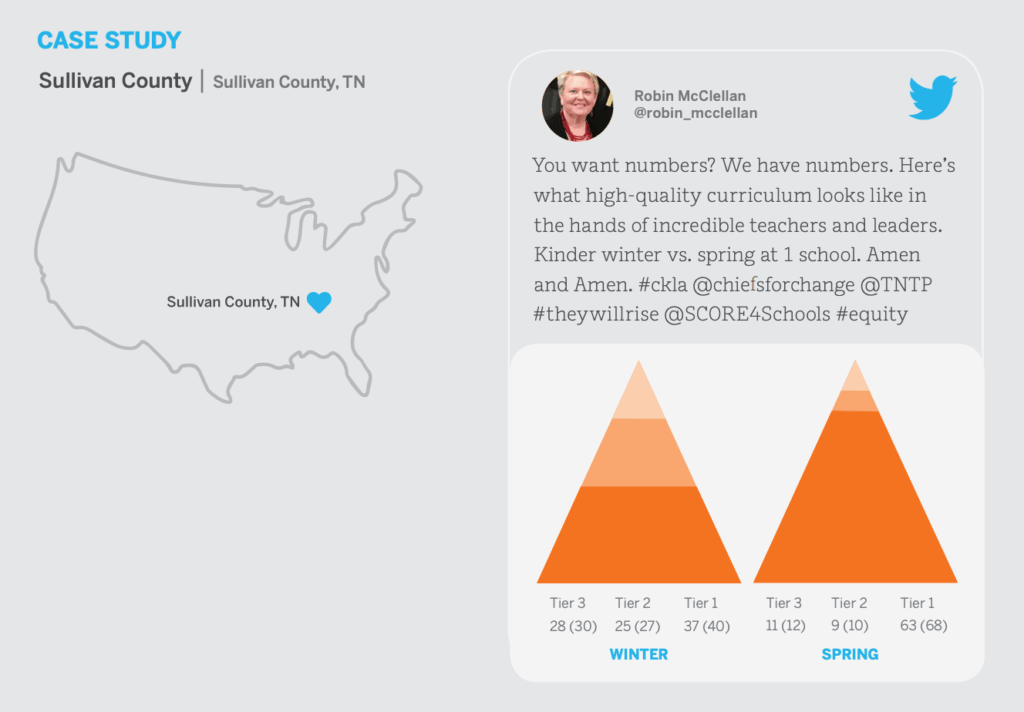
Program overview
Amplify CKLA inspires curiosity and drives results, empowering all students with rich background knowledge. See what schools are saying about our knowledge-based curriculum.
Background Knowledge drives results for Tennessee students
Our approach to building background knowledge is based on three pillars often overlooked in other curricula. It is:
- Content-specific.
Clearly-outlined content objectives are specific and support the development of knowledge in history, science, literature, culture, and the arts. - Cumulative.
Topics and vocabulary connect within and across grades, allowing students to extend knowledge and revisit topics in increasing depth in later grades. - Coherent.
When curriculum is fragmentary and disconnected, students face repetitions as well as gaps that can hinder learning. An intentional
design ensures the curriculum fits together as a whole.
Foundational skills instruction that makes a difference
Amplify CKLA’s second design principle is a research-based approach to foundational skills that gets real results.
- Explicit.
Learning isn’t left to chance. All 44 sounds and their 150 spellings in the English language are taught, practiced, and mastered, with ample opportunity to encounter each sound-spelling in diverse settings. - Sequential.
By moving in a sequence from easier to more complex in phonics and foundational reading skills, students master concepts before moving forward and gradually become more independent - Rewarding.
Learning to read should be fun. Decodabe chapter-books that feature dynamic plots and characters make kids want to read more. Engaging stories include children who discover fossils and a grandmother who flies hang gliders.
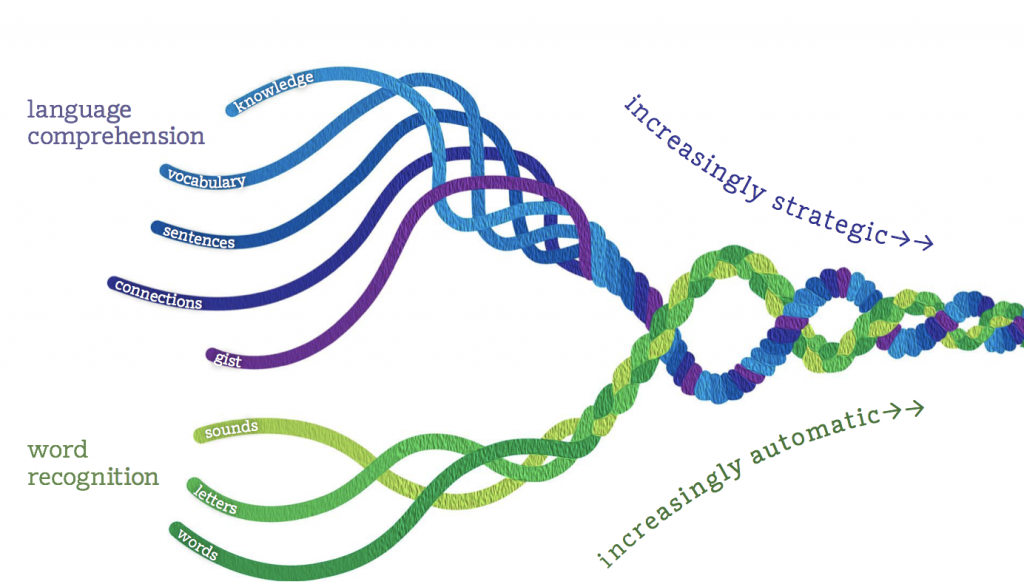
Materials
The program provides engaging print and multimedia materials designed to provide a robust literacy-rich foundation in every classroom.
Teacher Materials
Research-based lessons integrate foundational literacy skills and cross-curricular content knowledge.
- Teacher Guides
- Projectable lesson components
- Quests for the Core for Grades 3–5 (immersive, problem-based learning)
Student materials
Engaging student resources include dynamic decodable chapter books and content-rich, cross-curricular Readers.
- Student Readers
- Activity Books
- Formative Assessments
- Poet’s Journal and Writer’s Journal (write-in Readers for Grades 4–5)
Multimedia resources
Access the program’s online resources anywhere, anytime, from any device.
- Teacher and student materials
- Knowledge Builder animated videos
- Sound Library songs and videos
- Differentiation and enrichment guides
- Real-time program support via email, live chat, and phone
- Professional learning videos, webinars, and self-driven modules

Hands-on phonics materials
Multisensory phonics and foundational skills resources give students the opportunity to practice key skills using diverse, fun approaches that build independence.
- Big Books
- Large and Small Letter Cards
- Spelling Cards
- Vowel and Consonant Code Flip Books
- Chaining Folders
Amplify CKLA In Action
Take a peek inside a classroom, spotlight experiences on knowledge and foundational skills and hear fellow educators and students discuss the power of Amplify CKLA




Contacts

Chasity O’Quinn
Account Executive for East Tennessee
coquinn@amplify.com
(865) 599-5101
Ann Patterson
Account Executive for West Tennessee
apatterson@amplify.com
(704) 813-7757
High-impact, evidence-based programs that help students make gap-closing gains in reading and math
Amplify Tutoring engages students and drives measurable academic gains. We partner with districts to ensure that children become confident, proficient readers and mathematical thinkers.

About Amplify Tutoring
Grounded in evidence-based practices and taught by caring, consistent tutors, our high-impact tutoring programs use high-quality instructional materials and data-driven mCLASS® products to support and engage students.
- Personalized, data-driven instruction
- Research-backed solutions tailored to support your Multi-Tiered System of Supports (MTSS) framework
- Customizable—before, during, or after school; year-long, semester-long, and summer programming
- Comprehensive, hands-on program management and staffing support
Amplify Literacy Tutoring supports K–6 readers through engaging, systematic instruction aligned to the Science of Reading and driven by mCLASS DIBELS® data.
Amplify Math Tutoring accelerates student achievement in grades 3–5 and builds students’ confidence in speaking, writing, and thinking mathematically.
More than a program: a true partner
Hear directly from district leaders and educators who’ve experienced the Amplify Tutoring difference. In these candid conversations, they share how we partner to deliver solutions for schools, gains for students, and support for teachers.


Our impact
Amplify Tutoring accelerates learning for students who need it most. Students in Amplify Tutoring are more likely to achieve outsized academic gains than similarly at-risk peers in the same schools who are not enrolled in the program.
Amplify Tutoring has been awarded the National Student Support Accelerator (NSSA) Tutoring Program Design Badge by Stanford University!
Learn moreReliable, easy-to-read data
With valid and reliable mCLASS assessments and real-time reporting always within reach, everyone involved in a child’s learning journey—from teachers and tutors to school leaders and families—can support student growth.
- Teachers have visibility into students’ data and all tutoring lesson content.
- School and district administrators receive regular tutoring attendance and progress-monitoring reports.
- Caregivers receive Home Connect letters and activities to help their child practice foundational skills at home.


High-quality instructional materials that power Amplify Literacy Tutoring
Amplify Literacy Tutoring includes high-quality resources to support students’ growth.
Targeted lessons generated by precise data
mCLASS Intervention is a research-backed, ESSA rated program that targets instruction based on students’ mCLASS DIBELS 8th Edition assessment results. With engaging lessons aligned to the Science of Reading that adapt based on students’ progress monitoring results, mCLASS Intervention streamlines time-consuming data analysis for teachers and makes sure that tutoring focuses on the literacy skills students need.


Transparency into student performance
mCLASS DIBELS 8th Edition is our nationally normed benchmarking and progress monitoring assessment tool to measure students’ foundational literacy skills. Students take the benchmark assessment three times a year and progress monitoring occurs every 7–10 lessons in between.
Proven impact for students who need it most
Boost Reading delivers targeted, adaptive practice that meets students where they are, while teachers get simple and meaningful insights into student progress. The program consistently moves students toward grade-level proficiency with just 30 minutes of use per week. Students can continue learning through Boost Reading between tutoring sessions or at home.

High-quality instructional materials that power Amplify Math Tutoring
Amplify Math Tutoring includes high-quality resources to support students’ growth.
Intervention Mini-Lessons aligned to core instruction
Amplify Desmos Math Mini-Lessons provide targeted intervention for students who require additional support or need more time. These lessons are aligned to the most critical topics throughout a unit; they enhance conceptual understanding while improving procedural fluency and application.

Valuable insights into student mathematical thinking
mCLASS Math is our benchmarking and progress monitoring assessment tool. Students take the benchmark assessment three times a year; progress monitoring occurs every 7–10 lessons in between.
Personalized practice—anytime and at home
Fact fluency practice provides students with regular practice beyond rote memorization. The program is used during tutoring sessions and is available on non-tutoring days. Students also have access to Boost Math’s independent learning activities, to continue practicing between tutoring sessions or at home.

Consultation and collaboration
Amplify Tutoring tailors our support for educators, schools, districts, caregivers, and state-level leaders, helping to realize the promise of high-impact tutoring programs. Through collaborative partnerships at every level, Amplify Tutoring engages communities in driving academic improvement and boosting attendance.
Our services can include:
Program design consultation: Amplify Tutoring offers expert program design consultation services to help schools and districts create effective and scalable high-impact tutoring programs.
Tailored onboarding: We provide customized training sessions for school, district, and state leaders, ensuring that Amplify Tutoring services are integrated smoothly into existing systems.
Ongoing professional development and coaching: Our program management includes continuous training, coaching support, and office hours with pedagogical experts to fortify the program’s success and adaptability.
Caregiver engagement: We offer resources and support for families and caregivers, including tips for at-home support, helping them stay informed and involved in their child’s progress.
Seamless communication and support: We provide transparent communication and engage all stakeholders—district and school leaders, teachers, caregivers, and students—to keep everyone aligned and informed.
Data reporting: We provide detailed reports and analytics to district and school leaders, giving them the power to monitor progress, make data-driven decisions, and celebrate successes.
Amplify Tutoring is part of a connected early literacy and math suite.
Our literacy and math suite programs are designed to support and complement each other in a Multi-Tiered System of Supports (MTSS). Learn more about our related programs.



Our new activity page: Inside the renovation
Our new activity page: Inside the renovation
New York
Welcome, Florida educators!
Welcome to Amplify Desmos Math Florida! Below, you’ll find links to sample lessons and more information about our Amplify Desmos Math Florida program.
Preview Lessons.
Check out the links below to explore our interactive sample lessons.
Register to learn more about Amplify Desmos Math Florida.
Join us as we sit down with math experts and educators to explore how to support both students and teachers in math classrooms across Florida. This free professional learning series is designed to deliver collaborative, effective, and engaging math practices, as well as free activities to use right away.

A structured approach to problem-based learning
Amplify Desmos Math combines and connects conceptual understanding, procedural fluency, and application. Lessons are designed with the Proficiency Progression™, a model that provides teachers with clear instructional moves to build from students’ prior knowledge to grade-level learning.
Student thinking is valuable and can be made evident.
We believe that math class is a place where teachers can elicit, celebrate, and build on their students’ interesting ideas. Those ideas fuel meaningful classroom conversations and drive the learning process.

Robust assessments that drive learning and inform instruction
A variety of performance data in Amplify Desmos Math Florida provides evidence of student learning, while helping students bolster their skills. With explicit guidance on what to look for and how to respond, teachers can effectively support students as they develop their understanding.
Reporting and insights
Teachers and administrators have visibility into what students know about grade-level math with a variety of data reports. By evaluating not only what students know about grade-level math but also providing insight into how they think, teachers can confidently plan whole-class instruction and targeted intervention.

Access to grade-level math for every student, every day
Amplify Desmos Math Florida provides teachers with lessons, strategies, and resources to eliminate barriers and increase access to grade-level-content without reducing the mathematical demand of tasks—all while supporting students in building strong number sense, fluency, and conceptual understanding.
Differentiation when and where it matters most
Teachers are provided with clear student actions to look for, matched with immediately usable suggestions for how to respond to student thinking. Each lesson also includes recommendations for resources to use with students to support, strengthen, and stretch their understanding of the lesson goal.
Boost Personalized Learning
Boost Personalized Learning activities in Amplify Desmos Math Florida target a skill or concept aligned to the day’s core lesson, with each student receiving personalized scaffolds based on what they already know. Designed to build fluency in mathematics, these activities adapt to each student’s unique needs and support skill-based growth.
Intervention Mini-Lessons aligned to core instruction
Amplify Desmos Math Florida Mini-Lessons are aligned to the most critical topics throughout a unit and provide targeted intervention for small groups of students who need additional support or more time.
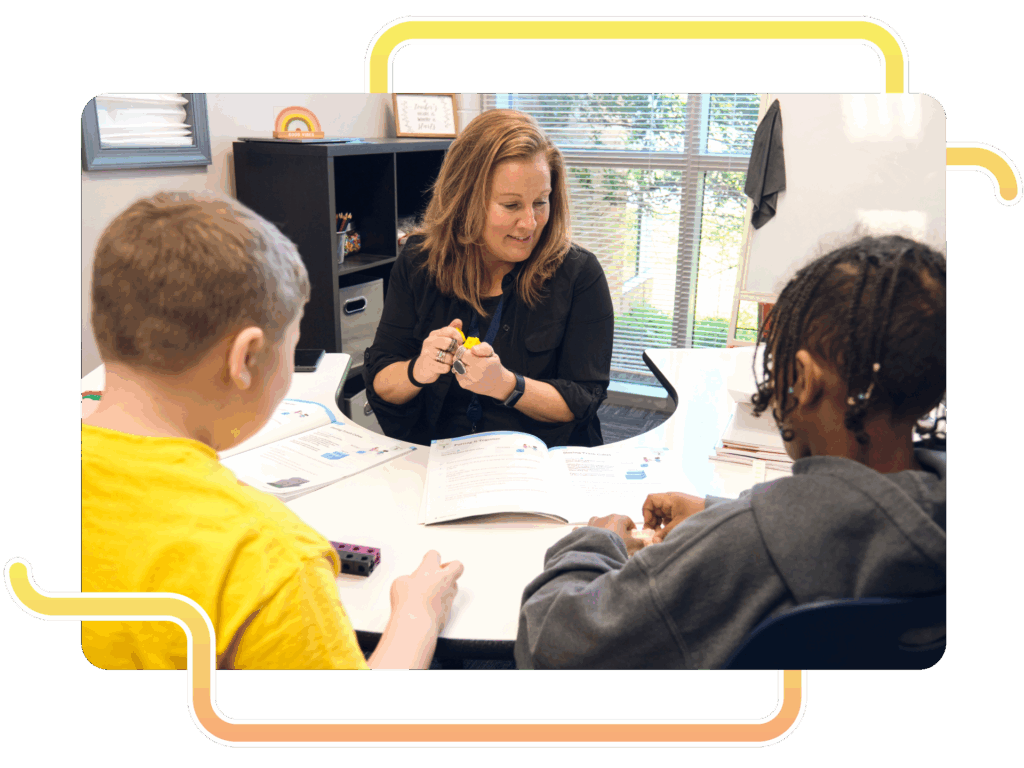
Boost Math
Boost Math is a K–8 personalized learning and intervention program that provides Learning Pathways to ensure that every student succeeds. Our system supports all aspects of a strong Multi-Tiered System of Supports (MTSS) through learning progressions that connect foundational skills directly to core instruction.
Contact us
Support is always available. Our team is dedicated to helping you every step of the way. Contact your dedicated Florida representative for program access, samples, and additional information.


¡El futuro es bilingüe! | The future is bilingual!
Promote biliteracy with Amplify Caminos, a K–5 Spanish language arts curriculum that helps teachers inspire students as they become confident readers, writers, and thinkers in Spanish. The program combines rich content knowledge with systematic foundational skills instruction that is grounded in the Science of Reading and supports multiple teaching models. Para la versión en español, haga clic aquí.
Cultivating biliteracy pathways
Amplify Caminos is designed to support any biliteracy model, including English as a Second Language (ESL), transitional bilingual programs, dual language strands, and Spanish immersion programs. Combined with its English language partner, Amplify Core Knowledge Language Arts (CKLA), Amplify Caminos provides a comprehensive biliteracy solution.
Our approach
Grounded in the Science of Reading and following biliteracy principles, Amplify Caminos combines rich, varied content knowledge with systematic foundational skills instruction to deliver a research-based biliteracy curriculum.
Leveraging the Science of Reading
At the heart of the Science of Reading is the Simple View of Reading, a formula describing how skilled reading requires both language comprehension and word recognition. Amplify Caminos is built on this model, with powerful resources that drive real results.
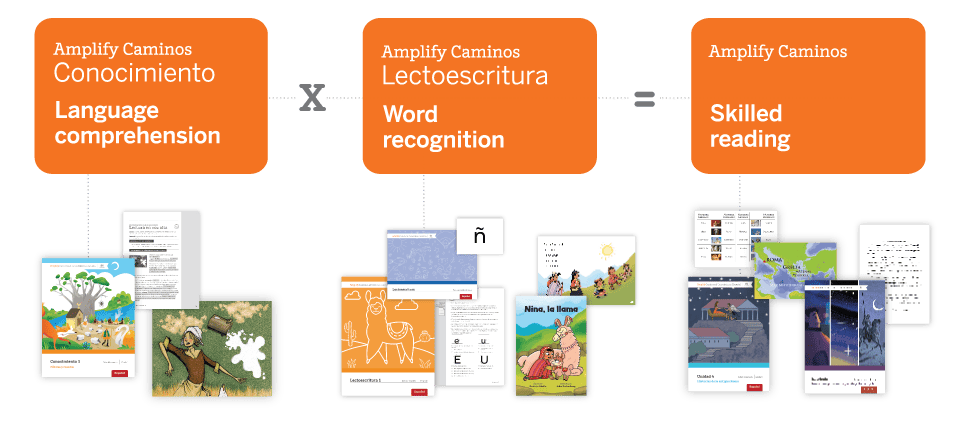

Developing foundational skills explicitly and systematically
Amplify Caminos instruction is based on how the Spanish language works. Students learn vowel sounds and common sounds before blending them to form syllables and words. Less frequent consonants and other complex elements are presented later, with an intentional progression that sets students up for success.
Building background knowledge drives results
Students dig deeper and make connections across content areas to build a robust knowledge base for comprehending complex texts. Amplify Caminos and Amplify CKLA follow the Core Knowledge Sequence—a content-specific, cumulative, and coherent approach to building knowledge—with parallel topics to support research-based and supportive Tier 1 instruction in Spanish and English.
Explore how Core Knowledge curriculum improves reading scores and eliminates achievement gaps.


Culturally relevant and challenging texts
Students learn about diverse topics and genres while better understanding themselves and the world with a variety of texts. Authentic Spanish literature, including original decodables by Latino and Hispanic authors, and transadapted texts connect knowledge topics and foundational skills instruction to provide a rich learning experience.
Being bilingual is a superpower
Bilingualism is a cognitive strength: Research attributes it to increased attention, improved working memory, greater awareness of language, and more. Honor the unique skills, strengths, and needs of your multilingual learners with Amplify Caminos and Amplify CKLA.
What’s included
Amplify Caminos features engaging print and multimedia materials—accessible from anywhere—designed to provide a robust literacy-rich foundation in every classroom.
High-quality teacher materials
Amplify Caminos teachers effectively deliver instruction with print and digital resources, including:
- Teacher resources and on-demand professional development.
- Teacher Guides with embedded differentiation.
- Formal and informal assessments.
- Ready-made and customizable lesson slides.
- Bilingual Connections to support cross-linguistic transfer.
Immersive student resources
Amplify Caminos students stay engaged with a variety of print and digital resources, including:
- Original decodables and read-aloud Big Books (K–2), Student Readers (3–5), and authentic Spanish literature anthologies (4–5).
- Poet’s Journal and Writer’s Journal (write-in Student Readers for Grades 4–5).
- Student Activity Books with embedded assessments.
- Research units for independent research built around a trade book.
- Multisensory phonics materials:
- Letter Cards (K–2)
- Syllable Cards (K–2)
- Image Cards (K–3)
- Plus, digital anchor charts and a Sound Library.
Robust digital experience
Like Amplify CKLA, Amplify Caminos is proud to be a premier high-quality instructional material (HQIM) offering in elementary language arts, with rich and research-based content—including an expanding library of engaging digital materials—that helps you authentically support, challenge, and engage your students. From digital Teacher Guides to lesson projectables, we provide all the tools needed to successfully deliver every lesson.
Explore more programs based on the Science of Reading
All of the programs in our literacy suite are designed to support and complement each other. Learn more about our related programs:


Navigating the shift to three-dimensional science teaching and learning

Students need science. They need it to succeed in school, and they need it to navigate the world around them—whether interpreting a weather forecast, perfecting a recipe, or troubleshooting the Wi-Fi.
But only 22% of high school students are proficient in science, and students in grades K–5 get an average of just 20 minutes of science instruction each day. For middle and high school students, access to advanced science courses is often limited. We’re not giving students all the tools they need to succeed in a world that’s increasingly shaped by science and technology.
Three-dimensional learning can help us solve that. This approach moves science education into the realm of discovery—where students learn to think and act like scientists.
But unlike hot water melting ice, shifting to this approach won’t happen in an instant! Don’t worry—we’re here to help.
Science learning: a pivotal moment
Many of us were taught science the traditional way: learning about the scientific world and how it works. (And many of us did ok!) But we know now that there’s a better way. Students need to figure out science the way scientists do.
This hands-on, problem-solving, three-dimensional approach (sometimes nicknamed “3D learning”) builds critical thinking, collaboration, and curiosity—all skills that are vital across school subjects and in life.
With content and lesson plans that focus on Science and Engineering Practices, Crosscutting Concepts, and Disciplinary Core Ideas, this model equips students with critical thinking skills and a deep understanding of scientific principles.
This shift started with the 2012 publication of A Framework for K–12 Science Education, which introduced the concept of three-dimensional learning. These principles, now embedded in the Next Generation Science Standards (NGSS), focus on three major changes:
- Helping students move from simply learning about science to actively figuring it out.
- Encouraging them to explain natural phenomena.
- Aligning science learning with English language arts and math goals.
By embracing these changes, educators can help students make meaningful connections across disciplines, setting them up for success in real-world challenges.
Driving and supporting systemic change
Transforming science education isn’t a quick fix—it’s a cultural and systemic change. To make it work and make it last, schools and districts need to focus on three key drivers: process, practice, and people.
- Process: Pinpoint challenges, create clear plans, and track progress.
- Practice: Build the infrastructure for three-dimensional learning, including aligning curriculum, offering professional development, and updating teaching practices.
- People: Communicate effectively, support teachers, and highlight science champions who can inspire others.
Real change takes time and deliberate effort. But with these elements in place, schools can establish lasting improvements and build elementary and middle school programs that benefit every student.
Amplify Science’s playbook to guide you
To help educators navigate this shift, our new Science Change Management Playbook offers practical, evidence-based resources for transitioning over time to three-dimensional learning. Here’s what you’ll find inside:
- Evidence-based practices: Learn structured approaches to problem-based learning, backed by research that highlights their benefits for students and teachers alike.
- Practical tips: Explore actionable steps for driving meaningful change, from crafting a shared vision to delivering effective professional learning.
- Real stories: Read testimonials from students and educators who have experienced the transformative power of curiosity-driven, collaborative learning.
With this playbook, schools can build K–8 and/or middle school science programs that truly engage students, equipping them with skills they’ll use for a lifetime.
The move to three-dimensional science teaching and learning opens the door to deeper understanding, better problem-solving, greater curiosity, and—more and more—a world built by students who know how to think like scientists.
More to explore
- Dive deeper into the shift to three-dimensional teaching and learning with our Science Change Management Playbook to help you navigate the shift to three-dimensional science teaching and learning.
- Discover how to be a changemaker for science through additional change management resources.
- Learn more about Amplify Science.

Early literacy assessment and intervention, grounded in the Science of Reading
mCLASS® is an all-in-one system for Science of Reading-based universal screening, dyslexia screening, progress monitoring, and instruction for grades K–8. Powered by DIBELS® 8th Edition, mCLASS helps you measure and strengthen the foundational skills that all students need to become confident readers.
What is mCLASS?
mCLASS, the only digital provider of DIBELS 8th edition assessments, provides universal screening, dyslexia screening and progress monitoring to assess your students on their reading trajectory and what skills they need to develop.
You’ll observe students as they form sounds or read words and text. Then, mCLASS instantly scores and analyzes student response patterns to provide you with diagnostic data and instructional focus for each student and group.
With mCLASS, you’ll have everything you need to support every type of learner in your classroom, including advanced learners, multilingual learners, and students with signs of dyslexia.
Valid and reliable DIBELS 8th Edition assessments
Developed in partnership with the University of Oregon, mCLASS DIBELS 8th Edition is founded on the strongest-ever research base for predicting reading proficiency, including identifying those at risk for dyslexia.
For more than 30 years, the University of Oregon has led the research behind DIBELS (Dynamic Indicators of Basic Early Literacy Skills). mCLASS is the only licensed digital provider of the evidence-based DIBELS 8th Edition assessment. See more of our research.
Our approach
mCLASS provides rich data to help you match Science of Reading-based instruction with your students’ precise needs. You’ll be able to monitor the effectiveness of instruction and make timely decisions when students or classrooms need extra support.
Grounded in the Science of Reading
From phonics to fluency and comprehension, mCLASS assesses the skills that are most critical for students to become successful readers. Once students are assessed, you’ll have the data you need to drive instructional decisions at the classroom, school, and district level.
- Data you can trust, with teacher-administered assessments
- Skill-level data aligned with the Science of Reading
- Data-driven instructional recommendations to support intervention, remediation, and enrichment

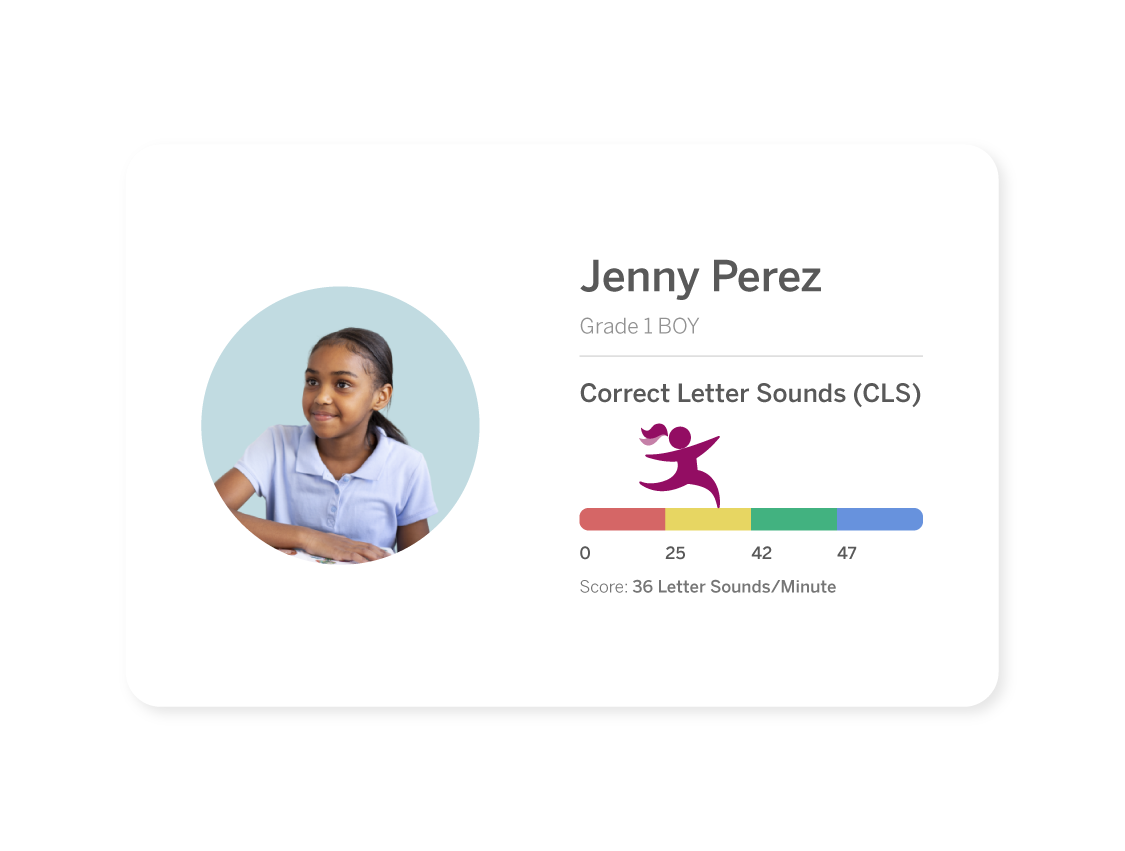
Precise, trustworthy data through direct observation
Our approach to assessment is focused on providing you with immediate insights you can trust. Through direct observation of students and detailed reports, including assessment transcripts and diagnostic error patterns, you’ll have total transparency into each student’s performance.
Instant analysis and next steps
With mCLASS, you can interpret and act on data in real time with instant instructional guidance based on benchmark and progress-monitoring results. In one click, teachers can access differentiated skill-based groups and targeted resources to develop students’ foundational literacy skills.

A complete picture of English and Spanish biliteracy
Amplify’s Spanish language assessment, mCLASS Lectura (K–6), works in tandem with DIBELS 8th Edition’s English assessments to highlight areas of growth as students develop into bilingual readers. mCLASS Lectura provides complete parity with English mCLASS assessments, skill coverage, instructional tools, and reporting.
Ready to continue your learning journey?
Help build teacher confidence and improve effectiveness of intervention delivery with mCLASS professional development. Launch sessions help your team get up and running, while Strengthen sessions help teachers go beyond the basics.

What’s included
The mCLASS program includes quick assessments of critical reading skills, real-time reporting, and data-driven instructional recommendations.
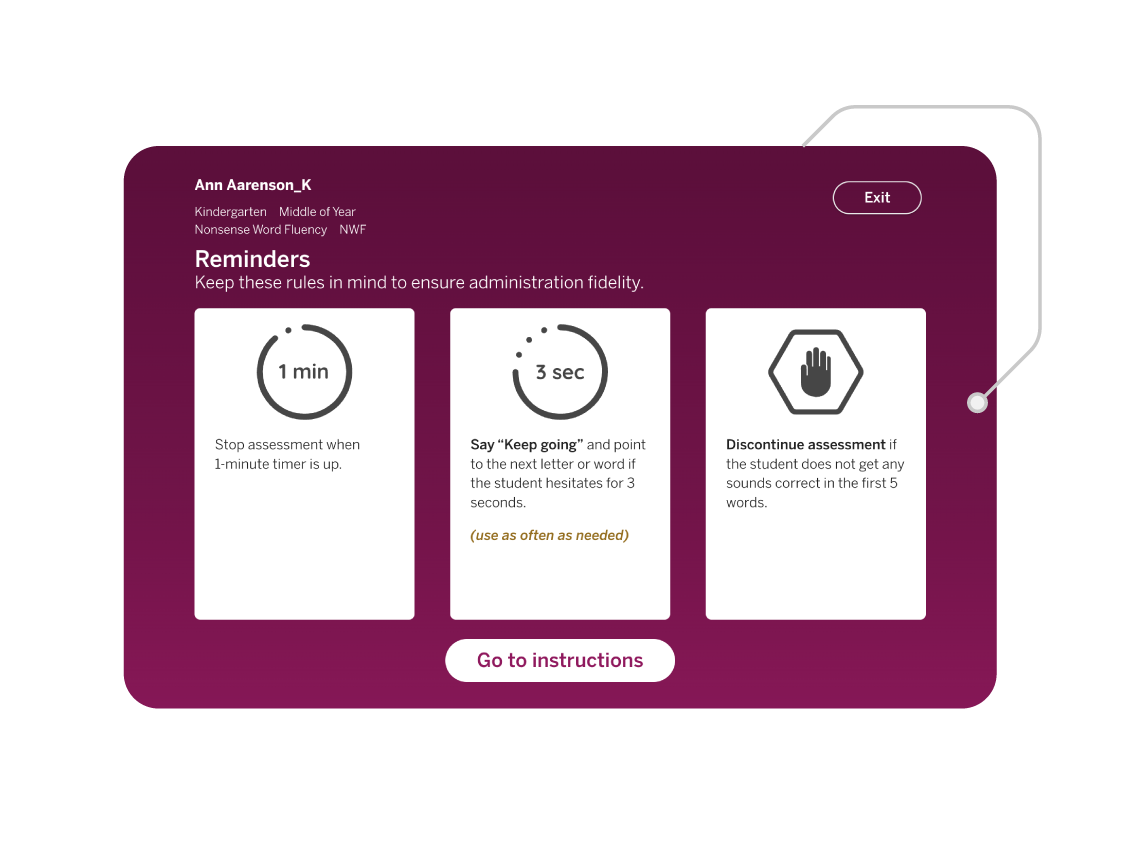
Efficient one-minute measures
DIBELS 8th Edition’s predictive one-minute assessments of phonemic awareness, phonics, fluency, and comprehension are proven to identify risk as early as possible.
- Phonological awareness
- Alphabetic principle/phonics
- Reading fluency
- Reading accuracy
- Reading comprehension
Early detection of dyslexia symptoms
With mCLASS, you can efficiently screen students and assess the full range of skills linked to dyslexia risk factors at the same time. mCLASS DIBELS 8th Edition and mCLASS Lectura are both validated as dyslexia screeners for English and Spanish, with additional Vocabulary, Spelling, RAN, and Language Comprehension measures available at no additional cost.
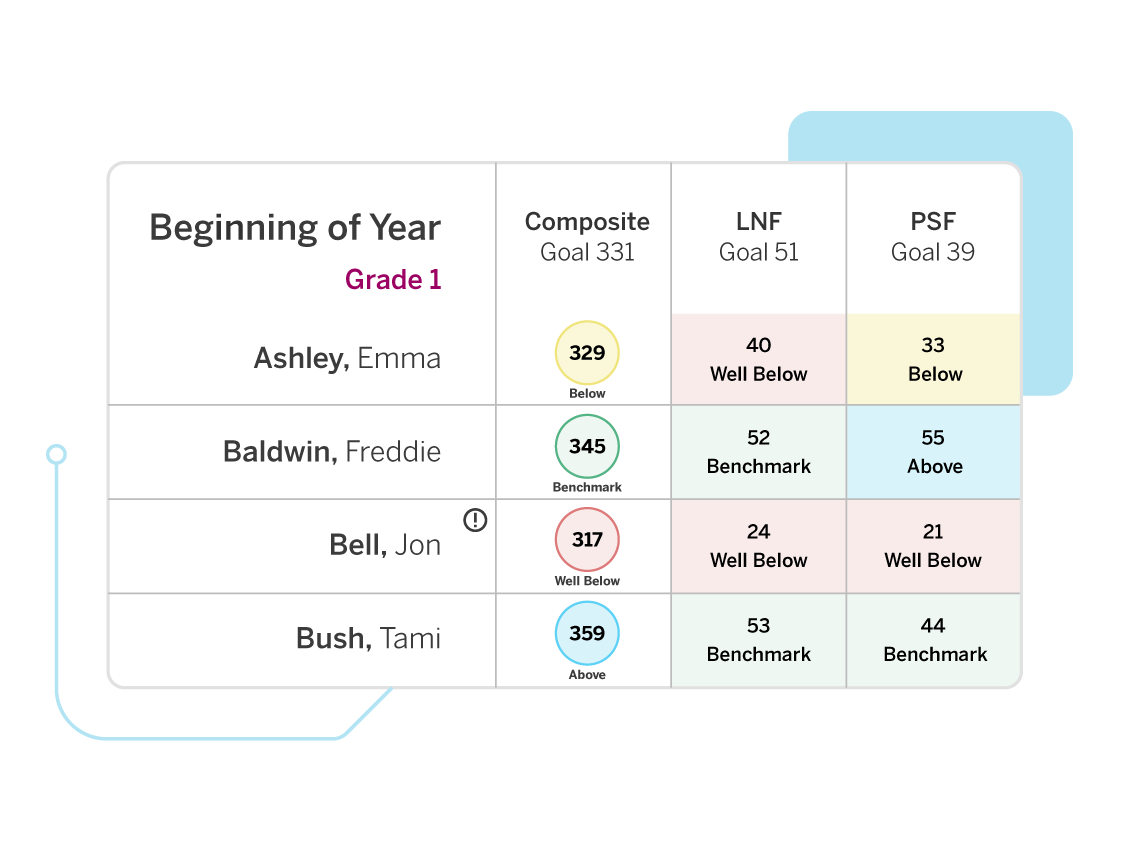
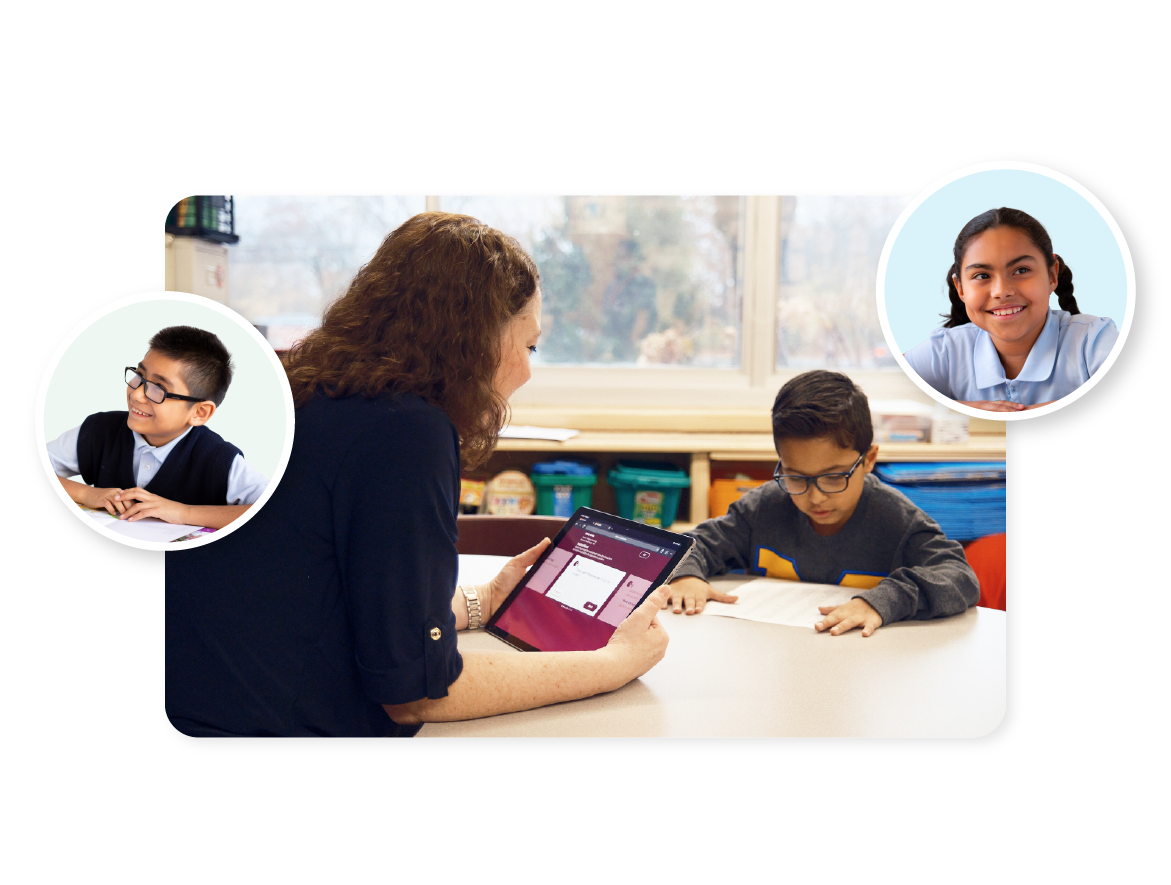
Progress monitoring and goal setting
To help you target the right skills and areas of instruction, mCLASS recommends progress-monitoring measures and automatically sets meaningful, attainable goals for each student. Our Zones of Growth goal setting framework examines your student’s DIBELS scores to predict the rate of growth they need to reach end-of-year goals.
- Automatic progress monitoring recommendations
- Customizable goals
- Semester and full-year growth reports
Differentiated instruction for all students
Our library of more than 500 evidence-based activities makes it easy to plan lessons that reinforce your core instruction. The embedded professional development supports consider the varied language backgrounds of all students and provide cross-linguistic transfer and language variety guidance to inform phonological awareness instruction.


One-of-a-kind dual language reporting
When you use mCLASS DIBELS 8th Edition with mCLASS Lectura, you can identify and develop students’ English and Spanish literacy skills regardless of your own Spanish-language proficiency. With the dual language report, you can see a side-by-side view of students’ assessment results and receive instructional guidance based on the data.
Educator and caregiver reports
Easy-to-use reports, ranging from classroom-level to school- and district-wide, help you evaluate each student’s reading skills over time and pinpoint exactly when a change in instruction is needed.
To reinforce learning at home, the Home Connect feature provides letters to caregivers about their child’s reading development in English and Spanish, and includes activities for reinforcement at home or on the go.
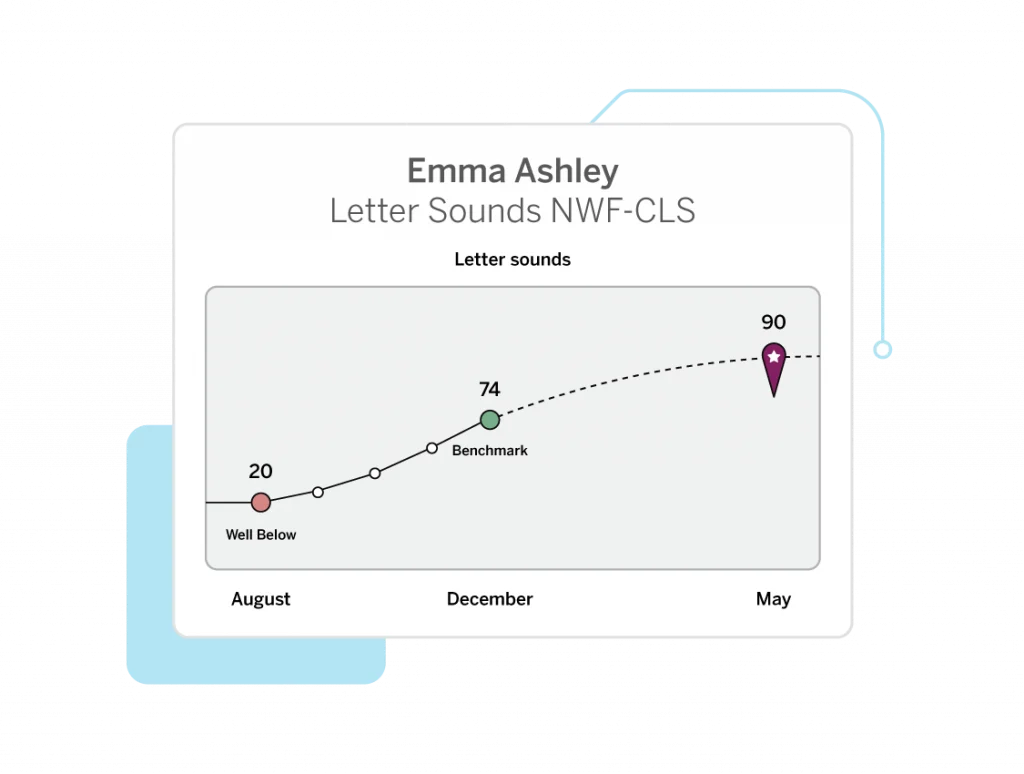

Instructional alignment across all tiers
Amplify’s early literacy system ensures that you have all the core, intervention, and personalized instruction you need to support each stage of a student’s literacy journey. mCLASS data drives placement into mCLASS Intervention and Boost Reading personalized learning. It also recommends core instruction resources within Amplify CKLA core curriculum based on the skills in which students need additional practice.
Explore more programs based on the Science of Reading
Our literacy programs are designed to support and complement each other. Learn more about our related programs.

Where and How to Measure Comprehension to Drive Improvement
Wednesday, 3pm ET/12pm PT
How can we measure comprehension to provide students with the targeted instruction and support they need to grow into skilled readers and writers? Join Danielle Damico, Ph.D., and Gina Biancarosa, Ed.D., to discover how having access to the right tools and actionable data can help.
MD RFP Amplify ELA K–8
Managing the change that matters most: Implementing the Science of Reading with integrity
Reading requires deliberate, systematic attention—and so does shifting to the Science of Reading in your school or district. It requires not only the correct curriculum, but also all-new mindsets, metrics, and more. Reflecting years of experience supporting real educators, our resources will walk you through the process of change management in your community—and show you why the shift is worth it.
How data drives Science of Reading change management
Making the shift requires meticulous planning, open communication, and most importantly, data. Learn how to harness data to drive your implementation forward.
Step 1: Prepare your team
Big change doesn’t happen without buy-in. We’ll help you take the crucial first step of getting your team on board.
Build a Science of Reading digital bookbag
Getting up to speed with the Science of Reading takes some homework. We’ve pulled some key resources into one place for you and your team.
Subscribe to Science of Reading: The Podcast
Tune in to our chart-topping Science of Reading podcast—which recently celebrated four million downloads—to keep up with the latest insights from experts and practitioners. Subscribe to listen to the latest episodes exploring relatable, real-life challenges faced by literacy educators—from managing small groups to delivering trauma-informed instruction—and visit the archives to binge Seasons 1 through 7!

Read The Knowledge Gap and Science of Reading: The Defining Guide
You’ll want to curl up with The Knowledge Gap, Natalie Wexler’s essential work making the case for the power of knowledge to fuel literacy. You can also get all the basics in Science of Reading: The Defining Guide by our friends at the Reading League.
Professional development to support your shift to the Science of Reading
Ignite literacy transformation with Amplify’s Science of Reading: The Learning Lab—an inspiring three-course series.
- Dive into a comprehensive overview with course one, Foundations to the Science of Reading.
- Examine assessments and their roles in course two, Advanced Topics in the Science of Reading: Assessment and Reading Difficulties.
- Apply effective literacy instruction to your classroom in course three, Applied Structured Literacy.
Crafted to the standards of the International Dyslexia Association, this self-paced online series provides unparalleled, research-backed instruction. Explore enriching activities, curated resources, and learn from Susan Lambert, chief academic officer and host of Science of Reading: The Podcast.
The best investment you can make is in knowledge, and the returns are priceless.
Learn more about the online courses or request a quote!
Tap into individual online course seats.
Step 2: Adopt the right program
Making the Science of Reading a reality in your school means choosing the right evidence-based curriculum.
Change management
Our Change Management Playbook is your trusted companion in transforming schools with proven strategies. Crafted alongside educators who have successfully pioneered change, this comprehensive guide lays out actionable steps and critical questions for each phase of your implementation journey.
Evaluate curricula and look out for red flags
A core literacy curriculum needs to be aligned with evidence-based practices every step of the way. This curriculum evaluation guide from the Reading League will walk you through the evaluation you need to conduct to ensure that you’re investing in only the best instruction for your students and teachers, and to know that the curriculum you’re selecting is true to the research.


Make the five most critical instructional shifts
Big change is best done gradually. That’s why we’ve identified five key shifts in reading instruction that will set you on the path to transforming your classroom with the Science of Reading.
Watch our Science of Reading webinars
In our Literacy Is Opportunity webinar series, you’ll learn why it’s crucial to get reading instruction right for all students—and how to make the shifts needed in your school.

Step 3: Build an evidence-based literacy ecosystem that supports all students
Science-based reading instruction can actually reduce the need for intervention and support. These principles and practices show how evidence and data build a culture of literacy for everyone.
Establish a Multi-Tiered System of Supports (MTSS) grounded in the Science of Reading
A complete Science of Reading system is one that aligns with a Multi-Tiered System of Supports (MTSS) framework. Because an MTSS includes all students—and stakeholders—it prevents struggles before they happen, setting everyone up for literacy success.
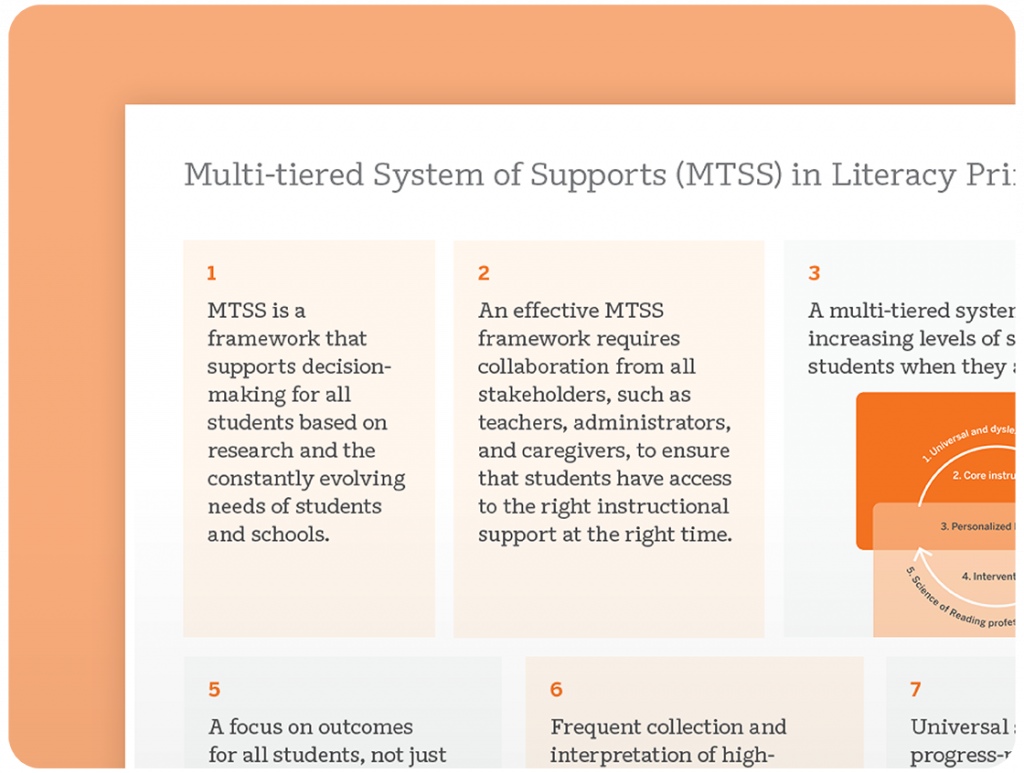
Explore Amplify’s Science of Reading early literacy suite
Built on more than 20 years of Science of Reading experience, our early literacy suite ensures that research-based and data-driven literacy practices are at the heart of everything you do. The suite includes every component of instruction, from assessment and personalized learning to intervention and professional development.
Bring the Science of Reading to middle school and biliteracy instruction
The Science of Reading can have an impact on learning outside of traditional K–5 literacy instruction, too—it can also address the specific needs of middle schoolers and multilingual students.
View our resources:

Step 4: Sustain change for long-term results
Educational change doesn’t happen overnight, or by itself. We’ve helped thousands of Science of Reading champions make the shift, and they’re eager to share the secrets of their long-term success with fellow educators like you.
Professional development for supplemental programs
Amplify professional development provides learning experiences that intentionally develop the knowledge and skills you need for effective and self-sustaining implementation.
Learn and apply effective instructional techniques and develop a deeper understanding of your Amplify supplemental program(s) by investing in professional development (PD).
Amplify professional development has been vetted by Rivet Education’s team through a rigorous three-step process and is listed in the Professional Learning Partner Guide.

About Amplify PD
Take a systematic approach to drive lasting change. Partner with us to create a learning plan that enhances implementation, instruction, and student impact.
Amplify’s professional development ensures successful, sustained implementation through strategically bundled packages that provide continuous support adapting to your educators’ evolving needs.
Session types
Our supplemental sessions include:


Amplify supplemental programs
Providing students with personalized targeted instruction and practice, Amplify’s digital intervention and supplemental programs empower teachers with tools to enhance the teacher-student relationship, making it more informed and responsive.
Learn how to get the most out of your supplemental program(s) through Amplify’s PD.
- Boost Reading is a K–5 digital intervention program that helps students close literacy gaps through adaptive instruction based on the Science of Reading. Built for Multi-Tiered System of Supports frameworks, it delivers differentiated skill development across every tier, providing targeted, student-led practice alongside growth reporting that empowers teachers to intervene where support is needed most.
- Boost Lectura is a K–2 digital intervention program that delivers differentiated instruction in foundational Spanish literacy skills. Built on the Science of Reading, Boost Lectura uses riveting storylines and an adaptive curriculum to engage students in powerful, targeted digital reading instruction.
- Boost Close Reading is a differentiated reading program for grades 6–8 that helps students acquire the close reading skills needed to read and understand complex texts. Students build their skills as they journey through the dystopian world of “The Last Readers,” making progress by practicing critical reading through guided instruction and text-dependent questions that prepare them for the challenges they will face on assessments.
- Boost Math™ drives tiered intervention and practice for grades K–8 by using assessment data to place students into targeted learning pathways. Through a research-backed mix of personalized learning, teacher-led small groups, and student-led practice aligned to core instruction, Boost Math turns assessment into action.
Whatever your unique needs this school year, you’ll find professional development offerings that will help you meet them. Find out more below!
Boost Reading and Boost Lectura
Launch sessions
Propel your teachers into the new school year with sessions that introduce them to their Amplify program(s) and support a strong implementation.
Getting started for teachers
On-site or virtual, 2 hours
Learn the essentials of your Boost program(s), including program structure and navigation, and leave ready for a strong implementation.
Session options: Boost Reading, Boost Lectura, Boost Close Reading, Boost Math
Audience: Teachers, instructional staff (maximum 30 participants)
Language: The Boost Reading and Boost Close Reading sessions are facilitated in English. The Boost Lectura session can be facilitated in English or Spanish.
Getting started for leaders
On-site or virtual, 2 hours
Prepare to support effective program implementation and leave ready to leverage Admin Reports to accelerate student outcomes.
Session options: Boost Reading
Audience: Leaders (maximum 30 participants)
Getting started for teachers
Online course, self-paced
Learn the essentials of your Boost program(s), including program structure and navigation, and prepare to implement the program through this on-demand course.
Upon finishing the course, participants can download a certificate of completion. This subscription includes an individual seat in the course, which takes approximately 2 hours to complete. Participants will be able to access and revisit the course as needed for up to one year.
Session options: Boost Reading, Boost Lectura, Boost Close Reading
Audience: Teachers, instructional staff (individual seat)
Language: All online courses are presented in English.
Getting started for leaders
Online course, self-paced
Prepare to support effective program implementation and learn how to leverage Admin Reports to accelerate student outcomes through this on-demand course.
Upon finishing the course, participants can download a certificate of completion. This subscription includes an individual seat in the course, which takes approximately 2 hours to complete. Participants will be able to access and revisit the course as needed for up to one year.
Session options: Boost Reading
Audience: Leaders (individual seat)
Available July 2026
Begin: mCLASS Math: Program overview for K–5 or 6–8 teachers
Available for grades 6–8 teachers July 2026
On-site or virtual, 3 hours
Dive into the essentials of your mCLASS Math assessment program to learn how these assessments both highlight students’ strengths and help identify what’s next through an asset-based approach. Leave ready to administer assessments and understand reporting.
Audience: Teachers, instructional staff (maximum 30 participants)
Strengthen sessions
Strengthen your Amplify implementation with a program-specific session that supports personalized learning and practice in your classrooms.
*Supplemental Strengthen sessions should be scheduled after participants have at least six weeks of student data to enable participants to work with their own data.
Focus Strengthen: Maximizing data for teachers
Virtual, 1 hour
Learn how to leverage the Boost teacher dashboard to accelerate data-driven student outcomes.
Session options: Boost Reading, Boost Close Reading
Audience: Teachers, instructional staff (maximum 30 participants)
New session
mCLASS Math + Boost Math: Understanding and using data to plan intervention for K–5 teachers
On-site or virtual, 3 hours
Explore how Boost Math uses mCLASS Math data to inform intervention recommendations and monitor student progress. Dig into your student data, explore relevant instructional resources, and leave with actionable next steps for intervention.
Session options: For users of both mCLASS Math and Boost Math programs
Audience: Teachers, instructional staff (maximum 30 participants)
Additional supplemental programs and PD
Additional sessions are also available for Boost Reading+.
To learn more about enhancing your Amplify experience by purchasing additional supplemental programs and/or accompanying PD sessions, contact your account executive.
Get in touch with a PD expert.
Professional development for core programs
Amplify professional development provides learning experiences that intentionally develop the knowledge and skills you need for effective and self-sustaining implementation.
Learn and apply impactful instructional techniques and develop a deeper understanding of your Amplify program(s) by investing in professional development.
Amplify professional development has been vetted by Rivet Education’s team through a rigorous three-step process and is listed in the Professional Learning Partner Guide.

About Amplify core programs
Amplify’s programs help you teach inspiring lessons that develop student brilliance through robust scaffolding and differentiated instruction.
Literacy
- Amplify Core Knowledge Language Arts (CKLA) 2nd Edition and 3rd Edition
- Amplify Caminos 1st and 3rd Edition
- Amplify ELA 2nd Edition
STEM
- Amplify Math
- Amplify Desmos Math* (for Grades PreK–5, 6–Algebra 1, or high school)
- Amplify Science (for Grades K–5 or 6–8)
Contact your account executive for extended PD catalog options or quotes.
*Amplify Desmos Math is our new K–12 program (English and Spanish) using a problem-based approach for deep conceptual understanding. Contact us for available packages.
About Amplify professional development (PD)
Take a systemic approach to drive lasting change. Partner with us to create a learning plan that enhances implementation, instruction, and student impact.
At each phase of your journey, packages include different types of learning experiences strategically bundled for multiple touchpoints throughout the year.

Session types within packages

Begin packages
You’re ready to shift to evidence-based practices in your first year with Amplify programs. Let us support your educators with professional development that builds new skills and knowledge.
Choose from flexible on-site, hybrid, or virtual packages which include:
- One Launch session to introduce Amplify programs and support strong implementation.
- One Strengthen session to deepen understanding of the program.
- One Coach session to elevate instructional practice and meet specific needs.
- Suggested add-ons are available.
Each package supports up to 30 participants in similar grade bands.
On-site 15 package
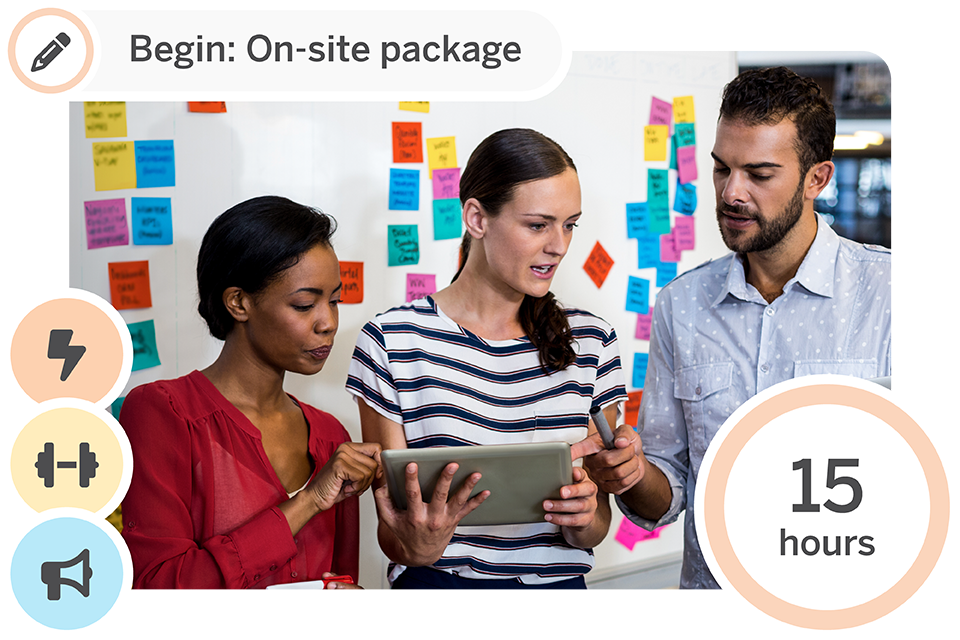
Participate in 15 hours of program-aligned professional development across three sessions for up to 30 participants. Build understanding of research-based practices and develop knowledge through curated Launch, Strengthen, and Coach sessions.
Begin: On-site 15 package |
||
| Session type | Modality/duration | What’s included |
| Launch (1) | On-site, 6-hr. | Initial training for teachers |
| Strengthen (1) | On-site, 3-hr. | Program-specific Strengthen session (selected based on your needs) for Core Literacy and STEM programs. |
| Coach (1) | On-site, 6-hr. | Coach session |
| Suggested enhancements | ||
| Launch add-on | On-site or virtual, 3-hr. | Program overview for leaders |
| Launch add-on | Virtual, 1 hr. | Amplify CKLA Grade 3–5 Skills supplement training for teachers |
Begin: Launch: Initial training for teachers
Amplify Caminos 3rd Edition, Amplify CKLA/Caminos 3rd Edition biliteracy, and Amplify Desmos Math high school sessions are available July 2026.
On-site, 6 hours
Initial training sessions are designed for educators who are new to our program. In our initial training session, educators are oriented to the key components of their program(s), including learning how to navigate, teach, and monitor student progress, while exploring content and program resources. Participants will leave the session with the foundational knowledge and skills necessary to begin teaching with the program.
Session options: Amplify CKLA (2nd and 3rd Edition), Amplify Caminos (1st and 3rd Edition), Amplify CKLA 2nd Edition/Caminos 1st Edition biliteracy, Amplify CKLA 3rd Edition/Caminos 3rd Edition biliteracy, Amplify ELA 2nd Edition, Amplify Math (Grades 6–A1), Amplify Desmos Math (Grades PreK–5, 6–A1, or high school), Amplify Science (Grades K–5 or 6–8)
Audience: Teachers, instructional staff (maximum 30 participants)
Launch add-on
Suggested enhancement: Program overview for leaders
Amplify Caminos 3rd Edition sessions are available July 2026.
On-site or virtual, 3 hours
The program overview for leaders session supports district and school-level instructional leaders in effectively coordinating the implementation of the program. Leaders will learn the foundational elements of the program, build an understanding of the key teacher and student practices to look for in classrooms, and develop an implementation plan.
Session options: Amplify CKLA (2nd and 3rd Edition), Amplify Caminos (1st and 3rd Edition), Amplify CKLA 2nd Edition/Caminos 1st Edition biliteracy, Amplify CKLA 3rd Edition/Caminos 3rd Edition biliteracy, Amplify ELA 2nd Edition, Amplify Math (Grades 6–A1), Amplify Desmos Math (Grades K–5, 6–A1, or high school), Amplify Science (Grades K–5 or 6–8)
Audience: Leaders (maximum 30 participants)
Available July 2026
Suggested enhancement: Launch add-on: Amplify CKLA Grade 3–5 Skills supplement training for teachers
Grades 4 and 5 available July 2026
Virtual, 1 hour
Learn how to implement Amplify CKLA Grades 3–5 Skills in the classroom. Learn the foundational elements of Amplify CKLA Grades 3–5 Skills, including becoming familiar with materials and key lesson components.
Note:
- Grade 3 Skills is included in the purchase of Amplify CKLA 2nd Edition, while Grade 4 Skills and Grade 5 Skills can be added on.
- Grades 3–5 Skills are included with the purchase of Amplify CKLA 3rd Edition.
Session options: Amplify CKLA 2nd Edition (Grades 3–5) or Amplify CKLA 3rd Edition (Grades 3–5)
Audience: Teachers, instructional staff (maximum 30 participants)
Strengthen: Program-specific sessions
Strengthen your Amplify implementation with program-specific sessions that support personalized learning and practice in your classroom.
To explore the core Strengthen sessions, select your program:
Amplify will partner closely with you to select the appropriate session(s) that will deepen educators’ understanding of Amplify program(s) and equip them with the tools they need to improve students’ learning outcomes. Each package includes one Strengthen session. Additional sessions can be added as Enhancements.
Coach: Customized support
Amplify Caminos 3rd Edition, Amplify CKLA/Caminos 3rd Edition biliteracy, and Amplify Desmos Math high school sessions are available July 2026.
On-site, 6 hours
Coaching sessions focus on building internal school and district capacity and leadership excellence. Coaching is customized to meet a school or district’s needs and can include model lessons, observations, walk-throughs, and/or co-planning.
Session options: Amplify CKLA (2nd and 3rd Edition), Amplify Caminos (1st and 3rd Edition), Amplify CKLA 2nd Edition/Caminos 1st Edition biliteracy, Amplify CKLA 3rd Edition/Caminos 3rd Edition biliteracy, Amplify ELA 2nd Edition, Amplify Math (Grades 6–A1), Amplify Desmos Math (Grades K–5, 6–A1, or high school), Amplify Science (Grades K–5 or 6–8)
Audience: Individual teachers, grade-level teams, PLCs,
and/or instructional leaders (maximum 30 participants)
Hybrid 15 on-site package
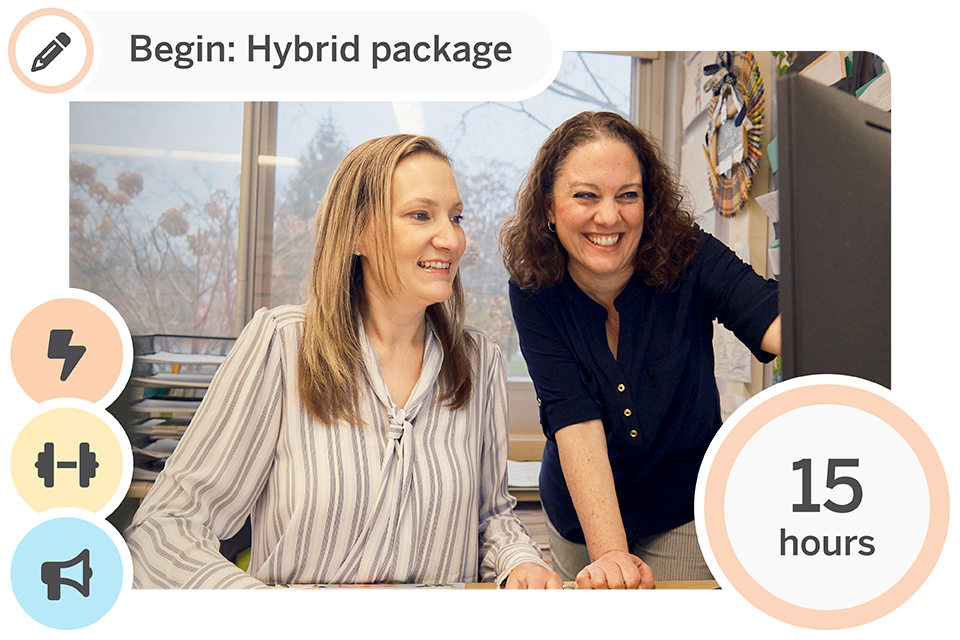
Participate in 15 hours of program-aligned professional development across three sessions for up to 30 participants. Build understanding of research-based practices and develop knowledge through curated Launch, Strengthen, and Coach sessions.
Begin: Hybrid 15 on-site package |
||
| Session type | Modality/duration | What’s included |
| Launch (1) | On-site, 6-hr. | Initial training for teachers |
| Strengthen (1) | Virtual, 3-hr. | Program-specific Strengthen session (selected based on your needs) for Core Literacy and STEM programs. |
| Coach (1) | On-site, 6-hr. | Coach session |
| Suggested enhancements | ||
| Launch add-on | On-site or virtual, 3-hr. | Program overview for leaders |
| Launch add-on | Virtual, 1 hr. | Amplify CKLA Grade 3–5 Skills supplement training for teachers |
Begin: Launch: Initial training for teachers
Amplify Caminos 3rd Edition, Amplify CKLA/Caminos 3rd Edition biliteracy, and Amplify Desmos Math high school sessions are available July 2026.
On-site, 6 hours
Initial training sessions are designed for educators who are new users. In our initial training session, educators are oriented to the key components of the program, including learning how to navigate, teach, and monitor student progress, while exploring content and program resources. Participants will leave the session with the foundational knowledge and skills necessary to begin teaching with the program.
Session options: Amplify CKLA (2nd and 3rd Edition), Amplify Caminos (1st and 3rd Edition), Amplify CKLA 2nd Edition/Caminos 1st Edition biliteracy, Amplify CKLA 3rd Edition/Caminos 3rd Edition biliteracy, Amplify ELA 2nd Edition, Amplify Math (Grades 6–A1), Amplify Desmos Math (Grades K–5, 6–A1, or high school), Amplify Science (Grades K–5 or 6–8)
Audience: Teachers, instructional staff (maximum 30 participants)
Launch add-on
Suggested enhancement: Program overview for leaders
Amplify Caminos 3rd Edition sessions are available July 2026.
On-site or virtual, 3 hours
The program overview for leaders session supports district and school-level instructional leaders in effectively coordinating the implementation of the program. Leaders will learn the foundational elements of the program, build an understanding of the key teacher and student practices to look for in classrooms, and develop an implementation plan.
Session options: Amplify CKLA (2nd Edition), Amplify Caminos (1st and 3rd Edition), Amplify CKLA 2nd Edition/Caminos 1st Edition biliteracy, Amplify ELA 2nd Edition, Amplify Math (Grades 6–A1), Amplify Desmos Math (Grades K–5 or 6–A1), Amplify Science (Grades K–5 or 6–8)
Audience: Leaders (maximum 30 participants)
Launch add-on
Suggested enhancement: Amplify CKLA Grade 3–5 Skills supplement training for teachers
Virtual, 1 hour
Learn how to implement Amplify CKLA Grades 3–5 Skills in the classroom. Learn the foundational elements of Amplify CKLA Grades 3–5 Skills, including becoming familiar with materials and key lesson components.
Notes:
- Grade 3 Skills is included in the purchase of Amplify CKLA 2nd Edition, while Grade 4 Skills and Grade 5 Skills can be added on.
- Grades 3–5 Skills are included with the purchase of Amplify CKLA 3rd Edition.
Session options: Amplify CKLA 2nd Edition (Grades 3–5)
Audience: Teachers, instructional staff (maximum 30 participants)
Strengthen: Program-specific sessions
Strengthen your Amplify implementation with program-specific sessions that support personalized learning and practice in your classroom.
To explore the available core Strengthen sessions, select your program:
Amplify will closely partner with you to select the appropriate session(s) that will deepen educators’ understanding of Amplify program(s) and equip them with the tools they need to improve students’ learning outcomes. Each package includes one Strengthen session. Additional sessions can be added as Enhancements.
Coach session: Customized support
Amplify Caminos 3rd Edition, Amplify CKLA/Caminos 3rd Edition biliteracy, and Amplify Desmos Math high school sessions are available July 2026.
On-site, 6 hours
Coaching sessions focus on building internal school and district capacity and leadership excellence. Coaching is customized to meet a school or district’s needs and can include model lessons, observations, walk-throughs, and/or co-planning.
Session options: Amplify CKLA (2nd and 3rd Edition), Amplify Caminos (1st Edition), Amplify CKLA 2nd Edition/Caminos 1st Edition biliteracy, Amplify CKLA 3rd Edition/Caminos 3rd Edition biliteracy, Amplify ELA 2nd Edition, Amplify Math (Grades 6–A1), Amplify Desmos Math (Grades K–5, 6–A1, or high school), Amplify Science (Grades K–5 or 6–8)
Audience: Individual teachers, grade-level teams, PLCs, and/or instructional leaders (maximum 30 participants)
Hybrid 10 package

Participate in 10 hours of program-aligned professional development across three sessions for up to 30 participants. Build understanding of research-based practices and develop knowledge through curated Launch, Strengthen, and Coach sessions.
Begin: Hybrid 10 package |
||
| Session type | Modality/duration | What’s included |
| Launch (1) | On-site, 3-hr. | Program overview for teachers |
| Strengthen (1) | Virtual, 1-hr. | Program-specific Strengthen Focus session (selected based on your needs) for Core Literacy and STEM programs. |
| Coach (1) | On-site, 6-hr. | Coach session |
| Suggested enhancements | ||
| Launch add-on | On-site or virtual, 3-hr. |
Program overview for leaders |
| Launch add-on | Virtual, 1 hr. | Amplify CKLA Grade 3–5 Skills supplement training for teachers |
Begin: Launch: Program overview for teachers
Amplify Caminos 3rd Edition, Amplify CKLA/Caminos 3rd Edition biliteracy, and Amplify Desmos Math high school sessions are available July 2026.
On-site, 3 hours
Program overview sessions provide a basic introduction for educators who are new users of the program. In a program overview session, educators learn how to get started with the key features and materials of the program.
Session options: Amplify CKLA (2nd and 3rd Edition), Amplify Caminos (1st Edition), Amplify CKLA 2nd Edition/Caminos 1st Edition biliteracy, Amplify CKLA 3rd Edition/Caminos 3rd Edition biliteracy, Amplify ELA 2nd Edition, Amplify Math (Grades 6–A1), Amplify Desmos Math (Grades PreK–5, 6–A1, or high school), Amplify Science (Grades K–5 or 6–8)
Audience: Teachers, instructional staff (maximum 30 participants)
Launch add-on
Suggested enhancement: Program overview for leaders
Amplify Caminos 3rd Edition sessions are available July 2026.
On-site or virtual, 3 hours
The program overview for leaders session supports district and school-level instructional leaders in effectively supporting the implementation of the program. Leaders will learn the foundational elements of the program, build an understanding of the key teacher and student practices to look for in classrooms, and develop an implementation plan.
Session options: Amplify CKLA (2nd and 3rd Edition), Amplify Caminos (1st Edition), Amplify CKLA 2nd Edition/Caminos 1st Edition biliteracy, Amplify CKLA 3rd Edition/Caminos 3rd Edition biliteracy (Grades PreK–5), Amplify ELA 2nd Edition (Grades 6–8), Amplify Math (Grades 6–A1), Amplify Desmos Math (Grades K–5, 6–A1, or high school), Amplify Science (Grades K–5 or 6–8)
Audience: Leaders (maximum 30 participants)
Launch add-on
Suggested enhancement: Amplify CKLA Grade 3–5 Skills supplement training for teachers
Virtual, 1 hour
Learn how to implement Amplify CKLA Grades 3–5 Skills in the classroom. Learn the foundational elements of Amplify CKLA Grades 3–5 Skills, including becoming familiar with materials and key lesson components.
Note:
- Grade 3 Skills is included in the purchase of Amplify CKLA 2nd Edition, while Grade 4 Skills and Grade 5 Skills can be added on.
- Grades 3–5 Skills are included with the purchase of Amplify CKLA 3rd Edition.
Session options: Amplify CKLA 2nd Edition (Grades 3–5)
Audience: Teachers, instructional staff (maximum 30 participants)
Strengthen: Program-specific sessions
Strengthen your Amplify implementation with program-specific sessions that support personalized learning and practice in your classroom.
To explore the available core Strengthen sessions, select your program:
Amplify will closely partner with you to select the appropriate session(s) that will deepen educators’ understanding of your Amplify program(s) and equip them with the tools they need to improve students’ learning outcomes. Each package includes one Strengthen session. Additional sessions can be added as Enhancements.
Coach session: Customized support
Amplify Caminos 3rd Edition, Amplify CKLA/Caminos 3rd Edition biliteracy, and Amplify Desmos Math high school sessions are available July 2026.
On-site, 6 hours
Coaching sessions focus on building internal school and district capacity and leadership excellence. Coaching is customized to meet a school or district’s needs and can include model lessons, observations, walk-throughs, and/or co-planning.
Session options: Amplify CKLA (2nd and 3rd Edition), Amplify Caminos (1st and 3rd Edition), Amplify CKLA 2nd Edition/Caminos 1st Edition biliteracy, Amplify CKLA 3rd Edition/Caminos 3rd Edition biliteracy, Amplify ELA 2nd Edition, Amplify Math (Grades 6–A1), Amplify Desmos Math (Grades K–5, 6–A1, or high school), Amplify Science (Grades K–5 or 6–8)
Audience: Individual teachers, grade-level teams, PLCs,
and/or instructional leaders (maximum 30 participants)
Hybrid 15 virtual package
Participate in 15 hours of program-aligned professional development across three sessions for up to 30 participants. Build understanding of research-based practices and develop knowledge through curated Launch, Strengthen, and Coach sessions.
Begin: Hybrid 15 virtual package |
||
| Session type | Modality/duration | What’s included |
| Launch (1) | Virtual, 6-hr. (2 half-days) |
Initial training for teachers |
| Strengthen (1) | Virtual, 3-hr. | Program-specific Strengthen session (selected based on your needs) for Core Literacy and STEM programs. |
| Coach (1) | On-site, 6-hr. | Coach session |
| Suggested enhancements | ||
| Launch add-on | On-site or virtual, 3-hr. | Program overview for leaders |
| Launch add-on | Virtual, 1 hr. | Amplify CKLA Grade 3–5 Skills supplement training for teachers |
Begin: Launch: Initial training for teachers
Amplify Caminos 3rd Edition, Amplify CKLA/Caminos 3rd Edition biliteracy, and Amplify Desmos Math high school sessions are available July 2026.
Virtual, 6 hours (2 half-days)
Initial training sessions are designed for educators who are new to our program. In our initial training session, educators are oriented to the key components of their program(s), including learning how to navigate, teach, and monitor student progress, while exploring content and program resources. Participants will leave the session with the foundational knowledge and skills necessary to begin teaching with the program.
Session options: Amplify CKLA (2nd and 3rd Edition), Amplify Caminos (1st and 3rd Edition), Amplify CKLA 2nd Edition/Caminos 1st Edition biliteracy, Amplify CKLA 3rd Edition/Caminos 3rd Edition biliteracy, Amplify ELA 2nd Edition, Amplify Math (Grades 6–A1), Amplify Desmos Math (Grades K–5, 6–A1, or high school), Amplify Science (Grades K–5 or 6–8)
Audience: Teachers, instructional staff (maximum 30 participants)
Launch add-on
Suggested enhancement: Program overview for leaders
Amplify Caminos 3rd Edition sessions are available July 2026.
On-site or virtual, 3 hours
The program overview for leaders session supports district and school-level instructional leaders in effectively supporting the implementation of the program. Leaders will learn the foundational elements of the program, build an understanding of the key teacher and student practices to look for in classrooms, and develop an implementation plan.
Session options: Amplify CKLA (2nd and 3rd Edition), Amplify Caminos (1st Edition), Amplify CKLA 2nd Edition/Caminos 1st Edition biliteracy, Amplify CKLA 3rd Edition/Caminos 3rd Edition biliteracy, Amplify ELA 2nd Edition, Amplify Math (Grades 6–A1), Amplify Desmos Math (Grades K–5, 6–A1, or high school), Amplify Science (Grades K–5 or 6–8)
Audience: Leaders (maximum 30 participants)
Launch add-on
Suggested enhancement: Amplify CKLA Grade 3–5 Skills supplement training for teachers
Virtual, 1 hour
Learn how to implement Amplify CKLA Grades 3–5 Skills in the classroom. Learn the foundational elements of Amplify CKLA Grades 3–5 Skills, including becoming familiar with materials and key lesson components.
Note:
- Grade 3 Skills is included in the purchase of Amplify CKLA 2nd Edition, while Grade 4 Skills and Grade 5 Skills can be added on.
- Grades 3–5 Skills are included with the purchase of Amplify CKLA 3rd Edition.
Session options: Amplify CKLA 2nd Edition (Grades 3–5)
Audience: Teachers, instructional staff (maximum 30 participants)
Strengthen: Program-specific sessions
Strengthen your Amplify implementation with program-specific sessions that support personalized learning and practice in your classroom.
To explore the available core Strengthen sessions, select your program:
Amplify will closely partner with you to select the appropriate session(s) that will deepen educators’ understanding of Amplify program(s) and equip them with the tools they need to improve students’ learning outcomes. Each package includes one Strengthen session. Additional sessions can be added as Enhancements.
Coach session: Customized support
Amplify Caminos 3rd Edition, Amplify CKLA/Caminos 3rd Edition biliteracy, and Amplify Desmos Math high school sessions are available July 2026.
On-site, 6 hours
Coaching sessions focus on building internal school and district capacity and leadership excellence. Coaching is customized to meet a school or district’s needs and can include model lessons, observations, walk-throughs, and/or co-planning.
Session options: Amplify CKLA (2nd and 3rd Edition), Amplify Caminos (1st and 3rd Edition), Amplify CKLA 2nd Edition/Caminos 1st Edition biliteracy, Amplify CKLA 3rd Edition/Caminos 3rd Edition biliteracy, Amplify ELA 2nd Edition, Amplify Math (Grades 6–A1), Amplify Desmos Math (Grades K–5, 6–A1, or high school), Amplify Science (Grades K–5 or 6–8)
Audience: Individual teachers, grade-level teams, PLCs, and/or instructional leaders (maximum 30 participants)
Virtual 7 package
Participate in 7 hours of program-aligned professional development across three sessions for up to 30 participants. Build understanding of research-based practices and develop knowledge through curated Launch, Strengthen, and Coach sessions.
Begin: Virtual 7 package |
||
| Session type | Modality/duration | What’s included |
| Launch (1) | Virtual, 3-hr. | Program overview for teachers |
| Strengthen (1) | Virtual, 1-hr. | Program-specific Strengthen Focus session (selected based on your needs) for Core Literacy and STEM programs. |
| Coach (1) | Virtual, 3-hr. | Coach session |
| Suggested enhancements | ||
| Launch add-on | On-site or virtual, 3-hr. | Program overview for leaders |
| Launch add-on | Virtual, 1 hr. | Amplify CKLA Grade 3–5 Skills supplement training for teachers |
Begin: Launch: Program overview for teachers
Amplify Caminos 3rd Edition, Amplify CKLA/Caminos 3rd Edition biliteracy, and Amplify Desmos Math high school sessions are available July 2026.
Virtual, 3 hours
Program overview sessions provide a basic introduction for educators who are new users of the program. In a program overview session, educators learn how to get started with the key features and materials of the program.
Session options: Amplify CKLA (2nd and 3rd Edition), Amplify Caminos (1st and 3rd Edition), Amplify CKLA 2nd Edition/Caminos 1st Edition biliteracy, Amplify CKLA 3rd Edition/Caminos 3rd Edition biliteracy, Amplify ELA 2nd Edition, Amplify Math (Grades 6–A1), Amplify Desmos Math (Grades PreK, K–5, 6–A1, or high school), Amplify Science (Grades K–5 or 6–8)
Audience: Teachers, instructional staff (maximum 30 participants)
Launch add-on
Suggested enhancement: Launch add-on: Program overview for leaders
Amplify Caminos 3rd Edition sessions are available July 2026.
On-site or virtual, 3 hours
The program overview for leaders session supports district and school-level instructional leaders in effectively coordinating the implementation of the program. Leaders will learn the foundational elements of the program, build an understanding of the key teacher and student practices to look for in classrooms, and develop an implementation plan.
Session options: Amplify CKLA (2nd and 3rd Edition), Amplify Caminos (1st and 3rd Edition), Amplify CKLA 2nd Edition/Caminos 1st Edition biliteracy, Amplify CKLA 3rd Edition/Caminos 3rd Edition biliteracy, Amplify ELA 2nd Edition, Amplify Math (Grades 6–A1), Amplify Desmos Math (Grades K–5, 6–A1, or high school), Amplify Science (Grades K–5 or 6–8)
Audience: Leaders (maximum 30 participants)
Launch add-on
Suggested enhancement: Amplify CKLA Grade 3–5 Skills supplement training for teachers
Virtual, 1 hour
Learn how to implement Amplify CKLA Grades 3–5 Skills in the classroom. Learn the foundational elements of Amplify CKLA Grades 3–5 Skills, including becoming familiar with materials and key lesson components.
Note:
- Grade 3 Skills is included in the purchase of Amplify CKLA 2nd Edition, while Grade 4 Skills and Grade 5 Skills can be added on.
- Grades 3–5 Skills are included with the purchase of Amplify CKLA 3rd Edition.
Session options: Amplify CKLA 2nd Edition (Grades 3–5)
Audience: Teachers, instructional staff (maximum 30 participants)
Strengthen: Program-specific sessions
Strengthen your Amplify implementation with program-specific sessions that support personalized learning and practice in your classroom.
To explore the available core Strengthen sessions, select your program:
Amplify will closely partner with you to select the appropriate session(s) that will deepen educators’ understanding of your Amplify program(s) and equip them with the tools they need to improve students’ learning outcomes. Each package includes one Strengthen session. Additional sessions can be added as Enhancements.
Coach session: Customized support
Amplify Caminos 3rd Edition, Amplify CKLA/Caminos 3rd Edition biliteracy, and Amplify Desmos Math high school sessions are available July 2026.
Virtual, 3 hours
Coaching sessions focus on building internal school and district capacity and leadership excellence. Coaching is customized to meet a school or district’s needs and can include model lessons, observations, walk-throughs, and/or co-planning.
Session options: Amplify CKLA (2nd and 3rd Edition), Amplify Caminos (1st and 3rd Edition), Amplify CKLA 2nd Edition/Caminos 1st Edition biliteracy, Amplify CKLA 3rd Edition/Caminos 3rd Edition biliteracy, Amplify ELA 2nd Edition, Amplify Math (Grades 6–A1), Amplify Desmos Math (Grades K–5, 6–A1, or high school), Amplify Science (Grades K–5 or 6–8)
Audience: Individual teachers, grade-level teams, PLCs,
and/or instructional leaders (maximum 30 participants)
Practice packages
You’re familiar with Amplify programs and ready to deepen your knowledge and implementation. Let us support your educators with professional development that emphasizes continuous improvement and enhanced understanding.
Choose from flexible on-site, hybrid, or virtual packages:
- One Strengthen session to deepen understanding of the program, expand practice, and drive student outcomes
- Two Coach sessions to elevate instructional practice and meet specific needs
Each package supports up to 30 participants in similar grade bands.
On-site 15 package
Participate in 15 hours of program-aligned professional development across three sessions for up to 30 participants. Build understanding of research-based practices and develop knowledge through curated Strengthen and Coach sessions.
Practice: On-site 15 package |
||
| Session type | Modality/duration | What’s included |
| Strengthen (1) | On-site, 3-hr. | Program-specific Strengthen session (selected based on your needs) for Core Literacy and STEM programs. |
| Coach (2) | On-site, 6-hr. | Coach session |
| Suggested enhancements | ||
| Launch substitution | Virtual, 1-hr. | NEW: Amplify Caminos 1st–3rd Ed. transition training for teachers |
| Launch substitution | Virtual, 1-hr. | NEW: Amplify CKLA 2nd Ed/Caminos 1st Ed to Amplify CKLA 3rd Ed/Caminos 3rd Ed transition training for teachers |
| Launch add-on | Virtual, 1-hr. | Amplify CKLA 3–5 Skills supplement training for teachers |
| Launch substitution |
Virtual, 1-hr. | Amplify CKLA 2nd–3rd Edition transition training for teachers |
| Launch add-on | Virtual, 1-hr. | Language Studio for CKLA 3rd Edition session |
Strengthen: Program-specific sessions
Strengthen your Amplify implementation with program-specific sessions that support personalized learning and practice in your classroom.
To explore the available core Strengthen sessions, select your program:
Amplify will closely partner with you to select the appropriate session(s) that will deepen educators’ understanding of Amplify program(s) and equip them with the tools they need to improve students’ learning outcomes. Each package includes one Strengthen session. Additional sessions can be added as Enhancements.
Coach session: Customized support
Amplify CKLA, Amplify Caminos 3rd Edition, and Amplify Desmos Math K–5 and 6–A1 are available July 2026.
On-site, 6 hours
Coaching sessions focus on building internal school and district capacity and leadership excellence. Coaching is customized to meet a school or district’s needs and can include model lessons, observations, walk-throughs, and/or co-planning.
Session options: Amplify CKLA (2nd and 3rd Edition), Amplify Caminos (1st and 3rd Edition), Amplify CKLA 2nd Edition/Caminos 1st Edition biliteracy, Amplify CKLA 3rd Edition/Caminos 3rd Edition biliteracy, Amplify ELA 2nd Edition, Amplify Math (Grades 6–A1), Amplify Desmos Math (Grades K–5, 6–A1, or high school), Amplify Science (Grades K–5 or 6–8)
Audience: Individual teachers, grade-level teams, PLCs, and/or instructional leaders (maximum 30 participants)
Available July 2026
Suggested enhancement: Launch substitution: Amplify Caminos 1st and 3rd Edition transition training for teachers
Virtual, 1 hour
Participants will get an overview of the similarities and differences between Amplify Caminos 1st and 3rd Editions, including becoming familiar with changes in materials; the digital platform; and key lesson, assessment, and reporting components.
Session options: Amplify Caminos 1st Edition (Grades K–2 or 3–5)
Audience: Teachers, instructional staff (maximum 30 participants)
Available July 2026
Suggested enhancement: Launch substitution: Amplify CKLA 2nd Edition/Caminos 1st Edition to Amplify CKLA 3rd Edition/Caminos 3rd Edition transition training for teachers
Virtual, 1 hour
Participants will get an overview of the similarities and differences between Amplify Caminos 1st and 3rd Editions, including becoming familiar with changes in materials; the digital platform; and key lesson, assessment, and reporting components.
Session options: Amplify CKLA 2nd Edition/Amplify Caminos 1st Edition (Grades K–2 or 3–5)
Audience: Teachers, instructional staff (maximum 30 participants)
Launch add-on
Suggested enhancement: Amplify CKLA Grade 3–5 Skills supplement training for teachers
Virtual, 1 hour
Learn how to implement Amplify CKLA Grades 3–5 Skills in the classroom. Learn the foundational elements of Amplify CKLA Grades 3–5 Skills, including becoming familiar with materials and key lesson components.
Note:
- Grade 3 Skills is included in the purchase of Amplify CKLA 2nd Edition, while Grade 4 Skills and Grade 5 Skills can be added on.
- Grades 3–5 Skills are included with the purchase of Amplify CKLA 3rd Edition.
Session options: Amplify CKLA 2nd Edition (Grades 3–5)
Audience: Teachers, instructional staff (maximum 30 participants)
Launch substitution
Suggested enhancement: Launch substitution: Amplify CKLA 2nd Edition to 3rd Edition transition training for teachers
Virtual, 1 hour
Ideal substitution for CKLA 2nd Edition Launch sessions
Participants will get an overview of the similarities and differences between Amplify CKLA 2nd Edition and Amplify CKLA 3rd Edition, including becoming familiar with changes in materials; the digital platform; and key lesson, assessment, and reporting components.
Session options: Amplify CKLA 2nd Edition (Grades K–2 or 3–5)
Audience: Teachers, instructional staff (maximum 30 participants)
Launch add-on
Suggested enhancement: Launch add-on: Language Studio companion training for teachers
On-site and virtual, 3 hour
Ideal add-on for Amplify CKLA (2nd Edition or 3rd Edition) Launch sessions
Participants will be able to summarize the key features of Language Studio. During this session they will connect key segments of Language Studio to ELD instructional best practices, identify the segments of Language Studio, and plan and practice a Language Studio lesson.
Session options: Amplify CKLA 2nd or 3rd Edition (Grades K–2 or 3–5)
Audience: Teachers, instructional staff (maximum 30 participants)
Hybrid 15 package
Participate in 15 hours of program-aligned professional development across three sessions for up to 30 participants. Build understanding of research-based practices and develop knowledge through curated Strengthen and Coach sessions.
Practice: Hybrid 15 package |
||
| Session type | Modality/duration | What’s included |
| Strengthen (1) | Virtual, 3-hr. | Program-specific Strengthen session (selected based on your needs) for Core Literacy and STEM programs. |
| Coach (2) | On-site, 6-hr. | Coach session |
| Suggested enhancements |
||
| Launch substitution | Virtual, 1-hr. | NEW: Amplify Caminos 1st and 3rd Ed. transition training for teachers |
| Launch substitution | Virtual, 1-hr. | NEW: Amplify CKLA 2nd Ed./Caminos 1st Ed. to Amplify CKLA 3rd Ed./Caminos 3rd Ed. transition training for teachers |
| Launch add-on | Virtual, 1-hr. | Amplify CKLA Grade 3–5 Skills supplement training for teachers |
| Launch substitution | Virtual, 1-hr. | Amplify CKLA 2nd Edition to 3rd Edition transition training for teachers |
| Launch add-on | Virtual, 1-hr. | Language Studio for CKLA 3rd Edition session |
Strengthen: Program-specific sessions
Strengthen your Amplify implementation with program-specific sessions that support personalized learning and practice in your classroom.
To explore the available core Strengthen sessions, select your program:
Amplify will closely partner with you to select the appropriate session(s) that will deepen educators’ understanding of your Amplify program(s) and equip them with the tools they need to improve students’ learning outcomes. Each package includes one Strengthen session. Additional sessions can be added as Enhancements.
Coach session: Customized support
Amplify CKLA 3rd Edition and Amplify Desmos Math K–5 and 6–A1 sessions are available July 2026.
On-site, 6 hours
Coaching sessions focus on building internal school and district capacity and leadership excellence. Coaching is customized to meet a school or district’s needs and can include model lessons, observations, walk-throughs, and/or co-planning.
Session options: Amplify CKLA (2nd and 3rd Edition), Amplify Caminos (1st Edition), Amplify CKLA 2nd Edition/Caminos 1st Edition biliteracy, Amplify ELA 2nd Edition, Amplify Math (Grades 6–A1), Amplify Desmos Math (Grades K–5, 6–A1, or high school), Amplify Science (Grades K–5 or 6–8)
Audience: Individual teachers, grade-level teams, PLCs,
and/or instructional leaders (maximum 30 participants)
Available July 2026
Suggested enhancement: Launch substitution: Amplify Caminos 1st and 3rd Edition transition training for teachers
Virtual, 1 hour
Participants will get an overview of the similarities and differences between Amplify Caminos 1st and 3rd Editions, including becoming familiar with changes in materials; the digital platform; and key lesson, assessment, and reporting components.
Session options: Amplify Caminos 1st Edition (Grades K–2 or 3–5)
Audience: Teachers, instructional staff (maximum 30 participants)
Available July 2026
Suggested enhancement: Launch substitution: Amplify CKLA 2nd Edition/Caminos 1st Edition to Amplify CKLA 3rd Edition/Caminos 3rd Edition transition training for teachers
Virtual, 1 hour
Participants will get an overview of the similarities and differences between Amplify Caminos 1st and 3rd Editions, including becoming familiar with changes in materials; the digital platform; and key lesson, assessment, and reporting components.
Session options: Amplify CKLA 2nd Edition/Amplify Caminos 1st Edition (Grades K–2 or 3–5)
Audience: Teachers, instructional staff (maximum 30 participants)
Launch add-on
Suggested enhancement: Amplify CKLA Grade 3–5 Skills supplement training for teachers
Virtual, 1 hour
Learn how to implement Amplify CKLA Grades 3–5 Skills in the classroom. Learn the foundational elements of Amplify CKLA Grades 3–5 Skills, including becoming familiar with materials and key lesson components.
Note:
- Grade 3 Skills is included in the purchase of Amplify CKLA 2nd Edition, while Grade 4 Skills and Grade 5 Skills can be added on.
- Grades 3–5 Skills are included with the purchase of Amplify CKLA 3rd Edition.
Session options: Amplify CKLA 2nd Edition (Grades 3–5)
Audience: Teachers, instructional staff (maximum 30 participants)
Launch substitution
Suggested enhancement: Amplify CKLA 2nd Edition to 3rd Edition transition training for teachers
Virtual, 1 hour
Ideal substitution for CKLA 2nd Edition Launch sessions
Participants will get an overview of the similarities and differences between Amplify CKLA 2nd Edition and Amplify CKLA 3rd Edition, including becoming familiar with changes in materials; the digital platform; and key lesson, assessment, and reporting components.
Session options: Amplify CKLA 2nd Edition (Grades 3–5)
Audience: Teachers, instructional staff (maximum 30 participants)
Launch add-on
Suggested enhancement: Launch add-on: Language Studio companion training for teachers
On-site and virtual, 3 hours
Ideal add-on for Amplify CKLA (2nd Edition or 3rd Edition) Launch sessions
Participants will be able to summarize the key features of Language Studio. During this session they will connect key segments of Language Studio to ELD instructional best practices, identify the segments of Language Studio, and plan and practice a Language Studio lesson.
Session options: Amplify CKLA 2nd or 3rd Edition (Grades K–2 or 3–5)
Audience: Teachers, instructional staff (maximum 30 participants)
Hybrid 13 package
Participate in 13 hours of program-aligned professional development across three sessions for up to 30 participants. Build understanding of research-based practices and develop knowledge through curated Strengthen and Coach sessions.
Practice: Hybrid 13 package |
||
| Session type | Modality/duration | What’s included |
| Strengthen (1) | Virtual, 1-hr. | Program-specific Strengthen Focus session (selected based on your needs) for Core Literacy and STEM programs. |
| Coach (2) | On-site, 6-hr. | Coach session |
| Suggested enhancements | ||
| Launch substitution | Virtual, 1-hr. | NEW: Amplify Caminos 1st and 3rd Ed. transition training for teachers |
| Launch substitution | Virtual, 1-hr. | NEW: Amplify CKLA 2nd Ed./Caminos 1st Ed. to Amplify CKLA 3rd Ed./Caminos 3rd Ed. transition training for teachers |
| Launch add-on | Virtual, 1-hr. | Amplify CKLA Grade 3–5 Skills supplement training for teachers |
| Launch substitution | Virtual, 1-hr. | Amplify CKLA 2nd Edition to 3rd Edition transition training for teachers |
Strengthen: Program-specific sessions
Strengthen your Amplify implementation with program-specific sessions that support personalized learning and practice in your classroom.
To explore the available core Strengthen sessions, select your program:
Amplify will closely partner with you to select the appropriate session(s) that will deepen educators’ understanding of Amplify program(s) and equip them with the tools they need to improve students’ learning outcomes. Each package includes one Strengthen session. Additional sessions can be added as Enhancements.
Coach session: Customized support
Amplify CKLA; Amplify Caminos 3rd Edition; and Amplify Desmos Math K–5, 6–A1, and high school are available July 2026.
On-site, 6 hours
Coaching sessions focus on building internal school and district capacity and leadership excellence. Coaching is customized to meet a school or district’s needs and can include model lessons, observations, walk-throughs, and/or co-planning.
Session options: Amplify CKLA (2nd and 3rd Edition), Amplify Caminos (1st Edition), Amplify CKLA 2nd Edition/Caminos 1st Edition biliteracy, Amplify ELA 2nd Edition, Amplify Math (Grades 6–A1), Amplify Desmos Math (Grades K–5, 6–A1, or high school), Amplify Science (Grades K–5 or 6–8)
Audience: Individual teachers, grade-level teams, PLCs, and/or instructional leaders (maximum 30 participants)
Available July 2026
Suggested enhancement: Launch substitution: Amplify Caminos 1st and 3rd Edition transition training for teachers
Virtual, 1 hour
Participants will get an overview of the similarities and differences between Amplify Caminos 1st and 3rd Editions, including becoming familiar with changes in materials; the digital platform; and key lesson, assessment, and reporting components.
Session options: Amplify Caminos 1st Edition (Grades K–2 or 3–5)
Audience: Teachers, instructional staff (maximum 30 participants)
Available July 2026
Suggested enhancement: Launch substitution: Amplify CKLA 2nd Edition/Caminos 1st Edition to Amplify CKLA 3rd Edition/Caminos 3rd Edition transition training for teachers
Virtual, 1 hour
Participants will get an overview of the similarities and differences between Amplify Caminos 1st 3rd Editions, including becoming familiar with changes in materials; the digital platform; and key lesson, assessment, and reporting components.
Session options: Amplify CKLA 2nd Edition/Amplify Caminos 1st Edition (Grades K–2 or 3–5)
Audience: Teachers, instructional staff (maximum 30 participants)
Launch add-on
Suggested enhancement: Amplify CKLA Grade 3–5 Skills supplement training for teachers
Virtual, 1 hour
Learn how to implement Amplify CKLA Grades 3–5 Skills in the classroom. Learn the foundational elements of Amplify CKLA Grades 3–5 Skills, including becoming familiar with materials and key lesson components.
Note:
- Grade 3 Skills is included in the purchase of Amplify CKLA 2nd Edition, while Grade 4 Skills and Grade 5 Skills can be added on.
- Grades 3–5 Skills are included with the purchase of Amplify CKLA 3rd Edition.
Session options: Amplify CKLA 2nd Edition (Grades 3–5)
Audience: Teachers, instructional staff (maximum 30 participants)
Launch substitution
Suggested enhancement: Amplify CKLA 2nd Edition to 3rd Edition transition training for teachers
Virtual, 1 hour
Ideal substitution for CKLA 2nd Edition Launch sessions
Participants will get an overview of the similarities and differences between Amplify CKLA 2nd Edition and Amplify CKLA 3rd Edition, including becoming familiar with changes in materials; the digital platform; and key lesson, assessment, and reporting components.
Session options: Amplify CKLA 3rd Edition (Grades 3–5)
Audience: Teachers, instructional staff (maximum 30 participants)
Virtual 9 package
Participate in 9 hours of program-aligned professional development across three sessions for up to 30 participants. Build understanding of research-based practices and develop knowledge through curated Strengthen and Coach sessions.
Practice: Virtual 9 package |
||
| Session type | Modality/duration | What’s included |
| Strengthen (1) | Virtual, 3-hr. | Program-specific Strengthen session (selected based on your needs) for Core Literacy and STEM programs. |
| Coach (2) | Virtual, 3-hr. | Coach session |
| Suggested enhancements |
||
| Launch substitution | Virtual, 1-hr. | NEW: Amplify Caminos 1st and 3rd Ed. transition training for teachers |
| Launch substitution | Virtual, 1-hr. | NEW: Amplify CKLA 2nd Ed./Caminos 1st Ed. to Amplify CKLA 3rd Ed./Caminos 3rd Ed. transition training for teachers |
| Launch add-on | Virtual, 1-hr. | Amplify CKLA Grade 3–5 Skills supplement training for teachers |
| Launch substitution | Virtual, 1-hr. | Amplify CKLA 2nd Edition to 3rd Edition transition training for teachers |
Strengthen: Program-specific sessions
Strengthen your Amplify implementation with program-specific sessions that support personalized learning and practice in your classroom.
To explore the available core Strengthen sessions, select your program:
Amplify will closely partner with you to select the appropriate session(s) that will deepen educators’ understanding of your Amplify program(s) and equip them with the tools they need to improve students’ learning outcomes. Each package includes one Strengthen session. Additional sessions can be added as Enhancements.
Coach session: Customized support
Amplify CKLA; Amplify Caminos 3rd Edition; and Amplify Desmos Math K–5, 6–A1, and high school are available July 2026.
On-site, 6 hours
Coaching sessions focus on building internal school and district capacity and leadership excellence. Coaching is customized to meet a school or district’s needs and can include model lessons, observations, walk-throughs, and/or co-planning.
Session options: Amplify CKLA (2nd and 3rd Edition), Amplify Caminos (1st Edition), Amplify CKLA 2nd Edition/Caminos 1st Edition biliteracy, Amplify ELA 2nd Edition, Amplify Math (Grades 6–A1), Amplify Desmos Math (Grades K–5, 6–A1, or high school), Amplify Science (Grades K–5 or 6–8)
Audience: Individual teachers, grade-level teams, PLCs, and/or instructional leaders (maximum 30 participants)
Available July 2026
Suggested enhancement: Launch substitution: Amplify CKLA 2nd Edition/Caminos 1st Edition to Amplify CKLA 3rd Edition/Caminos 3rd Edition transition training for teachers
Virtual, 1 hour
Participants will get an overview of the similarities and differences between Amplify Caminos 1st and 3rd Editions, including becoming familiar with changes in materials; the digital platform; and key lesson, assessment, and reporting components.
Session options: Amplify Caminos 1st Edition (Grades K–2 or 3–5)
Audience: Teachers, instructional staff (maximum 30 participants)
Available July 2026
Suggested enhancement: Launch substitution: Amplify CKLA 2nd Edition/Caminos 1st Edition to Amplify CKLA 3rd Edition/Caminos 3rd Edition transition training for teachers
Virtual, 1 hour
Participants will get an overview of the similarities and differences between Amplify Caminos 1st and 3rd Editions, including becoming familiar with changes in materials; the digital platform; and key lesson, assessment, and reporting components.
Session options: Amplify CKLA 2nd Edition/Amplify Caminos 1st Edition (Grades K–2 or 3–5)
Audience: Teachers, instructional staff (maximum 30 participants)
Launch add-on
Suggested enhancement: Amplify CKLA Grade 3–5 Skills supplement training for teachers
Virtual, 1 hour
Learn how to implement Amplify CKLA Grades 3–5 Skills in the classroom. Learn the foundational elements of Amplify CKLA Grades 3–5 Skills, including becoming familiar with materials and key lesson components.
Note:
- Grade 3 Skills is included in the purchase of Amplify CKLA 2nd Edition, while Grade 4 Skills and Grade 5 Skills can be added on.
- Grades 3–5 Skills are included with the purchase of Amplify CKLA 3rd Edition.
Session options: Amplify CKLA 2nd Edition (Grades 3–5)
Audience: Teachers, instructional staff (maximum 30 participants)
Launch substitution
Suggested enhancement: Amplify CKLA 2nd Edition to 3rd Edition transition training for teachers
Virtual, 1 hour
Ideal substitution for Amplify CKLA 2nd Edition Launch sessions
Participants will get an overview of the similarities and differences between Amplify CKLA 2nd Edition and Amplify CKLA 3rd Edition, including becoming familiar with changes in materials; the digital platform; and key lesson, assessment, and reporting components.
Session options: Amplify CKLA 3rd Edition (Grades 3–5)
Audience: Teachers, instructional staff (maximum 30 participants)
Enhancement options
Want to extend learning for teachers and leaders? Have a unique need that you’d like to address? Seeking more targeted coaching options? Our package enhancements allow you to tailor your PD experience to meet the needs of your staff, whether they’re new or returning to the program.
Enhancements can be purchased for all teachers/leaders or a subset of educators.
General enhancement offerings
| Session name | On-site, 6-hr. |
On-site, 3-hr. |
Virtual, 6-hr. (2 half days) |
Virtual, 3-hr. |
Virtual, 1-hr. |
| Leadership Launch session | |
||||
| Leadership Strengthen session | |
|
|
|
|
| Launch (Practice) session for teachers and leaders | |
|
|
||
| Strengthen session for teachers and leaders | |
|
|
||
| Coach session for teachers and leaders | |
|
|
||
| Amplify CKLA Grade 3–5 Skills supplement training for teachers | |
||||
| Launch add-on: Language Studio companion training for K–2 or 3–5 teachers | |
|
|||
| Launch substitution: Amplify CKLA 2nd Edition to 3rd Edition transition | |
Launch add-on
Suggested enhancement: Launch add-on: Amplify CKLA Grade 3–5 Skills supplement training for teachers
Virtual, 1 hour
Learn how to implement Amplify CKLA Grades 3–5 Skills in the classroom. Learn the foundational elements of Amplify CKLA Grades 3–5 Skills, including becoming familiar with materials and key lesson components.
Note:
- Grade 3 Skills is included in the purchase of Amplify CKLA 2nd Edition, while Grade 4 Skills and Grade 5 Skills can be added on.
- Grades 3–5 Skills are included with the purchase of Amplify CKLA 3rd Edition.
Session options: Amplify CKLA 2nd Edition (Grades 3–5)
Audience: Teachers, instructional staff (maximum 30 participants)
Launch add-on
Suggested enhancement: Language Studio companion training for teachers
On-site and virtual, 3 hours
Ideal add-on for Amplify CKLA (2nd or 3rd Edition) Launch sessions
Participants will be able to summarize the key features of Language Studio. During this session, they will connect key segments of Language Studio to ELD instructional best practices, identify the segments of Language Studio, and plan and practice a Language Studio lesson.
Session options: Amplify CKLA 2nd or 3rd Edition (Grades K–2 or 3–5)
Audience: Teachers, instructional staff (maximum 30 participants)
Launch substitution
Suggested enhancement: Amplify CKLA 2nd Edition to 3rd Edition transition training for teachers
Virtual, 1 hour
Ideal substitution for CKLA 2nd Edition Launch sessions
Participants will get an overview of the similarities and differences between Amplify CKLA 2nd Edition and Amplify CKLA 3rd Edition, including becoming familiar with changes in materials; the digital platform; and key lesson, assessment, and reporting components.
Session options: Amplify CKLA 3rd Edition (Grades 3–5)
Audience: Teachers, instructional staff (maximum 30 participants)
Biliteracy packages
Biliteracy packages for Amplify CKLA and Amplify Caminos
We also offer several of the core Amplify CKLA sessions for our biliteracy and Spanish immersion programs. These specialized sessions support educators teaching with both Amplify CKLA and Amplify Caminos programs, facilitated in English, Spanish, or both languages as appropriate.
Contact your account executive for extended PD catalog options or quotes.
Companion programs
Additional sessions are available for Amplify CKLA’s companion programs (Writing Studio and Language Studio).
Get in touch with a PD expert.
Invest in high-quality professional development.
Amplify’s professional development (PD) provides a variety of learning experiences over multiple years to incrementally develop and apply the knowledge and skills needed for effective and self-sustaining implementation.
Gain insights into effective instructional techniques and develop a deeper understanding of your Amplify program(s) by investing in PD.

The foundation for long-lasting and sustainable change
Partner with us to plan long-lasting and sustainable change for your school or district. Change achieved deliberately is much more likely to stick and get results. We can support you through this journey to drive your professional improvement, enrich your instructional practice, and increase student impact.
Professional learning journey

PrepareYou’ll understand research-based practices to support new program implementation. Prepare learning experiences will help shift literacy and math instruction in areas such as the Science of Reading and/or problem-based approaches to math. |
BeginYou’ll build the foundational knowledge and skills necessary to begin teaching with your Amplify program(s). Program-aligned packages will support those who are new to Amplify’s programs. |
PracticeYou’ll refine instrucional skills, expand knowledge of your Amplify program(s), and explore more advanced insturctional strategies. Program-aligned packages will support those who have experience using Amplify’s programs. |
AdvanceYou’ll deepen understanding of content and pedagogy and build-in house capacity to support a robust, sustainable implementation. Program-aligned offerings will support advanced implementation, build capacity for instructional leaders, certify in-house trainers to deliver Launch sessions, and more. |
Learn more about our curated catalog of packages and sessions to support each stage of your learning journey.
Empower teachers to continuously improve.
Professional development helps teachers stay motivated and inspired to grow professionally. Demonstrate your commitment to your staff by empowering them with professional development packages that include on-site or virtual Launch, Strengthen, or Coach sessions, all of which will orient you and your team to the full features of Amplify programs.
You can also personalize your learning experience by adding enhancement sessions to base packages.


Launch
Launch sessions introduce Amplify programs and support strong implementation.
After learning about the program’s foundational principles and key features, you’ll practice administering the program within a collaborative environment.

Strengthen
Strengthen sessions deepen understanding of the program. Session offerings are targeted and meant to take your practice—and your students’ learning—to the next level.
Offered as part of core packages, as well as enhancements, Strengthen sessions are intended to effectively address your students’ needs. Examples include:
- A focus on data analysis.
- Examining student writing.
- Targeted intervention instruction.

Coach
Coach sessions elevate instructional practice and help meet teachers’ and schools’ specific needs.
Partner with an Amplify coach who will support you in planning a day tailored to meet the needs of teachers and/or leaders. Your customized session will leverage our menu of support, which can include:
- Lesson modeling by an Amplify facilitator.
- Classroom observations and debriefs.
- Grade-level planning.
Coach sessions are customized to you with an Amplify facilitator.
Commit to sustainable change for long-term impact.
Learning may ebb and flow between phases depending on your teachers’ and leaders’ needs, experiences, and professional goals. Amplify PD aims to continually grow, develop, and refine instructional practices to support student learning and achievement.


Frequently asked questions
We value your partnership and aim to provide you with the highest quality learning experiences. Check out our frequently asked PD questions below, along with responses.
Additional learning
Once you become an Amplify customer, you’ll have access to many opportunities to continue learning how to get the most out of your Amplify program(s).
To get a sense of our support, check out some of our free resources:
- Featured blog posts on the Amplify blog
- Webinars or other online events
- Video content on Youtube


Biliteracy supports
Sessions are available to support educators teaching with both Amplify ELAR and Amplify SLAR core programs, or both mCLASS Texas Edition and mCLASS Lectura Texas assessment programs.
Facilitated in both English and Spanish, these specialized sessions should be scheduled for biliteracy teachers using both curriculums and/or assessments. Substitute a biliteracy session for the six-hour initial training in your package, or add these sessions on to your package for your biliteracy teachers.
Order and payment support
If you’re ready to submit your price quote, purchase order, or payment, please visit our Ordering Support site for more information.


Community of collaboration
Connect with fellow Science of Reading, math, or science advocates in one of our public Facebook groups. Join a community or tune into one of our podcasts today:
- Science of Reading: The Podcast and The Community
- Science Connections: The Podcast and The Community
Amplify customers can join our exclusive, program-specific Facebook communities to ask pedagogical questions, share Amplify teaching hacks, and more!
Our experts
We are educators supporting educators. Every member of Amplify’s national team of highly experienced and qualified facilitators is a former educator with years of hands-on classroom and/or administrative experience. Our facilitators are passionate about supporting educators in the implementation of their Amplify programs and creating transformational change for all students.

Get in touch with a PD expert
We’re here to provide answers and guidance as you explore your PD journey. Fill out the form to connect with us and discover how Amplify PD can enhance your educational journey.
Families and caregivers, welcome to Amplify Desmos Math K–5!
Welcome to the Amplify Desmos Math K–5 Caregiver Hub. We hope your student enjoys exploring math, working with friends to solve problems, and learning new and interesting concepts. And we hope you enjoy the math journey with them! Below are some suggestions and resources for how you can support their learning at home.
Learn more about Amplify Desmos Math.
Para la versión en español, haga clic aquí.

Caregiver Unit Resources
For every unit of the program, we’ve created a Caregiver Resource that provides a summary of key concepts, plus a problem from the lesson practice set you can work through with your student. You’ll find a Caregiver Resource for each unit, in both English and Spanish.
Unit 1: Math in Our World
Unit 2: Numbers 1–10
Unit 3: Flat Shapes All Around Us
Unit 4: Understanding Addition and Subtraction
Unit 5: Make and Break Apart Numbers Within 10
Unit 6: Numbers 0–20
Unit 7: Solid Shapes All Around Us
Unit 1: Adding, Subtracting, and Working With Data
Unit 2: Addition and Subtraction Story Problems
Unit 3: Adding and Subtracting Within 20
Unit 4: Numbers to 99
Unit 5: Adding Within 100
Unit 6: Measuring Lengths of Up to 120 Length Units
Unit 7: Geometry and Time
Unit 1: Working With Data and Solving Comparison Problems
Unit 2: Adding and Subtracting Within 100
Unit 3: Measuring Length
Unit 4: Addition and Subtraction on the Number Line
Unit 5: Numbers to 1,000
Unit 6: Geometry and Time
Unit 7: Adding and Subtracting Within 1,000
Unit 8: Equal Groups
Unit 1: Introducing Multiplication
Unit 2: Area and Multiplication
Unit 3: Wrapping Up Addition and Subtraction Within 1,000
Unit 4: Relating Multiplication to Division
Unit 5: Fractions as Numbers
Unit 6: Measuring Length, Time, Liquid Volume, and Weight
Unit 7: Two-Dimensional Shapes and Perimeter
Unit 1: Factors and Multiples
Unit 2: Fraction Equivalence and Comparison
Unit 3: Extending Operations to Fractions
Unit 4: From Hundredths to Hundred Thousands
Unit 5: Multiplicative Comparison and Measurement
Unit 6: Multiplying and Dividing Multi-Digit Numbers
Unit 7: Angles and Properties of Shapes
Unit 1: Volume
Unit 2: Fractions as Quotients and Fraction Multiplication
Unit 3: Multiplying and Dividing Fractions
Unit 4: Multiplication and Division With Multi-Digit Whole Numbers
Unit 5: Place Value Patterns and Decimal Operations
Unit 6: More Decimal and Fraction Operations
Unit 7: Shapes on the Coordinate Plane
Unit refresh videos
Unit 1
- Sub-Unit 2 – Answering the Question “Are There Enough?”
- Sub-Unit 3 – Counting and Cardinality
Unit 2
- Sub-Unit 1 – Comparing 2 Groups Using the Terms More, Fewer, and Same
- Sub-Unit 2 – Counting Objects in Different Orders
- Sub-Unit 3 – Making Groups to Represent Numerals
- Sub-Unit 4 – Comparing Written Numbers
Unit 3
- Sub-Unit 1 – Identifying Circles and Triangles in Different Sizes and Orientations
- Sub-Unit 2 – Using Positional Words to Describe the Location of Shapes
Unit 4
- Sub-Unit 1 – Adding and Subtracting Within 10
- Sub-Unit 2 – Representing Addition and Subtraction Story Problems
- Sub-Unit 3 – Finding the Values of Expressions
Unit 5
- Sub-Unit 1 – Decomposing Numbers in More Than 1 Way
- Sub-Unit 2 – Solving for Both Parts
- Sub-Unit 3 – Breaking Apart 10
Unit 1
- Sub-Unit 1 – Organizing Data to Count How Many in Each Category
- Sub-Unit 2 – Counting on to Add and Counting Back to Subtract
- Sub-Unit 3 – Representing 2 Categories of Data With Addition Equations
Unit 2
- Sub-Unit 1 – Representing and Solving Add To, Change Unknown Story Problems
- Sub-Unit 2 – Using Addition or Subtraction to Find an Unknown Part of a Total Amount
- Sub-Unit 3 – Solving Compare, Difference Unknown Problems
- Sub-Unit 4 – Making Sense of Story Problems With Different Questions
Unit 3
- Sub-Unit 1 – Finding a Difference Using the Relationship Between Addition and Subtraction
- Sub-Unit 2 – Using the Structure of Teen Numbers to Find Missing Addends
- Sub-Unit 3 – Breaking Apart Addends to Make 10 When Adding
- Sub-Unit 4 – Subtracting From Teen Numbers in Parts to Get to 10
Unit 4
- Sub-Unit 1 – Adding a Ten To and Subtracting a Ten From Multiples of 10
- Sub-Unit 2 – Representing and Writing Two-Digit Numbers
- Sub-Unit 3 – Comparing Two-Digit Numbers
- Sub-Unit 4 – Representing the Same Two-Digit Number With Different Amounts of Tens and Ones
Unit 5
- Sub-Unit 1 – Adding a Number of Tens or Ones to a Two-Digit Number
- Sub-Unit 2 – Adding a Two-Digit Number and a One-Digit Number When Composing a Ten is Necessary
- Sub-Unit 3 – Adding a Two-Digit Number and a Two-Digit Number When Composing a Ten is Necessary
Unit 1
- Sub-Unit 1 – Choosing Strategies to Add Within 20
- Sub-Unit 2 – Representing Data in a Picture Graph and Bar Graph
- Sub-Unit 3 – Finding the Difference Between 2 Categories Shown on a Bar Graph
Unit 2
- Sub-Unit 1 – Strategies to Solve Story Problems Involving Money
- Sub-Unit 2 – Decomposing a Ten When Subtracting by Place
- Sub-Unit 3 – Making Sense of Story Problems About Comparing That Use the Word More
- Sub-Unit 4 – Making Sense of One- and Two-Step Story Problems
Unit 3
- Sub-Unit 1 – Measuring the Length of an Object in Centimeters Using a Ruler
- Sub-Unit 2 – Measuring Objects in Inches and Feet
- Sub-Unit 3 – Representing Measurement Data on a Line Plot
Unit 4
- Sub-Unit 1 – Locating Numbers on Number Lines
- Sub-Unit 2 – Representing Addition and Subtraction Strategies on a Number Line
Unit 5
- Sub-Unit 1 – Composing Hundreds to Represent Three-Digit Numbers
- Sub-Unit 2 – Comparing Three-Digit Numbers
Unit 1
- Sub-Unit 1 – Representing Equal-Groups Situations With Equal-Groups Drawings
- Sub-Unit 2 – Representing Arrays With Multiplication Equations
- Sub-Unit 3 – Representing Data Using Scaled Bar Graphs
Unit 2
- Sub-Unit 1 – Determining the Area of a Rectangle Using Counting and Skip Counting
- Sub-Unit 2 – Determining the Area of a Rectangle Using Multiplication
- Sub-Unit 3 – Decomposing to Determine the Area of Rectilinear Figures
Unit 3
- Sub-Unit 1 – Using the Expanded Form and Partial Sums Algorithms to Add
- Sub-Unit 2 – Using the Expanded Form Algorithm to Subtract
- Sub-Unit 3 – Rounding Numbers to the Nearest Hundred and Ten Using Number Lines
- Sub-Unit 4 – Representing and Solving Two-Step Story Problems Involving Multiplication
Unit 4
- Sub-Unit 1 – Representing Division Situations With Equal-Groups Drawings
- Sub-Unit 2 – Representing an Equal-Groups Problem With a Division and Multiplication Equation
- Sub-Unit 3 – Using the Distributive Property of Multiplication to Multiply a One-Digit Number by a Teen Number
- Sub-Unit 4 – Decomposing Dividends to Divide
Unit 5
- Sub-Unit 1 – Writing Unit and Non-Unit Fractions
- Sub-Unit 2 – Locating Non-Unit Fractions on the Number Line
- Sub-Unit 3 – Identifying Equivalent Fractions
- Sub-Unit 4 – Comparing Fractions With the Same Denominator or Same Numerator
Unit 1
- Sub-Unit 1 – Using Factor Pairs to Determine All the Possible Side Lengths of a Rectangle With a Given Area
- Sub-Unit 2 – Finding Multiples and Common Multiples
Unit 2
- Sub-Unit 1 – Locating Fractions with Different Denominators On the Same Number Line
- Sub-Unit 2 – Using Multiples or Factors to Determine Equivalent Fractions
- Sub-Unit 3 – Comparing Fractions Using Equivalent Fractions With Common Denominators
Unit 3
- Sub-Unit 1 – Adding and Subtracting Fractions with the Same Denominator
- Sub-Unit 2 – Multiplying Whole Numbers and Fractions
- Sub-Unit 3 – Adding Fractions with Denominators of 10 and 100
Unit 4
- Sub-Unit 1 – Writing Fractions With Denominators of 10 and 100 as Decimals
- Sub-Unit 2 – Relationships Between Place Values in Multi-Digit Whole Numbers
- Sub-Unit 3 – Comparing Multi-Digit Numbers
- Sub-Unit 4 – Using the Standard Algorithm to Subtract When Decomposing is Required
Unit 5
- Sub-Unit 1 – Representing Multiplicative Comparison Situations
- Sub-Unit 2 – Converting Measurements in the Metric System
- Sub-Unit 3 – Comparing Measurements
Unit 1
- Sub-Unit 1 – Using the Layered Structure of a Rectangular Prism to Determine the Volume
- Sub-Unit 2 – Determining the Volume of a Rectangular Prism
- Sub-Unit 3 – Determining the Volume of Figures Composed of Rectangular Prisms
Unit 2
- Sub-Unit 1 – Representing Equal-Sharing Story Problems with Fractional Quotients
- Sub-Unit 2 – Representing Fractions with Equivalent Multiplication and Division Expressions
- Sub-Unit 3 – Determining the Area of a Rectangle With a Fractional Side Length
Unit 3
- Sub-Unit 1 – Representing Multiplication of 2 Unit Fractions with Diagrams
- Sub-Unit 2 – Dividing Whole Numbers by Unit Fractions
Unit 4
- Sub-Unit 1 – Multiplying Multi-digit Whole Numbers Using the Partial Products and Standard Algorithms
- Sub-Unit 2 – Dividing Multi-Digit Whole Numbers Using Partial Quotients
- Sub-Unit 3 – Representing Multi-Step Story Problems with Equations
Unit 5
- Sub-Unit 1 – Comparing Decimals
- Sub-Unit 2 – Using the Standard Algorithms to Add and Subtract Decimals
- Sub-Unit 3 – Multiplying a Whole Number and a Decimal Using the Distributive Property
- Sub-Unit 4 – Dividing Whole Numbers by Decimals Less Than 1
Access Amplify Desmos Math at home.
In addition to a print Student Edition workbook, your student will have digital access to all learning, practice, and assessment materials through the Amplify platform. The digital curriculum can be accessed in school and at home by following these instructions:
- Click the Amplify Desmos Math button.
- Select Log in with Amplify.
- Enter your student’s username and password provided by your student’s teacher.
- Select the desired grade level.
Once logged in, caregivers can view student work by opening previous assignments.
Learn how to navigate the student home page.
Materials overview
Amplify Desmos Math supports blended learning with supporting print materials and a unique digital experience. All K–5 lessons are available in a write-in Student Edition book. Many of the lessons include hands-on activities with manipulatives, tools that help students understand abstract concepts by making them tangible. Your student will also work with digital devices for an age-appropriate number of lessons.
When students use devices, teachers can monitor their work in real time, making sure they get the exact support that they need at every part of the lesson, in and outside of class.
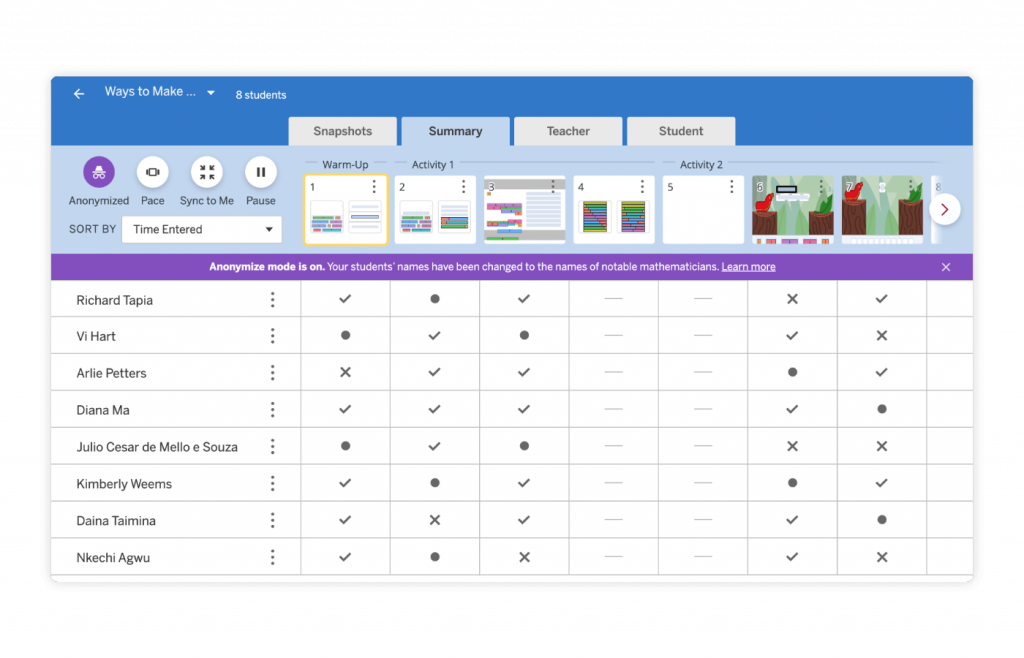
Components of a lesson
Students in an Amplify Desmos Math classroom can be seen (and heard!) asking questions, debating answers, justifying their thinking, grappling with problems, and working together and independently.
A typical Amplify Desmos Math lesson includes:
- Warm-up: A short, attention-getting problem to pique students’ interest in the lesson.
- Activities: One to two mini-activities that challenge students’ problem-solving skills.
- Synthesis: Discussion to review and bring together the important concepts from the lesson.
- Show What You Know and Reflection: Questions for students to show what they know from the lesson. (Note: The Show What You Know lesson assessment is optional for kindergarten and grade 1.)
- Centers: Student-led activity stations that reinforce the math learned during lesson activities through interactive and often game-like formats. In kindergarten and grade 1, time for Centers is built into the last 15 minutes of every lesson.
To support, strengthen, and stretch students’ learning after the lesson, Amplify Desmos Math offers options for:
- Differentiation: Mini-Lessons, Centers, Extensions, Boost Personalized Learning, and Fluency Practice.
- Practice: Additional problems your student’s teacher may assign for classwork or homework.
Support math learning at home.
You can support your student’s math learning outside of school in many ways:
Your student’s teacher may assign practice problems at the end of each lesson for classwork or homework. If your student has already completed the practice problems for the lesson, ask them to walk you through how they solved each problem, or talk about any parts that were challenging for them. Ask your student follow-up questions to encourage the use of math language as they explain their thinking, such as, “How do you know?,” “How can you show your thinking?,” or “How would you describe that?” If students are stuck, ask support questions, such as, “What information do you know here?” or “How could you represent this problem?”
Your student’s teacher may introduce a Center game with students in the lesson or beyond the lesson. These games are aligned to the math of the unit and can be played with students outside of class. Your student’s teacher may introduce a Center game to students during or after completing a lesson, or you may need to teach the game before you play by using easy-to-follow instructions. Sign up for a free account to explore Centers and additional K–5 content in our Featured Collections.
Each unit in Amplify Desmos Math begins with a read-aloud story to engage students and provide context for the math of the unit. Elements and characters from the Unit Story then appear in lessons throughout the unit.
Kindergarten
- Unit 1 Story: The First Day of School
- Unit 2 Story: What’s in a Restaurant?
- Unit 3 Story: A Great Shape Adventure
- Unit 4 Story: Casey’s Town
- Unit 5 Story: Where is Harry?
- Unit 6 Story: Winners
- Unit 7 Story: Everybody Needs Help Sometimes
Grade 1
- Unit 1 Story: Ying’s New Town
- Unit 2 Story: Let’s Grow!
- Unit 3 Story: Impossible
- Unit 4 Story: The Collectors
- Unit 5 Story: The Day of the Wazzle-Squash
- Unit 6 Story: Side by Side
- Unit 7 Story: A Potluck for Pia
Grade 2
- Unit 1 Story: A New Class Pet
- Unit 2 Story: The Heroes of Pineapple Street
- Unit 3 Story: What Orson Imagined
- Unit 4 Story: A Seed’s Journey
- Unit 5 Story: 302 Ricotta Drive
- Unit 6 Story: Arjun the Artist
- Unit 7 Story: Where Eli Went
- Unit 8 Story: On Clementine Court
Grade 3
- Unit 1 Story: My Name Is Harper
- Unit 2 Story: Cheri’s New Home
- Unit 3 Story: The View From Up Here
- Unit 4 Story: Home Cooking
- Unit 5 Story: Coen and Obita
- Unit 6 Story: Just Stick With It, Sasha
- Unit 7 Story: Through Piho’s Eyes
Grade 4
- Unit 1 Story: I Contain Multitudes
- Unit 2 Story: One Step at a Time
- Unit 3 Story: Finny
- Unit 4 Story: Myles and the Loggerheads
- Unit 5 Story: Just for Fun
- Unit 6 Story: Special Day, Special Lei
- Unit 7 Story: Captain Bogwart’s Treasure
Grade 5
Relate math to daily activities at home, whether grocery shopping, preparing a meal, or planning for a trip to the store. Your student can help you figure out how many more apples there are than oranges in the grocery cart, show how to split a sandwich into fourths, or figure out how much change you’ll receive in exchange for a $10 bill. Encourage your student to point out ways that you use math in your daily tasks.
Remind your student that getting stuck is part of the process and a necessary—beneficial, even!—part of learning. Many students (and adults) fear making mistakes. But research shows that making mistakes helps our brains grow. When your student gets stuck on a problem, encourage them to keep trying different strategies, even if they’re not sure if they are right.
Get more information.
Have a question about Amplify Desmos Math? Visit our help library to search for articles with answers to your program questions. For additional support, please contact your student’s teacher.
Amplify Texas, K–5
Built on a systematic scope and sequence, Amplify Texas, K–5 programs offer the explicit instruction needed in today’s classrooms. Amplify Texas includes both English and Spanish curriculums. The print version of the English curriculum is titled Amplify Texas ELAR (English Language Arts and Reading). The digital version of the English curriculum is titled Amplify Texas Elementary Literacy Program. The print version of the Spanish curriculum is titled Amplify Texas SLAR (Spanish Language Arts and Reading). The digital version of the Spanish curriculum is titled Amplify Texas Lectoescritura.
We’ve created a wide suite of professional development offerings that will help you meet your unique needs this school year. Find out more below!
Amplify CKLA, ELA, and Science professional development has been vetted by Rivet Education’s team through a rigorous three-step process and is listed in the Professional Learning Partner Guide.
Plan your professional development
We’re excited to partner with you on your Amplify journey. Flexible professional development pathways have been designed to meet your needs.
Recommended Professional Development Plan
Our team has curated a recommended professional learning path from initial launch to continuous support. Use the Professional Development Planning Guide below to discuss the plan that best meets your school or district needs with your Account Executive.
ELAR
SLAR
Session overview
Launch
K–5 instructional leaders
Amplify Texas Elementary Literacy Program (digital) and ELAR (print) initial training for K–5 instructional leaders
Half day (3 hours)
Prepare to implement and support Amplify Texas instruction in your schools! Learn how Amplify Texas supports students as they build literacy skills in the early grades and move among reading, writing, speaking and listening, and language activities in the upper grades. Understand the purpose of the Amplify Texas program (Skills, Knowledge, and Integrated Strands) and identify components of the Amplify Texas design principles within lessons. Participants will begin creating an action plan to support communication and change management related to Amplify Texas to staff, parents, and other stakeholders.
Audience: Instructional leaders (principals and coaches), maximum 30 participants
Modality: Onsite/Remote
K–2 teachers
Amplify Texas Elementary Literacy Program (digital) and ELAR (print) initial training for K–2 teachers
1 day onsite (6 hours) or 2 half days remote (6 hours)
Prepare to implement the Amplify Texas K–2 program in your classroom! Learn the foundational elements of Amplify Texas, including the structure of materials, key lesson elements, and how to deliver specific lesson types successfully.
Audience: Teachers (instructional leaders welcome), maximum 30 participants
Modality: Onsite/Remote
Amplify Texas Elementary Literacy Program (digital) and ELAR (print) program overview for K–2 teachers
Half day (3 hours)
Prepare to implement the Amplify Texas K–2 program in your classroom! Learn the foundational elements of the curriculum, including the structure of materials, key lesson elements, and how to deliver specific lesson types successfully.
Audience: Teachers (instructional leaders welcome), maximum 30 participants
Modality: Onsite/Remote
Amplify Texas Elementary Literacy Program (digital) and ELAR (print) Skills Strand initial training for K–2 teachers
1 day onsite (6 hours) or 2 half days remote (6 hours)
Prepare to implement the Amplify Texas Skills Strand program in your classroom! Learn the foundational elements of Amplify Texas, including the structure of materials, key lesson elements, and how to deliver specific lesson types successfully. Participants will begin planning for the first unit and lessons.
Audience: Teachers (instructional leaders welcome), maximum 30 participants
Modality: Onsite/Remote
Amplify Texas Elementary Literacy Program (digital) and ELAR (print) Skills Strand program overview for K–2 teachers
Half day (3 hours)
Prepare to implement the Amplify Texas Skills Strand in your classroom! Learn the foundational elements of the curriculum, including the structure of materials, key lesson elements, and how to deliver specific lesson types successfully.
Audience: Teachers (instructional leaders welcome), maximum 30 participants
Modality: Onsite/Remote
Amplify Texas Elementary Literacy Program (digital) and ELAR (print) Knowledge Strand initial training for K–2 teachers
1 day onsite (6 hours) or 2 half days remote (6 hours)
Prepare to implement the Amplify Texas Knowledge Strand program in your classroom! Learn the foundational elements of Amplify Texas, including the structure of materials, key lesson elements, and how to deliver specific lesson types successfully. Participants will begin planning for the first unit and lessons.
Audience: Teachers (instructional leaders welcome), maximum 30 participants
Modality: Onsite/Remote
Amplify Texas Elementary Literacy Program (digital) and ELAR (print) Knowledge Strand program overview for K–2 teachers
Half day (3 hours)
Prepare to implement the Amplify Texas Knowledge Strand in your classroom! Learn the foundational elements of the curriculum, including the structure of materials, key lesson elements, and how to deliver specific lesson types successfully.
Audience: Teachers (instructional leaders welcome), maximum 30 participants
Modality: Onsite/Remote
Amplify Texas Lectoescritura (digital) and SLAR (print) initial training for K–2 teachers
1 day onsite (6 hours) or 2 half days remote (6 hours)
Prepare to implement Amplify Texas program in your classroom! Learn the foundational elements of Amplify Texas, including the structure of materials, key lesson elements, and how to deliver specific lesson types successfully. Participants will begin planning for the first unit and lessons.
Audience: Teachers (instructional leaders welcome), maximum 30 participants
Modality: Onsite/Remote
Amplify Texas Elementary Lectoescritura (digital) and SLAR (print) program overview for K–2 teachers
Half day (3 hours)
Prepare to implement Amplify Texas in your classroom! Learn the foundational elements of the curriculum, including the structure of materials, key lesson elements, and how to deliver specific lesson types successfully.
Audience: Teachers (instructional leaders welcome), maximum 30 participants
Modality: Onsite/Remote
Amplify Texas Lectoescritura (digital) and SLAR (print) Skills Strand (Habilidades y destrezas) initial training for K–2 teachers
1 day onsite (6 hours) or 2 half days remote (6 hours)
Prepare to implement Amplify Texas Skills Strand (Habilidades y destrezas) program in your classroom! Learn the foundational elements of Amplify Texas, including the structure of materials, key lesson elements, and how to deliver specific lesson types successfully. Participants will begin planning for the first unit and lessons.
Audience: Teachers (instructional leaders welcome), maximum 30 participants
Modality: Onsite/Remote
Amplify Texas Elementary Lectoescritura (digital) and SLAR (print) Skills Strand (Habilidades y destrezas) program overview for K–2 teachers
Half day (3 hours)
Prepare to implement Amplify Texas Skills Strand (Habilidades y destrezas) in your classroom! Learn the foundational elements of the curriculum, including the structure of materials, key lesson elements, and how to deliver specific lesson types successfully.
Audience: Teachers (instructional leaders welcome), maximum 30 participants
Modality: Onsite/Remote
Amplify Texas Lectoescritura (digital) and SLAR (print) Knowledge Strand (Conocimiento) initial training for K–2 teachers
1 day onsite (6 hours) or 2 half days remote (6 hours)
Prepare to implement Amplify Texas Knowledge Strand (Conocimiento) program in your classroom! Learn the foundational elements of Amplify Texas, including the structure of materials, key lesson elements, and how to deliver specific lesson types successfully. Participants will begin planning for the first unit and lessons.
Audience: Teachers (instructional leaders welcome), maximum 30 participants
Modality: Onsite/Remote
Amplify Texas Elementary Lectoescritura (digital) and SLAR (print) Knowledge Strand (Conocimiento) program overview for K–2 teachers
Half day (3 hours)
Prepare to implement Amplify Texas Knowledge Strand (Conocimiento) in your classroom! Learn the foundational elements of the curriculum, including the structure of materials, key lesson elements, and how to deliver specific lesson types successfully.
Audience: Teachers (instructional leaders welcome), maximum 30 participants
Modality: Onsite/Remote
3-5 Teachers
Amplify Texas Elementary Literacy Program (digital) and ELAR (print) initial training for 3–5 teachers
1 day onsite (6 hours) or 2 half days remote (6 hours)
Prepare to implement the Amplify Texas 3–5 program in your classroom! Learn the foundational elements of Amplify Texas, including the structure of materials, key lesson elements, and how to deliver specific lesson types successfully.
Audience: Teachers (instructional leaders welcome), maximum 30 participants
Modality: Onsite/Remote
Amplify Texas Elementary Literacy Program (digital) and ELAR (print) program overview for 3–5 teachers
Half day (3 hours)
Prepare to implement the Amplify Texas 3–5 program in your classroom! Learn the foundational elements of the curriculum, including the structure of materials, key lesson elements, and how to deliver specific lesson types successfully.
Audience: Teachers (instructional leaders welcome), maximum 30 participants
Modality: Onsite/Remote
Amplify Texas Lectoescritura (digital) and SLAR (print) initial training for 3–5 teachers
1 day onsite (6 hours) or 2 half days remote (6 hours)
Prepare to implement the Amplify Texas 3–5 program in your classroom! Learn the foundational elements of Amplify Texas, including the structure of materials, key lesson elements, and how to deliver specific lesson types successfully.
Audience: Teachers (instructional leaders welcome), maximum 30 participants
Modality: Onsite/Remote
Amplify Texas Lectoescritura (digital) and SLAR (print) program overview for 3–5 teachers
Half day (3 hours)
Prepare to implement the Amplify Texas 3–5 program in your classroom! Learn the foundational elements of the curriculum, including the structure of materials, key lesson elements, and how to deliver specific lesson types successfully.
Audience: Teachers (instructional leaders welcome), maximum 30 participants
Modality: Onsite/Remote
Strengthen
K–5 leaders
Amplify Texas ELAR enhancing observations for K–5 leaders
Half day (3 hours)
Prerequisite training: Initial training for instructional leaders
Elevate program knowledge to support colleagues with effective Amplify Texas implementation! Practice analyzing Amplify Texas lessons and identify key instructional elements and next steps. Participants will be prepared to collect data and enhance classroom observations.
Audience: Instructional leaders (principals and coaches), maximum 30 participants
Modality: Onsite/Remote
K–2 teachers
Amplify Texas ELAR enhancing planning & practice for K–2 teachers
Half day (3 hours)
Prerequisite training: Initial training for K–2 teachers
Elevate program knowledge to strengthen your Amplify Texas K–2 implementation! Understand the progression of foundational skills and focus on high-quality questioning and discussion techniques through lesson study and practice. Participants will practice implementing key instructional elements and leave with annotated lessons.
Audience: K–2 teachers (instructional leaders welcome), maximum 30 participants
Modality: Onsite/Remote
Amplify Texas ELAR writing for K–2 teachers
Half day (3 hours)
Prerequisite training: Initial training for K–2 teachers and 2–3 months of Amplify Texas instruction
Dig into Amplify Texas writing instruction and student work in grades K–2! Identify writing opportunities in the Amplify Texas Skills and Knowledge Strand through analysis of a unit and daily lessons and analyze student writing using a program-aligned rubric. Participants will leave with an annotated unit highlighting the writing opportunities and student grouping suggestions.
Audience: K–2 teachers (instructional leaders welcome), maximum 30 participants
Modality: Onsite/Remote
Amplify Texas SLAR enhancing planning & practice for K–2 teachers
Half day (3 hours)
Prerequisite training: Initial training for K–2 teachers
Elevate program knowledge to strengthen your Amplify Texas K–2 implementation! Understand the progression of foundational skills and focus on high-quality questioning and discussion techniques through lesson study and practice. Participants will practice implementing key instructional elements and leave with annotated lessons.
Audience: K–2 teachers (instructional leaders welcome), maximum 30 participants
Modality: Onsite/Remote
Amplify Texas SLAR writing for K–2 teachers
Half day (3 hours)
Prerequisite training: Initial training for K–2 teachers and 2–3 months of Amplify Texas instruction
Dig into Amplify Texas writing instruction and student work in grades K–2! Identify writing opportunities in the Amplify Texas curriculum through analysis of a unit and daily lessons and analyze student writing using a program-aligned rubric. Participants will leave with an annotated unit highlighting the writing opportunities and student grouping suggestions.
Audience: K–2 teachers (instructional leaders welcome), maximum 30 participants
Modality: Onsite/Remote
3–5 teachers
Amplify Texas ELAR enhancing planning & practice for
3–5 teachers
Half day (3 hours)
Prerequisite training: Initial training for 3–5 teachers
Elevate program knowledge to strengthen your Amplify Texas 3–5 implementation! Understand the progression of foundational skills and focus on high-quality questioning and discussion techniques through lesson study and practice. Participants will practice implementing key instructional elements and leave with annotated lessons.
Audience: K–2 teachers (instructional leaders welcome), maximum 30 participants
Modality: Onsite/Remote
Amplify Texas ELAR writing for 3–5 teachers
Half day (3 hours)
Prerequisite training: Initial training for K–2 teachers and 2–3 months of Amplify Texas instruction
Dig into Amplify Texas writing instruction and student work in grades 3–5! Identify writing opportunities in the Amplify Texas curriculum through analysis of a unit and daily lessons and analyze student writing using a program-aligned rubric. Participants will leave with an annotated unit highlighting the writing opportunities and student grouping suggestions.
Audience: K–2 teachers (instructional leaders welcome), maximum 30 participants
Modality: Onsite/Remote
Amplify Texas SLAR enhancing planning & practice for
3–5 teachers
Half day (3 hours)
Prerequisite training: Initial training for 3–5 teachers
Elevate program knowledge to strengthen your Amplify Texas 3–5 implementation! Understand the progression of foundational skills and focus on high-quality questioning and discussion techniques through lesson study and practice. Participants will practice implementing key instructional elements and leave with annotated lessons.
Audience: K–2 teachers (instructional leaders welcome), maximum 30 participants
Modality: Onsite/Remote
Amplify Texas SLAR writing for 3–5 teachers
Half day (3 hours)
Prerequisite training: Initial training for K–2 teachers and 2–3 months of Amplify Texas instruction
Dig into Amplify Texas writing instruction and student work in grades 3–5! Identify writing opportunities in the Amplify Texas curriculum through analysis of a unit and daily lessons and analyze student writing using a program-aligned rubric. Participants will leave with an annotated unit highlighting the writing opportunities and student grouping suggestions.
Audience: K–2 teachers (instructional leaders welcome), maximum 30 participants
Modality: Onsite/Remote
K–5 teachers
Amplify Texas ELAR enhancing planning & instruction for English language learners for K–5 teachers
Half day (3 hours)
Prerequisite training: Initial training
Develop a strong understanding of how to support English language learners (ELLs) with Amplify Texas instruction! Identify program-embedded instructional supports and strategies for ELL students of varying proficiency levels and plan how to adjust instruction based on formative check points. Participants will begin to develop a plan for using program supports and strategies for ELL instruction.
Audience: K–5 classroom teachers and ELL specialists (instructional leaders welcome), maximum 30 participants
Modality: Onsite/Remote
Amplify Texas enhancing planning & instruction for students with special needs for K–5 teachers
Half day (3 hours)
Develop a strong understanding of how to support students with special needs! Identify program-embedded instructional supports and strategies for students with special needs, including connections to IEP goals, and plan how to adjust instruction. Participants will leave with an accommodation plan aligned to Amplify Texas instruction and IEP goals.
Audience: K–5 classroom teachers and special education specialists (instructional leaders welcome), maximum 30 participants
Modality: Onsite/Remote
Amplify Texas ELAR Strengthening consultation session
1 hour or 3 1-hour sessions
These 60-minute sessions will focus on a specific topic that will deepen educators’ understanding of Amplify Texas and equip them with the support they need to drive toward stronger student outcomes. An Amplify facilitator will align with the school or district leadership team in advance of the session on the topic (chosen from a menu of options) that will best meet educators’ unique needs. The menu includes sessions on engagement, pacing, and supporting all learners.
Audience: K–5 classroom teachers (instructional leaders welcome), maximum 30 participants
Modality: Remote
Amplify Texas SLAR Strengthening consultation session
1 hour or 3 1-hour sessions
These 60-minute sessions will focus on a specific topic that will deepen educators’ understanding of Amplify Texas and equip them with the support they need to drive toward stronger student outcomes. An Amplify facilitator will align with the school or district leadership team in advance of the session on the topic (chosen from a menu of options) that will best meet educators’ unique needs. The menu includes sessions on engagement, pacing, and supporting all learners.
Audience: K–5 classroom teachers (instructional leaders welcome), maximum 30 participants
Modality: Remote
Coach
K–5 educators (leaders, principals, coaches, teachers)
Amplify Texas ELAR Coaching for K–5 educators
2 days consecutive (6 hours per day, 12 total)
Prerequisite training: Initial training
Strengthen your implementation of Amplify Texas with a Coaching onsite visit for your teachers and/or leaders! An Amplify facilitator will visit 1–4 school sites for two days. Participants can choose from a variety of topics that include, but are not limited to: lesson modeling (conducted by an Amplify Texas facilitator) and debriefing, grade-level planning, classroom observations, and leadership consultation. The flexible onsite coaching design allows for a collaborative approach to support effective program implementation.
Audience: Teachers and/or instructional leaders (principals and coaches), maximum 30 participants
Modality: Onsite
Amplify Texas ELAR Coaching for K–5 educators
1 day onsite (6 hours) or 2 half days remote (6 hours)
Prerequisite training: Initial training
Strengthen your implementation of Amplify Texas with a Coaching onsite visit for your teachers and/or leaders! An Amplify facilitator will visit 1–2 school sites for one day. Participants can choose from a variety of topics that include, but are not limited to: lesson modeling (conducted by an Amplify Texas facilitator) and debriefing, grade-level planning, classroom observations, and leadership consultation. The flexible onsite coaching design allows for a collaborative approach to support effective program implementation.
Audience: Teachers and/or instructional leaders (principals and coaches), maximum 30 participants
Modality: Onsite/Remote
Amplify Texas ELAR Coaching for K–5 educators
Half day (3 hours)
Prerequisite training: Initial training
Strengthen your implementation of Amplify Texas with a Coaching onsite visit for your teachers and/or leaders! An Amplify facilitator will virtually visit for a half day. Participants can choose from a variety of topics that include, but are not limited to: lesson modeling (conducted by an Amplify Texas facilitator) and debriefing, grade-level planning, classroom observations, and leadership consultation.
Audience: Teachers and/or instructional leaders (principals and coaches)
Modality: Remote
Amplify Texas SLAR Coaching for K–5 educators
2 days consecutive (6 hours per day, 12 total)
Prerequisite training: Initial training
Strengthen your implementation of Amplify Texas with a Coaching onsite visit for your teachers and/or leaders! An Amplify facilitator will visit 1–4 school sites for two days. Participants can choose from a variety of topics that include, but are not limited to: lesson modeling (conducted by an Amplify Texas facilitator) and debriefing, grade-level planning, classroom observations, and leadership consultation. The flexible onsite coaching design allows for a collaborative approach to support effective program implementation.
Audience: Teachers and/or instructional leaders (principals and coaches), maximum 30 participants
Modality: Onsite
Amplify Texas SLAR Coaching for K–5 educators
1 day onsite (6 hours) or 2 half days remote (6 hours)
Prerequisite training: Initial training
Strengthen your implementation of Amplify Texas with a Coaching onsite visit for your teachers and/or leaders! An Amplify facilitator will visit 1–2 school sites for one day. Participants can choose from a variety of topics that include, but are not limited to: lesson modeling (conducted by an Amplify Texas facilitator) and debriefing, grade-level planning, classroom observations, and leadership consultation. The flexible onsite coaching design allows for a collaborative approach to support effective program implementation.
Audience: Teachers and/or instructional leaders (principals and coaches), maximum 30 participants
Modality: Onsite/Remote
Amplify Texas SLAR Coaching for K–5 educators
Half day (3 hours)
Prerequisite training: Initial training
Strengthen your implementation of Amplify Texas with a Coaching onsite visit for your teachers and/or leaders! An Amplify facilitator will virtually visit for a half day. Participants can choose from a variety of topics that include, but are not limited to: lesson modeling (conducted by an Amplify Texas facilitator) and debriefing, grade-level planning, classroom observations, and leadership consultation.
Audience: Teachers and/or instructional leaders (principals and coaches)
Modality: Remote
Pricing
We offer the following pricing for training sessions and packages:
| Session type | Pricing |
|---|---|
| 2-day onsite session | $4,800 |
| 1-day onsite session | $3,200 |
| 1-day remote session | $1,200 |
| Half day onsite session | $2,500 |
| Half day remote session | $750 |
| 1-hour Strengthening consultation session | $350 |
| 3 1-hour Strengthening consultation sessions | $1000 |
| Customized onsite or remote session | Price will vary |
Please note that the prices are general ranges and may be subject to change.
Contact
Amplify welcomes the opportunity to partner with schools and districts to design professional development plans and answer your questions.
If you would like to order any of our professional development services, please contact your local Amplify sales representative or call (800) 823-1969.
Frequently asked questions
The following FAQ contains the answers to some of the most common questions that we receive from pilot teachers like you.
Still have questions? Your dedicated pilot support coordinator would be happy to help. His or her contact information can be found in the pilot support brochure you received during your pilot implementation training. If you prefer, request that your pilot support coordinator gets in touch with you by completing this form.

Program questions
It’s true. Our teacher’s guide does not look like the typical guide that comes with a traditional textbook. Here’s why: we aren’t a traditional textbook program. Rather, we’re a next generation curriculum designed to support a shift to a whole new way of teaching science.
With this shift, your district will be faced with supporting a wide-variety of needs from a wide-variety of teachers. For that reason, the resources required to successfully implement a new program will vary considerably from teacher to teacher. That’s precisely why our Teacher’s Reference Guide is chock full of so many rich and varied resources. From scientific background knowledge to suggested teacher talk, standards maps to materials lists, and lesson preparation notes and classroom management tips to strategies for differentiating instruction, this guide is truly meant to serve as an instructional reference.
For everyday instructional use, we recommend that busy classroom teachers use Classroom Slides, which are now available for most K–5 units and will be coming soon for grades 6–8.
Also known as our hands-free TG, Classroom Slides are a brand-new teaching resource that makes delivering daily instruction easy and fun. With a fully customizable PPT available for every lesson of the program, teachers can put down the Teacher’s Guide and focus on what matters most—their students.
Classroom Slides are:
- Available offline, which means no more sweating unreliable internet connections.
- Streamlined for easy lesson delivery, including lesson visuals, activity instructions and transitions, animations, investigation setup videos, technology support, and more.
- Fully editable, allowing teachers to incorporate their own flavor, flair, and favorite resources.
Our development team is working as quickly as possible to make Classroom Slides available to all teachers. That said, at this time they are only available for the first and second units of each grade K–5, with the remaining units being released over the next few months. Due to the popularity of Classroom Slides at the elementary level, development for grades 6–8 is now underway, with all units scheduled for completion by the 2020-2021 school year.
Not to worry. Amplify Science California was developed with plenty of wiggle room built right into the program. This means that you can relax knowing that there’s ample time to get it all done.
Most curricula provide 180 days of lessons despite knowing that the typical classroom can’t possibly complete everything in a given school year. Rather than asking you to wade through unnecessary content, we designed a program that addresses 100 percent of the California NGSS in just 66 days at grades K–2 and 88 days at grades 3–5, and 146 days at grades 6–8.
While we took great care in ensuring cohesiveness across units and grade levels, we also know that the ability level of your students changes from year to year. As a result, you need a program that provides adaptable and flexible pacing, and that empowers you to make instructional decisions in the moment.
As you evaluate how well Amplify Science California can accommodate your pacing needs, consider the following:
Progress Builds: Our Progress Builds describe the way in which students’ understanding of the central phenomenon should develop and deepen over the course of a unit. Each Progress Build defines several levels of understanding, with each level integrating and building upon the knowledge and skills from lower levels. Because these Progress Builds are directly tied to the program’s system of assessments, teachers are armed with the data they need to make informed decisions about when to move on, when to slow down, and when to revisit a concept and dive deeper.

Multiple at-bats: Rather than introducing a concept on Monday, testing for mastery on Friday, and knowing students will forget everything by the next Tuesday, we set out to help students build meaningful and lasting knowledge that they can retain and transfer over the course of the entire unit. We accomplish this by giving students multiple opportunities (a.k.a. “at-bats”) to encounter, explore, and experience a concept. Said another way, Amplify Science California is actually made up of a series of multi-modal “mini-lessons”. This intentional cyclical and iterative design mirrors the 5Es, allows teachers the flexibility to speed up or skip ahead once students have demonstrated mastery, and empowers students to learn concepts more deeply than any other program.
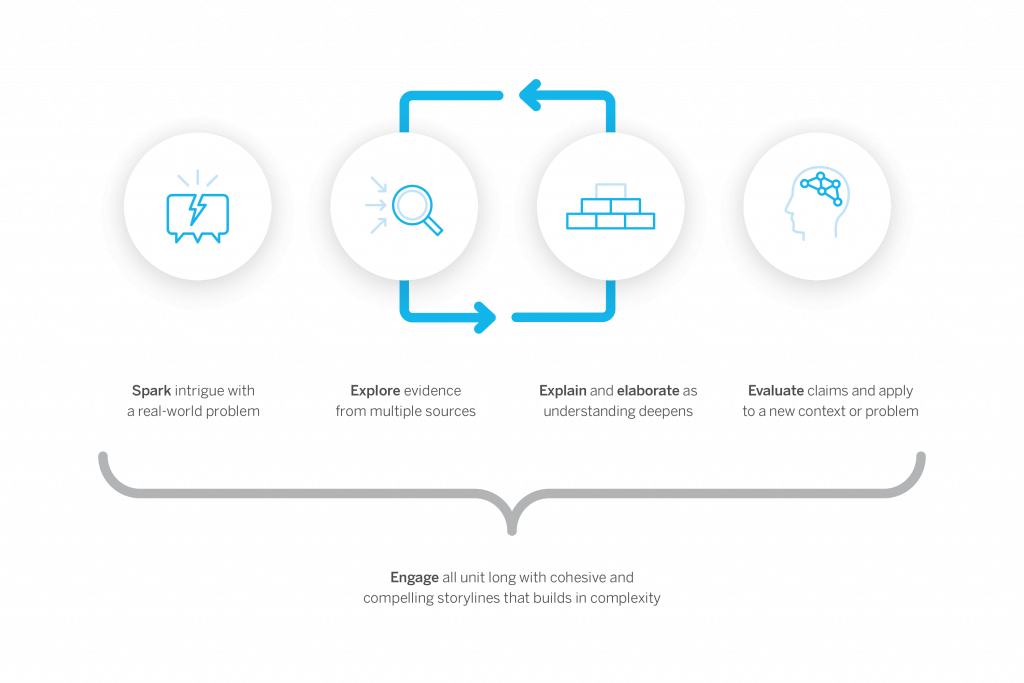
Extension activities: When some students are ready to move on and others are not, our unit extension activities can be a big help. Found in the Lesson Brief section of both the digital and printed Teacher’s Guide, these activities ensure that advanced learners remain engaged and challenged while teachers help the rest of the class build the foundational knowledge they need to be successful later in the unit.
What’s important to remember is that more hands-on doesn’t necessarily mean better, at least according to the California NGSS. That’s because only two of the eight Science and Engineering Practices (SEPs) are directly related to hands-on learning.
Just as scientists gather evidence from many types of sources, so do students in the Amplify Science California program. Like scientists, students gather evidence from physical models, digital models, texts, videos, photographs, maps, and data sets. By doing so, we provide students more opportunities than any other program to practice using all of the practices called out in the California NGSS Framework.
NGSS 8 Science Practices
- Asking questions
- Developing and using models
- Planning and carrying out investigations
- Analyzing and interpreting data
- Using mathematics and computational thinking
- Constructing explanations
- Engaging in arguments from evidence
- Obtaining, evaluating, and communicating information
While all of our units engage students in gathering evidence from a rich collection of sources, the reliance on different types of evidence (and evidence sources) varies according to unit. For instance, some units lend themselves to meaningful hands-on experiences, while in other units the phenomena students are investigating are too slow, too dangerous, or too big to be observed directly. In those units, students rely more heavily on other evidence sources such a physical models or simulations.
Unit types in grades K–5
In each K–5 grade, there is one unit that emphasizes investigation, one that emphasizes modeling, and one that emphasizes design. In addition, in grades 3–5, there is also one unit that emphasizes argumentation.
Unit types in grades 6–8
Each 6–8 grade features three types of units: Launch, Core, and Engineering Internships. Each year has one Launch unit, six Core units, and two Engineering Internships.
For teachers who wish to supplement the lessons with even more hands-on activities, optional “flextension” activities are included in many units.
As a blended curriculum, districts who adopt Amplify Science California are outfitted with a variety of print and digital resources as well as hands-on materials kits. To explore the specific components of the program, visit our What’s Included page.
As our customers will tell you, when you adopt Amplify Science California, you aren’t just buying a science curriculum, you’re joining a family. As such, along with materials, your adoption of Amplify Science California also includes care and support through a variety of staff and resources, including: customer support specialists, pedagogical support specialist, implementation specialists, professional learning specialists, educational partnership managers, and more.
Technical questions
To ensure that your hardware and network meet the minimum technical requirements for optimal performance and support of your digital curriculum products please see Amplify’s customer requirements page.
Absolutely! While 1:1 scenarios are great, they aren’t required. That’s because all Amplify Science California lessons were designed with device sharing in mind, and never assume that every student has a separate device.
When the use of practice apps is called for in a lesson, you have several options:
- If internet access is unavailable—“Preload” the digital tool on your device or devices for use offline.
- If limited student devices are available—Have students do the activities in pairs or small groups.
- If no student devices are available—Project the digital tool to the class and either “drive” the digital tool yourself or invite students to “drive” by using your device.
learning.amplify.com gives you access to the digital Teacher’s Guide and also gives your students (grades 6–8) access to the digital student experience.
apps.learning.amplify.com/elementary gives your students (grades 2–5) access to any practice apps referenced in the instruction. The teacher will either need to log in using their credentials, or have student accounts set up.
Tech headaches are never fun. However, implementing the following tips can help you keep the tech gremlins away.
- Display the student URLs near the classroom display materials.
- Before you start a unit, download all unit and lesson resources using the Offline Guide found in the Unit Guide of your digital Teacher’s Guide. In the event that connectivity issues strike, you will still be able to conduct your lessons without interruption.
- Use Chrome or Safari if possible as these are our preferred browsers.
- Disable pop-up blockers on all devices being used to support lessons.
- Be prepared for some webpages to open in a new tab and for PDF files to download automatically.
- Check and test your connections to any projection devices that you might be using throughout the lesson.
- Display the student URLs near the classroom display materials.
Administrators, welcome to Amplify Science!
Here you’ll find information about enrollment and licensing, technical requirements, professional learning resources, and more.
Onboarding: What to expect
Welcome to Amplify Science! There are six basic steps to onboarding. Use this visual as a reference, but also know that our dedicated implementation team will be there to support you during the entire process.
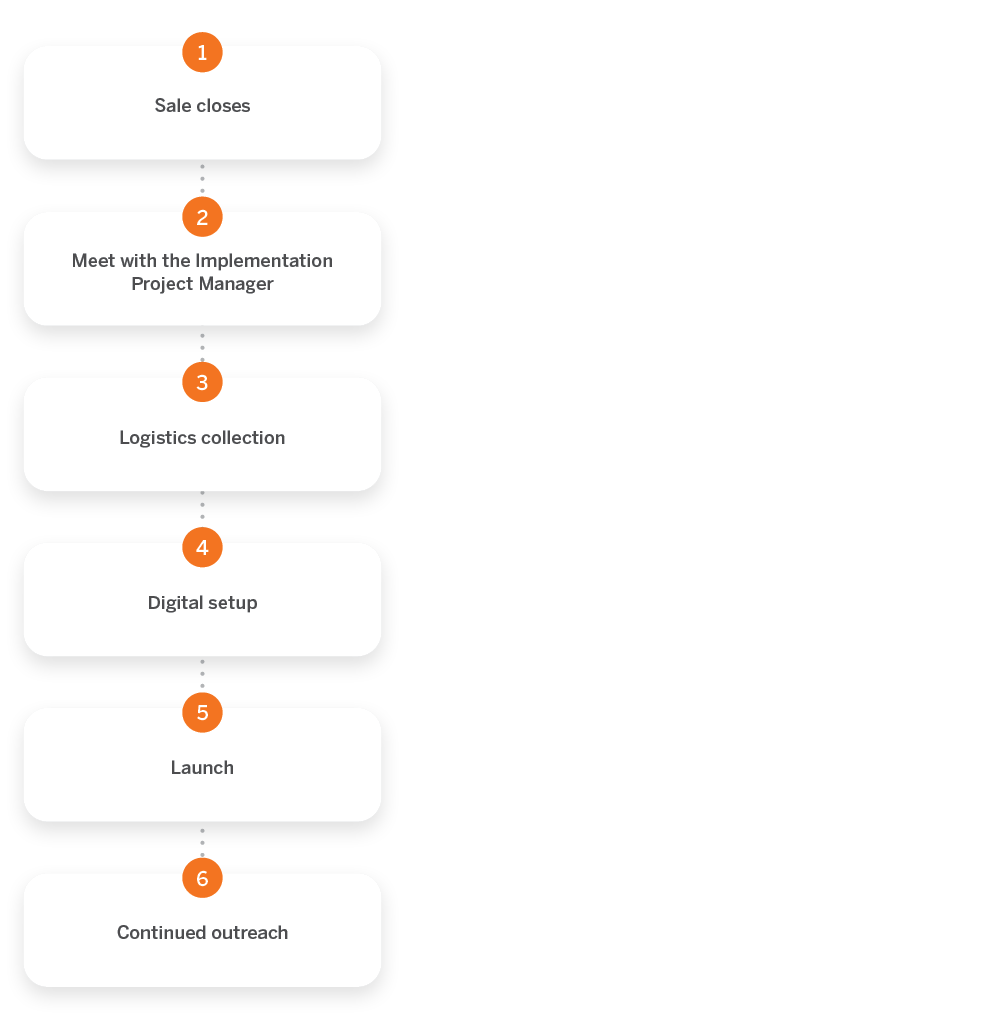
Technology requirements and guidelines
To ensure that your hardware and network meet the minimum technical requirements for performance and support of your curriculum products, please see Amplify’s customer requirements page.
You’ll also want to add the URLs on this page to the corresponding district- or school-level filters so that your teachers and students can access their Amplify Science materials.
Data sharing agreement
Partnering with Amplify through our data sharing program deepens learning outcomes and gives you the performance analysis you need to make impactful decisions within your district or school. By signing our data sharing agreement, your district will help us to better understand student performance as it relates to your state’s standards. It also allows us to compare results with the curriculum-embedded assessments and state-level assessments. These analyses will help you identify the areas where your teachers and students are excelling or may be experiencing challenges.
Stay tuned for additional updates.
Enrollment and licensing overview
During the enrollment and licensing call, your Amplify implementation partner will walk you through the enrollment process. We recommend exploring the enrollment web tool ahead of the call for suggestions on which enrollment method may be best for your district.
The following guides provide additional information about enrollment methods and the data sharing process.


Preparing for your materials
Each unit of Amplify Science comes with a hands-on materials kit.
Each hands-on materials kit arrives in 1–3 boxes and contains the following:
- Consumable materials
- Nonconsumable materials
- Classroom wall materials
- Premium print materials (cards, maps, etc.)
- 18 copies of each Student Book (K–5)
- A blackline master copy of the Student Investigation Notebook (K–5)
You can find complete materials lists for each unit in the following PDFs. This information is also available in the digital Teacher’s Guide within the program.
Once your district’s purchase order has been sent to Amplify and is processed, Amplify will provide tracking information on your materials kits and any additional print materials you’ve ordered.


Administrator Reports
Self-service Administrator Reports allow insight into teacher and student usage and student performance data for the current school year.
Access is limited to district and school administrators. Administrators can directly access these reports at my.amplify.com/admin-reports.
Announcements
Summer extension
With summer fast approaching, we recognize that some districts may be extending the school year and/or continuing the use of Amplify curriculum and programs for summer instruction. If your summer instruction will continue past June 30 and/or you need to make rostering or enrollment changes, follow our guidance on extending your rollover date.
Use stimulus funding to drive transformation
Learn about ESSER I, II, and III funding (or CARES, CRRSA, and ARP) and how to use these funds to help with learning recovery and acceleration. Districts have significant flexibility in how to use the ESSER money, with ESSER II and III specifying that some of the funds should be used to address unfinished learning. All Amplify programs and services meet the criteria for the funding. Get more information about funding and guidelines.
Next steps: How do I support my teachers?
Pre-launch checklist for teachers
Please share our Program Hub with your educators. It will provide helpful information as they prepare to implement Amplify in their classrooms, including a pre-launch checklist. Note that they’ll need to be logged into Amplify Science to access the Hub. If they don’t have a login yet, you can also download and share the Amplify Science pre-launch checklist for teachers PDF.

Professional learning
We partner with every district to make sure the Amplify Science rollout meets their unique needs. Check out these sample agendas to get a better understanding of what our team has to offer.
Advice and answers
The Science help website is filled with step-by-step resources to address educators’ questions. Encourage your educators to read through these tutorials and search for topics they want to learn more about.
Contact us
Powerful (and free!) pedagogical support
Amplify provides a unique kind of support you won’t find from other publishers. We’ve developed an educational support team of former teachers and administrators who provide pedagogical support at no cost to educators using our programs. This free service includes:
- Information on where to locate standards and other planning materials.
- Recommendations and tips for day-to-day teaching with Amplify Science.
- Support with administering and interpreting assessment data and more.
To reach our pedagogical team, click the orange icon while logged into the curriculum to get immediate help, call (866) 629-2446, or email edsupport@amplify.com.
Timely technical and program support
Our Customer Care and Support team is available Monday through Friday, 7 a.m. to 9 p.m. ET, and Sunday, 10 a.m. to 6 p.m. ET, through a variety of channels:
- Live chat: Click the orange icon while logged into the curriculum to get immediate help in the middle of the school day.
- Phone: Call our toll-free number: (800) 823-1969.
- Email: Send an email to help@amplify.com.
Join our community
Our Amplify Science Facebook group is a community of Amplify Science educators from across the country. It’s a space to share best practices, ideas, and support on everything from implementation to instruction. Join today.
Amplifying Your District Award winner

This Amplifying Your District Award honored two district leaders who are driving change using the Science of Reading in 2021. Motivated by low literacy rates in her school district, Alli Rice dug into the research behind the Science of Reading because she was determined to increase equity. Through various events and Knowledge Builders for the teachers in her care, she then effectively led the shift to a research-based curriculum in her district. Read on for our conversation with Alli about her work with the Science of Reading!
What does the Science of Reading mean to you?
For me, it’s really about equity. Thousands of kids are already a step behind because of their skin color, their neighborhood, or their zip code, all of these things that really shouldn’t define their academic ability or their opportunity in life. I’ve looked at statistics around prison populations and illiteracy rates. Some, so many adults are functionally illiterate and they can’t fully understand. They can’t even read their prescriptions.
I also work for a district where most of our kids are on the lower end for socioeconomic status. We have a very high ELL population and 63 home languages spoken in my district. And we are the urban center of our area. Historically, we have been a balanced literacy district, but we have watched our test scores decline.
Since discovering the Science of Reading and this completely different approach to teaching literacy, I feel like I have unlocked Pandora’s box of potential. By addressing our core and aligning our teaching practices, our students can feel success and our teachers will, too. My teachers here have the biggest hearts of any educators I have ever worked with, and they work tirelessly day in and day out to support our students. We try to provide as many enrichment opportunities to all of our kids and to expose them to the greatest and the best. The ability to read, to me, is the greatest civil right. If we’re not providing them that, I can’t sleep at night.
What news, materials, or information do you consume to help you teach?
We use Amplify CKLA and Amplify Reading and those programs are just wonderful. I am also an avid listener of Science of Reading: The Podcast. We arranged for Natalie Wexler and Susan Lambert to do a live professional development session in our district, which was so fantastic, especially for our most reluctant coaches and administrators. Our district-wide LETRS training has also been life-changing. We currently have 800 people who are completing the training, which has helped to align the district and put us all on this path to success.
One particularly impactful thing, and that I rely heavily on for support, is my teacher cadre. Each cadre is about 14 teachers in the district and they represent all of our clusters. We’ve partnered up with our Diversity, Equity, and Inclusion department to do text bias reviews on materials, which has been important for our adaptations for cultural responsiveness. Our selection cadre came from that as well, when we landed on Amplify CKLA for K–3. The teacher input and camaraderie I get from my cadre is so instrumental and I am so grateful for them.
What advice do you have for teachers starting out with the Science of Reading?
Find your people, find your community. I remember Margaret Goldberg’s presentation during last spring’s Science of Reading symposium, and how she said you need to find your dots, you need to seek out like-minded people and go where they are. Find those people who are ready to make the change like you are, or perhaps have already done it, and can be that positive support system you need to make a difference. Don’t be afraid to message people on Twitter or Facebook or LinkedIn, ask about their experiences, and build that community around you. Find the ones who are going to partner with you, who will lead you the right way, who will take your calls. And read all the books!
Watch the Science of Reading awards show!
The Science of Reading Star Awards are back!

If you’re reading this, someone taught you to read! You might remember learning your letters with a standout teacher, or simply curling up with a loved one to point out pictures and sound out words.
No matter who stands out to you, it takes a constellation of people to help children learn to read—both inside classrooms and beyond, and from district leadership to student families.
It also takes science: specifically, the science of teaching reading.
And we want to celebrate Science of Reading stars!
That’s why we created the Science of Reading Star Awards. Read on for more information about them, including how to nominate someone for the 2023 Awards. (If you’re already ready to nominate a star in your community, go right ahead!)
Reading educator awards for teachers who shine.
We launched this awards program in 2021—a year when schools, educators, and students were still working to bounce back from pandemic challenges and into a new normal. Even then, educators drove change, leading their school communities on a journey to the Science of Reading.
Our inaugural award program honored educators who championed and advocated for the Science of Reading in their classrooms, schools, or districts.
They generated buy-in. They inspired their peers and students. They successfully brought research-based instruction, phonics instruction, and foundational literacy skills into their approaches—and had remarkable gains to show for it.
Our 2021 awards, both finalists and winners, celebrated:
- Teachers who directly impacted their students and served as role models for their colleagues by applying the Science of Reading.
Winner: Anila Nayak, instructional coach and reading intervention teacher, Los Angeles Unified School District, California.
She says: “The Science of Reading is becoming my North Star because it’s guiding me to give the best that research has shown for my students.”
- Principals who have supervised the successful shift to the Science of Reading in many classrooms across several grades.
Winner: Cathy Dorbish, principal, Austintown Elementary School, Ohio
She says: “We know our kids come from all different backgrounds, different opportunities, and parents who read or don’t. By teaching them in this manner, we’re leveling the playing field. Those kids who may be economically disadvantaged, [but] they’re going to be readers just like the kids whose parents bought them 100,000 books.”
- District leaders who have driven or are driving change using the Science of Reading.
Winner: Alli Rice, elementary ELA lead, Kansas City, Kansas Public Schools
She says: “Teachers are saying things like ‘I never really thought my kids could have a discussion about the Renaissance during language arts class, but they are doing it.’”
Winner: Brittney Bills, curriculum coordinator, Grand Island Public Schools, Nebraska
She says: “I believe the Science of Reading is about hope. Knowing 95% of students are cognitively able to read at grade level with the right explicit instruction was empowering for me and the teachers I support.”
Nominate a Science of Reading star!
Inspired? Now think of the educators in your world—especially those devoted to literacy. Do you know someone who has transformed their classroom and empowered their students with the Science of Reading? What about someone who’s gone above and beyond core instruction based in the Science of Reading to apply these evidence-based practices in less traditional ways in areas like assessment, intervention, biliteracy, and beyond? (And yes, this person might be you!) We also have new categories this year, to honor both the traditional, and less traditional, Science of Reading champions!
Submit your nomination for the 2023 Science of Reading Star Awards by February 28!
All award winners will receive:
- A free professional development session with Susan Lambert, host of Science of Reading: The Podcast.
- A library of Science of Reading books to guide their journey.
- A subscription to The Reading League Journal.
- A spotlight on an episode of Science of Reading: The Podcast.
The Grand Prize winner will receive full conference registration and associated travel costs to Big Sky Literacy Summit in Big Sky, Montana, Sept. 2023 (dates forthcoming).
Learn more
To hear more from the 2021 winners, you can watch our Amplify Science of Reading Star Award Winners panel, now available as an on-demand webinar, or tune into Science of Reading: The Podcast to hear their conversations with host Susan Lambert.
Their stories and perspectives may help you discover how you can drive change in your classroom, school, and district with the Science of Reading!
Integrating AI in the science classroom
How can you create new science lesson plans, adjust assessments, and design labs using only objects kids have at home?
Just ask—ChatGPT, that is.
In this recent Science Connections webinar, Science Connections podcast host Eric Cross tackles the topic of ChatGPT for teachers, along with other specific AI tools that (when used with your existing standards-aligned curriculum) can help make teaching more efficient, targeted, and interactive.
AI for science can save teachers time, deepen student engagement, and inspire collaboration and creativity all around, says Science Connections podcast host Eric Cross.
Eric describes some of the many ways science teachers can use AI in the classroom—as both shortcut and partner. “We can use it for personalized learning,” he begins. “We can generate questions and give instant feedback. We can differentiate. We can support our students with special learning needs. And that’s just a start. The more you use it to collaborate with other educators, the more fun it becomes.”
Generative artificial intelligence 101
There are a lot of AI tools out there, but the new one is generative AI. As Eric explains, the difference is that generative AI—unlike, say, AI that gives you driving directions—creates something that didn’t exist before: text, images, music, and, yes, new science experiences for the classroom.
As with any technology, the practically infinite uses and applications of AI raise important questions about accuracy, equity, biases, and more. In this webinar, though, we focus only on AI’s practical uses for science teachers.
Generative AI relies on and responds to prompts.
You’re telling it to do something and it communicates back to you in human language. The way you craft your prompts determines your output, so the better your prompt is, the better your output.
– Eric Cross
Host, Science Connections; Adjunct Professor of Learning and Technology, University of San Diego
Let’s see what AI has produced for Eric as a science educator, and the kind of prompts he’s used to get there.
How science teachers can use AI to prepare and engage
Teachers can use generative AI to create personalized learning materials, generate more practice questions, and explain topics at any level and depth.
In this webinar, Eric focuses on the AI tools that have given him the most mileage as an educator and that he thinks can provide the most value for others.
These include:
- Modifying assessments when students have used all the ones that a curriculum provides. A sample prompt: “You are a science teacher creating an assessment for middle school students. I will upload an assessment. Please recreate it in a similar tone and voice as the original with a similar level of rigor.” Response: Brand-new multiple-choice and written questions on the same topics, all adhering to the same NGSS. With a little more back and forth, Eric will have the exact number, style, and focus of questions that he needs—along with an answer key.
- Creating relevant, accessible lab ideas. Eric prompts AI for lab and hands-on project ideas to fit exact specs: topic, grade level, desired outcome, and objects found in a typical classroom or home. Result: Hands-on activity ideas students can do at home, like exploring lung capacity with a balloon and a ruler (delivered by AI complete with full supply lists, instructions, and more).
- Helping students connect. To support a student who’s stuck, you might prompt the AI by saying: “I’m a fifth grader and my teacher is talking about claim evidence reasoning and I don’t really understand it. Can you explain it to me in a way that would help me? And then: “Now can you help me explain it to my mom, but in Spanish?”
Eric also uses AI to interpret graphs, collate student data, build graphic organizers, create science games, and more.
Is everything AI provides him flawless and 100% accurate? No, says Eric. “You have to vet, and it helps to have a high-quality curriculum already in place. But it gets me 80 to 90% there—and that’s pretty good.”
More to explore
- Hear more about AI from Eric and fellow educators Donnie Piercey and Jennifer Roberts in Science Connections, Season 3, Episode 4: Using AI and ChatGPT in the science classroom
- Science Connections podcast
- Amplify Science webinars
From full operation to lasting change with the Science of Reading: Phase 3

Welcome to the third and final installment in our series about the change management required to make the shift to the Science of Reading in your schools.
In Phase 1 of this series, we answered the question: Why is the Science of Reading important? We also described its potential to deliver literacy transformation—both in your classrooms and districts, and nationwide.
Change at that level requires hard work at your level, starting with what those in the field often call “exploration.” In Phase 1, we discussed what teachers should know about the Science of Reading. You established the rationale for changing to a Science or Reading curriculum and built buy-in from stakeholders.
In Phase 2 of this series, we guided you in evaluating Science of Reading programs, helping you answer the question: Which program will best help your school or district transition to the evidence-based practices that will drive results for students? We also walked through the selection, adoption, and initial implementation of Science of Reading resources.
And now you’re ready for change management Phase 3: full operation, innovation, and sustainability. What does this phase look like? How will the Science of Reading be used effectively? Where and how will you see student growth? Read on for all this and more.
Phase 3, part 1: Full operation
At this stage, Science of Reading literacy practices are fully integrated throughout your system.
Remember, the three key drivers of educational change are process, practice, and people. So let’s break the full operation phase down into these categories:
Process
Conduct routine data analysis to monitor student progress and determine areas of needed improvement.
Practice
Expand the focus on evidence-based literacy practice to other grade-level instructional areas to support the integration of these practices into the larger system (when appropriate). That might include personalized learning, intervention, support for bilingual students, and others.
People
Plan and implement onboarding processes for new teachers and administrators. Emphasize deeper understanding of resources and instructional practices through continuous improvement, coaching, and mentoring.
Questions to answer at this stage:
- How has the integration of evidence-based practices and resources impacted literacy development of students?
- What specific progress-monitoring processes are in place to track the effectiveness of literacy practices?
- Are interventions effective for students not reading on grade level?
- Have we reduced the number of students who are at risk?
- How are staff onboarded and prepared to step into the system?
- What ongoing professional learning will occur?
Phase 3, part 2: Innovation and sustainability
All these phases, all this work—here’s where it starts to pay off.
With Science of Reading practices fully in play, you’ll see them start to work in the form of student growth.
This stage will allow for refinement of instructional practice and a much deeper understanding of how Science of Reading research affects student achievement.
This is also a moment to continue building knowledge by focusing on middle school. Your middle schoolers need to draw on the foundational skills built in earlier grades—or get the intervention that will help them catch up—and build an academic knowledge base that will prepare them for success in high school and beyond. Continuing to bring research-based literacy practices to middle school instruction will help them get there.
And now, your final set of the 3 Ps:
Process
- Leave room for innovation aligned with the ever-growing body of Science of Reading research.
- Consider creating processes that will allow for the expansion of pedagogy based on the Science of Reading into middle schools.
Practice
- Ensure that current research and data are informing instructional decisions and continuing to deepen the knowledge base you’ve built so far.
- Implement systems such as collaborative conversations about data, peer-to-peer instructional rounds, and the study of problems of practice to support deeper implementation.
- Develop professional learning systems and put them into practice.
People
- Emphasize a culture of collaboration and shared ownership, as well as a community of practice.
- Focus conversations on student growth and outcomes to better allocate resources.
Question to answer at this stage:
- What strategies and systems can we develop to encourage innovation while remaining true to the implementation of chosen resources?
Now you have the tools, the plan, and the motivation to help drive life-changing results and improve literacy outcomes for all students by bringing the Science of Reading into your classrooms. We’re happy to be part of that change. And we’d love to hear how it goes!
More ways to explore:
- Creating change that lasts when implementing the Science of Reading: Phase 1
- Adopting and implementing the right Science of Reading program: Phase 2
- Managing the change that matters most: Implementing the Science of Reading with integrity
- The Science of Reading
- Change Management Playbook
- Change management principles
- Science of Reading: A New Teacher’s Guide ebook
Introducing the 2024 Science of Reading Star Awards

There’s more than one way to name a star. You can honor someone you admire by symbolically attaching their name to a star in the night sky…or you can nominate a teacher you admire or a district lighting the way for students for Amplify’s third annual Science of Reading Star Awards!
As we like to say, it takes a constellation of people to help children learn to read—from district leadership to student families, and from inside the classroom to out there the real world. It also takes science—specifically, the science of teaching reading. And it takes leaders who can successfully lead their district in the shift to a curriculum grounded in the Science of Reading, educators who thoughtfully connect students and their families to the impact of the Science of Reading, and teachers who artfully use evidence-based reading instruction to light the way for their students.
We want to celebrate all of these Science of Reading stars!
That’s why we created the Science of Reading Star Awards. Read on for more information about them, including how to nominate someone (or an entire school or district) for the awards. (And if you’re already ready to nominate a star, go right ahead!)
Honoring stellar educators, leaders, schools, and districts in the Science of Reading
We launched this awards program in 2021—a year when schools, educators, and students were still working to bounce back from pandemic challenges and into a new normal. Even then, educators drove change, leading their school communities on a journey to the Science of Reading.
Our awards program honors educators who advocate for and champion the Science of Reading in their classrooms, schools, and districts. They generate buy-in. They inspire their peers and students. They successfully bring research-based materials, phonics instruction, and foundational literacy skills into their approaches—and have remarkable gains to show for it.
These award-worthy educators can include/have included:
- Teachers who’ve connected with their students and served as role models for their colleagues by applying the Science of Reading.
- Principals or district leaders who’ve supervised a successful shift to the Science of Reading in many classrooms across several grades.
- Schools or districts that are driving changes and seeing incredible results using the Science of Reading.
Meet (and learn from) some of our previous winners!
Javonna L. Mack, Lead Content Teacher, Caddo Parish Schools, LA
Award: Changemaker
How did it feel to be selected as a Star Award finalist?
I was and am still over-the-moon excited about being selected as an Amplify Changemaker Star Award finalist. I was very humbled by becoming the winner. It is an amazing feeling of accomplishment when you receive awards. It has become a hallmark of the hard work I have done in my district to support our push in the Science of Reading.
Do you have any advice for educators submitting to the Science of Reading Star Awards for the first time?
Make sure to tell your story. Be clear and concise. Remember to be reflective of all the ways that you have supported your district. I advise that you speak with your peers and gain feedback as to the ways that you have impacted the work they do. Detail your support. Be unique and track and celebrate your achievements.
Shennoy Barnett, Kindergarten Teacher, Johnston County Public Schools, NC
Award: Data Dynamo
How did it feel to be selected as a Star Award finalist?
It was an amazing feeling even to be considered as a semi-finalist, and an even greater one to be selected as a winner, given that it was my first year using the tool.
Do you have any advice for educators submitting to the Science of Reading Star Awards for the first time?
Your hard work and dedication with your students through [the] Science of Reading will tell your story. Even if you are not selected as a finalist, you are still a winner as you are using an amazing tool and touching the lives of your students.
Anila Nayak, Instructional Coach, Intervention Teacher, Los Angeles Unified School District, CA
Award: Science of Reading Superstar Teacher
How did it feel to be selected as a Star Award finalist?
I felt exhilarated at first and later responsible for sharing my learning about how best to teach children to read. It certainly made me more energized to work harder and continue to improve my practice. The award validated my efforts and steered my obsession to become an efficient and knowledgeable reading teacher.
Do you have any advice for educators submitting to the Science of Reading Star Awards for the first time?
Write your compelling narrative about the impact you make each day in the lives of young readers who need you most. You have the tools to reach students who may be struggling but just have not been reached yet. Tell about how you evolved into an expert despite challenges and how learning about the best ways to teach is an absolutely rich experience. After all, you are impacting so many students through your work. Show your pride, because you are doing important work. The Awards journey opens you up to a community of experts and makes you feel a part of new horizons; you get to listen to many experts and read about the new knowledge that is impacting our understanding of how literacy grows.
You can meet all of our 2023 winners here. Their stories and perspectives may help you discover how you can drive change in your classroom, school, and district with the Science of Reading!
Nominate a Science of Reading star!
Inspired? Now think of the educators in your world—especially those devoted to literacy. Do you know someone who has transformed their classroom and empowered their students with the Science of Reading? (And yes, this person might be you!) How about a school or district that has established strong evidence-based practices and seen incredible results? We also have new categories this year to honor both the traditional and less traditional Science of Reading champions!
Submit your nomination for the 2024 Science of Reading Star Awards by Feb. 15!
All award winners will receive:
- Free enrollment in Foundations to the Science of Reading online course.
- A spotlight on an episode of Science of Reading: The Podcast.
- Honorary Amplify Ambassadorship.
- Science of Reading starter library.
- Tons of swag!
The grand prize winner in the District and School categories will receive a regional event hosted by Amplify. The grand prize winner in the Individual category will be given full conference registration and associated travel costs to NCTE in Boston, in Nov. 2024.
Learn more:
Amplify’s professional services for educators
We work together with educators to create meaningful learning experiences in schools—whether it’s designing a customized professional development plan, working alongside teachers in the classroom, or providing engaging and effective high-impact tutoring services to help students thrive.
Amplify’s professional development
When educators grow, students grow. Our goal is to support your team’s professional development with training designed to nurture, develop, and refine instructional practices, enhancing student achievement. We offer flexible PD training and coaching, both in-person and online, with a range of support to fit districts’ needs and educators’ busy schedules.

Amplify’s high-impact tutoring
Every child deserves to be a confident reader and mathematical thinker. Amplify Tutoring, grounded in evidence-based practices and high-quality instructional materials, delivers meaningful gains for students and data-driven insights for educators. Our flexible high-impact tutoring models for literacy and math help schools meet students’ unique needs.
Leading education into the future, together
Collaborative partnerships to strengthen educator success
Partnering with leading organizations, Amplify offers robust Amplify Desmos Math professional development that complements and enriches your learning journey and ensures access to comprehensive educational resources. Together, we align district and school leader support, enhance instructional practices, and boost student engagement to drive enduring outcomes.
Partner organizations


Hello, Alaska teachers and leaders!
The Alaska Department of Education and Early Development (DEED) has selected Amplify’s mCLASS® DIBELS® 8th Edition as the statewide literacy screener to help with the early identification of students with required additional reading support. mCLASS is a foundational literacy assessment based on the Science of Reading.
As the approved screening tool for the AK Reads Act, mCLASS DIBELS 8th Edition should be administered three times each school year. Together, Amplify and DEED will strategically and confidently support teachers and families to help students improve their reading skills with mCLASS DIBELS 8th Edition.
Log in to access your mCLASS program and hundreds of resources at learning.amplify.com.
Want advice and answers from the Amplify team?

Introduction to mCLASS DIBELS 8th Edition
mCLASS DIBELS 8th Edition is an English universal screener and progress monitoring reading assessment tool. It measures foundational literacy skills, creates instant groups, and includes targeted teacher-led instructional plans.
The power to know every student
Precise one-minute measures based on predictive data allow mCLASS to provide individualized instruction.
Deep insights
Intuitive reporting for teachers and administrators supports data-driven decisions to achieve student growth.
Immediate support for at-risk students
Universal and dyslexia screening in one validated assessment tool identifies your at-risk students at the earliest levels.
Rigorous, teacher-led intervention
Receive the analytical tools and resources needed to deliver targeted, staff-led intervention to students.
Don’t miss out!
What’s new:
- Download the 2025-26 EOY checklist, and be prepared to administer the end-of-year benchmark assessments.
- New mCLASS DIBELS 8th Edition professional development sessions are now available! Register below for available sessions.
- Click here to learn more about the Alaska mCLASS DIBELS 8th Edition Calibration Module. Anyone administering mCLASS assessments must complete the Alaska mCLASS DIBELS 8th Edition Calibration Module with a passing score.
- Each participating district will receive mCLASS DIBELS 8th Edition Assessment kits. One kit, per grade, K-3 will be shipped. Materials can also be downloaded for free. If you would like to purchase additional kits, please email Kristen Rockstrah or Alicia O’Neil.
Technical onboarding
Visit our Technical Onboarding hub for information and resources to help guide you through setting up digital access to your Amplify products.
Enrolling with multiple Amplify programs?
For additional support in enrolling when using multiple Amplify programs, contact support.
Professional learning
There are many exciting learning opportunities available for Alaska teachers and leaders. Access session recordings, training resources, and more.
For more information, please reach out to your Amplify PD representative:
Erin Replogle
Professional Development Strategist, Literacy
ereplogle@amplify.com
About mCLASS DIBELS 8th Edition initial training
Districts have been registering for district-specific initial training. If you’re unable to make your district’s scheduled session, you can register for another district’s training. Seats are limited in these sessions, so please sign up early if you are interested in attending.
In addition, anyone administering mCLASS assessments must complete the Alaska mCLASS DIBELS 8th Edition Calibration Module with a passing score.
Initial training
Initial mCLASS DIBELS 8th Edition training
New to mCLASS DIBELS 8th Edition? This session will prepare educators to administer the mCLASS DIBELS 8th Edition measures and help them use this data to enhance their classroom instruction.
April 1st & April 8th: 1 pm – 4 pm
April 6th: 8:30 am – 3:30 pm
April 11th: 8:30 am – 3:30 pm
April 15th: 8:30 am – 3:30 pm
Assessing with fidelity for teachers—1 hour
Already trained in mCLASS DIBELS 8th Edition but want to brush up on your administration practices? Join us for this 1-hour session to review assessment administration information and practice assessing students on PSF or NWF.
New sessions coming soon!
Strengthening
Creating a data-driven classroom for teachers—3 hours
This three-hour training session is geared toward teachers who have completed at least one mCLASS DIBELS 8th Edition benchmark administration and are ready to begin analyzing student data to make instructional decisions.
New sessions coming soon!
Progress monitoring to drive student outcomes for teachers—1 hour
This one-hour training session is geared toward teachers who have completed at least one mCLASS DIBELS 8th Edition benchmark administration and are ready to implement mCLASS progress monitoring and MTSS best practices to track student progress and accelerate growth.
New sessions coming soon!
Data conversations
Understanding and communicating mCLASS DIBELS 8th Edition results with stakeholders—1 hour
This session is designed to extend educators’ understanding of norm-referenced and criterion-referenced assessments, how they apply to their student’s mCLASS DIBELS 8th Edition results, and how to facilitate and support parent communication.
New sessions coming soon!
Instructional leaders
mCLASS DIBELS 8th Edition data walkthrough for leaders—1 hour
Cultivate a school-wide culture of data-driven practices. Use mCLASS reports to drill into key school-level data and leave with a systems-level action plan to drive stronger student and teacher outcomes.
New sessions coming soon!
mCLASS DIBELS 8 Reporting Basics for Leaders – 1 hour
Examine your school-level mCLASS benchmark assessment data to identify key levers for improving student outcomes
New sessions coming soon!
Professional development opportunities are added frequently.
*Please note that sessions require a minimum number of participants. Sessions that do not have sufficient registration may be canceled. Please encourage your colleagues and administrators to promote sessions you believe would be helpful to fellow educators.
Coming soon!
Explore the complete Professional Development Library and the Amplify Webinar Library.
View the mCLASS DIBELS 8th Edition Benchmark Scoring:
- Document: How To Use District-Level Student Online Assessment Management
- mCLASS DIBELS 8th Edition assessment materials (for print)
Learn about additional Assessment Measures (RAN, Spelling, Vocabulary, Oral Language).
Access help articles, videos, and tutorials to support your mCLASS onboarding and implementation.
Benchmark and reporting

Beginning-of-year (BOY): August 18, 2025—September 26, 2025
Middle-of-year (MOY): December 1, 2025–January 26, 2026
End-of-year (EOY): April 30, 2026–May 15, 2026
If you need to change your benchmark window, please contact support.
We at Amplify and the team at the University of Oregon are here to provide continued guidance and support around collecting and using mCLASS data.
mCLASS can be administered in many ways, including remotely. This site will give guidance on the options to best support your students in any learning environment.

mCLASS gives you detailed insight into your students’ reading development across foundational literacy skills, empowering educators with instructional recommendations specific to each student’s unique needs.
Access the mCLASS Reporting Guide to find a wealth of valuable reporting information that mCLASS provides for everyone, from classroom teachers and literacy specialists to principals and district leaders, as well as parents and guardians at home.
In addition to the Reporting Guide, please view the following help and tutorial resources.
- mCLASS Reading Reports help
- What’s New (keeps you posted on recent updates)
- Video: Navigating mCLASS Reading Reports
- Updated DYD (Download Your Data) data dictionary (benchmark)
- Updated DYD (Download Your Data) data dictionary (progress monitoring)
- Class and Student Reports help
A measure should be invalidated, or deleted, when an interruption or mistake occurs that undermines the validity of the score. Examples include the following:
- The wrong student was assessed.
- There were interruptions, such as from intercom announcements or fire drills.
- There were scoring errors that cannot easily be corrected.

Explore more programs.

We are the gold standard in early literacy. Our proven early literacy suite of assessment, instruction, and intervention is more powerful than ever. Unlock the power of our full literacy suite with programs designed to enable every student to build robust foundational skills and grow at all reading levels. Learn more about our related programs.

mCLASS Intervention
Follow a research-based, targeted skills progression and use mCLASS benchmark and progress monitoring data to create groups and daily lesson plans for 10-day cycles.

Amplify CKLA
Built on the Science of Reading, Amplify CKLA features an explicit, systematic approach that leverages multisensory instruction and provides instruction for students from all walks of life.

Boost Reading
Delivers adaptive instruction, practice, and intervention support through highly engaging games and activities, freeing educators up to work with small groups.

Need more help?
Log in at learning.amplify.com, and click the gray chat button in the bottom right corner to chat live with our support team.
Our Help Center contains searchable articles and resources to answer many of your questions.
Contact us at (877)-810-4919 for dedicated account support.
If you need additional support, please contact our support team.
Welcome, K–5 Atlanta Public Schools!
S2-06: Making time for science in the K–5 classroom

In this episode, Eric Cross sits down with TikTok star and podcast host Lauran Woolley about her experience teaching science content within her K–5 classroom. Lauran shares how she’s learned how to make time for science, and what most K–5 teachers experience when creating their own science curriculum. Lauran also talks about her rise in popularity on TikTok, her podcast, Teachers Off Duty, and establishing strong relationships with her 5th grade students. Explore more from Science Connections by visiting our main page.
Lauran Woolley (00:00):
I wanna make sure that they’re ready for the real world, and I wanna make sure that they’re able to apply these things that I’m teaching them in their life, not on a multiple choice test.
Eric Cross (00:11):
Welcome to Science Connections. I’m your host Eric Cross. My guest today is Lauren Woolley. Lauren is a full-time fifth grade teacher in Leetonia, Ohio, who has amassed a following of 5.5 million subscribers on TikTok and over 1 million followers on YouTube. She’s also co-host of the podcast, Teachers Off Duty. Lauren has combined her teaching vocation and her talent for entertaining to connect with her students and encourage teachers across the world using her own unique style of edutainment. My most vivid memory from our discussion was her sincerity and openness about her experiences. It quickly became obvious to me that her personal transparency was a characteristic that she has remained grounded in despite her social media success. And now, please enjoy my discussion with Lauren Woolley.
Eric Cross (00:53):
You’re currently teaching fifth grade?
Lauran Woolley (00:55):
Yes.
Eric Cross (00:55):
What is it like to teach all content areas? ‘Cause I’m a middle school science teacher.
Lauran Woolley (00:59):
I didn’t always teach all content areas. First I started in second grade, so I used to teach like primary. I taught that for about three years. And I only really got my 4-5 endorsement because it was told to me that it would make me more marketable as a teacher. So I got it <laugh>. I was like, I’m never gonna use that. And then, my second year teaching, my class had low numbers and they collapsed my second grade classroom, split up my students, and then moved me to fifth grade in January. I had to take over a fifth grade class with all content areas in the middle of a school year. And it was really hard. It was like probably one of the most challenging things I’ve ever had to do teaching. When I got my job at my current school, it was only language arts, social studies.
Lauran Woolley (01:46):
So we only have two fifth grade classes. My other teacher would teach math, science. I taught language arts, social studies, and then the timeframes weren’t matching up. Like, I didn’t have enough time in my schedule for all the things we had to do in our curriculum. And she had like a little bit too much time. We realized as a district that it would be better for our fifth grade classes to just be self-contained. And last year was the first year I taught all five subjects. And I liked the variety of teaching everything because when I taught just language arts, social studies, I just felt like I was repeating myself twice a day. <laugh>. It was kind of boring for me. So like, I like doing all of it. <laugh>.
Eric Cross (02:24):
Yeah. With all of your talents and like your background and what I’ve seen, I could totally see why having all the different content areas would like make sense. Are you using a set curriculum? How do you come up with what to teach? Do you do it with teams? Like who comes up with that?
Lauran Woolley (02:36):
Uh, me, myself and I.
Eric Cross (02:38):
Well done.
Lauran Woolley (02:39):
My school, for literacy we’re using literacy collaborative. Then for math, we just adopted bridges, which I love and it’s very hands-on, very like student-led. For science, we had nothing. And I am not a science, or was not a science teacher at the time when I took over. So I panicked a bit and I was like, “Hey, can we have some kind of science curriculum? ‘Cause I got nothing.” And it’s not hard to look at the state standards and figure out what you need to teach them, but having no resources to go off of is extremely difficult. And luckily I have an older brother, he’s like three years older than me and he’s also a teacher. He actually is a science teacher. ‘Cause that first year that I was teaching all subjects, I was like, “Hey Ryan, can you just like send me all of your Google Drive files for science <laugh>?
Lauran Woolley (03:33):
And he’s like, “Yeah, sure.” So he kind of was like a mentor for like the first year that I taught science. And this year being my second full year teaching science, I feel much more confident. I’m still using his resources. We don’t have a dedicated curriculum at my school. So that’s like one thing I’ve been fighting my school on. And not that they don’t wanna get us one, but like they were focused on getting the math curriculum last year. And then I was told, okay, this year will be science because in my state, fifth grade is a tested area for science and we have no curriculum.
Eric Cross (04:04):
Ryan, keep doing what you’re doing big bro. Second, thank you to every teacher who’s had a Google Drive folder full of curriculum that you graciously shared to a new teacher or someone else that they could have.
Lauran Woolley (04:18):
Can we just say like, can schools, like schools, please get your teacher’s science curriculums.
Eric Cross (04:24):
No, absolutely right. And there is this way of thinking that, especially as a science teacher, it’s something that is dear to my heart, but we do want to develop these math and English skills that’s important and we need that for science. But we’ve always taught so siloed for so long, but that’s not the way that we learn and that’s not the way life works. Something that intrigued me about what you said, and I think a lot of people can relate to it, and I know I can because that was me, is you created your own content or your science content. Like you’re kind of piecing that together from what Ryan had shared with you. How do you make time for that with all of the other things that you’re doing and pressures of state testing and things like that. Like how do you weave that into your teaching?
Lauran Woolley (05:02):
So we have like things that are non-negotiable in our schedules. Like we have to have so many minutes of this, so many minutes of that, so many minutes of whatever else. Well, the first year, I was self-contained. I was like, okay, my main goal, because science is a tested area, I wanna make sure that I get in science every single day, 90% of the time I’m able to get anywhere from 30 to 45 minutes of science every day. But this year it was my goal to make sure that I was getting science done and like we were doing meaningful lessons. And last year I didn’t do this, but this year I’m doing a Christmas center for STEM. So I got it off of Teachers Pay Teachers. I’m sorry, I can’t remember who it was made by, but it’s called Jingle All the Way and it’s like building Santa’s new sleigh. And so like the kids have an activity where they have popsicle sticks, straws, a plastic cup and then like tape. And they have to build a new sleigh for Santa and see how many pennies their sleigh can hold. Like talk about a sleigh being lightweight but also strong and like what would make it strong and different things like that. So I’ve been trying to incorporate a lot more STEM activities. And then something I really like to use for experiment days, I call them lab days, is Gizmo. Have you heard of Gizmo?
Eric Cross (06:15):
Yeah. The simulations.
Lauran Woolley (06:16):
Yeah. My brother showed me that too and he was using it in his class. I mean there’s so many different ones that they have that align with the standards and they have like student lab sheets that go with them and teacher guides and stuff. I’ve just been trying to like up my game a little bit more this year, because last year I was like struggling to get all of the standards in before state testing came around because, can we agree, state testing should not be as early as it is? Our state test happens in like March and we have two months of school left. So like, we better be done with standards by February so we could review, because otherwise we’re kind of outta luck because we run outta time.
Eric Cross (06:59):
Yes. That and there’s all kinds of other things that state testing brings with it that we could spend a lot of time probably critiquing and talking about like as far as what’s ideal for kids and what’s the best way to measure and assess learning. That is one question I wanna ask you though, because I know with your work on TikTok and Instagram and YouTube, you must be connected to a pretty vast teacher network and maybe you have like, kinda like more of an inner circle of people, but you must come across so many different perspectives and get into great discussions. Is there <laugh>, is there anything that kind of stands out to you as far as if you were in charge of what we’re doing? Because that’s kind of the system that we all live in and we kind of are trying to internally change it, but it’s been that way for a long time and we just kind of have to work within it until we can make changes. But if you were to, I dunno from an elementary school perspective, change or modify the way kids are learning, what would you do if you had Monarch ability?
Lauran Woolley (07:54):
Okay, I got three main things I’m thinking in my head. Okay, first things first, we got Maslow’s hierarchy of needs. Okay. If kids are coming to school hungry, if they’re coming to school and don’t have, you know, fresh clothing to put on, if they’re coming to school and they have issues at home that they are dealing with, that they are not okay with, the learning is not happening. That’s secondary. They don’t, it doesn’t matter to them. It doesn’t matter to me because what’s most important is that child as a human being and whether or not they’re okay. If I had unlimited resources, I would love to be able to build like a little mini village inside a school and have like a clothing store that kids could grab stuff from. Or like a, you know how I know how school have like closets and food pantries, but like a real place they could get some new clothes, not like hand-me-down clothes, like a store they could go and grab some food if they needed food for their homes or whatever. We have like an onsite counselor but not like a school counselor, like a therapist-type counselor for like mental health. Having some kind of like health clinic, not just like a school nurse because, let’s be real, our school nurses see everything <laugh> and they do not get enough credit, but like to have like a little like urgent care clinic, like basically a small town <laugh> inside a school that like kids would have all of the resources that they need met. Like that would be my number one thing that I would love to do. I have taught in, you know, I’ve only taught in two different schools, but like I’ve seen a lot of things and the number one thing that keeps coming back is just like home lives and mental health and having someone to talk to.
Lauran Woolley (09:41):
And I think our kids don’t have enough of that. Second of all, would be obviously state testing. Because I mean, it’s good to see like where our kids are at. I don’t think it should be used punitively and I don’t think that it should be putting as much pressure on teachers and students the way that it is. It’s not effective that way at all. Let teachers do their jobs without us having to, like, ’cause honestly, who’s not gonna say that they’re not trying to set their students up to do the best on that test. Our evaluation depends on it. I’m gonna make sure my students are prepared for it. I’m gonna teach all the standards, but like, I shouldn’t have to be teaching so that they could do well on a test. I wanna make sure that they’re ready for the real world and I wanna make sure that they’re able to apply these things that I’m teaching them in their life, not on a multiple choice test. Third of all, <laugh>.
Eric Cross (10:33):
This, this is great. And I think a lot of teachers will listen and be like, “That’s what I’m talking about right there.” Keep going. You’re on three.
Lauran Woolley (10:40):
That would be two teachers in every classroom. Either two teachers in each room or like a teacher and a paraprofessional in each room, because there’s not even an argument that teachers are more effective when they have help.
Eric Cross (10:54):
I would even carry the math on further and say that it’s a force multiplier, like exponentially, that it’s not just, it’s not just like a one plus one equals two teachers. It’s almost like you can almost have like three or four just because of the energy and the synergy that can be created between the two. And you can push off of each other, encourage one another and both support different types of students. So I agree a hundred percent. I think that if you had two teachers that were in sync and planning together and talking about kids all of the time, you would be able to go deeper with students. You’d be able to find out those things that you talked about in Maslow’s because sometimes we don’t find out about it until a parent-teacher conference or kids left our classroom. I wish I would’ve known that. The student was without these things in the very beginning.
Lauran Woolley (11:41):
Absolutely. Mm-hmm.
Eric Cross (11:42):
So when do you start in the school and do we go on LinkedIn to sign up and apply or is it like a lottery system? Like, ’cause you know, I was gonna get a lot of attention.
Lauran Woolley (11:52):
I would love to Oprah Winfrey this and like build my own school <laugh>.
Eric Cross (11:56):
We gotta get those followers up. We gotta build up the sponsorships. We gotta get you up to a hundred million.
Lauran Woolley (12:01):
Listen, if all of my followers across all my platforms donated like $2, we could have $12 million to build a school. <laugh>.
Eric Cross (12:10):
Think about like, DonorsChoose, right? People do that. And I know there’s mixed feelings about it because we need stuff in our classroom. I’m just gonna say that. All right. So, whether I have to ask for it on a website or whatever, but people want to give directly to kids, or people who need it. And I think when there’s opportunities like that, that are visible, people are more likely to want to.
Lauran Woolley (12:29):
In reality, should other people have to fund education in classrooms? No. That’s literally what your taxes are for. A government-funded classroom versus a teacher-funded classroom are two different things. And we know that. But if teachers are asking for things or asking for donations on Amazon or on DonorsChoose, just know in your heart that that teacher has probably already shelled out a lot of their own cash to do that. It’s not that they’re, you know, asking for handouts or anything like that. They’re trying to give their students the best that they can and that’s the thought process behind it. And until we get changes in our education system or changes in legislature that will allow us to do that or will allow classroom budgets, I mean, our hands are tied. Like there’s only so much teachers can do. I’m very fortunate to teach in a district that sees the value in spending money on their teachers and students. And, like my school, like I said, they just shelled out thousands of dollars on a new math curriculum. They bought school supplies. Literally every teacher made their school supply list this year. And then the district went in and paid for every single student’s school supplies in the entire district.
Eric Cross (13:49):
Can we get a shout out to your district real quick?
Lauran Woolley (13:51):
Uh, yeah. I mean, shout out Leetonia schools like, I mean, you guys are awesome and I’ll shout that from the rooftops. I love where I teach. Like I really do think that they value our students and they care about our students and our admin is great. We got a new superintendent a couple years ago. He’s been doing a phenomenal job and I really love it and I’m glad I teach there.
Eric Cross (14:12):
When you move out of the classroom, you know, in any position of leadership, you do have the microscope or magnifying glass on you and a lot of times it’s critical. And not unjustifiably so, I mean, there’s a lot of things that can be critiqued. However, what we don’t always hear is the success stories or where it’s working for teachers and why. And we need leaders to be able to talk to each other and find, “Hey, it’s working in your district? Oh, I just heard, I just heard this district get shot out. I’m gonna go reach out to those people. Hey, what are you doing?” Because we connect with each other, but I think when you go like a level up, that kind of getting up the top of the mountain, the, the connection sometimes can become more difficult for people. There’s not a lot of, I don’t know, maybe there are, but admin influencers.
Lauran Woolley (14:54):
Oh yeah, there definitely are. And I’ve met some really incredible ones. I’m on a committee at my school, it’s called NNPS, it’s the National Network of Partnership Schools. It was started out of Ohio State University. Essentially it is a committee in the school that’s dedicated to bringing together the community and businesses and partnering with people to make our school as strong as it can be. We started last year and we did a bear breakfast, ’cause our mascot is a bear. And we had Christmas things and we had the choir caroling, and we had pancake breakfast for everybody and it was completely free. It was just really nice to see everybody come together. And it feels like the culture changes when people work together and come together for the betterment of the school and for the students. And I think what’s challenging is that so many people have such a negative experience from their schooling that they’re hesitant to get involved in their kids’ schooling. I urge any parents out there, any guardians out there that are, you know, in that mindset where you’re like, I didn’t like my teachers in school, or I had this, this, this and happened to me at school. Give it a chance to know that things have changed and things are changing.
Eric Cross (16:11):
I definitely agree with you about parent engagement and getting involved and sometimes parents, they just don’t know that they should. But wow, your voice is so powerful, especially at board meetings and things like that. Getting stakeholders involved, creating community, which it sounds like your school did a great job or your district did a great job of. The last question I wanna ask you, and it’s kind of going back to who your influencer was, is you now are in a position where your impact exceeds more than, you know. You’re planting so many seeds you’re sharing, and you’ll hear maybe a few, or I’m sure you’ll hear the things that kind of come back to you, but that’s only a fraction. But I wanted to ask you, like, as you think back on your career as an educator or when you were in school K through five or K through 12, is there anyone who stands out to you or who was maybe your influencer or teacher who made a big difference that was memorable? And if so, who was it and what was it about them or what did they do?
Lauran Woolley (17:01):
So I had a lot of teachers that I really had good relationships with and I loved school growing up. But one always stood out in particular, and that was my ninth grade English teacher and her name is Andrea Reid. She was the first person who really told me that I was talented at something and that I could succeed in something because she was the English teacher. She was also a coach of the speech and debate team at my high school. Just one day after school. She was like, “Hey, like you should come to speech tryouts.” So I went to tryouts, like I did it not thinking like I cared if I made it or didn’t, and then I made the team. And honestly, I feel like speech was the starting point of all of it. I competed in speech and debate for four years of high school and she was my coach.
Lauran Woolley (17:49):
I always have horrible nervousness with public speaking, even though I do it a lot. And she would always give me like the best hype speeches and the best confidence boosters. And I feel like speech started my love of acting and started my love of like, you know, comedy and stuff like that. And so therefore TikTok happened and I don’t think any of this would’ve happened had it not been for her and her opening that door for me and telling me, “Hey, you would be good at this. You should try it.” We’re still friends to this day, 15 years later, and she is like an older sister to me and I love it.
Eric Cross (18:26):
That’s amazing. Andrea Reed, that’s her name.
Lauran Woolley (18:28):
Andrea, yep.
Eric Cross (18:29):
Andrea. Andrea Reid. Ms. Reid, thank you, for inspiring Lauran and <laugh> because of your impact, now it’s impacting so many others and as teachers, like, we don’t even, we don’t know, but it’s so humbling to know that like the words that we say to people have that impact and power. It’s so, it’s, it’s so inspiring to me. One of the things that resonate with you so much is your transparency. Like in your depth. Like even as just listening to you talk, you normalize and humanize so many things that we experience and I’m sure that’s what a lot of the people that watch you connect with. You show your life, your family, your house, all these things that are happening. And I was just looking through the comments and there’s just so many people that are warmed. Not just your students, but like so many teachers. So thank you for doing what you’re doing and I wish you tremendous success. Thank you for your time.
Lauran Woolley (19:17):
No, thank you so much for having me. This was awesome. I just wish everybody a great school year and I hope that we all make it through winter break. <laugh>.
Eric Cross (19:27):
Thanks so much for listening to this season of Science Connections. I love learning about science educators just like you. You can nominate educators that inspire you to become a future guest on Science Connections by emailing STEM@amplify.com. That’s S T E M at amplifycom.wpengine.com. Make sure to click subscribe wherever you listen to podcasts and tune in for a brand new season of Science Connections coming soon.
Stay connected!
Join our community and get new episodes every other Wednesday!
We’ll also share new and exciting free resources for your classroom every month!
Meet the guest
Lauran Woolley is a fifth grade teacher in Northeast Ohio. She has loved being able to combine her love of education and entertainment into one career. Her goal is not only to humanize educators to both families and students, but to create a safe space for her students on the internet. She has had the privilege of collaborating with educators around the world to shed a light on this amazing career. You can listen and watch the Teachers Off Duty podcast here!

About Science Connections
Welcome to Science Connections! Science is changing before our eyes, now more than ever. So…how do we help kids figure that out? We will bring on educators, scientists, and more to discuss the importance of high-quality science instruction. In this episode, hear from our host Eric Cross about his work engaging students as a K-8 science teacher.


S1-01: The journey from student to SpaceX engineer: Juan Vivas

In this episode, we join Eric Cross as he talks to supply chain engineer Juan Vivas of SpaceX about his experiences growing up as a Latino in STEM. Juan shares his story of moving to the United States to study engineering and becoming successful in his career as a scientist. Juan openly discusses the experiences that made a difference in his life and the teachers that inspired him along the way. He also shares his experience as an engineer in different fields, as well as what it’s like to work in the supply chain during COVID.
Explore more from Science Connections by visiting our main page.
Juan Vivas (00:00):
But to me, based on my experience so far, I think the best way to put it: An engineer is a technical problem-solver.
Eric Cross (00:28):
Welcome to Science Connections. I’m your host, Eric Cross. My guest today is Juan Vivas. Juan is a supply chain engineer for SpaceX. His career in STEM has pivoted from chemical engineering to working on foods like Cinnamon Toast Crunch to his current role at SpaceX, where he’s responsible for his work on Starlink, a technology that uses low-orbit satellites to provide internet access across the world. In this episode, Juan shares his story of how he became an engineer and how a thoughtful teacher used robotics to inspire him. I hope you enjoy this great conversation with Juan Vivas. Juan, thanks for being here.
Juan Vivas (01:14):
Yeah, yeah, of course! Super-excited to be here.
Eric Cross (01:19):
Hey, and starting off, I kind of like to ask your origin story. We were talking earlier about Marvel, and your journey of one working for…what I consider the closest thing that we have to SHIELD in the Marvel stories is SpaceX. Like with my own students, we talk about SpaceX like it’s a fictional thing, and we watch the rocket launches together and we watch the recovery and it’s so cool.
Juan Vivas (01:45):
Yeah.
Eric Cross (01:46):
And so when I knew that we were gonna be able to talk to you, I was excited. Like, I felt like I was a kid.
Juan Vivas (01:51):
<Laugh>
Eric Cross (01:51):
So I’d love to hear your origin story of you ultimately landing at SpaceX. And begin wherever kind of seems most natural to you.
Juan Vivas (01:59):
Yeah, yeah, of course. You know, I wasn’t one of those kids at from a young age I said “Oh, I’m gonna be an engineer.” Right? “I want to go and build all these things.” Where I grew up, and the social circle that I had, a lot of people were like doctors or lawyers. Just figured, you know, I’ll go to med school and go down the same path that 90% of like everyone else was gonna take. But in high school, I actually got into robotics. And, kind of like I mentioned, I wanted to do med school, that is what I figured I would end up doing. And then I got into robotics in high school. And I think that was what really kind of like changed my perspective of what I wanted to do, because basically these competitions were just—it was full-on driven by students. So we designed, programmed, and manufactured, like, the entire robot itself. And so through that I ended up doing a summer engineering program at the University of Maryland, the summer before going into my senior year in high school. And there we worked on a competition with underwater robots. And so we spent the entire summer, kind of similar scenario, designing a robot, manufacturing it, programming it. And then in the end it was like a competition in the buoyancy tank with different teams. And, you know, I think one thing that was really neat about that experience is that I got to hear Dr. John C. Mathers, who is a Nobel Prize physicist, speak to us in a room with, like, only 10 high school students. And just hearing his experience of where he started and the accomplishment that he’s been able to do, down in the STEM path, was really neat. And that summer was my final decision that I’m “OK, I know I want to be an engineer.” What’s interesting is I ended up choosing chemical engineering, instead of mechanical, which a lot of people, you know, based on all the experience that led me up to be an engineer, they asked me why I didn’t choose mechanical engineering. And I think one of the reasons why I chose chemical engineering is it’s very process-based. So one thing needs to happen, and there’s different inputs to that one step, and that step has an end-to-end reaction to it, right? So certain things need to happen in step one in order for step two to occur. And however the inputs happen in step one, it’s gonna affect the rest of the process. Honestly, very different than what I thought it was really gonna be. But what’s neat about chemical engineering is that it’s one of the most versatile engineering majors that you can have. Chemical engineering, because you work with a lot of process bases. Everything has a process, right? Everything needs to start with step one, and with, you know, step 10, whatever. And it’s all about optimization and improvement along those processes. So you can really take chemical engineering principles and apply ’em to different areas of a career, which is essentially the experience that I had in college. I had three internships with Dow Chemical where I did environmental health and safety, production, and supply-chain improvement. I then did research and development with Clorox. And then I did manufacturing engineering with General Mills. So really different job roles, different aspects, but same methodology applied.
Eric Cross (05:36):
I feel like there’s so much that you just said, <laugh> and I was trying to always, “I wanna ask him about that!” And in there, what I heard was there was a real pivotable, pivot moment in your life. Was the club…or was it a club, the robotics program? Or was that a class?
Juan Vivas (05:53):
You know, it was actually…it was VEX Robotics, specifically.
Eric Cross (05:56):
It was VEX! OK. Yeah, yeah. Really popular. And they still have it; I think we actually have some downstairs. So it was a club, and not necessarily a formal environment, where you were able to build. And it’s both collaborative and competitive, right? Like, there’s both aspects.
Juan Vivas (06:11):
Yep. Yep.
Eric Cross (06:11):
And, and then you had access to one of the only two facilities in the country that have these…were they buoyancy tanks?
Juan Vivas (06:20):
Buoyancy tanks, yep.
Eric Cross (06:21):
And there’s this book, Malcolm Gladwell’s Outliers, and then another similar book called Balance. It talks about how some of these innovators, like Steve Jobs and, and Bill Gates, they had access to things that other people didn’t. So, like, Bill Gates, I think at the University of Washington, had a computer that, you know, no one else did. And Jobs had one at, like, Hewlett-Packard. So it gave you this awesome headstart, where you’re able to test things in a real-life environment that kind of transfers into real-world skills. And then a few internships, so like, internships and mentors. So you had these people in the industry or people who were front-runners that were able to pour into you and give you these opportunities. And so it’s really neat to see how a program that starts as a club, kind of a competitive thing that introduced you to it and hooked you, then led to unfolding all of these opportunities that ultimately led you up to being here. And there’s one part—in looking at your LinkedIn profile, there’s a couple of really cool things that stand out. There’s a lot of cool things, but there’s two that really stood out. So one, working at SpaceX, and we’ll talk more about that, but I wanna go to General Mills and Cinnamon Toast Crunch. Because Cinnamon Toast Crunch is amazing.
Juan Vivas (07:39):
Yeah.
Eric Cross (07:39):
And you were part of the supply chain for that. In my head, I’m thinking, OK, like, what is he like responsible for? Like, getting the cinnamon and sugar?
Juan Vivas (07:51):
<Laugh>
Eric Cross (07:51):
What was, what did your job entail, when you were running that?
Juan Vivas (07:55):
There, I didn’t even know what I was gonna be doing until my first day. It was just, whatever the business need is, that’s where you’re gonna be put. So this was actually a high-priority plan for General Mills. And the production line that made Cinnamon Toast Crunch was split up into processes. So you have, they call it the process-process side, which is like literally raw materials, like making the cereal from scratch, baking it, adding the sugar, and then sending it to be packaged. And then you have the packaging-process side. so I was then placed as a packaging process lead, for the packaging side of that production line. So I was accountable for two packaging lines that packed out Cinnamon Toast Crunch. And that is where—that was actually my first real, you know, call it “real job,” like graduated college, going straight into the industry. I was a process lead for the packaging side of Cinnamon Toast Crunch.
Eric Cross (08:54):
So you went from cereal to rockets, <laugh>, which which is an amazing trajectory to have.
Juan Vivas (09:03):
Yeah. Yeah.
Eric Cross (09:04):
And when you kind of mentioned, back in your story about medical school, and, you know, it’s kinda like, what you see people doing, and you’re “OK, this is what I think I wanna do.” And then we have a perception in our mind about what a certain job’s gonna be like. And then reality hits. I think a lot of—when I ask my students, “What do you wanna do?” They think, like, “lawyer!” and when they think “lawyer!” they’re like, “I’m good at arguing!” Right? And until they find—until they talk to some lawyers and they find out like what that career can look like.
Juan Vivas (09:28):
Yeah.
Eric Cross (09:28):
You’re not just in the courtroom showing off your arguing skills. But, like, an engineer, when I talk to my students about what does it mean to be an engineer, often it’s very linear. It’s “I build bridges,” or, you know, maybe cars, but you’re a supply chain engineer. And, and that’s something that I think, now more than ever, it’s probably an incredibly critical role, especially considering that all of these supply constraints. Can you—what is a supply chain engineer? And what does it look like in your day-to-day? How is engineering rolled into that?
Juan Vivas (10:03):
Yeah, yeah. I think that’s an excellent question. I, too, once thought that engineering was just “I’m gonna be actually making something physical,” and like being super engineer-y about it. But, to me, based on my experience so far, I think the best way to put it: An engineer is a technical problem solver. As a supply chain engineer, specifically right now in my role at SpaceX…you know, as you can guess, the supply chain in the entire world is crazy. There’s no raw materials anywhere, and nothing can ever get on time. And so what I work on is I help our suppliers develop processes to meet the design criteria that we set up for like a specific part. As my job as a supply chain engineer, it’s “Can I take this design and make it manufacturable?” Right? “Can I go to any supplier and can they actually make this to the tolerance that the design engineer set them to be?” Nine out of 10 cases, the answer is no, essentially, is the best high-level way to put it.
Eric Cross (11:10):
When you’re solving these problems, is it this iterative process of going back and forth? Or is it just this aha-moment when you finally figure things out? ‘Cause I imagine they’re coming up with a design; you’re going back and saying, “Can this be manufactured?” or “Can it be done?” They’re saying no 90% of the time. And then are you the one responsible for kind of iterating on this, or changing it and then going back to them and telling them, asking them, until you get a yes? Is that—
Juan Vivas (11:33):
Yep. Yep, yep. Exactly. So we go through a process called Design for Manufacturing, DFMing. And where I essentially take, you know, the design engineer’s proposal, and then I have conversations with the suppliers, and then, that’s where the iteration begins. Where we go back and forth, back and forth, until we kind of meet in the middle to have something that can be manufacturable. Most of the times, in my experience, suppliers will always tell you no, just because they always want something that is manufactured really easily. And so you just gotta learn through experience. Like, when are they actually telling you something that’s a fact, versus when they’re just trying to you know, get out of a tolerance, or that “all right, all right, they mentioned that would just like make their jobs a little bit more difficult.”
Eric Cross (12:17):
So I’m hearing like there’s soft skills that are woven into the technical skills that you also need to be able to have.
Juan Vivas (12:23):
Oh, yes, absolutely. Yeah. I think, you know, as an engineer—and this is something, again, that I feel like you can only learn through experience—you’re gonna see that it’s not just you working to solve this one problem. Especially for a supply chain engineer. You’re talking with marketing; you’re talking with an industrial design team; you’re talking with logistics; you’re talking with procurement, materials management—just a whole set of people that don’t necessarily have technical background. Right? So sometimes, depending on the audience that I’m targeting, I’m always very, very peculiar on what is my target audience, right? How can I—how deep in my technical knowledge do I need to go? Because if I just, you know, talk straight Engineer, they either don’t care or they’re gonna be really confused about what I’m saying. So there is a stronghold of soft skills that definitely go into engineering, which I think are really important to communicate, you know, to, let’s say, students that are really interested in engineering. So you can be extremely smart and intelligent and really good at problem-solving, but if you don’t have those soft skills that you apply in the real world—’cause in the real world, you’re never only gonna be working with engineers, no matter like where you’re at—so having those soft skills to be able to manage with different backgrounds and different sort of people and different ways of thinking, it’s, I feel, really critical, for, for an engineer in the real world.
Eric Cross (13:50):
No, I think that’s a great point. It reminds me of teaching! And so many other professions where your ultimate goal is to really pour into this person in front of you and help develop them and create a sense of inquiry and wonder and personal growth and inspiration. But you’re also working within constraints and people and relationships. You know, you have your other teachers, you have parents, you have administrators, you have a district, you have communities, stakeholders. You have all of these different dynamics that you have to kind of navigate in order to ultimately help this child thrive. Versus just, like, being in the classroom: “OK, I just got <laugh>, the hundred or 200 students, just you and me. That’s it.” But that’s not the real world. And there’s this report that came out, I think Google ran it, Project Oxygen and Project Aristotle, and they asked the question, “What are the most effective traits of a good team and a manager?” And the top seven skills were all soft skills. So it is like exactly what you’re saying, where, yeah, it’s great that you have this technical aptitude, but if you’re not able to work with other people, problem-solve together, work with people of different backgrounds and perspectives, then you’re gonna run into some roadblocks. And that kind of dovetails, like, looking at things like if you looked at education from the perspective of an engineer. So you’re all about optimizing, right? Optimizing, working with what you got. When you look at education, are there any things that you would optimize to help improve the experience of students? Like, looking back, that you would fine-tune, that you think could provide better outcomes in the classroom?
Juan Vivas (15:28):
You know, I feel…I don’t know. Obviously I’m not a teacher. And I’m sure teachers just have so much stuff going on. But I think just like, finding…giving a chance to those students that you see a lot of potential in and really taking the time to mold them. You know, I did have a teacher who was able to mold me and give me that kind of one-on-one personal experience, right? I think honestly to me it just comes down to mentorship, and motivating students on what, you know, they’re passionate for. Like, putting them in front of engineers, right? Like finding engineers to come volunteer and explain to them. I genuinely believe it just takes one spark to really get a student on a trajectory where they can make an impact in the future. So to me, it comes down to, really, exposure. How much are you really exposing your students to…you know what, something I’ve learned, when I joined SpaceX, is that Elon doesn’t believe—well, you know, there there’s a lot of things that Elon believes and not believes in; there’s a whole different type of conversation!—but he doesn’t think that you can just take a curriculum, let’s say, and just apply it massively to everyone and expect like everyone to be it. That’s just naturally not how it works, right? Students learn at different paces; they have different sort of interests. This is actually why he created his own school for his kids in LA, called Ad Astra. You know, if you take that mentality, what that school is doing is that they’re working at the students’ pace and at the student’s interests, right? And I actually have a coworker who has his kids in that school. And I mean, these are one of the most brilliant kids I’ve ever known. Like, they are taking differential equations in the eighth grade. And I didn’t know what differential equations was until I was in college already and they told me, “This is a class you have to take.” <Laugh>. But it’s finding that crossway where, where is the curiosity of the student? What are they really interested in? and exposing them to that.
Eric Cross (17:51):
Yeah. And what I’m hearing of that is, in teacher-speak, a lot of personalized learning. Like you were talking about…is it Ad Astra?
Juan Vivas (17:59):
Ad Astra? Yep.
Eric Cross (18:01):
Ad Astra. You know, every student learns in their own way and they develop knowledge in their own way. And being able to personalize learning according to the students’ abilities and needs, and then accelerate or slow down, really produces some amazing effects. I know this is something that we as teachers try to do with the classroom. Scaling it is the challenge. But it’s great because even with people who are in charge of policy or people who have decision-making ability, hearing people from the top down saying, “Hey, look, this is what worked for me. This is how I was able to become successful. I had a teacher that was able to be a mentor to me because they knew me, they had a relationship with me, they were able to tap into my passions and use those passions to drive me to do or put me in programs that I might not have known about because they, they knew who I was.” And it’s not one-size-fits-all for everyone. So having—maybe it’s curriculum or learning experiences that are kind of modular, where students are able to maybe try on different things and get that exposure, I’m a big, big believer, like you are, in mentorship. That was a huge, huge thing in my life. Having mentors. It’s the reason why I became a science teacher. In seventh grade, I had a mentor who had us doing college-level science, you know, at UC San Diego. And it completely changed the trajectory of my life, in a direction that I wouldn’t have had without him. So I think that’s great. And it’s something that we as teachers would appreciate hearing. Going back to what you said…earlier you said your wife is a supply chain engineer as well. And so that means that there’s two people who are process-minded in the household. And this is kind of a lighter question, but I gotta wonder, do you have the most optimized flow for grocery shopping? <Laugh> Because…
Juan Vivas (19:49):
Yeah, I think we don’t spend more than like 20 minutes at a grocery store. Mind you, we only shop at Trader Joe’s and we have a very specific list before going in. And if you ever shop at Trader Joe’s, you just know where everything is ’cause it’s always there and it’s small, right? But yeah, like we’re, we’re in and out in like 15, 20 minutes. It’s great.
Eric Cross (20:11):
I love it. I love it. I feel like I’m that way by design. I go in with a purpose and this is exactly what I want. I know where the cookie butter is, <laugh>, I know where my coffee is, and then, OK, I’m in and out. Apple Pay or whatever I’m using. And then we’re good to go. Do you think…so as someone listening to this or some people even just becoming aware of supply chain engineering, what advice would you give someone that’s interested in pursuing this career path? If you maybe reverse-engineered your process, knowing what you know now, you were gonna give advice, you were that mentor, what are just some kind of tips or ideas or thoughts or trajectories that you’d think that they should aim for? I’m assuming like robotics….
Juan Vivas (20:56):
Yeah. You know, I think I would say definitely finding some sort of program that exposes you to a lot of things that you won’t be exposed to, like on a day-to-day basis, or something that you just can’t be exposed to naturally at school. And mentorship, honestly. I was born in Colombia and my parents were both—they’re still both professionals, but they were both professionals in Colombia. And when we moved to this country, this was like December of 1999. My parents started from scratch, and so they didn’t really grow up in the States, right? So when it was my time to go to college and do all of this stuff, it was just like me on my own figuring this stuff out. And, you know, they definitely made some mistakes when it came to college applications and whatnot. But once I was in college, I knew that the best way for my success was gonna be through mentorship. And that’s when I joined the, Society of Hispanic Professional Engineers, which is a nationwide organization. And each college, well, most college campuses, have their own chapter. In joining that, I was exposed to resume workshops, mock interviews—basically how do you even talk to a recruiter? Which is so critical, right? And personally that that organization was really what molded my actual professional career.
Eric Cross (22:19):
There’s this theme that I’m hearing, kind of weaving through this. And in addition to—as we’re talking about STEM and technical skills, in addition to that, there’s this thread that I’m receiving of…being able to form relationships with other people, for our students, is an important skill to teach and should be taught explicitly. Which isn’t…it’s not really a curriculum, right? Like, you don’t get tested on your ability to….conflict resolution or how to write an email or how to develop a relationship. And then the other part in I think what you just said is the aspect of community. Through this organization, you learned kind of some of these hidden rules, maybe I would call it.
Juan Vivas (23:04):
Yep.
Eric Cross (23:04):
It’s not that you didn’t have the…you had the aptitude. You had the drive. But there were these kind of hidden rules, and from moving to the US, you needed a community to be able to show you, so that you can kind of go through the proper steps.
Juan Vivas (23:16):
Exactly.
Eric Cross (23:17):
And so that created a lot of value for you.
Juan Vivas (23:19):
Yep.
Eric Cross (23:20):
Well, the last question that I have is, is just kind of a wondering. You have this awesome story, and the story continues to unfold. I gotta say, <laugh> I’m gonna be following your LinkedIn profile, because I think you just have kind of the coolest trajectory of going from, you know, General Mills, working in chemical engineering, and then ultimately it’s SpaceX. And every time I see the rocket taking off and landing, I’m gonna be thinking, thinking about you. So cool!
Juan Vivas (23:47):
Yeah. Yeah.
Eric Cross (23:49):
And personally, I have a hope that one day, one of my students will be at a company, you know, like SpaceX or Tesla or wherever, and one day I get to interview them and talk to them and see what they say. But the last question I want to ask is, is there, is there a teacher who inspired you, or a memorable experience that you have that made an impact on you?
Juan Vivas (24:16):
Yeah, yeah, of course. It was kind of you know, middle school going into high school. The way my school worked, everything was divided from pre-kindergarten, whatever, first to sixth grade, and then seventh grade to 12th grade. So I had a high school science teacher, Ms. Brown, Ms. Velda Brown, who, came from a small little island town on the east coast of Canada. Somehow landed, in the high school that I went to, to teach science. Going back to the beginning of the story where I mentioned that I figured whatever, I’ll go to med school. I played soccer, basketball, and, you know, I said, “I’ll figure it out once I graduate.” It might have been like life science in the eighth grade or something like that. But then she went on to teach me chemistry and physics as well. And when I was in the 10th grade, she approached me and she asked me if I wanted to join the robotics club. And I remember saying robotics? I don’t know. You know, naturally, in school, it’s different sorts of crowds: people that play sports and people that are like in like STEM clubs or whatever. And I was, “Ah, I don’t know; I don’t know how I feel about robotics; not really my thing….” But somehow she convinced me to join robotics. It’s me, coming into this group of kids that already knew each other, and they were all working on robotics. And I’m, “Yeah, I mean, I guess I’m just here to try this thing out.” It was a thing where we met every single Saturday at like seven in the morning. And there were times where I literally had to choose, “Do I go to like a soccer game or do I go to you help my team with robotics?” And I completely loved it. Like, I fell in love with the aspect of building something from scratch, and just making it operative. And she ended up just being a huge mentor for me in high school, actually. With her, with the help of her, I ended up opening the robotics club at my school. And before I left, we opened it up to middle schoolers. And then, you know, later, years later down the road when I was in college, I found out that it was now a whole-school thing. So there was an elementary robotics club at the school, the middle school one, and then the high school one were still a thing like years after I left. And that was like just so amazing to hear. But yeah, it was Ms. Velda Brown, my high school science teacher, that really took her time to mold me and get me into robotics, and really mentor me. And honestly, I’m sure you as teachers, you guys probably hear about it a lot, but you can have a lot of power in shaping a kid by just telling—believing in them, right? She believed in me so much that I would go on to be a successful engineer. And I’m. “OK, yeah, yeah, you’re just saying it.” But she spoke life into her students up to this day. I still speak about it with my wife, and when I’m in conversations about this, that if it wasn’t for my high school science teacher, I would not—well, no, I would probably not be an engineer right now.
Eric Cross (27:38):
Wow. Shout out to Ms. Velda Brown <laugh>. Would you say she spoke…I think one thing that just resonated with me is when you said she “spoke life” into you.
Juan Vivas (27:46):
Yeah.
Eric Cross (27:46):
That was really powerful. And I think we as teachers have that power and we don’t realize it. Because, you know, we get so we’re so familiar and living day-to-day, but we do have the power of life, speaking life, into our young people. And, yeah, that was—
Juan Vivas (28:03):
Absolutely, yeah. You know, I think obviously people grew up with different backgrounds, different communities, life situations, right? So imagine having like a student that is similar in that environment and then they just hear someone at their school, like, “Hey, you’re really good at this. why don’t you consider doing this?” And that’s when I feel teachers have that power. Where like they don’t necessarily know the background, but they can make that opportunity, or make that decision in the moment, to really shape a student’s life.
Eric Cross (28:37):
And we need to hear that. And I think, I hope that other teachers listening to this will be reminded that many times we don’t get to reap the harvest. We don’t get to see the <laugh> Juan Vivases at SpaceX. They just kind of go, and they disappear, and we hope for the best, and we get a new group. But every once in a while they come back, and we get to see what our watering or seed-planting was able to produce. And so, just know that you sharing your story for educators, and for definitely Ms. Brown, makes a huge difference and is a huge encouragement. So.
Juan Vivas (29:11):
You know, I think we touched on earlier, you know, how do I end up going from cereal to rockets, right? And I think it ties along with what I mentioned earlier of just taking—as an engineer, you’re really a critical problem solver, right? And you think that methodology. And if you find a way, you can apply it to different sectors. When I was doing a lot of like the packaging process stuff at General Mills, being a lead on a high-volume manufacturing line, what I do for SpaceX specifically, right now, I’m actually on the Starlink project. So if you’re up to date with Starlink, it’s, it’s essentially high reliable, fast internet that we’re providing to areas where usually people don’t have access to internet, right? Or maybe they do, but it’s extremely expensive. Because to an internet provider company, the benefit is not there, if they extend an entire internet fiber line out to their place because it’s only directed to them, right? So that’s, that’s essentially what Starlink is trying to solve. And this is the first time that SpaceX is facing a consumer packaging scenario. Before it was just rockets. And now they’re selling a product to consumers. They had never done that before, especially in a high-volume manufacturing setting. And so I am the supplier development engineer for all the consumer-facing packaging for the Starlink product itself. And that’s essentially how all those thoughts connected, where I had this experience coming from General Mills and packaging high-volume manufacturing. And then when Starlink started, they’re all, “Right, well, who knows anything about packaging?” Right? “We know so much about rockets, we need someone with this technical background.” And that’s essentially how I bridge over to SpaceX.
Eric Cross (31:11):
And so while you’re working at SpaceX, you’re working on Starlink, which I know you mentioned that—you said that it’s providing internet globally, which in and of itself, we—especially those of us that live in major cities—we kind of take for granted. Internet is like a utility. But we don’t maybe realize that in many parts of the world, internet is not reliable or even accessible.
Juan Vivas (31:33):
Right. Right.
Eric Cross (31:34):
I see every once in a while, I think, the StarlinK satellites sometimes are visible?
Juan Vivas (31:38):
Yep.
Eric Cross (31:39):
Low orbit?
Juan Vivas (31:39):
Yeah. Yeah. You can go—they’ll kind of be like a little train of bright stars that move along together. Yep.
Eric Cross (31:46):
And that must—that must feel…I mean, we all have jobs and we’re all doing different things, but you’re working on a project and you’re engineering something that actually can provide a lot of opportunities or close a gap in some parts of the world where they don’t have access to internet. They’re gonna be able to have access and be connected all over. I dunno, the word would be “existential.” Existential value. Like, what you’re doing is actually providing a service for people. Humanity. Like, addressing a critical need in many, many places around the world.
Juan Vivas (32:26):
Yeah. We’ve had stories where we have sent Starlink kids to a small school in a village in rural Chile, right in South America. And for the first time ever, they’ve had internet. We have supported disaster relief in Europe. I think this past summer, Europe had really bad floods. We sent Starlink kits out there. You know, the vision of working at an Elon Musk company and SpaceX and Starlink—this is all stuff that is being done for the first time in history. We have never, ever done anything like this before until now. And to be able to provide those that don’t have the access to—to your point, it’s kind of wild, right? Like we, we just take it for granted. “Oh yeah, I just have internet. Let me log on.” There are people on Earth right now that have never been on the internet. Or don’t even know what the internet is. And that’s essentially the, the gap that Startlink is starting to close.
Eric Cross (33:26):
Yeah. We think about that while my students are doing TikTok dances. <Laugh> And there are people who, you know, never, never been connected. And, it kind of makes me more like, just inside, if I can ask: What’s it like working at SpaceX? I showed my students what it’s like working at some of the Silicon Valley companies. ‘Cause just to show them there’s slides and food and, you know, they kind developed this ecosystem inside so that it’s really kind of homey to kind of keep you there, you know. When you’re working and there’s bikes and things like that. And that’s a very Silicon Valley type of thing. But, you know, in listening to you talk about SpaceX and Elon, you know, you’re with a really visionary kind of company, and when I hear you talk about it, there’s I can hear this passion, this, “we’re doing something.” Is that culture, like, pervasive everywhere? Are you around folks that kind of are on that same wavelength? Because I definitely get it from you as you talk about what you do.
Juan Vivas (34:28):
Yeah, yeah. Definitely. I think, as an engineer, you know, going to SpaceX and working at SpaceX, it’s essentially—personally, I believe right now in the US it’s like the mecca of engineering, right? Like, it is where engineering in this most, you know, shape and manner, it’s being applied. I think what’s really interesting is that the way that Elon looks at it is just iterate, and iterate fast, right? Like, fail and fail fast. I think as an engineer, you always want to have things perfect, right? And so you spend a lot of time in making a decision or investigating something or whatever. And working at SpaceX is the complete opposite. It’s just you know, “Assume, state your assumptions—like, what are you assuming right now? What are the risk at it? And just make a decision and then see what the result is.” You know, so it’s an environment where you learn, really quick.
Eric Cross (35:28):
You said something that I think was powerful and I hope, I think <laugh>, this is definitely, I’m gonna get a clip of this <laugh> of you saying it. Because it speaks directly to, I think, what a lot of students struggle with in the classroom, is there’s this competition or feeling that you always need to be right. And you need to be right the first try, on the first time. And a lot of times it’s because students will compare themselves to each other, or there’s a tremendous amount of pressure to be successful. But you said, “Fail and fail fast, iterate, state your assumptions.” And it sounds like this critical part of being an engineer or in what you do, like there’s no room for ego or attaching your identity or your sense of value or worth or ability to whether you’re able to solve a problem in the first try.
Juan Vivas (36:13):
Yep.
Eric Cross (36:14):
Like, you have to be OK with the cycle, is kind of what I’m hearing from you. Is that, is that right?
Juan Vivas (36:19):
Yep. Exactly. It only took six months to develop the product from scratch and launch it to the public, which is insane. Nowhere in the world will any company ever iterate that fast and come up with a brand-new project. But it’s because of that mentality—like you’re saying, it’s not about like just trying to make it perfect and have all this information. And I think Elon has learned this personally, you know, through Tesla and the beginning of SpaceX. It’s, “I can wait to have all this information, and most likely I’m still gonna be wrong after I make the decision.” So it’s, “Might as well take the risk, do the decision, and then just see where you learn from it, right?” And then you keep applying that, applying that. So it’s like you iterate, iterate, iterate, iterate until you get what you want.
Eric Cross (37:00):
I think this is even, like, great advice. I’m taking this personally because I get paralysis by analysis <laugh>.
Juan Vivas (37:06):
Yep.
Eric Cross (37:07):
You know, I’ll research something to death but then not actually execute. Like, I need to make a decision and do it and then course-correct along the way. Somebody once told me it’s a lot easier to turn a moving car than it is a car that’s sitting still. And so as you’re kind of flowing, you’re just making these adjustments along the way until you end up on the path that you want to be. So I think that there’s so many gems in the things that you’re saying right now. What I’m thinking through the lens of my seventh graders that want to work in any STEM field—I mean, really, any field in general, but especially engineering, especially the STEM fields—knowing that, pick it, make a decision, move forward, and then course-correct along the way. That’s what science looks like in the real world.
Juan Vivas (37:49):
Yep. Exactly. Yep. And definitely most important—and I feel like this is sometimes where, not necessarily education in general, but it’s just, we want students to, “OK, you need to get it right the perfect time, right?” But it’s like, every student is gonna think differently. A student is gonna take a different assumption based on their background and experiences. And I mean, you know, we can go a lot deeper in that, but the way a student is shaped, they’re gonna take certain assumptions. So that’s where it gets interesting. OK, why are you assuming that? Where’s your thought process in this?
Eric Cross (38:25):
And we all come from different backgrounds and mindsets and filters and biases that cause us to look at something a certain way. And it’s not just like calling it out, just going, “Hey look, this is what it is.” Like autopsy without blame, this is what I’m working with. Let’s discuss it openly. Right? And if we started that process earlier, you know, younger, in classrooms, we can de-stigmatize the right answer being the best answer more, as opposed to focusing on process as opposed to outcome. And then you kinda get used to wanting to go through the process. I look at it like video games and I talk to my students. I say, “You know, you don’t pick up a video game that’s brand-new and then play it and then you die once and you’re ‘Ah, I’m never gonna play this game again.’ You know, it just doesn’t work that way. You’re going through this iterative process, and no matter what you play, you’re trying things differently. You’re data collecting. And then you’re making new decisions based on the data that you collected.” And for some of my kids, they’ll just raise their hands, say, “No, I just get mad and throw the controller across the room.” <Laugh> But I go, “Yeah, and then you’ll try it again.”
Juan Vivas (39:33):
The best way to know how not to do something is to fail. And so you already…I mean, what is that famous quote? I think that’s why Thomas Edison’s, “Oh, I, did not fail 99 times. Right? I only found 99 times…” I mean, that is that is true. And I feel like at work in a SpaceX, that is something that probably the core of it comes from there. It’s you know, any failure, quote unquote, that you may take it as a failure, it’s really not. You’re just “OK, we, we tried that. It didn’t work. Like what are we gonna do next?” So it’s just like taking that learning and like moving off with it quickly.
Eric Cross (40:09):
I heard a couple of teachers say, “Things fail: First Attempt In Learning: F A I L.” And then another teacher, one of my mentor teachers, she said, “There’s no such thing as failure, just data, in science.”
Juan Vivas (40:20):
Mm-hmm. <affirmative>. Exactly. Yep.
Eric Cross (40:23):
And so I’ve always taken that to heart. And I share that with my own students, just, “A ‘no,’ a lot of times, will tell you more information than a ‘yes.’” ‘Cause if something works in the first try, you may not exactly know why it worked. It just did.
Juan Vivas (40:34):
Yeah. Yep.
Eric Cross (40:37):
So yeah. Well, I went on your time, brother. Dude. <laugh>. The time flew. It was…
Juan Vivas (40:46):
Yeah.
Eric Cross (40:47):
There were so many things I was trying to write out as you were talking, that I just felt like, “This guy is sharing so many gems!” But yeah, I want to thank you for taking time outta your day and for sharing that information for your passion for what you do. And, I don’t know, I think that students and teachers that listen to this will get an insight from a perspective that really matters. ‘Cause ultimately we’re, we’re trying to really prepare our students for real life. Maybe I’ll email you privately if I order a Tesla, if you can move me higher up the Cybertruck line. <laugh>
Juan Vivas (41:22):
Yeah. No promises.
Eric Cross (41:24):
<laugh>
Juan Vivas (41:25):
Yeah. No, I appreciate you guys having me, having me here, and be able to speak on my experience. And hopefully it sparks a couple, one, even if it’s just one teacher that will spark another student, that is already success there. So.
Eric Cross (41:42):
Well I know, I know what you said resonates with me and it fills my cup. And I’m excited. So I’m already thinking of some ideas of things that I can do, just because of this conversation, and I know other people will as well. And, again, this is Juan Vivas, who’s a supply development engineer at SpaceX. He’s worked at some amazing places. And someone who believes deeply in not only the power of the technical skills, but the heart skills, and how community makes a huge impact in his life. It made a huge impact in him ultimately becoming a scientist, and now working on a project at SpaceX, Starlink, that is going to provide access to the world, to the web. And that’ll ultimately help us solve more problems and innovate and create some solutions that will benefit everybody. Thank you, sir. Appreciate you.
Juan Vivas (42:30):
Yeah, thank you. Thank you so much, Eric. Appreciate it.
Stay connected!
Join our community and get new episodes every other Tuesday!
We’ll also share new and exciting free resources for your classroom every month.
Meet the guest
Juan Vivas is a chemical engineer currently working as a Supplier Development Engineer at SpaceX. Juan got his start at the University of Florida, where he led the Society of Hispanic Engineers (SHPE) as vice president. He’s worked for companies like Clorox, Dow Chemical, and General Mills. Juan lives in Los Angeles, California with his wife and two dogs.

About Science Connections: The podcast
Welcome to Science Connections: The Podcast! Science is changing before our eyes, now more than ever. So…how do we help kids figure that out? We will bring on educators, scientists, and more to discuss the importance of high-quality science instruction. In this episode, hear from our host Eric Cross about his work engaging students as a K-8 science teacher.


S1-09: Supporting K–8 science students in the digital world: Ricky Mason

In this episode, Eric sits down with Ricky Mason, chief executive officer of BrainSTEM. Ricky shares his passion for inspiring students into science careers, and his path from an engineering career with organizations like the Department of Defense, National Aeronautics and Space Administration, and the Central Intelligence Agency to starting BrainSTEM, an education program that develops creative digital tools to enable all teachers and students to dive deeper into STEM content. Ricky and Eric talk about representation in science classrooms and the importance of embedding fun within K–8 science content! Explore more from Science Connections by visiting our main page.
Ricky Mason (00:00):
I feel like comfort is where dreams go to die. And I’m still dreaming every night. So I’ll wake up, chasing them.
Eric Cross (00:08):
Welcome to Science Connections. I’m your host, Eric Cross. My guest today is Ricky Mason. Ricky is an engineer whose career included lead roles at the Department of Defense, NASA, and the CIA. Ricky transitioned to education as an adjunct faculty at the University of Kentucky. And while there, he founded BrainSTEM, an edtech company that developed a 3D virtual reality metaverse for STEM education. Today, BrainSTEM serves public school districts, private schools, and nonprofits. And in this episode, we discuss what led Ricky to creating BrainSTEM Metaversity, and how he’s using the metaverse to transform STEM learning for students. And now please enjoy my conversation with Ricky Mason. How did you, so like maybe going back doing your origin story, maybe you can talk about it, but brother, you don’t sleep. Talk about keep making moves, your hashtag, I mean, I was looking at your LinkedIn profiles, looking at your details. You get after it. I was getting tired just reading it. I was like John Hopkins, electrical engineering, real estate, starting companies. You must have that gene where it’s like four hours of sleep and then you’re like, ready to go.
Ricky Mason (01:19):
Yeah, man. My mom told me if I didn’t stay busy, then I’m in trouble. So when I was about 14, she told me that. I said, well, Mama, I guess I’m gonna stay busy then. And yeah, man, that’s just been my life. I feel like if I don’t keep making moves, then I’m in trouble. So, feel like comfort is where dreams go to die and I’m still dreaming every night. So I’ll wake up chasing them.
Eric Cross (01:44):
I feel like a kindred spirit with you. So, were you always interested in STEM like, was there something like a moment or a year where you remember you were like, this is my jam. This is what I’m gonna get into.
Ricky Mason (01:57):
Yeah, man. When it really clicked for me was in the fifth grade. I was at a school assembly and an IBM engineer came in and he brought a robot and he programmed it with punch cards right on the stage. And I got the opportunity to come up andyou know, put one of the punch cards in the robot to program it. And I asked him, I’m like, what is your job? He said, I’m a robotics engineer. And I went home right after that assembly and I said, Mom, that’s what I wanna do, become a robotics engineer. And my mom would take me to the libraries. Well, I felt like I was getting outta bible study on Wednesdays by going to the library. So I went there and I started researching robots.
Ricky Mason (02:39):
And at the time the robots that were popular were all being sent to space. And it was the spiritless. It was being sent to Mars. And I said, Mom, well, I guess I gotta become an astronaut if I’m gonna be a robotics engineer. And that’s kind of what set me out on that dream. And my mom started trying to find outlets for me to get involved in STEM, but it was really tough to find those outlets, you know, especially in that fifth to eighth grade range here in Kentucky. So that was kind of where it started for me man, when I knew that yeah, engineering is what I wanna do.
Eric Cross (03:14):
What does an electrical engineer do? I imagine there’s different types of specialties, but like, was there something that you specialize in that you focused on or was it, is it just kind of like a generalist field?
Ricky Mason (03:23):
Yeah, so I would say, yeah, man, it’s a huge field. So you could be doing anything from, you know, power, like power coming into your house. So those large power systems all the way down to nanotechnology and microchips. I like to tell people I’m a real full stack engineer, so my wheelhouse is kind of from the PCD, the little green computer chips, all the way to the cloud. Over my career, I’ve had some pretty cool jobs. One of those things was I was a test engineer for the army. So I got to test weapons up at Aberdeen Proving Ground for the Army. So I got to drive those weapons and test them before they went to theater there. After that,I worked at United Launch Alliance down at Cape Canaveral where I launched five rockets.
Ricky Mason (04:07):
So I was a part of the electrical ground systems team there where we were responsible for all of the electrical systems on the rocket while it was on the pad. Somonitoring the temperature of the rocket, the fuel, the entire system for safety while it was on that pad. And then finally I worked at the CIA as a computer engineer building data centers and as a data center architect for some of our remote systems and virtualizing our systems. So kind of had a broad spectrum of things there. And then finally coming back to the University of Kentucky as a research engineer and faculty. I developed drone technology for monitoring crops. So flying drones over crops with LIDAR, just like self-driving cars with high-definition cameras to pull in data about those crops, to help farmers determine about pesticides fertilizers, and the overall health of their crops from a remote location.
Eric Cross (05:10):
It’s so neat to hear you talk about it and to see how this is all built up to what you do now with BrainSTEM. How would you explain what BrainSTEM is? I know that’s your, that’s kind of your baby right now and what you’ve been working on a few years.
Ricky Mason (05:23):
Yeah, man, we started BrainSTEM in 2019 officially, but I would say BrainSTEM has been almost 10 years in coming. While I was in undergrad, I played football at the University of Kentucky. But I got hurt going into my sophomore year and that kind of shattered my dreams of football. And that’s when I really got back into engineering. One of my professors asked me to come to a robotics competition and I saw these third graders and sixth graders programming robots. And I’m like, oh my God, they’re programming robots! And I had no idea how to code or what to do with these things. And where was this a when I was a kid? And so I immediately bought one of those robots and taught myself how to program it <laugh> and then we started a robotics team in Lexington,there at a church.
Ricky Mason (06:10):
And we got a sponsorship from Lexmark to start that team. And that was kind of my first leap into STEM and teaching STEM and creating programs for students in STEM. I did that in undergrad and like I said, fast forward 10 years later, I’m teaching at the University of Kentucky and we’re struggling to recruit STEM students. Why aren’t students going into STEM? I hear too many adults tell me, oh man, I wish I would’ve done engineering, or I started out in engineering, but I left engineering or I wish I could go back to school for engineering or learn to code. And I’m like, I asked them like, why didn’t you do this? What happened? And often it’s like, it was the math. It was, oh, I didn’t get into it until I was in college. And I’m like, well, that’s the key.
Ricky Mason (06:52):
I knew I wanted to do this in the fifth grade. And I started with a plan in the fifth grade to achieve these goals and dreams. And I started doing that research and realizing that the same problem existed that I had. There was no outlet for kids to get involved in STEM, and so many kids have an affinity for STEM an early age. So we started BrainSTEM to provide access to STEM education and exposure STEM careers, STEM professionals, and just to STEM fields as a whole, because too often kids may know about the term, engineer, or the term, scientists, but they don’t really know what those people do or have a strong connection with the field or have any hands-on projects that they kind of done around those things or met anyone like me.
Ricky Mason (07:42):
I didn’t meet an engineer until I was in college. So that has really been impactful for some of the students that we’ve been able to touch. I had a family reach out to me. They moved to Lexington from California and they were like, man, I really want my ninth-grade son to get involved in engineering. So we started a weekend program with that one student and it went amazing. Like we competed in science fairs, we applied for different college programs and things like that. So it became an entire like mentorship program. And I’m proud to say that a year ago, he actually graduated with his bachelor’s in electrical engineering from your side of town, UCSB. It was just awesome to actually see this come full circle. And that’s kind of one of the first things that we did before we actually formalized as BrainSTEM University.
Eric Cross (08:34):
What will be like your elevator pitch for a teacher? If you were gonna say, this is what BrainSTEM does. I have the luxury of going through it on the site, but since we’re on a podcast, how would you kind of pitch it to people letting them know, like what, what does it do? Who does it serve?
Ricky Mason (08:47):
Yeah. So BrainSTEM provides STEM curriculum and STEM magnets for schools and nonprofits looking to increase access to STEM for K through 12 students. We also have launched our BrainSTEM Metaversity, a metaverse product for teachers to take their 2D Google classroom and convert it into a 3D metaverse classroom where students can collaborate during a 3D class. So all of your students show up as their avatars that they can select from our inventory of 150 avatars, and enjoy class in a 3D gameified Minecraft like World.
Eric Cross (09:26):
So I made my avatar by the way. It’s kind of tight, I have to say, it’s kind of tight. Hey, I’m gonna share. So those of you in the podcasts I’ll share it so you can see it. You’re not gonna be able to see it right now, but since I have the man himself I gotta share it with him just so I can get a reaction. So can you see that?
Ricky Mason (09:43):
Yeah. <laugh> That’s so good.
Eric Cross (09:44):
I feel like I wanna look like him though. I want him in real life. Like I want be able to switch to looking like my avatar
Ricky Mason (09:52):
<Laugh>
Eric Cross (09:54):
That was the first thing that I jumped on, when I went on your site, was making the avatar and I had so much fun doing it. I actually took longer than I probably wanna admit cause I was like customizing everything
Ricky Mason (10:03):
Yeah, man. It’s so fun. And that’s exactly what, you know, when you can show up as the person you want, it changes your whole being. I’ve seen kids that are quiet in class. They show up as their avatar and they’re talkative, they’re asking questions, they’re moving around the room, interacting with other kids. I feel like it’s almost like a superpower just to put your avatar on.
Eric Cross (10:25):
So what is something that a teacher could have their students go and learn or do if they, if they signed up,
Ricky Mason (10:31):
Let’s kick it off. So how we started with the metaverses, was teaching coding. So our first class was Minecraft and Python coding in the metaverse. So students showed up in the metaverse with our virtual instructor, that instructor led a lecture in the metaverse and then those students could collaborate on their Python games. So, they created and built the game in Python. We shared those games in the metaverse and we have our leaderboards that are in the metaverse, as they’re completing these challenges, including these games, then sharing them back in the metaverse with other students and getting that feedback on their game. So we’ve seen huge excitement from students when I can come back in and see my friend’s work. Like too often, students don’t get to see their work and that’s motivation to do better when I’m like, Jim’s gonna see my work. It’s amazing to see that motivation when students are sharing their work with other kids and not just their parent or just them and the teacher or seeing their grades. It’s been really cool to see.
Eric Cross (11:33):
You have that genuine audience too. Like that real-time feedback. And then like an authentic audience for students that makes everything seem, it takes it up a notch.
Ricky Mason (11:42):
Yeah, man. And then as we have built on this platform, so like you said with that avatar, so think if you created a really cool looking avatar and other students wanted to be that avatar, we have a way of sharing that avatar back into the world and in the inventory so that other students could then be your avatar. Or, if you create a world, we could then share that world back into the inventory, so the teacher could have class in a world that you created.
Eric Cross (12:07):
They’re creating content, not just consuming it. They’re actually creating content that could be shared across like grade levels or students.
Ricky Mason (12:14):
Well, we’re gonna say right now it’s just within your classroom. Eventually yes, we want students to be able to share that across school districts. At least we think that data will be probably limited to those kinds of realms as far as schools go. But you’ll be able to share this across sixth grade. We’ll be able to see what everyone in the sixth grade is doing in their STEM class or their game development class or their history class, per se, even if they’re giving back a presentation or what we have here in JCPS is backpack skills of success, where students are presenting on things that they’re learning that relate back to core competencies that the district is focused on. And I think that sharing those in the metaverse and doing those in the 3D world will be an awesome experience for students.
Eric Cross (12:56):
Are you seeing anything else as far as those skills that we see that are needed in coding? Is there something that the VR adds that was distinct from maybe just a kid with a Chromebook in his class that it’s just him in isolation doing the coding? Was there any like aha moments or surprises when they’re in the VR world doing this?
Ricky Mason (13:13):
I think the biggest thing is we could actually show them real examples of code working in other ways. Sofor example, if we’re working through loops, we can show them something looping. We can relate these functions to real-world things happening in the VR world so that they can see and better relate the actual concept with visuals, if that makes sense. So, you’re in loop Allen the whole time you’re learning about loops. You’re immersed in that kind of world. What we’ve seen is students really start to, you know, they it pick up and it clicks a lot faster because some of these concepts are so abstract for students to understand, when we can relate them to things in that world that they see that are in front of them, that they can grasp before we go to okay, type in “while” “”parentheses” <laugh> they can thenrelate that and pick up on those clues a lot better after they’ve seen those things in the world.
Eric Cross (14:09):
So they can actually visualize it in the metaverse. Whereas outside of it, it’s more just, just text-based coding and they’re not isolated. Like the first thing I’m thinking about is how like, with my own students, when they’re learning Sratch or Python, it’s not easy to share back and forth because they all are on individual accounts and they’d have to go on a different computer, or we’d have to find some way to publish it. And then all the kids would have to access it. But it sounds like in the metaversity classrooms, it’s easy for students in that same class to see each other’s work. Am I getting that right?
Ricky Mason (14:37):
Yeah. So most of our classrooms are limited to 24 students and in some of our breakout classrooms, we limit them to about eight students. Everybody can share their screen, so students can share their screen in the metaverse. They can share their video in the metaverse. They can share documents in the metaverse. They can share their, like I said, their code or anything that they want to share with other students. They can kind of do that. So it’s been a really cool product, I think, for students to almost find independence to work within a group, in an online setting. As they’ve been working through these problems online and remote it’s been really cool to see how they use the metaverse and break out. Even in a class, they can go off into a section because it’s all spacial. If you walk away, I can’t hear your conversation. So they can go into a little section within a metaverse class and have their own breakout. And a teacher can walk over to them. Okay. You guys are working over here. Let me walk to my next group. Just like in class. So it’s been really cool to see those students use the metaverse like that.
Eric Cross (15:41):
Just listening to you talk about this. One of the exciting things about emerging technologies or taking what the private sector does, and someone with a mind like yourself, and go, how do I use this for education? Like, that’s something that like excites me and you’ve run with it. But I just thought about, you’re doing an hour of code, you’ve created this metaverse, and you can bring in somebody, a professional into the metaverse, but they’re in, you know, the Bay area, but they could be a software engineer for Tesla or Google or anybody. Could they move around the metaverse and take a look at different students’ work and interact in that way.
Ricky Mason (16:17):
Yeah, man, we get in there. We make metaverse selfies. I drop Lambos in the metaverse, we take picture with Lambos. We have scavenger hunts in the metaverse. It’s a really awesome experience. And that’s one of the big things I think that is so powerful, is like you said, we could have that engineer, that celebrity, we could have Travis Scott, you know, in the world meeting thousands of kids motivating them because they met their STEM goals. They met their, you know, their testing school goals or whatever. These are things that kids really care about. If I get the Travis Scott avatar or the Elon Musk avatar, because I completed the Elon Musk rocket challenge, like that’s huge for me to show up in class as that avatar, like it’s just like Fortnite and it’s bringing all of those mechanics into the classroom.
Eric Cross (17:07):
When I hear you talk about the metaverse and I hear you talk about the potential of where you want to go with it, I think about my own students, and I think about, how they would really have a genuine interest and desire to want to do this and probably be doing it when they don’t have to, like at home at night wanting to go back into it and interact. And, you’re also building this virtual community. I mean, are you seeing that like, cause I’m hearing that?
Ricky Mason (17:28):
Yeah, man, building that community is huge. And I often tell people all the time, I want the STEM community to be just like the basketball community, the football community. I want students to have that camaraderie built around them for learning STEM and participating in STEM activities and competitions. Because when you see students out there at a robotics, they have the same zeal, the same, you know, everything that you find at a football competition. So we just have to get behind them and back those events with the same enthusiasm that we back sports. And that’s the environment that I want to create for STEM students and for that STEM community, because I longed for that community when I was in school. And like I said, I had it in football, but I wanted both. I wanted the best of both worlds. I wanted my robotics guys and my football guys to show up together here at the competition and have a good time.
Eric Cross (18:23):
You’re absolutely right. Like robotics STEM, these things, community helps fuel like people’s interest and working together. And it brings people from the outside who are seeking that community. Like, hey, my friends are doing this, I wanna kind of check it out. That’s how we recruit a wider swath of our population into it. So it’s not this kind of very narrow channel of folks who are going into STEM.
Ricky Mason (18:45):
If you can’t find that community. I mean for me, I felt like I was the only one playing football who was interested in robotics. So I never told anybody because I didn’t feel like that related to anybody within my vicinity. So I kept that to myself and that’s the biggest thing. I think if we get these kids just talking more about their interests, because a lot of them are interested in robotics and space and these STEM topics, but they don’t have anyone that’s really nudging them or asking them or piquing their interest in those spaces and saying, hey man, it’s okay to, you know, learn about robots. It’s okay to geek out on space. <Laugh> So that’s been my goal and that’s kind of why I felt like this was the time in my career for me to kind of do this, be a face for STEM education and inspire kids to chase their goals and dreams. Over my career, I’ve had some really cool jobs, but I felt like I could keep doing cool jobs, but I’m like at the right age to still connect with those students and inspire them to chase their dreams. And that’s why I feel like right now, man, it’s just an opportune time to get these students involved in STEM.
Eric Cross (20:01):
We don’t get that. Oftentimes, when we’re solely doing the cool job or simply in the private sector, we don’t get those experiences as much as we do when we’re able to actually serve our community or students or take our passion, our skill set, and use it to serve another person. I hear that like, as you describe what you’re doing now is like, there’s something beyond just, you know, the using your skills and doing cool stuff, but there’s something I hear. That’s helping people and actually doing something you believe in that resonates deeply in you. And I can hear it as you talk about it.
Ricky Mason (20:30):
It’s been just amazing to actually chart out that journey. Like I said, and like tell kids, like, no man, I’m from right up the block from you, cause I mean, I’m building this back at home in my hometown. And that’s the reason why I kind of came back to kind of do that in my hometown, because I really want to, you know, relate to those students and inspire, you know, students here. Nobody thinks about technology coming out of Kentucky and that’s been a gift and a curse, I guess, with launching BrainSTEM in Kentucky. When I first started, I said, we’re a STEM education company, people are asking me what is STEM? So, that was where we started out with this in 2019, all the way to, you know, hey, in 2020, we’re gonna launch a metaverse. A metaverse! What is that? It’s been amazing to try to change the minds of not only Kentuckians about STEM and the importance of STEM, but the world that a metaverse company is coming outta Kentucky. <Laugh>
Eric Cross (21:31):
The work that you’re doing and, it exists beyond you and you probably know this, but as a Black science educator out here in San Diego … We don’t see people who look like all of us in this work often, and I saw that you had created something, a network group, network and chill. And that was one of the things, we had touched on community, but I thought that that was so huge because we need each other.
Ricky Mason (21:55):
I feel like that was the biggest thing for us in engineering. Like I showed up to my first internship and I’m like, I mean, my boss was cool. Everything else was cool, but I just didn’t feel like, hey, this is a community for me. And I almost changed my major because of that. But I’m glad that I didn’t, it’s huge to have more of us represented in, in these spaces.
Eric Cross (22:16):
And you know, in engineering, especially when we look at the disproportionate, you know, men versus women. Like it’s not, you know, it’s not just culture, but it’s, you know, gender, all of these different things. And if we’re gonna change it, I think a program like yours that gets exposure to all kids and then giving them choice. What advice would you give to students? Or what advice I should say, do you give to students now? When you see like your younger self in the different kind of K12 grades who are thinking about their futures or they’re thinking about STEM, what do you say to them?
Ricky Mason (22:46):
So my biggest advice, man is start now. Whatever that big thing is, that big dream is that you have, what is that now? You’re thinking about planes. You’re thinking about robots. You’re thinking about RC cars, whatever that is. Let’s start now. Let’s get your hands on an RC car. Let’s take it apart. Let’s start coding. Let’s start thinking about those problems now. But the biggest thing is, is getting kids used to solving tough problems. Typically, most students that have an affinity for, you know, STEM — and you just know that that kid’s gonna go into, STEM — they’re problem solvers. They’re typically looking and seeking those tough problems and seeking opportunities to learn. That’s where I feel like it’s parents’ jobs to provide that environment to foster, that zeal. A five-year-old kid, we started our STEM program with them at the beginning of this month.
Ricky Mason (23:39):
The first day I came in after I told him I was a rocket scientist. And now he’s like, well, I wanna be a pilot. I said, if you pay attention to this class, we’re gonna get you started on your way to being a pilot. And he knows all the parts of a rocket and he knows a rocket needs an oxidizer. And he knows the fuselage, the wings, the wing flaps. He knows all the different parts of the plane and how the forces, the drag, the lift, the weight, he knows how those are working cause we talked about those in class and he has so much more confidence and it came all to fruition when a kid said, wow, I thought it was gonna be really hard to be a robotics engineer. And I’m like, no, that’s not gonna be that hard. That is exactly what we set out to do when we started BrainSTEM, was to break down those barriers and those walls and build that confidence and say, look man, you can do this. It’s easy.
Eric Cross (24:26):
Society doesn’t help much either because one of our terms, right, if something’s really hard, or if something’s not hard, we say it’s not rocket science. That implies that rocket science is really hard and inaccessible. If kids would hear that it kind of instills in their brain, okay. It’s really hard, it’s probably too hard for me. To that point to parents, it sounds like a lot of just exposure, like giving students the opportunity to be able to be exposed to these things and letting them create wonder from it.
Ricky Mason (24:51):
Yeah, man. I often tell parents we’re gonna set kids up to go pro no matter what,
Eric Cross (24:56):
And those skill sets transfer, whether they decide to go into coding or they decide to manage a bank, you’re still gonna be dealing with people. You’re still gonna be problem-solving. You’re still gonna have to come up with creative solutions to things. It sounds like through a program like this, they learn those skills early.
Ricky Mason (25:12):
Yes. And I think that one thing that parents don’t think about … We talk about all the STEM and we want smart kids, but we need those soft skills also within STEM. So those competitions, getting them involved in those communities with STEM students is really huge in presenting their ideas because oftentimes, you know, our STEM guys, we’re in a lab working and that’s where we love and that’s where we wanna be because we haven’t, you know, been prepared to talk and present our ideas. So I think that’s a huge part of what we have to teach our STEM students. And we do that by providing that community and those opportunities for them to, you know, do that.
Eric Cross (25:47):
Thinking about where you are now, looking back on your K-12 education, were there any teachers that stood out to you or that inspired you as I even just say that, can you think of a particular teacher or one or two?
Ricky Mason (26:00):
When I think about my teachers, my teachers really taught me to solve those tough problems and those subjects that you don’t kinda like <laugh>, cause I was always a great student, but my teachers helped me to focus on those subjects that I didn’t so much, you know, enjoy. So I enjoyed math and science, but English social studies, like why do I have to be here? I had two teachers during my high school career that really supported me in that regard, and helping me to be the best student all aroundfrom like I said, STEM to English and social studies, and making me realize that I have to be a well-rounded student if I’m gonna be truly successful. As far as engineering, man, I would say one guy, my teacher, Nick Bazar up at John Hopkins. During my master’s there, I had a really cool project. I got to do data forensics on a real live murder case. <Laugh> That was really inspiring because I’m like, wow, this is real life where my coding skills are being used in a jury trial <laugh>. And so that was a really cool experience to partner with my professor to kind of do that. I mean, that was just mind blowing that I got to help with that and that, I mean, he was using his programming skills to help solve a murder case.
Eric Cross (27:22):
What’s the best way for people to connect with you and follow your journey? And if a teacher’s interested and they’re listening to this and they’re hearing, okay, this metaverse coding thing sounds awesome, I want to get involved, I wanna know more, where can people go? What steps should they take to be able to get connected to you and what you’re doing?
Ricky Mason (27:40):
Yeah. So you can check us out at brainSTEMu.com, that’s brainSTEM, the letter “u” dot com and on all social medias, we’re BrainSTEMu or BrainSTEM University. Teachers, right now, we are doing our free course for teachers. So sign up at brainstemu.com. You can sign up for your class to get into a free metaverse experience, just so you can kind of check it out and get your class into the metaverse and see how your students like the metaverse, how you like teaching in the metaverse and convert one of your 2D lessons from Google classroom into a metaverse classroom. For me, I’m Ricky Mason, 5 0 2 on all social media platforms. So you can just type that in Ricky Mason502 and get with me there.
Eric Cross (28:28):
Nice. Well Ricky, I wanna thank you for sharing your story and creating BrainSTEM. And then for, I know you’re a man of tremendous talents and skills and accomplishments, and you’re focusing all that on not only being back in your community, but also creating something for younger versions of you and opening up opportunities that they might not otherwise have, as you said, folks are like, what is STEM? And that is exactly where we need those seeds planted. So thank you for doing that.
Ricky Mason (28:55):
Oh man, this is awesome. I appreciate you, man for hosting this podcast and providing this platform and sharing the message of, you know, educators and people in the space.
Eric Cross (29:07):
Thanks so much for joining me and Ricky today. Make sure to support Science Connections by subscribing wherever you listen to podcasts. And you could hear more from Ricky in our Facebook group, Science Connections the community, where you can check out all the exclusive content. Until next time.
Stay connected!
Join our community and get new episodes every other Tuesday!
We’ll also share new and exciting free resources for your classroom every month.
Meet the guest
Ricky Mason is the dynamic CEO and founder of BrainSTEM, an ed-tech company that developed a metaverse for education. His corporate career included lead engineer roles at the DoD, NASA, and CIA. Ricky transitioned to education as adjunct faculty at the University of Kentucky. While there, he started BrainSTEM to bring innovative technology and an inspirational curriculum to STEM education. Today, BrainSTEM serves public school districts, private schools, and nonprofits.
Follow Ricky on all social media @rickymason502

About Science Connections
Welcome to Science Connections! Science is changing before our eyes, now more than ever. So…how do we help kids figure that out? We will bring on educators, scientists, and more to discuss the importance of high-quality science instruction. In this episode, hear from our host Eric Cross about his work engaging students as a K-8 science teacher. Listen here!


Welcome, Tennessee educators!
Amplify Core Knowledge Language Arts (CKLA) is the Tennessee program built on the Science of Reading research. Using a fundamentally different approach to language arts, CKLA sequences deep content knowledge with research-based foundational skills.
High quality instructional materials
Amplify Core Knowledge Language Arts (CKLA) has been approved by the state of Tennessee.
All-green on EdReports
EdReports, an independent curriculum review nonprofit, rates curriculum on three gateways: Text Quality, Building Knowledge, and Usability. Amplify CKLA earned a green rating in all three.
Science of Reading
Tennessee has an initiative to get 75 percent of the state’s third graders proficient by 2025. This Science of Reading toolkit will provide some insight into the research behind the Science of Reading and tools to help you support your students as they become proficient readers.
Case study
Program overview
Amplify CKLA inspires curiosity and drives results, empowering all students with rich background knowledge. See what schools are saying about our knowledge-based curriculum.
Background Knowledge drives results for Tennessee students
Our approach to building background knowledge is based on three pillars often overlooked in other curricula. It is:
- Content-specific.
Clearly-outlined content objectives are specific and support the development of knowledge in history, science, literature, culture, and the arts. - Cumulative.
Topics and vocabulary connect within and across grades, allowing students to extend knowledge and revisit topics in increasing depth in later grades. - Coherent.
When curriculum is fragmentary and disconnected, students face repetitions as well as gaps that can hinder learning. An intentional
design ensures the curriculum fits together as a whole.
Foundational skills instruction that makes a difference
Amplify CKLA’s second design principle is a research-based approach to foundational skills that gets real results.
- Explicit.
Learning isn’t left to chance. All 44 sounds and their 150 spellings in the English language are taught, practiced, and mastered, with ample opportunity to encounter each sound-spelling in diverse settings. - Sequential.
By moving in a sequence from easier to more complex in phonics and foundational reading skills, students master concepts before moving forward and gradually become more independent - Rewarding.
Learning to read should be fun. Decodabe chapter-books that feature dynamic plots and characters make kids want to read more. Engaging stories include children who discover fossils and a grandmother who flies hang gliders.
Materials
The program provides engaging print and multimedia materials designed to provide a robust literacy-rich foundation in every classroom.
Teacher Materials
Research-based lessons integrate foundational literacy skills and cross-curricular content knowledge.
- Teacher Guides
- Projectable lesson components
- Quests for the Core for Grades 3–5 (immersive, problem-based learning)
Student materials
Engaging student resources include dynamic decodable chapter books and content-rich, cross-curricular Readers.
- Student Readers
- Activity Books
- Formative Assessments
- Poet’s Journal and Writer’s Journal (write-in Readers for Grades 4–5)
Multimedia resources
Access the program’s online resources anywhere, anytime, from any device.
- Teacher and student materials
- Knowledge Builder animated videos
- Sound Library songs and videos
- Differentiation and enrichment guides
- Real-time program support via email, live chat, and phone
- Professional learning videos, webinars, and self-driven modules
Hands-on phonics materials
Multisensory phonics and foundational skills resources give students the opportunity to practice key skills using diverse, fun approaches that build independence.
- Big Books
- Large and Small Letter Cards
- Spelling Cards
- Vowel and Consonant Code Flip Books
- Chaining Folders
Amplify CKLA In Action
Take a peek inside a classroom, spotlight experiences on knowledge and foundational skills and hear fellow educators and students discuss the power of Amplify CKLA
Contacts
Chasity O’Quinn
Account Executive for East Tennessee
coquinn@amplify.com
(865) 599-5101
Ann Patterson
Account Executive for West Tennessee
apatterson@amplify.com
(704) 813-7757
Welcome, Arkansas educators!
Amplify Science is a K–8 science curriculum that blends hands-on investigations, literacy-rich activities, and interactive digital tools to empower students to think, read, write, and argue like real scientists.
Amplify Science for grades K–8 has been rated all-green by EdReports. Read the review on EdReports.

Science of Reading Toolkit
Amplify Science is organized around units where students are introduced to compelling phenomena and real-world problems, develop and strengthen claims by collecting evidence and testing assumptions, and apply their learning in new contexts.


Program overview
Two ideas drove the development of Amplify CKLA: In order for students to actually understand what they’re learning, they need deep background knowledge and vocabulary to pull from, and decoding and encoding must be automatic and fluent.

Foundational skills instruction that makes a difference
The Core Knowledge Foundation is an independent, nonprofit, nonpartisan organization built around the Science of Reading and is designed “to advance excellence and equity in education for all children.”
- Explicit.
Learning isn’t left to chance. All 44 sounds and their 150 spellings in the English language are taught, practiced, and mastered, with ample opportunity to encounter each sound-spelling in diverse settings. - Sequential.
By moving in a sequence from easier to more complex in phonics and foundational reading skills, students master concepts before moving forward and gradually become more independent - Rewarding.
Learning to read should be fun. Decodabe chapter-books that feature dynamic plots and characters make kids want to read more. Engaging stories include children who discover fossils and a grandmother who flies hang gliders.
I would recommend Amplify Science to any district looking for a curriculum that is going to engage their students and their teachers in a compelling phenomena-based curriculum.
-Brooke Teller
STEM Director, Portland Public Schools
Try it with fidelity first to see what works best for your teaching style and student needs. Once you have a grasp of the curriculum, then you can better supplement or modify it for you and your students’ needs.
—Ashley Carter, Science Teacher, Indian River School District, Delaware
Make it fun! Your interest gets the students more involved than any fun activity you plan.
—Jadyn Kramp, 4th-Grade Teacher, Wayne County School District, Kentucky
If you have a chance to participate in curriculum development, it’s a wonderful way to dig deeper and get to know different features of each unit better.
—Kim Eich, Grade 6 Teacher, Anoka Hennepin ISD #11, Minnesota
Materials
Having a strong foundation of both foundational skills and background knowledge sets students up for a lifetime of reading and academic success. This philosophy drives the mission and the work of the Core Knowledge Foundation (CKF).
Teacher Materials
The Core Knowledge Foundation is an independent, nonprofit, nonpartisan organization built around the Science of Reading and is designed “to advance excellence and equity in education for all children.”
- Teacher Guides
- Projectable lesson components
- Quests for the Core for Grades 3–5 (immersive, problem-based learning)

Student materials
Having a strong foundation of both foundational skills and background knowledge sets students up for a lifetime of reading and academic success.
- Student Readers
- Activity Books
- Formative Assessments
- Poet’s Journal and Writer’s Journal (write-in Readers for Grades 4–5)
Background knowledge drives results for Arkansas students
Having a strong foundation of both foundational skills and background knowledge sets students up for a lifetime of reading and academic success.
- Content-specific.
Clearly-outlined content objectives are specific and support the development of knowledge in history, science, literature, culture, and the arts. - Cumulative.
Topics and vocabulary connect within and across grades, allowing students to extend knowledge and revisit topics in increasing depth in later grades. - Coherent.
When curriculum is fragmentary and disconnected, students face repetitions as well as gaps that can hinder learning. An intentional design ensures the curriculum fits together as a whole.

The Core Knowledge Foundation & Amplify CKLA
Two ideas drove the development of Amplify CKLA: In order for students to actually understand what they’re learning, they need deep background knowledge and vocabulary to pull from, and decoding and encoding must be automatic and fluent.
What is the Core Knowledge Foundation?
Amplify CKLA is now in its second edition and maintains a foundation in the Science of Reading, while featuring new content and significant enhancements. Key updates from the 1st Edition to the 2nd Edition include:
- The development of the digital experience, a brand-new K–5 digital learning experience.
- Integrated grades 3–5 that better reflect students’ learning trajectories.
What are the distinguishing features of Amplify CKLA?
Additionally, Amplify provides professionally printed guides, readers, consumables, letter cards, flip books, posters, and hands-on phonics materials like Chaining Folders, making it easier for teachers to use the Amplify CKLA curriculum with their students.
- The foundational skills instruction in Amplify CKLA is explicit.
- The connection between oral and written language is supported.
Amplify CKLA, 2nd Edition
The Core Knowledge Foundation is an independent, nonprofit, nonpartisan organization built around the Science of Reading and is designed “to advance excellence and equity in education for all children.”
Grounded in research and proven effective
To do this, the CKF developed the Core Knowledge Sequence, which outlines the knowledge and skills that all children in the U.S. should learn, and is content-specific, cumulative, and coherent. Based on this mission and philosophy, Amplify partnered with the CKF to develop our CKLA curriculum. Amplify CKLA, now in its second edition, has continued to grow and improve to better meet the needs of the elementary classroom.
A powerful partnership
Two ideas drove the development of Amplify CKLA: In order for students to actually understand what they’re learning, they need deep background knowledge and vocabulary to pull from, and decoding and encoding must be automatic and fluent. To help students achieve this:
- The foundational skills instruction in Amplify CKLA is explicit.
- The connection between oral and written language is supported.
- Vocabulary is learned in context and through multiple exposures.
Evidence-based personalized instruction
Boost Reading is a student-led supplemental reading curriculum that gives you additional time to support other students and reinforces instruction across all instructional tiers with true skill development differentiation. It’s your digital assistant in literacy instruction—extending core instruction, addressing remediation needs, and constantly adapting activities to help every reader flourish.
From Gaps to Growth: Supporting Students in Mathematics
Tuesday, 1pm UTC
Every student brings valuable ideas and prior knowledge to math class. This session shows how warm-ups and instructional routines help teachers uncover what students already know, spark curiosity, and turn gaps into opportunities for growth.
Discover how problem-based learning fosters collaboration and builds the confidence students need to see themselves as mathematicians.
Joining us will be Alyssa Strickland, math teacher and coach at the International School of Prague. She’ll share her classroom experiences with problem-based learning and insights on how it drives student engagement and lasting understanding.
Create transformation that lasts.
Embarking on educational change takes heart, intention, and determination. It also requires proven strategies and practical tools. With data, resources, and countless stories of successful implementations to guide us, we can take the first step toward true transformation together.


Principles for Educational Change Management
Whether you’re looking for transformative change in math, literacy, or science instruction, some essential principles apply across the board. As a teacher, administrator, or community leader, you’ll find these guiding principles can help you manage your new curriculum implementation and help each student reach their potential.

Leading instructional shifts across all disciplines

Make the shift to the Science of Reading.
Learn the key steps that will drive the success you need.

Change in math is different.
Managing change in math doesn’t have to mean starting over. It starts with a few simple shifts.

Be a science inspiration.
Intentional shifts help transform students into concerned global citizens ready to take on the world. Find out how.
Let data guide your transformation.
The right data at the right time is crucial in planning lasting instructional change. With specific metrics to guide your implementation, you’ll know exactly how to monitor your progress. Download our literacy assessment infographic as a model for the key data questions to ask at critical points in the school year.

Achieve implementation success.
Ready to navigate educational implementation with confidence? The following resources will help you discover practical strategies for decision-making, managing change, and engaging stakeholders.

Discover five steps to successful implementation.
Balancing decision-making, data collection, and transparent communication doesn’t have to be overwhelming. Discover the five essential steps to making implementation manageable.

Think like a leader.
Strategic leadership requires more than sharp management skills. Find out how the leadership brain model can help you, as a district leader, connect initiatives with your broader vision.

Turn plans into results.
Educational change requires intentional effort. Key leadership imperatives can provide the framework you need for effective implementation.

What district leaders are saying

What district leaders are saying

What district leaders are saying
Educational leaders share their success.
Find out how educational leaders have transformed their districts through successful implementation, revealing the commitment and strategic approach that led to real academic improvements.

Change needs commitment.
Change is achievable when everyone commits to the process. See how one district turned collaboration into a successful implementation of Amplify CKLA.

Existing strengths need focused direction.
Strong district foundations require intentional focus. Learn how systematic analysis helped one district turn comprehensive resources into meaningful impact for teachers.

Shared responsibility transforms implementation.
Managing implementation alone limits success. Discover how one district leader used stakeholder mapping to create shared leadership and building-level ownership.

See implementation in action.
Learn how one district achieved positive test results across grades 1–5 within their first year of adopting Amplify CKLA.

Strategic change delivers results.
Results happen when change is managed strategically. Check out how one district turned thoughtful planning into successful Amplify CKLA adoption.

Curriculum evaluation leads to confident decisions.
Explore how one district implemented Amplify CKLA (after piloting seven different programs!) and achieved powerful kindergarten reading gains.

Regular communication fosters growth.
Structured coaching support transforms implementation outcomes. Find out how regular communication helped one district achieve consistency and sustained student growth with Amplify CKLA.

Preparation creates lasting results.
Comprehensive training creates the foundation for sustained success. Read about how strategic summer preparation and ongoing professional learning helped one county achieve significant academic improvements.
Change in math is different
Improving math instruction—and making it work for all your students—feels like a much-needed change. But it’s not as simple as increasing instructional time, maxing out on fluency practice, or setting up new math centers with tons of manipulatives. It requires structure and balance.
The good news is that managing change in the math classroom doesn’t have to mean reconfiguring your day, throwing out all your existing resources, or making it the focus of your life for the next five years. It starts with a few simple shifts.
A structured path to change
Ready to start the shift to structured problem-based learning? With the right systems, the right partners, and above all, the right plan, the change doesn’t need to overwhelm your life. Get all the benefits with far fewer headaches—download our playbook to start building your own personalized strategy.
Making the shift: Problem-based learning for the real world
Lots of people will tell you that problem-based learning is the answer. If only it were that simple! Maybe you’ve tried it already without success. Maybe you don’t see how it could work in your current classroom setup. Maybe it just seems too daunting.
We agree that problem-based learning is great. But it needs structure. Brush up on the latest research to find out why structured problem-based learning makes all the difference. You have too much on your plate already to have to reinvent math instruction from scratch.
How problem-based learning supports all your students
With structured problem-based learning, students discover that there’s more than one way to tackle a problem, and that mistakes are a path to learning. A student who doesn’t often speak up might have the best insight in the classroom. Or a student with an unusual approach to a math question might trigger revelations for other students. Or, maybe students just feel more comfortable sharing their ideas with their peers instead of their teacher. A collaborative approach helps all students learn from each other and inspires everyone to be a “math person.”

The foundation for long-lasting and real transformation
Change is more likely to stick and get results when you take a systemic approach. Partner with us to do just that by developing a learning plan that will drive your program implementation, enrich your instructional practices, and increase student impact. Amplify’s high-quality programs make it easier for you to teach inspiring, impactful lessons that celebrate and develop the brilliance of your students.
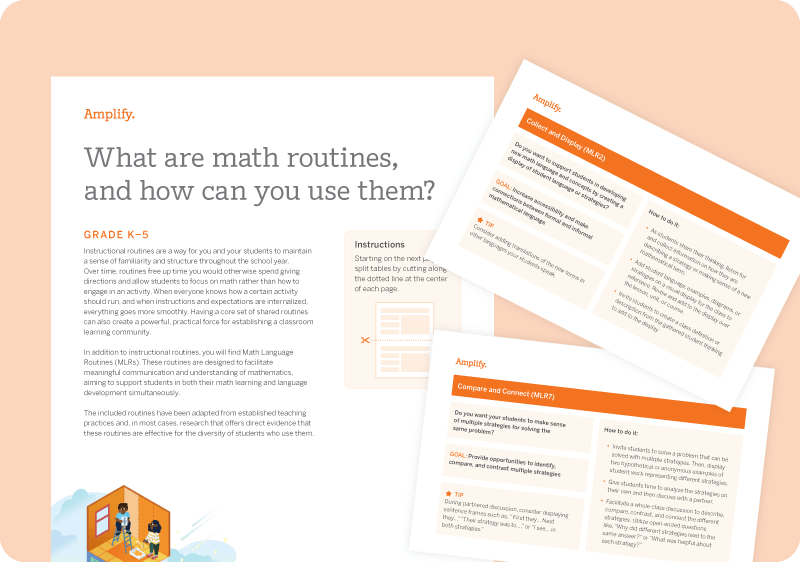
Math routine cards
Find easy-to-implement routines to keep students interacting and engaged with a lesson.

2024 Math Symposium
Access best practices and educational resources from math leaders through our on-demand Math Symposium.
Math Teacher Lounge archives
Hear strategies from Dan Meyer and Bethany Lockhart Johnson on the Math Teacher Lounge podcast.
Be a changemaker for science.
Profound science learning experiences have the power to transcend classroom walls—cultivating students’ curiosity, fostering critical thinking and creativity, building knowledge about the real world, and supporting students on their pathway to college and beyond. Unfortunately, science continues to fight for sufficient instructional time and resources.
The good news? Intentional shifts, combined with evidence-based practices and effective high-quality instructional materials, can help teachers make the most of the time they do have—transforming students into concerned global citizens ready to take on the world.


Science instruction designed for all students
K–8 science instruction is the crucial foundation that prepares students for high school learning. Our change management playbook details manageable and realistic changes to your process and practice that will make your K–8 instruction even more powerful.
Establishing high-quality teaching and learning
Access to high-quality instructional materials (HQIM) is a vital piece of the change management puzzle. Support the leaders who are on a mission to identify HQIM and set up the best possible conditions for implementation success.


Connecting science and literacy
Want to make every instructional moment count? Integrate science and literacy more deeply—and witness the transformation in student learning. Find out how with this resource pack.
The foundation for long-lasting and sustainable change
Change is more likely to stick and get results when you take a systemic approach. Partner with us to do just that by developing a learning plan that will drive your program implementation, enrich your instructional practices, and increase student impact. Amplify’s high-quality programs make it easier for you to teach inspiring, impactful lessons that celebrate and develop the brilliance of your students.


Amplify virtual sampling
Bring the world to students with Amplify CKLA 2nd Edition!
Amplify Core Knowledge Language Arts (CKLA) 2nd Edition is a comprehensive early literacy curriculum grounded in the Science of Reading. With Amplify CKLA, you’ll have the instruction and guidance of proven, evidence-based practices to help all of your students become strong readers, writers, and thinkers.

Start your review
Digital samples for Grades K–5 are included here, along with other helpful materials for completing your review.
Watch the program overview video, in which Susan Lambert, host of Science of Reading: The Podcast, provides an overview of the unique structure and components of Amplify CKLA for Grades K–5.
The Amplify CKLA Program Guide provides you with an in-depth view of how Amplify CKLA works, how it’s structured, and why it’s uniquely capable of helping you bring reading instruction based on the Science of Reading to your classroom.
For an even more in-depth look at Amplify CKLA, review the following materials:
Click here to access materials!
K–5 Materials
Grades K–2: Dedicated knowledge building and explicit skills instruction
Every day, students in Grades K–2 complete one full lesson that builds foundational reading skills in the Skills Strand, as well as one full lesson that builds background knowledge in the Knowledge Strand. Through learning in each of these strands, students develop the early literacy skills necessary to help them become confident readers and build the context to understand what they’re reading.
Grades 3–5: Integrated instruction
In Grades 3–5, Knowledge and Skills are integrated in one set of instructional materials. Lessons begin to combine skills and knowledge with increasingly complex texts, close reading, and a greater writing emphasis. Students can then use their skills to go on their own independent reading adventures.


Amplify CKLA is more engaging than ever!
Fascinating subjects and cool tools captivate students. An intentional approach to background knowledge invites students to dig deeper, inspiring curiosity and driving results. With a cutting-edge digital experience, beautiful and newly-designed decodable Readers, and fascinating extended-learning units that take students all over the world, Amplify CKLA is more engaging than ever before—for both teacher and student!
The Amplify Digital Experience
With the Amplify CKLA digital experience, it’s never been easier to deliver engaging lesson presentations. Your students will love features that allow them to interact with their reading instruction like never before, and you will love the tools that help you keep their attention!
These ready-made, customizable, slides-based lesson presentations enhance instruction and save you time. With the Amplify CKLA digital experience, you’ll have everything you need in one place to plan and present high-quality, engaging early literacy instruction.

Authentic texts and extending learning
As part of our commitment to creating even richer and more diverse curricula, we now offer newly redesigned decodable Readers and six new supplemental learning units. Stories with human characters now have improved inclusivity and authenticity, and other stories feature fantastical creatures to bring excitement and whimsy to the tales. Supplemental Knowledge Research Units extend learning for Grades K–5, incorporating Amplify CKLA’s powerful and evidence-based instructional approach while also adding more diversity, authentic literature, and flexibility. The authentic trade books in each of these units will inspire your students’ curiosity and grow their capacity for research and inquiry.
Introducing Amplify Caminos!
Amplify Caminos is an authentic elementary Spanish language arts program. Like its English language partner, Amplify CKLA, Amplify Caminos provides explicit, systematic foundational skills instruction sequenced with deep knowledge-building content to foster comprehension. When used with Amplify CKLA, Amplify Caminos provides full parity across English and Spanish that’s suitable for any dual language implementation model.
Welcome to your Amplify Science California pilot!
We’re thrilled to welcome you to the Amplify family, and we look forward to making your experience with Amplify Science California successful from day one.
On this site, you’ll find resources, tips, videos, and other helpful information designed to support you throughout your pilot experience.


Tips for getting started successfully
It takes time to learn any new program and get used to its patterns and flow—time that you aren’t always afforded in a pilot situation. Based on our work with thousands of pilot teachers who are now happy users, we can tell you with 100% confidence that it gets easier. In no time, you’ll be preparing and delivering all your lessons with ease.
Until you become comfortable with the organization of each unit and how one lesson flows into the next, the following resources will be key in helping you prepare to teach your first unit.
Unit Guide
These short and sweet guides provide a big picture overview of each unit’s phenomenon and storyline, the key questions that guide learning, and how the storyline develops from chapter to chapter. We even spoil the big reveal at the end by pointing out ahead of time what students figure out throughout the unit.
Ready to download? Navigate to your grade level using the menu bar above, scroll to the Unit Types section, and then download the appropriate Unit Guide(s).

Lesson Overview
Reading this short summary is a great way to get a quick snapshot of the learning that will take place during the day ahead. It includes a short description of the lesson, student learning objectives, and an at-a-glance list of activities.
Where to find it? Log into the digital Teacher’s Guide and navigate to the lesson you want to teach by following this click path: Grade Level > Unit > Chapter > Lesson. Next, scroll to the Lesson Brief section and click Overview. This same information is also found in your printed Teacher’s Reference Guide.
Material and preparation tips
Also found in the Lesson Brief section of your digital Teacher’s Guide and printed Teacher’s Reference Guide is a complete list of materials that you’ll need to gather as well as step-by-step lesson preparation tips organized by:
- Before the Day of the Lesson
- Immediately Before the Lesson
- At the End of the Day


3-D Statements
Color-coded for easy readability and quick scanning, our 3-D Statements can be found at point-of-use for every unit and lesson, making it easy to pinpoint the exact SEPs, DCIs, and CCCs that will be targeted on any given day.
Where to find them? Log into the digital Teacher’s Guide and navigate to any Unit Guide or Lesson Brief and click the expandable box called 3-D Statements. A complete list of 3-D Statements can also be found in the back of any printed Teacher’s Reference Guide.
Coherence Flowcharts
These are another great tool for helping you visualize the flow of a unit and the connections between the questions that drive students’ experiences and:
- The evidence they gather
- The solutions they figure out
- The new questions they generate
Where to find them? Log into the digital Teacher’s Guide, navigate to your desired unit, scroll to the Unit Guide, and look in the Printable Resources section.


Support is always within reach
Your role as a pilot teacher is important. Your district is counting on you not only to evaluate how Amplify Science California works in your classroom, but also to pick a reliable and supportive long-term partner. We feel confident that we’re that partner, and we look forward to proving that to you during your pilot experience.
Just as it will be when you become a customer, support during your pilot will always be within reach through the following channels.
Pilot support coordinator
Your dedicated pilot support coordinator has extensive experience delivering training, rostering students, answering both pedagogical and technical questions, and delivering demonstration lessons. Said another way, he or she is here to help. So, don’t hesitate to reach out.
Who is my pilot support coordinator? Look for his or her contact information in the pilot support brochure that you received during your pilot implementation training.

Intercom chat
In addition to traditional lines of communication, our Intercom feature gives you the ability to chat with our customer support, technical support, and pedagogical support teams in real time directly from the digital platform. This ensures that issues that arise in the classroom can be addressed as quickly as possible.
Support teams can be reached from 4 a.m. to 4 p.m. PST, Monday through Friday.
Our customer support, technical support, and pedagogical support teams can also be reached by email at help@amplify.com.
Support teams can be reached from 4 a.m. to 4 p.m. PST, Monday through Friday.

Welcome, Arkansas educators!
We are excited to introduce Amplify Core Knowledge Language Arts (CKLA) 3rd Edition, now an Arkansas-approved HQIM core literacy program within Amplify’s literacy suite. For more than a decade, Amplify CKLA has transformed classrooms nationwide with its intentional knowledge building and systematic skills instruction.
Rest assured that Amplify CKLA 2nd Edition remains a robust, trusted option, and our high-quality professional development and ever-growing PD Library of resources continue to be available to all CKLA partners.
Whether you’re continuing with the 2nd edition or exploring the 3rd, you’ve chosen a proven and research-based curriculum designed for lasting impact. Together, let’s write the next chapter in the Science of Reading.
A correlation of the Arkansas English Language Arts Standards to Amplify CKLA 3rd Edition is now available!

Amplify ckla servers
150,000+
Classrooms
4,000,000+
students
50+
us states and d.c.
Our approach
Improve outcomes with a program built on decades of research, that meets the strongest ESSA Tier I criteria.
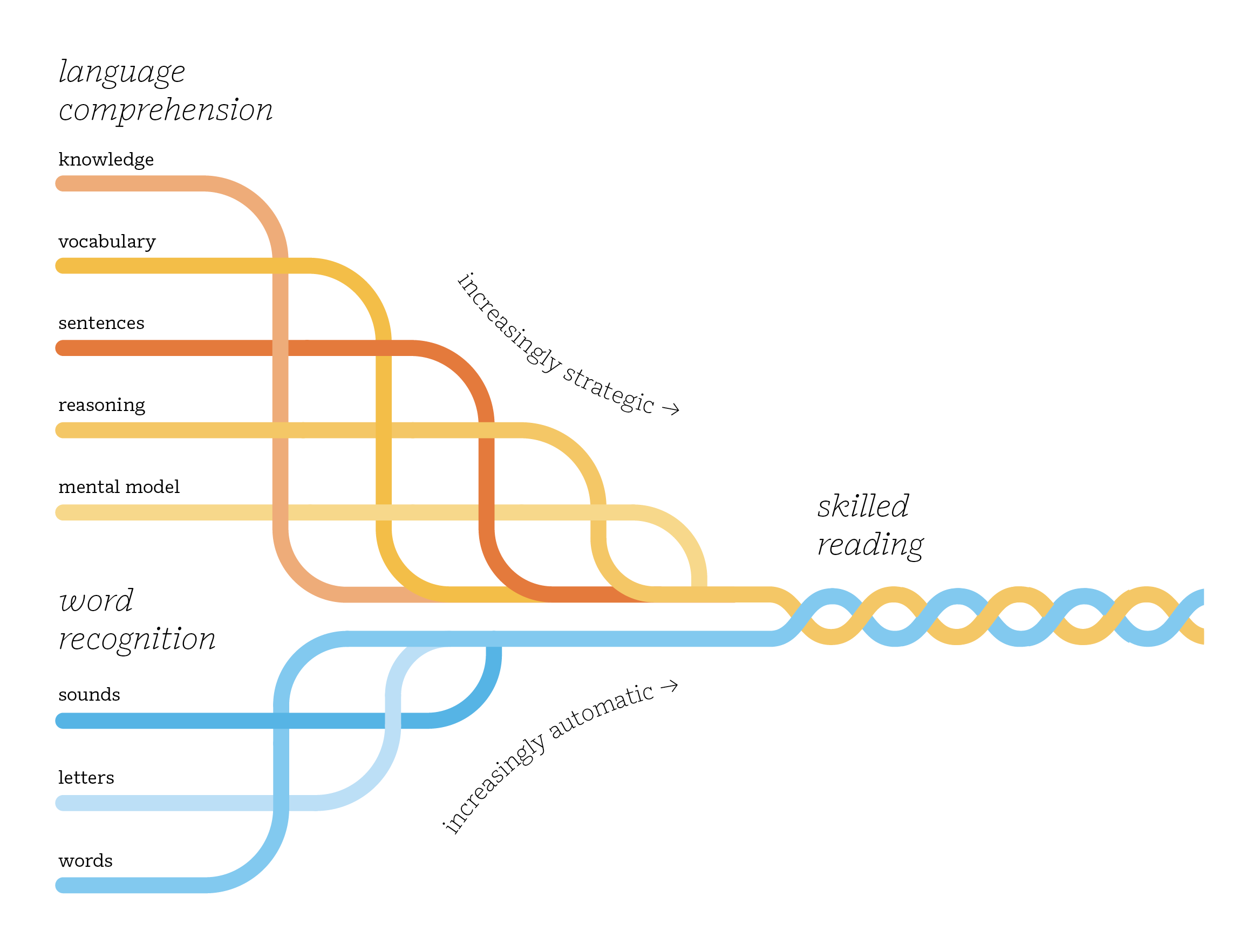
Grounded in the Science of Reading
As the original Science of Reading program, Amplify CKLA puts research into action with explicit, systematic foundational skills instruction and a proven knowledge-building sequence. In collaboration with education experts and practitioners, we provide powerful resources that deliver real results.
Background knowledge drives results for Arkansas students
Amplify CKLA follows the Core Knowledge Sequence, a content-specific, cumulative, and coherent approach to knowledge building. This approach improves reading scores and closes achievement gaps by establishing a robust knowledge base that strengthens comprehension.
In Amplify CKLA 3rd Edition, we’ve enriched our Knowledge Sequence with a wider range of perspectives and high-quality texts in new and enhanced units.
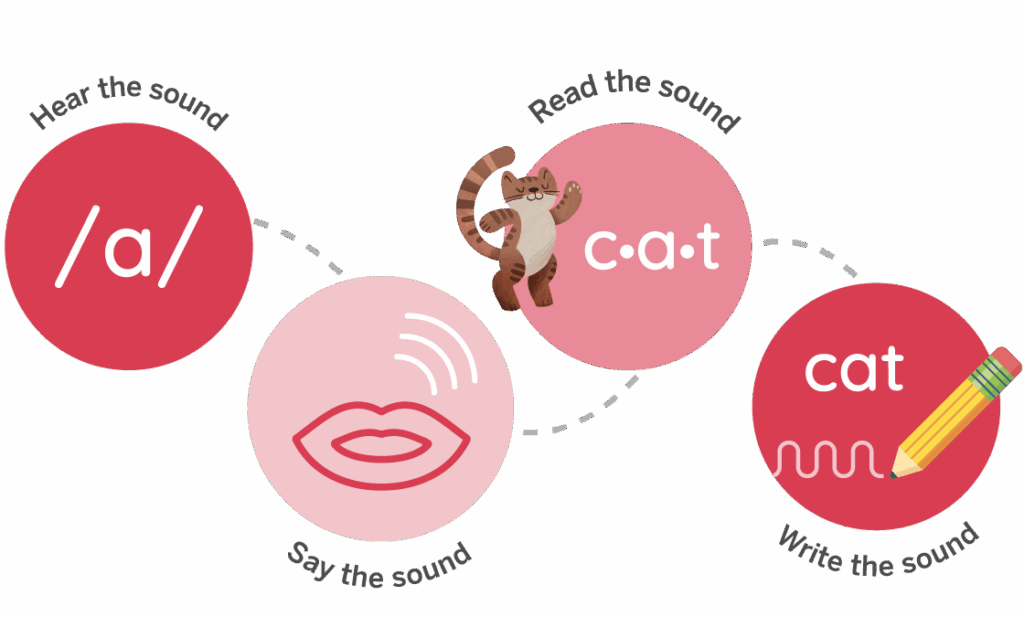
Build foundational skills for long-term success.
Students progress from simple to complex skill development, starting with phonological and phonemic awareness. Instruction in Grades K–2 explicitly teaches the 150 spellings for the 44 sounds of English, following an intentional progression to ensure student success.
In our 3rd Edition, we’ve added dedicated Grade 3 foundational skills instruction that can either support core lessons or function as an intervention, based on student needs.
Daily writing deepens learning.
Grounded in the Science of Writing—the research on how kids learn to write—instruction is explicit, daily, and woven into the curriculum’s rich content. It covers both transcription (handwriting and spelling) and composition (organizing ideas into narratives) with high-impact activities like sentence-level combining and expanding, and pre-writing exercises. Writing and reading instruction are integrated, so students simultaneously strengthen their communication skills, comprehension, and confidence.


High-quality texts
Amplify CKLA students are immersed in a variety of texts—complex read-alouds, decodable chapter books, trade books, and content-rich readers—that reflect varying experiences and backgrounds, and connect to learning goals.
Readers are 100% decodable for Grades K–2, empowering students to directly apply what they’ve learned. Novel Study units for Grades 3–5 offer a mix of contemporary and classic literature, and Culminating Research Units in every grade include a set of authentic texts and trade books.
Reach all learners with differentiated support.
Scaffolds and challenges, developed in collaboration with education experts, make content available to every student—including multilingual and English learners. With strategies embedded right in the curriculum, teachers can deliver in-the-moment, individualized instruction to meet all student needs.
For a dedicated English language development program aligned to Amplify CKLA, explore Language Studio.

What’s included
The comprehensive resources in Amplify CKLA 3rd Edition support effective literacy instruction in every classroom.


Easy-to-use teacher materials
Amplify CKLA teachers are empowered to deliver effective instruction with the following print and digital resources:
- Teacher Guides (K–5)
- Assessment Guides (K–5)
- Authentic texts and trade books (K–5)
- Knowledge Image Cards (K–2)
- Knowledge Flip Books (K–2, digital)
- Ready-made and customizable Presentation Screens (K–5, digital)
- Remediation and intervention resources (K–5)
- On-demand professional development (K–5, digital)
Immersive Amplify CKLA student resources
Amplify CKLA students stay engaged with the following print and digital resources:
- Decodable readers (K–2)
- Student Readers and novels (3–5)
- Student Activity Books (K–5)
- Poet’s Journal and Writer’s Journal (3–5)
- eReaders (K–5, digital)
- Sound Library featuring articulation videos and songs (K–2, digital)
- Skill-building practice games (K–5)


Rich literary experiences
The high-quality texts in Amplify CKLA foster students’ curiosity, reflect the wide variety of their backgrounds and experiences, and help them learn to read with confidence.
- Trade Book Collections (K–5) inspire student research in each grade’s Culminating Research Unit.
- Classic and contemporary literature (3–5) delights students in Novel Study Units.
- Increasingly complex Student Readers (K–5) develop students’ literacy across grades.
Hands-on phonics materials
Multisensory phonics and foundational skills resources engage students with fun, varied approaches that promote mastery and build independence.
- Chaining Folders and Small Letter Cards (K)
- Read-Aloud Big Books (K–1)
- Large Letter Cards (K–2)
- Sound Cards (K–2)
- Image Cards (K–3)
- Blending Picture Cards (K)
- Consonant and Vowel Code Posters and Spelling Cards (1–2)
- Sound Library (K–2, digital)
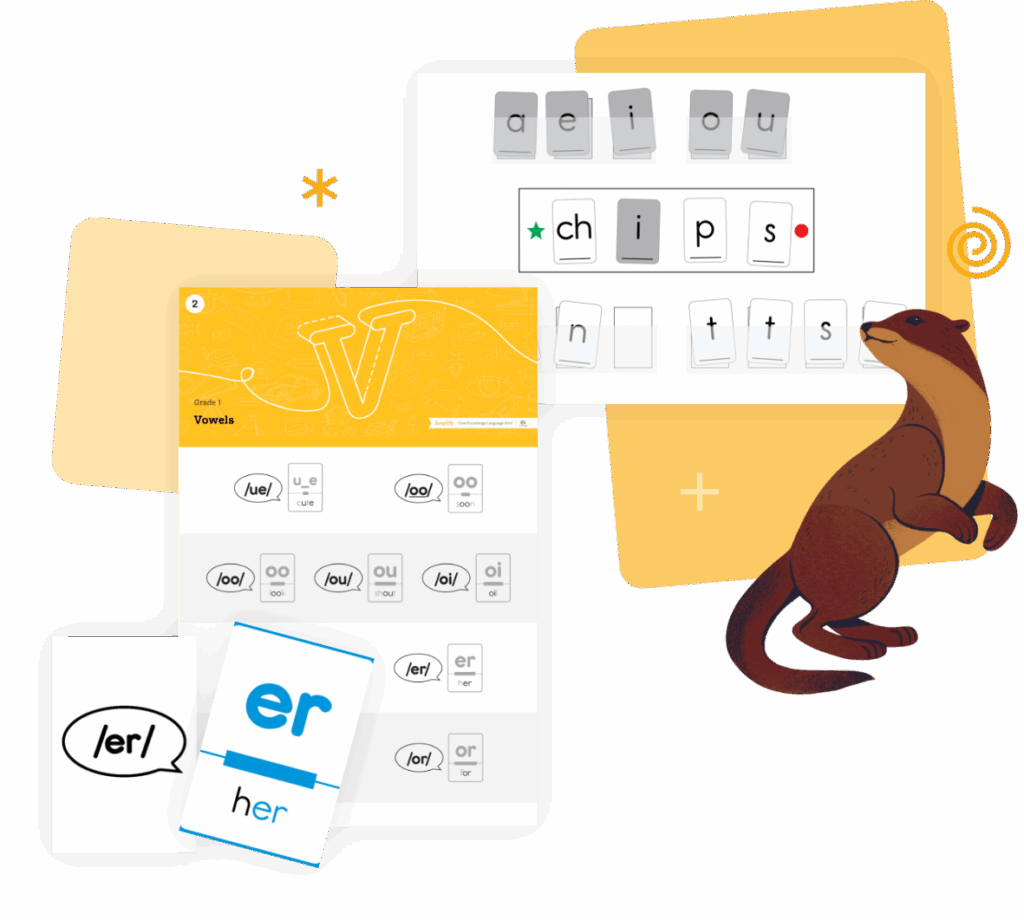
All-in-one digital platform
Our comprehensive platform simplifies your day-to-day tasks and makes it easier to plan and deliver lessons.
- Ready-made and customizable Presentation Screens
- Auto-scored digital assessments
- Standards-based reporting
- Assignable skill-building games
- Sound Library
- eReaders
Professional Development
We look forward to working alongside our Arkansas partners to build a strong foundation in Amplify CKLA. Our dedicated professional development team will continue collaborating with the ADE to provide job-embedded, on-site support that aligns with the Arkansas ELA standards and the Science of Reading.


A true Science of Reading early literacy suite for Grades K–5
Amplify has combined the critical elements of a Science of Reading system: assessment, core curriculum, personalized learning, and intervention. Based on 20 years of experience with the Science of Reading, this complete system saves you time and aligns your literacy practices.
- Assess with mCLASS®: A universal and dyslexia screener, powered by DIBELS® 8th Edition
- Instruct with Amplify CKLA: Core curriculum to build foundational skills and knowledge
- Practice with Boost Reading: Personalized learning program to extend and reinforce core
- Intervene with mCLASS Intervention: Staff-led Tier 2 and 3 intervention for intensive support
Language Studio: Multilingual and English learner support
Language Studio is Amplify CKLA’s dedicated K–5 program for multilingual and English learners. Through daily 30-minute lessons, it strengthens reading, writing, speaking, and listening skills while reinforcing core instruction. This tailored support empowers students to confidently access grade-level content as they develop academic English.

Explore more programs in Amplify’s literacy and biliteracy suite.
All of the programs in our literacy suite and our biliteracy suite are designed to support and complement each other. Learn more about our related programs:

Get a demo
Fill out this form and your Account Executive Paige Benoy will contact you to set up a demo, send samples, or answer questions about Amplify CKLA.
Paige Benoy
Arkansas Account Executive
pbenoy@amplify.com

Join us for an Oklahoma Amplify Science workshop
These fun and informative workshops will give you a sneak peak into Amplify Science for grades K-8. Enjoy dinner with your colleagues and Amplify Science team, preview the program, walk away with free samples, and maybe even a door prize!
Space is limited—register today!
In-person workshops
Agenda
4:00 p.m. Registration
4:30 p.m. Workshop
5:30 p.m. Dinner and door prizes
Tuesday, September 29
Stride Bank Center
301 S. Independence Street
Enid, OK 73701
Wednesday, September 30
Hampton Inn & Suites Stillwater West
615 S. Country Club Road
Stillwater, OK 74074
Thursday, October 1
Science Museum
2020 Remington Place
Oklahoma City, OK 73111
Tuesday, October 20
Oklahoma Aquarium
300 Aquarium Drive
Jenks, OK 74037
Thursday, October 22
Sam Noble Museum
University of Oklahoma
2401 Chautauqua Avenue
Norman, OK 73072
Virtual workshops
Agenda
4:00 p.m. Workshop begins
4:45 p.m. Q&A
5:00 p.m. Dinner gift card and door prizes
Wednesday, October 21
4:00 p.m. CDT
Tuesday, October 27
4:00 p.m. CDT
Wednesday, October 28
4:00 p.m. CDT
Thursday, October 29
4:00 p.m. CDT
Submit the form to register for an event!
The fine print
While we’ve made every effort to ensure that this invitation is consistent with the gift and ethics rules adopted by most jurisdictions, we recognize that many public officials are subject to rules that do not permit acceptance of this offer or require approval of other officials at your agency. If you do plan to attend our event, please ensure that acceptance of our invitation is fully compliant with your local rules regarding travel, lodging, and meals for events with vendors. Please let us know if we can provide any additional information to support your determination.
The promise of Next Generation Science Standards
The Next Generation Science Standards (NGSS), and other state standards like them, represent more than just new expectations—they embody a transformative vision for science education. Instead of asking students to memorize isolated facts, NGSS calls for students to think like scientists and engineers while grappling with real-world phenomena that matter to them and their communities.
This shift from learning about to figuring out develops the critical-thinking skills and problem-solving mindset students need to tackle complex challenges throughout their lives.

Three-dimensional (3D) learning that engages and inspires

At the heart of NGSS lies three-dimensional learning, where Science and Engineering Practices (SEPs), Crosscutting Concepts (CCCs), and Disciplinary Core Ideas (DCIs) work together to create rich, meaningful learning experiences.
Science and Engineering Practices are the approaches and habits of real scientists and engineers: asking questions, developing models, planning investigations, and constructing evidence-based explanations and arguments. Working with these practices awakens student curiosity, drives student-centered learning, encourages deep and critical thinking, and creates opportunities for students to articulate their understanding in a variety of meaningful ways.
Crosscutting Concepts are the big-picture thinking tools that scientists use every day. When students use Crosscutting Concepts as a lens to examine common themes in science such as patterns, cause and effect, systems, and energy, they begin to identify and connect science ideas across disciplines.
Disciplinary Core Ideas represent the essential knowledge of science. Students figure out these science ideas through their investigation of real-world scientific phenomena, and consequently develop deep understandings of science ideas.
The student experience: from passive to passionate
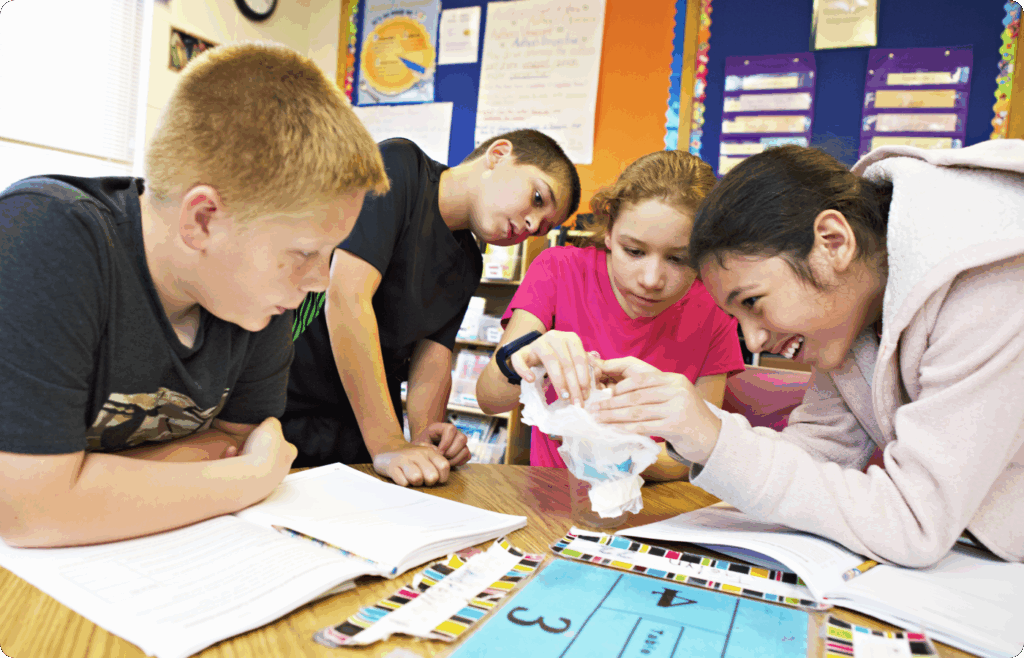
In three-dimensional science learning, students become active investigators, gathering evidence from multiple sources and constructing increasingly sophisticated scientific arguments and models about real-world phenomena. They engage in evidence-based debates, collaborate on engineering challenges, and make connections between their investigations and their own communities, as well as the world beyond. See it in action.

The literacy-rich nature of NGSS instruction means students read, write, speak, and listen like real scientists and engineers, actively questioning, analyzing, and communicating findings. This integrated approach develops both scientific understanding and communication skills—skills that transfer across all subjects and even beyond the classroom.
How Amplify Science delivers as an HQIM curriculum
Amplify Science was built from the ground up to fulfill the NGSS vision and is an HQIM (high-quality instructional materials) curriculum, characterized by the following:
- All green on EdReports. Amplify Science has been evaluated by EdReports, an independent K–12 curriculum review organization, and received the esteemed all-green rating (“meets expectations”) across all three of its gateways: Alignment to the NGSS, Coherence and Scope, and Usability. Learn more about our all-green rating.

- The real-world anchor phenomenon is deeply woven throughout each unit as the central thread. In Amplify Science, students assume the role of a real scientist or engineer to investigate a compelling phenomena in K–5 and grades 6–8. Over the course of the unit, they gather and make sense of a variety of evidence sources and develop increasingly sophisticated explanations and models as their understanding deepens. Whether investigating a mysterious fossil discovery as geologists or designing emergency supply delivery pods as mechanical engineers, students experience the kind of work done by real scientists and engineers.

- All three dimensions of the NGSS are intentionally and thoughtfully integrated throughout every unit and across all grades. As they built Amplify Science as an HQIM curriculum, the experts at UC Berkeley’s Lawrence Hall of Science deliberately crafted each unit, chapter, and lesson with the following guiding questions in mind:
- What do we want students to figure out (specifically, what Disciplinary Core Idea or part of a DCI)?
- How do we want them to figure it out (i.e., what Scientific and Engineering Practice will they engage in to reach understanding)?
- What Crosscutting Concept can scaffold students’ understanding and connect it to other ideas about the natural world that they have learned?
This systematic approach ensures that every learning experience is purposefully designed to engage students in authentic scientific thinking while building connections across concepts and grades.

- Educators receive comprehensive implementation support. Through lesson-planning resources, science background materials, built-in assessments, and expert coaching—all provided directly through Amplify—teachers are able to confidently implement the program’s NGSS-aligned, high-quality instructional curriculum with greater ease and success.

- Multimodal learning experiences support all learners. Amplify Science ensures that everyone can access scientific concepts through the Do, Talk, Read, Write, Visualize multimodal approach that includes hands-on investigations, digital simulations, collaborative discussions, and literacy-rich activities.

- Research-based and proven effective: Get the results that matter. Students who experience true three-dimensional learning with Amplify Science, an HQIM curriculum, show increased engagement and an improvement in science learning and vocabulary. They develop confidence as thinkers and problem-solvers while maintaining curiosity about the natural world.
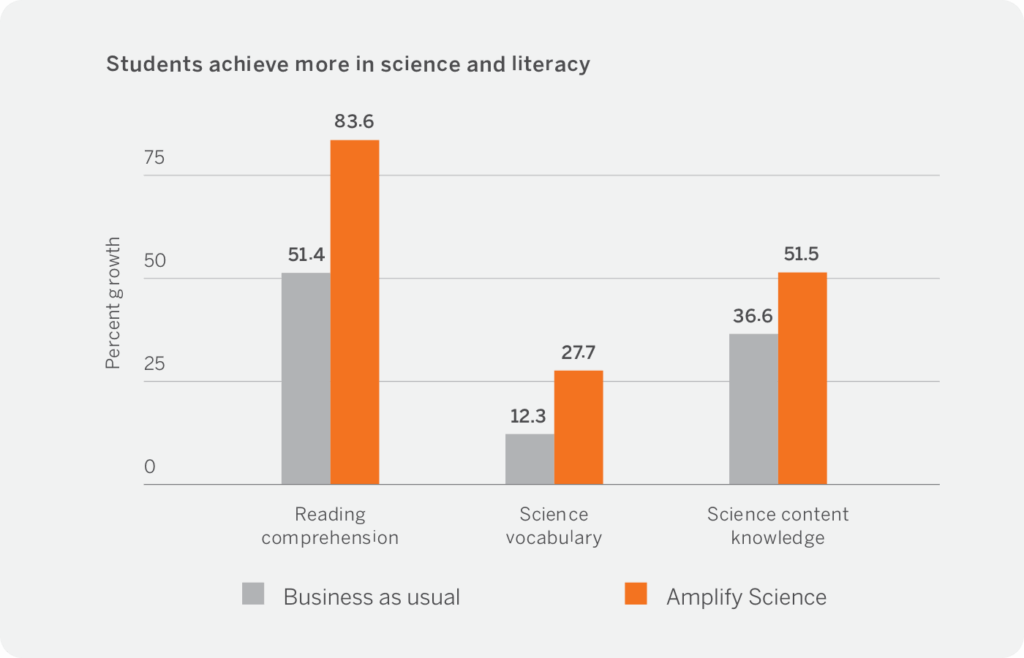
Ready to transform your science instruction with an HQIM curriculum?
Please contact your sales representative today, or download a sample unit to experience three-dimensional learning firsthand. Your future scientists, engineers, and citizens of the world are waiting!
Five fundamentals of high-quality materials in action
So what do we mean by high quality instructional materials, or HQIM? We can start with how EdReports.org, the leading third-party reviewer of curriculum, defines it:
- Materials that help educators teach to rigorous standards.
- Materials that are relatively easy to use.
Beyond these important starting points, what does high quality curriculum look like in action—in real classrooms? Here are five fundamentals of how we think about it at Amplify.

1. It looks like ALL students engaged and thinking.
Students at all levels are able to engage deeply with important questions, to think deeply, creatively, and for themselves.
There’s a commitment to fairness and a “low floors/high ceilings” approach: all students get the scaffolding they need to grapple with the things great minds in the subject area find important, beautiful, and true.

2. It looks like teachers using materials that work harder for them.
Teachers find the program easy and enjoyable to teach. The rich content inspires them to do some of their best teaching.
Teachers also have powerful tools and data that enable them to understand their students more deeply and give more precise feedback.

3. It looks like a vibrant classroom community.
The pedagogy of the program supports the formation of a classroom community where teachers and students wonder, share, debate, and learn together.
It looks like a model of civil society.

4. It looks like a culture of continuous learning for educators, districts, and publishers.
Professional development is not one and done. The district not only provides teachers with high-quality training upfront, but also ongoing ways for teachers to compare notes and share best practices in implementing a new program.
The publisher also collaborates with districts on the initial training as well as provides ongoing support to teachers with on-demand resources, customer support, and online communities. Both the publisher and district continuously respond to teacher feedback and data to keep improving the program and classroom-level implementation.
5. Finally and most importantly, it looks like improved learning outcomes for students.
The program has demonstrated the ability to raise student achievement. It may start with growth on benchmark assessments and then, over time, you can see it on state tests.
The district continues to track how well the program is helping to drive strong learning outcomes, and the publisher also continues to seek ever higher levels of efficacy through ongoing product improvement and measurement.
Celebrating Keppel Union: A Science of Reading Star Award winner
Celebrating Keppel Union: A Science of Reading Star Award winner
Amplify customer support hub
Quickly find support for every step of your journey, whether you’re new to our programs or a long-time partner. Our support hub offers personalized, responsive assistance to drive strong implementation and boost student outcomes.
Round-the-clock help resources
Access comprehensive support anytime, anywhere with our 24/7 Help Center. Find articles, answers, and quick links with ease in this collection of resources.
For system status updates, click on Amplify System Status.
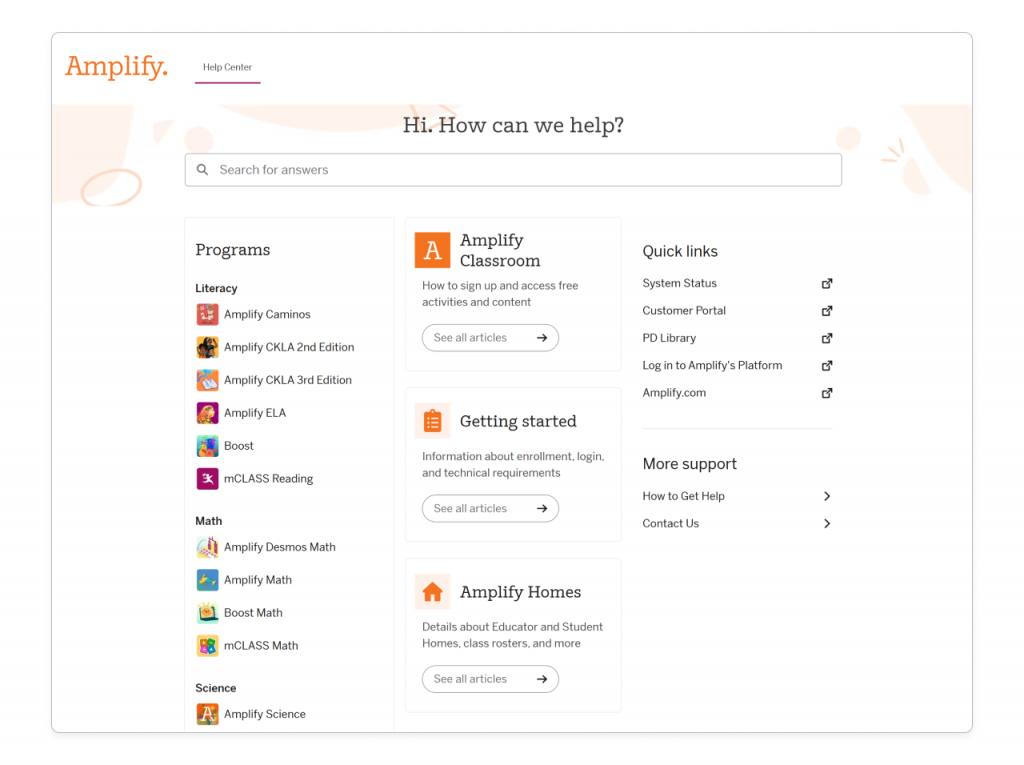
Need immediate assistance?
Whether you have a free account or your district has purchased an Amplify program, we’re here to help.

Request Support.
Free account users and customers can open a case for assistance.
Full program customer support
Phone support
Speak directly with our knowledgeable agents.
Call: +1 (800) 823-1969
Hours:
Monday through Friday
7 a.m. — 7 p.m. ET
Live chat
Connect instantly inside your program(s).
Log in at learning.amplify.com and click the chat button in the bottom right corner.
Continuous support along your journey
Personalized assistance
Our team helps with purchasing, order fulfillment, enrollment, and more.
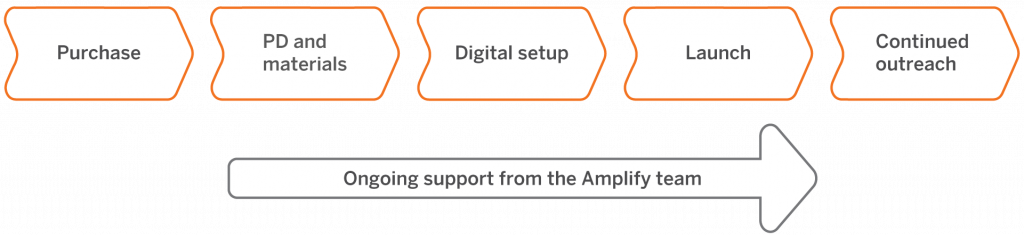

From purchase to implementation
Collaborate with our sales team to explore programs tailored to your unique needs.

Smooth ordering and payment
Enjoy seamless purchasing with our dedicated team. For quick help, visit our payment support site or contact your account executive.

Ongoing success and growth
After processing your purchase, our specialized teams guide you through onboarding, professional development, materials delivery, digital setup, and implementation launch.
Discover the tools to transform teaching.
Continued learning and growth
Learn with us:
Join our free online webinars and events to explore thought leadership and gain insights. Stay informed about the latest in education.
Elevate your practice:
Explore paid professional development to enhance your skills and integrate our programs effectively. Our resources are tailored to support your success.
Your voice matters!
Join our lively Facebook communities to connect with fellow educators, share insights, and be part of a network advocating for student success and innovative education.
Discussion Moments