S2-04: Gamification in the K–8 classroom

Podcast episode graphic featuring guest Fabian Hofmann, titled "Gamification in the K–8 classroom," from Science Connections Season 2, Episode 4, with an illustration of a planet.

In this episode, Eric Cross sits down with his colleague and friend Fabian Hofmann to talk through gamification in the K–8 classroom. They discuss Fabian’s experience teaching outside of the United States, and the differences in classrooms outside of the country. Fabian explains the integration of game mechanisms in the classroom, standard-based grading, and shifting student thinking about learning by forming strong relationships. Fabian also shares how he created a new STEM course at his school revolving around his own passion for Star Wars. Explore more from Science Connections by visiting our main page.

DOWNLOAD TRANSCRIPT >

Fabian Hofmann (00:00):

In Mr. Hofmann’s class, I get to earn points and I get to be a Jedi. I can suspend my disbelief and I’m learning history, but at the same time, I’m traveling through the galaxy.

Eric Cross (00:13):

Welcome to Science Connections. I’m your host, Eric Cross. My guest today is Fabian Hofmann. Fabian is a middle school IB educator, currently teaching seventh grade multimedia design and history at Albert Einstein Academy’s middle school here in San Diego, California. He also hosts the podcast Rebel Teacher Alliance, a podcast dedicated to encouraging and supporting teachers to rethink student engagement. Fabian’s one of the most innovative teachers that I’ve ever met. His use of technology and gamification makes learning fun and accessible for our students. And I have firsthand experience with these students because we teach on the same team and have worked alongside each other during my entire career as a teacher. In this episode, we discuss gamification of the classroom, how he approaches grading from an innovator’s mindset, and his newest STEM class, Immersive Design, where his students are working with former Disney Imagineers to completely renovate their classroom into an interactive Star Wars-themed learning environment. And now, please enjoy my conversation with my good friend and colleague, Fabian Hofmann. We’ve worked together for how many years now? How many years have you been at Einstein?

Fabian Hofmann (01:23):

Well, I started when you started, like after you were student teaching, so 2014.

Eric Cross (01:28):

OK, so it’s been a while.

Fabian Hofmann (01:30):

Yeah. And then I took two years off and I went to Hawaii. I couldn’t handle the pressure. And then I came back. So we’ve worked together for six years but known each other for eight.

Eric Cross (01:39):

What’s your origin story? We’re gonna talk about your origin story. I told you.

Fabian Hofmann (01:42):

All right, cool. Right. So when I was a little boy…no. <Laugh>

Eric Cross (01:46):

This podcast is not that long!

Fabian Hofmann (01:49):

So no, I started out, teaching in 2009. I started student teaching in Germany and was teaching history and English. Did this two-year student-teaching program there. And then, when I was done, my wife and I, she’s American, we got married and we decided to move to the States. And then I started teaching at a German cultural center called the Goethe-Institut in San Francisco. We lived in the Bay Area. And from there, after a year we moved down to San Diego; I started subbing; I worked for a year at High Tech High. I taught humanities there. And then, after that year, I ended up at Einstein teaching German because that was what was available. I didn’t want to teach German. That wasn’t like, on the top of my list. But it made sense because I had taught German in San Francisco and it kind of was like, “Well, I can do that, I guess.” And then, yeah, and then I went back to—we went to Hawaii for a couple of years and then I came back here to start teaching history. So I’ve taught like a million things essentially.

Eric Cross (02:52):

And then during that time, what’s your evolution been like in the classroom? Kind of like your view of education? And how does that play out in your day-to-day with kids?

Fabian Hofmann (02:59):

So when I started teaching here in the States, I noticed that it’s very different. Technology was much further along here than it was in Germany. So when I got here and we had like an iPad cart; I helped setting up the iPad carts. And I worked with the Chromebooks and I was like, holy, holy crap, this is so cool. Like, kids can like actually do things with this technology. And then, I mean, I love technology. I’ve had an iPad when it came out and stuff like that. And so I was like, “Oh, so how about we use this in our classroom?” And so I always moved—I moved very quickly to having students create on the iPad. And at first it was like, “Oh, we use the Apple apps and stuff.” And then I went to an ed-tech teacher summit here in San Diego and my eyes were like opened to, “Oh my God, there’s so much more than just the Apple apps.” And ever since then I was like, “OK, we’re gonna use this; we’re gonna do that.” It’s just crazy stuff that I thought was cool and that students really seemed to enjoy, because it wasn’t like a typical language class; it was more like, “Well, what can we do to create, and how can we somehow still use the language but we are learning coding at the same time, or we are creating something in 3D at the same time?” Like, I was always trying to make it have two angles: the language angle, obviously, and then also the technology angle.

Eric Cross (04:25):

What was it that kept you kind of pushing? ‘Cause I remember the beginning in the Classcraft days to where you are now, I feel like you’re like light-years ahead of where you started.

Fabian Hofmann (04:37):

So you were actually the one who showed me Classcraft, which is like a gamification portal, kind of off-the-shelf thing that you can subscribe to. It has some free features and it’s like a gamification platform where students can create characters. And then these characters go on adventures. That’s like their avatar, and they get experience points in the classroom game and stuff happens. You can create, like, adventure paths for them. So if you have an assignment that you want students to do that has different steps, so, that could be an adventure path. That’s what I liked about Classcraft, is like this idea of like, “OK, we’re taking a game and applying it.” But it wasn’t enough for me. And so I started developing my own classroom game. I did some reading. I met online with John Meehan, worked with him. I read the book by Michael Matera, Explore Like a Pirate. And so it just broadened my whole world to, or just opened the world of gamification to me.

Eric Cross (05:38):

You present on gamification; you mentor other teachers on gamification. You host a podcast where you talk about it. But for those people who haven’t done it or gotten into it or maybe have a perception of it maybe that’s not quite accurate, can you talk a little bit about like what gamification is and what it’s not?

Fabian Hofmann (05:54):

  1. So the biggest difference…we all know game-based learning, because we all do it. We use Quizlet; we use quizzes; we use Gimkit, Blookit, Jeopardy, anything like that. Those are game based. That’s game-based learning. So using a game to facilitate learning. Which is great. I love game-based learning too. But the difference is with gamification, in the pure definition of gamification, is that you’re using game mechanics and elements and apply them to a non-game setting. A couple of smart educators were like, “Why don’t we just do that in our classroom?” And so we borrow these elements, these mechanics, these game mechanics, like getting experience points, and applying them to the classroom. So anything that students do, they earn points. So they turn in an assignment, that gets you a hundred points. They go and do something extra for the class, they get 50 points. Whatever it is, whatever your value is. That’s one aspect, like a leaderboard, virtual money, stuff like that that just in reality is not necessary, but you’re putting it somewhere where it doesn’t exist. And all of a sudden students have this weird shift in their view where it’s like, “Well, school is school, but in Mr. Hofmann’s class, I get to earn points and I get to be a Jedi and I can suspend my disbelief and I’m learning history, but at the same time I’m like traveling through the galaxy.” And it’s just amazing how that shift happens just because we’re changing the language a little bit.

Eric Cross (07:29):

Yeah. You seem to have like tapped into something that is already kind of in that zeitgeist culture thing. We’re gaming and it appeals to—I know it appeals to our students regardless of how they feel about even the subject that’s being taught, the fact that they’re immersed into this environment where they’re taking on this character role and they’re part of this bigger narrative. And you’ve so dynamically constructed this whole storyline and these experiences, and they’re learning experiences, like, they’re learning, but they’re enjoying it in a different way. But I wanted to ask you about something that I really admire that you do, and it’s how you grade. And I remember the first time you said this, we were in a parent-teacher conference and we’re all talking on Zoom with these parents and we’re all sharing our spiel. And you go, I don’t grade kids. They grade themselves. Can you talk a little bit about your conferencing with students? The rubric you use like that that, I’ve really been paying close attention to lately.

Fabian Hofmann (08:24):

Yeah. So, when I was working in Hawaii, I noticed I was teaching English, and grading papers in English is really not fun. Like, that is like my least favorite thing. Some teachers are like, “Yeah, it’s grading! Awesome! I can read stuff!” For me, it’s like, yes, I like to read stuff, but I—and it was the same in German class. I gave them feedback. Sometimes I would use oral feedback, I would, like, record stuff for them, and they would listen to it, and then they would work on it. And so I noticed when I’m giving them feedback and its oral feedback, they’re more inclined to actually work on the stuff that I was critiquing, versus when I sat down and I wrote something. They would never read it. Or some would, and most of them would not. And so I was like, this sucks. <Laughs> And I encountered this book called Hacking Assessment, because it’s such a waste of time, right? You spend so much time, because you wanna do the due diligence. And for those few kids who actually do care, that benefits them. But I want this to benefit everybody. And so I read this book called Hacking Assessment, by Starr Sackstein. And she talks about how she put the onus of grading into the student hands, essentially. And so she did standard-based grading and essentially said, “You know what? Here’s the thing. I am not going to grade you anymore. You are going to get a rubric that we are going to dissect and explain and make sure that you understand. And then you sit down and you give yourself a grade based on this rubric.” And I was like, “Wow, what? That is….I can do that? And the cool thing about this book is that she covers all the roadblocks that we as teachers have. And she explains, like, she gives examples on what we can do to convince parents, to convince admin, to convince the community, convince other teachers why what we’re doing is much, much better for a student than the previous system is. If you think about it, when a student comes into school, they start at a hundred, they start the year at a hundred, and all they’re doing is just lose points. And they’re just trying to keep up. Right? And it kind of flips this on its head, because not only with the gamification, I’m changing the name of the game, literally, but I’m also now with ungrading, I’m giving them the responsibility and the accountability to really look at their stuff and really be critical about how they’re doing. And I taught like normal in my first year in Hawaii when I was teaching English, by me grading everything and turning it and giving it to them. And I used peer grade and I did all that kind of stuff. But in the end, I was always the one responsible for the grade. But then I started to do the ungrading move and I just started to conference with kids and started giving them feedback, with the help of gamification, because there’s like a bunch of rubrics you can use to make it more fun. But all of a sudden, kids that in the year before would’ve failed my class in English, because they were English learners; they were just not into it; they didn’t care as much…all of a sudden that flipped completely. I did the exact same content again. We had to write an essay and all of a sudden, the essays were all like, up there, because we sat down, we talked about it, we went through this review process, gave them feedback. In the end, they could say, “Hey, I want this grade. And then I still have the last say. I would say, say, “Yep, sounds good.” Or “If you wanna get an A on this, or whatever it was, a 4, then here are the things you still need to do.” And because I did that, all of a sudden, the students are like, “Oh, that’s all I need to do?” And then they did it and turned it in, and all of a sudden, they got a 4. It’s, it’s amazing how that the conferencing with students, how that shifted their attitude. And I got to know my students way better than I ever had.

Eric Cross (12:20):

Yeah. That’s, that’s one of the things that I’ve noticed. And I watch you get so much more facetime with students having conferences than I do. I find myself grading…and, you know, at our school, it’s mastery-based instruction, so students can retake assessments, but you’re absolutely right: I give a grade; they get a score; and some of ’em score lower, but in their minds it’s like, OK, I’m done with that. And even though they can retake it, such a small percentage actually do. But the information that I give them in the feedback is often not read. But you’re sitting down and having a conversation and really listening and there’s so much more of a connection that you have. I just think it’s so rich. But the question I have now is how do you make the time for those conversations with those kids in your class?

Fabian Hofmann (13:01):

Yeah, it’s definitely a learning curve. Like the first year I did it, it was horrible. Like <laugh>, it cost so much time. Because kids came, because when it was time to grading, because I had not figured it out yet, I had not streamlined it. And I’m still learning. I’m still trying to figure this out and do it even better. But the idea is that you do something, you check in with me really quick. That doesn’t have to be like a full-on conference. It’s—I walk around or I call them up and say, “Hey, I saw you working on this. How did, how are you doing there? How many—” Like, let’s say I use a rubric that gives them crystals for different parts. They write the introduction; they write a bibliography; whatever, so I can bring them up and say, “Hey, how is the bibliography looking?” And they’re like, “Oh yeah, I’m missing…like, I only have like one or two sources.” And then we say, “OK, so right now you would get two crystals out of three because you have something. When you come back, you get all the crystals.” And so that’s a gamified aspect again, right? They’re coming back to get more crystals, not because they wanna do better necessarily. But because they’re like, “Hey, I wanna get those crystals because it gives me points in the game.” They are very good about like grading themselves and kind of like, they’re really hard on themselves sometimes too. And I have students who are like—

Eric Cross (14:08):

Yeah, they are.

Fabian Hofmann (14:09):

“Well, how can you make sure that people don’t just give themselves an eight?” And I’m like, “Because there’s a system in place that that does not happen. Like, there is a rubric, and if they cannot back up what they want, then it’s not gonna happen. They can write an eight all day long. I’m still the person entering it into the grade book!” <Laugh>

Eric Cross (14:27):

And let me premise this for listeners who don’t teach at IB schools, which is probably like most people.

Fabian Hofmann (14:31):

Yeah.

Eric Cross (14:32):

So IB, we teach zero through eight on a rubric system. And seven-eight is kind of like the A, kind of, quote-unquote. I know IB people are probably cringing when I say that, but <laugh>, you know, when you transfer it to like a high school? Seven, eight would be the highest score, you know. Four, five, six. So when we say eight, we’re talking about the highest score.

Fabian Hofmann (14:49):

Yeah. And so it’s really interesting because I can call them out on stuff, and it’s a one-on-one conversation, right? And if, especially if they turn something in that is not great, and they give themselves like a—I don’t know, like a C, let’s say, or a four, or whatever it is—and they’re like, “And you’re happy with that?” And then they’re standing there and they’re like, like, “No…?” <Laugh> And all of a sudden there’s a conversation. Where it’s like, and then I can be very intentionally like, “Hey man, I know you can do better. I would not—I’m not gonna accept this. I’m gonna push you to turn this in again.” And most of them actually sit down and do more. It’s a process. It takes a while. It’s not pretty in the beginning. But the payout is, so it’s incredible. Just like the amount of time that I get to spend with students, like specifically talking to them about things that they still need to work on, celebrating stuff they do, it’s incredible. Like the relationships are just so different than what I had years ago.

Eric Cross (15:50):

And you’ve also created a system where we preach—and schools always talk about this Dweck growth mindset and not having a fixed mindset, but I wonder how many opportunities or how systems are set up that are actually fixed, where it’s like one and done, OK, you did this exam and then that’s it, but there’s no opportunities to grow until the next exam! Which is gonna be….or whatever the assessment is, which is a whole different area of content or different topic or whatever. But here, you’re actually able to facilitate this growth mindset and push back if a student says, like, “Well that’s—I just got a four,” and you can actually pour into them and talk to them. And do you ever hear more about a student’s story as to why they were where they’re at, as you’re having these conferences?

Fabian Hofmann (16:29):

Oh, absolutely. Like for some kids who, who are just like not getting the work done or whatever, there’s always something where it’s not because they’re not smart or because they’re lazy. It’s like, sometimes, literally they tell you, well, ’cause I ask them, “Hey, can you work on this at home?” Or “Can you come in during lunch, after school, whatever? I’m always here.” And then they drop some bombs on you, like, “Hey, my parents, like, divorced. My mom lives in Mexico.” ‘Cause we live in San Diego. So some students live in Mexico and come to school here in San Diego and they get stuck at the border or, even though they have internet at home, they have to share. It’s like kind of what we experienced during the pandemic, where it’s like, there’s like three kids at home and one computer. Stuff like that. Right? And it’s these stories where you’re like, first of all, it’s very humbling ’cause they’re going through stuff that I never had to go through. I mean, my childhood was not amazing, but compared to what they’re going through, it’s like, “Oh yeah, that exists.” And it kind of like puts you in your place a little bit. It’s also because of the system that I use. There’s no late, really, in my class. Some of the students are like, “I need to subtract points from my grade because I turned it in late.” And I’m like, “No, no, no, no, no. The fact that you’re doing it is quote-unquote punishment enough ’cause you have to do it outside of class, you have to do it at home; you have to do it during lunch. Like, that is, that is not comfortable. You’re still doing it. So why would I punish you by taking a grade away? That doesn’t make sense. You got the work done. That’s all that matters.” I try to be that person that like is understanding. It’s still pushing them to do their best and reminding them and harping on them. And with the spark that I threw in there and fanning that flame of them becoming a better student because I’m supporting them. You’re supporting them. We’re all—our seventh-grade team is incredibly supportive. And then some people might push back, like “That’s not preparing them for the real world.” This is the real world.

Eric Cross (18:20):

There’s a lot of life skills that they’re gonna need…but like, they’re 12 right now! Or 11 or six, you know, whatever it is! Let’s—we can hold off on taxes and the crushing weight of adult reality later on. You got it done! Well-done! I do wanna talk about this thing that is your baby lately, this embryonic thing that you’ve been growing and I’ve been fortunate to be able to watch it since its inception. But you have this class that you created from scratch that’s essentially a STEM class. Two questions: Why did you create the class? And you’ve done some uncommon things. I’m gonna leave it wide open just for you to talk about it because it’s your baby and I’ve been fortunate to be able to watch it from the start. So can you talk about that?

Fabian Hofmann (19:01):

So yeah, so I’m obsessed with Star Wars. I think that’s putting it mildly. I love Star Wars. Always have. My classroom game is called Jedi Academy. And I’ve been playing around with this idea of creating a room that is more immersive. So I put a space, like a window to space, on my wall. I have the Millennium Falcon in my room. I have like a bunch of Resistance stuff or whatever. Anything Star Wars, you can find in my classroom. It’s not like overloaded, but I was very intentional in the things that I put in there, because I want my students to come in and feel like they are playing the game. And one of those things that I used was like smells; I used sounds to try to immerse them more. And then so one day I was like, wouldn’t it be cool to create a classroom that looks literally like a Star Wars set? Like you walked onto a set. Onto a spaceship, onto a rebel base, onto whatever it is. And how can I, how can I make that happen? And then we talked about it and you were like, “Yeah, how about you let the kids do it?” And that’s kind of how the course was born. And now I have students in my classroom who are in the process of designing a classroom based on Star Wars. And they’re gonna build everything. And we’re all learning at the same time. I’ve never done anything like this. I do like STEM, but I’ve never like actually made it a class. And so I contacted a bunch of people on LinkedIn ’cause I was like, it would be cool to talk to an Imagineer and to get like my foot in the door at Disney and then have an Imagineer come in and tell us about what they did. I have this book called The Art of Galaxy’s Edge, which is like the Star Wars land in Disneyland. And I just looked at the list and was like, “Who could be a good person to contact here?” And it said one of them was Eric Baker, and it said, “Executive Creative Director.” And I googled him or I looked for him on LinkedIn and I found him and I was like, “I’m just gonna send him a message. I’m just gonna tell him what I do in my class in history, gamification and all that, and they’re Jedi, and blah, blah, blah.” And he wrote back! Like, he was the only person that wrote back. I wrote a bunch of people and he was like, “Yeah, I’d be super-interested. I don’t know what you want me to do, but I’m down.” And so it created this relationship between me and Eric Baker who used to work for Imagineering, who are like the people at Disney who create the rides in the park and all that. And I talked to him and he gave me some feedback on the room. And then he was like, “Oh, so if you ever want me to talk to students, I’m down.” I was like, “Uh, yes!” And so we had him Zoom in. He talked about his life and how he became one of the people to look for when it comes to theme park design and to create immersive experiences. And I contacted other people on YouTube, like somebody who is like a Star Wars room builder. He’s willing to chat with us about this project. And then, I discovered that there is this thing called Imagination Campus at Disneyland, which they offer workshops on immersive storytelling. And I was like, “Oh, that’s what I want! I want my students to tell a story with my room!” And so I wrote up a proposal. Took a long time, but they signed—our admin signed it off. We kind of financed it. And then, about two weeks ago, you came along, another teacher, and we took 30something students to Disneyland and they did this workshop where they learned all about like how the Imagineers design story elements and put them in the parks. And then we took all of the kids to Galaxy’s Edge. And we took a bunch of photos. We went on the rides together. We had this collective experience. And it was life-changing for a lot of students. Because, I mean, we’re a Title One school; there’s like, we have about 60% free or reduced lunch. And a lot of them had never been to Disneyland. About half of them had never been. Some of them went when they were little. And so just watching their faces, going to Disneyland, watching them walk into Galaxy’s Edge, experiencing all these things, it was just, my mind was just blown. And I like literally, I don’t know if you noticed, but I was just smiling. Literally.

Eric Cross (23:19):

You were loving it.

Fabian Hofmann (23:20):

Yeah. Then we come back and we have these amazing conversations about design and what they noticed and how they created this immersive experience in their world. And we talk about how we can bring this back to our classroom. And parents are sending emails saying, “Oh my God, we’re so happy that you did this for our kids and you’re the coolest teacher.”

Eric Cross (23:39):

You touched on something that I wanted to ask you about. So you stay connected to people that inspire you, I feel like, or you have a pretty broad network of educators and professionals. Like, how much does that play into what you do in the classroom and the ideas that you have, as your network or your community of people?

Fabian Hofmann (23:57):

So the one network that helped me the most is Twitter. And I know people have opinions about Twitter, for good reason. But when I started to gamify, I just started to follow specific hashtags for areas that interested me. And that was gamification; eXPdup, which is like Explore like a Pirate—it’s an acronym. And it just opened up all these people, all these people, all these educators who are out there just like doing cool stuff and sharing it on Twitter. And I started connecting with them. And one of them is on my podcast. We met through Twitter; we started sharing stuff. We started talking about the things that we do. We both happened to have a gamified classroom. And so we connected over this thing Twitter, and now we’re like friends and we’re presenting together at Q and all those places. Teacher Twitter is incredibly supportive and people want to show you the stuff that they work on, just like I do. Like when I have stuff that I worked out, I shared it on there. And it’s so fun to hear back from teachers saying, “Hey, this looks awesome.” It’s just, it makes you feel good and it makes you feel like, “Oh, what I’m doing is not a total waste of time.” <Laugh>

Eric Cross (25:10):

<laugh> Those thoughts do creep in, right? Like, even though you’re doing something awesome and you might think so, we become our own worst critic sometimes, or we always see the things that we can improve and we overlook the things that we’re doing well. Fabian, where can people hear more about you, about gamification, about what you’re doing in the classroom, about how you’re innovating? I know you talk about this stuff with some—and you talk about it with some pretty legit people in the education industry. So can you tell some folks where they can hear more about it?

Fabian Hofmann (25:37):

So you can find me on Twitter at Hofmann edu—one F, two Ns—edu, and then I also host a podcast called Rebel Teacher Alliance. There’s three of us, where we talk all things gamification. But we also talk to teachers who don’t gamify at all. And we just, we just invite people who are interesting, who have stuff to share, who do cool stuff. You can find the podcast on the internet at Rebel Teacher Alliance dot com. Follow us there. If you wanna be a guest, just send a message and we’ll get you on.

Eric Cross (26:10):

Fabian, I’m gonna gush on you right now, but when you came back to Einstein, I was so happy because I knew that you sharpened me; you make me a better science teacher. Your innovation, your passion for kids, your sense of humor, your outside-the-box thinking, all of that. And when you got onto the seventh-grade team and you were here, I just knew that it was going to be awesome. And it has been. And so as a teaching colleague, as a friend, dude, you just rock, man. I’m super proud of you. And thank you for making me better.

Fabian Hofmann (26:40):

Aw, now I’m starting to cry. It’s like, don’t…

Eric Cross (26:43):

<laugh>. All true, dude. All true, my brother.

Fabian Hofmann (26:46):

Thank you.

Eric Cross (26:46):

All true. And thank you for letting me be part of the journey and I will definitely be walking down the hall asking you questions as I try to implement some of these great ideas that you’re doing with kids. Thanks so much for listening. And now we wanna hear more about you. Do you know any inspiring educators? Nominate them as a future guest on Science Connections by emailing STEM at amplifycom.wpengine.com. That’s S T E M at amplifycom.wpengine.com. Make sure to click subscribe wherever you listen to podcasts and join our Facebook group, Science Connections: The Community. Until next time.

Stay connected!

Join our community and get new episodes every other Wednesday!

We’ll also share new and exciting free resources for your classroom every month!

What Fabian Hofmann says about science

“I want my students to come in and feel like they are playing the game. I used smells. I used sounds to try to immerse them more. And then so one day I was like, wouldn’t it be cool to create a classroom that looks literally like a set?”

– Fabian Hofmann

Middle School Educator, Albert Einstein Academies Middle School

Meet the guest

Fabian Hofmann is a middle school International Baccalaureate teacher and host of the Podcast, Rebel Teacher Alliance. He is currently teaching 7th grade History and Multimedia Design just down the hall from Eric Cross at Albert Einstein Academies Middle School in San Diego. To engage students, he uses technology and gamification. Students embark on a year-long journey through a galaxy far, far away to learn the ways of the “Force” and some world history along the way. Follow him on Twitter and check out the Rebel Teacher Alliance podcast.

A man with short gray hair and a beard is smiling at the camera, photographed against a neutral background inside a circular frame with a small yellow sparkle accent, evoking the playful spirit of gamification.

About Science Connections

Welcome to Science Connections! Science is changing before our eyes, now more than ever. So…how do we help kids figure that out? We will bring on educators, scientists, and more to discuss the importance of high-quality science instruction. In this episode, hear from our host Eric Cross about his work engaging students as a K-8 science teacher.

S1-06: Supporting students with a creative twist: A conversation with Kentucky Science Teacher of the Year, Shad Lacefield

In this episode, Eric sits down with the Kentucky Science Teacher of the Year, Shad Lacefield. Shad shares his experience teaching during the first year of the pandemic, where Shad dressed up in over 100 costumes to create a unique and engaging online learning experience for his students. Shad also explains ways he connects with his students to celebrate student success, as well as large-scale efforts he leads within his school to cultivate the love of learning science content. Explore more from Science Connections by visiting our main page.

Download Transcript

Shad Lacefield (00:00):
When you stay relevant, it’s being engaged with your students and figuring out, or what are, what are they liking? And every year it’s gonna be different. And that helps you stay relevant. When you have conversations and you build relationships with your kids,Eric Cross (00:13):
Welcome to science connections. I’m your host. Eric Cross. My guest today is Shad Layfield. Shad is a teacher at garden Springs elementary and a part-time professor at Asbury University in Kentucky during the first year of the pandemic, Mr. Layfield dressed up in over a hundred costumes to create a unique and engaging online learning experience for his students. He also created Vader visits, where he visited students at their homes, dressed as Darth Vader to celebrate their online successes and keep them encouraged. During a challenging time. In this episode, we discuss how creativity impacts engagement, transferring lessons learned from distance teaching back to in-person instruction, and how upper grades can apply the same principles to improve student learning. I hope you enjoy this discussion with shad lays field. So you’ve been in fourth grade for four years, and then you were in second grade and fifth grade. And so like how long have you been teaching for like total?

Shad Lacefield (01:09):
So this is my 15th year teaching.

Eric Cross (01:12):
Really? Yeah. You’ve been in the game for a while.

Shad Lacefield (01:15):
Yeah. Yep. It, it doesn’t, and it’s always surprising to parents too during that, that first like, come in and meet your teacher. And I walk in, I’m like, yeah, I’ve been teaching for 15 years and every time it gets ’em, they’re like no way. And I’m like, yeah,

Eric Cross (01:28):
That’s, that’s a good thing though. That’s a good thing. Right?

Eric Cross (01:31):
You know? So like, well the energy and then, and you’re just how you’re perceived. Like you’re, they’re just, I don’t know. It’s something about work with young people. Like it keeps you young.

Shad Lacefield (01:39):
That’s what it is. Absolutely.

Eric Cross (01:41):
So how did, how, like, what’s your origin story? Like, how did you become a teacher? Like what, what was it? Was it something like you knew second career, like right outta school? Like how did you end up in the classroom?

Shad Lacefield (01:53):
Yeah. No, and I love this question cause I’m a big Marvel and, and superhero. So origin stories are all, I love a good origin story. So I grew up on a 13 acre farm in a little bitty town called Gustin, Kentucky, and very early on, like we were instilled my parents, amazing, amazing parents. But they really instilled like a, a super important work ethic in our lives of like, it’s, it’s all about hard work and it’s important that you’re working hard in whatever it is that you do. And I’m one of six kids as well in my family.

Eric Cross (02:24):
Where are you in the–

Shad Lacefield (02:25):
I’m second to last.

Eric Cross (02:26):
Second to last. Okay. So you’re the second youngest.

Shad Lacefield (02:29):
Yes. Okay. And and so, and so growing up, like with that, like, you know, I worked in tobacco, I worked in hay, you know, we did things being on the farm and stuff like that. And within my family as well, there’s four boys. And so when I decided to go to college I was the first guy in my family to go to college. And the first and only boy that ended up going to college. And so it was like this big deal, like, oh, you know, we got one of our boys gonna go to college. So what is he gonna be? And I was like, well, if I’m gonna put forth the, the time and effort and then the financial strain that it would cause cuz we were not poor at all. My dad worked two jobs to make sure, but I really felt the responsibility of like, if I’m gonna go, I’m gonna work in a profession.

Shad Lacefield (03:09):
That’s gonna make a lot of money. And here I am as a teacher now. So I didn’t go to college to be a teacher. I actually was pre dentistry. I thought, now here’s a profession. You can, a lot of money. You don’t work weekends or holidays, you know, I can still be the doctor thing. And so I’m gonna be pre dentistry. But like all good origin stories. There was a, there was a flip. So in my first year I started working at the most majestic place that you will ever go. It’s called Squire, boon, caverns. It’s a cave in Southern Indiana. And it’s an amazingly beautiful little place. You have to like one lane highway, like road to go back there up and down. Like you, you think you’re never gonna make it. And if it rains too much, the bridge will flood and you actually can’t even get back there.

Shad Lacefield (03:52):
So that’s how we’re talking like way back in the sticks. But once you get back, back there totally worth it. And as part of the job you were a tour I also did grist mill demonstrations and gym mining adventures, or, you know, as they’re gym mining and stuff like that. And within that, I started working with school aged kids and on very large tours and stuff. And my manager at the time, Claudia, I’m still great friends with and we still take our kids back there. Every summer she, to me, you’re really good with kids. Like you’re really good with kids. We have this scout program that’s on the weekends. And then during the summers and you would be teaching kindergarten through eighth grade kids, geology and forestry. What do you think about doing that? And I said, well, right, let’s try that out. And then I got the teaching bug and it hit and I was like, oh my gosh, like I don’t wanna spend my life doing something that is all about money or, or that is like, this is where it’s at. Like, I love this, I enjoy this. I enjoy the response that I get when I’m talking. And kids are excited about learning and getting new information and learning new stuff. And so then I change my major and here I am now, all these years later teaching instead of being a dentist,

Eric Cross (05:04):
Are there, are there days, do you ever have days where you’re like, you know, dentistry, it’s still an option. Like I can, I can go back.

Shad Lacefield (05:12):
Oh, rare, rare occasions. Rarely. Yeah.

Eric Cross (05:16):
Okay. Yeah. All right. All right. Fair enough. I, I, I always joke and say that like we have, you know, sometimes I have my, my alternate job on the hard days, which is for me, it’s working at the gap where I just want to fold clothes and go home at the end of the day, you know, on those really rough days. And you know, it’s never the kids, right. It’s always other things. The kids are like the great part. And then there’s all these other things. And I just wanna work at the gap. I just wanna work at the gap. Fold some clothes. Yes, sir. Yes. Ma’am absolutely. I can find that size for you. And then I just go home cause about their job when they go home at the end of the day, when you work at the gap, at least sorry, gap workers. I’m sure hard of that, but my perception in my mind is that you close up shop and then you’re done. Yeah,

Shad Lacefield (05:52):
Absolutely. Like you said, they can turn it, like it’s a turnoff at the end. Exactly. As teachers we know, like you don’t ever turn it off, it’s always there.

Eric Cross (06:00):
Yeah. So one of the things that I was super excited about when I, when I first heard about you is I went on your website and there’s so many things I feel like I can just talk about your website and just the, the content that you’ve produced. I, I, there’s so many directions I can go. But one, one of the things I want to ask you is, is about that. Now, one of the things that’s on there, and this is coming from a fellow star wars, Fisha who finished Bobba FET and the Mandalorian recently and is Jones in four OB one to come out.

Shad Lacefield (06:33):
Oh, so yes,

Eric Cross (06:35):
I live in Southern California next to Disneyland visited Galaxy’s edge star wars. You have these things called VA Vader visits. And so what do you do in those? And like, where did you get the idea for these Vader visits?

Shad Lacefield (06:50):
So the costumes were bringing the kids into the classroom. But when they left my room because you would, we only had them for a certain amount of time. There was still a lot of extra work that they needed to get done. And what I was seeing was I could get them to come in and they were really engaged during my lesson. But then afterwards, when it came to work completion or getting things done, there was, it was starting to fall off. As you know, we were experiencing, you know, more and more craziness of what’s going on. So then as an incentive, I decided if you have everything turned in, by the end of the day, I’m gonna dress up in my Darth Vader outfit, full costume, the, you know, the, the full helmet, like everything. And I’m gonna show up to your house and we’re gonna hang out and play any game at all that you wanna play.

Shad Lacefield (07:34):
So then it was a way of rewarding. My kids for getting everything turned in. But same time I felt like it would also help me build a relationship with them. That was a very challenging part of online learning. Like, again, I want you to feel like you’re a part of my classroom. I wanna feel like I’m invested in you and wanna learn about you. And it was a commitment because some of those kids put me through the ringer, whether it was we’re gonna do gymnastics on a trampoline. And again, I’m in full costume doing gymnast on the trampoline, or we’re doing soccer drills with their soccer coach at their house playing football games. I mean, all kinds of stuff. I made a Yachty game for a kid that loves Harry Potter. And it was really a big part of getting work turned in because, and it’s the crazy thought they wanted to spend time with me. Like that’s what it was. And so it was like, yeah, absolutely. I’ll keep dressing up. I did over 50 plus Vater visits. It wasn’t just for my homeroom. It was for all of fourth grade. So I went over 50 visits and it was cool to see kids in their home and talk to them and meet their parents. It was a great opportunity for me to engage with parents as well. How is online learning, going, what can I do to support you? Do you guys have any questions and stuff like that? So

Eric Cross (08:39):
This thing of relationships is like leading to work completion, which isn’t, which isn’t always the, the thing that we think to as educators of like how, you know, work completion. A lot of times we think of like structures or you know, certain protocols that you do in class get work completion, but here you are addressing as Darth Vader. And, and you said students were turning in more work because they’re connected to, you saw an increase in, in yeah. Engagement.

Shad Lacefield (09:07):
And absolutely. And, and I remember even saying that to myself, like this is, this is what’s getting them. But it, it was, and as part of the Vader visit as well with the videos we recorded all of them and I said, I’m gonna make you a YouTube star. And so I would, I, I recorded them. I put ’em on my YouTube channel. And so a lot of the videos that are on my website, all those Vader visits are like the kids showing off and playing against the teacher. And I promise you, I didn’t take it easy on any one of those kids. Like when it was like a verse match, I went all out and I told ’em. I was like, if you beat me, you know, it’s gonna be like, you earned it.

Eric Cross (09:38):
What a great way to leverage, just what, what is relevant to our students? Like you used your platform and then now you’re showcasing them on your, you know, your platform or what you were using. And then they’re seeing each other. And I could just see, regardless of the grade level, like just students, like beam from, from getting that kind of positive praise through, through, you know a medium that doesn’t, that tends to be more of a, just content consumption, but you’re kind of watching other folks do stuff, but now it’s about them. Like, and they’re, they’re getting that attention directly. Now I have to ask about the Vader costume. Did you, did you buy it for this event or did you already have that Darth Vader costume in your closet?

Shad Lacefield (10:19):
I had parts of the costume, but not the complete costume. And honestly, the very first Vader visit I had, I had the Vader mask that makes sounds, and like you could talk and it makes you sound like Vader.

Eric Cross (10:29):
My dark saber is on order. Yes. And it keeps getting delayed from best buy. It’s supposed to arrive in April, but I do have dark staple and order that I ordered back in November. So the best to your point, I don’t know who doesn’t have one, I’m waiting for mine though.

Shad Lacefield (10:42):
There you go, come on. Best buy come through for us. So

Eric Cross (10:44):
You, you did all this investment in time and, and you created all this content, but then we went back in person. Were, were you able to bring this back into the classroom or any of the things that you had generated during distance learning back in the classroom? Or are you, are you using some of the things that you learned? Like what, or is it just completely separate and you’re just doing something completely different. Now

Shad Lacefield (11:04):
That’s a great question. So I still try to dress up at least once every week, if not once every other week just to make whatever we’re doing fun, cuz I already have costumes that were connected to the content that I was doing. So had I had made a character called captain Soundwave that will use when I’m teaching my amplify lessons over sound. And so then I, you know, I have that or I would have, you know, specific characters that were designed for certain lessons that I would do. And so I still

Eric Cross (11:32):
Lemme interrupt you real quick. Where did you get these character ideas from? Cause they are super creative. I clicked on one random one. And you have had like a, a knitted like skull cap and like some blue shiny like cloak and I like who is this guy? I think, is that him? Is that captain sound wave? That’s

Shad Lacefield (11:48):
That’s hilarious. That was, that was my attempted Elsa. Oh, that was yeah. Started buying more and more costumes and and making characters and putting costumes together. And so yeah, it just ends up being this thing where you never know when I’m gonna show up in a completely random costume and be like today, we’re getting ready to learn about how sedimentary rocks form. And I dressed in my rock outfit, which is the old school rock with the turtleneck and the gold chain with,

Eric Cross (12:16):
Wait, do you have a Fanny pack too?

Shad Lacefield (12:17):
I have a Fanny pack. Yes you have. Yep. You nailed it. And they’re like, what does this guy

Eric Cross (12:22):
Do? He raise the one eyebrow. Can you do the, the rock eyebrow? Oh yeah, you got this. Oh, people on the podcast. Can’t see. Chad’s got it down. He’s got it down. He’s got the, he’s got the eyebrow going. Okay, so you, so I feel like I can go on a tangent and talk about all your costumes that you have, but the thinking about this. So tons of engagement, younger people now taking like some of the principles that you’ve learned from this, how can, how can upper grades like bring this joy to their classroom? Like middle school students, you know, older kids sometimes, you know, they can, they’re still kids, but you know, they might not be the same thing as fourth graders. Like would you, do you have any ideas of like how teachers and upper grades can kind of take these elements that you’ve done and, and apply them?

Shad Lacefield (13:04):
Absolutely. So some of the things that you had talked about, like with YouTube can also be applied to like TikTok videos and things like that, that kids are, are willing to watch and, and be engaged in. And so those things, I feel like I’ve seen other middle and high school teachers really utilize in their classroom. But honestly, and this is a new initiative that we’ve started in our district. Minecraft has been something that a lot of kids play and are really engaged in and has shown an amazing engagement for all of our kids when it comes to science engagement, particularly. And so with that, so there’s 126 million active Minecraft players right now in the world. And Minecraft is one of the largest selling video games. The average age, cuz they’re always like, oh, Minecraft is for kids who actually the average age is like 24.

Shad Lacefield (13:51):
So a lot of the older kids are playing Minecraft as well with the younger kids. And with that in mind, it was a way when I looked at Minecraft and specifically like Minecraft educational edition came out and it was during COVID and it was free. So if you had a school email or it’s like the, what the go 365 account, you could get it for free and all of our kids got it for free. And so then, then we went from playing Minecraft on the computer as like a fun game to me looking at it and saying like, wait a minute. I feel like when I’m doing energy conversions, we can take Redstone and Minecraft and kids can now show how a simple system using different parts and devices can work and understand even more con creates how energy is converted from one form to another.

Shad Lacefield (14:39):
And so let’s make this a, a, a, an actual activity. Let’s take what I’m teaching in the classroom. And if they get done early as an enrichment piece, because there’s not a ton of science and enrichment activities at times for kids to be able to do, like, what do I do when I’m done, Minecraft ended up being that. And so I could have these elaborate worlds that I would build for them that they could then go and play and be super engaged in and show me way more on this Minecraft world, what they knew than what they were writing on paper sometimes, cuz I, you know, you’d get like a sentences out of them on paper, but then all of a sudden when they would build this elaborate system and you just had them record and talk, it was like, oh my gosh, you understand way more than I was thinking that you did with that last exit slip, an assessment that we did.

Shad Lacefield (15:25):
And so like, this is awesome. So then I went to my district and I actually proposed an idea what if we did tire Minecraft build challenges for the whole district? So our district has 37 elementary schools and I was like, I think this could be something that, you know, as we’re looking for science, curriculum engagement and making kids excited about learning science and stuff again, cuz that was always the hard part. I feel like sometimes with COVID everything kids lost this love of, of being in the classroom and, and, and learning and that it was like, you know, getting them to come back into the classroom and, and finding, learning fun again. It was like this, this started to get ’em excited and like, yeah, I get to play in Minecraft and I’m learning at the same time. And it was working for all kinds of content areas.

Shad Lacefield (16:07):
We’re doing a blast off to, to Mars. We it’s called blast off to us. We’re partnering with CLO of the future. They’re working with SpaceX. Our kids will actually get to send postcards to space and yes, it’s, it’s a super cool thing. And I love my district and all of the office of technology, individuals, Ashley Josh and Kelly for putting this together. And so it asks this question if you could a community in space, what would it be like? And the goal is that kids will write on the back what they want. And then we send this postcard off to space, they stamp it saying it’s been in space and the kids get to have it back and, and be able to use it. But what, what we decided, what we could do with Minecraft is what if they actually built the colony on Mars, like really research put time and effort into reading scientific articles about plants and how plants would grow and, and water and, and structures and apply all of that in a massive build challenge. And then that be, you know what we’re doing? That can be the answer to the question. And so it’s not just a couple sentences on a postcard, but it’s like a week or two week unit that pulls all this scientific content and standards that we’re working with and really allows kids to show so much creativity like on my Twitter I’ve been posting like pictures and stuff like that of some of the students builds. And I’m gonna continue to do that throughout the build challenge.

Eric Cross (17:26):
Now, are you using Minecraft EDU?

Shad Lacefield (17:28):
Yes. That is correct.

Eric Cross (17:29):
I love Minecraft EDU. Like it, it, you talking about it inspires me to, to try to dive back into it. One of the things sometimes I feel limited by is the time that I have and the things that we’re trying to cover. And it’s almost, it almost feels like we’re doing something wrong using a video game to teach, but it’s such a great educational tool. Like you said, you just said that students are able to show what they know in, in a way by creating something that’s different than if they would’ve just written it, but they’re actually creating, and this is one of the things, I guess you kind of hit on this, but I wanted to probe it a little more. Is do you have your students creating content like you do? Cause I kind of heard that they, you were, did you say that they were explaining or doing a video recording or describing it? How are they, how are they, how are they doing that work?

Shad Lacefield (18:17):
Yeah. So what they actually do is they’ll write a script and they will use Screencastify to record and then upload to Flipgrid. And then that way they can actually show their build to all of fourth grade. Since we weren’t allowed to be in the same class, like we were all departmentalized, so then we will have voting challenges. So after you record, you get to see everyone’s videos, you get to like and comment and leave feedback on their builds. So you can see what the other kids created. And then then from those initial videos and voting, we selected a certain of kids that then go on to the district level for our Minecraft build challenge. And then those videos are viewed by administration and other teachers to vote again. And then you end up having grade level winners and then an overall winner, which shout out to my boy in fourth grade, who was our overall winner, Eli, super proud of him.

Shad Lacefield (19:07):
He, he made this really, really space saving system, which was hidden stairs that ran off of Redstone and used motion, energy. And again, in his video, he talks about like how motion energy has changed to electrical energy and then back into motion through the process of how this hidden staircase would be in the wall. And then you’d be able to use this lever to then release that staircase. So you could go up and down but it was just, and again, when you, when you let kids talk about energy conversions and you let them build all of a sudden, you have kids making security systems for banks. Another kid that made a feeding system for kids for animals at the zoo, and it was just like, oh my gosh, I had no idea that this was what you guys could run out and do. When I, when I taught you how energy conversions work, that this is what you could produce and come over, like this is mind blowing. I love it,

Eric Cross (19:56):
What our kids can do and what they can create always kind of blows us away when we give them an opportunity to kind of have that freedom to, to create and take their knowledge and actually do something with it versus channel it into what, show me what, you know, but only do it like this. This is, this is the lane that you have to stay in. How do you get these ideas and, and stay, stay relevant? Like so many of the things like you’re touching, like pop culture, you, you have this hand in education technology, you have you’re, you’re doing video editing. Like where are you drawing from? Cause I’m just thinking like, as a teacher listening to this, that might be newer. And they go to the side like, oh my gosh, this, this guy is doing these so many things like where are you drawing from for inspiration or ideas?

Shad Lacefield (20:39):
I think a lot of it is like you say, when, when you stay relevant, it’s being engaged with your students and figuring out, or what are, what are they liking? And every year it’s gonna be different. And that helps you stay relevant. When you have conversations and you build relationships with your kids to figure out, you know, what’s going on. Because I was not a big Minecraft person. It was the group that came in that really challenged me to do Minecraft because it, it showed up on their Chromebooks one day and all of a sudden it’s like, oh, we can play Minecraft all the time. And I said, no, you can’t play Minecraft until that I’ve had training. And I know what’s going on because I’m super nervous about this new thing. And I wanna make sure you guys aren’t doing something that you’re not supposed to.

Shad Lacefield (21:13):
And like, they hounded me hardcore about you better do you need to do that training, Mr. Lacefield, you need to, we wanna play Minecraft. You better be doing this. Right. And so I was like, all right, man, I’ll, I’ll invest. I’ll, I’ll put some time into this training. And I’m so glad that I did yeah, again, that’s it just like building relationships and having those conversations help you realize like, what’s, what’s what are they interested in? What what’s going on and what would be really funny, even connecting that back to the costumes. What would it be really funny if I showed up in you know, today, princess Jasmine.

Eric Cross (21:42):
Yeah.

Shad Lacefield (21:43):
Been yes. Done that. That’s a great one. I,

Eric Cross (21:45):
I, I just went to the social studies page. I, and I stop laughing while you were talking. Cause I saw the princess Jasmine.

Shad Lacefield (21:52):
Oh yeah. Folks.

Eric Cross (21:53):
I’m telling you, you have to go, you have to go to his videos and see what he’s done. I mean, they’re just, they’re just amazing with my middle school students. They, I, I find myself having to be into things that I’m not normally into. And we have these intergenerational relationships, right? Like I think teachers are unique in this I aspect where I can connect with a 12 year old with what 12 year olds are in no matter where this 12 year old’s from. Cuz I get 12 year old culture. But sometimes when I go back into my adult world, like I forget that like, Hey yeah, haven’t watched a new anime you know, or, or whatever, you know, up

Shad Lacefield (22:26):
That. Yeah. No said too. And a kid will show up wearing a, a shirt to school and I’m like, I wasn’t the world’s that like, I’ve never even seen that before. And you’re like, okay, I’m gonna have to learn what that is cuz that yeah.

Eric Cross (22:38):
And then the next student asks you about, Hey, do you like, do you like these this game? I’m like, yeah, yeah, let me go Google that game real quick. Yeah, I’m totally into it. I’m downloading on my phone real quick. And, and now I’m connected to all kinds of obscure random interests, but to your, to what you said, it like, it helps keep us fresh, right? With I, with ideas, there, there is something that is super practical that you’ve done that you’ve created that I’ve encouraged teachers to do. And I think you really nailed it. On your site, you have these video tutorials. When I look at those, I, I think about how much time you must have saved yourself of not having to explain the same exact thing multiple times. Because you’ve created this virtual help section that allows students to log in amplify earth, check, Flipgrid, whatever. Like do you, when you’re, when you’re teaching students, do you, do you use those in direct students there so they can kind of support themselves? Or is that, what, how did that come to be when you, when you made these, these virtual tools? Because I could just imagine these are time savers for you.

Shad Lacefield (23:49):
Absolutely. Cuz again, like you said, it’s it saves on time. So a lot of when you have kids that are already visual learners as well, and they love watching YouTube and they learn stuff from YouTube, why not? I mean, make the video and then attach it to my Google classroom, keeping everything online. Everyone always has access. And by still having those videos, it allows kids to hear the directions multiple time, but on their time and at their pace. So then it’s posted on the assignment. So even though I probably still will give those directions verbally out loud if a kid forgets and maybe they feel a little nervous about asking in front of their peers, like, oh, how do I do this again? Or, oh, I don’t remember how to do that. That video is linked on there. So that way they can go back and watch it.

Eric Cross (24:28):
It’s almost like a little co-teacher that you have like a little aide that’s like, but it’s you, but it’s like a mini you who’s helping you out. I found that putting sometimes those tutorial videos on ed puzzle, where at different points in time, you can set it up so that at a certain timestamp, it asks a question and you can control it. So they can’t move faster past it until they respond to the question and you have the question be about whatever you just said. And then it, it syncs with Google classroom. So you can import all the grades and you can see how far through the video they got. But that was one other layer that I was able to do. So I can have some accountability and make sure that okay, everybody watched it and they answered all five questions of like, how do you do this?

Shad Lacefield (25:07):
Oh, see, now you’re sharing stuff with me, Eric, because I, I’m not as familiar with ed puzzle. I’ve used like near pod and per deck, but I mean just you saying that I’m like, okay, I need to check out ed puzzle and, and see what, what this is all about. Cause that sounds awesome.

Eric Cross (25:20):
Hey, I shared something with Chad and it it’s useful. I’m I’m feeling good right now. I’m feel I’m feeling good. So as we, as we kind of wind down one, couple questions I wanna ask. One of ’em is you’ve been in teaching for, for 15 years and I, I talk to you like right now and I get this energy and this vibe that’s just so upbeat, so positive. How do you stay fresh, fresh. And how did you stay fresh during a time when things have been so hard, you know, and it, and still is for so many educators, how do you stay encouraged? Like what, what have you done and, and to stay in, in education for, for this long,

Shad Lacefield (26:00):
I think it, it even goes back to like when I made my initial decision to switch my major to education, like I, I really felt like I found so thing that I thoroughly loved and enjoyed, and I always feel like you go through seasons. Like, and I definitely, when, when COVID hit, like you went through a season of where you start to feel again, that pressure like do I really like doing this as much as I thought that I like doing this and am I ready for this next thing? And then I just go back to just the, well, why did I do this to begin with? And, and it gets me, you know, excited to be like, I did it for the kids, like, and it’s about the kids. And I get joy when they’re laughing and smiling. So again, with the videos, it’s like, how can I make ’em laugh and smile because if they’re laughing and smiling and having a good time, I’m gonna get, you know, jacked and ready to start teaching again.

Eric Cross (26:48):
And I just hear that so much in what you’re saying is you’re serving your kids is, is being more than that building the relationship, that connection. And then through all that, the learning happens. The last question I wanna ask you is who’s one teacher that created a memorable experience for you or inspired you. Is it someone that you remember when you were in school or learn experience that just, that stands out to you to this day? Cuz as teachers, we remember thi like our kids remember us and it’s weird to be in that position to think that we’re gonna be that person. So is there anybody or anything that stands out to you that you remember from a, a teacher and experience?

Shad Lacefield (27:27):
Gosh, I have, I have a lot that you know, from my fifth grade science teacher, Mr. Goodman, who we did the ecology meet and the ecology team, and we went to OT Creek park and we competed against other schools about science, connected materials to my physics teacher in high school that let us build boats out of cardboard and take it to the only hotel in our town and the pool. And we had like boat races with the cardboard boats that we did. But really I, I go back to Squire boon and Claudia my manager and I remember not only was, she’s such a, a pivotal like getting me into teaching. But I remember the, the curriculum that we were using at the time that I was. And again, it goes back to what if I was to teach that curriculum, I would not still be a teacher because again, as sometimes you experience with curriculum, it can be boring and not engaging. And I was already putting my own flare on it at SQUI boon during the scout lessons. And I said, what if I just completely rewrote this curriculum? What if I made it really fun and put my own, spin on it? And, and she was like, absolutely, absolutely do that. And I feel like that encouragement as teachers, when we encourage kids to be creative when we encourage kids to, to take risk and to try new things we end up getting such amazing results that we didn’t even expect

Eric Cross (28:45):
Thought I out to Mr. Goodman for the ecology meet the physics teacher for the, the boat races, which are hilarious, by the way, if you’ve ever been able to watch students, did you make ’em at a cardboard?

Shad Lacefield (28:53):
We did. Yep.

Eric Cross (28:54):
Yeah. Those are hilarious to watch. And Claudia for giving the freedom to let you be a educational DJ and remix things to make it fun. Thanks for being on the podcast. Thanks for your inspiration and for sharing your stuff like publicly and letting other people see it and, and get ideas. It’s, I’m sure there’s more people than, you know, and more teachers than, you know, that are looking at that and getting their own ideas and coming up with their own. It might not be star wars, but coming up with their own inspiration, maybe it’s like Harry Potter or Lord of the rings or some like that.

Shad Lacefield (29:26):
Yeah. Whatever. You’re passionate about. Pull that in.

Eric Cross (29:31):
Thanks so much for joining me and Shad today. We want to hear more about you. If you have any great lessons or ways to keep student engagement high, please email us at stem@amplify.com. That’s STEM@amplify.com and make sure to click, subscribe wherever you listen to podcasts until next time.

Stay connected!

Join our community and get new episodes every other Tuesday!

We’ll also share new and exciting free resources for your classroom every month.

What Shad Lacefield says about science

“It’s about being engaged with your students and figuring out what are they liking. Every year it’s going to be different…when you have conversations and you build relationships with your kids.”

– Shad Lacefield

4th Grade Science Teacher, District Elementary Science

Meet the guest

Shad Lacefield is a teacher at Garden Springs Elementary and part-time professor at Asbury University in Kentucky. Mr. Lacefield leads professional development in his district, and has been a guest speaker for Eastern Kentucky University, Campbellsville University, and Amplify Education. His topics include classroom managment, integrating techology, and student engagement. He earned his bachelor’s degree in elementary education from Campbellsville University in 2007, and his master’s in science from Southwest Baptist University in 2011. Shad has either taught or coached every grade K-12, and in his 14 years in education he has served as a lead teacher in literacy, math, science, and social studies. He currently coordiantes with the FCPS Office of Instructional Technology to plan Minecraft build challenges for elementary students, and is working on setting up a science field trip that turns a golf course into a STEM lab. During the first year of the pandemic, Shad dressed up in over 100 costumes to create a unique and engaging online learning experience for his students. He also created Vader Visits where he visited students at their homes dressed as Darth Vader to celebrate their online successes, and keep them encouraged during a challenging time. His creative teaching style, and over 50 “Vader Visits” with students, have been featured on WKYT-TV, LEX-18, Spectrum 1 News, and several local and college news publications. Shad lives in Lexington Kentucky with his wife Whitney Lacefield and their three children.

Check out his websiteYouTube channel, and Facebook account!

A person with glasses smiling against a blue background, surrounded by a circular design.

About Science Connections

Welcome to Science Connections! Science is changing before our eyes, now more than ever. So…how do we help kids figure that out? We will bring on educators, scientists, and more to discuss the importance of high-quality science instruction. In this episode, hear from our host Eric Cross about his work engaging students as a K-8 science teacher. Listen here!
A digital reading intervention that delivers growth across every tier of instruction

Boost Reading is a student-led K–5 digital intervention, built on the Science of Reading, that delivers systematic instruction. Students receive targeted, adaptive practice that meets them where they are, while teachers get simple and meaningful insights into student progress without extra work. Fully aligned to Amplify CKLA and mCLASS®, Boost Reading brings powerful support to every tier of instruction. Para la versión en español, haga clic aquí.

A young girl wearing headphones smiles while using a laptop, with colorful graphics and badges indicating "Moderate ESSA Evidence" and "Built on the Science of Reading," highlighting a K–5 personalized reading curriculum.

Proven impact for students who need it most

Boost Reading meets ESSA’s Moderate (Tier 2) Evidence criteria and consistently moves students who score below and well-below benchmark toward benchmark with just 30 minutes of use per week. Boost Reading provides extra support to students (including multilingual/English learners and students with dyslexia) struggling with reading, with practice that builds a strong foundation for future reading success from the ground up. Learn more about the program’s impact on the Boost Reading research page.

Nearly 65% of kindergarten students who started the year at risk and used Boost Reading reached benchmark by the end of the year, compared to 48% of the comparison group.

Learn more

English language learners who started the year below benchmark were 43% more likely to finish the year on track compared to those who did not use Boost Reading.
“My students love the program, and they don’t even realize they are learning some tough concepts. Their reading scores are improving even since the beginning of the year.”

Amber

Junior High ELA teacher, California

Critical to MTSS with differentiated support for every learner

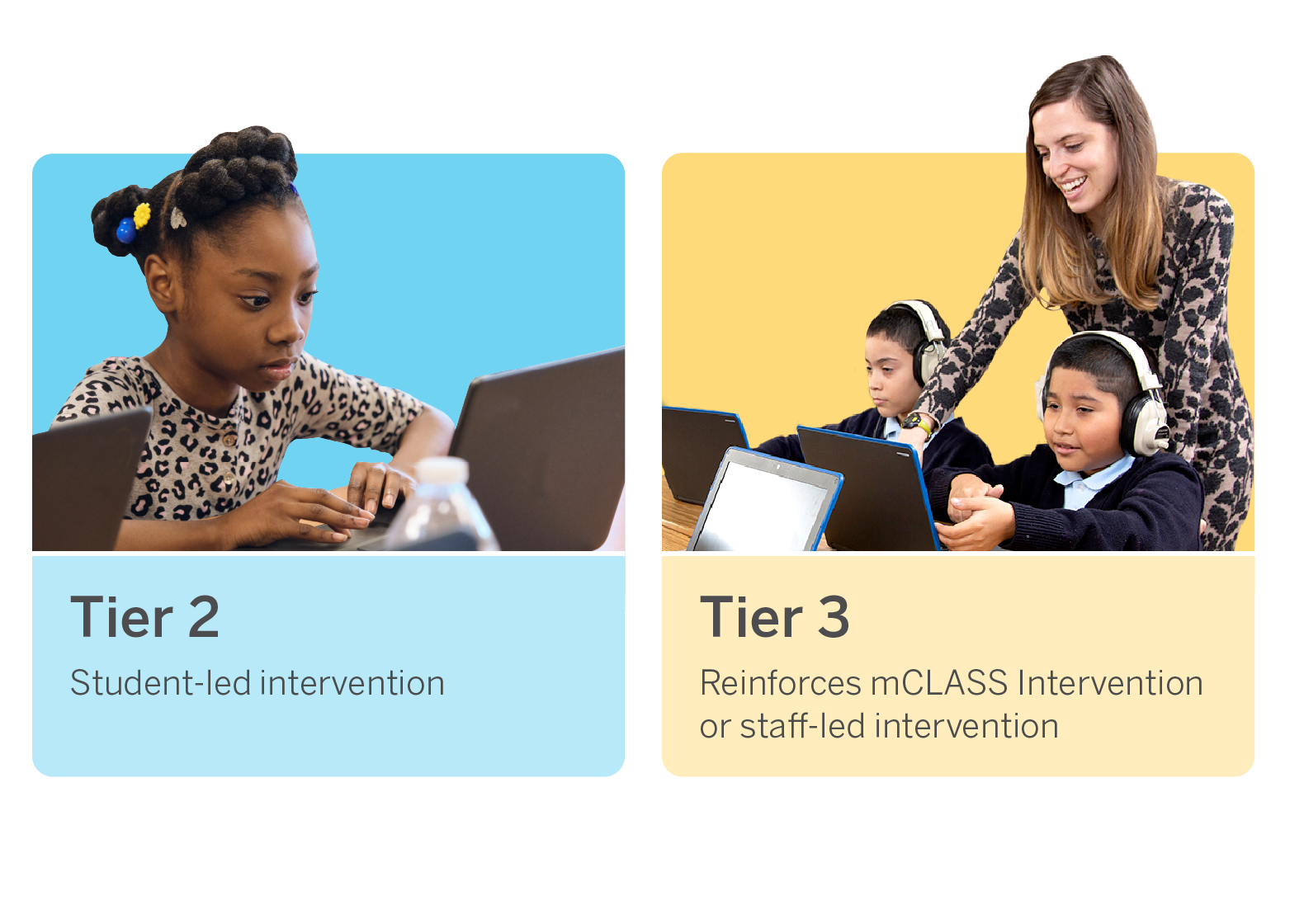
Boost Reading adapts automatically, so students practice the right skills at the right moment. Tier 2 students get meaningful independent intervention support, while Tier 3 students receive additional skill reinforcement between their staff-led sessions with mCLASS Intervention. Boost Reading follows the same foundational skills sequence as Amplify CKLA, which means that students practice skills unique to them, making Boost Reading an effective part of a Multi-Tiered System of Support (MTSS).

Split image: On the left, a girl uses a laptop with the label “Tier 2 Student-led intervention” featuring a K–5 personalized reading curriculum. On the right, a teacher assists two boys with laptops, labeled “Tier 3 staff-led intervention.”.

Data you can actually use in your classroom

Boost Reading shows you exactly what you need to know about student progress, through simple growth reporting on the Teacher Dashboard. See who’s improving, who needs support, and which skills to target next without having to spend time digging through complicated data.

Aligned to Amplify CKLA and mCLASS DIBELS 8th Edition

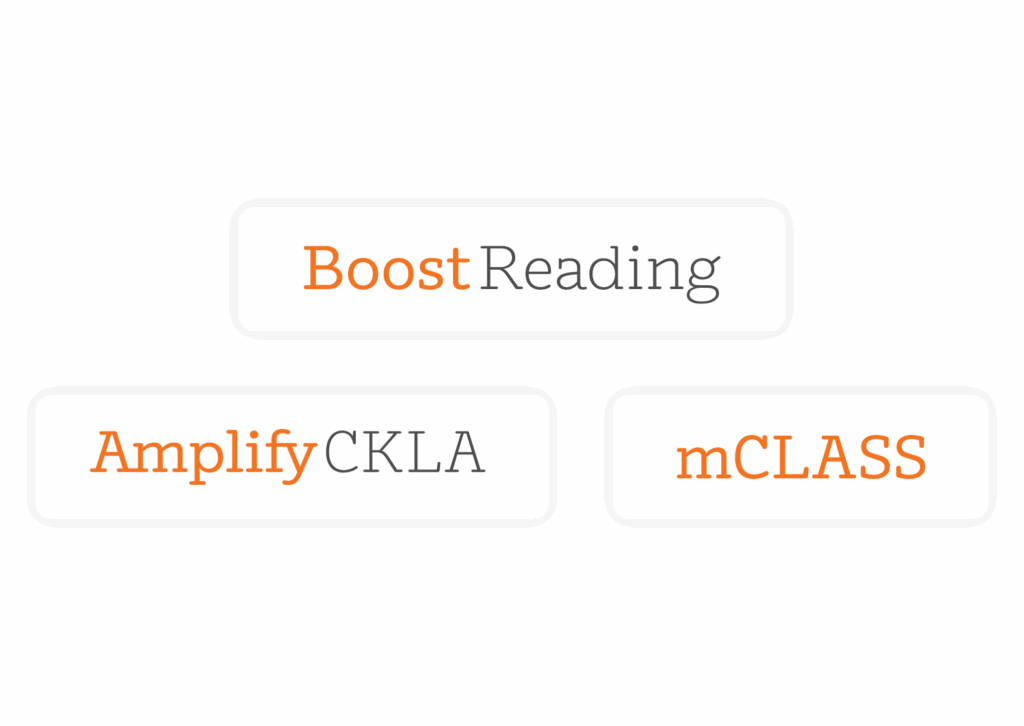
Boost Reading follows Amplify CKLA’s scope and sequence, making it easy to integrate into your daily routines by reinforcing the same skills you’re already teaching. It uses mCLASS DIBELS® 8th Edition data to provide targeted support and placement, giving teachers a clear view of how students progress across all instructional tiers.

Three text boxes display the names of K–5 literacy resources: "Boost Reading," "Amplify CKLA," and "mCLASS," with the words "Boost," "Amplify," and "mCLASS" in orange font.
Oso de dibujos animados jugando al fútbol, pateando una pelota con la etiqueta "ma", con burbujas de discurso que dicen "¡hola!" en español e inglés, al lado de una portería con un letrero "Currículo de lectura personalizado para jardín de infantes a 5.º grado".

Closing the gap for
K–2 multilingual/English learners

Boost Reading’s Spanish literacy partner, Boost Lectura, strengthens early literacy for Spanish-speaking multilingual/English learners. When used together, the two programs give teachers side-by-side insight into skill progression in Spanish and English, helping accelerate learning across both languages.

Boost Reading efficacy study

Closing the literacy gap for K–5 students

Download now

What’s included

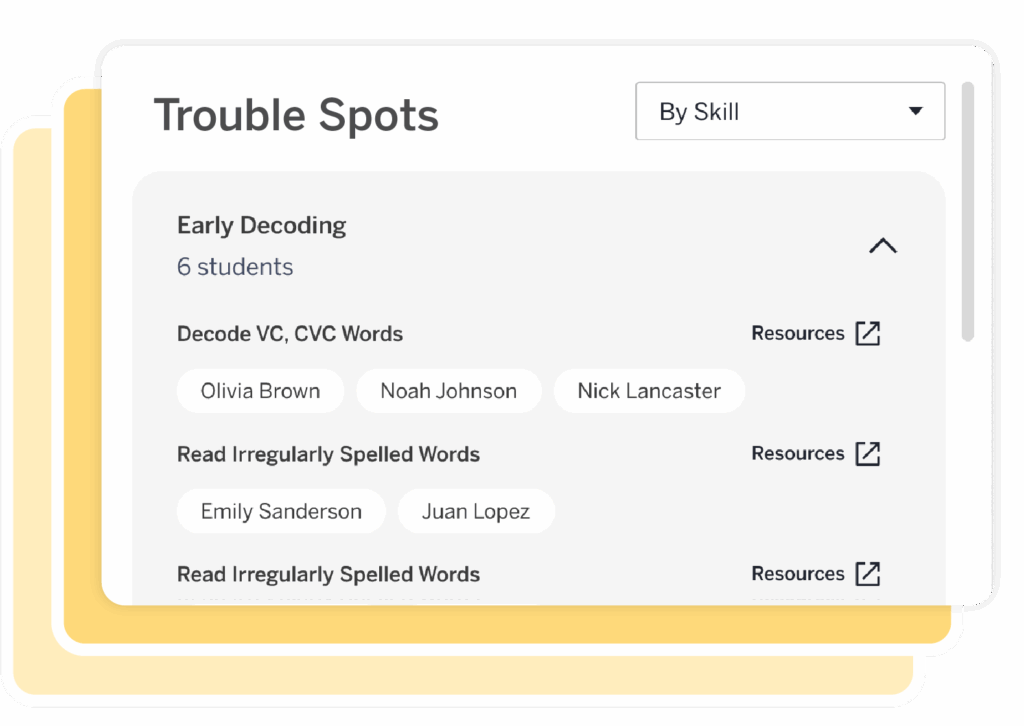
A dashboard section titled "Trouble Spots" lists students under "Early Decoding" by skill, showing names and resource links for decoding and spelling word skills from a K–5 personalized reading curriculum.

Pinpoint the skills that need your attention

The Trouble Spots section makes it easy to see which students are struggling and what skills they need to work on. Printable, ready-to-teach lessons allow you to pull together small groups in minutes.

Watch your students grow

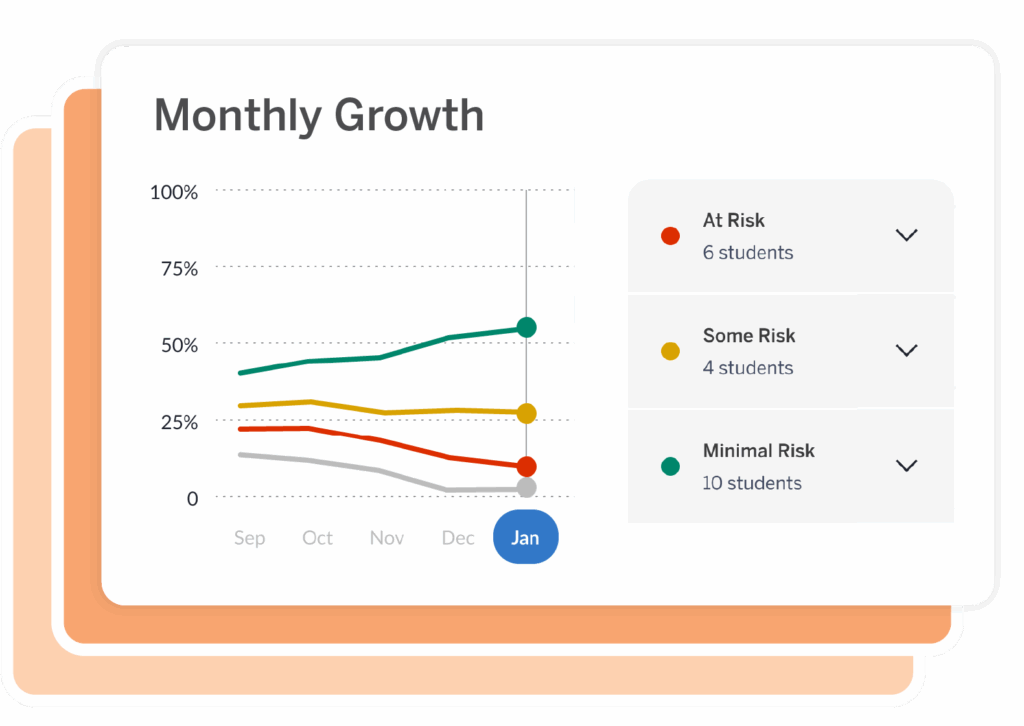
Never miss a moment of your students’ literacy development, with monthly growth reporting! You’ll be able to track how students are developing skills month over month, and see their reading trajectory unfold.

Line graph titled "Monthly Growth" shows three risk categories—At Risk, Some Risk, Minimal Risk—from September to January. Visualize student progress using this K–5 personalized reading curriculum as your supplemental reading curriculum.
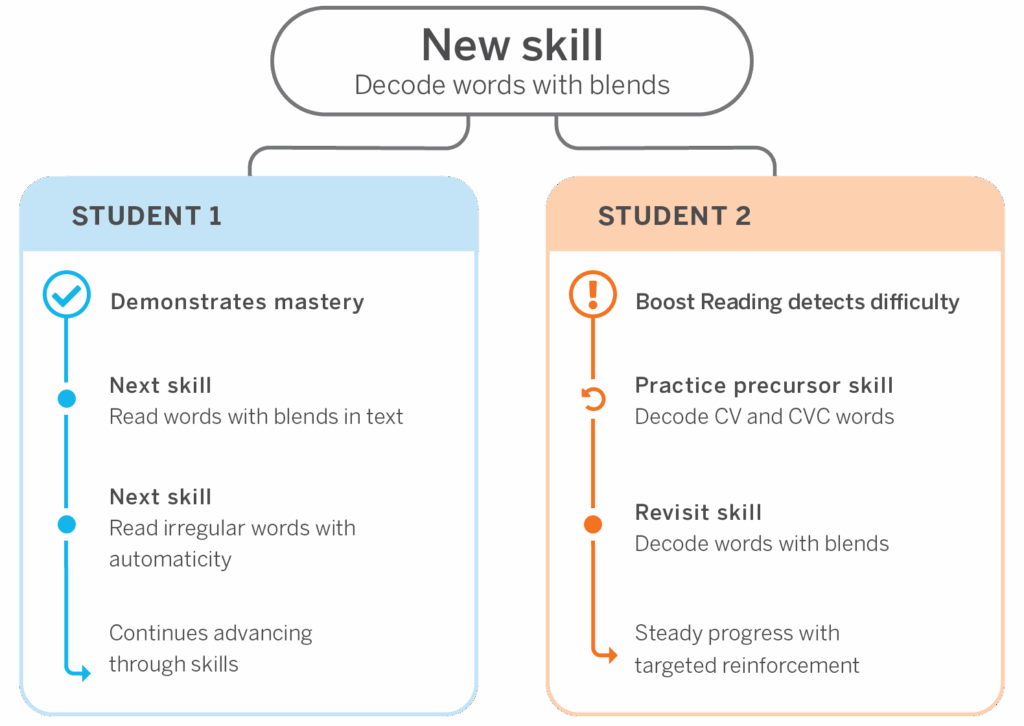
A chart compares Student 1, who demonstrates mastery in decoding blends, with Student 2, who needs targeted practice and reinforcement to decode words with blends using a K–5 personalized reading curriculum.

A program that grows with your students

Boost Reading continuously tailors instruction based on individual student performance. That means scaffolding foundational skills while building proficiency, one engaging activity at a time. There’s no stalled practice, and you’ll see steady progress across key reading skills.

Benchmark and growth assessments

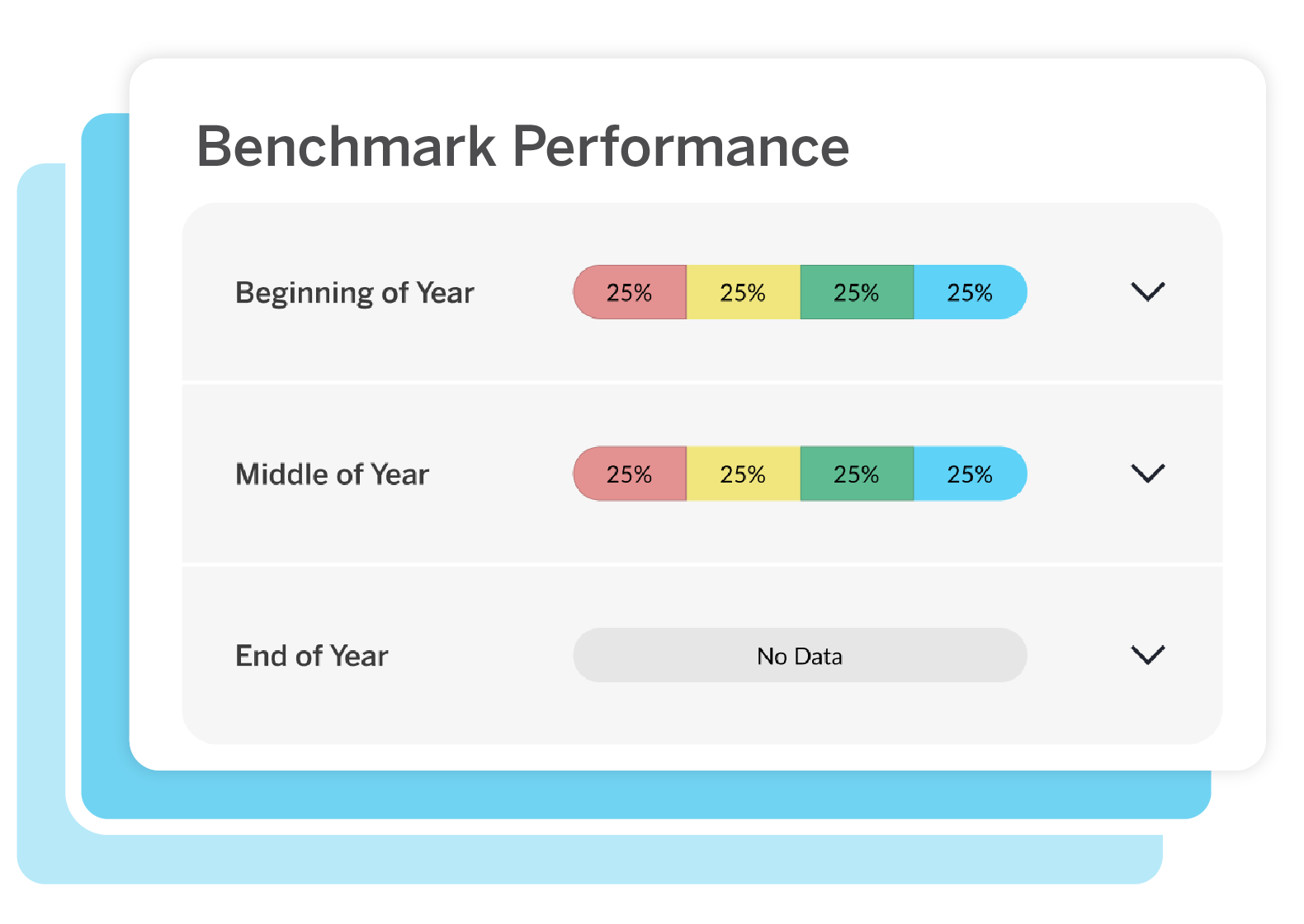
Boost Reading combines built-in benchmark assessments with monthly skill scans to give teachers a holistic view of progress from the beginning of the year to the end of the year. The monthly skill scans act as check-ins between benchmark windows, so you’ll always know where students stand with a complete picture of their learning.

A chart titled "Benchmark Performance" shows equal 25% scores for four categories at the beginning and middle of the year when using a K–5 personalized reading curriculum; no data is available for end of year.
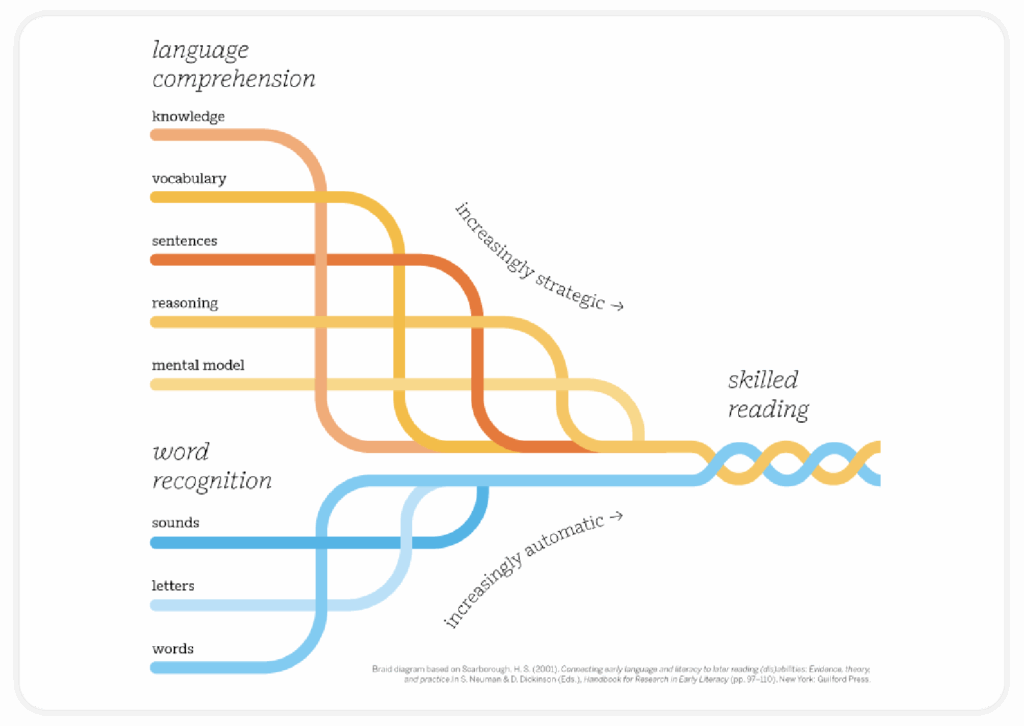
A flow chart shows language comprehension and word recognition strands merging into skilled reading, highlighting progression from basic to advanced skills—a clear visual for any K–5 literacy resource.

Science of Reading scope and sequence

Boost Reading introduces skills in the order research shows students learn best. Phonological awareness builds into phonics, vocabulary, and comprehension for a solid foundation and confident readers.

Administrator and caregiver reports

Administrators and caregivers are welcomed into the student reading journey with data on program usage, reading progress, and skill mastery.

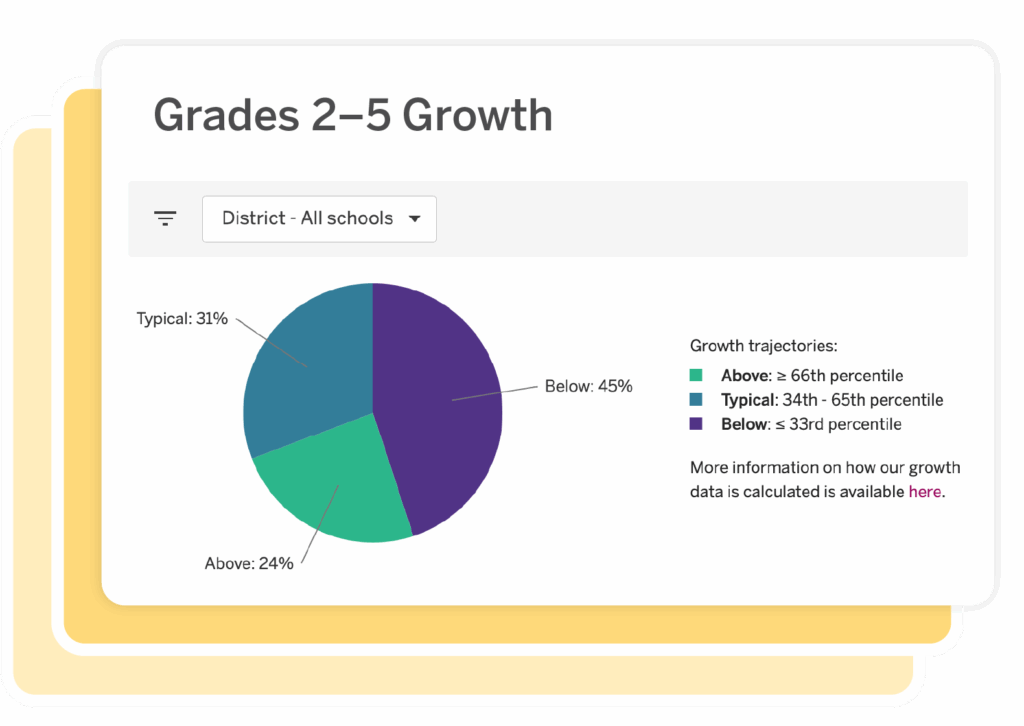
Pie chart titled "Grades 2–5 Growth" shows 45% below, 31% typical, and 24% above. Legend explains growth percentiles for a K–5 personalized reading curriculum: above, typical, below.
Insignia de premio con el texto "Premios de excelencia en tecnología y aprendizaje 2023, regreso a clases, ganador del plan de estudios de lectura personalizado K-5".

Award-winning technology that drives student growth

Learn more

Explore more programs based on the Science of Reading.

All of the programs in our literacy suite are designed to support and complement each other. Learn more about our related programs:

Apply for the 2026 Science of Reading Star Awards!

Two rectangular badges, one orange with a trophy icon and one blue with speech bubble icons, appear against a light background with stars and a yellow ribbon—perfect for celebrating teacher awards or to nominate a teacher for an award in early literacy.

When you look up at the night sky, you see some stars that shine especially bright. They guide travelers, inspire wonder, and illuminate galaxies.

That’s how we think of the literacy educators who champion the Science of Reading. They brighten the path for countless students and light their way to lifelong literacy.

Making the shift to the Science of Reading is no small feat. It requires thoughtful engagement, systematic implementation, and the courage to change long-standing practices. Most importantly, it requires every part of an educational system to work in cosmic alignment for student success.

That’s why the Amplify Science of Reading Star Awards honor outstanding educators, schools, and districts who have transformed their classrooms with the Science of Reading.

We’re excited to celebrate another constellation of remarkable leaders in literacy development—and to invite you to be a part of it.

Leaders in early literacy skills at all levels

Successful Science of Reading implementation happens when everyone is on board. That means: classroom teachers mastering evidence-based teaching techniques, principals supporting school-wide initiatives, districts providing professional development, and entire communities supporting the shift.

Because this transformation requires such coordinated effort, our Science of Reading Star Awards recognize excellence across every level of education, with categories that reflect this multi-level approach.

Individual categories

  • Teachers who exemplify Science of Reading principles in daily instruction
  • Instructional coaches driving literacy transformation
  • Administrators leading successful reading initiatives

School categories

  • Schools demonstrating significant reading growth through Science of Reading implementation
  • Educational teams working together to strengthen early literacy skills

District categories

  • Districts orchestrating system-wide literacy development improvements
  • Large-scale Science of Reading transformations with measurable results

How our educator awards honor the winners

All award winners receive a comprehensive package designed to support their leadership and amplify their impact. Recognition includes:

  • Honorary Amplify Ambassadorship, which provides access to our community of literacy leaders.
  • Your story featured on our website and social media.
  • Science of Reading starter library of resources to continue your journey.
  • Enrollment in Science of Reading: The Learning Lab (for you and a friend).
  • Tons of swag, of course!

Grand prize winners in the District and School categories will also get access to an exclusive library of professional development resources. The grand prize winner in the Individual category will be our guest, all expenses paid, at the Reading League’s 10th annual conference in Chicago next fall.

How to nominate the literacy stars in your sky

Do you know educators whose Science of Reading work deserves recognition—like our 2025 winners? A school team that has transformed reading outcomes? A district that has successfully implemented evidence-based literacy practices system-wide?

These are the stars guiding us toward a future where every child can read with confidence and joy. Help us get to know them!

We are accepting nominations through Feb. 13, 2026, 11:59 p.m. ET. Submit your nomination today!

More to explore

S4 – 03: LIVE from NCTM with Bethany and Dan

Hosts Bethany and Dan, both smiling, in a promotional image for the "Math Teacher Lounge" podcast, Season 4 Episode 3, titled "Live from NCTM!" with an

In this episode, co-hosts Bethany Lockhart Johnson and Dan Meyer are LIVE with more than one hundred Math Teacher Lounge listeners at the recent National Council of Teachers of Mathematics conference. Listen in as they answer the pressing question: Who is the best teacher in film or television?

Explore more from Math Teacher Lounge by visiting our main page

Download Transcript

Presenter (00:00):
Ladies and gentlemen, from Math Teacher Lounge, we have Bethany Lockhart Johnson and Dan Meyer! <cheering>

Bethany Lockhart Johnson (00:08):
Doesn’t go well that the door was locked. Like, I could not get in! <Laugh>

Dan Meyer (00:12):
Yeah. Gotcha. All right. We’re gonna sit a little bit. Let’s see how that works—

Bethany Lockhart Johnson (00:16):
Hi!

Dan Meyer (00:16):
Yeah. I think we’ll stand up? Or whaddaya think, sit…?

Bethany Lockhart Johnson (00:19):
Should we stand? Hi.

Dan Meyer (00:22):
Hello. Great to see you folks. Yeah, I can hear you.

Bethany Lockhart Johnson (00:25):
Can you hear me? That’s—I know YOU can me. Can you hear me OK? OK! We’re here. Hello. Thank you for like, lining up and coming out and being here. Thank you!

Dan Meyer (00:35):
Means so much to me that you could be here for me, on my show, with Bethany Lockhart Johnson, my co-host. <Audience laughs>

Bethany Lockhart Johnson (00:40):
The hour has just started.

Dan Meyer (00:42):
We’re just getting going. Yeah. If you folks have heard the podcast, you don’t know how much gets cut out. And it’s like, mostly me just having, you know, anxious nerves and saying something silly and then we cut it out and we can’t do that here today. So it should be real fun for all of us, I think. Yeah.

Bethany Lockhart Johnson (00:55):
It’s not true. It’s mostly dancing. “Bethany, can you stop talking? Bethany?” Cause it’s mostly—

Dan Meyer (00:59):
“It’s my turn. It’s my turn! Bethany <laugh>! I haven’t been heard for a while.”

Bethany Lockhart Johnson (01:02):
Dan. We’re at an in-person conference.

Dan Meyer (01:05):
In-person BIG conference, I would say. I’d say a big conference. Yeah.

Bethany Lockhart Johnson (01:08):
And have you been to the Amplify booth?

Dan Meyer (01:11):
I have! Have these people? There’s a claw machine with free socks.

Bethany Lockhart Johnson (01:16):
Yeah. You’re saving me socks, right? That’s what you’re saying. <Laugh> I mean, it’s exciting. How has your conference been so far?

Dan Meyer (01:21):
So far it’s been a blast. I feel fed. I feel like the community’s been awesome. How are you feeling about it?

Bethany Lockhart Johnson (01:29):
OK. Let’s talk about me for just a second.

Dan Meyer (01:31):
Yeah. Talk about you.

Bethany Lockhart Johnson (01:31):
Last night, Dan, was the very first night that I was away from my toddler. <Audience: Aw!>

Dan Meyer (01:38):
Big commitment being here. Thank you.

Bethany Lockhart Johnson (01:40):
I got super-emotional walking back to the hotel after dinner, and then I got in my room, <laugh> I put on pajamas, and I turned on music. I slept so good!

Dan Meyer (01:50):
Yeah. <Audience laughs> Give it up for no kids! <Audience laughs> Hey!

Bethany Lockhart Johnson (01:55):
I love him so much. But I slept all the way through the night. Oh, by the way, I ordered room service in the morning.

Dan Meyer (02:01):
On Amplify.

Bethany Lockhart Johnson (02:01):
That bill’s coming. But it’s been a great conference and I’m so delighted to be here in person and to get to share energy…and hopefully that’s all we’re sharing today. Y’all got your tests, right? Yep. Sharing energy and community today. Because we know it’s been hard. Hardness. Hard.

Dan Meyer (02:25):
Yeah.

Bethany Lockhart Johnson (02:26):
Years. Hard. And to be in person, I know conferences reinvigorate me and I go back into my educational spaces feeling revitalized with new connections and new ideas to try. So yeah, I’ve been excited to be here. And thank you all for being here.

Dan Meyer (02:40):
Yep. I don’t care if I get six different strains of Covid here. I’m just thrilled to be here. <Audience laughs> I don’t know if you’ve had the same feeling, though, Bethany, you folks…I’m a little bit confused to some degree about what we’re doing. I just wanna be really transparent. This is my sarcastic voice but I’m being sincere here. It kind of feels like we’re in a little bit of a time capsule. Like we all got in a time capsule in 2019 and, you know, you open it back up and it’s like, OK, so we’re still, you know, talking about X, Y, or Z protocol for establishing classroom routines or whatever. And I’m like, OK! Like, I loved that in 2019! But I do admit, I’m still trying to figure out a little bit like, what are we doing now? What’s our relationship to the world out there? Things are very different. I have had some great sessions that I’ve enjoyed. I’m also like, still waiting for a session to draw a little blood. Do you know what I mean? Like there’s been sessions…no? OK. You’ve been in these sessions where it’s like, “Oh, ow.” Like, and you look down and there’s and there’s blood there. It’s like, I thought I knew what we were up to. Like, I thought I knew what teaching was and how we relate to the world. I dunno, like in any Danny Martin session in 2019, “Take a Knee” was one, where I was like, “Oh, OK. Like, I’m not as hot as I think I am here. Like, I’m part of a system.” That kind of thing for me draws blood. And I haven’t been in one of those yet. Been some great sessions. I’m a little hopeful that today we draw a little blood and think about what we’re doing here, is my hope here, if that’s OK. So Bethany’s gonna moderate that impulse and she’ll be the fun one and I’ll be the blood-drawing one.

Bethany Lockhart Johnson (04:05):
No, I don’t…that metaphor doesn’t speak to me personally. But what I will say is, I get what you’re saying about really wanting to be in that room where there’s like this synergy happening. No promises about that today other than—

Dan Meyer (04:18):
I promise. <Audience laughs> Go on.

Bethany Lockhart Johnson (04:20):
Other than I get what you’re saying. I’ll find my own metaphor that does not involve bloodshed, but.

Dan Meyer (04:25):
Sure. There’s a lot of ways we we could go about this today. And the one that I’m excited about is, you know, we could like, you know, analyze some results from students, and talk about what went into that. Look at classroom video. Lots of possibilities. But here’s what we’re up to today. Hope you’re into it. Which is, we are here in the heart of the entertainment industry. You know, Tinseltown! Um, the Big Apple! Uh…

Bethany Lockhart Johnson (04:47):
No!

Dan Meyer (04:47):
Come on. What do you got here? Um…

Bethany Lockhart Johnson (04:51):
It was daytime at night. Like the lights were so bright.

Dan Meyer (04:54):
The City of Lights.

Bethany Lockhart Johnson (04:55):
There was a movie premiere outside my hotel room, which I was not invited to, unfortunately. But so what are we doing today?

Dan Meyer (05:01):
So here’s what we’re doing. We are gonna settle, once and for all, a question you have not asked yourself yet, perhaps, but will want to know the answer to in a moment. Which is: Who is the best teacher in all of film or television? OK? We’re gonna do that. It’ll be fun. But I hope that in debating this a little bit with a special guest we’ll bring up in a moment, that we will start to uncover some truths about what makes good teaching. How that’s different from teaching as we see it in movies and tv. Why middle-class America wants teachers to look a certain way in movies and tv. What all that means. And it’ll be awesome. I think. I’m hopeful it’ll be awesome. So what we did here is we’ve invited eight people. Eight folks you people may have known. You’ve been in their sessions today, in this conference, perhaps. And asked them: Who’s your fave? Like, we might have our favorites, but we wanted to democratize it a bit. So asked some cool people who you folks like, who are very smart and thoughtful about teaching: Who’s your favorite teacher?

Bethany Lockhart Johnson (05:58):
A few of whom are in this room. Thank you for your submission.

Dan Meyer (06:00):
Thank so much. Yeah. We’ll see what happens here. <laugh>

Bethany Lockhart Johnson (06:03):
As they shrink down.

Dan Meyer (06:03):
Yeah. Might draw some blood that I don’t mean to right now. We’ll see. OK.

Bethany Lockhart Johnson (06:06):
That metaphor, what IS that??

Dan Meyer (06:07):
Yeah. Yeah. I love it. I’m still going with it. <laugh> And you folks will be a huge part of this. THE part of this, really. So what will happen is I’ll share with you our first nominees. A few of us will make a case for our favorites, or least favorites, as the case may be sometimes. And then by applause, by acclamation, you folks will decide who wins and advances to the next round. Start with eight, move to four. You folks know math.You know where this goes. OK.

Bethany Lockhart Johnson (06:34):
No, keep going. Keep going.

Dan Meyer (06:36):
Two, then one.

Bethany Lockhart Johnson (06:36):
Yeah. Got it.

Dan Meyer (06:37):
Then a half of it. No?

Bethany Lockhart Johnson (06:38):
He had to school me on the making of brackets. But we got it. Yeah.

Dan Meyer (06:41):
How brackets work.

Bethany Lockhart Johnson (06:41):
But we got it. March Madness, what?

Dan Meyer (06:44):
Yeah, in order to do this right, we had to bring up—all the folks that you’ll see are also former Math Teacher Lounge guests, or like, just fan favorites. And we’re also bringing up a former Math Teacher Lounge guest to help us decide this and debate this in a respectful manner.

Bethany Lockhart Johnson (06:59):
New dad.

Dan Meyer (07:00):
New dad.

Bethany Lockhart Johnson (07:01):
You see where my brain’s still at? I miss him. <Laughs>

Dan Meyer (07:03):
Friend from San Diego. Really cool teacher.

Bethany Lockhart Johnson (07:06):
Incredible teacher.
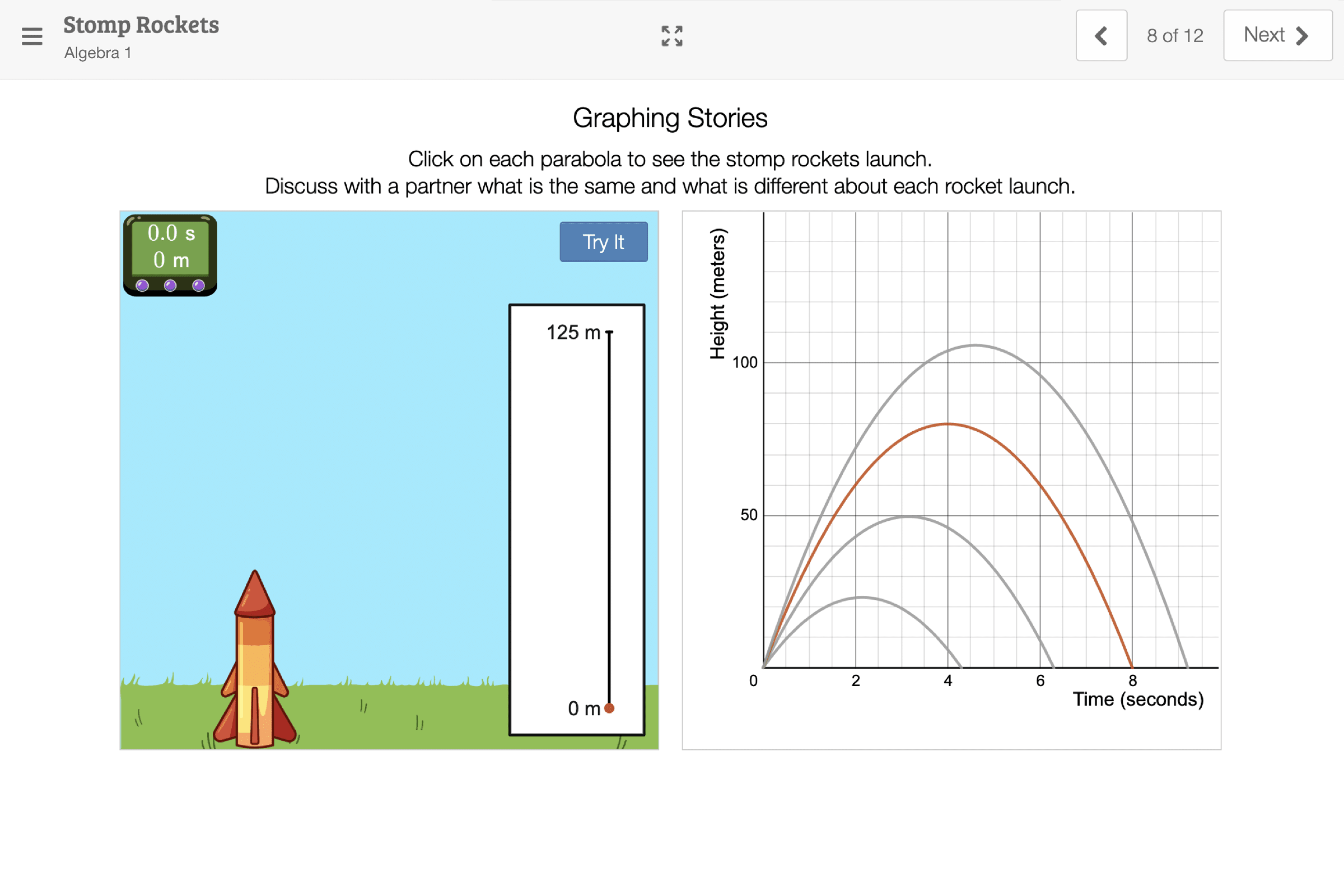
Dan Meyer (07:06):
Works at Desmos and Amplify. And I just want you to welcome up your friend and mine. Chris Nho!

Bethany Lockhart Johnson (07:11):
Chris Nho!

Dan Meyer (07:13):
Come up, Chris. Let’s go, buddy. We didn’t talk about it, but did you want to do the cornball stuff too?

Chris Nho (07:22):
Wow. Would I love to do—

Bethany Lockhart Johnson (07:23):
And then the door could be locked! And then you have to wait and like, just—

Chris Nho (07:27):
Yeah, I’ll skip that part.

Bethany Lockhart Johnson (07:28):
Hi. Welcome. You’re here. We’re here in person.

Chris Nho (07:30):
Very glad to be here. Thank you all for having me.

Dan Meyer (07:33):
Tell me who you are.

Chris Nho (07:34):
My name is Chris Nho. I live in San Diego. I’m a new dad. A three month old, just had. Yeah, she’s actually here at the conference with us in the hotel room. And I promise you she is not by herself. She is with…come on. I was like, “Hey, just gimme one hour. I’ll be right back. I have to do very important work.” But yeah, I think I got invited here because I have opinions and I’m willing to draw…some…blood.

Dan Meyer (08:02):
There we go! Two outta three! We’re good on the metaphor now.

Bethany Lockhart Johnson (08:06):
We’re so glad you’re here. If you haven’t listened to the episode where Chris and Molly and some other public math folks share their ideas and ideas of how to take math out into the world, please listen, because we had a blast.

Dan Meyer (08:19):
Inspiring work. Really inspiring work. Very cool. Cool. OK. Right on. OK.

Bethany Lockhart Johnson (08:23):
Let’s do this!

Dan Meyer (08:24):
Let’s get started here. Yeah! <Audience cheers> Yeah. And we might ask you who your favorite teacher is, who’s missing from our list of eight? We might have forgotten some people. Anyway. All right. So here’s our first two. Our first two are nominated by way of, let’s see, um, Mandy Jansen is a professor at the University of Delaware. Got some awesome talks here this week, a Shadow Con talk last night. She’ll be nominating one. And also, um, Lani Horn is a professor at Vanderbilt, also extremely cool, prolific author and speaker, just all-around great human and friend of teachers everywhere. And she’ll nominate another in this bracket, which is the Northeastern Comedy bracket, Northeastern comedy bracket.

Bethany Lockhart Johnson (09:06):
It just worked out that way.

Dan Meyer (09:07):
Yeah. Here it is. Here is Tina Fey in Mean Girls.

Tina Fey in Mean Girls (09:12):
“OK. Everybody close your eyes. All right. I want you to raise your hand if you have ever had a girl say something bad about you behind your back. Open your eyes. Now close your eyes again. And this time I want you to raise your hand if you have ever said anything about a friend behind her back. Open up. It’s been some girl-on-girl crime here.”

Lani Horn (09:52):
I am nominating Sharon Norbury from Mean Girls as the best movie math teacher. She is an awesome teacher who is always there for her kids. She always sees the best in them. She shows that she can forgive even some pretty bad behavior, if she sees that kids are trying. She’s a strong feminist who makes sure that smart girls don’t dumb themselves down just to impress boys.
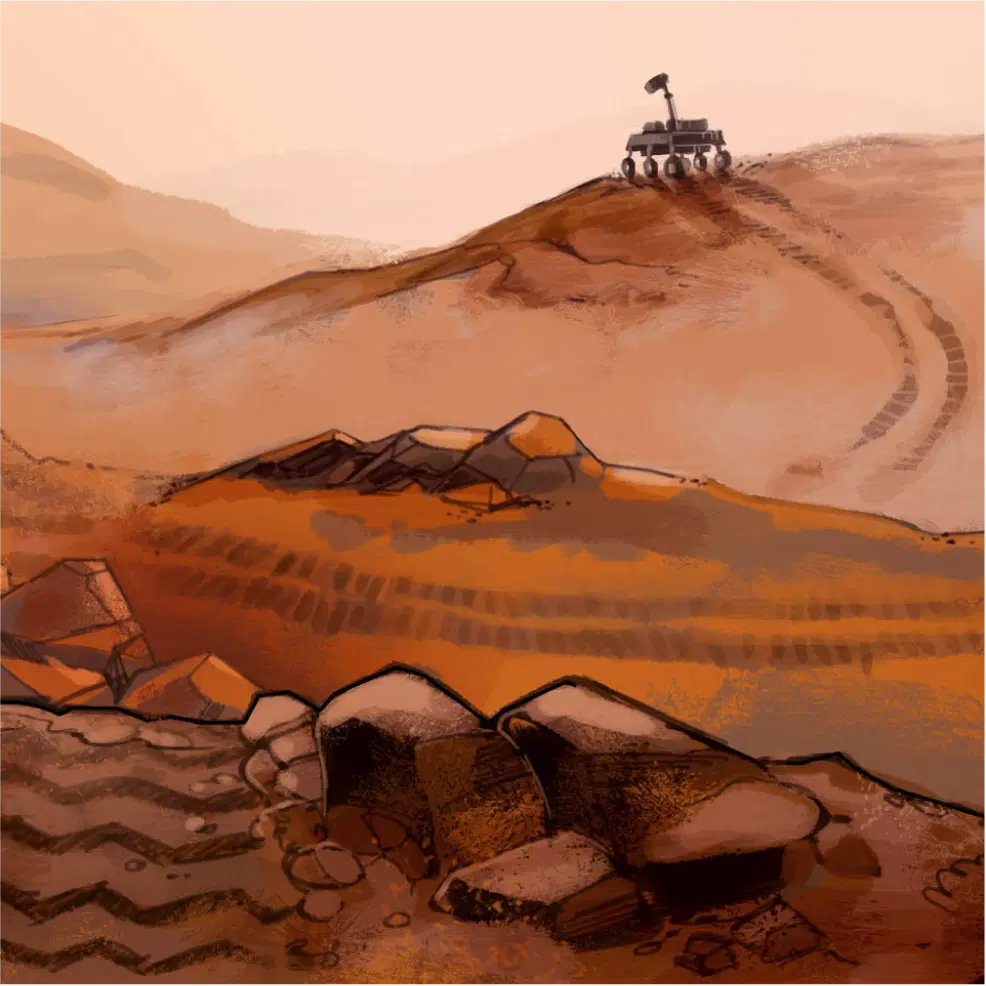
Tina Fey in Mean Girls (10:22):
“Katie, I know that having a boyfriend may seem like the most important thing in the world right now, but you don’t have to dumb yourself down to get guys to like you.”

Lani Horn (10:30):
She’s also super hard-working. She works three jobs. She’s always there for the kids. She plays piano in the talent show and takes them to Mathlete competitions. And she’s also socially aware. And when things go really badly among the girls, she does some pretty creative things to try to get them to be kinder to each other.

Dan Meyer (10:54):
OK. That’s one.

Bethany Lockhart Johnson (10:55):
Helen Case.

Dan Meyer (10:57):
All right. Settle down. Settle down. Settle down. All right.

Bethany Lockhart Johnson (10:59):
Piano too!

Dan Meyer (11:00):
Bethany’s already trying to bias people here. All right. Chill out. Hold on. So next one is Mandy Jansen with Jack Black from School of Rock. Uh-oh. Uh-oh.

Jack Black in School of Rock (11:09):
“What was your name?”

Kid in School of Rock (11:10):
“Katie.”

Jack Black in School of Rock (11:11):
“Katie. What was that thing you were playing today? The big thing.”

Kid in School of Rock (11:14):
“Cello.”

Jack Black in School of Rock (11:15):
“OK. This is a bass guitar and it’s the exact same thing, but instead of playing like this, you tip it on the side. Chellooooo! You’ve got a bass! <Laugh> Try it on.”

Mandy Jansen (11:25):
And I’m nominating for best teacher in a film Jack Black as Dewey Finn playing Mr. Ned Schneebly in the film School of Rock. So why this portrayal? First of all, playing a longterm sub. Those are so hard to find right now. <Audience laughs> Really hard. And then he teaches using class projects. That’s brilliant. Integrated learning. And then love this. He gives students roles and tasks that are differentiated and align to the specific strengths that each student has.

Kid 2 in School of Rock (12:05):
“I can also play clarinet, you know!”

Jack Black in School of Rock (12:06):
“I’ll find something for you when we get back from lunch. I’ll assign the rest of you killer positions.”

Mandy Jansen (12:13):
And the film culminates in a performance of a collaborative song that they all wrote and performed together. And the students experience that collaboration and teamwork and creating something beautiful is much more important than winning first place. And finally, one of the songs that the character sings in the film is “Math is a Wonderful Thing.” Can’t beat that.

Dan Meyer (12:40):
All right. That’s tough. That’s tough. So here’s the deal. What we have right now is just a quick minute—so Bethany, you ranked, we all ranked our own faves here outta the list of eight. And Bethany put Jack Black in School of Rock a bit higher than Tina Fey in Mean Girls.

Bethany Lockhart Johnson (12:54):
Missed the piano part though.

Dan Meyer (12:55):
And Chris, vice versa here. So Bethany, would you start us off and just make a quick case here for Jack Black versus Tina Fey?

Bethany Lockhart Johnson (13:01):
OK. So here’s what I’m thinking. There’s been rumor that maybe they’re putting less than credentialed people into classrooms to fill teaching gaps. I mean, just rumor. And so here’s this guy who is a rocker. He is not a substitute. He has no teaching training. And yet he goes in there and it turns out that he has the ability to see students’ potential and to recognize their unique abilities. And like Mandy said, he really tapped into, like, he saw them and said, “No, more is possible for you than what you think is possible.” And there’s like real sub anxiety. When you walk in, you can either be like, happy there’s a sub, but I was usually really nervous. Right? And he goes in and he makes that classroom into a home.

Dan Meyer (13:53):
Wow.

Chris Nho (13:54):
Wow.

Dan Meyer (13:56):
Chris, speak on it. Tina Fey needs you. Chris.

Chris Nho (13:59):
Tina Fey. Here we go. I’m gonna argue here that—when was that movie made?

Dan Meyer (14:03):
T is for terrific. I is for Interesting.

Chris Nho (14:06):
Decades ago. And I’m gonna argue that Tina Fey was very progressive for her time. OK, let’s talk about social emotional learning. Hello. <Audience laughs> Love that. Right? Stand up if, I mean, she’s getting people to talk about their emotions. And there’s a curriculum. But let’s just pause, because that’s not what’s really happening in the classroom right now. So social emotional learning, I think she’s, she’s got that a lot. And then number two, you know, if you remember the plot of Mean Girls a little bit, she gets her name written in that Burn Book. Like she sees what they say about her. Restorative justice. Let’s go. <Audience laughs>.

Dan Meyer (14:38):
Whom amongst us. Yes.

Chris Nho (14:40):
You write Mr. Nho in the Burn Book?? Well, your grade book is gonna look like a Burn Book! OK? <Audience laughs> Tina Fey, Tina Fey, she was like, “No, you know, know what? I’m actually gonna spend more time with you. You’re gonna become a mathlete.” And Lindsay Lohan discovers—she drops the most iconic line in all of math education. “The limit does not exist.” Thank you, Tina Fey, for that. For that gift.

Dan Meyer (15:04):
Bless. Bless you. Tina Fey. Wow.

Bethany Lockhart Johnson (15:05):
Oh, man. Wow.

Dan Meyer (15:09):
Let’s see what the people say here. I do wanna just add one quick thing about—it’s interesting to me how often in these movies—just kind of go in a little bit, zoom out just a minute—how often it’s a teacher who has no training as a teacher. <Bethany laughs> I am kind of curious why it is. Like, those are the movies that get hot, that get made. Again, these are all kind of a mirror of the taste of the moviegoing public. You know what I’m saying? Like, these, these are not movies—I wanna believe they are made for me and for us as teachers. But they are not. There’s not enough of us to justify, you know, Jack Black’s, you know, M&M budget or whatever he’s got going on in his trailer or whatever. That needs to be for everybody in middle-class America. So what is it about middle-class America that wants to see teaching as something that anybody can do? Just like, you know, just, just run up there in your van and make it happen.
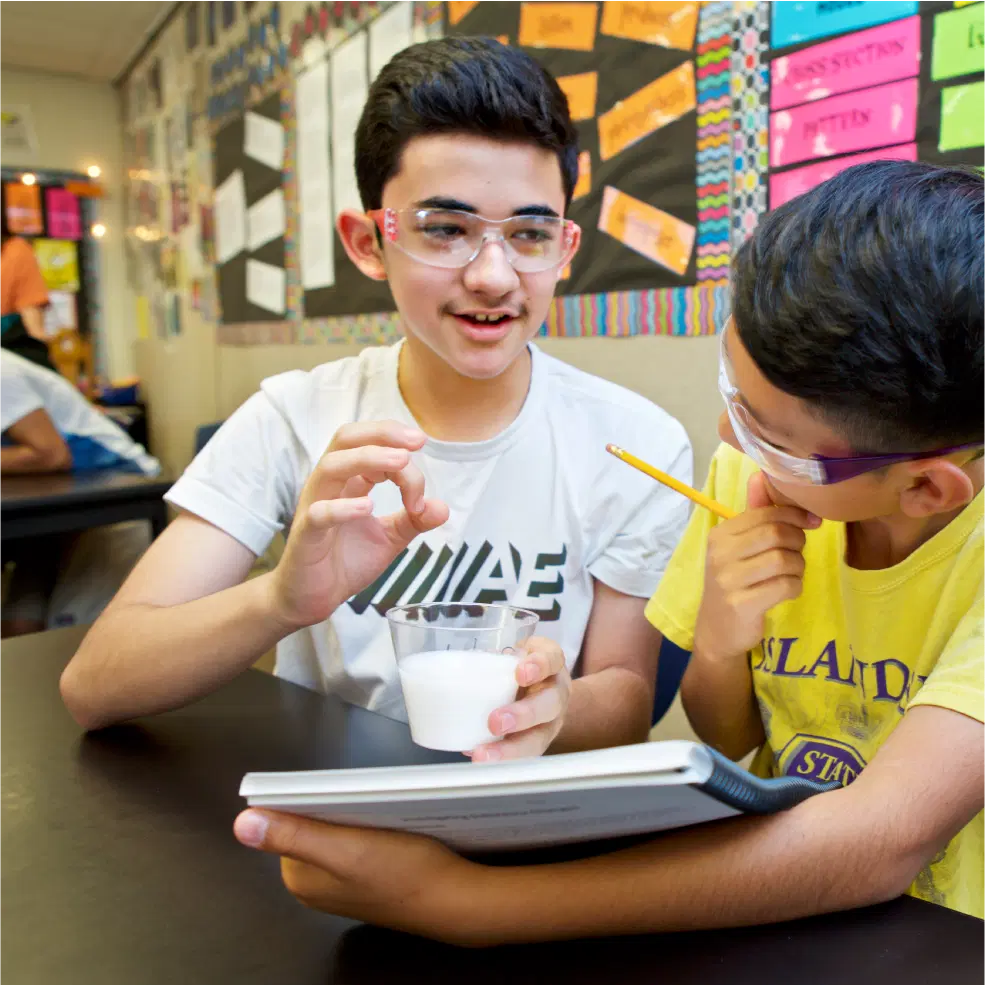
Bethany Lockhart Johnson (15:54):
Magic magically manifests.

Dan Meyer (15:56):
Yeah. Manifest. Yeah. That’s just interesting to me. I just toss that out there as some red meat. Let’s see what the people say here. All right, OK, so you’re ready. Let’s get the bracket going here. The question is Tina Fey versus Jack Black. You had a moment here. Just whisper to someone real fast who you’re going for here real quick. What are you thinking here? <Crowd murmuring> All right. Crowd’s buzzing. Crowd’s buzzing. Would you folks…? All right. Bring it back. Go ahead and make some noise for Tina Fey. <Crowd cheers> OK. OK. Make some noise for Jack Black! <Crowd cheers> Judges say Tina Fey. Tina Fey moves on. All right. All right.

Chris Nho (16:44):
Stunned. I’m stunned. I’m speechless.

Bethany Lockhart Johnson (16:46):
Tina Fey moves on. Wow.

Dan Meyer (16:48):
This has exceeded my expectations in terms of having some fun, but also getting deep, getting deep and real about teaching. I’m into this right here. Yeah. What’s up?

Bethany Lockhart Johnson (16:54):
That’s the goal. That’s the goal. OK. You wanted blood? Oooh, this next matchup might just be where that blood comes forth! OK. Stretch. Warm up. Dan Meyer, who’s up next?

Dan Meyer (17:11):
We’ve got the animated/animatronic round here in the Southeast. And repping the two contestants here, who do we have? We have Allison Hintz, professor, author outta Washington, as one of the two nominators. And the other nominator is one of my heroes, though we’ll find out very wrong about this nomination, Jenna Laib, who’s in the crowd, and I’m trying not to make eye contact here. <Laugh> And here are the two nominations. A couple minutes each. And then we’ll chat about it. And one of us will probably die. But we’ll see how it goes.

Allison Hintz (17:50):
A long, long time ago, in a galaxy far, far away, MTL, we began learning from the Jedi Master of Teaching. With the Socratic and experiential approach. With unparalleled mindfulness, compassion, and humility. The best teacher in TV and film, Yoda is. <Audience laughs> Yoda lives the values we share as teachers and learners. He humbly comes alongside us as we construct new knowledge.

Yoda (18:29):
“You must unlearn what you have learned.”

Allison Hintz (18:32):
Yoda allows us to struggle and sees mistakes as critical to learning.

Yoda (18:39):
“The greatest teacher, failure is.”

Allison Hintz (18:43):
Yoda values curiosity and reminds us of the beauty and joy of teachers learning from children.

Yoda (18:52):
“Truly wonderful, the mind of a child is.”

Allison Hintz (18:59):
MTL! Join the Resistance! Let the force flow through you in declaring, the best teacher in TV and film, Yoda is.

Dan Meyer (19:18):
Give it up for Allison Hintz! All right! <Audience applauds>

Bethany Lockhart Johnson (19:20):
Alison! And to have that on hand too, which Is kind of perfect.

Bethany Lockhart Johnson (19:26):
Just to be clear, the helmet is not a part of a Zoom background.

Dan Meyer (19:29):
You may evaluate the quality of the nomination based on the costumes of the nominator. That is acceptable. That’s acceptable.

Bethany Lockhart Johnson (19:35):
That is a REAL HELMET.

Dan Meyer (19:35):
All right. The next nominator here, this one is from Jenna Laib, math coach, all-around stellar human. Here we go. This is Ms. Frizzle.

Ms. Frizzle (19:42):
“Single file, class. Our rotten field trip has only just begun.”

Jenna Laib (19:47):
And I think that the best teacher from TV or movies is Ms .Valerie Frizzle from The Magic School Bus. First and foremost, Ms. Frizzle believes in her students. She encourages them to take an active role in their learning, and also to advocate for change in their local community. For example, there’s an episode where there is a logger who’s gonna cut down a rotting log that would benefit the local ecosystem. And the students figure out a way to convince him to leave the log so that all of the animals and the plant life can benefit. She orchestrates really challenging situations for these students, and she allows them the space to ask questions and engage in problem-solving and puzzle their way out of these really, really difficult scenarios. Ms. Frizzle has unmatched pedagogy. She’s bold, she’s innovative, and she’s a major proponent of experiential learning. So these students are heading straight into a storm to learn about weather systems. <Audience laughs> These students are heading into the human body to learn about digestion and disease. They literally get baked into a cake to learn about some chemistry and reactions.

Children in The Magic School Bus (20:54):
“What’s happening?” <Audience laughs> “Why is it suddenly getting so hot?” “Maybe it’s because the floor is on fire!” <Audience laughs>

Jenna Laib (21:02):
This pedagogy is all led by her outstanding catchphrase, which is:

Ms. Frizzle (21:06):
“Take chances; make mistakes; get messy!”

Jenna Laib (21:14):
From her pedagogy to the classroom community that she creates, Ms. Frizzle is an inspiration, and that is why I think that she is the best teacher from TV or film. <Audience applauds>

Dan Meyer (21:25):
Right on! Give it up for Jenna. Give it up for Jenna. All right. I’m gonna take first pass at this. Chris knows my argument already, so I’m gonna take this here. I see some of you are feeling how I’m feeling on this one. OK, so I don’t have tons to say in favor of Yoda. I think it was all true what Allison said. I think the costume was banging. It was awesome. So there’s all that, but I have more to say against Ms. Frizzle than for Yoda.

Bethany Lockhart Johnson (21:48):
No, no, no. Wait a second!

Bethany Lockhart Johnson (21:49):
Let’s let it happen. Bethany, I’ve come prepared.

Dan Meyer (21:54):
I may have made a misstep here, I realize.

Bethany Lockhart Johnson (21:56):
I’ve come prepared.

Dan Meyer (21:56):
So I think Jenna is all correct. I think those clips spoke for themselves. I think that what they add up to, to me, is not “great teacher,” but more “someone who should be locked up.” <Audience laughs> Or at the very minimum, “someone who should be kept away from children.” <Audience laughs> Do not let that woman around children. I mean, check it out. Look, I don’t wanna throw down credentials. I’ve been to grad school, though. I know how this works. When your brain is stressed, you get these—all the cortisol happens. Your working memory shrinks up. You cannot learn when you’re stressed. And those kids, like whatever lesson Ms. Frizzle is teaching by sending them into an oven, I repeat, an oven <audience laughs>, like, they’re not gonna learn anything ’cause their brains are freaking out with stress and fear. OK?

Bethany Lockhart Johnson (22:41):
“What’s happening??”

Dan Meyer (22:43):
“What’s happening? Am I on fire? Well…I’m learning lots, though! Sure is magical!” <Audience laughs> It’s like, “No. Get that woman out of a classroom.” That’s my opening and closing argument. Right? There’s all it is.

Chris Nho (23:01):
All right. All right. All right.

Bethany Lockhart Johnson (23:02):
Chris knows.

Chris Nho (23:03):
I’ve got, I’ve got lots to say. First off, I think Dan was in charge of the editing of those video clips. So let’s let that be—you know, let the record stand. <Audience laughs>

Dan Meyer (23:11):
Where’s the lie though? Where’s the lie?

Chris Nho (23:14):
And, you know, second, I think, um—this is the guy up here saying, “I wanna see blood.” You know? And then he has a teacher who literally takes the students into a blood cell and, and you get a little scared! You get a little worried for the students, you know? So I just don’t get it, Dan. This or that. OK? I think Ms. Frizzle—so I actually went to a project-based learning school. I taught at a project-based learning school. And the best thing about it is like, your learning, it doesn’t just stay in this box of math lesson or writing lesson, history lesson. And I think with Ms. Frizzle, like you can’t help but learn things because you are getting baked in a cake. <Audience laughs> Yeah, it is a little scary. And I imagine there’s cortisol and things happening, but guess what? Probably the next episode, they go into their own brains and explore what’s happening. That kind of thing. You know?

Dan Meyer (24:07):
The kids that survived, just be clear. <Audience laughs>

Chris Nho (24:10):
Yeah. OK. Would I want Nora, my three-month-old, to be babysat by Ms. Frizzle? Maybe not. <Audience laughs> But what I have to say about Yoda is Yoda maybe wins the best tutor award. Give it up for Yoda’s Best Tutor Award.

Bethany Lockhart Johnson (24:24):
Oh, yeah…

Chris Nho (24:25):
That ratio’s looking really nice. I could teach the heck outta Luke Skywalker. OK? But 20 little Luke Skywalkers running around. I’m not sure. OK?

Dan Meyer (24:34):
Luke did survive the training, though. <Audience laughs> So that’s awfully nice to say about it. All right, Great words from Chris here. I’m still not convinced. We’ll see how you’re convinced here. Would you whisper to someone where you’re leaning here? Frizzle or Yoda? <Audience buzzing>

Chris Nho (24:47):
I tried. I tried.

Dan Meyer (24:53):
All right. That’s enough of that. Let’s hear it folks. Give it up for Yoda. <Audience cheers> Give it up. Give it up. You. Give. It. Up.

Chris Nho (25:05):
Hey, next. Next.

Dan Meyer (25:06):
All right. All right, all right. <Mutters> Give it up for Ms. Frizzle. <Audience cheers louder> I dunno, it’s pretty close. Call a tie. Maybe Yoda? Yoda by nose? <Audience laughs> All right. All right. Let’s…let me see who’s it. Let’s get the people advancing here. I’ll keep on moving here.

Chris Nho (25:26):
As you’re doing that. Um, Dan ranked Ms. Frizzle last in his personal ranking. And I ranked Ms. Frizzle very high, so we knew this one would be spicy,

Bethany Lockhart Johnson (25:36):
<laugh> Spicy it was. Are you having a good time so far? <Audience cheers> So while we love seeing these images and we love seeing these video clips, at the core, what are these things about how teachers are portrayed? And how accurate is that to our real lives? I mean, besides the cake part, right? That my chemistry class did often feel like I was on fire. I was so stressed in it. Um, we’re ready?

Dan Meyer (26:05):
Yep. Great. We’re ready, we’re up here. So the next two nominees are coming to you folks from Tracy Zager, who is the editor of my book, forthcoming in 2027 at the earliest and 2032 at the latest. And also your very own Zak Champagne from Florida, here in the room. Hey, Zak. Zak, let’s see who the nominations are. I’m gonna skip past that, didn’t work out so well for me. Here it is. This is Marshall Kane from the TV show Community.

Michael K. Williams in Community (26:32):
“You two complete your case to the class and let them decide your grades.”

Joel McHale in Community (26:37):
“Professor, thank you.”

Michael K. Williams in Community (26:40):
“It’s not a favor, Mr. Winger. Man’s gotta have a code.”

Joel McHale in Community (26:44):
“Awesome.”

Zak Champagne (26:46):
This is a pitch for an underdog. This teacher didn’t stand on desks or encourage his students to follow their musical passions. In fact, this teacher was seen only in a few episodes of my favorite TV show of all time, Community, Community has set at Greendale Community College in Colorado. And in season three, we get to meet Dr. Marshall Kane, a biology professor whose story is an inspiration to anyone who just takes the time to look and listen. Dr. Marshall Kane slowly earned his PhD while in prison, serving a sentence of 25 to life. In his classroom, he inspires students to love biology, question why LEGO has become so complicated, and randomly pairs his students for group projects to ensure no one feels left out. His greatest performance comes when a group of students believe their yam project was intentionally sabotaged. Dr. Kane took this as an opportunity for some trans-disciplinary real-world learning. So yes, at community college, he felt that a middle-school mock trial was the best way to determine who killed the yam. So let’s all pick the underdog and vote for Dr. Marshall Kane. After all, man’s gotta have a code. <Audience goes “oh!” and applauds>

Dan Meyer (27:53):
Thank you, Zak.

Bethany Lockhart Johnson (27:54):
I have a code.

Dan Meyer (27:56):
Next up is Tracy Zager, nominating an unusual nomination, not a single person, but an ensemble performance. A bunch of people from a movie called Searching for Bobby Fisher. Here we go.

Rapid-fire movie dialogue (28:11):
“What’s that?” “Schleimann attack.” “Schleimann attack? Where’d you learn that from, a book?” “No, my teacher taught me.” “Aw, your teacher. Well, forget it. Play like you used to, from the gut. Get your pawns rolling on the queen’s side.”

Tracy Zager (28:26):
Hey, Math Teacher Lounge. This is Tracy Zager. I’m excited to share my nominee for the best movie teacher. But I have to admit that when I first got the email, I thought, oh, who am I gonna nominate? Because most movies about teachers are highly problematic. They usually have like a saviorism thing, usually white saviors. And I just felt like I couldn’t suggest any of those. So rather than nominate a movie about a single teacher, I wanted to nominate a movie that taught me something about teaching. And that movie is a deep cut. It’s Searching for Bobby Fischer. It’s a movie about a chess prodigy. And what I love about it is that all of the different adults in the movie are in teacher roles in some way. And the student, Josh, the chess player, is a fully realized character, not an empty pail, who pulls from the strengths of each one of those adults while also dealing with their flaws and humanity. And there’s just beautiful synergy in the way he gets the best out of everybody, but also has to overcome some of the barriers that they put in front of him. So I feel like it’s a much more authentic and humbling, but also inspiring, movie about the power of teaching. So if you haven’t ever seen it, check it out. And I can’t wait to see who the other nominees are. Thanks so much.
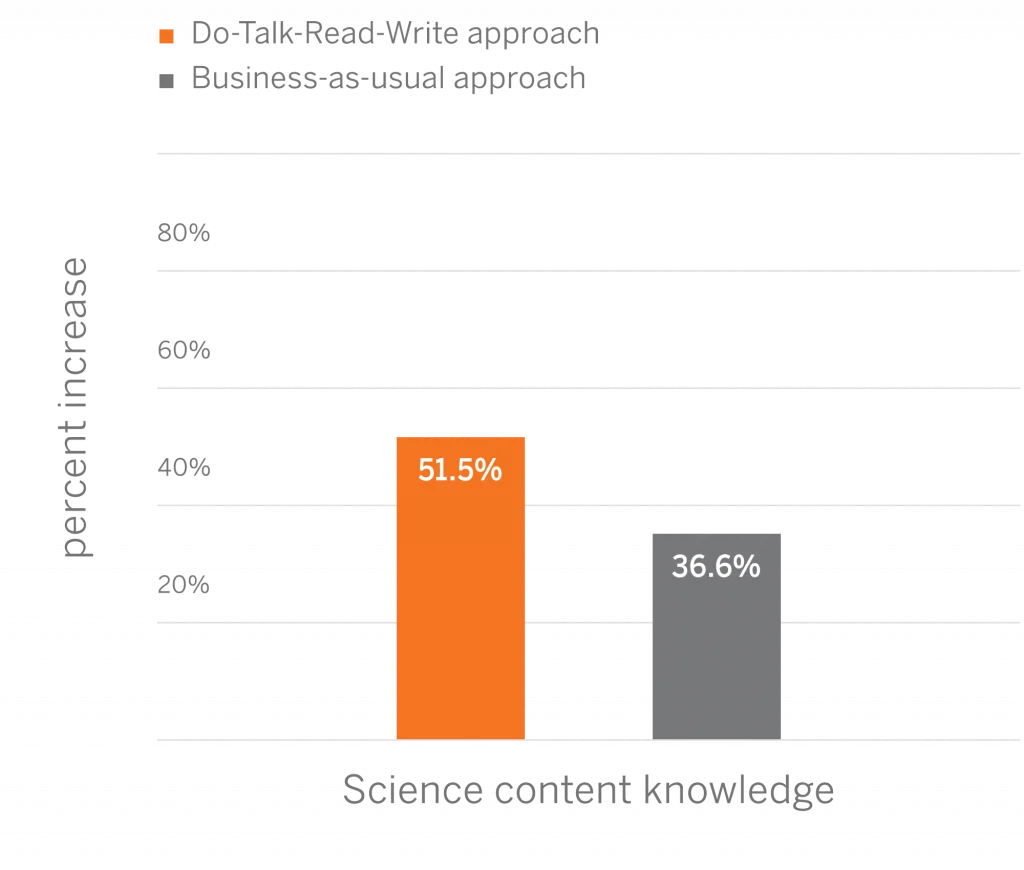
Dan Meyer (29:53):
Right on. Thank you, Tracy. Wherever you are. <Applause> We’ll move a little quicker here. I’m curious, Bethany, you put Marshall Kane pretty high. I put Bobby Fischer pretty high. What do you have to say about Marshall Kane for us here?

Bethany Lockhart Johnson (30:04):
Well, I just wanna say two things. One is that, like Zak said, he has this code of conduct that he brings in. And he stays true to it no matter what happens. If you saw him in in Community, you know that he held himself up to such high esteem, but not just himself, his students as well. And he took accountability when he felt he had done wrong, even though, well, that’s controversy. But first—oh, the other thing, rest in peace, Michael K. Williams. Oh my gosh. The actor who plays Marshall K. And the thing that I wanna say most of all about it is that he brings his whole self to the classroom. He was in prison for decades. He brings his whole self and says, “This is who I was. This is who I am today. And this is how we can work together as a community.”

Dan Meyer (30:58):
That’s big. I love your comments about code of conduct too. It makes me wish that Ms. Frizzle had a code of conduct also.

Bethany Lockhart Johnson (31:05):
I knew that was coming back!

Chris Nho (31:06):
Two slides ago, Dan. That was two slides ago.

Dan Meyer (31:08):
Can’t let it go. So yeah, I love what you said there. I have no strong beef here either way. Bobby Fischer’s a movie I have loved dearly and can’t be objective about it. I love that the kid in that movie, more than any other movie here, the kid teaches the adults so much through his innocence and how he challenges them and how they’re treating him. Dig all that so much. Will not, will not begrudge anyone any vote either way here. I do begrudge many of you your vote in previous rounds. <Audience laughs> So let’s just, let’s hear. We’re not gonna ask you folks at all to chitchat. We’re gonna move on this one. So would you folks make some noise here for Marshall Kane in Community? OK. OK. And would you make some noise here for Bobby Fischer, the kid in Bobby Fischer, the ensemble? <Audience cheers, applauds>

Bethany Lockhart Johnson (31:56):
Marshall Kane.

Dan Meyer (31:57):
Marshall Kane takes it. All right. Good job, Marshall Kane! All right. Zak’s feeling good. Moving on to the final four here, Zak, right on. OK. Our last—the Northwest Division here is also the large urban district division here. We have a couple different teachers in sets of large urban schools. They’re nominated, they’re advanced by a couple people here. One is past president of NCTM, Robert Berry. And another is Fawn Nguyen, Southern California phenom. Great teacher and friend of lots of us. Um, let’s see who they nominated here. First from Robert Berry, let’s see, who is it here? Janine Teagues from Abbott Elementary.

Abbott Elementary dialogue (32:37):
“Hey, you know what? I’m probably probably gonna be Kenny’s second-grade teacher. Why don’t you just let him get a head start with me today?” “That’d be great.” “Yeah? OK. Hey, Kenny, would you like to be in my group today?” “Not really.” “That’s the spirit.”
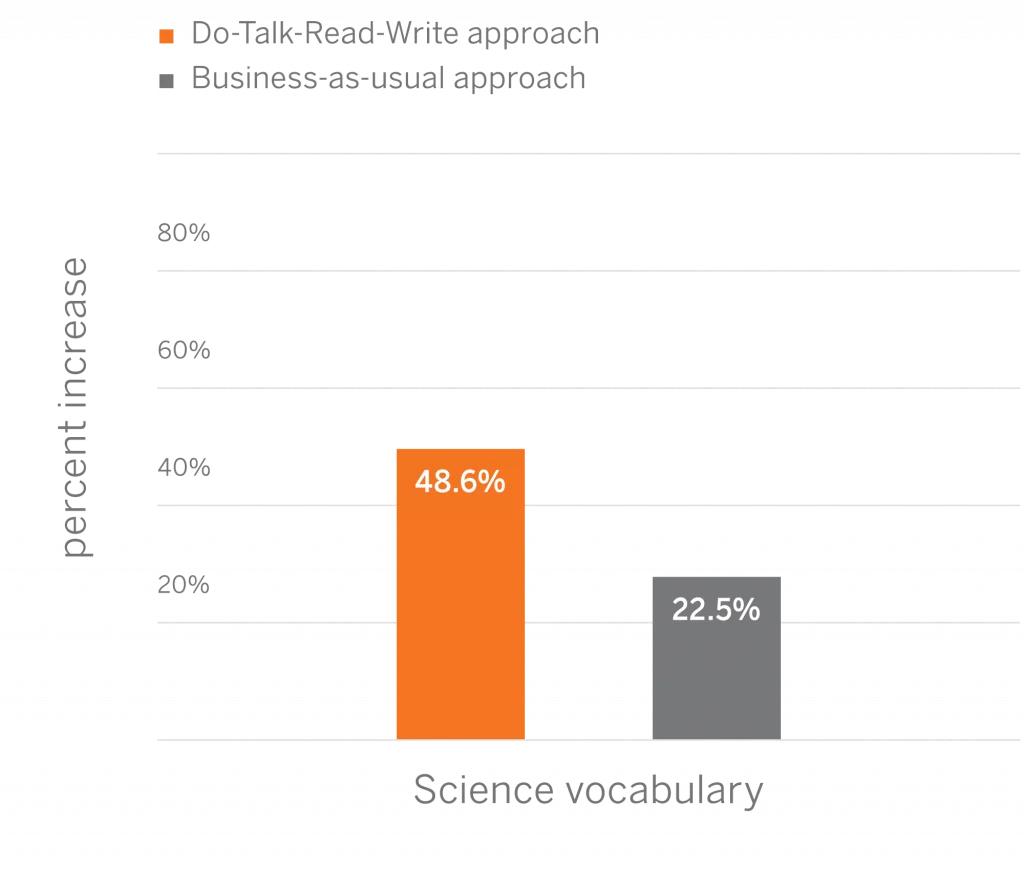
Robert Berry (32:54):
My nomination is gonna be Quinta Brunson, the Emmy Award-winning Quinta Brunson from Abbott Elementary. Janine Teagues is the character. She exemplifies care not only from an affect way, but she also exemplifies care in the things that she does for her students. While the scenes in the show are entertaining, they do represent the challenges that teachers experience when they’re trying to meet the needs of her students. So she goes, goes all out for her students and finding resources. She accesses other people to get resources for her students. But the care shows up in the way that she is mindful of their needs. And so, for me, when I think about teachers and teaching, sometimes we can talk about pedagogy, but sometimes we also can talk about those kind of intangibles that makes a teacher a great teacher. It is apparent from her students that she cares about them, she supports them, and she goes all out 100% for her students. Janine Teagues, Quinta Brunson is, I think, is my choice of the best teacher on television because of the realism and the representation that she brings to this character of what teaching is about. <Applause>
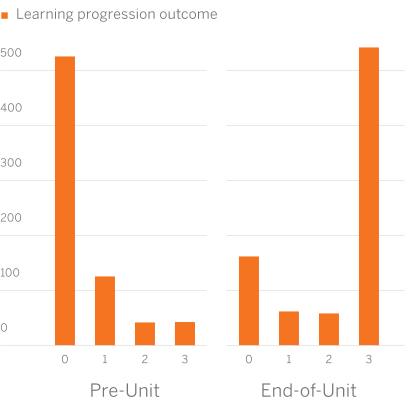
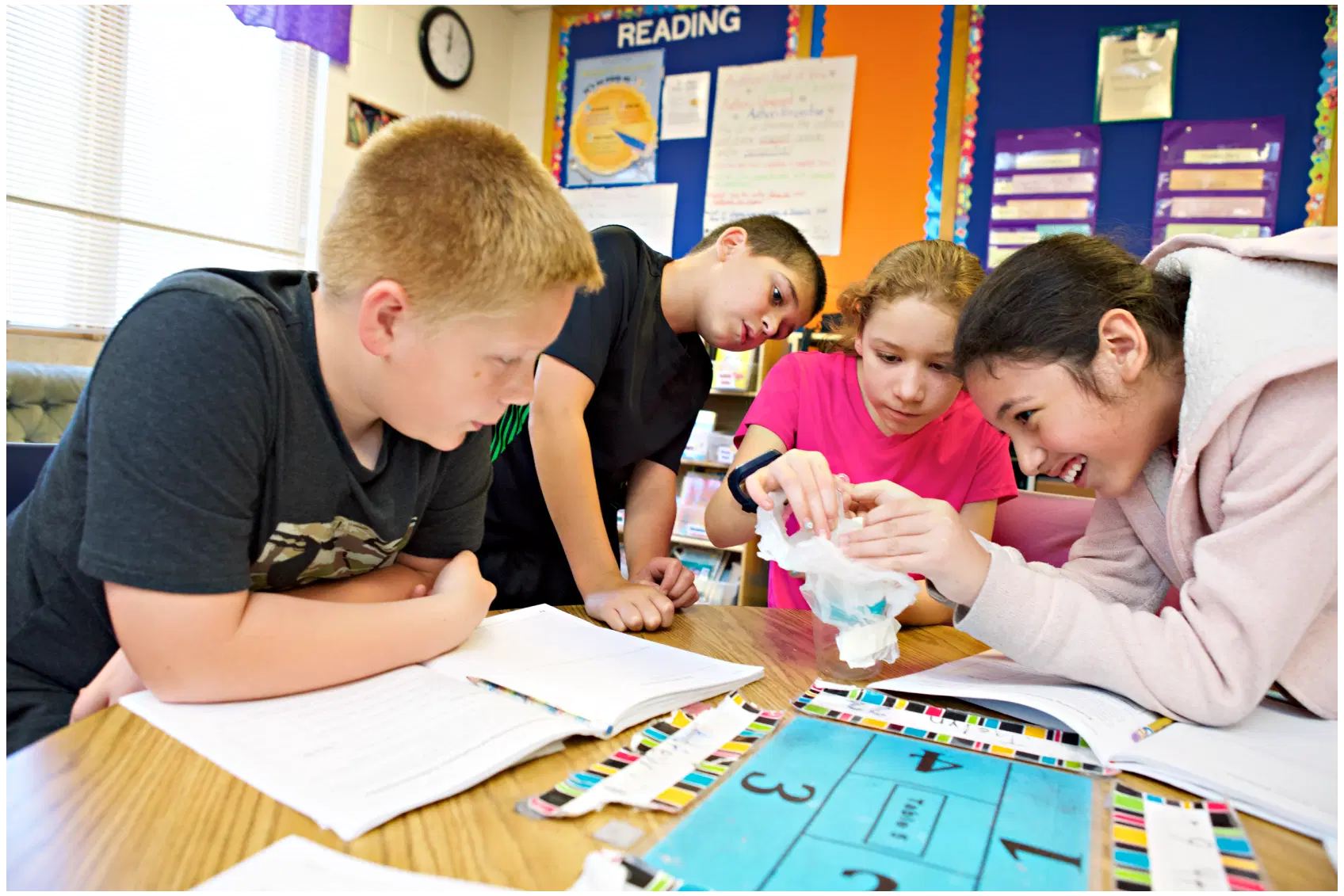
Dan Meyer (34:28):
Right on. Right on. OK. OK. Next up, we’ve got, Fawn Nguyen is nominating Erin Gruwell from Freedom Writers. Here we go.

Hilary Swank in Freedom Writers movie (34:39):
“Look, you can either sit in your seats reading those workbooks or you can play a game. Either way, you’re in here till the bell rings. OK? This is called the Line Game. I’m gonna ask you a question. If that question applies to you, you step onto the line and then step back away for the next question. Easy, right? The first question. How many of you have the new Snoop Dog album? <kids move around> OK, back away. Next question. How many of you have seen Boys in the Hood?”

Fawn Nguyen (35:26):
We all learn about Miss G and her 150 students in the movie Freedom Writers starring Hilary Swank. All great teachers share a common set of traits. They care deeply about their students, have high expectations of them, and always believing wholeheartedly that they will succeed. Great teachers go above and beyond, not because they extraordinary—as Anne Gruwell would always refer to herself as an ordinary teacher—but because extraordinary things happen to people when we believe in them, give them hope, help them write their own story with a different ending. So what stood out for me with Miss G is the scope of her reach, the ever-expanding sphere of her humanity. The red tape she had placed on the classroom floor for the line game shows just how much we all have in common despite our differences. Her students didn’t just learn from her; they learned from one another. If you’d like to be part of this expanding sphere to give voice and hope, please check out Freedom Writers Foundation dot org.

Dan Meyer (36:38):
OK. This right here is a tough one for us. Thank you, Fawn. We collectively ranked—that’s our number one seed and number eight seed, which I hasten to say does not have to do with Erin Gruwell, a person, but the portrayal and the movie. So we don’t have like a whole lot of…there’s not a lot of defense we have to offer here of our eighth seed. And I heard like a kind of a little bit of a murmur over the crowd on Erin Gruwell. So I’m more interested than having a defense back and forth. I’d be curious what you, Bethany, think about what, like, what both movies have to say about like, what teaching is, especially teaching urban schools with black and brown kids and lower-class kids, for instance. They both have, I think, very different things to say about them. Do you have thoughts about that?

Bethany Lockhart Johnson (37:19):
Well, it’s interesting because there is some overlap in the sense that the arguments that both Fawn and Robert Berry put out, they both care deeply about their students, right? We’re not gonna argue that. They care deeply. And something that I would say about Miss Teagues is there’s something about the way that she sees not only her classroom, her students, but she sees all of the students in the school as her students. And her idea of resource generation is really helping the teachers to generate resources from their community themselves, and to also realize that the students see themselves reflected in the teachers. And I think that—you know, again, this is not about the real person—but the movie portrayal, and we often see kind of this, for Freedom Writers, we often see this like, Great Last Hope whisked in and her personal sacrifices are what makes these students, these brown and black students’ transformation possible. Because of her sacrifices. Including her marriage. Including, you know, three jobs. And it’s just portrayed in a way that I think really celebrates her sacrifices rather than what the students have already brought—they already come into the room bringing so much as they are, already, without her intervention.

Dan Meyer (38:38):
I love the portrayal of the teacher as part of a community of teachers. Versus in so many of these movies, it’s the teacher as the only person who gets it, you know, oftentimes coming from outside of the world of teaching and everyone’s against them and wants ’em just to fall in line and do the thing we always do, and they’re the outlier. But in Abbott Elementary, it’s like we all rise and we fall together. And teachers are investing in each other’s success, especially with Gregory the longterm sub. We’re all rooting for his, you know, his flourishing. I love that. And yeah. That’s bigtime.

Chris Nho (39:09):
Yeah, I think one interesting thing is that Freedom Writers, when it came out, I think it was like a commercial success.

Bethany Lockhart Johnson (39:17):
Oh, big time. Yeah. It was.

Chris Nho (39:18):
It probably influenced a lot of people to try teaching out. So I do wonder what it says about us, right? Like that we want teaching to fit this narrative, and we wanna be those people who could go into a classroom and <puts on “cool voice”> “Y’all listen to Snoop Dog?” and just have that question HIT. <laughter> And you know, I’ve taught in a large urban school district, and I’ve been that person and I’ve seen other people try and be that person. And I think stepping away from it a little bit, just—it’s a reflection of what people want out of teaching and what they think better education looks like.

Dan Meyer (39:57):
Yeah, yeah. This idea that, so I’m a middle-class person, let’s say, and like, there’s this idea, like, “I know what I would do if I was going into circumstances of impoverishment.” Like I have—

Bethany Lockhart Johnson (40:06):
“All they really need is…”

Dan Meyer (40:07):
…for me to give ’em some real talk and tell ’em, you know, pull their pants up or whatever, listen to Snoop Dog, that kind of thing. And that will be the key. And that’s not how it is in, you know, in Jack Black in School of Rock or Tina Fey school, which are, you know, coded as largely like upper-class or largely white schools. And in those movies, it’s interesting, like how it’s about students discovering themselves, oftentimes. And the central figures are often students. And the students need to reject an oppressive parent figure or something and find themselves. But no, in Freedom Writers, it’s like, “You need to become more like the middle-class teachers who are coming in here to give you this wisdom.” It’s just interesting. I do find it—a pet peeve of mine is when movies portray teachers as only successful if you endure, for instance, the failure of your marriage, or even in Stand and Deliver, for instance, like Jaime Escalante, they depict him having a heart attack. And, like, the job oughta be…easier. <Audience laughs>

Chris Nho (41:04):
Truth.

Bethany Lockhart Johnson (41:05):
That’s the barometer for how much….

Dan Meyer (41:09):
Like, no heart attacks and no divorces related to the job, that kind of thing. I do love how in Abbott—one last thing and we’ll vote and Abbott will win <audience laughs>—is like how, like there, there is a lot of degradation in Abbott, but it’s not a divorce or a heart attack—it’s the petty indignities of asking a student, “Do you wanna hang with me?” And a student says, “Nah, not really.” And that just spoke to me like how it’s not cinematic, but teaching, successful teaching, is like a collection of developing an immunity to students saying, “You’re not hot.” <Laugh> You know? And so I love that. I do wish that there was more depiction of students in Abbott Elementary. It’s a lot of adult stuff. Whatever. Give it up for Abbott, if you would, please. Let’s just get this done here. All right. That’s plenty. That’s plenty. Not gonna ask folks about Freedom Writers. OK, let’s move on to— all right, let’s hear it for Freedom Writers! Yeah. OK, cool. We go, yep.

Chris Nho (42:05):
Plot twist!

Bethany Lockhart Johnson (42:07):
OK, let’s see our final four. Cut and paste. Real time. Real time.

Audience member (42:12):
Where’s Dolores Umbridge?

Dan Meyer (42:14):
Oh….

Bethany Lockhart Johnson (42:16):
Hey, did you hear that? He said, “Where’s Dolores Umbridge?”

Dan Meyer (42:20):
All right. OK.

Bethany Lockhart Johnson (42:20):
See, we missed so many. We could…

Dan Meyer (42:21):
So coming up here, we’ve got in the Eastern Conference, Tina Fey and Ms. Frizzle. Y’all know how I feel about that one. Let’s just get this one done. OK, let’s give it up for Tina Fey. Let’s hear it. <Audience cheers> OK. All right. Yes! Let’s give it up for menace to children everywhere, the terror, the Ms. Frizzle. <Audience cheers> One more time for Tina Fey. Let’s hear it. <Audience cheers> One more time for Ms. Frizzle. Let’s hear it. <Audience cheers>

Bethany Lockhart Johnson (42:59):
Yeah. OK.

Dan Meyer (43:00):
It took ’em one round, but they made the right call in the end. <Laugh>

Chris Nho (43:04):
All it took was 10 minutes of constant Ms. Frizzle-bashing. <Laugh>

Dan Meyer (43:09):
Persevering and problem-solving, that’s my game. Yes. All right. So, do either of you want to influence the audience one way or the other?

Bethany Lockhart Johnson (43:16):
That’s not how I play, Dan.

Dan Meyer (43:18):
Oh, OK. Yeah, that’s true. That’s true. You’re good. On Abbott versus Marshall Kane, should we just let ’em have it? All right. All right. Give it up For Abbott Elementary. Not bad. And for Marshall Kane. OK. OK. I hear Zak and five other people. All right, cool. <laugh> Right on. All right. We got our, we got our finals,

Bethany Lockhart Johnson (43:45):
We did it. We made it to two. And we know: We left out a lot of people. Right? And honestly, I kind of wish we could poll like everyone. I mean, think you put it on Twitter, right? Like, who would you pick? But I would say we had a pretty solid eight there. I’m excited to see who… Look at the little crown he put, you guys. Come on.

Dan Meyer (44:05):
I worked hard for you. For you. <Laugh> Yeah. I liked that it was a good bunch that had a lot of different kinds of qualities…and lack of qualities in some cases. And it allowed us that—I shouldn’t knock her while she’s down, and she IS down, it’s true. <Laugh> And I appreciate the conversation we’ve had, what they have revealed overall about teaching and what the world wants teaching to be versus what it actually is or actually should be. I appreciate that. So let’s settle this here. Give it up, if you would, for Abbott Elementary. <Audience cheers> And give it up for Tina Fey in Mean Girls. <Audience cheers>

Bethany Lockhart Johnson (44:49):
Wow.

Dan Meyer (44:51):
That was close. I almost give that to Tina Fey.

Audience member (44:55):
Yeah, we do!

Dan Meyer (44:55):
I don’t know. That was a bracket-buster for me right there. Yeah. I lost money in the office pool off that right there. Maybe let’s just find out one more time here. One more time.

Bethany Lockhart Johnson (45:03):
Last time.

Dan Meyer (45:03):
Time to summon up all your conviction on one or the other here. No half-measures right now. All right.

Bethany Lockhart Johnson (45:07):
Emmy Award-winning Quinta Brunson.

Dan Meyer (45:09):
Yeah, you saw Robert Berry on that, right? He was like, “Oh, I got one more card to play. Emmy Award-winning.” That’s admissible. That’s admissible. We’ll take that. All right. So…give it up for Abbott Elementary, one last time. <Audience cheers> OK. All right. All right. And give it up for Tina Fey in Mean Girls. <Audience cheers>

Bethany Lockhart Johnson (45:30):
Drumroll, please!

Chris Nho (45:33):
Best teacher is….

Dan Meyer (45:34):
Tina Fey in Mean Girls! Yeah. Not a bad pick.

Bethany Lockhart Johnson (45:39):
I love it. And I think, too, I think we’re gonna have a little bit of a more reflective lens than we thought we did when we see depictions of teachers in film and television. And, you know, hopefully we’ll see some new tropes come in, right?

Dan Meyer (45:55):
Yep. Yeah. Every dollar we spend on movies with lousy teachers is just encouraging these people to make more lousy teacher movies, you know? Awesome. Thank you for being here for a live taping—

Bethany Lockhart Johnson (46:06):
Thank you for being here.

Dan Meyer (46:06):
—of our podcast, Math Teacher Lounge, in a hot room. Appreciate that. Yeah, it’s been fun for us to have you here. Um, super-important, super-important final remark: Bethany loves Oprah and Oprah occasionally, in the show—

Bethany Lockhart Johnson (46:18):
Is she coming?! Is she here?!

Dan Meyer (46:19):
Not here! Not here! Calm down. Calm down. Um, but we do have in Oprah fashion, not something—

Bethany Lockhart Johnson (46:24):
Oh. Oh, OK. Oh, that’s, that’s OK. Sorry. I got, had really excited for a second. As if the Amplify playing cards, The Amplify t-shirts being chucked at you at high speed—I did try to get a t-shirt cannon, and that was quickly ruled out <laugh>. They didn’t know about my rocket arm, right?

Dan Meyer (46:46):
Yeah, you got a cannon. <Laugh>

Bethany Lockhart Johnson (46:47):
Yeah. Oh, that’s a compliment. Oh, is that a compliment? Thank you, Dan. Thank you. Look under your seat because we have five winners. We wanna thank you for being here in person. We wanna thank the folks who are listening. We wanna thank Amplify. Oh my God. Somebody just pulled off the chair tag. You get to take that chair home with you.

Dan Meyer (47:08):
Does anybody have a prize?

Bethany Lockhart Johnson (47:10):
OK, stand up if you…stand up if you…Yes! Stand up if you have one!

Dan Meyer (47:16):
Free set of classroom dry-erase boards, right here. Congratulations.

Bethany Lockhart Johnson (47:22):
And for you who pulled off the chair tag, I don’t know. We gotta we gotta find something for you.

Dan Meyer (47:27):
Put that in your backpack.

Bethany Lockhart Johnson (47:30):
Thank you again for being here. Thank you. Amplify. Thank you, Desmos. Thank you. Dan Meyer.

Dan Meyer (47:36):
Thank you folks. Chris, thank you buddy.

Bethany Lockhart Johnson (47:38):
Chris! Chris Nho, everybody!

Dan Meyer (47:40):
We will be, we will be at—Bethany and I will be at the booth, if you wanna chit-chat and hang out, sign some stuff. Whatever. You wanna have Bethany sign you, she’ll do that. Um, come on down to the Amplify booth and we’ll—

Bethany Lockhart Johnson (47:50):
We’ll talk to you more about Ms. Frizzle.

Dan Meyer (47:52):
Fun and prizes. I will share with my real thoughts about Ms. Frizzle down there. I’d love to see you. Thanks for being here, folks.

Bethany Lockhart Johnson (47:57):
Thanks for listening. Bye.

Stay connected!

Join our community and get new episodes every other Tuesday!

We’ll also share new and exciting free resources for your classroom every month.

What Dan Meyer says about math teaching

“Teaching, more than other professions, is a generational profession. The kinds of joyful experiences we offer—or don’t offer—now affect the experiences students that haven’t even been born yet will have years later.”

– Dan Meyer

Meet the guests

Dan Meyer

Dan Meyer taught high school math to students who didn’t like high school math. He has advocated for better math instruction on CNN, Good Morning America, Everyday With Rachel Ray, and TED.com. He earned his doctorate from Stanford University in math education and is currently the Dean of Research at Desmos, where he explores the future of math, technology, and learning. Dan has worked with teachers internationally and in all 50 United States and was named one of Tech & Learning’s 30 Leaders of the Future.

Bethany Lockhart Johnson

Bethany Lockhart Johnson is an elementary school educator and author. Prior to serving as a multiple-subject teacher, she taught theater and dance and now loves incorporating movement and creative play into her classroom. Bethany is committed to helping students find joy in discovering their identities as mathematicians. In addition to her role as a full-time classroom teacher, Bethany is a Student Achievement Partners California Core Advocate and is active in national and local mathematics organizations. Bethany is a member of the Illustrative Mathematics Elementary Curriculum Steering Committee and serves as a consultant, creating materials to support families during distance learning.

A woman with curly hair and glasses smiles outdoors; a man with short dark hair smiles indoors in front of a blurred math teacher lounge, highlighting valuable math teacher resources.
A graphic with the text "Math Teacher Lounge with Bethany Lockhart Johnson and Dan Meyer" on colored overlapping circles.

About Math Teacher Lounge: The podcast

Math Teacher Lounge is a biweekly podcast created specifically for K–12 math educators. In each episode co-hosts Bethany Lockhart Johnson (@lockhartedu) and Dan Meyer (@ddmeyer) chat with guests, taking a deep dive into the math and educational topics you care about.

Join the Math Teacher Lounge Facebook group to continue the conversation, view exclusive content, interact with fellow educators, participate in giveaways, and more!

Oregon ELA State Review for 6–8

To view this protected page, enter the password below:


Inspiring the next generation of Florida scientists, engineers, and curious citizens

Amplify Science Florida is a brand-new blended science curriculum for grades 6-8 that meets 100 percent of the Next Generation Sunshine State Standards for Science.

The national edition of Amplify Science for middle school was recently rated all green by EdReports. Read the review on EdReports.

  • Un rover robótico está colocado en un terreno arenoso y lleno de rocas bajo un cielo brumoso, dejando huellas de neumáticos tras él.
  • Dos niños con gafas de seguridad participan en una actividad científica; uno sostiene una taza de líquido y hace gestos mientras el otro toma notas con un lápiz.
  • Dos niños están sentados en una mesa redonda en un salón de clases, mirando juntos la pantalla de una computadora portátil. Ambos parecen comprometidos y están sonriendo.
  • Una ilustración digital de una araña muestra el proceso de producción de veneno dentro de una célula de glándula venenosa. El diagrama del cuerpo de la araña está a la izquierda, con una vista celular detallada a la derecha, resaltando los componentes celulares.

Grounded in research and proven effective

UC Berkeley’s Lawrence Hall of Science, the authors behind Amplify Science Florida, developed the Do, Talk, Read, Write, Visualize approach, and gold standard research shows that it works. Our own efficacy research is pretty exciting, too.

What educators say

“Just looking through the Amplify Science curriculum, I’m wishing I could go back in time and learn these concepts with these resources! I love that Amplify is more focused on diving deeper into fewer concepts over the year, rather than grazing the surface of more topics.”

Lizzie

Middle school teacher, KIPP charter network

What educators say

“In using this program, I have seen that my students are completely engaged and are able to visualize models of concepts using the simulations that they otherwise would not be able to visualize. The program is not about rote memory of facts—rather, it addresses the bigger picture and assesses a deeper understanding of science concepts.”

Julie

Science teacher, Georgia

What educators say

“The engineering units are engaging and really helped me better understand the new standards. I love being able to walk around and talk to students as they explore solutions, make claims, and reason with their peers.”

Karla

Science teacher, California

A powerful partnership

Amplify Science Florida was developed by the science education experts at UC Berkeley’s Lawrence Hall of Science and the digital learning team at Amplify. As the Hall’s first curriculum designed to address the Next Generation Sunshine State Standards for Science, Amplify Science Florida reflects state-of-the-art practices in science teaching and learning.

Our approach

Each unit of Amplify Science Florida engages students in a relevant, real-world problem where they investigate scientific phenomena, engage in collaboration and discussion, and develop models or explanations in order to arrive at solutions.

Rooted in research

Amplify Science Florida is rooted in the Lawrence Hall of Science’s Do, Talk, Read, Write, Visualize model of learning. This research-based approach presents students with multiple modalities through which to explore the curriculum.

Four middle school science students gather around a desk, engaged in an interactive group project, investigating an object together in a colorful classroom setting.
Two middle school girls conduct a science experiment

A flexible, blended program

Amplify Science Florida includes hands-on activities, print materials, and powerful digital tools to support online and offline teaching and learning. Highly adaptable and user-friendly, the program gives schools and individual teachers flexibility based on their technology resources and preferences.

Students take on the roles of scientists and engineers.

In each unit, students take on the role of a scientist or engineer to investigate a real-world problem. These problems provide relevant contexts through which students investigate phenomena.

Two middle school girls use a Student Investigation Notebook to take on the role of scientists and engineers

Phenomena-based teaching and learning

Download the “What’s so phenomenal about phenomena?” e-book

Download a free e-book

What’s included

Flexible resources that work seamlessly together

Science articles

The middle school science articles serve as sources for evidence collection and were authored by science and literacy experts at the Lawrence Hall of Science.

Student Investigation Notebooks

Available for every unit, the Student Investigation Notebooks provide space for students to:

  • record data
  • reflect on ideas from texts and investigations
  • construct explanations and arguments

Available with full-color article compilations for middle school units

Digital student experience

Students access the digital simulations and modeling tools, as well as lesson activities and assessments, through the digital student experience. Students can interact with the digital student experience as they:

  • conduct hands-on investigations
  • engage in active reading and writing activities
  • participate in discussions
  • record observations
  • craft end-of-unit scientific arguments

Teacher’s Guides

Available digitally and in print, the Teacher’s Guides contain all of the information teachers need to facilitate classroom instruction, including:

  • detailed lesson plans
  • unit and chapter overview documentation
  • differentiation strategies
  • standards alignments
  • in-context professional development

Hands-on materials kits

Hands-on learning is at the heart of Amplify Science Florida. Each unit kit contains:

  • consumable and non-consumable hands-on materials
  • print classroom display materials
  • premium print materials for student use (sorting cards, maps, etc.)

Explore more programs.

Our programs are designed to support and complement one another. Learn more about our related programs.

Amplify Desmos Math receives all-green ratings from EdReports!  EXPLORE The program

Graphic with the number "25" in orange, blue, and yellow shapes above the text "Building great learning experiences with teachers since 2000.

Helping teachers celebrate and develop student thinking

Teaching is always challenging, often exhausting, and sometimes exhilarating. At Amplify, we want teachers to experience more exhilarationmore great classroom moments, more great days when you’re reminded why you became a teacher. We create high-quality programs that make it easier for you to teach inspiring, impactful lessons that celebrate and develop the brilliance of your students.

LEARN MORE ABOUT AMPLIFY PROGRAMS

A cohesive literacy suite built on the Science of Reading

The Amplify CKLA core curriculum, mCLASS® assessment and intervention, and Boost Reading personalized learning programs are your answer to “How can I best align my classroom to the Science of Reading?” Our programs help you build a strong Multi-Tiered System of Supports (MTSS) and a seamless literacy instructional model to meet the needs of every student learning to read.

LEARN MORE 

A teacher helps two children read at a table. The words "Built on the Science of Reading" are displayed in the top right corner.

All of our programs at your fingertips  EXPLORE PROGRAMS

Portada del podcast con el título "Science of Reading: The Podcast" y la palabra "Amplify". Presenta un libro abierto y formas abstractas sobre un fondo amarillo.

Podcasts that support professional learning

With more than six million downloads, the award-winning Science of Reading: The Podcast delivers the latest insights from researchers and practitioners in early reading. And don’t miss the new Beyond My Years podcast, where longtime educators share their biggest victories, teacher tips, and educational insights with newer teachers.

What educators say

“It’s so good. Our kids deserve this kind of material. Our teachers deserve this type of material.”

Amplify ELA state reviewer

California

What educators say

“From the start, and in every encounter since, I have been overwhelmed by the professionalism and customer focus all Amplify employees have demonstrated. Not only are the curriculum products extraordinary, but they are also backed by extraordinary people.”

Teacher

Montana

What educators say

“Amplify deserves a medal for being one of the few companies that actually explains enrollment and access processes clearly, while providing continued support. Thanks for being organized and caring toward your customers!”

Technology teaching and learning support specialist

Ohio

We are making an impact around the globe.

6

continents

50

U.S. states and D.C.

8,000+

school districts in the U.S.

18,000,000+

students and teachers worldwide

Our programs

A pioneer in K–12 education since 2000, Amplify delivers next-generation curriculum and assessment on an intuitive, integrated platform that includes thousands of free lessons. Across all programs and services, we equip educators with powerful tools to understand and respond to the needs of every learner.

Meet the team

Our common purpose drives us to work across disciplines to develop next-generation solutions for the classroom. Meet some of our team members.

MEET THE TEAM

People sit at desks in an office

Amplify your career.

Join our team!

Apply now

News

Teacher and young student looking at a tablet together in a classroom setting.

New data: early literacy readiness reaches post-pandemic high, but slowing momentum requires urgent focus on foundational skills

Read more

Students learning Boost Reading lesson

Slow but steady progress: new Amplify data show why middle-of-year literacy screening matters

With just 57% of K–2 readers on track and year-over-year gains flattening, the latest research brief underscores the urgency of data-driven instruction

Read more

Explore our blog.

Check out our expansive library of articles on teaching and learning in STEM and literacy.

Read now
chat bubble icon for support

Contact sales.

Fill out our simple form to get in touch with one of our helpful sales representatives. We look forward to hearing from you!

Get in touch

support icon

Get support.

Our support team is here to provide technical and instructional support by phone, live chat, or email.

Get help now

School year 2026–2027 requirements

iPad® 7+
Description: 1024 x 788 or higher, 32GB or higher
Operating system: iPadOS 18+
Browser: Safari 18+
PC
Description: 1.4 GHz dual core or greater, 1024 x 768 or higher, 4GB of RAM or higher
Operating system: Windows: 10+
Browser: Chrome (latest 2 versions)
Chromebook
Description: 1.4 GHz dual core or greater, 1024 x 768 or higher, 4GB of RAM or higher
Operating system: Chrome OS
Browser: Chrome (latest 2 versions)
Mac®
Description: 1.4 GHz dual core or greater, 1024 x 768 or higher, 4GB of RAM or higher
Operating system: macOS 15+
Browser: Safari 15+, Chrome (latest 2 versions)
iPadiPad Air® 4
iPad 8+
Chromebook™Acer Chromebook 314
Samsung Chromebook 4
Dell™ Chromebook 3120
HP Chromebook x360
MacMacBook Pro®
MacBook Air®
Interactive BoardA Google certified EDLA device, such as the SMART RX Series

The following devices are not supported due to known sub-optimal performance from older hardware or complicated settings:

MicrosoftSurface Tablet®

School year 2025–2026 requirements

iPad® 7+
Description: 1024 x 788 or higher, 32GB or higher
Operating system: iPadOS 17+
Browser: Safari 17+
PC
Description: 1.4 GHz dual core or greater, 1024 x 768 or higher, 4GB of RAM or higher
Operating system: Windows: 10+
Browser: Chrome (latest 2 versions)
Chromebook
Description: 1.4 GHz dual core or greater, 1024 x 768 or higher, 4GB of RAM or higher
Operating system: Chrome OS
Browser: Chrome (latest 2 versions)
Mac®
Description: 1.4 GHz dual core or greater, 1024 x 768 or higher, 4GB of RAM or higher
Operating system: macOS 14+
Browser: Safari 15+, Chrome (latest 2 versions)
iPadiPad Air® 4
iPad 8+
Chromebook™Acer Chromebook 314
Samsung Chromebook 4
Dell™ Chromebook 3120
HP Chromebook x360
MacMacBook Pro®
MacBook Air®
iMac®
Interactive BoardA Google certified EDLA device, such as the SMART RX Series

The following devices are not supported due to known sub-optimal performance from older hardware or complicated settings:

MicrosoftSurface Tablet®

We will provide active support of our applications on the following devices for the full school year listed below.

Device final support year

iPad 62024–2025
iPad Air 32025–2026
iPad 52022–2023
iPad Air 22021–2022
iPad 22018/2019
iPad 32018/2019
iPad 42018/2019

Network environment

MINIMUM

REQUIREMENTS
User devices:Connect to Amplify servers via ports 80 and 443.
Latency:No more than 165 ms during peak utilization.
Connection speed:2 mbps per device during peak usage (10 mbps recommended). Boost Reading requires a connection speed of 10 mbps per user for optimal performance.
URLs:For the complete list of URLs to allow, please visit https://amplify.com/allowlist/.

Requirements

mCLASS assessments are optimized for most touchscreen devices using Chrome™ or Safari® web browsers. The teacher-led, observational assessments are best conducted using touchscreen but will function using a laptop and mouse as well. Please check our device support lifecycles and purchase recommendations lists below prior to purchasing.

Boost Close Reading is currently not supported on iPads.

Due to its smaller screen, the iPad Mini is not supported.

Amplify curriculum applications require the ability to project from the teacher’s device.

Boost Reading Benchmark uses speech recognition software to analyze students’ oral reading. For the most accurate results, use a wired dual-ear headset with a boom microphone that extends in front of the student’s mouth. Avoid headsets with active noise cancellation (ANC) unless that feature can be disabled. Bluetooth headsets are currently incompatible with our speech recognition technology and should not be used.

iPhone 13 and later running iOS 17+ and Safari
Galaxy 11 and later running Android 15+ and Chrome

Season 2, Episode 4

Gamification in the K–8 classroom

In this episode, Eric Cross sits down with his colleague and friend Fabian Hofmann to talk through gamification in the K–8 classroom. They discuss Fabian’s experience teaching outside of the United States, and the differences in classrooms outside of the country. Fabian explains the integration of game mechanisms in the classroom, standard-based grading, and shifting student thinking about learning by forming strong relationships. Fabian also shares how he created a new STEM course at his school, revolving around his own passion for Star Wars.

A middle-aged man with salt-and-pepper hair and a beard, smiling at the camera, framed within a decorative border featuring stars and science connections.

Meet Our Guest(s):

A bearded man with short, grayish hair is smiling at the camera. The photo is framed by a circular graphic with a yellow star and simple line decorations, evoking science connections in a playful, engaging style.

Fabian Hofmann

Fabian Hofmann is a middle school International Baccalaureate teacher and host of the Podcast, Rebel Teacher Alliance. He is currently teaching 7th grade History and Multimedia Design just down the hall from Eric Cross at Albert Einstein Academies Middle School in San Diego. To engage students, he uses technology and gamification. Students embark on a year-long journey through a galaxy far, far away to learn the ways of the “Force” and some world history along the way. Follow him on Twitter and check out the Rebel Teacher Alliance podcast.

Meet our host: Eric Cross

Eric Cross is a seventh grade science/technology teacher, grade level lead, and digital learning innovator for Albert Einstein Academies, International Baccalaureate schools. He is also an adjunct professor of learning and technology at the University of San Diego and a Google certified innovator. Eric earned a bachelor’s degree from Azusa Pacific University and a Master of Education from the University of San Diego. He had 17 years of experience working with at-risk youth and underserved populations before becoming a middle school teacher. By building relationships with students, colleagues, and the community, he has become an empowered leader in and out of the classroom. Through meaningful learning experiences centered around student agency, STEM has become accessible to students through highly engaging lesson design, thoughtful integration of digital tools, and pedagogy that engages students from all backgrounds.

Quotes

I want my students to come in and feel like they are playing the game. I used smells. I used sounds to try to immerse them more. And then so one day I was like, wouldn't it be cool to create a classroom that looks literally like a set?

– Fabian Hofmann

Stay connected

Four women sitting at a table in a meeting, with one standing and presenting on the topic of "why is science so important," all engaged in discussion.