S1-04: Connecting with students and caregivers in the science classroom: Ryan Rudkin

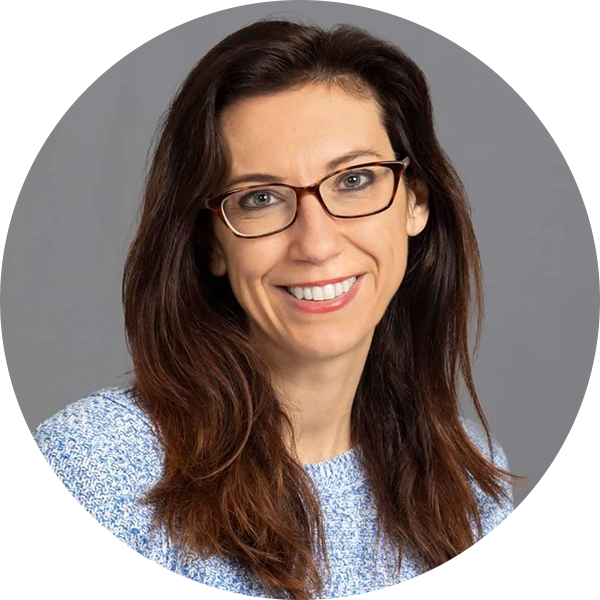
Promotional graphic for "science connections", season 1, episode 4, featuring a smiling woman named Ryan Rudkin, themed with science illustrations like atoms and a globe, highlighting how to engage students

In this special episode, our host Eric Cross sits down with veteran middle school teacher Ryan Rudkin. Ryan shares her expertise after almost two decades in the classroom, discussing ways to incorporate aspects of problem-based learning into the K–8 science classroom. Eric and Ryan talk about how to increase parent engagement, involve community members, and add excitement to lessons.

Explore more from Science Connections by visiting our main page.

Download Transcript

Ryan Renee Rudkin (00:00):

I know there’s other goals in mind, you know, standards and test scores. But at the end of the day, I wanna come back and I want them to come back.

Eric Cross (00:35):

My name’s Eric Cross, host of our science podcast, and I am with Ryan Rudkin, middle-school teacher out here in California just to the north up near Sacramento? El Dorado Hills?

Ryan Renee Rudkin (00:46):

Yeah. 20 miles east of Sacramento.

Eric Cross (00:49):

Nice. And I am down here in San Diego. And so Ryan, to start off, what I wanna do is ask you about your origin story, like a superhero. So how did you become a middle-school science teacher to become part of this elite profession of science folks that get to do awesome things with kids?

Ryan Renee Rudkin (01:08):

I would agree with you that it is definitely an elite profession. I got my credential and I thought I was gonna teach third or fourth grade elementary school. And the second day I got called for a sub job for middle school. And I just thought, “We’ll take it,” you know? And by second period, I knew: This is where I belong. The kids, middle school, students are just a species of their own. And you have to appreciate them. And if you do appreciate them, then you’re in the right spot. And I quickly looked at my coursework and I was able to get authorizations in science, history, and English, and I love science. So I chose science. And the rest is history. It’s been a wild ride and I wouldn’t have changed or asked for anything different. I love it.

Eric Cross (02:02):

I definitely agree with you. So, your history—you’ve been in various middle-school classrooms. Can you tell us a little bit about that? What classrooms have you been in? What disciplines of science have you taught or are currently teaching?

Ryan Renee Rudkin (02:14):

I was hired for seventh grade life science, and then I did that for a few years and then I got moved into eighth physical science, and I was there for 12 years. Love eighth grade science. I love eighth graders. Chemistry and physics are my favorite. There’s just so much opportunity for just awesome labs, great conversations, student discourse, all of that. And then the past three years I’ve been in sixth grade and now we’re integrated. So,a sixth grade integrated science and I also teach social studies and a technology design class.

Eric Cross (02:52):

Oh, nice. What do you do in your technology design class? That sounds cool.

Ryan Renee Rudkin (02:56):

Right now it’s mostly internet media and we use WeVideo, it’s an editing-video program, and we produce and put on our school weekly news bulletin. And then we weave in other projects. We do some interdisciplinary projects. Right now my students are working on a mythology God, Goddess, and Monster project that relates to our social studies curriculum. And we’re learning about Greece. So yeah, we just try to give them added projects and they’re using the WeVideo platform. By sixth grade, they’re coming to us now with wonderful skills with all the tech. I mean, if I need help, I ask them like, “How do you do something on Google Docs?” Or, “How do you do something on Drive?” The kids are definitely tech-savvy.

Eric Cross (03:49):

They must love being the teacher in the classroom. They get to—it kind of switches power roles, where they get to teach the teacher something.

Ryan Renee Rudkin (03:56):

Yes. And especially WeVideo, sometimes we’ve had some hiccups, and the kids show everybody, and that’s part of the design class. They’re trying to solve—we’re teaching them how to solve their own problems. So if there’s any kind of issue with anything with the technology, honestly, I usually tell them, “Go ask a friend,” or we kind of shout out, “Hey, who knows how to troubleshoot this?” And the kids are eager to help each other, which is nice.

Eric Cross (04:21):

And they have this authentic experience where they’re actually doing real problem-solving, as opposed to something that we manufactured. Like, those are real things that we have to deal with in life. And that’s exactly like how we solve it, right? We just go ask people! We look it up, and the ahas are genuine too. Throughout!

Ryan Renee Rudkin (04:36):

Yes, especially thinking on the fly. Especially yesterday, I was in the middle of teaching and my laptop froze, and it’s like, “OK, everybodytake a couple minutes, you know, work on this, this, or that while I switch out laptops!” And so I’m modeling, too, how to solve my own problems. And I think it teaches the kids how to do that too.

Eric Cross (04:59):

I’ve always thought it was interesting that when teachers get to teach in real time, how do we handle stress and frustration when it’s really happening? And I think the tech—at times, failure is the real one where you feel this chill or this sweat that kind of comes over you and you’re trying to present or cast or the video won’t play and things like that. I think I’ve done enough times in my years of teaching where now my students know what to do, or they want to come up and help, and we’re good with it. But I remember in the beginning when those things would kind of glitch or go wrong or the wifi goes down, and you’re like, OK, what do we need now?

Ryan Renee Rudkin (05:33):

I think it’s honestly, after the fact, when I think in the moment, I’m not thinking of feeling stressed, but just afterwards, then I’m like, “Oh my gosh, this has just been a wild day.” But yeah, you just have to kind of go with it. And that’s just the beast of middle school. I just added to the list of why we love it.

Eric Cross (05:53):

You said something about interdisciplinary work, and I wanna kind of ask about that. Because it sounds like you’ve had your hand in several different areas of science and grade levels. Working, doing design courses, working with tech. Are there certain lessons that are your favorites to teach? The ones that you really enjoy, or that no matter what, you’re like, “We need to do this; this is such a rich experience for students”?

Ryan Renee Rudkin (06:17):

Yeah. I definitely try to do lessons or activities along the way. I like to do projects at the end of my units. When I taught physics, we did a project and it was mainly an assessment tool called the Wheeling and Dealing. The kids, they would all get a different car. And then they to sell their car. And so they had to pretend to be a car salesman, and they did that with their knowledge of the physics unit. So everything we did on forces and speed and motion. So I like doing culminating projects like that. And you’re kind of tricking them into assessing them.

Eric Cross (06:57):

When I think about your car salesman project, I’m thinking of a bunch of students, but they’re like on Shark Tank, but they’re just littler versions. And they’re doing these sales pitches, but they’re speaking in scientific terms as they’re trying to do it. Do you record these or do they just exist in the classroom?

Ryan Renee Rudkin (07:12):

No…And that was a long time ago, when I taught eighth grade. I wish I had; I wish I had recorded. That was definitely—it was fun, ’cause the kids, they would get their little piece of paper and they—some of ’em didn’t know what car it was. And so they’re like “A Boo… A Boo-gatti? What’s a Boo-gatti?” And then someone from across the room would be like, “Ooh, I want it! Here, I’ll trade you my Ford Focus!” And <laugh> so they would kind of wheel-and-deal which car they would…and then once they got their choice, then they would do the project.

Eric Cross (07:44):

So they’re really embodying this persona of a car salesman. The wheeling and doing back-and-forth and trying to trade a Bugatti for a Ford Focus. <Laugh>

Ryan Renee Rudkin (07:53):

I know. <Laugh> I like to make my class, my learning environment, enjoyable. You know, I gotta be there; they gotta be there. So I know there’s other goals in mind—you know, standards and test scores—but at the end of the day, I wanna come back, and I want them to come back. And I just have that as a priority.

Eric Cross (08:18):

Well, based on the projects that you’re doing and the way that you approach education with students, I can see why middle-school students would want to come back, even if they had the option not to. Just because of the cool things that you’re doing. Now we’re on this—hopefully, fingers crossed—tail end of COVID in the classroom and schools, and I know it’s impacted all of us differently. Has student engagement changed since COVID and if so, how, and what have you done in these last two years to maybe adjust your approach, to continue that engagement and that richness that you provide for your kids?

Ryan Renee Rudkin (08:57):

I definitely—I think for me, I recognize that when the students are in my classroom, I want them to, I dunno, for lack of a better word, just escape the noise at home. And I know we’ve always had students that are going through divorce situations or their dog died, other things, but I think with COVID, it’s definitely been compounded. And just creating a safe place for the kids to want to be and…it’s hard. We’ve had a lot of students that have been out, absent, for various reasons and on quarantine. And they’re struggling with doing work from home, ’cause their parents are stressed and their parents are dealing with their work issues. And so I think just having grace for the kids and just keeping…I don’t know, I guess like I said, I’ve always had student engagement as top of my list.

Eric Cross (10:06):

It sounds like—the things I hear you say really have to do with who these students are as people.

Ryan Renee Rudkin (10:12):

Yeah.

Eric Cross (10:13):

And then as a second, who they are as students. How do relationships fit into your engagement? ‘Cause I’m hearing this connection that you seem to be making with kids as you’re talking about things that are beyond academics: their home life, how they’re impacted.

Ryan Renee Rudkin (10:28):

Yes.

Eric Cross (10:28):

Is there anything that you do to build these relationships, or to connect with your students, to make them feel wanted or feel connected to the classroom or to you?

Ryan Renee Rudkin (10:37):

Yeah, I do. I do a few things to build those connections. And again, this timeframe in their life is so out of their control, their peer relationships, relationships with their parents. And when they’re in my classroom, I want them to feel loved and appreciated. Something I do it’s called Phone Fridays. And in one of the social media groups, someone posted about it, and I’ve been doing it for over a year now, actually. So on Fridays I call parents and give good news. And so I’ll pick maybe one or two students. And it could be academic reasons. It could be behavior, I’ve seen a slight improvement of behavior. Maybe a role model in the classroom. And my goal is to get everybody every trimester. So everybody gets a phone call by the end of the trimester. And it’s funny ’cause sometimes the parents are a little like “Uh-oh”! When they pick up, they see the caller ID, and their school’s calling. ‘Cause Some kids don’t get good calls. So it’s a really—I would say every single parent that I’ve called, I usually get a follow-up email, either to me or my admin, just saying it’s such a cool idea I do this; thank you so much. And yeah, I just call and give good news and just put ’em on the spot. And usually the kids are a little embarrassed, but you can tell, even though they’re kind of—I think they’re faking it, that they’re embarrassed! ‘Cause You know that they got the Phone Friday, and everybody’s like, “Who’s gonna get the phone Friday?!” And so it’s a very big deal in my class.

Eric Cross (12:07):

What a great way to—I mean, it seems like that hits on so many levels. You’re making these positive calls home. You’re praising publicly, which a lot of times can happen where students can get criticized or redirected publicly and then praised privately, which is a lot of times the reverse what we should be doing. But here you are praising them publicly. And then you’re not only building a relationship with yourself, but you’re also connecting them with their parent or whoever is caring for them, because now when they go home, there’s this, “Hey, your teacher called; you’re doing awesome!” So it’s this kind of triangle that’s forming there. I think that’s super-cool and a great thing for teachers to do.

Ryan Renee Rudkin (12:45):

It takes, you know, the last five minutes of my class. I do it every class. And then I have a system. Like I said, I keep track of all the kids. That way, by the end of the trimester I’ve gotten everybody. Sometimes I let the students, whoever I call first, then I let them pick a peer and I tell them, “OK, we have to have a solid reason. Why are we calling?” And a couple times they’ll have a student, like one of my energized ones, they’ll raise their hand. “How About me? How about me?” And I and the kids kind of laugh a little and I said, “Well, how about this? Let’s make a goal. How about next week we’re gonna make a goal and we’re gonna have a reason to call home.” So just working on the kids that need a little push in the right direction. That’s other reasoning to it. But yeah, it’s fun. I love it.

Eric Cross (13:33):

And you have the community. You have this goal setting. We were talking a little earlier about this transition—so you’re becoming this…your school’s going through the IB process, is that right?

Ryan Renee Rudkin (13:44):

Yes.

Eric Cross (13:44):

And we were talking about the ATL skills and one of them is goal-setting management. You already kind of organically do this in your classroom, which is really neat. I know being an IB teacher, a lot of times I find the things that I’ve already been doing and find, “Oh, this is actually an approach to learning!” or “This is something that has a title!” I just thought it was just being helpful! Ah…So the kids are connected. You have this process where you’re calling parents; it’s working; students are involved, so it’s building this community. Now you’re engaging students. Do you have any favorite student engagement tools that you use in your classroom or when you’re teaching that you feel like you get a lot of bang for your buck? There’s so many things out there these days. And so many approaches, tools, web apps. Do you have any favorites that you use?

Ryan Renee Rudkin (14:40):

No. Nothing comes up top of my mind right now. Mostly just projects, like I said. And being excited. I think having my students see me excited about something…and I’m honest when we’re doing something that’s not quite my favorite, then I’m honest about that too. But just having my—like, we just started thermal energy this week and I told my students, I said, “OK guys, I’m gonna weave in some chemistry in there. I’m gonna weave in some particle motion,” and they’re like, “Oh! That’s when you taught eighth grade, huh!” Cause I talk a lot about when I taught eighth grade before. I don’t know, just showing my own enthusiasm, I think, is a good payoff to me. That’s a bang for your buck. Other things…I try to give ’em cool videos and Mark Grober, he’s definitely a favorite of mine I like to show my students. I like to bring in guest speakers from our community. When I taught eighth grade for physics, I always brought in a local CHP officer and they would bring in the radar and lidar guns and the kids would mark off the parking lot and they would calculate their speed. And then they would verify it with the radar gun. Two years ago when I taught math, I brought in a local landscaper company, a father-and-son outfit, and they showed the kids how they would do bids on jobs. And so, relate it to our chapter on volume and area. So just making that connection with real life. Plus it’s just a nice opportunity, too, for the community to come in. With our design class, put on our newscast. And then one of our units in our sixth grade curriculum is weather. And so I brought in a local weatheruh, chief meteorologist. And he actually talked to the students about his job as a meteorologist and then also being on the news and putting on a newscast. So we got him on our green screen and did a little like Mark Finan, you know, little cameo on our newscast for the week for school. So that was kind of cool.

Eric Cross (16:45):

They must have been excited.

Ryan Renee Rudkin (16:47):

Yeah. They’re pretty starstruck by him. So that was pretty fun.

Eric Cross (16:51):

This person was on their local news? So they would know him?

Ryan Renee Rudkin (16:56):

Yeah, he’s on Channel 3 out of Sacramento. Yeah. KCRA Channel 3, Mark Finan.

Eric Cross (17:00):

So all these guest speakers that you have…how do you reach out to these people? And you sound like you get a lot of success. Do you ever get nos? Like if I’m sitting here listening and that inspires me, but you’re getting celebrities and you see a few people…like, how do you reach out to them? And does everybody say yes? How does it go?

Ryan Renee Rudkin (17:21):

Well, usually at my back-to-school night, I always ask the parents if they have a career or hobby that could lend itself to the curriculum. And so sometimes I’ll hear about—students will talk about, like, “My mom’s a doctor.” And so I’ll reach out to parents and just say, “Hey, you know, your kiddo said, you’re a doctor. May I ask what type?” And most of the time the nos that I’ve received are just because of schedule conflicts. You just have to get creative! Look in your community and see what you have. People want to come and talk to kids. I’ve had some presentations that the person is so intelligent and amazing, but they just, weren’t very kid-friendly. I mean, that happens. Butsomeone knows someone. And just ask! I mean, it doesn’t hurt to ask to have ’em come out, come hang out for the day, with my students. Andone time I had a nurse practitioner she was in the cardiac unit. And so she brought in hearts and led a heart dissection with my students. And we did a station set-up. I’ve had elaborate ones like that, or just a mom come in to tell my students about her job as a nutritionist and relate it to our unit on metabolism. And so just did like a little 15-minute Q&A with the kids on nutrition. And I would just say, look at your community and/or post on social media. I always do that. Post in your school’s PTA groups. So the parents know someone, that’s for sure. Or someone’s retired. One time I had—I think he was a grandfather of one of the kids—he was into rocks. And he had a bunch of meteorites <laugh> and brought in his meteorites.

Eric Cross (19:15):

Bring in your rocks!

Ryan Renee Rudkin (19:15):

I know! Right? And he <laugh> just brought in his meteorite collection! I was like, sure, come on in!

Eric Cross (19:23):

That’s one of the things I love about being a middle-school teacher is that my students have such varied interests and I’ll get the Rock Kid every once in a while and he’ll come in and he’ll have all these rocks and crystals. And a lot of times there’s a grandfather that’s responsible for this inherited geologic treasure that they have.

Ryan Renee Rudkin (19:45):

Yeah, something like that—I mean rocks are not my favorites, but I don’t really tell the kids that. I was like, “Sure, yeah, come on in! We can have a whole-day lesson on rocks!”

Eric Cross (19:55):

<Weakly> “This is great!”

Ryan Renee Rudkin (19:58):

Just utilizing your resources. That’s all it’s about.

Eric Cross (20:02):

Well, I think the back-to-school night was really helpful. That’s something that’s super doable. You have a bunch of parents and you just simply ask, “Who do you know? What do you do?” And then just collecting that and then just asking people to come in. I’ve I’ve been reluctant to do it more often than I’ve wanted to, because I haven’t figured out—and maybe you can help me with this—I have three class periods a day plus other class periods that are not necessarily science. And I don’t want to dominate a person’s schedule. Do they tend to be willing to stay all day? Or do you do, one class gets it, and you record it? Like, how do you balance out the speakers with your school schedule?

Ryan Renee Rudkin (20:39):

Mostly they’ll they’ll just come for the whole day. When I taught eighth grade, I had five classes, so that was easy. That was an all-day thing. And then usually I’ll offer to call lunch, have lunch delivered, or snacks during the day. I mean—

Eric Cross (20:53):

Feeding them is key.

Ryan Renee Rudkin (20:54):

Yeah. Just something kind of nice. Donuts in the morning. I mean, you’d be very surprised. Most people that are in the field or retired, like I said, they’re more than willing to come. And even if they have to wait an hour, while you teach another class that doesn’t pertain to it, then they’ll either leave or come back or just hang out in the back and pretend to be a student during that history class that you have.

Eric Cross (21:20):

It’s my own limiting belief where I feel guilty. I don’t think about it. I need to think about it through the perspective that you do, that these people WANT to talk. I just assume everybody’s so busy. But I do know, the times I’ve had speakers come out, at the end of the day, they’re so energized or they’re so happy or they’re so grateful. ‘Cause They’re like, “This is what it’s like to teach every day?” I’m like, “Yeah, this is what it’s like.”

Ryan Renee Rudkin (21:42):

I think too, a lot of parents…usually being being in the stops at elementary. A Lot of parents don’t get the opportunity to come help out in the classroom, because the middle school kids, you know, it’s not very cool or it’s just not needed like in the elementary classes. So a lot of times, like I said, you’d be surprised. A lot of the parents they’re more than happy to come and hang out. And again, some students, they don’t want their mom or dad to be there, but then I talk it up. I’m like, “Everyone’s gonna be so like impressed that your dad’s a doctor,” or “your mom’s a doctor” or —so then I kind of like downplay it. Like, “Oh, whatever, you’re you’re faking it. It’ll be fine. Don’t be embarrassed.” Leading up to their parent coming into the classroom.

Eric Cross (22:36):

Right. Kind of redirect that energy toward something positive. With guest speakers, projects, pacing, all these awesome things that you have going on, how do you find balance as a teacher, as a person? And what encouragement would you give to new or aspiring teachers? We work in a profession that will take as much as you give it. And you fall asleep at night worrying about other people’s kids and we love it. And teachers by personality can just give and give and give and give. But in order for us to last—I’m thinking about those new teachers who are going into it, who are gonna go in and be there before the sun gets up and stay after the sun gets down. How do you maintain balance, taking care of yourself? You’ve been in education for—how long have you been teaching for?

Ryan Renee Rudkin (23:29):

Sixteen. This is my 16th year.

Eric Cross (23:31):

Enough to be that veteran. So how do you find balance? And then, what encouragement would you give to new or aspiring teachers?

Ryan Renee Rudkin (23:39):

I would say each year, pick one or two things to add on. You can’t add on 10 things, even though you’re gonna find 10 things that are awesome. But just make a little list, put ’em in a file, and every year, just get good at what you do and then just add on one or two things. And reflect on what’s not going well that you can get rid of to make room to add something else. Try to be patient with yourself. And don’t reinvent the wheel. There’s so many things out there that you can borrow and make it your own. Again, I think that’s a time-saver, just leaning on your colleagues. And take lots of notes, because then when you do it again next year, you can refresh yourself and, “Oh yeah, this lesson, wasn’t the best…” What can you add in to make it a little bit better? And yeah, I would say just take on one or two things each year. And then by the time you get to, you know, being a veteran, you can do all these awesome things and it’ll feel natural ’cause you’ve been practicing and just adding in one thing at a time. I coached Science Olympiad a bunch of years ago, and Science Olympiad is so rewarding. It’s just so amazing.

Eric Cross (24:59):

What is Science Olympiad, for the people who’ve never heard of it?

Ryan Renee Rudkin (25:03):

Oh, Science Olympiad is so awesome. Google it. I think it’s just ScienceOlympiad.org. It’s 23 different events across all disciplines of science, different topics. And then you have a team of 15 students. And so your 15 students have to cover the 23 events. So for example, if the student’s on the anatomy team, usually there’s a team of two kids they’re gonna study and learn. They provide all the rules and the guidelines. So the students learn and study whatever the parameters are for that year. And then they take a test. And then they compete against other schools. And there’s build events, the engineering events, they can build things like trebuchets matchbox cars or mousetrap cars. Oh gosh, there’s all kinds of things. There’s like a Rube Goldberg device. It changes every year. And it’s so rewarding to see the kids; they pick their area of science that they love. And sometimes you have to put them on an event that they don’t know, and then they end up loving it. It’s so rewarding as a teacher to see these kids that are just on fire and you know that one day they’re gonna go off and do amazing things. They just commit. They commit to their event. And then they blow it outta the water and they win medals and just the recognition…it’s super, it’s just an amazing program.

Eric Cross (26:42):

One of the competitions that’s really low-tech that I’ve taken into my classroom is Write It, Do It. Have you done that one before?

Ryan Renee Rudkin (26:50):

Oh, yes. Yeah. That’s one. Yep.

Eric Cross (26:52):

It’s such a low-tech, simple one to do, but it teaches such great skills. And for those people who haven’t heard of the Write It, Do It project, you create kinda some abstract art out of random crafts. That’s very difficult to describe. You have pipe cleaners and foam and balls and you know, all these different things. And you make it. And then one person on the team is the writer, and they look at it and they write the procedures, and then their teammate, who’s in a different room and doesn’t get to see it, gets all the materials to build it and the procedures, and they have to rebuild it as closely as possible to the actual original. Even though they don’t get to see the original. So they have to rely on their partner’s ability to write procedures step-by-step. And it was fun to watch my students become teammates in that. And they learned how to communicate in a really fun competition. So I expanded it to do it with all of my students as an activity, just to teach them how write descriptively, to write procedurally, to be technical writers. And it’s, it’s fun! It’s fun to see what they build based on what the students say. <Laugh> And it’s also fun to watch them interact with each other, which for seventh graders, usually it’s conflict. <Laugh> But, like, playful conflict. <Laugh> It’s pretty funny to see what they build.

Ryan Renee Rudkin (28:11):

They’re like, “Man, what are you talking about? That doesn’t mean this; it means this!”

Eric Cross (28:16):

<Laugh> I know part of me feels guilty, but not enough to stop the project. ‘Cause I know for some of ’em, it’s gonna be a really trial by fire being able to practice their skills with writing procedures.

Ryan Renee Rudkin (28:27):

But they’re learning among themselves how to provide more details and to be more thorough with their writing and and their thoughts, put their thoughts onto paper. So yeah, that’s a funny event. Definitely.

Eric Cross (28:41):

Earlier you had mentioned something about connecting your kids with kids and students outside of your classroom. What is it that you do with that? Because I thought that was a really cool project. Can you speak to that a little bit?

Ryan Renee Rudkin (28:57):

Yes, I’ve done—they haven’t had it in a few years, but there’s something called the Pringles Challenge. And if you Google that, I’m sure it’s on the Internet still. So you sign your class up, or your classes, and you get partnered with another school somewhere in the U.S., someplace else. And you decide individually teams, whatever they build. And they make a package to ship a single Pringle chip through the mail. And then you actually mail a Pringle chip through the mail. And then your partner team or partner school, they send their chips to you and then you open everything and then you can take pictures and video. And then there was a whole scoring process where you would score when you receive the chips. And then you input all the data on the website so you can see like how your—and most schools would trade pictures, so that the kids found out how their chip survived. March Mammal Madness is so much fun. Again, Google that.

Eric Cross (30:01):

Did you say March Mammal Madness?

Ryan Renee Rudkin (30:02):

Yes.

Eric Cross (30:03):

Like March Madness, with mammals?

Ryan Renee Rudkin (30:05):

Yes.

Eric Cross (30:05):

  1. What is this?

Ryan Renee Rudkin (30:06):

It starts up in March. And you can sign your students up. And that one—it’s not too interactive with other schools, but this is opportunity to get the kids interacting within your site or within your district. Or if you have teacher friends at other schools. There’s like 60…I think it’s 64 animals? And they have this massive bracket that they post. And then you can have the students, I did it—it would be very time-consuming to have the kids individually research each animal. So I just gave one animal per student and so as a class we researched all the animals and then, I think it’s every three days or so, they have these bouts. And it’s all posted on YouTube. Google it. It’s kind of fun.

Eric Cross (30:56):

I’ve already got the website up, ready to go! Folks, everybody who needs to Google this: <articulates carefully> March Mammal Madness. And is it Arizona State University? Is that the main site, ASU?

Ryan Renee Rudkin (31:04):

Yes.

Eric Cross (31:04):

So people, listen to this. Check it out. March Mammal Madness. Look, I’m doing this! I’m already,—you’ve already sold me on this.

Ryan Renee Rudkin (31:14):

It is so much fun, oh my gosh. And then, then the kids—each round, they pick their pick, just like basketball. They do their picks and then you wait for the video. And they do it live on—I think it’s live on Instagram, or the next day on YouTube. And then the kids get all excited. And then usually the kids, whatever animal they got as their research animal, they’re rooting for that one to win, the whole thing.

Eric Cross (31:42):

But we still have time; we still have time to—

Ryan Renee Rudkin (31:45):

You can jump in anytime. Even if it’s already started, you can jump into it. It usually lasts—I believe it’s a two-week from beginning to end. When they do the first round, the wild card, and then all the way to the winner, I believe it’s a two-week process. Oh, maybe three, actually.

Eric Cross (31:59):

I’m already seeing this lead-up to the video being watched in class to see…I’m already thinking about like, “How do I prevent my students from finding the video?” Or like, “When does it go live so that I could be the one to show them so they didn’t go find it early?”

Ryan Renee Rudkin (32:13):

It takes time out of the class, but I believe it’s one of those things where you have to just…it takes 10 minutes out of the class, but it’s important. So when they each round and then the next day, they release the YouTube video. Last year, when it got down to the final round, we were on spring break. And so I told my students, “You guys, let’s do some optional Zooms. And so I had a bunch of kids log on and we all watched the videos together. So that was kind of fun. And then this year, the other thing, the first time I’ve ever done this and it’s going really well is—on social media, I was talking with one of the teachers from Ohio who teaches science and she and I decided we’re gonna do penpals for our students this year. Paper-And-Pen penpals. So that’s been a lot of fun. We just partnered up all the students, her students and my students, and once a month we send and receive the letters to each other. So that’s been a really cool experience.

Eric Cross (33:14):

If you keep doing that, and you need more teachers to be involved, can my students be penpals with your students?

Ryan Renee Rudkin (33:20):

Yeah!

Eric Cross (33:20):

If you open it up to more people? I think that, to get a letter, old-school? Letter in the mail? It would be so exciting.

Ryan Renee Rudkin (33:28):

It is. We mail them, the teacher and I, we just put them all together in one package. But yeah, it’s an actual handwritten letter.

Eric Cross (33:37):

The only letters I feel like I get in the mail now are bills.

Ryan Renee Rudkin (33:42):

Right? Exactly.

Eric Cross (33:42):

But I feel like the digital version of that is if someone calls me, it’s probably bad news. I don’t know if I’m the only one that’s like that, but I’m like, “Who’s calling me? Why aren’t you texting me? What’s going on? Text me first, then call! I need to know who’s going on, and if you’re unknown, you’re going to voicemail.

Ryan Renee Rudkin (34:00):

Exactly. The penpals has been a lot of fun.

Eric Cross (34:03):

You’ve been in education for a while. You’re on the other side of what it’s like to be a student in the classroom. Which can be surreal in itself, when we think about our own experiences as being a student. Is there a teacher or a learning experience that’s had an impact on you while you were a student in school that really stands out to you? And you can interpret the question however you want. But is there someone that’s memorable or an experience that’s memorable that you still carry with you today?

Ryan Renee Rudkin (34:32):

Definitely. My favorite teacher, and we actually still keep in contact on social media is Mrs. Sheldon. She was my fifth and sixth grade teacher. I had the pleasure when I was in elementary school, I was in an all-day contained GATE class—Gifted and Talented Education class. I vividly remember doing so many amazing projects. We built this big, giant—she brought in a big ol’, like, TV box. It was big, big, big. And you could stick like three kids inside there, standing up shoulder-to-shoulder. And we built this big dragon. The head, and we had the whole rest of the class in a big sheet behind us, and we would do a little parade around the school. And she had that thing for years after. They had to repair it every year, and they would do the little parade around school. She did a lot of traveling and when we would go on vacation and then come back, that was always the big deal: “Where did Mrs Sheldon go?” And she had sand from Egypt and pictures from the rainforest. And later when I became a teacher and then I looked her up and we reconnected I did ask her, “Did you go to those places? Or did you, like, lie about it? <Laugh> To get us engaged?

Eric Cross (35:52):

You went for the real questions!

Ryan Renee Rudkin (35:54):

I did. And she laughed and thought that was funny. And she did travel for real. But yeah, she’s an amazing woman. We still keep in contact. And I remember, you know, little things…like we would be out there doing our PE time and she’d have her long skirt, you know, dress on, with her tennies, and she’s out there playing kickball with us. Just a very kindhearted, smart, amazing woman. I’m very fortunate and I’m grateful that we are able to keep in contact. Love social media for that reason. So.

Eric Cross (36:33):

Yeah. And that’s Miss Sheldon?

Ryan Renee Rudkin (36:35):

Mrs. Sheldon. Marlene Sheldon. Yeah.

Eric Cross (36:37):

Shout-Out to Marlene Sheldon influencing the next generation of teachers, with engagement with your world travels and all those different things.

Eric Cross (37:04):

Ryan, thank you so much for one, serving our students. And in the classroom, our middle-school students who need us. I think that middle school especially, elementary school, those years are when students are really starting to decide, “What am I good at?” And the experiences that we create for our students really shape what they believe they can do. These really cool, engaging experiences, these projects that you’re giving them, whether they’re doing these car sales, Shark Tanks, or they’re doing penpals, or you have guest speakers, or they’re designing planets. These are things that students don’t forget. And then when they move on to higher grades, they remember more than anything, I think, how they felt about something. And it sounds like you’re crafting these awesome experiences. And so I just wanna thank you for your time. I know as a teacher it’s very short. And I thank you for being on the podcast with us.

Ryan Renee Rudkin (38:04):

Thank you. This has been a great experience. I just—I really enjoy my students. And I feel very, very grateful and very blessed for finding where I belong.

Stay connected!

Join our community and get new episodes every other Tuesday!

We’ll also share new and exciting free resources for your classroom every month.

What Ryan Rudkin says about science

“I like to make my class and my learning environment enjoyable. I know there’s other goals in mind… but at the end of the day, I want to come back and I want [students] to come back. It’s so rewarding as a teacher to see these kids that are just on fire… and you know that one day they’re going to go off and do amazing things. ”

– Ryan Renee Rudkin

Middle school science teacher

Meet the guest

Ryan Rudkin is a middle school science educator near Sacremento, California. Although she originally thought she would teach elementary students, Ryan connected with middle school and never looked back. Now in her 16th year in the classroom, Ryan also supports teachers in her district with professional development. Ryan’s favorite part of teaching science is seeing students grapple with concepts and explore phenomena.

A woman with shoulder-length blonde hair smiles at the camera, wearing earrings and a dark top. The background is blurred green and gray.

About Science Connections: The podcast

Welcome to Science Connections: The Podcast! Science is changing before our eyes, now more than ever. So…how do we help kids figure that out? We will bring on educators, scientists, and more to discuss the importance of high-quality science instruction. In this episode, hear from our host Eric Cross about his work engaging students as a K-8 science teacher.

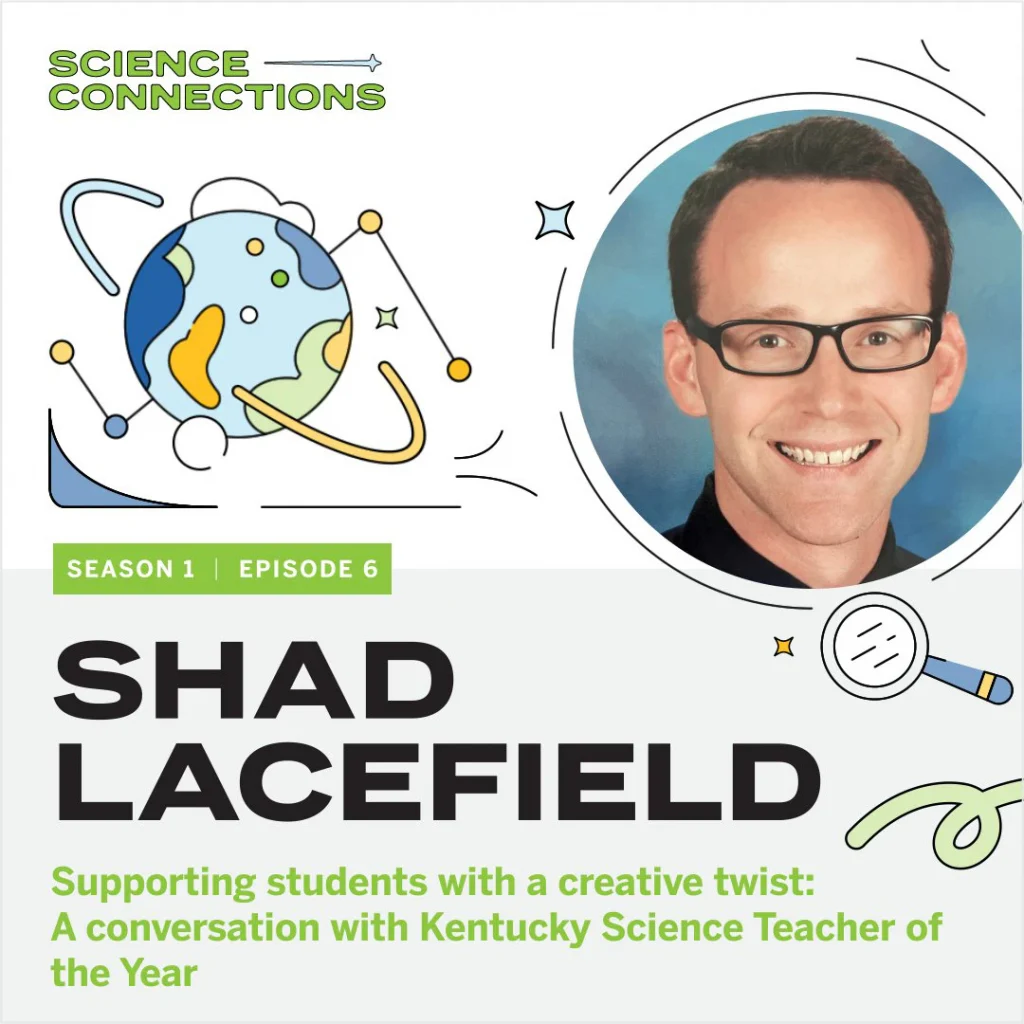
S1-06: Supporting students with a creative twist: A conversation with Kentucky Science Teacher of the Year, Shad Lacefield

In this episode, Eric sits down with the Kentucky Science Teacher of the Year, Shad Lacefield. Shad shares his experience teaching during the first year of the pandemic, where Shad dressed up in over 100 costumes to create a unique and engaging online learning experience for his students. Shad also explains ways he connects with his students to celebrate student success, as well as large-scale efforts he leads within his school to cultivate the love of learning science content. Explore more from Science Connections by visiting our main page.

Download Transcript

Shad Lacefield (00:00):
When you stay relevant, it’s being engaged with your students and figuring out, or what are, what are they liking? And every year it’s gonna be different. And that helps you stay relevant. When you have conversations and you build relationships with your kids,Eric Cross (00:13):
Welcome to science connections. I’m your host. Eric Cross. My guest today is Shad Layfield. Shad is a teacher at garden Springs elementary and a part-time professor at Asbury University in Kentucky during the first year of the pandemic, Mr. Layfield dressed up in over a hundred costumes to create a unique and engaging online learning experience for his students. He also created Vader visits, where he visited students at their homes, dressed as Darth Vader to celebrate their online successes and keep them encouraged. During a challenging time. In this episode, we discuss how creativity impacts engagement, transferring lessons learned from distance teaching back to in-person instruction, and how upper grades can apply the same principles to improve student learning. I hope you enjoy this discussion with shad lays field. So you’ve been in fourth grade for four years, and then you were in second grade and fifth grade. And so like how long have you been teaching for like total?

Shad Lacefield (01:09):
So this is my 15th year teaching.

Eric Cross (01:12):
Really? Yeah. You’ve been in the game for a while.

Shad Lacefield (01:15):
Yeah. Yep. It, it doesn’t, and it’s always surprising to parents too during that, that first like, come in and meet your teacher. And I walk in, I’m like, yeah, I’ve been teaching for 15 years and every time it gets ’em, they’re like no way. And I’m like, yeah,

Eric Cross (01:28):
That’s, that’s a good thing though. That’s a good thing. Right?

Eric Cross (01:31):
You know? So like, well the energy and then, and you’re just how you’re perceived. Like you’re, they’re just, I don’t know. It’s something about work with young people. Like it keeps you young.

Shad Lacefield (01:39):
That’s what it is. Absolutely.

Eric Cross (01:41):
So how did, how, like, what’s your origin story? Like, how did you become a teacher? Like what, what was it? Was it something like you knew second career, like right outta school? Like how did you end up in the classroom?

Shad Lacefield (01:53):
Yeah. No, and I love this question cause I’m a big Marvel and, and superhero. So origin stories are all, I love a good origin story. So I grew up on a 13 acre farm in a little bitty town called Gustin, Kentucky, and very early on, like we were instilled my parents, amazing, amazing parents. But they really instilled like a, a super important work ethic in our lives of like, it’s, it’s all about hard work and it’s important that you’re working hard in whatever it is that you do. And I’m one of six kids as well in my family.

Eric Cross (02:24):
Where are you in the–

Shad Lacefield (02:25):
I’m second to last.

Eric Cross (02:26):
Second to last. Okay. So you’re the second youngest.

Shad Lacefield (02:29):
Yes. Okay. And and so, and so growing up, like with that, like, you know, I worked in tobacco, I worked in hay, you know, we did things being on the farm and stuff like that. And within my family as well, there’s four boys. And so when I decided to go to college I was the first guy in my family to go to college. And the first and only boy that ended up going to college. And so it was like this big deal, like, oh, you know, we got one of our boys gonna go to college. So what is he gonna be? And I was like, well, if I’m gonna put forth the, the time and effort and then the financial strain that it would cause cuz we were not poor at all. My dad worked two jobs to make sure, but I really felt the responsibility of like, if I’m gonna go, I’m gonna work in a profession.

Shad Lacefield (03:09):
That’s gonna make a lot of money. And here I am as a teacher now. So I didn’t go to college to be a teacher. I actually was pre dentistry. I thought, now here’s a profession. You can, a lot of money. You don’t work weekends or holidays, you know, I can still be the doctor thing. And so I’m gonna be pre dentistry. But like all good origin stories. There was a, there was a flip. So in my first year I started working at the most majestic place that you will ever go. It’s called Squire, boon, caverns. It’s a cave in Southern Indiana. And it’s an amazingly beautiful little place. You have to like one lane highway, like road to go back there up and down. Like you, you think you’re never gonna make it. And if it rains too much, the bridge will flood and you actually can’t even get back there.

Shad Lacefield (03:52):
So that’s how we’re talking like way back in the sticks. But once you get back, back there totally worth it. And as part of the job you were a tour I also did grist mill demonstrations and gym mining adventures, or, you know, as they’re gym mining and stuff like that. And within that, I started working with school aged kids and on very large tours and stuff. And my manager at the time, Claudia, I’m still great friends with and we still take our kids back there. Every summer she, to me, you’re really good with kids. Like you’re really good with kids. We have this scout program that’s on the weekends. And then during the summers and you would be teaching kindergarten through eighth grade kids, geology and forestry. What do you think about doing that? And I said, well, right, let’s try that out. And then I got the teaching bug and it hit and I was like, oh my gosh, like I don’t wanna spend my life doing something that is all about money or, or that is like, this is where it’s at. Like, I love this, I enjoy this. I enjoy the response that I get when I’m talking. And kids are excited about learning and getting new information and learning new stuff. And so then I change my major and here I am now, all these years later teaching instead of being a dentist,

Eric Cross (05:04):
Are there, are there days, do you ever have days where you’re like, you know, dentistry, it’s still an option. Like I can, I can go back.

Shad Lacefield (05:12):
Oh, rare, rare occasions. Rarely. Yeah.

Eric Cross (05:16):
Okay. Yeah. All right. All right. Fair enough. I, I, I always joke and say that like we have, you know, sometimes I have my, my alternate job on the hard days, which is for me, it’s working at the gap where I just want to fold clothes and go home at the end of the day, you know, on those really rough days. And you know, it’s never the kids, right. It’s always other things. The kids are like the great part. And then there’s all these other things. And I just wanna work at the gap. I just wanna work at the gap. Fold some clothes. Yes, sir. Yes. Ma’am absolutely. I can find that size for you. And then I just go home cause about their job when they go home at the end of the day, when you work at the gap, at least sorry, gap workers. I’m sure hard of that, but my perception in my mind is that you close up shop and then you’re done. Yeah,

Shad Lacefield (05:52):
Absolutely. Like you said, they can turn it, like it’s a turnoff at the end. Exactly. As teachers we know, like you don’t ever turn it off, it’s always there.

Eric Cross (06:00):
Yeah. So one of the things that I was super excited about when I, when I first heard about you is I went on your website and there’s so many things I feel like I can just talk about your website and just the, the content that you’ve produced. I, I, there’s so many directions I can go. But one, one of the things I want to ask you is, is about that. Now, one of the things that’s on there, and this is coming from a fellow star wars, Fisha who finished Bobba FET and the Mandalorian recently and is Jones in four OB one to come out.

Shad Lacefield (06:33):
Oh, so yes,

Eric Cross (06:35):
I live in Southern California next to Disneyland visited Galaxy’s edge star wars. You have these things called VA Vader visits. And so what do you do in those? And like, where did you get the idea for these Vader visits?

Shad Lacefield (06:50):
So the costumes were bringing the kids into the classroom. But when they left my room because you would, we only had them for a certain amount of time. There was still a lot of extra work that they needed to get done. And what I was seeing was I could get them to come in and they were really engaged during my lesson. But then afterwards, when it came to work completion or getting things done, there was, it was starting to fall off. As you know, we were experiencing, you know, more and more craziness of what’s going on. So then as an incentive, I decided if you have everything turned in, by the end of the day, I’m gonna dress up in my Darth Vader outfit, full costume, the, you know, the, the full helmet, like everything. And I’m gonna show up to your house and we’re gonna hang out and play any game at all that you wanna play.

Shad Lacefield (07:34):
So then it was a way of rewarding. My kids for getting everything turned in. But same time I felt like it would also help me build a relationship with them. That was a very challenging part of online learning. Like, again, I want you to feel like you’re a part of my classroom. I wanna feel like I’m invested in you and wanna learn about you. And it was a commitment because some of those kids put me through the ringer, whether it was we’re gonna do gymnastics on a trampoline. And again, I’m in full costume doing gymnast on the trampoline, or we’re doing soccer drills with their soccer coach at their house playing football games. I mean, all kinds of stuff. I made a Yachty game for a kid that loves Harry Potter. And it was really a big part of getting work turned in because, and it’s the crazy thought they wanted to spend time with me. Like that’s what it was. And so it was like, yeah, absolutely. I’ll keep dressing up. I did over 50 plus Vater visits. It wasn’t just for my homeroom. It was for all of fourth grade. So I went over 50 visits and it was cool to see kids in their home and talk to them and meet their parents. It was a great opportunity for me to engage with parents as well. How is online learning, going, what can I do to support you? Do you guys have any questions and stuff like that? So

Eric Cross (08:39):
This thing of relationships is like leading to work completion, which isn’t, which isn’t always the, the thing that we think to as educators of like how, you know, work completion. A lot of times we think of like structures or you know, certain protocols that you do in class get work completion, but here you are addressing as Darth Vader. And, and you said students were turning in more work because they’re connected to, you saw an increase in, in yeah. Engagement.

Shad Lacefield (09:07):
And absolutely. And, and I remember even saying that to myself, like this is, this is what’s getting them. But it, it was, and as part of the Vader visit as well with the videos we recorded all of them and I said, I’m gonna make you a YouTube star. And so I would, I, I recorded them. I put ’em on my YouTube channel. And so a lot of the videos that are on my website, all those Vader visits are like the kids showing off and playing against the teacher. And I promise you, I didn’t take it easy on any one of those kids. Like when it was like a verse match, I went all out and I told ’em. I was like, if you beat me, you know, it’s gonna be like, you earned it.

Eric Cross (09:38):
What a great way to leverage, just what, what is relevant to our students? Like you used your platform and then now you’re showcasing them on your, you know, your platform or what you were using. And then they’re seeing each other. And I could just see, regardless of the grade level, like just students, like beam from, from getting that kind of positive praise through, through, you know a medium that doesn’t, that tends to be more of a, just content consumption, but you’re kind of watching other folks do stuff, but now it’s about them. Like, and they’re, they’re getting that attention directly. Now I have to ask about the Vader costume. Did you, did you buy it for this event or did you already have that Darth Vader costume in your closet?

Shad Lacefield (10:19):
I had parts of the costume, but not the complete costume. And honestly, the very first Vader visit I had, I had the Vader mask that makes sounds, and like you could talk and it makes you sound like Vader.

Eric Cross (10:29):
My dark saber is on order. Yes. And it keeps getting delayed from best buy. It’s supposed to arrive in April, but I do have dark staple and order that I ordered back in November. So the best to your point, I don’t know who doesn’t have one, I’m waiting for mine though.

Shad Lacefield (10:42):
There you go, come on. Best buy come through for us. So

Eric Cross (10:44):
You, you did all this investment in time and, and you created all this content, but then we went back in person. Were, were you able to bring this back into the classroom or any of the things that you had generated during distance learning back in the classroom? Or are you, are you using some of the things that you learned? Like what, or is it just completely separate and you’re just doing something completely different. Now

Shad Lacefield (11:04):
That’s a great question. So I still try to dress up at least once every week, if not once every other week just to make whatever we’re doing fun, cuz I already have costumes that were connected to the content that I was doing. So had I had made a character called captain Soundwave that will use when I’m teaching my amplify lessons over sound. And so then I, you know, I have that or I would have, you know, specific characters that were designed for certain lessons that I would do. And so I still

Eric Cross (11:32):
Lemme interrupt you real quick. Where did you get these character ideas from? Cause they are super creative. I clicked on one random one. And you have had like a, a knitted like skull cap and like some blue shiny like cloak and I like who is this guy? I think, is that him? Is that captain sound wave? That’s

Shad Lacefield (11:48):
That’s hilarious. That was, that was my attempted Elsa. Oh, that was yeah. Started buying more and more costumes and and making characters and putting costumes together. And so yeah, it just ends up being this thing where you never know when I’m gonna show up in a completely random costume and be like today, we’re getting ready to learn about how sedimentary rocks form. And I dressed in my rock outfit, which is the old school rock with the turtleneck and the gold chain with,

Eric Cross (12:16):
Wait, do you have a Fanny pack too?

Shad Lacefield (12:17):
I have a Fanny pack. Yes you have. Yep. You nailed it. And they’re like, what does this guy

Eric Cross (12:22):
Do? He raise the one eyebrow. Can you do the, the rock eyebrow? Oh yeah, you got this. Oh, people on the podcast. Can’t see. Chad’s got it down. He’s got it down. He’s got the, he’s got the eyebrow going. Okay, so you, so I feel like I can go on a tangent and talk about all your costumes that you have, but the thinking about this. So tons of engagement, younger people now taking like some of the principles that you’ve learned from this, how can, how can upper grades like bring this joy to their classroom? Like middle school students, you know, older kids sometimes, you know, they can, they’re still kids, but you know, they might not be the same thing as fourth graders. Like would you, do you have any ideas of like how teachers and upper grades can kind of take these elements that you’ve done and, and apply them?

Shad Lacefield (13:04):
Absolutely. So some of the things that you had talked about, like with YouTube can also be applied to like TikTok videos and things like that, that kids are, are willing to watch and, and be engaged in. And so those things, I feel like I’ve seen other middle and high school teachers really utilize in their classroom. But honestly, and this is a new initiative that we’ve started in our district. Minecraft has been something that a lot of kids play and are really engaged in and has shown an amazing engagement for all of our kids when it comes to science engagement, particularly. And so with that, so there’s 126 million active Minecraft players right now in the world. And Minecraft is one of the largest selling video games. The average age, cuz they’re always like, oh, Minecraft is for kids who actually the average age is like 24.

Shad Lacefield (13:51):
So a lot of the older kids are playing Minecraft as well with the younger kids. And with that in mind, it was a way when I looked at Minecraft and specifically like Minecraft educational edition came out and it was during COVID and it was free. So if you had a school email or it’s like the, what the go 365 account, you could get it for free and all of our kids got it for free. And so then, then we went from playing Minecraft on the computer as like a fun game to me looking at it and saying like, wait a minute. I feel like when I’m doing energy conversions, we can take Redstone and Minecraft and kids can now show how a simple system using different parts and devices can work and understand even more con creates how energy is converted from one form to another.

Shad Lacefield (14:39):
And so let’s make this a, a, a, an actual activity. Let’s take what I’m teaching in the classroom. And if they get done early as an enrichment piece, because there’s not a ton of science and enrichment activities at times for kids to be able to do, like, what do I do when I’m done, Minecraft ended up being that. And so I could have these elaborate worlds that I would build for them that they could then go and play and be super engaged in and show me way more on this Minecraft world, what they knew than what they were writing on paper sometimes, cuz I, you know, you’d get like a sentences out of them on paper, but then all of a sudden when they would build this elaborate system and you just had them record and talk, it was like, oh my gosh, you understand way more than I was thinking that you did with that last exit slip, an assessment that we did.

Shad Lacefield (15:25):
And so like, this is awesome. So then I went to my district and I actually proposed an idea what if we did tire Minecraft build challenges for the whole district? So our district has 37 elementary schools and I was like, I think this could be something that, you know, as we’re looking for science, curriculum engagement and making kids excited about learning science and stuff again, cuz that was always the hard part. I feel like sometimes with COVID everything kids lost this love of, of being in the classroom and, and, and learning and that it was like, you know, getting them to come back into the classroom and, and finding, learning fun again. It was like this, this started to get ’em excited and like, yeah, I get to play in Minecraft and I’m learning at the same time. And it was working for all kinds of content areas.

Shad Lacefield (16:07):
We’re doing a blast off to, to Mars. We it’s called blast off to us. We’re partnering with CLO of the future. They’re working with SpaceX. Our kids will actually get to send postcards to space and yes, it’s, it’s a super cool thing. And I love my district and all of the office of technology, individuals, Ashley Josh and Kelly for putting this together. And so it asks this question if you could a community in space, what would it be like? And the goal is that kids will write on the back what they want. And then we send this postcard off to space, they stamp it saying it’s been in space and the kids get to have it back and, and be able to use it. But what, what we decided, what we could do with Minecraft is what if they actually built the colony on Mars, like really research put time and effort into reading scientific articles about plants and how plants would grow and, and water and, and structures and apply all of that in a massive build challenge. And then that be, you know what we’re doing? That can be the answer to the question. And so it’s not just a couple sentences on a postcard, but it’s like a week or two week unit that pulls all this scientific content and standards that we’re working with and really allows kids to show so much creativity like on my Twitter I’ve been posting like pictures and stuff like that of some of the students builds. And I’m gonna continue to do that throughout the build challenge.

Eric Cross (17:26):
Now, are you using Minecraft EDU?

Shad Lacefield (17:28):
Yes. That is correct.

Eric Cross (17:29):
I love Minecraft EDU. Like it, it, you talking about it inspires me to, to try to dive back into it. One of the things sometimes I feel limited by is the time that I have and the things that we’re trying to cover. And it’s almost, it almost feels like we’re doing something wrong using a video game to teach, but it’s such a great educational tool. Like you said, you just said that students are able to show what they know in, in a way by creating something that’s different than if they would’ve just written it, but they’re actually creating, and this is one of the things, I guess you kind of hit on this, but I wanted to probe it a little more. Is do you have your students creating content like you do? Cause I kind of heard that they, you were, did you say that they were explaining or doing a video recording or describing it? How are they, how are they, how are they doing that work?

Shad Lacefield (18:17):
Yeah. So what they actually do is they’ll write a script and they will use Screencastify to record and then upload to Flipgrid. And then that way they can actually show their build to all of fourth grade. Since we weren’t allowed to be in the same class, like we were all departmentalized, so then we will have voting challenges. So after you record, you get to see everyone’s videos, you get to like and comment and leave feedback on their builds. So you can see what the other kids created. And then then from those initial videos and voting, we selected a certain of kids that then go on to the district level for our Minecraft build challenge. And then those videos are viewed by administration and other teachers to vote again. And then you end up having grade level winners and then an overall winner, which shout out to my boy in fourth grade, who was our overall winner, Eli, super proud of him.

Shad Lacefield (19:07):
He, he made this really, really space saving system, which was hidden stairs that ran off of Redstone and used motion, energy. And again, in his video, he talks about like how motion energy has changed to electrical energy and then back into motion through the process of how this hidden staircase would be in the wall. And then you’d be able to use this lever to then release that staircase. So you could go up and down but it was just, and again, when you, when you let kids talk about energy conversions and you let them build all of a sudden, you have kids making security systems for banks. Another kid that made a feeding system for kids for animals at the zoo, and it was just like, oh my gosh, I had no idea that this was what you guys could run out and do. When I, when I taught you how energy conversions work, that this is what you could produce and come over, like this is mind blowing. I love it,

Eric Cross (19:56):
What our kids can do and what they can create always kind of blows us away when we give them an opportunity to kind of have that freedom to, to create and take their knowledge and actually do something with it versus channel it into what, show me what, you know, but only do it like this. This is, this is the lane that you have to stay in. How do you get these ideas and, and stay, stay relevant? Like so many of the things like you’re touching, like pop culture, you, you have this hand in education technology, you have you’re, you’re doing video editing. Like where are you drawing from? Cause I’m just thinking like, as a teacher listening to this, that might be newer. And they go to the side like, oh my gosh, this, this guy is doing these so many things like where are you drawing from for inspiration or ideas?

Shad Lacefield (20:39):
I think a lot of it is like you say, when, when you stay relevant, it’s being engaged with your students and figuring out, or what are, what are they liking? And every year it’s gonna be different. And that helps you stay relevant. When you have conversations and you build relationships with your kids to figure out, you know, what’s going on. Because I was not a big Minecraft person. It was the group that came in that really challenged me to do Minecraft because it, it showed up on their Chromebooks one day and all of a sudden it’s like, oh, we can play Minecraft all the time. And I said, no, you can’t play Minecraft until that I’ve had training. And I know what’s going on because I’m super nervous about this new thing. And I wanna make sure you guys aren’t doing something that you’re not supposed to.

Shad Lacefield (21:13):
And like, they hounded me hardcore about you better do you need to do that training, Mr. Lacefield, you need to, we wanna play Minecraft. You better be doing this. Right. And so I was like, all right, man, I’ll, I’ll invest. I’ll, I’ll put some time into this training. And I’m so glad that I did yeah, again, that’s it just like building relationships and having those conversations help you realize like, what’s, what’s what are they interested in? What what’s going on and what would be really funny, even connecting that back to the costumes. What would it be really funny if I showed up in you know, today, princess Jasmine.

Eric Cross (21:42):
Yeah.

Shad Lacefield (21:43):
Been yes. Done that. That’s a great one. I,

Eric Cross (21:45):
I, I just went to the social studies page. I, and I stop laughing while you were talking. Cause I saw the princess Jasmine.

Shad Lacefield (21:52):
Oh yeah. Folks.

Eric Cross (21:53):
I’m telling you, you have to go, you have to go to his videos and see what he’s done. I mean, they’re just, they’re just amazing with my middle school students. They, I, I find myself having to be into things that I’m not normally into. And we have these intergenerational relationships, right? Like I think teachers are unique in this I aspect where I can connect with a 12 year old with what 12 year olds are in no matter where this 12 year old’s from. Cuz I get 12 year old culture. But sometimes when I go back into my adult world, like I forget that like, Hey yeah, haven’t watched a new anime you know, or, or whatever, you know, up

Shad Lacefield (22:26):
That. Yeah. No said too. And a kid will show up wearing a, a shirt to school and I’m like, I wasn’t the world’s that like, I’ve never even seen that before. And you’re like, okay, I’m gonna have to learn what that is cuz that yeah.

Eric Cross (22:38):
And then the next student asks you about, Hey, do you like, do you like these this game? I’m like, yeah, yeah, let me go Google that game real quick. Yeah, I’m totally into it. I’m downloading on my phone real quick. And, and now I’m connected to all kinds of obscure random interests, but to your, to what you said, it like, it helps keep us fresh, right? With I, with ideas, there, there is something that is super practical that you’ve done that you’ve created that I’ve encouraged teachers to do. And I think you really nailed it. On your site, you have these video tutorials. When I look at those, I, I think about how much time you must have saved yourself of not having to explain the same exact thing multiple times. Because you’ve created this virtual help section that allows students to log in amplify earth, check, Flipgrid, whatever. Like do you, when you’re, when you’re teaching students, do you, do you use those in direct students there so they can kind of support themselves? Or is that, what, how did that come to be when you, when you made these, these virtual tools? Because I could just imagine these are time savers for you.

Shad Lacefield (23:49):
Absolutely. Cuz again, like you said, it’s it saves on time. So a lot of when you have kids that are already visual learners as well, and they love watching YouTube and they learn stuff from YouTube, why not? I mean, make the video and then attach it to my Google classroom, keeping everything online. Everyone always has access. And by still having those videos, it allows kids to hear the directions multiple time, but on their time and at their pace. So then it’s posted on the assignment. So even though I probably still will give those directions verbally out loud if a kid forgets and maybe they feel a little nervous about asking in front of their peers, like, oh, how do I do this again? Or, oh, I don’t remember how to do that. That video is linked on there. So that way they can go back and watch it.

Eric Cross (24:28):
It’s almost like a little co-teacher that you have like a little aide that’s like, but it’s you, but it’s like a mini you who’s helping you out. I found that putting sometimes those tutorial videos on ed puzzle, where at different points in time, you can set it up so that at a certain timestamp, it asks a question and you can control it. So they can’t move faster past it until they respond to the question and you have the question be about whatever you just said. And then it, it syncs with Google classroom. So you can import all the grades and you can see how far through the video they got. But that was one other layer that I was able to do. So I can have some accountability and make sure that okay, everybody watched it and they answered all five questions of like, how do you do this?

Shad Lacefield (25:07):
Oh, see, now you’re sharing stuff with me, Eric, because I, I’m not as familiar with ed puzzle. I’ve used like near pod and per deck, but I mean just you saying that I’m like, okay, I need to check out ed puzzle and, and see what, what this is all about. Cause that sounds awesome.

Eric Cross (25:20):
Hey, I shared something with Chad and it it’s useful. I’m I’m feeling good right now. I’m feel I’m feeling good. So as we, as we kind of wind down one, couple questions I wanna ask. One of ’em is you’ve been in teaching for, for 15 years and I, I talk to you like right now and I get this energy and this vibe that’s just so upbeat, so positive. How do you stay fresh, fresh. And how did you stay fresh during a time when things have been so hard, you know, and it, and still is for so many educators, how do you stay encouraged? Like what, what have you done and, and to stay in, in education for, for this long,

Shad Lacefield (26:00):
I think it, it even goes back to like when I made my initial decision to switch my major to education, like I, I really felt like I found so thing that I thoroughly loved and enjoyed, and I always feel like you go through seasons. Like, and I definitely, when, when COVID hit, like you went through a season of where you start to feel again, that pressure like do I really like doing this as much as I thought that I like doing this and am I ready for this next thing? And then I just go back to just the, well, why did I do this to begin with? And, and it gets me, you know, excited to be like, I did it for the kids, like, and it’s about the kids. And I get joy when they’re laughing and smiling. So again, with the videos, it’s like, how can I make ’em laugh and smile because if they’re laughing and smiling and having a good time, I’m gonna get, you know, jacked and ready to start teaching again.

Eric Cross (26:48):
And I just hear that so much in what you’re saying is you’re serving your kids is, is being more than that building the relationship, that connection. And then through all that, the learning happens. The last question I wanna ask you is who’s one teacher that created a memorable experience for you or inspired you. Is it someone that you remember when you were in school or learn experience that just, that stands out to you to this day? Cuz as teachers, we remember thi like our kids remember us and it’s weird to be in that position to think that we’re gonna be that person. So is there anybody or anything that stands out to you that you remember from a, a teacher and experience?

Shad Lacefield (27:27):
Gosh, I have, I have a lot that you know, from my fifth grade science teacher, Mr. Goodman, who we did the ecology meet and the ecology team, and we went to OT Creek park and we competed against other schools about science, connected materials to my physics teacher in high school that let us build boats out of cardboard and take it to the only hotel in our town and the pool. And we had like boat races with the cardboard boats that we did. But really I, I go back to Squire boon and Claudia my manager and I remember not only was, she’s such a, a pivotal like getting me into teaching. But I remember the, the curriculum that we were using at the time that I was. And again, it goes back to what if I was to teach that curriculum, I would not still be a teacher because again, as sometimes you experience with curriculum, it can be boring and not engaging. And I was already putting my own flare on it at SQUI boon during the scout lessons. And I said, what if I just completely rewrote this curriculum? What if I made it really fun and put my own, spin on it? And, and she was like, absolutely, absolutely do that. And I feel like that encouragement as teachers, when we encourage kids to be creative when we encourage kids to, to take risk and to try new things we end up getting such amazing results that we didn’t even expect

Eric Cross (28:45):
Thought I out to Mr. Goodman for the ecology meet the physics teacher for the, the boat races, which are hilarious, by the way, if you’ve ever been able to watch students, did you make ’em at a cardboard?

Shad Lacefield (28:53):
We did. Yep.

Eric Cross (28:54):
Yeah. Those are hilarious to watch. And Claudia for giving the freedom to let you be a educational DJ and remix things to make it fun. Thanks for being on the podcast. Thanks for your inspiration and for sharing your stuff like publicly and letting other people see it and, and get ideas. It’s, I’m sure there’s more people than, you know, and more teachers than, you know, that are looking at that and getting their own ideas and coming up with their own. It might not be star wars, but coming up with their own inspiration, maybe it’s like Harry Potter or Lord of the rings or some like that.

Shad Lacefield (29:26):
Yeah. Whatever. You’re passionate about. Pull that in.

Eric Cross (29:31):
Thanks so much for joining me and Shad today. We want to hear more about you. If you have any great lessons or ways to keep student engagement high, please email us at stem@amplify.com. That’s STEM@amplify.com and make sure to click, subscribe wherever you listen to podcasts until next time.

Stay connected!

Join our community and get new episodes every other Tuesday!

We’ll also share new and exciting free resources for your classroom every month.

What Shad Lacefield says about science

“It’s about being engaged with your students and figuring out what are they liking. Every year it’s going to be different…when you have conversations and you build relationships with your kids.”

– Shad Lacefield

4th Grade Science Teacher, District Elementary Science

Meet the guest

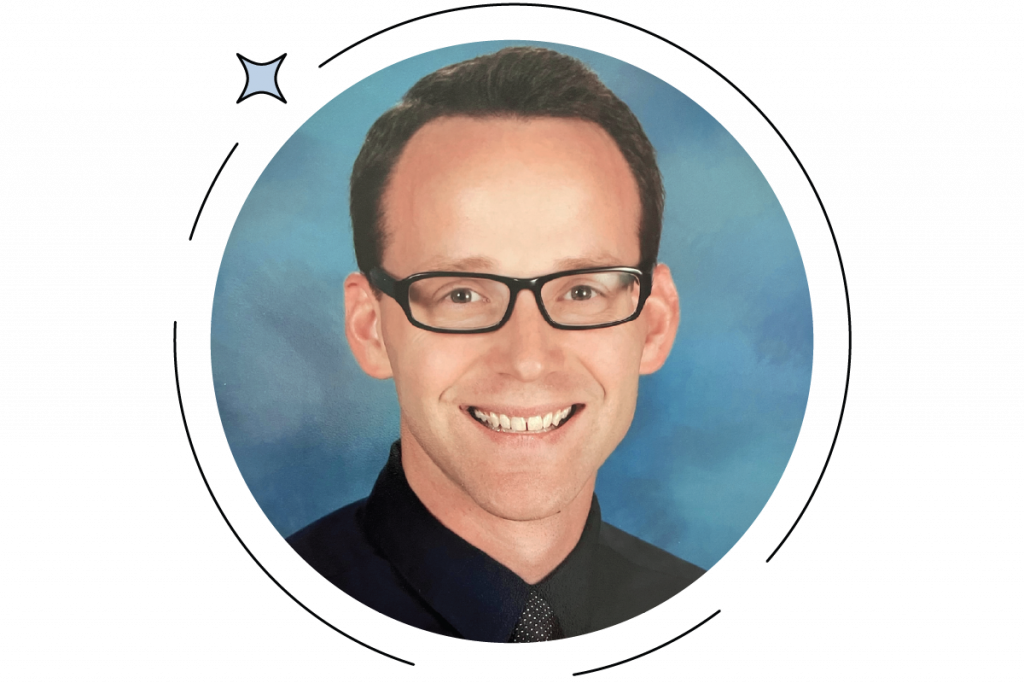
Shad Lacefield is a teacher at Garden Springs Elementary and part-time professor at Asbury University in Kentucky. Mr. Lacefield leads professional development in his district, and has been a guest speaker for Eastern Kentucky University, Campbellsville University, and Amplify Education. His topics include classroom managment, integrating techology, and student engagement. He earned his bachelor’s degree in elementary education from Campbellsville University in 2007, and his master’s in science from Southwest Baptist University in 2011. Shad has either taught or coached every grade K-12, and in his 14 years in education he has served as a lead teacher in literacy, math, science, and social studies. He currently coordiantes with the FCPS Office of Instructional Technology to plan Minecraft build challenges for elementary students, and is working on setting up a science field trip that turns a golf course into a STEM lab. During the first year of the pandemic, Shad dressed up in over 100 costumes to create a unique and engaging online learning experience for his students. He also created Vader Visits where he visited students at their homes dressed as Darth Vader to celebrate their online successes, and keep them encouraged during a challenging time. His creative teaching style, and over 50 “Vader Visits” with students, have been featured on WKYT-TV, LEX-18, Spectrum 1 News, and several local and college news publications. Shad lives in Lexington Kentucky with his wife Whitney Lacefield and their three children.

Check out his websiteYouTube channel, and Facebook account!

A person with glasses smiling against a blue background, surrounded by a circular design.

About Science Connections

Welcome to Science Connections! Science is changing before our eyes, now more than ever. So…how do we help kids figure that out? We will bring on educators, scientists, and more to discuss the importance of high-quality science instruction. In this episode, hear from our host Eric Cross about his work engaging students as a K-8 science teacher. Listen here!
Amplify Science Success Story

The Lawrence Hall of Science

Developed by the science education experts at UC Berkeley’s Lawrence Hall of Science and the digital learning team at Amplify, our program features:

  • phenomena-based approach where students construct a complex understanding of each unit’s anchor phenomenon.
  • A blend of cohesive storylines, hands-on investigations, rich discussions, literacy-rich activities, and digital tools.
  • Carefully crafted units, chapters, lessons, and activities designed to deliver true three-dimensional learning.
  • An instructional design that supports all learners in accessing all standards.
Aerial view of the lawrence hall of science at the university of california, berkeley, showcasing the building and surrounding trees with a foggy city backdrop.

Proven to work

A pdf cover from wested titled "learning and literacy development together: initial results from a curriculum study," featuring an adult helping children with schoolwork in a classroom.

WestEd Randomized
Control Trial for Grade 1

Read More

Pdf cover titled "curriculum materials designed for the next generation science standards: initial results from gold standard research trials", published by wested.

WestEd Randomized
Control Trial for Grade 7

Read More

A teacher and students engage in a science activity around a table. The text promotes the Amplify Science K–8 curriculum, highlighting its focus on hands-on learning and real-world problem-solving.

Amplify Science NE
Grades K–5

Read More

Instructional model

The Amplify Science program is rooted in the proven, research-based pedagogy of Do, Talk, Read, Write, Visualize. Here’s how each element works:

DO

Firsthand investigations are an important part of any science classroom, and Amplify Science has students getting hands-on in every unit—from building models of protein molecules to experimenting with electrical systems.

TALK

Student-to-student discourse and full-class discussions are an integral part of the program. Students are provided with numerous opportunities to engage in meaningful oral scientific argumentation, all while fostering a collaborative classroom environment.

READ

Students read scientific articles, focusing their reading activities on searching for evidence related to their investigation and, importantly, on asking and recording questions as they read through fascinating texts on 21st-century topics.

WRITE

Following real-world practices, students write scientific arguments based on evidence they’ve collected, making clear their reasoning about how a given piece of evidence connects to one of several claims.

VISUALIZE

By manipulating digital simulations and using modeling tools to craft visualizations of their thinking— just as real scientists and engineers do—students take their learning far beyond the confines of what they can physically see in the classroom in an exciting and authentic way.

Program structure

Our cyclical lesson design ensures students receive multiple exposures to concepts through a variety of modalities. As they progress through the lessons within a unit, students build and deepen their understanding, increasing their ability to develop and refine complex explanations of the unit’s phenomenon.

It’s this proven program structure and lesson design that enables Amplify Science to address 100% of the NGSS and support students in mastering the Oregon Science Standards.

Flowchart depicting a critical thinking process with four circular nodes connected by arrows, each node representing a step: posing a real-world problem, exploring evidence, elaborating concepts, and evaluating claims.

Unit types

While every unit delivers three-dimensional learning experiences and engages students in gathering evidence from a rich collection of sources, each unit also emphasizes a particular science and engineering practice.

In grades K–2:

  • One unit emphasizes the practice of investigation.
  • One unit emphasizes the practice of modeling.
  • One unit emphasizes the practice of engineering design.

In grades 3–5, students experience the three unit types above, plus:

  • One additional unit that emphasizes the practice of argumentation.

Investigation units focus on the process of strategically developing investigations and gathering data to answer questions. Students are first asked to consider questions about what happens in the natural world and why, and are then involved in designing and conducting investigations that produce data to help answer those questions.

Modeling units provide extra support to students engaging in the practice of modeling. Students use physical models, investigate with computer models, and create their own diagrams to help them visualize what might be happening on the nanoscale.

Engineering design units provide opportunities for students to solve complex problems by applying science principles to the design of functional solutions, and iteratively testing those solutions to determine how well they meet preset criteria.

Argumentation units provide students with regular opportunities to explore and discuss available evidence, time and support to consider how evidence may be leveraged in support of claims, and independence that increases as they mount written arguments in support of their claims.

Unit sequence

Our lessons follow a structure that is grounded in regular routines while still being flexible enough to allow for a variety of learning experiences.

In fact, our multi-modal instruction offers more opportunities for students to construct meaning, and practice and apply concepts, than any other program. What’s more, our modular design means our units can be flexibly arranged to support your instructional goals.

Chart outlining science curriculum by grade, from kindergarten through grade 5, listing topics such as

Program components

Available digitally and in print, our unit-specific reference guides are chock-full of helpful resources, including scientific background knowledge, planning information and resources, color-coded 3D Statements, detailed lesson plans, tips for delivering instruction, and differentiation strategies.

Amplify Science TG

Hands-on learning is an essential part of Amplify Science and is integrated into every unit. Students actively participate in science, playing the roles of scientists and engineers as they gather evidence, think critically, solve problems, and develop and defend claims about the world around them. Every unit includes hands-on investigations that are critical to achieving the unit’s learning goals.

Two children sit at a table blowing into plastic straws held together, likely making musical sounds, with containers and rubber bands on the table.

More hands-on with Flextensions:
Hands-on Flextensions are additional, optional investigations that are included at logical points in the learning progression and give students an opportunity to dig deeper if time permits. These activities offer teachers flexibility to choose to dedicate more time to hands-on learning. Materials referenced in Hands-on Flextension activities will either be included in the unit kit or are easily sourced. Supporting resources such as student worksheets will be included as downloadable PDF files.

Our kits include enough non-consumable materials to support a class of 36 students and enough consumable items to support 72 students. In other words, each kit can last two years! Plus, our unit-specific kits mean teachers just grab the tub they need for the unit and then put it all back with ease.

Amplify Science California supports 3-D learning with more materials than any other program.

Each unit of Amplify Science K–5 includes six unique Student Books written by the Lawrence Hall of Science specifically for the program. These content-rich nonfiction and informational texts provide opportunities for students to search for evidence relevant to their firsthand investigations, see science practices and dispositions modeled, extend their science knowledge, provide real world connections as they master reading-to-learn and close reading skills, and construct evidence-based arguments.

Important note:
Students in grades K–5 are never asked to read alone. Rather, books are read to, with, and by students with ample scaffolding and support provided by the teacher. Big Books are read aloud or together with the class to introduce ideas. Student Books allow for small-group reading and reading in pairs.

Illustrations of two children's book covers displayed on a tablet, titled "on dia ocupado en villa empuja" and "a busy day in pushville," showing a busy street scene.

Available for every unit, our Student Investigation Notebooks contain instructions for activities and space for students to record data and observations, reflect on ideas from texts and investigations, and construct explanations and arguments.

In grades K–5, one copy of the Student Investigation Notebook is included in each unit’s materials kit for use as a blackline master. Each notebook is also available as a downloadable PDF on the Unit Guide page of the digital Teacher’s Guide.

Amplify Science Student Investigation Notebooks

Amplify Science offers digital experience licenses that make elementary instruction more flexible for students and teachers, as well as providing additional means to engage in remote, hybrid, or in-person learning!

Student-facing digital lessons
With the digital experience, students can engage with digital lesson content in one cohesive experience. It’s the same content from Amplify science in a new, integrated format where students can interact with slides, Sims, modeling tools, videos, books, and more.

Ecosystem Restoration digital simulation

Digital student notebook pages
Students can draw, write, record audio, and insert images into their Investigation Notebook pages. Their work is automatically saved and delivered to you in real time. When students edit their work, those edits are immediately reflected on your teacher work review page. You can access student responses by clicking “View Work,” where you can see students’ Investigation Notebook pages from the lesson, updating live.

Assign in Amplify
The digital experience allows flexibility with optional features like scheduling assignments in advance and setting due dates. You can use Scheduling to determine the date and time that the assignment appears in Student Home. You also have the flexibility to schedule when assignments appear and use dates to remove assignments from Student Home.

Assign in LMS
You can also assign lessons via our integrations with Google Classroom and Microsoft Teams, or by copying a lesson link and sharing it with students through the platform of your choice. The assignment link you send will provide students with direct access to the full lesson—slides, videos, digital tools, and worksheet activities—no student platform navigation required!

Teacher platform and presentation
Teacher-facing lesson content—including sample teacher talk, student responses, pedagogical support, and possible student responses—shows on a teacher’s private Teacher Guide tab. Students only see the lesson slides that are being presented.

Graphic depicting a teacher's device synced with a class presentation for K—5 students. The teacher's laptop displays an Amplify Science lesson on environments, which is mirrored on a larger screen for the class

Explore your print samples

With your Amplify Science print samples, you’ll find unit-specific Teacher’s References Guides, Student Investigation Notebooks, and sets of Student Books for each grade level.

A note about the Teacher’s Reference Guides:

It’s important that you see the full breadth and depth of our instruction. For that reason, we provide a copy of each of our unit-specific Teacher Reference Guides.

Rest assured that teachers do not use these robust reference guides for day-to-day teaching. For that, we have a hands-free TG!

A laptop screen displays a simulation of energy arrows entering and exiting Earth's system, flanked by diagrams explaining water flow and an energy token model.
  • Teacher Reference Guide: Unlike a typical TG that requires a series of supplemental books to support it, our encyclopedic reference guide is chock-full of everything a teacher needs to fully implement our program and the NGSS.
  • Ready-to-Teach Lesson Slides: For daily instruction, teachers need their hands free. That’s why we created ready-to-teach lesson slides for every single lesson. What’s more, they are editable and include suggested teacher talk and point-of-use differentiation and other instructional tips. Click to learn more.

A note about the Materials Kits:

Hands-on learning is at the heart of Amplify Science, and is integrated into every unit. In order to make hands-on learning more manageable for busy teachers, Amplify Science materials are organized into unit-specific kits.

Stacked storage bins with labels, arranged neatly; caption notes they are a sample and may not reflect actual quantities or sizes.

What’s different about Amplify’s unit-specific material kits?  They…

  • Include more materials — We give teachers enough non-consumable materials to support a class of 36 students and enough consumables to support 72 student uses. In other words, each kit will last two years.
  • Are more manageable — Unlike other programs that require large groups of students to share limited sets of materials, our kits include enough to support small groups of 4–5 students.
  • Include supportive videos — Each hands-on activity provides clear instructions for the teacher, with more complex activities supported by video demonstrations and illustrations.

Grade-specific lists of all materials included in each kit:

Access your digital samples

Explore as a teacher

When you’re ready to explore the teaching experience on your own, follow these instructions to access the Amplify Science digital teacher platform.

  • Click the Access Amplify Science Platform button below and bookmark the page.
  • Select Log in with Amplify.
  • Enter the username: t1.jeffersoncounty@demo.tryamplify.net
  • Enter the password: Amplify1-jeffersoncounty
  • Click on Science on the left hand side.
  • Click on the Program Menu in the top center of the screen and select any grade.
  • Select any unit.

To help familiarize yourself with navigating the digital platform, watch the below navigational video.

Explore as a student

When you’re ready to explore the student learning experience on your own, follow these instructions to access the Amplify Science digital student platform.

  • Click the Access Amplify Science Platform button below and bookmark the page.
  • Select Log in with Amplify.
  • Enter the username: s1.jeffersoncounty@demo.tryamplify.net
  • Enter the password: Amplify1-jeffersoncounty
  • Click the backpack icon on the top right.
  • Click Science K-5
  • Select any unit.

Resources to support your review

New Mexico Educators: Welcome to Amplify Science K–5!

Amplify Science is an engaging core curriculum designed for three-dimensional, phenomena-based learning that is rated ‘all green’ on EdReports.  

With Amplify Science, New Mexico students won’t just passively learn about science concepts. Instead, they will take on the role of scientists and engineers to actively investigate and figure out real-world phenomena. They will do this through a blend of cohesive and compelling storylines, hands-on investigations, collaborative discussions, literacy-rich activities, and interactive digital tools.

Amplify Science Success Story

The Lawrence Hall of Science

Developed by the science education experts at UC Berkeley’s Lawrence Hall of Science and the digital learning team at Amplify, our program features:

  • phenomena-based approach where students construct a complex understanding of each unit’s anchor phenomenon.
  • A blend of cohesive storylines, hands-on investigations, rich discussions, literacy-rich activities, and digital tools.
  • Carefully crafted units, chapters, lessons, and activities designed to deliver true three-dimensional learning.
  • An instructional design that supports all learners in accessing all standards.
Aerial view of the lawrence hall of science at the university of california, berkeley, showcasing the building and surrounding trees with a foggy city backdrop.

Instructional model

The Amplify Science program is rooted in the proven, research-based pedagogy of Do, Talk, Read, Write, Visualize. Here’s how each element works:

Do

First-hand investigations are an important part of any science classroom, and Amplify Science has students getting hands-on in every unit—from building models of protein molecules to experimenting with electrical systems.

Talk

Student-to-student discourse and full-class discussions are an integral part of the program. Students are provided with numerous opportunities to engage in meaningful oral scientific argumentation, all while fostering a collaborative classroom environment.

Read

Students read scientific articles, focusing their reading activities on searching for evidence related to their investigation and, importantly, on asking and recording questions as they read through fascinating texts on 21st-century topics.

Write

Following real-world practices, students write scientific arguments based on evidence they’ve collected, making clear their reasoning about how a given piece of evidence connects to one of several claims.

Visualize

By manipulating digital simulations and using modeling tools to craft visualizations of their thinking— just as real scientists and engineers do—students take their learning far beyond the confines of what they can physically see in the classroom in an exciting and authentic way.

Program structure

Our cyclical lesson design ensures students receive multiple exposures to concepts through a variety of modalities. As they progress through the lessons within a unit, students build and deepen their understanding, increasing their ability to develop and refine complex explanations of the unit’s phenomenon.

It’s this proven program structure and lesson design that enables Amplify Science to address 100% of the NGSS and support students in mastering the New Mexico STEM Ready! Science Standards.

Flowchart depicting a critical thinking process with four circular nodes connected by arrows, each node representing a step: posing a real-world problem, exploring evidence, elaborating concepts, and evaluating claims.

Unit types

While every unit delivers three-dimensional learning experiences and engages students in gathering evidence from a rich collection of sources, each unit also emphasizes a particular science and engineering practice.

In grades K–2:

  • One unit emphasizes the practice of investigation.
  • One unit emphasizes the practice of modeling.
  • One unit emphasizes the practice of engineering design.

In grades 3–5, students experience the three unit types above, plus:

  • One additional unit that emphasizes the practice of argumentation.

Investigation units focus on the process of strategically developing investigations and gathering data to answer questions. Students are first asked to consider questions about what happens in the natural world and why, and are then involved in designing and conducting investigations that produce data to help answer those questions.

Modeling units provide extra support to students engaging in the practice of modeling. Students use physical models, investigate with computer models, and create their own diagrams to help them visualize what might be happening on the nanoscale.

Engineering design units provide opportunities for students to solve complex problems by applying science principles to the design of functional solutions, and iteratively testing those solutions to determine how well they meet preset criteria.

Argumentation units provide students with regular opportunities to explore and discuss available evidence, time and support to consider how evidence may be leveraged in support of claims, and independence that increases as they mount written arguments in support of their claims.

Unit sequence

Our lessons follow a structure that is grounded in regular routines while still being flexible enough to allow for a variety of learning experiences.

In fact, our multi-modal instruction offers more opportunities for students to construct meaning, and practice and apply concepts, than any other program. What’s more, our modular design means our units can be flexibly arranged to support your instructional goals.

Science Curriculum Topics by Grade: Grade K (plants/animals, pushes/pulls, sunlight/weather), Grade 1 (plant/animal defenses, light/sound, rotating earth), Grade 2 (relationships, materials, landforms), Grade 3 (forces/balance, traits, survival, weather/weather), Grade 4 (energy, light/vision, earth features, waves/energy/information), Grade 5 (patterns, modeling, ecosystem).

Program components

Available digitally and in print, our unit-specific reference guides are chock full of helpful resources, including scientific background knowledge, planning information and resources, color-coded 3-D Statements, detailed lesson plans, tips for delivering instruction, and differentiation strategies.

Image of a teacher's guide titled "Plant and Animal Needs: Milkweed and Monarchs" next to a laptop showing the same cover and accompanying online materials.

Hands-on learning is an essential part of Amplify Science, and is integrated into every unit. Students actively participate in science, playing the roles of scientists and engineers as they gather evidence, think critically, solve problems, and develop and defend claims about the world around them. Every unit includes hands-on investigations that are critical to achieving the unit’s learning goals.

Two children sit at a table blowing into plastic straws held together, likely making musical sounds, with containers and rubber bands on the table.

More hands-on with Flextensions:
Hands-on Flextensions are additional, optional investigations that are included at logical points in the learning progression and give students an opportunity to dig deeper if time permits. These activities offer teachers flexibility to choose to dedicate more time to hands-on learning. Materials referenced in Hands-on Flextension activities will either be included in the unit kit or are easily sourced. Supporting resources such as student worksheets will be included as downloadable PDF files.

Our kits include enough non-consumable materials to support a class of 36 students and enough consumable items to support 72 students. In other words, each kit can last two years! Plus, our unit-specific kits mean teachers just grab the tub they need for the unit and then put it all back with ease.

On a white background are various supplies, such as cardboard sheets, pegboards, hooks, rubber bands, tennis balls, popsicle sticks, tape, and other small objects.

Each unit of Amplify Science K–5 includes six unique Student Books written by the Lawrence Hall of Science specifically for the program. These content-rich nonfiction and informational texts provide opportunities for students to search for evidence relevant to their firsthand investigations, see science practices and dispositions modeled, extend their science knowledge, provide real world connections as they master reading-to-learn and close reading skills, and construct evidence-based arguments.

Important note:
Students in grades K–5 are never asked to read alone. Rather, books are read to, with, and by students with ample scaffolding and support provided by the teacher. Big Books are read aloud or together with the class to introduce ideas. Student Books allow for small-group reading and reading in pairs.

Two children's books, one in Spanish and one in English, with illustrated covers showing a street scene and families walking in a town.

Available for every unit, our Student Investigation Notebooks contain instructions for activities and space for students to record data and observations, reflect on ideas from texts and investigations, and construct explanations and arguments.

In grades K–5, one copy of the Student Investigation Notebook is included in each unit’s materials kit for use as a blackline master. Each notebook is also available as a downloadable PDF on the Unit Guide page of the digital Teacher’s Guide.

Two science books titled “Pushes and Pulls: Designing a Pinball Machine” and “Pushes and Pulls: Designing a Pinball Machine” displayed side by side.

We know equity is a priority for you and it’s also important to us! Click below to view a comprehensive list of Spanish resources available to support English learners and dual-language classrooms in New Mexico.  All components are available digitally.  Resources also available in print are noted with an asterisk.

Spanish Components and Supports in Amplify Science

Amplify Science offers digital experience licenses that make elementary instruction more flexible for students and teachers, as well as providing additional means to engage in remote, hybrid, or in-person learning!

Student-facing digital lessons
With the digital experience, students can engage with digital lesson content in one cohesive experience. It’s the same content from Amplify science in a new, integrated format where students can interact with slides, Sims, modeling tools, videos, books, and more.

A computer screen displays an illustration of four plants under sunlight, each emitting colored streams and coins, with soil and roots visible below.

Digital student notebook pages
Students can draw, write, record audio, and insert images into their Investigation Notebook pages. Their work is automatically saved and delivered to you in real time. When students edit their work, those edits are immediately reflected on your teacher work review page. You can access student responses by clicking “View Work,” where you can see students’ Investigation Notebook pages from the lesson, updating live.

Assign in Amplify
The digital experience allows flexibility with optional features like scheduling assignments in advance and setting due dates. Teacher can use Scheduling to determine the date and time that the assignment appears in Student Home. They also have the flexibility to schedule when assignments appear and use dates to remove assignments from Student Home.

Assign in LMS
You can also assign lessons via our integrations with Google Classroom and Microsoft Teams, or by copying a lesson link and sharing it with students through the platform of your choice. The assignment link you send will provide students with direct access to the full lesson—slides, videos, digital tools, and worksheet activities—no student platform navigation required!

Teacher platform and presentation
Teacher-facing lesson content—including sample teacher talk, student responses, pedagogical support, and possible student responses—shows on a teacher’s private Teacher Guide tab. Students only see the lesson slides that are being presented.

A laptop labeled "Teacher device" displays a lesson slide, which is mirrored onto a larger screen labeled "Class presentation.

Explore your print samples

With your Amplify Science print samples, you’ll find unit-specific Teacher’s References Guides, Student Investigation Notebooks, and sets of Student Books for each grade level.

A note about the Teacher’s Reference Guides:

It’s important that you see the full breadth and depth of our instruction. For that reason, we provide a copy of each of our unit-specific Teacher Reference Guides.

Rest assured that teachers do not use these robust reference guides for day-to-day teaching. For that, we have a hands-free TG!

Three laptop screens displaying educational content on earth's energy system, including diagrams and text annotations.
  • Teacher Reference Guide: Unlike a typical Teacher Guide that requires a series of supplemental books to support it, our encyclopedic reference guide is chock-full of everything a teacher needs to fully implement our program and the NGSS.
  • Ready-to-Teach Lesson Slides: For daily instruction, teachers need their hands free. That’s why we created ready-to-teach lesson slides for every single lesson. What’s more, they are editable and include suggested teacher talk and point-of-use differentiation and other instructional tips. Click to learn more.

A note about the Materials Kits:

Hands-on learning is at the heart of Amplify Science, and is integrated into every unit. In order to make hands-on learning more manageable for busy teachers, Amplify Science materials are organized into unit-specific kits.

Stacked storage bins with labels, arranged neatly; caption notes they are a sample and may not reflect actual quantities or sizes.

What’s different about Amplify’s unit-specific material kits?  They…

  • Include more materials — We give teachers enough non-consumable materials to support a class of 36 students and enough consumables to support 72 student uses. In other words, each kit will last two years.
  • Are more manageable — Unlike other programs that require large groups of students to share limited sets of materials, our kits include enough to support small groups of 4–5 students.
  • Include supportive videos — Each hands-on activity provides clear instructions for the teacher, with more complex activities supported by video demonstrations and illustrations.

Grade-specific lists of all materials included in each kit:

Access your digital samples

Explore as a teacher

When you’re ready to explore the teaching experience on your own, follow these instructions to access the Amplify Science digital teacher platform.

  • Click the Access Amplify Science Platform button below and bookmark the page.
  • Select Log in with Amplify.
  • Enter the username: t.nmk-5@demo.tryamplify.net
  • Enter the password: AmplifyNumber1
  • Click on Science on the left hand side.
  • Click on the Grade Menu in the top center of the screen and select any grade.
  • Select any unit.

To help familiarize yourself with navigating the digital platform, watch the navigational video below.

Explore as a student

When you’re ready to explore the student learning experience on your own, follow these instructions to access the Amplify Science digital student platform.

  • Click the Access Amplify Science Platform button below and bookmark the page.
  • Select Log in with Amplify.
  • Enter the username: s.nmk-5@demo.tryamplify.net
  • Enter the password: AmplifyNumber1
  • Click the backpack icon on the top right.
  • Click Science K-5
  • Select any unit.

Resources to support your review

Welcome to Amplify Science K–5!

Amplify Science is an engaging core curriculum designed for three-dimensional, phenomena-based learning.

With Amplify Science, Detroit students won’t just passively learn about science concepts. Instead, they will take on the role of scientists and engineers to actively investigate and figure out real-world phenomena. They will do this through a blend of cohesive and compelling storylines, hands-on investigations, collaborative discussions, literacy-rich activities, and interactive digital tools.

Four children around a table engaged in a classroom science project, examining materials closely, with educational posters in the background.

What is Amplify Science?

The Lawrence Hall of Science

Developed by the science education experts at UC Berkeley’s Lawrence Hall of Science and the digital learning team at Amplify, our program features:

  • phenomena-based approach where students construct a complex understanding of each unit’s anchor phenomenon.
  • A blend of cohesive storylines, hands-on investigations, rich discussions, literacy-rich activities, and digital tools.
  • Carefully crafted units, chapters, lessons, and activities designed to deliver true three-dimensional learning.
  • An instructional design that supports all learners in accessing all standards.

Proven to work

WestEd Randomized
Control Trial for Grade 1

Read More

WestEd Randomized
Control Trial for Grade 7

Read More

Amplify Science NE
Grades K–5

Read More

Instructional model

The Amplify Science program is rooted in the proven, research-based pedagogy of Do, Talk, Read, Write, Visualize. Here’s how each element works:

Do

First-hand investigations are an important part of any science classroom, and Amplify Science has students getting hands-on in every unit—from building models of protein molecules to experimenting with electrical systems.

Talk

Student-to-student discourse and full-class discussions are an integral part of the program. Students are provided with numerous opportunities to engage in meaningful oral scientific argumentation, all while fostering a collaborative classroom environment.

Read

Students read scientific articles, focusing their reading activities on searching for evidence related to their investigation and, importantly, on asking and recording questions as they read through fascinating texts on 21st-century topics.

Write

Following real-world practices, students write scientific arguments based on evidence they’ve collected, making clear their reasoning about how a given piece of evidence connects to one of several claims.

Visualize

By manipulating digital simulations and using modeling tools to craft visualizations of their thinking— just as real scientists and engineers
do—students take their learning far beyond the confines of what they can physically see in the classroom in an exciting and authentic way.

Program structure

Our cyclical lesson design ensures students receive multiple exposures to concepts through a variety of modalities. As they progress through the lessons within a unit, students build and deepen their understanding, increasing their ability to develop and refine complex explanations of the unit’s phenomenon.

It’s this proven program structure and lesson design that enables Amplify Science to address 100% of the Next Generation Science Standards (NGSS) and support students in mastering the Pennsylvania Science Standards.

Flowchart depicting a critical thinking process with four circular nodes connected by arrows, each node representing a step: posing a real-world problem, exploring evidence, elaborating concepts, and evaluating claims.

Unit types

While every unit delivers three-dimensional learning experiences and engages students in gathering evidence from a rich collection of sources, each unit also emphasizes a particular science and engineering practice.

In grades K–2:

  • One unit emphasizes the practice of investigation.
  • One unit emphasizes the practice of modeling.
  • One unit emphasizes the practice of engineering design.

In grades 3–5, students experience the three unit types above, plus:

  • One additional unit that emphasizes the practice of argumentation.

Investigation units focus on the process of strategically developing investigations and gathering data to answer questions. Students are first asked to consider questions about what happens in the natural world and why, and are then involved in designing and conducting investigations that produce data to help answer those questions.

Modeling units provide extra support to students engaging in the practice of modeling. Students use physical models, investigate with computer models, and create their own diagrams to help them visualize what might be happening on the nanoscale.

Engineering design units provide opportunities for students to solve complex problems by applying science principles to the design of functional solutions, and iteratively testing those solutions to determine how well they meet preset criteria.

Argumentation units provide students with regular opportunities to explore and discuss available evidence, time and support to consider how evidence may be leveraged in support of claims, and independence that increases as they mount written arguments in support of their claims.

Unit sequence

Our lessons follow a structure that is grounded in regular routines while still being flexible enough to allow for a variety of learning experiences.

In fact, our multi-modal instruction offers more opportunities for students to construct meaning, and practice and apply concepts, than any other program. What’s more, our modular design means our units can be flexibly arranged to support your instructional goals.

Chart outlining science curriculum by grade, from kindergarten through grade 5, listing topics such as

Program components

Available digitally and in print, our unit-specific reference guides are chock-full of helpful resources, including scientific background knowledge, planning information and resources, color-coded 3D Statements, detailed lesson plans, tips for delivering instruction, and differentiation strategies.

Amplify Science TG

Hands-on learning is an essential part of Amplify Science, and is integrated into every unit. Students actively participate in science, playing the roles of scientists and engineers as they gather evidence, think critically, solve problems, and develop and defend claims about the world around them. Every unit includes hands-on investigations that are critical to achieving the unit’s learning goals.

A young person wearing gloves looks through a microscope at a table with laboratory supplies, including bottles, slides, and a tray, against a plain blue background.

More hands-on with Flextensions:
Hands-on Flextensions are additional, optional investigations that are included at logical points in the learning progression and give students an opportunity to dig deeper if time permits. These activities offer teachers flexibility to choose to dedicate more time to hands-on learning. Materials referenced in Hands-on Flextension activities will either be included in the unit kit or are easily sourced. Supporting resources such as student worksheets will be included as downloadable PDF files.

Our kits include enough materials to support 200 student uses. In other words, teachers can easily support all five periods and small groups of 4-5 students each. Plus, our unit-specific kits mean teachers just grab the tub they need and then put it all back with ease.

Assorted office and household items displayed on a white background, including rubber bands, binder clips, cardboard, and sports balls.

Each unit of Amplify Science K–5 includes six unique Student Books written by the Lawrence Hall of Science specifically for the program. These content-rich nonfiction and informational texts provide opportunities for students to search for evidence relevant to their firsthand investigations, see science practices and dispositions modeled, extend their science knowledge, provide real world connections as they master reading-to-learn and close reading skills, and construct evidence-based arguments.

Important note:
Students in grades K–5 are never asked to read alone. Rather, books are read to, with, and by students with ample scaffolding and support provided by the teacher. Big Books are read aloud or together with the class to introduce ideas. Student Books allow for small-group reading and reading in pairs.

Imagen de lado a lado de dos libros titulados "Un día ocupado en Villa Empuja" y "A Busy Day in Pushville", ambos ilustrados por Anthony Lewis.

Available for every unit, our Student Investigation Notebooks contain instructions for activities and space for students to record data and observations, reflect on ideas from texts and investigations, and construct explanations and arguments.

In grades K–5, one copy of the Student Investigation Notebook is included in each unit’s materials kit for use as a blackline master. Each notebook is also available as a downloadable PDF on the Unit Guide page of the digital Teacher’s Guide.

Dos libros de ciencias titulados “Empujar y jalar: diseñar una máquina de pinball” y “Pushes and Pulls: Designing a Pinball Machine” exhibidos uno al lado del otro.

Amplify Science offers digital experience licenses that make elementary instruction more flexible for students and teachers, as well as providing additional means to engage in remote, hybrid, or in-person learning!

Student-facing digital lessons
With the digital experience, students can engage with digital lesson content in one cohesive experience. It’s the same content from Amplify science in a new, integrated format where students can interact with slides, Sims, modeling tools, videos, books, and more.

Ecosystem Restoration digital simulation

Digital student notebook pages
Students can draw, write, record audio, and insert images into their Investigation Notebook pages. Their work is automatically saved and delivered to you in real time. When students edit their work, those edits are immediately reflected on your teacher work review page. You can access student responses by clicking “View Work,” where you can see students’ Investigation Notebook pages from the lesson, updating live.

Assign in Amplify
The digital experience allows flexibility with optional features like scheduling assignments in advance and setting due dates. You can use Scheduling to determine the date and time that the assignment appears in Student Home. You also have the flexibility to schedule when assignments appear and use dates to remove assignments from Student Home.

Assign in LMS
You can also assign lessons via our integrations with Google Classroom and Microsoft Teams, or by copying a lesson link and sharing it with students through the platform of your choice. The assignment link you send will provide students with direct access to the full lesson—slides, videos, digital tools, and worksheet activities—no student platform navigation required!

Teacher platform and presentation
Teacher-facing lesson content—including sample teacher talk, student responses, pedagogical support, and possible student responses—shows on a teacher’s private Teacher Guide tab. Students only see the lesson slides that are being presented.

Graphic depicting a teacher's device synced with a class presentation for K—5 students. The teacher's laptop displays an Amplify Science lesson on environments, which is mirrored on a larger screen for the class

Explore your print samples

With your Amplify Science print samples, you’ll find unit-specific Teacher’s References Guides, Student Investigation Notebooks, and sets of Student Books for each grade level.

A note about the Teacher’s Reference Guides:

It’s important that you see the full breadth and depth of our instruction. For that reason, we provide a copy of each of our unit-specific Teacher Reference Guides.

Rest assured that teachers do not use these robust reference guides for day-to-day teaching. For that, we have a hands-free TG!

Three laptop screens displaying educational content on earth's energy system, including diagrams and text annotations.
  • Teacher Reference Guide: Unlike a typical TG that requires a series of supplemental books to support it, our encyclopedic reference guide is chock-full of everything a teacher needs to fully implement our program and the NGSS.
  • Ready-to-Teach Lesson Slides: For daily instruction, teachers need their hands free. That’s why we created ready-to-teach lesson slides for every single lesson. What’s more, they are editable and include suggested teacher talk and point-of-use differentiation and other instructional tips. Click to learn more.

A note about the Materials Kits:

Hands-on learning is at the heart of Amplify Science, and is integrated into every unit. In order to make hands-on learning more manageable for busy teachers, Amplify Science materials are organized into unit-specific kits.

Stacked storage bins with labels, arranged neatly; caption notes they are a sample and may not reflect actual quantities or sizes.

Our unit-specific kits:

What’s different about Amplify’s unit-specific material kits?  They…

  • Include more materials — We give teachers enough non-consumable materials to support a class of 36 students and enough consumables to support 72 student uses. In other words, each kit will last two years.
  • Are more manageable — Unlike other programs that require large groups of students to share limited sets of materials, our kits include enough to support small groups of four to five students.
  • Include supportive videos — Each hands-on activity provides clear instructions for the teacher, with more complex activities supported by video demonstrations and illustrations.

Grade-specific lists of all materials included in each kit:

Access your digital samples

Explore as a teacher

When you’re ready to explore the teaching experience on your own, follow these instructions to access the Amplify Science digital teacher platform.

  • Click the Access Amplify Science Platform button below and bookmark the page.
  • Select Log in with Amplify.
  • Enter the username: t1.dpsscience@demo.tryamplify.net
  • Enter the password: Amplify1-dpsscience
  • Click on Science on the left hand side.
  • Click on the Grade Menu in the top center of the screen and select any grade.
  • Select any unit.

To help familiarize yourself with navigating the digital platform, watch the below navigational video.

Explore as a student

When you’re ready to explore the student learning experience on your own, follow these instructions to access the Amplify Science digital student platform.

  • Click the Access Amplify Science Platform button below and bookmark the page.
  • Select Log in with Amplify.
  • Enter the username: s1.dpsscience@demo.tryamplify.net
  • Enter the password: Amplify1-dpsscience
  • Click the backpack icon on the top right.
  • Click Science K-5
  • Select any unit.

Spanish-language support

Amplify Science is committed to providing support to meet the needs of all learners, including multiple access points for Spanish-speaking students. Developed in conjunction with Spanish-language experts and classroom teachers, several components are available in Spanish across the Amplify Science curriculum.

Spanish-language materials include:

COMPONENTTEACHER/STUDENT
Student Investigation NotebooksStudent
Student BooksStudent
Printed classroom materials
Unit and chapter questions, key concepts, vocabulary cards, etc.
Teacher and student
CopymastersTeacher
AssessmentsTeacher
Spanish teacher support license
This license includes teacher talk, projections, and downloadable PDFs of all print materials in Spanish.
Teacher

Resources to support your review

Amplify Science Overview

The Lawrence Hall of Science

Developed by the science education experts at UC Berkeley’s Lawrence Hall of Science and the digital learning team at Amplify, our program features:

  • phenomena-based approach where students construct a complex understanding of each unit’s anchor phenomenon.
  • A blend of cohesive storylines, hands-on investigations, rich discussions, literacy-rich activities, and digital tools.
  • Carefully crafted units, chapters, lessons, and activities designed to deliver true 3-dimensional learning.
  • An instructional design that supports all learners in accessing all standards.
The logo for The Lawrence Hall of Science, University of California, Berkeley, features blue text on a light background and is recognized by educators using Amplify Science for middle school science programs.

Instructional model

The Amplify Science program is rooted in the proven, research-based pedagogy of Do, Talk, Read, Write, Visualize. Here’s how each element works:

DO

First-hand investigations are an important part of any science classroom, and Amplify Science has students getting hands-on in every unit—from building models of protein molecules to experimenting with electrical systems.

TALK

Student-to-student discourse and full-class discussions are an integral part of the program. Students are provided with numerous opportunities to engage in meaningful oral scientific argumentation, all while fostering a collaborative classroom environment.

READ

Students read scientific articles, focusing their reading activities on searching for evidence related to their investigation and, importantly, on asking and recording questions as they read through fascinating texts on 21st-century topics.

WRITE

Following real-world practices, students write scientific arguments based on evidence they’ve collected, making clear their reasoning about how a given piece of evidence connects to one of several claims.

VISUALIZE

By manipulating digital simulations and using modeling tools to craft visualizations of their thinking— just as real scientists and engineers do—students take their learning far beyond the confines of what they can physically see in the classroom in an exciting and authentic way.

Program structure

Our cyclical lesson design ensures students receive multiple exposures to concepts through a variety of modalities. As they progress through the lessons within a unit, students build and deepen their understanding, increasing their ability to develop and refine complex explanations of the unit’s phenomenon.

It’s this proven program structure and lesson design that enables Amplify Science to address 100% of the NGSS, and support students in mastering the standards.

Graphic showing a research process with four steps: spark intrigue with a real-world problem, explore evidence, explain and elaborate, and evaluate claims, connected in a cycle with arrows.

Unit types

While every unit delivers three-dimensional learning experiences and engages students in gathering evidence from a rich collection of sources, each unit also emphasizes a particular science and engineering practice.

In grades K–2:

  • One unit emphasizes the practice of investigation.
  • One unit emphasizes the practice of modeling.
  • One unit emphasizes the practice of engineering design.

In grades 3–5, students experience the three unit types above, plus:

  • One additional unit that emphasizes the practice of argumentation.

Investigation units focus on the process of strategically developing investigations and gathering data to answer questions. Students are first asked to consider questions about what happens in the natural world and why, and are then involved in designing and conducting investigations that produce data to help answer those questions.

Modeling units provide extra support to students engaging in the practice of modeling. Students use physical models, investigate with computer models, and create their own diagrams to help them visualize what might be happening on the nanoscale.

Engineering design units provide opportunities for students to solve complex problems by applying science principles to the design of functional solutions, and iteratively testing those solutions to determine how well they meet preset criteria.

Argumentation units provide students with regular opportunities to explore and discuss available evidence, time and support to consider how evidence may be leveraged in support of claims, and independence that increases as they mount written arguments in support of their claims.

Unit sequence

Our lessons follow a structure that is grounded in regular routines while still being flexible enough to allow for a variety of learning experiences.

In fact, our multi-modal instruction offers more opportunities for students to construct meaning, and practice and apply concepts than any other program. What’s more, our modular design means our units can be flexibly arranged to support your instructional goals.

A chart showing science topics by grade: K covers plants, weather, and forces; 1 covers animals, sound, and Earth; 2 covers relationships, materials, and landforms; 3–5 cover energy, traits, systems, and climate.

Program components

Available digitally and in print, our unit-specific reference guides are chock full of helpful resources, including scientific background knowledge, planning information and resources, color-coded 3-D Statements, detailed lesson plans, tips for delivering instruction, and differentiation strategies.

Amplify Science TG

Hands-on learning is an essential part of Amplify Science, and is integrated into every unit. Students actively participate in science, playing the roles of scientists and engineers as they gather evidence, think critically, solve problems, and develop and defend claims about the world around them. Every unit includes hands-on investigations that are critical to achieving the unit’s learning goals.

Two children sit at a table blowing into plastic straws held together, likely making musical sounds, with containers and rubber bands on the table.

More hands-on with Flextensions:
Hands-on Flextensions are additional, optional investigations that are included at logical points in the learning progression and give students an opportunity to dig deeper if time permits. These activities offer teachers flexibility to choose to dedicate more time to hands-on learning. Materials referenced in Hands-on Flextension activities will either be included in the unit kit or are easily sourced. Supporting resources such as student worksheets will be included as downloadable PDF files.

Our kits include enough non-consumable materials to support a class of 36 students and enough consumable items to support 72 students. In other words, each kit can last two years! Plus, our unit-specific kits mean teachers just grab the tub they need for the unit and then put it all back with ease.

Amplify Science California supports 3-D learning with more materials than any other program.

Each unit of Amplify Science K–5 includes six unique Student Books written by the Lawrence Hall of Science specifically for the program. These content-rich nonfiction and informational texts provide opportunities for students to search for evidence relevant to their firsthand investigations, see science practices and dispositions modeled, extend their science knowledge, provide real world connections as they master reading-to-learn and close reading skills, and construct evidence-based arguments.

Important note:
Students in grades K–5 are never asked to read alone. Rather, books are read to, with, and by students with ample scaffolding and support provided by the teacher. Big Books are read aloud or together with the class to introduce ideas. Student Books allow for small-group reading and reading in pairs.

Illustrations of two children's book covers displayed on a tablet, titled "on dia ocupado en villa empuja" and "a busy day in pushville," showing a busy street scene.

Available for every unit, our Student Investigation Notebooks contain instructions for activities and space for students to record data and observations, reflect on ideas from texts and investigations, and construct explanations and arguments.

In grades K–5, one copy of the Student Investigation Notebook is included in each unit’s materials kit for use as a blackline master. Each notebook is also available as a downloadable PDF on the Unit Guide page of the digital Teacher’s Guide.

Amplify Science Student Investigation Notebooks

Amplify Science offers digital experience licenses that make elementary instruction more flexible for students and teachers, as well as providing additional means to engage in remote, hybrid, or in-person learning!

Student-facing digital lessons
With the digital experience, students can engage with digital lesson content in one cohesive experience. It’s the same content from Amplify science in a new, integrated format where students can interact with slides, Sims, modeling tools, videos, books, and more.

Ecosystem Restoration digital simulation

Digital student notebook pages
Students can draw, write, record audio, and insert images into their Investigation Notebook pages. Their work is automatically saved and delivered to you in real time. When students edit their work, those edits are immediately reflected on your teacher work review page. You can access student responses by clicking “View Work,” where you can see students’ Investigation Notebook pages from the lesson, updating live.

[IMAGE TO COME]

Assign in Amplify
The digital experience allows flexibility with optional features like scheduling assignments in advance and setting due dates. Teacher can use Scheduling to determine the date and time that the assignment appears in Student Home. They also have the flexibility to schedule when assignments appear and use dates to remove assignments from Student Home.

Assign in LMS
You can also assign lessons via our integrations with Google Classroom and Microsoft Teams, or by copying a lesson link and sharing it with students through the platform of your choice. The assignment link you send will provide students with direct access to the full lesson—slides, videos, digital tools, and worksheet activities—no student platform navigation required!

Teacher platform and presentation
Teacher-facing lesson content—including sample teacher talk, student responses, pedagogical support, and possible student responses—shows on a teacher’s private Teacher Guide tab. Students only see the lesson slides that are being presented.

Graphic depicting a teacher's device synced with a class presentation for K—5 students. The teacher's laptop displays an Amplify Science lesson on environments, which is mirrored on a larger screen for the class

Explore your print samples

With your Amplify Science print samples, you’ll find unit-specific Teacher’s References Guides, Student Investigation Notebooks, and sets of Student Books for each grade level.

A note about the Teacher’s Reference Guides:

It’s important that you see the full breadth and depth of our instruction. For that reason, we provide a copy of each of our unit-specific Teacher Reference Guides.

Rest assured that teachers do not use these robust reference guides for day-to-day teaching. For that, we have a hands-free TG!

A laptop screen shows an energy simulation, with surrounding text and diagrams explaining the Earth's system and energy flow.
  • Teacher Reference Guide: Unlike a typical TG that requires a series of supplemental books to support it, our encyclopedic reference guide is chock-full of everything a teacher needs to fully implement our program and the NGSS.
  • Ready-to-Teach Lesson Slides: For daily instruction, teachers need their hands free. That’s why we created ready-to-teach lesson slides for every single lesson. What’s more, they are editable and include suggested teacher talk and point-of-use differentiation and other instructional tips. Click to learn more.

A note about the Materials Kits:

Hands-on learning is at the heart of Amplify Science, and is integrated into every unit. In order to make hands-on learning more manageable for busy teachers, Amplify Science materials are organized into unit-specific kits.

Stacked storage bins with labels, arranged neatly; caption notes they are a sample and may not reflect actual quantities or sizes.

What’s different about Amplify’s unit-specific material kits?  They…

  • Include more materials — We give teachers enough non-consumable materials to support a class of 36 students and enough consumables to support 72 student uses. In other words, each kit will last two years.
  • Are more manageable — Unlike other programs that require large groups of students to share limited sets of materials, our kits include enough to support small groups of 4–5 students.
  • Include supportive videos — Each hands-on activity provides clear instructions for the teacher, with more complex activities supported by video demonstrations and illustrations.

Grade-specific lists of all materials included in each kit:

Access your digital samples

Explore as a teacher

When you’re ready to explore the teaching experience on your own, follow these instructions to access the Amplify Science digital teacher platform.

  • Click the Access Amplify Science Platform button below and bookmark the page.
  • Select Log in with Amplify.
  • Enter the username: t1.jeffersoncounty@demo.tryamplify.net
  • Enter the password: Amplify1-jeffersoncounty
  • Click on Science on the left hand side.
  • Click on the Program Menu in the top center of the screen and select any grade.
  • Select any unit.

To help familiarize yourself with navigating the digital platform,watch the below navigational video.

Explore as a student

When you’re ready to explore the student learning experience on your own, follow these instructions to access the Amplify Science digital student platform.

  • Click the Access Amplify Science Platform button below and bookmark the page.
  • Select Log in with Amplify.
  • Enter the username: s1.jeffersoncounty@demo.tryamplify.net
  • Enter the password: Amplify1-jeffersoncounty
  • Click the backpack icon on the top right.
  • Click Science K-5
  • Select any unit.

Resources to support your review

Welcome to Amplify Science Pennsylvania
(K–5)!

Amplify Science is an engaging core curriculum designed for three-dimensional, phenomena-based learning.

With Amplify Science, Pennsylvania students shift from learning about to figuring out science through authentic three-dimensional (3D) learning and phenomena-based exploration. In each unit, students take on the role of a scientist or engineer to investigate a real-world problem. This prepares them to become critical thinkers who can solve problems in their communities and beyond.

Four children gather around a classroom table, engaging with their Amplify Science project, as notebooks and papers are spread out in front of them—an inspiring scene supported by Pennsylvania teachers.

What is Amplify Science Pennsylvania?

Customized lessons for Pennsylvania

Amplify Science Pennsylvania (K–5) combines our nationally recognized, proven curriculum with custom lessons specifically designed to ensure you are meeting Pennsylvania’s STEELS standards.

A digital interface displays six science lessons from Amplify Science, with "Ancient Water Purification" in Lesson 2.9 highlighted as a PA STEELS Custom Lesson. Each lesson features a simple sky and mountain graphic, perfect for Science programs for elementary.

The Lawrence Hall of Science

Developed by the science education experts at UC Berkeley’s Lawrence Hall of Science and the digital learning team at Amplify, our program features:

  • phenomena-based approach in which students construct a complex understanding of each unit’s anchor phenomenon.
  • A blend of cohesive storylines, hands-on investigations, rich discussions, literacy-rich activities, and digital tools.
  • Carefully crafted units, chapters, lessons, and activities designed to deliver true three-dimensional learning.
  • An instructional design that supports all learners in accessing all standards.
Aerial view of the lawrence hall of science at the university of california, berkeley, showcasing the building and surrounding trees with a foggy city backdrop.

Proven to work

A pdf cover from wested titled "learning and literacy development together: initial results from a curriculum study," featuring an adult helping children with schoolwork in a classroom.

WestEd Randomized
Control Trial for Grade 1

Read More

Pdf cover titled "curriculum materials designed for the next generation science standards: initial results from gold standard research trials", published by wested.

WestEd Randomized
Control Trial for Grade 7

Read More

A teacher and students engage in a science activity around a table. The text promotes the Amplify Science K–8 curriculum, highlighting its focus on hands-on learning and real-world problem-solving.

Amplify Science Pennsylvania NE
Grades K–5

Read More

Instructional model

The Amplify Science Pennsylvania program is rooted in the proven, research-based pedagogy of Do, Talk, Read, Write, Visualize. Here’s how each element works:

Do

Firsthand investigations are an important part of any science classroom, and Amplify Science Pennsylvania has students getting hands-on in every unit—from building models of protein molecules to experimenting with electrical systems.

Talk

Student-to-student discourse and full-class discussions are an integral part of the program. Students are provided with numerous opportunities to engage in meaningful oral scientific argumentation, all while fostering a collaborative classroom environment.

Read

Students read scientific articles, focusing their reading activities on searching for evidence related to their investigation and on asking and recording questions as they read through fascinating texts on 21st-century topics.

Write

Following real-world practices, students write scientific arguments based on evidence they’ve collected, making clear their reasoning about how a given piece of evidence connects to one of several claims.

Visualize

By manipulating digital simulations and using modeling tools to craft visualizations of their thinking— just as real scientists and engineers
do—students take their learning far beyond the confines of what they can physically see in the classroom in an exciting and authentic way.

Program structure

Our cyclical lesson design ensures that students receive multiple exposures to concepts through a variety of modalities. As they progress through the lessons within a unit, students build and deepen their understanding, increasing their ability to develop and refine complex explanations of the unit’s phenomenon.

It’s this proven program structure and lesson design that enables Amplify Science Pennsylvania to address 100% of the Next Generation Science Standards (NGSS) and support students in mastering the Pennsylvania Science Standards.

Flowchart depicting a critical thinking process with four circular nodes connected by arrows, each node representing a step: posing a real-world problem, exploring evidence, elaborating concepts, and evaluating claims.

Unit types

While every unit delivers three-dimensional learning experiences and engages students in gathering evidence from a rich collection of sources, each unit also emphasizes a particular science and engineering practice.

In grades K–2:

  • One unit emphasizes the practice of investigation.
  • One unit emphasizes the practice of modeling.
  • One unit emphasizes the practice of engineering design.

In grades 3–5, students experience the three unit types above, plus:

One additional unit that emphasizes the practice of argumentation.

Investigation units focus on the process of strategically developing investigations and gathering data to answer questions. Students are first asked to consider questions about what happens in the natural world and why, and are then involved in designing and conducting investigations that produce data to help answer those questions.

Modeling units provide extra support to students engaging in the practice of modeling. Students use physical models, investigate with computer models, and create their own diagrams to help them visualize what might be happening on the nanoscale.

Engineering design units provide opportunities for students to solve complex problems by applying science principles to the design of functional solutions, and iteratively testing those solutions to determine how well they meet preset criteria.

Argumentation units provide students with regular opportunities to explore and discuss available evidence, time and support to consider how evidence may be leveraged in support of claims, and independence that increases as they mount written arguments in support of their claims.

Unit sequence

Our lessons follow a structure that is grounded in regular routines while still being flexible enough to allow for a variety of learning experiences.

In fact, our multimodal instruction offers more opportunities for students to construct meaning, and practice and apply concepts, than any other program. What’s more, our modular design means our units can be flexibly arranged to support your instructional goals.

Chart outlining science curriculum by grade, from kindergarten through grade 5, listing topics such as

Program components

Available digitally and in print, our unit-specific reference guides are chock-full of helpful resources, including scientific background knowledge, planning information and resources, color-coded 3D Statements, detailed lesson plans, tips for delivering instruction, and differentiation strategies.

Amplify Science TG

Hands-on learning is an essential part of Amplify Science Pennsylvania and is integrated into every unit. Students actively participate in science, playing the roles of scientists and engineers as they gather evidence, think critically, solve problems, and develop and defend claims about the world around them. Every unit includes hands-on investigations that are critical to achieving the unit’s learning goals.

Two children sit at a table blowing into plastic straws held together, likely making musical sounds, with containers and rubber bands on the table.

More hands-on with Flextensions:
Hands-on Flextensions are additional, optional investigations that are included at logical points in the learning progression and give students an opportunity to dig deeper if time permits. These activities offer teachers flexibility to choose to dedicate more time to hands-on learning. Materials referenced in Hands-on Flextension activities will either be included in the unit kit or are easily sourced. Supporting resources such as student worksheets will be included as downloadable PDF files.

Our kits include enough non-consumable materials to support a class of 36 students and enough consumable items to support 72 students. In other words, each kit can last two years! Plus, our unit-specific kits mean teachers just grab the tub they need for the unit and then put it all back with ease.

Assorted office and household items displayed on a white background, including rubber bands, binder clips, cardboard, and sports balls.

Each unit of Amplify Science Pennsylvania (K–5) includes six unique Student Books written by educators at the Lawrence Hall of Science specifically for the program. These content-rich nonfiction and informational texts provide opportunities for students to search for evidence relevant to their firsthand investigations, see science practices and dispositions modeled, extend their science knowledge, provide real-world connections as they master reading-to-learn and close reading skills, and construct evidence-based arguments.

Important note:
Students in grades K–5 are never asked to read alone. Rather, books are read to, with, and by students with ample scaffolding and support provided by the teacher. Big Books are read aloud or together with the class to introduce ideas. Student Books allow for small-group reading and reading in pairs.

Two children's books, one in Spanish "Un día ocupado en Villa Empuja" and one in English "A Busy Day in Pushville," both illustrated by Anthony Lewis and depicting a busy town scene.

Available for every unit, our Student Investigation Notebooks contain instructions for activities and space for students to record data and observations, reflect on ideas from texts and investigations, and construct explanations and arguments.

In grades K–5, one copy of the Student Investigation Notebook is included in each unit’s materials kit for use as a blackline master. Each notebook is also available as a downloadable PDF on the Unit Guide page of the digital Teacher’s Guide.

Amplify Science Student Investigation Notebooks

Amplify Science Pennsylvania offers digital experience licenses that make elementary instruction more flexible for students and teachers and provide additional means to engage in remote, hybrid, or in-person learning!

Student-facing digital lessons
With the digital experience, students can engage with digital lesson content in one cohesive experience. It’s the same content from Amplify Science Pennsylvania in a new, integrated format, in which students can interact with slides, Sims, modeling tools, videos, books, and more.

Ecosystem Restoration digital simulation

Digital student notebook pages
Students can draw, write, record audio, and insert images into their Investigation Notebook pages. Their work is automatically saved and delivered to you in real time. When students edit their work, those edits are immediately reflected on your teacher work review page. You can access student responses by clicking “View Work,” where you can see students’ Investigation Notebook pages from the lesson, updating live.

Assign in Amplify
The digital experience allows flexibility with optional features such as scheduling assignments in advance and setting due dates. You can use Scheduling to determine the date and time that the assignment appears in Student Home. You also have the flexibility to schedule when assignments appear and to use dates to remove assignments from Student Home.

Assign in LMS
You can also assign lessons via our integrations with learning management systems (LMS) such as Google Classroom and Microsoft Teams, or by copying a lesson link and sharing it with students through the platform of your choice. The assignment link you send will provide students with direct access to the full lesson—slides, videos, digital tools, and worksheet activities—no student platform navigation required!

Teacher platform and presentation
Teacher-facing lesson content—including sample teacher talk, student responses, pedagogical support, and possible student responses—shows on a teacher’s private Teacher Guide tab. Students only see the lesson slides that are being presented.

Graphic depicting a teacher's device synced with a class presentation for K—5 students. The teacher's laptop displays an Amplify Science lesson on environments, which is mirrored on a larger screen for the class

Explore your print samples

With your Amplify Science Pennsylvania print samples, you’ll find unit-specific Teacher’s References Guides, Student Investigation Notebooks, and sets of Student Books for each grade level.

A note about the Teacher Reference Guides:

It’s important that you see the full breadth and depth of our instruction. For that reason, we provide a copy of each of our unit-specific Teacher Reference Guides.

Teachers do not use these robust reference guides for day-to-day teaching. For that, we have a hands-free Teacher’s Guide!

Three laptop screens displaying educational content on earth's energy system, including diagrams and text annotations.
  • Teacher’s Reference Guide: Unlike a typical Teacher’s Guide that requires a series of supplemental books to support it, our encyclopedic reference guide is chock-full of everything a teacher needs to fully implement our program and the NGSS.
  • Ready-to-Teach Lesson Slides: For daily instruction, teachers need their hands free. That’s why we created ready-to-teach lesson slides for every single lesson. What’s more, the slides are editable and include suggested teacher talk and point-of-use differentiation and other instructional tips. Click to learn more.

A note about the Materials Kits:

Hands-on learning is at the heart of Amplify Science Pennsylvania, and is integrated into every unit. To make hands-on learning more manageable for busy teachers, Amplify Science Pennsylvania materials are organized into unit-specific kits.

Stacked storage bins with labels, arranged neatly; caption notes they are a sample and may not reflect actual quantities or sizes.

What’s different about Amplify’s unit-specific material kits?

  • They include more materials. We give teachers enough non-consumable materials to support a class of 36 students and enough consumables to support 72 student uses. In other words, each kit will last two years.
  • They’re more manageable. Unlike other programs that require large groups of students to share limited sets of materials, our kits include enough to support small groups of four to five students.
  • They include supportive videos. Each hands-on activity provides clear instructions for the teacher, with more complex activities supported by video demonstrations and illustrations.

Grade-specific lists of all materials included in each kit:

Spanish-language support

Amplify Science Pennsylvania is committed to providing support to meet the needs of all learners, including multiple access points for Spanish-speaking students. Developed in conjunction with Spanish-language experts and classroom teachers, several components are available in Spanish across the Amplify Science Pennsylvania curriculum.

Spanish-language materials include:

COMPONENT TEACHER/STUDENT
Student Investigation Notebooks Student
Student Books Student
Printed classroom materials
Unit and chapter questions, key concepts, vocabulary cards, etc.
Teacher and student
Copymasters Teacher
Assessments Teacher
Spanish teacher support license
This license includes teacher talk, projections, and downloadable PDFs of all print materials in Spanish.
Teacher

Resources to support your review

Contact us

Support is always available. Our team is dedicated to helping you every step of the way.

Contact your dedicated Pennsylvania representative.

A woman with long brown hair and glasses wearing a light blue sweater, smiling at the camera against a gray background.

Julie Couch

District Enrollment
<1800 students

A woman with long blonde hair and blue eyes is smiling at the camera, wearing a black top, in a well-lit indoor setting.

Jen Mee

Western PA

A smiling person with shoulder-length gray hair, wearing a peach-colored scarf and a gray sweater, stands against a plain white background. This image captures the essence of Pennsylvania teachers who are dedicated to enriching Science programs for elementary students.

Monica Vincent

Southeast PA

A man with curly brown hair and a beard, smiling broadly, wearing a suit, dress shirt, and floral tie, standing outdoors with trees and grass in the background.

Keenan Zambelli

Northeast & Central PA

Publisher presentation

The Lawrence Hall of Science

Developed by the science education experts at UC Berkeley’s Lawrence Hall of Science and the digital learning team at Amplify, our program features:

  • phenomena-based approach where students construct a complex understanding of each unit’s anchor phenomenon.
  • A blend of cohesive storylines, hands-on investigations, rich discussions, literacy-rich activities, and digital tools.
  • Carefully crafted units, chapters, lessons, and activities designed to deliver true 3-dimensional learning.
  • An instructional design that supports all learners in accessing all standards.
The logo for The Lawrence Hall of Science, University of California, Berkeley, features blue text on a light background and is recognized by educators using Amplify Science for middle school science programs.

Instructional model

The Amplify Science program is rooted in the proven, research-based pedagogy of Do, Talk, Read, Write, Visualize. Here’s how each element works:

DO

First-hand investigations are an important part of any science classroom, and Amplify Science has students getting hands-on in every unit—from building models of protein molecules to experimenting with electrical systems.

TALK

Student-to-student discourse and full-class discussions are an integral part of the program. Students are provided with numerous opportunities to engage in meaningful oral scientific argumentation, all while fostering a collaborative classroom environment.

READ

Students read scientific articles, focusing their reading activities on searching for evidence related to their investigation and, importantly, on asking and recording questions as they read through fascinating texts on 21st-century topics.

WRITE

Following real-world practices, students write scientific arguments based on evidence they’ve collected, making clear their reasoning about how a given piece of evidence connects to one of several claims.

VISUALIZE

By manipulating digital simulations and using modeling tools to craft visualizations of their thinking— just as real scientists and engineers do—students take their learning far beyond the confines of what they can physically see in the classroom in an exciting and authentic way.

Program structure

Our cyclical lesson design ensures students receive multiple exposures to concepts through a variety of modalities. As they progress through the lessons within a unit, students build and deepen their understanding, increasing their ability to develop and refine complex explanations of the unit’s phenomenon.

It’s this proven program structure and lesson design that enables Amplify Science to address 100% of the NGSS, and support students in mastering the Oregon Science Standards.

Graphic showing a research process with four steps: spark intrigue with a real-world problem, explore evidence, explain and elaborate, and evaluate claims, connected in a cycle with arrows.

Unit types

While every unit delivers three-dimensional learning experiences and engages students in gathering evidence from a rich collection of sources, each unit also emphasizes a particular science and engineering practice.

In grades K–2:

  • One unit emphasizes the practice of investigation.
  • One unit emphasizes the practice of modeling.
  • One unit emphasizes the practice of engineering design.

In grades 3–5, students experience the three unit types above, plus:

  • One additional unit that emphasizes the practice of argumentation.

Investigation units focus on the process of strategically developing investigations and gathering data to answer questions. Students are first asked to consider questions about what happens in the natural world and why, and are then involved in designing and conducting investigations that produce data to help answer those questions.

Modeling units provide extra support to students engaging in the practice of modeling. Students use physical models, investigate with computer models, and create their own diagrams to help them visualize what might be happening on the nanoscale.

Engineering design units provide opportunities for students to solve complex problems by applying science principles to the design of functional solutions, and iteratively testing those solutions to determine how well they meet preset criteria.

Argumentation units provide students with regular opportunities to explore and discuss available evidence, time and support to consider how evidence may be leveraged in support of claims, and independence that increases as they mount written arguments in support of their claims.

Unit sequence

Our lessons follow a structure that is grounded in regular routines while still being flexible enough to allow for a variety of learning experiences.

In fact, our multi-modal instruction offers more opportunities for students to construct meaning, and practice and apply concepts than any other program. What’s more, our modular design means our units can be flexibly arranged to support your instructional goals.

Chart outlining science curriculum by grade, from kindergarten through grade 5, listing topics such as

Program components

Available digitally and in print, our unit-specific reference guides are chock full of helpful resources, including scientific background knowledge, planning information and resources, color-coded 3-D Statements, detailed lesson plans, tips for delivering instruction, and differentiation strategies.

Amplify Science TG

Hands-on learning is an essential part of Amplify Science, and is integrated into every unit. Students actively participate in science, playing the roles of scientists and engineers as they gather evidence, think critically, solve problems, and develop and defend claims about the world around them. Every unit includes hands-on investigations that are critical to achieving the unit’s learning goals.

Two children sit at a table blowing into plastic straws held together, likely making musical sounds, with containers and rubber bands on the table.

More hands-on with Flextensions:
Hands-on Flextensions are additional, optional investigations that are included at logical points in the learning progression and give students an opportunity to dig deeper if time permits. These activities offer teachers flexibility to choose to dedicate more time to hands-on learning. Materials referenced in Hands-on Flextension activities will either be included in the unit kit or are easily sourced. Supporting resources such as student worksheets will be included as downloadable PDF files.

Our kits include enough non-consumable materials to support a class of 36 students and enough consumable items to support 72 students. In other words, each kit can last two years! Plus, our unit-specific kits mean teachers just grab the tub they need and then put it all back with ease.

Amplify Science California supports 3-D learning with more materials than any other program.

Each unit of Amplify Science K–5 includes six unique Student Books written by the Lawrence Hall of Science specifically for the program. These content-rich nonfiction and informational texts provide opportunities for students to search for evidence relevant to their firsthand investigations, see science practices and dispositions modeled, extend their science knowledge, provide real world connections as they master reading-to-learn and close reading skills, and construct evidence-based arguments.

Important note:
Students in grades K–5 are never asked to read alone. Rather, books are read to, with, and by students with ample scaffolding and support provided by the teacher. Big Books are read aloud or together with the class to introduce ideas. Student Books allow for small-group reading and reading in pairs.

Amplify Science Student Books

Available for every unit, our Student Investigation Notebooks contain instructions for activities and space for students to record data and observations, reflect on ideas from texts and investigations, and construct explanations and arguments.

In grades K–5, one copy of the Student Investigation Notebook is included in each unit’s materials kit for use as a blackline master. Each notebook is also available as a downloadable PDF on the Unit Guide page of the digital Teacher’s Guide.

Amplify Science Student Investigation Notebooks

Amplify Science offers digital experience licenses that make elementary instruction more flexible for students and teachers, as well as providing additional means to engage in remote, hybrid, or in-person learning!

Student-facing digital lessons
With the digital experience, students can engage with digital lesson content in one cohesive experience. It’s the same content from Amplify science in a new, integrated format where students can interact with slides, Sims, modeling tools, videos, books, and more.

Amplify Science SIM

Digital student notebook pages
Students can draw, write, record audio, and insert images into their Investigation Notebook pages. Their work is automatically saved and delivered to you in real time. When students edit their work, those edits are immediately reflected on your teacher work review page. You can access student responses by clicking “View Work,” where you can see students’ Investigation Notebook pages from the lesson, updating live.

[IMAGE TO COME]

Assign in Amplify
The digital experience allows flexibility with optional features like scheduling assignments in advance and setting due dates. Teacher can use Scheduling to determine the date and time that the assignment appears in Student Home. They also have the flexibility to schedule when assignments appear and use dates to remove assignments from Student Home.

Assign in LMS
You can also assign lessons via our integrations with Google Classroom and Microsoft Teams, or by copying a lesson link and sharing it with students through the platform of your choice. The assignment link you send will provide students with direct access to the full lesson—slides, videos, digital tools, and worksheet activities—no student platform navigation required!

Teacher platform and presentation
Teacher-facing lesson content—including sample teacher talk, student responses, pedagogical support, and possible student responses—shows on a teacher’s private Teacher Guide tab. Students only see the lesson slides that are being presented.

Amplify Science Student Digital

Explore your print samples

Amplify Science physical samples can be found at the Hamersley Library at Western Oregon University. There you’ll find unit-specific Teacher’s References Guides, Student Investigation Notebooks, and sets of Student Books for each grade level.

A note about the Teacher’s Reference Guides:

It’s important that your committee sees the full breadth and depth of our instruction. For that reason, we provided a copy of each of our unit-specific Teacher Reference Guides.

Rest assured that teachers do not use these robust reference guides for day-to-day teaching. For that, we have a hands-free TG!

A laptop screen shows an energy simulation, with surrounding text and diagrams explaining the Earth's system and energy flow.

A note about the Materials Kits:

Hands-on learning is at the heart of Amplify Science, and is integrated into every unit. In order to make hands-on learning more manageable for busy teachers, Amplify Science materials are organized into unit-specific kits.

Stacked storage bins with labels, arranged neatly; caption notes they are a sample and may not reflect actual quantities or sizes.

Our unit-specific kits:

    • Include more materials — We give teachers enough non-consumable materials to support a class of 36 students and enough consumables to support 72 student uses. In other words, each kit will last two years.
    • Are more manageable — Unlike other programs that require large groups of students to share limited sets of materials, our kits include enough to support small groups of 4–5 students.
    • Include supportive videos — Each hands-on activity provides clear instructions for the teacher, with more complex activities supported by video demonstrations and illustrations.

At your request, we did not include our materials kits with our submissions samples. However, we did provide grade-specific lists of all materials included in each kit, which you can also find with the links below.

Access your digital samples

Explore as a teacher

When you’re ready to explore the teaching experience on your own, follow these instructions to access the Amplify Science digital teacher platform.

  • Click the Access Amplify Science Platform button below.
  • Select Log in with Amplify.
  • Enter the teacher username and password found on your unique login flyer enclosed in your physical sample box.
  • Click the Science icon.
  • Click on the Grade Menu in the top center of the screen and select any grade.
  • Select any unit.

To help familiarize yourself with navigating the digital platform, watch the below navigational video.

Explore as a student

When you’re ready to explore the student learning experience on your own, follow these instructions to access the Amplify Science digital student platform.

  • Click the Access Amplify Science Platform button below.
  • Select Log in with Amplify.
  • Enter the student username and password found on your unique login flyer enclosed in your physical sample box.
  • Click the Science icon.
  • Click on the Grade Menu in the top center of the screen and select any grade.
  • Select any unit.

Resources to support your review

What is Amplify Science?

The Lawrence Hall of Science

Developed by the science education experts at UC Berkeley’s Lawrence Hall of Science and the digital learning team at Amplify, our program features:

  • phenomena-based approach where students construct a complex understanding of each unit’s anchor phenomenon.
  • A blend of cohesive storylines, hands-on investigations, rich discussions, literacy-rich activities, and digital tools.
  • Carefully crafted units, chapters, lessons, and activities designed to deliver true three-dimensional learning.
  • An instructional design that supports all learners in accessing all standards.
Aerial view of the lawrence hall of science at the university of california, berkeley, showcasing the building and surrounding trees with a foggy city backdrop.

Proven to work

A pdf cover from wested titled "learning and literacy development together: initial results from a curriculum study," featuring an adult helping children with schoolwork in a classroom.

WestEd Randomized
Control Trial for Grade 1

Read More

Pdf cover titled "curriculum materials designed for the next generation science standards: initial results from gold standard research trials", published by wested.

WestEd Randomized
Control Trial for Grade 7

Read More

A teacher and students engage in a science activity around a table. The text promotes the Amplify Science K–8 curriculum, highlighting its focus on hands-on learning and real-world problem-solving.

Amplify Science NE
Grades K–5

Read More

Instructional model

The Amplify Science program is rooted in the proven, research-based pedagogy of Do, Talk, Read, Write, Visualize. Here’s how each element works:

Do

Firsthand investigations are an important part of any science classroom, and Amplify Science has students getting hands-on in every unit—from building models of protein molecules to experimenting with electrical systems.

Talk

Student-to-student discourse and full-class discussions are an integral part of the program. Students are provided with numerous opportunities to engage in meaningful oral scientific argumentation, all while fostering a collaborative classroom environment.

Read

Students read scientific articles, focusing their reading activities on searching for evidence related to their investigation and, importantly, on asking and recording questions as they read through fascinating texts on 21st-century topics.

Write

Following real-world practices, students write scientific arguments based on evidence they’ve collected, making clear their reasoning about how a given piece of evidence connects to one of several claims.

Visualize

By manipulating digital simulations and using modeling tools to craft visualizations of their thinking— just as real scientists and engineers do—students take their learning far beyond the confines of what they can physically see in the classroom in an exciting and authentic way.

Program structure

Our cyclical lesson design ensures students receive multiple exposures to concepts through a variety of modalities. As they progress through the lessons within a unit, students build and deepen their understanding, increasing their ability to develop and refine complex explanations of the unit’s phenomenon.

It’s this proven program structure and lesson design that enables Amplify Science to address 100% of the NGSS and support students in mastering the Utah Science Standards.

Flowchart depicting a critical thinking process with four circular nodes connected by arrows, each node representing a step: posing a real-world problem, exploring evidence, elaborating concepts, and evaluating claims.

Unit types

While every unit delivers three-dimensional learning experiences and engages students in gathering evidence from a rich collection of sources, each unit also emphasizes a particular science and engineering practice.

In grades K–2:

  • One unit emphasizes the practice of investigation.
  • One unit emphasizes the practice of modeling.
  • One unit emphasizes the practice of engineering design.

In grades 3–5, students experience the three unit types above, plus:

  • One additional unit that emphasizes the practice of argumentation.

Investigation units focus on the process of strategically developing investigations and gathering data to answer questions. Students are first asked to consider questions about what happens in the natural world and why, and are then involved in designing and conducting investigations that produce data to help answer those questions.

Modeling units provide extra support to students engaging in the practice of modeling. Students use physical models, investigate with computer models, and create their own diagrams to help them visualize what might be happening on the nanoscale.

Engineering design units provide opportunities for students to solve complex problems by applying science principles to the design of functional solutions, and iteratively testing those solutions to determine how well they meet preset criteria.

Argumentation units provide students with regular opportunities to explore and discuss available evidence, time and support to consider how evidence may be leveraged in support of claims, and independence that increases as they mount written arguments in support of their claims.

Unit sequence

Our lessons follow a structure that is grounded in regular routines while still being flexible enough to allow for a variety of learning experiences.

In fact, our multi-modal instruction offers more opportunities for students to construct meaning, and practice and apply concepts, than any other program. What’s more, our modular design means our units can be flexibly arranged to support your instructional goals.

Chart outlining science curriculum by grade, from kindergarten through grade 5, listing topics such as

Program components

Available digitally and in print, our unit-specific reference guides are chock-full of helpful resources, including scientific background knowledge, planning information and resources, color-coded 3D Statements, detailed lesson plans, tips for delivering instruction, and differentiation strategies.

Amplify Science TG

Hands-on learning is an essential part of Amplify Science and is integrated into every unit. Students actively participate in science, playing the roles of scientists and engineers as they gather evidence, think critically, solve problems, and develop and defend claims about the world around them. Every unit includes hands-on investigations that are critical to achieving the unit’s learning goals.

Two children sit at a table blowing into plastic straws held together, likely making musical sounds, with containers and rubber bands on the table.

More hands-on with Flextensions:
Hands-on Flextensions are additional, optional investigations that are included at logical points in the learning progression and give students an opportunity to dig deeper if time permits. These activities offer teachers flexibility to choose to dedicate more time to hands-on learning. Materials referenced in Hands-on Flextension activities will either be included in the unit kit or are easily sourced. Supporting resources such as student worksheets will be included as downloadable PDF files.

Our kits include enough non-consumable materials to support a class of 36 students and enough consumable items to support 72 students. In other words, each kit can last two years! Plus, our unit-specific kits mean teachers just grab the tub they need for the unit and then put it all back with ease.

Each unit of Amplify Science K–5 includes six unique Student Books written by the Lawrence Hall of Science specifically for the program. These content-rich nonfiction and informational texts provide opportunities for students to search for evidence relevant to their firsthand investigations, see science practices and dispositions modeled, extend their science knowledge, provide real world connections as they master reading-to-learn and close reading skills, and construct evidence-based arguments.

Important note:
Students in grades K–5 are never asked to read alone. Rather, books are read to, with, and by students with ample scaffolding and support provided by the teacher. Big Books are read aloud or together with the class to introduce ideas. Student Books allow for small-group reading and reading in pairs.

Illustrations of two children's book covers displayed on a tablet, titled "on dia ocupado en villa empuja" and "a busy day in pushville," showing a busy street scene.

Available for every unit, our Student Investigation Notebooks contain instructions for activities and space for students to record data and observations, reflect on ideas from texts and investigations, and construct explanations and arguments.

In grades K–5, one copy of the Student Investigation Notebook is included in each unit’s materials kit for use as a blackline master. Each notebook is also available as a downloadable PDF on the Unit Guide page of the digital Teacher’s Guide.

Amplify Science Student Investigation Notebooks

Amplify Science offers digital experience licenses that make elementary instruction more flexible for students and teachers, as well as providing additional means to engage in remote, hybrid, or in-person learning!

Student-facing digital lessons
With the digital experience, students can engage with digital lesson content in one cohesive experience. It’s the same content from Amplify science in a new, integrated format where students can interact with slides, Sims, modeling tools, videos, books, and more.

Ecosystem Restoration digital simulation

Digital student notebook pages
Students can draw, write, record audio, and insert images into their Investigation Notebook pages. Their work is automatically saved and delivered to you in real time. When students edit their work, those edits are immediately reflected on your teacher work review page. You can access student responses by clicking “View Work,” where you can see students’ Investigation Notebook pages from the lesson, updating live.

Assign in Amplify
The digital experience allows flexibility with optional features like scheduling assignments in advance and setting due dates. You can use Scheduling to determine the date and time that the assignment appears in Student Home. You also have the flexibility to schedule when assignments appear and use dates to remove assignments from Student Home.

Assign in LMS
You can also assign lessons via our integrations with Google Classroom and Microsoft Teams, or by copying a lesson link and sharing it with students through the platform of your choice. The assignment link you send will provide students with direct access to the full lesson—slides, videos, digital tools, and worksheet activities—no student platform navigation required!

Teacher platform and presentation
Teacher-facing lesson content—including sample teacher talk, student responses, pedagogical support, and possible student responses—shows on a teacher’s private Teacher Guide tab. Students only see the lesson slides that are being presented.

Graphic depicting a teacher's device synced with a class presentation for K—5 students. The teacher's laptop displays an Amplify Science lesson on environments, which is mirrored on a larger screen for the class

Explore your print samples

With your Amplify Science print samples, you’ll find unit-specific Teacher’s References Guides, Student Investigation Notebooks, and sets of Student Books for each grade level.

A note about the Teacher’s Reference Guides:

It’s important that you see the full breadth and depth of our instruction. For that reason, we provide a copy of each of our unit-specific Teacher Reference Guides.

Rest assured that teachers do not use these robust reference guides for day-to-day teaching. For that, we have a hands-free TG!

A laptop screen displays a simulation of energy arrows entering and exiting Earth's system, flanked by diagrams explaining water flow and an energy token model.
  • Teacher Reference Guide: Unlike a typical TG that requires a series of supplemental books to support it, our encyclopedic reference guide is chock-full of everything a teacher needs to fully implement our program and the NGSS.
  • Ready-to-Teach Lesson Slides: For daily instruction, teachers need their hands free. That’s why we created ready-to-teach lesson slides for every single lesson. What’s more, they are editable and include suggested teacher talk and point-of-use differentiation and other instructional tips. Click to learn more.

A note about the Materials Kits:

Hands-on learning is at the heart of Amplify Science, and is integrated into every unit. In order to make hands-on learning more manageable for busy teachers, Amplify Science materials are organized into unit-specific kits.

Stacked storage bins with labels, arranged neatly; caption notes they are a sample and may not reflect actual quantities or sizes.

What’s different about Amplify’s unit-specific material kits?  They…

  • Include more materials — We give teachers enough non-consumable materials to support a class of 36 students and enough consumables to support 72 student uses. In other words, each kit will last two years.
  • Are more manageable — Unlike other programs that require large groups of students to share limited sets of materials, our kits include enough to support small groups of 4–5 students.
  • Include supportive videos — Each hands-on activity provides clear instructions for the teacher, with more complex activities supported by video demonstrations and illustrations.

Grade-specific lists of all materials included in each kit:

Access your digital samples

Explore as a teacher

When you’re ready to explore the teaching experience on your own, follow these instructions to access the Amplify Science digital teacher platform.

  • Click the Access Amplify Science Platform button below and bookmark the page.
  • Select Log in with Amplify.
  • Enter the username: t.scienceut@tryamplify.net
  • Enter the password: AmplifyNumber1
  • Click on Science on the left hand side.
  • Click on the Grade Menu in the top center of the screen and select any grade.
  • Select any unit.

To help familiarize yourself with navigating the digital platform, watch the below navigational video.

Explore as a student

When you’re ready to explore the student learning experience on your own, follow these instructions to access the Amplify Science digital student platform.

  • Click the Access Amplify Science Platform button below and bookmark the page.
  • Select Log in with Amplify.
  • Enter the username: s.scienceut@tryamplify.net
  • Enter the password: AmplifyNumber1
  • Click the backpack icon on the top right.
  • Click Science K-5
  • Select any unit.

Resources to support your review

S2-06: Making time for science in the K–5 classroom

Promotional graphic for "Science Connections" podcast, Season 2 Episode 6, featuring Lauran Woolley discussing making time for science in K–5 classrooms.

In this episode,  Eric Cross sits down with TikTok star and podcast host Lauran Woolley about her experience teaching science content within her K–5 classroom. Lauran shares how she’s learned how to make time for science, and what most K–5 teachers experience when creating their own science curriculum. Lauran also talks about her rise in popularity on TikTok, her podcast, Teachers Off Duty, and establishing strong relationships with her 5th grade students. Explore more from Science Connections by visiting our main page.

DOWNLOAD TRANSCRIPT

Lauran Woolley (00:00):

I wanna make sure that they’re ready for the real world, and I wanna make sure that they’re able to apply these things that I’m teaching them in their life, not on a multiple choice test.

Eric Cross (00:11):

Welcome to Science Connections. I’m your host Eric Cross. My guest today is Lauren Woolley. Lauren is a full-time fifth grade teacher in Leetonia, Ohio, who has amassed a following of 5.5 million subscribers on TikTok and over 1 million followers on YouTube. She’s also co-host of the podcast, Teachers Off Duty. Lauren has combined her teaching vocation and her talent for entertaining to connect with her students and encourage teachers across the world using her own unique style of edutainment. My most vivid memory from our discussion was her sincerity and openness about her experiences. It quickly became obvious to me that her personal transparency was a characteristic that she has remained grounded in despite her social media success. And now, please enjoy my discussion with Lauren Woolley.

Eric Cross (00:53):

You’re currently teaching fifth grade?

Lauran Woolley (00:55):

Yes.

Eric Cross (00:55):

What is it like to teach all content areas? ‘Cause I’m a middle school science teacher.

Lauran Woolley (00:59):

I didn’t always teach all content areas. First I started in second grade, so I used to teach like primary. I taught that for about three years. And I only really got my 4-5 endorsement because it was told to me that it would make me more marketable as a teacher. So I got it <laugh>. I was like, I’m never gonna use that. And then, my second year teaching, my class had low numbers and they collapsed my second grade classroom, split up my students, and then moved me to fifth grade in January. I had to take over a fifth grade class with all content areas in the middle of a school year. And it was really hard. It was like probably one of the most challenging things I’ve ever had to do teaching. When I got my job at my current school, it was only language arts, social studies.

Lauran Woolley (01:46):

So we only have two fifth grade classes. My other teacher would teach math, science. I taught language arts, social studies, and then the timeframes weren’t matching up. Like, I didn’t have enough time in my schedule for all the things we had to do in our curriculum. And she had like a little bit too much time. We realized as a district that it would be better for our fifth grade classes to just be self-contained. And last year was the first year I taught all five subjects. And I liked the variety of teaching everything because when I taught just language arts, social studies, I just felt like I was repeating myself twice a day. <laugh>. It was kind of boring for me. So like, I like doing all of it. <laugh>.

Eric Cross (02:24):

Yeah. With all of your talents and like your background and what I’ve seen, I could totally see why having all the different content areas would like make sense. Are you using a set curriculum? How do you come up with what to teach? Do you do it with teams? Like who comes up with that?

Lauran Woolley (02:36):

Uh, me, myself and I.

Eric Cross (02:38):

Well done.

Lauran Woolley (02:39):

My school, for literacy we’re using literacy collaborative. Then for math, we just adopted bridges, which I love and it’s very hands-on, very like student-led. For science, we had nothing. And I am not a science, or was not a science teacher at the time when I took over. So I panicked a bit and I was like, “Hey, can we have some kind of science curriculum? ‘Cause I got nothing.” And it’s not hard to look at the state standards and figure out what you need to teach them, but having no resources to go off of is extremely difficult. And luckily I have an older brother, he’s like three years older than me and he’s also a teacher. He actually is a science teacher. ‘Cause that first year that I was teaching all subjects, I was like, “Hey Ryan, can you just like send me all of your Google Drive files for science <laugh>?

Lauran Woolley (03:33):

And he’s like, “Yeah, sure.” So he kind of was like a mentor for like the first year that I taught science. And this year being my second full year teaching science, I feel much more confident. I’m still using his resources. We don’t have a dedicated curriculum at my school. So that’s like one thing I’ve been fighting my school on. And not that they don’t wanna get us one, but like they were focused on getting the math curriculum last year. And then I was told, okay, this year will be science because in my state, fifth grade is a tested area for science and we have no curriculum.

Eric Cross (04:04):

Ryan, keep doing what you’re doing big bro. Second, thank you to every teacher who’s had a Google Drive folder full of curriculum that you graciously shared to a new teacher or someone else that they could have.

Lauran Woolley (04:18):

Can we just say like, can schools, like schools, please get your teacher’s science curriculums.

Eric Cross (04:24):

No, absolutely right. And there is this way of thinking that, especially as a science teacher, it’s something that is dear to my heart, but we do want to develop these math and English skills that’s important and we need that for science. But we’ve always taught so siloed for so long, but that’s not the way that we learn and that’s not the way life works. Something that intrigued me about what you said, and I think a lot of people can relate to it, and I know I can because that was me, is you created your own content or your science content. Like you’re kind of piecing that together from what Ryan had shared with you. How do you make time for that with all of the other things that you’re doing and pressures of state testing and things like that. Like how do you weave that into your teaching?

Lauran Woolley (05:02):

So we have like things that are non-negotiable in our schedules. Like we have to have so many minutes of this, so many minutes of that, so many minutes of whatever else. Well, the first year, I was self-contained. I was like, okay, my main goal, because science is a tested area, I wanna make sure that I get in science every single day, 90% of the time I’m able to get anywhere from 30 to 45 minutes of science every day. But this year it was my goal to make sure that I was getting science done and like we were doing meaningful lessons. And last year I didn’t do this, but this year I’m doing a Christmas center for STEM. So I got it off of Teachers Pay Teachers. I’m sorry, I can’t remember who it was made by, but it’s called Jingle All the Way and it’s like building Santa’s new sleigh. And so like the kids have an activity where they have popsicle sticks, straws, a plastic cup and then like tape. And they have to build a new sleigh for Santa and see how many pennies their sleigh can hold. Like talk about a sleigh being lightweight but also strong and like what would make it strong and different things like that. So I’ve been trying to incorporate a lot more STEM activities. And then something I really like to use for experiment days, I call them lab days, is Gizmo. Have you heard of Gizmo?

Eric Cross (06:15):

Yeah. The simulations.

Lauran Woolley (06:16):

Yeah. My brother showed me that too and he was using it in his class. I mean there’s so many different ones that they have that align with the standards and they have like student lab sheets that go with them and teacher guides and stuff. I’ve just been trying to like up my game a little bit more this year, because last year I was like struggling to get all of the standards in before state testing came around because, can we agree, state testing should not be as early as it is? Our state test happens in like March and we have two months of school left. So like, we better be done with standards by February so we could review, because otherwise we’re kind of outta luck because we run outta time.

Eric Cross (06:59):

Yes. That and there’s all kinds of other things that state testing brings with it that we could spend a lot of time probably critiquing and talking about like as far as what’s ideal for kids and what’s the best way to measure and assess learning. That is one question I wanna ask you though, because I know with your work on TikTok and Instagram and YouTube, you must be connected to a pretty vast teacher network and maybe you have like, kinda like more of an inner circle of people, but you must come across so many different perspectives and get into great discussions. Is there <laugh>, is there anything that kind of stands out to you as far as if you were in charge of what we’re doing? Because that’s kind of the system that we all live in and we kind of are trying to internally change it, but it’s been that way for a long time and we just kind of have to work within it until we can make changes. But if you were to, I dunno from an elementary school perspective, change or modify the way kids are learning, what would you do if you had Monarch ability?

Lauran Woolley (07:54):

Okay, I got three main things I’m thinking in my head. Okay, first things first, we got Maslow’s hierarchy of needs. Okay. If kids are coming to school hungry, if they’re coming to school and don’t have, you know, fresh clothing to put on, if they’re coming to school and they have issues at home that they are dealing with, that they are not okay with, the learning is not happening. That’s secondary. They don’t, it doesn’t matter to them. It doesn’t matter to me because what’s most important is that child as a human being and whether or not they’re okay. If I had unlimited resources, I would love to be able to build like a little mini village inside a school and have like a clothing store that kids could grab stuff from. Or like a, you know how I know how school have like closets and food pantries, but like a real place they could get some new clothes, not like hand-me-down clothes, like a store they could go and grab some food if they needed food for their homes or whatever. We have like an onsite counselor but not like a school counselor, like a therapist-type counselor for like mental health. Having some kind of like health clinic, not just like a school nurse because, let’s be real, our school nurses see everything <laugh> and they do not get enough credit, but like to have like a little like urgent care clinic, like basically a small town <laugh> inside a school that like kids would have all of the resources that they need met. Like that would be my number one thing that I would love to do. I have taught in, you know, I’ve only taught in two different schools, but like I’ve seen a lot of things and the number one thing that keeps coming back is just like home lives and mental health and having someone to talk to.

Lauran Woolley (09:41):

And I think our kids don’t have enough of that. Second of all, would be obviously state testing. Because I mean, it’s good to see like where our kids are at. I don’t think it should be used punitively and I don’t think that it should be putting as much pressure on teachers and students the way that it is. It’s not effective that way at all. Let teachers do their jobs without us having to, like, ’cause honestly, who’s not gonna say that they’re not trying to set their students up to do the best on that test. Our evaluation depends on it. I’m gonna make sure my students are prepared for it. I’m gonna teach all the standards, but like, I shouldn’t have to be teaching so that they could do well on a test. I wanna make sure that they’re ready for the real world and I wanna make sure that they’re able to apply these things that I’m teaching them in their life, not on a multiple choice test. Third of all, <laugh>.

Eric Cross (10:33):

This, this is great. And I think a lot of teachers will listen and be like, “That’s what I’m talking about right there.” Keep going. You’re on three.

Lauran Woolley (10:40):

That would be two teachers in every classroom. Either two teachers in each room or like a teacher and a paraprofessional in each room, because there’s not even an argument that teachers are more effective when they have help.

Eric Cross (10:54):

I would even carry the math on further and say that it’s a force multiplier, like exponentially, that it’s not just, it’s not just like a one plus one equals two teachers. It’s almost like you can almost have like three or four just because of the energy and the synergy that can be created between the two. And you can push off of each other, encourage one another and both support different types of students. So I agree a hundred percent. I think that if you had two teachers that were in sync and planning together and talking about kids all of the time, you would be able to go deeper with students. You’d be able to find out those things that you talked about in Maslow’s because sometimes we don’t find out about it until a parent-teacher conference or kids left our classroom. I wish I would’ve known that. The student was without these things in the very beginning.

Lauran Woolley (11:41):

Absolutely. Mm-hmm.

Eric Cross (11:42):

So when do you start in the school and do we go on LinkedIn to sign up and apply or is it like a lottery system? Like, ’cause you know, I was gonna get a lot of attention.

Lauran Woolley (11:52):

I would love to Oprah Winfrey this and like build my own school <laugh>.

Eric Cross (11:56):

We gotta get those followers up. We gotta build up the sponsorships. We gotta get you up to a hundred million.

Lauran Woolley (12:01):

Listen, if all of my followers across all my platforms donated like $2, we could have $12 million to build a school. <laugh>.

Eric Cross (12:10):

Think about like, DonorsChoose, right? People do that. And I know there’s mixed feelings about it because we need stuff in our classroom. I’m just gonna say that. All right. So, whether I have to ask for it on a website or whatever, but people want to give directly to kids, or people who need it. And I think when there’s opportunities like that, that are visible, people are more likely to want to.

Lauran Woolley (12:29):

In reality, should other people have to fund education in classrooms? No. That’s literally what your taxes are for. A government-funded classroom versus a teacher-funded classroom are two different things. And we know that. But if teachers are asking for things or asking for donations on Amazon or on DonorsChoose, just know in your heart that that teacher has probably already shelled out a lot of their own cash to do that. It’s not that they’re, you know, asking for handouts or anything like that. They’re trying to give their students the best that they can and that’s the thought process behind it. And until we get changes in our education system or changes in legislature that will allow us to do that or will allow classroom budgets, I mean, our hands are tied. Like there’s only so much teachers can do. I’m very fortunate to teach in a district that sees the value in spending money on their teachers and students. And, like my school, like I said, they just shelled out thousands of dollars on a new math curriculum. They bought school supplies. Literally every teacher made their school supply list this year. And then the district went in and paid for every single student’s school supplies in the entire district.

Eric Cross (13:49):

Can we get a shout out to your district real quick?

Lauran Woolley (13:51):

Uh, yeah. I mean, shout out Leetonia schools like, I mean, you guys are awesome and I’ll shout that from the rooftops. I love where I teach. Like I really do think that they value our students and they care about our students and our admin is great. We got a new superintendent a couple years ago. He’s been doing a phenomenal job and I really love it and I’m glad I teach there.

Eric Cross (14:12):

When you move out of the classroom, you know, in any position of leadership, you do have the microscope or magnifying glass on you and a lot of times it’s critical. And not unjustifiably so, I mean, there’s a lot of things that can be critiqued. However, what we don’t always hear is the success stories or where it’s working for teachers and why. And we need leaders to be able to talk to each other and find, “Hey, it’s working in your district? Oh, I just heard, I just heard this district get shot out. I’m gonna go reach out to those people. Hey, what are you doing?” Because we connect with each other, but I think when you go like a level up, that kind of getting up the top of the mountain, the, the connection sometimes can become more difficult for people. There’s not a lot of, I don’t know, maybe there are, but admin influencers.

Lauran Woolley (14:54):

Oh yeah, there definitely are. And I’ve met some really incredible ones. I’m on a committee at my school, it’s called NNPS, it’s the National Network of Partnership Schools. It was started out of Ohio State University. Essentially it is a committee in the school that’s dedicated to bringing together the community and businesses and partnering with people to make our school as strong as it can be. We started last year and we did a bear breakfast, ’cause our mascot is a bear. And we had Christmas things and we had the choir caroling, and we had pancake breakfast for everybody and it was completely free. It was just really nice to see everybody come together. And it feels like the culture changes when people work together and come together for the betterment of the school and for the students. And I think what’s challenging is that so many people have such a negative experience from their schooling that they’re hesitant to get involved in their kids’ schooling. I urge any parents out there, any guardians out there that are, you know, in that mindset where you’re like, I didn’t like my teachers in school, or I had this, this, this and happened to me at school. Give it a chance to know that things have changed and things are changing.

Eric Cross (16:11):

I definitely agree with you about parent engagement and getting involved and sometimes parents, they just don’t know that they should. But wow, your voice is so powerful, especially at board meetings and things like that. Getting stakeholders involved, creating community, which it sounds like your school did a great job or your district did a great job of. The last question I wanna ask you, and it’s kind of going back to who your influencer was, is you now are in a position where your impact exceeds more than, you know. You’re planting so many seeds you’re sharing, and you’ll hear maybe a few, or I’m sure you’ll hear the things that kind of come back to you, but that’s only a fraction. But I wanted to ask you, like, as you think back on your career as an educator or when you were in school K through five or K through 12, is there anyone who stands out to you or who was maybe your influencer or teacher who made a big difference that was memorable? And if so, who was it and what was it about them or what did they do?

Lauran Woolley (17:01):

So I had a lot of teachers that I really had good relationships with and I loved school growing up. But one always stood out in particular, and that was my ninth grade English teacher and her name is Andrea Reid. She was the first person who really told me that I was talented at something and that I could succeed in something because she was the English teacher. She was also a coach of the speech and debate team at my high school. Just one day after school. She was like, “Hey, like you should come to speech tryouts.” So I went to tryouts, like I did it not thinking like I cared if I made it or didn’t, and then I made the team. And honestly, I feel like speech was the starting point of all of it. I competed in speech and debate for four years of high school and she was my coach.

Lauran Woolley (17:49):

I always have horrible nervousness with public speaking, even though I do it a lot. And she would always give me like the best hype speeches and the best confidence boosters. And I feel like speech started my love of acting and started my love of like, you know, comedy and stuff like that. And so therefore TikTok happened and I don’t think any of this would’ve happened had it not been for her and her opening that door for me and telling me, “Hey, you would be good at this. You should try it.” We’re still friends to this day, 15 years later, and she is like an older sister to me and I love it.

Eric Cross (18:26):

That’s amazing. Andrea Reed, that’s her name.

Lauran Woolley (18:28):

Andrea, yep.

Eric Cross (18:29):

Andrea. Andrea Reid. Ms. Reid, thank you, for inspiring Lauran and <laugh> because of your impact, now it’s impacting so many others and as teachers, like, we don’t even, we don’t know, but it’s so humbling to know that like the words that we say to people have that impact and power. It’s so, it’s, it’s so inspiring to me. One of the things that resonate with you so much is your transparency. Like in your depth. Like even as just listening to you talk, you normalize and humanize so many things that we experience and I’m sure that’s what a lot of the people that watch you connect with. You show your life, your family, your house, all these things that are happening. And I was just looking through the comments and there’s just so many people that are warmed. Not just your students, but like so many teachers. So thank you for doing what you’re doing and I wish you tremendous success. Thank you for your time.

Lauran Woolley (19:17):

No, thank you so much for having me. This was awesome. I just wish everybody a great school year and I hope that we all make it through winter break. <laugh>.

Eric Cross (19:27):

Thanks so much for listening to this season of Science Connections. I love learning about science educators just like you. You can nominate educators that inspire you to become a future guest on Science Connections by emailing STEM@amplify.com. That’s S T E M at amplifycom.wpengine.com. Make sure to click subscribe wherever you listen to podcasts and tune in for a brand new season of Science Connections coming soon.

Stay connected!

Join our community and get new episodes every other Wednesday!

We’ll also share new and exciting free resources for your classroom every month!

What Lauran Woolley says about science

“I want to make sure they’re ready for the real world and I want to make sure they’re ready to apply these things I’m teaching them in their life, not just on a multiple choice test.”

– Lauran Woolley

5th Grade Teacher, Northeast Ohio

Meet the guest

Lauran Woolley is a fifth grade teacher in Northeast Ohio. She has loved being able to combine her love of education and entertainment into one career. Her goal is not only to humanize educators to both families and students, but to create a safe space for her students on the internet. She has had the privilege of collaborating with educators around the world to shed a light on this amazing career. You can listen and watch the Teachers Off Duty podcast here!

A woman with long dark hair smiles at the camera, wearing a black top and lanyard, with a colorful blurred background.

About Science Connections

Welcome to Science Connections! Science is changing before our eyes, now more than ever. So…how do we help kids figure that out? We will bring on educators, scientists, and more to discuss the importance of high-quality science instruction. In this episode, hear from our host Eric Cross about his work engaging students as a K-8 science teacher. 
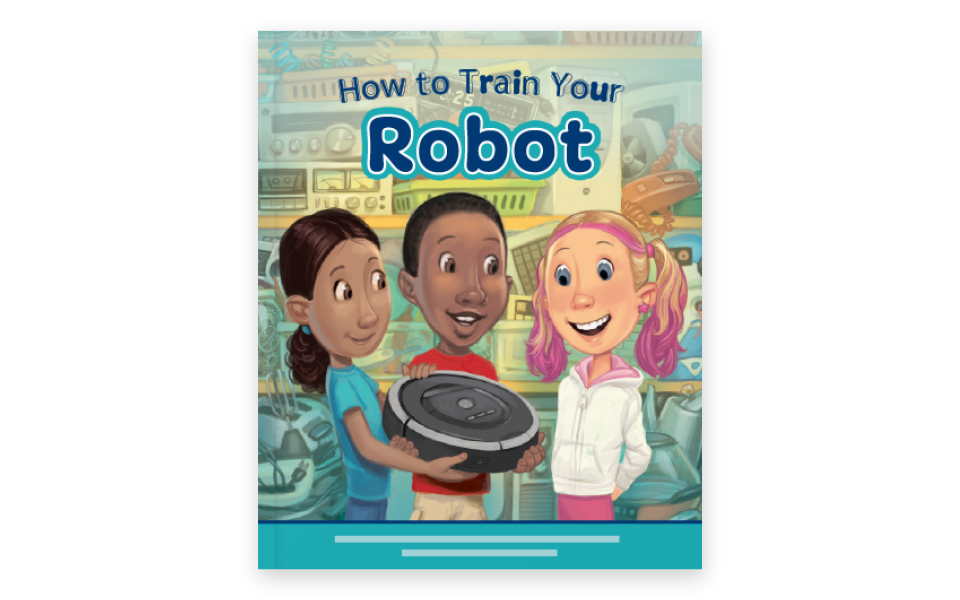
Texas Public Reviewers: Welcome to Amplify Texas ELAR/SLAR 2nd Edition!

Thank you for taking the time to review Amplify Texas ELAR 2nd Edition and Amplify Texas SLAR 2nd Edition. This site provides the login steps and tools you need to review the programs.

After you’ve followed the steps below to log in, watch the short orientation videos to help you navigate the Amplify Texas ELAR/SLAR 2nd Edition platform.  

The helpful Navigation Guides with live links and other documents to guide your review can be found below as well.  

A grid of six illustrated scenes featuring: space exploration, Salem witch trial, ancient civilization, farm animals, recycling in nature, and a globe on a stand.

Login credentials:

Login screen for Amplify with options to log in via Google, Amplify, Clever, District SSO, QR code, plus links for help and new account sign up.

Step 1

Go to learning.amplify.com and select Log in with Amplify.

Enter the username and password:

Username: elar_slar_2e_public@tryamplify.com
Password: AmplifyNumber1

Step 2

Select TX ELAR Submission (English) or TX SLAR Submission (Spanish) under Your Programs.

Dashboard for an educator reviewer shows a welcome message, a notice for upcoming recommendations, and two buttons for TX ELAR and TX SLAR Submission 2026 programs.
Screenshot showing "Amplify Texas ELAR/SLAR 2nd Edition" with tabs for ELAR in English and SLAR in Spanish, and a highlighted section marked with the number 3.

Step 3

Select ELAR Second Edition or SLAR segunda edición to access the program you will be reviewing.

Step 4

Once you’re in the program, select a grade level to explore the digital curriculum.

Screenshot of the Amplify Texas ELAR Second Edition interface, part of the Amplify Texas elementary literacy program, showing grade level options: Kindergarten, Grade 1, Grade 2, and Grade 3. An orange number 4 is highlighted on the left.

Orientation videos

View these short introductory videos to help you navigate the Amplify Texas ELAR/SLAR 2nd edition platform.

ELAR Navigation Guides

Tip: Be sure you’re logged into the Amplify Texas ELAR/SLAR platform (steps above) before clicking on the links in these documents.

SLAR Navigation Guides

Tip: Be sure you’re logged into the Amplify Texas ELAR/SLAR platform (steps above) before clicking on the links in these documents.

ELAR Component Lists

Access the full list of components for Amplify Texas ELAR 2nd Edition by clicking the links below.

SLAR Component Lists

Access the full list of components for Amplify Texas SLAR segunda edición clicking the links below.

Texas State Reviewers: Welcome to Amplify Texas ELAR/SLAR 2nd Edition!

Thank you for taking the time to review Amplify Texas ELAR 2nd Edition and Amplify Texas SLAR Texas 2nd Edition. This site provides the login steps and tools you need to review the programs.

After you’ve followed the steps below to log in, watch the short orientation videos linked below to help you navigate the Amplify Texas ELAR/SLAR 2nd Edition platform.  

The helpful Navigation Guides with live links and other documents to guide your review can be found below as well.  

A grid of six illustrated scenes featuring: space exploration, Salem witch trial, ancient civilization, farm animals, recycling in nature, and a globe on a stand.

Login credentials:

Login screen for Amplify with options to log in via Google, Amplify, Clever, District SSO, QR code, plus links for help and new account sign up.

Step 1

Go to learning.amplify.com and select Log in with Amplify.

Enter the username and password:

Username: elar_slar_2e_reviewers@tryamplify.com
Password: AmplifyNumber1

Step 2

Select TX ELAR Submission (English) or TX SLAR Submission (Spanish) under Your Programs.

Dashboard for an educator reviewer shows a welcome message, a notice for upcoming recommendations, and two buttons for TX ELAR and TX SLAR Submission 2026 programs.
Screenshot showing "Amplify Texas ELAR/SLAR 2nd Edition" with tabs for ELAR in English and SLAR in Spanish, and a highlighted section marked with the number 3.

Step 3

Select ELAR Second Edition or SLAR segunda edición to access the program you will be reviewing.

Step 4

Once you’re in the program, select a grade level to explore the digital curriculum.

Screenshot of a web page showing "Amplify Texas ELAR Second Edition" with clickable options for Kindergarten, Grade 1, Grade 2, and Grade 3. An orange section and a number 4 icon are visible.

Orientation videos

View these short introductory videos to help you navigate the Amplify Texas ELAR/SLAR 2nd edition platform.

ELAR Navigation Guides

Tip: Be sure you’re logged into the Amplify Texas ELAR/SLAR platform (steps above) before clicking on the links in these documents.

SLAR Navigation Guides

Tip: Be sure you’re logged into the Amplify Texas ELAR/SLAR platform (steps above) before clicking on the links in these documents.

ELAR Components List

Access the full list of components for Amplify Texas ELAR 2nd Edition by clicking the links below.

SLAR Components List

Access the full list of components for Amplify Texas SLAR segunda edición by clicking the links below.

Exciting updates are coming for Boost Reading!

To view this protected page, enter the password below:


Welcome to Amplify Desmos Math Cherokee CSD!

To view this protected page, enter the password below:


Steps for Interviewing

Amplify Professional Learning Specialist Applicants

Congratulations on being invited to interview for the Professional Learning Specialist role!

Please take these three steps in order to schedule and prepare for your interview.

Step 1: Review the PLS Flipbook
Step 2: Schedule your Interview
Step 3: Prepare for your Interview

Interviews for Cohort 2 will take place from April 27th – May 8th.

A group of four people sitting at a table in a meeting room, using laptops. One person laughs while others work. An analog clock on the wall shows the time.

Step 1: Review the PLS Flipbook

Amplify Professional Learning Specialists (PLS) will be responsible for facilitating high-quality professional development (PD) to teachers and school leaders, ensuring educators feel confident taking steps to implement our programs and ultimately drive student success. 

Please read the PLS flipbook to ensure you have a clear understanding of the role and ensure this is the right fit for you. These details are captured in pages 16 – 33 of the flipbook.

Several key PLS responsibilities are highlighted below:

  • Delivering remote and onsite professional development for approximately 30-40 educators per session during the summer season (May – September 2026), possibly longer.
  • Must be available to be scheduled during normal school hours (Monday–Friday) in all U.S. time zones.
  • Must be available an average of three days per week on Monday through Friday from July 13–August 21. Three consecutive days is strongly recommended as it will potentially lead to more onsite delivery opportunities.
  • PLSs who are current educators and returning to full-time roles at school/districts must have a return to work date after August 21st.
  • Traveling via car, plane, and/or public transportation, sometimes with minimal advance notice and including overnight stay at hotels.   
  • Paying all travel-related expenses in advance, with reimbursements being processed 2-3 weeks following submission of the expense reimbursement requests.

Please reach out to pls_hiring@amplify.com if you have additional questions.

Step 2: Schedule Your Interview

Our second round of interviews will take place between April 27th – May 8th. We do not have any earlier interviews available, all available slots are shown on the calendars linked below.  

Please schedule an interview for the specific role for which you have applied: 

  • Literacy or STEM Candidates: schedule a 30 minute interview by clicking here: “PLS Interviews: May 2026” 
  • Bilingual Candidates: schedule a 45 minute interview by clicking here: “Bilingual PLS Interviews: May 2026” only. You do not need to sign up for a separate 30 minute interview.
  • Once you have scheduled your interview, you should receive a confirmation email from Calendly.  If you do not receive this email, please reach out to PLS_hiring@amplify.com for support.

If you need to reschedule your interview, you may do so directly by clicking the reschedule link in the confirmation email from Calendly to select a new interview option during the current interview window.  Once you have rescheduled, you will receive a new confirmation email and updated calendar invitation. Please do not sign up for more than one interview.

We ask that you only reschedule if absolutely necessary and request at least 24 hours notice prior to your interview day/time.

Step 3: Prepare for Interview

Prior to your scheduled interview, prepare your interview activity! Please view the video to the right for help preparing. 

  • Guidance for the task can be found here: PLS Performance Task Guidance Document
  • You should come ready to share your screen via Google Meet and present the provided activity in under 5 minutes.
  • Talking points are included for each screen to guide your presentation.
  • During your interview we will be looking for proficiency with the following tech skills: independently sharing screen, speech matching animation, and moving from screen to screen with ease.
Two people stand in an office, with one person pointing at a laptop screen while the other looks on. Papers and a window are visible in the background.

Offer, Onboarding, and Training

  • Qualified candidates will receive an offer via email.  The offer will include your product placement and regional assignment.
  • If you accept the offer, our partner contracting agency will reach out to you to provide the necessary documentation to begin the onboarding process. This will include a background check. You will also need to provide college transcripts, please begin gathering these items.
  • Once you have completed the onboarding process with our partner contracting agency, you will begin your official Amplify PLS onboarding process on May 11th for Cohort 1 or June 15th for Cohort 2. A majority of onboarding will be remote, with one in person training on June 6th – 7th for Cohort 1 and July 8th – 9th for Cohort 2. More details to come!
  • Once you are certified, our PD Operations team will begin to schedule you for PD engagements within your region and across the country!

Info Session

Get more details from PD staff members about the PLS role, regional placement, the onboarding process, and ongoing support.

We will address the most common questions we receive:

  1. What is the role of a PLS?
  2. Where will I deliver sessions?  What content will I deliver?
  3. How will onboarding work?
  4. How will I be supported?

The information session recording can be watched here.

Passcode: @N+4hmfi

FAQ

PLS FAQ

Hear from our Professional Learning Specialists

“I have been able to connect with teachers and support them in their implementation of Amplify products. I especially love coaching opportunities where I have time to see teachers in action, model lessons for them, and debrief and problem solve what is going on in their classrooms. I would have loved that opportunity when I was in the classroom.”

Amy Wiktor

Professional Learning Specialist

Hear from our Professional Learning Specialists

“I feel like I have learned so much about the Science of Reading, facilitation, and am inspired by the positive contribution I can make to both teachers and students. I am putting something positive back into the world and spreading kindness every day! Very fulfilling.”

Jennifer Piehl

Professional Learning Specialist

Hear from our Professional Learning Specialists

“I’ve had a lot of new experiences and love the networking involved throughout the Amplify community. Seeing new places in different parts of the country has been incredible, as well! Plus, the work environment has been the most positive, uplifting, and motivational workplace I’ve ever been a part of! ”

Justin Suder-Grose

Professional Learning Specialist

Thank you for your interest!

Contact us with questions at pls_hiring@amplify.com