Showing results for greg playlist

Season 8, Episode 11

Cognitive load theory: Four items at a time, with Greg Ashman

Greg Ashman—author of multiple books including A Little Guide for Teachers: Cognitive Load Theory, deputy principal, and professor—sits down with Susan Lambert on this episode to discuss cognitive load theory and how it applies to how students learn and how to best teach them. Together their conversation covers cognitive load theory, including an exploration of working memory and long-term memory; intrinsic load and extraneous load; biologically primary vs. biologically secondary knowledge; and how to apply these concepts in the classroom. Ashman also provides listeners with helpful advice on ensuring their teaching practices are based on evidence.

Meet Our Guest(s):

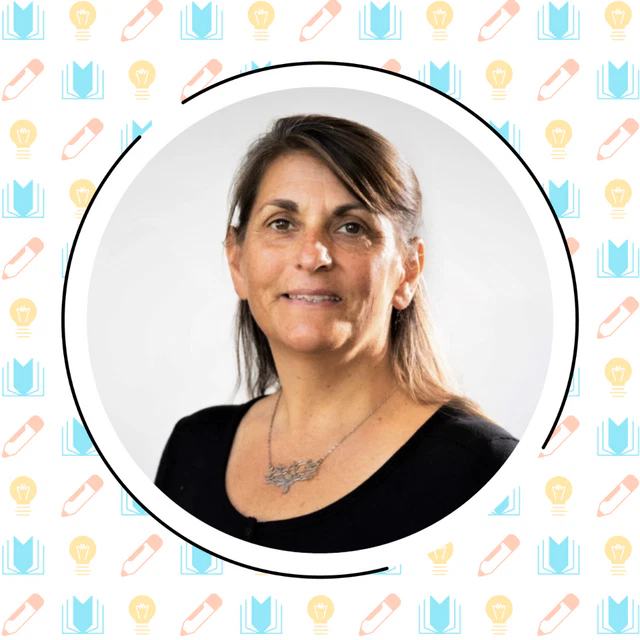
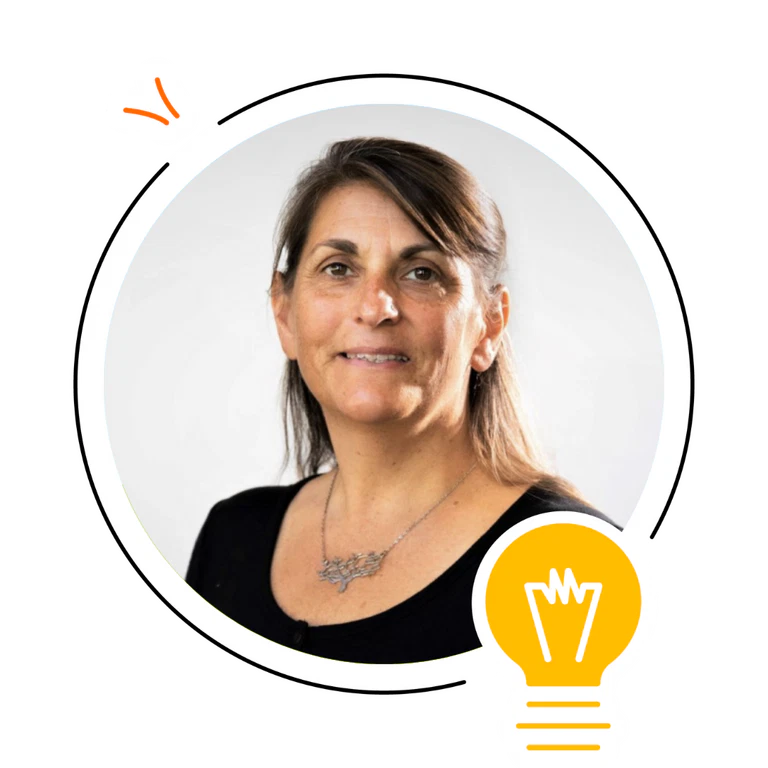
Greg Ashman, Ph.D.

Greg Ashman, Ph.D.

Greg Ashman, Ph.D., is the deputy principal at Ballarat Clarendon College, Victoria. He is an honorary fellow at the Australian Centre for the Advancement of Literacy, Australian Catholic University, and a part-time professor at Academica University of Applied Sciences, Amsterdam. Greg is a prolific writer and has written three books: The Truth About Teaching: An Evidence-informed Guide for New TeachersThe Power of Explicit Teaching and Direct Instruction, and A Little Guide for Teachers: Cognitive Load Theory. He also produces a newsletter at fillingthepail.substack.com. Prior to moving to Australia, Greg worked at three government schools in London as a teacher, head of science and deputy principal.

Meet our host, Susan Lambert

Susan Lambert is the Chief Academic Officer of Elementary Humanities at Amplify, and the host of Science of Reading: The Podcast. Her career has been focused on creating high-quality learning environments using evidence-based practices. Lambert is a mom of four, a grandma of four, a world traveler, and a collector of stories.

As the host of Science of Reading: The Podcast, Lambert explores the increasing body of scientific research around how reading is best taught. As a former classroom teacher, administrator, and curriculum developer, Lambert is dedicated to turning theory into best practices that educators can put right to use in the classroom, and to showcasing national models of reading instruction excellence.

Retrato de una mujer caucásica sonriente con cabello rubio corto, involucrada en un podcast sobre la ciencia de la lectura, con gafas, lápiz labial rojo y un collar de perlas.

Quotes

“I now know I shouldn't have felt guilty, but I also know that I could have taught that from the outset in a much more structured way where the students would have left understanding the concepts better without wasting time.”

—Greg Ashman

“I now know I shouldn't have felt guilty, but I also know that I could have taught that from the outset in a much more structured way where the students would have left understanding the concepts better without wasting time.”—Greg Ashman “This idea that kids don't need to know anything anymore, they just need to practice skills is really quite a pernicious and damaging idea.”

—Greg Ashman

“Think about the teaching methods that you're being presented with. Ask about the evidence and question whether this is really the optimal way of teaching literacy or whatever it is, or whether it's more based on wishful thinking.”

—Greg Ashman

Power up your Science of Reading knowledge: 2024 podcast recap

Amplify’s Science of Reading: The Podcast won both Silver and the Listeners’ Choice Award in the education category at the 2024 Signal Awards! If you haven’t already, we hope you’ll join those who have helped catapult the podcast to more than six million downloads.

You’re welcome to binge-listen all 29 podcast episodes released in 2024, but here, we’ve selected a few to highlight for you.

The power of the Science of Reading

Some context: As you probably know, the Science of Reading is a much-researched area alongside the science of learning. Applying cognitive, neuroscience, and educational principles, it helps us understand and improve how students acquire and develop reading skills. This knowledge is essential because, while humans typically learn to speak naturally, reading (and writing) require formal instruction. According to the Simple View of Reading, reading comprehension is the product of both decoding and linguistic comprehension. So kids must be taught the relationships between sounds and letters, and how to decode words. Systematic instruction presents these skills in a logical order, explicit instruction goes beyond just “exposing” kids to words and texts, and cumulative instruction builds on skills learned before.

The episodes below are a great start to exploring the fundamentals of evidence-based instruction beginning in early literacy. You’ll hear about the importance of knowledge building, the symbiosis between reading and writing, and the power of multilingual learning, just to name a few topics.

The power of knowledge

Season 8 focuses on why knowledge is so critical for literacy development and how educators can empower students to build it.

Many of us (as students and educators) were taught or trained with comprehension framed as a skill. But award-winning researcher and author Sharon Vaughn, Ph.D., says (spoiler!) that comprehension is not a skill to be taught in a vacuum, but rather an outcome—of strong decoding, vocabulary, and background knowledge. “If students can’t read words or don’t know what they mean, emphasizing comprehension is just the wrong priority,” she says. Vaughn stresses the importance of systematically building background knowledge through coherent, high-level informational texts and relevant content lessons, enabling students to connect ideas and deepen understanding. By focusing on these foundational elements, educators can support comprehension and meaningful learning.

Episode 11: Cognitive load theory: Four items at a time, with Greg Ashman, Ph.D.

Drawing from his book A Little Guide for Teachers: Cognitive Load Theory, deputy principal and professor Greg Ashman argues that students need to build a strong foundation of knowledge in order to think and learn effectively. He challenges the idea of leaving students to “figure things out” on their own. “Kids are not little scientists,” he says, and advocates instead for structured instruction to build the schemas necessary for deeper learning.

Ashman also recommends reducing extra cognitive load—distractions that overwhelm working memory—and cautions against overrelying on approaches like “productive failure,” which can frustrate students who happen to lack relevant foundational knowledge. His advice: Use evidence-based methods and prioritize clear, incremental instruction.

The power of evidence-based literacy instruction

Season 9 dives deep into the key principles of and latest developments in the Science of Reading.

Episode 3: Know the non-negotiables in a program aligned to the Science of Reading, with Kari Kurto

Kari Kurto, national Science of Reading project director with the Reading League, discusses the organization’s curriculum evaluation tool designed to assess research-based practices in reading programs. Drawing from her experience teaching students with dyslexia, Kurto emphasizes the necessity of explicit, systematic instruction in phonics and (like Ashman) the importance of reducing extraneous cognitive load.

She says one must-have for any effective, evidence-based curriculum is explicit instruction in phonics through a clear scope and sequence, which ensures that students build foundational skills, such as phonemic awareness, in a systematic way. “No program is perfect, but understanding both its strengths and areas for improvement allows schools to maximize its impact,” she says.

Episode 4: Comprehension is not a skill, with Hugh Catts, Ph.D.

Hugh Catts, like Vaughn, continues to challenge us to rethink reading comprehension. “Comprehension isn’t the purpose of reading,” says Catts, a professor at Florida State University. “The purpose of reading is whatever you’re reading for.” Whether scanning for a fact, grasping the gist, or diving deep into a complex topic, comprehension varies based on the reader’s intent and context. He also urges educators to do what the evidence asserts: Move beyond isolated skill drills to content-rich instruction that builds knowledge and engages students meaningfully. Catts notes that comprehension grows over time, as students develop mental models and apply critical thinking in a variety of reading contexts.

The power of multilingualism

In this special miniseries, our podcast focuses on how the Science of Reading serves multilingual/English learners (ML/ELs).

Episode 1: Language is always an asset, with Kajal Patel Below

Kajal Patel Below, Amplify’s vice president of biliteracy, highlights why language is such a powerful asset, and how multilingualism is not a barrier, but a gift. “Literacy in a new language builds from literacy in the home language,” she says.

But that’s not—yet—the prevailing view. Multilingual and English learners often face challenges like being left out of research or misidentified in assessments. Below also notes schools focus too much on phonics and foundational skills, sometimes overlooking the equally important elements of language comprehension, vocabulary, and speaking skills.

With the number of multilingual learners growing fast in the U.S., Below calls for schools and educators to embrace bilingual education, create stronger resources, and celebrate the unique strengths these students bring to the classroom.

More to explore

Season 9, Episode 8

Cognitive science-informed teaching, with Natalie Wexler

In this episode, Susan Lambert rejoins podcast alum Natalie Wexler to discuss Natalie’s new book Beyond the Science of Reading: Connecting Literacy Instruction to the Science of Learning. Listeners will gain insights into why this topic is important, what this book offers educators, why Natalie was so drawn to writing this book, and what cognitive science-informed teaching looks like in general. Natalie addresses how cognitive load theory works in practice with literacy, misconceptions about focusing only on phonics, and scaling science-informed instruction. Natalie also answers a question from the listener mailbag about encouraging colleagues to adopt an evidence-based approach.

Meet Our Guest(s):

Portrait of a woman with short, curly blond hair wearing a white top, pictured inside a circular frame with an illustrated pencil and lines accent, reflecting her dedication to teaching reading and cognitive science.

Natalie Wexler

Natalie Wexler is the author of Beyond the Science of Reading: Connecting Literacy Instruction to the Science of Learning, coming from ASCD on Jan. 21, 2025. She is also the author of The Knowledge Gap: The Hidden Cause of America’s Broken Education System—and How to Fix It and the co-author, with Judith C. Hochman, Ed.D., of The Writing Revolution: A Guide to Advancing Thinking Through Writing in All Subjects and Grades. She has a free Substack newsletter called Minding the Gap, and she was the host of the Reading Comprehension Revisited podcast, Season One. More information is available on her website, www.nataliewexler.com.

Meet our host, Susan Lambert

Susan Lambert is the Chief Academic Officer of Elementary Humanities at Amplify, and the host of Science of Reading: The Podcast. Throughout her career, she has focused on creating high-quality learning environments using evidence-based practices. Lambert is a mom of four, a grandma of four, a world traveler, and a collector of stories.

As the host of Science of Reading: The Podcast, Lambert explores the increasing body of scientific research around how reading is best taught. As a former classroom teacher, administrator, and curriculum developer, Lambert is dedicated to turning theory into best practices that educators can put right to use in the classroom, and to showcasing national models of reading instruction excellence.

Portrait of a woman with short blonde hair, wearing glasses, a black top, and a necklace. She is smiling and facing the camera.

Quotes

“We’re overlooking the ways in which the typical approach to teaching reading comprehension and writing actually conflict with what cognitive science tells us about how people learn to do those things.”

—Natalie Wexler

“We spend much more time trying to teach them to read, but we kind of expect them to just pick up writing. You know, for most kids, it does not happen.”

—Natalie Wexler

“No matter how good you are at making inferences, if you don't have the requisite background knowledge, you're not gonna be able to do it.”

—Natalie Wexler

“It doesn't work to just ask inexperienced writers to just write down stuff. That is not going to provide the cognitive benefits.”

—Natalie Wexler

“Language is connected to thinking. If you can talk and write in a more sophisticated way that reflects that you are thinking in a more sophisticated way.”

—Natalie Wexler

MTSS vs. RTI in literacy instruction: What’s the difference?

MTSS, RTI, SoR—it seems that teaching students to read requires educators to be literate in an ever-growing number of frameworks, approaches, systems, and types of developmental reading assessment and educational intervention.

It’s understandable, then, that not all educators know the differences and nuances among these terms, or that they may use them interchangeably or to mean one thing, when they actually mean another.

So, what is MTSS? What is RTI? What is MTSS vs. RTI? That is: What is the difference between an MTSS framework and RTI? What roles do they play in structured literacy? How are they informed by the Science of Reading (SoR)?

We’re here to help you sort it all out.

First, the core definitions

Science of Reading: As we described in an earlier post, the Science of Reading refers to the pedagogy and practices that extensive research has found to be most effective for teaching children to read.

And it’s not just optimism—it’s science. With explicit, systematic instruction, all students can learn to read at or near grade level.

When implemented in a classroom, the Science of Reading is part of a system—one that aligns with a Multi-Tiered System of Supports (MTSS).

MTSS (Multi-Tiered System of Supports): The Center on Multi-Tiered System of Supports offers this go-to definition: “A multi-tiered system of supports is a proactive and preventative framework that integrates data and instruction to maximize student achievement and support students’ social, emotional, and behavior needs from a strengths-based perspective.”

Its four defining components are as follows:

  1. Screening
  2. Progress monitoring
  3. Establishing a multi-level prevention system
  4. Making data-based decisions

RTI (Response to Intervention): The very name of RTI shows that it’s a response to an identified problem. Actually, it’s a process and series of academic responses that use data to pinpoint and address the specific challenges of struggling students.

MTSS and RTI are similar in that “they are both problem-solving models,” notes Dr. Brittney Bills, curriculum coordinator at Grand Island Public Schools, speaking with host Susan Lambert on a recent episode of Amplify’s Science of Reading: The Podcast.

Now, the fundamental differences

MTSS and RTI are similar, and can be related—even intertwined. But they are not interchangeable.

  1. RTI is part of an MTSS framework—not the other way around. “MTSS is that broader umbrella,” says Nancy Nelson, assistant professor of special education at Boston University, in our webinar Data-driven Instruction Within an MTSS Framework: The key to implementing the Science of Reading.
  2. MTSS starts with all students. “With the MTSS model, the thought is that the universal tier is the first intervention for all students,” says Dr. Bills, referring to the curriculum, instruction, and assessments provided to all students at a given grade level. We can ask: “What does our data demonstrate that our students need within that universal tier? And how can we apply evidence-based practices, as they relate to the Science of Reading, to beef up opportunities for our students there first? Then it’s a layering-on of supports and problem-solving at those other layers, the targeted and intensive tiers, after that.”
  3. MTSS supports prevention. This distinction goes hand in hand with those already mentioned. We start universal, then identify issues. Though RTI is necessary and effective, MTSS has the aim, and the capacity, to both get at-risk readers back on track and prevent the need for intervention down the line. “It’s proactive and preventative,” says Dr. Bills.

Putting it all together

Amplify’s early literacy suite aligns instruction using the Science of Reading. Blending instruction and knowledge-building (Amplify CKLA and Boost Reading, formerly Amplify Reading) with assessment and intervention as needed (mCLASS®), the system works with both MTSS and RTI models.

Where you can learn more

Amplify’s Science of Reading: The Podcast’s MTSS playlist

Webinars:

Found in translation–the power of cross-linguistic transfer

¿Verdadero o falso? You must be bilingual to support emergent bilingual students in their literacy development.

¡Falso!

An essential component of supporting emergent bilinguals in developing literacy is understanding cross-linguistic transfer (CLT): when emergent bilinguals use knowledge of one language to support learning another.

Educators do not need to be fluent in both languages to identify—and teach—which elements of one transfer to the other.

“Teachers should not feel discouraged in supporting their students who are Spanish-speaking, because there are ways that they can still support cross-linguistic transfer without actually speaking the language,” says Amplify senior PD strategist in biliteracy Lauren Birner.

But CLT doesn’t just happen—it requires explicit instruction. So we do need to ensure that this takes place if we want to support equity in education, especially in early childhood education.

How can educators bring the power of CLT into instruction? And support equity and excellence in education?

Making connections: The impact of CLT

Our recent webinar Making Connections: The Importance of Cross-Linguistic Transfer in Biliteracy Instruction—led by Lauren Birner and Amplify’s Kajal Patel Below—explored answers to these questions.

In the webinar, Birner and Patel Below describe similarities and differences between English and Spanish, discuss how those similarities and differences can impact instruction, and explain why CLT helps English learners leverage skills from both languages to build their biliteracy.

They also underscore why it matters—namely, that it’s about supporting equity in early childhood education and beyond.

More than 15% of our K–3 students in this country are emergent bilinguals, and we have a responsibility to help them cultivate and expand that superpower.

—Kajal Patel

The Simple View of Reading and biliteracy

The idea behind the Simple View of Reading is that the combination of language comprehension and word recognition is what leads students to gain meaning from text. If either language comprehension skills or word recognition skills are lacking, students cannot become skilled readers, and this is true in both English and Spanish.

“Research shows that when teachers explicitly teach students what transfers from one language to the other,” says Patel Below, “students are able to devote more cognitive processing time toward the more complex orthography and morphology systems of English that require more time than the more transparent systems of Spanish.”

Birner had this to add: “While components of these domains might overlap, it can be helpful to think of them individually, and how they’ll impact language and literacy development.”

So let’s take a look at the areas of language where we can leverage cross-linguistic transfer.

  1. Phonetics and phonology: 92% of all of the sounds in English and Spanish have a direct correlation. That means that teachers can focus explicit instruction only on the remaining 8% of sounds—such as the rolled in Spanish. Meanwhile, we can also encourage them to be language detectives and recognize where the languages do connect and how they can use their skills in one to understand the other. That approach, says Birner, “will not only save valuable time and energy, but it’ll also help [educators] recognize bilingualism as an asset for all of our students.”
  2. Morphology: Students can explore cognates like hospital/hospital and celebration/celebración, while also exploring similarities and differences in pronunciation. “Whether or not they are Spanish-speaking, teachers can look to cross-linguistic transfer guidance and start to recognize things, the prefixes and suffixes that are similar across the two languages,” says Birner.
  3. Syntax and grammar: Spanish and English do have rules and structures that differ from each other, in the areas of word order, gender, conjugation, and possession. As students progress in learning these distinctions, teachers can seize opportunities for explicit instruction. For example, let’s say a student constructs the sentence: “The flower of Ana is pretty.” This is not an error, but an approximation “to be celebrated.” Birner says. “It’s a comprehensible sentence in English that just needs a minor adjustment. We can use this type of sentence as an opportunity to provide explicit instruction on possessives.”
  4. Semantics: Semantics is the study of word meaning and is critical for language learners. Exploring idioms, homonyms and homophones, and other nuances of usage across language can give students the chance to build from similarities and identify differences. “You might do something like hang a chart of idiomatic phrases in each language,” says Birner. “Looking at both languages side by side is a really great way to support your students in learning a second language.”
  5. Pragmatics: Pragmatics encompass the ways people communicate that are nuanced or unsaid. They’re often rooted in cultural norms, which include both physical norms (looking someone in the eye when speaking) and social norms (using euphemisms). “Providing students with explicit instruction on how communicating may differ from culture to culture and situation to situation can help avoid misunderstandings,” says Birner. “It’s also a great way to allow students to see the world in perspective.”

More to explore

Amplify’s biliteracy programs, rooted in the Science of Reading, can help all educators engage with multilingual learners and make the most of cross-linguistic transfer and dual language education. Here are some additional resources for you:

Biliteracy principles, as shared by biliteracy experts (students!)

Our biliteracy video playlist

”The Importance of Dual Language Assessment in Early Literacy” (white paper)

The Importance of Dual Language Assessment in Early Literacy (infographic)

Principles of Biliteracy + the Science of Reading

The Science of Reading

5 ways to boost biliteracy with the Science of Reading

Research shows that bilingual instruction (including dual language instruction and dual language immersion) supports the long-term success of dual language learners—in both languages, and beyond.

How do we best support those students?

More precisely, how are we serving our emergent bilingual students so that they can develop their biliteracy? This is a question posed by biliteracy expert and Amplify product specialist Alestra Flores Menéndez. And in our recent webinar Leveraging the Science of Reading to Boost Biliteracy, she and other experts attempt to answer it.

The power of biliteracy

Knowing more than one language is a powerful tool for opening up new worlds, meeting different people—or even just asking directions in an unfamiliar place.

But that’s not all. Bilingualism itself is a cognitive strength. Research conducted in 2015 by Claude Goldenberg and Kirstin Wagner links bilingualism to increased control over attention, improved working memory, greater awareness of the structure and form of language, and better abstract and symbolic representation skills.

“Our multilingual learners really are using their brains differently,” says Flores Menéndez.

And as with all students, we need to start early to make sure they’ve got their best shot at literacy.

The number of emerging bilingual students in our classrooms is growing, with 15.5% of them in grades K–3. That group includes the key developmental year—third grade.

Third grade is seen as the last year students learn to read before they start reading to learn. Without proficiency by fourth grade, they’re at risk of struggle across subjects.

And for many students, literacy is biliteracy. So how to make sure they get there?

Helping all multilingual learners succeed

“Bilingual instruction has been proven to be the most effective,” says Amplify biliteracy specialist Ana Torres, M.Ed., citing research by Virginia Thomas and Wayne Collier.

Other models (English immersion, transitional bilingual) are a fit for students with certain language profiles. As Torres notes, “We have to be intentional and purposeful to make sure there are positive outcomes for all students.”

But the proven impact of the bilingual model shows this: Knowledge of, and in, a second language builds from the first.

Foundational skills, vocabulary, and knowledge are essential, and all transfer to the second language—through explicit, research-based instruction.

Key elements of that instruction:

  1. Assessing literacy in both languages. “Assessing what [students] know in their native language is crucial to their success in acquiring that second language,” says Torres. A 2019 study at the University of Oregon looked at phonological awareness among Spanish-speaking pre-K students. (Phonological awareness represents the understanding that words are made up of a series of discrete sounds.) When assessed in English, 63% of students needed Tier 2 or 3 intervention. But when assessed in Spanish, only 21% did. “We need to look at the overall picture of students’ literacy,” Torres says. “Otherwise they’re going to get the wrong instruction.”
  2. Deliberately bridging from the native language to the new one. Spanish and English share many elements, among them letter sounds. If students know the sounds of the letter m in Spanish, they’ll be able to map that sound onto the same letter in English.
  3. Grounding in the Science of Reading. The Simple View of Reading has been validated in more than 150 studies across multiple languages. Foundational skills, vocabulary, and knowledge can all transfer through explicit instruction.
  4. Honoring students’ home languages, cultures, and community experiences. “It’s well documented that when children feel a sense of belonging, they’re more motivated to learn and experience more success in school,” says Menéndez. “Students should see themselves reflected positively in any curricular material.”
  5. Emphasizing knowledge. Perhaps you’re familiar with the iconic baseball study. Students with prior knowledge of baseball greatly outperformed their peers on reading comprehension—even those peers who were stronger readers. “Building knowledge is absolutely essential for literacy development,” says Menéndez.

Learn more

Explore Amplify Caminos.

Watch the full webinar: Leveraging the Science of Reading to Boost Biliteracy.

Biliteracy and Science of Reading principles in English and Spanish.

Read about The Importance of Dual Language Assessment in Early Literacy.

Binge our biliteracy podcast playlist.

Math Miniseries, Episode 1

Putting teacher voices at the center of math adoption, starring Matt Cash

In the first episode of a special Beyond My Years two-part math series, Ana chats with Matt Cash, director of elementary curriculum and instruction for Lake Elsinore Unified School District in California, about math leadership and change management. Matt shares his experiences helping move his district from a localized approach to a unified system to provide centralized resources, professional development, and assessment. Together, Matt and Ana discuss the importance of listening to educators during adoption processes, the power of creating systems that support teachers, and the best ways to build unity around instructional approaches. Matt also shares practical advice for educators navigating curriculum reviews and pilots. Before the episode’s end, Ana is joined by Classroom Insider Eric Cross, who reflects on how teachers can use their voices early in adoption processes, pilot with fidelity, and give themselves grace during implementation.

Meet Our Guest(s):

A man with short dark hair and a beard, wearing a suit and tie, smiles at the camera in front of a gray background, reflecting his passion for high quality instruction in the math classroom.

Matt Cash

Matt Cash is the director of elementary curriculum and instruction for Lake Elsinore Unified School District, where he supports schools in designing engaging, high-quality learning experiences for all students. A former classroom teacher, staff developer, principal, and assistant director of math, he brings a deep understanding of instruction, assessment, and leadership to his work with educators. He has spoken at multiple conferences about mathematics, leadership, and curriculum, and he’s passionate about helping educators create systems that get results.

Meet our host, Ana Torres.

Ana has been an educator for 30 years, working in both the K–8 and higher education sectors. She served as an administrator and instructor at various public and private colleges and universities and as a bilingual and dual language teacher, dual language math and reading interventionist, dual language instructional coach, assistant principal, and principal in K–8 schools. Ana is currently the Senior Biliteracy and Multilingual Product Specialist at Amplify, and delivers literacy and biliteracy presentations across the nation. Ana’s passion and advocacy for biliteracy and support for all students from all walks of life has led her to educate leaders, teachers, and parents about the positive impact of bilingualism and biliteracy in our world.

A woman with long dark hair and hoop earrings smiles at the camera while wearing a black blazer, standing outdoors—ready to discuss classroom challenges or share insights on her teacher podcast.
A man with short, closely-cropped hair and a trimmed beard smiles at the camera against a light gray background, ready to inspire diverse learners in the math classroom.

Meet our Classroom Insider, Eric Cross.

Eric Cross is a middle school science teacher who hopes to someday be a lifelong educator, like the guests on Beyond My Years! In each episode, Eric connects with host Ana Torres to discuss her guests’ best insights, gleaned from their long and rewarding careers in the classroom. Then, Eric talks about bringing some of their wisdom into his current classroom and busy life.

Quotes

“When you're removing variability out of your system, quality is going up.”

—Matt Cash

“Professionals are obsessed with the idea of getting better.”

—Matt Cash

“Advocate for your kids.”

—Matt Cash

“Mathematics is something that was discovered. It's universal. It's true.”

—Matt Cash

“Give yourself grace in year one, but stay engaged and keep asking for support.”

—Eric Cross

“Instead of quietly struggling and going back to old materials, put that energy into requests and make your voice heard.”

—Eric Cross

“Sometimes the buy-in comes when we understand things better.”

—Eric Cross

Spring ’24 Rewind, Episode 14

Spring ’24 Rewind: Biliteracy and assessment, with Lillian Durán, Ph.D.

Susan Lambert joins biliteracy expert and professor Lillian Durán, who holds a doctorate in educational psychology from the University of Minnesota and researches the improvement of instructional and assessment practices with preschool-aged multilingual/English learners.

Durán begins by pointing out the difference between being bilingual and biliterate, then describes the key advantages of being bilingual and the unique skills students who speak multiple languages bring to school. She then discusses how the Simple View of Reading connects to Spanish, the double standard that often occurs when bilingual students are celebrated vs. when they are not, and the process of screening and assessment for multilingual/English learner students. Lastly, Durán compels educators to avoid viewing biliteracy and dual language support as a sub-population of their classroom and instead prioritize the development of students’ home languages, whatever they may be, alongside English instruction.

Meet Our Guest(s):

Lillian Durán, Ph.D.

Lillian Durán, Ph.D.

Lillian Durán has a doctorate in educational psychology from the University of Minnesota and is a professor in the Department of Special Education and Clinical Services at the University of Oregon. She holds a bachelor’s in elementary education from Antioch College and a master’s in education and human development from George Washington University. Her research focuses on large-scale equitable language and literacy measurement development in English and Spanish from preschool to 6th grade. She also is project director on several training grants from the U.S. Department of Education’s Office of Special Education Programs, which prepare master’s and doctoral students to serve marginalized populations with disabilities with a focus on equity and improving educational outcomes. Durán frequently delivers presentations on the topic of recommended practices in language, and on literacy practices with multilingual/English learners. She has served on multiple equity and diversity councils, including the National Association for Young Children and the Division for Early Childhood. Prior to her work in higher education,Durán spent nine years as an elementary special education teacher both in Prince George’s County, Maryland, and in rural southwestern Minnesota.

Meet our host, Susan Lambert

Susan Lambert is the Chief Academic Officer of Elementary Humanities at Amplify, and the host of Science of Reading: The Podcast. Her career has been focused on creating high-quality learning environments using evidence-based practices. Lambert is a mom of four, a grandma of four, a world traveler, and a collector of stories.

As the host of Science of Reading: The Podcast, Lambert explores the increasing body of scientific research around how reading is best taught. As a former classroom teacher, administrator, and curriculum developer, Lambert is dedicated to turning theory into best practices that educators can put right to use in the classroom, and to showcasing national models of reading instruction excellence.

Retrato de una mujer caucásica sonriente con cabello rubio corto, involucrada en un podcast sobre la ciencia de la lectura, con gafas, lápiz labial rojo y un collar de perlas.

Quotes

“Language is inextricably linked to culture. We want to make sure these families and children feel valued and honored within our schools.”

—Lillian Durán, Ph.D.

“No matter what language you start to learn some of those skills in, there's a transfer and understanding of how to listen to sounds and how to put sounds together.”

—Lillian Durán, Ph.D.