The latest edition of Amplify ELA receives highest rating from EdReports for grades six through eight

Brooklyn, NY— (June 4, 2020) Amplify ELA’s second edition for middle school received an all-green rating and perfect scores from EdReports for grades six through eight. Green ratings represent EdReports’ highest ranking, indicating that the curriculum meets expectations for every gateway of their rigorous, educator-led reviews for quality curriculum programs.  

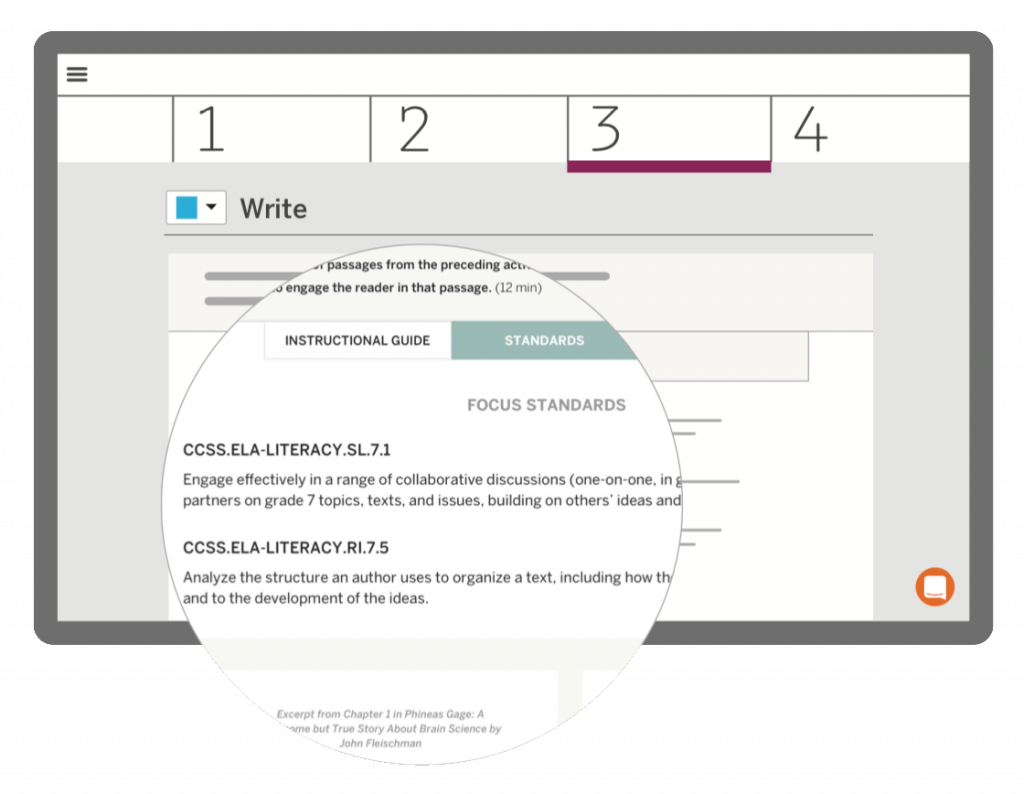
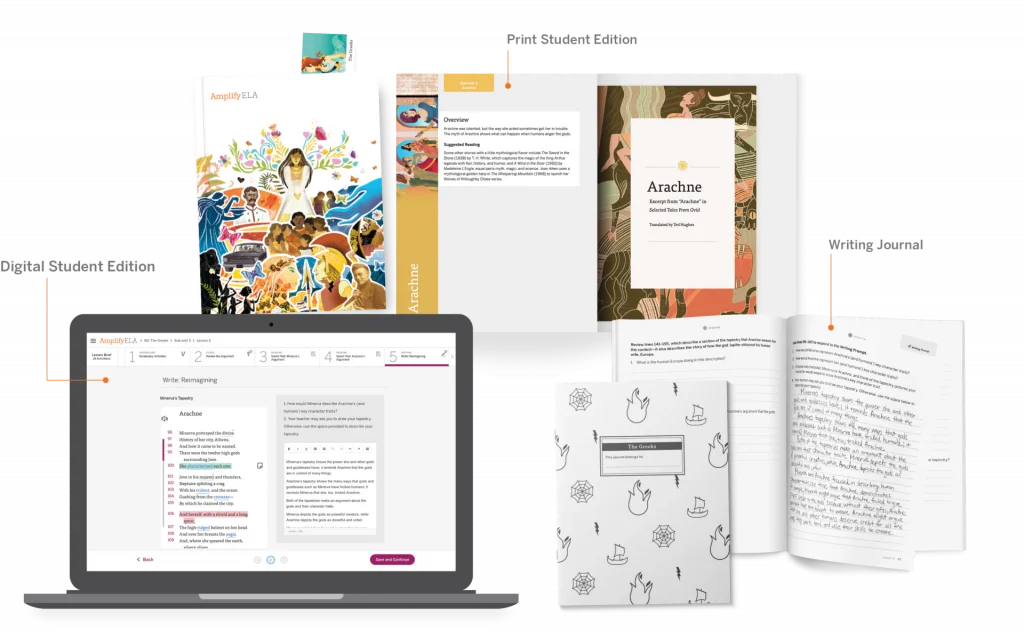
Amplify ELA is a standards-aligned, blended language arts curriculum that places text at the center of every lesson. The second edition features rich, updated content and captivating illustrations that reflect the diversity of the students that use the program every day.

Amplify ELA’s new edition was crafted to respond to the distinct challenges and opportunities faced by middle school students and their teachers. This blended program supports digital, print, and hybrid classrooms. It also features Amplify’s Embedded Assessment Measure (EAM), which is a game-changer for teachers. With EAM, assessment moments are woven into the instructional sequence and embedded in student activities and assignments. Students don’t feel they are being assessed, but teachers get powerful data on their progress to support stronger whole-class instruction and effective personalized support.

“We are delighted to see this all-green rating,” said Alexandra Clarke, senior vice president of product and general manager for ELA curriculum at Amplify, “At a time when student engagement is more crucial than ever, Amplify ELA is designed to support teachers in connecting with middle school students across ever-changing instructional scenarios. With resources they can trust and fully integrated insights, data, and guidance, educators can spend their time bringing great texts to life. We’re thrilled to see that reality recognized by EdReports.”

Amplify ELA enables educators to establish classroom environments where students thrive academically, socially, and emotionally, while developing the essential skills of reading, writing, speaking, and listening.

About Amplify

A pioneer in K–12 education since 2000, Amplify is leading the way in next-generation curriculum and assessment. Our captivating core and supplemental programs in ELA, math, and science engage all students in rigorous learning and inspire them to think deeply, creatively, and for themselves. Our formative assessment products turn data into practical instructional support to help all students build a strong foundation in early reading and math. All of our programs provide teachers with powerful tools that help them understand and respond to the needs of every student. Today, Amplify serves more than five million students in all 50 states. For more information, visit amplify.com.

Contact: media@amplify.com

mCLASS Intervention professional development

mCLASS® Intervention (formerly known as Burst: Reading) is a staff-led reading intervention that does the heavy lifting of data analysis and lesson sequencing, freeing up teachers to teach the reading skills each student needs.

We’ve created a wide suite of professional development offerings that will help you meet your unique needs this school year. Find out more below!

A woman and a young boy looking at a book together in a classroom, with colorful artwork displayed in the background.

Plan your professional development

We’re excited to partner with you on your Amplify journey. Flexible professional development pathways have been designed to meet your needs.

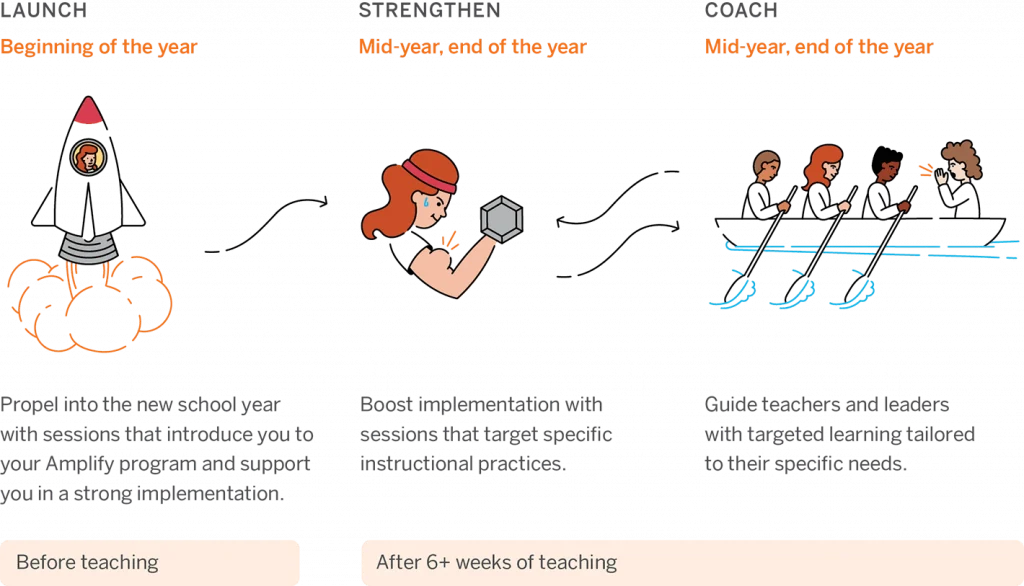
Infographic describing three stages of an educational program: Launch, Strengthen, Coach. Each stage includes brief descriptions and a graphic illustration.

Recommended Professional Development Plan

Our team has curated a recommended professional learning path from initial launch to continuous support. Use the Professional Development Planning Guide below to discuss the plan that best meets your school or district needs with your Account Executive.

Do you also use Amplify CKLA, mCLASS, and/or Boost Reading?

View the planning guide below to explore learning plans for teachers and leaders who are either new to or currently using multiple early literacy products.

mCLASS intervention overview

What’s the difference between mCLASS Intervention and mCLASS Intervention Universal?

An mCLASS Intervention school screens with mCLASS with DIBELS® 8th Edition.* An mCLASS Intervention Universal school screens with any other screener on the market. Some of the most common are iReady, iStation, MAP, AIMSweb, and paper/pencil DIBELS.

What else is different?

Here are a few other areas in which the programs differ:

AreamCLASS InterventionmCLASS Intervention Universal
Onboarding processDoes not require Amplify’s Implementation team to explain staff and student enrollment because staff and students are already enrolled in our system.Requires Amplify’s implementation team to explain staff and student enrollment since the tech coordinator hasn’t yet enrolled any students in mCLASS.
Professional developmentFacilitator does not spend time practicing DIBELS measures with staff because they’re already familiar with these measures.Facilitator spends time practicing DIBELS measures with staff because they usually haven’t administered them before.
AssessmentsThese schools administer DIBELS to all students because they have paid to use mCLASS as a screener.These schools administer DIBELS only to intervention students because they haven’t paid to use mCLASS as a screener.

*Utah and Colorado schools screen with mCLASS: Acadience Reading (formerly called mCLASS:DIBELS Next).

Getting optimal results with mCLASS Intervention

There are two critical roles at a school that need to work together in order for mCLASS Intervention to deliver optimal results. At some schools, an individual may hold both roles.

  • Intervention Coordinator
    Oversees the mCLASS Intervention program, groups students, determines group assignments and adjusts schedules, and works closely with your school’s Interventionists.
  • Interventionist
    Teaches mCLASS Intervention lessons to small groups of students based on the assignments and schedules provided by your school’s Intervention Coordinator and progress monitors students every two weeks.

mCLASS Intervention sessions overview

Audience Title Duration Modality
Launch packages  
New mCLASS + mCLASS Intervention customers mCLASS + mCLASS Intervention initial training bundle 4 half days, non-consecutive Remote
New mCLASS + mCLASS Intervention customers mCLASS + mCLASS Intervention initial training bundle 2 days of onsite training, consecutive Onsite
Launch  
New mCLASS Intervention customers (mCLASS has been trained in the past) mCLASS Intervention initial training 1 day onsite or 2 half days remote Onsite/Remote
Interventionists online course Self-paced Online
Coach  
All mCLASS Intervention customers Coaching session 1 day Onsite
All mCLASS Intervention customers Coaching session Half day Onsite/Remote
Coaching session 60 mins Remote

Launch packages

mCLASS initial training + mCLASS Intervention initial training

2 days (12 hours); consecutive

Prepare to launch mCLASS Intervention with fidelity! This bundle is intended for schools or districts who are implementing mCLASS Intervention for the first time and want the highest levels of support.

The first day will prepare all educators to administer the mCLASS assessment.

The second day will prepare all educators (including Intervention Coordinators) to implement mCLASS Intervention, including instruction on how to prepare for lessons, practice lesson delivery, administer the diagnostic and progress monitoring measures, and configure grouping and scheduling for maximum effectiveness.

Audience: Intervention Coordinators and Interventionists, maximum 30 participants
Modality: Onsite

mCLASS initial training + mCLASS Intervention initial training

2 days (12 hours) or 4 half days (12 hours); non-consecutive

Prepare to launch mCLASS Intervention with fidelity! This bundle is intended for schools or districts who are implementing mCLASS Intervention for the first time and want the highest levels of support.

The first part will prepare all educators to administer the mCLASS assessment.

The second part will prepare all educators (including Intervention Coordinators) to implement mCLASS Intervention: how to prepare for lessons, practice lesson delivery, administer the diagnostic and progress monitoring measures, and configure grouping and scheduling for maximum effectiveness.

Audience: Intervention Coordinators and Interventionists, maximum 30 participants
Modality: Onsite/Remote

Launch

mCLASS Intervention initial training

1 day onsite (6 hours) or 2 half days (6 hours)

This session is intended for those schools or districts that have been trained in mCLASS in the past.

This training will prepare all educators (including Intervention Coordinators) to implement mCLASS Intervention: how to prepare for lessons, practice lesson delivery, administer the diagnostic and progress monitoring measures, and configure grouping and scheduling for maximum effectiveness.

Audience: Intervention Coordinators and Interventionists, maximum 30 participants
Modality: Onsite/Remote

Interventionists online course

Self-paced

This PD is an individual seat to our self-paced, on-demand online course that contains approximately 3 hours of training. Participants will learn how to prepare for lessons and administer the diagnostic and progress monitoring measures. Participants will access and revisit the course anytime for up to one year as a refresher.

Audience: Interventionists
Modality: Online course

Coach

Coaching session

1 day (6 hours)

Strengthen your implementation of mCLASS Intervention with a Coaching session for your teachers and/or leaders! A certified mCLASS Intervention facilitator can visit 1–2 school sites per day. Participants may choose from a variety of topics that include, but are not limited to: observing lessons and providing feedback, analyzing mCLASS Intervention data and planning instruction, refining groups and schedules, or co-planning and modeling lessons.

Audience: Intervention Coordinators and/or Interventionists, maximum 30 participants
Modality: Onsite

Coaching session

Half day (3 hours)

Strengthen your implementation of mCLASS Intervention with a Coaching session for your teachers and/or leaders! A certified Intervention facilitator will visit one school site. Participants may choose from a variety of topics that include, but are not limited to: observing lessons and providing feedback; analyzing mCLASS Intervention data, reviewing student progress, and planning next steps; refining groups and schedules; or co-planning and modeling lessons.

Audience: Intervention Coordinators and/or Interventionists, maximum 30 participants
Modality: Onsite

Coaching session

60 min.

Strengthen your implementation of mCLASS Intervention with a quick Coaching session to improve implementation or student outcomes. During this remote hourly session, a certified mCLASS Intervention facilitator will help school leaders and/or Intervention Coordinators review usage, student progress data, and work to define an opportunity and develop a solution.

Audience: Intervention Coordinators and/or Interventionists, maximum 30 participants
Modality: Remote

mCLASS Intervention Universal sessions overview

Title Duration Modality
Launch packages
Hybrid PD package Half day, then 1 day Hybrid (remote, then onsite)
Remote PD package Half day, then 2 half days Remote
Launch sessions
Training for Interventionists 1 day or 2 half days Onsite/Remote
Training for Intervention Coordinators Half day Remote
Coach
Coaching session 1 day Onsite
Coaching session Half day Onsite
Coaching session Hourly Remote

Launch packages

Hybrid PD Package

Half day, then 1 day (9 hours)

Prepare to launch mCLASS Intervention Universal with fidelity! This package is intended for schools or districts implementing mCLASS Intervention Universal for the first time and want the highest levels of support.

Session 1 will prepare Intervention Coordinators to develop the school’s mCLASS Intervention Universal implementation plan, learn how to strategically group students, and schedule intervention supports.

Session 2 will prepare Interventionists to do an in-depth exploration of lesson activities and engage in real-time practice with diagnostic and progress monitoring measures.

Both sessions should be scheduled at least two weeks apart so the Intervention Coordinator has time to group students, draft schedules, and select the team of interventionists.

Audience:
Session 1: Intervention Coordinators, maximum 30 participants
Session 2: Interventionists, maximum 30 participants
Modality: Hybrid

Remote PD Package

3 half days (9 hours)

Prepare to launch mCLASS Intervention Universal with fidelity! This package is intended for schools or districts implementing mCLASS Intervention Universal for the first time.

Session 1 will prepare Intervention Coordinators to develop the school’s mCLASS Intervention Universal implementation plan, learn how to strategically group students, and schedule intervention supports.

Both sessions should be scheduled at least two weeks apart so the Intervention Coordinator has time to group students, draft schedules, and select the team of interventionists.

Audience:
Session 1: Intervention Coordinators, maximum 30 participants
Session 2: Interventionists, maximum 30 participants
Modality: Remote

Launch

Training for Interventionists

1 day onsite (6 hours) or 2 half days remote (6 hours)

This one-day training will ensure that Interventionists are prepared to teach mCLASS Intervention Universal with fidelity and accurately progress monitor students with the mCLASS platform throughout the year. Participants will do an in-depth exploration of lesson activities and engage in real-time practice with diagnostic and progress monitoring measures.

This session is ideal for new Interventionists at a school or district that has been previously implementing mCLASS Intervention Universal. We encourage the Coordinator to attend this session as well.

Audience: Interventionists (Intervention Coordinators welcome), maximum 30 participants
Modality: Onsite/Remote

Training for Intervention Coordinators

Half day (3 hours)

This half-day training will ensure that Intervention Coordinators are prepared to launch mCLASS Intervention Universal at their school site(s) with fidelity and best practice. Participants will consider grouping and scheduling configurations to make the most of the program, and create launch plans.

This session is paired with the Training for Interventionists full-day session.

Audience: Intervention Coordinators, maximum 30 participants
Modality: Remote

Coach

Coaching session

1 day onsite (6 hours)

Strengthen your implementation of mCLASS Intervention Universal with a Coaching session for your teachers and/or leaders! A certified mCLASS Intervention Universal facilitator can visit 1–2 school sites per day. Participants may choose from a variety of topics that include, but are not limited to: observing lessons and providing feedback, analyzing mCLASS Intervention Universal data and planning instruction, refining groups and schedules, or co-planning and modeling lessons, maximum 30 participants.

Audience: Intervention Coordinators and/or Interventionists, maximum 30 participants
Modality: Onsite

Coaching session

Half day onsite (3 hours)

Strengthen your implementation of mCLASS Intervention with a Coaching session for your teachers and/or leaders! A certified Intervention facilitator will visit one school site. Participants may choose from a variety of topics that include, but are not limited to: observing lessons and providing feedback; analyzing mCLASS Intervention data, reviewing student progress, and planning next steps; refining groups and schedules; or co-planning and modeling lessons.

Audience: Intervention Coordinators and/or Interventionists, maximum 30 participants
Modality: Onsite/Remote

Coaching session

60 min.

Strengthen your implementation of mCLASS Intervention with a quick Coaching session to improve implementation or student outcomes. During this remote hourly session, a certified mCLASS Intervention facilitator will help school leaders and/or Intervention Coordinators review usage, student progress data, and work to define an opportunity and develop a solution.

Audience: Intervention Coordinators and/or Interventionists, maximum 30 participants
Modality: Remote

Pricing

We offer the following pricing for training sessions and packages:

Session typePricing
mCLASS + mCLASS Intervention initial training bundle, 2 days onsite, consecutive$4,800
mCLASS + mCLASS Intervention initial training bundle, 2 days onsite, non-consecutive$6,400
mCLASS + mCLASS Intervention initial training bundle, 4 half days remote$3,000
mCLASS Intervention initial training, onsite$3,200
mCLASS Intervention initial training, remote, 2 half-days$1,500
Interventionists self-paced online course$49 per individual seat
Intervention Coordinators self-paced online course$49 per individual seat
mCLASS Intervention Universal hybrid PD package$3,950
mCLASS Intervention Universal remote PD package$2,250
mCLASS Intervention Universal training for Interventionists, onsite$3,200
mCLASS Intervention Universal training for Interventionists, remote$1,500
1-day coaching session, onsite$3,200
Half-day coaching session, onsite$2,500
Remote coaching, hourly$350

Please note that the prices are general ranges and may be subject to change.

Contact

Amplify welcomes the opportunity to partner with schools and districts to design professional development plans and answer your questions.

If you would like to order any of our professional development services, please contact your local Amplify sales representative or call (800) 823-1969.

The early reading gender gap may be smaller than it seems.

Bar chart with three groups showing two bars each; values for young learners increase from beginning to end of year, reaching the highest literacy benchmarks at the end.

Amplify’s 2024–25 research brief on the latest end-of-year literacy data showed improvement in early literacy across grades K–2, with more young learners on track to learn to read and fewer far behind than at any time since the pandemic.

Compared to 2020–21, 8% more second graders, 14% more first graders, and 21% more kindergarteners were at or above benchmark.

We also found that while boys in grades K–2 score the same or better than girls of the same age in reading readiness at the beginning of the year, girls improved more during the school year, narrowing gaps and sometimes outperforming boys by end of year.

A complex picture of early readers

The data present a nuanced picture of gender disparities in early literacy.

Among K–2 students who were on track to learn to read at the end of the 2024–25 school year, boys began the year with the same or better early reading scores than girls.

Bar chart showing percent of male and female young learners in Grades K–2 on track for reading readiness in 2024–25, with scores increasing from beginning to end of year across all groups.

But in spite of this slim advantage, girls were ahead of boys by the end of kindergarten and first grade. Girls again narrowed the gap in second grade, but boys were still slightly ahead at the end of the year.

Similarities below the literacy benchmark

The story was similar for K–2 students at risk of not learning to read.

Across K–2, girls scored the same or better than boys, and the same trend emerged with students who were on track: During the year, girls showed more improvement than boys.

As a result, by the end of the year, fewer girls were at risk of not learning to read than boys.

Bar chart showing the percent of young learners in grades K–2 at risk of not learning to read at three points in the 2024–25 year, grouped by grade and gender, based on reading assessments.

Toward reading readiness

The latest end-of-year data show that student performance in early reading is at the highest levels since the lows of the pandemic five years ago. More students are on track for learning to read and fewer are far behind in grades K–2. But despite these successes, broad literacy trends across the United States remain a concern, as year-over-year progress across all early grades has slowed. As schools and districts align on priorities ahead of the new school year, they must take into account students who are learning to read. It’s important that schools and districts invest in a reliable universal screener, high-quality core curriculum, evidence-based interventions, and professional development.

“Grades K–2 remain critical years for literacy development,” said Susan Lambert, Chief Academic Officer of elementary humanities at Amplify and the host of Science of Reading: The Podcast. “To support young readers, educators need data-driven insights into student reading development and instructional practices that are based in the Science of Reading.”

Teachers and administrators can best support all students with data-driven strategies and tools for reaching literary benchmarks, including:

  • Administering elementary reading assessments three times a year to monitor student risk level for reading challenges.
  • Supporting students at risk for not learning to read by analyzing data from reading assessments and making informed decisions.
  • Allocating extra classroom time and resources to help students who aren’t on track.
  • Monitoring progress and making adjustments as needed.
  • Ensuring that evidence-based reading instruction is offered at every grade level.
  • Instilling a love of reading in and out of school, in partnership with caregivers and community.

How we gather data

Amplify mCLASS, our teacher-administered literary assessment and intervention suite for grades K–6, is powered by Dynamic Indicators of Basic Early Literacy Skills (DIBELS) 8th Edition—an observational assessment collected by teachers interacting with students one on one, either live or over video, typically administered three times a year (beginning, middle, and end of year).

At the end of the school year, our report highlights reading scores by comparing Amplify mCLASS with DIBELS benchmark data from the preceding six school years (2019–20 through 2024–25).

Our data represent approximately 250,000 students in a matched set of 1,400 schools in 43 states. The schools in the source data are slightly more likely to be in large urban metropolitan areas than the nation overall, but perform comparably to the much larger mCLASS national population.

Additional resources

Let’s keep the conversation going! Join the discussion in our Amplify learning communities.

Dive into the findings in our End-of-Year Report.

More to explore

Science of Reading: The Podcast

Beyond My Years podcast

Science of Reading

Science of Reading: A New Teacher’s Guide ebook

Invest in high-quality professional development.

Amplify’s professional development (PD) provides a variety of learning experiences over multiple years to incrementally develop and apply the knowledge and skills needed for effective and self-sustaining implementation.

Gain insights into effective instructional techniques and develop a deeper understanding of your Amplify program(s) by investing in PD.

The foundation for long-lasting and sustainable change

Partner with us to plan long-lasting and sustainable change for your school or district. Change achieved deliberately is much more likely to stick and get results. We can support you through this journey to drive your professional improvement, enrich your instructional practice, and increase student impact.

Professional learning journey

Prepare

You’ll understand research-based practices to support new program implementation.

Prepare learning experiences will help shift literacy and math instruction in areas such as the Science of Reading and/or problem-based approaches to math.

Begin

You’ll build the foundational knowledge and skills necessary to begin teaching with your Amplify program(s).

Program-aligned packages will support those who are new to Amplify’s programs.

Practice

You’ll refine instrucional skills, expand knowledge of your Amplify program(s), and explore more advanced insturctional strategies.

Program-aligned packages will support those who have experience using Amplify’s programs.

Advance

You’ll deepen understanding of content and pedagogy and build-in house capacity to support a robust, sustainable implementation.

Program-aligned offerings will support advanced implementation, build capacity for instructional leaders, certify in-house trainers to deliver Launch sessions, and more.

Learn more about our curated catalog of packages and sessions to support each stage of your learning journey.

Multi-program, suite packages

Core program packages

Literacy

  • Amplify Texas ELAR/SLAR K–5
  • Amplify Texas ELAR 6–8

STEM

  • Amplify Math
  • Amplify Desmos Math (K–A2)
  • Amplify Science
 

Supplemental program sessions

  • Boost Reading Texas K–8
  • Boost Lectura K–2

Assessment program packages

  • mCLASS Texas Edition
  • mCLASS Lectura Texas

mCLASS Intervention K–6 program sessions


Empower teachers to continuously improve.

Professional development helps teachers stay motivated and inspired to grow professionally. Demonstrate your commitment to your staff by empowering them with professional development packages that include on-site or virtual Launch, Strengthen, or Coach sessions, all of which will orient you and your team to the full features of Amplify programs.

You can also personalize your learning experience by adding enhancement sessions to base packages.

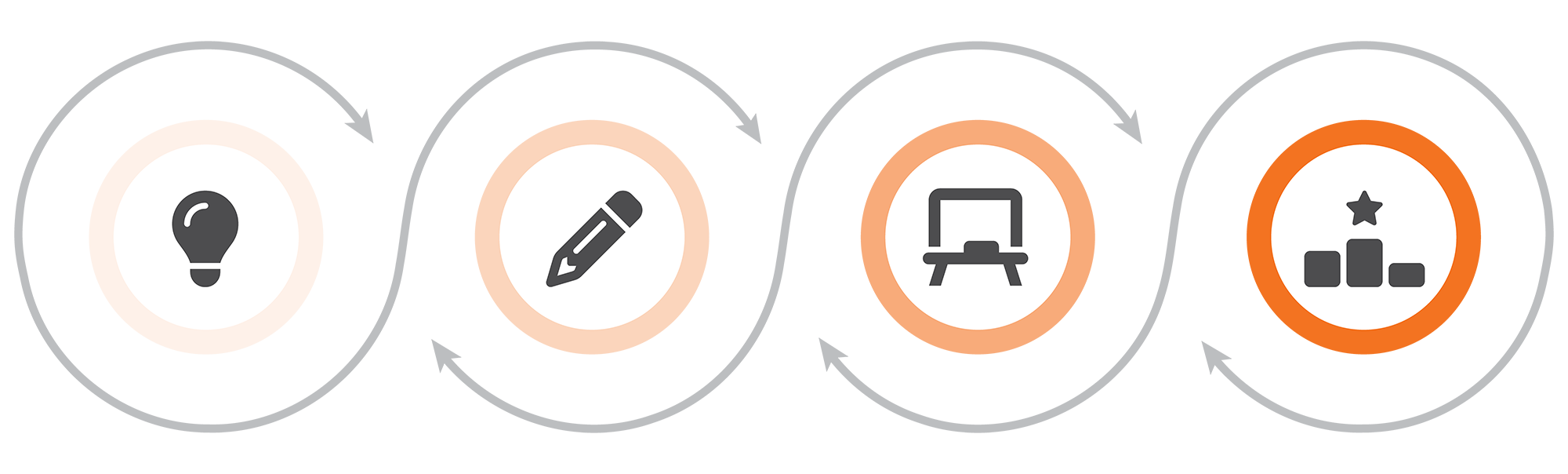
Launch

Launch sessions introduce Amplify programs and support strong implementation.

After learning about the program’s foundational principles and key features, you’ll practice administering the program within a collaborative environment.

Strengthen

Strengthen sessions deepen understanding of the program. Session offerings are targeted and meant to take your practice—and your students’ learning—to the next level.

Offered as part of core packages, as well as enhancements, Strengthen sessions are intended to effectively address your students’ needs. Examples include:

  • A focus on data analysis.
  • Examining student writing.
  • Targeted intervention instruction.

Coach

Coach sessions elevate instructional practice and help meet teachers’ and schools’ specific needs.

Partner with an Amplify coach who will support you in planning a day tailored to meet the needs of teachers and/or leaders. Your customized session will leverage our menu of support, which can include:

  • Lesson modeling by an Amplify facilitator.
  • Classroom observations and debriefs.
  • Grade-level planning.

Coach sessions are customized to you with an Amplify facilitator.

Commit to sustainable change for long-term impact.

Learning may ebb and flow between phases depending on your teachers’ and leaders’ needs, experiences, and professional goals. Amplify PD aims to continually grow, develop, and refine instructional practices to support student learning and achievement.

Frequently asked questions

We value your partnership and aim to provide you with the highest quality learning experiences. Check out our frequently asked PD questions below, along with responses.

Additional learning

Once you become an Amplify customer, you’ll have access to many opportunities to continue learning how to get the most out of your Amplify program(s).

To get a sense of our support, check out some of our free resources:

Three children sitting on the floor, reading a book together.

Biliteracy supports

Sessions are available to support educators teaching with both Amplify ELAR and Amplify SLAR core programs, or both mCLASS Texas Edition and mCLASS Lectura Texas assessment programs.

Facilitated in both English and Spanish, these specialized sessions should be scheduled for biliteracy teachers using both curriculums and/or assessments. Substitute a biliteracy session for the six-hour initial training in your package, or add these sessions on to your package for your biliteracy teachers.

Speak to our team to learn more!

Order and payment support

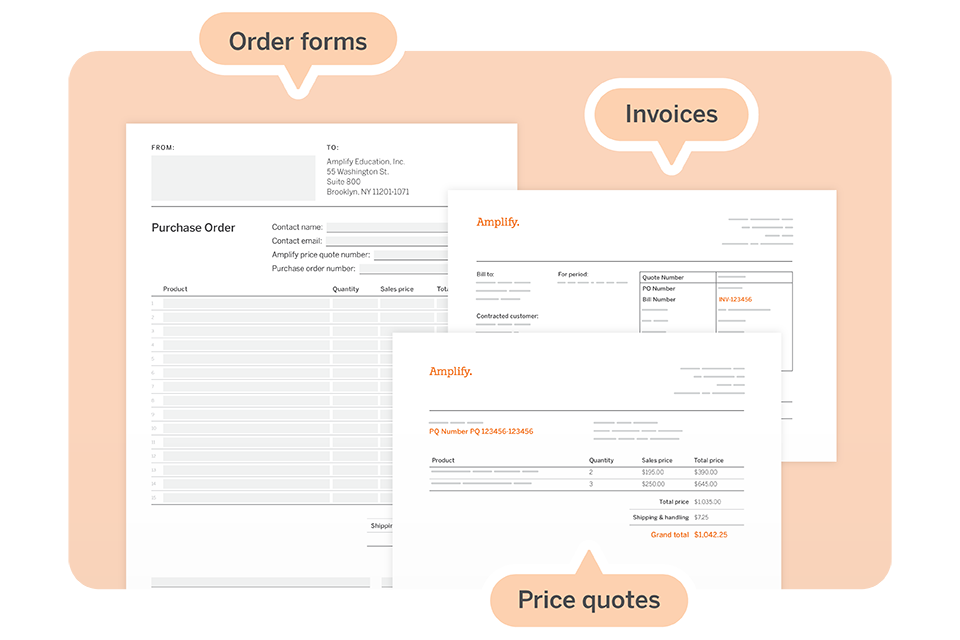
If you’re ready to submit your price quote, purchase order, or payment, please visit our Ordering Support site for more information.

Sample invoice document with orange Accenture logo and text. Includes fields like quote number, PO number, contract details, and invoice number highlighted as INV-123456.

Community of collaboration

Connect with fellow Science of Reading, math, or science advocates in one of our public Facebook groups. Join a community or tune into one of our podcasts today:

Amplify customers can join our exclusive, program-specific Facebook communities to ask pedagogical questions, share Amplify teaching hacks, and more!

Our experts

We are educators supporting educators. Every member of Amplify’s national team of highly experienced and qualified facilitators is a former educator with years of hands-on classroom and/or administrative experience. Our facilitators are passionate about supporting educators in the implementation of their Amplify programs and creating transformational change for all students.

Get in touch with a PD expert

We’re here to provide answers and guidance as you explore your PD journey. Fill out the form to connect with us and discover how Amplify PD can enhance your educational journey.

Desmos Math 6–8 earns perfect scores from EdReports

It’s great news when a student who has worked hard to do their best gets a perfect score on an exacting test.

We’d like to take a brief moment to share some similar news of our own: Desmos Math 6–8 has earned perfect scores and an all-green rating from EdReports!

This is a powerful affirmation not only of our program, but also of every Desmos Math 6–8 student who benefits from the high-quality instructional materials, student-centered instruction, and thoughtful technology in the math classroom.

The power of math technology

Here’s a bit about the program. Based on Illustrative Mathematics’ IM 6–8 Math™ and Open Up Resources, Desmos Math 6–8 features interactive, standards-aligned lessons that are easy to use and fully customizable.

The program empowers teachers with an engaging curriculum that helps them:

  • Celebrate student brilliance.
  • Put student ideas at the center of instruction.
  • Drive student achievement every day.

The technology in the program is purposeful: students are empowered to explore new ideas, and our teacher dashboard helps teachers bridge those ideas together. Whether teachers are observing student learning on our lesson summary page or guiding productive discussions with our conversation toolkit, our facilitation tools make teaching more effective and more fun.

The rigorous EdReports review process

EdReports.org is an independent nonprofit designed to improve K–12 education. Among other things, its expert reviews help equip teachers with the highest-quality instructional materials.

Their review process is necessarily individualized and rigorous. Educator teams develop rubrics and evidence guides; recruit expert reviewers with a collective thousands of years of experience; then conduct rigorous, evidence-based reviews.

The reviews collect evidence about important characteristics of high-quality instructional materials. These include the presence of standards, how well they are sequenced, and how deeply they are included.

Reviews take 4–6 months. Ultimately, multiple educators will analyze every page of the materials, calibrate their findings, and reach a unified conclusion.

And in our case, it was this: Desmos Math 6–8 received perfect scores from EdReports and met expectations for every one of their gateways.

See for yourself

Request a free 30-day trial today!

IM 6–8 Math™ and Illustrative Mathematics® are trademarks of Illustrative Mathematics, which is not affiliated with Amplify. Amplify is not an IM Certified Partner. EdReports and associated marks and logos are trademarks of EdReports.org, Inc.

EdReports.org is an independent nonprofit designed to improve K–12 education. Among other things, its expert reviews help equip teachers with the highest-quality instructional materials.

S3-01: Science as the underdog, and the research behind it

A graphic with the text "Science Connections" and "Amplify" features colorful circles and curved lines on a dark gray background.

Get ready for season 3 of Science Connections: The Podcast!

In our first episode, we unpack the research around our season theme of science as the underdog with Horizon Research, Inc. Vice President Eric R. Banilower and  Senior Researcher Courtney Plumley. Eric and Courtney dive into the research they’ve found and their experiences as former educators to show how science is often overlooked in K–12 classrooms. We discuss how the science classroom compares to other subjects in terms of time and resources, how schools are a reflection of society, and what’s needed to change science and its impact on a larger scale.

We hope you enjoy this episode and explore more from Science Connections by visiting our main page!

DOWNLOAD TRANSCRIPT

Courtney Plumley (00:00):

We asked teachers how much science, professional development, they’ve had in the last three years, and nearly half of elementary teachers said none.

Eric Cross (00:10):

Welcome to Science Connections. I’m your host, Eric Cross. I am super-excited to be kicking off the third season with the show. This entire season will be exploring the theme of science as the underdog. And we’re gonna make the case for science, by showing how and why it can be used more effectively. In the coming episodes, we’re gonna talk about how science can be better integrated into other content areas like literacy and math, and explore some of the benefits that you might not be thinking about good science instruction. But first, science as the underdog. I bet some of you out there feel like science is the underdog in your community at school. I know I have at times. To kick off this season, I’m gonna talk to two people who really studied this question by looking at the state of science instruction across the US. Eric Banilower is Vice President of Horizon Research and Courtney Plumley is Senior Researcher at Horizon Research. Eric was the principal investigator and Courtney an author of the latest in a series of studies called “The National Survey of Science and Mathematics Education.” We’re gonna dive into the findings of their most recent report to see what the data’s showing us. Please enjoy my discussion with Eric Banilower and Courtney Plumley. Courtney, hello. And thank you so much for joining us.

Courtney Plumley (01:25):

Hi Eric. It’s nice to be here.

Eric Cross (01:26):

And Eric, welcome.

Eric R. Banilower (01:27):

We’re thrilled to be here, so thank you for having us.

Eric Cross (01:30):

I was reading through the report. Four hundred…a very thorough report, 471 pages, I think, as I got it?

Eric R. Banilower (01:37):

And that’s only one of the many reports from that study.

Eric Cross (01:40):

Yeah. You all have done your work, so I’m really excited to to talk to you about this. And on this season of the show, we’re exploring the theme of science as the underdog. And I think a lot of our listeners, we feel like science is an underdog either in their school or in their district. But you’ve actually done some research on this, in a 2018 study, “The National Survey of Science and Mathematics Education.” So I wanna talk about this report. But first I was hoping you can kind of set the stage. How did you come to work on this report, and then, big picture, what were you hoping to find out?

Eric R. Banilower (02:10):

So the 2018 study that you just mentioned was actually the sixth iteration of a series of studies dating back to 1977. And we collect data every decade or so—you know, plus or minus a few years. And really, what we’re trying to do is get a snapshot of what the science and math education system looks like in in the nation. So my role grew. I started working at Horizon in about 1998, after teaching high school for five years in California. And then going to graduate school. And right about that time, the company was doing the 2000 iteration of the survey. And I worked on it with the team here at Horizon. And then we did it again in 2012. And I had a much more prominent role in that study, and became the kind of leader of the study. And in 2018, the most recent version, we just did it again. So the goal of this study is really to kind of examine key aspects of the K–12 STEM education system. And the main audience of the work has traditionally been policy makers, researchers, and practitioners who work at the federal, state, and district level.

Eric Cross (03:30):

So this study, you took kind of a sample size, but it’s reflective of trends that we tend to see across the nation as a whole. Would that be fair to say?

Eric R. Banilower (03:38):

Yes, definitely it is. It is a random sample of schools in the country. So we start with a list of all the public and private schools in the nation, and then do a random sample of those schools, and then work really, really hard to recruit schools to agree to be in the study. And that has gotten harder every time we’ve done the study, for many understandable reasons. And then once we have schools on board, we sample teachers within schools. So we don’t even survey every teacher in a school. It’s really a sub-sample. So that we can make inferences about the nation as a whole.

Eric Cross (04:14):

Makes sense. And so Courtney, what did you find out about the time spent on science instruction in US schools?

Courtney Plumley (04:22):

So, I’m gonna talk about elementary teachers to begin with.

Eric Cross (04:26):

Because that was your past life, right?

Courtney Plumley (04:28):

I am a former elementary teacher, yeah. So that’s kind of where my head is. And that’s relatable for me. Right? So we asked teachers, like, how many days of the week or weeks of the year that they teach elementary school. And fewer than 20% teach science every day of the school year. They kind of do one or two things, for the most part. They teach a couple days a week or they teach every day of the week, but only for, like, maybe six weeks, and then they swap with social studies and they kind of do that across the school year. Which is really different from, like, math, right? We also asked elementary teachers, how often do they teach math, and it’s every day of the year. Then we also asked them how many minutes they teach when they’re teaching, and we kind of did the math to figure out, all right, if they taught science every day of the school year, how many minutes would it be in a single day, so that we could make a more comparable comparison with math and ELA. If you were to work it out, how many minutes of science an elementary teacher teaches across the year, and break it down to per day, it’s like 18 minutes for the lower elementary grades, 27 for the upper elementary grades. Which is not a lot. But it’s pretty much an hour a day in math, and 80 plus minutes in ELA. So, a lot less. And then, you know, when I was teaching, the first thing to go was always science, right? If there was an assembly, if there was early release or whatever, that was the first thing to go. So those numbers might even be higher. Just because they aren’t factoring that kind of thing in, too.

Eric Cross (06:05):

So, now I’m curious. That is something that I’ve seen just anecdotally, science being the first thing to go. I feel like I’ve seen that almost…it’s almost become a meme, that I’ve heard that so often. Just in your experience, why do you think that is that huge disparity between the two?

Courtney Plumley (06:26):

Well, I mean, when I was teaching, I was teaching third grade. I had an end-of-grade test in math and ELA for my kids. I didn’t have one in science. So the administration said, “Hey, if you’re gonna drop something, drop something that’s not tested.”

Eric Cross (06:41):

Simple as that. And Eric, you, past life: physics teacher. High school. What did you see? ‘Cause our listeners run the gamut from elementary all the way up to high school. What did you see, as far as relative science instruction in the secondary level?

Eric R. Banilower (07:00):

Sure. You know, secondary is just a whole different situation than elementary. Rght? Because you have departmentalization. I taught science. I didn’t have to teach other subjects. And students had periods, and they still do, sorry, they still have periods, even though it’s been a long time since I taught. And you know, they rotate from one class to another. So all the classes were essentially the same length. So, you know, when I was teaching, it was about 50-minute periods. So in terms of minutes of a class or minutes on a subject, it’s not really different. But what is different is what students are required to take in order to graduate high school. One of the things we asked schools about in this study was how many years of a subject do students have to take in order to graduate? And what we saw was in mathematics, over half the schools in the nation require students to take four years of mathematics to graduate. OK? And the vast majority of the rest, about 44%, require three years in science. Most schools require three years. Very few require four years. And many, or a fair number, still only require two years to graduate. So the expectation of what students are taking is lower in science than it is in mathematics.

Eric Cross (08:20):

So you were seeing the same trend in secondary, essentially.

Eric R. Banilower (08:24):

Yes.

Eric Cross (08:24):

The amount of time devoted to the instruction of science…we’re kind of seeing it mirrored just across K–12 across the board.

Eric R. Banilower (08:33):

That’s correct.

Eric Cross (08:34):

And that’s across the country. ‘Cause the sample size represents teachers from Alaska, Hawaii, the South, SoCal, everywhere. So what’s been the reaction to that number? Like 18 to 20 minutes is…I mean, it’s, it’s half of my lunch at our school. What’s been the reaction to that number since this data has been published?

Eric R. Banilower (08:58):

I don’t know, Courtney, if you want to take that…

Courtney Plumley (09:00):

It’s a lot of what you just did. Like, what??? Like, how is it possible to teach all the things you need to teach in such a little amount of time?

Eric R. Banilower (09:08):

What’s really kind of surprising to me, though — though now that I’ve worked on three iterations of the study, it no longer surprises me, but it did at first — is that these numbers really aren’t changing since we’ve started doing this study. You know, people thought maybe with No Child Left Behind and the increase in accountability, time on science might actually go down, because there was more testing in math and English Language Arts. It didn’t happen. It was pretty much constant, that this has been kind of the state of science education for a long time.

Eric Cross (09:44):

So Eric, if I’m hearing you right: The past studies, we’re not seeing an increase or a decline. This has been this way for how many years, roughly, would you say? Since it’s been studied?

Eric R. Banilower (09:54):

You know, I’d have to go back to the 1977 report to get the numbers, but I’m gonna say since then, it has not changed much, if at all.

Eric Cross (10:03):

So this has kind of been entrenched. This has been the norm for almost for the career of a teacher, almost generationally. We’re looking at anyone who’s been in the highest levels of leadership to someone just entering the classroom, this has been the way it’s always been. This is kind of for many people what they’ve only known.

Eric R. Banilower (10:20):

Right.

Eric Cross (10:21):

Kind of become the norm.

Courtney Plumley (10:21):

We didn’t even have science when I was in elementary school. We had science on a cart that came by, you know, every other week.

Eric Cross (10:28):

Was that like a food truck, but like the science version of it? It shows up and does quick science and takes off?

Courtney Plumley (10:35):

And New York was, I mean — we always watched Voyage of the Mimi. I don’t know if you ever watched that. But that’s what we watched every single time the Science on the Cart came. So it’s like a marine biology show. Ben Affleck was on it when he was a kid.

Eric Cross (10:48):

<laugh> Really? For me it was, Mr. Wizard. For some of my students, even now, Bill Nye. You know, the Bill Nye show or something would come on. So what happens when you look at less wealthy districts? Is there a relationship between community resources and science instruction, or is it pretty much equal no matter what the district resources are, the school’s resources are? Did you see any data there?

Eric R. Banilower (11:12):

Yes. We actually did a lot of disaggregating the data by community type, student demographics in the schools, to look to see whether there were areas of inequities across the country. And, you know, one of the factors we looked at was kind of a measure of socioeconomic status. You know, wealth in the community. By looking at percentage of students eligible for free or reduced-price lunch. And interestingly, in terms of time on science instruction, there is actually not a relationship between income level and how much time is spent at the elementary level on science, which actually surprised us.

Eric Cross (11:54):

Because you might have expected it to be the other way now. And granted, it’s 18 to 20 minutes, there isn’t much more to shave off off of that. But were there other differences, like when you compared those communities? Maybe it wasn’t the amount of science instruction, but was there anything else, like teacher preparedness, resources? Were there anything else that you did see discrepancies in? Or was it equal across the board?

Eric R. Banilower (12:13):

No, unfortunately there, there have been, and still are, a number of areas where community resources are related to pretty substantial differences in educational opportunities that students have. So, you know, we’re talking about the high school science requirements. One of the things that we saw was that high schools in less wealthy communities tend to offer less rigorous science courses than high schools in better-off-financially communities. So they may not be AP courses or second year advanced courses to the same extent that there are in the wealthier communities. That’s one big difference that we saw. Another one was what you were just saying about, sort of, the teachers who teach in these communities. You know, I think that for many years people have had a feeling that the best teachers go to the better off schools because it’s easier to teach there. Well, we see that the schools with the most poverty, they tend to have the newer teachers, who are just starting their career. They tend to have teachers who are less well prepared to teach their subject. And there’s a host of other differences we found. And you know, you mentioned the report being 400 pages. This other report that looks at these differences is also quite long, and, you know, identified a number of areas where there are these disparities in the system.

Eric Cross (13:43):

Well, we appreciate you synthesizing this for us, because this is super-important. And you’ve fleshed out a lot of things. And the fact that it’s driven by data, we as science teachers, we as scientists, being objective, really, really value that. Because this is actually validating a lot of the things that our listeners and myself, we experience anecdotally. But you don’t have a lot of things to network you. And sometimes, when you see this, you wonder if it’s just you, or is are other people experiencing this? And so as you start talking about this data, realizing, oh wow, this is not something in isolation. This is systemic. This is something that’s impacted. And then Eric, what you said about schools that were lower-income, that were under-resourced, and didn’t offer those advanced classes, what are some of the impacts of that, maybe downstream, of doing that? Not having those AP classes? I just kind of wanted to put that out there and ask you.

Eric R. Banilower (14:31):

You know, this is a really…this is a current debate right now, about what the goals of schooling K–12 should be. You know, are all kids meant to go to college? Should there be alternative paths? And you know, I know when I was teaching, I would have students say, “Why do I need to know this? I’m not gonna go into science. I’m not gonna study physics. Why do I need to take this?” And, you know, the answer I used to give them was, “You never know where your life is gonna end up and what opportunities you’ll have. And by having these educational experiences, you have more opportunities available to you. Whether or not you choose to go down those paths, you have opportunities. And when you don’t take this kind of coursework, you know, even if you don’t want to go to college, you limit your potential careers. Because so many careers nowadays require some technical knowledge, some knowledge of science, even if it’s not explicitly a science job. It is embedded in our society now. We are a technological and science-based society.”

Eric Cross (15:37):

It reminds me of something that I’ve told my students, that if you become a scientist, that’s awesome. I love that. But if you don’t, and you want to be a dancer or an actor or a lawyer or anything that may not be directly related to STEM, I want you to choose it because it was a choice, and not a lack of options. So as long as you’re choosing not to go in STEM, and you don’t make that decision because you can’t, or because you weren’t given the opportunity. So that’s how I’ve always had this mindset as a teacher. And I’ve explained it to my students. So if you say, “Cross, you know what I want to do, I wanna be an awesome chef,” which, you know, low-key that’s science, right? <laugh> Molecular gastronomy, we know that. But like, you be the best chef. But as long as you’re being a chef because you choose that, and you’re like, “I love science, but I don’t wanna go that direction,” we’re good.

Eric R. Banilower (16:26):

Right. And if you think about, a lot of social justice issues with pollution and climate change, and you look at which communities are more affected by some of these larger environmental problems and challenges, it tends to be the lower socioeconomic communities, the more poverty-stricken communities have worse water, have worse air quality. And so if, if people from these communities are going to make informed decisions about who they’re gonna vote for, about what policies they’re gonna support, those are science topics that you have to have some understanding in order to make informed decisions in your life.

Eric Cross (17:09):

Courtney, you were one of the Swiss Army Knife teachers. This is how I perceive it for elementary. You had to teach everything. And shout out to all of my elementary school teachers that have to be mathematicians and grammar whizzes and scientists and PE instructors and social emotional, all of those different things. you also looked at teacher preparedness. How did teachers feel about teaching science compared to other subjects like language arts and math? Did you see anything there?

Courtney Plumley (17:39):

We did, we did. And I’m glad you said, “How did they feel about it?” Because one thing that, you know, in a survey you can’t really do is capture how someone actually…how good someone actually…the quality of someone’s instruction. But you can ask them how prepared they feel. And you can even ask them like stats, like, “What did you major in in college?” You know. But you really are going on based on what what they say. So we ask them how prepared they feel to teach all the core subjects. And two-thirds of elementary teachers felt very well prepared to teach reading. They felt very well prepared to teach math. But when it comes to science, it’s less than a third felt very well prepared. And you know, like you said, when you’re teaching elementary school, you’re teaching all the subjects. But also in science, there’s usually four main instructional units in a school year. And they’re all from different science disciplines. So not only are you going on, like, “Maybe in college took a lot of bio classes, but I didn’t take any physics classes, and now I have to teach physics to my kids and I have no experience there.” So, you know, we also ask them how well-prepared they felt in these different disciplines. And the numbers are even smaller, you know. Fewer than a quarter felt very well-prepared in life science. And like 13% felt very well-prepared in physical science. So there’s definitely a big difference between how much teachers feel prepared for ELA and math versus science.

Eric Cross (19:08):

And just from a human perspective, when we don’t feel prepared for something, we’re not really gonna probably lean into it as much as we are into our strengths. Like, that’s just kind of how we are across the board.

Courtney Plumley (19:18):

Yeah.

Eric Cross (19:18):

I’m even like that with my own chores in the house. Or when I have things I need to get done, and I might not be as good at doing those things—it’s gonna be a heavy cognitive load; I’m gonna have to do some background research—I tend to find other areas to excel in. Like, I’m gonna be productive in this other area. I’m gonna really crush it here. But this other thing gets put to the back burner.

Courtney Plumley (19:36):

Totally. And the same reason I might skip science today, <laugh> ’cause it’s scary.

Eric Cross (19:41):

Yeah, exactly. But I love this book. <Laugh> Or we could do this math, and let’s really, really dive deep into it. Now, did you also look at professional development and instructional resources that are being provided?

Courtney Plumley (19:53):

We did.

Eric Cross (19:54):

And on the whole, how was the amount—and I’m seeing a trend here, so I’m kind of feeling like I know where this might go—but I wanted to ask it, did the amount of professional development and resources for science, was there much of a difference between that and other subjects?

Eric R. Banilower (20:10):

Well, I’ll start on this, and Courtney, feel free to jump in. You know, one of the things that we asked was how much kind of discretionary funding do schools devote to science and how much to mathematics? So, for consumables or equipment and supplies or computer software for teachers to use in the classroom. And it’s hard to compare, I think, across subjects because the demands for this kind of supplies, et cetera, is very different, I think, in science than it is in mathematics. Right? We have a lot of, you know, equipment for doing investigations, consumable supplies in science. And those things need to be replenished on a regular basis. It turns out, when we look at the data for school discretionary spending on this kind of stuff, the median school spends less than $2 per student at the elementary level on science, compared to over $6 for mathematics. At the high school level, it’s kind of reversed. Schools spend more money on high school science than they do on high school math. but even still, at the high school, it’s less than $7 per student. Which is not a lot of money being devoted to thinking about all the materials, supplies, chemicals, et cetera, that you need to teach science well, at the high school level. More disturbing is the fact that, you know, we were talking about inequities before, schools that serve less well-off communities spend less than schools that serve wealthier communities, by quite a big amount.

Eric Cross (21:46):

So essentially the per-student thing just kind of popped out to me: So, like, an expensive Starbucks drink is what we’re spending on science per student.

Eric R. Banilower (21:57):

At the high school level. Yes.

Eric Cross (21:58):

At the high school level. And I get those catalogs in the mail, from all of those big science companies. You can’t get much for seven bucks. At least, nothing high-level. And I know I do a lot of 99-cent store science. I go down the street, go to the 99-cent store. Thankfully we could do a lot of awesome science with just, you know, cheap things. But a lot of the higher level experiences, they’re pricey. But the experiences are so rich! And $7 at the high school level is nothing. It’s not much at all.

Eric R. Banilower (22:28):

Yeah. It is definitely, you know, kind of shocking to think about what we’re investing in our children’s future.

Eric Cross (22:37):

Now, just to put you both on the spot, ’cause I feel like that we’ve identified some…we’re seeing a trend here, we’re seeing a pattern. We’re talking about, you know, being science teachers. There’s a pattern going on here. Do you think it’s fair to characterize science as the underdog?

Courtney Plumley (22:52):

I think in elementary school, it is a fair statement. Because, like we said before, I mean they’re gonna preference math and ELA almost all the time. I mean, the other thing you’d asked a little bit ago was about professional development, too. And we do have some data on that. And we ask teachers, you know, how much science professional development they’ve had in the last three years. And nearly half of elementary teachers said none. And I know I didn’t have any science professional development. If I was gonna pick from among the catalog, I was picking one that I needed more, like math. Math and ELA. I keep making that statement, but just over and over, it’s the truth.

Eric Cross (23:31):

And going back to what you said earlier, because that’s where the accountability was, right? And that kind of came top-down.

Courtney Plumley (23:38):

Yes.

Eric Cross (23:38):

And influenced everything else.

Eric R. Banilower (23:40):

Yeah. Now, really interesting thing that we did, a year or so ago, ’cause someone asked us, you know, “Hey, could you look at this?” is we compared elementary science instructional time among states where science counted towards accountability versus states where science doesn’t count towards accountability. And at the upper elementary grades, more time was spent on science in schools in states where they had science accountability. Now I’m not arguing for adding science to accountability systems. But that’s a pretty telling piece of data.

Eric Cross (24:19):

What gets measured gets done.

Eric R. Banilower (24:20):

Yeah.

Eric Cross (24:20):

Or what was getting evaluated was getting done. And that raises, that opens up a myriad of other questions about testing, and what that reveals, and all of those different things. But at the end of the day, what you’re finding is that the things that were getting tested were the things that were getting the priority.

Eric R. Banilower (24:36):

That’s right.

Eric Cross (24:37):

How did we get to this point? And Eric, you said it goes back at least to ’77, but we look at society and we’re…I wanna say we’re post-pandemic, but we’re we’re not. but we’re trying to, we’re trying to get past that. But we’re looking at…we had innovations in biology, we have innovations right now in green energy and electric cars and all of these things that are STEM-based. We know that these are things that have moved humanity forward. And we look at the pipeline of people who are in STEM and we, we see the disparities and things like that. Why was science given less of a priority? I’m just curious. Maybe, Courtney, we could start with you, if you have any ideas. Or Eric. Either one. But how did we get here?

Eric R. Banilower (25:22):

<laugh> I think Courtney wants me to take that one. I’m older so I’ve seen more <laugh>. So, you know, I have the gray hair. She doesn’t. I think it’s complicated. And I know this sounds cliche, but but schools are a reflection of society, right? And, and so science education, you know, if you think back when Sputnik was launched, there became this great demand in America to improve and produce more scientists and engineers in response to this Cold War threat. Right? And then in the ’80s there was rising, oh, the gathering storm was an economic argument that we needed to increase science and math, you know, education and people going into those fields in order to compete economically against the global competitors. And I think that America has always produced a fair number, a large number, of high-quality scientists and engineers, you know. And we still lead the world in many ways. But where we’ve identified as a problem is who has those opportunities to go into those fields. You know, it used to be a very select, a very male-dominated, white male-dominated field. Right? And other people didn’t have the opportunity, or they were shown the way out pretty early. And we, I think, have come to realize as a country that, you know, the, the greater the diversity of thought that we can get into these discussions, the more innovative we can be and the more productive as a society we can be. And so I think we’ve had this shift in the country to, instead of thinking about just the quality for the select few, but to be thinking about the quality for everyone. And so that makes it seem like some of these challenges are greater than they used to be. And I think they’re different challenges, right? We’ve evolved as a society and I think schools have evolved.

Eric Cross (27:40):

There is a conversation I was in on a plane with a person who was a materials manager for a company that made the adhesive for sandpaper. And we were flying…I was flying to Denmark and he was flying to some other Scandinavian country. And we were just talking about it. And he came from another industry, and somehow the conversation led to science. I don’t know how that happened. But somehow I just started talking about science and I asked him about, Eric, kind of what you said about the US kind of leading the way in science innovation versus the rest of the world. And I asked him why. And he said one of the reasons why is because the heterogeneous thought. The different groups of people that are coming to a problem actually create more innovative and novel solutions. Versus when it’s more homogeneous. And everyone’s either culturally or just for whatever reason, kind of thinks a certain way. While they might have a more efficient way, the variety of solutions are not as varied and not as novel. I was reminded of that story based on what you just said. So it’s really interesting. So it seems to be that it benefits if we have more heterogeneous groups, more folks who are contributing to STEM, because that’s gonna be solving the next problem more efficiently. Or I guess maybe in my head it seems like the next we need…we do really well when we have a dragon to slay. I mean, it seems like we come together when that’s the case, right? Like, I dunno.

Eric R. Banilower (29:06):

No, I think that’s…I think that’s accurate.

Eric Cross (29:09):

Later on the season of the podcast, we’re gonna explore ways to better integrate science with other subjects like literacy and math. Were you able to study at all any more integrated approaches to science instruction? Does any of your research support that approach?

Courtney Plumley (29:25):

Not on the national survey, we didn’t study that. And it’s something that we’ve talked about before, because it’s difficult to get teachers to…we were talking about instructional time. It’s hard for teachers to put a number on it when they’re integrating, because, you know, it’s not like I have my science block from 3 to 3:30 anymore. Now it’s kind of scattered about. But it’s something that has been in the ether. We’ve been looking at it in a couple of projects. So there’s some evidence that it can be effective, especially for getting more, you know…the idea is you can get more time for science if you are integrating with other subjects. But one thing to kind of caution is like, students need to have opportunities to learn each discipline when they’re doing integrated instruction. So you don’t wanna just have, like, math in your science. Kids already know to just, like, support it. Then it’s hard to take time from math to put it into science when they’re not actually learning anything new. That’s the easy thing to do, though, is say, “Oh, my kids already know how to measure. We did that in a previous unit. So now we’ll we’ll do it as part of our science instruction.” So it’s a lot of work to make it so they’re learning something new, mathematics and science, at the same time. And it’s not really something that we think that teachers should be having to do on their own, with all the other things that teachers have to do. The last thing they need to do is be creating their own, you know, curriculum. Something that’s already…you know, it’s not straightforward. So we’ve been talking about it, we think it’s really something that instructional materials maybe need to be focusing on instead of teachers having to do that on their own,

Eric Cross (31:01):

Teachers would implement it, but asking them to create it is a whole different thing, and it’s a huge ask.

Courtney Plumley (31:08):

Yes.

Eric Cross (31:08):

Yeah. And, did I hear you right? So the ideal situation would’ve been the students learning a newer math concept, but embedded in a science kind of context? Or was that the better way? Versus, “I’m gonna take a math concept they already know and then just put it into the science setting?”

Courtney Plumley (31:26):

Well, if the idea is that you can get more science time if you’re, you know, integrating things, so you can maybe take time away from a specific math block by putting it with science, or whatever, then if the math is something that the kids already know, now you’re just taking away. I think that that has to be new in both cases, in order to justify having more time.

Eric Cross (31:49):

Right. Eric, in the secondary level, any thoughts on that? On integrating these disciplines together?

Eric R. Banilower (31:56):

I think, you know, just like at the elementary level, it can be challenging to do it well. When I taught, I taught my last couple years in a kind of school-within-a-school kind of situation, where our goal was to try to integrate science, mathematics, and language arts. And it’s hard to do that in a meaningful way. And we did not have curriculum materials given to us to help us do this. We were trying to figure out how to do this on our own, while we were teaching 200 kids a day in our subjects. Right? And five preparations. And you know, it’s a big ask of any teacher. And there are teachers who thrive on this and are great at this. And, you know, that’s one thing I wanna, make clear: our data is about the system, and we are former teachers. Almost everyone who works at Horizon is a former teacher. We have the greatest respect for teachers and what they do. And what our data is showing is are kind of like areas where the system isn’t providing teachers and their students the opportunities to do great things. I think at the high school level, there has been this idea of project-based learning where students are bringing together different skills, different ideas from across disciplines. And I think there’s, again, a lot of potential in doing that. But trying to develop those experiences so that they are doing service to the different subjects, so students are learning what they’re supposed to learn in English Language Arts, that they’re learning, important mathematics, and that this is in a science context, where they are getting to do and understand what science is and how science, as a discipline, operates…that’s just a really hard thing to develop.

Eric Cross (33:53):

So what I’m hearing—and I really appreciate the nuance in this, because it’s not a simple “Yes. Integrated is better,”—I’m hearing “Yes. Quality control.” “Yes. It needs to be written not by teachers; they’re the practitioners.” It’s “Yes. And,” not just simply binary. Which…it’s so easy to wanna chunk things and say yes or no on things. But this one seems a much more nuanced approach. And in a future episode, you mentioned project-based learning, we’re gonna try and talk to people who have thoughts on this. And I really appreciate that you talked about project-based learning, because also, how do you evaluate that? How do you evaluate whether or not it is high quality? Is this is something I see? You know, high-quality standards, highest quality science teaching, highly qualified teachers. It’s something that I see often. Now, based on all your research, this is kind of the 30,000-foot view. What advice might you have for people who are thinking about changing the way science is taught in this country? Which hasn’t changed since 1977, at least since we’ve been measuring it. Any advice for people who do want to act? Another way to ask, it might be, if you were given a magic wand, <laugh>, you have all power, what might you do if you can control the entire vertical system?

Eric R. Banilower (35:07):

Yeah, so a clarification, I do think science instruction has changed. It has evolved. I think there’s a lot of really good things going on in different pockets of the country. One of the challenges is bringing those good ideas and good practices to scale. Right? There are approximately 1.2 million teachers of science K–12 in this country. That’s a lot of people. And about 80% of those are elementary teachers who are responsible for teaching other subjects as well. So my thinking is often about, “How do we take what we know and that we’ve learned through decades of research is effective, and impact a large number of teachers, and therefore a large number of students?” And you know, Courtney I think has hinted at this already. And you’ve mentioned it too, Eric, is that teaching is a profession, right? And it’s a craft. But in no other profession do practitioners have the expectation that they’re developing their own tools and methods for their work. I know when I was in my teacher preparation program, and it’s still extremely common, one of the assignments perspective teachers are given is to develop a unit and develop a lesson, right? You don’t have doctors being asked to develop new treatments and new tests to use. Their job is to get to know their patient, assess what’s going on, and then using research-based methods to develop a plan of action, right? And I think that analogy works really well in education and is a way that we could have a scalable approach for kind of raising the floor across the country for the quality of science education. Giving teachers research-based materials, high-quality instructional materials, that they can then use and adapt to meet the needs of their students, would allow them to focus on getting to know their students, seeing what their strengths are, seeing where they have room for growth, and using the materials they’re given to help those students progress. And I think that is definitely a way where we could have a big impact at a large scale.

Eric Cross (37:39):

Courtney, same question: Magic wand, all power. You can change systems from the elementary perspective. What would you do? I’m assuming part of it’s gonna be changing that 18 to 20 minute time. But even for that to happen, what would you do? What would you change?

Courtney Plumley (37:57):

Well, I don’t know. Like, for it to change, I don’t know the answer to that. But yes, increasing the time would be great. And like Eric was saying, giving teachers— ’cause again, I’m coming in, not enough probably background in science—and then, you know, when I was, when I was teaching, we had one set of textbooks for the entire grade. Six classes, right? Like, share them. But third graders aren’t gonna read textbooks anyway, right? So instead I’m going to the teacher store. I’m pulling things off the shelf. And like, “OK, yeah, sure, I’ll use this.” And nowadays, teachers are going to Teachers Pay Teachers or whatever. Because I didn’t have anything good to use. So like Eric is saying, if I had instructional materials that were good instructional materials that were gonna teach my kids, that they were gonna be engaged, that they weren’t sitting and listening to science, but they were doing science, you know, and I had professional development to actually help me do it? That’s what I think we need to have. And I mean, I know there are some people out there that are working on that, but it’s not a lot. I mean, if you look at Ed Reports, they rate how well-aligned science curriculum are to standards. And there are two right now that have Ed Reports green lights. There’s Amplify and there’s OpenSciEd. You know, so there’s not much out there for teachers to use. And, so it’s hard. It’s hard. Where am I gonna go and get this stuff if it doesn’t exist? And so I’m making it up by myself. Which we already said is not the best use of teachers’ time, when they’ve got so many other demands on their time.

Eric Cross (39:27):

Eric and Courtney, listening to both of your responses, it created a visual in my mind. And Eric, I loved your analogy of…I started thinking of a chef, a welder, and a farmer. And I thought about the chef saying like, “You’re a great chef! Now, can you go farm, and make your own food, so that you can cook it?” Or the welder who has to make his own welding tools and go smelting. You know, making the different rods. I’m not a welder. But you know, all those different parts. Or the farmer who has to build his own tractor and innovate all that stuff. You’re absolutely right, the way you articulated that. And then Courtney, you essentially said, “Give them the tools and then teach them how to use it so they can go and actually be effective with it, because you’re in front of kids doing so many different things.” There’s only so much time in the day, and teachers want to do these things; they want to, but you end up having to triage when you’re asked to. Going back to Eric’s analogy, if you’re in the ER, but you’re also creating the vaccines and you’re also doing the research on which types of vaccines are gonna be the most effective, that’s, that’s a lot to ask. And so, I appreciate both your responses on that. Now, last question, what are you both working on now? This report came out in 2018. What’s, what’s next on the horizon? Actually literally, that’s no pun intended. <laugh> What’s next? <laugh> What’s next for, for you both? What are you working on?

Eric R. Banilower (40:42):

Well, you know, we would love to do another national survey, in a few years. We have to get funding to do it. And you know, that’s always something that takes effort and isn’t a guarantee. We’ve written grants to do these studies in the past, and there’s also the dealing with the reality of the situation. I think a lot of schools, still coming off the tail end of dealing with Covid, are overwhelmed. And we’ve had a hard time, I mentioned before, recruiting schools, and it gets harder every time, just ’cause they have so much on their plate. And I couldn’t see going to a school now and saying, “Hey, one more thing. Do you mind?” So I think we have to kind of wait a little bit for things to settle down before we can do another one of these studies. It just doesn’t seem feasible right now. But we’d love to in the not-too-distant future. Other than that, Courtney and I actually work on some projects together and some projects not together. One of the things that we’re working on together is a study of a fifth grade science curriculum that was developed by Okhee Lee at NYU and her colleagues, that is both aligned with the NGSS and purposely designed to support multilingual learners in developing both their science knowledge and skills as well as their language skills. And we’ve been working with the crew at NYU to study this curriculum and try to figure out, how well it’s working and under what circumstances. So that’s been a really interesting project that’s going on right now.

Courtney Plumley (42:26):

I recently worked on a report with the Carnegie Corporation in New York that actually I think, compliments what we’ve been talking about a lot. It’s about the status of K–12 education in the US—or science education in the US! <Laugh>—and so as part of that report we interviewed like 50 science education experts across the country. We surveyed teachers, people in the university settings, researchers, and everything to kind of get a little bit more update of the state of science education right now. And so a lot of the things we’ve been talking about, we still are talking about with the people in this report four years later. So, work in progress. <Laugh>

Eric Cross (43:09):

And again, going back to 1977, based on what Eric was saying earlier, we’re looking at these large systems, these systemic changes don’t happen overnight.

Eric R. Banilower (43:20):

That’s right.

Eric Cross (43:21):

It’s very slow-moving.

Eric R. Banilower (43:22):

That’s right. I would say there is progress. I think we’ve learned a lot. We are getting better. Are we there yet? No, we’re not happy with where we are. But I think, you know, I think it’s important to be hopeful about the direction things are going in.

Eric Cross (43:37):

Well-said. I agree. Courtney. Eric, thank you so much for unpacking that report that speaks to, that validates what so many teachers across the country are experiencing. And thank you for your advocacy for high-quality science education and your passion for supporting teachers and being that voice from a data-driven perspective of what teachers experience and then advocating for solutions for them. It’s super-encouraging for me, and I know it’s gonna be really encouraging for a lot of our listeners. So thank you.

Eric R. Banilower (44:10):

Thank you for having us.

Courtney Plumley (44:12):

Yeah. Thank you, Eric.

Eric Cross (44:15):

Thanks so much for listening to my conversation with Eric Banilower, Vice President of Horizon Research, and Courtney Plumley, Senior Researcher at Horizon Research. For much more, check out the show notes for a link to the 2018 National Survey of Science and Mathematics Education. And please remember to subscribe to Science Connections wherever you get podcasts, so that you’re not missing any of the upcoming episodes in Season three. Next time on the show, we’re gonna start laying out the road map for using science more effectively. And we’ll start by looking at the how and the why of integrating literacy instruction.

Susan Gomez Zwiep (44:49):

When we look at Science First and build language development around it, the experience tends to be more authentic and organic.

Eric Cross (44:58):

That’s next time on Science Connections: The Podcast. Thanks so much for listening.
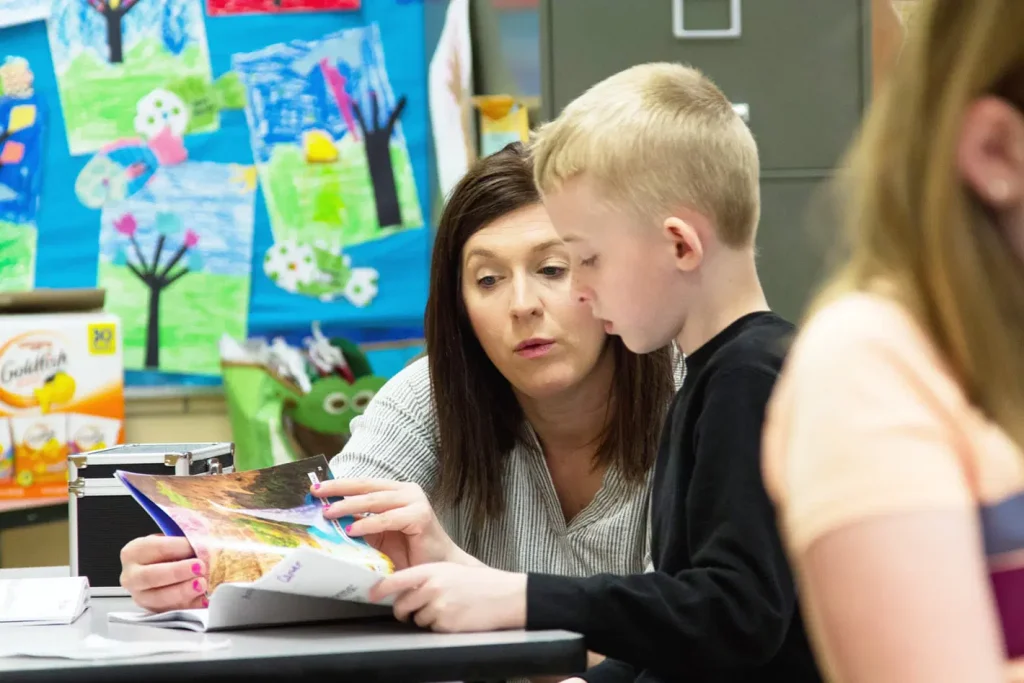
Stay connected!

Join our community and get new episodes every other Wednesday!

We’ll also share new and exciting free resources for your classroom every month!

What Eric R. Banilower says about science

“Our data is showing us places where the system needs to provide teachers and their students the opportunities to do great things.”

– Eric R. Banilower

Vice President of Horizon Research, Inc.

Meet the guests

Eric R. Banilower is a Vice President at Horizon Research, Inc. (HRI), and has worked in education for over 30 years. Eric was previously a high school physics and physical science teacher before he joined HRI in 1997, where he has worked on a number of research and evaluation projects. Most recently, he has been the Principal Investigator of the 2012 and 2018 iterations of the National Survey of Science and Mathematics Education, a nationally representative survey focusing on the status of the K–12 STEM education system.

A middle-aged man with light hair, glasses, and a short beard is smiling, wearing a plaid shirt. The photo has a circular frame with a star and decorative lines.

Courtney Plumley is a Senior Researcher at Horizon Research, Inc. She began her career in education as an elementary school teacher before starting at HRI in 2009. In her time at HRI she has worked on many K-12 STEM research and evaluation projects. Most recently, Ms. Plumley has worked with Carnegie Corporation of New York on mapping the landscape of K-12 science education in the US and is managing the field test for the OpenSciEd elementary materials.

A woman with wavy brown hair and a red top smiles at the camera, framed by a circular graphic with a star and accent lines.
A laptop screen displays the “Science Connections: The Community” private group page, with science-themed icons decorating the background and edges.

About Science Connections

Welcome to Science Connections! Science is changing before our eyes, now more than ever. So…how do we help kids figure that out? We will bring on educators, scientists, and more to discuss the importance of high-quality science instruction. In this episode, hear from our host Eric Cross about his work engaging students as a K-8 science teacher. 

S2-04: Gamification in the K–8 classroom

Podcast episode graphic featuring guest Fabian Hofmann, titled "Gamification in the K–8 classroom," from Science Connections Season 2, Episode 4, with an illustration of a planet.

In this episode, Eric Cross sits down with his colleague and friend Fabian Hofmann to talk through gamification in the K–8 classroom. They discuss Fabian’s experience teaching outside of the United States, and the differences in classrooms outside of the country. Fabian explains the integration of game mechanisms in the classroom, standard-based grading, and shifting student thinking about learning by forming strong relationships. Fabian also shares how he created a new STEM course at his school revolving around his own passion for Star Wars. Explore more from Science Connections by visiting our main page.

DOWNLOAD TRANSCRIPT >

Fabian Hofmann (00:00):

In Mr. Hofmann’s class, I get to earn points and I get to be a Jedi. I can suspend my disbelief and I’m learning history, but at the same time, I’m traveling through the galaxy.

Eric Cross (00:13):

Welcome to Science Connections. I’m your host, Eric Cross. My guest today is Fabian Hofmann. Fabian is a middle school IB educator, currently teaching seventh grade multimedia design and history at Albert Einstein Academy’s middle school here in San Diego, California. He also hosts the podcast Rebel Teacher Alliance, a podcast dedicated to encouraging and supporting teachers to rethink student engagement. Fabian’s one of the most innovative teachers that I’ve ever met. His use of technology and gamification makes learning fun and accessible for our students. And I have firsthand experience with these students because we teach on the same team and have worked alongside each other during my entire career as a teacher. In this episode, we discuss gamification of the classroom, how he approaches grading from an innovator’s mindset, and his newest STEM class, Immersive Design, where his students are working with former Disney Imagineers to completely renovate their classroom into an interactive Star Wars-themed learning environment. And now, please enjoy my conversation with my good friend and colleague, Fabian Hofmann. We’ve worked together for how many years now? How many years have you been at Einstein?

Fabian Hofmann (01:23):

Well, I started when you started, like after you were student teaching, so 2014.

Eric Cross (01:28):

OK, so it’s been a while.

Fabian Hofmann (01:30):

Yeah. And then I took two years off and I went to Hawaii. I couldn’t handle the pressure. And then I came back. So we’ve worked together for six years but known each other for eight.

Eric Cross (01:39):

What’s your origin story? We’re gonna talk about your origin story. I told you.

Fabian Hofmann (01:42):

All right, cool. Right. So when I was a little boy…no. <Laugh>

Eric Cross (01:46):

This podcast is not that long!

Fabian Hofmann (01:49):

So no, I started out, teaching in 2009. I started student teaching in Germany and was teaching history and English. Did this two-year student-teaching program there. And then, when I was done, my wife and I, she’s American, we got married and we decided to move to the States. And then I started teaching at a German cultural center called the Goethe-Institut in San Francisco. We lived in the Bay Area. And from there, after a year we moved down to San Diego; I started subbing; I worked for a year at High Tech High. I taught humanities there. And then, after that year, I ended up at Einstein teaching German because that was what was available. I didn’t want to teach German. That wasn’t like, on the top of my list. But it made sense because I had taught German in San Francisco and it kind of was like, “Well, I can do that, I guess.” And then, yeah, and then I went back to—we went to Hawaii for a couple of years and then I came back here to start teaching history. So I’ve taught like a million things essentially.

Eric Cross (02:52):

And then during that time, what’s your evolution been like in the classroom? Kind of like your view of education? And how does that play out in your day-to-day with kids?

Fabian Hofmann (02:59):

So when I started teaching here in the States, I noticed that it’s very different. Technology was much further along here than it was in Germany. So when I got here and we had like an iPad cart; I helped setting up the iPad carts. And I worked with the Chromebooks and I was like, holy, holy crap, this is so cool. Like, kids can like actually do things with this technology. And then, I mean, I love technology. I’ve had an iPad when it came out and stuff like that. And so I was like, “Oh, so how about we use this in our classroom?” And so I always moved—I moved very quickly to having students create on the iPad. And at first it was like, “Oh, we use the Apple apps and stuff.” And then I went to an ed-tech teacher summit here in San Diego and my eyes were like opened to, “Oh my God, there’s so much more than just the Apple apps.” And ever since then I was like, “OK, we’re gonna use this; we’re gonna do that.” It’s just crazy stuff that I thought was cool and that students really seemed to enjoy, because it wasn’t like a typical language class; it was more like, “Well, what can we do to create, and how can we somehow still use the language but we are learning coding at the same time, or we are creating something in 3D at the same time?” Like, I was always trying to make it have two angles: the language angle, obviously, and then also the technology angle.

Eric Cross (04:25):

What was it that kept you kind of pushing? ‘Cause I remember the beginning in the Classcraft days to where you are now, I feel like you’re like light-years ahead of where you started.

Fabian Hofmann (04:37):

So you were actually the one who showed me Classcraft, which is like a gamification portal, kind of off-the-shelf thing that you can subscribe to. It has some free features and it’s like a gamification platform where students can create characters. And then these characters go on adventures. That’s like their avatar, and they get experience points in the classroom game and stuff happens. You can create, like, adventure paths for them. So if you have an assignment that you want students to do that has different steps, so, that could be an adventure path. That’s what I liked about Classcraft, is like this idea of like, “OK, we’re taking a game and applying it.” But it wasn’t enough for me. And so I started developing my own classroom game. I did some reading. I met online with John Meehan, worked with him. I read the book by Michael Matera, Explore Like a Pirate. And so it just broadened my whole world to, or just opened the world of gamification to me.

Eric Cross (05:38):

You present on gamification; you mentor other teachers on gamification. You host a podcast where you talk about it. But for those people who haven’t done it or gotten into it or maybe have a perception of it maybe that’s not quite accurate, can you talk a little bit about like what gamification is and what it’s not?

Fabian Hofmann (05:54):

  1. So the biggest difference…we all know game-based learning, because we all do it. We use Quizlet; we use quizzes; we use Gimkit, Blookit, Jeopardy, anything like that. Those are game based. That’s game-based learning. So using a game to facilitate learning. Which is great. I love game-based learning too. But the difference is with gamification, in the pure definition of gamification, is that you’re using game mechanics and elements and apply them to a non-game setting. A couple of smart educators were like, “Why don’t we just do that in our classroom?” And so we borrow these elements, these mechanics, these game mechanics, like getting experience points, and applying them to the classroom. So anything that students do, they earn points. So they turn in an assignment, that gets you a hundred points. They go and do something extra for the class, they get 50 points. Whatever it is, whatever your value is. That’s one aspect, like a leaderboard, virtual money, stuff like that that just in reality is not necessary, but you’re putting it somewhere where it doesn’t exist. And all of a sudden students have this weird shift in their view where it’s like, “Well, school is school, but in Mr. Hofmann’s class, I get to earn points and I get to be a Jedi and I can suspend my disbelief and I’m learning history, but at the same time I’m like traveling through the galaxy.” And it’s just amazing how that shift happens just because we’re changing the language a little bit.

Eric Cross (07:29):

Yeah. You seem to have like tapped into something that is already kind of in that zeitgeist culture thing. We’re gaming and it appeals to—I know it appeals to our students regardless of how they feel about even the subject that’s being taught, the fact that they’re immersed into this environment where they’re taking on this character role and they’re part of this bigger narrative. And you’ve so dynamically constructed this whole storyline and these experiences, and they’re learning experiences, like, they’re learning, but they’re enjoying it in a different way. But I wanted to ask you about something that I really admire that you do, and it’s how you grade. And I remember the first time you said this, we were in a parent-teacher conference and we’re all talking on Zoom with these parents and we’re all sharing our spiel. And you go, I don’t grade kids. They grade themselves. Can you talk a little bit about your conferencing with students? The rubric you use like that that, I’ve really been paying close attention to lately.

Fabian Hofmann (08:24):

Yeah. So, when I was working in Hawaii, I noticed I was teaching English, and grading papers in English is really not fun. Like, that is like my least favorite thing. Some teachers are like, “Yeah, it’s grading! Awesome! I can read stuff!” For me, it’s like, yes, I like to read stuff, but I—and it was the same in German class. I gave them feedback. Sometimes I would use oral feedback, I would, like, record stuff for them, and they would listen to it, and then they would work on it. And so I noticed when I’m giving them feedback and its oral feedback, they’re more inclined to actually work on the stuff that I was critiquing, versus when I sat down and I wrote something. They would never read it. Or some would, and most of them would not. And so I was like, this sucks. <Laughs> And I encountered this book called Hacking Assessment, because it’s such a waste of time, right? You spend so much time, because you wanna do the due diligence. And for those few kids who actually do care, that benefits them. But I want this to benefit everybody. And so I read this book called Hacking Assessment, by Starr Sackstein. And she talks about how she put the onus of grading into the student hands, essentially. And so she did standard-based grading and essentially said, “You know what? Here’s the thing. I am not going to grade you anymore. You are going to get a rubric that we are going to dissect and explain and make sure that you understand. And then you sit down and you give yourself a grade based on this rubric.” And I was like, “Wow, what? That is….I can do that? And the cool thing about this book is that she covers all the roadblocks that we as teachers have. And she explains, like, she gives examples on what we can do to convince parents, to convince admin, to convince the community, convince other teachers why what we’re doing is much, much better for a student than the previous system is. If you think about it, when a student comes into school, they start at a hundred, they start the year at a hundred, and all they’re doing is just lose points. And they’re just trying to keep up. Right? And it kind of flips this on its head, because not only with the gamification, I’m changing the name of the game, literally, but I’m also now with ungrading, I’m giving them the responsibility and the accountability to really look at their stuff and really be critical about how they’re doing. And I taught like normal in my first year in Hawaii when I was teaching English, by me grading everything and turning it and giving it to them. And I used peer grade and I did all that kind of stuff. But in the end, I was always the one responsible for the grade. But then I started to do the ungrading move and I just started to conference with kids and started giving them feedback, with the help of gamification, because there’s like a bunch of rubrics you can use to make it more fun. But all of a sudden, kids that in the year before would’ve failed my class in English, because they were English learners; they were just not into it; they didn’t care as much…all of a sudden that flipped completely. I did the exact same content again. We had to write an essay and all of a sudden, the essays were all like, up there, because we sat down, we talked about it, we went through this review process, gave them feedback. In the end, they could say, “Hey, I want this grade. And then I still have the last say. I would say, say, “Yep, sounds good.” Or “If you wanna get an A on this, or whatever it was, a 4, then here are the things you still need to do.” And because I did that, all of a sudden, the students are like, “Oh, that’s all I need to do?” And then they did it and turned it in, and all of a sudden, they got a 4. It’s, it’s amazing how that the conferencing with students, how that shifted their attitude. And I got to know my students way better than I ever had.

Eric Cross (12:20):

Yeah. That’s, that’s one of the things that I’ve noticed. And I watch you get so much more facetime with students having conferences than I do. I find myself grading…and, you know, at our school, it’s mastery-based instruction, so students can retake assessments, but you’re absolutely right: I give a grade; they get a score; and some of ’em score lower, but in their minds it’s like, OK, I’m done with that. And even though they can retake it, such a small percentage actually do. But the information that I give them in the feedback is often not read. But you’re sitting down and having a conversation and really listening and there’s so much more of a connection that you have. I just think it’s so rich. But the question I have now is how do you make the time for those conversations with those kids in your class?

Fabian Hofmann (13:01):

Yeah, it’s definitely a learning curve. Like the first year I did it, it was horrible. Like <laugh>, it cost so much time. Because kids came, because when it was time to grading, because I had not figured it out yet, I had not streamlined it. And I’m still learning. I’m still trying to figure this out and do it even better. But the idea is that you do something, you check in with me really quick. That doesn’t have to be like a full-on conference. It’s—I walk around or I call them up and say, “Hey, I saw you working on this. How did, how are you doing there? How many—” Like, let’s say I use a rubric that gives them crystals for different parts. They write the introduction; they write a bibliography; whatever, so I can bring them up and say, “Hey, how is the bibliography looking?” And they’re like, “Oh yeah, I’m missing…like, I only have like one or two sources.” And then we say, “OK, so right now you would get two crystals out of three because you have something. When you come back, you get all the crystals.” And so that’s a gamified aspect again, right? They’re coming back to get more crystals, not because they wanna do better necessarily. But because they’re like, “Hey, I wanna get those crystals because it gives me points in the game.” They are very good about like grading themselves and kind of like, they’re really hard on themselves sometimes too. And I have students who are like—

Eric Cross (14:08):

Yeah, they are.

Fabian Hofmann (14:09):

“Well, how can you make sure that people don’t just give themselves an eight?” And I’m like, “Because there’s a system in place that that does not happen. Like, there is a rubric, and if they cannot back up what they want, then it’s not gonna happen. They can write an eight all day long. I’m still the person entering it into the grade book!” <Laugh>

Eric Cross (14:27):

And let me premise this for listeners who don’t teach at IB schools, which is probably like most people.

Fabian Hofmann (14:31):

Yeah.

Eric Cross (14:32):

So IB, we teach zero through eight on a rubric system. And seven-eight is kind of like the A, kind of, quote-unquote. I know IB people are probably cringing when I say that, but <laugh>, you know, when you transfer it to like a high school? Seven, eight would be the highest score, you know. Four, five, six. So when we say eight, we’re talking about the highest score.

Fabian Hofmann (14:49):

Yeah. And so it’s really interesting because I can call them out on stuff, and it’s a one-on-one conversation, right? And if, especially if they turn something in that is not great, and they give themselves like a—I don’t know, like a C, let’s say, or a four, or whatever it is—and they’re like, “And you’re happy with that?” And then they’re standing there and they’re like, like, “No…?” <Laugh> And all of a sudden there’s a conversation. Where it’s like, and then I can be very intentionally like, “Hey man, I know you can do better. I would not—I’m not gonna accept this. I’m gonna push you to turn this in again.” And most of them actually sit down and do more. It’s a process. It takes a while. It’s not pretty in the beginning. But the payout is, so it’s incredible. Just like the amount of time that I get to spend with students, like specifically talking to them about things that they still need to work on, celebrating stuff they do, it’s incredible. Like the relationships are just so different than what I had years ago.

Eric Cross (15:50):

And you’ve also created a system where we preach—and schools always talk about this Dweck growth mindset and not having a fixed mindset, but I wonder how many opportunities or how systems are set up that are actually fixed, where it’s like one and done, OK, you did this exam and then that’s it, but there’s no opportunities to grow until the next exam! Which is gonna be….or whatever the assessment is, which is a whole different area of content or different topic or whatever. But here, you’re actually able to facilitate this growth mindset and push back if a student says, like, “Well that’s—I just got a four,” and you can actually pour into them and talk to them. And do you ever hear more about a student’s story as to why they were where they’re at, as you’re having these conferences?

Fabian Hofmann (16:29):

Oh, absolutely. Like for some kids who, who are just like not getting the work done or whatever, there’s always something where it’s not because they’re not smart or because they’re lazy. It’s like, sometimes, literally they tell you, well, ’cause I ask them, “Hey, can you work on this at home?” Or “Can you come in during lunch, after school, whatever? I’m always here.” And then they drop some bombs on you, like, “Hey, my parents, like, divorced. My mom lives in Mexico.” ‘Cause we live in San Diego. So some students live in Mexico and come to school here in San Diego and they get stuck at the border or, even though they have internet at home, they have to share. It’s like kind of what we experienced during the pandemic, where it’s like, there’s like three kids at home and one computer. Stuff like that. Right? And it’s these stories where you’re like, first of all, it’s very humbling ’cause they’re going through stuff that I never had to go through. I mean, my childhood was not amazing, but compared to what they’re going through, it’s like, “Oh yeah, that exists.” And it kind of like puts you in your place a little bit. It’s also because of the system that I use. There’s no late, really, in my class. Some of the students are like, “I need to subtract points from my grade because I turned it in late.” And I’m like, “No, no, no, no, no. The fact that you’re doing it is quote-unquote punishment enough ’cause you have to do it outside of class, you have to do it at home; you have to do it during lunch. Like, that is, that is not comfortable. You’re still doing it. So why would I punish you by taking a grade away? That doesn’t make sense. You got the work done. That’s all that matters.” I try to be that person that like is understanding. It’s still pushing them to do their best and reminding them and harping on them. And with the spark that I threw in there and fanning that flame of them becoming a better student because I’m supporting them. You’re supporting them. We’re all—our seventh-grade team is incredibly supportive. And then some people might push back, like “That’s not preparing them for the real world.” This is the real world.

Eric Cross (18:20):

There’s a lot of life skills that they’re gonna need…but like, they’re 12 right now! Or 11 or six, you know, whatever it is! Let’s—we can hold off on taxes and the crushing weight of adult reality later on. You got it done! Well-done! I do wanna talk about this thing that is your baby lately, this embryonic thing that you’ve been growing and I’ve been fortunate to be able to watch it since its inception. But you have this class that you created from scratch that’s essentially a STEM class. Two questions: Why did you create the class? And you’ve done some uncommon things. I’m gonna leave it wide open just for you to talk about it because it’s your baby and I’ve been fortunate to be able to watch it from the start. So can you talk about that?

Fabian Hofmann (19:01):

So yeah, so I’m obsessed with Star Wars. I think that’s putting it mildly. I love Star Wars. Always have. My classroom game is called Jedi Academy. And I’ve been playing around with this idea of creating a room that is more immersive. So I put a space, like a window to space, on my wall. I have the Millennium Falcon in my room. I have like a bunch of Resistance stuff or whatever. Anything Star Wars, you can find in my classroom. It’s not like overloaded, but I was very intentional in the things that I put in there, because I want my students to come in and feel like they are playing the game. And one of those things that I used was like smells; I used sounds to try to immerse them more. And then so one day I was like, wouldn’t it be cool to create a classroom that looks literally like a Star Wars set? Like you walked onto a set. Onto a spaceship, onto a rebel base, onto whatever it is. And how can I, how can I make that happen? And then we talked about it and you were like, “Yeah, how about you let the kids do it?” And that’s kind of how the course was born. And now I have students in my classroom who are in the process of designing a classroom based on Star Wars. And they’re gonna build everything. And we’re all learning at the same time. I’ve never done anything like this. I do like STEM, but I’ve never like actually made it a class. And so I contacted a bunch of people on LinkedIn ’cause I was like, it would be cool to talk to an Imagineer and to get like my foot in the door at Disney and then have an Imagineer come in and tell us about what they did. I have this book called The Art of Galaxy’s Edge, which is like the Star Wars land in Disneyland. And I just looked at the list and was like, “Who could be a good person to contact here?” And it said one of them was Eric Baker, and it said, “Executive Creative Director.” And I googled him or I looked for him on LinkedIn and I found him and I was like, “I’m just gonna send him a message. I’m just gonna tell him what I do in my class in history, gamification and all that, and they’re Jedi, and blah, blah, blah.” And he wrote back! Like, he was the only person that wrote back. I wrote a bunch of people and he was like, “Yeah, I’d be super-interested. I don’t know what you want me to do, but I’m down.” And so it created this relationship between me and Eric Baker who used to work for Imagineering, who are like the people at Disney who create the rides in the park and all that. And I talked to him and he gave me some feedback on the room. And then he was like, “Oh, so if you ever want me to talk to students, I’m down.” I was like, “Uh, yes!” And so we had him Zoom in. He talked about his life and how he became one of the people to look for when it comes to theme park design and to create immersive experiences. And I contacted other people on YouTube, like somebody who is like a Star Wars room builder. He’s willing to chat with us about this project. And then, I discovered that there is this thing called Imagination Campus at Disneyland, which they offer workshops on immersive storytelling. And I was like, “Oh, that’s what I want! I want my students to tell a story with my room!” And so I wrote up a proposal. Took a long time, but they signed—our admin signed it off. We kind of financed it. And then, about two weeks ago, you came along, another teacher, and we took 30something students to Disneyland and they did this workshop where they learned all about like how the Imagineers design story elements and put them in the parks. And then we took all of the kids to Galaxy’s Edge. And we took a bunch of photos. We went on the rides together. We had this collective experience. And it was life-changing for a lot of students. Because, I mean, we’re a Title One school; there’s like, we have about 60% free or reduced lunch. And a lot of them had never been to Disneyland. About half of them had never been. Some of them went when they were little. And so just watching their faces, going to Disneyland, watching them walk into Galaxy’s Edge, experiencing all these things, it was just, my mind was just blown. And I like literally, I don’t know if you noticed, but I was just smiling. Literally.

Eric Cross (23:19):

You were loving it.

Fabian Hofmann (23:20):

Yeah. Then we come back and we have these amazing conversations about design and what they noticed and how they created this immersive experience in their world. And we talk about how we can bring this back to our classroom. And parents are sending emails saying, “Oh my God, we’re so happy that you did this for our kids and you’re the coolest teacher.”

Eric Cross (23:39):

You touched on something that I wanted to ask you about. So you stay connected to people that inspire you, I feel like, or you have a pretty broad network of educators and professionals. Like, how much does that play into what you do in the classroom and the ideas that you have, as your network or your community of people?

Fabian Hofmann (23:57):

So the one network that helped me the most is Twitter. And I know people have opinions about Twitter, for good reason. But when I started to gamify, I just started to follow specific hashtags for areas that interested me. And that was gamification; eXPdup, which is like Explore like a Pirate—it’s an acronym. And it just opened up all these people, all these people, all these educators who are out there just like doing cool stuff and sharing it on Twitter. And I started connecting with them. And one of them is on my podcast. We met through Twitter; we started sharing stuff. We started talking about the things that we do. We both happened to have a gamified classroom. And so we connected over this thing Twitter, and now we’re like friends and we’re presenting together at Q and all those places. Teacher Twitter is incredibly supportive and people want to show you the stuff that they work on, just like I do. Like when I have stuff that I worked out, I shared it on there. And it’s so fun to hear back from teachers saying, “Hey, this looks awesome.” It’s just, it makes you feel good and it makes you feel like, “Oh, what I’m doing is not a total waste of time.” <Laugh>

Eric Cross (25:10):

<laugh> Those thoughts do creep in, right? Like, even though you’re doing something awesome and you might think so, we become our own worst critic sometimes, or we always see the things that we can improve and we overlook the things that we’re doing well. Fabian, where can people hear more about you, about gamification, about what you’re doing in the classroom, about how you’re innovating? I know you talk about this stuff with some—and you talk about it with some pretty legit people in the education industry. So can you tell some folks where they can hear more about it?

Fabian Hofmann (25:37):

So you can find me on Twitter at Hofmann edu—one F, two Ns—edu, and then I also host a podcast called Rebel Teacher Alliance. There’s three of us, where we talk all things gamification. But we also talk to teachers who don’t gamify at all. And we just, we just invite people who are interesting, who have stuff to share, who do cool stuff. You can find the podcast on the internet at Rebel Teacher Alliance dot com. Follow us there. If you wanna be a guest, just send a message and we’ll get you on.

Eric Cross (26:10):

Fabian, I’m gonna gush on you right now, but when you came back to Einstein, I was so happy because I knew that you sharpened me; you make me a better science teacher. Your innovation, your passion for kids, your sense of humor, your outside-the-box thinking, all of that. And when you got onto the seventh-grade team and you were here, I just knew that it was going to be awesome. And it has been. And so as a teaching colleague, as a friend, dude, you just rock, man. I’m super proud of you. And thank you for making me better.

Fabian Hofmann (26:40):

Aw, now I’m starting to cry. It’s like, don’t…

Eric Cross (26:43):

<laugh>. All true, dude. All true, my brother.

Fabian Hofmann (26:46):

Thank you.

Eric Cross (26:46):

All true. And thank you for letting me be part of the journey and I will definitely be walking down the hall asking you questions as I try to implement some of these great ideas that you’re doing with kids. Thanks so much for listening. And now we wanna hear more about you. Do you know any inspiring educators? Nominate them as a future guest on Science Connections by emailing STEM at amplifycom.wpengine.com. That’s S T E M at amplifycom.wpengine.com. Make sure to click subscribe wherever you listen to podcasts and join our Facebook group, Science Connections: The Community. Until next time.

Stay connected!

Join our community and get new episodes every other Wednesday!

We’ll also share new and exciting free resources for your classroom every month!

What Fabian Hofmann says about science

“I want my students to come in and feel like they are playing the game. I used smells. I used sounds to try to immerse them more. And then so one day I was like, wouldn’t it be cool to create a classroom that looks literally like a set?”

– Fabian Hofmann

Middle School Educator, Albert Einstein Academies Middle School

Meet the guest

Fabian Hofmann is a middle school International Baccalaureate teacher and host of the Podcast, Rebel Teacher Alliance. He is currently teaching 7th grade History and Multimedia Design just down the hall from Eric Cross at Albert Einstein Academies Middle School in San Diego. To engage students, he uses technology and gamification. Students embark on a year-long journey through a galaxy far, far away to learn the ways of the “Force” and some world history along the way. Follow him on Twitter and check out the Rebel Teacher Alliance podcast.

A man with short gray hair and a beard is smiling at the camera, photographed against a neutral background inside a circular frame with a small yellow sparkle accent, evoking the playful spirit of gamification.

About Science Connections

Welcome to Science Connections! Science is changing before our eyes, now more than ever. So…how do we help kids figure that out? We will bring on educators, scientists, and more to discuss the importance of high-quality science instruction. In this episode, hear from our host Eric Cross about his work engaging students as a K-8 science teacher.

Literacy crisis in America’s schools persisting beyond COVID-19, with students making some recovery

BROOKLYN, NY (October 21, 2022) — Amplify, a publisher of next-generation curriculum and assessment programs, released a research brief about national beginning-of-school-year (BOY) reading data today. While students in elementary grades are making progress toward early literacy levels that pre-date the pandemic, only about half of students in grade three are on track for learning to read, and nearly a third are in the highest risk category. In kindergarten, half of the nation’s students are starting school already in need of intensive intervention in early literacy skills.

Compared to where they were before pandemic disruptions, more of today’s elementary students are still in the highest risk category for not learning to read. Moreover, students in grades that did not experience the disruptions as acutely are showing gaps, with only about one-third of kindergarteners and less than half of first graders starting the year on track for core instruction in early literacy.

“The data in this report are another signal that we need to do even more to support teachers so they can help this generation of young students get on track in reading,” says Susan Lambert, chief academic officer of elementary humanities at Amplify. “We won’t see early literacy improve beyond pre-pandemic proficiencies if we don’t make changes across our educational system. It is a crisis that can be turned around — with focused efforts on evidenced-based practices.”

Literacy rates in the United States remain a crisis today, with many students urgently needing support. The good news: research-based reading instruction reduces the need for intervention and enables children to move forward as capable, confident learners. When students receive instruction based in the Science of Reading, outcomes improve. When that instruction takes place in the early grades, research shows that most students can be taught to read at or approaching grade level. Schools and districts need to invest in reliable universal screeners, high-quality core curriculum, evidence-based interventions, and professional development for educators based in the Science of Reading.

The report compares mCLASS® with DIBELS® 8th Edition benchmark data from the 2019-20, 2020-21, 2021-22, and 2022-23 school years. Approximately 300,000 students in a matched set of 1,400 schools in 43 states are represented. The schools in the source data are slightly more likely to be in large urban metropolitan areas than the nation overall.

The data was collected using the mCLASS platform, which automates the data collection of DIBELS (Dynamic Indicators of Basic Early Literacy Skills). DIBELS is a widely-used series of short tests developed by the University of Oregon that assess K–8 literacy. DIBELS is an observational assessment collected by teachers interacting with students one-on-one, either live or over video. DIBELS is typically administered three times a year (beginning, middle, and end of year), and is used to identify reading difficulty, monitor progress, and inform instruction, especially for struggling readers.

About Amplify
A pioneer in K–12 education since 2000, Amplify is leading the way in next-generation curriculum and assessment. Our core and supplemental programs in ELA, math, and science engage all students in rigorous learning and inspire them to think deeply, creatively, and for themselves. Our formative assessment products help teachers identify the targeted instruction students need to build a strong foundation in early reading and math. All of our programs and services provide educators with powerful tools that help them understand and respond to the needs of every student. Today, Amplify serves more than 10 million students in all 50 states. For more information, visit amplify.com.

Media Contact
Kristine Frech
media@amplify.com

New data: early literacy readiness reaches post-pandemic high, but slowing momentum requires urgent focus on foundational skills

Brooklyn, NY (October 16, 2025) – Amplify, a publisher of next-generation curriculum and assessment programs, today released a research brief on the latest K–2 beginning-of-school-year literacy data. Findings reveal that at the beginning of the 2025–2026 school year, 48 percent of K–2 students were on track to learn to read, marking the highest literacy readiness level since the start of the pandemic. However, year-over-year progress has plateaued, and students have not yet reached pre-pandemic levels, highlighting the ongoing need for strong foundational skills instruction and support for struggling readers in the early grades.

The data also underscore the importance of early intervention. Longitudinal analysis shows that K-2 students who began the school year behind in reading readiness but managed to catch up by the end of the year were likely to remain on track through the end of third grade. The findings highlight how critical it is to intervene as early as possible to get students on track, as the likelihood of students achieving reading proficiency by third grade increases the earlier it happens.

“It’s encouraging to see nearly half of our youngest students ready for core instruction. This is a testament to the hard work of educators and the impact of evidence-based practices in the classroom,” said Susan Lambert, chief academic officer, elementary humanities, at Amplify. “However, the data point to a worrisome stall in year-over-year progress. This is a critical moment for a renewed, laser focus on early intervention. Our longitudinal findings make it abundantly clear: the earlier we get a student on track in K–2, the greater their likelihood of achieving reading success by the end of third grade.”

Amplify recommends that districts and schools consider administering a universal screener three times a year to follow student progress in early reading. With that information in hand, educators can make more informed decisions related to:

  • Identifying students who need additional support;
  • Ensuring all students receive quality instruction grounded in evidence-based practices, such as the Science of Reading;
  • Developing plans for addressing student needs and allocating resources to implement those plans; and
  • Regularly monitoring student progress and making adjustments as needed.

About Amplify

A pioneer in K–12 education since 2000, Amplify delivers next-generation curriculum and assessment on an intuitive, integrated platform that includes thousands of free lessons. Our high-quality programs in ELA, math, and science engage students in rigorous learning that inspires them to think deeply, creatively, and independently. Our formative assessment tools help teachers identify the instruction each student needs to build a strong foundation in reading and math. Across all programs and services, we equip educators with powerful tools to understand and respond to the needs of every learner. Today, Amplify serves more than 18 million students and teachers across all 50 states and in 6 continents worldwide. For more information, visit Amplify.com.

Media Contact: Kristine Frech; media@amplify.com

Amplify Science receives an “all-green” rating from EdReports

Brooklyn, NY- (2/28/19) Amplify, a publisher of next-generation curriculum and assessment programs, announced today that EdReports gave Amplify Science an all-green report. Green ratings represent EdReports’ highest ranking, indicating that a curriculum meets expectations for every gateway of the EdReports review system for science programs in grades 6-8. Amplify Science was the only program to receive all-green ratings in EdReports’ first-ever review of science curricula.

Amplify Science is a breakthrough K–8 curriculum designed from the ground up for the Next Generation Science Standards by the curriculum experts at the University of California, Berkeley’s Lawrence Hall of Science. In each Amplify Science unit, students inhabit the role of a scientist or engineer to investigate a real-world problem, using relevant, 21st-century contexts to investigate scientific phenomena. Educators who adopt Amplify Science receive a comprehensive curriculum that includes literacy-rich activities, hands-on investigations, digital simulations, embedded assessments, and robust teacher supports.

“We are honored that, after a rigorous review process, EdReports has given Amplify Science the only all-green rating in its first-ever review of science programs,” said Steven Zavari, senior vice president and general manager, science curriculum, at Amplify. “From New York City to California, we have been excited to see how the Amplify Science approach engages students deeply in learning to think like scientists and engineers. We hope that this EdReports review helps more educators discover the positive impact Amplify Science can have on their students.”

Amplify Science is currently in use by more than one million students after launching in spring 2017. Amplify Science has been adopted by the California State Board of Education, the New York City Department of Education, Chicago Public Schools, Denver Public Schools, San Francisco Unified, the KIPP charter network, and hundreds of districts across the country.

EdReports is an independent curriculum review nonprofit that rates science curriculum on three gateways: Gateway 1: Designed for NGSS; Gateway 2: Coherence and Scope; and Gateway 3; Usability. Teachers and administrators rely on EdReports.org’s objective and independent reviews to support their curriculum decisions.

About Amplify
A pioneer in K–12 education since 2000, Amplify is leading the way in next-generation curriculum and assessment. Our captivating core and supplemental programs in ELA, math, and science engage all students in rigorous learning and inspire them to think deeply, creatively, and for themselves. Our formative assessment products turn data into practical instructional support to help all students build a strong foundation in early reading and math. All of our programs provide teachers with powerful tools that help them understand and respond to the needs of every student. Today, Amplify serves more than four million students in all 50 states. For more information, visit amplify.com.

Contact: media@amplify.com

Amplify CKLA Skills becomes first ELA foundational skills program to earn all-green scores from EdReports

(Brooklyn, NY – January 12, 2021) Amplify, a publisher of next-generation curriculum and assessment programs, announced today that EdReports.org, the independent, nonprofit curriculum reviewer, gave Amplify CKLA Skills for grades K-2 an all-green rating—the only all-green rating in the ELA foundational skills category. Green represents EdReports’ highest ranking, indicating that the program meets expectations for every gateway of the EdReports rigorous, teacher-led review process.

Amplify CKLA Skills is a foundational skills program built on the latest research on how children learn to read. The program is designed for teachers to use as a supplement to core ELA instruction, with a systematic scope and sequence that offers the explicit skills instruction needed to support all students in becoming confident readers. Decodables with dynamic stories and characters make learning to read rewarding and help educators teach all 44 sounds and their 150 spellings in a logical sequence that builds student independence.

“Our team here at Amplify is honored to receive an all-green report from EdReports for Amplify CKLA Skills,” said Susan Lambert, chief academic officer, elementary humanities at Amplify. “In a year when it’s especially critical to get reading instruction right, Amplify CKLA Skills can be worked into any classroom—whether it’s remote, hybrid, or in person. Based on the science of reading, Amplify CKLA Skills supports new and experienced teachers alike to teach foundational skills in a systematic and explicit way that will support all their students in becoming confident readers.”

Amplify CKLA Skills is often used by teachers in conjunction with Amplify Core Knowledge Language Arts (Amplify CKLA), the comprehensive core curriculum that brings a proven, systematic approach to foundational skills together with knowledge-rich reading, writing, speaking, and listening activities.

In addition to Amplify CKLA Skills, Amplify’s core literacy programs—Amplify CKLA (grades K–5) and Amplify ELA (grades 6–8) also received all-green scores on EdReports—as did Amplify Science for grades 6–8.

More information about Amplify CKLA Skills can be found here.

About Amplify
A pioneer in K–12 education since 2000, Amplify is leading the way in next-generation curriculum and assessment. Our core and supplemental programs in ELA, math, and science engage all students in rigorous learning and inspire them to think deeply, creatively, and for themselves. Our formative assessment products turn data into practical instructional support to help all students build a strong foundation in early reading and math. All of our programs provide teachers with powerful tools that help them understand and respond to the needs of every student. Today, Amplify serves seven million students in all 50 states. For more information, visit amplify.com.

Implementing evidence-based instruction: 5 essential tips

Implementing evidence-based instruction: 5 essential tips

To view this protected page, enter the password below:


We are middle school.

Amplify ELA was designed to respond to the distinct opportunities and challenges faced by middle school students and teachers. It was conceived to support middle school students at this critical developmental moment.

The program helps teachers ensure that skills are taught, standards are covered, and the test is prepped—and it does this work in the background so that teachers can spend their time bringing text to life and providing each student the right instruction at the right time. Request a sample to take a closer look.

Illustrated scene with people in various poses, including a person holding a mask and a child looking up at butterflies. Background includes abstract shapes and an outdoor setting.

Overview

A teacher stands in front of a classroom while students, seated at desks with laptops, raise their hands eagerly.

Amplify ELA is a blended curriculum designed for middle school students and teachers. It provides:

  • An engaging digital program with comprehensive print materials, including Teacher Editions, Student Editions, and Writing Journals for grades 6–8.
  • A year’s worth of instruction for each grade.
  • Complex, content-rich literary and informational texts.
  • Differentiation that supports all students with reading complex texts, and an interactive eReader with an array of multimedia tools.
  • Embedded assessments that allow for uninterrupted instructional time.
  • The Amplify Library—a digital collection of more than 650 full-length texts.

Why Amplify?

We designed every Amplify ELA lesson to help teachers teach the essential skills of reading, writing, speaking, and listening, in a classroom where students thrive academically, socially, and emotionally.

We use six proven pedagogical approaches to help teachers build a literate community in every middle school classroom:

Middle school collaboration

1. Critical and collaborative engagement

With Amplify ELA, students engage with learning because they engage with each other. Amplify ELA fosters a classroom community that thrives on a wide range of student observations. The lessons immerse students in interactive close reading activities and cognitively challenging work, and keep them engaged through a variety of collaborative activities.

2. Integrated approach to target all standards

Every lesson requires students to work across multiple learning objectives—reading, writing, speaking, and listening—while focusing on one primary standard. Result: students work with complex texts that demand working across standards, while receiving instruction focused on building a specific skill.

Middle school standards
Middle school texts

3. Text at the center

Amplify puts complex text at the center of every lesson and activity to develop the critical capacities and build the vocabulary, knowledge, and skills students need to succeed in middle school, high school, and beyond. Great texts spark curiosity, reveal layered meanings, reflect a diversity of perspectives and identities, and cultivate meaningful conversation and reflection.

4. Multimodal and strategic technology

Activities harness multiple learning modes, using media tools, digital apps, and a variety of visual and physical experiences to strategically support and enhance student learning.

Middle school engagement
Middle school differentiation

5. High expectations and strong supports

Strong supports built in at all levels give every student a chance to meet the highest possible expectations. Struggling readers, students ready for advanced work, English language learners: all can take on the challenge of rigorous work while data delivery and digital tools allow teachers to ensure progress.

6. Timely feedback and actionable data

Formative assessment measures and targeted feedback tools are embedded in every lesson. Result: teachers can make timely decisions about instructional strategy and provide the guidance students need to thrive as readers and writers.

Middle school assessments

What teachers say

What teachers are saying about Amplify ELA

“It was engaging for students, fun and easy to teach, and led to deeper discussions and written responses than I have seen in a long time! The embedded differentiation helped ensure students had just the right amount of challenge/supports. I wish I had this earlier in my teacher career!”

Ashley

Teacher

What teachers are saying about Amplify ELA

“Amplify has put it all together in one place so we can hook our kids with engaging material, then track how well they’re performing.

Brent

Principal

What teachers are saying about Amplify ELA

“Amplify uses technology to enhance best practices, not instead of best practices. It is multimodal and encourages movement, readers theater, writing, drawing, etc… It isn’t just a series of copied pdfs and worksheets made digital.”

Karen

Teacher

Blended model

Amplify ELA’s new blended curriculum can be used in classrooms with limited access to devices, allowing teachers to make choices about when their students use devices without compromising learning or full standards coverage.
Amplify ELA’s blended approach keeps a strong connection between print and digital by having the teacher project uniquely digital moments as students work in their print Student Editions and Writing Journals. This approach works when Wi-Fi or devices are unavailable for both brief or extended periods of time.

Amplify ELA Teacher Components
Amplify ELA Student Components

Try Amplify ELA

Ready to take a closer look at Amplify ELA? No problem. Just complete the form to get immediate access to:

  • Digital: trial that includes two units per grade level
  • Print: preview of Teacher Edition
Amplify ELA trial

Texas State Reviewers:  Welcome to Amplify ELAR Skills and Amplify SLAR Habilidades y Destrezas!

Thank you for taking the time to review Amplify’s English and Spanish Phonics programs for Texas. This site will allow you to easily access grade-level teacher and student resources submitted for review. Simply click the program you wish to review below to get started.

Feedback: Amplify’s materials on this website have been submitted to the Texas State Board of Education for review as part of their annual IMRA (Instructional Materials Review and Approval) process.  During this process, Amplify is accepting feedback and will make additional edits to address surfacing issues.  Your feedback is appreciated as we ensure a product of the highest quality.  Please submit feedback and/or error reports by visiting sboe.texas.gov/imra.

Illustrations of diverse children engaged in various activities across different seasons and settings.

Amplify Texas ELAR Skills K-3

Navigation tool

Navigation video

TEKS Breakout Correlations

Grade K

Grade 1

Grade 2

Grade 3

Amplify Texas SLAR Habilidades y Destrezas K-2

Navigation tool

Navigation video

TEKS Breakout Correlations

  • Click HERE to access the site
  • Click Log in with Amplify 
  • Enter Username and Password:
    • Teacher
      • Username:  texasreviewer2024.teacher
      • Password:   AmplifyNumber1
    • Student
      • Username:  texasreviewer2024.student
      • Password:   AmplifyNumber1

Essential K-2 program materials:

  • Image Cards / Tarjetas de imágenes
  • Large Letter Cards / Tarjetas grandes de letras
  • Small Letter Cards / Tarjetas pequeñas de letras
  • Vocabulary Book – Teacher Guide / Libro de vocabulario: Guía del maestro
  • Vocabulary Book – Activity Book / Libro de vocabulario: Cuaderno del estudiante
  • Cursive Activity Book

Grado K

Grado 1

Grado 2

Amplify CKLA and ELA Elementary Language Arts Curriculum Adoption

To view this protected page, enter the password below:


Plan your professional development

We’re excited to partner with you on your Amplify journey. Flexible professional development pathways have been designed to meet your needs.

Illustration of a rocket labeled "Launch" for beginning of the year, and a woman lifting a dumbbell labeled "Strengthen" for mid-year or end of year program implementation steps.

Recommended Professional Development Plan

Our team has curated a recommended professional learning path from initial launch to continuous support. Use the Professional Development Planning Guide below to discuss the plan that best meets your school or district needs with your Account Executive.

Sessions overview

Recommended sessions are highlighted below.
Title Duration Modality
Elementary school sessions
Initial training (online course) Self-paced (approximately 3 hours) Online course
Initial training 2 hours Onsite/Remote
Initial training, 2 sessions in 1 day 2 2-hour sessions Onsite/Remote
Initial training, 3 sessions in 1 day 3 2-hour sessions Onsite/Remote
Initial training (add-on session) 2 hours, scheduled consecutively with another Amplify training Onsite
Initial training: Train the Trainer 2½ hours Onsite/Remote
mCLASS® Initial training with Boost Reading Texas overview This Boost Reading Texas session occurs during the last hour of a 1-day mCLASS initial training. Onsite/Remote
Teacher dashboard reporting and analysis (online course) Self-paced (approximately 3 hours) Online course
Teacher dashboard reporting and analysis 2 hours Onsite/Remote
Comprehensive implementation PD package 2 2-hour sessions, scheduled separately Remote
Administrator reporting  2 hours Onsite/Remote
Middle school sessions
Initial training  2 hours Onsite/Remote
Initial training, 2 sessions in 1 day 2 2-hour sessions Onsite/Remote
Initial training, 3 sessions in 1 day 3 2-hour sessions Onsite/Remote
Initial training: Train the Trainer 2½ hours Onsite/Remote
Deeper dive 1 hour Remote
Elementary and middle school sessions
Initial training package 2 2-hour sessions Remote

Elementary school sessions

Initial training (online course)

Self-paced

Our self-paced, on-demand online course contains approximately three hours of training. Teachers in grades K-5 who are new to Boost Reading Texas will learn how to implement the program by learning about the structure of the program, the student experience, data reporting, and implementation setup.

As this is a self-paced, on-demand online course, participants will be able to access the course anytime, move as quickly or slowly as needed through different sections, and revisit the course up to one year as a refresher in the future.

Audience: Teachers (administrators welcome)
Modality: Online course

Initial training

2 hours

Teachers in grades K-5 who are new to Boost Reading Texas will prepare to implement the program in their classrooms by learning about the student experience, data reporting, and implementation setup.

Audience: Teachers (administrators welcome), maximum 30 participants
Modality: Onsite/Remote

Initial training

2 sessions in one day

Teachers in grades K-5 who are new to Boost Reading Texas will prepare to implement the program in their classrooms by learning about the student experience, data reporting, and implementation setup. Two training sessions will be scheduled consecutively in one day to accommodate a larger number of teachers (up to 60 teachers, with 30 participants per session.)

Audience: Teachers (administrators welcome), maximum 30 participants
Modality: Onsite/Remote

Initial training

3 sessions in one day

Teachers in grades K-5 who are new to Boost Reading Texas will prepare to implement the program in their classrooms by learning about the student experience, data reporting, and implementation setup. Three training sessions will be scheduled consecutively in one day to accommodate a larger number of teachers (up to 90 teachers, with 30 participants per session).

Audience: Teachers (administrators welcome), maximum 30 participants
Modality: Onsite/Remote

Initial training (add-on session)

2 hours

Scheduled consecutively with another Amplify training.

Teachers in grades K-5 who are new to Boost Reading Texas will prepare to implement the program in their classrooms by learning about the student experience, data reporting, and implementation setup.

Audience: Teachers (administrators welcome), maximum 30 participants
Modality: Onsite

Initial training: Train the Trainer

2½ hours

Educators in grades K-5 who are new to Boost Reading Texas will prepare to implement the program in their classrooms by learning about the student experience, data reporting, and implementation setup. As this is a Train the Trainer session, participants will have increased time to deepen their knowledge and receive greater hands-on support from an Amplify facilitator. Participants will also receive annotated session materials in order to turnkey the session to colleagues.

Audience: Teachers (administrators welcome), maximum 30 participants
Modality: Onsite/Remote

mCLASS initial training with Boost Reading overview

6 hours

This training includes both mCLASS® and Boost Reading training. The first five hours are mCLASS Texas initial training, where educators will learn how to administer the mCLASS assessment. The last hour is a Boost Reading Texas overview, where educators will receive an overview of Boost Reading Texas and how it connects with their mCLASS data in grades K-5. This Boost Reading Texas session occurs during a one-day mCLASS Texas initial training.

Audience: Teachers (administrators welcome), maximum 30 participants
Modality: Onsite/Remote

Teacher dashboard reporting and analysis (online course)

Self-paced

Our self-paced, on-demand online course contains approximately three hours of training. After teachers in grades K-5 have used Boost Reading Texas for at least six weeks, they will learn how to analyze data on the Teacher dashboard and use that data to identify small groups and target instruction.

As this is a self-paced, on-demand online course, participants will be able to access the course anytime, move as quickly or slowly as needed through different sections, and revisit the course up to one year as a refresher in the future.

Audience: Teachers (administrators welcome)
Modality: Online course

Teacher dashboard reporting and analysis training

2 hours

Delivered after teachers in grades K-5 have used Boost Reading Texas for at least six weeks, this training will help teachers analyze the data on their teacher dashboard and use that data to identify small groups and target instruction.

Audience: Teachers (administrators welcome), maximum 30 participants
Modality: Onsite/Remote

Comprehensive implementation PD package

2 2-hour sessions

This package is intended for schools and/or districts that want the highest level of support in launching Boost Reading Texas! The first session is an initial training session and prepares teachers in grades K-5 to implement the program in their classrooms by learning about the student experience, data reporting, and implementation setup. The second session is the Boost Reading Teacher dashboard session and is delivered after at least six weeks of usage. This session will support K-5 teachers in analyzing the data on their teacher dashboard and using that data to identify small groups and target instruction.

Audience: Teachers (administrators welcome), maximum 30 participants
Modality: Remote

Administrator reporting

2 hours

This training supports K-5 administrators in accessing and leveraging Boost Reading Texas reports.

Audience: Administrators, maximum 30 participants
Modality: Onsite/Remote

Middle school sessions

Initial training

2 hours

Teachers in grades 6-8 who are new to Boost Reading Texas will prepare to implement the program in their classrooms by learning about the student experience, data reporting, and implementation setup.

Audience: Teachers (administrators welcome), maximum 30 participants
Modality: Onsite/Remote

Initial training

2 sessions in one day

Teachers in grades 6-8 who are new to Boost Reading Texas will prepare to implement the program in their classrooms by learning about the student experience, data reporting, and implementation setup. Two training sessions will be scheduled consecutively in one day to accommodate a larger number of teachers (up to 60 teachers, with 30 participants per session.)

Audience: Teachers (administrators welcome), maximum 30 participants per session
Modality: Onsite/Remote

Initial training

3 sessions in one day

Teachers in grades 6-8 who are new to Boost Reading Texas will prepare to implement the program in their classrooms by learning about the student experience, data reporting, and implementation setup. Three training sessions will be scheduled consecutively in one day to accommodate a larger number of teachers (up to 90 teachers, with 30 participants per session.)

Audience: Teachers (administrators welcome), maximum 30 participants per session
Modality: Onsite/Remote

Initial training: Train the Trainer

2½ hours

Educators in grades 6-8 who are new to Boost Reading will prepare to implement the program in their classrooms by learning about the student experience, data reporting, and implementation setup.

As this is a Train the Trainer session, participants will have increased time to deepen their knowledge and receive greater hands-on support from an Amplify facilitator. Participants will also receive annotated session materials in order to turnkey the session to colleagues.

Audience: Teachers (administrators welcome), maximum 30 participants
Modality: Onsite/Remote

Initial training

3 sessions in one day

Teachers in grades 6-8 who are new to Boost Reading Texas will prepare to implement the program in their classrooms by learning about the student experience, data reporting, and implementation setup. Three training sessions will be scheduled consecutively in one day to accommodate a larger number of teachers (up to 90 teachers, with 30 participants per session.)

Audience: Teachers (administrators welcome), maximum 30 participants per session
Modality: Onsite/Remote

Deeper dive

1 hour

This training supports educators in grades 6-8 in understanding how Boost Reading Texas was designed to benefit students and how to leverage data to inform instructional next steps.

Audience: Teachers (administrators welcome), maximum 30 participants
Modality: Remote

Elementary and middle school sessions

Initial training package

2 2-hour sessions

This package consists of two 2-hour remote sessions and is intended to support schools or districts launching Boost Reading Texas in grades K–8. One session will be geared toward K–5 teachers, and the other session will be geared toward 6–8 teachers. In each session, teachers who are new to Boost Reading Texas will prepare to implement their respective program (either elementary or middle school) in their classrooms by learning about the student experience, data reporting, and implementation setup.

Audience: Teachers (administrators welcome), maximum 30 participants
Modality: Remote

Pricing

We offer the following pricing for training sessions and packages:

Session typePricing
Online course$49 per individual seat
1-hour remote session$500
2-hour remote session$750
2 sessions in 1 day, remote$1,200
3 sessions in 1 day, remote$1,500
2-hour onsite session$2,200
2 sessions in 1 day, onsite$2,800
3 sessions in 1 day, onsite$3,200
2-hour add-on to onsite training$1,200
2 ½-hour Train the Trainer session, remote$950
2 ½-hour Train the Trainer session, onsite$2,400
1-day mCLASS initial training with Boost Reading Texas overview, remote$1,200
1-day mCLASS initial training with Boost Reading Texas overview, onsite$3,200
Comprehensive implementation PD package$1,500
Elementary and middle school initial training package$750

Please note that the prices are general ranges and may be subject to change.

Contact

Amplify welcomes the opportunity to partner with schools and districts to design professional development plans and answer your questions.

If you would like to order any of our professional development services, please contact your local Amplify sales representative or call (800) 823-1969.

Learning mathematics through problem solving: Part 1

Productive struggle as a path to success

Many of us grew up with word problems as a part of math instruction, but we now know that students learn better when problems are more than just a part of learning. In fact, research shows that learning based on problem solving sets math students up for long-term success. 

Why problem-based learning matters 

What’s the problem with word problems? So-called “show-and-tell” pedagogies often rely on teachers demonstrating how to solve math problems, which doesn’t produce the kind of sticky learning that puts students on a path to long-term success. 

As a result, too few students are prepared for Algebra I. Even fewer go on to succeed in the high school math courses that are prerequisites for college and for careers that require quantitative skills.

Research published in Frank Lester’s 2003 book Research and Issues in Teaching Mathematics Through Problem Solving shows that instruction is more effective when the students themselves grapple actively with the math problems, working in groups or individually. This productive-struggle approach is often called problem-based learning. 

What problem-based learning looks like 

In a problem-based lesson, students are introduced to a handful of interesting and often real-world problems or tasks that can be understood and/or solved by referencing background knowledge, previously learned content, and newly provided information. 

These problems are designed to get students thinking about solutions they can then discuss with their peers. According to 2019 research conducted by Jack Dieckmann and Renae Skarin, this fosters both understanding of the content and math language development.

Over the course of the problem-based lesson, the teacher monitors student work, selects examples of that work to discuss with the class, and asks questions that propel the conversation and learning forward (as described by Margaret Schwan Smith and Mary Kay Stein in their 2011 book Five Practices for Orchestrating Productive Mathematics Discussions.

This synthesis incorporates students’ new insights and conceptions into their bigger-picture understanding of mathematics.

Problem-based math programs 

There are already high-quality curricula that call for this kind of pedagogy, but this approach can be hard to implement because it requires both a shift in practice for many teachers and more active engagement from students.

That’s why the highest-quality problem-based lessons embody all eight of the National Council of Teachers of Mathematics (NCTM) Teaching Practices. Amplify Math is one of them. 

Learning mathematics through problem solving: Part 3

A young girl solving a K-12 mathematics problem by pouring liquid into a container, surrounded by various lab equipment like a scale and measuring tape.

Tackling real-world questions as a path to math success

In previous posts, we’ve established that problem-based learning sets students up for long-term success. We’ve shown that problem-based lessons introduce students to interesting and often real-world problems or tasks, and described the key role teachers play in putting problem-based learning into action. 

In this post, we’ll look more closely at how teachers can support students engaging in problem-based learning, even when the students do much of their work together in groups. 

You can read the first post in this series here and the second post here

Teachers transfer learning responsibility to students

In a problem-based lesson, students are introduced to a handful of interesting and often real-world problems or tasks that can be worked out by referencing background knowledge, previously learned content, and newly provided information. 

With problem-based learning, teachers transfer the responsibility of the actual learning to students. Teachers set up the activities and lessons, then students are given the right information and scaffolds to make sense of math concepts and opportunities to practice and apply their learning. 

These problems are designed to get students thinking—and talking together—about solutions. This way, students begin to grapple with math content and grasp math language development.  

During class, the teacher’s role is to observe students, ask questions, select and share student work, and help students synthesize their learning at the end of the lesson. That’s where teachers help students apply new insights and conceptions to their bigger-picture understanding of the math at hand.

When students do need to be taught a process directly, teachers can shift from conceptual to procedural instruction. (For example, after making sense of adding signed rational numbers, students practice to gain fluency.) In these moments, the problem-based structure is focused more directly on producing answers and debugging procedures than on new sense-making.

Problem-based math teaching aligns with NCTM practices

The highest quality problem-based lessons embody all eight of the NCTM Teaching Practices. These are: 

  1. Establish mathematics goals to focus student learning.
  2. Implement tasks that promote reasoning and problem solving.
  1. Use and connect mathematical representations.
  2. Facilitate meaningful mathematical discourse.
  3. Pose purposeful questions.
  4. Build procedural fluency from conceptual understanding.
  5. Support productive struggle in learning mathematics.
  6. Elicit and use evidence of student thinking.

​​How Amplify Math can help teachers

We started with a world-class problem-based curriculum (Illustrative Mathematics’® IM K–12 Math™) and made changes to help educators implement engaging problem-based core curriculum for students. Amplify Math helps shift to planning and teaching problem-based lessons, tracking student progress, and differentiating instruction based on real-time data. We’ve made the math problems more exciting and relevant for all students, thus making it easier for all students to become active participants in their learning.

Introducing our 2023 Science of Reading Star Award finalists!

Roll out the red carpet and shine those spotlights—it’s time to meet the 25 finalists for our 2023 Science of Reading Star Awards!

These educators and leaders help light the way for the next generation. They’ve implemented Science of Reading principles and guided their students toward lifelong literacy. They’ve demonstrated expert change management and professional development. Get ready to meet some of the brightest minds in education as we celebrate their achievements and see what makes them truly stellar!

Join our virtual event and awards program on May 23.

But first…meet our 2023 finalists! Below, you’ll hear from the nominees themselves, as well as the colleagues who nominated them, about what makes them stars.

The Changemaker Award

For exemplary leadership in guiding a district through a shift to the Science of Reading.

And the finalists are…

Heather Campbell
Learning Coach, Sunset Elementary, Washington County District, UT
Why she’s a star: “Heather’s philosophy that all students can learn to read if given proper instruction has changed the data. Our school made the change and the data is showing our students are thriving.” —Shelli Campbell, Learning Coach

Javonna Mack
Lead Content Teacher, Caddo Parish School, LA
Why she’s a star: “Whether working with students or teachers, Mrs. Mack keeps best practices grounded in the Science of Reading at the forefront. She constantly strives to build teachers’ expertise in teaching students to read through content-rich professional learning communities, often on Saturdays or after the workday has ended.” —Shannon Southwell, Lead Content Teacher

Aaron Jura
Reading Interventionist, Bloomingdale, IL School District
Why he’s a star: “Aaron has been the catalyst for our entire district embracing this shift to the Science of Reading, and we are just at the beginning of this amazing journey.” —Nicole Gabany, Reading Interventionist

Nicole Peterson
Director of PreK–8 Education, Sampson County Schools, NC
Why she’s a star: “She has created, initiated, implemented, monitored, evaluated, and adjusted processes and systems to ensure that teachers have access to resources, training, materials, and professional development to ensure that all students gain equitable access to high-quality, evidence-based instruction.” —Matthew McLean, Director, PreK–8th Grade Education

Virginia Quinn-Mooney
Teacher, Northville Elementary School, CT
Why she’s a star: “Virginia has gone from one person with a personal commitment to advancing her literacy knowledge. She has now impacted countless educators, parents, etc., with her tenacity and learning journey.” —Nicole Gregory, Teacher

The Data Dynamo Award

For commendable use of data to align a literacy system and maximize student achievement

Shennoy Barnett
Kindergarten Teacher, South Smithfield Elementary, NC
Why she’s a star: “My objective is to help as many children as I can become fluent readers and critical thinkers. As a literacy specialist here for just four months, I made great strides with literacy with my students.” —Shennoy Barnett, Kindergarten Teacher

Anne Elizabeth Carter
Kindergarten Teacher, Wake County District, NC
Why she’s a star: “Through systematic and explicit phonics instruction as well as targeted language comprehension instruction—using texts that incorporate science and social studies content as well as build knowledge systematically—my kiddos were TRULY learning how to read accurately and fluently.” —David Gaudet, Principal

Bethani Ploegstra
Kindergarten Teacher, Union Colony Elementary, CO
Why she’s a star: “She takes data from mCLASS® DIBELS®, Lexia, and SchoolPace (part of our reading curriculum), as well as formative feedback from what she hears and sees students doing daily in the classroom, to immediately adjust what she presents next to students, whether individually, in small groups, or whole class.” —Mandy Bailey, Assistant Principal

The Knowledge Builder Award

For showing the world that the Science of Reading is more than just phonics, and empowers students with knowledge from elementary to middle school

Corey Beil
Instructional Interventionist, Quakertown Community School District, PA
Why he’s a star: “He incorporated literacy into his daily math instruction by providing our students with opportunities to understand and connect with the content more deeply. Our students were exposed to practicing literacy concepts while expanding their mathematical knowledge and foundational understanding.” —Julianne Pennabaker, Teacher

Kim Smaw
Principal, Rosalyn Yalow Charter School, NY
Why she’s a star: “She was able to persuade the learning community to adopt the Science of Reading, firmly convincing them that this curriculum could empower students to gain rich learning experiences.” —Deirdre Frost, Reading Intervention Specialist

Angie Dutton
Instructional Coach, Onslow County Schools, NC
Why she’s a star: “Her positive attitude about the Science of Reading is contagious and is most likely why other educators feel comfortable reaching out to her for questions and guidance.” —Stacey Horne, Instructional Coach

Nicole Brodie
ELA Grade 7 Teacher, Long Middle School, GA
Why she’s a star: “She encourages her students to use their [voices] for change and impact and supports them in their learning process academically, [socially, and emotionally].”
—Renee Dawson, Grade 7 English Language Arts Teacher

The Intervention Innovator Award

For admirable use of intervention strategies to get at-risk readers back on track

Suzanne Maddox
RTI Teacher, Robertson County Schools, TN
Why she’s a star: “Mrs. Maddox reviewed individual student data, worked with teachers, and began using CKLA Skills and the intervention materials provided with this curriculum to continue a sounds-first approach to meeting the individual needs of students.” —Brooke Callis, RTI Teacher

Sara Thornton
Reading Interventionist, Senior Team Lead, Schmitt Elementary, CO
Why she’s a star: “Sara’s enthusiasm for and dedication to her work has been an inspiration to all involved and has resulted in a successful transition to the Science of Reading—as evidenced by our students’ amazing academic growth!” —Hayley Gunter, Reading Interventionist, Senior Team Lead

Markaya Aga
Reading Interventionist, Merit Academy, CO
Why she’s a star: “Since she has come on board at our school, the mindset around literacy and the growth of our programming [has improved] ten-fold. We need more educators like Markaya!” —Allison Hanson, Reading Interventionist

The Language Luminary Award

For outstanding success in developing the skills and strengths of emergent bilingual students

Wanda Ramirez
Grade 2 Teacher, El Sol Science and Arts Academy, CA
Why she’s a star: “We used to emphasize to students that what they know in one language cannot be used in the other language. Now, as a dual-immersion educator, I have the opportunity to change that mindset, teach my students to embrace their native [language], and empower them to use their entire linguistic ability. It’s a very powerful thing to be able to do.” —Wanda Ramirez, Grade 2 Teacher

Esmeralda Martinez
Kindergarten Teacher, Compass Community Schools, TN
Why she’s a star: “She has consistently worked on improving her teaching methods, tried new ways to engage the class, and worked diligently to support all of our students.” —Rachel, Marinari, Teacher

Christine Black
ESL Teacher, North Dover Elementary School, NJ
Why she’s a star: “We have a rapidly expanding ESL population, and Mrs. Black works tirelessly to ensure that her students are expanding their ELA skills in accordance with the major tenets of the Science of Reading.” —Dawn Gawalis, ESL Teacher

Rookie of the Year Award

For showing the world that the Science of Reading is more than just phonics, and empowers students with knowledge from elementary to middle school

Caitlyn Cockram
Teacher, Patrick County Schools, VA
Why she’s a star: “We have offered professional development in vocabulary and implementing SOR strategies, and Caitlyn is always one of the first teachers to sign up. She is dedicated to improving student achievement through research and evidence-based practices.” —Callie Wheeler, Teacher

Andrea Mason
Academic Interventionist, County Line Elementary School, GA
Why she’s a star: “Making the shift from balanced literacy to the Science of Reading hasn’t always been easy. But I continue to research and implement these best practices with my students because I can see that they are now on a path to becoming strong readers.” —Jennifer Ezell, Academic Interventionist

Mallory Pendergast
Phonics Teacher, Literacy Interventionist, Circle City Prep, IN
Why she’s a star: “As a kindergarten teacher, she led 100% of her scholars to be reading on grade level in the first quarter and maintained that momentum through the first semester.” —Sami Hyde, Senior Instructional Coach

ESSER Ace Award

For notable and innovative use of stimulus funds to help kids rediscover the joy of reading

Stephanie Hurst
District Literacy Specialist, Maple Avenue Elementary, NH
Why she’s a star: “She is also a voice on the utilization of [the] ESSER Fund—using the distribution of funds per federal protocol to ensure that the district’s lowest-performing schools have access to quality instructional materials and professional development all grounded in the Science of Reading.” —Mark Blount, K–12 Literacy Specialist

Callie Wheeler and Sara Vernon
Instructional Coaches, Patrick County Schools, VA
Why Callie’s a star: “Mrs. Wheeler played a key role in creating a culture of literacy within our schools, where the Science of Reading is central to the education of our students.” —Sara Vernon, Instructional Coach
Why Sara’s a star: “Sara has worked tirelessly to make the shift from the vision that was grounded in balanced literacy to one that is now making waves in Southwest Virginia with its Know Better, Do Better, Be Better approach to reading instruction.” —Callie Wheeler, Instructional Coach

Edie Bostic
Literacy Coach, Gallia Local, OH
“As a teacher, district Title I coordinator, elementary principal, and now district literacy coach, she continually champions the students under her care and is passionate about those students receiving the highest levels of instruction.” —Leslie Henry, Principal

Inspired? We are! Register to join our May 23 Science of Reading Star Awards virtual ceremony!

More to explore

Learn with and from other top-notch educators like you through our family of podcasts.

Invest in high-quality professional development

Amplify’s professional development provides a variety of learning experiences over multiple years to incrementally develop and apply the knowledge and skills needed for effective and self-sustaining implementation.

Gain insights into effective instructional techniques, and develop a deeper understanding of your Amplify program(s) by investing in professional development.

Two women sit at a table working on laptops, collaborating and reviewing documents, with icons on the left representing ideas, writing, computers, and achievement.
Collage showing a digital science simulation, a teacher demonstrating science materials on video, and a PDF icon for a K–5 Amplify Science lesson planning template.

The foundation for long-lasting and sustainable change

Partner with members of our professional learning team to plan long-lasting and sustainable change for your school or district. Change is more likely to stick and get results with deliberate planning. We can support your through this journey to drive your professional improvement, enrich your instructional practice, and increase student impact.

Professional learning journey

Every school and district is unique. That’s why we offer flexible delivery options to best meet your specific needs and objectives.

Our professional development programs come in packages or individual sessions, available both on-site and virtually, to help you get the most out of your Amplify program(s).

You can also customize your learning experience by adding extra sessions, such as Science of Reading, supporting multiliterate learners, and a problem-based approach to math, to build on your base package.

Screenshot of Amplify’s PD Library interface with a search bar, colorful resource cards, and highlighted sections: Amplify Caminos, Boost Biliteracy, and Amplify ELA.
Four circular icons in a row showing a lightbulb, pencil, whiteboard, and podium, connected by arrows in a cycle, representing stages of a process.

Prepare

Begin

Practice

Advance
Prepare learning experiences will help shift literacy and math instruction and deepen understanding of research-based practices to support new program implementation. Program-aligned packages will support those who are new to Amplify’s programs. You’ll build the foundational knowledge and skills necessary to begin teaching with your Amplify program(s).

Program-aligned packages will support those who have experience using Amplify’s programs. You’ll refine instructional skills, expand knowledge of your Amplify program(s), and explore more advanced instructional strategies.

Program-aligned offerings will support advanced implementation to deepen understanding of content and pedagogy and build-in house capacity to support a robust, sustainable implementation.

Multi-program, suite packages

Core program packages

Literacy

  • Amplify CKLA
  • Amplify Caminos
  • Amplify ELA

STEM

  • Amplify Math
  • Amplify Desmos Math (K–12)
  • Amplify Science


Intervention program sessions

  • Boost Reading
  • Boost Lectura
  • Boost Close Reading
  • Boost Math

Assessment program packages

  • mCLASS with DIBELS® 8th Edition
  • mCLASS Lectura
  • mCLASS Math

mCLASS Intervention K–6 program sessions


Empower teachers to continuously improve

Professional development helps teachers stay motivated and inspired to grow professionally. Demonstrate your commitment to your staff by empowering them with professional development packages that include on-site or virtual Launch, Strengthen, or Coach sessions, all of which will orient you and your team to the full features of Amplify programs.

You can also personalize your learning experience by adding enhancement sessions to base packages.

A woman with long dark hair smiles while sitting at a table with two others, papers and laptops in front of them. Three circular icons are displayed on the left side.
Three people work together at a computer in a classroom; one woman points at the monitor while the others watch attentively.

Launch

On-site and virtual Launch sessions introduce Amplify programs and support strong implementation. Self-paced, online courses are also available for select Amplify programs and include an on-demand subscription for 12-months.

After learning about the program’s foundational principles and key features, you’ll practice administering it within a collaborative environment.

Two people sit at a table reviewing documents together against a yellow background. An icon of a barbell is displayed in the top left corner.

Strengthen

On-site and virtual Strengthen sessions deepen understanding of the program. Session offerings are targeted and meant to take your practice—and your students’ learning—to the next level.

Offered as part of core packages, as well as enhancements, Strengthen sessions are intended to effectively address your students’ needs. Examples include:

  • A focus on data analysis.
  • Examining student writing.
  • Targeted intervention instruction.
Two women sit side by side at a table, each with a laptop. One woman points at the other’s screen as they focus on the display against a plain blue background.

Coach

On-site and virtual Coach sessions are tailored to elevate instructional practices and meet the unique needs of teachers and/or leaders.

Partner with an Amplify coach who will support you in planning customized sessions leveraging our menu of supports, which can include:

  • Lesson modeling by an Amplify facilitator.
  • Classroom observations and debriefs.
  • Grade-level planning.

Commit to sustainable change for long-term impact

Learning may ebb and flow between phases depending on your teachers’ and leaders’ needs, experiences, and professional goals. Amplify professional development aims to continually grow, develop, and refine instructional practices to support student learning and achievement.

A diagram shows categories about teaching, with “Grading and Assessment” highlighted and selected by a pointing hand cursor. Other categories include instruction, pedagogy, and remediation.
Three overlapping squares with rounded corners, each containing a large question mark, are arranged on a light peach rectangular background.

Frequently asked questions

We value your partnership and aim to provide you with the highest quality learning experiences. Check out our frequently asked PD questions below, along with responses.

Additional learning

Once you become an Amplify customer, you’ll have access to many opportunities to continue learning how to get the most out of your Amplify program(s).

To get a sense of our support, check out some of our free resources:

Two educational course cards: one showing a teacher helping a student, titled "Instructional Moves to Support Motivation in Math Class," and another titled "Data and Dyslexia" with alphabet tiles.
Two speech bubbles on a peach background, one saying "Hello!" in English and the other saying "¡Hola!" in Spanish.

Biliteracy supports

Facilitated in both English and Spanish, specialized biliteracy sessions should be scheduled for teachers using both curricula and/or assessments. Sessions are available to support the use of both Amplify CKLA and Amplify Caminos core programs or mCLASS DIBELS 8th Edition and Lectura assessment programs. Substitute a biliteracy session for the 6-hour initial training in your package, or add these sessions on to your package for your biliteracy teachers.

Speak to our team to learn more!

Order and payment support

If you’re ready to submit your price quote, purchase order, or payment, visit our Ordering Support site for more information.

Three documents labeled as purchase order form, invoice, and price quote, each displaying fields for product details, contact information, and amounts.
Two podcast covers: "Beyond My Years" with colorful graphics and "Science of Reading: The Podcast" with book and sun illustrations; a badge reads "7M+ downloads.

Community of collaboration

Connect with fellow Science of Reading or science advocates in one of our public Facebook groups. Join a community or tune into one of our podcasts today:

Amplify customers can join our exclusive, program-specific Facebook communities to ask pedagogical questions, share Amplify teaching hacks, and more!

Get in touch with a PD expert

Slow but steady: K–2 reading readiness climbs just 1–2 percentage points annually.

With just over half of young readers on track and year-over-year gains flattening, the latest research brief underscores the urgency of data-driven instruction:

  • 57% of K–2 students overall are on track to learn to read.
  • Year-over-year improvement from 2024–25 to 2025–26 ranged from zero to two percentage points across grades K–2; the youngest students made the most progress.
  • Middle-of-year data is uniquely positioned to help schools plan for instructional changes and implement those changes before the following school year. See our recommendations for schools and districts concerned about changing literacy outcomes.
An adult helps a child read a book at a table. The child is writing, and the adult is smiling. The setting resembles a classroom, with windows in the background.

Explore Amplify’s middle-of-year research brief.

Bar chart showing the percent of kindergarten students on track by year, ranging from 38% to 57%, with the highest value at 57% and the lowest at 38%.

Kindergarten at middle-of-year

57% of kindergarten students are on track to learn to read, two percentage points higher than 2024–25. Read more about how early reading recovery has stalled and what steps to take.

Read More

Bar chart showing the percent of Grade 1 students on track, with values 58, 44, 48, 52, 54, 55, and 56 percent, all below 60%.

First grade at middle-of-year

56% of first grade students are on track to learn to read, one percentage point higher than 2024–25. Read more about how early reading recovery has stalled and what steps to take.

Read More

Bar chart showing the percent of Grade 2 students on track, ranging from 52% to 60%, with an upward trend peaking at 58%.

Second grade at middle-of-year

58% of second grade students are on track to learn to read, no change from 2024–25. Read more about how early reading recovery has stalled and what steps to take.

Read More

Research briefs by school year

October 2024

BOY: Summer instructional loss highlights the importance of quality core instruction for the youngest grades.

Read the brief

October 2025

BOY: More students start the school year on track for learning to read, though momentum is slow.

Read the brief

February 2025

MOY: Early literacy gains offer hope for COVID recovery, though broader literacy challenges persist nationwide.

Read the brief

February 2026

MOY: Slow but steady: K–2 reading readiness climbs just 1–2 percentage points annually.

Read the brief

July 2025

EOY: Reading scores rise overall; gender disparities present a complex picture.

Read the brief

Read more research and case studies.

Amplify’s high-quality programs benefit millions of students every day using methods that are evidence-based, ESSA-aligned, and showing efficacy in a variety of contexts. Read more research and case studies and see more briefs on early literacy.

Get struggling K–6 readers on track with our reading intervention program.

mCLASS® Intervention is a staff-led reading intervention that does the heavy lifting of data analysis and lesson sequencing, freeing up teachers to teach the reading skills each student needs.

  • Un profesor se sienta a una mesa con tres jóvenes estudiantes en un aula. El profesor utiliza una computadora portátil y sostiene un papel, mientras los estudiantes se concentran en su trabajo. Al fondo se ve un colorido tablón de anuncios.

Research-based, classroom-tested

K–2 students in mCLASS® Intervention grew by up to 8 student growth percentile points more in early literacy skills than similar peers not enrolled in mCLASS Intervention, according to a study by the Institute of Education Sciences (IES).

PROVEN RESULTS

K–2 students in mCLASS® Intervention grew by up to 8 student growth percentile points more in early literacy skills.

What educators say

“Because mCLASS Intervention is so targeted, we’ve seen student performance improve much faster than we used to. It also increased the efficiency and effectiveness of our teachers.”

Bree Lessar

Superintendent, La Veta School District, Colorado

What educators say

“I am so grateful for mCLASS Intervention and the Amplify team! Using these programs assisted us with helping our struggling readers. My school obtained a FIVE Star rating by the State Department of Education (the highest rating in our state) due to our student growth last year.”

Reading Specialist, Nevada

In a classroom, a teacher sits at a table with six students, engaging in a group discussion focused on mCLASS Intervention, fostering a collaborative learning environment.

About mCLASS Intervention

Getting students caught up on reading skills requires more than just “extra help” in small groups. It requires teaching that directly targets the specific skills each group needs to learn next. How does mCLASS Intervention help? It does the heavy lifting of data analysis and lesson generation.

Our approach

mCLASS® Intervention follows a research-based skills progression and uses software to analyze results, form small groups, build engaging lessons for each group, and update skill profiles and groups every 10 days.

Measure skills

Every 10 days, educators progress-monitor students on the skills they’re working to build. mCLASS Intervention analyzes these results, updates students’ placement on the learning progression, and identifies what they should focus on next.

Group students

Once each student’s profile is updated, mCLASS® Intervention analyzes the results of other students and arranges students by skill into small groups of 4–6.

Generate lessons

Once groups are formed, mCLASS® Intervention determines the ideal focus for each group and automatically prepares two weeks of targeted lessons. See a sample here.

Teach students

Staff then deliver the lessons to the small group of students—either with the interventionist coming into the room or the students going to a different room.

What’s included

mCLASS Intervention covers the five big ideas of reading: phonological awareness, phonics, fluency, vocabulary, and comprehension. The program comes with a mix of print and digital components to help you serve students.

Targeted lesson plans

mCLASS Intervention provides a bank of more than 4,000 research-backed activities, including multisensory activities that use auditory, visual, tactile, and kinesthetic techniques.

Lesson builder

The lesson builder automatically assembles activities into detailed lessons that target the skills each group is ready to learn.

Easy-to-use lesson materials

mCLASS Intervention provides both print kit materials and a digital card app to help you streamline lesson preparation.

Practice app

The practice app allows students to continue to improve their automaticity in decoding with engaging games.

Progress monitoring

Standardized diagnostic probes allow educators to closely monitor progress.

Educator and administrator reports

Analytical reporting allows educators to see each student’s progress throughout the year.

Training resources

Embedded training modules and a pedagogical help desk get you started and maximize your students’ success.

Explore more programs based on the Science of Reading

Our literacy programs are designed to support and complement each other. Learn more about our related programs.

Leading the way in high-quality, next-generation curriculum and assessments

Amplify collaborates with educators to create learning experiences that are rigorous and riveting for all students. Amplify creates K–12 core and supplemental curriculum, assessment, and intervention programs for today’s students.

Minimalist line drawing of a person sitting with their head in their hands, with a larger abstract shape above representing a crocodile head.
Orange map of the united states showing all states with borders without labels on a transparent background.

Our impact

A pioneer in K–12 education since 2000, Amplify delivers next-generation curriculum and assessment on an intuitive, integrated platform that includes thousands of free lessons. Today, Amplify serves 18 million students and teachers worldwide. Read about our purpose and commitment.

Leadership

Amplify’s executive team includes proven leaders from the fields of education, technology, business, and media.

Three people collaborate at a whiteboard, discussing and writing notes.

Our team

We are passionate about the work we do at Amplify. If you want to help make schools great places to teach and exciting places to learn, please get in touch.

A purpose-driven culture

At Amplify, we are dedicated to ensuring that all students and teachers have access to the highest quality instructional materials. This purpose informs everything we do every day. To this end, we hire and develop people with the broadest range of talents, life stories, and experiences, and together we build a cohesive, purpose-driven team.

Office space with people working at desks with computers. Bright lighting, white walls, and large windows.
Children sitting at a table, reading books with colorful illustrations.

Our programs

Our captivating core and supplemental programs in ELA, math, and science support teachers in engaging all their students in rigorous learning and inspiring them to think deeply, creatively, and for themselves. Our formative assessment products help teachers provide the targeted instruction students need to build a strong foundation in early reading and math.

Season 9, Episode 4

Comprehension is not a skill, with Hugh Catts, Ph.D.

In this episode Susan Lambert is joined by Hugh Catts, Ph.D., professor at Florida State University, to break down what comprehension is and bust some myths about what it isn’t. With a family history of dyslexia, he has a personal connection to the topic that led him into research in language sciences and language disorders. He discusses how his findings moved him away from viewing comprehension as simply a “component of reading” but rather something entirely separate—a condition created over time, defined by purpose, and influenced by prior knowledge. Together, Susan and Hugh address many comprehension-related concepts, such as the Simple View of Reading, the five pillars of reading, and comprehension’s relationship to knowledge building. Hugh also gives listeners practical advice for helping students suss out their comprehension before reading, and he clarifies why understanding the standard of coherence is important.

Meet our guest(s):

Hugh Catts, Ph.D.

Hugh Catts’s research interests include the early identification and prevention of reading disabilities. He is a former board member of the International Dyslexia Association and former president of the Society for the Scientific Study of Reading. He has received the Samuel T. Orton Award, the International Dyslexia Association’s highest honor, and the Honors of the Association Award from the American Speech-Language-Hearing Association, for his career contributions in these disciplines. His current research concerns the early identification of reading and language difficulties and the nature and assessment of reading comprehension problems.

Meet our host, Susan Lambert

Susan Lambert is the Chief Academic Officer of Elementary Humanities at Amplify, and the host of Science of Reading: The Podcast. Throughout her career, she has focused on creating high-quality learning environments using evidence-based practices. Lambert is a mom of four, a grandma of four, a world traveler, and a collector of stories.

As the host of Science of Reading: The Podcast, Lambert explores the increasing body of scientific research around how reading is best taught. As a former classroom teacher, administrator, and curriculum developer, Lambert is dedicated to turning theory into best practices that educators can put right to use in the classroom, and to showcasing national models of reading instruction excellence.

Transcripts and additional resources

Show notes:

Follow Hugh on X: @CattsHugh

Read: Rethinking How to Promote Reading Comprehension by Hugh Catts

Transcript

Submit your literacy questions for a chance to win!

Read: The Simple View of Reading: Advancements and False Impressions by Hugh Catts

Quotes

If you learn how to swim, you can swim in a lake, a pool, an ocean, whatever. But that’s not the case for comprehension. You can’t learn to comprehend and then take that out into different situations for different purposes. You can learn some things that will help you, but in general, it’s the topic and purpose that are going to impact how well you understand something.

–Hugh Catts, Ph.D.

If I was going to define comprehension, it’s not a single thing. I mean, that’s the problem. We want it to be a single thing, but it depends upon what you’re reading and why you’re reading it.

–Hugh Catts, Ph.D.

What comprehension is is the interaction of what you bring into that reading situation and what you already know about it, and your motivation and purpose to comprehend it.

–Hugh Catts, Ph.D.

There’s just not enough mental reserve to be able to build that meaning that quickly. So it helps tremendously that you have some knowledge about it beforehand. That knowledge gives you a place to put information. So when you read about something, it gives you storage for the information. It’s kind of like a cubby hole that you put the mail in, in an office.

–Hugh Catts, Ph.D.

Get struggling K–6 readers on track with our reading intervention program.

mCLASS® Intervention is a staff-led reading intervention that does the heavy lifting of data analysis and lesson sequencing, freeing up teachers to teach the reading skills each student needs.

  • Una mujer señala una página de un libro mientras una joven observa. Están sentados en una mesa en un salón de clases con carteles educativos en la pared detrás de ellos.
  • A teacher with glasses sits at a table with five students, aiding them in writing exercises as part of mCLASS Intervention. A pink laptop is open on the table, while educational posters adorn the classroom walls.

About mCLASS Intervention

Getting students caught up on reading skills requires more than just “extra help” in small groups. It requires teaching that directly targets the specific skills each group needs to learn next. How does mCLASS Intervention help? It does the heavy lifting of data analysis and lesson generation.

What educators say

“Because mCLASS Intervention is so targeted, we’ve seen student performance improve much faster than we used to. It also increased the efficiency and effectiveness of our teachers.”

Bree Lessar

Superintendent, La Veta School District, Colorado

What educators say

“I am so grateful for mCLASS Intervention and the Amplify team! Using these programs assisted us with helping our struggling readers. My school obtained a FIVE Star rating by the State Department of Education (the highest rating in our state) due to our student growth last year.”

Reading Specialist, Nevada

Research-based, classroom-tested

K–2 students in mCLASS® Intervention grew by up to 8 student growth percentile points more in early literacy skills than similar peers not enrolled in mCLASS Intervention, according to a study by the Institute of Education Sciences (IES).

Our approach

mCLASS® Intervention follows a research-based skills progression and uses software to analyze results, form small groups, build engaging lessons for each group, and update skill profiles and groups every 10 days.

Measure skills

Every 10 days, educators progress-monitor students on the skills they’re working to build. mCLASS Intervention analyzes these results, updates students’ placement on the learning progression, and identifies what they should focus on next.

Group students

Once each student’s profile is updated, mCLASS® Intervention analyzes the results of other students and arranges students by skill into small groups of 4–6.

Generate lessons

Once groups are formed, mCLASS® Intervention determines the ideal focus for each group and automatically prepares two weeks of targeted lessons. See a sample here.

Teach students

Staff then deliver the lessons to the small group of students—either with the interventionist coming into the room or the students going to a different room.

Elevate results with mCLASS Intervention PD.

Our Launch and Coach sessions offer tailored professional development designed to maximize the impact of mCLASS Intervention. Gain insights and strategies for effective intervention and tracking student progress.

What’s included

mCLASS Intervention covers the five big ideas of reading: phonological awareness, phonics, fluency, vocabulary, and comprehension. The program comes with a mix of print and digital components to help you serve students.

Targeted lesson plans

mCLASS Intervention provides a bank of more than 4,000 research-backed activities, including multisensory activities that use auditory, visual, tactile, and kinesthetic techniques.

Lesson builder

The lesson builder automatically assembles activities into detailed lessons that target the skills each group is ready to learn.

Easy-to-use lesson materials

mCLASS Intervention provides both print kit materials and a digital card app to help you streamline lesson preparation.

Practice app

The practice app allows students to continue to improve their automaticity in decoding with engaging games.

Progress monitoring

Standardized diagnostic probes allow educators to closely monitor progress.

Educator and administrator reports

Analytical reporting allows educators to see each student’s progress throughout the year.

Training resources

Embedded training modules and a pedagogical help desk get you started and maximize your students’ success.

Explore more programs based on the Science of Reading

All of the programs in our literacy programs are designed to support and complement each other. Learn more about our related programs:

At Amplify, we believe Pennsylvania students and teachers deserve high quality instructional materials.

That’s why we partner with schools across the Keystone State to meet their core curriculum, assessment, and intervention goals. With solutions grounded in research and evidence-based practices, Amplify is leading the way with rigorous and relevant learning experiences.

Select a program below to learn more.

Illustration of Pennsylvania featuring cows, a barn, city skyline, groundhog, pretzel, chocolate bar, Liberty Bell, and a train on a green landscape.
Group of diverse middle school students working on laptops and discussing in classroom.

Amplify Desmos Math (K–12)

Amplify Desmos Math is a comprehensive K–12 math suite that has everything in one place: benchmark and progress monitoring, core instruction, integrated personal learning, embedded intervention, and more. This structured, problem-based approach builds on students’ curiosity while strategically developing math fluency and lasting grade-level understanding. The program delivers:

  • Engaging, discourse-rich math lessons that fuel classroom conversations and drive the learning process.
  • Comprehensive integrated resources, including print and digital, along with manipulatives and Centers Kits in K–5.
  • Real-time insights, data, and reporting that inform instruction and celebrate student thinking.

Flexible, social problem-solving experiences

Digital lessons should be able to bring student thinking to the surface and spark productive discussions. We bring this vision to life with interactive social, collaborative lessons powered by Desmos technology.

A teacher using a tablet interacts with a young student in a classroom, with educational posters in the background.

mCLASS early literacy assessment and intervention (K–8)

Effective universal screening and progress monitoring means that every student is an individual and targeted instruction should become a reality, not a dream. 

mCLASS® is the gold-standard K–8 assessment and intervention suite for early literacy that helps every child learn to read confidently.

  • Universal screening presented in one-minute measures shows where your students are, who is at risk, and where to target instruction.
  • Dyslexia screening identifies students who are at risk for reading difficulties without needing an additional assessment system
  • Elimination of manual assessment process gives you instant results and clear next steps for each student.
  • Progress monitoring allows you to quickly adjust to student needs, based on how they are responding to instruction.

The power of mCLASS

Based on decades of leading literacy research, mCLASS lets you know exactly which part of a skill a student is struggling with, then gives you effective next steps and lesson plans.

Watch how mCLASS can help teachers:

  • Save hours of time.
  • Catch at-risk students earlier.
  • Connect data to personalized learning.
Several students listening attentively

Amplify Core Knowledge Language Arts (PreK–5)

High-quality, content-rich instruction should combine multisensory phonics instruction with knowledge-rich texts and interactive multimedia resources.

Built on the Science of Reading, Amplify Core Knowledge Language Arts® (CKLA) sequences deep content knowledge with research-based foundational skills.

  • Explicit, systematic foundational skills lessons are easy to teach and exciting to learn.
  • Deep knowledge-building across units and grades helps access complex text, so real comprehension can happen.
  • Rich, authentic texts with engaging topics and immersive learning support students wherever they are.

Students love CKLA. But don’t just take our word for it.

Amplify CKLA is impactful for teachers, administrators, families, and most of all—students! Hear what students think about Amplify CKLA.

A young girl focuses on a laptop with a stack of books, a colorful creature, and autumn leaves in a stylized graphic.

Boost Reading (K–5)

Authentic personalized learning should be developmentally appropriate, grounded in research, and truly adaptive.

Boost Reading is a personalized, digital supplemental reading tool for grades K–5 featuring:

  • Research-based approach to critical literacy skill development that is proven to accelerate reading growth in just 30 minutes per week.
  • Captivating storylines and games with powerful individualized reading instruction and practice to bridge learning gaps while learning independently.
  • Actionable data that offers deeper insights into student performance and needs.

Boost Reading keeps all students playing and motivated to learn.

Boost Reading includes age-appropriate storylines that excite students’ curiosity. Regardless of their reading ability, students are placed in a year-long storyline that is developmentally appropriate for them. As students grow, so do the immersive worlds around them.

A student reading "Summer of the Mariposas"

Amplify ELA (6–8)

Amplify ELA is the only program truly designed to support middle school students at this critical developmental moment. We ensure that skills are taught, standards are covered, and the test is prepped – all while bringing texts to life and differentiating instruction.

  • Rich, complex text and research-based instruction at the center of every lesson to build the vocabulary, knowledge, and skills needed in middle school, high school, and beyond.
  • Multiple points of entry and differentiated support allow every student, regardless of fluency or ability, to engage deeply in the same curriculum.
  • Immersive digital apps that offer engaging interactive experiences where students work with key skills in brand new ways.

We are the program for middle schoolers.

Let’s face it– middle school students are different from high school students. That’s why they deserve a program of their own.

A futuristic cityscape with a figure in a red hood looking at a large digital billboard displaying a "wanted for unlawful reading" alert.

Boost Close Reading (6–8)

Middle school students need to exercise their close reading skills in order to deeply comprehend across the curriculum. Based on a riveting storyline designed especially for middle schoolers, Boost Close Reading helps students find deeper meaning in a digital journey like no other.

  • Inspire engagement via high-interest storytelling, choose-your-own adventure experiences, and skill-building features.
  • Explore topics like claim, evidence, reasoning, word choice, and tone in both literary and informational texts.
  • Detailed teacher dashboards display student progress, performance, and usage information, offering easy-to-access insights on areas of strength and weakness.

Fight the machines and save the world.

Before the machines took over, humans could fend for themselves. Now humanity is trapped. And their only hope? You.

A badge for EdReports Review Year 2023, two students at a computer, two students discussing with a tablet, and an educational diagram of a spider on a screen.

Amplify Science Pennsylvania (K–8)

Amplify Science Pennsylvania is a proven K–8 curriculum that develops critical thinkers who are prepared to solve problems in their communities and beyond. It features:

  • Phenomena-based exploration and three-dimensional learning where students take on the roles of scientists and engineers to solve real-world problems.
  • Immersive hands-on activities that teach students how to gather evidence, ask questions, and develop and defend claims.
  • Literacy-rich science instruction that enables young scientists to become excellent readers, writers, and speakers.
  • Custom lessons specifically designed to meet Pennsylvania’s STEELS standards.
Bar chart comparing science content knowledge: Do-Talk-Read-Write approach at 51.5% and Business-as-usual approach at 36.6%.

Do, Talk, Read, Write students outperform their peers.

Bar graph comparing middle school science vocabulary, showing 48.6% for the Do-Talk-Read-Write approach with Amplify Science and 22.5% for the Business-as-usual approach.

English language learners who use Do, Talk, Read, Write outperform their ELL peers.

Bar chart compares middle school science learning progression outcomes before and after a unit, showing similar distributions with the highest value at category 3 in both cases, illustrating the impact of Amplify Science instruction.

Do, Talk, Read, Write increases learning outcomes.

Get Support

Get support

Do you use already use an Amplify program in Pennsylvania? Our support team is here to provide technical and instructional support by phone, live chat, or email.

Get help now

Contact us

A woman with long brown hair and glasses wearing a light blue sweater, smiling at the camera against a gray background.

Julie Couch

District Enrollment <1800 students

A woman with long blonde hair and blue eyes is smiling at the camera, wearing a black top, in a well-lit indoor setting.

Jen Mee

Western PA

A smiling person with shoulder-length gray hair, wearing a peach-colored scarf and a gray sweater, stands against a plain white background. This image captures the essence of Pennsylvania teachers who are dedicated to enriching Science programs for elementary students.

Monica Vincent

Southeast PA

A man with curly brown hair and a beard, smiling broadly, wearing a suit, dress shirt, and floral tie, standing outdoors with trees and grass in the background.

Keenan Zambelli

Northeast & Central PA

Season 9, Episode 4

Comprehension is not a skill, with Hugh Catts, Ph.D.

In this episode Susan Lambert is joined by Hugh Catts, Ph.D., professor at Florida State University, to break down what comprehension is and bust some myths about what it isn’t. With a family history of dyslexia, he has a personal connection to the topic that led him into research in language sciences and language disorders. He discusses how his findings moved him away from viewing comprehension as simply a “component of reading” but rather something entirely separate—a condition created over time, defined by purpose, and influenced by prior knowledge. Together, Susan and Hugh address many comprehension-related concepts, such as the Simple View of Reading, the five pillars of reading, and comprehension’s relationship to knowledge building. Hugh also gives listeners practical advice for helping students suss out their comprehension before reading, and he clarifies why understanding the standard of coherence is important.

Transcripts and additional resources:

Read:
Rethinking How to Promote Reading Comprehension by Hugh Catts
Read:
The Simple View of Reading: Advancements and False Impressions by Hugh Catts

Meet Our Guest(s):

A bald man with a white beard and mustache is smiling at the camera, framed by a circular graphic with a yellow light bulb icon in the bottom right corner.

Hugh Catts, Ph.D.

Hugh Catts’s research interests include the early identification and prevention of reading disabilities. He is a former board member of the International Dyslexia Association and former president of the Society for the Scientific Study of Reading. He has received the Samuel T. Orton Award, the International Dyslexia Association’s highest honor, and the Honors of the Association Award from the American Speech-Language-Hearing Association, for his career contributions in these disciplines. His current research concerns the early identification of reading and language difficulties and the nature and assessment of reading comprehension problems.

Meet our host, Susan Lambert

Susan Lambert is the Chief Academic Officer of Elementary Humanities at Amplify, and the host of Science of Reading: The Podcast. Throughout her career, she has focused on creating high-quality learning environments using evidence-based practices. Lambert is a mom of four, a grandma of four, a world traveler, and a collector of stories.

As the host of Science of Reading: The Podcast, Lambert explores the increasing body of scientific research around how reading is best taught. As a former classroom teacher, administrator, and curriculum developer, Lambert is dedicated to turning theory into best practices that educators can put right to use in the classroom, and to showcasing national models of reading instruction excellence.

Portrait of a woman with short blonde hair, wearing glasses, a black top, and a necklace. She is smiling and facing the camera.

Quotes

“If you learn how to swim, you can swim in a lake, a pool, an ocean, whatever. But that's not the case for comprehension. You can't learn to comprehend and then take that out into different situations for different purposes. You can learn some things that will help you, but in general, it's the topic and purpose that are going to impact how well you understand something.”

–Hugh Catts, Ph.D.

“If I was going to define comprehension, it's not a single thing. I mean, that's the problem. We want it to be a single thing, but it depends upon what you're reading and why you're reading it.”

–Hugh Catts, Ph.D.

“What comprehension is is the interaction of what you bring into that reading situation and what you already know about it, and your motivation and purpose to comprehend it.”

–Hugh Catts, Ph.D.

“There's just not enough mental reserve to be able to build that meaning that quickly. So it helps tremendously that you have some knowledge about it beforehand. That knowledge gives you a place to put information. So when you read about something, it gives you storage for the information. It's kind of like a cubby hole that you put the mail in, in an office.”

–Hugh Catts, Ph.D.

Literacy Essentials, Episode 4

Science of Reading Essentials: The science of learning

On this Science of Reading Essentials episode, we're taking a deeper dive into the science of learning to explore how memory, cognitive load, and knowledge building can transform your literacy instruction. On this synthesis episode, host Susan Lambert, Ed.D., weaves in the insights of our expert guests—Natalie Wexler; Nathaniel Swain, Ph.D.; Hugh Catts, Ph.D.; Daniel Willingham, Ph.D.; Peter C. Brown; Jamey Peavler, Ed.D.; and David Rapp, Ph.D. With their insights, Susan reflects on how memory works and why understanding its processes is foundational to effective teaching; why cognitive load theory and background knowledge are game-changers for literacy instruction; and which evidence-based strategies—like retrieval practice, spaced repetition, and mixed practice—make learning stick.

Meet Our Guest(s):

Portrait of a woman with short, curly blonde hair, light skin, and a white top, looking at the camera with a neutral expression—an image that could illustrate modern perspectives in literacy instruction or the science of learning.

Natalie Wexler

Natalie Wexler is the author of multiple books, including Beyond the Science of Reading: Connecting Literacy Instruction to the Science of Learning and The Knowledge Gap: The Hidden Cause of America’s Broken Education System—and How to Fix It; and is the co-author, together with Judith C. Hochman, Ed.D., of The Writing Revolution: A Guide to Advancing Thinking Through Writing in All Subjects and Grades. She has a free Substack newsletter called Minding the Gap, and she was the host of the Knowledge Comprehension podcast, Season 1. More information is available on her website, www.nataliewexler.com.

A man with short brown hair and a beard, wearing a light blue collared shirt, poses in front of a blurred background, reflecting his passion for reading comprehension and literacy instruction.

Nathaniel Swain, Ph.D.

Nathaniel Swain is a teacher, instructional coach, and writer. He produces a blog for teachers called Dr. Swain’s Cognitorium and is cohost of the Chalk Dust podcast with Rebecca Birch. Nathaniel works directly with schools and systems through an online learning platform called Luminary.

He founded a community of educators committed to the science of learning, called Think Forward Educators. He also has a best-selling book, Harnessing the Science of Learning: Success Stories to Help Kickstart Your School Improvement.

A bald older man with a white goatee and mustache, wearing a dark collared shirt, smiles at the camera against a plain gray background—exuding warmth often found in dedicated literacy instruction professionals.

Hugh Catts, Ph.D.

Hugh Catts’ research interests include the early identification and prevention of reading and disabilities. He is a former board member of the International Dyslexia Association and former president of the Society for the Scientific Study of Reading. He has received the Samuel T. Orton Award, the International Dyslexia Association’s highest honor, and the Honors of the Association award from the American Speech-Language-Hearing Association, for his career contributions in these disciplines. His current research concerns the early identification of reading and language difficulties and the nature and assessment of reading comprehension problems.

A bald man with red-framed glasses and a brown jacket stands in front of a brick wall, embodying the spirit of literacy instruction as he looks at the camera.

Daniel Willingham, Ph.D.

Daniel Willingham is a professor of psychology at the University of Virginia, where he has taught since 1992. Until about 2000, his research focused solely on the brain basis of learning and memory. Today, all of his research concerns the application of cognitive psychology to K–12 education. He is the author of several books, including the best-selling Why Don’t Students Like School? and Outsmart Your Brain. His writing on education has appeared in 23 languages. In 2017, he was appointed by President Barack Obama to the National Board for Education Sciences.

An older man with white hair and a beard, wearing a blue checked shirt, stands outdoors near a body of water with trees in the background, perhaps reflecting on reading comprehension or the science of learning.

Peter C. Brown

Peter C. Brown is a bestselling writer and novelist, retired from a career as a management consultant. He is the lead author of Make It Stick: The Science of Successful Learning. Make It Stick has been translated into 17 foreign languages and received international acclaim for changing the way we understand learning.

Jamey Peavler, Ed.D.

Jamey Peavler is a co-director of and full-time instructor in the Graduate Reading Science program at Mount St. Joseph University. Before joining Mount St. Joseph, Jamey served as director of training for the M.A. Rooney Foundation. In addition, she works for the National Council for Teacher Quality (NCTQ) as a higher-education textbook and teacher licensure reviewer. Her research interests include instructional design, the impact of spaced practice and interleaving to support effortful retrieval and retention of information, the role of oral language and syntactic awareness on comprehension and written expression, and foundational skills for supporting literacy in the early childhood setting.

A woman with long brown hair is smiling at the camera, surrounded by books and plants blurred in the background—a perfect scene for anyone passionate about reading comprehension and the science of learning.
A man with short gray hair, a beard, and glasses, known for his work in literacy instruction, is wearing a purple checkered shirt and smiling slightly against a plain white background.

David Rapp, Ph.D.

David Rapp is the Walter Dill Scott Professor of Education, Social Policy, and Psychology at Northwestern University. His research examines language and memory, focusing on the cognitive mechanisms responsible for successful learning and knowledge failures. This has included investigations into the influence of inaccurate information on comprehension, the evaluation of technologies that support formal and informal learning, and the iterative development of tools and curricula intended to support literacy. Rapps’ projects have been funded by the National Science Foundation, the U.S. Department of Education, the National Institute on Aging, and Meta.

Meet our host, Susan Lambert, Ed.D.

Susan Lambert is chief academic officer of literacy at Amplify and host of Science of Reading: The Podcast. Throughout her career, she has focused on creating high-quality learning environments using evidence-based practices. Lambert is a mom of four, a grandma of four, a world traveler, and a collector of stories.

As the host of Science of Reading: The Podcast, Lambert explores the increasing body of scientific research around how reading is best taught. A former classroom teacher, administrator, and curriculum developer, she’s dedicated to turning theory into best practices that educators can put right to use in the classroom, and to showcasing national models of reading instruction excellence.

Person with short blonde hair, glasses, and earrings, wearing an orange jacket, smiling in front of a plain gray background—committed to literacy education and fostering background knowledge for all learners.

Quotes

“To build a meaningful memory of something that you can hold on to and use, you have to think about it.”

—Hugh Catts

“Memory is a cognitive process. It's the way the brain encodes, stores, and retrieves information.”

—Susan Lambert

“You can't learn something new if it doesn't connect to something you already know.”

—Peter C. Brown

“The catch about writing is it's hugely important. It can help cement knowledge and long-term memory, deep knowledge, et cetera.”

—Natalie Wexler

“When we have knowledge in our long-term memory, all of these limitations suddenly disappear.”

—Nathaniel Swain

“We can only work with a limited set of information and when there's too much happening in our working memory, we experience cognitive overload. Essentially, our system is overloaded and we shut down.”

—Susan Lambert

“Essentially, memory is what enables us to retain knowledge, skills, and experiences, forming the foundation for all learning and cognition.”

—Susan Lambert

“The resonance model of comprehension suggests when someone asks a question, lots of ideas get activated automatically in memory.”

—David Rapp

“Your mind is very good at bringing up from memory the necessary facts, the facts that will help you given the context.”

—Daniel Willingham

“A lot of our students that are having difficulty are experiencing cognitive overload. So the first thing we need to think about is how are we gonna minimize that for them?”

—Jamey Peavler

Literacy Essentials, Episode 2

Science of Reading Essentials: Comprehension

In this special Essentials episode of Science of Reading: The Podcast, Susan Lambert digs into the archives to find reading comprehension insights from experts Hugh Catts, Ph.D.; Sharon Vaughn, Ph.D.; and Reid Smith, Ph.D. Listeners will get a foundational introduction to the complexities of reading comprehension and come away with an understanding of how to reframe comprehension as an outcome rather than a skill, choose the right texts and ask the right questions, and cultivate long-term memory and knowledge recall.

Meet Our Guest(s):

A middle-aged man with a bald head, gray beard, and mustache is smiling and wearing a dark collared shirt against a plain background.

Hugh Catts

Hugh Catts, Ph.D., studies the early identification and prevention of reading disabilities. Catts is a former board member of the International Dyslexia Association and former president of the Society for the Scientific Study of Reading. He has received the Samuel T. Orton Award (the International Dyslexia Association’s highest honor) and the Honors of the Association Award from the American Speech-Language-Hearing Association for his career contributions to these disciplines. His current research concerns the early identification of reading and language difficulties and the nature and assessment of reading comprehension problems.

A grayscale portrait of an older woman with light hair, resting her chin on her hands and looking directly at the camera.

Sharon Vaughn

Sharon Vaughn, Ph.D., serves as the Manuel J. Justiz Endowed Chair in Education and the Executive Director of the Meadows Center for Preventing Educational Risk, an organized research unit that she founded with a Make-A-Wish gift the Meadows Foundation family. She’s the recipient of numerous awards, including the University of Texas Distinguished Faculty and Research Award (which she was the first woman to receive), the Council for Exceptional Children (CEC) Special Education Research Award, the American Educational Research Association’s Special and Inclusive Education Research Distinguished Researcher Award, and the Jeannette E. Fleischner Award for Outstanding Contributions in the Field of Learning Disabilities from CEC. She is the author of more than 40 books and 350 research articles, six of which have met the What Works Clearing House Criteria for their intervention reports. She has conducted technical assistance in literacy in more than 10 countries and 30 state Departments of Education and has worked as a literacy consultant on more than 50 technical assistance projects.

A man with short brown hair and a beard, wearing a suit jacket and light shirt, smiles outdoors in front of a brick building.

Reid Smith

Reid Smith, Ph.D., is an elementary school teacher and curriculum leader at a school in Australia. He holds a doctorate from La Trobe University’s Science of Language and Reading Lab, where his research focused on the contribution of background knowledge to the act of reading. He is also co-CEO of Ochre Education, a not-for-profit organization committed to closing educational gaps by providing teachers with free, high-quality curriculum materials.

Meet our host: Susan Lambert

Susan Lambert is Chief Academic Officer of Literacy at Amplify and host of Science of Reading: The Podcast. Throughout her career, she has focused on creating high-quality learning environments using evidence-based practices. Lambert is a mom of four, a grandma of four, a world traveler, and a collector of stories.

As the host of Science of Reading: The Podcast, Lambert explores the increasing body of scientific research around how reading is best taught. A former classroom teacher, administrator, and curriculum developer, she’s dedicated to turning theory into best practices that educators can put right to use in the classroom, and to showcasing national models of reading instruction excellence.

A person with short, light-colored hair, wearing dark-rimmed glasses, a red jacket, and small earrings, smiling at the camera against a neutral background.

Quotes

“ For the most part, if we're paying attention, if we can read words efficiently and know what they mean and have background knowledge, it yields comprehension.”

—Sharon Vaughn

“ Some people say that the purpose of reading is comprehension. It's not the purpose of reading. The purpose of reading is whatever you're comprehending it for.”

—Hugh Catts

 ”We often forget that an important consideration to comprehending text is actually the text itself. A rigorous, interesting, full-of-rich-information text is going to yield a different kind of interaction between the reader than something that is super easy, or a text that might be patterned, or what we might call a leveled text.”

—Susan Lambert

“[There’s] a strong literature base that tells us that one of the differences between poor readers and strong readers is their ability to notice when there are inconsistencies in the text, and have strategies that they can employ to resolve those inconsistencies.”

—Reid Smith

“This Essentials episode does not answer everything about comprehension. All we're doing here is building a foundation, understanding that comprehension isn't a skill, it's complex.”

—Susan Lambert

Amplify announces launch of new integrated mCLASS® early literacy suite to support all students in reading on grade level by third grade

Brooklyn, NY – (January 28, 2019) Amplify, a company that creates next-generation curriculum and assessment programs, announced today that it is launching a new mCLASS suite that includes both teacher-led and adaptive student-driven instruction, as well as the mobile version of the DIBELS 8th Edition assessment developed by the Center on Teaching and Learning at the University of Oregon’s College of Education. The updated mCLASS early literacy suite integrates assessment, instruction, and intervention programs to help educators easily provide rich, differentiated reading instruction for all students. The new mCLASS suite is available for educators to begin using in the 2019–2020 school year.

“At Amplify, we are laser-focused on early literacy and research-based identification of risk, and we are committed to providing teachers with highly effective, time-saving tools to help every student read on grade level by the end of third grade, ” said Krista Curran, senior vice president and general manager, Assessment and Intervention, at Amplify. “For this reason, we’re excited to launch an enhanced version of our gold-standard mCLASS early literacy suite to better support the more than 120,000 educators and 1.65 million students who are using the program across the country today. We have improved our mCLASS assessments and reporting, and added screening for reading difficulties such as dyslexia as well as adaptive instruction tailored to each student’s specific needs. This integrated suite means schools can help support all students in becoming confident readers with one easy-to-use tool.”

Amplify launched the first version of mCLASS in 2001, making mCLASS one of the longest-running and most extensively researched early literacy programs on the market today. mCLASS has served more than 14 million students in all 50 states over the last 18 years.

Developed by the University of Oregon, where DIBELS research has been going on for decades, DIBELS 8th Edition is founded on a substantially strong, valid and reliable research base for identifying and supporting struggling readers, including those at risk for dyslexia. As of fall 2018, approximately 21 states have passed legislation for dyslexia screening in order to support the early identification of students at risk for dyslexia, and more states are currently considering enacting similar legislation. The screening tools in the new edition of mCLASS help educators meet the demands of the new legislation.

“We are excited to deepen our partnership with Amplify with the introduction of mCLASS DIBELS 8th Edition,” said Hank Fien, director, Center on Teaching and Learning at University of Oregon. “Our launch of DIBELS 8th Edition represents our continued commitment to providing evidence-based assessments, reporting, coaching and interventions as part of our education extension mission. This partnership, along with the Center on Teaching and Learning’s ongoing commitment to the highest standards of evidence, make DIBELS 8th Edition a powerful tool for educators.”

mCLASS with DIBELS 8th Edition features improved assessments, deeper insight into students’ instructional needs, and more intuitive reporting. It offers reduced assessment time and more useful data through adaptive test design and new skill profiles that better support differentiated instruction.

The updated mCLASS suite also offers adaptive, student-led instruction for the first time in the form of mCLASS: Amplify Reading Edition, in which mCLASS results send students on a highly engaging, game-based journey to learn the specific skills they need to advance their literacy skills. This new option enhances the mCLASS instructional experience, which will also include even more resources for teacher-led instruction.

About Amplify
A pioneer in K–12 education since 2000, Amplify is leading the way in next-generation curriculum and assessment. Our captivating core and supplemental programs in ELA, math, and science engage all students in rigorous learning and inspire them to think deeply, creatively, and for themselves. Our formative assessment products turn data into practical instructional support to help all students build a strong foundation in early reading and math. All of our programs provide teachers with powerful tools that help them understand and respond to the needs of every student. Today, Amplify serves four million students in all 50 states. For more information, visit amplify.com.

About University of Oregon’s Center on Teaching and Learning
The Center on Teaching and Learning (CTL), one of the largest research centers at the University of Oregon (UO), was established in 2000 as part of the College of Education. Over the last decade, CTL has been awarded 75+ state and federal research grants. CTL is committed to conducting rigorous research on the design, delivery and efficacy of curriculum, instruction, and assessment as individual elements used in schools, especially in the primary, elementary, and middle school grades. CTL’s mission is to conduct, translate, and disseminate research that focuses on the solutions to serious but practical problems in school systems.

Media contact: media@amplify.com

Amplify Education welcomes executive Paul Griffin

Brooklyn, NY (February 24, 2020) — Amplify, a publisher of next-generation curriculum and assessment programs, announced today the appointment of Paul Griffin as vice president of strategic urban initiatives. In Griffin’s new role, he will partner with sales managers across Amplify and work with large urban accounts and superintendents. Griffin previously served as head of national partnerships at Lexia Learning and director of urban initiatives at Houghton Mifflin, where he built relationships with key urban school districts and decision-makers across the nation.

“Amplify is thrilled to welcome Paul Griffin to the company,” said Rita Schaefer, senior vice president and national sales manager at Amplify. “Paul’s extensive K–12 experience, strong record of success, and long-standing ties within the industry will allow us to deliver the dynamic opportunities that educators and students across the country deserve.”

At Lexia Learning, Griffin worked with sales teams and district administrators to bring learning solutions to schools nationwide; at Houghton Mifflin he was the organization’s trusted liaison to member districts of the Council of Great City Schools. He has a long history of participation with nationally recognized organizations such as the Council of Urban Boards of Education (CUBE), The School Superintendents Association (AASA), the National Alliance of Black School Educators (NABSE), and the Association of Latino Administrators and Superintendents (ALAS).

Griffin is a former advisory board member of the National League of Cities, Youth, Education and Families Institute. He holds The President’s Award from the National Alliance of Black School Educators, the organization’s highest honor, as well as the California Alliance of African American Educators’ Corporate Leadership Award. He has been listed in Ebony Magazine’s 100 most influential Black Americans. Griffin continues to have a strong interest in increasing educational excellence across the country.

About Amplify

A pioneer in K–12 education since 2000, Amplify is leading the way in next-generation curriculum and assessment. Our captivating core and supplemental programs in ELA, math, and science engage all students in rigorous learning and inspire them to think deeply, creatively, and for themselves. Our formative assessment products turn data into practical instructional support to help all students build a strong foundation in early reading and math. All of our programs provide teachers with powerful tools that help them understand and respond to the needs of every student. Today, Amplify serves five million students in all 50 states. For more information, visit amplify.com.

Contact: media@amplify.com 

TEA announces additional innovative learning solutions for K-12 English and Spanish and K-5 science to support schools across Texas

AUSTIN, Texas—October 5, 2020—The Texas Education Agency today announced the next set of instructional materials—covering K-12 English Language Arts and Reading (ELAR), K-5 Spanish Language Arts and Reading (SLAR), and K-5 Science—that will be made available to school systems through the Texas Home Learning 3.0 (THL 3.0) initiative. Like other THL 3.0 offerings, these instructional materials are optional, digitized, customized for Texas, and aligned to Texas Essential Knowledge and Skills (TEKS)—the state standards for what students should know and be able to do.

TEA has partnered with Amplify for K-8 ELAR and K-5 SLAR, Odell Education for 9-12 ELAR, and Great Minds for K-5 Science to develop and deliver this next set of high-quality resources including TEKS-aligned unit and lesson plans. Additional materials will be released on a continuous basis. Before release, all THL 3.0 instructional materials undergo a rigorous review that includes Texas teacher feedback to confirm alignment with TEKS and quality standards. Additional THL 3.0 instructional materials for other subjects and grade levels will be announced over the coming weeks.

“As the pandemic continues to disrupt public education across our state, TEA is committed to supporting schools with effective distance learning resources,” said Texas Education Commissioner Mike Morath.

Amplify’s K-5 Texas Elementary Literacy Program for ELAR and SLAR and 6-8 Amplify ELAR Texas are TEKS-aligned language arts curriculum designed to support Texas learners in the classroom, at home, or wherever learning takes place. Built on the science of teaching reading, the K-5 Amplify Texas Elementary Literacy Program combines foundational skills with content knowledge—so that learning to read and reading to learn develop together. The 6-8 Amplify ELAR Texas program is a TEKS-aligned, blended language arts curriculum that places text at the center of every lesson. Designed specifically for Texas middle schools, this flexible program supports digital, print, and hybrid classrooms.

“We are thrilled to partner with TEA to provide Texas teachers and students with the highest quality reading and language arts programs that align to TEKS standards,” said Larry Berger, chief executive officer of Amplify. “Amplify’s flexible core and supplemental materials will support Texas educators and students whether learning is happening at home, in school, or some of each.”

Odell Education’s Texas High School Literacy Program, which covers 9-12 ELAR, is an innovative program created specifically for Texas high school students and educators. It is designed to support seamless learning in a variety of contexts. The program empowers teachers and students through dynamic activities centered on rich texts and topics as they develop TEKS-aligned literacy skills, habits, and knowledge.

“We are thrilled to partner with Texas educators to develop an exciting new literacy program for the high school students in Texas,” says Odell Education CEO Judson Odell. “Thanks to the tremendous commitment of the Texas Education Agency, Texas high schoolers will have a flexible program for this year and beyond that fosters the literacy they need to thrive wherever their path may lead them.”

Great Minds’ K-5 PhD Science TEKS Edition is a phenomenon-based program in which teachers facilitate the learning, but students own it. In every module, students explore authentic phenomena to build an enduring understanding of core science concepts through hands-on investigations and evidence-based learning. And now it is being adapted to align with the TEKS and, in partnership with TEA through its Texas Home Learning initiative, will be available as an open education resource for all schools and districts in the state.

“Science education should start early, and it should be comprehensive,” says Pam Goodner, Great Minds Chief Academic Officer for Science. “Texas recognizes that students need coherent instruction that builds knowledge from lesson to lesson to develop deep scientific understanding. PhD Science TEKS Edition will deliver what the state is seeking to help students act as scientists to observe, model, investigate, and understand the world around them.”

THL 3.0 is a comprehensive initiative to support school systems, teachers, parents, and students during the public health crisis and beyond with high-quality instructional materials, technology solutions, and professional development resources. TEA previously announced that it will offer all Texas school systems a world-class Learning Management System (LMS) from PowerSchool’s Schoology for two years at no cost. Nearly 400 Texas school systems have already signed up, with another 200 currently engaging with the Schoology team.

For more information on Texas Home Learning 3.0, please click here.

The Texas Education Agency news release is available here.

Amplify acquires K–12 mathematics education innovator Mathigon

(Brooklyn, NY – October 13, 2021): Amplify, a publisher of next-generation curriculum and assessment programs, announced today that it has acquired K–12 mathematics online learning company Mathigon. The London-based edtech startup develops and publishes unique, highly interactive, and visually compelling tools, activities, and courses that enable students to explore the beauty and power of mathematics.

Since 2016, Mathigon has provided free content and tools to teachers, students, and parents in more than 20 languages. Polypad is a “mathematical playground” that features best-in-class virtual manipulatives and other tools to enable exploration, creativity, and problem-solving. Mathigon’s interactive courses for middle and high school cover topics such as algebra, geometry, fractals, graph theory, and cryptography. Every course contains dozens of simulations, animations, games, and interactives, along with a virtual tutor that provides hints and encouragement. Storytelling, real-life applications, and historical content show students why what they’re learning is important and meaningful. Mathigon is used by more than 600,000 students and teachers every month around the world.

Polypad and other Mathigon resources will continue to be freely available, as Amplify is committed to removing barriers to high-quality math instruction and supporting all students in becoming creative problem-solvers. Polypad and other Mathigon tools also will be integrated into Amplify’s in-development math programs, inspiring students to explore and discover mathematics and empowering teachers to see students’ thinking and facilitate meaningful dialogue between students.

“I have almost never seen a product that inspires such pure intellectual delight in children and adults. Delight may be the hardest outcome to achieve in education. Mathigon achieves it over and over again,” said Larry Berger, chief executive officer of Amplify. “When we saw the beautiful, easy-to-use tools that the Mathigon team had built, we knew we wanted to help bring them to even more teachers and students across the world. We also knew we wanted the Mathigon technology and team to be part of our journey of creating the highest quality and most delightful math programs available.”

Mathigon Founder and CEO Philipp Legner will join the Amplify team as vice president, Mathigon Studio, overseeing enhancements to Mathigon’s offerings and integration of key elements into Amplify’s programs. Legner will help spur innovation and power up the company’s already robust product design and engineering teams. His contributions will boost Amplify’s ability to deliver high-quality, student-empowering instructional tools in K–12 mathematics.

“From the very beginning, my goal with Mathigon was to make online learning more interactive and engaging than ever before. Rather than just watching a video and ‘consuming information,’ students should explore, discover, and be creative,” said Philipp Legner, founder and chief executive officer of Mathigon. “Mathematics is both incredibly powerful and surprisingly beautiful, and I want every student to enjoy learning. I’m incredibly excited to work with Amplify to reach even more students.”

About Amplify
A pioneer in K–12 education since 2000, Amplify is leading the way in next-generation curriculum and assessment. Our captivating core and supplemental programs in ELA, math, and science engage all students in rigorous learning and inspire them to think deeply, creatively, and for themselves. Our formative assessment products turn data into practical instructional support to help all students build a strong foundation in early reading and math. All of our programs provide teachers with powerful tools that help them understand and respond to the needs of every student. Today, Amplify serves more than ten million students in all 50 states. For more information, visit www.amplify.com.

About Mathigon
Mathigon is an award-winning platform for learning mathematics, and completely free to use. It’s apps and website contain games, puzzles, activities, virtual manipulatives, and interactive textbooks, allowing students to explore, be creative, learn problem-solving and critical thinking. A unique new content format lets abstract concepts come to life, a virtual personal tutor provides real-time support, and storytelling and real applications make learning more fun and engaging. Mathigon has been used by more than six million students and teachers from all over the world. For more information, visit www.mathigon.org.

Contact:
Molly McCue
media@amplify.com

Amplify ELA earns prestigious Tier 1 rating in Louisiana

Brooklyn, NY (November 3, 2021) Amplify, a publisher of next-generation curriculum and assessment programs, announced today that Louisiana rated Amplify ELA for grades 6–8 as Tier 1, the top rating in the state. According to the Louisiana Department of Education website, Tier 1 materials meet all non-negotiable criteria and score the best possible on all indicators of superior quality. 

Built specifically for middle school, Amplify ELA is a blended English language arts curriculum that brings complex text to life for early adolescents. For teachers, the program helps to establish classroom environments where students thrive, while developing the essential skills of reading, writing, speaking, and listening. With Amplify ELA, students learn to tackle complex texts, grapple with interesting ideas, and find relevance for themselves. 

“After a difficult year for schools across the country, Amplify is honored to be recognized by the state of Louisiana for continuing to provide the highest-quality ELA instruction to middle school students and teachers,” said Alexandra Clarke, chief product officer at Amplify. “Amplify has been committed to working with Louisiana educators to implement a strong literacy curriculum with Amplify Core Knowledge Language Arts (CKLA) since 2014. We are excited to deepen these partnerships and continue supporting teachers in building strong, confident readers across the state.”

Amplify ELA is being used by middle school students and educators nationwide, with particularly strong pockets in California and Tennessee and lighthouse adoptions in Atlanta, Tulsa, and San Diego. 

About Amplify

A pioneer in K–12 education since 2000, Amplify is leading the way in next-generation curriculum and assessment. Our captivating core and supplemental programs in ELA, math, and science engage all students in rigorous learning and inspire them to think deeply, creatively, and for themselves. Our formative assessment products turn data into practical instructional support to help students at every skill level build a strong foundation in early reading and math. Our programs provide teachers with powerful tools that help them understand and respond to the needs of all their students. Today, Amplify serves ten million students in all 50 states. 

For more information, visit Amplify.com.

Contact: 

Molly McCue

media@amplify.com

Amplify acquires Desmos curriculum to build the future of math instruction; Desmos calculators to remain independent and free to all

BROOKLYN, N.Y., May 18, 2022 — Amplify, a next-generation publisher of curriculum and assessment, announced today that it has acquired the curriculum and instructional technology of Desmos, the acclaimed developer of digital math tools and curriculum. The deal is the culmination of a close partnership between Amplify and Desmos over the past two years. Desmos’ world-renowned calculators will remain independent as part of a separate Public Benefit Corporation called Desmos Studio that will focus on the development of free, best-in-class online calculators and other tools.

The Amplify and Desmos curriculum teams will now deeply integrate the technology and content they’ve both been developing and piloting for several years. The resulting combined program, based on IM K–12 Math™, will bring together Amplify’s proven ability to deliver the highest quality STEM curriculum to millions of students, and the groundbreaking digital tools and instructional approach of Desmos. Desmos technology will also power new modes of creative, collaborative learning in the next generation of Amplify’s science and literacy core programs.

Now a part of Amplify, teacher.desmos.com will be called Desmos Classroom and will continue to provide free lesson-building tools and lessons to teachers around the world. Users can expect more instructional content, professional learning resources, and classroom learning tools, continuing to enhance Desmos Classroom as the most powerful free resource for math educators.

“We have admired Desmos for more than a decade, watching them sail from strength to strength on a current of excellence and teacher enthusiasm. The past two years of working closely together reinforced a shared vision for improving math education,” said Larry Berger, Amplify’s chief executive officer. “We will now merge our math curriculum development efforts, with the goal of building a new kind of teaching and learning experience that helps every student love learning math and gain access to math’s power and beauty.”

Desmos Studio will become a separate Public Benefit Corporation led by original Founder and Chief Executive Officer Eli Luberoff, and will continue to build and grow the Desmos suite of calculators and other tools, and the community that relies on them. The calculators will remain free to teachers and students globally and available for companies to license for use in their products. Its partnerships with over 75 organizations around the world will provide Desmos Studio with the resources to continue intensive research and development around Desmos calculators and other tools long into the future.

“We chose this unique deal with Amplify because, in our years working together, it’s become clear that Amplify shares our pedagogical vision and our commitment to quality, and recognizes what’s made Desmos special. We know that Amplify’s exceptional team can help us continue to improve while bringing our curriculum and activities to as many teachers and students as possible,” said Eli Luberoff, founder and chief executive officer of Desmos. “As an independent entity, Desmos Studio will continue to improve the calculators that teachers and students know and love. The Desmos calculator is now embedded in math classrooms across the world, and for that reason should be managed as a resource for the public good, which means keeping it free for educators and students while continuously improving it for years to come.”

About Amplify
A pioneer in K–12 education since 2000, Amplify is leading the way in next-generation curriculum and assessment. Our core and supplemental programs in ELA, math, and science engage all students in rigorous learning and inspire them to think deeply, creatively, and for themselves. Our formative assessment products help teachers identify the targeted instruction students need to build a strong foundation in early reading and math. All of our programs provide educators with powerful tools that help them understand and respond to the needs of every student. Today, Amplify serves more than 10 million students in all 50 states. For more information, visit amplify.com.

About Desmos
Desmos wants to build a world where every student learns math and loves learning math, where a student’s access to the power and beauty of math doesn’t depend on their place of birth, race, ethnicity, gender, or any other aspect of their identity. Our free suite of calculators are used annually by millions of teachers and students around the world, and our activities and curriculum power the daily work of hundreds of thousands of teachers and millions of students. For more information, visit desmos.com.

Contact: media@amplify.com

Amplify Science earns an all-green rating from EdReports

Brooklyn, NY (December 5, 2023) Amplify, a publisher of next-generation curriculum and assessment programs, announced today that Amplify Science for grades K–5 earned an “all-green” evaluation from EdReports. Green ratings indicate that a curriculum meets expectations for every evaluation gateway of the EdReports review. The Amplify Science program for middle school grades (6–8) had already earned this rating as part of EdReports’ review of science curriculum in 2019.

Amplify Science is a K–8 science curriculum that blends hands-on investigations, literacy-rich activities, embedded assessments, robust teacher supports, and interactive digital tools to empower students to think, read, write, and argue like real scientists and engineers. Developed in partnership with the science education experts at UC Berkeley’s Lawrence Hall of Science, Amplify Science reflects state-of-the-art practices in science teaching and learning.

“We are honored to earn this all-green rating from EdReports in K–5 science education,” said Matt Reed, vice president of science at Amplify. “Educators are increasingly demanding high-quality instructional materials in their science classrooms. We hold ourselves to high standards in creating rigorous and highly engaging instructional materials where students can see themselves as scientists and engineers.”

Amplify Science is currently in use by more than five million students after launching in spring 2017 and has since been adopted by multiple state boards of education and thousands of school districts across the country. But don’t just take our word for it read reviews and success stories from K–8 science educators like you using Amplify Science in their classrooms.

EdReports is an independent nonprofit designed to improve K–12 education. EdReports.org increases the capacity of teachers, administrators, and leaders to seek, identify, and demand the highest quality instructional materials. Drawing upon expert educators, their reviews of instructional materials and support of smart adoption processes equip teachers with excellent materials nationwide.

About Amplify

A pioneer in K–12 education since 2000, Amplify is leading the way in next-generation curriculum and assessment. Our core and supplemental programs in ELA, math and science engage all students in rigorous learning and inspire them to think deeply, creatively, and for themselves. Our formative assessment products help teachers identify the targeted instruction students need to build a strong foundation in early reading and math. All of our programs and services provide educators with powerful tools that help them understand and respond to the needs of every student. Today, Amplify serves more than 15 million students in all 50 states and on six continents. For more information, visit amplify.com.

Media Contact
Kristine Frech
media@amplify.com