Strengthening critical thinking with a content-first approach: How Amplify CKLA is closing gaps in an elementary classroom

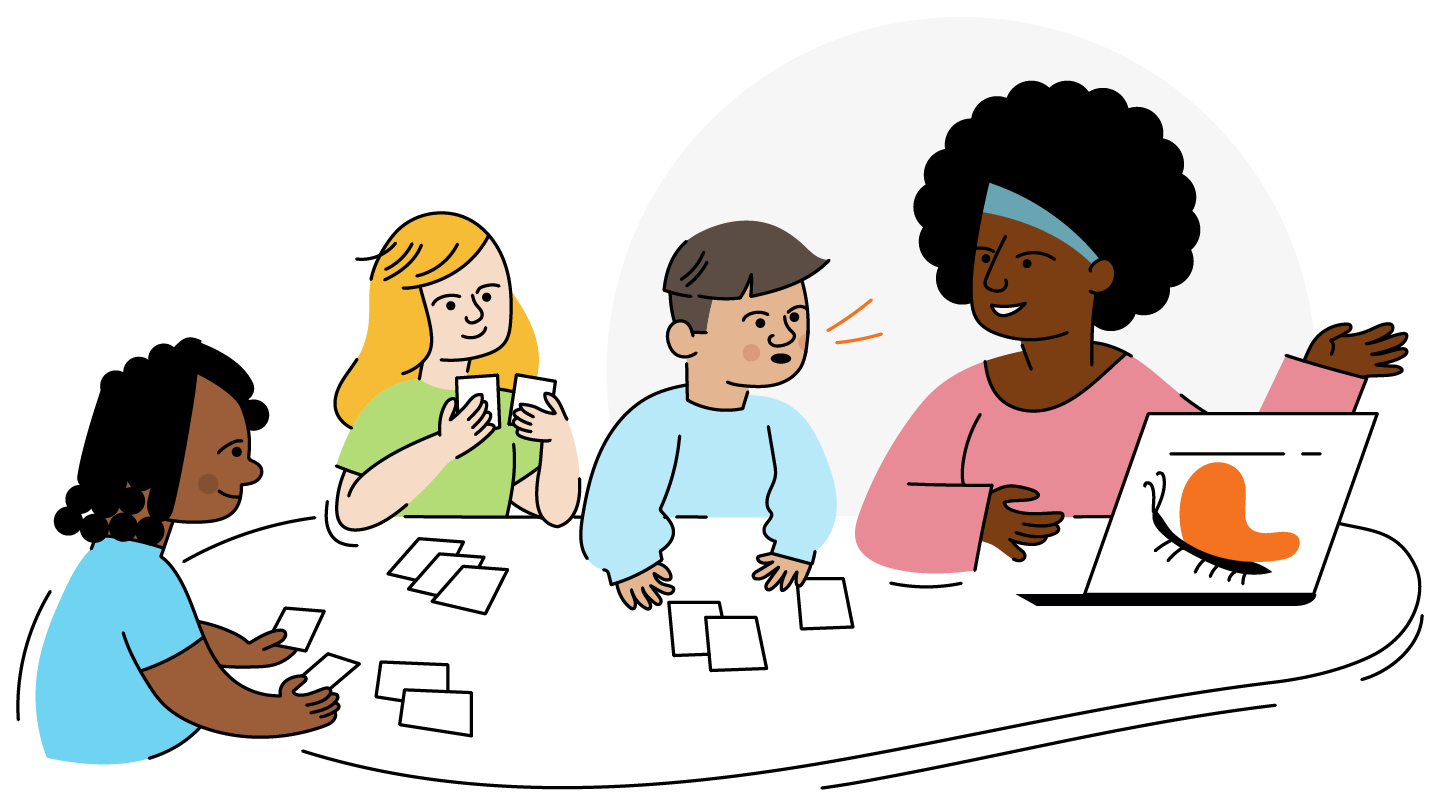
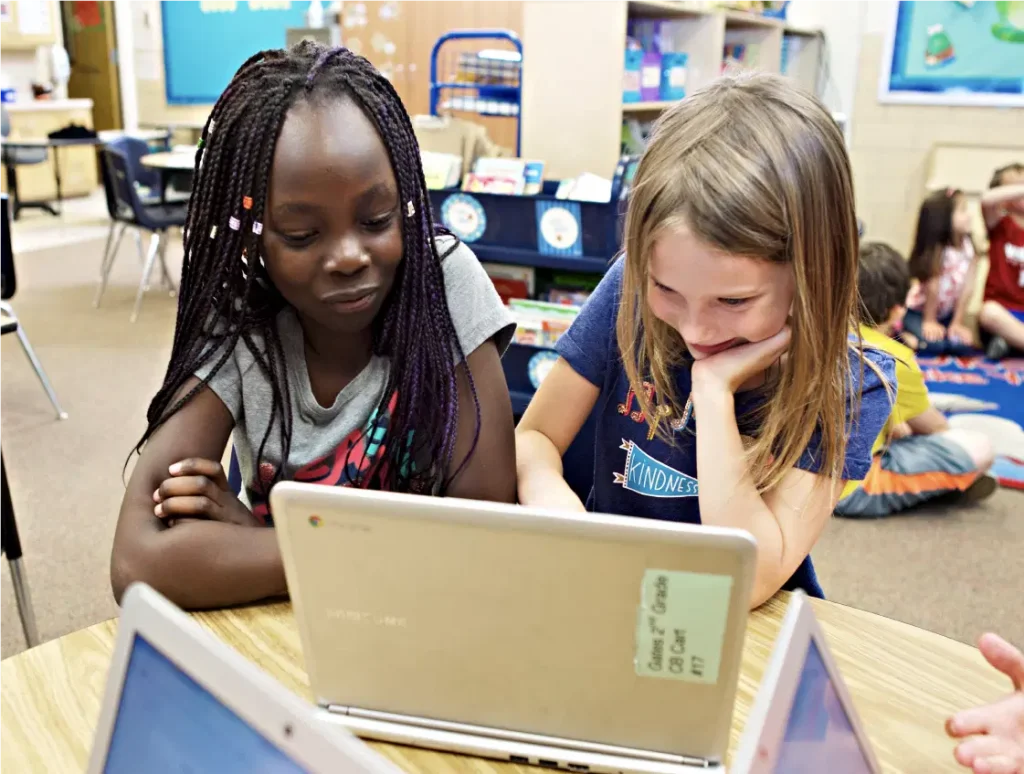
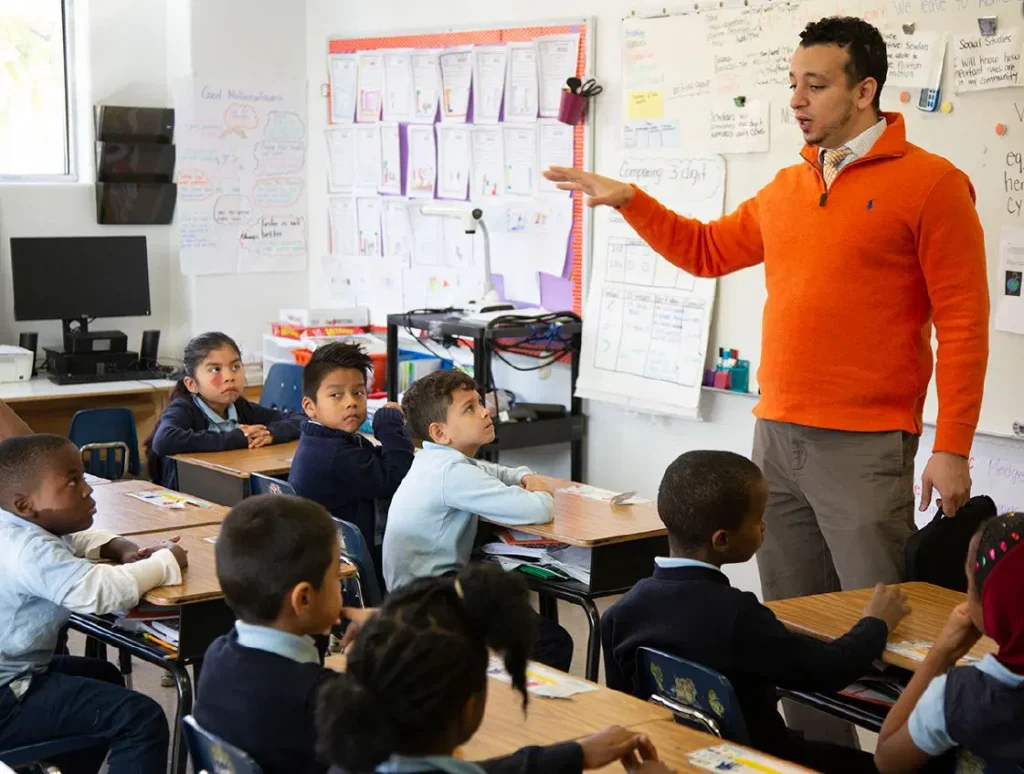
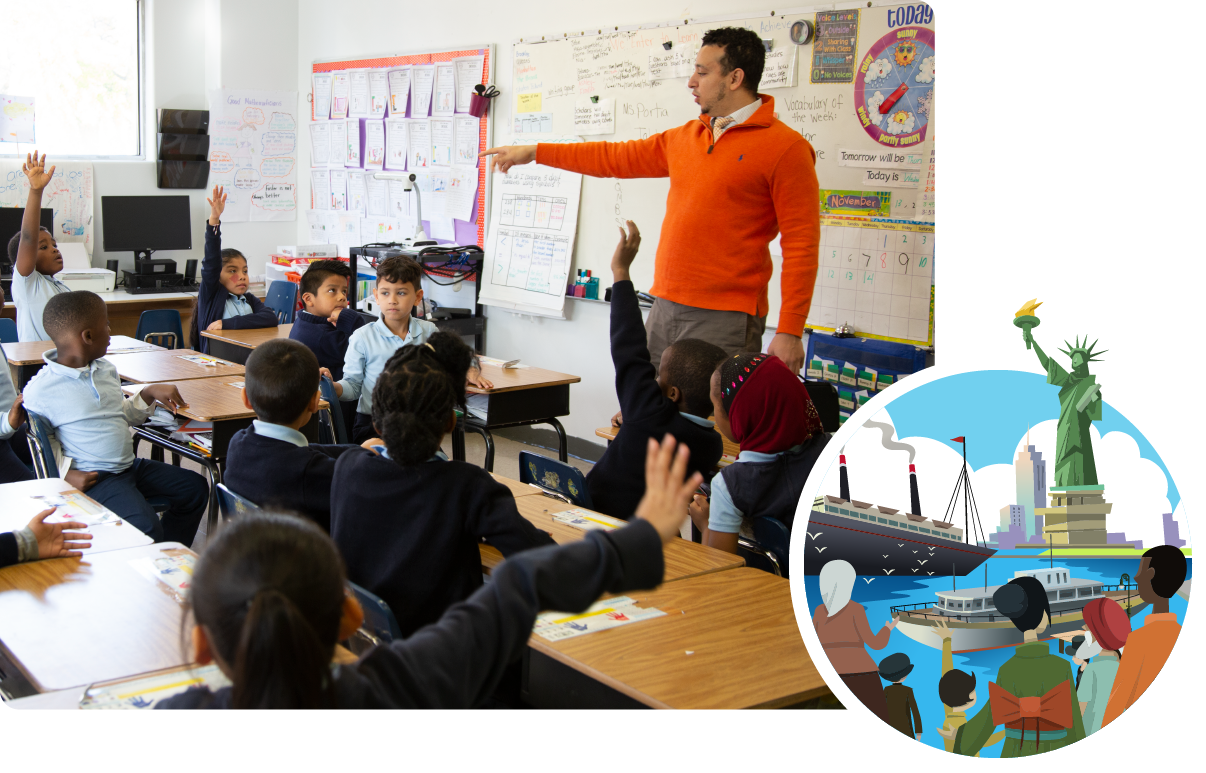
In my first-grade classroom, we’ve been studying early world civilizations. My students and I have pretended to hop in our time machines and travel back—first to ancient Mesopotamia, then to ancient Egypt. We’ve written our names on clay tablets in cuneiform and learned what it means for a religion to be polytheistic. We’ve compared and contrasted early farming systems and places of worship. As I prepared to read aloud another lesson a few days ago, I mentioned to the class that it was the eleventh lesson in the unit of study, prompting widened eyes and a chorus of “Already!?

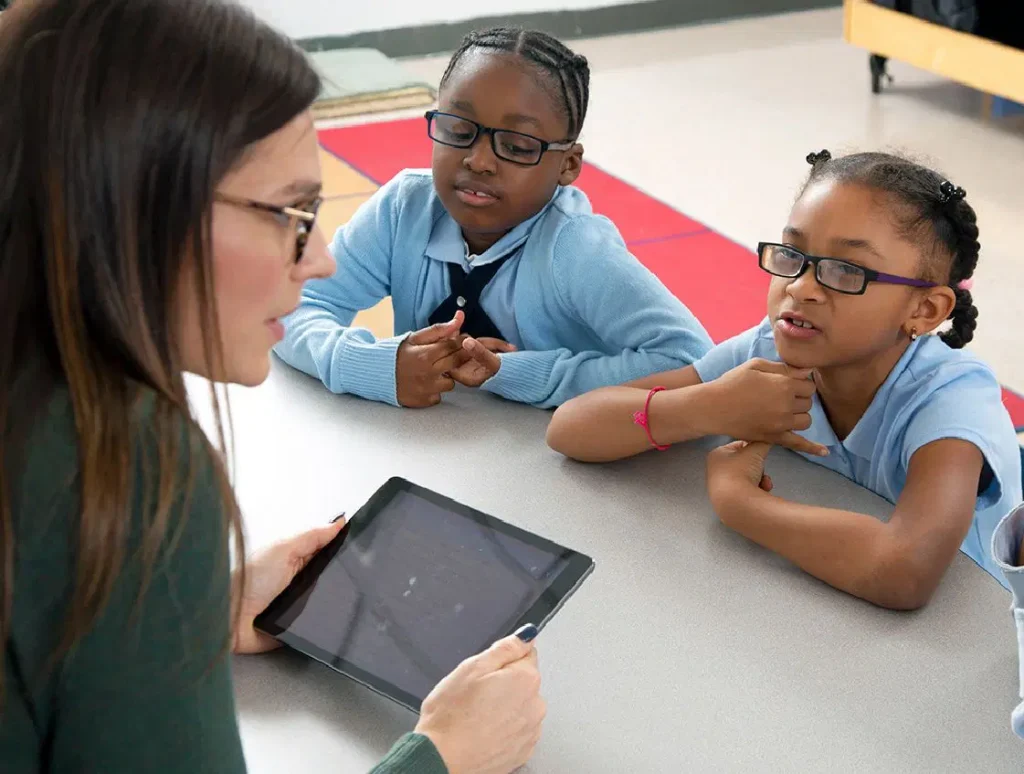
I teach eighteen six- and seven-year olds in a Title I school, where half of the students are low-income, 75% are non-white, and over half are multilingual/English learners or speak another language at home. In my job, I’m honored to empower students who schools and society have not always served well. I became a teacher to help end that inequity—to close the knowledge gap and ensure that low-income, non-white, and immigrant children receive the tools they need to build a bright future. A growing body of research tells us that a strong base of content knowledge is essential for student growth and success in literacy. We also know that students who come from low-income backgrounds are less likely to come to school possessing the academic background knowledge of their peers, presumably because they have more limited opportunities to come across this type of knowledge at home. For this reason, I’m grateful that around a year and a half ago, my district adopted the knowledge-based literacy curriculum CKLA.

Scenes from a knowledge-based curriculum

What does knowledge-based learning look like in practice? Here’s one powerful example of how a knowledge-forward lesson helped my students succeed in practicing an important literacy skill. We were reading about Howard Carter, the British archaeologist who wanted to locate Tutenkhaman’s tomb. The lesson lends itself well to one of our state’s curriculum standards for the quarter: to make and confirm predictions about nonfiction text. Part one of the Read-Aloud ends on a cliffhanger: After a years-long search with no success, encountering dead ends and tomb robbers, Carter uncovers a hidden door marked with a royal seal.

“A prediction,” I explained, “is a careful guess about what you think might happen, based on the clues you already know. Think about what you know from the story, and predict what Carter might find behind the door.” We quickly reviewed some of the main points as I scribed on chart paper: Carter had been searching for Tutenkhaman’s tomb for six years, pharaohs were often buried with treasure or gold, the door they found was in the last possible place to look in the Valley of the Kings. I handed out papers I’d prepared with sentence frames for students to record or dictate their ideas. We hadn’t yet spent much time this year explicitly practicing prediction-making—in fact, I wondered how many of my students even knew what the word prediction meant—but I could see the wheels already turning behind most of my students’ eyes as they wiggled with excitement, envisioning gold, ghosts, King Tut’s tomb, or a pile of bones.

“Maybe nothing,” one student—a six-year-old who speaks primarily Spanish at home—told me with a shrug as I helped him write down his ideas. “Maybe the tomb robbers took it all.”

How to improve critical thinking—with knowledge

Even though my students might or might not have been familiar with the literacy skill of making and confirming predictions, the rich and meaty Read-Aloud set them up for success. It was rife with topics of interest to many a six- or seven-year-old—exploration, tomb robbers, golden treasure, mummies—which kept them engaged. And it included plenty of details through which they could actually draw a meaningful inference about what Carter might have found. I had to explain only once that a prediction should be based on information you already have—not a random guess—and every one of my eighteen students successfully generated a plausible idea.

This is the magic of a knowledge-based curriculum. It levels gaps in learning by generating a rich, shared base of content knowledge that supports the development of key literacy skills. My students were successful in plausibly guessing what might happen next in the story because they had a strong grasp of the information about Howard Carter. I might have chosen to teach an entire mini-lesson on prediction-making first and then asked my students to apply the skill to a less thoughtfully selected text, or to an independently selected book on their own, but if they weren’t already familiar with the topics it covered, my guess is that they would have been far less successful.

The curriculum standards for literacy in both the Common Core and Virginia (my school’s state) emphasize critical thinking skills and specific comprehension strategies, such as inferencing, over content knowledge. This is understandable: Students must learn to make meaning of a text in front of them, not just read the words on the page. But as Natalie Wexler puts it, “The ability to think critically…is inextricably linked to how much knowledge you have about the situation at hand” (The Knowledge Gap, 39). How could my students make a prediction about a future event in a text if they didn’t understand the textual clues they were given in the first place? Especially given that students from low-income homes are likely to possess less background knowledge about the curriculum they will encounter in school, a focus on teaching skills in isolation can contribute to a far-from-level playing field.

Teaching “comprehension skills” first and then expecting students to apply them is common practice in the method of literacy instruction frequently referred to as balanced literacy. Though the conversation about literacy is, thankfully, moving toward a research-backed approach focused on the Science of Reading, we still have a long way to go. While student teaching during my education master’s program less than three years ago, I was encouraged to teach mini-lessons on topics such as “finding the main idea” and “using topic headings to understand,” which students would then practice with independently selected texts. This approach is not supported by research as a best practice—and it assumes a shared base of cultural knowledge. In that way, it entrenches inequality by privileging students who may already possess more background knowledge, allowing our most vulnerable learners to fall even further behind.

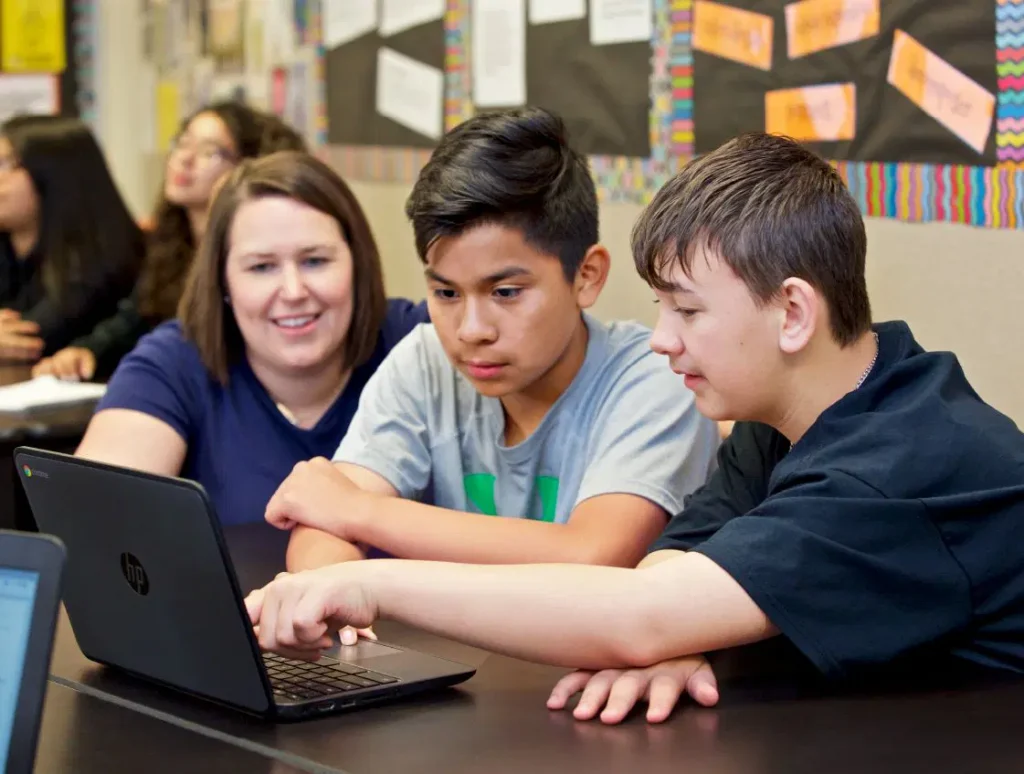
By contrast, a knowledge-based curriculum creates that base together, giving all students a better chance at success. My own experience confirms the research. CKLA empowers my students to take ownership of their learning, expand their vocabularies, make connections, and passionately engage. I’m grateful to use an evidence-based curriculum designed to ensure that every student—including those too often left behind by our schools and other institutions—can learn to read.

More to explore

S5-03. Cultivating a joy of learning with Sesame Workshop

A blue graphic with text reading "Math Teacher Lounge" in multicolored letters and "Amplify." at the bottom, with abstract geometric shapes and lines as decoration.

Listen as we chat with Dr. Rosemarie Truglio, senior vice president of curriculum and content for Sesame Workshop! Continuing our theme of math anxiety this season, we sat down with Dr. Truglio to chat about Sesame Street and her thoughts on how to spread a growth mindset to young children and put them on course to academic achievement and long-term success.
 
Listen today and don’t forget to grab your MTL study guide to track your learning and make the most of this episode!

Download Transcript

Dr. Rosemarie Truglio (00:00):
Children don’t come with this math anxiety. Math anxiety is learned.

Bethany Lockhart Johnson (00:07):
Welcome back to Math Teacher Lounge. I’m Bethany Lockhart Johnson.

Dan Meyer (00:11):
And I’m Dan Meyer.

Bethany Lockhart Johnson (00:12):
Hello, Dan Meyer.

Dan Meyer (00:14):
Great to see you, Bethany. We are on episode three. Can you believe it?

Bethany Lockhart Johnson (00:18):
So, I feel like we’ve just started scratching the surface about math anxiety. We’ve talked to two amazing researchers. We’ve talked about what math anxiety is, how it’s often screened for some of the causes, some of the consequences … I mean, we’ve had some good conversations. Dan, what do you think?

Dan Meyer (00:38):
Definitely, I think that the consequences have only grown more dire in my head. I’m not sure how you feel about the consequences. But, you know, it is enough for me that we ask students to take mathematics for much of their childhoods, to worry about their anxiety, taking that. But to hear about from these researchers about all the different things that correlate with math achievement and math anxiety—talking about future careers, certainly, but even some other, more serious lifelong concerns? That gives me a lot of motivation to continue this study of math anxiety here with you on the show.

Bethany Lockhart Johnson (01:14):
It is really widespread. It has a big impact, not only on students, but on parents, on educators. You know, it’s—

Dan Meyer (01:23):
Multi-generational.

Bethany Lockhart Johnson (01:25):
Yes. And you know, so often when folks think of math anxiety, what I hear them say is, “Oh, yeah, in high school is when math really ramps up. That’s when anxiety starts.” But we know that it starts in our youngest learners. And our research has already backed that up. We know it. I’ve seen it in my classroom. You may have seen it with some students you work with. And let me tell you, it starts young.

Dan Meyer (01:52):
It does start early. Right now, I have a son that’s just started kindergarten, and he seems relatively math-positive, but we’ve known from our interviews on this show and other kinds of experiences that oftentimes, that feeling —that math is for me, and I am for math, and we are all friends — can turn on a single moment. It seems like one teacher says a thing that changes a student’s perception of themselves as a mathematician or of math itself. So I keep waiting with bated breath, hoping not to find that one moment that changes our current open posture towards mathematics. So now it’s time to really dive into some strategies for combating math anxiety.

Bethany Lockhart Johnson (02:34):
To help us out, we’ve called on a pretty exciting guest. I am so excited, Dan Meyer! We are being joined by Dr. Rosemarie Truglio. She is Senior Vice President of Curriculum and Content at Sesame Workshop. Sesame Workshop! As in, “Tell me how to get to Sesame Street.” Dan, I have to tell you, I spent many, many hours of my childhood watching Sesame Street. I have to ask, do you have happy Sesame Street memories? Is this part of your formation, Dan Meyer?

Dan Meyer (03:08):
At this point? In my advancing years, and the brain cells that I have left, Sesame Street is really kind of just a vibe in my head. But that vibe is such a pleasant one. One in which like nothing bad could happen. One in which learning is common and normalized and fun. And you just kind of feel at home, constantly.

Bethany Lockhart Johnson (03:33):
I don’t know about the “just the vibe” part, because for me, it is visceral. I’m there. I am actually … I mean, I might still be there.

Dan Meyer (03:42):
You could reenact some of the skits?

Bethany Lockhart Johnson (03:44):
. You didn’t watch Sesame Street with your kiddos when they were younger?

Dan Meyer (03:49):
We watched a lot of Elmo. A lot of Elmo. Yeah.

Bethany Lockhart Johnson (03:52):
Next-generation Sesame Street. Well, I think it’s so perfect that we’re gonna be talking about what Sesame Workshop does to help combat math anxiety and create a positive connection and relationship with mathematics. So I’m really excited to hear what Dr. Truglio and her team have been working on. And here’s our conversation with Dr. Truglio.

Dan Meyer (04:15):
Welcome to the show, Dr. Truglio. It is an honor.

Dr. Rosemarie Truglio (04:18):
Great to be here. Thank you for inviting me.

Dan Meyer (04:20):
You are Senior Vice President of Curriculum and Content at Sesame Workshop, which definitely sounds like the coolest job in the world to both four-year-old me and also Now me. Would you just help us help us with some backstory of how you ended up here, and what you do at Sesame Workshop?

Dr. Rosemarie Truglio (04:38):
Sure. It is a pretty cool job. And I am very fortunate that I’ve been in this position for the past 26 years. So, I am a developmental psychologist, and my job is to help Sesame Workshop identify curriculum needs, so that we could address them in the content that we create on the show and across our various platforms. So, Sesame Street is currently in its 53rd season. And we just, wrapped production for the 54th season, which we’ll debut next fall. And Sesame Street began with an experiment: Can television actually teach children school readiness skills, to have them better prepared for school? Especially those children who did not have access to formal education during the preschool years? And it is what we call a whole-child curriculum, because we’re dealing with all of the school readiness needs. So that that includes the academic needs, their social-emotional needs, and their health needs, as well as what we call these cognitive processing skills—how children learn content. Right? So it’s not just content skills, but how you approach learning and how you actually learn content. So as a grad student, I was fortunate to work at the Center for Research on the Influences of Television on Children. Very special center. It was at the University of Kansas. And my advisors, developmental psychologists, they studied the effects of television on children, both the positive effects and the negative effects. And so part of their research was to actually look at the longterm educational effects of Sesame Street. So I was working with Sesame Street content as a grad student, and then came to New York City. My first job was Assistant Professor at Teachers College, Columbia University. And when this position became available, Director of Research at the time, it was called, I took that job. And so my job was to oversee both the curriculum and the implementation of the curriculum, as well as the research. Because what we know, our co-founder, Joan Ganz Cooney has always said, for Sesame Street to be a successful educational program, production has to work closely with early childhood educators. They are the ones who know the curriculum and, and develop the curriculum goals, as well as the developmental psychologists who actually study how children are paying attention to the content. But more importantly, what are they comprehending from the content? And we all have to work together. Because even though we are the experts, the real experts are the children themselves. So nothing is deemed final until we actually show the children and see what they are learning from the content that we are producing.

Dan Meyer (07:54):
Are you referring to like, test audiences of kids then?

Dr. Rosemarie Truglio (07:57):
Yeah, I guess you could call it test audiences. I mean, I don’t. I don’t like to call it that because I see them as co-collaborators. I don’t see them as a test audience. Because, as I said, they’re the experts. It’s a collaboration. I mean, they’re the experts. And so I wanna know—

Dan Meyer (08:12):
As collaborators. I got it now. Yeah.

Dr. Rosemarie Truglio (08:14):
They help us. So that’s exactly what we tell the children too. So it’s called formative research. You know, we, we do what we call, um, storybook testing, an animated version of a storybook to have some little movement and see are they finding the story engaging, but more importantly, are they picking up on the intended educational lesson that we’re trying to teach in the story. So they are co-collaborators. they’re the ones who are helping us get the story just right for them.

Dan Meyer (08:46):
That’s really exciting, and makes me think about what classes might be like if students were regarded in that kind of lens as well. I just wanna say that my four-year-old self is on this interview as well, and is re-contextualizing all the stuff I saw as a kid. And it just felt like, at the time, you folks turned the camera on and went down to the street and we just had this real natural time. And it’s great to hear about all the intense preparation and co-construction at work and work that went into that time. Yeah,

Dr. Rosemarie Truglio (09:12):
It’s about a year preparation from start to finish. From the start of identifying, “What is the educational need? Is it an academic need? Is it a social-emotional need? Is it a health need? Is it a cognitive-processing need?” And then once we have the need identified, we have what we call a curriculum seminar. We bring in the experts who are studying this topic with preschoolers, because we wanna get it, we wanna get it right.

Bethany Lockhart Johnson (09:41):
Which, by the way, little behind the scenes: How often do you get to go to set?

Dr. Rosemarie Truglio (09:46):
So we’re in a production probably about six weeks out of the year. Covid really messed things up. ‘Cause we have to be really—we have very strict Covid protocols, but there is someone on my team—and sometimes we have to, you know, rotate for availability—but there’s always an educator on set.

Bethany Lockhart Johnson (10:06):
Awesome.

Dr. Rosemarie Truglio (10:07):
Because even though you stick to the script, questions arise; they wanna make changes; sometimes they have to cut; things are running too long and they have to cut and we gotta figure out where to cut. So there’s always an educator on set.

Bethany Lockhart Johnson (10:19):
But sometimes you go and have lunch, like—.

Dr. Rosemarie Truglio (10:21):
Oh, I go, yes. Sometimes I go—

Bethany Lockhart Johnson (10:23):
And just hang out with Big Bird, right?

Dr. Rosemarie Truglio (10:24):
Sometimes I go hang out with Big Bird. No, those are my friends!

Bethany Lockhart Johnson (10:27):
They are!

Dr. Rosemarie Truglio (10:28):
No, no, I go hang out with them. They’re my friends. Yes.

Bethany Lockhart Johnson (10:32):
When I think about Sesame Street and I think about … like, I can’t help but smile. Because I think I have such fond memories of the characters. I mean, we invited them, my mom invited them, into our home, right? And, you know, now I have a two-year-old and there’s no doubt that I’m gonna introduce him to Sesame Street. And I see how it really does feel like the folks who are doing this work, you and your team, you have a deep respect for children. So it makes sense that you call your test collaborators “collaborators,” right? They’re a part of it. And you know, I love that. And Sesame Street makes me smile. However, I’m like, we’re talking about math anxiety. And it’s so interesting, because as Dan and I were talking about our memories of Sesame Street … you know, it’s like Sesame Street feels like there’s not much anxiety. I mean, there are problems, and there’s problem solving, and it’s not like everything is perfect. But we figure it out. And it’s OK to make mistakes and it’s OK to try again. And a lot of times, we don’t see that in the math classroom—or at least, how folks talk about math. So, how do you all think about anxiety, about how to prevent it? Like, when you’re doing your work, you know that math anxiety is a real thing. But then that’s not translated in these experiences and the relationships with math that you’re building with your viewers.

Dr. Rosemarie Truglio (12:07):
Yeah, that’s a really good question, because it’s really easy, because our core audience are two- to four-year-olds and they love math. And what’s not to love, right? Because they are figuring the world out as they’re exploring the world. So you said something really interesting, that when you turn on the TV—when you turned on the TV when you were a child, and now you’re a mom of a two-year-old, we wanna make sure that the show represents content that is relevant and meaningful to our target audience. And that comes through with the characters. So all of our characters have very specific personalities, as all children do. And our characters represent all children, in terms of not only personality, but interest and learning styles, ’cause we wanna see—we wanna make sure that children see themselves in these characters. And we have a character who actually loves math. And he’s The Count.

Bethany Lockhart Johnson (13:12):
I’m like, “I know! I know who it is!” I will save you my impression. Although I have done it for my child. But I’ll save our listeners .

Dr. Rosemarie Truglio (13:20):
And you know, he’s an adult character. Some of our characters are preschoolers, like Elmo and Abby—they’re preschoolers—and Zoe. But The Count is an adult. He lives in the castle and he just loves numbers. But what’s really important is while we have The Count to explain—not explain to, but to portray to children, cause we don’t explain anything; we show children that math is more than number, right? Math is a pretty wide concept. Which is what I love about math. And the other thing about math is math language. The language of math. ‘Cause when we’re teaching children vocabulary words, we’re also teaching children the concept. Be it a math concept or a science concept or a social-emotional concept. So children don’t come with this math anxiety. Math anxiety is learned and it’s unfortunate. It’s picked up by their observations of the adults in their lives, who sometimes say out loud, “I don’t like math,” or “Math is hard,” or even worse, “I’m not good at math.” Or may even label it as math anxiety. That word won’t mean anything to a young child. But it then provides a, whaddya call it, like a negative valence for something that they never felt negative about. Because as they’re growing and interacting with the world, math is all around them. And there’s that sense of awe and wonder and joy, especially as they’re learning and they’re figuring it out. So I think we have to reframe math. Instead of saying “math anxiety,” we have to talk about the joy of math and all the wonderful joys that come with the exploration of these math concepts. Number is great. We know kids love numbers. We know that they love to count and use a big word here: enumerate . Because so many parents don’t make this distinction. They’ll say, “Oh, my child is counting!” Well, there’s rote counting, 1, 2, 3, 4, 5, 6, 7, 8, 9, 10, which is important. But then it’s like there’s an item for each number. So it’s one Cheerio, two Cheerios. And then as you point to each number, you are then figuring out what the set is, of the number of objects that you have. And then you get at what I love to call the meaningfulness of math. Right? Number has meaning. And as I said, it’s all part of your everyday activities. It’s part of—it’s in your kitchen; you’re following recipes; you’re measuring; you’re weighing. It’s at bath time, right? You could have the sorting of nested cups and you could, you know, and once again, the math language: big, bigger, biggest. These are relational concepts. You could then count what sinks and what floats, if you’re doing science. And then you could put them in two different buckets, and count. These are the items that sunk and these are the items that float. So math and bath time could be a lot of fun. And then there’s math and music. Music is so rich with math, as you talk about rhythm and tempo and dynamics and pitch and duration. That’s all math.

Bethany Lockhart Johnson (16:57):
The way that you talk about it, it is so rich, right? It is so multi-layered. And you know, I’ve shared on the podcast before: I’ve actually had parents in parent-teacher conferences say that, “Well, I wasn’t good at math either,” or “Math’s really not my thing.” And it’s really—it is, it’s rooted in that fear. And so I do see the way that you’re talking about it; I see that come through in Sesame Street. That, in a lot of ways, it’s reeducating parents, right? Because we hope that our caregivers are sitting next to their kiddo and enjoying it together and having conversations about it later. And there’s a way that parents then are also getting their own sense of what math can be, expanded. And I think there’s such a beauty in that. And I love the way that you talk about that, that you really are looking at, “Well, we wanna celebrate counting and the joyfulness of that. And let’s use math talk, you know, and let’s use these words and try out these ideas.” And it’s not because you’re trying to check some list. But you’re really exploring it and having fun together.

Dr. Rosemarie Truglio (18:03):
And you’re embracing it. And you mentioned the word “mistake.” So often when it comes to math, if you make a mistake—you make a mistake in counting or, you know, we’re not doing a lot of math equations on Sesame Street, but that’s when people feel like they can’t do math. ‘Cause they made a mistake. And that’s something that we are trying to address on Sesame Street, that it’s OK to make mistakes and you learn through mistakes. But you have to have—and I’m gonna come up with this other phrase now—you have to have what we call a growth mindset. What that means is that I may not be able to do this yet. Like, it’s called “the power of yet.” So we know that learning any concept, it takes time and practice. And how do we have children embrace the process, right? So often we focus on right and wrong. Now, there is right and wrong with math, of course. You know, there’s a right answer and there’s a wrong answer. But how do we focus, not on the end product, but the process through which you are engaging in? So let’s talk about measurement. Let’s talk about measuring the length and the width or the height of something. You might make some mistakes along the way, but you’re processing it. My son used to make all of these little structures for all his little play animals. Well, you know, he would measure and think he got it right. And then when he put the animals in, of course, you know, either the animal was too wide or it was too tall. And he would have to redo it. But you’re not redoing it from scratch, you’re redoing it now from experience. “I realize that if I’m gonna put the giraffe in with the elephant, I’m gonna need something wide as well as high.” Right? For the length, tall. And that’s process. And then, for children, when they figure it out, that “oops” and “aha”—the “aha” was like, “I did it!” And it’s so empowering, you know, giving them agency—not swooping in and saying, “All right, I’ll fix it for you. You know, we got the wide elephant and the tall giraffe and I’ll you know…”. NO! Having them do it. And another fun activity is in what we call informal measurement. And that’s like getting something of an equal size. It could be paper clips or it could be same-size blocks, and then measuring how long something is. So if it’s measured by blocks versus paperclips, you’re gonna have a lot more paperclips than you are blocks. And that kind of comparison is so fascinating for children. And so that’s measurement. And now we have counting. Like, how many paperclips long is something versus how many blocks long is something.

Dan Meyer (21:02):
So checking my understanding here, you’ve talked about how caregivers and other adults can transmit math anxiety by naming it and claiming it for themselves. And you’ve talked about, some really exciting ways that adults can involve students and kids in different kinds of math. I’d love to go upstream with you a little bit and wonder out loud, where does this anxiety come from initially? It’s gotta be more than adult one to kid two talking about anxiety, and transmitting it from human to human. What is the original spring from which all this anxiety flows?

Dr. Rosemarie Truglio (21:36):
Yeah. I do think it does—a lot of it does come from the adults in their lives. It’s unfortunate, because there is a lot of math talk about it, right? I can’t do math; I’m not good at math. Even when you’re at a restaurant and you get the bill and someone’s figuring out the tip, I can’t tell you how often it’s like, “Pass the bill, because I can’t do math.” Or if you actually then bring gender into it, you know, “Oh, girls aren’t good at math,” and that’s not true. There’s no evidence of that whatsoever, right? So in the younger grades, there’s no gender difference in terms of math ability. What’s also interesting about even socioeconomic status differences, you don’t see a lot of differences between low-income and middle-income children when it comes to math skills. Where you see differences is children’s ability to talk about their mathematical thinking. So if a child doing a math problem is asked, “How did you solve the problem?”, low-income children don’t often have the language to explain their thinking. So that’s something that we did on Sesame Street, where we focused a lot on what we call math talk. So, not just show number and show doing math, but actually narrate and giving the language. Because math literacy is one of the predictors of overall school achievement. So there’s that. They’re getting it from the adults in their lives. They’re getting it, unfortunately, sometimes from their teachers. But I think the anxiety comes from the fear of making mistakes. Because math, there is right and wrong, and always wanting to get the right answer. So that’s why this whole idea of reframing, and saying, “But really, it’s in the process.” So, you know, my son, math is not his strong suit. And I’ve been doing a lot of growth mindset with him as well. And there was a teacher that he had—I think in like 10th or 11th grade—who said, “In a test, I don’t wanna—I’m not even gonna look at the answer. I wanna see the process through which you GOT to this answer. And I’m going to grade the process. So the process could yield a right answer; it could yield a wrong answer. But you’re gonna get graded on the process. Because I wanna see how you are approaching the problem and how you’re thinking it through.” And I think that is a great example of, maybe, to try to reduce math anxiety. Because if you can get people excited about the process through which you’re learning—and that applies to all subjects, it’s not just math!

Bethany Lockhart Johnson (24:36):
I’m like, that applies to life! Right?

Dr. Rosemarie Truglio (24:38):
That applies to life!

Bethany Lockhart Johnson (24:39):
That’s so spot on. Wow. Yeah.

Dr. Rosemarie Truglio (24:41):
But I think that there’s so much focus on right and wrong, and not really understanding the value of the process. So on Sesame, we’ve been doing a lot of “oops” and “ahas.” You know, we’re gonna make mistakes, but what’s important is what do you DO when you make a mistake? So there’s a great episode with The Count. A couple of years ago. The Count was counting. Something he does every day. A lot of time, every day, ’cause he’s obsessed with counting and numbers. And he was counting an array of items.

Gladys the Cow (25:17):
I need 10 sandwiches all together.

The Count (25:22):
Well, of course.

Dr. Rosemarie Truglio (25:23):
And he made a mistake.

Elmo (25:25):
The Count?

The Count (25:25):
Hmm?

The Count (25:25):
Elmo thinks The Count made a little mistake.

The Count (25:31):
No mistake.

The Count (25:32):
Mm-hmm. Yeah.

Dr. Rosemarie Truglio (25:33):
And first time ever, did he make a mistake. And he fell apart.

The Count (25:38):
I must make sure that that never happens again. So I shall never count again.

Dr. Rosemarie Truglio (25:46):
And that’s an example of showing that, you know, you could get upset when you make a mistake, but what’s important is you gotta come back and you gotta come back to doing what you love. In his case, is counting and letting him know that it was an “oops.” But you learn that mistakes are OK. It’s OK to make a mistake and continue to do what you love.

The Count (26:13):
I must keep trying and you should, too.

Elmo (26:17):
Yeah!

The Count (26:17):
So come, let’s count the carrots together!

Elmo (26:18):
Oh, cool!

Bethany Lockhart Johnson (26:19):
And what a beautiful gift to show kiddos. Show that to kiddos, right? And to the adults. I wanna, you know, really acknowledge it, and say, “Hey look this, it’s OK.” And again, you’re giving them that language. That’s such a gift.

Dr. Rosemarie Truglio (26:34):
Thank you.

Dan Meyer (26:34):
We spend a lot of time wondering why other subjects don’t seem to suffer from this negative perception. And I think you’ve unlocked a lot of that. You’ve mentioned that there are issues that cut across different subject areas, but I think from my own experience and research and interviews, it seems that in ELA and the social sciences, there’s this aspect where you need to come up with a claim and “how are you seeing this?” And there are multiple defensible claims. And I love how you imported that generous pedagogy over into math with this example of a teacher who says, “You know what? It’s about the process here.” Disassociating answer and process.

Dr. Rosemarie Truglio (27:09):
And I think the other thing is like, when children are engaged in a project, for parents to point out: “You’re doing math!” Because they don’t realize that they’re doing math. Once again, math is so often equated solely with numbers and mathematical computations. So it was really interesting—the same is true for science. You know, when we’re talking to parents about the use of everyday—like, going to the supermarket or making dinner or bath time, there’s so much math and science in the everyday. And then when you point it out to them—”you’re doing math”—it’s like, “I’m doing math!” Like, you’re setting the table for a family of six: you’re doing math. That’s called one one-to-one correspondence. “I’m doing math: I’m setting the table.” Yeah, but you’re doing math. You can’t set the table because you have to know how many people are gonna be sitting at the table for dinner. You can’t follow a recipe without doing math. You can’t go shopping without doing math. There’s quantity; you gotta figure out how many peppers you gotta buy, or pounds. “I gotta get a bunch of potatoes and I gotta put ’em in the scale. And I have to get two pounds of potatoes.”

Bethany Lockhart Johnson (28:29):
So your book Ready for School: A Parent’s Guide to Playful Learning for Children Ages Two to Five. First, as a parent of a young toddler, I gotta say it’s such a tool; it’s such a resource. It’s very conversational. And I think about these ideas a lot, both in my work and, you know, just for fun. And yet, even if this wasn’t my chosen field, I still feel like it’s just so accessible. And I wanna flag something.

Dr. Rosemarie Truglio (29:01):
Thank you.

Bethany Lockhart Johnson (29:01):
Yeah, no. Thank YOU. . I wanna flag something that you said in the math chapter You were talking about the joy of math, and you said when it comes to our children, caregivers: “take pleasure in reading stories together, especially at bedtime, which in many households is a regular part of a child’s routine. But somehow the notion of introducing math concepts to our children seems daunting. In fact, some studies have shown that parents harbor a strong belief that while it’s important and pleasurable to support their child’s reading skills, it’s the responsibility of the schools to take care of teaching math.” And that quote, I highlighted it, I starred it! And I would love for you to say a little more about that, because you have given us already, like, a bounty of ideas that as caregivers we can do with our kiddos or the kiddos in our lives. And we’ve seen that even what they’re learning in school, it may not be the freeing, joyful math language that we hope our kiddos have access to.

Dr. Rosemarie Truglio (30:05):
Yeah, I’m glad you brought that up. Because a lot of our focus is on how children learn through playful experiences, and how they learn through play in particular. And there are so many playing, either a game or even playing ideas—like we talked about building, you know, a house for animals or building a fort. It’s just so filled with math. And I wish I could narrate for every young parent how I would hope that they would talk as they are co-engaged in this activity. And I think … we asked about, with the anxiety, the adults have to find the joy in math first. They have to see the math. That’s the problem. That’s why I hope that my book provides that. I want you to know that you are doing math and I want you to know that your child is what we call a mathematician—or in the science chapter, is a STEMist. Your child is already doing science, technology, engineering, and math. STEM is so integrated. So to acknowledge them—because babies are doing math! Babies know, they can distinguish between a small quantity and something that is a of a larger quantity and want the larger. Right? So, it’s natural for them. And they are taking it all in. I mean, the joy of watching a child just early counting: you know, one, two. And trying to then figure out the meaningfulness of two. It’s not three objects. There are actually two. And for a parent to see the joy in that I think is step one. And then to see the richness and how expansive math is, and that power of, oops, “I made a mistake, don’t freak out,” and then [not] say, “See, I’m not good at math,” but say, “Let me try again. I know I could figure this out.” Right? It’s all of that supportive language and supportive experiences that builds this mindset, a positive mindset. So that you hope that when you get into the higher grades, they’re not walking in and saying, “I can’t, I can’t do math.”

Dan Meyer (32:26):
Yeah. Super helpful. I think you point at one of the grownups—great powers in the world of kids, which is to label. To name things. And you know, you’ve talked about how grownups should ideally downplay some of their negative experiences with mathematics for the sake of the kid, but also to play up the positive stuff that they’re doing as mathematics. Like that right there, that’s math. I would love to know … you have an extremely loud megaphone to communicate messages about math and the world and everything through Sesame Street. One of the biggest that there is—and I just wonder if you could step out and imagine you had a magic wand to wave over the world in which students grow up, play and learn—what would you do like to help students have better associations or less math anxiety? And, you know, learn more about math itself?

Dr. Rosemarie Truglio (33:19):
If I had a magic wand, I would give everyone what we call a growth mindset that nothing is fixed and everything can be changed if you put the time and effort into the process, and enjoy the process. The joy of learning. I think, you know, it’s really sad. I don’t wanna be sad on your show. But when we were getting ready for the 50th anniversary, I was wondering, “What is gonna be the curriculum focus?” You know, we just came off of literacy and math literacy and social-emotional development. And we talked about the power of play. Playful learning. And building careers. Give children sophisticated play scenarios so that they could explore what they may wanna be when they grow up. Because there’s a concept: If I can see it, I can play it, I can be it. Right? So where are those portrayals? And it’s like, “What are we gonna do for the 50th?” And I had a convening of experts across all disciplines, and brought them into a room. And I said, you know, “What keeps you up at night? Like, what are you worried about?” Sort of like the State of the Union of Child Development. And this is where the sad part is. They talked about how that sense of joy, that sense of wonder, that sense of curiosity, that sense of flexible thinking and creative thinking, was disappearing in early childhood. Wow. If it’s disappearing in early childhood, we are in big, big trouble . ‘Cause I could see it disappearing later on, you know, as you advance in grade. But what do you mean, it’s disappearing in childhood? And then they talked about the fear of making mistakes. And that goes against—it’s the opposite of a growth mindset. And so we have to bring back that sense of joy, wonder, asking those why questions and embracing them. So it’s another problem parents have. They’re fine with the “why” questions until the “whys” become so difficult they don’t have the answers. And then they don’t want the “why” questions, because now they feel like they’re not smart enough to answer their child’s “why” questions. How do I flip that around to be much more positive and say, “You know, I don’t know! But let’s find out together. Let’s explore together; let’s experiment together.” That’s what I mean about the shift in the mindset, that growth mindset. We should not know all of the answers, but where’s the joy of, “Wow, I don’t know, let’s go find out together”? And that applies to math too. But you have to have that open mindset. You have to—you, as yourself, have to have that growth mindset.

Bethany Lockhart Johnson (36:20):
I love that magic wand. I want that magic wand! And I think what—like Dan said about this megaphone, this opportunity to reach so many young people, so many caregivers—what a gift! And I’m so grateful that you took time to be in the lounge with us, and that you have shared these ideas. Because truly, I think, like you said, it’s really our youngest learners, right? How can we create and cultivate these opportunities for our youngest learners to find the joy in mathematics and just in learning, right?

Dr. Rosemarie Truglio (36:54):
Yeah.

Bethany Lockhart Johnson (36:55):
So thank you. Thank you so much, Dr. Truglio. We are deeply grateful for your insight and for all the work you do. And we continue to invite the world of Sesame Street into our homes.

Dr. Rosemarie Truglio (37:08):
Thank you. Thank you for allowing us to come into your home, and for you to re-learn with your child as you’re watching Sesame Street. Because it’s very much a parenting show, as it is for a child-directed show, because we are blessed to have these wonderful human cast members who are the stand-ins for parents. And so we are often giving you the language for how to talk about and how to problem-solve together. So thank you.

Dan Meyer (37:43):
Thanks so much for listening to our conversation with Dr. Rosemarie Truglio, Senior Vice President of Curriculum and Content at Sesame Workshop.

Bethany Lockhart Johnson (37:51):
Dr. Truglio is also the author of Sesame Street Ready for School, A Parents Guide to Playful Learning for Children Ages Two to Five, and we’re gonna make sure we put a link to that in the show notes because it is really, really a rich resource. I’m diving in. I have so many ideas bookmarked that I wanna try out with my kiddo.

Dan Meyer (38:09):
Yeah, it’s really exciting to see—like, for a classroom educator, I just kinda assumed that a lot of math learning happens in the classroom context. That’s my lens. So yeah, I loved reading the book and seeing all the different opportunities for parents for just out there in the world, in front of your house, at the supermarket. All the different opportunities there are for mathematical thinking, and then to think about how to bring that into some of those routines and ideas into the classroom, into formal schooling.

Bethany Lockhart Johnson (38:35):
Exactly. Exactly. Like Dr. Truglio said, the caregivers’s disposition about mathematics matters so deeply. Your teachers’ dispositions about mathematics, their beliefs, the way that you hear people talking about math, that impacts our learners. That impacts—like, as a student, that impacts what you think is possible for yourself. So I love this, re-educating ourselves about what math can look like out in the world, in everyday conversations. I don’t know. I really, really appreciated this conversation with Dr. Truglio.

Dan Meyer (39:12):
Same. Yeah. We’d love to hear what you folks think about the work. the book, her ideas. Definitely get in touch with us. Subscribe to Math Teacher Lounge, wherever you get podcasts. And keep in touch with us on Facebook at Math Teacher Lounge Community, and on Twitter at MTL show.

Bethany Lockhart Johnson (39:27):
Also, if you haven’t already, please subscribe to Math Teacher Lounge wherever you get your podcast. And if you like what you’re hearing, please leave us a rating and a review. It’ll help more listeners find the show. And while you’re at it, let a friend know about this episode, because you enjoyed it; they might enjoy it. On our next episode, we’re gonna be chatting with Dr. Heidi Sabnani and taking a closer look at best practices for coaching teachers to reduce their own math anxiety.

Dr. Heidi Sabnani (39:56):
One of the teachers that I worked with had done her student teaching with a teacher who had math anxiety and who never taught math. And so she entered her teaching career never having taught math before or seeing it taught.

Dan Meyer (40:10):
Thanks again for listening, folks.

Bethany Lockhart Johnson (40:12):
Bye.

Stay connected!

Join our community and get new episodes every other Tuesday!

We’ll also share new and exciting free resources for your classroom every month.

What Dr. Rosemarie Truglio says about math

“We all have to work together, because even though we are the experts [on curriculum and education], the real experts are the children themselves.”

– Dr. Rosemarie Truglio

Senior Vice President of Curriculum and Content, Sesame Workshop

Meet the guest

Rosemarie T. Truglio, Ph.D. is the Senior Vice President of Curriculum and Content at Sesame Workshop. Dr. Truglio is responsible for the development of the interdisciplinary curriculum on which Sesame Street is based and oversees content development across platforms (e.g., television, publishing, toys, home video, and theme park activities).  She also oversees the curriculum development for all new show production, including  Bea’s Block, Mecha BuildersEsme & RoyHelpsters, and Ghostwriter. Dr. Truglio has written numerous articles in child and developmental psychology journals and presented her work at national and international conferences. Her current book is Ready for School! A Parent’s Guide to Playful Learning for Children Ages 2 to 5, published by Running Press (2019).

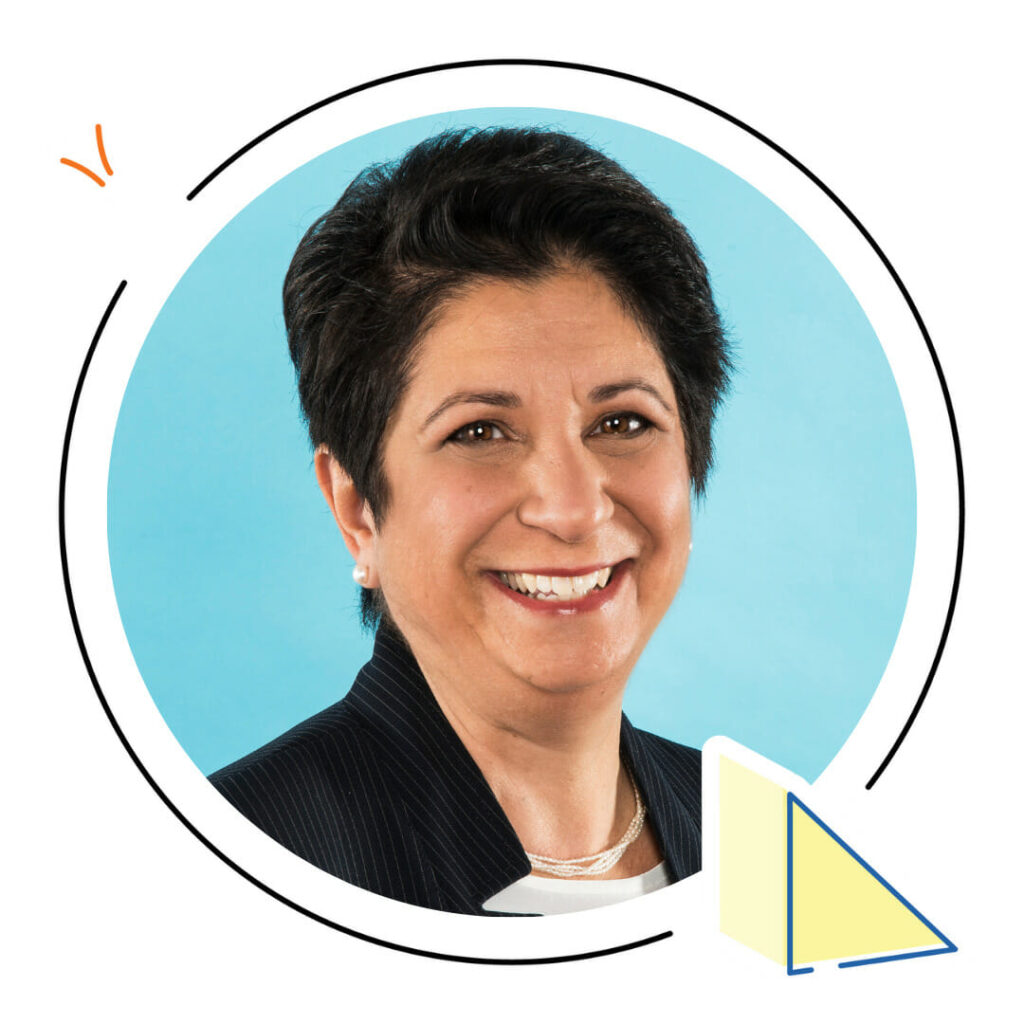
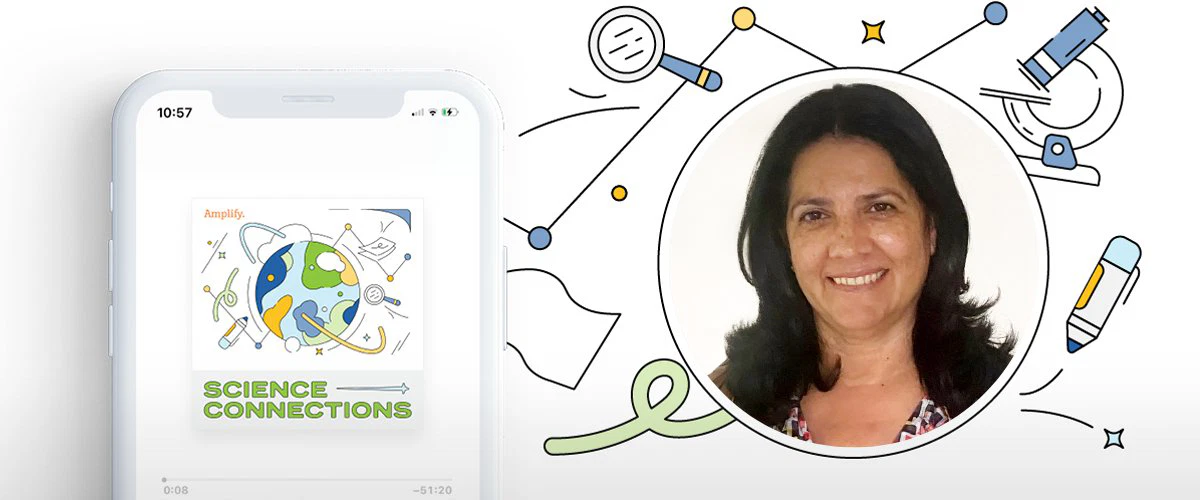
A person with short dark hair, wearing a dark blazer and white top, smiles at the camera against a blue background with graphic elements, evoking the inviting atmosphere of a math teacher lounge and highlighting useful math teacher resources.
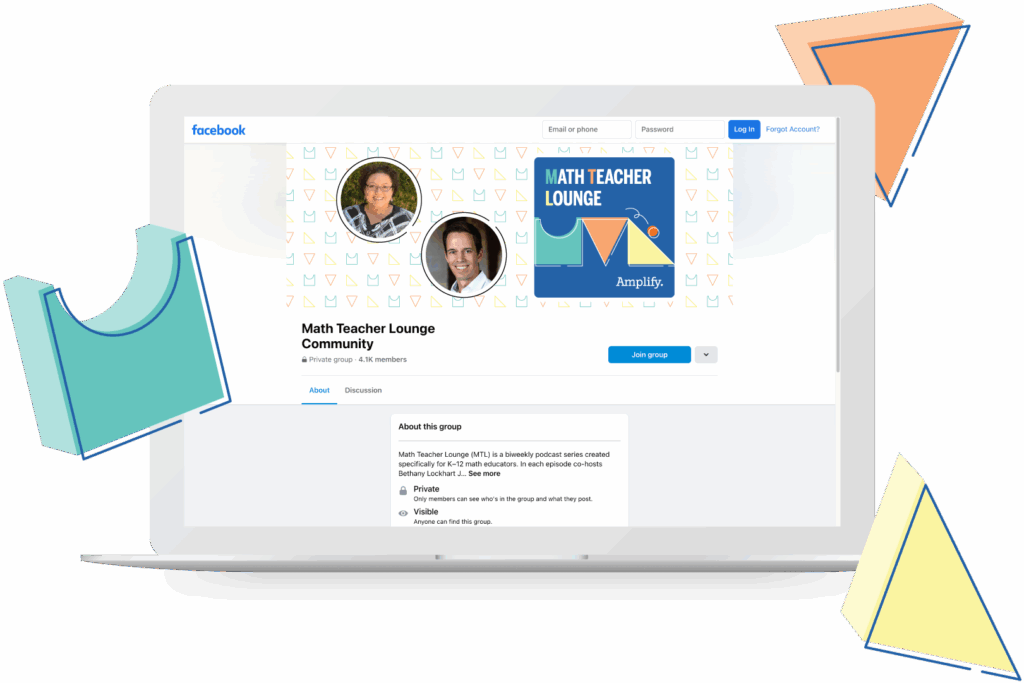
A laptop displaying a Facebook group page for "Math Teacher Lounge Community," featuring profile photos, a group banner, and geometric shapes in the image background.

About Math Teacher Lounge

Math Teacher Lounge is a biweekly podcast created specifically for K–12 math educators. In each episode co-hosts Bethany Lockhart Johnson (@lockhartedu) and Dan Meyer (@ddmeyer) chat with guests, taking a deep dive into the math and educational topics you care about.

Join the Math Teacher Lounge Facebook group to continue the conversation, view exclusive content, interact with fellow educators, participate in giveaways, and more!

The Science of Reading and the power of knowledge

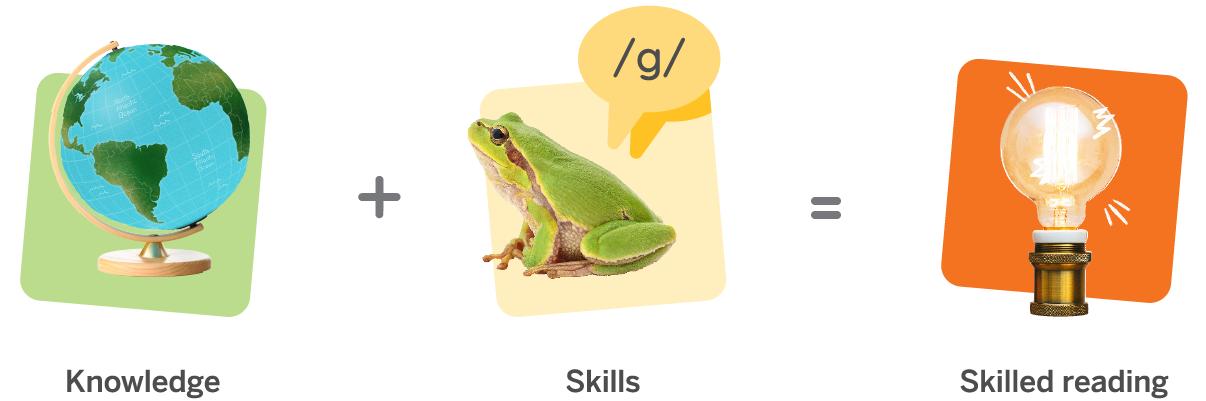
The Science of Reading has shown repeatedly and definitively that background knowledge is much more than a nice-to-have when it comes to literacy. In fact, it’s a must. 

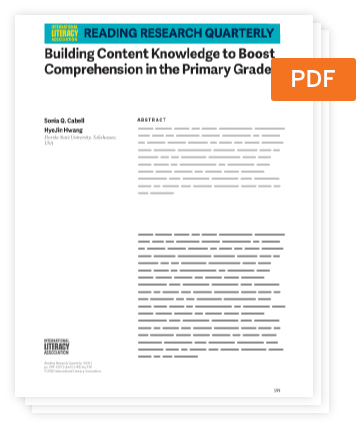
One recent independent study led by Sonia Q. Cabell, Ph.D., and Hyejin Hwang, Ph.D., conducted two trials of more than 1,200 kindergarten students. Reading comprehension tests revealed that students who used a knowledge-building curriculum, such as Amplify CKLA, showed statistically significant positive effects on both social studies knowledge and vocabulary, even over just one semester.   

So here’s what teachers need to know about the knowledge-building students require, starting early, to develop foundational literacy skills for life.

The power of knowledge and language comprehension, in action

Read the following passage. 

Start by putting your clay on the bat as close to the center as possible, then turn your wheel on at full speed. After adding water often enough to keep the clay glossy, adjust it until it’s barely wobbling, then cone it up and center it further. Cone down and then open the clay. Lower your wheel speed to halfway and start pulling the walls. Compress the floor, and then start shaping. When you’re happy with your shape, use your wire tool to remove it from the bat, and set it aside to start drying before you trim, glaze, and fire it.

If you were ever trained in pottery, you probably understood a lot of that. If you weren’t, you could likely read the words and sense the tone, but most of the content would not make sense (Cone up? Cone down?) or stick in your mind at all. 

That’s exactly how background knowledge powers reading comprehension.

The knowledge gap

Elementary students confront disparities in their background knowledge every day. Some have houses full of books and summers full of trips. One kid has a pet turtle, another celebrates Diwali, another grew up in the family restaurant. As you can probably imagine, they’d all get and retain a wide range of understanding from passages about, say, amphibians, alfredo sauce, and the Alps. 

Not all foundational literacy instruction is built to access the knowledge students bring to the classroom, or to grow the knowledge they need to understand what they’re reading. 

What’s more, having less background knowledge is correlated with socioeconomic status, with students who come from lower income families generally having less background knowledge than those who come from higher-income families. That’s how we know that knowledge is also a matter of fairness.

The role of writing instruction

Writing instruction grounded in the content of a knowledge-based curriculum can be a crucial contributor to knowledge-building, according to Wexler. It can help teachers:

  • Identify which gaps in background knowledge are holding a given student back.
  • Instruct students at higher grade levels, even if students reach those levels with gaps in background knowledge.
  • Boost learning across subjects.
  • Improve the quality of student writing itself, because it’s grounded in a topic they can say something about. 
  • Foster comprehension by familiarizing students with the complex syntax of written language in their own writing. 

The power of knowledge to connect 

Big picture: Connecting to a student’s background knowledge can help unlock their full potential as a reader, writer, and member of the classroom and school community. 

Allison Rice, elementary ELA curriculum coach for Kansas City Kansas Public Schools, tells this story about a girl in her class: “All through Unit 1 and halfway through Unit 2, she had not really participated or spoken in class, until they got to the lesson on Diwali. She celebrates Diwali. And all of a sudden, she had 1,000 things to contribute. Then her parents came in, they had never been into the school, and they finally felt welcomed and comfortable enough to come in and share about their culture, and the whole grade level had a huge party.” 

This student was able to use her culture—and her knowledge—to create community in her classroom. “Here’s this little girl,” says Rice, “who for the first time has felt seen and reflected.”

Literacy resources for teachers and more

S3-01: Science as the underdog, and the research behind it

A graphic with the text "Science Connections" and "Amplify" features colorful circles and curved lines on a dark gray background.

Get ready for season 3 of Science Connections: The Podcast!

In our first episode, we unpack the research around our season theme of science as the underdog with Horizon Research, Inc. Vice President Eric R. Banilower and  Senior Researcher Courtney Plumley. Eric and Courtney dive into the research they’ve found and their experiences as former educators to show how science is often overlooked in K–12 classrooms. We discuss how the science classroom compares to other subjects in terms of time and resources, how schools are a reflection of society, and what’s needed to change science and its impact on a larger scale.

We hope you enjoy this episode and explore more from Science Connections by visiting our main page!

DOWNLOAD TRANSCRIPT

Courtney Plumley (00:00):

We asked teachers how much science, professional development, they’ve had in the last three years, and nearly half of elementary teachers said none.

Eric Cross (00:10):

Welcome to Science Connections. I’m your host, Eric Cross. I am super-excited to be kicking off the third season with the show. This entire season will be exploring the theme of science as the underdog. And we’re gonna make the case for science, by showing how and why it can be used more effectively. In the coming episodes, we’re gonna talk about how science can be better integrated into other content areas like literacy and math, and explore some of the benefits that you might not be thinking about good science instruction. But first, science as the underdog. I bet some of you out there feel like science is the underdog in your community at school. I know I have at times. To kick off this season, I’m gonna talk to two people who really studied this question by looking at the state of science instruction across the US. Eric Banilower is Vice President of Horizon Research and Courtney Plumley is Senior Researcher at Horizon Research. Eric was the principal investigator and Courtney an author of the latest in a series of studies called “The National Survey of Science and Mathematics Education.” We’re gonna dive into the findings of their most recent report to see what the data’s showing us. Please enjoy my discussion with Eric Banilower and Courtney Plumley. Courtney, hello. And thank you so much for joining us.

Courtney Plumley (01:25):

Hi Eric. It’s nice to be here.

Eric Cross (01:26):

And Eric, welcome.

Eric R. Banilower (01:27):

We’re thrilled to be here, so thank you for having us.

Eric Cross (01:30):

I was reading through the report. Four hundred…a very thorough report, 471 pages, I think, as I got it?

Eric R. Banilower (01:37):

And that’s only one of the many reports from that study.

Eric Cross (01:40):

Yeah. You all have done your work, so I’m really excited to to talk to you about this. And on this season of the show, we’re exploring the theme of science as the underdog. And I think a lot of our listeners, we feel like science is an underdog either in their school or in their district. But you’ve actually done some research on this, in a 2018 study, “The National Survey of Science and Mathematics Education.” So I wanna talk about this report. But first I was hoping you can kind of set the stage. How did you come to work on this report, and then, big picture, what were you hoping to find out?

Eric R. Banilower (02:10):

So the 2018 study that you just mentioned was actually the sixth iteration of a series of studies dating back to 1977. And we collect data every decade or so—you know, plus or minus a few years. And really, what we’re trying to do is get a snapshot of what the science and math education system looks like in in the nation. So my role grew. I started working at Horizon in about 1998, after teaching high school for five years in California. And then going to graduate school. And right about that time, the company was doing the 2000 iteration of the survey. And I worked on it with the team here at Horizon. And then we did it again in 2012. And I had a much more prominent role in that study, and became the kind of leader of the study. And in 2018, the most recent version, we just did it again. So the goal of this study is really to kind of examine key aspects of the K–12 STEM education system. And the main audience of the work has traditionally been policy makers, researchers, and practitioners who work at the federal, state, and district level.

Eric Cross (03:30):

So this study, you took kind of a sample size, but it’s reflective of trends that we tend to see across the nation as a whole. Would that be fair to say?

Eric R. Banilower (03:38):

Yes, definitely it is. It is a random sample of schools in the country. So we start with a list of all the public and private schools in the nation, and then do a random sample of those schools, and then work really, really hard to recruit schools to agree to be in the study. And that has gotten harder every time we’ve done the study, for many understandable reasons. And then once we have schools on board, we sample teachers within schools. So we don’t even survey every teacher in a school. It’s really a sub-sample. So that we can make inferences about the nation as a whole.

Eric Cross (04:14):

Makes sense. And so Courtney, what did you find out about the time spent on science instruction in US schools?

Courtney Plumley (04:22):

So, I’m gonna talk about elementary teachers to begin with.

Eric Cross (04:26):

Because that was your past life, right?

Courtney Plumley (04:28):

I am a former elementary teacher, yeah. So that’s kind of where my head is. And that’s relatable for me. Right? So we asked teachers, like, how many days of the week or weeks of the year that they teach elementary school. And fewer than 20% teach science every day of the school year. They kind of do one or two things, for the most part. They teach a couple days a week or they teach every day of the week, but only for, like, maybe six weeks, and then they swap with social studies and they kind of do that across the school year. Which is really different from, like, math, right? We also asked elementary teachers, how often do they teach math, and it’s every day of the year. Then we also asked them how many minutes they teach when they’re teaching, and we kind of did the math to figure out, all right, if they taught science every day of the school year, how many minutes would it be in a single day, so that we could make a more comparable comparison with math and ELA. If you were to work it out, how many minutes of science an elementary teacher teaches across the year, and break it down to per day, it’s like 18 minutes for the lower elementary grades, 27 for the upper elementary grades. Which is not a lot. But it’s pretty much an hour a day in math, and 80 plus minutes in ELA. So, a lot less. And then, you know, when I was teaching, the first thing to go was always science, right? If there was an assembly, if there was early release or whatever, that was the first thing to go. So those numbers might even be higher. Just because they aren’t factoring that kind of thing in, too.

Eric Cross (06:05):

So, now I’m curious. That is something that I’ve seen just anecdotally, science being the first thing to go. I feel like I’ve seen that almost…it’s almost become a meme, that I’ve heard that so often. Just in your experience, why do you think that is that huge disparity between the two?

Courtney Plumley (06:26):

Well, I mean, when I was teaching, I was teaching third grade. I had an end-of-grade test in math and ELA for my kids. I didn’t have one in science. So the administration said, “Hey, if you’re gonna drop something, drop something that’s not tested.”

Eric Cross (06:41):

Simple as that. And Eric, you, past life: physics teacher. High school. What did you see? ‘Cause our listeners run the gamut from elementary all the way up to high school. What did you see, as far as relative science instruction in the secondary level?

Eric R. Banilower (07:00):

Sure. You know, secondary is just a whole different situation than elementary. Rght? Because you have departmentalization. I taught science. I didn’t have to teach other subjects. And students had periods, and they still do, sorry, they still have periods, even though it’s been a long time since I taught. And you know, they rotate from one class to another. So all the classes were essentially the same length. So, you know, when I was teaching, it was about 50-minute periods. So in terms of minutes of a class or minutes on a subject, it’s not really different. But what is different is what students are required to take in order to graduate high school. One of the things we asked schools about in this study was how many years of a subject do students have to take in order to graduate? And what we saw was in mathematics, over half the schools in the nation require students to take four years of mathematics to graduate. OK? And the vast majority of the rest, about 44%, require three years in science. Most schools require three years. Very few require four years. And many, or a fair number, still only require two years to graduate. So the expectation of what students are taking is lower in science than it is in mathematics.

Eric Cross (08:20):

So you were seeing the same trend in secondary, essentially.

Eric R. Banilower (08:24):

Yes.

Eric Cross (08:24):

The amount of time devoted to the instruction of science…we’re kind of seeing it mirrored just across K–12 across the board.

Eric R. Banilower (08:33):

That’s correct.

Eric Cross (08:34):

And that’s across the country. ‘Cause the sample size represents teachers from Alaska, Hawaii, the South, SoCal, everywhere. So what’s been the reaction to that number? Like 18 to 20 minutes is…I mean, it’s, it’s half of my lunch at our school. What’s been the reaction to that number since this data has been published?

Eric R. Banilower (08:58):

I don’t know, Courtney, if you want to take that…

Courtney Plumley (09:00):

It’s a lot of what you just did. Like, what??? Like, how is it possible to teach all the things you need to teach in such a little amount of time?

Eric R. Banilower (09:08):

What’s really kind of surprising to me, though — though now that I’ve worked on three iterations of the study, it no longer surprises me, but it did at first — is that these numbers really aren’t changing since we’ve started doing this study. You know, people thought maybe with No Child Left Behind and the increase in accountability, time on science might actually go down, because there was more testing in math and English Language Arts. It didn’t happen. It was pretty much constant, that this has been kind of the state of science education for a long time.

Eric Cross (09:44):

So Eric, if I’m hearing you right: The past studies, we’re not seeing an increase or a decline. This has been this way for how many years, roughly, would you say? Since it’s been studied?

Eric R. Banilower (09:54):

You know, I’d have to go back to the 1977 report to get the numbers, but I’m gonna say since then, it has not changed much, if at all.

Eric Cross (10:03):

So this has kind of been entrenched. This has been the norm for almost for the career of a teacher, almost generationally. We’re looking at anyone who’s been in the highest levels of leadership to someone just entering the classroom, this has been the way it’s always been. This is kind of for many people what they’ve only known.

Eric R. Banilower (10:20):

Right.

Eric Cross (10:21):

Kind of become the norm.

Courtney Plumley (10:21):

We didn’t even have science when I was in elementary school. We had science on a cart that came by, you know, every other week.

Eric Cross (10:28):

Was that like a food truck, but like the science version of it? It shows up and does quick science and takes off?

Courtney Plumley (10:35):

And New York was, I mean — we always watched Voyage of the Mimi. I don’t know if you ever watched that. But that’s what we watched every single time the Science on the Cart came. So it’s like a marine biology show. Ben Affleck was on it when he was a kid.

Eric Cross (10:48):

<laugh> Really? For me it was, Mr. Wizard. For some of my students, even now, Bill Nye. You know, the Bill Nye show or something would come on. So what happens when you look at less wealthy districts? Is there a relationship between community resources and science instruction, or is it pretty much equal no matter what the district resources are, the school’s resources are? Did you see any data there?

Eric R. Banilower (11:12):

Yes. We actually did a lot of disaggregating the data by community type, student demographics in the schools, to look to see whether there were areas of inequities across the country. And, you know, one of the factors we looked at was kind of a measure of socioeconomic status. You know, wealth in the community. By looking at percentage of students eligible for free or reduced-price lunch. And interestingly, in terms of time on science instruction, there is actually not a relationship between income level and how much time is spent at the elementary level on science, which actually surprised us.

Eric Cross (11:54):

Because you might have expected it to be the other way now. And granted, it’s 18 to 20 minutes, there isn’t much more to shave off off of that. But were there other differences, like when you compared those communities? Maybe it wasn’t the amount of science instruction, but was there anything else, like teacher preparedness, resources? Were there anything else that you did see discrepancies in? Or was it equal across the board?

Eric R. Banilower (12:13):

No, unfortunately there, there have been, and still are, a number of areas where community resources are related to pretty substantial differences in educational opportunities that students have. So, you know, we’re talking about the high school science requirements. One of the things that we saw was that high schools in less wealthy communities tend to offer less rigorous science courses than high schools in better-off-financially communities. So they may not be AP courses or second year advanced courses to the same extent that there are in the wealthier communities. That’s one big difference that we saw. Another one was what you were just saying about, sort of, the teachers who teach in these communities. You know, I think that for many years people have had a feeling that the best teachers go to the better off schools because it’s easier to teach there. Well, we see that the schools with the most poverty, they tend to have the newer teachers, who are just starting their career. They tend to have teachers who are less well prepared to teach their subject. And there’s a host of other differences we found. And you know, you mentioned the report being 400 pages. This other report that looks at these differences is also quite long, and, you know, identified a number of areas where there are these disparities in the system.

Eric Cross (13:43):

Well, we appreciate you synthesizing this for us, because this is super-important. And you’ve fleshed out a lot of things. And the fact that it’s driven by data, we as science teachers, we as scientists, being objective, really, really value that. Because this is actually validating a lot of the things that our listeners and myself, we experience anecdotally. But you don’t have a lot of things to network you. And sometimes, when you see this, you wonder if it’s just you, or is are other people experiencing this? And so as you start talking about this data, realizing, oh wow, this is not something in isolation. This is systemic. This is something that’s impacted. And then Eric, what you said about schools that were lower-income, that were under-resourced, and didn’t offer those advanced classes, what are some of the impacts of that, maybe downstream, of doing that? Not having those AP classes? I just kind of wanted to put that out there and ask you.

Eric R. Banilower (14:31):

You know, this is a really…this is a current debate right now, about what the goals of schooling K–12 should be. You know, are all kids meant to go to college? Should there be alternative paths? And you know, I know when I was teaching, I would have students say, “Why do I need to know this? I’m not gonna go into science. I’m not gonna study physics. Why do I need to take this?” And, you know, the answer I used to give them was, “You never know where your life is gonna end up and what opportunities you’ll have. And by having these educational experiences, you have more opportunities available to you. Whether or not you choose to go down those paths, you have opportunities. And when you don’t take this kind of coursework, you know, even if you don’t want to go to college, you limit your potential careers. Because so many careers nowadays require some technical knowledge, some knowledge of science, even if it’s not explicitly a science job. It is embedded in our society now. We are a technological and science-based society.”

Eric Cross (15:37):

It reminds me of something that I’ve told my students, that if you become a scientist, that’s awesome. I love that. But if you don’t, and you want to be a dancer or an actor or a lawyer or anything that may not be directly related to STEM, I want you to choose it because it was a choice, and not a lack of options. So as long as you’re choosing not to go in STEM, and you don’t make that decision because you can’t, or because you weren’t given the opportunity. So that’s how I’ve always had this mindset as a teacher. And I’ve explained it to my students. So if you say, “Cross, you know what I want to do, I wanna be an awesome chef,” which, you know, low-key that’s science, right? <laugh> Molecular gastronomy, we know that. But like, you be the best chef. But as long as you’re being a chef because you choose that, and you’re like, “I love science, but I don’t wanna go that direction,” we’re good.

Eric R. Banilower (16:26):

Right. And if you think about, a lot of social justice issues with pollution and climate change, and you look at which communities are more affected by some of these larger environmental problems and challenges, it tends to be the lower socioeconomic communities, the more poverty-stricken communities have worse water, have worse air quality. And so if, if people from these communities are going to make informed decisions about who they’re gonna vote for, about what policies they’re gonna support, those are science topics that you have to have some understanding in order to make informed decisions in your life.

Eric Cross (17:09):

Courtney, you were one of the Swiss Army Knife teachers. This is how I perceive it for elementary. You had to teach everything. And shout out to all of my elementary school teachers that have to be mathematicians and grammar whizzes and scientists and PE instructors and social emotional, all of those different things. you also looked at teacher preparedness. How did teachers feel about teaching science compared to other subjects like language arts and math? Did you see anything there?

Courtney Plumley (17:39):

We did, we did. And I’m glad you said, “How did they feel about it?” Because one thing that, you know, in a survey you can’t really do is capture how someone actually…how good someone actually…the quality of someone’s instruction. But you can ask them how prepared they feel. And you can even ask them like stats, like, “What did you major in in college?” You know. But you really are going on based on what what they say. So we ask them how prepared they feel to teach all the core subjects. And two-thirds of elementary teachers felt very well prepared to teach reading. They felt very well prepared to teach math. But when it comes to science, it’s less than a third felt very well prepared. And you know, like you said, when you’re teaching elementary school, you’re teaching all the subjects. But also in science, there’s usually four main instructional units in a school year. And they’re all from different science disciplines. So not only are you going on, like, “Maybe in college took a lot of bio classes, but I didn’t take any physics classes, and now I have to teach physics to my kids and I have no experience there.” So, you know, we also ask them how well-prepared they felt in these different disciplines. And the numbers are even smaller, you know. Fewer than a quarter felt very well-prepared in life science. And like 13% felt very well-prepared in physical science. So there’s definitely a big difference between how much teachers feel prepared for ELA and math versus science.

Eric Cross (19:08):

And just from a human perspective, when we don’t feel prepared for something, we’re not really gonna probably lean into it as much as we are into our strengths. Like, that’s just kind of how we are across the board.

Courtney Plumley (19:18):

Yeah.

Eric Cross (19:18):

I’m even like that with my own chores in the house. Or when I have things I need to get done, and I might not be as good at doing those things—it’s gonna be a heavy cognitive load; I’m gonna have to do some background research—I tend to find other areas to excel in. Like, I’m gonna be productive in this other area. I’m gonna really crush it here. But this other thing gets put to the back burner.

Courtney Plumley (19:36):

Totally. And the same reason I might skip science today, <laugh> ’cause it’s scary.

Eric Cross (19:41):

Yeah, exactly. But I love this book. <Laugh> Or we could do this math, and let’s really, really dive deep into it. Now, did you also look at professional development and instructional resources that are being provided?

Courtney Plumley (19:53):

We did.

Eric Cross (19:54):

And on the whole, how was the amount—and I’m seeing a trend here, so I’m kind of feeling like I know where this might go—but I wanted to ask it, did the amount of professional development and resources for science, was there much of a difference between that and other subjects?

Eric R. Banilower (20:10):

Well, I’ll start on this, and Courtney, feel free to jump in. You know, one of the things that we asked was how much kind of discretionary funding do schools devote to science and how much to mathematics? So, for consumables or equipment and supplies or computer software for teachers to use in the classroom. And it’s hard to compare, I think, across subjects because the demands for this kind of supplies, et cetera, is very different, I think, in science than it is in mathematics. Right? We have a lot of, you know, equipment for doing investigations, consumable supplies in science. And those things need to be replenished on a regular basis. It turns out, when we look at the data for school discretionary spending on this kind of stuff, the median school spends less than $2 per student at the elementary level on science, compared to over $6 for mathematics. At the high school level, it’s kind of reversed. Schools spend more money on high school science than they do on high school math. but even still, at the high school, it’s less than $7 per student. Which is not a lot of money being devoted to thinking about all the materials, supplies, chemicals, et cetera, that you need to teach science well, at the high school level. More disturbing is the fact that, you know, we were talking about inequities before, schools that serve less well-off communities spend less than schools that serve wealthier communities, by quite a big amount.

Eric Cross (21:46):

So essentially the per-student thing just kind of popped out to me: So, like, an expensive Starbucks drink is what we’re spending on science per student.

Eric R. Banilower (21:57):

At the high school level. Yes.

Eric Cross (21:58):

At the high school level. And I get those catalogs in the mail, from all of those big science companies. You can’t get much for seven bucks. At least, nothing high-level. And I know I do a lot of 99-cent store science. I go down the street, go to the 99-cent store. Thankfully we could do a lot of awesome science with just, you know, cheap things. But a lot of the higher level experiences, they’re pricey. But the experiences are so rich! And $7 at the high school level is nothing. It’s not much at all.

Eric R. Banilower (22:28):

Yeah. It is definitely, you know, kind of shocking to think about what we’re investing in our children’s future.

Eric Cross (22:37):

Now, just to put you both on the spot, ’cause I feel like that we’ve identified some…we’re seeing a trend here, we’re seeing a pattern. We’re talking about, you know, being science teachers. There’s a pattern going on here. Do you think it’s fair to characterize science as the underdog?

Courtney Plumley (22:52):

I think in elementary school, it is a fair statement. Because, like we said before, I mean they’re gonna preference math and ELA almost all the time. I mean, the other thing you’d asked a little bit ago was about professional development, too. And we do have some data on that. And we ask teachers, you know, how much science professional development they’ve had in the last three years. And nearly half of elementary teachers said none. And I know I didn’t have any science professional development. If I was gonna pick from among the catalog, I was picking one that I needed more, like math. Math and ELA. I keep making that statement, but just over and over, it’s the truth.

Eric Cross (23:31):

And going back to what you said earlier, because that’s where the accountability was, right? And that kind of came top-down.

Courtney Plumley (23:38):

Yes.

Eric Cross (23:38):

And influenced everything else.

Eric R. Banilower (23:40):

Yeah. Now, really interesting thing that we did, a year or so ago, ’cause someone asked us, you know, “Hey, could you look at this?” is we compared elementary science instructional time among states where science counted towards accountability versus states where science doesn’t count towards accountability. And at the upper elementary grades, more time was spent on science in schools in states where they had science accountability. Now I’m not arguing for adding science to accountability systems. But that’s a pretty telling piece of data.

Eric Cross (24:19):

What gets measured gets done.

Eric R. Banilower (24:20):

Yeah.

Eric Cross (24:20):

Or what was getting evaluated was getting done. And that raises, that opens up a myriad of other questions about testing, and what that reveals, and all of those different things. But at the end of the day, what you’re finding is that the things that were getting tested were the things that were getting the priority.

Eric R. Banilower (24:36):

That’s right.

Eric Cross (24:37):

How did we get to this point? And Eric, you said it goes back at least to ’77, but we look at society and we’re…I wanna say we’re post-pandemic, but we’re we’re not. but we’re trying to, we’re trying to get past that. But we’re looking at…we had innovations in biology, we have innovations right now in green energy and electric cars and all of these things that are STEM-based. We know that these are things that have moved humanity forward. And we look at the pipeline of people who are in STEM and we, we see the disparities and things like that. Why was science given less of a priority? I’m just curious. Maybe, Courtney, we could start with you, if you have any ideas. Or Eric. Either one. But how did we get here?

Eric R. Banilower (25:22):

<laugh> I think Courtney wants me to take that one. I’m older so I’ve seen more <laugh>. So, you know, I have the gray hair. She doesn’t. I think it’s complicated. And I know this sounds cliche, but but schools are a reflection of society, right? And, and so science education, you know, if you think back when Sputnik was launched, there became this great demand in America to improve and produce more scientists and engineers in response to this Cold War threat. Right? And then in the ’80s there was rising, oh, the gathering storm was an economic argument that we needed to increase science and math, you know, education and people going into those fields in order to compete economically against the global competitors. And I think that America has always produced a fair number, a large number, of high-quality scientists and engineers, you know. And we still lead the world in many ways. But where we’ve identified as a problem is who has those opportunities to go into those fields. You know, it used to be a very select, a very male-dominated, white male-dominated field. Right? And other people didn’t have the opportunity, or they were shown the way out pretty early. And we, I think, have come to realize as a country that, you know, the, the greater the diversity of thought that we can get into these discussions, the more innovative we can be and the more productive as a society we can be. And so I think we’ve had this shift in the country to, instead of thinking about just the quality for the select few, but to be thinking about the quality for everyone. And so that makes it seem like some of these challenges are greater than they used to be. And I think they’re different challenges, right? We’ve evolved as a society and I think schools have evolved.

Eric Cross (27:40):

There is a conversation I was in on a plane with a person who was a materials manager for a company that made the adhesive for sandpaper. And we were flying…I was flying to Denmark and he was flying to some other Scandinavian country. And we were just talking about it. And he came from another industry, and somehow the conversation led to science. I don’t know how that happened. But somehow I just started talking about science and I asked him about, Eric, kind of what you said about the US kind of leading the way in science innovation versus the rest of the world. And I asked him why. And he said one of the reasons why is because the heterogeneous thought. The different groups of people that are coming to a problem actually create more innovative and novel solutions. Versus when it’s more homogeneous. And everyone’s either culturally or just for whatever reason, kind of thinks a certain way. While they might have a more efficient way, the variety of solutions are not as varied and not as novel. I was reminded of that story based on what you just said. So it’s really interesting. So it seems to be that it benefits if we have more heterogeneous groups, more folks who are contributing to STEM, because that’s gonna be solving the next problem more efficiently. Or I guess maybe in my head it seems like the next we need…we do really well when we have a dragon to slay. I mean, it seems like we come together when that’s the case, right? Like, I dunno.

Eric R. Banilower (29:06):

No, I think that’s…I think that’s accurate.

Eric Cross (29:09):

Later on the season of the podcast, we’re gonna explore ways to better integrate science with other subjects like literacy and math. Were you able to study at all any more integrated approaches to science instruction? Does any of your research support that approach?

Courtney Plumley (29:25):

Not on the national survey, we didn’t study that. And it’s something that we’ve talked about before, because it’s difficult to get teachers to…we were talking about instructional time. It’s hard for teachers to put a number on it when they’re integrating, because, you know, it’s not like I have my science block from 3 to 3:30 anymore. Now it’s kind of scattered about. But it’s something that has been in the ether. We’ve been looking at it in a couple of projects. So there’s some evidence that it can be effective, especially for getting more, you know…the idea is you can get more time for science if you are integrating with other subjects. But one thing to kind of caution is like, students need to have opportunities to learn each discipline when they’re doing integrated instruction. So you don’t wanna just have, like, math in your science. Kids already know to just, like, support it. Then it’s hard to take time from math to put it into science when they’re not actually learning anything new. That’s the easy thing to do, though, is say, “Oh, my kids already know how to measure. We did that in a previous unit. So now we’ll we’ll do it as part of our science instruction.” So it’s a lot of work to make it so they’re learning something new, mathematics and science, at the same time. And it’s not really something that we think that teachers should be having to do on their own, with all the other things that teachers have to do. The last thing they need to do is be creating their own, you know, curriculum. Something that’s already…you know, it’s not straightforward. So we’ve been talking about it, we think it’s really something that instructional materials maybe need to be focusing on instead of teachers having to do that on their own,

Eric Cross (31:01):

Teachers would implement it, but asking them to create it is a whole different thing, and it’s a huge ask.

Courtney Plumley (31:08):

Yes.

Eric Cross (31:08):

Yeah. And, did I hear you right? So the ideal situation would’ve been the students learning a newer math concept, but embedded in a science kind of context? Or was that the better way? Versus, “I’m gonna take a math concept they already know and then just put it into the science setting?”

Courtney Plumley (31:26):

Well, if the idea is that you can get more science time if you’re, you know, integrating things, so you can maybe take time away from a specific math block by putting it with science, or whatever, then if the math is something that the kids already know, now you’re just taking away. I think that that has to be new in both cases, in order to justify having more time.

Eric Cross (31:49):

Right. Eric, in the secondary level, any thoughts on that? On integrating these disciplines together?

Eric R. Banilower (31:56):

I think, you know, just like at the elementary level, it can be challenging to do it well. When I taught, I taught my last couple years in a kind of school-within-a-school kind of situation, where our goal was to try to integrate science, mathematics, and language arts. And it’s hard to do that in a meaningful way. And we did not have curriculum materials given to us to help us do this. We were trying to figure out how to do this on our own, while we were teaching 200 kids a day in our subjects. Right? And five preparations. And you know, it’s a big ask of any teacher. And there are teachers who thrive on this and are great at this. And, you know, that’s one thing I wanna, make clear: our data is about the system, and we are former teachers. Almost everyone who works at Horizon is a former teacher. We have the greatest respect for teachers and what they do. And what our data is showing is are kind of like areas where the system isn’t providing teachers and their students the opportunities to do great things. I think at the high school level, there has been this idea of project-based learning where students are bringing together different skills, different ideas from across disciplines. And I think there’s, again, a lot of potential in doing that. But trying to develop those experiences so that they are doing service to the different subjects, so students are learning what they’re supposed to learn in English Language Arts, that they’re learning, important mathematics, and that this is in a science context, where they are getting to do and understand what science is and how science, as a discipline, operates…that’s just a really hard thing to develop.

Eric Cross (33:53):

So what I’m hearing—and I really appreciate the nuance in this, because it’s not a simple “Yes. Integrated is better,”—I’m hearing “Yes. Quality control.” “Yes. It needs to be written not by teachers; they’re the practitioners.” It’s “Yes. And,” not just simply binary. Which…it’s so easy to wanna chunk things and say yes or no on things. But this one seems a much more nuanced approach. And in a future episode, you mentioned project-based learning, we’re gonna try and talk to people who have thoughts on this. And I really appreciate that you talked about project-based learning, because also, how do you evaluate that? How do you evaluate whether or not it is high quality? Is this is something I see? You know, high-quality standards, highest quality science teaching, highly qualified teachers. It’s something that I see often. Now, based on all your research, this is kind of the 30,000-foot view. What advice might you have for people who are thinking about changing the way science is taught in this country? Which hasn’t changed since 1977, at least since we’ve been measuring it. Any advice for people who do want to act? Another way to ask, it might be, if you were given a magic wand, <laugh>, you have all power, what might you do if you can control the entire vertical system?

Eric R. Banilower (35:07):

Yeah, so a clarification, I do think science instruction has changed. It has evolved. I think there’s a lot of really good things going on in different pockets of the country. One of the challenges is bringing those good ideas and good practices to scale. Right? There are approximately 1.2 million teachers of science K–12 in this country. That’s a lot of people. And about 80% of those are elementary teachers who are responsible for teaching other subjects as well. So my thinking is often about, “How do we take what we know and that we’ve learned through decades of research is effective, and impact a large number of teachers, and therefore a large number of students?” And you know, Courtney I think has hinted at this already. And you’ve mentioned it too, Eric, is that teaching is a profession, right? And it’s a craft. But in no other profession do practitioners have the expectation that they’re developing their own tools and methods for their work. I know when I was in my teacher preparation program, and it’s still extremely common, one of the assignments perspective teachers are given is to develop a unit and develop a lesson, right? You don’t have doctors being asked to develop new treatments and new tests to use. Their job is to get to know their patient, assess what’s going on, and then using research-based methods to develop a plan of action, right? And I think that analogy works really well in education and is a way that we could have a scalable approach for kind of raising the floor across the country for the quality of science education. Giving teachers research-based materials, high-quality instructional materials, that they can then use and adapt to meet the needs of their students, would allow them to focus on getting to know their students, seeing what their strengths are, seeing where they have room for growth, and using the materials they’re given to help those students progress. And I think that is definitely a way where we could have a big impact at a large scale.

Eric Cross (37:39):

Courtney, same question: Magic wand, all power. You can change systems from the elementary perspective. What would you do? I’m assuming part of it’s gonna be changing that 18 to 20 minute time. But even for that to happen, what would you do? What would you change?

Courtney Plumley (37:57):

Well, I don’t know. Like, for it to change, I don’t know the answer to that. But yes, increasing the time would be great. And like Eric was saying, giving teachers— ’cause again, I’m coming in, not enough probably background in science—and then, you know, when I was, when I was teaching, we had one set of textbooks for the entire grade. Six classes, right? Like, share them. But third graders aren’t gonna read textbooks anyway, right? So instead I’m going to the teacher store. I’m pulling things off the shelf. And like, “OK, yeah, sure, I’ll use this.” And nowadays, teachers are going to Teachers Pay Teachers or whatever. Because I didn’t have anything good to use. So like Eric is saying, if I had instructional materials that were good instructional materials that were gonna teach my kids, that they were gonna be engaged, that they weren’t sitting and listening to science, but they were doing science, you know, and I had professional development to actually help me do it? That’s what I think we need to have. And I mean, I know there are some people out there that are working on that, but it’s not a lot. I mean, if you look at Ed Reports, they rate how well-aligned science curriculum are to standards. And there are two right now that have Ed Reports green lights. There’s Amplify and there’s OpenSciEd. You know, so there’s not much out there for teachers to use. And, so it’s hard. It’s hard. Where am I gonna go and get this stuff if it doesn’t exist? And so I’m making it up by myself. Which we already said is not the best use of teachers’ time, when they’ve got so many other demands on their time.

Eric Cross (39:27):

Eric and Courtney, listening to both of your responses, it created a visual in my mind. And Eric, I loved your analogy of…I started thinking of a chef, a welder, and a farmer. And I thought about the chef saying like, “You’re a great chef! Now, can you go farm, and make your own food, so that you can cook it?” Or the welder who has to make his own welding tools and go smelting. You know, making the different rods. I’m not a welder. But you know, all those different parts. Or the farmer who has to build his own tractor and innovate all that stuff. You’re absolutely right, the way you articulated that. And then Courtney, you essentially said, “Give them the tools and then teach them how to use it so they can go and actually be effective with it, because you’re in front of kids doing so many different things.” There’s only so much time in the day, and teachers want to do these things; they want to, but you end up having to triage when you’re asked to. Going back to Eric’s analogy, if you’re in the ER, but you’re also creating the vaccines and you’re also doing the research on which types of vaccines are gonna be the most effective, that’s, that’s a lot to ask. And so, I appreciate both your responses on that. Now, last question, what are you both working on now? This report came out in 2018. What’s, what’s next on the horizon? Actually literally, that’s no pun intended. <laugh> What’s next? <laugh> What’s next for, for you both? What are you working on?

Eric R. Banilower (40:42):

Well, you know, we would love to do another national survey, in a few years. We have to get funding to do it. And you know, that’s always something that takes effort and isn’t a guarantee. We’ve written grants to do these studies in the past, and there’s also the dealing with the reality of the situation. I think a lot of schools, still coming off the tail end of dealing with Covid, are overwhelmed. And we’ve had a hard time, I mentioned before, recruiting schools, and it gets harder every time, just ’cause they have so much on their plate. And I couldn’t see going to a school now and saying, “Hey, one more thing. Do you mind?” So I think we have to kind of wait a little bit for things to settle down before we can do another one of these studies. It just doesn’t seem feasible right now. But we’d love to in the not-too-distant future. Other than that, Courtney and I actually work on some projects together and some projects not together. One of the things that we’re working on together is a study of a fifth grade science curriculum that was developed by Okhee Lee at NYU and her colleagues, that is both aligned with the NGSS and purposely designed to support multilingual learners in developing both their science knowledge and skills as well as their language skills. And we’ve been working with the crew at NYU to study this curriculum and try to figure out, how well it’s working and under what circumstances. So that’s been a really interesting project that’s going on right now.

Courtney Plumley (42:26):

I recently worked on a report with the Carnegie Corporation in New York that actually I think, compliments what we’ve been talking about a lot. It’s about the status of K–12 education in the US—or science education in the US! <Laugh>—and so as part of that report we interviewed like 50 science education experts across the country. We surveyed teachers, people in the university settings, researchers, and everything to kind of get a little bit more update of the state of science education right now. And so a lot of the things we’ve been talking about, we still are talking about with the people in this report four years later. So, work in progress. <Laugh>

Eric Cross (43:09):

And again, going back to 1977, based on what Eric was saying earlier, we’re looking at these large systems, these systemic changes don’t happen overnight.

Eric R. Banilower (43:20):

That’s right.

Eric Cross (43:21):

It’s very slow-moving.

Eric R. Banilower (43:22):

That’s right. I would say there is progress. I think we’ve learned a lot. We are getting better. Are we there yet? No, we’re not happy with where we are. But I think, you know, I think it’s important to be hopeful about the direction things are going in.

Eric Cross (43:37):

Well-said. I agree. Courtney. Eric, thank you so much for unpacking that report that speaks to, that validates what so many teachers across the country are experiencing. And thank you for your advocacy for high-quality science education and your passion for supporting teachers and being that voice from a data-driven perspective of what teachers experience and then advocating for solutions for them. It’s super-encouraging for me, and I know it’s gonna be really encouraging for a lot of our listeners. So thank you.

Eric R. Banilower (44:10):

Thank you for having us.

Courtney Plumley (44:12):

Yeah. Thank you, Eric.

Eric Cross (44:15):

Thanks so much for listening to my conversation with Eric Banilower, Vice President of Horizon Research, and Courtney Plumley, Senior Researcher at Horizon Research. For much more, check out the show notes for a link to the 2018 National Survey of Science and Mathematics Education. And please remember to subscribe to Science Connections wherever you get podcasts, so that you’re not missing any of the upcoming episodes in Season three. Next time on the show, we’re gonna start laying out the road map for using science more effectively. And we’ll start by looking at the how and the why of integrating literacy instruction.

Susan Gomez Zwiep (44:49):

When we look at Science First and build language development around it, the experience tends to be more authentic and organic.

Eric Cross (44:58):

That’s next time on Science Connections: The Podcast. Thanks so much for listening.

Stay connected!

Join our community and get new episodes every other Wednesday!

We’ll also share new and exciting free resources for your classroom every month!

What Eric R. Banilower says about science

“Our data is showing us places where the system needs to provide teachers and their students the opportunities to do great things.”

– Eric R. Banilower

Vice President of Horizon Research, Inc.

Meet the guests

Eric R. Banilower is a Vice President at Horizon Research, Inc. (HRI), and has worked in education for over 30 years. Eric was previously a high school physics and physical science teacher before he joined HRI in 1997, where he has worked on a number of research and evaluation projects. Most recently, he has been the Principal Investigator of the 2012 and 2018 iterations of the National Survey of Science and Mathematics Education, a nationally representative survey focusing on the status of the K–12 STEM education system.

A middle-aged man with light hair, glasses, and a short beard is smiling, wearing a plaid shirt. The photo has a circular frame with a star and decorative lines.

Courtney Plumley is a Senior Researcher at Horizon Research, Inc. She began her career in education as an elementary school teacher before starting at HRI in 2009. In her time at HRI she has worked on many K-12 STEM research and evaluation projects. Most recently, Ms. Plumley has worked with Carnegie Corporation of New York on mapping the landscape of K-12 science education in the US and is managing the field test for the OpenSciEd elementary materials.

A woman with wavy brown hair and a red top smiles at the camera, framed by a circular graphic with a star and accent lines.
A laptop screen displays the “Science Connections: The Community” private group page, with science-themed icons decorating the background and edges.

About Science Connections

Welcome to Science Connections! Science is changing before our eyes, now more than ever. So…how do we help kids figure that out? We will bring on educators, scientists, and more to discuss the importance of high-quality science instruction. In this episode, hear from our host Eric Cross about his work engaging students as a K-8 science teacher. 

S2-05: Moving students forward with project-based learning

A promotional image for the podcast "Science Connections" featuring guest Janis Lodge and the topic "Moving students forward with project-based learning." Season 2, Episode 5.

In this episode, Eric Cross sits with K–5 educator Janis Lodge to chat about building on her own science curriculum to create meaningful project-based learning experiences. Janis shares her work teaching Gifted and Talented Education (GATE), and how to use those practices to help accelerate the learning of all students. Eric and Janis also talk about making time for science within K–5 classrooms. Explore more from Science Connections by visiting our main page.

DOWNLOAD TRANSCRIPT

Janis Lodge (00:00):
To me, the reward of having those kids feel like they accomplished something and the way that they can take ownership of it and go in so many different directions, I cannot take that away from them. That’s such an opportunity that if I have the means to do it, I have to just take it and run with it.

Eric Cross (00:18):
Welcome to Science Connections. I’m your host, Eric Cross. My guest today is Janis Lodge. Janis is a third-grade teacher in Orange County, California, with a specialization in gifted and talented education. Recently, Janis was awarded the Orange County Council for the Gifted and Talented Education Classroom grant. This grant funds a project that provides an extension to her third-grade science unit about environments and survival. Through this project, students will think like a biomimicry engineer as they design a robot that is inspired by an innovation found in nature. In this episode, we discuss how she uses interdisciplinary teaching practices to make time for science learning; why gifted and talented education strategies can benefit all students; and her process for creating a problem-based lesson that ultimately earned her a grant for her classroom. And now, please enjoy my conversation with Janis Lodge. One, welcome! Thanks for being here.

Janis Lodge (01:14):
Of course, I am happy to do it. I’m excited for the opportunity.

Eric Cross (01:17):
Of course! Yeah. Elementary school teachers in science, I feel like there’s so many things to have conversations about. And some of the things that you’ve really focused on, I think, are, really, really important. But I wanna start off with your journey of you becoming a teacher in the classroom. And so, would you kind of give your background, your origin story? How did you end up as a third-grade teacher?

Janis Lodge (01:37):
Well, my story is definitely not a traditional story. Before I was a teacher, I was actually living in Maui, Hawaii. I moved there right after college. I went to Chico State in Northern California. And I got a degree in graphic design. And after I graduated, well, I should give a little bit of a backstory. My last summer before graduating, I spent the whole summer in Maui and I just fell in love with it. So when I graduated, I decided instead of applying for jobs in Northern California, I’m just gonna put some resumes out in Maui and see if I can get a job. And I did. I ended up getting a job doing graphic design and marketing for a kite surf company out there. And I ended up just staying for seven years on the island. And after about seven years, I kind of got a little bit of island fever and decided I wanted to come back to California. I wasn’t sure exactly what I wanted to do, but I just had this calling that I need to do something a little more fulfilling with my life. And I started thinking about different ideas and dreams I had. And I actually started thinking about when I was younger, right? I had this dream. If you were to ask me when I was 10 years old what I wanted to be when I grow up, it would be elementary school teacher.

Eric Cross (02:48):
Really?

Janis Lodge (02:48):
Believe it or not. When I was younger, I transformed my bedroom into a classroom. My stuffed animals were my students. I just thought I’m gonna be the next best teacher ever. And you know, as I went through life and kind of went in different directions, I kind of lost sight of that dream a little bit. But for some reason, when I decided to change careers, I just remembered that. And so I just decided to go get my teaching credential and see if it worked out. And it was probably the best decision I made. I feel like everything just fell perfectly into place. I ended up getting a job at an amazing school, and now, five years later, I’m a third grade teacher.

Eric Cross (03:28):
So one of the questions I have to ask, and talking to elementary school teachers, this comes up a lot: How do you make time for science as an elementary school teacher who’s teaching everything? And let me kind of premise this with, at least for those of us in California, and I’m sure the rest of the states too, but we know this; There’s kind of this pressure with pacing and then even, depending on what school you’re at, math and English tend to get the bulk of things. And maybe there’s this perception also of like, well, I gotta teach math and English, and sometimes science gets put to the back burner for different reasons.

Janis Lodge (03:57):
Well, you’re exactly right. The beginning of the year, we were provided with a pacing from the district. And you know, they try to keep us on track, saying, “You should be starting Unit 2 at this time.” But other than that, there’s really no specific guidelines of how many days we’re supposed to be teaching or for how long. But one kind of secret that I’ve discovered is that I can weave science into the other subjects, specifically with language arts. So quite often what I do is I take a look at the language arts standard, and if it’s identifying the key details and the main idea, well I can do that with the science books used from the curriculum. So I’ll just pull those readers and we’ll do the exact same skill, start with the same standard, but we’ll use the content from science. By doing that, we call that kind of like interdisciplinary study. And the students really enjoy that more, too, because they’re using the same skills but they’re diving deeper into the content.

Eric Cross (04:54):
Right.

Janis Lodge (04:55):
And so also that helps build the background knowledge. So then when it comes to time where, if I want to do a science lab or a science investigation, now they already have that background knowledge ’cause we already dove deep into the reading and they can apply that pretty quickly right away into their lab or whatever activity they’re doing.

Eric Cross (05:12):
Can you give an example maybe of how you might pull out something that might be a skill that you’re trying to develop, maybe in an English content, but you would pull that out in a science lesson, maybe? What would you do?

Janis Lodge (05:25):
We’re actually doing that right now. So we’re in our second unit of science and they’re studying inheritance and traits and they’re looking at different organisms to see how they have adaptations to help them survive in their environment. So coincidentally part of the literacy skills is to look at multiple sources, do research, and summarize and make analysis of what they’re reading. And so we have different varied resources. I have websites; I have books, ebooks, videos, and pictures. And they’re choosing which four sources they want to use. And then, then they’re coming up with a summary at the end and then putting together a Google Slides presentation based on whatever organism that they chose.

Eric Cross (06:05):
Did you have a science background before becoming an elementary school teacher?

Janis Lodge (06:11):
Um, none. Besides what I, you know, took in high school and college.

Eric Cross (06:16):
Did you find it easy to kind of lean into the science, or was it something you just kind of jumped into and said, “All right, I’m gonna get after it”?

Janis Lodge (06:23):
What’s interesting is if, you know, throughout my education, my favorite subjects were English and reading and writing and art. And quite honestly, science wasn’t my favorite subject. But I think because of that, that inspires me to come up with creative ways of presenting the information to them and making it exciting and engaging for them, because I don’t want them to feel that way. I want them to be excited about all subjects. And I think that’s the beauty of combining the different subjects like I mentioned before. Like I say, you know, “What would a scholar do? Think like a wildlife biologist. And like with my project, think like a biomimicry engineer.” And so it kind of shifts their thinking. Like, it’s not just, “Oh, we have to study science.” It’s like, “No, you are the scientist; you are a meteorologist; or you are an author. How would an author write about this? How would an illustrator capture this in a photo or a comic strip?” And so, when you really combine those disciplines, you can take it to another level. So even if science isn’t their favorite subject, like maybe it wasn’t for me growing up, they can still take something they’re passionate about and apply the science content to it and they really resonate with them.

Eric Cross (07:37):
You leaned into your strengths. Which are more like, coming into it, you had all these kind of creative strengths. You have that background as a graphics designer. You were into the arts. But then with those strengths, did that kinda give you more confidence to dive into the science work, because you approached it from your assets that you were already coming to the table with?

Janis Lodge (07:55):
Yeah.You said it perfectly. If you look at it from a different lens, there’s all these different ways you can approach science.

Eric Cross (07:59):
I find it in my own science class, too. We’re all teaching the same standards. But how I approach it is through Eric Cross’s kind of personality and understanding and my angle, and another teacher might do it a different way. But we’re all leading to the same destination.

Janis Lodge (08:14):
Exactly.

Eric Cross (08:15):
That kind of leads me to my next question, and this is having to do with the project that you just alluded to. The biomimicry project. So you did a biomimicry project. Would you consider that like a project based-learning assignment?

Janis Lodge (08:26):
Well, this will be the third year that I’ve taught this unit. And when I wrapped it up last year, it’s through the Amplify Science program, and they do a wonderful job of having a lot of investigations and really thinking like a biomimicry engineer. But the final part of the unit was to design a robot inspired by a giraffe, to eliminate invasive plants in a particular environment. And the project part of it at the end was to create a model using Popsicle sticks and pipe cleaners. And then the other part of it was a digital simulation where they would put in different shape structures of teeth, and kind of reconfigure the shape of the mouth. And then they’d put in what they think is effective, and then the computer would say, oh, you’re 98% successful or 70% successful. And I remember at the end of it the students were like, “OK, well when do we make the robots?” And I thought, “Well, we’re just doing the simulation, or we’re just doing this model out of Popsicle sticks; we’re not actually gonna make a robot.” And they just seemed so disappointed. And that’s kind of how the wheels started turning my head like, “Well, what if they actually could make a robot? The only thing stopping me is I don’t have the materials to do it.” So, shortly after that unit wrapped up, coincidentally I saw the email about this grant opportunity that was being offered through the Orange County Council for Gifted Education. And they said, If you have a project that you wanna get funded that would promote GATE strategies within the classroom, then you can submit this proposal. So that’s how the ball got rolling for that proposal. And I researched different robotics kits and different companies and I found one that was really user-friendly for third graders, and not so difficult for me to learn as well.

Eric Cross (10:10):
You’re a risk taker. Like, I’m already seeing this as I’m talking to you. Is that just who you are or do you have a network? Like what keeps you taking these risks?

Janis Lodge (10:18):
I don’t really consider it a risk, because it’s exciting for me. Like I said, I don’t know that much about robotics, but the idea of learning more and then teaching that to my students is exciting. And you know, there was a little bit of risk ’cause I’m deviating a little bit from the curriculum, from the standard lesson, but to me, the reward of having those kids feel like they accomplished something, and the way that they can take ownership of it and go in so many different directions, and on top of that, develop coding skills and computer science skills and robotic skills, to me it was just like I cannot take that away from them. That’s such an opportunity that if I have the means to do it, I have to just take it and run with it. So I think just being inspired by the potential outcomes of what could happen is what made me take that risk.

Eric Cross (11:05):
Did you just kind of create this from scratch? Did you work with a team of people? How did you come to the point where you were ready to present this for the grant?

Janis Lodge (11:12):
Pretty much from scratch. Like I said, the Amplify unit, it does teach them about robotics that were inspired by nature. So some of the materials that they read, and there’s some videos that show really great examples. There’s like a robotic arm that was inspired by an elephant trunk. There’s a book that shows what this field is, biomimicry engineer, they actually show like what they do in that field. And I thought this is a perfect way to apply it because the curriculum’s already pretty much set it up for me; now I just have to add this one final component to it. And essentially it becomes project-based learning at that point, because they’re taking their knowledge and their skills that they’ve learned up to that point. Even the unit that we’re doing doing right now is building up to it. So it’s kind of that final—instead of giving them a test at the end and saying, “OK, tell me what you learned about inheritance and traits and environments,” they can actually take that knowledge and apply it to an innovation or creation that comes out of their own mind, which is so much more powerful.

Eric Cross (12:11):
Do they connect to any other learning goals as they’re doing these projects?

Janis Lodge (12:15):
Well, I think first and foremost, the 21st century skills that from day one I tell them, the four Cs: collaboration, creativity, communication, and critical thinking. All of those are woven in through this lesson. From the beginning, we talked about the whole engineering design process. So from the beginning, they start with a question and oftentimes that actually can be the hardest for them to think about, “What’s a scientific question or a problem that I wanna solve?” If they’re passionate about, maybe, a sport or the environment or something within their school, I go, “There it is. OK, that’s the problem. How can you design something inspired by nature to solve that problem?” And then, from there they go into the planning and the designing and the testing and then the improving. So going through that engineering design process, I think, is what really makes them feel like they are the engineer going through this. And they can make mistakes. They can take risks. A lot of my students I’ve found are afraid to take risks. They wanna make sure they succeed. And they need that challenge to know that if they do fail, that’s OK. We can just revisit this. We can test it. We can look at it in a different way.

Eric Cross (13:27):
You maybe wonder about, how do you assess something like this?

Janis Lodge (13:30):
I think that’s where all those stages along the way are important. Because I wanna make sure that they have a plan and that it’s based on the knowledge that they’ve gained in the unit. I think one of the other things about project-based learning is the final product of how they demonstrate their mastery. And in my classroom I oftentimes give them a choice of how they’re gonna present that to me. So maybe they’re going to write it out like an essay. Maybe they’re gonna create a Google slide. Maybe they’re gonna make a video. Maybe they’re going to—obviously in this part they will have the model, but they’ll have to have some way to explain it to me. And I think giving them that choice gives them the opportunity to show it in the way that’s meaningful to them.

Eric Cross (14:14):
And are you using like a rubric when you’re grading these assignments? Or, how do you actually grade it?

Janis Lodge (14:20):
Yes. So we have a rubric that’s provided to us for the written component that all the students will do at the end. But I can take that same rubric and see if they’ve applied that to the project. So even the verbiage wouldn’t really need to change. I think it’s still important that the students are able to demonstrate this in written form and so all of them will still complete that written component, but to also give them the opportunity to show that in the modality of their choice. I think is really important too.

Eric Cross (14:48):
Right. And you have some students that feel much more comfortable being able to present orally versus—

Janis Lodge (14:53):
Exactly.

Eric Cross (14:53):
—versus writing versus maybe doing a video. I mean, we see that in middle school and in high school too. Students show their knowledge or their understanding of a topic depending on the medium in different ways, and some better than others. Some may find that they can communicate it a lot better orally, but when pen goes to paper or fingers go to keyboard, you might grade it completely different, ’cause they’re not able to transfer what’s in their mind into writing. And the way you’re doing it, and giving that student choice, they probably have so much more buy-in, I’d imagine, because they get to pick what they get to do.

Janis Lodge (15:21):
Right.

Eric Cross (15:22):
You said something earlier and I wanna come back to it. So you mentioned GATE, and GATE is not something that I hear a lot in my world, but it was something I heard a lot when I was in school. There were kind of all of these perceptions and ideas about GATE. You’re a GATE teacher, correct?

Janis Lodge (15:38):
Right.

Eric Cross (15:39):
What is GATE, and what is it like being a GATE teacher? What are the misconceptions, if any, that you might have heard or come across?

Janis Lodge (15:46):
Well, so GATE stands for Gifted and Talented Education. And first and foremost, I think a misconception is that we’re just kind of doing whatever we want; we come up with our own lessons and teach a totally different curriculum. Which is definitely a myth. Because we start with the exact same standards as any other third grade class that you’d walk into. That’s definitely where we start. But I think in addition to the standards, we also implement what are called GATE standards: So they’re Depth, Complexity, Acceleration, and Novelty. And there’s a lot of tools that we use in the classroom, different strategies. You’ll see things like the prompts of Depth and Complexity. We’ll use things like “think like a disciplinarian”; I’m doing “think like a biomimicry engineer.” But really, all they are are just thinking tools and strategies to elevate students thinking and kind of go below that surface level of the content to dive deeper. It also provides opportunities for acceleration. So for example, our last science unit, it was on magnetic force, and there was a handful of students that just grasped the concepts right away, and they’re ready for something else. They’re ready for more rigor. They need some challenge. And so at that point I can kind of pull that group aside and provide some differentiation for them. And I said, “OK, well, you understand the concept of magnetic force, balanced forces. So now what I want you to do is think about something that you’re really passionate about, and how could you use magnetic force somewhere in that field—again to solve a problem, problem-based learning—and present it to me?” So they create this form, it’s like a “think like a disciplinarian” frame, and one of them was “think like a hockey player.” And he’s trying to think of a way that he can incorporate magnetic force. Anyway, I could go on and on. But basically it’s finding what these students’ passions are. And I do that with all my students. And I should probably preface this by saying that even though these are standards that I implement in my classroom because it’s a GATE classroom, these are practices and tools that can be applied to any learner, at any age. And they really just enrich the education for all students.

Eric Cross (18:02):
So your classroom is, is a mixed classroom. There’s GATE students and then general—

Janis Lodge (18:05):
Right.

Eric Cross (18:07):
—students, non-GATE students, in the same class. It’s interesting because I imagine GATE is kind of scaffolding up to a higher level, but then, you also said something that I’ve noticed when I’m creating scaffolds for my students to support them, who may not be at a grade level, maybe in reading or literacy or math, those same scaffolds can help all students.

Janis Lodge (18:27):
So yeah, I don’t just go, “OK, you’re my GATE students; I’m gonna use these practices on you.” I use it for the whole class. But I’m also surprised by having that mix of these different learning styles. A lot of times students are inspired by other students, or, you know, we have this big thing about one of the prompts is Multiple Perspectives. I try to do that as much as I can, because students are inspired by the ideas of their peers. And quite often, if they hear it from a peer, it could be exactly what I just said, but they heard their student say it in a different way and it just clicks and they’re like, “Wow, I get that.”

Eric Cross (19:00):
I think a lot of teachers struggle or, or maybe feel ill-equipped, to support higher-level students. Did you get trained to be a GATE teacher? First lemme ask that question: Did you get special training for this?

Janis Lodge (19:13):
Yes. I went through a course, I think it was like a six-week certification course, through my district.

Eric Cross (19:19):
OK, so you got a special training, which—I’ve been in the classroom for nine years; I teach at a university as an adjunct professor; but I’ve never been trained on teaching gifted or accelerated students. And I’m kind of wondering now, like, do you feel like it made you a better teacher?

Janis Lodge (19:33):
Absolutely.

Eric Cross (19:34):
And if so, how do I get to do this?

Janis Lodge (19:36):
Well, it’s through the county. I mean, anybody can get trained and certified how to teach this way. But, just like you said, I think coming out of that, my eyes were just open, and my biggest takeaway is that these practices, even though they are designed for gifted and talented, it really kind of reshaped my thinking about how I, number one, present material to the students, that I’m doing it in an engaging way, and I’m not just lecturing at them; there’s opportunities for them to collaborate and communicate and use multiple resources. So, you know, how I’m teaching has changed. And then also, how I’m providing opportunities for them to demonstrate their learning. And a lot of that is project-based learning, because once they have the knowledge and skills they need to do something with it. I mean, that’s really the true definition of innovation, is taking the skills or taking something that you’ve learned, and now go with it. Run with it.

Eric Cross (20:32):
How can we take what you’ve learned and then kind of spread it, so teachers have this in their toolkit, too? Like for me, I have multiple ways to be able to support reading and literacy and math and tools and sentence frames. And my students who have special learning plans, I have a have a lot of tool sets for that. I wanna build my tool sets for this other area for my students who want to continue, who wanna run, or go beyond, or even stretch themselves. I think we need to take some of the things that you’re doing and not make them kind of like this exclusive group, but also let’s share it with everyone, ’cause if everybody can access it—

Janis Lodge (21:03):
I agree.

Eric Cross (21:03):
—we might see a lot more potential or a lot more opportunities for students who might not otherwise have them.

Janis Lodge (21:08):
And one thing: My school, I’m really proud to say that my principal has seen that. You know, he’s like, “Well why are we just keeping this in the GATE classroom?” So he’s working on getting all of our teachers certified.

Eric Cross (21:19):
No, I love what you’re doing and your principal sounds, sounds awesome for doing that and recognizing that this can benefit more students than just the ones who, you know, pass the Raisin Test, I think it’s what it was called when I was taking it, or whatever it is back then.

Janis Lodge (21:31):
Exactly.

Eric Cross (21:32):
We’ve talked about project-based learning, the GATE classroom…I kind of wanna come back to you as we wrap up. Thinking about, like, the jobs that you and I do, and the people that listen to this podcast, we have one of the few jobs that people remember us for a lifetime. And I wanna ask you, who was someone that was maybe inspirational in your educational career, that inspired you, or is maybe one of the most memorable? You might have several…but who is someone that was memorable to you in your career, and why? Why were they memorable to you?

Janis Lodge (22:02):
Yeah. Well, obviously, when I was younger, I was definitely inspired by all my teachers. The fact that I turned my bedroom into a classroom…I just was just in awe of this profession. But I think one that really resonated with me was my junior year in high school. I was taking a newspaper class and the teacher was Mrs. Kavanaugh, and she really taught us everything from writing the articles to the editing, to putting the pages together. And I remember in that class I was working on this program called QuarkXPress. I don’t even know if it exists anymore. But I was just fascinated with putting all these pieces together that we’d worked on for so long and getting the articles, picking the pictures, the illustrations and the titles. And I remember her looking at me saying, “You really enjoy this, don’t you?” And I said, “Yeah.” And she said, “Well, I have a computer graphics elective class that you should take next year.” And I thought, “OK, I’d love to do this, this opportunity to expand my knowledge and my skills.” So because of that, I took the computer graphics class the next year and I just remember throughout the whole time, she was just constantly encouraging me and acknowledging my skills. And I find myself doing that as a teacher as well. ‘Cause that really resonated with me. And it’s funny, this summer I was going through some boxes of some old stuff from high school, and I found this handout that I had made, because I remember my senior year of high school, she said, “Janis, you know what? You’re doing such a great job; we have these new, incoming students coming into the newspaper class, and I’d love for you to actually teach them how to do this pagination on this QuarkXPress program. I want you to put something together and actually teach it to them.” I thought, “Wow, she believes in me that much that she’s gonna let me teach this to the incoming students.” But I think my takeaway from that was that she gave me the opportunity to take those skills and actually do something with them, to apply them right away.

Eric Cross (23:53):
Mrs. Kavanaugh. Miss Kavanaugh. Shout-out to Miss Kavanaugh. As you told that story, I heard you as a teacher because I’m hearing she’s applying these GATE strategies in that situation. That’s what that’s what I heard.

Janis Lodge (24:08):
Yeah, absolutely.

Eric Cross (24:09):
She personalized this learning. She created a specialized opportunity. You presented to a real audience that was authentic. It had this personalization in it and this rigor and this challenge and it made a huge impact. And it’s just amazing to listen to you and hear this come full-circle, and now you’re doing this with little ones. And I just wanna thank you for your time in doing the interview, sharing your story with how you became a teacher, your students, the projects that you do. And just like so many teachers, going the extra mile for your kids and bringing in these really important 21st century skills; they’re gonna be so much better off for it. And I know it makes my job easier when I get them in the classroom, so thank you.

Janis Lodge (24:49):
Yeah. Well, thank you for the opportunity.

Eric Cross (24:51):
My pleasure. Thanks so much for listening and we wanna hear more about you and the educators who inspire you. You can nominate them as a future guest on Science Connections by emailing STEM@amplify.com. That’s S -T-E-M at amplify dot com. And be sure to click subscribe, wherever you listen to podcasts, and join our Facebook group, Science Connections: The Community. Until next time.

Stay connected!

Join our community and get new episodes every other Wednesday!

We’ll also share new and exciting free resources for your classroom every month!

What Janis Lodge says about science

“The reward of having kids feel like they accomplished something and take ownership is such an opportunity [with project-based learning] that I have to run with it. Being inspired by the potential outcomes of what could happen is what made me take that risk.”

– Janice Lodge

3rd Grade Teacher, De Portola Elementary

Meet the guest

Janis Lodge is a third grade teacher in Orange County, California. Her career in education started six years ago when she decided to follow her passion of making a positive difference in the lives of young scholars. Prior to teaching, Janis lived in Maui, Hawaii for seven years, working in the field of graphic design, marketing, and hospitality. She has found that her interest in innovation, project-based learning, and inquiry-driven exploration has helped shape her into the educator she is today. STEAM is integrated regularly into her classroom, and her students continually develop 21st century skills through a variety of unique projects. ​​Janis is also a PAL (Peer Assistance Leadership) Advisor for her school, where she helps young leaders (4th-6th graders) cultivate their leadership skills and empowers them to make a positive difference in their school and community. Janis was recently awarded the Orange County Council for the Gifted & Talented Education Classroom Grant, which will provide an extension to the third grade Amplify Science Unit: Environments and Survival.

A woman with long blonde hair smiles at the camera; she is inside a circular frame with a small decorative star in the corner.

About Science Connections

Welcome to Science Connections! Science is changing before our eyes, now more than ever. So…how do we help kids figure that out? We will bring on educators, scientists, and more to discuss the importance of high-quality science instruction. In this episode, hear from our host Eric Cross about his work engaging students as a K-8 science teacher. Listen here!

A closer look at grades 6–8 (domain)

Amplify Science is based on the latest research on teaching and learning and helps teachers deliver rigorous and riveting lessons through hands-on investigations, literacy-rich activities, and interactive digital tools that empower students to think, read, write, and argue like real scientists.

In the 6–8 classroom, this looks like students:

  • Collecting evidence from a variety of sources.
  • Making sense of evidence in a variety of ways.
  • Formulating convincing scientific arguments.

Is your school implementing the domain model? Click here.

Collage of four images showing children engaged in educational activities such as conducting experiments and crafting in a classroom setting.
A four-step process: Spark intrigue, Explore evidence, Explain and elaborate, and Evaluate claims, leading to ongoing engagement and building complexity.

Program structure

Our cyclical lesson design ensures students receive multiple exposures to concepts through a variety of modalities. As they progress through the lessons within a unit, students build and deepen their understanding, increasing their ability to develop and refine complex explanations of the unit’s phenomenon.

It’s this proven program structure and lesson design that enables Amplify Science to teach less, but achieve more. Rather than asking teachers to wade through unnecessary content, we designed our 6–8 program to address 100% of the NGSS in fewer lessons than other programs.

Scope and sequence

Every year our grades 6–8 sequence consists of 9 units, with each unit containing 10–19 lessons. Lessons are written to last a minimum of 45-minutes, though teachers can expand or contract the timing to meet their needs.

A grid of educational icons, each representing a different science topic, such as earth and space science, life science, and physical science, with titles and lesson counts.

Unit types

Each unit delivers three-dimensional learning experiences and engages students in gathering evidence from a rich collection of sources, while also serving a unique purpose.

In grades 6–8, there are three types of units:

  • One unit is a launch unit.
  • Three units are core units.
  • Two units are engineering internships.
Launch units

Launch units are the first units taught in each year of Amplify Science. The goal of the Launch unit is to introduce students to norms, routines, and practices that will be built on throughout the year, including argumentation, active reading, and using the program’s technology. For example, rather than taking the time to explain the process of active reading in every unit in a given year, it is explained thoroughly in the Launch unit, thereby preparing students to actively read in all subsequent units.

Core units

Core units establish the context of the unit by introducing students to a real-world problem. As students move through lessons in a Core unit, they figure out the unit’s anchoring phenomenon, gain an understanding of the unit’s disciplinary core ideas and science and engineering practices, and make linkages across topics through the crosscutting concepts. Each Core unit culminates with a Science Seminar and final writing activity.

Engineering Internship units

Engineering Internship units invite students to design solutions for real-world problems as interns for a fictional company called Futura. Students figure out how to help those in need, from tsunami victims in Sri Lanka to premature babies, through the application of engineering practices. In the process, they apply and deepen their learning from Core units.

Units at a glance

A rover sits on a rocky, reddish hill under a hazy sky, leaving visible tire tracks across the barren landscape.
Geology on Mars

Domain: Earth and Space Science

Unit type: Launch

Student role: Planetary geologists

Phenomenon: Analyzing data about landforms on Mars can provide evidence that Mars may have once been habitable.    

Two prehistoric marine reptiles with long snouts are near a rocky shoreline, one on land and one in the water, with an island and clouds in the background.
Plate Motion

Domain: Earth and Space Science

Unit type: Core

Student role: Geologists

Phenomenon: Mesosaurus fossils have been found on continents separated by thousands of kilometers of ocean, even though the Mesosaurus species once lived all together.    

A geometric badge with a mountain, telescope, and audio wave icons on a purple background with polygonal shapes.
Plate Motion Engineering Internship

Domain: Earth and Space Science

Unit type: Engineering internship

Student role: Mechanical engineering interns

Phenomenon: Patterns in earthquake data can be used to design an effective tsunami warning system.    

Illustration of a volcano by the sea with smoke, trees, mountains, and a cross-section showing a fault line beneath the ground.
Rock Transformations

Domain: Earth and Space Science

Unit type: Core

Student role: Geologists

Phenomenon: Rock samples from the Great Plains and from the Rocky Mountains — regions hundreds of miles apart — look very different, but have surprisingly similar mineral compositions.    

Illustration of a city skyline at night with buildings, a bridge, and a large full moon in a starry sky.
Earth, Sun, and Moon

Domain: Earth and Space Science

Unit type: Core

Student role: Astronomers

Phenomenon: An astrophotographer can only take pictures of specific features on the Moon at certain times.    

Abstract digital painting of a landscape with green hills, a red-orange horizon, and a large yellow sun surrounded by blue and orange swirling shapes on the right.
Ocean, Atmosphere, and Climate

Domain: Earth and Space Science

Unit type: Core

Student role: Climatologists

Phenomenon: During El Niño years, the air temperature in Christchurch, New Zealand is cooler than usual.    

Illustration of a town with houses and fields under a sky with large clouds and swirling wind patterns, set against a backdrop of hills and mountains.
Weather Patterns

Domain: Earth and Space Science

Unit type: Core

Student role: Forensic meteorologists

Phenomenon: In recent years, rainstorms in Galetown have been unusually severe.    

A polar bear stands on a small ice floe surrounded by water and floating ice under a red sun in an Arctic landscape.
Earth’s Changing Climate

Domain: Earth and Space Science

Unit type: Core

Student role: Climatologists

Phenomenon: The ice on Earth’s surface is melting.    

Hexagonal badge with icons including a wrench, building, sun, screwdriver, paint can, and molecules on a purple geometric background.
Earth’s Changing Climate Engineering Internship

Domain: Earth and Space Science

Unit type: Engineering internship

Student role: Civil engineers

Phenomenon: Designing rooftops with different modifications can reduce a city’s impact on climate change.    

Colorful abstract digital artwork featuring a yellow figure holding a device, with blue and red shapes and textured patterns in the background.
Microbiome

Domain: Life Science

Unit type: Launch

Student role: Microbiological researchers

Phenomenon: The presence of 100 trillion microorganisms living on and in the human body may keep the body healthy.    

An abstract illustration of a person having their mouth and throat examined with a tongue depressor, surrounded by colorful shapes, with an eye chart in the background.
Metabolism

Domain: Life Science

Unit type: Core

Student role: Medical researchers

Phenomenon: Elisa, a young patient, feels tired all the time.    

Geometric orange background with a hexagon icon displaying symbols for statistics, farming, healthcare, safety vest, chemistry, and agriculture.
Metabolism Engineering Internship

Domain: Life Science

Unit type: Engineering internship

Student role: Food engineers

Phenomenon: Designing health bars with different molecular compositions can effectively meet the metabolic needs of patients or rescue workers.    

Six spiders with different colors and stripe patterns are arranged in a grid pattern on a dark background, showing variations in leg and body color.
Traits and Reproduction

Domain: Life Science

Unit type: Core

Student role: Biomedical students

Phenomenon: Darwin’s bark spider offspring have different silk flexibility traits, even though they have the same parents.    

An underwater scene shows a whale surrounded by jellyfish, sea turtles, and fish, with sunlight filtering through the water.
Populations and Resources

Domain: Life Science

Unit type: Core

Student role: Biologists

Phenomenon: The size of the moon jelly population in Glacier Sea has increased.    

A low-poly landscape with trees, mushrooms, a rabbit sitting, and a fox bending down near another rabbit under a sunny sky with mountains in the background.
Matter and Energy in Ecosystems

Domain: Life Science

Unit type: Core

Student role: Ecologists

Phenomenon: What caused the mysterious crash of a biodome ecosystem?    

Three green dinosaurs and one yellow dinosaur stand in a row on grass, each with purple spikes and a red spot on their backs. The sky is blue with light clouds.
Natural Selection

Domain: Life Science

Unit type: Core

Student role: Biologists

Phenomenon: The newt population in Oregon State Park has become more poisonous over time.    

Red-toned graphic with hexagonal badge featuring a world map, a mosquito, a DNA strand, charts, cubes, and circular icons. Geometric background pattern.
Natural Selection Engineering Internship

Domain: Life Science

Unit type: Engineering internship

Student role: Clinical engineers

Phenomenon: Designing malaria treatment plans that use different combinations of drugs can reduce drug resistance development while helping malaria patients.  

Two giant tortoises are near a river; one is by the water and the other is standing on land and stretching its neck toward a leafy tree.

Evolutionary History

Domain: Life Science

Unit type: Core

Student role: Paleontologists

Phenomenon: A mystery fossil at the Natural History Museum has similarities with both wolves and whales.    

Two people climb over rocky terrain strewn with electronic waste, with illustrated insets showing a hiking boot, a solar-powered device, and a person adjusting a belt-like gadget.
Harnessing Human Energy

Domain: Physical Science

Unit type: Launch

Student role: Energy scientists

Phenomenon: Rescue workers can use their own human kinetic energy to power the electrical devices they use during rescue missions.    

A spacecraft approaches a modular space station with large solar panels, set against a backdrop of outer space.
Force and Motion

Domain: Physical Science

Unit type: Core

Student role: Physicists

Phenomenon: The asteroid sample-collecting pod failed to dock at the space station as planned.    

Green geometric background with a hexagonal badge showing a parachute, a box, a ruler, a bandage, and stacked layers.
Force and Motion Engineering Internship

Domain: Physical Science

Unit type: Engineering internship

Student role: Mechanical engineering interns

Phenomenon: Designing emergency supply delivery pods with different structures can maintain the integrity of the supply pods and their contents. 

Illustration of a roller coaster car full of people with raised arms, speeding down a loop against a blue sky with clouds.
Magnetic Fields

Domain: Physical Science

Unit type: Core

Student role: Physicists

Phenomenon: During a test launch, a spacecraft traveled much faster than expected.    

Illustration of a person in a red coat and hat with arms crossed, eyes closed, surrounded by large orange and brown circles, possibly representing snow or lights.
Thermal Energy

Domain: Physical Science

Unit type: Core

Student role: Thermal scientists

Phenomenon: One of two proposed heating systems for Riverdale School will best heat the school.    

An orange popsicle gradually melts, shown in four stages from solid to completely melted, with wooden sticks visible, against a purple background.
Phase Change

Domain: Physical Science

Unit type: Core

Student role: Chemists

Phenomenon: A methane lake on Titan no longer appears in images taken by a space probe two years apart.    

A green background with a picture of a person and a sandwich.
Phase Change Engineering Internship

Domain: Physical Science

Unit type: Engineering internship

Student role: Chemical engineering interns

Phenomenon: Designing portable baby incubators with different combinations of phase change materials can keep babies at a healthy temperature.    

Digital illustration showing red and blue molecules on a blue background transitioning to a lighter background, representing molecular diffusion across a boundary.
Chemical Reactions

Domain: Physical Science

Unit type: Core

Student role: Forensic chemists

Phenomenon: A mysterious brown substance has been detected in the tap water of Westfield.    

Illustration of Earth with yellow arrows and colored waves approaching from the left, representing incoming solar or cosmic radiation.
Light Waves

Domain: Physical Science

Unit type: Core

Student role: Spectroscopists

Phenomenon: The rate of skin cancer is higher in Australia than in other parts of the world.    

Real results, rooted in the Science of Reading: Amplify success stories

The Science of Reading is all about the evidence we have of how our brains learn to read. We also have evidence that it works—not just from science, but from real Amplify educators using it to transform their classrooms every day.

Learn More

District spotlights

Oak Harbor, Washington

Kindergarten reading proficiency improved by 19% and Grade 1 by 31% in three years.

Read More

Aldine Independent School District, Texas

Amplify’s early literacy suite boosts reading proficiency from 30% to 50%.

Read More

Allen Parish School District, Louisiana

After just one year of using Amplify CKLA, student reading proficiency rose from 58% to 80%.

Read more

West Jefferson Hills School District, Pennsylvania

Students reached the 98th percentile among their peers nationwide after implementing Amplify.

Read More

Portrait of a woman with long dark hair, smiling warmly, wearing a black top. She is posed against a neutral, softly blurred background, embodying the confidence and wisdom often seen in educators passionate about early literacy and the science of reading curriculum.
“When we were looking at the products… no other vendor provided the suite of products together. And that is what we were looking for… So from our perspective, [Amplify’s literacy suite] met our needs because it aligned and provided us the best suite of products. And hands down, we couldn’t find anybody else who touched that.”

—Nicole Peterson, PreK-8 Director

Sampson County Schools, North Carolina

Amplify + North Carolina: The power of a Science of Reading curriculum

Discover how Sampson County, North Carolina, schools use Amplify’s early literacy suite based on the Science of Reading to unlock the magic of reading for their students—and ensure results.

Sparking literacy success in Tennessee

Learn how Tennessee uses Amplify programs to change lives and create new futures for kids every single day.

Explore More

Customer voices

Saving time with Amplify

Michelle Arnett, New Glarus School District

Watch Now

Amplify CKLA Skills strand

Martyna Stelter, Parkview School District

Watch Now

Amplify CKLA as a comprehensive solution

Laura Eichner, New Glarus School District

Watch Now

Amplify CKLA knowledge-building

Erica Chapman and Jena Lipnick, Onslow County Schools

Watch Now

On-demand roundtable discussions

Learn how you can start making the shift to improved literacy instruction with the Science of Reading right now by hearing from educators across the country who used Amplify programs and saw incredible results.

Elementary ELA Educator Roundtable

Watch now

Supplemental Reading Educator Roundtable

Watch now

Assessment & Intervention Educator Roundtable

Watch now

Middle School ELA Educator Roundtable

Watch now

Amplify Science of Reading Star Award Winners Panel—K–8 Literacy and Reading Supplemental Program

Watch now

The Importance of Dual Language Assessment & How to Deliver It

Watch now

Amplify CKLA Knowledge Building—K–5 Core Knowledge Language Arts Curriculum

Watch now

Boost Reading Customer Panel—K–5 Personalized Reading Curriculum and Program

Watch now

Amplify CKLA Customer Panel—K–5 Core Knowledge Language Arts Curriculum

Watch now

mCLASS Customer Panel—K–6 Literacy Systems and Support

Watch now

The 5 patterns we found in schools with improved reading

After a decade of tracking students’ pathways in early reading, we’ve been able to identify the schools getting outsized results—so we called them to ask what they’re doing! And so far, we’ve identified five consistent patterns.

1. Start early.

Schools that deliver the strongest results work hard to get kids on track — and often ahead — in kindergarten. Why? Those who get through the decoding stage by age eight begin building vocabulary and background knowledge through reading itself. These schools reason that it’s easier to get students ahead from the start than to try to catch them up later.

2. Surround kids with books.

Reading at the right level improves decoding, vocabulary, knowledge, and stamina. In a recent study, 11 students who read an extra seven minutes per day in class had substantially higher reading rates than other students. Those minutes add up to 160,020 additional words read each school year, and reading volume is important in building knowledge—even more so than cognitive ability.

3. Measure.

All schools collect data; the best ones think of it as measurement. For instance, they measure whether an intervention is having the expected impact. If not, they introduce new, temporary measures for attendance, perhaps, or fidelity of implementation. They are constantly tinkering and learning. They describe themselves as never satisfied.

4. Create a support team.

One of the most effective practices we found is ensuring that students get extra support when they need it. Classroom teachers can have a hard time reaching everyone, even with the best intentions. A cross-classroom team can base its decisions on careful data analysis and do whatever it takes to ensure extra resources are found and allocated where they’re needed most.

5. Beat summer.

Summer is brutal. Students often lose as much as half of their hard-won gains from the school year over the summer weeks, and the loss is especially steep for students from lower-income households. But even a few minutes a week of reminder exercises can reverse these losses, just as using a muscle prevents atrophy.

Reading at a college-entry level is a virtuoso performance. Even reading on level by third grade requires a constellation of successes — from mastering the sound-spelling patterns of English, to the painstaking accumulation of vocabulary and knowledge necessary to make sense of sentences. The simple verb to read hardly feels adequate to describe what students are doing when they make sense of the text. Ensuring the effortless enjoyment of reading for all is one of the great social undertakings of our time. We’re so happy to be working toward this noble goal with you.

Why knowledge matters in early literacy

Part of the magic of reading is that it opens up endless knowledge.

This seems to suggest a logic of first learning to read, then reading to learn.

But experts in education and the Science of Reading have actually turned that logic on its head. They say that knowledge matters first.

That’s why our elementary literacy curriculum Amplify Core Knowledge Language Arts (CKLA) delivers literacy skills grounded in knowledge. In fact, it’s one of only a few such programs recently recognized by the Knowledge Matters Campaign for excelling at building knowledge.

Background knowledge is essential to literacy

Reading depends on both decoding and comprehension. Many years of classroom observation and received wisdom have supported the supposition that comprehension must be taught as a discrete set of skills, while decoding arises more naturally.

But an established body of cognitive science research now shows that early literacy skills are best built deliberately, on a foundation of knowledge. In fact, knowledge-building is not a result of reading and comprehension; it’s a vital prerequisite and a fundamental part of the process. In other words: The more you know, the faster you learn.

But typically, literacy instruction focuses on decontextualized skills—finding the main idea, making inferences—rather than the content of texts and resources that students engage with.

Teachers often put the skills and strategies in the foreground, like a skill of the week, then they bring in texts that they find well suited for demonstrating the skill or strategy. So instead of harnessing skills and strategies to content, they’ve got the cart before the horse,

Natalie Wexler, author of The Knowledge Gap told host Susan Lambert on Amplify’s Science of Reading: The Podcast. “What we’re doing in elementary school can plant the seeds of failure in high school.”

When students lack access to the same sources of knowledge, they also lack equal access to reading success. That’s what experts call the knowledge gap, and it needs to be narrowed, or even eliminated, in order to achieve equality.

Wexler adds that a skills-first approach may also—despite educators’ best intentions—challenge kids’ self-esteem. “We are telling kids, ‘Just do this and you’ll become a better reader and better student.’ They do it diligently, but then if it doesn’t seem to work, they may blame themselves.”

A closer look at the knowledge gap theory

Let’s say you’re handed a passage of text describing part of a baseball game. You read the text, and then you’re asked to reenact that part of the game. Which is most likely to help you do so?

  1. Your ability to read
  2. Your knowledge of baseball
  3. It makes no difference

If you answered “2,” you’re batting 1,000. This example summarizes an influential 1988 study that concluded that the strongest predictor of comprehension was knowledge of baseball. Even the weak readers did as well as strong readers—as long as they had knowledge of baseball.

Not all students arrive at school with the same prior knowledge.

If a student who’s never heard the word “yacht” is asked to read and analyze a text passage about the Henley Royal Regatta, it’s a good bet that they won’t do as well as a student who has. Not all students visit museums, have a library of books at home, or travel outside the country or even city where they live.

Wexler cites cognitive psychologist Daniel Willingham in her powerful Atlantic article “Why American Students Haven’t Gotten Better at Reading in 20 Years.” He says,

“The failure to build children’s knowledge in elementary school helps explain the gap between the reading scores of students from wealthier families and those of their lower-income peers…a gap that has been expanding—[w]ealthy children are far more likely to acquire knowledge outside of school. Poorer kids with less-educated parents tend to rely on school to acquire the kind of knowledge that is needed to succeed academically—and because their schools often focus exclusively on reading and math, in an effort to raise low test scores, they’re less likely to acquire it there.” 

How we can support teachers

Change can be challenging, says Wexler: “When you’ve been doing something for years in the belief that you’re helping kids, it can be difficult when somebody comes along and says, actually, you may be holding them back.”

We can support educators by increasing awareness of the Science of Reading, the role of knowledge in literacy, and access to tools that support educators in delivering knowledge with literacy. We can also show them what learning looks like in classrooms where all students acquire knowledge and literacy regardless of background.

We can, for example:

  • Challenge the assumption (which predates Google) that when kids encounter an unfamiliar word or topic, they can just look it up. Doing so can impose a cognitive load that can actually interfere with learning.
  • Seek out high-quality products and programs that intertwine literacy and knowledge.
  • Remind educators and decision-makers that—as Wexler puts it—”the students who blossom the most with a knowledge-building curriculum are the students who, in a skills-focused system, would be the kids in the lowest reading group. They are able to offer valuable insights and feel like full members of a classroom community.”

About Science of Reading: The Podcast

Science of Reading: The Podcast delivers insights from researchers and practitioners in early reading. Each episode takes a conversational approach and explores a timely topic related to the Science of Reading.

S1-10: Empowering the science educator: Jessica Kesler

Promotional graphic for "science connections podcast" season 1, episode 10, featuring a smiling black woman named Jessica Kesler, with educational icons like a globe and magnifying glass around her.

In the final episode of the season, Eric sits down with his friend and professional development facilitator, Jessica Kesler. Jessica describes her passion for sharing free, high-quality, empathy-centered professional development for K12 educators. Jessica also shares her experience jumping into leadership positions while teaching in Philadelphia. Eric also chats with Jessica about how students often lean on teachers for more than delivering content. Explore more from Science Connections by visiting our main page.

Download Transcript

Jessica Kesler (00:01):

One student at a time, isn’t gonna bring a million students through the door. But if we focus on their teachers, then they can implement it in their classroom and have this multiplicative effect that can continue on and help us to reach those millions of kids and helping them be prepared for future careers.

Eric Cross (00:19):

Welcome to science connections. I’m your host. Eric Cross. My guest today is Jessica Kessler. Jessica’s director of professional learning at TGR foundation, which is a tiger woods charity. There she creates and leads free stem, professional learning opportunities for educators across the country. Prior to working at TGR, Jessica worked as an elementary, middle and high school science teacher while fulfilling several leadership roles, including science department, chair and principal intern. In this episode, Jessica shares some of her classroom experiences while working in Philadelphia, where she was in classrooms, where her students needed her to be more than just her content. She also addresses how designing professional learning with empathy for teachers in mind creates better experiences for teachers. And now please enjoy my discussion with Jessica Kessler. So let’s, let’s start off with St. Joseph’s chemistry college to the classroom, like your origin story. What led you to ultimately get into the classroom and being successful, even just looking at, at your kinda like your resume or your CV of all of the things that you’ve done. You definitely weren’t idle, but start off with chem. Yeah. Like where did that passion come from?

Jessica Kesler (01:27):

Yeah. So when I was younger, I just had this burning passion to help people. Right. And when you’re young and you think about helping people, you think about doctors, doctors help people. Right. So I had this idea that I wanna be a surgeon. I wanna be a black surgeon. I wanna be a young girl, female Charles drew, and I just wanna go out there and do it. And so my mom is actually an alum of St Joe’s. So I spent a lot of time on campus cuz as she was getting her mini master’s degrees I will visit campus with her often. And so when I applied, I had the scholarships, had everything and I went in ready to be bio ready to be a surgeon. I took my first bio class and I was like, yes, let’s talk about the human body. And let’s get into dissections and sections. And they were like, okay, so a plant so has this. And I was like, Ooh <laugh> I was like, this is not what I was expecting at all. It just felt so detached from the trajectory that I wanted to take. And it just did not feed that passion of helping people in the immediate moment.

Eric Cross (02:31):

Did it, did it feel too abstract?

Jessica Kesler (02:33):

It felt abstract. It felt boring. Okay. And one thing I didn’t want was to be like stuck, bored. Like if I’m not being stimulated in a good way, mm-hmm <affirmative> then it’s not gonna last, but I love science. So I switched over to chemistry cuz I’m like this chemistry is exciting. I’m mixing things together. I’m producing new things. I’m doing extractions. I’m being introduced to machinery that I haven’t seen before. I’m loving it. I’m doing a math. The math is awesome. And so I switched over to chem and I started doing research in the summers and things like that. My research was around water quality in Philadelphia and looking at different natural water sources and comparing them and all those great things. But I was in a lab and the lab had no windows and I was stuck talking to this atomic absorption specter every day.

Jessica Kesler (03:24):

And I hit that, that wall again, where it was like, is this the rest of my life? Like talking to these machines and not having windows and not being able to interact with people. What is this? This can’t be life. And so I was seeking out some new opportunities that said, Hey, I need more money. First of all. So I’m like, I call the financial aid office like every week, like, Hey, what’s out today. What new scholarships do you have? I’m applying for everything. Like it was my goal to not have to pay for much of my education. And so I was talking to them and they’re like, Hey, you’re in science. There’s this awesome opportunity called a noise scholarship where they’ll pay for your last year and your master’s degree. If you go into education mm-hmm <affirmative> and I sat on it and I was like, this makes so much sense to me.

Jessica Kesler (04:12):

I was like, I’ve been literally tutoring my peers and teaching in churches and all this other kind of stuff. My whole life. It makes so much sense. How come nobody ever said this before? <Laugh> and so I applied for the noise scholarship, got in and started, you know, mm-hmm, <affirmative> doing practicums in the classroom as I went through my last year as a chemistry major and my first year for my masters and it just felt so right. And I was like, I can do this. And of course there were a lot of people who told me, no, Josh, you can’t do that. Like these kids will eat you alive. And I’m like I don’t think so. <Laugh> but, but that’s give it a go. And I stepped into the classroom and it, it just felt like, felt like it was always meant to be there.

Eric Cross (04:57):

So you were able to, you were able to make that connection between, I mean, if you’re, if you’re studying chemistry and bio and going into stem, I mean, there’s, there’s an aptitude there, but then you realize that this there’s a road that you could take that leads you into a room with no windows. And you’re just hanging out with machines all day

Jessica Kesler (05:14):

And I’m not helping people. Right. Right. And that was, my passion was like, I’m not helping people sitting in this room. I need to be a person that’s outside telling people about what happens in the room. Right. And how they can get involved and like what’s going on in here. Like that’s, that’s where I can be useful.

Eric Cross (05:28):

When you were, you were in Philly when you were teaching, what were you teaching when you were there?

Jessica Kesler (05:33):

So I started off teaching eighth grade science first job in north Philadelphia, teaching eighth grade science and just a, a funding tangent that first day a student called me a B

Eric Cross (05:44):

Trial by fire

Jessica Kesler (05:45):

Trial by fire called me out in front of like the whole floor. We were outside doing line drills and just was like, I hate you miss Kusa your B. And I was like, oh, this is it. This is it. This is where you stand your ground and you take it or you, you bail out <laugh> and you go back into the lab mm-hmm <affirmative>. And of course at the end of that, that traumatic experience between all the kids, like two months later, she wanted me to adopt her. So like everything comes full circles. Right.

Eric Cross (06:10):

That’s how it is. Right.

Jessica Kesler (06:11):

But I started teaching eighth grade science. There’s not a lot of science teachers at that level who actually have a science background. Most of them have elementary school background. So I’m the only scientist walking into the science classroom and saying, this is how science actually works. And so I ended up taking a lot of onus of science while I was there. Ended up building out the K through eight curriculum for science. I ended up doing like a science strategic plan to submit to the district. I ended up leading out our first couple stem nights and like really leading the stem department and kind of our science department. And this was as like a second, third year teacher <laugh> know, but nobody else had the science mm-hmm, <affirmative> the way that I had the science and the education. So it really opened up a door for me to be able to, to run full steam with all those things.

Eric Cross (07:04):

So MI was it primarily middle school during those, those years that you were there?

Jessica Kesler (07:07):

So there, I started with middle school and I did that purposefully because I was still young and I wanted there to be a good age gap between me and the students. And then I moved up to high school and taught high school chemistry, also taught a couple other different subjects while I was at that school. But primarily high school chemistry. Then I actually took a big leap down and I said, okay. I was going for my second master’s degree in educational leadership. And I was going for my principal cert. And I said, if I’m gonna be a principal of a school, then I need to understand all the levels of education and how they operate, cuz they operate really differently. So I said, I started in middle school, went to high school. I don’t have elementary school experience. In fact, I’d spent a day in a kindergarten classroom and I was like this never again, but I was like, I need to go back down there and I need to figure out how this system works because you know, I never know where I’m gonna land as far as principalship.

Jessica Kesler (08:01):

So I went and taught fourth grade.

Eric Cross (08:03):

How was that experience?

Jessica Kesler (08:05):

So imagine me going from teaching high school, seniors and juniors Uhhuh and like they’re self-sufficient and you know, they’re independent, they’re driving to school and all these things. And then I immediately drop down and go into fourth grade where these kids are crying every five seconds. They still have like a lot of bodily fluids, like there’s noses running and things. And like <laugh>, I was like a fish outta water. I was like, what is this? What’s going on down here. But those kids pour out so much love. And they, you, you become another parent to them. Mm-Hmm <affirmative> your high schoolers know who their parents are. They kind of are finding their place in society, but the little ones, they only know big people as parents, small people as equal. So they see you as another parent. So it taught me a lot about, you know, patience and breaking information down, even smaller. I had to figure out new and inventive ways to teach science and bring it down so far that they would be able to grab onto it and achieve it. And it was a challenge, but at the end it paid off, we were running, we were hitting like great markers for all of our PSSA goals that year. I mean, we were really knocking it out the park

Eric Cross (09:17):

And this backstory leads into how we met and adds to the picture as to why I really want to have you on, because your involvement with TGR, which is where I want to go next for the folks listening. I bet a lot of them have no idea what it’s about, just like I did. And now me learning about TGR foundation and meeting you I would love to make sure that everyone knows about it and what they offer.

Jessica Kesler (09:39):

Absolutely. So TGR foundation, a tiger woods charity was founded by tiger woods and his father with a mission to really introduced them education to students in low income minority populations and prepare them for success in their world and their future careers moving forward. And so was founded in 1996 and went through several changes in iterations since 1996. But eventually opened up its first learning lab, which is in Anaheim, California. And through the learning lab, they opened up these satellite sites. So they basically partner with schools to provide after school education and robotics and wearable electronics and things like that. And they would partner with schools to teach these courses after school, they would pay the teacher, pay for the materials and stuff like that to provide more opportunity for students in different areas. And so that’s how I was introduced to the foundation because while I was teaching high school my good friend and previous manager, Jason Porter shout out to JP Jason Porter used to lead the tiger woods foundation when it was the tiger woods foundation.

Jessica Kesler (10:52):

He used to lead the afterschool program. And when I joined that high school, he said, Jess, you got all this great content, knowledge, all this great enthusiasm, and we wanna get more women into this robotics. We wanna get them engaged in this process of, of stuff. And you will be a great role model to start bringing in more of our female students. And I was like, great, sign me up. And that’s where I started working with the TGR foundation, right after school programs, getting my students into robotics, competitions and clubs, doing different challenges and design challenges. And then after some time, a few years, they actually needed someone to come to the DC area and support the development of professional learning and partnerships here in DC, as they were continuing to expand. And really it came out of the idea that tiger gave this big mission to the organization that he wanted to reach millions of kids.

Jessica Kesler (11:48):

He said millions and everybody said, what millions, what M <laugh>. So the foundation was like, okay, well we can’t reach millions by just tackling one student at a time, right? Not one student at a time, isn’t gonna bring a million people or students through the door. But if we focus on their teachers, mm-hmm <affirmative>, then those teachers not only spend most of their day with these students and learn the basics of their skills with these students. But each one of those teachers has 30 to 150 200 students that they see every day. And that’s how we multiply this effect. So we train the teachers on all the stem competencies and the pedagogical tools and strategies to implement the stem that we’re doing in our learning labs. And then they can implement it in our classroom and have this multiplicative effect that can continue on and help us to reach those millions of kids and helping them be prepared for future careers.

Eric Cross (12:44):

And so D divide the effort, multiply the effects. Exactly. And then when I was exposed to it, this was over zoom. Now, how long has it been going on? Has it always been virtualized or did you do the, were you all doing this before? We all went online

Jessica Kesler (12:57):

Before the pandemic man, the glory days, right before pandemic, it feels like I’m talking about prehistoric times, right? Like back in the dinosaur, like era, like, I don’t know, pre we actually did these workshops in a person. So we would invite people to come to DC, invite teachers in Philadelphia to do a Philly one. We were in New Mexico. We were in Florida. We were, I mean, we were everywhere and this would be a extremely hands on engaging workshops. So not only do we focus on this is the theory and the philosophy behind the pedagogy, but we would also focus on like creating a student experience for the teacher, having the teacher flip into student mode and put on that student hat and actually go through sample lessons, model lessons and activities as the student so that they can feel it. So you can feel if, if you feel confused, your students are gonna feel confused.

Jessica Kesler (13:52):

If you feel like this is challenging, you, your students are gonna feel the challenge. If you are, don’t understand the instructions, your students will understand the instructions. So it gives us a different perspective and it puts us in their shoes. So we can better empathize with them and create more responsive lesson planning. So we flipped them into that student role for that purpose. When COVID hit, we went virtual, but virtual allowed us to reach teachers that we probably would’ve never hit. So it was kind of that blessing and disguise, right? It was like we didn’t keep people as long cuz obviously virtually you’re not, you don’t wanna stare at a screen for eight hours. So we cut it down. We revised it a little bit, but we kept the hands on philosophy and feel of it going by, you know, using materials that they could find at home really modeling what education could look like.

Jessica Kesler (14:41):

Mm-Hmm <affirmative> if you used your Z zoom room to capacity, or if you had these materials and resources or rethought your lesson plans and structures. So we went virtual and not only were we able to hit so many more thirst that first year thirsty educators ready to get, dive into it, ready for some comradery with fellow educators. But we were also able to expand our international network. We were able to get so many international educators through our global work that it was, it was beyond what we had when we were in person. So it really had this skyrocketing effect.

Eric Cross (15:20):

There’s professional learning pathways and then virtual stem studio. Is that right for professional development for like teachers who are listening, are those the two kind of main prongs?

Jessica Kesler (15:30):

Yeah. So a stem studio is basically just one, right? And a pathway is a collection. So we now offer four stem studios, four separate stem studios. The first one is on inquiry mindset. You attended that one area. And it’s really about for teachers who are changing their perspective on what the classroom should look and feel like, especially administrators too. It’s about developing that inquiry mindset. So you understand and you feel, and you practice and you learn the tools that are necessary for inquiry to happen in your classroom. We never promote overhauling your classroom. We’re just saying, add a little bit here and there and see how it impacts your students. The second one is on making inquiry, visible, making inquiry visible is all about making students thinking visible in the moment. What are tools and strategies that you use so that students can illuminate their thinking for themselves, but for you and their peers as well and how we benefit from that.

Jessica Kesler (16:28):

So not only do the students get to see their own thinking as they progress and you get to tell the story of how their minds have evolved, but you, as the teacher get to see, oh, this is where everyone is making the mistake, or this is how this misconception came about. Or this is where I need to target for my next lesson. So it makes you more responsive in the moment. And then the third and fourth one where we’re actually launching for a small group this summer, it won’t be available to the masses until maybe a year or two down the line. We have one small group that we’re just going to test it out with. The third one is about developing your inquiry environment. So thinking not just about your physical space, but thinking about your intellectual space too. So what are the things that you can embed into your physical space and develop in a student’s intellectual space that will help you create a holistic inquiry environment?

Eric Cross (17:22):

So this is this inquiry space, not just physical, but then also the intellectual environment

Jessica Kesler (17:26):

Intellectual. Exactly. And it focuses in on the design process and how we design spaces. Because as a teacher, we take a lot of background in the background onus of de creating these spaces. If you take someone out of an old habit or space and tell them, oh, we are gonna change in your minds and teach inquiry, but put them back in the same environment, they’re gonna be conflicted, right? Their bodies wanna do one thing, their minds wanna do another thing. And they don’t know how to bridge the gap between the two. So this is a really illuminating, like how do you change all the spaces? How do you design a flow in space in your classroom and in your students thinking that allows them to be productive in that inquiry environment. It’s really good stuff

Eric Cross (18:11):

Who creates these experiences for teachers.

Jessica Kesler (18:14):

We do. So me and my teammate, Holly, Dard shout out HD. Holly Dard, we really put our brains together and developed these. So it’s a really a team effort because like Jason Porter, Eric even David Tong when he was with us, really collectively thought about what it is that we wanted educators to experience. And then Holly and I do a lot of the grunt work, but then we really collectively put it all together and make it what it is. So I have a heavy hand and a lot of that. And in fact, inquiry four is all about the entrepreneurial mindset. So oftentimes educators don’t consider themselves entrepreneurs, but if you take a look at what an entrepreneur is and what they do on a regular basis, educators are entrepreneurs, but we are missing an opportunity to use our entrepreneurialship in the classroom to drive for stem competencies in inquiry based practices. And so in, in stem studio, four, we really focus in on how the educator is the entrepreneur of their classroom, but also uses entrepreneurial techniques to tackle issues in their schools, districts, and spheres of influence. So it’s really taking the educator to the next level of their teaching practice through entrepreneurship. This is some deep stuff.

Eric Cross (19:37):

It is, well, this entrepreneurial mindset is, is something that I’ve heard before. And I definitely see the link between even the term teacherpreneur beyond just selling lessons on teachers, pay teachers. <Laugh> it’s way bigger than that,

Jessica Kesler (19:52):

Where entrepreneurs actually in the classroom, not just because we do things on the side to make money. Exactly.

Eric Cross (19:57):

A lot of teachers hear that. They’re like, yeah, I got, you know, I got, got a few jobs going on. Exactly. Yeah. And, and I think one thing we, I should have said this earlier, and I’ll, I’ll say the intro, but these are all free.

Jessica Kesler (20:07):

This is largely sponsored by do OD stem as well. So we have a partnership with D O D stem and they have been driving forth the department of defenses, strategic stem plan for years. And as a part of that, they give us funding in order to provide these opportunities for educators for free. So literally educators don’t have to come with anything. And we are giving you not only the content of our, our lessons and our instruction, but we’re also going give you a chance to earn a free micro credential. So people are spending 12 plus hours with us in a workshop which sounds like a lot of time, but it’s over a series of time and days. But we wanna give you something that means something after that, we wanna give you a micro credential to add to your resume, to show your administrator, to show that you have achieved the next level in your professional learning career.

Jessica Kesler (20:59):

Right? And if you finish the pathway, which is all for, then we give you our TGR foundation certificate that says that you’ve completed so much professional learning in these areas that you are basically a warrior of inquiry that you are ready to go out and really lay inquiry out in new creative ways, not in your CLA just in your classroom, but everywhere you go in your district, in your school. And on top of that, we just offer so many other great free partnership incentives like discovery, education, experience licenses. We’re doing raffles this summer. We’re giving out free a free meal voucher so that you can get some lunch. One of these days we’re offering $50 gift cards so that people can get school supplies. So anything you do with us, and you’re like, man, I really wish I could have this so that I can do that in my classroom. We wanna break down all the barriers that prevent teachers from doing this stuff in their classroom, actively engaging in this stuff. And we give you a free copy of the books that we reference. Again, trying to break down the barriers,

Eric Cross (22:00):

What are some of the things that you’ve noticed kind of being on both sides of science teaching in the classroom, and then in training trends with teachers, things like moments that have been great or, or challenges that you’re noticing teachers experiencing, especially maybe changes in differences from a, from, you know, an outsider’s perspective. Seeing what teachers are experiencing are like, since you’ve been doing PDs for folks.

Jessica Kesler (22:22):

Yeah. So it’s actually really interesting being on both sides of the fence. You know, what I always noticed is that teachers are eager, but they’re tired. They’re wanting to learn, but they can’t take advantage of every opportunity to learn. And especially during COVID time, if you take a look at even all the professional learning that’s happening across the world right now, attendance is going down because teachers are so burnt out this hybrid space, this either we’re in person, but we’re still wearing masks and still social distancing and all this other stuff, or I’m still virtual or I’m virtual some days and I’m in person other days, it’s just wearing our teachers out. And I think we notice that as we see a large numbers of friends and family just start to retire, right? Like people are just like, I don’t know if I can adapt to another change in education.

Jessica Kesler (23:14):

Like education goes through these waves of big changes and it’s hard for everybody to adapt to, but for those who are willing to stick it out and those who are able to stick it out and, and still have that energy and enthusiasm to learn, they come in so hungry for more resources, so hungry to learn more and they still have their why at the top of their minds, as they think about why they do this it’s for the kids it’s to drive this mission is to get more kids excited about this. And they just come in so passionate. So once they come in, once we can get them to come in they stick with us for a really long time. They’re like, what else do you have? What else do you have? What else do you have? But we hear, still hear the common threads of like, do I have time for this?

Jessica Kesler (23:58):

Do I have the funding for this? Do I have the energy for this? Do, will my students understand this? And we are constantly facing that challenge of trying to address those things by, but keeping the excitement going, like we know you don’t have enough time. We’re gonna call it out from the start. I know you don’t have enough time to try to do 29 extra things. Mm-Hmm <affirmative>. But my advice is always, but do one thing at a time, start with something small, asking your students a few questions rather than lecturing to them. Doesn’t take a whole lot of extra time, but it gives you so much extra insight. So let’s not work, you know, harder, let’s work smarter. Let’s embed this into our, our work together. And I always say that we’re not asking you to add to your plate. You know, it’s not Thanksgiving where you just pile, keep piling on a plate.

Jessica Kesler (24:47):

It’s it’s a time where you organize the plate. It’s allowing inquiry to restructure your plate so that everything has its place and its time mm-hmm <affirmative> do you wanna leave room so that the educator feels comfortable trying some new initiative? That’s why we encourage admin. We have librarians attend elementary school teachers, administrators, we, and we encourage it because everyone can support the classroom. And if administrators are more in touch with these new practices and tools and strategies, then they can help facilitate the learning. As the teachers are trying new things and coaching them in specific areas. So we really opened the door for some studios, for any and all who are gonna participate in that child’s education, because us all rallying around them as that three-legged stool helps to create that environment and helps support the teacher. The teachers need support, and we’re trying to do our part by providing the resources and the tools, but they need everyone else to.

Eric Cross (25:42):

We don’t always think about it as a way to support, to get support in our classrooms for ourselves. But I agree with you by, by educating vertically up the chain, you know, vice principal, principal, whoever it is, mm-hmm <affirmative> superintendent getting them on boarding and, and educating them to see what’s ex expected. We’ll open up doors and more freedoms for you because now you just have this vertical alignment of folks kind of on the same wave length. Exactly.

Jessica Kesler (26:07):

Yep. And that’s why we love districts. Anaheim union school district is actually one of our partners this year, where they have invited their teachers to participate in the whole pathway because they know how important it is that we practice these tools and strategies. And they want as many educators in the same space going through this at the same time as possible so that we can support each other through it. And so that we don’t feel like islands, oftentimes as educators, we feel like islands we’re in our classroom day in and day out. And we don’t feel like there’s anybody else who’s doing the same things we’re doing and supporting the work that we’re doing. So when we get administrators who support it, it’s magical. It can be magical.

Eric Cross (26:47):

What are some opportunities that are coming up if somebody’s listening and they, they wanna sign up for something, are there things coming up this month or next month or in the summer that they can participate in?

Jessica Kesler (26:55):

Yeah, for sure. So we’ve been doing our monthly workshops. And if you go to our website, so if you actually go to TGR foundation.org and slash stem studio you’ll actually see our summer events already posted, already live for everybody to start engaging in. And again, everything is free. So registration is open and available for everybody to participate. We are offering that first inquiry stem studio inquiry mindset twice the week of June 21st and the week of June 28th, two opportunities for educators to join us for inquiry mindset for the first one. And then also in July, we’re offering the second one making inquiry visible, and that’s the week of July 12th. So again, all free stuff, raffle prizes are available for those who register early and get in there and reserve their seat. It is limited seating. And so, yeah, a bunch of opportunities coming up this summer and guess what all you have to do is sign up and then you get all these free things coming your way. You get to look forward to all this exciting stuff. So TGR foundation.org/studio.

Eric Cross (28:01):

And if folks wanna follow you in your career, your journey.

Jessica Kesler (28:05):

Yeah. I’m on Twitter and LinkedIn, for sure. And it’s Jessica Kessler, K E S L E R one S

Eric Cross (28:12):

I wanna honor your time. And as we close, you’ve been an educator of impact in, in your own classroom. And I know you’re still teaching actively now, and you’ve also made an impact on me and other educators through your professional development. And, and the last question I’d like to end with is who’s the most memorable teacher or learning experience that you had during K eight. When you think about you, your time in school, who was a memorable teacher or a moment that kind of stands out to you and what was it that they did that made them memorable?

Jessica Kesler (28:44):

It was that one teacher who brought me my first T I, 84. You remember when a new calculators came out, I had a teacher give me one amazing, but I think in high school, there was really a turn about where I had miss Caroline and Mr. Canello math and Spanish teacher. So two opposite wings of the, the education spectrum there. But most of all, they listened. They listened to me. I felt seen with those teachers, they supported me. They listened to me, they saw my potential. And they just rallied around me and continued to support me thereafter. Even afterwards, I continued to reach out to those educators. And I think that’s what drives me to be that force for, for my students. And I remember my most memorable heart touching education experience was probably, I had a high school student get interviewed by the newspaper.

Jessica Kesler (29:38):

And they were like, oh, what’s your favorite classes? And what’s your favorite this, and what’s your favorite of that? And he was like, well, I love chemistry, which is what I was teaching. It was like, and I love my after school robotics team. I was leading and I love this and this and this. And he basically listed all the stuff that I was doing that I was teaching and that I was leading in the school. And I was like this one student, literally out of all the classes and experiences he’s experiencing is really just calling out everything that I’m doing. And I feel like it’s because he felt seen, he felt heard. He was like, this person is listening to me. And no matter what space we’re in this teacher is, is there for me. And so I try to be that wherever I go, <laugh>,

Eric Cross (30:16):

It’s amazing how making someone feel seen and, and making them feel important and heard, and, and being present for them. All of a sudden opens up their interests into the subjects that you’re teaching. Thank you for, for making time for serving our kids for serving teachers during a hard time, and for making PD one, being part of an organization that made it free and serve teachers, but also making PD fun and enthusiastic. I think that was one of the things in addition to the empathy that you led with, but also your enthusiasm and passion was something that really resonated with me. And it made our time together. Feel like something that was, was making me a better teacher for my kids. And so, thanks for making time for us tonight. Oh,

Jessica Kesler (30:53):

Bless face.

Eric Cross (30:57):

Thanks so much for joining me and Jessica today. If you have any great lessons or ways that you connect with students, please email us@stemamplifycom.wpengine.com. That’s S TM amplifycom.wpengine.com. And please remember to support the podcast by clicking subscribe, wherever you listen to podcasts, you can also hear more about the podcast in our Facebook group, science connections, the community until next time.

Stay connected!

Join our community and get new episodes every other Tuesday!

We’ll also share new and exciting free resources for your classroom every month.

What Jessica Kesler says about science

“One student at a time isn’t gonna bring a million students through the door. But if we focus on their teachers, then they can reach those millions of kids and help them be prepared for future careers. ”

– Jessica Kesler

Director of Professional Learning, TGR Foundation

Meet the guest

In the final episode of the season, Eric sits down with his friend and professional development facilitator, Jessica Kesler. Jessica describes her passion for sharing free, high-quality, empathy-centered professional development for K12 educators. Jessica also shares her experience jumping into leadership positions while teaching in Philadelphia. Eric also chats with Jessica about how students often lean on teachers for more than delivering content.

Person with glasses smiling, wearing a black headwrap and earrings, outdoors with trees and sunlight in the background.

About Science Connections

Welcome to Science Connections! Science is changing before our eyes, now more than ever. So…how do we help kids figure that out? We will bring on educators, scientists, and more to discuss the importance of high-quality science instruction. In this episode, hear from our host Eric Cross about his work engaging students as a K-8 science teacher. Listen here!

S2-01: How teachers are really feeling this school year

science connections S02-01 Episode Cover

In this special solo episode, Eric Cross starts the season by sharing his personal journey as an educator, and how the difficulties of the last few years have shaped his mindset going into the upcoming school year. Eric also addresses teacher burnout and what inspires him to continue working as a classroom educator. Explore more from Science Connections by visiting our main page.

Download Transcript

Eric Cross (00:02):

Welcome to Science Connection, Season Two. As we begin the next season, I thought it would be a good time to share my story. As the host, I get to ask people questions about their journey, but I’ve actually never shared much about my own. So I’ve taken some of my most frequently asked questions to guests and asked them to myself. I hope you enjoy.

Eric Cross (00:23):

So the origin story question, I think really gets to the heart of why a person does what they do, because so much of who we are, especially as adults and teachers, is a result of experiences that we had in our lives when we were kids or in school with other teachers. And my life’s no different. I was born to a 19-year-old single mom. And when you’re a young boy growing up, especially with a young single mom, you often look to older men in different positions as kinda like a surrogate or like a mentor. And you may not even tell them that they are that to you. You kind of keep it close to the chest. And that’s what I did growing up. One of the ones that really stood out to me is, in seventh grade, I went to a middle school here in San Diego that was called Keiller Middle School. And we were a magnet program that specialized in science. And they had this program that brought professors from the local universities and they did this high-level enrichment. They would even take us to the college campus and we would work in these labs as seventh graders. It was amazing. And one of the people there, his name was Dr. Tress, and he was a professor. And Dr. Tress took a liking to me. I reminded him of his son. We were doing this great embryology experiment. We would take purple sea urchins. And we would inject them with potassium chloride, which would cause them to spawn. And we would fertilize these eggs, and then we would run different experiments using them. And these were things that I had never done before. I had always loved science. I’d always loved tinkering and building things. But this was my introduction, really, to high-level biology and to higher levels of education. I didn’t—I didn’t have many figures like that in my life growing up. I mean, I’m a first-generation, you know, high school, college graduate. Many of these are first generations for me. So, this was a new experience. And so Dr. Tress really unlocked a core memory and was one of my first mentors, as far as academics are concerned. And during my seventh-grade year, I entered the science fair and won first place, which was a huge deal. They took us out to Balboa Park. We got to miss school for a week. We got to go to all the museums for free. It was the best. And I think at that point in time, it really solidified something in me that would lay dormant until later on in my adult life. High school, I was really fortunate: the high school I went to was Morse High School, not too far from Keiller, and they had an aeronautics program. So I was able to enroll in that aeronautics program. And I learned how to fly before I learned how to drive. And I had this great instructor named Mr. Klon, who was this like 6′ 4″, 250-pound hippie guy. And he—we would get in the plane and we would have these like philosophical conversations. And through that, especially looking back now as a teacher, I realized that he was making connections with me and investing into who I was as a person. And it was something that I so needed at the time. Because at home I didn’t have that. You know, my safe place, a lot of time, was school. It was my only structure. It was where I knew I would get encouragement. It was where I knew things were reliable and consistent. For a lot of people, and a lot of kids, their home life isn’t like that. School was that for me. So Mr. Klon, I mean, he was this authentic, you know, consistent person in my life and made a huge difference at this time.

Eric Cross (03:23):

After I graduated high school, I left home just to get away from a difficult environment. And I was homeless for a little while and that was a huge moment in my life. And around that time, an aunt found out and she said, “You’re gonna come stay with us.” And this was like this three-year process of me living with them in this, like, functional family that ate dinner together. And they went to the zoo. They had family passes. And they took family photos at Christmastime. This was all weird stuff. Like, I didn’t know—I didn’t know who did these things. It was—I felt like a puppy that like lived in a home that was like…it was a home that was just always kind of like violent or like just really toxic. And then it gets put into a healthy home and doesn’t know how to act. That’s how it felt. And this was around like 19, 20 years old. During that time I started putting myself through school. So I went to community college and I was broke as a joke. And so I couldn’t afford the textbooks while I was going. So I would just go to the bookstore, the Barnes and Noble bookstore in Mira Mesa here in San Diego. And I would stay there all night using the textbooks or using the books there for doing my work. And then I would just put the books back on the shelves. Because let’s just face it. Textbooks are expensive, brother wasn’t trying to pay for all that. So I really had to earn that time. So I was working full-time. I was going to school. And, eventually I got a job in working in finance with a really great friend who mentored me during my younger twenties. And I didn’t wanna be broke and finance made sense.

Eric Cross (04:44):

And so I did that for a little while, until I got to a point in my career where I was watching an episode of The Office, the UK version, the Ricky Gervais version, and a character said, “I’d rather be at the bottom of a ladder I want to climb than halfway up one I don’t.” And I realized, working in finance, that I was halfway up a ladder I never wanted to climb. So I wanted to move into something that, if I was gonna spend eight hours a day or 10 hours a day doing something, I wanted it to be something that actually filled me up inside. And this is how I got into teaching. So I had always been working with young people, specifically 12- to 18-year-olds, like a non-profit or volunteering, mentoring, after-school programs. And I’ve always managed to rationalize my job in the finance world as meaningful because it let me do the real work that fulfilled me. So the real work was working with the kids. But my day job, my, like, Clark Kent-type job, was just, you know, doing the finance thing of like helping people that have a lot of money make more money. Which at the end of my life, I look back and I said, “That’s not what I want my legacy to be.”

Eric Cross (05:43):

And when the finance crash happened in 2008, that’s when I think I started looking back on it and said, “If I’m gonna spend all my time doing something and spending 40 or 60 or 80 hours of my day of my week doing things, I want it to matter. And that’s when I decided to pivot and leave that field and go and get my master’s in education and get my teaching credential, teaching science specifically. Now, one of the questions we get asked a lot and I’ve been asked is, is “How has teaching changed as a result of the pandemic?” And I feel like this could be several podcasts in and of itself, and it’s also regional, because everybody’s experienced it differently, And we’re still experiencing it! That’s the crazy thing! It’s like, it’s not over, we’re still in it. And some places have innovated and pivoted and some places just did what they needed to and they are trying to go back to business as usual. But if anything has happened, the pandemic revealed how much more, how much schools are more than places of just content learning. For many students it’s where they have their only community, their structure, their emotional wellness. They get regular meals, access to tech, and adults that care about them that are outside of their family. The schools are so much more than that. I mean, my school, they were a place, like a hub, that was giving out food every single day during the pandemic to families that would kind of drive by. So for a lot of schools, they became places like that. It also…the pandemic revealed the intensity of the educator workload. I mean, being able to manage your family, having the capacity, to be a content expert, you need to be a counselor, a trauma-care specialist, a coach, an encourager, a tech expert.

Eric Cross (07:23):

I mean, the term mental health is now more common and starting to become prioritized. Now we’re focusing so much more on the whole child. And we know from research that how a child feels about themselves and their safety and their security impacts their ability to learn. So the more comfortable and safe a student feels in the classroom with teachers and with friends, the better they’re gonna be able to learn. And ultimately the higher they’re gonna be able to achieve. You can’t, you can’t have one without the other. In addition, I think less teachers, see themselves teaching into retirement. I think that’s a big thing. I read these articles about teacher shortages and I think the reality is it’s actually teacher exodus. It’s teachers leaving. And that’s been really difficult. I’ve had many friends who’ve left for the private sector. And I get it, especially if you’re one that has—if you’re the first in your family to graduate from college, with a STEM degree, to them taking a teaching position can mean walking away from a salary in the private sector that pays two or three times more.

Eric Cross (08:23):

And in many places around the country, in order to be a teacher and maintain a median standard of living, you need either dual income, multiple jobs, or a multi-generational household. For a lot of people it just doesn’t make sense. And even right now, today, as I’m recording this, I’m reading articles and getting text messages…and I received a text message three days ago from a teacher that said, “My goal this year is to just not resign.” And that’s where a lot of teachers are feeling right now: isolated, challenged, and under-appreciated. And Plato said, “What’s honored in a country is cultivated there.” And I’ve been looking at how teachers are honored and one of the ways is just, like, practical. Like, look, I gotta pay my bills. You know, love the Starbucks gift card. Love the CPK, the gift card. The cards, all those other things…but brother got a car payment. And at the end of the day, if we care about our kids, we need to take care of the people that take care of them. And there’s very practical ways for that to happen. And everybody in different sectors around the country is dealing with that in different ways. I think the pandemic also revealed, now the public can see how our kids don’t receive the same quality of education. And once you’re aware of that, you can’t put the genie back in the bottle. So once you see on Zoom or once you see in a meeting, or once you see on the news, that students in different areas, whether it’s the rural South or a suburb in Seattle, are not getting equitable educations, well, ultimately that impacts all of us. Now. It’s not all doom and gloom. Good things have come from, as a result of, the pandemic. Many schools have made progress towards narrowing the technology gap, ’cause they had to! ‘Cause you can’t do Zoom and you can’t do Google Meet and all that stuff with a packet! You gotta get those Chromebooks. And Chromebooks and the internet and access to tech is not a new thing. It’s been out for a long time. The technology gap is not a new thing. It’s been written about extensively, but all of a sudden districts and schools started figuring out how to close that gap. And that’s awesome. We didn’t want a pandemic to be the catalyst for that to happen. But at the end of the day, we started closing it. A lot of schools did an amazing job and districts did an amazing job with deploying the hardware, sending out buses with wifi, putting lessons and videos on USB sticks and dropping them off to parents who live in sparsely populated areas. I mean, there were so many stories that I’ve heard about schools and teachers just doing amazing things, going above and beyond what they needed to on behalf of kids.

Eric Cross (10:51):

I think in addition to that, there’s also been students and families are now having more options to personalize their learning. So we have this in-person model, we have this Zoom or kind of online model, and this hybrid model, and it hasn’t all been perfect, you know, at all. But some families have come out and said, you know what actually doing this hybrid model is better for my son or better for my daughter or better for my student, because they’re able to get the socialization, but also able to focus better at home than they are in a classroom of 36. And that’s legitimate. You know, we talk about personalized learning, but it’s not exactly personalized when everybody has to wake up at the same time, same schedule, go to the same, the same classroom of, you know, up to 40 kids, and do the same lesson. I mean, we have to be honest about our limitations with personalizing learning for students. And when we can provide more options and we give teachers the infrastructure to be able to use different platforms, then we’re able to personalize learning a lot more.

Eric Cross (11:51):

There’s also been an emphasis on the whole-child wellness. I think the spotlight on mental well-being heavily impacts their academic success, but counseling teams, social workers, school psychologists—I think more than ever we’ve realized the value that they bring to the schools. And unfortunately many of them have caseloads of 200 students or more. And they’re seeing students most often that are in crisis. And especially after the pandemic, we’re realizing how valuable they are and how much we need to, one, honor them and give them the support that they need, and also recruit more. Because as we start recognizing how our brains are impacted by the things that we’re dealing with, we’re also gonna see how that’s gonna impact our students’ performance. And we need the specialists in those positions to be able to support our kids. I think, last, I think more innovation and lesson design and how we assess students. And so we’ve been talking about in education just kind of critiquing: how do we assess what a student knows? How do we make what a student actually does at school relevant to real life? I mean, so many times I have students who’ve graduated that are like, “I feel like the things I learned in school, like, they’re not always transferable to real life. It helped me on a test, but like, I don’t know how to do my taxes.” Or “I memorized these facts, but I don’t really apply it in my job.” Or “The facts that I learned I could have actually learned on the fly in my job. I wish I would’ve actually focused on the skills or had an earlier opportunity to get some experience because when I’m trying to apply for a job, <laugh> they ask for experience and I’m 22 years old.”

Eric Cross (13:28):

And so all these things kind of come up. And so I think there’s been some great conversations around “how do we rethink what education looks like?” And there’s different pockets around the country that have been doing that, I think, really well. And I think it’s important for us as teachers to stay connected to those people who are kind of pushing the boundaries and thinking outside the box, because when we get siloed, it’s really easy to get calcified and cynical. I get it. And it impacts me too. But when we’re around those people who have those fresh ideas, who are really pushing the limits, it inspires us. And that’s something I think during the pandemic that I’m grateful that I was intentional about, is staying connected with other teachers. There’s a big question; Why do you continue your work in the classroom and what keeps you motivated? And I was thinking really hard about this question, because depending on <laugh>, depending on my day, I feel like my answer’s gonna be a little bit different. So I’ve had to step back from this 30-foot, thousand-foot perspective and answer the question. And my answer is this: I think because I still feel like I can be effective to influence positive change in my classroom with my students and within the larger education system as a whole. I think if I lost either of those two, then I’d rethink my profession. Look, I’m an innovator. I like asking “why” questions and things like that. And I’m not always the most popular person when you do that. But education is like just a huge ship. It doesn’t pivot on a dime. And asking why questions and pushing for change on behalf of kids isn’t easy, fun, or glamorous, but it’s it’s necessary. And I feel like over the last few years, I’ve been able to see these kind of glimmers of a trajectory change, at least where I am locally. And that’s something that has given me a lot of hope. I’m very fortunate to be connected to educators and people in leadership that are really about making a difference beyond just kind of the cliched platitudes. They actually wanna make systemic change, in a way that’s positive. And that’s been really helpful for me. So as long as I feel like I’m useful in the classroom for students, and as long as I feel like I’m bringing, I think change, on behalf of teachers and students and administrators and our community in a way that moves the ball down the field, that’s what keeps me motivated. And what I like to ask teachers when I close in the podcast is. “What teacher or teachers have inspired you?”

Eric Cross (15:54):

And for me, I think it would start off with the teachers who cared about me when they didn’t have to, in elementary school all the way through college. And there are numerous teachers. My science-teacher community of practice. For the last two years, I’ve been fortunate to spend every month, once a month, meeting with just a core group of science teachers that really care about some of the things that we are impacted by in the classroom. And when the pandemic was going on, we still met regularly. And because we’re not all teaching in the same place, we kind of were able to bring different perspectives to the table. I think the current classroom teachers and former classroom teachers that I have in my community really inspire me. The ones who are dedicated to opening doors for students. The graduate students that I teach at the University of San Diego, they keep me fresh. I love leaving teaching my 12- and 13-year-olds, and then driving down the street to the university and teaching 20somethings who are all about to be in the classroom. They come with new ideas, they’re asking questions, and I get to actually share things that I just did three hours ago. I think that’s one thing that continues to inspire me. And it’s one of the reasons why I love teaching at the University of San Diego. Their energy and enthusiasm is super-refreshing. And then all the teachers that are willing to take risks and fail forward, to try things different, to ask hard questions, to push the envelope. Teaching’s hard. It’s easy to point out the problems in education as a whole. But after we do that, it’s important to figure out the practical ways we can make the changes that we wanna see.

Eric Cross (17:23):

Now, that’s to say that if you have the capacity for it and the resources and the support. Some of us, we don’t. Some of us, we are on an island, and that’s a really, really difficult place to be, especially when you have family and kids to take care of. And you have to make decisions on what’s best for you and for your own students. We do this work on behalf of kids. And it’s one of the most honorable services a person can provide to our community. But one area for growth that I think we have kind of as a society, is teachers spend their lives, daily, on behalf of the future of our country. For other people’s children. They fall asleep at night worrying about other people’s kids. They spend their own money to create opportunities and experiences that students might not otherwise have. And it’s important that we collectively, and I know I’m preaching the choir when I say this, but this is one of my messages, is that we honor them in turn. We create programs that allow them to be able to afford housing. We create opportunities for them to be able to generate wealth. We create ways for them to be able to find rest, to get connection. And then internally we create systems where they can just work on themselves, fill themselves, get trained, and be whole, so they can bring their best self to the kids in front of them. That’s one of my personal platforms. It’s something that I think is vital. We gotta take care of the people that take care of our kids. So there’s a saying that says, “It’s better to light a candle than to curse the darkness.” And it takes one person to blow out a candle, but one candle can light thousands of other candles, without diminishing its own light. And that’s what we have to be. So my encouragement, teachers, as you’re going into this new school year, and you’re thinking about what’s going on, you’re thinking about all the challenges—and they’re there, and they’re real, and trust me, it’s not like some Pollyanna, like, “Hey, just be positive!” mindset and everything’s gonna be great—no, no, no, no, no. It’s not that. But my encouragement…if I can tell you one thing that’s helped me more than anything else, it’s being connected to other people who are candle-lighters. Because there are a lot of places that are gonna blow out the candle. It could be the staff lounge. It could be Twitter, it could be Reddit. It could be Instagram. It could be TikTok. It could be, you know, anybody. Someone next door to you. There’s a lot of folks that are gonna be willing to point out and say, “Look, this is what’s wrong.” But find the helpers. Find the people that are candle-lighters. And stay connected with them. Find that community. I can tell you for me, that’s been the thing that’s been able to help me sojourn through all of this—I couldn’t do this by myself—is being able to share my story with other teachers and knowing that I’m doing this work alongside of other folks who are doing this work, and I can share my story with them and listen to their stories, is something that’s been able to fill my cup. And so I hope I can do the same for you and for other people listening to other people I come in contact with.

Eric Cross (20:08):

Teachers, I wish you a great school year. Hang in there. Be those candle-lighters and bring your best self on behalf of the students. Thanks so much for listening. Now, we wanna hear more about you. If you have any stories you wanna share about the classroom, please email stem@amplify.com. That’s STEM at amplifycom.wpengine.com. And make sure to click subscribe wherever you listen to podcasts. And join our Facebook group, Science Connections: The Community. Until next time.
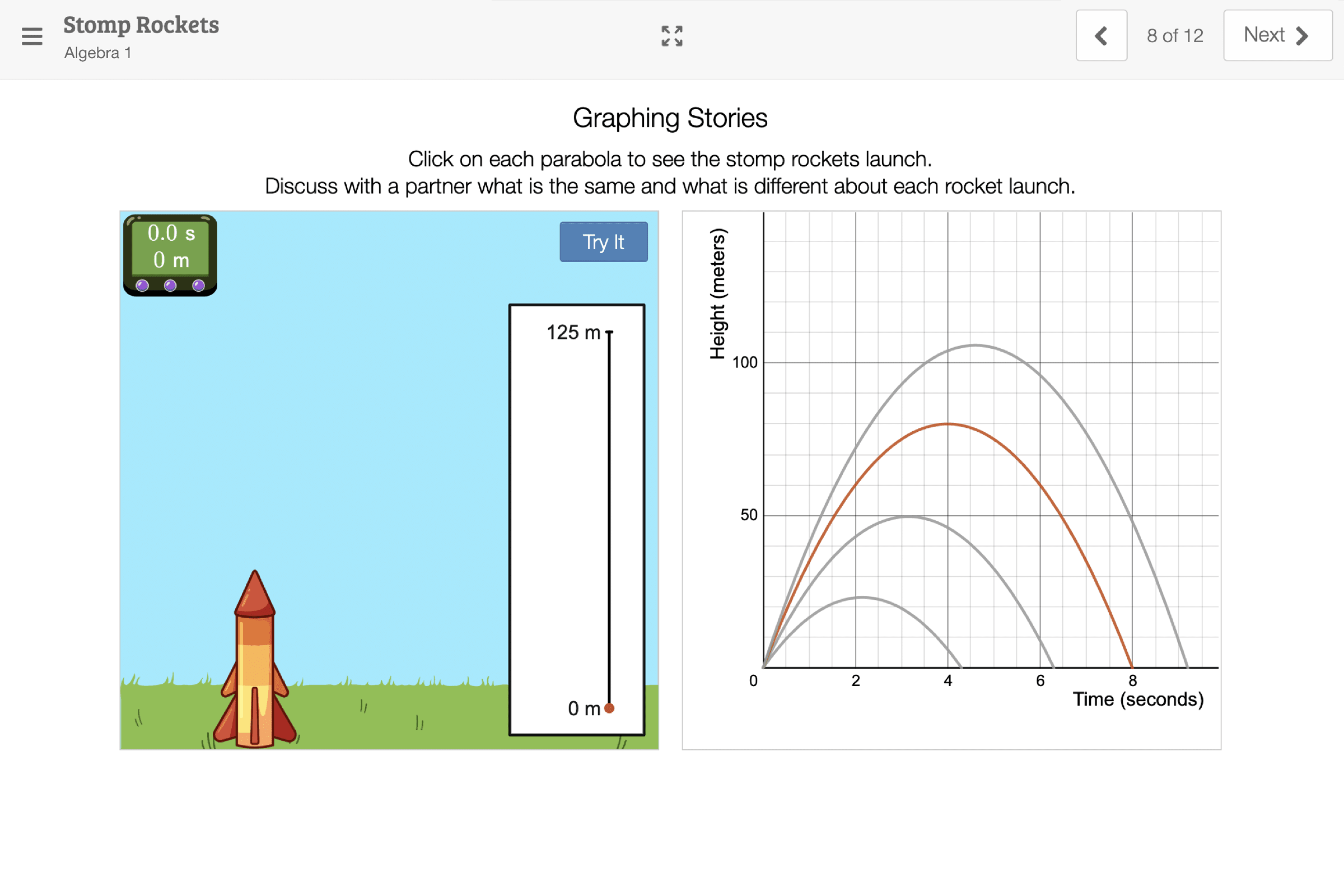
Stay connected!

Join our community and get new episodes every other Tuesday!

We’ll also share new and exciting free resources for your classroom every month.

What Eric Cross says about science

“We do this work on behalf of kids, and it’s one of the most honorable services a person can provide to our community.”

– Eric Cross

K–8 Science teacher, Host of Science Connections: The Podcast

Meet the guest

Eric Cross is a 7th grade science/technology teacher, grade level lead, and digital learning innovator for Albert Einstein Academies, International Baccalaureate schools. He is also an adjunct professor of learning and technology at the University of San Diego and a Google certified innovator. Eric earned a bachelor’s degree from Azusa Pacific University and a Master of Education from the University of San Diego. He had 17 years of experience working with at-risk youth and underserved populations before becoming a middle school teacher. By building relationships with students, colleagues, and the community, he has become an empowered leader in and out of the classroom. Through meaningful learning experiences centered around student agency, STEM has become accessible to students through highly engaging lesson design, thoughtful integration of digital tools, and culturally relevant pedagogy.

Smiling person with short hair and a beard, wearing a collared shirt and sweater, against a dark background. Small star icon on the top left of the circular frame.

About Science Connections

Welcome to Science Connections! Science is changing before our eyes, now more than ever. So…how do we help kids figure that out? We will bring on educators, scientists, and more to discuss the importance of high-quality science instruction. In this episode, hear from our host Eric Cross about his work engaging students as a K-8 science teacher. Listen here!

S4 – 01. Joyful math teaching with Kanchan Kant

Podcast cover for "Math Teacher Lounge," Season 4, Episode 1, titled "Joyful math teaching," featuring Kanchan Kant, described as a math educator and transformative leader.

This season on the Math Teacher Lounge podcast, we follow the theme “joyful math” and uncover its meaning.

In this episode, Kanchan Kant joins Bethany Lockhart Johnson and Dan Meyer to discuss the key, early investment she makes at the start of the school year to ensure her math teaching will be joyful for herself and for her students for the rest of the year.

Explore more from Math Teacher Lounge by visiting our main page.

Download Transcript

Dan Meyer (00:00):
Okay, we are recording. Hey folks. Welcome back to Math Teacher Lounge. (laugh)

Bethany Lockhart Johnson (00:06):
Hardly off to a rocking start.

Dan Meyer (00:06):
Yeah. Yeah. <laugh> Did you like my energy there? Hey folks. Welcome back to Math Teacher Lounge. It’s a new season with your host Dan Meyer. And…

Bethany Lockhart Johnson (00:15):
I’m Bethany, Lockhart Johnson. How’s your summer Dan?

Dan Meyer (00:22):
Summer for me feels really hectic as we prepare, here at Amplify, for the new school year, and everyone’s starting these new math programs. So I’ve been feeling quite amped up, like usual in the summer. But also, my kids started big kid school. So I’ve been seeing the educational system from the role of a parent and all the anxieties and I worry, will I be my kids’ teacher’s most annoying parent <laugh> … So what kind of math curriculum you using? Oh, have you heard of core counting? Can I lead a math center? What’s this worksheet about? I’m really worried my kids are just overall gonna hate my vibe when I come around their classes. Uh, <laugh> so lots going on with me.

Bethany Lockhart Johnson (01:06):
It’s already happening for me and I have a toddler.

Dan Meyer (01:10):
<laugh> There we go. Anyway, that’s what I’m up to. That’s how I’m feeling. I’m curious how you’re doing. We haven’t chatted in a while. We’re excited about the podcast, but it’s been a bit, you know? Bethany got a break from me and my antics over the summer. So, how are we finding you here, as we ramp up to the new season?

Bethany Lockhart Johnson (01:24):
Uhhhh. Well, let me just tell you, I have a toddler. That’s kind of all I need to say. Except that’s not all I will say. Of course, I’ll say more. I am exploring, I’m dipping my toe into the extracurricular toddler activities; the music classes of the toddler world, the creative movement of the toddler world. And yeah, I have lots of opinions and lots of things to say about the teachers. And I’m like, Ugh, I can’t wait to be room mom. And just like…<laugh>

Dan Meyer (01:55):
Just let it rip, you know?

Bethany Lockhart Johnson (01:57):
I have opinions on everything and just hope I don’t get kicked out of the class.

Bethany Lockhart Johnson (02:05):
It’s been an eventfully recharging summer and we are ready for this new season. And in fact, we’re so ready that we decided that we were gonna mix up this season. Just a, just a tiny bit. Shall I explain Dan?

Dan Meyer (02:21):
Yeah. Let’s do it.

Bethany Lockhart Johnson (02:22):
So we have loved all the different topics that we have explored in the Math Teacher Lounge world, but we kind of feel like we need to do some more deep dives. So for this season and the foreseeable seasons …

Dan Meyer (02:38):
We’ll see how it goes.

Bethany Lockhart Johnson (02:38):
Let’s stick with this season. For this season. We’re going to be exploring a singular theme.

Dan Meyer (02:46):
We’re not bouncing around. Yep. We’re not bouncing around from a guest to guest going on whatever shiny thing in the river bed catches our eye. We’re gonna take one theme and see where it goes. What we working with here this season?

Bethany Lockhart Johnson (02:57):
This season, we are going to be exploring the idea of joyful math, joyful math. And Dan, the question I have for you is, is the term joyful math one that you use on the regular?

Dan Meyer (03:10):
No, it definitely is not. I think that joy and math are very rarely, you know, connected in the popular mind. Number one, and number two, you know, I’m kind of an ornery fellow, so that’s not my natural kind of description of math. But we decided that it feels like an important one at the moment, because a lot of math teaching–a lot of teaching in general, math teaching in particular–math teaching is often not a joyful discipline for students, where, you know, I’ve done some research where you look at what people type into Google. And I looked at like, what they…why am I bad at X? And I looked at that for where X is math, where it’s science, where it’s reading, where it’s history. And it was just wild to see how many more hits there are out there on the Internet for “why am I bad at math?” People don’t really associate math with joy, but also we’re looking at joyful math in terms of joyful math teaching. Math teaching, teaching in general, is a tough field at the moment with a lot of teachers leaving teaching. And those who remain are having a lot of soul searching and thinking about, why am I here and how do I sustain this work? And in an environment that seems hostile to my interests or my talents, or work-life balance. And so that’ll be the theme that we’re gonna kind of uncover over the course of our season, talking to various interesting guests, including one today about, yeah, joyful math teaching and joyful math.

Dan Meyer (04:43):
And to help us think about what joyful math teaching looks like, we figured we’d first look at what UN-joyful math teaching looks like. It happens to be the case that we’ve been in a pandemic as you might be aware, and teaching has been challenging. And the NEA, our National Education Association, surveyed its member teachers and asked them the following question … Gave a list of issues that school employees have experienced and asked, for each one indicate how serious of a problem this is for you. This is a survey where more than half of members said they are more likely to leave or retire sooner than planned because of the pandemic. And this is almost double the numbers from July, 2020. It’s really hard to keep track of teacher departures and unfilled vacancies across states. So I don’t wanna like blow this up out of proportion, but it does indicate some real challenges in teaching. So Bethany, I was curious, what do you think like at the top of the list, like what kinds of factors, issues facing educators would you imagine there are?

Bethany Lockhart Johnson (05:48):
So if I’m to understand you correctly, these are reasons someone is not actively experiencing joy in the profession of teaching. Like why would they leave?

Dan Meyer (05:58):
Exactly.

Bethany Lockhart Johnson (05:59):
Well, the number one thing that came to mind for me, well, okay. Wait, wait, one other caveat I need to ask about, you said specifically pandemic-related or just in general, because if it’s pandemic-related, then I think, well, there’s health issues, right? That people are concerned about, but in general, the thing that came to mind was a lack of support from administration districts, lack of funding, and overcrowding in classrooms. Like, you know, I saw somebody had 40 students in their classroom. So those are the two things that I can imagine like top on someone’s list that would make them experience less than a joyful day.

Dan Meyer (06:44):
Yeah. There’s a bunch of you’re kind of identifying here. So number seven on the list is lack of respect from parents and the public, which is like 76% of teachers call that out as serious for them. Others that you kind of circled around in terms of resources go like, not enough planning or unstructured time in the job kind of ties into resources. Yeah. But there’s others that are on the list that I’m curious, you wanna take on the swing at it, given what I’ve said here,

Bethany Lockhart Johnson (07:15):
I feel like too much being asked of them, like being asked to wear too many hats, like they’re being asked to not only teach their class, but also cover all the vacancies and supervise recess and, you know, make a delicious, nutritious lunch. That’s what came to mind. Am am I close?

Dan Meyer (07:33):
Yeah. Number four on the list, unfilled job openings leading to more work for remaining staff. People covering, you know, not just the kind of external to teaching work like you’re describing, but also just taking on like losing your prep period, to take on a class that has been unfilled for all kinds of reasons. Yeah.

Bethany Lockhart Johnson (07:54):
Yeah. I’ve only gotten the fourth. Give me one clue, one clue about …

Dan Meyer (07:59):
So, I mean like, so number one is general stress from the coronavirus pandemic, you know, which I feel like …

Bethany Lockhart Johnson (08:06):
I mentioned that.

Dan Meyer (08:07):
I’ll give you that one. Yep, yep, sure. And then number two, close behind, is feeling burned out, which I think ties into what you’re describing as well. I’m giving Bethany credit on that one. The third one is very different from the ones you’ve been describing. I think I cannot in good faith give you even partial credit for this one. I’ll just say it. Student…

Bethany Lockhart Johnson (08:28):
Wait! Dan, this is not how you give clues.

Dan Meyer (08:31):
Here’s a clue. It’s student absences due to COVID19. It’s really hard to deal student absences. That’s your clue.

Bethany Lockhart Johnson (08:40):
That wasn’t a clue that you told me.

Dan Meyer (08:43):
Yeah, let’s see. I think that’s largely it. There’s also pay is too low, is on the list; student behavioral issues, on the list. And I think that about covers it. So all of that, that basket of items has led to more than half of teachers in this survey, saying that they’re more likely to leave or retire from education sooner than planned. And I don’t know. I think we all know teachers who have bailed.

Bethany Lockhart Johnson (09:08):
I’ve never played a board game with you, Dan, but if we ever play a board game, we’re gonna work on your clue giving, ’cause I want to keep guessing. And you just told me.

Dan Meyer (09:22):
Yeah. Yeah.

Bethany Lockhart Johnson (09:22):
In all seriousness, the <laugh>. In all seriousness, I think yes, the stress of the pandemic and students being absent, what some folks are calling unfinished learning, all of those pieces do play into it. But a lot of those things that you’re mentioning on the list are things that are not unique to the pandemic, right? Like those are things that I feel like there is some modicum of control that we could have over shifting the way the culture of the teaching profession is going so that we could create a more joyful experience for educators, administrators, and students.

Dan Meyer (10:03):
Yeah. Good call out. That’s exactly right. We could tax the people who are not in the classrooms more and increase the pay to classroom teachers. You know, there we go.

Bethany Lockhart Johnson (10:11):
Oh. Bingo. Why didn’t we ask you sooner Dan, for your wisdom.

Dan Meyer (10:15):
Yeah. I’m … solved by Dan. Yeah, good point though. So I read that and yeah, I think that there’s been some … people have critiqued the NEA for being very alarmist about teacher departures as the year has ramped up. It has not been quite the flood of departing teachers as was predicted and thank heavens for that, but we should still be very bummed if teachers are unhappy and wanting to leave and feel like they can’t leave. That is definitely not good. So we were really excited to bring to the table, someone who is just a very joyful teacher and one in a very intentional way. Someone who has a lot of discipline in how she approaches the job and the students in it and tries to create a joyful environment for herself, Kanchan Kant. Kanchan is a math and computer science teacher at Newton North High School in Newton, Massachusetts. She’s been sharing her love for math with her students for the past four years, while also being instrumental in setting the culture and ethos of the math department at her school in her role as the assistant department head. We welcome you on the show Kanchan to help us understand joy and math teaching. Thanks for being here.

Bethany Lockhart Johnson (11:29):
Welcome!

Kanchan Kant (11:30):
Thank you for having me. I really appreciate it.

Bethany Lockhart Johnson (11:33):
One of my friends, her son was asked as his first math homework assignment to write out his math bio. And I loved that idea because we got to hear a little bit about your bio from like a broader perspective. But if we were to ask about your math bio, I will speak for myself to say like, automatically certain images flash into my mind, right? To think about my relationship, my evolving relationship with math. But I’m so curious if I was to ask you, what’s your math bio? How did you become the person, mathematically speaking, that you are today? Would you mind sharing a bit about that?

Kanchan Kant (12:10):
Of course I would love to. So I was born and raised in India and I belong to a family which considers mathematics to be extremely important to succeed in life. My father used to have me add and subtract license plates since I was four years old, when we were out and about. I loved math in school, it just made like complete sense to me. It was logical and you know, it was my favorite subject. I loved it all through high school. I had a confidence speed breaker in undergrad. When in my second semester I almost failed the engineering math course that I took. That was the first time math felt like too much and not like my best friend, which it was supposed to be. So it was a while before I could summon the courage to take on another math course in college.

Kanchan Kant (12:56):
But once I did that, it was like old times. I realized I had to persevere through the challenging bits. And once I did that, it started to make sense again. And through my journey, as an educator speaking to people from various backgrounds and like coming to the United States, I realized that math is challenging for everyone at one time or another. For some people that is elementary school. And for some others, it is college or even later. Either way does not mean that you are not a math person. When I was in college, I felt I was not a math person. Whereas my sister, my very own sister said the same thing about math in middle school. Both of us use math every day. And we are definitely, definitely math people. So for me to be a math person is to persevere, to approach problem-solving in a logical manner, and to find the joy in the process ,as well as the answer.

Dan Meyer (13:47):
That’s wonderful. Yeah. A lot of people, have a moment where they feel like almost betrayed by what they thought was a close friend of theirs, with math, where it’s like, wait, I thought we were tight. You know, I thought we were cool. You and me. And there’s that moment. And I wonder if that’s been a useful moment for you to, you know, bring back now and then as a teacher with students who might feel that even, you know, in high school or in a secondary school as a kid.

Kanchan Kant (14:15):
Absolutely. Like when I talk to students and tell them, yes, I had difficulty in math too. It has not always been easy for men and there are still things I struggle with sometimes, then it’s like more modeling for them that you have to persevere, you should persevere. And once you do that, it makes sense and you can feel successful. So, almost every year I end up sharing the story with my students.

Bethany Lockhart Johnson (14:38):
There’s so much value in that, right? That you are sharing that vulnerability with students. And to say your relationship with mathematics has not been, you know, smooth sailing the whole way through. There were times when you had to work harder than others.

Dan Meyer (14:55):
Yeah. Really fun to hear about you and your father as well. I tried to ask my five-year-old to do some skip counting the other day, like, okay, cool, you’re hot stuff. You can count, you know, up by ones, but what about by twos? And the moment really fell flat. And I watched myself becoming the kind of parent who is whose enthusiasm for math is one day resented by his children. I feel a lot of, yeah, I felt your anxiety Kanchan, with math itself. And now I feel anxiety as like someone who loves math and loves to teach math and may one day alienate the people closest to him. <laugh>

Kanchan Kant (15:31):
I don’t like that future. I have a three-month-old. I do not like this future of mine. If I have to go through what you’re going through. Uh, oh, <laugh>

Dan Meyer (15:38):
You got this. So Kanchan, you’re going back to the classroom coming up here at the time of this recording. It’s a few weeks out. And we’re thinking about like the kind of ways that math teachers sustain a disposition that is joyful. How are you feeling right now, as far as going back to class after this summer? Are you feeling excited, anxious, some combo, tell us about it.

Kanchan Kant (16:01):
I would say combo, but more excited than anxious. I was on maternity leave, as I mentioned, before the school year ended, and I missed the students dearly. Like, my students are what gives me hope in the darkest times. They are thoughtful. They’re empathetic. They’re so eager to learn. And very soon into my teaching career, I realized that if I take the time to get to know my students and make them feel safe and seen in my class, teaching them math would be so much easier and so much more fun. So I’m a little worried about this being like fourth year into the pandemic, but let’s see. Last year I felt the students were finding it difficult to interact with and work with their classmates because they had not been doing it for so long. So I’m hoping this year would go a little better and I’m really looking forward to working with them and building community and see how it goes.

Dan Meyer (16:53):
So if I’m understanding you correctly, you are feeling very well recharged here. You had basically an extended summer with this maternity leave, basically just like a lot of rest and relaxation over the last, like several months. Um, if I get you here. So anyway, I’m glad for that for you. And, yeah. I also hear you on the difficulties of teaching post pandemic or mid pandemic. Anyway, thanks for sharing that.

Bethany Lockhart Johnson (17:19):
What I love is I hear you being so intentional, like thinking about those relationships and thinking about that community that you want to build, you know? How do you hope that you’re gonna cultivate joy in your teaching this year? I mean like, are there certain routines or disciplines that you specifically call forth or that you think other teachers should think about?

Kanchan Kant (17:41):
So at the start of every school year, I dedicate like about three to four weeks to set up the classroom culture, both social and academic. I call my classroom a learning community. We start with community circles, we do icebreaker activities, group building and all those kinds of things. But most importantly, we do a lot of collective problem solving. So I try to present students with problems, which can be solved using multiple strategies and have multiple entry points, basically they are low floor, high ceiling problems. These could be stretch problems that they have seen before, like concepts that they already know or logical puzzles, or just wrapping their heads around different problems. Then I have students share their strategies. The more strategies they have on the board, the more successful I think the problem was. Every year, inevitably, students come up with strategies that I’ve never ever seen before for the same problems that I do.

Kanchan Kant (18:35):
And so I have students come up to the board, they would share their strategies. If they’re not ready for that, they would walk me through their strategies. And I would write their name on the board with different colored markers and everything. Basically to give them choice and agency. It also shows them that the process of doing the problem is so much more important than just getting the right answer and that it is okay to make mistakes in our learning community. I use a lot of vertical whiteboards, some concepts and problems align so well with the vertical surfaces, especially when students can explore together, learn from each other. So I do a lot of that. As for routines, I would say consistency is the key. I consistently reinforce that I want to hear multiple strategies, that it is okay to make mistakes. I am willing to learn from you as much as you’re willing to learn from me. So all like that consistency in culture more than the routines, is I feel important to bring that joy.

Dan Meyer (19:29):
That’s super interesting. Thanks for that. So I’ve heard, I hear two common objections or two common concerns to using rich tasks or doing problem solving. And I think I heard like answers to those two common reservations within what you described there, but I wonder if we can kind of bring it to the surface. And so one of the reservations is around the time that those problems take and another is that teachers often feel like, well, I might be surprised, you know, I might not know what to do with what a student does. And I thought I was hearing like some very interesting answers to both of those kinds of reservations from you, but would you just surface those up if you have some.

Kanchan Kant (20:09):
So in terms of time, I feel if I spend the time at the beginning of the year, setting up that community and doing those problems, it makes learning the math and learning the concepts much more faster throughout the rest of the year. And even when I am trying, like, even throughout the year, if we are doing a warm up problem, as I call it, which has multiple strategies, that’s gonna clarify so many more concepts when we talk about those five, 10 strategies of doing the same problem, then going through multiple problems to clarify those concepts. So for me, it actually saves time instead of taking more time.

Dan Meyer (20:43):
Hmm. That’s super interesting. It’s an investment I’m hearing from you that, yeah, you might not be hitting the curriculum quite as hard early on, but that all of a sudden you’re in the spring and it’s like, oh wow, we’ve been moving so much faster through territory that has been more challenging. What would you say to you know, comfort concerned educators or to address the concern that I don’t know what I’ll do with these five, 10 different strategies. You say, I always see strategies that I’ve never anticipated. Like, it’s a good thing, you know, like you’re happy about that. I think that’s a very intimidating thing for lots of educators. What would you say to that?

Kanchan Kant (21:19):
I think like, for me, it’s a good kind of discomfort. That means like a student is teaching me something, which is actually doing two things. One modeling for them that I’m willing to learn and that I don’t know everything. And two, also telling them that they’re mathematicians. They know what they’re doing. They’re not just receivers of math, they’re actually creating it. So for me, that is very, very important.

Bethany Lockhart Johnson (21:43):
I love that so much. When you think about your students and you’re about to start this new school year, how do you hope your students will experience math in your classroom?

Kanchan Kant (21:53):
So I hope my students can see the beauty and joy of math. They can see that math is a way to see the world and not as something we have to do to get through school. So my hope for my classroom is that we can learn to problem-solve and persevere through problems and learn from each other and not just get through the curriculum. Because like, I think math is a wonderful way to learn these skills, which are so important when you get out of high school. Most importantly, I just wanna make sure that my students see themselves as mathematicians. And like one of the things that like I have to share with you that, because one of my highlights for the year has to be the Desmos art project. I do it every year for the past three years, I think since I’ve started teaching sophomores. And I do it as a unit assessment for functions and my students design something that is meaningful to them, using all the different kinds of functions and colors and shading and everything that you can think of in Desmos.

Kanchan Kant (22:49):
Thank you so much for that though. It is such a cool way for me to see them do that. Like I have seen such amazing creations. One of my students once made a scaled working model of a solar system wherein the planets were rotating at relative speed. The Saturn had rings and they were like asteroids and everything. And then it was beautifully done. Then there was another one who did a very, very detailed whale scenery, her reasoning. I wanna be a Marine biologist and I wanna study whales. So this is what is meaningful to me. So like that one project is just a culmination of everything that I want students to see in math and in my classroom. And like I do more of those kinds of things, but that is one thing that it’s one of the highlights of my year.

Dan Meyer (23:32):
That’s awesome. I love hearing that. Yeah. Shout out to the team at Desmos Studio for building and continuing to develop a tool list that so good for art and animation, even, in addition to some mathematics with a more computational kind. Yeah, that’s really exciting. What’s interesting to me is that you teach high school, and I think that like students at that age have a very well-defined sense of what math is and who they are as mathematicians. And then along you come, you know, and like offer this really interesting disruption, you know, in their sophomore year of high school that like, oh, this can be totally different, this relationship who I am. And that’s just really exciting. I imagine it’s a very surprising year. I would imagine that first month, I would imagine is a very surprising month for a lot of your sophomores.

Kanchan Kant (24:20):
Yeah, it is. I mean, that’s why I take that time to build that community because then that sets the tone and the relationship that we’re gonna have for the rest of the year. Students get to know how to work with each other. They get to know each other, that whole piece is like super important because of that.

Dan Meyer (24:35):
Yeah. That’s awesome. So here’s the thing, like we’re exploring these ideas about joyful math teaching and what it will take to cultivate restore, reclaim joy in math, teaching this next year. And you’ve offered us these really interesting ideas some, some very, you know, philosophical and some technical about how you spend time in ways that lead to joy in the spring for you and your students. Love that. We don’t want to as hosts, as researchers, investigators of this joyful math teaching idea, we don’t wanna say it’s all up to teachers to change their mindset, to do different technical practices, and that will lead to joy. We also wanna be really attentive to the environment that surrounds you, the people who are around to support you, the policy makers, the social structures that influence your joy in very significant ways. So what we would love to know from you is, how are you supported by the greater educational community in keeping your joy in your work? I’m thinking, especially about administrators, you know, front office, staff, parents, even, can you name a few ways for those sorts of people who listen to this podcast, how they can cultivate a math teacher’s joy this coming year?

Kanchan Kant (25:54):
I would say trust. I think more than anything, educators want administrators, parents, the greater educational community, to trust them to be professionals and experts in what they do. That does not mean that we don’t want to learn, that we don’t want feedback, that we don’t wanna get better. It just means that we keep the wellbeing of our students as our top priority. And we would like to be trusted to do just that. Also just keeping in mind that whether we like it or not, we are still adjusting to the new normal while recovering from the worst of the pandemic times. A lot of us are recovering from trauma, a lot of our students are recovering from trauma, and we need time and space for our social and emotional wellbeing.

Dan Meyer (26:35):
Yeah. I’m really curious, Kanchan, you’ve done a lot of work in your area with your grading team and in thinking about equitable and biased resistant instruction. I’m curious how you see those efforts lining up with creating joyful math learning conditions for all students, not just students from a dominant culture of math doing, let’s say.

Kanchan Kant (26:55):
For me, creating an equitable environment in a classroom is most important because once you have that, that’s when you have the relationships, that’s when you have the culture, that’s when all students actually thrive. So to that end, our school and our department has been doing a lot of work around grading practices. We actually assess how we grade students, where the bias is, what we can do to make them more bias resistant. Should we move to mastery based grading? Like that’s something I’ve been experimenting with for the past two years. Through the pandemic, I started doing mastery based grading so that my students can get more opportunities to show that they have learned the content. And so like just little things which help bridge the opportunity gap. I would say another project that our school undertakes is called the calculus project wherein we have students in Black, Latinx, and low income families sign up for that and are recommended for that. And then we do summer classes and yearlong support to preview the material for next year, not as a remedial class, but to actually set students up for success in AP classes for the coming year. So we have the community buildup. We have the courses we have like math support. It’s a very beautiful thing actually. And I’ve been working with that program for four years now. So yeah, so those are my ways of creating more equity in our school.

Bethany Lockhart Johnson (28:19):
That’s so beautiful and I deeply, deeply wish you had been my high school math teacher. And I have to say that the theme that I kind of keep hearing is this intentionality. How you are so intentional about your work, not just with what your students are learning, but how they’re learning it, how they are engaging with this subject and how they are building their own relationship. You talked a little bit about your relationship over the years with mathematics, but how are your students building that relationship? And so I’m just very appreciative of you sharing that with us and with our listeners. And we are so excited to have learned a little bit about, like, I feel like I got a little mini peek into your classroom.

Kanchan Kant (29:03):
Thank you.

Bethany Lockhart Johnson (29:04):
And can I say that if you are listening to this prior to October at NCTM Los Angeles, you will get to hear Kanchan Kant speak at Shadow Con. Can I give that away, Dan? Is that, is that …

Dan Meyer (29:23):
You can drop that. Yeah, It’s pretty top secret.

Bethany Lockhart Johnson (29:26):
Can I drop it?

Dan Meyer (29:27):
Yeah. Do it. Yeah.

Bethany Lockhart Johnson (29:28):
Dan and I will be in the audience cheering you on. It’s been a joy to learn with and from you, and we are so excited to just, you know, kind of keep marinating on some of these ideas about how we can continue to be intentional about creating joyful math spaces for our students. Thank you so much for joining us today.
Kanchan Kant (29:49):
Thank you so much. It was a real pleasure.

Dan Meyer (29:57):
So Bethany, I loved hearing Kanchan talk about both her, just her joyful personality, but how she cultivates joy through craft and technique through, you know, through the various ways she interacts with students in intentional ways, that those make the job more joyful for her. And I thought it was really interesting to hear her talk about how autonomy is the thing that she needs most in her job environment to feel like she can be joyful in her work. In that context, I saw … something on Twitter popped up for me in my, you know, my many Twitter wanderings. This is a segment we might call, Dan finds something on Twitter and shares it with Bethany. Which we’ll tighten that up a little bit, but I’m sending this over to you right now, and I’d love to know as you check this out, what you’re seeing and what you’re thinking and we’ll chat about how it relates to our interview here in a moment.

Bethany Lockhart Johnson (30:47):
All right. I’m ready, send it over. It’s opening. So this appears to be a document by the way, outlining, maybe it’s a district, maybe it’s administration, they’re outlining expectation type and expectation guidelines. Hmm. Okay. And these are lesson plan expectations. Expectation type. Timeliness. Plans are due no later than 6 p.m.. Friday prior to the week of instruction. Comprehensive, all activities for the week for all subjects taught should be included and complete by due date and time. Plans should have at minimum, the following, see template for detail. Okay. So then it goes through the things that the plans need to have, the topic title, target, the objective, the activities, the sequence, the display agendas to be displayed backward design. Okay. So basically <laugh>, we were just talking about, overwhelm. And when I see this document, listeners, have you ever received something from your administrator or anyone, let’s take it more broadly, that is requesting something of you that would take so much time to complete and be so out of touch with your lived reality that it really genuinely sucks the joy out of the experience.

Bethany Lockhart Johnson (32:25):
So the first thing that I see that this document, and again, the goal of whichever district’s plan this is, is that these expectations will lead–now, mind you, I am a fan of like, you know, looking ahead, I’m not a like, oh, hey, what am I gonna teach in five minutes? No, but the idea that then it lays out all of the things in such detail that you’re gonna be teaching feels like one of those pacing guides where, oh, move on to the next page, whether or not your students have any sort of sense making whatsoever. So my first thought is, oh, sad. I have to stay here. I’ll be there past 6 p.m. But I’m gonna be there trying to make the plans for the next week based on what I think my students have learned. Hmm it’s sounds like a little bit of a bummer. Dan, what did you think when you saw this and did I do a fair description of what it is?

Dan Meyer (33:25):
No, it’s, it’s a tough one to describe, ’cause it’s basically a wall of text and commands from an administrator who like, I just have to imagine has just like acres and acres of teachers trying to beat down their door to teach at this school, if this is how you’re gonna treat your teachers. I mean just, yeah. The idea of having a week… I’m with you, you don’t wanna just like, just jump in by the seat of your pants, but the idea of having a full week of lessons for every section you teach, every prep you teach, planned and submitted with every minute, basically morseled out to different goals. It says down here, you gotta like, for all of these, download a CSV of grades and whatnot and attach those. It’s the sort of thing, like you said, there are some edicts that you get from administration where you just have to laugh or just like, you have definitely missed like what I am willing to do here. It’s so far beyond. Yeah. I can’t imagine it. And it just felt like, yeah, it was a great way to get teachers like Kanchan to feel like a real lack of autonomy. Like it’s this would not work. I don’t think.

Bethany Lockhart Johnson (34:33):
And it’s not even like willing to do. Like, let’s say you’re even willing to produce it. Let’s say that me, the rule follower is like, okay. I’m gonna attempt to meet these demands. One, most teachers were just, you know, they probably would put baloney down there anyway. Not saying that I would, but I’m saying like, it’s clearly just a hoop that they’re having to jump through and two…

Dan Meyer (35:04):
Yeah. Compliance, right?

Bethany Lockhart Johnson (35:05):
Yeah. Compliance, compliance. There you go. And two, yeah, it feels like it’s about control and not trusting the teacher. And I love that. Kanchan said that trust is what she needs. Right? You’re hiring me. Yes. I still have lots to learn, but you’re trusting me and you’re creating an environment where I can continue to learn from and with my students. And if I was being asked to submit this tome every Friday before six, that is predicting, what does it say, anticipating the steps necessary for student mastery? You know, I kind of feel like maybe it’s like that one or two teachers where maybe they feel like, oh, I don’t trust that teacher or that teacher isn’t doing a good job, whatever. We better do this for all of the teachers, but then it’s not gonna change the practices of that one teacher and all the other teachers are gonna be resentful.

Dan Meyer (36:00):
Like if there was like feedback that came back to you on, you know, on lesson plans or there was some like something that was very constructive or productive, like maybe that would be different, but it really just feels like these are gonna go into a digital drawer somewhere and not be looked at, at all.

Bethany Lockhart Johnson (36:15):
Yes. The digital drawer. Like I’m gonna send you this report and then nothing is going to happen with it. Except that four hours of my time. Well, you wouldn’t do it, but <laugh>…

Dan Meyer (36:29):
You’ve worn me down. You’ve worn me down. I’m now putty in your hands and more compliant for the next thing. And I also just wanna shout out the administrator today, who I emailed asking about like a teacher participating in a project and this administrator said, I have a standing policy not to email teachers over summer break, which you know, as administrators out there doing just the good work, you know, trusting teachers, watching out for them, trying to be a force multiplier for teachers, making the road wider, the way easier for teachers. So shout out to y’all doing the out there. Really appreciate that.

Bethany Lockhart Johnson (37:04):
Okay. Wait, wait. About that email thing, quick question. Did you ever check your email over the summer?

Dan Meyer (37:11):
Uh, yeah. That’s one way in which I was the, you know, I just love email, you know? Oh. Someone wanted to reach out. Oh, oh, Banana Republic wants to tell me about new clothes that are on offer. <laugh> I mean like, it’s just, I love those personal emails. So yeah, I did check my email over the summer.

Bethany Lockhart Johnson (37:26):
Somebody emailed me recently and they emailed me at like two in the morning. And because I currently have a toddler, I received the email at four in the morning because you know, the best thing to help myself fall back asleep is to hop on my phone, right? Like I’m already up trying to get my toddler back to sleep. I might as well start scrolling. Anyway, so the person had this little thing at the bottom of their email and it said, I have, something to the effect of, I have really like wonky work hours. I may be sending this outside of the like more standard nine to five. But please don’t feel pressure in any way to respond outside of your time. Would you appreciate that, seeing that or does it make you feel like you should respond? ‘Cause I almost responded at four in the morning, and maybe that says something about …

Dan Meyer (38:15):
They’re telling you not to respond.

Bethany Lockhart Johnson (38:16):
I know it was helpful.

Dan Meyer (38:18):
It says don’t, but you’re like, what if they’re saying that because they really expect me to respond and this is one of many ways that you and I are different. I’m always happy to see that.

Bethany Lockhart Johnson (38:29):
Do you respond? I’ve texted you in the evening because you know I have some wonky hours. Do you respond to things, like where’s your boundary there? Or when you were in the classroom, where was your boundary there? Did parents have your phone number?

Dan Meyer (38:43):
No. I gave kids my cell phone number for a couple years and it was a wobbly experiment. But parents will email, you know, back and forth with you. And I think the best thing to like … I love just like adding some friction, some latency into the kind of the chain, you know, like I hate going like back and forth, like da, da, da, da, and then like respond and then da, da da respond. And it just like goes back and forth. So just like just sitting back for an hour or two hours, you know, not responding, just let someone cool down, calm down. Email just gets you more email. That’s like if you send an email, you are just making it more likely to get more email. It’s a, you know, it’s a problem.

Bethany Lockhart Johnson (39:20):
Are you one of the zero people?

Dan Meyer (39:23):
My inbox is at zero. Most days before work.

Bethany Lockhart Johnson (39:26):
You’re joking!

Dan Meyer (39:28):
I end work every day with inbox, at zero.

Bethany Lockhart Johnson (39:31):
You’re joking!

Dan Meyer (39:32):
That’s just, you know.

Bethany Lockhart Johnson (39:33):
Who are you?

Dan Meyer (39:34):
You know, you should take my life coaching, Bethany. I’ll give you a discount since we’re math teacher, lunch pals. But, um yeah. I can help.

Bethany Lockhart Johnson (39:44):
Thank you for qualifying where our pal-dom lives. I wouldn’t even tell you how many are in my inbox. Point is, if you are actively starting the school year, we celebrate you and we are here and over the next few months, we’re gonna be diving into joyful math and that definition’s gonna keep evolving. But I wanna say something that is making me feel a little joyful, Dan. You ready?

Dan Meyer (40:15):
Tell me.

Bethany Lockhart Johnson (40:16):
You and I, in person, at NCTM, the National Council for Teachers and Mathematics. It’s coming up and we are going to be recording Math Teacher Lounge, live. Live, in person! And I hear there’s gonna be like a t-shirt cannon and there’s gonna be, you know, like musicians marching through the aisles or something.

Dan Meyer (40:46):
A marching band?

Bethany Lockhart Johnson (40:46):
A marching band!

Dan Meyer (40:46):
Trained animals. Yeah.

Bethany Lockhart Johnson (40:48):
But the point is, I’m so excited, Dan. And you know, when I see you, I might just, it’s been so long since I’ve seen you, Dan. I’d love to give you a big old embrace.

Dan Meyer (41:04):
You might just, you might just cry. Yeah. Yeah. It’ll be great. Yeah. It’s gonna be awesome for you folks to see me and Bethany have a real awkward first hug since the pandemic. And, uh, but it’s gonna be a blast to hang with us in person. We’ll have some special guests, probably, some interesting segments. You folks should stop on by at NCTM, if you’re gonna be there. Highly recommended.

Bethany Lockhart Johnson (41:29):
Now, we will be broadcasting that episode. You’re gonna get to hear … we’re gonna record it live. It’s gonna happen. In the meantime, you can find us at MTLshow on Twitter, or you can find us in our Facebook group, Math Teacher Lounge. We can’t wait to hear from you. And we’d love to hear what makes math joyful for you? Where can we add a little bit more joy to you this, this season? So thrilled to be back. Thanks for listening.

Stay connected!

Join our community and get new episodes every other Tuesday!

We’ll also share new and exciting free resources for your classroom every month.

What Kanchan Kant says about math

“Creating an equitable environment in the classroom is most important because once you have that, that’s when you have the relationships, and that’s when all students actually thrive.”

– Kanchan Kant

Meet the guest

As a math and computer science teacher at Newton North High School, Newton, MA, Kanchan has been sharing her love for math with her students for the past four years. Kanchan is instrumental in setting the culture and ethos of the mathematics department at her school in her role as the Assistant Department Head. Kanchan also leads the Math Department Grading Team and has been instrumental in making grading policies which are more equitable and bias resistant. In her new role as a Transformative Leaders of Massachusetts Fellow in collaboration with Springpoint and Barr Foundation, Kanchan looks forward to making equity and joy of learning the foundation of many more classrooms.

Businesswoman with long dark hair, wearing a dark blazer and blue blouse, poses in a professional portrait against a light background, representing math programs.
A graphic with the text "Math Teacher Lounge with Bethany Lockhart Johnson and Dan Meyer" on colored overlapping circles.

About Math Teacher Lounge: The podcast

Math Teacher Lounge is a biweekly podcast created specifically for K–12 math educators. In each episode co-hosts Bethany Lockhart Johnson (@lockhartedu) and Dan Meyer (@ddmeyer) chat with guests, taking a deep dive into the math and educational topics you care about.

Join the Math Teacher Lounge Facebook group to continue the conversation, view exclusive content, interact with fellow educators, participate in giveaways, and more!

A closer look at grades 6–8 (domain)

Amplify Science is based on the latest research on teaching and learning and helps teachers deliver rigorous and riveting lessons through hands-on investigations, literacy-rich activities, and interactive digital tools that empower students to think, read, write, and argue like real scientists.

In the 6–8 classroom, this looks like students:

  • Collecting evidence from a variety of sources.
  • Making sense of evidence in a variety of ways.
  • Formulating convincing scientific arguments.

Is your school implementing the domain model? Click here.

Collage of four images showing children engaged in educational activities such as conducting experiments and crafting in a classroom setting.
A four-step process: Spark intrigue, Explore evidence, Explain and elaborate, and Evaluate claims, leading to ongoing engagement and building complexity.

Program structure

Our cyclical lesson design ensures students receive multiple exposures to concepts through a variety of modalities. As they progress through the lessons within a unit, students build and deepen their understanding, increasing their ability to develop and refine complex explanations of the unit’s phenomenon.

It’s this proven program structure and lesson design that enables Amplify Science to teach less, but achieve more. Rather than asking teachers to wade through unnecessary content, we designed our 6–8 program to address 100% of the NGSS in fewer lessons than other programs.

Scope and sequence

Every year our grades 6–8 sequence consists of 9 units, with each unit containing 10–19 lessons. Lessons are written to last a minimum of 45-minutes, though teachers can expand or contract the timing to meet their needs.

A grid of educational icons, each representing a different science topic, such as earth and space science, life science, and physical science, with titles and lesson counts.

Unit types

Each unit delivers three-dimensional learning experiences and engages students in gathering evidence from a rich collection of sources, while also serving a unique purpose.

In grades 6–8, there are three types of units:

  • One unit is a launch unit.
  • Three units are core units.
  • Two units are engineering internships.
Launch units

Launch units are the first units taught in each year of Amplify Science. The goal of the Launch unit is to introduce students to norms, routines, and practices that will be built on throughout the year, including argumentation, active reading, and using the program’s technology. For example, rather than taking the time to explain the process of active reading in every unit in a given year, it is explained thoroughly in the Launch unit, thereby preparing students to actively read in all subsequent units.

Core units

Core units establish the context of the unit by introducing students to a real-world problem. As students move through lessons in a Core unit, they figure out the unit’s anchoring phenomenon, gain an understanding of the unit’s disciplinary core ideas and science and engineering practices, and make linkages across topics through the crosscutting concepts. Each Core unit culminates with a Science Seminar and final writing activity.

Engineering Internship units

Engineering Internship units invite students to design solutions for real-world problems as interns for a fictional company called Futura. Students figure out how to help those in need, from tsunami victims in Sri Lanka to premature babies, through the application of engineering practices. In the process, they apply and deepen their learning from Core units.

Units at a glance

A rover sits on a rocky, reddish hill under a hazy sky, leaving visible tire tracks across the barren landscape.
Geology on Mars

Domain: Earth and Space Science

Unit type: Launch

Student role: Planetary geologists

Phenomenon: Analyzing data about landforms on Mars can provide evidence that Mars may have once been habitable.    

Two prehistoric marine reptiles with long snouts are near a rocky shoreline, one on land and one in the water, with an island and clouds in the background.
Plate Motion

Domain: Earth and Space Science

Unit type: Core

Student role: Geologists

Phenomenon: Mesosaurus fossils have been found on continents separated by thousands of kilometers of ocean, even though the Mesosaurus species once lived all together.    

A geometric badge with a mountain, telescope, and audio wave icons on a purple background with polygonal shapes.
Plate Motion Engineering Internship

Domain: Earth and Space Science

Unit type: Engineering internship

Student role: Mechanical engineering interns

Phenomenon: Patterns in earthquake data can be used to design an effective tsunami warning system.    

Illustration of a volcano by the sea with smoke, trees, mountains, and a cross-section showing a fault line beneath the ground.
Rock Transformations

Domain: Earth and Space Science

Unit type: Core

Student role: Geologists

Phenomenon: Rock samples from the Great Plains and from the Rocky Mountains — regions hundreds of miles apart — look very different, but have surprisingly similar mineral compositions.    

Illustration of a city skyline at night with buildings, a bridge, and a large full moon in a starry sky.
Earth, Sun, and Moon

Domain: Earth and Space Science

Unit type: Core

Student role: Astronomers

Phenomenon: An astrophotographer can only take pictures of specific features on the Moon at certain times.    

Abstract digital painting of a landscape with green hills, a red-orange horizon, and a large yellow sun surrounded by blue and orange swirling shapes on the right.
Ocean, Atmosphere, and Climate

Domain: Earth and Space Science

Unit type: Core

Student role: Climatologists

Phenomenon: During El Niño years, the air temperature in Christchurch, New Zealand is cooler than usual.    

Illustration of a town with houses and fields under a sky with large clouds and swirling wind patterns, set against a backdrop of hills and mountains.
Weather Patterns

Domain: Earth and Space Science

Unit type: Core

Student role: Forensic meteorologists

Phenomenon: In recent years, rainstorms in Galetown have been unusually severe.    

A polar bear stands on a small ice floe surrounded by water and floating ice under a red sun in an Arctic landscape.
Earth’s Changing Climate

Domain: Earth and Space Science

Unit type: Core

Student role: Climatologists

Phenomenon: The ice on Earth’s surface is melting.    

Hexagonal badge with icons including a wrench, building, sun, screwdriver, paint can, and molecules on a purple geometric background.
Earth’s Changing Climate Engineering Internship

Domain: Earth and Space Science

Unit type: Engineering internship

Student role: Civil engineers

Phenomenon: Designing rooftops with different modifications can reduce a city’s impact on climate change.    

Colorful abstract digital artwork featuring a yellow figure holding a device, with blue and red shapes and textured patterns in the background.
Microbiome

Domain: Life Science

Unit type: Launch

Student role: Microbiological researchers

Phenomenon: The presence of 100 trillion microorganisms living on and in the human body may keep the body healthy.    

An abstract illustration of a person having their mouth and throat examined with a tongue depressor, surrounded by colorful shapes, with an eye chart in the background.
Metabolism

Domain: Life Science

Unit type: Core

Student role: Medical researchers

Phenomenon: Elisa, a young patient, feels tired all the time.    

Geometric orange background with a hexagon icon displaying symbols for statistics, farming, healthcare, safety vest, chemistry, and agriculture.
Metabolism Engineering Internship

Domain: Life Science

Unit type: Engineering internship

Student role: Food engineers

Phenomenon: Designing health bars with different molecular compositions can effectively meet the metabolic needs of patients or rescue workers.    

Six spiders with different colors and stripe patterns are arranged in a grid pattern on a dark background, showing variations in leg and body color.
Traits and Reproduction

Domain: Life Science

Unit type: Core

Student role: Biomedical students

Phenomenon: Darwin’s bark spider offspring have different silk flexibility traits, even though they have the same parents.    

An underwater scene shows a whale surrounded by jellyfish, sea turtles, and fish, with sunlight filtering through the water.
Populations and Resources

Domain: Life Science

Unit type: Core

Student role: Biologists

Phenomenon: The size of the moon jelly population in Glacier Sea has increased.    

A low-poly landscape with trees, mushrooms, a rabbit sitting, and a fox bending down near another rabbit under a sunny sky with mountains in the background.
Matter and Energy in Ecosystems

Domain: Life Science

Unit type: Core

Student role: Ecologists

Phenomenon: What caused the mysterious crash of a biodome ecosystem?    

Three green dinosaurs and one yellow dinosaur stand in a row on grass, each with purple spikes and a red spot on their backs. The sky is blue with light clouds.
Natural Selection

Domain: Life Science

Unit type: Core

Student role: Biologists

Phenomenon: The newt population in Oregon State Park has become more poisonous over time.    

Red-toned graphic with hexagonal badge featuring a world map, a mosquito, a DNA strand, charts, cubes, and circular icons. Geometric background pattern.
Natural Selection Engineering Internship

Domain: Life Science

Unit type: Engineering internship

Student role: Clinical engineers

Phenomenon: Designing malaria treatment plans that use different combinations of drugs can reduce drug resistance development while helping malaria patients.  

Two giant tortoises are near a river; one is by the water and the other is standing on land and stretching its neck toward a leafy tree.

Evolutionary History

Domain: Life Science

Unit type: Core

Student role: Paleontologists

Phenomenon: A mystery fossil at the Natural History Museum has similarities with both wolves and whales.    

Two people climb over rocky terrain strewn with electronic waste, with illustrated insets showing a hiking boot, a solar-powered device, and a person adjusting a belt-like gadget.
Harnessing Human Energy

Domain: Physical Science

Unit type: Launch

Student role: Energy scientists

Phenomenon: Rescue workers can use their own human kinetic energy to power the electrical devices they use during rescue missions.    

A spacecraft approaches a modular space station with large solar panels, set against a backdrop of outer space.
Force and Motion

Domain: Physical Science

Unit type: Core

Student role: Physicists

Phenomenon: The asteroid sample-collecting pod failed to dock at the space station as planned.    

Green geometric background with a hexagonal badge showing a parachute, a box, a ruler, a bandage, and stacked layers.
Force and Motion Engineering Internship

Domain: Physical Science

Unit type: Engineering internship

Student role: Mechanical engineering interns

Phenomenon: Designing emergency supply delivery pods with different structures can maintain the integrity of the supply pods and their contents. 

Illustration of a roller coaster car full of people with raised arms, speeding down a loop against a blue sky with clouds.
Magnetic Fields

Domain: Physical Science

Unit type: Core

Student role: Physicists

Phenomenon: During a test launch, a spacecraft traveled much faster than expected.    

Illustration of a person in a red coat and hat with arms crossed, eyes closed, surrounded by large orange and brown circles, possibly representing snow or lights.
Thermal Energy

Domain: Physical Science

Unit type: Core

Student role: Thermal scientists

Phenomenon: One of two proposed heating systems for Riverdale School will best heat the school.    

An orange popsicle gradually melts, shown in four stages from solid to completely melted, with wooden sticks visible, against a purple background.
Phase Change

Domain: Physical Science

Unit type: Core

Student role: Chemists

Phenomenon: A methane lake on Titan no longer appears in images taken by a space probe two years apart.    

A green background with a picture of a person and a sandwich.
Phase Change Engineering Internship

Domain: Physical Science

Unit type: Engineering internship

Student role: Chemical engineering interns

Phenomenon: Designing portable baby incubators with different combinations of phase change materials can keep babies at a healthy temperature.    

Digital illustration showing red and blue molecules on a blue background transitioning to a lighter background, representing molecular diffusion across a boundary.
Chemical Reactions

Domain: Physical Science

Unit type: Core

Student role: Forensic chemists

Phenomenon: A mysterious brown substance has been detected in the tap water of Westfield.    

Illustration of Earth with yellow arrows and colored waves approaching from the left, representing incoming solar or cosmic radiation.
Light Waves

Domain: Physical Science

Unit type: Core

Student role: Spectroscopists

Phenomenon: The rate of skin cancer is higher in Australia than in other parts of the world.    

Unleash the potential of knowledge building in language comprehension

Every child is capable of becoming a skilled reader. Every classroom can provide that opportunity and drive student success, through a content-rich literacy curriculum.

We’ll show you how.

The relationship among knowledge, language comprehension, and literacy skills

The Science of Reading shows that early literacy skills are best built deliberately, on a foundation of knowledge. Knowledge building is not a result of reading and language comprehension; it’s a vital prerequisite and a fundamental part of the process. When students read a text on a familiar topic–event a tough one–they’re more likely to comprehend it. In other words: The more you know, the more, and faster, you learn.

Why is building knowledge so important?

Background knowledge—coupled with comprehension strategies—fuels students’ capacity to understand texts, answer questions, and grapple with ideas.

Students bring different bodies of knowledge into school. Some are whizzes at baseball or mechanics; some visit museums, have tons of books at home, and know the word “yacht.” That means their comprehension of a given topic or text will correlate with what they already know. But what happens when they learn the same content together? A recent independent study showed that a knowledge-building literacy curriculum in elementary school raised test scores and helped eliminate income-based opportunity gaps.

It is our responsibility as educators to bring the world into the classroom for all students and help them grow their literacy skills.

Literacy instruction has typically focused on decontextualized skills—finding the main idea, making inferences—before, or instead of, the content of texts and resources that students engage with. Many teachers may have been trained to “put the skills and strategies in the foreground, like a skill of the week, then bring in texts that they find suited for demonstrating the skill or strategy,” says Natalie Wexler, author of The Knowledge Gap. But science shows that harnessing skills and strategies to content is actually more effective. That is, using a coherent and systematic progression of content that helps knowledge and skills build on each other has been shown to result in better student outcomes.

“The advantage of a coherent curriculum is that the topics it covers can build on one another, with one unit providing a foundation of knowledge for others that come later, both throughout a single school year and across grade levels,” according to Barbara Davidson and David Liben. Along the way, students also cultivate curiosity and confidence, accelerating the entire process. So the more you know, the faster you learn—and that lasts a lifetime.

Getting started with knowledge based learning

Effective literacy instruction must celebrate the experiences students have but not assume each student has specific pieces of prior knowledge. Rather, it must build knowledge in the classroom. Students (and teachers) need curricula that expose them to a diverse array of new topics—spanning history, science, literature, culture, and the arts—in an intentional sequence that builds a rich and common knowledge base from which all students can draw.

Want to get started now? We’ve got an ebook to help you out.

Professional development to support your shift to the Science of Reading

Ignite literacy transformation with Amplify’s Science of Reading: The Learning Lab—an inspiring three-course series.

  • Course 1: Foundations to the Science of Reading
  • Course 2: Advanced Topics in the Science of Reading: Assessment and Reading Difficulties
  • Course 3: Applied Structured Literacy

Crafted to the standards of the International Dyslexia Association, this self-paced online series provides unparalleled, research-backed instruction. Explore enriching activities, curated resources, and learn from Susan Lambert, chief academic officer and host of Science of Reading: The Podcast.

The best investment you can make is in knowledge, and the returns are priceless.

Learn more about the online courses or request a quote!

Tap into individual online course seats.

Before and after knowledge building: What knowledge looks like in the classroom

Making connections to what students already know

Before: Teachers “activate” students’ prior knowledge before reading.
After: Teachers build students’ knowledge explicitly for students to leverage later as background knowledge.

Developing reading comprehension

Before: Teachers focus instruction on comprehension strategies (e.g., “strategy of the day” instruction).
After: Teachers focus on content and use comprehension strategies to help students gain knowledge of that content.

Introduction of new topics and information

Before: Students learn about content-area topics individually in disconnected units of instruction.
After: Students learn topics through a coherent approach that builds knowledge within and across units of instruction.

See the remarkable difference shifting to a knowledge-building approach can make in your school. Our enlightening flyer guides you through a before-and-after journey, illustrating the profound impact of knowledge building on learning. Check it out!

What to look for in a knowledge-building literacy curriculum:

It develops content knowledge.

The program should immerse students in a given domain for weeks—that’s how they acquire academic knowledge. The content should also develop from grade to grade, so that students learning about Renaissance art can reflect on and compare to what they previously learned about art in the Middle Ages.

Read More 

It leverages read-alouds for exposure to complex language.

In early grades, students’ listening comprehension outpaces their reading comprehension. Interactive read-alouds can be used to expose students to academic language and rich vocabulary. With background knowledge, vocabulary words are “the main support beams in the comprehension house.” This approach also helps teachers introduce students to new information and experiences—in a supportive and interactive environment.

Read More 

It introduces students to a wide variety of topics and content.

A content-rich curriculum exposes students to broad knowledge over time in a systematic, cumulative way, which is more effective than spending several months on just one topic. And while that’s happening, students are participating in enriching discussions and writing activities so they can further interact with the content, promoting deeper engagement and supporting retention of both the knowledge and associated vocabulary.

Read More 

It builds both knowledge and foundational skills.

Knowledge building is just one component of literacy development. A content-rich curriculum that helps students build both knowledge (language comprehension) and skills (word recognition) takes into account both sides of the Reading Rope, giving students everything they need to build the foundation for a lifetime of literacy success. Instead of learning to read so they can read to learn, students who use a content-rich curriculum learn to read and learn about the world at the same time, enabling them to understand what they’re reading.

Read More 

“Shifting from balanced literacy to a knowledge-building curriculum was a huge change for us. [Amplify] CKLA systematically builds knowledge from unit to unit and across grade levels. Students are constantly making connections to what they learned earlier in the year. We are excited to see the connections that they make after they have had a few years of the program. Student engagement has significantly increased. They are excited about the topics that they are learning. I never would have thought that students would find the War of 1812 or ancient Greek civilizations fascinating, but they do!”

—Christina Pina, Instructional Data Specialist, Chicopee Public Schools, Chicopee, MA

An abstract line drawing featuring a silhouette of a person with connected lines forming a flowing, continuous shape around them, inspired by CKLA research.

Our research

Amplify CKLA & Amplify Caminos

Using a fundamentally different approach to language arts, Amplify Core Knowledge Language Arts® (CKLA) is built on decades of early literacy research that demonstrates the importance of wide-ranging background knowledge and explicit and systematic instruction in foundational skills. Increasingly more districts are choosing Amplify CKLA because they know they’ll see results.

Amplify CKLA meets the criteria for Tier I-Strong Evidence as an education intervention under ESSA.

Impact overview

Efficacy

Cover of a PDF titled "Building Content Knowledge to Boost Comprehension in the Primary Grades," featuring illustrations of insects and plants, inspired by literacy research and Amplify CKLA insights.

Tier 1 ESSA evidence summary:

Amplify CKLA outperformed a control group on proximal and standardized tests.

Read more

Cover page of a PDF article titled "Building Content Knowledge to Boost Comprehension in the Primary Grades" from Reading Research Quarterly, highlighting authors and a partially visible abstract on literacy research.

Amplify CKLA Knowledge ESSA
Tier 1 Study
:

Efficacy research results confirm Amplify CKLA Knowledge meets rigorous ESSA Tier 1 evidence standards.

access now

A one-page pdf document layout with a title, three subheadings, and sections of text focused on CKLA research, formatted with bullet points and two separate sidebars.

An evaluation of Core Knowledge curriculum in charter schools:

Reading scores significantly improved and income-based gaps were eliminated.

Read more

Pdf document icon titled "Amplify CKLA Literacy Research Report for Grade 5.

AZ CKLA efficacy research report:

CKLA significantly improved outcomes for students overall, as well as economically disadvantaged and Latino students.

Read more

Build content knowledge, boost comprehension

Free access to efficacy study showing Amplify CKLA Knowledge meets ESSA Tier 1 qualifications.

Access now

District success stories

Cover of a PDF document titled "Making the shift to the Science of Reading" about Texas' Aldine Independent School District's gains using Amplify's early literacy suite. Map of Texas with Aldine marked.

Aldine Independent School District, Texas: Amplify’s early literacy suite boosts reading proficiency from 30% to 50%.

Read more

Cover of a PDF titled "Making the shift to the Science of Reading" by Amplify, featuring a hand-drawn map of Washington state with Oak Harbor marked. Orange banner labeled "PDF" at the top right corner.

Oak Harbor School District, Washington: Kindergarten reading proficiency improved by 19% and Grade 1 by 31% in 3 years.

Read more

Cover of a PDF document titled "Making the shift to the Science of Reading," which discusses reading gains in West Jefferson Hills School District in Pennsylvania using Amplify Core Knowledge Language Arts.

West Jefferson Hills School District, Pennsylvania: Students reach the 98th percentile among their peers nationwide after implementing Amplify.

Read more

Cover page of a PDF report titled "Making the shift to the Science of Reading," featuring an outline of North Carolina, the Amplify logo, and references to CKLA research supporting literacy research.

Salemberg Elementary School, North Carolina: Students made 80–100 composite points of growth in one semester.

Read more

Cover of a PDF titled "Making the shift to the Science of Reading," featuring a map outline of Ohio, highlighting Euclid, with insights from Literacy research and the Amplify logo at the bottom.

Euclid City School District, Ohio: Amplify CKLA, Boost Reading, and mCLASS boosted Euclid Kindergarten reading proficiency from 10% to 57% and Grade 1 from 20% to 37% in one school year.

Read more

Cover page of a PDF titled "Making the shift to the Science of Reading," featuring an outline of Ohio and highlighting Gallia County; published by Amplify and grounded in the latest literacy research.

Gallia County Local School District, Ohio: With Amplify CKLA, the number of Gallia County students needing a Reading Improvement Plan dropped from 46% to 27% in one year.

Read more

Cover page of a PDF titled “Making the shift to the Science of Reading,” featuring a map of Louisiana and a highlighted section about Lafourche Parish School District’s success.

Lafourche Parish Public School District, Louisiana: Louisiana’s Lafourche Parish School District improves third-grade LEAP scores to 73% basic or better, surpassing the state average, with Amplify CKLA.

Read more

Cover of a PDF titled "Making the shift to the Science of Reading" featuring an outline map of Texas and highlighting Pleasanton Independent School District.

Pleasanton Independent School District, Texas: Kindergarten scores rise from 44% to 60% with Amplify.

Read more

Cover page of a PDF titled "Making the shift to the Science of Reading," featuring an outline of Texas and a highlighted district, produced by Amplify.

Robstown Independent School District, Texas: Texas’s Robstown ISD doubles first-grade benchmark scores—from 22% to 44% in one year—using Amplify’s early literacy suite.

Read more

Cover page of a PDF titled "Making the shift to the Science of Reading," featuring an outline of Ohio with text and an orange banner labeled "District Success Story.

Blanchester Local School District, Ohio: Proficiency climbed to 76.1% with Amplify CKLA, leading to Ohio’s Governor’s Science of Reading Recognition Award.

Read more

Cover page of a PDF titled "Driving impact through implementation science," featuring an outline map of Washington State, an orange PDF label, and highlights on literacy research such as Amplify CKLA.

Richland School District,
Washington:
Reading proficiency increased by up to 45% in one year
with Amplify CKLA.

Read more

Cover page of a PDF titled "Driving impact through implementation science," featuring an outline of a state map, minimal orange text accents, and references to CKLA research in literacy.

Northwest Local School District,
Ohio
: Grades 1–5 see 8- to 16-point gains in MAP RIT scores in their first year of Amplify CKLA implementation.

Read more

Cover page of a PDF titled "Making the shift to the Science of Reading," featuring an outline of Texas and a highlighted district, produced by Amplify.

Casa Grande Elementary School District, Arizona: Kindergarten reading proficiency triples to 37% in one year with Amplify CKLA.

Read more

Cover page of a PDF titled "Driving impact through implementation science," featuring a line drawing of South Carolina with a highlighted district, emphasizing the role of literacy research and amplify CKLA in educational improvement.

Charleston County School District, South Carolina: SC READY literacy results improved by 5.6% for grade 3 students in the first year of Amplify CKLA implementation.

Read more

Cover page of a PDF titled "Driving impact through implementation science" by Amplify, featuring a simple line map, an orange "District Success Story" label, and insights drawn from CKLA research in literacy.

Knox County Schools achieve 12% improvement in number of kindergarteners, second graders on track, after first year with Amplify CKLA.

Read more

Research base

Cover of a PDF document titled "Amplify CKLA Kindergarten–Grade 5 Research Guide," featuring a plain white background, orange text accents, and insights from Amplify CKLA literacy research.

Amplify CKLA: The research behind the core literacy program

Read more

The baseball experiment: How two Wisconsin researchers discovered that the comprehension gap is a knowledge gap

Read more

CKLA Curriculum: Links to research on teaching and learning

Read more

Amplify Caminos

Stack of PDF documents titled "Amplify Caminos: The research behind the program," featuring an orange PDF label on the top right corner, highlights CKLA research and essential literacy research supporting the curriculum.

Amplify Caminos: The research behind the program

Read more

Cover page of a PDF titled "Making the shift to the Science of Reading," featuring an outline of Minnesota with Saint Paul Public School marked.

Saint Paul Public Schools, Minnesota: Saint Paul Public Schools raises reading proficiency from 23% to 86% in one year with Amplify Caminos and mCLASS Lectura.

Read more

State success

A PDF document titled "Louisiana’s Reading Renaissance" with a line graph depicting Grade 3 LEAP scores in districts using CKLA for 2+ years.

Louisiana’s reading renaissance: Implementing CKLA drives 3rd grade LEAP scores across Louisiana.

Read more

Stack of documents titled "Making the shift to the Science of Reading" with an orange "PDF" label and a minimalist line drawing of a face on the cover.

Ohio’s literacy lift: CKLA implementation raises grades 3–5 OST performance statewide.

Read more

An illustration of a spilled liquid with a submerged smartphone, depicting a phone accident with liquid involved, used to amplify CKLA research visibility.

Explore more of our research.

Learn more about the research behind our programs.

Spring ’24 Rewind, Episode 13

Spring ’24 Rewind: Deconstructing the Reading Rope: Background knowledge, with Susan B. Neuman

Join Susan B. Neuman, professor of early childhood and literacy education at the Steinhardt School at New York University, in the sixth episode of our Deconstructing the Reading Rope series. She explains the important link between background knowledge and reading comprehension in the Science of Reading, and shares her five research-based principles to build knowledge networks in literacy instruction. She also highlights the connection between speech and reading, and previews her upcoming studies on the role of cross-media connections in children’s learning.

Meet Our Guest(s):

Susan B. Neuman
Susan B. Neuman
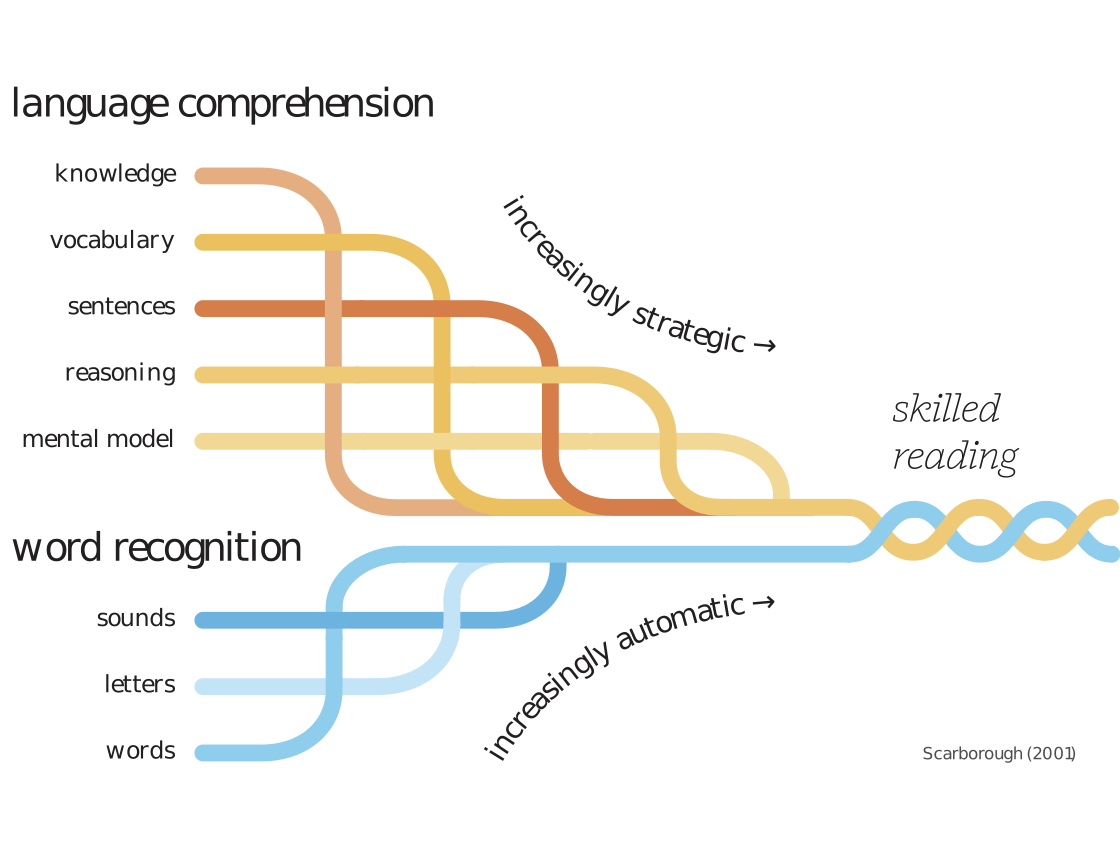
Susan Neuman specializes in childhood education and early literacy development. She has been a Professor at the University of Michigan and has served as the U.S. Assistant Secretary for Elementary and Secondary Education. In her role as Assistant Secretary, she established the Early Reading First program, developed the Early Childhood Educator Professional Development Program, and was responsible for all activities in Title I of the Elementary and Secondary Act. She has served on the International Reading Association’s Board of Directors (2001–2003) as well as numerous other boards of non-profit organizations, and served as co-editor of Reading Research Quarterly (2011–2018), the International Literacy Organization’s flagship research journal. Her research and teaching interests include early childhood policy, curriculum, and early reading instruction for children who live in poverty. Neuman has received two lifetime achievement awards for research in literacy development and is a member of the Reading Hall of Fame and a Fellow of the American Educational Research Association. She has written over 100 articles, and authored or edited 12 books. Her newest is the three-volume Handbook of the Science of Early Literacy (2023) published by Guilford Press.

Meet our host, Susan Lambert

Susan Lambert is the Chief Academic Officer of Elementary Humanities at Amplify, and the host of Science of Reading: The Podcast. Her career has been focused on creating high-quality learning environments using evidence-based practices. Lambert is a mom of four, a grandma of four, a world traveler, and a collector of stories.

As the host of Science of Reading: The Podcast, Lambert explores the increasing body of scientific research around how reading is best taught. As a former classroom teacher, administrator, and curriculum developer, Lambert is dedicated to turning theory into best practices that educators can put right to use in the classroom, and to showcasing national models of reading instruction excellence.

Retrato de una mujer caucásica sonriente con cabello rubio corto, involucrada en un podcast sobre la ciencia de la lectura, con gafas, lápiz labial rojo y un collar de perlas.

Quotes

“What you’re helping children do is create a mosaic, putting all those ideas together in a knowledge network. If you don’t do it explicitly, many children cannot do it on their own.”

—Susan B. Neuman

“We’ve got to start early. We’ve got to start immediately, and know that children are eager to learn and use the content to engage them.”

—Susan B. Neuman