Showing results for industrial training conducir

Amplify Typography

H1 / Amplify Regular

H2 / Amplify Regular

H3 / Amplify Regular

H4 / Amplify Regular

H5 / Amplify Regular
H6 / Amplify Regular

Paragraphs

Default styling ( landing page )

Blocquotes

Lorem ipsum dolor sit amet, consectetur adipiscing elit, sed do eiusmod tempor incididunt ut labore et dolore magna aliqua. Ut enim ad minim veniam, quis nostrud exercitation ullamco laboris nisi ut aliquip ex ea commodo consequat. Duis aute irure dolor in reprehenderit in voluptate velit esse cillum dolore eu fugiat nulla pariatur. Excepteur sint occaecat cupidatat non proident, sunt in culpa qui officia deserunt mollit anim id est laborum.

Lorem ipsum dolor sit amet

Lorem ipsum dolor sit amet, consectetur adipiscing elit, sed do eiusmod tempor incididunt ut labore et dolore magna aliqua. Ut enim ad minim veniam, quis nostrud exercitation ullamco laboris nisi ut aliquip ex ea commodo consequat. Duis aute irure dolor in reprehenderit in voluptate velit esse cillum dolore eu fugiat nulla pariatur. Excepteur sint occaecat cupidatat non proident, sunt in culpa qui officia deserunt mollit anim id est laborum.

Lorem ipsum dolor sit amet

Lorem ipsum dolor sit amet, consectetur adipiscing elit, sed do eiusmod tempor incididunt ut labore et dolore magna aliqua. Ut enim ad minim veniam, quis nostrud exercitation ullamco laboris nisi ut aliquip ex ea commodo consequat. Duis aute irure dolor in reprehenderit in voluptate velit esse cillum dolore eu fugiat nulla pariatur. Excepteur sint occaecat cupidatat non proident, sunt in culpa qui officia deserunt mollit anim id est laborum.

Quote captions

Lorem ipsum dolor sit amet, consectetur adipiscing elit, sed do eiusmod tempor incididunt ut labore et dolore magna aliqua. Ut enim ad minim veniam, quis nostrud exercitation ullamco laboris nisi ut aliquip ex ea commodo consequat. Duis aute irure dolor in reprehenderit in voluptate velit esse cillum dolore eu fugiat nulla pariatur. Excepteur sint occaecat cupidatat non proident, sunt in culpa qui officia deserunt mollit anim id est laborum.

Quote captions

Spaces

Small (default spacing 30px)

Lorem ipsum is placeholder text commonly used in the graphic, print, and publishing industries for previewing layouts and visual mockups. Lorem ipsum is placeholder text commonly used in the graphic, print, and publishing industries for previewing layouts and visual mockups. 

Lorem ipsum is placeholder text commonly used in the graphic, print, and publishing industries for previewing layouts and visual mockups. Lorem ipsum is placeholder text commonly used in the graphic, print, and publishing industries for previewing layouts and visual mockups.

  • Lorem ipsum is placeholder text commonly used in the graphic, print, and publishing industries for previewing layouts and visual mockups.

Medium (50px spacing)

Lorem ipsum is placeholder text commonly used in the graphic, print, and publishing industries for previewing layouts and visual mockups. Lorem ipsum is placeholder text commonly used in the graphic, print, and publishing industries for previewing layouts and visual mockups. 

  • Lorem ipsum is placeholder text commonly used in the graphic, print, and publishing industries for previewing layouts and visual mockups. 
  • Lorem ipsum is placeholder text commonly used in the graphic, print, and publishing industries for previewing layouts and visual mockups.

Lorem ipsum is placeholder text commonly used in the graphic, print, and publishing industries for previewing layouts and visual mockups.

Large (80px spacing)

Lorem ipsum is placeholder text commonly used in the graphic, print, and publishing industries for previewing layouts and visual mockups.

  • Lorem ipsum is placeholder text commonly used in the graphic, print, and publishing industries for previewing layouts and visual mockups. 
  • Lorem ipsum is placeholder text commonly used in the graphic, print, and publishing industries for previewing layouts and visual mockups. 

Lorem ipsum is placeholder text commonly used in the graphic, print, and publishing industries for previewing layouts and visual mockups.

Without spacing

Lorem ipsum is placeholder text commonly used in the graphic, print, and publishing industries for previewing layouts and visual mockups.

  • Lorem ipsum is placeholder text commonly used in the graphic, print, and publishing industries for previewing layouts and visual mockups. 
  • Lorem ipsum is placeholder text commonly used in the graphic, print, and publishing industries for previewing layouts and visual mockups. 
  • Lorem ipsum is placeholder text commonly used in the graphic, print, and publishing industries for previewing layouts and visual mockups. 

Lorem ipsum is placeholder text commonly used in the graphic, print, and publishing industries for previewing layouts and visual mockups. Lorem ipsum is placeholder text commonly used in the graphic, print, and publishing industries for previewing layouts and visual mockups.

Lists

  • K
  • 1
  • 2
  • 3
  • 4
  • 5
  • detailed lesson plans.
  • unit and chapter overview documentation.
    • differentiation strategies.
    • standards alignments.
  • in-context professional development.
  • Illuminate
  • SchoolCity
  • Otus
    • detailed lesson plans.
    • unit and chapter overview documentation.
    • differentiation strategies.
  • Course 1: Foundations to the Science of Reading
  • Course 2: Advanced Topics in the Science of Reading: Assessment and Reading Difficulties
  • Course 3: Applied Structured Literacy

Custom Benton-Sans font

  • Data you can trust, with teacher-administered assessments
  • Skill-level data aligned with the Science of Reading
  • Data-driven instructional recommendations to support intervention, remediation, and enrichment
  1. detailed lesson plans.
  2. unit and chapter overview documentation.
  3. differentiation strategies.
    • standards alignments.
    • in-context professional development.
  • CKLA Program Guide
  • Text complexity in CKLA
  • Trade books in CKLA
  • Assessments in CKLA
  • Remote and hybrid learning with CKLA
  • CKLA Scopes and Sequences
    • Grade K Skills and Knowledge
    • Grade 1 Skills and Knowledge
    • Grade 2 Skills and Knowledge
    • Grade 3 Integrated
    • Grade 4 Integrated
    • Grade 5 Integrated
  • Click the CKLA Student Hub button below.
  • Select Log in with Amplify.
  • Enter the student username and password found on the login flyer PDF provided to you.
    • Click the CKLA Student Hub icon.
    • Select a grade level.
  • Illuminate
  • SchoolCity
  • Otus
    • detailed lesson plans.
    • unit and chapter overview documentation.
    • differentiation strategies.

Tables

Which services are right for me?

1. Materials and implementation support

2. Full-service

3. Consultancies

Professional development Coaching and training

Tutoring materials High-quality instructional materials and nationally normed reading assessments


Program management


Amplify tutors


Option two

Option three


Prepare

Begin

Practice

Advance


Program-agnostic sessions will set up educators for success in areas such as the Science of Reading and/or problem-based approaches to math.


Program-aligned packages will support those who are new to Amplify’s programs.


Program-aligned packages will support those who have experience using Amplify’s programs.


Offerings will support advanced implementation, build capacity for instructional leaders, certify in-house trainers to deliver Launch sessions, and more.

Image with lightbox

Lorem ipsum dolor sit amet, consectetur adipiscing elit, sed do eiusmod tempor incididunt ut labore et dolore magna aliqua. Ut enim ad minim veniam, quis nostrud exercitation ullamco laboris nisi ut aliquip ex ea commodo consequat. Duis aute irure dolor in reprehenderit in voluptate velit esse cillum dolore eu fugiat nulla pariatur. Excepteur sint occaecat cupidatat non proident, sunt in culpa qui officia deserunt mollit anim id est laborum.

YouTube Video with lightbox

Lorem ipsum dolor sit amet, consectetur adipiscing elit, sed do eiusmod tempor incididunt ut labore et dolore magna aliqua. Ut enim ad minim veniam, quis nostrud exercitation ullamco laboris nisi ut aliquip ex ea commodo consequat. Duis aute irure dolor in reprehenderit in voluptate velit esse cillum dolore eu fugiat nulla pariatur. Excepteur sint occaecat cupidatat non proident, sunt in culpa qui officia deserunt mollit anim id est laborum.

CTA link with a modal

Inherit font

Lorem ipsum dolor sit amet, consectetur adipiscing elit, sed do eiusmod tempor incididunt ut labore et dolore magna aliqua. Ut enim ad minim veniam, quis nostrud exercitation ullamco laboris nisi ut aliquip ex ea commodo consequat. Duis aute irure dolor in reprehenderit in voluptate velit esse cillum dolore eu fugiat nulla pariatur. Excepteur sint occaecat cupidatat non proident, sunt in culpa qui officia deserunt mollit anim id est laborum.

Amplify font

Lorem ipsum dolor sit amet, consectetur adipiscing elit, sed do eiusmod tempor incididunt ut labore et dolore magna aliqua. Ut enim ad minim veniam, quis nostrud exercitation ullamco laboris nisi ut aliquip ex ea commodo consequat. Duis aute irure dolor in reprehenderit in voluptate velit esse cillum dolore eu fugiat nulla pariatur. Excepteur sint occaecat cupidatat non proident, sunt in culpa qui officia deserunt mollit anim id est laborum.

Article styling

Inherit font

Lorem ipsum dolor sit amet, consectetur adipiscing elit, sed do eiusmod tempor incididunt ut labore et dolore magna aliqua. Ut enim ad minim veniam, quis nostrud exercitation ullamco laboris nisi ut aliquip ex ea commodo consequat. Duis aute irure dolor in reprehenderit in voluptate velit esse cillum dolore eu fugiat nulla pariatur. Excepteur sint occaecat cupidatat non proident, sunt in culpa qui officia deserunt mollit anim id est laborum.

Amplify font

Lorem ipsum dolor sit amet, consectetur adipiscing elit, sed do eiusmod tempor incididunt ut labore et dolore magna aliqua. Ut enim ad minim veniam, quis nostrud exercitation ullamco laboris nisi ut aliquip ex ea commodo consequat. Duis aute irure dolor in reprehenderit in voluptate velit esse cillum dolore eu fugiat nulla pariatur. Excepteur sint occaecat cupifidatat non proident, sunt in culpa qui officia deserunt mollit anim id est laborum.

Secondary text

Secondary text (captions) / Benton Sans Regular

Labels

LABELS / Benton Sans Medium

Lists

Unordered

  • Item 1
  • Item 2
  • Item 3
    • Item 3.1
    • Item 3.2
      • Item 3.2.1
    • Item 3.3
  • Item 4

Ordered

  1. Item 1
  2. Item 2
  3. Item 3
    • Item 3.1
    • Item 3.2
      • Item 3.2.1
    • Item 3.3
  4. Item 4

Links

Call to Action Link

Primary link

Secondary link

Open modal (get in touch)

Primary link

Link secondary

open modal

Lorem ipsum text-link dolor sit amet, consectetur adipiscing elit, sed do eiusmod tempor incididunt ut labore et dolore magna aliqua. Ut enim ad minim veniam, quis nostrud exercitation ullamco laboris nisi ut aliquip ex ea commodo consequat. Duis aute irure dolor in reprehenderit in voluptate velit esse cillum dolore eu fugiat nulla pariatur. Excepteur sint occaecat cupidatat non proident, sunt in culpa qui officia deserunt mollit anim id est laborum.

Amplify Buttons

Various Sizes

Various Shapes

Various Colours

Disabled State

Background option

Various Icons

Various Types

Link

Layouts

Two columns 50/50

Lorem ipsum dolor sit amet, consectetur adipiscing elit, sed do eiusmod tempor incididunt ut labore et dolore magna aliqua. Ut enim ad minim veniam, quis nostrud exercitation ullamco laboris nisi ut aliquip ex ea commodo consequat. Duis aute irure dolor in reprehenderit in voluptate velit esse cillum dolore eu fugiat nulla pariatur. Excepteur sint occaecat cupidatat non proident, sunt in culpa qui officia deserunt mollit anim id est laborum.

Lorem ipsum dolor sit amet, consectetur adipiscing elit, sed do eiusmod tempor incididunt ut labore et dolore magna aliqua. Ut enim ad minim veniam, quis nostrud exercitation ullamco laboris nisi ut aliquip ex ea commodo consequat. Duis aute irure dolor in reprehenderit in voluptate velit esse cillum dolore eu fugiat nulla pariatur. Excepteur sint occaecat cupidatat non proident, sunt in culpa qui officia deserunt mollit anim id est laborum.

Two columns 75/25

Lorem ipsum dolor sit amet, consectetur adipiscing elit, sed do eiusmod tempor incididunt ut labore et dolore magna aliqua. Ut enim ad minim veniam, quis nostrud exercitation ullamco laboris nisi ut aliquip ex ea commodo consequat. Duis aute irure dolor in reprehenderit in voluptate velit esse cillum dolore eu fugiat nulla pariatur. Excepteur sint occaecat cupidatat non proident, sunt in culpa qui officia deserunt mollit anim id est laborum.

Lorem ipsum dolor sit amet, consectetur adipiscing elit, sed do eiusmod tempor incididunt ut labore et dolore magna aliqua. Ut enim ad minim.

Three columns 33/33/33

Lorem ipsum dolor sit amet, consectetur adipiscing elit, sed do eiusmod tempor incididunt ut labore et dolore magna aliqua. Ut enim ad minim veniam, quis nostrud exercitation ullamco laboris nisi ut aliquip ex ea commodo consequat. Duis aute irure dolor in reprehenderit in voluptate velit esse cillum dolore eu fugiat nulla pariatur. Excepteur sint occaecat cupidatat non proident, sunt in culpa qui officia deserunt mollit anim id est laborum.

Lorem ipsum dolor sit amet, consectetur adipiscing elit, sed do eiusmod tempor incididunt ut labore et dolore magna aliqua. Ut enim ad minim veniam, quis nostrud exercitation ullamco laboris nisi ut aliquip ex ea commodo consequat. Duis aute irure dolor in reprehenderit in voluptate velit esse cillum dolore eu fugiat nulla pariatur. Excepteur sint occaecat cupidatat non proident, sunt in culpa qui officia deserunt mollit anim id est laborum.

Lorem ipsum dolor sit amet, consectetur adipiscing elit, sed do eiusmod tempor incididunt ut labore et dolore magna aliqua. Ut enim ad minim veniam, quis nostrud exercitation ullamco laboris nisi ut aliquip ex ea commodo consequat. Duis aute irure dolor in reprehenderit in voluptate velit esse cillum dolore eu fugiat nulla pariatur. Excepteur sint occaecat cupidatat non proident, sunt in culpa qui officia deserunt mollit anim id est laborum.

Three columns 25/50/25

Lorem ipsum dolor sit amet, consectetur adipiscing elit, sed do eiusmod tempor incididunt ut labore et dolore magna aliqua. Ut enim ad minim veniam, quis nostrud exercitation ullamco laboris nisi ut aliquip ex ea

Lorem ipsum dolor sit amet, consectetur adipiscing elit, sed do eiusmod tempor incididunt ut labore et dolore magna aliqua. Ut enim ad minim veniam, quis nostrud exercitation ullamco laboris nisi ut aliquip ex ea commodo consequat. Duis aute irure dolor in reprehenderit in voluptate velit esse cillum dolore eu fugiat nulla pariatur. Excepteur sint occaecat cupidatat non proident, sunt in culpa qui officia deserunt mollit anim id est laborum.

Lorem ipsum dolor sit amet, consectetur adipiscing elit, sed do eiusmod tempor incididunt ut labore et dolore magna aliqua. Ut enim ad minim veniam, quis nostrud exercitation ullamco laboris nisi ut aliquip ex

Amplify Divider

1. Service Overview

As a provider of technology solutions to schools, Amplify’s commitment to data privacy and security is essential to our organization. This overview of Amplify’s Information Security Program describes physical, technical and administrative safeguards Amplify implements to protect student data in our care.

Company profile

Amplify Education, Inc. (Amplify) is a privately held company founded in 2000 as Wireless Generation. Amplify’s products include curriculum and instruction, assessment and intervention, professional development services and consulting services for K-12 education.

Service hosting

Amplify leverages Amazon Web Services (AWS) as its cloud hosting provider. Within AWS, Amplify utilizes Virtual Private Clouds (VPCs), which provide an isolated cloud environment within the AWS infrastructure. External network traffic to a VPC is managed via gateway and firewall rules, which are maintained in source code control to ensure that the configuration remains in compliance with Amplify security policy. In addition, the production VPCs and the development VPCs are isolated from each other and maintained in separate AWS accounts.

2. Policies & standards

Information security program

Amplify maintains a comprehensive information security program based on the National Institute of Standards and Technology (NIST) Cybersecurity Framework and the NIST SP 800-53 Rev. 5 family of information security controls. These provide a robust framework of best practices from which an organization can build its security policies and protocols based on identified risks, compliance requirements, and business needs. They cover critical practice areas, including access control, configuration management, incident response, security training, and other information security domains.

Governance

Amplify’s Information Security Committee has primary responsibility for the development, maintenance, and implementation of the Amplify information security program. The Information Security Committee is responsible for all information risk management activities within the company and is composed of technology, business and legal leaders from the organization. The Committee meets weekly and includes a dedicated VP of Information Security and a program manager to oversee, direct and coordinate its activities.

Policy execution

Adherence to the internal Amplify information security policy is an obligation of every Amplify employee. Amplify conducts a series of internal monitoring procedures to verify compliance with internal information security policies, and all Amplify employees undergo annual criminal background checks. In addition, any third-party contractors who come into contact with systems that may contain student data are contractually bound to maintain security and privacy of the data.

3. Data access controls

Access control

Amplify’s access control principles dictate that all student data we store on behalf of customers is only accessible to district-authorized users and to a limited set of internal Amplify users who may only access the data for purposes authorized by the district. Districts maintain control over their internal users and may grant or revoke access.

In limited circumstances and strictly for the purposes of supporting school districts and maintaining the functionality of systems, certain Amplify users may access Amplify systems with student data. All such access to student data by Amplify technicians or customer support requires both authentication and authorization to view the information.

Encryption

Data encryption is an important element of our protection of sensitive data at rest and in transit, and is reviewed and updated as appropriate annually, based on the latest standards and guidelines published by OWASP and NIST.

  • In transit: Amplify encrypts all student data in transit over public connections, using Transport Layer Security (TLS), commonly known as SSL, using industry-standard protocols, ciphers, algorithms, and key sizes.
  • At rest: Amplify encrypts student data at rest using the industry-standard AES-256 encryption algorithm.

4. Application security by design

Building the right roles into applications

Permissions within Amplify applications are designed on the principle that school districts control access to all student data. To facilitate this, Amplify applications are designed so that roles and permissions flow from the district to the individual user. For example, applications that offer schools a way to collect and report on assessment results have a web interface that requires district administrators to authorize individuals to view student data.

Security controls within applications are used to ensure that the desired privacy protections are technically enforced within the system. For example, if a principal is supposed to see only the data related to his or her school, Amplify ensures that, throughout the design and development process, our products restrict principals from seeing records for any students outside his or her school.

To make sure Amplify applications properly enforce permissions and roles, our development teams conduct reviews early in the design process to ensure roles and permissions are an essential component of the design of new applications.

Building security controls into applications

Amplify applications are also developed to minimize security vulnerabilities and ensure industry-standard application security controls are in place.

As part of the development process, Amplify has a set of application security standards that all applications handling student data are required to follow, including:

  • Student data is secured using industry standard encryption when in transit between end-users and Amplify systems.
  • Applications are built with password brute-force attack prevention.
  • User sessions expire after a fixed period of time.

We also conduct manual and automated static code analysis as well as dynamic application security testing to preemptively identify vulnerabilities published by industry leaders such as OWASP (Open Web Application Security Project)

5. Proactive security

Risk assessments

Amplify periodically engages a security consulting firm to conduct risk assessments, aimed at identifying and prioritizing security vulnerabilities. The Information Security Committee coordinates remediation of the vulnerabilities. The security consulting firm also provides ongoing advice on current risks and advises on remediation of vulnerabilities and incident response.

Penetration testing

Amplify engages third-party firms to continually conduct application penetration testing.  The purpose of this testing is to test for application security vulnerabilities in the production environment.  We work with third party penetration testing program partners. Third-party testing involves a combination of automated and manual testing.

Vulnerability management

Amplify ensures that its systems are free of known vulnerabilities in several ways. Every production server runs vulnerability detection software that compares the installed software against a global database of known vulnerabilities. Secondly, we employ real time network monitoring that reports on any potentially malicious traffic. In addition, a third-party security firm continually reviews all of our system logs for potential security breaches. Lastly we continually test our applications against common malicious internet traffic. Violations in any of these areas will alert one of our operations teams, who are available around the clock.

In addition, Amplify participates in a private bug bounty program through HackerOne, working with the security community to find security vulnerabilities and support our efforts to keep our data and systems safe and secure.

Endpoint security

Access to production systems at Amplify is restricted to a limited set of internal Amplify users to support technical infrastructure, troubleshoot customer issues, or other purposes authorized by the district. In addition, Amplify requires multi-factor (MFA) authentication methods for access to all production systems. MFA involves a combination of something only the user knows and something only the user can access. For example, MFA for administrative access could involve entering a password as well as entering a one-time passcode sent via text message to the administrator’s mobile phone. The use of MFA reduces the possibility that an unauthorized individual could use a compromised password to access a system.

Infrastructure security

Network filtering technologies are used to ensure that production environments with student data are properly segmented from the rest of the network. Production environments only have limited external access to enable customers to use our web interfaces and other services. In addition, Amplify uses firewalls to ensure that development servers have no access to production environments.

Other measures that Amplify takes to secure its operational environment include system monitoring to detect anomalous activity that could indicate potential attacks and breaches.

Security training

At Amplify, we believe that protecting student data is the responsibility of all employees. We implemented a comprehensive information security awareness training program that all employees  undergo upon initial hire, with an annual refresher training. We also provide information security training and annual social engineering tests for specific departments based on role.

6. Reactive security

Monitoring

Intrusion detection and prevention systems (IDS/IPS) are in place to analyze the network device logs, monitor the network and report anomalous activity for appropriate resolution.

Incident response

Amplify maintains a comprehensive Security Incident Response Policy Plan, which sets out roles, responsibilities and procedures for reporting, investigation, containment, remediation and notification of security incidents. Amplify works with reputable firms for incident response and digital forensics support, as well as annual table-top exercises in coordination with cybersecurity experts.

Business Continuity Planning and Disaster Recovery

Amplify maintains a comprehensive Business Continuity Planning and Disaster Recovery Plan (BCP/DR), to guide personnel in procedures to protect against business disruptions caused by an unexpected event. The plans and related operations processes are tested on a semiannual basis, with ensuing operations improvement and remediation work.

7. Compliance

Audits

In addition to penetration testing and other proactive security testing and monitoring outlined above, Amplify undergoes annual SOC 2 Type 2 examinations of controls relevant to security. The examination is formally known as a Type 2 Independent Service Auditor’s Report on Controls Relevant to Security. The most recent examination was conducted by Schellman & Company, LLC and covers the period from April 1, 2024–March 31, 2025. The report states that Amplify’s systems meet the criteria for the security principle and opine on management’s description of the organization’s system and the suitability of the design of controls to protect against unauthorized access, use, or modification.

The Type 2 report also opines on the operating effectiveness of controls over the review period. This means that our auditors confirmed that we have continued to follow established security controls over the period of time of the review.

Certifications

SOC 2: Amplify successfully completed the SOC 2 Type 2 examination of controls relevant to security (see above, under “Audits”).

Privacy

Amplify’s products are built to facilitate district compliance with applicable data privacy laws, including FERPA and state laws related to the collection, access and review and disclosure of student data. Amplify’s Customer Privacy Policy describes the types of information collected and maintained on behalf of our school district customers and limitations on use and sharing of that data.

8. Supporting documentation

In the course of customer security assessment, the following documentation can be provided by Amplify upon customers’ request:

  • Penetration Testing Report
  • Risk Assessment Report
  • SOC 2 Type 2 Report

9. Report a vulnerability

To report a security vulnerability, click here.

How we build inclusive, high-quality programs

At Amplify, we support teachers in delivering inspiring, impactful lessons that celebrate and develop the thinking of all their students. We build our inclusive, high-quality programs by partnering with editorial and accessibility experts.

Editorial

Amplify has a dedicated Editorial Team that partners with product teams, subject matter experts, and an internal advisory Editorial Board to ensure that our products meet Amplify’s high standards for quality and embody our purpose and commitment. Through multiple rounds of product review, the Editorial Team coordinates input from internal and external experts and advisors to ensure that Amplify’s materials are engaging, rigorous, and accurate. The Editorial Team also makes certain that all materials are age-appropriate for students and align with current or pending state, district, and other policies.

Our approach to accessibility

Amplify creates products that serve the needs of all learners, including those with disabilities. We refine our practices regularly and incorporate feedback from our users and accessibility experts.

Amplify works with third-party experts in digital accessibility to help ensure that we build and maintain our products in accordance with the latest Web Content Accessibility Guidelines (WCAG) and other relevant legal requirements. How we do it:

  • Integrated accessibility practices: We embed accessibility considerations into our product development lifecycles. We also implement training and vendor management programs that support compliance with applicable standards, guidelines, and best practices.
  • Structured, accessible content: We create well-structured, easily navigable content that meets diverse user needs, including clear, readable text, properly labeled multimedia, and logical organization of information.
  • Development and testing for accessibility: We work with third-party experts to conduct assessments against accessibility standards and develop remediation plans if deficiencies are identified. Our internal quality assurance protocols include scenarios that test functionality for users with disabilities.
  • Comprehensive training and support: We provide continuous training and resources for team members involved in developing our products to help them understand and implement accessibility requirements. This includes training on the latest WCAG guidelines and updates on industry and legal standards.
  • Inclusive design patterns: We prioritize accessible design patterns to create interfaces that are intuitive for users.

In addition, all student-facing print components are available in the National Instructional Materials Access Center (NIMAC) database, and all student-facing PDFs in Amplify curriculum are formatted to be compatible with screen readers.

If you want to provide feedback about the accessibility of Amplify’s products or this website, or if you want to discuss accommodations to help you use our products or this website, please contact help@amplify.com or +1 (800) 823-1969 (hours: 7 a.m.–7 p.m. ET).

Learn more about the impact of our programs.

Amplify’s high-quality programs benefit millions of students every day using methods that are evidence-based, ESSA-aligned, and showing efficacy in a variety of contexts. Read more about our programs in the following case study and report.

Case study: Making an impact with Aldine ISD

Aldine Independent School District serves 62,000 students in Texas. Forty-two percent are English language learners, and more than 90 percent are economically disadvantaged. After two years of using Amplify’s early literacy suite, the number of Aldine ISD elementary students reading at or above grade level rose from 30 percent to 50 percent.

Report: Advancing Spanish literacy with Boost Lectura

Boost Lectura is proven to support Spanish literacy skills critical for reading development. Students who used Boost Lectura for 30–45 minutes a week outperformed their peers on universal screening assessments of Spanish literacy across grades K–2—and were more likely to meet or exceed benchmarks by the middle of the school year.

S1-01: The journey from student to SpaceX engineer: Juan Vivas

Illustration of Earth with text about a podcast episode featuring Juan Vivas, discussing the journey from student to SpaceX engineer. Includes a photo of a smiling person in a suit.

In this episode, we join Eric Cross as he talks to supply chain engineer Juan Vivas of SpaceX about his experiences growing up as a Latino in STEM. Juan shares his story of moving to the United States to study engineering and becoming successful in his career as a scientist. Juan openly discusses the experiences that made a difference in his life and the teachers that inspired him along the way. He also shares his experience as an engineer in different fields, as well as what it’s like to work in the supply chain during COVID.

Explore more from Science Connections by visiting our main page.

Download Transcript

Juan Vivas (00:00):

But to me, based on my experience so far, I think the best way to put it: An engineer is a technical problem-solver.

Eric Cross (00:28):

Welcome to Science Connections. I’m your host, Eric Cross. My guest today is Juan Vivas. Juan is a supply chain engineer for SpaceX. His career in STEM has pivoted from chemical engineering to working on foods like Cinnamon Toast Crunch to his current role at SpaceX, where he’s responsible for his work on Starlink, a technology that uses low-orbit satellites to provide internet access across the world. In this episode, Juan shares his story of how he became an engineer and how a thoughtful teacher used robotics to inspire him. I hope you enjoy this great conversation with Juan Vivas. Juan, thanks for being here.

Juan Vivas (01:14):

Yeah, yeah, of course! Super-excited to be here.

Eric Cross (01:19):

Hey, and starting off, I kind of like to ask your origin story. We were talking earlier about Marvel, and your journey of one working for…what I consider the closest thing that we have to SHIELD in the Marvel stories is SpaceX. Like with my own students, we talk about SpaceX like it’s a fictional thing, and we watch the rocket launches together and we watch the recovery and it’s so cool.

Juan Vivas (01:45):

Yeah.

Eric Cross (01:46):

And so when I knew that we were gonna be able to talk to you, I was excited. Like, I felt like I was a kid.

Juan Vivas (01:51):

<Laugh>

Eric Cross (01:51):

So I’d love to hear your origin story of you ultimately landing at SpaceX. And begin wherever kind of seems most natural to you.

Juan Vivas (01:59):

Yeah, yeah, of course. You know, I wasn’t one of those kids at from a young age I said “Oh, I’m gonna be an engineer.” Right? “I want to go and build all these things.” Where I grew up, and the social circle that I had, a lot of people were like doctors or lawyers. Just figured, you know, I’ll go to med school and go down the same path that 90% of like everyone else was gonna take. But in high school, I actually got into robotics. And, kind of like I mentioned, I wanted to do med school, that is what I figured I would end up doing. And then I got into robotics in high school. And I think that was what really kind of like changed my perspective of what I wanted to do, because basically these competitions were just—it was full-on driven by students. So we designed, programmed, and manufactured, like, the entire robot itself. And so through that I ended up doing a summer engineering program at the University of Maryland, the summer before going into my senior year in high school. And there we worked on a competition with underwater robots. And so we spent the entire summer, kind of similar scenario, designing a robot, manufacturing it, programming it. And then in the end it was like a competition in the buoyancy tank with different teams. And, you know, I think one thing that was really neat about that experience is that I got to hear Dr. John C. Mathers, who is a Nobel Prize physicist, speak to us in a room with, like, only 10 high school students. And just hearing his experience of where he started and the accomplishment that he’s been able to do, down in the STEM path, was really neat. And that summer was my final decision that I’m “OK, I know I want to be an engineer.” What’s interesting is I ended up choosing chemical engineering, instead of mechanical, which a lot of people, you know, based on all the experience that led me up to be an engineer, they asked me why I didn’t choose mechanical engineering. And I think one of the reasons why I chose chemical engineering is it’s very process-based. So one thing needs to happen, and there’s different inputs to that one step, and that step has an end-to-end reaction to it, right? So certain things need to happen in step one in order for step two to occur. And however the inputs happen in step one, it’s gonna affect the rest of the process. Honestly, very different than what I thought it was really gonna be. But what’s neat about chemical engineering is that it’s one of the most versatile engineering majors that you can have. Chemical engineering, because you work with a lot of process bases. Everything has a process, right? Everything needs to start with step one, and with, you know, step 10, whatever. And it’s all about optimization and improvement along those processes. So you can really take chemical engineering principles and apply ’em to different areas of a career, which is essentially the experience that I had in college. I had three internships with Dow Chemical where I did environmental health and safety, production, and supply-chain improvement. I then did research and development with Clorox. And then I did manufacturing engineering with General Mills. So really different job roles, different aspects, but same methodology applied.

Eric Cross (05:36):

I feel like there’s so much that you just said, <laugh> and I was trying to always, “I wanna ask him about that!” And in there, what I heard was there was a real pivotable, pivot moment in your life. Was the club…or was it a club, the robotics program? Or was that a class?

Juan Vivas (05:53):

You know, it was actually…it was VEX Robotics, specifically.

Eric Cross (05:56):

It was VEX! OK. Yeah, yeah. Really popular. And they still have it; I think we actually have some downstairs. So it was a club, and not necessarily a formal environment, where you were able to build. And it’s both collaborative and competitive, right? Like, there’s both aspects.

Juan Vivas (06:11):

Yep. Yep.

Eric Cross (06:11):

And, and then you had access to one of the only two facilities in the country that have these…were they buoyancy tanks?

Juan Vivas (06:20):

Buoyancy tanks, yep.

Eric Cross (06:21):

And there’s this book, Malcolm Gladwell’s Outliers, and then another similar book called Balance. It talks about how some of these innovators, like Steve Jobs and, and Bill Gates, they had access to things that other people didn’t. So, like, Bill Gates, I think at the University of Washington, had a computer that, you know, no one else did. And Jobs had one at, like, Hewlett-Packard. So it gave you this awesome headstart, where you’re able to test things in a real-life environment that kind of transfers into real-world skills. And then a few internships, so like, internships and mentors. So you had these people in the industry or people who were front-runners that were able to pour into you and give you these opportunities. And so it’s really neat to see how a program that starts as a club, kind of a competitive thing that introduced you to it and hooked you, then led to unfolding all of these opportunities that ultimately led you up to being here. And there’s one part—in looking at your LinkedIn profile, there’s a couple of really cool things that stand out. There’s a lot of cool things, but there’s two that really stood out. So one, working at SpaceX, and we’ll talk more about that, but I wanna go to General Mills and Cinnamon Toast Crunch. Because Cinnamon Toast Crunch is amazing.

Juan Vivas (07:39):

Yeah.

Eric Cross (07:39):

And you were part of the supply chain for that. In my head, I’m thinking, OK, like, what is he like responsible for? Like, getting the cinnamon and sugar?

Juan Vivas (07:51):

<Laugh>

Eric Cross (07:51):

What was, what did your job entail, when you were running that?

Juan Vivas (07:55):

There, I didn’t even know what I was gonna be doing until my first day. It was just, whatever the business need is, that’s where you’re gonna be put. So this was actually a high-priority plan for General Mills. And the production line that made Cinnamon Toast Crunch was split up into processes. So you have, they call it the process-process side, which is like literally raw materials, like making the cereal from scratch, baking it, adding the sugar, and then sending it to be packaged. And then you have the packaging-process side. so I was then placed as a packaging process lead, for the packaging side of that production line. So I was accountable for two packaging lines that packed out Cinnamon Toast Crunch. And that is where—that was actually my first real, you know, call it “real job,” like graduated college, going straight into the industry. I was a process lead for the packaging side of Cinnamon Toast Crunch.

Eric Cross (08:54):

So you went from cereal to rockets, <laugh>, which which is an amazing trajectory to have.

Juan Vivas (09:03):

Yeah. Yeah.

Eric Cross (09:04):

And when you kind of mentioned, back in your story about medical school, and, you know, it’s kinda like, what you see people doing, and you’re “OK, this is what I think I wanna do.” And then we have a perception in our mind about what a certain job’s gonna be like. And then reality hits. I think a lot of—when I ask my students, “What do you wanna do?” They think, like, “lawyer!” and when they think “lawyer!” they’re like, “I’m good at arguing!” Right? And until they find—until they talk to some lawyers and they find out like what that career can look like.

Juan Vivas (09:28):

Yeah.

Eric Cross (09:28):

You’re not just in the courtroom showing off your arguing skills. But, like, an engineer, when I talk to my students about what does it mean to be an engineer, often it’s very linear. It’s “I build bridges,” or, you know, maybe cars, but you’re a supply chain engineer. And, and that’s something that I think, now more than ever, it’s probably an incredibly critical role, especially considering that all of these supply constraints. Can you—what is a supply chain engineer? And what does it look like in your day-to-day? How is engineering rolled into that?

Juan Vivas (10:03):

Yeah, yeah. I think that’s an excellent question. I, too, once thought that engineering was just “I’m gonna be actually making something physical,” and like being super engineer-y about it. But, to me, based on my experience so far, I think the best way to put it: An engineer is a technical problem solver. As a supply chain engineer, specifically right now in my role at SpaceX…you know, as you can guess, the supply chain in the entire world is crazy. There’s no raw materials anywhere, and nothing can ever get on time. And so what I work on is I help our suppliers develop processes to meet the design criteria that we set up for like a specific part. As my job as a supply chain engineer, it’s “Can I take this design and make it manufacturable?” Right? “Can I go to any supplier and can they actually make this to the tolerance that the design engineer set them to be?” Nine out of 10 cases, the answer is no, essentially, is the best high-level way to put it.

Eric Cross (11:10):

When you’re solving these problems, is it this iterative process of going back and forth? Or is it just this aha-moment when you finally figure things out? ‘Cause I imagine they’re coming up with a design; you’re going back and saying, “Can this be manufactured?” or “Can it be done?” They’re saying no 90% of the time. And then are you the one responsible for kind of iterating on this, or changing it and then going back to them and telling them, asking them, until you get a yes? Is that—

Juan Vivas (11:33):

Yep. Yep, yep. Exactly. So we go through a process called Design for Manufacturing, DFMing. And where I essentially take, you know, the design engineer’s proposal, and then I have conversations with the suppliers, and then, that’s where the iteration begins. Where we go back and forth, back and forth, until we kind of meet in the middle to have something that can be manufacturable. Most of the times, in my experience, suppliers will always tell you no, just because they always want something that is manufactured really easily. And so you just gotta learn through experience. Like, when are they actually telling you something that’s a fact, versus when they’re just trying to you know, get out of a tolerance, or that “all right, all right, they mentioned that would just like make their jobs a little bit more difficult.”

Eric Cross (12:17):

So I’m hearing like there’s soft skills that are woven into the technical skills that you also need to be able to have.

Juan Vivas (12:23):

Oh, yes, absolutely. Yeah. I think, you know, as an engineer—and this is something, again, that I feel like you can only learn through experience—you’re gonna see that it’s not just you working to solve this one problem. Especially for a supply chain engineer. You’re talking with marketing; you’re talking with an industrial design team; you’re talking with logistics; you’re talking with procurement, materials management—just a whole set of people that don’t necessarily have technical background. Right? So sometimes, depending on the audience that I’m targeting, I’m always very, very peculiar on what is my target audience, right? How can I—how deep in my technical knowledge do I need to go? Because if I just, you know, talk straight Engineer, they either don’t care or they’re gonna be really confused about what I’m saying. So there is a stronghold of soft skills that definitely go into engineering, which I think are really important to communicate, you know, to, let’s say, students that are really interested in engineering. So you can be extremely smart and intelligent and really good at problem-solving, but if you don’t have those soft skills that you apply in the real world—’cause in the real world, you’re never only gonna be working with engineers, no matter like where you’re at—so having those soft skills to be able to manage with different backgrounds and different sort of people and different ways of thinking, it’s, I feel, really critical, for, for an engineer in the real world.

Eric Cross (13:50):

No, I think that’s a great point. It reminds me of teaching! And so many other professions where your ultimate goal is to really pour into this person in front of you and help develop them and create a sense of inquiry and wonder and personal growth and inspiration. But you’re also working within constraints and people and relationships. You know, you have your other teachers, you have parents, you have administrators, you have a district, you have communities, stakeholders. You have all of these different dynamics that you have to kind of navigate in order to ultimately help this child thrive. Versus just, like, being in the classroom: “OK, I just got <laugh>, the hundred or 200 students, just you and me. That’s it.” But that’s not the real world. And there’s this report that came out, I think Google ran it, Project Oxygen and Project Aristotle, and they asked the question, “What are the most effective traits of a good team and a manager?” And the top seven skills were all soft skills. So it is like exactly what you’re saying, where, yeah, it’s great that you have this technical aptitude, but if you’re not able to work with other people, problem-solve together, work with people of different backgrounds and perspectives, then you’re gonna run into some roadblocks. And that kind of dovetails, like, looking at things like if you looked at education from the perspective of an engineer. So you’re all about optimizing, right? Optimizing, working with what you got. When you look at education, are there any things that you would optimize to help improve the experience of students? Like, looking back, that you would fine-tune, that you think could provide better outcomes in the classroom?

Juan Vivas (15:28):

You know, I feel…I don’t know. Obviously I’m not a teacher. And I’m sure teachers just have so much stuff going on. But I think just like, finding…giving a chance to those students that you see a lot of potential in and really taking the time to mold them. You know, I did have a teacher who was able to mold me and give me that kind of one-on-one personal experience, right? I think honestly to me it just comes down to mentorship, and motivating students on what, you know, they’re passionate for. Like, putting them in front of engineers, right? Like finding engineers to come volunteer and explain to them. I genuinely believe it just takes one spark to really get a student on a trajectory where they can make an impact in the future. So to me, it comes down to, really, exposure. How much are you really exposing your students to…you know what, something I’ve learned, when I joined SpaceX, is that Elon doesn’t believe—well, you know, there there’s a lot of things that Elon believes and not believes in; there’s a whole different type of conversation!—but he doesn’t think that you can just take a curriculum, let’s say, and just apply it massively to everyone and expect like everyone to be it. That’s just naturally not how it works, right? Students learn at different paces; they have different sort of interests. This is actually why he created his own school for his kids in LA, called Ad Astra. You know, if you take that mentality, what that school is doing is that they’re working at the students’ pace and at the student’s interests, right? And I actually have a coworker who has his kids in that school. And I mean, these are one of the most brilliant kids I’ve ever known. Like, they are taking differential equations in the eighth grade. And I didn’t know what differential equations was until I was in college already and they told me, “This is a class you have to take.” <Laugh>. But it’s finding that crossway where, where is the curiosity of the student? What are they really interested in? and exposing them to that.

Eric Cross (17:51):

Yeah. And what I’m hearing of that is, in teacher-speak, a lot of personalized learning. Like you were talking about…is it Ad Astra?

Juan Vivas (17:59):

Ad Astra? Yep.

Eric Cross (18:01):

Ad Astra. You know, every student learns in their own way and they develop knowledge in their own way. And being able to personalize learning according to the students’ abilities and needs, and then accelerate or slow down, really produces some amazing effects. I know this is something that we as teachers try to do with the classroom. Scaling it is the challenge. But it’s great because even with people who are in charge of policy or people who have decision-making ability, hearing people from the top down saying, “Hey, look, this is what worked for me. This is how I was able to become successful. I had a teacher that was able to be a mentor to me because they knew me, they had a relationship with me, they were able to tap into my passions and use those passions to drive me to do or put me in programs that I might not have known about because they, they knew who I was.” And it’s not one-size-fits-all for everyone. So having—maybe it’s curriculum or learning experiences that are kind of modular, where students are able to maybe try on different things and get that exposure, I’m a big, big believer, like you are, in mentorship. That was a huge, huge thing in my life. Having mentors. It’s the reason why I became a science teacher. In seventh grade, I had a mentor who had us doing college-level science, you know, at UC San Diego. And it completely changed the trajectory of my life, in a direction that I wouldn’t have had without him. So I think that’s great. And it’s something that we as teachers would appreciate hearing. Going back to what you said…earlier you said your wife is a supply chain engineer as well. And so that means that there’s two people who are process-minded in the household. And this is kind of a lighter question, but I gotta wonder, do you have the most optimized flow for grocery shopping? <Laugh> Because…

Juan Vivas (19:49):

Yeah, I think we don’t spend more than like 20 minutes at a grocery store. Mind you, we only shop at Trader Joe’s and we have a very specific list before going in. And if you ever shop at Trader Joe’s, you just know where everything is ’cause it’s always there and it’s small, right? But yeah, like we’re, we’re in and out in like 15, 20 minutes. It’s great.

Eric Cross (20:11):

I love it. I love it. I feel like I’m that way by design. I go in with a purpose and this is exactly what I want. I know where the cookie butter is, <laugh>, I know where my coffee is, and then, OK, I’m in and out. Apple Pay or whatever I’m using. And then we’re good to go. Do you think…so as someone listening to this or some people even just becoming aware of supply chain engineering, what advice would you give someone that’s interested in pursuing this career path? If you maybe reverse-engineered your process, knowing what you know now, you were gonna give advice, you were that mentor, what are just some kind of tips or ideas or thoughts or trajectories that you’d think that they should aim for? I’m assuming like robotics….

Juan Vivas (20:56):

Yeah. You know, I think I would say definitely finding some sort of program that exposes you to a lot of things that you won’t be exposed to, like on a day-to-day basis, or something that you just can’t be exposed to naturally at school. And mentorship, honestly. I was born in Colombia and my parents were both—they’re still both professionals, but they were both professionals in Colombia. And when we moved to this country, this was like December of 1999. My parents started from scratch, and so they didn’t really grow up in the States, right? So when it was my time to go to college and do all of this stuff, it was just like me on my own figuring this stuff out. And, you know, they definitely made some mistakes when it came to college applications and whatnot. But once I was in college, I knew that the best way for my success was gonna be through mentorship. And that’s when I joined the, Society of Hispanic Professional Engineers, which is a nationwide organization. And each college, well, most college campuses, have their own chapter. In joining that, I was exposed to resume workshops, mock interviews—basically how do you even talk to a recruiter? Which is so critical, right? And personally that that organization was really what molded my actual professional career.

Eric Cross (22:19):

There’s this theme that I’m hearing, kind of weaving through this. And in addition to—as we’re talking about STEM and technical skills, in addition to that, there’s this thread that I’m receiving of…being able to form relationships with other people, for our students, is an important skill to teach and should be taught explicitly. Which isn’t…it’s not really a curriculum, right? Like, you don’t get tested on your ability to….conflict resolution or how to write an email or how to develop a relationship. And then the other part in I think what you just said is the aspect of community. Through this organization, you learned kind of some of these hidden rules, maybe I would call it.

Juan Vivas (23:04):

Yep.

Eric Cross (23:04):

It’s not that you didn’t have the…you had the aptitude. You had the drive. But there were these kind of hidden rules, and from moving to the US, you needed a community to be able to show you, so that you can kind of go through the proper steps.

Juan Vivas (23:16):

Exactly.

Eric Cross (23:17):

And so that created a lot of value for you.

Juan Vivas (23:19):

Yep.

Eric Cross (23:20):

Well, the last question that I have is, is just kind of a wondering. You have this awesome story, and the story continues to unfold. I gotta say, <laugh> I’m gonna be following your LinkedIn profile, because I think you just have kind of the coolest trajectory of going from, you know, General Mills, working in chemical engineering, and then ultimately it’s SpaceX. And every time I see the rocket taking off and landing, I’m gonna be thinking, thinking about you. So cool!

Juan Vivas (23:47):

Yeah. Yeah.

Eric Cross (23:49):

And personally, I have a hope that one day, one of my students will be at a company, you know, like SpaceX or Tesla or wherever, and one day I get to interview them and talk to them and see what they say. But the last question I want to ask is, is there, is there a teacher who inspired you, or a memorable experience that you have that made an impact on you?

Juan Vivas (24:16):

Yeah, yeah, of course. It was kind of you know, middle school going into high school. The way my school worked, everything was divided from pre-kindergarten, whatever, first to sixth grade, and then seventh grade to 12th grade. So I had a high school science teacher, Ms. Brown, Ms. Velda Brown, who, came from a small little island town on the east coast of Canada. Somehow landed, in the high school that I went to, to teach science. Going back to the beginning of the story where I mentioned that I figured whatever, I’ll go to med school. I played soccer, basketball, and, you know, I said, “I’ll figure it out once I graduate.” It might have been like life science in the eighth grade or something like that. But then she went on to teach me chemistry and physics as well. And when I was in the 10th grade, she approached me and she asked me if I wanted to join the robotics club. And I remember saying robotics? I don’t know. You know, naturally, in school, it’s different sorts of crowds: people that play sports and people that are like in like STEM clubs or whatever. And I was, “Ah, I don’t know; I don’t know how I feel about robotics; not really my thing….” But somehow she convinced me to join robotics. It’s me, coming into this group of kids that already knew each other, and they were all working on robotics. And I’m, “Yeah, I mean, I guess I’m just here to try this thing out.” It was a thing where we met every single Saturday at like seven in the morning. And there were times where I literally had to choose, “Do I go to like a soccer game or do I go to you help my team with robotics?” And I completely loved it. Like, I fell in love with the aspect of building something from scratch, and just making it operative. And she ended up just being a huge mentor for me in high school, actually. With her, with the help of her, I ended up opening the robotics club at my school. And before I left, we opened it up to middle schoolers. And then, you know, later, years later down the road when I was in college, I found out that it was now a whole-school thing. So there was an elementary robotics club at the school, the middle school one, and then the high school one were still a thing like years after I left. And that was like just so amazing to hear. But yeah, it was Ms. Velda Brown, my high school science teacher, that really took her time to mold me and get me into robotics, and really mentor me. And honestly, I’m sure you as teachers, you guys probably hear about it a lot, but you can have a lot of power in shaping a kid by just telling—believing in them, right? She believed in me so much that I would go on to be a successful engineer. And I’m. “OK, yeah, yeah, you’re just saying it.” But she spoke life into her students up to this day. I still speak about it with my wife, and when I’m in conversations about this, that if it wasn’t for my high school science teacher, I would not—well, no, I would probably not be an engineer right now.

Eric Cross (27:38):

Wow. Shout out to Ms. Velda Brown <laugh>. Would you say she spoke…I think one thing that just resonated with me is when you said she “spoke life” into you.

Juan Vivas (27:46):

Yeah.

Eric Cross (27:46):

That was really powerful. And I think we as teachers have that power and we don’t realize it. Because, you know, we get so we’re so familiar and living day-to-day, but we do have the power of life, speaking life, into our young people. And, yeah, that was—

Juan Vivas (28:03):

Absolutely, yeah. You know, I think obviously people grew up with different backgrounds, different communities, life situations, right? So imagine having like a student that is similar in that environment and then they just hear someone at their school, like, “Hey, you’re really good at this. why don’t you consider doing this?” And that’s when I feel teachers have that power. Where like they don’t necessarily know the background, but they can make that opportunity, or make that decision in the moment, to really shape a student’s life.

Eric Cross (28:37):

And we need to hear that. And I think, I hope that other teachers listening to this will be reminded that many times we don’t get to reap the harvest. We don’t get to see the <laugh> Juan Vivases at SpaceX. They just kind of go, and they disappear, and we hope for the best, and we get a new group. But every once in a while they come back, and we get to see what our watering or seed-planting was able to produce. And so, just know that you sharing your story for educators, and for definitely Ms. Brown, makes a huge difference and is a huge encouragement. So.

Juan Vivas (29:11):

You know, I think we touched on earlier, you know, how do I end up going from cereal to rockets, right? And I think it ties along with what I mentioned earlier of just taking—as an engineer, you’re really a critical problem solver, right? And you think that methodology. And if you find a way, you can apply it to different sectors. When I was doing a lot of like the packaging process stuff at General Mills, being a lead on a high-volume manufacturing line, what I do for SpaceX specifically, right now, I’m actually on the Starlink project. So if you’re up to date with Starlink, it’s, it’s essentially high reliable, fast internet that we’re providing to areas where usually people don’t have access to internet, right? Or maybe they do, but it’s extremely expensive. Because to an internet provider company, the benefit is not there, if they extend an entire internet fiber line out to their place because it’s only directed to them, right? So that’s, that’s essentially what Starlink is trying to solve. And this is the first time that SpaceX is facing a consumer packaging scenario. Before it was just rockets. And now they’re selling a product to consumers. They had never done that before, especially in a high-volume manufacturing setting. And so I am the supplier development engineer for all the consumer-facing packaging for the Starlink product itself. And that’s essentially how all those thoughts connected, where I had this experience coming from General Mills and packaging high-volume manufacturing. And then when Starlink started, they’re all, “Right, well, who knows anything about packaging?” Right? “We know so much about rockets, we need someone with this technical background.” And that’s essentially how I bridge over to SpaceX.

Eric Cross (31:11):

And so while you’re working at SpaceX, you’re working on Starlink, which I know you mentioned that—you said that it’s providing internet globally, which in and of itself, we—especially those of us that live in major cities—we kind of take for granted. Internet is like a utility. But we don’t maybe realize that in many parts of the world, internet is not reliable or even accessible.

Juan Vivas (31:33):

Right. Right.

Eric Cross (31:34):

I see every once in a while, I think, the StarlinK satellites sometimes are visible?

Juan Vivas (31:38):

Yep.

Eric Cross (31:39):

Low orbit?

Juan Vivas (31:39):

Yeah. Yeah. You can go—they’ll kind of be like a little train of bright stars that move along together. Yep.

Eric Cross (31:46):

And that must—that must feel…I mean, we all have jobs and we’re all doing different things, but you’re working on a project and you’re engineering something that actually can provide a lot of opportunities or close a gap in some parts of the world where they don’t have access to internet. They’re gonna be able to have access and be connected all over. I dunno, the word would be “existential.” Existential value. Like, what you’re doing is actually providing a service for people. Humanity. Like, addressing a critical need in many, many places around the world.

Juan Vivas (32:26):

Yeah. We’ve had stories where we have sent Starlink kids to a small school in a village in rural Chile, right in South America. And for the first time ever, they’ve had internet. We have supported disaster relief in Europe. I think this past summer, Europe had really bad floods. We sent Starlink kits out there. You know, the vision of working at an Elon Musk company and SpaceX and Starlink—this is all stuff that is being done for the first time in history. We have never, ever done anything like this before until now. And to be able to provide those that don’t have the access to—to your point, it’s kind of wild, right? Like we, we just take it for granted. “Oh yeah, I just have internet. Let me log on.” There are people on Earth right now that have never been on the internet. Or don’t even know what the internet is. And that’s essentially the, the gap that Startlink is starting to close.

Eric Cross (33:26):

Yeah. We think about that while my students are doing TikTok dances. <Laugh> And there are people who, you know, never, never been connected. And, it kind of makes me more like, just inside, if I can ask: What’s it like working at SpaceX? I showed my students what it’s like working at some of the Silicon Valley companies. ‘Cause just to show them there’s slides and food and, you know, they kind developed this ecosystem inside so that it’s really kind of homey to kind of keep you there, you know. When you’re working and there’s bikes and things like that. And that’s a very Silicon Valley type of thing. But, you know, in listening to you talk about SpaceX and Elon, you know, you’re with a really visionary kind of company, and when I hear you talk about it, there’s I can hear this passion, this, “we’re doing something.” Is that culture, like, pervasive everywhere? Are you around folks that kind of are on that same wavelength? Because I definitely get it from you as you talk about what you do.

Juan Vivas (34:28):

Yeah, yeah. Definitely. I think, as an engineer, you know, going to SpaceX and working at SpaceX, it’s essentially—personally, I believe right now in the US it’s like the mecca of engineering, right? Like, it is where engineering in this most, you know, shape and manner, it’s being applied. I think what’s really interesting is that the way that Elon looks at it is just iterate, and iterate fast, right? Like, fail and fail fast. I think as an engineer, you always want to have things perfect, right? And so you spend a lot of time in making a decision or investigating something or whatever. And working at SpaceX is the complete opposite. It’s just you know, “Assume, state your assumptions—like, what are you assuming right now? What are the risk at it? And just make a decision and then see what the result is.” You know, so it’s an environment where you learn, really quick.

Eric Cross (35:28):

You said something that I think was powerful and I hope, I think <laugh>, this is definitely, I’m gonna get a clip of this <laugh> of you saying it. Because it speaks directly to, I think, what a lot of students struggle with in the classroom, is there’s this competition or feeling that you always need to be right. And you need to be right the first try, on the first time. And a lot of times it’s because students will compare themselves to each other, or there’s a tremendous amount of pressure to be successful. But you said, “Fail and fail fast, iterate, state your assumptions.” And it sounds like this critical part of being an engineer or in what you do, like there’s no room for ego or attaching your identity or your sense of value or worth or ability to whether you’re able to solve a problem in the first try.

Juan Vivas (36:13):

Yep.

Eric Cross (36:14):

Like, you have to be OK with the cycle, is kind of what I’m hearing from you. Is that, is that right?

Juan Vivas (36:19):

Yep. Exactly. It only took six months to develop the product from scratch and launch it to the public, which is insane. Nowhere in the world will any company ever iterate that fast and come up with a brand-new project. But it’s because of that mentality—like you’re saying, it’s not about like just trying to make it perfect and have all this information. And I think Elon has learned this personally, you know, through Tesla and the beginning of SpaceX. It’s, “I can wait to have all this information, and most likely I’m still gonna be wrong after I make the decision.” So it’s, “Might as well take the risk, do the decision, and then just see where you learn from it, right?” And then you keep applying that, applying that. So it’s like you iterate, iterate, iterate, iterate until you get what you want.

Eric Cross (37:00):

I think this is even, like, great advice. I’m taking this personally because I get paralysis by analysis <laugh>.

Juan Vivas (37:06):

Yep.

Eric Cross (37:07):

You know, I’ll research something to death but then not actually execute. Like, I need to make a decision and do it and then course-correct along the way. Somebody once told me it’s a lot easier to turn a moving car than it is a car that’s sitting still. And so as you’re kind of flowing, you’re just making these adjustments along the way until you end up on the path that you want to be. So I think that there’s so many gems in the things that you’re saying right now. What I’m thinking through the lens of my seventh graders that want to work in any STEM field—I mean, really, any field in general, but especially engineering, especially the STEM fields—knowing that, pick it, make a decision, move forward, and then course-correct along the way. That’s what science looks like in the real world.

Juan Vivas (37:49):

Yep. Exactly. Yep. And definitely most important—and I feel like this is sometimes where, not necessarily education in general, but it’s just, we want students to, “OK, you need to get it right the perfect time, right?” But it’s like, every student is gonna think differently. A student is gonna take a different assumption based on their background and experiences. And I mean, you know, we can go a lot deeper in that, but the way a student is shaped, they’re gonna take certain assumptions. So that’s where it gets interesting. OK, why are you assuming that? Where’s your thought process in this?

Eric Cross (38:25):

And we all come from different backgrounds and mindsets and filters and biases that cause us to look at something a certain way. And it’s not just like calling it out, just going, “Hey look, this is what it is.” Like autopsy without blame, this is what I’m working with. Let’s discuss it openly. Right? And if we started that process earlier, you know, younger, in classrooms, we can de-stigmatize the right answer being the best answer more, as opposed to focusing on process as opposed to outcome. And then you kinda get used to wanting to go through the process. I look at it like video games and I talk to my students. I say, “You know, you don’t pick up a video game that’s brand-new and then play it and then you die once and you’re ‘Ah, I’m never gonna play this game again.’ You know, it just doesn’t work that way. You’re going through this iterative process, and no matter what you play, you’re trying things differently. You’re data collecting. And then you’re making new decisions based on the data that you collected.” And for some of my kids, they’ll just raise their hands, say, “No, I just get mad and throw the controller across the room.” <Laugh> But I go, “Yeah, and then you’ll try it again.”

Juan Vivas (39:33):

The best way to know how not to do something is to fail. And so you already…I mean, what is that famous quote? I think that’s why Thomas Edison’s, “Oh, I, did not fail 99 times. Right? I only found 99 times…” I mean, that is that is true. And I feel like at work in a SpaceX, that is something that probably the core of it comes from there. It’s you know, any failure, quote unquote, that you may take it as a failure, it’s really not. You’re just “OK, we, we tried that. It didn’t work. Like what are we gonna do next?” So it’s just like taking that learning and like moving off with it quickly.

Eric Cross (40:09):

I heard a couple of teachers say, “Things fail: First Attempt In Learning: F A I L.” And then another teacher, one of my mentor teachers, she said, “There’s no such thing as failure, just data, in science.”

Juan Vivas (40:20):

Mm-hmm. <affirmative>. Exactly. Yep.

Eric Cross (40:23):

And so I’ve always taken that to heart. And I share that with my own students, just, “A ‘no,’ a lot of times, will tell you more information than a ‘yes.’” ‘Cause if something works in the first try, you may not exactly know why it worked. It just did.

Juan Vivas (40:34):

Yeah. Yep.

Eric Cross (40:37):

So yeah. Well, I went on your time, brother. Dude. <laugh>. The time flew. It was…

Juan Vivas (40:46):

Yeah.

Eric Cross (40:47):

There were so many things I was trying to write out as you were talking, that I just felt like, “This guy is sharing so many gems!” But yeah, I want to thank you for taking time outta your day and for sharing that information for your passion for what you do. And, I don’t know, I think that students and teachers that listen to this will get an insight from a perspective that really matters. ‘Cause ultimately we’re, we’re trying to really prepare our students for real life. Maybe I’ll email you privately if I order a Tesla, if you can move me higher up the Cybertruck line. <laugh>

Juan Vivas (41:22):

Yeah. No promises.

Eric Cross (41:24):

<laugh>

Juan Vivas (41:25):

Yeah. No, I appreciate you guys having me, having me here, and be able to speak on my experience. And hopefully it sparks a couple, one, even if it’s just one teacher that will spark another student, that is already success there. So.

Eric Cross (41:42):

Well I know, I know what you said resonates with me and it fills my cup. And I’m excited. So I’m already thinking of some ideas of things that I can do, just because of this conversation, and I know other people will as well. And, again, this is Juan Vivas, who’s a supply development engineer at SpaceX. He’s worked at some amazing places. And someone who believes deeply in not only the power of the technical skills, but the heart skills, and how community makes a huge impact in his life. It made a huge impact in him ultimately becoming a scientist, and now working on a project at SpaceX, Starlink, that is going to provide access to the world, to the web. And that’ll ultimately help us solve more problems and innovate and create some solutions that will benefit everybody. Thank you, sir. Appreciate you.

Juan Vivas (42:30):

Yeah, thank you. Thank you so much, Eric. Appreciate it.

Stay connected!

Join our community and get new episodes every other Tuesday!

We’ll also share new and exciting free resources for your classroom every month.

What Juan Vivas says about engineering

“Based on my experience so far, I think the best way to put it… an engineer is a technical problem solver.”

– Juan Vivas

Supplier development engineer, SpaceX

Meet the guest

Juan Vivas is a chemical engineer currently working as a Supplier Development Engineer at SpaceX. Juan got his start at the University of Florida, where he led the Society of Hispanic Engineers (SHPE) as vice president. He’s worked for companies like Clorox, Dow Chemical, and General Mills. Juan lives in Los Angeles, California with his wife and two dogs.

Man in a suit and tie smiling at the camera with a blurred green background.

About Science Connections: The podcast

Welcome to Science Connections: The Podcast! Science is changing before our eyes, now more than ever. So…how do we help kids figure that out? We will bring on educators, scientists, and more to discuss the importance of high-quality science instruction. In this episode, hear from our host Eric Cross about his work engaging students as a K-8 science teacher.

How we build our high-quality programs

At Amplify, we support teachers in delivering inspiring, impactful lessons that celebrate and develop the thinking of all their students. We build our high-quality programs by partnering with editorial and accessibility experts.

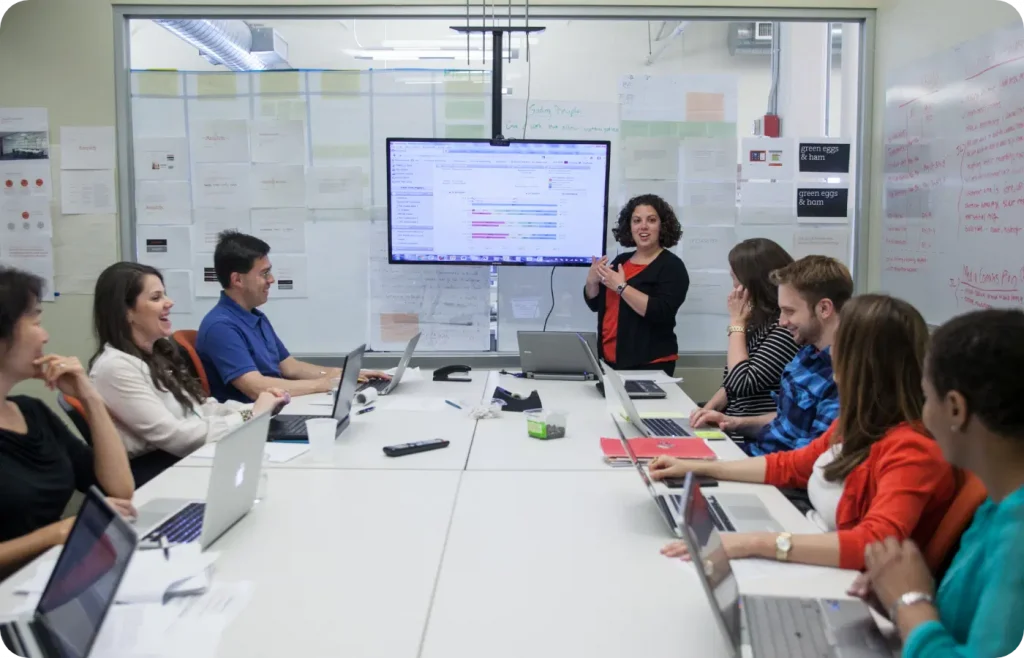
A group of people sit around a conference table with laptops. A woman stands at the front, presenting information displayed on a large screen.
Decorative image

Editorial

Amplify has a dedicated Editorial Team that partners with product teams, subject matter experts, and an internal advisory Editorial Board to ensure that our products meet Amplify’s high standards for quality and embody our purpose and commitment. Through multiple rounds of product review, the Editorial Team coordinates input from internal and external experts and advisors to ensure that Amplify’s materials are engaging, rigorous, and accurate. The Editorial Team also makes certain that all materials are age-appropriate for students and align with current or pending state, district, and other policies.

Our approach to accessibility

Amplify creates products that serve the needs of all learners, including those with disabilities. We refine our practices regularly and incorporate feedback from our users and accessibility experts.

Amplify works with third-party experts in digital accessibility to help ensure that we build and maintain our products in accordance with the latest Web Content Accessibility Guidelines (WCAG) and other relevant legal requirements. How we do it:

Decorative image
  • Integrated accessibility practices: We embed accessibility considerations into our product development lifecycles. We also implement training and vendor management programs that support compliance with applicable standards, guidelines, and best practices.
  • Structured, accessible content: We create well-structured, easily navigable content that meets diverse user needs, including clear, readable text, properly labeled multimedia, and logical organization of information.
  • Development and testing for accessibility: We work with third-party experts to conduct assessments against accessibility standards and develop remediation plans if deficiencies are identified. Our internal quality assurance protocols include scenarios that test functionality for users with disabilities.
  • Comprehensive training and support: We provide continuous training and resources for team members involved in developing our products to help them understand and implement accessibility requirements. This includes training on the latest WCAG guidelines and updates on industry and legal standards.
  • Inclusive design patterns: We prioritize accessible design patterns to create interfaces that are intuitive for users.
  • Student-facing print components: All student-facing print components are available in the National Instructional Materials Access Center (NIMAC) database, and all student-facing PDFs in Amplify curriculum are formatted to be compatible with screen readers.

To provide feedback about the accessibility of Amplify’s products or this website, or to discuss accommodations to help you use our products or this website, please contact the customer care and support team or +1 (800) 823-1969 (hours: 7 a.m.–7 p.m. ET).

Decorative image

Learn more about the impact of our programs.

Amplify’s high-quality programs benefit millions of students every day using methods that are evidence-based, ESSA-aligned, and showing efficacy in a variety of contexts. Read more about our programs in the following case study and report.

Case study: Making an impact with Aldine ISD

Aldine Independent School District serves 62,000 students in Texas. Forty-two percent are English language learners, and more than 90 percent are economically disadvantaged. After two years of using Amplify’s early literacy suite, the number of Aldine ISD elementary students reading at or above grade level rose from 30 percent to 50 percent.

Children sitting at their desks in a classroom, listening attentively. Open notebooks and pencils are on the desks.
Students in a classroom work on laptops with headphones on, while a teacher stands by their side, smiling and helping them.

Report: Advancing Spanish literacy with Boost Lectura

Boost Lectura is proven to support Spanish literacy skills critical for reading development. Students who used Boost Lectura for 30–45 minutes a week outperformed their peers on universal screening assessments of Spanish literacy across grades K–2—and were more likely to meet or exceed benchmarks by the middle of the school year.

S4 – 03: LIVE from NCTM with Bethany and Dan

Hosts Bethany and Dan, both smiling, in a promotional image for the "Math Teacher Lounge" podcast, Season 4 Episode 3, titled "Live from NCTM!" with an

In this episode, co-hosts Bethany Lockhart Johnson and Dan Meyer are LIVE with more than one hundred Math Teacher Lounge listeners at the recent National Council of Teachers of Mathematics conference. Listen in as they answer the pressing question: Who is the best teacher in film or television?

Explore more from Math Teacher Lounge by visiting our main page

Download Transcript

Presenter (00:00):
Ladies and gentlemen, from Math Teacher Lounge, we have Bethany Lockhart Johnson and Dan Meyer! <cheering>

Bethany Lockhart Johnson (00:08):
Doesn’t go well that the door was locked. Like, I could not get in! <Laugh>

Dan Meyer (00:12):
Yeah. Gotcha. All right. We’re gonna sit a little bit. Let’s see how that works—

Bethany Lockhart Johnson (00:16):
Hi!

Dan Meyer (00:16):
Yeah. I think we’ll stand up? Or whaddaya think, sit…?

Bethany Lockhart Johnson (00:19):
Should we stand? Hi.

Dan Meyer (00:22):
Hello. Great to see you folks. Yeah, I can hear you.

Bethany Lockhart Johnson (00:25):
Can you hear me? That’s—I know YOU can me. Can you hear me OK? OK! We’re here. Hello. Thank you for like, lining up and coming out and being here. Thank you!

Dan Meyer (00:35):
Means so much to me that you could be here for me, on my show, with Bethany Lockhart Johnson, my co-host. <Audience laughs>

Bethany Lockhart Johnson (00:40):
The hour has just started.

Dan Meyer (00:42):
We’re just getting going. Yeah. If you folks have heard the podcast, you don’t know how much gets cut out. And it’s like, mostly me just having, you know, anxious nerves and saying something silly and then we cut it out and we can’t do that here today. So it should be real fun for all of us, I think. Yeah.

Bethany Lockhart Johnson (00:55):
It’s not true. It’s mostly dancing. “Bethany, can you stop talking? Bethany?” Cause it’s mostly—

Dan Meyer (00:59):
“It’s my turn. It’s my turn! Bethany <laugh>! I haven’t been heard for a while.”

Bethany Lockhart Johnson (01:02):
Dan. We’re at an in-person conference.

Dan Meyer (01:05):
In-person BIG conference, I would say. I’d say a big conference. Yeah.

Bethany Lockhart Johnson (01:08):
And have you been to the Amplify booth?

Dan Meyer (01:11):
I have! Have these people? There’s a claw machine with free socks.

Bethany Lockhart Johnson (01:16):
Yeah. You’re saving me socks, right? That’s what you’re saying. <Laugh> I mean, it’s exciting. How has your conference been so far?

Dan Meyer (01:21):
So far it’s been a blast. I feel fed. I feel like the community’s been awesome. How are you feeling about it?

Bethany Lockhart Johnson (01:29):
OK. Let’s talk about me for just a second.

Dan Meyer (01:31):
Yeah. Talk about you.

Bethany Lockhart Johnson (01:31):
Last night, Dan, was the very first night that I was away from my toddler. <Audience: Aw!>

Dan Meyer (01:38):
Big commitment being here. Thank you.

Bethany Lockhart Johnson (01:40):
I got super-emotional walking back to the hotel after dinner, and then I got in my room, <laugh> I put on pajamas, and I turned on music. I slept so good!

Dan Meyer (01:50):
Yeah. <Audience laughs> Give it up for no kids! <Audience laughs> Hey!

Bethany Lockhart Johnson (01:55):
I love him so much. But I slept all the way through the night. Oh, by the way, I ordered room service in the morning.

Dan Meyer (02:01):
On Amplify.

Bethany Lockhart Johnson (02:01):
That bill’s coming. But it’s been a great conference and I’m so delighted to be here in person and to get to share energy…and hopefully that’s all we’re sharing today. Y’all got your tests, right? Yep. Sharing energy and community today. Because we know it’s been hard. Hardness. Hard.

Dan Meyer (02:25):
Yeah.

Bethany Lockhart Johnson (02:26):
Years. Hard. And to be in person, I know conferences reinvigorate me and I go back into my educational spaces feeling revitalized with new connections and new ideas to try. So yeah, I’ve been excited to be here. And thank you all for being here.

Dan Meyer (02:40):
Yep. I don’t care if I get six different strains of Covid here. I’m just thrilled to be here. <Audience laughs> I don’t know if you’ve had the same feeling, though, Bethany, you folks…I’m a little bit confused to some degree about what we’re doing. I just wanna be really transparent. This is my sarcastic voice but I’m being sincere here. It kind of feels like we’re in a little bit of a time capsule. Like we all got in a time capsule in 2019 and, you know, you open it back up and it’s like, OK, so we’re still, you know, talking about X, Y, or Z protocol for establishing classroom routines or whatever. And I’m like, OK! Like, I loved that in 2019! But I do admit, I’m still trying to figure out a little bit like, what are we doing now? What’s our relationship to the world out there? Things are very different. I have had some great sessions that I’ve enjoyed. I’m also like, still waiting for a session to draw a little blood. Do you know what I mean? Like there’s been sessions…no? OK. You’ve been in these sessions where it’s like, “Oh, ow.” Like, and you look down and there’s and there’s blood there. It’s like, I thought I knew what we were up to. Like, I thought I knew what teaching was and how we relate to the world. I dunno, like in any Danny Martin session in 2019, “Take a Knee” was one, where I was like, “Oh, OK. Like, I’m not as hot as I think I am here. Like, I’m part of a system.” That kind of thing for me draws blood. And I haven’t been in one of those yet. Been some great sessions. I’m a little hopeful that today we draw a little blood and think about what we’re doing here, is my hope here, if that’s OK. So Bethany’s gonna moderate that impulse and she’ll be the fun one and I’ll be the blood-drawing one.

Bethany Lockhart Johnson (04:05):
No, I don’t…that metaphor doesn’t speak to me personally. But what I will say is, I get what you’re saying about really wanting to be in that room where there’s like this synergy happening. No promises about that today other than—

Dan Meyer (04:18):
I promise. <Audience laughs> Go on.

Bethany Lockhart Johnson (04:20):
Other than I get what you’re saying. I’ll find my own metaphor that does not involve bloodshed, but.

Dan Meyer (04:25):
Sure. There’s a lot of ways we we could go about this today. And the one that I’m excited about is, you know, we could like, you know, analyze some results from students, and talk about what went into that. Look at classroom video. Lots of possibilities. But here’s what we’re up to today. Hope you’re into it. Which is, we are here in the heart of the entertainment industry. You know, Tinseltown! Um, the Big Apple! Uh…

Bethany Lockhart Johnson (04:47):
No!

Dan Meyer (04:47):
Come on. What do you got here? Um…

Bethany Lockhart Johnson (04:51):
It was daytime at night. Like the lights were so bright.

Dan Meyer (04:54):
The City of Lights.

Bethany Lockhart Johnson (04:55):
There was a movie premiere outside my hotel room, which I was not invited to, unfortunately. But so what are we doing today?

Dan Meyer (05:01):
So here’s what we’re doing. We are gonna settle, once and for all, a question you have not asked yourself yet, perhaps, but will want to know the answer to in a moment. Which is: Who is the best teacher in all of film or television? OK? We’re gonna do that. It’ll be fun. But I hope that in debating this a little bit with a special guest we’ll bring up in a moment, that we will start to uncover some truths about what makes good teaching. How that’s different from teaching as we see it in movies and tv. Why middle-class America wants teachers to look a certain way in movies and tv. What all that means. And it’ll be awesome. I think. I’m hopeful it’ll be awesome. So what we did here is we’ve invited eight people. Eight folks you people may have known. You’ve been in their sessions today, in this conference, perhaps. And asked them: Who’s your fave? Like, we might have our favorites, but we wanted to democratize it a bit. So asked some cool people who you folks like, who are very smart and thoughtful about teaching: Who’s your favorite teacher?

Bethany Lockhart Johnson (05:58):
A few of whom are in this room. Thank you for your submission.

Dan Meyer (06:00):
Thank so much. Yeah. We’ll see what happens here. <laugh>

Bethany Lockhart Johnson (06:03):
As they shrink down.

Dan Meyer (06:03):
Yeah. Might draw some blood that I don’t mean to right now. We’ll see. OK.

Bethany Lockhart Johnson (06:06):
That metaphor, what IS that??

Dan Meyer (06:07):
Yeah. Yeah. I love it. I’m still going with it. <laugh> And you folks will be a huge part of this. THE part of this, really. So what will happen is I’ll share with you our first nominees. A few of us will make a case for our favorites, or least favorites, as the case may be sometimes. And then by applause, by acclamation, you folks will decide who wins and advances to the next round. Start with eight, move to four. You folks know math.You know where this goes. OK.

Bethany Lockhart Johnson (06:34):
No, keep going. Keep going.

Dan Meyer (06:36):
Two, then one.

Bethany Lockhart Johnson (06:36):
Yeah. Got it.

Dan Meyer (06:37):
Then a half of it. No?

Bethany Lockhart Johnson (06:38):
He had to school me on the making of brackets. But we got it. Yeah.

Dan Meyer (06:41):
How brackets work.

Bethany Lockhart Johnson (06:41):
But we got it. March Madness, what?

Dan Meyer (06:44):
Yeah, in order to do this right, we had to bring up—all the folks that you’ll see are also former Math Teacher Lounge guests, or like, just fan favorites. And we’re also bringing up a former Math Teacher Lounge guest to help us decide this and debate this in a respectful manner.

Bethany Lockhart Johnson (06:59):
New dad.

Dan Meyer (07:00):
New dad.

Bethany Lockhart Johnson (07:01):
You see where my brain’s still at? I miss him. <Laughs>

Dan Meyer (07:03):
Friend from San Diego. Really cool teacher.

Bethany Lockhart Johnson (07:06):
Incredible teacher.

Dan Meyer (07:06):
Works at Desmos and Amplify. And I just want you to welcome up your friend and mine. Chris Nho!

Bethany Lockhart Johnson (07:11):
Chris Nho!

Dan Meyer (07:13):
Come up, Chris. Let’s go, buddy. We didn’t talk about it, but did you want to do the cornball stuff too?

Chris Nho (07:22):
Wow. Would I love to do—

Bethany Lockhart Johnson (07:23):
And then the door could be locked! And then you have to wait and like, just—

Chris Nho (07:27):
Yeah, I’ll skip that part.

Bethany Lockhart Johnson (07:28):
Hi. Welcome. You’re here. We’re here in person.

Chris Nho (07:30):
Very glad to be here. Thank you all for having me.

Dan Meyer (07:33):
Tell me who you are.

Chris Nho (07:34):
My name is Chris Nho. I live in San Diego. I’m a new dad. A three month old, just had. Yeah, she’s actually here at the conference with us in the hotel room. And I promise you she is not by herself. She is with…come on. I was like, “Hey, just gimme one hour. I’ll be right back. I have to do very important work.” But yeah, I think I got invited here because I have opinions and I’m willing to draw…some…blood.

Dan Meyer (08:02):
There we go! Two outta three! We’re good on the metaphor now.

Bethany Lockhart Johnson (08:06):
We’re so glad you’re here. If you haven’t listened to the episode where Chris and Molly and some other public math folks share their ideas and ideas of how to take math out into the world, please listen, because we had a blast.

Dan Meyer (08:19):
Inspiring work. Really inspiring work. Very cool. Cool. OK. Right on. OK.

Bethany Lockhart Johnson (08:23):
Let’s do this!

Dan Meyer (08:24):
Let’s get started here. Yeah! <Audience cheers> Yeah. And we might ask you who your favorite teacher is, who’s missing from our list of eight? We might have forgotten some people. Anyway. All right. So here’s our first two. Our first two are nominated by way of, let’s see, um, Mandy Jansen is a professor at the University of Delaware. Got some awesome talks here this week, a Shadow Con talk last night. She’ll be nominating one. And also, um, Lani Horn is a professor at Vanderbilt, also extremely cool, prolific author and speaker, just all-around great human and friend of teachers everywhere. And she’ll nominate another in this bracket, which is the Northeastern Comedy bracket, Northeastern comedy bracket.

Bethany Lockhart Johnson (09:06):
It just worked out that way.

Dan Meyer (09:07):
Yeah. Here it is. Here is Tina Fey in Mean Girls.

Tina Fey in Mean Girls (09:12):
“OK. Everybody close your eyes. All right. I want you to raise your hand if you have ever had a girl say something bad about you behind your back. Open your eyes. Now close your eyes again. And this time I want you to raise your hand if you have ever said anything about a friend behind her back. Open up. It’s been some girl-on-girl crime here.”

Lani Horn (09:52):
I am nominating Sharon Norbury from Mean Girls as the best movie math teacher. She is an awesome teacher who is always there for her kids. She always sees the best in them. She shows that she can forgive even some pretty bad behavior, if she sees that kids are trying. She’s a strong feminist who makes sure that smart girls don’t dumb themselves down just to impress boys.

Tina Fey in Mean Girls (10:22):
“Katie, I know that having a boyfriend may seem like the most important thing in the world right now, but you don’t have to dumb yourself down to get guys to like you.”

Lani Horn (10:30):
She’s also super hard-working. She works three jobs. She’s always there for the kids. She plays piano in the talent show and takes them to Mathlete competitions. And she’s also socially aware. And when things go really badly among the girls, she does some pretty creative things to try to get them to be kinder to each other.

Dan Meyer (10:54):
OK. That’s one.

Bethany Lockhart Johnson (10:55):
Helen Case.

Dan Meyer (10:57):
All right. Settle down. Settle down. Settle down. All right.

Bethany Lockhart Johnson (10:59):
Piano too!

Dan Meyer (11:00):
Bethany’s already trying to bias people here. All right. Chill out. Hold on. So next one is Mandy Jansen with Jack Black from School of Rock. Uh-oh. Uh-oh.

Jack Black in School of Rock (11:09):
“What was your name?”

Kid in School of Rock (11:10):
“Katie.”

Jack Black in School of Rock (11:11):
“Katie. What was that thing you were playing today? The big thing.”

Kid in School of Rock (11:14):
“Cello.”

Jack Black in School of Rock (11:15):
“OK. This is a bass guitar and it’s the exact same thing, but instead of playing like this, you tip it on the side. Chellooooo! You’ve got a bass! <Laugh> Try it on.”

Mandy Jansen (11:25):
And I’m nominating for best teacher in a film Jack Black as Dewey Finn playing Mr. Ned Schneebly in the film School of Rock. So why this portrayal? First of all, playing a longterm sub. Those are so hard to find right now. <Audience laughs> Really hard. And then he teaches using class projects. That’s brilliant. Integrated learning. And then love this. He gives students roles and tasks that are differentiated and align to the specific strengths that each student has.

Kid 2 in School of Rock (12:05):
“I can also play clarinet, you know!”

Jack Black in School of Rock (12:06):
“I’ll find something for you when we get back from lunch. I’ll assign the rest of you killer positions.”

Mandy Jansen (12:13):
And the film culminates in a performance of a collaborative song that they all wrote and performed together. And the students experience that collaboration and teamwork and creating something beautiful is much more important than winning first place. And finally, one of the songs that the character sings in the film is “Math is a Wonderful Thing.” Can’t beat that.

Dan Meyer (12:40):
All right. That’s tough. That’s tough. So here’s the deal. What we have right now is just a quick minute—so Bethany, you ranked, we all ranked our own faves here outta the list of eight. And Bethany put Jack Black in School of Rock a bit higher than Tina Fey in Mean Girls.

Bethany Lockhart Johnson (12:54):
Missed the piano part though.

Dan Meyer (12:55):
And Chris, vice versa here. So Bethany, would you start us off and just make a quick case here for Jack Black versus Tina Fey?

Bethany Lockhart Johnson (13:01):
OK. So here’s what I’m thinking. There’s been rumor that maybe they’re putting less than credentialed people into classrooms to fill teaching gaps. I mean, just rumor. And so here’s this guy who is a rocker. He is not a substitute. He has no teaching training. And yet he goes in there and it turns out that he has the ability to see students’ potential and to recognize their unique abilities. And like Mandy said, he really tapped into, like, he saw them and said, “No, more is possible for you than what you think is possible.” And there’s like real sub anxiety. When you walk in, you can either be like, happy there’s a sub, but I was usually really nervous. Right? And he goes in and he makes that classroom into a home.

Dan Meyer (13:53):
Wow.

Chris Nho (13:54):
Wow.

Dan Meyer (13:56):
Chris, speak on it. Tina Fey needs you. Chris.

Chris Nho (13:59):
Tina Fey. Here we go. I’m gonna argue here that—when was that movie made?

Dan Meyer (14:03):
T is for terrific. I is for Interesting.

Chris Nho (14:06):
Decades ago. And I’m gonna argue that Tina Fey was very progressive for her time. OK, let’s talk about social emotional learning. Hello. <Audience laughs> Love that. Right? Stand up if, I mean, she’s getting people to talk about their emotions. And there’s a curriculum. But let’s just pause, because that’s not what’s really happening in the classroom right now. So social emotional learning, I think she’s, she’s got that a lot. And then number two, you know, if you remember the plot of Mean Girls a little bit, she gets her name written in that Burn Book. Like she sees what they say about her. Restorative justice. Let’s go. <Audience laughs>.

Dan Meyer (14:38):
Whom amongst us. Yes.

Chris Nho (14:40):
You write Mr. Nho in the Burn Book?? Well, your grade book is gonna look like a Burn Book! OK? <Audience laughs> Tina Fey, Tina Fey, she was like, “No, you know, know what? I’m actually gonna spend more time with you. You’re gonna become a mathlete.” And Lindsay Lohan discovers—she drops the most iconic line in all of math education. “The limit does not exist.” Thank you, Tina Fey, for that. For that gift.

Dan Meyer (15:04):
Bless. Bless you. Tina Fey. Wow.

Bethany Lockhart Johnson (15:05):
Oh, man. Wow.

Dan Meyer (15:09):
Let’s see what the people say here. I do wanna just add one quick thing about—it’s interesting to me how often in these movies—just kind of go in a little bit, zoom out just a minute—how often it’s a teacher who has no training as a teacher. <Bethany laughs> I am kind of curious why it is. Like, those are the movies that get hot, that get made. Again, these are all kind of a mirror of the taste of the moviegoing public. You know what I’m saying? Like, these, these are not movies—I wanna believe they are made for me and for us as teachers. But they are not. There’s not enough of us to justify, you know, Jack Black’s, you know, M&M budget or whatever he’s got going on in his trailer or whatever. That needs to be for everybody in middle-class America. So what is it about middle-class America that wants to see teaching as something that anybody can do? Just like, you know, just, just run up there in your van and make it happen.

Bethany Lockhart Johnson (15:54):
Magic magically manifests.

Dan Meyer (15:56):
Yeah. Manifest. Yeah. That’s just interesting to me. I just toss that out there as some red meat. Let’s see what the people say here. All right, OK, so you’re ready. Let’s get the bracket going here. The question is Tina Fey versus Jack Black. You had a moment here. Just whisper to someone real fast who you’re going for here real quick. What are you thinking here? <Crowd murmuring> All right. Crowd’s buzzing. Crowd’s buzzing. Would you folks…? All right. Bring it back. Go ahead and make some noise for Tina Fey. <Crowd cheers> OK. OK. Make some noise for Jack Black! <Crowd cheers> Judges say Tina Fey. Tina Fey moves on. All right. All right.

Chris Nho (16:44):
Stunned. I’m stunned. I’m speechless.

Bethany Lockhart Johnson (16:46):
Tina Fey moves on. Wow.

Dan Meyer (16:48):
This has exceeded my expectations in terms of having some fun, but also getting deep, getting deep and real about teaching. I’m into this right here. Yeah. What’s up?

Bethany Lockhart Johnson (16:54):
That’s the goal. That’s the goal. OK. You wanted blood? Oooh, this next matchup might just be where that blood comes forth! OK. Stretch. Warm up. Dan Meyer, who’s up next?

Dan Meyer (17:11):
We’ve got the animated/animatronic round here in the Southeast. And repping the two contestants here, who do we have? We have Allison Hintz, professor, author outta Washington, as one of the two nominators. And the other nominator is one of my heroes, though we’ll find out very wrong about this nomination, Jenna Laib, who’s in the crowd, and I’m trying not to make eye contact here. <Laugh> And here are the two nominations. A couple minutes each. And then we’ll chat about it. And one of us will probably die. But we’ll see how it goes.

Allison Hintz (17:50):
A long, long time ago, in a galaxy far, far away, MTL, we began learning from the Jedi Master of Teaching. With the Socratic and experiential approach. With unparalleled mindfulness, compassion, and humility. The best teacher in TV and film, Yoda is. <Audience laughs> Yoda lives the values we share as teachers and learners. He humbly comes alongside us as we construct new knowledge.

Yoda (18:29):
“You must unlearn what you have learned.”

Allison Hintz (18:32):
Yoda allows us to struggle and sees mistakes as critical to learning.

Yoda (18:39):
“The greatest teacher, failure is.”

Allison Hintz (18:43):
Yoda values curiosity and reminds us of the beauty and joy of teachers learning from children.

Yoda (18:52):
“Truly wonderful, the mind of a child is.”

Allison Hintz (18:59):
MTL! Join the Resistance! Let the force flow through you in declaring, the best teacher in TV and film, Yoda is.

Dan Meyer (19:18):
Give it up for Allison Hintz! All right! <Audience applauds>

Bethany Lockhart Johnson (19:20):
Alison! And to have that on hand too, which Is kind of perfect.

Bethany Lockhart Johnson (19:26):
Just to be clear, the helmet is not a part of a Zoom background.

Dan Meyer (19:29):
You may evaluate the quality of the nomination based on the costumes of the nominator. That is acceptable. That’s acceptable.

Bethany Lockhart Johnson (19:35):
That is a REAL HELMET.

Dan Meyer (19:35):
All right. The next nominator here, this one is from Jenna Laib, math coach, all-around stellar human. Here we go. This is Ms. Frizzle.

Ms. Frizzle (19:42):
“Single file, class. Our rotten field trip has only just begun.”

Jenna Laib (19:47):
And I think that the best teacher from TV or movies is Ms .Valerie Frizzle from The Magic School Bus. First and foremost, Ms. Frizzle believes in her students. She encourages them to take an active role in their learning, and also to advocate for change in their local community. For example, there’s an episode where there is a logger who’s gonna cut down a rotting log that would benefit the local ecosystem. And the students figure out a way to convince him to leave the log so that all of the animals and the plant life can benefit. She orchestrates really challenging situations for these students, and she allows them the space to ask questions and engage in problem-solving and puzzle their way out of these really, really difficult scenarios. Ms. Frizzle has unmatched pedagogy. She’s bold, she’s innovative, and she’s a major proponent of experiential learning. So these students are heading straight into a storm to learn about weather systems. <Audience laughs> These students are heading into the human body to learn about digestion and disease. They literally get baked into a cake to learn about some chemistry and reactions.

Children in The Magic School Bus (20:54):
“What’s happening?” <Audience laughs> “Why is it suddenly getting so hot?” “Maybe it’s because the floor is on fire!” <Audience laughs>

Jenna Laib (21:02):
This pedagogy is all led by her outstanding catchphrase, which is:

Ms. Frizzle (21:06):
“Take chances; make mistakes; get messy!”

Jenna Laib (21:14):
From her pedagogy to the classroom community that she creates, Ms. Frizzle is an inspiration, and that is why I think that she is the best teacher from TV or film. <Audience applauds>

Dan Meyer (21:25):
Right on! Give it up for Jenna. Give it up for Jenna. All right. I’m gonna take first pass at this. Chris knows my argument already, so I’m gonna take this here. I see some of you are feeling how I’m feeling on this one. OK, so I don’t have tons to say in favor of Yoda. I think it was all true what Allison said. I think the costume was banging. It was awesome. So there’s all that, but I have more to say against Ms. Frizzle than for Yoda.

Bethany Lockhart Johnson (21:48):
No, no, no. Wait a second!

Bethany Lockhart Johnson (21:49):
Let’s let it happen. Bethany, I’ve come prepared.

Dan Meyer (21:54):
I may have made a misstep here, I realize.

Bethany Lockhart Johnson (21:56):
I’ve come prepared.

Dan Meyer (21:56):
So I think Jenna is all correct. I think those clips spoke for themselves. I think that what they add up to, to me, is not “great teacher,” but more “someone who should be locked up.” <Audience laughs> Or at the very minimum, “someone who should be kept away from children.” <Audience laughs> Do not let that woman around children. I mean, check it out. Look, I don’t wanna throw down credentials. I’ve been to grad school, though. I know how this works. When your brain is stressed, you get these—all the cortisol happens. Your working memory shrinks up. You cannot learn when you’re stressed. And those kids, like whatever lesson Ms. Frizzle is teaching by sending them into an oven, I repeat, an oven <audience laughs>, like, they’re not gonna learn anything ’cause their brains are freaking out with stress and fear. OK?

Bethany Lockhart Johnson (22:41):
“What’s happening??”

Dan Meyer (22:43):
“What’s happening? Am I on fire? Well…I’m learning lots, though! Sure is magical!” <Audience laughs> It’s like, “No. Get that woman out of a classroom.” That’s my opening and closing argument. Right? There’s all it is.

Chris Nho (23:01):
All right. All right. All right.

Bethany Lockhart Johnson (23:02):
Chris knows.

Chris Nho (23:03):
I’ve got, I’ve got lots to say. First off, I think Dan was in charge of the editing of those video clips. So let’s let that be—you know, let the record stand. <Audience laughs>

Dan Meyer (23:11):
Where’s the lie though? Where’s the lie?

Chris Nho (23:14):
And, you know, second, I think, um—this is the guy up here saying, “I wanna see blood.” You know? And then he has a teacher who literally takes the students into a blood cell and, and you get a little scared! You get a little worried for the students, you know? So I just don’t get it, Dan. This or that. OK? I think Ms. Frizzle—so I actually went to a project-based learning school. I taught at a project-based learning school. And the best thing about it is like, your learning, it doesn’t just stay in this box of math lesson or writing lesson, history lesson. And I think with Ms. Frizzle, like you can’t help but learn things because you are getting baked in a cake. <Audience laughs> Yeah, it is a little scary. And I imagine there’s cortisol and things happening, but guess what? Probably the next episode, they go into their own brains and explore what’s happening. That kind of thing. You know?

Dan Meyer (24:07):
The kids that survived, just be clear. <Audience laughs>

Chris Nho (24:10):
Yeah. OK. Would I want Nora, my three-month-old, to be babysat by Ms. Frizzle? Maybe not. <Audience laughs> But what I have to say about Yoda is Yoda maybe wins the best tutor award. Give it up for Yoda’s Best Tutor Award.

Bethany Lockhart Johnson (24:24):
Oh, yeah…

Chris Nho (24:25):
That ratio’s looking really nice. I could teach the heck outta Luke Skywalker. OK? But 20 little Luke Skywalkers running around. I’m not sure. OK?

Dan Meyer (24:34):
Luke did survive the training, though. <Audience laughs> So that’s awfully nice to say about it. All right, Great words from Chris here. I’m still not convinced. We’ll see how you’re convinced here. Would you whisper to someone where you’re leaning here? Frizzle or Yoda? <Audience buzzing>

Chris Nho (24:47):
I tried. I tried.

Dan Meyer (24:53):
All right. That’s enough of that. Let’s hear it folks. Give it up for Yoda. <Audience cheers> Give it up. Give it up. You. Give. It. Up.

Chris Nho (25:05):
Hey, next. Next.

Dan Meyer (25:06):
All right. All right, all right. <Mutters> Give it up for Ms. Frizzle. <Audience cheers louder> I dunno, it’s pretty close. Call a tie. Maybe Yoda? Yoda by nose? <Audience laughs> All right. All right. Let’s…let me see who’s it. Let’s get the people advancing here. I’ll keep on moving here.

Chris Nho (25:26):
As you’re doing that. Um, Dan ranked Ms. Frizzle last in his personal ranking. And I ranked Ms. Frizzle very high, so we knew this one would be spicy,

Bethany Lockhart Johnson (25:36):
<laugh> Spicy it was. Are you having a good time so far? <Audience cheers> So while we love seeing these images and we love seeing these video clips, at the core, what are these things about how teachers are portrayed? And how accurate is that to our real lives? I mean, besides the cake part, right? That my chemistry class did often feel like I was on fire. I was so stressed in it. Um, we’re ready?

Dan Meyer (26:05):
Yep. Great. We’re ready, we’re up here. So the next two nominees are coming to you folks from Tracy Zager, who is the editor of my book, forthcoming in 2027 at the earliest and 2032 at the latest. And also your very own Zak Champagne from Florida, here in the room. Hey, Zak. Zak, let’s see who the nominations are. I’m gonna skip past that, didn’t work out so well for me. Here it is. This is Marshall Kane from the TV show Community.

Michael K. Williams in Community (26:32):
“You two complete your case to the class and let them decide your grades.”

Joel McHale in Community (26:37):
“Professor, thank you.”

Michael K. Williams in Community (26:40):
“It’s not a favor, Mr. Winger. Man’s gotta have a code.”

Joel McHale in Community (26:44):
“Awesome.”

Zak Champagne (26:46):
This is a pitch for an underdog. This teacher didn’t stand on desks or encourage his students to follow their musical passions. In fact, this teacher was seen only in a few episodes of my favorite TV show of all time, Community, Community has set at Greendale Community College in Colorado. And in season three, we get to meet Dr. Marshall Kane, a biology professor whose story is an inspiration to anyone who just takes the time to look and listen. Dr. Marshall Kane slowly earned his PhD while in prison, serving a sentence of 25 to life. In his classroom, he inspires students to love biology, question why LEGO has become so complicated, and randomly pairs his students for group projects to ensure no one feels left out. His greatest performance comes when a group of students believe their yam project was intentionally sabotaged. Dr. Kane took this as an opportunity for some trans-disciplinary real-world learning. So yes, at community college, he felt that a middle-school mock trial was the best way to determine who killed the yam. So let’s all pick the underdog and vote for Dr. Marshall Kane. After all, man’s gotta have a code. <Audience goes “oh!” and applauds>

Dan Meyer (27:53):
Thank you, Zak.

Bethany Lockhart Johnson (27:54):
I have a code.

Dan Meyer (27:56):
Next up is Tracy Zager, nominating an unusual nomination, not a single person, but an ensemble performance. A bunch of people from a movie called Searching for Bobby Fisher. Here we go.

Rapid-fire movie dialogue (28:11):
“What’s that?” “Schleimann attack.” “Schleimann attack? Where’d you learn that from, a book?” “No, my teacher taught me.” “Aw, your teacher. Well, forget it. Play like you used to, from the gut. Get your pawns rolling on the queen’s side.”

Tracy Zager (28:26):
Hey, Math Teacher Lounge. This is Tracy Zager. I’m excited to share my nominee for the best movie teacher. But I have to admit that when I first got the email, I thought, oh, who am I gonna nominate? Because most movies about teachers are highly problematic. They usually have like a saviorism thing, usually white saviors. And I just felt like I couldn’t suggest any of those. So rather than nominate a movie about a single teacher, I wanted to nominate a movie that taught me something about teaching. And that movie is a deep cut. It’s Searching for Bobby Fischer. It’s a movie about a chess prodigy. And what I love about it is that all of the different adults in the movie are in teacher roles in some way. And the student, Josh, the chess player, is a fully realized character, not an empty pail, who pulls from the strengths of each one of those adults while also dealing with their flaws and humanity. And there’s just beautiful synergy in the way he gets the best out of everybody, but also has to overcome some of the barriers that they put in front of him. So I feel like it’s a much more authentic and humbling, but also inspiring, movie about the power of teaching. So if you haven’t ever seen it, check it out. And I can’t wait to see who the other nominees are. Thanks so much.

Dan Meyer (29:53):
Right on. Thank you, Tracy. Wherever you are. <Applause> We’ll move a little quicker here. I’m curious, Bethany, you put Marshall Kane pretty high. I put Bobby Fischer pretty high. What do you have to say about Marshall Kane for us here?

Bethany Lockhart Johnson (30:04):
Well, I just wanna say two things. One is that, like Zak said, he has this code of conduct that he brings in. And he stays true to it no matter what happens. If you saw him in in Community, you know that he held himself up to such high esteem, but not just himself, his students as well. And he took accountability when he felt he had done wrong, even though, well, that’s controversy. But first—oh, the other thing, rest in peace, Michael K. Williams. Oh my gosh. The actor who plays Marshall K. And the thing that I wanna say most of all about it is that he brings his whole self to the classroom. He was in prison for decades. He brings his whole self and says, “This is who I was. This is who I am today. And this is how we can work together as a community.”

Dan Meyer (30:58):
That’s big. I love your comments about code of conduct too. It makes me wish that Ms. Frizzle had a code of conduct also.

Bethany Lockhart Johnson (31:05):
I knew that was coming back!

Chris Nho (31:06):
Two slides ago, Dan. That was two slides ago.

Dan Meyer (31:08):
Can’t let it go. So yeah, I love what you said there. I have no strong beef here either way. Bobby Fischer’s a movie I have loved dearly and can’t be objective about it. I love that the kid in that movie, more than any other movie here, the kid teaches the adults so much through his innocence and how he challenges them and how they’re treating him. Dig all that so much. Will not, will not begrudge anyone any vote either way here. I do begrudge many of you your vote in previous rounds. <Audience laughs> So let’s just, let’s hear. We’re not gonna ask you folks at all to chitchat. We’re gonna move on this one. So would you folks make some noise here for Marshall Kane in Community? OK. OK. And would you make some noise here for Bobby Fischer, the kid in Bobby Fischer, the ensemble? <Audience cheers, applauds>

Bethany Lockhart Johnson (31:56):
Marshall Kane.

Dan Meyer (31:57):
Marshall Kane takes it. All right. Good job, Marshall Kane! All right. Zak’s feeling good. Moving on to the final four here, Zak, right on. OK. Our last—the Northwest Division here is also the large urban district division here. We have a couple different teachers in sets of large urban schools. They’re nominated, they’re advanced by a couple people here. One is past president of NCTM, Robert Berry. And another is Fawn Nguyen, Southern California phenom. Great teacher and friend of lots of us. Um, let’s see who they nominated here. First from Robert Berry, let’s see, who is it here? Janine Teagues from Abbott Elementary.

Abbott Elementary dialogue (32:37):
“Hey, you know what? I’m probably probably gonna be Kenny’s second-grade teacher. Why don’t you just let him get a head start with me today?” “That’d be great.” “Yeah? OK. Hey, Kenny, would you like to be in my group today?” “Not really.” “That’s the spirit.”

Robert Berry (32:54):
My nomination is gonna be Quinta Brunson, the Emmy Award-winning Quinta Brunson from Abbott Elementary. Janine Teagues is the character. She exemplifies care not only from an affect way, but she also exemplifies care in the things that she does for her students. While the scenes in the show are entertaining, they do represent the challenges that teachers experience when they’re trying to meet the needs of her students. So she goes, goes all out for her students and finding resources. She accesses other people to get resources for her students. But the care shows up in the way that she is mindful of their needs. And so, for me, when I think about teachers and teaching, sometimes we can talk about pedagogy, but sometimes we also can talk about those kind of intangibles that makes a teacher a great teacher. It is apparent from her students that she cares about them, she supports them, and she goes all out 100% for her students. Janine Teagues, Quinta Brunson is, I think, is my choice of the best teacher on television because of the realism and the representation that she brings to this character of what teaching is about. <Applause>

Dan Meyer (34:28):
Right on. Right on. OK. OK. Next up, we’ve got, Fawn Nguyen is nominating Erin Gruwell from Freedom Writers. Here we go.

Hilary Swank in Freedom Writers movie (34:39):
“Look, you can either sit in your seats reading those workbooks or you can play a game. Either way, you’re in here till the bell rings. OK? This is called the Line Game. I’m gonna ask you a question. If that question applies to you, you step onto the line and then step back away for the next question. Easy, right? The first question. How many of you have the new Snoop Dog album? <kids move around> OK, back away. Next question. How many of you have seen Boys in the Hood?”

Fawn Nguyen (35:26):
We all learn about Miss G and her 150 students in the movie Freedom Writers starring Hilary Swank. All great teachers share a common set of traits. They care deeply about their students, have high expectations of them, and always believing wholeheartedly that they will succeed. Great teachers go above and beyond, not because they extraordinary—as Anne Gruwell would always refer to herself as an ordinary teacher—but because extraordinary things happen to people when we believe in them, give them hope, help them write their own story with a different ending. So what stood out for me with Miss G is the scope of her reach, the ever-expanding sphere of her humanity. The red tape she had placed on the classroom floor for the line game shows just how much we all have in common despite our differences. Her students didn’t just learn from her; they learned from one another. If you’d like to be part of this expanding sphere to give voice and hope, please check out Freedom Writers Foundation dot org.

Dan Meyer (36:38):
OK. This right here is a tough one for us. Thank you, Fawn. We collectively ranked—that’s our number one seed and number eight seed, which I hasten to say does not have to do with Erin Gruwell, a person, but the portrayal and the movie. So we don’t have like a whole lot of…there’s not a lot of defense we have to offer here of our eighth seed. And I heard like a kind of a little bit of a murmur over the crowd on Erin Gruwell. So I’m more interested than having a defense back and forth. I’d be curious what you, Bethany, think about what, like, what both movies have to say about like, what teaching is, especially teaching urban schools with black and brown kids and lower-class kids, for instance. They both have, I think, very different things to say about them. Do you have thoughts about that?

Bethany Lockhart Johnson (37:19):
Well, it’s interesting because there is some overlap in the sense that the arguments that both Fawn and Robert Berry put out, they both care deeply about their students, right? We’re not gonna argue that. They care deeply. And something that I would say about Miss Teagues is there’s something about the way that she sees not only her classroom, her students, but she sees all of the students in the school as her students. And her idea of resource generation is really helping the teachers to generate resources from their community themselves, and to also realize that the students see themselves reflected in the teachers. And I think that—you know, again, this is not about the real person—but the movie portrayal, and we often see kind of this, for Freedom Writers, we often see this like, Great Last Hope whisked in and her personal sacrifices are what makes these students, these brown and black students’ transformation possible. Because of her sacrifices. Including her marriage. Including, you know, three jobs. And it’s just portrayed in a way that I think really celebrates her sacrifices rather than what the students have already brought—they already come into the room bringing so much as they are, already, without her intervention.

Dan Meyer (38:38):
I love the portrayal of the teacher as part of a community of teachers. Versus in so many of these movies, it’s the teacher as the only person who gets it, you know, oftentimes coming from outside of the world of teaching and everyone’s against them and wants ’em just to fall in line and do the thing we always do, and they’re the outlier. But in Abbott Elementary, it’s like we all rise and we fall together. And teachers are investing in each other’s success, especially with Gregory the longterm sub. We’re all rooting for his, you know, his flourishing. I love that. And yeah. That’s bigtime.

Chris Nho (39:09):
Yeah, I think one interesting thing is that Freedom Writers, when it came out, I think it was like a commercial success.

Bethany Lockhart Johnson (39:17):
Oh, big time. Yeah. It was.

Chris Nho (39:18):
It probably influenced a lot of people to try teaching out. So I do wonder what it says about us, right? Like that we want teaching to fit this narrative, and we wanna be those people who could go into a classroom and <puts on “cool voice”> “Y’all listen to Snoop Dog?” and just have that question HIT. <laughter> And you know, I’ve taught in a large urban school district, and I’ve been that person and I’ve seen other people try and be that person. And I think stepping away from it a little bit, just—it’s a reflection of what people want out of teaching and what they think better education looks like.

Dan Meyer (39:57):
Yeah, yeah. This idea that, so I’m a middle-class person, let’s say, and like, there’s this idea, like, “I know what I would do if I was going into circumstances of impoverishment.” Like I have—

Bethany Lockhart Johnson (40:06):
“All they really need is…”

Dan Meyer (40:07):
…for me to give ’em some real talk and tell ’em, you know, pull their pants up or whatever, listen to Snoop Dog, that kind of thing. And that will be the key. And that’s not how it is in, you know, in Jack Black in School of Rock or Tina Fey school, which are, you know, coded as largely like upper-class or largely white schools. And in those movies, it’s interesting, like how it’s about students discovering themselves, oftentimes. And the central figures are often students. And the students need to reject an oppressive parent figure or something and find themselves. But no, in Freedom Writers, it’s like, “You need to become more like the middle-class teachers who are coming in here to give you this wisdom.” It’s just interesting. I do find it—a pet peeve of mine is when movies portray teachers as only successful if you endure, for instance, the failure of your marriage, or even in Stand and Deliver, for instance, like Jaime Escalante, they depict him having a heart attack. And, like, the job oughta be…easier. <Audience laughs>

Chris Nho (41:04):
Truth.

Bethany Lockhart Johnson (41:05):
That’s the barometer for how much….

Dan Meyer (41:09):
Like, no heart attacks and no divorces related to the job, that kind of thing. I do love how in Abbott—one last thing and we’ll vote and Abbott will win <audience laughs>—is like how, like there, there is a lot of degradation in Abbott, but it’s not a divorce or a heart attack—it’s the petty indignities of asking a student, “Do you wanna hang with me?” And a student says, “Nah, not really.” And that just spoke to me like how it’s not cinematic, but teaching, successful teaching, is like a collection of developing an immunity to students saying, “You’re not hot.” <Laugh> You know? And so I love that. I do wish that there was more depiction of students in Abbott Elementary. It’s a lot of adult stuff. Whatever. Give it up for Abbott, if you would, please. Let’s just get this done here. All right. That’s plenty. That’s plenty. Not gonna ask folks about Freedom Writers. OK, let’s move on to— all right, let’s hear it for Freedom Writers! Yeah. OK, cool. We go, yep.

Chris Nho (42:05):
Plot twist!

Bethany Lockhart Johnson (42:07):
OK, let’s see our final four. Cut and paste. Real time. Real time.

Audience member (42:12):
Where’s Dolores Umbridge?

Dan Meyer (42:14):
Oh….

Bethany Lockhart Johnson (42:16):
Hey, did you hear that? He said, “Where’s Dolores Umbridge?”

Dan Meyer (42:20):
All right. OK.

Bethany Lockhart Johnson (42:20):
See, we missed so many. We could…

Dan Meyer (42:21):
So coming up here, we’ve got in the Eastern Conference, Tina Fey and Ms. Frizzle. Y’all know how I feel about that one. Let’s just get this one done. OK, let’s give it up for Tina Fey. Let’s hear it. <Audience cheers> OK. All right. Yes! Let’s give it up for menace to children everywhere, the terror, the Ms. Frizzle. <Audience cheers> One more time for Tina Fey. Let’s hear it. <Audience cheers> One more time for Ms. Frizzle. Let’s hear it. <Audience cheers>

Bethany Lockhart Johnson (42:59):
Yeah. OK.

Dan Meyer (43:00):
It took ’em one round, but they made the right call in the end. <Laugh>

Chris Nho (43:04):
All it took was 10 minutes of constant Ms. Frizzle-bashing. <Laugh>

Dan Meyer (43:09):
Persevering and problem-solving, that’s my game. Yes. All right. So, do either of you want to influence the audience one way or the other?

Bethany Lockhart Johnson (43:16):
That’s not how I play, Dan.

Dan Meyer (43:18):
Oh, OK. Yeah, that’s true. That’s true. You’re good. On Abbott versus Marshall Kane, should we just let ’em have it? All right. All right. Give it up For Abbott Elementary. Not bad. And for Marshall Kane. OK. OK. I hear Zak and five other people. All right, cool. <laugh> Right on. All right. We got our, we got our finals,

Bethany Lockhart Johnson (43:45):
We did it. We made it to two. And we know: We left out a lot of people. Right? And honestly, I kind of wish we could poll like everyone. I mean, think you put it on Twitter, right? Like, who would you pick? But I would say we had a pretty solid eight there. I’m excited to see who… Look at the little crown he put, you guys. Come on.

Dan Meyer (44:05):
I worked hard for you. For you. <Laugh> Yeah. I liked that it was a good bunch that had a lot of different kinds of qualities…and lack of qualities in some cases. And it allowed us that—I shouldn’t knock her while she’s down, and she IS down, it’s true. <Laugh> And I appreciate the conversation we’ve had, what they have revealed overall about teaching and what the world wants teaching to be versus what it actually is or actually should be. I appreciate that. So let’s settle this here. Give it up, if you would, for Abbott Elementary. <Audience cheers> And give it up for Tina Fey in Mean Girls. <Audience cheers>

Bethany Lockhart Johnson (44:49):
Wow.

Dan Meyer (44:51):
That was close. I almost give that to Tina Fey.

Audience member (44:55):
Yeah, we do!

Dan Meyer (44:55):
I don’t know. That was a bracket-buster for me right there. Yeah. I lost money in the office pool off that right there. Maybe let’s just find out one more time here. One more time.

Bethany Lockhart Johnson (45:03):
Last time.

Dan Meyer (45:03):
Time to summon up all your conviction on one or the other here. No half-measures right now. All right.

Bethany Lockhart Johnson (45:07):
Emmy Award-winning Quinta Brunson.

Dan Meyer (45:09):
Yeah, you saw Robert Berry on that, right? He was like, “Oh, I got one more card to play. Emmy Award-winning.” That’s admissible. That’s admissible. We’ll take that. All right. So…give it up for Abbott Elementary, one last time. <Audience cheers> OK. All right. All right. And give it up for Tina Fey in Mean Girls. <Audience cheers>

Bethany Lockhart Johnson (45:30):
Drumroll, please!

Chris Nho (45:33):
Best teacher is….

Dan Meyer (45:34):
Tina Fey in Mean Girls! Yeah. Not a bad pick.

Bethany Lockhart Johnson (45:39):
I love it. And I think, too, I think we’re gonna have a little bit of a more reflective lens than we thought we did when we see depictions of teachers in film and television. And, you know, hopefully we’ll see some new tropes come in, right?

Dan Meyer (45:55):
Yep. Yeah. Every dollar we spend on movies with lousy teachers is just encouraging these people to make more lousy teacher movies, you know? Awesome. Thank you for being here for a live taping—

Bethany Lockhart Johnson (46:06):
Thank you for being here.

Dan Meyer (46:06):
—of our podcast, Math Teacher Lounge, in a hot room. Appreciate that. Yeah, it’s been fun for us to have you here. Um, super-important, super-important final remark: Bethany loves Oprah and Oprah occasionally, in the show—

Bethany Lockhart Johnson (46:18):
Is she coming?! Is she here?!

Dan Meyer (46:19):
Not here! Not here! Calm down. Calm down. Um, but we do have in Oprah fashion, not something—

Bethany Lockhart Johnson (46:24):
Oh. Oh, OK. Oh, that’s, that’s OK. Sorry. I got, had really excited for a second. As if the Amplify playing cards, The Amplify t-shirts being chucked at you at high speed—I did try to get a t-shirt cannon, and that was quickly ruled out <laugh>. They didn’t know about my rocket arm, right?

Dan Meyer (46:46):
Yeah, you got a cannon. <Laugh>

Bethany Lockhart Johnson (46:47):
Yeah. Oh, that’s a compliment. Oh, is that a compliment? Thank you, Dan. Thank you. Look under your seat because we have five winners. We wanna thank you for being here in person. We wanna thank the folks who are listening. We wanna thank Amplify. Oh my God. Somebody just pulled off the chair tag. You get to take that chair home with you.

Dan Meyer (47:08):
Does anybody have a prize?

Bethany Lockhart Johnson (47:10):
OK, stand up if you…stand up if you…Yes! Stand up if you have one!

Dan Meyer (47:16):
Free set of classroom dry-erase boards, right here. Congratulations.

Bethany Lockhart Johnson (47:22):
And for you who pulled off the chair tag, I don’t know. We gotta we gotta find something for you.

Dan Meyer (47:27):
Put that in your backpack.

Bethany Lockhart Johnson (47:30):
Thank you again for being here. Thank you. Amplify. Thank you, Desmos. Thank you. Dan Meyer.

Dan Meyer (47:36):
Thank you folks. Chris, thank you buddy.

Bethany Lockhart Johnson (47:38):
Chris! Chris Nho, everybody!

Dan Meyer (47:40):
We will be, we will be at—Bethany and I will be at the booth, if you wanna chit-chat and hang out, sign some stuff. Whatever. You wanna have Bethany sign you, she’ll do that. Um, come on down to the Amplify booth and we’ll—

Bethany Lockhart Johnson (47:50):
We’ll talk to you more about Ms. Frizzle.

Dan Meyer (47:52):
Fun and prizes. I will share with my real thoughts about Ms. Frizzle down there. I’d love to see you. Thanks for being here, folks.

Bethany Lockhart Johnson (47:57):
Thanks for listening. Bye.

Stay connected!

Join our community and get new episodes every other Tuesday!

We’ll also share new and exciting free resources for your classroom every month.

What Dan Meyer says about math teaching

“Teaching, more than other professions, is a generational profession. The kinds of joyful experiences we offer—or don’t offer—now affect the experiences students that haven’t even been born yet will have years later.”

– Dan Meyer

Meet the guests

Dan Meyer

Dan Meyer taught high school math to students who didn’t like high school math. He has advocated for better math instruction on CNN, Good Morning America, Everyday With Rachel Ray, and TED.com. He earned his doctorate from Stanford University in math education and is currently the Dean of Research at Desmos, where he explores the future of math, technology, and learning. Dan has worked with teachers internationally and in all 50 United States and was named one of Tech & Learning’s 30 Leaders of the Future.

Bethany Lockhart Johnson

Bethany Lockhart Johnson is an elementary school educator and author. Prior to serving as a multiple-subject teacher, she taught theater and dance and now loves incorporating movement and creative play into her classroom. Bethany is committed to helping students find joy in discovering their identities as mathematicians. In addition to her role as a full-time classroom teacher, Bethany is a Student Achievement Partners California Core Advocate and is active in national and local mathematics organizations. Bethany is a member of the Illustrative Mathematics Elementary Curriculum Steering Committee and serves as a consultant, creating materials to support families during distance learning.

A woman with curly hair and glasses smiles outdoors; a man with short dark hair smiles indoors in front of a blurred math teacher lounge, highlighting valuable math teacher resources.
A graphic with the text "Math Teacher Lounge with Bethany Lockhart Johnson and Dan Meyer" on colored overlapping circles.

About Math Teacher Lounge: The podcast

Math Teacher Lounge is a biweekly podcast created specifically for K–12 math educators. In each episode co-hosts Bethany Lockhart Johnson (@lockhartedu) and Dan Meyer (@ddmeyer) chat with guests, taking a deep dive into the math and educational topics you care about.

Join the Math Teacher Lounge Facebook group to continue the conversation, view exclusive content, interact with fellow educators, participate in giveaways, and more!

Acceptable Use Policy

Amplify Education, Inc. (“Amplify”) products support classroom instruction and learning and include Amplify CKLA, Amplify ELA, Amplify Science, Amplify Desmos Math, Desmos Math, Boost Reading, Boost Math, mCLASS, Mathigon, services at classroom.amplify.com (for creating and assigning activities) and student.amplify.com (for use of the activities or curricula as directed by an instructor), and any other product or service that links to this Acceptable Use Policy (together, the “Products”). This Acceptable Use Policy (the “AUP”) provides the general terms and conditions applicable to your use of the Products. By accessing, downloading, or using the Products, you agree to be bound by the terms of this AUP. 

Notwithstanding the foregoing, nothing in this AUP supersedes or limits your rights under the terms of any other agreement you or your institution have entered into with Amplify regarding the use of Products. In the event of any conflict between the AUP and the terms and conditions of an applicable agreement that you or your institution have entered into with Amplify, the terms and conditions of such agreement shall control.

Our Products are geared towards K–12 students, educators, and staff who use the Products as authorized by their School District or State Agency (each as defined in the Privacy Policy (defined below), and together, “School”) (“Authorized School Users”). Student Data (defined below) is owned and controlled by the School, and Amplify receives Student Data as a “school official” under Section 99.31 of the Family Educational Rights and Privacy Act of 1974 (“FERPA”) for the purpose of providing the Products hereunder. In addition, we rely on the School acknowledging that it is acting as the parent’s agent and consenting on the parent’s behalf to process personal information of students under the age of 13 (“Child Users”) in accordance with the Children’s Online Privacy Protection Act (“COPPA”). 

Schools may provide authorization in two ways: 

(1) by the School agreeing to our Customer Terms and Conditions located at amplify.com/customer-terms or another agreement between Amplify and the School, as applicable; or 

(2) by an educator, staff member, or agent of a School (“Educator”) agreeing to this AUP. If you are an Educator and wish to use the Products in your classroom, you represent and warrant that the use of the Products in your classroom has been authorized by your School, and that you are authorized to accept this AUP on behalf of the School.

In each case, we provide these Products solely for the benefit of the School and for no other commercial purpose. We require all Schools to review our Privacy Policy, available at amplify.com/customer-privacy (“Privacy Policy”), and to make a copy of the Privacy Policy available to the parents or guardians of Child Users.

We also provide limited opportunities for individual users to sign up for a restricted account for at-home use of our Products (together, with Authorized School Users, “Authorized Users”). Please see Additional terms for Mathigon and Amplify Classroom accounts (Section 18) for additional information.

1. License

Subject to compliance with this AUP, you are granted a non-transferable, non-exclusive, non-sublicensable license to access and use the Products. You understand that your use of the Products does not confer to you any intellectual property rights held by Amplify or its licensors. Unless otherwise indicated, any future release, update, or other addition to functionality or content of the Products will be subject to this AUP. 

2. Restrictions

You may access and use the Products solely for non-commercial instructional and administrative purposes. Guidelines for such purposes may be set forth at http://amplify.com/amplify-program-usage-guidelines and additional guidelines may be detailed in materials associated with the Product You are accessing. Further, You may not, except as expressly authorized by Amplify: (a) copy, modify, translate, distribute, disclose, or create derivative works based on the contents of, sell, or otherwise exploit, the Products, or any part thereof; (b) decompile, disassemble, reverse engineer the Products, or otherwise use the Products to develop functionally similar products or services; (c) modify, alter, or delete any of the copyright, trademark, or other proprietary notices in or on the Products; (d) rent, lease, or lend the Products or use the Products for the benefit of any third party; (e) avoid, circumvent, or disable any security or digital rights management device, procedure, protocol, or mechanism in the Products; (f) use any content from the Products, including but not limited to text, images, videos, assessments, lesson plans, or code, as input or training material for any machine learning or artificial intelligence system, including large language models, neural networks, or other algorithmic models, for any purposes, commercial or non-commercial; or (g) permit any Authorized User or third party to do any of the foregoing. You also agree that any works created in violation of this section are derivative works, and, as such, You agree to assign, and hereby assign, all right, title, and interest in such works to Amplify. The Products and derivatives thereof may be subject to export control laws, restrictions, regulations, and orders of the U.S. and other jurisdictions (together, “Export Laws”). You agree to comply with all applicable Export Laws, and will not, and will not permit Authorized Users to, export, or transfer for the purpose of re-export, any Product to any prohibited or embargoed country in violation of any U.S. export law or regulation. Further, You represent that You are not located in a country that is subject to a U.S. Government embargo, subject to sanctions by the U.S. Office of Foreign Assets Control, or included on any restricted party list maintained by the U.S. Bureau of Industry and Security. The software and associated documentation portions of the Products are “commercial items” (as defined at 48 CFR 2.101), comprising “commercial computer software” and “commercial computer software documentation,” as those terms are used in 48 CFR 12.212. Accordingly, if You are associated with the U.S. Government or its contractor, You will receive only those rights set forth in this Agreement in accordance with 48 CFR 227.7201-227.7204 (for Department of Defense and their contractors) or 48 CFR 12.212 (for other U.S. Government licensees and their contractors).

3. Use of the products

In connection with your access to and use of the Products, you agree not to: (a) post, upload, or otherwise transmit or link to content that is: unlawful; threatening; harmful; abusive; pornographic or includes nudity; offensive; harassing; excessively violent; tortious; defamatory; false or misleading; obscene; vulgar; libelous; hateful; or discriminatory; (b) violate the rights of others, including patent, trademark, trade secret, copyright, privacy, publicity, contract, or other proprietary rights; (c) harass or harm another person; (d) exploit or endanger a minor; (e) impersonate any person or entity; (f) introduce or engage in activity that involves the use of viruses, bots, worms, Trojan horses, time bombs, spyware, or any other computer code, files, or programs that interrupt, destroy, or limit the functionality of any computer software or hardware or telecommunications equipment, or otherwise permit the unauthorized access to or use of a computer or a computer network; (g) interfere with, damage, disable, disrupt, impair, create an undue burden on, or gain unauthorized access to the Products or any account (as defined below), or Amplify’s servers or networks; (h) restrict or inhibit any other person from using the Products (including by hacking or defacing the Products); (i) remove, disable, block, or obscure any portion of the Products; (j) use technology or any automated system, such as scripts or bots, to collect user names, passwords, email addresses, or any other data from or through the Products, or to circumvent or modify any security technology or software that is part of the Products; (k) send or cause to send (directly or indirectly) unsolicited bulk messages or other unsolicited bulk communications of any kind through the Products; (l) solicit, collect, or request any information for commercial or unlawful purposes; (m) post, upload, or otherwise transmit an image, audio recording, or video of another person without that person’s consent; (n) use the Products to advertise, promote, or engage in any commercial activity (including engaging in advertising, sales, contests, sweepstakes, or other promotions) without Amplify’s prior written consent; (o) frame or mirror the Products without Amplify’s express prior written consent; (p) use the Products in a manner inconsistent with any applicable law, rule, or regulation; (q) use any robot, spider, search/retrieval application, or other manual or automatic device to retrieve, index, “scrape,” “data mine,” or in any way gather content of the Products or reproduce or circumvent the navigational structure or presentation of the Products; (r) attempt, facilitate, or encourage others to do any of the foregoing. In addition to the foregoing restrictions, your use of the Products may also be subject to an additional acceptable use policy provided to you by your School, as applicable. You are responsible for meeting the hardware, software, telecommunications, and other requirements listed at amplify.com/customer-requirements.

4. Intellectual property

The Products and any Product logo, and certain other of the names, logos, and materials displayed in the Products, may constitute trademarks, trade names, or service marks (“Marks”) of Amplify or other entities. You are not authorized to use any such Marks. Ownership of all such Marks and the goodwill associated therewith remains with Amplify or those other entities. The content provided to you in the Products, including the software, graphs, text, and graphics, is protected under copyright laws, is subject to other intellectual property and proprietary rights and laws, and is owned by Amplify or its licensors. Your access to the Products does not transfer to you or any third party any rights, title, or interest in or to such intellectual property rights. You may not use the content of the Products, in whole or in part, to train or fine-tune any machine learning or artificial intelligence model or system, including for research, product development, commercial services, or any other purpose, commercial or non-commercial. Such use constitutes unauthorized derivative work and a violation of Amplify’s intellectual property rights. Your rights to make use of the Products are limited to those provided under this AUP, any additional terms as may be agreed upon between your School and Amplify, and any available exceptions under applicable intellectual property laws. Amplify Products are protected by patents (see amplify.com/virtual-patent-marking).

5. Account information

Your authentication to enable your access and use of these Products is based in part upon information supplied by you. You are required to (a) provide accurate information to Amplify and promptly report any changes to such information, (b) not share or allow others to use your account, (c) maintain the confidentiality and security of your account information, and (d) use the Products solely via such authorized accounts. You may not share your credentials (i.e., username and password) to access the Products with anyone except the person for whom that account was created. You agree to notify Amplify immediately of any unauthorized use of your account or related authentication information. Amplify will not be responsible for any losses arising out of the unauthorized use of your account.

6. Student data

The parties acknowledge and agree that in the course of providing the Products, Amplify may collect, receive, or generate information that directly relates to an identifiable current or former student of a School (“Student Data”). Student Data may include personal information from a student’s “educational records,” as defined by FERPA. Student Data is owned and controlled by the School and Amplify receives Student Data as a “school official” under Section 99.31 of FERPA for the purpose of providing the Products hereunder. Individually and collectively, Amplify and School agree to uphold our obligations, as applicable, under FERPA, COPPA, the Protection of Pupil Rights Amendment (“PPRA”), and applicable state laws relating to Student Data privacy. Amplify’s Privacy Policy governs the collection, use, and disclosure of Student Data collected or stored on behalf of the School under this AUP. The School is responsible for providing notice or obtaining appropriate consents under applicable laws to authorize Authorized School Users’ use of the Products, including making a copy of the Privacy Policy available to the parents or guardians of Child Users. Please see Additional Terms for Mathigon and Amplify Classroom accounts (Section 18) for additional information.

7. Confidentiality

You acknowledge that in connection with these terms, Amplify may provide you with certain sensitive or proprietary information (“Confidential Information”), including software, source code, assessment instruments, research, designs, methods, processes, customer lists, training materials, product documentation, know-how, or trade secrets, in whatever form. You agree (a) not to use Confidential Information for any purpose other than use of the Products in accordance with the AUP, and (b) to take all steps reasonably necessary to maintain and protect the Confidential Information of Amplify in strict confidence. Confidential Information shall not include information that, as evidenced by your contemporaneous written records: (i) is or becomes publicly available through no fault of your own; (ii) is rightfully known to you prior to the time of its disclosure; (iii) has been independently developed by you without any use of the Confidential Information; or (iv) is subsequently learned from a third party not under any confidentiality obligation.  

8. User materials

You represent, warrant, and covenant that you have all the necessary rights, including consents and intellectual property rights, in connection with any data, information, content, and other materials provided to or collected by Amplify from you or on your behalf in connection with your use of the Products, including materials and content that you post, upload, transmit, email, or otherwise make available on, through, or in connection with the Products (“User Materials”), and that except as otherwise agreed by your School and Amplify, you retain any ownership rights that you have in your User Materials. You hereby grant to Amplify and its affiliates, licensees, and authorized users, a perpetual, non-exclusive, fully paid-up, royalty-free, sublicensable (through multiple tiers), transferable (in whole or in part), worldwide license to use, modify, excerpt, adapt, create derivative works and compilations based upon, publicly perform, publicly display, reproduce, and distribute such User Materials in connection with the Products, subject to Amplify’s Privacy Policy. You and your School are responsible for the accuracy, integrity, completeness, quality, legality, and safety of such User Materials. You further represent and warrant that the posting of such User Materials through or in connection with the Products does not violate the privacy rights, publicity rights, copyrights, contract rights, or any other rights of any person or entity. Amplify and your School reserve the right (but have no obligation) to monitor the Products, including for inappropriate content or conduct, and to remove any content in their discretion without liability to you or any third party. Further, Amplify reserves the right to investigate and take appropriate legal action against anyone who, in Amplify’s discretion, violates this AUP or attempts to do so, including terminating or suspending a user’s account or access to or use of the Products, or reporting any content or conduct to law enforcement authorities. You are solely responsible for creating and maintaining your own backup copies of your User Materials. Amplify is not responsible for any loss, theft, or damage of any kind to any User Materials. 

9. Feedback

If you provide us with any ideas, proposals, or suggestions related to the Products (“Feedback”), you hereby acknowledge and agree that your provision of any Feedback is gratuitous, unsolicited, and without restriction, and does not place Amplify under any fiduciary or other obligation. You hereby grant to Amplify a worldwide, royalty-free, fully paid-up, exclusive, perpetual, irrevocable, transferable, and fully sublicensable (through multiple tiers) license to reproduce, distribute, perform and/or display (publicly or otherwise), adapt, modify, and otherwise use such Feedback, in any format or media now known or hereafter developed, and you hereby represent and warrant that you have all necessary rights to grant the foregoing license.

10. Third party links and services

The Products may make available, or third parties may provide, links to websites, software, applications, resources, advertisements, content, or other products or services created, hosted, or made available by third parties (“Third Party Services”). When you access or use a Third-Party Service, you are interacting with the applicable third party, not with Amplify, and you do so at your own risk. Inclusion of any Third-Party Service or a link thereto within the Products does not imply approval or endorsement of such Third-Party Service. Amplify does not control any content that is not Amplify content, and as such, you may be exposed to offensive, indecent, inaccurate, or otherwise objectionable content in the course of accessing or using such Third-Party Services linked from the Products. You are solely responsible for your interactions with other users of the Products, providers of Third-Party Services, and any other third parties with whom you interact on, through, or in connection with the Products. AMPLIFY IS NEITHER RESPONSIBLE NOR LIABLE FOR ANY THIRD-PARTY SERVICES, INCLUDING THE ACCURACY, INTEGRITY, COMPLETENESS, QUALITY, LEGALITY, USEFULNESS, OR SAFETY OF, OR INTELLECTUAL PROPERTY RIGHTS RELATING TO, SUCH THIRD-PARTY SERVICES. ANY ACCESS TO OR USE OF SUCH THIRD-PARTY SERVICES MAY BE SUBJECT TO THE TERMS AND CONDITIONS AND INFORMATION COLLECTION, USAGE, AND DISCLOSURE PRACTICES OF THIRD PARTIES. THIS AUP DOES NOT CREATE ANY RELATIONSHIP BETWEEN YOU AND ANY PROVIDER OF THIRD-PARTY SERVICES, AND NOTHING IN THIS AUP WILL BE DEEMED TO BE A REPRESENTATION OR WARRANTY BY AMPLIFY WITH RESPECT TO ANY THIRD-PARTY SERVICE.

11. Digital Millennium Copyright Act

The Digital Millennium Copyright Act of 1998 (“DMCA”) provides recourse for copyright owners who believe that material appearing on the Internet infringes their rights under U.S. copyright law. If you believe that any material residing on or linked to from the Products infringes your copyright, please send (or have your agent send) to Amplify’s Copyright Agent, by email, fax, or regular mail, a written notification of claimed infringement with all of the following information: (a) identification of the copyrighted work claimed to have been infringed, or, if multiple copyrighted works are covered by a single notification, a representative list of such works; (b) identification of the claimed infringing material and information reasonably sufficient to permit us to locate the material on the Products (such as the URL(s) of the claimed infringing material); (c) information reasonably sufficient to permit us to contact you, such as an address, telephone number, and, if available, an e-mail address; (d) a statement by you that you have a good-faith belief that the disputed use is not authorized by the copyright owner, the copyright owner’s agent or the law; (e) a statement by you that the above information in your notification is accurate, and a statement by you, made under penalty of perjury, that you are the owner of an exclusive right that is allegedly infringed, or that you are authorized to act on such owner’s behalf; and (f) your physical or electronic signature. Amplify’s Copyright Agent for notification of claimed infringement can be reached as follows: Amplify Education, Inc., 55 Washington Street #800, Brooklyn NY 11201; Attn: Copyright Agent. Amplify’s Copyright Agent for notification of claimed infringement can also be reached electronically at legal@amplify.com. Amplify reserves the right to terminate infringers’ and suspected infringers’ accounts or their access to or use of the Products.

12. Changes to the products

Amplify may, without prior notice, change any Product or stop providing any features of any Product. We may permanently or temporarily terminate or suspend your access to any Product features without notice for any reason, including if in our sole determination you violate any provision of this AUP. Upon termination, you continue to be bound by this AUP.

13. Warranty disclaimer

PRODUCTS ARE PROVIDED “AS IS” AND WITHOUT WARRANTY OF ANY KIND BY AMPLIFY. AMPLIFY EXPRESSLY DISCLAIMS ALL WARRANTIES, EXPRESS OR IMPLIED, INCLUDING ANY WARRANTY AS TO TITLE, NON-INFRINGEMENT, MERCHANTABILITY, OR FITNESS FOR A PARTICULAR PURPOSE OR USE. YOU ASSUME RESPONSIBILITY FOR SELECTING THE PRODUCTS TO ACHIEVE YOUR INTENDED RESULTS AND FOR THE ACCESS AND USE OF THE PRODUCTS, INCLUDING THE RESULTS OBTAINED FROM THE PRODUCTS. WITHOUT LIMITING THE FOREGOING, AMPLIFY MAKES NO WARRANTY THAT THE PRODUCTS WILL BE ERROR-FREE OR FREE FROM INTERRUPTIONS OR OTHER FAILURES OR WILL MEET YOUR REQUIREMENTS. AMPLIFY IS NEITHER RESPONSIBLE NOR LIABLE FOR ANY THIRD-PARTY CONTENT OR SOFTWARE INCLUDED IN PRODUCTS, INCLUDING THE ACCURACY, INTEGRITY, COMPLETENESS, QUALITY, LEGALITY, USEFULNESS, OR SAFETY OF, OR IP RIGHTS RELATING TO, SUCH THIRD-PARTY CONTENT AND SOFTWARE. ANY ACCESS TO OR USE OF SUCH THIRD-PARTY CONTENT AND SOFTWARE MAY BE SUBJECT TO THE TERMS AND CONDITIONS AND INFORMATION COLLECTION, USAGE, AND DISCLOSURE PRACTICES OF THIRD PARTIES.

14. Limitation of liability

IN NO EVENT WILL AMPLIFY BE LIABLE TO YOU FOR ANY INCIDENTAL, SPECIAL, CONSEQUENTIAL, PUNITIVE, RELIANCE, OR COVER DAMAGES, DAMAGES FOR LOST PROFITS, LOST DATA, LOST BUSINESS, OR ANY OTHER INDIRECT DAMAGES, EVEN IF AMPLIFY HAS BEEN ADVISED OF THE POSSIBILITY OF SUCH DAMAGES. TO THE EXTENT PERMITTED BY APPLICABLE LAW, AMPLIFY’S ENTIRE LIABILITY TO YOU ARISING OUT OF PERFORMANCE OR NONPERFORMANCE BY AMPLIFY OR IN ANY WAY RELATED TO THE SUBJECT MATTER OF THIS AUP, REGARDLESS OF WHETHER THE CLAIM FOR SUCH DAMAGES IS BASED IN CONTRACT, TORT, STRICT LIABILITY, OR OTHERWISE, WILL NOT EXCEED $100 IN AGGREGATE. UNDER NO CIRCUMSTANCES WILL AMPLIFY BE LIABLE FOR ANY CONSEQUENCES OF ANY UNAUTHORIZED USE OF THE PRODUCTS THAT VIOLATES THIS AUP OR ANY APPLICABLE LAW OR REGULATION.

15. Termination

Amplify may terminate or suspend your access to the Products at any time for any reason, including if Amplify believes that you have violated the AUP or have engaged in conduct that violates applicable law or is otherwise harmful to the interests of Amplify, any other Amplify user, or any third party. Upon termination, you will: cease using the Products and return, purge, or destroy all copies of any Products and, if so requested, certify to Amplify in writing that such surrender or destruction has occurred. Sections 3–13, 16, and 17 will survive the termination of this Agreement.

16. Governing Law

This Agreement will be governed by and construed and enforced in accordance with the laws of the U.S., state of New York, without giving effect to the choice of law rules thereof.

17. Additional terms for iOS apps

By downloading any Products through Apple, Inc.’s App Store (“iOS Products”), you agree that the following additional terms apply to your use of our iOS Products:

  1. This AUP is not a legal agreement with Apple, Inc. (“Apple”). As between Amplify and Apple, Amplify (not Apple) is responsible for the iOS Products and the contents thereof.
  2. The license to use the iOS Products under Section 3 above is limited to use (i) on iOS devices that you or your School owns or controls, separate from and in addition to any specific technical requirements for any iOS Product, and (ii) as permitted by the Usage Rules set forth in Apple Media Services Terms and Conditions.
  3. You must comply with applicable third-party terms of agreement when using the Products.
  4. Without limiting Section 13 above and solely as between Amplify and Apple, you acknowledge that: (i) Apple has no obligation whatsoever to furnish any maintenance and support services with respect to the iOS Products; (ii) Amplify (not Apple) is responsible for addressing any claims of yours or of any third party relating to the iOS Products or your possession and/or use of the iOS products, including but not limited to (1) product liability claims, (2) any claim that the iOS Products fail to conform to any applicable legal or regulatory requirement, and (3) claims arising under consumer protection, privacy, or similar legislation; (iii) in the event of any failure of the iOS Products to conform to any applicable warranty, you may notify Apple, and Apple will refund the purchase price for the iOS Products to you; to the maximum extent permitted by applicable law, Apple will have no other warranty obligation whatsoever with respect to the iOS Products, and any other claims, losses, liabilities, damages, costs, or expenses attributable to any failure to conform to any warranty will be Amplify’s sole responsibility; and (iv) in the event of any third-party claim that the iOS Products or your possession and use of the iOS Products infringes that third party’s intellectual property rights, Amplify (not Apple) will be responsible for any investigation, defense, settlement, and discharge of any such intellectual property infringement claim.
  5. You represent and warrant that: (i) you are not located in a country that is subject to a U.S. Government embargo, or that has been designated by the U.S. Government as a “terrorist supporting” country; and (ii) you are not listed on any U.S. Government list of prohibited or restricted parties.
  6. Apple and Apple’s subsidiaries are third-party beneficiaries of these Terms, and upon your acceptance of these Terms, Apple will have the right (and will be deemed to have accepted the right) to enforce these Terms against you as a third-party beneficiary thereof.
  7.  Any questions, complaints, or claims with respect to the Products should be directed to: 

Email: privacy@amplify.comMail: Amplify Education, Inc., 55 Washington St. #800, Brooklyn, NY, 11201

18. Additional terms for Mathigon and Amplify Classroom accounts.

a. Mathigon updates: Amplify no longer offers accounts for Child Users, but we will continue to allow Child Users to access their active legacy Mathigon accounts where verifiable parental consent was obtained. We will continue to protect personal information in accordance with the Privacy Policy and applicable law.

b. Mathigon and Amplify Classroom:

i. School Use:

  1. Educators: If you are an Educator, you can create a Mathigon or an Amplify Classroom account using any existing email or through an existing third-party account (e.g. Google, Microsoft). Go to https://mathigon.org/signup#teacher  to sign up for Mathigon. Go to classroom.amplify.com to sign up for Amplify Classroom.
  2. Students can also sign up using a unique class code provided by an Educator. Educators are responsible for gaining appropriate authorization or permission from their School to use the Products with students, including Child Users, before providing their unique class code or linking the Products to a third-party service like Google Classroom. For such use in the school context, we do not request additional consent from parents in accordance with the “school official” exception under FERPA and relevant COPPA guidance. For more information, visit our Privacy Policy, which describes how we collect, use, and disclose personal information and data through the provision of our Products in schools. 

ii. Outside of School Use: If you are an individual user using the Products at home or otherwise outside of the school context, you are prohibited from collecting or providing any personal information from students or minors. You are permitted to access the platform for instructional purposes, but you may not enroll or roster minors, create accounts for minors, or input any personal information of minors into the Product.

19. Updates to this policy

We may change this Acceptable Use Policy in the future. For example, we may update it to address changes in our product offerings, or to address changes in the law or best practices. If we make changes that materially impact your legal rights or use of our products, we will provide prominent notification to you (e.g. via the Site or by email).  Otherwise, we will post any updates to the policy with an updated “Last Revised Date” and all changes will become effective immediately. Please check the Last Revised Date to confirm if the policy has been revised.

Last Modified: February 2, 2026

1. Scope

These Customer Terms and Conditions are a legal agreement between Amplify Education, Inc. (“Amplify”) and the local education agency or authority, school district, school network, independent school, or other regional education system (“Customer”) for the license and use of one or more of Amplify products or services (the “Products”), as specified in the receipt, price quote, proposal, renewal letter, or other ordering document containing the details of this purchase (the “Quote”). These Customer Terms and Conditions, all addenda, attachments, and the Quote, as applicable (together, the “Agreement”), constitute the entire agreement between the parties relating to the subject matter hereof. The provisions of this Agreement will supersede any conflicting terms and conditions in any Customer purchase order, other correspondence or verbal communication, and will supersede and cancel all prior agreements, written or oral, between the parties relating to the subject matter hereof.

2. Agreement Acceptance

This Agreement becomes effective at the earliest of the following: (i) issuing a purchase order, shipment request, or payment against the Quote; (ii) accessing, downloading, or using the Products; or (iii) otherwise accepting this Agreement. This term of the Agreement will be as specified in the Quote and may be renewed or extended by mutual agreement of the parties. Customer represents and warrants that: (1) Customer is of legal age to accept this Agreement; (2) Customer is authorized to accept this Agreement and to access and use the Products; and (3) Customer’s use of the Products will comply at all times with Amplify’s Acceptable Use Policy available at amplify.com/acceptable-use (“AUP”). The Customer may not access, download, or use the Products if the Customer does not agree to this Agreement.

3. License

Subject to the terms and conditions of the Agreement, Amplify grants to Customer a non-exclusive, non-transferable, non-sublicensable license to access and use, and permit Authorized School Users, as defined below, to access and use the Products in accordance with the AUP, for the duration specified in the Quote (the “Term”), and for the number of Authorized School Users specified in the Quote for whom Customer has paid the applicable fees to Amplify. “Authorized School User” means the K–12 students registered or authorized for instruction with Customer and the educators, agents and staff members who use the Products as authorized by Customer who Customer permits to access and use the Products subject to the terms and conditions of the Agreement, solely while such individual is so employed or so registered. Each Authorized School User’s access and use of the Products will be subject to the AUP in addition to the terms and conditions of the Agreement. Violations of this Agreement or the AUP may result in suspension or termination of the applicable account.

4. Restrictions

Customer may access and use the Products solely for non-commercial instructional and administrative purposes. Guidelines for such purposes may be set forth at
https://amplify.com/amplify-program-usage-guidelines/ and additional guidelines may be detailed in materials associated with the Product the Customer is accessing. Further, Customer may not, except as expressly authorized by Amplify: (a) copy, modify, translate, distribute, disclose, or create derivative works based on the contents of, sell, or otherwise exploit, the Products, or any part thereof; (b) decompile, disassemble, reverse engineer the Products, or otherwise use the Products to develop functionally similar products or services; (c) modify, alter, or delete any of the copyright, trademark, or other proprietary notices in or on the Products; (d) rent, lease, or lend the Products or use the Products for the benefit of any third party; (e) avoid, circumvent, or disable any security or digital rights management device, procedure, protocol, or mechanism in the Products; (f) use any content from the Products, including but not limited to text, images, videos, assessments, lesson plans, or code, as input or training material for any machine learning or artificial intelligence system, including large language models, neural networks, or other algorithmic models, for any purposes, commercial or non-commercial; or (g) permit any Authorized School User or third party to do any of the foregoing. Customer also agrees that any works created in violation of this section are derivative works, and, as such, Customer agrees to assign, and hereby assigns, all right, title, and interest in such works to Amplify. The Products and derivatives thereof may be subject to export control laws, restrictions, regulations, and orders of the U.S. and other jurisdictions (together, “Export Laws”). Customer agrees to comply with all applicable Export Laws, and will not, and will not permit Authorized School Users to, export, or transfer for the purpose of re-export, any Product to any prohibited or embargoed country in violation of any U.S. export law or regulation. Further, Customer represents that it is not a party subject to sanctions by the U.S. Office of Foreign Assets Control or included on any restricted party list maintained by the U.S. Bureau of Industry and Security. The software and associated documentation portions of the Products are “commercial items” (as defined at 48 CFR 2.101), comprising “commercial computer software” and “commercial computer software documentation,” as those terms are used in 48 CFR 12.212. Accordingly, if Customer is the U.S. Government or its contractor, Customer will receive only those rights set forth in this Agreement in accordance with 48 CFR 227.7201-227.7204 (for Department of Defense and their contractors) or 48 CFR 12.212 (for other U.S. Government licensees and their contractors).

5. Reservation of Rights

SUBSCRIPTION PRODUCTS ARE LICENSED, NOT SOLD. Subject to the limited rights expressly granted hereunder, all rights, title, and interest in and to all Products, including all related IP Rights, are and will remain the sole and exclusive property of Amplify or its third-party licensors. “IP Rights” means, collectively, rights under patent, trademark, copyright, and trade secret laws, and any other intellectual property or proprietary rights recognized in any country or jurisdiction worldwide. Customer must promptly notify Amplify of any violation of Amplify’s IP Rights in the Products, and will reasonably assist Amplify as necessary to remedy any such violation. Amplify Products are protected by patents (see amplify.com/virtual-patent-marking). Amplify reserves the right to update or modify the Products at any time and to discontinue the Products upon reasonable notice.

6. Payments

In consideration of the Products, Customer will pay to Amplify (or other party designated on the Quote) the fees specified in the Quote in full within 30 days of the date of invoice, except as otherwise agreed by the parties or for those amounts that are subject to a good faith dispute of which Customer has notified Amplify in writing. Customer will be responsible for all state or local sales, use or gross receipts taxes, and federal excise taxes unless Customer provides a then-current tax exemption certificate in advance of the delivery, license, or performance of any Product, as applicable.

7. Shipments

Unless otherwise specified on the Quote, physical Products will be shipped FOB origin in the US (Incoterms 2010 EXW outside of the US) and are deemed accepted by Customer upon receipt. Upon acceptance of such Products, orders are non-refundable, non-returnable, and non-exchangeable, except in the case of defective or missing materials reported to Amplify by Customer within 60 days of receipt. In such case, Customer may not return Products without Amplify’s written authorization.

8. Account Information

For subscription Products, the authentication of Authorized School Users is based in part upon information supplied by Customer or Authorized School Users, as applicable. Customer will and will cause its Authorized School Users to (a) provide accurate information to Amplify or a third-party service as applicable, and promptly report any changes to such information, (b) not share login credentials or otherwise allow others to use their account, (c) maintain the confidentiality and security of their account information, and (d) use the Products solely via such authorized accounts. Customer agrees to notify Amplify immediately of any unauthorized use of its or its Authorized School Users’ accounts or related authentication information. Amplify will not be responsible for any losses arising out of the unauthorized use of accounts created by or for Customer and its Authorized School Users. 

9. Confidentiality

Customer acknowledges that, in connection with this Agreement, Amplify has provided or will provide to Customer and its Authorized School Users certain sensitive or proprietary information, including software, source code, assessment instruments, research, designs, methods, processes, customer lists, training materials, product documentation, know-how, or trade secrets, in whatever form (“Confidential Information”). Customer agrees (a) not to use Confidential Information for any purpose other than use of the Products in accordance with this Agreement and (b) to take all steps reasonably necessary to maintain and protect the Confidential Information of Amplify in strict confidence. Confidential Information shall not include information that, as evidenced by Customer’s contemporaneous written records: (i) is or becomes publicly available through no fault of Customer; (ii) is rightfully known to Customer prior to the time of its disclosure; (iii) has been independently developed by Customer without any use of the Confidential Information; or (iv) is subsequently learned from a third party not under any confidentiality obligation. 

10. Student Data

The parties acknowledge and agree that in the course of providing the Products to the Customer, Amplify may collect, receive, or generate information that directly relates to an identifiable student of Customer (“Student Data”). Student Data may include personal information from a student’s “educational records,” as defined by the Family Educational Rights and Privacy Act of 1974 (“FERPA”). Student Data is owned and controlled by the Customer and Amplify receives Student Data as a “school official” under Section 99.31 of FERPA for the purpose of providing the Products hereunder. Individually and collectively, Amplify and Customer agree to uphold our obligations, as applicable, under FERPA, the Children’s Online Privacy Protection Act (“COPPA”), the Protection of Pupil Rights Amendment (“PPRA”), and applicable state laws relating to student data privacy. Amplify’s Customer Privacy Policy at amplify.com/customer-privacy (“Privacy Policy”) will govern collection, use, and disclosure of Student Data collected or stored on behalf of Customer under this Agreement. In addition, Amplify has entered into the data privacy agreements listed at amplify.com/privacy-security aligned with state and national templates to facilitate compliance with applicable state laws and help expedite Customer’s student data privacy documentation process. Customer is responsible for providing notice and obtaining appropriate consents under applicable laws to authorize Authorized School Users’ use of the Products, including making a copy of the Privacy Policy available to the parents or guardians of users who are under the age of 13.  

11. Customer Materials and Requirements

Customer represents, warrants, and covenants that it has all the necessary rights, including consents and IP Rights, in connection with any data, information, content, and other materials provided to or collected by Amplify on behalf of Customer or its Authorized School Users using the Products or otherwise in connection with this Agreement (“Customer Materials”), and that Amplify has the right to use such Customer Materials as contemplated hereunder or for any other purposes required by Customer. Customer is solely responsible for the accuracy, integrity, completeness, quality, legality, and safety of such Customer Materials. Customer is responsible for meeting hardware, software, telecommunications, and other requirements listed at amplify.com/customer-requirements

12. Warranty Disclaimer

PRODUCTS ARE PROVIDED “AS IS” AND WITHOUT WARRANTY OF ANY KIND BY AMPLIFY. AMPLIFY EXPRESSLY DISCLAIMS ALL WARRANTIES, EXPRESS OR IMPLIED, INCLUDING ANY WARRANTY AS TO TITLE, NON-INFRINGEMENT, MERCHANTABILITY, OR FITNESS FOR A PARTICULAR PURPOSE OR USE. CUSTOMER ASSUMES RESPONSIBILITY FOR SELECTING THE PRODUCTS TO ACHIEVE CUSTOMER’S INTENDED RESULTS AND FOR THE ACCESS AND USE OF THE PRODUCTS, INCLUDING THE RESULTS OBTAINED FROM THE PRODUCTS. WITHOUT LIMITING THE FOREGOING, AMPLIFY MAKES NO WARRANTY THAT THE PRODUCTS WILL BE ERROR-FREE OR FREE FROM INTERRUPTIONS OR OTHER FAILURES OR WILL MEET CUSTOMER’S REQUIREMENTS. AMPLIFY IS NEITHER RESPONSIBLE NOR LIABLE FOR ANY THIRD-PARTY CONTENT OR SOFTWARE INCLUDED IN PRODUCTS, INCLUDING THE ACCURACY, INTEGRITY, COMPLETENESS, QUALITY, LEGALITY, USEFULNESS, OR SAFETY OF, OR IP RIGHTS RELATING TO, SUCH THIRD-PARTY CONTENT AND SOFTWARE. ANY ACCESS TO OR USE OF SUCH THIRD-PARTY CONTENT AND SOFTWARE MAY BE SUBJECT TO THE TERMS AND CONDITIONS AND INFORMATION COLLECTION, USAGE, AND DISCLOSURE PRACTICES OF THIRD PARTIES.

13. Limitation of Liability

 TO THE EXTENT SUCH LIMITATION IS NOT PROHIBITED BY APPLICABLE LAW, IN NO EVENT WILL AMPLIFY BE LIABLE TO CUSTOMER OR TO ANY AUTHORIZED SCHOOL USER FOR ANY INCIDENTAL, SPECIAL, CONSEQUENTIAL, PUNITIVE, RELIANCE, OR COVER DAMAGES, DAMAGES FOR LOST PROFITS, LOST DATA OR LOST BUSINESS, OR ANY OTHER INDIRECT DAMAGES, EVEN IF AMPLIFY HAS BEEN ADVISED OF THE POSSIBILITY OF SUCH DAMAGES. TO THE EXTENT SUCH LIMITATION IS NOT PROHIBITED BY APPLICABLE LAW, AMPLIFY’S ENTIRE LIABILITY TO CUSTOMER OR ANY AUTHORIZED USER ARISING OUT OF PERFORMANCE OR NONPERFORMANCE BY AMPLIFY OR IN ANY WAY RELATED TO THE SUBJECT MATTER OF THIS AGREEMENT, REGARDLESS OF WHETHER THE CLAIM FOR SUCH DAMAGES IS BASED IN CONTRACT, TORT, STRICT LIABILITY, OR OTHERWISE, MAY NOT EXCEED THE AGGREGATE OF CUSTOMER’S OR ANY AUTHORIZED USER’S DIRECT DAMAGES UP TO THE FEES PAID BY CUSTOMER TO AMPLIFY FOR THE AFFECTED PORTION OF THE PRODUCTS IN THE PRIOR 12-MONTH PERIOD. UNDER NO CIRCUMSTANCES WILL AMPLIFY BE LIABLE FOR ANY CONSEQUENCES OF ANY UNAUTHORIZED USE OF THE PRODUCTS BY AN AUTHORIZED SCHOOL USER THAT VIOLATES THIS AGREEMENT OR ANY APPLICABLE LAW OR REGULATION.

14. Termination

Without prejudice to any rights either party may have under this Agreement, in law, equity, or otherwise, a party will have the right to terminate this Agreement if the other party (or in the case of Amplify, an Authorized School User) materially breaches any term, provision, warranty, or representation under this Agreement and fails to correct the breach within 30 days of its receipt of written notice thereof. Upon termination, Customer will: (a) cease using the Products, (b) return, purge, or destroy (as directed by Amplify) all copies of any Products and, if so requested, certify to Amplify in writing that such surrender or destruction has occurred, (c) pay any fees due and owing hereunder, and (d) not be entitled to a refund of any fees previously paid, unless otherwise specified in the Quote. Customer will be responsible for the cost of any continued use of the Products following termination. Upon termination, Amplify will return or destroy any Student Data provided to Amplify hereunder. Notwithstanding the foregoing, nothing will require Amplify to return or destroy any data that does not include Student Data, including de-identified information or data that is derived from access to Student Data but which does not contain Student Data. Sections 3–14 will survive the termination of this Agreement.

15. Miscellaneous

This Agreement may not be modified except in writing signed by both parties. All defined terms in this Agreement will apply to their singular and plural forms, as applicable. The word “including” means “including without limitation.” For United States-based Customers, this Agreement will be governed by  and construed and enforced in accordance with the laws of the U.S., state, commonwealth, or territory in which Customer resides based on the address set forth in the Quote, without regard to that state’s, commonwealth’s, or territory’s choice of law rules. For Customers based outside of the United States, this Agreement will be governed by the laws of the U.S., state of New York, without giving effect to the choice of law rules thereof. This Agreement will be binding upon and inure to the benefit of the parties and their respective successors and assigns. The parties expressly understand and agree that their relationship is that of independent contractors. Nothing in this Agreement will constitute one party as an employee, agent, joint venture partner, or servant of another. Each party is solely responsible for all of its employees and agents and its labor costs and expenses arising in connection herewith. Neither this Agreement nor any of the rights, interests or obligations hereunder may be assigned or delegated by Customer or any Authorized School User without the prior written consent of Amplify. If one or more of the provisions contained in this Agreement will for any reason be held to be unenforceable at law, such provisions will be construed by the appropriate judicial body to limit or reduce such provision or provisions so as to be enforceable to the maximum extent compatible with applicable law. Amplify will have no liability to Customer or to third parties for any failure or delay in performing any obligation under this Agreement due to circumstances beyond its reasonable control, including acts of God or nature, fire, earthquake, flood, epidemic, pandemic, strikes, labor stoppages or slowdowns, civil disturbances or terrorism, national or regional emergencies, supply shortages or delays, action by any governmental authority, or interruptions in power, communications, satellites, the Internet, or any other network. Each party represents and warrants that it has all necessary right, power, and authority to enter into this Agreement and to comply with the obligations hereunder.

Last Modified: February 2, 2026

What’s included

Boost Close Reading for 6–8 uses captivating storylines to engage students in powerful personalized reading instruction and practice. Whether students are learning to read fluently or sharpening close reading skills, Boost Close Reading accelerates their growth while freeing educators up to work with small groups or individual students. Explore more of the program here.

Boost Close Reading is a recipient of Digital Promise’s Research-Based Design and Learner Variability certifications.

Program at a glance

Boost Close Reading is a research-based, standards aligned program that supports students along an adaptive path of increasingly complicated texts and literary concepts. Students find these games embedded in an engaging narrative world that grows as they do, whether they are learning foundational skills or mastering close reading.

A grid with four columns labeled Imagination, Mystery, Adventure, and Rebellion, showing stages: Foundations, Learning to Read, Reading to Learn, and Reading to Understand Deeply.

Books at a glance

At the middle school level, Boost Close Reading sets students in a dystopian future world run by Machines, where people are told what to read and what to think. Students are recruited into the rebellion and trained in the powerful ways authors convey meaning and affect their audience. This interactive graphic novel is divided into three books with each chapter focusing on a different skill or concept.

Ilustración de personas sentadas usando computadoras portátiles, dispuestas en un patrón repetitivo con líneas de fondo similares a circuitos que las conectan.
Chapter 1: Arguments and their structure

Students learn to build arguments using claims, evidence, and reasons.

Una persona que lleva una sudadera con capucha roja sostiene un libro mientras está parada contra una pared en una ciudad futurista con edificios altos y ventanas iluminadas.
Chapter 2: Setting and Mood

Students learn to analyze how descriptions of setting evoke mood for the reader.

Un grupo personas, vestidas con atuendos futuristas, se encuentran en un entorno urbano moderno mientras usan tabletas. Un cartel al fondo dice "ÓPTIMO.
Chapter 3: Pathos

Students learn to evaluate methods of persuasion in pathos arguments.

Una persona con una chaqueta roja se encuentra frente a un gran robot con brazos mecánicos, rodeado de montones de escombros y piezas de maquinaria, bajo rayos de luz enfocados.
Chapter 4: Word choice and tone

Students learn to analyze word choices to determine tone.

Dibujo de una figura encapuchada trepando a un edificio con drones persiguiéndolos. Un letrero de neón en el edificio dice "OBEDEZCA Y SEA LIBRE". Otra figura encapuchada observa desde un lado. Entorno urbano con edificios altos.
Chapter 5: Logos

Students learn to identify, analyze, and create logos arguments.

Una figura futurista con una capa con capucha, un brazo mecánico brillante y cabello rosa brillante extiende una mano que emite una energía azul. El fondo presenta un paisaje urbano digital con edificios en forma de cuadrícula.
Chapter 6: Figurative language

Students learn to analyze and use figurative language.

Una persona con cabello morado se reclina en una silla futurista dentro de una habitación con poca luz, con más sillas y monitores visibles al fondo.
Chapter 7: Ethos

Students learn to identify, analyze, and create ethos arguments.

Tres personajes animados, al frente y al centro, se paran con confianza frente a edificios altos y futuristas. La figura central viste una sudadera con capucha roja, flanqueada por un individuo sonriente con un bastón y otro con cabello rubio.
Chapter 8: Review and Synthesis

Students review what they’ve learned in the past seven lessons and apply their knowledge to create an original protest text.

Una caricatura de un dinosaurio verde parlante y una criatura reptil azul, ambos con armadura futurista, sobre un fondo de tablas de madera.
Chapter 1: Narrative Arguments

Students learn to analyze the use of narrative in arguments.

Una ilustración de un robot con brazos en forma de garra y varias caras y formas de robot flotante en el fondo, lo que sugiere un entorno digital o virtual.
Chapter 2: Characterization

Students learn to identify different types of characterization and make inferences from indirect characterization.

Dos personajes animados, uno con cabello negro y rosa con armadura oscura, el otro con piel verde azulado y cabello texturizado, están uno frente al otro en una cueva. El personaje con armadura está sentado mientras que el personaje verde azulado está de pie.
Chapter 3: Description in arguments

Students learn to identify sensory language and analyze its use in arguments.

Siluetas de un grupo de nueve personas y un animal caminando por un desierto con montañas al fondo, proyectando largas sombras sobre la arena.
Chapter 4: Conflict and character change

Students learn to identify different types of conflict and analyze how characters change in response to conflict.

Ilustración de animales antropomórficos con extremidades robóticas y armas, liderando una ofensiva en un contexto de fábricas y humo.
Chapter 5: Causal reasoning

Students learn to analyze, evaluate, and create causal arguments.

Un personaje con armadura roja se enfrenta a figuras humanoides que emergen de las olas del agua, empuñando lanzas. Otras figuras con armadura y una pequeña criatura están a su lado, contra un cielo rosa y un fondo rocoso.
Chapter 6: Themes

Students learn to use analysis of character change to determine and express the theme of a literary work.

Una persona con cabello morado se encuentra en un acantilado durante una tormenta, sosteniendo un bastón que emite rayos al cielo.
Chapter 7: Evaluating arguments and fallacies

Students learn to evaluate pathos, logos, and ethos arguments by checking for completeness and coherence and identifying common fallacies.

Un grupo de personas se sienta en aguas poco profundas, frente a un barco de aspecto antiguo cubierto de musgo con una proa en forma de cabeza de dragón, bajo un cielo tormentoso con lluvia a cántaros.
Chapter 8: Review and synthesis

Students review what they’ve learned in the past seven chapters and apply their knowledge to putting the finishing touches on an original text.

Una persona con sombrero y ropa informal se arrastra en una habitación roja con poca luz, iluminada por un solo foco. En primer plano aparecen varios objetos geométricos de gran tamaño.
Chapter 1: Complex arguments

Students learn to map out and analyze complex argument structures.

Una persona sostiene una computadora portátil mientras una criatura grande parecida a un insecto la levanta a través de un paisaje urbano oscuro.
Chapter 2: Narrative voice

Students learn to identify the narrative point of view and analyze the purpose and effects of narrative voice.

Dos personajes animados, un hombre con traje verde y abrigo marrón con bastón, y una mujer con capucha y gafas protectoras, mantienen una tensa conversación en una sala oscura y vacía.
Chapter 3: Arguments by analogy

Students learn to analyze and evaluate arguments by analogy.

Una obra de arte digital que presenta símbolos de codificación verdes y formas geométricas abstractas. La escena incluye personajes que interactúan con un entorno escalonado y un gran emblema estilizado destaca en primer plano.
Chapter 4: Style

Students learn to identify the elements of style and analyze how they are used to achieve an author’s purpose.

Una fila de cascos metálicos yace sobre una cinta transportadora en una instalación industrial iluminada en rojo, con un gran incendio ardiendo al fondo.
Chapter 5: Dialectic

Students learn to participate in dialectics by using logos arguments and crafting appropriate counterpoints.

Un grupo personajes parecidos a superhéroes, incluida una persona con una chaqueta con capucha roja, parecen estar en acción y se dirigen hacia el espectador. El fondo es una estructura circular en forma de túnel.
Chapter 6: Review and synthesis

Students review the literary and argumentative tools they’ve learned throughout the three books and apply them to creating an effective rhetorical message.

Digital components

The program includes resources that give students chances to apply skills they’ve learned and teachers the ability to track student progress across multiple data points.

Component

Format

Teacher dashboard

The teacher dashboard requires zero set-up time and uses detailed data to provide insights into student progress. Teachers can drill down into student profiles to see specific areas of focus and where they are struggling.

Digital

Component

Format

Practice mode

In addition to the books, speeches, and articles weaved into the narrative arc of the game, students may also access hundreds of texts in practice mode. Here, they can continue to hone their mastery of close reading skills on a wide range of authentic texts.

digital

Explore more programs

Our programs are designed to support and complement one another. Learn more about our related programs.