Inspiring the next generation of Rochester scientists, engineers, and curious scholars
Dear Rochester educator,
We’re extremely excited to be part of your science review process.
Built from the ground up for three-dimensional, phenomena-based learning, Amplify Science helps your Rochester scholars go from learning about to figuring out scientific concepts.
Explore the sections below and learn how Amplify creates rigorous, relevant learning experiences for the next generation of scientists, engineers, and curious citizens.
—Jennifer Fosegan, Rochester Senior Account Executive

Standards-based and grounded in research
Amplify Science is an engaging new core curriculum designed for three-dimensional, phenomena-based learning. Developed by the science education experts at UC Berkeley’s Lawrence Hall of Science and the digital learning team at Amplify, our program is used by hundreds of schools across the country, including New York City Public Schools, Chicago Public Schools, and Denver Public Schools.
Amplify Science was designed from the ground up to meet the Next Generation Science Standards. To ensure alignment to the New York State Science Learning Standards (NYSSLS), our partners at the New York City Department of Education created additional resources that can be made available for RCSD to implement.
Instructional model
The Amplify Science program is rooted in the proven, research-based pedagogy of Do, Talk, Read, Write, Visualize. Here’s how each element works:

Phenomena-based approach
In each Amplify Science unit, students take on the roles of scientists or engineers in order to investigate a real-world problem. Students work to define the problem and collect and make sense of evidence. Once the context is clear, students collect evidence from multiple sources and through a variety of modalities.
At the end of the unit, students are presented with a brand-new problem, giving them an opportunity to apply what they’ve learned over the course of the unit to a new context. This represents a shift from asking students to learn about science to supporting students in figuring out the science.

Resources to support your review
- Recommended Scope and Sequence
- RCSD Digital Review Guide
- Amplify Science Student Books
- Phenomena in Grades K–5
- Literacy-rich science instruction
- Engineering in Amplify Science
- Amplify Science in Action classroom videos
What’s included
COMPONENT
FORMAT
Teacher’s Guides and digital experience
Available digitally and in print, the Teacher’s Guides contain all of the information teachers need to facilitate classroom instruction, including detailed lesson plans, classroom slides, high-level overview documentation, differentiation strategies, standards alignments, materials and preparation steps, teacher support strategies, and in-context professional development, possible student responses, and more.
Print and digital

Hands-on materials kits
Hands-on learning is integrated into every unit of Amplify Science. Each hands-on activity is supported through clear instructions for the teacher, as well as easily accessible materials in unit-specific kits. Each kit contains hands-on materials, both consumable and nonconsumable, and various print materials (e.g., Vocabulary and Key Concept cards). With Amplify Science, students can actively participate in science: gathering evidence, thinking critically, making observations, and communicating their claims
Kit

COMPONENT
FORMAT
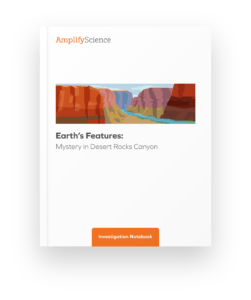
Student Investigation Notebooks
Available for every unit, the Student Investigation Notebooks contain instructions for activities and space for students to record data, reflect on ideas from texts and investigations, and construct explanations and arguments.
Print and digital
Student books
The age-appropriate Student Books in Amplify Science allow students to engage with content-rich text, obtain evidence, develop research and close reading skills, and construct arguments and explanations about the ideas they are learning in class.
Print and digital

Student digital experience
Students can easily engage with the student digital experience, so effective learning can occur in every type of classroom environment.
In grades 4–5, students are introduced to digital simulations. Developed exclusively for Amplify Science, these digital tools serve as venues of exploration and data collection, allowing students to discover and construct their understanding of science concepts and phenomena.
Digital

Spanish parity
Amplify Science is committed to providing support to meet the needs of all learners. For Spanish-speaking students, greater access to rich science content is achieved with Amplify Science through the use of a pedagogical approach that offers multiple points of entry. In addition, Spanish language supports are available across the curriculum, including Spanish kits that offer Spanish versions of all student-facing print materials, as well as Spanish digital licenses for teachers. Learn more about the Spanish components available across Amplify Science.
The same rigor in terms of scientific accuracy, literacy development, and the use of rich content and language in the creation of the Amplify Science Spanish materials. To ensure equity, all Spanish materials were carefully translated using academic Spanish, paying particular attention to consistency and the use of grade-level-appropriate language in order to support language development.
Review online
Ready to explore on your own? Follow the instructions below to access your demo account.
First, watch this navigation video. Then, click the orange button “Log in to Amplify Science” to log in.
- Select Log in with Amplify.
- Enter username and password:
- Teacher username: t1.rcsdtrial@demo.tryamplify.net
- Student username: s1.rcsdtrial@demo.tryamplify.net
- Password (both teacher and student): Amplify1-rcsdtrial
Disciplinary Core Ideas (DCI) review
Each Amplify Science unit is designed around a unit-specific learning progression that aligns with NGSS disciplinary core ideas (DCI) and crosscutting concepts. The levels that comprise the unit’s learning progression are cumulative. As students progress through the unit, they are able to integrate prior understandings with new insights, and there are continuing opportunities for students to master conceptual understanding of early unit content in subsequent chapters of the unit.
This means that standards are often addressed across entire units instead of in one particular activity or lesson. Thus, the lessons noted below are examples of where the concept represented in the listed DCI is addressed, but this list should not be considered exhaustive. Instead, students have frequent opportunities to engage with these ideas throughout the unit, the grade, and the grade band.
To view the specified lessons, explore our RCSD Digital Review Guide or select a grade level below.
DCI ESS2.D: Weather and Climate
Before you begin reviewing these lessons, make sure to locate the following Student Books from your Unit Kit: What is the Weather Like Today? and Tornado! Predicting Severe Weather
Select the Sunlight and Weather unit, click Chapter 1, and locate the lessons below:
Lesson 1.1
- Activities 2 and 3, Step-by-step tab
- Student book, What is the Weather Like Today? (note: located in your Unit Kit)
Lesson 1.2
- Activities 1 and 3, Step-by-step tab
Lesson 1.3
- Activities 1 and 2, Step-by-step tab
Lesson 1.4
- Lesson Brief, Digital Resources, “Playground Weather Calendars and Playground Weather Graphs (Completed)”
- Activity 1, Step-by-step tab (especially steps 5, 9, and 10) and Teacher Support tab (“Assessment, Assessment Opportunity: Assessing Students’ Understanding of Types of Weather”)
Lesson 5.1
- Activity 1, Step-by-step tab (especially steps 6–7) and Teacher Support, Assessment tab (“Assessment Opportunity: Assessing Students’ Understanding of Weather and Why We Measure It”)
- Student book, Tornado! Predicting Severe Weather (note: located in your Unit Kit), pages 6–9
DCI PS4.A: Wave Properties
Before you begin reviewing these lessons, make sure to locate the following materials from your Unit Kit: Light and Sound Student Investigation Notebook; Student Book: What Vibrates?
Select the Light and Sound unit, click Chapter 4, and locate the lessons below:
Lesson 4.1
- Lesson Brief, Digital Resources, “Assessment Guide”
- Activity 3, Step-by-step tab (especially steps 1–12)
- Light and Sound Student Investigation Notebook, page 24 (note: located in your Unit Kit)
Lesson 4.2
- Activity 2, Step-by-step tab and On-the-Fly Assessment (hummingbird icon)
- Activity 3, Step-by-step tab and On-the-Fly Assessment (hummingbird icon)
- Activity 4, Instructional Guide
- Student book, What Vibrates? (note: located in your Unit Kit)
- Light and Sound Student Investigation Notebook, page 25 (note: located in your Unit Kit)
Lesson 4.3
- Lesson Brief, Digital Resources, “I Hear a Sound. What Vibrates? Mini-Book copymaster”
- Activity 1, Step-by-step tab (especially steps 5–11, 13), and Teacher Support tab (“Instructional Suggestion, Going Further: Sound Can Cause Vibrations”)
- Activity 3, Step-by-step tab
- Activity 4, Step-by-step tab and On-the-Fly Assessment (hummingbird icon)
DCI LS2.A: Interdependent Relationships in Ecosystems
Before you begin reviewing these lessons, make sure to locate the following materials from your Unit Kit: Plant and Animal Relationships Student Investigation Notebook; Student book A Plant is a System.
Select the Plant and Animal Relationships unit, click Chapter 1, and locate the lessons below:
Lesson 1.6
- Activities 2–4, Step-by-step tab
- Plant and Animal Relationships Student Investigation Notebook (note: located in your Unit Kit), pages 15–19
Lesson 1.7
- Activity 2, Step-by-step tab, Possible Responses tab, and Critical Juncture Assessment (hummingbird icon)
- Activity 3, Step-by-step tab
Lesson 2.2
- Activity 2, Step-by-step tab (especially steps 4–12) and Possible Responses tab
- Student book, A Plant is a System (note: located in your Unit Kit)
DCI ESS2.D: Weather and Climates
Before you begin reviewing these lessons, make sure to locate the following materials from your Unit Kit: Weather and Climate Student Investigation Notebook; Student Books Dangerous Weather Ahead and Sky Notebook.
Select the Weather and Climate unit, click Chapter 4, and locate the lessons below:
Lesson 1.4
- Activity 2, Step-by-step tab
- Student book, Sky Notebook (note: located in your Unit Kit)
Lesson 2.3
- Activity 3, Step-by-step tab and Possible Responses tab
- Weather and Climate Student Investigation Notebook, page 28 (note: located in your Unit Kit)
Lesson 3.2
- Lesson Brief, Digital Resources, “Anchorage, Queenstown, and Saint Petersburg Graphs copymaster”
- Activities 2 and 3, Step-by-step tab
Lesson 3.3,
- Activity 2, Step-by-step tab, Possible Responses tab, and On-the-Fly Assessment (hummingbird icon)
Lesson 3.6
- Activity 1, Step-by-step tab (especially steps 3–5) and On-the-Fly Assessment (hummingbird icon)
Lesson 3.7
- Lesson Brief, Digital Resources, “End-of-Unit Writing: Arguing About Future Island Weather Version A copymaster” and “Assessment Guide”
- Activity 3, Step-by-step tab (especially steps 3–7)
Lesson 4.2
- Activity 2, Step-by-step tab, Possible Responses tab, and On-the-Fly Assessment (hummingbird icon)
- Student book, Dangerous Weather Ahead (note: located in your Unit Kit)
DCI PS4.A: Wave Properties
Before you begin reviewing these lessons, make sure to locate the following materials from your Unit Kit: Student books Warning: Tsunami! and Patterns in Communication.
Select the Waves, Energy, and Information unit, click Chapters 1 and 3, and locate the lessons below:
Chapter 1
Lesson 1.4
- Activity 1, Step-by-step tab (especially steps 1, and 4)
- Student book, Warning: Tsunami! (note: located in your Unit Kit)
- Activity 2, Step-by-step tab, On-the-Fly Assessment (hummingbird icon), and Teacher Support tab (“Instructional Suggestion, Providing More Experience: Waves in Water”)
Chapter 3
Lesson 3.1
- Activity 2, Step-by-step tab (especially steps 4–8) and On-the-Fly Assessment (hummingbird icon)
- Activity 3, Step-by-step tab and Waves, Energy, and Information Simulation
Lesson 3.2
- Activity 3, Step-by-step tab, On-the-Fly Assessment (hummingbird icon), and Waves, Energy, and Information Simulation
Lesson 3.3
- Activity 4, Step-by-step tab and On-the-Fly Assessment (hummingbird icon)
- Student book, Patterns in Communication (note: located in your Unit Kit), pages 6–7
DCI LS2.A: Interdependent Relationships in Ecosystems
Before you begin reviewing these lessons, make sure to take out the following materials from your Unit Kit: Student books Restoration Case Studies and Walk in the Woods; Organism Print Name Cards: Set 1.
Select the Ecosystem Restoration unit, click Chapters 1, 2, and 3, and locate the lessons below:
Lesson 1.6
- Activity 2, Step-by-step tab, Possible Responses tab, and Ecosystem Modeling Tool (Box 2 on student apps page, “1.6 Healthy Ecosystem Model”)
- Activity 3, Step-by-step tab (especially steps 2 and 3), Possible Responses tab, and Critical Juncture Assessment (hummingbird icon)
Lesson 1.7
- Activity 2, Step-by-step tab
- Activity 3, Step-by-step tab (especially steps 3–7) and On-the-Fly Assessment (hummingbird icon)
- Printable Resources, Print Materials (8.5” x 11”), Organism Name Cards: Set 1, pages 12–17 (note: located in your Unit Kit)
Lesson 1.8
- Activity 3, Step-by-step tab (especially steps 6–8) and Possible Responses tab
Lesson 2.3
- Activity 3, Step-by-step tab (especially steps 1–4), Possible Responses tab, and Ecosystem Modeling Tool (Box 3 on student apps page, “2.3 Plant Needs Model”)
Lesson 2.5
- Activity 3, Step-by-step tab
- Student book, Restoration Case Studies (note: located in your Unit Kit)
Lesson 3.2
- Activity 2, Step-by-step tab
- Student book, Walk in the Woods (note: located in your Unit Kit), pages 6–10
Lesson 3.3
- Activity 4, Step-by-step tab and Ecosystem Restoration Simulation
Lesson 3.4
- Activity 2, Step-by-step tab, Possible Responses tab, On-the-Fly Assessment (hummingbird icon), and Ecosystem Restoration Simulation
Lesson 3.5
- Activity 2, Step-by-step tab and Teacher Support tab (“Instructional Suggestion, Going Further: Balance and Interdependence of Ecosystems: Impacts of Invasive Species”)
- Student book, Restoration Case Studies (note: located in your Unit Kit), pages 11, 31, and 47
Lesson 3.6
- Activity 2, Step-by-step tab (especially steps 4–5), Possible Responses tab, and Critical Juncture Assessment (hummingbird icon)
Lesson 3.7
- Activity 1, Step-by-step tab, Possible Responses tab, and Ecosystem Modeling Tool (Box 5 on student apps page, “3.7 No Decomposers Model”)
Looking for help?
Contact your Rochester Account Executive:
Jennifer Fosegan
(585) 590-4200
jfosegan@amplify.com
Families and caregivers, welcome to Amplify Desmos Math K–5!
Welcome to the Amplify Desmos Math K–5 Caregiver Hub. We hope your student enjoys exploring math, working with friends to solve problems, and learning new and interesting concepts. And we hope you enjoy the math journey with them! Below are some suggestions and resources for how you can support their learning at home.
Learn more about Amplify Desmos Math.
Para la versión en español, haga clic aquí.

Caregiver Unit Resources
For every unit of the program, we’ve created a Caregiver Resource that provides a summary of key concepts, plus a problem from the lesson practice set you can work through with your student. You’ll find a Caregiver Resource for each unit, in both English and Spanish.
Unit 1: Math in Our World
Unit 2: Numbers 1–10
Unit 3: Flat Shapes All Around Us
Unit 4: Understanding Addition and Subtraction
Unit 5: Make and Break Apart Numbers Within 10
Unit 6: Numbers 0–20
Unit 7: Solid Shapes All Around Us
Unit 1: Adding, Subtracting, and Working With Data
Unit 2: Addition and Subtraction Story Problems
Unit 3: Adding and Subtracting Within 20
Unit 4: Numbers to 99
Unit 5: Adding Within 100
Unit 6: Measuring Lengths of Up to 120 Length Units
Unit 7: Geometry and Time
Unit 1: Working With Data and Solving Comparison Problems
Unit 2: Adding and Subtracting Within 100
Unit 3: Measuring Length
Unit 4: Addition and Subtraction on the Number Line
Unit 5: Numbers to 1,000
Unit 6: Geometry and Time
Unit 7: Adding and Subtracting Within 1,000
Unit 8: Equal Groups
Unit 1: Introducing Multiplication
Unit 2: Area and Multiplication
Unit 3: Wrapping Up Addition and Subtraction Within 1,000
Unit 4: Relating Multiplication to Division
Unit 5: Fractions as Numbers
Unit 6: Measuring Length, Time, Liquid Volume, and Weight
Unit 7: Two-Dimensional Shapes and Perimeter
Unit 1: Factors and Multiples
Unit 2: Fraction Equivalence and Comparison
Unit 3: Extending Operations to Fractions
Unit 4: From Hundredths to Hundred Thousands
Unit 5: Multiplicative Comparison and Measurement
Unit 6: Multiplying and Dividing Multi-Digit Numbers
Unit 7: Angles and Properties of Shapes
Unit 1: Volume
Unit 2: Fractions as Quotients and Fraction Multiplication
Unit 3: Multiplying and Dividing Fractions
Unit 4: Multiplication and Division With Multi-Digit Whole Numbers
Unit 5: Place Value Patterns and Decimal Operations
Unit 6: More Decimal and Fraction Operations
Unit 7: Shapes on the Coordinate Plane
Unit refresh videos
Unit 1
- Sub-Unit 2 – Answering the Question “Are There Enough?”
- Sub-Unit 3 – Counting and Cardinality
Unit 2
- Sub-Unit 1 – Comparing 2 Groups Using the Terms More, Fewer, and Same
- Sub-Unit 2 – Counting Objects in Different Orders
- Sub-Unit 3 – Making Groups to Represent Numerals
- Sub-Unit 4 – Comparing Written Numbers
Unit 3
- Sub-Unit 1 – Identifying Circles and Triangles in Different Sizes and Orientations
- Sub-Unit 2 – Using Positional Words to Describe the Location of Shapes
Unit 4
- Sub-Unit 1 – Adding and Subtracting Within 10
- Sub-Unit 2 – Representing Addition and Subtraction Story Problems
- Sub-Unit 3 – Finding the Values of Expressions
Unit 5
- Sub-Unit 1 – Decomposing Numbers in More Than 1 Way
- Sub-Unit 2 – Solving for Both Parts
- Sub-Unit 3 – Breaking Apart 10
Unit 1
- Sub-Unit 1 – Organizing Data to Count How Many in Each Category
- Sub-Unit 2 – Counting on to Add and Counting Back to Subtract
- Sub-Unit 3 – Representing 2 Categories of Data With Addition Equations
Unit 2
- Sub-Unit 1 – Representing and Solving Add To, Change Unknown Story Problems
- Sub-Unit 2 – Using Addition or Subtraction to Find an Unknown Part of a Total Amount
- Sub-Unit 3 – Solving Compare, Difference Unknown Problems
- Sub-Unit 4 – Making Sense of Story Problems With Different Questions
Unit 3
- Sub-Unit 1 – Finding a Difference Using the Relationship Between Addition and Subtraction
- Sub-Unit 2 – Using the Structure of Teen Numbers to Find Missing Addends
- Sub-Unit 3 – Breaking Apart Addends to Make 10 When Adding
- Sub-Unit 4 – Subtracting From Teen Numbers in Parts to Get to 10
Unit 4
- Sub-Unit 1 – Adding a Ten To and Subtracting a Ten From Multiples of 10
- Sub-Unit 2 – Representing and Writing Two-Digit Numbers
- Sub-Unit 3 – Comparing Two-Digit Numbers
- Sub-Unit 4 – Representing the Same Two-Digit Number With Different Amounts of Tens and Ones
Unit 5
- Sub-Unit 1 – Adding a Number of Tens or Ones to a Two-Digit Number
- Sub-Unit 2 – Adding a Two-Digit Number and a One-Digit Number When Composing a Ten is Necessary
- Sub-Unit 3 – Adding a Two-Digit Number and a Two-Digit Number When Composing a Ten is Necessary
Unit 1
- Sub-Unit 1 – Choosing Strategies to Add Within 20
- Sub-Unit 2 – Representing Data in a Picture Graph and Bar Graph
- Sub-Unit 3 – Finding the Difference Between 2 Categories Shown on a Bar Graph
Unit 2
- Sub-Unit 1 – Strategies to Solve Story Problems Involving Money
- Sub-Unit 2 – Decomposing a Ten When Subtracting by Place
- Sub-Unit 3 – Making Sense of Story Problems About Comparing That Use the Word More
- Sub-Unit 4 – Making Sense of One- and Two-Step Story Problems
Unit 3
- Sub-Unit 1 – Measuring the Length of an Object in Centimeters Using a Ruler
- Sub-Unit 2 – Measuring Objects in Inches and Feet
- Sub-Unit 3 – Representing Measurement Data on a Line Plot
Unit 4
- Sub-Unit 1 – Locating Numbers on Number Lines
- Sub-Unit 2 – Representing Addition and Subtraction Strategies on a Number Line
Unit 5
- Sub-Unit 1 – Composing Hundreds to Represent Three-Digit Numbers
- Sub-Unit 2 – Comparing Three-Digit Numbers
Unit 1
- Sub-Unit 1 – Representing Equal-Groups Situations With Equal-Groups Drawings
- Sub-Unit 2 – Representing Arrays With Multiplication Equations
- Sub-Unit 3 – Representing Data Using Scaled Bar Graphs
Unit 2
- Sub-Unit 1 – Determining the Area of a Rectangle Using Counting and Skip Counting
- Sub-Unit 2 – Determining the Area of a Rectangle Using Multiplication
- Sub-Unit 3 – Decomposing to Determine the Area of Rectilinear Figures
Unit 3
- Sub-Unit 1 – Using the Expanded Form and Partial Sums Algorithms to Add
- Sub-Unit 2 – Using the Expanded Form Algorithm to Subtract
- Sub-Unit 3 – Rounding Numbers to the Nearest Hundred and Ten Using Number Lines
- Sub-Unit 4 – Representing and Solving Two-Step Story Problems Involving Multiplication
Unit 4
- Sub-Unit 1 – Representing Division Situations With Equal-Groups Drawings
- Sub-Unit 2 – Representing an Equal-Groups Problem With a Division and Multiplication Equation
- Sub-Unit 3 – Using the Distributive Property of Multiplication to Multiply a One-Digit Number by a Teen Number
- Sub-Unit 4 – Decomposing Dividends to Divide
Unit 5
- Sub-Unit 1 – Writing Unit and Non-Unit Fractions
- Sub-Unit 2 – Locating Non-Unit Fractions on the Number Line
- Sub-Unit 3 – Identifying Equivalent Fractions
- Sub-Unit 4 – Comparing Fractions With the Same Denominator or Same Numerator
Unit 1
- Sub-Unit 1 – Using Factor Pairs to Determine All the Possible Side Lengths of a Rectangle With a Given Area
- Sub-Unit 2 – Finding Multiples and Common Multiples
Unit 2
- Sub-Unit 1 – Locating Fractions with Different Denominators On the Same Number Line
- Sub-Unit 2 – Using Multiples or Factors to Determine Equivalent Fractions
- Sub-Unit 3 – Comparing Fractions Using Equivalent Fractions With Common Denominators
Unit 3
- Sub-Unit 1 – Adding and Subtracting Fractions with the Same Denominator
- Sub-Unit 2 – Multiplying Whole Numbers and Fractions
- Sub-Unit 3 – Adding Fractions with Denominators of 10 and 100
Unit 4
- Sub-Unit 1 – Writing Fractions With Denominators of 10 and 100 as Decimals
- Sub-Unit 2 – Relationships Between Place Values in Multi-Digit Whole Numbers
- Sub-Unit 3 – Comparing Multi-Digit Numbers
- Sub-Unit 4 – Using the Standard Algorithm to Subtract When Decomposing is Required
Unit 5
- Sub-Unit 1 – Representing Multiplicative Comparison Situations
- Sub-Unit 2 – Converting Measurements in the Metric System
- Sub-Unit 3 – Comparing Measurements
Unit 1
- Sub-Unit 1 – Using the Layered Structure of a Rectangular Prism to Determine the Volume
- Sub-Unit 2 – Determining the Volume of a Rectangular Prism
- Sub-Unit 3 – Determining the Volume of Figures Composed of Rectangular Prisms
Unit 2
- Sub-Unit 1 – Representing Equal-Sharing Story Problems with Fractional Quotients
- Sub-Unit 2 – Representing Fractions with Equivalent Multiplication and Division Expressions
- Sub-Unit 3 – Determining the Area of a Rectangle With a Fractional Side Length
Unit 3
- Sub-Unit 1 – Representing Multiplication of 2 Unit Fractions with Diagrams
- Sub-Unit 2 – Dividing Whole Numbers by Unit Fractions
Unit 4
- Sub-Unit 1 – Multiplying Multi-digit Whole Numbers Using the Partial Products and Standard Algorithms
- Sub-Unit 2 – Dividing Multi-Digit Whole Numbers Using Partial Quotients
- Sub-Unit 3 – Representing Multi-Step Story Problems with Equations
Unit 5
- Sub-Unit 1 – Comparing Decimals
- Sub-Unit 2 – Using the Standard Algorithms to Add and Subtract Decimals
- Sub-Unit 3 – Multiplying a Whole Number and a Decimal Using the Distributive Property
- Sub-Unit 4 – Dividing Whole Numbers by Decimals Less Than 1
Access Amplify Desmos Math at home.
In addition to a print Student Edition workbook, your student will have digital access to all learning, practice, and assessment materials through the Amplify platform. The digital curriculum can be accessed in school and at home by following these instructions:
- Click the Amplify Desmos Math button.
- Select Log in with Amplify.
- Enter your student’s username and password provided by your student’s teacher.
- Select the desired grade level.
Once logged in, caregivers can view student work by opening previous assignments.
Learn how to navigate the student home page.
Materials overview
Amplify Desmos Math supports blended learning with supporting print materials and a unique digital experience. All K–5 lessons are available in a write-in Student Edition book. Many of the lessons include hands-on activities with manipulatives, tools that help students understand abstract concepts by making them tangible. Your student will also work with digital devices for an age-appropriate number of lessons.
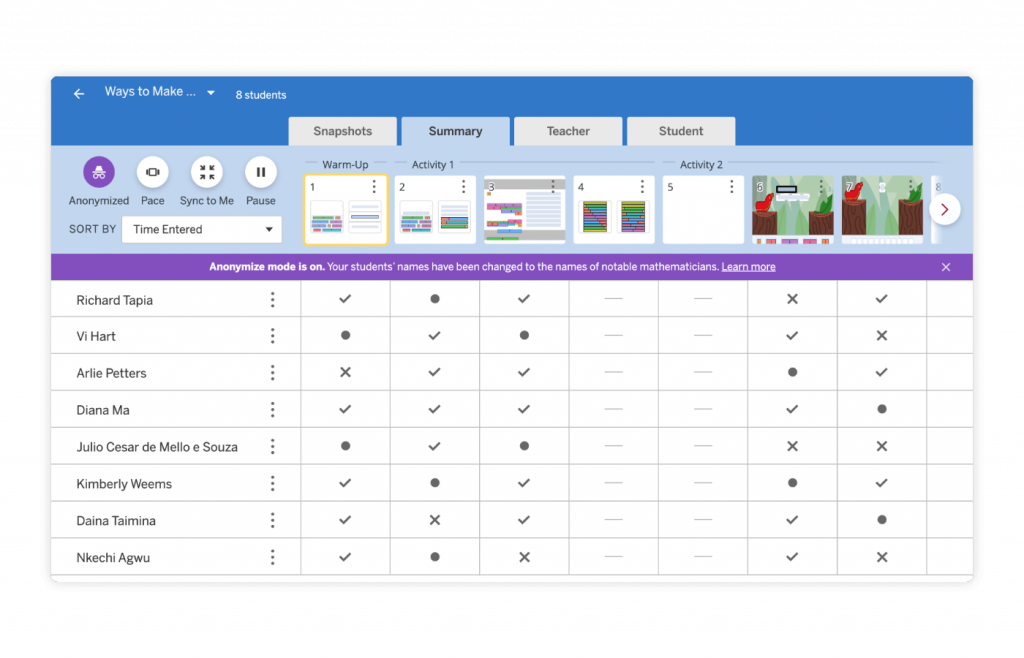
When students use devices, teachers can monitor their work in real time, making sure they get the exact support that they need at every part of the lesson, in and outside of class.
Components of a lesson
Students in an Amplify Desmos Math classroom can be seen (and heard!) asking questions, debating answers, justifying their thinking, grappling with problems, and working together and independently.
A typical Amplify Desmos Math lesson includes:
- Warm-up: A short, attention-getting problem to pique students’ interest in the lesson.
- Activities: One to two mini-activities that challenge students’ problem-solving skills.
- Synthesis: Discussion to review and bring together the important concepts from the lesson.
- Show What You Know and Reflection: Questions for students to show what they know from the lesson. (Note: The Show What You Know lesson assessment is optional for kindergarten and grade 1.)
- Centers: Student-led activity stations that reinforce the math learned during lesson activities through interactive and often game-like formats. In kindergarten and grade 1, time for Centers is built into the last 15 minutes of every lesson.
To support, strengthen, and stretch students’ learning after the lesson, Amplify Desmos Math offers options for:
- Differentiation: Mini-Lessons, Centers, Extensions, Boost Personalized Learning, and Fluency Practice.
- Practice: Additional problems your student’s teacher may assign for classwork or homework.
Support math learning at home.
You can support your student’s math learning outside of school in many ways:
Your student’s teacher may assign practice problems at the end of each lesson for classwork or homework. If your student has already completed the practice problems for the lesson, ask them to walk you through how they solved each problem, or talk about any parts that were challenging for them. Ask your student follow-up questions to encourage the use of math language as they explain their thinking, such as, “How do you know?,” “How can you show your thinking?,” or “How would you describe that?” If students are stuck, ask support questions, such as, “What information do you know here?” or “How could you represent this problem?”
Your student’s teacher may introduce a Center game with students in the lesson or beyond the lesson. These games are aligned to the math of the unit and can be played with students outside of class. Your student’s teacher may introduce a Center game to students during or after completing a lesson, or you may need to teach the game before you play by using easy-to-follow instructions. Sign up for a free account to explore Centers and additional K–5 content in our Featured Collections.
Each unit in Amplify Desmos Math begins with a read-aloud story to engage students and provide context for the math of the unit. Elements and characters from the Unit Story then appear in lessons throughout the unit.
Kindergarten
- Unit 1 Story: The First Day of School
- Unit 2 Story: What’s in a Restaurant?
- Unit 3 Story: A Great Shape Adventure
- Unit 4 Story: Casey’s Town
- Unit 5 Story: Where is Harry?
- Unit 6 Story: Winners
- Unit 7 Story: Everybody Needs Help Sometimes
Grade 1
- Unit 1 Story: Ying’s New Town
- Unit 2 Story: Let’s Grow!
- Unit 3 Story: Impossible
- Unit 4 Story: The Collectors
- Unit 5 Story: The Day of the Wazzle-Squash
- Unit 6 Story: Side by Side
- Unit 7 Story: A Potluck for Pia
Grade 2
- Unit 1 Story: A New Class Pet
- Unit 2 Story: The Heroes of Pineapple Street
- Unit 3 Story: What Orson Imagined
- Unit 4 Story: A Seed’s Journey
- Unit 5 Story: 302 Ricotta Drive
- Unit 6 Story: Arjun the Artist
- Unit 7 Story: Where Eli Went
- Unit 8 Story: On Clementine Court
Grade 3
- Unit 1 Story: My Name Is Harper
- Unit 2 Story: Cheri’s New Home
- Unit 3 Story: The View From Up Here
- Unit 4 Story: Home Cooking
- Unit 5 Story: Coen and Obita
- Unit 6 Story: Just Stick With It, Sasha
- Unit 7 Story: Through Piho’s Eyes
Grade 4
- Unit 1 Story: I Contain Multitudes
- Unit 2 Story: One Step at a Time
- Unit 3 Story: Finny
- Unit 4 Story: Myles and the Loggerheads
- Unit 5 Story: Just for Fun
- Unit 6 Story: Special Day, Special Lei
- Unit 7 Story: Captain Bogwart’s Treasure
Grade 5
Relate math to daily activities at home, whether grocery shopping, preparing a meal, or planning for a trip to the store. Your student can help you figure out how many more apples there are than oranges in the grocery cart, show how to split a sandwich into fourths, or figure out how much change you’ll receive in exchange for a $10 bill. Encourage your student to point out ways that you use math in your daily tasks.
Remind your student that getting stuck is part of the process and a necessary—beneficial, even!—part of learning. Many students (and adults) fear making mistakes. But research shows that making mistakes helps our brains grow. When your student gets stuck on a problem, encourage them to keep trying different strategies, even if they’re not sure if they are right.
Get more information.
Have a question about Amplify Desmos Math? Visit our help library to search for articles with answers to your program questions. For additional support, please contact your student’s teacher.
Website Terms of Use
Description of Site Services; Acceptance of Terms of Use
Welcome to www.amplify.com (together with any successor sites and the Site Services and Company Content (each as defined below), in whole and in part, the “Site”). The Site is operated by Amplify Education, Inc. (“Company” or “we”). The services that Company makes available on or through the Site include education-related articles, information and instructional services, purchasing functionality, support chat functionality and any other features, content, services, functionality and applications offered from time to time by Company on or through the Site (collectively, “Site Services”).
BY ACCESSING OR USING THE SITE, YOU REPRESENT AND WARRANT THAT YOU ARE OF LEGAL AGE TO ENTER INTO THIS TERMS OF USE AGREEMENT (“AGREEMENT”) AND YOU AGREE TO BE BOUND BY THE TERMS AND CONDITIONS OF THIS AGREEMENT. BY PURCHASING GOODS AND SERVICES ON THE SITE, YOU ARE ACCEPTING THE PRACTICES DESCRIBED IN THIS AGREEMENT AS WELL AS ANY ADDITIONAL TERMS OF USE THAT MAY BE ASSOCIATED WITH THE PARTICULAR GOODS AND SERIVICES YOU ARE PURCHASING.
Please read this Agreement carefully. If you are an employee or other representative of a school or other organization who is accessing or using the Site on behalf of such organization, then you are agreeing to this Agreement on behalf of yourself and such organization. We may modify this Agreement at any time in our discretion, and we may provide such modifications to you by any reasonable means, including by posting the revised version of this Agreement on the Site. You can determine when this Agreement was last revised by referring to the “LAST UPDATED” legend at the top of this Agreement. Your access to or use of the Site following any changes to this Agreement will constitute your acceptance of those changes. Notwithstanding the foregoing, any changes to this Agreement shall not apply to any dispute between you and us arising prior to the date on which we posted the revised version of this Agreement incorporating such changes or otherwise notified you of such changes. If you do not agree to be bound by this Agreement, you must not access or use the Site. Your access to and use of certain parts of the Site may require you to accept additional terms and conditions, and may require you to download certain Software or Content (each as defined below).
Jurisdictional Issues
The Site is controlled and operated by Company from the United States, and is not intended to subject Company to the laws or jurisdiction of any state, country or territory other than that of the United States. Company does not represent or warrant that the Site is appropriate or available for use in any particular jurisdiction other than the United States. In choosing to access and use the Site, you do so on your own initiative and at your own risk, and you are responsible for complying with all local laws, rules and regulations. You are also subject to United States export controls and are responsible for any violations of such controls, including any United States embargoes and other federal rules and regulations restricting exports. We may limit the Site’s availability to any person, geographic area or jurisdiction we choose, at any time and in our discretion. Not all products or services described on the Site are available in all states or territories.
Company content
The Site contains information, text, files, images, video, sounds, musical works, computer code, works of authorship, applications, and other materials and content (collectively, “Content”) of Company or its licensors (“Company Content”). The Site (including the Company Content) is protected by copyright, trademark, trade secret and other laws, and as between you and Company, Company owns and retains all rights in the Site. Company hereby grants to you a limited, revocable, non-sublicensable license, during the term of the Agreement, to access, display and perform the Company Content (excluding any computer code) solely for your personal, non-commercial use and solely as necessary to access and use the Site. Except as expressly permitted by Company in this Agreement or on the Site, you may not copy, download, stream, capture, reproduce, duplicate, archive, upload, modify, translate, create derivative works based upon, publish, broadcast, transmit, retransmit, distribute, perform, display, sell or otherwise use or transfer any Content. You may not, either directly or through the use of any device, software, online resource or other means, remove, alter, bypass, avoid, interfere with or circumvent any copyright, trademark or other proprietary notice on the Content or any digital rights management mechanism, device, or other content protection or access control measure associated with the Content.
User content
You may not access or use the Site for any commercial purpose. You are responsible for all Content that you post, upload, transmit, e-mail or otherwise make available on, through or in connection with the Site (collectively, “User Content”). Please choose carefully the Content that you make available on, through or in connection with the Site. Company does not control any Content other than Company Content, and as such you may be exposed to offensive, indecent, inaccurate or otherwise objectionable Content by accessing or using the Site. Company is not responsible or liable for any Content or the conduct of any Site user. If you become aware of any misuse of the Site, please report such misuse immediately to Company at general@amplify.com. Company reserves the right (but has no obligation) to monitor the Site, including for inappropriate Content or conduct, and to remove any Content in Company’s discretion and without liability to you or any third party.
Your proprietary rights
You retain any ownership rights that you have in your User Content. You hereby grant to Company and its affiliates, licensees and authorized users, a perpetual, non-exclusive, fully paid-up and royalty-free, sublicensable (through multiple tiers), transferable (in whole or in part), worldwide license to use, modify, excerpt, adapt, create derivative works and compilations based upon, publicly perform, publicly display, reproduce and distribute such User Content on, through or in connection with the Site and/or any other commercial or non-commercial endeavor of Company or any of its affiliates, including in connection with any distribution or syndication thereof to Third Party Services (as defined below), on and through all media formats now known or hereafter devised, for any and all purposes including promotional, marketing, trade and commercial purposes. The exercise of such rights shall not require any further permission or notice, payment or attribution to you or any third party. Company reserves the right to limit the storage capacity made available for User Content.
You represent and warrant that: (a) you own the User Content made available by you, or otherwise have the right to grant the license set forth in this Section, and (b) the posting of such User Content through or in connection with the Site does not violate the privacy rights, publicity rights, copyrights, contract rights or any other rights of any person or entity. You agree to pay for all royalties, fees and any other monies owing to any person or entity by reason of the use of such User Content.
Use of the site
You agree not to:
- Post, upload or otherwise transmit or link to Content that is: unlawful; threatening; harmful; abusive; pornographic or includes nudity; offensive; harassing; excessively violent; tortious; defamatory; false or misleading; obscene; vulgar; libelous; hateful; or discriminatory.
- Violate the rights of others, including patent, trademark, trade secret, copyright, privacy, publicity, contract or other proprietary rights.
- Harass or harm another person.
- Exploit or endanger a minor.
- Impersonate any person or entity.
- Introduce or engage in activity that involves the use of viruses, bots, worms, Trojan horses, Easter eggs, time bombs, spyware or any other computer code, files or programs that interrupt, destroy or limit the functionality of any computer software or hardware or telecommunications equipment, or otherwise permit the unauthorized access to or use of a computer or a computer network.
- Interfere with, damage, disable, disrupt, impair, create an undue burden on, or gain unauthorized access to the Site or any Account, or Company’s servers or networks;
- Restrict or inhibit any other person from using the Site (including by hacking or defacing the Site). Cover, remove, disable, block or obscure the Site (including advertisements on the Site).
- Use technology or any automated system, such as scripts or bots, to collect user names, passwords, e-mail addresses or any other data from or through the Site, or to circumvent or modify any security technology or software that is part of the Site.
- Send or cause to send (directly or indirectly) unsolicited bulk messages or other unsolicited bulk communications of any kind through the Site. If you do so, you acknowledge you will have caused substantial harm to Company, and that the amount of such harm would be extremely difficult to measure. As a reasonable estimation of such harm, you agree to pay to Company $50.00 for each actual or intended recipient of such communication.
- Modify, adapt, translate, reverse engineer, decompile or disassemble the Site.
- Solicit, collect or request any information for commercial or unlawful purposes.
- Post, upload or otherwise transmit an image or video of another person without that person’s consent.
- Use the Site to advertise, promote or engage in any commercial activity (including engaging in sales, contests or sweepstakes) without Company’s prior written consent.
- Frame or mirror the Site without Company’s express prior written consent.
- Use the Site in a manner inconsistent with any applicable law, rule or regulation.
- Use any robot, spider, site search/retrieval application or other manual or automatic device to retrieve, index, “scrape,” “data mine,” or in any way gather content of the Site or reproduce or circumvent the navigational structure or presentation of the Site without Company’s express prior written consent. Notwithstanding the foregoing, Company grants to the operators of public search engines the permission to use spiders to copy material from the Site for the sole purpose of, and solely to the extent necessary for, creating publicly-available searchable indices of such material, but not caches or archives of such material. Company reserves the right to revoke these exceptions either generally or in specific cases.
- Attempt, facilitate or encourage others to do any of the foregoing.
Company reserves the right to investigate and take appropriate legal action against anyone who, in Company’s discretion, violates this Agreement or attempts to do so, including terminating or suspending a user’s Account or access to or use of the Site, or reporting any User Content or conduct to law enforcement authorities.
You (and not Company) are responsible for obtaining and maintaining all telecommunications, broadband and computer hardware, equipment and services needed to access and use the Site, and for paying all charges related thereto.
User disputes
You are solely responsible for your interactions with other users of the Site, providers of Third Party Services (as defined below) or any other third parties with whom you interact on, through or in connection with the Site.
Purchases
Company may make available products and services for purchase through the Site, and may use third-party suppliers and service providers to enable e-commerce functionality on the Site. You may only purchase products and services that appear on the Site and that are delivered to an address located in the United States. You may only purchase products and services for personal, non-commercial use by you, your educational institution or students of your educational institution. We may limit quantities or refuse any order for any reason or no reason, including if we have reasonable cause to believe an order is for onward sale or resale other than through distribution channels approved by us. We make no promise that products or services available on the Site are appropriate or available for use in locations outside the United States, and purchasing products or services for delivery to or use in territories where their contents are unlawful is prohibited. If you choose to purchase products or services from locations outside the United States, you do so at your own risk. It is your responsibility to ascertain and obey all applicable local, state, federal and international laws (including minimum age requirements) in regard to the possession, use and sale of any product or service made available through the Site.
If you wish to purchase any product or service made available through the Site, you may be asked to supply certain information relevant to your transaction, including your credit card number, the expiration date of your credit card, your billing address and your shipping information. YOU REPRESENT AND WARRANT THAT YOU HAVE THE LEGAL RIGHT TO USE ANY CREDIT CARD(S) USED IN CONNECTION WITH ANY TRANSACTION. By submitting such information, you grant to Company the right to provide such information to third parties for purposes of facilitating the completion of transactions initiated by you or on your behalf. Verification of information may be required prior to the acknowledgement or completion of any transaction. While it is our practice to confirm orders by e-mail, the receipt of an e-mail order confirmation does not constitute our acceptance of an order or our confirmation of an offer to sell a product or service.
Details of the products and services available for purchase are set forth on the Site. All prices are displayed exclusive of all taxes and shipping/freight charges. Available payment methods, methods of shipping and shipping charges (including charges for expedited shipping, if available) are detailed on the Site. Company may also collect and remit sales tax on your purchase as required by United States law. If you are a tax-exempt entity, please enter the appropriate information where requested on your order form and we will not collect sales tax on your purchase.
Generally, credit and debit cards are not charged until we either ship the product(s) or confirm store availability (at which time you will be charged only for the products we have actually shipped along with any applicable taxes and shipping charges). However, we may pre-authorize your order amount with your credit or debit card issuer at the time you place the order, which may have an effect on your available credit line. When paying for a preorder with a debit card, you will be charged at the time you place your preorder. Please contact your credit or debit card issuer for more information. If you ordered a special delivery product, you will be charged once a delivery time is confirmed. For digitally delivered orders, your credit or debit card will be charged at the time that you initiate the download of the product.
All purchases made through the Site are made pursuant to a shipment contract. As a result, risk of loss and title for products purchased through the Site pass to you upon delivery of the products to the carrier. You are responsible for filing any claims with carriers for damaged and/or lost shipments. Please note that all shipping addresses must be compliant with the shipping restrictions contained on the Site.
Products, services and specifications
All products and services described or depicted on the Site, and all related features, content, specifications and prices, are subject to change at any time without notice. Certain weights, measures and similar descriptions are approximate and are provided for convenience purposes only. Packaging may vary from that shown. We make reasonable efforts to accurately display the attributes of our products, including the applicable colors; however, the actual color you see will depend on your computer system, and we cannot guarantee that your computer will accurately display such colors. The inclusion of any product or service on the Site at a particular time does not imply or warrant that such product or service will be available at any time. Occasionally, the manufacture or distribution of a certain product or service may be delayed for a number of reasons. In such event, we will make reasonable efforts to notify you of the delay and keep you informed of the revised delivery schedule. By placing an order, you represent that the products and services ordered will be used only in a lawful manner. All DVDs and similar products are sold for private, non-commercial home use (where no admission fee is charged), non-public performance, or classroom or instructional use only, and may not be duplicated.
Return and exchange policy
Unless otherwise specified in the terms associated with a particular product, you may return or exchange any product purchased through the Site within fourteen (14) days of receipt, by calling our customer service hotline, 1–800–823–1969, in the event that the purchased product is defective or you received the wrong product. Except for the foregoing, you may not return, cancel or exchange any product or service. Certain jurisdictions may provide additional statutory rights. Nothing herein is meant to limit your return or cancellation rights under local law. In the event that a return or exchange is due to an incorrect order or faulty product, we will be responsible for the shipping costs associated with such return. We will ship a replacement product upon receiving your defective or incorrect product and verifying the reason for the return or exchange.
Accuracy of information
We attempt to ensure that information on the Site is complete, accurate and current. Despite our efforts, the information on the Site may occasionally be inaccurate, incomplete or out of date. We make no representation as to the completeness, accuracy or currency of any information on the Site. For example, products or services included on the Site may be unavailable, may have different attributes than those listed, or may carry a different price than that stated on the Site. If an item’s correct price is higher than our stated price, we will, at our discretion, either contact you for instructions before shipping or cancel your order and notify you of such cancellation. Items in your “Shopping Bag” reflect the current price displayed on the item’s product detail page. Please note that this price may differ from the price displayed when the item was first placed in your Shopping Bag. In addition, we may make changes in information about price and availability without notice.
Chemicals, agricultural materials, and other hazardous materials
Certain products made available through the Site may include chemicals, agricultural materials or other material that may be subject to regulations or restrictions with respect to import or export, or to whom we may sell such material or where or how such material may be used. It is your responsibility to read and abide by all warning notices that accompany any products that you purchase. In addition, we reserve the right to request additional information from you, verify your identity, limit sales to certified educational or research institutions, or cancel or delay your order if required by law or if we believe it is necessary or advisable. Due to special shipping and handling requirements, freight companies routinely impose a surcharge on each package of hazardous material shipped. In such event, we will add such surcharge to your order.
Registration and account security
You may have the ability to create an account on or through the Site (an “Account”). If you submit registration information to create an Account, you represent and warrant that all information submitted to Company in connection with such registration is complete and accurate, and that you will update such information if it changes. If you create an Account, you are responsible for all use of your Account, and for maintaining the confidentiality of the information used to access your Account (including user name and password). You agree not to share your user name or password with anyone, or use anyone else’s Account at any time. You agree to notify Company immediately if you suspect any unauthorized use of, or access to, your Account (including your user name and password). You acknowledge that the reuse of your password in connection with accounts on other websites increases the risk that the security of your Account may be compromised.
Third party links and services
The Site may make available, or third parties may provide, links to other websites, applications, resources, advertisements, Content or other products or services created, hosted or made available by third parties (“Third Party Services”), and such third party may use other third parties to provide portions of the Third Party Service to you, such as technology, development or payment services. When you access or use a Third Party Service, you are interacting with the applicable third party, not with Company, and you do so at your own risk. Company is not responsible for and makes no warranties, express or implied, as to the Third Party Services or the providers of such Third Party Services (including the accuracy or completeness of the information provided by such Third Party Service or the privacy practices of any third party). Inclusion of any Third Party Service or a link thereto on the Site does not imply approval or endorsement of such Third Party Service. Company is not responsible or liable for the content or practices of any Third Party Service or third party, even if such Third Party Service links to or is linked by the Site, and even if such Third Party Service is operated by an affiliate of Company or a company otherwise connected with us or the Site
Feedback
Unless we expressly agree otherwise in writing, if you provide us with any ideas, proposals, suggestions or materials (“Feedback”), whether related to the Site or otherwise, you hereby acknowledge and agree that (a) your provision of any Input is gratuitous, unsolicited and without restriction and does not place Company under any fiduciary or other obligation; and (b) any Feedback is not confidential and Company has no confidentiality obligations with respect to such Feedback.. You hereby grant to us a world-wide, royalty-free, fully paid-up, exclusive, perpetual, irrevocable, transferable and fully sublicensable (through multiple tiers) license, without additional consideration to you or any third party, to reproduce, distribute, perform and display (publicly or otherwise), adapt, modify and otherwise use and exploit such Feedback, in any format or media now known or hereafter developed, and you hereby represent and warrant that you have all necessary rights to grant the foregoing license. We may use Feedback for any purpose whatsoever without permission or notice, compensation or attribution to you or any third party. You are and remain responsible and liable for the content of any Feedback.
Privacy
Please review the Privacy Policy for the Site, available at http://www.amplify.com/privacy, to learn about our information collection, usage and disclosures practices with respect to information collected by us through the Site. Please note that certain products or services made available by us, other than the Site, may be subject to different privacy policies. In addition, the Site’s Privacy Policy does not address, and we are not responsible or liable for, the information collection, usage and disclosures practices of any third party or Third Party Service.
Disclaimers
THE SITE, USER CONTENT, THIRD PARTY SERVICES, AND ALL PRODUCTS AND SERVICES SOLD THROUGH THE SITE (COLLECTIVELY, THE “SITE PRODUCTS”) ARE MADE AVAILABLE “AS-IS” AND “AS AVAILABLE” AND COMPANY DOES NOT GUARANTEE OR PROMISE ANY SPECIFIC RESULTS FROM USE OF THE SITE PRODUCTS. COMPANY AND ITS AFFILIATES EXPRESSLY DISCLAIM ANY WARRANTIES AND CONDITIONS OF ANY KIND, WHETHER EXPRESS OR IMPLIED, INCLUDING THE IMPLIED WARRANTIES OF MERCHANTABILITY, FITNESS FOR A PARTICULAR PURPOSE AND NON-INFRINGEMENT. IN PARTICULAR, COMPANY AND ITS AFFILIATES MAKE NO WARRANTY THAT THE SITE OR USER CONTENT OR THIRD PARTY SERVICES, OR YOUR ACCESS TO OR USE THEREOF, WILL BE UNINTERRUPTED, TIMELY, SECURE, ERROR-FREE, ACCURATE OR RELIABLE. UNDER NO CIRCUMSTANCES SHALL WE BE LIABLE FOR ANY CONSEQUENCES OF ANY UNAUTHORIZED USE OF THE SITE PRODUCTS THAT VIOLATES ANY APPLICABLE LAW OR REGULATION. CERTAIN STATE LAWS DO NOT ALLOW LIMITATIONS ON IMPLIED WARRANTIES OR THE EXCLUSION OR LIMITATION OF CERTAIN DAMAGES. IF THESE LAWS APPLY TO YOU, SOME OR ALL OF THE ABOVE DISCLAIMERS, EXCLUSIONS, OR LIMITATIONS MAY NOT APPLY TO YOU, AND YOU MIGHT HAVE ADDITIONAL RIGHTS.
Under no circumstances will Company or its affiliates be responsible for any loss or damage, including property damage, personal injury or death, resulting from use of the Site, Products, problems or technical malfunction in connection with use of the Site, Products, attendance at any Company event or the conduct of any Site users, whether online or offline. Your use of the Site, Products is solely your responsibility and at your own risk. The User Content and Third Party Services do not necessarily reflect the opinions or policies of Company or its affiliates.
Limitations on liability
IN NO EVENT WILL COMPANY OR ITS AFFILIATES BE LIABLE TO YOU OR ANY THIRD PARTY FOR ANY INDIRECT, CONSEQUENTIAL, EXEMPLARY, INCIDENTAL, SPECIAL OR PUNITIVE DAMAGES, INCLUDING LOST PROFIT DAMAGES, ARISING FROM YOUR USE OF THE SITE PRODUCTS, EVEN IF COMPANY OR ONE OF ITS AFFILIATES HAS BEEN ADVISED OF THE POSSIBILITY OF SUCH DAMAGES. NOTWITHSTANDING ANYTHING TO THE CONTRARY CONTAINED HEREIN, THE TOTAL LIABILITY OF COMPANY AND ITS AFFILIATES TO YOU FOR ANY CAUSE WHATSOEVER AND REGARDLESS OF THE FORM OF THE ACTION, WILL AT ALL TIMES BE LIMITED TO THE AMOUNT PAID, IF ANY, BY YOU TO COMPANY FOR THE SITE PRODUCTS.
Indemnity
You agree to indemnify and hold harmless Company, its affiliates, subcontractors and other partners, and each of their respective officers, agents, partners and employees, from any losses, costs, expenses (including reasonable attorneys’ fees), liabilities, claims or demands, due to or arising out of your use of the Site, your breach or alleged breach of this Agreement, your violation or alleged violation of any rights of another, or any Content that you post or otherwise submit on, through or in connection with the Site.
Termination
This Agreement remains in full force and effect while you access or use the Site. If you create an Account, you may terminate your Account at any time, for any reason, by contacting us at general@amplify.com. Company may terminate or suspend your Account and/or your access to or use of the Site at any time, for any or no reason, with or without prior notice or explanation, and without liability. Upon any such suspension or termination, your right to access and use the Site will immediately cease, and Company may immediately deactivate or delete your Account and all files and other information associated with it, and/or bar any further access to such files and other information. Company shall not be liable to you or any third party for any suspension or termination of your Account or of access to or use of the Site or any such files or other information, and shall not be required to make such files and other information available to you after any such suspension or termination. Sections 2, 5, 13, 17, 18, 19, 22, and 26 shall survive any expiration or termination of this Agreement.
U.S. export controls
All software made available in connection with the Site (“Software”) may be subject to United States export controls. No Software may be downloaded from or through the Site or otherwise exported or re-exported in violation of U.S. export laws.
Governing law
The terms of this Agreement are governed by the laws of the State of New York, U.S.A., without regard to its conflicts of law provisions, and regardless of your location.
Arbitration
EXCEPT FOR DISPUTES THAT QUALIFY FOR SMALL CLAIMS COURT, ALL DISPUTES ARISING OUT OF OR RELATED TO THIS AGREEMENT, WHETHER BASED IN CONTRACT, TORT, STATUTE, FRAUD, MISREPRESENTATION OR ANY OTHER LEGAL THEORY, WILL BE RESOLVED THROUGH FINAL AND BINDING ARBITRATION BEFORE A NEUTRAL ARBITRATOR INSTEAD OF IN A COURT BY A JUDGE OR JURY, AND YOU AGREE THAT COMPANY AND YOU ARE EACH WAIVING THE RIGHT TO TRIAL BY A JURY. YOU AGREE THAT ANY ARBITRATION UNDER THIS AGREEMENT WILL TAKE PLACE ON AN INDIVIDUAL BASIS; CLASS ARBITRATIONS AND CLASS ACTIONS ARE NOT PERMITTED AND YOU ARE AGREEING TO GIVE UP THE ABILITY TO PARTICIPATE IN A CLASS ACTION.
Arbitration procedure
Any arbitration under Section 23 above will be administered by the American Arbitration Association under its Commercial Arbitration Rules and Supplementary Procedures for Consumer-Related Disputes (“Supplementary Procedures”), as amended by this Agreement. The Supplementary Procedures are available online at http://www.adr.org/aaa/ShowPDF?doc=ADRSTG_015820. The arbitrator will conduct hearings, if any, by teleconference or videoconference, rather than by personal appearances, unless the arbitrator determines upon request by you or by us that an in-person hearing is appropriate. Any in-person appearances will be held at a location which is reasonably convenient to both parties with due consideration of their ability to travel and other pertinent circumstances. If the parties are unable to agree on a location, such determination should be made by the AAA or by the arbitrator. The arbitrator’s decision will follow the terms of this Agreement and will be final and binding. The arbitrator will have authority to award temporary, interim or permanent injunctive relief or relief providing for specific performance of this Agreement, but only to the extent necessary to provide relief warranted by the individual claim before the arbitrator. The award rendered by the arbitrator may be confirmed and enforced in any court having jurisdiction thereof. Notwithstanding any of the foregoing, nothing in this Agreement will preclude you from bringing issues to the attention of federal, state, or local agencies, and, if the law allows, they can seek relief against us for you.
Employment opportunities
Company may, from time to time, post Company employment opportunities on the Site and/or invite users to submit resumes to Company. If you choose to submit your name, contact information, resume and/or other personal information to Company in response to such employment listings, you are authorizing Company to use this information for all lawful and legitimate hiring, employment and other business purposes. Company also reserves the right, at its discretion, to forward such information to Company’s affiliates for their legitimate business purposes. Nothing in this Agreement or contained on the Site will constitute a promise by Company to review any such information, or to contact, interview, hire or employ any individual who submits such information.
Digital Millennium Copyright Act
The Digital Millennium Copyright Act of 1998 (“DMCA”) provides recourse for copyright owners who believe that material appearing on the Internet infringes their rights under U.S. copyright law. If you believe that any material residing on or linked to from the Site infringes your copyright, please send (or have your agent send) to Company’s Copyright Agent a notification of claimed infringement with all of the following information: (a) identification of the copyrighted work claimed to have been infringed, or, if multiple copyrighted works are covered by a single notification, a representative list of such works; (b) identification of the claimed infringing material and information reasonably sufficient to permit us to locate the material on the Site (such as the URL(s) of the claimed infringing material); (c) information reasonably sufficient to permit us to contact you, such as an address, telephone number, and, if available, an e-mail address; (d) a statement by you that you have a good-faith belief that the disputed use is not authorized by the copyright owner, the copyright owner’s agent or the law; (e) a statement by you that the above information in your notification is accurate and a statement by you, made under penalty of perjury, that you are the owner of an exclusive right that is allegedly infringed or are authorized to act on such owner’s behalf; and (f) your physical or electronic signature. Company’s Copyright Agent for notification of claimed infringement can be reached as follows: Copyright Agent, Amplify Education, Inc., 55 Washington Street, Brooklyn, NY 11201; Facsimile: 212-796-2311; Attn: Legal. Company’s Copyright Agent for notification of claimed infringement can also be reached electronically at: legal@amplify.com. Company reserves the right to terminate infringers’ and suspected infringers’ Accounts or their access to or use of the Site.
Notice for California residents
Under California Civil Code Section 1789.3, California users are entitled to the following consumer rights notice: If you have a question or complaint regarding the Site, please contact us by writing to Amplify Education, Inc., 55 Washington Street, Brooklyn, NY 11201 or by calling us at 212–213–8177 or sending a fax to 212–796–2311. California residents may reach the Complaint Assistance Unit of the Division of Consumer Services of the California Department of Consumer Affairs by mail at 1625 North Market Blvd., Sacramento, CA 95834, or by telephone at (916) 445–1254 or (800) 952–5210.
Other terms
This Agreement does not, and shall not be construed to, create any partnership, joint venture, employer-employee, agency or franchisor-franchisee relationship between you and Company. You may not assign, transfer or sublicense any or all of your rights or obligations under this Agreement without our express prior written consent. We may assign, transfer or sublicense any or all of our rights or obligations under this Agreement without restriction. The failure of Company to exercise or enforce any right or provision of this Agreement will not operate as a waiver of such right or provision. The Section titles in this Agreement are for convenience only and have no legal or contractual effect. References to and mentions of the word “include,” “includes,” “including,” or “e.g.” will mean “including, without limitation.” References to “discretion” will mean “sole discretion.” This Agreement operates to the fullest extent permissible by law. If any provision of this Agreement is unlawful, void or unenforceable, that provision is deemed severable from this Agreement and does not affect the validity or enforceability of any remaining provisions. Without limitation, you agree that a printed version of this Agreement and of any notice given in electronic form shall be admissible in judicial or administrative proceedings based upon or relating to this Agreement to the same extent and subject to the same conditions as other business documents and records originally generated and maintained in printed form. Company will not be responsible for failures to fulfill any obligations due to causes beyond its control.
Please contact us at legal@amplify.com with any questions regarding this Agreement.
Setting up your session for success
We know your time is valuable. This site is designed to help you quickly select the right professional development topics for your team and gather the step-by-step guidance you need for a successful session.
Quick Navigation Tips:
- Find your program: Click any program in the sidebar to expand and explore its specific session topics and online courses.
- Reset your view: To see the full list of programs again, simply click the “Return to Top” arrow in the bottom right corner or scroll past your current selection.

Preparation checklist

To make the most of your learning plan, follow the directions below. They’ll guide you through preparing your participants, location, and support for your Launch and Strengthen sessions. (Your PLS will support you in building your Coaching session.)
Onsite sessions
Prepare your participants
Communicate session details with participants:
- Session time & location
- Session objectives and topics using the agendas on this page
- Materials required:
- A charged device that meets Amplify’s tech requirements
- Personal Amplify login (if available)
- Participant notebook (This will be shipped to you or you will receive a PDF attachment in your confirmation email.)
Prepare your space
- Select a location with a strong internet connection.
- Mark this location clearly for participants and your PLS.
- Provide Wi-Fi details for participants and your PLS.
- Set up a projector and screen with audio.
Plan your support
- Designate a tech lead to address connectivity issues and provide login and navigation support during the session.
- For your PLS, share your contact information in case of emergencies and any special directions for accessing the location.
- Inform your PLS if you did not receive enough participant notebooks.
Remote sessions
Prepare your participants
Communicate session details with participants:
- Session time & remote meeting link
- Session objectives and topics using the agendas on this page
- Materials required:
- A charged device that meets Amplify’s tech requirements
- Personal Amplify login (if available)
- Participant notebook (This will be shipped to you or you will receive a PDF attachment in your confirmation email.)
Prepare your remote space
- Plan for participants to join from individual devices from separate locations (highly recommended).
- If participants share a room, they must still use individual devices to fully engage.
- To prevent audio feedback join using Google Meet’s Companion mode.
- If using another platform, use headphones or ensure all but one device in the room has its microphone and speakers fully muted.
Plan your support
- For your PLS, share your remote setup plan.
- Designate a tech lead to address connectivity issues and provide login and navigation support during the session.
Select your program
Use the sidebar to select your program and explore the objectives and topics covered in your session or online course.
Amplify Caminos
Launch sessions
Launch sessions introduce Amplify programs and support strong implementation.
| Session topic | Duration | Amplify Caminos 1st Edition agendas | Amplify Caminos 3rd Edition agendas | Amplify Caminos California Edition agendas |
|---|---|---|---|---|
| Initial training for teachers | 6 hours | K–2 3–5 | K–2 3–5 | K–2 3–5 Grade 6 ELA + Caminos |
| Skills Strand initial training for teachers | 6 hours | K–2 | K–2 | K–2 |
| Knowledge Strand initial training for teachers | 6 hours | K–2 | 3–5 | K–2 |
| Program overview for teachers | 3 hours | K–2 3–5 | K–2 3–5 | K–2 3–5 Grade 6 |
| Knowledge strand program overview for teachers | 3 hours | K–2 | K–2 | K–2 |
| Skills Strand program overview for teachers | 3 hours | K–2 | K–2 | K–2 |
| Program overview for leaders | 3 hours | K–5 | PreK–5 | TK–5 |
| Skills supplement training for teachers | 1 hour | 3–5 | 3–6 | |
| Transition training for teachers to 3rd Edition | 1 hour | K–2 3–5 Skills Strand Knowledge Strand |
Strengthen sessions
Strengthen sessions deepen understanding of Amplify programs through targeted support.
| Session topic | Duration | Amplify Caminos 1st Edition agendas | Amplify Caminos 3rd Edition agendas Coming soon! | Amplify Caminos California Edition agendas Coming soon! |
|---|---|---|---|---|
| Enhancing planning for teachers | 3 hours | K–2 3–5 | K–2 3–5 | K–2 3–5 Grade 6 |
| Enhancing practice for teachers | 3 hours | K–2 3–5 | K–2 3–5 | K–2 3–5 Grade 6 |
| Writing for teachers | 3 hours | K–2 3–5 | ||
| Student engagement for teachers | 1 hour | K–5 | K–5 | K–5 Grade 6 ELA + Caminos Grade 6 |
| Supporting all learners for teachers | 1 hour | K–5 | K–5 | K–5 |
| Pacing for teachers | 1 hour | K–5 | K–5 | K–5 Grade 6 ELA + Caminos Grade 6 |
| Enhancing observations for leaders | 3 hours | Grade 6 | ||
| Grading and assessment for teachers | 1 hour | Grade 6 ELA + Caminos Grade 6 |
Coach sessions
Coach sessions can include model lessons, observations, walk-throughs, and/or co-planning. Use the resources to build your coaching session.
| Directions | Resource |
|---|---|
| 1. Select agenda items to build your coaching session. | Coaching agenda options |
| 2. If you select any PLC or grade-level meetings, select topics for those meetings. | PLCs or grade-level planning meeting options |
Amplify CKLA
Launch sessions
Launch sessions introduce Amplify programs and support strong implementation.
| Session topic | Duration | Amplify CKLA 2nd Edition agendas | Amplify CKLA 3rd Edition agendas | Amplify CKLA Florida Edition agendas | Amplify CKLA California Edition agendas |
|---|---|---|---|---|---|
| Initial training for teachers | 6 hours | PreK K–2 3–5 | K–2 3–5 | K–2 3–5 | Transitional Kindergarten (TK) K–2 3–5 |
| Skills Strand initial training for teachers | 6 hours | K–2 | K–2 | K–2 | |
| Knowledge Strand initial training for teachers | 6 hours | K–2 | K–2 | K–2 | |
| Program overview for teachers | 3 hours | PreK K–2 3–5 | K–2 3–5 | K–2 3–5 | TK K–2 3–5 |
| Skills Strand program overview for teachers | 3 hours | K–2 | K–2 | K–2 | |
| Knowledge Strand program overview for teachers | 3 hours | K–2 | K–2 | K–2 | |
| Program overview for leaders | 3 hours | PreK–5 | PreK–5 | K–5 | PreK–5 |
| Transition training for teachers | 1 hour | K–2 3–5 | |||
| Skills Strand transition training for teachers | 1 hour | K–2 | |||
| Knowledge Strand transition training for teachers | 1 hour | K–2 | |||
| Skills supplement training for teachers | 1 hour | Grade 3 | Grade 3 | 3–8 |
Strengthen sessions
Strengthen sessions deepen understanding of Amplify programs through targeted support.
| Session topic | Duration | Amplify CKLA 2nd Edition agendas | Amplify CKLA 3rd Edition agendas | Amplify CKLA Florida Edition agendas | Amplify CKLA California Edition agendas Coming soon! |
|---|---|---|---|---|---|
| Enhancing planning for teachers | 3 hours | PreK K–2 3–5 | K–2 3–5 | K–2 3–5 | TK K–2 3–5 |
| Enhancing practice for teachers | 3 hours | K–2 3–5 | K–2 3–5 | K–2 3–5 | K–2 |
| Maximizing impact: Data-informed remediation with the ARG for teachers | 3 hours | K–2 | K–2 | K–2 3–5 | |
| Maximizing impact: Data-informed remediation with the ARG/DERG for teachers | 3 hours | 3–5 | 3–5 | ||
| Writing for teachers | 3 hours | K–2 3–5 | Coming soon! | K–2 3–5 | |
| Enhancing observations for leaders | 3 hours | K–5 | K–5 | K–5 | K–5 |
| Student engagement for teachers | 1 hour | K–5 | K–5 | K–5 | |
| Supporting all learners for teachers | 1 hour | K–5 | K–5 | K–5 | |
| Pacing for teachers | 1 hour | K–5 | K–5 | K–5 | |
| Amplify CKLA 3rd Edition + mCLASS DIBELS 8th Edition: Data driven instruction for teachers | 3 hours | Coming soon! |
Amplify CKLA companion programs
Coach sessions
Coach sessions can include model lessons, observations, walk-throughs, and/or co-planning. Use the resources to build your coaching session.
| Directions | Resource |
|---|---|
| 1. Select agenda items to build your coaching session. | Coaching agenda options |
| 2. If you select any PLC or grade-level meetings, select topics for those meetings. | PLCs or grade-level planning meeting options |
Amplify CKLA + Caminos
Launch sessions
Launch sessions introduce Amplify programs and support strong implementation.
| Session topic | Duration | Amplify CKLA 2nd Edition + Amplify Caminos 1st Edition agendas | Amplify CKLA/Caminos 3rd edition agendas | Amplify CKLA/Caminos California Edition agendas |
|---|---|---|---|---|
| Initial training for teachers | 6 hours | K–2 3–5 | K–2 3–5 | K–2 3–5 |
| Skills Strand initial training for teachers | 6 hours | K–2 | K–2 | K–2 |
| Knowledge Strand initial training for teachers | 6 hours | K–2 | K–2 | K–2 |
| Program overview for leaders | 3 hours | PreK–5 | PreK–5 | TK–5 |
| Transition training for teachers to 3rd Edition | 1 hour | K–2 3–5 Skills Strand Knowledge Strand |
Strengthen sessions
Strengthen sessions deepen understanding of Amplify programs through targeted support.
| Session topic | Duration | Amplify CKLA 2nd Edition + Amplify Caminos 1st Edition agendas | Amplify CKLA/Caminos 3rd Edition agendas Coming soon! | Amplify CKLA/Caminos California Edition agendas Coming soon! |
|---|---|---|---|---|
| Enhancing planning for teachers | 3 hours | K–2 3–5 | K–2 3–5 | K–2 3–5 |
| Enhancing practice for teachers | 3 hours | K–2 3–5 | K–2 3–5 | K–2 3–5 |
| Writing for teachers | 3 hours | K–2 3–5 | ||
| Student engagement for teachers | 1 hour | K–5 | K–5 | K–5 |
| Supporting all learners for teachers | 1 hour | K–5 | K–5 | K–5 |
| Pacing for teachers | 1 hour | K–5 | K–5 | K–5 |
Coach sessions
Coach sessions can include model lessons, observations, walk-throughs, and/or co-planning. Use the resources to build your coaching session.
| Directions | Resource |
|---|---|
| 1. Select agenda items to build your coaching session. | Coaching agenda options |
| 2. If you select any PLC or grade-level meetings, select topics for those meetings. | PLCs or grade-level planning meeting options |
Amplify Desmos Math
Launch sessions
Launch sessions introduce Amplify programs and support strong implementation.
| Session topic | Duration | Amplify Desmos Math agendas | Amplify Desmos Math California Edition agendas |
|---|---|---|---|
| Initial training for teachers | 6 hours | K–5 6–A1 High school | |
| Program overview for teachers | 3 hours | PreK/TK K–5 6–A1 High school | PreK/TK High school |
| Program overview for leaders | 3 hours | K–5 6–A1 High school | High school |
Strengthen sessions
Strengthen sessions deepen understanding of Amplify programs through targeted support.
| Session topic | Duration | Amplify Desmos Math agendas | Amplify Desmos Math California Edition agendas Coming soon! |
|---|---|---|---|
| Supporting all learners for teachers | 3 hours | K–5 6–A1 | |
| Enhancing observations for leaders | 3 hours | K–A1 | High school |
| Enhancing planning for teachers | 3 hours | K–5 6–A1 High school | |
| Enhancing practice for teachers | 3 hours | K–5 6–A1 High school | |
| Snapshots in the Teacher Dashboard for teachers | 1 hour | 6–A1 | |
| Teaching a lesson with digital student screens for teachers | 1 hour | K–5 | |
| Unit-level planning for teachers | 1 hour | K–5 6–A1 High school | |
| Supporting and facilitating meaningful discourse for teachers | 3 hours | Coming soon! | K–5 6–A1/M1 High school |
| Assessment in action: Analyzing data, reports, and planning next steps for teachers | 3 hours | Coming soon! | K–5 6–A1/M1 |
| Increasing engagement with instructional routines for teachers | 3 hours | Coming soon! |
Coach sessions
Coach sessions can include model lessons, observations, walk-throughs, and/or co-planning. Use the resources to build your coaching session.
| Directions | Resource |
|---|---|
| 1. Select agenda items to build your coaching session. | Coaching agenda options |
| 2. If you select any PLC or grade-level meetings, select topics for those meetings. | PLCs or grade-level planning meeting options |
Amplify ELA
Launch sessions
Launch sessions introduce Amplify programs and support strong implementation.
| Session topic | Duration | Amplify ELA 2nd Edition agendas | Amplify ELA Florida Edition agendas | Amplify ELA California Edition agendas |
|---|---|---|---|---|
| Initial training for teachers | 6 hours | 6–8 | 6–8 | Grade 6 ELA + Caminos |
| Program overview for teachers | 3 hours | 6–8 | 6–8 | Grade 6 |
| Program overview for leaders | 3 hours | 6–8 | 6–8 | ELA + Caminos |
Strengthen sessions
Strengthen sessions deepen understanding of Amplify programs through targeted support.
| Session topic | Duration | Amplify ELA 2nd Edition agendas | Amplify ELA California Edition agendas Coming soon! |
|---|---|---|---|
| Enhancing planning for teachers | 3 hours | 6–8 | 6–8 ELA + Caminos Grade 6 |
| Enhancing practice for teachers | 3 hours | 6–8 | 6–8 ELA + Caminos Grade 6 |
| Writing: Improving through feedback for teachers | 3 hours | 6–8 | |
| Supporting all learners for teachers | 3 hours | 6–8 | |
| Data-informed instruction for teachers | 3 hours | 6–8 | |
| Enhancing observations for leaders | 3 hours | 6–8 | 6–8 ELA + Caminos Grade 6 |
| Teaching with print and digital for teachers | 1 hour | 6–8 | |
| Lesson planning for teachers | 1 hour | 6–8 | |
| Pacing for teachers | 1 hour | 6–8 | 6–8 |
| Increasing student engagement for teachers | 1 hour | 6–8 | 6–8 |
| Grading and assessment for teachers | 1 hour | 6–8 | 6–8 |
Amplify ELA companion programs
| Session topic | Duration | Amplify ELA Language Studio California Edition agenda |
|---|---|---|
| Amplify ELA California 6–8 Language Studio companion for teachers | 3 hours | Agenda |
Coach sessions
Coach sessions can include model lessons, observations, walk-throughs, and/or co-planning. Use the resources to build your coaching session.
| Directions | Resource |
|---|---|
| 1. Select agenda items to build your coaching session. | Coaching agenda options |
| 2. If you select any PLC or grade-level meetings, select topics for those meetings. | PLCs or grade-level planning meeting options |
Amplify Math
Launch sessions
Launch sessions introduce Amplify programs and support strong implementation.
| Session topic | Duration | Amplify Math agendas |
|---|---|---|
| Initial training for teachers | 6 hours | Grade 6–Algebra 1 Geometry–Algebra 2 |
| Program overview for teachers | 3 hours | Grade 6–Algebra 1 Geometry–Algebra 2 |
| Program overview for leaders | 3 hours | Grade 6–Algebra 1 Geometry–Algebra 2 |
Strengthen sessions
Strengthen sessions deepen understanding of Amplify programs through targeted support.
| Session topic | Duration | Amplify Math agendas |
|---|---|---|
| Enhancing planning for teachers | 3 hours | Agenda |
| Enhancing practice for teachers | 3 hours | Agenda |
| Addressing prerequisite skills for teachers | 3 hours | Agenda |
| Using differentiation supports for teachers | 3 hours | Agenda |
| Using data to drive instruction for teachers | 3 hours | Agenda |
| Orchestrating math discussions for teachers | 3 hours | Agenda |
| Enhancing observations for leaders | 3 hours | Agenda |
| Lesson-level planning for teachers | 1 hour | Agenda |
| Unit-level planning for teachers | 1 hour | Agenda |
| Increasing engagement with instructional routines for teachers | 1 hour | Agenda |
| Building language with math routines for teachers | 1 hour | Agenda |
Coach sessions
Coach sessions can include model lessons, observations, walk-throughs, and/or co-planning. Use the resources to build your coaching session.
| Directions | Resource |
|---|---|
| 1. Select agenda items to build your coaching session. | Coaching agenda options |
| 2. If you select any PLC or grade-level meetings, select topics for those meetings. | PLCs or grade-level planning meeting options |
Amplify Science
Launch sessions
Launch sessions introduce Amplify programs and support strong implementation.
Strengthen sessions
Strengthen sessions deepen understanding of Amplify programs through targeted support.
| Session topic | Duration | Amplify Science agendas |
|---|---|---|
| Enhancing planning for teachers | 3 hours | K–5 6–8 |
| Enhancing practice for teachers | 3 hours | K–5 6–8 |
| Supporting all learners with complex texts for teachers | 3 hours | K–5 6–8 |
| Supporting multilingual/English learners for teachers | 3 hours | K–5 6–8 |
| Writing in science for teachers | 3 hours | K–5 6–8 |
| Engineering Internship for teachers | 3 hours | Grade 6–Metabolism Grade 7–Plate Motion Grade 8–Force and Motion |
| Science Seminar for teachers | 3 hours | 6–8 |
| Enhancing observations for leaders | 3 hours | K–5 6–8 |
| Assessment system for teachers | 3 hours | K–5 6–8 |
| Enhancing the digital experience for teachers | 1 hour | K–5 |
| Planning with the Coherence Flowchart for teachers | 1 hour | K–8 |
| Planning an Amplify Science lesson for teachers | 1 hour | K–8 |
| Supporting all learners: Exploring the resources for teachers | 1 hour | K–8 |
| Supporting all learners: Teacher modeling and student discourse for teachers | 1 hour | K–8 |
| Supporting all learners: Multimodal instruction for teachers | 1 hour | K–8 |
| Analyzing student work for teachers | 1 hour | K–8 |
| Unit Materials Kits and prep for teachers | 1 hour | K–8 |
| Grading with Amplify Science for teachers | 1 hour | K–8 |
Coach sessions
Coach sessions can include model lessons, observations, walk-throughs, and/or co-planning. Use the resources to build your coaching session.
| Directions | Resource |
|---|---|
| 1. Select agenda items to build your coaching session. | Coaching agenda options |
| 2. If you select any PLC or grade-level meetings, select topics for those meetings. | PLCs or grade-level planning meeting options |
Boost Literacy
Launch sessions
Launch sessions introduce Amplify programs and support strong implementation.
Strengthen sessions
Strengthen sessions deepen understanding of Amplify programs through targeted support.
Online courses
Online courses prepare teachers to implement Boost Literacy programs.
mCLASS® Intervention
mCLASS Intervention sessions
| Session topic | Duration | mCLASS Intervention agendas |
|---|---|---|
| Initial training for interventionists and coordinators | 6 hours | K–6 |
mCLASS Intervention Universal sessions
| Session topic | Duration | Agendas |
|---|---|---|
| Initial training + DIBELS 8th Edition: Administration and scoring training for interventionists and coordinators | 9 hours | K–6 |
Coach sessions
Coach sessions can include model lessons, observations, walk-throughs, and/or co-planning. Use the resources to build your coaching session.
| Directions | Resource |
|---|---|
| 1. Select agenda items to build your coaching session. | Coaching agenda options |
| 2. If you select any PLC or grade-level meetings, select topics for those meetings. | PLCs or grade-level planning meeting options |
Online courses
Online courses prepare teachers to administer and score mCLASS Literacy programs.
| Course topic | Course overviews |
|---|---|
| Program overview for interventionists | K–6 |
mCLASS Literacy
Launch sessions
Launch sessions introduce Amplify programs and support strong implementation.
| Session topic | Duration | mCLASS DIBELS 8th Edition agendas | mCLASS Lectura agendas | mCLASS DIBELS 8th Edition/mCLASS Lectura agendas | Louisiana K–3 Literacy Screener agendas |
|---|---|---|---|---|---|
| Administration and instruction essentials for teachers | 6 hours | K–8 | K–6 English K–6 Spanish | K–8 | K–3 |
| Administration and scoring training for teachers | 3 hours | K–8 | K–6 English K–6 Spanish | K–3 | |
| Administration and reporting training for leaders | 3 hours | K–8 | K–6 | K–8 |
Strengthen sessions
Strengthen sessions deepen understanding of Amplify programs through targeted support.
| Session topic | Duration | mCLASS DIBELS 8th Edition agendas | mCLASS Lectura agendas | mCLASS DIBELS 8th Edition/ mCLASS Lectura agendas | Louisiana K–3 Literacy Screener agendas |
|---|---|---|---|---|---|
| Creating a data-driven classroom for teachers | 3 hours | K–8 | K–6 | K–8 | K–3 |
| Building a data-driven culture for leaders | 3 hours | K–8 | K–6 | K–8 | K–3 |
| Assessing with fidelity for teachers | 1 hour | K–8 | K–6 | K–8 | K–3 |
| Reporting and instruction basics for teachers | 1 hour | K–8 | K–6 | K–8 | |
| Progress monitoring for teachers | 1 hour | K–8 | K–6 | K–8 | K–3 |
| Goal setting and growth outcomes for teachers | 1 hour | K–8 | K–6 | K–8 | K–3 |
| Reporting basics for leaders | 1 hour | K–8 | K–6 | K–8 | K–3 |
Coach sessions
Coach sessions can include model lessons, observations, walk-throughs, and/or co-planning. Use the resources to build your coaching session.
| Directions | Resource |
|---|---|
| 1. Select agenda items to build your coaching session. | Coaching agenda options |
| 2. If you select any PLC or grade-level meetings, select topics for those meetings. | PLCs or grade-level planning meeting options |
Online courses
Online courses prepare teachers to administer and score mCLASS Literacy programs.
| Course topic | mCLASS DIBELS 8th Edition overviews | mCLASS Lectura overviews | Louisiana K–3 Literacy Screener overviews | mCLASS Literacy North Carolina overviews | mCLASS Lectura North Carolina overviews | Paper DIBELS 8th Edition overviews |
|---|---|---|---|---|---|---|
| Administration and instruction essentials for teachers | K–8 | K–6 | K–3 | K–6 | K–6 | |
| Calibration training for teachers | K–8 Coming soon! | K–8 Coming soon! | ||||
| Transition training for DDS teachers | K–8 | |||||
| Administration and scoring training for DDS teachers | K–8 | |||||
| Administration and reporting training for leaders | K–3 |
mCLASS Math & Boost Math
Launch sessions
Launch sessions introduce Amplify programs and support strong implementation.
Strengthen sessions
Strengthen sessions deepen understanding of Amplify programs through targeted support.
| Session topic | Duration | mCLASS Math 2nd Edition agendas | California Edition agendas |
|---|---|---|---|
| Student thinking and instructional next steps for teachers | 3 hours | K–5 6–8 | K–5 6–8 |
| mCLASS Math + Boost Math: Understanding and using data to plan intervention | 3 hours | K–5 6–8 | K–5 6–8 |
| Leveraging assessment data to strengthen mathematical thinking for teachers | 1 hour | K–5 6–8 |
Coach sessions
Coach sessions can include model lessons, observations, walk-throughs, and/or co-planning. Use the resources to build your coaching session.
| Directions | Resource |
|---|---|
| 1. Select agenda items to build your coaching session. | Coming soon! |
| 2. If you select any PLC or grade-level meetings, select topics for those meetings. | Coming soon! |
Online courses
Online courses prepare teachers to administer and score mCLASS Literacy programs.
| Course topic | Course overviews |
|---|---|
| Program overview and instructional next steps for teachers | Coming soon! |
General sessions
Amplify Classroom
Amplify Classroom sessions build expertise in Activity Builder to design, organize, and facilitate engaging digital activities.
Multilingual/English learners
Multilingual/English learners sessions align instruction with best practices for multilingual reading and writing development.
Problem-based math
Problem-based math sessions identify actionable strategies that build students’ conceptual understanding while developing a sense of joy in learning math
Science of Reading
Science of Reading sessions examine the connections between literacy and the brain to align instructional practices with models that develop skilled reading and writing.
Texas programs
Select your program from the sidebar to explore its sessions.
Amplify Desmos Math Texas sessions
Strengthen sessions
Strengthen sessions deepen understanding of Amplify programs through targeted support.
| Session topic | Duration | mCLASS Math 2nd Edition agendas |
|---|---|---|
| Supporting and facilitating meaningful discourse for teachers | 3 hours | Coming soon! |
| Assessment in action: Analyzing data, reports, and planning next steps for teachers | 3 hours | Coming soon! |
Amplify Texas ELAR & SLAR
Launch sessions
Launch sessions introduce Amplify programs and support strong implementation.
| Session topic | Duration | Amplify Texas ELAR agendas | Amplify Texas ELAR + SLAR agendas | Amplify Texas SLAR agendas |
|---|---|---|---|---|
| Initial training for teachers | 6 hours | K–2 3–5 6–8 | K–2 3–5 | K–2 3–5 |
| Skills Strand initial training for teachers | 6 hours | K–2 | K–2 | K–2 |
| Knowledge Strand initial training for teachers | 6 hours | K–2 | K–2 | K–2 |
| Program overview for teachers | 3 hours | K–2 3–5 6–8 | K–2 3–5 | |
| Program overview for leaders | 3 hours | K–5 6–8 | K–5 | |
| Skills Strand program overview for teachers | 3 hours | K–2 | K–2 | |
| Knowledge Strand program overview for teachers | 3 hours | K–2 | K–2 |
Strengthen sessions
Strengthen sessions deepen understanding of Amplify programs through targeted support.
| Session topic | Duration | Amplify Texas ELAR agendas | Amplify Texas ELAR + SLAR agendas | Amplify Texas SLAR agendas |
|---|---|---|---|---|
| Enhancing planning for teachers | 3 hours | K–2 3–5 6–8 | K–2 3–5 | K–2 3–5 |
| Enhancing practice for teachers | 3 hours | K–2 3–5 6–8 | K–2 3–5 | K–2 3–5 |
| Writing for teachers | 3 hours | K–2 3–5 | K–2 3–5 | K–2 3–5 |
| Enhancing observations for leaders | 3 hours | K–5 6–8 | ||
| Supporting all learners for 6–8 teachers | 3 hours | 6–8 | ||
| Data-informed instruction for teachers | 3 hours | 6–8 | ||
| Student engagement for teachers | 1 hour | K–5 6–8 | K–5 | K–5 |
| Supporting all learners for teachers | 1 hour | K–5 | K–5 | K–5 |
| Teaching with print and digital for teachers | 1 hour | 6–8 | ||
| Lesson planning for teachers | 1 hour | 6–8 | ||
| Pacing for teachers | 1 hour | K–5 6–8 | K–5 | K–5 |
| Grading and assessment for teachers | 1 hour | 6–8 |
Coach sessions
Coach sessions can include model lessons, observations, walk-throughs, and/or co-planning. Use the resources to build your coaching session.
| Directions | ELAR resources | ELAR + SLAR resources |
|---|---|---|
| 1. Select agenda items to build your coaching session | Coaching agenda options | Coaching agenda options |
| 2. If you select any PLC or grade level meetings, select topics for those meetings | PLCs or grade-level planning meeting options |
Boost Reading Texas sessions
Launch & Strengthen sessions
mCLASS Literacy Texas sessions
Launch sessions
Launch sessions introduce Amplify programs and support strong implementation.
| Session topic | Duration | mCLASS Texas agendas | mCLASS Lectura Texas agendas | mCLASS Texas DIBELS 8/ Lectura agendas |
|---|---|---|---|---|
| Administration and instruction essentials for teachers | 6 hours | K–8 | K–2 | K–2 |
| Administration and scoring training for teachers | 3 hours | K–8 | K–2 | |
| Administration and reporting training for leaders | 3 hours | K–8 | K–2 | K–2 |
Strengthen sessions
Strengthen sessions deepen understanding of Amplify programs through targeted support.
| Session topic | Duration | mCLASS DIBELS 8th Edition Texas agendas | mCLASS Lectura Texas agendas | mCLASS DIBELS 8th Edition/Lectura Texas |
|---|---|---|---|---|
| Creating a data-driven classroom for teachers | 3 hours | K–8 | K–6 | K–8 |
| Building a data-driven culture for leaders | 3 hours | K–8 | K–6 | K–8 |
| Assessing with fidelity for teachers | 1 hour | K–8 | K–6 | |
| Reporting and instruction basics for teachers | 1 hour | K–8 | K–6 | |
| Progress monitoring for teachers | 1 hour | K–8 | K–6 | |
| Goal setting and growth outcomes for teachers | 1 hour | K–8 | K–6 | K–8 |
| Reporting basics for leaders | 1 hour | K–8 | K–6 |
Online courses
mCLASS Math Texas sessions
Launch sessions
Launch sessions introduce Amplify programs and support strong implementation.
Strengthen sessions
Strengthen sessions deepen understanding of Amplify programs through targeted support.
| Session topic | Duration | mCLASS Math 2nd Edition agenda |
|---|---|---|
| Student thinking and instructional next steps for teachers | 3 hours | K–5 |
Online courses
| Course topic | mCLASS Math 2nd Edition online agenda |
|---|---|
| Administration and instruction essentials for teachers | Coming soon! |
Customer Privacy Policy
Last Modified: January 23, 2026 | Update History
Most recent update: This Privacy Policy has been updated to address additional rights for individuals in the European Union/UK.
We advise you to read this Privacy Policy in its entirety, including the jurisdiction-specific provisions in the appendix. Click here to review Our U.S. Notice At Collection.
Customer Privacy Policy: K–12 Schools
Who We Are
Amplify Education, Inc. (“Amplify”) is leading the way in next-generation curriculum and assessment. Amplify’s programs provide teachers with powerful tools that help them understand and respond to the needs of each student and use data in a way that is safe, secure, and effective.
Our Products and Services
Amplify’s products support classroom instruction and learning and include Amplify CKLA, Amplify ELA, Amplify Caminos, Amplify Science, Amplify Desmos Math, Boost Reading, Boost Math, mCLASS, Mathigon, associated professional development and tutoring services, and services at classroom.amplify.com (for creating and assigning activities) and student.amplify.com (for use of the activities or curricula as directed by an instructor), and any other product or service that links to this Privacy Policy (together, the “Products”).
Our Approach to Student Data Privacy
In the course of providing the Products to Schools and their Authorized School Users, Amplify collects, receives, generates, or has access to Student Data (defined below). We consider Student Data to be confidential and we collect and use Student Data solely for educational purposes in connection with providing our Products to, or on behalf of the School as described in this Privacy Policy and our Agreements (defined below). We work to maintain the security and confidentiality of Student Data that we collect or store, and we enable Schools to control the use, access, sharing, and retention of Student Data.
Our Products are geared towards K–12 students (“Students”), and the educators, agents and staff members who use the Products as authorized by their School (“Educators”). Information that directly relates to an identifiable Student (“Student Data”) is owned and controlled by the School, and Amplify receives Student Data as a “school official” under Section 99.31 of the Family Educational Rights and Privacy Act of 1974 (“FERPA”) for the purpose of providing the Products hereunder. In addition, we rely on the School acknowledging that it is acting as the parent’s agent and consenting on the parent’s behalf to process personal information of Students under the age of 13 (“Child Users”) in accordance with the Children’s Online Privacy Protection Act (“COPPA”).
Our collection and use of Student Data is governed by our Agreements with Schools, including this Privacy Policy (“Privacy Policy”), and applicable laws which may include FERPA, COPPA, the Protection of Pupil Rights Amendment (“PPRA”), as well as other applicable federal, state, and local privacy laws and regulations (“Applicable Laws”). As noted above, with respect to FERPA, Amplify receives Student Data as a “school official” under Section 99.31 of FERPA for the purpose of providing its Products, and such Student Data is owned and controlled by the School.
Schools may provide authorization in two ways:
- by the School agreeing to our Customer Terms and Conditions located at amplify.com/customer-terms or another written agreement between Amplify and the School, as applicable; or
- by an Educator agreeing to the Acceptable Use Policy located at amplify.com/acceptable-use-policy/ (“AUP”) on behalf of the School as outlined in the AUP.
In each case, we collect Student Data and provide these Products solely for the use and benefit of the School and for no other commercial purpose. We require all Schools to review this Privacy Policy, available at amplify.com/customer-privacy, and to make a copy of the Privacy Policy available to the parents or guardians of Child Users.
We also provide limited opportunities for individual users to sign up for an account for use of our Products at-home or otherwise outside of the authorization of a School (“Home Users”). See the Appendix–Supplemental Disclosures for additional information that applies to our Home Users.
What This Privacy Policy Covers
This Customer Privacy Policy (“Privacy Policy”) describes how Amplify collects, uses, and discloses personal information through the provision of Products.
For purposes of this Privacy Policy, “you” and “your” means Authorized Users (defined below).
This Privacy Policy does not apply to Amplify’s handling of:
- information collected from users of Amplify’s company website, which is governed by our Website Privacy Policy.
- job applicant data that we process in accordance with our applicant privacy notice.
There may be different contractual terms or privacy policies in place with some Schools. Such other terms or policies supersede this Privacy Policy for information collected or released under those terms. If you have any questions as to which legal agreement or privacy policy controls the collection and use of your personal information, please contact us using the information provided below. Unless expressly superseded, this Privacy Policy is incorporated into and is subject to the Agreement that governs your use of the Products.
Our Role
Amplify as a processor/service provider: Our School customers are the controllers of Student Data (as well as certain other Educator personal information to the extent required by law or Amplify’s agreement with the School) (together “School Data”).
Amplify acts as a processor/service provider for our School customers with respect to School Data, which means when we use School Data, we do so solely on the instruction of the School. School Data is subject to the School’s privacy policies; therefore, you will need to contact the School directly if you have any questions or would like to exercise your rights with respect to School Data.
Amplify as a controller: We are the controller of all other personal information we collect from non-Student Authorized Users (“Amplify Data”) and can be reached by email at privacy@amplify.com or by mail at Amplify Education, Inc., 55 Washington St.#800, Brooklyn, NY, 11201.
Policy
1. Definitions
Capitalized terms not defined in this section or elsewhere in this Privacy Policy will have the meaning set forth by Applicable Laws.
“Agreement” means the underlying contractual agreement between Amplify and the School.
“Authorized Users” means all users of our Products, including Authorized School Users, parents and legal guardians, and Home Users.
“Authorized School Users” means Students and Educators.
“Local Education Authority” means a local education agency or authority, school district, school network, independent school, or other regional education system.
“Non-Student Data” means information that is linked or linkable to Authorized Users who are not Students.
“School” means the Local Education Authority or State Agency.
“State Agency” means the educational agency primarily responsible for the supervision of public elementary and secondary schools in any of the 50 states, the Commonwealth of Puerto Rico, the District of Columbia, or other territories and possessions of the United States, as well as a national or regional ministry or department of education in other countries, as applicable.
2. What personal information do we collect?
When you access or use our Products, you may choose to provide us with personal information, including Student Data. This information may be provided to us directly (e.g. when an account is created or through communications with us) or through your interactions with our Products.
Student Data. Below is a list of the categories of Student Data that may be collected by Amplify or its Products, either directly or through the Authorized School User’s use of the various features and configurations of the Products:
- Identifier and Enrollment Data, such as name, email, school / state ID number, username and password, grade level, homeroom, courses, teacher names.
- Why? Most of Amplify’s Products require some basic information about who is in a classroom and who teaches the class—Student or teacher Identifier and Enrollment data. This information is provided to Amplify by the School, either directly from the School’s student information system or via a third party with whom the School contracts to provide that information.
- Demographic Data, such as date of birth, socioeconomic status, race, national origin, and preferred or primary language.
- Why? To support school instructional and reporting requirements, Amplify’s Products allow Schools to view reports and analyze data using Demographic Data. Generally, Demographic Data is provided on a voluntary basis by the School. For example, a School may wish to analyze Student literacy assessment results based on English Language Learner status to better tailor classroom instruction, and in that case, the School may provide Demographic Data to enable that reporting.
- School Records, such as grades, attendance, assessment results, and whether an Individualized Education Plan (IEP or local equivalent) is in place.
- Why? Some of our Products support grading assignments and administering formative, diagnostic, and curriculum-based assessments. Teachers use that information to support Students’ progress in the program or help with instructional decisions. We do not collect specific details from an IEP, nor do we collect protected health information or other sensitive information.
- Schoolwork and Student Generated Content, which includes any information contained in Student assignments and assessments, including information in response to instructional activities and participation in collaborative or interactive features of our Products, such as Student responses to academic questions and Student-written essays, as well as images, video, and audio recordings.
- Why? As part of the digital learning experience, some of our Products may enable Students to write text and create and upload images, video, and audio recordings. For example, in Amplify ELA, students may write essays or submit short-form responses in our platform as part of a lesson on literature. As another example, in Boost Reading, student interactions with reading skills games are recorded to keep track of the student’s progress to level up in the program and to provide visibility to teachers on how students are mastering the skills.
- Teacher Comments and Feedback, such as scores, written comments, or other feedback that Educators may provide about Student responses or student course performance.
- Why? To enable teachers to track the performance and provide feedback to their students.
- Non-Student Data. We may collect the following types of personal information from all other Authorized Users:
- Contact Information, such as name and email address, as well as grade level taught, school name and school location, whether you are an Educator or Home User that creates an account or uses our Products or communicates with us.
- Account Information, such as user login and password, for account creation and access purposes.
- Survey Responses, which you provide in response to surveys or questionnaires.
- Device and Usage Data. Depending on the Product, we may collect certain information about the device used to connect to our Product, such as device type and model, browser configurations, and persistent identifiers, such as IP addresses and unique device identifiers. We may collect device diagnostic information, such as battery level, usage logs, and error logs, as well as usage, viewing, and technical information (e.g., email open rates), such as the number of requests a device makes, to ensure proper system capacity for all Authorized Users. We may collect IP addresses and use that information to approximate device location to support operation of the Product. To the extent that we collect this information, this data is solely used to support operation of the Product and is not linked to Student Data. For purposes of clarity, Amplify does not use Student Data for marketing or advertising purposes (see section 6 of this Privacy Policy for more information about our commitments regarding Student Data).
- Why? We use this information to remember returning users and facilitate ease of login, to customize the function and appearance of the Products, and to improve the learning experience. This information also helps us track product usage for various purposes, including website optimization, to ensure proper system capacity, troubleshoot and fix errors, provide technical assistance and customer support, provide and monitor the effectiveness of our Products, monitor and address security concerns, and compile analytics for product improvement and other internal purposes.
- How? Cookies and Similar Technologies. We collect device and usage data through “cookies,” Web beacons, HTML5 local storage, and other similar technologies, which are used in some of our Products solely to support operation of the Products as described above. While we may use third party cookies and similar technologies for advertising and marketing purposes on our website (in accordance with our Website Privacy Policy), we do not permit such tracking technologies to be present on Student-facing portions of the Products. In particular, we only use the following types of cookies in our Products:
- Strictly necessary cookies – These are cookies that are required for the operation of our websites and applications that host our Products. They include, for example, cookies that enable you to log into secure areas of our Products. These cookies are not generally stored beyond the browser session and are less likely to include personal information. This category of cookies cannot be disabled.
- Functionality Cookies – We use these cookies so that we recognize you on the websites and apps that host our Products and remember your previously selected preferences. These cookies are stored on your device between browsing sessions but expire after a pre-defined period. These cookies enable us to “recognize” you when you use our Products, including your preferences such as your preferred language, time, and location. A mix of first party (placed by us) and third-party cookies (placed by third parties) are used.
- Performance Cookies – These cookies help us and service providers acting on our behalf compile statistics and analytics about users of our Products that are accessed via websites and apps, including Device and Usage Information.
- Learn how to opt out of cookies and similar technologies by reading the “What Rights and Choices Do You Have?” section of this Privacy Policy below.
3. How do we use personal information?
Student Data. Amplify uses Student Data for educational purposes, to provide the Products, and to ensure secure and effective operation of our Products, including:
- to provide and improve our educational Products;
- to support School and Authorized School Users’ activities;
- to ensure secure and effective operation of our Products;
- for purposes requested or authorized by the School or Authorized School User or as otherwise permitted by Applicable Laws;
- for customer support purposes, to respond to the inquiries and fulfill the requests of the School and their Authorized School Users;
- to enforce Product access and security controls; and
- to conduct system audits and improve protections against the misuse of our Products, or to detect and prevent fraud and other harmful activities.
- to enable the adaptive and personalized learning features of the Products.
Non-Student Data. Amplify may use Non-Student Data for the purposes for which Student Data is used as set forth above. In addition, Amplify may use Non-Student Data to provide customized content, advertising and marketing in limited circumstances (e.g. to periodically send newsletters and other promotional materials) directed to Educators and Home Users. For sake of clarity, we do not use Student Data for marketing purposes and we do not direct marketing to Students. Amplify may also use Non-Student Data for internal research and analytics, including generating insights on the use of our Products by Educators in certain Schools so that we can better serve those communities. We will also use Non-Student Data as otherwise required or permitted by law, or as we may notify you at the time of collection. Learn how to opt out of these communications by reading the “What Rights and Choices Do You Have?” section of this Privacy Policy below.
Amplify may use aggregate or de-identified data as described in the Aggregate/De-identified Data section below.
4. To whom do we disclose personal information?
Student Data. We disclose Student Data to third parties only as needed to provide the Products under the Agreement, as directed or permitted by the School or Authorized School User, and as required by law. Such disclosures may include but are not limited to the following:
- to other Authorized School Users of the School entitled to access such data in connection with the Products;
- to our service providers, subprocessors, or vendors who have a legitimate need to access such data in order to assist us in providing or supporting our Products, such as platform, infrastructure, and application software. We contractually bind such parties to protect Student Data in a manner consistent with those practices set forth in this Privacy Policy and in accordance with Applicable Laws. A list of Amplify subprocessors is available at https://www.amplify.com/subprocessors;
- to comply with the law, respond to requests in legal or government enforcement proceedings (such as complying with a subpoena), protect our rights in a legal dispute, or seek assistance of law enforcement in the event of a threat to our rights, security, or property or that of our affiliates, customers, Authorized Users, or others;
- in the event Amplify or all or part of its assets are acquired or transferred to another party, including in connection with any bankruptcy or similar proceedings, provided that successor entity will be required to comply with the privacy protections in this Privacy Policy with respect to information collected under this Privacy Policy, or we will provide the School with notice and an opportunity to opt out of the transfer of such data prior to the transfer; and
- except as restricted by Applicable Laws or contracts with the School, we may also share Student Data with Amplify’s affiliated education companies, provided that such disclosure is solely for the purposes of providing Products and at all times is subject to this Policy.
Non-Student Data. Amplify discloses Non-Student Data for the purposes for which Student Data is used as set forth above. Amplify may also disclose Non-Student Data as otherwise required or permitted, or as disclosed at the time of collection. Please note that we do not share mobile information or opt-in consent with third parties / affiliates for their own marketing or promotional purposes.
5. Aggregate/De-identified data
Amplify may use de-identified or aggregate data for purposes allowed under FERPA and other Applicable Laws, to research, develop, and improve educational sites, services, and applications and to demonstrate the effectiveness of the Amplify Products. Amplify will not attempt to re-identify de-identified data. We may use aggregate information (which is information that has been collected in summary form such that the data cannot be associated with any individual) for analytics and reports. For example, our promotional materials may note the total number of students served by our programs in the prior year, but that information cannot be used to identify any one student. We may also share de-identified or aggregate data with research partners to help us analyze the information for product improvement and development purposes.
Records and information are de-identified when all personal information has been removed or obscured, such that the remaining information does not reasonably identify a specific individual. We de-identify Student Data in compliance with Applicable Laws and in accordance with the guidelines of NIST SP 800-122. Amplify has implemented internal procedures and controls to protect against the re-identification of de-identified Student Data. Amplify does not disclose de-identified data to its research partners unless that party has agreed in writing not to attempt to re-identify such data.
6. Data prohibitions, Advertising, Advertising limitations
Amplify will not:
- sell Student Data to third parties;
- use or disclose Student Data to inform, influence, or enable targeted advertising to a Student based on Student Data or information or data inferred over time from the Student’s usage of the Products;
- use Student Data to develop a profile of a Student for any purpose other than providing the Products to a School or Authorized School User, or as authorized by a parent or legal guardian;
- use Student Data for any commercial purpose other than to provide the Products to the School or Authorized School User, or as permitted by Applicable Laws.
7. External third-party services
This Privacy Policy applies solely to Amplify’s Products and practices. Schools and other Authorized Users may choose to connect or use our Products in conjunction with third-party services and Products. Additionally, our sites and Products may contain links to third-party websites or services . This Privacy Policy does not address, and Amplify is not responsible for, the privacy, information, or other practices of such third parties. Schools should carefully consider which third-party applications to include among the Products and services they provide to Students and vet the privacy and data security standards of those providers.
Authorized Users may be able to log in to our Products using third-party sign-in services such as Clever, ClassLink or Google. These services authenticate your identity and provide you with the option to share certain personal information with us, including your name and email address, to pre-populate our account sign-up form. If you choose to enable a third party to share your third-party account credentials with Amplify, we may obtain personal information via that mechanism. You may configure your accounts on these third-party platform services to control what information they share.
8. Security
Amplify maintains a comprehensive information security program and uses industry standard administrative, technical, operational, and physical measures to safeguard Student Data in its possession against loss, theft and unauthorized use, disclosure, or modification. Amplify performs periodic risk assessments of its information security program and prioritizes the remediation of identified security vulnerabilities. Please see https://amplify.com/security for a detailed description of Amplify’s security program.
In the event Amplify discovers or is notified that Student Data within our possession or control was disclosed to, or acquired by, an unauthorized party, we will investigate the incident, take steps to mitigate the potential impact, and notify the School in accordance with Applicable Laws.
Non-Student Data
Outside of Student Data, Amplify uses commercially reasonable administrative, technical, personnel, and physical measures to safeguard personal information in its possession against loss, theft, and unauthorized use, disclosure or modification.
9. Data Storage and Transfers
We are a United States Company, and our servers are hosted, managed, and controlled by us in the United States. If you are outside of the United States, we use industry standards to protect your data when it leaves your country of residence and your data will always be protected in accordance with this Privacy Policy, Applicable Laws and our Agreement regardless of the storage location.
Additionally, where we transfer your personal information to service providers outside of the United Kingdom (UK), European Economic Area (EEA), or other region that offers similar protections, we use specific appropriate safeguards to contractually obligate such service providers to protect personal information in accordance with Amplify’s commitment to privacy and security and applicable data protection laws.
If you have questions or wish to obtain more information about the international transfer of your personal information or the implemented safeguards, please contact us using the contact information below.
10. Data Retention / Deletion
Student Data
Upon request, we provide the School the opportunity to review and delete the personal information collected from Students. We will retain Student Data for the period necessary to fulfill the purposes outlined in this Privacy Policy and our Agreement with the School. We do not knowingly retain Student Data beyond the time period required to support the School or Authorized School User’s educational purpose, unless authorized by the School or Authorized School User. Upon request, Amplify will return, delete, or destroy Student Data stored by Amplify in accordance with applicable law and customer requirements. We may not be able to delete all data in all circumstances, such as information retained in technical support records, customer service records, back-ups, and similar business records. All such information will be protected in accordance with this Privacy Policy and our Agreement until it has been permanently deleted. Unless otherwise notified by the School, we will delete or de-identify Student Data after termination of our Agreement with the School.
Non-Student Data
Outside of Student Data, we keep personal information as long as it is necessary or relevant for the practices described in this Privacy Policy or as otherwise required by our Agreement with the School, if applicable. We determine the appropriate retention period for personal information on the basis of the amount, nature and sensitivity of the personal information being processed, the potential risk of harm from unauthorized use or disclosure of the personal information, whether we can achieve the purposes of the processing through other means, and on the basis of applicable legal requirements (such as applicable statutes of limitations).
11. What rights and choices do you have?
What Choices Do You Have?
Marketing/Advertising
As noted above, we do not use Student Data for marketing purposes and we do not direct marketing to Students. Amplify does not use third party cookies and similar technologies for advertising and marketing purposes on Student-facing portions of the Products. The choices below apply to Non-Student Authorized Users.
Opt-out of Marketing Communications. If you want to stop receiving promotional materials from Amplify, you can follow the unsubscribe instructions at the bottom of each email or email us at privacy@amplify.com. Amplify does not send marketing communications to Students.
Opt-out of Cookies and Similar Tracking Technologies. With respect to cookies, you may be able to reject cookies through your browser or device controls. Note that you have to opt-out of cookies on each browser or device that you use. If you replace, change, or upgrade your browser or device, or delete your cookies, you may need to use these opt-out tools again. Please be aware that disabling cookies may negatively impact your experience as some features may not work properly. To learn more about browser cookies, including how to manage or delete them, check the “Help,” “Tools,” or similar section of your browser.
What Rights Do You Have?
Individuals in the U.S.
- What Rights Do You Have With Respect to Student Data?
- Review and Correction. FERPA requires schools to provide parents with access to their children’s education records, and parents may request that the school correct records that they believe to be inaccurate or misleading.
- If you are a parent or guardian and would like to review, correct, or update your child’s data stored in our Products, contact your School. Amplify will work with your School to enable your access to and, if applicable, correction of your child’s education records.
- If you have any questions about whom to contact or other questions about your child’s data, you may contact us using the information provided below.
- Other Privacy Rights? Please see section 3 of our supplemental disclosures: “Additional U.S. State Privacy Law Rights” for more information about your U.S. privacy rights
Individuals in the EU/UK
Please see section 4 of our supplemental disclosures: “Notice for European Economic Area and United Kingdom Customers” for more information about your EU/UK privacy rights.
12. COPPA
We do not knowingly collect personal information from a Child User unless and until a School or Educator, with the permission of the School, has authorized us to collect such information to provide the Products. Amplify relies on the School acknowledging that it is acting as the parent’s agent and consenting on the parent’s behalf to process personal information of Child Users in accordance with all applicable provisions of COPPA. To the extent COPPA applies to the information we collect, we process such information for educational purposes only, and no other commercial purpose, at the direction of the School and on the basis of the School’s authorization. If you are a parent or guardian and have questions about your child’s use of the Products and any personal information collected, please direct these questions to your child’s school.
Please refer to the Appendix–Supplemental Disclosures if you are a Home User.
13. Updates to this Privacy Policy
We may change this Privacy Policy in the future. For example, we may update it to comply with new laws or regulations, to conform to industry best practices, or to reflect changes in our product offerings. When these changes do not reflect material changes in our practices with respect to use and/or disclosure of Authorized Users’ personal information, including Student Data, such changes to the Privacy Policy will become effective when we post the revised Privacy Policy on our website. In the event there are material changes in our practices that would result in Authorized Users’ personal information being used in a materially different manner than was disclosed when the information was collected, with respect to Student Data, we will notify the School, and with respect to other information, we will notify you via email and provide an opportunity to opt out before such changes take effect.
14. Contact us
If you have questions about this Privacy Policy, please contact us at:
Email: privacy@amplify.com
Mail: Amplify Education, Inc.
55 Washington St.#800
Brooklyn, NY, 11201
Phone: (800) 823-1969
Attn: General Counsel
To report a security vulnerability, visit https://amplify.com/report-a-vulnerability/.
Appendix – Supplemental Disclosures
1. Mathigon and Amplify Classroom accounts
While our Products are geared towards Schools we do provide a limited opportunity for Home Users to use the Products at home—outside of the school context. We do not allow persons under the age of 13 (or those under the age of consent in any applicable jurisdiction) to register for an account with us outside the school context.
If you are a Home User, you are prohibited from collecting or providing any personal information from students or minors. You are permitted to access the platform for instructional purposes, but you may not enroll or roster minors, create accounts for minors, or input any personal information of minors into the Product.
Please note that most parts of Mathigon can be used without creating an account or providing any personal information that directly identifies you.
What Rights Do You Have? If you are a Child User who is 13 or older with a legacy Mathigon account (or the parent or guardian of a Child User with a legacy Mathigon account), you may request that we provide for your review, delete from our records, or cease collecting any Child User personal information. To the extent that you are unable to exercise these rights through self-service features within your account with us, please contact us by sending an email to: help@amplify.com and we will provide assistance.
2. U.S. Notice at Collection
| Personal Information We Collect | How We Use Personal Information |
|
Student Data, which includes:
|
|
|
Authorized Users, which includes:
|
|
Some of the information described above may be considered “sensitive” under the laws of certain jurisdictions (i.e., account credentials and race/national origin) (“Sensitive Information”). We use Sensitive Information for necessary or reasonably expected purposes – specifically, to provide you with our Services (i.e., account credentials are used to allow account logins and race/national origin are used for the School’s reporting purposes when voluntarily provided by the School).
We do not sell or share your personal information, as described in California law.
We retain your personal information for as long as reasonably necessary for the purposes disclosed in the chart above. Additional information about our retention of Student Data and personal information from other Authorized Users can be found in Section 10 of this Privacy Policy.
Please see the Additional U.S. State Privacy Law Rights section of this appendix for information about your privacy rights pursuant to applicable U.S. law.
Notice of Financial Incentive
From time to time, to support our services, we offer opportunities to complete surveys and questionnaires. As an incentive for completing the survey or questionnaire, you can voluntarily provide personal information as an entry into a raffle drawing or to obtain other benefits, discounts, offers, or deals that may constitute a financial incentive under California law (“Financial Incentive”). The categories of personal information required for us to provide the Financial Incentives include: contact information and any other information that you choose to provide when you complete the survey.
Participation is voluntary and you can opt out at any time before the survey is complete. We do not allow students to participate in our surveys.
The value of the personal information we collect in connection with our Financial Incentives is equivalent to the value of the benefit offered.
3. Additional U.S. State Privacy Law Rights
Note for Requests Relating to Student Data: Because Amplify provides the Products to Schools as a “School Official,” we collect, retain, use, and disclose Student Data only for or on behalf of the School for educational purposes, including the purpose of providing the Products specified in our Agreement with the School and for no other commercial purpose. Accordingly, we act as a “service provider” for the School with respect to School Data. We work with the School to support and assist them in addressing privacy requests relating to School Data. Please reach out to your School directly if you wish to exercise any privacy rights that may be available to you.
For all other requests: With respect to Amplify Data, individuals residing in certain U.S. states have the following rights, regarding your personal information (each of which is subject to various exceptions and limitations):
- Access. You have the right to request, up to two times every 12 months, that we disclose to you the categories of personal information collected about you; the categories of sources from which the personal information is collected; the categories of personal information sold or shared; the business or commercial purpose for collecting, selling, or sharing the personal information; the categories of third parties with whom personal information was shared; and the specific pieces of personal information collected about you.
- Correction. You have the right to request that we correct inaccurate personal information collected from you.
- Deletion. You have the right to request that we delete the personal information that we maintain about you. Even after the deletion of your account, some personal information may remain on our servers, such as in technical support logs, server caches, data backups, or email conversations. These will be automatically deleted after a reasonable amount of time, unless we are legally required to retain information for longer, or unless there is a legitimate business reason (e.g. security and fraud prevention or financial record-keeping). We are not required to delete any information which has been aggregated or de-identified in accordance with Section 5.
- No Discrimination. You have the right not to be discriminated against for exercising these rights.
- Appeals. You have a right to appeal decisions concerning your ability to exercise your consumer rights.
See Submitting Requests section below for details on submitting a request to exercise these rights.
4. Notice for European Economic Area (EEA) and United Kingdom (UK) Customers
As detailed at the beginning of our Privacy Policy (under the section titled “Our Role”), Amplify operates primarily as a processor that collects personal information on behalf of the School, and we act as a controller in limited circumstances where we offer Products outside the school context.
If you represent a School in the EEA or the UK, please note that we process personal information in accordance with this Privacy Policy, our Acceptable Use Policy, and our standard Data Protection Agreement, which sets out our responsibilities when it comes to our processing activities. Schools must send an email to privacy@amplify.com to enter into that DPA.
Lawful Basis for Processing
We rely on the following lawful bases for our processing activities:
- Consent;
- We obtain your consent to use cookies to collect and process device and usage data to understand how individuals use our Products.
- Pursuant to a contract for use of our Products;
- We process School Data to provide our Products (e.g., to create, authenticate and manage your account, to verify your identity, to manage our Products) pursuant to the Agreement between us and the School, as required in order for us to perform our obligations.
- To comply with our legal obligations;
- We process all categories of personal information that we collect to ensure the safety and security of our Products where we are complying with security requirements under data protection and cyber and information security law.
- We process all categories of personal information that we collect to comply with our legal obligations which includes, for example, to access, retain or share certain personal information where we receive a valid request from a government body, law enforcement body, judicial body regulator or similar, to deal with legal claims and prospective legal claims, and to ensure we are complying with applicable laws.
- When we have a legitimate interest in doing so, which is not outweighed by the risks to the individual.
- We process all categories of personal information that we collect to support the provision, effective management, and improvement of our Products where such activities are not strictly required under our contract. This is in our legitimate interests to ensure that we are providing the best possible service.
- We process all categories of personal information that we collect to ensure the safety and security of our services where this is important but not required under the data protection law or cyber and information security laws. This is in our legitimate interests to ensure the security of our services and systems, to prevent threats, abuse or fraudulent or unlawful activity, to promote safety and security and to ensure our Products are used in accordance with our terms and conditions.
- We process the contact information of Non-Student Authorized Users to manage our relationship, including to respond to queries or otherwise communicate with you in relation to our Products and the operation of our business where this is not strictly required under a contract with you. This is in our legitimate interests to communicate with and resolve queries from users of our Products and to ensure that we are providing the best possible service.
We process the contact information and survey data of Non-Student Authorized Users for internal research and marketing purposes in limited circumstances (e.g. to periodically send newsletters and other promotional materials), which will not be based on Student Data or directed to Students. This is in our legitimate interests to understand our customers and prospective customers, understand how our products and services are perceived in the market, to promote our products, and to grow and develop our business.
Your Data Subject Rights
Note for Requests Relating to School Data: Amplify acts as processor to its School customers with respect to all School Data. We work with our School customers to support and assist them in addressing privacy requests relating to School Data. Please reach out to your School directly if you wish to exercise any privacy rights that may be available to you.
For all other Requests – With respect to Amplify Data, you have the following rights if you are in the EEA or UK, subject to certain exceptions:
- Right of access: You have the right to ask us for confirmation on whether we are processing your personal information and access to that personal information.
- Right to correction: You have the right to have your personal information corrected.
- Right to erasure: You have the right to ask us to delete your personal information.
- Right to withdraw consent: You have the right to withdraw consent that you have provided.
- Right to lodge a complaint with a supervisory authority: You have the right to lodge a complaint with a supervisory authority.
- Right to restriction of processing: You have the right to request the limiting of our processing under limited circumstances.
- Right to data portability: You have the right to receive the personal information that you have provided to us, in a structured, commonly used, and machine-readable format, and you have the right to transmit that information to another controller, including to have it transmitted directly, where technically feasible.
- Right to object: You have the right to object to our processing of your personal information
See Submitting Requests section below for details on submitting a request to exercise these rights.
5. Submitting Requests
To exercise any of the rights described in sections 2 and 3 of this appendix, email us at privacy@amplify.com and specify which privacy right you intend to exercise. We may require additional information from you to allow us to confirm your identity. The verification steps will vary depending on the sensitivity of the personal information and whether you have an account with us. Please note that your rights may not apply in all cases. For example, we may need to retain your personal information to comply with our legal obligations, resolve disputes, prevent fraud and enforce our agreements. We will inform you if we are not able to fully respond to your requests. You may designate an authorized agent to make a request on your behalf. When submitting the request, please ensure the authorized agent identifies himself/herself/itself as an authorized agent and can show written permission from you to represent you. We may contact you directly to confirm that you have authorized the agent to act on your behalf or confirm your identity.
Complaints
If you have any issues, you have the right to lodge a complaint with an EEA or UK supervisory authority. We would, however, appreciate the opportunity to address your concerns before you approach a data protection regulator and would welcome you directing an inquiry first to us. To do so, please contact us by email at privacy@amplify.com or by mail at Amplify Education, Inc., 55 Washington St.#800, Brooklyn, NY, 11201.
6. Google APIs
Amplify uses Google’s Application Programming Interface (API) Services to enable Authorized Users to log in to Amplify, import classes and rosters from Google Classroom, create assignments in Google Classroom, and copy, edit, and publish Amplify content using Google Slides. Amplify will use and transfer information received from Google’s API in accordance with Google API Service User Data Policy, including the Limited Use requirements.
Update History:
Update: 6/13/2025: This Policy has been updated to align with product updates and to provide additional context for authorized educational use of Amplify’s Products.
Update 6/27/2024: The Policy has been updated to include an explanation regarding Google APIs in the Appendix — Supplemental Disclosures section.
Update 6/30/2023: This Privacy Policy has been updated to address new state law data privacy requirements.
Website Privacy Policy
Last Modified: February 2026
Update: February 2, 2026: This Privacy Policy has been updated to address additional rights for individuals in the European Union/UK.
Below is the Website Privacy Policy for the amplify.com site (“Privacy Policy”). For purposes of clarity and as further outlined below, this Privacy Policy does not apply to student data. You can visit this page to read about the principles and policy governing student data collected and maintained on behalf of our school customers.
We advise you to read this Privacy Policy in its entirety, including the jurisdiction-specific provisions in the appendix. Our Notice at Collection for California Residents is available in the Notice for our California Customers.
Who We Are / What This Privacy Policy Covers
Amplify Education, Inc. (“Amplify”) recognizes the importance of protecting the privacy and security of your personal information. This Privacy Policy describes our practices in connection with information that we may collect through your use of this website (the “Site”).
This Privacy Policy does not apply to Amplify’s handling of:
- student data or other information collected from users of Amplify’s products that support classroom instruction and learning, which are governed by our Customer Privacy Policy.
- staff or applicant data that we process in accordance with our staff or applicant privacy notice, respectively.
If you have any question as to what legal agreement or privacy policy controls the collection and use of your information, please contact us using information below in the Contact Us section.
This Privacy Policy is incorporated into and is subject to our Website Terms of Use, which governs your use of the Site.
Our Role: We are the controller of all personal information (as defined below) that we receive through our Site and can be reached by email at privacy@amplify.com or by mail at Amplify Education, Inc., 55 Washington St.#800, Brooklyn, NY, 11201.
1. What personal information do we collect?
When you visit and / or interact with our Site, we may collect the following information about you that, alone or in combination, could be used to identify you or your device (“personal information”):
- Contact Information, such as name, district / school name, professional affiliation, title / role, email address, shipping address, address and phone number.
- Account Information, such as customer user login and password.
- Demographic Information, such as age and gender.
- Information You Submit, such as information voluntarily provided on message boards, feedback sections, and other public areas of the Site.
- Site Activity Information, which is collected when you access and interact with the Site, we and our Service Providers (as defined below) may collect certain information about those visits. For example, we or our Service Providers may receive and record information about your computer and browser, including your IP address, browser type, and other software or hardware information. If you access the Site from a mobile or other device, we may collect a unique device identifier assigned to that device, or other characteristics of the device hardware, operating system and configurations for that device. On certain pages of the Site, we may use third party tools to help us look at mouse movements, clicks, keystrokes, data or text entered, and the pages you visit.
- Location Information, such as state, country and / or zip code, which we use to help us customize your experience, as well as to help us facilitate your privacy rights.
- Audio, electronic, visual, or similar information: such as customer service interactions, call recordings, chat transcripts, files you attach, and email, text, or other correspondence.
If you make a purchase through our online store, you may provide payment and other information directly to our third party e-commerce platform to complete your purchase.
We ask that you not send us, and you not disclose, any government identifiers (such as social security numbers) or information related to racial or ethnic origin, health, or criminal background on or through the Site or otherwise.
2. Where/How do we collect personal information?
Amplify may collect personal information directly from you at various points, including the following:
- Product Information and Newsletters. When you submit a request to obtain information about our products, services or other informational material or subscribe to one of our newsletters, you may be asked to submit information such as name, professional affiliation, email address, company name, address and phone and details on your query or interests in our products and services. This information is collected to help us process your request.
- Customer Support. When you submit a form to contact our customer service, you may be asked to submit information such as name, e-mail, district, customer user login and password and details on your query. In addition, some features of our Site, such as our customer live chat functionality or other customer service systems may allow you to voluntarily provide personal information to us. This information is collected to help us process your request. Please only provide what is needed to facilitate the support request.
- Product Orders. If you use e-commerce areas of our Site to order our products, we request information from you on our order form. To purchase products through the Site, you must provide contact information (such as name and shipping address) and financial information (such as credit card number). This information is used for billing purposes and to fill your orders. We will also use this information to contact you to confirm your order or to inform you of any issues or delays.
- Registration. You may be asked to submit information to use certain parts of the Site (such as posting comments on certain areas of the Site), register for an event or webinar, or view restricted content that may be available on the Site. For instance, you may be asked to provide your name, email address and event or webinar-related preferences to help us process your registration or content request.
- Public Areas and Discussion Forums. Any information you share in public areas, such as message boards or feedback sections, becomes public. Please be careful about what you disclose and do not post any personal information that you expect to keep private.
- Contests and Sweepstakes. When we run a contest or sweepstakes relating to the Site or Amplify, it will be accompanied by a set of rules. The rules for each contest/sweepstakes will specify how the information gathered from you for your entry will be used and disclosed.
As you visit or use our Site, we may collect Site activity information through cookies and similar technologies.
- Cookies, Pixels, and Other Tracking Technologies. Cookies and other tracking technologies (such as pixels, beacons, and Adobe Flash technology) are small data files that are placed on your computer or mobile device when you visit a website. They allow the website or mobile app to remember your actions and preferences over a period of time. We use the following types of cookies:
- Strictly necessary cookies – These are cookies that are required for the operation of our Site. They include, for example, cookies that enable you to log into secure areas of our Site. These cookies are not generally stored beyond the browser session and are less likely to include personal information. This category of cookies cannot be disabled.
- Functionality Cookies – We use these cookies so that we recognize you on our Site and remember your previously selected preferences. These cookies are stored on your device between browsing sessions but expire after a pre-defined period. These cookies enable our Site to “recognize” you when you use our Site, including your preferences such as your preferred language , time, and location. A mix of first party (placed by us) and third-party cookies (placed by third parties) are used.
- Analytics Cookies – These cookies help us and our Service Providers compile statistics and analytics about users of the Site, including Site Activity Information. For example, we use Google Analytics to help us understand how users interact with the Platform. Google Analytics uses cookies to track your interactions with the Site, then collects that information and reports it to us. This information helps us improve the Site so that we can better serve you. To learn more about Google Analytics, visit https://support.google.com/analytics/answer/6004245?hl=en. If you wish, you can opt-out of Google Analytics by installing the Google Analytics Opt-out Browser Add-on, available on https://tools.google.com/dlpage/gaoptout.
- Advertising Cookies – We use these cookies to collect information about your visit to our Site, the content you viewed, the links you followed and information about your browser, device, and your IP address. We sometimes share some limited aspects of this data with third parties for advertising purposes. We may also share Site Activity Information collected through cookies with our advertising partners. This means that when you visit another website, you may be shown advertising based on your browsing patterns on our Site.
For information on how to opt-out of these technologies, please see What Choices Do You Have? below.
- Social Plugins. Certain areas of our Site permit you to utilize social media functionality, such as the Facebook “Like” or Google “+1” buttons (“Social Plugins”). To use a Social Plugin, you must authorize the third-party provider of that Social Plugin, e.g. Facebook or Google, to access, collect, and/or disclose your information related to your use of that Social Plugin, subject to that company’s privacy policies, which may differ from this Privacy Policy. In addition, such providers may be able to collect information about you, including your activity on the Site, and they may notify your connections on their social networking platform about your use of the Site. Such services may also employ unique identifiers that allow your activity to be monitored across multiple websites for purposes of delivering more targeted advertising to you.
Amplify also receives information from other sources.
- Information from Other Sources. We may supplement any information we collect via this Site with information from publicly or commercially available sources.
3. How do we use personal information?
We may use any personal information and other information we collect from and about you for the following purposes and as described elsewhere in this Privacy Policy:
- To provide and manage the Site. We use the personal information we collect from and about you to provide the Site and features to you, including to measure and improve its services and features, to personalize your experience by delivering relevant content, to deliver marketing messages, to allow you to comment on content, to provide you with customer support, and to respond to inquiries. We may also use and disclose aggregate or anonymous data about your use of and activity on the Site to assist us in this regard and for any other purpose.
- To contact you. Amplify may periodically send promotional materials (e.g., newsletters) or notifications related to the Site and to Amplify’s business to the contact information you provided to us at registration.
- To improve our products and services. We may use your personal information for our business purposes, such as data analysis, audits, developing new products and services, enhancing the Site, improving our services, identifying usage trends, and determining the effectiveness of our promotional campaigns.
- For marketing and advertising. We may use your personal information to help us market our products to you or your school district.
4. To whom do we disclose personal information?
We may disclose any personal information and other information we collect from and about you for the following purposes and as described elsewhere in this Privacy Policy:
- To share with our affiliated education companies. Amplify may share your personal information with Amplify’s affiliated education companies for the purposes described in this Privacy Policy.
- To allow service providers to assist us. We may engage third party service providers, agents and partners (“Service Providers”) to perform functions on our behalf, such as analytics, credit card processing, shipping or stocking orders and providing customer service. We may disclose your personal information to such Service Providers to enable them to assist us in these efforts.
- To allow our marketing and advertising partners to assist us. We may engage marketing and advertising partners to help us market and advertise our products and services, including via digital ads sent in connection with your visit to the Site. We may disclose Site Activity information, as well as contact information and other aggregate insights to such partners to enable them to assist us in these efforts.
- To protect the rights of Amplify and our users. There may be instances when Amplify may disclose your personal information, in situations where Amplify has a good faith belief that such disclosure is necessary or appropriate in order to: (i) protect, enforce, or defend the legal rights, privacy, safety, operations, or property of Amplify, our parents, subsidiaries or affiliates or our or their employees, agents and contractors (including enforcement of our agreements, including our terms of use); (ii) protect the rights, safety, privacy, security or property of users of the Site or others; (iii) protect against fraud or for risk management purposes; (iv) comply with the law or legal process, including laws outside your country of residence; (v) respond to requests from public and government authorities, including those outside your country of residence; or (vi) allow us to pursue available remedies or limit the damages that we may sustain.
- To complete a merger or sale of assets. If Amplify sells all or part of its business or makes a sale or transfer of its assets or is otherwise involved in a merger, transfer or other disposition of all or part of its business, assets or stock (including in connection with any bankruptcy or similar proceedings), Amplify may transfer your personal information to the party or parties involved in the transaction.
5. What rights and choices do you have?
Opt-out of Marketing Communications. If you want to stop receiving promotional materials from Amplify, you can follow the unsubscribe instructions at the bottom of each email. There are certain service notification emails that you may not opt-out of, such as notifications of changes to the Site or policies. If you have additional questions, please contact us using information below in the Contact Us section.
Opt-of Cookies and Similar Tracking Technologies. There are a few ways to opt out or delete cookies.
- On Your Browser. Most browsers are initially set to accept cookies, but your browser may permit you to change your settings to notify you of a cookie being set or updated, or to block cookies altogether. Please consult the “Help” section of your browser for more information. Please note that by blocking any or all cookies you may not have access to certain features, content or personalization that may be available through the Site. Please also note that you must opt out separately on each device (including each web browser on each device) that you use to access our Site if you wish to opt out, and if you clear your cookies or if you use a different browser or device, you will need to renew your opt-out preferences.
- Interest-Based Advertising. Some advertisers and marketing companies participate in the self-regulatory programs of the Digital Advertising Alliance (“DAA”) and European Interactive Digital Advertising Alliance (“eDAA”) in connection with online interest-based advertising. DAA and eDAA provide consumers with the ability to opt out of receiving interest-based advertising from their program participants at the following links:
What Rights Do You Have?
- Please see section 3 of our supplemental disclosures: “Additional U.S. State Privacy Law Rights” for information about your U.S. privacy rights
- Please see section 4 of our supplemental disclosures: “Notice for European Economic Area and United Kingdom Customers” for information about your EU/UK privacy rights.
6. Security
Amplify uses commercially reasonable administrative, technical, personnel and physical measures to safeguard personal information in its possession against loss, theft and unauthorized use, disclosure or modification.
7. Data retention / Deletion
We will retain your personal information for the period necessary to fulfill the purposes outlined in this Privacy Policy unless a longer retention period is required or allowed by law. Even after we have deleted your personal information from our systems, copies of some information from your account may remain viewable in some circumstances – where, for example, you have shared information with social media platforms and other unaffiliated services. We may also retain backup information related to your account on our servers for some time after cancellation for fraud detection or to comply with applicable law or our internal security policies. Because of the nature of caching technology, your account may not be instantly inaccessible to others, and there may be a delay in the removal of the content from elsewhere on the Internet and from search engines.
8. Data Storage and Transfers
We are a United States Company, and our servers are hosted, managed, and controlled by us in the United States. If you are outside of the United States, we use industry standards to protect your data when it leaves your country of residence and your data will always be protected in accordance with this Privacy Policy, Applicable Laws and our Agreement regardless of the storage location.
Additionally, where we transfer your personal information to service providers outside of the United Kingdom (UK), European Economic Area (EEA), or other region that offers similar protections, we use specific appropriate safeguards to contractually obligate such service providers to protect personal information in accordance with Amplify’s commitment to privacy and security and applicable data protection laws.
If you have questions or wish to obtain more information about the international transfer of your personal information or the implemented safeguards, please contact us using the contact information below.
9. External third-party services
The Site may be linked to sites operated by unaffiliated companies, and may carry advertisements or offer content, functionality, games, newsletters, contests or sweepstakes, or applications developed and maintained by unaffiliated companies. Amplify is not responsible for the privacy practices of unaffiliated companies, and once you leave the Site via a link or enable an unaffiliated service, you are subject to the applicable privacy policy of the unaffiliated service.
10. Updates to this policy
Amplify may modify this Privacy Policy. Please look at the Last Revised Date at the top of this Privacy Policy to see when this Privacy Policy was last revised. Any changes to this Privacy Policy will become effective when we post the revised Privacy Policy on the Site. If you do not wish to be bound by the terms of the revised Privacy Policy, you must discontinue your use of the Site.
11. Contact us
If you have questions about this Privacy Policy, please contact us at:
Email: privacy@amplify.com
Mail: Amplify Education, Inc.
55 Washington St.#800
Brooklyn, NY, 11201
Phone: (800) 823-1969
Attn: General Counsel
Appendix – Supplemental Disclosures
1. Notice for our California Customers
We retain your personal information for as long as you are an active user of our Site or continue to have an account with us, and in accordance with our legal obligations (which may require us to hold information to provide financial and other reporting and to defend against potential claims). If you are a California resident, please see below for information about your rights pursuant to California law.
Personal Information We Collect |
How We Use Personal Information |
| Contact Information |
|
| Account Information |
|
| Payment Information |
|
| Information You Submit |
|
| Site Activity Information |
|
| Location Information |
|
| Inferences |
|
Some of the information described above may be considered “sensitive” under the laws of certain jurisdictions (including payment information and account login credentials (“Sensitive Information”). Whether information is Sensitive Information will depend on the laws of your jurisdiction. We only use Sensitive Information, such as payment information and account credentials for necessary or reasonably expected purposes – specifically, to provide you with our Services (i.e., fulfill purchases and to allow account logins).
Shine the Light
California’s Shine the Light law (Civil Code § 1798.83) permits California residents to request certain information regarding our disclosure of certain categories of personal information to third parties for their own direct marketing purposes in the preceding calendar year. We do not share personal information, as defined by California’s Shine the Light law, with third parties for their own direct marketing purposes.
Notice of Financial Incentive
As part of our services, there may be opportunities for you to complete surveys and questionnaires. As an incentive for completing the survey or questionnaire, you can voluntarily provide your personal information, which in turn enters you into a raffle drawing or enables us to provide you with other benefits, discounts, offers, or deals that may constitute a financial incentive under California law (“Financial Incentive”). The categories of personal information required for us to provide the Financial Incentives include: contact information and any other information that you choose to provide when you complete the survey.
Participation is voluntary and you can opt out at any time before your survey is complete.
The value of the personal information we collect in connection with our Financial Incentives is equivalent to the value of the benefit offered.
2. Additional U.S. State Privacy Law Rights
Residents of certain U.S. states have the following rights, regarding your personal information (each of which are subject to various exceptions and limitations):
- Access. You have the right to request, up to two times every 12 months, that we disclose to you the categories of personal information collected about you, the categories of sources from which the personal information is collected, the categories of personal information sold or shared, the business or commercial purpose for collecting, selling, or sharing the personal information, the categories of third parties with whom personal information was shared, and the specific pieces of personal information collected about you.
- Correct. You have the right to request that we correct inaccurate personal information collected from you.
- Deletion. You can request that we delete your personal information that we maintain about you.
- Opt-out (Do Not Sell or Share My Personal Information). Under several U.S. state privacy laws, consumers have the right to opt-out of the “sale” of their personal information (defined very broadly to include situations where we provide personal information to partners who provide advertising services to us) and the “sharing” of personal information in connection with the display of targeted advertising across third party websites. While we do not sell your personal information, we do share it in connection with our advertising efforts. Please also note that we do not knowingly sell or share the Personal Information of minors under 16 years of age.
We also honor the Global Privacy Control, a browser-based opt-out signal. We do not respond to other browser-based signals that do not meet applicable state law requirements, which may include older Do Not Track signals.
- No Discrimination. You have the right not to be discriminated against for exercising these rights.
- Appeals. You have a right to appeal decisions concerning your ability to exercise your consumer rights.
- Submission of Requests. You may exercise the above rights by emailing us at privacy@amplify.com. Note that we may deny certain requests, or fulfill a request only in part, based on our legal rights and obligations. For example, we may retain personal information as permitted by law, such as for tax or other record keeping purposes, to maintain an active account, and to process transactions and facilitate customer requests.
- Authorized Agent. You may designate an authorized agent to make a request on your behalf. When submitting the request, please ensure the authorized agent identifies himself/herself/itself as an authorized agent and can show written permission from you to represent you. We may contact you directly to confirm that you have authorized the agent to act on your behalf or confirm your identity.
- Verification. Whether you submit a request directly on your own behalf, or through an authorized agent, we will take reasonable steps to verify your identity prior to responding to your requests. The verification steps will vary depending on the sensitivity of the personal information and whether you have an account with us.
3. Notice for European Economic Area and United Kingdom Customers
As detailed at the beginning of our Privacy Policy (under the section titled “Our Role”), Amplify acts as a controller with respect to personal information collected as you interact with our Site.
Lawful Basis for Processing
We rely on the following lawful bases for our processing activities:
- Consent;
- We obtain your consent to collect and process device and usage data via cookies on our Site to understand how individuals use our Site and to help us measure the effectiveness of our advertising and marketing campaigns.
- Pursuant to a contract with the user of our Site;
- We process all categories of personal information that we collect to provide and manage our Site, including payment processing, where this is required in order for us to perform our obligations under our contract with you.
- To comply with our legal obligations;
- We process all categories of personal information that we collect to ensure the safety and security of our Site where we are complying with security requirements under data protection and cyber and information security law.
- We process all categories of personal information that we collect to comply with our legal obligations which includes, for example, to access, retain or share certain personal information where we receive a valid request from a government body, law enforcement body, judicial body regulator or similar, to deal with legal claims and prospective legal claims, and to ensure we are complying with applicable laws.
- When we have a legitimate interest in doing so, which is not outweighed by the risks to the individual. We rely on our legitimate interest to process all categories of personal information:
- to provide, manage, and improve the Site where such activities are not strictly required under our contract, including personalizing your experience on the Site.
- to ensure the safety and security of our Site where this is important but not required under the data protection law or cyber and information security laws.
- to respond to queries or otherwise communicate with you in relation to our Site and the operation of our business where this is not strictly required under a contract with you.
- internal research and certain marketing purposes (e.g. to periodically send newsletters and other promotional materials), which will not be based on Student Data or directed to K–12 students.
Your Data Subject Rights
If you are located in the EEA/UK, you have the following rights, subject to certain exceptions:
- Right of access: You have the right to ask us for confirmation on whether we are processing your personal information and access to that personal information.
- Right to correction: You have the right to have your personal information corrected.
- Right to erasure: You have the right to ask us to delete your personal information.
- Right to withdraw consent: You have the right to withdraw consent that you have provided.
- Right to lodge a complaint with a supervisory authority: You have the right to lodge a complaint with a supervisory authority.
- Right to restriction of processing: You have the right to request the limiting of our processing under limited circumstances.
- Right to data portability: You have the right to receive the personal information that you have provided to us, in a structured, commonly used, and machine-readable format, and you have the right to transmit that information to another controller, including to have it transmitted directly, where technically feasible.
- Right to object: You have the right to object to our processing of your personal information
To exercise any of these rights, contact us as set forth in the section entitled “Contact Us” above and specify which European privacy right you intend to exercise. We may require additional information from you to allow us to confirm your identity. Please note that we store information as necessary to fulfill the purposes for which it was collected, and may continue to retain and use the information even after a data subject request for purposes of our legitimate interests, including to comply with our legal obligations, resolve disputes, prevent fraud, and enforce our agreements.
Complaints
If you have any issues with our compliance, you have the right to lodge a complaint with an EEA or UK supervisory authority. We would, however, appreciate the opportunity to address your concerns before you approach a data protection regulator, and would welcome you directing an inquiry first to us. To do so, please contact us by email at privacy@amplify.com or by mail at Amplify Education, Inc., 55 Washington St.#800, Brooklyn, NY, 11201.
Welcome back to Amplify Science!
On this page, you’ll find helpful resources, for returning educators, to support you and your students to ensure you have a successful year with Amplify. Let’s dig in.

Professional learning resources
Amplify Science K-5
When you’re ready to log in to learning.amplify.com and get started, begin by watching the navigation video for grades K–5 to familiarize you with the digital organization of materials. Visit the PD Library to learn how to find everything you need to teach with this video about navigating Amplify Science. Note: login required!
Amplify Science 6-8
When you are ready to log in to learning.amplify.com and get started, begin by watching the navigation video for grades 6–8 to familiarize yourself with the digital organization of materials. Visit the PD Library to learn how to find everything you need to teach with this video about navigating Amplify Science. Note: login required!
Program Hub
Access self-study professional resources on our Amplify Science program hub (log-in required). Here you will find resources and videos on:
- Remote learning resources
- Training videos
- Hands-on Investigation Videos
Professional Development Library
The Professional Development Library is a space for educators to learn more about Amplify Science through short, engaging video collections. The PD Library can be located on the Program & Apps menu when logged into the program. Watch the training videos based on your grade band to learn more about pacing, planning, and teaching Science!
Level up learning webinars
Level up your Amplify Science experience with our We Are Scientists webinars! We showcased expert classroom teaching strategies and offered educator tips and tricks on how to get creative with learning with your students.
- Educator panel
- Amplify Science: Live from the Classroom for Kindergarten webinar
- Amplify Science: Live from the Classroom for Grade 1 webinar
- Amplify Science: Live from the Classroom for Grade 2 webinar
- Amplify Science: Live from the Classroom for Grade 3 webinar
- Amplify Science: Live from the Classroom for Grade 4 webinar
- Amplify Science: Live from the Classroom for Grade 5 webinar
Admin tools
- Look-for Tool
- Administrator Reports
- Have a question? Here is where you can look to find the answer..
- Need refills? Amplify Science Refill components
Elementary school resources (grades K–5)
For a refresher on navigating and locating resources in the digital Teacher’s Guide, access the page for new users for mini on-boarding videos.
What’s new for 2024-25?
Amplify Science is launching exciting new and updated features for the upcoming school year. Click here to check out improvements designed to save you time, extend your reach, and support your efforts to deliver the rigorous and riveting learning experiences your students deserve.
Have a question? Here is where you can look to find the answer..
Planning guides
Planning guides for grades K–5 walk you through strategies for planning for a unit, including which resources to locate in either the print or digital Teacher’s Guide to most effectively plan:
Additional resources
If you’re interested in learning more about each unit’s anchor phenomena, the Student Books in each unit, and more program features, download the resources below:
- Read aloud functionality K-5
- Phenomena in grades K–5
- Student Books in grades K–5
- Simulations in grades 4–8
- Scope and Sequence
Middle school resources (grades 6–8)
For a refresher on navigating and locating resources in the digital Teacher’s Guide, access the page for new users for mini on-boarding videos.
What’s new for 2024-25?
Amplify Science is launching exciting new and updated features for the upcoming school year. Click here to check out improvements designed to save you time, extend your reach, and support your efforts to deliver the rigorous and riveting learning experiences your students deserve.
Have a question? Here is where you can look to find the answer…
Planning guide
Our planning guide walks you through strategies for planning for a unit, including which resources to locate in either the print or digital Teacher’s Guide to most effectively plan. Click here to download.
Additional resources
If you’re interested in learning more about each unit’s anchor phenomena, the Student Books in each unit, and more program features, download the resources below:
- Shared login for advance planning
- Assign in Google classroom
- Classwork Comment Bank
- Phenomena in grades 6–8
- Simulations in grades 4–8
- Spanish-language supports in grades 6–8
- Scope and sequence
Ready to dig a little deeper?
Revisiting coherence flowcharts
Take another look (or look for the first time) at the coherence flowcharts for your unit (found in the printable resources section of the unit guide).
Sample Coherence Flowchart: First Grade: Plant and Animal Defenses
Sample Coherence Flowchart: Fourth Grade: Energy Conversions
Sample Coherence Flowchart: Seventh Grade: Plate Motion
Enhance your discourse routines
Looking for help?
Timely technical, program, and pedagogical support
Our technical and program support is included and available from 8 a.m. to 7 p.m. ET, Monday through Friday, through a variety of channels, including a live chat program that enables teachers to get immediate help in the middle of the school day. As a part our support, Amplify also has an Educational Support Team of former teachers and administrators who provide instructional support for every Amplify curriculum, assessment, and intervention program.
For your most urgent questions:
- Use our live chat within your program
- Call our toll-free number: 1 888 850 0945
For less urgent questions:
Reach out to our support team at: help@amplify.com
Getting started with Amplify Science California
Dear Elk Grove K–5 teachers,
Welcome to the Amplify Science California family! Below you’ll find everything you need to successfully kick off your science instruction this year.
– Your California team

Program introduction
Onboarding videos
To start using Amplify Science California quickly in your classroom, check out the following onboarding videos. They cover what you need to know to get started fast, from unpacking materials to quickly start using Amplify Science in your classroom and navigating the digital Teacher’s Reference Guide.
Program pacing
Hands-on materials kit
The following videos give you a quick look into our Amplify Science California classroom kits. For each grade level, you’ll find a “How to unpack your kit” video for the first unit of the program.

- Kindergarten: Needs of Plants and Animals unpacking video
- Grade 1: Animal and Plant Defenses unpacking video
- Grade 2: Plant and Animal Relationships unpacking video
- Grade 3: Balancing Forces unpacking video
- Grade 4: Energy Conversions unpacking video
- Grade 5: Patterns of Earth and Sky unpacking video
Teacher digital resources
Watch this video to understand the basic organization of the digital teacher experience and how to navigate the platform.
Want some practice? Download this exploration guide to practice toggling between teacher view, presentation view, and student view.
Our new digital experience also makes it easy to assign work through our LMS integrations.
Our new digital experience also makes it easy to view student work in real time.
Student digital resources
Watch this video to take a peek at the various student digital resources available to your class.
Use this Student Login Click Path document to support students and families logging in from home.
Essential resources
Your Teacher’s Reference Guide is a tremendously rich resource. It’s also packed! That’s why teachers getting started with Amplify Science love our condensed Unit Guides, lesson planners, and device calendars.
Unit Guides
These short and sweet guides provide a big picture overview of each unit’s phenomenon and storyline, the key questions that guide learning, and how the storyline develops from chapter to chapter. We even spoil the big reveal at the end by pointing out ahead of time what students figure out throughout the unit.

Kindergarten
Grade 1
Grade 2
- Plant and Animal Relationships Unit Guide
- Properties of Materials Unit Guide
- Changing Landforms Unit Guide
Grade 3
- Balancing Forces Unit Guide
- Inheritance and Traits Unit Guide
- Environments and Survival Unit Guide
- Weather and Climate Unit Guide
Grade 4
- Energy Conversions Unit Guide
- Vision and Light Unit Guide
- Earth’s Features Unit Guide
- Waves, Energy, and Information
Grade 5
- Patterns of Earth and Sky Unit Guide
- Modeling Matter Unit Guide
- Earth System Unit Guide
- Ecosystem Restoration Unit Guide
Lesson planners
Our lesson planners give you easy access to direct links to key resources within the program.
Kindergarten
- Needs of Plants and Animals lesson planner
- Pushes and Pulls lesson planner
- Sunlight and Weather lesson planner
Grade 1
- Animal and Plant Defenses lesson planner
- Light and Sound lesson planner
- Spinning Earth lesson planner
Grade 2
- Plant and Animal Relationships lesson planner
- Properties of Materials lesson planner
- Changing Landforms lesson planner
Grade 3
- Balancing Forces lesson planner
- Inheritance and Traits lesson planner
- Environments and Survival lesson planner
- Weather and Climate lesson planner
Grade 4
- Energy Conversions lesson planner
- Vision and Light lesson planner
- Earth’s Features lesson planner
- Waves, Energy, and Information lesson planner
Grade 5
- Patterns of Earth and Sky lesson planner
- Modeling Matter lesson planner
- Earth System lesson planner
- Ecosystem Restoration lesson planner
Teacher-provided materials
Your Amplify Science classroom kit includes a wide variety of consumable and non-consumable items. In fact, each kit contains enough non-consumables to support a class of 36 students working in small groups, and enough consumables to support 72 student uses.
In addition to these provided items, there are some teacher-provided items required in each unit. For a consolidated list of teacher-provided items per unit, download the appropriate PDF below.
- Kindergarten: Teacher-provided materials lists
- Grade 1: Teacher-provided materials lists
- Grade 2: Teacher-provided materials lists
- Grade 3: Teacher-provided materials lists
- Grade 4: Teacher-provided materials lists
- Grade 5: Teacher-provided materials lists
Device calendars
Our at-a-glance device calendars make device management and sharing between grade-level colleagues a breeze. With one calendar per unit (beginning in grade 2), you can easily see which lessons utilize devices.
- Grade 2: Device calendars for all units
- Grade 3: Device calendars for all units
- Grade 4: Device calendars for all units
- Grade 5: Device calendars for all units
Approach to assessment
The Amplify Science California assessment system is grounded in the principle that students benefit from regular and varied opportunities to demonstrate understanding through performance. In practice this means that conceptual understanding is revealed through engagement in the science and engineering practices.
Assessment types at a glance
In your classroom, you’ll be utilizing a variety of formative (F) and summative (S) assessments:
- End-of-Unit Assessment (S): Assessments toward the end of each unit feature a combination of targeted discussions, student-generated models, and written explanations to gauge students’ knowledge and growth.
- Pre-Unit Assessments (F): Discussion, modeling, and written explanations to gauge students’ knowledge.
- On-the-Fly Assessments (OtFA) (F): Multi-dimensional tasks integrated regularly throughout the lessons. OtFA opportunities were designed to help teachers make sense of student activity during a learning experience (e.g., student-to-student talk, writing, and model construction) and to provide evidence of how a student is coming to understand core concepts and developing dexterity with SEPs and CCCs. Three-dimensional assessment opportunities make measuring progress toward NGSS learning goals possible.
- Self-assessments (F): One per chapter; brief opportunities for students to reflect on their own learning, ask questions, and reveal ongoing wonderings about unit content.
- Critical Juncture Assessments (F): Variety of multidimensional performance tasks intended to assess student progress, occurring at the end of each chapter. Examples include writing scientific explanations, engaging in argumentation, developing and using models, and designing engineering solutions. Based on student performance on the assessment, teachers have access to recommendations for targeted student interventions, suggested follow-ups, or differentiating classroom instruction.
- End-of-Unit Assessment (S): Assessments toward the end of each unit feature a combination of targeted discussions, student-generated models, and written explanations to gauge students’ knowledge and growth.
Pre-Unit Assessments
Most Pre-Unit assessments are embedded within an activity of the first lesson of a unit. In kindergarten and grade 1, the Pre-Unit assessment (as well as the End-of-Unit assessment) is oral. In grades 2–5 they are typically written. Refer to the Digital Resources area of the Lesson Brief for materials needed for the assessment activity, such as the Clipboard Assessment Tool (K–1 only), copymasters (grades 2–5 only), and an Assessment Guide that will help you interpret and leverage students’ responses.

If you and your students have Interactive Classroom licenses, students can complete their assessment digitally instead of using the copymaster.

When students complete the assessment pages digitally, you’ll be able to review their work on the View Work page.
Critical Juncture Assessments
Critical Juncture assessments typically occur towards the end of each chapter. The Materials and Preparation section will indicate when there is a Critical Juncture to prepare for, but you can also tell when an activity is designed to be a Critical Juncture assessment by the hummingbird icon that will appear within it. Selecting the hummingbird icon will tell you how to assess students’ understanding with the activity, and how to tailor instruction based on what you find. If you need guidance on the “answers” to the assessment activity, refer to the “Possible Responses” tab.


If you are using Classroom Slides or Interactive Classroom, you’ll see a hummingbird or “Critical Juncture” label in the bottom right corner of one of the slides of the activity.

The notes about assessing understanding and tailoring instruction are located in the notes of that slide (on the right-hand side of the Teacher’s Guide tab in the Interactive Classroom experience; underneath the slide in Classroom Slides).
End-of-Unit Assessments
End-of-Unit assessments are typically the last lesson of a unit. In some units, these are two-part assessments that take place over two lessons. The easiest way to find the End-of-Unit assessment is to skim through the lesson titles. Lessons containing End-of-Unit assessments will always have that noted in the title.

Like the Pre-unit assessment, you can find materials for the End-of-unit assessments in the Digital Resources area of the Lesson Brief.
On-the-Fly Assessments
These embedded assessments leverage the formative opportunities in the learning experience students are already engaged in, such as creating models, analyzing data, actively reading, conducting investigations, and more. Refer to the Critical Juncture section above for guidance on finding information about using them.
Unit-level assessment information
You can find overall information about an individual unit’s assessments in the “Assessment System” resource, which is located within the Teacher References section on the Unit Overview page.

The Assessment System resource contains a comprehensive list of all of the assessment opportunities in the unit, including the assessment’s location, a brief indication of what students are doing in that particular activity, what type of assessment it is, which Disciplinary Core Ideas, science and engineering practices, and cross-cutting concepts it specifically addresses, and the kind of evaluation guidance you can expect for it. If you are in a kindergarten or first grade unit, you will also find information on the Clipboard Assessment Tool (used for supporting oral assessment) in this section.
If you’re interested in focusing on information related to the unit’s Critical Juncture and On-the-Fly assessments in particular, check out the “Embedded Formative Assessments” resource, also located within the Teacher References section on the Unit Overview page.

Three-dimensional assessment connections
All assessment opportunities within Amplify Science California include clear labeling around the Disciplinary Core Ideas (DCIs), Crosscutting Concepts (CCCs), and Science and Engineering Practices (SEPs) to help teachers connect formative and summative assessments to specific NGSS dimensions.
Coming soon
Unlike other publishers, we don’t make you wait until your next adoption to get the latest and greatest from Amplify. We’re always launching new and exciting features. In fact, on this page is a list of new features you can look forward to using during the 2023-2024 school year.
FAQs
Program questions
Amplify Science California is a flexible, blended K–8 science curriculum that addresses 100 percent of the Next Generation Science Standards for California and a significant number of the California English Language Development Standards and Common Core State Standards for English Language Arts, Literacy in Science and Technical Subjects, and Math. Together, the units deliver three-dimensional instruction across the following disciplines: Life Science, Earth and Space Science, Physical Science, and Engineering Design.
Amplify Science California does indeed feature some powerful and engaging digital components, which are gradually introduced beginning at grade 2. However, as a fully blended and flexible program, Amplify Science California can be (and has been) implemented in a wide variety of scenarios.
All lessons were designed with device sharing in mind, and never assume that every student has a separate device. While 1:1 scenarios are great, they aren’t required. When devices are necessary for students to fully experience a concept, teachers can opt to share devices across pairs or small groups, or simply display the Sim or Modeling Tool to the whole class and allow students to “drive” using your device.
Rather than introducing a concept on Monday, testing for mastery on Friday, and knowing students will forget everything by the next Tuesday, we set out to help students build meaningful and lasting knowledge that they can retain and transfer over the course of the entire unit. We accomplish this by giving students multiple opportunities (a.k.a. “at-bats”) to encounter, explore, and experience a concept. Said another way, Amplify Science California is actually made up of a series of multi-modal “mini-lessons.” This intentional, cyclical, and iterative design mirrors the 5Es, allows teachers the flexibility to speed up or skip ahead once students have demonstrated mastery, and empowers students to learn concepts more deeply than any other program.
Yes. Rather than separating performance expectations into physical science units, earth and space science units, and life science units, Amplify Science California units are organized around anchoring phenomena designed to give students opportunities to dive deeply into certain Disciplinary Core Ideas (DCIs) while also drawing from or applying to others. In organizing the Amplify Science California middle school units, we’ve carefully sequenced these ideas within each grade level to support the development of deep and coherent understanding.
Many real-world phenomena cross the domain boundaries of life, physical, or earth and space science (as well as engineering). Each Amplify Science California unit begins with an intriguing real-world phenomenon that poses a problem that needs to be understood and/or solved. By the end of the unit, students will have analyzed the anchor phenomenon across multiple scientific domains, possibly designed and tested an engineering solution, and applied what they’ve learned in a different context.
For example:
In the Light Waves unit, students investigate the anchoring phenomenon of why Australia has a much higher skin cancer rate than countries at similar latitudes like Brazil. The focus of this unit is on Disciplinary Core Ideas related to wave properties (PS4.A) and electromagnetic radiation (PS4.B). Students explore these physical science ideas deeply within the unit, and also draw on ideas from earth science (e.g., latitudinal variation of the sun’s energy) and life science (e.g., the effect of energy on the DNA in the nucleus of a cell) in order to explain the central phenomenon.
Absolutely. Hands-on learning is at the heart of Amplify Science California. Integrated into every unit are opportunities for students to take on the role of scientists and engineers as they gather evidence, think critically, solve problems, and develop and defend their claims.
In addition, our unique combination of focus and flex activities means teachers have more options, opportunities, and materials to make learning active. Each hands-on activity provides clear instructions for the teacher, with more complex activities supported by video demonstrations and illustrations.
What’s important to remember is that more hands-on doesn’t necessarily mean better, at least according to the California NGSS. That’s because only two of the eight Science and Engineering Practices (SEPs) are directly related to hands-on learning.
Just as scientists gather evidence from many types of sources, students in the Amplify Science California program gather evidence not just by making physical models, but also by making and interpreting digital models; reading texts; watching videos; and analyzing photographs, maps, and data sets. By doing do, students are provided with more opportunities than any other program to use all of the practices called out in the California NGSS Framework:
- Asking questions
- Developing and using models
- Planning and carrying out investigations
- Analyzing and interpreting data
- Using mathematics and computational thinking
- Constructing explanations
- Engaging in arguments from evidence
- Obtaining, evaluating, and communicating information
While all of our units engage students in gathering evidence from a rich collection of sources, the reliance on different types of evidence (and evidence sources) varies according to unit. For instance, some units lend themselves to meaningful hands-on experiences, while in other units the phenomena students are investigating are too slow, too dangerous, or too big to be observed directly. In those units, students rely more heavily on other evidence sources such a physical models or simulations.
Unit types in grades K–5
In each K–5 grade, there is one unit that emphasizes investigation, one that emphasizes modeling, and one that emphasizes design. In addition, in grades 3–5, there is also one unit that emphasizes argumentation.
Unit types in grades 6–8
Each 6–8 grade features three types of units: Launch, Core, and Engineering Internships. Each year has one Launch unit, six Core units, and two Engineering Internships.
For teachers who want to supplement the lessons with even more hands-on activities, optional “flextension” activities are included in many units.
Yes indeed. Amplify Science California integrates all four STEM disciplines—science, technology, engineering, and math, in addition to English Language Arts—throughout the curriculum. In addition, each grade level features specific units that emphasize engineering design.
Yes, the program includes multiple opportunities for summative assessments.
End-of-unit assessments: At grades K–1 these look like targeted conversations, at grades 2–5 we incorporate written responses, and at grades 6–8 we assess through a combination of auto-scored multiple-choice questions and rubric-scored written responses. These summative assessments for each unit are designed to provide valid, reliable, and fair measures of students’ progress and attainment of three-dimensional learning.
Benchmark assessments: Delivered four times per year in grades 3–5 and three times per year in grades 6–8, benchmark assessments report on students’ facilities with each of the grade appropriate DCIs, SEPs, CCCs, and performance expectations of the California NGSS.
Science Seminars and final written arguments (formative and summative components): In grades 6–8, culminating performance tasks for each core unit invite students to figure out a new real-world problem. They collect and analyze evidence, examine a number of claims, and then engage in a full-class discussion where they must state which claims are best supported by the evidence, all while making clear their reasoning that connects the evidence to the claims. After the seminar, students then individually write their final scientific argument, drawing on the DCIs, SEPs, and CCCs they have used over the course of the unit to develop a sophisticated and convincing argument that addresses the problem they’ve been investigating. Rubrics, scoring guides, and examples of student responses at each scoring level are provided to teachers to support the assessment of students’ understanding of concepts and specific practices.
Amplify Science California provides more than enough instructional content to fill 180 days of instruction. However, unlike other programs that expect you to complete 180 discrete lessons, Amplify Science California includes built-in wiggle room.
For example, the typical elementary classroom delivers science instruction only two times per week. Rather than asking teachers to wade through unnecessary content, we designed our program to address 100 percent of the California NGSS in just 66 days at grades K–2 and 88 days at grades 3–5. When it comes to middle school, we address 100 percent of the California NGSS in 146 lessons.
Some classes might last longer than one session due to a number of reasons (e.g., enthusiastic student conversations, challenging topics requiring deeper dives, more time needed to accommodate diverse learners, etc.). Also, teachers might want to supplement Amplify Science California with some of their own favorite lessons. Lastly, we’ve accounted for the inevitable assembly days, class trips, testing schedules, etc. For teachers that want to go deeper or expand upon a unit topic, we also offer a number of additional lessons that are not core to each unit.
Amplify Science California lessons are designed to be completed in the following time frames:
Lessons in grades K–1 are designed for 45 minutes of science instruction.
Lessons in grades 2–5 are designed for 60 minutes of science instruction.
That said, it’s not a problem if you can’t allocate 45 minutes of science instruction every day at K–1, or 60 minutes per day at 2–5. Since there are a total of 66 lessons to address 100 percent of California NGSS at grades K–2, and 88 lessons to address 100 percent of California NGSS at grades 3–5, you can easily teach the lessons in smaller blocks and cover all of the content over the course of the school year.
Each lesson of every Amplify Science California unit includes point-of-use differentiation strategies and embedded teacher and student supports for diverse learners, including English learners, students who need more support, and students who are ready for more challenge. These strategies and methods ensure that all students have access to the same content as their peers.
Two notable categories of suggested modifications are:
- English-learner-specific strategies such as English/Spanish glossaries, native language supports, and provision of cognates and other content-specific language scaffolds are provided in each unit.
- Relatively small alterations and additional scaffolds that provide students with greater access to the content.
These types of scaffolds benefit all learners and include suggestions such as providing graphic organizers, practice with multiple-meaning words, etc.
With Amplify Science California, the use of technology is always purposeful.
For example:
- The curriculum has a strong emphasis on literacy, with students reading and analyzing informational texts, and writing scientific explanations and arguments.
- Digital elements are gradually introduced to students in grades 2–3, with the greatest use of digital elements taking place in grades 4–5, as the phenomena at these grades become more challenging to observe directly.
- The curriculum’s readers and interactive notebook pages are available in both print and digital across all K–5 units.
This curriculum addresses a significant number of the standards as they pertain to science. Throughout each unit, students read science texts, engage in science talk and argumentation, and write evidence-based science explanations. The curriculum supports vocabulary, language, and reading comprehension development. Students also use measurement tools with precision, record and analyze data, make sense of scientific phenomena, and develop solutions to problems experienced in the real world.
Digital questions
Teacher Support notes including sample teacher talk, student responses, pedagogical support, and possible student responses are provided within your student-facing slides. Simply click “Teach” and reference your private Teacher Guide tab. Students will only see the lesson slides that you are presenting.

You, the teacher, must “Start class” to launch the presentation tab. (Remember, without the presentation tab, students would be able to see your teacher notes.)
Clicking “Starting class” also brings students to the correct slide, which is particularly important for young students who are learning to navigate.
Teachers can either press the “End class” button in the bottom right corner of the slide navigation, or they can simply close the presentation tab.
Clicking “End class” also enables students to navigate through the lesson on their own. That means they’ll be able to return to slides and books to review content, to the Sims and Modeling Tools to replay them, or to notebook pages to update their work.
You can click on the “Student preview” option in the bottom right corner (within the menu that opens when you click the three dots) to open a new browser tab where you can preview the student view using your teacher account.
Any work you complete in this student preview (or elsewhere in the teacher experience) will be automatically saved to your account.
Looking for help?
For login or technology issues, please submit an EGUSD Heat ticket. For curriculum and pedagogical questions, please refer to the support resources below.
Powerful (and free!) pedagogical support
Amplify provides a unique kind of support you won’t find from other publishers. We’ve developed an educational support team of former teachers and administrators who provide pedagogical support for every Amplify curriculum, assessment, and intervention program. This service is completely free for all educators who are using our programs and includes:
- Guidance for developing lesson plans and intervention plans.
- Information on where to locate standards and other planning materials.
- Recommendations and tips for day-to-day teaching with Amplify programs.
- Support with administering and interpreting assessment data and more.
To reach our pedagogical team, use our live chat within your program, call (800) 823-1969, or email edsupport@amplify.com
Timely technical and program support
Our technical and program support is included and available from 4 a.m. to 4 p.m. PT, Monday through Friday, through a variety of channels, including a live chat program that enables teachers to get immediate help in the middle of the school day.
For your most urgent questions:
- Use our live chat within your program.
- Call our toll-free number: (800) 823-1969.
For less urgent questions:
Connect with other teachers
Our Amplify Science Facebook group is a community of Amplify Science educators from across the country. It’s a space to share best practices, ideas, and support on everything from implementation to instruction. Join today.

Families and caregivers, welcome to Amplify Desmos Math California K–5!
Welcome to the Amplify Desmos Math California K–5 Caregiver Hub. We hope your student enjoys exploring math, working with friends to solve problems, and learning new and interesting concepts. And we hope you enjoy the math journey with them! Below are some suggestions and resources for how you can support their learning at home.
Learn more about Amplify Desmos Math California.
Para la versión en español, haga clic aquí.
Caregiver Unit Resources
For every unit of the program, we’ve created a Caregiver Resource that provides a summary of key concepts, plus a problem from the lesson practice set you can work through with your student. You’ll find a Caregiver Resource for each unit, in both English and Spanish.
Unit 1: Math in Our World
Unit 2: Numbers 1–10
Unit 3: Flat Shapes All Around Us
Unit 4: Understanding Addition and Subtraction
Unit 5: Make and Break Apart Numbers Within 10
Unit 6: Numbers 0–20
Unit 7: Solid Shapes All Around Us
Unit 1: Adding, Subtracting, and Working With Data
Unit 2: Addition and Subtraction Story Problems
Unit 3: Adding and Subtracting Within 20
Unit 4: Numbers to 99
Unit 5: Adding Within 100
Unit 6: Measuring Lengths of Up to 120 Length Units
Unit 7: Geometry and Time
Unit 1: Working With Data and Solving Comparison Problems
Unit 2: Adding and Subtracting Within 100
Unit 3: Measuring Length
Unit 4: Addition and Subtraction on the Number Line
Unit 5: Numbers to 1,000
Unit 6: Geometry and Time
Unit 7: Adding and Subtracting Within 1,000
Unit 8: Equal Groups
Unit 1: Introducing Multiplication
Unit 2: Area and Multiplication
Unit 3: Wrapping Up Addition and Subtraction Within 1,000
Unit 4: Relating Multiplication to Division
Unit 5: Fractions as Numbers
Unit 6: Measuring Length, Time, Liquid Volume, and Weight
Unit 7: Two-Dimensional Shapes and Perimeter
Unit 1: Factors and Multiples
Unit 2: Fraction Equivalence and Comparison
Unit 3: Extending Operations to Fractions
Unit 4: From Hundredths to Hundred Thousands
Unit 5: Multiplicative Comparison and Measurement
Unit 6: Multiplying and Dividing Multi-Digit Numbers
Unit 7: Angles and Properties of Shapes
Unit 1: Volume
Unit 2: Fractions as Quotients and Fraction Multiplication
Unit 3: Multiplying and Dividing Fractions
Unit 4: Multiplication and Division With Multi-Digit Whole Numbers
Unit 5: Place Value Patterns and Decimal Operations
Unit 6: More Decimal and Fraction Operations
Unit 7: Shapes on the Coordinate Plane
Unit refresh videos
Unit 1
- Sub-Unit 2 – Answering the Question “Are There Enough?”
- Sub-Unit 3 – Counting and Cardinality
Unit 2
- Sub-Unit 1 – Comparing 2 Groups Using the Terms More, Fewer, and Same
- Sub-Unit 2 – Counting Objects in Different Orders
- Sub-Unit 3 – Making Groups to Represent Numerals
- Sub-Unit 4 – Comparing Written Numbers
Unit 3
- Sub-Unit 1 – Identifying Circles and Triangles in Different Sizes and Orientations
- Sub-Unit 2 – Using Positional Words to Describe the Location of Shapes
Unit 4
- Sub-Unit 1 – Adding and Subtracting Within 10
- Sub-Unit 2 – Representing Addition and Subtraction Story Problems
- Sub-Unit 3 – Finding the Values of Expressions
Unit 5
- Sub-Unit 1 – Decomposing Numbers in More Than 1 Way
- Sub-Unit 2 – Solving for Both Parts
- Sub-Unit 3 – Breaking Apart 10
Unit 1
- Sub-Unit 1 – Organizing Data to Count How Many in Each Category
- Sub-Unit 2 – Counting on to Add and Counting Back to Subtract
- Sub-Unit 3 – Representing 2 Categories of Data With Addition Equations
Unit 2
- Sub-Unit 1 – Representing and Solving Add To, Change Unknown Story Problems
- Sub-Unit 2 – Using Addition or Subtraction to Find an Unknown Part of a Total Amount
- Sub-Unit 3 – Solving Compare, Difference Unknown Problems
- Sub-Unit 4 – Making Sense of Story Problems With Different Questions
Unit 3
- Sub-Unit 1 – Finding a Difference Using the Relationship Between Addition and Subtraction
- Sub-Unit 2 – Using the Structure of Teen Numbers to Find Missing Addends
- Sub-Unit 3 – Breaking Apart Addends to Make 10 When Adding
- Sub-Unit 4 – Subtracting From Teen Numbers in Parts to Get to 10
Unit 4
- Sub-Unit 1 – Adding a Ten To and Subtracting a Ten From Multiples of 10
- Sub-Unit 2 – Representing and Writing Two-Digit Numbers
- Sub-Unit 3 – Comparing Two-Digit Numbers
- Sub-Unit 4 – Representing the Same Two-Digit Number With Different Amounts of Tens and Ones
Unit 5
- Sub-Unit 1 – Adding a Number of Tens or Ones to a Two-Digit Number
- Sub-Unit 2 – Adding a Two-Digit Number and a One-Digit Number When Composing a Ten is Necessary
- Sub-Unit 3 – Adding a Two-Digit Number and a Two-Digit Number When Composing a Ten is Necessary
Unit 1
- Sub-Unit 1 – Choosing Strategies to Add Within 20
- Sub-Unit 2 – Representing Data in a Picture Graph and Bar Graph
- Sub-Unit 3 – Finding the Difference Between 2 Categories Shown on a Bar Graph
Unit 2
- Sub-Unit 1 – Strategies to Solve Story Problems Involving Money
- Sub-Unit 2 – Decomposing a Ten When Subtracting by Place
- Sub-Unit 3 – Making Sense of Story Problems About Comparing That Use the Word More
- Sub-Unit 4 – Making Sense of One- and Two-Step Story Problems
Unit 3
- Sub-Unit 1 – Measuring the Length of an Object in Centimeters Using a Ruler
- Sub-Unit 2 – Measuring Objects in Inches and Feet
- Sub-Unit 3 – Representing Measurement Data on a Line Plot
Unit 4
- Sub-Unit 1 – Locating Numbers on Number Lines
- Sub-Unit 2 – Representing Addition and Subtraction Strategies on a Number Line
Unit 5
- Sub-Unit 1 – Composing Hundreds to Represent Three-Digit Numbers
- Sub-Unit 2 – Comparing Three-Digit Numbers
Unit 1
- Sub-Unit 1 – Representing Equal-Groups Situations With Equal-Groups Drawings
- Sub-Unit 2 – Representing Arrays With Multiplication Equations
- Sub-Unit 3 – Representing Data Using Scaled Bar Graphs
Unit 2
- Sub-Unit 1 – Determining the Area of a Rectangle Using Counting and Skip Counting
- Sub-Unit 2 – Determining the Area of a Rectangle Using Multiplication
- Sub-Unit 3 – Decomposing to Determine the Area of Rectilinear Figures
Unit 3
- Sub-Unit 1 – Using the Expanded Form and Partial Sums Algorithms to Add
- Sub-Unit 2 – Using the Expanded Form Algorithm to Subtract
- Sub-Unit 3 – Rounding Numbers to the Nearest Hundred and Ten Using Number Lines
- Sub-Unit 4 – Representing and Solving Two-Step Story Problems Involving Multiplication
Unit 4
- Sub-Unit 1 – Representing Division Situations With Equal-Groups Drawings
- Sub-Unit 2 – Representing an Equal-Groups Problem With a Division and Multiplication Equation
- Sub-Unit 3 – Using the Distributive Property of Multiplication to Multiply a One-Digit Number by a Teen Number
- Sub-Unit 4 – Decomposing Dividends to Divide
Unit 5
- Sub-Unit 1 – Writing Unit and Non-Unit Fractions
- Sub-Unit 2 – Locating Non-Unit Fractions on the Number Line
- Sub-Unit 3 – Identifying Equivalent Fractions
- Sub-Unit 4 – Comparing Fractions With the Same Denominator or Same Numerator
Unit 1
- Sub-Unit 1 – Using Factor Pairs to Determine All the Possible Side Lengths of a Rectangle With a Given Area
- Sub-Unit 2 – Finding Multiples and Common Multiples
Unit 2
- Sub-Unit 1 – Locating Fractions with Different Denominators On the Same Number Line
- Sub-Unit 2 – Using Multiples or Factors to Determine Equivalent Fractions
- Sub-Unit 3 – Comparing Fractions Using Equivalent Fractions With Common Denominators
Unit 3
- Sub-Unit 1 – Adding and Subtracting Fractions with the Same Denominator
- Sub-Unit 2 – Multiplying Whole Numbers and Fractions
- Sub-Unit 3 – Adding Fractions with Denominators of 10 and 100
Unit 4
- Sub-Unit 1 – Writing Fractions With Denominators of 10 and 100 as Decimals
- Sub-Unit 2 – Relationships Between Place Values in Multi-Digit Whole Numbers
- Sub-Unit 3 – Comparing Multi-Digit Numbers
- Sub-Unit 4 – Using the Standard Algorithm to Subtract When Decomposing is Required
Unit 5
- Sub-Unit 1 – Representing Multiplicative Comparison Situations
- Sub-Unit 2 – Converting Measurements in the Metric System
- Sub-Unit 3 – Comparing Measurements
Unit 1
- Sub-Unit 1 – Using the Layered Structure of a Rectangular Prism to Determine the Volume
- Sub-Unit 2 – Determining the Volume of a Rectangular Prism
- Sub-Unit 3 – Determining the Volume of Figures Composed of Rectangular Prisms
Unit 2
- Sub-Unit 1 – Representing Equal-Sharing Story Problems with Fractional Quotients
- Sub-Unit 2 – Representing Fractions with Equivalent Multiplication and Division Expressions
- Sub-Unit 3 – Determining the Area of a Rectangle With a Fractional Side Length
Unit 3
- Sub-Unit 1 – Representing Multiplication of 2 Unit Fractions with Diagrams
- Sub-Unit 2 – Dividing Whole Numbers by Unit Fractions
Unit 4
- Sub-Unit 1 – Multiplying Multi-digit Whole Numbers Using the Partial Products and Standard Algorithms
- Sub-Unit 2 – Dividing Multi-Digit Whole Numbers Using Partial Quotients
- Sub-Unit 3 – Representing Multi-Step Story Problems with Equations
Unit 5
- Sub-Unit 1 – Comparing Decimals
- Sub-Unit 2 – Using the Standard Algorithms to Add and Subtract Decimals
- Sub-Unit 3 – Multiplying a Whole Number and a Decimal Using the Distributive Property
- Sub-Unit 4 – Dividing Whole Numbers by Decimals Less Than 1
Access Amplify Desmos Math California at home.
In addition to a print Student Edition workbook, your student will have digital access to all learning, practice, and assessment materials through the Amplify platform. The digital curriculum can be accessed in school and at home by following these instructions:
- Click the Amplify Desmos Math California button.
- Select Log in with Amplify.
- Enter your student’s username and password provided by your student’s teacher.
- Select the desired grade level.
Once logged in, caregivers can view student work by opening previous assignments.
Learn how to navigate the student home page.
Materials overview
Amplify Desmos Math California address blended learning with supporting print materials and a unique digital experience. All K–5 lessons are available in a write-in Student Edition book. Many of the lessons include hands-on activities with manipulatives, tools that help students understand abstract concepts by making them tangible. Your student will also work with digital devices for an age-appropriate number of lessons.
When students use devices, teachers can monitor their work in real time, making sure they get the exact support that they need at every part of the lesson, in and outside of class.
Components of a lesson
Students in an Amplify Desmos Math California classroom can be seen (and heard!) asking questions, debating answers, justifying their thinking, grappling with problems, and working together and independently.
A typical Amplify Desmos Math California lesson includes:
- Warm-up: A short, attention-getting problem to pique students’ interest in the lesson.
- Activities: One to two mini-activities that challenge students’ problem-solving skills.
- Synthesis: Discussion to review and bring together the important concepts from the lesson.
- Show What You Know and Reflection: Questions for students to show what they know from the lesson. (Note: The Show What You Know lesson assessment is optional for kindergarten and grade 1.)
- Centers: Student-led activity stations that reinforce the math learned during lesson activities through interactive and often game-like formats. In kindergarten and grade 1, time for Centers is built into the last 15 minutes of every lesson.
To support, strengthen, and stretch students’ learning after the lesson, Amplify Desmos Math California offers options for:
- Differentiation: Mini-Lessons, Centers, Extensions, Boost Personalized Learning, and Fluency Practice.
- Practice: Additional problems your student’s teacher may assign for classwork or homework.
Support math learning at home.
You can support your student’s math learning outside of school in many ways:
Your student’s teacher may assign practice problems at the end of each lesson for classwork or homework. If your student has already completed the practice problems for the lesson, ask them to walk you through how they solved each problem, or talk about any parts that were challenging for them. Ask your student follow-up questions to encourage the use of math language as they explain their thinking, such as, “How do you know?,” “How can you show your thinking?,” or “How would you describe that?” If students are stuck, ask support questions, such as, “What information do you know here?” or “How could you represent this problem?”
Your student’s teacher may introduce a Center game with students in the lesson or beyond the lesson. These games are aligned to the math of the unit and can be played with students outside of class. Your student’s teacher may introduce a Center game to students during or after completing a lesson, or you may need to teach the game before you play by using easy-to-follow instructions. Sign up for a free account to explore Centers and additional K–5 content in our Featured Collections.
Each unit in Amplify Desmos Math begins with a read-aloud story to engage students and provide context for the math of the unit. Elements and characters from the Unit Story then appear in lessons throughout the unit.
Kindergarten
- Unit 1 Story: The First Day of School
- Unit 2 Story: What’s in a Restaurant?
- Unit 3 Story: A Great Shape Adventure
- Unit 4 Story: Casey’s Town
- Unit 5 Story: Where is Harry?
- Unit 6 Story: Winners
- Unit 7 Story: Everybody Needs Help Sometimes
Grade 1
- Unit 1 Story: Ying’s New Town
- Unit 2 Story: Let’s Grow!
- Unit 3 Story: Impossible
- Unit 4 Story: The Collectors
- Unit 5 Story: The Day of the Wazzle-Squash
- Unit 6 Story: Side by Side
- Unit 7 Story: A Potluck for Pia
Grade 2
- Unit 1 Story: A New Class Pet
- Unit 2 Story: The Heroes of Pineapple Street
- Unit 3 Story: What Orson Imagined
- Unit 4 Story: A Seed’s Journey
- Unit 5 Story: 302 Ricotta Drive
- Unit 6 Story: Arjun the Artist
- Unit 7 Story: Where Eli Went
- Unit 8 Story: On Clementine Court
Grade 3
- Unit 1 Story: My Name Is Harper
- Unit 2 Story: Cheri’s New Home
- Unit 3 Story: The View From Up Here
- Unit 4 Story: Home Cooking
- Unit 5 Story: Coen and Obita
- Unit 6 Story: Just Stick With It, Sasha
- Unit 7 Story: Through Piho’s Eyes
Grade 4
- Unit 1 Story: I Contain Multitudes
- Unit 2 Story: One Step at a Time
- Unit 3 Story: Finny
- Unit 4 Story: Myles and the Loggerheads
- Unit 5 Story: Just for Fun
- Unit 6 Story: Special Day, Special Lei
- Unit 7 Story: Captain Bogwart’s Treasure
Grade 5
Relate math to daily activities at home, whether grocery shopping, preparing a meal, or planning for a trip to the store. Your student can help you figure out how many more apples there are than oranges in the grocery cart, show how to split a sandwich into fourths, or figure out how much change you’ll receive in exchange for a $10 bill. Encourage your student to point out ways that you use math in your daily tasks.
Remind your student that getting stuck is part of the process and a necessary—beneficial, even!—part of learning. Many students (and adults) fear making mistakes. But research shows that making mistakes helps our brains grow. When your student gets stuck on a problem, encourage them to keep trying different strategies, even if they’re not sure if they are right.
Get more information.
Have a question about Amplify Desmos Math California? Visit our help library to search for articles with answers to your program questions. For additional support, please contact your student’s teacher.
Welcome to Amplify Science!
On this page, you’ll find resources to help you get started with Amplify Science and have a great first year. Use the menu on the left side of your screen to quickly jump from section to section. Let’s dig in.

Program introduction
Onboarding: what to expect
Welcome to Amplify Science! To help you know what’s coming next, we created the following outline of the steps of the on-boarding process. You can use it as a reference.
- Administrators receive launch email
- Share the information with teachers
- Log In
- Go to RapidID portal at cps.edu/portal
- Enter your CPS username and password
- Click on the orange Amplify Icon
- Ensure your have received all materials and components
- Your teachers have access to a series of “Unboxing your materials kit” videos. These videos are an example of what you can expect when your Amplify Science kits arrive.
- K-5 materials list
- 6-8 materials list
- Attend a Professional Learning opportunity and/or access the Getting Started Resources below
- Support teachers in implementing their first unit by connecting them to the program hub resources
- Reach out to our support team at help@amplify.com with any questions
Admin tools
Administrators please see the following tools to help you support your staff in implementing Amplify Science:
Pre-launch Checklist for Teachers
Five things to consider (and share with teachers) as you being to implement Amplify Science
Elementary school resources (grades K–5)
To ensure your first day using Amplify Science in the classroom is as seamless and smooth as possible, we recommend reviewing the following checklist before the first day of school.

What’s coming to my school?
Each unit of Amplify Science comes with a hands-on materials kit. Each hands-on materials kit arrives in one to three boxes and contains:
- Consumable materials for two uses of 25 or 36 students (depending on school purchase)
- Non-consumable materials.
- Classroom wall materials.
- Premium print materials (card sorts, vocabulary rings, etc.).
- 18 copies of each Student Book (5 titles each unit) (K–1 will receive 5 big books/unit)
- A blackline master of the Student Investigation Notebook
- One set of Student Investigation Notebooks (25 or 36)
You can find complete materials lists for each unit in the following PDF. This information is also available in the digital Teacher’s Guide within the program.

On-boarding videos
Our team has created a series of short videos to help get you started with Amplify Science:
- What’s online?
- Planning strategies
- How to log in and navigate
- Guided tour
- Spanish-language supports in grades K–5
- How to use classroom slides
- K-5 Fillable PDF’s
- QR code login for students
Planning guides
As you prepare to plan for a unit, download our planning guides to help walk you through the most important resources to locate in either the print or digital Teacher’s Guide to help you plan:
Additional resources
If you’re interested in learning more about each unit’s anchor phenomena, the Student Books in each unit, and more program features, download the resources below:
- K-5 Unit Guide Resources
- Phenomena in grades K–5
- Student Books in grades K–5
- Simulations in grades 4–8
- Scope and Sequence
Middle school resources (grades 6–8)
To ensure your first day using Amplify Science in the classroom is as seamless and smooth as possible, we recommend reviewing the following checklist before the first day of school.

What’s coming to my school?
Each unit of Amplify Science comes with a hands-on materials kit. Each hands-on materials kit arrives in one to three boxes and contains:
- Consumable materials for five uses of 40 students
- Non-consumable materials.
- Classroom wall materials.
- Premium print materials (cards, maps, etc.).
- A blackline master of the Student Investigation Notebook
You can find complete materials lists for each unit in the following PDF. This information is also available in the digital Teacher’s Guide within the program.

Onboarding videos
Our team has created a series of short videos to help get you started with Amplify Science:
- What’s online?
- Planning strategies
- How to log in and navigate
- Guided tour
- Spanish-language supports in grades 6–8
- Introduction to Classwork
Planning guide
As you prepare to plan for a unit, download our planning guide to help walk you through the most important resources to locate in either the print or digital Teacher’s Guide to help you plan.
Additional resources
If you’re interested in learning more about each unit’s anchor phenomena, the Student Books in each unit, and more program features, download the resources below:
- 6-8 Unit Guide Resources
- Phenomena in grades 6–8
- Simulations in grades 4–8
- Spanish-language supports in grades 6–8
- Scope and sequence
Looking for help?
Timely technical, program, and pedagogical support
Our technical and program support is included and available from 8 a.m. to 7 p.m. ET, Monday through Friday, through a variety of channels, including a live chat program that enables teachers to get immediate help in the middle of the school day. As a part our support, Amplify also has an Educational Support Team of former teachers and administrators who provide instructional support for every Amplify curriculum, assessment, and intervention program.
For your most urgent questions:
- Use our live chat within your program
- Call our toll-free number: 1 888 850 0945
For less urgent questions:
Reach out to our support team at: help@amplify.com
Amplify Desmos Math California
Welcome, K–8 Reviewers!
We’re honored to introduce you to Amplify Desmos Math California. We’re confident you’ll find this comprehensive program to be a powerful tool for bringing the vision of the California Math Framework to life in classrooms across the state.
Please start with the video on the right to learn how to navigate the program and access key features referenced within our submission. Below you’ll find additional resources to support your review.
Your Review Samples
As a curriculum that incorporates both print and digital resources, it’s important that you explore both our physical materials (delivered to you in grade-specific tubs) and our digital materials (accessible through our platform). We invite you to explore both types of resources using the instructions and tips below.
Print Samples
Your print samples should have arrived in grade-specific tubs with a copy of two Reviewer binders. The K-5 Reviewer binder is contained within the Grade K shipping box and the Grade 6-8 Reviewer binder can be located in the Grade 6 shipping box. As you begin the process of organizing your materials, please refer to the inventory checklist found inside each tub as well as within your Reviewer Binder.
Digital Samples
In order to access your digital samples, you’ll need to log into our platform using your unique login credentials found on a Digital Access Flyer inside of your Reviewer Binder. Once you have located the flyer:
- Click the orange button below to access the platform.
- Click “Log in with Amplify.”
- Enter the username and password provided on your Digital Access Flyer.
Navigation Tips
Below you will find helpful tips for navigating Amplify Desmos Math California. We recommend reading these pages alongside the program’s print materials and digital experience to gain a deeper understanding of the program.
Click the links below to read about navigating program features including:
- Navigating the print program (Grades K–1)
- Navigating the print program (Grades 2–5)
- Navigating the print program (Grades 6–8)
- Navigating the digital program
Built for California
The Amplify Desmos Math California program is designed around the vision articulated in the California Mathematics Framework to enable all California students to become powerful users of mathematics. Our program incorporates the latest research in student learning, meaning that we:
- Focus on the Big Ideas: Amplify Desmos Math California’s courses, units, and lessons are centered around the Big Ideas. Big Ideas, like standards, are not considered in isolation. In addition to each unit and lesson’s focal Big Ideas, Amplify Desmos Math California also provides connections among the Big Ideas across units and lessons.
- Center on open and engaging tasks: Amplify Desmos Math California is grounded in engaging tasks meant to address students’ often-asked question: “Why am I learning this?” Students are invited into learning with low-floor, high-ceiling tasks that provide an entry point for all. Open tasks in Amplify Desmos Math California provide the space for students to try on multiple strategies and represent their thinking in different ways, and allow student explanation and discussion to serve as the center of the classroom. All lessons offer both print and digital representations of lessons.
- Provide enhanced digital experiences: Amplify Desmos Math California includes digitally-enhanced lesson activities, incorporating interactive digital tools alongside print materials. These purposefully-placed resources allow students to visualize mathematical concepts, receive actionable feedback while practicing, encounter personalized learning support from an onscreen tutor, and engage in discussions about their thinking and approaches.
- Treat core instruction and differentiation as integral partners: The Amplify Desmos Math California curriculum provides teachers with lessons, strategies, and resources to eliminate barriers and increase access to grade-level content without reducing the mathematical demand of tasks. Every activity has multiple entry points to ensure that all students are supported and challenged. Intervention and personalized learning activities are directly connected to lesson content and offer students the individualized support as they dive into the mathematics.
Category 1: Mathematics Content/Alignment with the Standards
Standards Maps
The links below provide the Standards Maps for Amplify Desmos Math California for each grade level.
Evaluation Criteria Map
Linked here is the Evaluation Criteria Map for grades K–8. Please note that you will need to be logged into the digital platform to access the links in the Evaluation Criteria Map.
Standards for Mathematical Practice
The links below provide the alignment of Amplify Desmos Math California to the Standards for Mathematical Practice at each grade level.
Drivers of Investigation and Content Connections
Amplify Desmos Math California incorporates the Drivers of Investigation (DIs) and Content Connection (CCs) throughout the program. Throughout the year, students engage with open and authentic tasks of varying durations — from lesson activities to unit-level Explore lessons and longer course-level Investigations. Every lesson and investigation opportunity is grounded around the why, how, and what of the learning experience, and helps teachers bring mathematical concepts to life.

California English Language Development Standards
The links below provide the alignment of Amplify Desmos Math California to the California English Language Development Standards at each grade level.
California Environmental Principles and Concepts
Select lessons, performance tasks, and investigations across grade levels in Amplify Desmos Math California are aligned to one or more of the California Environmental Principles and Concepts. Click the links below to view how the California Environmental Principles and Concepts are represented in each grade level.
Category 2: Program Organization
Amplify Desmos Math California thoughtfully combines conceptual understanding, procedural fluency, and application. Each lesson is designed to tell a story by posing problems that invite a variety of approaches before guiding students to synthesize their understanding of the learning goals.
Big Ideas
Amplify Desmos Math California’s courses, units, and lessons are centered around the Big Ideas. In addition to each unit and lesson’s focal Big Ideas, Amplify Desmos Math California also provides connections among the Big Ideas across units and lessons. Please refer to Keeping the Big Ideas at the Center (linked below) for specific lesson designs and alignment with the Big Ideas for each grade level.
Program Structure
Amplify Desmos Math California combines the best of problem-based lessons, intervention, personalized practice, and assessments into a coherent and engaging experience for both students and teachers.

Lessons and units in Amplify Desmos Math California are designed around a Proficiency Progression, a model that steps out problem-based learning by systematically building students’ curiosity into lasting grade-level understanding.

In the Proficiency Progression, lessons begin by activating students’ natural curiosity and offering opportunities to generate new ideas through collaboration. Teachers are then able to refine ideas through intentional facilitation and guide students to grade-level understanding, while students retain the ability to use different strategies and methods to show their comprehension of the content. Students are provided ample opportunities to develop lasting understanding.
Scope and Sequence
Below you can view the scope and sequence for each grade level.


Lesson Design and Structure

Amplify Desmos Math California is designed with a structured approach to problem-based learning that systematically builds on students’ curiosity and allows students to grapple with the Big Ideas of the California Framework. Every lesson activity is organized into a Launch, Monitor, Connect format.
- Launch: The launch is a short, whole-class conversation that creates a need or excitement, provides clarity, or helps students connect their prior knowledge or personal experience, which ensures that everyone has access to the upcoming work.
- Monitor: As students work individually, in pairs, or in groups, teachers explore student thinking, ask questions, and provide support to help move the conversations closer to the intended math learning goal.
- Connect: Teachers connect students’ ideas to the key learning goals of the lesson, facilitating class discussions that help synthesize and solidify the Big Ideas.
Each lesson within Amplify Desmos Math California follows the same structure.
- Warm-Up: Every Amplify Desmos Math California lesson begins with a whole class Warm-Up. Warm-Ups are an invitational Instructional Routine intended to provide a social moment at the start of the lesson in which every student has an opportunity to contribute. Warm-Ups may build fluency or highlight a strategy that may be helpful in the current lesson or act as an invitation into the math of the lesson.
- Lesson Activities: Each lesson includes one or two activities. These activities are the heart of each lesson. Students notice, wonder, explore, calculate, predict, measure, explain their thinking, use math to settle disputes, create challenges for their classmates, and more. Guidance is provided to help teachers launch, monitor, and connect student thinking over the course of the activity.
- Synthesis and Show What You Know: The Synthesis is an opportunity for the teacher and students to pull all the learning of the lesson together into a lesson takeaway. Students engage in a facilitated discussion to consolidate and refine their ideas about the learning goals, and the teacher synthesizes students’ learning. Show What You Know is a daily assessment opportunity for students to show what they know about the learning goals and what they are still learning.
- Centers (K–5): Centers are hands-on activities for students in grades K–5 to play collaboratively to strengthen their understanding of key skills and concepts. In grades K–1, students have Daily Center Time built into every lesson.
- Practice and Differentiation: Daily practice problems for the day’s lesson are included both online and in the print Student Edition, including fluency, test practice, and spiral review.
Kindergarten–Grade 1

Grades 2–5

Grades 6–8

Routines
Amplify Desmos Math California features a variety of lesson routines. Instructional routines and Math Language Routines (MLRs) are used within lessons to highlight student-developed language and ideas, cultivate conversation, support mathematical sense-making, and promote meta-cognition. Both are called out at point-of-use within the Teacher Edition and Teacher Presentation Screens. Below are the types of routines used throughout the Amplify Desmos Math California curriculum:
Math Language Routines
- MLR1: Stronger and Clearer Each Time
- MLR2: Collect and Display
- MLR3: Critique, Correct, Clarify
- MLR5: Co-Craft Questions
- MLR6: Three Reads
- MLR7: Compare and Connect
- MLR 8: Discussion Supports
Instructional Routines
- Decide and Defend
- Notice and Wonder
- Number Talk
- Tell a Story
- Think-Pair-Share
- Which One Doesn’t Belong?
Category 3: Assessments
A variety of performance data in Amplify Desmos Math California provides evidence of student learning, while helping students bolster their skills and understanding.
Unit-Level Assessment
Amplify Desmos Math California has embedded unit assessments that offer key insights into students’ conceptual understanding of math. These assessments provide regular, actionable information about how students are thinking about and processing math, with both auto-scoring and in-depth rubrics that help teachers anticipate and respond to students’ learning needs.
- Pre-Unit Check: Each unit in grades 2–8 begins with a formative assessment designed to identify the student skills that will be particularly relevant to the upcoming unit. This check is agnostic to the standards covered in the following unit and serves not as a deficit-based acknowledgment of what students do not know, but rather as an affirmation of the knowledge and skills with which students come in.
- End-of-Unit Assessment: Students engage with rigorous grade-level mathematics through a variety of formats and tasks in the summative End-of-Unit Assessment. A combination of auto-scored (when completed digitally) and rubric-scored items provides deep insights into student thinking. All Amplify Desmos Math California End-of-Unit Assessments include two forms.
- Sub-Unit Quizzes: Sub-Unit Quizzes are formative assessments embedded regularly in Grades Kindergarten through Algebra 1. In these checks, students are assessed on a subset of conceptual understandings from the unit, with rubrics that help illuminate students’ current understanding and provide guidance for responding to student thinking.
- Sub-Unit Checklists: These checklists enable teachers to observe key skills and concepts that cannot be assessed on a pencil-and-paper assessment in Kindergarten–Grade 1. The checklists outline the supports students need to achieve mathematical growth and success.
- Performance Tasks: At the end of each unit in grades 3–8, there is a summative assessment performance task provided to evaluate students’ proficiency with the concepts and skills addressed in the unit.
Lesson-Level Assessments
Amplify Desmos Math California lessons include daily moments of assessment to provide valuable evidence of learning for both the teacher and student. Beyond formative, summative, and benchmark assessments, students also have opportunities for self-reflection with Watch Your Knowledge Grow. Students take ownership of their learning by reflecting and tracking their progress before and after each unit.
- Show What You Know: Each lesson has a daily formative assessment focused on one of the key concepts in the lesson. Show What You Know moments are carefully designed to minimize completion time for students while maximizing daily teacher insights to attend to student needs during the following class.
- Responsive Feedback™: Teachers have the ability to see and provide in-the-moment feedback as students progress through a digital lesson. Responsive Feedback motivates students and engages them in the learning process.
Diagnostic Assessment
Every grade level features an asset-based diagnostic assessment designed to be administered at the beginning of the year. Delivered digitally and to the whole class, our diagnostic assessment is uniquely designed to reveal underlying math thinking and identify what students know about grade-level math. With data beyond just right and wrong, teachers have the type of deeper level of insights need to take the right next step.
CAASPP-Aligned Assessment Preparation
Amplify Desmos Math is designed to support students’ mathematical development through problem-based learning, differentiation, and embedded assessments. The program’s emphasis on conceptual understanding, procedural fluency, and application aligns with the mathematical practices and content standards assessed by the CAASPP.
Amplify Desmos Math California includes a CAASPP-aligned Item Bank. This standards-aligned bank of questions allows teachers to filter and search by grade and standard to find items. Once assigned on the digital platform, students will experience CAASPP-like practice with the online digital tools.
Data and Reporting
Amplify Desmos Math California provides teachers and administrators with unified reporting and insights so that educators have visibility into what students know about grade-level math—and can plan instruction accordingly for the whole class, small groups, and individual students. Reporting functionality integrates unit assessments, lesson assessments, diagnostic data, and progress monitoring for a comprehensive look at student learning. Program reports show proficiency and growth by domain, cluster, standard, and priority concept using performance data from unit assessments, then highlight areas of potential student need to allow teachers to modify their instruction and target differentiated support.
Administrator reporting provides a complete picture of student, class, and district performance, allowing administrators to implement instructional and intervention plans.
Category 4: Access and Equity
The Amplify Desmos Math California curriculum provides teachers with lessons, strategies, and resources to eliminate barriers and increase access to grade-level content without reducing the mathematical demand of tasks. Our lessons are developed using the Universal Design for Learning (UDL) framework to proactively ensure that all learners can access and participate in meaningful, challenging learning opportunities.
Every activity has multiple entry points to ensure that all students are supported and challenged. Intervention and personalized learning activities are directly connected to the day’s content and offer students the individualized supports they need to be successful.
Each lesson and unit contains guidance for teachers on how to identify students who may need support, students who need to keep strengthening their understanding, and students who may be ready to stretch their learning. In addition, teachers are provided with recommendations for resources to use with each group of students.
Universal Design for Learning
Each lesson in the program incorporates opportunities for engagement, representation, action, and expression based on the guidelines of Universal Design for Learning (UDL).
- Multiple Means of Engagement: Students engage in both print and digital learning, and are regularly participating in discussions and hands-on activities. Students are invited to build their own challenge for other students to solve, which provides opportunities for choice and
autonomy, as well as joy and play. - Multiple Means of Representation: Students are encouraged to demonstrate their learning using mathematical representations, both print and digital, and regularly engage with their peers in analyzing multiple possible solutions. Classes engage in open-ended discussions about what individual students notice and wonder about mathematical concepts.
- Multiple Means of Action and Expression: Learners differ in how they navigate learning environments and express what they know. Students can communicate their ideas in multiple ways, including in print, sketching, uploading photos, or recording an audio response.
Accessibility
Lesson facilitation supports
Every lesson includes at least one specific suggestion the teacher can use to increase access to the lesson without reducing the mathematical demand of the tasks. These suggestions address the following areas:
- Visual-spatial processing
- Conceptual processing
- Executive functioning
- Memory and attention
- Fine motor skills
Accessibility tools
Students have the ability to control accessibility tools so that each learning experience is customized to their individual needs. In many instances, these tools can be turned on or off at any point of instruction.
- Text to speech: Reads text instructions to students in multiple languages
- Enlarged font: Increases the size of all text on screen
- Braille mode: Includes narration of digital interactions
- Language selection: Toggles between languages
Differentiation: In-Lesson Teacher Moves
Within every lesson activity, teachers can use the suggestions in the Differentiation Teacher Moves table to provide in-the-moment instructional support while students are engaged in the work of the lesson. This table can help teachers anticipate the ways students may approach the activity, and provides prompts that they can use during the lesson to Support, Strengthen, and Stretch individual students in their thinking. Teachers are provided with clear student actions and understanding to look for, each matched with immediately usable suggestions for how to respond to the student thinking illustrated in each row of the table. In addition to using these suggestions in the moment as teachers monitor student work, teachers can review the Differentiation table in advance to help them anticipate how students are likely to approach the activity.

Differentiation: Beyond the Lesson
Teachers are provided with recommendations for resources to use with each group of students needing support, strengthening, and stretching after each lesson. Support, Strengthen, and Stretch resources include:
- Mini-Lessons: 15-minute, small-group direct instruction lessons targeted to a specific concept or skill
- Item Banks: Space for teachers to create practice and assessments by using filters and searching for standards, summative-style items, and more
- Fluency Practice: Adaptive, personalized practice built out for basic operations and more
- Centers (K–5): Lesson-embedded routines and practice for students that are vertically aligned across grade levels
- Extensions: Lesson-embedded Teacher Moves including possible stretch questions and activities for students
- Lesson Practice: Additional practice problems support every lesson
- Math Adventures: Strategy-based math games where students engage with math concepts and practice skills in a fun digital environment
- Lesson Summary Support: Support for students and caregivers that provides efficient explanation of the learning goal with clear examples
Math Identity and Community
The Math Identity and Community feature supports teachers in helping students build confidence in their own mathematical thinking, develop skills to work with and learn from others when doing math, and learn how math is an interwoven part of their broader community. The embedded prompts throughout the lessons are designed to highlight what it means to be good at math, the value of sharing ideas, and the power of flexible and creating thinking. Here are some examples of the Math Identity and Community supports embedded in each lesson:
- I can be all of me in math class. You will work with partners every day in math class. What do you want your partners to know about you?
- We are a math community. What does good listening look like and sound like in a math community?
- I am a doer of math. What math strengths did you use today?
Unit Stories
Every unit in grades K–5 contains a Unit Story. These Unit Stories are brief fiction stories read aloud by the teacher at the beginning of each unit that connect to the math of the unit and introduce characters that students will get to know as they engage in the unit. Teachers read the story aloud from their Teacher Edition while projecting illustrations for students from the story, found in the Teacher Presentation Screens for the story. Across the unit, the Unit Story context and characters are used at appropriate points to inspire and engage students in the math as well as in reflections about their math identity and community.
Math Language Development
Every lesson in Amplify Desmos Math California includes opportunities for all students to develop mathematical language as they experience the content. Amplify Desmos Math California purposefully progresses language development from lesson to lesson and across units by supporting students in making their arguments and explanations stronger, clearer, and more precise. This systematic approach to the development of math language can be broken down into the following four categories of support:
- Vocabulary: Units and lessons start by surfacing students’ language for new concepts, then building connections between their language and the new vocabulary for that unit. This honors the language assets that students bring into their learning.
- Language goals: Language goals attend to the mathematics students are learning, and are written through the lens of one or more of four language modalities: reading, writing, speaking, and listening.
- Math Language Routines: Math Language Routines are used within lessons to highlight student-developed language and ideas, cultivate conversation, support mathematical sense-making, and promote meta-cognition.
- Multilingual/English learner supports: Supports for multilingual/English learners (ML/ELs) are called out at intentional points within each lesson. These specific, targeted suggestions support ML/ELs with modifications that increase access to a task, or through development of contextual or mathematical language (both of which can be supportive of all learners).
Multilingual and English Learner Supports
Partnership with English Learner Success Forum
Amplify partnered with the English Learner Success Forum (ELSF), a national nonprofit organization that advocates for high-quality instructional materials that are inclusive of multilingual learners. ELSF reviewed Amplify Desmos Math California, and provided directional guidance and feedback to ensure that the program reflects their research-based instructional strategies for multilingual/English learners.
Math Language Development Resources
Our Math Language Development Resources book contains lesson-specific strategies and activities for all levels of English Learners (i.e., Emerging, Expanding, Bridging). With support for every lesson, teachers are empowered to help all students, regardless of their language skills, to participate fully, grasp the material, and excel in their mathematical journey.
Multilingual Glossary
Amplify Desmos Math California includes a digital glossary for languages other than Spanish. Translations will be provided for up to nine languages.
Spanish Version
Amplify Desmos Math California will include Spanish student-facing materials beginning in the 2026–27 school year.
Category 5: Instructional Planning and Support
Amplify Desmos Math California includes a variety of embedded instructional supports to empower teachers to lead effectively and gain actionable insights into student growth and progress. Teachers are equipped with a comprehensive set of resources designed to fulfill the requirements of Category 5.
Grade-level concepts
Within the Teacher Edition front matter:
- Scope and sequence
- Big Ideas, Drivers of Investigation, and Content Connections
- Grade level standards
- Standards for Mathematical Practice
- English Language Development Standards
- Environmental Principals and Concepts
Within each Unit and Sub-Unit Overview:
- Big Ideas, Drivers of Investigation, and Content Connections
- Math that Matters Most
- Grade level standards
- Standards for Mathematical Practice
- English Language Development Standards
- Environmental Principals and Concepts
Within each Lesson:
- Big Ideas, Drivers of Investigation, and Content Connections
- Grade level standards
- Standards for Mathematical Practice
- English Language Development Standards
- Environmental Principals and Concepts
How to implement the program
At the course level (within the Teacher Edition front matter):
- Navigating the Program (both print and digital)
- Facilitating Lesson Activities with Launch, Monitor and Connect
- Overview of the Digital Facilitation Tools
At the lesson level:
- Suggestions for timing
- What materials to prep
- How to organize and group students
- Key lesson takeaways with the Synthesis
- Recommendations for Differentiation
- Strategies for intervention and extensions (in the Intervention, Extensions, and Investigation Resources book)
At the activity level:
- Differentiation recommendations
- Accessibility tips
- ML / EL tips
- Teacher look-fors
- Recommended Teacher Moves
- Prompts for guiding student thinking
- Sample student responses
Development of Math Language
A variety of language development supports are provided within the Student and Teacher Editions and Math Language Development Resources book.
At the lesson level:
- Diagrams and visuals
- Sentence frames and word banks
- Graphic organizers, including Frayer models
- Vocabulary routines
- Embedded language supports aligned to the CA ELDs
- Lesson-specific strategies for Emerging, Expanding, and Bridging
At the unit level:
- Words With Multiple Meanings
- Contextual vocabulary
At the course level:
- English/Spanish cognates
- Multilingual Glossary
Other Curriculum Guidance
- Additional Practice Resources book
- Assessment Resources book
- Assess and Respond guidance paired with each assessment opportunity
- Show-What-You-Know activities
- Answer keys and rubrics
- Performance tasks
Acceptable Use Policy
Amplify Education, Inc. (“Amplify”) products support classroom instruction and learning and include Amplify CKLA, Amplify ELA, Amplify Science, Amplify Desmos Math, Desmos Math, Boost Reading, Boost Math, mCLASS, Mathigon, services at classroom.amplify.com (for creating and assigning activities) and student.amplify.com (for use of the activities or curricula as directed by an instructor), and any other product or service that links to this Acceptable Use Policy (together, the “Products”). This Acceptable Use Policy (the “AUP”) provides the general terms and conditions applicable to your use of the Products. By accessing, downloading, or using the Products, you agree to be bound by the terms of this AUP.
Notwithstanding the foregoing, nothing in this AUP supersedes or limits your rights under the terms of any other agreement you or your institution have entered into with Amplify regarding the use of Products. In the event of any conflict between the AUP and the terms and conditions of an applicable agreement that you or your institution have entered into with Amplify, the terms and conditions of such agreement shall control.
Our Products are geared towards K–12 students, educators, and staff who use the Products as authorized by their School District or State Agency (each as defined in the Privacy Policy (defined below), and together, “School”) (“Authorized School Users”). Student Data (defined below) is owned and controlled by the School, and Amplify receives Student Data as a “school official” under Section 99.31 of the Family Educational Rights and Privacy Act of 1974 (“FERPA”) for the purpose of providing the Products hereunder. In addition, we rely on the School acknowledging that it is acting as the parent’s agent and consenting on the parent’s behalf to process personal information of students under the age of 13 (“Child Users”) in accordance with the Children’s Online Privacy Protection Act (“COPPA”).
Schools may provide authorization in two ways:
(1) by the School agreeing to our Customer Terms and Conditions located at amplify.com/customer-terms or another agreement between Amplify and the School, as applicable; or
(2) by an educator, staff member, or agent of a School (“Educator”) agreeing to this AUP. If you are an Educator and wish to use the Products in your classroom, you represent and warrant that the use of the Products in your classroom has been authorized by your School, and that you are authorized to accept this AUP on behalf of the School.
In each case, we provide these Products solely for the benefit of the School and for no other commercial purpose. We require all Schools to review our Privacy Policy, available at amplify.com/customer-privacy (“Privacy Policy”), and to make a copy of the Privacy Policy available to the parents or guardians of Child Users.
We also provide limited opportunities for individual users to sign up for a restricted account for at-home use of our Products (together, with Authorized School Users, “Authorized Users”). Please see Additional terms for Mathigon and Amplify Classroom accounts (Section 18) for additional information.
1. License
Subject to compliance with this AUP, you are granted a non-transferable, non-exclusive, non-sublicensable license to access and use the Products. You understand that your use of the Products does not confer to you any intellectual property rights held by Amplify or its licensors. Unless otherwise indicated, any future release, update, or other addition to functionality or content of the Products will be subject to this AUP.
2. Restrictions
You may access and use the Products solely for non-commercial instructional and administrative purposes. Guidelines for such purposes may be set forth at http://amplify.com/amplify-program-usage-guidelines and additional guidelines may be detailed in materials associated with the Product You are accessing. Further, You may not, except as expressly authorized by Amplify: (a) copy, modify, translate, distribute, disclose, or create derivative works based on the contents of, sell, or otherwise exploit, the Products, or any part thereof; (b) decompile, disassemble, reverse engineer the Products, or otherwise use the Products to develop functionally similar products or services; (c) modify, alter, or delete any of the copyright, trademark, or other proprietary notices in or on the Products; (d) rent, lease, or lend the Products or use the Products for the benefit of any third party; (e) avoid, circumvent, or disable any security or digital rights management device, procedure, protocol, or mechanism in the Products; (f) use any content from the Products, including but not limited to text, images, videos, assessments, lesson plans, or code, as input or training material for any machine learning or artificial intelligence system, including large language models, neural networks, or other algorithmic models, for any purposes, commercial or non-commercial; or (g) permit any Authorized User or third party to do any of the foregoing. You also agree that any works created in violation of this section are derivative works, and, as such, You agree to assign, and hereby assign, all right, title, and interest in such works to Amplify. The Products and derivatives thereof may be subject to export control laws, restrictions, regulations, and orders of the U.S. and other jurisdictions (together, “Export Laws”). You agree to comply with all applicable Export Laws, and will not, and will not permit Authorized Users to, export, or transfer for the purpose of re-export, any Product to any prohibited or embargoed country in violation of any U.S. export law or regulation. Further, You represent that You are not located in a country that is subject to a U.S. Government embargo, subject to sanctions by the U.S. Office of Foreign Assets Control, or included on any restricted party list maintained by the U.S. Bureau of Industry and Security. The software and associated documentation portions of the Products are “commercial items” (as defined at 48 CFR 2.101), comprising “commercial computer software” and “commercial computer software documentation,” as those terms are used in 48 CFR 12.212. Accordingly, if You are associated with the U.S. Government or its contractor, You will receive only those rights set forth in this Agreement in accordance with 48 CFR 227.7201-227.7204 (for Department of Defense and their contractors) or 48 CFR 12.212 (for other U.S. Government licensees and their contractors).
3. Use of the products
In connection with your access to and use of the Products, you agree not to: (a) post, upload, or otherwise transmit or link to content that is: unlawful; threatening; harmful; abusive; pornographic or includes nudity; offensive; harassing; excessively violent; tortious; defamatory; false or misleading; obscene; vulgar; libelous; hateful; or discriminatory; (b) violate the rights of others, including patent, trademark, trade secret, copyright, privacy, publicity, contract, or other proprietary rights; (c) harass or harm another person; (d) exploit or endanger a minor; (e) impersonate any person or entity; (f) introduce or engage in activity that involves the use of viruses, bots, worms, Trojan horses, time bombs, spyware, or any other computer code, files, or programs that interrupt, destroy, or limit the functionality of any computer software or hardware or telecommunications equipment, or otherwise permit the unauthorized access to or use of a computer or a computer network; (g) interfere with, damage, disable, disrupt, impair, create an undue burden on, or gain unauthorized access to the Products or any account (as defined below), or Amplify’s servers or networks; (h) restrict or inhibit any other person from using the Products (including by hacking or defacing the Products); (i) remove, disable, block, or obscure any portion of the Products; (j) use technology or any automated system, such as scripts or bots, to collect user names, passwords, email addresses, or any other data from or through the Products, or to circumvent or modify any security technology or software that is part of the Products; (k) send or cause to send (directly or indirectly) unsolicited bulk messages or other unsolicited bulk communications of any kind through the Products; (l) solicit, collect, or request any information for commercial or unlawful purposes; (m) post, upload, or otherwise transmit an image, audio recording, or video of another person without that person’s consent; (n) use the Products to advertise, promote, or engage in any commercial activity (including engaging in advertising, sales, contests, sweepstakes, or other promotions) without Amplify’s prior written consent; (o) frame or mirror the Products without Amplify’s express prior written consent; (p) use the Products in a manner inconsistent with any applicable law, rule, or regulation; (q) use any robot, spider, search/retrieval application, or other manual or automatic device to retrieve, index, “scrape,” “data mine,” or in any way gather content of the Products or reproduce or circumvent the navigational structure or presentation of the Products; (r) attempt, facilitate, or encourage others to do any of the foregoing. In addition to the foregoing restrictions, your use of the Products may also be subject to an additional acceptable use policy provided to you by your School, as applicable. You are responsible for meeting the hardware, software, telecommunications, and other requirements listed at amplify.com/customer-requirements.
4. Intellectual property
The Products and any Product logo, and certain other of the names, logos, and materials displayed in the Products, may constitute trademarks, trade names, or service marks (“Marks”) of Amplify or other entities. You are not authorized to use any such Marks. Ownership of all such Marks and the goodwill associated therewith remains with Amplify or those other entities. The content provided to you in the Products, including the software, graphs, text, and graphics, is protected under copyright laws, is subject to other intellectual property and proprietary rights and laws, and is owned by Amplify or its licensors. Your access to the Products does not transfer to you or any third party any rights, title, or interest in or to such intellectual property rights. You may not use the content of the Products, in whole or in part, to train or fine-tune any machine learning or artificial intelligence model or system, including for research, product development, commercial services, or any other purpose, commercial or non-commercial. Such use constitutes unauthorized derivative work and a violation of Amplify’s intellectual property rights. Your rights to make use of the Products are limited to those provided under this AUP, any additional terms as may be agreed upon between your School and Amplify, and any available exceptions under applicable intellectual property laws. Amplify Products are protected by patents (see amplify.com/virtual-patent-marking).
5. Account information
Your authentication to enable your access and use of these Products is based in part upon information supplied by you. You are required to (a) provide accurate information to Amplify and promptly report any changes to such information, (b) not share or allow others to use your account, (c) maintain the confidentiality and security of your account information, and (d) use the Products solely via such authorized accounts. You may not share your credentials (i.e., username and password) to access the Products with anyone except the person for whom that account was created. You agree to notify Amplify immediately of any unauthorized use of your account or related authentication information. Amplify will not be responsible for any losses arising out of the unauthorized use of your account.
6. Student data
The parties acknowledge and agree that in the course of providing the Products, Amplify may collect, receive, or generate information that directly relates to an identifiable current or former student of a School (“Student Data”). Student Data may include personal information from a student’s “educational records,” as defined by FERPA. Student Data is owned and controlled by the School and Amplify receives Student Data as a “school official” under Section 99.31 of FERPA for the purpose of providing the Products hereunder. Individually and collectively, Amplify and School agree to uphold our obligations, as applicable, under FERPA, COPPA, the Protection of Pupil Rights Amendment (“PPRA”), and applicable state laws relating to Student Data privacy. Amplify’s Privacy Policy governs the collection, use, and disclosure of Student Data collected or stored on behalf of the School under this AUP. The School is responsible for providing notice or obtaining appropriate consents under applicable laws to authorize Authorized School Users’ use of the Products, including making a copy of the Privacy Policy available to the parents or guardians of Child Users. Please see Additional Terms for Mathigon and Amplify Classroom accounts (Section 18) for additional information.
7. Confidentiality
You acknowledge that in connection with these terms, Amplify may provide you with certain sensitive or proprietary information (“Confidential Information”), including software, source code, assessment instruments, research, designs, methods, processes, customer lists, training materials, product documentation, know-how, or trade secrets, in whatever form. You agree (a) not to use Confidential Information for any purpose other than use of the Products in accordance with the AUP, and (b) to take all steps reasonably necessary to maintain and protect the Confidential Information of Amplify in strict confidence. Confidential Information shall not include information that, as evidenced by your contemporaneous written records: (i) is or becomes publicly available through no fault of your own; (ii) is rightfully known to you prior to the time of its disclosure; (iii) has been independently developed by you without any use of the Confidential Information; or (iv) is subsequently learned from a third party not under any confidentiality obligation.
8. User materials
You represent, warrant, and covenant that you have all the necessary rights, including consents and intellectual property rights, in connection with any data, information, content, and other materials provided to or collected by Amplify from you or on your behalf in connection with your use of the Products, including materials and content that you post, upload, transmit, email, or otherwise make available on, through, or in connection with the Products (“User Materials”), and that except as otherwise agreed by your School and Amplify, you retain any ownership rights that you have in your User Materials. You hereby grant to Amplify and its affiliates, licensees, and authorized users, a perpetual, non-exclusive, fully paid-up, royalty-free, sublicensable (through multiple tiers), transferable (in whole or in part), worldwide license to use, modify, excerpt, adapt, create derivative works and compilations based upon, publicly perform, publicly display, reproduce, and distribute such User Materials in connection with the Products, subject to Amplify’s Privacy Policy. You and your School are responsible for the accuracy, integrity, completeness, quality, legality, and safety of such User Materials. You further represent and warrant that the posting of such User Materials through or in connection with the Products does not violate the privacy rights, publicity rights, copyrights, contract rights, or any other rights of any person or entity. Amplify and your School reserve the right (but have no obligation) to monitor the Products, including for inappropriate content or conduct, and to remove any content in their discretion without liability to you or any third party. Further, Amplify reserves the right to investigate and take appropriate legal action against anyone who, in Amplify’s discretion, violates this AUP or attempts to do so, including terminating or suspending a user’s account or access to or use of the Products, or reporting any content or conduct to law enforcement authorities. You are solely responsible for creating and maintaining your own backup copies of your User Materials. Amplify is not responsible for any loss, theft, or damage of any kind to any User Materials.
9. Feedback
If you provide us with any ideas, proposals, or suggestions related to the Products (“Feedback”), you hereby acknowledge and agree that your provision of any Feedback is gratuitous, unsolicited, and without restriction, and does not place Amplify under any fiduciary or other obligation. You hereby grant to Amplify a worldwide, royalty-free, fully paid-up, exclusive, perpetual, irrevocable, transferable, and fully sublicensable (through multiple tiers) license to reproduce, distribute, perform and/or display (publicly or otherwise), adapt, modify, and otherwise use such Feedback, in any format or media now known or hereafter developed, and you hereby represent and warrant that you have all necessary rights to grant the foregoing license.
10. Third party links and services
The Products may make available, or third parties may provide, links to websites, software, applications, resources, advertisements, content, or other products or services created, hosted, or made available by third parties (“Third Party Services”). When you access or use a Third-Party Service, you are interacting with the applicable third party, not with Amplify, and you do so at your own risk. Inclusion of any Third-Party Service or a link thereto within the Products does not imply approval or endorsement of such Third-Party Service. Amplify does not control any content that is not Amplify content, and as such, you may be exposed to offensive, indecent, inaccurate, or otherwise objectionable content in the course of accessing or using such Third-Party Services linked from the Products. You are solely responsible for your interactions with other users of the Products, providers of Third-Party Services, and any other third parties with whom you interact on, through, or in connection with the Products. AMPLIFY IS NEITHER RESPONSIBLE NOR LIABLE FOR ANY THIRD-PARTY SERVICES, INCLUDING THE ACCURACY, INTEGRITY, COMPLETENESS, QUALITY, LEGALITY, USEFULNESS, OR SAFETY OF, OR INTELLECTUAL PROPERTY RIGHTS RELATING TO, SUCH THIRD-PARTY SERVICES. ANY ACCESS TO OR USE OF SUCH THIRD-PARTY SERVICES MAY BE SUBJECT TO THE TERMS AND CONDITIONS AND INFORMATION COLLECTION, USAGE, AND DISCLOSURE PRACTICES OF THIRD PARTIES. THIS AUP DOES NOT CREATE ANY RELATIONSHIP BETWEEN YOU AND ANY PROVIDER OF THIRD-PARTY SERVICES, AND NOTHING IN THIS AUP WILL BE DEEMED TO BE A REPRESENTATION OR WARRANTY BY AMPLIFY WITH RESPECT TO ANY THIRD-PARTY SERVICE.
11. Digital Millennium Copyright Act
The Digital Millennium Copyright Act of 1998 (“DMCA”) provides recourse for copyright owners who believe that material appearing on the Internet infringes their rights under U.S. copyright law. If you believe that any material residing on or linked to from the Products infringes your copyright, please send (or have your agent send) to Amplify’s Copyright Agent, by email, fax, or regular mail, a written notification of claimed infringement with all of the following information: (a) identification of the copyrighted work claimed to have been infringed, or, if multiple copyrighted works are covered by a single notification, a representative list of such works; (b) identification of the claimed infringing material and information reasonably sufficient to permit us to locate the material on the Products (such as the URL(s) of the claimed infringing material); (c) information reasonably sufficient to permit us to contact you, such as an address, telephone number, and, if available, an e-mail address; (d) a statement by you that you have a good-faith belief that the disputed use is not authorized by the copyright owner, the copyright owner’s agent or the law; (e) a statement by you that the above information in your notification is accurate, and a statement by you, made under penalty of perjury, that you are the owner of an exclusive right that is allegedly infringed, or that you are authorized to act on such owner’s behalf; and (f) your physical or electronic signature. Amplify’s Copyright Agent for notification of claimed infringement can be reached as follows: Amplify Education, Inc., 55 Washington Street #800, Brooklyn NY 11201; Attn: Copyright Agent. Amplify’s Copyright Agent for notification of claimed infringement can also be reached electronically at legal@amplify.com. Amplify reserves the right to terminate infringers’ and suspected infringers’ accounts or their access to or use of the Products.
12. Changes to the products
Amplify may, without prior notice, change any Product or stop providing any features of any Product. We may permanently or temporarily terminate or suspend your access to any Product features without notice for any reason, including if in our sole determination you violate any provision of this AUP. Upon termination, you continue to be bound by this AUP.
13. Warranty disclaimer
PRODUCTS ARE PROVIDED “AS IS” AND WITHOUT WARRANTY OF ANY KIND BY AMPLIFY. AMPLIFY EXPRESSLY DISCLAIMS ALL WARRANTIES, EXPRESS OR IMPLIED, INCLUDING ANY WARRANTY AS TO TITLE, NON-INFRINGEMENT, MERCHANTABILITY, OR FITNESS FOR A PARTICULAR PURPOSE OR USE. YOU ASSUME RESPONSIBILITY FOR SELECTING THE PRODUCTS TO ACHIEVE YOUR INTENDED RESULTS AND FOR THE ACCESS AND USE OF THE PRODUCTS, INCLUDING THE RESULTS OBTAINED FROM THE PRODUCTS. WITHOUT LIMITING THE FOREGOING, AMPLIFY MAKES NO WARRANTY THAT THE PRODUCTS WILL BE ERROR-FREE OR FREE FROM INTERRUPTIONS OR OTHER FAILURES OR WILL MEET YOUR REQUIREMENTS. AMPLIFY IS NEITHER RESPONSIBLE NOR LIABLE FOR ANY THIRD-PARTY CONTENT OR SOFTWARE INCLUDED IN PRODUCTS, INCLUDING THE ACCURACY, INTEGRITY, COMPLETENESS, QUALITY, LEGALITY, USEFULNESS, OR SAFETY OF, OR IP RIGHTS RELATING TO, SUCH THIRD-PARTY CONTENT AND SOFTWARE. ANY ACCESS TO OR USE OF SUCH THIRD-PARTY CONTENT AND SOFTWARE MAY BE SUBJECT TO THE TERMS AND CONDITIONS AND INFORMATION COLLECTION, USAGE, AND DISCLOSURE PRACTICES OF THIRD PARTIES.
14. Limitation of liability
IN NO EVENT WILL AMPLIFY BE LIABLE TO YOU FOR ANY INCIDENTAL, SPECIAL, CONSEQUENTIAL, PUNITIVE, RELIANCE, OR COVER DAMAGES, DAMAGES FOR LOST PROFITS, LOST DATA, LOST BUSINESS, OR ANY OTHER INDIRECT DAMAGES, EVEN IF AMPLIFY HAS BEEN ADVISED OF THE POSSIBILITY OF SUCH DAMAGES. TO THE EXTENT PERMITTED BY APPLICABLE LAW, AMPLIFY’S ENTIRE LIABILITY TO YOU ARISING OUT OF PERFORMANCE OR NONPERFORMANCE BY AMPLIFY OR IN ANY WAY RELATED TO THE SUBJECT MATTER OF THIS AUP, REGARDLESS OF WHETHER THE CLAIM FOR SUCH DAMAGES IS BASED IN CONTRACT, TORT, STRICT LIABILITY, OR OTHERWISE, WILL NOT EXCEED $100 IN AGGREGATE. UNDER NO CIRCUMSTANCES WILL AMPLIFY BE LIABLE FOR ANY CONSEQUENCES OF ANY UNAUTHORIZED USE OF THE PRODUCTS THAT VIOLATES THIS AUP OR ANY APPLICABLE LAW OR REGULATION.
15. Termination
Amplify may terminate or suspend your access to the Products at any time for any reason, including if Amplify believes that you have violated the AUP or have engaged in conduct that violates applicable law or is otherwise harmful to the interests of Amplify, any other Amplify user, or any third party. Upon termination, you will: cease using the Products and return, purge, or destroy all copies of any Products and, if so requested, certify to Amplify in writing that such surrender or destruction has occurred. Sections 3–13, 16, and 17 will survive the termination of this Agreement.
16. Governing Law
This Agreement will be governed by and construed and enforced in accordance with the laws of the U.S., state of New York, without giving effect to the choice of law rules thereof.
17. Additional terms for iOS apps
By downloading any Products through Apple, Inc.’s App Store (“iOS Products”), you agree that the following additional terms apply to your use of our iOS Products:
- This AUP is not a legal agreement with Apple, Inc. (“Apple”). As between Amplify and Apple, Amplify (not Apple) is responsible for the iOS Products and the contents thereof.
- The license to use the iOS Products under Section 3 above is limited to use (i) on iOS devices that you or your School owns or controls, separate from and in addition to any specific technical requirements for any iOS Product, and (ii) as permitted by the Usage Rules set forth in Apple Media Services Terms and Conditions.
- You must comply with applicable third-party terms of agreement when using the Products.
- Without limiting Section 13 above and solely as between Amplify and Apple, you acknowledge that: (i) Apple has no obligation whatsoever to furnish any maintenance and support services with respect to the iOS Products; (ii) Amplify (not Apple) is responsible for addressing any claims of yours or of any third party relating to the iOS Products or your possession and/or use of the iOS products, including but not limited to (1) product liability claims, (2) any claim that the iOS Products fail to conform to any applicable legal or regulatory requirement, and (3) claims arising under consumer protection, privacy, or similar legislation; (iii) in the event of any failure of the iOS Products to conform to any applicable warranty, you may notify Apple, and Apple will refund the purchase price for the iOS Products to you; to the maximum extent permitted by applicable law, Apple will have no other warranty obligation whatsoever with respect to the iOS Products, and any other claims, losses, liabilities, damages, costs, or expenses attributable to any failure to conform to any warranty will be Amplify’s sole responsibility; and (iv) in the event of any third-party claim that the iOS Products or your possession and use of the iOS Products infringes that third party’s intellectual property rights, Amplify (not Apple) will be responsible for any investigation, defense, settlement, and discharge of any such intellectual property infringement claim.
- You represent and warrant that: (i) you are not located in a country that is subject to a U.S. Government embargo, or that has been designated by the U.S. Government as a “terrorist supporting” country; and (ii) you are not listed on any U.S. Government list of prohibited or restricted parties.
- Apple and Apple’s subsidiaries are third-party beneficiaries of these Terms, and upon your acceptance of these Terms, Apple will have the right (and will be deemed to have accepted the right) to enforce these Terms against you as a third-party beneficiary thereof.
- Any questions, complaints, or claims with respect to the Products should be directed to:
Email: privacy@amplify.comMail: Amplify Education, Inc., 55 Washington St. #800, Brooklyn, NY, 11201
18. Additional terms for Mathigon and Amplify Classroom accounts.
a. Mathigon updates: Amplify no longer offers accounts for Child Users, but we will continue to allow Child Users to access their active legacy Mathigon accounts where verifiable parental consent was obtained. We will continue to protect personal information in accordance with the Privacy Policy and applicable law.
b. Mathigon and Amplify Classroom:
i. School Use:
- Educators: If you are an Educator, you can create a Mathigon or an Amplify Classroom account using any existing email or through an existing third-party account (e.g. Google, Microsoft). Go to https://mathigon.org/signup#teacher to sign up for Mathigon. Go to classroom.amplify.com to sign up for Amplify Classroom.
- Students can also sign up using a unique class code provided by an Educator. Educators are responsible for gaining appropriate authorization or permission from their School to use the Products with students, including Child Users, before providing their unique class code or linking the Products to a third-party service like Google Classroom. For such use in the school context, we do not request additional consent from parents in accordance with the “school official” exception under FERPA and relevant COPPA guidance. For more information, visit our Privacy Policy, which describes how we collect, use, and disclose personal information and data through the provision of our Products in schools.
ii. Outside of School Use: If you are an individual user using the Products at home or otherwise outside of the school context, you are prohibited from collecting or providing any personal information from students or minors. You are permitted to access the platform for instructional purposes, but you may not enroll or roster minors, create accounts for minors, or input any personal information of minors into the Product.
19. Updates to this policy
We may change this Acceptable Use Policy in the future. For example, we may update it to address changes in our product offerings, or to address changes in the law or best practices. If we make changes that materially impact your legal rights or use of our products, we will provide prominent notification to you (e.g. via the Site or by email). Otherwise, we will post any updates to the policy with an updated “Last Revised Date” and all changes will become effective immediately. Please check the Last Revised Date to confirm if the policy has been revised.
Last Modified: February 2, 2026
Welcome, Program 3 reviewers!
We’re honored to introduce you to Amplify California Language Arts. We’re confident you’ll find this comprehensive program to be a powerful tool for bringing the vision of the California ELA/ELD Framework to life in classrooms across the state.
Please start with the video on the right to learn how to navigate the program and access key features referenced within our submission. Below you’ll find additional resources to support your review.
Your review samples
We’re excited for you to begin your review of Amplify California Language Arts, a comprehensive biliteracy program for kindergarten through grade 6.
Reviewer Binders (K–6)
Your physical samples should have arrived in grade-specific boxes with three Reviewer Binders.
- The first binder will contain logistical program review information and the printed Evaluation Criteria Map.
- The second binder will contain the printed Standards Maps for grades K–2.
- The third binder will contain the printed Standards Maps for grades 3–6.
Physical samples (trade books)
Your review of the program will be entirely digital with the exception of the trade books that you will be receiving as physical samples. You can expect to receive 13 boxes of physical materials for your review. Twelve boxes of trade books, one for each grade K–5, in English and Spanish, and one box containing your Reviewer Binders.
As you begin the process of organizing your materials, please refer to the inventory checklist found inside each box as well as within your Reviewer Binder.
Digital review materials
In order to access your digital review materials, you’ll need to log in to our platform using your unique login credentials found on a Digital Review Credential flyer inside of your Reviewer Binder. Once you have located the flyer:
- Click the orange button below to access the platform.
- Click “Log in with Amplify.”
- Enter the username and password provided on your Digital Review Credential flyer.
Navigation tips
Before you get started, please review these important functionality notes:
Criteria Map and Standards Maps must be opened on Microsoft Word on your desktop to function as intended. If you open the documents without Microsoft Word on your desktop, citations will be cut off at the bottom of most tables within the document.
Many of our citations are deep-links to PDFs, meaning they will take you to the right page or the first page in the sequence for the citation in question. To ensure this functionality works, please disable any PDF-viewing extensions or plug-ins such as Adobe Acrobat Pro Browser Extension.
[Reviewer program navigation video] Grades K–5
[Reviewer program navigation video] Grade 6
Click here for additional information on navigating the program for grade 6.
Category 1: English Language Arts (ELA) and English Language Development (ELD) content/alignment to standards
Evaluation Criteria Map
Linked below is the Evaluation Criteria Map. Please note that you will need to be logged into the digital platform to access the links in the Evaluation Criteria Map.
ELA Standards Maps
The links below provide the Standards Maps for Amplify California Language Arts for each grade level.
ELD Standards Maps
Category 2: Program organization
Amplify California Language Arts’ biliteracy program is a comprehensive curriculum provides a full year of evidence-based instruction for each grade level, with both integrated and designated English Language Development instruction designed to give multilingual/English learners the tools to thrive. Amplify’s biliteracy program for grades K–6 includes:
- Core English language arts instruction: Amplify Core Knowledge Language Arts (CKLA) California (grades K–5) and Amplify ELA California (grade 6) covering knowledge building and foundational skills.
- Provides upper grade foundational skills instruction for grades 3–6.
- Core Spanish language arts instruction: Amplify Caminos California, a fully parallel SLA program that works in tandem with English core instruction across all grades.
- Provides upper grade foundational skills instruction for grades 3–6.
- Designated English Language Development: Language Studio California is the designated English Language Development companion that directly aligns with and supports core English instruction.
- Newcomer Support: Amplify California Language Arts Newcomer Support to facilitate instruction for students who are new to both English and the United States.
Program structure
Amplify’s California Language Arts programs are built on what the research shows: Strong readers need both word recognition and language comprehension. Our comprehensive curriculum suite follows the Simple View of Reading bringing together foundational skills and knowledge building to deliver instruction grounded in the Science of Reading.
This model is integral to the structure of the Amplify biliteracy program, which directly aligns with the CA CCSS ELA and ELD standards by combining rigorous decoding and skills instruction with research-based knowledge and language development instruction. In its early grades, the Amplify biliteracy program uses a two-strand structure—Skills/Lectoescritura and Knowledge/Conocimiento—to effectively address this learning challenge while meeting standards expectations for both language development and academic content mastery.

[Reviewer highlight video] Program organization for Category 2
[Reviewer highlight video] Program structure for grades K–2
[Reviewer highlight video] Program structure for grades 3–5
[Reviewer highlight video] Program structure for grade 6
Amplify Caminos California lessons are designed to allow all students time to work toward learning objectives, including peer collaboration and discussion. Since each lesson activity is aligned to subsequent activities, students’ understanding and analysis develops progressively throughout the lesson.
Each lesson follows a predictable structure with clearly marked components, beginning with warm-up routines, progressing through explicit instruction with guided practice, and concluding with independent application activities. The program provides detailed teacher language, including question stems and discussion prompts, ensuring clear and consistent delivery of instruction.
Amplify CKLA California and Amplify Caminos California empower teachers to deliver effective instruction and keep students engaged with the following resources:
- Teacher Guides
- Assessment Guides
- Authentic texts and trade books
- Knowledge Image Cards
- Knowledge Flip Books
- Remediation and intervention resources
- Decodable readers
- Student Readers and novels
- Student Activity Books
- Dedicated ELD support with Language Studio California
- Poet’s Journals
- eReaders
- Sound Library featuring articulation videos and songs
- Instructional routine modeling videos
- Assignable Practice Games
- On-demand professional development
Amplify ELA California students stay engaged with the following resources:
- Teacher Guides that include:
- Detailed lesson plans
- Standards alignment and exit tickets
- Real-time differentiation strategies
- Robust reporting
- Student Editions that include:
- High-quality narrative and informational texts
- Videos, audio supports, and digital experiences that capture their attention
- Personal Writing Journal to keep all student writing in one place
- Dedicated ELD support with Language Studio California
- Trade books
Core literacy philosophy
Support every learner. Meet all learning needs with a Multi-Tiered System of Supports (MTSS) that brings together universal screening, scaffolded core instruction, support for multilingual/English learners, and data-driven intervention to ensure every student gets what they need to succeed.
Deliver consistent foundational skills instruction. Daily explicit, systematic skills instruction in grades K–2, with targeted yet flexible support for students still building decoding confidence in grades 3–6, ensures mastery of essential reading foundations.
Build lasting knowledge across all grades. Through coherently sequenced, content-rich instruction that revisits key vocabulary and concepts with increasing complexity, students build meaningful connections that deepen their vocabulary and reading comprehension.
Strengthen reading through writing at every level. Regular writing instruction grounded in the Science of Writing supports reading comprehension, improves sentence-level writing, and provides the foundation for high-quality composition. As students progress through the upper grades, they engage in increasingly complex analytical tasks—synthesizing ideas, drawing generalizations, and interpreting multiple textual layers through both focused quick-writes and comprehensive essays.
Foster oral language development. Structured opportunities for academic conversation and evidence-based dialogue build students’ ability to express complex ideas with precision and allow them to participate confidently in classroom discussions.
Measure growth with comprehensive assessments. Assessments range from in-the-moment checks for understanding to summative assessments that measure progress toward skills mastery and standards proficiency, providing the data needed to drive targeted instruction.
Scope and sequence
Below you can view the scope and sequence documents for each grade level.
- Kindergarten
- Grade 1
- Grade 2
- Grade 3
- Grade 4
- Grade 5
- Grade 6
- Newcomer Support Grades K–6
Routines
Amplify CKLA California, Amplify Caminos California, and Amplify ELA California include several structured instructional routines that provide predictable patterns for both teachers and students:
Discussion and collaboration routines:
- Turn and Talk: Partners discuss text-specific content using sentence starters and frames
- Think-Pair-Share: Students engage in individual thinking, partner discussion, and whole-class sharing
- Partner reading: Students sit shoulder-to-shoulder, taking turns reading and listening
Foundational Skills routines:
- Sound-spelling review: Warm-up activities that reinforce phonics patterns
- Oral blending warm-ups: Teacher-guided practice progressing to independent application
- Finger-tapping: Techniques for blending sounds
- Chaining activities: Students manipulate letters to transform one word into another
- Word Work: Daily short activities focused on domain-specific and academic vocabulary
Knowledge-building routines:
- Teacher modeling: Demonstration of proper intonation, expression, and pacing
- Choral reading: Whole-class reading practice
- Partner reading: Paired fluency practice
Close reading routines
The program includes carefully structured close reading activities that guide students through multiple encounters with complex texts. These routines help students develop deeper comprehension through systematic analysis and discussion.
Each routine includes comprehensive instructional guides with clear-cut directions for implementation, straightforward explanations of concepts, and suggestions for discussion.
Cross-Linguistic Transfer routines
The Cross-Linguistic Transfer (CLT) routines are easy-to-implement, 10–15 minute mini-lessons designed to help bridge English and Spanish literacy and language development. These structured routines are organized by grade bands for K–2, grades 3–5 and grade 6, covering five skill areas:
- Oral language
- Reading
- Vocabulary
- Language
- Writing
[Reviewer highlight video] Amplify’s program alignment to Cross-Linguistic Transfer criteria
Designated English Language Development materials
Language Studio California is a K–8 content-based companion for English language learners. Built on Amplify CKLA California and Amplify ELA California’s carefully sequenced Knowledge Domains, it combines engaging content knowledge with targeted supports and research-based strategies to help students move swiftly toward language proficiency. This program includes:
- Real-world content to provide authentic opportunities to practice reading, writing, speaking, and listening.
- Scaffolding strategies and differentiated instruction to offer targeted support along five English proficiency levels.
- Progress monitoring tools to help teachers provide consistent and effective support.
- Teacher Guides that:
- Provide impactful progress monitoring tools including formative and summative assessments, and Language Proficiency Assessment rubrics.
- Offer varied differentiation strategies including Support, Challenge, and Access supports in each lesson segment.
- Are organized into thoughtful lesson segments—Talk Time, Building Background, On Stage and more—that make learning objectives concrete.
- Activities that:
- Expand on domain knowledge from core content and read-alouds and prompt collaborative conversation to practice oral fluency.
- Support hands-on language activities to promote authentic interaction in the classroom.
- Help students bridge experiences and knowledge with images, vocabulary activities, graphic organizers, anticipation guides, writing space, and more.
Category 3: Assessments
Systematic MTSS alignment
In alignment with the additional 2025 Guidance 3.1.a, the assessment systems align with MTSS tiers, including universal screening, diagnostic assessments for students demonstrating a need for additional support, and progress monitoring tools that complement California’s required reading difficulties screening schedule per SB 114.
| Tier 1: Universal/ differentiated support | Tier 2: Supplemental/ targeted support | Tier 3: Intensified/ intensive support | |
| Core instruction assessments Frequency of administration | Amplify CKLA California, Amplify Caminos California, Amplify ELA California assessments Daily, Weekly, Monthly | Amplify CKLA California, Amplify Caminos California, Amplify ELA California assessments Daily, Weekly, Monthly | Amplify CKLA California, Amplify Caminos California, Amplify ELA California assessments Daily, Weekly, Monthly |
| Universal screening assessments Frequency of administration | mCLASS DIBELS and Lectura 3 times per year – BOY, MOY, EOY | mCLASS DIBELS and Lectura 3 times per year – BOY, MOY, EOY | mCLASS DIBELS and Lectura 3 times per year – BOY, MOY, EOY |
| Formal progress monitoring assessments Frequency of administration | mCLASS DIBELS and Lectura 3 times per year – BOY, MOY, EOY | mCLASS DIBELS and Lectura Monthly | mCLASS DIBELS and Lectura Bi-weekly |
| Informal progress monitoring assessments Frequency of administration | Amplify CKLA California, Amplify Caminos California, Amplify ELA California core assessments Daily | Intervention Toolkit progress monitoring assessments When linked to a lesson in the toolkit | Intervention Toolkit progress monitoring assessments When linked to a lesson in the toolkit |
| Diagnostic assessment Frequency of administration | Amplify skill diagnostic assessment Amplify Spanish skill diagnostic assessment Optional after universal screening assessment is administered | Amplify skill diagnostic assessment Amplify Spanish skill diagnostic assessment After universal screening assessment is administered |
Universal assessment system
Amplify’s mCLASS® DIBELS® 8th Edition (K–8) and mCLASS Lectura (K–6) are universal and dyslexia screening assessments that should be administered three times per year (BOY, MOY, and EOY) to all students. The assessments evaluate student literacy risk, determine progress toward grade-level goals, and indicate the level of instructional support a student may need. Beginning-of-year screenings require adequate instructional time before administration, particularly in grades K–1, while mid-year and end-of-year assessments evaluate instructional effectiveness and guide tier placement adjustments. These screenings also identify students at risk for dyslexia. Universal screening provides essential data for targeting instruction and measuring instructional system effectiveness.
Core instruction assessments
Amplify CKLA California, Amplify Caminos California, and Amplify ELA California provide a comprehensive suite of assessments for grades K–6 that range from low-stakes, informal formative assessments to more formal summative assessments. These assessments incorporate a variety of methods and question types, including multiple-choice questions, open-ended questions, and oral and written responses.
Formative assessments:
- Checks for Understanding: Incorporated into each lesson segment throughout daily instruction. Quick pulse-checks that provide immediate feedback during lesson delivery (grades K–5).
- Daily formative assessments: Highlighted moments within each lesson for teachers to plan to track mastery of Primary Focus objectives and standards of each lesson to get a clear snapshot of individual and whole-class progress (grades K–5).
- Activity pages: Completed as part of lessons and can be used to assess lesson content understanding through various formats (grades K–5).
- Exit Tickets: Located at the end of lessons, these provide a quick gauge of students’ ability to meet the lesson’s focus standards (grade 6).
- Writing Prompts: Prompts integrated throughout lessons during writing activities that provide skill snapshots within lessons and tracks patterns of skill development over time (grade 6).
- Independent reading activities (Solos): At the end of every lesson, students complete an independent reading activity (“Solo”) with reading questions that are scored to measure comprehension (grade 6).
Summative assessments:
- Skills end-of-unit assessments (grades K–2)
- Knowledge end-of-domain assessments (grades K–2)
- End-of-unit assessments (grades 3–5)
- Unit essays: A culminating end-of-unit set of lessons that guide students through crafting an essay with a rubric to score mastery of writing skills (grade 6)
- Unit reading assessments: Auto-scored responses and two constructed response items evaluate comprehension, content understanding, and reading skills using the passages students read during the unit (grade 6)
Performance assessments
Student Performance Assessments are multi-day assessments administered in Grades K–5 at the beginning, middle, and end of year to help teachers gauge student mastery of grade-level Core content. These assessments provide critical data to help teachers set targeted instructional goals and monitor individual and class-wide progress towards core objectives.
Progress monitoring
Amplify’s mCLASS® DIBELS® 8th Edition and mCLASS Lectura provide formal progress monitoring in the discrete skills that are indicative of reading growth and predictive of overall success to provide the most instructionally meaningful information to teachers.
Informal progress monitoring tools can be found within the Intervention Toolkit, including materials for teachers to record, track, and evaluate student progress.
Diagnostic assessment
Interventions within Amplify’s literacy programs are informed by a skill diagnostic assessment that provides detailed data on foundational literacy skill deficits. The Amplify Skill Diagnostic Assessment and Amplify Spanish Skill Diagnostic assessment serve as critical tools in this process, administered specifically to students identified as at risk for reading difficulty through universal screening assessments—particularly those demonstrating mCLASS DIBELS 8th Edition or mCLASS Lectura composite scores in the Well Below or Below Benchmark ranges. These diagnostic assessments provide teachers with the precise skills to begin intervention and remediation.
Category 4: Universal Access
Amplify CKLA California, Amplify Caminos California, and Amplify ELA California are developed using the Universal Design for Learning framework to proactively ensure that all learners can access and participate in meaningful, challenging learning opportunities.
Universal Design for Learning
Amplify CKLA California, Amplify Caminos California, and Amplify ELA California incorporate opportunities for engagement, representation, action, and expression based on the guidelines of Universal Design for Learning.
- Multiple Means of Engagement: The programs incorporate interesting and motivating ways for students to interact with information and content. The Universal Access section in the introduction of each lesson provides specific lesson-level options based on the needs of individual classrooms and students. Scaffolding for students with various levels of need is incorporated into the design of each lesson.
- Multiple Means of Representation: The programs provide multiple means of presenting content to maximize student understanding. This includes digital component files that allow for a range of presentations of images and text to support learning. Amplify provides access to universal supports such as point-of-use audio for all core texts, embedded definitions for critical vocabulary, and glossaries in multiple languages. The programs include clarification on language found throughout the program, with sidebars that include support on transition words and syntax, and illustrations to help students understand the concepts they are learning.
- Multiple Means of Action and Expression: The programs include a range of methods for all students, including Multilingual/English Learners, to navigate and demonstrate learning. This includes physical actions, a range of methods for response, appropriate tools for composition, and varied scaffolding. Lessons provide multiple ways for students to interact with text, allowing their brains to process the language through distinct pathways. Activities harness multiple learning modes, using media tools, digital apps, and a variety of visual and physical experiences to strategically support and enhance student learning.
- Accessibility: Universal access features include visual aids, enlarged materials, physical objects, and multiple learning modalities through activities like Push & Say and Wiggle Cards. The Universal Access section in the introduction of each lesson provides specific lesson-level options based on the needs of individual classrooms and students.
Embedded differentiation
Amplify CKLA California, Amplify Caminos California, and Amplify ELA California provide built-in differentiation strategies in every lesson for all students.
- Pre-teaching supports include mini-lessons on:
- Core vocabulary building
- Core connections
- Essential background information building
- What Have We Already Learned?/What Do We Already Know?
- Differentiated Support for Core Instruction tables, located in the overview of each K–2 Skills Teacher Guide, provide a list of specific opportunities for reteaching and additional support in each lesson based on skill.
- Support and Challenge Sidebars in lesson margins offer educators immediate guidance in implementing point-of-use differentiation techniques.
- Flexible Grouping within lessons provides opportunities for teachers to facilitate small groups, partners, or individualized support based on students’ needs. In the Skills Strand, teachers receive specific guidance for differentiated small group instruction, with targeted support and activities outlined for both Group 1 (students needing additional support) and Group 2 (on-level students) based on data.
- Amplify ELA California and Amplify Caminos California provide point-of-use supports embedded within key core lesson activities with six levels of differentiation. The goal of these supports is to fully enable access to grade-level content for all students, including students with disabilities, English learners, and students ready for an additional level of challenge.
- The Universal Access section of Advance Preparation in each lesson includes varied strategies to ensure all students can access and engage in each lesson.
- Frequent use of graphic organizers and visual supports in lessons provide opportunities for differentiation based on need. The program also includes a variety of technological supports, such as eReaders with audio.
- Extension opportunities are suggested throughout lessons, often embedded in writing tasks, which include prompts to use more complex and descriptive vocabulary, figurative language, multi-clause and complex sentences, and informational text characteristics.
Assessment-driven MTSS resources
- The K–6 Intervention Toolkit is available online and provides easy-to-use resources that assist teachers in filling gaps in students’ reading skills, with activities to support print concepts, phonological awareness, phonics, fluency, and other key skills.
- Fluency packets (Grades 2–6)
- Foundational Skills Intervention Program for Grades 3–6 support students who would benefit from direct and explicit intervention instruction in the full continuum of foundational skills in the upper grades
- Flexible Instructional Time including:
- Pausing Points built into the curriculum that provide teachers with dedicated time to address specific student needs through targeted reteaching, remediation, practice, and extension activities
- Pausing Point activities designed to support multilingual/English learners’ competence and confidence through differentiated whole-group, small-group, or individual instruction
- Boost Reading and Boost Lectura are student-led digital intervention programs that follow the scope and sequences of Amplify CKLA California and Amplify Caminos California respectively, to reinforce the same foundational skills taught in core instruction. It integrates easily into daily routines, while the robust data provided by mCLASS® DIBELS® 8th Edition offers a detailed view of how students progress across all instructional tiers.
Category 5: Instructional Planning and Teacher Support
Amplify CKLA California, Amplify Caminos California, and Amplify ELA California teachers are empowered to deliver effective instruction with various print and digital resources. The program provides comprehensive planning and support materials designed to help teachers prepare for and execute lessons effectively and fulfill the requirements of Category 5.
Implementation supports across K–6
Planning and preparation resources
- Unit Overviews that provide important background and context for the texts students will read, including highlighted elements within the text and guidance for how students will work with those elements
- Sub-unit Overviews (Grade 6) that provide an overview of Lesson Objectives and reading and writing assignments, as well as a list of any projections, multimedia, or digital apps that can be projected from the teacher’s included digital license
- Lesson-by-lesson preparation checklists (Grade 6) accompanying each Sub-unit Overview
- Lesson Briefs for each individual lesson providing important background and context
- Content knowledge materials regarding topics that students will examine
Point-of-use instructional guidance
- Teacher Editions that feature insets of the same text and activity instructions as the corresponding Student Edition, wrapping teacher instruction around these materials
- Activity guidance at point of use
- Lesson standards clearly called out
- Discussion suggestions embedded in lessons
- Differentiation tips at point of use
- Detailed Instructional Guides in each activity that include sequencing and grouping suggestions, tips for facilitating discussion, possible student responses and exemplars
- On-the-Fly supports (Grade 6)—quick call-outs to the identifying features of “on track” and “needs support” students accompanied by short models of student guidance to foster strong performance
Multimedia and digital support
- Teacher tip videos provide modeling and guidance for implementing key foundational skills routines within the program
- Digital platform access where teachers can access printable PDFs of differentiated support materials for multilingual/English learners and students struggling to read, including translated Unit Background and Context documents and Text Previews
- Teacher Dashboard and reporting tools provide real-time visibility into student progress and work for immediate instructional response
Caregiver supports
Communication and overview resources
- Caregiver Hub available in English and Spanish that provides an overview of the curriculum
- Caregiver Letters for each K–2 Knowledge Domain and unit in Grades 3–5 that provide an overview of the content, the skills students learn, as well as practical methods that continue the learning and knowledge building at home
- Unit-specific Caregiver Letters (Grade 6) that provide detailed information regarding what students will read and learn in each unit, including conversation starters that allow caregivers to ask questions and discuss specific aspects of a unit with their student
- Welcome letters that explain the assessment and placement process while inviting parent involvement and offering support
- Editable Home-School Communication letters available in English and Spanish
- Editable Progress Reports for teachers to update parents and guardians on what their child is learning
Content and learning support materials
- Unit Background and Context documents that provide an introduction and overview to the unit’s topic and themes, available in English and Spanish
- Text Previews that provide a brief introduction to formative, independent reading assignments (called Solos in Grade 6), available in English and Spanish
- Unit Overview and Support documents (Grade 6) designed for caregivers that provide information about important questions, assignments, and key aspects of the unit texts, available in English and Spanish
- Conversation starters included in Knowledge Strand Caregiver Letters to discuss domain topics at home
Home practice and extension activities
- Take-Home pages in the Skills Strand that include copies of decodable passages, enabling students to share their reading progress with families and continue practicing their skills outside of school
- Take-Home Letters in the Skills Strand that provide specific guidance for parents to support skills practice at home, such as sound-sorting activities, with detailed instructions and materials for home practice activities
- Take-Home pages in the Knowledge Strand that provide suggested activities families can do together to reinforce and extend learning beyond the classroom
- Games and activities on Take-Home Pages that extend classroom instruction, including all the materials and instruction necessary to help families assist students in a fun and engaging way
- Digital access to decodable texts through the Amplify Caregiver Hub, allowing students to practice their reading skills both in class and at home
- Weekly spelling lists and directions to decoding activities that can be practiced at home
Welcome, K–8 Program 2 reviewers!
We’re honored to introduce you to Amplify California Language Arts. We’re confident you’ll find this comprehensive program to be a powerful tool for bringing the vision of the California ELA/ELD Framework to life in classrooms across the state.
Please start with the video on the right to learn how to navigate the program and access key features referenced within our submission. Below you’ll find additional resources to support your review.
Your review samples
We’re excited for you to begin your review of Amplify Core Knowledge Language Arts (CKLA) California and Amplify ELA California, Language Studio California for grades K–8. Physical and digital review materials will vary by grade level.
Reviewer Binders (K–8)
Your physical samples should have arrived in grade-specific boxes with three Reviewer Binders.
- The first binder will contain logistical program review information and the printed Evaluation Criteria Map.
- The second binder will contain the printed Standards Maps for grades K–4.
- The third binder will contain the printed Standards Maps for grades 5–8.
Physical samples (K–5)
You can expect to receive 15 boxes of physical materials for your review. As you begin the process of organizing your materials, please refer to the inventory checklist found inside each box as well as within your Reviewer Binder. Please note you will not receive any physical samples for grades 6–8 ELA or Language Studio for grades K-8. Your review of the program for grades 6–8 ELA and Language Studio for grades K-8 will be entirely digital.
Digital samples
In order to access your digital samples, you’ll need to log in to our platform using your unique login credentials found on a Digital Review Credential flyer inside of your Reviewer Binder. Once you have located the flyer:
- Click the orange button below to access the platform.
- Click “Log in with Amplify.”
- Enter the username and password provided on your Digital Review Credential flyer.
Navigation tips
Before you get started, please review these important functionality notes:
Criteria Map and Standards Maps must be opened on Microsoft Word on your desktop to function as intended. If you open the documents without Microsoft Word on your desktop, citations will be cut off at the bottom of most tables within the document.
Many of our citations are deep-links to PDFs, meaning they will take you to the right page or the first page in the sequence for the citation in question. To ensure this functionality works, please disable any PDF-viewing extensions or plug-ins such as Adobe Acrobat Pro Browser Extension.
[Reviewer program navigation video] Grades K–5
[Reviewer program navigation video] Grades 6–8
Click here for additional information on navigating the digital materials for grades 6–8.
Category 1: English Language Arts (ELA) and English Language Development (ELD) Content/Alignment to Standards
Evaluation Criteria Map
Linked below is the Evaluation Criteria Map for grades K–8. Please note that you will need to be logged into the digital platform to access the links in the Evaluation Criteria Map.
ELA Standards Maps
The links below provide the Standards Maps for Amplify California Language Arts for each grade level. Please note that you will need to be logged into the digital platform to access the links in the Standards Maps.
ELD Standards Maps
The links below provide the ELD Standards Maps for Amplify California Core Language Arts for each grade level.
Category 2: Program Organization
The Amplify California Language Arts Program 2 submission includes Amplify CKLA California for Grades K–5, Amplify ELA California for Grades 6–8, and Amplify Language Studio California for Grades K–8. This comprehensive curriculum provides a full year of evidence-based instruction for each grade level, with both integrated and designated English Language Development instruction designed to give English learners the tools to thrive.
Program structure
Amplify’s California Language Arts programs are built on what the research shows: Strong readers need both word recognition and language comprehension. Our comprehensive curriculum suite follows the Simple View of Reading and The Reading Rope–bringing together foundational skills and knowledge building to deliver instruction grounded in the Science of Reading.
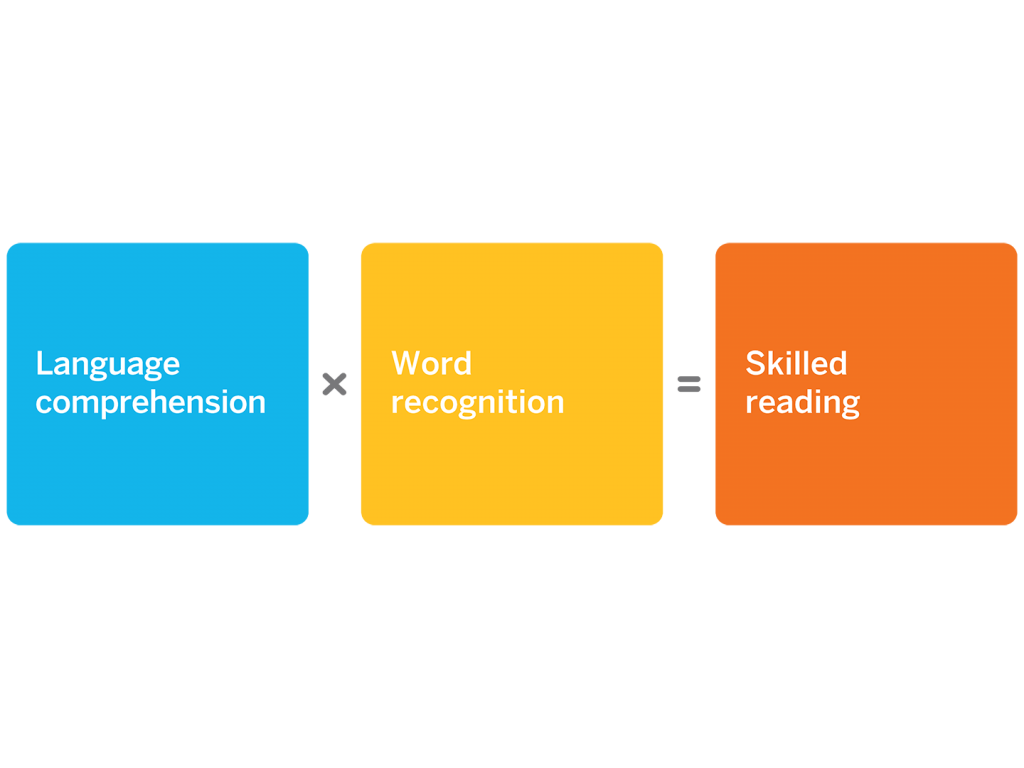
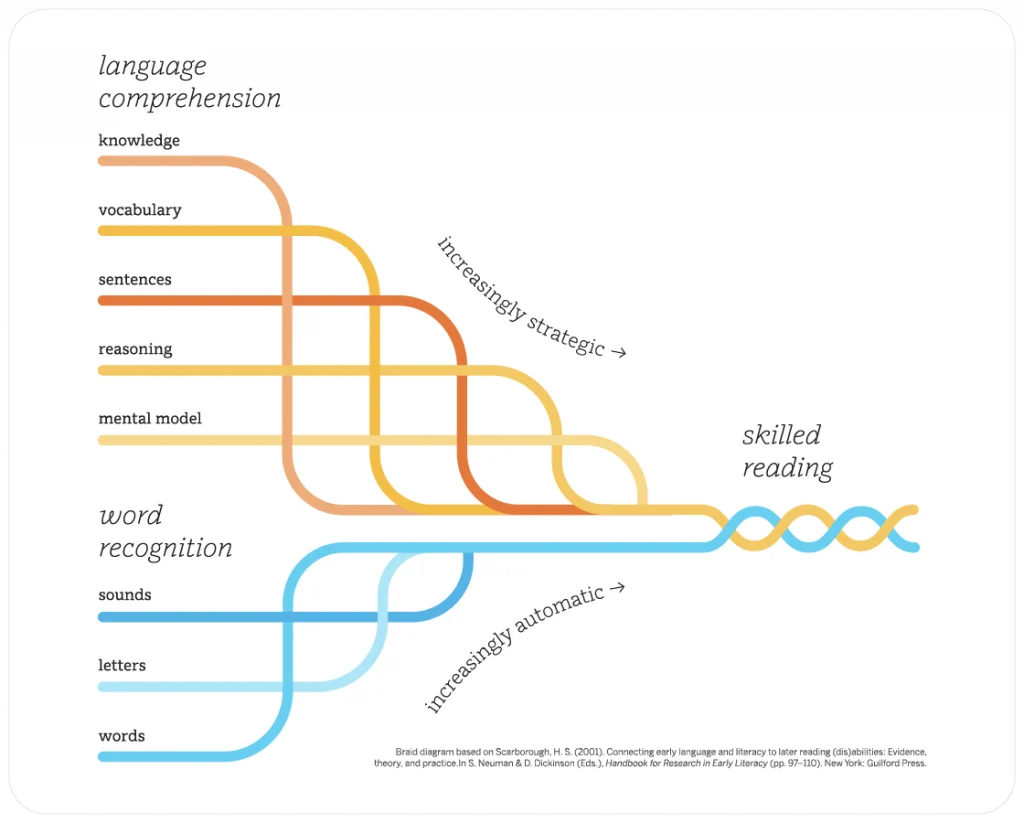
Each lesson follows a predictable structure with clearly marked components, beginning with warm-up routines, progressing through explicit instruction with guided practice, and concluding with independent application activities. The program provides detailed teacher language, including question stems and discussion prompts, ensuring clear and consistent delivery of instruction.
[Reviewer highlight video] Program organization for Category 2
[Reviewer highlight video] Program structure for grades K–2
[Reviewer highlight video] Program structure for grades 3–5
[Reviewer highlight video] Program structure for grades 6–8
Amplify CKLA California empowers teachers to deliver effective instruction and keeps students engaged with with the following resources:
- Teacher Guides
- Assessment Guides
- Authentic texts and trade books
- Knowledge Image Cards
- Knowledge Flip Books
- Remediation and intervention resources
- Decodable readers
- Student Readers and novels
- Student Activity Books
- Dedicated ELD support with Language Studio California
- Poet’s Journals
- eReaders
- Sound Library featuring articulation videos and songs
- Instructional routine modeling videos
- Assignable Practice Games
- On-demand professional development
Amplify ELA California students stay engaged with the following resources:
- Teacher Guides that include:
- Detailed lesson plans
- Standards alignment and exit tickets
- Real-time differentiation strategies
- Robust reporting
- Student Editions that include:
- High-quality narrative and informational texts
- Videos, audio supports, and digital experiences that capture their attention
- Personal Writing Journal to keep all student writing in one place
- Dedicated ELD support with Language Studio California
- Trade Books
Core literacy philosophy
Support every learner. Meet all learning needs with a Multi-Tiered System of Supports (MTSS) that brings together universal screening, scaffolded core instruction, support for English learners, and data-driven intervention to ensure every student gets what they need to succeed.
Provide intentional ELD support. Honor students’ linguistic assets while building academic English through both integrated and designated instruction.
Deliver consistent foundational skills instruction. Daily explicit, systematic skills instruction in grades K–2, with targeted yet flexible support for students still building decoding confidence in grades 3–8, ensures mastery of essential reading foundations.
Build lasting knowledge across all grades. Through coherently sequenced, content-rich instruction that revisits key vocabulary and concepts with increasing complexity, students build meaningful connections that deepen their vocabulary and reading comprehension.
Strengthen reading through writing at every level. Regular writing instruction grounded in the Science of Writing supports reading comprehension, improves sentence-level writing, and provides the foundation for high-quality composition. As students progress through the upper grades, they engage in increasingly complex analytical tasks—synthesizing ideas, drawing generalizations, and interpreting multiple textual layers through both focused quick-writes and comprehensive essays.
Foster oral language development. Structured opportunities for academic conversation and evidence-based dialogue build students’ ability to express complex ideas with precision and allow them to participate confidently in classroom discussions.
Measure growth with comprehensive assessments. Assessments range from in-the-moment checks for understanding to summative assessments that measure progress toward skills mastery and standards proficiency, providing the data needed to drive targeted instruction.
Scope and sequence
Below you can view the scope and sequence for each grade level.
- Kindergarten
- Grade 1
- Grade 2
- Grade 3
- Grade 4
- Grade 5
- Grade 6
- Grade 7
- Grade 8
- Newcomer Support Grades K–8
Routines
Amplify CKLA California and Amplify ELA California include several structured instructional routines that provide predictable patterns for both teachers and students:
Discussion and collaboration routines:
- Turn and Talk: Partners discuss text-specific content using sentence starters and frames
- Think-Pair-Share: Students engage in individual thinking, partner discussion, and whole-class sharing
- Partner reading: Students sit shoulder-to-shoulder, taking turns reading and listening
Foundational Skills routines:
- Sound-spelling review: Warm-up activities that reinforce phonics patterns
- Oral blending warm-ups: Teacher-guided practice progressing to independent application
- Finger-tapping: Techniques for blending sounds
- Chaining activities: Students manipulate letters to transform one word into another
- Word Work: Daily short activities focused on domain-specific and academic vocabulary
Knowledge-Building Routines:
- Teacher modeling: Demonstration of proper intonation, expression, and pacing
- Choral reading: Whole-class reading practice
- Partner reading: Paired fluency practice
Close reading routines
The program includes carefully structured close reading activities that guide students through multiple encounters with complex texts. These routines help students develop deeper comprehension through systematic analysis and discussion.
Each routine includes comprehensive instructional guides with clear-cut directions for implementation, straightforward explanations of concepts, and suggestions for discussion.
Designated English Language Development materials
Language Studio California is a K–8 content-based companion for English language learners. Built on Amplify CKLA California’s and Amplify ELA California’s carefully sequenced Knowledge Domains and units, it combines engaging content knowledge with targeted supports and research-based strategies to help students move swiftly toward language proficiency. This program includes:
- Real-world content to provide authentic opportunities to practice reading, writing, speaking, and listening.
- Scaffolding strategies and differentiated instruction to offer targeted support along with five English proficiency levels.
- Progress-monitoring tools to help teachers provide consistent and effective support.
- Teacher Guides that:
- Provide impactful progress monitoring tools including formative and summative assessments and Language Proficiency Assessment rubrics.
- Offer varied differentiation strategies including Support, Challenge, and Access Supports in each lesson segment.
- Are organized into thoughtful lesson segments—Talk Time, Building Background, On Stage and more—that make learning objectives concrete.
- Activities that:
- Expand on domain knowledge from core content and read-alouds and prompt collaborative conversation to practice oral fluency.
- Support hands-on language activities to promote authentic interaction in the classroom.
- Help students bridge experiences and knowledge with images, vocabulary activities, graphic organizers, anticipation guides, writing space, and more.
Category 3: Assessments
Systematic MTSS alignment
In alignment with the additional 2025 Guidance 3.1.a, the assessment systems align with MTSS tiers, including universal screening, diagnostic assessments for students demonstrating a need for additional support, and progress monitoring tools that complement the California’s required universal screening schedule per SB 114.
| Tier 1: Universal/ differentiated support | Tier 2: Supplemental/ targeted support | Tier 3: Intensified/ intensive support | |
| Core instruction assessments Frequency of administration | Amplify CKLA California, Amplify Caminos California, Amplify ELA California assessments Daily, Weekly, Monthly | Amplify CKLA California, Amplify Caminos California, Amplify ELA California assessments Daily, Weekly, Monthly | Amplify CKLA California, Amplify Caminos California, Amplify ELA California assessments Daily, Weekly, Monthly |
| Universal screening assessments Frequency of administration | mCLASS DIBELS and Lectura 3 times per year – BOY, MOY, EOY | mCLASS DIBELS and Lectura 3 times per year – BOY, MOY, EOY | mCLASS DIBELS and Lectura 3 times per year – BOY, MOY, EOY |
| Formal progress monitoring assessments Frequency of administration | mCLASS DIBELS and Lectura 3 times per year – BOY, MOY, EOY | mCLASS DIBELS and Lectura Monthly | mCLASS DIBELS and Lectura Bi-weekly |
| Informal progress monitoring assessments Frequency of administration | Amplify CKLA California, Amplify Caminos California, Amplify ELA California core assessments Daily | Intervention Toolkit progress monitoring assessments When linked to a lesson in the toolkit | Intervention Toolkit progress monitoring assessments When linked to a lesson in the toolkit |
| Diagnostic assessment Frequency of administration | Amplify skill diagnostic assessment Amplify Spanish skill diagnostic assessment Optional after universal screening assessment is administered | Amplify skill diagnostic assessment Amplify Spanish skill diagnostic assessment After universal screening assessment is administered |
Universal assessment system
Amplify’s mCLASS® DIBELS® 8th Edition and mCLASS Lectura are universal and dyslexia screening assessments that should be administered three times per year (BOY, MOY and EOY) to all students. The assessments evaluate student literacy risk, determine progress toward grade-level goals, and indicate the level of instructional support a student may need. Beginning-of-year screenings require adequate instructional time before administration, particularly in grades K–1, while mid-year and end-of-year assessments evaluate instructional effectiveness and guide tier placement adjustments. These screenings also identify students at risk for dyslexia. Universal screening provides essential data for targeting instruction and measuring instructional system effectiveness.
Core instruction assessments
Amplify CKLA California and Amplify ELA California provide a comprehensive suite of assessments for Grades K–8 that range from low-stakes, informal formative assessments to more formal summative assessments. These assessments incorporate a variety of methods and question types, including multiple-choice questions, open-ended questions, and oral and written responses.
Formative assessments:
- Checks for Understanding: Incorporated into each lesson segment throughout daily instruction. Quick pulse-checks that provide immediate feedback during lesson delivery (grades K–5).
- Daily formative assessments: Highlighted moments within each lesson for teachers to plan to track mastery of Primary Focus objectives and standards of each lesson to get a clear snapshot of individual and whole-class progress (grades K–5).
- Activity pages: Completed as part of lessons and can be used to assess lesson content understanding through various formats (grades K–5).
- Exit Tickets: Located at the end of lessons, these provide a quick gauge of students’ ability to meet the lesson’s focus standards (grades 6–8).
- Writing Prompts: Prompts integrated throughout lessons during writing activities that provide skill snapshots within lessons and tracks patterns of skill development over time (grades 6–8).
- Independent reading activities (Solos): At the end of every lesson, students complete an independent reading activity (“solo”) with reading questions that are scored to measure comprehension (grades 6–8).
Summative assessments:
- Skills end-of-unit assessments (grades K–2)
- Knowledge end-of-domain assessments (grades K–2)
- End-of-unit assessments (grades 3–5)
- Unit essays: A culminating end-of-unit set of lessons that guide students through crafting an essay with a rubric to score mastery of writing skills (grades 6–8)
- Unit Reading Assessments: Auto-scored responses and two constructed response items evaluate comprehension, content understanding, and reading skills using the passages students read during the unit (grades 6–8)
Performance Assessments
Student Performance Assessments are multi-day assessments administered in Grades K-5 at the beginning, middle, and end of year to help teachers gauge student mastery of grade-level Core content. These assessments provide critical data to help teachers set targeted instructional goals and monitor individual and class-wide progress towards core objectives.
Progress monitoring
Amplify’s mCLASS® DIBELS® 8th Edition and mCLASS Lectura provide formal progress monitoring in the discrete skills that are indicative of reading growth and predictive of overall success to provide the most instructionally meaningful information to teachers.
Informal progress monitoring tools can be found within the Intervention Toolkit, including materials for teachers to record, track, and evaluate student progress.
Diagnostic assessment
Interventions within Amplify’s literacy programs are informed by a skill diagnostic assessment that provides detailed data on foundational literacy skill deficits. The Amplify Skill Diagnostic Assessment and Amplify Spanish Skill Diagnostic assessment serve as critical tools in this process, administered specifically to students identified as at risk for reading difficulty through universal screening assessments—particularly those demonstrating mCLASS DIBELS 8th Edition or mCLASS Lectura composite scores in the Well Below or Below Benchmark ranges. These diagnostic assessments provide teachers with the precise skills to begin intervention and remediation.
Category 4: Universal Access
Amplify CKLA California and Amplify ELA California were built on the principles of Universal Design for Learning (UDL) and reviewed by CAST, a nonprofit education research and development organization. The program is developed using the Universal Design for Learning framework to proactively ensure that all learners can access and participate in meaningful, challenging learning opportunities.
Universal Design for Learning
The programs incorporate opportunities for engagement, representation, action, and expression based on the guidelines of Universal Design for Learning.
- Multiple Means of Engagement: The programs incorporate interesting and motivating ways for students to interact with information and content. In Amplify CKLA California, the Universal Access section in the introduction of each lesson provides specific lesson-level options based on the needs of individual classrooms and students. Scaffolding for students with various levels of need is incorporated into the design of each lesson.
- Multiple Means of Representation: The programs provide multiple means of presenting content to maximize student understanding. This includes digital component files that allow for a range of presentations of images and text to support learning. Amplify provides access to universal supports such as point-of-use audio for all core texts, embedded definitions for critical vocabulary, and glossaries in multiple languages. Amplify CKLA California includes clarification on language found throughout the program, with sidebars that include support on transition words and syntax, and illustrations to help students understand the concepts they are learning.
- Multiple Means of Action and Expression: The programs include a range of methods for all students, including English Learners, to navigate and demonstrate learning. This includes physical actions, a range of methods for response, appropriate tools for composition, and varied scaffolding. In Amplify ELA California, lessons provide multiple ways for students to interact with text, allowing their brains to process the language through distinct pathways. Activities harness multiple learning modes, using media tools, digital apps, and a variety of visual and physical experiences to strategically support and enhance student learning.
- Accessibility: Universal access features include visual aids, enlarged materials, physical objects, and multiple learning modalities through activities like Push & Say and Wiggle Cards. The Universal Access section in the introduction of each lesson provides specific lesson-level options based on the needs of individual classrooms and students.
Embedded differentiation
Amplify CKLA California and Amplify ELA California provide built-in differentiation strategies in every lesson for all students.
Throughout the Teacher Guides, point-of-use Differentiation icons provide targeted instructional strategies and supports. These icons indicate specific guidance for advanced learners, students who need additional support, and English learners, allowing teachers to easily identify and implement appropriate scaffolds and extensions during instruction. In addition, teachers are provided with recommendations for resources to use with each group of students.
- Pre-teaching supports include mini-lessons on:
- Core vocabulary words
- Core Connections
- Essential Background Information or Terms
- What Have We Already Learned/What Do We Already Know?
- Differentiated Support for Core Instruction tables, located in the overview of each K–2 Skills Teacher Guide, provide a list of specific opportunities for reteaching and additional support in each lesson based on skill.
- Support and Challenge Sidebars in lesson margins offer educators immediate guidance in implementing point-of-use differentiation techniques.
- Flexible Grouping within lessons provides opportunities for teachers to facilitate small groups, partners, or individualized support based on students’ needs. In the Skills Strand, teachers receive specific guidance for differentiated small-group instruction, with targeted support and activities outlined for both Group 1 (students needing additional support) and Group 2 (on-level students) based on data.
- Amplify ELA California provides point-of-use supports embedded within key core lesson activities with six levels of differentiation. The goal of these supports is to fully enable access to grade-level content for all students, including students with disabilities, English learners, and students ready for an additional level of challenge.
- The Universal Access section of Advance Preparation in each lesson includes varied strategies to ensure all students can access and engage in each lesson.
- Frequent use of graphic organizers and visual supports in lessons provide opportunities for differentiation based on need. The program also includes a variety of technological supports, such as eReaders with audio.
- Extension opportunities are suggested throughout lessons, often embedded in writing tasks, which include prompts to use more complex and descriptive vocabulary, figurative language, multi-clause and complex sentences, and informational text characteristics.
Assessment-Driven MTSS resources
- The K–8 Intervention Toolkit is available online and provides easy-to-use resources that assist teachers in filling gaps in students’ reading skills, with activities to support print concepts, phonological awareness, phonics, fluency, and other key skills
- Fluency Packets (Grades 2–5)
- Foundational Skills Intervention Program for Grades 3–8 support students who would benefit from direct and explicit intervention instruction in the full continuum of foundational skills in the upper grades
- Flexible Instructional Time including:
- Pausing Points built into the curriculum that provide teachers with dedicated time to address specific student needs through targeted reteaching, remediation, practice, and extension activities
- Pausing Point activities designed to support English learners’ competence and confidence through differentiated whole-group, small-group, or individual instruction
- Boost Reading is a K–5 student-led digital intervention program. Boost Reading follows Amplify CKLA California’s scope and sequence to reinforce the same foundational skills taught in core instruction. It integrates easily into daily routines, while the robust data provided by mCLASS® DIBELS® 8th Edition offers a detailed view of how students progress across all instructional tiers.
Category 5: Instructional Planning and Teacher Support
Amplify CKLA California and Amplify ELA California teachers are empowered to deliver effective instruction with various print and digital resources. The program provides comprehensive planning and support materials designed to help teachers prepare for and execute lessons effectively and fulfill the requirements of Category 5.
Implementation supports across K–8
Planning and preparation resources
- Unit Overviews that provide important background and context for the texts students will read, including highlighted elements within the text and guidance for how students will work with those elements
- Sub-unit Overviews (Grades 6–8) that provide an overview of Lesson Objectives and reading and writing assignments, as well as a list of any projections, multimedia, or digital apps that can be projected from the teacher’s included digital license
- Lesson-by-lesson preparation checklists (Grades 6–8) accompanying each Sub-unit Overview
- Lesson Briefs for each individual lesson providing important background and context
- Content knowledge materials regarding topics that students will examine
Point-of-use instructional guidance
- Teacher Editions that feature insets of the same text and activity instructions as the corresponding Student Edition, wrapping teacher instruction around these materials
- Activity guidance at point of use
- Lesson standards clearly called out
- Discussion suggestions embedded in lessons
- Differentiation tips at point of use
- Detailed Instructional Guides in each activity that include sequencing and grouping suggestions, tips for facilitating discussion, possible student responses and exemplars
- Student Supports in all core lessons that provide teachers with targeted supports in daily core instruction, addressing which might serve the student best in the moment—support, strengthen, stretch—with additional call-outs for newcomers
Multimedia and digital support
- Teacher tip videos provide modeling and guidance for implementing key foundational skills routines within the program
- Digital platform access where teachers can access printable PDFs of differentiated support materials for English learners and students struggling with reading, including translated Unit Background and Context documents and Text Previews
- Teacher dashboard and reporting tools (Grade 6–8) provide real-time visibility into student progress and work for immediate instructional response
Caregiver supports
Communication and overview resources
- Caregiver Hub available in English and Spanish that provides an overview of the curriculum
- Caregiver Letters for each K–2 Knowledge Domain and unit in Grades 3–5 that provide an overview of the content, the skills students learn, as well as practical methods that continue the learning and knowledge building at home
- Unit-specific Caregiver Letters (Grades 6–8) that provide detailed information regarding what students will read and learn in each unit, including conversation starters that allow caregivers to ask questions and discuss specific aspects of a unit with their student
- Welcome letters that explain the assessment and placement process while inviting parent involvement and offering support
- Editable Home-School Communication letters available in English and Spanish
- Editable Progress Reports for teachers to update parents and guardians on what their child is learning
Content and learning support materials
- Unit Background and Context documents that provide an introduction and overview to the unit’s topic and themes, available in English and Spanish
- Text Previews that provide a brief introduction to formative, independent reading assignments (called Solos in Grades 6–8), available in English and Spanish
- Unit Overview and Support documents (Grades 6–8) designed for caregivers that provide information about important questions, assignments, and key aspects of the unit texts, available in English and Spanish
- Conversation starters included in Knowledge Strand Caregiver Letters to discuss domain topics at home
Home practice and extension activities
- Take-Home pages in the Skills Strand that include copies of decodable passages, enabling students to share their reading progress with families and continue practicing their skills outside of school
- Take-Home Letters in the Skills Strand that provide specific guidance for parents to support skills practice at home, such as sound-sorting activities, with detailed instructions and materials for home practice activities
- Take-Home pages in the Knowledge Strand that provide suggested activities families can do together to reinforce and extend learning beyond the classroom
- Games and activities on take-home pages that extend classroom instruction, including all the materials and instruction necessary to help families assist students in a fun and engaging way
- Digital access to decodable texts through the Amplify Caregiver Hub, allowing students to practice their reading skills both in class and at home
- Weekly spelling lists and directions to decoding activities that can be practiced at home
Welcome, K–8 Program 1 reviewers!
We’re honored to introduce you to Amplify California Language Arts. We’re confident you’ll find this comprehensive program to be a powerful tool for bringing the vision of the California ELA Framework to life in classrooms across the state.
Please start with the video on the right to learn how to navigate the program and access key features referenced within our submission. Below you’ll find additional resources to support your review.
Your review samples
We’re excited for you to begin your review of Amplify Core Knowledge Language Arts (CKLA) California and Amplify ELA California. Physical and digital review materials will vary by grade level.
Reviewer Binders (K–8)
Your physical samples should have arrived in grade-specific boxes with three Reviewer Binders.
- The first binder will contain logistical program review information and the printed Evaluation Criteria Map.
- The second binder will contain the printed Standards Maps for grades K–4.
- The third binder will contain the printed Standards Maps for grades 5–8.
Physical samples (K–5)
You can expect to receive 15 boxes of physical materials for your review. As you begin the process of organizing your materials, please refer to the inventory checklist found inside each box as well as within your Reviewer Binder. Please note you will not receive any physical samples for grades 6–8. Your review of the program for grades 6–8 will be entirely digital.
Digital samples (K–8)
In order to access your digital samples, you’ll need to log in to our platform using your unique login credentials found on a Digital Review Credential flyer inside of your Reviewer Binder. Once you have located the flyer:
- Click the orange button below to access the platform.
- Click “Log in with Amplify.”
- Enter the username and password provided on your Digital Review Credential flyer.
Navigation tips
Before you get started, please review these important functionality notes:
Criteria Map and Standards Maps must be opened on Microsoft Word on your desktop to function as intended. If you open the documents without Microsoft Word on your desktop, citations will be cut off at the bottom of most tables within the document.
Many of our citations are deep-links to PDFs, meaning they will take you to the right page or the first page in the sequence for the citation in question. To ensure this functionality works, please disable any PDF-viewing extensions or plug-ins such as Adobe Acrobat Pro Browser Extension.
[Reviewer program navigation video] Grades K–5
[Reviewer program navigation video] Grades 6–8
Click here for additional information on navigating the digital materials for grades 6–8.
Category 1: English Language Arts (ELA) and English Language Development (ELD) Content/Alignment to Standards
Evaluation Criteria Map
Linked below is the Evaluation Criteria Map for grades K–8. Please note that you will need to be logged into the digital platform to access the links in the Evaluation Criteria Map.
ELA Standards Maps
The links below provide the Standards Maps for Amplify California Core Language Arts for each grade level. Please note that you will need to be logged into the digital platform to access the links in the Standards Maps.
Category 2: Program Organization
The Amplify California Language Arts Program 1 submission includes Amplify CKLA California for Grades K–5 and Amplify ELA California for Grades 6–8. This comprehensive curriculum provides a full year of evidence-based instruction for each grade level, transitioning from foundational literacy to advanced text analysis.
Program structure
Amplify’s California Language Arts programs are built on what the research shows: Strong readers need both word recognition and language comprehension. Our comprehensive curriculum suite follows the Simple View of Reading and The Reading Rope–bringing together foundational skills and knowledge building to deliver instruction grounded in evidence-based literacy practices.
Each lesson follows a predictable structure with clearly marked components, beginning with warm-up routines, progressing through explicit instruction with guided practice, and concluding with independent application activities. The program provides detailed teacher language, including question stems and discussion prompts, ensuring clear and consistent delivery of instruction.
[Reviewer highlight video] Program organization for Category 2
[Reviewer highlight video] Program structure for grades K–2
[Reviewer highlight video] Program structure for grades 3–5
[Reviewer highlight video] Program structure for grades 6–8
Amplify CKLA California empowers teachers to deliver effective instruction and keeps students engaged with the following resources:
- Teacher Guides
- Assessment Guides
- Authentic texts and trade books
- Knowledge Image Cards
- Knowledge Flip Books
- Remediation and intervention resources
- Decodable readers
- Student Readers and novels
- Student Activity Books
- Poet’s Journals
- eReaders
- Sound Library featuring articulation videos and songs
- Instructional routine modeling videos
- Assignable Practice Games
- On-demand professional development
Amplify ELA California students stay engaged with the following resources:
- Teacher Guides that include:
- Detailed lesson plans
- Standards alignment and exit tickets
- Real-time differentiation strategies
- Robust reporting
- Student Editions that include:
- High-quality narrative and informational texts
- Videos, audio supports, and digital experiences that capture their attention
- Personal Writing Journal to keep all student writing in one place
- Trade Books
Core literacy philosophy
Support every learner. Meet all learning needs with a Multi-Tiered System of Supports (MTSS) that brings together universal screening, scaffolded core instruction, support for English learners, and data-driven intervention to ensure every student gets what they need to succeed.
Deliver consistent foundational skills instruction. Daily explicit, systematic skills instruction in grades K–2, with targeted yet flexible support for students still building decoding confidence in grades 3–8, ensures mastery of essential reading foundations.
Build lasting knowledge across all grades. Through coherently sequenced, content-rich instruction that revisits key vocabulary and concepts with increasing complexity, students build meaningful connections that deepen their vocabulary and reading comprehension.
Strengthen reading through writing at every level. Regular writing instruction grounded in the Science of Writing supports reading comprehension, improves sentence-level writing, and provides the foundation for high-quality composition. As students progress through the upper grades, they engage in increasingly complex analytical tasks—synthesizing ideas, drawing generalizations, and interpreting multiple textual layers through both focused quick-writes and comprehensive essays.
Foster oral language development. Structured opportunities for academic conversation and evidence-based dialogue build students’ ability to express complex ideas with precision and allow them to participate confidently in classroom discussions.
Measure growth with comprehensive assessments. Assessments range from in-the-moment checks for understanding to summative assessments that measure progress toward skills mastery and standards proficiency, providing the data needed to drive targeted instruction.
Scope and sequence
Below you can view the scope and sequence for each grade level.
Routines
Amplify CKLA California and Amplify ELA California include several structured instructional routines that provide predictable patterns for both teachers and students:
Discussion and collaboration routines:
- Turn and Talk: Partners discuss text-specific content using sentence starters and frames
- Think-Pair-Share: Students engage in individual thinking, partner discussion, and whole-class sharing
- Partner reading: Students sit shoulder-to-shoulder, taking turns reading and listening
Foundational Skills routines:
- Sound-spelling review: Warm-up activities that reinforce phonics patterns
- Oral blending warm-ups: Teacher-guided practice progressing to independent application
- Finger tapping: Techniques for blending sounds
- Chaining activities: Students manipulate letters to transform one word into another
- Word Work: Daily short activities focused on domain-specific and academic vocabulary
Knowledge-building routines:
- Vocabulary preview: Introduction of new words before reading
- Read-aloud procedures: Established routines for introducing and discussing complex texts
- Text discussions: Structured comprehension conversations with scaffolded questioning
Fluency routines:
- Teacher modeling: Demonstration of proper intonation, expression, and pacing
- Choral reading: Whole-class reading practice
- Partner reading: Paired fluency practice
Close reading routines
The program includes carefully structured close reading activities that guide students through multiple encounters with complex texts. These routines help students develop deeper comprehension through systematic analysis and discussion.
Each routine includes comprehensive instructional guides with clear-cut directions for implementation, straightforward explanations of concepts, and suggestions for discussion.
Category 3: Assessments
Systematic MTSS alignment
In alignment with the additional 2025 Guidance 3.1.a, the assessment systems align with MTSS tiers, including universal screening, diagnostic assessments for students demonstrating a need for additional support, and progress monitoring tools that complement California’s required universal screening schedule per SB 114.
| Tier 1: Universal/ differentiated support | Tier 2: Supplemental/ targeted support | Tier 3: Intensified/ intensive support | |
| Core instruction assessments Frequency of administration | Amplify CKLA California, Amplify ELA California assessments Daily, Weekly, Monthly | Amplify CKLA California, Amplify ELA California assessments Daily, Weekly, Monthly | Amplify CKLA California, Amplify ELA California assessments Daily, Weekly, Monthly |
| Universal screening assessments Frequency of administration | mCLASS DIBELS and mCLASS Lectura 3 times per year – BOY, MOY, EOY | mCLASS DIBELS and mCLASS Lectura 3 times per year – BOY, MOY, EOY | mCLASS DIBELS and mCLASS Lectura 3 times per year – BOY, MOY, EOY |
| Formal progress monitoring assessments Frequency of administration | mCLASS DIBELS and mCLASS Lectura 3 times per year – BOY, MOY, EOY | mCLASS DIBELS and mCLASS Lectura Monthly | mCLASS DIBELS and mCLASS Lectura Bi-weekly |
| Informal progress monitoring assessments Frequency of administration | Amplify CKLA California, Amplify ELA California core assessments Daily | Intervention Toolkit progress monitoring assessments When linked to a lesson in the toolkit | Intervention Toolkit progress monitoring assessments When linked to a lesson in the toolkit |
| Diagnostic assessment Frequency of administration | Amplify skill diagnostic assessment Optional after universal screening assessment is administered | Amplify skill diagnostic assessment After universal screening assessment is administered |
Universal assessment system
Amplify’s mCLASS® DIBELS® 8th Edition (K–8) and mCLASS Lectura (K–6) are universal and dyslexia screening assessments that should be administered three times per year (BOY, MOY and EOY) to all students. The assessments evaluate student literacy risk, determine progress toward grade-level goals, and indicate the level of instructional support a student may need. Beginning-of-year screenings require adequate instructional time before administration, particularly in grades K–1, while mid-year and end-of-year assessments evaluate instructional effectiveness and guide tier placement adjustments. These screenings also identify students at risk for dyslexia. Universal screening provides essential data for targeting instruction and measuring instructional system effectiveness.
Core instruction assessments
Amplify CKLA California and Amplify ELA California provide a comprehensive suite of assessments for Grades K–8 that range from low-stakes, informal formative assessments to more formal summative assessments. These assessments incorporate a variety of methods and question types, including multiple-choice questions, open-ended questions, and oral and written responses.
Formative assessments:
- Checks for Understanding: Incorporated into each lesson segment throughout daily instruction. Quick pulse-checks that provide immediate feedback during lesson delivery (grades K–5).
- Daily formative assessments: Highlighted moments within each lesson for teachers to plan to track mastery of Primary Focus objectives and standards of each lesson to get a clear snapshot of individual and whole-class progress (grades K–5).
- Activity pages: Completed as part of lessons and can be used to assess lesson content understanding through various formats (grades K–5).
- Exit Tickets: Located at the end of lessons, these provide a quick gauge of students’ ability to meet the lesson’s focus standards (grades 6–8).
- Writing Prompts: Prompts integrated throughout lessons during writing activities that provide skill snapshots within lessons and tracks patterns of skill development over time (grades 6–8).
- Independent reading activities (Solos): At the end of every lesson, students complete an independent reading activity (“Solo”) with reading questions that are scored to measure comprehension (grades 6–8).
Summative assessments:
- Skills end-of-unit assessments (grades K–2)
- Knowledge end-of-domain assessments (grades K–2)
- End-of-unit assessments (grades 3–5)
- Unit essays: A culminating end-of-unit set of lessons that guide students through crafting an essay with a rubric to score mastery of writing skills (grades 6–8)
- Unit Reading Assessments: Auto-scored responses and two constructed response items evaluate comprehension, content understanding, and reading skills using the passages students read during the unit (grades 6–8)
Performance Assessments
Student Performance Assessments are multi-day assessments administered in Grades K–5 at the beginning, middle, and end of year to help teachers gauge student mastery of grade-level Core content. These assessments provide critical data to help teachers set targeted instructional goals and monitor individual and class-wide progress towards core objectives.
Progress monitoring
Amplify’s mCLASS® DIBELS® 8th Edition and mCLASS Lectura provide formal progress monitoring in the discrete skills that are indicative of reading growth and predictive of overall success to provide the most instructionally meaningful information to teachers.
Informal progress monitoring tools can be found within the Intervention Toolkit, including materials for teachers to record, track, and evaluate student progress.
Diagnostic assessment
Interventions within Amplify’s literacy programs are informed by a skill diagnostic assessment that provides detailed data on foundational literacy skill deficits. The Amplify Skill Diagnostic Assessment and Amplify Spanish Skill Diagnostic assessment serve as critical tools in this process, administered specifically to students identified as at risk for reading difficulty through universal screening assessments—particularly those demonstrating mCLASS DIBELS 8th Edition or mCLASS Lectura composite scores in the Well Below or Below Benchmark ranges. These diagnostic assessments provide teachers with the precise skills to begin intervention and remediation.
Category 4: Universal Access
Amplify CKLA California and Amplify ELA California were built on the principles of Universal Design for Learning (UDL) and reviewed by CAST, a nonprofit education research and development organization. The program is developed using the Universal Design for Learning framework to proactively ensure that all learners can access and participate in meaningful, challenging learning opportunities.
Universal Design for Learning
The programs incorporate opportunities for engagement, representation, action, and expression based on the guidelines of Universal Design for Learning.
- Multiple Means of Engagement: The programs incorporate interesting and motivating ways for students to interact with information and content. In Amplify CKLA California, the Universal Access section in the introduction of each lesson provides specific lesson-level options based on the needs of individual classrooms and students. Scaffolding for students with various levels of need is incorporated into the design of each lesson.
- Multiple Means of Representation: The programs provide multiple means of presenting content to maximize student understanding. This includes digital component files that allow for a range of presentations of images and text to support learning. Amplify provides access to universal supports such as point-of-use audio for all core texts, embedded definitions for critical vocabulary, and glossaries in multiple languages. Amplify CKLA California includes clarification on language found throughout the program, with sidebars that include support on transition words and syntax, and illustrations to help students understand the concepts they are learning.
- Multiple Means of Action and Expression: The programs include a range of methods for all students, including English learners, to navigate and demonstrate learning. This includes physical actions, a range of methods for response, appropriate tools for composition, and varied scaffolding. In Amplify ELA California, lessons provide multiple ways for students to interact with text, allowing their brains to process the language through distinct pathways. Activities harness multiple learning modes, using media tools, digital apps, and a variety of visual and physical experiences to strategically support and enhance student learning.
- Accessibility: Universal access features include visual aids, enlarged materials, physical objects, and multiple learning modalities through activities like Push & Say and Wiggle Cards. The Universal Access section in the introduction of each lesson provides specific lesson-level options based on the needs of individual classrooms and students.
Embedded differentiation
Amplify CKLA California and Amplify ELA California provide built-in differentiation strategies in every lesson for all students.
- Pre-teaching supports include mini-lessons on:
- Core vocabulary building
- Core connections
- Essential background information building
- What Have We Already Learned?/What Do We Already Know?
- Differentiated Support for Core Instruction tables, located in the overview of each K–2 Skills Teacher Guide, provide a list of specific opportunities for reteaching and additional support in each lesson based on skill.
- Support and Challenge Sidebars in lesson margins offer educators immediate guidance in implementing point-of-use differentiation techniques.
- Flexible Grouping within lessons provides opportunities for teachers to facilitate small groups, partners, or individualized support based on students’ needs. In the Skills Strand, teachers receive specific guidance for differentiated small-group instruction, with targeted support and activities outlined for both Group 1 (students needing additional support) and Group 2 (on-level students) based on data.
- Amplify ELA California provides point-of-use supports embedded within key core lesson activities with six levels of differentiation. The goal of these supports is to fully enable access to grade-level content for all students, including students with disabilities, English learners, and students ready for an additional level of challenge.
- The Universal Access section of Advance Preparation in each lesson includes varied strategies to ensure all students can access and engage in each lesson.
- Frequent use of graphic organizers and visual supports in lessons provide opportunities for differentiation based on need. The program also includes a variety of technological supports, such as eReaders with audio.
- Extension opportunities are suggested throughout lessons, often embedded in writing tasks, which include prompts to use more complex and descriptive vocabulary, figurative language, multi-clause and complex sentences, and informational text characteristics.
Assessment-driven MTSS resources
- The K–8 Intervention Toolkit is available online and provides easy-to-use resources that assist teachers in filling gaps in students’ reading skills, with activities to support print concepts, phonological awareness, phonics, fluency, and other key skills
- Fluency Packets (Grades 2–5)
- Foundational Skills Intervention Program for Grades 3–8 support students who would benefit from direct and explicit intervention instruction in the full continuum of foundational skills in the upper grades
- Flexible Instructional Time including:
- Pausing Points built into the curriculum that provide teachers with dedicated time to address specific student needs through targeted reteaching, remediation, practice, and extension activities
- Pausing Point activities designed to support English learners’ competence and confidence through differentiated whole-group, small-group, or individual instruction
- Boost Reading is a K–5 student-led digital intervention program. Boost Reading follows Amplify CKLA California’s scope and sequence to reinforce the same foundational skills taught in core instruction. It integrates easily into daily routines, while the robust data provided by mCLASS® DIBELS® 8th Edition offers a detailed view of how students progress across all instructional tiers.
Category 5: Instructional Planning and Teacher Support
Amplify CKLA California and Amplify ELA California teachers are empowered to deliver effective instruction with various print and digital resources. The program provides comprehensive planning and support materials designed to help teachers prepare for and execute lessons effectively and fulfill the requirements of Category 5.
Implementation supports across K–8
Planning and preparation resources
- Unit Overviews that provide important background and context for the texts students will read, including highlighted elements within the text and guidance for how students will work with those elements
- Sub-unit Overviews (Grades 6–8) that provide an overview of Lesson Objectives and reading and writing assignments, as well as a list of any projections, multimedia, or digital apps that can be projected from the teacher’s included digital license
- Lesson-by-lesson preparation checklists (Grades 6–8) accompanying each Sub-unit Overview
- Lesson Briefs for each individual lesson providing important background and context
- Content knowledge materials regarding topics that students will examine
Point-of-use instructional guidance
- Teacher Editions that feature insets of the same text and activity instructions as the corresponding Student Edition, wrapping teacher instruction around these materials
- Activity guidance at point of use
- Lesson standards clearly called out
- Discussion suggestions embedded in lessons
- Differentiation tips at point of use
- Detailed Instructional Guides in each activity that include sequencing and grouping suggestions, tips for facilitating discussion, possible student responses and exemplars
- Student Supports in all core lessons provide teachers with targeted supports in daily core instruction, addressing which might serve the student best in the moment—support, strengthen, stretch—with additional call-outs for newcomers
Multimedia and digital support
- Teacher tip videos provide modeling and guidance for implementing key foundational skills routines within the program
- Digital platform access where teachers can access printable PDFs of differentiated support materials for English learners and readers struggling with text, including translated Unit Background and Context Documents and Text Previews
- Teacher Dashboard and reporting tools (Grade 6–8) that provide real-time visibility into student progress and work for immediate instructional response
Caregiver supports
Communication and overview resources
- Caregiver Hub available in English and Spanish that provides an overview of the curriculum
- Caregiver Letters for each K–2 Knowledge Domain and unit in Grades 3–5 that provide an overview of the content, the skills students learn, as well as practical methods that continue the learning and knowledge building at home
- Unit-specific Caregiver Letters (Grades 6–8) that provide detailed information regarding what students will read and learn in each unit, including conversation starters that allow caregivers to ask questions and discuss specific aspects of a unit with their student
- Welcome letters that explain the assessment and placement process while inviting parent involvement and offering support
- Editable Home-School Communication letters available in English and Spanish
- Editable Progress Reports for teachers to update parents and guardians on what their child is learning
Content and learning support materials
- Unit Background and Context documents that provide an introduction and overview to the unit’s topic and themes, available in English and Spanish
- Text Previews that provide a brief introduction to formative, independent reading assignments (called Solos in Grades 6–8), available in English and Spanish
- Unit Overview and Support documents (Grades 6–8) designed for caregivers that provide information about important questions, assignments, and key aspects of the unit texts, available in English and Spanish
- Conversation starters included in Knowledge Strand Caregiver Letters to discuss domain topics at home
Home practice and extension activities
- Take-Home pages in the Skills Strand that include copies of decodable passages, enabling students to share their reading progress with families and continue practicing their skills outside of school
- Take-Home Letters in the Skills Strand that provide specific guidance for parents to support skills practice at home, such as sound-sorting activities, with detailed instructions and materials for home practice activities
- Take-Home pages in the Knowledge Strand that provide suggested activities families can do together to reinforce and extend learning beyond the classroom
- Games and activities on Take-Home Pages that extend classroom instruction, including all the materials and instruction necessary to help families assist students in a fun and engaging way
- Digital access to decodable texts through the Amplify Caregiver Hub, allowing students to practice their reading skills both in class and at home
- Weekly spelling lists and directions to decoding activities that can be practiced at home
What’s included
Along with compelling print materials, powerful digital resources, and more hands-on materials than any other program, Amplify Science California also includes engaging and realistic experiences, access to diverse role models, countless a-ha moments, and the inspiration and confidence to consider a future as a scientist or engineer.
Choose level
Year at a glance
Amplify Science California is organized around units where students explore compelling phenomena and real-world problems, develop and strengthen claims by collecting evidence and testing assumptions, and apply their learning in new contexts.

Units at a glance
In each Amplify Science California unit, students are asked to inhabit the role of a scientist or engineer in order to investigate a real-world problem. These problems provide relevant, 21st-century contexts through which students investigate different scientific phenomena.

1
Needs of Plants and Animals
Students take on the role of scientists in order to figure out why there have been no monarch caterpillars in the community garden since vegetables were planted. They investigate how plants and animals get what they need to live and grow, and make a new plan for the community garden that provides for the needs of the monarch caterpillars in addition to producing vegetables for humans.

2
Pushes and Pulls
Students take on the role of pinball machine engineers as they investigate the effects of forces on the motion of an object. They conduct tests in their own prototypes (models) of a pinball machine and use what they learn to contribute to the design of a class pinball machine. Over the course of the unit, students construct a foundational understanding of why things move in different ways.

3
Sunlight and Weather
The principals of Woodland Elementary and Carver Elementary need student weather scientists to help them explain why Woodland’s playground is warmer than Carver’s at recess. Students gather data from models of the sun and Earth’s surface and observe their own playgrounds to figure out how sunlight causes changes in the temperatures of different surfaces. Students then use models to figure out why Woodland’s playground sometimes floods.

1
Animal and Plant Defenses
Students play the role of marine scientists. In their role, students apply their understanding of plant and animal defense structures to explain to aquarium visitors how a sea turtle and her offspring can defend themselves from ocean predators when they are released into the wild.

2
Light and Sound
Students take on the role of light and sound engineers for a puppet show company as they investigate cause and effect relationships to learn about the nature of light and sound. They apply what they learn to design shadow scenery and sound effects for a puppet show.

3
Spinning Earth
As sky scientists, students explain why a boy living in a place near them sees different things in the sky than his grandma does when he talks to her on the phone. Students record, organize, and analyze observations of the sun and other sky objects as they look for patterns and make sense of the cycle of daytime and nighttime.

1
Plant and Animal Relationships
In their role as plant scientists, students work to figure out why there are no new chalta trees growing in the Bengal Tiger Reserve, which is part of a broadleaf forest. Students investigate what the chalta tree needs to survive, then collect and analyze qualitative and quantitative data to solve the mystery.

2
Properties of Materials
As glue engineers, students are challenged to create a glue for use at their school that meets a set of design goals. Students present an evidence-based argument for why their glue mixture will be good for their school to use.
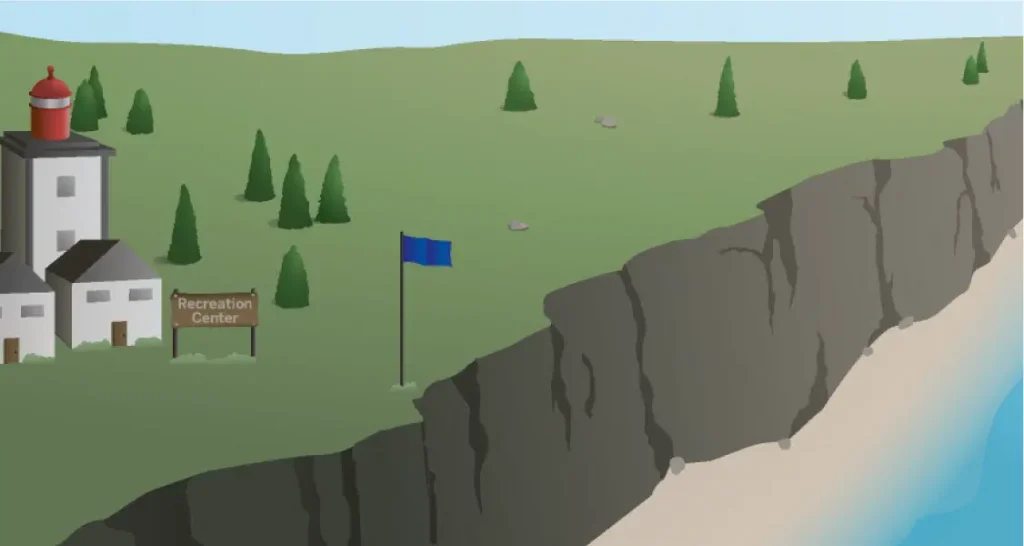
3
Changing Landforms
The director of the Oceanside Recreation Center gets a scare when a nearby cliff collapses overnight. Research reveals that the distance between the Recreation Center’s flagpole and the edge of the cliff have changed over time. Students play the role of geologists and work to figure out why the cliff has changed over time. Based on what they learn about erosion, they advise on whether it is safe to keep the center open even though the cliff is changing.

1
Balancing Forces
People in Faraday are excited to hear that a new train service will be built for their city, but concerned when they hear that it will be a floating train. Students are challenged to figure out how a floating train works in order to explain it to the citizens of Faraday. They develop models of how the train rises, floats, and then falls back to the track, and then write an explanation of how the train works.

2
Inheritance and Traits
Students play the role of wildlife biologists working in Greystone National Park. They study two wolf packs and are challenged to figure out why an adopted wolf (“Wolf 44”) in one of the packs has certain traits. Students observe variation between and within different species, investigate inherited traits and those that result from the environment, and explain the origin of several of the adopted wolf’s traits.
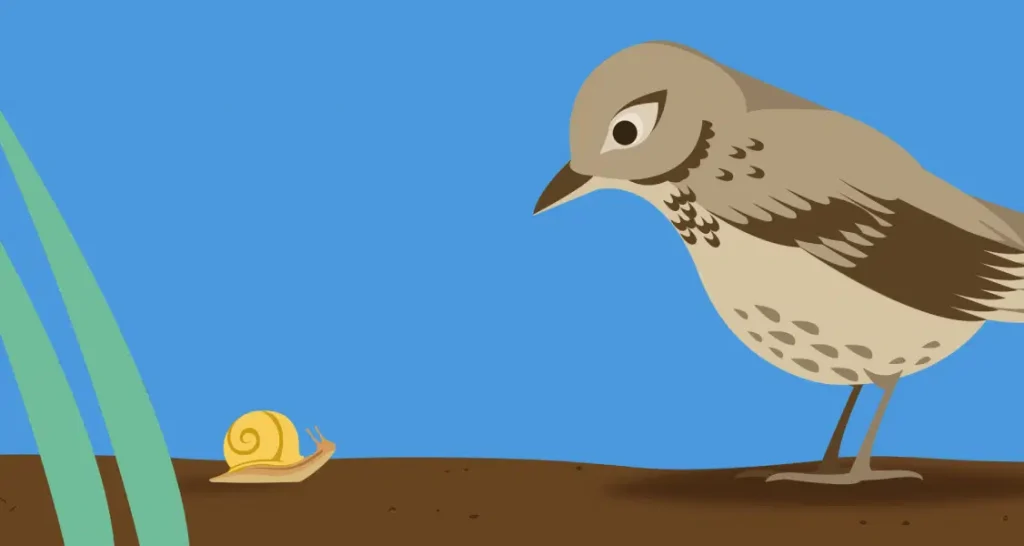
3
Environments and Survival
In their role as biomimicry engineers, students work to figure out how the traits of grove snails affect their survival in different environments. They then explore how the traits of different organisms make them more likely or less likely to survive, collecting and interpreting data to understand how organisms’ traits affect their survival in different environments. Students then apply their understanding to a new challenge: designing effective solutions for the removal of invasive plants.

4
Weather and Climate
In their role as meteorologists, students gather evidence to decide where to build an orangutan reserve by analyzing patterns in weather data. After choosing the strongest evidence, students use data to make arguments about which of three fictional islands has weather most like that of orangutans’ existing habitats, Borneo and Sumatra. They then discern patterns in the locations of natural hazards in order to figure out which ones the Wildlife Protection Organization must prepare for.

1
Energy Conversions
Students take on the role of systems engineers for Ergstown, a fictional town that experiences frequent blackouts, and explore reasons why an electrical system can fail. Students apply what they learned as they choose new energy sources and energy converters for the town, then write arguments for why their design choices will make the town’s electrical system more reliable.

2
Inheritance and Traits
As conservation biologists, students work to figure out why a population of Tokay geckos has decreased since the installation of new highway lights in the rainforest. Students use their understanding of vision, light, and information processing to figure out why an increase in light in the geckos’ habitat is affecting the population.

3
Environments and Survival
Playing the role of geologists, students help the director of Desert Rocks National Park explain how and when a particular fossil formed and how it came to be in its current location. Students figure out what the environment of the park was like in the past and why it has so many visible rock layers.

4
Weather and Climate
In their role as marine scientists, students work to figure out how mother dolphins communicate with their calves. They write a series of scientific explanations with diagrams to demonstrate their growing understanding of how sound waves travel. Then they apply what they’ve learned about waves, energy, and patterns in communication to figure out how to create patterns that can communicate information over distances.

1
Patterns of Earth and Sky
Playing the role of astronomers, students help a team of archaeologists figure out what the missing piece of a recently discovered artifact might have depicted. As they learn about the sun and other stars and the movement of Earth, students can explain what is shown on the artifact and what might be on the missing piece.

2
Modeling Matter
In their role as food scientists at a fictional company, students are introduced to the idea that all matter is made of particles too small to see, and that each different substance is made of particles (molecules) that are unique. They are then challenged to solve two problems: one requires them to separate a mixture, and the other requires them to make unmixable substances mix. Students are challenged to use the particulate model of matter to explain their work to the CEO of the company.

3
The Earth System
The cities of East Ferris and West Ferris are located on different sides of a mountain on the fictional Ferris Island. East Ferris is having a water shortage while West Ferris is not. As water resource engineers, students learn about the Earth system to help figure out what is causing the water shortage problem and design possible solutions, including freshwater collection systems and proposals for using chemical reactions to treat wastewater.
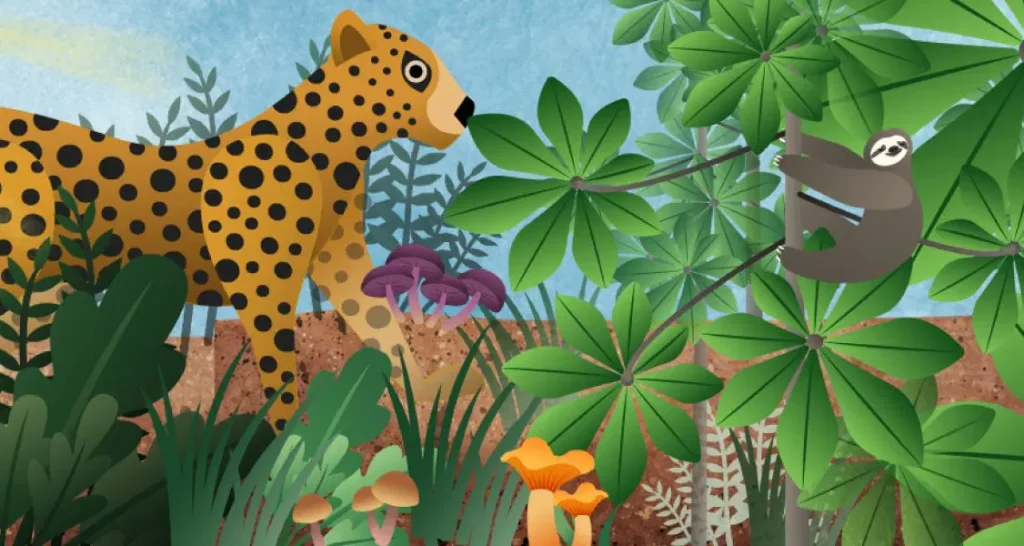
4
Ecosystem Restoration
As ecologists, students work to figure out why the organisms in a part of a Costa Rican rainforest ecosystem aren’t growing and thriving. As they solve this problem, students learn more generally how organisms in an ecosystem get the matter and energy they need to survive, and then write a series of restoration plans that include arguments about why the rainforest ecosystem is not thriving and recommend actions to restore its health.
Print & digital components
Amplify Science California includes instructional guidance and student materials in English and Spanish for a year of instruction, with lessons and activities that keep students engaged every day.
Component
FORMAT
NEW! Classroom Slides
Meet your new hands-free TG! These lesson-specific PowerPoints make delivering daily instruction a snap with embedded links to related resources and suggested teacher talk in the Notes section of each slide.
Digital

Teacher’s Reference Guide
Available digitally and in print, this unit-specific reference guide includes scientific background knowledge, planning information and resources, color-coded 3-D Statements, detailed lesson plans, and tips for delivering instruction and differentiating learning.
Print and digital

Hands-on materials kits
Each unit-specific kit contains consumable and nonconsumable materials for use during hands-on investigations. In each kit you will find:
- Hands-on materials
- 18 copies of each of the Student Books
- Big books (grades K–1)
- Classroom display materials
- One Student Investigation Notebook
Kit
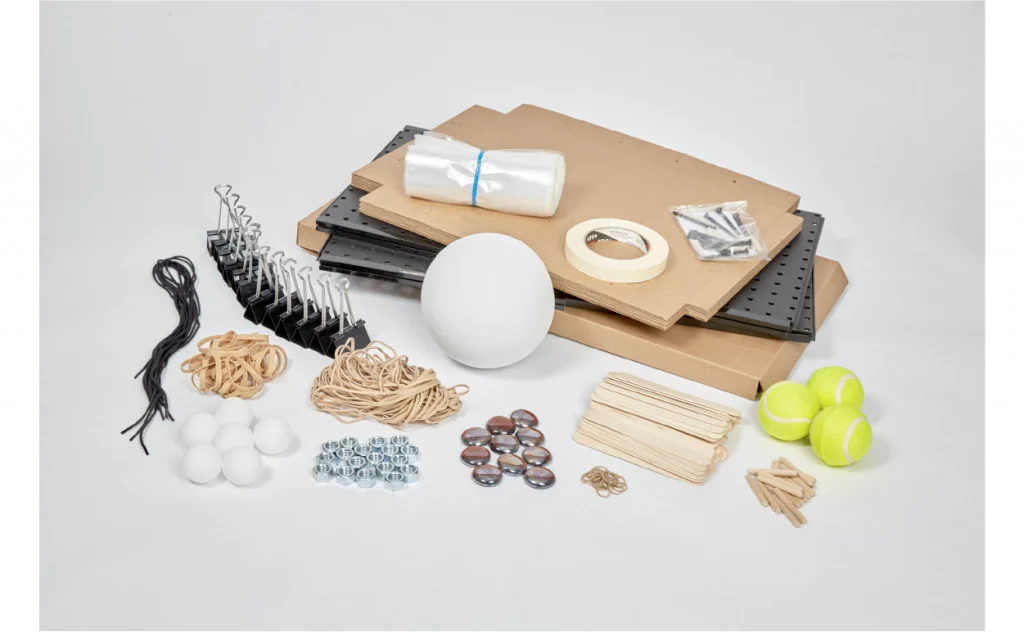
NGSS Benchmark Assessments
Delivered four times per year in grades 3–5 and three times per year in grades 6–8, our benchmark assessments report on students’ facility with each of the grade-level appropriate DCIs, SEPs, CCCs, and performance expectations of the California NGSS.
And now, Amplify Science California users can choose to administer the NGSS Benchmark Assessments (grades 3–8) through their Illuminate assessment platform.
*Also available in Spanish
Digital

Component
FORMAT
Student Investigation Notebooks
Available for every unit, the Student Investigation Notebooks contain instructions for activities and space for students to record data, reflect on ideas from texts and investigations, and construct explanations and arguments.
*Also available in Spanish
Print and digital

Big books (grades K–1)
Amplify Science California never asks our youngest readers to read alone. Rather, we provide scaffolded literacy experiences every step of the way. With our large-format big books, introducing and revisiting concepts though read-aloud and shared reading experiences is a breeze.
*Also available in Spanish

Simulations and practice tools (grades 2+)
Developed exclusively for the Amplify Science California program, these serve as venues for exploration and data collection, allowing students to explore scientific concepts that might otherwise be invisible or impossible to see with the naked eye.
*Spanish versions coming soon
Digital

Explore more programs
Our programs are designed to support and complement one another. Learn more about our related programs.
Grade K
Unit 1: Count Sequence and Numbers to 5
Module 1: Represent Numbers to 5 with Objects
| Lesson 1: Represent 1 and 2 | Connecting Cubes |
| Lesson 2: Represent 3 and 4 | Skye’s Style Matching Groups Designing Shoes With Skye |
Unit 2: Count Sequence and Numbers to 10
Module 7: Represent Numbers 6 to 10 with Objects
| Module Opener | Investigate: Cafeteria Math Fingers as Math Tools |
| Lesson 2: Represent 8 and 9 | Moving and Grooving |
Module 10: Compare Numbers to 10
| Lesson 4: Compare Groups Within 10 by Counting | More, Fewer, or the Same Fingers and Counters |
| Lesson 5: Compare Groups Within 10 by Matching | Comparing Words Forest Friends |
Module 11: Add To and Take From Within 10
| Module Opener | Investigate How Many Objects? |
Module 12: Put Together and Take Apart Within 10
| Lesson 3: Solve Put Together Problems Within 10 | How Many Objects in Pictures? How Will You Count? What Does It Mean to Add? |
| Lesson 4: Solve Take Apart Problems Within 10 | What Does It Mean to Subtract? |
| Lesson 5: Solve Word Problems Within 10 | The Bus Depot |
Module 13: Ways to Make Numbers to 10
| Lesson 4: Ways to Make 10 | Harry’s Hamster Wheel Harry Explores Space |
| Lesson 5: Make 10 From a Given Number | Showing What We Know About 10 |
| Lesson 1: Ways to Make 6 and 7 | Harry Explores the Ocean |
Unit 3: Geometry
Module 14: Analyze and Compare Three-Dimensional Shapes
| Module Opener | What’s That Shape? |
| Lesson 5: Build Shapes | Building Solid Shapes |
Module 15: Describe Position of Objects
| Module Opener | Putting Solid Shapes Together |
Module 16: Analyze and Compare Two-Dimensional Shapes
| Lesson 7: Compare Two-Dimensional and Three-Dimensional Shapes | So Much Sorting What’s That Shape Called? Another Shape |
Unit 4: Number and Operations in Base Ten
Module 17: Place Value Foundations-Represent Numbers to 20
| Lesson 3: Compose Ten Ones and Some More Ones to 19 | Investigate: Packing Snacks |
| Lesson 4: Represent Numbers to 20 | Getting Ready for the Game How Many on the Field? Pass, Shoot, Score |
Module 18: Place Value Foundations-Represent Number to 20 with a Written Numeral
| Lesson 1: Count and Write 11 to 14 | Jersey Jam! |
| Lesson 3: Count and Write 16-19 | People at the Park |
Grade 1
Unit 1: Ways to Add and Subtract
Module 2: Subtraction Strategies
| Lesson 2.1: Represent Subtraction | Packing a Picnic |
| Lesson 2.2: Count Back | What’s the Difference? |
| Lesson 2.3: Count on to Subtract | Leaping Lily Pads! |
Module 3: Properties of Operations
| Lesson 3.6: Determin Equatl and Not Equal | Replanting Huli |
Module 4: Apply Addition and Subtraction Relationships
| Lesson 4.2: Represent Related Facts | Same Number, Different Ways |
| Lesson 4.3: Identify Related Facts | Kitten Coaster |
| Lesson 4.6: Solve for Unknow Addend | Tutu’s Garden in Maui |
Module 5: Understand Add to and Take From Problems
| Lesson 5.4: Solve Add To and Take From Problems | A Community Working Together Helping Others Making 10 |
Module 6: Understand Put Together and Take Apart Problems
| Lesson 6.3: Represent Addend and Unknown Problems with Objects and Drawing | Investigate: Let’s Grow! |
Module 8: Data
| Lesson: 8.2 Represent Data with Picture Graphs | Shapes Ying Saw |
Unit 3: Numbers to 120
Module 10: Count and Represent Numbers
| Lesson 10.4: Decompose Numbers in Different Ways | Investigate: Game Points |
| Lesson 10.5: Represent, Read, and Write Numbers from 100 to 110 | From Head to Claw From Wing Tip to Wing Tip Measuring More Wingspans |
| Lesson 10.5: Represent, Read, and Write Numbers from 110 to 120 | From Head to Claw From Wing Tip to Wing Tip Measuring More Wingspans |
Unit 4: Addition and Subtractoin in Base Ten
Module 12: Understand Addition and Subtraction with Tens and Ones
| Lesson 12.1: Representing Adding Tens | Meeting Yara It’s a Match From Park to Table |
| Lesson 12.3: Add and Subtract Tens | How Many Cubes? Boris’s Thimbles How Many Tens? |
Module 13: Two-Digita Addition and Subtraction
| Lesson 13.1: Use Hundred Charts to Show Two-Digit Addtion and Subtraction. | Investigate: Squashes at the Playground |
| Lesson 13.2: Understand and Explain Place Value Addition | Town Helpers Making Squash Butter |
Unit 6: Measurment
Module 16: Fraction Foundations
| Lesson 16.1: TAke Apart Two-Dimensional Shapes | Fair and Square |
| Lesson 16.2: Identify Equal or Unequal Parts | One of the Parts, All of the Parts |
| Lesson 16.4: Partition Shapes into Fourths | A Bigger Part |
Grade 2
Unit 1: Numbers and Data
Module 1: Fluency for Addition and Subtraction Within 20
| Lesson 1.5: Use the Make a Ten Strategy to Add | Exploring Within 10 Ways to Make 10 |
Module 1: Fluency for Addition and Subtraction Within 21
| Lesson 1.6: Use a Tens Fact to Subtract | Exploring Within 10 Ways to Make 10 |
Module 2: Equal Groups
| Lesson 2.1: Identify Even and Odd Numbers | Can You Share? Is It Even or Odd? |
| Lesson 2.2: Write Equations to Represent Even Numbers | Everybody, Find A Partner! |
Module 3: Data
| Lesson 3.5: Draw bar graphs to Represent Data | Awesome Aquariums |
Unit 2: Place Value
Module 4: Understand Place Value
| Lesson 4.1: Group Tens as Hundreds | What Makes a Hundred? |
| Lesson 4.2: Understand Three-Digit Numbers | What’s the Value? |
| Lesson 4.4: Represent Numbers with Hundreds, Tens, and Ones | Mail Call! What’s Your Name? |
Module 5: Read, Write, and Show Numbers to 1000
| Lesson 5.3: Different Ways to Write Numbers | A New Representation |
| Lesson 5.4: Different Ways to Show Numbers | All the Ways! |
Module 6: Use Place Value
| Lesson 6.1: Count Within 1000 | Investigate Turtle Hurdle |
| Lesson 6.5: Use Symbols to Compare Numbers | Time to Line Up! |
Unit 3: Money and Time
Module 7: Coins
| Lesson 7.1: Relate Place Value to Coins | Investigate |
| Lesson 7.2 Identify and Find Value of Coins | Discovering Coins (Part 1) |
| Lesson 7.3: Compute the Value of Coin Combinations | How Much Money? |
| Lesson 7.4: Show Amounts in Different Ways | Discovering Coins (Part 2) The Toy Stand |
Module 8: Dollar Amounts
| Lesson 8.3: Solve Problems Involving Money | The Craft Stand at the Block Party |
Unit 5: Three-Digita Addition and Subtraction
Module 16: Three-Digit Addition
| Lesson 16.1: Use Drawing to Represent Three-Digit Addition | There’s Something About Berries |
| Lesson 16.2: Decomposte Three-Digit Addends | Baking With Skunk |
Unit 6: Measurement
Module 18: Lengths in Inches, Feet, and Yards
| Lesson 18.4: Make Line Ploits to Show Measurement Data | Messy Measurements Bracelets and Wristbands |
Module 20: Relate Addition and Subtraction to Length
| Lesson 20.1: Relate Inches to a Number Line | Investigate Time to Line Up! What’s That Number? |
| Lesson 20.2: Add and Subtract Lengths in Inches | Lengths of Jungle Animals |
| Lesson 20.3: Relate Centimeters to a Number Line | Investigate Time to Line Up! In Full Bloom |
Unit 7: Geometry and Fractions
Module 21: Two- and Three- Dimensional Shapes
| Lesson 21.2 Identify and Draw Three-Dimensional Shapes | More to Measure |
| Lesson 21.2: Identify and Draw Two-Dimensional Shapes | Frame It! Measure It, Draw It |
Grade 3
Unit 1: Understand Multiplication and Area
Module 1: Understand Multiplication
| Lesson 1.1: Count Equal Groups | Equal Groups |
| Lesson 1.3: Represent Multiplication with Arrays | Arrays of Flavor |
| Lesson 1.4: Understand the Commutative Property of Multiplication | Arrays of Flavor |
Module 2: Relate Multiplication and Area
| Lesson 2.1 Understand Area by Counting Unit Square | Investigate: Comparing Rugs Which Covers More Space? |
| Lesson 2.2: Measuring Area by Counting Unit Squares | Tiling Figures Area Hunt |
| Lesson 2.3: Relate Area to Addition and Multiplication | Rectangles and Arrays |
Unit 2: Multiplication and Division
Module 7: Relate Multiplication and Division
| Lesson 7.7: Build Fluency with Multiplication and Division | Relating Quotients to Familiar Products |
Module 8: Apply Multiplication and Division
| Lesson 8.3: Use Multiplication and Division to Solve Problem Situations | It’s Chili in Here! |
| Lesson 8.4: Solve Two-Step Problems | Division and Multiplication Equations |
Unit 3: Addition and Subtraction Strategies
Module 9: Addition and Subtraction Strategies
| Lesson 9.3: Use Properties to Add | How Would You Solve It? |
| Lesson 9.4: Use Mental Math to Assess Reasonableness | Adding Strategically |
Module 10: Addition and Subtraction Within 1000
| Lesson 10.1: Use Expanded Form to Add | What Is an Algorithm? |
| Lesson 10.2: Use Place Value to Add | Adding Your Way Using Fewer Digits |
| Lesson 10.5: Choose a Strategy to Add or Subtract | Determining Sums of 2 or More Addends |
Unit 4: Fractions
Module 13: Understand Fractions as Numbers
| Lesson 13.4: Represent and Name Fractions on a Number Line | Fractions on the Number Line |
| Lesson 13.5: Express Whole Numbers as Fractions | Cat Crossing |
| Lesson 13.6: Represent and Name Fractions Greater Than 1 | Location, Location, Location |
Unit 5: Measurement and Data
Module 18: Represent and Interpret Data
| Lesson 18.4: Make a Bar Graph | Puppy Pile 2, 5, or 10? Egg-cellent Pick |
| Lesson 18.5: Use Line Plots to Display Measurement Data | How Long Is It? More Precise Measurements Same Lengths, Different Names |
| Lesson 18.6: Make Line Plots to Display Measurement Data | The Plot Chickens Let’s Make a Line Plot |
Unit 6: Geometry
Module 19: Define Two-Dimensional Shapes
| Lesson 19.1: Describe Shapes | Piho’s Shapes |
| Lesson 19.4: Define Quadrilaterals | Rectangles, Squares, and Rhombuses |
Module 20: Categorize Two-Dimensional Shapes
| Lesson 20.1: Draw Quadrilaterals | More Quadrilaterals |
Grade 4
Unit 1: Place Value and Whole Number Operations
Module 3: Interpret and Solve Problem Situations
| Lesson 3.1: Explore Multiplicative Comparisons | Sticker Mania |
| Lesson 3.4: Use Comparison to Solve Problem Situations | Representing “Times as Many” Going Swimming |
Unit 2: Multiplication and Division Problems
Module 4: Mental Math and Estimation Strategies
| Lesson 4.3: Estimate Products by 1-Digit Numbers | A Reasonable Answer |
Module 5: Multiply by 1-Digit Numbers
| Lesson 5.1: Represent Multiplication | Investigate: Packing Lei |
| Lesson 5.2: Use Area Models and the Distributive Property to Multiply | Counting Flowers for Lei |
| Lesson 5.4: Multiplying Using Partial Products | Three of a Kind |
| Lesson 5.6: Multiplying 3-Digit and 4-Digit Numbers | A Lei Making Workshop |
Unit 3: Extend and Apply Multiplication
Module 8: Extend and Apply Multiplication
| Lesson 8.1: Multiply with Tens | Growing Flowers for the Lei |
| Lesson 8.3: Relate Area Model and Partial Products | Double Decomposition |
| Lesson 8.4: Multiplying Using Partial Products | Revisiting Strategies |
| Lesson 8.7: Solve Multi-step Problems and Assess Reasonableness | How Many Supplies? |
Unit 4: Fractions and Decimals
Module 10: Algebraic Thinking and Number Theory
| Lesson 10.1: Investigate Factors | Hamster Homes |
| Lesson 10.2: Identify Factors | Factor or Multiple? |
| Lesson 10.4: Identify Prime and Composite Numbers | A Number Game |
| Lesson 10.5 Generate and Analyze Number Patterns | How Does It Grow? |
Module 11: Fraction Equivalence and Comparison
| Lesson 11.1: Compare Fractions Using Viaula Models | Investigate: Building Your Own Number Line |
| Lesson 11.2: Compare Fractions Using Benchmarks | Fraction Strips |
| Lesson 11.6: Compare Fractions Using Common Denominators | Chop It |
| Lesson 11.7: Use Comparison to Order Fractions | All Kinds of Fractions |
Module 12: Relate Fractions and Decimals
| Lesson 12.1: Represent Tenths as Fractions and Decimals | A New Way to Write Tenths |
| Lesson 12.2 Represent Hundredths as Fractions and Decimals | A New Way to Write Hundredths |
| Lesson 12.3: Identify Equivalent Fractions and Decimals | Are They Equivalent? |
| Lesson 12.4: Compare Decimals | How Can You Compare? Robot Factory What’s the Order |
Module 13: Use Fractions to Understand Angles
| Lesson 13.2: Explore Angles | Angle Adventures |
| Lesson 13.3: Relate Angles to Fraction Part of a Circle | The Spin on Angles |
| Lesson 13.6: Join and Separate Angles | Angles in Motion |
Module 14: Understand Addition and Subtraction of Fractions with Like Denominators
| Lesson 14.2: Joining Parts of the Same Whole | Pizza Problems |
Module 15: Add and Subtract Fractions and Mixed Numbers with Like Denominators
| Lesson 15.1: Add and Subtract Fractions to Solve Problems | Math Pizzeria |
Unit 6: Two-Dimensional Figures and Symmetry
Module 18: Symmetry and Patterns
| Lesson 18.3: Generate and Identify Shape Patters | How Does It Grow? |
Grade 5
Unit 1: Whole Numbers, Expressions, and Volume
Module 1: Whole Number Place Value and Multiplication
| Lesson 1.3: Use a Pattern to Multiply by Multiplies of 10, 100, and 1000 | Partial Products Everywhere Monarch Butterflies All About That Base |
| Lesson 1.5: Multiply Multi-Digit Numbers | How Do They Compare? |
Module 2: Understand Division of Whole Numbers
| Lesson 2.4: Use Partial Quotients | Emptying the Water Tank |
Module 5: Volume
| Lesson 5.2: Understand Volume | Which is Largest |
| Lesson 5.3: Estimate Volume | Packing the Barge |
| Lesson 5.6: Find Volume of Composed Figures | Putting it Together Figures Made of Prisms |
Unit 3: Multiplying Fractions and Mixed Numbers
Module 8: Understand Multiplication of Fractions
| Lesson 8.1: Explore Groups of Equal Shares to Show Multiplication | Investigate: Sharing Sandwiches Investigate: Folding Paper |
| Lesson 8.2: Represent Multiplication of Whole Numbers by Fractions | Sharing More Sandwiches |
| Lesson 8.3: Represent Multiplication with Unit Fraction | One Part of One Part |
| Lesson 8.4: Represent Multiplication of Fractions | Dance Breaks Parts of Parts Making Food |
| Lesson 8.5: Use Representations of Area to Develop Procedures | One Part of One Part Installing Turf Rows and Columns |
| Lesson 8.6: Interpret Fraction Multiplication as Scaling | Chores at Animal Haven The Re-size-inator |
| Lesson 8.7: Multiplying Fractions | Messy Multiplication |
Module 9: Understand and Apply Multiplication of Mixed Numbers
| Lesson 9.3: Practice Multiplication with Fractions and Mixed Numbers | Messy Multiplication Applying Fraction Multiplication |
Unit 4: Divide Fractions and Convert Customary Units
Module 10: Understand Division with Whole Numbers and Unit Fractions
| Lesson 10.1: Interpret a Fraction as Division | Division Story Problems Making Generalizations |
Unit 5: Add and Subtract Decimals
Module 13: Decimal Place Value
| Lesson 13.1: Understand Thousandths | What Is One Thousandth? |
| Lesson 13.2: Read and Write Decimals to Thousandths | Say What? |
| Lesson 13.3: Round Decimals | Which Way Down the Mountain? Rounding Races |
| Lesson 13.4: Compare and Order Decimals | Investigate: Numbers Between Numbers The Claw Selling Collectibles |
Unit 6: Multiply Decimals
Module 15: Multiply Decimals and Whole Numbers
| Lesson 15.1: Understand Decimal Multiplication Patterns | Place Value Patterns Powers of 10 Parade |
Unit 7: Divide Decimals and Convert Customary Units
Module 17: Understand Decimal Division Patterns
| Lesson 17.1: Understand Decimal Division Patterns | Powers of 10 Parade |
Unit 8: Graphs, Patterns, and Geometry
Module 19: Graphs and Patterns
| Lesson 19.1: Describe a Coordinate System | Creating a Coordinate System |
| Lesson 19.2: Understand Ordered Pairs | Bullseye! |
| Lesson19.4: Generate and Identify Numerical Patterms | Coordinating Satellite Repairs |
Grade 6
Unit 1: Number Systems and Operations
Module 1: Integer Concepts
| Lesson 1: Identify and Interpret Integers | Can You Dig It? |
| Lesson 2: Compare and Order Integers on a Number Line | Order in the Class |
Module 3: Fraction Division
| Lesson 1: Understand Fraction Division | Flour Planner Fill the Gap |
Module 4: Fluency with Multi-Digit Decimal Operations
| Lesson 1: Add and Subtract Multi-Digit Decimals | Dishing Out Decimals Decimal Diagrams and Algorithms |
| Lesson 4: Divide Multi-Digit Decimals | Movie Time |
Unit 2: Ratio and Rate Reasoning
Module 5: Ratio and Rates
| Lesson 1: Understand the Concept and Language of Ratios | Pizza Maker |
| Lesson 2: Represent Ratios and Rates with Tables and Graphs | Fruit Lab Disaster Preparation |
| Lesson 3: Compare Ratios and Rates | Model Trains |
| Lesson 4: Find and Apply Unit Rates | World Records |
| Lesson 5: Solve Ratio and Rate Problems Using Proportional Reasoning | Welcome to the Robot Factory More Soft Serve |
Module 6: Apply Ratios and Rates to Measurement
| Lesson 2: Use Rate Reasoning to Convert withing Measurement Systems | Soft Serve Many Measurements |
Module 7: Understand, Express, and Compare Percent Ratios
| Lesson 1: Understand, Express, and Compare Percent Ratios | Lucky Duckies |
Unit 3: Expressions, Equations, and Inequalities
Module 8: Numerical and Algebraic Expressions
Module 9: Solve Problems Using Equations and Inequalities
| Lesson 1: Write Equations to Represent Situations | Weight for It Five Equations |
| Lesson 2: USe Additions and Subtraction Equations to Solve Problems | Hanging Around Hanging It Up |
| Lesson 3: Use Multiplication and Division Equations to Solve Problems | Hanging Around Hanging It Up |
| Lesson 4: Use One-Step Equations to Solve a Variety of Problems | Swap and Solve |
| Lesson 5: Write and Graph Inequalities | Tunnel Travels |
Module 10: Real-World Relationships Between Variables
| Lesson 1: Represent Equations in Tables and Graphs | Subway Fares |
| Lesson 2: Write Equations from Verbal Descriptions | Subway Fares |
Unit 4: Relationships in Geometry
Module 11: Polygons on the Coordinate Plane
| Lesson 4: Find the Perimeter and Area on the Coordinate Plane | Shapes on a Plane |
Module 12: Area of Triangles and Special Quadrilaterals
| Lesson 1: Develop and Use the Formula for Area of Parallelograms | Exploring Parallelograms, Part 1 Exploring Parallelograms, Part 2 Off the Grid, Part 1 |
| Lesson 2: Develop and Use the Formula for Area of Triangles | Exploring Triangles Triangles and Parallelograms Off the Grid, Part 2 |
| Lesson 3: Develop and Use the Formula for Area of Trapezoids | Pile of Polygons |
| Lesson 4: Find Area of Composite Figures | Puzzling Areas Letters |
Module 13: Surface Area and Volume
| Lesson 1: Explore Nets and Surface Area | Renata’s Stickers |
Unit 5: Data Collection and Analysis
Module 14: Data Collection and Displays
| Lesson 2: Display Data in Dot Plots | Minimum Wage |
| Lesson 3: Make Histograms and Frequency Tables | The Plot Thickens |
Module 15: Measure of Center
Grade 7
Unit 1: Proportional Relationships
Module 1: Identify and Represent Proportional Relationships
| Lesson 1: Explore Relationships | Paint |
| Lesson 2: Recognize Proportional Relationships in Tables | Two and Two |
| Lesson 3: Compute Unit Rates Involving Fractions | DinoPops |
| Lesson 4: Recognize Proportional Relationships in Graphs | Scale Factor Challenges |
| Lesson 5: Use Proportional Relationships to Solve Rate Problems | Scaling Robots |
| Lesson 6: Practice Proportional Reasoning with Scale Drawings | Scaling Machines Make it Scale Tiles Will It Fit |
Module 2: Proportional Reasoning with Percents
| Lesson 1: Percent Change | Mosaics Percent Machines |
| Lesson 2: Markups and Discounts | More and Less All the Equations |
| Lesson 3: Taxes and Gratuities | 100% |
| Lesson 5: Simple Interest | Back in My Day |
Unit 2: Rational Number Operations
Module 3: Understand Addition and Subtraction of Rational Numbers
| Lesson 1: Add or Subtract a Positive Integer on a Number line | Floats and Anchors |
| Lesson 3: Use a Number Line to Add and Subtract Rational Numbers | Draw Your Own |
Module 4: Add and Subtract Rational Numbers
| Lesson 1: Compute Sums of Integers | More Floats and Anchors |
| Lesson 2: Compute Differences of Integers | More Floats and Anchors |
| Lesson 4: Apply Properties to Multi-step Addition and Subtraction Problems | Integer Puzzles |
Unit 3: Model with Expressions, Equations, and Inequalities
Module 7: Solve Problems Using Expressions and Equations
| Lesson 1: Write Linear Expressions in Different Forms for Different Situations | Collect the Squares |
| Lesson 3: Write Two-Step Equations for Situations | Keeping it True |
| Lesson 5: Apply Two-Step Equations fo Find Angle Measures | Friendly Angles Missing Measures |
Module 8: Solve Problems Using Inequalities
| Lesson 1: Understand and Apply Properties to Solve One-Step Inequalities | I Saw the Signs |
| Lesson 2: Write Two-Step Inequalities for Situations | Unbalanced Hangers Shira the Sheep |
| Lesson 3: Apply Two-Step Inequalities to Solve Problems | Budgeting Write Them and Solve Them |
Unit 4: Geometry
Module 9: Draw and Analyze Two-Dimensional Figures
| Lesson 2: Draw Circles and Other Figures | Can You Build It |
Module 10: Analyze Figures to Find Circumference and Area
| Lesson 1: Derive and Apply Formulas for Circumference | Measuring Around |
| Lesson 2: Derive and Apply a Formula for the Area of a Circle | Why Pi? |
| Lesson 4: Areas of Composite Figures | Area Challenges |
Unit 5: Sampling and Data Analysis
Module 13: Use Statistics and Graphs to Compare Data
| Lesson 3: Compare Means Using MAD and Repeated Sampling | Crab Island |
Module 14: Understand and Apply Experimental Probability
| Lesson 1: Understand Probability of an Event | How Likely |
| Lesson 2: Find Experimental Probability of Simple Events | Prob-bear-bilities |
Module 15: Find Theoretical Probability of Simple Events
| Lesson 1: Find Theoretical Probability of Simple Events | Is It Fair? |
Grade 8
Unit 1: Transformational Geometry
Module 1: Transformations and Congruence
| Lesson 1: Investigate Transformations | Transformers Spinning, Flipping, Sliding |
| Lesson 2: Explore Translations | Transformation Golf Moving Day Getting Coordinated, Part 1 Getting Coordinated, Part 2 |
| Lesson 3: Explore Reflections | Transformation Golf Moving Day Getting Coordinated, Part 1 Getting Coordinated, Part 2 |
| Lesson 4: Explore Rotations | Transformation Golf Moving Day Getting Coordinated, Part 1 Getting Coordinated, Part 2 |
| Lesson 5: Understand and Recognize Congruent Figures | Tessellate |
Module 2: Transformations and Similarity
| Lesson 1: Investigate Reductions and Enlargements | Sketchy Dilations |
| Lesson 2: Explore Dilations | Dilation Mini Golf |
| Lesson 3: Understand and Recognize Similar Figures | Social Scavenger Hunt |
Unit 2: Linear Equations and Applications
Module 3: Solve Linear Equations
| Lesson 1: Solve Multi-Step Linear Equations | Equation Roundtable |
| Lesson 3: Apply Linear Equations |
Module 4: Angle Relationships
| Lesson 1: Develop Angle Relationships for Triangles | Puzzling It Out |
| Lesson 3: Explore Prarallel Lines Cut by a Transversal | Puzzling It Out |
Unit 3: Relationships and Functions
Module 5: Proportional Relationships
| Lesson 2: Derive y = mx | Turtle Time Trials |
|---|---|
| Lesson 3: Interpret and Graph Proportional Relationships | Turtle Time Trials |
| Lesson 4: Compare Proportional Relationships | Turtle Time Trials |
Module 6: Understand and Analyze Functions
| Lesson 1: Understand and Graph Functions | Guess My Rule |
| Lesson 2: Derive and Interpret y = mx + b | Flags Translations |
| Lesson 3: Interpret Rat of Change and Initial Value | Stacking Cups (Optional) |
| Lesson 4: Construct Functions | Water Cooler |
| Lesson 5: Compare Functions | Ups and Downs |
| Lesson 6: Describe and Sketch Nonlinear Functions | Turtle Crossing The Tortoise and the Hare |
Module 7: Systems of Linear Equations
| Lesson 1: Represent Systems by Graphing | Make Them Balance |
| Lesson 2: Solve Systems by Graphing | Line Zapper |
Unit 4: Statistics and Probability
Module 8: Scatter Plots
| Lesson 1: Construct Scatter Plots and Examine Association | Robots Dapper Cats |
| Lesson 2: Draw and Analyze Trend Lines | Interpreting Scatter Plots Find the Fit (called Fit Fights in Desmos Math) |
| Lesson 3: Interpret Linear Data in Context | Interpreting Slopes Scatter Plot City Animal Brains |
Module 9: Two-Way Tables
| Lesson 1: Construct and Interpret Two-Way Frequency Tables | Finding Associations |
| Lesson 3: Interpret Two-Way Relative Freqency Tables | Finding Associations |
Unit 5: Real Numbers and the Pythagorean Theorem
Module 10: Real Numbers
| Lesson 2: Investigate Roots | Root Down |
Module 11: The Pythagorean Theorem
| Lesson 1: Prove the Pythagorean Theorem | Triangle Tracing Turtle |
| Lesson 3: Apply the Pythagorean Theorem | Taco Truck |
Unit 6: Exponents, Scientific Notation, and Volume
Module 12: Exponents and Scientific Notation
| Lesson 1: Know and Apply Properties of Exponents | Circles Power Pairs |
| Lesson 2: Understand Scientific Notation | Specific and Scientific (formerly Solar System) |
| Lesson 3: Compute with Scientific Notation | Balance the Scale |
Module 13: Volume
Algebra 1
Intro/Launch
| Launch | Visual Patterns |
Unit 1: Real Numbers and Connections to Algebra
Module 2: Linear Equations and Inequalities in One Variable
| Lesson 2.2: Write and Solve Equations | Working Backwards Solving Strategies Same Position |
| Lesson 2.3: Rewrite Formulas and Solve Literal Equations | Various Variables |
| Lesson 2.4: Write and Solve Inequalities | Pizza Delivery |
Unit 2: Linear Functions and Equations
Module 3: Linear Equations in Two Variables
| Lesson 3.1: Linear Equations in Standard Form | Shelley the Snail Five Representations |
| Lesson 3.2: Slopes of Lines and Rates of Change | Plane, Train, and Automobile |
Module 4: Linear Functions and Models
| Lesson 4.3: Characteristics of Linear Functions | Craft-a-Graph |
Module 5: Relationships Among Linear Functions
| Lesson 5.3: Compare Linear Functions | Subway Seats |
| Lesson 5.4: Inverses of Linear Functions | Chip the Robot |
Unit 3: Build Linear Functions and Models
Module 6: Fit Linear Functions to Data
| Lesson 6.1: Scatter Plots, Correlation, and Fitted Lines | Correlation Coefficient How Hot Is It? City Slopes Behind the Headlines City Data |
| Lesson 6.2: Residualts and Best-Fit Lines | Residual Fruit Penguin Populations |
Module 7: Discrete Linear Functions
| Lesson 7.1: Arithmetic Sequences Defined Recursively | Sequence Carnival |
| Lesson 7.2: Arithmetic Sequences Defined Explicitly | More Visual Patterns |
Module 8: Piecewise-Defined Functions
Unit 4: Linear Systems
Module 9: Systems of Linear Equations
| Lesson 9.1: Solve Linear Systems by Graphing | Lizard Lines |
| Lesson 9.2: Solve Linear Systems by Substitution | Shape It Up |
Module 10: Linear Inequalities
| Lesson 10.2: Graph Systems of Linear Inequalities | Quilts Seeking Solutions |
Unit 5: Exponential Functions and Equations
Module 11: Exponential Functions and Models
| Lesson 11.1: Exponential Growth Functions | Carlos’s Fish |
Unit 6: Build Exponential Functions and Models
Module 13: Fit Exponential Functions to Data
| Lesson 13.1: Scatter Plots and Fitted Exponential Curves | Detroit’s Population, Part 1 Detroit’s Population, Part 2 |
Module 14: Discrete Exponential Functions
| Lesson 14.1: Geometric Sequences Defined Recursively | Sequence Carnival |
| Lesson 14.2: Geometric Sequences Defined Explicitly | More Visual Patterns |
Unit 8: Quadratic Functions and Equations
Module 17: Use Graphing and Factoring to Solve Quadratic Equations
| Lesson 17.1: Solve Quadratic Equations by Graphing Quadratic Functions | Revisiting Visual Patterns, Part 1 Quadratic Visual Patterns On the Fence Plenty of Parabolas |
| Lesson 17.3: Solve Quadratic Equations by Factoring ax^2+bx+c | Stomp Rockets Two for One Robot Launch |
| Lesson 17.4: Use Special Factoring Patterns to Solve Quadratic Equations | Parabola Zapper Shooting Stars |
Module 18: Use Square Roots to Solve Quadratic Equations
| Lesson 18.2: Solve Quadratic Equations by Completing the Square | Square Tactic |
| Lesson 18.3: Use the Quadratic Formula to Solve Equations | Stomp Rockets in Space |
Unit 9: Function Analysis
Module 20: Function Analysis
| Lesson 20.1: Choose Among Linear, Exponential, and Quadratic Models | Sorting Relationships |
Unit 10: Data Analysis
Module 22: Numerical Data
| Lesson 22.1: Data Distributions and Appropriate Statistics | Finding Desmo |
Disclaimer
This document is for informational purposes only; references to third-party programs do not imply endorsement or affiliation, and all trademarks are the property of their respective owners.
Grade K
Unit 1: Position, Length, Height, and Sorting
| Lesson 2: Describe and Compare Length and Height, Session 3 | Connecting Cubes |
Unit 2: Numbers to 5, Shapes and Weight
| Lesson 4: Count, Show and Write Numbers to 5, Session 2 | Skye’s Style |
| Lesson 5: Compare Numbers to 5, Session 4 | Matching Groups |
| Lesson 5: Compare Numbers to 5, Session 5 | Designing Shoes With Skye |
| Lesson 6: Three-Dimensional Shapes and Weight, Session 1 | What’s That Shape? |
| Lesson 6: Three-Dimensional Shapes and Weight, Session 2 | Building Solid Shapes |
| Lesson 6: Three-Dimensional Shapes and Weight, Session 5 | Putting Solid Shapes Together |
Unit 3: Addition and Subtractions with 5 and Shapes,
| Lesson 8: Two-Dimensional Shapes, Session 1 | So Much Sorting |
| Lesson 8: Two-Dimensional Shapes, Session 2 | What’s That Shape Called? Another Shape |
Unit 4: Numbers to 10 and Shapes
| Lesson 11: Count, Show, and Write Numbers to 10, Session 1 | Investigate: Cafeteria Math Fingers as Math Tools |
| Lesson 12: Compare Numbers to 10, Session 1 | Moving and Grooving Fingers and Counters |
| Lesson 12: Compare Numbers to 10, Session 2 | More, Fewer, or the Same Comparing Words |
| Lesson 12: Compare Numbers to 10, Session 5 | Forest Friends |
| Lesson 14: Compose and Decompose 10, Session 2 | Harry’s Hamster Wheel |
| Lesson 14: Compose and Decompose 10, Session 3 | Harry Explores Space |
| Lesson 14: Compose and Decompose 10, Session 4 | Showing What We Know About 10 |
| Lesson 14: Compose and Decompose 10, Session 5 | Harry Explores the Ocean |
Unit 6: Addition and Subtraction Within 10
| Lesson 20: Add Within 10, Session 1 | Investigate: Casey’s Town What Does It Mean to Add? |
| Lesson 20: Add Within 10, Session 2 | How Many Objects? |
| Lesson 20: Add Within 10, Session 3 | How Many Objects in Pictures? How Will You Count? |
| Lesson 21: Subtract Within 10, Session 1 | What Does It Mean to Subtract? |
| Lesson 22: Add and Subtract to Solve Wold Problems, Session 1 | The Bus Depot |
Unit 7: Teen Numbers and Shapes
| Lesson 23: Compose and Decompose Teen Numbers with Tools and Drawings, Session 2 | Investigate: Packing Snacks Getting Ready for the Game Pass, Shoot, Score |
| Lesson 23: Compose and Decompose Teen Numbers with Tools and Drawings, Session 3 | How Many on the Field? |
| Lesson 25: Compose and Decompose Teen Numbers with Symbols, Session 2 | Jersey Jam! People at the Park |
Grade 1
Unit 1: Relating Addition and Subtraction
| Lesson 2: Add and Subtract Within 10, Session 1 | What’s the Difference? Leaping Lily Pads! Investigate: Let’s Grow! |
| Lesson 2: Add and Subtract Within 10, Session 3 | Packing a Picnic |
| Lesson 5: Solve Word Problems to 10, Session 2 | Tutu’s Garden in Maui |
| Lesson 5: Solve Word Problems to 10, Session 2 | Replanting Huli |
| Lesson 5: Solve Word Problems to 10, Session 3 | The Kalo Plants |
| Lesson 5: Solve Word Problems to 10, Session 4 | A Community Working Together |
| Lesson 5: Solve Word Problems to 10, Session 5 | Helping Others |
Unit 2: Addition and Subtraction Within 20
| Lesson 6: Teen Numbers, Session 2 | Same Number, Different Ways |
| Lesson 7: Add Three Numbers, Session 2 | Making 10 Kitten Coaster |
Unit 4: Using Tens and Ones to Organize and Count
| Lesson 15: Tens and Ones, Session 1 | Investigate: Game Points |
| Lesson 15: Tens and Ones, Session 3 | Meeting Yara It’s a Match |
| Lesson 16: Numbers to 120, Session 1 | How Many Cubes? Boris’s Thimbles |
| Lesson 21: Add Two-Digit Numbers, Session 1 | How Many Tens? Investigate: Squashes at the Playground |
| Lesson 21: Add Two-Digit Numbers, Session 2 | Town Helpers |
| Lesson 21: Add Two-Digit Numbers, Session 3 | Making Squash Butter |
Unit 5: Operations with Tens and Ones
| Lesson 19: Addition with Two-Digit Numbers, Session 2 | From Park to Table |
Unit 6: Geometry and Measurement
| Lesson 22: Shapes, Session 1 | Shapes Ying Saw |
| Lesson 23: Break Shapes Into Equal Parts, Session 2 | Fair and Square One of the Parts, All of the Parts |
| Lesson 23: Break Shapes Into Equal Parts, Session 5 | A Bigger Part |
Grade 1 (ADM G2)
Unit 1: Relating Addition and Subtraction
| Lesson 1: Partner Pairs for 10, Session 3 | Ways to Make 10 |
| Lesson 2: Add and Subtract Within 10, Session 3 | Exploring Within 10 |
Grade 2
Unit 1: Numbers Within 20
| Lesson 2: Using Mental Math Strategies to Subtract, Session 1 | Awesome Aquariums |
Unit 2: Numbers Within 100
| Lesson 10: Solve Word Problems Involving Money, Session 1 | Investigate |
| Lesson 10: Solve Word Problems Involving Money, Session 2 | Discovering Coins (Part 1) The Toy Stand |
| Lesson 10: Solve Word Problems Involving Money, Session 3 | How Much Money? Discovering Coins (Part 2) |
| Lesson 10: Solve Word Problems Involving Money, Session 4 | The Craft Stand at the Block Party |
Unit 3: Numbers Within 1000
| Lesson 12: Three-Digit Numbers, Session 1 | Investigate: A Mistake in Mom’s Office What Makes a Hundred? |
| Lesson 12: Three-Digit Numbers, Session 2 | Looking for Patterns |
| Lesson 13: Read and Write Three-Digit Numbers, Session 1 | What’s the Value? |
| Lesson 13: Read and Write Three-Digit Numbers, Session 2 | Mail Call! |
| Lesson 13: Read and Write Three-Digit Numbers, Session 3 | A New Representation What’s Your Name? All the Ways! |
| Lesson 15: Mental Addition and Subtraction, Session 2 | Turtle Hurdle |
| Lesson 16: Add Three-Digit Numbers, Session 2 | There’s Something About Berries |
| Lesson 18: Using Addition and Subtraction Strategies with Three-Digit Numbers, Session 2 | Baking With Skunk |
Unit 4: Length
| Lesson 25: Solving Problems About Length, Session 2 | Lengths of Jungle Animals |
| Lesson 27: Sorting and Organizing Data, Session 1 | Messy Measurements |
| Lesson 27: Sorting and Organizing Data, Session 3 | Bracelets and Wristbands |
| Lesson 26: Add and Subtract on the Number Line, Session 1 | Investigate Time to Line Up! In Full Bloom |
| Lesson 26: Add and Subtract on the Number Line, Session 2 | What’s That Number? |
| Lesson 26: Add and Subtract on the Number Line, Session 3 | Greater Than, Less Than, or Equal to |
Unit 5: Shapes and Arrays
| Lesson 28: Recognize and Draw Shapes, Session 2 | Frame It! |
| Lesson 28: Recognize and Draw Shapes, Session 3 | Measure It, Draw It |
| Lesson 32: Even and Odd Numbers, Session 1 | Can You Share? |
| Lesson 32: Even and Odd Numbers, Session 2 | Everybody, Find A Partner! |
| Lesson 32: Even and Odd Numbers, Session 3 | Is It Even or Odd? |
Grade 2 (ADM G3)
Unit 2: Numbers Within 100
| Lesson 6: Adding Two-Digit Numbers, Session 1 | Panda Patterns |
| Lesson 12: Understand Three-Digit Numbers, Session 2 | Investigate: Creating a Photo Gallery |
| Lesson 16: Add Three-Digit Numbers, Session 2 | How Would You Solve It? Adding Your Way What Is an Algorithm? |
| Lesson 16: Add Three-Digit Numbers, Session 3 | Using Fewer Digits Determining Sums of 2 or More Addends |
| Lesson 16: Add Three-Digit Numbers, Session 3 | Adding Strategically |
Unit 4: Length
| Lesson 27: Read and Make Line Plots, Session 2 | The Plot Chickens Let’s Make a Line Plot |
Grade 3
Unit 2: Multiplication and Division
| Lesson 4: Understand the Meaning of Multiplication, Session 1 | Equal Groups |
| Lesson 6: Multiply with 3, 4, and 6, Session 2 | Rectangles and Arrays |
| Lesson 8: Use Order and Grouping to Multiply, Session 2 | Arrays of Flavor |
| Lesson 11: Understand How Multiplication and Division Are Connected, Session 1 | It’s Chili in Here! |
| Lesson 12: Multiplication and Division Facts, Session 3 | Relating Quotients to Familiar Products |
Unit 3: Multiplication
| Lesson 19: Scaled Graphs, Session 1 | Puppy Pile |
| Lesson 19: Scaled Graphs, Session 4 | 2, 5, or 10? |
| Lesson 14: Understand Area, Session 1 | Tiling Figures |
| Lesson 14: Understand Area, Session 2 | Which Covers More Space? |
| Lesson 15: Multiply to Find Area, Session 3 | Area Hunt |
| Lesson 17: Solve One-Step Word Problems Using Multiplication and Division, Session 2 | Division and Multiplication Equations |
Unit 4: Fractions
| Lesson 21: Understand Fractions on a Number Line, Session 1 | Cat Crossing |
| Lesson 21: Understand Fractions on a Number Line, Session 2 | Fractions on the Number Line |
| Lesson 21: Understand Fractions on a Number Line, Session 3 | Location, Location, Location |
Unit 6: Shapes
| Performance Task | Investigate: Comparing Rugs |
| Lesson 30: Understand Categories of Shapes, Session 1 | Piho’s Shapes |
| Lesson 31: Classify Quadrilaterals, Session 1 | Rectangles, Squares, and Rhombuses |
| Lesson 31: Classify Quadrilaterals, Session 3 | More Quadrilaterals |
Grade 4
Unit 2: Operations
| Lesson 6: Understand Multiplication as a Comparison, Session 1 | Sticker Mania |
| Lesson 6: Understand Multiplication as a Comparison, Session 2 | Representing “Times as Many” Going Swimming |
| Lesson 8: Multiples and Factors, Session 1 | Hamster Homes |
| Lesson 8: Multiples and Factors, Session 3 | Factor or Multiple? |
| Lesson 8: Multiples and Factors, Session 4 | A Number Game |
| Lesson 9: Number and Shape Patterns, Session 1 | How Does It Grow? |
Unit 3: Multi-Digit Operations and Measurement
| Lesson 11: Multiply by One-Digit Numbers, Session 1 | Investigate: Packing Lei Counting Flowers for Lei |
| Lesson 11: Multiply by One-Digit Numbers, Session 3 | A Lei Making Workshop A Reasonable Answer Three of a Kind |
| Lesson 12: Multiply by Two-Digit Numbers, Session 2 | Growing Flowers for the Lei Double Decomposition |
| Lesson 12: Multiply by Two-Digit Numbers, Session 3 | Revisiting Strategies How Many Supplies? |
Unit 4: Fractions, Decimals, and Measurement
| Lesson 17: Understand Equivalent Fractions, Session 1 | Investigate: Building Your Own Number Line Fraction Strips |
| Lesson 18: Understand Equivalent Fractions, Session 3 | Chop It All Kinds of Fractions |
| Lesson 19: Fraction Addition and Subtraction, Session 1 | Pizza Problems |
| Lesson 20: Add and Subtract Fractions, Session 4 | Math Pizzeria |
| Lesson 24: Multiply Fractions by Whole Numbers, Session 2 | Equal Groups of Fractions |
| Lesson 25: Fractions as Tenths and Hundredths, Session 3 | Investigate: Different Units |
| Lesson 26: Relate Decimals and Fractions, Session 2 | A New Way to Write Tenths A New Way to Write Hundredths |
| Lesson 26: Relate Decimals and Fractions, Session 4 | Are They Equivalent? |
| Lesson 27: Compare Decimals, Session 2 | How Can You Compare? |
| Lesson 27: Compare Decimals, Session 3 | Robot Factory |
| Lesson 27: Compare Decimals, Session 4 | What’s the Order |
Unit 5: Geometry and Measurement
| Lesson 30: Points, Lines, Rays, and Angles, Session 3 | Angle Adventures |
| Lesson 31: Angles, Session 1 | The Spin on Angles |
| Lesson 32: Add and Subtract with Angles, Session 3 | Angles in Motion |
Grade 5
Unit 1: Whole Number Operations and Applications
| Lesson 2: Find Volume Using Unit Cubes, Session 1 | Which is Largest |
| Lesson 2: Find Volume Using Unit Cubes, Session 2 | Packing the Barge |
| Lesson 3: Find Volume Using Formulas, Session 3 | Putting it Together Figures Made of Prisms |
| Lesson 4: Multiply Multi-Digit Numbers, Session 1 | Partial Products Everywhere |
| Lesson 4: Multiply Multi-Digit Numbers, Session 4 | How Do They Compare? |
| Lesson 5: Divide Multi-Digit Numbers, Session 4 | Emptying the Water Tank |
Unit 2: Decimals and Fractions
| Lesson 6: Understand Decimal Place Value, Session 1 | Investigate: Numbers Between Numbers |
| Lesson 6: Understand Decimal Place Value, Session 2 | What Is One Thousandth? |
| Lesson 8: Read and Write Decimals, Session 1 | Say What? Place Value Patterns |
| Lesson 9: Compare and Round Decimals, Session 2 | Selling Collectibles |
| Lesson 9: Compare and Round Decimals, Session 3 | The Claw Which Way Down the Mountain? |
| Lesson 9: Compare and Round Decimals, Session 4 | Rounding Races |
| Lesson 7: Understand Powers of 10, Session 1 | Monarch Butterflies All About That Base Powers of 10 Parade |
Unit 3: More Decimals & Fractions
| Lesson 18: Fractions as Division, Session 1 | Investigate: Sharing Sandwiches Division Story Problems Making Generalizations Investigate: Folding Paper |
| Lesson 18: Fractions as Division, Session 2 | Sharing More Sandwiches Dance Breaks |
| Lesson 19: Multiplication by a Fraction, Session 2 | Parts of Parts |
| Lesson 20: Multiply Fractions to Find Area, Session 2 | One Part of One Part |
| Lesson 20: Multiply Fractions to Find Area, Session 3 | Making Food |
| Lesson 22: Multiply Fractions in Word Problems, Session 3 | Installing Turf Rows and Columns |
| Lesson 22: Multiply Fractions in Word Problems, Session 4 | Messy Multiplication Applying Fraction Multiplication |
| Lesson 21: Exploring Multiplication as Scaling, Session 1 | Chores at Animal Haven The Re-size-inator |
Unit 5: Algebraic Thinking and the Coordinate Plane
| Lesson 31: Understand the Coordinate Plane, Session 1 | Bullseye! |
| Lesson 31: Understand the Coordinate Plane, Session 2 | Creating a Coordinate System Coordinating Satellite Repairs |
Grade 6
Unit 1: Expressions and Equations: Area, Algebraic Expressions, and Exponents
| iReady Classroom | Amplify Classroom |
| Lesson 1: Find the Area of a Parallelogram | Unit 1 Lesson 3: Exploring Parallelograms Exploring Parallelograms, Part 2 |
Unit 2: Decimals and Fractions: Base-Ten Operations, Division with Fractions, and Volume
| Lesson 7: Add, Subtract, and Multiply Multi-Digit Decimals | Unit 4 Lesson 1: Dishing Out Decimals |
| Lesson 8: Divide Whole Numbers and Multi-Digit Decimals | Unit 5 Lesson 13: Movie Time |
| Lesson 9: Understand Division with Fractions | Unit 4 Lesson 3: Flour Planner |
| Lesson 10: Divide Fractions | Unit 4 Lesson 6: Fill the Gap |
Unit 3: Ratio Reasoning: Ratio Concepts and Equivalent Ratios
| Lesson 12: Understand Ratio Concepts | Unit 2 Lesson 1: Pizza Maker |
| Lesson 13: Find Equivalent Ratios | Unit 2 Lesson 4: Fruit Lab Lesson 10: Disaster Preparation |
Unit 4: Ratio Reasoning: Unit Rates and Percent
| Lesson 15: Understand Rate Concepts | Unit 3 Lesson 1: Many Measurements |
| Lesson 16: Use Unit Rates to Solve Problems | Unit 3 Lesson 6: Soft Serve |
| Lesson 17: Understand Percents | Unit 3 Lesson 9: Lucky Duckies |
Unit 5: Algebraic Thinking: Equivalent Expressions and Equations with Variables
| Lesson 19: Write and Identify Equivalent Expressions | Unit 6 Lesson 8: Products and Sums Take Away (coming soon!) |
| Lesson 22: Analyze Two-Variable Relationships | Unit 6 Lesson 16: Subway Fares Take Away (coming soon!) |
Unit 6: Positive and Negative Numbers: Absolute Value, Inequalities, and the Coordinate Plane
| Lesson 23: Understand Positive and Negative Numbers | Unit 7 Lesson 1: Can You Dig It? |
| Lesson 24: Order Positive and Negative Numbers | Unit 7 Lesson 4: Order in the Class |
| Lesson 26: Write and Graph One-Variable Inequalities | Unit 7 Lesson 7: Tunnel Travels |
Unit 7: Statistical Thinking: Data Distributions and Measures of Center and Variability
| Lesson 30: Use Dot Plots and Histograms to Describe Data Distributions | Unit 8 Lesson 3: Minimum Wage Lesson 5: The Plot Thickens |
| Lesson 31: Interpret Median and Interquartile Range in Box Plots | Unit 8 Lesson 11: Toy Cars |
Grade 7
Unit 1: Proportional Relationships: Ratios, Rates, and Circles
| iReady Classroom | Amplify Classroom |
| Lesson 2: Find Unit Rates Involving Ratios and Fractions | Unit 2 Lesson 1: Paint |
| Lesson 4: Represent Proportional Relationships | Unit 2 Lesson 6: Two and Two |
| Lesson 5: Solve Proportional Relationship Problems | |
| Lesson 6: Solve Area and Circumference Problems Involving Circles | Unit 3 Lesson 3: Measuring Around Lesson 9: Area Challenges |
Unit 2: Numbers and Operations: Add and Subtract Rational Numbers
| Lesson 7: Understand Addition with Negative Numbers | Unit 5 Lesson 1: Floats and Anchors |
| Lesson 8: Add with Negative Numbers | Unit 5 Lesson 1: Floats and Anchors |
| Lesson 9: Understand Subtraction with Negative Integers | Unit 5 Lesson 1: Floats and Anchors |
| Lesson 10: Add and Subtract Positive and Negative Numbers | Unit 5 Lesson 1: Floats and Anchors |
Unit 3: Numbers and Operations: Multiply and Divide Rational Numbers
| Lesson 14: Use the Four Operations with Negative Numbers | Unit 5 Lesson 10: Integer Puzzles |
Unit 4: Algebraic Thinking: Expressions, Equations, and Inequalities
| Lesson 19: Write and Solve Inequalities | Unit 6 Lesson 16: Shira the Sheep |
Unit 5: Proportional Reasoning: Percents and Statistical Samples
| Lesson 20: Solve Problems Involving Percents | Unit 4 Lesson 5: Percent Machines Lesson 12: Posing Percent Problems (coming soon!) |
| Lesson 22: Understand Random Sampling | Unit 8 Lesson 2: Prob-bear-bilities |
| Lesson 24: Compare Populations | Unit 8 Lesson 10: Crab Island |
Unit 6: Geometry: Solids, Triangles, and Angles
| Lesson 28: Find Unknown Angle Measures | Unit 7 Lesson 2: Friendly Angles Lesson 4: Missing Measures |
Unit 7: Probability: Theoretical Probability, Experimental Probability, and Compound Events
| Lesson 30: Understand Probability | Unit 8 Lesson 1: How Likely? Lesson 2: Prob-bear-bilities |
Grade 8
Unit 1: Geometric Figures: Rigid Transformations and Congruence
| iReady Classroom | Amplify Classroom |
| Lesson 1: Understand Rigid Transformations and Their Properties | Unit 1 Lesson 1: Transformers Lesson 2: Spinning, Flipping, Sliding |
| Lesson 2: Work with Single Rigid Transformations in the Coordinate Plane | Unit 1 Lesson 4: Moving Day |
Unit 2: Geometric Figures: Transformations, Similarity, and Angle Relationships
| Lesson 4: Understand Dilations and Similarity | Unit 2 Lesson 2: Dilation Mini Golf |
| Lesson 6: Describe Angle Relationships | Unit 2 Lesson 6: Social Scavenger Hunt |
| Lesson 7: Describe Angle Relationships in Triangles | Unit 1 Lesson 12: Puzzling It Out |
Unit 3: Linear Relationships: Slope, Linear Equations, and Systems
| Lesson 8: Graph Proportional Relationships and Define Slope | Unit 3 Lesson 1: Turtle Time Trials |
| Lesson 13: Solve Systems of Linear Equations Algebraically | Unit 4 Lesson 11: Make Them Balance Lesson 12: Line Zapper |
Unit 4: Functions: Linear and Nonlinear Relationships
| Lesson 15: Understand Functions | Unit 5 Lesson 1: Turtle Crossing Lesson 2: Guess My Rule |
| Lesson 16: Use Functions to Model Linear Relationships | Unit 5 Lesson 5: The Tortoise and the Hare |
Unit 5: Integer Exponents: Properties and Scientific Notation
| Lesson 19: Apply Exponent Properties for Positive Integer Exponents | Unit 7 Lesson 1: Circles Lesson 3: Power Pairs |
| Lesson 22: Work with Scientific Notation | Unit 7 Lesson 9: Specific and Scientific Lesson 11: Balance the Scale |
Unit 6: Real Numbers: Rational Numbers, Irrational Numbers, and the Pythagorean Theorem
| Lesson 23: Find Square Roots and Cube Roots to Solve Problems | Unit 8 Lesson 4: Root Down |
| Lesson 25: Find Rational Approximations of Irrational Numbers | Unit 8 Lesson 10: Taco Truck |
| Lesson 27: Apply the Pythagorean Theorem | Unit 8 Lesson 8: Triangle-Tracing Turtle |
| Lesson 28: Solve Problems with Volumes of Cylinders, Cones, and Spheres | Unit 8 Lesson 11: Cylinders Lesson 13: Cones |
Unit 7: Statistics: Two-Variable Data and Fitting a Linear Model
| Lesson 29: Analyze Scatter Plots and Fit a Linear Model to Data | Unit 6 Lesson 3: Robots Lesson 4: Dapper Cats Lesson 6: Find the Fit |
Disclaimer
This document is for informational purposes only; references to third-party programs do not imply endorsement or affiliation, and all trademarks are the property of their respective owners.
What’s included in our phenomena-based science curriculum
Amplify Science is a phenomena-based science curriculum for grades K-8. This program is designed to give students engaging, realistic experiences that mirror how scientists and engineers actually work. To do this, the Lawrence Hall of Science and Amplify created compelling print and digital resources that work seamlessly together to enable students’ investigations and explorations.
Year at a glance
Amplify Science is organized around units where students are introduced to compelling phenomena and real-world problems, develop and strengthen claims by collecting evidence and testing assumptions, and apply their learning in new contexts.
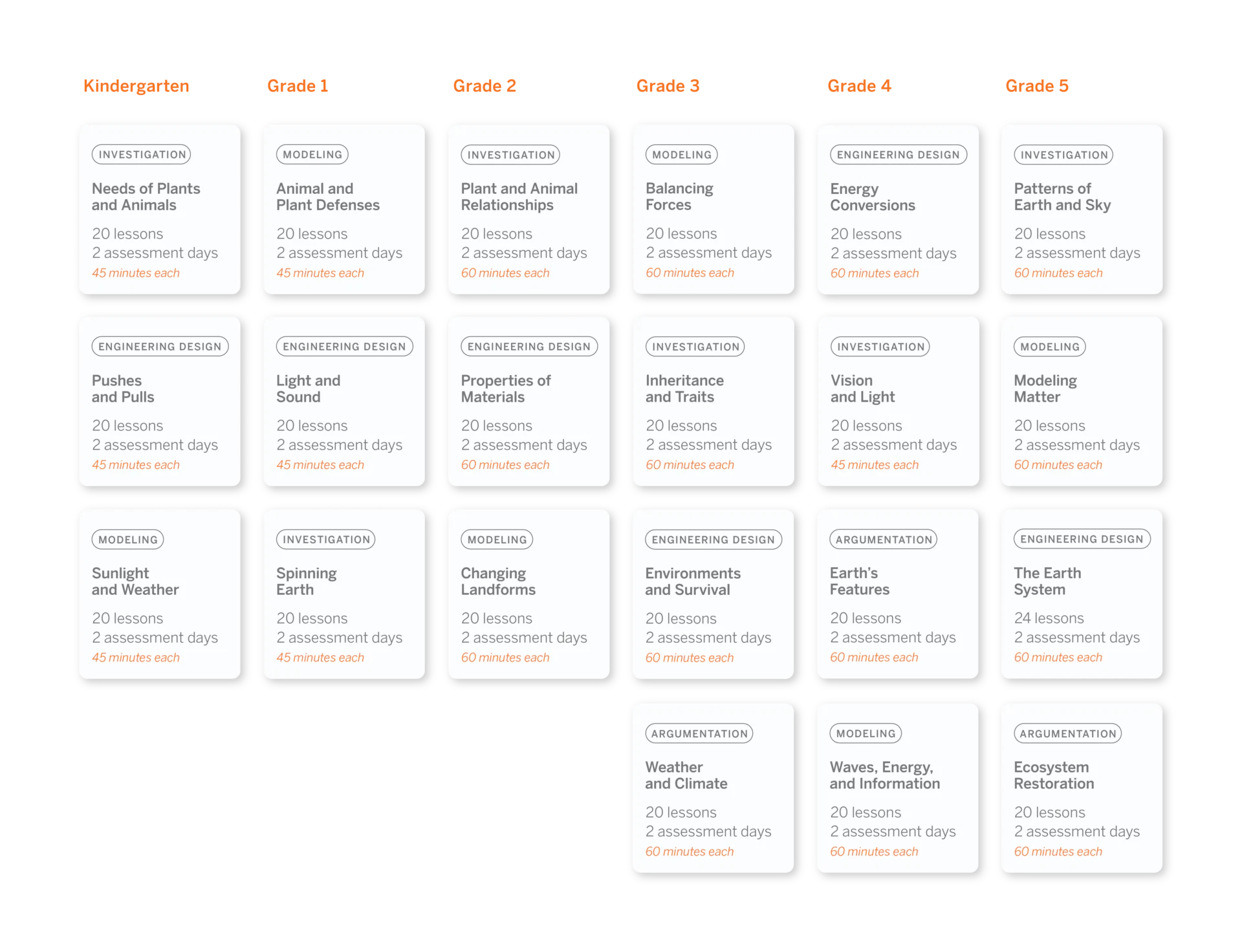
Units at a glance
In each Amplify Science unit, students are asked to inhabit the role of a scientist or engineer in order to investigate a real-world problem. These problems provide relevant, 21st-century contexts through which students investigate different scientific phenomena.
1
Needs of Plants and Animals
Students take on the role of scientists in order to figure out why there have been no monarch caterpillars in the community garden since vegetables were planted. They investigate how plants and animals get what they need to live and grow, and make a new plan for the community garden that provides for the needs of the monarch caterpillars in addition to producing vegetables for humans.
2
Pushes and Pulls
Students take on the role of pinball machine engineers as they investigate the effects of forces on the motion of an object. They conduct tests in their own prototypes (models) of a pinball machine and use what they learn to contribute to the design of a class pinball machine. Over the course of the unit, students construct a foundational understanding of why things move in different ways
3
Sunlight and Weather
The principals of Woodland Elementary and Carver Elementary need student weather scientists to help them explain why Woodland’s playground is warmer than Carver’s at recess. Students gather data from models of the sun and Earth’s surface and observe their own playgrounds to figure out how sunlight causes changes in the temperatures of different surfaces. Students then use models to figure out why Woodland’s playground sometimes floods.
1
Animal and Plant Defenses
Students play the role of marine scientists. In their role, students apply their understanding of plant and animal defense structures to explain to aquarium visitors how a sea turtle and her offspring can defend themselves from ocean predators when they are released into the wild.
2
Light and Sound
Students take on the role of light and sound engineers for a puppet show company as they investigate cause and effect relationships to learn about the nature of light and sound. They apply what they learn to design shadow scenery and sound effects for a puppet show.
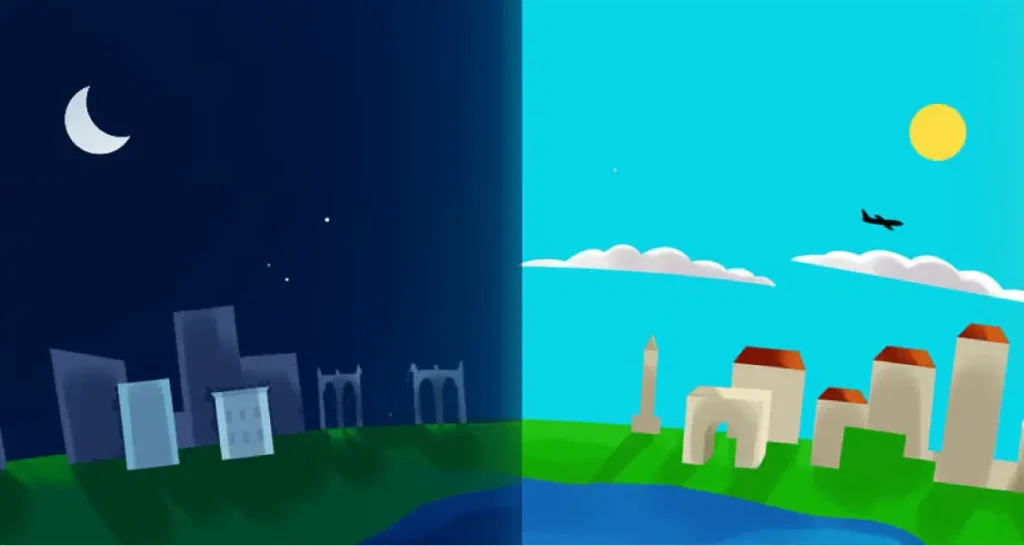
3
Spinning Earth
As sky scientists, students explain why a boy living in a place near them sees different things in the sky than his grandma does when he talks to her on the phone. Students record, organize, and analyze observations of the sun and other sky objects as they look for patterns and make sense of the cycle of daytime and nighttime.
1
Plant and Animal Relationships
In their role as plant scientists, students work to figure out why there are no new chalta trees growing in the Bengal Tiger Reserve, which is part of a broadleaf forest. Students investigate what the chalta tree needs to survive, then collect and analyze qualitative and quantitative data to solve the mystery.
2
Properties of Materials
As glue engineers, students are challenged to create a glue for use at their school that meets a set of design goals. Students present an evidence-based argument for why their glue mixture will be good for their school to use.
3
Changing Landforms
The director of the Oceanside Recreation Center gets a scare when a nearby cliff collapses overnight. Research reveals that the distance between the Recreation Center’s flagpole and the edge of the cliff have changed over time. Students play the role of geologists and work to figure out why the cliff has changed over time. Based on what they learn about erosion, they advise on whether it is safe to keep the center open even though the cliff is changing.
1
Balancing Forces
People in Faraday are excited to hear that a new train service will be built for their city, but concerned when they hear that it will be a floating train. Students are challenged to figure out how a floating train works in order to explain it to the citizens of Faraday. They develop models of how the train rises, floats, and then falls back to the track, and then write an explanation of how the train works.
2
Inheritance and Traits
Students play the role of wildlife biologists working in Greystone National Park. They study two wolf packs and are challenged to figure out why an adopted wolf (“Wolf 44”) in one of the packs has certain traits. Students observe variation between and within different species, investigate inherited traits and those that result from the environment, and explain the origin of several of the adopted wolf’s traits.
3
Environments and Survival
In their role as biomimicry engineers, students work to figure out how the traits of grove snails affect their survival in different environments. They then explore how the traits of different organisms make them more likely or less likely to survive, collecting and interpreting data to understand how organisms’ traits affect their survival in different environments. Students then apply their understanding to a new challenge: designing effective solutions for the removal of invasive plants.
4
Weather and Climate
In their role as meteorologists, students gather evidence to decide where to build an orangutan reserve by analyzing patterns in weather data. After choosing the strongest evidence, students use data to make arguments about which of three fictional islands has weather most like that of orangutans’ existing habitats, Borneo and Sumatra. They then discern patterns in the locations of natural hazards in order to figure out which ones the Wildlife Protection Organization must prepare for.
1
Energy Conversions
Students take on the role of systems engineers for Ergstown, a fictional town that experiences frequent blackouts, and explore reasons why an electrical system can fail. Students apply what they learned as they choose new energy sources and energy converters for the town, then write arguments for why their design choices will make the town’s electrical system more reliable.
2
Vision and Light
As conservation biologists, students work to figure out why a population of Tokay geckos has decreased since the installation of new highway lights in the rainforest. Students use their understanding of vision, light, and information processing to figure out why an increase in light in the geckos’ habitat is affecting the population.
3
Earth’s Features
Playing the role of geologists, students help the director of Desert Rocks National Park explain how and when a particular fossil formed and how it came to be in its current location. Students figure out what the environment of the park was like in the past and why it has so many visible rock layers.
4
Waves, Energy, and Information
In their role as marine scientists, students work to figure out how mother dolphins communicate with their calves. They write a series of scientific explanations with diagrams to demonstrate their growing understanding of how sound waves travel. Then they apply what they’ve learned about waves, energy, and patterns in communication to figure out how to create patterns that can communicate information over distances.
1
Patterns of Earth and Sky
Playing the role of astronomers, students help a team of archaeologists figure out what the missing piece of a recently discovered artifact might have depicted. As they learn about the sun and other stars and the movement of Earth, students can explain what is shown on the artifact and what might be on the missing piece.
2
Modeling Matter
In their role as food scientists at a fictional company, students are introduced to the idea that all matter is made of particles too small to see, and that each different substance is made of particles (molecules) that are unique. They are then challenged to solve two problems: one requires them to separate a mixture, and the other requires them to make unmixable substances mix. Students are challenged to use the particulate model of matter to explain their work to the CEO of the company.
3
The Earth System
The cities of East Ferris and West Ferris are located on different sides of a mountain on the fictional Ferris Island. East Ferris is having a water shortage while West Ferris is not. As water resource engineers, students learn about the Earth system to help figure out what is causing the water shortage problem and design possible solutions, including freshwater collection systems and proposals for using chemical reactions to treat wastewater.
4
Ecosystem Restoration
As ecologists, students work to figure out why the organisms in a part of a Costa Rican rainforest ecosystem aren’t growing and thriving. As they solve this problem, students learn more generally how organisms in an ecosystem get the matter and energy they need to survive, and then write a series of restoration plans that include arguments about why the rainforest ecosystem is not thriving and recommend actions to restore its health.
Print & digital components
The program includes instructional guidance and student materials for a year of instruction, with lessons and activities that keep students engaged every day.
Component
Format
Teacher’s Guides
Available digitally and in print, the Teacher’s Guides contain all of the information teachers need to facilitate classroom instruction, including detailed lesson plans, high-level overview documentation, differentiation strategies, standards alignments, materials and preparation steps, teacher support strategies and in-context professional development, possible student responses, and more.
Print and digital

Hands-on materials kits
Hands-on learning is integrated into every unit of Amplify Science. Each hands-on activity is supported through clear instructions for the teacher, as well as easily accessible materials in unit-specific kits. Each kit contains hands-on materials, both consumable and nonconsumable, and various print materials (e.g., Vocabulary and Key Concept cards). With Amplify Science, students can actively participate in science: gathering evidence, thinking critically, making observations, and communicating their claims.
Kit

Component
Format
Student Investigation Notebooks
Available for every unit, the Student Investigation Notebooks contain instructions for activities and space for students to record data, reflect on ideas from texts and investigations, and construct explanations and arguments.
Print and digital
Student books
The age-appropriate Student Books in Amplify Science allow students to engage with content-rich text, obtain evidence, develop research and close reading skills, and construct arguments and explanations about the ideas they are learning in class.
Print and digital
Simulations and practice tools (grades 2+)
Developed exclusively for the Amplify Science program, these serve as venues for exploration and data collection, allowing students to explore scientific concepts that might otherwise be invisible or impossible to see with the naked eye.
Digital

Explore more programs
Our programs are designed to support and complement one another. Learn more about our related programs.



Amplify Desmos Math updates are coming!
As we look ahead to the upcoming school year, we’re continuing to enhance Amplify Demos Math. From time-saving platform enhancements to new features, these updates are designed to help you deliver engaging math instruction while making planning, assigning, and differentiation easier than ever.
Whether you’re using Amplify Desmos Math on its own or alongside Personalized Learning, Boost Math®, or mCLASS® Math, this page highlights what’s already available and what’s coming next.

Updates coming for the 2026–27 school year
To help you plan for the year ahead with confidence, we’re previewing some of the exciting enhancements coming your way.
Platform updates
We’re improving the overall classroom experience with platform enhancements that make lessons easier to navigate and instruction easier to manage.
- Activity pages are being redesigned to feature a left sidebar, informational tabs, and lesson screens at the top of the page. This optional reconfiguration will allow you to immediately see each lesson and more easily access relevant resources and tools. You will be able to turn on the new design – or turn it off to return to the original design – with a toggle located on the page.
- We’re making updates to our Recently Visited section on Educator Home. You’ll see both activity and units reflected there, and have the ability to star a unit or lesson to pin it to the front of your list
- Presentation tools are also expanding, making it easier to facilitate lessons, annotate in real time, and manage instruction from anywhere in the room.
- You will be able to assign Teacher Presentation Screens to individual students who need access on their own devices for reference or accessibility purposes.
Administrator Report improvements
- The existing Administrator Reports for Unit Performance will be replaced with a new and improved Student Performance report that will provide school and district administrators with aggregated views of student performance on end-of-unit assessments as well as standards. The report will support grouping this data by school and class without having to access reporting for individual classrooms.
AI-powered teacher tools
We’ve developed new tools to enhance your ability to connect and collaborate with families! These will be available when you opt in through Amplify Labs.
- Discussion Moments, launching for grades 6–8 in 2026–27, will support rich classroom conversations by highlighting student ideas directly within lessons, making it easier to pause, reflect, and discuss mathematical thinking.
- Newsletter Generator, for grades K–5, allows you to create your own customizable communication to share out with families.
Using mCLASS Math? Explore upcoming updates and noteworthy features for assessment, progress monitoring, and reporting on the mCLASS Math Program Highlights page.

New offerings
Amplify Desmos Math continues to grow to support more learners across grade levels and instructional pathways.
- Expanded Spanish student and teacher materials will better serve multilingual classrooms by providing access to high-quality math instruction in both print and digital formats.
- New PreK and Transitional Kindergarten offerings emphasize hands-on, developmentally appropriate learning.
- For middle school, Accelerated 6 and Accelerated 7 will be available for full release soon, offering a two-year pathway that condenses grades 6–8.
- At the high school level, Amplify Desmos Math will soon be commercially available as complete high school course sequences, including Algebra 1, Geometry, Algebra 2, and Integrated Math pathways.
Note: Some offerings and enhancements may require an additional purchase.
Noteworthy features
These features are already available or rolling out soon to help you plan, teach, and support students more efficiently.

- Use Stream filtering tools to search by student name and quickly view everything assigned to a particular learner.
- Assign work to individual students, create and reuse named groups, or assign multiple Personalized Learning activities at once using batch assign, making it easier to differentiate instruction and support small groups without extra setup time.
- Preview student work directly from the Stream to check progress and decide on next steps more efficiently.
- Individual Student Reports provide a unified view of student progress across math products, offering a clear, shareable snapshot to support caregiver communication and student conferencing.
- Download and print screens of any lesson or activity by selecting the three-dot menu to the right of the activity (or lesson) title and selecting View PDF.

Personalized Learning activities are now clearer and easier for students to manage.
Personalized Learning activities now include a clear Done button, helping students understand when their work is complete.
- Once an activity is finished, it moves out of the To Do list and into Past Work, reducing confusion and supporting student organization.
- You also have improved visibility and guidance for addressing unfinished work, redoing activities, and when Personalized Learning data appears in reporting.

Easier planning and navigation across resources
Planning instruction is simpler with an improved Browse Instructional Resources experience designed to reduce clicks and help you quickly find the materials you need.
- Locate resources more easily for small-group instruction, practice, or extension.
- Get more control over the student experience, including the option to remove Math Adventures from Student Home when those activities aren’t part of their instructional plan.
Using Boost Math as part of your math solution? Learn more about recent enhancements to Boost Math, including updates to instructional pathways and more options to further the impact of your Multi-Tiered System of Supports (MTSS).
A powerful partnership
Amplify Science was developed by the science education experts at UC Berkeley’s Lawrence Hall of Science and the digital learning team at Amplify.


Back to school 2020–21 updates
Back to school 2020 is coming! Click here for more information on all of the improvements and new features we’re adding to Amplify Science for the new school year.
Program introduction
Onboarding: what to expect
Welcome to Amplify Science! To help you know what’s coming next, we created the following outline of the steps of the onboarding process. You can use it as a reference.
Administrators receive launch email
- Share the information with teachers
- Submit the shipping survey sent to your email
Log In
- Go to learning.amplify.com
- Click on Log in with Clever or Google
- Enter your FCPS credentials
- Demo Account for full access to Amplify Curriculum without access to personalized class rosters:
- Go to learning.amplify.com
- Click on login with Amplify
- Username: t.Fayette2020@tryamplify.net
- Password: AmplifyNumber1
Ensure you have received all materials and components
- Teachers have access to a series of “Unboxing your materials kit” videos. If you’re interested in watching those, click here.
Check out the professional learning opportunities and/or access the Getting Started Resources below.
If you need assistance, please see the help resources or reach out to your Educational Partnerships Manager or PD manager at caffleck@amplify.com, pworks@amplify.com with any questions.
K–5 resources
To ensure your first day using Amplify Science in the classroom is as seamless and smooth as possible, we recommend reviewing the following checklist before the first day of school.
What’s coming to my school?
Each unit of Amplify Science comes with a hands-on materials kit. Each hands-on materials kit arrives in one to three boxes and contains:
- Consumable materials for two uses of 25 or 36 students (depending on school purchase)
- Non-consumable materials
- Classroom wall materials
- Premium print materials (card sorts, vocabulary rings, etc.).
- 18 copies of each Student Book (5 titles each unit, K–1 will receive 5 big books per unit)
- A blackline master of the Student Investigation Notebook
You can find complete materials lists for each unit in the following PDF. This information is also available in the digital Teacher’s Guide within the program.

Onboarding videos
Our team has created a series of short videos to help get you started with Amplify Science:
What’s online?
Planning strategies
How to log in and navigate
NGSS introduction
Planning guides
As you prepare to plan for a unit, download our planning guides to help walk you through the most important resources to locate in either the print or digital Teacher’s Guide to help you plan:
Additional resources
If you’re interested in learning more about each unit’s anchor phenomena, the Student Books in each unit, and more program features, download the resources below:
- Guided tour
- Spanish-language supports in grades K–5
- Phenomena in grades K–5
- Student Books in grades K–5
- Simulations in grades 4–8
- Scope and Sequence
Grade 6
Module 1: Ratios and Unit Rates
| Eureka Math | Desmos Math 6–A1 |
| Topic A Representing and Reasoning About Ratios | |
| Lesson 1: Ratios Lesson 2: Ratios | Unit 2 Lesson 1: Pizza Maker [Free lesson] Lesson 2: Ratio Rounds (Print available) |
| Lesson 3: Equivalent Ratios Lesson 4: Equivalent Ratios | Unit 2 Lesson 3: Rice Ratios Lesson 4: Fruit Lab [Free lesson] Lesson 5: Balancing Act Lesson 7: Mixing Paint, Part 1 Lesson 8 World Records (Print available) Lesson 11 Community Life (Print available) Practice Day 1 (Print available) |
| Lesson 5: Solving Problems by Finding Equivalent Ratios Lesson 6: Solving Problems by Finding Equivalent Ratios | Unit 2 Lesson 5 Balancing Act |
| Lesson 7: Associated Ratios and the Value of a Ratio Lesson 8: Equivalent Ratios Defined Through the Value of a Ratio | Unit 2 Lesson 6: Product Prices (Print available) Lesson 7: Mixing Paint, Part 1 |
| Topic B Collections of Equivalent Ratios | |
| Lesson 9: Tables of Equivalent Ratios | Unit 2 Lesson 6: Product Prices (Print available) Lesson 7: Mixing Paint, Part 1 |
| Lesson 10: The Structure of Ratio Tables-Additive and Multiplicative | Unit 2 Lesson 10: Balloons Lesson 11: Community Life (Print available) |
| Lesson 11: Comparing Ratios Using Ratio Tables | Unit 2 Lesson 10: Balloons |
| Lesson 12: From Ratio Tables to Double Number Line Diagrams | Unit 2 Lesson 6: Product Prices (Print available) Lesson 8: World Records (Print available) Lesson 12: Mixing Paint, Part 2 Lesson 14: Lunch Waste (Print available) Practice Day 2 (Print available) |
| Lesson 13: From Ratio Tables to Equations Using the Value of a Ratio | |
| Lesson 14: From Ratio Tables, Equations, and Double Number Line Diagrams to Plots on the Coordinate Plane | |
| Lesson 15: A Synthesis of Representations of Equivalent Ratio Collections | |
| Topic C Unit Rates | |
| Lesson 16: From Ratio to Rates | Unit 2 Lesson 8: World Records (Print available) Unit 3 Lesson 4: Model Trains Lesson 5: Soft Serve [Free lesson] Lesson 6: Welcome to the Robot Factory |
| Lesson 17: From Rates to Ratios | |
| Lesson 18: Finding a Rate by Dividing Two Quantities | Unit 3 Lesson 4: Model Trains Lesson 5: Soft Serve [Free lesson] Lesson 6: Welcome to the Robot Factory Lesson 7: More Soft Serve |
| Lesson 19: Comparison Shopping-Unit Price and Related Measurement Conversions Lesson 20: Comparison Shopping-Unit Price and Related Measurement Conversions Lesson 21: Getting the Job Done—Speed, Work, and Measurement Units Lesson 22: Getting the Job Done—Speed, Work, and Measurement Units | Unit 3 Lesson 2: Counting Classrooms Lesson 3: Pen Pals |
| Lesson 23: Problem-Solving Using Rates, Unit Rates, and Conversions. | Unit 3 Lesson 13: A Country as a Village |
| Topic D Percent | |
| Lesson 24: Percent and Rates per 100 | Unit 3 Lesson 8: Lucky Duckies [Free lesson] Lesson 9: Bicycle Goals |
| Lesson 25: A Fraction as a Percent | |
| Lesson 26: Percent of a Quantity. | Unit 3 Lesson 10: What´s Missing? (Print available) Lesson 11: Cost Breakdown |
| Lesson 27: Solving Percent Problems Lesson 28: Solving Percent Problems Lesson 29: Solving Percent Problems | Unit 3 Lesson 10: What´s Missing? (Print available) Lesson 11: Cost Breakdown Lesson 12: More Bicycle Goals Lesson 13: A Country as a Village Practice Day 2 (Print available) |
Module 2: Arithmetic Operations Including Division of Fractions
| Lesson 1: Interpreting Division of a Fraction by a Whole Number—Visual Models. | Unit 4 Lesson 2: Making Connections (Print available) |
| Lesson 2: Interpreting Division of a Whole Number by a Fraction —Visual Models. | Unit 4 Lesson 1: Cookie Cutter Lesson 3: Flour Planner [Free lesson] Lesson 4: Flower Planters Lesson 5: Garden Bricks (Print available) |
| Lesson 3: Interpreting and Computing Division of a Fraction by a Fraction—More Models Lesson 4: Interpreting and Computing Division of a Fraction by a Fraction—More Models | Unit 4 Lesson 5: Garden Bricks Lesson 6: Fill the Gap [Free lesson] Lesson 7: Break It Down Lesson 8: Potting Soil Lesson 9: Division Challenges Lesson 10: Swap Meet (Print available) Practice Day |
| Lesson 5: Creating Division Stories. | |
| Lesson 6: More Division Stories. | |
| Lesson 7: The Relationship Between Visual Fraction Models and Equations | |
| Lesson 8: Dividing Fractions and Mixed Numbers | Unit 4 Lesson 5: Garden Bricks (Print available) Lesson 6: Fill the Gap [Free lesson] |
| Topic B Multi-Digit Decimal Operations—Adding, Subtracting, and Multiplying | |
| Lesson 9: Sums and Differences of Decimals | Unit 5 Lesson 2: Decimal Diagrams [Free lesson] Lesson 3: Fruit by the Pound Lesson 4: Missing Digits |
| Lesson 10: The Distributive Property and the Products of Decimals | Unit 5 Lesson 5: Decimal Multiplication Lesson 6: Multiplying with Areas Lesson 7: Multiplication Methods (Print available) |
| Lesson 11: Fraction Multiplication and the Products of Decimals | Unit 5 Lesson 7: Multiplication Methods (Print available) |
| Topic C Dividing Whole Numbers and Decimals | |
| Lesson 12: Estimating Digits in a Quotient | |
| Lesson 13: Dividing Multi-Digit Numbers Using the Algorithm | Unit 5 Lesson 9: Long Division Launch Practice Day 1 (Print available) Practice Day 2 (Print available) |
| Lesson 14: The Division Algorithm—Converting Decimal Division into Whole Number Division Using Fractions. | |
| Lesson 15: The Division Algorithm—Converting Decimal Division into Whole Number Division Using Mental Math | |
| Topic D Number Theory—Thinking Logically About Multiplicative Arithmetic | |
| Lesson 16: Even and Odd Numbers | |
| Lesson 17: Divisibility Tests for 3 and 9 | |
| Lesson 18: Least Common Multiple and Greatest Common Factor | Unit 5 Lesson 14: Common Multiples Lesson 15: Common Factors Practice Day 2 (Print available) |
| Lesson 19: The Euclidean Algorithm as an Application of the Long Division Algorithm |
Module 3: Rational Numbers
| Lesson 1: Positive and Negative Numbers on the Number Line—Opposite Direction and Value | Unit 7Lesson 2: Digging Deeper |
| Lesson 2: Real-World Positive and Negative Numbers and Zero. Lesson 3: Real-World Positive and Negative Numbers and Zero. | Unit 7 Lesson 4: Sub-Zero |
| Lesson 4: The Opposite of a Number Lesson 5: The Opposite of a Number’s Opposite Lesson 6: Rational Numbers on the Number Line | Unit 7Lesson 2: Digging Deeper |
| Topic B Order and Absolute Value | |
| Lesson 7: Ordering Integers and Other Rational Numbers Lesson 8: Ordering Integers and Other Rational Numbers Lesson 9: Comparing Integers and Other Rational Numbers | Unit 7Lesson 3: Order in the Class (Print available) [Free lesson] |
| Lesson 10: Writing and Interpreting Inequality Statements Involving Rational Numbers | |
| Lesson 11: Absolute Value—Magnitude and Distance Lesson 12: The Relationship Between Absolute Value and Order | Unit 7Lesson 5: Distance on the Number Line |
| Lesson 13: Statements of Order in the Real World. | |
| Topic C Rational Numbers and the Coordinate Plane | |
| Lesson 14: Ordered Pairs Lesson 15: Locating Ordered Pairs on the Coordinate Plane | Unit 7Lesson 9: Sand Dollar SearchLesson 10: The A-maze-ing Coordinate PlaneLesson 11: Polygon Maker |
| Lesson 16: Symmetry in the Coordinate Plane. | |
| Lesson 17: Drawing the Coordinate Plane and Points on the Plane | Lesson 10: The A-maze-ing Coordinate Plane |
| Lesson 18: Distance on the Coordinate Plane | Unit 7Lesson 11: Polygon Maker |
| Lesson 19: Problem Solving and the Coordinate Plane | Unit 7Lesson 12: Graph Telephone (Print available)Practice Day 2 (Print available) |
Module 4: Expressions and Equations
| Topic A Relationships of the Operations | |
| Lesson 1: The Relationship of Addition and Subtraction | |
| Lesson 2: The Relationship of Multiplication and Division | |
| Lesson 3: The Relationship of Multiplication and Addition. | |
| Lesson 4: The Relationship of Division and Subtraction | |
| Topic B Special Notations of Operations | |
| Lesson 5: Exponents | Unit 6Lesson 10: PowersLesson 11: Exponent Expressions (Print available)Practice Day 2 (Print available) |
| Lesson 6: The Order of Operations | |
| Topic C Replacing Letters and Numbers | |
| Lesson 7: Replacing Letters with Numbers Lesson 8: Replacing Numbers with Letters | Unit 6Lesson 7: Border TilesLesson 12: Squares and Cubes |
| Topic D Expanding, Factoring, and Distributing Expressions | |
| Lesson 9: Writing Addition and Subtraction Expressions | Unit 6Lesson 6: Vari-applesLesson 8: Products and Sums [Free lesson]Lesson 9: Products, Sums, and Differences |
| Lesson 10: Writing and Expanding Multiplication Expressions Lesson 11: Factoring Expressions Lesson 12: Distributing Expressions | Unit 6Lesson 8: Products and Sums [Free lesson]Lesson 9: Products, Sums, and Differences |
| Lesson 13: Writing Division Expressions | |
| Lesson 14: Writing Division Expressions | |
| Topic E Expressing Operations in Algebraic Form | |
| Lesson 15: Read Expressions in Which Letters Stand for Numbers Lesson 16: Write Expressions in Which Letters Stand for Numbers Lesson 17: Write Expressions in Which Letters Stand for Numbers | Unit 6Lesson 6: Vari-applesLesson 7: Border Tiles |
| Topic F Writing and Evaluating Expressions and Formulas | |
| Lesson 18: Writing and Evaluating Expressions—Addition and Subtraction Lesson 19: Substituting to Evaluate Addition and Subtraction Expressions Lesson 20: Writing and Evaluating Expressions—Multiplication and Division Lesson 21: Writing and Evaluating Expressions—Multiplication and Addition | Unit 6Lesson 7: Border TilesLesson 8: Products and Sums [Free lesson]Lesson 9: Products, Sums, and DifferencesLesson 12: Squares and Cubes |
| Lesson 22: Writing and Evaluating Expressions—Exponents | Unit 6Lesson 10: PowersLesson 11: Exponent Expressions (Print available)Lesson 12: Squares and CubesPractice Day 2 (Print available) |
| Topic G Solving Equations | |
| Lesson 23: True and False Number Sentences Lesson 24: True and False Number Sentences | Unit 6Lesson 1: Weight for It [Free lesson] |
| Lesson 25: Finding Solutions to Make Equations True | Unit 6Lesson 1: Weight for It [Free lesson]Lesson 2: Five Equations |
| Lesson 26: One-Step Equations—Addition and Subtraction | Unit 6Lesson 1: Weight for It [Free lesson]Lesson 2: Five EquationsLesson 3: Hanging Around |
| Lesson 27: One-Step Equations—Multiplication and Division Lesson 28: Two-Step Problems—All Operations Lesson 29: Multi-Step Problems—All Operations | Unit 6Lesson 3: Hanging AroundLesson 4: Hanging It UpLesson 5: Swap and Solve |
| Topic H Applications of Equations | |
| Lesson 30: One-Step Problems in the Real World Lesson 31: Problems in Mathematical TermsLesson Lesson 32: Multi-Step Problems in the Real World | Unit 6Lesson 3: Hanging AroundLesson 4: Hanging It UpLesson 5: Swap and SolvePractice Day 1 (Print available) |
| Lesson 33: From Equations to Inequalities Lesson 34: Writing and Graphing Inequalities in Real-World Problems | Unit 7Lesson 6: Tunnel Travel [Free lesson]Lesson 7: Comparing WeightsLesson 8: Shira´s Solutions |
Module 5: Area, Surface Area, and Volume Problems
| Topic A: Area of Triangles, Quadrilaterals, and Polygons | |
| Lesson 1: The Area of Parallelograms Through Rectangle Facts | Unit 1Lesson 3: Exploring Parallelograms (Print available) [Free lesson]Lesson 4: Off the Grid |
| Lesson 2: The Area of Right Triangles Lesson 3: The Area of Acute Triangles Using Height and Base | Unit 1Lesson 5: Exploring Triangles (Print available)Lesson 6: Triangles and ParallelogramsLesson 7: Off the Grid, Part 2 |
| Lesson 4: The Area of All Triangles Using Height and Base | Unit 1Lesson 6: Triangles and ParallelogramsLesson 7: Off the Grid, Part 2 |
| Lesson 5: The Area of Polygons Through Composition and Decomposition | Unit 1Lesson 2: LettersLesson 8: Pile of PolygonsPractice Day 1 (Print available) |
| Lesson 6: Area in the Real World | |
| Topic B Polygons on the Coordinate Plane | |
| Lesson 7: Distance on the Coordinate Plane | Unit 1Lesson 8: Pile of Polygons |
| Lesson 8: Drawing Polygons in the Coordinate Plane | Unit 7Lesson 11: Polygon Maker |
| Lesson 9: Determining Perimeter and Area of Polygons on the Coordinate Plane | Unit 1Lesson 8: Pile of Polygons |
| Lesson 10: Distance, Perimeter, and Area in the Real World | |
| Topic C Volume of Right Rectangular Prisms | |
| Lesson 11: Volume with Fractional Edge Lengths and Unit Cubes | Unit 4Lesson 11: Classroom ComparisonsLesson 12: Puzzling Areas (Print available) [Free lesson]Lesson 13: Volume ChallengesLesson 14: Planter Planner (Print available) |
| Lesson 12: From Unit Cubes to the Formulas for Volume | |
| Lesson 13: The Formulas for Volume | |
| Lesson 14: Volume in the Real World | Unit 4Lesson 14: Planter Planner (Print available) |
| Topic D Nets and Surface Area | |
| Lesson 15: Representing Three-Dimensional Figures Using Nets Lesson 16: Constructing Nets Lesson 17: From Nets to Surface Area | Unit 1Lesson 10: Plenty of PolyhedraLesson 11: Nothing But Nets (Print available)Lesson 13: Take It To Go (Print available) |
| Lesson 18: Determining Surface Area of Three-Dimensional Figures | Unit 1Lesson 9: Renata´s Stickers [Free lesson]Lesson 10: Plenty of PolyhedraLesson 11: Nothing But Nets (Print available)Lesson 13: Take It To Go (Print available)Practice Day 2 (Print available) |
| Lesson 19: Surface Area and Volume in the Real World | |
| Lesson 19a: Addendum Lesson for Modeling―Applying Surface Area and Volume to Aquariums | |
| Lesson 3: The Area of Acute Triangles Using Height and Base | Unit 1Lesson 5 Exploring TrianglesLesson 6 Triangles and ParallelogramsLesson 7 Off the Grid, Part 2 |
Module 6: Statistics
| Topic A Understanding Distributions | |
| Lesson 1: Posing Statistical Questions | Unit 8 Lesson 1: Screen TimeLesson 2: Dot Plots |
| Lesson 2: Displaying a Data Distribution Lesson 3: Creating a Dot Plot | Unit 8 Lesson 2: Dot PlotsLesson 3: Minimum Wage (Print available) [Free lesson]Lesson 4: Lots More Dots |
| Lesson 4: Creating a Histogram Lesson 5: Describing a Distribution Displayed in a Histogram | Unit 8Lesson 5: The Plot Thickens [Free lesson]Lesson 6: DIY Histograms (Print available) |
| Topic B Summarizing a Distribution That Is Approximately Symmetric Using the Mean and Mean Absolute Deviation | |
| Lesson 6: Describing the Center of a Distribution Using the Mean Lesson 7: The Mean as a Balance Point | Unit 8Lesson 7: Snack Time |
| Lesson 8: Variability in a Data Distribution | Unit 8Lesson 8: Pop It! |
| Topic 9: The Mean Absolute Deviation (MAD). | Unit 8Lesson 9: Hoops |
| Lesson 10: Describing Distributions Using the Mean and MAD Lesson 11: Describing Distributions Using the Mean and MAD | Unit 8Lesson 10 Hollywood Part 1Practice Day 1 (Print available) |
| Topic C Summarizing a Distribution That Is Skewed Using the Median and the Interquartile Range | |
| Lesson 12: Describing the Center of a Distribution Using the Median | Unit 8Lesson 11: Toy Cars [Free lesson]Lesson 12: In the News |
| Lesson 13: Describing Variability Using the Interquartile Range (IQR) | Unit 8Lesson 13: Pumpkin Patch |
| Lesson 14: Summarizing a Distribution Using a Box Plot Lesson 15: More Practice with Box Plots | Unit 8Lesson 14: Car, Plane, Bus, or Train? (Print available) |
| Lesson 16: Understanding Box Plots | Unit 8Lesson 14: Car, Plane, Bus, or Train? (Print available)Lesson 15: Hollywood Part 2Lesson 16: Hollywood Part 3 (Print available)Practice Day 2 (Print available) |
| Topic D Summarizing and Describing Distributions | |
| Lesson 17: Developing a Statistical Project | |
| Lesson 18: Connecting Graphical Representations and Numerical Summaries | Unit 8Lesson 5: The Plot Thickens [Free lesson] |
| Lesson 19: Comparing Data Distributions | Unit 8Lesson 15: Hollywood Part 2 |
| Lesson 20: Describing Center, Variability, and Shape of a Data Distribution from a Graphical Representation Lesson 21: Summarizing a Data Distribution by Describing Center, Variability, and Shape | Unit 8Lesson 16: Hollywood Part 3 (Print available) |
| Lesson 22: Presenting a Summary of a Statistical Project | |
| Lesson 3: Creating a Dot Plot | Unit 8Lesson 2 Dot PlotsLesson 3 Minimum Wage [Free lesson]Lesson 4 Lots More Dots |
Grade 7
Module 1: Ratios and Proportional Relationships
Module 2: Rational Numbers
| Topic A Addition and Subtraction of Integers and Rational Numbers | |
| Lesson 1: Opposite Quantities Combine to Make Zero | Unit 5 Lesson 1: Floats and Anchors [Free lesson] |
| Lesson 2: Using the Number Line to Model the Addition of Integers Lesson 3: Understanding Addition of Integers Lesson 4: Efficiently Adding Integers and Other Rational Numbers Lesson 5: Understanding Subtraction of Integers and Other Rational Numbers | Unit 5 Lesson 2: More Floats and Anchors Lesson 4: Draw Your Own (Print available) [Free lesson] Lesson 5: Number Puzzles Lesson 10: Integer Puzzles [Free lesson] Lesson 11: Changing Temperatures Lesson 13: Solar Panels and More (Print available) |
| Lesson 6: The Distance Between Two Rational Numbers | |
| Lesson 7: Addition and Subtraction of Rational Numbers | Unit 5 Lesson 3: Bumpers Lesson 4: Draw Your Own (Print available) [Free lesson] Lesson 5: Number Puzzles Lesson 10; Integer Puzzles [Free lesson] Lesson 11: Changing Temperatures Lesson 13: Solar Panels and More (Print available) Practice Day 1 (Print available) |
| Lesson 8: Applying the Properties of Operations to Add and Subtract Rational Numbers | |
| Lesson 9: Applying the Properties of Operations to Add and Subtract Rational Numbers | |
| Topic B Multiplication and Division of Integers and Rational Numbers | |
| Lesson 10: Understanding Multiplication of Integers Lesson 11: Develop Rules for Multiplying Signed Numbers | Unit 5 Lesson 6: Floating in Groups Lesson 7: Back in Time Lesson 8: Speeding Turtles Lesson 10: Integer Puzzles [Free lesson] Practice Day 2 (Print available) |
| Lesson 12: Division of Integers | Unit 5 Lesson 8: Speeding Turtles |
| Lesson 13: Converting Between Fractions and Decimals Using Equivalent Fractions | |
| Lesson 14: Converting Rational Numbers to Decimals Using Long Division | Unit 4 Lesson 13: Decimal Deep Dive (Print available) |
| Lesson 15: Multiplication and Division of Rational Numbers | Unit 5 Lesson 8: Speeding Turtles Lesson 10: Integer Puzzles [Free lesson] Lesson 12: Arctic Sea Ice (Print available) Lesson 13: Solar Panels and More (Print available) Practice Day 2 (Print available) |
| Lesson 16: Applying the Properties of Operations to Multiply and Divide Rational Numbers | |
| Topic C Applying Operations with Rational Numbers to Expressions and Equations | |
| Lesson 17: Comparing Tape Diagram Solutions to Algebraic Solutions | Unit 6 Lesson 2: Smudged Receipts Lesson 3: Equations Lesson 4: Seeing Structure (Print available) |
| Lesson 18: Writing, Evaluating, and Finding Equivalent Expressions with Rational Numbers Lesson 19: Writing, Evaluating, and Finding Equivalent Expressions with Rational Numbers | Unit 5 Lesson 9 Expressions |
| Lesson 20: Investments—Performing Operations with Rational Numbers | |
| Lesson 21: If-Then Moves with Integer Number Cards | |
| Lesson 22: Solving Equations Using Algebra Lesson 23: Solving Equations Using Algebra | Unit 6 Lesson 3: Equations Lesson 4: Seeing Structure (Print available) Lesson 6: Balancing Equations Lesson 7: Keeping It True (Print available) Lesson 12: Community Day (Print available) Unit 5 Lesson 3: Bumpers |
Module 3: Expressions and Equations
Module 4: Percent and Proportional Relationships
Module 5: Statistics and Probability
| Topic A Calculating and Interpreting Probabilities | |
| Lesson 1: Chance Experiments | Unit 8Lesson 1: How Likely? (Print available) [Free lesson]Lesson 2: Prob-bear-bilities [Free lesson]Lesson 3: Mystery Bag |
| Lesson 2: Estimating Probabilities by Collecting Data Lesson 3: Chance Experiments with Equally Likely Outcomes Lesson 4: Calculating Probabilities for Chance Experiments with Equally Likely Outcomes | Unit 8Lesson 3: Mystery BagLesson 4: Spin ClassLesson 5: Is It Fair?Lesson 6: Fair Games |
| Lesson 5: Chance Experiments with Outcomes That Are Not Equally Likely | Unit 8Lesson 4: Spin ClassLesson 5: Is It Fair?Lesson 6: Fair GamesLesson 7: Weather or Not |
| Lesson 6: Using Tree Diagrams to Represent a Sample Space and to Calculate Probabilities | Unit 8Lesson 6: Fair GamesLesson 7: Weather or Not |
| Lesson 7: Calculating Probabilities of Compound Events | Unit 8Lesson 8: Simulate It! (Print available)Lesson 9: Car, Bike, or Train? (Print available)Practice Day 1 (Print available) |
| Topic B Estimating Probabilities | |
| Lesson 8: The Difference Between Theoretical Probabilities and Estimated Probabilities Lesson 9: Comparing Estimated Probabilities to Probabilities Predicted by a Model | Unit 8Lesson 6: Fair GamesLesson 7: Weather or NotLesson 8: Simulate It! (Print available)Lesson 9: Car, Bike, or Train? (Print available) |
| Lesson 10: Conducting a Simulation to Estimate the Probability of an Event | Unit 8Lesson 7: Weather or NotLesson 8: Simulate It! (Print available)Lesson 9: Car, Bike, or Train? (Print available) |
| Lesson 11: Conducting a Simulation to Estimate the Probability of an Event Lesson 12: Applying Probability to Make Informed Decisions | Unit 8Lesson 7: Weather or NotLesson 8: Simulate It! (Print available) |
| Topic C Random Sampling and Estimating Population Characteristics | |
| Lesson 13: Populations, Samples, and Generalizing from a Sample to a Population | Unit 8Lesson 9: Car, Bike, or Train? (Print available)Lesson 10: Crab Island [Free lesson]Lesson 11: HeadlinesLesson 12: Flower Power |
| Lesson 14: Selecting a Sample Lesson 15: Random Sampling Lesson 16: Methods for Selecting a Random Sample | Unit 8Lesson 10: Crab Island [Free lesson]Lesson 11: Headlines |
| Lesson 17: Sampling Variability | Unit 8Lesson 9: Car, Bike, or Train? (Print available)Lesson 13: Plots and Samples |
| Lesson 18: Sampling Variability and the Effect of Sample Size Lesson 19: Understanding Variability When Estimating a Population Proportion | Unit 8Lesson 9: Car, Bike, or Train? (Print available)Lesson 13: Plots and SamplesLesson 14: School Newspaper (Print available) |
| Lesson 20: Estimating a Population Proportion | |
| Topic D Comparing Populations | |
| Lesson 21: Why Worry About Sampling Variability? | Unit 8Lesson 9: Car, Bike, or Train? (Print available)Lesson 13: Plots and SamplesLesson 14: School Newspaper (Print available) |
| Lesson 22: Using Sample Data to Compare the Means of Two or More Populations Lesson 23: Using Sample Data to Compare the Means of Two or More Populations | Unit 8Lesson 9: Car, Bike, or Train? (Print available)Lesson 10: Crab Island [Free lesson]Lesson 13: Plots and SamplesLesson 14: School Newspaper (Print available)Lesson 15: Asthma Rates (Print available) |
Module 6: Geometry
| Topic A Unknown Angles | |
| Lesson 1: Complementary and Supplementary Angles | Unit 7Lesson 2: Friendly Angles [Free lesson]Lesson 3: Angle Diagrams |
| Lesson 2: Solving for Unknown Angles Using Equations Lesson 3: Solving for Unknown Angles Using Equations Lesson 4: Solving for Unknown Angles Using Equations | Unit 7Lesson 1: PinwheelsLesson 2: Friendly AnglesLesson 3: Angle DiagramsLesson 4: Missing Measures (Print available) [Free lesson] |
| Topic B Constructing Triangles | |
| Lesson 5: Identical Triangles | Unit 7Lesson 6: Is It Enough?Lesson 7: More Than One |
| Lesson 6: Drawing Geometric Shapes | Unit 7Lesson 6: Is It Enough?Lesson 7: More Than OneLesson 8: Can You Draw It? (Print available) |
| Lesson 7: Drawing Parallelograms | |
| Lesson 8: Drawing Triangles | Unit 7Lesson 5: Can You Build It? [Free lesson]Lesson 6: Is It Enough?Lesson 7: More Than OneLesson 8: Can You Draw It? (Print available)Practice Day 1 (Print available) |
| Lesson 9: Conditions for a Unique Triangle―Three Sides and Two Sides and the Included Lesson 10: Conditions for a Unique Triangle—Two Angles and a Given Side Angle | Unit 7Lesson 8: Can You Draw It? (Print available) |
| Lesson 11: Conditions on Measurements That Determine a Triangle | Unit 7Lesson 5: Can You Build It? [Free lesson]Lesson 6: Is It Enough?Lesson 7: More Than OneLesson 8: Can You Draw It? (Print available)Practice Day 1 (Print available) |
| Lesson 12: Unique Triangles―Two Sides and a Non-Included Angle | |
| Lesson 13: Checking for Identical Triangles Lesson 14: Checking for Identical Triangles | Unit 7Lesson 6: Is It Enough?Lesson 7: More Than OnePractice Day 1 |
| Lesson 15: Using Unique Triangles to Solve Real-World and Mathematical Problems | |
| Topic C Slicing Solids | |
| Lesson 16: Slicing a Right Rectangular Prism with a Plane Lesson 17: Slicing a Right Rectangular Pyramid with a Plane Lesson 18: Slicing on an Angle | Unit 7Lesson 9: Slicing Solids |
| Lesson 19: Understanding Three-Dimensional Figures | |
| Topic D Problems Involving Area and Surface Area | |
| Lesson 20: Real-World Area Problems | Unit 3Lesson 5: Area Strategies |
| Lesson 21: Mathematical Area Problems | Unit 3Lesson 5: Area StrategiesLesson 6: Radius Squares (Print available) |
| Lesson 22: Area Problems with Circular Regions | Unit 3Lesson 5: Area StrategiesLesson 8: Area Challenges [Free lesson] |
| Lesson 23: Surface Area Lesson 24: Surface Area | Unit 7Lesson 12: Surface Area Strategies (Print available)Lesson 13: Popcorn Possibilities |
| Topic E Problems Involving Volume | |
| Lesson 25: Volume of Right Prisms | Unit 7Lesson 10: Simple PrismsLesson 11: More Complicated PrismsLesson 13: Popcorn Possibilities |
| Lesson 26: Volume of Composite Three-Dimensional Objects | Unit 7Lesson 11: More Complicated Prisms |
| Lesson 27: Real-World Volume Problems | Unit 7Lesson 13: Popcorn Possibilities |
Grade 8
Module 1: Integer Exponents and Scientific Notation
| Eureka Math | Desmos Math 6–A1 |
| Topic A Exponential Notation and Properties of Integer Exponents | |
| Lesson 1: Exponential Notation | Unit 7 Lesson 1 Circles [Free lesson]Lesson 2 Combining Exponents |
| Lesson 2: Multiplication of Numbers in Exponential Form Lesson 3: Numbers in Exponential Form Raised to a Power | Unit 7 Lesson 2 Combining ExponentsLesson 3 Power Pairs (Print available) [Free lesson]Lesson 4 Rewriting Powers |
| Lesson 4: Numbers Raised to the Zeroth Power Lesson 5: Negative Exponents and the Laws of Exponents | Unit 7 Lesson 5 Zero and Negative ExponentsLesson 6 Write a Rule (Print available)Practice Day 1 (Print available) |
| Lesson 6: Proofs of Laws of Exponents | |
| Topic B Magnitude and Scientific Notation | |
| Lesson 7: Magnitude | Unit 7 Lesson 7 Scales and Weights |
| Lesson 8: Estimating Quantities | Unit 7 Lesson 7: Scales and WeightsLesson 8: Point ZapperLesson 9: Use Your Powers |
| Lesson 9: Scientific Notation Lesson 10: Operations with Numbers in Scientific Notation | Unit 7 Lesson 10: Solar System [Free lesson]Lesson 11: Balance the Scales [Free lesson]Lesson 13: Star Power |
| Lesson 11: Efficacy of Scientific Notation | Unit 7 Lesson 13: Star Power |
| Lesson 12: Choice of Unit | |
| Lesson 13: Comparison of Numbers Written in Scientific Notation and Interpreting Scientific Notation Using Technology | Unit 7 Lesson 13: Star Power Practice Day 2 (Print available) |
Module 2: The Concept of Congruence
| Topic A Definitions and Properties of the Basic Rigid Motions | |
| Lesson 1: Why Move Things Around? Lesson 2: Definition of Translation and Three Basic Properties | Unit 1Lesson 1: Transformers [Free lesson]Lesson 2: Spinning, Flipping, Sliding [Free lesson] |
| Lesson 3: Translating Lines | Unit 1Lesson 1: Transformers [Free lesson]Lesson 2: Spinning, Flipping, Sliding [Free lesson] Unit 3Lesson 6: Translations |
| Lesson 4: Definition of Reflection and Basic Properties Lesson 5: Definition of Rotation and Basic Properties Lesson 6: Rotations of 180 Degrees | Unit 1Lesson 1: Transformers [Free lesson]Lesson 2: Spinning, Flipping, Sliding [Free lesson]Lesson 4: Moving Day (Print available) [Free lesson]Lesson 5: Getting Coordinated |
| Topic B Sequencing the Basic Rigid Motions | |
| Lesson 7: Sequencing Translations Lesson 8: Sequencing Reflections and Translations | Unit 1Lesson 3: Transformation GolfLesson 6: Connecting the Dots [Free lesson] |
| Lesson 9: Sequencing Rotations Lesson 10: Sequences of Rigid Motions | Unit 1Lesson 3: Transformation GolfLesson 6: Connecting the Dots [Free lesson]Lesson 13: Tessellate [Free lesson]Practice Day |
| Topic C Congruence and Angle Relationships | |
| Lesson 11: Definition of Congruence and Some Basic Properties | Unit 1 Lesson 7: Are They the Same?Lesson 8: No Bending, No StretchingLesson 9: Are They Congruent?Practice Day |
| Lesson 12: Angles Associated with Parallel Lines | Unit 1 Lesson 10: Transforming Angles |
| Lesson 13: Angle Sum of a Triangle | Unit 1 Lesson 11: Tearing It Up (Print available) |
| Lesson 14: More on the Angles of a Triangle | Unit 1 Lesson 11: Tearing It Up (Print available)Lesson 12: Puzzling It Out [Free lesson] |
| Topic D: The Pythagorean Theorem | |
| Lesson 15: Informal Proof of the Pythagorean Theorem | Unit 8Lesson 7: Pictures to Prove It |
| Lesson 16: Applications of the Pythagorean Theorem | Unit 8Lesson 10: Taco TruckPractice Day 2 (Print available) |
Module 3: Similarity
Module 4: Linear Equations
Module 5: Examples of Functions from Geometry
Module 6: Linear Functions
Module 7: Introduction to Irrational Numbers Using Geometry
| Topic A Square and Cube Roots | |
| Lesson 1: The Pythagorean Theorem | Unit 8 Lesson 6: The Pythagorean Theorem |
| Lesson 2: Square Roots | Unit 8 Lesson 2: From Squares to Roots Lesson 3: Between Squares Lesson 4: Root Down [Free lesson] |
| Lesson 3: Existence and Uniqueness of Square Roots and Cube Roots | Unit 8 Lesson 5: Filling Cubes |
| Lesson 4: Simplifying Square Roots | Unit 8 Lesson 2: From Squares to Roots Lesson 3: Between Squares Lesson 4: Root Down [Free lesson] Practice Day 1 (Print available) |
| Lesson 5: Solving Equations with Radicals | |
| Topic B Decimal Expansions of Numbers | |
| Lesson 6: Finite and Infinite Decimals Lesson 7: Infinite Decimals Lesson 8: The Long Division Algorithm Lesson 9: Decimal Expansions of Fractions, Part 1 Lesson 10: Converting Repeating Decimals to Fractions | Unit 8 Lesson 12: Fractions to Decimals Lesson 13: Decimals to Fractions |
| Lesson 11: The Decimal Expansion of Some Irrational Numbers | |
| Lesson 12: Decimal Expansions of Fractions, Part 2 | |
| Lesson 13: Comparing Irrational Numbers | Unit 8 Lesson 14: Hit the Target |
| Lesson 14: Decimal Expansion of π | |
| Topic C The Pythagorean Theorem | |
| Lesson 15: Pythagorean Theorem, Revisited | Unit 8 Lesson 6: The Pythagorean Theorem Lesson 7: Pictures to Prove It |
| Lesson 16: Converse of the Pythagorean Theorem | Unit 8 Lesson 9: Make It Right |
| Lesson 17: Distance on the Coordinate Plane | Unit 8 Lesson 11: Pond Hopper |
| Lesson 18: Applications of the Pythagorean Theorem | Unit 8 Lesson 10: Taco Truck [Free lesson] Practice Day 2 (Print available) |
| Topic D Applications of Radicals and Roots | |
| Lesson 19: Cones and Spheres | |
| Lesson 20: Truncated Cones | |
| Lesson 21: Volume of Composite Solids | |
| Lesson 22: Average Rate of Change | |
| Lesson 23: Nonlinear Motion |
Spanish supports for Amplify Science
Amplify Science is committed to providing support to meet the needs of all learners, and includes multiple access points for Spanish-speaking students. Developed in conjunction with Spanish-language experts and classroom teachers, multiple components are available in Spanish across the Amplify Science curriculum.

Elementary school
| COMPONENT | TEACHER/STUDENT |
|---|---|
| Student Investigation Notebook | Student |
| Student Books | Student |
| Big Books (Grades K–1) | Teacher |
| Assessments and copymasters (included in the Unit Materials Notebook) | Teacher |
| Printed classroom materials (Unit and chapter questions, key concepts, vocabulary cards, etc.) | Teacher |
| COMPONENT | TEACHER/STUDENT |
|---|---|
| Student Books with Spanish audio (delivered as part of the digital classroom library add-on license) | Student |
| Unit Materials notebook, which is located on the Unit Guide and contains all copymasters, print assessments, app guides (i.e. instructions), and video transcripts. | Teacher |
| Projections | Teacher |
| All model teacher talk | Teacher |
| Downloadable PDFs of all print materials | Teacher |
| Copymasters | Teacher |
| Videos, including closed captions | Teacher and student |
| Digital Apps (i.e. Sims, Modeling Tools, etc.) | Teacher and student |
| Completed Argumentation Wall Diagram | Teacher |
Middle school
Review the digital curriculum
- Click on the orange button below.
- Sign in with Google with this username and password:
Username: FLsciencestudent@demo.tryamplify.net
Password: AmplifyNumber1
3. Click on the orange Amplify Curriculum button.
Note: You may be asked by Google to provide your location. If this occurs, please type in: Brooklyn, NY. If Brooklyn, NY does not work, type in: Alpharetta, GA . (This is a Google authentication security measure.)
Comprehensive Student Investigation Notebooks
Comprehensive Science 1
- Microbiome Investigation Notebook
- Metabolism: Making the Diagnosis Investigation Notebook
- Metabolism Engineering Internship: Health Bars for Disaster Relief Engineering Notebook with Article Compilation
- Force and Motion: Docking Failure in Space Investigation Notebook
- Magnetic Fields: Launching a Spacecraft Investigation Notebook
- Weather Patterns: Severe Storms in Galetown Investigation Notebook
- Ocean, Atmopshere, and Climate: Cold Years in New Zealand Investigation Notebook
Comprehensive Science 2
- Harnessing Human Energy Investigation Notebook
- Thermal Energy: Using Water to Heat a School Investigation Notebook
- Light Waves: Skin Cancer in Australia Investigation Notebook
- Traits and Reproduction: The Genetics of Spider Silk Investigation Notebook
- Populations and Resources: Too Many Moon Jellies Investigation Notebook
- Natural Selection: Poisonous Newts Investigation Notebook
- Plate Motion: Mystery of the Mesosaurus Fossils Investigation Notebook
- Plate Motion Engineering Internship: Tsunami Warning Systems Engineering Notebook
- Rock Transformations: Geologic Puzzles of the Rockies and Great Plains Investigation Notebook
Comprehensive Science 3
- Geology on Mars Investigation Notebook
- Earth, Moon, and Sun: An Astrophotographer’s Challenge
- Matter and Energy in Ecosystems: Biodome Collapse Investigation Notebook
- Phase Change: Titan’s Disappearing Lakes Investigation Notebook
- Phase Change Engineering Internship: Portable Baby Incubators Engineering Notebook
- Chemical Reactions: Mysterious Substance in Westfield’s Water Investigation Notebook
Domain Student Investigation Notebooks
Earth and Space Science
- Geology on Mars Investigation Notebook
- Plate Motion: Mystery of the Mesosaurus Fossils Investigation Notebook
- Plate Motion Engineering Internship: Tsunami Warning Systems Engineering Notebook
- Rock Transformations: Geologic Puzzle of the Rockies and Great Plains Investigation Notebook
- Earth, Moon, and Sun: An Astrophotographer’s Challenge Investigation Notebook
- Weather Patterns: Severe Storms in Galetown Investigation Notebook
- Ocean, Atmosphere, and Climate: Cold Years in New Zealand Investigation Notebook
Life Science
- Microbiome Investigation Notebook
- Metabolism: Making the Diagnosis Investigation Notebook
- Metabolism Engineering Internship: Health Bars for Disaster Relief Engineering Notebook
- Traits and Reproduction: The Genetics of Spider Silk Investigation Notebook
- Populations and Resources: Too Many Moon Jellies Investigation Notebook
- Matter and Energy in Ecosystems: Biodome Collapse Investigation Notebook
- Natural Selection: Poisonous Newts Investigation Notebook
Physical Science
- Harnessing Human Energy Investigation Notebook
- Force and Motion: Docking Failure in Space Investigation Notebook
- Magnetic Fields: Launching a Spacecraft Investigation Notebook
- Thermal Energy: Using Water to Heat a School Investigation Notebook
- Phase Change: Titan’s Disappearing Lakes Investigation Notebook
- Phase Change Engineering Internship: Portable Baby Incubators Engineering Notebook
- Chemical Reactions: Mysterious Substance in Westfield’s Water Investigation Notebook
- Light Waves: Skin Cancer in Australia Investigation Notebook
Administrators, welcome to Amplify Science!
Here you’ll find information about enrollment and licensing, technical requirements, professional learning resources, and more.
Onboarding: What to expect
Welcome to Amplify Science! There are six basic steps to onboarding. Use this visual as a reference, but also know that our dedicated implementation team will be there to support you during the entire process.
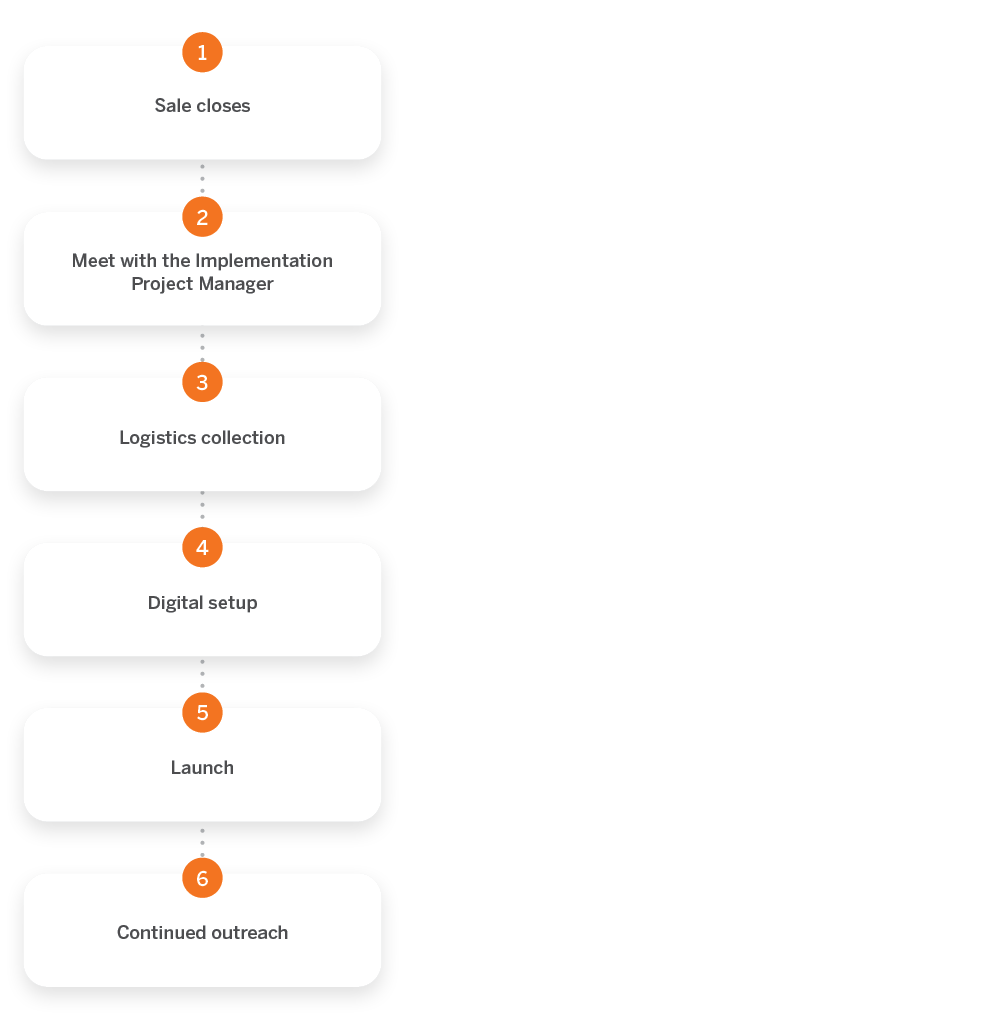
Technology requirements and guidelines
To ensure that your hardware and network meet the minimum technical requirements for performance and support of your curriculum products, please see Amplify’s customer requirements page.
You’ll also want to add the URLs on this page to the corresponding district- or school-level filters so that your teachers and students can access their Amplify Science materials.
Data sharing agreement
Partnering with Amplify through our data sharing program deepens learning outcomes and gives you the performance analysis you need to make impactful decisions within your district or school. By signing our data sharing agreement, your district will help us to better understand student performance as it relates to your state’s standards. It also allows us to compare results with the curriculum-embedded assessments and state-level assessments. These analyses will help you identify the areas where your teachers and students are excelling or may be experiencing challenges.
Stay tuned for additional updates.
Enrollment and licensing overview
During the enrollment and licensing call, your Amplify implementation partner will walk you through the enrollment process. We recommend exploring the enrollment web tool ahead of the call for suggestions on which enrollment method may be best for your district.
The following guides provide additional information about enrollment methods and the data sharing process.


Preparing for your materials
Each unit of Amplify Science comes with a hands-on materials kit.
Each hands-on materials kit arrives in 1–3 boxes and contains the following:
- Consumable materials
- Nonconsumable materials
- Classroom wall materials
- Premium print materials (cards, maps, etc.)
- 18 copies of each Student Book (K–5)
- A blackline master copy of the Student Investigation Notebook (K–5)
You can find complete materials lists for each unit in the following PDFs. This information is also available in the digital Teacher’s Guide within the program.
Once your district’s purchase order has been sent to Amplify and is processed, Amplify will provide tracking information on your materials kits and any additional print materials you’ve ordered.


Administrator Reports
Self-service Administrator Reports allow insight into teacher and student usage and student performance data for the current school year.
Access is limited to district and school administrators. Administrators can directly access these reports at my.amplify.com/admin-reports.
Announcements
Summer extension
With summer fast approaching, we recognize that some districts may be extending the school year and/or continuing the use of Amplify curriculum and programs for summer instruction. If your summer instruction will continue past June 30 and/or you need to make rostering or enrollment changes, follow our guidance on extending your rollover date.
Use stimulus funding to drive transformation
Learn about ESSER I, II, and III funding (or CARES, CRRSA, and ARP) and how to use these funds to help with learning recovery and acceleration. Districts have significant flexibility in how to use the ESSER money, with ESSER II and III specifying that some of the funds should be used to address unfinished learning. All Amplify programs and services meet the criteria for the funding. Get more information about funding and guidelines.
Next steps: How do I support my teachers?
Pre-launch checklist for teachers
Please share our Program Hub with your educators. It will provide helpful information as they prepare to implement Amplify in their classrooms, including a pre-launch checklist. Note that they’ll need to be logged into Amplify Science to access the Hub. If they don’t have a login yet, you can also download and share the Amplify Science pre-launch checklist for teachers PDF.

Professional learning
We partner with every district to make sure the Amplify Science rollout meets their unique needs. Check out these sample agendas to get a better understanding of what our team has to offer.
Advice and answers
The Science help website is filled with step-by-step resources to address educators’ questions. Encourage your educators to read through these tutorials and search for topics they want to learn more about.
Contact us
Powerful (and free!) pedagogical support
Amplify provides a unique kind of support you won’t find from other publishers. We’ve developed an educational support team of former teachers and administrators who provide pedagogical support at no cost to educators using our programs. This free service includes:
- Information on where to locate standards and other planning materials.
- Recommendations and tips for day-to-day teaching with Amplify Science.
- Support with administering and interpreting assessment data and more.
To reach our pedagogical team, click the orange icon while logged into the curriculum to get immediate help, call (866) 629-2446, or email edsupport@amplify.com.
Timely technical and program support
Our Customer Care and Support team is available Monday through Friday, 7 a.m. to 9 p.m. ET, and Sunday, 10 a.m. to 6 p.m. ET, through a variety of channels:
- Live chat: Click the orange icon while logged into the curriculum to get immediate help in the middle of the school day.
- Phone: Call our toll-free number: (800) 823-1969.
- Email: Send an email to help@amplify.com.
Join our community
Our Amplify Science Facebook group is a community of Amplify Science educators from across the country. It’s a space to share best practices, ideas, and support on everything from implementation to instruction. Join today.
The power of technology in the math classroom

You might say math and tech go hand in hand. And these days, of course, kids and tech go literally hand in hand. So it makes sense that using digital tools in the math classroom can help teachers reach students, and teach the math content they need to learn. But truly integrating technology into math instruction is not just a matter of adding random gadgets and gizmos. We need to do more—especially if we want to leverage the power of math technology to engage all students.
Why integrate technology into the math classroom
Integrating technology into instruction delivers numerous benefits in the classroom–perhaps especially in the math classroom.
Numerous studies suggest that technology can support student learning in the math classroom. This tech might take the form of graphic calculators, digital manipulatives, or learning software. In general, such tools have been shown to help students improve both their understanding of math concepts and their performance on tests.
Thoughtful tech has these effects in part because it can make math more engaging. Students are generally more excited to dive into a visually appealing and interactive program than a black-and-white math textbook.
Integrating technology into a math classroom also means:
- Personalized learning: Students can work at their own pace and get tailored guidance and feedback.
- Collaboration: Students can work together regardless of their physical location.
- Real-world applications: Technology can simulate real-world scenarios that require mathematical reasoning and critical thinking skills.
- Saving teachers time: Technology helps teachers assess learning more effectively, providing real-time feedback and helping them identify where students need support.
- Preparing students for the future: After all, most jobs require the use of technology!
How to integrate technology into the math classroom
The most effective technology approaches in the math classroom are active, not passive. They also invite deep thinking and productive struggle rather than speed and rote memorization.
The National Council of Teachers of Mathematics (NCTM) includes this guidance in its Principles to Action:
“An excellent mathematics program integrates the use of mathematical tools and technology as essential resources to help students learn and make sense of mathematical ideas, reason mathematically, and communicate their mathematical thinking.”
The NCTM recommends that teachers: “incorporate mathematical tools and technology as an everyday part of the mathematics classroom, recognizing that students should experience ‘mathematical action technologies’ and physical or virtual manipulatives to explore important mathematics.”
Here are just a few approaches that enhance engagement:
- Use interactive whiteboards or projectors: You can display math problems and solutions, diagrams, graphs, and simulations, allowing students to interact with and manipulate visual representations of math concepts.
- Use graphing calculators and virtual manipulatives: They can help students visualize and solve complex math problems, and prepare them for more advanced mathematical concepts.
- Use gamification techniques: Can make math more engaging and fun for students.
- Use online collaboration tools: These tools can help students work together on math problems and projects, even when they are not in the same physical location.
- Use select social media and other online platforms: To create math communities where students can collaborate, share resources, and ask questions.
- Use math software and apps: These programs can help students practice math, solve problems, and visualize math concepts in 3D or interactive models.
How Desmos Math 6–A1 delivers
Desmos Math 6–A1 is just that kind of program. It provides dynamic and interactive digital math learning experiences, alongside flexible and creative print activities. Its teacher dashboard is designed to encourage classroom discussion and collaboration. It invites students to explore a variety of approaches—and invites teachers to celebrate and develop interesting thinking in their classrooms.
The dashboard also shows teachers actionable formative assessment data for each student and the entire class, and allows them to leave written feedback for students in their lessons.
And we know it works. Teachers and students in our pilot program said that students learned more with Desmos Math 6–A1 than with their prior program. (See case studies in a large midwestern school district and in Naugatuck Public Schools.)
What’s more, Desmos Math 6–8 has earned perfect scores and an all-green rating from EdReports. This is a powerful affirmation not only of our program, but also of high-quality instructional materials, student-centered instruction, and thoughtful technology in the math classroom.
Learn more
Welcome, New York City educators!
Welcome, Utah K-8 reviewers!
Amplify Tutor Hiring
Introduction
Amplify Education, Inc. (“Amplify” or “we”) recognizes the importance of protecting the privacy and security of your personal information. This App Privacy Policy describes our practices in connection with information that we may collect through your use of the Cell Simulator iOS application (the “App”).
This App Privacy Policy describes Amplify’s practices for handling non-personal information (e.g., site activity) in connection with the App.
Children. The App does not collect personal information from any users, including children under 13 years of age.
By using the App, you agree to the terms and conditions of this App Privacy Policy. If you do not agree to this App Privacy Policy, please discontinue your use of the App.
Collection of information
Amplify may collect information from you at various points, including the following:
App activity information. When you access and interact with the App, we and our Third Party Agents (as defined below) may collect certain information about those visits. For example, we or our Third Party Agents may receive and record information about your computing device, including potentially your IP address, a unique application identifier assigned to that copy of the App (the “App ID”), or other characteristics of the device hardware, operating system and configurations for that device. The App ID and any other persistent identifiers we collect will be used solely for the purpose of recording information about your usage of the App, and will not be used to collect information through any other product or service.
Notice and choice
Updates to App Privacy Policy; Choice. Amplify may modify this App Privacy Policy. Please look at the Last Revised Date at the top of this App Privacy Policy to see when this App Privacy Policy was last revised. Any changes to this App Privacy Policy will become effective when we post the revised App Privacy Policy to this URL: http://amplify.com/curriculum/cell-module/privacy. If you do not wish to be bound by the terms of the revised App Privacy Policy, you must discontinue your use of the App.
Location of Data. The App is hosted in and managed and controlled by us from the United States and is not intended to subject us to the laws or jurisdiction of any jurisdiction other than that of the United States. If you are a user located outside the United States, you understand and consent to having any personal information processed in the United States. United States data protection and other relevant laws may not be the same as those in your jurisdiction.
Linked Services.The App may be linked to sites operated by unaffiliated companies. Amplify is not responsible for the privacy practices of unaffiliated companies, and once you leave the App via a link, you are subject to the applicable privacy policy of the unaffiliated service.
Use and disclosure
We may use and/or disclose any information we collect from you for the following purposes and as described elsewhere in this App Privacy Policy:
To provide and manage the App. We use the usage information we collect from you to provide the App and features to you, including to measure and improve its services and features, and to personalize your experience by delivering relevant content. We may also use and disclose aggregate or anonymous data about your use of and activity in the App to assist us in this regard and for any other purpose.
To improve our products and services. We may use your usage information for our internal business purposes, such as data analysis, developing new products and services, enhancing the App, and improving our services. To share with our affiliated education companies. Amplify may share your usage information with Amplify’s affiliated education companies for the purposes described in this App Privacy Policy.
To allow Third Party Agents to assist us. We may engage third party service providers, agents and partners (“Third Party Agents”) to perform functions on our behalf, such as analytics. We may disclose your usage information to such Third Party Agents to enable them to assist us in these efforts, for the purposes described in this App Privacy Policy.
To protect the rights of Amplify and our users. There may be instances when Amplify may disclose your usage information, in situations where Amplify has a good faith belief that such disclosure is necessary or appropriate in order to: (i) protect, enforce, or defend the legal rights, privacy, safety, operations, or property of Amplify, our parents, subsidiaries or affiliates or our or their employees, agents and contractors (including enforcement of our agreements, including our terms of use); (ii) protect the rights, safety, privacy, security or property of users of the Site or others; (iii) protect against fraud or for risk management purposes; (iv) comply with the law or legal process, including laws outside your country of residence; (v) respond to requests from public and government authorities, including those outside your country of residence; or (vi) allow us to pursue available remedies or limit the damages that we may sustain.
To complete a merger or sale of assets. If Amplify sells all or part of its business or makes a sale or transfer of its assets or is otherwise involved in a merger, transfer or other disposition of all or part of its business, assets or stock (including in connection with any bankruptcy or similar proceedings), Amplify may transfer your information to the party or parties involved in the transaction.
Security
Amplify uses commercially reasonable administrative, technical, personnel and physical measures to safeguard information in its possession against loss, theft and unauthorized use, disclosure or modification.
Sensitive information
We ask that you not send or disclose to us any personal and/or sensitive information (e.g., name, address, social security numbers, information related to racial or ethnic origin, health, or criminal background) on or through the App or otherwise.
Contact us
If you have questions about this App Privacy Policy, please contact us at:
Email: privacy@amplify.com
Mail: Amplify, 55 Washington St., Ste 900, Brooklyn, NY, 11201 Attn: General Counsel

Join us for an Oklahoma Amplify Science workshop
These fun and informative workshops will give you a sneak peak into Amplify Science for grades K-8. Enjoy dinner with your colleagues and Amplify Science team, preview the program, walk away with free samples, and maybe even a door prize!
Space is limited—register today!
In-person workshops
Agenda
4:00 p.m. Registration
4:30 p.m. Workshop
5:30 p.m. Dinner and door prizes
Tuesday, September 29
Stride Bank Center
301 S. Independence Street
Enid, OK 73701
Wednesday, September 30
Hampton Inn & Suites Stillwater West
615 S. Country Club Road
Stillwater, OK 74074
Thursday, October 1
Science Museum
2020 Remington Place
Oklahoma City, OK 73111
Tuesday, October 20
Oklahoma Aquarium
300 Aquarium Drive
Jenks, OK 74037
Thursday, October 22
Sam Noble Museum
University of Oklahoma
2401 Chautauqua Avenue
Norman, OK 73072
Virtual workshops
Agenda
4:00 p.m. Workshop begins
4:45 p.m. Q&A
5:00 p.m. Dinner gift card and door prizes
Wednesday, October 21
4:00 p.m. CDT
Tuesday, October 27
4:00 p.m. CDT
Wednesday, October 28
4:00 p.m. CDT
Thursday, October 29
4:00 p.m. CDT
Submit the form to register for an event!
The fine print
While we’ve made every effort to ensure that this invitation is consistent with the gift and ethics rules adopted by most jurisdictions, we recognize that many public officials are subject to rules that do not permit acceptance of this offer or require approval of other officials at your agency. If you do plan to attend our event, please ensure that acceptance of our invitation is fully compliant with your local rules regarding travel, lodging, and meals for events with vendors. Please let us know if we can provide any additional information to support your determination.
Amplify’s Subprocessors
This page provides the current list of third party service providers that Amplify engages to help us provide our services and may have access to Personal Information of our customers (“Subprocessors”) as outlined in Amplify’s Customer Privacy Policy.
How to get notified of changes
Please use the “Subscribe to Updates” functionality at the top of the page to receive emails from Amplify regarding updates to the list of Subprocessors and/or changes to the information provided on this page. Should you choose not to use this functionality to receive email notifications, it is our expectation that you check the link regularly for any updates.
Our commitments regarding Service Providers
All of the Subprocessors listed below have a legitimate need to access Personal Information in order to provide their service to Amplify as a part of Amplify’s provision of the services to our customers. With regard to Subprocessors, Amplify commits to:
- Conduct due diligence on the data privacy and security measures of new Subprocessors before providing access to Personal Information and monitor on an annual basis thereafter. As part of this process, Amplify reviews the Subprocessor’s security documentation, practices, and posture to ensure alignment with Amplify’s information security program and standards;
- Enter into a written agreement which requires at least the same level of protection for Personal Information and individuals as set out in Amplify’s Customer Privacy Policy and our agreements with customers, as applicable, before providing access to Personal Information;
- Restrict the Subprocessor’s access to Personal Information to only what is necessary to fulfill our contractual obligations or as otherwise permitted under the agreements with our customers or under applicable data privacy laws; and
- Remain liable for any processing of Personal Information carried out by Subprocessors to the same extent we would be liable if performing the services ourselves.
Subprocessors
Amplify’s Subprocessors of Personal Information are:
| Subprocessor | Purpose | Location | Student Data | Educator Data |
| Amazon Web Services | Cloud hosting services | United States |  |
|
| Anthology (formerly Blackboard) | Video conferencing and attendee tracking for tutoring services | United States | |
|
| Boomi, Inc. | Data integration | United States | |
|
| Datadog | Performance and security monitoring | United States | |
|
| dbt Labs, Inc. | Run database queries | United States | |
|
| Egnyte, Inc. | Secure file exchange | United States | |
|
| Fivetran, Inc. | Database loading | United States | |
|
| Gainsight, Inc. | Customer support | United States | |
|
| Google, LLC | Cloud hosting services | United States | |
|
| Google, LLC (Looker) | Data warehouse analytics | United States | |
|
| HubSpot | Email delivery | United States | |
|
| MongoDB, Inc. | Database hosting | United States | |
|
| Salesforce | Customer relationship management | United States | |
|
| SchoolDay (formerly GG4L) | Secure rostering | United States | |
|
| Snowflake, Inc. | Database hosting | United States | |
|
| Talkdesk, Inc. | Customer support | United States | |
|
| Twilio, Inc. (Sendgrid) | Email delivery | United States | |
|
Updates
| Date of Change | Change | Notes |
| October 10, 2025 | Changed Blackboard to Anthology and GG4L to SchoolDay. Update MongoDB purpose. Added Datadog to the Students Subprocessor List. Created Educators Subprocessor List. | Anthology and SchoolDay updated their corporate branding. Added list of Educator Data Subprocessors to clarify which partners process educator data. |
| June 14, 2024 |
Removed Desmos Studio, PBC, Qualfon Data Services Group, LLC, and Zendesk, Inc. | These partners and services are no longer used for customer support. |
| July 27, 2023 |
Added Fivetran |
– |
| September 15, 2022 |
Corrected name of Desmos Studio, PBC. |
– |
| July 21, 2022 | Added Desmos Collective LLC, Google, MongoDB, Twilio, and Zendesk | These services support Mathigon.org and Desmos Classroom |
| July 20, 2022 | Added Qualfon Data Services Group, LLC | – |
| October 4, 2021 | Added Blackboard, Inc. | – |
| July 26, 2021 | Fishtown Analytics, Inc. renamed to dbt Labs, Inc. | – |
| June 17, 2021 | Updated with data warehousing and roster services providers | – |
| May 28, 2021 | Initial public posting. | – |
Amplify Science – Oklahoma
Amplify Science – Oklahoma

Leadership and literacy brunch with Natalie Wexler
with Amplify and Riverside USD
Thursday, February 27, 2020
9:30–11:30 a.m. PST
Location:
Benjamin Franklin Elementary School – Library
19661 Orange Terrace Parkway
Riverside, CA 92508
Registration deadline: Space is limited at this free event! RSVP by February 20 to secure your spot.
Who should attend: Supervisors, ELA and reading directors, curriculum coordinators, and principals.
About the event
Join us for a free brunch, author talk, and book signing with education writer and author Natalie Wexler on February 27 from 9:30–12 a.m.
During our time together, Natalie will discuss the latest research around reading, writing, and engagement in elementary school, along with the key findings of her book The Knowledge Gap: The Hidden Cause of America’s Broken Education System—and How to Fix It (2019).
As our guest, you’ll:
- Meet and hear from education writer and author Natalie Wexler.
- Mingle with other district leaders from Riverside USD and surrounding areas.
- Enjoy a delicious brunch with colleagues.
- Leave with a signed copy of Natalie Wexler’s book The Knowledge Gap: The Hidden Cause of America’s Broken Education System—and How to Fix It (2019).
Agenda:
9:30 a.m.: Arrive, check in, and visit our brunch buffet.
10–11 a.m.: Hear from Natalie Wexler
11–11:15 a.m.: Q&A with Natlie Wexler
11:15–11:30 a.m.: Book signing

Meet our featured presenter

Natalie Wexler
Natalie Wexler is an education writer and the author of The Knowledge Gap: The Hidden Cause of America’s Broken Education System—and How to Fix It (2019). She is also the co-author, with Judith C. Hochman, of The Writing Revolution: A Guide to Advancing Thinking Through Writing in All Subjects and Grades (2017) and a senior contributor to Forbes. Her articles and essays have appeared in The New York Times, The Washington Post, The Atlantic, and other publications. Before turning to education, Wexler worked as a freelance writer and essayist on a variety of topics, and as a lawyer and legal historian. She lives in Washington, D.C.
Submit this form to register for the event!
Leadership and literacy brunch with Natalie Wexler
with Amplify and Riverside USD
Thursday, February 27, 2020
9:30–11:30 a.m. PST
Location:
Benjamin Franklin Elementary School – Library
19661 Orange Terrace Parkway
Riverside, CA 92508
Registration deadline: Space is limited at this free event! RSVP by February 20 to secure your spot.
Who should attend: Supervisors, ELA and reading directors, curriculum coordinators, and principals.
About the event
Join us for a free brunch, author talk, and book signing with education writer and author Natalie Wexler on February 27 from 9:30–12 a.m.
During our time together, Natalie will discuss the latest research around reading, writing, and engagement in elementary school, along with the key findings of her book The Knowledge Gap: The Hidden Cause of America’s Broken Education System—and How to Fix It (2019).
As our guest, you’ll:
- Meet and hear from education writer and author Natalie Wexler.
- Mingle with other district leaders from Riverside USD and surrounding areas.
- Enjoy a delicious brunch with colleagues.
- Leave with a signed copy of Natalie Wexler’s book The Knowledge Gap: The Hidden Cause of America’s Broken Education System—and How to Fix It (2019).
Agenda:
9:30 a.m.: Arrive, check in, and visit our brunch buffet.
10–11 a.m.: Hear from Natalie Wexler
11–11:15 a.m.: Q&A with Natlie Wexler
11:15–11:30 a.m.: Book signing
Meet our featured presenter

Natalie Wexler
Natalie Wexler is an education writer and the author of The Knowledge Gap: The Hidden Cause of America’s Broken Education System—and How to Fix It (2019). She is also the co-author, with Judith C. Hochman, of The Writing Revolution: A Guide to Advancing Thinking Through Writing in All Subjects and Grades (2017) and a senior contributor to Forbes. Her articles and essays have appeared in The New York Times, The Washington Post, The Atlantic, and other publications. Before turning to education, Wexler worked as a freelance writer and essayist on a variety of topics, and as a lawyer and legal historian. She lives in Washington, D.C.
Submit this form to register for the event!
AMPLIFY DESMOS MATH FLORIDA
Welcome, Palm Beach reviewers!
We’re honored to introduce you to Amplify Desmos Math Florida, and confident this comprehensive program will be a powerful tool in classrooms across your district.
Please start with the video on the right to learn more.
Next, view this video for an in-depth look at a lesson from both the Teacher and Student Editions.
Grade 7 course
To further support your review.
Visit http://learning.amplify.com/.
Select Log in with Amplify and use the credentials located in your submission documentation.


- Palm Beach Core Rubric
- Grade 7 Standards Correlation Amplify Desmos Math Florida
- Amplify Desmos Math Florida Program Guide
- IM7 Standards Alignment
- Grade 7 Multilingual Glossary
- Amplify Desmos Math Florida Multilingual Resources
Welcome, Program 6 reviewers, to Amplify CKLA California Transitional Kindergarten!
We’re honored to introduce you to Amplify Core Knowledge Language Arts (CKLA) California Transitional Kindergarten (TK). We’re confident you’ll find this comprehensive program to be a powerful tool for bringing the vision of the California ELA/ELD Framework and the California Preschool/Transitional Kindergarten Learning Foundations (PTKLF) to life in classrooms across the state.
Please start with the video on the right to learn how to navigate the program and access key features referenced within our submission. Below you’ll find additional resources to support your review.
Your review samples
Print samples
You will receive three boxes of physical samples as part of your review. Box 1 will contain your Reviewer Binder. This binder contains logistical information and printed copies of the Evaluation Criteria Map and Foundations Alignment Map. Boxes 2 and 3 will contain physical samples. As you begin the process of organizing your materials, please refer to the inventory checklist found inside each box as well as within your Reviewer Binder.
Digital samples
In order to access your digital samples, you’ll need to log in to our platform using your unique login credentials found on a Digital Access Flyer inside of your Reviewer Binder. Once you have located the flyer:
- Click the orange button below to access the platform.
- Click “Log in with Amplify.”
- Enter the username and password provided on your Digital Review Credential flyer.
Navigation tips
Before you get started, please review these important functionality notes:
Criteria Map and Standards Maps must be opened on Microsoft Word on your desktop to function as intended. If you open the documents without Microsoft Word on your desktop, citations will be cut off at the bottom of most tables within the document.
Many of our citations are deep-links to PDFs, meaning they will take you to the right page or the first page in the sequence for the citation in question. To ensure this functionality works, please disable any PDF-viewing extensions or plug-ins such as Adobe Acrobat Pro Browser Extension.
[Reviewer navigation video] Amplify CKLA California TK
Category 1: English Language Arts (ELA) content/alignment with Foundations
Alignment documents
The links below provide the alignment documents for Amplify CKLA California Transitional Kindergarten.
- Program 6.1: Basic ELA (TK) Evaluation Criteria Map
- ELA Foundations Map for Program 6.1 Learning Foundations alignment
Category 2: Program Organization
Program structure
Amplify CKLA California Transitional Kindergarten is a comprehensive English language arts curriculum designed to prepare young children for later reading success by building foundational language and literacy skills. Amplify CKLA California TK materials and instruction provide explicit, systematic support for developing young children’s language, literacy, and content knowledge within the context of developmentally-appropriate early childhood settings, incorporating and reflecting the key themes and practices of the CA PTKLF and Framework.
[Reviewer highlight video] Program organization
The flexible pacing recommendations of the program provide teachers with options to decide how best to keep students engaged while completing Amplify CKLA California Transitional Kindergarten instruction (e.g., wiggle breaks, hands-on participation, singing songs, brain breaks, etc.).
[Reviewer highlight video] Lesson organization
The literacy skills, vocabulary, and content knowledge developed in Amplify CKLA California Transitional Kindergarten are explicitly designed to provide a foundation for the skills and content taught in TK classrooms. The teacher-directed and student-led activities in Amplify CKLA California Transitional Kindergarten reflect all strands of the CA PTKLF foundational language sub-domains:
- Listening and speaking
- Foundational literacy skills
- Reading and writing
Amplify CKLA California TK domains of instruction are carefully chosen and sequenced to build prerequisite knowledge so that students can use that knowledge as they assimilate new, more complex information. The seven domains in Amplify CKLA California Transitional Kindergarten are:
- Important People in American History
- All About Me
- Families and Communities
- Classic Tales
- Plants
- Animals
- Habitats
Amplify CKLA California TK empowers teachers to deliver effective instruction and keeps students engaged with with the following resources:
- Teacher Guides
- Flip Books
- Image Cards
- Center Cards
- Activity Pages and Take-Home Pages
- Nursery Rhymes and Songs Posters
- Big Book: Classic Tales
- Trade Books
Activities are play-based, engaging, challenging, and adaptive for the full range of TK learners. Teacher materials also support teachers and aides in facilitating activities, establishing routines, and identifying effective procedures.
Scope and sequence
Click here to view the scope and sequence for Amplify CKLA California Transitional Kindergarten.
Category 3: Assessments
Amplify CKLA California TK assessments are designed to provide a snapshot of whether or not each student is mastering specific Core Content and Language Arts Objectives. The program incorporates multiple methods of assessing what students know and are able to do in each domain. Methods of assessments include:
- Observational/anecdotal assessments.
- Reteaching moments with aligned progress monitoring.
- Portfolio Collections (student work samples).
- Task assessments.
- Developmental progression monitoring.
Amplify CKLA California TK provides tools to facilitate collecting, analyzing, and sharing data on student progress and development. These include:
- Ready-made data collection forms with scoring guidelines (Not Yet, Progressing, Ready).
- Caregiver communication letters.
[Reviewer highlight video] Program alignment to Category 3
Category 4: Universal Access
Amplify CKLA California Transitional Kindergarten materials provide students with a range of skills and abilities, with opportunities for participation across all contexts of differentiated instruction in reading, writing, speaking, listening, and language.
Examples include the following:
- Teacher Guides feature sidebar differentiation tips.
- Classroom routines, such as taking attendance, rely on both visual and verbal prompts that can be individually tailored to students’ needs.
- Small-group activities often include suggested rounds of play that increase with difficulty and give teachers the choice to move forward to increase the level of challenge or repeat levels of play that prove challenging.
- Extension activities involve materials that can be adapted to scaffold students in a variety of ways; teachers can provide more or less structure and input depending on the needs of the students.
- Differentiation supports grounded in UDL include visuals, realia, multimodal instruction, and other materials relevant to all students.
Category 5: Instructional Planning and Teacher Support
Amplify CKLA California TK empowers teachers to deliver effective instruction with various resources. The program provides comprehensive planning and support materials designed to help teachers prepare for and execute lessons effectively and fulfill the requirements of Category 5.
Teacher materials
Planning and preparation resources
Each Teacher Guide contains all the information needed for each day of instruction. The following sections are included in each Teacher Guide:
- Assessments
- Introduction
- Learning Centers
- Transitions
- Starting the Day
- Skills Instruction
- Listening & Learning Instruction
- Pausing Points
The Domain Calendar shows the titles of activities and read-alouds taught on each day of instruction throughout the entire domain during the three main contexts for instruction:
- Starting the Day
- Skills
- Listening & Learning
Caregiver supports
The home-school connection letter template provides an easy way to share important information and set expectations with caregivers at the beginning of the school year.
Caregiver letters suggest ways parents and caregivers can support and reinforce learning at home through everyday activities. They also include high-quality texts and nursery rhymes and songs that parents can use to support students’ learning.
Math Teacher Lounge
Math Teacher Lounge is a biweekly podcast created specifically for K–12 math educators. In each episode, co-hosts Bethany Lockhart Johnson (@lockhartedu) and Dan Meyer (@ddmeyer) chat with expert guests, taking a deep dive into the math and educational topics you care about.
Join the Math Teacher Lounge Facebook group to continue the conversation, view exclusive content, interact with fellow educators, participate in giveaways, and more!
 |
 |
 |
 |
 |
 |
Stay connected
Join our community to connect with thousands of other math educators—and be the first to hear when new episodes drop!
We’ll also share new free resources for your classroom every month!
Current episode

S5-05. Math technology & hacks for math anxiety: research-based tips for caregivers
We’ve been very lucky to have so many prolific and brilliant researchers on this season of Math Teacher Lounge, and our next guest is no exception.
Listen as we sit down with Dr. Marjorie Schaeffer to discuss what causes math anxiety, math hacks, and how the right math technology can make an incredible impact in children and caregivers coping with math anxiety.
Listen today and don’t forget to grab your MTL study guide to track your learning and make the most of this episode!
Available episodes
Listen to our available episodes below!
Season 5
Listen to Season 5!
Season 5, Episode 04.
Coaching tips for managing math anxiety in teachers
So far this season, we’ve investigated math anxiety in students and its causes with passionate researchers and curriculum experts, including one from Sesame Workshop! In this episode, we hear from Dr. Heidi Sabnani, consultant, coach, and co-host of Math 4 All, as she gives us research-based tips for teachers who are facing math anxiety themselves! Listen as we discuss Heidi’s own math anxiety and journey through math, the effects teacher math anxiety can have on instruction, and practices educators can implement right away for overcoming math anxiety.
Season 5, Episode 03.
Cultivating a joy of learning with Sesame Workshop
In this episode, listen as we chat with Dr. Rosemarie Truglio, senior vice president of curriculum and content for Sesame Workshop! Continuing our theme of math anxiety this season, we sat down with Dr. Truglio to chat about Sesame Street and her thoughts on how to spread a growth mindset to young children and put them on course to academic achievement and long-term success.

Season 5, Episode 02.
Uncovering the causes of math anxiety
We’re continuing our season theme of math anxiety, going beyond the basics, diving deeper into what causes it, and how we can help students move forward. In this episode, we talk to Dr. Erin Maloney from the University of Ottawa to better understand what’s actually happening in the brain when a person experiences math anxiety, and how we can take steps to shift student mindsets in a positive direction.
Investigating math anxiety in the classroom

Season 5, Episode 01.
Investigating math anxiety in the classroom
This season, we’ll be talking all about math anxiety: what it is, what causes it, and what we can do to prevent or ease this anxiety in the math classroom. To launch this very important theme, in this episode, we sit down with Dr. Gerardo Ramirez, associate professor of educational psychology at Ball State University.
As someone who’s been studying math anxiety for more than a decade, he had some interesting research and advice to share on why math anxiety affects so many students (and adults), and tips for how to start reducing it.
Winter Wrap-Up episodes
Listen to the Winter Wrap-Up!
Ideas to build math fluency

Winter Wrap-Up, Episode 03.
Ideas to build math fluency
In this episode, we sit down with Dr. Valerie Henry to talk about math fluency and what that means for students. Listen as we dig into the research, hear Val’s three-part definition of fluency, and explore her five principles for developing it.
Mathematizing Children’s Literature
Winter Wrap-Up, Episode 02.
Mathematizing Children’s Literature
While we’re hard at work producing the exciting fifth season of Math Teacher Lounge: The Podcast, we’re continuing to share some of our favorite conversations from our first four seasons. This time around, we’re revisiting our popular episode that connected literacy and math!
In this episode, we sit down with Allison Hintz and Antony Smith, authors of Mathematizing Children’s Literature, to talk about what would happen if we were to approach children’s literature, and life, through a math lens–and how we can apply those same techniques to classroom teaching!
Problem solving and facilitating classroom discussions

Winter Wrap-Up, Episode 01.
Problem solving and facilitating classroom discussions
In this episode, In this episode, hosts Bethany Lockhart Johnson and Dan Meyer are looking back at the amazing speakers and conversations from past episodes and sharing some of their favorites!
First up: A season 2 double feature of The Power of Problem-Solving with Fawn Nguyen and Facilitating Classroom Discussions with authors Christy Hermann Thompson and Kassia Omohundro Wedekind.
Fawn is a specialist on Amplify’s advanced math team, and is a former math teacher and math coach—so she knows her stuff! You’ll hear about her five criteria for good problem-solving problems, and the power and importance of exposing all students to problem solving.
Then, we’ll move into Bethany and Dan’s conversation with Christy and Kassia to learn how hands-down conversations allow students to become better listeners and the steps you can take to implement hands-down conversations in your classroom.
Season 4
Listen to Season 4!
Cultivating mathematical joy

Season 4, Episode 05.
Cultivating mathematical joy
In this episode, Bethany and Dan explore mathematical joy while visiting a math teacher conference in Southern California. During this program, Dan describes his attempts to cultivate mathematical joy in his own school-aged kids.
Dear Math
Season 4, Episode 04.
Dear Math
In this episode, Bethany and Dan chat with Sarah Strong and Gigi Butterfield, authors of Dear Math: Why Kids Hate Math and What Teachers Can Do About It. Listen in as they chat about their experiences with finding joy in math, and how their passion helped them tell the stories of other students’ journeys to find (or not find!) joy in math.
LIVE from NCTM with Bethany and Dan
Season 4, Episode 03.
LIVE from NCTM with Bethany and Dan
In this episode, co-hosts Bethany Lockhart Johnson and Dan Meyer are LIVE with more than one hundred Math Teacher Lounge listeners at the recent National Council of Teachers of Mathematics conference. Listen in as they answer the pressing question: Who is the best teacher in film or television?
Bethany and Dan share their math biographies
Season 4, Episode 02.
Bethany and Dan share their math biographies
In this episode, co-hosts Bethany Lockhart Johnson and Dan Meyer get personal and share their “math bios”—their early experiences with math and how those experiences turned them into the educators they are today.
Joyful math teaching with Kanchan Kant

Season 4, Episode 01.
Joyful math teaching with Kanchan Kant
In this episode, Kanchan Kant joins Bethany Lockhart Johnson and Dan Meyer to discuss the key, early investment she makes at the start of the school year to ensure her math teaching will be joyful for herself and for her students for the rest of the year.
Season 3
Listen to Season 3!
Dan and Bethany Take on Twitter!
Season 6, Episode 06.
Dan and Bethany Take on Twitter!
In this episode, Bethany and Dan take a look at several tweets that caught the most fire on Twitter during the 2021-2022 school year. The pair answer questions about viral teaching methods, the best teaching advice you can give in three words, and if students should use pencils or pens in class. Join them as they take on those questions and several others in a fast-paced episode.
Developing an asset orientation with Lani Horn

Season 3, Episode 05.
Developing an asset orientation with Lani Horn
In this episode, math education professor Lani Horn shares with us what it means to have an asset orientation towards students, contrasting it with a deficit orientation, and helping Bethany and Dan understand the many ways students experience one or the other. Their conversation hit both high notes and low notes and included a challenge that Bethany and Dan both found extremely valuable for helping a teacher develop an asset orientation towards their students.
Ideas to build math fluency with Valerie Henry, Graham Fletcher, and Tracy Zager

Season 3, Episode 04.
Ideas to build math fluency with Valerie Henry, Graham Fletcher, and Tracy Zager
In this episode, Bethany and Dan are joined by three guests to better understand fluency and how to make its approach fun. Dr. Val Henry shares her three-part definition of fluency and her five principles for developing it. Additionally, Tracy Zager and Graham Fletcher join Bethany and Dan to better understand fluency through a lens of equity and using multimedia as a tool.
Math professional learning experiences with Elham Kazemi

Season 4, Episode 03.
Math professional learning experiences with Elham Kazemi
In this episode, Bethany Lockhart Johnson and Dan Meyer chat with Elham Kazemi to explore how to look at teaching as a collaborative experiment. Moving more toward analyzing student thinking and how that contributes to teaching itself, leaves more space for one’s own understanding of math to grow throughout your career. When one revises their teaching based on the data we’re collecting from students and peers, this allows us to be both teachers and learners forever.
Mathematizing Children’s Literature with Allison Hintz and Antony Smith
Season 3, Episode 02.
Mathematizing Children’s Literature with Allison Hintz and Antony Smith
In this episode, Mathematizing Children’s Literature authors Allison Hintz and Antony Smith join Bethany Lockhart Johnson and Dan Meyer to discuss what would happen if we were to approach children’s literature, and life, through a math lens – and how we can apply those techniques to classroom teaching.
Making math viral with Howie Hua

Season 4, Episode 01.
Making math viral with Howie Hua
In this episode, Howie Hua (you may know him from his viral TikTok videos) joins Bethany Lockhart Johnson and Dan Meyer to discuss making math accessible for students through multiple social media platforms, creating an engaging space for students to share their ideas.
Season 2
Watch Season 2!
Math potluck favorites
Bethany Lockhart Johnson and Dan Meyer are hosting a Math Teacher Lounge potluck. Instead of bringing a casserole (or a store-bought item passed off as homemade), Bethany and Dan are bringing you a cornucopia of math topics. Be sure to join our Facebook group (facebook.com/groups/mathteacherlounge) as we will be announcing some exciting changes in the new year!
The power of problem solving with Fawn Nguyen
Rio School District Teacher on Special Assignment and Amplify Math advisor Fawn Nguyen joins Bethany and Dan to discuss the power of problem solving. Hear from Fawn about:
- Her five criteria for good problem solving problems.
- How problem solving should involve all students.
- The power of exposing all students to problem solving.
- And much more!
Hands Down, Speak Out | Facilitating classroom discussions
Authors Christy Hermann Thompson and Kassia Omohundro Wedekind chat with Bethany and Dan about facilitating student conversations in the math and literacy classrooms. Watch the video to learn how hands down conversations allow students to become better listeners and learn about steps you can take to implement hands down conversations in your classroom.
Be sure to head over to our Facebook group to participate in our book club study with Christy and Kassia.
An asset-based return to school | Math teaching ideas
A lot of great learning occurred over the last school year. Watch Bethany and Dan’s conversation with math educators (Zak Champagne, Natali I. Gaxiola, Howie Hua, Janaki Nagarajan, Brian Shay, and Dolores Torres) to hear what learning, practices, and ideas they want to bring with them to the 2021-2022 school year.
Season 1
Watch Season 1!
Episode 6, Segment 1: Math in public with Molly Daley and Chris Nho
Where is the most unusual place you have seen math in the last year? In this segment of Math Teacher Lounge, Public Math’s Molly Daley (@mdaley15) and Chris Nho (@nhoskee) join Bethany Lockhart and Dan Meyer to discuss all the unique places one can find math, including a laundromat, to elicit and invite math conversations.
Learn more about Public Math by visiting public-math.org.
Episode 6, Segment 2: Math in public with Molly Daley and Chris Nho
Molly Daley and Chris Nho are back in the lounge to answer this question. In this segment they join Bethany and Dan for a mathematizing public places game. Watch the video to join in the game and see how you can spot and make sense of math in public spaces.
Learn more about Public Math by visiting public-math.org.
Episode 6, Segment 3: Math in public with Omo Moses
MathTalk’s CEO Omo Moses enters the Math Teacher Lounge to chat with Bethany Lockhart Johnson and Dan Meyer. Watch their conversation to learn about how communities can create positive math experiences for all.
Episode 5: Slow reveal in an 8th grade classroom
In the latest segment of the Math Teacher Lounge series, Dan Meyer (@ddmeyer) substitute teaches an 8th grade class. Students interact with a few activities authored by Dan using the slow reveal described first in the Power of Data Science segment.
Curious how Dan found his way to this class? Our Math Teacher Lounge Facebook group made it happen! Join the group today and catch up on previous segments and stay in-the-know with all things MTL.
Episode 4, Segment 1: Wrong and brilliant
Is there a different and better way to teach rightness and wrongness in math class? In this segment, Bethany and Dan use a Desmos activity to discuss how wrong and brilliant answers can reveal student understanding and inform your instruction.
Episode 4, Segment 2: Wrong and brilliant with Mandy Jansen
University of Delaware professor and author Mandy Jansen (@mandymathed) joins Bethany Lockhart Johnson and Dan Meyer to continue the discussion around wrong and brilliant and the idea of rough draft math.
Episode 4, Segment 3: Wrong and brilliant with Megan Franke
The conversation around wrong and brilliant in the classroom concludes with UCLA Professor Megan Franke (@meganlfranke). Professor Franke discusses with Bethany (@lockhartedu) and Dan (@ddmeyer) the amazing things students are doing in math (in a pandemic!) and more.
Episode 3: The power of data science with Jenna Laib
Curious how data science can reveal profound noticings in your math class? Special guest Jenna Laib joins Bethany Lockhart Johnson and Dan Meyer to discuss this and the power of data science in the classroom.
Episode 2: Effective and ineffective technology in the math classroom
Bethany Lockhart Johnson and Dan Meyer discuss technology in the math classroom with the following special guests: Idil Abdulkadir, Robert Berry, Lauren Carr, Steve Leinwand, Francis Su, and Theresa Wills.
Episode 1: Welcome to MTL, let’s talk distance learning!
In this episode, Bethany and Dan talk distance learning. You’ll learn a little about what’s in store for series subscribers, listen to your hosts figure out the topic du jour by playing a game, and hear from Idil Abdulkadir as the group discusses real vs. fake Zoom norms.
About your hosts
Learn more about your hosts!
Bethany Lockhart Johnson
Bethany Lockhart Johnson is an elementary school educator and author. Prior to serving as a multiple-subject teacher, she taught theater and dance, and now loves incorporating movement and creative play into her classroom. Bethany is committed to helping students find joy in discovering their identities as mathematicians. In addition to her role as a full-time classroom teacher, Bethany is a Student Achievement Partners California Core Advocate and is active in national and local mathematics organizations. Bethany is a member of the Illustrative Mathematics Elementary Curriculum Steering Committee and serves as a consultant, creating materials to support families during distance learning.

Dan Meyer
Dan Meyer taught high school math to students who didn’t like high school math. He has advocated for better math instruction on CNN, Good Morning America, Everyday With Rachel Ray, and TED.com. He earned his doctorate from Stanford University in math education and is currently the Dean of Research at Desmos, where he explores the future of math, technology, and learning. Dan has worked with teachers internationally and in all 50 United States and was named one of Tech & Learning’s 30 Leaders of the Future.
Follow us on social media!
Check out our social media!

Facebook groups
Join in the Math Teacher Lounge conversation by joining our Facebook group or by checking out our Facebook community group!
Join in the Math Teacher Lounge conversation by following us on Instagram @Amplify.education.


Desmos Classroom
Desmos Classroom is a teaching and learning platform offering a collection of free digital lessons and lesson building tools. Learn more about Desmos Classroom on Twitter and on Facebook.
Resources
Enjoy our free resources!


Amplify ELA: Florida Edition professional development
Amplify ELA is an engaging and rigorous curriculum designed specifically for grades 6–8. With Amplify ELA, students learn to tackle any complex text and make observations, grapple with interesting ideas, and find relevance for themselves.
We’ve created a wide suite of professional development offerings that will help you meet your unique needs this school year. Find out more below!

Amplify CKLA, ELA, and Science professional development has been vetted by Rivet Education’s team through a rigorous three-step process and is listed in the Professional Learning Partner Guide.
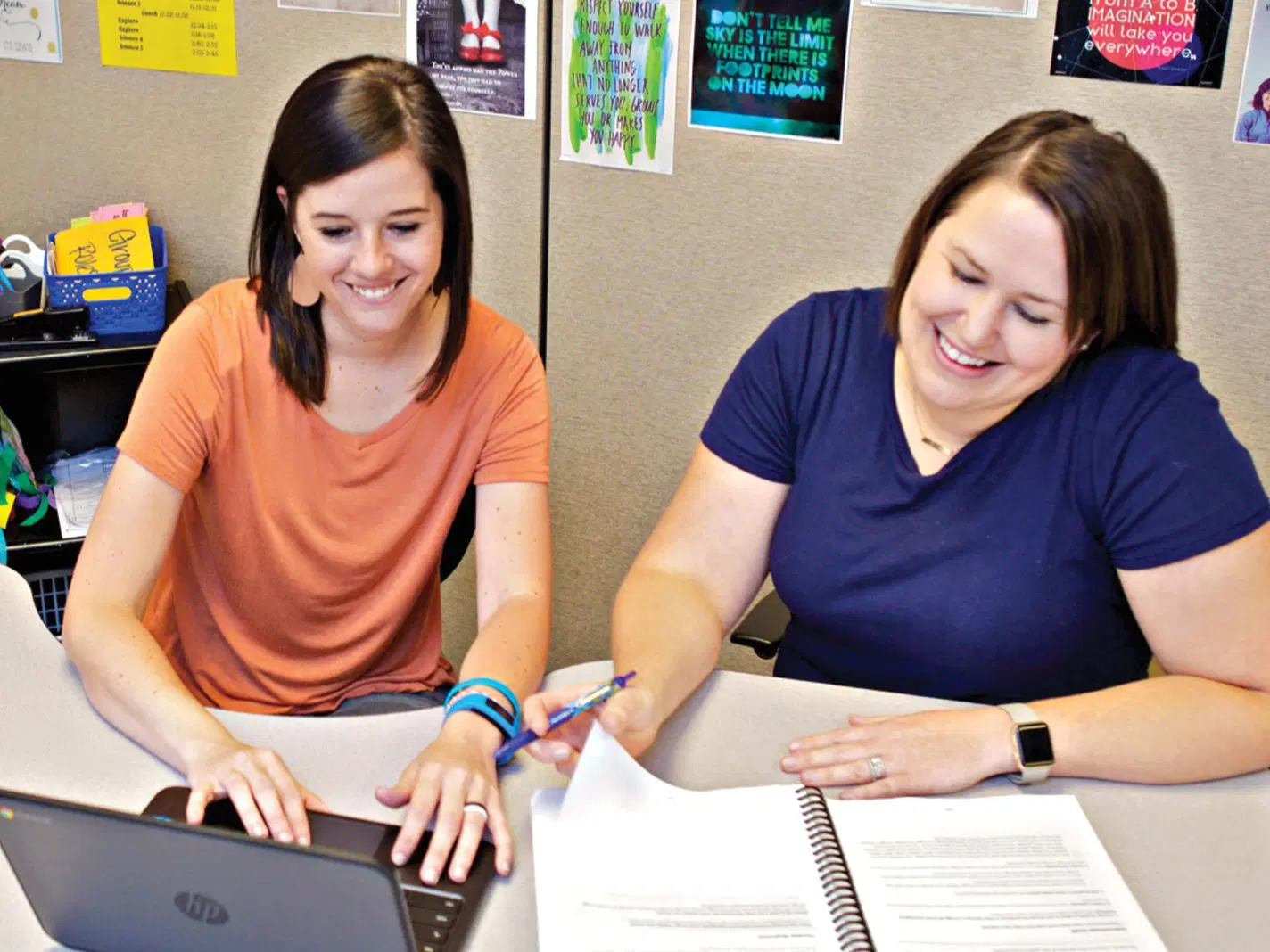
Plan your professional development
We’re excited to partner with you on your Amplify journey. Flexible professional development pathways have been designed to meet your needs.

Recommended professional development plan
Our team has curated a recommended professional learning path from initial launch to continuous support. Use the Professional Development Planning Guide below to discuss the plan that best meets your school or district needs with your Account Executive.
Sessions overview
Recommended sessions are highlighted below
| Title | Duration | Modality | Available |
|---|---|---|---|
| Launch | |||
| Comprehensive initial training for teachers | 2 days consecutive | Onsite | Yes |
| Initial training for teachers | 1 day | Onsite | Yes |
| Initial training for teachers | 2 half days | Remote | Yes |
| Program overview | Half day | Onsite/Remote | Yes |
| Initial training for instructional leaders | Half day | Onsite/Remote | Yes |
| Strengthen | |||
| Enhancing observations for leaders | Half day | Onsite/Remote | 09/01/22 |
| Enhancing planning and practice | Half day | Onsite/Remote | Yes |
| Analytic reading | Half day | Onsite/Remote | Yes |
| Supporting all learners | Half day | Onsite/Remote | Yes |
| Data-informed instruction | Half day | Onsite/Remote | Yes |
| Strengthen consultation session | 1 hour | Remote | Yes |
| Strengthen consultation package | 3 1-hour sessions | Remote | Yes |
| Coach | |||
| Coaching sessions | 2 days consecutive | Onsite | Yes |
| Coaching sessions | 1 day | Onsite/Remote | Yes |
| Half day | Onsite/Remote | Yes | |
Launch
Comprehensive initial training for teachers
2 days consecutive (6 hours per day, 12 hours total)
Prepare to implement and support Amplify ELA instruction in your schools! Learn how Amplify ELA supports students through rigorous and engaging ELA instruction. Participants will navigate the Amplify ELA platform, learn to give feedback on student work, and explore how to use Amplify ELA’s embedded supports and Reporting app to monitor student progress. Participants will engage in multiple opportunities to practice components of Amplify ELA and leave confident to begin teaching.
Audience: Teachers and coaches, maximum 30 participants
Modality: Onsite/Remote
Initial training for teachers
1 day (6 hours)
Prepare to implement and support Amplify ELA instruction in your schools! Learn how Amplify ELA supports students through rigorous and engaging ELA instruction. Participants will navigate the Amplify ELA platform, learn to give feedback on student work, and explore how to use Amplify ELA’s embedded supports and Reporting app to monitor student progress. Participants will leave with an action plan to begin teaching Amplify ELA.
Audience: Teachers and coaches, maximum 30 participants
Modality: Onsite
Initial training for teachers
Two half days (3 hours per day, 6 hours total)
This full-day initial training session (6 hours) is split into two half-day sessions (3 hours each). Part 1 and Part 2 may be scheduled consecutively on the same day or on different days, ideally within ~2 weeks. The same participants should attend both sessions in order to receive all content about key components of Amplify ELA, which includes learning how to navigate, teach, and monitor student progress.
Audience: Teachers and coaches, maximum 30 participants
Modality: Remote
Program essentials
Half day (3 hours)
Learn the program essentials including how to navigate the digital curriculum, print materials components and how to locate assessments, data reports and other features associated with the curriculum.
Audience: Teachers and coaches, maximum 30 participants.
Modality: Onsite/Remote
Initial training for instructional leaders
Half day (3 hours)
This training will provide district- and school-level instructional leaders with an overview of Amplify ELA so that they can support their staff in implementing Amplify. Learn basic navigation and gain an understanding of Amplify ELA’s approach to reading, writing, and language instruction. Participants will then have the opportunity to choose how to best support teachers by either developing a school-wide implementation plan or learning strategies for effective classroom observations.
Audience: Ideal for instructional leaders, principals, and district staff who oversee the implementation of the new curriculum, maximum 30 participants
Modality: Onsite/Remote
Strengthen
Enhancing observations for leaders
Half day (3 hours)
Elevate your program knowledge to support colleagues with effective ELA implementation! Practice analyzing ELA lessons and identify key instructional elements and next steps. Participants will be prepared to analyze data and enhance classroom observations.
Prerequisite training: Initial training for leaders
Audience: Ideal for instructional leaders, principals, and district staff who oversee the implementation of the new curriculum, maximum 30 participants
Modality: Onsite/Remote
Enhancing planning and practice
Half day (3 hours)
Dig into one unit to unpack standards, assessments, and student engagement. Through backward planning, this session guides teachers to think deeply about learning outcomes and key moments of formative assessments. Teachers will leave this session with a detailed plan of a unit of their choice that includes learning outcomes, key assessment moments, and aligned instructional strategies.
Audience: Ideal for new or experienced Amplify ELA teachers or coaches, maximum 30 participants
Modality: Onsite/Remote
Analytic reading
Half day (3 hours)
Participants will learn how close reading functions in Amplify ELA and which teacher moves support students as they tackle complex texts. Participants will learn how to facilitate a close reading session to support key reading routines, as well as promote academic discourse and the type of collaboration that drives analysis and deepens understanding.
Audience: Ideal for new or experienced Amplify ELA teachers, maximum 30 participants
Modality: Onsite/Remote
Supporting all learners
Half day (3 hours)
Participants will learn how to effectively use embedded and differentiated supports and the Classwork app to support all students, including English language learners (ELLs), students with learning disabilities, struggling readers and writers, and advanced students.
Audience: Ideal for new teachers or instructional leaders who want to learn more about included supports in Amplify ELA, maximum 30 participants
Modality: Onsite/Remote
Data-informed instruction
Half day (3 hours)
Participants will review their own student data using the Reporting and Classwork apps and align embedded supports to specific student needs. The goal of this session is to become proficient in turning Amplify ELA data into differentiated and targeted instruction.
Note: This course can be combined with the supporting all learners session to make a full day of training.
Prerequisite: 4–6 weeks of student data in Amplify’s Reporting app. It is recommended that teachers are in at least Unit B.
Audience: Ideal for teachers or support staff who want to learn how to use student data to inform instruction and provide differentiation, maximum 30 participants
Modality: Onsite/Remote
Strengthening consultation session
1 hour
This 60-minute session will focus on a specific topic that will deepen educators’ understanding of ELA and equip them with the tools needed to drive stronger student outcomes. An Amplify facilitator will align with the school or district leadership team in advance of the session on the topic (chosen from a menu of options) that will best meet educators’ unique needs. The menu includes sessions on engagement, pacing, and grading/assessment.
Audience: Teachers and coaches, maximum 30 participants
Modality: Remote
Strengthening consultation package
3 1-hour sessions
This package consists of three 60-minute sessions that can be delivered on the same day or on different days. Each session will focus on a specific topic that will deepen educators’ understanding in ELA and equip them with the tools needed to drive stronger student outcomes. An Amplify facilitator will align with the school or district leadership team in advance of the session on the topic (chosen from a menu of options) that will best meet educators’ unique needs. The menu includes sessions on: engagement, pacing and grading/assessment.
Audience: Teachers and coaches, maximum 30 participants
Modality: Remote
Coach
Coaching session
2 days consecutive (6 hours per day, 12 total)
Strengthen your implementation of Amplify ELA with an onsite Coaching visit for your teachers and/or leaders. Participants can choose from a variety of topics that include, but are not limited to: lesson modeling and debrief (conducted by an Amplify ELA coach), grade-level planning, classroom observations, and leadership consultation. The flexible onsite coaching design allows for a collaborative approach to support effective program implementation.
Audience: Teachers, coaches, and/or instructional leaders, maximum 30 participants
Modality: Onsite/Remote
Coaching session
1 day (6 hours)
Strengthen your implementation of Amplify ELA with an onsite Coaching visit for your teachers and/or leaders. Participants can choose from a variety of topics that include, but are not limited to: lesson modeling and debrief (conducted by an Amplify ELA coach), grade-level planning, classroom observations, and leadership consultation. The flexible onsite coaching design allows for a collaborative approach to support effective program implementation.
Audience: Teachers, coaches, and/or instructional leaders, maximum 30 participants
Modality: Onsite/Remote
Coaching session
Half day (3 hours)
Strengthen your implementation of Amplify ELA with a Coaching session for your teachers and/or leaders. Participants can choose from a variety of topics that include, but are not limited to: lesson modeling and debrief (conducted by an Amplify ELA coach), grade-level planning, classroom observations, and leadership consultation. The flexible coaching design allows for a collaborative approach to support effective program implementation.
Audience: Teachers, coaches, and/or instructional leaders, maximum 30 participants
Modality: Onsite/Remote
Pricing
We offer the following pricing for training sessions and packages:
| Session type | Pricing |
|---|---|
| 2-day onsite session | $4,800 |
| 1-day onsite session | $3,200 |
| 1-day remote session (2 half days remote) | $1,500 |
| Half-day onsite session | $2,500 |
| Half-day remote session | $750 |
| 1-hour remote session | $350 |
| 3 1-hour remote sessions | $1,000 |
Please note that the prices are general ranges and may be subject to change.
Contact
Amplify welcomes the opportunity to partner with schools and districts to design professional development plans and answer your questions.
If you would like to order any of our professional development services, please contact your local Amplify sales representative or call (800) 823-1969.
Welcome, Indiana review committees!
Welcome, Utah Reviewers to Amplify Desmos Math!
Amplify Desmos Math thoughtfully combines conceptual understanding, procedural fluency, and application. Each lesson is designed to tell a story by posing problems that invite a variety of approaches before guiding students to synthesize their understanding of the learning goals.
Scroll to learn more about the program and explore sample materials.
About the program
We believe in math that motivates. Our structured approach to problem-based learning builds on students’ curiosity to develop lasting grade-level understandings for all students.
The program thoughtfully combines conceptual understanding, fluency, and application, motivating students with interesting problems they are eager to solve. Teachers can spend more time where it’s most impactful: creating a collaborative classroom of learners.
A powerful suite of math resources
Amplify Desmos Math combines the best of problem-based lessons, intervention, personalized practice, and assessments into a coherent and engaging experience for both students and teachers.

Screening and progress monitoring
mCLASS® Assessments, along with daily formative checks, measure not only what students know, but also how they think. The asset-based assessment system provides teachers with targeted, actionable insights, linked to core instruction and intervention resources.
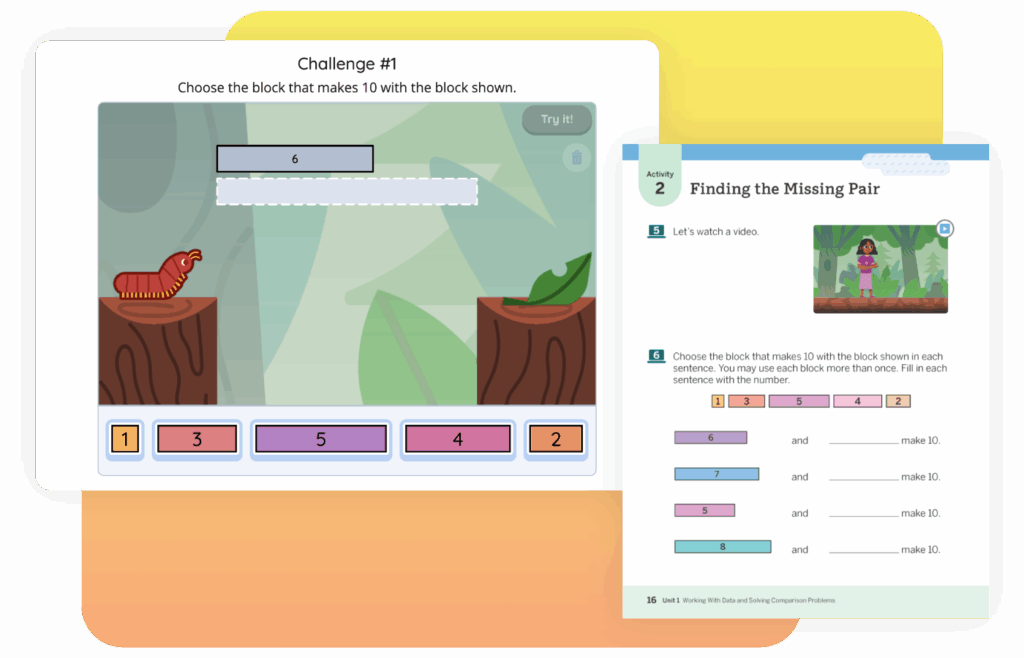
Core instruction
Amplify Desmos Math lessons pair problems students are eager to solve with clear instructional moves for teachers. Unit- and lesson-level core assessments give teachers data at their fingertips to guide and differentiate instruction.
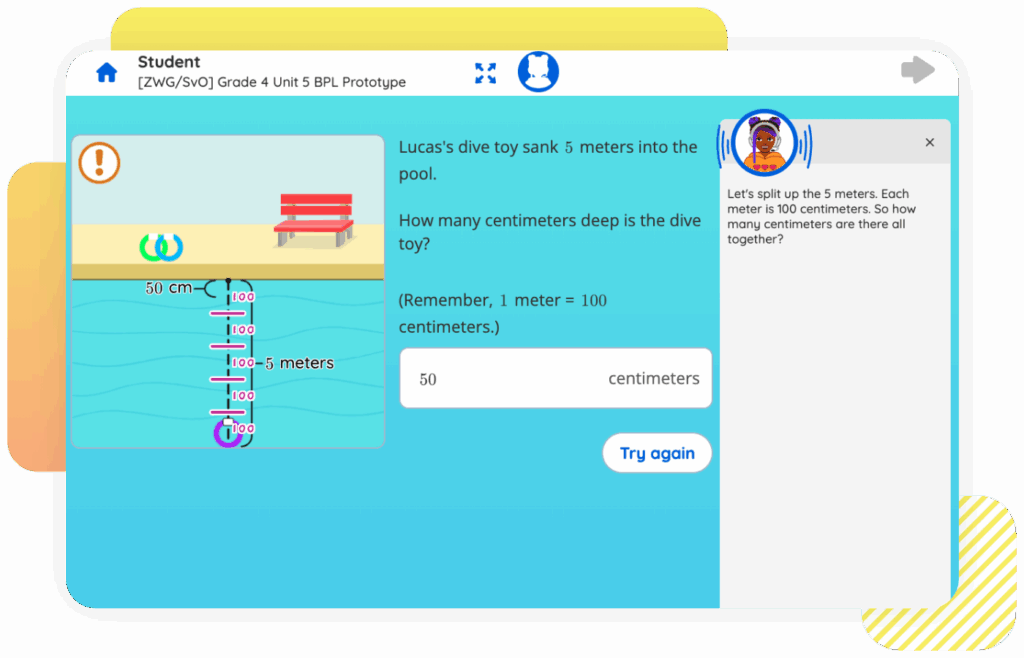
Integrated personal learning
Boost Personalized Learning activities help students access grade-level math through engaging, independent digital practice. Responsive Feedback adjusts to students’ work, providing item-level adaptivity to further support their learning.
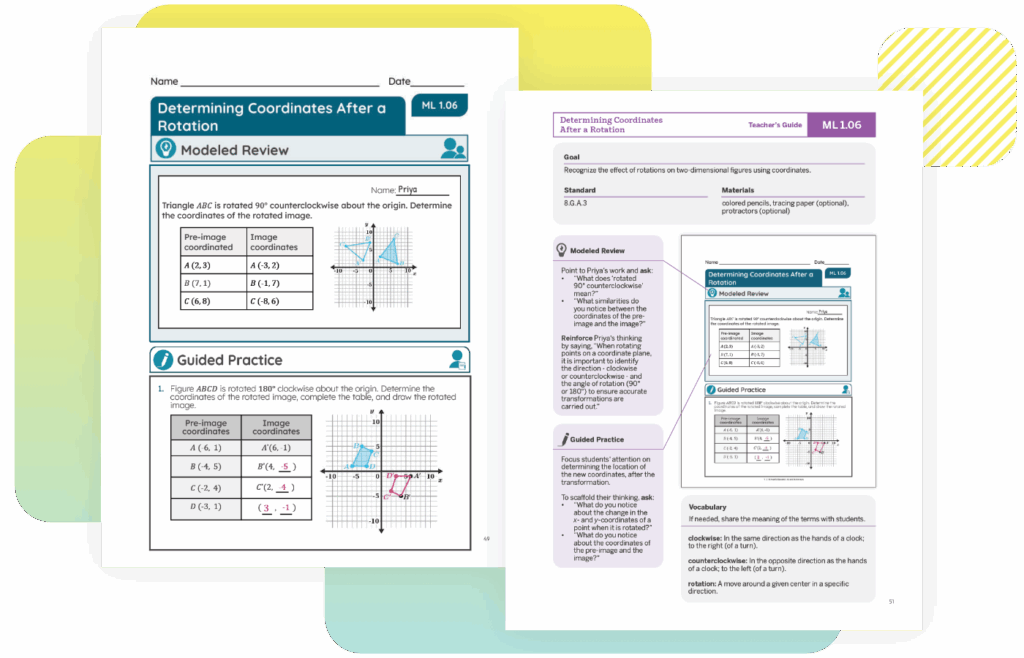
Embedded intervention
Integrated resources like Mini-Lessons, Fluency Practice, and Math Adventures provide targeted intervention on a specific concept or skill connected to the daily lesson. Extensions are also available to stretch students’ understanding.
Reviewer resources
The links below contain resources to help you with your review:
- Utah Core State Standards Alignment for Amplify Desmos Math Grades K–5
- Utah Core State Standards Alignment for Amplify Desmos Math Grades 6–8
- Utah Mathematics Rubric
- Amplify Technology Requirements
- Amplify Desmos Math Program Guide for Grades K–5
- Amplify Desmos Math Program Guide for Grades 6–8
- Amplify Desmos Math Components Guide Grades K–5
- Amplify Desmos Math Components Guide Grades 6–8

Digital access
In order to access your digital samples, you’ll need to log into our platform using your unique login credentials found on a Digital Access Flyer inside of your Reviewer Binder. Once you have located the flyer:
- Click the orange button below to access the platform.
- Click “Log in with Amplify.”
- Enter the username and password provided on your Digital Access Flyer.
Grades K–5 sample materials
Click the links in the sections below to explore sample materials from each grade. Please note the grade level teacher editions and student editions below may take a few minutes to load due to the size of the file. You can access the same materials on the digital platform within the Grade Level Overviews and within each lesson under the Paper Resources section.
Here you will find the Scope and Sequence for Grades K–5.
You can also watch a product expert walk through a lesson and the available program components.

Kindergarten
Grade 1
Grade 3
Grade 4
Grade 6–8 sample materials
Click the links in sections below to explore sample materials from each grade. Please note the grade level teacher editions and student editions below may take a few minutes to load due to the size of the file. You can access the same materials on the digital platform within the Grade Level Overviews and within each lesson under the Paper Resources section.
Here you will find the Scope and Sequence for Grades 6–8.
You can also watch a product expert walk through a lesson and the available program components.
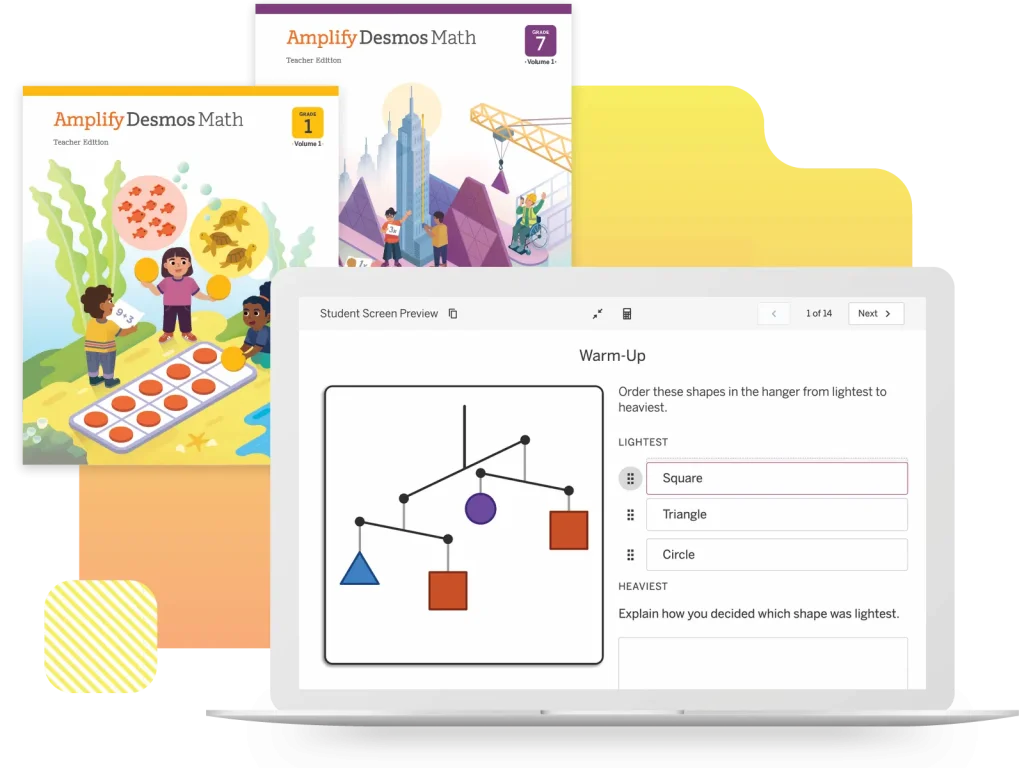
Grade 6
Grade 7
Welcome to Amplify CKLA 3rd Edition, Utah Reviewers!
We’re excited to share everything you need to review Amplify CKLA 3rd Edition, our K–5 core literacy program. On this site, you’ll find a comprehensive collection of resources and overviews to get you started, as well as a range of materials to explore the program, including Teacher Guides, Activity Books, Student Readers, and more, organized by grade and unit.
Please note that the files on this site are static representations of the high-quality materials you’ll review on the digital platform.
Reviewer resources
Access key materials designed to support your review of Amplify CKLA 3rd Edition.
- Utah Instructional Strategies and Routines
- Utah Science of Reading Evidence-Informed Core Criteria Checklist
- Utah State Standards for English Language Arts and 3rd Edition Core Knowledge Language Arts Alignment
- Program Guide
- Components Guide
- Amplify Technology Requirements
- Choice Units Overview
- Text Types and Text Complexity Guide
- Writing Brochure
- Assessment Overview
- K–5 Knowledge Map
- Scope and Sequence by Grade and Strand:
- Text Types and Range of Writing by Grade:
Digital platform access
Amplify CKLA’s all-in-one platform offers essential tools that streamline instruction for teachers and engage students with meaningful content.
In order to access your digital materials, you’ll need to log into our platform using your unique login credentials found on the Start Here flyer inside of your Reviewer Binder. Once you have located the flyer:
- Click the orange button below to access the platform.
- Click “Log in with Amplify.”
- Enter the username and password provided on your Start Here flyer.
The video below will provide you with instructions on how to access and navigate the digital platform.
Teachers can plan and deliver lessons efficiently, while students can access assignments, assessments, and fun practice games within the CKLA digital platform. The digital experience includes:
Presentation Screens
Deliver interactive lessons with ready-made, customizable slides for every lesson.
Auto-scored digital assessments
Assess vocabulary, comprehension, and knowledge development at the end of each K–2 Knowledge and 3–5 Integrated Unit.
Standards-based reports
Identify strengths and growth areas for individuals, small groups, or your entire class. Interactive dashboards offer detailed results from assessments and activities.
Skill-building practice games
Engage students with interactive games that reinforce concepts and make learning fun. Powered by Boost Reading™, these games align with lessons and provide real-time feedback.
eReader
Students access texts, take notes, and use audio-enabled eReaders to enhance their reading experience.
Sound Library
Students watch articulation videos and listen to songs for each sound to support phonological awareness.
Vocab App
Helps students in Grades 3–5 practice Amplify CKLA Tier 2 vocabulary words with fun, interactive games.
Intervention Toolkit
Offers user-friendly resources designed to aid educators in identifying and addressing deficiencies in students’ foundation skills.
Kindergarten
Explore all available resources for Kindergarten, organized by strand and unit.
Knowledge Strand
|
Unit 1: Star Light, Star Bright: Nursery Rhymes and Fables |
Unit 2: See, Hear, Smell, Taste, Touch: The Five Senses |
Unit 3: Underdogs and Heroes: Stories |
|
Unit 4: See How They Grow: Plants |
Unit 5: Moo, Cluck, Oink: Farms |
Unit 6: Deep Roots: Introduction to Native American Cultures |
|
Unit 7: All Around the World: Geography |
Unit 8 (Choice): Royal Tales: Monarchs |
Unit 8 (Choice): National Icons: Presidents and American Symbols |
|
Unit 9 (Choice): Our Planet: Taking Care of the Earth |
Unit 9 (Choice): Rain and Rainbows: Seasons and Weather |
Unit 10: Shaped by Nature: Art and the World Around Us
|
Skills Strand
|
Unit 1 |
Unit 2 |
Unit 3 |
|
Unit 4 |
Unit 5 |
Unit 6 |
|
Unit 7 |
Unit 8 |
Unit 9 |
Grade 1
Explore all available resources for Grade 1, organized by strand and unit.
Knowledge Strand
|
Unit 1: The Moral of the Story: Fables and Tales |
Unit 2: From Nose to Toes: How Your Body Works |
Unit 3: Common Threads: Different Lands, Similar Stories |
|
Unit 4: Reach for the Stars: Astronomy |
Unit 5: Charting the World: Geography |
Unit 6: A World of Homes: Animals and Habitats |
|
Unit 7: A New Nation: American Independence |
Unit 8 (Choice): Once Upon a Time: Fairy Tales |
Unit 8 (Choice): Our Planet: The History of the Earth |
|
Unit 9 (Choice): From Babylon to the Nile: Early World Civilizations |
Unit 9 (Choice): Early Americas: Maya, Aztec, and Inca |
Unit 10: Adventure Stories: Tales from the Edge
|
Skills Strand
|
Unit 1 |
Unit 2 |
Unit 3 |
|
Unit 4 |
Unit 5 |
Unit 6 |
|
Unit 7 |
Ancillary Components |
Grade 2
Explore all available resources for Grade 2, organized by strand and unit.
Knowledge Strand
|
Unit 1: Fortunes and Feats: Fairy Tales and Tall Tales |
Unit 2: The Birthplace of Democracy: Ancient Greece |
Unit 3: Legends and Heroes: Greek Myths |
|
Unit 4: Our Planet: Cycles in Nature |
Unit 5: Butterflies, Bees, and Beetles: Insects |
Unit 6: A House Divided: The American Civil War |
|
Unit 7: Sounds and Stanzas: Poetry |
Unit 8 (Choice): Journeys to America: Immigration |
Unit 8 (Choice): Making a Difference: Creating Change |
|
Unit 9 (Choice): Building Blocks: All About Nutrition |
Unit 9 (Choice): Early Asian Civilizations: India and China |
Unit 10: Taking Flight: The Age of Aviation
|
Skills Strand
|
Unit 1 |
Unit 2 |
Unit 3 |
|
Unit 4 |
Unit 5 |
Unit 6 |
|
Ancillary Components |
Grade 3
Explore all available resources for Grade 3, organized by unit.
Core Units
|
Unit 1: Timeless Tales: Classic Stories |
Unit 2: Fur, Fins, and Feathers: Animal Classification |
Unit 3: Rhythm and Rhyme: Poetry |
|
Unit 4: Rise and Fall: Ancient Rome |
Unit 5: Our Solar System and Beyond: Astronomy |
Unit 6: Regions and Cultures: Native Americans |
|
Unit 7 (Choice): Novel Study: Charlotte’s Web
|
Unit 7 (Choice): Novel Study: Stella Díaz Has Something to Say
|
Unit 8 (Choice): Systems and Senses: The Human Body |
|
Unit 8 (Choice): From Glow to Echo: Light and Sound |
Unit 9: From Blues to Bebop: All That Jazz
|
Supplemental Skills
Grade 3 Skills resources are included in core classroom kits, although the instruction isn’t required for Grade 3 standards coverage.
|
Unit 1 |
Unit 2 |
Unit 3 |
|
Unit 4 |
Grade 4
Explore all available resources for Grade 4, organized by unit.
|
Unit 1: My Story, My Voice: Personal Narratives |
Unit 2: Knights and Castles: Europe’s Middle Ages |
Unit 3: Meaning and Metaphor: Poetry |
|
Unit 4: Eureka! Student Inventor |
Unit 5: Our Planet: Geology |
Unit 6: Road to Independence: The American Revolution |
|
Unit 7 (Choice): Novel Study: From the Mixed-Up Files of Mrs. Basil E. Frankweiler
|
Unit 7 (Choice): Novel Study: The Season of Styx Malone
|
Unit 8 (Choice): Crafting Stories: A World of Tales |
|
Unit 8 (Choice): Adventure on the High Seas: Treasure Island |
Unit 9: Inspiration and Ingenuity: American Innovation
|
Grade 5
Explore all available resources for Grade 5, organized by unit.
|
Unit 1: In My Own Words: Personal Narratives |
Unit 2: Early Americas: Maya, Aztec, and Inca |
Unit 3: Visions in Verse: Poetry |
|
Unit 4: A Knight’s Tale: Don Quixote
|
Unit 5: The Deep Blue World: Oceans |
Unit 6: Cultures and Histories: Native Americans |
|
Unit 7 (Choice): Novel Study: The Phantom Tollbooth
|
Unit 7 (Choice): Novel Study: The Science of Breakable Things
|
Unit 8 (Choice): Arts and Culture: The Renaissance |
|
Unit 8 (Choice): Through the Forest: A Midsummer Night’s Dream |
Unit 9: Building Up the World: Global Architecture
|
New Mexico state reviewers: Welcome to Amplify Desmos Math 6–8!
Below you will find resources to guide your review. Some tips for getting started:
- For an overview of the program, start by viewing the Amplify Desmos Math Overview Video.
- Then, when you’re ready to log in and start your online review, view the 6–8 Form F Citation Video.

Amplify Desmos Math 6–8 overview video
Ampify Desmos Math 6–8 Form F citation video
New Mexico Form F correlations
Access your digital samples
For your digital review of Amplify Desmos Math 6–8, follow these steps:
- Locate your Digital Review Flyer in the binder included with your print samples.
- Click the Login to 6-8 Amplify Desmos Math button below.
- Enter the unique credentials found on your Digital Review Flyer.
- Start exploring!
Don’t forget to view the Form F Citation Video above for navigation tips!
Technical requirements & support
Technical Requirements for Amplify Desmos Math
For technical/digital support, contact:
Violet Wanta, VP Product Core Platform
Cell Phone: 203-980-2076
Email: vwanta@amplify.com
Program knowledge & additional support
For program questions or additional support, contact:
Matt Reed, VP Science
Cell Phone: 347-668-4537
Email: mreed@amplify.com
How to implement the Science of Reading in your classroom today
How to implement the Science of Reading in your classroom today
Making reading comprehension connections

Comprehension isn’t just a process, or just a product—it’s both. And connecting reading and understanding is what most teachers are working on every day.
That fundamental connection was the focus of our recent Science of Reading Webinar Week: Comprehension Connections—Building the Bridge Between Reading and Understanding, a five-day, expert-filled series that unpacked what really drives comprehension, from early decoding to middle school mastery.
Here’s a quick look at what you’ll learn when you watch—and a few ideas you can use right away.
Day 1: What Is Reading Comprehension, Anyway?
Speaker: Susan Lambert, Ed.D., Chief Academic Officer, Literacy, Amplify; Host of Science of Reading: The Podcast
“Reading comprehension is more than just language comprehension. It’s language comprehension on the page, which makes it much more complex.” — Susan Lambert, Ed.D.
If you ask ten teachers to define comprehension, you might get twelve answers. Lambert opened the week by grounding everyone in the Science of Reading, including the Simple View of Reading and the Reading Rope. Skilled reading, she reminded viewers, is the result of multiple strands—decoding, language comprehension, and knowledge—woven together over time.
The takeaway? The most effective approaches don’t teach comprehension strategies—such as “find the main idea”—in isolation. Rather, they connect word recognition to meaning through rich texts, conversation, and writing. Whether you’re teaching second-grade reading comprehension or sixth-grade reading comprehension, students need the same thing: a clear path from sounding out words to making sense of ideas.
Day 2: Comprehension and Knowledge Building: A Two-Way Street
Speakers: Sonia Cabell, Ph.D., Sigmon Endowed Professor of Reading Education, Florida State University
HyeJin Hwang, Ph.D., Assistant Professor, Department of Educational Psychology, University of Minnesota Twin Cities
“Better background knowledge leads to improved reading comprehension, which in turn enables readers to learn more from text, thereby building additional knowledge.” —HyeJin Hwang, Ph.D.
In their session, Sonia Cabell and HyeJin Hwang explored one of the clearest findings in reading research: Comprehension and knowledge develop together. Cabell began by explaining how comprehension (including oral language, background knowledge, vocabulary, syntax, and verbal reasoning) forms one of the essential strands of the Reading Rope.
Students can’t activate knowledge they don’t yet have. Teachers need to help them build it early, and intentionally. Cabell’s research found that integrating literacy and content instruction produced gains in vocabulary and content knowledge.
Likewise, Hwang’s two large-scale longitudinal studies showed that better knowledge instruction leads to better reading, which leads to even more knowledge. These findings held true across languages and grade levels, underscoring the universal value of content-rich instruction.
Classroom takeaways:
- Plan literacy units around connected science or social studies topics to build coherent knowledge.
- Use content-rich interactive read-alouds with discussion before, during, and after reading.
- Ask inferential comprehension questions (“Why?” “How?”) that require students to connect ideas using their own words.
- Encourage quick writing or drawing tasks that help students show what they’ve learned.
Day 3: Where and How to Measure Comprehension to Drive Improvement
Speakers: Danielle Damico, Ph.D., Executive Director of Learning Science, Amplify
Gina Biancarosa, Ed.D., Ann Swindells Chair in Education, University of Oregon
“Reading comprehension is both a process and a product.” —Danielle Damico, Ph.D.
Too often, comprehension is measured only as a finished product—how well students answer questions after reading—without revealing how they built understanding along the way. This session explored what comprehension actually involves: reading words accurately, understanding their meaning, applying background knowledge, and making inferences. As researcher Sharon Vaughn, Ph.D., has described, these interconnected skills all work together as students learn to read.
Biancarosa showed how looking at comprehension as a complex process helps teachers see student thinking in action. She described the major types of inferences—lexical, bridging, gap-filling, and causal—and the importance of understanding how students connect ideas and construct meaning.
Try this:
- Treat comprehension as ongoing thinking, not a one-time test score.
- Use brief think-alouds or class discussions to get a look at how students connect ideas.
- Match assessments to the precise question you’re trying to answer.
- Let assessment guide instruction—data should lead directly to next steps.
Day 4: Comprehension in Middle School: More Important Than Ever
Speaker: Deb Sabin, Chief Academic Officer, Amplify ELA
“Writing done right encodes knowledge. And discourse done right gets into the realm of higher-order thinking.” —Deb Sabin
By the time you’re teaching fourth-grade reading comprehension through sixth-grade reading comprehension, decoding should be automatic. At this stage, the upper strands of the Reading Rope—vocabulary, background knowledge, and syntax—move to the forefront. In this session, Deb Sabin highlighted how comprehension in middle school relies on academic knowledge, disciplinary vocabulary, and structured discourse—and how it truly blossoms when reading, writing, and speaking reinforce one another.
Classroom moves that help:
- Pair writing with reading: Even short, text-based responses consolidate knowledge in long-term memory.
- Use structured discussion (“accountable talk”), where students cite text evidence and build on one another’s ideas.
- Center rich, grade-level texts that challenge thinking and vocabulary.
Day 5: Finding the Missing Link in Reading Comprehension to Boost Literacy Success
Speaker: Julie A. Van Dyke, Ph.D., Clinical Assistant Professor, Yale University Child Study Center; Research Scientist, Yale-UConn Haskins Global Literacy Hub
“Teach phonics for decoding. Teach syntax for understanding.” —Julie A. Van Dyke, Ph.D.
In the final presentation of the series, Julie Van Dyke explored an often-overlooked element of comprehension: syntax—the way words combine to create meaning. Van Dyke argued that syntax is to comprehension what phonics is to decoding.
She illustrated how the Science of Reading and the Reading Rope locate syntax within the language-comprehension strands—critical to understanding who did what to whom in complex sentences. Explicitly teaching sentence structure helps all learners, including multilingual/English learners, access higher-level meaning.
Simple practices can make a difference:
- Have students paraphrase tricky sentences. (Starter question: “Who’s doing the action?”)
- Pull strong sentences from your class texts to show how structure shapes meaning.
- Encourage students to mirror those structures in their own writing.
What linked all five sessions together? The understanding that comprehension develops when teachers connect the code, the language, and the knowledge. Whether students are decoding in second grade or crafting essays in sixth, they thrive when we help them move from reading to understanding—step by step, strand by strand.
Watch all five on-demand recordings.
More to explore:
- Download your Comprehension 101 bundle.
- Read (and comprehend!): Reading comprehension strategies grounded in science
- Listen to this special Essentials episode of Science of Reading: The Podcast, where Susan Lambert and other experts distill key reading comprehension insights.
USBE Data Analysis for K-3 Reading Assessment Program
Introduction
mCLASS Assessment: Acadience™ Reading
How it works: Quickly identify the needs of each student and inform next steps with instant analysis, reports, and instructional planning tools included in the only licensed mobile version of the research-based Acadience Reading assessment.
- Use short, 1-minute fluency measures for foundational reading skills.
- Replace manual calculations with instant results and recommended activities.
- Compare student progress with predictive, research-based benchmark goals.
- Track progress and target instruction to individual student needs.
- Support decision-making at every level using aggregate reports.
- Translate class- and student-level reports into individualized instruction using the Now What?Tools.
- Get a more complete view of early literacy skills with the new mCLASS:Early Literacy Measures (ELM).
Enrollment for mClass
Please review the Utah Enrollment for mCLASS document for important information about the rostering process for LEAs in Utah.
Benchmark Windows
The USBE has required that each Acadience Reading testing benchmark window occur within the below dates:
BOY — the first benchmark before October 14
MOY — the second benchmark between December 1 and February 5
EOY — the third benchmark between the middle of April and June 15
Benchmark windows for LEAs are set to the state benchmark window dates in mCLASS. Each LEA is to have 2-4 week benchmark period that is within the state benchmark window dates and LEA leaders are to share those dates with staff. The benchmark windows in mCLASS are set to the state benchmark window dates; not the LEA benchmark window dates and this can not be changed in mCLASS. If a student moves into your LEA and your benchmark window is closed, but the state benchmark period is still open, the student must be benchmarked. Should your LEA need an extension of a benchmark window beyond the close of the state benchmark windows, that must be approved by the USBE Assessment Department. Once the benchmark window closes, do not give the benchmark to a student, instead, educators can progress monitor the student on the measures they would have received a benchmark in order to get the students current instructional levels.
If you have questions regarding your current benchmark window dates, feel free to reach out to Amplify Customer Services at help@amplify.com.
Acadience Reading Benchmark Invalidations
Before you invalidate a benchmark probe, review the USBE’s list of acceptable reasons for invalidating on the Frequently Asked Questions: Acadience Reading Invalidations document. If a district/charter has a significant percentage of invalidations, contact and further action will be deployed. If you believe an invalidation is required, please contact your District/Charter Literacy Director. If they need support, they can contact Sara Wiebke, sara.wiebke@schools.utah.gov, to request an invalidation.
Progress Monitoring
The impact of progress monitoring
Progress monitoring is the most powerful tool we offer with regards to student achievement.
“Scores for Daze increase more slowly than they do for other Acadience Reading measures, so more frequent monitoring may not be as informative. For students who need to be monitored on Daze, we recommend monitoring once per month.”
Progress Monitoring with Acadience Reading
© Acadience Learning
October 2012
The Acadience Reading authors recommend progress monitoring students in the Well Below Benchmark category once every 7-10 days (and once every 10-12 days for students in the Below Benchmark category).
Progress monitoring is the practice of testing students briefly but frequently on the skill areas in which they are receiving instruction, to ensure that they are making adequate progress. When students are identified as at risk for reading difficulties, they can receive progress monitoring testing more frequently to ensure that the instruction they are receiving is helping them make progress. (Acadience Learning/October 2012, Progress Monitoring Guide)
The purposes of progress monitoring are:
- to provide ongoing feedback about the effectiveness of instruction,
- to determine students’ progress toward important and meaningful goals, and
- to make timely decisions about changes to instruction so that students will meet those goals.
How to progress monitor?
- Select students for progress monitoring
- Select Acadience Reading materials for progress monitoring
- Set progress monitoring goals
- Determine the frequency of progress monitoring
- Conduct progress monitoring assessment
- Access data through class and student reports
- Evaluate progress and modify instruction.
The key to progress monitoring: Instruction should link to progress monitoring and progress monitoring should link to instruction. They should run parallel and merge as one to confirm student growth in reading.
Check your progress monitoring fidelity report in mCLASS to ensure you are on track with these students. For more information regarding progress monitoring guidelines, visit the official progress monitoring guidelines.
Support Team
Amplify Customer Services
(800) 823-1969
Monday to Friday, 5 a.m. to 5 p.m. MT
help@amplify.com
Educational Support Team
Pedagogical Questions
(800) 823-1969
Monday to Friday, 5 a.m. to 5 p.m. MT
edsupport@amplify.com
For more information, please contact:
Sarah McCarty
Associate Director, Educational Partnership
(812) 593-5776
smccarty@amplify.com
Donna Bright
Educational Partnership Manager
(303) 960-3772
dbright@amplify.com
Robert McCarty
Regional Director of Educational Partnership
(435) 655-1731
rmccarty@amplify.com
Cydnee Carter
Assessment Development Coordinator
(801) 538-7654
cydnee.carter@schools.utah.gov
Liz Williams
Elementary ELA Assessment Specialist
(801) 538-7542
Liz.williams@schools.utah.gov
Sara Wiebke
Literacy Coordinator
(801) 538-7935
sara.wiebke@schools.utah.gov
Krista Hotelling
K-3 Literacy Specialist
(801) 538-7794
krista.hotelling@schools.utah.gov
Christine Elegante
K-3 Literacy Specialist
(801) 538-7551
christine.elegante@schools.utah.gov
Julie Clark
K-3 Literacy Specialist
801-499-2515
julie.clark@schools.utah.gov
Melissa Preziosi
Assessment Data Specialist
(801) 538-7949
melissa.preziosi@schools.utah.gov
Resources
Helpful tips and guides
- Implementation Roadmap Every school system has different objectives and needs, and this document is designed to help you define how the mCLASS system can best support you in achieving your goals.
- Checklist Use this checklist to ensure your staff is trained and your programmatic expectations are clearly communicated to all stakeholders. Completing each of these steps during the correlated benchmark window will help you realize the full value of your mCLASS assessment program.
- mCLASS: Online Help
- Acadience Reading Assessment Manual (Note: You will need to register as a user to get access to the materials; both registration and materials are available at no cost.)
- Acadience Reading Benchmark Goals and Composite Score
- Grouping Worksheets for Acadience Reading
- Acadience Reading Key Skills This document correlates the Acadience Reading measures to Basic Early Literacy Skills.
- The Big Ideas in Early Reading This document is a reference of the five Big Ideas in Early Reading.
- Acadience Reading Reminders A list of reminders the teacher can give to students while assessing Acadience Reading.
- USBE Literacy Framework
- Utah School Report Card: Early Literacy
- Utah State Board of Education Reading on Grade Level Targets for Acadience Reading K-6
- Five leadership practices that drive success in K-2 literacy
mCLASS:Acadience Reading tutorials
- mCLASS:Acadience Reading Next Scoring Practice
- mCLASS Now What? Tools Tutorial
- Pathways of Progress: Purpose
- ?Pathways of Progress: Setting Meaningful Goals
- Pathways of Progress: Highly Skilled Learners Criteria
- ?Goal Setting in mCLASS
- mCLASS How to calculate student pathways video
- Calculating Pathways from DYD Presentation
Technical resources
Amplify Enrollment This guide walks you through the necessary steps to complete enrollment using the manual enrollment tools on Amplify Home. It shows you how to manage staff, student, and class assignment information, and maintain the accuracy of your staff, student, and class assignments.
Devices & Requirements Ensure mCLASS is compatible with your devices and systems for optimal performance and support.
Remote Assessing
Videos:
Remote Assessment Guidance from the Acadience Team:
mCLASS®: Acadience® Reading (formerly known as DIBELS Next)
Key Points:
Before you assess:
1. Determine how you will show student materials and score in mCLASS at the same time.
| Description | |
|
Description Recommended set up |
|
| Modified set up |
Note: mCLASS app is optimized for touchscreen; scoring with a mouse may need more practice. |
2. Familiarize yourself with the digital copies of student materials.
3. Schedule virtual meetings with students. To communicate with English-speaking caregivers, consider sending this email or video. To communicate with Spanish-speaking caregivers, consider sending this email or video.
4. Determine how you will handle scenarios where there’s a lag:
| Description | |
| Record the meeting |
|
| Use a phone |
|
While you assess:
1. Take the opportunity to connect individually with your students as they experience so much change. Don’t make the session solely about testing, and remind caregivers and students that the assessment is a way to see how you can best tailor instruction.
2. Make student materials visible to your student.
For Maze, choose the model that works best for you:
Enter results into the mCLASS web reports
- Students complete online Maze during a video conference
- Put a link to the student assessment site (mclass.amplify.com/student) and the student’s credentials into the chat box (learn how to generate student credentials in this video)
- Ask your student to complete Maze.
- Students complete online Maze outside of a video conference (caregiver support is needed with log-in)
- Students complete Maze on paper
- Locate the benchmark Maze Acadience Learning’s site.
- Print a copy of the form you need (e.g. BOY) for each student in your class.
- Send the form home in a sealed envelope with students, mail the form to caregivers, or have caregivers get forms via school-based pick-up. Provide instructions not to open the envelope until the student is ready to take the assessment.
- Provide parents with instructions on how to proctor the assessment for their child. They need to:
- Give the form to their child
- Sit with their child and read the instructions and practice items
- Tell their child to stop when 3 minutes has elapsed
- Send screenshots of their child’s work via email or text, or return the completed form to the school in a sealed envelope provided by the school.
| Guidance | |
| Acadience:Reading |
Use the share screen feature to display student materials on your screen. Optional next step for measures that have student materials: Zoom users: grant your student control of your screen so you can see their cursor as they read:
Note: For Mac OSX, you will need to give Zoom access in the Accessibility tab in the Privacy and Security preferences of your Mac. For more information on giving Zoom access in Security and Privacy, click here. |
3. Score in mCLASS.
| Benchmark | Progress monitoring | |
| Acadience Reading (formerly known as DIBELS Next) | Available for free download on the Acadience Learning website | |
Inspiring the next generation of Oklahoma scientists, engineers, and curious citizens
Amplify Science is an engaging new core curriculum designed for three-dimensional, phenomena-based learning.

A powerful partnership
Amplify Science was developed by the science education experts at UC Berkeley’s Lawrence Hall of Science and the digital learning team at Amplify.
Our Instructional Model
The Amplify Science program is rooted in the proven, research-based pedagogy of Do, Talk, Read, Write, Visualize. Here’s how each element works:
DO
First-hand investigations are an important part of any science classroom, and Amplify Science has students getting hands-on in every unit, from building models of protein molecules to experimenting with electrical systems.
TALK
Student-to-student discourse and full class discussions are an integral part of the program. Students are provided with numerous opportunities to engage in meaningful oral scientific argumentation, all while fostering a collaborative classroom environment.
READ
Students read scientific articles, focusing their reading activities on searching for evidence related to their investigation, and importantly, on asking and recording questions as they read through fascinating texts on 21st-century topics.
WRITE
Following real-world practices, students write scientific arguments based on evidence they’ve collected, making clear their reasoning about how a given piece of evidence connects to one of several claims.
VISUALIZE
By manipulating digital simulations and using modeling tools to craft visualizations of their thinking— just as real scientists and engineers do—students take their learning far beyond the confines of what they can physically see in the classroom in an exciting and authentic way.
Resources to support your review
- What’s so phenomenal about phenomena? – ebook
- Phenomena in grades K–5
- Phenomena in grades 6–8
- Student Books in grades K–5
- Literacy-rich science instruction in grades K–5
- Active Reading in grades 6–8
- Engineering in Amplify Science
- Oklahoma standards correlation for grades K–8
- Program structure for grades K–5
- Program structure for grades 6–8
- Oklahoma recommended scope and sequence for grades 6–8
Remote and hybrid learning supports

Oklahoma remote and hybrid overview video
Amplify has launched a new remote learning solution called Amplify Science@Home. Intended to make extended remote learning and hybrid learning easier, Amplify Science@Home includes two useful options for continuing instruction: @Home Videos and @Home Units.
Amplify Science @Home Videos are recordings of real Amplify Science teachers teaching the lessons. For those teachers who are unable to meet synchronously with their students, the recorded lessons are a great way to keep their students on track and engaged with Amplify Science while at home. These videos will be produced for all K–5 units, and for the first four units of each 6–8 grade level. Their release will be rolling, beginning in August.
Amplify Science@Home Units are modified versions of Amplify Science units, strategically designed to highlight key activities from the program. The @Home Units take significantly less instructional time than the complete Amplify Science program and allow students to engage with science at home. @Home Units will be developed for all Amplify Science K–8 units. Each @Home unit includes:
- Teacher overviews explaining how to use the materials, including suggestions for enhancing the @Home Units if synchronous learning or in-class time with students is available.
- Overviews to send home to families.
Student materials are available in two formats:
- @Home Slides (PDF/PPT) + Student Sheets (PDF) for students with access to technology at home.
- Downloadable @Home Packets (PDF) for students without access to technology at home.
Download the Remote and hybrid learning guide.
What’s included
Flexible resources that work seamlessly together
Science articles
The middle school science articles serve as sources for evidence collection and were authored by science and literacy experts at the Lawrence Hall of Science.

Student Investigation Notebooks
Available for every unit, the Student Investigation Notebooks provide space for students to:
- Record data
- Reflect on ideas from texts and investigations
- Construct explanations and arguments
Available with full-color article compilations for middle school units.

Digital student experience
Students access the digital simulations and modeling tools, as well as lesson activities and assessments, through the digital student experience. Students can interact with the digital student experience as they:
- Conduct hands-on investigations
- Engage in active reading and writing activities
- Participate in discussions
- Record observations
- Craft end-of-unit scientific arguments

Teacher’s Guides
Available digitally and in print, the Teacher’s Guides contain all of the information teachers need to facilitate classroom instruction, including:
- Classroom Slides
- Detailed lesson plans
- Unit and chapter overview documentation
- Differentiation strategies
- Standards alignments
- In-context professional development

Hands-on materials kits
Hands-on learning is at the heart of Amplify Science. Each unit kit contains:
- Consumable and non-consumable hands-on materials
- Print classroom display materials
- Premium print materials for student use (sorting cards, maps, etc.)

Scope and sequence
GRADE |
UNIT |
| Kindergarten |
|
| Grade 1 |
|
| Grade 2 |
|
| Grade 3 |
|
| Grade 4 |
|
| Grade 5 |
|
Grade |
Units |
|
Grade 6 |
|
|
Grade 7 |
|
|
Grade 8 |
|
Oklahoma Academic Standards for Science coverage
Amplify Science was designed from the ground up to meet the Next Generation Science Standards (NGSS), and the Oklahoma Academic Standards for Science (OASS) are closely aligned to the NGSS at K-8. The guidance below is meant to provide support for integrating additional activities that support full coverage of the OASS. You can view the full K–8 OASS correlation here.
Organized by grade level, each section below will outline:
- additional activities that support 100% alignment to the Oklahoma Academic Standards for Science;
- the standard being addressed with the activities;
- the recommended placement of the activities within a specific Amplify Science unit; and
- PDFs of any accompanying materials that are necessary to implement the activities.
Standard: 1.ESS3.1: Communicate solutions that will reduce the impact of humans on the land, water, air, and/or other living things in the local environment.
Recommended placement: Animal and Plant Defenses unit, Chapter 1
Materials: The Student Book Investigating Monarchs from the unit Needs of Plants and Animals
Investigating Monarchs emphasizes the needs of monarch caterpillars and butterflies and shows what happens when these animals are not able to meet their needs. The book first introduces the life cycle of monarchs, explaining that monarch caterpillars must eat milkweed to survive and change into butterflies. Their summer habitat must have milkweed. The butterflies then migrate a long distance, from the United States to a forest in the mountains of Mexico, where they take shelter in the trees. Their winter habitat must have trees. Scientists discovered that the monarch population in Mexico was greatly reduced because people were cutting down the trees. The forest was then protected, but the monarch population did not recover as expected. Scientists in the United States found evidence that this was because fields with milkweed are being replaced by farms and buildings. This book could be read with the class either before or after Chapter 1 of the Animal and Plant Defenses unit, which focuses on what plants and animals need to do to survive. Students could be asked to reflect on what the monarchs need to survive (including food and shelter), and how human activities impacted the monarchs’ ability to meet those needs. After reading the book, students could brainstorm ideas for how to reduce the impact of humans on the local environment.
Standard: MS-PS4-2: Develop and use a model to describe that waves are reflected, absorbed, or transmitted through various materials.
Recommended placement: Metabolism unit, Lesson 3.3, addition to Activity 5
Materials: “What Eyes Can See” science article
As students investigate metabolism and the body systems, the article “What Eyes Can See” should be assigned to deepen their understanding of information processing and sense receptors and connect that understanding to the emerging idea of the interaction of waves with various materials. The article explores how the only thing we can really see is light. Light travels from a light source to the eye, passing through some materials and bouncing off others. Tiny organs inside the eye called rods and cones absorb energy from light, making vision possible. These interactions between light and materials determine our visible world.
Instructions:
Download the PDF “What Eyes Can See” above and remind students of the Active Reading Guidelines. Before students read the article, invite them to share prior experiences. For example, “Have you ever had an experience where something looked different in one kind of light than in another kind of light? Or where something seemed to appear or disappear when the light changed?”
Standard: MS-PS3-1: Construct and interpret graphical displays of data to describe the relationships of kinetic energy to the mass of an object and to the speed of an object.
Recommended placement: Harnessing Human Energy unit, Lesson 1.4, after Activity 4
Materials: Force and Motion Simulation; Activity instructions and copymasters
In this activity, students use the Force and Motion Simulation to investigate the relationship between kinetic energy, mass, and velocity.
Instructions
Download the PDF linked above for the Lesson Guide and copymasters needed for the activity. Note that this investigation is typically implemented during the Force and Motion unit. This means the Lesson Guide will contain some incongruous labeling (e.g., unit name), as well as instructions that are out of context and unnecessary for the purposes of addressing this standard at grade 7. We suggest skipping to step 4 of the Instructional Guide to avoid some of this. Your students will get additional exposure to this activity, and indeed the standard as a whole, when they get to the Force and Motion unit in grade 8.
Standards:
- MS-PS2-3: Ask questions about data to determine the factors that affect the strength of electric and magnetic forces.
- MS-PS2-5: Conduct an investigation and evaluate the experimental design to provide evidence that fields exist between objects exerting forces on each other even though the objects are not in contact.
Recommended placement: Force and Motion unit, after Lesson 1.5
Materials: Flextension PDF
This hands-on activity builds on and reinforces students’ understanding of forces that act at a distance, with a focus on electrostatic force. Students explore electrostatic forces, prompted by a set of challenges that they try to accomplish. Next, students generate scientific questions based on their observations. Electrostatic force is less predictable and consistent than magnetic force, and investigating it can be both challenging and intriguing. The purpose of this lesson is for students to gain firsthand experience with electrostatic force and to gain experience generating scientific questions based on observations. You might choose to include this Flextension if you would like your students to have more exposure to electrostatic force, and if you would like to challenge your students to explore and ask questions about a challenging type of force.
Instructions:
Download the PDF linked above for a detailed Lesson Guide and the copymasters associated with the activity. Note that this activity is typically implemented as an add-on Flextension during the Magnetic Fields unit. This means that you will see some information that is out of context (e.g., placement information, unit title), but the activity itself also works for the purposes of the Force and Motion unit. If you have any questions, please reach out to our support team via the chat icon in your account or help@amplify.com.
Explore the Digital Teacher’s Guide
When you’re ready to review, click the orange button below and use your provided login credentials to access the Amplify Science Digital Teacher’s Guide.
To help familiarize yourself with navigating the digital Teacher’s Guide, watch our navigational guide videos:
Grades K–5:
Grades 6–8:
Looking for help?
Powerful (and free!) pedagogical support
Amplify provides a unique kind of support you won’t find from other publishers. We have developed an educational support team of former teachers and administrators who provide pedagogical support for every Amplify curriculum, assessment, and intervention program. This service is completely free for all educators who are using our programs and includes:
- Guidance for developing lesson plans and intervention plans
- Information on where to locate standards and other planning materials
- Recommendations and tips for day-to-day teaching with Amplify programs
- Support with administering and interpreting assessment data and more
To reach our pedagogical team, use our live chat within your program, call (800) 823-1969, or email edsupport@amplify.com
Timely technical and program support
Our technical and program support is included and available from 7 a.m. to 7 p.m. ET, Monday through Friday, through a variety of channels, including a live chat program that enables teachers to get immediate help in the middle of the school day.
For your most urgent questions:
- Use our live chat within your program
- Call our toll-free number: (800) 823-1969
For less urgent questions:
Contact us
Contact your South Carolina team representatives:
Jeff Rutter
Field Manager
jrutter@amplify.com
(727) 512-8440
Cathy McMillan
Senior Account Executive
cmcmillan@amplify.com
(904) 465-9904
Inspiring the next generation of South Carolina scientists, engineers, and curious citizens
Amplify Science is an engaging new core curriculum designed for three-dimensional, phenomena-based learning.
Amplify Science was developed by the science education experts at UC Berkeley’s Lawrence Hall of Science and the digital learning team at Amplify.

Our Instructional model
The Amplify Science program is rooted in the proven, research-based pedagogy of Do, Talk, Read, Write, Visualize. Here’s how each element works:
DO
First-hand investigations are an important part of any science classroom, and Amplify Science has students getting hands-on in every unit, from building models of protein molecules to experimenting with electrical systems.
TALK
Student-to-student discourse and full class discussions are an integral part of the program. Students are provided with numerous opportunities to engage in meaningful oral scientific argumentation, all while fostering a collaborative classroom environment.
READ
Students read scientific articles, focusing their reading activities on searching for evidence related to their investigation, and importantly, on asking and recording questions as they read through fascinating texts on 21st-century topics.
WRITE
Following real-world practices, students write scientific arguments based on evidence they’ve collected, making clear their reasoning about how a given piece of evidence connects to one of several claims.
VISUALIZE
By manipulating digital simulations and using modeling tools to craft visualizations of their thinking— just as real scientists and engineers do—students take their learning far beyond the confines of what they can physically see in the classroom in an exciting and authentic way.
Explore the Digital Teacher’s Guide
When you’re ready to review, click the orange button below and use your provided login credentials to access the Amplify Science Digital Teacher’s Guide. If you need login credentials, contact Jeff Rutter, jrutter@amplify.com.
Resources to support your review
- South Carolina recommended scope and sequence for grades 6–8
- South Carolina standards correlation for grades K–8
- What’s so phenomenal about phenomena? – ebook
- Phenomena in grades K–5
- Student Books in grades K–5
- Literacy-rich science instruction in grades K–5
- Active Reading in grades 6–8
- Engineering in Amplify Science
- Program structure for grades K–5
Scope and sequence
GRADE |
UNIT |
| Kindergarten |
|
| Grade 1 |
|
| Grade 2 |
|
| Grade 3 |
|
| Grade 4 |
|
| Grade 5 |
|
Grade |
Units |
|
Grade 6 |
|
|
Grade 7 |
|
|
Grade 8 |
|
South Carolina College- and Career-Ready Science Standards 2021
Amplify Science was designed from the ground up to meet the Next Generation Science Standards (NGSS), and the South Carolina College- and Career-Ready Science Standards 2021 are closely aligned to the NGSS at K-8. The guidance below is meant to provide support for integrating additional companion activities that support full coverage of the South Carolina College- and Career-Ready Science Standards 2021.
Organized by grade level, each section below will outline:
- Additional activities that support 100% alignment to the South Carolina College- and Career-Ready Science Standards 2021;
- The standard being addressed with the activities;
- The recommended placement of the activities within a specific Amplify Science unit; and
- PDFs of any accompanying materials that are necessary to implement the activities.
Standard: MS-PS1-4: Develop a model that predicts and describes changes in particle motion, temperature, and state of a pure substance when thermal energy is added or removed.
Recommended placement: Thermal Energy unit, Lesson 4.4, addition to Activity 3
Materials: “Liquid Oxygen”
By reading the article “Liquid Oxygen,” which describes how the relationship between attraction and kinetic energy determines when a substance changes phase, students extend their understanding of the possible effects of adding or removing thermal energy to include changes in state (phase). Oxygen is one of the most common elements in the world, but most people are only familiar with oxygen in the gas phase. Because oxygen molecules are only weakly attracted to one another, condensing oxygen is difficult. This article introduces students to molecular attraction and discusses its role in phase change, including how it can be used to turn oxygen from a gas to a liquid.
Instructions:
Download PDFs of the “Liquid Oxygen” and distribute it to students. Before they begin reading, remind students of the Active Reading Guidelines.
Standard: MS-PS4-2: Develop and use a model to describe that waves are reflected, absorbed, or transmitted through various materials.
Recommended placement: Weather Patterns unit, Lesson 4.4, addition to Activity 3
Materials: “Harvesting Sunlight”, “Why No One in Space Can Hear You Scream” and “Making Waves at Swim Practice”
After investigating weather patterns, which includes a focus of the effects of energy from sunlight, students extend their learning about light by reading three articles about light and other waves.
“Harvesting Sunlight:” Students read this article to learn about the types of light from the sun that plants use for photosynthesis. The article describes how the sun emits all types of light, but plants can only use certain types of visible light for photosynthesis, mostly red and blue light. Plants also absorb other types of light, and these types of light affect plants in different ways. Students use this information to gather evidence that there are different types of light that can affect a material in different ways.
“Why No One in Space Can Hear You Scream:” Students read this article to learn about how waves are transmitted. Explosions that would be deafening on Earth are silent in space. This is because sound is produced by sound waves and, unlike light waves, sound waves need matter to travel through. Reading about this phenomenon helps students understand the similarities and differences between mechanical and electromagnetic waves.
“Making Waves at Swim Practice:” A practice for the school swim team provides an everyday context for discussing light waves and sound waves in this engaging article. First, the article explores sound waves traveling through different materials–the air, the water of the pool, and even a metal poolside bench. Students discover that sound waves travel at different speeds in different materials. The later part of the article discusses light waves, which also travel at different speeds in different materials. As light waves move from one material to another, they change speed and bend. This bending of light waves is called refraction, and it explains why objects that are partly in the water and partly out of the water (such as the legs of a person sitting on the side of a pool) appear ripply and bent.
Instructions:
Plan one class period for each article. Download PDFs of the “Harvesting Sunlight,” “Why No One in Space Can Hear You Scream,” and “Making Waves at Swim Practice” articles. For each article, before students begin reading, preview the article and discuss what students already know and what they wonder about the topic, then remind students of the Active Reading Guidelines.
Standard: MS-PS2-3: Ask questions about data to determine the factors that affect the strength of electric and magnetic forces. MS-PS2-5: Conduct an investigation and evaluate the experimental design to provide evidence that fields exist between objects exerting forces on each other even though the objects are not in contact.
Recommended placement: Harnessing Human Energy unit, Lesson 3.4, after Activity 1
Materials: “Earth’s Geomagnetism” and “Painting with Static Electricity”
After concluding their investigations of energy transfers and conversions, students read two articles that introduce the topic of forces that act at a distance.
“Earth’s Geomagnetism:” What makes a compass needle point north, no matter what? This article introduces students to Earth’s geomagnetic field and the field lines scientists use to show its direction.
“Painting with Static Electricity:” This article gives students the opportunity to learn about electrostatic fields and forces in the context of spray painting without making a mess. Electrostatic painting systems use electrostatics to draw spray paint toward the object being painted, and nowhere else. Painters charge the object they are painting with a negative charge and the paint with a positive charge. The opposite charges are attracted to one another, causing the paint to move toward the object. This surprising use of electrostatics saves time and paint and keeps things tidy!
Instructions
Plan one class period for each article. Download PDFs of the “Earth’s Geomagnetism” and “Painting with Electricity” articles. For each article, before students begin reading, preview the article and discuss what students already know and what they wonder about the topic, then remind students of the Active Reading Guidelines.
What’s included
Science articles
The middle school science articles serve as sources for evidence collection and were authored by science and literacy experts at the Lawrence Hall of Science.

Student Investigation Notebooks
Available for every unit, the Student Investigation Notebooks provide space for students to:
- Record data
- Reflect on ideas from texts and investigations
- Construct explanations and arguments
Available with full-color article compilations for middle school units.

Digital student experience
Students access the digital simulations and modeling tools, as well as lesson activities and assessments, through the digital student experience. Students can interact with the digital student experience as they:
- Conduct hands-on investigations
- Engage in active reading and writing activities
- Participate in discussions
- Record observations
- Craft end-of-unit scientific arguments
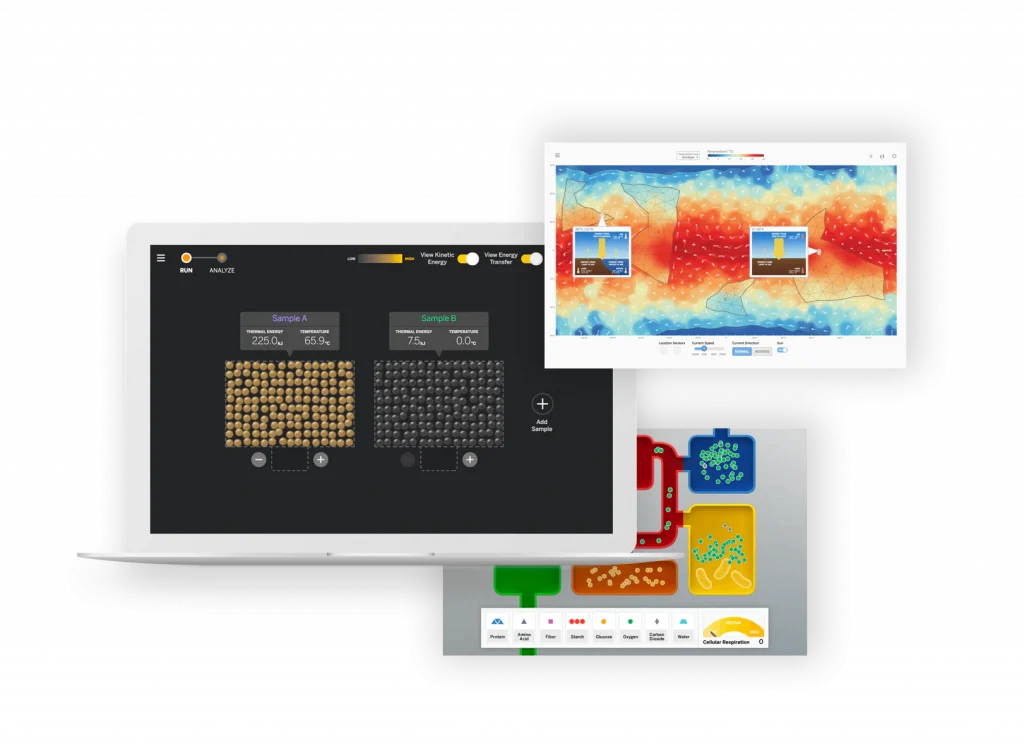
Teacher’s Guides
Available digitally and in print, the Teacher’s Guides contain all of the information teachers need to facilitate classroom instruction, including:
- Classroom Slides
- Detailed lesson plans
- Unit and chapter overview documentation
- Differentiation strategies
- Standards alignments
- In-context professional development
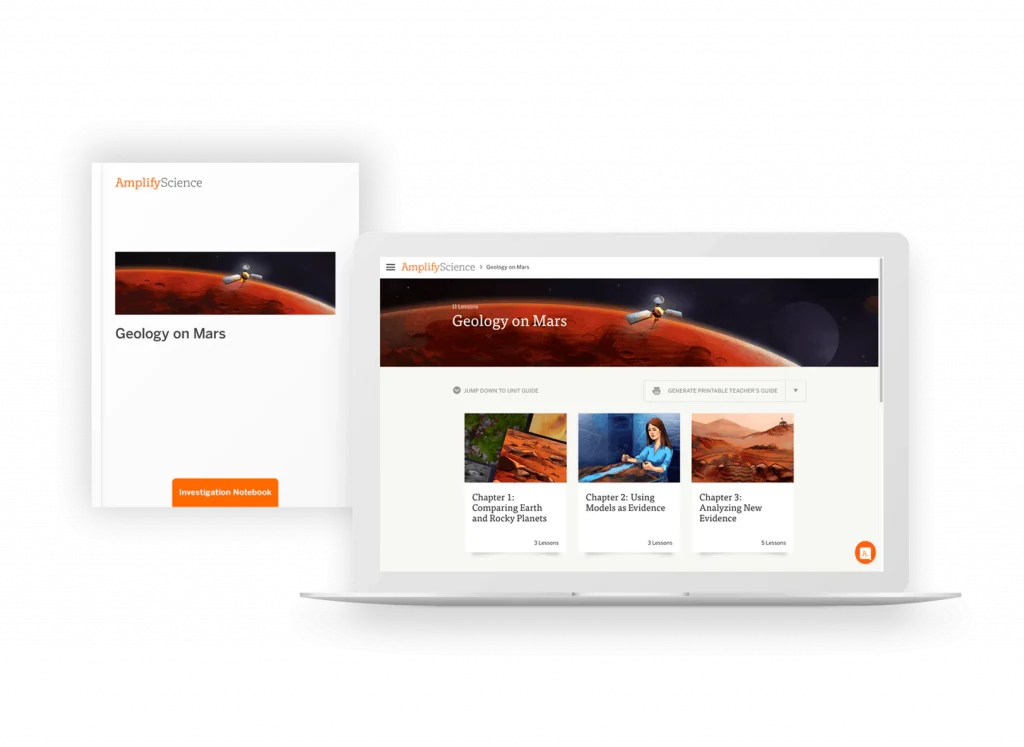
Hands-on materials kits
Hands-on learning is at the heart of Amplify Science. Each unit kit contains:
- Consumable and non-consumable hands-on materials
- Print classroom display materials
- Premium print materials for student use (sorting cards, maps, etc.)
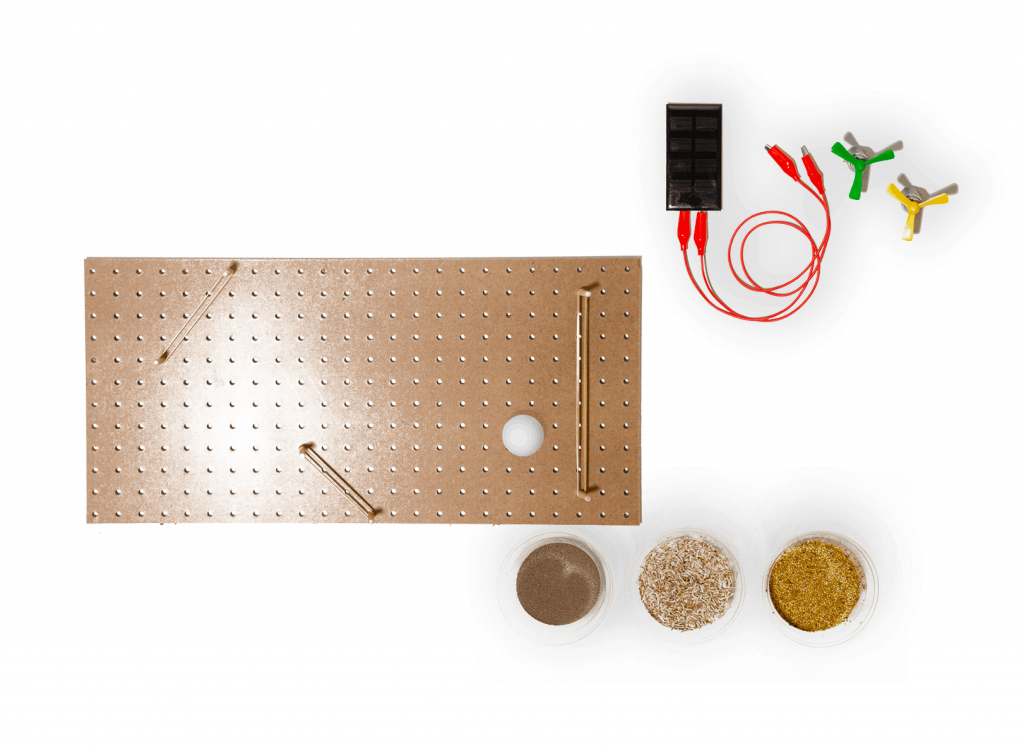
Remote and hybrid learning supports

Amplify has launched a new remote learning solution called Amplify Science@Home. Intended to make extended remote learning and hybrid learning easier, Amplify Science@Home includes two useful options for continuing instruction: @Home Videos and @Home Units.
Amplify Science @Home Videos are recordings of real Amplify Science teachers teaching the lessons. For those teachers who are unable to meet synchronously with their students, the recorded lessons are a great way to keep their students on track and engaged with Amplify Science while at home. These videos will be produced for all K–5 units, and for the first four units of each 6–8 grade level. Their release will be rolling, beginning in August.
Amplify Science@Home Units are modified versions of Amplify Science units, strategically designed to highlight key activities from the program. The @Home Units take significantly less instructional time than the complete Amplify Science program and allow students to engage with science at home. @Home Units will be developed for all Amplify Science K–8 units. Each @Home unit includes:
- Teacher overviews explaining how to use the materials, including suggestions for enhancing the @Home Units if synchronous learning or in-class time with students is available.
- Overviews to send home to families.
Student materials are available in two formats:
- @Home Slides (PDF/PPT) + Student Sheets (PDF) for students with access to technology at home.
- Downloadable @Home Packets (PDF) for students without access to technology at home.
Download the Remote and hybrid learning guide.
Looking for help?
Powerful (and free!) pedagogical support
Amplify provides a unique kind of support you won’t find from other publishers. We have developed an educational support team of former teachers and administrators who provide pedagogical support for every Amplify curriculum, assessment, and intervention program. This service is completely free for all educators who are using our programs and includes:
- Guidance for developing lesson plans and intervention plans
- Information on where to locate standards and other planning materials
- Recommendations and tips for day-to-day teaching with Amplify programs
- Support with administering and interpreting assessment data and more
To reach our pedagogical team, use our live chat within your program, call (800) 823-1969, or email edsupport@amplify.com
Timely technical and program support
Our technical and program support is included and available from 7 a.m. to 7 p.m. ET, Monday through Friday, through a variety of channels, including a live chat program that enables teachers to get immediate help in the middle of the school day.
For your most urgent questions:
- Use our live chat within your program
- Call our toll-free number: (800) 823-1969
For less urgent questions:
Contact us
Contact your South Carolina team representatives:
Jeff Rutter
Field Manager
jrutter@amplify.com
(727) 512-8440
Cathy McMillan
Senior Account Executive
cmcmillan@amplify.com
(904) 465-9904
Inspiring the next generation of Massachusetts scientists, engineers, and curious citizens
Amplify Science is an engaging new core curriculum designed for three-dimensional, phenomena-based learning.
A powerful partnership
Amplify Science was developed by the science education experts at UC Berkeley’s Lawrence Hall of Science and the digital learning team at Amplify. This partnership extends to 2032, allowing us to continuously improve our program and provide our customers with the most up-to-date enhancements, free of charge. Get a glimpse at our latest back-to-school updates here.
Instructional model
The Amplify Science program is rooted in the proven, research-based pedagogy of Do, Talk, Read, Write, Visualize. Here’s how each element works:
Phenomena-based approach
In each Amplify Science unit, students take on the roles of scientists or engineers in order to investigate a real-world problem. Students work to define the problem and collect and make sense of evidence. Once the context is clear, students collect evidence from multiple sources and through a variety of modalities. At the end of the unit, students are presented with a brand new problem, giving them an opportunity to apply what they’ve learned over the course of the unit to a new context. This represents a shift from asking students to learn about science to supporting students in figuring out the science.
Resources to support your review
- Massachusetts Amplify Science. K-5 Correlation
- K-5 Massachusetts Science Rubric
- What’s so phenomenal about phenomena?—ebook
- Phenomena in grades K–5
- Student Books in grades K–5
- Literacy-rich science instruction in grades K–5
- Engineering in Amplify Science
- Amplify Science in Action classroom videos
Scope and Sequence
GRADE
Kindergarten
UNITS
- Needs of Plants and Animals
- Pushes and Pulls
- Sunlight and Water
Grade 1
- Needs of Plants and Animals
- Pushes and Pulls
- Sunlight and Water
Grade 2
- Plant and Animal Relationships
- Properties of Materials
- Changing Landforms
Grade 3
- Balancing Forces
- Inheritance and Traits
- Environments and Survival
- Weather and Climate
Grade 4
- Energy Conversions
- Vision and Light
- Earth’s Features
- Waves, Energy, and Information
Grade 5
- Patterns of Earth and Sky
- Modeling Matter
- The Earth System
- Ecosystem Restoration
Flexible implementation
One of the key features of Amplify Science is the flexibility that it offers. We give students authentic opportunities to experience the full breadth of what it means to be a scientist or engineer. Just as scientists gather evidence from many types of sources, so do students in our program. Like scientists, students gather evidence not just from physical models, but also from digital models, texts, videos, photographs, maps, data sets, and even their peers!
Simply put, real scientists don’t just get messy—they read, write, analyze, hypothesize, model, test, and communicate with purpose, too.
Student Books
Beginning and young readers have unique developmental needs, and science instruction should support these students in reading more independently as they progress through sections of content, the school year, and each grade. One way Amplify Science meets these needs is by strategically deploying different modes of reading throughout each unit: Read-Aloud, Shared Reading, and Partner Reading.

Student Investigation Notebooks
Available for every unit, the Student Investigation Notebooks provide space for students to:
- record data.
- reflect on ideas from texts and investigations.
- construct explanations and arguments.
Digital student experience
Students access the digital simulations and Modeling Tools, as well as lesson activities and assessments, through the digital student experience. Students can interact with the digital student experience as they:
- conduct hands-on investigations.
- engage in Active Reading and writing activities.
- participate in discussions.
- record observations.
- craft end-of-unit scientific arguments.
Dive into a quick example of our powerful simulations
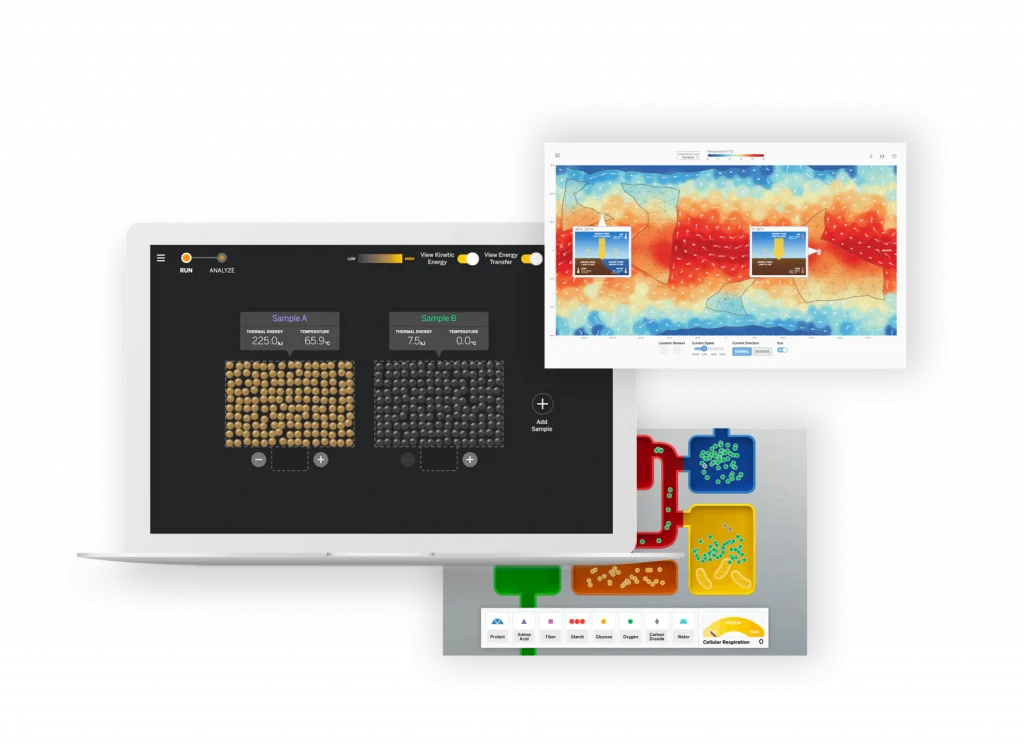
Hands-on materials kits
Hands-on learning is at the heart of Amplify Science and is integrated
into every unit. Students actively take on the roles of scientists and engineers as they gather evidence, think critically, solve problems, and develop and defend claims about the world around them.
Check out this 2-minute video to see an Amplify Science hands-on investigation in action.
Each unit kit contains:
- consumable and non-consumable hands-on materials.
- print classroom display materials.
- premium print materials for student use (sorting cards, maps, etc.).
Teaching support
Available digitally and in print, the Teacher’s Guides contain all of the information teachers need to facilitate classroom instruction, including:
- detailed lesson plans.
- unit and chapter overview documentation.
- differentiation strategies.
- standards alignments.
- in-context professional development.

Massachusetts Academic Standards in Science coverage
Amplify Science was designed from the ground up to meet the NGSS, a set of standards that closely align with the Massachusetts Learning Standards for Science coverage. Most grade levels’ respective set of Amplify Science units therefore address the necessary MASS (see correlation).
For grades K, 1, 2, 3, and 5, teachers should plan to also use the resources provided in the sections below to achieve full coverage of the appropriate standards before their students move on to the next grade band. Organized by grade level, each section outlines:
- companion lesson materials that were written to support 100% alignment to the Massachusetts Learning Standards for Science coverage when used with the core Amplify Science units for the grade level
- the standard being addressed with each companion lesson; and
- the recommended placement of each companion lesson within a specific Amplify Science unit
Standard: K-PS1-1(MA). Investigate and communicate the idea that different kinds of materials can be solid or liquid depending on temperature.
Recommended placement: Following Lesson 5.6 of Sunlight and Weather
Resources: After students finish reflecting on their unit-long exploration of energy and temperature, play and discuss this read-aloud video of the student book Can you Change it Back?, which is featured in the grade 2 unit Properties of Materials. You might also consider borrowing the physical books from a grade 2 colleague’s Properties of Materials kit and reading it as a class instead of or in addition to playing the video.
Using the book, you will introduce students to the idea that heating and cooling can cause changes to materials. In the book, students are presented with a variety of materials and asked to predict whether a certain change caused by heating or cooling is reversible or irreversible.
Companion lesson: “Seasonal Changes”
Standard: 1-ESS1-2– Analyze provided data to identify relationships among seasonal patterns of change, including relative sunrise and sunset time changes, seasonal temperature and rainfall or snowfall patterns, and seasonal changes to the environment.
Recommended placement: Following Lesson 5.1 of Spinning Earth
Resources: Season Changes Classroom Slides and Student Sheet
Companion lesson: “Properties and Weight”
Standard: 2-PS1-3– Analyze a variety of evidence to conclude that when a chunk of material is cut or broken into pieces, each piece is still the same material and, however small each piece is, has weight. Show that the material properties of a small set of pieces do not change when the pieces are used to build larger objects.
Recommended placement: Following Lesson 4.4 of Properties of Materials.
Resources: Weight and Properties Classroom Slides, Resources, and Student Sheet
Companion lesson 1: Extinct Insects
Standard: 3-LS4-1: Use fossils to describe types of organisms and their environments that existed long ago and compare those to living organisms and their environments. Recognize that most kinds of plants and animals that once lived on Earth are no longer found anywhere.
Recommended placement: Following Lesson 2.3 of Environments and Survival
Resources: Extinct Insects Classroom Slides and Student Sheet
Companion lesson 2: Friction
Standard: 3-PS2-1: Provide evidence to explain the effect of multiple forces, including friction, on an object. Include balanced forces that do not change the motion of the object and unbalanced forces that do change the motion of the object.
Recommended placement: Following Lesson 1.1 of Balancing Forces
Resources: Friction Classroom Slides, Resources, and Student Sheet
Companion lesson 1: Composters
Standard: 5-LS2-2(MA)– Compare at least two designs for a composter to determine which is most likely to encourage decomposition of materials.
Recommended placement: Following Lesson 3.7 of Ecosystem Restoration
Resources: Composters Classroom Slides and Student Sheet
Companion lesson 2: Properties of Materials
Standard: 5-PS1-3 (MA) – Make observations and measurements of substances to describe characteristic properties of each, including color, hardness, reflectivity, electrical conductivity, thermal conductivity, response to magnetic forces, and solubility.
Recommended placement: Following Lesson 1.3 of Modeling Matter
Resources: Properties of Materials Classroom Slides, Resources, Articles, Copymaster, and Student Sheet
Companion lesson 3: Water Filters
Standard: 5-ESS3-2(MA)– Test a simple system designed to filter particulates out of water and propose one change to the design to improve it.
Recommended placement: Following Lesson 5.6 of The Earth System
Resources: Water Filters Classroom Slides and Student Sheet
Benchmark Assessments
Amplify’s Benchmark Assessments are designed to help teachers measure student progress toward the three dimensions—Disciplinary Core Ideas (DCIs), Science and Engineering Practices (SEPs), and Crosscutting Concepts(CCCs)—and performance expectations (PEs) of the NGSS. The assessments provide important insight into how students are progressing toward mastery of different standards ahead of high-stakes, end-of-year assessments.
The Benchmark Assessments are built to be delivered after specific units in the recommended Amplify Science scope and sequence.* They are given three or four times per year, depending on the grade level. The benchmarks are intended to show progress at various points in time across a school year, and are therefore not summative in nature. Digital items and item clusters are also tagged to specific NGSS standards, allowing customization to align with other course sequences. The assessments are available via the following platforms:
Print
PDF files: For administering Benchmark Assessments on paper
Digital platforms
- Illuminate
- SchoolCity
- Otus
- QTI (“Question and Test Interoperability”) files
Not sure whether QTI files are compatible with your assessment platform? Contact your school IT or assessment platform representative for more information.
Please note that Amplify is able to provide access to the QTI files themselves, but is not able to support the integration process. Your assessment platform provider should be able to assist with QTI file integration.
Remote and hybrid learning support

See an example of our remote and hybrid learning support below:
Intended to make extended remote and hybrid learning easier, Amplify Science @Home includes two useful options for continuing instruction: @Home Videos and @Home Units.
Amplify Science @Home Videos are recordings of real Amplify Science teachers teaching the lessons. For those teachers who are unable to meet synchronously with their students, the recorded lessons are a great way to keep their students on track and engaged with Amplify Science while at home.
Amplify Science @Home Units are modified versions of Amplify Science units, strategically designed to highlight key activities from the program. The @Home Units take significantly less instructional time than the complete Amplify Science program and allow students to engage with science at home. Each @Home unit includes:
- Teacher overviews explaining how to use the materials, including suggestions for enhancing the @Home Units if synchronous learning or in-class time with students is available
- Overviews to send home to families
Student materials will be available in two formats:
- @Home Slides (PDF/PPT) + Student Sheets (PDF) for students with access to technology at home
- Downloadable @Home Packets (PDF) for students without access to technology at home
Download the remote and hybrid learning guide
Explore the digital Teacher’s Guide
To familiarize yourself with navigation of the digital Teacher’s Guide, watch our navigational guide videos:
Grades K–5:
Looking for help?
Powerful (and free!) pedagogical support
Amplify provides a unique kind of support you won’t find from other publishers. We’ve developed an educational support team of former teachers and administrators who provide pedagogical support for every Amplify curriculum, assessment, and intervention program. This service is completely free for all educators who are using our programs and includes:
- Guidance for developing lesson plans and intervention plans.
- Information on where to locate standards and other planning materials.
- Recommendations and tips for day-to-day teaching with Amplify programs.
- Support with administering and interpreting assessment data and more.
Timely technical and program support
Our technical and program support is included and available Monday through Friday, from 7 a.m. to 7 p.m. ET, through a variety of channels, including a live chat program that enables teachers to get immediate help in the middle of the school day.
Ready to dive in?
Contact your Massachusetts representative:
Tracy Yefimenko
518-466-3497
tyefimenko@amplify.com
Inspiring the next generation of Massachusetts scientists, engineers, and curious citizens
Amplify Science resources for Richmond Public Schools
Welcome! This site contains supporting resources designed for the Richmond Public Schools adoption of Amplify Science.
Authored by UC Berkeley’s Lawrence Hall of Science, Amplify Science is a comprehensive program that blends literacy-rich activities, hands-on investigations, and engaging digital experiences to empower Richmond students to think, read, write, and argue like 21st-century scientists and engineers.
Click here to visit Richmond Public Schools’ Science Department page.

Welcome!
This site contains supporting resources designed for the Richmond Public Schools adoption of Amplify Science for grades 3–8. Here are some resources to get you started, but make sure to check back for exciting updates!
Program-wide resources
Click the button below to explore the Amplify Science Program Guide. You can access the full digital Teacher’s Guide from the Program Guide to explore the program.
- The Amplify Science Program Hub
- Menu of Amplify Science video tutorials
- Tech requirements
- The Caregiver Hub (English and Spanish)
Onboarding videos
To start using Amplify Science quickly in your classroom, check out the following onboarding videos. They cover what you need to know to get started fast, from unpacking materials to logging in and navigating the digital Teacher’s Guide.
Getting Started: K-5
This section allows you to become familiar with the program and to guide you through initial preparation for implementing Amplify in your classrooms. here you will find look-for-tools, pacing/planning guides, and editable documents to support unpacking the unit lessons.
Overview
- Amplify Science K-5: Program Overview
- Amplify Science K-5: Teacher’s Guide Navigation
- Recommended Scope and Sequence for Grades 3–5
Supporting literacy development
Planning resources
Planning Guides
- 3rd Grade RPS Curriculum Guide
- 4th Grade RPS Curriculum Guide
- 5th Grade RPS Curriculum Guide
- 3rd Grade Planning Guide*
- 4th Grade Planning Guide*
- 5th Grade Planning Guide*
- *Sequence of units does not match RPS’ scope and sequence.
Look-for-tools
- Establishing Common Expectations for Amplify Science Classrooms (K-5)
- Amplify Science: Getting started look-for-tool (K-8)
Planning support documents
The following materials lists and videos give you a quick look into our Amplify Science classroom kits. For each grade level, we have a video for the first unit in the scope and sequence, and we show you how to unpack the kits for all the units.
NOTE: These materials kits are not specific to the Richmond unit progression. Please reference these Richmond unit progression docs for 3–5 and 6–8 so you’ll know which kits to look for in each grade.
Materials lists
Unpacking videos
Getting Started: 6-8
This section allows you to become familiar with the program and to guide you through initial preparation for implementing Amplify in your classrooms. here you will find look-for-tools, pacing/planning guides, and editable documents to support unpacking the unit lessons.
Overview
- Amplify Science 6-8: Program Overview
- Amplify Science 6-8: Teacher’s Guide Navigation
- Recommended Scope and Sequence for Grades 6–8
Supporting literacy development
Planning resources
Planning/Pacing Guides
- 6th Grade/Integrated Life Science RPS Curriculum Guide
- 7th Grade/Physical Science RPS Curriculum Guide
- 6-8 Pacing Guide
- Grade 6-8 Planning Guide*
- *Sequence of units does not match RPS’ scope and sequence.
Look-for-tools
Planning support documents
The following materials lists and videos give you a quick look into our Amplify Science classroom kits. For each grade level, we have a video for the first unit in the scope and sequence, and we show you how to unpack the kits for all the units.
NOTE: These materials kits are not specific to the Richmond unit progression. Please reference these Richmond unit progression docs for 3–5 and 6–8 so you’ll know which kits to look for in each grade.
Materials lists
Unpacking videos
6th grade Integrated
- Metabolism: Reading “How You Are Like a Sneezing Iguana” (Lesson Guide and Copymaster)
- Metabolism: Plant Growth Investigations (Lesson Guide and Copymaster)
- Metabolism: Reading “How Do Trees Grow So Huge Without Eating?” (Lesson Guide and Copymaster)
- Populations and Resources: Reading “The Amazing Variety of Life in a Coral Reef” (Lesson Guide and Copymaster)
- Weather Patterns: Reading “What Makes Water Move?” (Lesson Guide and Copymaster)
7th grade Integrated/Physical science
- Harnessing Human Energy: Investigating Electrical Devices (Lesson Guide and Copymaster)
- Harnessing Human Energy: Investigating Non-Touching Forces (Lesson Guide and Copymaster)
- Harnessing Human Energy: Reading About Non-Touching Forces (Lesson Guide and Copymaster)
- Thermal Energy: Designing Hot and Cold Packs (Lesson Guide and Copymaster)
- Phase Change: Reading “Icy Heat” (Lesson Guide and Copymaster)
- Chemical Reactions: Identifying Substances (Lesson Guide and Copymaster)
- Chemical Reactions: Mixtures, Properties, and Separation (Lesson Guide and Copymaster)
- Magnetic Fields, Water Wheel Design (Lesson Guide and Copymaster)
Additional units
- Ocean, Atmosphere, and Climate: Investigating Deep Ocean Currents (Lesson Guide and Copymaster)
Getting Started: Admin
Admin resources
K-5 Frequently-Asked Questions
6-8 Frequently-Asked Questions
Professional learning opportunities
Check back for a list of upcoming sessions!
Frequently asked questions
We get it…pacing your instruction, especially with a new program, can be really challenging. In Amplify Science, students internalize concepts through repeated exposures over multiple days with different modalities. We say students get multiple “at-bats” with each concept. As you move through the lessons, avoid looking for concept mastery each day. Instead, try to move through the lesson according to the timing guidelines, maintaining a quick pace.
In classroom discussion activities in particular, you may be tempted to keep the conversation going to ensure that your students fully master the content in that class period. We recommend, though, if the lesson overview says discuss for 10 minutes, cut it off at 10 minutes.
Every Amplify Science unit includes hands-on investigations. But, just as scientists gather evidence from many types of sources, so do students in Amplify Science. Like scientists, students using Amplify Science also gather evidence from physical models, digital models, texts, videos, photographs, maps, and data sets. Doing so requires using the full range of the practices in multi-dimensional learning. It also offers students different ways of acquiring knowledge and experience, multiple means of expressing their understanding, and a variety of resources through which to engage with the content.
Often, students enjoy hands-on investigations, but don’t sufficiently learn key concepts from those experiences. The Amplify Science investigations are designed for efficiency and effectiveness. For teachers who wish to supplement the lessons with more hands-on activities, optional hands-on “flextension” activities are included in many units. Instructional guidance, student sheets, and other supporting resources for them are included as downloadable PDF files and materials needed are either included in the unit kit or easily sourced.
First, take a breath, and know that you will gradually internalize the program routines and overall flow. Also, remember that your students are experiencing the program for the first time with you. Together, you’ll be peeling the onion one layer at a time.
It can be intimidating to begin the school year with a brand-new curriculum: where do you start? The Richmond Resources Site will help you navigate the different supports and resources we have for new Amplify Science teachers.
The Program Hub is also a great place to direct your own, independent learning about Amplify Science instruction. Once you log into the platform, click on the directory on the top left side. Click into the Program Hub, then Professional Learning, and Getting Started. This will give you access to prioritized resources that will help you plan for your Amplify Science instruction. Additionally, the Amplify Science Help center (also accessible from the Global Navigation menu) is great for short videos about specific topics like supporting EL students, using Classwork, etc.
The variety of multimodal activities that are included in Amplify Science provides students with the opportunity to dive deeply into understanding science ideas, make science exciting to students, and allow for all students to have the benefit of multiple opportunities to access rich science content. Think about how many times you’ve taught a concept and then discovered your students had minimal recall at the end of the week. The truth is, students need multiple, varied exposures to key concepts.
In the program, we make sure that students have the opportunity to DO, TALK, READ, WRITE, and VISUALIZE every important idea. We think of this as providing students with multiple at bats— each encounter with the idea provides students with additional evidence, and the opportunity to develop deeper understanding. Students have multiple opportunities to construct their understanding of the same idea.
This multimodality may feel repetitive, but it is purposeful and impactful. Sometimes the repetition is for 1) hitting other Science and Engineering Practices, and/or 2) giving students multiple and varied opportunities to express their understanding. Many students can easily parrot back what they read and one may think they know it — but ask them to draw a model, and one might see that their understanding is only so deep. Ultimately we believe that this approach not only serves a broader range of students but will also result in more retention in the long run.
Looking for help?
Technical or pedagogical support
Amplify provides a unique kind of free support you won’t find from other publishers. Technical and pedagogical support teams are available from 7 a.m. to 7 p.m. ET, Monday through Friday.
For your most urgent questions:
- Use our live chat within your program
- Call our toll-free number: (800) 823-1969
For less urgent questions, send us an email!
- Technical support: help@amplify.com
- Pedagogical support: edsupport@amplify.comWhat is pedagogical support? We have developed an educational support team of former teachers and administrators who provide pedagogical support for every Amplify curriculum, assessment, and intervention program. This service is completely free for all educators who are using our programs and includes:
- Guidance for developing lesson plans and intervention plans
- Information on where to locate standards and other planning materials
- Recommendations and tips for day-to-day teaching with Amplify programs
- Support with administering and interpreting assessment data and more
Order exceptions
If you need to arrange for the return or exchange of items, contact help@amplify.com and be sure to identify yourself as a Richmond Public Schools teacher.
A powerful partnership
Amplify Science was developed by the science education experts at UC Berkeley’s Lawrence Hall of Science and the digital learning team at Amplify. This partnership extends to 2032, allowing us to continuously improve our program and provide our customers with the most up-to-date enhancements, free of charge. Get a glimpse at our latest back-to-school updates here.
Instructional model
The Amplify Science program is rooted in the proven, research-based pedagogy of Do, Talk, Read, Write, Visualize. Here’s how each element works:
Phenomena-based approach
In each Amplify Science unit, students take on the roles of scientists or engineers in order to investigate a real-world problem. Students work to define the problem and collect and make sense of evidence. Once the context is clear, students collect evidence from multiple sources and through a variety of modalities. At the end of the unit, students are presented with a brand new problem, giving them an opportunity to apply what they’ve learned over the course of the unit to a new context. This represents a shift from asking students to learn about science to supporting students in figuring out the science.
Resources to support your review
- What’s so phenomenal about phenomena?—ebook
- Phenomena in grades K–5
- Phenomena in grades 6–8
- Student Books in grades K–5
- Literacy-rich science instruction in grades K–5
- Active Reading in grades 6–8
- Engineering in Amplify Science
- Amplify Science: See it in action
- EdReports—Compare resources
Remote and hybrid learning support
See an example of our remote and hybrid learning support below:
- K–5 example—Balancing Forces: Chapter 2, Lesson 2.3
- 6–8 example—Force and Motion: Chapter 3, Lesson 3.2
This fall, Amplify launched a new remote learning solution called Amplify Science@Home. Intended to make extended remote and hybrid learning easier, Amplify Science @Home includes two useful options for continuing instruction: @Home Videos and @Home Units.
Amplify Science @Home Videos are recordings of real Amplify Science teachers teaching the lessons. For those teachers who are unable to meet synchronously with their students, the recorded lessons are a great way to keep their students on track and engaged with Amplify Science while at home. These videos will be produced for all K–5 units, and for the first four units of each 6–8 grade level. Their release will be rolling, beginning in August.
Amplify Science @Home Units are modified versions of Amplify Science units, strategically designed to highlight key activities from the program. The @Home Units take significantly less instructional time than the complete Amplify Science program and allow students to engage with science at home. @Home Units will be developed for all Amplify Science K–8 units. Each @Home unit includes:
- Teacher overviews explaining how to use the materials, including suggestions for enhancing the @Home Units if synchronous learning or in-class time with students is available
- Overviews to send home to families
Student materials will be available in two formats:
- @Home Slides (PDF/PPT) + Student Sheets (PDF) for students with access to technology at home
- Downloadable @Home Packets (PDF) for students without access to technology at home
Download the remote and hybrid learning guide
Benchmark Assessments
Amplify’s Benchmark Assessments are designed to help teachers measure student progress toward the three dimensions—Disciplinary Core Ideas (DCIs), Science and Engineering Practices (SEPs), and Crosscutting Concepts(CCCs)—and performance expectations (PEs) of the NGSS. The assessments provide important insight into how students are progressing toward mastery of different standards ahead of high-stakes, end-of-year assessments.
The Benchmark Assessments are built to be delivered after specific units in the recommended Amplify Science scope and sequence.* They are given three or four times per year, depending on the grade level. The benchmarks are intended to show progress at various points in time across a school year, and are therefore not summative in nature. Digital items and item clusters are also tagged to specific NGSS standards, allowing customization to align with other course sequences. The assessments are available via the following platforms:
Print
PDF files: For administering Benchmark Assessments on paper
Digital platforms
- Illuminate
- SchoolCity
- Otus
- QTI (“Question and Test Interoperability”) files
Not sure whether QTI files are compatible with your assessment platform? Contact your school IT or assessment platform representative for more information.
Please note that Amplify is able to provide access to the QTI files themselves, but is not able to support the integration process. Your assessment platform provider should be able to assist with QTI file integration.
Flexible implementation
One of the key features of Amplify Science is the flexibility that it offers. We give students authentic opportunities to experience the full breadth of what it means to be a scientist or engineer. Just as scientists gather evidence from many types of sources, so do students in our program. Like scientists, students gather evidence not just from physical models, but also from digital models, texts, videos, photographs, maps, data sets, and even their peers!
Simply put, real scientists don’t just get messy—they read, write, analyze, hypothesize, model, test, and communicate with purpose, too.
Science articles
The middle school science articles serve as sources for evidence collection and were authored by science and literacy experts at the Lawrence Hall of Science.

Student Books
Beginning and young readers have unique developmental needs, and science instruction should support these students in reading more independently as they progress through sections of content, the school year, and each grade. One way Amplify Science meets these needs is by strategically deploying different modes of reading throughout each unit: Read-Aloud, Shared Reading, and Partner Reading.
Student Investigation Notebooks
Available for every unit, the Student Investigation Notebooks provide space for students to:
- record data.
- reflect on ideas from texts and investigations.
- construct explanations and arguments.
Available with full-color article compilations for middle school units.
Digital student experience
Students access the digital simulations and Modeling Tools, as well as lesson activities and assessments, through the digital student experience. Students can interact with the digital student experience as they:
- conduct hands-on investigations.
- engage in Active Reading and writing activities.
- participate in discussions.
- record observations.
- craft end-of-unit scientific arguments.
Dive into a quick example of our powerful simulations
Hands-on materials kits
Hands-on learning is at the heart of Amplify Science and is integrated
into every unit. Students actively take on the roles of scientists and engineers as they gather evidence, think critically, solve problems, and develop and defend claims about the world around them.
Check out these 2-minute videos to see an Amplify Science hands-on investigation in action.
- Grade 2: Hands-on investigation from Animal and Plant Relationships
- Grade 6: Hands-on investigation from Populations andResources
Each unit kit contains:
- consumable and non-consumable hands-on materials.
- print classroom display materials.
- premium print materials for student use (sorting cards, maps, etc.).
Teacher’s Guides
Available digitally and in print, the Teacher’s Guides contain all of the information teachers need to facilitate classroom instruction, including:
- detailed lesson plans.
- unit and chapter overview documentation.
- differentiation strategies.
- standards alignments.
- in-context professional development.
Scope and Sequence
Minnesota Academic Standards in Science coverage
Amplify Science was designed from the ground up to meet the NGSS, a set of standards that closely align with the K–8 Minnesota Academic Standards in Science (MASS). Therefore, most grade levels’ respective set of Amplify Science units address the necessary MASS (see K–5 reverse alignment and/or correlations for K–5 and 6–8). However, for grades 2–4, teachers should also use the resources provided in the sections below to achieve full coverage of the appropriate standards before their students move on to the next grade level. Organized by grade level, each section outlines:
- companion lesson materials that were written to support 100% alignment to the Minnesota Academic Standards in Science when used with the core Amplify Science units for the grade level
- the standard being addressed with each companion lesson; and
- the recommended placement of each companion lesson within a specific Amplify Science unit
Companion lesson: “Shelter”
Standard: 1P.4.2.2.1 Communicate solutions that use materials to provide shelter, food, or warmth needs for communities including Minnesota American Indian tribes and communities.* (P: 8, CC: 2, CI: PS1, ETS2)
Recommended placement: Following Lesson 5.1 of Spinning Earth
Materials: Shelter Classroom Slides and Student Sheet
Companion lesson: “Describing Climates”
Standard: 2E.4.2.1.2 Obtain and use information from multiple sources, including electronic sources, to describe climates in different regions of the world.** (P: 8, CC: 1, CI: ESS2)
Recommended placement: Following Lesson 4.5 of Changing Landforms
Materials: Describing Climates Classroom Slides and Student Sheet
Note: Students will further investigate the content in this standard, and revisit the book used in this companion lesson, in 3rd grade (Weather and Climate unit)
Companion lesson 1: Light and Vision
Standard: 3P.3.1.1.1 Develop a model to describe that light reflecting from objects and entering the eye allows objects to be seen. (P: 2, CC: 2, CI: PS4)
Recommended placement: Following Lesson 4.5 of Environments and Survival
Materials: Light and Vision Part 1 Classroom Slides and Student Sheet; Light and Vision Part 2 Classroom Slides and Student Sheet
Note: Students will further investigate the content in this standard, and revisit the book used in this companion lesson, in 4th grade (Vision and Light unit)
Companion lesson 2: Studying Stars
Standard: 3E.4.2.2.1 Gather information and communicate how Minnesota American Indian Tribes and communities and other cultures use patterns in stars to make predictions and plans. (P 8, CC: 1, CI: ESS1)
Recommended placement: Following Lesson 4.4 of Weather and Climate
Materials: Studying Stars Classroom Slides and Student Sheet
Note: Students will further investigate the content in this standard, and revisit the book used in this companion lesson, in 5th grade (Patterns of Earth and Sky unit)
Companion lesson 1: Salt Water and Freshwater
Standard: 4E.2.2.1.1 Interpret charts, maps and/or graphs of the amounts of salt water and fresh water in various reservoirs to provide evidence about the distribution of water on Earth.** (P: 5, CC: 4, CI: ESS2)
Recommended placement: Following Lesson 2.6 of Earth’s’ Features
Materials: Salt Water and Freshwater Classroom Slides and Student Sheet
Note: Students will further investigate the content in this standard, and revisit the book used in this companion lesson, in 5th grade (The Earth System unit)
Companion lesson 2: How Raindrops Form
Standard: 4E.1.1.1.2 Ask questions about how water moves through the Earth system and identify the type of question. (P: 1, CC: 5, CI: ESS2)
Recommended placement: Following Lesson 4.5 of Earth’s’ Features
Materials: How Raindrops Form Classroom Slides and Student Sheet
Note: Students will further investigate the content in this standard, and revisit the book used in this companion lesson, in 5th grade (The Earth System unit)
Explore the digital Teacher’s Guide
To familiarize yourself with navigation of the digital Teacher’s Guide, watch our navigational guide videos:
Grades K–5:
Grades 6–8:
Looking for help?
Powerful (and free!) pedagogical support
Amplify provides a unique kind of support you won’t find from other publishers. We’ve developed an educational support team of former teachers and administrators who provide pedagogical support for every Amplify curriculum, assessment, and intervention program. This service is completely free for all educators who are using our programs and includes:
- Guidance for developing lesson plans and intervention plans.
- Information on where to locate standards and other planning materials.
- Recommendations and tips for day-to-day teaching with Amplify programs.
- Support with administering and interpreting assessment data and more.
Timely technical and program support
Our technical and program support is included and available Monday through Friday, from 7 a.m. to 7 p.m. ET, through a variety of channels, including a live chat program that enables teachers to get immediate help in the middle of the school day.
Ready to dive in?
Contact your Minnesota representative:
Kristi Stengel
Account Executive
kstengel@amplify.com
(612) 306-3941
Tammy Sigwarth
Account Executive
tsigwarth@amplify.com
(563) 663-0056
Welcome to Amplify Science!
This site contains supporting resources designed for LAUSD Amplify Science for grades TK–8. Check back for exciting updates!
Sync Grades to Schoology – Amplify Classwork
Navigate to the Amplify Science Program Hub (video walk-through)
Share the The Caregiver Hub (Eng/Span)
ES Science Teachers
MS (6-8) Unpacking the Unit Videos
Upcoming Amplify Science PDs:
- ES (K-5) – Refer to MyPLN: (Search Amplify 24)
- MS (6-8) – Refer to MyPLN
- Click here to go back to the LAUSD homepage.
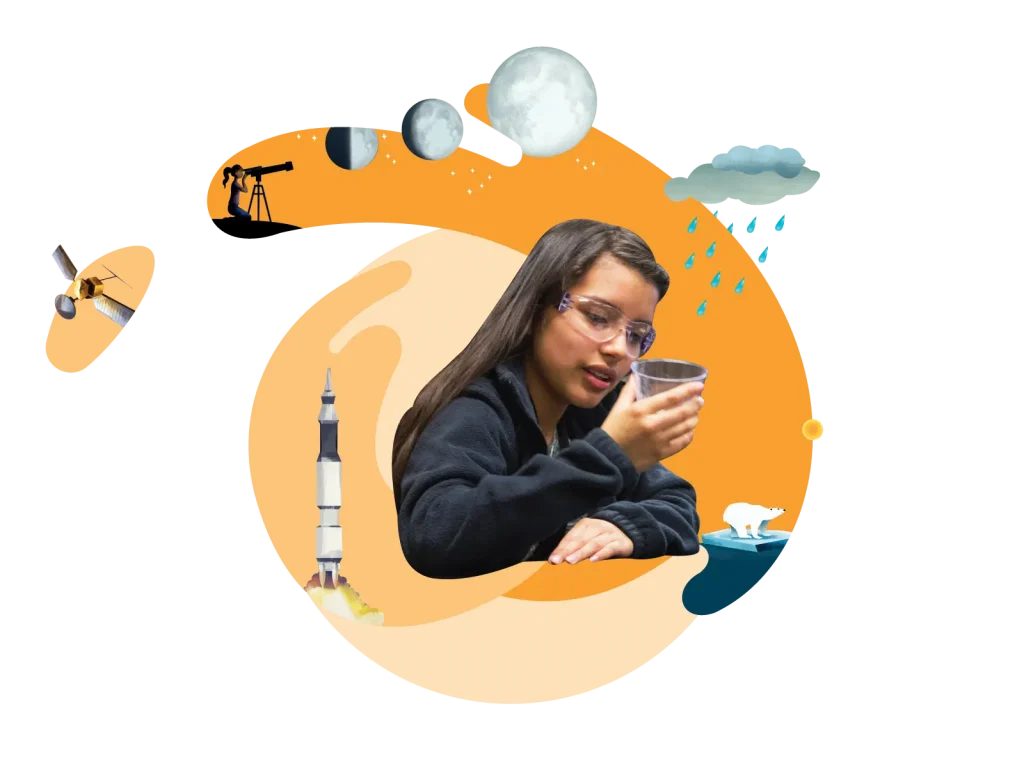
Program Introduction
Learn more about Amplify Science
Click the buttons below to explore the Amplify Science California Program Guide. You can access the full digital Teacher’s Guide from the Program Guide to explore the program.
2024-2025 Session Materials
Unit 2 Deep Dives:
- Unit 2 Deep Dive, Part 1: Preparing to Teach (GK)
- Unit 2 Deep Dive, Part 2: Writing and Assessment (GK)
- Unit 2 Deep Dive, Part 1: Preparing to Teach (G1)
- Unit 2 Deep Dive, Part 2: Writing and Assessment (G1)
- Unit 2 Deep Dive, Part 1: Preparing to Teach (G2)
- Unit 2 Deep Dive, Part 2: Writing and Assessment (G2)
- Unit 2 Deep Dive, Part 1: Preparing to Teach (G3)
- Unit 2 Deep Dive, Part 2: Writing and Assessment (G3)
- Unit 2 Deep Dive, Part 1: Preparing to Teach (G4)
- Unit 2 Deep Dive, Part 2: Writing and Assessment (G4)
- Unit 2 Deep Dive, Part 1: Preparing to Teach (G5)
- Unit 2 Deep Dive, Part 2: Writing and Assessment (G5)
Unit 3 Deep Dives (G 3-5)
- Unit 3 Deep Dive, Part 1: Preparing to Teach (G3)
- Unit 3 Deep Dive, Part 2: Writing and Assessment (G3)
- Unit 3 Deep Dive, Part 1: Preparing to Teach (G4)
- Unit 3 Deep Dive, Part 2: Writing and Assessment (G4)
- Unit 3 Deep Dive, Part 1: Preparing to Teach (G5)
- Unit 3 Deep Dive, Part 2: Writing and Assessment (G5)
January 25th Elementary Onsite
Unit 3 Deep Dives (GK-2)
- Unit 3 Deep Dive, Part 1: Preparing to Teach (GK)
- Unit 3 Deep Dive, Part 1: Preparing to Teach (G1)
- Unit 3 Deep Dive, Part 1: Preparing to Teach (G2)
- Unit 3 Deep Dive, Part 2: Writing and Assessment (GK)
- Unit 3 Deep Dive, Part 2: Writing and Assessment (G1)
- Unit 3 Deep Dive, Part 2: Writing and Assessment (G2)
March 15th Elementary Onsite
Supplemental Materials
2026-2027 LAUSD Planning Calendars
- Kindergarten
- Grade 1
- Grade 2
- Grade 3
- Grade 4
- Grade 5
- Grade 6 (Elementary)
- Grade 6 (Middle School)
- Grade 7
- Grade 8
Middle School Curriculum Maps
Misc. Planning Resources
Lesson Prep Videos
Unit 1
Grade 3 Lesson Prep Videos can be found in the Resources section in the Amplify Science- Elementary group in Schoology. Access code: W4PK-W466-63F5B
Grade 4 Lesson Prep Videos can be found in the Resources section in the Amplify Science- Elementary group in Schoology. Access code: W4PK-W466-63F5B
Grade 5 Lesson Prep Videos can be found in the Resources section in the Amplify Science- Elementary group in Schoology. Access code: W4PK-W466-63F5B
New Teachers – Start Here
To start using Amplify Science quickly in your classroom, check out the following onboarding videos. They cover what you need to know to get started fast, from unpacking materials to logging in and navigating the digital Teacher’s Guide.
The following videos give you a quick look into our Amplify Science classroom kits. For each grade level, we have a video for the first unit in the scope and sequence, and we show you how to unpack the kits for all the units.
Looking for help?
Technical, program and pedagogical support
Our technical, program and pedagogical support is available from 7 a.m. to 7 p.m. ET, Monday through Friday.
For your most urgent questions (immediate help during the school day):
- Use our live chat within your program
- Call (800) 823-1969
- Email help@amplify.com
We have developed an educational support team of former teachers and administrators who provide pedagogical support for every Amplify curriculum, assessment, and intervention program. This service is completely free for all educators who are using our programs and includes:
- Guidance for developing lesson plans and intervention plans
- Information on where to locate standards and other planning materials
- Recommendations and tips for day-to-day teaching with Amplify programs
- Support with administering and interpreting assessment data and more
To reach our pedagogical team:
- Use our live chat within your program
- Call (800) 823-1969
- Email edsupport@amplify.com
A powerful partnership
Amplify Science was developed by the science education experts at UC Berkeley’s Lawrence Hall of Science and the digital learning team at Amplify.
Back to school 2020–21 updates
Back to school 2020 is coming! Click here for more information on all of the improvements and new features we’re adding to Amplify Science for the new school year.
Program introduction
Onboarding: what to expect
Welcome to Amplify Science! To help you know what’s coming next, we created the following outline of the steps of the onboarding process. You can use it as a reference.
Administrators receive launch email
- Share the information with teachers
- Submit the shipping survey sent to your email
Log In
- Go to learning.amplify.com
- Click on Log in with Clever or Google
- Enter your FCPS credentials
- Demo Account for full access to Amplify Curriculum without access to personalized class rosters:
- Go to learning.amplify.com
- Click on login with Amplify
- Username: t.Fayette2020@tryamplify.net
- Password: AmplifyNumber1
Ensure you have received all materials and components
- Teachers have access to a series of “Unboxing your materials kit” videos. If you’re interested in watching those, click here.
Check out the professional learning opportunities and/or access the Getting Started Resources below.
If you need assistance, please see the help resources or reach out to your Educational Partnerships Manager or PD manager at caffleck@amplify.com, pworks@amplify.com with any questions.
6–8 resources
To ensure your first day using Amplify Science in the classroom is as seamless and smooth as possible, we recommend reviewing the following checklist before the first day of school.
What’s coming to my school?
Each unit of Amplify Science comes with a hands-on materials kit. Each hands-on materials kit arrives in one to three boxes and contains:
- Consumable materials for five uses of 40 students
- Non-consumable materials
- Classroom wall materials
- Premium print materials (card sorts, vocabulary rings, etc.).
You can find complete materials lists for each unit in the following PDF. This information is also available in the digital Teacher’s Guide within the program.

Onboarding videos
Our team has created a series of short videos to help get you started with Amplify Science:
What’s online?
Planning strategies
How to log in and navigate
NGSS introduction
Introduction to Classwork
Planning guide
As you prepare to plan for a unit, download our planning guide to help walk you through the most important resources to locate in either the print or digital Teacher’s Guide to help you plan.
Additional resources
- If you’re interested in learning more about each unit’s anchor phenomena and more program features, download the resources below:
What’s New for Amplify Science 6–8!
Denver Public Schools (DPS), check out what’s new from Amplify Science 6-8! The first part of this site will take you through the updates that have been made to Amplify Science. The second will be a refresher of Amplify Science for any new users in DPS. With Amplify Science, DPS students don’t just passively learn about science concepts. Instead, they take on the role of scientists and engineers to actively investigate and figure out real-world phenomena. With culturally sustaining pedagogy, Amplify Science strives to make sure every student feels included in the science classroom.

Update: The Digital Experience
The digital experience allows students to engage with digital lessons and provides teachers with everything they need in one place—ready-to-use slides-based lessons, seamlessly integrated teacher prompts and guidance, robust PD resources, and more. It’s now easier and more engaging than ever to plan lessons, present digital content, and review student work. To learn more, click here.
Update: The PD Library
All professional development (PD) content is consolidated into the PD Library, a one-stop hub for all your self-paced PD needs. As a result, the “Professional Learning Resources” tile will no longer be available on the main Amplify Science Program Hub page. The rest of the non-PD content in the Program Hub will remain as is, including the on-demand resources.

Update: Educator & Student Home expansion
Educator and Student Home landing pages will now be available for all Amplify Science users. This Home page provides a central location to access all Amplify programs in one place and a customized stream based on your activity.
Your Amplify Science grades 6–8 students will no longer access My Work for assignments, scores, and teacher feedback. Instead, they’ll find it all on Student Home, the page they already land on when logging in to Amplify Science.
Keep in mind: Amplify Science middle school teachers will continue to have access to Classwork.

Update: Caregiver Hub
Throughout the school year, teachers can share the Amplify Science Caregiver Hub with students’ families. This site provides curriculum details, an overview of what caregivers can expect throughout the school year, and resources they can use with students at home.

What is Amplify Science?
The Lawrence Hall of Science
Developed by the science education experts at UC Berkeley’s Lawrence Hall of Science and the digital learning team at Amplify, our program features:
- A phenomena-based approach where students construct a complex understanding of each unit’s anchor phenomenon.
- A blend of cohesive storylines, hands-on investigations, rich discussions, literacy-rich activities, and digital tools.
- Carefully crafted units, chapters, lessons, and activities designed to deliver true three-dimensional learning.
- An instructional design that supports all learners in accessing all standards.

Proven to work

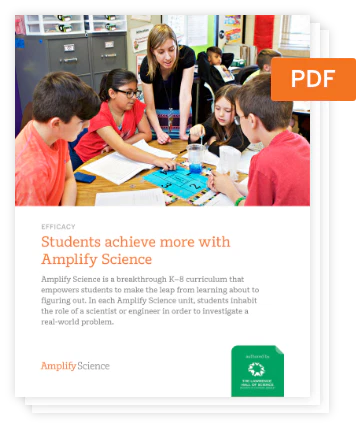
Instructional model
The Amplify Science program is rooted in the proven, research-based pedagogy of Do, Talk, Read, Write, Visualize. Here’s how each element works:
Do
First-hand investigations are an important part of any science classroom, and Amplify Science has students getting hands-on in every unit—from building models of protein molecules to experimenting with electrical systems.
Talk
Student-to-student discourse and full-class discussions are an integral part of the program. Students are provided with numerous opportunities to engage in meaningful oral scientific argumentation, all while fostering a collaborative classroom environment.
Read
Students read scientific articles, focusing their reading activities on searching for evidence related to their investigation and, importantly, on asking and recording questions as they read through fascinating texts on 21st-century topics.
Write
Following real-world practices, students write scientific arguments based on evidence they’ve collected, making clear their reasoning about how a given piece of evidence connects to one of several claims.
Visualize
By manipulating digital simulations and using modeling tools to craft visualizations of their thinking— just as real scientists and engineers
do—students take their learning far beyond the confines of what they can physically see in the classroom in an exciting and authentic way.
Program structure
Our cyclical lesson design ensures students receive multiple exposures to concepts through a variety of modalities. As they progress through the lessons within a unit, students build and deepen their understanding, increasing their ability to develop and refine complex explanations of the unit’s phenomenon.
It’s this proven program structure and lesson design that enables Amplify Science to address 100% of the Next Generation Science Standards (NGSS) and support students in mastering the Pennsylvania Science Standards.

Unit types
While every unit delivers three-dimensional learning experiences and engages students in gathering evidence from a rich collection of sources, each unit also serves a unique instructional purpose.
In grades 6–8:
- One unit is a launch unit.
- Three units are core units.
- Two units are engineering internships.
Launch units are the first units taught in each year of Amplify Science. The goal of the Launch unit is to introduce students to norms, routines, and practices that will be built on throughout the year, including argumentation, active reading, and using the program’s technology. For example, rather than taking the time to explain the process of active reading in every unit in a given year, it is explained thoroughly in the Launch unit, thereby preparing students to read actively in all subsequent units.
Core units establish the context of the unit by introducing students to a real-world problem. As students move through lessons in a Core unit, they figure out the unit’s anchoring phenomenon, gain an understanding of the unit’s disciplinary core ideas and science and engineering practices, and make linkages across topics through the crosscutting concepts. Each Core unit culminates with a Science Seminar and final writing activity.
Engineering Internship units invite students to design solutions for real-world problems as interns for a fictional company called Futura. Students figure out how to help those in need, from tsunami victims in Sri Lanka to premature babies, through the application of engineering practices. In the process, they apply and deepen their learning from Core units.
DPS Scope and Sequence
Our lessons follow a structure that is grounded in regular routines while still being flexible enough to allow for a variety of learning experiences.
In fact, our multi-modal instruction offers more opportunities for students to construct meaning, and practice and apply concepts than any other program. What’s more, our modular design means our units can be flexibly arranged to support your instructional goals.

Program components
Available digitally and in print, our unit-specific reference guides are chock-full of helpful resources, including scientific background knowledge, planning information and resources, color-coded 3D Statements, detailed lesson plans, tips for delivering instruction, and differentiation strategies.

Hands-on learning is an essential part of Amplify Science, and is integrated into every unit. Students actively participate in science, playing the roles of scientists and engineers as they gather evidence, think critically, solve problems, and develop and defend claims about the world around them. Every unit includes hands-on investigations that are critical to achieving the unit’s learning goals.

More hands-on with Flextensions:
Hands-on Flextensions are additional, optional investigations that are included at logical points in the learning progression and give students an opportunity to dig deeper if time permits. These activities offer teachers flexibility to choose to dedicate more time to hands-on learning. Materials referenced in Hands-on Flextension activities will either be included in the unit kit or are easily sourced. Supporting resources such as student worksheets will be included as downloadable PDF files.
Our kits include enough materials to support 200 student uses. In other words, teachers can easily support all five periods and small groups of 4-5 students each. Plus, our unit-specific kits mean teachers just grab the tub they need and then put it all back with ease.
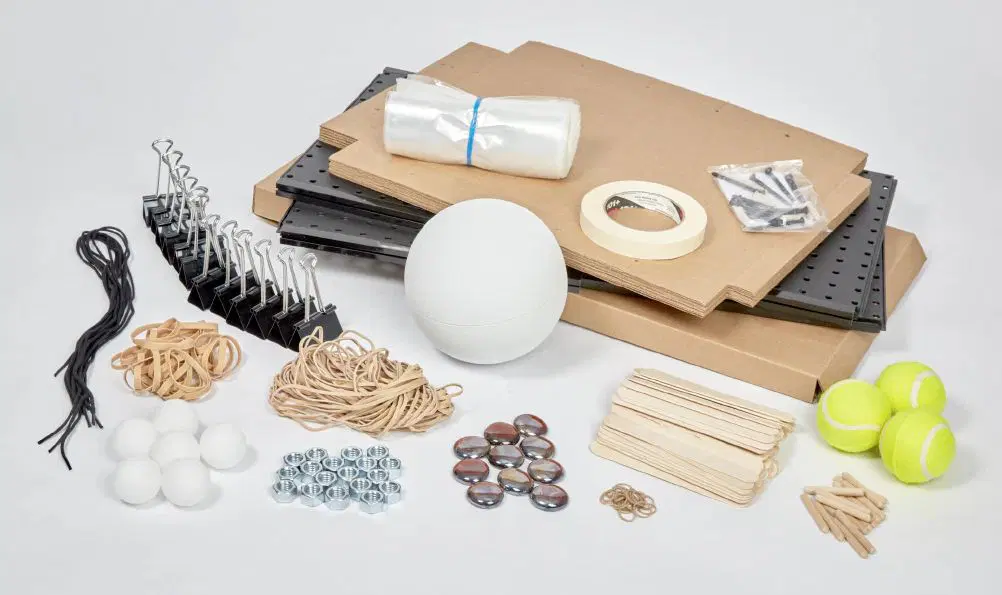
Our digital Simulations and Practice Tools are powerful resources for exploration, data collection, and student collaboration. They allow students the ability to explore scientific concepts that might otherwise be invisible or impossible to see with the naked eye.
Available for every unit, our Student Investigation Notebooks contain instructions for activities and space for students to record data and observations, reflect on ideas from texts and investigations, and construct explanations and arguments.
In grades 6–8, one copy of the Student Investigation Notebook is included in each unit’s materials kit for use as a blackline master. Each notebook is also available as a downloadable PDF on the Unit Guide page of the digital Teacher’s Guide.
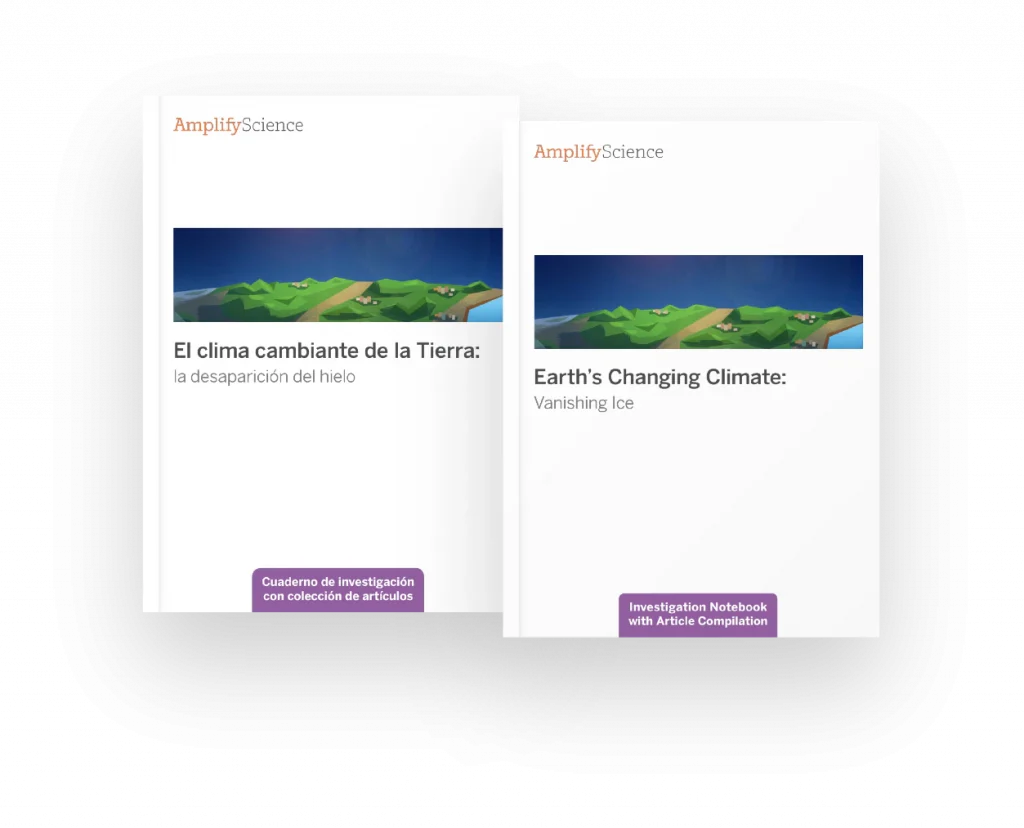
These customizable PowerPoints are available for every lesson of the program and make delivering instruction a snap with visual prompts, colorful activity instructions, investigation set-up videos and animations, and suggested teacher talk in the notes section of each slide.
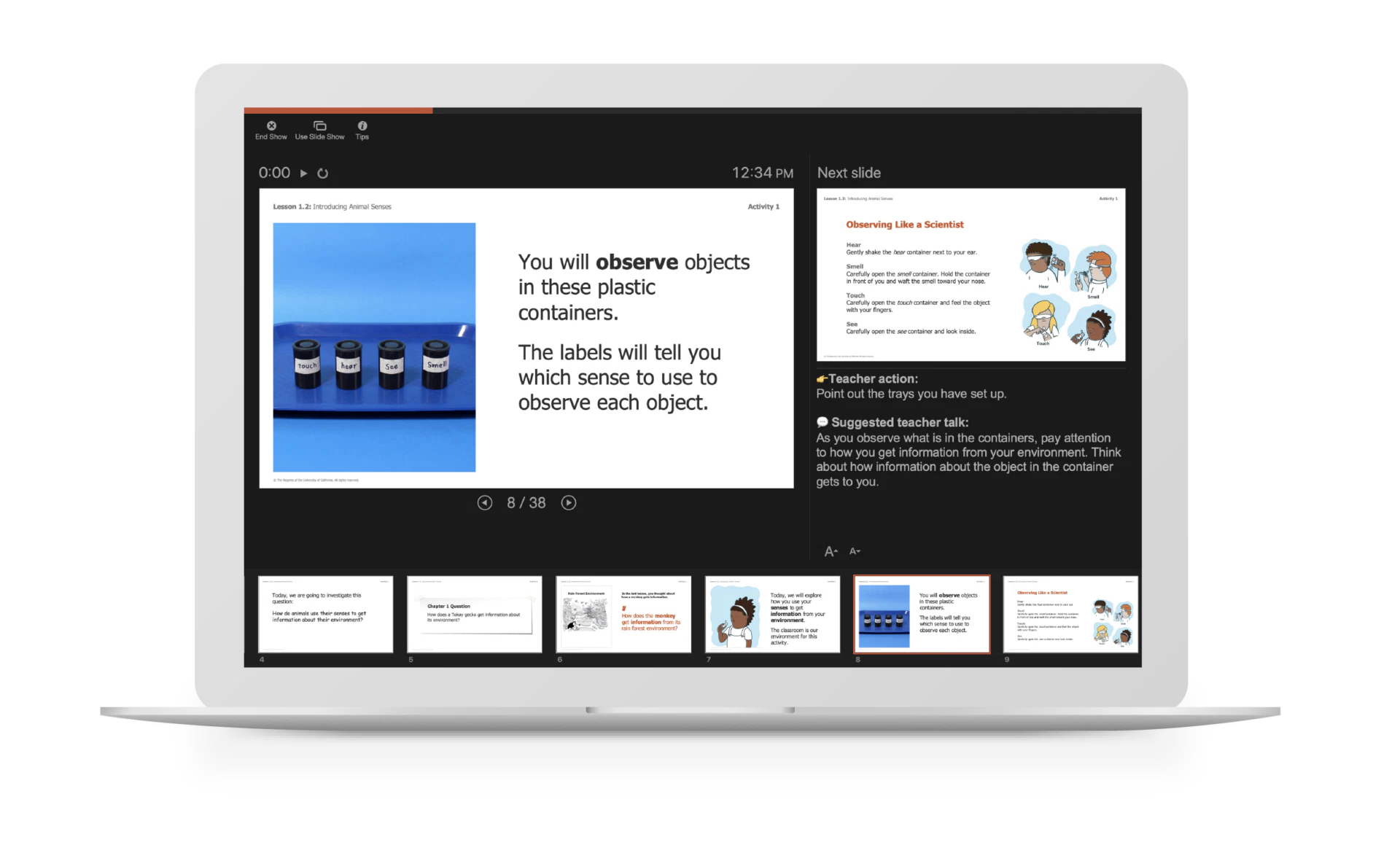
Explore your print samples
With your Amplify Science print samples, you’ll find unit-specific Teacher’s References Guides, Student Investigation Notebooks, and sets of Student Books for each grade level.
A note about the Teacher Reference Guides:
It’s important that you see the full breadth and depth of our instruction. For that reason, we provide a copy of each of our unit-specific Teacher Reference Guides.
Rest assured that teachers do not use these robust reference guides for day-to-day teaching. For that, we have a hands-free Teacher’s Guide!

- Teacher Reference Guide: Unlike a typical TG that requires a series of supplemental books to support it, our encyclopedic reference guide is chock-full of everything a teacher needs to fully implement our program and the NGSS.
- Ready-to-Teach Lesson Slides: For daily instruction, teachers need their hands free. That’s why we created ready-to-teach lesson slides for every single lesson. What’s more, they are editable and include suggested teacher talk and point-of-use differentiation and other instructional tips. Click to learn more.
A note about the Materials Kits:
Hands-on learning is at the heart of Amplify Science, and is integrated into every unit. In order to make hands-on learning more manageable for busy teachers, Amplify Science materials are organized into unit-specific kits.
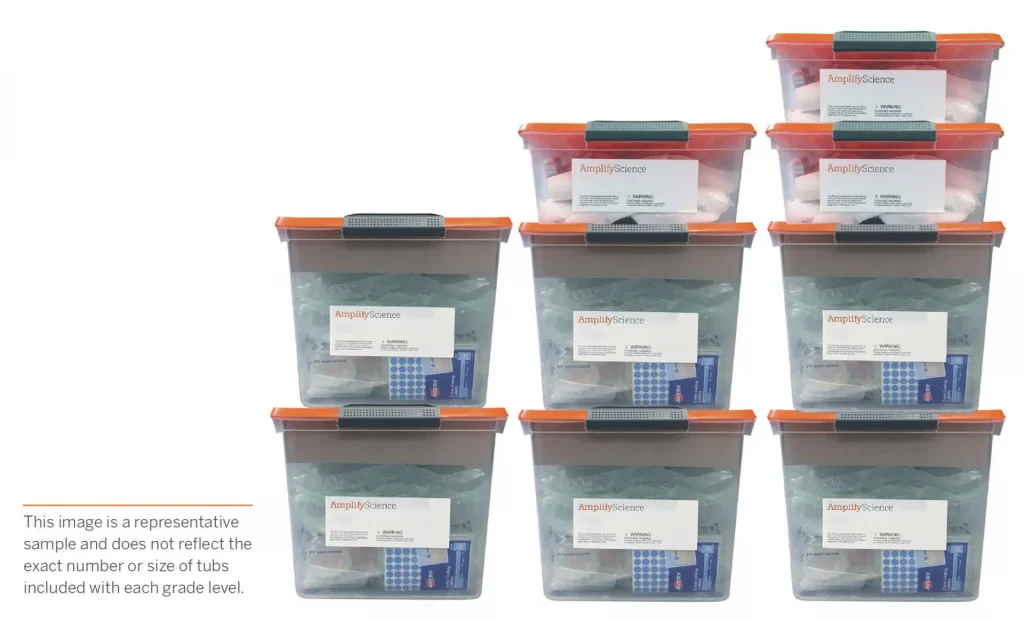
Our unit-specific kits:
- Include more materials — We give teachers enough materials to support 200 student uses.
- Are more manageable — Unlike other programs that require large groups of students to share limited sets of materials, our kits include enough to support small groups of 4–5 students.
- Include supportive videos — Each hands-on activity provides clear instructions for the teacher, with more complex activities supported by video demonstrations and illustrations.
At your request, we did not include our materials kits with our submissions samples. However, we did provide grade-specific lists of all materials included in each kit, which you can also find with the links below.
Access your digital samples
Explore as a teacher
Follow these instructions to explore the Amplify Science digital platform as a teacher.
- Click the Access Amplify Science Platform button below and bookmark it.
- Select Log in with Amplify.
- Enter the username: t1.dps68sci@demo.tryamplify.net
- Enter the password: Amplify1-dps68sci
- Click the Science icon.
- Click on the Grade Menu in the top center of the screen and select any grade.
- Select any unit.
To help familiarize yourself with navigating the digital platform, watch the below navigational video.
Spanish-language support
Amplify Science is committed to providing support to meet the needs of all learners, including multiple access points for Spanish-speaking students. Developed in conjunction with Spanish-language experts and classroom teachers, several components are available in Spanish across the Amplify Science curriculum.
Spanish-language materials include:
| COMPONENT | TEACHER/STUDENT |
| Student Investigation Notebooks | Student |
| Science articles | Student |
| Video Transcripts | Student |
| Digital simulation translation keys | Student |
| Printed classroom materials Unit and chapter questions, key concepts, vocabulary cards, etc. | Teacher |
| Copymasters | Teacher |
| Assessments | Teacher |
| Digital student experience license This license gives students access to the student resources in Spanish, including instructional text, articles, and assessments. Teachers can control student access to Spanish-language content through the digital Teacher’s Guide. | Teacher |
| Spanish teacher support license This license includes teacher talk, projections, downloadable PDFs of all print resources, and video transcripts and closed captioning in Spanish. | Teacher |
Resources to support your review
- DEIA in Amplify Science
- Research behind Amplify Science
- Phenomena in grades 6–8
- Program structure for grades 6–8
- Active Reading in grades 6–8
- Engineering in Amplify Science
- Approaches to assessment in grades 6–8
Contact Us
If you have any further questions as your review Amplify Science, please contact:
Monty Lammers
Senior Account Executive
719-964-4501
mlammers@amplify.com
Amplify Science Overview Video
Amplify Science 6–8 Form F Citation Video
Spanish Resources
List of Amplify Science Spanish resources designed to support multilingual/English learner classrooms and all multilingual models.
NM Form F Correlations
Access your digital samples
For your digital review of Amplify Science 6–8, follow these steps:
- Locate your Digital Review Flyer in the binder included with your print samples
- Click the “Log in to 6-8 Amplify Science” button below
- Enter the unique credentials found on your Digital Review Flyer
- Start exploring!
Don’t forget to view the Amplify Science 6–8 Form F Citation Video above for navigation tips!
Technical Requirements & Support
Technical Requirements for Amplify Science
For technical/digital support, contact:
Violet Wanta, VP Product Core Platform
Cell Phone: 203-980-2076
Email: vwanta@amplify.com
Program Knowledge & Additional Support
For program questions or additional support, contact:
Matt Reed, VP Science
Cell Phone: 347-668-4537
Email: mreed@amplify.com
Amplify Science Overview Video
Ampify Science K–5 Form F Citation Video
NM Form F Correlations
Spanish Resources
Amplify Science Spanish resources designed to support multilingual/English learner classrooms and all multilingual models.
Access your digital samples
For your digital review of Amplify Science K–5, follow these steps:
- Locate your Digital Review Flyer in the binder included with your print samples
- Click the ‘Login to K–5 Amplify Science’ button below
- Enter the unique credentials found on your Digital Review Flyer
- Start exploring!
Don’t forget to view the K–5 Form F Citation Video above for navigation tips!
Technical Requirements & Support
Technical Requirements for Amplify Science
For technical/digital support, contact:
Violet Wanta, VP Product Core Platform
Cell Phone: 203-980-2076
Email: vwanta@amplify.com
Program Knowledge & Additional Support
For program questions or additional support, contact:
Matt Reed, VP Science
Cell Phone: 347-668-4537
Email: mreed@amplify.com
Exciting updates for Amplify CKLA
Big things are coming next school year! Amplify Core Knowledge Language Arts (CKLA) 3rd Edition is introducing new enhancements to save you time, extend your impact, and support you in delivering the dynamic learning experiences your students deserve.

Updates
Amplify CKLA 3rd Edition program improvements
For the next school year, you can expect several exciting updates to your Amplify CKLA experience, including:
- Caregiver-facing letters that summarize student performance on each end-of-unit assessment.
- The availability of K–2 Read-Aloud Videos to support student absences.
- Teacher Presentation Screens assignable to students, either allowing you to share the slides as they are or turn them into digital activities with the ability to control pacing and view student work digitally.
- Lesson screens will be downloadable and printable for offline viewing.
- Teacher Moves that will be easier to use in Companion Mode on a second device or in another tab.
- New resources for kindergarten, including guidance on letter naming routines and engaging digital practice games that can be assigned to students.
- More guidance resources including strategies for teachers to support students with varied needs; writing building block routines for each grade level; instructional guidance and feedback toolkit.

Digital assessment enhancements
We’re making digital assessments more comprehensive for the new school year, adding in open-ended questions (for Grades 2–5) and a three-point scoring rubric. These features will make them an even more powerful tool to gather data about the students in your classroom! You will also be able to download caregiver-facing letters that summarize student performance on each end-of-unit assessment. As you teach the program, digital assessments will help you understand if students are learning to comprehend text and vocabulary, as well as develop various components of comprehension.

New instructional routines videos
Modeling videos demonstrate best practices and help you implement Amplify CKLA K-2 Skills instruction with confidence. The instructional routine modeling videos and paired PDF guides will be embedded directly in the program to streamline your lesson preparation and delivery.
Amplify Classroom updates
This back-to-school season, we’re improving the overall classroom experience with platform enhancements that make lessons easier to navigate and instruction easier to manage.
- We’re making updates to our Recently Visited section on Educator Home. You’ll see both activity and units reflected there, and have the ability to star a unit or lesson to pin it to the front of your list
- Presentation tools are expanding with Companion Mode, Projector Mode, and Sketch Everywhere, making it easier to facilitate lessons, annotate in real time, and manage instruction from anywhere in the room.
- You will also have the option to use our redesigned Activity pages, which feature a left sidebar, informational tabs, and lesson screens at the top of the page. This reconfiguration allows you to immediately see each lesson and more easily access relevant resources and tools. You will be able to turn on the new design—or turn it off to return to the original design—with a toggle located on the page.
- As of December, you are able to filter Stream by student name and see all assignments for a particular student. This includes the ability to preview student work right from the Stream to check in on student progress. You can also now assign digital activities to select students and even name the group they’ve selected for future use in the Assign feature. Named groups will be saved in the Admin Portal. You should also use the Admin Portal to create or edit groups, as well as add or remove staff or students.
AI-powered teacher tools
We’ve developed new tools to enhance your ability to connect and collaborate with families! These AI-powered tools streamline home connections by allowing you to generate your own caregiver materials. You will be able to access the three tools below in your global navigation bar to create PDFs that can be easily downloaded or printed:
- Newsletter generator
- Decodable passage generator
- Caregiver letter translator

New supplemental program: Language Studio for Amplify CKLA 3rd Edition
Releasing for the coming back-to-school season, Language Studio is an add-on program that uses the same structure, knowledge sequence, and Science of Reading foundation of Amplify CKLA 3rd Edition to help multilingual/English learners (ML/ELs) access core content and strengthen language skills. These lessons preview and reinforce Amplify CKLA 3rd Edition content to meet the needs of all K–5 ML/ELs.
This supplemental program is available to purchase for an extra cost.

Language Studio Teacher Guide Grade 4. Unit 2: Knights and Castles: Europe’s Middle Ages: Lesson 1
Language Studio Student Activity Book Grade 4. Unit 2: Knights and Castles: Europe’s Middle Ages: Lesson 1
New Grades 4 and 5 Skills supplements
Also available for the new school year: Grades 4 and 5 Skills instruction. Similar to Grade 3 Skills, Grades 4 and 5 Skills supplements are a flexible component for reteaching and additional practice. You can use these extra lessons to support core instruction or serve as an intervention, depending on your students’ needs. Instruction follows a familiar sequence and can be taught flexibly, in either two 15-minute sessions or one 30-minute session.
This supplemental program is available to purchase for an extra cost.
Amplify Caminos 3rd Edition
We’re thrilled to announce Amplify Caminos 3rd Edition, our Spanish language arts program and companion to Amplify Core Knowledge Language Arts (CKLA) 3rd Edition, which creates a cohesive path to biliteracy for students in bilingual and dual language programs. Built from the ground up for Spanish, it offers everything you need to teach with clarity and purpose: foundational skills instruction, authentic texts, knowledge-rich content, and alignment with Amplify CKLA.
This program is available to purchase for an extra cost.
Noteworthy features
Free content for you to explore
You can use the Discover button to access free content from other Amplify programs, and even assign these free activities to your students via the digital platform.
Caregiver Hub
Throughout the school year, teachers can share the Amplify CKLA and Amplify Caminos Caregiver Hubs with students’ caregivers. These sites provide curriculum details, an overview of what caregivers can expect throughout the school year, and resources they can use with students at home.

New Mexico educators: Welcome to Amplify Science 6–8!
Amplify CKLA usage & branding guidelines
Welcome to Amplify’s guidelines on using CKLA materials both under its Open Education Resource (OER) license (CC BY-NC-SA) and Amplify’s license to school districts. These guidelines apply to all variants of the CKLA program, including those not authored by Amplify. These guidelines address the following programs:
- Amplify CKLA
- Amplify Texas ELAR/SLAR
- TEA’s K-5 RLA Literacy / SLAR program
- TEA’s Bluebonnet Learning K-5 Reading Language Arts
- CKF Core Knowledge Language Arts
Amplify is committed to supporting educators in using CKLA resources to enhance classroom learning while protecting the integrity of the CKLA program and Amplify’s exclusive rights.
Our goal is to encourage impactful, efficacious use of the program while providing clear guidelines on permissible and prohibited uses.
1. Amplify’s license and what it means
Amplify partnered with the Core Knowledge Foundation (CKF) to develop the Amplify Core Knowledge Language Arts (CKLA) curriculum. You can learn more about this program and Amplify’s partnership with CKF here.
Amplify holds the exclusive commercial license to all CKLA content. In more than a decade of partnership, we have worked with CKF to enhance and supplement the program, now in its third edition nationally. Amplify licenses Amplify CKLA and Amplify ELAR/SLAR Texas to school districts, along with a full suite of assessment, intervention, and supplemental products, as well as professional development and coaching services. Learn more here.
As the exclusive commercial partner for CKLA, Amplify is the only organization permitted to use the materials commercially.
If your organization purchases CKLA materials from Amplify, you get the customary usage rights for those purchased materials specified in Amplify’s Customer Terms & Conditions.
2. Open Non-Commercial license
Some versions of the CKLA program are available under a Creative Commons NonCommercial license (CC BY-NC-SA 4.0). This includes Amplify Texas ELAR/SLAR, TEA’s K–5 RLA Literacy / SLAR program, TEA’s Bluebonnet Learning K–5 Reading Language Arts and CKF Core Knowledge Language Arts.
CC BY-NC-SA is the OER license for these materials. The license allows users to share and adapt the materials, as long you follow these terms:
- Attribution — You must give appropriate credit, provide a link to the license, and indicate if changes were made.
- NonCommercial — You may not use the material for commercial purposes.
- ShareAlike — If you remix, transform, or build upon the material, you must distribute your contributions under this same CC BY-NC-SA license.
Below we explain how Amplify and CKF apply these terms to common situations — which uses are permitted under the licenses, and which uses are prohibited or require a special permission or commercial arrangement.
Materials licensed under Creative Commons licenses are known as Open Education Resources (OER), and Amplify is proud to have been one of the earliest champions of OER materials in K-12. We believe that OER materials enable a widespread adoption of high quality materials and innovative adaptations by educators for their classrooms, alongside commercial versions that include a full suite of supports.
3. Permitted uses of CKLA content
In these guidelines, when we say “CKLA Content”, we are referring to all versions of the program that was based on the original content from CKF, both those under OER licenses and commercially licensed. Many uses by educators are permissible under either the commercial or OER license. The only difference is that your rights under the commercial license only last as long as that license is maintained by your school or district.
Amplify encourages educators to leverage CKLA Content to foster innovative and effective learning experiences. Below are uses that are permitted without any additional license, as long as you follow attribution guidelines and share-alike requirements.
Classroom Activities and Custom Materials. Educators may create supplementary activities, worksheets, lesson plans, and projects based on the CKLA Content for use within their classroom or school. For these purposes, educators may incorporate portions of the CKLA Content.
Sharing and Selling Materials based on CKLA Content. Educators may also share classroom activities and custom materials with other educators, including by selling the materials on sites like Teachers Pay Teachers. However, if these materials are sold, they may not include CKLA Content.
For any materials you create, you are required to follow our attribution and disclaimer guidelines below.
If you are unsure whether your planned use qualifies as “non-commercial” or is otherwise permitted by Amplify please reach out to us directly.
4. Restricted uses of CKLA program content
To protect the CKLA program’s value and respect Amplify’s exclusive commercial rights, certain uses of the CKLA content are prohibited without first obtaining a commercial license. Amplify reserves the right to enforce these restrictions to protect our rights.
No third party may embed, republish, or incorporate any portion of the CKLA content in products or services intended for sale, licensing, or other commercial purpose. Examples of prohibited uses include embedding CKLA content as a part of digital platforms, apps, or resources marketed to educators or the public, as well as using the content as an input or training data for such products.
This prohibition applies to all types of individuals and organizations (both for-profit and non-profit), and applies to both paid and free uses.
See “Commercial License and Partnerships” below for information on commercial arrangements.
4. Commercial licenses and partnerships
For those interested in using CKLA content in a way that may be commercial, Amplify offers various licensing options. These negotiated licenses allow approved partners to use the CKLA content within their commercial products under specific terms and conditions.
To inquire about a commercial license or discuss a partnership opportunity, please contact our partnerships team at partnerships@amplify.com.
5. Attribution and branding guidelines
Our trademarks are valuable assets of Amplify and its licensors, and we want to ensure our users and partners use them correctly. These trademarks include the Amplify, Core Knowledge Language Arts, and CKLA word marks and logos.
These marks and logos may only be used if you have an existing partnership with us, and you’ve reached out to Amplify to secure our approval to use them.
If you are creating materials based on CKLA Content in accordance with the guidelines above, you are required to include the following attribution in a reasonably perceptible location on each copy of those materials:
“These materials are based on Amplify CKLA but are not affiliated with, sponsored by, reviewed, approved, or endorsed by Amplify Education, Inc. or the Core Knowledge Foundation. ‘Amplify’, ‘CKLA’ and other marks are the property of Amplify Education, Inc. and its licensors.”
Why these guidelines matter
Amplify’s goal is to support educational access to high-quality curriculum resources while protecting the intellectual property and integrity of the CKLA program. By adhering to these guidelines, you help ensure that CKLA remains an accessible and respected resource for educators while supporting its continued improvement.
For additional questions on using the program, or if you need further clarification on any of these points, please contact us.
Exciting updates are coming for Boost Reading!
Amplify CKLA updates for Back to School 2021
DPS teachers, welcome to Amplify Science!
Here you’ll learn more about the program, download a pre-launch checklist, and read about how to get help when planning and delivering instruction.
Program introduction
Onboarding: What to expect
Welcome to Amplify Science! To help you know what’s coming next, we created the following visual that outlines the steps of the onboarding process. You can use it as a reference.
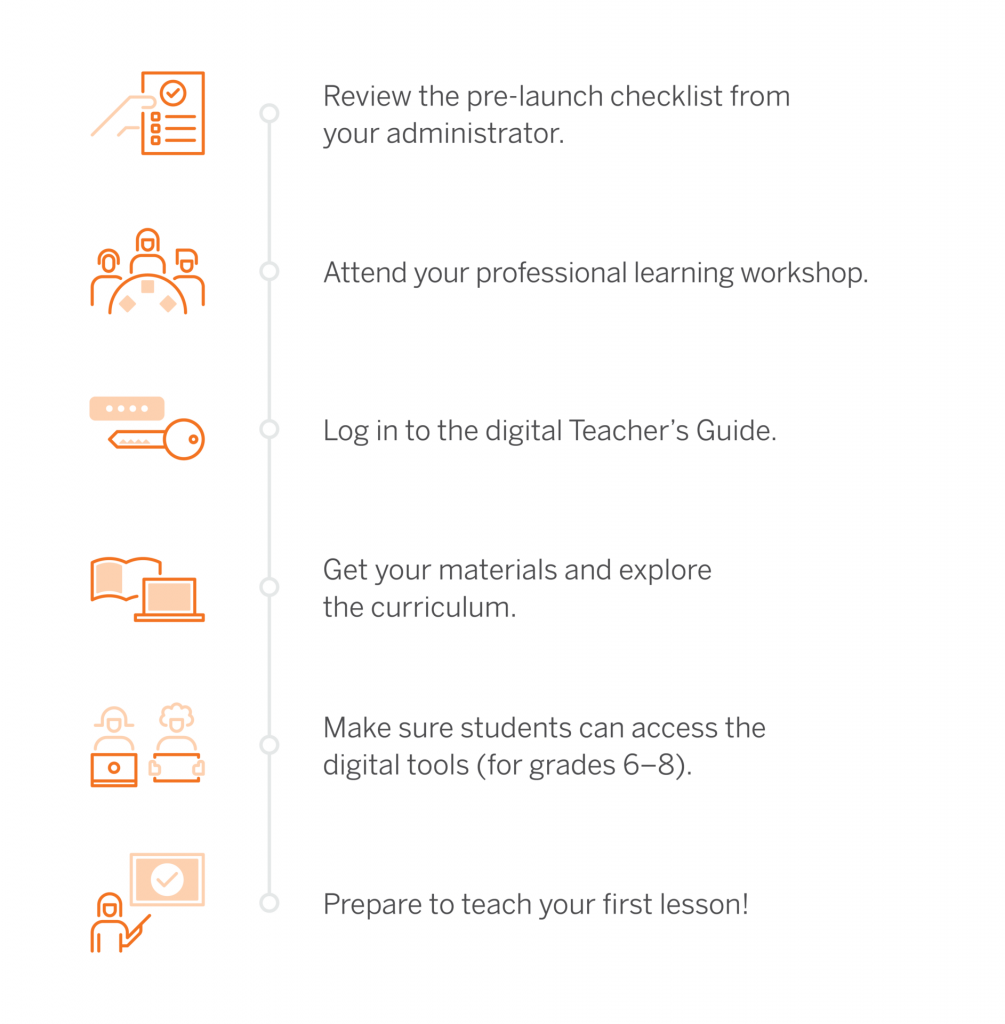
Onboarding videos
To start using Amplify Science quickly in your classroom, check out the following onboarding videos. They cover what you need to know to get started fast, from unpacking materials to logging in and navigating the digital Teacher’s Guide.
What’s online?
Program pacing
Planning strategies
How to log in and navigate
Introduction to Classwork (grades 6–8)
DPS scope and sequence (K–5)

DPS scope and sequence (6–8)

Amplify Science Program Guide
Getting started
The Amplify Science Program Guide details information about the program, including its authorship, development, themes, and more. It serves as a resource for finding out more about the program’s structure, components, supports, how it meets standards, and flexibility.
Navigate through the links below to access more information about the program and to explore resources that can help with your implementation:
Digging deeper
The sections below provide more details on the program’s approach and pedagogy:
Join our community.
Our Amplify Science Facebook group is a community of Amplify Science educators from across the country. It’s a space to share best practices, ideas, and support on everything from implementation to instruction. Join today.
Looking for help?
Powerful (and free!) pedagogical support
Amplify provides a unique kind of support you won’t find from other publishers. We have developed an educational support team of former teachers and administrators who provide pedagogical support for every Amplify curriculum, assessment, and intervention program. This service is completely free for all educators who are using our programs and includes:
- Guidance for developing lesson plans and intervention plans
- Information on where to locate standards and other planning materials
- Recommendations and tips for day-to-day teaching with Amplify programs
- Support with administering and interpreting assessment data and more
To reach our pedagogical team, use our live chat within your program, call (800) 823-1969, or email edsupport@amplify.com
Timely technical and program support
Our technical and program support is included and available from 7 a.m. to 7 p.m. ET, Monday through Friday, through a variety of channels, including a live chat program that enables teachers to get immediate help in the middle of the school day.
For your most urgent questions:
- Use our live chat within your program
- Call our toll-free number: (800) 823-1969
For less urgent questions:
DPS leaders, welcome to Amplify Science!
Here you’ll find information about enrollment and licensing, materials and shipping logistics, professional learning resources, and more.

Program introduction
Onboarding: What to expect
Welcome to Amplify Science! To help you know what’s coming next, we created the following visual that outlines the steps of the onboarding process. You can use it as a reference.

Technology requirements and guidelines
To ensure that your hardware and network meet the minimum technical requirements for optimal performance and support of your digital curriculum products, please see Amplify’s customer requirements page.
To ensure access to Amplify Science, add the URLs on this page to the corresponding district or school-level filters.
DPS scope and sequence (K–5)
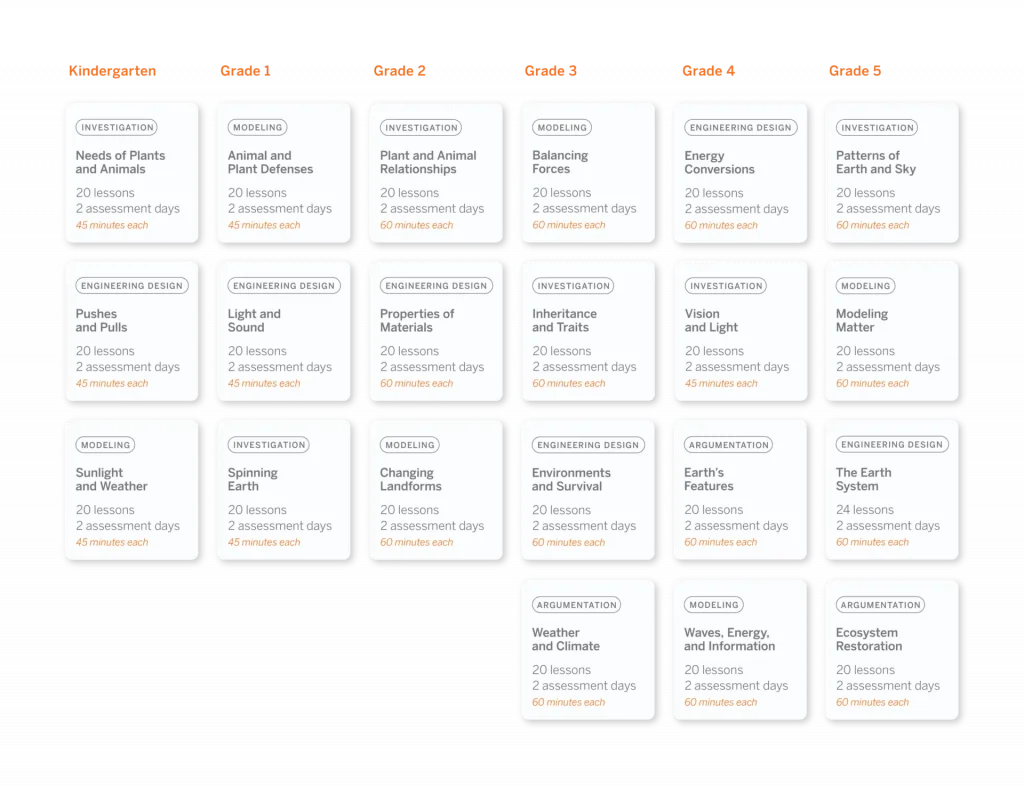
DPS scope and sequence (6–8)
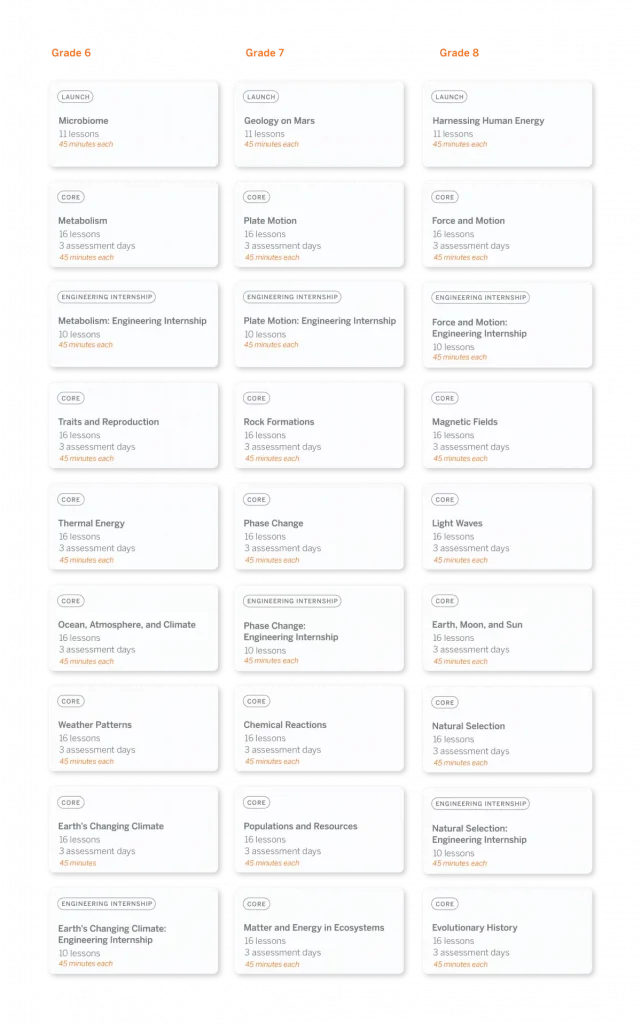
Amplify Science Program Guide
Getting started
The Amplify Science Program Guide details information about the program, including its authorship, development, themes, and more. It serves as a resource for finding out more about the program’s structure, components, supports, how it meets standards, and flexibility.
Navigate through the links below to access more information about the program and to explore resources that can help with your implementation:
Digging deeper
The sections below provide more details on the program’s approach and pedagogy:
Join our community.
Our Amplify Science Facebook group is a community of Amplify Science educators from across the country. It’s a space to share best practices, ideas, and support on everything from implementation to instruction. Join today.

Looking for help?
Powerful (and free!) pedagogical support
Amplify provides a unique kind of support you won’t find from other publishers. We have developed an educational support team of former teachers and administrators who provide pedagogical support for every Amplify curriculum, assessment, and intervention program. This service is completely free for all educators who are using our programs and includes:
- Guidance for developing lesson plans and intervention plans
- Information on where to locate standards and other planning materials
- Recommendations and tips for day-to-day teaching with Amplify programs
- Support with administering and interpreting assessment data and more
To reach our pedagogical team, use our live chat within your program, call (800) 823-1969, or email edsupport@amplify.com
Timely technical and program support
Our technical and program support is included and available from 7 a.m. to 7 p.m. ET, Monday through Friday, through a variety of channels, including a live chat program that enables teachers to get immediate help in the middle of the school day.
For your most urgent questions:
- Use our live chat within your program
- Call our toll-free number: (800) 823-1969
For less urgent questions:
Boost Reading
- Boost Reading (K–5) is available for purchase!
- Boost Lectura (K–2) is available for purchase! Learn more here.
We are excited to share a fun Boost Reading resource that teachers can use to creatively connect with their students, while motivating them to increase their weekly Boost Reading usage. These Digital Classroom Assets have been loaded onto a Powerpoint, so that the images and slides can be used in many and varied ways to support remote instruction.
Share this Boost Reading Log to your students and they can keep track of their weekly BR time. Tip: If families have access to a printer, they can print out the file for daily use at home. Put scotch tape over the area for the date and minutes and make it a wipe-off surface! Sample photo.
Looking for ways to motivate your students? We’ve created resources to support remote engagement with Boost Reading Fun. Digital downloads below.
Click here to go back to the LAUSD homepage.

Boost Reading
- An integrated solution that leverages your DIBELS data to place students in the right learning progression for their skills.
- A supplemental digital curriculum that teaches literacy skills through a captivating game world.
- An adaptive, research-based program that immerses students in language, decoding, and comprehension and differentiates instruction based on student progress.
Boost Reading Reporting Guide
A comprehensive new resource is now available for you and your teachers. This Boost Reading Reporting Guide will help you navigate through all of the progress data that is available on the Teacher Dashboard and in Administrator Reports.
Implementation Resources
Boost Reading (K-2) is available for all schools! When your students are not learning from you, they can continue to learn on their own. And the more your kids are on it, the better they do in reading.
This year, we have made it easier than ever for teachers and students. Students do not have to wait to be assessed on DIBELS to be placed into the program.
When a student uses Boost Reading for the first time, the program determines the initial level of content they will see, based on their unique learning needs.
Students are placed into the adaptive learning map by using their most recent supported assessment data or by taking an alternate placement activity provided by the Boost program.
Once they are assessed in DIBELS, the program will automatically adjust based on that data and will give them the skills they need practice in. Teachers and students are able to directly connect to Boost Reading from the Amplify app within Schoology using their SSO. (Teachers no longer need a class login or QR code for their students.) Teachers and administrators have additional reporting features on the Boost Reading dashboard to support the progress of students.
1. Log into Schoology at lms.lausd.net.
2. Locate Amplify app and find Amplify’s Educator Home page.
3. Click into and directly connect to Boost Reading. (No additional login required.)
Administrators
Teachers
- Initial Training Video (17 mins)
- Boost Reading 2020 Updates
- Teacher Dashboard Analysis (Participant Training Notebook)
- Dashboard Data Sample
Parents/Caregivers
- Boost Reading Family Resource Site (English)
- Boost Reading Family Resource Site (Spanish)
Additional Resources
- Which Curioso Are You?
- Curioso Masks and How-to Video
- Advice and answers from the Amplify Team
Boost Reading Fun Pack
Plan your professional development
We’re excited to partner with you on your Amplify journey. Flexible professional development pathways have been designed to meet your needs.

Recommended professional development plan
Our team has curated a recommended professional learning path from initial launch to continuous support. Use the Professional Development Planning Guide below to discuss the plan that best meets your school or district needs with your Account Executive.
Sessions overview
Recommended sessions are highlighted below
| Title | Duration | Modality | Available |
|---|---|---|---|
| Launch | |||
| Comprehensive initial training for teachers | 2 days consecutive | Onsite | Yes |
| Initial training for teachers | 1 day | Onsite | Yes |
| Initial training for teachers | 2 half days | Remote | Yes |
| Program overview | Half day | Onsite/Remote | Yes |
| Initial training for instructional leaders | Half day | Onsite/Remote | Yes |
| Strengthen | |||
| Enhancing observations for leaders | Half day | Onsite/Remote | 09/01/22 |
| Enhancing planning and practice | Half day | Onsite/Remote | Yes |
| Analytic reading | Half day | Onsite/Remote | Yes |
| Supporting all learners | Half day | Onsite/Remote | Yes |
| Data-informed instruction | Half day | Onsite/Remote | Yes |
| Strengthen consultation session | 1 hour | Remote | Yes |
| Strengthen consultation package | 3 1-hour sessions | Remote | Yes |
| Coach | |||
| Coaching sessions | 2 days consecutive | Onsite | Yes |
| Coaching sessions | 1 day | Onsite/Remote | Yes |
| Half day | Onsite/Remote | Yes | |
Launch
Comprehensive initial training for teachers
2 days consecutive (6 hours per day, 12 hours total)
Prepare to implement and support Amplify ELA instruction in your schools! Learn how Amplify ELA supports students through rigorous and engaging ELA instruction. Participants will navigate the Amplify ELA platform, learn to give feedback on student work, and explore how to use Amplify ELA’s embedded supports and Reporting app to monitor student progress. Participants will engage in multiple opportunities to practice components of Amplify ELA and leave confident to begin teaching.
Audience: Teachers and coaches, maximum 30 participants
Modality: Onsite/Remote
Initial training for teachers
1 day (6 hours)
Prepare to implement and support Amplify ELA instruction in your schools! Learn how Amplify ELA supports students through rigorous and engaging ELA instruction. Participants will navigate the Amplify ELA platform, learn to give feedback on student work, and explore how to use Amplify ELA’s embedded supports and Reporting app to monitor student progress. Participants will leave with an action plan to begin teaching Amplify ELA.
Audience: Teachers and coaches, maximum 30 participants
Modality: Onsite
Initial training for teachers
Two half days (3 hours per day, 6 hours total)
This full-day initial training session (6 hours) is split into two half-day sessions (3 hours each). Part 1 and Part 2 may be scheduled consecutively on the same day or on different days, ideally within ~2 weeks. The same participants should attend both sessions in order to receive all content about key components of Amplify ELA, which includes learning how to navigate, teach, and monitor student progress.
Audience: Teachers and coaches, maximum 30 participants
Modality: Remote
Program essentials
Half day (3 hours)
Learn the program essentials including how to navigate the digital curriculum, print materials components and how to locate assessments, data reports and other features associated with the curriculum.
Audience: Teachers and coaches, maximum 30 participants.
Modality: Onsite/Remote
Initial training for instructional leaders
Half day (3 hours)
This training will provide district- and school-level instructional leaders with an overview of Amplify ELA so that they can support their staff in implementing Amplify. Learn basic navigation and gain an understanding of Amplify ELA’s approach to reading, writing, and language instruction. Participants will then have the opportunity to choose how to best support teachers by either developing a school-wide implementation plan or learning strategies for effective classroom observations.
Audience: Ideal for instructional leaders, principals, and district staff who oversee the implementation of the new curriculum, maximum 30 participants
Modality: Onsite/Remote
Strengthen
Enhancing observations for leaders
Half day (3 hours)
Elevate your program knowledge to support colleagues with effective ELA implementation! Practice analyzing ELA lessons and identify key instructional elements and next steps. Participants will be prepared to analyze data and enhance classroom observations.
Prerequisite training: Initial training for leaders
Audience: Ideal for instructional leaders, principals, and district staff who oversee the implementation of the new curriculum, maximum 30 participants
Modality: Onsite/Remote
Enhancing planning and practice
Half day (3 hours)
Dig into one unit to unpack standards, assessments, and student engagement. Through backward planning, this session guides teachers to think deeply about learning outcomes and key moments of formative assessments. Teachers will leave this session with a detailed plan of a unit of their choice that includes learning outcomes, key assessment moments, and aligned instructional strategies.
Audience: Ideal for new or experienced Amplify ELA teachers or coaches, maximum 30 participants
Modality: Onsite/Remote
Analytic reading
Half day (3 hours)
Participants will learn how close reading functions in Amplify ELA and which teacher moves support students as they tackle complex texts. Participants will learn how to facilitate a close reading session to support key reading routines, as well as promote academic discourse and the type of collaboration that drives analysis and deepens understanding.
Audience: Ideal for new or experienced Amplify ELA teachers, maximum 30 participants
Modality: Onsite/Remote
Supporting all learners
Half day (3 hours)
Participants will learn how to effectively use embedded and differentiated supports and the Classwork app to support all students, including English language learners (ELLs), students with learning disabilities, struggling readers and writers, and advanced students.
Audience: Ideal for new teachers or instructional leaders who want to learn more about included supports in Amplify ELA, maximum 30 participants
Modality: Onsite/Remote
Data-informed instruction
Half day (3 hours)
Participants will review their own student data using the Reporting and Classwork apps and align embedded supports to specific student needs. The goal of this session is to become proficient in turning Amplify ELA data into differentiated and targeted instruction.
Note: This course can be combined with the supporting all learners session to make a full day of training.
Prerequisite: 4–6 weeks of student data in Amplify’s Reporting app. It is recommended that teachers are in at least Unit B.
Audience: Ideal for teachers or support staff who want to learn how to use student data to inform instruction and provide differentiation, maximum 30 participants
Modality: Onsite/Remote
Strengthening consultation session
1 hour
This 60-minute session will focus on a specific topic that will deepen educators’ understanding of ELA and equip them with the tools needed to drive stronger student outcomes. An Amplify facilitator will align with the school or district leadership team in advance of the session on the topic (chosen from a menu of options) that will best meet educators’ unique needs. The menu includes sessions on engagement, pacing, and grading/assessment.
Audience: Teachers and coaches, maximum 30 participants
Modality: Remote
Strengthening consultation package
3 1-hour sessions
This package consists of three 60-minute sessions that can be delivered on the same day or on different days. Each session will focus on a specific topic that will deepen educators’ understanding in ELA and equip them with the tools needed to drive stronger student outcomes. An Amplify facilitator will align with the school or district leadership team in advance of the session on the topic (chosen from a menu of options) that will best meet educators’ unique needs. The menu includes sessions on: engagement, pacing and grading/assessment.
Audience: Teachers and coaches, maximum 30 participants
Modality: Remote
Coach
Coaching session
2 days consecutive (6 hours per day, 12 total)
Strengthen your implementation of Amplify ELA with an onsite Coaching visit for your teachers and/or leaders. Participants can choose from a variety of topics that include, but are not limited to: lesson modeling and debrief (conducted by an Amplify ELA coach), grade-level planning, classroom observations, and leadership consultation. The flexible onsite coaching design allows for a collaborative approach to support effective program implementation.
Audience: Teachers, coaches, and/or instructional leaders, maximum 30 participants
Modality: Onsite/Remote
Coaching session
1 day (6 hours)
Strengthen your implementation of Amplify ELA with an onsite Coaching visit for your teachers and/or leaders. Participants can choose from a variety of topics that include, but are not limited to: lesson modeling and debrief (conducted by an Amplify ELA coach), grade-level planning, classroom observations, and leadership consultation. The flexible onsite coaching design allows for a collaborative approach to support effective program implementation.
Audience: Teachers, coaches, and/or instructional leaders, maximum 30 participants
Modality: Onsite/Remote
Coaching session
Half day (3 hours)
Strengthen your implementation of Amplify ELA with a Coaching session for your teachers and/or leaders. Participants can choose from a variety of topics that include, but are not limited to: lesson modeling and debrief (conducted by an Amplify ELA coach), grade-level planning, classroom observations, and leadership consultation. The flexible coaching design allows for a collaborative approach to support effective program implementation.
Audience: Teachers, coaches, and/or instructional leaders, maximum 30 participants
Modality: Onsite/Remote
Pricing
We offer the following pricing for training sessions and packages:
| Session type | Pricing |
|---|---|
| 2-day onsite session | $4,800 |
| 1-day onsite session | $3,200 |
| 1-day remote session (2 half days remote) | $1,500 |
| Half-day onsite session | $2,500 |
| Half-day remote session | $750 |
| 1-hour remote session | $350 |
| 3 1-hour remote sessions | $1,000 |
Please note that the prices are general ranges and may be subject to change.
Contact
Amplify welcomes the opportunity to partner with schools and districts to design professional development plans and answer your questions.
If you would like to order any of our professional development services, please contact your local Amplify sales representative or call (800) 823-1969.
Amplify ELA CA Edition professional development
Amplify ELA is an engaging and rigorous curriculum designed specifically for grades 6–8. With Amplify ELA, students learn to tackle any complex text and make observations, grapple with interesting ideas, and find relevance for themselves.
We’ve created a wide suite of professional development offerings that will help you meet your unique needs this school year. Find out more below!
Amplify CKLA, ELA, and Science professional development has been vetted by Rivet Education’s team through a rigorous three-step process and is listed in the Professional Learning Partner Guide.
Plan your professional development
We’re excited to partner with you on your Amplify journey. Flexible professional development pathways have been designed to meet your needs.
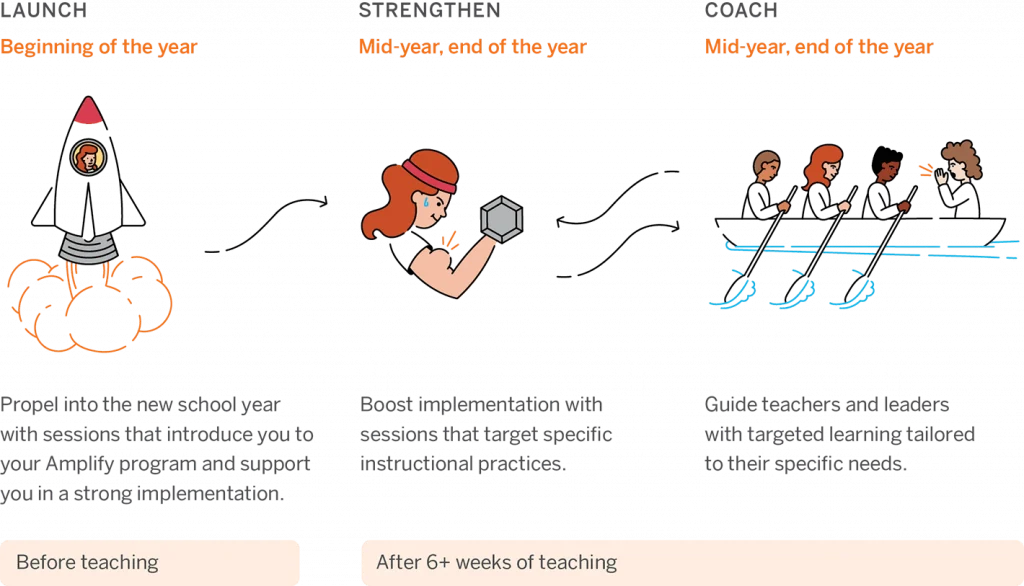
Recommended professional development plan
Our team has curated a recommended professional learning path from initial launch to continuous support. Use the Professional Development Planning Guide below to discuss the plan that best meets your school or district needs with your Account Executive.
Sessions overview
Recomended sessions are highlighted below
| Title | Duration | Modality | Available |
|---|---|---|---|
| Launch | |||
| Comprehensive initial + ELD training for teachers | 2 days consecutive | Onsite | Yes |
| Initial training for teachers | 1 day | Onsite | Yes |
| Initial training for teachers | 2 half days | Remote | Yes |
| Program overview | Half day | Onsite/Remote | Yes |
| Initial training for instructional leaders | Half day | Onsite/Remote | Yes |
| Comprehensive ELD training for teachers | Half day | Remote | Yes |
| Basic ELD training for teachers | 90 min. | Remote | Yes |
| Strengthen | |||
| Enhancing observations for leaders | Half day | Onsite/Remote | 09/01/22 |
| Enhancing planning and practice | Half day | Onsite/Remote | Yes |
| Analytic reading | Half day | Onsite/Remote | Yes |
| Supporting all learners | Half day | Onsite/Remote | Yes |
| Data-informed instruction | Half day | Onsite/Remote | Yes |
| Writing: Improving through feedback | Half day | Onsite/Remote | Yes |
| Strengthening consultation package | 3 1-hour sessions | Remote | Yes |
| Strengthening consultation session | 1 hour | Remote | Yes |
| Coach | |||
| Coaching sessions | 2 days consecutive | Onsite | Yes |
| Coaching sessions | 1 day | Onsite/Remote | Yes |
| Half day | Onsite/Remote | Yes | |
Launch
Comprehensive initial and ELD training
2 consecutive days (12 hours)
Prepare to implement and support Amplify ELA and Amplify ELD instruction in your schools! Learn about the integrated and designated approaches to supporting language learners using our ELD and ELA programs. Participants will learn how to navigate the Amplify platform, practice giving feedback on student work, and explore how to use Amplify ELA’s reporting features and embedded supports to monitor student progress. Multiple opportunities to practice components of Amplify ELA and Amplify ELD are incorporated throughout this training. Participants will leave feeling confident to begin teaching Amplify ELA and Amplify ELD. Recommended for schools or districts that want embedded practice time. This session is designed for schools who have purchased Amplify ELD, Amplify’s English Language Development program.
Audience: Teachers and coaches, maximum 30 participants
Modality: Onsite
Initial training for teachers
1 day (6 hours)
Prepare to implement and support Amplify ELA instruction in your schools! Learn how Amplify ELA supports students through rigorous and engaging ELA instruction. Participants will navigate the Amplify ELA platform, learn how to give feedback on student work, and explore how to use Amplify ELA’s embedded supports and Reporting app to monitor student progress. Participants will leave with an action plan to begin teaching Amplify ELA.
Audience: Teachers and coaches, maximum 30 participants; Remote, maximum 15 participants
Modality: Onsite
Initial training for teachers
2 half days (3 hours per day, 6 hours total)
This full day initial training session (6 hours) is split into two half-day sessions (3 hours each). Part 1 and Part 2 may be scheduled consecutively on the same day or on different days, ideally within 2 weeks. The same participants should attend both sessions in order to receive all content about key components of Amplify ELA, which includes learning how to navigate, teach, and monitor student progress.
Audience: Teachers and coaches, maximum 30 participants
Modality: Remote
Program essentials
Half day (3 hrs)
Learn the program essentials, including how to navigate the digital curriculum and print materials components and how to locate assessments, data reports, and other features associated with the curriculum.
Audience: Teachers and coaches, maximum 30 participants
Modality: Onsite/Remote
Initial training for instructional leaders
Half day (3 hours)
This training will provide district-and school-level instructional leaders with an overview of Amplify ELA so that they can support their staff in implementing Amplify. Learn basic navigation and gain an understanding of Amplify ELA’s approach to reading, writing, and language instruction. Participants will then have the opportunity to choose how to best support teachers by either developing a school-wide implementation plan or learning strategies for effective classroom observations.
Audience: Ideal for instructional leaders, principals and district staff who oversee the implementation of the new curriculum, maximum 30 participants
Modality: Onsite/Remote
Comprehensive ELD training
Half day (3 hours)
This session is designed for schools who have purchased Amplify ELD, Amplify’s English Language Development program. It reviews the integrated and designated approaches to supporting language learners using our ELA and ELD programs. Participants will learn how to navigate the Amplify ELD platform, plan to teach a lesson, and monitor student progress. Multiple opportunities to practice components of Amplify ELD are incorporated throughout this training. Participants will leave feeling confident to begin teaching Amplify ELD.
Audience: This is an add-on for schools who have already been using or attended an ELA Initial training, maximum 30 participants
Modality: Remote
Basic ELD training
90 min.
This session is designed for schools that have purchased Amplify ELD, Amplify’s English Language Development program. It reviews the integrated and designated approaches to supporting language learners using our ELA and ELD programs. Participants will learn how to navigate the Amplify ELD platform, plan to teach a lesson, and monitor student progress. Participants will leave feeling prepared to begin teaching Amplify ELD.
Audience: This is an add-on for schools who have already been using or attended an ELA Initial training, maximum 30 participants
Modality: Remote
Strengthen
Enhancing observations for leaders
Half day (3 hours)
Prerequisite training: Initial training for leaders
Elevate your program knowledge to support colleagues with effective ELA implementation! Practice analyzing ELA lessons and identify key instructional elements and next steps. Participants will be prepared to analyze data and enhance classroom observations.
Audience: Ideal for instructional leaders, principals and district staff who oversee the implementation of the new curriculum, maximum 30 participants
Modality: Onsite/Remote
Enhancing planning and practice
Half day (3 hours)
Dig into one unit to unpack standards, assessments, and student engagement. Through backward planning, this session guides teachers to think deeply about learning outcomes and key moments of formative assessments. Teachers will leave this session with a detailed plan for a unit of their choice that includes learning outcomes, key assessment moments, and aligned instructional strategies.
Audience: Ideal for new or experienced Amplify ELA teachers or coaches, maximum 30 participants
Modality: Onsite/Remote
Analytic reading
half day (3 hours)
Participants will learn how close reading functions in Amplify ELA and which teacher moves support students as they tackle complex texts. Participants will learn how to facilitate a close reading session to support key reading routines, as well as promote academic discourse and the type of collaboration that drives analysis and deepens understanding.
Audience: Ideal for new or experienced Amplify ELA teachers, maximum 30 participants
Modality: Onsite/Remote
Supporting all learners
Half day (3 hours)
Participants will learn how to effectively use embedded and differentiated supports and the Classwork app to support all students, including ELLs, students with learning disabilities, struggling readers and writers, and advanced students.
Audience: Ideal for new teachers or instructional leaders who want to learn more about included supports in Amplify ELA, maximum 30 participants
Modality: Onsite/Remote
Data-informed instruction
Half day (3 hours)
Participants will review their own student data using the Reporting and Classwork apps and align embedded supports to specific student needs. The goal of this session is to become proficient in turning Amplify ELA data into differentiated and targeted instruction.
Note: This course can be combined with the supporting all learners session to make a full day of training.
Prerequisite: 4–6 weeks of student data in Amplify’s Reporting app. It is recommended that teachers are in at least Unit B.
Audience: Ideal for teachers or support staff who want to learn how to use student data to inform instruction and provide differentiation, maximum 30 participants
Modality: Onsite/Remote
Writing: Improving through feedback
Half day (3 hours)
Participants will learn how writing functions in Amplify ELA and which teacher moves support students as they build writing skills. Participants will learn how feedback supports student growth and will practice giving targeted feedback based on rubrics and assessment data.
Audience: This course tasks teachers to look at their students’ writing, so it is recommended for delivery after 4–6 weeks of curriculum use, maximum 30 participants
Modality: Onsite/Remote
Strengthening consultation package
3 1-hour sessions
This package consists of three 60-minute sessions that can be delivered on the same day or on different days. Each session will focus on a specific topic that will deepen educators’ understanding in ELA and equip them with the tools needed to drive stronger student outcomes. An Amplify facilitator will align with the school or district leadership team in advance of the session on the topic (chosen from a menu of options) that will best meet educators’ unique needs. The menu includes sessions on: engagement, pacing and grading/assessment.
Audience: Teachers and coaches, maximum 30 participants
Modality: Remote
Strengthening consultation session
1 hour
This 60-minute session will focus on a specific topic that will deepen educators’ understanding in ELA and equip them with the tools needed to drive stronger student outcomes. An Amplify facilitator will align with the school or district leadership team in advance of the session on the topic (chosen from a menu of options) that will best meet educators’ unique needs. The menu includes sessions on engagement, pacing, and grading/assessment.
Audience: Teachers and coaches, maximum 30 participants
Modality: Remote
Coach
Coaching session
2 days consecutive (6 hours per day, 12 total)
Strengthen your implementation of Amplify ELA with an Onsite coaching visit for your teachers and/or leaders. Participants can choose from a variety of topics that include, but are not limited to: lesson modeling and debrief (conducted by an Amplify ELA coach), grade-level planning, classroom observations, and leadership consultation. The flexible onsite coaching design allows for a collaborative approach to support effective program implementation.
Audience: Teachers, coaches, and/or instructional leaders, maximum 30 participants
Modality: Onsite
Coaching session
1 day (6 hours)
Strengthen your implementation of Amplify ELA with an Onsite coaching visit for your teachers and/or leaders. Participants can choose from a variety of topics that include, but are not limited to: lesson modeling and debrief (conducted by an Amplify ELA coach), grade-level planning, classroom observations, and leadership consultation. The flexible onsite coaching design allows for a collaborative approach to support effective program implementation.
Audience: Teachers, coaches, and/or instructional leaders
Modality: Onsite/Remote, maximum 30 participants
Coaching session
Half day (3 hours)
Strengthen your implementation of Amplify ELA with a Coaching session for your teachers and/or leaders. Participants can choose from a variety of topics that include, but are not limited to: lesson modeling and debrief (conducted by an Amplify ELA coach), grade-level planning, classroom observations, and leadership consultation. The flexible coaching design allows for a collaborative approach to support effective program implementation.
Audience: Teachers, coaches, and/or instructional leaders, maximum 30 participants
Modality: Onsite/Remote
Pricing
We offer the following pricing for training sessions and packages:
| Session type | Pricing |
|---|---|
| 2 consecutive days onsite session | $4,800 |
| 1-day onsite session | $3,200 |
| 1-day remote session (2 half days remote) | $1,500 |
| Half-day onsite session | $2,500 |
| Half-day remote session | $750 |
| 90-min. remote session | $500 |
| 1-hour remote session | $350 |
| 3 1-hour remote sessions | $1,000 |
Please note that the prices are general ranges and may be subject to change.
Contact
Amplify welcomes the opportunity to partner with schools and districts to design professional development plans and answer your questions.
If you would like to order any of our professional development services, please contact your local Amplify sales representative or call (800) 823-1969.
Teachers, welcome to Amplify Science!
Here you’ll learn more about the program, download a pre-launch checklist, and read about how to get help when planning and delivering instruction.
Program introduction
Onboarding: What to expect
Welcome to Amplify Science! To help you know what’s coming next, we created the following visual that outlines the steps of the onboarding process. You can use it as a reference.
Pre-launch checklist
To ensure your first day using Amplify Science in the classroom is as seamless and smooth as possible, we recommend reviewing the following checklist at least two weeks ahead of time.
Onboarding videos
To start using Amplify Science quickly in your classroom, check out the following onboarding videos. They cover what you need to know to get started fast, from unpacking materials to logging in and navigating the digital Teacher’s Guide.
What’s online?
Program pacing
Planning strategies
How to log in and navigate
Introduction to Classwork (grades 6–8)
Unpacking your first hands-on materials kit
The following videos give you a quick look into our Amplify Science classroom kits. For each grade level, we have a video for the first unit in the scope and sequence, and we show you how to unpack the kits for all the units.
- Kindergarten: Needs of Plants and Animals
- Grade 1: Animal and Plant Defenses
- Grade 2: Plant and Animal Relationships
- Grade 3: Balancing Forces
- Grade 4: Energy Conversions
- Grade 5: Patterns of Earth and Sky
- Middle school: Metabolism
- Middle school: Plate Motion
- Middle school: Force and Motion
Join our community.
Our Amplify Science Facebook group is a community of Amplify Science educators from across the country. It’s a space to share best practices, ideas, and support on everything from implementation to instruction. Join today.
Looking for help?
Powerful (and free!) pedagogical support
Amplify provides a unique kind of support you won’t find from other publishers. We have developed an educational support team of former teachers and administrators who provide pedagogical support for every Amplify curriculum, assessment, and intervention program. This service is completely free for all educators who are using our programs and includes:
- Guidance for developing lesson plans and intervention plans
- Information on where to locate standards and other planning materials
- Recommendations and tips for day-to-day teaching with Amplify programs
- Support with administering and interpreting assessment data and more
To reach our pedagogical team, use our live chat within your program, call (800) 823-1969, or email edsupport@amplify.com
Timely technical and program support
Our technical and program support is included and available from 7 a.m. to 7 p.m. ET, Monday through Friday, through a variety of channels, including a live chat program that enables teachers to get immediate help in the middle of the school day.
For your most urgent questions:
- Use our live chat within your program
- Call our toll-free number: (800) 823-1969
For less urgent questions:
Inspiring the next generation of Oklahoma scientists, engineers, and curious citizens
Amplify Science is an engaging new core curriculum designed for three-dimensional, phenomena-based learning.
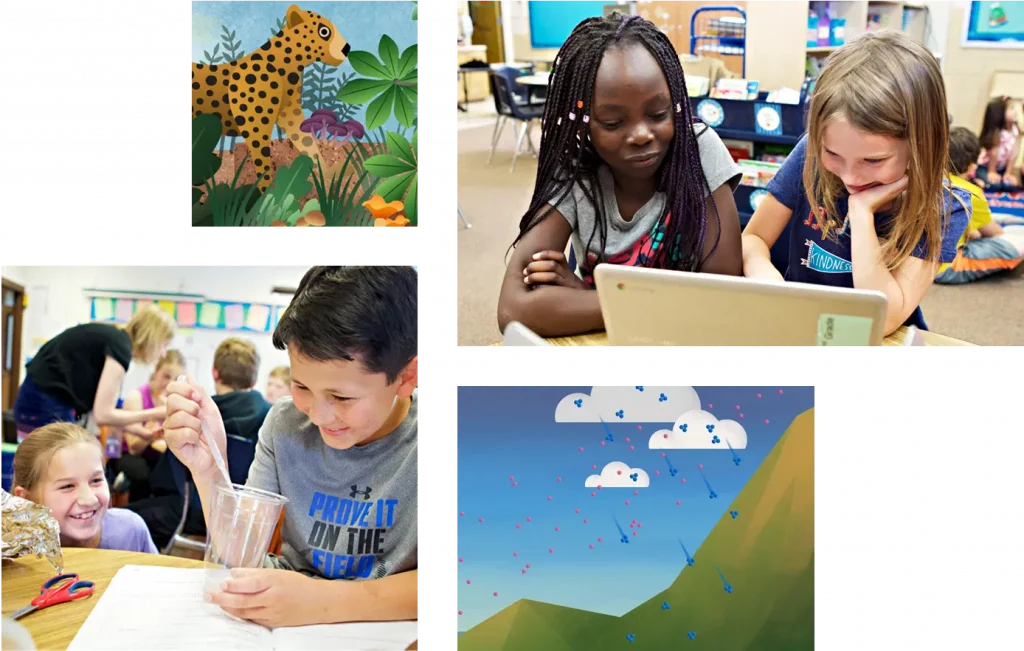
A powerful partnership
Amplify Science was developed by the science education experts at UC Berkeley’s Lawrence Hall of Science and the digital learning team at Amplify.
Instructional model
The Amplify Science program is rooted in the proven, research-based pedagogy of Do, Talk, Read, Write, Visualize. Here’s how each element works:
DO
First-hand investigations are an important part of any science classroom, and Amplify Science has students getting hands-on in every unit—from building models of protein molecules to experimenting with electrical systems.
TALK
Student-to-student discourse and full-class discussions are an integral part of the program. Students are provided with numerous opportunities to engage in meaningful oral scientific argumentation, all while fostering a collaborative classroom environment.
READ
Students read scientific articles, focusing their reading activities on searching for evidence related to their investigation and, importantly, on asking and recording questions as they read through fascinating texts on 21st-century topics.
WRITE
Following real-world practices, students write scientific arguments based on evidence they’ve collected, making clear their reasoning about how a given piece of evidence connects to one of several claims.
VISUALIZE
By manipulating digital simulations and using modeling tools to craft visualizations of their thinking— just as real scientists and engineers do—students take their learning far beyond the confines of what they can physically see in the classroom in an exciting and authentic way.
Oklahoma Instructional Samplers
Video: Oklahoma Spotlight on All Learners (SPED, G & T, EL, DEI)
Resources to support your review
- What’s so phenomenal about phenomena? – ebook
- Phenomena in grades K–5
- Phenomena in grades 6–8
- Student Books in grades K–5
- Literacy-rich science instruction in grades K–5
- Active Reading in grades 6–8
- Engineering in Amplify Science
- Oklahoma standards correlation for grades K–8
- Program structure for grades K–5
- Program structure for grades 6–8
- Oklahoma recommended scope and sequence for grades 6–8
Remote and hybrid learning support
Oklahoma Spotlight Video: Remote and Hybrid Learning
Amplify has launched a new remote learning solution called Amplify Science @Home. Intended to make extended remote learning and hybrid learning easier, Amplify Science@Home includes two useful options for continuing instruction: @Home Videos and @Home Units.
Amplify Science @Home Videos are recordings of real Amplify Science teachers teaching the lessons. For those teachers who are unable to meet synchronously with their students, the recorded lessons are a great way to keep their students on track and engaged with Amplify Science while at home. These videos will be produced for all K–5 units, and for the first four units of each 6–8 grade level. Their release will be rolling, beginning in August 2021.
Amplify Science@Home Units are modified versions of Amplify Science units, strategically designed to highlight key activities from the program. The @Home Units take significantly less instructional time than the complete Amplify Science program and allow students to engage with science at home. @Home Units will be developed for all Amplify Science K–8 units. Each @Home unit includes:
- Teacher overviews explaining how to use the materials, including suggestions for enhancing the @Home Units if synchronous learning or in-class time with students is available.
- Overviews to send home to families.
Student materials are available in two formats:
- @Home Slides (PDF/PPT) + Student Sheets (PDF) for students with access to technology at home.
- Downloadable @Home Packets (PDF) for students without access to technology at home.
Download the remote and hybrid learning guide.
What’s included
Flexible resources that work seamlessly together
Oklahoma Spotlight Video: Instructional Resources: More than a textbook!
Science articles
The middle school science articles serve as sources for evidence collection and were authored by science and literacy experts at the Lawrence Hall of Science.
Student Investigation Notebooks
Available for every unit, the Student Investigation Notebooks provide space for students to:
- record data.
- reflect on ideas from texts and investigations.
- construct explanations and arguments.
Available with full-color article compilations for middle school units.
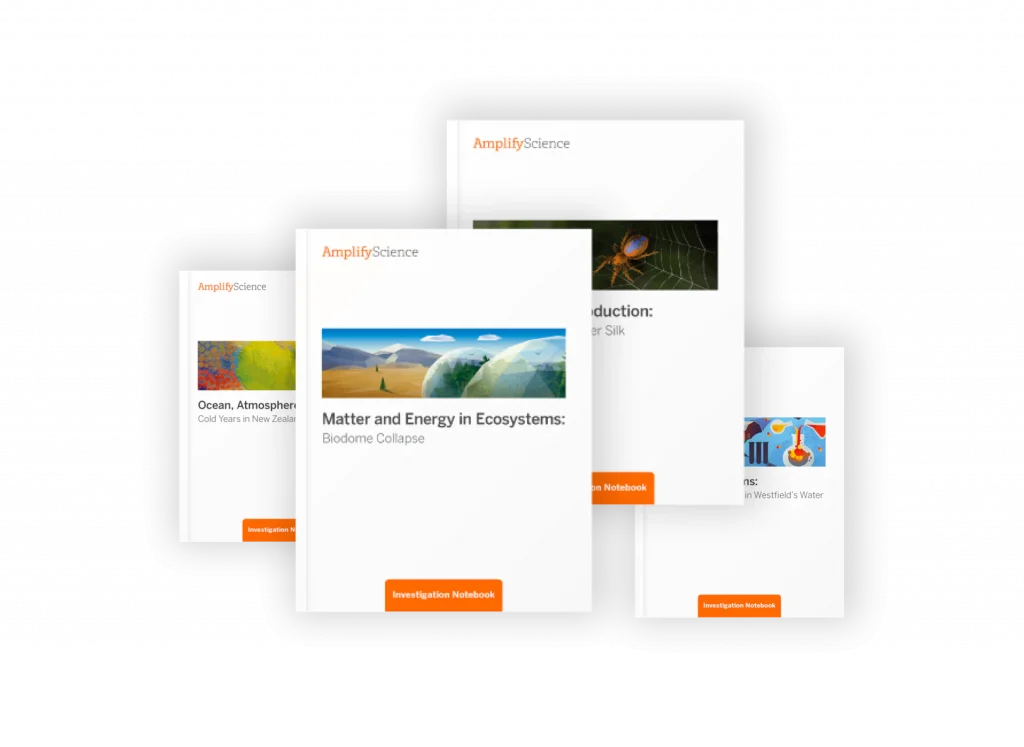
Digital student experience
Students access the digital simulations and modeling tools, as well as lesson activities and assessments, through the digital student experience. Students can interact with the digital student experience as they:
- conduct hands-on investigations.
- engage in active reading and writing activities.
- participate in discussions.
- record observations.
- craft end-of-unit scientific arguments.
Oklahoma Spotlight Video: Spotlight on Simulations
Teacher’s Guides
Available digitally and in print, the Teacher’s Guides contain all of the information teachers need to facilitate classroom instruction, including:
- Classroom Slides.
- detailed lesson plans.
- unit and chapter overview documentation.
- differentiation strategies.
- standards alignments.
- in-context professional development.
Oklahoma Spotlight Video: Classroom Slides
Hands-on materials kits
Hands-on learning is at the heart of Amplify Science. Each unit kit contains:
- consumable and non-consumable hands-on materials.
- print classroom display materials.
- premium print materials for student use (sorting cards, maps, etc).
Scope and sequence
GRADE
UNITS
Kindergarten
- Needs of Plants and Animals
- Pushes and Pulls
- Sunlight and Water
Grade 1
- Animal and Plant Defenses
- Light and Sound
- Spinning Earth
Grade 2
- Plant and Animal Relationships
- Properties of Materials
- Changing Landforms
Grade 3
- Balancing Forces
- Inheritance and Traits
- Environments and Survival
- Weather and Climate
Grade 4
- Energy Conversions
- Vision and Light
- Earth’s Features
- Waves, Energy, and Information
Grade 5
- Patterns of Earth and Sky
- Modeling Matter
- The Earth System
- Ecosystem Restoration
GRADE
UNITS
Grade 6
- Launch: Microbiome
- Metabolism
- Plate Motion
- Plate Motion Engineering Internship
- Rock Transformations
- Ocean, Atmosphere, and Climate
- Weather Patterns
- Thermal Energy
- Phase Change
Grade 7
- Launch: Harnessing Human Energy
- Chemical Reactions
- Populations and Resources
- Matter Energy and Ecosystems
- Earth’s Changing Climate
- Earth’s Changing Climate Engineering Internship
- Magnetic Fields
Grade 8
- Launch: Geology on Mars
- Force and Motion
- Force and Motion Engineering Internship
- Light Waves
- Earth, Moon, and Sun
- Traits and Reproduction
- Natural Selection
- Evolutionary History
Oklahoma Academic Standards for Science coverage
Amplify Science was designed from the ground up to meet the Next Generation Science Standards (NGSS), and the Oklahoma Academic Standards for Science (OASS) are closely aligned to the NGSS at K–8. The guidance below is meant to provide support for integrating additional activities that support full coverage of the OASS. You can view the full K–8 OASS correlation here.
Organized by grade level, each section below will outline:
- additional activities that support 100% alignment to the Oklahoma Academic Standards for Science;
- the standard being addressed with the activities;
- the recommended placement of the activities within a specific Amplify Science unit; and
- PDFs of any accompanying materials that are necessary to implement the activities.
Standard: 1.ESS3.1: Communicate solutions that will reduce the impact of humans on the land, water, air, and/or other living things in the local environment.
Recommended placement: Animal and Plant Defenses unit, Chapter 1
Materials: The Student Book Investigating Monarchs from the unit Needs of Plants and Animals
Investigating Monarchs emphasizes the needs of monarch caterpillars and butterflies and shows what happens when these animals are not able to meet their needs. The book first introduces the life cycle of monarchs, explaining that monarch caterpillars must eat milkweed to survive and change into butterflies. Their summer habitat must have milkweed. The butterflies then migrate a long distance, from the United States to a forest in the mountains of Mexico, where they take shelter in the trees. Their winter habitat must have trees. Scientists discovered that the monarch population in Mexico was greatly reduced because people were cutting down the trees. The forest was then protected, but the monarch population did not recover as expected. Scientists in the United States found evidence that this was because fields with milkweed are being replaced by farms and buildings. This book could be read with the class either before or after Chapter 1 of the Animal and Plant Defenses unit, which focuses on what plants and animals need to do to survive. Students could be asked to reflect on what the monarchs need to survive (including food and shelter), and how human activities impacted the monarchs’ ability to meet those needs. After reading the book, students could brainstorm ideas for how to reduce the impact of humans on the local environment.
Standard: MS-PS4-2: Develop and use a model to describe that waves are reflected, absorbed, or transmitted through various materials.
Recommended placement: Metabolism unit, Lesson 3.3, addition to Activity 5
Materials: “What Eyes Can See” science article
As students investigate metabolism and the body systems, the article “What Eyes Can See” should be assigned to deepen their understanding of information processing and sense receptors and connect that understanding to the emerging idea of the interaction of waves with various materials. The article explores how the only thing we can really see is light. Light travels from a light source to the eye, passing through some materials and bouncing off others. Tiny organs inside the eye called rods and cones absorb energy from light, making vision possible. These interactions between light and materials determine our visible world.
Instructions:
Download the PDF “What Eyes Can See” above and remind students of the Active Reading guidelines. Before students read the article, invite them to share prior experiences. For example, “Have you ever had an experience where something looked different in one kind of light than in another kind of light? Or where something seemed to appear or disappear when the light changed?”
Standard: MS-PS3-1: Construct and interpret graphical displays of data to describe the relationships of kinetic energy to the mass of an object and to the speed of an object.
Recommended placement: Harnessing Human Energy unit, Lesson 1.4, after Activity 4
Materials: Force and Motion simulation; Activity instructions and copymasters
In this activity, students use the Force and Motion Simulation to investigate the relationship between kinetic energy, mass, and velocity.
Instructions
Download the PDF linked above for the Lesson Guide and copymasters needed for the activity. Note that this investigation is typically implemented during the Force and Motion unit. This means the Lesson Guide will contain some incongruous labeling (e.g., unit name), as well as instructions that are out of context and unnecessary for the purposes of addressing this standard at grade 7. We suggest skipping to step 4 of the Instructional Guide to avoid some of this. Your students will get additional exposure to this activity, and indeed the standard as a whole, when they get to the Force and Motion unit in grade 8.
Standards:
- MS-PS2-3: Ask questions about data to determine the factors that affect the strength of electric and magnetic forces.
- MS-PS2-5: Conduct an investigation and evaluate the experimental design to provide evidence that fields exist between objects exerting forces on each other even though the objects are not in contact.
Recommended placement: Force and Motion unit, after Lesson 1.5
Materials: Flextension PDF
This hands-on activity builds on and reinforces students’ understanding of forces that act at a distance, with a focus on electrostatic force. Students explore electrostatic forces, prompted by a set of challenges that they try to accomplish. Next, students generate scientific questions based on their observations. Electrostatic force is less predictable and consistent than magnetic force, and investigating it can be both challenging and intriguing. The purpose of this lesson is for students to gain firsthand experience with electrostatic force and to gain experience generating scientific questions based on observations. You might choose to include this Flextension if you would like your students to have more exposure to electrostatic force, and if you would like to challenge your students to explore and ask questions about a challenging type of force.
Instructions:
Download the PDF linked above for a detailed Lesson Guide and the copymasters associated with the activity. Note that this activity is typically implemented as an add-on Flextension during the Magnetic Fields unit. This means that you will see some information that is out of context (e.g., placement information, unit title), but the activity itself also works for the purposes of the Force and Motion unit. If you have any questions, please reach out to our support team via the chat icon in your account or help@amplify.com.
Explore the Digital Teacher’s Guide
When you’re ready to review, click the orange button below and use your provided login credentials to access the Amplify Science Digital Teacher’s Guide.
To help familiarize yourself with navigating the digital Teacher’s Guide, watch our navigational guide videos:
Grades K–5:
Grades 6–8:
Looking for help?
Powerful (and free!) pedagogical support
Amplify provides a unique kind of support you won’t find from other publishers. We’ve developed an educational support team of former teachers and administrators who provide pedagogical support for every Amplify curriculum, assessment, and intervention program. This service is completely free for all educators who are using our programs and includes:
- Guidance for developing lesson plans and intervention plans.
- Information on where to locate standards and other planning materials.
- Recommendations and tips for day-to-day teaching with Amplify programs.
- Support with administering and interpreting assessment data and more.
To reach our pedagogical team, use our live chat within your program, call (800) 823-1969, or email edsupport@amplify.com
Timely technical and program support
Our technical and program support is included and available from 7 a.m. to 7 p.m. ET, Monday through Friday, through a variety of channels, including a live chat program that enables teachers to get immediate help in the middle of the school day.
For your most urgent questions:
- Use our live chat within your program.
- Call our toll-free number: (800) 823-1969.
For less urgent questions:
Contact us
Contact your Oklahoma representative:
Julie Godfrey
Account Executive
jgodfrey@amplify.com
(817) 360-0527
Get to know Amplify ELA
Start by taking a look at the Amplify ELA Program Guide, where you’ll find:
- Grade-level overviews for grades 6–8 (pages 11–31)
- Amplify ELA pedagogy (page 10)
- Sample lesson routine (page 38)
- Amplify ELA foundations (pp 70-80)
Want to go deeper or look at Amplify ELA’s approach to writing, vocabulary, grammar, and differentiation? Check out the Table of Contents for all this and much more!
Navigating the curriculum
Amplify ELA is a truly blended curriculum, designed specifically for grades 6–8. The program includes instructional guidance and student materials for a year of instruction, with lessons and activities that keep students engaged every day. Materials can be accessed either digitally or through print materials, depending on what your class needs.
Navigating in print
- Watch this video exploring the print resources available for students and teachers in Amplify ELA.
- Follow this link to open an ebook version of the print materials for your grade level and explore Unit A (the first unit).
Navigating digital
- Watch this video exploring the digital curriculum platform and the many resources available for teachers and students.
- Log in to the curriculum at learning.amplify.com using the demo account and password provided by your Sales rep.
- Once you have finished the tour, try out the scavenger hunt below!
Amplify ELA Scavenger Hunt
Inside a lesson
1. Overview & planning

The Lesson Brief equips teachers with the tools they need to plan instruction. It begins with an Overview, which describes the big ideas students will grapple with and summarizes the lesson’s sequence of activities. Next, there is a Preparation section, which points out key moments and materials to prepare. The Preparation section also describes the location and content of the lesson’s Exit Ticket.
The Lesson Brief also includes: the Lesson Objective, which details the reading, writing, and/or speaking and listening objectives; Words to Use, which points out key vocabulary from the reading; Skills & Standards, which lists the focus and coverage standards; and Differentiation, which describes differentiated supports and provides additional suggestions for modifying activities.
2. Vocab App

The Vocab App helps students master vocabulary words through game-like activities based on morphology, analogy, synonyms/ antonyms, and deciphering meaning. These activities help students develop dictionary skills by focusing on parts of speech, etymology, and multiple meanings. There are also activities for ELL-appropriate words from the unit’s texts, asking students to match an English definition, Spanish translation, context sentence, audio pronunciation, and visual definition. These activities also align to vocabulary standards.
Vocab App (Teacher View)
3. Work Visually

Visualization activities are an essential part of Amplify ELA, as they open the door to more comprehensive understanding of complex texts. In these learning experiences, students break apart the text in visual ways or use visual cues to “see” key details as they construct meaning.
In this early lesson from grade 7, students unpack propaganda images and short videos from the Chinese Cultural Revolution to build their understanding of the setting before beginning the memoir Red Scarf Girl.
Other units include visualization activities such as using an app to “see” the evidence for and against scientific theories, making storyboards and planning visual adaptations of texts to “read like a movie director,” and comparing and contrasting illustrations with key textual moments.
4. Author Videos & Dramatic Readings

Students benefit from using listening comprehension skills as they build fluency with complex texts. In these close reading experiences, students listen to the text, perform the text out loud, or watch a dramatic reading of the text.
In this lesson, students listen and watch as author Ji-Li Jiang reads the opening prologue of her memoir, Red Scarf Girl. Her facial expressions, tone of voice, and emphasis help students develop early ideas about what matters to this narrator.
Additional author videos and dramatic readings are embedded in other units. In Unit 8D: Shakespeare’s Romeo & Juliet, students watch WordPlay Shakespeare videos where actors perform each selected scene next to the text of that excerpt. In Unit 8B: Liberty & Equality, two members of the Marvel cinematic universe—Chadwick Boseman and Elizabeth Olsen—offer masterful performances of Narrative of the Life of Frederick Douglass, an American Slave and A Confederate Girl’s Diary.
5. Reading/eReader

Reading standards establish high expectations for all students, even as they enter the middle grades at a variety of reading levels. In Amplify ELA lessons, students access universal supports embedded in the eReader (and built into the print versions of the text) to help them participate fully in grade-level activities.
Point-of-use vocab in print: The print Student Edition places key vocabulary words and their relevant definitions in the text margin to support students and keep them reading.
Reveal: By clicking on these pre-selected words, students access short contextual definitions for key and challenging vocabulary.
Highlight, Bookmark, and Notes: The digital highlighting, bookmarking, and annotation tools allow students to save and review any text notes from any lesson.
Text size and line spacing: Students can adjust text size and line spacing to find what works best for them
6. Writing

Two or three times a week, students complete their reading work by developing a piece of writing to refine their reading analysis. They write for 10–15 minutes, focusing on one claim in response to a prompt, and using evidence from the text in support of their claim.
In this lesson, students build on their discussion of the setting and their analysis of the passage to determine the author’s point of view at the start of her memoir.
Differentiated supports: Five levels of differentiated supports can be assigned in the moment or in advance to help every student work productively. Levels can be assigned ahead of time (by simply dragging and dropping students into groups) and students remain in their assigned levels until they’re changed by the teacher. For more information on differentiation in Amplify ELA, click here.
Automated Writing Evaluation: The Automated Writing Evaluation (AWE) tool has been developed in conjunction with Amplify’s regular writing activities, which ask students to use textual evidence to develop one focused idea or claim about the text and communicate that idea clearly and effectively to an audience. AWE is a tool designed to help teachers understand, track, and support student skill progress with these key foundational skills, which are a strong indicator of a student’s analytic writing proficiency. AWE provides auto scores for Focus and Conventions, allowing teachers to prioritize their assessment of a student’s progress with Use of Evidence, a skill that is relatively new for many middle-grade students.
7. Share

Establishing a supportive writing community in the classroom helps students develop their voices as writers. Each writing activity is coupled with a sharing session, where clear routines and student-facing feedback protocols support students as they share and respond to each other’s writing. Here, students try out their writing with an audience of their peers to figure out how to express their ideas in a clear and convincing way. In addition, these sharing sessions allow students to learn from the range of perspectives in the classroom.
Clear and consistent Response Starters ensure that students provide feedback that targets key skills and focuses on where a student is using a skill effectively, fostering an effective and supportive feedback environment.
8. Solos
Solos are an important part of the ELA curriculum, and are designed to be completed as homework—but not every student has a computer at home. However, most students DO have access to a mobile device. The new Mobile Solos give every student access to this part of the curriculum, protecting valuable classroom time for lessons and group activities.
Navigating the first unit
Dig into Unit A
It’s time to continue your journey by exploring the first unit!
- Choose a 6th-, 7th-, or 8th-grade Unit A.
- Find the Print Materials for your grade level’s Unit A and review the unit overview. (password: middle678school)
- Log in to the curriculum and navigate to your chosen unit.
- Scroll down to the unit guide. Open each section and read it.
- Read the background and context document in the Materials section.
- Go to Sub-unit 3 and read the Sub-unit Overview.
- Choose two lessons to explore further.
- Open the first lesson and read the Lesson Overview. Be sure to open and read each section in the Lesson Overview.
- Open each activity tab and read the teacher Instructional Guide. Familiarize yourself with the entire lesson and note where students are building reading and writing skills
- Repeat with the second lesson.
Diving Deeper
Check out Amplify ELA’s professional learning website, featuring self-guided training modules and videos to help you with planning and pacing, navigation, and learning key curriculum features.
You can log in using your Amplify credentials or the demo account and password provided by your sales rep.
Additional support
As you continue to explore the curriculum, you may also want to take a look at the Amplify ELA Resources Website, which is full of additional information on the program. If you have any questions, please contact us through the Amplify Help section.
And you’ll find even more information by watching this session from our Literacy Symposium, in which Sarah Kitzmiller from the Niswonger Foundation and Teddy Redding from Amplify discuss some of the challenges of the 2020–21 school year.
Amplify’s Literacy Symposium session: Focusing on the Fundamentals to Start the Year Right
You may choose to view other sessions from the Literacy Symposium as well, all accessible from the schedule menu in the top left corner.
This webinar also offers valuable insight, with Baltimore City middle school ELA teacher Lucas Drerup describing his experiences with Amplify ELA and discussing how he brings middle school ELA to life, even in a remote teaching setting.
How to bring middle school ELA to life: A teacher’s perspective
Support
- elahelp@amplify.com
- Amplify Help Center
- 1(800) 823-1969
A powerful partnership
Amplify Science was developed by the science education experts at UC Berkeley’s Lawrence Hall of Science and the digital learning team at Amplify.
Instructional model
The Amplify Science program is rooted in the proven, research-based pedagogy of Do, Talk, Read, Write, Visualize. Here’s how each element works.
DO
First-hand investigations are an important part of any science classroom, and Amplify Science has students getting hands-on in every unit, from building models of protein molecules to experimenting with electrical systems.
TALK
Student-to-student discourse and full-class discussions are an integral part of the program. Students are provided with numerous opportunities to engage in meaningful oral scientific argumentation, all while fostering a collaborative classroom environment.
READ
Students read scientific articles, focusing their reading activities on searching for evidence related to their investigation and, importantly, on asking and recording questions as they read through fascinating texts on 21st-century topics.
WRITE
Following real-world practices, students write scientific arguments based on evidence they’ve collected, making clear their reasoning about how a given piece of evidence connects to one of several claims.
VISUALIZE
By manipulating digital simulations and using modeling tools to craft visualizations of their thinking— just as real scientists and engineers do—students take their learning far beyond the confines of what they can physically see in the classroom in an exciting and authentic way.
Resources to support your review
- What’s so phenomenal about phenomena? – ebook
- Phenomena in grades K–5
- Phenomena in grades 6–8
- Student Books in grades K–5
- Literacy-rich science instruction in grades K–5
- Active Reading in grades 6–8
- Engineering in Amplify Science
- Program structure for grades K–5
- Louisiana Standards Correlation K–5
- Louisiana Standards Correlation 6
- Louisiana Standards Correlation 7
- Louisiana Standards Correlation 8
- Louisiana recommended scope and sequence for grades 6–8
Remote and hybrid learning support
Amplify has launched a new remote learning solution called Amplify Science@Home. Intended to make extended remote learning and hybrid learning easier, Amplify Science@Home includes two useful options for continuing instruction: @Home Videos and @Home Units.
Amplify Science @Home Videos are recordings of real Amplify Science teachers teaching the lessons. For those teachers who are unable to meet synchronously with their students, the recorded lessons are a great way to keep their students on track and engaged with Amplify Science while at home. These videos will be produced for all K–5 units, and for the first four units of each 6–8 grade level. Their release will be rolling, beginning in August.
Amplify Science@Home Units are modified versions of Amplify Science units, strategically designed to highlight key activities from the program. The @Home Units take significantly less instructional time than the complete Amplify Science program and allow students to engage with science at home. @Home Units will be developed for all Amplify Science K–8 units. Each @Home Unit includes:
- Teacher overviews explaining how to use the materials, including suggestions for enhancing the @Home Units if synchronous learning or in-class time with students is available.
- Overviews to send home to families.
Student materials are available in two formats:
- @Home Slides (PDF/PPT) + Student Sheets (PDF) for students with access to technology at home.
- Downloadable @Home Packets (PDF) for students without access to technology at home.
Download the Remote and hybrid learning guide.
What’s included:
Flexible resources that work seamlessly together
Science articles
The middle school science articles serve as sources for evidence collection and were authored by science and literacy experts at the Lawrence Hall of Science.

Student Investigation Notebooks
Available for every unit, the Student Investigation Notebooks provide space for students to:
- record data.
- reflect on ideas from texts and investigations.
- construct explanations and arguments.
Available with full-color article compilations for middle school units.
Louisiana-specific Materials
Louisiana Companion Student Booklet
Digital student experience
Students access the digital simulations and modeling tools, as well as lesson activities and assessments, through the digital student experience. Students can interact with the digital student experience as they:
- conduct hands-on investigations.
- engage in active reading and writing activities.
- participate in discussions.
- record observations.
- craft end-of-unit scientific arguments.
Teacher’s Guides
Available digitally and in print, the Teacher’s Guides contain all of the information teachers need to facilitate classroom instruction, including:
- Louisiana Companion Teacher Booklet (6-8)
- Classroom Slides
- detailed lesson plans.
- unit and chapter overview documentation.
- differentiation strategies.
- standards alignments.
- in-context professional development.
Hands-on materials kits
Hands-on learning is at the heart of Amplify Science. Each unit kit contains:
- consumable and non-consumable hands-on materials.
- print classroom display materials.
- premium print materials for student use (sorting cards, maps, etc.).
Scope and sequence
Amplify Science Louisiana K–5 Program Brochure
GRADE
UNITS
Kindergarten
- Needs of Plants and Animals
- Pushes and Pulls
- Sunlight and Water
Grade 1
- Animal and Plant Defenses
- Light and Sound
- Spinning Earth
Grade 2
- Plant and Animal Relationships
- Properties of Materials
- Changing Landforms
Grade 3
- Balancing Forces
- Inheritance and Traits
- Environments and Survival
- Weather and Climate
Grade 4
- Energy Conversions
- Vision and Light
- Earth’s Features
- Waves, Energy, and Information
Grade 5
- Patterns of Earth and Sky
- Modeling Matter
- The Earth System
- Ecosystem Restoration
GRADE
UNITS
Grade 6
- Launch: Microbiome
- Populations and Resources
Additional instruction added: Human impact on Earth systems and Louisiana’s natural resources - Matter and Energy in Ecosystems
Additional instruction added: Structure and properties of matter Structure and function of cells - Force and Motion
- Engineering Internship: Force and Motion
- Magnetic Fields
- Earth, Moon, and Sun
- Light Waves
Additional instruction added: The function of the cell nucleus
Grade 6 Louisiana Resources
- 5 Companion Lessons
- Units with Companions Lessons: Populations and Resources; Matter and Energy in Ecosystems; Light Waves
- Louisiana Companion Materials Kit
Grade 7
- Metabolism
- Engineering Internship: Metabolism
- Phase Change
- Chemical Reactions
- Traits and Reproduction
- Ocean, Atmosphere, and Climate
- Weather Patterns
- Earth’s Changing Climate
Grade 7 Louisiana Resources
- 8 Companion Lessons
- Units with Companions Lessons: Phase Change; Traits and Reproduction; Ocean, Atmosphere, and Climate; Weather Patterns; Earth’s Changing Climate
- Louisiana Companion Materials Kit, not needed in 7th grade
Grade 8
- Launch: Geology on Mars
- Plate Motion
- Engineering Internship: Plate Motion
- Rock Transformations
- Thermal Energy
- Natural Selection
- Engineering Internship: Natural Selection
- Evolutionary History
Grade 8 Louisiana Resources
- 6 Companion Lessons
- Unit with Companions Lessons: Plate Motion; Rock Transformations; Thermal Energy; Natural Selection
- Louisiana Companion Materials Kit
Amplify and the Lawrence Hall of Science have created custom Amplify Science Louisiana materials for middle school students and teachers. The Louisiana edition of Amplify Science 6–8 differs from our national program in a few key ways:
- Standards cited are Louisiana State Standards for Science (LSSS) instead of NGSS
- A custom scope and sequence tailored to the LSSS is used
- Louisiana Companion Lessons are included
- Louisiana companion kits, which contain materials to accommodate the added companion lessons, are available for grades 6 and 8
Explore the Digital Teacher’s Guide
When you’re ready to review, click the orange button below and use your provided login credentials to access the Amplify Science Digital Teacher’s Guide.
To help familiarize yourself with navigating the digital Teacher’s Guide, watch our navigational guide videos:
Grades K–5:
Grades 6-8
Looking for help?
Powerful (and free!) pedagogical support
Amplify provides a unique kind of support you won’t find from other publishers. We have developed an educational support team of former teachers and administrators who provide pedagogical support for every Amplify curriculum, assessment, and intervention program. This service is completely free for all educators who are using our programs and includes:
- Guidance for developing lesson plans and intervention plans.
- Information on where to locate standards and other planning materials.
- Recommendations and tips for day-to-day teaching with Amplify programs.
- Support with administering and interpreting assessment data and more.
To reach our pedagogical team, use our live chat within your program, call (800) 823-1969, or email edsupport@amplify.com
Timely technical and program support
Our technical and program support is included and available from 7 a.m. to 7 p.m. ET, Monday through Friday, through a variety of channels, including a live chat program that enables teachers to get immediate help in the middle of the school day.
For your most urgent questions:
- Use our live chat within your program.
- Call our toll-free number: (800) 823-1969.
For less urgent questions:
Contact us
Contact your Louisiana representative:
Wayne Hebert
whebert@amplify.com
(337) 298-7833
Our Instructional model
The Amplify Science program is rooted in the proven, research-based pedagogy of Do, Talk, Read, Write, Visualize. Here’s how each element works:
DO
First-hand investigations are an important part of any science classroom, and Amplify Science has students getting hands-on in every unit, from building models of protein molecules to experimenting with electrical systems.
TALK
Student-to-student discourse and full class discussions are an integral part of the program. Students are provided with numerous opportunities to engage in meaningful oral scientific argumentation, all while fostering a collaborative classroom environment.
READ
Students read scientific articles, focusing their reading activities on searching for evidence related to their investigation, and importantly, on asking and recording questions as they read through fascinating texts on 21st-century topics.
WRITE
Following real-world practices, students write scientific arguments based on evidence they’ve collected, making clear their reasoning about how a given piece of evidence connects to one of several claims.
VISUALIZE
By manipulating digital simulations and using modeling tools to craft visualizations of their thinking— just as real scientists and engineers do—students take their learning far beyond the confines of what they can physically see in the classroom in an exciting and authentic way.
Supporting resources
- South Carolina recommended scope and sequence for grades 6–8
- South Carolina standards correlation for grades K–5
- Program Components K-5
- Curriculum Unit Kits K-5
- What’s so phenomenal about phenomena? – ebook
- Phenomena in grades K–5
- Student Books in grades K–5
- Literacy-rich science instruction in grades K–5
- Active Reading in grades 6–8
- Engineering in Amplify Science
- Program structure for grades K–5
Scope and sequence
GRADE
UNITS
Kindergarten
- Needs of Plants and Animals
- Pushes and Pulls
- Sunlight and Water
Grade 1
- Animal and Plant Defenses
- Light and Sound
- Spinning Earth
Grade 2
- Plant and Animal Relationships
- Properties of Materials
- Changing Landforms
Grade 3
- Balancing Forces
- Inheritance and Traits
- Environments and Survival
- Weather and Climate
Grade 4
- Energy Conversions
- Vision and Light
- Earth’s Features
- Waves, Energy, and Information
Grade 5
- Patterns of Earth and Sky
- Modeling Matter
- The Earth System
- Ecosystem Restoration
GRADE
UNITS
Grade 6
- Launch: Microbiome
- Metabolism
- Metabolism Engineering Internship
- Thermal Energy
- Plate Motion
- Plate Motion Engineering Internship
- Rock Transformations
- Weather Patterns
- Ocean, Atmosphere, and Climate
Grade 7
- Launch: Harnessing Human Energy
- Phase Change
- Phase Change Engineering Internship
- Magnetic Fields
- Earth’s Changing Climate
- Earth’s Changing Climate Engineering Internship
- Chemical Reactions
- Populations and Resources
- Matter and Energy in Ecosystems
Grade 8
- Launch: Geology on Mars
- Earth, Moon, and Sun
- Light Waves
- Force and Motion
- Force and Motion Engineering Internship
- Traits and Reproduction
- Natural Selection
- Natural Selection Engineering Internship
- Evolutionary History
South Carolina College- and Career-Ready Science Standards 2021
Amplify Science was designed from the ground up to meet the Next Generation Science Standards (NGSS), and the South Carolina College- and Career-Ready Science Standards 2021 are closely aligned to the NGSS at K-8. The guidance below is meant to provide support for integrating additional companion activities that support full coverage of the South Carolina College- and Career-Ready Science Standards 2021.
Organized by grade level, each section below will outline:
- Additional activities that support 100% alignment to the South Carolina College- and Career-Ready Science Standards 2021;
- The standard being addressed with the activities;
- The recommended placement of the activities within a specific Amplify Science unit; and
- PDFs of any accompanying materials that are necessary to implement the activities.
Standard: MS-PS1-4: Develop a model that predicts and describes changes in particle motion, temperature, and state of a pure substance when thermal energy is added or removed.
Recommended placement: Thermal Energy unit, Lesson 4.4, addition to Activity 3
Materials: “Liquid Oxygen”
By reading the article “Liquid Oxygen,” which describes how the relationship between attraction and kinetic energy determines when a substance changes phase, students extend their understanding of the possible effects of adding or removing thermal energy to include changes in state (phase). Oxygen is one of the most common elements in the world, but most people are only familiar with oxygen in the gas phase. Because oxygen molecules are only weakly attracted to one another, condensing oxygen is difficult. This article introduces students to molecular attraction and discusses its role in phase change, including how it can be used to turn oxygen from a gas to a liquid.
Instructions:
Download PDFs of the “Liquid Oxygen” and distribute it to students. Before they begin reading, remind students of the Active Reading Guidelines.
Standard: MS-PS4-2: Develop and use a model to describe that waves are reflected, absorbed, or transmitted through various materials.
Recommended placement: Weather Patterns unit, Lesson 4.4, addition to Activity 3
Materials: “Harvesting Sunlight”, “Why No One in Space Can Hear You Scream” and “Making Waves at Swim Practice”
After investigating weather patterns, which includes a focus of the effects of energy from sunlight, students extend their learning about light by reading three articles about light and other waves.
“Harvesting Sunlight:” Students read this article to learn about the types of light from the sun that plants use for photosynthesis. The article describes how the sun emits all types of light, but plants can only use certain types of visible light for photosynthesis, mostly red and blue light. Plants also absorb other types of light, and these types of light affect plants in different ways. Students use this information to gather evidence that there are different types of light that can affect a material in different ways.
“Why No One in Space Can Hear You Scream:” Students read this article to learn about how waves are transmitted. Explosions that would be deafening on Earth are silent in space. This is because sound is produced by sound waves and, unlike light waves, sound waves need matter to travel through. Reading about this phenomenon helps students understand the similarities and differences between mechanical and electromagnetic waves.
“Making Waves at Swim Practice:” A practice for the school swim team provides an everyday context for discussing light waves and sound waves in this engaging article. First, the article explores sound waves traveling through different materials–the air, the water of the pool, and even a metal poolside bench. Students discover that sound waves travel at different speeds in different materials. The later part of the article discusses light waves, which also travel at different speeds in different materials. As light waves move from one material to another, they change speed and bend. This bending of light waves is called refraction, and it explains why objects that are partly in the water and partly out of the water (such as the legs of a person sitting on the side of a pool) appear ripply and bent.
Instructions:
Plan one class period for each article. Download PDFs of the “Harvesting Sunlight,” “Why No One in Space Can Hear You Scream,” and “Making Waves at Swim Practice” articles. For each article, before students begin reading, preview the article and discuss what students already know and what they wonder about the topic, then remind students of the Active Reading Guidelines.
Standard: MS-PS2-3: Ask questions about data to determine the factors that affect the strength of electric and magnetic forces. MS-PS2-5: Conduct an investigation and evaluate the experimental design to provide evidence that fields exist between objects exerting forces on each other even though the objects are not in contact.
Recommended placement: Harnessing Human Energy unit, Lesson 3.4, after Activity 1
Materials: “Earth’s Geomagnetism” and “Painting with Static Electricity”
After concluding their investigations of energy transfers and conversions, students read two articles that introduce the topic of forces that act at a distance.
“Earth’s Geomagnetism:” What makes a compass needle point north, no matter what? This article introduces students to Earth’s geomagnetic field and the field lines scientists use to show its direction.
“Painting with Static Electricity:” This article gives students the opportunity to learn about electrostatic fields and forces in the context of spray painting without making a mess. Electrostatic painting systems use electrostatics to draw spray paint toward the object being painted, and nowhere else. Painters charge the object they are painting with a negative charge and the paint with a positive charge. The opposite charges are attracted to one another, causing the paint to move toward the object. This surprising use of electrostatics saves time and paint and keeps things tidy!
Instructions
Plan one class period for each article. Download PDFs of the “Earth’s Geomagnetism” and “Painting with Electricity” articles. For each article, before students begin reading, preview the article and discuss what students already know and what they wonder about the topic, then remind students of the Active Reading Guidelines.
What’s included
Science articles
The middle school science articles serve as sources for evidence collection and were authored by science and literacy experts at the Lawrence Hall of Science.
Student Investigation Notebooks
Available for every unit, the Student Investigation Notebooks provide space for students to:
- Record data
- Reflect on ideas from texts and investigations
- Construct explanations and arguments
Available with full-color article compilations for middle school units.
Digital student experience
Students access the digital simulations and modeling tools, as well as lesson activities and assessments, through the digital student experience. Students can interact with the digital student experience as they:
- Conduct hands-on investigations
- Engage in active reading and writing activities
- Participate in discussions
- Record observations
- Craft end-of-unit scientific arguments

Teacher’s Guides
Available digitally and in print, the Teacher’s Guides contain all of the information teachers need to facilitate classroom instruction, including:
- Classroom Slides
- Detailed lesson plans
- Unit and chapter overview documentation
- Differentiation strategies
- Standards alignments
- In-context professional development
Hands-on materials kits
Hands-on learning is at the heart of Amplify Science. Each unit kit contains:
- Consumable and non-consumable hands-on materials
- Print classroom display materials
- Premium print materials for student use (sorting cards, maps, etc.)
Remote and hybrid learning supports
Amplify has launched a new remote learning solution called Amplify Science@Home. Intended to make extended remote learning and hybrid learning easier, Amplify Science@Home includes two useful options for continuing instruction: @Home Videos and @Home Units.
Amplify Science @Home Videos are recordings of real Amplify Science teachers teaching the lessons. For those teachers who are unable to meet synchronously with their students, the recorded lessons are a great way to keep their students on track and engaged with Amplify Science while at home. These videos will be produced for all K–5 units, and for the first four units of each 6–8 grade level. Their release will be rolling, beginning in August.
Amplify Science@Home Units are modified versions of Amplify Science units, strategically designed to highlight key activities from the program. The @Home Units take significantly less instructional time than the complete Amplify Science program and allow students to engage with science at home. @Home Units will be developed for all Amplify Science K–8 units. Each @Home unit includes:
- Teacher overviews explaining how to use the materials, including suggestions for enhancing the @Home Units if synchronous learning or in-class time with students is available.
- Overviews to send home to families.
Student materials are available in two formats:
- @Home Slides (PDF/PPT) + Student Sheets (PDF) for students with access to technology at home.
- Downloadable @Home Packets (PDF) for students without access to technology at home.
Download the Remote and hybrid learning guide.
Looking for help?
Powerful (and free!) pedagogical support
Amplify provides a unique kind of support you won’t find from other publishers. We have developed an educational support team of former teachers and administrators who provide pedagogical support for every Amplify curriculum, assessment, and intervention program. This service is completely free for all educators who are using our programs and includes:
- Guidance for developing lesson plans and intervention plans
- Information on where to locate standards and other planning materials
- Recommendations and tips for day-to-day teaching with Amplify programs
- Support with administering and interpreting assessment data and more
To reach our pedagogical team, use our live chat within your program, call (800) 823-1969, or email edsupport@amplify.com
Timely technical and program support
Our technical and program support is included and available from 7 a.m. to 7 p.m. ET, Monday through Friday, through a variety of channels, including a live chat program that enables teachers to get immediate help in the middle of the school day.
For your most urgent questions:
- Use our live chat within your program
- Call our toll-free number: (800) 823-1969
For less urgent questions:
Contact us
Contact your South Carolina team representatives:
Jeff Rutter
Field Manager
jrutter@amplify.com
(727) 512-8440
Lisa Jurovaty
Account Executive (West South Carolina)
ljurovaty@amplify.com
(803) 526-1899
Cathy McMillan (East South Carolina)
Senior Account Executive
cmcmillan@amplify.com
(904) 465-9904
Utah – USBE Data Analysis for K-3 Reading Assessment Program – New
Program overview
Boost Math is a personalized learning math instruction and practice program. The game-based experience engages all students in grade-level mathematics in ways that prepare them for success in, and build enthusiasm around, algebra and later math.
Student experience
When students click on their Curioso icon, they are taken into their quest. Quests consist of brief narrative scenes, punctuated with skill practice in the form of games. Once a student completes a scene, their very own collection of personalized skill games appears on the right side of the screen. Students can play these games in any order.
- Students in grades 1 and 2 will experience games related to comparing numbers, measuring, and more.
- Students in grades 3, 4, and 5 will experience games related to fractions, area, multiplication, and more.
- Students will also experience activities known as “Makers,” which are open-ended activities within each quest related to the quest narrative, giving students an opportunity to apply different math applications to the real world.
Note: This is an early subsection of the product. Some content may be appropriate for some students, but difficult for others. This is feedback we want to hear. The designs are also still in-progress, with many aspects yet to be featured. We welcome all suggestions!
Implementation guidelines
We recommend that students should play for a total of 60 minutes per week, broken up into 3–4, 15–20 minute sessions. Consider using Boost Math during the following times:
- Small group or centers time
- Choice time
- During intervention blocks
- After school
- At home
- Remote learning
Getting your students online
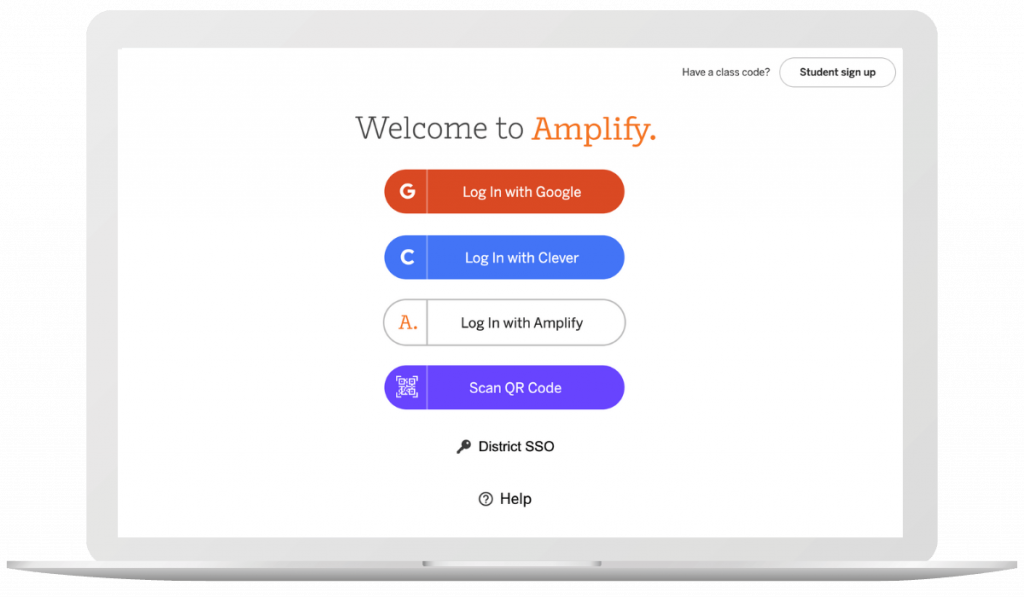
Instruct students to navigate to learning.amplify.com, and log in using the method you typically use when logging into Amplify Reading.

Find and click on the icon for Boost Math, as shown above.
Students will then see the screen showing Sequence Falls, the location in which their Boost Math journey takes place.
Troubleshooting guide
To clear your Chrome browser cache/cookies:
- On your computer, open Chrome.
- At the top right, click the three vertical dots.
- Click More Tools, Clear browsing data.
- At the top, choose a time range, select All time.
- Check the boxes next to “Cookies and other site data” and “Cached images and files.”
- Click Clear data.
- From the Safari menu at the top of the screen, select “Safari”
- Select “Preferences” from the drop-down menu
- Open the “Privacy” tab
- Select the “Manage Website Data” button
- Choose “amplify.com” from the list of sites
- Select the “Remove” button
- Select “Done”, then close the window
Please check to ensure “cookies” are accepted on your device.
If you still receive an error message or blank screen when accessing an Amplify page, please email Aya Bukres.
Please email Jehan Miah to confirm your login credentials.
To reset your Amplify password: click Login with Amplify, then click the Forgot Password link. If you do not receive an email with password reset instructions, please check your Spam folder. To ensure messages to not go to your Spam inbox, make sure to include the following addresses as trusted sources:
- do-not-reply@amplify.com
- noreply@amplify.com
- noreply@welcome.amplify.com
Amplify ELA professional development
Amplify ELA is an engaging and rigorous curriculum designed specifically for grades 6–8. With Amplify ELA, students learn to tackle any complex text and make observations, grapple with interesting ideas, and find relevance for themselves.
We’ve created a wide suite of professional development offerings that will help you meet your unique needs. Find out more below!
Amplify CKLA, ELA, and Science professional development has been vetted by Rivet Education’s team through a rigorous three-step process and is listed in the Professional Learning Partner Guide.

Plan your professional development
We’re excited to partner with you on your Amplify journey. Flexible professional development pathways have been designed to meet your needs.
Recommended Professional Development Plan
Our team has curated a recommended professional learning path from initial launch to continuous support. Use the Professional Development Planning Guide below to discuss the plan that best meets your school or district needs with your Account Executive.
Sessions overview
Recomended sessions are highlighted below
| Title | Duration | Modality | Available |
|---|---|---|---|
| Launch | |||
| Comprehensive initial training for teachers | 2 days consecutive | Onsite | Yes |
| Initial training for teachers | 1 day | Onsite | Yes |
| Initial training for teachers | 2 half days | Remote | Yes |
| Program overview | Half day | Onsite/Remote | Yes |
| Initial training for leaders | Half day | Onsite/Remote | Yes |
| Strengthen | |||
| Enhancing observations for leaders | Half day | Onsite/Remote | 09/01/22 |
| Enhancing planning and practice | Half day | Onsite/Remote | Yes |
| Analytic reading | Half day | Onsite/Remote | Yes |
| Supporting all learners | Half day | Onsite/Remote | Yes |
| Data-informed instruction | Half day | Onsite/Remote | Yes |
| Writing: Improving through feedback | Half day | Onsite/Remote | Yes |
| Strengthening consultation session | 1 hour | Remote | Yes |
| Strengthening consultation package | 3 1-hour sessions | Remote | Yes |
| Coach | |||
| Coaching sessions | 2 days consecutive | Onsite | Yes |
| Coaching sessions | 1 day | Onsite/Remote | Yes |
| Half day | Onsite/Remote | Yes | |
Launch
Comprehensive initial training for teachers
2 days consecutive (6 hours per day, 12 hours total)
Prepare to implement and support Amplify ELA instruction in your school! Learn how Amplify ELA supports students through rigorous and engaging ELA instruction. Participants will navigate the Amplify ELA platform, learn to give feedback on student work, and explore how to use Amplify ELA’s embedded supports and Reporting app to monitor student progress. Participants will have multiple opportunities to practice components of Amplify ELA and leave confident to begin teaching.
Audience: Teachers and coaches
Modality: Onsite, maximum 30 participants
Initial training for teachers
1 day (6 hours)
Prepare to implement and support Amplify ELA instruction in your schools! Learn how Amplify ELA supports students through rigorous and engaging ELA instruction. Participants will navigate the Amplify ELA platform, learn to give feedback on student work, and explore how to use Amplify ELA’s embedded supports and Reporting app to monitor student progress. Participants will leave with an action plan to begin teaching Amplify ELA.
Audience: Teachers and coaches, maximum 30 participants
Modality: Onsite
Initial training for teachers
2 half days (3 hours per day, 6 hours total)
This full day initial training session (6 hours) is split into two half-day sessions (3 hours each). Part 1 and Part 2 may be scheduled consecutively on the same day or on different days, ideally within ~2 weeks. The same participants should attend both sessions in order to receive all content about key components of Amplify ELA, which includes learning how to navigate, teach, and monitor student progress.
Audience: Teachers and coaches, maximum 30 participants
Modality: Remote
Program essentials
Half day (3 hours)
Learn the program essentials, including how to navigate the digital curriculum and print materials and where to locate features like assessments and data reports.
Audience: Teachers and coaches, maximum 30 participants
Modality: Onsite/Remote
Initial training for instructional leaders
Half day (3 hours)
This training will provide district- and school-level instructional leaders with an overview of Amplify ELA so that they can support their staff in implementing Amplify.
Learn basic navigation and gain an understanding of Amplify ELA’s approach to reading, writing, and language instruction. Participants will then have the opportunity to choose how to best support teachers by either developing a school-wide implementation plan or learning strategies for effective classroom observations.
Audience: Ideal for instructional leaders, principals, and district staff who oversee the implementation of the new curriculum, maximum 30 participants
Modality: Onsite/Remote
Strengthen
Enhancing observations for leaders
Half day (3 hours)
Elevate your program knowledge to support colleagues with effective ELA implementation! Practice analyzing ELA lessons and identify key instructional elements and next steps. Participants will be prepared to analyze data and enhance classroom observations.
Prerequisite training: Initial training for leaders
Audience: Ideal for instructional leaders, principals, and district staff who oversee the implementation of the new curriculum, maximum 30 participants
Modality: Onsite/Remote
Enhancing planning and practice
Half day (3 hours)
Dig into one unit to unpack standards, assessments, and student engagement. Through backward planning, this session guides teachers to think deeply about learning outcomes and key moments of formative assessments. Teachers will leave this session with a detailed plan of a unit of their choice that includes learning outcomes, key assessment moments, and aligned instructional strategies.
Audience: Ideal for new or experienced Amplify ELA teachers or coaches, maximum 30 participants
Modality: Onsite/Remote
Analytic reading
Half day (3 hours)
Participants will learn how close reading functions in Amplify ELA and which teacher moves will support students tackling complex texts. Participants will also learn how to facilitate a close reading session to develop key reading routines, promote academic discourse, and encourage the type of collaboration that drives analysis and deepens understanding.
Audience: Ideal for new or experienced Amplify ELA teachers, maximum 30 participants
Modality: Onsite/Remote
Supporting all learners
Half day (3 hours)
Participants will learn how to effectively use embedded and differentiated supports and the Classwork app to support all students, including ELLs, students with learning disabilities, struggling readers and writers, and advanced students.
Audience: Ideal for new teachers or instructional leaders who want to learn more about included supports in Amplify ELA, maximum 30 participants
Modality: Onsite/Remote
Data-informed instruction
Half day (3 hours)
Participants will review their own student data using the Reporting and Classwork apps and align embedded supports to specific student needs. The goal of this session is to become proficient in turning Amplify ELA data into differentiated and targeted instruction.
Note: This course can be combined with the supporting all learners session to make a full day of training.
Prerequisite: 4–6 weeks of student data in Amplify’s Reporting app. It is recommended that teachers are in at least Unit B.
Audience: Ideal for teachers or support staff who want to learn how to use student data to inform instruction and provide differentiation, maximum 30 participants
Modality: Onsite/Remote
Writing: Improving through feedback
Half day (3 hours)
Participants will learn how writing functions in Amplify ELA and which teacher moves support students as they build writing skills. Participants will learn how feedback supports student growth and will practice giving targeted feedback based on rubrics and assessment data.
Audience: This course asks teachers to look at their students’ writing, so it is recommended for delivery after 4–6 weeks of curriculum use, maximum 30 participants
Modality: Onsite/Remote
Strengthening consultation session
1 hour
This 60-minute session will focus on a specific topic that will deepen educators’ understanding in Amplify ELAR Texas and equip them with the tools needed to drive stronger student outcomes. An Amplify facilitator will align with the school or district leadership team in advance of the session on the topic (chosen from a menu of options) that will best meet educators’ unique needs. The menu includes sessions on: engagement, pacing and grading/assessment.
Audience: Teachers and coaches, maximum 30 participants
Modality: Remote
Strengthening consultation package
3 1-hour sessions
This package consists of three 60-minute session that can be delivered on the same day or on different days. Each session will focus on a specific topic that will deepen educators’ understanding in ELA and equip them with the tools needed to drive stronger student outcomes. An Amplify facilitator will align with the school or district leadership team in advance of the session on the topic (chosen from a menu of options) that will best meet educators’ unique needs. The menu includes sessions on: engagement, pacing and grading/assessment.
Audience: Teachers and coaches, maximum 30 participants
Modality: Remote
Coach
Coaching session
2 days consecutive (6 hours per day, 12 total)
Strengthen your implementation of Amplify ELA with an onsite coaching visit for your teachers and/or leaders. Participants can choose from a variety of topics that include, but are not limited to: lesson modeling and debrief (conducted by an Amplify ELA coach), grade-level planning, classroom observations, and leadership consultation. The flexible onsite coaching design allows for a collaborative approach to support effective program implementation.
Audience: Teachers, coaches, and/or instructional leaders, maximum 30 participants
Modality: Onsite
Coaching session
1 day (6 hours)
Strengthen your implementation of Amplify ELA with an onsite coaching visit for your teachers and/or leaders. Participants can choose from a variety of topics that include, but are not limited to: lesson modeling and debrief (conducted by an Amplify ELA coach), grade-level planning, classroom observations, and leadership consultation. The flexible onsite coaching design allows for a collaborative approach to support effective program implementation.
Audience: Teachers, coaches, and/or instructional leaders, maximum 30 participants
Modality: Onsite/Remote
Coaching session
Half day (3 hours)
Strengthen your implementation of Amplify ELA with a coaching session for your teachers and/or leaders. Participants can choose from a variety of topics that include, but are not limited to: lesson modeling and debrief (conducted by an Amplify ELA coach), grade-level planning, classroom observations, and leadership consultation. The flexible coaching design allows for a collaborative approach to support effective program implementation.
Audience: Teachers, coaches, and/or instructional leaders, maximum 30 participants
Modality: Onsite/Remote
Pricing
We offer the following pricing for training sessions and packages:
| Type | Pricing |
| 2-day onsite session | $4,800 |
| 1-day onsite session | $3,200 |
| 1-day remote session (2 half days remote) | $1,500 |
| Half-day onsite session | $2,500 |
| Half-day remote session | $750 |
| 1-hour remote session | $350 |
| 3 1-hour remote sessions | $1,000 |
Please note that the prices are general ranges and may be subject to change.
Contact
Amplify welcomes the opportunity to partner with schools and districts to design professional development plans and answer your questions.
If you would like to order any of our professional development services, please contact your local Amplify sales representative or call (800) 823-1969.
9
Inspiring the next generation of Alabama scientists, engineers, and curious citizens
Elk Grove Science K5