S5-02. Uncovering the causes of math anxiety
A blue graphic with text reading "Math Teacher Lounge" in multicolored letters and "Amplify." at the bottom, with abstract geometric shapes and lines as decoration.

We’re continuing our season theme of math anxiety, going beyond the basics, diving deeper into what causes it, and how we can help students move forward. In this episode, we talk to Dr. Erin Maloney from the University of Ottawa to better understand what’s actually happening in the brain when a person experiences math anxiety, and how we can take steps to shift student mindsets in a positive direction.
 
Listen now and don’t forget to grab your MTL study guide to track your learning and make the most of this episode!
 
Enjoy this episode and explore more from Math Teacher Lounge by visiting our main page. 

Download Transcript

Dr. Erin Maloney (00:00):

It’s the anxiety itself in many ways that can cause people to underperform.

Bethany Lockhart Johnson (00:06):

Welcome back to Math Teacher Lounge. I’m Bethany Lockhart Johnson.

Dan Meyer (00:10):

And I’m Dan Meyer.

Bethany Lockhart Johnson (00:11):

This is episode two of our new season, all about math anxiety. Who has it? What is it? What do we do about it?

Dan Meyer (00:20):

I’m learning so much, learning a ton.

Bethany Lockhart Johnson (00:22):

I loved our first conversation with Dr. Gerardo Ramirez, episode one, our first episode of the season. Really, our goal with that conversation was just to—we need to talk about the basics of it, for reals. Like, what is math anxiety?

Dan Meyer (00:36):

What is it? How do you measure it? How’s it defined? Super-helpful stuff.

Bethany Lockhart Johnson (00:40):

There’s not only one way that it’s measured. But it’s like, in active research right now, how are folks making sense of it? And I think Dr. Ramirez did such a fantastic job of sharing that with our listeners. And I learned a lot. You learned a lot, Dan?

Dan Meyer (00:56):

I did. And I’m also super-excited to take that knowledge that we have developed together and go and build on top of it and keep on climbing up up the mountain here, and learn more about math anxiety. Which is why we’re super-excited to have a guest on, Dr. Maloney, who is going to help us learn more—especially about what happens to the brain when it’s experiencing math anxiety. There’s some really complex stuff that happens there, including the role of parents and educators in creating and resolving math anxiety. And I think we’ll also learn that the whole situation is a bit of a hot mess. And we’ll try to make it a little bit less messy together.

Bethany Lockhart Johnson (01:34):

Little bit less messy. Dan, if we do nothing else, can we make it a little less messy?

Dan Meyer (01:41):

I sometimes prefer more mess, but in this case I prefer less. So.

Bethany Lockhart Johnson (01:45):

I have a two-year-old, so everything is a mess.

Dan Meyer (01:47):

Your life is mess. Yes. <laugh> Right. Well, I’m excited for you folks to hear this. It was a delightful conversation, so yeah, tune in. We are joined by Dr. Erin Maloney.

Bethany Lockhart Johnson (01:56):

Let’s go. We are joined by Dr. Erin Maloney, associate professor in the School of Psychology at the University of Ottawa, where she directs the Cognition and Emotion Laboratory, as well as serving as the Canada Research Chair in Academic Achievement and Well-being. Welcome to the show, Dr. Maloney. We’re so excited to have you in the Lounge.

Dr. Erin Maloney (02:20):

Yeah, thank you so much for having me. This is fantastic.

Bethany Lockhart Johnson (02:24):

So our last season was all about math and joy. And even when I read your title, I felt more joyful. Like, somebody is thinking about academic achievement, but with well-being in mind. I love it.

Dr. Erin Maloney (02:39):

Aw, thank you.

Dan Meyer (02:40):

Cognition and emotion!

Bethany Lockhart Johnson (02:42):

E-mo-tion!

Dr. Erin Maloney (02:43):

I don’t think they can be separate. I think that you have to think about them together, ’cause they’re so intricately connected.

Dan Meyer (02:49):

Love that. People try, but we love that. Yeah. That’s our vibe here, too.

Bethany Lockhart Johnson (02:52):

People try. That was a big problem with my math anxiety. They just wanted…there was no room for my emotion. They’re like, stop weeping at your desk—

Dan Meyer (03:00):

It’s rearranging neurons….

Bethany Lockhart Johnson (03:01):

—you’re distracting the other children. So would you mind telling us the story of how you even got interested in this topic? You know, when you tell people that you study math anxiety—or, actually, I don’t know how you describe it to them; I’m hopeful you bring in that well-being part—but how did you get here? What do you, what do you, what do you…yeah, tell us! We love it!

Dr. Erin Maloney (03:23):

<laugh> I feel like what you’re actually asking is, “How did you make life choices that got you to here?” <Laugh>

Bethany Lockhart Johnson (03:29):

Justify your life choices! Ready? Go!

Dr. Erin Maloney (03:32):

<laugh> Whoo. OK. So, all right. So we often, in psychology, we joke that instead of doing research, we do “me-search.” And that’s, that’s admittedly true in my case. I was a student who absolutely loved math up until about eighth grade, and then something changed, and all of a sudden I was terrified of math and I had absolutely no sense of self-efficacy in it. Despite trying really hard, I was extremely anxious about it. And so I initially, I set out…my parents were completely convinced that I was absolutely capable of doing mathematics and that I was getting in my own way. And when I went to university, I decided to prove them wrong. So I set out to prove that some people just can’t do math, and that’s the end of it. And, you know, 20 plus years later, my parents were right. And it turns out that many people—well, I would argue virtually everyone—can do math. And that if you are really anxious about it, it can get in the way. And interestingly, you know, in, in the years that we’ve been doing this research, there’s really good strategies that can be used—that hopefully we get a chance to chat about—that can really help reduce the amount of anxiety that students are experiencing. But I really did set out, like the bold teenager that I was, to prove my parents wrong. And that backfired <laugh>. So I know it’s kind of a strange answer, but it’s the truth. So I was really interested in understanding why it was some people just could not do math.

Dan Meyer (05:10):

That makes two for two so far, on guests for this season who did a version of me-search. And I feel like this is pretty common for a lot of researchers. Like, I wanna figure out…my experience as a teacher, the part where you, I think, diverge from a lot of people I knew in grad school, myself included, is that you actually let counter evidence change your perspective on things. Whereas I feel like a lot of us go in: “I know this is true and I’m gonna gather data!” and lo and behold, I’m true! But only now, with the research TM, you know, trademarked research, attached to it. So that’s, really exciting. Thanks for sharing that.

Dr. Erin Maloney (05:43):

No, you’re welcome.

Bethany Lockhart Johnson (05:44):

But don’t people say that the more personal you get, the more universal it is? Right? So if you go and get your doctorate about something that you think is just your experience or in your brain, then people are gonna be gonna be like, “Wait a second; you think that too?” “Wait, that math anxiety isn’t just you?” I don’t know, it sounds like a pretty great path to me. When you tell folks that you study math anxiety or when you’re speaking to folks about your research, do you find that there is a lot of folks who relate to what you’re studying? Or how does that conversation typically go?

Dr. Erin Maloney (06:20):

Yeah, so it is I think an extremely relatable topic. Not in the sense that everyone experiences anxiety about math, but everyone seems to know somebody who’s really anxious about math. Or everyone’s at least aware of the stereotype that like some people are math people and some people aren’t, and that’s just the way it is. So it feels like everyone has feelings about math and everyone seems very happy to share those feelings. So one thing I’ve always found really interesting, and actually, so I, I know you mentioned that you had Gerardo on recently. Gerardo and I have had really interesting conversations about how people are really quick to tell you that they hate math and they can’t do math, and they’re anxious about math. And I’ve yet to have anyone ever tell me they hate reading, they can’t read, they’re really anxious about reading as an adult. So for some reason math seems really different. And in that sense people always seem to be pretty excited to talk about their feelings towards math.

Dan Meyer (07:23):

Yeah, definitely. Been on an airplane or two myself and had those conversations. You know, people asking to be reseated because they found out that I do math for a living or whatever. Or just unburdening themselves, for sure. I’m super-curious: I think that the fact that you are doing the me-search is reason enough to want to dedicate your life to this study. But I am curious: If you were gonna justify to someone else, why is math anxiety important to study? What are its consequences, even outside of math education? What would you say to that?

Dr. Erin Maloney (07:57):

So I think it’s probably not hard to convince people that success in math is important, right? So we know that children who start elementary school behind in mathematics tend to stay behind in mathematics, unless they have any kind of very targeted intervention. We know that children who do worse in mathematics throughout K to 12 education in general get lower-paying jobs when they’re older. We also know that when they do worse than mathematics relative to their peers, there’s fewer jobs that are open to them, relative to if they excelled in math. Right? And so I think in many ways there are really clear consequences for students who are not comfortable with math and who avoid it. But I think one of the really, really interesting things about math anxiety, and maybe part of why I’ve fallen in love with it as a research topic is that it’s the anxiety itself in many ways that can cause people to underperform. So it’s not just the case that people who are bad at math are anxious about it. It’s actually that the anxiety itself can cause you to do worse in math. And that for me is really exciting, ’cause it means that if we can change your mindset, then we can really set you on a path with several more options available to you career-wise. And I think that is really empowering.

Dan Meyer (09:18):

Hmm. Yeah, definitely. And I’d love for you to explore — your laboratory is the cognition and emotion laboratory, which I love, how you’re creating those linkages between how you feel about a thing and what your opportunities or your aptitude for learning it. I’m really curious, can you say more about the, the relationship there? How does feeling anxiety impair your ability to do mathematics?

Dr. Erin Maloney (09:41):

Yeah, so feeling anxiety, typically what you tend to experience is these negative thoughts and ruminations. So you can imagine, you’re somebody who doesn’t really love math, you’re pretty anxious about it; you know, Bethany, maybe you’ve had this kind of experience before. I’m gonna call you out on it. I’ve had it many times, where you sit down to do a math test and all of a sudden you’re not focusing on the actual math test in front of you. You’re focusing on things like the consequences of not doing well on this. Right? Or “my parents are gonna be really disappointed if I don’t pass this test,” or “my teacher is gonna think negatively negative of me,” or sometimes we see things like, “I’m a girl, girls don’t do math.” These types of stereotypes. And what happens is that those thoughts actually tie up really important cognitive resources, like, really important memory resources, that you need to do the math test. And so if you are trying to essentially do two things at once, right? You’re trying to deal with all these negative thoughts that are distracting you and you’re trying to do the math test, then you’re not going to do as well as someone who’s sitting down and doesn’t have all of these distracting thoughts to deal with. And we actually know that from research that we have in our lab right now, where we just ask people like, “Hey, when you did this math test, what kind of stuff are you thinking about?” what we find is that the people who are really anxious about math report a whole bunch of thoughts that are unrelated really to the math test, per se. It’s more about the consequences of doing poorly. And as a result of those thoughts, they actually end up doing worse.

Dan Meyer (11:14):

This has been really helpful to figure out, how the emotional state of doing math affects the ability to do math. And it’s really interesting how you’re saying that the direction of the causality can go from the emotions to the cognition. And I’m just curious then, what is the source of the bad emotions about math? Where does that come from? Is it nature? Is it nurture? Some combination? How do you see it?

Dr. Erin Maloney (11:39):

Yeah, so one, that’s a fantastic question. And there’s been a whole bunch of people all around the world that have been spending a lot of time really trying to pinpoint that down. And I think the answer is that it’s, you know, it’s complex. So most of what it’s looking like right now is that it is a combination of both. So essentially what we find is that kids who start elementary school who are a little bit behind in math—and for the question of why they’re behind, that’s also complex; it could be genetics, it could be just environmental input, before the child ever entered formal schooling kind of thing—but in essence, what we find is that kids that start school behind in mathematics, those are the children who are most likely to develop anxiety about math by the time they’re finished first grade. OK? But we also know that once they’ve developed the anxiety about math, then that’s when they get these thoughts and ruminations that kind of tie up those memory resources, that then is gonna make it harder for them to succeed in math tests. So you get into this sort of vicious cycle, right? Where maybe you start behind a little bit and then you develop the anxiety, the anxiety causes you to underperform relative to what you should be able to, so now you’re even further behind, you get more anxious because you’re not doing as well as you’d like to…but again, kind of coming back to the “Why are the children starting behind in the first place?” Some of that seems to be the role that parents are playing in the household. So some kids come from a household where parents are playing a lot more math games with them, talking about mathematical concepts on a regular basis. Maybe they have older siblings who are, you know, practicing arithmetic and, and mathematical processing in front of them. And so those kids are exposed to more math before they ever even start formal schooling. Those kids seem to do better. And then we also know that the parents’ attitudes matter a lot too. So what we find is that when parents are high in math anxiety themselves, especially when they help their children a lot with their math homework in really early ages, we find that those kids end up being more anxious about math by the end of the school year, and they also end up doing worse in mathematics. So it really does seem to be, you know, kind of a complex set of factors that have something to do with both maybe genetic predisposition to success in math and genetic predisposition to anxiety, but then also the social attitudes and stereotypes about math to which you’re exposed at home that really seem to be coming together to create this anxiety in young children.

Bethany Lockhart Johnson (14:24):

I feel like everything you’re saying is <laugh>…it makes so much sense and yet it’s so often not talked about, right? Because it’s just more like, it gets boiled down to, “Oh, they’re just not a math person,” instead of all these other factors that are at play. And I completely remember the anxiety I felt, whether it was a test or not, walking into my math classroom when I was in ninth grade. And there’s no way I was set up and ready to learn. Right? <Laugh>. And something with—we mentioned Dr. Ramirez, he was talking about validating that anxiety. If teachers validate that like, “Oh, you know what, sometimes you might feel stumped, or this might feel overwhelming.” Even the power in creating space for that in the classroom, right? And acknowledging that it doesn’t—math doesn’t have to “come easy” to you in order for you to have access or make sense, is such a powerful concept. And I love the way that you are looking at all these different factors and saying, “Hey, it’s both simple and also a lot more complicated than we’re we’re making it.” Right?

Dr. Erin Maloney (15:36):

No, and I agree with that sentiment so much. Like, I think, though—one thing I will sort of caution is that I think when teachers are validating the anxiety, or when parents are validating the anxiety, I think there’s a very fine line that needs to be walked where we need to be able to say, you know, “It’s OK to struggle with something. That’s, that is completely OK.” And as we’re, you know, as we’re working towards something that’s really valuable, right? We can, we can work hard at something and by working hard at it, we’re going to get better. And I think that type of validating is really, really important and valuable. I think what we wanna be careful of is not to say things like, “Oh, it’s OK. I also never loved math.” And, you know, “Oh, I was never a math person either.” And so even though we might be bringing comfort to the the child, I think that that’s sending the wrong message. And so sometimes it’s really well intentioned and really not great—

Bethany Lockhart Johnson (16:37):

A hundred percent.

Dr. Erin Maloney (16:38):

—in terms of the messaging. So that’s the only…so just for people listening, the only sort of caution that I would give there is that I think there’s nuances to the validating of the feelings that are important.

Bethany Lockhart Johnson (16:50):

I am so glad you said that because as a kindergarten teacher, I vividly remember—and this is as early as, you know, the kids are five years old, right?—and I remember in a parent-teacher conference, a parent saying, “Oh, I wasn’t a math person either,” or, “Oh, no, ugh.” And they were so quick, like you said, they wouldn’t say that about reading, but they were so quick to talk about their lack of natural math aptitude, right? And, and it was really interesting because you know that even if they’re not saying that specific thing at home, those attitudes are absolutely carrying over at home. And they’re absolutely carrying over to, to how they interact with their kiddo around math and around what’s happening in the conversations about math. And I felt like a lot of times my work as a teacher was also to help support parents through their own math anxiety, and help give them some new language for how they can talk about math. And that math is more than just getting to an answer quickly. Like, let’s talk about, let’s go on math walks, let’s go on number walks, what numbers are around the home? Or oh, is that bigger than this? Do you have more of this? And even those little things, I, my hope was that it was starting to shift the conversation around what math was possible in the home, particularly when you saw that it was the parents who had palpable math anxiety. Right? And how much you know that that’s gonna impact what’s happening when you sit down to do homework together.

Dr. Erin Maloney (18:22):

Yeah. And I love that you have worked to encourage parents to do that. So we do similarly. Like even from a research perspective, where I will often give talks to parents and teachers and we talk about the idea of trying to mathematize everything, right? So just the idea that math is absolutely everywhere, and you know, whether it’s a matter of playing games in the car with your kids where you’re thinking of a number and it’s “My number is higher than 42, but lower than 80, and what number do you think I might be thinking of?” And, and gradually trying to get the child to that number. Or, you know, asking questions like, “What’s your favorite even number and why?” And just little things like that that, that I think can make math fun for kids, that help—I don’t even know how to explain it, but just that idea of bringing joy into it, so it’s not always this heavy subject that kids have to come to. So we definitely try to talk to parents about the idea of, like I said, mathematizing everything. And usually it’s well-received, ’cause often parents find it empowering, right? They’re like, “Oh, well, I could do that! But like, that’s not math!” And you’re like, “No, but it is.”

Dan Meyer (19:33):

Yep.

Dr. Erin Maloney (19:34):

Like, it is! And sometimes parents will say like, “Well, I don’t know how to do fractions.” And you’re like, “OK, but how do you bake?” “Well, I don’t know! I just, like, I know how to do those fractions!” And you’re like, “OK, but that’s the starting point. Let’s work with that.” Like, let’s, you know. And I think a lot of times, it’s reminding the parents that they’re actually far more capable than what they think they are, despite the fact that maybe they struggled with math when they were younger.

Dan Meyer (19:58):

Yeah. This is so interesting. And I feel like part of the challenge around conversations about anxiety and math and how to, how to resolve it and where it comes from, is that it, like, it presupposes a single definition of math. And so, you know, we’re talking about like how to be more mindful about math. But you know, like if kids were walking every day through a treacherous street, you know, the solution might not be become more mindful about that street. It’s just like, we gotta fix the treacherous nature of the street, really. You know, I love that we’re talking also about redefining what math is, making it more playful. That feels like a super-important component here. I’d love to know more about what you know about the role of gender in all of this. Are there differences in the way boys and girls experience math anxiety and how it relates to achievement in math?

Dr. Erin Maloney (20:48):

Yeah, so, there’s really, really interesting research on gender in math anxiety. So in general, we find that girls tend to experience more anxiety about math than boys do. So one hypothesis is that it has to do with just social stereotypes that, you know, girls are, are good at reading; boys are good at math, kind of thing. So there’s some evidence to suggest that that might be playing a role. There’s other evidence to suggest as well that maybe boys actually do experience as much anxiety, they just don’t really own up to it.

Dan Meyer (21:20):

Ooh, yikes.

Dr. Erin Maloney (21:21):

So thoughts are, you know, there’s a bit of an apprehension for males to admit experiencing the anxiety. But I think one of the things that is extremely interesting about it—at least to me—is that we don’t tend to see gender differences in young children. So in early elementary school, even though we’ll see that kids as young as six years old will experience anxiety about math, and that that anxiety is related to how well they do in math and how much they enjoy math, it doesn’t seem to vary as a function of gender at that young age. It doesn’t seem to be related to gender until kids are at about sixth, seventh grade that we really start to see this gender difference coming online. And so that, to me, suggests that it’s probably something more social than biological at play. It probably has something more to do with these stereotypes and stuff. But another really interesting—or at least, I’m biased, but to me—another really interesting line of research that comes into play—and some of this is stuff out of my own lab—so we know that boys in general tend to do better at spatial processing than girls. And we know that spatial processing is really important for math, right? So math and space are pretty connected. And by spatial processing, I mean things like being able to picture something rotating in your mind or, you know, envisioning how these puzzle pieces might fit together. And so we know that boys tend to do better at that type of processing. And the gender difference there seems to be related to gender differences in math anxiety. So there’s some speculation, too, that it might be that as the math starts to become more reliant on spatial processing, that that’s when we see this separation between boys and girls with respect to how much anxiety they feel about math. So a lot of this is to say, I think the answer to the gender question right now is what I think what we would officially call a bit of a hot mess, <laugh> where I think there’s probably more questions than answers. But I think that there’s definitely something going on. And it really seems to be coming on later in elementary school.

Dan Meyer (23:32):

That’s a refreshingly honest admission from a social scientist, that it’s a hot mess and not perfectly clear, <laugh> so I appreciate that. It’s interesting what you said about the spatial reasoning. In our work creating curriculum at Amplify, I find we lean a lot on trying to tie abstract math towards spatial topics. Like, can you estimate a quantity before you calculate it? Can you identify a pattern and where it breaks before you prove it abstractly? And, I dunno, it’s just interesting to me. I’m just thinking out loud about how I feel like math becomes more abstract rather than more spatial. The farther you venture into secondary math…I’m wondering if I misunderstand what you’re meaning by spatial, and the progression of math from K–12.

Dr. Erin Maloney (24:20):

Yeah, so I think you can still have—you can have math be abstract, but still really relying on spatial processing. Right? And I think part of that is maybe a bit of us having different definitions of when we say “spatial.” So in cognitive science, when we talk about spatial representations or spatial reasoning, it’s really like anything you’re picturing in your mind, any time you’re really picturing these things in your mind and manipulating those images at all. So if you imagine, even like at a simple level, but it’s gonna hold when you’re going more complex as well. So doing like equivalence problems, for example, where you have to balance the equations.

Dan Meyer (24:58):

Yeah.

Dr. Erin Maloney (24:59):

Even just being able to envision things kind of moving around that equal sign and bringing one piece of the equation from this side to the other is actually an extremely spatial kind of reasoning. Right? Or when you’re expanding, that’s actually extremely extremely spatial, despite the fact that it might not feel like it initially. Obviously anything in geometry is going to be very spatial. So I think, in that sense, we would argue that the spatial processing is still playing a pretty important role. But it’s maybe a different type of spatial processing than what we’re seeing at a very early level in elementary school. That said, you can completely disagree with me too. ‘Cause I could also just be wrong, and that’s fair. My kids tell me I’m wrong all the time. So I’m used to <laugh> being told that I’m wrong.

Dan Meyer (25:47):

Well, we’re a bit more deferential on this here show, with our guests. So I would not do that. But it makes sense, what you’re saying about how these are things that you manipulate in your mind, whether they are Xs and Ys or numbers and fractions. These are all things that we manipulate. That ties into differences in this spacial reasoning category, it sounds like, which then contributes to math anxiety. And it does start to feel like there’s a lot going on here, is what it feels like.

Bethany Lockhart Johnson (26:14):

You mean hot mess?

Dan Meyer (26:16):

I meant hot mess.

Dr. Erin Maloney (26:17):

Yeah. <laugh>, I think that’s the technical term, right? I’m pretty sure that’s the technical term for it.

Dan Meyer (26:21):

I didn’t know the citation for it. So I didn’t say it. But I knew who in literature named that. But yeah.

Dr. Erin Maloney (26:28):

I’ll write something at some point.

Dan Meyer (26:30):

We’ll cite Maloney, 2022. Yeah. Yes.

Bethany Lockhart Johnson (26:34):

So I will say that one of my dreams in thinking about this season and last season, but particularly this season, since we’re really getting to talk to some researchers who get to think about this, and have really interesting conversations about it all the time…one of my dreams is that we’re bringing—’cause we do have some folks who are researchers that are listening, right? But then we also have teachers and folks who are in the classroom every day, and parents and caregivers listening. And so I think one of the beautiful things about the way that I hear you talking about it is you’re thinking about the research, but it’s so applicable. Right? And I wonder if there’s anything else you can say around it. I wanna reduce that divide, that gap, between the research that’s happening and then what’s happening with the kiddos and in the classroom and at home. And I don’t know if it’s like a magic wand thing where like <laugh> if there were changes you’d wanna see at a societal level, to try to combat math anxiety, but you see where I’m going. You know, it’s like <laugh>….

Dr. Erin Maloney (27:39):

  1. So I’m gonna answer maybe in two ways. So I think the first thing that I’m hearing from you is that idea of diminishing this divide, right? And so one thing I try to keep in mind, as someone who’s a researcher and working in the lab, I will often be called in to talk to teachers and give professional development sessions. And they often want the sage-on-the-stage academic, that stands up there and tells you the answers to things. And one of the first things that I’m gonna admit when I get up there is, “I am not on the front lines.” So what I do in the lab, for me to tell you that that’s gonna work in a classroom of 30 kids who may or may not have eaten dinner that day, and may or may not have snow pants, and may or not…like it’s–

Bethany Lockhart Johnson (28:23):

Mmm, yes.

Dr. Erin Maloney (28:24):

You know, I think we also need to be a little bit reasonable. So I try really hard in my own program of research to make sure that I’m always talking to teachers and to principals and to curriculum designers to make sure that the ideas that I have make sense. In fact, one of the most recent book chapters that I wrote, I wrote in collaboration with a really good friend of mine who’s a principal, an elementary school principal, and a former math consultant. And we wrote it together, to really say like, “Hey, here’s how we can help each other inform how research can inform practice and how practice can also inform research.” ‘Cause he can come to me and say, “I’m doing this. I can’t find anything in the literature to support this, but I’m sure it works!” And we can design something in the lab to test whether or not it seems like it’s gonna work.

Bethany Lockhart Johnson (29:11):

That’s huge. Yeah.

Dr. Erin Maloney (29:12):

Empirically. And so I think that open communication is massive. One thing that we’re doing in my own lab to try to keep that open communication available. So to anyone listening who’s ever tried to get access to a journal article, they’re held behind paywalls, right? So one, the way it works, my understanding of this anyway, is that the journal owns the formatted version of the paper. So what we do is we put up audio recordings of all of the research papers that we ever publish. So I’m pretty sure I own the words as the author, and the journal owns the prettified version that you can buy. So we audio-record all of our papers, so that if teachers or parents ever want to hear the actual science that’s going into some of these decisions, they have access to at least the stuff that we do in our lab. And we also put up an infographic for every paper, just highlighting kind of the main questions and main findings. And we do that because I think that the only way for the information to actually be useful is if it gets into the hands of the stakeholders that actually need that information.

Bethany Lockhart Johnson (30:21):

And is accessible. That’s huge. That’s huge!

Dr. Erin Maloney (30:24):

Yeah. Yeah. So that’s one way that we try to do it. And like I said, the other thing, we try to always be working with principals and with teachers. I joke that the way that I remedied this in my own life…so my husband’s a teacher; it’s like, I just married one! It’s fine! <laugh> I can grill him on a regular basis, and be like, “I wanna try this experiment. Do you think it’s gonna work?” And he can say, like, “It’s not going to. Here’s why.”

Dan Meyer (30:47):

That’s awesome. Marrying a participant—you know, a research participant—is unethical, of course. Would not clear IRB. But turning your partner into a participant? Like, what are you gonna do? That’s great.

Dr. Erin Maloney (30:57):

Yeah, no, that’s fair game.

Dan Meyer (30:58):

Yep.

Dr. Erin Maloney (30:59):

Yeah. So that’s—I think we we compensate each other <laugh>. So, no…so I do joke a little bit about that. He was a teacher simply ’cause he wanted to be one. Not ’cause I needed him to be one. But, I think that communication part is, is really key. That’s one thing. Then the other part of the question or the other sort of piece of the question that I was hearing is that idea of, how do we fix math anxiety. Right? Like, what’s the great, “I’m glad that there’s a whole bunch of time and effort and energy going into trying to understand this, but what, where are we at?” And I think with that, it’s really, really promising. So there’s been a lot of research coming out looking at how best to help children or even adults manage their own anxiety about math. And there’s a few really interesting strategies that seem to be quite effective. So one, and I don’t know if—um, it feels weird calling him Dr. Ramirez, just ’cause I know him well!—but I don’t know if Dr. Ramirez would’ve talked about this when he chatted with you, but he has some really interesting work on expressive writing. Did he chat about that at all?

Bethany Lockhart Johnson (32:07):

He didn’t, but I’ve read some of his work about it and I think it’s so fascinating.

Dr. Erin Maloney (32:11):

Yeah! So, OK, well, I’ll tell you about his work on it.

Bethany Lockhart Johnson (32:13):

Yes, please. Please.

Dr. Erin Maloney (32:14):

Because it’s super-useful. So when we talked about that idea of how anxiety causes these thoughts and ruminations, and they tie up the memory resources that you need, what Gerardo has found is that when you get students to write about their anxiety for about 10 minutes before they do a test, what ends up happening is they end up doing better on the test, relative to if they would not have written about their anxiety at all. And this is particularly true for students who are really high in anxiety. OK? And the idea is that all of those thoughts that they were going to have about the test or the consequences of the test, et cetera, you just kind of get ’em…it’s like a mind dump where you get ’em all onto the page at first before you even go to do the test. And now when you go to do the test, you’re not having to do two things at once. You’re no longer dealing with these thoughts ’cause you got ’em all out on the paper beforehand. And so Gerardo has some really interesting work showing that that works for math anxiety. And then it also works for just testing anxiety in general. And so that’s a strategy that I love. I also—part of what I really love about it is it’s so low-cost, right? You need a paper and a pencil and it’s great. So those are always my favorite strategies, the ones that don’t really cost us anything. So that’s one way of dealing with like the cognitive part of the anxiety. The other thing you can do is try to deal with the anxiety part of the anxiety. So for that, what we find is that the typical strategies that you’re gonna see for anxiety tend to work for math anxiety. So things like focused breathing. Right? Making sure you’re doing deep inhales and exhales. That really diaphragmatic breathing seems to be quite helpful. We know that what we call progressive desensitization is really key. That’s the idea of doing things, you know, starting with the questions that you know how to handle. And then gradually working up to the more difficult questions. So you’re sort of gradually exposing yourself to the more complex stuff. And how that can play out on an actual test at school is, you sit down, and instead of just starting with question number one, you actually read the whole test, see which questions you feel like you know the best, start with those questions, and that helps build your confidence so that you’re better able to tackle the questions that are maybe a little bit outside of where you’re currently at. So that seems to be really helpful. The other part that I will say, too, that’s extremely helpful: So we know that anxiety really ties up those memory resources. And so the more you can make the math automatic, the more immune it’s going to be to anxiety in the moment. And so I know that this part can be a little bit controversial, because we don’t wanna necessarily demotivate children, and kill the enthusiasm for math that we’re trying to cultivate…but really, you know, really committing your arithmetic facts to memory can be extremely helpful. So really learning those times tables, really learning your addition and subtraction facts. ‘Cause what happens is, then when you’re in a situation where you need that information, even if you’re anxious and you’re working with fewer cognitive resources than what you would normally have, you actually don’t need that many cognitive resources to be able to pull something from memory that you’ve memorized. So it really helps to kind of protect you against some of the negative impacts of the anxiety while you’re doing that test.

Bethany Lockhart Johnson (35:37):

And you’re not using all your cognitive resources to figure out seven times eight, because you can really focus on what you’re trying to do with that. Oh, that’s fascinating. Yeah. Yeah.

Dr. Erin Maloney (35:47):

Yes. No, a hundred percent right. And so I know that’s one that, like I said, I know it can be somewhat controversial because it’s…you know, we’ve talked about—or we haven’t talked about in this conversation, but we often talk about—the idea of drilling and killing. Right? So you drill the facts, you kill the, the enthusiasm. But I think that there are ways that we can drill arithmetic facts, or help make them automatic, but still fun, right? It doesn’t have to always be in a high-pressure kind of way.

Bethany Lockhart Johnson (36:16):

Totally. And we’ve talked about fluency, and I’m sure we’ll talk about it more in the Lounge. And that is interesting, that link between anxiety when the fluency isn’t there, that—or, of course we hear about anxiety with timed tests, but the idea of that IS something you can do to reduce it, because you have those facts just at your ready. Right?

Dr. Erin Maloney (36:37):

Yeah. So I actually, again, I’m gonna be a little bit controversial. So I don’t hate timed tests in the way that a lot of people do. But I love time to practice. So I think once we’ve got to a point where children have a fairly decent understanding of skills, of a skill, once they’ve got a fairly decent grasp on it, then I love the idea of the timed practice. So it can be still in a low-pressure situation, where in many ways it doesn’t matter if you get the answer to the question correct. But we’re practicing doing it in a situation in which you might be feeling a little bit of pressure, but it’s not real pressure, if that makes sense. And I think that can be really, really useful for students. And again, it can be done in a fun way, right? It doesn’t have to be these super-intense ways. It can be fun. But I think that in life there are situations in which the time that it takes you to complete a problem matter. And I think that we have to make sure that we don’t get too far away from that.

Dan Meyer (37:40):

Yeah. It feels like we should do an entire other episode thinking about ways to develop that fluency and automaticity that don’t contribute to anxiety, or create further disparities between people who are high math anxiety and low math anxiety. Not a small question, I’m sure. And I appreciate you alluding to all of that. You know, this whole thing, as you said, is quite the hot mess. And I feel like you, Dr. Maloney, have helped us make this a little less messy, in our heads, and hopefully the listeners’ heads. I really appreciate that. I just love…you’ve mentioned lots of resources that you have. You’ve alluded to them: audiobook-style readings of your research, which I need ’cause I just finished, you know, Harry Potter, the seventh book, so I need a new thing to listen to like that. Also infographics. Can you tell our listeners where they can find this work of yours, and if there are any other kinds of resources that you wanna plug for our listeners here?

Dr. Erin Maloney (38:32):

Yeah, for sure. So all of our resources can be found on my lab website. So the address for that is www.ErinMaloney.ca. So there we have, like you said, the infographics and the audio articles and all that stuff. And then we also have a link to a new kids’ book out, actually, that a colleague of mine and I have published recently, that really walks through some of these strategies on combating math anxiety. The book is written as a children’s book, so it’s Peyton & Charlie Challenge Math. But it secretly is a book that would also work for adults. So if you are a parent that’s a little bit anxious about math, or a teacher that maybe is a little bit anxious, and you wanna see how some of these strategies can play out, in that book—we linked to it on the website, but it is available for purchase on Amazon. And the one thing I will say about the book, ’cause this is something that we were pretty proud of, so Sheri-Lynn Skwarchuk, who is a school psychologist, and I wrote the book. And it’s available for purchase at our cost price, so we don’t actually make any money on the book. It was literally just a way of getting some of the science out to people who might be able to benefit from it.

Bethany Lockhart Johnson (39:45):

Reducing that divide!

Dr. Erin Maloney (39:46):

Yeah, well that’s what we’re trying to do! Right? So I think in the U.S., I think it’s like $6 on Amazon. And then in terms of other resources, we’re in the process right now of creating some informational videos and and stuff like that that hopefully will be useful for parents and for teachers, just in terms of understanding a little bit more about the anxiety and understanding how to deal with the anxiety in the classroom more, at home or wherever it might be coming up.

Dan Meyer (40:15):

Well, thanks so much. I really appreciate—we appreciate!—you coming on, and hearing about how you’re trying to bridge so many different barriers from research to practice, and school to home. It’s just really inspiring. And we’d love to have you back on sometime. So thank you so much for joining us.

Bethany Lockhart Johnson (40:29):

I feel like we’ve just hung out! Don’t you, Dan?

Dan Meyer (40:31):

Are we rolling here? Oh my gosh, we’re rolling. I just thought we’re just hanging. Yeah,

Bethany Lockhart Johnson (40:34):

I thought we were just hanging!

Dr. Erin Maloney (40:36):

I know, I do, I really appreciate that it has a very kind of chill vibe to it.

Dan Meyer (40:41):

Chill vibe. Like a lounge.

Bethany Lockhart Johnson (40:42):

It’s the lounge!

Dan Meyer (40:43):

Thank you. You get us; you get us. <laugh>

Bethany Lockhart Johnson (40:45):

Dan Meyer. I was shopping for children’s books, and there was this book, and it was talking about being at home with Mom. And it’s going through all the things that the child did that day with Mom. It’s like, “We played outside, we ran through the sprinklers, we even did some homework.” And it shows them sitting at the table with the homework, that’s clearly math homework, in front of them. And the mom is like, “Harrumph!” Like a very perplexed, anxious face. And there’s all these question marks above her. And it’s just like,

Dan Meyer (41:24):

“There should not be numbers on that paper!”

Bethany Lockhart Johnson (41:25):

Exactly. And the child is like, “Ohhhh,” you know. And I mean, I have to give credit to the illustrator, because they really did capture the clear message of this interaction, which was sitting down to do math homework or think about math together is a source of angst. Right? According to this author and according to too many people. And so I think what’s really important is that we recognize those images when we see them out there and speak back to them, and say, “Hey, wait a second.” Yeah, it can feel like that, and it doesn’t have to. And what’s going on that that’s just the assumed way that it’s gonna feel, to sit down and math together. You know?

Dan Meyer (42:11):

Yeah. It feels like we all have a lot of work to do on the whole math-anxiety front. Dr. Maloney helped us see how parents play a part, educators play a part, society and how they create people plays its own part in how we all define math as a thing where we evaluate student thought or where students play it with their thoughts, has its own huge part as well. So yeah, it was a really fantastic conversation with Dr. Maloney. I hope you folks will check out the show notes, where you will find links to Dr. Maloney’s website. A lot of her work, which as you heard, is very geared towards practitioners and parents and even directly at kids, especially the new children’s book she co-authored, Peyton & Charlie Challenge Math.

Bethany Lockhart Johnson (42:55):

Next time we’re gonna dive even more into the nitty gritty of combating math anxiety. To do that, we’re actually gonna be joined—I am so excited about this—by Dr. Rosemarie Truglio from Sesame Workshop.

Rosemarie Truglio (43:09):

Our core audience are two- to four-year-olds, and they love math. And what’s not to love? Children don’t come with this math anxiety. Math anxiety is learned.

Dan Meyer (43:23):

So excited.

Dr. Erin Maloney (43:24):

Sesame Street was a huge part of my childhood and my toddler doesn’t know it yet, but Sesame Street is coming. It’s coming. Like, we’re we’re gonna introduce Sesame Street to him. We just haven’t yet.

Dan Meyer (43:37):

Sesame Street straight raised me.

Bethany Lockhart Johnson (43:38):

Right?

Dan Meyer (43:39):

Yeah. Don’t tell my parents. But that’s, yeah, that’s true. I’m excited, too. It’s gonna be a blast.

Bethany Lockhart Johnson (43:45):

I’m really excited. I think that the more we dive into this topic—which, again, we’re gonna look at math anxiety from a lot of different angles—and I’m excited to talk to Dr. Truglio about how we can take this research and these conversations that are happening about math and how it can actually impact what’s happening in homes. ‘Cause we wanna help create positive relationships with mathematics, with kids in math. I’m so excited. And I hope you folks keep listening. We love having you here in the Lounge. And if you haven’t already, please subscribe to Math Teacher Lounge, wherever you get podcasts. And if you like what you’re hearing, please leave us a rating and a review. It helps more listeners to find the show, and let other folks know about this show. Recommendations are great. Thanks so much for listening.

Stay connected!

Join our community and get new episodes every other Tuesday!

We’ll also share new and exciting free resources for your classroom every month.

What Dr. Erin Maloney says about math

“If we can change their mindset, then we can set students on a path to more opportunities and success.”

–Dr. Erin Maloney

Associate Professor in the School of Psychology, Director of the Cognition and Emotion Laboratory, and the Canada Research Chair (Tier II) in Academic Achievement and Well-Being, all at the University of Ottawa

Meet the guest

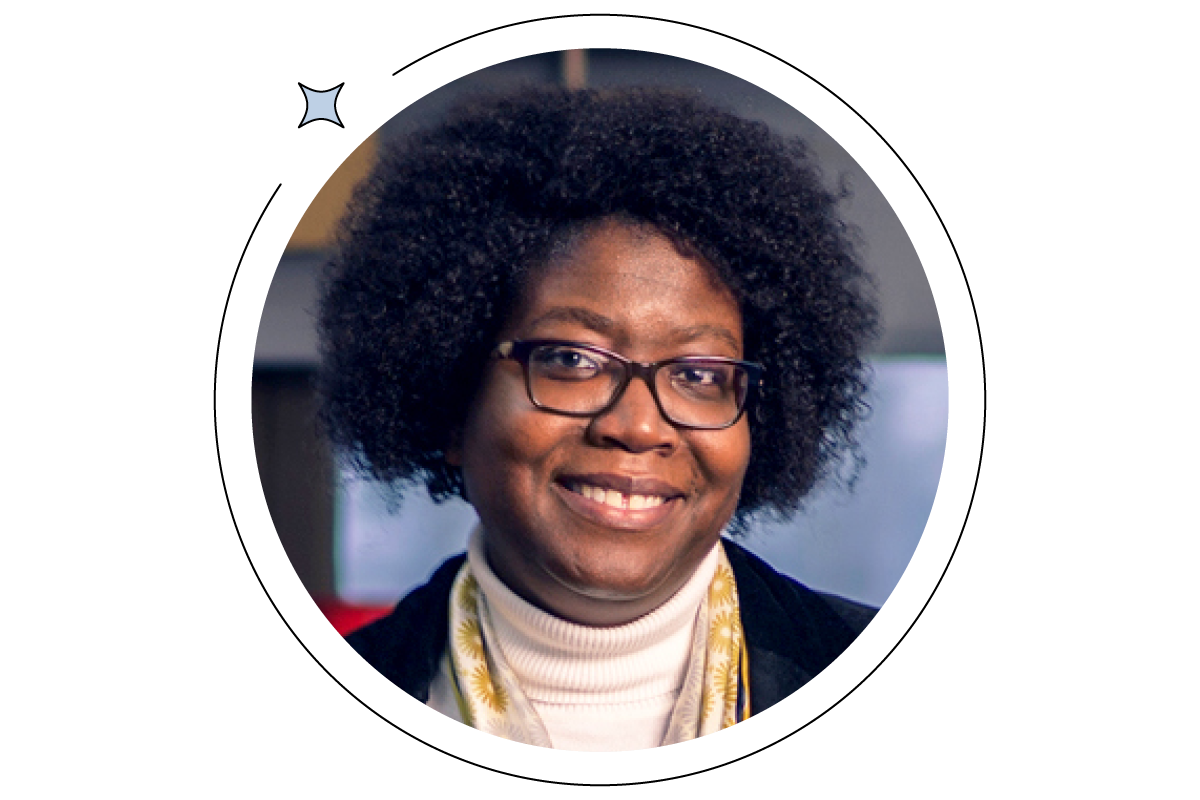
Erin Maloney is an Associate Professor and Canada Research Chair at the University of Ottawa. Her research sits at the intersection of Cognitive Psychology, Developmental Psychology, and Education and focuses on cognitive and emotional factors that relate to academic achievement. She is a world-renowned expert on the study of math anxiety, conducting research in the lab, in homes, and in classrooms with children, parents, and their teachers. She is passionate about both knowledge mobilization and equity, diversity, and inclusion within education and science.

A woman with straight, shoulder-length light brown hair smiles at the camera, framed by a circular graphic with geometric accents on a white background—perfect for a math teacher lounge or sharing math teacher resources.
A laptop displaying a Facebook group page for "Math Teacher Lounge Community," featuring profile photos, a group banner, and geometric shapes in the image background.

About Math Teacher Lounge

Math Teacher Lounge is a biweekly podcast created specifically for K–12 math educators. In each episode co-hosts Bethany Lockhart Johnson (@lockhartedu) and Dan Meyer (@ddmeyer) chat with guests, taking a deep dive into the math and educational topics you care about.

Join the Math Teacher Lounge Facebook group to continue the conversation, view exclusive content, interact with fellow educators, participate in giveaways, and more!

S2-02: Developing your own teaching style: Tips from a veteran teacher.

Poster for "Science Connections" podcast with an image of Marilyn Dieppa, featuring a logo of an atom and text promoting season 2, episode 2 about veteran teaching styles.

In this episode, Eric Cross sits down with veteran educator and former Miami-Dade County Public Schools (M-DCPS) Middle School Science Teacher of the Year, Marilyn Dieppa. During the show, Marilyn shares tips for new teachers, ways to inspire students, and how she utilizes her journalism background to develop literacy skills within her science classroom. She also shares her experiences developing a robotics academy, and the VEX IQ World’s Competition. Explore more from Science Connections by visiting our main page.

Download Transcript

Marilyn Dieppa (00:01):
I think my favorite thing is their success. Whether it’s robotics, whether it’s in the classroom, that they pass a test for the first time, those are my moments of success. And that’s what makes me happy.

Eric Cross (00:15):
Marilyn Dieppa is a veteran middle-school science educator at Miami-Dade County public schools. Dieppa launched her school’s STEM Academy in 2016 and developed professional development through the STEM Transformation Institute of Florida International University. Dieppa’s coached numerous new teachers and was the 2018 Miami-Dade County public schools’ middle-school Science Teacher of the Year. In this episode, we discussed her transition from a career in journalism to the science classroom and the value of personal and professional support systems for teacher longevity. And now, please enjoy my conversation with Marilyn Dieppa.

Marilyn Dieppa (00:52):
Nice to meet you, Eric.

Eric Cross (00:53):
Nice to meet you too. Thank you for being willing to come on the podcast.

Marilyn Dieppa (00:58):
Not a problem.

Eric Cross (00:59):
So you’re out in, you’re out in Florida. In Dade County. I’m out here in San Diego. So I’m like literally on the other side of the country. Have you—were you born and raised in Florida?

Marilyn Dieppa (01:09):
I’ve been here for 40 years, so I’ve been here most of my life. Yeah. I’m Puerto Rican, but I was, you know, my young childhood, I was in New Jersey. And then when I was 15, I came down.

Eric Cross (01:23):
I looked at like your—some of your accolades, which are really impressive. The things that you’ve done for students with robotics, and all the education, or, kind of like teacher enrichment, a lot of mentoring and coaching that you do now.

Marilyn Dieppa (01:35):
I am part of leadership team for the district. I do a lot of training. I work on curriculum. I help with pacing guides to make sure that everything is based on what the state wants, what the district wants. I have done a lot for the district in the last, probably 20 years.

Eric Cross (01:52):
What got you into teaching initially? What was your…like, why middle school science? We’re like a unique group.

Marilyn Dieppa (01:57):
This is the second career choice for me. So I’ve only been doing this for 24 years. I was a journalism major and then I got married and then I had my child and I wanted to do something. My thing was that I wanted to go to Iraq. I wanted to cover the news. I have a minor in Middle Eastern culture. so there was a lot of things that were in my mind when I was young, pre-married. and after, you know, you have children, priorities kind of change. So I totally changed, pretty much had to start from scratch, with my degree, because nothing kind of transferred over from journalism to teaching. So before I actually did that, I started subbing just to see if I liked it. And I fell in love with teaching right away. And that’s how I got into it. So my degree is really in elementary.

Eric Cross (02:45):
Now, when you were subbing, you were doing elementary school.

Marilyn Dieppa (02:47):
Yes. Pretty much elementary.

Eric Cross (02:48):
How did you go from there to like, middle-school science?

Marilyn Dieppa (02:50):
My thing was writing, not necessarily math and science. But I ended up with my cooperating teacher, my CT, she was a math and science teacher. So I was put with her, and who knew that I liked science and I liked math? So I ended up with that and I infused a lot of labs. So in elementary you tend to—I think teachers are a little bit afraid of the labs, so I infused a lot of literature with my labs. I infused all my—I did it like a whole-group type thing, everything I did with my labs, I incorporated the math. I incorporated the science. I incorporated, you know, the reading with it. And from there, I just—you know, they ended up putting me in a lot of leadership roles with science. And then my principal was opening up the school where I’m at now, my former principal. And she, you know, she took me with her. And so her dissertation was in looping, on how following your students, did that really make a difference in test scores? So I was part of her like test study, and I had students that I followed for two years in a row. And she would look at data and that was part of her dissertation. So that really made a difference. So I ended up moving with my students and my first group of middle-school students, I had them for four years.

Eric Cross (04:10):
Oh, wow.

Marilyn Dieppa (04:10):
And that was—those were my children. I, like, boohooed when they left. And I ended up, you know, literally following them from fourth grade all the way to more than four years. Because it was all the way until they left eighth grade.

Eric Cross (04:21):
What did you think of that model of looping with students?

Marilyn Dieppa (04:24):
I think it’s a great model, depending on the kids that you have. I love, you know, the school that I’m at. I’m very blessed, because it’s a great school. It’s really a wonderful school. I’ve had really good relationships with students. They always come back, and they always come back when they wanna tell me that they’re in something in science, right? They’re an engineer or they’re a nurse, or they’re, you know, doctors at this point. So I’ve seen a little bit of everything with my students. And it’s very rewarding.

Eric Cross (04:52):
That’s super-exciting, right? When they come back and they’re either telling you about their college major or what career they’re in. And I like to recruit them at that point and ask them to come talk to my students. Because Google photos gives you unlimited storage, if you have a teacher account, I actually have photos of students from like 10 years ago.

Marilyn Dieppa (05:09):
Oh, wow.

Eric Cross (05:10):
And I’ll put their middle school picture next to their—and then their current picture.

Marilyn Dieppa (05:14):
Oh, that’s awesome. I’ve never done that.

Eric Cross (05:17):
Yeah. You could see, like, they could see the younger version of them.

Marilyn Dieppa (05:19):
And it’s funny because even with the STEM Academy, which I have now, I have the same group of kids for three years. So I’ve had already few groups that have gone by, and those kids come back to me, they come back to our competitions, they help out, you know, they’re very integrated with the robotics. So I’m getting those students back as well. So I’ve maintained that relationship with them as well.

Eric Cross (05:46):
How do you develop your own classroom management style? How did you figure out where your—where you fit and what works for you? What was your process like for that?

Marilyn Dieppa (05:55):
You know what I think, just by teaching, teaching them to respect. And one thing that I’ve developed that—I don’t scream in my classroom; I just talk to the kids. I have very good one-on-one communication with them. I show them respect. I treat them as an equal.

Eric Cross (06:12):
And what grade are you teaching currently?

Marilyn Dieppa (06:14):
Eighth grade. So I do science. I teach high school science. I teach comprehensive, which is like our regular students. I have kids who are inclusion. I have kids that are ESL. So I teach all, you know, dynamics of students. And then I have the academy, which is something separate. But I infuse a lot of physics and of course that they need in order for them to be competitive.

Eric Cross (06:38):
So tell me about that. What is the STEM Academy?

Marilyn Dieppa (06:40):
It is an enrichment program. So it is an advanced enrichment program, because they do follow like the math enrichment. so they have to be really good at math in order for them to be accepted into the program. So, one day we got like a grant, and we got a little robot, the VEX. I don’t know if you’re familiar with VEX. I know it’s big in California. So I was told, “Here, this is for you. See what you can do with it.” So I started with an after-school club, the following year. It kind of hit off. We went to our first little competition. The kids did really well. And then the following year, they told me, “Hey, we need an academy, make it happen.” So it’s not like I had a curriculum. I kind of do my own thing. But we do a lot of different types of things. Our big portion is the VEX, but I also do sec me, we do Future City. We do a whole bunch of competitions within the district. You know, Math Bowl. So I get my kids prepared for anything that really has to do competitive-based. I do that with those students.

Eric Cross (07:38):
What age range or which grade range?

Marilyn Dieppa (07:40):
Sixth to eighth. We have kids who stay the three years and then we have kids that after, you know, sometimes it’s more the parents that want them to be part of the engineering. but sometimes we lose kids after the first year and you know, that’s fine because we wanna really have kids who really wanna be there and are, you know, committed to it. Because there’s a lot of commitments to that program.

Eric Cross (08:01):
Those types of programs, there’s so many like outside-of-the-classroom things that you need to take care of. If you’re going to competitions, and weekends, and all those types of things. Is there a team of teachers that are doing this or is it just you?

Marilyn Dieppa (08:10):
Team of one! .

Eric Cross (08:11):
A team of one! Right? Like, yeah. And how long have you been running this yourself?

Marilyn Dieppa (08:16):
This is probably like my sixth year.

Eric Cross (08:19):
OK.

Marilyn Dieppa (08:20):
So we’ve been very successful. That program is totally inquiry. It’s totally on them. I don’t know how to use a little, you know, remote control. I don’t know how to do anything. I’m there for troubleshoot and to make sure that they’re on task, but they have been very successful because I do put everything on them. And I go, “It’s not my robot. This is your robot.” So they build everything

Eric Cross (08:40):
And that seems to be the theme, especially with, a lot of times, with science teachers. And encouraging them to say, “You don’t have to be the expert in everything.” Teachers tend to be more like risk-taking and innovative when they’re willing to like, not have to be—I don’t have to know everything in order to do something.

Marilyn Dieppa (08:54):
Exactly. So we’ve been very successful. Very proud of my students because you know, we’ve, gone to Worlds twice. We’ve qualified three times in the six years. Actually, I had two teams that went last year.

Eric Cross (09:07):
What is, what is Worlds? That sounds like a big deal.

Marilyn Dieppa (09:10):
It’s a huge thing. And it’s teams from all over the world. You can actually look it up online. It’s—from this year, there were teams, although they said China was not gonna be in there, there were actually some teams from China. There were teams from New Zealand. There were teams from South Africa, the UK, a lot of teams from, from Europe. And then there are teams from here. We are the host country. We’ve been the host country for a while. But it’s amazing. The first time we went, the first team that we were paired up with was a Russian team. So, you know, there was Google Translate and the kids—and it’s, they didn’t need to know the same language because they communicated with the robots. So it was really amazing. They work collaboratively. So it’s not like a battle box. So they work two teams together and whatever, they both get together, they both earn the same points. So it teaches leadership, and there’s so much more to it than just a robot. They have to know how to communicate, because they do get interviewed. They do online challenges. It’s so many things. It’s just—I think it’s one of the best things that our district has really invested in, because these kids are so into it, and they love it so much. For the last year and this year I have the same kids that are in the robotics. I’m also gonna be teaching them physical science. So I have to teach them that separation between what we’re doing in our science classes versus what they’re doing in the class. So there has to be a separation. So they see one side of me in this class where it’s very laid back. It’s very chill. No, no, you, you guys do it. There’s no sitting down. It’s like organized chaos, I call it all the time. But then in the classroom, it has to be a little bit more organized.

Eric Cross (10:53):
Is that something that, as far as getting the parts—like people do, like, GoFundMes and donations and Donors Choose. Can you—

Marilyn Dieppa (11:00):
We get grant money, grant money from the town of Miami Lakes, the town that I work in. So the town actually sponsors us. Without them, we could not do that. It is a very expensive activity to do. If you go online and you look up the prices, you’ll be, “Oh my gosh, goodness, it’s very expensive.” You know? But the smiles on their faces when they come back and they have those little certificates, it means nothing, you know, it’s a little piece of paper. But that, to me, to them, it means the world.

Eric Cross (11:27):
Well, teachers, if you’re looking for ways to get that stuff funded, be fearless on behalf of asking for free things for your kids. Find a local business that somewhat connects to even robotics and say, “Hey, look, I’ve got 50 kids that really want to get after it. And we need X amount of dollars so we can buy those robotics kits. We’ll put your banner up somewhere. We’ll do all these other things. But come support our students. Come to the competition. Donate whatever you can for our students.” And many organizations will say, will say yes. Many just aren’t asked.

Marilyn Dieppa (11:57):
Right. And a lot of towns do have, like, education advisory boards. You wanna reach out to those people. ‘Cause those are the communities where they have money set aside in order to assist things like this.

Eric Cross (12:09):
Do you notice any carryover between the students that do get involved with these extracurriculars into the regular science classroom?

Marilyn Dieppa (12:16):
For sure. They’re more, they’re more disciplined. They tend to care more about the sciences because they see that link in the science. I mean, my kids are talking about gear ratios. They’re talking about, you know, mass accelerations. They had—they infuse all these things. And when they see it in the science class, they’re making that connection, which is really wonderful.

Eric Cross (12:41):
It seems like there’s a high level of engagement because this is an authentic thing. It’s almost, this should be science.

Marilyn Dieppa (12:46):
Yes. And not only that, the writing skills that have to be interpreted because part of the program is that they, they don’t necessarily have to have it, but in order for them to go far and make it to Worlds, they have to have an engineering notebook. So our strength sometimes is not the robot, but the engineering notebook.

Eric Cross (13:02):
his is where the journalism major shines.

Marilyn Dieppa (13:05):
Yes. And I go, “Guys, this is your Ikea manual. You have to explain what you’re doing, what pieces you’re using, what’s going right.” You know, and then they have to interpret and see what didn’t work. How can they fix it? So there’s so much problem-solving. It’s real life, it’s what they’re doing there. More so than sitting and learning rote, you know, vocabulary or whatever the case might be, ’cause they’re actually applying what they’re learning.

Eric Cross (13:31):
Yeah. And that’s, that’s so critical, the communication piece. Because seems like now in society, more than ever, even just being able to communicate something with bad science is convincing to people. Versus if you have great science, but you can’t communicate it, you’re not gonna be able to get it out into the public. It’s so great to see a program that exactly brings together this literacy aspect, in addition to kind of this content and skills aspect of doing the science.

Marilyn Dieppa (13:57):
And that’s what really, you know, since I started, that’s pretty much what I’ve done. My strength, believe it or not, when I was growing up, was not the science. I think I didn’t really have a really good science background. But I remember reflecting and saying, “I don’t want my students to feel like I felt when I was a child.” I wanna make sure that I give them everything, you know, give them the hands-on experience. I think I had one teacher when I was growing up and I still remember him. He was my second-grade teacher and he was just so amazing with the science. And it was just like the only really good experience I had. And I think that always stayed in the back of my mind. And when I started teaching and I go, “I wanna give these kids these experiences.” You know, sometimes I see kids in eighth grade and I go, how sad! They see water boiling and they’re just, like, in a lab room. And they’re just like, in awe, because there’s water boiling. And I go, “You guys haven’t seen water boil before?” And he goes, “No, no, no, not like this!” And I go, oh wow.

Eric Cross (14:58):
Even if it’s simple, everyday phenomena, everyday things that people deal with in a science classroom, or when you’re a teacher in that setting, it’s just—it just hits different, right? Like you, you know, you drop dye into water and watch it diffuse. And it’s like, whoa! Because they’re looking at it through that different lens. And that’s why one of the reasons why—I’m super-biased, but as science teachers, we get to do the coolest stuff.

Marilyn Dieppa (15:21):
Yeah, we do.

Eric Cross (15:22):
We just do. It’s so much fun. And basically anything that happens, that’s cool, like in, innovation and things like that, we can figure out ways to incorporate into our classroom. Now, as a coach and as a mentor, you’ve had multiple student teachers in your classroom. And we have, you know, huge need for new teachers. I teach teachers who are getting their CR, getting their credential. And the landscape of education is, is constantly shifting. You’ve watched it shift over the years. What are your biggest tips that you give to new teachers?

Marilyn Dieppa (15:49):
Well, I just had an intern last semester. I’ve had a few interns where, you know, not only are they doing this, but they’re also learning robotics too. So they’re really getting aspect in how to incorporate that. You don’t have to have everything separate. You can include everything together. But I think, I think it just comes from the foundation where they’re not exposed. Even me, when I went to college, I don’t remember doing so many labs as I should have. And I think it’s just a fear of them trying new things and failing. And I go, you know what? I, sometimes my first class is my guinea pig class, because I always change my labs. I don’t like to do the same thing over and over again. If I see something online, I go, “Oh wow. You know what, I’m gonna try it.” And I go, “Hey guys, this is the first time; we’re gonna do this together.” And it’s really—it’s just for them not to be fearful. And I think especially for science teachers or like even elementary, to give the kids the foundation that they need, they’re afraid. They’re afraid of failing and not trying something new, and say, “Hey, it’s OK. There’s other ways of doing this.” You know? So I always say, “My first class is always my guinea pig class, ’cause that’s the class I’m gonna try this on.” And then, you know, when you have to tweak, reflect, then we do that.

Eric Cross (17:06):
What are some of the things that you’ve seen or encouragements that you give to teachers who are teaching, kind of, in this kind of newer landscape, where as teachers, you become more than just a science teacher. I mean, you’re a mentor. You’re an encourager. Sometimes you’re a counselor for students. And then there, there are things that happen externally that impact teachers as well. It’s a tough job.

Marilyn Dieppa (17:24):
So I always say, you know, when you have a child, we have to be very aware of what’s happening with our children. Especially after these two years of the pandemic. That was kind of crazy. Last year was a really tough year, I think, for most educators that were back in the classroom. But I always tell ’em, you have to be really aware of what’s going on with these kids outside. When you see somebody who’s not doing anything and then you have the parents are there supporting. There’s something going—I mean, there has to be something going on. Kids are not just going to be so, so defiant. You’re gonna have very few that will be like that. But most of them it’s just gotta see and read those kids and see what’s going on, and don’t be afraid to—and I always say, I’m not there to really be your friend, but I’m there to help you. And you gotta tell ’em, you know, if you need to talk, come talk to me. Have an open-door policy with those kids.

Eric Cross (18:16):
What’s been your favorite part of the job? Something you really enjoy about the job? Especially having been teaching for as long as you have.

Marilyn Dieppa (18:23):
I think my favorite thing is their success. Whether they have struggled all the year and they’ve had that one piece of success or they don’t realize what they got out of middle school until they get to high school and they come back to you and they tell you it’s, you know, seeing my kids, whether it’s robotics, whether it’s in the classroom, that they pass a test for the first time, those are my moments of success. And that’s what makes me happy.

Eric Cross (18:52):
So you get those ahas, you get those wins, those turnarounds. And it’s like, “Ah, this keeps me going. This is so good!” But there’s something that I say to myself when I do get challenges in the classroom is teaching seventh grade, I say, “They’re 12. They’re 13. They’ve been on earth for 13 years. And for the first five or six, like, you know, they’re just kind of coming online at that point. And they’re going through all these changes.” And it grounds me in the fact that ’cause sometimes the things that you experience can be really, really challenging kind of interpersonally. And I remind myself, “Well, it’s like—you’re not 28 years old. Like, you’re, 12 and 13, and you need me to not be Mr. Cross, the science teacher. You need me to be, you know, Mr. Cross, the mentor, or Mr. Cross, the coach.” Like you were saying, open door. Keeping that open door, keeping that relationship. Because so much of what we’re doing is like life coaching in addition—and that connects to their success in the classroom. There’s a direct relationship.

Marilyn Dieppa (19:45):
Yes, yes, yes, absolutely.

Eric Cross (19:46):
Now what gets you back each fall? Because at the end, you know, every school year it’s like, “That was a tough one!” Especially with the last couple years. Right? So what’s been something, what gets you back in the classroom every fall, so that you’re ready for your students?

Marilyn Dieppa (20:02):
I think the support I get at home. I have a husband who is the most supportive person ever. He always tells me, “Your kids are grown up.” You know, my kids are adults now. “Enjoy these kids, what they’re doing. You don’t know how much they need you.” So he does tell me that. He goes, “And don’t complain! You love it!” And also my administration, they back me up. And that’s what I think what keeps you coming back. I love my administration. Whatever I ask for, they don’t tell me no. They tell me I’m crazy, but they don’t tell me no. You know, we have these huge competitions once a year at our school, administration has to be involved ’cause they have to be there, and they go, “We do this because we love you! But you know, you’re crazy!”

Eric Cross (20:48):
It’s interesting, ’cause both of these things, they involve human connection. And one is your support system at home, which is incredibly valuable. Shout out to your husband; I don’t know if he’s around. And then the culture, like, feeling supported. Teachers, you know—and it’s not just in education, but people, I’ve experienced—will work harder, longer, be more committed, when they have that intangible. When they feel like they’re connected to something bigger than them. Or on a team, not in a silo. And one person can really create or break whether that happens. And just like us in the classroom as a teacher, right? Like, “What makes you like this teacher’s class?” “Well, I feel connected. I feel safe. I feel it’s fun. It’s the culture!” I like to end with asking this question and you kind of alluded to an answer earlier, but who is one, or it could be multiple teachers, that you’ve had in your own life as a kid growing up or young person in kindergarten through 12th grade, could even be college, that has inspired you? Or made a difference in your life one way or another? Like, who pops out? I feel like we all have somebody.

Marilyn Dieppa (21:58):
One was my second grade teacher, as I mentioned before. Mr. Fernandez, never forget him. And my other teacher was my high school teacher, Mr. Velazquez. It was in New Jersey as well. And he was the one that really got me into the love of writing. He was my Spanish teacher, actually. He wasn’t even, you know—he was like an elective teacher. But he just made me believe like, “Wow, you’re like a really good writer!” To me, those two gentlemen really stood out. Very fond memories of being in school and really enjoying what I was doing.

Eric Cross (22:33):
There are so many teachers that we all have been impacted by. And many of us now who are teachers, we sit in that same seat. We fill those same shoes. And going back to what you had said earlier, one of the most rewarding things is when those kids come back to you. And I’m thinking about all the work that you’ve done, all the students you’ve poured into, all the competitions you’ve done. The ones that have come back to you are a small fragment of the ones that you’ve impacted.

Marilyn Dieppa (22:59):
Mm-hmm, yeah.

Eric Cross (23:00):
‘Cause we think about our own story, right? Like you’ve gone on and paid dividends for that one teacher in second grade. You know, Mr. Fernandez or Mr. Velasquez like, they went and they just gave you exposure to something or helped you fall in love with something. And you went on this trajectory. And if we could see the timeline of, like, this teacher created Marilyn, and Marilyn went and did this, and then what do all those students do? And that, I don’t know, there’s so many jobs that are gonna be hard work and that are gonna be challenging and stressful. But that is the thing that I think fills me when I listen to your story. I just think about like all the students throughout Florida that you have—you probably will never hear from, but have gone on to do amazing things or become great people who would go back and talk about you and say you were an inspiration for them. Marilyn, thank you for taking the time out to be on the podcast and for not only teaching students, but inspiring and coaching younger teachers and new teachers. It’s so critical. And for being willing to spend so much of your time beyond the classroom to create these opportunities for students to do this awesome, fun, engaging science, and go to Worlds. I wish you a great school year.

Marilyn Dieppa (24:11):
Thank you. You too.

Eric Cross (24:12):
We hope you make it to Worlds again and crush, in a competitive, collaborative type of environment. We’ll be checking out—I’m sure other teachers will check out Vex Robotics. Thanks for being on the podcast.

Marilyn Dieppa (24:23):
Thank you. You too, Eric.

Eric Cross (24:26):
Thanks so much for listening. Now we want to hear more about you. Do you have any educators who inspire you? You can nominate them as a future guest on Science Connections by emailing STEM@amplify.com. That’s S T E M at amplifycom.wpengine.com. Make sure to click subscribe wherever you listen to podcasts. And join our Facebook group, Science Connections: The Community. Until next time.

Stay connected!

Join our community and get new episodes every other Tuesday!

We’ll also share new and exciting free resources for your classroom every month.

What Marilyn Dieppa says about science

“I think as science teachers, we’re afraid of failing and not trying something new, and I say, ‘Hey, it’s okay!’ You have to tweak, reflect.”

– Marilyn Dieppa

STEM Academy Coach/Teacher, 2018 Miami-Dade County Public Schools (M-DCPS) Middle School Science Teacher of the Year

Meet the guest

Marilyn Dieppa is a long-time educator and STEM Academy coach at Miami Dade County Public Schools. Currently in her 24th year, Marilyn teaches 8th grade science and coaches the STEM Academy at Bob Graham Education Center. She launched the Science, Technology, Engineering and Math (STEM) Academy during the 2016-2017 school year, and the teams compete in VEX IQ World’s Competition representing both the district and the state. She has been the middle school department chairperson since 2003, attends the district department meetings and Instructional Capacity-building Academy (ICAD), and trains her science department.

Dieppa holds a bachelor of science in Elementary Education and a master of science in reading education. She is also a Nationally Board-Certified Teacher in Science.

Smiling woman with long dark hair wearing a patterned top, photographed against a plain white background inside a circular frame.

About Science Connections

Welcome to Science Connections! Science is changing before our eyes, now more than ever. So…how do we help kids figure that out? We will bring on educators, scientists, and more to discuss the importance of high-quality science instruction. In this episode, hear from our host Eric Cross about his work engaging students as a K-8 science teacher. Listen here!

S2-03: Building meaningful student connections in the science classroom

Promotional image for a podcast episode titled "Sharita Ware: Building meaningful student connections," featuring Sharita Ware and "Science Connections" branding.

In this episode, Eric Cross sits down with Indiana State Teacher of the Year, Sharita Ware, to talk about how to successfully build meaningful student connections in the science classroom. Sharita shares her journey from a corporate career to becoming Indiana’s 2022 Teacher of the Year, and her passion for creating project-based lessons for her students. Together, Eric and Sharita discuss how educators can teach students to love science content by building strong relationships, adding in other content areas, and supporting students’ imagination. Explore more from Science Connections by visiting our main page.

Download Transcript

Sharita Ware (00:00):
I try to create that equal playing field where there’s nobody’s voice, that’s more important than anyone else’s and try to make them all feel that what they have to say is important.

Eric Cross (00:14):
Welcome to science connections. I’m your host Eric. My guest today is Sheta where Sheta is the 2022 Indiana state teacher of the year. And in her 10 year career, as an engineering and technology teacher, she has dedicated herself to helping students build knowledge and skills for high school and life. Beyond. In this episode, we discuss how she inspires her seventh and eighth grade students to build problem solving and critical thinking skills through hands on real world and collaborative projects. She is as humble as she is knowledgeable and through our conversation, it was easy for me to see why her students feel successful under her guidance. And now please enjoy my conversation with Sharita Ware.

Eric Cross (00:59):
Can I start off by saying congratulations on teacher of the year. Thank you for the state of Indiana. Um, that’s amazing. So I, I, I did watch, uh, your videos, uh, short interviews, and then you spoke, was it Purdue? Yes. You were there. And so, uh, to see if fellow seventh grade, eighth grade science teacher out there being celebrated, like I was so excited, so yeah, I wanted to congratulate you on that and, and just kind of talk to you about like your teaching journey and ask you, uh, maybe just kind of start off with your story about what brought you into, into the classroom, especially the middle school.

Sharita Ware (01:29):
Classroom. So what happened is when I was working in industry as an engineer and when my husband and I got married, we decided that I was gonna, um, stay home with the kids because, you know, we wanted, um, our influence to be greater on our kids than, you know, the people that would be watching them, you know, because they would ultimately spend more time with them than they would with us. And, and so, um, I stayed home and when my youngest was going to be going to kindergarten the next year, I was like, okay, what am I going to do? Cuz I really don’t necessarily feel like I need to stay at home. Mm-hmm <affirmative> but um, I knew going back to industry would be a challenge just because in my field, I, I was traveling a lot before I got married and had kids.

Sharita Ware (02:14):
And so I knew that that wouldn’t really be conducive to again, raising children. So I, I get this email, my inbox for Woodrow Wilson, teaching fellowship at Purdue. And they were just looking for people in stem fields to go into teaching. And I was like, okay. And it was a national search, you know, I filled out the application, we had to go in and do some sample teaching mm-hmm <affirmative>. And I was picked as, as one of the, the teachers to go through the program. And I started off thinking I wanted high school. And the really cool thing about this, uh, program is that we had long observation periods at high school and at middle schools. And so we would go to a school and we’d stay there two or three weeks. And so it, it kind of gave you right. A little bit more insight to what happened on a daily basis. And after those observations, I was like, I like middle school better than I, uh, like high school. And so I just kind of went that direction and you know, the rest is history. So

Eric Cross (03:19):
I feel like our stories are similar because I went into teaching thinking I wanted to do high school because I like the maturity and you a little bit more sophistication, advanced things, but yes, middle school, I felt like I can, I could get them more upstream before and kind of help shape mm-hmm <affirmative> that experience for them? Because I feel like at middle school is really where they kind of decide like what they can do based on their experiences.

Sharita Ware (03:39):
I found in the middle school that the kids, I mean, they just, they clamor around you and they’re like, what are we doing today? You know? And they get so excited and, um, they’re, they’re just, I don’t know, I guess in some ways, just more hungry in the sense of like they’re willingness to, um, now sometimes they’re a little reluctant, but you know, their willingness just to try new things. And I think, um, my students really what I have found over the years that they have found a safe space and I hear the kids, you know, say to me so many times that, you know, it it’s safe. I feel, I feel safe in here. And, and it’s not something that in my mind I’m thinking about, oh, I need to make this a safe place. It’s just, I guess part of just who I am as a person has created this environment of, of safety and, and the kids recognize that, you know, I don’t play favorites. You know, everybody starts out mm-hmm, <affirmative> on equal footing. I, I don’t care what your backstory is. I don’t care how many times I see you in the hallway when I’m walking during my prep. You know, when you hit my room, I’m, I’m gonna treat you the same way on day one, that I treat everybody else.

Eric Cross (04:54):
You really understand how to build culture with, in, with your classroom, with your students. And, and you said they feel safe, but is there anything that you do that someone could like apply? And like you found that you’ve gotten a lot of just relational capital through doing these things, or is it just your personality? Like how, how do you build those connections?

Sharita Ware (05:12):
You know, growing up being a, a very quiet person. I, I think a lot of times my voice was ignored because I was the quiet kid in the back of the room. And oftentimes I became seen or heard because of my work, you know, in the beginning it was kind of like, oh, she’s just this quiet girl in the back of the room. And then, you know, the first essay was due or the first project was due. And then it was like, oh, you know, then you’re the person to be on, you know, people’s teams. And, and that, I don’t know, that always kind of bothered me because, you know, I’m thinking just because you’re not the loudest person in the room doesn’t mean that you don’t have something to say, mm-hmm <affirmative>, you just might not be talking all the time. You know? And, and so for my students, I just, I try to create that equal playing field where there’s, nobody’s voice, that’s more important than anyone else’s and try to make them all feel like that what they have to say, or what they have to contribute is, is enough, is good.

Sharita Ware (06:14):
Enough is important as…

Eric Cross (06:16):
It is, as it is. And there’s probably a lot of things that you do. But in addition to building these relationships, what do you do? Like how do you make your learning fun for students?

Sharita Ware (06:25):
I think, um, I’m also a little bit on the silly side. Um, we do a, a Barbie prosthetic leg project, and this was after trial and error of having the kids make full size prosthetic legs. And I try to make it as real world as possible, but with none of the children being amputee or, you know, having access to someone, it was really hard for them to really visualize what needed to happen. Mm-hmm <affirmative>. And so, um, I found this Barbie that had a prosthetic leg and I was like, well, LA, so I just started collecting Barbies and chopping their legs off <laugh>. And so I have this jar of Barbie legs. And so, and I said, you’re gonna make prosthetic legs. And I lay this jar of legs on the counter and the kids are like, like they gasp and then they crack up and then they’re like, okay, this lady’s crazy. So…

Eric Cross (07:22):
That’s when you take off your scarf and there’s this necklace of just Barbie legs that are just around and you’re like, I’m a middle school teacher and they go, oh, okay. I understand. Yeah. Yeah. It’s totally fine. Is this a lesson that someone that you made up or is it something that you’ve re remixed? Is it something that someone could do if they looked it up anywhere?

Sharita Ware (07:38):
Um, so I think teach engineering has the, the full size leg that the kids make. And that’s where I initially got it from.

Eric Cross (07:47):
Is that the website teach engineering?

Sharita Ware (07:49):
Yes. And, um, I, in fact, I get lots of ideals from there. Um, and I, I always usually tweak them, but it’s, it’s one of those things that kind of gets your brain going. And so it was kind of a mixture of, uh, project lead the way gateway to technology and the teach engineering. And I think the project lead the way had us making like braces, uh, for, um, kids with, um, like cerebral palsy or, or something like that. And the kids did okay with that project. Uh, but I wanted to go just a little bit, uh, deeper with it because part of what I was wanting them to do is that context and that connection, that human connection, because for me, it’s not just enough for them to make a project. Uh, before we start this prosthetic leg, I read them a story out of a Scholastic magazine, and it’s a, a teenage girl that lost her leg in a boating accident.

Sharita Ware (08:42):
And she was super active, um, playing sports and running. And, and so I was, you know, trying to get the kids to, you know, make that connection, someone close to their age. Um, and then how it’s not, it’s, it’s more than about her physical healing. It’s also about her mental healing and how she had to, you know, talk to herself to say that she could, you know, recover and, and come back from this and still go on to do all of the things that she was doing before. Um, and in some ways it’s kind of cool because, um, you know, she has a running prosthetic, she has a, a swimming prosthetic, and she has her every day with the pain and toils prosthetic. So just trying to, you know, help them to see that it’s more than just the, you know, the biomedical mechanical engineering aspect of the project.

Sharita Ware (09:30):
And so they have to design for comfort. They have to design for, um, swelling. And then, um, they also can, if they, if they want to, they don’t have to, if they want to, they can create their own backstory. So when they get there, um, we have a day where they are introduced to their client, so they get to meet their Barbie and, and then they get to decide if they want a backstory and, and then do their research based off of that. So if it’s someone that was a runner, then they can design a prosthetic running blade. So just, they have lots of, uh, flexibility.

Eric Cross (10:04):
The, that aspect of adding the narrative. It does so much for like listening to it on the outside. It one, it adds this humanity to, you know, what can sometimes just feel like it may be cold, logical stem. We’re just, we’re just doing things. We’re fixing things. We’re, you know, we’re discovering things, but really the stem has value when we’re actually applying it to, to, to serve humanity or our ecosystem or whatever it is. There was a, a coding, uh, class I was doing with my students and I showed them this app called be my eyes. And it’s for people who are visually impaired and it pairs them with a volunteer. And when they call, and there’s a whole huge pool of volunteers and I’m one of them. And when my, when it happens in class, I answer and it uses the FaceTime. So the person who’s visually impaired is holding up their phone and you see what they see and you tell them and real time what’s happening.

Sharita Ware (10:54):
Oh, wow. That’s so cool.

Eric Cross (10:56):
These are, these were the things I think for students that the story, the, the human part of it, mm-hmm, <affirmative>, it must bring in so many more students into engagement.

Sharita Ware (11:05):
Yeah. I, I feel like it does because I, I think, um, and, you know, along the journey, they kind of lose, um, they lose sight a little bit because, you know, they get out in the lab and they have access to all of these different materials. And I think, you know, truly making it, you know, project based for me is I try not to control the materials too much. Um, I try not to make it so wide that they just get lost, but I try to throw a few curve balls in there, you know, of, of materials that really don’t make sense to use, but they kind of think they make sense to use. Um, because the, the, the meat of it is that the prosthetic leg is a similar size of the original leg and that the, the knee functions. And so I don’t limit, and I grade them off of efficient use of materials.

Sharita Ware (11:59):
So, and that just throws them off because I think, well, how many Popsicle sticks can I use? And I’m like, you can use as many as you like, but remember, this is a prosthetic leg that, um, your Barbie, which is one six scale, um, is going to be wearing all day. So you could think that a Popsicle stick, if you chose to use a Popsicle stick is kind of like dragging around a two by four <laugh>, you know? So do, is that what you really want to use as your material? And some of the kids really think about it and saying, okay, I’m, I’ve got this aluminum rod, okay. This is probably what I would use for my bone structure, because it’s lightweight, but yet it is supportive. And then sometimes they come up with their own ideas in terms of materials, like one student brought in his, um, 3d doodle pin mm-hmm <affirmative> and he made joints and everything with this pin.

Sharita Ware (12:54):
And I’m, and I had delayed buying one, cause I’m like, I, how do you have control over that thing? Mm-hmm <affirmative> he brought that in and he did probably two or three iterations of it and, and got it to work where even the knee where it bit back 90 degrees, but it stopped. He made like, so that it didn’t bend forward. It blows my mind. I’m like so many UN unexpected things have, have happened just from my, um, teaching style. Now I did have, my first few years, I had a, a teaching coach, um, come in and, um, I asked her to come into my room because I just wanted to make sure because I was not a traditional teacher. She said, this classroom is amazing. And, and I think the one thing that she helped me with was, was purpose and consistency and the sense of making sure that with the standards that all of these cool things and ways of being, um, that I was doing in my classroom, that, that I kept it purposeful and intentional. So many times as educators, I know in having student teachers again, ask yourself the question, what is the big picture I want the kids to take away. And once you ask that question, then everything that you have them do will lead to that big picture. Well, it should lead to that big picture.

Eric Cross (14:22):
So it sounds like they’re, you’re starting with this end goal in mind and then kind of backwards planning to get there. Yeah. Do you think you would’ve been the same type of teacher if you would’ve gone straight from college into the classroom? No. And if, if, no, as you’re shaking your head, what do you think it is about? Cause I’ve been asking myself these questions, like just over the years, what is it about coming from industry and going into the classroom? Do you feel like, is how has that impacted you in how you teach?

Sharita Ware (14:45):
Well, I think it’s twofold cuz I was older. I already had three children. I think the combination for me, I think is I was already a mom and I had worked in industry. So the behavior aspect of kids and, and then having that real world experience. And I, I just feel like whether it’s in the classroom, um, marriage, kids, to me, it’s 90% relationship, you know, and the rest will work itself out. That’s, that’s just my, my take on it. But I, I feel like having kids, so some of the behavioral things I kind of was aware of, you know, and just learned many times just not to react to some of the things that they did.

Eric Cross (15:31):
Which is huge. Right. Especially in middle school is controlling your reactions.

Sharita Ware (15:35):
Yes. Cuz that’s what they want. You know? And, and I had this student last year as well. She’s brilliant. And so if she cannot wrap her mind around the purpose of what you’re doing and, and you’re pushing her to do something that she doesn’t think is necessary, mm-hmm <affirmative>, she kind of has these meltdowns. And, and so we just had this, you know, I don’t know, we just came to this understanding and it, and it works to control the meltdowns. I tried to make sure. And, and I used her as a gauge because I knew she wasn’t, she wasn’t getting upset because she didn’t understand. She didn’t understand the why mm-hmm <affirmative>. And so I felt like if she got the why then so would everyone else. So when she, if she was okay with it, then I was like, okay, then I must have explained it well enough.

Sharita Ware (16:25):
And so in my mind that I really need to make sure they understand the, again, going back to that purpose <laugh> and intention, making sure that that is clear. And then I think that’s what gets lost. Sometimes mm-hmm <affirmative> uh, with us as teachers, we, we know where we want the kids to go and we want us to trust the process, you know, just do it because I said so, but sometimes, you know, empowering your children to under to understand the why, because that again is what allows them to be able to do bigger and greater things on their own. So on that next project comes along. They’re starting to tell you, well, first we need to make sure we understand what, um, we’re being asked to do to do. So we have to define the question. We have to make our driving question that will help us stay focused. And, and you’re just standing up there going, okay, now you don’t need me. I’ll go here and sit down. <laugh> so it’s, uh, it is really cool.

Eric Cross (17:28):
Now I’m thinking about my own kids. Like, do my students know the why behind the lesson we did today? It’s one area of growth that I wanna make sure I do this year with my students. And so I really appreciate that. So the, and you just hit on something that is, has been in the forefront of my mind lately and math and English as you know, tend to be prioritized in schools everywhere because it’s what state tested. And it’s what, you know, this is a whole other conversation, but I’ve been talking to math teachers frequently about one of the challenges that they experience or they’ve been telling me is that math is kind of taught. Like it’s just computational, you’re solving these problems, but it’s really separated from any real life application. A lot of times, you know, it’s pizza or gumballs or, or just fictional scenarios and students don’t perform well many times. And some of the reasons why is cuz just no connection. I don’t want to solve puzzles. Like it’s not my jam. Do you have any just inside or, or perspective on how math is, is taught in maybe a way that you think it would students would benefit more?

Sharita Ware (18:32):
You know how kids learn in elementary school, you’ve got this, the same teacher teaching all of the subjects. And so wouldn’t that be an awesome opportunity for you to have like these, these projects where I feel like you could, a class could legit work on the same project for a whole entire year. And so couldn’t the English be writing your persuasive letter to the mayor, asking him to do this or do that. And the process of doing that they’re, they’re, they’re writing with a purpose with a true purpose. Um, and then when they’re doing math, you know, they want, they want a new neighborhood park. So, you know, well how much is this gonna cost? Well, math, what size is it gonna be math? Let’s see what it looks like, art, you know, you just, you have all of this things. And then of course then science.

Sharita Ware (19:32):
So if it’s on a heel, how can we, you know, deal with erosion? And you know, you can just pull so many different things into that. And so not only are they learning, but they’re narrowed in and focused on a project, they’re, they’re able to dive deep into, you know, learning more of learning, how to express themselves and communicate with real people. So it’s more of taking these compartmentalized learning that we do in middle school and high school. Mm-hmm, <affirmative> where you’re almost learning apprenticeship style. Mm-hmm <affirmative>, you know, you have these master educators and it’s not about them being the best at math or being the best at this or that. Cuz there’s so many tools now that could help you through that. But you’re, you’re giving, you’re teaching them so many life skills and so many ways to think and problem solve that, that we’re just that the kids just don’t have.

Eric Cross (20:27):

I think that that is amazing. And I think that in that situation, what I’m hearing is we’re going deeper, not wider because there are a lot of different concepts that kids are expected to learn. Or I should say there are several concepts that teachers are expected to teach doesn’t necessarily mean that our kids are learning, but we’re teaching them. And this way you’re embedded it into an authentic context. Students are able to go through this cycle just like real life. And then they’re also able to build these kind of really transdisciplinary skills. Not only am I learning the math, the English, the the, but I’m also learning the interpersonal skills of being able to sell myself and present myself in a way that’s winsome. And it’s especially powerful coming from someone from industry. Last question, even just listening to you, I know you, you are this for a lot of people, but I wanted to ask you who inspires you?

Sharita Ware (21:14):
I think there have been lots of people over the years. Like I’m thinking of my shop teacher who has since, uh, the last few years passed away. Um, he was one of those people, I think similar personality to me, super quiet person, but he was always in the background on my journey and his name was Joe Mo and we called her Madam Carol was my 10th grade English lit teacher. And she was the one that started reading my work out in front of the class. And you know, and that just gave me courage, not so much to be seen. Uh, but that the work I was doing was, was good. And, and I think I needed that kind of encouragement. Lastly, my students inspire me because when I look at their faces and see the excitement, I think of those students for the first time and, and, and think about this seventh and eighth graders for the first time feeling like they really have something to say, they really have something to contribute of value. And, and I do it for them. You know, the reason why I am here in this moment is because of them. Um, without them, you wouldn’t be talking to me <laugh>

Eric Cross (22:37):
This is, this is true. This is, this is true. You would probably never say this about yourself, but you just exude a humility and a service in how you talk about your students and yourself. And I just wanna thank you for using your gifts, but I don’t wanna just call them gifts because it makes it sound like you didn’t earn ’em and your skills that you’ve earned and worked very hard to acquire over the years to go back into the classroom and leave industry, cuz you, you could have gone back to industry too, but you decided not to. And you could have worked in the industry and your hours were a little different pay is a little different, but you came back to serve the kids of Indiana and because of you and because of that choice, those students have a brighter future and believe in themselves and they’re finding their voice. And I want to thank you for that and for representing all of us stem teachers who are in middle school and being that leader. So thank you for that and thank you for being on the podcast.

Sharita Ware (23:24):
You’re welcome. Thank you for having me.

Eric Cross (23:28):
Thank so much for listening. Now we wanna hear more about you in the amazing work you’re doing for students. Do you have any educators who inspire you? You can nominate them as a future guest on science connections by emailing stem, amplifycom.wpengine.com. That’s ST E M amplifycom.wpengine.com. Make sure to click, subscribe wherever you listen to podcasts and join our Facebook group science connections, the community until next time.

Stay connected!

Join our community and get new episodes every other Wednesday!

We’ll also share new and exciting free resources for your classroom every month!

What Sharita Ware says about science

“Sometimes, empowering your students to understand the why is what allows them to be able to do bigger and greater things on their own.”

– Sharita Ware

Engineer and Technology Teacher, 2020 Indiana Teacher of the Year

Meet the guest

Sharita Ware, a Purdue University graduate, is in her 10th year of teaching engineering and technology education to middle school students in the Tippecanoe School Corporation. Ware challenges her students with real-world, problem-based design scenarios that will help them contribute to global technology and integrated STEM. Follow her on Twitter and Instagram.

A woman with curly black hair, glasses, and a white turtleneck smiles at the camera.

About Science Connections

Welcome to Science Connections! Science is changing before our eyes, now more than ever. So…how do we help kids figure that out? We will bring on educators, scientists, and more to discuss the importance of high-quality science instruction. In this episode, hear from our host Eric Cross about his work engaging students as a K-8 science teacher. Listen here!

S1-08: The importance of risk-taking in the science classroom, a conversation with Valeria Rodriguez

AS_Podcast-S1E08-Valeria-Rodriguez_Cover

In this episode, our host Eric Cross sits down with Miami-based educator Valeria Rodriguez. Valeria shares her journey of serving in the Peace Corps, working a corporate job, and eventually finding her passion as a middle-school science teacher. Listen in as Valeria explains how sketchnoting, a form of note-taking that utilizes illustrations, encourages student choice and creativity in her classroom. Eric and Valeria also discuss the importance of risk-taking within the science classroom, and how their own mistakes can be crucial in modeling resilience for students. Lastly, Valeria shares experiences she had with several teachers who inspired her throughout her career. Explore more from Science Connections by visiting our main page.

Download Transcript

Valeria Rodriguez (00:00):

There’s so many things that drawing to me makes an essential connection to. It tells me no matter what, I can continue placing lines on my paper and creating the image I want. Some people will say they messed up the drawing. You know what? They gave it character.

Eric Cross (00:19):

Welcome to Science Connections. I’m your host, Eric Cross. My guest today is Valeria Rodriguez. Valeria is a science educator, instructional technologist, and illustrator, who is currently part of a steam team where she teaches third through fifth graders in Miami, Florida. Valeria has presented and led workshops at education conferences like NSTA, ISTI, and SXSWEdu. In this episode, we discuss how she uses real-world projects to make lessons more meaningful, and why teaching students how to sketchnote increases their conceptual understanding in science. I hope you enjoy this pun-filled conversation with Valeria Rodriguez.

New Speaker (00:58):

Now you’re in Miami and you have a biology background. We’re like kindred spirits. Like we do the same thing. I teach biology here in San Diego at a middle school called Albert Einstein Academy. So I’m in a seventh grade classroom teaching life science.

Valeria Rodriguez (01:11):

That’s so cool. That’s how I started.

Eric Cross (01:13):

Is it?

Valeria Rodriguez (01:13):

Mm-Hmm <affirmative> I started teaching middle school science for seven years, doing life science in my biology background.

Eric Cross (01:20):

How’d you get started? Like where did you kind of begin?

Valeria Rodriguez (01:22):

Well, I went to UF for undergrad as a runner, and I thought I was gonna go to the Olympics, but you know, running in college is hard. And you quickly like realize a path as a full-time athlete is really hard. And one of the days that I was having one of those, like “come Jesus moments” of what am I gonna do with my life, I walked by a sign that said life is calling. And I’m like, okay, <laugh>

Eric Cross (01:52):

You literally had a sign.

Valeria Rodriguez (01:53):

There was a sign. So I was like, I’m reading the sign. I’m following the arrows. And it was for the Peace Corps. And so I went to this meeting and everything that I’ve ever done student government, athletics school education, my backgroundmy family’s from Columbia–everything in that meeting came together and they’re like, we need all these skills. And I’m like, I have those. Those are my skills. And they’re like every Peace Corps volunteer teaches. And so I went in as an agriculture volunteer to Panama because of my major and my background in biology. And while I was in the Peace Corps doing the work, I was teaching at the local school. And I realized that the most sustainable way to create any change is through education. When I came back, I was like, well, what do you do if your first job in the world is in the Peace Corps? Like my background was, you know, managing a machete in a field and teaching second through eighth grade in one classroom, on a chalkboard, you know, in English and in Spanish, while teaching the teacher and the students. So I found that going into teaching allowed me to put some of those skills, that wide array of skills that I had collected until that moment, into practice. And it allowed me to do the arts, do the running, do the science, do the connecting with the community in one place here in the states.

Eric Cross (03:34):

I don’t know if I’m just romanticizing, but you were in Panama and you were doing this amazing teaching. I don’t know. Do you compare it to teaching now in the classroom? Is there anything that ever like makes you wish that you were kind of in that environment again? Or are you kind of, do you like the more kind of technology side of things?

Valeria Rodriguez (03:48):

I tell my students all the time that I miss it, because when I was in Panama, I was in Licencia. They looked at me like this, all knowing being. If they couldn’t come to class because the kids literally had to work, they would bring me their assignment, like run it to me and then run back to their parents. Like, “I had to turn it in, but I have to go to work.” And I’m like, oh my gosh. And like here, sometimes I feel like, you know, I have to negotiate and convince my students to want to give me their work. And maybe it’s because we take a lot of things for granted. I mean, I didn’t have running water in my community. Here, you know, we have everything. I miss how we appreciated — like, my parents would send suitcases of materials for me to hand out to my students, like color and stuff, notebooks, things like that — and the kids would like, hold that notebook, like pristine and here sometimes my students aren’t as careful with materials. And I’m like, why are you breaking the crayon box? <Laugh>

Eric Cross (04:54):

I’m thinking about that. Just even just bringing pens and crayons and how that’s valued. And then a culture that’s built around esteeming teachers, and you’re this essential member of the community — and you feel that. It’s palpable.

Valeria Rodriguez (05:08):

Yeah. And here, sometimes I ask students like, what do you wanna be when you grow up? And you get all sorts of answers, but in my community, it’s gonna sound funny, but they were like, we wanna be a teacher. Like, that means that we would know a lot of stuff and they would put their hair up in a bun, ‘cause I always have it in a bun, and they would write stuff when they were playing and they would act me out <laugh> and I’m like, do I, do I do that? <Laugh> I genuinely got a very rich experience in the time that I was there. And what I learned the most was how to try to not do as much, it’s like a lesson that I’m still trying to learn because like I’m here with the U.S. Mentality of go, go, go.

Valeria Rodriguez (05:58):

And they’re like, but we already did, you know, two things like now we stop. And I’m like, but, but why? And they’re like, you can do that tomorrow. And I’m like, but no, like we’re gonna run out of time. For me. It was a lot of struggle of like slow down. And as a teacher, I feel like I’m always like on the treadmill at a thousand speed. And sometimes I have to tell myself like slow down, be in this moment, like a parent texted me today that her daughter was walking with her dad and said, daddy, let’s talk about the layers of the soil. And I was like, I need to stop right now and acknowledge that this happened. She’s in third grade and she’s asking her dad, you know, she could ask him about anything, and she’s asking him about soil. That’s essential for everything. And we don’t even think about soil here. Like my community had tons of erosion and every year there were less and less crops being able to be produced. We’re not talking about that here. And yet, my student asked her dad here in Miami, <laugh> about soil. And that conversation happened because of our class.

Eric Cross (07:03):

And you allowed yourself to be present and experience and feel that that communication came to you.

Valeria Rodriguez (07:09):

Yeah. We put so much stuff out there and we don’t know where it lands. If it lands on dirt or soil, <laugh>

Eric Cross (07:16):

There you go. I like it. Yeah. Bringing it back. But you’re, I think you’re what you’re saying. Resonates with a lot of educators that’ll be listening to this is that there’s so much that you do. And there’s even times when we do get the feedback, there might be a letter or a card or something, but like, to your point, like we look to the next thing instead of stopping, being present and allowing yourself to absorb it. I think I need to put that up on my, like on my wall, like this, just be present. Now you came back and then you went into the classroom here and you started off teaching science.

Valeria Rodriguez (07:46):

I didn’t go straight into the classroom. I knew that I wanted to continue teaching. But I wasn’t back here in Miami. When I moved back, I moved to Austin. And I ended up getting married and there, I started teaching Spanish as a second language like corporate classes. And I was kind of like tiptoeing around, like, do you dive into education? ‘Cause The idea of a teacher here is very different than the teacher idea that I had while in the peace Corps. So he, a lot of people were like, you can do so many things. Why would you teach? And I was like insulted <laugh>. I was like, wait, what do you mean? Like even to this day, I’ve started a blog post, maybe 20 times with that statement because people all the time are like, you’re so talented. Why do you teach? And it drives me crazy because it makes me feel like they’re looking down on my choice <laugh> but I came to terms with it that it’s just like a societal thing. Cause of that quote, like those who can’t do teach. And I was like, let me let this go.

Eric Cross (09:01):

I find though that educators who come in as a second career, come in with a, a, a variety of skill sets that I, I think you can only get when you’re outside of academia. I mean, you can, you can develop them, you know, going kind of K12 education college and then into the classroom. But those soft skills, the business skills, a lot of those things you really develop. And it’s funny ‘cause your, your story almost sounds like some of the people that I know that work in big tech firms, they have this eclectic story and then now they’re, you know, working for Google or Facebook or something, but that actually was a as set to them because they are able to see the world through multiple perspectives. And I’m hearing kind of a distinguish between art of teaching and the science of teaching. Like you had the, maybe the art connecting ideas, these things, and then the science, like the quote unquote like formal teaching. Okay. That had to get built on later. Like am I hearing that right?

Valeria Rodriguez (09:55):

Yeah. The that’s what rocks I’m teaching the rock cycle right now. So I’m, I’m under a lot of heat and pressure <laugh>

Eric Cross (10:02):

We got the funds, we got the funds rolling. All right. All right. So bringing in the, so the, the art side or the science side we have, and then we just have this amazing illustrator. Now you mentioned your website and we’re gonna post it somewhere, but just so we have it here to, and you say, what is your website where all your majors and sketch notes can be found,

Valeria Rodriguez (10:21):

Www dot Valia, sketches.com.

Eric Cross (10:23):

Okay. So folks that are listening, if you wanna check out the art, there’s some awesome stuff on there, as well as Twitter and Instagram. And we’ll make sure we have it handles in the, the bio of the podcast and the notes. Your art’s amazing. I looked, I checked it. I saw inauguration. I saw astronauts. I saw all kinds of different things. How do you use that in the classroom

Valeria Rodriguez (10:45):

To draw connections? The ones? So what I do is I airplay my iPad onto the board. And sometimes as I’m talking, I’ll draw things, draw things I’m saying, or assignments I’ll sketch out different ideas, or maybe like the schedule I’ll have an icon of some sort that represents things. I use it for everything and anything, because just the way that I tell my students that science is everywhere. I, we don’t realize how programmed we are to use images to for, for information they’re in the street. Bathroom signs, we see the zoom little link, like the image, the icon of zoom. And we know that it’s a call the apps. You know, our phone doesn’t have the words for everything that we’re opening. We just have a list of images that represent information. So we’re programs for this. And all I’m doing is showing my students how we’re programmed for it because we’re so used to seeing images, to represent things that we’re taking it for granted again.

Valeria Rodriguez (12:03):

And sometimes my students will like, I’ll write something and I ask them, make your own visual vocabulary. So I give them the word of the definition for every unit, the younger ones, I give them the definition they have to plug in the word and an image, the older ones, I give them the word they have to plug in the definition and an image. But I don’t tell them what to draw because they need to create an image that will help them to remember the definition. Not me. I tell them, I wrote the list. I know the words, you’re the one that needs to think of something that’s going to help you to remember this. You need to draw a connection to this information. Like I use it and I mess up all the time. And I, I scratch things out because I feel that my students or the student that I’ve had in general are risk averse.

Valeria Rodriguez (12:57):

They don’t want to make mistakes. And drawing is one of those things that it taught me that it’s okay to make mistakes. Like people won’t buy commit to buying houses or they won’t commit to things because they’re gonna make a, I’m like, you can sell the house. You can move again. I mean, I’ve lived in a lot of cities. I’ve been married, divorce, gone out with people. It’s worked out it hasn’t you know, there’s, there’s so many things that drawing to me makes an essential connection to <affirmative> that it tells me no matter what I can continue placing lines on my paper and creating the image I want. And if a line doesn’t necessarily go in the direction, I want it to, I can continue shaping it so that the overall image is in the direction I want. And I can look past those line here and there that some people will say they messed up the drawing. You know what? They gave it character. I, I cycle and I have scars everywhere. They give me character and I keep writing. The overall image in my head is I’m a cyclist, not I’m banged up. <Laugh>

Eric Cross (14:14):

I feel like there’s so much to mind in what you just said. This was like a mini-Ted talk. And I couldn’t write fast enough because there were so many gems of the things that you said, but let me say something worse. And this is I’m gonna be surface with this because, and it’s your fault because you got me thinking in puns and you said, take it for granted. And I said, take it for granted because you’re talking about the rock cycle. So that’s what I heard way back. Anyways, you have your students creating what, but it’s low tech, which is really cool because a lot of times we think of creating content and it’s kind of high tech, but they’re creating something. And this is for us, like as biology folks, like you’re using kind of like this neuroscience that exists about students, creating an art to help them learn.

Eric Cross (14:55):

And this is something that I, I feel gets missed a lot in. When we talk about the quote unquote, the formal teacher training is the element of how creating an art can actually lead to improved learning in the classroom. It’s something you have to go to like a conference to kind of go and see or something, but it’s not as, it’s not as pervasive everywhere. And that thing about risk averse. I feel like I, you spoke to my own life. What I see ‘cause with my own seventh graders, I see the same fear or anxiety when I ask them to draw. As I do, when I ask them to give me a hypothesis about a phenomenon that I’m gonna teach and I say, it’s okay to be wrong, but I see them drift to the Chromebook and want to Google it. You know what you just said about just try it and you can always change and giving character, I feel like is just a great message for everybody to hear

Valeria Rodriguez (15:48):

Today. Students made fossil, right? ‘Cause They’re learning about rocks and we made using plaster, but then I put the green screen up and not only did they make it and they excavated them, but then we put it on the green screen. And they’re like all of a sudden at a dig site,

Eric Cross (16:04):

What I’m seeing right now for those of you who are listening is, is students who are on, is this on IMO?

Valeria Rodriguez (16:10):

This is on we video

Eric Cross (16:12):

Video and they’re holding up fossils that they made. But in the background, because there was a green screen, there’s an overlay of like a, a rock dig site. So the students legitimately look like they’re paleontologists or something somewhere.

Valeria Rodriguez (16:24):

Exactly. And so it’s, it’s not just creating lines, right? The sketching transfers to so much be because even the want, not wanting to make a mistake with their fossil. One of the kids today, when he took off the, the Plato, ‘cause we put the Plato at the base. Then we put in either a shell or some sort of artifact that they were going to fossilize. And then we put in the plaster when he took off the Plato, a piece broke off and everybody’s like, I can’t believe you broke your fossil. And I’m like, not the first. Okay. Do you know how many of these guys and girls have been out there? And all of a sudden they find a dinosaur bone and they’re walking and they fall. And this fossil that took billions of years is all of a sudden broken. I’m like this selfie, the original selfies, these animals died in commitment to their selfies.

Valeria Rodriguez (17:19):

And here you are dropping the bone. So they were all laughing, but it was to go away from the fact that, oh my God, you broke it. You made a mistake. You drew the wrong line. You asked the wrong question. Like no big deal. Keep digging, shout out to the teachers that try doing the projects that they have. They don’t feel completely comfortable with or you know, that they take risks doing. Because even though in theory, it’s like suggested and schools want that or communities want that when it comes down to it, people also expect us to do things at work. But part of our job is also taking risks. Like we did a tethered weather balloon launch the other day because we couldn’t get approval to release the weather balloon in the atmosphere since we’re near an airport. And it was too short of a time.

Valeria Rodriguez (18:14):

And I remember a parent said, oh, you’re not releasing the balloon. And I was like, well, this is a lot of work too. <Laugh> we, you know, we’re, we’re doing the tethered launch. This is a hard project. So the other day when I heard that comment, like I went back to my class and I was like, you know what? I took a risk to do this project. I could have played it safe with a handout of a weather balloon <laugh> or you know, a YouTube video. It’s it’s the, the fact that we’re continuing to push. And so I wanna like really thank the teachers that keep trying to do the hard things that aren’t like tried and tested because it’s scary. Yeah.

Eric Cross (18:57):

Yeah. There aren’t a lot of opportunities for them to have adults that they see in positions of authority or that they respect or admire model failure. And I don’t mean failure in the, like the negative pejorative sense, but like things just not working out and then seeing how you respond to it, ‘cause you’re modeling, taking a risk. But like with real stakes, it’s authentic. I had students swab the campus and we put it in auger dishes and Petri sealed it up and then let it grow room temperature, but we kept it you know, cool enough at 75 degrees. So it wouldn’t be able to survive any, anything pathogenic. And then students, you know, I took pictures of them and then showed them the results. So the students never interacted with it and some things grew and some things didn’t, it was mostly, you know, fungi and some bacteria, but I showed them like, how come mine didn’t grow? And I was like, well, you know, it could have been how we swabbed. It could have been some things don’t grow the temperature, we kept it at, but some of the experiments didn’t yield the cool results. And that was okay. But I front loaded the expectation so that if everything did go great, sweet, but managing expectation, I found really helps to mitigate the pressure.

Valeria Rodriguez (20:01):

Yeah. Well another project that we’ve participated in is growing beyond earth where we’re planting seeds that contribute to like a huge set of data for cultivars that are being considered for growth on the international space station. And my students are like, well, you know, we just have six little pots, like what is this? And I’m like, yeah, we have two little seeds in each of these pots. And we are one data set in like hundreds of data sets that they’re collecting. But we are contributing two research on the international space station. You don’t have to be the next bill gates or the next, you know, Steve jobs. Like everyone thinks they’re gonna be the next big thing. Like you can also be a seed. That’s part of a really big project and that is okay. Like everyone can’t be the next big thing

Eric Cross (20:48):

And the other. And the other thing, I think what Gladwell talks about this in outliers and there’s another book called bounce, but a lot of the people that we see is successful or famous, we don’t realize that their background and their exposure to things was one of the things that led them there, both jobs and gates had access, you know, gates had access at, at the university of Washington to like one of the first computers and then jobs at, at Hewlett Packard. The story go goes on and on, but we don’t see the lineage of some of these people and where they come from. We just see the end result. You just see LeBron James winning a championship or something. We just want the, the end result the, the glory, but not the sweat that it takes to get there. They don’t, we don’t really see that as much, which leads me to like the next thing I wanted to ask you is how do you, and I kind of saw it just now, but how do you engage your kids in the classroom?

Valeria Rodriguez (21:36):

Well, I think I’m funny. Some of them don’t do

Eric Cross (21:38):

They like the puns

Valeria Rodriguez (21:39):

<Laugh> some of them do. And some of them don’t get them. They get them later. And I see when they get it, I like to engage them by bringing in real people, real examples of things, real research when possible. Right. I can’t put them in a real dig site. So the green screen helps me do that. But one of my students yesterday, other day before was like, you have such cool friends because I’ll say, oh, one of my friends does blah, blah, blah. Or, or, oh, when we go to Kennedy space center, we’re gonna, you know, talk to one of my friends. Who’s doing research on, you know, chilies in space and they’re like, wow, your friends are so cool. And I took that moment to tell them, be mindful of the people that you collect as friends in your life, like make good choices, surround yourself with awesome people, people so that you can share ideas. Like you connect with friends who you inspire you to do more. I try to engage them by giving them examples of things that people around me are doing that connect to what we’re doing. Do

Eric Cross (22:43):

You, do you explicitly or intentionally teach soft skills or is it just something that you just kind of organically do natural or are you mindful about making sure that you’re doing that

Valeria Rodriguez (22:52):

A hundred percent? You have to be explicit about it with amplify? Actually, we, we did a poster for incorporating social, emotional skills and other soft skills into the classroom because sometimes we just like other things like writing and, and reading, you know, we silo all these things in education and the school counselor, can’t be the one to deal with everything. You know, you have to deal with things as they surface. And sometimes my kids ha are frustrated because I ask them to think I don’t have yes or no answers. I have, you know, we are gonna launch a high altitude weather balloon. We don’t know how high it’s gonna go. We don’t know what’s gonna happen. We don’t, we don’t know if we’re gonna find it when the <laugh>, when the balloon bursts and it lands in the ocean, are we gonna find it? Is the GPS tracker gonna work?

Valeria Rodriguez (23:47):

Are we gonna lose all that money? I don’t know, but we have to do all the steps and find out. But with kids, they don’t have the skills yet. And I can’t wait for the counselor to come in and talk about handle the frustration that they’re feeling over. Not knowing the correct question to ask, because by the time they go meet with her, the moments pass, I have to stop and say, Hey, like check in with, with what you’re doing. It’s okay to be frustrated. You can’t take it out on a classmate. You can’t take it out on me.

Eric Cross (24:14):

So you were, you, you were intentional about teaching these skills to your students and you had the relationship. So it makes sense that you were the one to bring it across ‘cause you see them more than anybody does. You know, we’ve, we’ve, we’ve imagined. Teaching is for a long time. It’s been okay, you’re the science content expert. You’re the English expert, but so much as teaching evolves, there are these skills or like EQ emotional intelligence that you kind of have to have kind of coming in. Because like those moments, like no having the presence of mind to stop and why a young person through identifying how they feel, why, where it came from. Those aren’t always covered in those aren’t really covered in your methods classes when you’re in college, getting your, your degree or something. Now when you’re you’re sketch noting and for teachers who are, or one, could you just maybe give like a brief explanation of sketch, noting for somebody who may not be familiar with it, like how I was sketch any different than just drawing a picture randomly or something.

Valeria Rodriguez (25:10):

Okay. So you’re creating visual summaries. You’re using text and images combined in different ways to take notes. And before you know how we had like these shorthand things that the squiggly meant an indent and something else meant something else. And we had these lists of things when they would edit our papers, that represented things. It’s kind of like that for your brain. So you’re making a list of maybe icons or small sketches that represent things for you. So as you’re taking notes, you hear things. And when people talk now and they, they say, you know, I’m on the fence about this. Like I literally see a fence. And when they’re talking, I write the note, it’s almost like a T toe with pointy tops and I put a stick figure on top of it. And so later when I look at it, I think, oh, that’s right. My friend is on the fence about that decision

Eric Cross (26:08):

For a new teacher or even a, a, a experienced teacher. That’s interested in sketch noting, where, where would you recommend? They start like the structurize? Like, do you give creative freedom? Are they doing this paper and pencil vocabulary words? Are they up? Like, what are some just kind of maybe three basic things to kind of get started for someone who was just curious about it.

Valeria Rodriguez (26:29):

So it has to be simple because if it requires a lot of energy to go in, then you’re gonna be more hesitant to do it. For example, I wouldn’t start summarizing a video because it’s moving really fast or a live presentation is really hard. So with students, I would start with here’s a paragraph, make a visual summary of it, or here’s a vocabulary list, make an image to represent each word. Then you would move into, well, you know, here’s a unit summarize the three main topics in unit. Then you can move onto like a little YouTube video. That’s like 10 minutes a Ted talk, make a visual summary of the Ted talk because they can pause it.

Eric Cross (27:11):

Mm. Okay.

Valeria Rodriguez (27:13):

The hardest thing is live presentations, ‘cause in conversations you can say, oh, can you say that again? Sketch, noting. You start seeing how people organize or don’t their thoughts when they speak. Because when you start writing things down and all the information is about one thing and then like two blue ORPS about something else. You’re like, wow, that was really unbalanced. So then when you start teaching, you tell them what you’re gonna tell them, you tell them and then you tell them what you told them. So they can check that they put the notes in the right places and you tell them what you’re gonna tell. So they can prep the pathway that they’re gonna set up their notes and I have to be explicit. And I have to say like, I’m gonna talk about the rock cycle. So if I were you, I would put, you know, these four boxes. Oh, but there’s three types of rocks. See? I’m like, yeah, but magma. So let’s put it in the cycle, you know? And, and then I’m like, if I were you, I would put an arrow from here to here because this is how, you know, after erosion and then, you know, heat and pressure. But then it connects like this. So the arrows are gonna help me to remember the directions

Eric Cross (28:13):

As we wind down. There’s there’s one question I wanna ask you there, you are bringing together this science, the, the art, the social, emotional learning, the relationships with your students outside content, like there’s so many different things that you bring in the classroom that is clearly gonna make you a memorable educator for your kids. It just, it’s just, I’m just listening to your learning environment. And it’s so rich who is one teacher that really expired you. So

Valeria Rodriguez (28:38):

There’s a few people that stand out overall. I had very encouraging teachers. I had that one teacher that didn’t like my drawing <laugh> she also stands out <laugh>

Eric Cross (28:49):

We have those too.

Valeria Rodriguez (28:49):

Yeah. So I have colleagues that stand out to me that inspire me every day to like keep trying. And then I had a teacher in high school who I actually work with her daughter now at the school that I work at. And I didn’t even know her mom would make us write almost the whole class. And it was world history. And I remember hearing her say when she was talking about the Roman empire that it fell because it reached more than it can grab. So it kept extending too far out. And I heard that, like I think about, yes, I can keep reaching for things in education and reaching for things in my classroom. But I have to come back to like, what can I hold? I don’t wanna reach further than what I can hold. And yes, I have to believe in myself. And I tell my students to believe in themselves,

Eric Cross (29:38):

I’m in this, I’m in this sketch noting mindset. Because when you said what Ms. Brown shared with you, I thought of a hand reaching out, but then things kind of slipping through it. And I another hand with like a fist right next to it. So even in our conversation here last hour, I I’m thinking in pictures now. And so I’m like, if I can do it, they can do it. Like if you know, ‘cause I am just not the person who spends a lot of time committing to draw. Because a lot of times when I was that student who tried to draw and we get frustrated and look around and now I feel like this is, I wanna try this again. I wanna share this with my students and encourage them. This is gonna be a lot of fun. I look forward to continuing to see the sketch notes that you do. And maybe I’ll, I’ll show you one of mine. Like eventually I don’t know if you can see that there that’s my stick figures. Those of you who are listening right now, I drew, I was drawing stick figures and taking notes while Blair was dropping all of this, these like gems and wisdom in here. So

Valeria Rodriguez (30:31):

Maybe we can do a challenge that once people hear this podcast, they can tag us somehow in the sketch note that they create I’m in. So we see what they a take from it. Because that’s the other thing about sketch noting, you think you’re emphasizing something and all of a sudden people are walking away with something else that resonated to them. And you’re like, wow. And here I was thinking that this was what we were talking about. And this is what really jumped out at them.

Eric Cross (30:57):

Your kids are lucky that you’re in front of them, not just because of how you teach, but how you access all of these different parts of their creativity and their thinking and apply, integrate all of these soft skills and social, emotional skills and just life skills and your experience connecting them to the outside world. They, and like you said, and how we started, you know, where you started in Panama, the students realized what you represent and what you meant to them. And I feel like your students, when they get older, they may not realize it in the time, but as they get older and reflect back, they’ll be telling stories about you. So yeah. Thanks for making time and thanks for being here.

Valeria Rodriguez (31:34):

Well thank you too, ‘cause I know you’re in the classroom and making time to do other things outside the classroom. Isn’t always easy, but it’s what keeps us going in different ways.

Eric Cross (31:49):

Thanks so much for joining me in Valer today. We wanna hear more about you. If you have any great lessons or ways to keep student engagement high, please email us@stemamplifycom.wpengine.com. That’s TM five.com. Make sure to click, subscribe wherever you listen to podcasts and join our brand new Facebook group science connections, the community for some extra content.

Stay connected!

Join our community and get new episodes every other Tuesday!

We’ll also share new and exciting free resources for your classroom every month.

What Valeria Rodriguez says about science

“I use [sketchnoting] and I mess up all the time…because I feel that my students don’t want to make mistakes, and drawing is one of those things that taught me that it’s okay to make mistakes.”

– Valeria Rodriguez

Educator, Instructional technologist, and Graphic facilitator

Meet the guest

Valeria is an educator, instructional technologist, graphic facilitator, and dreamer. She currently works as a Science teacher as part of a STEAM Team in Miami, Florida teaching third through fifth graders as a free-lance graphic facilitator. She loves to connect with passionate educators she meets around the country. Valeria has presented and led workshops at educational conferences like SXSWEdu, ISTE, NSTA, NSTA STEM Forum, SHIFTinEDU, FAST, FCIS, and SEEC. When she is not teaching or sketching, Valeria can be found adventuring with her family around the world, training for triathlons, and creating opportunities to empower kids in all kinds of communities. 

You can check Valeria’s work on her website and follow her on Twitter & Instagram.

Valeria-Rodriguez_Headshot-LP

About Science Connections

Welcome to Science Connections! Science is changing before our eyes, now more than ever. So…how do we help kids figure that out? We will bring on educators, scientists, and more to discuss the importance of high-quality science instruction. In this episode, hear from our host Eric Cross about his work engaging students as a K-8 science teacher. Listen here!

S2-04: Gamification in the K–8 classroom

Podcast episode graphic featuring guest Fabian Hofmann, titled "Gamification in the K–8 classroom," from Science Connections Season 2, Episode 4, with an illustration of a planet.

In this episode, Eric Cross sits down with his colleague and friend Fabian Hofmann to talk through gamification in the K–8 classroom. They discuss Fabian’s experience teaching outside of the United States, and the differences in classrooms outside of the country. Fabian explains the integration of game mechanisms in the classroom, standard-based grading, and shifting student thinking about learning by forming strong relationships. Fabian also shares how he created a new STEM course at his school revolving around his own passion for Star Wars. Explore more from Science Connections by visiting our main page.

DOWNLOAD TRANSCRIPT >

Fabian Hofmann (00:00):

In Mr. Hofmann’s class, I get to earn points and I get to be a Jedi. I can suspend my disbelief and I’m learning history, but at the same time, I’m traveling through the galaxy.

Eric Cross (00:13):

Welcome to Science Connections. I’m your host, Eric Cross. My guest today is Fabian Hofmann. Fabian is a middle school IB educator, currently teaching seventh grade multimedia design and history at Albert Einstein Academy’s middle school here in San Diego, California. He also hosts the podcast Rebel Teacher Alliance, a podcast dedicated to encouraging and supporting teachers to rethink student engagement. Fabian’s one of the most innovative teachers that I’ve ever met. His use of technology and gamification makes learning fun and accessible for our students. And I have firsthand experience with these students because we teach on the same team and have worked alongside each other during my entire career as a teacher. In this episode, we discuss gamification of the classroom, how he approaches grading from an innovator’s mindset, and his newest STEM class, Immersive Design, where his students are working with former Disney Imagineers to completely renovate their classroom into an interactive Star Wars-themed learning environment. And now, please enjoy my conversation with my good friend and colleague, Fabian Hofmann. We’ve worked together for how many years now? How many years have you been at Einstein?

Fabian Hofmann (01:23):

Well, I started when you started, like after you were student teaching, so 2014.

Eric Cross (01:28):

OK, so it’s been a while.

Fabian Hofmann (01:30):

Yeah. And then I took two years off and I went to Hawaii. I couldn’t handle the pressure. And then I came back. So we’ve worked together for six years but known each other for eight.

Eric Cross (01:39):

What’s your origin story? We’re gonna talk about your origin story. I told you.

Fabian Hofmann (01:42):

All right, cool. Right. So when I was a little boy…no. <Laugh>

Eric Cross (01:46):

This podcast is not that long!

Fabian Hofmann (01:49):

So no, I started out, teaching in 2009. I started student teaching in Germany and was teaching history and English. Did this two-year student-teaching program there. And then, when I was done, my wife and I, she’s American, we got married and we decided to move to the States. And then I started teaching at a German cultural center called the Goethe-Institut in San Francisco. We lived in the Bay Area. And from there, after a year we moved down to San Diego; I started subbing; I worked for a year at High Tech High. I taught humanities there. And then, after that year, I ended up at Einstein teaching German because that was what was available. I didn’t want to teach German. That wasn’t like, on the top of my list. But it made sense because I had taught German in San Francisco and it kind of was like, “Well, I can do that, I guess.” And then, yeah, and then I went back to—we went to Hawaii for a couple of years and then I came back here to start teaching history. So I’ve taught like a million things essentially.

Eric Cross (02:52):

And then during that time, what’s your evolution been like in the classroom? Kind of like your view of education? And how does that play out in your day-to-day with kids?

Fabian Hofmann (02:59):

So when I started teaching here in the States, I noticed that it’s very different. Technology was much further along here than it was in Germany. So when I got here and we had like an iPad cart; I helped setting up the iPad carts. And I worked with the Chromebooks and I was like, holy, holy crap, this is so cool. Like, kids can like actually do things with this technology. And then, I mean, I love technology. I’ve had an iPad when it came out and stuff like that. And so I was like, “Oh, so how about we use this in our classroom?” And so I always moved—I moved very quickly to having students create on the iPad. And at first it was like, “Oh, we use the Apple apps and stuff.” And then I went to an ed-tech teacher summit here in San Diego and my eyes were like opened to, “Oh my God, there’s so much more than just the Apple apps.” And ever since then I was like, “OK, we’re gonna use this; we’re gonna do that.” It’s just crazy stuff that I thought was cool and that students really seemed to enjoy, because it wasn’t like a typical language class; it was more like, “Well, what can we do to create, and how can we somehow still use the language but we are learning coding at the same time, or we are creating something in 3D at the same time?” Like, I was always trying to make it have two angles: the language angle, obviously, and then also the technology angle.

Eric Cross (04:25):

What was it that kept you kind of pushing? ‘Cause I remember the beginning in the Classcraft days to where you are now, I feel like you’re like light-years ahead of where you started.

Fabian Hofmann (04:37):

So you were actually the one who showed me Classcraft, which is like a gamification portal, kind of off-the-shelf thing that you can subscribe to. It has some free features and it’s like a gamification platform where students can create characters. And then these characters go on adventures. That’s like their avatar, and they get experience points in the classroom game and stuff happens. You can create, like, adventure paths for them. So if you have an assignment that you want students to do that has different steps, so, that could be an adventure path. That’s what I liked about Classcraft, is like this idea of like, “OK, we’re taking a game and applying it.” But it wasn’t enough for me. And so I started developing my own classroom game. I did some reading. I met online with John Meehan, worked with him. I read the book by Michael Matera, Explore Like a Pirate. And so it just broadened my whole world to, or just opened the world of gamification to me.

Eric Cross (05:38):

You present on gamification; you mentor other teachers on gamification. You host a podcast where you talk about it. But for those people who haven’t done it or gotten into it or maybe have a perception of it maybe that’s not quite accurate, can you talk a little bit about like what gamification is and what it’s not?

Fabian Hofmann (05:54):

  1. So the biggest difference…we all know game-based learning, because we all do it. We use Quizlet; we use quizzes; we use Gimkit, Blookit, Jeopardy, anything like that. Those are game based. That’s game-based learning. So using a game to facilitate learning. Which is great. I love game-based learning too. But the difference is with gamification, in the pure definition of gamification, is that you’re using game mechanics and elements and apply them to a non-game setting. A couple of smart educators were like, “Why don’t we just do that in our classroom?” And so we borrow these elements, these mechanics, these game mechanics, like getting experience points, and applying them to the classroom. So anything that students do, they earn points. So they turn in an assignment, that gets you a hundred points. They go and do something extra for the class, they get 50 points. Whatever it is, whatever your value is. That’s one aspect, like a leaderboard, virtual money, stuff like that that just in reality is not necessary, but you’re putting it somewhere where it doesn’t exist. And all of a sudden students have this weird shift in their view where it’s like, “Well, school is school, but in Mr. Hofmann’s class, I get to earn points and I get to be a Jedi and I can suspend my disbelief and I’m learning history, but at the same time I’m like traveling through the galaxy.” And it’s just amazing how that shift happens just because we’re changing the language a little bit.

Eric Cross (07:29):

Yeah. You seem to have like tapped into something that is already kind of in that zeitgeist culture thing. We’re gaming and it appeals to—I know it appeals to our students regardless of how they feel about even the subject that’s being taught, the fact that they’re immersed into this environment where they’re taking on this character role and they’re part of this bigger narrative. And you’ve so dynamically constructed this whole storyline and these experiences, and they’re learning experiences, like, they’re learning, but they’re enjoying it in a different way. But I wanted to ask you about something that I really admire that you do, and it’s how you grade. And I remember the first time you said this, we were in a parent-teacher conference and we’re all talking on Zoom with these parents and we’re all sharing our spiel. And you go, I don’t grade kids. They grade themselves. Can you talk a little bit about your conferencing with students? The rubric you use like that that, I’ve really been paying close attention to lately.

Fabian Hofmann (08:24):

Yeah. So, when I was working in Hawaii, I noticed I was teaching English, and grading papers in English is really not fun. Like, that is like my least favorite thing. Some teachers are like, “Yeah, it’s grading! Awesome! I can read stuff!” For me, it’s like, yes, I like to read stuff, but I—and it was the same in German class. I gave them feedback. Sometimes I would use oral feedback, I would, like, record stuff for them, and they would listen to it, and then they would work on it. And so I noticed when I’m giving them feedback and its oral feedback, they’re more inclined to actually work on the stuff that I was critiquing, versus when I sat down and I wrote something. They would never read it. Or some would, and most of them would not. And so I was like, this sucks. <Laughs> And I encountered this book called Hacking Assessment, because it’s such a waste of time, right? You spend so much time, because you wanna do the due diligence. And for those few kids who actually do care, that benefits them. But I want this to benefit everybody. And so I read this book called Hacking Assessment, by Starr Sackstein. And she talks about how she put the onus of grading into the student hands, essentially. And so she did standard-based grading and essentially said, “You know what? Here’s the thing. I am not going to grade you anymore. You are going to get a rubric that we are going to dissect and explain and make sure that you understand. And then you sit down and you give yourself a grade based on this rubric.” And I was like, “Wow, what? That is….I can do that? And the cool thing about this book is that she covers all the roadblocks that we as teachers have. And she explains, like, she gives examples on what we can do to convince parents, to convince admin, to convince the community, convince other teachers why what we’re doing is much, much better for a student than the previous system is. If you think about it, when a student comes into school, they start at a hundred, they start the year at a hundred, and all they’re doing is just lose points. And they’re just trying to keep up. Right? And it kind of flips this on its head, because not only with the gamification, I’m changing the name of the game, literally, but I’m also now with ungrading, I’m giving them the responsibility and the accountability to really look at their stuff and really be critical about how they’re doing. And I taught like normal in my first year in Hawaii when I was teaching English, by me grading everything and turning it and giving it to them. And I used peer grade and I did all that kind of stuff. But in the end, I was always the one responsible for the grade. But then I started to do the ungrading move and I just started to conference with kids and started giving them feedback, with the help of gamification, because there’s like a bunch of rubrics you can use to make it more fun. But all of a sudden, kids that in the year before would’ve failed my class in English, because they were English learners; they were just not into it; they didn’t care as much…all of a sudden that flipped completely. I did the exact same content again. We had to write an essay and all of a sudden, the essays were all like, up there, because we sat down, we talked about it, we went through this review process, gave them feedback. In the end, they could say, “Hey, I want this grade. And then I still have the last say. I would say, say, “Yep, sounds good.” Or “If you wanna get an A on this, or whatever it was, a 4, then here are the things you still need to do.” And because I did that, all of a sudden, the students are like, “Oh, that’s all I need to do?” And then they did it and turned it in, and all of a sudden, they got a 4. It’s, it’s amazing how that the conferencing with students, how that shifted their attitude. And I got to know my students way better than I ever had.

Eric Cross (12:20):

Yeah. That’s, that’s one of the things that I’ve noticed. And I watch you get so much more facetime with students having conferences than I do. I find myself grading…and, you know, at our school, it’s mastery-based instruction, so students can retake assessments, but you’re absolutely right: I give a grade; they get a score; and some of ’em score lower, but in their minds it’s like, OK, I’m done with that. And even though they can retake it, such a small percentage actually do. But the information that I give them in the feedback is often not read. But you’re sitting down and having a conversation and really listening and there’s so much more of a connection that you have. I just think it’s so rich. But the question I have now is how do you make the time for those conversations with those kids in your class?

Fabian Hofmann (13:01):

Yeah, it’s definitely a learning curve. Like the first year I did it, it was horrible. Like <laugh>, it cost so much time. Because kids came, because when it was time to grading, because I had not figured it out yet, I had not streamlined it. And I’m still learning. I’m still trying to figure this out and do it even better. But the idea is that you do something, you check in with me really quick. That doesn’t have to be like a full-on conference. It’s—I walk around or I call them up and say, “Hey, I saw you working on this. How did, how are you doing there? How many—” Like, let’s say I use a rubric that gives them crystals for different parts. They write the introduction; they write a bibliography; whatever, so I can bring them up and say, “Hey, how is the bibliography looking?” And they’re like, “Oh yeah, I’m missing…like, I only have like one or two sources.” And then we say, “OK, so right now you would get two crystals out of three because you have something. When you come back, you get all the crystals.” And so that’s a gamified aspect again, right? They’re coming back to get more crystals, not because they wanna do better necessarily. But because they’re like, “Hey, I wanna get those crystals because it gives me points in the game.” They are very good about like grading themselves and kind of like, they’re really hard on themselves sometimes too. And I have students who are like—

Eric Cross (14:08):

Yeah, they are.

Fabian Hofmann (14:09):

“Well, how can you make sure that people don’t just give themselves an eight?” And I’m like, “Because there’s a system in place that that does not happen. Like, there is a rubric, and if they cannot back up what they want, then it’s not gonna happen. They can write an eight all day long. I’m still the person entering it into the grade book!” <Laugh>

Eric Cross (14:27):

And let me premise this for listeners who don’t teach at IB schools, which is probably like most people.

Fabian Hofmann (14:31):

Yeah.

Eric Cross (14:32):

So IB, we teach zero through eight on a rubric system. And seven-eight is kind of like the A, kind of, quote-unquote. I know IB people are probably cringing when I say that, but <laugh>, you know, when you transfer it to like a high school? Seven, eight would be the highest score, you know. Four, five, six. So when we say eight, we’re talking about the highest score.

Fabian Hofmann (14:49):

Yeah. And so it’s really interesting because I can call them out on stuff, and it’s a one-on-one conversation, right? And if, especially if they turn something in that is not great, and they give themselves like a—I don’t know, like a C, let’s say, or a four, or whatever it is—and they’re like, “And you’re happy with that?” And then they’re standing there and they’re like, like, “No…?” <Laugh> And all of a sudden there’s a conversation. Where it’s like, and then I can be very intentionally like, “Hey man, I know you can do better. I would not—I’m not gonna accept this. I’m gonna push you to turn this in again.” And most of them actually sit down and do more. It’s a process. It takes a while. It’s not pretty in the beginning. But the payout is, so it’s incredible. Just like the amount of time that I get to spend with students, like specifically talking to them about things that they still need to work on, celebrating stuff they do, it’s incredible. Like the relationships are just so different than what I had years ago.

Eric Cross (15:50):

And you’ve also created a system where we preach—and schools always talk about this Dweck growth mindset and not having a fixed mindset, but I wonder how many opportunities or how systems are set up that are actually fixed, where it’s like one and done, OK, you did this exam and then that’s it, but there’s no opportunities to grow until the next exam! Which is gonna be….or whatever the assessment is, which is a whole different area of content or different topic or whatever. But here, you’re actually able to facilitate this growth mindset and push back if a student says, like, “Well that’s—I just got a four,” and you can actually pour into them and talk to them. And do you ever hear more about a student’s story as to why they were where they’re at, as you’re having these conferences?

Fabian Hofmann (16:29):

Oh, absolutely. Like for some kids who, who are just like not getting the work done or whatever, there’s always something where it’s not because they’re not smart or because they’re lazy. It’s like, sometimes, literally they tell you, well, ’cause I ask them, “Hey, can you work on this at home?” Or “Can you come in during lunch, after school, whatever? I’m always here.” And then they drop some bombs on you, like, “Hey, my parents, like, divorced. My mom lives in Mexico.” ‘Cause we live in San Diego. So some students live in Mexico and come to school here in San Diego and they get stuck at the border or, even though they have internet at home, they have to share. It’s like kind of what we experienced during the pandemic, where it’s like, there’s like three kids at home and one computer. Stuff like that. Right? And it’s these stories where you’re like, first of all, it’s very humbling ’cause they’re going through stuff that I never had to go through. I mean, my childhood was not amazing, but compared to what they’re going through, it’s like, “Oh yeah, that exists.” And it kind of like puts you in your place a little bit. It’s also because of the system that I use. There’s no late, really, in my class. Some of the students are like, “I need to subtract points from my grade because I turned it in late.” And I’m like, “No, no, no, no, no. The fact that you’re doing it is quote-unquote punishment enough ’cause you have to do it outside of class, you have to do it at home; you have to do it during lunch. Like, that is, that is not comfortable. You’re still doing it. So why would I punish you by taking a grade away? That doesn’t make sense. You got the work done. That’s all that matters.” I try to be that person that like is understanding. It’s still pushing them to do their best and reminding them and harping on them. And with the spark that I threw in there and fanning that flame of them becoming a better student because I’m supporting them. You’re supporting them. We’re all—our seventh-grade team is incredibly supportive. And then some people might push back, like “That’s not preparing them for the real world.” This is the real world.

Eric Cross (18:20):

There’s a lot of life skills that they’re gonna need…but like, they’re 12 right now! Or 11 or six, you know, whatever it is! Let’s—we can hold off on taxes and the crushing weight of adult reality later on. You got it done! Well-done! I do wanna talk about this thing that is your baby lately, this embryonic thing that you’ve been growing and I’ve been fortunate to be able to watch it since its inception. But you have this class that you created from scratch that’s essentially a STEM class. Two questions: Why did you create the class? And you’ve done some uncommon things. I’m gonna leave it wide open just for you to talk about it because it’s your baby and I’ve been fortunate to be able to watch it from the start. So can you talk about that?

Fabian Hofmann (19:01):

So yeah, so I’m obsessed with Star Wars. I think that’s putting it mildly. I love Star Wars. Always have. My classroom game is called Jedi Academy. And I’ve been playing around with this idea of creating a room that is more immersive. So I put a space, like a window to space, on my wall. I have the Millennium Falcon in my room. I have like a bunch of Resistance stuff or whatever. Anything Star Wars, you can find in my classroom. It’s not like overloaded, but I was very intentional in the things that I put in there, because I want my students to come in and feel like they are playing the game. And one of those things that I used was like smells; I used sounds to try to immerse them more. And then so one day I was like, wouldn’t it be cool to create a classroom that looks literally like a Star Wars set? Like you walked onto a set. Onto a spaceship, onto a rebel base, onto whatever it is. And how can I, how can I make that happen? And then we talked about it and you were like, “Yeah, how about you let the kids do it?” And that’s kind of how the course was born. And now I have students in my classroom who are in the process of designing a classroom based on Star Wars. And they’re gonna build everything. And we’re all learning at the same time. I’ve never done anything like this. I do like STEM, but I’ve never like actually made it a class. And so I contacted a bunch of people on LinkedIn ’cause I was like, it would be cool to talk to an Imagineer and to get like my foot in the door at Disney and then have an Imagineer come in and tell us about what they did. I have this book called The Art of Galaxy’s Edge, which is like the Star Wars land in Disneyland. And I just looked at the list and was like, “Who could be a good person to contact here?” And it said one of them was Eric Baker, and it said, “Executive Creative Director.” And I googled him or I looked for him on LinkedIn and I found him and I was like, “I’m just gonna send him a message. I’m just gonna tell him what I do in my class in history, gamification and all that, and they’re Jedi, and blah, blah, blah.” And he wrote back! Like, he was the only person that wrote back. I wrote a bunch of people and he was like, “Yeah, I’d be super-interested. I don’t know what you want me to do, but I’m down.” And so it created this relationship between me and Eric Baker who used to work for Imagineering, who are like the people at Disney who create the rides in the park and all that. And I talked to him and he gave me some feedback on the room. And then he was like, “Oh, so if you ever want me to talk to students, I’m down.” I was like, “Uh, yes!” And so we had him Zoom in. He talked about his life and how he became one of the people to look for when it comes to theme park design and to create immersive experiences. And I contacted other people on YouTube, like somebody who is like a Star Wars room builder. He’s willing to chat with us about this project. And then, I discovered that there is this thing called Imagination Campus at Disneyland, which they offer workshops on immersive storytelling. And I was like, “Oh, that’s what I want! I want my students to tell a story with my room!” And so I wrote up a proposal. Took a long time, but they signed—our admin signed it off. We kind of financed it. And then, about two weeks ago, you came along, another teacher, and we took 30something students to Disneyland and they did this workshop where they learned all about like how the Imagineers design story elements and put them in the parks. And then we took all of the kids to Galaxy’s Edge. And we took a bunch of photos. We went on the rides together. We had this collective experience. And it was life-changing for a lot of students. Because, I mean, we’re a Title One school; there’s like, we have about 60% free or reduced lunch. And a lot of them had never been to Disneyland. About half of them had never been. Some of them went when they were little. And so just watching their faces, going to Disneyland, watching them walk into Galaxy’s Edge, experiencing all these things, it was just, my mind was just blown. And I like literally, I don’t know if you noticed, but I was just smiling. Literally.

Eric Cross (23:19):

You were loving it.

Fabian Hofmann (23:20):

Yeah. Then we come back and we have these amazing conversations about design and what they noticed and how they created this immersive experience in their world. And we talk about how we can bring this back to our classroom. And parents are sending emails saying, “Oh my God, we’re so happy that you did this for our kids and you’re the coolest teacher.”

Eric Cross (23:39):

You touched on something that I wanted to ask you about. So you stay connected to people that inspire you, I feel like, or you have a pretty broad network of educators and professionals. Like, how much does that play into what you do in the classroom and the ideas that you have, as your network or your community of people?

Fabian Hofmann (23:57):

So the one network that helped me the most is Twitter. And I know people have opinions about Twitter, for good reason. But when I started to gamify, I just started to follow specific hashtags for areas that interested me. And that was gamification; eXPdup, which is like Explore like a Pirate—it’s an acronym. And it just opened up all these people, all these people, all these educators who are out there just like doing cool stuff and sharing it on Twitter. And I started connecting with them. And one of them is on my podcast. We met through Twitter; we started sharing stuff. We started talking about the things that we do. We both happened to have a gamified classroom. And so we connected over this thing Twitter, and now we’re like friends and we’re presenting together at Q and all those places. Teacher Twitter is incredibly supportive and people want to show you the stuff that they work on, just like I do. Like when I have stuff that I worked out, I shared it on there. And it’s so fun to hear back from teachers saying, “Hey, this looks awesome.” It’s just, it makes you feel good and it makes you feel like, “Oh, what I’m doing is not a total waste of time.” <Laugh>

Eric Cross (25:10):

<laugh> Those thoughts do creep in, right? Like, even though you’re doing something awesome and you might think so, we become our own worst critic sometimes, or we always see the things that we can improve and we overlook the things that we’re doing well. Fabian, where can people hear more about you, about gamification, about what you’re doing in the classroom, about how you’re innovating? I know you talk about this stuff with some—and you talk about it with some pretty legit people in the education industry. So can you tell some folks where they can hear more about it?

Fabian Hofmann (25:37):

So you can find me on Twitter at Hofmann edu—one F, two Ns—edu, and then I also host a podcast called Rebel Teacher Alliance. There’s three of us, where we talk all things gamification. But we also talk to teachers who don’t gamify at all. And we just, we just invite people who are interesting, who have stuff to share, who do cool stuff. You can find the podcast on the internet at Rebel Teacher Alliance dot com. Follow us there. If you wanna be a guest, just send a message and we’ll get you on.

Eric Cross (26:10):

Fabian, I’m gonna gush on you right now, but when you came back to Einstein, I was so happy because I knew that you sharpened me; you make me a better science teacher. Your innovation, your passion for kids, your sense of humor, your outside-the-box thinking, all of that. And when you got onto the seventh-grade team and you were here, I just knew that it was going to be awesome. And it has been. And so as a teaching colleague, as a friend, dude, you just rock, man. I’m super proud of you. And thank you for making me better.

Fabian Hofmann (26:40):

Aw, now I’m starting to cry. It’s like, don’t…

Eric Cross (26:43):

<laugh>. All true, dude. All true, my brother.

Fabian Hofmann (26:46):

Thank you.

Eric Cross (26:46):

All true. And thank you for letting me be part of the journey and I will definitely be walking down the hall asking you questions as I try to implement some of these great ideas that you’re doing with kids. Thanks so much for listening. And now we wanna hear more about you. Do you know any inspiring educators? Nominate them as a future guest on Science Connections by emailing STEM at amplifycom.wpengine.com. That’s S T E M at amplifycom.wpengine.com. Make sure to click subscribe wherever you listen to podcasts and join our Facebook group, Science Connections: The Community. Until next time.

Stay connected!

Join our community and get new episodes every other Wednesday!

We’ll also share new and exciting free resources for your classroom every month!

What Fabian Hofmann says about science

“I want my students to come in and feel like they are playing the game. I used smells. I used sounds to try to immerse them more. And then so one day I was like, wouldn’t it be cool to create a classroom that looks literally like a set?”

– Fabian Hofmann

Middle School Educator, Albert Einstein Academies Middle School

Meet the guest

Fabian Hofmann is a middle school International Baccalaureate teacher and host of the Podcast, Rebel Teacher Alliance. He is currently teaching 7th grade History and Multimedia Design just down the hall from Eric Cross at Albert Einstein Academies Middle School in San Diego. To engage students, he uses technology and gamification. Students embark on a year-long journey through a galaxy far, far away to learn the ways of the “Force” and some world history along the way. Follow him on Twitter and check out the Rebel Teacher Alliance podcast.

A man with short gray hair and a beard is smiling at the camera, photographed against a neutral background inside a circular frame with a small yellow sparkle accent, evoking the playful spirit of gamification.

About Science Connections

Welcome to Science Connections! Science is changing before our eyes, now more than ever. So…how do we help kids figure that out? We will bring on educators, scientists, and more to discuss the importance of high-quality science instruction. In this episode, hear from our host Eric Cross about his work engaging students as a K-8 science teacher.