Showing results for michael mccarty

Amplify announces new board member Michael Camuñez

Brooklyn, NY (October 21, 2020) – Amplify, a publisher of next-generation curriculum and assessment programs, announced today that it appointed a new board member, Michael Camuñez to its board of directors.

Camuñez serves as president and chief executive officer of Monarch Global Strategies LLC, a bi-national consulting firm providing strategic advice and advocacy to companies doing business in emerging economies, with a particular emphasis on Mexico and Latin America. Previously, Camuñez served as one of the nation’s leading commercial diplomats as the assistant secretary of commerce at the International Trade Administration, where he managed a global portfolio to help lead the U.S. government’s efforts to open new markets for U.S. goods and services. Prior to that, he also served as special counsel to the president at the White House.

“We are honored and excited to have Michael Camuñez join the board of Amplify,” said Amplify CEO Larry Berger. “His unique experience in political, legal, economic, and international worlds means he brings critical insight to our company as we continue growing and serving educators and students across the country and, in time, the globe.”

“Amplify’s mission to revolutionize education and expand access to learning through technology is not only exciting, it’s essential to help bridge the equity gap and accelerate learning for millions of children in the U.S. and around the world,” stated Camuñez. “I’m thrilled to be joining such an important endeavor with such a talented team.”

Camuñez joins Amplify’s existing board members: Russlynn Ali, CEO and co-founder, XQ Institute; Brad Powell, managing director, investments at the Emerson Collective; Margaret Spellings, president and CEO of Texas 2036; and Larry Berger, CEO at Amplify.

About Amplify
A pioneer in K–12 education since 2000, Amplify is leading the way in next-generation curriculum and assessment. Our core and supplemental programs in ELA, math, and science engage all students in rigorous learning and inspire them to think deeply, creatively, and for themselves. Our formative assessment products turn data into practical instructional support to help all students build a strong foundation in early reading and math. All of our programs provide teachers with powerful tools that help them understand and respond to the needs of every student. Today, Amplify serves seven million students in all 50 states. For more information, visit amplify.com.

Contact: media@amplify.com

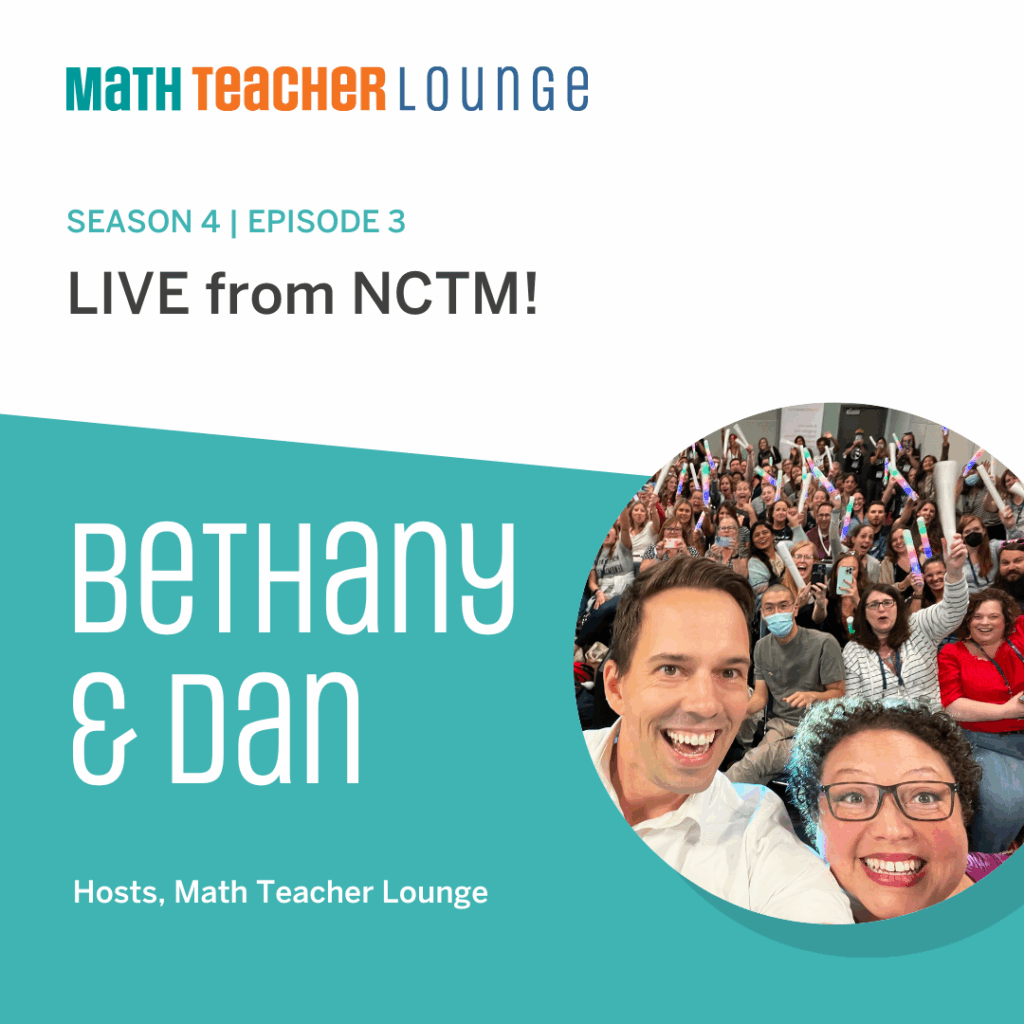
S4 – 03: LIVE from NCTM with Bethany and Dan

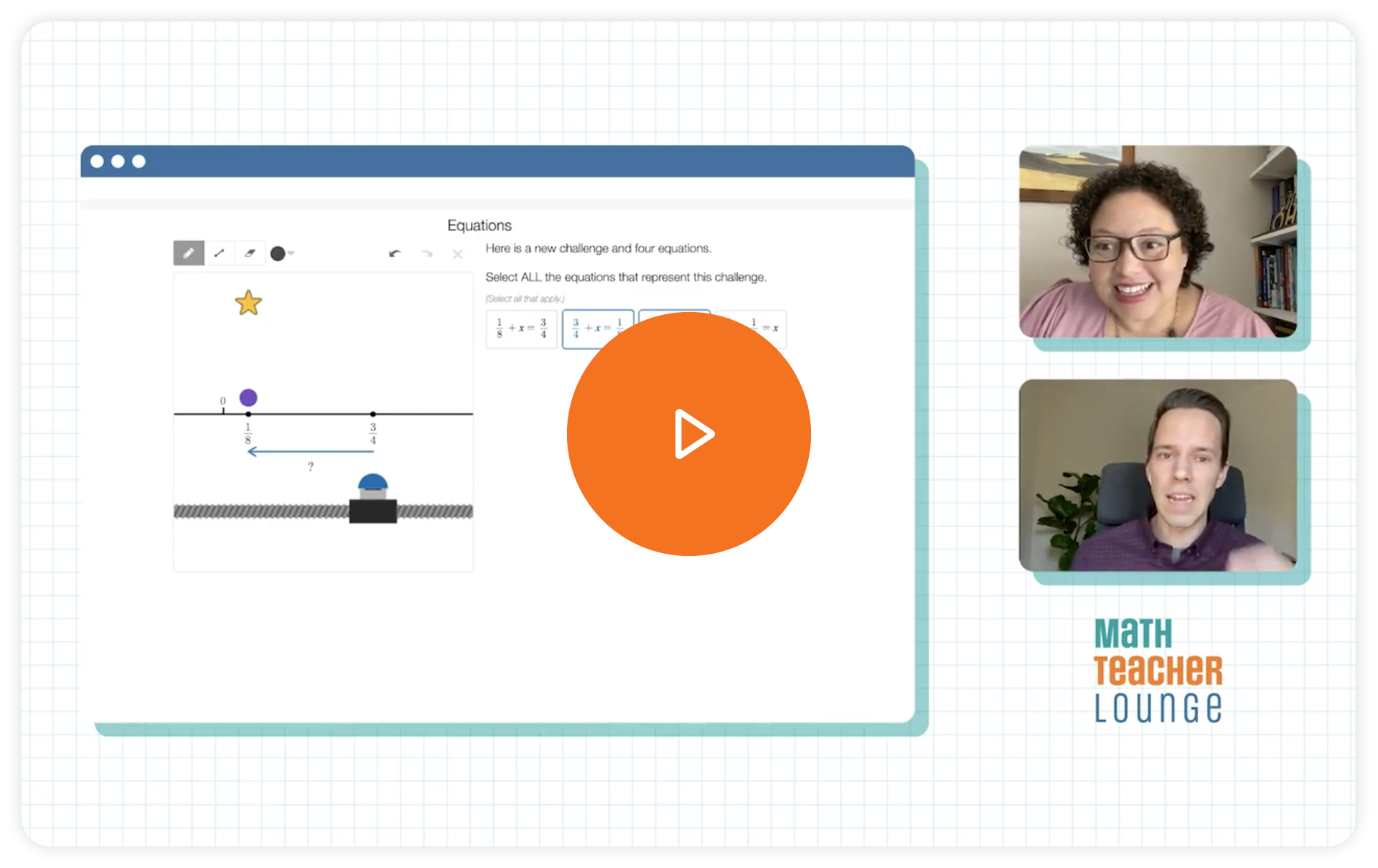
Hosts Bethany and Dan, both smiling, in a promotional image for the "Math Teacher Lounge" podcast, Season 4 Episode 3, titled "Live from NCTM!" with an

In this episode, co-hosts Bethany Lockhart Johnson and Dan Meyer are LIVE with more than one hundred Math Teacher Lounge listeners at the recent National Council of Teachers of Mathematics conference. Listen in as they answer the pressing question: Who is the best teacher in film or television?

Explore more from Math Teacher Lounge by visiting our main page

Download Transcript

Presenter (00:00):
Ladies and gentlemen, from Math Teacher Lounge, we have Bethany Lockhart Johnson and Dan Meyer! <cheering>

Bethany Lockhart Johnson (00:08):
Doesn’t go well that the door was locked. Like, I could not get in! <Laugh>

Dan Meyer (00:12):
Yeah. Gotcha. All right. We’re gonna sit a little bit. Let’s see how that works—

Bethany Lockhart Johnson (00:16):
Hi!

Dan Meyer (00:16):
Yeah. I think we’ll stand up? Or whaddaya think, sit…?

Bethany Lockhart Johnson (00:19):
Should we stand? Hi.

Dan Meyer (00:22):
Hello. Great to see you folks. Yeah, I can hear you.

Bethany Lockhart Johnson (00:25):
Can you hear me? That’s—I know YOU can me. Can you hear me OK? OK! We’re here. Hello. Thank you for like, lining up and coming out and being here. Thank you!

Dan Meyer (00:35):
Means so much to me that you could be here for me, on my show, with Bethany Lockhart Johnson, my co-host. <Audience laughs>

Bethany Lockhart Johnson (00:40):
The hour has just started.

Dan Meyer (00:42):
We’re just getting going. Yeah. If you folks have heard the podcast, you don’t know how much gets cut out. And it’s like, mostly me just having, you know, anxious nerves and saying something silly and then we cut it out and we can’t do that here today. So it should be real fun for all of us, I think. Yeah.

Bethany Lockhart Johnson (00:55):
It’s not true. It’s mostly dancing. “Bethany, can you stop talking? Bethany?” Cause it’s mostly—

Dan Meyer (00:59):
“It’s my turn. It’s my turn! Bethany <laugh>! I haven’t been heard for a while.”

Bethany Lockhart Johnson (01:02):
Dan. We’re at an in-person conference.

Dan Meyer (01:05):
In-person BIG conference, I would say. I’d say a big conference. Yeah.

Bethany Lockhart Johnson (01:08):
And have you been to the Amplify booth?

Dan Meyer (01:11):
I have! Have these people? There’s a claw machine with free socks.

Bethany Lockhart Johnson (01:16):
Yeah. You’re saving me socks, right? That’s what you’re saying. <Laugh> I mean, it’s exciting. How has your conference been so far?

Dan Meyer (01:21):
So far it’s been a blast. I feel fed. I feel like the community’s been awesome. How are you feeling about it?

Bethany Lockhart Johnson (01:29):
OK. Let’s talk about me for just a second.

Dan Meyer (01:31):
Yeah. Talk about you.

Bethany Lockhart Johnson (01:31):
Last night, Dan, was the very first night that I was away from my toddler. <Audience: Aw!>

Dan Meyer (01:38):
Big commitment being here. Thank you.

Bethany Lockhart Johnson (01:40):
I got super-emotional walking back to the hotel after dinner, and then I got in my room, <laugh> I put on pajamas, and I turned on music. I slept so good!

Dan Meyer (01:50):
Yeah. <Audience laughs> Give it up for no kids! <Audience laughs> Hey!

Bethany Lockhart Johnson (01:55):
I love him so much. But I slept all the way through the night. Oh, by the way, I ordered room service in the morning.

Dan Meyer (02:01):
On Amplify.

Bethany Lockhart Johnson (02:01):
That bill’s coming. But it’s been a great conference and I’m so delighted to be here in person and to get to share energy…and hopefully that’s all we’re sharing today. Y’all got your tests, right? Yep. Sharing energy and community today. Because we know it’s been hard. Hardness. Hard.

Dan Meyer (02:25):
Yeah.

Bethany Lockhart Johnson (02:26):
Years. Hard. And to be in person, I know conferences reinvigorate me and I go back into my educational spaces feeling revitalized with new connections and new ideas to try. So yeah, I’ve been excited to be here. And thank you all for being here.

Dan Meyer (02:40):
Yep. I don’t care if I get six different strains of Covid here. I’m just thrilled to be here. <Audience laughs> I don’t know if you’ve had the same feeling, though, Bethany, you folks…I’m a little bit confused to some degree about what we’re doing. I just wanna be really transparent. This is my sarcastic voice but I’m being sincere here. It kind of feels like we’re in a little bit of a time capsule. Like we all got in a time capsule in 2019 and, you know, you open it back up and it’s like, OK, so we’re still, you know, talking about X, Y, or Z protocol for establishing classroom routines or whatever. And I’m like, OK! Like, I loved that in 2019! But I do admit, I’m still trying to figure out a little bit like, what are we doing now? What’s our relationship to the world out there? Things are very different. I have had some great sessions that I’ve enjoyed. I’m also like, still waiting for a session to draw a little blood. Do you know what I mean? Like there’s been sessions…no? OK. You’ve been in these sessions where it’s like, “Oh, ow.” Like, and you look down and there’s and there’s blood there. It’s like, I thought I knew what we were up to. Like, I thought I knew what teaching was and how we relate to the world. I dunno, like in any Danny Martin session in 2019, “Take a Knee” was one, where I was like, “Oh, OK. Like, I’m not as hot as I think I am here. Like, I’m part of a system.” That kind of thing for me draws blood. And I haven’t been in one of those yet. Been some great sessions. I’m a little hopeful that today we draw a little blood and think about what we’re doing here, is my hope here, if that’s OK. So Bethany’s gonna moderate that impulse and she’ll be the fun one and I’ll be the blood-drawing one.

Bethany Lockhart Johnson (04:05):
No, I don’t…that metaphor doesn’t speak to me personally. But what I will say is, I get what you’re saying about really wanting to be in that room where there’s like this synergy happening. No promises about that today other than—

Dan Meyer (04:18):
I promise. <Audience laughs> Go on.

Bethany Lockhart Johnson (04:20):
Other than I get what you’re saying. I’ll find my own metaphor that does not involve bloodshed, but.

Dan Meyer (04:25):
Sure. There’s a lot of ways we we could go about this today. And the one that I’m excited about is, you know, we could like, you know, analyze some results from students, and talk about what went into that. Look at classroom video. Lots of possibilities. But here’s what we’re up to today. Hope you’re into it. Which is, we are here in the heart of the entertainment industry. You know, Tinseltown! Um, the Big Apple! Uh…

Bethany Lockhart Johnson (04:47):
No!

Dan Meyer (04:47):
Come on. What do you got here? Um…

Bethany Lockhart Johnson (04:51):
It was daytime at night. Like the lights were so bright.

Dan Meyer (04:54):
The City of Lights.

Bethany Lockhart Johnson (04:55):
There was a movie premiere outside my hotel room, which I was not invited to, unfortunately. But so what are we doing today?

Dan Meyer (05:01):
So here’s what we’re doing. We are gonna settle, once and for all, a question you have not asked yourself yet, perhaps, but will want to know the answer to in a moment. Which is: Who is the best teacher in all of film or television? OK? We’re gonna do that. It’ll be fun. But I hope that in debating this a little bit with a special guest we’ll bring up in a moment, that we will start to uncover some truths about what makes good teaching. How that’s different from teaching as we see it in movies and tv. Why middle-class America wants teachers to look a certain way in movies and tv. What all that means. And it’ll be awesome. I think. I’m hopeful it’ll be awesome. So what we did here is we’ve invited eight people. Eight folks you people may have known. You’ve been in their sessions today, in this conference, perhaps. And asked them: Who’s your fave? Like, we might have our favorites, but we wanted to democratize it a bit. So asked some cool people who you folks like, who are very smart and thoughtful about teaching: Who’s your favorite teacher?

Bethany Lockhart Johnson (05:58):
A few of whom are in this room. Thank you for your submission.

Dan Meyer (06:00):
Thank so much. Yeah. We’ll see what happens here. <laugh>

Bethany Lockhart Johnson (06:03):
As they shrink down.

Dan Meyer (06:03):
Yeah. Might draw some blood that I don’t mean to right now. We’ll see. OK.

Bethany Lockhart Johnson (06:06):
That metaphor, what IS that??

Dan Meyer (06:07):
Yeah. Yeah. I love it. I’m still going with it. <laugh> And you folks will be a huge part of this. THE part of this, really. So what will happen is I’ll share with you our first nominees. A few of us will make a case for our favorites, or least favorites, as the case may be sometimes. And then by applause, by acclamation, you folks will decide who wins and advances to the next round. Start with eight, move to four. You folks know math.You know where this goes. OK.

Bethany Lockhart Johnson (06:34):
No, keep going. Keep going.

Dan Meyer (06:36):
Two, then one.

Bethany Lockhart Johnson (06:36):
Yeah. Got it.

Dan Meyer (06:37):
Then a half of it. No?

Bethany Lockhart Johnson (06:38):
He had to school me on the making of brackets. But we got it. Yeah.

Dan Meyer (06:41):
How brackets work.

Bethany Lockhart Johnson (06:41):
But we got it. March Madness, what?

Dan Meyer (06:44):
Yeah, in order to do this right, we had to bring up—all the folks that you’ll see are also former Math Teacher Lounge guests, or like, just fan favorites. And we’re also bringing up a former Math Teacher Lounge guest to help us decide this and debate this in a respectful manner.

Bethany Lockhart Johnson (06:59):
New dad.

Dan Meyer (07:00):
New dad.

Bethany Lockhart Johnson (07:01):
You see where my brain’s still at? I miss him. <Laughs>

Dan Meyer (07:03):
Friend from San Diego. Really cool teacher.

Bethany Lockhart Johnson (07:06):
Incredible teacher.

Dan Meyer (07:06):
Works at Desmos and Amplify. And I just want you to welcome up your friend and mine. Chris Nho!

Bethany Lockhart Johnson (07:11):
Chris Nho!

Dan Meyer (07:13):
Come up, Chris. Let’s go, buddy. We didn’t talk about it, but did you want to do the cornball stuff too?

Chris Nho (07:22):
Wow. Would I love to do—

Bethany Lockhart Johnson (07:23):
And then the door could be locked! And then you have to wait and like, just—

Chris Nho (07:27):
Yeah, I’ll skip that part.

Bethany Lockhart Johnson (07:28):
Hi. Welcome. You’re here. We’re here in person.

Chris Nho (07:30):
Very glad to be here. Thank you all for having me.

Dan Meyer (07:33):
Tell me who you are.

Chris Nho (07:34):
My name is Chris Nho. I live in San Diego. I’m a new dad. A three month old, just had. Yeah, she’s actually here at the conference with us in the hotel room. And I promise you she is not by herself. She is with…come on. I was like, “Hey, just gimme one hour. I’ll be right back. I have to do very important work.” But yeah, I think I got invited here because I have opinions and I’m willing to draw…some…blood.

Dan Meyer (08:02):
There we go! Two outta three! We’re good on the metaphor now.

Bethany Lockhart Johnson (08:06):
We’re so glad you’re here. If you haven’t listened to the episode where Chris and Molly and some other public math folks share their ideas and ideas of how to take math out into the world, please listen, because we had a blast.

Dan Meyer (08:19):
Inspiring work. Really inspiring work. Very cool. Cool. OK. Right on. OK.

Bethany Lockhart Johnson (08:23):
Let’s do this!

Dan Meyer (08:24):
Let’s get started here. Yeah! <Audience cheers> Yeah. And we might ask you who your favorite teacher is, who’s missing from our list of eight? We might have forgotten some people. Anyway. All right. So here’s our first two. Our first two are nominated by way of, let’s see, um, Mandy Jansen is a professor at the University of Delaware. Got some awesome talks here this week, a Shadow Con talk last night. She’ll be nominating one. And also, um, Lani Horn is a professor at Vanderbilt, also extremely cool, prolific author and speaker, just all-around great human and friend of teachers everywhere. And she’ll nominate another in this bracket, which is the Northeastern Comedy bracket, Northeastern comedy bracket.

Bethany Lockhart Johnson (09:06):
It just worked out that way.

Dan Meyer (09:07):
Yeah. Here it is. Here is Tina Fey in Mean Girls.

Tina Fey in Mean Girls (09:12):
“OK. Everybody close your eyes. All right. I want you to raise your hand if you have ever had a girl say something bad about you behind your back. Open your eyes. Now close your eyes again. And this time I want you to raise your hand if you have ever said anything about a friend behind her back. Open up. It’s been some girl-on-girl crime here.”

Lani Horn (09:52):
I am nominating Sharon Norbury from Mean Girls as the best movie math teacher. She is an awesome teacher who is always there for her kids. She always sees the best in them. She shows that she can forgive even some pretty bad behavior, if she sees that kids are trying. She’s a strong feminist who makes sure that smart girls don’t dumb themselves down just to impress boys.

Tina Fey in Mean Girls (10:22):
“Katie, I know that having a boyfriend may seem like the most important thing in the world right now, but you don’t have to dumb yourself down to get guys to like you.”

Lani Horn (10:30):
She’s also super hard-working. She works three jobs. She’s always there for the kids. She plays piano in the talent show and takes them to Mathlete competitions. And she’s also socially aware. And when things go really badly among the girls, she does some pretty creative things to try to get them to be kinder to each other.

Dan Meyer (10:54):
OK. That’s one.

Bethany Lockhart Johnson (10:55):
Helen Case.

Dan Meyer (10:57):
All right. Settle down. Settle down. Settle down. All right.

Bethany Lockhart Johnson (10:59):
Piano too!

Dan Meyer (11:00):
Bethany’s already trying to bias people here. All right. Chill out. Hold on. So next one is Mandy Jansen with Jack Black from School of Rock. Uh-oh. Uh-oh.

Jack Black in School of Rock (11:09):
“What was your name?”

Kid in School of Rock (11:10):
“Katie.”

Jack Black in School of Rock (11:11):
“Katie. What was that thing you were playing today? The big thing.”

Kid in School of Rock (11:14):
“Cello.”

Jack Black in School of Rock (11:15):
“OK. This is a bass guitar and it’s the exact same thing, but instead of playing like this, you tip it on the side. Chellooooo! You’ve got a bass! <Laugh> Try it on.”

Mandy Jansen (11:25):
And I’m nominating for best teacher in a film Jack Black as Dewey Finn playing Mr. Ned Schneebly in the film School of Rock. So why this portrayal? First of all, playing a longterm sub. Those are so hard to find right now. <Audience laughs> Really hard. And then he teaches using class projects. That’s brilliant. Integrated learning. And then love this. He gives students roles and tasks that are differentiated and align to the specific strengths that each student has.

Kid 2 in School of Rock (12:05):
“I can also play clarinet, you know!”

Jack Black in School of Rock (12:06):
“I’ll find something for you when we get back from lunch. I’ll assign the rest of you killer positions.”

Mandy Jansen (12:13):
And the film culminates in a performance of a collaborative song that they all wrote and performed together. And the students experience that collaboration and teamwork and creating something beautiful is much more important than winning first place. And finally, one of the songs that the character sings in the film is “Math is a Wonderful Thing.” Can’t beat that.

Dan Meyer (12:40):
All right. That’s tough. That’s tough. So here’s the deal. What we have right now is just a quick minute—so Bethany, you ranked, we all ranked our own faves here outta the list of eight. And Bethany put Jack Black in School of Rock a bit higher than Tina Fey in Mean Girls.

Bethany Lockhart Johnson (12:54):
Missed the piano part though.

Dan Meyer (12:55):
And Chris, vice versa here. So Bethany, would you start us off and just make a quick case here for Jack Black versus Tina Fey?

Bethany Lockhart Johnson (13:01):
OK. So here’s what I’m thinking. There’s been rumor that maybe they’re putting less than credentialed people into classrooms to fill teaching gaps. I mean, just rumor. And so here’s this guy who is a rocker. He is not a substitute. He has no teaching training. And yet he goes in there and it turns out that he has the ability to see students’ potential and to recognize their unique abilities. And like Mandy said, he really tapped into, like, he saw them and said, “No, more is possible for you than what you think is possible.” And there’s like real sub anxiety. When you walk in, you can either be like, happy there’s a sub, but I was usually really nervous. Right? And he goes in and he makes that classroom into a home.

Dan Meyer (13:53):
Wow.

Chris Nho (13:54):
Wow.

Dan Meyer (13:56):
Chris, speak on it. Tina Fey needs you. Chris.

Chris Nho (13:59):
Tina Fey. Here we go. I’m gonna argue here that—when was that movie made?

Dan Meyer (14:03):
T is for terrific. I is for Interesting.

Chris Nho (14:06):
Decades ago. And I’m gonna argue that Tina Fey was very progressive for her time. OK, let’s talk about social emotional learning. Hello. <Audience laughs> Love that. Right? Stand up if, I mean, she’s getting people to talk about their emotions. And there’s a curriculum. But let’s just pause, because that’s not what’s really happening in the classroom right now. So social emotional learning, I think she’s, she’s got that a lot. And then number two, you know, if you remember the plot of Mean Girls a little bit, she gets her name written in that Burn Book. Like she sees what they say about her. Restorative justice. Let’s go. <Audience laughs>.

Dan Meyer (14:38):
Whom amongst us. Yes.

Chris Nho (14:40):
You write Mr. Nho in the Burn Book?? Well, your grade book is gonna look like a Burn Book! OK? <Audience laughs> Tina Fey, Tina Fey, she was like, “No, you know, know what? I’m actually gonna spend more time with you. You’re gonna become a mathlete.” And Lindsay Lohan discovers—she drops the most iconic line in all of math education. “The limit does not exist.” Thank you, Tina Fey, for that. For that gift.

Dan Meyer (15:04):
Bless. Bless you. Tina Fey. Wow.

Bethany Lockhart Johnson (15:05):
Oh, man. Wow.

Dan Meyer (15:09):
Let’s see what the people say here. I do wanna just add one quick thing about—it’s interesting to me how often in these movies—just kind of go in a little bit, zoom out just a minute—how often it’s a teacher who has no training as a teacher. <Bethany laughs> I am kind of curious why it is. Like, those are the movies that get hot, that get made. Again, these are all kind of a mirror of the taste of the moviegoing public. You know what I’m saying? Like, these, these are not movies—I wanna believe they are made for me and for us as teachers. But they are not. There’s not enough of us to justify, you know, Jack Black’s, you know, M&M budget or whatever he’s got going on in his trailer or whatever. That needs to be for everybody in middle-class America. So what is it about middle-class America that wants to see teaching as something that anybody can do? Just like, you know, just, just run up there in your van and make it happen.

Bethany Lockhart Johnson (15:54):
Magic magically manifests.

Dan Meyer (15:56):
Yeah. Manifest. Yeah. That’s just interesting to me. I just toss that out there as some red meat. Let’s see what the people say here. All right, OK, so you’re ready. Let’s get the bracket going here. The question is Tina Fey versus Jack Black. You had a moment here. Just whisper to someone real fast who you’re going for here real quick. What are you thinking here? <Crowd murmuring> All right. Crowd’s buzzing. Crowd’s buzzing. Would you folks…? All right. Bring it back. Go ahead and make some noise for Tina Fey. <Crowd cheers> OK. OK. Make some noise for Jack Black! <Crowd cheers> Judges say Tina Fey. Tina Fey moves on. All right. All right.

Chris Nho (16:44):
Stunned. I’m stunned. I’m speechless.

Bethany Lockhart Johnson (16:46):
Tina Fey moves on. Wow.

Dan Meyer (16:48):
This has exceeded my expectations in terms of having some fun, but also getting deep, getting deep and real about teaching. I’m into this right here. Yeah. What’s up?

Bethany Lockhart Johnson (16:54):
That’s the goal. That’s the goal. OK. You wanted blood? Oooh, this next matchup might just be where that blood comes forth! OK. Stretch. Warm up. Dan Meyer, who’s up next?

Dan Meyer (17:11):
We’ve got the animated/animatronic round here in the Southeast. And repping the two contestants here, who do we have? We have Allison Hintz, professor, author outta Washington, as one of the two nominators. And the other nominator is one of my heroes, though we’ll find out very wrong about this nomination, Jenna Laib, who’s in the crowd, and I’m trying not to make eye contact here. <Laugh> And here are the two nominations. A couple minutes each. And then we’ll chat about it. And one of us will probably die. But we’ll see how it goes.

Allison Hintz (17:50):
A long, long time ago, in a galaxy far, far away, MTL, we began learning from the Jedi Master of Teaching. With the Socratic and experiential approach. With unparalleled mindfulness, compassion, and humility. The best teacher in TV and film, Yoda is. <Audience laughs> Yoda lives the values we share as teachers and learners. He humbly comes alongside us as we construct new knowledge.

Yoda (18:29):
“You must unlearn what you have learned.”

Allison Hintz (18:32):
Yoda allows us to struggle and sees mistakes as critical to learning.

Yoda (18:39):
“The greatest teacher, failure is.”

Allison Hintz (18:43):
Yoda values curiosity and reminds us of the beauty and joy of teachers learning from children.

Yoda (18:52):
“Truly wonderful, the mind of a child is.”

Allison Hintz (18:59):
MTL! Join the Resistance! Let the force flow through you in declaring, the best teacher in TV and film, Yoda is.

Dan Meyer (19:18):
Give it up for Allison Hintz! All right! <Audience applauds>

Bethany Lockhart Johnson (19:20):
Alison! And to have that on hand too, which Is kind of perfect.

Bethany Lockhart Johnson (19:26):
Just to be clear, the helmet is not a part of a Zoom background.

Dan Meyer (19:29):
You may evaluate the quality of the nomination based on the costumes of the nominator. That is acceptable. That’s acceptable.

Bethany Lockhart Johnson (19:35):
That is a REAL HELMET.

Dan Meyer (19:35):
All right. The next nominator here, this one is from Jenna Laib, math coach, all-around stellar human. Here we go. This is Ms. Frizzle.

Ms. Frizzle (19:42):
“Single file, class. Our rotten field trip has only just begun.”

Jenna Laib (19:47):
And I think that the best teacher from TV or movies is Ms .Valerie Frizzle from The Magic School Bus. First and foremost, Ms. Frizzle believes in her students. She encourages them to take an active role in their learning, and also to advocate for change in their local community. For example, there’s an episode where there is a logger who’s gonna cut down a rotting log that would benefit the local ecosystem. And the students figure out a way to convince him to leave the log so that all of the animals and the plant life can benefit. She orchestrates really challenging situations for these students, and she allows them the space to ask questions and engage in problem-solving and puzzle their way out of these really, really difficult scenarios. Ms. Frizzle has unmatched pedagogy. She’s bold, she’s innovative, and she’s a major proponent of experiential learning. So these students are heading straight into a storm to learn about weather systems. <Audience laughs> These students are heading into the human body to learn about digestion and disease. They literally get baked into a cake to learn about some chemistry and reactions.

Children in The Magic School Bus (20:54):
“What’s happening?” <Audience laughs> “Why is it suddenly getting so hot?” “Maybe it’s because the floor is on fire!” <Audience laughs>

Jenna Laib (21:02):
This pedagogy is all led by her outstanding catchphrase, which is:

Ms. Frizzle (21:06):
“Take chances; make mistakes; get messy!”

Jenna Laib (21:14):
From her pedagogy to the classroom community that she creates, Ms. Frizzle is an inspiration, and that is why I think that she is the best teacher from TV or film. <Audience applauds>

Dan Meyer (21:25):
Right on! Give it up for Jenna. Give it up for Jenna. All right. I’m gonna take first pass at this. Chris knows my argument already, so I’m gonna take this here. I see some of you are feeling how I’m feeling on this one. OK, so I don’t have tons to say in favor of Yoda. I think it was all true what Allison said. I think the costume was banging. It was awesome. So there’s all that, but I have more to say against Ms. Frizzle than for Yoda.

Bethany Lockhart Johnson (21:48):
No, no, no. Wait a second!

Bethany Lockhart Johnson (21:49):
Let’s let it happen. Bethany, I’ve come prepared.

Dan Meyer (21:54):
I may have made a misstep here, I realize.

Bethany Lockhart Johnson (21:56):
I’ve come prepared.

Dan Meyer (21:56):
So I think Jenna is all correct. I think those clips spoke for themselves. I think that what they add up to, to me, is not “great teacher,” but more “someone who should be locked up.” <Audience laughs> Or at the very minimum, “someone who should be kept away from children.” <Audience laughs> Do not let that woman around children. I mean, check it out. Look, I don’t wanna throw down credentials. I’ve been to grad school, though. I know how this works. When your brain is stressed, you get these—all the cortisol happens. Your working memory shrinks up. You cannot learn when you’re stressed. And those kids, like whatever lesson Ms. Frizzle is teaching by sending them into an oven, I repeat, an oven <audience laughs>, like, they’re not gonna learn anything ’cause their brains are freaking out with stress and fear. OK?

Bethany Lockhart Johnson (22:41):
“What’s happening??”

Dan Meyer (22:43):
“What’s happening? Am I on fire? Well…I’m learning lots, though! Sure is magical!” <Audience laughs> It’s like, “No. Get that woman out of a classroom.” That’s my opening and closing argument. Right? There’s all it is.

Chris Nho (23:01):
All right. All right. All right.

Bethany Lockhart Johnson (23:02):
Chris knows.

Chris Nho (23:03):
I’ve got, I’ve got lots to say. First off, I think Dan was in charge of the editing of those video clips. So let’s let that be—you know, let the record stand. <Audience laughs>

Dan Meyer (23:11):
Where’s the lie though? Where’s the lie?

Chris Nho (23:14):
And, you know, second, I think, um—this is the guy up here saying, “I wanna see blood.” You know? And then he has a teacher who literally takes the students into a blood cell and, and you get a little scared! You get a little worried for the students, you know? So I just don’t get it, Dan. This or that. OK? I think Ms. Frizzle—so I actually went to a project-based learning school. I taught at a project-based learning school. And the best thing about it is like, your learning, it doesn’t just stay in this box of math lesson or writing lesson, history lesson. And I think with Ms. Frizzle, like you can’t help but learn things because you are getting baked in a cake. <Audience laughs> Yeah, it is a little scary. And I imagine there’s cortisol and things happening, but guess what? Probably the next episode, they go into their own brains and explore what’s happening. That kind of thing. You know?

Dan Meyer (24:07):
The kids that survived, just be clear. <Audience laughs>

Chris Nho (24:10):
Yeah. OK. Would I want Nora, my three-month-old, to be babysat by Ms. Frizzle? Maybe not. <Audience laughs> But what I have to say about Yoda is Yoda maybe wins the best tutor award. Give it up for Yoda’s Best Tutor Award.

Bethany Lockhart Johnson (24:24):
Oh, yeah…

Chris Nho (24:25):
That ratio’s looking really nice. I could teach the heck outta Luke Skywalker. OK? But 20 little Luke Skywalkers running around. I’m not sure. OK?

Dan Meyer (24:34):
Luke did survive the training, though. <Audience laughs> So that’s awfully nice to say about it. All right, Great words from Chris here. I’m still not convinced. We’ll see how you’re convinced here. Would you whisper to someone where you’re leaning here? Frizzle or Yoda? <Audience buzzing>

Chris Nho (24:47):
I tried. I tried.

Dan Meyer (24:53):
All right. That’s enough of that. Let’s hear it folks. Give it up for Yoda. <Audience cheers> Give it up. Give it up. You. Give. It. Up.

Chris Nho (25:05):
Hey, next. Next.

Dan Meyer (25:06):
All right. All right, all right. <Mutters> Give it up for Ms. Frizzle. <Audience cheers louder> I dunno, it’s pretty close. Call a tie. Maybe Yoda? Yoda by nose? <Audience laughs> All right. All right. Let’s…let me see who’s it. Let’s get the people advancing here. I’ll keep on moving here.

Chris Nho (25:26):
As you’re doing that. Um, Dan ranked Ms. Frizzle last in his personal ranking. And I ranked Ms. Frizzle very high, so we knew this one would be spicy,

Bethany Lockhart Johnson (25:36):
<laugh> Spicy it was. Are you having a good time so far? <Audience cheers> So while we love seeing these images and we love seeing these video clips, at the core, what are these things about how teachers are portrayed? And how accurate is that to our real lives? I mean, besides the cake part, right? That my chemistry class did often feel like I was on fire. I was so stressed in it. Um, we’re ready?

Dan Meyer (26:05):
Yep. Great. We’re ready, we’re up here. So the next two nominees are coming to you folks from Tracy Zager, who is the editor of my book, forthcoming in 2027 at the earliest and 2032 at the latest. And also your very own Zak Champagne from Florida, here in the room. Hey, Zak. Zak, let’s see who the nominations are. I’m gonna skip past that, didn’t work out so well for me. Here it is. This is Marshall Kane from the TV show Community.

Michael K. Williams in Community (26:32):
“You two complete your case to the class and let them decide your grades.”

Joel McHale in Community (26:37):
“Professor, thank you.”

Michael K. Williams in Community (26:40):
“It’s not a favor, Mr. Winger. Man’s gotta have a code.”

Joel McHale in Community (26:44):
“Awesome.”

Zak Champagne (26:46):
This is a pitch for an underdog. This teacher didn’t stand on desks or encourage his students to follow their musical passions. In fact, this teacher was seen only in a few episodes of my favorite TV show of all time, Community, Community has set at Greendale Community College in Colorado. And in season three, we get to meet Dr. Marshall Kane, a biology professor whose story is an inspiration to anyone who just takes the time to look and listen. Dr. Marshall Kane slowly earned his PhD while in prison, serving a sentence of 25 to life. In his classroom, he inspires students to love biology, question why LEGO has become so complicated, and randomly pairs his students for group projects to ensure no one feels left out. His greatest performance comes when a group of students believe their yam project was intentionally sabotaged. Dr. Kane took this as an opportunity for some trans-disciplinary real-world learning. So yes, at community college, he felt that a middle-school mock trial was the best way to determine who killed the yam. So let’s all pick the underdog and vote for Dr. Marshall Kane. After all, man’s gotta have a code. <Audience goes “oh!” and applauds>

Dan Meyer (27:53):
Thank you, Zak.

Bethany Lockhart Johnson (27:54):
I have a code.

Dan Meyer (27:56):
Next up is Tracy Zager, nominating an unusual nomination, not a single person, but an ensemble performance. A bunch of people from a movie called Searching for Bobby Fisher. Here we go.

Rapid-fire movie dialogue (28:11):
“What’s that?” “Schleimann attack.” “Schleimann attack? Where’d you learn that from, a book?” “No, my teacher taught me.” “Aw, your teacher. Well, forget it. Play like you used to, from the gut. Get your pawns rolling on the queen’s side.”

Tracy Zager (28:26):
Hey, Math Teacher Lounge. This is Tracy Zager. I’m excited to share my nominee for the best movie teacher. But I have to admit that when I first got the email, I thought, oh, who am I gonna nominate? Because most movies about teachers are highly problematic. They usually have like a saviorism thing, usually white saviors. And I just felt like I couldn’t suggest any of those. So rather than nominate a movie about a single teacher, I wanted to nominate a movie that taught me something about teaching. And that movie is a deep cut. It’s Searching for Bobby Fischer. It’s a movie about a chess prodigy. And what I love about it is that all of the different adults in the movie are in teacher roles in some way. And the student, Josh, the chess player, is a fully realized character, not an empty pail, who pulls from the strengths of each one of those adults while also dealing with their flaws and humanity. And there’s just beautiful synergy in the way he gets the best out of everybody, but also has to overcome some of the barriers that they put in front of him. So I feel like it’s a much more authentic and humbling, but also inspiring, movie about the power of teaching. So if you haven’t ever seen it, check it out. And I can’t wait to see who the other nominees are. Thanks so much.

Dan Meyer (29:53):
Right on. Thank you, Tracy. Wherever you are. <Applause> We’ll move a little quicker here. I’m curious, Bethany, you put Marshall Kane pretty high. I put Bobby Fischer pretty high. What do you have to say about Marshall Kane for us here?

Bethany Lockhart Johnson (30:04):
Well, I just wanna say two things. One is that, like Zak said, he has this code of conduct that he brings in. And he stays true to it no matter what happens. If you saw him in in Community, you know that he held himself up to such high esteem, but not just himself, his students as well. And he took accountability when he felt he had done wrong, even though, well, that’s controversy. But first—oh, the other thing, rest in peace, Michael K. Williams. Oh my gosh. The actor who plays Marshall K. And the thing that I wanna say most of all about it is that he brings his whole self to the classroom. He was in prison for decades. He brings his whole self and says, “This is who I was. This is who I am today. And this is how we can work together as a community.”

Dan Meyer (30:58):
That’s big. I love your comments about code of conduct too. It makes me wish that Ms. Frizzle had a code of conduct also.

Bethany Lockhart Johnson (31:05):
I knew that was coming back!

Chris Nho (31:06):
Two slides ago, Dan. That was two slides ago.

Dan Meyer (31:08):
Can’t let it go. So yeah, I love what you said there. I have no strong beef here either way. Bobby Fischer’s a movie I have loved dearly and can’t be objective about it. I love that the kid in that movie, more than any other movie here, the kid teaches the adults so much through his innocence and how he challenges them and how they’re treating him. Dig all that so much. Will not, will not begrudge anyone any vote either way here. I do begrudge many of you your vote in previous rounds. <Audience laughs> So let’s just, let’s hear. We’re not gonna ask you folks at all to chitchat. We’re gonna move on this one. So would you folks make some noise here for Marshall Kane in Community? OK. OK. And would you make some noise here for Bobby Fischer, the kid in Bobby Fischer, the ensemble? <Audience cheers, applauds>

Bethany Lockhart Johnson (31:56):
Marshall Kane.

Dan Meyer (31:57):
Marshall Kane takes it. All right. Good job, Marshall Kane! All right. Zak’s feeling good. Moving on to the final four here, Zak, right on. OK. Our last—the Northwest Division here is also the large urban district division here. We have a couple different teachers in sets of large urban schools. They’re nominated, they’re advanced by a couple people here. One is past president of NCTM, Robert Berry. And another is Fawn Nguyen, Southern California phenom. Great teacher and friend of lots of us. Um, let’s see who they nominated here. First from Robert Berry, let’s see, who is it here? Janine Teagues from Abbott Elementary.

Abbott Elementary dialogue (32:37):
“Hey, you know what? I’m probably probably gonna be Kenny’s second-grade teacher. Why don’t you just let him get a head start with me today?” “That’d be great.” “Yeah? OK. Hey, Kenny, would you like to be in my group today?” “Not really.” “That’s the spirit.”

Robert Berry (32:54):
My nomination is gonna be Quinta Brunson, the Emmy Award-winning Quinta Brunson from Abbott Elementary. Janine Teagues is the character. She exemplifies care not only from an affect way, but she also exemplifies care in the things that she does for her students. While the scenes in the show are entertaining, they do represent the challenges that teachers experience when they’re trying to meet the needs of her students. So she goes, goes all out for her students and finding resources. She accesses other people to get resources for her students. But the care shows up in the way that she is mindful of their needs. And so, for me, when I think about teachers and teaching, sometimes we can talk about pedagogy, but sometimes we also can talk about those kind of intangibles that makes a teacher a great teacher. It is apparent from her students that she cares about them, she supports them, and she goes all out 100% for her students. Janine Teagues, Quinta Brunson is, I think, is my choice of the best teacher on television because of the realism and the representation that she brings to this character of what teaching is about. <Applause>

Dan Meyer (34:28):
Right on. Right on. OK. OK. Next up, we’ve got, Fawn Nguyen is nominating Erin Gruwell from Freedom Writers. Here we go.

Hilary Swank in Freedom Writers movie (34:39):
“Look, you can either sit in your seats reading those workbooks or you can play a game. Either way, you’re in here till the bell rings. OK? This is called the Line Game. I’m gonna ask you a question. If that question applies to you, you step onto the line and then step back away for the next question. Easy, right? The first question. How many of you have the new Snoop Dog album? <kids move around> OK, back away. Next question. How many of you have seen Boys in the Hood?”

Fawn Nguyen (35:26):
We all learn about Miss G and her 150 students in the movie Freedom Writers starring Hilary Swank. All great teachers share a common set of traits. They care deeply about their students, have high expectations of them, and always believing wholeheartedly that they will succeed. Great teachers go above and beyond, not because they extraordinary—as Anne Gruwell would always refer to herself as an ordinary teacher—but because extraordinary things happen to people when we believe in them, give them hope, help them write their own story with a different ending. So what stood out for me with Miss G is the scope of her reach, the ever-expanding sphere of her humanity. The red tape she had placed on the classroom floor for the line game shows just how much we all have in common despite our differences. Her students didn’t just learn from her; they learned from one another. If you’d like to be part of this expanding sphere to give voice and hope, please check out Freedom Writers Foundation dot org.

Dan Meyer (36:38):
OK. This right here is a tough one for us. Thank you, Fawn. We collectively ranked—that’s our number one seed and number eight seed, which I hasten to say does not have to do with Erin Gruwell, a person, but the portrayal and the movie. So we don’t have like a whole lot of…there’s not a lot of defense we have to offer here of our eighth seed. And I heard like a kind of a little bit of a murmur over the crowd on Erin Gruwell. So I’m more interested than having a defense back and forth. I’d be curious what you, Bethany, think about what, like, what both movies have to say about like, what teaching is, especially teaching urban schools with black and brown kids and lower-class kids, for instance. They both have, I think, very different things to say about them. Do you have thoughts about that?

Bethany Lockhart Johnson (37:19):
Well, it’s interesting because there is some overlap in the sense that the arguments that both Fawn and Robert Berry put out, they both care deeply about their students, right? We’re not gonna argue that. They care deeply. And something that I would say about Miss Teagues is there’s something about the way that she sees not only her classroom, her students, but she sees all of the students in the school as her students. And her idea of resource generation is really helping the teachers to generate resources from their community themselves, and to also realize that the students see themselves reflected in the teachers. And I think that—you know, again, this is not about the real person—but the movie portrayal, and we often see kind of this, for Freedom Writers, we often see this like, Great Last Hope whisked in and her personal sacrifices are what makes these students, these brown and black students’ transformation possible. Because of her sacrifices. Including her marriage. Including, you know, three jobs. And it’s just portrayed in a way that I think really celebrates her sacrifices rather than what the students have already brought—they already come into the room bringing so much as they are, already, without her intervention.

Dan Meyer (38:38):
I love the portrayal of the teacher as part of a community of teachers. Versus in so many of these movies, it’s the teacher as the only person who gets it, you know, oftentimes coming from outside of the world of teaching and everyone’s against them and wants ’em just to fall in line and do the thing we always do, and they’re the outlier. But in Abbott Elementary, it’s like we all rise and we fall together. And teachers are investing in each other’s success, especially with Gregory the longterm sub. We’re all rooting for his, you know, his flourishing. I love that. And yeah. That’s bigtime.

Chris Nho (39:09):
Yeah, I think one interesting thing is that Freedom Writers, when it came out, I think it was like a commercial success.

Bethany Lockhart Johnson (39:17):
Oh, big time. Yeah. It was.

Chris Nho (39:18):
It probably influenced a lot of people to try teaching out. So I do wonder what it says about us, right? Like that we want teaching to fit this narrative, and we wanna be those people who could go into a classroom and <puts on “cool voice”> “Y’all listen to Snoop Dog?” and just have that question HIT. <laughter> And you know, I’ve taught in a large urban school district, and I’ve been that person and I’ve seen other people try and be that person. And I think stepping away from it a little bit, just—it’s a reflection of what people want out of teaching and what they think better education looks like.

Dan Meyer (39:57):
Yeah, yeah. This idea that, so I’m a middle-class person, let’s say, and like, there’s this idea, like, “I know what I would do if I was going into circumstances of impoverishment.” Like I have—

Bethany Lockhart Johnson (40:06):
“All they really need is…”

Dan Meyer (40:07):
…for me to give ’em some real talk and tell ’em, you know, pull their pants up or whatever, listen to Snoop Dog, that kind of thing. And that will be the key. And that’s not how it is in, you know, in Jack Black in School of Rock or Tina Fey school, which are, you know, coded as largely like upper-class or largely white schools. And in those movies, it’s interesting, like how it’s about students discovering themselves, oftentimes. And the central figures are often students. And the students need to reject an oppressive parent figure or something and find themselves. But no, in Freedom Writers, it’s like, “You need to become more like the middle-class teachers who are coming in here to give you this wisdom.” It’s just interesting. I do find it—a pet peeve of mine is when movies portray teachers as only successful if you endure, for instance, the failure of your marriage, or even in Stand and Deliver, for instance, like Jaime Escalante, they depict him having a heart attack. And, like, the job oughta be…easier. <Audience laughs>

Chris Nho (41:04):
Truth.

Bethany Lockhart Johnson (41:05):
That’s the barometer for how much….

Dan Meyer (41:09):
Like, no heart attacks and no divorces related to the job, that kind of thing. I do love how in Abbott—one last thing and we’ll vote and Abbott will win <audience laughs>—is like how, like there, there is a lot of degradation in Abbott, but it’s not a divorce or a heart attack—it’s the petty indignities of asking a student, “Do you wanna hang with me?” And a student says, “Nah, not really.” And that just spoke to me like how it’s not cinematic, but teaching, successful teaching, is like a collection of developing an immunity to students saying, “You’re not hot.” <Laugh> You know? And so I love that. I do wish that there was more depiction of students in Abbott Elementary. It’s a lot of adult stuff. Whatever. Give it up for Abbott, if you would, please. Let’s just get this done here. All right. That’s plenty. That’s plenty. Not gonna ask folks about Freedom Writers. OK, let’s move on to— all right, let’s hear it for Freedom Writers! Yeah. OK, cool. We go, yep.

Chris Nho (42:05):
Plot twist!

Bethany Lockhart Johnson (42:07):
OK, let’s see our final four. Cut and paste. Real time. Real time.

Audience member (42:12):
Where’s Dolores Umbridge?

Dan Meyer (42:14):
Oh….

Bethany Lockhart Johnson (42:16):
Hey, did you hear that? He said, “Where’s Dolores Umbridge?”

Dan Meyer (42:20):
All right. OK.

Bethany Lockhart Johnson (42:20):
See, we missed so many. We could…

Dan Meyer (42:21):
So coming up here, we’ve got in the Eastern Conference, Tina Fey and Ms. Frizzle. Y’all know how I feel about that one. Let’s just get this one done. OK, let’s give it up for Tina Fey. Let’s hear it. <Audience cheers> OK. All right. Yes! Let’s give it up for menace to children everywhere, the terror, the Ms. Frizzle. <Audience cheers> One more time for Tina Fey. Let’s hear it. <Audience cheers> One more time for Ms. Frizzle. Let’s hear it. <Audience cheers>

Bethany Lockhart Johnson (42:59):
Yeah. OK.

Dan Meyer (43:00):
It took ’em one round, but they made the right call in the end. <Laugh>

Chris Nho (43:04):
All it took was 10 minutes of constant Ms. Frizzle-bashing. <Laugh>

Dan Meyer (43:09):
Persevering and problem-solving, that’s my game. Yes. All right. So, do either of you want to influence the audience one way or the other?

Bethany Lockhart Johnson (43:16):
That’s not how I play, Dan.

Dan Meyer (43:18):
Oh, OK. Yeah, that’s true. That’s true. You’re good. On Abbott versus Marshall Kane, should we just let ’em have it? All right. All right. Give it up For Abbott Elementary. Not bad. And for Marshall Kane. OK. OK. I hear Zak and five other people. All right, cool. <laugh> Right on. All right. We got our, we got our finals,

Bethany Lockhart Johnson (43:45):
We did it. We made it to two. And we know: We left out a lot of people. Right? And honestly, I kind of wish we could poll like everyone. I mean, think you put it on Twitter, right? Like, who would you pick? But I would say we had a pretty solid eight there. I’m excited to see who… Look at the little crown he put, you guys. Come on.

Dan Meyer (44:05):
I worked hard for you. For you. <Laugh> Yeah. I liked that it was a good bunch that had a lot of different kinds of qualities…and lack of qualities in some cases. And it allowed us that—I shouldn’t knock her while she’s down, and she IS down, it’s true. <Laugh> And I appreciate the conversation we’ve had, what they have revealed overall about teaching and what the world wants teaching to be versus what it actually is or actually should be. I appreciate that. So let’s settle this here. Give it up, if you would, for Abbott Elementary. <Audience cheers> And give it up for Tina Fey in Mean Girls. <Audience cheers>

Bethany Lockhart Johnson (44:49):
Wow.

Dan Meyer (44:51):
That was close. I almost give that to Tina Fey.

Audience member (44:55):
Yeah, we do!

Dan Meyer (44:55):
I don’t know. That was a bracket-buster for me right there. Yeah. I lost money in the office pool off that right there. Maybe let’s just find out one more time here. One more time.

Bethany Lockhart Johnson (45:03):
Last time.

Dan Meyer (45:03):
Time to summon up all your conviction on one or the other here. No half-measures right now. All right.

Bethany Lockhart Johnson (45:07):
Emmy Award-winning Quinta Brunson.

Dan Meyer (45:09):
Yeah, you saw Robert Berry on that, right? He was like, “Oh, I got one more card to play. Emmy Award-winning.” That’s admissible. That’s admissible. We’ll take that. All right. So…give it up for Abbott Elementary, one last time. <Audience cheers> OK. All right. All right. And give it up for Tina Fey in Mean Girls. <Audience cheers>

Bethany Lockhart Johnson (45:30):
Drumroll, please!

Chris Nho (45:33):
Best teacher is….

Dan Meyer (45:34):
Tina Fey in Mean Girls! Yeah. Not a bad pick.

Bethany Lockhart Johnson (45:39):
I love it. And I think, too, I think we’re gonna have a little bit of a more reflective lens than we thought we did when we see depictions of teachers in film and television. And, you know, hopefully we’ll see some new tropes come in, right?

Dan Meyer (45:55):
Yep. Yeah. Every dollar we spend on movies with lousy teachers is just encouraging these people to make more lousy teacher movies, you know? Awesome. Thank you for being here for a live taping—

Bethany Lockhart Johnson (46:06):
Thank you for being here.

Dan Meyer (46:06):
—of our podcast, Math Teacher Lounge, in a hot room. Appreciate that. Yeah, it’s been fun for us to have you here. Um, super-important, super-important final remark: Bethany loves Oprah and Oprah occasionally, in the show—

Bethany Lockhart Johnson (46:18):
Is she coming?! Is she here?!

Dan Meyer (46:19):
Not here! Not here! Calm down. Calm down. Um, but we do have in Oprah fashion, not something—

Bethany Lockhart Johnson (46:24):
Oh. Oh, OK. Oh, that’s, that’s OK. Sorry. I got, had really excited for a second. As if the Amplify playing cards, The Amplify t-shirts being chucked at you at high speed—I did try to get a t-shirt cannon, and that was quickly ruled out <laugh>. They didn’t know about my rocket arm, right?

Dan Meyer (46:46):
Yeah, you got a cannon. <Laugh>

Bethany Lockhart Johnson (46:47):
Yeah. Oh, that’s a compliment. Oh, is that a compliment? Thank you, Dan. Thank you. Look under your seat because we have five winners. We wanna thank you for being here in person. We wanna thank the folks who are listening. We wanna thank Amplify. Oh my God. Somebody just pulled off the chair tag. You get to take that chair home with you.

Dan Meyer (47:08):
Does anybody have a prize?

Bethany Lockhart Johnson (47:10):
OK, stand up if you…stand up if you…Yes! Stand up if you have one!

Dan Meyer (47:16):
Free set of classroom dry-erase boards, right here. Congratulations.

Bethany Lockhart Johnson (47:22):
And for you who pulled off the chair tag, I don’t know. We gotta we gotta find something for you.

Dan Meyer (47:27):
Put that in your backpack.

Bethany Lockhart Johnson (47:30):
Thank you again for being here. Thank you. Amplify. Thank you, Desmos. Thank you. Dan Meyer.

Dan Meyer (47:36):
Thank you folks. Chris, thank you buddy.

Bethany Lockhart Johnson (47:38):
Chris! Chris Nho, everybody!

Dan Meyer (47:40):
We will be, we will be at—Bethany and I will be at the booth, if you wanna chit-chat and hang out, sign some stuff. Whatever. You wanna have Bethany sign you, she’ll do that. Um, come on down to the Amplify booth and we’ll—

Bethany Lockhart Johnson (47:50):
We’ll talk to you more about Ms. Frizzle.

Dan Meyer (47:52):
Fun and prizes. I will share with my real thoughts about Ms. Frizzle down there. I’d love to see you. Thanks for being here, folks.

Bethany Lockhart Johnson (47:57):
Thanks for listening. Bye.
Stay connected!

Join our community and get new episodes every other Tuesday!

We’ll also share new and exciting free resources for your classroom every month.

What Dan Meyer says about math teaching

“Teaching, more than other professions, is a generational profession. The kinds of joyful experiences we offer—or don’t offer—now affect the experiences students that haven’t even been born yet will have years later.”

– Dan Meyer

Meet the guests

Dan Meyer

Dan Meyer taught high school math to students who didn’t like high school math. He has advocated for better math instruction on CNN, Good Morning America, Everyday With Rachel Ray, and TED.com. He earned his doctorate from Stanford University in math education and is currently the Dean of Research at Desmos, where he explores the future of math, technology, and learning. Dan has worked with teachers internationally and in all 50 United States and was named one of Tech & Learning’s 30 Leaders of the Future.

Bethany Lockhart Johnson

Bethany Lockhart Johnson is an elementary school educator and author. Prior to serving as a multiple-subject teacher, she taught theater and dance and now loves incorporating movement and creative play into her classroom. Bethany is committed to helping students find joy in discovering their identities as mathematicians. In addition to her role as a full-time classroom teacher, Bethany is a Student Achievement Partners California Core Advocate and is active in national and local mathematics organizations. Bethany is a member of the Illustrative Mathematics Elementary Curriculum Steering Committee and serves as a consultant, creating materials to support families during distance learning.

A woman with curly hair and glasses smiles outdoors; a man with short dark hair smiles indoors in front of a blurred math teacher lounge, highlighting valuable math teacher resources.
A graphic with the text "Math Teacher Lounge with Bethany Lockhart Johnson and Dan Meyer" on colored overlapping circles.

About Math Teacher Lounge: The podcast

Math Teacher Lounge is a biweekly podcast created specifically for K–12 math educators. In each episode co-hosts Bethany Lockhart Johnson (@lockhartedu) and Dan Meyer (@ddmeyer) chat with guests, taking a deep dive into the math and educational topics you care about.

Join the Math Teacher Lounge Facebook group to continue the conversation, view exclusive content, interact with fellow educators, participate in giveaways, and more!

Unlock possibility with the Science of Writing

The reality is…writing is hard. It’s hard to learn, it’s hard to teach, it’s hard to do.

Natalie Wexler, author of The Knowledge Gap and The Writing Revolution, says, “Writing is the hardest thing we ask students to do.” Fortunately, we have decades of research that shows us how best to teach and learn how to write, known as the Science of Writing. As an educator your job is to make this hard task easier and more fulfilling for students. And our job is to help you.

Why writing matters: Connection, expression, and better reading comprehension

Without writing, there would be no need for reading, and of course, writing is a part of literacy.

Through writing, students can express their ideas, connect with others, and deepen and communicate their understanding of what they are reading and thinking.

Having strong writing skills ensures students can engage fully in all settings, share their opinions and information, tell stories, and have a voice.
What is the Science of Writing?

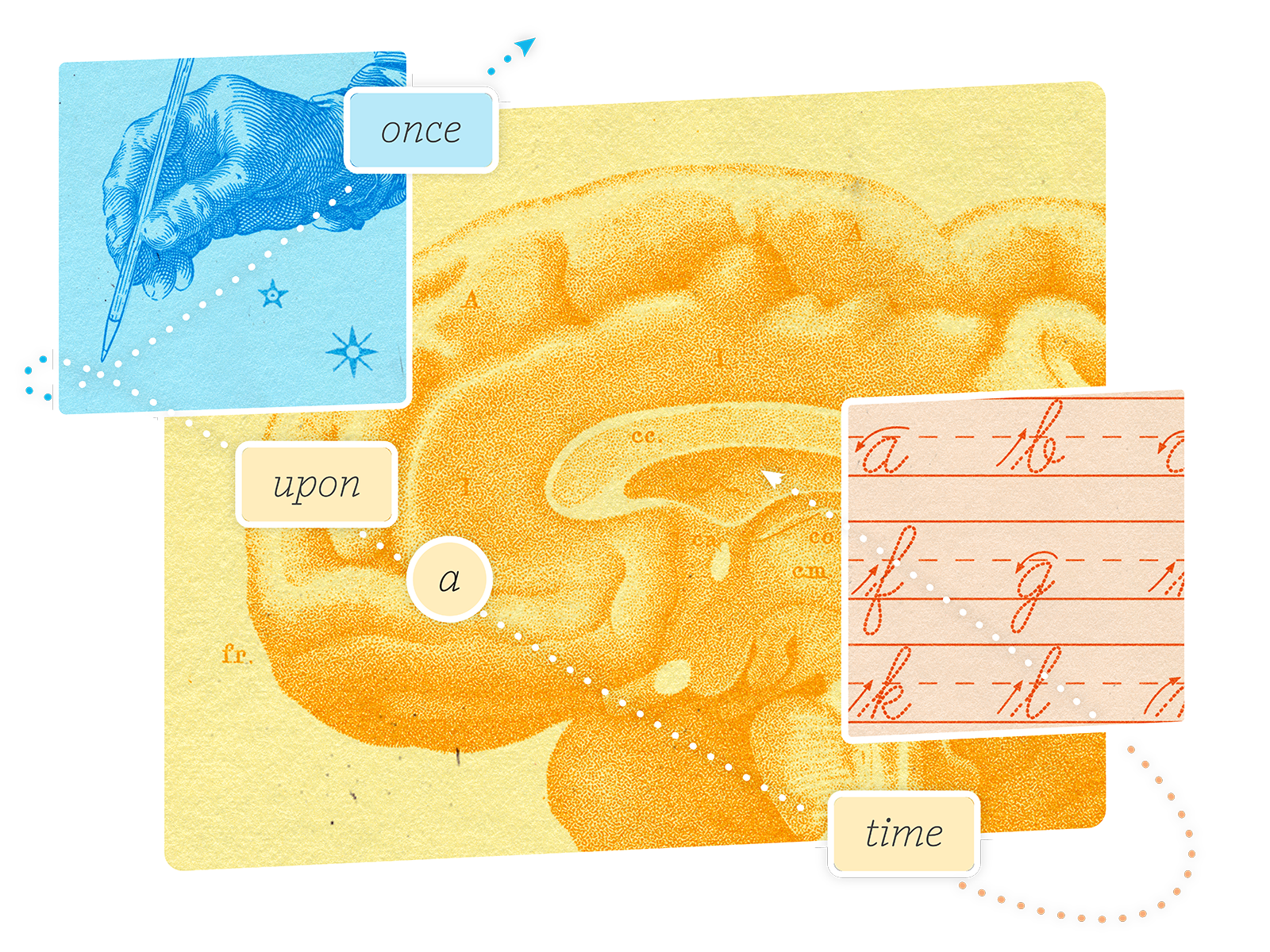
Learning to write (and read) isn’t natural but it can be taught—and research shows us how. Like the Science of Reading, the Science of Writing is the collection of research and evidence-based practices that explains how writing develops along with the teaching strategies that help students develop into skilled writers.
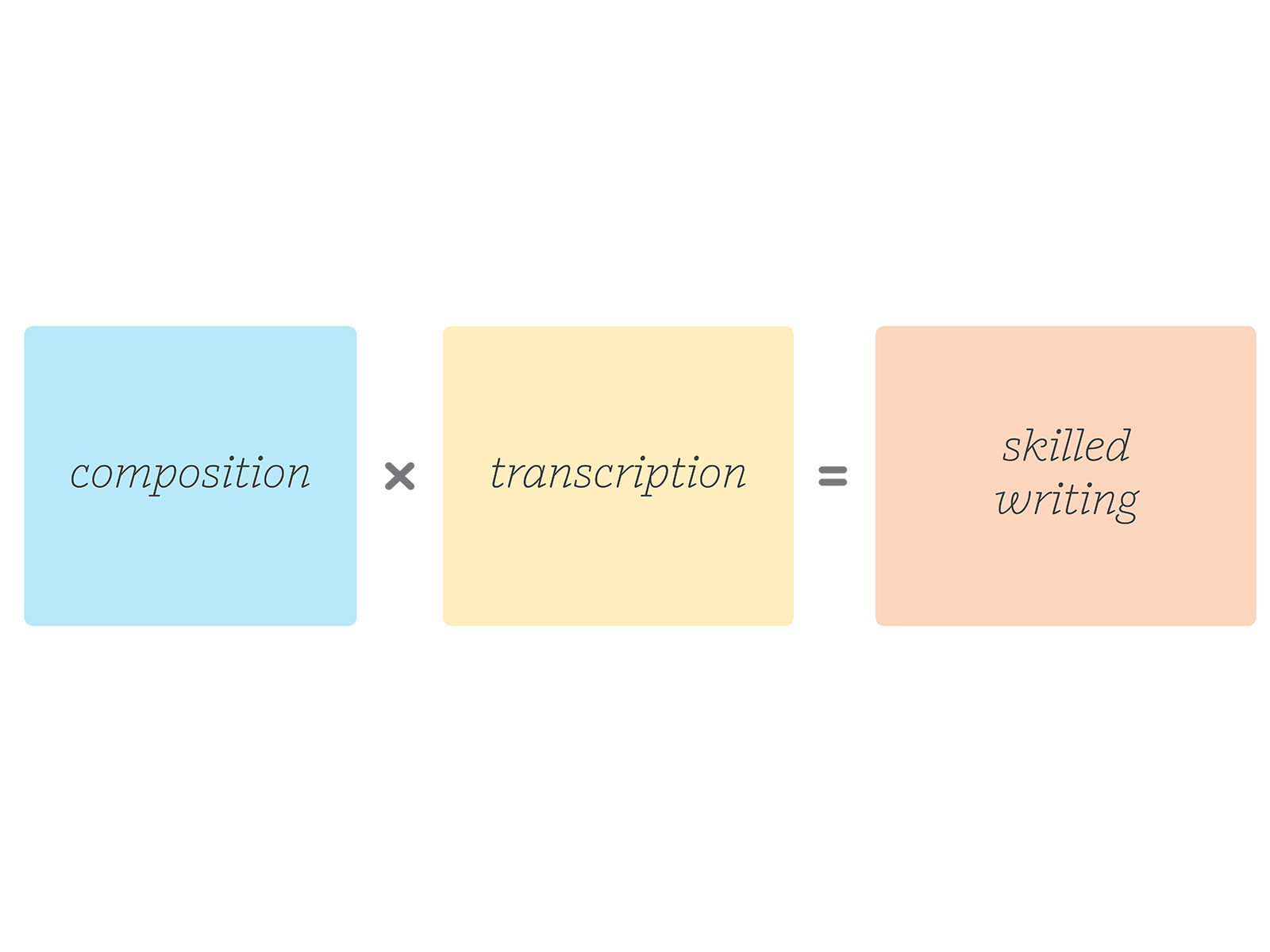
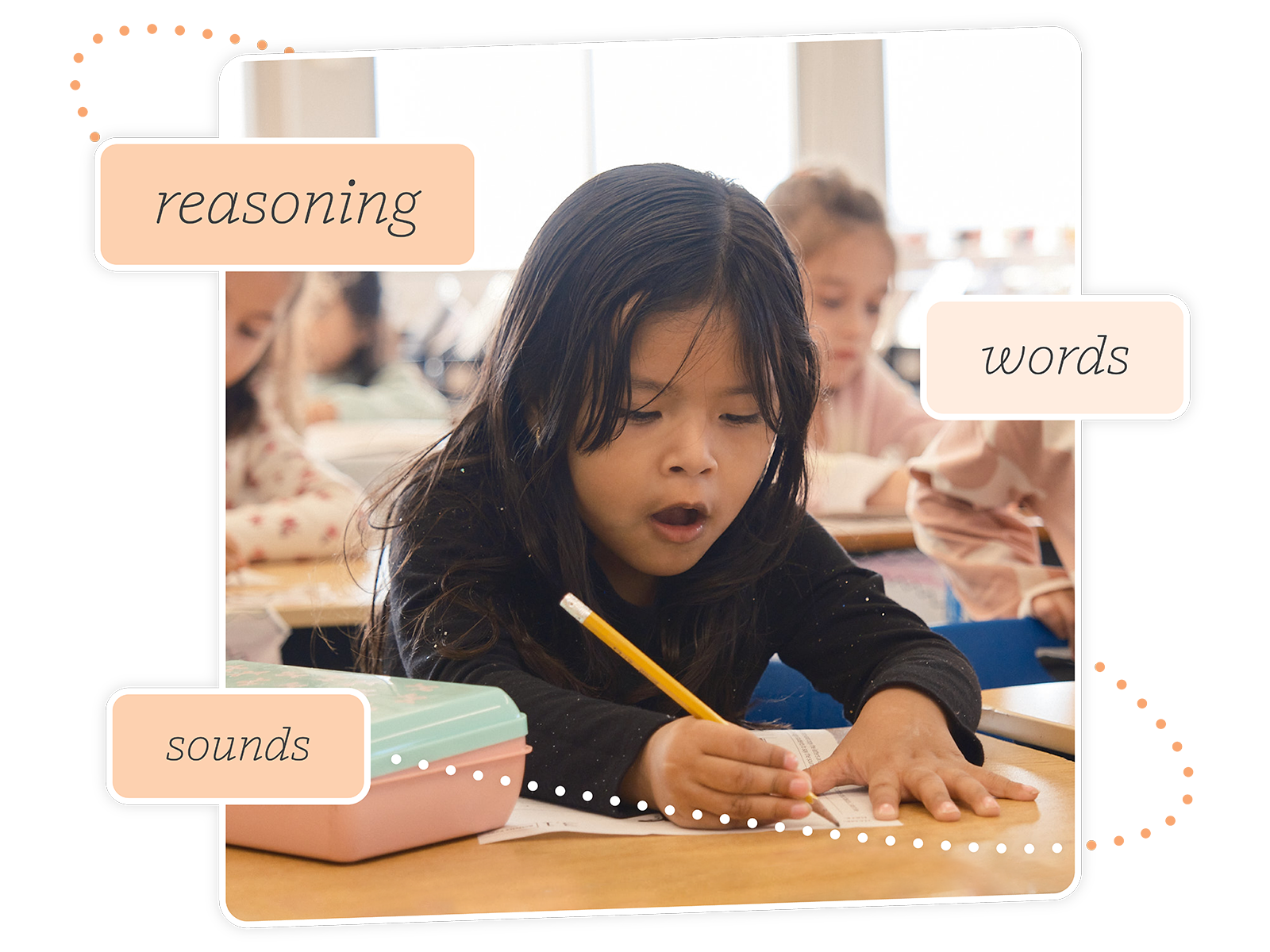
Writing proficiency involves mastering the use of a complex set of skills that must be taught explicitly, again just like reading proficiency. The Simple View of Writing breaks down these processes into transcription and composition, and provides us with a framework for guiding instruction.

The relationship between reading and writing

Reading and writing reinforce and support each other. When reading, students are exposed to vocabulary, grammar, and syntax. And when writing, students can get more practice to improve the fluency and efficiency of their handwriting, and apply their knowledge of spelling and their understanding of vocabulary, grammar, and syntax.

Readers use comprehension skills such as summarizing, predicting, and making inferences to help them create meaning as they read. Writers use those same skills to develop a piece of writing that is clear and concise for the reader.

The benefits of applying reading skills and strategies when writing

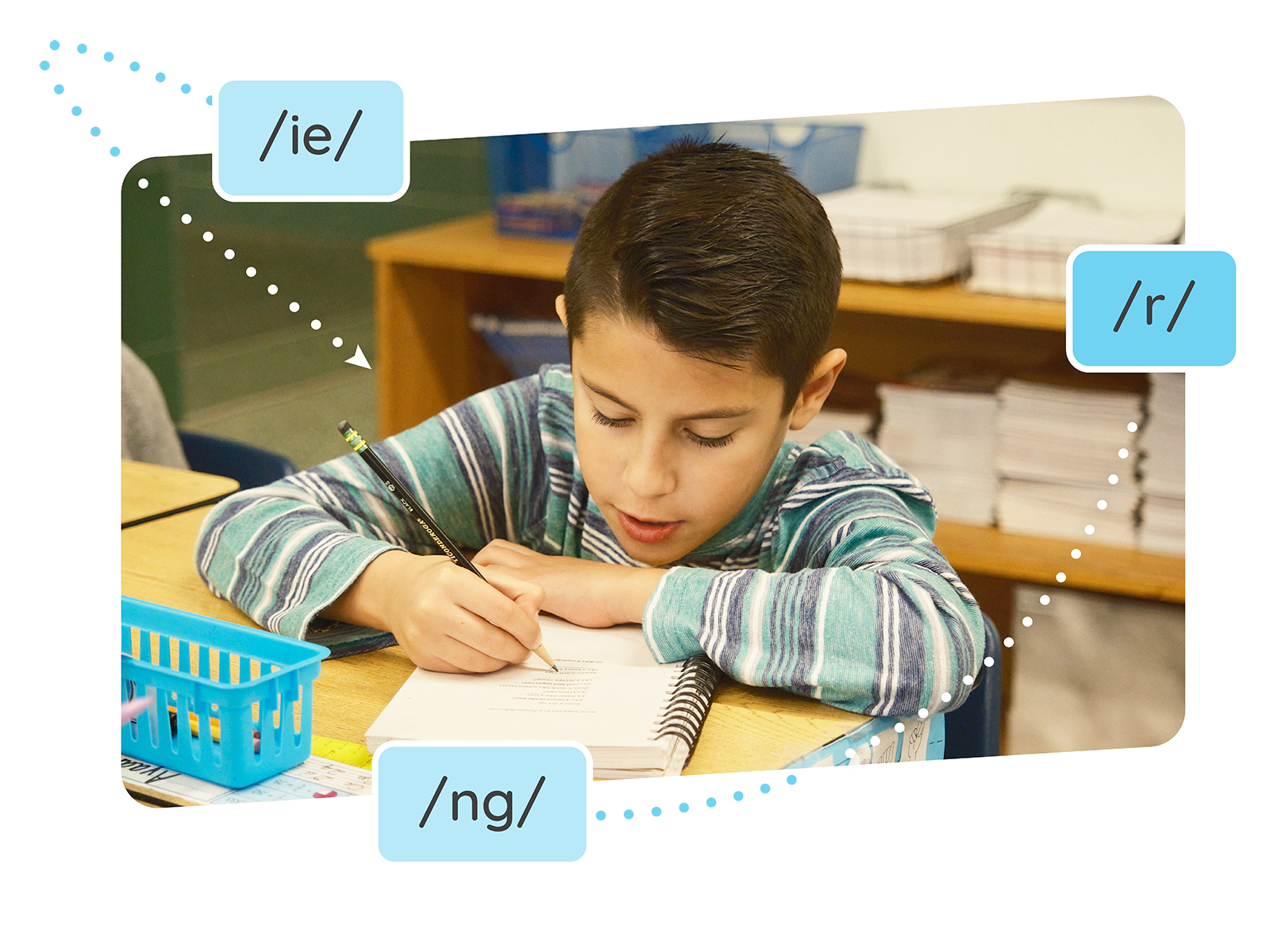
  • If you teach students decoding skills, then they become better spellers.
  • If students learn strategies for planning, drafting, and revising during composition, then their reading comprehension improves.
  • If students have word and vocabulary knowledge, then they’re better at expressing their ideas in writing.
“Steve Graham and Michael Hebert (2010) carried out a meta-analysis of more than 100 studies in which students wrote about text. They found that writing in various ways about what one had read improved comprehension and learning, and it did so better than reading alone, reading and rereading, or reading and discussing.”

—Tim Shanahan, Ph.D.

Distinguished Professor Emeritus, University of Illinois at Chicago (UIC); Literacy researcher and writer

Oral language and writing

Oral language is the foundation for literacy, and its development begins in infancy. As their oral language develops, children learn how to string words into phrases and sentences, which progresses into telling stories and answering questions in detail. And as they listen to stories, children develop vocabulary and understanding of syntax and grammar. All of these build a foundation for writing.

Are you ready to transform your district with the Science of Reading and Writing?

We’re ready to help. Speak with a product expert to learn more.

Celebrating our 2026 Activity Builder Spotlight Contest winners

Teachers in our community have built over a million activities in Amplify Classroom, and our annual Activity Builder Spotlight Contest helps educators across the globe discover these resources. Each year, teachers submit custom activities in one of two categories: Beginner (for users just starting their activity-building journey) or Pro (for those who’ve mastered Computation Layer or embedded advanced graphs to create student interactions). Our community votes on their favorites, and winners receive a prize plus permanent placement in our Featured Collection.

Meet this year’s winners! Try these incredible teacher-created activities in your classroom, or copy and edit them to fit your grade level(s) or unique classroom needs:

Fractions NF5-13 by Krystal Centinello

Students build conceptual understanding by interpreting a fraction as the division of the numerator by the denominator.

Balance This by Wes Overton

Using an interactive balance scale, students experiment with properties of equality and learn to solve equations with variables on both sides.

Exploring Expressions and Like Terms With Coins! by Michael Felias

By sorting coins and calculating their total value, students discover what expressions are and how to combine like terms.

The Accumulator Function by Pablo Garcia

This activity prepares students for the Fundamental Theorem of Calculus and applications of integration by introducing accumulator functions.

Bike Jumps! by Michael Bostick

This modeling activity introduces lines, parabolas, and rates of change through the context of bike jumps.

SWEEP! – Coding Introduction by Nathaniel Heading

This introduction to coding for beginners builds foundational skills in sequential thinking, functions, and loops.

Combining Like Terms (With Algebra Tiles) by Kayla Skidmore

Through visual algebra tiles, students learn to model expressions and practice combining like terms.

Coordinate Plane Darts by Richard Hung

Students sharpen their coordinate graphing skills through an engaging game of darts! The teacher dashboard will show a checkmark if students score at least one point in three rounds.

Metroid Trig by Matthew Stack

Students apply trigonometric ratios and the Pythagorean Theorem to calculate side lengths of right triangles.

Bath Time! by Bryn Humberstone

This activity takes students through real-world application of linear graphs exploring the relationship between bath volume and time.

Thinking about joining other Amplify Classroom users and building your own activity? Our on-demand Lesson Building Toolkit has bite-size tutorials to get you started.

Amplify Desmos Math for KIPP

We’re thrilled that you’re reviewing Amplify Desmos Math for use with your students.

We’re confident you’ll find this to be a powerful and effective program for getting all your students talking and thinking about math concepts together.

Michael Kasloff
Regional Vice President, Strategic Sales

Expect more from your math program.

Computer interface displaying various mosaic patterns submitted by users, each in different color combinations and grid shapes, with labels beneath each design.

For students

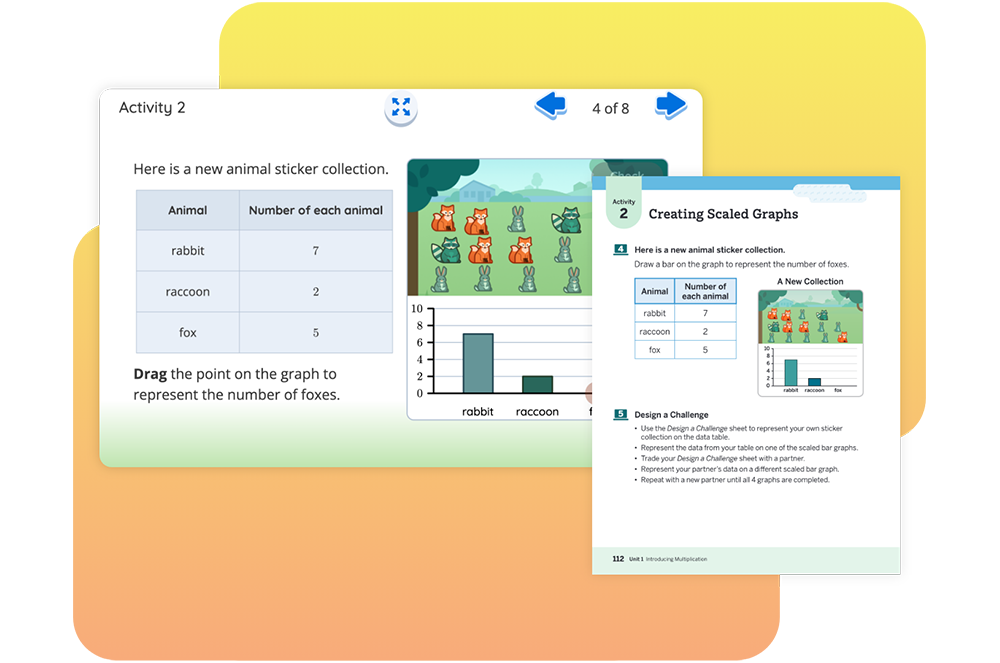
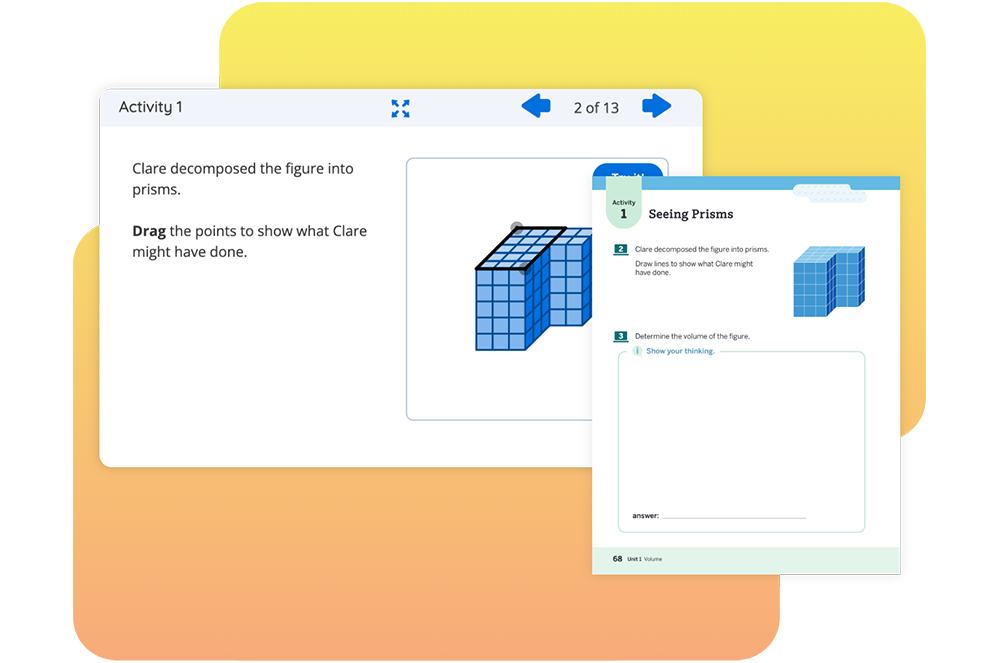
Every student feels connected and a part of the conversation when participating in an Amplify Desmos Math lesson. And when students are actively engaged with the content, they achieve more.

A classroom progress dashboard shows students’ names in a list with blue progress bars and checkmarks for submitted assignments in a math class.

For teachers

The program delivers what math educators want and need:

  • Standards-aligned print and digital lessons that capture students’ interest every day
  • The right mix of informal and substantive diagnostic and summative assessments
  • Differentiation support
  • Extensive practice in print and digital
  • Multilingual learner support
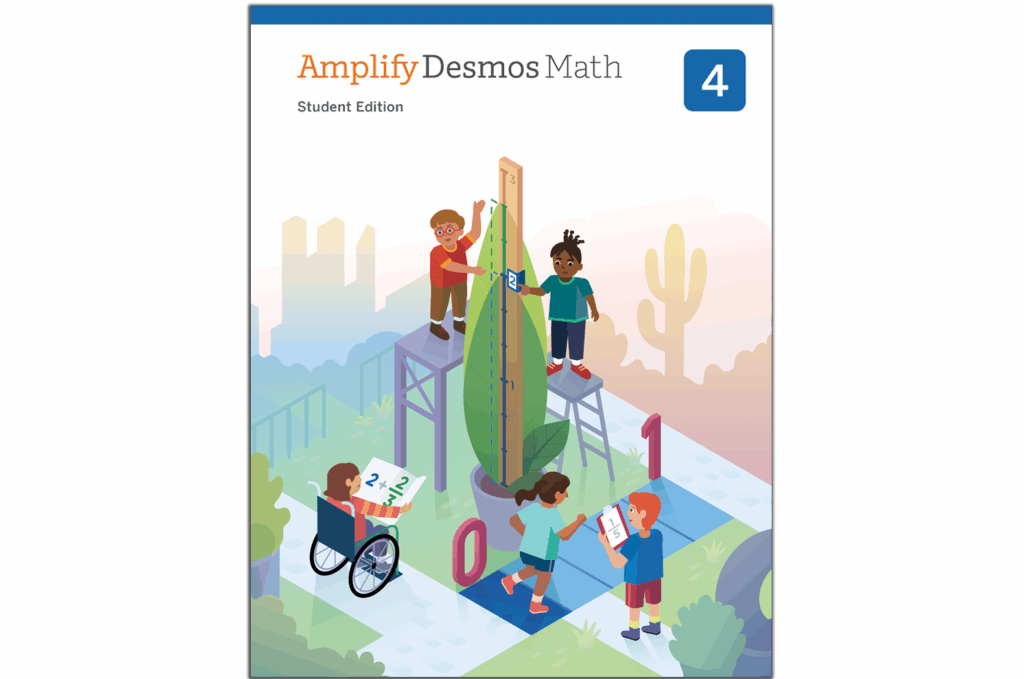
Math textbook cover and a colorful graph on a website interface, depicting parabolas and offering interactive tools for capturing parabolic shapes.

For leaders

The program delivers what school and district leaders want and need:

  • A coherent core program based on the industry-leading IM K–12 Math™ by Illustrative Mathematics®
  • A comprehensive suite of usage and performance reports to identify school- and district-wide trends
  • A team from Amplify dedicated to making your implementation a success

What’s included

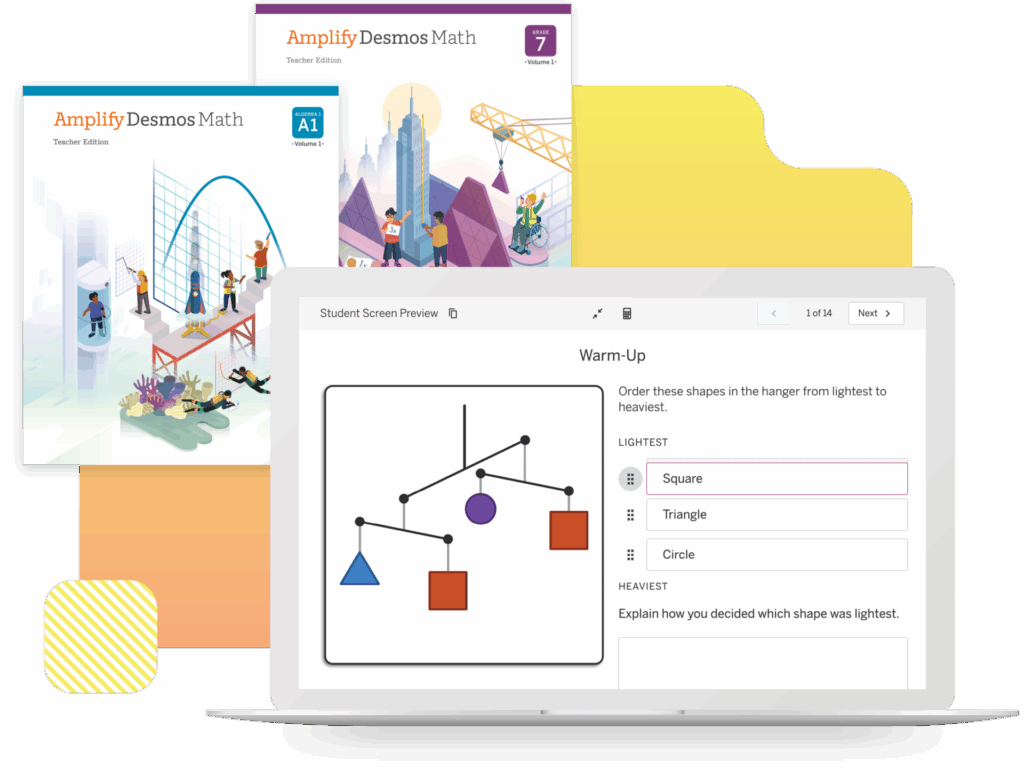
We’ve taken the power of Desmos’ technology and lessons and added beautiful, easy-to-use print and digital components to make a game-changing program that makes teaching a breeze.

Student materials

  • Student Editions (2 volumes)
  • Digital lessons, practice, assessment, and differentiation, built with Desmos technology

Program components subject to change.

Teacher materials

  • Teacher Edition (2 volumes)
  • Digital tools and support
  • Classroom monitoring and management
  • Reporting
  • Assessment customization
  • Differentiation, including just-in-time prerequisite supports
  • Additional practice and Assessment blackline masters (print and digital)

Program components subject to change.

Start your review

Ready to explore the program? Watch our quick walkthrough video and follow these simple instructions to access your demo account.

  • Preview K–5 digital lessons here.
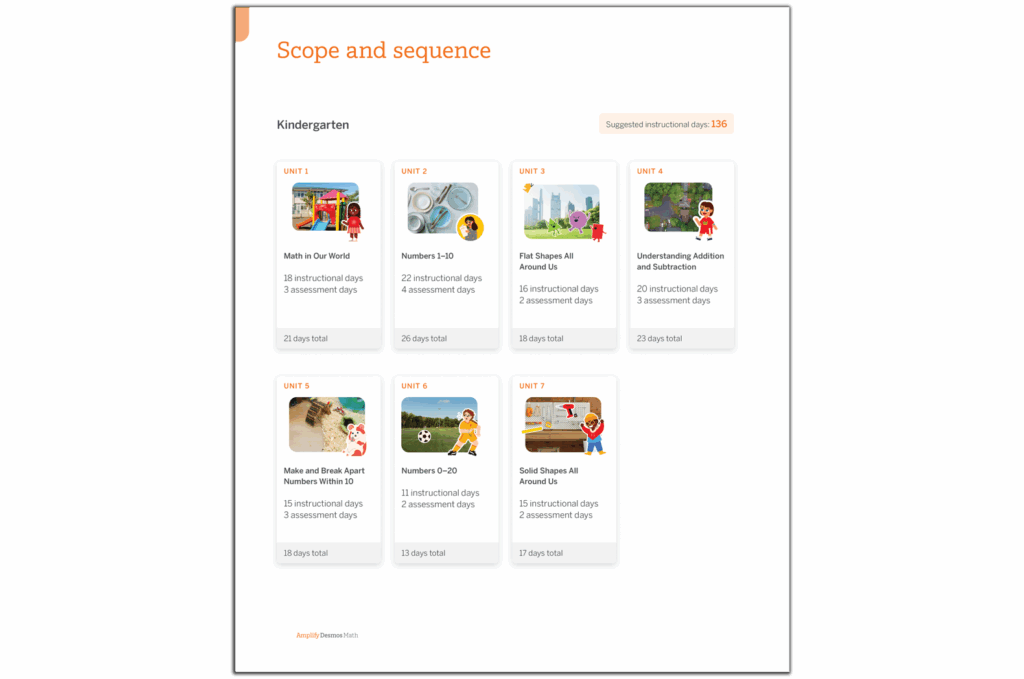
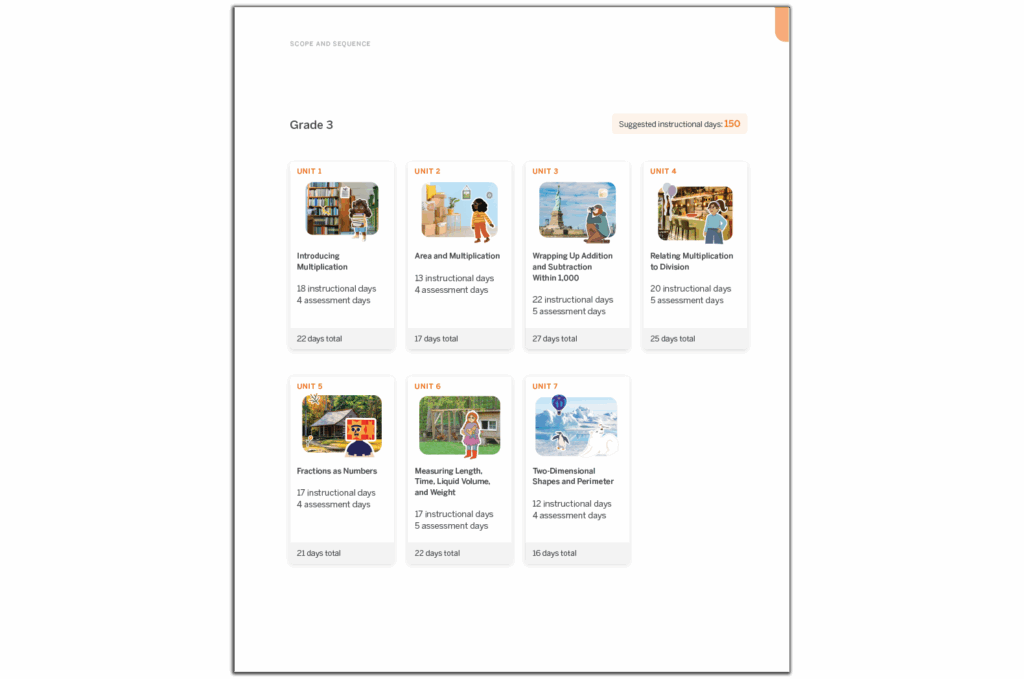
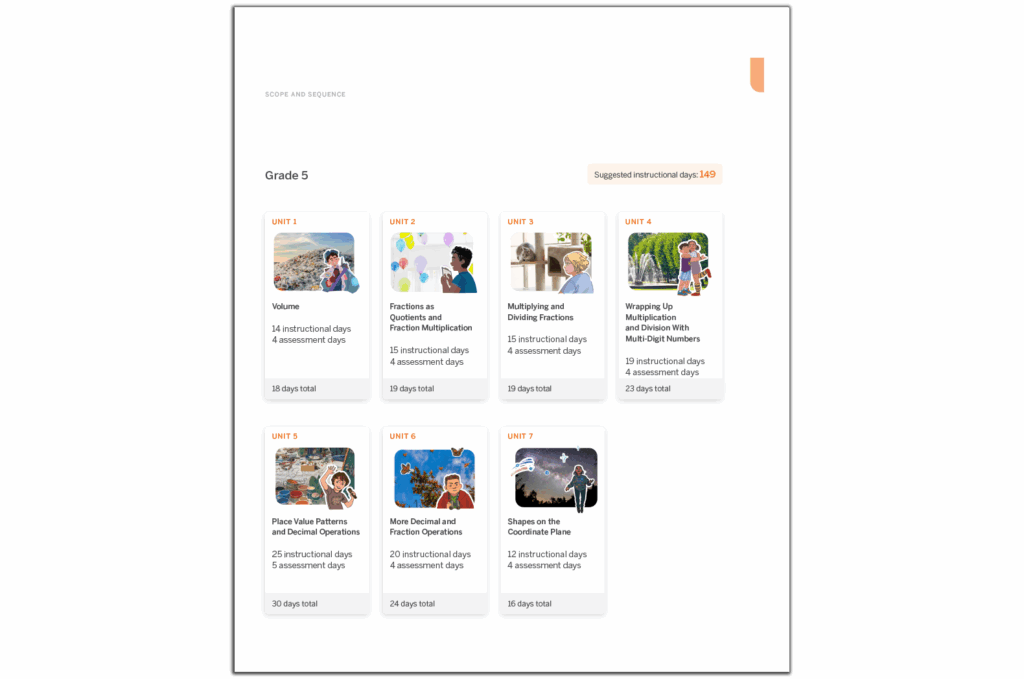
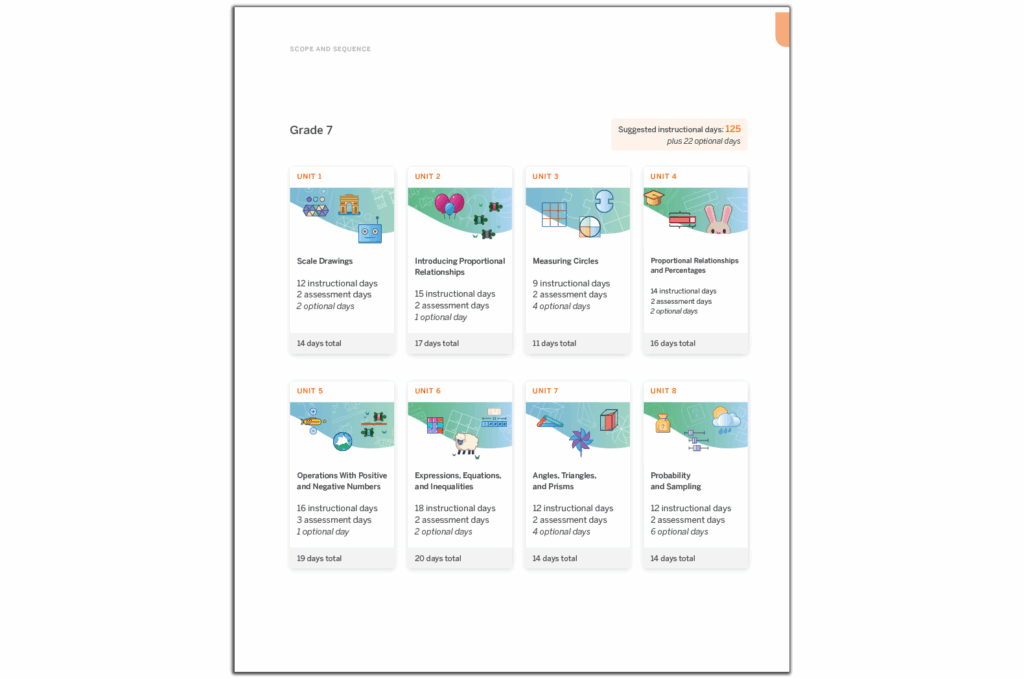
  • Download the draft K–5 scope and sequence here.
  • Preview digital lessons for grades 6–Algebra 1 here.
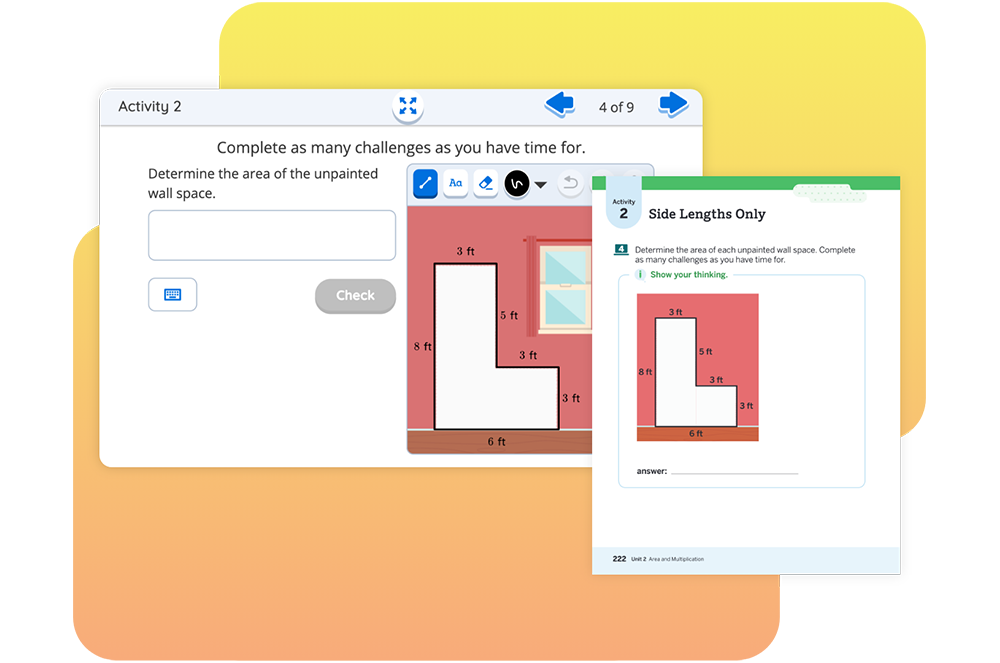
  • You can also preview both the student edition and teacher edition of a grade 3 lesson in print.

View our help articles on running your first lesson and the Teacher dashboard for more information.

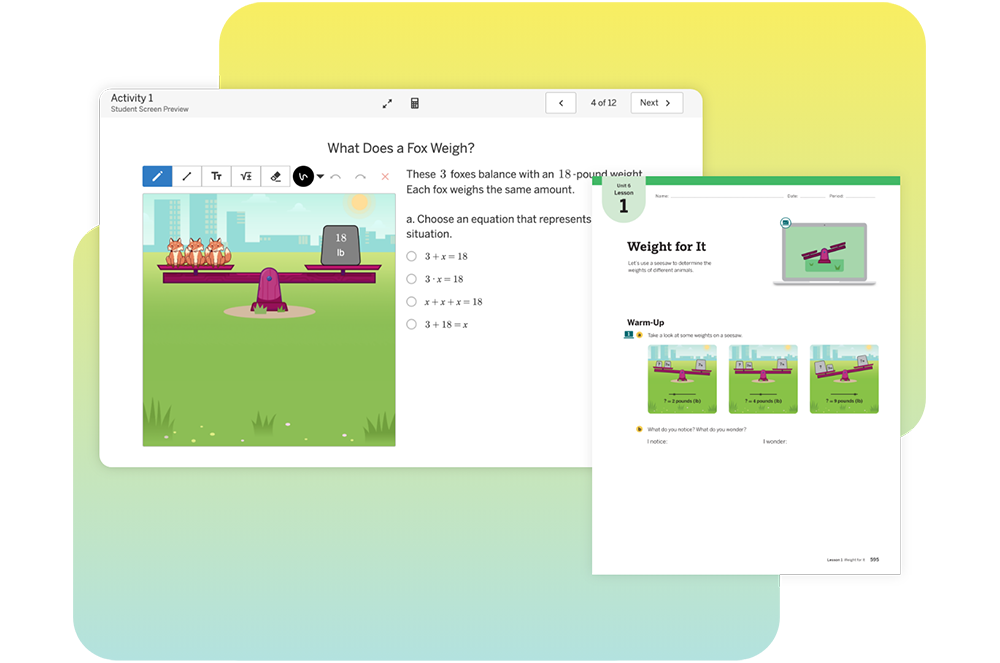
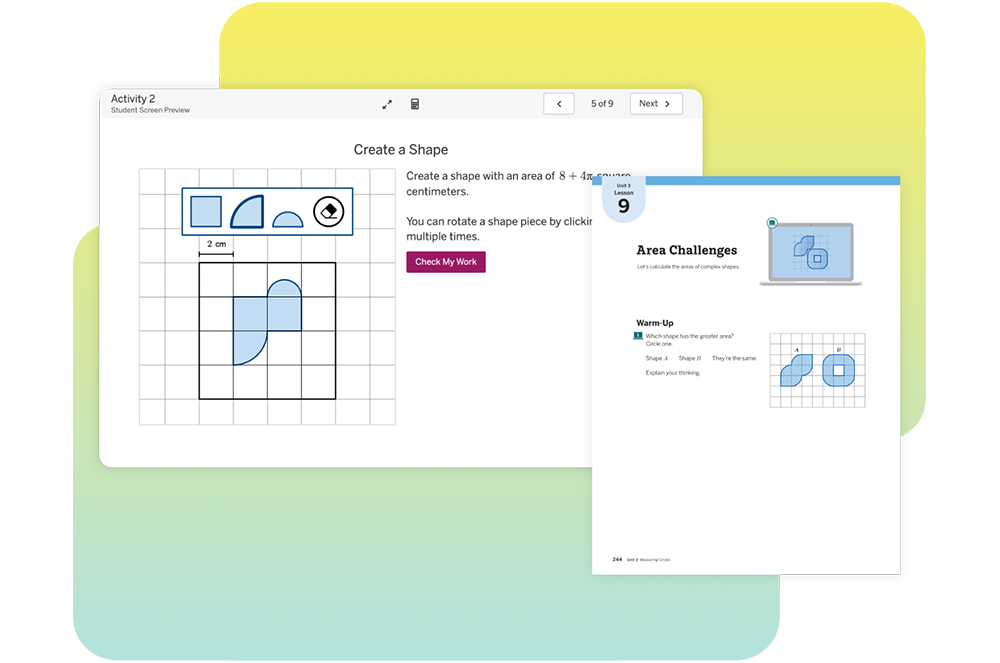
Illustration of a Desmos Math software interface on a laptop screen next to a colorful, stylized diagram of classroom activities.

mCLASS Math (Assessment)

All digital (grades K–6)
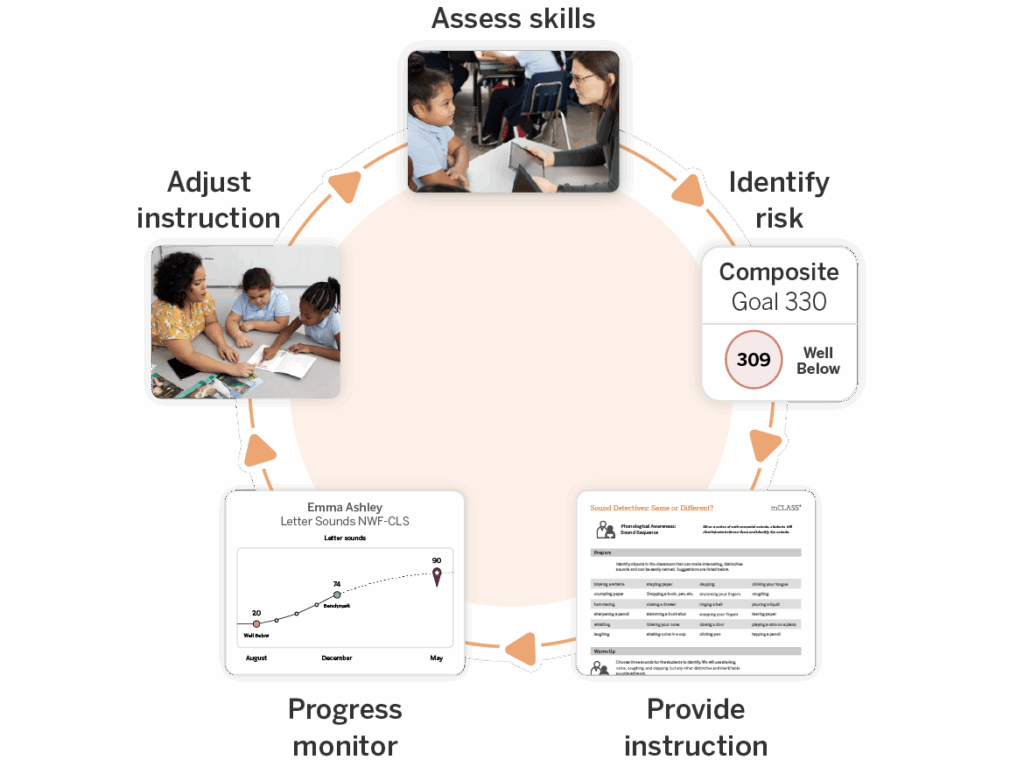
The all new mCLASS Math is an online screener and diagnostic. It provides granular data, targeted grouping suggestions, teacher-led activities and places students in Boost Math.

Click here to view the mCLASS Math scope and sequence and skills coverage across grades K–6. To the right, preview a sample item and program overview information.

Contact us

Support is always within reach. Our team is dedicated to supporting KIPP and can be reached at any time by emailing or calling us directly.

A portrait of a bald man with a beard, wearing a blue shirt, smiling slightly and looking directly at the camera against a white background.

Michael Kasloff

Regional Vice President, Strategic Sales

862-215-4505

mkasloff@amplify.com

Welcome, California Review Committees!

To view this protected page, enter the password below:


Welcome, New York City Educators!

Welcome! This site contains supporting resources for the New York City Department of Education’s Amplify Science adoption for grades K–8.

What’s new?

A person wearing safety goggles examines a glass of water. The background includes illustrations of space exploration, a rocket, a polar bear, and weather symbols such as clouds and raindrops.

Assessment Videos for Leaders

See overview of the new Amplify NYC Benchmarks here.

Archived PD Supports

Professional learning recordings

  • Click here to access the professional learning recordings and materials.
  • Would you like to purchase school based professional learning? Contact Michael Kasloff and Carly Kriss at mkasloff@amplify.com and ckriss@amplify.com.

Archived professional learning resources

Responsive Classroom Resources

Amplify Science supports creating a responsive classroom environment. Click below to explore resources to help aid your responsive launch.

Welcome to Amplify Desmos Math California!

California educators, welcome to math that motivates. Introducing Amplify Desmos Math California, a curiosity-driven TK–12 program that builds lifelong math proficiency. Each lesson poses problems that invite a variety of approaches before guiding students to synthesize their understanding of the learning goals. Students encounter math problems they’re eager to solve, while teachers spend more time where it’s most impactful—creating a collaborative classroom of learners.

Explore the California Adoption Toolkit resources and discover more about the program in the sections below.

Built for California

The Amplify Desmos Math California program is designed around the vision articulated in the Mathematics Framework for California Public Schools: Kindergarten Through Grade Twelve to enable all California students to become powerful users of mathematics. Our program incorporates the latest research in student learning, meaning that we:

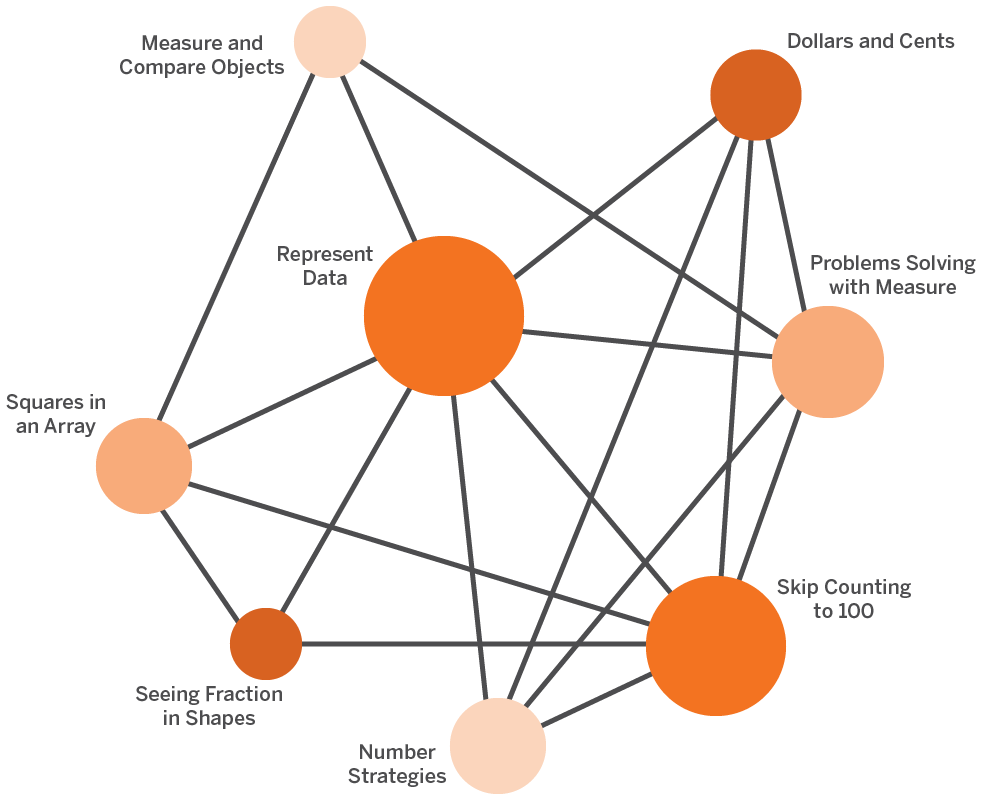
  • Focus on the Big Ideas: Amplify Desmos Math California’s courses, units, and lessons are centered around the Big Ideas. Big Ideas, like standards, are not considered in isolation. In addition to each unit and lesson’s focal Big Ideas, Amplify Desmos Math California also provides connections among the Big Ideas across units and lessons.
  • Center on open and engaging tasks: Amplify Desmos Math California is grounded in engaging tasks meant to address students’ often-asked question: “Why am I learning this?”  Students are invited into learning with low-floor, high-ceiling tasks that provide an entry point for all. Open tasks in Amplify Desmos Math California provide the space for students to try on multiple strategies and represent their thinking in different ways, and allow student explanation and discussion to serve as the center of the classroom. All lessons offer both print and digital representations.
  • Provide enhanced digital experiences: Amplify Desmos Math California includes digitally-enhanced lesson activities, incorporating interactive digital tools alongside print materials. These purposefully-placed resources allow students to visualize mathematical concepts, receive actionable feedback while practicing, encounter personalized learning support from an onscreen tutor, and engage in discussions about their thinking and approaches.
  • Treat core instruction and differentiation as integral partners: The Amplify Desmos Math California curriculum provides teachers with lessons, strategies, and resources to eliminate barriers and increase access to grade-level content without reducing the mathematical demand of tasks. Every activity has multiple entry points to ensure that all students are supported and challenged. Intervention and personalized learning activities are directly connected to lesson content and offer students individualized support as they dive into the mathematics.

California Adoption Toolkit resources

Program Description

Linked here is the Program Description for Amplify Desmos Math California.

Our Major Conceptual Ideas Strategy

The renowned mathematician William Paul Thurston said that mathematics is about understanding. The essence of this perspective is woven into the California Mathematics Framework. The Framework is clear that mathematics calls for “original thought and connections of concepts” and that mathematics teaching should “position students as thinkers and members of the classroom community…to support students in seeing themselves as young mathematicians.”

When Amplify developed Amplify Desmos Math California, we built it with one clear priority: grounding it in student understanding. The Framework provided a basis in the Big Ideas, of course, but also in the Drivers of Investigation (DIs), Content Connections (CCs), and Standards for Mathematical Practice (SMPs). Using those components of the Framework, we organized student learning around how students would make sense of the mathematics.

In addition to lessons and learning experiences specifically designated as Explore lessons or Investigations, we utilized the structure of the DIs, CCs, and SMPs in each lesson. Not only is every lesson in our program tied to one or more of the Big Ideas and their connections with one another, every lesson is also framed around these additional components. Each Lesson Overview centers around these questions:

Why? Why are students learning this content?

How? How are students grappling with the mathematical concepts?

What? What contexts encourage students to apply their knowledge?

Each of these questions maps to one of the additional aspects of the Mathematical Framework. Addressing the “Why?” grounds the lesson in one or more of the Drivers of Investigation. Focusing on “How?” encourages students to develop the habits of mind described by the SMPs, becoming explorers in mathematics rather than passive recipients. And maintaining attention on “What?” centers students and teachers on the precise mathematical topics that they are exploring aligned to the four Content Connections.

The Big Ideas and the conceptual and pedagogical shifts in the California Mathematics Framework reflect a shared goal to center education on student understanding. The Amplify Desmos Math California team is eager to support educators and students in their transition to conceptual understanding through our High-Quality Instructional Materials, professional development opportunities, and continued support.

Standards Maps

The links below provide the Standards Maps for Amplify Desmos Math California for each grade level.

Evaluation Criteria Map

Linked here is the Evaluation Criteria Map for grades K–8. Please note that you will need to be logged into the digital platform to access the links in the Evaluation Criteria Map.

Standards for Mathematical Practice

The links below provide the alignment of Amplify Desmos Math California to the Standards for Mathematical Practice at each grade level.

Big Ideas

Amplify Desmos Math California’s courses, units, and lessons are centered around the Big Ideas. In addition to each unit and lesson’s focal Big Ideas, Amplify Desmos Math California also provides connections among the Big Ideas across units and lessons. Please refer to Keeping the Big Ideas at the Center (linked below) for specific lesson designs and alignment with the Big Ideas for each grade level.

Drivers of Investigation and Content Connections

Amplify Desmos Math California incorporates the Drivers of Investigation and Content Connection throughout the program. Throughout the year, students engage with open and authentic tasks of varying durations — from lesson activities to unit-level Explore lessons and longer course-level Investigations. Every lesson and investigation opportunity is grounded around the why, how, and what of the learning experience, and helps teachers bring mathematical concepts to life.

A three-column chart details: Drivers of Investigation, Standards for Mathematical Practice, and Content Connections, each with their respective codes and brief descriptions.

California English Language Development Standards

The links below provide the alignment of Amplify Desmos Math California to the California English Language Development Standards at each grade level.

California Environmental Principles and Concepts

Select lessons, performance tasks, and investigations across grade levels in Amplify Desmos Math California are aligned to one or more of the California Environmental Principles and Concepts. Click the links below to view how the California Environmental Principles and Concepts are represented in each grade level.

Contact us

For questions, samples, or more information, please contact your local Amplify Account Executive:

Erin King
Sales Director, CA
(512) 736-3162
eking@amplify.com
Northern CA
Wendy Garcia
Senior Account Executive
(510) 368-7666
wgarcia@amplify.com
Bay Area
Lance Burbank
Account Executive
(415) 830-5348
lburbank@amplify.com
Central Valley and Central Coast
Demitri Gonos
Senior Account Executive
(559) 355-3244
dgonos@amplify.com
Ventura and L.A. County
Jeff Sorenson
Associate Account Executive
(310) 902-1407
jsorenson@amplify.com
Orange and L.A. County
Lauren Sherman
Senior Account Executive
(949) 397-5766
lsherman@amplify.com
San Bernardino and L.A. County
Michael Gruber
Senior Account Executive
(951) 520-6542
migruber@amplify.com
Riverside and L.A. County
Brian Roy
Account Executive
(818) 967-1674
broy@amplify.com
San Diego County
Kirk Van Wagoner
Senior Account Executive
(760) 696-0709
kvanwagoner@amplify.com
Under 2300 students in Bay Area, Sacramento Valley, and Northern Counties
Kevin Mauser
Lead Account Executive
(815) 534-0148
kmauser@amplify.com
Under 2300 students in Southern CA, Central Coast, and Southern Central Valley Counties
Charissa Snyder
Account Executive
(720) 936-6802
chsnyder@amplify.com
 

Screen and intervene faster with mCLASS DIBELS 8th Edition: California SB 114 Approved

California educators, Amplify’s mCLASS Assessment Suite is one of three approved screeners in California for Reading Difficulties at K–2. 

mCLASS® DIBELS® 8th Edition is an all-in-one system for Science of Reading-based reading difficulties screening, progress monitoring, and instruction for grades K-6. Amplify’s Spanish language assessment, mCLASS Lectura, works in tandem with DIBELS 8th Edition’s English assessments to help teachers understand where their Spanish-speaking students are in their English and Spanish literacy paths.

mCLASS_DyslexiaLP_M1

About the program

mCLASS offers teacher-administered assessment, intervention, and personalized instruction for grades K–6. Know exactly how to monitor and support every student in your classroom, with features like:

  • Precise one-minute measures based on over three decades of predictive data.
  • Reading difficulties screening in one tool.
  • Instruction that highlights observed patterns and recommends activities.
  • Robust reports for teachers, specialists, administrators, and parents.
A table shows class summary performance metrics in various literacy skills for beginning, middle, and end of the year, categorized into Well Below Benchmark, Below Benchmark, At Benchmark, and Above Benchmark.

The right measures at the right time

With mCLASS DIBELS 8th Edition, you’ll assess students based on grade-specific curriculum and instructional standards, in accordance with SB 114 guidelines.

mCLASS DIBELS 8th Edition offers one-minute, easy-to-administer measures of processing speed, phonological awareness, alphabetic principle, and word reading.

DIBELS® 8th Edition subtest alignment with SB 114
Screening AreamCLASS DIBELS 8th Edition MeasureGrade KGrade 1Grade 2Grade 3Grade 4–6
Rapid naming abilityLetter Naming Fluency (LNF)A large, light peach-colored checkmark on a transparent background.A large, light peach-colored checkmark on a transparent background.
Phonological awarenessPhoneme Segmentation Fluency (PSF)A large, light peach-colored checkmark on a transparent background.A large, light peach-colored checkmark on a transparent background.
Alphabetic principleNonsense Word Fluency (NWF)A large, light peach-colored checkmark on a transparent background.A large, light peach-colored checkmark on a transparent background.A large, light peach-colored checkmark on a transparent background.A large, light peach-colored checkmark on a transparent background.
Word readingWord Reading Fluency (WRF)A large, light peach-colored checkmark on a transparent background.A large, light peach-colored checkmark on a transparent background.A large, light peach-colored checkmark on a transparent background.A large, light peach-colored checkmark on a transparent background.
Word readingOral Reading Fluency (ORF)A large, light peach-colored checkmark on a transparent background.A large, light peach-colored checkmark on a transparent background.A large, light peach-colored checkmark on a transparent background.A large, light peach-colored checkmark on a transparent background.
ComprehensionMazeA large, light peach-colored checkmark on a transparent background.A large, light peach-colored checkmark on a transparent background.A large, light peach-colored checkmark on a transparent background.

Validated as a universal screener

Strong reliability and validity evidence shows that DIBELS 8th Edition can effectively assess students in key skills linked reading difficulty. The research supporting DIBELS 8th Edition, conducted by the University of Oregon, is rigorous, meets high technical standards, and empowers educators to make well-informed decisions.

Read the DIBELS 8th Edition Dyslexia White Paper.

A document cover titled "Dyslexia Screening and DIBELS 8th Edition" by Christopher Ives, Gina Biancarosa, Hank Fien, and Patrick Kennedy from the University of Oregon College of Education. The cover has a PDF icon.

A complete system for data-based decision making

A circular flowchart with images of people tutoring, a line graph, a report card, and a score indicating "Composite Goal 330, Well Below" at the center.

mCLASS DIBELS 8th Edition provides rich data that helps you make informed instructional decisions and seek out further dyslexia screening evaluation if needed:

  1. Assess skills: mCLASS DIBELS 8th Edition and additional measures in Rapid Automatized Naming (RAN), Spelling, Vocabulary, and Oral Language accurately assess students’ abilities.
  2. Identify risk: The DIBELS 8 composite score shows each student’s risk level, with ‘Well Below Benchmark’ indicating a need for intensive support. Students who are also ‘Well Below Benchmark’ in RAN and/or Spelling have an additional Risk Indicator icon next to their name.
  3. Provide instruction: The mCLASS Instruction feature analyzes student error patterns to key dyslexia-related subtests, then recommends small groups and explicit, multi-sensory activities for reinforcing skills.
  4. Progress monitor: mCLASS includes progress-monitoring measures to track student growth in letter sounds, alphabetic principle, word reading, oral reading fluency, and comprehension, so that informed instructional decisions can be made.
  5. Adapt instruction: mCLASS displays indicators based on progress monitoring performance that indicate when a change in instruction may be needed. It also updates instruction recommendations using the latest data.

Differentiated literacy instruction

mCLASS DIBELS 8th Edition lays the groundwork for a strong Multi-Tiered System of Supports (MTSS).

In addition to identifying students with symptoms of dyslexia, mCLASS DIBELS 8th Edition data recommends early intervention, personalized instruction, and core instruction within Amplify’s early literacy suite. Based on the Science of Reading, Amplify’s early literacy suite programs follow an explicit and systematic structure, build knowledge, and instruct on all of the foundational skills essential to literacy development.

Diagram showcasing "Science of Reading Skill Development" with three branches: "Universal and Dyslexia screening," "Core instruction," "Personalized learning," and "Intervention," with accompanying photos of people interacting.

Bilingual dyslexia screening

By assessing with mCLASS DIBELS 8th Edition and its Spanish counterpart, mCLASS Lectura, you’ll know with confidence whether a student truly shows signs of reading difficulties or is experiencing difficulties learning a new language.

When used together, mCLASS DIBELS 8th Edition and mCLASS Lectura feature a Dual Language Report that analyzes screening results in both languages. The report also details how each student can leverage their strengths from one language to support growth in the other.

Student named Marisol Mejía is shown with her English and Spanish literacy scores. English scores are mostly Well Below and Below benchmark; Spanish scores are mostly at Benchmark except for one below.

Equal skill coverage in English and Spanish

Screening areas English measure Spanish measure Description*
Letter Naming and RAN Letter Naming Fluency (LNF) Fluidez en nombrar letras (FNL) Grades K–1: Naming letters in print. 1 minute, 1:1 administration.
Phonological Awareness
(Segmentation)
Phonemic Segmentation Fluency (PSF) Fluidez en la segmentación de sílabas (FSF) & Fluidez en la segmentación de fonemas (FSF) Grades K–1: Hearing and using sounds or syllables in spoken words. 1 minute, 1:1 administration.
Phonological awareness (Elision)   ¿Qué queda? (QQ) Grades K–2: Produce the part of a word that remains after deleting a syllable or phoneme. 1 minute, 1:1 administration.
Letter-Sound Knowledge Nonsense Word Fluency Correct Letter Sounds (NWF-CLS) Fluidez en los sonidos de letras (FSL) English: Grades K–3: Identify letter-sound correspondences in the context of pseudo-words. Spanish: Grades K-1: Identify letter-sounds in isolation. 1 minute, 1:1 administration.
Letter-Sound Knowledge (Receptive)   Fluidez en los sonidos de las letras K-Inicio (FSL K-Inicio) Grade K: Identify (point to) which letter makes a certain sound. Untimed, 1:1 administration
Decoding Nonsense Word Fluency Words Recoded Correctly (NWF-WRC) Fluidez en los sonidos de las sílabas (LSS) English: Grades K–3: Decode orthographically regular pseudo-words
Spanish: Grades K-1: Decode orthographically regular syllables 1 minute, 1:1 administration
Word Reading Word-Reading Fluency (WRF) Fluidez en la lectura de palabras (FEP) Grades K–3: Reading common words easily, quickly and correctly.1 minute, 1:1 administration.
Fluency Oral Reading Fluency (ORF) Fluidez en la lectura oral (FLO) Grades 1–6: Reading connected text with accuracy and automaticity. 1 minute, 1:1 administration.
Reading Comprehension Maze ¿Cuál palabra? (CP) Grades 2–6:  Understanding meaning from texts. 3 minutes, group administration.
Vocabulary Vocabulary Vocabulario Grades K–3: Knowledge of grade-specific words. 15 minutes, group administration.
Encoding Spelling Ortografía Grades K–3: Arranging letters correctly to spell words with grade appropriate features
15 minutes, group administration.
RAN (Numbers) Rapid Automatized Naming Grades K–3: Correctly and quickly naming visual symbols, such as numbers. 3-4 minutes, 1:1 administration.
Language Comprehension Oral Language Lenguaje oral Grades K–2: Demonstrate the ability to use words and phrases acquired through conversations, reading and being read to, and responding to texts. 5 minutes, 1:1 administration.

*Students can be assessed using off-grade measures when information on specific skills is needed.

Dyslexia resources for families

Families play a crucial role in helping children overcome reading challenges. mCLASS DIBELS 8th Edition and mCLASS Lectura provide a Home Connect letter after each screening to explain the results in family-friendly language, recommend activities, and direct families to a free website for additional at-home support.

A woman helps a young girl work on a computer in a classroom setting. Both are smiling and focused on the screen. Background has soft shapes in yellow and blue.

Developmentally appropriate

Computer-based assessments that require students to complete tasks silently or independently may over-identify students for intervention services, especially young learners who are still developing focus and attention abilities.

mCLASS requires students to actively demonstrate their proficiency in producing letter sounds, forming words, and reading texts. This approach to assessment aligns with the California Reading Difficulties Risk Screener Selection Panel (RDRSSP) guidelines for effective screening of reading challenges. By choosing mCLASS for reading difficulties screening, you’ll gain accurate information about a student’s risk for dyslexia, and gain the capability to monitor every student’s path to reading proficiency.

Additional resources

Demo access

Please watch the navigation video for a short overview of the mClass platform, and reach out to your Amplify Account Executive (contact information below) for demo access credentials.

Questions?

Looking to speak directly with your local representative?
Get in touch with a California team member to learn more about our early literacy suite or request a demo account.

Erin King
Sales Director, CA
(512) 736-3162
eking@amplify.com

NORTHERN CA
Wendy Garcia
Senior Account Executive
(510) 368-7666
wgarcia@amplify.com

BAY AREA
Lisa Marinovich
Senior Account Executive
(831) 461-4187
lmarinovich@amplify.com

CENTRAL VALLEY and CENTRAL COAST
Demitri Gonos
Senior Account Executive
(559) 355-3244
dgonos@amplify.com

VENTURA and L.A. COUNTY
Jeff Sorenson
Associate Account Executive
(310) 902-1407
jsorenson@amplify.com

ORANGE and L.A. COUNTY
Lauren Sherman
Senior Account Executive
(949) 397-5766
lsherman@amplify.com

SAN BERNARDINO and L.A. COUNTY
Michael Gruber
Senior Account Executive
(951) 520-6542
migruber@amplify.com

RIVERSIDE and L.A. COUNTY
Erin King
Sales Director, CA
(512) 673-8526
eking@amplify.com

SAN DIEGO COUNTY
Kirk Van Wagoner
Senior Account Executive
(760) 696-0709
kvanwagoner@amplify.com

BUTTE, DEL NORTE, HUMBOLDT, and SHASTA COUNTY

DISTRICTS UNDER 2250 ENROLLMENT

Kevin Mauser

Lead Account Executive

(815) 534-0148

kmauser@amplify.com

Amplify K–6 ELA programs for Fairfax County

Welcome, Fairfax County Reviewers! 

Thank you for exploring our evidence-based K–6 programs built on the Science of Reading and aligned to Virginia standards and Fairfax County’s learning model. 

Amplify CKLA for Grades K–5 and Amplify ELA for Grade 6 intentionally build knowledge alongside skills and are aligned within and across grades. Meaningful learning experiences for students pair with powerful instructional support for teachers to drive results. 

The following resources will support your review. These include clips of Amplify programs in action; details about key features of the curriculum; and research on the real-world successes of schools, districts, and states who’ve partnered with Amplify.

Amplify CKLA for Grades K–5

Introduction to Amplify CKLA

We’re excited for you to see how Amplify CKLA provides high-quality resources to support literacy instruction for all students! This program is flexible, offering stand-alone foundational skills instruction as well as the program core English Language Arts.

Amplify CKLA Skills is built on the latest reading science and provides comprehensive instruction in all foundational reading skills, featuring:

  • Phonological awareness, phonics, and word recognition.
  • Strong, systematic sound-first instruction to support students in learning to decode.
  • Language skills, including conventions, spelling, and grammar.
  • Reading comprehension.
  • Writing instruction.

CKLA for Grades K–2 provides a two-strand approach. The first is the Foundational Skills Strand (as described above) and the second is the Knowledge Strand, in which students build rich background knowledge through multidisciplinary read-alouds. CKLA takes an Integrated approach in Grades 3–5, in which lesson sequencing is especially focused on rich, worldly content. 

We encourage you to check out the K–2 Knowledge Strand and 3–5 Integrated approach sections of this site to explore the components further and gain access to the engaging and diverse texts students and teachers are using in their classrooms every day!

K–2 Skills Strand

In the CKLA classroom, students practice reading while stretching themselves toward higher goals. In K–2, daily dedicated skills time gives students a solid foundation, while the upper grades integrate this instruction with knowledge lessons in which students engage with increasingly complex, content-rich texts and writing activities.

All instruction starts with phonological awareness, which research has shown to benefit the greatest number of students. Students begin by learning to recognize sounds, as well as to articulate them.

Over time, students build up their awareness of phonemes. We give teachers a variety of tools, including multisensory gestures, to help kids develop this awareness.

Once students can recognize sounds, they learn to form the corresponding letter codes. CKLA starts by teaching the sound-spellings that appear most frequently in English, which lets your students read and write as many words as possible, as soon as possible.

The lessons continue to challenge students as they progress, introducing complications like multisyllabic words, “tricky words,” and homophones. In each case, students encounter more complicated words as they become ready for them.

K–2 Knowledge Strand

While students are learning how to read, Knowledge Domains give them authentic and engaging reasons to read. Students will use their skills to explore domains that relate to storytelling, science, and the history of our world as seen through the eyes of many different groups. With these domains, you’ll bring the world to your students, showing them how reading can become an exciting, rewarding, and useful part of their lives.

Each CKLA Knowledge Domain gives students a base of vocabulary and concepts, building on what they’ve learned in previous domains. This helps students make connections within and across grades, building a base of background knowledge that will help them navigate new and more complex texts.

Students learn to listen and understand before they learn to read. By delivering knowledge through classroom read-alouds, Amplify CKLA teaches students the key comprehension skills they’ll use throughout their reading lives.

Amplify CKLA prioritizes interactions between students, which challenge and encourage them to think about the material rather than simply receive it. Each lesson includes several opportunities and options for formative assessment and immediate adjustment to the needs of both the class and the individual students.

The end-of-domain digital assessments that follow Knowledge Domains are fully voice-acted, ensuring that each student’s comprehension skills are authentically tested. This not only builds students’ test-taking confidence, but gives you a more accurate picture of your class.

3–5 Integrated approach

By Grades 3–5, students have mastered the basics of decoding and are eager to use what they’ve learned to reach out to the world. Although read-alouds remain an important part of lessons, students are also encouraged to practice independent reading starting in Grade 3, developing their autonomy and confidence as readers alongside strong teacher support.

As students progress from K–2, writing activities start to emphasize analysis, creativity, and independent thinking about lesson materials.

Each of the units in Grades 3–5 contain a Core Quest—a special unit in which all the rules of the classroom change as students engage with language in surprising new ways. In Grade 5, for example, students learn to love the dense Shakespearian language of “A Midsummer Night’s Dream” through imagery, close reading, and performance.

Key CKLA features

Built out of the latest research in the Science of Reading, Amplify CKLA delivers explicit instruction in both foundational literacy skills (systematic phonics, decoding, and fluency) and background knowledge in Grades K–2, with an integrated approach to explicit instruction in Grades 3–5.

Review this Science of Reading Toolkit to learn more about the Science of Reading best practices integrated throughout CKLA.

Great reading instruction starts with great decoding skills. When students build a solid foundation of phonological awareness and phonics, reading the words on the page becomes automatic so that comprehension and critical thinking can happen.

Our instruction is supported by:

  • Step-by-step lessons with multisensory approaches, clear lesson objectives, and embedded formative assessments.
  • Unmatched, 100% decodable books and student readers that feature engaging plots and relatable characters.
  • An engaging sound library with fun songs and videos that develop phonological awareness.

Students build grade-appropriate subject-area knowledge and vocabulary in history, science, literature, and the arts while learning to read, write, and think creatively and for themselves.

Our instruction is supported by:

  • Knowledge builders that provide a quick overview of each domain with its key ideas.
  • Interactive read-alouds designed to build knowledge and vocabulary.
  • Content-rich anchor texts that support students as they tackle increasingly complex text and sharpen their analytical skills.

From the printed page to the screen, we bring foundational skills and knowledge of the world to your young learners, and make the transition from classroom to home learning seamless.

Download the Amplify CKLA Components Guide to see components by grade.

Amplify Caminos is an equitable Spanish language arts program for Grades K–5 that will engage your students and inspire them to become confident readers, writers, and thinkers.

Designed to support any biliteracy model (including ESL, transitional bilingual, dual language, and Spanish immersion), Amplify Caminos can be used in tandem with Amplify CKLA to provide a fully equitable, one-to-one English and Spanish solution.

Amplify ELA for Grade 6

Amplify ELA is a blended English language arts curriculum designed specifically to prepare middle school students for high school and beyond. This interactive core curriculum brings complex texts to life with lively classroom discussions and meaningful digital experiences in which students grapple with interesting ideas and find relevance for themselves.

Amplify ELA’s built-in 100-Day Pathway outlines required content for each grade level, while providing teachers time and space to teach the supplemental lessons and activities they love.

The program has received an all-green rating on EdReports—read the review.

Amplify ELA delivers:

  • A unique research-based approach designed to get all students reading grade-level text together.
  • An instructional design that inspires students to read more deeply, write more vividly, and think more critically.
  • A rich combination of dynamic texts, lively discussions, and interactive Quests that engages and inspires middle school students.

EdReports and Knowledge Matters Campaign

Amplify CKLA for Grades K–5 is among the few elementary core curricula to be both rated all green on EdReports (earning green scores across all gateways) and recognized by the Knowledge Matters Campaign for its excellence in intentionally building knowledge. Amplify ELA for grade 6 also earned all-green scores on EdReports.

Access FCPS reviewer platform

To experience Amplify’s K–6 ELA programs for FCPS, complete the following steps.

Access your teacher demo account:

  1. Access the reviewer site.
  2. Select Log in with Amplify.
  3. Enter your teacher username: t1.fcps-demo@demo.tryamplify.net  
  4. Enter your password: Amplify1-fcps-demo

Access your student demo account:

  1. Access the reviewer site.
  2. Select Log in with Amplify.
  3. Enter your student username: s1.fcps-demo@demo.tryamplify.net 
  4. Enter your password: Amplify1-fcps-demo

VA correlations

CKLA Kindergarten correlation
CKLA Grade 1 correlation
CKLA Grade 2 correlation
CKLA Grade 3 correlation
CKLA Grade 4 correlation
CKLA Grade 5 correlation

Additional reviewer resources

Amplify CKLA Program Guide (Grades K–5)
Amplify ELA Program Guide (Grade 6)
Amplify biliteracy and Science of Reading principles
Diversity, equity, inclusion, and accessibility
Text complexity
Trade books
Amplify CKLA meets Virginia Literacy Act (VLA) requirements

Get in touch

To learn more, contact Michael Kasloff at mkasloff@amplify.com.

About the program

mCLASS offers teacher-administered assessment, intervention, and personalized instruction for grades K–6. Know exactly how to monitor and support every student in your classroom, with features like:

  • Precise one-minute measures based on over three decades of predictive data.
  • Universal and Reading Difficulties screening in one tool.
  • Instruction that highlights observed patterns and recommends activities.
  • Robust reports for teachers, specialists, administrators, and parents.
Table displaying student reading assessment data by skill area and benchmark status, based on universal screening, with percentages and student counts for each category across the year.

The right measures at the right time

With mCLASS DIBELS 8th Edition, you’ll assess students based on grade-specific curriculum and instructional standards, in accordance with International Dyslexia Association (IDA) guidelines.

mCLASS DIBELS 8th Edition offers one-minute, easy-to-administer measures of processing speed, phonological awareness, alphabetic principle, and word reading.

DIBELS® 8th Edition subtest alignment with SB 114 requirements
RDRP Screening AreamCLASS DIBELS 8th Edition MeasureGrade KGrade 1Grade 2Grade 3Grade 4–6
Rapid naming abilityLetter Naming Fluency (LNF)A large, light peach-colored checkmark on a transparent background.A large, light peach-colored checkmark on a transparent background.
Phonological awarenessPhoneme Segmentation Fluency (PSF)A large, light peach-colored checkmark on a transparent background.A large, light peach-colored checkmark on a transparent background.
Alphabetic principleNonsense Word Fluency (NWF)A large, light peach-colored checkmark on a transparent background.A large, light peach-colored checkmark on a transparent background.A large, light peach-colored checkmark on a transparent background.A large, light peach-colored checkmark on a transparent background.
Word readingWord Reading Fluency (WRF)A large, light peach-colored checkmark on a transparent background.A large, light peach-colored checkmark on a transparent background.A large, light peach-colored checkmark on a transparent background.A large, light peach-colored checkmark on a transparent background.
Word readingOral Reading Fluency (ORF)A large, light peach-colored checkmark on a transparent background.A large, light peach-colored checkmark on a transparent background.A large, light peach-colored checkmark on a transparent background.A large, light peach-colored checkmark on a transparent background.
ComprehensionMazeA large, light peach-colored checkmark on a transparent background.A large, light peach-colored checkmark on a transparent background.A large, light peach-colored checkmark on a transparent background.
Language ComprehensionOral LanguageA large, light peach-colored checkmark on a transparent background.A large, light peach-colored checkmark on a transparent background.A large, light peach-colored checkmark on a transparent background.
VocabularyVocabularyA large, light peach-colored checkmark on a transparent background.A large, light peach-colored checkmark on a transparent background.A large, light peach-colored checkmark on a transparent background.A large, light peach-colored checkmark on a transparent background.
RANRapid Automatized Naming (Numbers)A large, light peach-colored checkmark on a transparent background.A large, light peach-colored checkmark on a transparent background.A large, light peach-colored checkmark on a transparent background.A large, light peach-colored checkmark on a transparent background.
EncodingSpellingOPTIONAL

Validated as a universal screener and a dyslexia screener

Strong reliability and validity evidence shows that DIBELS 8th Edition can effectively assess students in key skills linked to both dyslexia and broader reading difficulty. The research supporting DIBELS 8th Edition, conducted by the University of Oregon, is rigorous, meets high technical standards, and empowers educators to make well-informed decisions.

Read the DIBELS 8th Edition Dyslexia White Paper.

A document cover titled "Dyslexia Screening and DIBELS 8th Edition" by Christopher Ives, Gina Biancarosa, Hank Fien, and Patrick Kennedy from the University of Oregon College of Education. The cover has a PDF icon.

A complete system for data-based decision making

A flowchart illustrating a cyclical process: assess skills, identify risk, provide personalized instruction, progress monitor, and adjust instruction. Features images of people, charts, and a dyslexia assessment screen for comprehensive analysis.

mCLASS DIBELS 8th Edition provides rich data that helps you make informed instructional decisions and seek out further dyslexia screening evaluation if needed:

  1. Assess skills: mCLASS DIBELS 8th Edition and optional dyslexia screenings in Rapid Automatized Naming (RAN), Spelling, Vocabulary, and Oral Language accurately assess students’ abilities.
  2. Identify risk: The DIBELS 8 composite score shows each student’s risk level, with ‘Well Below Benchmark’ indicating a need for intensive support. Students who are also ‘Well Below Benchmark’ in RAN and/or Spelling have an additional Risk Indicator icon next to their name.
  3. Provide instruction: The mCLASS Instruction feature analyzes student error patterns to key dyslexia-related subtests, then recommends small groups and explicit, multi-sensory activities for reinforcing skills.
  4. Progress monitor: mCLASS includes progress-monitoring measures to track student growth in letter sounds, alphabetic principle, word reading, oral reading fluency, and comprehension, so that informed instructional decisions can be made.
  5. Adapt instruction: mCLASS displays indicators based on progress monitoring performance that indicate when a change in instruction may be needed. It also updates instruction recommendations using the latest data.

Differentiated literacy instruction

mCLASS DIBELS 8th Edition lays the groundwork for a strong Multi-Tiered System of Supports (MTSS).

In addition to identifying students with symptoms of dyslexia, mCLASS DIBELS 8th Edition data recommends early intervention, personalized instruction, and core instruction within Amplify’s early literacy suite. Based on the Science of Reading, Amplify’s early literacy suite programs follow an explicit and systematic structure, build knowledge, and instruct on all of the foundational skills essential to literacy development.

Diagram showcasing "Science of Reading Skill Development" with three branches: "Universal and Dyslexia screening," "Core instruction," "Personalized learning," and "Intervention," with accompanying photos of people interacting.

Bilingual Reading Difficulties screening

By assessing with mCLASS DIBELS 8th Edition and its Spanish counterpart, mCLASS Lectura, you’ll know with confidence whether a student truly shows signs of of reading difficulties or is experiencing difficulties learning a new language.

When used together, mCLASS DIBELS 8th Edition and mCLASS Lectura feature a Dual Language Report that analyzes Reading Difficulties screening results in both languages. The report also details how each student can leverage their strengths from one language to support growth in the other.

Student named Marisol Mejía is shown with her English and Spanish literacy scores. English scores are mostly Well Below and Below benchmark; Spanish scores are mostly at Benchmark except for one below.

Equal skill coverage in English and Spanish

mCLASS Lectura subtest alignment with SB114

RDRP screening areasEnglish measureSpanish measureDescription*
Letter Naming and RANLetter Naming Fluency (LNF)Fluidez in nombrar letras (FNL)Grades K–1: Naming letters in print. 1 minute, 1:1 administration.
Phonological Awareness (Segmentation)Phonemic Segmentation Fluency (PSF)Fluidez en la segmentación de sílabas (FSS) & Fluidez en la segmentación de fonemas (FSF)Grades K–1: Hearing and using sounds or syllables in spoken words. 1 minute, 1:1 administration.
Phonological Awareness (Elision) –¿Qué queda? (QQ)Grades K–2: Produce the part of a word that remains after deleting a syllable or phoneme. 1 minute, 1:1 administration.
Letter Sound Correspondence KnowledgeNonsense Word Fluency Correct Letter Sounds(NWF-CLS)Fluidez en los sonidos de letras (FSL)English: Grades K–3: Identify letter-sound correspondences in the context of pseudo-words. Spanish: Grades K-1: Identify letter-sounds in isolation. 1 minute, 1:1 administration.
Letter-Sound Knowledge (Receptive) –Fluidez en los sonidos de las letras K-Inicio (FSL K-Inicio)Grade K: Identify (point to) which letter makes a certain sound. Untimed, 1:1 administration.
DecodingNonsense Word Fluency Words Recoded Correctly (NWF-WRC)Fluidez en los sonidos de las sílabas (FSL)Grades K–3: Identify letter-sound correspondences in the context of pseudo-words. Spanish: Grades K–1: Identify letter-sounds in isolation. 1 minute, 1:1 administration.
Word ReadingWord-Reading Fluency (WRF)Fluidez en las palabras (FEP)Grades K–3: Reading common words easily, quickly and correctly.1 minute, 1:1 administration.
FluencyOral Reading Fluency (ORF)Fluidez en la lectura oral (FLO)Grades 1–6: Reading connected text with accuracy and automaticity. 1 minute, 1:1 administration.
Reading ComprehensionMaze¿Cuál palabra? (CP)Grades 2–6:  Understanding meaning from texts. 3 minutes, group administration.
VocabularyVocabularyVocabularioGrades K–3: Arranging letters correctly to spell words with grade appropriate features. 15 minutes, group administration.
EncodingSpellingOrtografíaGrades K–3: Arranging letters correctly to spell words with grade-appropriate features.
15 minutes, group administration.
RAN (Numbers)Rapid Automatized NamingGrades K–3: Correctly and quickly naming visual symbols, such as numbers. 1-2 minutes, 1:1 administration.
Language ComprehensionOral LanguageLenguaje oralGrades K–2: Demonstrate the ability to use words and phrases acquired through conversations, reading and being read to, and responding to texts. 5 minutes, 1:1 administration.

*Students can be assessed using off-grade measures when information on specific skills is needed.

Resources for families

Welcome California Caregivers! Please click here to learn more about mCLASS assessments. 

Families play a crucial role in helping children overcome reading challenges. mCLASS DIBELS 8th Edition and mCLASS Lectura provide a Home Connect letter after each screening to explain the results in family-friendly language, recommend activities, and direct families to a free website for additional at-home support.

A woman helps a young girl work on a computer in a classroom setting. Both are smiling and focused on the screen. Background has soft shapes in yellow and blue.

Developmentally appropriate

Computer-based assessments that require students to complete tasks silently or independently may over-identify students for intervention services, especially young learners who are still developing focus and attention abilities.

mCLASS requires students to actively demonstrate their proficiency in producing letter sounds, forming words, and reading texts. This approach to assessment aligns with IDA guidelines for effective screening of reading challenges. By choosing mCLASS for universal screening, you’ll gain accurate information about a student’s risk for reading difficulties, and gain the capability to monitor every student’s path to reading proficiency.

Additional resources

mCLASS Resources

Dyslexia Resources

Multilingual and English learners Resources

Your California team

Looking to speak directly with your local representative?
Get in touch with a California team member to learn more about our early literacy suite or request a demo account.

Dan Pier
Vice President, West
(415) 203-4810
dpier@amplify.com

Erin King
Sales Director, CA
(512) 736-3162
eking@amplify.com

NORTHERN CA
Wendy Garcia
Senior Account Executive
(510) 368-7666
wgarcia@amplify.com

BAY AREA
Lance Burbank
Account Executive
(415) 830-5348
lburbank@amplify.com

CENTRAL VALLEY and CENTRAL COAST
Demitri Gonos
Senior Account Executive
(559) 355-3244
dgonos@amplify.com

VENTURA and L.A. COUNTY
Jeff Sorenson
Associate Account Executive
(310) 902-1407
jsorenson@amplify.com

ORANGE and L.A. COUNTY
Lauren Sherman
Senior Account Executive
(949) 397-5766
lsherman@amplify.com

SAN BERNARDINO and L.A. COUNTY
Michael Gruber
Senior Account Executive
(951) 520-6542
migruber@amplify.com

RIVERSIDE AND L.A. COUNTY 
Brian Roy
Senior Account Executive
(818)967-1674
broy@amplify.com

SAN DIEGO COUNTY
Kirk Van Wagoner
Senior Account Executive
(760) 696-0709
kvanwagoner@amplify.com

BUTTE, DEL NORTE, HUMBOLDT, and SHASTA COUNTY and DISTRICTS UNDER 2250 ENROLLMENT
Kevin Mauser 
Lead Account Executive
(815) 534-0148
kmauser@amplify.com

Contact your New York City science representative directly

Michael Kasloff
Regional Vice President

Email: mkasloff@amplify.com
Phone: (862) 215-4505

Welcome, New York City Educators!

Welcome! This site contains supporting resources for the New York City Public Schools Amplify Science implementation for grades K–8.

Resources for Getting Started

Click here for support for getting started with Amplify Science for New York City — including login support, materials lists, program overviews and more!

What’s new?

A person wearing safety goggles examines a glass of water. The background includes illustrations of space exploration, a rocket, a polar bear, and weather symbols such as clouds and raindrops.

Assessment Videos for Leaders

See overview of the new Amplify NYC Benchmarks here.

Archived PD Supports

Professional learning recordings

  • Click here to access the professional learning recordings and materials.
  • Would you like to purchase school based professional learning? Contact Michael Kasloff and Carly Kriss at mkasloff@amplify.com and ckriss@amplify.com.

Archived professional learning resources

Responsive Classroom Resources

Amplify Science supports creating a responsive classroom environment. Click below to explore resources to help aid your responsive launch.

Beyond prompts: How to teach writing for middle school student success

Writing is hard. Natalie Wexler, who co-wrote The Writing Revolution: A Guide to Advancing Thinking Through Writing in All Subjects and Grades, has described it as “the hardest thing we ask students to do.”

And writing is also hard to teach—perhaps especially to middle schoolers.

Writing education experts such as Steve Graham, Ph.D., say that, as important as writing is, it often gets less attention due to competing educational demands, like the need to teach subjects connected to high-stakes testing, the pressure to teach to a given test, and the siloing of writing as an independent skill untethered to content.

But writing is essential—not just as a means of expressing knowledge, but also as a means of building it. That’s why, when it comes to middle-school writing instruction, we need to go beyond just writing prompts. So how can teachers provide the strongest possible writing instruction for middle-school students? Keep reading.

Student writing: Why it matters

Learning to write makes you a better writer, but it also makes you a better reader—and a better learner.

In a meta-analysis of more than 100 studies, Steve Graham and Michael Hebert, Ph.D., found that writing about text improves comprehension and learning even more than reading alone, reading and rereading, or reading and discussing.

“Combining reading and writing is part of the Science of Reading,” writes literacy educator Tim Shanahan, Ph.D. “If you want better reading scores, the Science of Reading says do not neglect writing, nor dispatch it to someplace else in the curriculum. When you feel especially pressured to improve reading achievement, that is the time to embrace more tightly the combination of reading and writing.”

Shanahan also notes that readers who write and writers who read are best equipped to observe what authors do to convey meaning and what readers need in order to understand writing.

Current ELA standards recognize the interplay between reading and writing by articulating these goals: using writing to improve learning from text and using the reading of multiple texts to improve the writing of syntheses or reports.

Writing activities for middle school

Even with challenges and constraints, educators can find ways to engage students and transform their writing. When planning writing activities with your middle-school students, it’s important to keep them captivated, incorporate writing instruction throughout your lessons, and differentiate to meet the needs of all of your students. Here are some principles that will help:

  • Detach writing from getting it “right.” Seymour Papert theorized that students become better thinkers when they’re not attached to one outcome—not afraid to be “wrong.” Of course, sometimes there is a correct answer, but it’s the process of seeking it that counts. Offer writing assignments that encourage—and reward—risk-taking and creativity.
  • Integrate writing everywhere. Help students build both knowledge and writing skills by including writing exercises across subjects, including science.
  • Scaffold with sentence frames and modified prompts. Middle-school students often know what they want to say, but not how to say it, especially if they are multilingual learners. Sentence frames and modified prompts—such as “Tom convinces his friends to whitewash the fence by saying…”—can help with that. They reduce linguistic barriers, enabling students to produce writing and speech more complex than what they could have done on their own—and giving you a sense of their level of understanding.

Writing can be a powerful tool to help students deepen their comprehension of written text, expand their knowledge, and develop as communicators. Learn more about the best strategies and activities to use in your classroom. These will put you on the best path for helping your students thrive as writers, readers, communicators, and lifelong learners.

More to explore

Welcome to Amplify Desmos Math California!

California educators, welcome to math that motivates. Introducing Amplify Desmos Math California, a new, curiosity-driven TK–12 program that builds lifelong math proficiency. Each lesson poses problems that invite a variety of approaches before guiding students to synthesize their understanding of the learning goals. Students encounter math problems they are eager to solve; teachers spend more time where it’s most impactful: creating a collaborative classroom of learners.

Scroll to learn more about the program and explore sample materials.

About the program

Amplify Desmos Math California is a TK–12 core math program designed to meet the CA Math Framework and the Common Core State Standards for Mathematics. Offered in English and Spanish, Amplify Desmos Math California thoughtfully combines conceptual understanding, procedural fluency, and application through a structured approach to problem-based learning. Through engaging activities, Amplify Desmos Math California invites curiosity and math discourse into the classroom to create lifelong math proficiency.

Please scroll to learn more about the K–8 program and explore sample materials. (TK and high school materials are in development and will be available soon.)

A powerful math suite

Amplify Desmos Math California combines the best of assessment, problem-based core lessons, personalized practice, and intervention into a coherent and engaging experience for both students and teachers.

Laptop displaying a math problem interface with student assessment reports in the background.

Assessment

mCLASS benchmark assessments, along with daily formative checks, measure not only what students know, but also how they think. The asset-based assessment system provides teachers with targeted, actionable insights, linked to core instruction and intervention resources. Unit- and lesson-level core assessments give teachers data at their fingertips to guide and differentiate instruction. In grades 3–8, core assessments and performance tasks are designed to prepare students for success on the Smarter Balanced Assessment Consortium (SBAC) testing.

Core instruction

Amplify Desmos Math California core lessons pair problems students are eager to solve with clear instructional moves for teachers. Each lesson is designed to tell a story by posing problems that invite a variety of approaches before guiding students to synthesize their understanding of the learning goals. With built-in differentiation and Multilingual / English Learner support, Amplify Desmos Math California will allow every student to find success in the math classroom.

An educational game screen with a worm on a log and numbered blocks. Adjacent is a worksheet titled "Finding the Missing Pair" with instructions and incomplete equations.
A digital educational screen showing a math problem about converting meters to centimeters. It involves a diving toy sinking 5 meters into a pool. Text prompts users to input the conversion.

Personalized learning

Boost Personalized Learning activities help students access grade-level math through engaging, independent digital practice. Responsive Feedback adjusts to students’ work, providing item-level adaptivity to further support their learning.

Intervention

Integrated resources like Mini-Lessons, Fluency Practice, and Math Adventures provide targeted intervention on a specific concept or skill connected to the daily lesson. Extensions are also available to stretch students’ understanding.

Two pages of a math workbook displaying exercises on determining coordinates after rotation. The pages include diagrams, tables, and practice problems.
Network diagram with interconnected nodes labeled: Measure and Compare Objects, Represent Data, Dollars and Cents, Problem Solving with Measure, Skip Counting to 100, Number Strategies, Squares in an Array, Seeing Fraction in Shapes.

Big Ideas

The CA Mathematics Framework encourages a shift from power standards to thinking about math as a series of connected Big Ideas. Each Amplify Desmos Math California lesson supports one or more Big Ideas and the connections between Big Ideas. The grade-level diagram changes through the course based on the math concepts being addressed.

Focus, coherence, and rigor

Each lesson highlights why the content being covered is important, how students will engage with the mathematics, and what students will do with the learning. Our lesson opener helps teachers understand the most important concepts of the lesson, and includes the Drivers of Investigation (DI), Content Connections (CC), and Standards for Mathematical Practice (SMP) that drive learning in each lesson.

An educational slide on addition story problems, detailing goals for solving problems, language goals, and strategies using equal expressions, tens and ones, and number sense.
A screen titled "Match the Score" with a 2D target graph showing various scores. Instructions request four ordered pairs to total 400. Four pairs are listed: (4, 2), (7, 4), (7, 6), (10, 6). A "Try again" button is shown.

Built-in authentic tasks

Mathematics is not learning in isolation. Students are connected to each other’s thinking and can use math to understand the world. With accessible invitations to authentic tasks, all students can experience mathematical success. Amplify Desmos Math California provides these authentic invitations in a variety of ways:

Each unit begins with an “Explore” lesson, which allows students to engage with authentic exploration in low-floor, high-ceiling tasks. These tasks are designed in such a way that all students can access the basic mathematical concepts, but they also offer possibilities for advanced exploration and problem-solving for those ready for more complex work, promoting an inclusive and differentiated learning environment.

Our innovative course-level investigations are designed to facilitate multipart exploration. Students grapple with Big Ideas, diving deep into key concepts that encourage comprehensive understanding. Data science is infused into the approach, equipping students with a strong foundation in interpreting and applying data-driven solutions. The Environmental Principles and Concepts (EP&Cs) are also a focus of our investigations, enabling students to understand and appreciate the coherence and interrelationship of Earth’s environmental systems.

A focus on multilingual and English learners

Children sitting at desks in a classroom with a large illustrated caterpillar on the wall. Beside them are printed educational materials labeled “Amplify Desmos Math” and “Ying’s Aquarium Story.”.

In building Amplify Desmos Math California, we partnered with the English Learner Success Forum (ELSF) to provide guidance on our multilingual/English learner support for teachers. ELSF is a national nonprofit organization that advocates for high-quality instructional materials that are inclusive of multilingual learners. ELSF’s guiding documents reflect research-based instructional strategies that are critical to curriculum design and were created by researchers, linguists, and practitioners from across the country. ELSF reviewed our materials and provided directional guidance and feedback to ensure that the program fully supports multilingual/English learners.

A component of our K–5 curriculum is the engaging unit stories that interweave mathematics with real-life situations and relatable narratives. These unit stories are specifically crafted to inspire curiosity and foster a deep connection between the learner and the math concepts being explored. This unique approach not only makes learning fun and interesting, but also allows our young learners to see themselves in the math.

To help students grow their domain-specific and academic vocabulary, Amplify Desmos Math California provides embedded vocabulary routines, such as prompting teachers to use a Frayer Model. These routines allow students to make connections to new language and offer repeated opportunities to develop and refine language.

Amplify Desmos Math California recognizes the diverse language needs of our students and is designed to be inclusive. Each lesson in the program features a parallel language activity, designed to be available to all students, in the form of teacher guidance and student activities. The activities in the Math Language Development Resource has leveled ELD (Emerging, Expanding, Bridging) differentiation to support all levels of Multilingual and English Learners. This approach ensures that all students, regardless of their language skills, can participate fully, grasp the material, and excel in their mathematical journey.

Uploaded digital glossary for languages other than Spanish. Up to nine languages of translations will be provided for.

Amplify Desmos Math California will include support resources for Spanish-speaking students across TK–Algebra 1/Integrated I beginning in the 20262027 school year.

A computer displays an educational activity about measuring platform heights. A notebook page is layered behind it, with a colorful hamster-themed illustration.

K–5 sample materials

Click the links in the drop-down sections below to explore sample materials from each grade. 

For helpful navigation tips and more program information, download the Amplify Desmos Math Program Guide.

You can also watch a product expert walk through a lesson and the available program components.

Screenshot of a kindergarten curriculum outline featuring units like Math in Our World, Numbers 1-10, Positions and Shapes, Understanding Addition, Making 10, and Shapes All Around Us. This comprehensive program utilizes New York Math standards to build foundational skills.
Program structure

Get to know the content and structure of Kindergarten Amplify Desmos Math California.

Cover of Amplify Desmos Math Grade K Teacher Edition featuring three children playing with math-related objects and a group of rabbits sitting nearby, aligning with the engaging curriculum seen in New York math classrooms.
Teacher Edition pages

Planning and instructional guidance is visual, organized, and easy-to-follow. To help you review the program, we have included samples from a complete sub-unit on this site: Unit 2, Sub-Unit 1: Counting and Comparing Objects.

Digital educational activity showing a blue backpack illustration with dots, a task to match dots on cards, and printed sheet featuring a similar dot-matching exercise.
Digital experience

Explore our digital experience! Every lesson in Amplify Desmos Math California has student print materials and digital recommendations.

Cover of "Amplify Desmos Math: Student Edition Kindergarten," featuring an illustration of three children playing with math-related toys. A group of small white animals, possibly hamsters, play nearby. The scene brilliantly captures the joy of New York math exploration for young learners.
Student Edition pages

Motivate students with mathematics that is both rigorous and delightful.

Cover of "Amplify Desmos Math Grade K Centers Resources" featuring a large, stylized red and pink "C" on a light pink background with simple geometric designs. This distinctive cover complements New York math curriculums with its engaging visual elements.
Centers Resources

Engaging, hands-on games for students to play collaboratively to strengthen their understanding of key skills and concepts.

Cover of "Amplify Desmos Math: Grade K." The title is displayed with a geometric "I" illustration in the center. Subtitle reads "Intervention and Extension Resources" on a pink and white background, ideal for New York math standards.
Intervention and Extension Resources

Additional resources to reinforce and extend key concepts, including Mini-Lessons and Extensions.

Illustration of a bear choosing a path with more mushrooms. Activity book page titled "A Furry Feast" with groups of objects to compare quantities.

In this lesson, students apply their understanding of how to compare groups of images as they determine which group has more or fewer and then compare their strategies by guiding a bear through a path that has more mushrooms than the other.

A clear plastic box contains various math manipulatives, including counting cubes, geometric shapes, rulers, and dice, displayed outside the box.
Hands-on manipulative kit

An optional add-on to your Amplify Desmos Math California program, the manipulative kit provides hands-on learning tools designed to simplify and illustrate complex mathematical concepts.

Grade 1 math curriculum overview displaying six units with instructional and assessment days: counting, addition, subtraction, numbers to 10, comparing numbers, measuring length, and geometry—aligned with the New York Math standards.
Program structure

Get to know the content and structure of Grade 1 Amplify Desmos Math California.

Children interact with math activities on a large tablet while observing fish illustrations. The text reads "Amplify Desmos Math Grade 1 Teacher Edition, aligned with New York Math standards.
Teacher Edition pages

Planning and instructional guidance is visual, organized, and easy-to-follow. To help you review the program, we have included samples from a complete sub-unit on this site: Unit 2, Sub-Unit 1: Story Problems in Maui.

A digital educational activity showing a math problem about leaves on a kalo plant with a related worksheet on plant growth.
Digital experience

Explore our digital experience! Every lesson in Amplify Desmos Math California has student print materials and digital recommendations.

Illustration of three children engaged in math activities from the "Amplify Desmos Math: Student Edition 1" textbook. One child holds a number card, while the others manipulate counters and images, experiencing an exciting approach inspired by New York math techniques.
Student Edition pages

Motivate students with mathematics that is both rigorous and delightful.

Centers Resources

Engaging, hands-on games for students to play collaboratively to strengthen their understanding of key skills and concepts.

Intervention and Extension Resources

Additional resources to reinforce and extend key concepts, including Mini-Lessons and Extensions.

Interactive math activity for kids featuring a frog and number line for subtraction problems, asking to find differences to locate bugs.

In this lesson, students find differences when subtracting 1 and 2 from the same number by helping a frog reach a lily pad where it can eat a bug.

A clear plastic box contains various math manipulatives, including counting cubes, geometric shapes, rulers, and dice, displayed outside the box.
Hands-on manipulative kit

An optional add-on to your Amplify Desmos Math California program, the manipulative kit provides hands-on learning tools designed to simplify and illustrate complex mathematical concepts.

A curriculum overview for Grade 2 in New York Math displaying 8 units, including topics like comparisons, addition, subtraction, and geometric shapes, with details on the number of instructional and assessment days. This plan integrates resources from Amplify Desmos Math to enrich learning experiences.
Program structure

Get to know the content and structure of Grade 2 Amplify Desmos Math California.

Cover of the "Amplify Desmos Math" Grade 2 Teacher Edition, showcasing children measuring with rulers and a poster displaying a mathematical equation, set against whimsical scenery with a colorful dragon. Perfect for New York math classrooms.
Teacher Edition pages

Planning and instructional guidance is visual, organized, and easy-to-follow. To help you review the program, we have included samples from a complete sub-unit on this site: Unit 2, Sub-Unit 1: Adding and Subtracting.

Two digital worksheets about Theo's aquarium with tasks to estimate animal quantities using draggable graphs and illustrations of fish, frogs, and shrimps.
Digital experience

Explore our digital experience! Every lesson in Amplify Desmos Math California has student print materials and digital recommendations.

Cover of "Amplify Desmos Math Student Edition 2" showing three children performing a New York math activity with blocks and measurements.
Student Edition pages

Motivate students with mathematics that is both rigorous and delightful.

Cover of an educational book titled "Amplify Desmos Math Grade 2 Centers Resources" featuring a green "C" on a light green background, perfect for enhancing New York math education.
Centers Resources

Engaging, hands-on games for students to play collaboratively to strengthen their understanding of key skills and concepts.

Cover of "Amplify Desmos Math Grade 2: Intervention and Extension Resources" featuring a green numeral 1 on a light green background, aligning with the New York math standards.
Intervention and Extension Resources

Additional resources to reinforce and extend key concepts, including Mini-Lessons and Extensions.

Educational activity on a screen showing a worm and blocks with numbers. Another page shows an activity titled "Finding the Missing Pair," with numbered options and a video prompt.

Students continue to develop fluency by finding the number that makes 10 by helping a millipede reach its favorite food – a clump of leaves!

A clear plastic box contains various math manipulatives, including counting cubes, geometric shapes, rulers, and dice, displayed outside the box.
Hands-on manipulative kit

An optional add-on to your Amplify Desmos Math California program, the manipulative kit provides hands-on learning tools designed to simplify and illustrate complex mathematical concepts.

An educational curriculum outline for Grade 3 with seven units covering various mathematics topics, including multiplication, shapes, fractions, and measurement. Suggested instructional days are provided. The New York Math approach ensures a thorough understanding of each concept.
Program structure

Get to know the content and structure of Grade 3 Amplify Desmos Math California.

Cover of a "Grade 3 Amplify Desmos Math Teacher Edition" book, featuring a cutaway building with diverse students and a teacher working on New York math problems and organizing materials.
Teacher Edition pages

Planning and instructional guidance is visual, organized, and easy-to-follow. To help you review the program, we have included samples from a complete sub-unit on this site: Unit 2, Sub-Unit 1: Concepts of Area Measurement.

Math activity screenshot showing a problem to calculate the area of an unpainted wall space with given side lengths in a room diagram.
Digital experience

Explore our digital experience! Every lesson in Amplify Desmos Math California has student print materials and digital recommendations.

Cover of "Amplify Desmos Math Student Edition 3" showcasing illustrated children engaged in various mathematical activities inside a glass house structure, reflecting the dynamic energy of New York math.
Student Edition pages

Motivate students with mathematics that is both rigorous and delightful.

Cover of the Amplify Desmos Math Grade 3 Centers Resources book, featuring a 3D letter "C" in blue and white on a minimalistic background, perfect for aligning with New York math standards.
Centers Resources

Engaging, hands-on games for students to play collaboratively to strengthen their understanding of key skills and concepts.

Cover of an "Amplify Cover of the "Amplify Desmos Math" Grade 3 book featuring intervention and extension resources, with a blue geometric "I" on a light blue background, aligning with New York Math standards.
Intervention and Extension Resources

Additional resources to reinforce and extend key concepts, including Mini-Lessons and Extensions.

Activity sheets showing a bar graph and a table for counting animal stickers: 7 rabbits, 5 raccoons, and 2 foxes. Includes instructions for arranging data points on a graph.

Students compare data represented on bar graphs with different scales by using animal stickers to create scaled bar graphs.

A clear plastic box contains various math manipulatives, including counting cubes, geometric shapes, rulers, and dice, displayed outside the box.
Hands-on manipulative kit

An optional add-on to your Amplify Desmos Math California program, the manipulative kit provides hands-on learning tools designed to simplify and illustrate complex mathematical concepts.

A course outline for Algebra 1 with 8 units, each detailing the number of instructional and optional days. The total suggested instructional days are 144 and 28 optional days, aligning with New York Math standards.
Program structure

Get to know the content and structure of Grade 4 Amplify Desmos Math California.

Cover of "Amplify Desmos Math: Teacher Edition Grade 4" showing children learning New York Math outdoors, using large mathematical tools and numbers, with one child in a wheelchair.
Teacher Edition pages

Planning and instructional guidance is visual, organized, and easy-to-follow. To help you review the program, we have included samples from a complete sub-unit on this site: Unit 2, Sub-Unit 1: Size and Location of Fractions.

Screenshot of a digital math activity showing a fraction number line task with a log-cutting visual and an instruction page titled "Locating Fractions.
Digital experience

Explore our digital experience! Every lesson in Amplify Desmos Math California has student print materials and digital recommendations.

Cover of "Amplify Desmos Math, Student Edition, Grade 4," showcasing students collaborating on math problems involving shapes and numbers against a vibrant backdrop that blends cityscapes and natural scenery, capturing the essence of New York math learning.
Student Edition pages

Motivate students with mathematics that is both rigorous and delightful.

Cover of the "Amplify Desmos Math" Grade 4 Centers Resources book, featuring a large, stylized blue letter "C" on a light blue background. This essential resource for New York math educators ensures engaging and effective instruction.
Centers Resources

Engaging, hands-on games for students to play collaboratively to strengthen their understanding of key skills and concepts.

Cover of "Amplify Desmos Math, Grade 4: Intervention and Extension Resources," featuring a geometric illustration and a blue and orange color scheme inspired by New York math standards.
Intervention and Extension Resources

Additional resources to reinforce and extend key concepts, including Mini-Lessons and Extensions.

An educational activity displays a drag-and-drop task to determine platform heights using tube lengths, showing a room scene and instructions on a digital interface.

Students choose tube lengths to connect to platform heights for hamster homes, identifying possible heights using what they know about multiples.

A clear plastic box contains various math manipulatives, including counting cubes, geometric shapes, rulers, and dice, displayed outside the box.
Hands-on manipulative kit

An optional add-on to your Amplify Desmos Math California program, the manipulative kit provides hands-on learning tools designed to simplify and illustrate complex mathematical concepts.

A Grade 5 curriculum scope and sequence chart with units covering volume, fractions, multiplication, shapes, place value, and measurement. Each unit lists instructional and assessment days to amplify Desmos Math activities.
Program structure

Get to know the content and structure of Grade 5 Amplify Desmos Math California.

Illustration of three students engaging with various math activities outdoors and around large blocks. Text at the top reads "Amplify Desmos Math, Grade 5, Teacher Edition" - a perfect resource for New York math educators.
Teacher Edition pages

Planning and instructional guidance is visual, organized, and easy-to-follow. To help you review the program, we have included samples from a complete sub-unit on this site: Unit 2, Sub-Unit 1: Fractions as Quotients.

Activity worksheet and digital screen showing a panda on a cliff, with instructions about placing a missing bamboo shoot to help it reach the leaf.
Digital experience

Explore our digital experience! Every lesson in Amplify Desmos Math California has student print materials and digital recommendations.

Cover of "Amplify Desmos Math: Student Edition, Grade 5" featuring students engaged in various mathematical activities outside, such as block building, measuring, and gardening—a perfect resource aligning with New York math standards.
Student Edition pages

Motivate students with mathematics that is both rigorous and delightful.

Cover image of "Amplify Desmos Math Grade 5 Centers Resources" featuring a large purple letter C on a light purple background, showcasing the innovative approach of Amplify Desmos Math that's making waves in New York math education.
Centers Resources

Engaging, hands-on games for students to play collaboratively to strengthen their understanding of key skills and concepts.

Cover of "Amplify Desmos Math Grade 5: Intervention and Extension Resources," featuring a large, stylized number five in purple against a light purple background with minimal geometric patterns, ideal for New York math curriculum support.
Intervention and Extension Resources

Additional resources to reinforce and extend key concepts, including Mini-Lessons and Extensions.

Screen showing a student activity about decomposing a figure into prisms, with a drag-and-drop exercise and an adjacent worksheet labeled "Seeing Prisms.

Students decompose a figure into rectangular prisms and determine the volume of the figure by adding the volumes of the individual prisms.

A clear plastic box contains various math manipulatives, including counting cubes, geometric shapes, rulers, and dice, displayed outside the box.
Hands-on manipulative kit

An optional add-on to your Amplify Desmos Math California program, the manipulative kit provides hands-on learning tools designed to simplify and illustrate complex mathematical concepts.

6–A1 sample materials

Click the links in the drop-down sections below to explore sample materials from each grade. 

For helpful navigation tips and more program information, download the Amplify Desmos Math Program Guide.

You can also watch a product expert walk through a lesson and the available program components.

Laptop showing a math activity with geometric shapes. Two textbooks titled "Amplify Desmos Math" are displayed above.
An educational document titled "Scope and Sequence" for Grade 6 math, designed in collaboration with Amplify Desmos Math, outlining six units with instructional and optional days for topics such as fractions, integers, and expressions.
Program structure

Get to know the content and structure of Grade 6 Amplify Desmos Math California.

Cover of the Grade 6 Amplify Desmos Math Teacher Edition, showcasing students engaging in various mathematical activities around a balance scale with variables, inspired by New York math educational standards.
Teacher Edition pages

Planning and instructional guidance is visual, organized, and easy-to-follow. To help you review the program, we have included samples from three sub-units on this site: Unit 1, Sub-Unit 1: Area; Unit 3, Sub-Unit 1: Units and Measurement; and Unit 6, Sub-Unit 1: Solving Equations.

A digital activity showing two model trains on a track with a question about speed. A printed page on the right is titled "Model Trains" with warm-up instructions.
Digital experience

Explore our digital experience! Every lesson in Amplify Desmos Math California has student print materials and digital recommendations.

Cover of “Amplify Desmos Math, Student Edition, Grade 6” featuring an illustration of children engaging in various New York math-related activities outdoors.
Student Edition pages

Motivate students with mathematics that is both rigorous and delightful.

Cover image of "Amplify Desmos Math" for Grade 6, featuring a 3D pink letter "I" and the text "Intervention and Extension Resources." This New York math edition supports students with comprehensive resources.
Intervention and Extension Resources

Additional resources to reinforce and extend key concepts, including Mini-Lessons and Extensions.

A digital illustration of math balancing scales featuring boxes and a fox, alongside a worksheet displaying similar content and activities for learning math concepts.

Students use equations and tape diagrams to represent seesaw situations and to determine unknown animal weights, helping them make connections between diagrams that represent equations of the form `x+p=q` or `px=q`.

A clear plastic storage box filled with educational math manipulatives, including colorful blocks, shapes, measuring tools, and counting cubes displayed outside the box.
Hands-on manipulative kit

An optional add-on to your Amplify Desmos Math California program, the manipulative kit provides hands-on learning tools designed to simplify and illustrate complex mathematical concepts.

A Grade 7 math curriculum outline, featuring units on scale drawings, proportional relationships, measuring circles, rational numbers, operations, equations, angles, area, and probability with sequencing and days allocated. Perfectly aligned with Amplify Desmos Math for New York Math standards.
Program structure

Get to know the content and structure of Grade 7 Amplify Desmos Math California.

Cover image of "Amplify Desmos Math Teacher Edition Grade 7" featuring an illustration of students engaging in math-related activities with geometric shapes and construction elements against a New York cityscape background.
Teacher Edition pages

Planning and instructional guidance is visual, organized, and easy-to-follow. To help you review the program, we have included samples from three sub-units on this site: Unit 1, Sub-Unit 1: Scaled Copies; Unit 4, Sub-Unit 1: Percentages as Proportional Relationships; and Unit 6, Sub-Unit 1: Equations and Tape Diagrams.

Activity page showing a grid for shape creation with an area of 8 square centimeters. Includes shape options and instructions on rotation. A booklet page displays area challenges and warm-up tasks.
Digital experience

Explore our digital experience! Every lesson in Amplify Desmos Math California has student print materials and digital recommendations.

Cover of "Amplify Desmos Math, Student Edition, Grade 7" showing students engaged in math activities against a cityscape reminiscent of New York, with purple geometric structures and a crane in the background.
Student Edition pages

Motivate students with mathematics that is both rigorous and delightful.

Cover of "Amplify Desmos Math: Grade 7 – Intervention and Extension Resources" featuring a stylized 3D "I" on a light purple background, ideal for both New York math and national curricula.
Intervention and Extension Resources

Additional resources to reinforce and extend key concepts, including Mini-Lessons and Extensions.

Screenshot of an educational website showing a math activity featuring a sheep named Shira. There is a graph and a worksheet on inequalities displayed.

Students solve inequalities with positive and negative coefficients to solve a variety of challenges featuring a fictional sheep who eats grass according to an inequality.

A clear plastic storage box filled with educational math manipulatives, including colorful blocks, shapes, measuring tools, and counting cubes displayed outside the box.
Hands-on manipulative kit

An optional add-on to your Amplify Desmos Math California program, the manipulative kit provides hands-on learning tools designed to simplify and illustrate complex mathematical concepts.

Grade 8 math curriculum chart featuring 9 units, such as Rigid Transformations and Congruence, with Suggested Instructional days. Each unit outlines instructional days, assessment days, and optional days—complemented by insights from Amplify Desmos Math to enhance your New York math learning experience.
Program structure

Get to know the content and structure of Grade 7 Amplify Desmos Math California.

Illustration of children engaging in learning activities outdoors near a large slide. The title "Amplify Desmos Math Grade 8 Teacher Edition" is shown at the top, highlighting its relevance to New York math curriculum standards.
Teacher Edition pages

Planning and instructional guidance is visual, organized, and easy-to-follow. To help you review the program, we have included samples from three sub-units on this site: Unit 1, Sub-Unit 1: Rigid Transformations; Unit 3, Sub-Unit 2: Linear Relationships; and Unit 6, Sub-Unit 2: Analyzing Numerical Data.

Image of a digital math activity titled "Line Capture #2" featuring a grid, equations, and instructions. A paper worksheet with graphs and a "Line Zapper" title is displayed alongside.
Digital experience

Explore our digital experience! Every lesson in Amplify Desmos Math California has student print materials and digital recommendations.

Cover of the "Amplify Desmos Math" Student Edition for Grade 8, featuring students engaging in various mathematical activities in a stylized outdoor New York setting.
Student Edition pages

Motivate students with mathematics that is both rigorous and delightful.

Cover of "Amplify Desmos Math Grade 8: Intervention and Extension Resources" featuring a stylized "I" on a gray background, tailored for New York math standards.
Intervention and Extension Resources

Additional resources to reinforce and extend key concepts, including Mini-Lessons and Extensions.

An educational worksheet on robots, featuring a graph with red, purple, and blue robot icons, and instructions for a warm-up activity.

Students connect points on a scatter plot with individuals in a population and rows of data in a table. The analysis of scatter plots continues with data about the eye distances and heights of robots.

A clear plastic storage box filled with educational math manipulatives, including colorful blocks, shapes, measuring tools, and counting cubes displayed outside the box.
Hands-on manipulative kit

An optional add-on to your Amplify Desmos Math California program, the manipulative kit provides hands-on learning tools designed to simplify and illustrate complex mathematical concepts.

A course outline for Algebra 1 with 8 units, each detailing the number of instructional and optional days. The total suggested instructional days are 144 and 28 optional days, aligning with New York Math standards.
Program structure

Get to know the content and structure of Algebra 1 Amplify Desmos Math California.

Cover of "Amplify Desmos Math: Algebra 1, Teacher Edition" featuring diverse characters engaged in mathematical activities, with a graph and a bridge in the background, illustrating the vibrant energy of New York math.
Teacher Edition pages

Planning and instructional guidance is visual, organized, and easy-to-follow. To help you review the program, we have included samples from two complete sub-units on this site: Unit 2, Sub-Units 1–2: One-Variable Equations and Multi-Variable Equations.

A digital educational interface shows a graph with data points and textual instructions comparing year and breeding pairs. Adjacent is a page discussing penguin populations with charts and illustrations.
Digital experience

Explore our digital experience! Every lesson in Amplify Desmos Math California has student print materials and digital recommendations.

Cover of "Amplify Desmos Math" Student Edition A1, featuring an illustration of diverse characters engaging in New York math activities against a backdrop of graphs and mathematical concepts.
Student Edition pages

Motivate students with mathematics that is both rigorous and delightful.

A digital math activity screen showing block arrangements and a worksheet page titled "Shelley the Snail" with related graphics.

Students represent the solutions of a situation using a table, a graph, and multiple forms of an equation to identify multiple combinations of blocks that can help Shelley the Snail cross a gap.

Contact us

For questions, samples, or more information, please contact your local Amplify Account Executive:

Erin King
Sales Director, CA
(512) 736-3162
eking@amplify.com

Northern CA
Wendy Garcia
Senior Account Executive
(510) 368-7666
wgarcia@amplify.com

Bay Area
Lance Burbank
Account Executive
(415) 830-5348
lburbank@amplify.com

Central Valley and Central Coast
Demitri Gonos
Senior Account Executive
(559) 355-3244
dgonos@amplify.com

Ventura and L.A. County
Jeff Sorenson
Associate Account Executive
(310) 902-1407
jsorenson@amplify.com

Orange and L.A. County
Lauren Sherman
Senior Account Executive
(949) 397-5766
lsherman@amplify.com

San Bernardino and L.A. County
Michael Gruber
Senior Account Executive
(951) 520-6542
migruber@amplify.com

Riverside and L.A. County
Brian Roy
Account Executive
(818) 967-1674
broy@amplify.com

San Diego County
Kirk Van Wagoner
Senior Account Executive
(760) 696-0709
kvanwagoner@amplify.com

Under 2300 students in Bay Area, Sacramento Valley, and Northern Counties
Kevin Mauser
Lead Account Executive
(815) 534-0148
kmauser@amplify.com

Under 2300 students in Southern CA, Central Coast, and Southern Central Valley Counties
Charissa Snyder
Account Executive
(720) 936-6802
chsnyder@amplify.com

Request additional samples.

Ready to learn more? Connect with an Amplify Desmos Math California expert to request additional program samples.

Welcome, California educators!

Thank you for taking the time to review Amplify’s complete early literacy system for TK–5.

Our curriculum, assessment, practice, and intervention solutions work in tandem to ensure classroom teachers have what they need to provide multi-tiered literacy support to every student.

On this site, you’ll find a variety of resources designed to support your review and evaluation, including links to sample materials, demo access, and additional materials.

Illustration of diverse children and animated creatures, with a large friendly robot, engaged in playful activities in a vibrant, imaginative setting.

Complete literacy system

Strong core instruction is crucial–but in isolation, even that’s not enough. A truly effective literacy system needs to bring together assessment, core instruction, personalized practice, targeted intervention, and ongoing professional development.

Together with leading experts in reading instruction, Amplify has built a proven early literacy system grounded in the latest reading research and designed to ensure every student receives the multi-tiered support they need to grow as a reader. Our partners include:

  • The University of Oregon
  • Core Knowledge Foundation
  • Recognized language, literacy, and biliteracy experts such as Dr. Lillian Durán, Dr. Desiree Pallais, Dr. Catherine Snow, and others.
A diagram shows five steps in a reading program cycle: screening, core instruction, personalized learning, intervention, and professional development, arranged in a circular flow.

Assessment

Not only should an assessment systems include universal screening, dyslexia screening, diagnostic assessments, and progress monitoring, it must also be easy and efficient to administer, and provide classroom teachers with actionable data that guides instruction.

The mCLASS® Assessment System delivers all that and more!

When the DIBELS® 8th Edition assessment is paired with:

  • The Text Reading and Comprehension (TRC) assessment, teachers unlock the ability to record reading behaviors through running digital records.
  • The Vocabulary, Encoding, and Rapid Automatized Naming (RAN) measures, teachers are empowered to screen for dyslexia risk.
  • mCLASS Lectura, teachers gain a holistic view of their students with biliteracy insights that support students in both English and Spanish.

Ready to learn more? Click the buttons below to review mCLASS with DIBELS 8th Edition with TRC and mCLASS Lectura.

Core instruction

Core instruction should include explicit, systematic lessons in foundational skills and a coherent approach to building background knowledge, developing vocabulary, and reading complex text with confidence.

With Amplify Core Knowledge Language Arts® (CKLA) and Amplify Caminos, all students have the opportunity to become strong readers, writers, speakers, and thinkers. Through a powerful combination of proven, evidence-based practices and engaging, interactive content, these core curricula enable students to develop a deep mastery of foundational skills as well as a robust knowledge base–both of which are necessary for accessing and comprehending complex texts.

Ready to learn more? Click the buttons below to review Amplify CKLA and Amplify Caminos.

Personalized practice

Student needs are multidimensional, which is precisely why practice must be personalized and provide opportunities for remediation and acceleration across multiple dimensions.

Through its integration with mCLASS and Amplify CKLA, Boost Reading’s adaptive personalized pathway makes practice more purposeful and productive. mCLASS automatically places students on an adaptive path within Boost Reading, which provides them the exact practice they need. That very practice follows the same approach and scope and sequence as Amplify CKLA, which further reinforces the core instruction.

Ready to learn more? Click the button below to review Boost Reading.

Targeted intervention

Getting students caught up on reading skills requires more than just “extra help” in small groups. It requires data-informed instruction focused directly on the specific skills each group needs to learn next.

mCLASS® Intervention is a staff-led reading intervention that does the heavy lifting of data analysis and lesson sequencing, freeing up teachers to teach the reading skills each student needs. mCLASS Intervention connects directly to mCLASS data, automatically groups students with similar needs, follows a research-based skills progression, includes ready-to-teach engaging lessons, and updates skill profiles and groups every ten days.

Ready to learn more? Click the button below to review mCLASS Intervention.

Review resources

Program-specific review resources can be found within each of the review microsites referenced above.

A diagram and text outline the Science of Reading roadmap, showing core instruction, personalized learning, intervention, and five critical elements with brief descriptions.

Your California team

Looking to speak directly with your local representative? Get in touch with a California team member to learn more about our early literacy suite or request a demo account. Simply email HelloCalifornia@amplify.com or email a team member directly.

A smiling man in a grey blazer and blue shirt, against a white background.
Dan Pier

Vice President, West

(415) 203-4810

dpier@amplify.com

A woman with short brown hair, wearing a purple sweater and silver jewelry, smiles outdoors with a blurred natural background at sunset.
Erin King

Sales Director

(512) 736-3162

eking@amplify.com

Middle-aged woman with shoulder-length dark hair, wearing a black top and orange cardigan, smiling against a white background.
Wendy Garcia

Senior Account Executive

(510) 368-7666

wgarcia@amplify.com

A man with short brown hair, glasses, and a blue shirt smiles at the camera against a light background.
Lance Burbank

Account Executive

(415) 830-5348

lburbank@amplify.com

Headshot of a smiling middle-aged man in a blue shirt, set against a white background.
Demitri Gonos

Senior Account Executive

(559) 355-3244

dgonos@amplify.com

A smiling man with glasses and a dark blue suit with a blue tie, set against a grey background.
Jeff Sorenson

Associate Account Executive

(310) 902-1407

jsorenson@amplify.com

A professional headshot of a middle-aged asian woman with shoulder-length black hair, wearing a red and black patterned top and earrings, smiling against a white background.
Lauren Sherman

Senior Account Executive

(949) 397-5766

lsherman@amplify.com

A smiling caucasian man wearing glasses, a blue shirt, and a red striped tie in a professional headshot.
Michael Gruber

Senior Account Executive

(951) 520-6542

migruber@amplify.com

Man with glasses and dark hair wearing a gray blazer and black shirt, posing in front of a dark, blurred background.
Brian Roy

Senior Account Executive

(818) 967-1674

broy@amplify.com

Smiling middle-aged man with a bald head and goatee, wearing a light blue dress shirt and orange patterned tie, posed against a plain white background.
Kirk Van Wagoner

Senior Account Executive

(760) 696-0709

kvanwagoner@amplify.com

A man with short brown hair, glasses, and a trimmed beard is smiling at the camera, wearing a light gray button-up shirt against a plain light background.
Kevin Mauser 

Lead Account Executive

(815) 534-0148

kmauser@amplify.com

mCLASS® for NYC Schools

Dear NYC principals,

We’re thrilled you’re considering an mCLASS Pilot. We’re confident you’ll find this proven, valid, and reliable assessment system to be a powerful and efficient tool for supporting your teachers as they support students working on developing both their language and literacy in both English and Spanish.

With great respect for what you do,

Michael Kasloff
Regional Vice President

Young girl in a school uniform smiles while sitting at a desk with a book, speech bubbles saying "hello" in english and spanish above her.

mCLASS

mCLASS is a best-in-class assessment system with a suite of proven, research-based assessment measures and tools in English and Spanish that can be flexibly combined to meet the unique biliteracy needs of K–6 students working on developing both languages in parallel, including:

  • Universal screening
  • Diagnostic assessment
  • Dyslexia screening
  • Progress monitoring
  • Dual language reporting
  • Targeted teacher-led instruction with ready-to-use mini-lessons

mCLASS® with DIBELS® 8th Edition for English assessment

mCLASS with DIBELS 8th Edition is a gold-standard English literacy assessment system fully based on the Science of Reading.

As a comprehensive assessment system, it consists of screening, diagnostic, and progress monitoring measures that efficiently gauge student progress toward reading proficiency and help identify students who may be at risk of future reading difficulties, including dyslexia. In fact, Amplify’s partner, the University of Oregon’s Center for Teaching and Learning, fully revamped Dynamic Indicators of Basic Early Literacy Skills (DIBELS 8th Edition) to deepen validation for both universal and dyslexia screening, and for improved and increased instructional utility.

Not only is mCLASS with DIBELS 8th Edition a universal and dyslexia screener, diagnostic assessment, and progress-monitoring reading assessment tool for grades K–6, it’s a powerful platform with granular insights and instant reporting that make it possible to turn student literacy data into immediate instructional action.

Ready to learn more?

Watch the video to the right to get a sneak peek at our mCLASS with DIBELS 8th Edition. Then click the button below to visit our review site.

mCLASS® Lectura for Spanish assessment

mCLASS Lectura was co-developed in partnership with the University of Oregon’s Center for Teaching and Learning, and validated in partnership with Dr. Lillian Durán.

The mCLASS Lectura assessment was purposefully designed, developed, field tested, and evaluated to address the unique needs  that educators of Spanish-speaking students have demanded, but had not yet seen, in high-quality assessments.

Built specifically to address literacy development in Spanish, our mCLASS Lectura measures make it possible to deliver authentic and equitable universal and dyslexia screening, diagnostics, progress-monitoring assessments, and targeted instruction in the K–6 classroom. When mCLASS Lectura and DIBELS 8th Edition are used together, mCLASS is a powerful dual language solution that provides teachers a unique, asset-based approach to supporting both English Language Learners and Dual Language Learners.

Ready to learn more?

Watch the video to the right to a sneak peek at our mCLASS Lectura. Then click the button below to visit our review site.

Desmos Math

Desmos Math 6–8 and Algebra 1 is based on the highly rated IM K–12™ curricula from Illustrative Mathematics. What’s more, our 6–8 curriculum also received a perfect, all-green rating by EdReports.

Read the full review on EdReports.

Digital educational slide adhering to the core curriculum, showcasing a fishbowl on a table, clock on the wall at 8:00, and window with curtains, next to a math problem about

About Desmos Math

Desmos Math 6–A1 delivers the instructional power of student-centered learning packaged in a lesson format that is teacher-friendly and manageable.

With easy-to-follow instructional supports, implementing a problem-based program becomes more effective and enjoyable for both you and your students. Delivered through the Desmos Classroom digital experience, math class becomes fun and dynamic, with plenty of opportunities for students to talk through their reasoning, work with their peers, and gain new understandings.

Desmos Classroom technology

Math lessons should be powerful in their ability to surface student thinking and spark interesting and productive discussions. The Desmos Classroom platform brings this vision to life. It even includes a complete library of interactive, collaborative lessons made by your math colleagues.

A computer screen displays an educational pizza-making activity, showing a Desmos Pizza shop image and a student response form with various pizza ingredient options.

Engaging student experience

Relevant content and interactive math tools create an intuitive and engaging student experience. Plus, working together in real-time allows students to see that communicating their ideas and learning from each other are important parts of math class.

Three digital learning activity screenshots: a math problem with a beach scene, a graph with draggable points, and a warm-up exercise with objects and text responses.

Visibility into student thinking

Imagine having more visibility into your students’ mathematical thinking. Now imagine students have access to this same information. With our collaborative lesson interface and teacher dashboard, students can’t hide. What’s more, they have visibility into the thinking of their peers—exposing them to a wider variety of approaches to solving the same problem.

Computer interface displaying various mosaic patterns submitted by users, each in different color combinations and grid shapes, with labels beneath each design.

Ready-to-teach lessons

Each grade-level includes 150 ready-to-teach lessons complete with slides, step-by-step teaching notes, suggested student and teacher responses, tips for incorporating instructional routines, support for developing mathematical language, and links to useful resources. Teachers can also control what slides students see, giving teachers the ability to control the pace of the lesson to suite the needs of the class.

A screenshot displays a Pizza Maker educational tool. Four pizzas are shown, and a question about oven temperature for multiple pizzas is posed. Various student responses are visible below.

A Lesson with Dr. Dan Meyer

Desmos Math has been extensively tested by math educators across the nation…including Dr. Dan Meyer.

In this 8-minute video, Dr. Dan Meyer puts a Desmos Math lessons to the test, and shares how the Desmos Math teacher tools empower all teacher to deliver engaging and interactive lessons.

Access demo

Ready to explore the program? Follow these instructions to access your demo account.

  • Click the Access demo button.
  • Click the Sign In link.
  • Enter the email address and password provided by your Account Executive.
  • Select your grade level.
  • Explore any of the eight units.
Two people in a gear-filled room; one wears scuba equipment, the other stands nearby. The room has outdoor gear, a tent, jackets, and a mountain poster on the wall.

Contact us

Looking to speak directly with your local Account Executive? Get in touch with a California team member to learn more about Desmos Math or to request a demo account.

Wendy Garcia

Senior Account Executive

(510) 368-7666

wgarcia@amplify.com

A woman with short curly hair wearing a white collared shirt smiles at the camera against a plain white background.

Lisa Marinovich

Senior Account Executive

(831) 461-4187

lmarinovich@amplify.com

Demitri Gonos

Senior Account Executive

(559) 355-3244

dgonos@amplify.com

Jeff Sorenson

Associate Account Executive

(310) 902-1407

jsorenson@amplify.com

Lauren Sherman

Senior Account Executive

(949) 397-5766

lsherman@amplify.com

Michael Gruber

Senior Account Executive

(951) 520-6542

migruber@amplify.com

Debbie Smith

Senior Account Executive

(760) 285-7482

dsmith@amplify.com

Kirk Van Wagoner

Senior Account Executive

(760) 696-0709

kvanwagoner@amplify.com

S2-04: Gamification in the K–8 classroom

Podcast episode graphic featuring guest Fabian Hofmann, titled "Gamification in the K–8 classroom," from Science Connections Season 2, Episode 4, with an illustration of a planet.

In this episode, Eric Cross sits down with his colleague and friend Fabian Hofmann to talk through gamification in the K–8 classroom. They discuss Fabian’s experience teaching outside of the United States, and the differences in classrooms outside of the country. Fabian explains the integration of game mechanisms in the classroom, standard-based grading, and shifting student thinking about learning by forming strong relationships. Fabian also shares how he created a new STEM course at his school revolving around his own passion for Star Wars. Explore more from Science Connections by visiting our main page.

DOWNLOAD TRANSCRIPT >

Fabian Hofmann (00:00):

In Mr. Hofmann’s class, I get to earn points and I get to be a Jedi. I can suspend my disbelief and I’m learning history, but at the same time, I’m traveling through the galaxy.

Eric Cross (00:13):

Welcome to Science Connections. I’m your host, Eric Cross. My guest today is Fabian Hofmann. Fabian is a middle school IB educator, currently teaching seventh grade multimedia design and history at Albert Einstein Academy’s middle school here in San Diego, California. He also hosts the podcast Rebel Teacher Alliance, a podcast dedicated to encouraging and supporting teachers to rethink student engagement. Fabian’s one of the most innovative teachers that I’ve ever met. His use of technology and gamification makes learning fun and accessible for our students. And I have firsthand experience with these students because we teach on the same team and have worked alongside each other during my entire career as a teacher. In this episode, we discuss gamification of the classroom, how he approaches grading from an innovator’s mindset, and his newest STEM class, Immersive Design, where his students are working with former Disney Imagineers to completely renovate their classroom into an interactive Star Wars-themed learning environment. And now, please enjoy my conversation with my good friend and colleague, Fabian Hofmann. We’ve worked together for how many years now? How many years have you been at Einstein?

Fabian Hofmann (01:23):

Well, I started when you started, like after you were student teaching, so 2014.

Eric Cross (01:28):

OK, so it’s been a while.

Fabian Hofmann (01:30):

Yeah. And then I took two years off and I went to Hawaii. I couldn’t handle the pressure. And then I came back. So we’ve worked together for six years but known each other for eight.

Eric Cross (01:39):

What’s your origin story? We’re gonna talk about your origin story. I told you.

Fabian Hofmann (01:42):

All right, cool. Right. So when I was a little boy…no. <Laugh>

Eric Cross (01:46):

This podcast is not that long!

Fabian Hofmann (01:49):

So no, I started out, teaching in 2009. I started student teaching in Germany and was teaching history and English. Did this two-year student-teaching program there. And then, when I was done, my wife and I, she’s American, we got married and we decided to move to the States. And then I started teaching at a German cultural center called the Goethe-Institut in San Francisco. We lived in the Bay Area. And from there, after a year we moved down to San Diego; I started subbing; I worked for a year at High Tech High. I taught humanities there. And then, after that year, I ended up at Einstein teaching German because that was what was available. I didn’t want to teach German. That wasn’t like, on the top of my list. But it made sense because I had taught German in San Francisco and it kind of was like, “Well, I can do that, I guess.” And then, yeah, and then I went back to—we went to Hawaii for a couple of years and then I came back here to start teaching history. So I’ve taught like a million things essentially.

Eric Cross (02:52):

And then during that time, what’s your evolution been like in the classroom? Kind of like your view of education? And how does that play out in your day-to-day with kids?

Fabian Hofmann (02:59):

So when I started teaching here in the States, I noticed that it’s very different. Technology was much further along here than it was in Germany. So when I got here and we had like an iPad cart; I helped setting up the iPad carts. And I worked with the Chromebooks and I was like, holy, holy crap, this is so cool. Like, kids can like actually do things with this technology. And then, I mean, I love technology. I’ve had an iPad when it came out and stuff like that. And so I was like, “Oh, so how about we use this in our classroom?” And so I always moved—I moved very quickly to having students create on the iPad. And at first it was like, “Oh, we use the Apple apps and stuff.” And then I went to an ed-tech teacher summit here in San Diego and my eyes were like opened to, “Oh my God, there’s so much more than just the Apple apps.” And ever since then I was like, “OK, we’re gonna use this; we’re gonna do that.” It’s just crazy stuff that I thought was cool and that students really seemed to enjoy, because it wasn’t like a typical language class; it was more like, “Well, what can we do to create, and how can we somehow still use the language but we are learning coding at the same time, or we are creating something in 3D at the same time?” Like, I was always trying to make it have two angles: the language angle, obviously, and then also the technology angle.

Eric Cross (04:25):

What was it that kept you kind of pushing? ‘Cause I remember the beginning in the Classcraft days to where you are now, I feel like you’re like light-years ahead of where you started.

Fabian Hofmann (04:37):

So you were actually the one who showed me Classcraft, which is like a gamification portal, kind of off-the-shelf thing that you can subscribe to. It has some free features and it’s like a gamification platform where students can create characters. And then these characters go on adventures. That’s like their avatar, and they get experience points in the classroom game and stuff happens. You can create, like, adventure paths for them. So if you have an assignment that you want students to do that has different steps, so, that could be an adventure path. That’s what I liked about Classcraft, is like this idea of like, “OK, we’re taking a game and applying it.” But it wasn’t enough for me. And so I started developing my own classroom game. I did some reading. I met online with John Meehan, worked with him. I read the book by Michael Matera, Explore Like a Pirate. And so it just broadened my whole world to, or just opened the world of gamification to me.

Eric Cross (05:38):

You present on gamification; you mentor other teachers on gamification. You host a podcast where you talk about it. But for those people who haven’t done it or gotten into it or maybe have a perception of it maybe that’s not quite accurate, can you talk a little bit about like what gamification is and what it’s not?

Fabian Hofmann (05:54):

  1. So the biggest difference…we all know game-based learning, because we all do it. We use Quizlet; we use quizzes; we use Gimkit, Blookit, Jeopardy, anything like that. Those are game based. That’s game-based learning. So using a game to facilitate learning. Which is great. I love game-based learning too. But the difference is with gamification, in the pure definition of gamification, is that you’re using game mechanics and elements and apply them to a non-game setting. A couple of smart educators were like, “Why don’t we just do that in our classroom?” And so we borrow these elements, these mechanics, these game mechanics, like getting experience points, and applying them to the classroom. So anything that students do, they earn points. So they turn in an assignment, that gets you a hundred points. They go and do something extra for the class, they get 50 points. Whatever it is, whatever your value is. That’s one aspect, like a leaderboard, virtual money, stuff like that that just in reality is not necessary, but you’re putting it somewhere where it doesn’t exist. And all of a sudden students have this weird shift in their view where it’s like, “Well, school is school, but in Mr. Hofmann’s class, I get to earn points and I get to be a Jedi and I can suspend my disbelief and I’m learning history, but at the same time I’m like traveling through the galaxy.” And it’s just amazing how that shift happens just because we’re changing the language a little bit.

Eric Cross (07:29):

Yeah. You seem to have like tapped into something that is already kind of in that zeitgeist culture thing. We’re gaming and it appeals to—I know it appeals to our students regardless of how they feel about even the subject that’s being taught, the fact that they’re immersed into this environment where they’re taking on this character role and they’re part of this bigger narrative. And you’ve so dynamically constructed this whole storyline and these experiences, and they’re learning experiences, like, they’re learning, but they’re enjoying it in a different way. But I wanted to ask you about something that I really admire that you do, and it’s how you grade. And I remember the first time you said this, we were in a parent-teacher conference and we’re all talking on Zoom with these parents and we’re all sharing our spiel. And you go, I don’t grade kids. They grade themselves. Can you talk a little bit about your conferencing with students? The rubric you use like that that, I’ve really been paying close attention to lately.

Fabian Hofmann (08:24):

Yeah. So, when I was working in Hawaii, I noticed I was teaching English, and grading papers in English is really not fun. Like, that is like my least favorite thing. Some teachers are like, “Yeah, it’s grading! Awesome! I can read stuff!” For me, it’s like, yes, I like to read stuff, but I—and it was the same in German class. I gave them feedback. Sometimes I would use oral feedback, I would, like, record stuff for them, and they would listen to it, and then they would work on it. And so I noticed when I’m giving them feedback and its oral feedback, they’re more inclined to actually work on the stuff that I was critiquing, versus when I sat down and I wrote something. They would never read it. Or some would, and most of them would not. And so I was like, this sucks. <Laughs> And I encountered this book called Hacking Assessment, because it’s such a waste of time, right? You spend so much time, because you wanna do the due diligence. And for those few kids who actually do care, that benefits them. But I want this to benefit everybody. And so I read this book called Hacking Assessment, by Starr Sackstein. And she talks about how she put the onus of grading into the student hands, essentially. And so she did standard-based grading and essentially said, “You know what? Here’s the thing. I am not going to grade you anymore. You are going to get a rubric that we are going to dissect and explain and make sure that you understand. And then you sit down and you give yourself a grade based on this rubric.” And I was like, “Wow, what? That is….I can do that? And the cool thing about this book is that she covers all the roadblocks that we as teachers have. And she explains, like, she gives examples on what we can do to convince parents, to convince admin, to convince the community, convince other teachers why what we’re doing is much, much better for a student than the previous system is. If you think about it, when a student comes into school, they start at a hundred, they start the year at a hundred, and all they’re doing is just lose points. And they’re just trying to keep up. Right? And it kind of flips this on its head, because not only with the gamification, I’m changing the name of the game, literally, but I’m also now with ungrading, I’m giving them the responsibility and the accountability to really look at their stuff and really be critical about how they’re doing. And I taught like normal in my first year in Hawaii when I was teaching English, by me grading everything and turning it and giving it to them. And I used peer grade and I did all that kind of stuff. But in the end, I was always the one responsible for the grade. But then I started to do the ungrading move and I just started to conference with kids and started giving them feedback, with the help of gamification, because there’s like a bunch of rubrics you can use to make it more fun. But all of a sudden, kids that in the year before would’ve failed my class in English, because they were English learners; they were just not into it; they didn’t care as much…all of a sudden that flipped completely. I did the exact same content again. We had to write an essay and all of a sudden, the essays were all like, up there, because we sat down, we talked about it, we went through this review process, gave them feedback. In the end, they could say, “Hey, I want this grade. And then I still have the last say. I would say, say, “Yep, sounds good.” Or “If you wanna get an A on this, or whatever it was, a 4, then here are the things you still need to do.” And because I did that, all of a sudden, the students are like, “Oh, that’s all I need to do?” And then they did it and turned it in, and all of a sudden, they got a 4. It’s, it’s amazing how that the conferencing with students, how that shifted their attitude. And I got to know my students way better than I ever had.

Eric Cross (12:20):

Yeah. That’s, that’s one of the things that I’ve noticed. And I watch you get so much more facetime with students having conferences than I do. I find myself grading…and, you know, at our school, it’s mastery-based instruction, so students can retake assessments, but you’re absolutely right: I give a grade; they get a score; and some of ’em score lower, but in their minds it’s like, OK, I’m done with that. And even though they can retake it, such a small percentage actually do. But the information that I give them in the feedback is often not read. But you’re sitting down and having a conversation and really listening and there’s so much more of a connection that you have. I just think it’s so rich. But the question I have now is how do you make the time for those conversations with those kids in your class?

Fabian Hofmann (13:01):

Yeah, it’s definitely a learning curve. Like the first year I did it, it was horrible. Like <laugh>, it cost so much time. Because kids came, because when it was time to grading, because I had not figured it out yet, I had not streamlined it. And I’m still learning. I’m still trying to figure this out and do it even better. But the idea is that you do something, you check in with me really quick. That doesn’t have to be like a full-on conference. It’s—I walk around or I call them up and say, “Hey, I saw you working on this. How did, how are you doing there? How many—” Like, let’s say I use a rubric that gives them crystals for different parts. They write the introduction; they write a bibliography; whatever, so I can bring them up and say, “Hey, how is the bibliography looking?” And they’re like, “Oh yeah, I’m missing…like, I only have like one or two sources.” And then we say, “OK, so right now you would get two crystals out of three because you have something. When you come back, you get all the crystals.” And so that’s a gamified aspect again, right? They’re coming back to get more crystals, not because they wanna do better necessarily. But because they’re like, “Hey, I wanna get those crystals because it gives me points in the game.” They are very good about like grading themselves and kind of like, they’re really hard on themselves sometimes too. And I have students who are like—

Eric Cross (14:08):

Yeah, they are.

Fabian Hofmann (14:09):

“Well, how can you make sure that people don’t just give themselves an eight?” And I’m like, “Because there’s a system in place that that does not happen. Like, there is a rubric, and if they cannot back up what they want, then it’s not gonna happen. They can write an eight all day long. I’m still the person entering it into the grade book!” <Laugh>

Eric Cross (14:27):

And let me premise this for listeners who don’t teach at IB schools, which is probably like most people.

Fabian Hofmann (14:31):

Yeah.

Eric Cross (14:32):

So IB, we teach zero through eight on a rubric system. And seven-eight is kind of like the A, kind of, quote-unquote. I know IB people are probably cringing when I say that, but <laugh>, you know, when you transfer it to like a high school? Seven, eight would be the highest score, you know. Four, five, six. So when we say eight, we’re talking about the highest score.

Fabian Hofmann (14:49):

Yeah. And so it’s really interesting because I can call them out on stuff, and it’s a one-on-one conversation, right? And if, especially if they turn something in that is not great, and they give themselves like a—I don’t know, like a C, let’s say, or a four, or whatever it is—and they’re like, “And you’re happy with that?” And then they’re standing there and they’re like, like, “No…?” <Laugh> And all of a sudden there’s a conversation. Where it’s like, and then I can be very intentionally like, “Hey man, I know you can do better. I would not—I’m not gonna accept this. I’m gonna push you to turn this in again.” And most of them actually sit down and do more. It’s a process. It takes a while. It’s not pretty in the beginning. But the payout is, so it’s incredible. Just like the amount of time that I get to spend with students, like specifically talking to them about things that they still need to work on, celebrating stuff they do, it’s incredible. Like the relationships are just so different than what I had years ago.

Eric Cross (15:50):

And you’ve also created a system where we preach—and schools always talk about this Dweck growth mindset and not having a fixed mindset, but I wonder how many opportunities or how systems are set up that are actually fixed, where it’s like one and done, OK, you did this exam and then that’s it, but there’s no opportunities to grow until the next exam! Which is gonna be….or whatever the assessment is, which is a whole different area of content or different topic or whatever. But here, you’re actually able to facilitate this growth mindset and push back if a student says, like, “Well that’s—I just got a four,” and you can actually pour into them and talk to them. And do you ever hear more about a student’s story as to why they were where they’re at, as you’re having these conferences?

Fabian Hofmann (16:29):

Oh, absolutely. Like for some kids who, who are just like not getting the work done or whatever, there’s always something where it’s not because they’re not smart or because they’re lazy. It’s like, sometimes, literally they tell you, well, ’cause I ask them, “Hey, can you work on this at home?” Or “Can you come in during lunch, after school, whatever? I’m always here.” And then they drop some bombs on you, like, “Hey, my parents, like, divorced. My mom lives in Mexico.” ‘Cause we live in San Diego. So some students live in Mexico and come to school here in San Diego and they get stuck at the border or, even though they have internet at home, they have to share. It’s like kind of what we experienced during the pandemic, where it’s like, there’s like three kids at home and one computer. Stuff like that. Right? And it’s these stories where you’re like, first of all, it’s very humbling ’cause they’re going through stuff that I never had to go through. I mean, my childhood was not amazing, but compared to what they’re going through, it’s like, “Oh yeah, that exists.” And it kind of like puts you in your place a little bit. It’s also because of the system that I use. There’s no late, really, in my class. Some of the students are like, “I need to subtract points from my grade because I turned it in late.” And I’m like, “No, no, no, no, no. The fact that you’re doing it is quote-unquote punishment enough ’cause you have to do it outside of class, you have to do it at home; you have to do it during lunch. Like, that is, that is not comfortable. You’re still doing it. So why would I punish you by taking a grade away? That doesn’t make sense. You got the work done. That’s all that matters.” I try to be that person that like is understanding. It’s still pushing them to do their best and reminding them and harping on them. And with the spark that I threw in there and fanning that flame of them becoming a better student because I’m supporting them. You’re supporting them. We’re all—our seventh-grade team is incredibly supportive. And then some people might push back, like “That’s not preparing them for the real world.” This is the real world.

Eric Cross (18:20):

There’s a lot of life skills that they’re gonna need…but like, they’re 12 right now! Or 11 or six, you know, whatever it is! Let’s—we can hold off on taxes and the crushing weight of adult reality later on. You got it done! Well-done! I do wanna talk about this thing that is your baby lately, this embryonic thing that you’ve been growing and I’ve been fortunate to be able to watch it since its inception. But you have this class that you created from scratch that’s essentially a STEM class. Two questions: Why did you create the class? And you’ve done some uncommon things. I’m gonna leave it wide open just for you to talk about it because it’s your baby and I’ve been fortunate to be able to watch it from the start. So can you talk about that?

Fabian Hofmann (19:01):

So yeah, so I’m obsessed with Star Wars. I think that’s putting it mildly. I love Star Wars. Always have. My classroom game is called Jedi Academy. And I’ve been playing around with this idea of creating a room that is more immersive. So I put a space, like a window to space, on my wall. I have the Millennium Falcon in my room. I have like a bunch of Resistance stuff or whatever. Anything Star Wars, you can find in my classroom. It’s not like overloaded, but I was very intentional in the things that I put in there, because I want my students to come in and feel like they are playing the game. And one of those things that I used was like smells; I used sounds to try to immerse them more. And then so one day I was like, wouldn’t it be cool to create a classroom that looks literally like a Star Wars set? Like you walked onto a set. Onto a spaceship, onto a rebel base, onto whatever it is. And how can I, how can I make that happen? And then we talked about it and you were like, “Yeah, how about you let the kids do it?” And that’s kind of how the course was born. And now I have students in my classroom who are in the process of designing a classroom based on Star Wars. And they’re gonna build everything. And we’re all learning at the same time. I’ve never done anything like this. I do like STEM, but I’ve never like actually made it a class. And so I contacted a bunch of people on LinkedIn ’cause I was like, it would be cool to talk to an Imagineer and to get like my foot in the door at Disney and then have an Imagineer come in and tell us about what they did. I have this book called The Art of Galaxy’s Edge, which is like the Star Wars land in Disneyland. And I just looked at the list and was like, “Who could be a good person to contact here?” And it said one of them was Eric Baker, and it said, “Executive Creative Director.” And I googled him or I looked for him on LinkedIn and I found him and I was like, “I’m just gonna send him a message. I’m just gonna tell him what I do in my class in history, gamification and all that, and they’re Jedi, and blah, blah, blah.” And he wrote back! Like, he was the only person that wrote back. I wrote a bunch of people and he was like, “Yeah, I’d be super-interested. I don’t know what you want me to do, but I’m down.” And so it created this relationship between me and Eric Baker who used to work for Imagineering, who are like the people at Disney who create the rides in the park and all that. And I talked to him and he gave me some feedback on the room. And then he was like, “Oh, so if you ever want me to talk to students, I’m down.” I was like, “Uh, yes!” And so we had him Zoom in. He talked about his life and how he became one of the people to look for when it comes to theme park design and to create immersive experiences. And I contacted other people on YouTube, like somebody who is like a Star Wars room builder. He’s willing to chat with us about this project. And then, I discovered that there is this thing called Imagination Campus at Disneyland, which they offer workshops on immersive storytelling. And I was like, “Oh, that’s what I want! I want my students to tell a story with my room!” And so I wrote up a proposal. Took a long time, but they signed—our admin signed it off. We kind of financed it. And then, about two weeks ago, you came along, another teacher, and we took 30something students to Disneyland and they did this workshop where they learned all about like how the Imagineers design story elements and put them in the parks. And then we took all of the kids to Galaxy’s Edge. And we took a bunch of photos. We went on the rides together. We had this collective experience. And it was life-changing for a lot of students. Because, I mean, we’re a Title One school; there’s like, we have about 60% free or reduced lunch. And a lot of them had never been to Disneyland. About half of them had never been. Some of them went when they were little. And so just watching their faces, going to Disneyland, watching them walk into Galaxy’s Edge, experiencing all these things, it was just, my mind was just blown. And I like literally, I don’t know if you noticed, but I was just smiling. Literally.

Eric Cross (23:19):

You were loving it.

Fabian Hofmann (23:20):

Yeah. Then we come back and we have these amazing conversations about design and what they noticed and how they created this immersive experience in their world. And we talk about how we can bring this back to our classroom. And parents are sending emails saying, “Oh my God, we’re so happy that you did this for our kids and you’re the coolest teacher.”

Eric Cross (23:39):

You touched on something that I wanted to ask you about. So you stay connected to people that inspire you, I feel like, or you have a pretty broad network of educators and professionals. Like, how much does that play into what you do in the classroom and the ideas that you have, as your network or your community of people?

Fabian Hofmann (23:57):

So the one network that helped me the most is Twitter. And I know people have opinions about Twitter, for good reason. But when I started to gamify, I just started to follow specific hashtags for areas that interested me. And that was gamification; eXPdup, which is like Explore like a Pirate—it’s an acronym. And it just opened up all these people, all these people, all these educators who are out there just like doing cool stuff and sharing it on Twitter. And I started connecting with them. And one of them is on my podcast. We met through Twitter; we started sharing stuff. We started talking about the things that we do. We both happened to have a gamified classroom. And so we connected over this thing Twitter, and now we’re like friends and we’re presenting together at Q and all those places. Teacher Twitter is incredibly supportive and people want to show you the stuff that they work on, just like I do. Like when I have stuff that I worked out, I shared it on there. And it’s so fun to hear back from teachers saying, “Hey, this looks awesome.” It’s just, it makes you feel good and it makes you feel like, “Oh, what I’m doing is not a total waste of time.” <Laugh>

Eric Cross (25:10):

<laugh> Those thoughts do creep in, right? Like, even though you’re doing something awesome and you might think so, we become our own worst critic sometimes, or we always see the things that we can improve and we overlook the things that we’re doing well. Fabian, where can people hear more about you, about gamification, about what you’re doing in the classroom, about how you’re innovating? I know you talk about this stuff with some—and you talk about it with some pretty legit people in the education industry. So can you tell some folks where they can hear more about it?

Fabian Hofmann (25:37):

So you can find me on Twitter at Hofmann edu—one F, two Ns—edu, and then I also host a podcast called Rebel Teacher Alliance. There’s three of us, where we talk all things gamification. But we also talk to teachers who don’t gamify at all. And we just, we just invite people who are interesting, who have stuff to share, who do cool stuff. You can find the podcast on the internet at Rebel Teacher Alliance dot com. Follow us there. If you wanna be a guest, just send a message and we’ll get you on.

Eric Cross (26:10):

Fabian, I’m gonna gush on you right now, but when you came back to Einstein, I was so happy because I knew that you sharpened me; you make me a better science teacher. Your innovation, your passion for kids, your sense of humor, your outside-the-box thinking, all of that. And when you got onto the seventh-grade team and you were here, I just knew that it was going to be awesome. And it has been. And so as a teaching colleague, as a friend, dude, you just rock, man. I’m super proud of you. And thank you for making me better.

Fabian Hofmann (26:40):

Aw, now I’m starting to cry. It’s like, don’t…

Eric Cross (26:43):

<laugh>. All true, dude. All true, my brother.

Fabian Hofmann (26:46):

Thank you.

Eric Cross (26:46):

All true. And thank you for letting me be part of the journey and I will definitely be walking down the hall asking you questions as I try to implement some of these great ideas that you’re doing with kids. Thanks so much for listening. And now we wanna hear more about you. Do you know any inspiring educators? Nominate them as a future guest on Science Connections by emailing STEM at amplifycom.wpengine.com. That’s S T E M at amplifycom.wpengine.com. Make sure to click subscribe wherever you listen to podcasts and join our Facebook group, Science Connections: The Community. Until next time.

Stay connected!

Join our community and get new episodes every other Wednesday!

We’ll also share new and exciting free resources for your classroom every month!

What Fabian Hofmann says about science

“I want my students to come in and feel like they are playing the game. I used smells. I used sounds to try to immerse them more. And then so one day I was like, wouldn’t it be cool to create a classroom that looks literally like a set?”

– Fabian Hofmann

Middle School Educator, Albert Einstein Academies Middle School

Meet the guest

Fabian Hofmann is a middle school International Baccalaureate teacher and host of the Podcast, Rebel Teacher Alliance. He is currently teaching 7th grade History and Multimedia Design just down the hall from Eric Cross at Albert Einstein Academies Middle School in San Diego. To engage students, he uses technology and gamification. Students embark on a year-long journey through a galaxy far, far away to learn the ways of the “Force” and some world history along the way. Follow him on Twitter and check out the Rebel Teacher Alliance podcast.

A man with short gray hair and a beard is smiling at the camera, photographed against a neutral background inside a circular frame with a small yellow sparkle accent, evoking the playful spirit of gamification.

About Science Connections

Welcome to Science Connections! Science is changing before our eyes, now more than ever. So…how do we help kids figure that out? We will bring on educators, scientists, and more to discuss the importance of high-quality science instruction. In this episode, hear from our host Eric Cross about his work engaging students as a K-8 science teacher.

Amplify raises $215 million in a growth funding round from Learn Capital, A-Street Ventures, and current investor Emerson Collective

(Brooklyn, NY – October 26, 2021) Amplify, a publisher of next-generation curriculum and assessment programs, announced today it has raised $215 million in a growth funding round with Learn Capital and A-Street Ventures, joining current investor Emerson Collective in this round. The funding will accelerate Amplify’s remarkable growth in providing students and teachers with high-quality, digital-forward instructional programs and helping districts address unfinished learning from the pandemic. Rob Hutter from Learn Capital and Marc Sternberg from A-Street Ventures have joined the company’s board, currently made up of Emerson Collective Managing Director and XQ Institute CEO Russlynn Ali, Amplify CEO Larry Berger, Monarch Global Strategies President and CEO Michael Camuñez, Emerson Collective Managing Director Brad Powell, and former Secretary of Education Margaret Spellings.

Amplify currently reaches more than 10 million students in 4,000 districts across all 50 states, with a growing international presence. All three of Amplify’s existing core programs have garnered top ratings on third-party curriculum evaluation site EdReports.org, resulting in strong demand across the country, including in California, where Amplify Science was the lead publisher and won approximately 35 percent of the market in the most recent adoption. Digital supplemental program Amplify Reading also continues to gain traction, as does Amplify’s gold-standard early reading assessment, mCLASS®, which was recently selected as the K–3 formative and diagnostic assessment for North Carolina’s Read to Achieve program. By meeting the demand for research-based, technology-enabled programs, Amplify’s bookings have grown by 50 percent year-over-year for the last four years (2017-2020).

“Our educators and our students have been hit hard by the events of the last two years, which have only exacerbated existing gaps in reading and math skills. Amplify is working to provide the best resources possible to schools and districts while they work to recover and support all students in achieving at high levels,” said board member and former secretary of education Margaret Spellings. “We are deeply grateful for our new partners, their K–12 expertise, and their ongoing commitment to investing in the high-quality, digital-forward learning our students need now and in the future.”

Amplify plans to use the funds to make strategic acquisitions in best-of-breed education companies and to accelerate product development across its portfolio, with a focus on its digital supplemental programs.

“Amplify has experienced remarkable growth for six years in a row, is profitable, and is earning the trust of teachers and students. This moment is urgent for accelerating our ability to serve the needs of schools and districts. The magnitude of learning loss and the range of hybrid models for delivering instruction call for the kinds of products that Amplify builds,” said Larry Berger, chief executive officer of Amplify. “As impact-oriented investors, Emerson, Learn Capital, and A-Street Ventures raised a significant round in order to help us address these urgent needs by being a rapid reaction partner for districts across the country.”

Learn Capital, based in Silicon Valley, is one of the world’s leading venture capital funds with a dedicated focus on education technology and companies that leverage technology for better and smarter learning worldwide.

“We focus on finding the most extraordinary teams working in education, and Amplify is a natural fit,” said Rob Hutter, head of Learn Capital. “Amplify stands at the center of a profound shift in K–12 curriculum delivery that pairs an acceleration of digital learning with an unprecedented emphasis on quality in core instructional materials design. Amplify is uniquely positioned to benefit from both of these trends, and we’re thrilled to have this opportunity to participate in the company’s journey. ”

A-Street Ventures is a privately sponsored investment fund with a strategic focus on seeding and scaling innovative K–12 student learning and achievement solutions for students, families, and schools with a current focus on digital-first instructional materials in curriculum and new paradigms for student assessment.

“At A-Street, we believe education can serve as a powerful engine of mobility, and now is the time for big leaps forward in transforming how students learn and how teachers teach,” said Marc Sternberg, Founder and Managing Director of A-Street Ventures. “That’s why we are excited to partner with Amplify, a company that is lifting up the quality of daily instruction and leaning into digital-forward tools to accelerate learning.”

“We could not be happier to have Rob Hutter and Marc Sternberg join the team,” said Brad Powell, board member and managing director of Emerson Collective. “Rob and Marc each bring deep knowledge about K–12 education and share a long-term, impact-oriented vision to investment in this industry. They, along with their firms, will bring important new expertise to our governance, our network, and our brain trust. We are grateful to have such strong partners supporting Amplify’s future growth.”

About Amplify
A pioneer in K–12 education since 2000, Amplify is leading the way in next-generation curriculum and assessment. Our captivating core and supplemental programs in ELA, math, and science engage all students in rigorous learning and inspire them to think deeply, creatively, and for themselves. Our formative assessment products turn data into practical instructional support to help all students build a strong foundation in early reading and math. All of our programs provide teachers with powerful tools that help them understand and respond to the needs of every student. Today, Amplify reaches more than ten million students in all 50 states. To learn more, visit https://amplify.com.

About Emerson Collective
Emerson Collective deploys a wide range of tools—from impact investing to philanthropy to advocacy—in pursuit of a more equal and just America. Emerson focuses on creating systemic change in education, immigration, climate, and cancer research and treatment. To learn more, visit https://www.emersoncollective.com.

About Learn Capital
Learn Capital, based in Silicon Valley, is one of the world’s leading venture capital funds with a dedicated focus on education technology and companies that leverage technology for better and smarter learning worldwide. Since 2009, Learn Capital has backed extraordinary teams building market transforming services for every age and stage of learning, on nearly every continent. The company’s practice spans seed, early stage and emerging growth companies that are committed to the improvement of individual and societal capacities at scale, propelling the generation of inclusive prosperity worldwide. For more information and to view the fund’s portfolio, please visit http://www.learncapital.com.

About A-Street Ventures
A-Street Ventures is a privately sponsored investment fund with a strategic focus on seeding and scaling innovative K- 12 student learning and achievement solutions for students, families, and schools. A-Street intends to invest in a mix of early-, growth- and late-stage ventures, with a current focus on digital-first instructional materials in curriculum and new paradigms for student assessment. A-Street was founded because the time is now for big leaps forward in how students learn, and for what teaching and learning can look like; for lifting up the teaching profession by reorienting the teacher to his or her most sacred task: the human-centered work of facilitating learning; for leveraging digital-forward tools to accelerate learning; and for leaning into the surging digital access, breakthrough, and platforms that can transform at long last the Industrial Age classroom and into the modern hub of learning. For additional information about A-Street Ventures, please visit https://www.astreet.ventures and on Twitter @astreetventures.

Contact:
Kay Moffett
Chief Marketing Officer
kmoffett@amplify.com

Montana 6–8 Science

To view this protected page, enter the password below:


Welcome, Middle School Science Reviewers!

Thank you for taking the time to review Amplify Science for grades 6–8. On this site, you’ll find all the resources you need to learn more about this engaging and robust NGSS program. Plus, we make it easy to experience our program firsthand with a live demo account that features our interactive learning platform.

A person in protective glasses examines a glass of water, surrounded by illustrations of a rocket, telescope, polar bear, clouds, rain, and moon phases on a colorful abstract background.

Overview

With Amplify Science, students don’t just passively learn about science concepts.

No matter where your students are learning—whether at school or at home—they take on the role of scientists and engineers to actively investigate and make sense of real-world phenomena. They do this through a blend of cohesive and compelling storylines, hands-on investigations, collaborative discussions, literacy-rich activities, and interactive digital tools.

Listen to these educators share how the program empowers students to think, read, write, and argue like real scientists and engineers every day.

EdReports All-Green

Amplify Science for grades K–8 has been rated all-green by EdReports.

Read the review on EdReports.

A boy stirs a clear liquid in a plastic cup while a girl smiles beside him in a classroom with students and a teacher in the background. EdReports badge is overlaid in the corner.

Program structure

Our cyclical lesson design ensures students receive multiple exposures to concepts through a variety of modalities.

As they progress through the lessons within a unit, students build and deepen their understanding, increasing their ability to develop and refine complex explanations of the unit’s phenomenon. It’s this proven program structure and lesson design that enables Amplify Science to address 100% of the NGSS in fewer days than other programs.

Graphic showing a research process with four steps: spark intrigue with a real-world problem, explore evidence, explain and elaborate, and evaluate claims, connected in a cycle with arrows.

Unit Sequence

Our lessons follow a structure that is grounded in regular routines while still being flexible enough to allow for a variety of learning experiences.
 
In fact, our multi-modal instruction offers more opportunities for students to construct meaning, and practice and apply concepts than any other program. What’s more, our modular design means our units can be flexibly arranged to support your instructional goals.

Collage of four images: a watercolor desert scene, three kids examining a gadget, a hand placing beads into a container, and a woman in a sunhat in a stylized field.
Abstract art with vibrant colors featuring a yellow silhouette of a person holding a book against a background of geometric shapes, swirling patterns, and bold textures.

Unit 1

Microbiome

Domain: Life Science

Unit type: Launch

Student role: Microbiological researchers

Phenomenon: The presence of 100 trillion microorganisms living on and in the human body may keep the body healthy.  

Abstract artwork of a person's side profile with geometric shapes and colorful patterns flowing from the head, holding a small sledgehammer. A vision chart is visible in the corner.

Unit 2

Metabolism

Domain: Life Science

Unit type: Core

Student role: Medical researchers

Phenomenon: Elisa, a young patient, feels tired all the time.  

Orange abstract background with hexagonal shapes featuring icons of a bar chart, plant, safety vest, test tube, peach, and stethoscope.

Unit 3

Metabolism Engineering Internship

Domains: Life Science, Engineering Design

Unit type: Engineering internship

Student role: Food engineers

Phenomenon: Designing health bars with different molecular compositions can effectively meet the metabolic needs of patients or rescue workers.  

An image showing a graphic of spiders of different colors with distinct leg and body patterns, including brown, yellow, and blue variations. The background is a dark, textured surface.

Unit 4

Traits and Reproduction

Domain: Life Science

Unit type: Core

Student role: Biomedical students

Phenomenon: Darwin’s bark spider offspring have different silk flexibility traits, even though they have the same parents.  

Illustration of a person in a red hat and fur-lined coat with eyes closed, surrounded by large orange circles on a dark background.

Unit 5

Thermal Energy

Domain: Physical Science

Unit type: Core

Student role: Thermal scientists

Phenomenon: One of two proposed heating systems for Riverdale School will best heat the school. 

Abstract artwork depicting a bright sun with blue and orange swirling patterns next to green hills under a sky with shades of blue, orange, and red.

Unit 6

Ocean, Atmosphere, and Climate

Domains: Earth and Space Science, Physical Science

Unit type: Core

Student role: Climatologists

Phenomenon: During El Niño years, the air temperature in Christchurch, New Zealand is cooler than usual.  

Illustration of a village with houses, fields and mountains under a cloudy sky with waves of wind or rain.

Unit 7

Weather Patterns

Domains: Earth and Space Science, Physical Science

Unit type: Core

Student role: Forensic meteorologists

Phenomenon: In recent years, rainstorms in Galetown have been unusually severe.  

A polar bear stands on a small ice floe in the ocean with an orange sun in the sky and distant icy mountains in the background.

Unit 8

Earth’s Changing Climate

Domains: Earth and Space Science, Life Science

Unit type: Core

Student role: Climatologists

Phenomenon: The ice on Earth’s surface is melting.  

Abstract geometric design in shades of blue and purple featuring a hexagon with icons of a building, wrench, molecules, sun, paint can, and screwdriver.

Unit 9

Earth’s Changing Climate Engineering Internship

Domains: Earth and Space Science, Engineering Design

Unit type: Engineering internship

Student role: Civil engineers

Phenomenon: Designing rooftops with different modifications can reduce a city’s impact on climate change.  

A barren, rocky desert landscape with rover tracks leading to a distant vehicle on a hill under a hazy sky.

Unit 1

Geology on Mars

Domain: Earth and Space Science

Unit type: Launch

Student role: Planetary geologists

Phenomenon: Analyzing data about landforms on Mars can provide evidence that Mars may have once been habitable. 

Two prehistoric reptiles with long snouts and tails are near the shore, one on land and one in water, with plants, rocks, and an island in the background.

Unit 2

Plate Motion

Domain: Earth and Space Science

Unit type: Core

Student role: Geologists

Phenomenon: Mesosaurus fossils have been found on continents separated by thousands of kilometers of ocean, even though the Mesosaurus species once lived all together.  

Geometric design featuring a telescope, mountain, sound waves, and cosmic elements on a purple hexagonal background.

Unit 3

Plate Motion Engineering Internship

Domains: Earth and Space Science, Engineering Design

Unit type: Engineering internship

Student role: Mechanical engineering interns

Phenomenon: Patterns in earthquake data can be used to design an effective tsunami warning system.  

Illustration of a cross-section of Earth showing a volcano near the ocean. Trees, mountains, and clouds are visible above, with subterranean layers below.

Unit 4

Rock Transformations

Domain: Earth and Space Science

Unit type: Core

Student role: Geologists

Phenomenon: Rock samples from the Great Plains and from the Rocky Mountains — regions hundreds of miles apart — look very different, but have surprisingly similar mineral compositions.  

Illustration showing the stages of melting an orange popsicle: whole, partially melted, more melted, and almost completely melted, with wooden sticks, on a purple background.

Unit 5

Phase Change

Domains: Physical Science, Earth and Space Science

Unit type: Core

Student role: Chemists

Phenomenon: A methane lake on Titan no longer appears in images taken by a space probe two years apart

Green geometric background with a hexagonal emblem containing a parachute icon, ruler, bandage, and stacked layers on a gradient pattern.

Unit 6

Force and Motion Engineering Internship

Domains: Engineering Design, Physical Science

Unit type: Engineering internship

Student role: Mechanical engineering interns

Phenomenon: Designing emergency supply delivery pods with different structures can maintain the integrity of the supply pods and their contents.  

Abstract digital artwork featuring numerous red and gray circles overlapping a split background of blue and light purple, creating a dynamic and energetic composition.

Unit 7

Chemical Reactions

Domains: Physical Science, Life Science, Earth and Space Science

Unit type: Core

Student role: Forensic chemists

Phenomenon: A mysterious brown substance has been detected in the tap water of Westfield.  

An illustration of a whale with jellyfish and turtles from Amplify Science

Unit 8

Populations and Resources

Domains: Life Science, Earth and Space Science

Unit type: Core

Student role: Biologists

Phenomenon: The size of the moon jelly population in Glacier Sea has increased. 

Low-poly landscape with trees and mushrooms. A fox sniffs the ground, a rabbit sits nearby, and mountains and sun are in the background.

Unit 9

Matter and Energy in Ecosystems

Domains: Life Science, Earth and Space Science, Physical Science

Unit type: Core

Student role: Ecologists

Phenomenon: The biodome ecosystem has collapsed.  

Two people climbing rocky terrain; illustrations show a hiking boot and a belt with gear.

Unit 1

Harnessing Human Energy

Domains: Physical Science, Earth and Space Science, Engineering Design

Unit type: Launch

Student role: Energy scientists

Phenomenon: Rescue workers can use their own human kinetic energy to power the electrical devices they use during rescue missions.  

A spacecraft approaches and docks with a space station featuring large blue solar panels, set against a backdrop of outer space.

Unit 2

Force and Motion

Domain: Physical Science

Unit type: Core

Student role: Physicists

Phenomenon: The asteroid sample-collecting pod failed to dock at the space station as planned.

Green geometric graphic featuring icons: a baby, thermometer, layers, medical alert, and a flame.

Unit 3

Phase Change Engineering Internship

Domains: Engineering Design, Physical Science

Unit type: Engineering internship

Student role: Chemical engineering interns

Phenomenon: Designing portable baby incubators with different combinations of phase change materials can keep babies at a healthy temperature.  

Illustration of a roller coaster filled with people, hands raised, going down a steep track against a bright blue sky with clouds.

Unit 4

Magnetic Fields

Domain: Physical Science

Unit type: Core

Student role: Physicists

Phenomenon: During a test launch, a spacecraft traveled much faster than expected.  

Illustration of Earth with arrows and wavy lines representing solar radiation entering the atmosphere, showing a focus on the Asia-Pacific region.

Unit 5

Light Waves

Domains: Physical Science, Life Science, Earth and Space Science

Unit type: Core

Student role: Spectroscopists

Phenomenon: The rate of skin cancer is higher in Australia than in other parts of the world.

A city skyline at night with a prominent full moon, stars in the sky, and a bridge silhouette on the left.

Unit 6

Earth, Moon, and Sun

Domains: Earth and Space Science, Physical Science

Unit type: Core

Student role: Astronomers

Phenomenon: An astrophotographer can only take pictures of specific features on the Moon at certain times.  

Four low-poly dinosaurs with missing body sections are standing in a row; one is yellow, and the others are green. They have purple spikes and red patches on their bodies.

Unit 7

Natural Selection

Domains: Life Science, Earth and Space Science

Unit type: Core

Student role: Biologists

Phenomenon: The newt population in Oregon State Park has become more poisonous over time.  

Red geometric background with icons including a mosquito, DNA strand, bar chart, and world map inside a hexagon.

Unit 8

Natural Selection Engineering Internship

Domains: Engineering Design, Life Science

Unit type: Engineering internship

Student role: Clinical engineers

Phenomenon: Designing malaria treatment plans that use different combinations of drugs can reduce drug resistance development while helping malaria patients.  

Two giant tortoises with long necks stand near water; one tortoise feeds on leaves from a tree while the other is near dense vegetation.

Unit 9

Evolutionary History

Domains: Life Science, Earth and Space Science

Unit type: Core

Student role: Paleontologists

Phenomenon: A mystery fossil at the Natural History Museum has similarities with both wolves and whales.    

Access program

Watch the video to the right plus the ones below showing you how to navigate our digital platform. When you’re ready, follow the instructions below to log into our live demo account.

  • Click the orange button below to access the platform.
  • Choose the resources you’d like to review.
  • Pick your grade level from the drop-down menu.
  • Scroll down to find additional grade-level resources.

Navigating an Engineering Internship (Part 1)

This Part 1 video demonstrates how Engineering Internship units invite students to design solutions for real-world problems as interns for a fictional company called Futura. In the process, they apply and deepen their learning from Core units.

Navigating an Engineering Internship (Part 2)

This Part 2 video demonstrates how to use the Futura Workspace to manage the immersive experience of the Engineering Internship units. This includes guidance on how to create student groups, how to review student work, and how to send students targeted feedback on their designs.

Navigating our reporting tools

Teachers of Amplify Science grades 6–8 have access to a feature called Reporting. When unit assessments are administered digitally, the Reporting tool enables teachers to analyze student performance on the unit assessments.

Differentiation post-assessment

Every core unit of Amplify Science 6–8 features a formal formative assessment opportunity at the mid-way point, or “Critical Juncture,” of the unit, which provides an important opportunity for differentiation.

Get in touch

Smiling man with short hair and a trimmed beard wearing a light blue collared shirt against a plain white background.

Have questions? Bob McCarty is standing by and ready to help.

Robert “Bob” McCarty
Senior Account Executive
(435) 655-1731
rmccarty@amplify.com

Welcome, Idaho science reviewers!

To view this protected page, enter the password below:


Sweetwater 6–8 Science

To view this protected page, enter the password below:


USBE Data Analysis for K-3 Reading Assessment Program

Introduction

mCLASS Assessment: Acadience™ Reading

How it works: Quickly identify the needs of each student and inform next steps with instant analysis, reports, and instructional planning tools included in the only licensed mobile version of the research-based Acadience Reading assessment.

  • Use short, 1-minute fluency measures for foundational reading skills.
  • Replace manual calculations with instant results and recommended activities.
  • Compare student progress with predictive, research-based benchmark goals.
  • Track progress and target instruction to individual student needs.
  • Support decision-making at every level using aggregate reports.
  • Translate class- and student-level reports into individualized instruction using the Now What?Tools.
  • Get a more complete view of early literacy skills with the new mCLASS:Early Literacy Measures (ELM).
Enrollment for mClass

Please review the Utah Enrollment for mCLASS document for important information about the rostering process for LEAs in Utah.

Benchmark Windows

The USBE has required that each Acadience Reading testing benchmark window occur within the below dates:

BOY — the first benchmark before October 14
MOY — the second benchmark between December 1 and February 5
EOY — the third benchmark between the middle of April and June 15

Benchmark windows for LEAs are set to the state benchmark window dates in mCLASS. Each LEA is to have 2-4 week benchmark period that is within the state benchmark window dates and LEA leaders are to share those dates with staff. The benchmark windows in mCLASS are set to the state benchmark window dates; not the LEA benchmark window dates and this can not be changed in mCLASS. If a student moves into your LEA and your benchmark window is closed, but the state benchmark period is still open, the student must be benchmarked. Should your LEA need an extension of a benchmark window beyond the close of the state benchmark windows, that must be approved by the USBE Assessment Department. Once the benchmark window closes, do not give the benchmark to a student, instead, educators can progress monitor the student on the measures they would have received a benchmark in order to get the students current instructional levels.

If you have questions regarding your current benchmark window dates, feel free to reach out to Amplify Customer Services at help@amplify.com.

Acadience Reading Benchmark Invalidations

Before you invalidate a benchmark probe, review the USBE’s list of acceptable reasons for invalidating on the Frequently Asked Questions: Acadience Reading Invalidations document. If a district/charter has a significant percentage of invalidations, contact and further action will be deployed. If you believe an invalidation is required, please contact your District/Charter Literacy Director. If they need support, they can contact Sara Wiebke, sara.wiebke@schools.utah.gov, to request an invalidation.

Progress Monitoring

The impact of progress monitoring

Progress monitoring is the most powerful tool we offer with regards to student achievement.

“Scores for Daze increase more slowly than they do for other Acadience Reading measures, so more frequent monitoring may not be as informative. For students who need to be monitored on Daze, we recommend monitoring once per month.”
Progress Monitoring with Acadience Reading 
© Acadience Learning
October 2012

The Acadience Reading authors recommend progress monitoring students in the Well Below Benchmark category once every 7-10 days (and once every 10-12 days for students in the Below Benchmark category).

Progress monitoring is the practice of testing students briefly but frequently on the skill areas in which they are receiving instruction, to ensure that they are making adequate progress. When students are identified as at risk for reading difficulties, they can receive progress monitoring testing more frequently to ensure that the instruction they are receiving is helping them make progress. (Acadience Learning/October 2012, Progress Monitoring Guide)

The purposes of progress monitoring are:

  • to provide ongoing feedback about the effectiveness of instruction,
  • to determine students’ progress toward important and meaningful goals, and
  • to make timely decisions about changes to instruction so that students will meet those goals.

How to progress monitor?

  • Select students for progress monitoring
  • Select Acadience Reading materials for progress monitoring
  • Set progress monitoring goals
  • Determine the frequency of progress monitoring
  • Conduct progress monitoring assessment
  • Access data through class and student reports
  • Evaluate progress and modify instruction.

The key to progress monitoring: Instruction should link to progress monitoring and progress monitoring should link to instruction. They should run parallel and merge as one to confirm student growth in reading.

Check your progress monitoring fidelity report in mCLASS to ensure you are on track with these students. For more information regarding progress monitoring guidelines, visit the official progress monitoring guidelines.

Support Team

Amplify Customer Services

(800) 823-1969
Monday to Friday, 5 a.m. to 5 p.m. MT
help@amplify.com

Educational Support Team

Pedagogical Questions
(800) 823-1969
Monday to Friday, 5 a.m. to 5 p.m. MT
edsupport@amplify.com

For more information, please contact:

Sarah McCarty
Associate Director, Educational Partnership
(812) 593-5776
smccarty@amplify.com

Donna Bright
Educational Partnership Manager
(303) 960-3772
dbright@amplify.com

Robert McCarty
Regional Director of Educational Partnership
(435) 655-1731
rmccarty@amplify.com

Cydnee Carter
Assessment Development Coordinator
(801) 538-7654
cydnee.carter@schools.utah.gov

Liz Williams
Elementary ELA Assessment Specialist
(801) 538-7542
Liz.williams@schools.utah.gov

Sara Wiebke
Literacy Coordinator
(801) 538-7935
sara.wiebke@schools.utah.gov

Krista Hotelling
K-3 Literacy Specialist
(801) 538-7794
krista.hotelling@schools.utah.gov

Christine Elegante
K-3 Literacy Specialist
(801) 538-7551
christine.elegante@schools.utah.gov

Julie Clark
K-3 Literacy Specialist
801-499-2515
julie.clark@schools.utah.gov

Melissa Preziosi
Assessment Data Specialist
(801) 538-7949
melissa.preziosi@schools.utah.gov

Resources

Helpful tips and guides
mCLASS:Acadience Reading tutorials
Technical resources

Amplify Enrollment This guide walks you through the necessary steps to complete enrollment using the manual enrollment tools on Amplify Home. It shows you how to manage staff, student, and class assignment information, and maintain the accuracy of your staff, student, and class assignments.

Devices & Requirements Ensure mCLASS is compatible with your devices and systems for optimal performance and support.

Remote Assessing

Videos:

Remote Assessment Guidance from the Acadience Team:  
mCLASS®: Acadience® Reading (formerly known as DIBELS Next)

Key Points:

Before you assess:

1. Determine how you will show student materials and score in mCLASS at the same time. 

  Description

Description

Recommended set up

  • One computer for video conferencing and sharing student materials.
  • One touchscreen device for scoring in mCLASS.
Modified set up
  • One computer.

Note: mCLASS app is optimized for touchscreen; scoring with a mouse may need more practice.

2. Familiarize yourself with the digital copies of student materials.

3. Schedule virtual meetings with students. To communicate with English-speaking caregivers, consider sending this email or video. To communicate with Spanish-speaking caregivers, consider sending this email or video.

4. Determine how you will handle scenarios where there’s a lag:

  Description
Record the meeting
  • Before the assessment begins, press the recording button on your video conferencing tool.
  • After the virtual meeting, listen to recording and rescore in mCLASS if needed.
  • Pick a decision rule for how to score ambiguous items and be consistent. For example, if you decide that you will give a student the benefit of the doubt and mark ambiguous similar sounding items correct when you can’t quite hear their answer, do this for all students you assess.
Use a phone
  • Before the assessment begins, call caregiver’s phone using your phone (type *67 before your number if you want your number to be hidden).
  • Ask the caregiver to press the speaker button. 
  • Mute yourself and your student on the virtual learning platform.

While you assess: 

1. Take the opportunity to connect individually with your students as they experience so much change. Don’t make the session solely about testing, and remind caregivers and students that the assessment is a way to see how you can best tailor instruction.

2. Make student materials visible to your student.

For Maze, choose the model that works best for you:

Enter results into the mCLASS web reports

  • Students complete online Maze during a video conference
    • Put a link to the student assessment site (mclass.amplify.com/student) and the student’s credentials into the chat box (learn how to generate student credentials in this video)
    • Ask your student to complete Maze.
  • Students complete online Maze outside of a video conference (caregiver support is needed with log-in)
    • To provide student credentials and instructions to English-speaking caregivers, consider sending this email and video. To provide student credentials and instructions to Spanish-speaking caregivers, consider sending this email and video.
  • Students complete Maze on paper
    • Locate the benchmark Maze Acadience Learning’s site.
    • Print a copy of the form you need (e.g. BOY) for each student in your class.
    • Send the form home in a sealed envelope with students, mail the form to caregivers, or have caregivers get forms via school-based pick-up. Provide instructions not to open the envelope until the student is ready to take the assessment.
    • Provide parents with instructions on how to proctor the assessment for their child. They need to:
      • Give the form to their child
      • Sit with their child and read the instructions and practice items
      • Tell their child to stop when 3 minutes has elapsed
      • Send screenshots of their child’s work via email or text, or return the completed form to the school in a sealed envelope provided by the school.
  Guidance
Acadience:Reading 

Use the share screen feature to display student materials on your screen.

Optional next step for measures that have student materials:

Zoom users: grant your student control of your screen so you can see their cursor as they read:

  • Click “Remote Control” and select your student’s name in the dropdown.
  • Ask your student to use their cursor to point to words as they read.

Note: For Mac OSX, you will need to give Zoom access in the Accessibility tab in the Privacy and Security preferences of your Mac. For more information on giving Zoom access in Security and Privacy, click here.

3. Score in mCLASS.

Student materials

  Benchmark Progress monitoring
Acadience Reading (formerly known as DIBELS Next) Available for free download on the Acadience Learning website

Inspiring the next generation of Idaho scientists, engineers, and curious citizens

Amplify Science is a brand-new, engaging core curriculum designed for three-dimensional, phenomena-based learning.

image of Amplify Science and science classroom materials for science teachers

A powerful partnership

Amplify Science was developed by the science education experts at the University of, Berkeley’s Lawrence Hall of Science and the digital learning team at Amplify.

The logo for The Lawrence Hall of Science, University of California, Berkeley, features blue text on a light background and is recognized by educators using Amplify Science for middle school science programs.

The University of California, Berkeley’s Lawrence Hall of Science is a recognized leader in PreK–12 science education, producing groundbreaking curriculum products for more than 40 years, including the international award-winning Seeds of Science/Roots of Reading®. The Hall’s curriculum materials are used in one in four classrooms across the nation. Read more about The Hall’s research-proven Do, Talk, Read, Write, Visualize multimodal learning model.

Amplify has been pioneering digital education products for more than 15 years, empowering teachers across the country to offer more personalized instruction and accelerate the potential of their students to become more active, engaged learners. Amplify has supported more than 200,000 educators and three million students in all 50 states.

Multimodal learning model

The Amplify Science program is rooted in the proven, research-based pedagogy of Do, Talk, Read, Write, Visualize. Here’s how each element works:

DO
First-hand investigations are an important part of any science classroom, and Amplify Science has students getting hands-on in every unit, from building models of protein molecules to experimenting with electrical systems.

TALK
Student-to-student discourse and full class discussions are an integral part of the program. Students are provided with numerous opportunities to engage in meaningful oral scientific argumentation, all while fostering a collaborative classroom environment.

READ
Students read scientific articles, focusing their reading activities on searching for evidence related to their investigation, and importantly, on asking and recording questions as they read through fascinating texts on 21st-century topics.

WRITE
Following real-world practices, students write scientific arguments based on evidence they’ve collected, making clear their reasoning about how a given piece of evidence connects to one of several claims.

VISUALIZE
By manipulating digital simulations and using modeling tools to craft visualizations of their thinking— just as real scientists and engineers do—students take their learning far beyond the confines of what they can physically see in the classroom in an exciting and authentic way.

Elementary school course structure

  • Needs of Plants and Animals
  • Pushes and Pulls
  • Sunlight and Water
  • Animal and Plant Defenses
  • Light and Sound
  • Spinning Earth
  • Plant and Animal Relationships
  • Properties of Materials
  • Changing Landforms
  • Balancing Forces
  • Inheritance and Traits
  • Environments and Survival
  • Weather and Climate
  • Energy Conversions
  • Vision and Light
  • Earth’s Features
  • Waves, Energy, and Information
  • Patterns of Earth and Sky
  • Modeling Matter
  • The Earth System
  • Ecosystem Restoration

Middle school course structure (domain model)

  • Launch:
    Geology on Mars
  • Plate Motion
  • Engineering Internship:
    Plate Motion
  • Rock Transformations
  • Earth, Moon, and Sun
  • Ocean, Atmosphere, and Climate
  • Weather Patterns
  • Earth’s Changing Climate
  • Engineering Internship:
    Earth’s Changing Climate
  • Launch:
    Microbiome
  • Metabolism
  • Engineering Internship:
    Metabolism
  • Traits and Reproduction
  • Populations and Resources
  • Matter and Energy in Ecosystems
  • Natural Selection
  • Engineering Internship: Natural Selection
  • Evolutionary History
  • Launch:
    Harnessing Human Energy
  • Force and Motion
  • Engineering Internship:
    Force and Motion
  • Magnetic Fields
  • Thermal Energy
  • Phase Change
  • Engineering Internship: Phase Change
  • Chemical Reactions
  • Light

Spanish-language support

Amplify Science is committed to providing support to meet the needs of all learners, including multiple access points for Spanish-speaking students. Developed in conjunction with Spanish-language experts and classroom teachers, multiple components are available in Spanish across the Amplify Science curriculum.

Spanish-language materials include:

COMPONENTTEACHER/STUDENT
Student Investigation Notebooks (K-8)Student
Science articles (6-8)Student
Student Books (K-5)Student
Video transcripts (6-8)Student
Digital simulation translation key (6-8)Student
Printed classroom materials (K-8)
(Unit and chapter questions, key concepts, vocabulary cards, etc.)
Teacher and student
Copymasters (K-8)Teacher
Assessments (K-8)Teacher

Contact your Idaho representative directly

Bob McCarty
Senior Account Executive

Email: rmccarty@amplify.com
Phone: (435) 655-1731

Access the curriculum

To begin your review, click the button below for more information about Amplify Science and to access the online digital curriculum.

Utah – USBE Data Analysis for K-3 Reading Assessment Program – New

To view this protected page, enter the password below:


Welcome, Science Review Committees!

We’re so honored you’re considering Amplify Science to meet the needs of your district.This site is designed to support your committee members in conducting a thorough review of Amplify Science.
 
Ready to get started? Click your grade level band to continue or scroll down to connect with a team member.

Two students examining a container and taking notes, a girl looking through a microscope, and a digital display showing plant mortality and pest data.

Your team

Looking to speak directly with an Amplify Science representative? Get in touch with a team member to learn more about reviewing and using the program.


A smiling man in a dark blazer and blue shirt, looking directly at the camera against a plain white background.

Dan Pier

Vice President, West

(415) 203-4810

dpier@amplify.com

Smiling man with short hair and a trimmed beard wearing a light blue collared shirt against a plain white background.

Robert “Bob” McCarty

Senior Account Executive

(435) 655-1731

rmccarty@amplify.com

A man with a bald head, glasses, and a goatee smiles slightly. He is wearing a light gray dress shirt and a dark gray tie, posed against a plain white background.

Francis Ogata

Science Specialist

(916) 521-1467

fogata@amplify.com

Welcome, Utah educators!

Thank you for taking the time to review Amplify Science K-8! This site will allow you to easily access grade-level teacher and student resources digitally, and experience all that our high-quality instructional materials have to offer.

Amplify Science for grades K–8 has been rated all-green by EdReports. Read the review on EdReports.

Collage featuring the EdReports 2023 review badge, two students working together at a laptop, two students discussing over a tablet, and a digital diagram of a spider on a computer screen.

Contact us

Support is always within reach. Our team is dedicated to supporting districts across Utah. For questions or samples please contact:

Bob McCarty

Senior Account Executive

(435) 655-1731

rmccarty@amplify.com

Boost Reading pilot for mCLASS® and Acadience™ Reading schools

Hooray! We’re thrilled you’re considering giving Boost Reading a try! This site contains all the resources you’ll need to learn more about the program and get started with your pilot. We’re confident you’re going to love how Boost Reading puts your mCLASS and Acadience Reading data to work.

Colorful cartoon animals and objects surround a circular portal with a purple glowing ring, featuring silhouetted figures in its center.

Resources to support your pilot

What is Boost Reading?

Boost Reading is a digital reading program that complements ELA programs with adaptive and targeted practice in foundational reading skills. While it can be used on its own, Boost Reading also integrates with mCLASS and Acadience Reading, which means that you get extra benefits like automatic rostering and placement in the program based on a student’s mCLASS composite score. From that point forward, the program takes every student on a personalized journey that addresses gaps and bolsters foundational skills at a pace that supports their individual development.

A laptop and tablet displaying mClass with Boost Reading software, featuring fun, colorful graphics of a school and nature scene on the laptop, and a user interface for progress tracking on the tablet.
Digital progress report showing reading skills for Taylor in Grade 2. Trouble spots highlighted for decoding VC and CVC words. Progress bars and teacher options visible.

How do I get started with Boost Reading?

Good news! Boost Reading has already been enabled within your mCLASS and Acadience Reading accounts. To get started with the program, you’ve got only two steps left: adjusting your student login settings and setting up your student devices. The resource below will walk you through how to do both.

Note: Boost Reading works on most classroom devices, including Windows Devices with Windows 7+, Chromebooks with Chrome OS, and Mac devices with OS 10.11+ or iOS 11+.

What else can you tell me about Boost Reading?

As students engage in skill practice, their paths through the game world adapt to meet their unique learning needs. Boost Reading includes more than 40 standards-aligned games that build language, foundational skills, and comprehension skills, while also developing:

  • Phonological awareness
  • Phonics
  • Vocabulary
  • Text analysis
  • Comprehension
  • Microcomprehension (i.e., the smaller aspects of comprehension that make up the reader’s mental model of a text)

Some additional resources that you might find helpful:

Laptop displaying a screen with various colorful educational app icons arranged in a grid on a green chalkboard background.

For questions, please contact your Amplify representative

Robert “Bob” McCarty
Senior Account Executive
Email: rmccarty@amplify.com
Phone: (435) 655-1731