Showing results for modern cardscan magazine
Oregon Math State Review for 9–12
Oregon Math State Review for 6–8
Amplify literacy curriculum sample boxes
2025
September 18, 2025
Edutopia: “Using Virtual Manipulatives in Math Class”
August 19, 2025
Education Week: “Here’s Why It’s Important for Teachers to Have a Say in Curriculum”
August 18, 2025
Investors Hangout: “Amplify Classroom Revolutionizes K-12 Teaching Experience”
August 5, 2025
WhaTech: “K-12 Online Education Market Set for Strong Expansion, Reaching $349.77 Billion by 2029”
August 4, 2025
Education Week: “Districts Using ‘High-Quality’ Reading Curricula Still Supplement With Other Materials. Why?”
July 9, 2025
K-12 Dive: “Youngest students see big reading gains post-COVID on DIBELS assessment”
June 25, 2025
The 74: “How Districts in Georgia, Maryland and D.C. Are Raising Reading Proficiency”
May 28, 2025
Open PR: “K-12 Online Education Market Forecast 2025-2034: Comprehensive Analysis And Growth Opportunities”
May 27, 2025
District Administration: “Early literacy: How to implement programs that start strong”
May 20, 2025
EdSource: “California schools prepare to introduce universal reading screening”
April 23, 2025
The 74: “Eric Adams Expands Reading, Math Curriculum Mandates to All NYC Middle Schools”
April 21, 2025
Daily News: “NYC expanding reading, math curriculum overhaul to more schools”
March 19, 2025
Education Next: “School Reinvention in Practice”
February 28, 2025
K-12 Dive, “Test yourself on this week’s K-12 news”
February 26, 2025
K-12 Dive: “Only 56% of K-2 students are ready to read”
January 24, 2025
Chalkbeat Philadelphia: “Two AI-powered charter schools could soon open in Pennsylvania”
January 16, 2025
Tech & Learning: “What is Polypad and How Can Teachers Use It?”
2024
December 18, 2024
EdSource: “State takes another step toward mandatory testing for reading difficulties in 2025”
December 6, 2024
Chalkbeat Philadelphia: “Philadelphia is now spending over $100 million on its curriculum overhaul. Here’s a breakdown.”
November 27, 2024
Lincoln Journal Star: “Lincoln Public Schools drops a classification rating on statewide assessment”
November 6, 2024
EdNC: “New K-3 literacy data shows growth in skills for North Carolina students”
October 1, 2024
The 74: “As NY District Implements Science of Reading, Parents Push for New Focus on Math”
September 18, 2024
Tech & Learning: “Tech & Learning Announces Winners of Best for Back to School 2024”
August 22, 2024
Chalkbeat Philadelphia: “Philadelphia school board renews charters, funds tutoring and a new science curriculum”
August 2, 2024
EdNC: “‘Dedication of our teachers’ praised in an update on the state’s science of reading journey”
July 31, 2024
The 74: “Classroom Case Study: To Maximize the Impact of Curriculum Mandates, Follow the Science of Reading”
July 23, 2024
Chalkbeat: “Should teachers customize their lessons or just stick to the ‘script’?”
July 7, 2024
The Economist: “Will artificial intelligence transform school?”
June 24, 2024
Chalkbeat: “Math instruction overhaul: NYC unveils new curriculum mandate for middle and high schools”
June 6, 2024
EdNC: “Perspective | Teachers are the heroes of the literacy story in North Carolina”
May 24, 2024
The Dallas Morning News: “How Don Quixote changed a Dallas public school classroom”
May 2, 2024
Akron.com: “Tutoring program at Summit Academy Akron Elementary School attracts national interest”
April 25, 2024
Edutopia: “Using Tech Tools to Energize Young Students’ Math Learning”
April 4, 2024
EdNC: “State Board hears update on district ESSER spending, literacy data, and Restart schools”
March 22, 2024
Thomas B Fordham Institute: “Five takeaways from Ohio’s baseline survey of elementary reading curricula”
March 15, 2024
The 74: “New Data: Despite K-2 Reading Gains, Students Face a ‘Much Harder Journey’ Ahead”
March 5, 2024
The 74: “Case Study: How One Texas School District Is Repurposing Staff Development Time to Embrace the Science of Reading”
February 21, 2024
Times Record News: “UPDATED: Texas Education Commissioner Mike Morath likes what he sees at local school”
February 19, 2024
Chalkbeat: “Chicago Public Schools recover from pandemic declines more than other districts, study shows”
February 7, 2024
The 74: “Building Oral Language Skills and Equity Through High-Quality Reading Curriculum”
2023
December 19, 2023
The 74: “Best Education Articles of 2023: Our 23 Most Important Stories About Students, Schools & Learning Recovery ”
December 8, 2023
Education Week: “Aligned Science Curriculum, Better Scores? Research Finds a Connection”
December 6, 2023
WRAL News: “Reading readiness rises in NC’s K-3 classrooms, new data shows”
November 27, 2023
The Dallas Morning News: “Dallas’ new lessons aim to keep kids on track, but some worry about limiting teachers”
November 2, 2023
Fort Worth Report: “Black students in Fort Worth ISD still struggle to read at grade level”
October 31, 2023
Chicago Tribune: “Lake Forest-area schools take stock of state grades; ‘While we celebrate our successes, we acknowledge that the journey … is ongoing’”
October 19, 2023
Chalkbeat: “NYC eyes middle and high school literacy overhaul. It’s asking families to weigh in.”
October 16, 2023
The 74: “As Virginia Rolls Out Ambitious Statewide High-Dosage Tutoring Effort This Week, 3 Keys to Success”
October 6, 2023
Language Magazine: “Embracing Bilingual Assessment”
September 18, 2023
Tech & Learning: “Best for Back to School 2023”
September 18, 2023
Chalkbeat: “Chicago Public Schools hired hundreds of tutors with federal COVID money. Can they keep them?”
September 7, 2023
EdNC: “Perspective | Union County Public Schools empowers educators, elevates readers”
August 14, 2023
Chicago Parent: “Common Core Math: How to Help Your Kids”
August 6, 2023
The News & Observer: “NC sees big increase in reading skills among K-3 students. Is the state back on track?”
August 4, 2023
The 74: “Slow Literacy Gains, Long COVID in Kids: 7 Insights into Pandemic Recovery and Aftermath in U.S. Schools”
August 3, 2023
EdNC: “State Board of Education: New reading data, parental leave, and a call to support public schools”
July 28, 2023
Houston Public Media: “New literacy curriculum is among the many changes coming to HISD”
July 17, 2023
Houston Chronicle: “Mike Miles says HISD schools will teach the ‘science of reading.’ Here’s what that means.”
July 11, 2023
The 74: “‘Education’s Long COVID’: New Data Shows Recovery Stalled for Most Students”
July 6, 2023
Houston Chronicle: “HISD superintendent gives voluntary schools one last chance to back out of New Education System”
June 29, 2023
The Report Card: “Larry Berger on Curriculum”
June 2, 2023
EdWeek Market Brief:”K-12 Dealmaking: Substitute Teaching Startup Secures $38M; Amplify Raises Undisclosed Series C”
May 25, 2023
The 74: “Expanding Access to Tutors: Nonprofit Grants $6 Million to 32 Learning Organizations Across 20 States to Help More Students”
April 21, 2023
The 74: “The ‘Transformation is Real’ as Science of Reading Takes Hold in N.C. Schools”
April 18, 2023
The 74: “Louisiana District Ravaged by Hurricane & COVID is Bouncing Back with Science”
April 5, 2023
WFAE: “NC midyear reading data shows gains, but third-grade goals remain elusive”
April 5, 2023
EdNC: “K-3 students show growth in literacy skills, mid-year DPI data show”
March 24, 2023
The 74: “COVID & School Recovery: Critics Warn Washington Bill Would Reduce Classroom Learning Time By 4 Hours a Week”
March 24, 2023
Edutopia: “Using Collective Leadership to Make a Major Shift in Your District”
March 15, 2023
K-12 Dive: “California at center of latest push for science-based reading approaches”
March 7, 2023
District Administration: “ESSER pressure: How one district intends to spend wisely as deadline looms”
March 3, 2023
The 74: “‘The Other Long COVID’ Affecting Kids: Missed Opportunities”
March 2, 2023
3 WTKR: “More students on track to learn to read in 2022-2023 school year since start of pandemic, researchers say”
March 2, 2023
ABC 7: “Reading skills rebounding for young students following pandemic disruptions”
March 1, 2023
K-12 Dive: “By The Numbers: DIBELS testing shows improved reading progress over last two years”
February 27, 2023
The 74: “Exclusive: Despite K-2 Reading Gains, Results Flat for 3rd Grade ‘COVID Kids’”
February 27, 2023
Education Week: “Students’ Early Literacy Skills Are Rebounding. See What the Data Show”
February 7, 2023
The 74: “Using High-Quality Curriculum Doesn’t Mean You Can’t Still Have Fun Learning”
January 13, 2023
NPR: “Can a middle school class help scientists create a cooler place to play?”
January 6, 2023
News & Record: “After a numbing low, NC students now heading in ‘right direction’ in reading, math”
January 5, 2023
CBS17.com: “K-3 students in NC make significant strides on literacy exams, DPI says”
2022
December 20, 2022
District Administration: “Literacy Under the Lights: 10 ways to bring the community back together”
December 14, 2022
The 74: “14 Charts This Year That Helped Us Better Understand Covid’s Impact On Students Teachers and Schools”
December 14, 2022
The 74: “Learning Loss Is Worse than NAEP Showed. Middle School Math Must Be the Priority”
November 21, 2022
Voicebot.ai: “SoapBox Labs Brings Child-Centered Voice AI to Dyslexia Detection Assessment”
October 24, 2022
Education Week: “Two Decades of Progress, Nearly Gone: National Math, Reading Scores Hit Historic Lows”
October 20, 2022
The 74: “Exclusive Literacy Data: Small Gains Since Last Fall, But No Reading Rebound”
August 30, 2022
The 74: “Test English Learners in the Languages They Speak at School and at Home”
August 29, 2022
WTKR TV NC: “News 3 investigates childhood literacy rates, raising money to give books to local kids for new school year”
August 28, 2022
EdNC: “Elementary students made growth last year in skills that lead to reading proficiency, new data show”
August 18, 2022
SHRM Blog: “The Great Resignation Skipped Us. Here’s why.”
August 16, 2022
Forbes: “Curious About Knowledge-Building Curricula? Check Out This Website”
July 20, 2022
District Administration: “Out-of-school STEM learning is much more powerful when it’s inclusive”
July 19, 2022
Chalkbeat: “The state of learning loss: 7 takeaways from the latest data”
June 28, 2022
The Preschool Podcast: “Early literacy strategies that stick with Darryl from Run-DMC and Makeda from Nickelodeon [Podcast]”
May 24, 2022
Forbes: “States That Want To Boost Literacy Should Keep An Eye On Texas”
April 24, 2022
Business Ecosystem Alliance: “Ecosystems in Education–Collaborating to Efficiently Serve the End User”
April 18, 2022
KQED Mind Shift: “Weighing the best strategies for reading intervention”
April 15, 2022
Fordham Institute: “Assessing a standards-aligned physical science curriculum”
March 23, 2022
The Baltimore Sun: “National test scores show student gains from in-person learning in all but a critical group: new and pre-readers | COMMENTARY”
March 15, 2022
NPR: “Two years ago schools shut down around the world. These are the biggest impacts”
March 11, 2022
The Hub – Dallas ISD: “Students at Greiner and Anson Jones Elementary find success in reading and writing with a new program”
March 10, 2022
NY Daily News: “Read it and weep: The new reading instruction emergency”
March 10, 2022
WISH TV Indianapolis: “Study shows student performance plummeted during pandemic”
March 9, 2022
New York Post: “Young students have suffered ‘alarming’ drops in reading skills during pandemic”
March 9, 2022
The Daily Caller: “Childhood Literacy Plummeted Following Pandemic Shutdowns, Studies Show”
March 8, 2022
The New York Times: “It’s ‘Alarming’: Children Are Severely Behind in Reading”
March 7, 2022
Education Next: “The Education Exchange: Pandemic Hurt Younger Students’ Learning Worse, Amplify Data Suggest”
February 28, 2022
The 74: “Our 12 Best Education Articles in February: Reflections on 700 Days of COVID Chaos, Setting a Bar for Unmasking in Schools, Burying Schools in Record Requests & More”
February 24, 2022
The Daily Advertiser: “Reading scores improve slightly, but pre-COVID reading levels are ‘the wrong goal’”
February 24, 2022
Wall Street Journal: “The School Shutdowns and Lost Literacy”
February 23, 2022
K-12 Dive: “DIBELS data illustrates pandemic reading setbacks”
February 22, 2022
ABC 7 Buffalo: “Children falling behind in reading”
February 18, 2022
The Carolina Journal: “Report: Elementary students lag in literacy due to pandemic”
February 16, 2022
The 74: “‘We Have First-Graders Who Can’t Sing the Alphabet Song’: Pandemic Continues to Push Young Readers Off Track, New Data Shows”
February 16, 2022
Education Week: “More Than 1 in 3 Children Who Started School in the Pandemic Need ‘Intensive’ Reading Help”
February 4, 2022
Literary Hub: “EXCLUSIVE: Watch Joshua Bennett Discuss A.R. Ammons’s poem “Cascadilla Falls”
January 26, 2022
The Ross Kaminsky Show: “Susan Lambert and the Literacy Gap”
January 19, 2022
K-12 Dive: “Report: Colorado reading law update boosts quality of literacy curriculum”
2021
December 15, 2021
Chalkbeat: “How Denver plans to address a drop in early elementary reading scores”
December 8, 2021
The SHRM Blog: “What’s the Best Work Perk of All? Contributing to the Social Good”
November 13, 2021
Hechinger Report: ‘The Reading Year’: First grade is critical for reading skills, but kids coming from disrupted kindergarten experiences are way behind”
October 20, 2021
Hechinger Report: “OPINION: Younger students were among those most hurt during the pandemic”
September 2, 2021
EdSurge: “An Edtech User’s Glossary to Speech Recognition and AI in the Classroom”
September, 2021
SIIA Education: “ED TECH SUCCESS STORIES”
August 23, 2021
CNN: “Irish tech firm helps kids’ voices be heard”
August 18, 2021
SoapBox Labs: “Can Speech Recognition Help Children Learn to Read?”
August 12, 2021
FOX Chicago Broadcast Interview: “Pandemic widens literacy gap for students”
August 3, 2021
T.H.E Journal: “More Students of Color at Risk in Reading After Pandemic”
July 28, 2021
The 74: “Early Reading Skills See a Rebound From In-Person Learning, But Racial Gaps Have Grown Wider, Tests Show”
July 28, 2021
K-12 Dive: “Reports: Math, reading progress slowed during first full school year of pandemic”
July 20, 2021
EdNC: “The mCLASS reading assessment tool is back in North Carolina classrooms, but it’s going to look different”
July 5, 2021
WBAL: “Baltimore students from all socio-economic backgrounds get a chance to ‘Amplify’ their learning skills”
June 15, 2021
Language Magazine: “Using Evidence to Overcome Adversity”
May 7, 2021
The Dallas Morning News: “How can a one-minute kindergarten test help teachers tackle the ‘COVID slide’?”
April 20, 2021
Education Week: “How Teachers and Curriculum Will Shape Ed Tech’s Future: A CEO Makes the Case”
March 24, 2021
The Hechinger Report: “OPINION: Children will need summer tutors to make up for pandemic learning loss”
March 23, 2021
Education Week: “Most States Fail to Measure Teachers’ Knowledge of the ‘Science of Reading,’ Report Says”
March 17, 2021
Axios: “How online education and tutoring could fight COVID learning loss”
March 16, 2021
USA Today: “Students are struggling to read behind masks and screens during COVID-19, but ‘expectations are no different’”
March 16, 2021
The 74: “Schools and COVID, a Year Later: 12 Months After Classrooms Closed, 12 Key Things We’ve Learned About How the Pandemic Disrupted Student Learning”
February 25, 2021
K–12 Dive: “Reading gaps widen in mid-year data, especially for K-1 students of color”
February 24, 2021
The 74: “One Year into Pandemic, Far Fewer Young Students are on Target to Learn How to Read, Tests Show”
February 17, 2021
NBC Los Angeles: “Local Students Design Rovers in Mission to Mars Student Challenge”
February 5, 2021
District Administration: “To save literacy, focus first on high-quality core instruction”
February 4, 2021
The Hechinger Report: “5 ways schools hope to fight Covid-19 learning loss”
January 5, 2021
The 74: “Science Matters Now More than Ever. The Time to Start Teaching It Is in Elementary School”
2020
December 15, 2020
Education Week: “Students’ Reading Losses Could Strain Schools’ Capacity to Help Them Catch Up”
December 9, 2020
Education Post: “How to Help Beginning Readers During the Pandemic”
December 3, 2020
American Consortium for Equity in Education: “The Importance of Quality Curriculum With Industry Voice”
September 29, 2020
The 74: “Beyond the Scantron: Ed Tech CEO Larry Berger on Why the Pandemic Is No Excuse to Abscond Accountability and ‘Disruptions Are Great Opportunities to Try Something New’”
May 25, 2020
The 74: “Class Disrupted Podcast Episode 2: Why Is My Child Doing So Many Worksheets Right Now?”
February 5, 2020
Getting Smart Podcast: “Larry Berger on EdTech Past and Future”
S3-03: Instructional strategies for integrating science and literacy
We’re continuing our investigations around science and literacy with Doug Fisher, Ph.D., professor and chair of educational leadership at San Diego State University. We talk about the importance of integrating science and literacy, as well as practical guidance for teachers who want to unite the two disciplines in their own classrooms.
Listen as we discuss how science and literacy can be powerful allies and specific strategy areas to focus on when integrating the two disciplines. And don’t forget to grab your Science Connections study guide to track your learning and find additional resources!
We hope you enjoy this episode and explore more from Science Connections by visiting our main page!
Douglas Fisher (00:00):
It’s not that you have to become a reading specialist to integrate literacy into science. It’s how our brains work.
Eric Cross (00:10):
Welcome to Science Connections. I’m your host, Eric Cross. This season, we’re making the case for our favorite underdog, which of course is science. Each episode we’re showing how science can be better utilized in the classroom, and making the case for why it’s so important to do so. In our last episode, we examined the evidence showing that science and English instruction can support each other. And now on this episode, we want to give you some more strategies for really making that a reality in your own home or classroom or community. So to help me, I’m joined on this episode by Dr. Douglas Fisher, Professor and Chair of Educational Leadership at San Diego State University. Dr. Fisher is actually someone who has conducted literacy training at my own school, so I’m excited to be able to share some of his wisdom with all of you. Oh, and just a heads up, Dr. Fisher dropped some gems about the ways teachers can integrate literacy and science in their classrooms. So you may want to have a notepad. Ready. And now here’s my conversation with Dr. Douglas Fisher.
Eric Cross (01:12):
Well, Doug, thank you for your time and for being willing to come and talk about literacy and science. I know you’re busy, all over the place, and so I was super-excited that we were able to lock you in and talk about this. And, on this episode, we’re gonna talk about the ways that science and literacy can support each other. And one of the reasons why I’m really excited for you is because you said some really key things for me as a science teacher, when you talked about literacy and supporting students. That just resonated so deeply in me. And I was like, “I need more Doug!” Because we’re on that same frequency. And I know it’s a subject that you’ve spent a lot of time writing about. So can you tell us a little bit about how this became an area of interest or a passion for you? Just literacy, and all of the work that you’ve put into it?
Douglas Fisher (01:54):
Yeah. So I’ve wanted to be a teacher for a really long time. And I went to San Diego State as an undergraduate, and I was taking English class and we were assigned topics. You know, like, you’ll do an assignment, you’ll write a paper for this English class. And I got the topic “illiteracy,” and I was a freshman at San Diego State reading all of these things about adults who don’t read very well or not at all. And I ended up writing my very first college essay on illiteracy — at the time, you know, called illiteracy, at the time. And so I got super interested in this. And so as I moved through college and into my teaching career, literacy became a really important thing for me to think about, because it’s the gatekeeper. You know, you can be taken advantage of, if you’re not very literate. People can use vocabulary against you, if you’re not very literate. We know that people who have higher levels of literacy have better health outcomes. They have better lifespans, longer lifespans. I mean, there’s just — literacy impacts so much more than “Are you reading your fourth-grade textbook?” It really has lifelong implications.
Eric Cross (03:01):
That part that you said about being taken advantage of … I just got a flyer in the mail yesterday. It was one of these mailers that looked like it was an authentic debt-reduction type of thing, but it was really just like a marketing email. If you read the fine print at the very bottom, it had all of this jargon about “This is a paid, you know, for-profit company.” But when you look at it, it had official stamps all over it. And I could imagine if someone’s receiving that, that probably fools a lot of people. Is that kinda like what you’re talking about, like being taken advantage of?
Douglas Fisher (03:28):
Yes. I had a student turn 18, got a letter from a “credit card company” that was offering her daily compounding interest. And if you don’t know what that means — at 23 percent! — if you dunno what that means, you are gonna be a victim. Literacy really influences a lot of our life. It’s also how our brain works. We have a language-based system in our brain. We read, write, speak, listen, and view. And the things we learn, we learn through speaking, reading, writing, listening, and viewing. From what we know, we are the only species that has an external storage mechanism. Like, we have the ability to store complex information outside of our body, in the form of notes. We can type them. We can write them. And we can then go back and retrieve that information, that complex orthographic information later. And it means the same thing. We can say we have a storage system and we’ve been doing this for a really long time. Way back to, you know, hieroglyphics and messages on cave walls. And throughout the ages of humans learning, how to store information that they can re-access again later. That’s become a super-complicated system. It’s how computers operate. And we send messages to each other and we text each other and we write things down, and we’re really good at putting ideas, information out there. Now, if it’s just speaking and listening, then we can forget it. We can say, “No, you said this,” or “I said that.” But when it’s written, and it’s print literacy, you know, it’s the orthographics there, you can go back to the same message and over and over again. Now, you might change the interpretation of it, but the message is still there.
Eric Cross (05:16):
Right. And that is such a key element, at least of modern education, is this written element of it. It’s what many schools live and die by. They’re quantitatively and qualitatively analyzed by it. It’s public. They can see it. And so there’s this heavy emphasis. And why do you think science and literacy can be powerful allies together?
Douglas Fisher (05:38):
Awesome. Well, it’s hard to learn science if you’re not literate.
Eric Cross (05:42):
This is true.
Douglas Fisher (05:42):
But that’s a one-way direction. And yes, science teachers and scientists do a lot of reading, writing, speaking, and listening and viewing. They use the five literacy processes all the time. When we interview scientists, they spend a lot of their time reading the work of other scientists and writing their findings, writing grant proposals, presenting at conferences, you know. So a huge part of the work of a scientist is not just at a bench conducting experiments. But even if you’re conducting experiments, you’re using your literacy processes to think about what you’re seeing in your experiment. So that’s a one-way direction. And I do think literacy has an influence on science. But since science goes the other way, it influences literacy. As you learn more and you understand more about the world, your background knowledge grows, your vocabulary grows, you become more literate in those different areas. And how you think. So if I’m learning about life science; I’m learning how the world works in a more, biologic physical world. And that knowledge helps me think about when I’m reading a novel, and there’s an appeal to some science knowledge or a concept that gets played with, you know, perhaps time-space continuums … well, if I don’t have the science knowledge of how I think the world works, it’s hard for me to understand what this author is doing. So it does go both ways. They feed each other. And the more literate we become, the more complex science information we can understand. ‘Cause our background knowledge and our vocabulary influence how much we understand about what we read. And as we access more complex science information, it starts to change the way we think about other things in our world.
Eric Cross (07:23):
There was a couple of things that you said in that, but one of the first things that kind of perked my ears is when you said grant proposals. Because I have friends that are scientists — and this is one of the things that when I was in school, they don’t talk about — but how much of their research is reliant upon getting funding —
Douglas Fisher (07:37):
Mm-hmm. <affirmative>,
Eric Cross (07:38):
— which you don’t think about if you’re becoming a chemist or a physicist or a biologist or working in the field, is that that funding, coming from the NSF or anywhere else. And sometimes students ask in class like, “Why am I writing so much? Like, I want to go into science!” Or “I wanna do this!” And this is a real-life example of how the writing could actually apply, in addition to all of the things of collecting data and conclusions and results. But that grant proposal thing just really perked my ears, yeah.
Douglas Fisher (08:01):
And if you can’t write a grant proposal, your ideas and experiments are not gonna get funded. And if you can’t write a strong proposal, that compellingly convinces your readers to fund you, you’re not gonna get funded. But then once you get the grant, you have to write publications. You have to share your work with other people. Make PowerPoint presentations and write journal articles or books or whatever. So it’s a cycle that literacy influences the things we do, including the things we do in science.
Eric Cross (08:31):
Now to get in maybe some data, if you were trying to convince someone that like this happy marriage can exist, what would be like your number one piece of evidence to support this, this back and forth of supporting each other?
Douglas Fisher (08:44):
Awesome. So the quote I’ll often say — and this is from studies from more than two decades ago now — but in general, in high school science, students are introduced to 3000 unfamiliar words, 3000. Each year! Because there are words that are used in a scientific way that are used commonly in other places. And there are discipline-specific words. So 3000 words a year in high school science. The Spanish 1 textbook only has 1500 words in it. So science teachers have double the academic-language vocabulary demand that a typical introductory world-language class has. So just the vocabulary alone should say to us, literacy is gonna be important if you’re gonna learn science. And if you don’t understand these technical words, and you don’t understand the way science uses this particular word in this particular way… . When you say the word “process,” it means something very specific In science. “Division” — cellular division is not the way we think about it in mathematics; there’s a similar concept, but cellular division is different than dividing numbers. And those are words that get used in multiple areas. Then you have all these technical terms that you have to be able to use, to understand the concepts. To share the concepts. To talk to other people. Whether you’re in, you know, fifth grade and talking science, or you’re a university professor, there’s a shared language, appropriate for our grade level, that we have shared meanings of.
Eric Cross (10:22):
And we’re essentially … what I’m hearing you say is … most of the people that are listening to this are science teachers. We’re we’re also language teachers. In a sense.
Douglas Fisher (10:29):
So my frustration is when people say, “Every teacher’s a teacher of reading.” And I don’t like that. I’ve written against that phrase. I don’t think all teachers are teachers of reading, any more than all teachers are teachers of chemistry. Or all teachers are teachers of algebra. But what I will say is the human brain learns through language. And all of us — every teacher that I’ve ever met understands that language is important in my class. If my students don’t have strong listening skills and speaking skills; reading, writing, and viewing skills; I’m gonna have a hard time getting them to learn things. If I can help them grow their speaking, listening, reading, writing, and viewing in my content area, I’m gonna do a service for my learning of my subject and also their more broad literacy development.
Eric Cross (11:16):
- So, at a high level, what does it look like to integrate science and literacy? We’ve done education for the last, what, hundred years?
Douglas Fisher (11:24):
Mm-hmm. <affirmative>
Eric Cross (11:25):
—kind of pretty similarly, right? Kind of siloed way. What does this look like at the 30,000-foot level? You’re a professor, department chair. Run schools. Speak everywhere. Like, when you think about this from that high level, what does it look like?
Douglas Fisher (11:39):
A high level? Every time I meet with students in a science class, you know, biology or fifth grade or whatever? They should be reading, they should be writing, they should be speaking and listening. Every class. So what print do you want them to access? And it can be a primary source document, it can be an article, it can be from a textbook. Are they reading something? Are they writing to you? Because writing is thinking. If they are writing, they are thinking. As soon as their brain goes somewhere else, they stop writing. The pen won’t move or the fingers don’t type. And then speaking and listening, of course, is the dynamic of our classes. So every day we should see some amount of reading, writing, speaking, and listening, viewing in our classes. That’s at a high level. There are some generic things that seem to work across the literacy. So, learning how to take notes. Focusing on vocabulary. Using graphic organizers. These are generic things that as educators we can use in our classes. Then there’s more specialized things. So, scientists and science teachers think differently than historians and literary critics and art critics. So scientists, if you look at the disciplinary literacy work, there’s a whole body of research where they interview and study high-end experts in their field: chemistry, physics, biology, et cetera. And there are some characteristics that were more disciplined, specific. Scientists like cause and effect relationships. They look for them when they’re reading. They like sourcing information. “Where this come from?” “What’s the history of this idea?” Scientists have a long view in terms of time. Historians have a shorter view of time. English teachers have even shorter view of time. Scientists tend to think in long periods of time. And so all of that influences how a scientist reads and how we should apprentice young people after they get past the generic “I know how to take notes. I know how to study my vocabulary. I know how to do summary writing for my teacher in my notebooks and things,” there’s some generic tools. Once we get past those, we need to be looking at specifically how do people in science use literacy.
Eric Cross (13:52):
I’ve never had my thought process of reading deconstructed just now, but we just described how scientists read. I was like, “Yeah, that’s pretty much how I read, right there.” I also like how you said how we should apprentice young people. And I feel like you as the literacy guy, you chose that word very specifically, as far as apprenticing young people. That is a view, I think, that’s really important to hold. ‘Cause that’s what we’re doing essentially … is, if we’re doing what we should be doing, we are apprenticing these young people.
Douglas Fisher (14:18):
Yes.
Eric Cross (14:18):
And helping them develop. Now, let’s imagine there’s a listener out there and they’re interested in getting better at integrating science and literacy instruction. They want to start somewhere. Before we dive in, do you have any initial words of encouragement for the person who’s like, “Everything is like a priority right now,” in their classroom or in their world?
Douglas Fisher (14:37):
Yeah. So I’ll talk about elementary for just a moment. When we’re reading informational texts in our literacy block, we should be reading information that is aligned to what kids need to learn in science and history in, in that grade level. Why are we reading things that are gonna be in conflict with what they’re gonna learn in science later that day in fourth grade, for example? So when we look at our standards, our expectations, what is it that third graders need to know in history, science, mathematics, language arts? And when we’re reading text and we’re learning to apply our reading strategies during our literacy block, why aren’t we reading topics that build our background knowledge for our science time? So we’re seeing some synergy there. We should be looking at life cycles in grades that are appropriate for life cycles and knowing there’s more to life cycles than the frog and the plant or the seed. There are all kinds of life cycles. And we call ’em life cycles for a reason. That’s a general concept. Now in science, we’re looking at this particular lifecycle right now. And so that’s a high level. If we could get more connection to the content standards during our literacy blocks, it would be very good. When we talk about the time at which we call “science” in the day, in more of the K–8 continuum, the science needs to include some primary source documents. Some real things that students are reading. Read about a scientist; read about a scientist’s discovery; read about what they discovered. So that we’re building our background knowledge. So when we go to do things, activities, labs, simulations, we have background knowledge and we understand what we’re experiencing. It can’t be like—I watched this awesome lesson on lenses and the teacher had all these different lenses in the room and the students came in and they were brand new. They don’t know anything. They were picking ’em up. They’re exploring them. They’re trying to figure out, and they’re trying to come up with theories about what this is and how it works. And then the teacher gave them a reading, a short reading, on refraction of light. And they read this thing. And the clarity that they had about what these lenses must do, well! All of a sudden they’re putting them up to the lights! They’re asking if they can go get the lights out of the storage unit! ‘Cause there’s — and they’re shining different lights through the lenses to see what happens to the light. Because that little bit of reading turned some focus on for the students. And it allowed them to take what I’m thinking about, what I’m trying to figure out, how this thing works in another direction. That’s the power of using literacy in our classes.
Eric Cross (17:20):
And what I’m hearing essentially is transfer across disciplines, across content areas, ultimately. And in an elementary school classroom, would it be fair to say, probably the teacher has more autonomy to be able to do that, since they’re teaching all the subjects? But secondary, logistically, planning and those types of things … from what you’ve seen, is it fair to say this kind of needs to be like a top-down, full vertical alignment, to teach like this?
Douglas Fisher (17:45):
I think that would be awesome to do that. But if I’m a sixth grade English Language Arts teacher and I’m working with my sixth grade science teacher, the conversation should be, “What units are you teaching?” Because I’m choosing informational text. My job is to teach them how to find central ideas. My job is to teach them how to find the details in the text. My job is to have them make a claim and support that claim with evidence. The stuff I use is generic. Yes, we do read some literature and some narratives, but we also read about 50% of the text in English around informational text. So if I can help you and accomplish my standards as well, fantastic. So let’s have this conversation and say, “Oh, this is what you’re teaching in science in the next three weeks? I’m gonna choose some texts and we’re gonna analyze ’em for central idea. We’re gonna analyze ’em for details. We’re gonna, for mood or tone or whatever that we’re teaching. And by the way, I’m building background knowledge. So when they come to you, they know some stuff about what you’re going to be teaching next.” So I don’t think it’s impossible to say teams of teachers could come together and say, “What do we believe that our students need to know and learn and be able to do? And then how do we choose things that are gonna help them accomplish exactly that?”
Eric Cross (19:01):
And that’s empowering. Because that’s one thing that we can control maybe is this East-West, peer-to-peer, different content areas. A system may not be able to change as quickly, but I can definitely go talk to my English team or math team and check in and kind of see, “Hey, where do we have overlap in that?” And I know the times that I’ve accidentally had overlap with the teams, it’s super-exciting. And the students have been more bought in! Because it’s like, we’ve done something on the human microbiome and we’ve talked about genetics and all these different things, and then when they read The Giver, or they read some book about genetics, they have all this knowledge. And they’re excited. And they talk about colorblindness or they come to my class and they’re like, “Hey, we read about this!” It’s almost like they saw a magic trick, the fact that these things linked up. And the engagement has been so much higher when it’s the same content in different classes, but through different lenses. At least, that’s what I’ve seen in my years of teaching.
Douglas Fisher (19:54):
I saw a lesson on space junk that was so cool. Middle-school students learning space junk. And the history teacher had a part of it, science teacher had a part of it, English Language Arts teacher had a part of it. And these students, I mean, you watch them look up all the time, ’cause there’s space junk up there. Where’d it come from? Why is it there? What are the politics of this? How do we clean it up? I mean, it was just so interesting to watch them when the teachers came together. And the teachers met their standards in this couple-week-long space-junk exploration. Investigation was met. Politics was met. All these different things. Economy. You know, how much does it cost to clean up this problem? So there’s really cool opportunities when teachers come together and realize we can work together and improve the literacy and learning of our students.
Eric Cross (20:50):
Absolutely. So before this recording, we picked your brain a bit. And I know that there were three specific strategy areas that you wanted to touch on. And one of those — which is kind of coming back to the 3000-words language teachers — was vocabulary. So what are the opportunities that you see, as far as the way of educators to approach vocabulary? Because, you know, there’s a lot. We got a lot of it. The 3000 words.
Douglas Fisher (21:14):
Yeah. There’s a lot of it. So the worry is, we make a vocabulary list and have students look up the words in definitional kinds of things. That’s not really gonna help. Students need to be using the words. They need to be using the words in their conversations, in their writing, in how they think about your content in science. So vocabulary is a huge predictor of whether or not you understand things. Vocabulary is also a pretty good predictor if you can read on grade level. So when we think about vocabulary, there’s something called word solving. You show students a piece of text and you’re reading it, you’re sharing your thinking, and you say, “Oh, here’s a context clue!” Or “I know this prefix or suffix or root!” And in science, a lot of the words are prefixed, suffixed, or root words. We tend to add things together with a lot of prefixes and suffixes and have roots and bases in science. So we can help students think about, “Oh, what does geo- mean? We already know what geo- means here. It means the same thing in this word. Let’s apply that knowledge.” So word solving is part of it, showing students how we think about words that we might not know. The second is more direct instruction of vocabulary. As students encounter the words, we work on what it means, how we say it. We practice it a few times. The process is called orthographic mapping. It’s kind of a scientific idea here. But you have the sound and the recognition of by-the-word, by sight, and what it means. And your brain starts to automatically recognize that word in the future. So I don’t have to slow down, disrupt my fluency, and try to figure out what the word is saying. ‘Cause I’ve seen it enough. I’ve heard it pronounced enough, I’ve pronounced it enough, and I know what it means. So teachers should be saying, “What words in sixth grade science, what words in third grade science, do my students really need to know?” And I’m gonna have them encounter those words over and over. I’m gonna have them use the words. I’m gonna have them see the words. I’m gonna have them say the words. I’m gonna say the word and we’re gonna be over and over with these terms, so that students incorporate them into their normal view of, “These are the things I know about the world.” By the way, when they go to read that next thing, and they understand “geology,” you know, for sixth graders, for example, they know how to say it. They don’t stumble on it. And it activates a whole bunch of memories in their brains. “This is what geology is.” There are branches of geology, there’s physical geology, there’s all this thinking that activates as they read.
Eric Cross (23:35):
There was a practice that I participated in and am trying to incorporate — I don’t know what the name of it is. But essentially what happened was we were dissecting a flower. And the instructor had us name parts of the flower. But we got to come up with our own names for it.
Douglas Fisher (23:49):
Ah.
Eric Cross (23:50):
So, for instance, the stamen we call “the fuzzy Cheeto.” And we all used our own words and then everything was legitimized. And so we went through and learned the whole activity using our own vocab words. But then, in the end, after we presented and talked about it, then the words, the actual academic language was attached to our word. And we were able to say, “OK, the fuzzy Cheeto is the stamen,” and this, this, this, and this. But it was such an interesting practice, because it kind of legitimized all of our definitions. But we weren’t stumbling on these long Latin terms and things like that. Is there a name for that? Or. … ?
Douglas Fisher (24:29):
Yes. I don’t know the name for that. I think it’s really smart. So here’s what I would say about that, is: we don’t learn words, we learn concepts. Words are labels for our concepts. So what that teacher did for you was allow you to develop concept, a concept knowledge. “There’s a part of this plant, it goes like this, we’re gonna call it fuzzy Cheeto. Now I have this concept. And look, it occurred in all these plants. And those people called it that and that other group called it that. We called it a fuzzy Cheeto. Here’s the part of it.” And then the concept is in your brains. And the teacher said, “It’s really called stamen.” And it’s an instant transfer, because you already had the concept. What we often see is students are trying to learn a really hard academic word and the concept for the word at the same time. And so it slows down the whole process. And there’s higher levels of forgetting. Because human beings, we don’t learn words; we learn concepts. If you don’t have the concept, if I gave you a word out of the blue that you’ve never seen, never heard, and a week from now I asked you to remember it, you probably would not, because it didn’t register. It wasn’t part of your schema. You didn’t have a way to organize the information. You don’t have a concept. So that teacher? It’s a great idea. Got you to develop concept knowledge. And then said, “Here’s a real label for it: What some other people called it when they had the chance to come up with their own names.”
Eric Cross (25:50):
Shout out to my teacher, who was—
Douglas Fisher (25:51):
Right.
Eric Cross (25:52):
It was learned then. It was a great practice. And the fact that you’re right, like, I just mean from my own personal experience, I agree that learning concepts versus complicated words. And it’s interesting that you said higher levels of forgetfulness, you know. And you often hear that complaint about it: “Students forget! Students forget!” But this complex topic and this complex word that’s new to me, and I have to remember both of those things.
Douglas Fisher (26:12):
That’s right.
Eric Cross (26:13):
And the other neat thing that it did, is it actually honored the background and like the founts of knowledge of all the different groups in the classroom. You just said something about “this group called it this and this group called it this,” and so by letting different groups share all of those names, now we’re starting to build these kind of interesting connections. That’s at least what I remember experiencing. And so this, even this practice of this approach is very layered, beyond just kind of generating new knowledge of things. So I appreciate that aspect of it. Now another area that you mentioned was complex text.
Douglas Fisher (26:41):
Yeah.
Eric Cross (26:42):
And how we can get students into complex text. So what can we do there?
Douglas Fisher (26:46):
I think science is an ideal place to get students reading things that are hard for them. And I do believe that some parts of school should be a struggle. Not all day, every day. But there should be doses of struggle, which are good for our brains. And these complex pieces of texts that don’t give up their meanings easily allow students to go back and reread the text and maybe mark the text and talk to peers about the text and answer questions with their groups. And the whole point of complex text is to say, “We persevere through it. We may not understand it fully on our first read. But we go back and we might underline, we might highlight. We might write some margin notes. Our teacher might say, ‘What did this author mean here?’ And we go back and look at that part and we take it apart. What do we think about that? And we talk to each other. It’s showing that when we read things, we work to understand. We work through our thinking, often in the presence of other people. And our understanding grows as we go into the text over and over and over again.” So I said geology earlier. There’s about a two-page article on “what is geology” that sixth graders often read. And some kids find it super boring. It’s a once-read, “OK, geology, I don’t really understand it. There’s a bunch of words in here that I don’t understand.” But if you go back to it a few times and you start taking apart, “What are the branches of geology? Oh, I’m gonna go reread that.” How are these two branches related to each other?” “What are the subtypes of each branch of geology?” “How do geologists do their work?” You start asking questions where students are going back into the text. You spend a little bit of time. Now, the introduction to geology, the students know so much more. So whatever you do next— video experiments, whatever—they have a frame of reference, because of that deep, complex read. It’s probably better than simply telling them, “Here’s the information.”
Eric Cross (28:45):
Right. And I even feel like as an educator, when I reflect on my own learning in the classroom, and then looking at it through the perspective of an educator <laugh>, you find this difference between how you were taught and then what the data says good teaching is.
Douglas Fisher (28:59):
Mm-hmm. <affirmative> mm-hmm. <affirmative>.
Eric Cross (29:00):
It’s so easy to slide back into how you were taught!
Douglas Fisher (29:02):
Yeah.
Eric Cross (29:02):
Even though, you know, you mentally assent to, “This is the best way. This is the data shows.” And you find yourself kind of sliding back at times.
Douglas Fisher (29:10):
Yep. And there’s good evidence to support what you just said, that most people teach the way they experienced school. And it is very hard to change that. And people have studied this. And it’s very hard to change that. Because it worked for us. And we have an n of 1, and it worked for us. Now, remember, there were a whole bunch of other kids in the class that it may not have worked for. And we chose to be in school the rest of our lives, and some of your peers did not choose to be in school the rest of their lives. In fact, some of them hated school and found no redeeming qualities of their experience. So just because it worked for us in a case of one, n of 1, doesn’t mean it worked for all of the kids, or even the majority of them.
Eric Cross (29:57):
Very well said. It’s that, what is that, the survivor bias? Survivorship bias? Where you were the one that made it. But you don’t think about all the other folks. ‘Cause we’re thinking about ourselves.
Douglas Fisher (30:05):
That’s right.
Eric Cross (30:06):
Great case for empathy too, is thinking about the people left and right. Because my friends are like, “I hated science.” And I say, “Who hurt you? Like, what did they do? It’s so amazing, so much fun!”
Douglas Fisher (30:16):
“What happened to you? Science is the coolest. Right? It’s so amazing!”
Eric Cross (30:21):
But I also had a unique experience in seventh grade with my teacher who did some of these things, and made it accessible for so many of us, in opening opportunities that I wouldn’t have had otherwise. But you’re absolutely right. That was my story. That wasn’t the story of everybody that was around me. And I think that’s really important. Now, I know this is also a big one for you, but I wanna talk about writing. What are the opportunities that you see in terms of writing specifically?
Douglas Fisher (30:51):
So would love it if science teachers had short and longer writing tasks in the science time. Of course, you can integrate some of the science writing, the longer ones, in the English language arts time, especially if you’re the elementary teacher and you can have control of the whole day. But I said this earlier; I’ll say it again. Writing is thinking. While you are writing, there’s nothing else you can do but think about what you are writing. Your brain cannot do something else. So if a science teacher wants to know, do their students really understand the concepts? Have them write. Now some of the shorter ones, I like something called “given word” or “generative sentences”: “I’m gonna give you a word: CELL. C-e-l-l. We’re in science. I want you to write the word ‘cell,’ c-e-l-l, in the third position of a sentence. So it’s gonna go word, word, cell, and then more words.” You could also say, “I want the sentence longer than seven words,” or whatever. But the key is, I’m telling you where I want the word. You will know instantly if your students have a sense of what the word “cell” means in the context of science. If they write “my cell phone,” they don’t get it. If they write about spreadsheet cells or jail cells or whatever, they didn’t get it. But if they talk to you about plant cells and animal cells and the components of those cells, and then once they have that sentence down, you can say to them, “Now write three or four more sentences that connect to that sentence.” It’s super simple. So whatever concepts you’re teaching, put ’em in a specific position. Now you don’t have to only put it in the third position. You can say the first position, the fifth position, the fourth position. But it forces them to think about what they know about the word and then how to construct a sentence for you. That’s a very simple way to get some writing from your students that helps you think about what they understand. Other kinds of writing, you can have quick writes, you can have exit-slip writes. There’s something in the research space called the muddiest part, where halfway through the lesson you have them write so far what has been the least understood or the most confusing part of this lesson. And they do a quick write, right there, at the muddiest part. And as a teacher, you flip through these and you start to say, “Oh, these are the points that are confusing to my students.” So if 80% of them all have the same thing, I gotta reteach that. If these five got, “This is the muddiest part,” If these five thought, “This is the muddiest part,” these seven, “I thought this was the muddiest part,” what do I need to do? Because it’s gonna be hard to move forward if this is their area of confusion. There are also all kinds of writing prompts that have a little bit longer. My favorite one is RAFT. What’s your Role? Who’s your Audience? What’s the Format? And what’s the Topic we’re writing about? Super flexible writing prompt. When you teach something, we don’t want students to only think they write to their teacher. So your role is an atom. You are writing to the other atoms. What do you wanna write about? What’s the topic? What’s the format of it? Is it a love letter? Is it a text message? Is it … so we, we mix it up with students in saying, how do they show some knowledge through a prompt that we give them? And then of course, longer pieces as they get older. More opinion pieces through fifth grade. More claims and arguments starting in sixth grade. So that they’re starting to see, “I have to use the evidence from things I’ve learned, read, listened to, watched, and construct something: an opinion, an argument where I back it up with reasons or evidence.” And those longer pieces, you know, less frequently. The shorter pieces, pretty regularly. So the teacher sees the thinking of the students.
Eric Cross (34:29):
When you were speaking about these really creative writing prompts, there were specific students coming into mind, that were coming into mind … they’re, they’re great science students, but they also have this really strong artsy side drawing, creative writing, and things like that. And when you said something about atoms talking to each other, it elicited, in my brain, certain students that would really love this aspect of creativity in the sciences. And it’s not how we’re typically trained as science teachers, to kind of incorporate this, like you said. A book of props. But I’m imagining, like, as a science teacher, if I took this, this would be a great way to reach more students to be able to show what they know, in a way that might resonate with their own intrinsic “Oh, I get to write creatively!” So I was kind of writing furiously as you were sharing all that information there.
Douglas Fisher (35:12):
So here, I’ll give you another example for elementary people. Again, with RAFT. There’s a book called Water Dance. It’s a pretty popular book for elementary teachers. It’s really about the life cycle of water. For example, you are a single drop of water. You are writing to the land. The format is a letter. And you’re explaining your journey. Now, if they can do this, they’re essentially explaining to you the cycle of water. But you got it in a way that people are now, “Oh, I’m a drop of water. So it’s me. My perspective. Where do I go from? Where do I start?” Because you can start anywhere in the cycle, right? My drop could have started in the clouds. My drop could have started in the ground. My drop could have started in the lake. But it has to show you the journey. So there are many ways of showing you the right answers.
Eric Cross (36:02):
And that’s using the RAFT protocol.
Douglas Fisher (36:04):
That’s RAFT: Role, Audience, Format, Topic. It’s been around 20 or 30 years.
Eric Cross (36:09):
You just gave the name to something a teacher shared in our podcast community, Science Connections: The Community, on Facebook. Teacher shared a Google slide deck and on it were just three slides. And the role that the student had to have is they had to show, then tell, the story of a journey of a piece of salmon being eaten, a piece of starch from pasta being eaten, and then an air molecule in a child’s bedroom. And they had to give the path of travel and the experience from the mouth and then breaking down into protein and all those kinds of things. And this teacher shared it and I wish I knew the teacher’s name because I wanna give ’em credit, but they shared it. And so I used it with my students and then had ’em read aloud their stories and dramatize it. And they were so into it!
Douglas Fisher (36:49):
So cool.
Eric Cross (36:50):
But through it, I was able to see that they understood different parts of the body. They understood cell respiration. The whole thing. And it was fun! To watch them get so into this creative writing. And now I know the name of it. That’s been 30 years they were using RAFT. So you just talked a bit about complex texts and writing. And before we go, I wanted to circle back to something that you said, because I think it’s important, and if you could elaborate on it a little bit, about the value of struggle. Can you talk more about that?
Douglas Fisher (37:21):
Sure. I do believe in a lot of the U.S. we’re in an anti-struggle era of education. And it predates Covid. I think it made it worse during Covid. We front load too much. We pre-teach too much. We reduce struggle. We quote, “over-differentiate” for students. And there’s value in struggle. The phrase, “productive struggle” — if you haven’t heard it, Google productive struggle — it’s an interesting concept, that we actually learn more when we engage in this productive struggle. Now, productive struggle originally came from the math world, and it was this idea that it’s worth struggling through things to learn from it, that you’re likely to get it wrong, and then there was productive success. And there are times when we want students to experience success and we make sure we put things in place for productive success. But there are times where we want them to struggle through a concept. ‘Cause it feels pretty amazing when you get on the other side, when you know you struggled and you get to the other side. If you think about the things, listeners, think about the things in your life where you struggled through it and you are most proud of what you accomplished. I want students to have that. I don’t wanna eliminate scaffolding, eliminate differentiation. But I do want some regular doses of struggle. So if you look at the scaffolding, we have a couple choices. We have front-end scaffolds, distributed scaffolds, and back-end scaffolds. Right now we mostly use front-end scaffolds: We pre-teach, we tell students words in advance, that kind of stuff. But what if we refrained from only using front-end scaffolds, and we use more distributed scaffolds, when they encounter. So there’s a difference between “just in case” and “just in time” support for students. So we tend to plan on the “in advance, here are all the things we’re gonna do to remove the struggle before students encounter the struggle.” What if instead we said, “Let them encounter some struggle. Here’s the supports we’re gonna provide. We’re gonna watch; we’re gonna remove those scaffolds, and allow them to have an experience of success, where they realize, ‘I did it. I got it.’” Every science teacher I’ve ever worked with, when they do an experiment or a lab or simulation, they are looking for productive struggle. They don’t tell the answers in advance. They don’t tell if the answers are right. That’s your data. What does your data tell you? I mean, this is what you do. But then the other part of your day when you move into, like, reading, you don’t do that. You fall into the trap of removing struggle. And so allow them to grapple with ideas. Allow them to wonder what words mean. Allow them to say, “I’m not getting this, teacher! It’s really frustrating!” And you say, “Yeah, this is really hard. This is why we’re doing it at school. ‘Cause it’s really hard. If it was easy, I’d have you do it at home. But we’re doing it here, ’cause it’s really hard and it’s OK not to get it at first.” And create a place where errors are seen as opportunities to learn, and struggling through ideas and clarifying your own thinking and arguing with other people to reach an agreement or reach a place where we agree to disagree is part of the power of learning.
Eric Cross (40:38):
There’s a teacher, who I took this from. My master teacher when I was student teaching. And she said that there’s no such thing as failure in science, just data. And I took that same mantra. And I resonate with what you said about how science teachers, all of us, hold onto that productive struggle, because it’s part of being a scientist. It’s part of the experiments. That genuine “aha” moment. Or it didn’t work out? That’s great! That’s totally fine! Let’s write about it and let’s take photos and let’s publish it and let’s be scientists. That’s totally true. As we wrap up, Dr. Fisher, is there any final message that you have to listeners about bringing science and literacy together? I know you speak everywhere, but for everyone that’s listening, if you can put out your encouragement or message or suggestion … you’ve given so many great tips and practical applications. But, any final thoughts on the subject?
Douglas Fisher (41:32):
I think many science teachers are intimidated because they think they have to be reading teachers. And there’s a knowledge base to reading. And some teachers are reading teachers and science teachers, and I don’t wanna dismiss that. But it’s not that you have to become a reading specialist to integrate literacy into science. It’s how our brains work. And so as you think about the way in which you are learning and the ways in which you want your students to learn, what role does language play? What role does speaking, listening, reading, writing, viewing, play in your class? And then provide opportunities for students to do those five things each time you meet with them.
Eric Cross (42:12):
Dr. Fisher, thank you so much for being here and for your encouragement, and sharing your wisdom and experience. And then personally serving my city, here in San Diego, and my students, when they make it to your high school and ultimately the alma mater of San Diego State University.
Douglas Fisher (42:30):
That’s right.
Eric Cross (42:31):
Yeah. We really, really appreciate you in serving all kids and lifting the bar and making things more equitable for all students. And encouraging teachers. So thank you.
Douglas Fisher (42:39):
Thank you very much.
Eric Cross (42:42):
Thanks so much for listening to my conversation with Dr. Douglas Fisher, Professor and Chair of Educational Leadership at San Diego State University. Check out the show notes for links to some of Doug’s work, including the book he co-authored titled Reading and Writing in Science: Tools to Develop Disciplinary Literacy. Please remember to subscribe to Science Connections so that you can catch every episode in this exciting third season. And while you’re there, we’d really appreciate it if you can leave us a review. It’ll help more listeners to find the show. Also, if you haven’t already, please be sure to join our Facebook group, Science Connections: The Community. Next time on the show, we’re going to continue exploring the happy marriage between science and literacy instruction.
Speaker (43:26):
I had this moment of realization I felt a few months ago: I’m like, if I don’t teach them how to use the AI as a tool, as a collaborator, then they’re gonna graduate into a world where they lose out to people who do know how to do that.
Eric Cross (43:39):
That’s next time on Science Connections. Thanks so much for listening.
Stay connected!
Join our community and get new episodes every other Wednesday!
We’ll also share new and exciting free resources for your classroom every month!


Meet the guest
Douglas Fisher, Ph.D., is professor and chair of Educational Leadership at San Diego State University and a leader at Health Sciences High & Middle College having been an early intervention teacher and elementary school educator. He is the recipient of an International Reading Association William S. Grey citation of merit, an Exemplary Leader award from the Conference on English Leadership of NCTE, as well as a Christa McAuliffe award for excellence in teacher education. He has published numerous articles on reading and literacy, differentiated instruction, and curriculum design as well as books, such as The Restorative Practices Playbook, PLC+: Better Decisions and Greater Impact by Design, Building Equity, and Better Learning Through Structured Teaching.

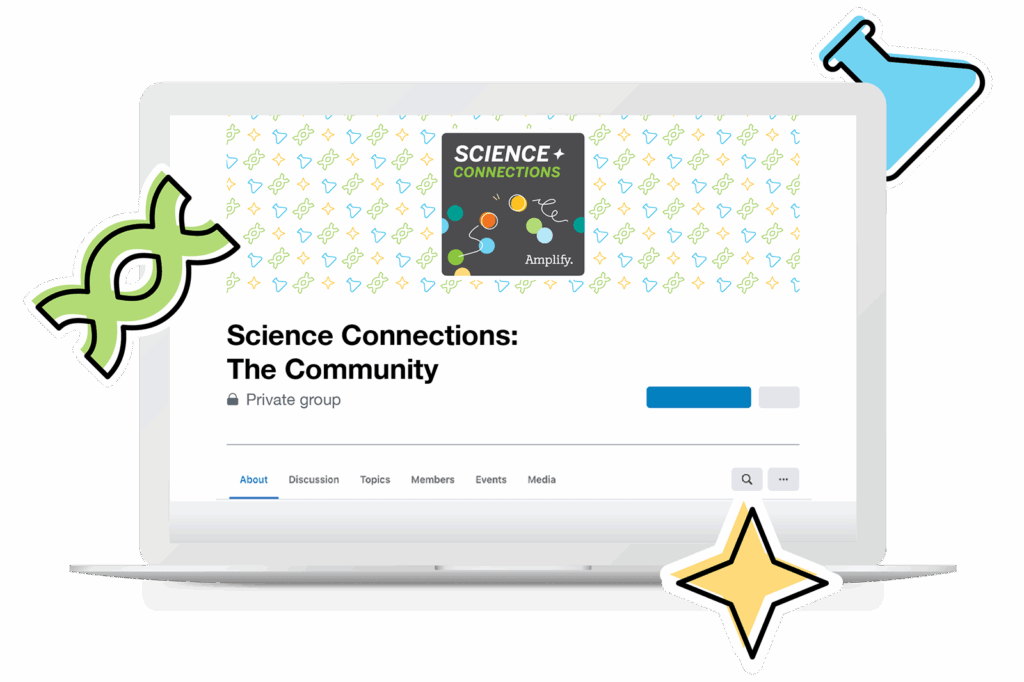
About Science Connections
Welcome to Science Connections! Science is changing before our eyes, now more than ever. So…how do we help kids figure that out? We will bring on educators, scientists, and more to discuss the importance of high-quality science instruction. In this episode, hear from our host Eric Cross about his work engaging students as a K-8 science teacher.
You might also like:

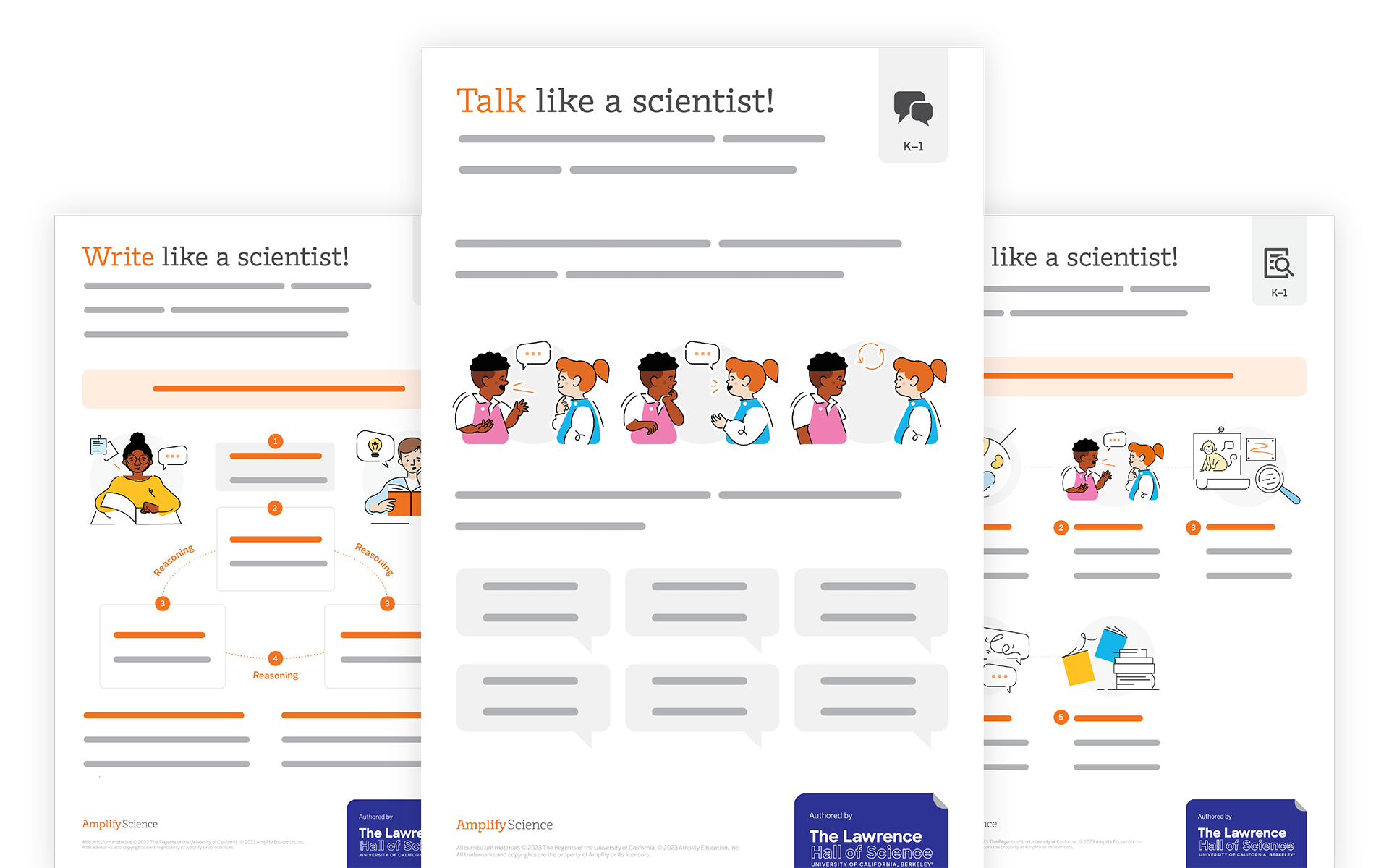
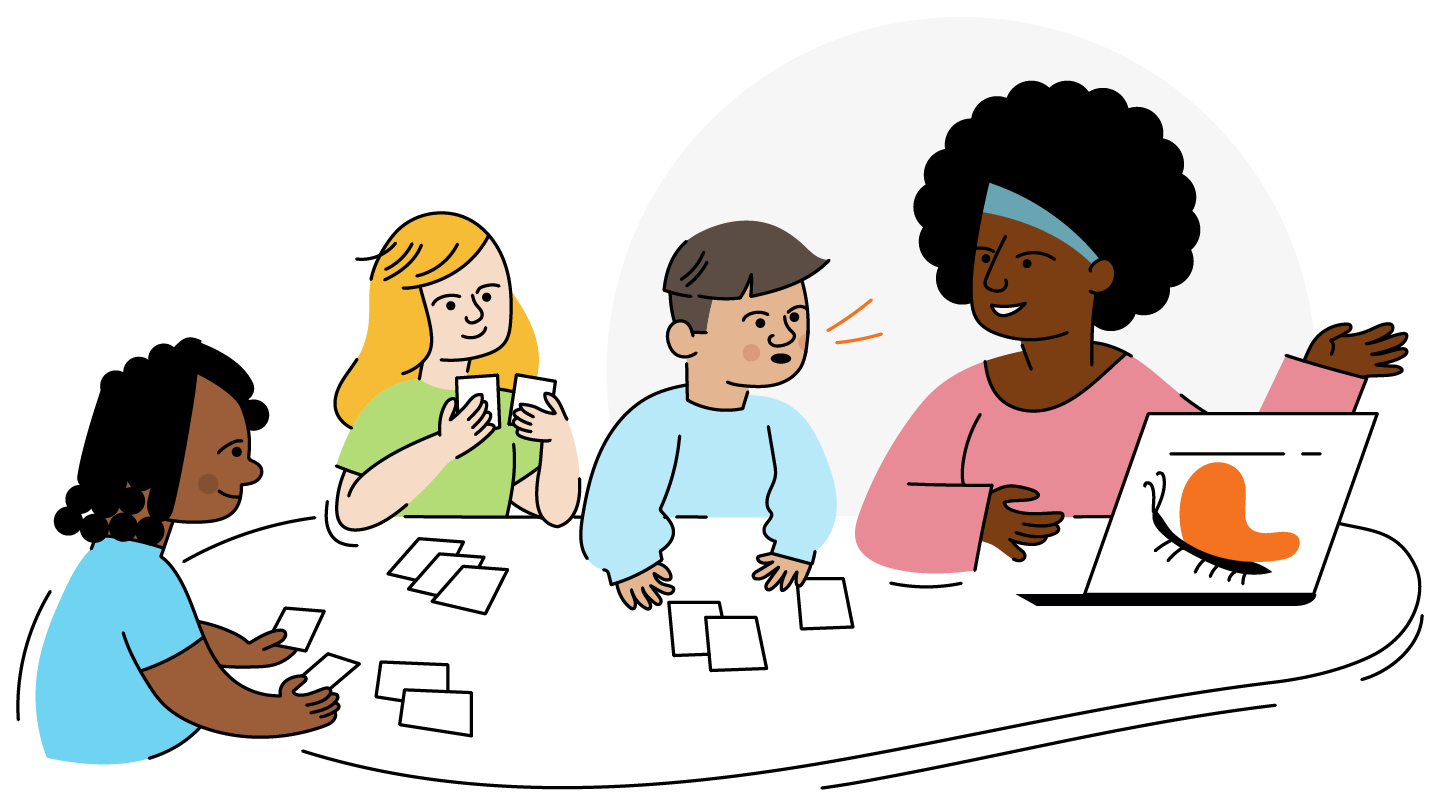
Unlock possibility with the Science of Writing
The reality is…writing is hard. It’s hard to learn, it’s hard to teach, it’s hard to do.
Natalie Wexler, author of The Knowledge Gap and The Writing Revolution, says, “Writing is the hardest thing we ask students to do.” Fortunately, we have decades of research that shows us how best to teach and learn how to write, known as the Science of Writing. As an educator your job is to make this hard task easier and more fulfilling for students. And our job is to help you.
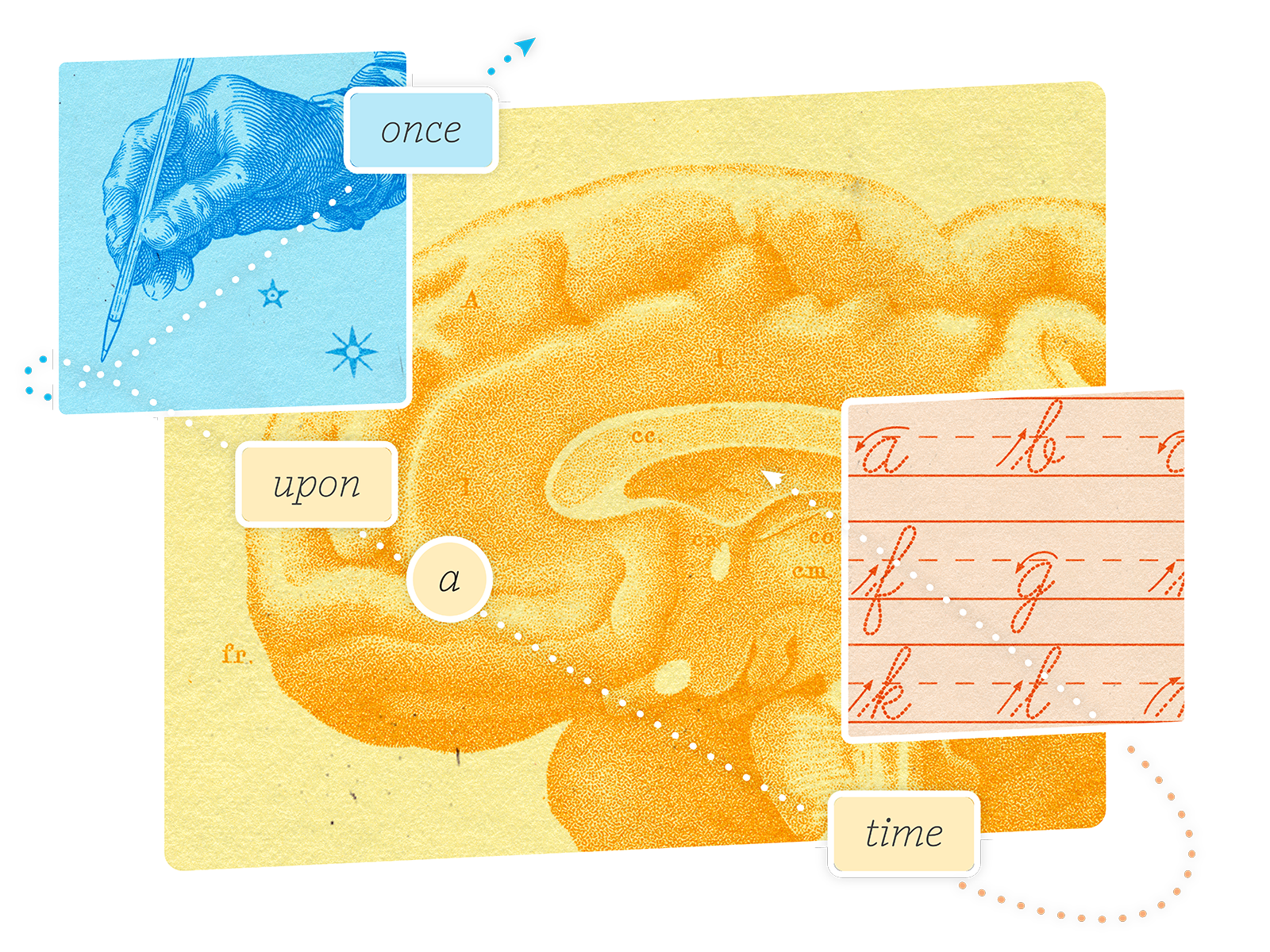
Why writing matters: Connection, expression, and better reading comprehension
Without writing, there would be no need for reading, and of course, writing is a part of literacy.
Through writing, students can express their ideas, connect with others, and deepen and communicate their understanding of what they are reading and thinking.
Having strong writing skills ensures students can engage fully in all settings, share their opinions and information, tell stories, and have a voice.
What is the Science of Writing?
Learning to write (and read) isn’t natural but it can be taught—and research shows us how. Like the Science of Reading, the Science of Writing is the collection of research and evidence-based practices that explains how writing develops along with the teaching strategies that help students develop into skilled writers.
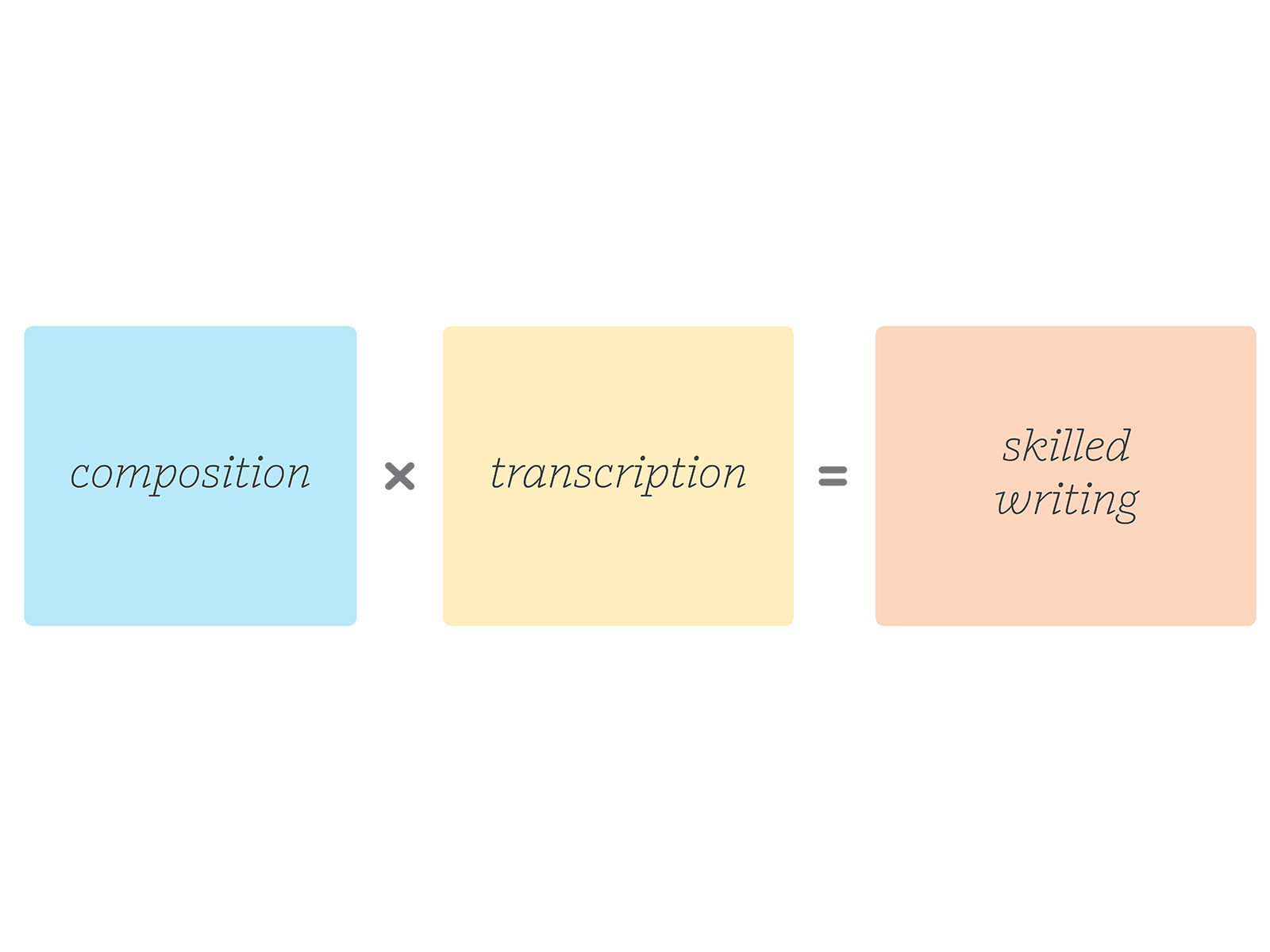
Writing proficiency involves mastering the use of a complex set of skills that must be taught explicitly, again just like reading proficiency. The Simple View of Writing breaks down these processes into transcription and composition, and provides us with a framework for guiding instruction.
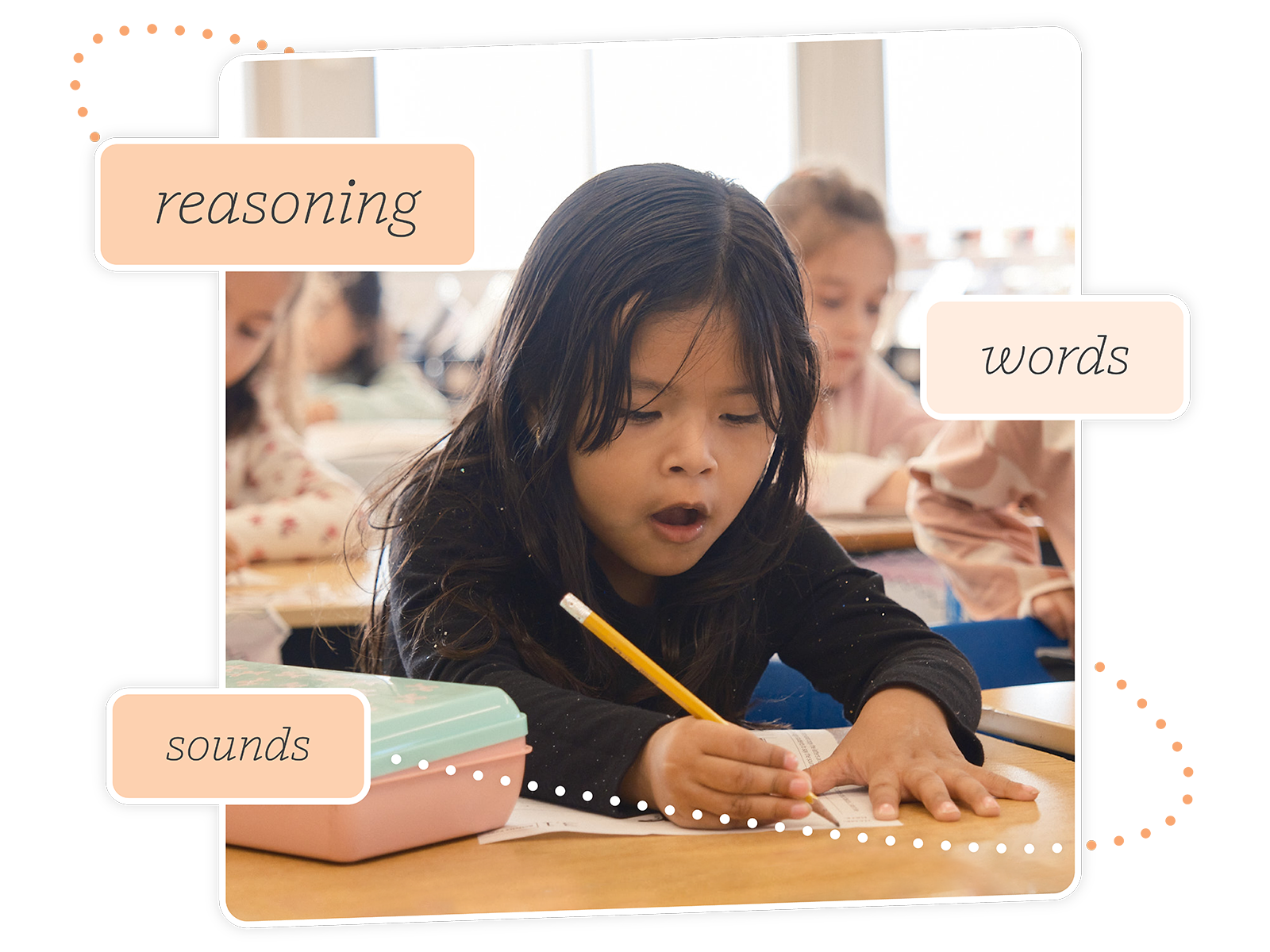
The relationship between reading and writing
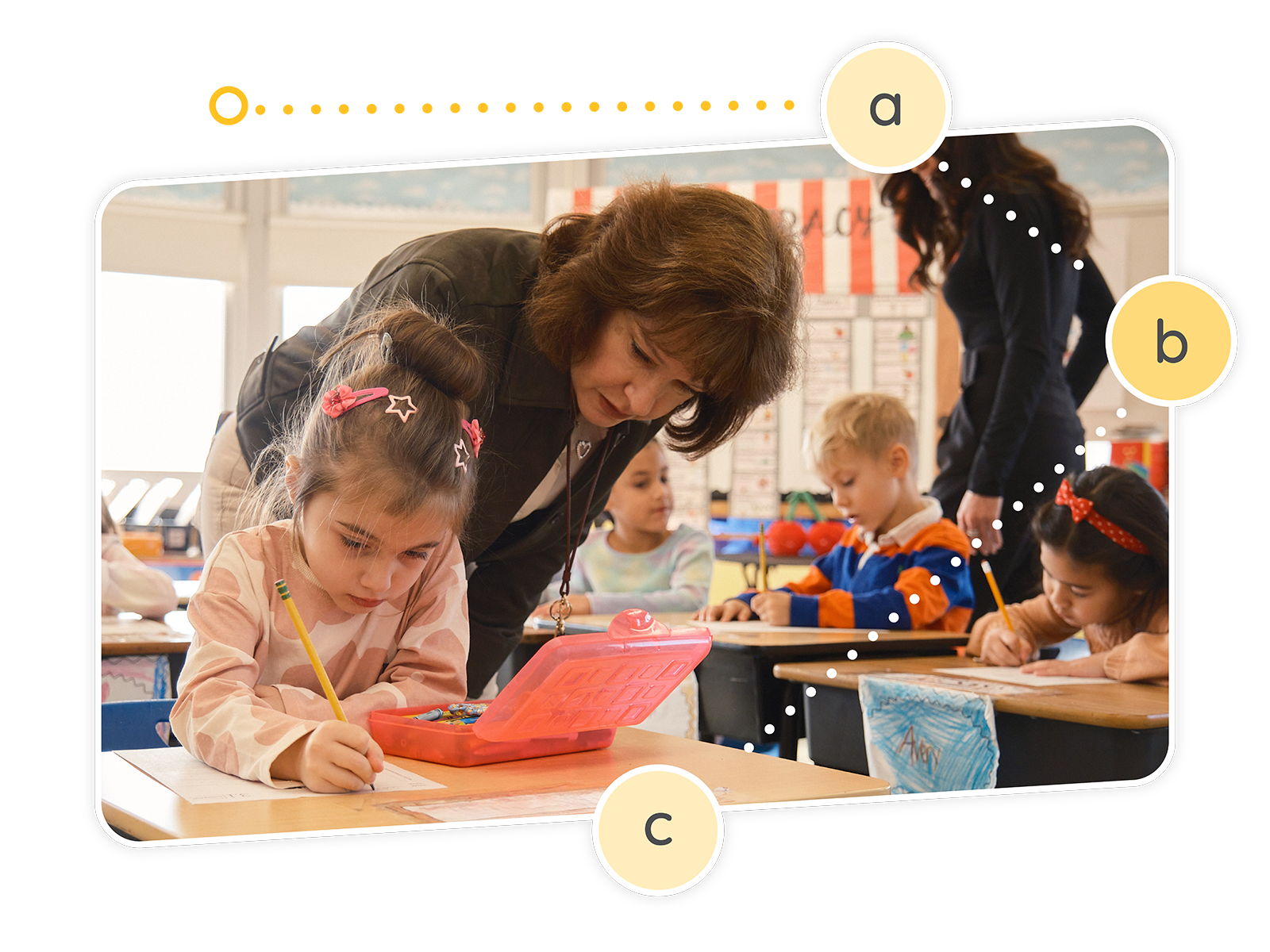
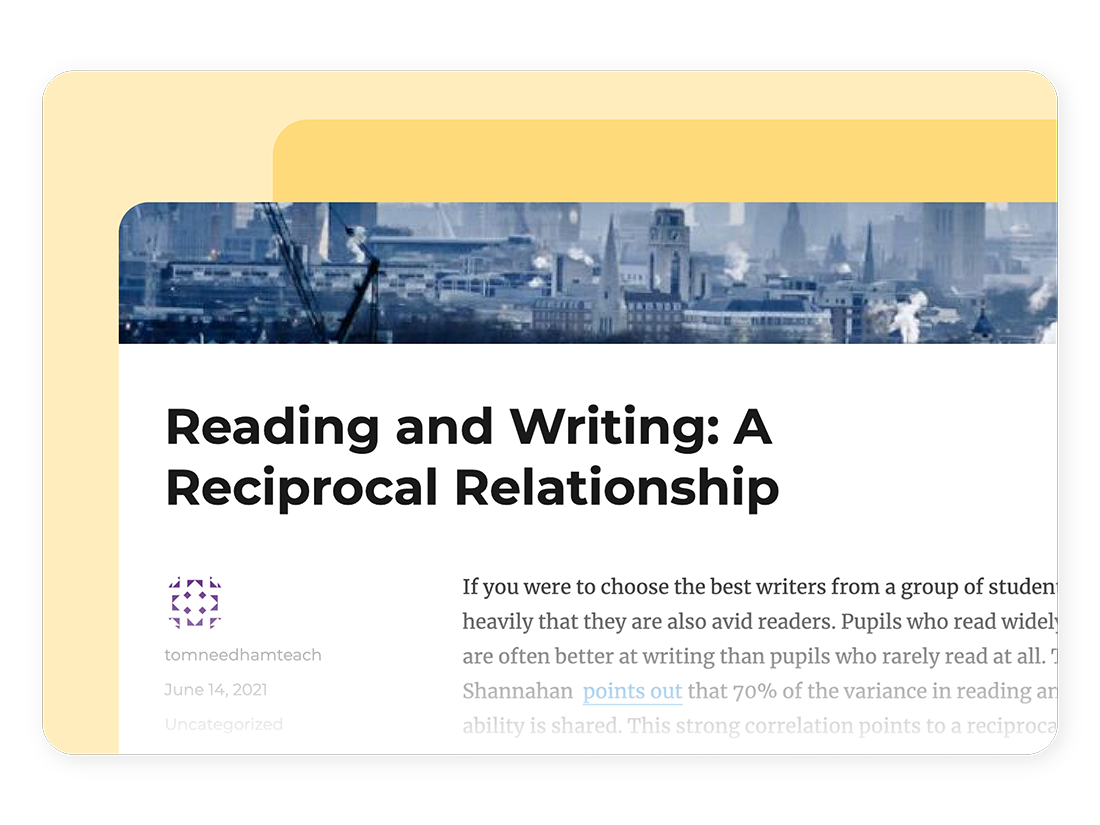
Reading and writing reinforce and support each other. When reading, students are exposed to vocabulary, grammar, and syntax. And when writing, students can get more practice to improve the fluency and efficiency of their handwriting, and apply their knowledge of spelling and their understanding of vocabulary, grammar, and syntax.
Readers use comprehension skills such as summarizing, predicting, and making inferences to help them create meaning as they read. Writers use those same skills to develop a piece of writing that is clear and concise for the reader.
The benefits of applying reading skills and strategies when writing
- If you teach students decoding skills, then they become better spellers.
- If students learn strategies for planning, drafting, and revising during composition, then their reading comprehension improves.
- If students have word and vocabulary knowledge, then they’re better at expressing their ideas in writing.
Oral language and writing
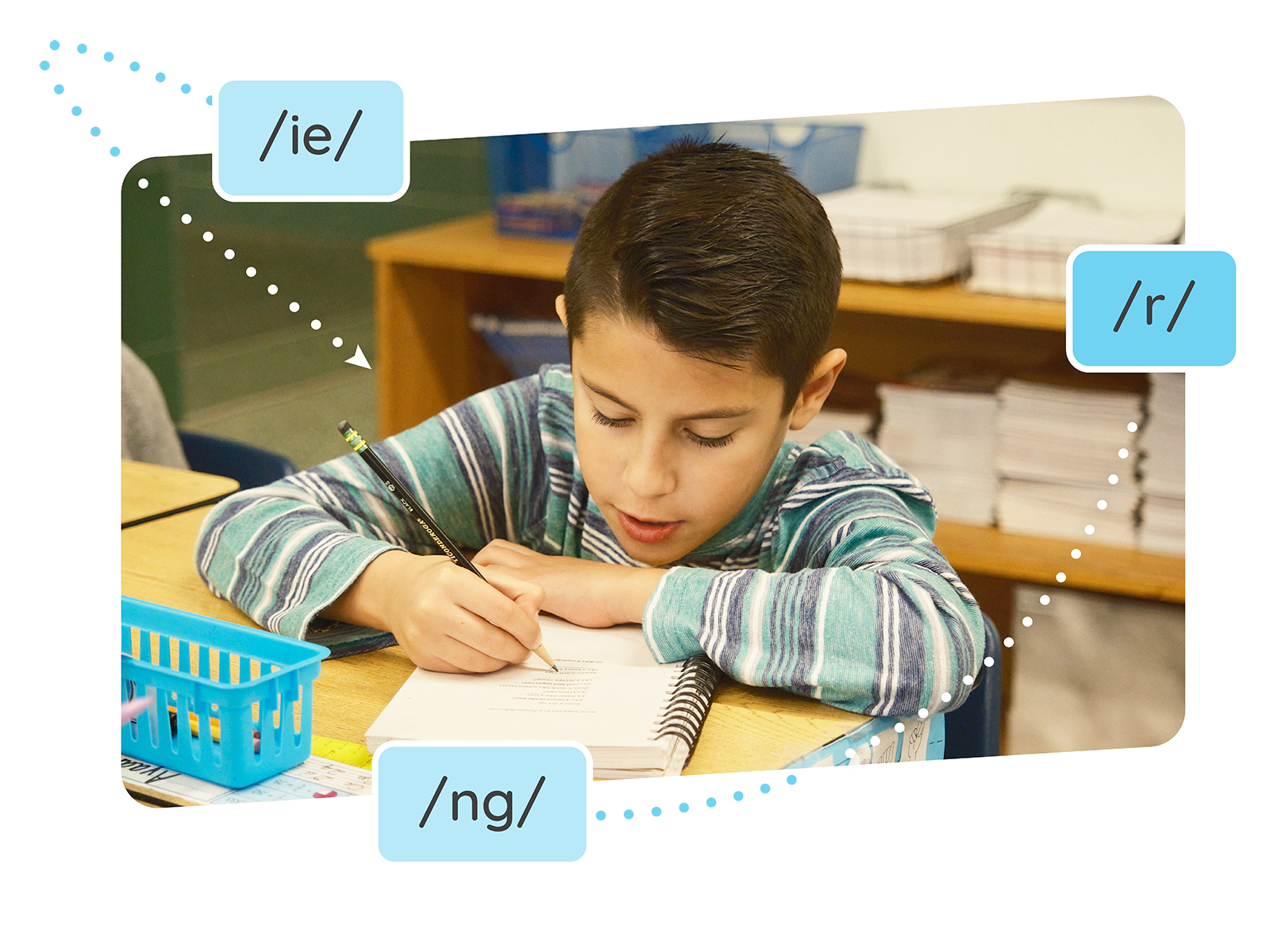
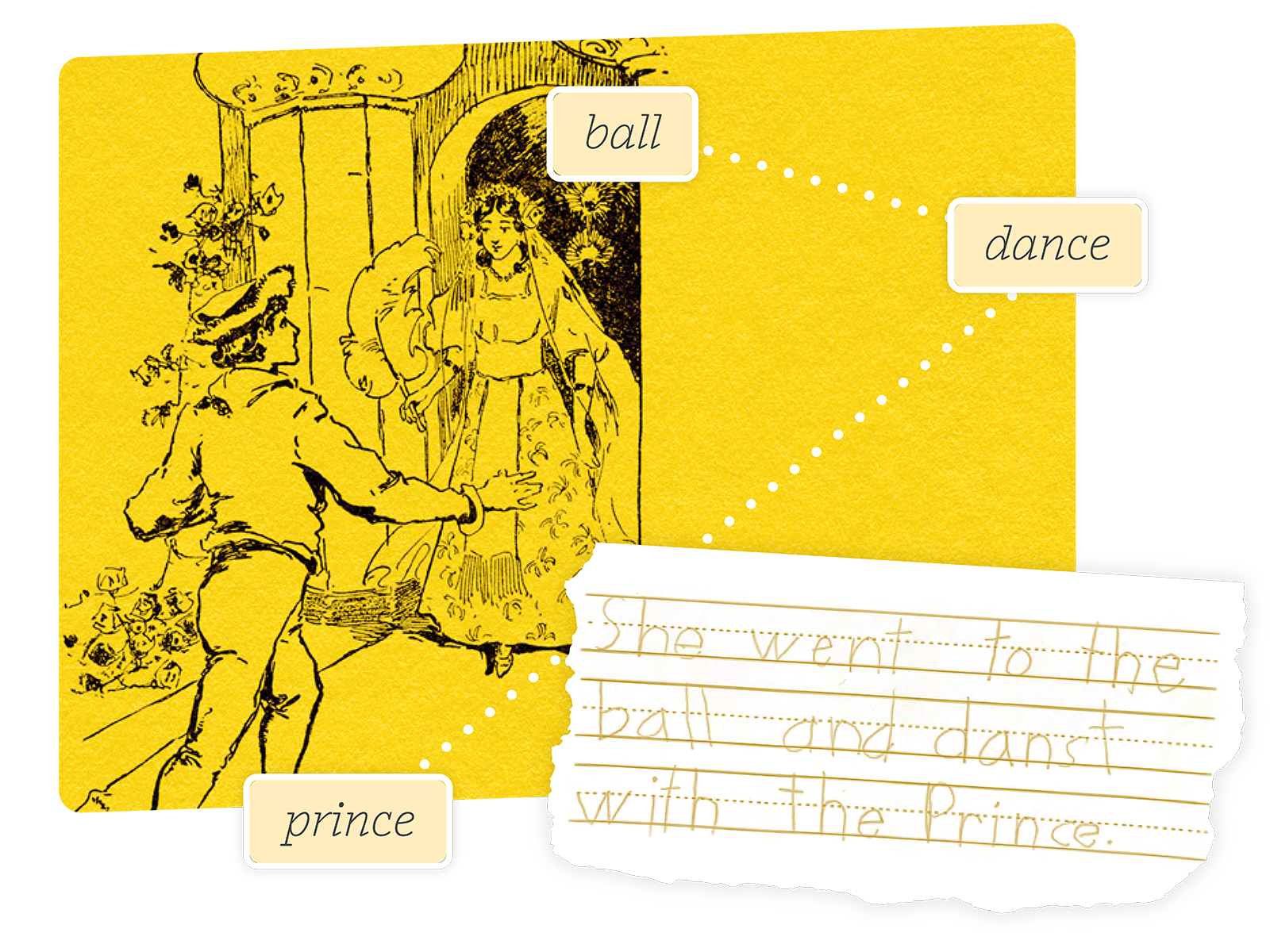
Oral language is the foundation for literacy, and its development begins in infancy. As their oral language develops, children learn how to string words into phrases and sentences, which progresses into telling stories and answering questions in detail. And as they listen to stories, children develop vocabulary and understanding of syntax and grammar. All of these build a foundation for writing.
Discovering the Science of Writing
Explore helpful resources to learn more about the Science of Writing, and the importance of implementing evidence-based instructional practices into your classroom, school, and district.
Books:
Articles:
Webinars:
- The Science of Reading: The Next Chapter
- The Science of Reading + Writing: Turning a New Page Together
- The Writing Chapter: Sparking the Writing Revolution with the Latest Insights and Research
- Writing and the Science of Reading Forum Panel Discussion: How does Writing Intersect with Reading?, Education Week


Inspiring the next generation of Indiana scientists, engineers, and curious citizens
Amplify Science is a proven effective core curriculum designed for three-dimensional, phenomena-based learning that provides an immersive experience for science students. Amplify Science was developed in partnership with the science education experts at UC Berkeley’s Lawrence Hall of Science.

What is Amplify Science?
Amplify Science is a curiosity-driven science curriculum that empowers students to Do, Talk, Read, Write, and Visualize like scientists. Through phenomena-based, literacy-rich, and interactive learning experiences, students develop as critical thinkers who will gain the skills they need to solve real problems in their communities and the world.
Each unit of Amplify Science engages students in a relevant, real-world problem where they investigate scientific phenomena, engage in collaboration and discussion, and develop models or explanations in order to arrive at solutions.
Grounded in research
Developed by the science education experts at UC Berkeley’s Lawrence Hall of Science in partnership with the digital learning team at Amplify, our program features:
- A phenomena-based approach where students construct a deep understanding of each unit’s anchor phenomenon.
- A blend of cohesive storylines, hands-on investigations, lively discussions, literacy-rich activities, and digital tools.
- Carefully crafted units, chapters, lessons, and activities designed to deliver truly authentic three-dimensional learning.
- An instructional design that supports all learners in accessing all standards.


Instructional model
The Amplify Science program is rooted in the research-based proven effective pedagogy of Do, Talk, Read, Write, Visualize.
Here’s how each element works:
Do
Learners engage with scientific phenomena by conducting student-centered investigations.
Talk
Students engage in collaborative and inquisitive discussions and scientific argumentation.
Read
Reading scientific texts is an act of inquiry: Students ask questions, gather evidence, and make connections through literacy.
Write
Students write to share what they have learned and apply new evidence to strengthen written arguments and explanations.
Visualize
Students gather evidence through simulations, physical models, and modeling tools, allowing them to see and investigate complex, microscopic, or otherwise unobservable phenomena.
What’s included
Flexible resources that work seamlessly together

Grades K–5 materials

Student Books
Age-appropriate Student Books allow students to:
- engage with content-rich texts
- obtain evidence
- develop research and close-reading skills
- construct arguments and explanations

Student Investigation Notebooks
Available for every unit, the Student Investigation Notebooks provide space for students to:
- record data
- reflect on ideas from texts and investigations
- construct explanations and arguments

Simulations and practice tools (grades 2+)
Developed exclusively for the Amplify Science program, these engaging digital tools:
- serve as venues for exploration
- enable data collection
- allow students to explore scientific concepts
- show what might be impossible to see with the naked eye

Teacher’s Guides
Available digitally and in print, the Teacher’s Guides contain all of the information teachers need to facilitate classroom instruction, including:
- detailed lesson plans
- unit and chapter overview documentation
- differentiation strategies
- standards alignments
- in-context professional development

Hands-on materials kits
Hands-on learning is at the heart of Amplify Science. Each unit kit contains:
- consumable and non-consumable hands-on materials
- print classroom display materials
- premium print materials for student use (sorting cards, maps, etc.)
Grades 6–8 materials

Science articles
The middle school science articles serve as sources for evidence collection and were authored by science and literacy experts at the Lawrence Hall of Science.

Student Investigation Notebooks
Available for every unit, the Student Investigation Notebooks provide space for students to:
- record data
- reflect on ideas from texts and investigations
- construct explanations and arguments
- Available with full-color article compilations for middle school units

Digital student experience
Students access the digital simulations and modeling tools, as well as lesson activities and assessments, through the digital student experience. Students can interact with the digital student experience as they:
- conduct hands-on investigations
- engage in active reading and writing activities
- participate in discussions
- record observations
- craft end-of-unit scientific arguments

Teacher’s Guides
Available digitally and in print, the Teacher’s Guides contain all of the information teachers need to facilitate classroom instruction, including:
- detailed lesson plans
- unit and chapter overview documentation
- differentiation strategies
- standards alignments
- in-context professional development
Hands-on materials kits
Hands-on learning is at the heart of Amplify Science. Each unit kit contains:
- consumable and non-consumable hands-on materials
- print classroom display materials
- premium print materials for student use (sorting cards, maps, etc.)

Unit Sequence
Our lessons follow a structure that is grounded in regular routines while still being flexible enough to allow for a variety of learning experiences.
In fact, our multimodal instruction offers more opportunities for students to construct meaning—and practice and apply concepts—than any other program. What’s more, our modular design means our units can be flexibly arranged to support your instructional goals.


Indiana science resources to support your review

K–5 Science Resources
Contact us
Support is always available. Our team is committed to helping you every step of the way. Contact your dedicated Indiana representative here for program access, samples, and additional information.

Elizabeth Sillies Callahan
Southern IN
(513) 407-5801

Jody Kammer
Central IN
(310) 402-7837

Amanda Knipper
Northern IN
(260) 894-5123

Paige Lawrence
District enrollment below 1200
(980) 421-2608

Join us!
Amplify Science: Wisconsin professional learning workshop
Join UC Berkeley’s Lawerence Hall of Science for a day of professional learning to support your implementation of Amplify Science. Workshop sessions and breakouts will benefit both those just starting in Amplify Science and those already well along their implementation journey. Teams are encouraged to attend!
When: April 29, 2020
8:30 a.m.–3:30 p.m.
Where: Pyle Center
Rooms 325/326
702 Langdon Street
Madison, WI 53706
About the event
Overview of the day:
- Welcome and introductions
- Unpacking storylines
- Morning breakouts: Coherence in Amplify Science
- Lunch provided
- Afternoon breakouts: Planning for strategic implementation of the Amplify Science Assessment system
- Reflections and closing

Submit this form to register for the event!
Amplify literacy curriculum sample boxes – TX
Let’s dig into your Poetry Experience Kit!
If you’re here, you either have your Amplify CKLA Experience Kit in hand or it’s on its way. Welcome! This site pairs with your boxed kit to help you understand the unit you received; see how it fits into the full K–5 program; and access exclusive tools, pacing support, and bonus resources you won’t find in the box.
Getting started
Here you’ll find a quick tour of your Experience Kit and see how it connects to the full Amplify CKLA program.
About your boxed kit
Your kit includes print materials for you and your students to experience a full poetry unit from Amplify CKLA.
About the full program
Amplify CKLA is a comprehensive K–5 literacy program grounded in the Science of Reading, with three distinct strands:
- K–2 Knowledge Strand: Builds background knowledge and vocabulary through daily read-alouds, guided discussion, and writing in context
- K–2 Skills Strand: Develops decoding, fluency, and transcription skills through explicit, systematic instruction with hands-on, multimodal practice
- 3–5 Integrated Strand: Strengthens reading, writing, speaking, and listening as knowledge and skills come together with complex texts, close reading, and a focus on morphology
For a deeper dive, explore the Amplify CKLA Program Guide.
Grade 3
About this unit
Students revisit nursery rhymes, reflect on ancient haiku, and explore modern free verse to craft original poems about nature, animals, and relationships.
What’s in your kit
Here’s what you’ll find inside—take a quick peek to make sure everything’s there!


Additional resources
As you prepare to teach this unit, explore the:
- Curriculum map: Includes a unit summary, writing focus, overall learning outcomes, and standards taught and assessed.
- Caregiver Letter: Shares an overview of the unit, plus conversation starters to keep the learning going at home.
- Pacing options: The full unit takes 18 days—if time is tight, you can also try our 5- and 10-day plans.
Grade 4
About this unit
Tackle poems with vivid voices and layered language, uncovering how poets like Dahl and Dickinson shape meaning through structure, sound, and style.
What’s in your kit
Here’s what you’ll find inside—take a quick peek to make sure everything’s there!


Additional resources
As you prepare to teach this unit, explore the:
- Curriculum map: Includes a unit summary, writing focus, overall learning outcomes, and standards taught and assessed.
- Caregiver Letter: Shares an overview of the unit, plus conversation starters to keep the learning going at home.
- Pacing options: The full unit takes 18 days—if time is tight, you can also try our 5- and 10-day plans.
Grade 5
About this unit
Push poetic boundaries and spark students’ imagination by writing bold, personal poems inspired by trailblazers like Walt Whitman and William Carlos Williams.
What’s in your kit
Here’s what you’ll find inside—take a quick peek to make sure everything’s there!


Additional resources
As you prepare to teach this unit, explore the:
- Curriculum map: Includes a unit summary, writing focus, overall learning outcomes, and standards taught and assessed.
- Caregiver Letter: Shares an overview of the unit, plus conversation starters to keep the learning going at home.
- Pacing options: The full unit takes 18 days—if time is tight, you can also try our 5- and 10-day plans.
Digital platform
Your Experience Kit pairs with an Amplify CKLA demo account in Amplify Classroom, our digital platform. Explore your unit with digital materials and interactive tools including ready-to-use, customizable lesson screens and digital assessments.
Haven’t received your login info? No problem—check with your admin team or complete our support site form.
Pacing options
Short on time? We’ve got you covered. We recommend teaching the full 16-day unit as outlined in the Teacher Guide to fully experience the power of Amplify CKLA instruction. That said, we know your time is limited—and valuable!
That’s why we’ve created pacing options to help you explore the unit on your schedule:
| 5-day experience | 10-day experience (slower pace) | 10-day experience (extended) |
| Teach Lessons 1–5 (1 lesson per day) for a focused snapshot of the unit. | Teach Lessons 1–5 (spreading each lesson over 2 days)—ideal for shorter blocks or a more relaxed pace. | Teach Lessons 1–10 (1 lesson per day) for a deeper dive into the unit. |
💡 Tip: Many educators new to Amplify CKLA prefer the 10-day, slower-paced option. It offers room to slow down without losing the flow of instruction for you and your students.
Pacing like a pro
- Start with the Unit Introduction in the Teacher Guide—it provides key background information and teaching tips.
- Pausing Point and assessment days aren’t included here, but feel free to use them if time allows.
- Teaching in shorter blocks? No problem. Just continue where you left off the next day! (Skipping ahead isn’t recommended, as each lesson builds on the last.)
Dual language assessment and instruction for K–6
mCLASSⓇ Lectura Texas is a universal screener for K–6 built on modern Spanish literacy research. Delivering complete parity between English and Spanish reading assessments, the program supports educators in accelerating reading growth for Spanish-speaking students.
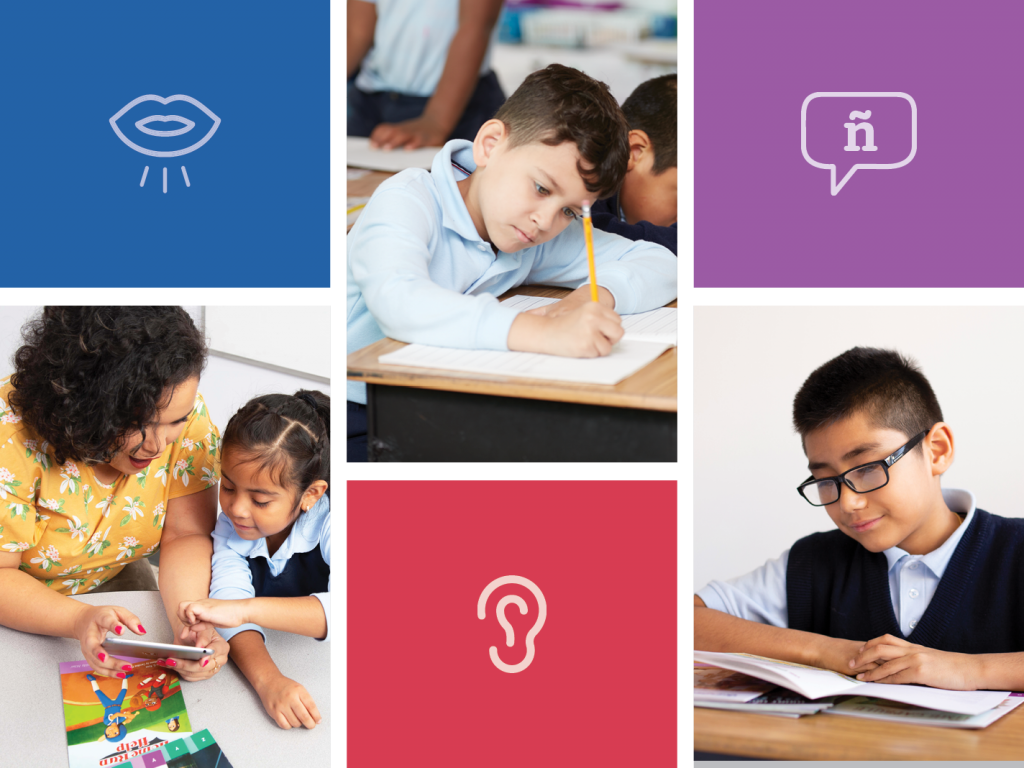

Built by leading biliteracy experts
The mCLASS Lectura Texas universal screener was co-developed with the Center on Teaching and Learning at the University of Oregon. The assessment was validated by Amplify in partnership with Lillian Durán of the University of Oregon.
The development of mCLASS Lectura Texas also involved a team of nationally recognized experts representing a range of regions (Mexico, Central America, South America, and the Caribbean), along with focus groups featuring classroom teachers, special education teachers, specialists, and administrators.
Our approach
Aligned to the Science of Teaching Reading, mCLASS Lectura Texas enables teachers to connect with their students through observational assessment and in the language most comfortable to them. When used in tandem with mCLASS Texas Edition, the program helps you achieve complete parity between English and Spanish literacy skills.
Complete parity between English and Spanish
mCLASS Lectura Texas is an authentic Spanish assessment that integrates seamlessly with mCLASS Texas Edition. It offers consistent reporting across both English and Spanish assessments and provides specialized dual-language reporting.


Listen to your students read in both languages, one-on-one.
mCLASS Lectura Texas provides teacher-administered assessments in Spanish that deliver accurate and reliable measurements of each student’s literacy progress.
Built from the latest research in Spanish literacy development
mCLASS Lectura Texas is a high-quality assessment that accounts for the major differences between English and Spanish, not simply a direct translation or transadaptation between the two languages.


Transfer skills in one language to the other.
By providing teachers with insights into the skill areas in which their students are proficient in their native language, the program helps multilingual/English learners build on their strengths and make connections. Educators also receive guidance on the cross-linguistic transfer of critical skills in both languages.
What’s included
mCLASS Lectura Texas includes one-minute measures validated for universal and dyslexia screening, and provides dual language reports for teachers and administrators.

Comprehensive Spanish literacy measures in mCLASS Lectura Texas
mCLASS Lectura Texas is validated to assess for all key foundational skills for K–6, including:
- Letter Naming.
- Phonological Awareness.
- Alphabetic Principle.
- Fluency.
- Comprehension.
Reports in English and Spanish
mCLASS Lectura Texas analyzes Spanish literacy and English literacy development side by side, enabling you to see where kids are in both languages.


Instructional activities to build Spanish literacy skills
With mCLASS Lectura Texas, educators get hundreds of step-by-step instructional activities for small groups or individual students and receive effective activities to target the Spanish literacy skills with which students need the most support.
Comprehensive reporting
mCLASS Lectura Texas provides reporting for everyone. This is available at all levels, from classroom teachers and literacy specialists to principles and district leaders, as well as parents and guardians at home.


Detailed assessment data
mCLASS Lectura Texas provides transcripts of every assessment and identifies error patterns to help educators make instructional decisions for students on the skills they need to work on the most. The program also includes letters with student assessment results and analysis to send home or to use as a basis for discussion at conferences.
Explore more programs based in the Science of Teaching Reading.
Learn more about the Amplify Texas biliteracy suite at texas.amplify.com.
10 books to get you started with the Science of Reading
10 books to get you started with the Science of Reading
Powerful, personalized reading instruction that engages students and saves teachers time
Boost Reading is our personalized reading program for grades K–5. Its captivating storylines engage students in powerful reading instruction and practice. Whether students are learning to read fluently or sharpening their comprehension skills, Boost Reading accelerates their growth while freeing educators up to work with small groups or individual students.
We’ve aligned Boost Reading to the Arkansas English Language Arts standards: Boost Reading Skill Games and Texts: Alignment to Arkansas English Language Arts Standards
Science of Reading-based support for every student
Students come to school with a range of abilities and achieve mastery at different rates. Providing each learner with the specific support they need to progress can be challenging. Enter Boost Reading’s personalized reading literacy program.
Our approach
Leveraging compelling storytelling and the latest research, Boost Reading helps students achieve true mastery of the concepts they need to become strong, life long readers. See the research behind the program.
More than a digital worksheet
Built on the Science of Reading, Boost Reading offers a fresh, modern program that builds on student strengths while adapting to their needs.


A program students love
Boost Reading offers an out-of-this world learning experience for students. The program’s age-appropriate narratives create a learning experience that leaps off the screen.
The right experience for every student
The program meets all students where they are with powerful individualized instruction and practice, enabling student growth at all reading levels.

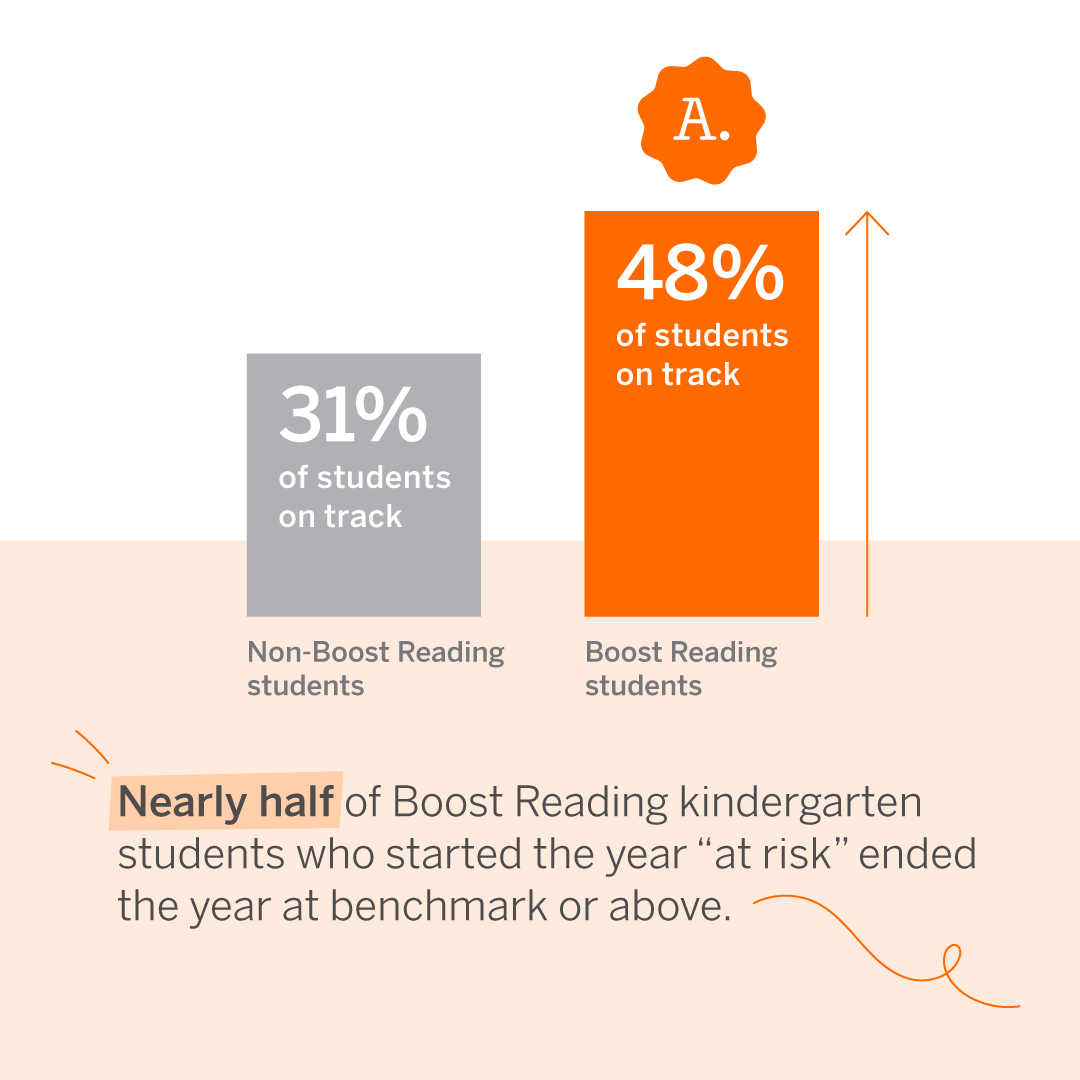
Proven results
Boost Reading works. Efficacy studies show significant growth for students using Boost Reading. In as little as 30 minutes a week, Boost Reading accelerates growth for all students and helps multilingual learners close the gap with their peers. Learn more here.

Program highlights

Full adaptivity
Students of Boost Reading use digital texts that adapt to their needs via an adaptive algorithm that unlocks each book at the exact right point in a reader’s development.
Personalized instruction
Boost Reading adapts to each reader’s unique needs across 13 skill areas, sending students on their own personalized reading journey. The programs offer both remediation and enrichment through a comprehensive range of instruction—from foundational skills to comprehension to close reading.


Engagement engineering
Using the science behind engagement and motivation, Boost Reading is built to deliver compelling narrative experiences that speak to students’ stories of growth and development. This personal connection allows students to directly map their progress in the storyline to their reading effort and growth, helping them understand the value of effort and practice.
Based on the Science of Reading
Boost Reading is built on the latest research in the Science of Reading. It provides the explicit, systematic foundational skills essential for every student—and it goes beyond. It’s the only program that focuses on the things our brain does while we’re reading that allow us to make sense of text—also known as comprehension processes. Learn more about comprehension processes on Science of Reading: The Podcast.

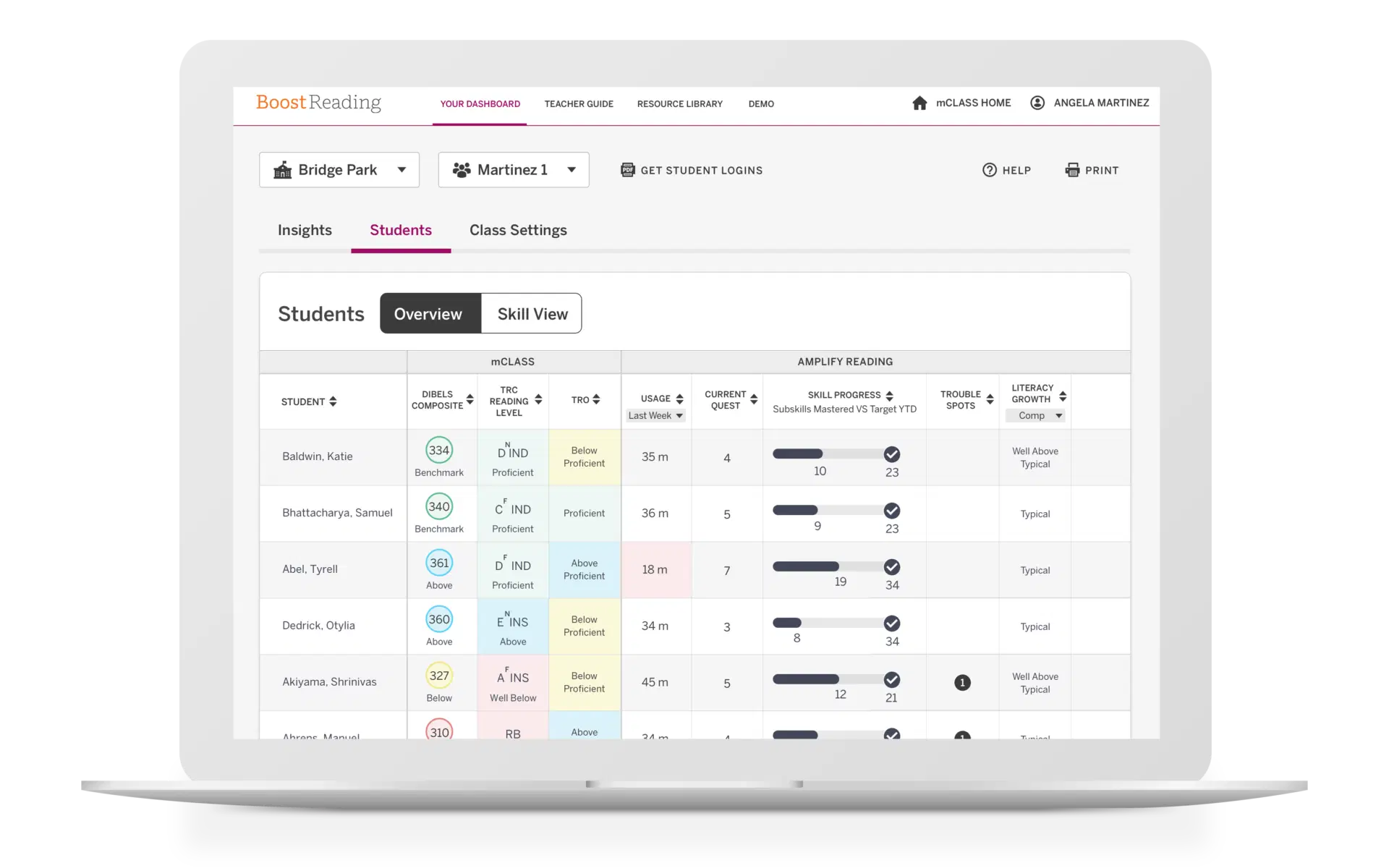
Instruction based on student data
Boost Reading features an automatic placement tool that requires no prior assessment. The program is able to pinpoint the most effective starting point for each student and provide them an engaging reading program personalized for their exact individual needs. The program also integrates directly with Amplify’s mCLASS® with DIBELS® 8th Edition assessment as well as other third party assessments.
Reports at every level
Boost Reading provides actionable insights into students’ reading development across 13 literacy skill domains. The program creates reports for classroom teachers, literacy specialists, principals and district leaders, and even parents and caregivers at home.

Explore more Science of Reading-based programs.
Our programs are designed to support and complement one another. Learn more about our related programs.
What’s included in our literacy curriculum for 6–8
Amplify ELA is a blended literacy curriculum designed specifically for grades 6–8. The heart of every lesson is the text. Our core English Language Arts curriculum enables teachers to teach skills through texts and develop their students’ muscles for building meaning through reading. With Amplify ELA, students learn to attack any complex text and make observations, grapple with interesting ideas, and find relevance for themselves.
Year at a glance
Each grade includes six core units centered on literary or informational texts, delivered in several forms of media. In addition to these main units, students will engage with targeted Grammar lessons and a dedicated Story Writing unit, plus two to three immersive learning experiences called Quests.
Grade 6 core units

Dahl & Narrative
1 assessment lesson
4 sub-units | 28 lessons | 4-6 weeks

Mysteries & Investigations
1 assessment lesson
5 sub-units | 32 lessons | 4-6 weeks

The Chocolate Collection
1 assessment lesson
5 sub-units | 25 lessons | 4-6 weeks
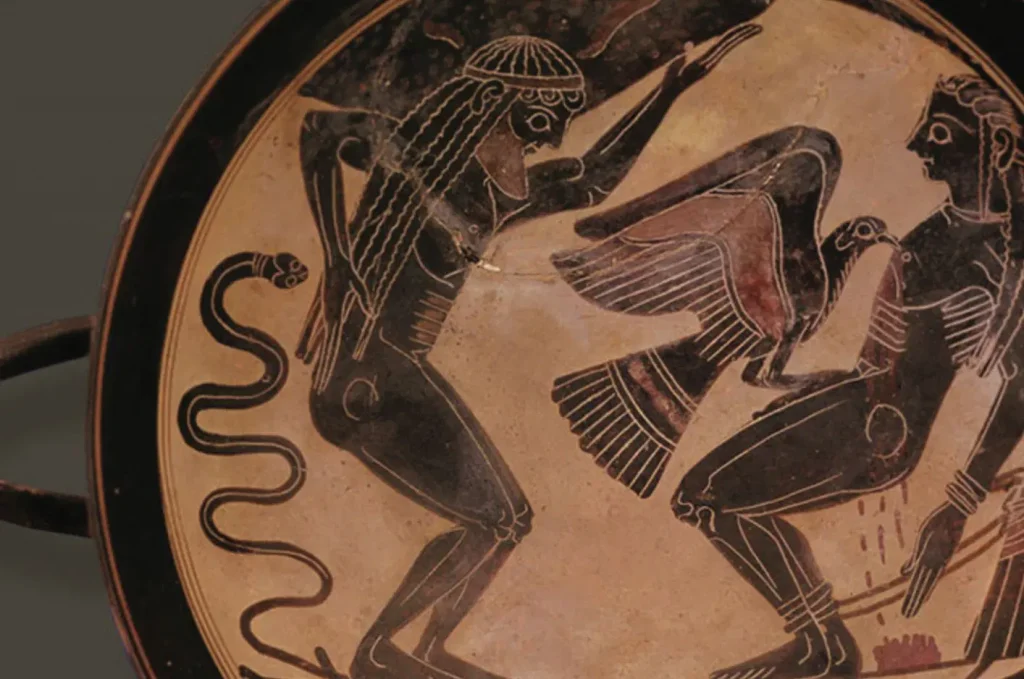
The Greeks
Myth World Quest
1 assessment lesson
4 sub-units | 25 lessons | 4-6 weeks

Summer of the Mariposas
1 assessment lesson
2 sub-units | 27 lessons | 4-6 weeks

The Titanic Collection
1 assessment lesson
5 sub-units | 25 lessons | 4-6 weeks
Grade 7 core units

Red Scarf Girl
1 assessment lesson
4 sub-units | 31 lessons | 4-6 weeks

Character & Conflict
1 assessment lesson
4 sub-units | 29 lessons | 4-6 weeks

Brain Science
Perception Academy Quest
1 assessment lesson
4 sub-units | 25 lessons | 4-6 weeks
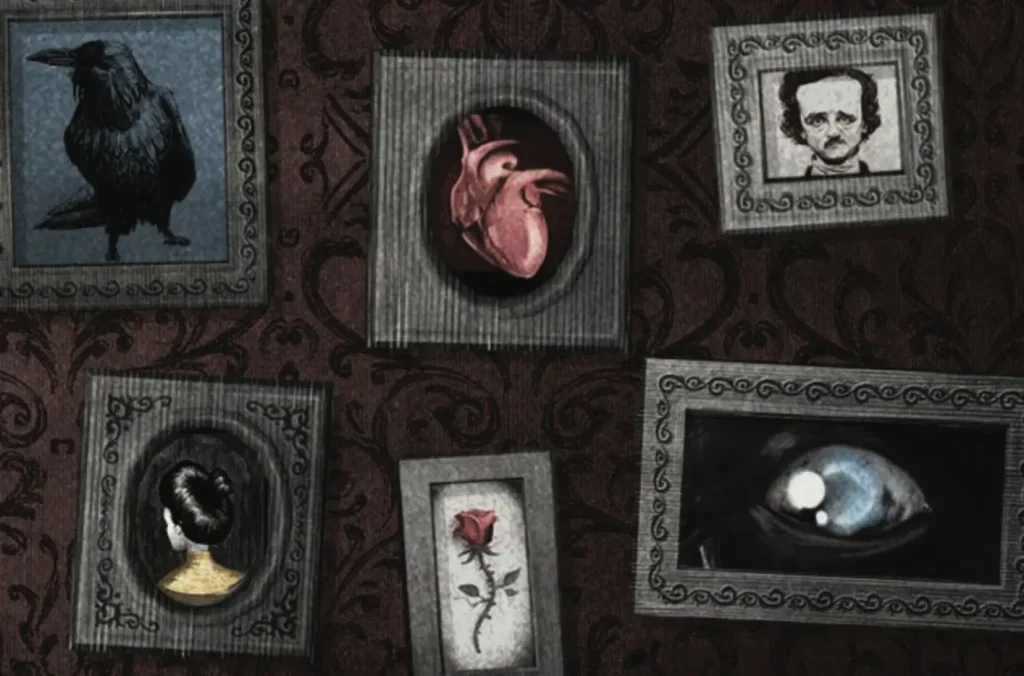
Poetry & Poe
The “Who Killed Edgar Allen Poe” Quest
1 assessment lesson
5 sub-units | 29 lessons | 4-6 weeks

The Frida & Diego Collection
1 assessment lesson
5 sub-units | 25 lessons | 4-6 weeks
The Gold Rush Collection
1 assessment lesson
5 sub-units | 25 lessons | 4-6 weeks
Grade 8 core units

Perspectives & Narrative
1 assessment lesson
4 sub-units | 27 lessons | 4-6 weeks

Liberty & Equality
1 assessment lesson
6 sub-units | 38 lessons | 4-6 weeks
Science & Science Fiction
1 assessment lesson
3 sub-units | 29 lessons | 4-6 weeks
Shakespeare’s Romeo & Juliet
1 assessment lesson
2 sub-units | 22 lessons | 4-6 weeks

The Holocaust: Memory & Meeting
1 assessment lesson
6 sub-units | 21 lessons | 4-6 weeks
The Space Race Collection
1 assessment lesson
5 sub-units | 25 lessons | 4-6 weeks
Units at a glance
Amplify ELA lessons follow a structure both grounded in regular routines and flexible enough to allow for a variety of learning experiences. Lesson structures vary from day to day, ensuring that students are always engaged.
Learn more in the Amplify ELA Grade Overview.
Unit 6A
Dahl & Narrative
Students begin with narrative writing to develop foundational Focus skills and establish key classroom routines. Teachers use this work to create targeted feedback cycles and build a vibrant community centered on diverse experiences. Students then apply observational skills to Roald Dahl’s Boy: Tales of Childhood, learning to work closely with textual evidence.
Unit 6B
Mysteries & Investigations
Students read like an investigator to embark on a multi-genre study into the mesmerizing world of scientific and investigative sleuthing. The Secret of the Yellow Death: A True Story of Medical Sleuthing by Suzanne Jurmain, and Sir Arthur Conan Doyle’s Sherlock Holmes stories take place in the late 19th century, when medical diagnostics and criminal investigations were still evolving into scientific fields.
Unit 6C
The Chocolate Collection
Students explore primary documents and research the diverse cultural roles chocolate has played over 3,700 years, from its various uses in ancient Mexico to issues with modern production. Along the way, they build information literacy skills, craft research questions, and collaborate in Socratic seminars. Students also learn how to construct an evidence-based argument and use those skills to write pieces aimed at convincing readers about chocolate preferences, school lunch policies, and recommendations for local candy stores.
Unit 6D
The Greeks
Students closely explore and analyze three stories from Greek mythology: “Prometheus,” “Odysseus,” and “Arachne.” Drawing on the routines and skills established in previous units, these lessons ask students to move from considering the state of a single person to contemplating broader questions concerning the role people play in the world and the various communities they inhabit.
Unit 6E
Summer of the Mariposas
Students read Summer of the Mariposas by Guadalupe García McCall, a contemporary Latino retelling of The Odyssey. Following five sisters on their journey into Mexico and back, students explore this reimagining of the hero’s journey as they encounter Mexican folklore and Aztec legends along the way. Students analyze character development, compare the novel to Homer’s original, research Aztec mythology, explore symbolism, and engage in collaborative discussions before writing an essay about what makes the heroes successful.
Unit 6F
The Titanic Collection
Students explore primary documents and conduct research to understand the 1912 Titanic disaster, building information literacy skills by examining artifacts such as dining menus, ship photos, telegraph transcripts, and newspaper accounts. Each student is assigned a passenger from the manifest and writes a narrative account from that person’s perspective, considering different views. Students also participate in Socratic seminars to examine the complicated issues within the Titanic story.

Unit 7A
Red Scarf Girl & Narrative
Students begin with narrative writing to develop foundational Focus skills while teachers establish targeted feedback cycles and build a classroom community centered on diverse experiences. After exploring how they describe their own experiences and emotions, students apply the same close attention to analyzing details in Ji-li Jiang’s Red Scarf Girl: A Memoir of the Cultural Revolution.
Unit 7B
Character & Conflict
Students analyze characters’ responses to conflict and examine how authors use character interactions to develop theme and perspective. They read Carson McCullers’ “Sucker” and Lorraine Hansberry’s A Raisin in the Sun, both texts that explore how families facing hardships can support and harm one another. Students observe complex character growth and discuss issues of identity, family obligations, and differing notions of success.
Unit 7C
Brain Science
Students explore narrative nonfiction and informational texts about brain science to understand what it means to be human and how their developing brains impact daily experiences. They also build awareness of their cognitive strengths and analyze the structures of informational texts and scientific arguments. Key texts include Phineas Gage, Inventing Ourselves: The Secret Life of the Teenage Brain, and Oliver Sacks’ The Man Who Mistook His Wife for a Hat.
Unit 7D
Poetry & Poe
Students learn visualization techniques to read like a movie director, beginning with poems by D.H. Lawrence, Federico García Lorca, and Emily Dickinson to form mental images. They then read three Edgar Allan Poe texts, creating storyboards and analyzing narrative elements to learn about unreliable narrators. Students also participate in the murder-mystery Quest “Who Killed Edgar Allan Poe?” and write an essay arguing whether they can trust a narrator in the unit’s texts.
Unit 7E
The Frida & Diego Collection
Students explore primary source documents and research on Mexican artists Diego Rivera and Frida Kahlo, learning how they drew inspiration from Latin American folklore, politics, and customs. Along the way, students build information literacy by generating research questions and visual analysis skills through close reading of key paintings. They also compare the artists’ descriptive writing to Shakespeare’s and analyze figurative language. The unit culminates in a research project showcasing their interpretation of Frida and Diego’s work and legacy.
Unit 7F
The Gold Rush Collection
Students explore primary documents and conduct research on the California Gold Rush, building information literacy skills and constructing research questions. They also learn about the diverse people who participated, compare fictional and historical accounts, and participate in Socratic seminars. Students write narrative accounts from specific perspectives and complete a culminating research assignment combining essay and media project elements.
Unit 8A
Perspectives & Narrative
Students learn to read like writers, paying attention to craft and writing moves that shape reader experience and developing Focus and Showing skills as they build collaborative classroom routines. Students study three narrative texts, exploring themes of belonging and identity through close reading. They also practice alternating between analytic and narrative writing, and conclude with an essay arguing whether the mothers in Amy Tan’s “Fish Cheeks” are role models.
Unit 8B
Liberty & Equality
Students study Civil War-era writings that debate the meaning of “all men are created equal,” exploring various perspectives on American ideals. Key texts include Walt Whitman’s Leaves of Grass, Frederick Douglass’ Narrative, and Harriet Ann Jacobs’s Incidents in the Life of a Slave Girl. The unit culminates with an essay examining Douglass’s arguments and Lincoln’s Gettysburg Address to consider what America means by “all men are created equal.”
Unit 8C
Science & Science Fiction
Students read Gris Grimly’s Frankenstein, a graphic novel adaptation of Mary Shelley’s novel, exploring themes of creator responsibility, societal influence, and the risks of scientific inquiry. They trace Victor’s sympathy for his creation, rewrite scenes from the creature’s perspective, and debate whether Victor owes the creature a companion. The unit concludes with an essay determining whether the creature should be considered human.
Unit 8D
Shakespeare’s Romeo & Juliet
Students read five excerpts from Shakespeare’s Romeo and Juliet to learn key elements of Shakespearean English through close reading. They practice memorizing and reciting the famous “Prologue,” put on stage performances, translate Shakespeare’s language into contemporary terms, and study the Shakespearean sonnet form. The unit concludes with an essay arguing whether love or hate is responsible for Romeo’s death.
Unit 8E
Holocaust: Memory & Meaning
Students use close reading to explore memoirs and primary sources that address two key Holocaust questions: How do societies become participants in atrocity, and what are our responsibilities as witnesses? Students analyze multiple perspectives through texts, including Alexander Kimel’s “I Cannot Forget,” Irene Butter’s Shores Beyond Shores, 1936 Olympics propaganda, and excerpts from Maus and Night.
Unit 8F
The Space Race Collection
Students explore primary documents and conduct research on the Space Race. They build information literacy skills, construct research questions, and learn about diverse participants from Soviet cosmonauts to American heroes like Buzz Aldrin and Katherine Johnson. Each student researches an assigned cosmonaut or astronaut and writes space blog entries from their perspective. Students also complete a capstone research essay and media project.
Print & digital components
The program includes instructional guidance and student materials for a year of instruction, with lessons and activities that keep students engaged every day.

Teacher materials
Teacher Edition
Available digitally and in print, the Teacher’s Edition contains all the information teachers need to facilitate classroom instruction, including detailed lesson plans, video teacher tips, presentation slides, standards alignment, Exit Tickets, real-time differentiation strategies, and robust reporting.
Student materials
Student Edition
Available digitally and in print, student materials guide middle schoolers through complex texts and writing by engaging them with high-quality narrative and informational texts—providing videos, audio supports, and a digital experience that captures their attention. They also keep all of their writing in one place with a personal Writing Journal.

Explore more programs
Our programs are designed to support and complement one another. Learn more about our related programs.
Putting equity first
When so much about the world needs to shift, so urgently… here are a few places to start.

Listen: Educator, author, and leader Shawn Joseph shares his passion for social justice and discusses his work advocating for equity in education, shedding light on what he calls the “silent crisis” in literacy instruction.

Learn: Share Shawn Joseph’s discussion guide with your colleagues. Which insights are the most relevant to your district this year?

Lead: Take a look at this curated collection of multicultural and social justice books. Could one spark discussion for your students?

Lead: Share this infographic on the journey to freedom with your class. Ask students to select an event to research and present a two-minute video talk.
Leveraging the science of reading
Go deep on the insights and practices that will help our classrooms (remote or otherwise)–based on the latest science, and adaptable to every shift in the educational landscape.

Learn: Susan Lambert talks to Language Magazine about the science of reading and what it means right now.
Building strong foundational skills
Strong, systematic sound-first instruction is critical to helping students learn to decode and can increase student success. Learn how specific skills can increase your impact.

Learn: Start with Emily Hanford’s “Hard Words” article.

Listen: Jasmine Lane on the importance of equity, and how early literacy teachers can make a difference.

Listen: Bruce McCandliss on the changes a child’s brain shows when learning to read

Lead: Challenge a colleague to this Scarborough’s Rope activity–work through a sample lesson from your district and point out elements of the reading rope.
Sharing knowledge resources
Students need to be able to both read words and get the meaning of what they’re reading. Find out how to help them build key background knowledge from the get-go, so that it compounds over time.
Learn: Begin with Why knowledge matters–then follow up with Natalie Wexler’s podcast

Learn: Take a look at Achieve the Core’s overview of the importance of building knowledge and the groundbreaking “baseball study“

Listen: Anne Lucas on the importance of comprehension and the specific skills that can boost it.
Listen: Tim Shanahan on four crucial aspects in teaching reading and his views on teaching reading in middle school as an extension of evidence-based early literacy practices
Learn: Begin with Why knowledge matters–then follow up with Natalie Wexler’s podcast

Learn: Take a look at Achieve the Core’s overview of the importance of building knowledge and the groundbreaking “baseball study“
Assessing what students need
Assessment this year is more important than ever before–and also more challenging. What does this extended summer slide look like? How can you find time to review what’s needed, while still moving forward?
Learn: Education for Global Development’s thoughts on formative assessment in the time of COVID-19.
Learn: District Administration on why educators want more data– and more guidance on how to use it
Learn: Catch up on dyslexia risk factors and state legislation with our dyslexia toolkit.
Listen: Nancy Nelson on the importance of universal screeners in literacy instruction.
Lead: What can you offer struggling readers and their caregivers? Take a look at the IDA’s COVID-19 Resource Guide.
Thriving through remote learning
Everything about this school year has changed–yet your work is more important than ever before. How can you support your students, and your colleagues, in this new normal? Stop by Amplify Anywhere for ideas that may help.
And while you’re here–please download your free PDF “20 Self-Care Tips for Educators Right Now” (and please take care of yourselves!).
Alana Mangham on Teaching Now
Natalie Wexler on the New Normal
Thinking about back-to-school
Though it feels like the landscape is changing every day, we know we’ve got to find a way to get students back to learning. What will your school day look like? What reinforcement might you need to do in order to ensure equity? We will continue to share resources to support your journey.
Learn: In this recorded webinar, explore some ways CARES Act funding might support your students.
Learn: Hear from Baltimore educator Lucas Drerup on making middle school ELA both enjoyable and rigorous for students.
Listen: Jackson-Madison CAO Jared Myracle shares his thoughts on change management and the science of reading.
Listen: Doug Lemov, managing director of Uncommon Schools, discusses the role of technology in the classroom and remote instruction, and how educators can reconsider how they approach literacy.
Lead: As you consider how and when to reopen, review this article from The Atlantic on Eight steps that will let us reopen schools.
Lead: Guidance from District Administration on reopening safely this fall.
Finding high-quality instructional materials
If you were already thinking about new literacy resources–you’ve now got even more ideas about what high quality looks like. How will your literacy program work for all students? How do you need your literacy resources to support you in the classroom, in remote learning, and for every scenario in between?
Learn: Review this guide to a high-quality curriculum adoption. What factors matter most now, in literacy and in every subject?
Listen: Hear nationally recognized reading experts and authors David and Meredith Liben discuss evidence based solutions and more.
Lead: Download this K-8 ELA Instructional Materials Evaluation Guide. Share with your district leadership. What resources will you all need next year (and beyond) to do the best job possible for your students?
Lead: Talk to a few colleagues in the coming weeks. What are they seeing right now? What are they planning to improve next year?
Staying strong and staying connected!

Looking for ways to connect with other educators and stay updated on the latest research and trends in the science of reading? Check out a few more ways to do so below.
Science of Reading: The Podcast delivers the latest insights from researchers and practitioners in early reading. Further your professional development with each episode by subscribing and downloading them now.
Science of Reading: The Community is built for those committed to fostering conversation around the science of reading and implementing best practices in the classroom (including the virtual classroom).
Ready for more? Complete the form below to stay up-to-date on the latest resources.
Welcome to Amplify Science 6–8!
Amplify Science is an engaging core curriculum designed for three-dimensional, phenomena-based learning.
With Amplify Science, Oregon students don’t just passively learn about science concepts. Instead, they take on the role of scientists and engineers to actively investigate and figure out real-world phenomena. They do this through a blend of cohesive and compelling storylines, hands-on investigations, collaborative discussions, literacy-rich activities, and interactive digital tools.
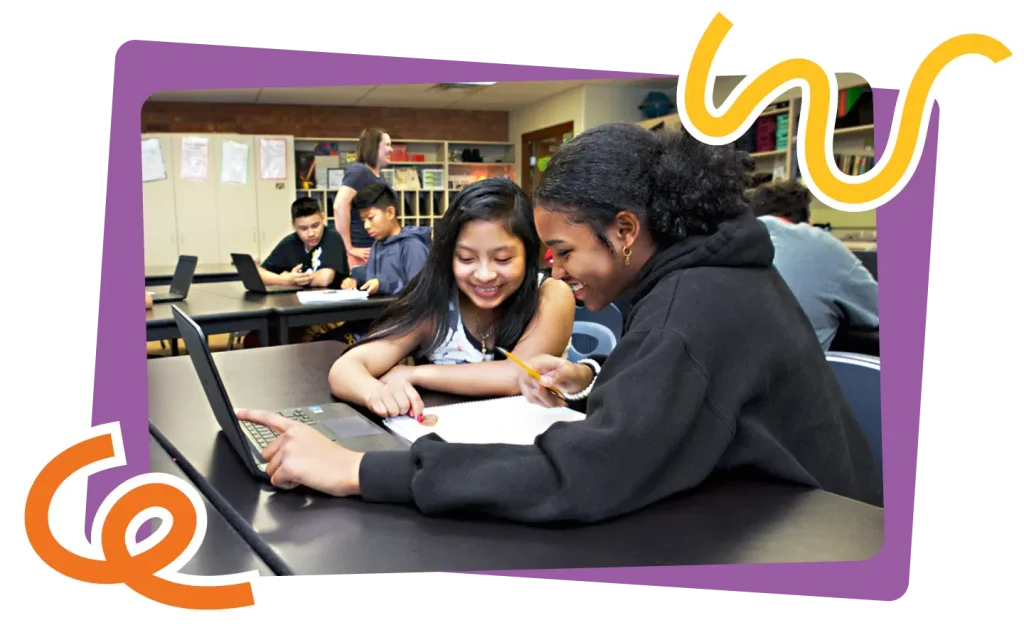
Publisher presentation
The Lawrence Hall of Science
Developed by the science education experts at UC Berkeley’s Lawrence Hall of Science and the digital learning team at Amplify, our program features:
- A phenomena-based approach where students construct a complex understanding of each unit’s anchor phenomenon.
- A blend of cohesive storylines, hands-on investigations, rich discussions, literacy-rich activities, and digital tools.
- Carefully crafted units, chapters, lessons, and activities designed to deliver true 3-dimensional learning.
- An instructional design that supports all learners in accessing all standards.
Proven to work
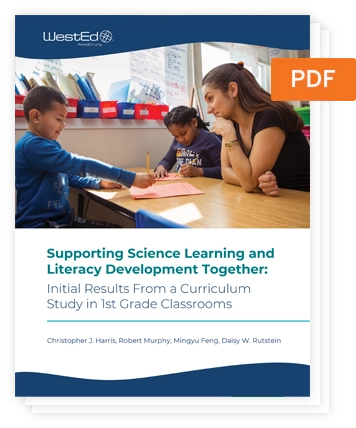
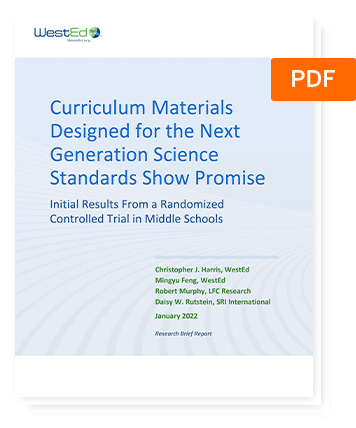
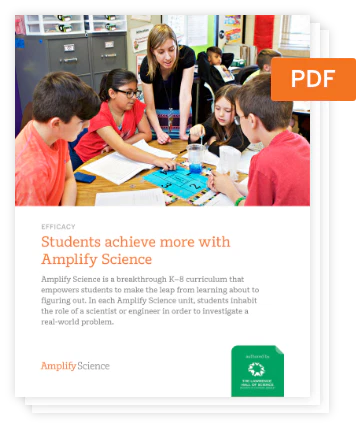
Instructional model
The Amplify Science program is rooted in the proven, research-based pedagogy of Do, Talk, Read, Write, Visualize. Here’s how each element works:
Do
First-hand investigations are an important part of any science classroom, and Amplify Science has students getting hands-on in every unit—from building models of protein molecules to experimenting with electrical systems.
Talk
Student-to-student discourse and full-class discussions are an integral part of the program. Students are provided with numerous opportunities to engage in meaningful oral scientific argumentation, all while fostering a collaborative classroom environment.
Read
Students read scientific articles, focusing their reading activities on searching for evidence related to their investigation and, importantly, on asking and recording questions as they read through fascinating texts on 21st-century topics.
Write
Following real-world practices, students write scientific arguments based on evidence they’ve collected, making clear their reasoning about how a given piece of evidence connects to one of several claims.
Visualize
By manipulating digital simulations and using modeling tools to craft visualizations of their thinking— just as real scientists and engineers
do—students take their learning far beyond the confines of what they can physically see in the classroom in an exciting and authentic way.
Program structure
Our cyclical lesson design ensures students receive multiple exposures to concepts through a variety of modalities. As they progress through the lessons within a unit, students build and deepen their understanding, increasing their ability to develop and refine complex explanations of the unit’s phenomenon.
It’s this proven program structure and lesson design that enables Amplify Science to address 100% of the NGSS, and support students in mastering the Oregon Science Standards.

Unit types
While every unit delivers three-dimensional learning experiences and engages students in gathering evidence from a rich collection of sources, each unit also serves a unique instructional purpose.
In grades 6–8:
- One unit is a launch unit.
- Three units are core units.
- Two units are engineering internships.
Launch units are the first units taught in each year of Amplify Science. The goal of the Launch unit is to introduce students to norms, routines, and practices that will be built on throughout the year, including argumentation, active reading, and using the program’s technology. For example, rather than taking the time to explain the process of active reading in every unit in a given year, it is explained thoroughly in the Launch unit, thereby preparing students to read actively in all subsequent units.
Core units establish the context of the unit by introducing students to a real-world problem. As students move through lessons in a Core unit, they figure out the unit’s anchoring phenomenon, gain an understanding of the unit’s disciplinary core ideas and science and engineering practices, and make linkages across topics through the crosscutting concepts. Each Core unit culminates with a Science Seminar and final writing activity.
Engineering Internship units invite students to design solutions for real-world problems as interns for a fictional company called Futura. Students figure out how to help those in need, from tsunami victims in Sri Lanka to premature babies, through the application of engineering practices. In the process, they apply and deepen their learning from Core units.
Unit sequence
Our lessons follow a structure that is grounded in regular routines while still being flexible enough to allow for a variety of learning experiences.
In fact, our multi-modal instruction offers more opportunities for students to construct meaning, and practice and apply concepts than any other program. What’s more, our modular design means our units can be flexibly arranged to support your instructional goals.

Program components
Available digitally and in print, our unit-specific reference guides are chock full of helpful resources, including scientific background knowledge, planning information and resources, color-coded 3D Statements, detailed lesson plans, tips for delivering instruction, and differentiation strategies.

Hands-on learning is an essential part of Amplify Science, and is integrated into every unit. Students actively participate in science, playing the roles of scientists and engineers as they gather evidence, think critically, solve problems, and develop and defend claims about the world around them. Every unit includes hands-on investigations that are critical to achieving the unit’s learning goals.
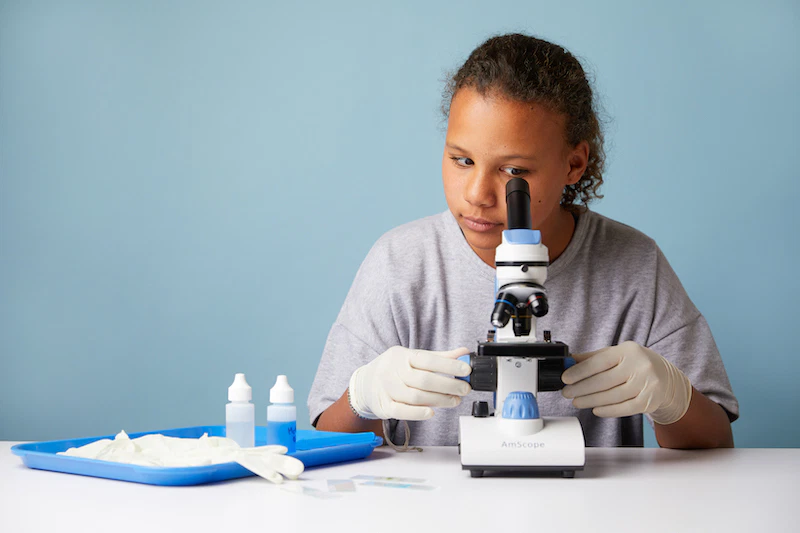
More hands-on with Flextensions:
Hands-on Flextensions are additional, optional investigations that are included at logical points in the learning progression and give students an opportunity to dig deeper if time permits. These activities offer teachers flexibility to choose to dedicate more time to hands-on learning. Materials referenced in Hands-on Flextension activities will either be included in the unit kit or are easily sourced. Supporting resources such as student worksheets will be included as downloadable PDF files.
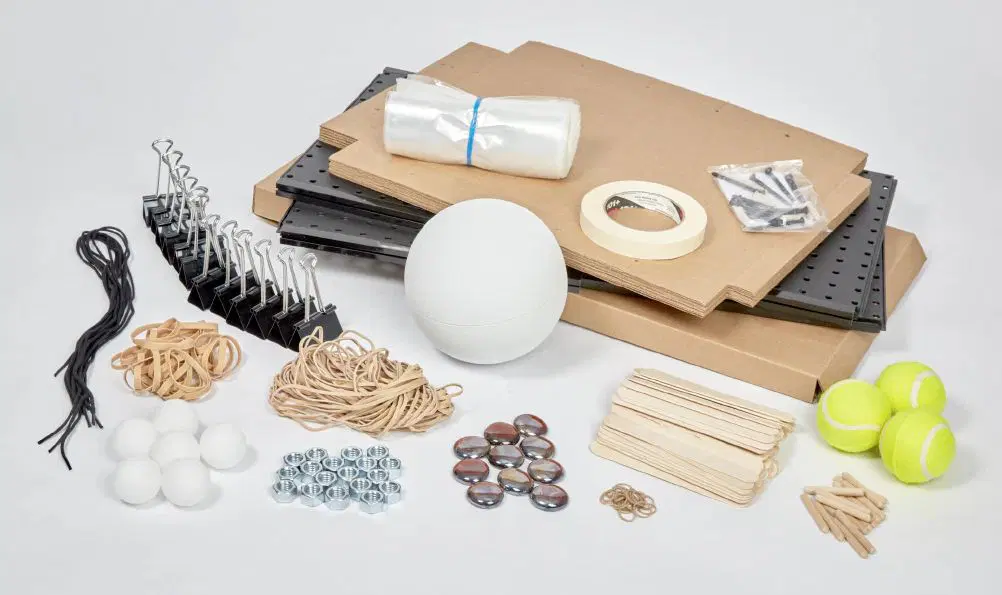
Our digital Simulations and Practice Tools are powerful resources for exploration, data collection, and student collaboration. They allow students the ability to explore scientific concepts that might otherwise be invisible or impossible to see with the naked eye.
Available for every unit, our Student Investigation Notebooks contain instructions for activities and space for students to record data and observations, reflect on ideas from texts and investigations, and construct explanations and arguments.
In grades 6–8, one copy of the Student Investigation Notebook is included in each unit’s materials kit for use as a blackline master. Each notebook is also available as a downloadable PDF on the Unit Guide page of the digital Teacher’s Guide.
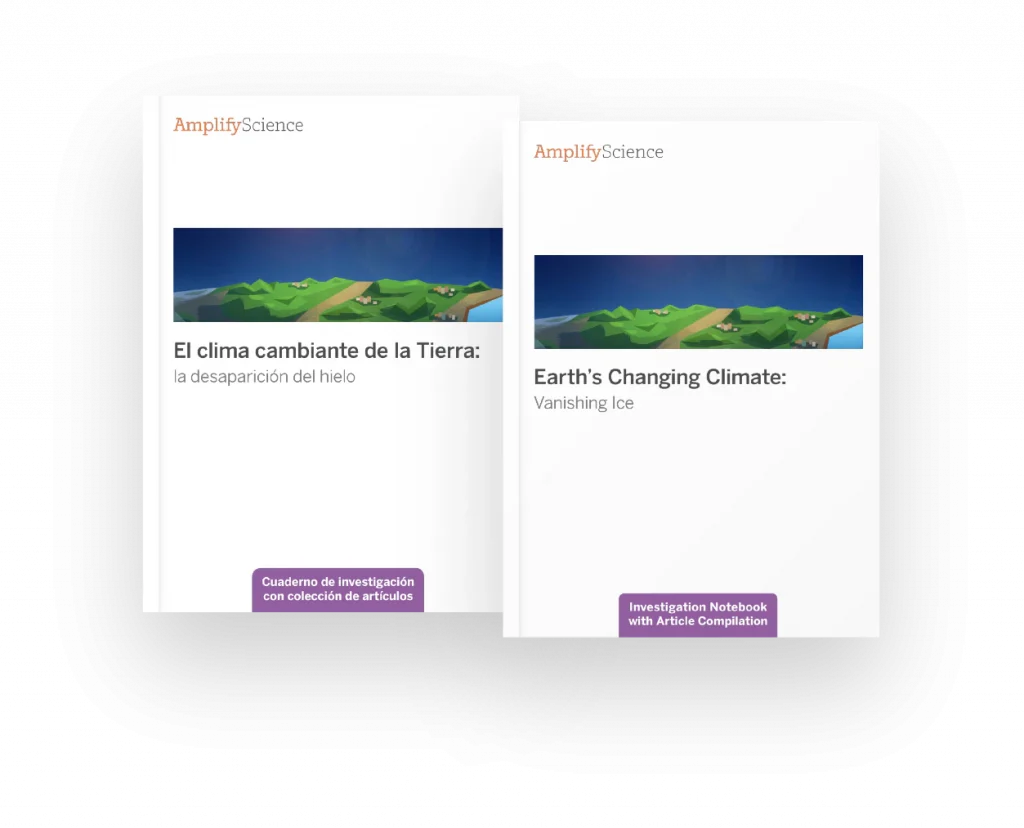
These customizable PowerPoints are available for every lesson of the program and make delivering instruction a snap with visual prompts, colorful activity instructions, investigation set-up videos and animations, and suggested teacher talk in the notes section of each slide.
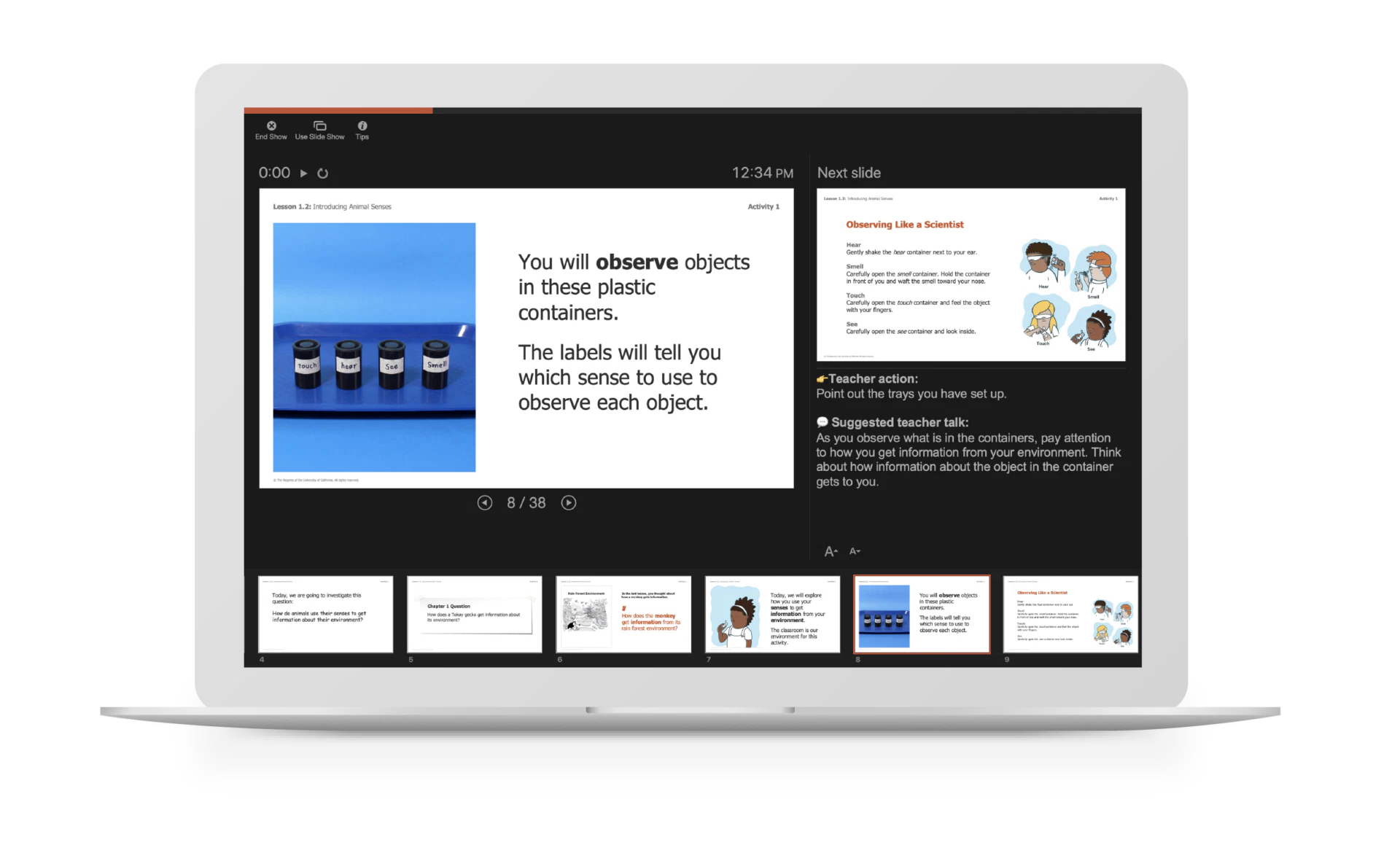
Full coverage of the Oregon Science Standards
Amplify Science was designed from the ground up to meet the Next Generation Science Standards (NGSS). As such, it aligns to the Oregon Science Standards, which were also borne out of the NGSS.
The guidance below is meant to provide support for integrating additional activities that support full coverage of Oregon’s standards. Organized by grade level, each section below will outline:
- Additional activities that support 100% alignment to the Oregon Science Standards.
- The standard being addressed with the activities.
- The recommended placement of the activities within a specific Amplify Science unit.
- PDFs of any accompanying materials that are necessary to implement the activities.
Activity Title: Meet a Scientist Who Changed How We Think About Brain Cells
About this activity: In this activity, students read a short article about a scientist who studied the nervous system.
Recommended placement: Metabolism unit, Lesson 3.2
Materials:
Instructions: Download the PDF “Meet a Scientist Who Changed How We Think About Brain Cells” above and remind students of the Active Reading guidelines. Before students read the article, invite them to share prior experiences. Then have students complete the copymaster above.
Activity Title: Meet a Scientist Who Studies Underwater Currents
About this activity: In this activity, students read a short article about a scientist who studies ocean currents.
Recommended placement: Oceans, Atmosphere, and Climate unit, Lesson 2.1
Materials:
Instructions: Download the PDF “Meet a Scientist Who Studies Underwater Currents” above and remind students of the Active Reading guidelines. Before students read the article, invite them to share prior experiences. Then have students complete the copymaster above.
Activity Title: Meet a Scientist Who Studies How the Environment Affects Our Traits
About this activity: In this activity, students read two short articles, one about current research on genes and proteins, and one about a scientist who is studying how the environment can affect our traits.
Recommended placement: Traits and Reproduction unit, Lesson 2.4
Materials:
Instructions: Download the PDF “Meet a Scientist Who Studies How the Environment Affects Our Traits” above and remind students of the Active Reading guidelines. Before students read the article, invite them to share prior experiences. Then have students complete the copymaster above.
Activity Title: Who Becomes a Space Scientist?
About this activity: In this activity, Students read a short article about a scientist who studies space.
Recommended placement: Geology on Mars unit, Lesson 3.1
Materials:
Instructions: Download the PDF “Who Becomes a Space Scientist?” above and remind students of the Active Reading guidelines. Before students read the article, invite them to share prior experiences. Then have students complete the copymaster above.
Activity Title: Meet a Scientist Who Studies How Plants Find Water Underground
About this activity: In this activity, students read a short article about a scientist who studies how plants’ roots get water.
Recommended placement: Matter and Energy in Ecosystems unit, Lesson 1.6
Materials:
Instructions: Download the PDF “Meet a Scientist Who Studies How Plants Find Water Underground” above and remind students of the Active Reading guidelines. Before students read the article, invite them to share prior experiences. Then have students complete the copymaster above.
Activity Title: Bringing Back the Buffalo
About this activity: In this activity, students change one competing population to try to decrease the other in the Sim, and read a short article about a scientist who studies buffalo.
Recommended placement: Populations and Resources unit, Lesson 3.2
Materials:
Instructions: Download the PDF “Bringing Back the Buffalo” above and remind students of the Active Reading guidelines. Before students read the article, invite them to share prior experiences. Then have students complete the copymaster above.
Activity Title: Rereading “A Continental Puzzle”
About this activity: In this activity, students reread “A Continental Puzzle” and think about how patterns were helpful to Wegener’s work.
Recommended placement: Plate Motion unit, Lesson 3.2
Materials:
Instructions: Direct students back to “A Continental Puzzle” above and remind students of the Active Reading guidelines. Before students re-read the article, invite them to share prior experiences. Then have students complete the copymaster above.
Activity Title: Meet a Scientist Who Studies Variation in Monkey Populations
About this activity: In this activity, students read a short article about a scientist who studies variation of traits in monkey populations.
Recommended placement: Natural Selection unit, Lesson 1.6
Materials:
Instructions: Download the PDF “Meet a Scientist Who Studies Variation in Monkey Populations” above and remind students of the Active Reading guidelines. Before students read the article, invite them to share prior experiences. Then have students complete the copymaster above.
Activity Title: Extinctions and Human Impacts
About this activity: The purpose of this lesson is for students to see how increases in human population and consumption of natural resources can negatively impact Earth’s systems.
Recommended placement: Natural Selection unit, Lesson 4.5
Materials:
Instructions: Download the PDF “Extinctions and Human Impacts” above and remind students of the Active Reading guidelines. Before students read the article, invite them to share prior experiences. Then have students complete the copymaster above.
Activity Title: Steno and the Shark
About this activity: In this activity, students read a short article about Nicolas Steno, a scientist from the 1600s whose studies of fossilized sharks’ teeth embedded in rock layers laid the foundation for the modern understanding of stratigraphy.
Recommended placement: Evolutionary History unit, Lesson 2.4
Materials:
Instructions: Download the PDF “Steno and the Shark” above and remind students of the Active Reading guidelines. Before students read the article, invite them to share prior experiences. Then have students complete the copymaster above.
Activity Title: Scale in the Solar System
About this activity: In this activity, students read and annotate the articles “Scale in the Solar System” and “The Solar System Is Huge.”
Recommended placement: Earth, Moon, and Sun unit, Lesson 1.2
Materials:
Instructions: Download the PDF “Scale in the Solar System” above and remind students of the Active Reading guidelines. Before students read the article, invite them to share prior experiences. Then have students complete the copymaster above.
Explore your print samples
With your Amplify Science print samples, you’ll find unit-specific Teacher’s References Guides and Student Investigation Notebooks for each grade level.
A note about the Teacher’s Reference Guides:
It’s important that your committee sees the full breadth and depth of our instruction. For that reason, we provided a copy of each of our unit-specific Teacher Reference Guides.
Rest assured that teachers do not use these robust reference guides for day-to-day teaching. For that, we have a hands-free TG!

- Teacher Reference Guide: Unlike a typical TG that requires a series of supplemental books to support it, our encyclopedic reference guide is chock-full of everything a teacher needs to fully implement our program and the NGSS.
- Ready-to-Teach Lesson Slides: For daily instruction, teachers need their hands free. That’s why we created ready-to-teach lesson slides for every single lesson. What’s more, they are editable and include suggested teacher talk and point-of-use differentiation and other instructional tips. Click to learn more.
A note about the Materials Kits:
Hands-on learning is at the heart of Amplify Science, and is integrated into every unit. In order to make hands-on learning more manageable for busy teachers, Amplify Science materials are organized into unit-specific kits.
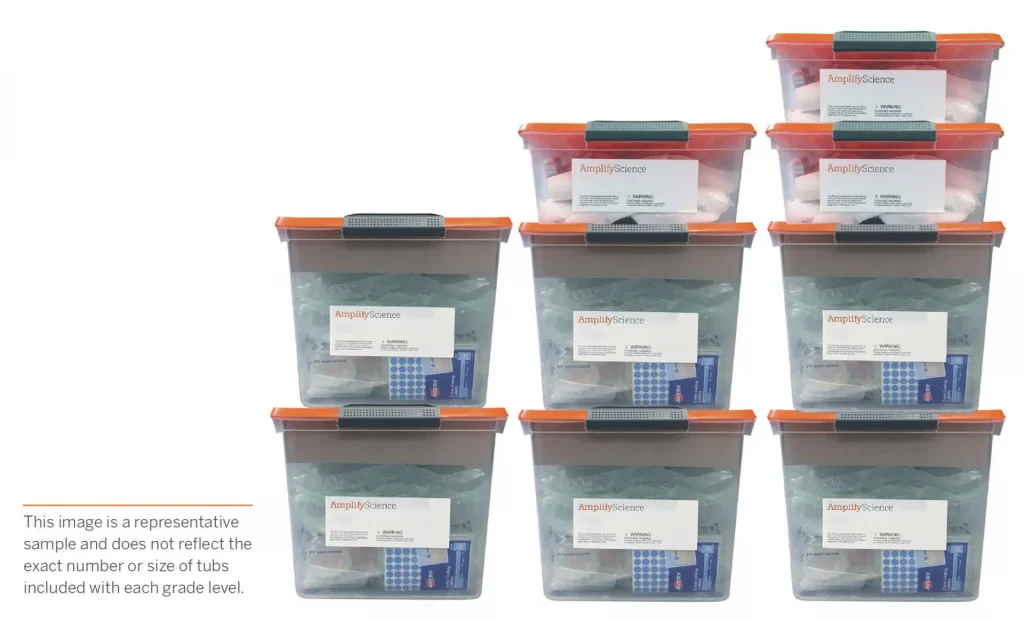
Our unit-specific kits:
- Include more materials — We give teachers enough materials to support 200 student uses.
- Are more manageable — Unlike other programs that require large groups of students to share limited sets of materials, our kits include enough to support small groups of 4–5 students.
- Include supportive videos — Each hands-on activity provides clear instructions for the teacher, with more complex activities supported by video demonstrations and illustrations.
At your request, we did not include our materials kits with our submissions samples. However, we did provide grade-specific lists of all materials included in each kit, which you can also find with the links below.
Access your digital samples
Explore as a teacher
Follow these instructions to explore the Amplify Science digital platform as a teacher.
- Click the Access Amplify Science Platform button below and bookmark it.
- Select Log in with Amplify.
- Enter the username: t.or68sci@tryamplify.net
- Enter the password: Science5OR
- Click the Science icon.
- Click on the Grade Menu in the top center of the screen and select any grade.
- Select any unit.
To help familiarize yourself with navigating the digital platform, watch the below navigational video.
Explore as a student
Follow these instructions to explore the Amplify Science digital platform as a student.
- Click the Access Amplify Science Platform button below and bookmark it.
- Select Log in with Amplify.
- Enter the username: s.or68sci@tryamplify.net
- Enter the password: Science5OR
- Click the Science icon.
- Click on the Grade Menu in the top center of the screen and select any grade.
- Select any unit.
Resources to support your review
- Oregon standards correlation for grades 6–8
- QCD Science Adoption Criteria 2022 for grades 6-8
- QCD IMET Citation guidance for grades 6-8
- Oregon Science IMET for grades 6-8 (Excel download)
- Oregon QCD-IMET Citation guidance for grades 6-8
- Research behind Amplify Science
- Phenomena in grades 6–8
- Program structure for grades 6–8
- Active Reading in grades 6–8
- Engineering in Amplify Science
- Approaches to assessment in grades 6–8
Publisher presentation
The Lawrence Hall of Science
Developed by the science education experts at UC Berkeley’s Lawrence Hall of Science and the digital learning team at Amplify, our program features:
- A phenomena-based approach where students construct a complex understanding of each unit’s anchor phenomenon.
- A blend of cohesive storylines, hands-on investigations, rich discussions, literacy-rich activities, and digital tools.
- Carefully crafted units, chapters, lessons, and activities designed to deliver true 3-dimensional learning.
- An instructional design that supports all learners in accessing all standards.
Instructional model
The Amplify Science program is rooted in the proven, research-based pedagogy of Do, Talk, Read, Write, Visualize. Here’s how each element works:
DO
First-hand investigations are an important part of any science classroom, and Amplify Science has students getting hands-on in every unit—from building models of protein molecules to experimenting with electrical systems.
TALK
Student-to-student discourse and full-class discussions are an integral part of the program. Students are provided with numerous opportunities to engage in meaningful oral scientific argumentation, all while fostering a collaborative classroom environment.
READ
Students read scientific articles, focusing their reading activities on searching for evidence related to their investigation and, importantly, on asking and recording questions as they read through fascinating texts on 21st-century topics.
WRITE
Following real-world practices, students write scientific arguments based on evidence they’ve collected, making clear their reasoning about how a given piece of evidence connects to one of several claims.
VISUALIZE
By manipulating digital simulations and using modeling tools to craft visualizations of their thinking— just as real scientists and engineers do—students take their learning far beyond the confines of what they can physically see in the classroom in an exciting and authentic way.
Program structure
Our cyclical lesson design ensures students receive multiple exposures to concepts through a variety of modalities. As they progress through the lessons within a unit, students build and deepen their understanding, increasing their ability to develop and refine complex explanations of the unit’s phenomenon.
It’s this proven program structure and lesson design that enables Amplify Science to address 100% of the NGSS, and support students in mastering the Oregon Science Standards.
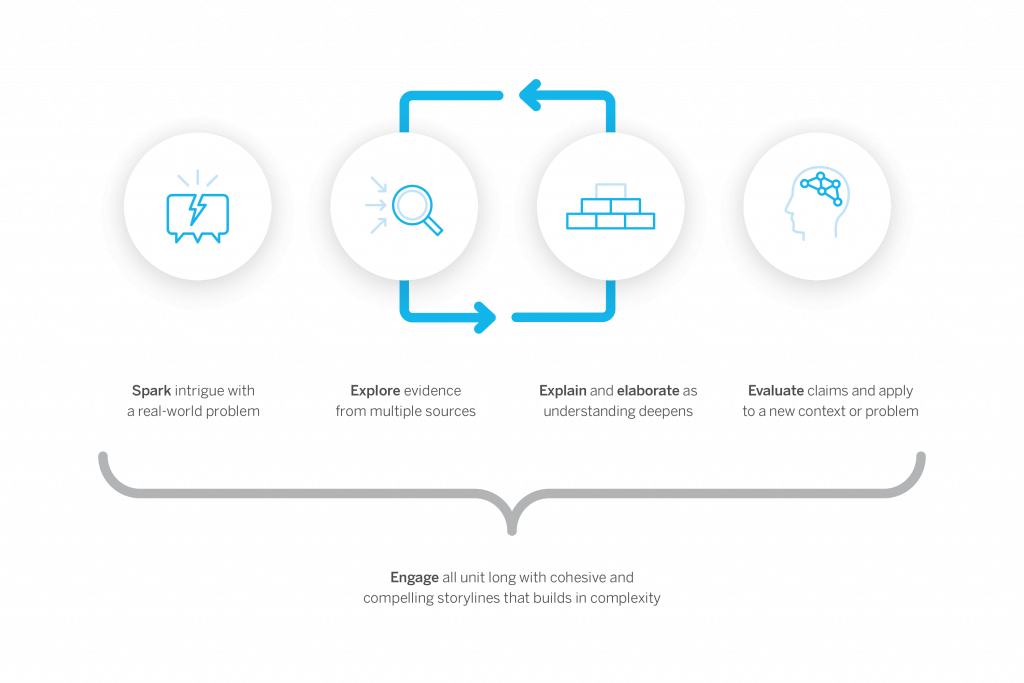
Unit types
While every unit delivers three-dimensional learning experiences and engages students in gathering evidence from a rich collection of sources, each unit also serves a unique instructional purpose.
In grades 6–8:
- One unit is a launch unit.
- Three units are core units.
- Two units are engineering internships.
Launch units are the first units taught in each year of Amplify Science. The goal of the Launch unit is to introduce students to norms, routines, and practices that will be built on throughout the year, including argumentation, active reading, and using the program’s technology. For example, rather than taking the time to explain the process of active reading in every unit in a given year, it is explained thoroughly in the Launch unit, thereby preparing students to read actively in all subsequent units.
Core units establish the context of the unit by introducing students to a real-world problem. As students move through lessons in a Core unit, they figure out the unit’s anchoring phenomenon, gain an understanding of the unit’s disciplinary core ideas and science and engineering practices, and make linkages across topics through the crosscutting concepts. Each Core unit culminates with a Science Seminar and final writing activity.
Engineering Internship units invite students to design solutions for real-world problems as interns for a fictional company called Futura. Students figure out how to help those in need, from tsunami victims in Sri Lanka to premature babies, through the application of engineering practices. In the process, they apply and deepen their learning from Core units.
Unit sequence
Our lessons follow a structure that is grounded in regular routines while still being flexible enough to allow for a variety of learning experiences.
In fact, our multi-modal instruction offers more opportunities for students to construct meaning, and practice and apply concepts than any other program. What’s more, our modular design means our units can be flexibly arranged to support your instructional goals.

Program components
Available digitally and in print, our unit-specific reference guides are chock full of helpful resources, including scientific background knowledge, planning information and resources, color-coded 3-D Statements, detailed lesson plans, tips for delivering instruction, and differentiation strategies.
Hands-on learning is an essential part of Amplify Science, and is integrated into every unit. Students actively participate in science, playing the roles of scientists and engineers as they gather evidence, think critically, solve problems, and develop and defend claims about the world around them. Every unit includes hands-on investigations that are critical to achieving the unit’s learning goals.
More hands-on with Flextensions:
Hands-on Flextensions are additional, optional investigations that are included at logical points in the learning progression and give students an opportunity to dig deeper if time permits. These activities offer teachers flexibility to choose to dedicate more time to hands-on learning. Materials referenced in Hands-on Flextension activities will either be included in the unit kit or are easily sourced. Supporting resources such as student worksheets will be included as downloadable PDF files.
Our kits include enough materials to support 200 student uses. In other words, teachers can easily support all five periods and small groups of 4-5 students each. Plus, our unit-specific kits mean teachers just grab the tub they need and then put it all back with ease.
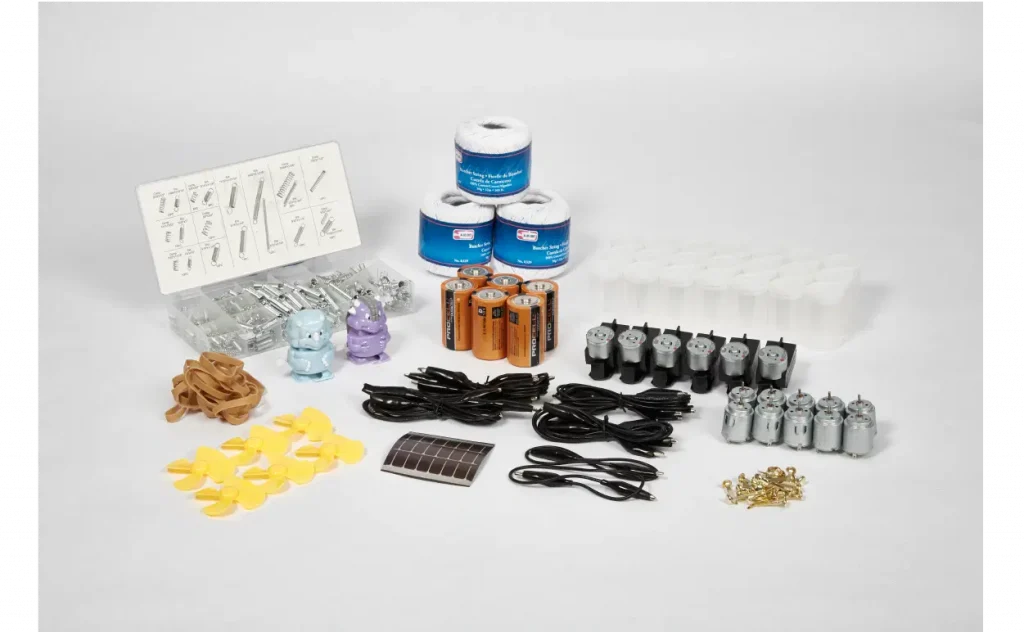
Our digital Simulations and Practice Tools are powerful resources for exploration, data collection, and student collaboration. They allow students the ability to explore scientific concepts that might otherwise be invisible or impossible to see with the naked eye.
Available for every unit, our Student Investigation Notebooks contain instructions for activities and space for students to record data and observations, reflect on ideas from texts and investigations, and construct explanations and arguments.
In grades 6–8, one copy of the Student Investigation Notebook is included in each unit’s materials kit for use as a blackline master. Each notebook is also available as a downloadable PDF on the Unit Guide page of the digital Teacher’s Guide.
These customizable PowerPoints are available for every lesson of the program and make delivering instruction a snap with visual prompts, colorful activity instructions, investigation set-up videos and animations, and suggested teacher talk in the notes section of each slide.

Full coverage of the Oregon Science Standards
Amplify Science was designed from the ground up to meet the Next Generation Science Standards (NGSS). As such, it aligns to the Oregon Science Standards, which were also borne out of the NGSS.
The guidance below is meant to provide support for integrating additional activities that support full coverage of Oregon’s standards. Organized by grade level, each section below will outline:
- Additional activities that support 100% alignment to the Oregon Science Standards.
- The standard being addressed with the activities.
- The recommended placement of the activities within a specific Amplify Science unit.
- PDFs of any accompanying materials that are necessary to implement the activities.
Activity Title: Meet a Scientist Who Changed How We Think About Brain Cells
About this activity: In this activity, students read a short article about a scientist who studied the nervous system.
Recommended placement: Metabolism unit, Lesson 3.2
Materials:
Instructions: Download the PDF “Meet a Scientist Who Changed How We Think About Brain Cells” above and remind students of the Active Reading guidelines. Before students read the article, invite them to share prior experiences. Then have students complete the copymaster above.
Activity Title: Meet a Scientist Who Studies Underwater Currents
About this activity: In this activity, students read a short article about a scientist who studies ocean currents.
Recommended placement: Oceans, Atmosphere, and Climate unit, Lesson 2.1
Materials:
Instructions: Download the PDF “Meet a Scientist Who Studies Underwater Currents” above and remind students of the Active Reading guidelines. Before students read the article, invite them to share prior experiences. Then have students complete the copymaster above.
Activity Title: Meet a Scientist Who Studies How the Environment Affects Our Traits
About this activity: In this activity, students read two short articles, one about current research on genes and proteins, and one about a scientist who is studying how the environment can affect our traits.
Recommended placement: Traits and Reproduction unit, Lesson 2.4
Materials:
Instructions: Download the PDF “Meet a Scientist Who Studies How the Environment Affects Our Traits” above and remind students of the Active Reading guidelines. Before students read the article, invite them to share prior experiences. Then have students complete the copymaster above.
Activity Title: Who Becomes a Space Scientist?
About this activity: In this activity, Students read a short article about a scientist who studies space.
Recommended placement: Geology on Mars unit, Lesson 3.1
Materials:
Instructions: Download the PDF “Who Becomes a Space Scientist?” above and remind students of the Active Reading guidelines. Before students read the article, invite them to share prior experiences. Then have students complete the copymaster above.
Activity Title: Meet a Scientist Who Studies How Plants Find Water Underground
About this activity: In this activity, students read a short article about a scientist who studies how plants’ roots get water.
Recommended placement: Matter and Energy in Ecosystems unit, Lesson 1.6
Materials:
Instructions: Download the PDF “Meet a Scientist Who Studies How Plants Find Water Underground” above and remind students of the Active Reading guidelines. Before students read the article, invite them to share prior experiences. Then have students complete the copymaster above.
Activity Title: Bringing Back the Buffalo
About this activity: In this activity, students change one competing population to try to decrease the other in the Sim, and read a short article about a scientist who studies buffalo.
Recommended placement: Populations and Resources unit, Lesson 3.2
Materials:
Instructions: Download the PDF “Bringing Back the Buffalo” above and remind students of the Active Reading guidelines. Before students read the article, invite them to share prior experiences. Then have students complete the copymaster above.
Activity Title: Rereading “A Continental Puzzle”
About this activity: In this activity, students reread “A Continental Puzzle” and think about how patterns were helpful to Wegener’s work.
Recommended placement: Plate Motion unit, Lesson 3.2
Materials:
Instructions: Direct students back to “A Continental Puzzle” above and remind students of the Active Reading guidelines. Before students re-read the article, invite them to share prior experiences. Then have students complete the copymaster above.
Activity Title: Meet a Scientist Who Studies Variation in Monkey Populations
About this activity: In this activity, students read a short article about a scientist who studies variation of traits in monkey populations.
Recommended placement: Natural Selection unit, Lesson 1.6
Materials:
Instructions: Download the PDF “Meet a Scientist Who Studies Variation in Monkey Populations” above and remind students of the Active Reading guidelines. Before students read the article, invite them to share prior experiences. Then have students complete the copymaster above.
Activity Title: Extinctions and Human Impacts
About this activity: The purpose of this lesson is for students to see how increases in human population and consumption of natural resources can negatively impact Earth’s systems.
Recommended placement: Natural Selection unit, Lesson 4.5
Materials:
Instructions: Download the PDF “Extinctions and Human Impacts” above and remind students of the Active Reading guidelines. Before students read the article, invite them to share prior experiences. Then have students complete the copymaster above.
Activity Title: Steno and the Shark
About this activity: In this activity, students read a short article about Nicolas Steno, a scientist from the 1600s whose studies of fossilized sharks’ teeth embedded in rock layers laid the foundation for the modern understanding of stratigraphy.
Recommended placement: Evolutionary History unit, Lesson 2.4
Materials:
Instructions: Download the PDF “Steno and the Shark” above and remind students of the Active Reading guidelines. Before students read the article, invite them to share prior experiences. Then have students complete the copymaster above.
Activity Title: Scale in the Solar System
About this activity: In this activity, students read and annotate the articles “Scale in the Solar System” and “The Solar System Is Huge.”
Recommended placement: Earth, Moon, and Sun unit, Lesson 1.2
Materials:
Instructions: Download the PDF “Scale in the Solar System” above and remind students of the Active Reading guidelines. Before students read the article, invite them to share prior experiences. Then have students complete the copymaster above.
Explore your print samples
Amplify Science physical samples can be found at the Hamersley Library at Western Oregon University. There you’ll find unit-specific Teacher’s References Guides and Student Investigation Notebooks for each grade level.
A note about the Teacher’s Reference Guides:
It’s important that your committee sees the full breadth and depth of our instruction. For that reason, we provided a copy of each of our unit-specific Teacher Reference Guides.
Rest assured that teachers do not use these robust reference guides for day-to-day teaching. For that, we have a hands-free TG!
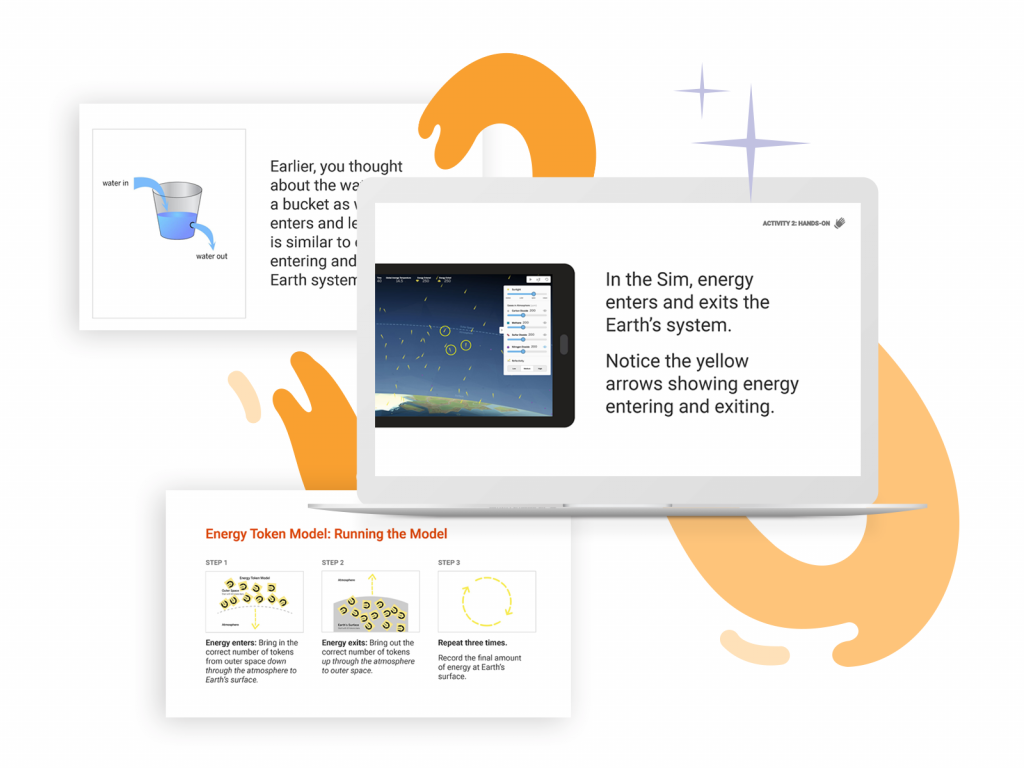
- Teacher Reference Guide: Unlike a typical TG that requires a series of supplemental books to support it, our encyclopedic reference guide is chock-full of everything a teacher needs to fully implement our program and the NGSS.
- Ready-to-Teach Lesson Slides: For daily instruction, teachers need their hands free. That’s why we created ready-to-teach lesson slides for every single lesson What’s more, they are editable and include suggested teacher talk and point-of-use differentiation and other instructional tips. Click to learn more.
A note about the Materials Kits:
Hands-on learning is at the heart of Amplify Science, and is integrated into every unit. In order to make hands-on learning more manageable for busy teachers, Amplify Science materials are organized into unit-specific kits.
Our unit-specific kits:
- Include more materials — We give teachers enough materials to support 200 student uses.
- Are more manageable — Unlike other programs that require large groups of students to share limited sets of materials, our kits include enough to support small groups of 4–5 students.
- Include supportive videos — Each hands-on activity provides clear instructions for the teacher, with more complex activities supported by video demonstrations and illustrations.
At your request, we did not include our materials kits with our submissions samples. However, we did provide grade-specific lists of all materials included in each kit, which you can also find with the links below.
Access your digital samples
Explore as a teacher
Follow these instructions to explore the Amplify Science digital platform as a teacher.
- Click the Access Amplify Science Platform button below.
- Select Log in with Amplify.
- Enter the teacher username and password found on your unique login flyer enclosed in your physical sample box.
- Click the Science icon.
- Click on the Grade Menu in the top center of the screen and select any grade.
- Select any unit.
To help familiarize yourself with navigating the digital platform, watch the below navigational video.
Explore as a student
Follow these instructions to explore the Amplify Science digital platform as a student.
- Click the Access Amplify Science Platform button below.
- Select Log in with Amplify.
- Enter the student username and password found on your unique login flyer enclosed in your physical sample box.
- Click the Science icon.
- Click on the Grade Menu in the top center of the screen and select any grade.
- Select any unit.
Resources to support your review
Oregon standards correlation for grades 6–8
QCD Science Adoption Criteria 2022 for grades 6-8
QCD IMET Citation guidance for grades 6-8
Oregon Science IMET for grades 6-8 (Excel download)
Oregon QCD-IMET Citation guidance for grades 6-8
Research behind Amplify Science
Program structure for grades 6–8
Explore Amplify CKLA and Amplify Caminos
Thank you for reviewing the top-rated Amplify Core Knowledge Language Arts (CKLA) and its new Spanish-language partner Amplify Caminos.
Built on the Science of Reading, Amplify CKLA and Amplify Caminos sequence deep content knowledge with research-based foundational skills to help New York City students become strong readers, writers, speakers, and thinkers. As part of our commitment to creating richer curricula that is more diverse and culturally responsive, we’ve built on the foundation of our 1st Edition to create a new Amplify CKLA, complete with program enhancements that better help you reach every student.

Access your demo account
Access your NYC demo account to perform a full program review and explore the digital features that enhance instruction and save educators valuable time.
Username: t.nyc-ckla-demo@tryamplify.net
Password: Demo1234
Click here for demo login and navigation support.
Built on the Science of Reading
Through a unique, evidence-based two-strand approach, Amplify CKLA helps students master foundational skills and build a robust knowledge base–both of which are necessary for accessing and comprehending complex texts.
Grades K–2: Dedicated knowledge building and explicit skills instruction
Every day, students in Grades K–2 complete one full lesson that builds foundational reading skills in the Amplify CKLA Skills Strand, as well as one full lesson that builds background knowledge in the Amplify CKLA Knowledge Strand. Through learning in each of these strands, students develop the early literacy skills necessary to help them become confident readers and build the context to understand what they’re reading.
Grades 3–5: Integrated instruction
In Grades 3–5, Knowledge and Skills are integrated in one set of instructional materials. Lessons begin to combine skills and knowledge with increasingly complex texts, close reading, and a greater writing emphasis. Students can then use their skills to go on their own independent reading adventures.
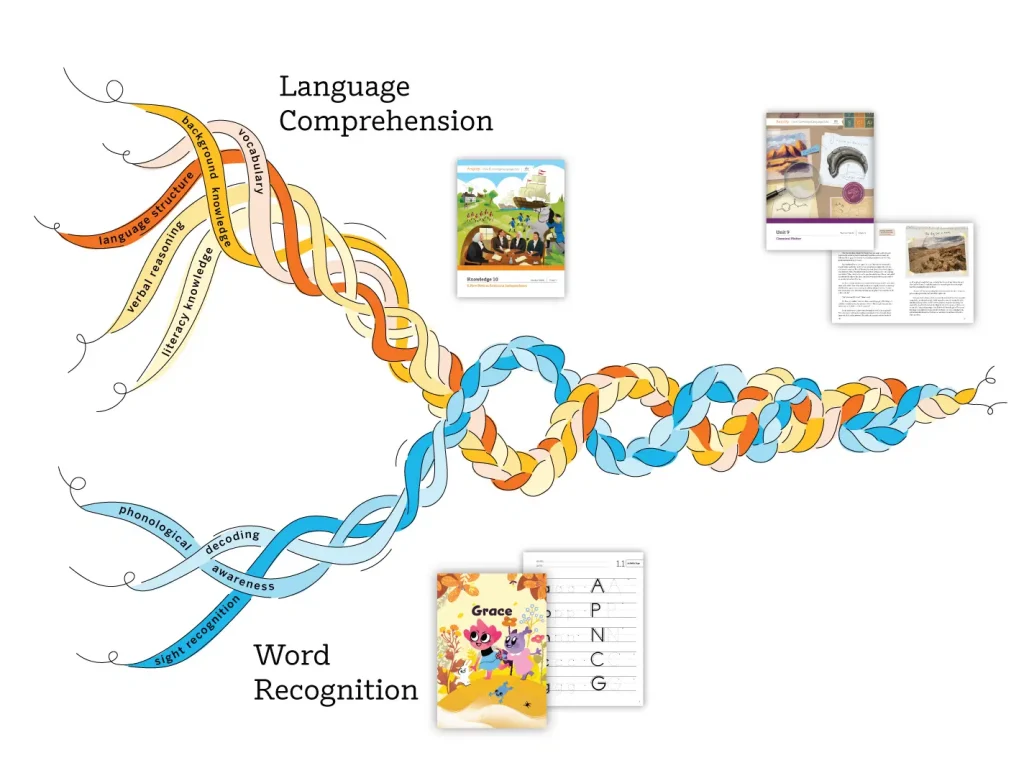
Illustrated for engagement
All of the Amplify CKLA K–2 Skills Readers have been redesigned and reillustrated to increase student engagement and students’ sense of connection with the decodable stories and their characters. Stories with human characters now have improved inclusivity and authenticity and feature individuals with a broad range of identity factors, including socioeconomic status, age, ability, race, ethnicity, country of origin, religion, and more. Other stories feature fantastical creatures to bring excitement and whimsy to the tales.
These new readers better reflect New York City classrooms and give students intensive practice with 100% decodable text.
Inspire inquiry and spark curiosity
New Knowledge Research Units in each grade of Amplify CKLA and Amplify Caminos provide a collection of high-interest authentic trade books that will spark your students’ curiosity and inspire more inquiry. The rich topics and highly visual components featured in these units provide students with new perspectives and additional windows and mirrors as they work to build knowledge.
In these units students will soar to new heights with Dr. Ellen Ochoa, Amelia Earhart, and the Tuskegee Airmen. They’ll feel the rhythm as they learn about Jazz legends Miles Davis, Tito Puente, and Billie Holiday. And they’ll explore the far reaches of the world with Jacques Cousteau, Matthew Henson, and Eugenie Clark.

Parallel Spanish literacy instruction
Like Amplify CKLA, Amplify Caminos provides a two-strand approach to instruction via authentic Spanish foundational skills instruction sequenced with the same knowledge-building content found in Amplify CKLA. Every day in Grades K–2, students complete one full lesson that builds foundational reading skills in the Amplify Caminos Lectoescritura strand, as well as one full lesson that builds background knowledge in the Amplify Caminos Conocimiento strand.
When used with Amplify CKLA, Amplify Caminos provides parity across English and Spanish that’s suitable for any Spanish and English biliteracy implementation model.
New York City review materials
The Amplify CKLA Program Guide and the Amplify Caminos Program Guide provide you with more details on how these programs work, how they’re structured, and why they’re uniquely capable of helping you bring English and Spanish reading instruction built on the Science of Reading to your classroom.
NYC DOE requested review information:
- Amplify CKLA Scope and Sequence documents
- Amplify Caminos Scope and Sequence documents
- Amplify CKLA is recognized by Knowledge Matters Campaign and has received high ratings from EdReports.
- Alignment to New York State Next Generation ELA Learning Standards
- Alignment to Culturally Responsive-Sustaining Education Framework
- New York City DOE Implementation and Professional Development Proposal
For an even more in-depth review, access the following materials:

Vulnerability Disclosure Policy
As a provider of technology solutions to schools, Amplify’s commitment to data privacy and security is essential to our organization. Amplify demonstrates that commitment in part through the physical, technical, and administrative safeguards we maintain to protect student data and other sensitive information entrusted to our care.
Amplify looks forward to working with the security community to find security vulnerabilities and support our efforts to keep our data and systems safe and secure.
Before reporting a vulnerability, please read our program rules, eligibility overview, report submission rules and guidelines, legal terms, and out-of-scope list set out below.
General Rules
- We appreciate reports on any Amplify-owned asset, but only vulnerabilities that prove to be outside of expected behavior are eligible for acceptance.
- Reports involving third party services or providers not under Amplify’s control are out-of-scope for submission.
- Amplify places a high priority on privacy. Vulnerabilities in the areas of inadvertent exposure of our customers’ personally identifiable information (PII) are considered to be of Critical severity.
- We classify vulnerability severity per CVSS (the Common Vulnerability Scoring Standard). These are general guidelines, and the ultimate decision over a reward – whether to give one and in what amount – is a decision that lies entirely within our discretion on a case-by-case basis.
- In order to receive an award for validated reports, you must have a HackerOne account. Please note reward decisions are subject to the discretion of Amplify. Please note these are general guidelines, and that reward decisions are subject to the discretion of Amplify.
- Only interact with test accounts that you created via self sign-up or were provided by Amplify. The use of any credentials outside of these areas for testing purposes, including legacy credentials supplied through the program and leaked credentials from third parties is strictly prohibited.
- Do not contact Amplify’s customer support for questions or to submit a vulnerability report.
- Amplify may, in its sole discretion, disqualify you if you breach this policy or fail to comply with any of the program’s rules and terms.
- Amplify reserves the right to cancel or modify this program without notice at any time.
Eligibility
- You are not eligible for participation if you 1) are employed by Amplify or any of its affiliates 2) are an immediate family member of a person employed by Amplify or any of its affiliates or 3) left the employment of Amplify or its affiliates or subsidiaries within the past (12) months.
- You are not eligible for participation if you have been prohibited in writing from participating in the Bug Bounty Program by Amplify at any time.
- You may not be in violation of any national, state, or local law or regulation with respect to any activities directly or indirectly related to conducting your tests.
- You may not compromise the privacy or safety of our customer and the operation of our services;
- You may not cause harm to Amplify, our customers, or others;
- You must follow the policy guidelines to responsibly disclose vulnerabilities to Amplify.
Vulnerability Submission Rules & Guidelines
- Any testing conducted on customer data or accounts is strictly prohibited and will result in removal from the program.
- If during the course of testing you encounter any sensitive data outside of your test accounts (including student or teacher names, login info, assessment data, activity data, and student work, etc.), please cease testing immediately and report what you have found. DO NOT include any text, screenshots, etc. with PII in the report. This action safeguards both potentially vulnerable data and yourself.
- Do not access, download, or share any data you encounter in your testing.
- Only interact with test accounts that you created or that we provided. The use of any credentials outside of these areas for testing purposes is strictly prohibited.
- Provide detailed reports with reproducible steps. If the report is not detailed enough to reproduce the issue, the issue will not be eligible for a reward.
- In some cases, you may not have all of the context information to assess the impact of a vulnerability. If you’re unsure of the direct impact but are reasonably certain that you have identified a vulnerability, we encourage you to submit a detailed report and state the open questions on impact.
- When duplicate submissions for the same vulnerability occur, we only award the first report that was received, provided that it can be fully reproduced.
- Multiple reports describing the same vulnerability against multiple assets or endpoints must be submitted within a single report.
- Avoid destruction of data and interruption or degradation of our service.
- Proof of Concept (POC) videos that do not include PII are highly recommended to help verify the issue, provide clarity, and save time on triage.
- Please provide timely responses to any follow-up questions and requests for additional information.
- Understand that there could be submissions for which we accept the risk, have other compensating controls, or will not address in the manner expected. When this happens, we will act as transparently as we can to provide you with the necessary context as to how the decision was made.
- Reports submitted using methods that violate policy rules will not be accepted and may result in account suspension from/denial of entrance to the program.
- Please refer to any noted out-of-scope areas listed under Out-of-Scope Vulnerabilities.
Out-of-Scope Vulnerabilities
When reporting vulnerabilities, please consider (1) attack scenario / exploitability, and (2) security impact of the bug. The following issues are considered out-of scope. In addition, please refer to any noted Out of Scope areas listed under the program assets.
- Social engineering (e.g. phishing, vishing, smishing) is prohibited.
- Clickjacking on pages with no sensitive actions.
- Unauthenticated/logout/login CSRF.
- Attacks requiring MITM or physical access to a user’s device.
- Previously known vulnerable libraries without a working Proof of Concept.
- Comma Separated Values (CSV) injection without demonstrating a vulnerability.
- Missing best practices in SSL/TLS configuration.
- Any activity that could lead to the disruption of our service (DoS).
- Content spoofing and text injection issues without showing an attack vector/without being able to modify HTML/CSS.
- XSRF that requires the knowledge of a secret.
- Automated tools that could generate significant traffic and possibly impair the functioning of our services.
- Testing or demonstrating the ability to upload unlimited audio/video files to exhaust resources.
- Leaked credentials from third party providers, including invalid or stale employee credential dumps, and/or leaked personal information of Amplify staff.
- Leaked credentials for Amplify customers not caused by vulnerabilities in our systems.
- Vulnerabilities identified via third party services or providers where Amplify is not the owner.
- Issues that merely result in spam/annoyance without additional impact (e.g sending emails without sufficient rate limiting)
- Attempts to access our offices or data centers.
- Any activity that could contribute to the disruption of our service (DoS). Automated scanning tests should be kept to 10 requests per second or less.
- Self XSS.
- Broken links and/or crashes in general.
- Issues that require unlikely user interaction.
- Issues that do not affect the latest version of modern browsers
- Issues that require physical access to a victim’s computer/device.
- Disclosure of information that does not present a significant risk
- Please refer to any noted out-of-scope areas listed under program assets.
Legal
- Any information you receive or collect about us, our affiliates or any of our users, employees or agents in connection with the Bug Bounty Program (“Confidential Information”) must be kept confidential and only used in connection with the Bug Bounty Program. You may not use, disclose or distribute any such Confidential Information, including without limitation any information regarding your Submission, without our prior written consent. You must get written consent by submitting a disclosure request through the HackerOne platform.
- Researchers must follow HackerOne’s disclosure guidelines. Public disclosure or disclosure to other third parties without the explicit permission of Amplify is prohibited.
- We will not take legal action against you if vulnerabilities are found and responsibly reported in compliance with all of the terms and conditions outlined in this policy.
- Amplify reserves the right to modify the terms and conditions of this program without notice at any time, and your participation in the Program constitutes acceptance of all terms.
Submit Vulnerability Report
Explore Amplify CKLA K–5 Phonics
Thank you for reviewing the top-rated Amplify CKLA for grades K-3 phonics instruction. Built on the Science of Reading, Amplify Core Knowledge Language Arts (CKLA) is a highly-effective, foundational phonics program that will give NYC teachers unmatched support in delivering systematic, explicit, and research-based phonics instruction.
Amplify CKLA is systematic – built on a scope and sequence of sound-spelling patterns to ensure all students have access to the same instruction – and Amplify CKLA is explicit – delivering instruction with learning goals that are clear to teachers and students. Beginning with phonological awareness and progressing through phonemic awareness and phonics instruction, Amplify CKLA comprehensively covers foundational skills.
As you explore the Amplify CKLA Grades K-3 phonics materials, you will see high-quality instructional support needed for every child to master the 44 sounds and 150 sound-spellings of the English language by the end of third grade.
Access your demo account
To explore the Amplify CKLA Skills digital experience and Boost Reading K-3, visit learning.amplify.com and select Log in with Amplify; using the credentials provided here:
- Username: t.nyc-ckla-skills@tryamplify.net
- Password: AmplifyNumber1
Click here for demo login and Amplify CKLA navigation support.
Principles of Amplify CKLA phonics instruction
Amplify CKLA phonics instruction ensures students learn to read words automatically and achieve complete coverage of the Reading Standards for Foundational Skills in the Common Core State Standards.
Explicit instruction in the spelling patterns of the English language transitions students from spending excess mental energy on decoding (learning to read) to fluent automaticity so they can focus on comprehension and analysis (reading to learn).
Amplify CKLA designs reading experiences to maximize practice in newly taught sound spellings, which is achieved in three ways:
- Organization of Instruction: CKLA teaches the most frequent sound spellings first in order to maximize the words students can read and move them into engaging, well-written, decodable texts halfway through Kindergarten.
- Systematic Coverage: Students who master both the Basic and Advanced Code taught in CKLA Skills will have all the decoding skills necessary to succeed. Lessons teach print and phonological awareness, sound-letter patterns (or sound spellings), decoding and encoding, writing mechanics, and writing structure and processes for 60 minutes each day.
- Decodable Readers: CKLA Decodable Readers are uniquely designed to provide intensive practice with the CKLA code while engaging students with authentic, compelling, and varied stories.
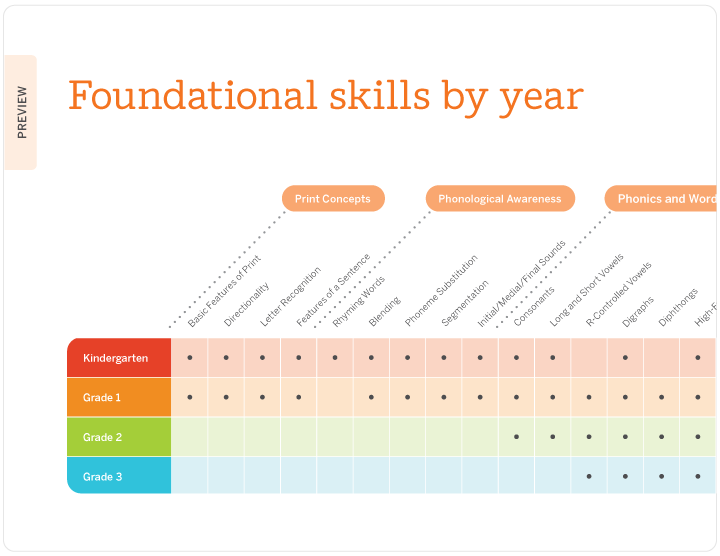
Grade 3 phonics support
In grades K-2, Amplify CKLA Skills offers explicit and systematic foundational skills and language instruction. Explicitly teaching foundational skills from the early grades is essential to helping students master the code and learn to read words automatically and effortlessly.
In grade 3, CKLA recognizes that instructional needs will vary widely, particularly for students with gaps in code knowledge and fluency. Through a more integrated language arts approach, students have daily opportunities for explicit, teacher-led phonics instruction as they transition to developing and applying literacy skills and deepening background knowledge.
By the end of grade 2, Amplify CKLA has covered all basic and advanced code, while grade 3 provides differentiated instruction and assessment resources to best support all students in becoming fluent, automatic readers:
- Unit 1 instruction reviews the phonics instruction from the previous year
- The Assessment and Remediation Guide provides hundreds of activities and assessments to determine the ideal instructional path for each student
- Fluency Packet supplements instruction with additional text selections and opportunities for students to practice reading with fluency and expression (prosody)
- Spelling Cards support decoding and encoding lessons
- Individual Code Chart gives students practice recording the consonant and vowel sound-spelling correspondences they’ve learned
If selected, Amplify would welcome the opportunity to partner with the New York City DOE on updating our program with a standalone skills program for grade 3.
The Amplify CKLA digital experience
Amplify CKLA offers an easy to use and interactive teaching and learning experience for grades K-3 that supports teachers with ready-made and student friendly lesson presentation slides.
Everything needed to teach the lesson is included within the slides that teachers project and students access. Students engage directly with the slides via embedded Activity Pages. Students can respond in multiple ways, including drawing, writing, typing, audio recording, or uploading pictures. They can even engage with the sound library, with fun songs and videos that develop phonological awareness and the eReader library of decodable texts.
The digital experience makes instruction easier, more immersive, and flexible for both students and teachers!
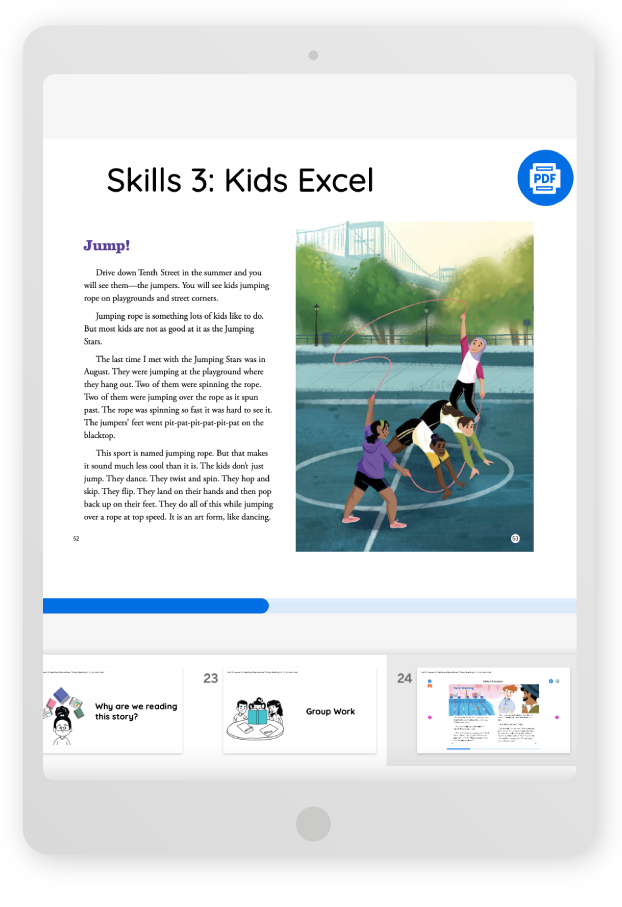
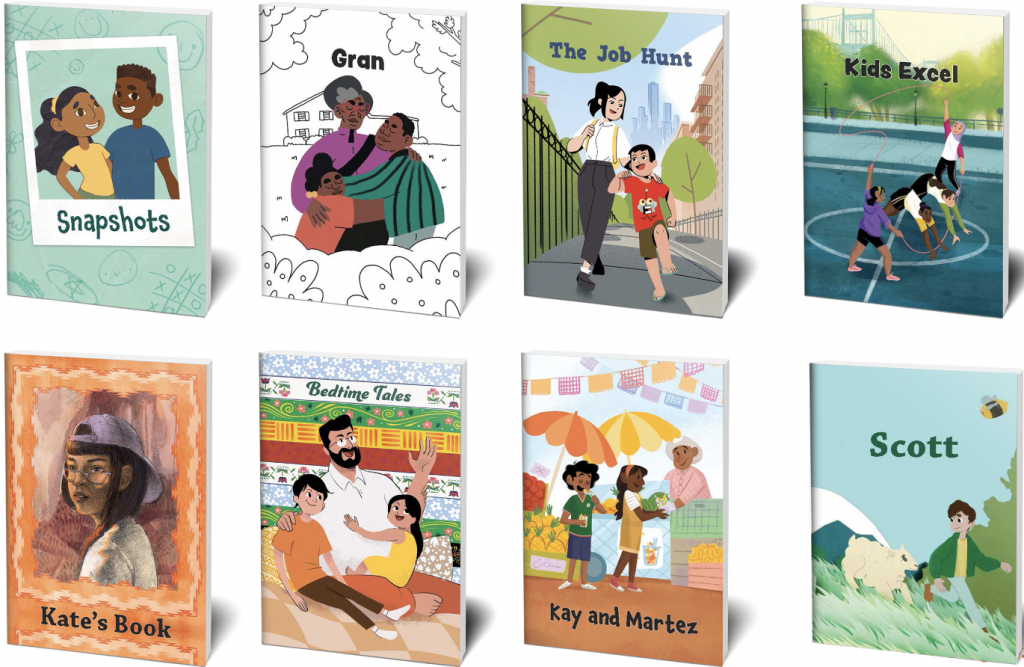
Instruction for students from all walks of life
Our goal is to make education, and thereby the world, more accessible to all students, regardless of background.
As part of our commitment to creating richer and more wide-ranging curricula, Amplify CKLA K-2 Skills Readers have been designed to increase student engagement and students’ sense of connection with the decodable stories and their characters. Stories with human characters introduce students to individuals with a broad range of identity factors, including socio-economic status, age, ability, race, ethnicity, country or origin, religion and more. Other decodable stories have fantastical creatures to bring more excitement and whimsy to the tale. These readers reflect New York City classrooms, giving students windows and mirrors while they practice and apply their skills with 100% decodable texts.
Learn more about the decodable readers here.
View the Amplify CKLA K-3 alignment to NYC Culturally Responsive-Sustaining Education Framework..
The power of Amplify CKLA + Boost Reading
Boost Reading is a student-driven skill practice program that pairs with Amplify CKLA, to provide differentiated, digital instruction in both foundational skills and comprehension strategies. Because Boost Reading is built on the same approach to reading as Amplify CKLA and shares an aligned scope and sequence, students are able to extend their learning from the core program, at their own pace.
In Boost Reading, students enter a captivating narrative where each storyline requires them to apply foundational skills to navigate a series of games. Each game focuses on a specific skill learned in CKLA, allowing students to practice that skill to mastery. Progression from game to game is based on individual student learning needs—a personalized path where they gain expertise by unlocking new quests at just the right time. This path ensures that each student gets the amount of practice they need to master foundational skills.
Embedded benchmark and progress-monitoring assessments give educators actionable data insights on how their students are progressing through their literacy journey. Easy-to-use reports provide proficiency, growth and risk data individually and in aggregate to further drive classroom instruction.
In a recent study, students who used Boost Reading outperformed non-Boost students on all DIBELS 8th Edition measures.
Explore the Boost Reading teacher and student experience:
- Visit learning.amplify.com and select Log in using the same Amplify credentials provided in the demo access section above:
- Username:t.nyc-ckla-skills@tryamplify.net
- Password:AmplifyNumber1
- Select the Reading icon; this will open the program without data as your class has not yet played Boost Reading. Select Explore Demo in the pop up.
- In the navigation bar, choose the grade band and experience (Educator or Student) you wish to demo.
- The Educator experience will show you the Teacher Dashboard with sample student data and a recommended guided tour.
- The Student experience will bring you to a start screen; simply select PLAY to begin.

New York City Review Materials
The Amplify CKLA Grades K-2 Program Guide provides you with more details on how CKLA Skills works, how it is structured, and the need for explicit instruction in phonics in order to build strong readers in classrooms.
Additional Review Materials:
Amplify CKLA Skills K-2 One-Pager
Amplify CKLA Skills – Grade K Scope and Sequence
Amplify CKLA Skills – Grade K Curriculum Map (pages 1-10)
Amplify CKLA Skills – Grade 1 Scope and Sequence
Amplify CKLA Skills – Grade 1 Curriculum Map (pages 1-7)
Amplify CKLA Skills – Grade 2 Scope and Sequence
Amplify CKLA Skills – Grade 2 Curriculum Map (pages 1-6)
Amplify CKLA – Grade 3 Unit 1 Teacher Guide
Amplify CKLA decodable readers
Amplify CKLA alignment to New York State Next Generation ELA Learning Standards
CKLA Skills – Grade K; Unit 1 – Assessment and Remediation Guide (differentiation example)
Boost Reading alignment to New York State Next Generation ELA Learning Standards

S2-03: Building meaningful student connections in the science classroom

In this episode, Eric Cross sits down with Indiana State Teacher of the Year, Sharita Ware, to talk about how to successfully build meaningful student connections in the science classroom. Sharita shares her journey from a corporate career to becoming Indiana’s 2022 Teacher of the Year, and her passion for creating project-based lessons for her students. Together, Eric and Sharita discuss how educators can teach students to love science content by building strong relationships, adding in other content areas, and supporting students’ imagination. Explore more from Science Connections by visiting our main page.
Sharita Ware (00:00):
I try to create that equal playing field where there’s nobody’s voice, that’s more important than anyone else’s and try to make them all feel that what they have to say is important.
Eric Cross (00:14):
Welcome to science connections. I’m your host Eric. My guest today is Sheta where Sheta is the 2022 Indiana state teacher of the year. And in her 10 year career, as an engineering and technology teacher, she has dedicated herself to helping students build knowledge and skills for high school and life. Beyond. In this episode, we discuss how she inspires her seventh and eighth grade students to build problem solving and critical thinking skills through hands on real world and collaborative projects. She is as humble as she is knowledgeable and through our conversation, it was easy for me to see why her students feel successful under her guidance. And now please enjoy my conversation with Sharita Ware.
Eric Cross (00:59):
Can I start off by saying congratulations on teacher of the year. Thank you for the state of Indiana. Um, that’s amazing. So I, I, I did watch, uh, your videos, uh, short interviews, and then you spoke, was it Purdue? Yes. You were there. And so, uh, to see if fellow seventh grade, eighth grade science teacher out there being celebrated, like I was so excited, so yeah, I wanted to congratulate you on that and, and just kind of talk to you about like your teaching journey and ask you, uh, maybe just kind of start off with your story about what brought you into, into the classroom, especially the middle school.
Sharita Ware (01:29):
Classroom. So what happened is when I was working in industry as an engineer and when my husband and I got married, we decided that I was gonna, um, stay home with the kids because, you know, we wanted, um, our influence to be greater on our kids than, you know, the people that would be watching them, you know, because they would ultimately spend more time with them than they would with us. And, and so, um, I stayed home and when my youngest was going to be going to kindergarten the next year, I was like, okay, what am I going to do? Cuz I really don’t necessarily feel like I need to stay at home. Mm-hmm <affirmative> but um, I knew going back to industry would be a challenge just because in my field, I, I was traveling a lot before I got married and had kids.
Sharita Ware (02:14):
And so I knew that that wouldn’t really be conducive to again, raising children. So I, I get this email, my inbox for Woodrow Wilson, teaching fellowship at Purdue. And they were just looking for people in stem fields to go into teaching. And I was like, okay. And it was a national search, you know, I filled out the application, we had to go in and do some sample teaching mm-hmm <affirmative>. And I was picked as, as one of the, the teachers to go through the program. And I started off thinking I wanted high school. And the really cool thing about this, uh, program is that we had long observation periods at high school and at middle schools. And so we would go to a school and we’d stay there two or three weeks. And so it, it kind of gave you right. A little bit more insight to what happened on a daily basis. And after those observations, I was like, I like middle school better than I, uh, like high school. And so I just kind of went that direction and you know, the rest is history. So
Eric Cross (03:19):
I feel like our stories are similar because I went into teaching thinking I wanted to do high school because I like the maturity and you a little bit more sophistication, advanced things, but yes, middle school, I felt like I can, I could get them more upstream before and kind of help shape mm-hmm <affirmative> that experience for them? Because I feel like at middle school is really where they kind of decide like what they can do based on their experiences.
Sharita Ware (03:39):
I found in the middle school that the kids, I mean, they just, they clamor around you and they’re like, what are we doing today? You know? And they get so excited and, um, they’re, they’re just, I don’t know, I guess in some ways, just more hungry in the sense of like they’re willingness to, um, now sometimes they’re a little reluctant, but you know, their willingness just to try new things. And I think, um, my students really what I have found over the years that they have found a safe space and I hear the kids, you know, say to me so many times that, you know, it it’s safe. I feel, I feel safe in here. And, and it’s not something that in my mind I’m thinking about, oh, I need to make this a safe place. It’s just, I guess part of just who I am as a person has created this environment of, of safety and, and the kids recognize that, you know, I don’t play favorites. You know, everybody starts out mm-hmm, <affirmative> on equal footing. I, I don’t care what your backstory is. I don’t care how many times I see you in the hallway when I’m walking during my prep. You know, when you hit my room, I’m, I’m gonna treat you the same way on day one, that I treat everybody else.
Eric Cross (04:54):
You really understand how to build culture with, in, with your classroom, with your students. And, and you said they feel safe, but is there anything that you do that someone could like apply? And like you found that you’ve gotten a lot of just relational capital through doing these things, or is it just your personality? Like how, how do you build those connections?
Sharita Ware (05:12):
You know, growing up being a, a very quiet person. I, I think a lot of times my voice was ignored because I was the quiet kid in the back of the room. And oftentimes I became seen or heard because of my work, you know, in the beginning it was kind of like, oh, she’s just this quiet girl in the back of the room. And then, you know, the first essay was due or the first project was due. And then it was like, oh, you know, then you’re the person to be on, you know, people’s teams. And, and that, I don’t know, that always kind of bothered me because, you know, I’m thinking just because you’re not the loudest person in the room doesn’t mean that you don’t have something to say, mm-hmm <affirmative>, you just might not be talking all the time. You know? And, and so for my students, I just, I try to create that equal playing field where there’s, nobody’s voice, that’s more important than anyone else’s and try to make them all feel like that what they have to say, or what they have to contribute is, is enough, is good.
Sharita Ware (06:14):
Enough is important as…
Eric Cross (06:16):
It is, as it is. And there’s probably a lot of things that you do. But in addition to building these relationships, what do you do? Like how do you make your learning fun for students?
Sharita Ware (06:25):
I think, um, I’m also a little bit on the silly side. Um, we do a, a Barbie prosthetic leg project, and this was after trial and error of having the kids make full size prosthetic legs. And I try to make it as real world as possible, but with none of the children being amputee or, you know, having access to someone, it was really hard for them to really visualize what needed to happen. Mm-hmm <affirmative>. And so, um, I found this Barbie that had a prosthetic leg and I was like, well, LA, so I just started collecting Barbies and chopping their legs off <laugh>. And so I have this jar of Barbie legs. And so, and I said, you’re gonna make prosthetic legs. And I lay this jar of legs on the counter and the kids are like, like they gasp and then they crack up and then they’re like, okay, this lady’s crazy. So…
Eric Cross (07:22):
That’s when you take off your scarf and there’s this necklace of just Barbie legs that are just around and you’re like, I’m a middle school teacher and they go, oh, okay. I understand. Yeah. Yeah. It’s totally fine. Is this a lesson that someone that you made up or is it something that you’ve re remixed? Is it something that someone could do if they looked it up anywhere?
Sharita Ware (07:38):
Um, so I think teach engineering has the, the full size leg that the kids make. And that’s where I initially got it from.
Eric Cross (07:47):
Is that the website teach engineering?
Sharita Ware (07:49):
Yes. And, um, I, in fact, I get lots of ideals from there. Um, and I, I always usually tweak them, but it’s, it’s one of those things that kind of gets your brain going. And so it was kind of a mixture of, uh, project lead the way gateway to technology and the teach engineering. And I think the project lead the way had us making like braces, uh, for, um, kids with, um, like cerebral palsy or, or something like that. And the kids did okay with that project. Uh, but I wanted to go just a little bit, uh, deeper with it because part of what I was wanting them to do is that context and that connection, that human connection, because for me, it’s not just enough for them to make a project. Uh, before we start this prosthetic leg, I read them a story out of a Scholastic magazine, and it’s a, a teenage girl that lost her leg in a boating accident.
Sharita Ware (08:42):
And she was super active, um, playing sports and running. And, and so I was, you know, trying to get the kids to, you know, make that connection, someone close to their age. Um, and then how it’s not, it’s, it’s more than about her physical healing. It’s also about her mental healing and how she had to, you know, talk to herself to say that she could, you know, recover and, and come back from this and still go on to do all of the things that she was doing before. Um, and in some ways it’s kind of cool because, um, you know, she has a running prosthetic, she has a, a swimming prosthetic, and she has her every day with the pain and toils prosthetic. So just trying to, you know, help them to see that it’s more than just the, you know, the biomedical mechanical engineering aspect of the project.
Sharita Ware (09:30):
And so they have to design for comfort. They have to design for, um, swelling. And then, um, they also can, if they, if they want to, they don’t have to, if they want to, they can create their own backstory. So when they get there, um, we have a day where they are introduced to their client, so they get to meet their Barbie and, and then they get to decide if they want a backstory and, and then do their research based off of that. So if it’s someone that was a runner, then they can design a prosthetic running blade. So just, they have lots of, uh, flexibility.
Eric Cross (10:04):
The, that aspect of adding the narrative. It does so much for like listening to it on the outside. It one, it adds this humanity to, you know, what can sometimes just feel like it may be cold, logical stem. We’re just, we’re just doing things. We’re fixing things. We’re, you know, we’re discovering things, but really the stem has value when we’re actually applying it to, to, to serve humanity or our ecosystem or whatever it is. There was a, a coding, uh, class I was doing with my students and I showed them this app called be my eyes. And it’s for people who are visually impaired and it pairs them with a volunteer. And when they call, and there’s a whole huge pool of volunteers and I’m one of them. And when my, when it happens in class, I answer and it uses the FaceTime. So the person who’s visually impaired is holding up their phone and you see what they see and you tell them and real time what’s happening.
Sharita Ware (10:54):
Oh, wow. That’s so cool.
Eric Cross (10:56):
These are, these were the things I think for students that the story, the, the human part of it, mm-hmm, <affirmative>, it must bring in so many more students into engagement.
Sharita Ware (11:05):
Yeah. I, I feel like it does because I, I think, um, and, you know, along the journey, they kind of lose, um, they lose sight a little bit because, you know, they get out in the lab and they have access to all of these different materials. And I think, you know, truly making it, you know, project based for me is I try not to control the materials too much. Um, I try not to make it so wide that they just get lost, but I try to throw a few curve balls in there, you know, of, of materials that really don’t make sense to use, but they kind of think they make sense to use. Um, because the, the, the meat of it is that the prosthetic leg is a similar size of the original leg and that the, the knee functions. And so I don’t limit, and I grade them off of efficient use of materials.
Sharita Ware (11:59):
So, and that just throws them off because I think, well, how many Popsicle sticks can I use? And I’m like, you can use as many as you like, but remember, this is a prosthetic leg that, um, your Barbie, which is one six scale, um, is going to be wearing all day. So you could think that a Popsicle stick, if you chose to use a Popsicle stick is kind of like dragging around a two by four <laugh>, you know? So do, is that what you really want to use as your material? And some of the kids really think about it and saying, okay, I’m, I’ve got this aluminum rod, okay. This is probably what I would use for my bone structure, because it’s lightweight, but yet it is supportive. And then sometimes they come up with their own ideas in terms of materials, like one student brought in his, um, 3d doodle pin mm-hmm <affirmative> and he made joints and everything with this pin.
Sharita Ware (12:54):
And I’m, and I had delayed buying one, cause I’m like, I, how do you have control over that thing? Mm-hmm <affirmative> he brought that in and he did probably two or three iterations of it and, and got it to work where even the knee where it bit back 90 degrees, but it stopped. He made like, so that it didn’t bend forward. It blows my mind. I’m like so many UN unexpected things have, have happened just from my, um, teaching style. Now I did have, my first few years, I had a, a teaching coach, um, come in and, um, I asked her to come into my room because I just wanted to make sure because I was not a traditional teacher. She said, this classroom is amazing. And, and I think the one thing that she helped me with was, was purpose and consistency and the sense of making sure that with the standards that all of these cool things and ways of being, um, that I was doing in my classroom, that, that I kept it purposeful and intentional. So many times as educators, I know in having student teachers again, ask yourself the question, what is the big picture I want the kids to take away. And once you ask that question, then everything that you have them do will lead to that big picture. Well, it should lead to that big picture.
Eric Cross (14:22):
So it sounds like they’re, you’re starting with this end goal in mind and then kind of backwards planning to get there. Yeah. Do you think you would’ve been the same type of teacher if you would’ve gone straight from college into the classroom? No. And if, if, no, as you’re shaking your head, what do you think it is about? Cause I’ve been asking myself these questions, like just over the years, what is it about coming from industry and going into the classroom? Do you feel like, is how has that impacted you in how you teach?
Sharita Ware (14:45):
Well, I think it’s twofold cuz I was older. I already had three children. I think the combination for me, I think is I was already a mom and I had worked in industry. So the behavior aspect of kids and, and then having that real world experience. And I, I just feel like whether it’s in the classroom, um, marriage, kids, to me, it’s 90% relationship, you know, and the rest will work itself out. That’s, that’s just my, my take on it. But I, I feel like having kids, so some of the behavioral things I kind of was aware of, you know, and just learned many times just not to react to some of the things that they did.
Eric Cross (15:31):
Which is huge. Right. Especially in middle school is controlling your reactions.
Sharita Ware (15:35):
Yes. Cuz that’s what they want. You know? And, and I had this student last year as well. She’s brilliant. And so if she cannot wrap her mind around the purpose of what you’re doing and, and you’re pushing her to do something that she doesn’t think is necessary, mm-hmm <affirmative>, she kind of has these meltdowns. And, and so we just had this, you know, I don’t know, we just came to this understanding and it, and it works to control the meltdowns. I tried to make sure. And, and I used her as a gauge because I knew she wasn’t, she wasn’t getting upset because she didn’t understand. She didn’t understand the why mm-hmm <affirmative>. And so I felt like if she got the why then so would everyone else. So when she, if she was okay with it, then I was like, okay, then I must have explained it well enough.
Sharita Ware (16:25):
And so in my mind that I really need to make sure they understand the, again, going back to that purpose <laugh> and intention, making sure that that is clear. And then I think that’s what gets lost. Sometimes mm-hmm <affirmative> uh, with us as teachers, we, we know where we want the kids to go and we want us to trust the process, you know, just do it because I said so, but sometimes, you know, empowering your children to under to understand the why, because that again is what allows them to be able to do bigger and greater things on their own. So on that next project comes along. They’re starting to tell you, well, first we need to make sure we understand what, um, we’re being asked to do to do. So we have to define the question. We have to make our driving question that will help us stay focused. And, and you’re just standing up there going, okay, now you don’t need me. I’ll go here and sit down. <laugh> so it’s, uh, it is really cool.
Eric Cross (17:28):
Now I’m thinking about my own kids. Like, do my students know the why behind the lesson we did today? It’s one area of growth that I wanna make sure I do this year with my students. And so I really appreciate that. So the, and you just hit on something that is, has been in the forefront of my mind lately and math and English as you know, tend to be prioritized in schools everywhere because it’s what state tested. And it’s what, you know, this is a whole other conversation, but I’ve been talking to math teachers frequently about one of the challenges that they experience or they’ve been telling me is that math is kind of taught. Like it’s just computational, you’re solving these problems, but it’s really separated from any real life application. A lot of times, you know, it’s pizza or gumballs or, or just fictional scenarios and students don’t perform well many times. And some of the reasons why is cuz just no connection. I don’t want to solve puzzles. Like it’s not my jam. Do you have any just inside or, or perspective on how math is, is taught in maybe a way that you think it would students would benefit more?
Sharita Ware (18:32):
You know how kids learn in elementary school, you’ve got this, the same teacher teaching all of the subjects. And so wouldn’t that be an awesome opportunity for you to have like these, these projects where I feel like you could, a class could legit work on the same project for a whole entire year. And so couldn’t the English be writing your persuasive letter to the mayor, asking him to do this or do that. And the process of doing that they’re, they’re, they’re writing with a purpose with a true purpose. Um, and then when they’re doing math, you know, they want, they want a new neighborhood park. So, you know, well how much is this gonna cost? Well, math, what size is it gonna be math? Let’s see what it looks like, art, you know, you just, you have all of this things. And then of course then science.
Sharita Ware (19:32):
So if it’s on a heel, how can we, you know, deal with erosion? And you know, you can just pull so many different things into that. And so not only are they learning, but they’re narrowed in and focused on a project, they’re, they’re able to dive deep into, you know, learning more of learning, how to express themselves and communicate with real people. So it’s more of taking these compartmentalized learning that we do in middle school and high school. Mm-hmm, <affirmative> where you’re almost learning apprenticeship style. Mm-hmm <affirmative>, you know, you have these master educators and it’s not about them being the best at math or being the best at this or that. Cuz there’s so many tools now that could help you through that. But you’re, you’re giving, you’re teaching them so many life skills and so many ways to think and problem solve that, that we’re just that the kids just don’t have.
Eric Cross (20:27):
I think that that is amazing. And I think that in that situation, what I’m hearing is we’re going deeper, not wider because there are a lot of different concepts that kids are expected to learn. Or I should say there are several concepts that teachers are expected to teach doesn’t necessarily mean that our kids are learning, but we’re teaching them. And this way you’re embedded it into an authentic context. Students are able to go through this cycle just like real life. And then they’re also able to build these kind of really transdisciplinary skills. Not only am I learning the math, the English, the the, but I’m also learning the interpersonal skills of being able to sell myself and present myself in a way that’s winsome. And it’s especially powerful coming from someone from industry. Last question, even just listening to you, I know you, you are this for a lot of people, but I wanted to ask you who inspires you?
Sharita Ware (21:14):
I think there have been lots of people over the years. Like I’m thinking of my shop teacher who has since, uh, the last few years passed away. Um, he was one of those people, I think similar personality to me, super quiet person, but he was always in the background on my journey and his name was Joe Mo and we called her Madam Carol was my 10th grade English lit teacher. And she was the one that started reading my work out in front of the class. And you know, and that just gave me courage, not so much to be seen. Uh, but that the work I was doing was, was good. And, and I think I needed that kind of encouragement. Lastly, my students inspire me because when I look at their faces and see the excitement, I think of those students for the first time and, and, and think about this seventh and eighth graders for the first time feeling like they really have something to say, they really have something to contribute of value. And, and I do it for them. You know, the reason why I am here in this moment is because of them. Um, without them, you wouldn’t be talking to me <laugh>
Eric Cross (22:37):
This is, this is true. This is, this is true. You would probably never say this about yourself, but you just exude a humility and a service in how you talk about your students and yourself. And I just wanna thank you for using your gifts, but I don’t wanna just call them gifts because it makes it sound like you didn’t earn ’em and your skills that you’ve earned and worked very hard to acquire over the years to go back into the classroom and leave industry, cuz you, you could have gone back to industry too, but you decided not to. And you could have worked in the industry and your hours were a little different pay is a little different, but you came back to serve the kids of Indiana and because of you and because of that choice, those students have a brighter future and believe in themselves and they’re finding their voice. And I want to thank you for that and for representing all of us stem teachers who are in middle school and being that leader. So thank you for that and thank you for being on the podcast.
Sharita Ware (23:24):
You’re welcome. Thank you for having me.
Eric Cross (23:28):
Thank so much for listening. Now we wanna hear more about you in the amazing work you’re doing for students. Do you have any educators who inspire you? You can nominate them as a future guest on science connections by emailing stem, amplifycom.wpengine.com. That’s ST E M amplifycom.wpengine.com. Make sure to click, subscribe wherever you listen to podcasts and join our Facebook group science connections, the community until next time.
Stay connected!
Join our community and get new episodes every other Wednesday!
We’ll also share new and exciting free resources for your classroom every month!
Meet the guest
Sharita Ware, a Purdue University graduate, is in her 10th year of teaching engineering and technology education to middle school students in the Tippecanoe School Corporation. Ware challenges her students with real-world, problem-based design scenarios that will help them contribute to global technology and integrated STEM. Follow her on Twitter and Instagram.
About Science Connections
Welcome to Science Connections! Science is changing before our eyes, now more than ever. So…how do we help kids figure that out? We will bring on educators, scientists, and more to discuss the importance of high-quality science instruction. In this episode, hear from our host Eric Cross about his work engaging students as a K-8 science teacher. Listen here!
You might also like:
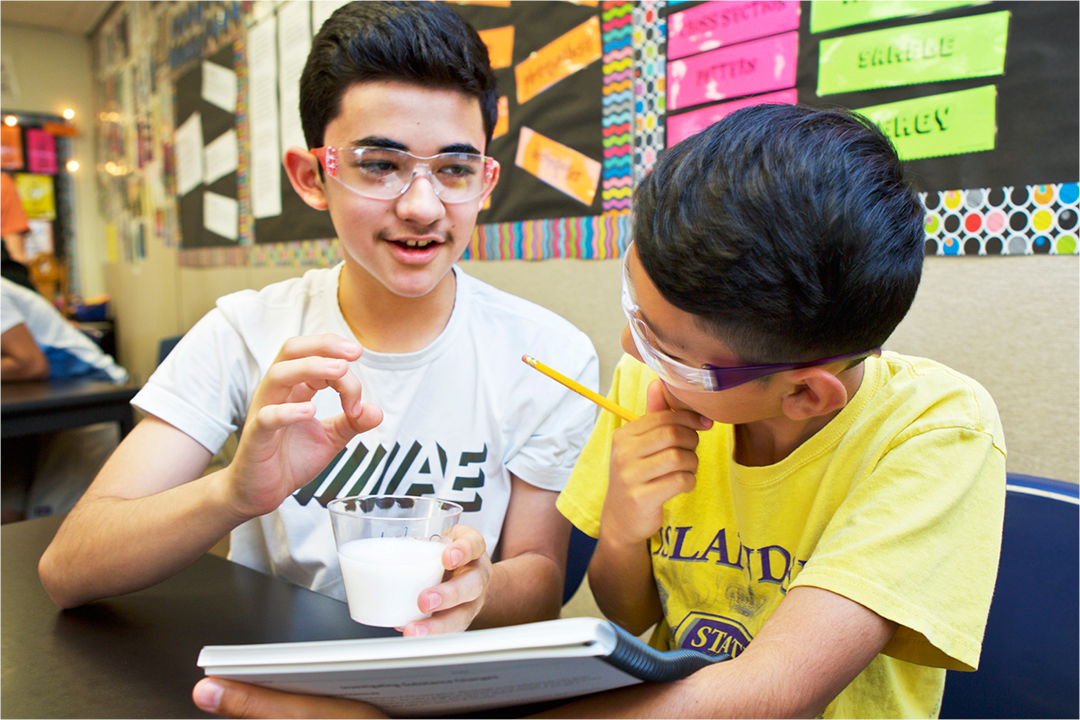

Welcome to Transitional Kindergarten
Amplify Science California jump-starts a lifelong love of science with developmentally and pedagogically appropriate instruction featuring:
- Real-world problems and scientific phenomena.
- An experiential approach with lots of hands-on.
- Explicit support for building oral language and early literacy skills.

What students learn
Our program is comprised of three units: one life science, one physical science, one Earth science.
As students take on the role of a scientist or engineer to figure out real-world phenomenon, each unit:
- Sparks curiosity and engagement.
- Encourages students to wonder, think, and talk.
- Builds a solid foundation for future success with science.
Look below for a summary of each unit.

Unit 1

Unit: Wondering About Noises in Trees
Student role: Life scientists
Phenomenon: Strange noises appear to be coming from the trees outside.
Unit 2

Unit: Wondering About Buildings
Student role: Building engineers
Phenomenon: One class made a play city. Some of the buildings stayed up, while others fell down.
Unit 3

Unit: Wondering About Puddles
Student role: Weather scientists
Phenomenon: Puddles exist in some places but not in other places along a girl’s walk to school
Program structure
To meet the unique needs of little learners, our program follows a unique structure.
Each unit:
- Begins with an Introductory Activity that
introduces the phenomenon. - Includes a series of three Explorations that are comprised of a Kickoff Discussion, four activities, and a Shared Drawing and Discussion.
- Ends with a Culminating Activity that consolidates students’ understanding.
Each activity is designed to span 15 minutes. Depending on how the program is implemented, an entire unit generally takes 4–6 weeks.

How teachers teach
Tom Teacher feels confident delivering 3-D instruction with our resources by his side. Watch this video to learn more. >
When you’re ready, scroll down to take a closer look at sample resources.
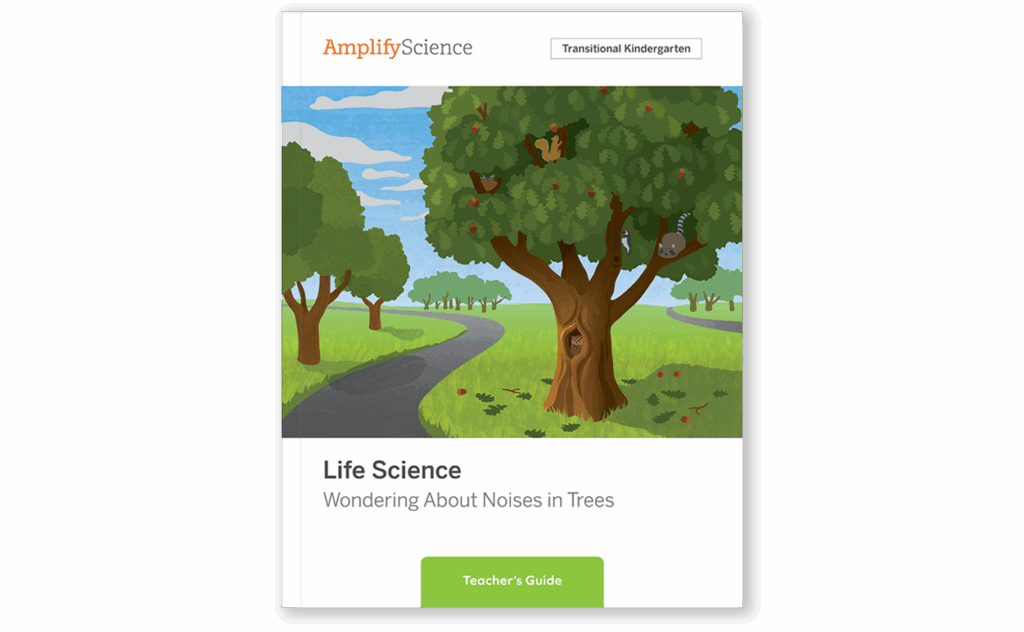
Printed Teacher’s Guide
Our unit-specific Teacher’s Guides are chock full of helpful resources, including scientific background knowledge, planning information and resources, detailed lesson plans, tips for delivering instruction, differentiation strategies, additional classroom resources, and copymasters.

Big Books
Big Books contain vivid photographs and are used to introduce topics, facilitate group discussions, and support students’ firsthand investigations. Each Big Book is an integral part of instruction and is used multiple times for multiple purposes across a unit.

Science Questions
Each unit includes three printed Science Question cards, one for each Exploration of the unit. The cards can be posted on classroom walls and support the class as they are introduced to and revisit the focus of their investigations over the course of an Exploration and, ultimately, the unit.
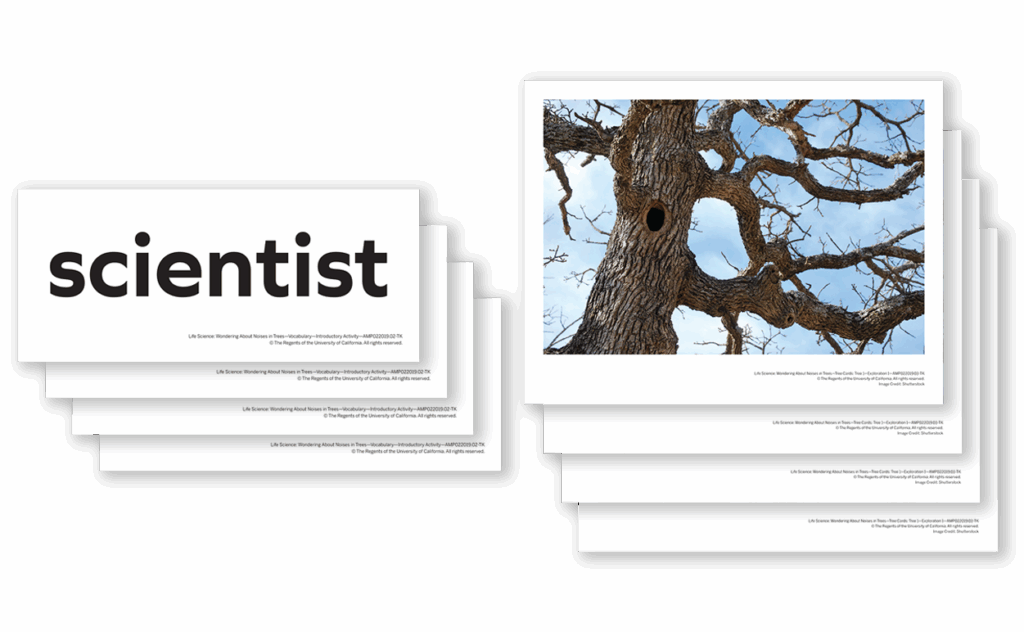
Vocabulary and Picture Cards
Each unit includes six or seven printed Vocabulary Cards and a set of colorful Picture Cards that can be posted on classroom word walls and concept walls. Cards are used for a variety of purposes, including gathering evidence, building background knowledge, and introducing the focal phenomenon.
Resources


Welcome to Grade 3
Amplify Science California is so effective you can cover 100% of the NGSS in half the time of other programs.
You can breathe a sigh of relief knowing all you need is:
- 88 days per year
- 2-3 lessons per week
- 45 minutes per lesson
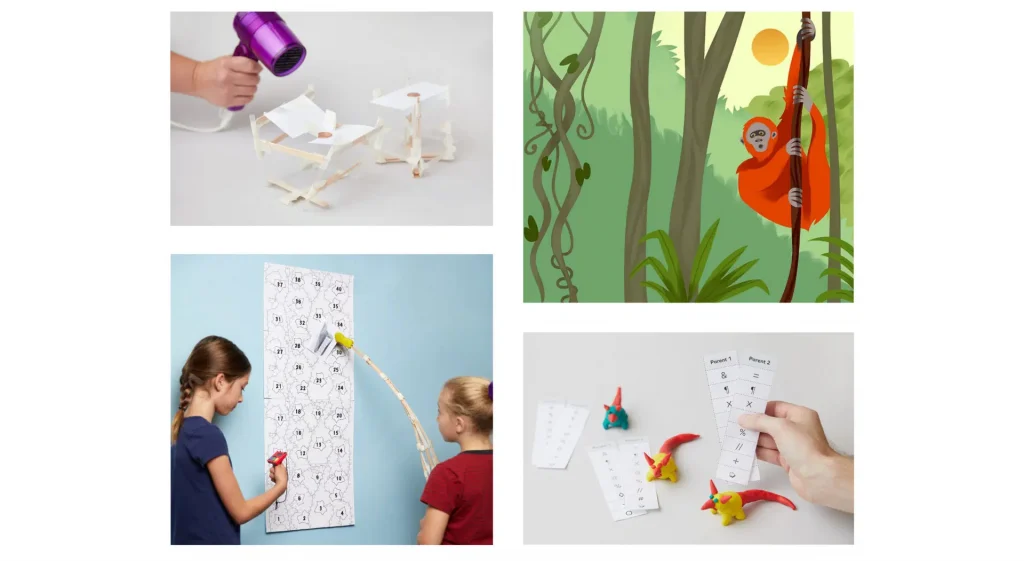
What students learn
Lauren Learner loves science. Watch this video to find out what she learns in third grade. >
When you’re ready:
- Find a summary of each unit below including each unit’s student role and anchor phenomenon.
- Click on the orange “See how the unit works” link to download a helpful Unit Guide. These guides make great companions to busy reviewers looking for a big-picture understanding of how each unit works.

Unit 1
Balancing Forces
Student role: Engineers
Phenomenon: The fictional town of Faraday is getting a new train. Unlike typical trains, this one floats, which is causing some concern among the town’s citizens.
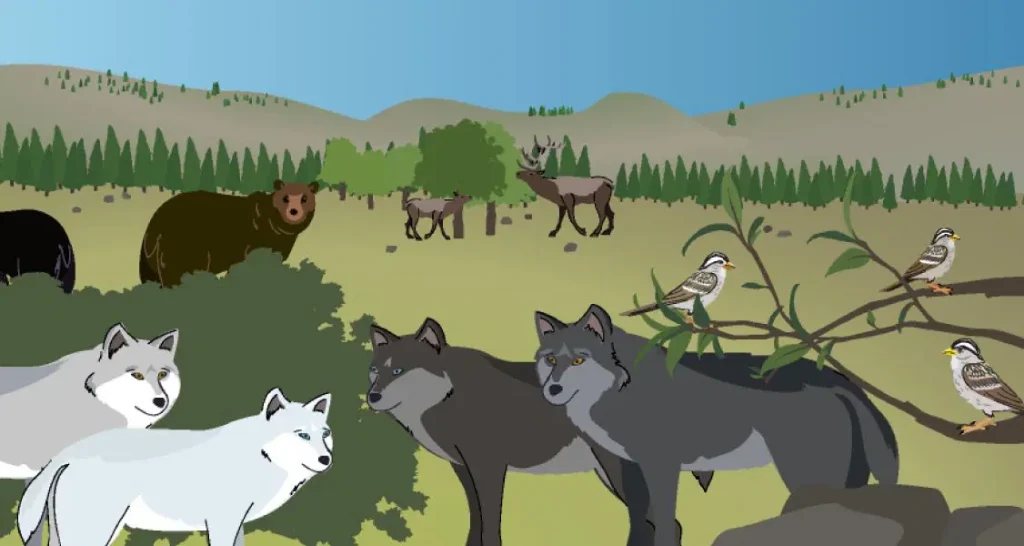
Unit 2
Inheritance and Traits
Student role: Wildlife biologists
Phenomenon: An adopted wolf in Graystone National Park has some traits in common with one wolf pack in the park and other traits in common with a different pack.
Unit 3
Environments and Survival
Student role: Biomimicry engineers
Phenomenon: Over 10 years, a population of grove snails has changed. Populations with yellow shells have decreased, while those with banded shells have increased.
Unit 4
Weather and Climate
Student role: Meteorologists
Phenomenon: Three different islands, each a contender for becoming an orangutan reserve, experience different weather patterns.
How teachers teach
Tom Teacher feels confident delivering 3-D instruction with our resources by his side. Watch this video to learn more. >
When you’re ready:
- Scroll down and take a closer look at your classroom resources.
- Click on the orange links below each component to see grade-specific samples.
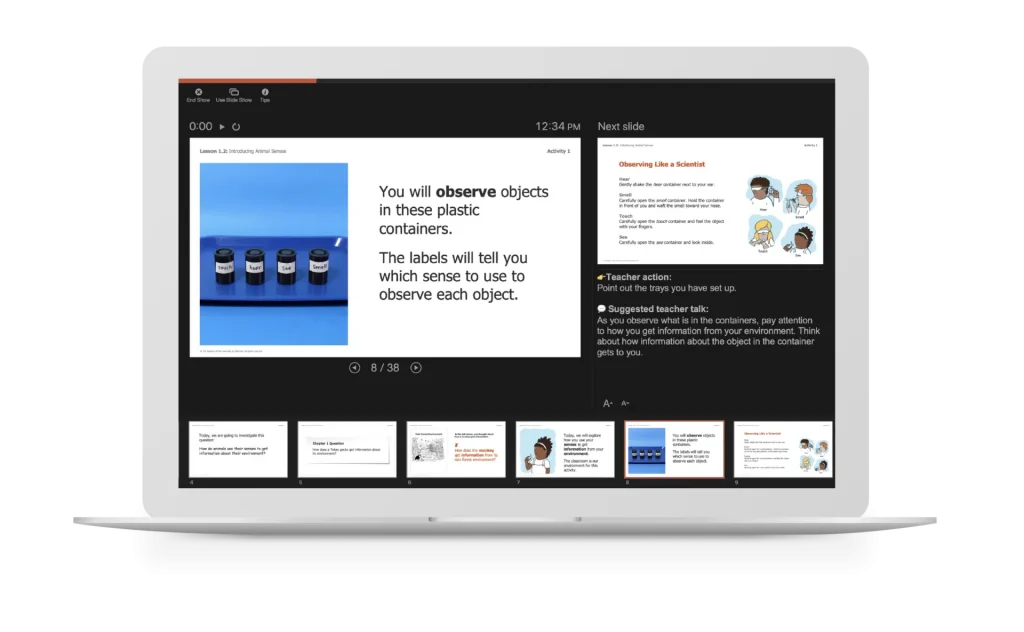
Classroom Slides
These customizable PowerPoints are available for every lesson of the program and make delivering instruction a snap with visual prompts, colorful activity instructions, investigation set-up videos and animations, and suggested teacher talk in the notes section of each slide.
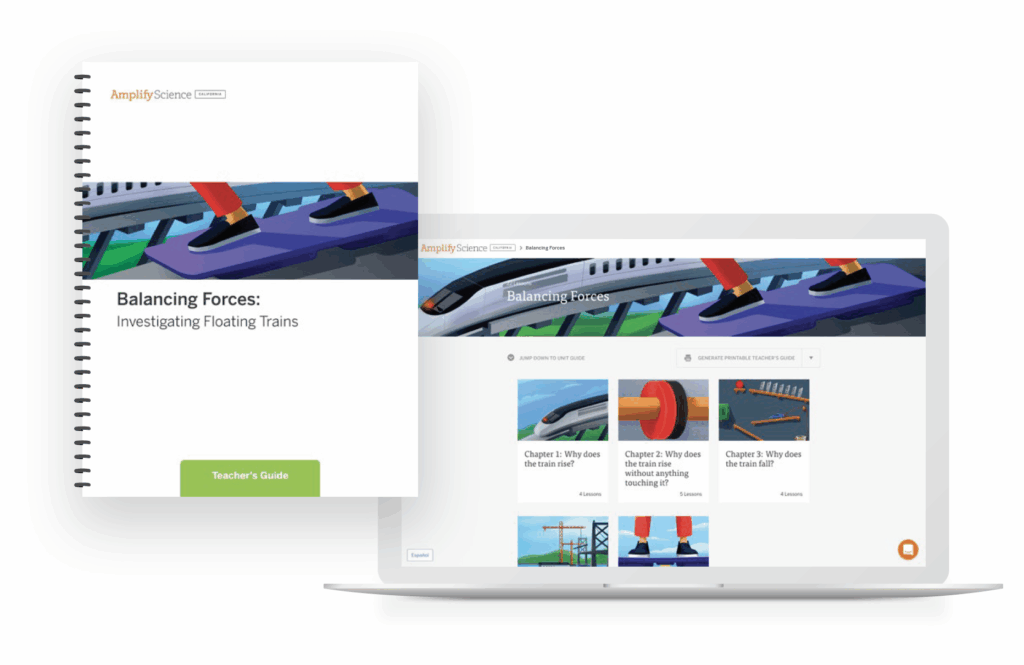
Teacher’s Reference Guide
Available digitally and in print, our unit-specific reference guides are chock full of helpful resources, including scientific background knowledge, planning information and resources, color-coded 3-D Statements, detailed lesson plans, tips for delivering instruction, and differentiation strategies.
Login to platform below to access

Materials Kits
Our kits include enough non-consumable materials to support a class of 36 students and enough consumable items to support 72 students. In other words, each kit can last two years! Plus, our unit-specific kits mean you just grab the tub you need and then put it all back with ease.

Student Books
Our award-winning Student Books include content-rich nonfiction and informational texts designed to introduce concepts and also deepen understanding. Books are read to, with, and by students with ample scaffolding and support provided by the teacher in whole-class, small-groups, and student pairs.
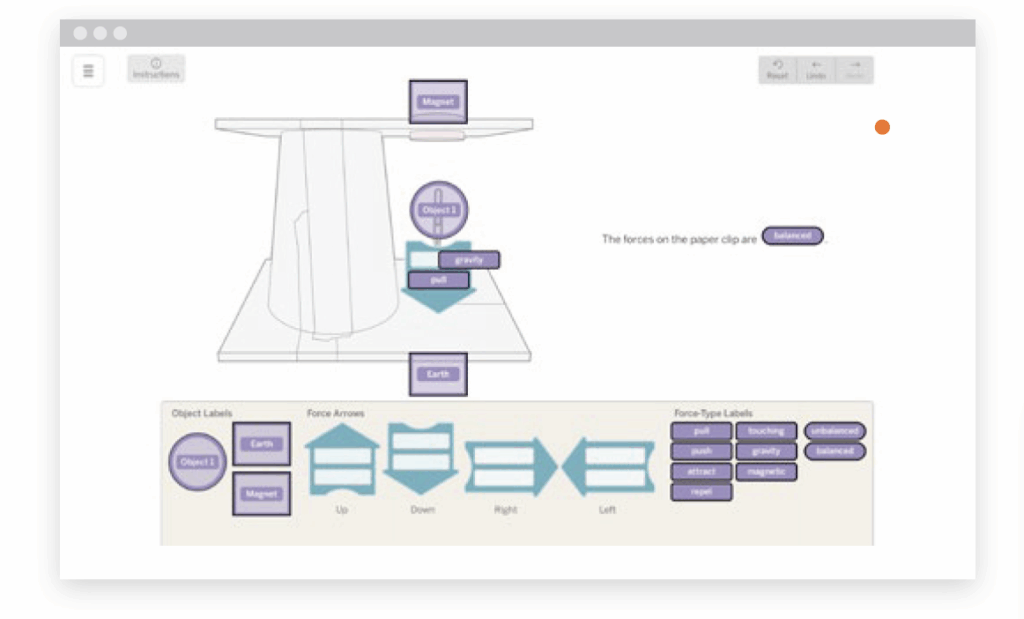
Practice Tools
Our digital Practice Tools feature easy-to-use drag-and-drop and data-entry activities that support the practice of important SEPs like sorting, modeling, or visualizing information. Practice Tools can be used as a whole group, in small groups, or with a partner.

Consumable Notebooks
Available for every unit, our Student Investigation Notebooks contain instructions for activities and space for students to record data and observations, reflect on ideas from texts and investigations, and construct explanations and arguments.
Mystery Science
Our exclusive partnership with Mystery Science means you get our NGSS core curriculum plus two years of free access to Mystery Doug and his extensive library of captivating videos that deepen students’ understanding of each unit’s phenomenon.
Coming Soon
Unlike other publishers, we don’t make you wait until your next adoption to get the latest and greatest from Amplify. We’re always launching new and exciting features. What’s more, we’ll push them out to you even after you adopt us!
Navigating the program
Watch this video showing you how to navigate our digital platform. Then following the instructions below. >
- Click the orange button below to access the platform.
- Choose the resources you’d like to review.
- Pick your grade level from the drop-down menu.
- Scroll down to find additional grade-level resources.

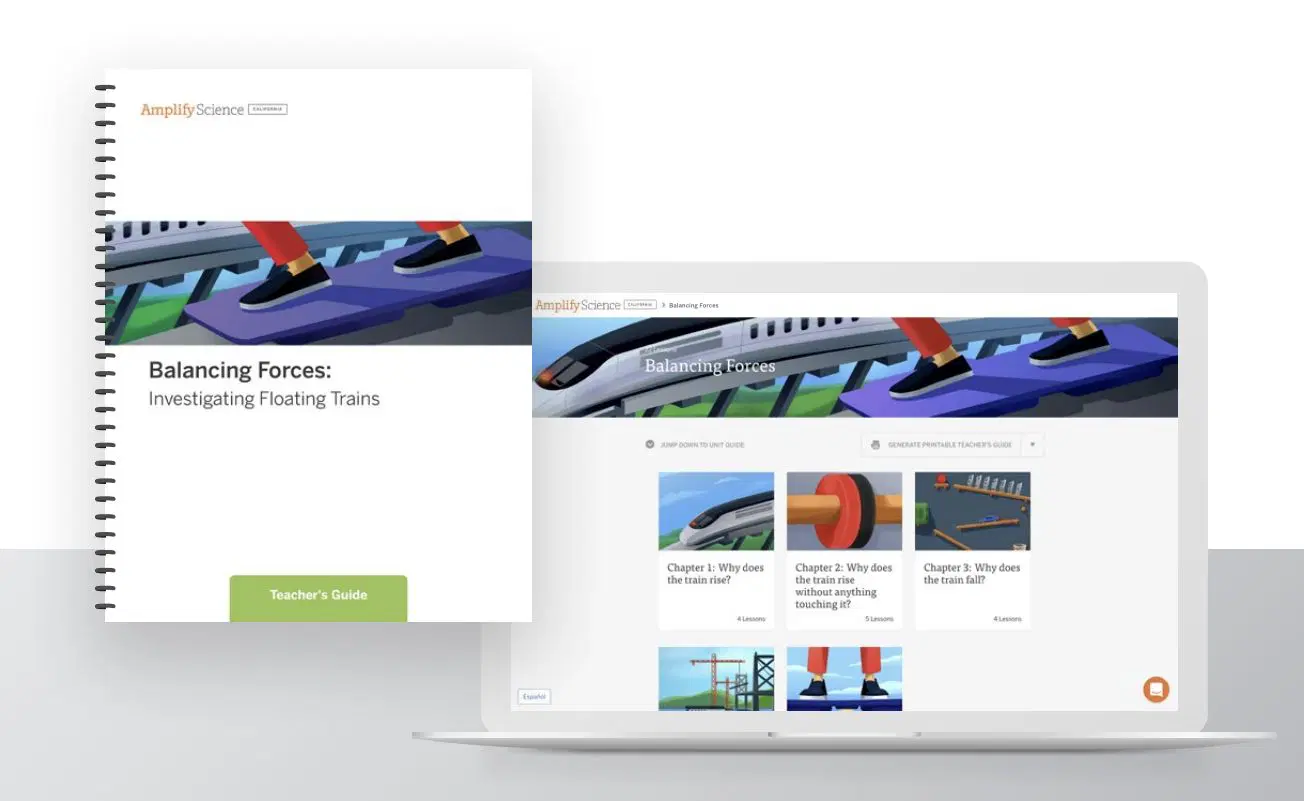
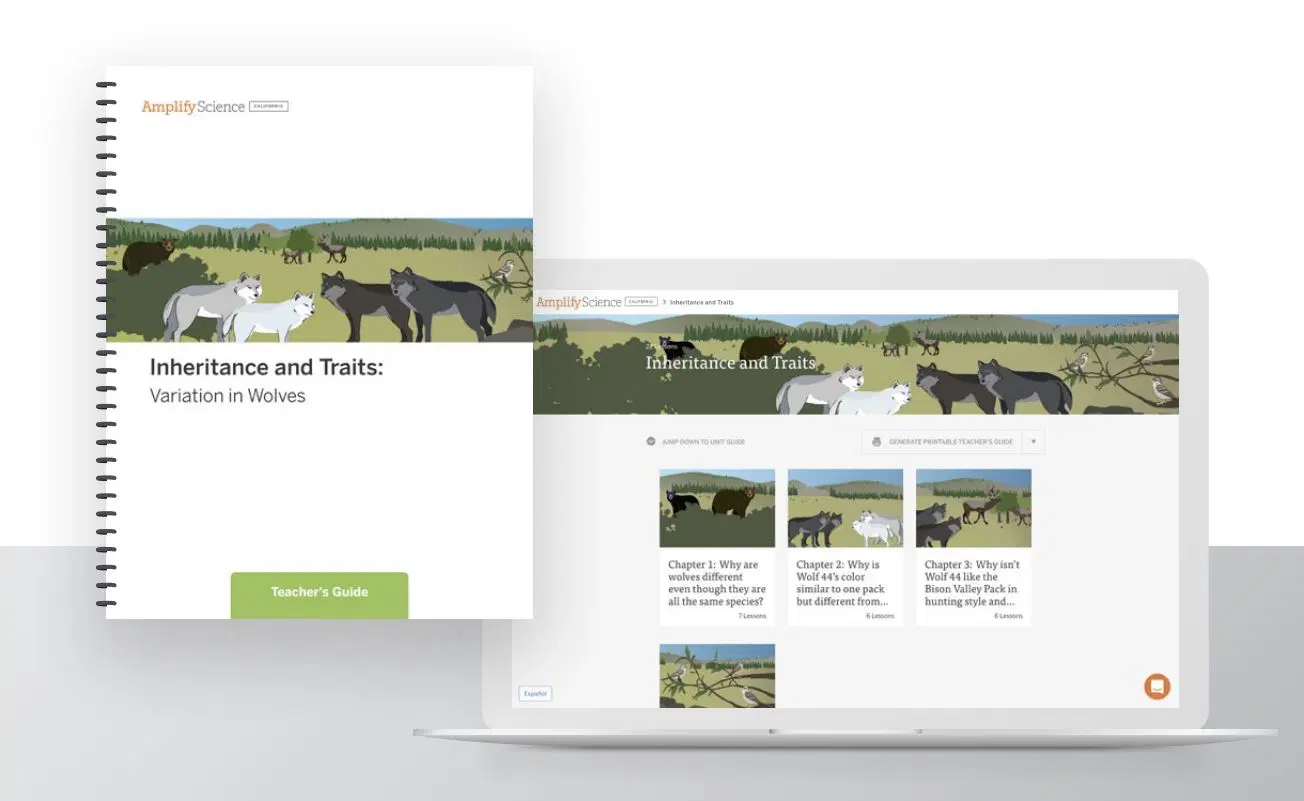


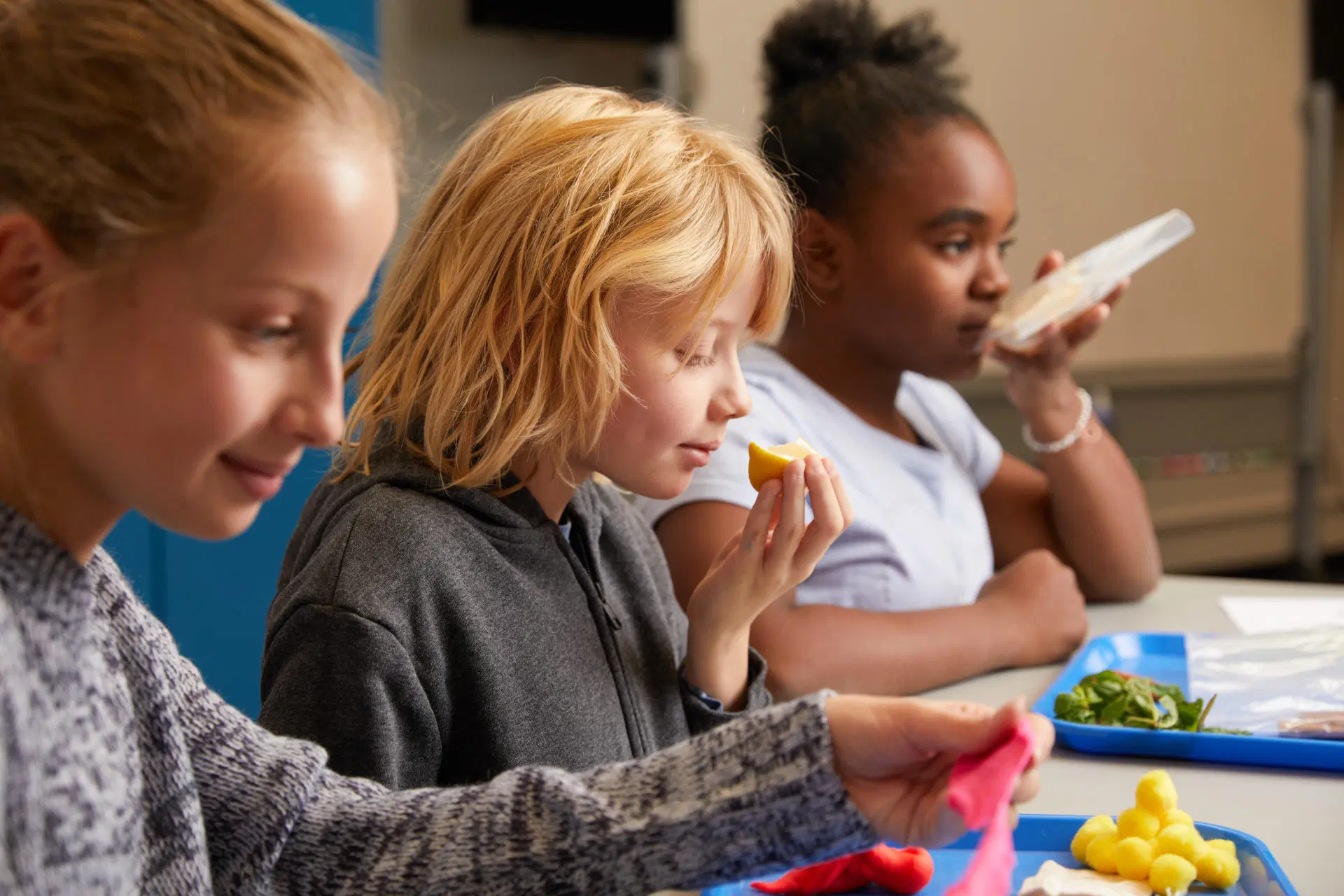
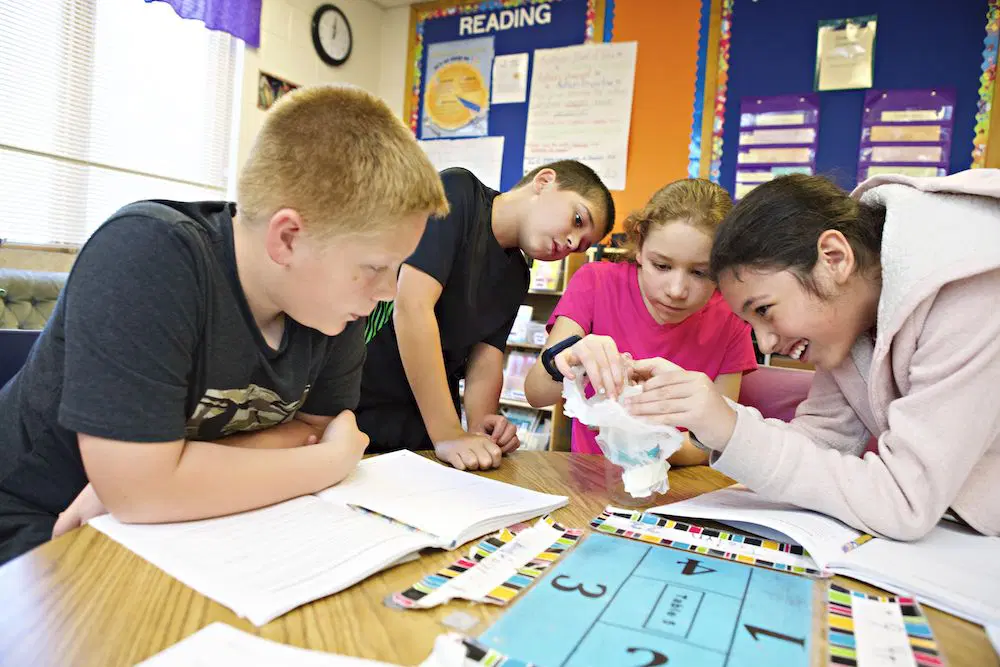
An authentic Spanish assessment built specifically for bilingual students learning to read
Part of the mCLASS® Español suite, mCLASS Lectura is a universal screener for K–6 built on modern Spanish literacy research. It helps educators accelerate reading growth for Spanish-speaking students by delivering complete parity between English and Spanish reading assessments. Para la versión en español, haga clic aquí.
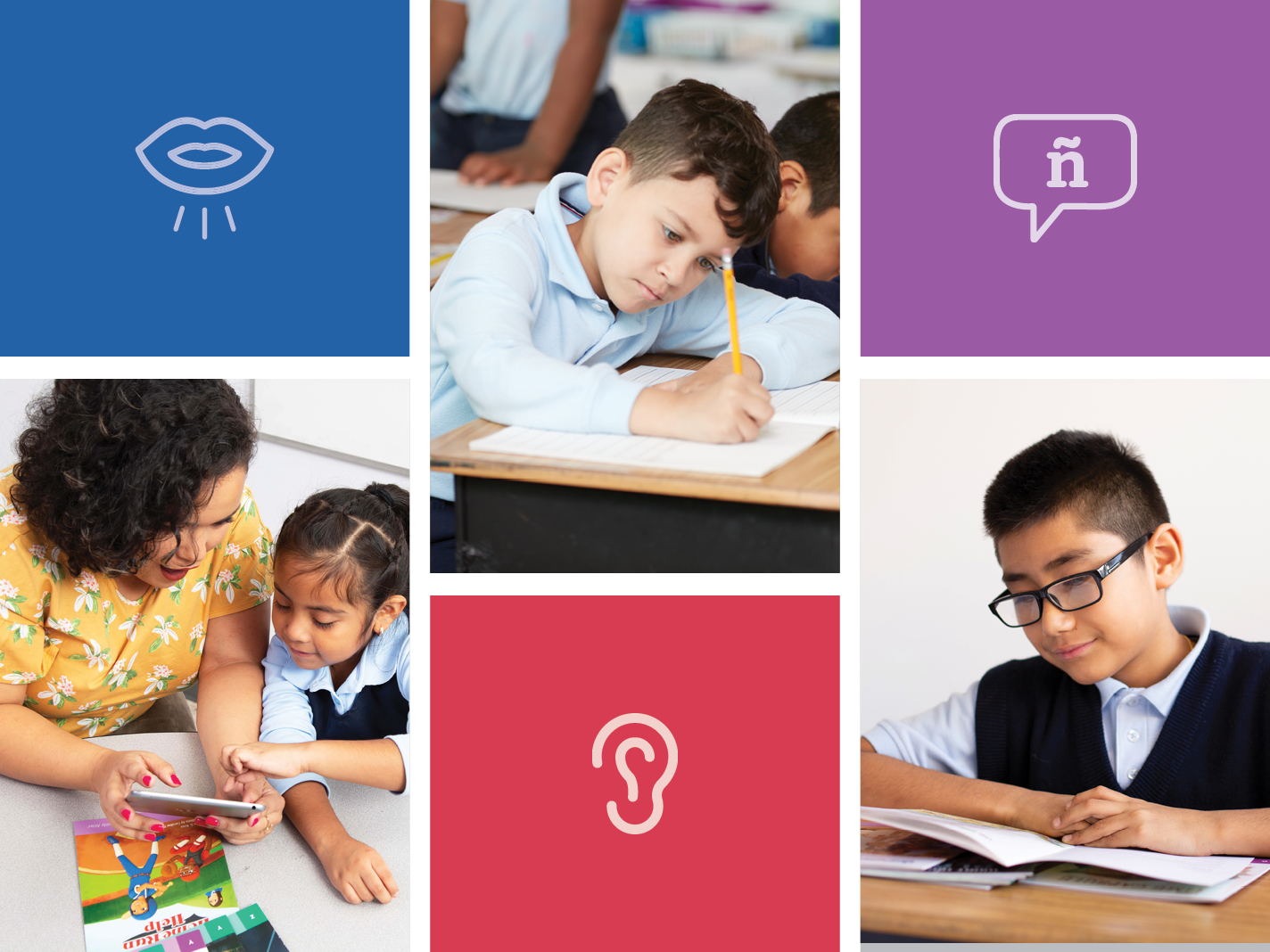
Promoting fairness for Spanish-speaking students in early literacy
Spanish-speaking students have been underserved and misclassified for decades. By combining mCLASS Lectura and mCLASS® DIBELS® 8th Edition, you’ll be able to understand where your Spanish-speaking students are in their English and Spanish literacy paths.
Based on the science behind how students learn to read in English and Spanish, the mCLASS system allows teachers to connect with their Spanish-speaking students face-to-face, one-on-one, and in the language most comfortable to them. Teachers are able to pinpoint where their Spanish-speaking or emergent bilingual students really are in their literacy skill development and what instruction to prioritize.

Built by leading biliteracy experts
The mCLASS® Lectura universal screener was co-developed with the Center on Teaching and Learning at the University of Oregon. The assessment was validated by Amplify in partnership with Dr. Lillian Durán of the University of Oregon.
The development of mCLASS Lectura also involved a team of nationally recognized experts representing a range of regions (Mexico, Central America, South America, and the Caribbean), along with focus groups featuring classroom teachers, special education teachers, specialists, and administrators.
Our approach
Aligned to the Science of Reading, mCLASS Lectura allows teachers to connect with their students through observational assessment and in the language most comfortable to them. We built mCLASS Lectura so that when used in tandem with mCLASS DIBELS 8th Edition, educators can achieve complete parity between English and Spanish literacy skills.
Complete parity between English and Spanish
mCLASS Lectura is an authentic Spanish assessment that delivers complete parity when combined with mCLASS DIBELS 8th Edition, including parallel reporting across English and Spanish assessments and unique dual-language reporting.

Listen to your students read in both languages, one-on-one
mCLASS Lectura provides teacher-administered assessments in Spanish that deliver accurate and reliable measurements of each student’s literacy progress.
Built from the latest research in Spanish literacy development
mCLASS Lectura is a high-quality assessment that accounts for the major differences between English and Spanish, not simply a direct translation or transadaptation between the two languages.


Transfer skills in one language to the other
By providing teachers with insights into the skill areas in which their students are proficient, in their native language, the program helps Spanish-speakers build on their strengths and make connections to their second language. Educators also receive guidance on the cross-linguistic transfer of critical skills in both languages.
Effective interventions come from confident teachers.
Help build teacher confidence and improve effectiveness of intervention delivery with mCLASS Lectura professional development. Launch sessions help your team get up and running, while Strengthen sessions help teachers go beyond the basics.

What’s included
mCLASS Lectura includes one-minute measures validated for universal and dyslexia screening, and provides dual language reports for teachers and administrators.

Comprehensive Spanish literacy measures in mCLASS Lectura
mCLASS Lectura is validated to assess for all key foundational skills for K–6, including:
- Letter Naming
- Phonological Awareness
- Alphabetic Principle
- Fluency
- Comprehension
Reports in English and Spanish
mCLASS Lectura analyzes Spanish literacy and English literacy development side by side, enabling you to see where kids are in both languages.


Instructional activities to build Spanish literacy skills
With mCLASS Lectura, educators get hundreds of step-by-step instructional activities for small groups or individual students and receive effective activities to target the Spanish literacy skills with which students need the most support.
Comprehensive reporting
mCLASS Lectura provides reporting for everyone at all levels, from classroom teachers and literacy specialists to principals and district leaders, as well as parents and guardians at home.


Detailed assessment data
mCLASS Lectura provides transcripts of every assessment and identifies error patterns to help educators make instructional decisions for students on the skills they need to work on the most. The program also includes letters with student assessment results and analysis to send home or to use as a basis for discussion at conferences.

Explore more programs based in the Science of Reading.
We’re using critical components of biliteracy learning to support the literacy development of all students.

Amplify Education welcomes executive Paul Griffin
Brooklyn, NY (February 24, 2020) — Amplify, a publisher of next-generation curriculum and assessment programs, announced today the appointment of Paul Griffin as vice president of strategic urban initiatives. In Griffin’s new role, he will partner with sales managers across Amplify and work with large urban accounts and superintendents. Griffin previously served as head of national partnerships at Lexia Learning and director of urban initiatives at Houghton Mifflin, where he built relationships with key urban school districts and decision-makers across the nation.
“Amplify is thrilled to welcome Paul Griffin to the company,” said Rita Schaefer, senior vice president and national sales manager at Amplify. “Paul’s extensive K–12 experience, strong record of success, and long-standing ties within the industry will allow us to deliver the dynamic opportunities that educators and students across the country deserve.”
At Lexia Learning, Griffin worked with sales teams and district administrators to bring learning solutions to schools nationwide; at Houghton Mifflin he was the organization’s trusted liaison to member districts of the Council of Great City Schools. He has a long history of participation with nationally recognized organizations such as the Council of Urban Boards of Education (CUBE), The School Superintendents Association (AASA), the National Alliance of Black School Educators (NABSE), and the Association of Latino Administrators and Superintendents (ALAS).
Griffin is a former advisory board member of the National League of Cities, Youth, Education and Families Institute. He holds The President’s Award from the National Alliance of Black School Educators, the organization’s highest honor, as well as the California Alliance of African American Educators’ Corporate Leadership Award. He has been listed in Ebony Magazine’s 100 most influential Black Americans. Griffin continues to have a strong interest in increasing educational excellence across the country.
About Amplify
A pioneer in K–12 education since 2000, Amplify is leading the way in next-generation curriculum and assessment. Our captivating core and supplemental programs in ELA, math, and science engage all students in rigorous learning and inspire them to think deeply, creatively, and for themselves. Our formative assessment products turn data into practical instructional support to help all students build a strong foundation in early reading and math. All of our programs provide teachers with powerful tools that help them understand and respond to the needs of every student. Today, Amplify serves five million students in all 50 states. For more information, visit amplify.com.
Contact: media@amplify.com
Science of Reading Essentials: The science of learning



Transcripts and additional resources:
Meet Our Guest(s):

Natalie Wexler
Natalie Wexler is the author of multiple books, including Beyond the Science of Reading: Connecting Literacy Instruction to the Science of Learning and The Knowledge Gap: The Hidden Cause of America’s Broken Education System—and How to Fix It; and is the co-author, together with Judith C. Hochman, Ed.D., of The Writing Revolution: A Guide to Advancing Thinking Through Writing in All Subjects and Grades. She has a free Substack newsletter called Minding the Gap, and she was the host of the Knowledge Comprehension podcast, Season 1. More information is available on her website, www.nataliewexler.com.

Nathaniel Swain, Ph.D.
Nathaniel Swain is a teacher, instructional coach, and writer. He produces a blog for teachers called Dr. Swain’s Cognitorium and is cohost of the Chalk Dust podcast with Rebecca Birch. Nathaniel works directly with schools and systems through an online learning platform called Luminary.
He founded a community of educators committed to the science of learning, called Think Forward Educators. He also has a best-selling book, Harnessing the Science of Learning: Success Stories to Help Kickstart Your School Improvement.

Hugh Catts, Ph.D.
Hugh Catts’ research interests include the early identification and prevention of reading and disabilities. He is a former board member of the International Dyslexia Association and former president of the Society for the Scientific Study of Reading. He has received the Samuel T. Orton Award, the International Dyslexia Association’s highest honor, and the Honors of the Association award from the American Speech-Language-Hearing Association, for his career contributions in these disciplines. His current research concerns the early identification of reading and language difficulties and the nature and assessment of reading comprehension problems.

Daniel Willingham, Ph.D.
Daniel Willingham is a professor of psychology at the University of Virginia, where he has taught since 1992. Until about 2000, his research focused solely on the brain basis of learning and memory. Today, all of his research concerns the application of cognitive psychology to K–12 education. He is the author of several books, including the best-selling Why Don’t Students Like School? and Outsmart Your Brain. His writing on education has appeared in 23 languages. In 2017, he was appointed by President Barack Obama to the National Board for Education Sciences.

Peter C. Brown
Peter C. Brown is a bestselling writer and novelist, retired from a career as a management consultant. He is the lead author of Make It Stick: The Science of Successful Learning. Make It Stick has been translated into 17 foreign languages and received international acclaim for changing the way we understand learning.
Jamey Peavler, Ed.D.
Jamey Peavler is a co-director of and full-time instructor in the Graduate Reading Science program at Mount St. Joseph University. Before joining Mount St. Joseph, Jamey served as director of training for the M.A. Rooney Foundation. In addition, she works for the National Council for Teacher Quality (NCTQ) as a higher-education textbook and teacher licensure reviewer. Her research interests include instructional design, the impact of spaced practice and interleaving to support effortful retrieval and retention of information, the role of oral language and syntactic awareness on comprehension and written expression, and foundational skills for supporting literacy in the early childhood setting.


David Rapp, Ph.D.
David Rapp is the Walter Dill Scott Professor of Education, Social Policy, and Psychology at Northwestern University. His research examines language and memory, focusing on the cognitive mechanisms responsible for successful learning and knowledge failures. This has included investigations into the influence of inaccurate information on comprehension, the evaluation of technologies that support formal and informal learning, and the iterative development of tools and curricula intended to support literacy. Rapps’ projects have been funded by the National Science Foundation, the U.S. Department of Education, the National Institute on Aging, and Meta.
Meet our host, Susan Lambert, Ed.D.
Susan Lambert is chief academic officer of literacy at Amplify and host of Science of Reading: The Podcast. Throughout her career, she has focused on creating high-quality learning environments using evidence-based practices. Lambert is a mom of four, a grandma of four, a world traveler, and a collector of stories.
As the host of Science of Reading: The Podcast, Lambert explores the increasing body of scientific research around how reading is best taught. A former classroom teacher, administrator, and curriculum developer, she’s dedicated to turning theory into best practices that educators can put right to use in the classroom, and to showcasing national models of reading instruction excellence.
Quotes
“To build a meaningful memory of something that you can hold on to and use, you have to think about it.”
“Memory is a cognitive process. It's the way the brain encodes, stores, and retrieves information.”
“You can't learn something new if it doesn't connect to something you already know.”
“The catch about writing is it's hugely important. It can help cement knowledge and long-term memory, deep knowledge, et cetera.”
“When we have knowledge in our long-term memory, all of these limitations suddenly disappear.”
“We can only work with a limited set of information and when there's too much happening in our working memory, we experience cognitive overload. Essentially, our system is overloaded and we shut down.”
“Essentially, memory is what enables us to retain knowledge, skills, and experiences, forming the foundation for all learning and cognition.”
“The resonance model of comprehension suggests when someone asks a question, lots of ideas get activated automatically in memory.”
“Your mind is very good at bringing up from memory the necessary facts, the facts that will help you given the context.”
“A lot of our students that are having difficulty are experiencing cognitive overload. So the first thing we need to think about is how are we gonna minimize that for them?”
Utilizing AI as a teaching tool
Meet Our Guest(s):

Kristen Moore
Kristen Moore is a veteran mathematics educator who believes that math class should be about more than just solving for x. Kristen enables students to grow in both their confidence and capabilities in the secondary math classroom, with real, relevant, and rigorous learning experiences. In her classroom, Kristen provides engaging mathematical experiences from projects to problem-based learning (PBL), turning students into problem solvers instead of calculators–and unlocking students’ potential to become problem solvers of the future. Kristen started her own company, called, Moore than Just X, LLC, and the Modern Math Teacher podcast, providing teachers with training and resources that bring authentic learning experiences to the math classroom. Through project-based learning, Kristen helps teachers focus on connecting students and standards, boosting engagement, and bringing life back to the math classroom.
Meet our hosts: Bethany Lockhart Johnson and Dan Meyer
Bethany Lockhart Johnson is an elementary school educator and author. Prior to serving as a multiple-subject teacher, she taught theater and dance, and now loves incorporating movement and creative play into her classroom. Bethany is committed to helping students find joy in discovering their identities as mathematicians. In addition to her role as a full-time classroom teacher, Bethany is a Student Achievement Partners California Core Advocate and is active in national and local mathematics organizations. Bethany is a member of the Illustrative Mathematics Elementary Curriculum Steering Committee and serves as a consultant, creating materials to support families during distance learning.
Dan Meyer taught high school math to students who didn’t like high school math. He has advocated for better math instruction on CNN, Good Morning America, Everyday With Rachel Ray, and TED.com. He earned his doctorate from Stanford University in math education and is currently the Dean of Research at Desmos, where he explores the future of math, technology, and learning. Dan has worked with teachers internationally and in all 50 United States and was named one of Tech & Learning’s 30 Leaders of the Future.
Quotes
“While AI is an amazing tool, you’ve really got to make sure that you are focusing in on your expertise as well, and saying, ‘How can I use this to make something better?’ and not just saying, ‘How can I use this to make something?’”
Stay connected!
Amplify raises $215 million in a growth funding round from Learn Capital, A-Street Ventures, and current investor Emerson Collective
(Brooklyn, NY – October 26, 2021) Amplify, a publisher of next-generation curriculum and assessment programs, announced today it has raised $215 million in a growth funding round with Learn Capital and A-Street Ventures, joining current investor Emerson Collective in this round. The funding will accelerate Amplify’s remarkable growth in providing students and teachers with high-quality, digital-forward instructional programs and helping districts address unfinished learning from the pandemic. Rob Hutter from Learn Capital and Marc Sternberg from A-Street Ventures have joined the company’s board, currently made up of Emerson Collective Managing Director and XQ Institute CEO Russlynn Ali, Amplify CEO Larry Berger, Monarch Global Strategies President and CEO Michael Camuñez, Emerson Collective Managing Director Brad Powell, and former Secretary of Education Margaret Spellings.
Amplify currently reaches more than 10 million students in 4,000 districts across all 50 states, with a growing international presence. All three of Amplify’s existing core programs have garnered top ratings on third-party curriculum evaluation site EdReports.org, resulting in strong demand across the country, including in California, where Amplify Science was the lead publisher and won approximately 35 percent of the market in the most recent adoption. Digital supplemental program Amplify Reading also continues to gain traction, as does Amplify’s gold-standard early reading assessment, mCLASS®, which was recently selected as the K–3 formative and diagnostic assessment for North Carolina’s Read to Achieve program. By meeting the demand for research-based, technology-enabled programs, Amplify’s bookings have grown by 50 percent year-over-year for the last four years (2017-2020).
“Our educators and our students have been hit hard by the events of the last two years, which have only exacerbated existing gaps in reading and math skills. Amplify is working to provide the best resources possible to schools and districts while they work to recover and support all students in achieving at high levels,” said board member and former secretary of education Margaret Spellings. “We are deeply grateful for our new partners, their K–12 expertise, and their ongoing commitment to investing in the high-quality, digital-forward learning our students need now and in the future.”
Amplify plans to use the funds to make strategic acquisitions in best-of-breed education companies and to accelerate product development across its portfolio, with a focus on its digital supplemental programs.
“Amplify has experienced remarkable growth for six years in a row, is profitable, and is earning the trust of teachers and students. This moment is urgent for accelerating our ability to serve the needs of schools and districts. The magnitude of learning loss and the range of hybrid models for delivering instruction call for the kinds of products that Amplify builds,” said Larry Berger, chief executive officer of Amplify. “As impact-oriented investors, Emerson, Learn Capital, and A-Street Ventures raised a significant round in order to help us address these urgent needs by being a rapid reaction partner for districts across the country.”
Learn Capital, based in Silicon Valley, is one of the world’s leading venture capital funds with a dedicated focus on education technology and companies that leverage technology for better and smarter learning worldwide.
“We focus on finding the most extraordinary teams working in education, and Amplify is a natural fit,” said Rob Hutter, head of Learn Capital. “Amplify stands at the center of a profound shift in K–12 curriculum delivery that pairs an acceleration of digital learning with an unprecedented emphasis on quality in core instructional materials design. Amplify is uniquely positioned to benefit from both of these trends, and we’re thrilled to have this opportunity to participate in the company’s journey. ”
A-Street Ventures is a privately sponsored investment fund with a strategic focus on seeding and scaling innovative K–12 student learning and achievement solutions for students, families, and schools with a current focus on digital-first instructional materials in curriculum and new paradigms for student assessment.
“At A-Street, we believe education can serve as a powerful engine of mobility, and now is the time for big leaps forward in transforming how students learn and how teachers teach,” said Marc Sternberg, Founder and Managing Director of A-Street Ventures. “That’s why we are excited to partner with Amplify, a company that is lifting up the quality of daily instruction and leaning into digital-forward tools to accelerate learning.”
“We could not be happier to have Rob Hutter and Marc Sternberg join the team,” said Brad Powell, board member and managing director of Emerson Collective. “Rob and Marc each bring deep knowledge about K–12 education and share a long-term, impact-oriented vision to investment in this industry. They, along with their firms, will bring important new expertise to our governance, our network, and our brain trust. We are grateful to have such strong partners supporting Amplify’s future growth.”
About Amplify
A pioneer in K–12 education since 2000, Amplify is leading the way in next-generation curriculum and assessment. Our captivating core and supplemental programs in ELA, math, and science engage all students in rigorous learning and inspire them to think deeply, creatively, and for themselves. Our formative assessment products turn data into practical instructional support to help all students build a strong foundation in early reading and math. All of our programs provide teachers with powerful tools that help them understand and respond to the needs of every student. Today, Amplify reaches more than ten million students in all 50 states. To learn more, visit https://amplify.com.
About Emerson Collective
Emerson Collective deploys a wide range of tools—from impact investing to philanthropy to advocacy—in pursuit of a more equal and just America. Emerson focuses on creating systemic change in education, immigration, climate, and cancer research and treatment. To learn more, visit https://www.emersoncollective.com.
About Learn Capital
Learn Capital, based in Silicon Valley, is one of the world’s leading venture capital funds with a dedicated focus on education technology and companies that leverage technology for better and smarter learning worldwide. Since 2009, Learn Capital has backed extraordinary teams building market transforming services for every age and stage of learning, on nearly every continent. The company’s practice spans seed, early stage and emerging growth companies that are committed to the improvement of individual and societal capacities at scale, propelling the generation of inclusive prosperity worldwide. For more information and to view the fund’s portfolio, please visit http://www.learncapital.com.
About A-Street Ventures
A-Street Ventures is a privately sponsored investment fund with a strategic focus on seeding and scaling innovative K- 12 student learning and achievement solutions for students, families, and schools. A-Street intends to invest in a mix of early-, growth- and late-stage ventures, with a current focus on digital-first instructional materials in curriculum and new paradigms for student assessment. A-Street was founded because the time is now for big leaps forward in how students learn, and for what teaching and learning can look like; for lifting up the teaching profession by reorienting the teacher to his or her most sacred task: the human-centered work of facilitating learning; for leveraging digital-forward tools to accelerate learning; and for leaning into the surging digital access, breakthrough, and platforms that can transform at long last the Industrial Age classroom and into the modern hub of learning. For additional information about A-Street Ventures, please visit https://www.astreet.ventures and on Twitter @astreetventures.
Contact:
Kay Moffett
Chief Marketing Officer
kmoffett@amplify.com
Amplify Tutor Fingerprinting
Amplify Classroom and Polypad free and commercial use guidelines
If you’d like to use Amplify’s tools or content in your work, please review these guidelines to determine if your specific use is allowed and whether you need to submit a request for approval.
Overview
Amplify Classroom offers free prebuilt interactive and print-based lessons, interactive lesson-building tools, and Polypad virtual manipulatives. See amplify.com/classroom and polypad.amplify.com for more information.
Amplify Classroom features:
- Activity Builder (labeled “Custom Activities” in the platform): This content-creating and publishing tool enables educators to create their own interactive lessons and edit existing lessons.
- Polypad virtual manipulatives: These virtual manipulatives allow teachers and students to explore concepts, express their creativity, and visualize their thinking. Polypad virtual manipulatives can be embedded directly into lessons via Activity Builder or used as a stand-alone, dynamic workspace.
- Computation Layer: This feature enables educators to further customize lessons created with Activity Builder. Computation Layer is the code that allows components within the lessons to “talk” to one another, enabling users to connect representations; customize content; and provide dynamic, interpretive feedback. Computation Layer is accessible through Activity Builder.
Amplify Classroom includes activities and lessons across many subjects, created by the thousands of educators on our platform. Content created by Amplify is tagged “By Amplify,” “By Amplify Classroom,” or “By Desmos Classroom.”
Amplify also publishes paid core curriculum programs, including Amplify Desmos Math, Amplify Science, Amplify CKLA, Amplify Caminos, and Amplify ELA. These products can be reviewed and purchased by schools or districts interested in comprehensive resources aligned to standards and designed to motivate students. Some of the lessons that are free to use on Amplify Classroom (labeled Try It! lessons) are also part of these paid products. Learn more about our products and request a sample.
Amplify Classroom tools and content (other than paid products) are free for personal, educational, and non-commercial use, subject to our Acceptable Use Policy and Usage Guidelines. These guidelines also permit certain commercial uses. You generally don’t need to submit a request to use our free tools and resources for the permitted purposes covered in these guidelines. As long as you are following our Acceptable Use Policy and Usage Guidelines, as well as making appropriate Attributions and Disclaimers, you are permitted to move forward with your project. To make sure your use is permitted, please read these guidelines thoroughly and in their entirety. If you would like to explore a license for a use not permitted here, please submit this form.
Amplify does not own but partners with Desmos Studio, the maker of a suite of free math tools, including a graphing calculator used by over 75 million people around the world. (See desmos.com for more information.) Please contact Desmos Studio for information on using their content or tools.
Usage guidelines
Please adhere to the following guidelines for using Amplify Classroom tools and content in each of the scenarios set out below. You are required to follow our General Guidelines and Attribution requirements below when making permitted uses. You are responsible for clearing any third party marks and content you use in your applications or publications.
Uses labeled “PERMITTED USES” do not require permission, and you do not need to tell us about them—but we do appreciate hearing from you! Feel free to fill out this form to tell us about how you are using our tools and materials, and the ways in which you are finding them useful.
Uses labeled “CONTACT US” do require permission. If you are interested in such use, please submit this form, and someone from our team will endeavor to follow up with you as soon as possible.
Teaching and education services
This section provides guidelines on using Amplify Classroom for teaching and education services.
| PERMITTED USES |  |
Educators creating, modifying (where permitted), and using Amplify Classroom content for classroom teaching in a school |
|
Public school districts, charter schools, and networks creating, modifying (where permitted) and using Amplify Classroom content for classroom teaching | |
|
Private tutors creating or using Amplify Classroom content in 1:1 or small-group tutoring sessions | |
| CONTACT US |  |
For-profit school or network of schools implementing Amplify Classroom for the school or network |
|
Education publishers and EdTech organizations (whether for profit or non-profit) using or linking to Amplify Classroom content and tools | |
|
Any organizations or individuals embedding the teaching and learning experience from the Amplify Classroom lessons in their websites or applications (except API/iFrames Polypad integrations permitted below) | |
|
Educators or other individuals authoring lessons for commercial purposes (e.g., to sell on Teachers Pay Teachers and similar websites) | |
|
School districts, states, education publishers or technology providers, educators or any other individual or organization (whether for profit or non-profit) using Amplify Classroom content or platform to create paid curricula, educational courses, assessments, or any materials or curricula for submission for a state adoption list; or for offering, marketing, or sale to any schools or educational agencies or organizations, in or outside of the U.S. | |
|
Instructional/tutoring organizations (whether for profit or non-profit), seeking to use Amplify Classroom for its tutors or instructors |
Print and presentations
This section provides guidelines on including content from Amplify Classroom, such as portions of free lessons or images generated using our tools, in printed materials or presentations.
| PERMITTED USES | |
Books, including textbooks, up to two thousand copies |
|
Periodicals (newspapers, magazines, journals, etc.) | |
|
Business documents such as company reports, proposals, presentations, etc. | |
|
Academic publications, research papers, Ph.D. theses, and portfolios | |
|
Conferences, presentations and accompanying slides | |
| CONTACT US | |
Books, more than two thousand copies, or as cover art for a book |
|
As content within platforms, mobile and tablet applications, PDFs, ebooks, multimedia materials, or other digital resources or products | |
|
Consumer and retail goods or packaging (e.g., shirts, beach towels, shower curtains, mugs, posters, stationery) |
Web and apps
This section provides guidelines for embedding Amplify Classroom tools into your platform.
| PERMITTED USES | | Individuals and schools embedding Polypad in their materials for instructional use are permitted to do so; for integration options, see below. |
| Organizations (whether for profit or non-profit) offering paid services embedding Polypad with <10k requests per year | |
| CONTACT US | | Organizations (whether for profit or non-profit) offering paid services embedding Polypad with >10k requests per year |
| Individuals or organizations looking to embed Activity Builder/Computation Layer in their applications | |
| Individuals or organizations looking to embed Amplify Classroom tools in larger applications, more complex integrations, white-labeling, or hosting Amplify’s JS files on their own infrastructure | |
| Polypad links, screenshots, iFrames, or API uses behind a paywall |
Polypad integration options
There are two integration options for using Polypad within your own applications, including:
- Using iFrames hosted by Amplify.
- As a white-labeled JavaScript API that can be self-hosted and embedded in other websites or apps.
Developers can customize the features and behavior through numerous options and event listeners, and interact with the canvas programmatically to build custom functionality.
Visit the Polypad API page to learn more about Polypad API license terms and to generate API Key.
General guidelines
Copyright fair use
Your use of our content may be acceptable under principles of fair use (or other similar concepts in other countries). Under the fair use doctrine of the U.S. Copyright Act of 1976, it is permissible to use limited portions of a work for purposes such as commentary, criticism, news reporting, research, and scholarly reports.
Whether a particular use qualifies as fair use depends on a number of factors. For more information see resources from the U.S. Copyright Office, Circular 21, Reproductions of Copyrighted Works by Educators and Librarians, and Fair Use Index. Amplify can’t tell you if your use of this content would be fair use, so you may wish to obtain your own legal advice.
Use of trademarks
Our trademarks are valuable assets of Amplify and its licensors, and we want to ensure our users and partners use them correctly. These trademarks include the Amplify word mark and logo, Polypad word mark, Core Knowledge Foundation word mark and logo, the Lawrence Hall of Science word mark and logo, and the Desmos and Amplify Classroom word marks and logos.
Logos
Our logos can only be used if you have an existing partnership, and you’ve reached out to your Amplify contact to secure formal approval from Amplify’s brand team.
Logos must never be used in a way that implies an endorsement or affiliation with Amplify where such a relationship does not exist.
Please contact media@amplify.com if you need to use an Amplify or Amplify Classroom logo.
Please contact Desmos Studio for Desmos Studio branding guidelines and licensing.
Use of product names and features
If making a use permitted under these guidelines or approved by Amplify, you may use the Amplify name or one of our product names or features in plain text to indicate that your product or service integrates with, or relates to, an Amplify product or service.
However, all references must be honest and accurate, and you can’t incorporate these names into your own name or imply an endorsement by Amplify or any of its licensors.
| REQUIRED | | Use the complete name “Amplify Classroom” when referencing the platform. |
| Use “Amplify Classroom lessons” when talking about specific lessons authored in the Amplify Classroom platform. | |
| Use “Teacher-created Amplify Classroom lessons” or “[Company name]-authored Amplify Classroom lessons” when talking about a lesson that has been authored by anyone other than Amplify personnel. | |
| Include required attribution and disclaimers. | |
| PROHIBITED | | Do not imply an endorsement or affiliation with Amplify where such a relationship does not exist. |
Attribution and disclaimers
You are required to include a link to the homepage of Amplify Classroom (amplify.com/classroom) and a prominent disclaimer of affiliation when making permissible uses described above in at least one place in your materials, preferably the cover page or landing page.
Visit Amplify Classroom for free lessons, lesson-building tools, and Polypad virtual manipulatives at amplify.com/classroom. This content is not affiliated with, sponsored by, or endorsed by Amplify or any of its licensors. Amplify®, Amplify Classroom™, and related trademarks are the property of Amplify Education, Inc.
If your current attribution language refers to Desmos Classroom, please update the attribution to “Amplify Classroom” instead of “Desmos Classroom.”
Contact us
Amplify Classroom and Polypad usage inquiry form for uses labeled “Contact Us”
Thank you for your interest in using Amplify Classroom and/or Polypad. If your intended use falls into one of the categories labeled “Contact us,” please fill out this form, so we can determine the appropriate permissions or licenses:
Amplify Classroom and Polypad usage inquiry form for uses labeled “Permitted”
Thank you for your interest in using Amplify Classroom and/or Polypad. If your intended use falls under the “Permitted” categories outlined in our use guidelines, please let us know by filling out the form below. This helps us understand how our tools are being used.
Note: If your intended use falls under one of the “CONTACT US” categories outlined in our use guidelines, please fill out this form.
Amplify Classroom and Polypad Permitted Use Form
What’s new in Amplify CKLA 3rd Edition
Experience the next chapter in the Science of Reading with Amplify CKLA 3rd Edition.
In this edition, you’ll enjoy an enhanced knowledge-building sequence, more differentiation to reach all learners, digital assessments and reports, and enriched writing instruction grounded in the Science of Writing, the research behind how kids learn to write.

Enhanced knowledge-building sequence
We’ve added new units and updated existing ones to include a broader range of people, perspectives, and high-quality texts. New Choice Units even enable districts to select topics that best reflect their community’s values while maintaining standards coverage.
New units include:
- Geography in K–1
- Poetry units now starting in Grades 2–3
- Novel Study Units in Grades 3–5
- Oceans in Grade 5
- Research Units in every grade!
Instruction based on the Science of Writing
Our writing instruction is fully integrated and grounded in the Science of Writing, the research behind how kids learn to write effectively. Systematic daily lessons align with the Simple View of Writing and make it easier to help students develop writing proficiency—without additional programs.

K–2 writing
The Skills Strand covers all text types, and every Knowledge Strand unit now has high-impact writing activities, including sentence combining, sentence expanding, and pre-writing exercises like graphic organizers.
3–5 writing
Writing instruction remains explicit and systematic in Grades 3–5, with added high-impact writing activities to deepen learning.
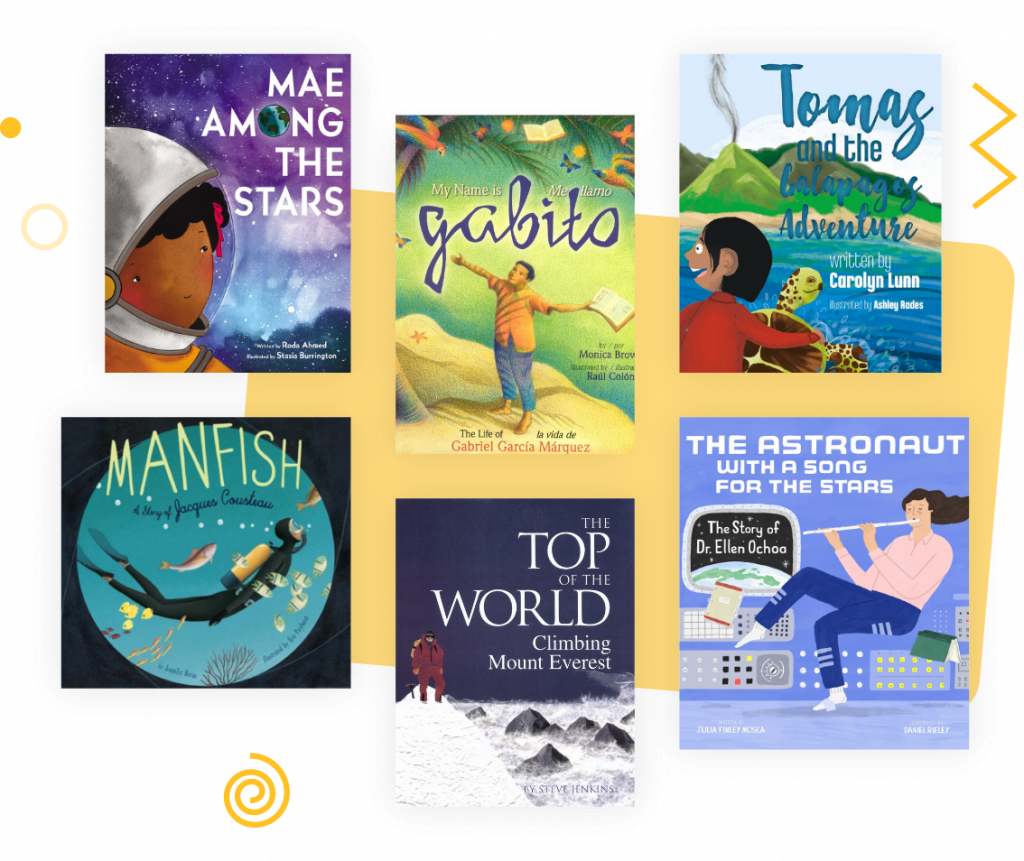
More authentic, diverse texts
A variety of texts—from complex read-alouds and decodable chapter books to trade books and content-rich readers—connect to learning goals. Amplify CKLA 3rd Edition also features new Culminating Research and Novel Study Units!
Culminating Research Units
Each grade now includes a core Culminating Research Unit featuring carefully selected trade books. These units build critical thinking and research skills, from selecting topics to presenting findings.
Novel Study Units
Novel Study Units are part of district-level Choice Units in Grades 3–5. Districts can select one novel per grade, from classic or contemporary options, choosing the book that best reflects their community’s goals and values while still covering all required standards.
Easy-to-use materials, pacing for real classrooms
Running out of instructional time? We understand! Our streamlined units now cover all standards within 165 days, leaving more time for enrichment and remediation.

All-in-one digital platform
Amplify CKLA 3rd Edition is part of a digital platform that enables seamless integration across all Amplify programs.
The platform includes familiar tools like lesson slides—now Presentation Screens—along with new features such as skill-building games, assessments, and detailed reports.
Digital assessments
Auto-scored K–2 Knowledge and 3–5 End-of-Unit assessments deliver immediate insights to enable quick, data-driven decisions.
Standards-based reports
Detailed reports highlight strengths and growth opportunities at individual, group, and class levels, all aligned to standards.
Embedded support to reach all learners
We’ve worked with experts and practitioners to enhance our differentiation strategies, making content more accessible to all students—including multilingual/English learners. Improved iconography helps you quickly find in-the-moment support, ensuring these strategies are seamlessly integrated.
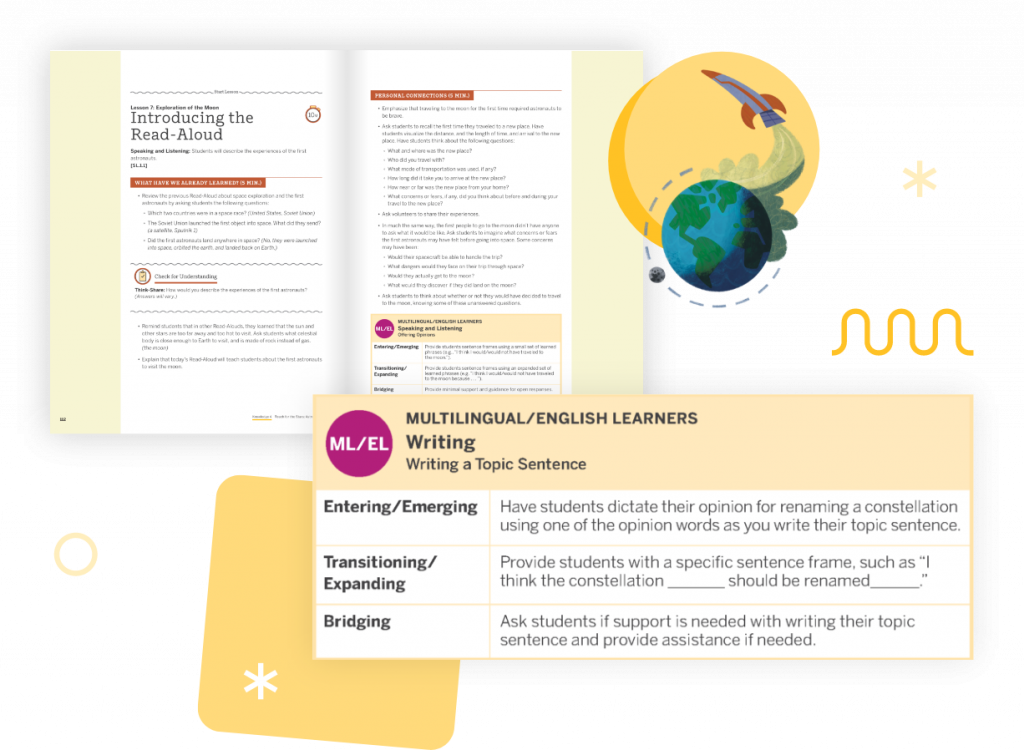
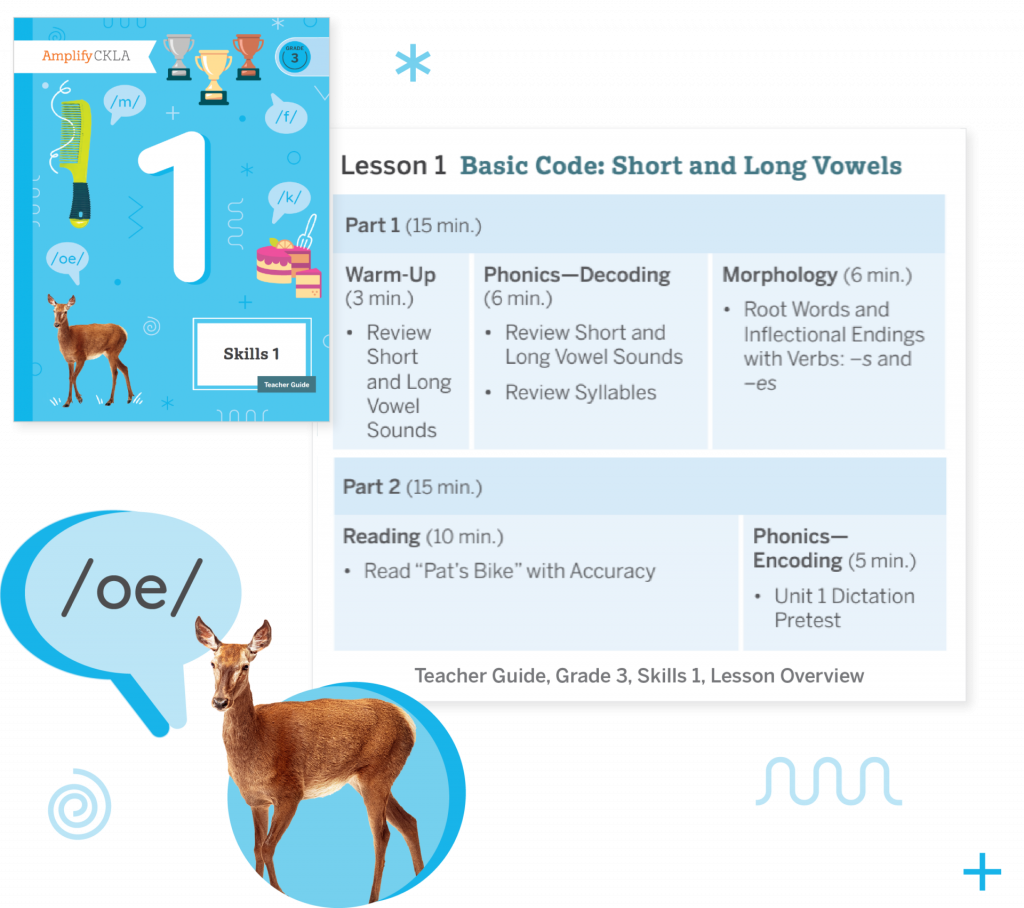
Grades 3–5 foundational skills instruction
Recognizing the ongoing need for foundational skills instruction beyond Grade 2, we’ve introduced Grades 3–5 Skills to reinforce and build on the K–2 Skills Strand. Use it to support core lessons or serve as an intervention, depending on your students’ needs.
The instruction follows a familiar sequence and offers flexibility: It can be taught in two 15-minute sessions or one 30-minute session.
Grades 3–5 Skills resources are included in core classroom kits, although the instruction isn’t required for Grades 3–5 standards coverage.
Bold new look and feel
With modernized covers, full-color interiors, and enhanced iconography, Amplify CKLA 3rd Edition materials are not only visually appealing, but also easier to navigate.

S3-02: How science strengthens literacy and language development
In our second episode of the season, we continue finding ways that science is overlooked and how it can be better utilized in schools—and as an ally to other subjects!
We sat down with Susan Gomez Zwiep, former middle school science teacher and senior science educator and staff advocate at BSCS Science Learning. She shared past experiences and research that shows the benefits of integrating science and literacy, as well as strategies for applying these ideas in the classroom.
We hope you enjoy this episode and explore more from Science Connections by visiting our main page!
Dr. Susan Gomez Zwiep (00:00):
We started to see this trend of students communicating more in English because they were excited about the science that they had been learning.
Eric Cross (00:10):
Welcome to Science Connections. I’m your host Eric Cross. In this third season, we’re exploring the theme of science as the underdog. And last time around, we delved into the data showing that compared to other subjects, science is often put on the back burner. Now it’s time to explore why it’s so important to change that and how to do it effectively. So over the course of these coming episodes, we’re gonna make the case for science and equip you with data and strategies for advancing science in your own home, school, or community. To kick things off, we’re going to spend a few episodes going in depth on the integration of science and English instruction. We know we need to dramatically improve literacy rates in this country, and as we’ll show in the coming episodes, science can be a key ally in that goal. We’ll also show how language development and literacy instruction can support science. Yes, it can be a win-win, folks. To start out, I’m joined by someone who has been studying science and language development for more than a decade. Dr. Susan Gomez Zwiep is a senior science educator and staff advocate for BSCS Science Learning. On this episode, she talks about her own experience as a middle school science teacher and share some key insights and strategies from the research on integrating science and English language development. Please enjoy this conversation with Dr. Susan Gomez Zwiep.
Eric Cross (01:36):
Welcome to the podcast. Thank you for being here and having this really important conversation. So I’m so glad you can make it, Susan.
Dr. Susan Gomez Zwiep (01:43):
Yeah, I’m excited to be here.
Eric Cross (01:44):
We’re gonna talk all about language development and science. But first I was hoping that you can just kind of set the stage and tell the listeners about yourself and how you came about to studying this specific subject.
Dr. Susan Gomez Zwiep (01:57):
Sure. So I am a California native. I grew up in the San Gabriel Valley and that’s where I started teaching. I have an undergraduate degree in integrated biology from UC Berkeley. And I thought I was gonna go be a field scientist. And while I was waiting for grad school applications to run their course, I took a substitute job in Montebello to kind of bide my time. And because I had a science degree, they asked if I would take a permanent placement, well, a temporary permanent placement. And I said sure. And found myself teaching seventh and eighth grade general science to a population that at the time was about 68% English language learners, in a school that you would consider urban, under-resourced with a community that was large percentage immigrants from Mexico, Central and South America. And I never looked back. I kept that job.
Dr. Susan Gomez Zwiep (03:04):
I loved it. I love the middle school classroom. I love teaching science to my middle school students and truly, truly just found a really good home for my love of science, but also my love for talking about science and helping other people understand science. So at some point I was entertained with the idea of going to graduate school. So while I was still teaching, I actually did a Ph.D. At the University of Southern California in the science education field. And once there, realized that I actually had a unique experience in higher ed, that experience of teaching with populations that are learning English or have home languages other than English, was actually not common in higher ed circles. And being from that community was also not common. And so I pretty quickly leveraged that experience to combat what I think is universally agreed as an equity issue that in my school where I taught, the district had advocated for ELs to get an extra hour of language development in order to promote their English language proficiency.
Dr. Susan Gomez Zwiep (04:28):
And, our principal wisely said, there are not enough English-only students in this school to do that without losing all of our science teachers because there’s not enough kids left to actually fill a day, a teacher’s day. And she said, these kids learn more language in their science courses than they do anywhere else, so I don’t wanna remove that. But the reality is, is that at that time–this was in the late nineties, early two thousands–if you were not proficient in English, you went to more time with language development. And that makes a lot of sense in some ways. But when you look at the big picture, you realize, well, that means those kids aren’t going to science and they’re not having opportunities to have consistent quality science learning opportunities simply because they spoke a language other than English at home. And so that’s really how I fell into this work.
Eric Cross (05:28):
And that has a downstream effect. I mean, once you start pulling students from a course, that automatically sets the trajectory for later outcomes, which we ultimately see in STEM fields where we, we don’t see the population of our students represented in the STEM fields. Now, I know this goes back a few years, but you were doing research for your Ph.D. What did you start to follow?
Dr. Susan Gomez Zwiep (05:50):
Yeah, so I eventually took a position at Cal State Long Beach, which was not by chance, it’s a Hispanic-serving institution, and that’s where I wanted to do my academic work. And once I was there, sought funding with a district to support elementary science learning. So it had a teacher professional learning component that was both summer and in-class, sort of like PD in the classroom component. And the district came back and said, the only way you are gonna get time to even talk about science in elementary school is if it’s attached to language development. And so that’s what we did. It was a three-year grant, there was a sister grant that followed–so all told, it was about a five-year program where we basically said, what if instead of following the traditional ELD, English Language Development curriculum, we modified and put science as the context for language development in the K2 bands.
Dr. Susan Gomez Zwiep (07:01):
Teachers at the district traditionally had not been excited about their language development curriculum until we said, we’re gonna take that and we’re gonna do some science instead. And then they were like, no, no, no! We love our ELD curriculum. But they hung in there with us. The project was successful enough that it actually became a K4 and then a K5 project. The district ended up having to put in a ton of money into this because the grant only paid for so much. But their schools actually wanted “in” ’cause what they heard is when we put science as a context for language development, kids were talking more. Kids were speaking in English more. Kids were writing more. Kids were engaged. And the ultimate, kids were developing English quickly and in a community where you could actually operate within the community without speaking English. These are Spanish-speaking communities and the schools operated in Spanish outside the classroom. So if you walked into the school’s office, the principal secretary, the person who manned the door, spoke Spanish. The field supervisors that the lunch supervisors spoke Spanish.
Eric Cross (08:17):
The non-teaching staff that are supporting the rest of the students outside of the classroom.
Dr. Susan Gomez Zwiep (08:23):
Yeah. Everybody spoke Spanish and they spoke Spanish at school. And even the principals came back and said, from being in this project, that the kids were coming into the office and had transitioned to communicating in English, especially when they wanted to talk about science, and they really wanted to talk about science ’cause they were super excited about the stuff that they were learning. So we started to see this trend of students communicating more in English because they were excited about the science that they had been learning. And yeah, that sold itself and we had schools jumping in.
Eric Cross (09:01):
So you started off in a situation where you were told that you had to, if you wanna get science and you had to merge it into English, basically. And is it fair to say that that’s because of testing requirements that schools have on them? Like this is what gets analyzed or what was the purpose behind that?
Dr. Susan Gomez Zwiep (09:15):
It was district policy and it was site policy and those policies were put into place for very good intentions. Students don’t get reclassified into English only, and reclassification is how you traditionally got access to all this other programming, electives, AP college prep, all those other things. And the best way to get them reclassified was to learn English, and to learn it sooner rather than later. So it was in an attempt to get kids reclassified from English learner to English proficient.
Eric Cross (09:55):
And then during that process it was able to be expanded to K4. And then with these open-minded teachers, you gave them the content, they used science as the context for learning. And then your students who were mostly emerging bilinguals and multilingual students, you found that they started speaking English more frequently. What did you make of that result? Like what did you come to after seeing all that happen?
Dr. Susan Gomez Zwiep (10:20):
So I do wanna say that there’s a couple of reasons why we think this works so well. But I have to really acknowledge that there were linguistics, second language acquisition experts that were part of this team. And we wouldn’t have been able to make any of this work if it was purely science educators leading this cause. There’s a lot we didn’t understand about language development, and they really helped us. But one of the things that we think is unique about science, there’s a few really important aspects–one is that we all have experiences in the natural world, since we can process outside information, right? We all have observations, things we’ve observed with our eyes, we’ve heard, we’ve felt, and all of those experiences build some pretty good science ideas before we enter formal schooling. You know, kids already have ideas about this.
Dr. Susan Gomez Zwiep (11:20):
We don’t have to give them language for it. They already have these concepts and experiences. The other thing is that we are inherently interested in the natural world we occupy. And so we’re curious, science is often considered cool, there are science channels and science fiction movies and science fiction books and magazines–and this is just … it’s just cool. And that tended to be the trigger, you know, when we gave kids something interesting to observe. A Ziploc bag with water that we added an Alka-Seltzer to, and strange things starts happening in the baggie. That curiosity, that excitement allowed kids to leap over any concerns they had about the language they were supposed to use in the classroom. One of the most difficult things about learning a language is using a language that is imperfect. So saying things and communicating in a language that you are not a hundred percent confident about, that you’re not sure you’re using the right words or the right tenses. But when kids were excited about this thing in a Ziploc bag, they didn’t care. They communicated however they could, sometimes in their primary language or their home language, sometimes in imperfect English, but by and large they just communicated. They did it in oral language, like listening and speaking, but they also did it in writing. And that was easy. Like we didn’t have to do anything other than provide interesting science experiences. And that’s, that’s pretty common.
Eric Cross (13:06):
Yeah. I feel like, to co-sign on the science is cool, it is objectively, if a matter of fact, even just looking at the Oscars, like we have multiverse, you know, we have sci-fi you know, the costume designer of Wakanda Forever. We have all of these different movies that are all founded in some kind of these scientific principles. And so the idea that science is cool and organic, naturally engaging is something I think we, we all can connect to and it resonates with all of us. So I feel like is sort of your origin story too.
Dr. Susan Gomez Zwiep (13:33):
That’s the origin story.
Eric Cross (13:34):
That’s the origin story right there, to continue with this like movie theme. Now if we fast forward to today, based on all the research that you’ve seen since then, and your experience, why would you advocate merging English language development and science?
Dr. Susan Gomez Zwiep (13:49):
Well, for one, the research that we conducted actually provided some really nice evidence that showed, even though we had essentially stole minutes from language development time and inserted science. And on state mandated tests and on their students’ language proficiency measures, the kids in the program with the blended, did significantly better than students who were getting ELD instruction alone. Traditional ELD instruction. And that kind of blew our mind. We would’ve been happy if they had done just fine. Like we could put science into a student’s day and do no harm. They could get their language development; they could get science. But in fact, what we found was that they did better. That they actually gained English more quickly and it showed up in multiple measures, including the state English language arts assessment, which again, kind of blew our mind.
Eric Cross (14:55):
So just to be clear about the study that you did, you looked at two groups and one was the blended science and English language development, and then the other one was a control group. And the blended group ended up showing more improvement.
Dr. Susan Gomez Zwiep (15:09):
Yes. So there’s quite a bit of research now, this research was done in the early two thousands, and the research has built around it to really suggest that this does seem to be a more efficient way to promote language development while still maintaining students’ access to a core content area. But in recent years, the standards have shifted and that has been just a remarkable, wonderful change. And both standards have shifted. So when we did our research, we did it under the old California Science standards that were fairly heavy in technical terms. They were heavy in science concepts rather than kids doing things. And they were a much narrower focus.
Eric Cross (16:04):
And these are the standards that most of us grew up on, right? Those of us who are pretty much teachers in the classroom today pretty much grew up on what you’re talking about. Is that fair to say?
Dr. Susan Gomez Zwiep (16:12):
That’s fair to say, yes. So the new standards that we have now, the California NGSS Standards emphasize not just ideas, but they also emphasize students doing things in science. And we didn’t have to build-in language portions to the standards. They now exist. The NGSS is a very, very rich linguistic opportunity for students. And at the same time, the way we’ve thought about language development has also shifted. We used to talk about language and science… we used to think about science as a lot of words, and you had to know the words, you had to have this technical language. And we’ve sort of shifted that to really thinking about, language is no longer a prerequisite for science learning. Language is now developed through the science learning or the content learning experiences.
Eric Cross (17:11):
So now there’s more chances to integrate English into science. Have you seen success stories or have you seen examples of this? Maybe just anecdotes of teachers kind of doing this since you’ve been doing this research and kind of watching. If so, would you mind sharing one or two?
Dr. Susan Gomez Zwiep (17:30):
Yeah. And I will just give a nod to Dr. Dr. Okie Lee who’s now at NYU who has really led sort of this reconception of language and science. And one of the ways she talks about it is this notion that I enter this learning experience, I enter this observation of this phenomena with fairly naive, simple scientific ideas. And my language about it is equally simple. But as I develop more and more ideas, as my understanding of the phenomenon, what I figured out becomes more sophisticated, I need more sophisticated language. And so what we’re starting to see are these spaces where teachers are building science ideas and science and understanding along with the language. And in order to do that, you really need to know what’s the storyline arc of my science lesson? What do they figure out in lesson one? What do they figure out in lesson two?
Dr. Susan Gomez Zwiep (18:35):
What do they figure out in lesson three? How are the science ideas building over time? So that I can then look at the language that they’re using and what language supports do I need in order to allow students to not only engage and figure things out, but communicate their ideas about it. And so we’re seeing teachers blow up what we call language, what we call text. It’s not just words. It’s not just sentences written on a paper, but it’s models, it’s pictorial representations, it’s gestures, it’s this wide range. We pretty much said, let’s blow language up. Let’s like use all of the linguistic registers that we have in order to make meaning of what we’re seeing it in together in this classroom. So that’s one thing that we’re starting to see. The other thing is that teachers are really allowing students opportunities to use what we call social language, non-standard dialects.
Dr. Susan Gomez Zwiep (19:40):
The language I use at home and with my friends. Because earlier I had said, we have all these experiences and those experiences in the world are tied up in my social register. They’re tied up in my home language ’cause that’s where I experience them. And to let students have access to using that language in the classroom, especially initially in a unit, means we’re giving ’em access to those experiences that they have that are related to the phenomena under study. So I totally understand the benefit of promoting academic language and promoting language frames and forms that we use in more academic settings. But it’s a sticky wicket. You have to be careful how you tell students about the way you want them to communicate. Because when we tell them that language that you use at home with your friends and family is not welcome here, we can send a message that they’re not welcome here. And that those experiences that they have outside of classroom about how things fall, the way sunlight heats up different surfaces, where you’ll find plants and what plants you will find based on conditions. All of those experiences, we’re sending a message that those are not welcome in the classroom. And so this expansion of language, including non-standard dialects and even home language, is really important for letting students bring their whole selves into the classroom.
Eric Cross (21:23):
I love what you just said. It legitimizes the funds of knowledge, the language, the cultures that our students are bringing to the table. I remember when I first learned the word code-switching in college and you know, I’m biracial, I grew up in my home community and my school community were two different communities and I ethnically, culturally belonged to both. And I had to code-switch in order to kind of survive and be accepted into different communities. And not until I was in college did I actually understand what I was doing. Now there were all kinds of teasing and jokes that went on to how I would talk if I code-switched improperly. And in my classroom, I would see students who would explain concepts in a way that was maybe like a casual register. They just were explaining it the best way they could.
Eric Cross (22:10):
And the way they were speaking was kind of denigrated or it was seen as negative even though they were communicating their concept. And when I became a middle school teacher, one of my, I don’t know, it’s like sometimes when you teach, you get to, you change how you were taught or what you experience and legitimizing my students’ language, and they would tell these beautiful stories and in their most common like, casual language, but they’re explaining the concept brilliantly. And it was phenomenal to see this barrier be removed of saying, you have to talk like this in order to be a scientist or you have to say these right words. And, and that’s what I feel like I’m hearing that in how you’re describing kind of how science has been done and what language can do to certain groups of students.
Dr. Susan Gomez Zwiep (22:58):
Yeah, very much so. And you know, back to the origin story, you know, I grew up in a multi-generational household. My mom, my aunt, my grandmother, Spanish was their first language, but they lost it because my mom was raised in Riverside and she, you know, went to school in the, the fifties and sixties and back then you weren’t allowed to speak Spanish at school. And so they lost the language.
Eric Cross (23:27):
They weren’t allowed to speak it at all.
Dr. Susan Gomez Zwiep (23:29):
At all. I didn’t directly observe it, but that is the story that my family tells, that there was no English spoken anywhere on school grounds. And that was a different issue. Right? That was very much for people unfamiliar with some of the history in Southern California. Their segregated schools, severe racism, linguistic racism, racial racism against Mexicans was a real thing. But yet I grew up in this household where the sort of way of speaking, like I think many Mexican households, the context is everything. So you can’t get to the facts until you’ve told the whole context of everything happening around it. So we used to joke that we couldn’t send my grandmother to the doctor by herself ’cause he had 15 minutes, and she was gonna take 20 just to tell him how she got there before she got to why she was there. But this telling of the context, the telling of the story around the idea is part of the linguistic, this sort of linguistic way of my household. When I got to school, I had to learn to drop it because teachers found me off topic. You know, I still have to be careful how I express things and sometimes I’m not a fast storyteller <laugh>, and I monitor that for myself. So I can only imagine what it’s like to be a kid in a classroom.
Eric Cross (24:59):
Right. And there are so many constraints in the school day, you know, especially if you’re multi-subject and you’re elementary and you’re teaching multiple subjects and someone’s trying to tell a story and you’re just like, land the plane! And they’ve, you know, gotta tell ’em the story, but realizing that when you look at it through a lens of like, culturally, this is how we communicate, then it reframes what the student is trying to do. They’re communicating to you based on how they’ve learned to communicate and they’re including essential parts of the story. And so how do you both honor that while also, you know, certain things like brevity and being concise and things like that that they’ll have to learn. But also honoring that and making sure that there’s space for that in your classroom. Even me, I’m thinking about this where I had students record this video and it was one minute to two-and-a-half minutes explaining three concepts. And I had students coming up to me afterwards saying, Mr. Cross, I need to record two videos because two-and-a-half minutes is not long enough. And I was like, how? I even extended it. But I’m realizing and listening to you and going, they’re probably not just getting to the point. They’re probably including more context into this because that’s how they story tell and that was actually part of the lesson.
Eric Cross (26:12):
So now I need to go back and extend their time that I’ve given them for <laugh> that project. I wanna come back to kind of, since we’re on this topic about why this is also an equity issue. Mm-hmm. <affirmative>. So we were talking about language, you touched on this a bit, and we were talking about integrating into science, but can we go a little bit further into how this integrated approach maybe can benefit English language learners in particular? And maybe anything else that’s related to equity that comes to mind.
Dr. Susan Gomez Zwiep (26:40):
So there’s a couple of layers of the equity issue. The most tangible and clear is student access. If we wait until students develop English proficiency to allow them access to quality science learning, we lose a tremendous number of students that could not only could they benefit from science, we could benefit from their entering this science conversation. And I was at a university and I was in a college of natural sciences and we were dedicated to increasing the diversity of the faculty. And it was a struggle ’cause the number of Ph.D. science ed or biology or chemistry academics that come from marginalized populations is very, very small. And it’s not by accident. You know, the number of students that make it into the next level, that make it into college prep courses, that make it into STEM majors, that complete STEM majors and go on to either careers or advanced degrees narrows at every possible step.
Dr. Susan Gomez Zwiep (28:01):
And so the equity issue is really one of access. And as basic as that is, it’s the easiest to solve. So that’s the first layer of equity. But the second issue around equity is how we engage these students once they’re in this space. Do we make it possible for them to see themselves as a scientist or an engineer? Are we creating learning experiences that not only allow them to use all the sense-making resources that they have, but do we make them feel like they’re valuable and useful in that space? Because there’s a lot of people that will say, I could be successful as a scientist, but I’m not willing to give up who I am in order to do that. And that’s a real thing. There’s a lot of research about like, why are they leaving? Like why, you know, is it because they’re not able?
Dr. Susan Gomez Zwiep (29:05):
Is it because they don’t see themselves as being capable? And now I think we’re looking at this as a different issue. It’s not that students don’t see themselves as capable and not that they’re not achieving. They see the cost that it will take to enter these fields and essentially not be able to be their full selves. So that’s the second equity issue. And in both cases we lose. As a society, we lose. We lose access to the full range of human resources that we have, and we lose access to their unique perspectives that they would bring to real problems facing us. It’s like all hands-on deck. We need to stop making it too difficult to participate in the conversation and we need to be more inclusive about how we invite these other perspectives and how we respect and utilize their ways of sense-making. That may not be Western science ways that we have in our books now, but hopefully those science materials are gonna change and we’re gonna start to see other ways of sense-making and other people involved in the stories that we tell around science concepts.
Eric Cross (30:29):
And just to be clear, this practice in integration, while it lifts up equity for marginalized or underrepresented groups or students who are emerging bilinguals or students who typically we don’t see representation of, this approach also benefits native speakers as well. Correct?
Dr. Susan Gomez Zwiep (30:47):
Yeah. And there’s actually a group of native speakers that come from text poor homes. It’s typical in underserved communities. Poor people living in poverty that may be native English speakers. They may not be marginalized populations. But they don’t have access to like text. And so that’s another group altogether that needs linguistic support. And then once you have all voices in the room contributing, everybody benefits because now the conversation, the building understanding conversation we’re having or the sense-making conversation that we’re having has everybody involved. And we all benefit from that.
Eric Cross (31:33):
And we see, I think one of the benefits about a country like the U.S., is we have such a heterogeneous group of people. And when we’re moving in the same direction, we’re all coming to the same problem, but from different perspectives and we’re able to come up with more innovative and novel solutions to them. And that’s kind of what I’m hearing is like as we generate scientists that are all coming from different backgrounds, we’re gonna be able to solve future problems, current problems a lot more effectively because nobody has a monopoly on perspective. Nobody has a monopoly on knowledge or the fastest way to do something or the best way to do something.
Dr. Susan Gomez Zwiep (32:11):
Right. Right. And traditionally we really have privileged particular experiences, particular ways of sense-making particular linguistic registers. And if we could just kind of put that privileged ways aside and open up space for everybody to feel like they have a voice, I think the next generation could change the world. I think they could solve some real problems. I’m truly hopeful that they would see themselves not just as capable, but as necessary in these pursuits.
Eric Cross (32:50):
So what does it actually look like today to do this work in instruction well? So to integrate the science, to integrate literacy, to take the benefits of the things that we’ve been talking about. What are some practical things that educators could do to get started, whether it’s in early, you know, K5 or middle school or even high school.
Dr. Susan Gomez Zwiep (33:13):
So I will say, I’m gonna kind of separate ’cause in the elementary space, students are primarily developing literacy in multiple languages. The language of the classroom, typically English, home language, languages, they may be multilingual. In the secondary setting where students tend to have developed social language in some language, it’s a little different. So I’m gonna kind of separate those two. So for elementary spaces where teachers tend to teach multiple things, I recommend that you get a partner. Don’t do this work alone. You cannot do this work alone. I mean you can, but it’s very frustrating and not nearly as much fun. So you really wanna take a look at what is the science that kids are going to be engaged in. Because when we look at science first and build language development around it, the experience tends to be more authentic and organic.
Dr. Susan Gomez Zwiep (34:18):
And what we used to do is we used to, like when we were talking about the science, we’d monitor the language we were using and then use that to say these are the registers. This is the language that we use when we were thinking about this. So if students are gonna use this, these are the scaffolds they’re gonna need. ‘Cause to do it, well, to do it efficiently, the scaffolds need to be specific to the science learning. So if we’re doing cause and effect, those are specific linguistic scaffolds that are different than if, say we’re doing model and systems and systems models, those are a whole other slew of scaffolds. And so you wanna be really tending to, what is the science being discussed and what is the language that kids are going to use and build scaffolds around it.
Dr. Susan Gomez Zwiep (35:10):
And then you also wanna think about what is the social language? What are the experience that kids will have either in words or pictures that I can leverage in this space. And then you wanna do that for the arc of the unit and slowly increase sophistication around those linguistic supports, as well as the science learning. But if kids have social language and they’re now in, there’s a group we call long-term English learners who have not been reclassified way beyond what the typical reclassification is. And that actually is important to think about because if you think about the kinder group, the group of kindergartners that enter a school when they’re five or six, those kids are going to go from grade to grade to grade. And as students develop proficiency, will get reclassified and they move out of this group that we’re still calling English learners.
Dr. Susan Gomez Zwiep (36:10):
So by the time you get to like seventh, eighth, ninth grade, if they’re still students in that category, they have very different needs on average than the group we started with. Often when we talk about secondary or these long-term English learners, we can leverage social language a lot more, but have to build the scaffolds more carefully around, for lack of a better word, the more academic content transferring that those social nonverbal language into more sophisticated forms. I think in any setting, you wanna utilize your resources. If I’m in a secondary space and I have a language development teacher and I’m not talking to her or him or they, that’s a problem. You need to go talk to the other people that have these same kids and talk to them about, how are you engaging in language, what are you doing?
Dr. Susan Gomez Zwiep (37:07):
Because you know, you could actually have a lesson, maybe this is a lesson about energy and you’re using a model and the kids are creating an initial model. And over in ELD land, they’re doing some linguistic supports. They’re working on some forms and functions of language. You could talk about the catapult, you could talk about the solar heater. You could use the context of the science conversation, which has a whole bunch of tangible experiences. You know, there’s the solar heater in front of you. I don’t need to keep it all in my head ’cause it’s in front of me and we can point to things and talk about things by manipulating the materials. And then I can take all of that and my ELD partner can use that as context when available. But it takes collaboration, but it’s collaboration well spent. And it’s more challenging in the initial phases of the collaboration. Once you kind of the get into the groove, it becomes a lot easier.
Eric Cross (38:16):
The meta of this, as we talk about integrating science and literacy is, and this is great advice, but it’s basically integrate your science teachers with your English teachers and co-plan and do this work together. It’s a force multiplier. One, you’re both, you’re getting two specialists together. It also, I’m just listening to just the parallels. It also resembles what you actually do in the STEM fields of collaboration working together to problem-solve, and you’re modeling for your students what you want to happen. And if I was an administrator listening to this, someone who had control, like master schedules and things like that, there also needs to be space created for these teachers to talk to each other and plan and do all these other things to kind of maybe come up with like interdisciplinary units or even just meet and begin the conversation. It just seems like such great advice.
Dr. Susan Gomez Zwiep (39:07):
Yeah. We’re professionals. We have academic degrees and credentials and experience in the classroom and yet more often than not, we leave it to the students in the seats to make the connections between my class and the class they go to next. And that’s not fair. We need to be talking to each other. So if we’re talking about argumentation, argumentation in science and argumentation in ELA and argumentation in math–we’re not even talking about the same thing. I mean, cognitively we’re talking about taking some evidence and creating a claim and supporting it, but what we mean by evidence is very different in the different disciplines. What counts as more convincing evidence changes. And yet we assume that because we say evidence in one class, the kids know what we’re talking about. And the kids are sitting there going, which one is this? Which evidence are you talking about? Because last period it was something else. And so I think we also need to really consider who’s in the best position to clarify the connections and the integration because we leave it to kids more often than not right now.
Eric Cross (40:19):
I agree. Just having those conversations and defining your terms and agreeing on them just to make it easier for students. ‘Cause you’re right, they are left to make those connections or bridge the gaps. And when you have an education system for many schools, I think most of us, it’s still pretty siloed. You’re still kind of like, especially when you’re in secondary, it’s we’re doing this or even elementary, different times of the day you do different subjects, versus the way that we experience life itself or even our professions. We’re actually integrating science and math and reading and writing throughout the day, and ebbs and flows going back and forth. And without making those explicit connections, we’re leaving a lot of things to chance, hoping that the learning’s there in such a valuable moment. Before we go, I’m wondering if you have a parting message for listeners about the topic of integrating science and literacy. You’ve already said so many amazing things, but you have the platform speaking to educators and folks out there. What would you wanna say to them?
Dr. Susan Gomez Zwiep (41:18):
This is not an easy endeavor. The system that we operate in does not make this effort easy, but it is worth it. It is worth it to the kids in our classrooms. It is worth it to the building of a scientific community and a scientifically literate populace. It’s important to solving problems in the future. It’s important to have kids feel like regardless of how they say things, that they belong in a classroom. If we can relax the sort of linguistic demands on kids and let them enter science learning in a way that allows them to use all their resources and they’re curious, they can really leverage both areas in a way that they don’t do individually. It’s really hard to think about what it is I’m trying to say if I’m worried about how I have to say it. And so we really need to think about, when are those times that we’re gonna let kids just tell us what it is that they’re excited about and when is it that we’re going to help them craft a more formalized language around those ideas. Right now we do a really good job at that second half. We need to do better at the first.
Eric Cross (42:46):
Susan, thank you so much for joining us today and for sharing your expertise and your wisdom and your passion for serving the students and for bringing everybody to the table through language and through science. We really appreciate it and the listeners will too.
Dr. Susan Gomez Zwiep (43:03):
Thank you so much. This is my favorite topic.
Eric Cross (43:06):
Thanks so much for listening to my conversation with Dr. Susan Gomez Zwiep, senior science educator and staff advocate at BSCS Science Learning. And please remember to subscribe to Science Connections so that you don’t miss any of the episodes in this exciting third season. And while you’re there, we’d really appreciate it if you can leave us a review. It’ll help more listeners find the show. Next time on the show, we’re going to continue exploring the how and why of integrating science and literacy instruction.
Speaker 3 (43:35):
When we interview scientists, they spend a lot of their time reading the work of other scientists and writing their findings, writing grant proposals, presenting at conferences. A huge part of the work of a scientist is not just at a bench conducting experiments, but even if you’re conducting experiments, you’re using your literacy processes to think about what you’re seeing in your experiment.
Eric Cross (43:57):
That’s next time on Science Connections. Thanks so much for listening.
Stay connected!
Join our community and get new episodes every other Wednesday!
We’ll also share new and exciting free resources for your classroom every month!
Meet the guests
Susan Gomez Zwiep began her career in science education as a middle school science teacher in Los Angeles where she spent over 12 years working in urban schools. Prior to joining BSCS, Susan worked at California State University, Long Beach as a Professor of Science Education.
Susan has also worked as a Regional Director for the K-12 Alliance, providing high-quality professional development in science and mathematics for K12 educators, including the CA NGSS Early Implementer Initiative. Susan consistently works toward establishing equitable access for all students to rigorous, inquiry-based science instruction and supporting teachers in their journey to become advocates for students, science education, and their own professional development.

About Science Connections
Welcome to Science Connections! Science is changing before our eyes, now more than ever. So…how do we help kids figure that out? We will bring on educators, scientists, and more to discuss the importance of high-quality science instruction. In this episode, hear from our host Eric Cross about his work engaging students as a K-8 science teacher.
