Showing results for nancy danielas

Season 10, Episode 8

Beyond decoding: The power of syntax, with Nancy Chapel Eberhardt

In this episode of Science of Reading: The Podcast, Susan Lambert is joined by educational consultant Nancy Chapel Eberhardt, who explains why focusing on syntax at the sentence level is just as important for comprehension as word-level decoding. Together, Nancy and Susan also discuss how syntax helps students process meaning while reading, why we should start early and teach syntax to students from the beginning, and a more functional approach to teaching syntax.

Meet Our Guest(s):

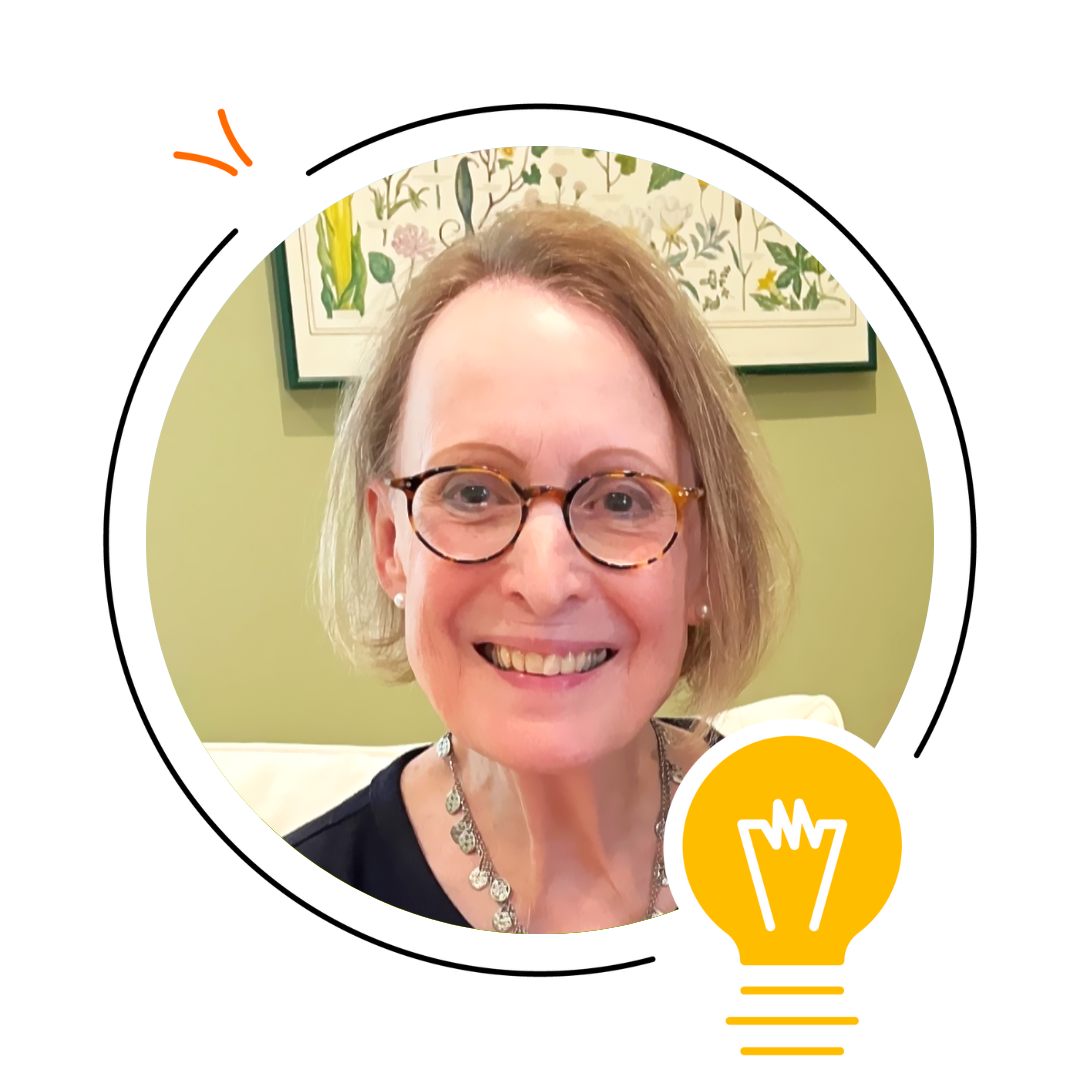
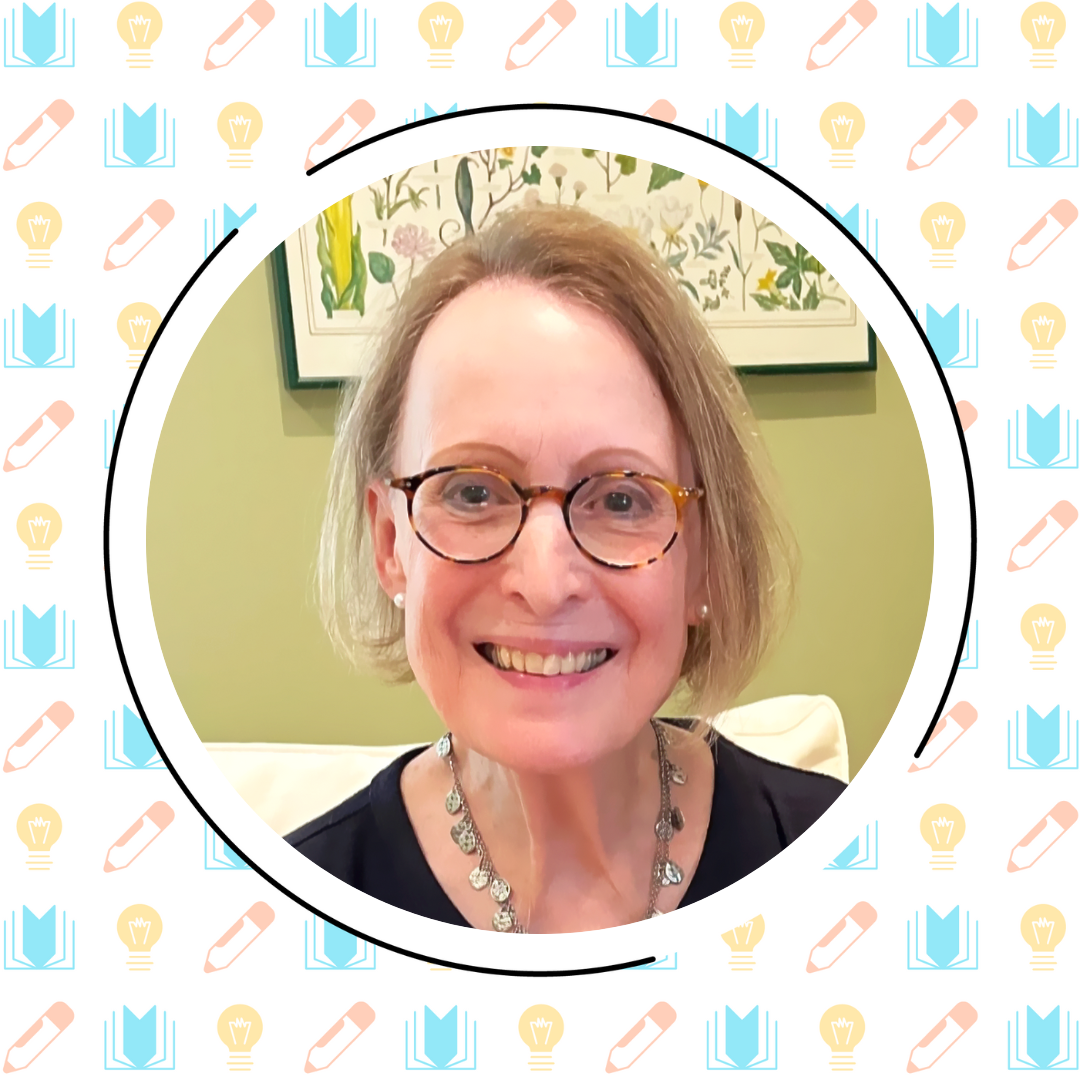
A smiling woman with glasses and a necklace sits in front of a green wall with a botanical print, illustrating concepts in literacy instruction; a graphic of a yellow lightbulb is in the lower right corner.

Nancy Chapel Eberhardt

Nancy Chapel Eberdardt is an educational consultant with extensive experience as a resource teacher, special education administrator, and professional development provider. In addition to co-authoring a number of popular literacy programs, she also serves as co-editor-in-chief of the International Dyslexia Association’s publication Perspectives on Language and Literacy. Nancy is a lifelong advocate for preventing reading underachievement by supporting teachers with professional development and evidence-based resources.

Meet our host, Susan Lambert

Susan Lambert is chief academic officer of Literacy at Amplify and host of Science of Reading: The Podcast. Throughout her career, she has focused on creating high-quality learning environments using evidence-based practices. Lambert is a mom of four, a grandma of four, a world traveler, and a collector of stories.

As the host of Science of Reading: The Podcast, Lambert explores the increasing body of scientific research around how reading is best taught. A former classroom teacher, administrator, and curriculum developer, she’s dedicated to turning theory into best practices that educators can put right to use in the classroom, and to showcasing national models of reading instruction excellence.
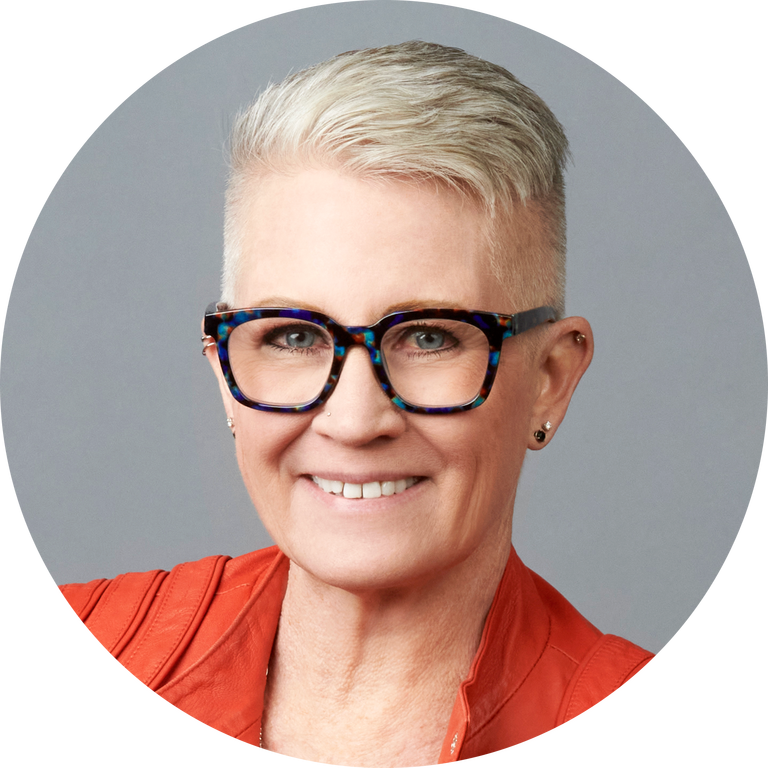
Person with short blonde hair, glasses, and earrings, wearing an orange jacket, smiling in front of a plain gray background—committed to literacy education and fostering background knowledge for all learners.

Quotes

“Syntax is somewhere between the individual words and the meaning of the text. It’s the processing piece that’s going on there.”

—Nancy Chapel Eberhardt

“One of the biggest ways that syntactic knowledge can help us with our reading comprehension is through this parsing of the language, which is basically helping us with prosody. And we know that prosody will help us with our fluency with reading.”

—Nancy Chapel Eberhardt

“I would encourage teachers to start teaching this by thinking about the most essential building block. ‘I need to build a sentence. I need two parts. I need a who or what, and I need a did what, or I need a noun and I need a verb.’”

—Nancy Chapel Eberhardt

“Every language has a syntax, meaning a set of rules within this language that has to do with how we develop thought units. A sentence is a thought unit. So, if we think about syntax as being sentence-level structures in our language, that's one helpful way to think about it.”

—Nancy Chapel Eberhardt

“Syntax isn't just for older kids anymore. Syntax is really something that we can start promoting, developing, encouraging, embracing from the beginning.”

—Nancy Chapel Eberhardt

“I actually think that as teachers embrace this idea of syntax, they're going to have a lot of fun with it. It's way more fun to talk about the meanings of words than to just decode them.”


—Nancy Chapel Eberhardt

Episode 10: Myths and misconceptions about universal screening with Nancy Nelson

Dr. Nancy Nelson, research assistant professor at the Center on Teaching and Learning at the University of Oregon, discusses myths and misconceptions around RTI, Multi-Tiered System of Supports (MTSS), and universal screening in reading instruction.

Episode 9: Deconstructing the Rope: Vocabulary with Nancy Hennessy

Join Nancy Hennessy, past president of the International Dyslexia Association, in the latest episode of our Deconstructing the Rope series in which Nancy defines the role of vocabulary and elaborates on the nuanced structures of comprehension in literacy instruction. She also highlights how to explicitly teach vocabulary to students through her research-backed, four-pronged approach.

Season 4, Episode 13

Revisiting a conversation with Dr. Nancy Nelson

In this episode, we join Susan Lambert as she revisits a conversation she had during season 1 with Dr. Nancy Nelson, a research assistant professor at the Center on Teaching and Learning at the University of Oregon. They discuss myths and misconceptions around Response to Intervention (RTI), Multi-Tiered Systems of Supports (MTSS), and universal screening in reading instruction. Dr. Nelson also describes her work on DIBELS® and explains the importance of dyslexia screeners and what tools need to be in place for RTI to work well.

S5: Summer ’22 Rewind, Episode 13

Summer ’22 Rewind: Myths and misconceptions about universal screening: Dr. Nancy Nelson

Dr. Nancy Nelson, assistant professor of special education at Boston University, discusses myths and misconceptions around RTI, MTSS, and assessment screening in reading and mathematics instruction. She highlights what tools need to be in place for the RTI system to be implemented well, her work on DIBELS®, and the importance of dyslexia screeners.

The importance of vocabulary in effective literacy instruction

When you learn to read, you don’t learn just to pronounce words—you learn to understand them, and how they work together to convey meaning. In fact, it almost goes without saying that vocabulary is an essential, non-negotiable building block of literacy. 

But there’s actually a lot to say about vocabulary. And in the context of literacy instruction, it’s about much more than memorizing and amassing words and definitions. 

If there’s one word we need to better understand to explore the importance of vocabulary, it’s…vocabulary. So let’s explore the word’s full definition, as well as how it fits into best practices in literacy instruction.

Why is teaching vocabulary important? 

Vocabulary is one of the five foundational skills in reading and a key strand in the Reading Rope. As a word, it refers to the collection of words that we understand and use in language. 

Vocabulary includes both the words we recognize and comprehend when reading or listening (receptive vocabulary) and the words we can use accurately and effectively when speaking or writing (expressive vocabulary)

But our vocabulary isn’t just a list of words and their definitions. “Words are interrelated,” says Nancy Hennessey, former president of the International Dyslexia Association, on Science of Reading: The Podcast. “We’re storing words in networks of meaning.”

Entwined in those networks is background knowledge. We can memorize words in a vacuum, but they’re not really part of our vocabulary until and unless they’re grounded in what we know.

“Background knowledge and vocabulary are the main support beams in the comprehension house,” says Hennessey. 

How to teach vocabulary as students grow

First, it’s important to note that tactics and emphasis can and should shift as readers develop skills. As Hennessey notes, we can measure vocabulary in terms of both breadth and depth. These elements play distinct yet complementary roles in literacy development.

Vocabulary breadth refers to the sheer number of words a reader knows and recognizes. A broad vocabulary enables readers to understand a wide range of texts and communicate effectively in various contexts.

In the early stages of reading development, educators might emphasize increasing vocabulary breadth—exposing readers to diverse texts, books, conversations, and experiences. In this way, new readers start building a foundation of familiar words that they can understand and use.

As students learn more, instruction can shift from breadth to depth. Here’s where educators dig into the intricacies of word meanings—exploring synonyms, antonyms, contexts, and connotations. A deep vocabulary allows readers to grasp subtle nuances in language and engage in more sophisticated forms of expression and comprehension.

Vocabulary activities and instruction

Hennessey has developed a four-pronged approach to vocabulary instruction, grounded in the Science of Reading. The four prongs are:

  1. Intentional instruction: explicitly teaching the meaning of specific words.
  2. “Incidental-on-purpose” instruction: helping students understand new words as they come up.
  3. Intentional teaching of independent word learning strategies: giving students tools to help them determine the meaning of words on their own (e.g., using morphology, context clues, or even glossaries).
  4. Development of “word consciousness”: getting students interested in how words work to convey meaning, uses of figurative language, etc. 

“These approaches are based on the fact that we know we need to explicitly teach words,” Hennessey says, “but we also need to continue developing vocabulary through oral experience and reading, because we can’t teach all the words that our students need to know.”

In the context of literacy development, vocabulary instruction is not rote memorization of lists of words. And, according to Hennessey, that’s not the way kids relate to it either. Students bring natural interest and curiosity to exploring figurative language, playing with palindromes, and finding and learning what she calls “$20 words.” 

When we integrate these activities into incidental or incidental-on-purpose instruction, Hennessey says, “we can embed this excitement and understanding of how words play such an important role in our lives.”

More to explore 

Putting equity first

When so much about the world needs to shift, so urgently… here are a few places to start.

Listen: Educator, author, and leader Shawn Joseph shares his passion for social justice and discusses his work advocating for equity in education, shedding light on what he calls the “silent crisis” in literacy instruction.

Learn: Share Shawn Joseph’s discussion guide with your colleagues. Which insights are the most relevant to your district this year?

Lead: Take a look at this curated collection of multicultural and social justice books. Could one spark discussion for your students?

Lead: Share this infographic on the journey to freedom with your class. Ask students to select an event to research and present a two-minute video talk.

Leveraging the science of reading

Go deep on the insights and practices that will help our classrooms (remote or otherwise)–based on the latest science, and adaptable to every shift in the educational landscape.

Learn: Susan Lambert talks to Language Magazine about the science of reading and what it means right now.

Building strong foundational skills

Strong, systematic sound-first instruction is critical to helping students learn to decode and can increase student success. Learn how specific skills can increase your impact. 

Learn: Start with Emily Hanford’s “Hard Words” article.

Listen: Jasmine Lane on the importance of equity, and how early literacy teachers can make a difference.

Listen: Bruce McCandliss on the changes a child’s brain shows when learning to read

Lead: Challenge a colleague to this Scarborough’s Rope activity–work through a sample lesson from your district and point out elements of the reading rope.

Sharing knowledge resources

Students need to be able to both read words and get the meaning of what they’re reading. Find out how to help them build key background knowledge from the get-go, so that it compounds over time.

Learn: Begin with Why knowledge matters–then follow up with Natalie Wexler’s podcast

Learn: Take a look at Achieve the Core’s overview of the importance of building knowledge and the groundbreaking “baseball study

Listen: Anne Lucas on the importance of comprehension and the specific skills that can boost it.

Listen: Tim Shanahan on four crucial aspects in teaching reading and his views on teaching reading in middle school as an extension of evidence-based early literacy practices

Learn: Begin with Why knowledge matters–then follow up with Natalie Wexler’s podcast

Learn: Take a look at Achieve the Core’s overview of the importance of building knowledge and the groundbreaking “baseball study

Assessing what students need

Assessment this year is more important than ever before–and also more challenging. What does this extended summer slide look like? How can you find time to review what’s needed, while still moving forward?

Learn: Education for Global Development’s thoughts on formative assessment in the time of COVID-19.

Learn: District Administration on why educators want more data– and more guidance on how to use it

Learn: Catch up on dyslexia risk factors and state legislation with our dyslexia toolkit.

Listen: Nancy Nelson on the importance of universal screeners in literacy instruction.

Lead: What can you offer struggling readers and their caregivers? Take a look at the IDA’s COVID-19 Resource Guide.

Thriving through remote learning

Everything about this school year has changed–yet your work is more important than ever before. How can you support your students, and your colleagues, in this new normal? Stop by Amplify Anywhere for ideas that may help.

And while you’re here–please download your free PDF “20 Self-Care Tips for Educators Right Now” (and please take care of yourselves!).

Alana Mangham on Teaching Now

Natalie Wexler on the New Normal

Thinking about back-to-school

Though it feels like the landscape is changing every day, we know we’ve got to find a way to get students back to learning. What will your school day look like? What reinforcement might you need to do in order to ensure equity? We will continue to share resources to support your journey.

Learn: In this recorded webinar, explore some ways CARES Act funding might support your students.

Learn: Hear from Baltimore educator Lucas Drerup on making middle school ELA both enjoyable and rigorous for students.

Listen: Jackson-Madison CAO Jared Myracle shares his thoughts on change management and the science of reading.

Listen: Doug Lemov, managing director of Uncommon Schools, discusses the role of technology in the classroom and remote instruction, and how educators can reconsider how they approach literacy.

Lead: As you consider how and when to reopen, review this article from The Atlantic on Eight steps that will let us reopen schools.

Lead: Guidance from District Administration on reopening safely this fall.

Finding high-quality instructional materials

If you were already thinking about new literacy resources–you’ve now got even more ideas about what high quality looks like. How will your literacy program work for all students? How do you need your literacy resources to support you in the classroom, in remote learning, and for every scenario in between?

Learn: Review this guide to a high-quality curriculum adoption.  What factors matter most now, in literacy and in every subject?

Listen: Hear nationally recognized reading experts and authors David and Meredith Liben discuss evidence based solutions and more.

Lead: Download this K-8 ELA Instructional Materials Evaluation Guide. Share with your district leadership. What resources will you all need next year (and beyond) to do the best job possible for your students?

Lead: Talk to a few colleagues in the coming weeks. What are they seeing right now? What are they planning to improve next year?

Staying strong and staying connected!

Illustration for

Looking for ways to connect with other educators and stay updated on the latest research and trends in the science of reading? Check out a few more ways to do so below.

Science of Reading: The Podcast delivers the latest insights from researchers and practitioners in early reading. Further your professional development with each episode by subscribing and downloading them now.

Science of Reading: The Community is built for those committed to fostering conversation around the science of reading and implementing best practices in the classroom (including the virtual classroom).

Ready for more? Complete the form below to stay up-to-date on the latest resources.

MTSS vs. RTI in literacy instruction: What’s the difference?

MTSS, RTI, SoR—it seems that teaching students to read requires educators to be literate in an ever-growing number of frameworks, approaches, systems, and types of developmental reading assessment and educational intervention.

It’s understandable, then, that not all educators know the differences and nuances among these terms, or that they may use them interchangeably or to mean one thing, when they actually mean another.

So, what is MTSS? What is RTI? What is MTSS vs. RTI? That is: What is the difference between an MTSS framework and RTI? What roles do they play in structured literacy? How are they informed by the Science of Reading (SoR)?

We’re here to help you sort it all out.

First, the core definitions

Science of Reading: As we described in an earlier post, the Science of Reading refers to the pedagogy and practices that extensive research has found to be most effective for teaching children to read.

And it’s not just optimism—it’s science. With explicit, systematic instruction, all students can learn to read at or near grade level.

When implemented in a classroom, the Science of Reading is part of a system—one that aligns with a Multi-Tiered System of Supports (MTSS).

MTSS (Multi-Tiered System of Supports): The Center on Multi-Tiered System of Supports offers this go-to definition: “A multi-tiered system of supports is a proactive and preventative framework that integrates data and instruction to maximize student achievement and support students’ social, emotional, and behavior needs from a strengths-based perspective.”

Its four defining components are as follows:

  1. Screening
  2. Progress monitoring
  3. Establishing a multi-level prevention system
  4. Making data-based decisions

RTI (Response to Intervention): The very name of RTI shows that it’s a response to an identified problem. Actually, it’s a process and series of academic responses that use data to pinpoint and address the specific challenges of struggling students.

MTSS and RTI are similar in that “they are both problem-solving models,” notes Dr. Brittney Bills, curriculum coordinator at Grand Island Public Schools, speaking with host Susan Lambert on a recent episode of Amplify’s Science of Reading: The Podcast.

Now, the fundamental differences

MTSS and RTI are similar, and can be related—even intertwined. But they are not interchangeable.

  1. RTI is part of an MTSS framework—not the other way around. “MTSS is that broader umbrella,” says Nancy Nelson, assistant professor of special education at Boston University, in our webinar Data-driven Instruction Within an MTSS Framework: The key to implementing the Science of Reading.
  2. MTSS starts with all students. “With the MTSS model, the thought is that the universal tier is the first intervention for all students,” says Dr. Bills, referring to the curriculum, instruction, and assessments provided to all students at a given grade level. We can ask: “What does our data demonstrate that our students need within that universal tier? And how can we apply evidence-based practices, as they relate to the Science of Reading, to beef up opportunities for our students there first? Then it’s a layering-on of supports and problem-solving at those other layers, the targeted and intensive tiers, after that.”
  3. MTSS supports prevention. This distinction goes hand in hand with those already mentioned. We start universal, then identify issues. Though RTI is necessary and effective, MTSS has the aim, and the capacity, to both get at-risk readers back on track and prevent the need for intervention down the line. “It’s proactive and preventative,” says Dr. Bills.

Putting it all together

Amplify’s early literacy suite aligns instruction using the Science of Reading. Blending instruction and knowledge-building (Amplify CKLA and Boost Reading, formerly Amplify Reading) with assessment and intervention as needed (mCLASS®), the system works with both MTSS and RTI models.

Where you can learn more

Amplify’s Science of Reading: The Podcast’s MTSS playlist

Webinars:

Meet the 2025 Science of Reading Star Awards finalists

Three ribbons on a blue background: a yellow ribbon with paper symbolizing personalized learning, a blue ribbon with a rocket representing MTSS strategies, and an orange ribbon with a star.

Celebrating the 2025 Science of Reading Star Awards finalists

Every day, teachers and education leaders across the country are guiding students toward a future lit up by literacy.

It’s not always easy—especially when they’re the ones championing and implementing shifts toward literacy programs grounded in the Science of Reading.

That’s why we’re thrilled to celebrate the finalists of the 2025 Science of Reading Star Awards!

These awards recognize the educators who go above and beyond to make evidence-based reading instruction a reality for students learning in their schools and districts. Whether they’re rolling out new district-wide literacy programs, coaching fellow educators, or introducing innovative teaching practices, these education leaders are making a real difference for students.

And just like the light from distant stars, the impact of their efforts reaches far and wide, shaping futures for years to come.

Empowering students through literacy

The Science of Reading Star Awards aim a beacon on the champions of literacy—teachers, administrators, and education leaders who are putting the best literacy research into action.

Studies show that systematic phonics instruction—one of the key components of the Science of Reading—leads to significantly higher reading achievement than alternative methods, particularly for struggling readers. Literacy instruction grounded in the Science of Reading strengthens critical thinking by systematically building the language comprehension skills—like vocabulary, syntax, and background knowledge—that students need to make meaning, draw inferences, and evaluate ideas in complex texts. And when you teach knowledge in tandem with literacy, you inspire students to become confident readers, writers, and thinkers.

But shifting to instruction aligned to the Science of Reading isn’t just about swapping one program for another or bringing innovative teaching methods into one classroom—it’s about leading change, engaging stakeholders, and being an inspiration to others.

These awards celebrate the educators, schools, and districts whose innovative approach to literacy is doing just that. Here’s a look at this year’s categories and finalists:

  • District: The District Captain For the leaders bringing Science of Reading practices to life across entire districts
    • Puyallup School District, WA
    • Celina City Schools, OH
    • Waukegan CUSD #60, IL
    • Madison County School District, MS
  • School: The Literacy Legend For the school that has seen significant reading gains among their students school-wide when using the Science of Reading
    • Angie Grant Elementary School, Benton School District, AR
    • Bataan Memorial Primary School, Port Clinton City School District, OH
    • Bruin Point Elementary School, Carbon School District, UT
  • Individual: The Changemaker For showcasing exemplary Science of Reading routines and practices, and serving as an inspiration to others on the journey
    • Stephanie Wilcox, District Elementary School Improvement Specialist, Redmond School District, OR
    • Emily Tessalone Garcia, Grade 8 Teacher, Passaic City Public School District, NJ
    • Reena Mathew, Literacy Coach, Suffern Central School District, NY
  • Individual: The Language Luminary For outstanding success in developing the skills and strengths of multilingual/English learners
    • Johanna Quinde, Teacher, The Nancy DeBenedittis School, NY
    • Dayana Orozco Rojas, Kindergarten Dual Language Teacher, Kannapolis City School District, NC
    • Eimy Maria Galindo Medina, Grade 2 DLI Teacher, Denver Public Schools, CO
  • Individual: The Background Knowledge Builder For showing the world that the Science of Reading empowers students with knowledge, context, and vocabulary from elementary through middle school
    • Ann Ingham, Grade 3 Teacher, Cedarburg School District, WI
    • Katie Chappell. Grade 5 Teacher, Rome City School District, GA
    • Demi Grosely, Teacher, Clarkston School District, WA
  • Individual: The MTSS Maestro For implementing a data-driven Multi-Tiered System of Supports (MTSS) framework that creates a thriving and robust literacy ecosystem
    • Samantha Umali, Special Education Teacher and Elementary K–4 General Education Teacher, Bering Strait School District, AK
    • Kylie Altier, Grade 1 Teacher, East Baton Rouge Parish School System, LA
    • Erin Custadio, Elementary Literacy Manager, Falmouth Public School District, MA
    • Victoria Green, Reading Specialist, Roswell Independent School District, NM
  • Individual: The Science of Reading Rookie For a teacher in their first year already making strides with the Science of Reading
    • Miracle Austin, Kindergarten Teacher, Guilford Preparatory Academy, NC
    • Pei-Ching Peng, Instructional Apprentice, Uplift Elevate Preparatory, TX
    • Todd Payne, Elementary Teacher, Renaissance School, WI
  • Individual: The Cross-Disciplinarian For skilled weaving of literacy practices across subject areas in the classroom
    • Katie Kirkpatrick, Teacher, Graham Dustin Public Schools, OK
    • Laura Horvath, K–12 Science & Social Studies Curriculum Coordinator, Harrison School District 2, CO
    • Christina Miller, Lower Elementary Teacher, South Bend Community School Corporation, IN
  • Individual: The Writing Whiz For integrating writing instruction with the Science of Reading and cultivating articulate and confident writers through innovative and effective practices
    • Michelle Luebbering, Grade 5 Teacher, Jefferson City School District, MO
    • Jennifer Dove, Grade 3 Teacher, Rockingham County Public School District, VA
    • Daphne Long, Teacher, St. Clair County School District, AL

From districts undergoing transformations to educators supporting professional development on the ground, these finalists are proving that with the right approach—and the right support—every child can become a strong reader.

Congratulations, finalists! We know the long hours, extra effort, and deep belief in your students that fuels your work. You’re making the future brighter, one reader at a time!

Learn more on our Science of Reading Star Awards page.

Season 9, Episode 5

What makes a literate brain, with Lori Josephson

On this episode of the podcast, Lori Josephson joins Susan to talk about her new book Calling All Neurons! How Reading and Spelling Happen. Lori discusses her journey into literacy and how she saw the need for an accessible, digestible book about the brain science behind learning to read — one that would be enjoyable for adults and students alike. Lori explains what a neuron is and shows how understanding neural networks is essential to understanding learning to read. She also delves into the importance of getting everyone in a student’s life involved in their literacy development. Lori and Susan also answer some listener-submitted questions, prompting discussions on how to help older elementary students who lack foundational skills and advice for educators who work with students with significant cognitive disabilities.

Meet Our Guest(s):

Lori C. Josephson

Lori C. Josephson

Lori Josephson is an expert in dyslexia who is a Fellow of the Orton Gillingham Academy and holds a master’s degree in special education–learning disabilities. She has had the privilege of teaching hundreds of struggling students how to make sense of print and text. She has also had the honor of working with thousands of teachers, training them how to teach and reach their students using methods based upon the complex brain processes involved in attaining literacy—the body of knowledge now referred to as the Science of Reading.

Meet our host, Susan Lambert

Susan Lambert is the Chief Academic Officer of Elementary Humanities at Amplify, and the host of Science of Reading: The Podcast. Throughout her career, she has focused on creating high-quality learning environments using evidence-based practices. Lambert is a mom of four, a grandma of four, a world traveler, and a collector of stories.

As the host of Science of Reading: The Podcast, Lambert explores the increasing body of scientific research around how reading is best taught. As a former classroom teacher, administrator, and curriculum developer, Lambert is dedicated to turning theory into best practices that educators can put right to use in the classroom, and to showcasing national models of reading instruction excellence.

Portrait of a woman with short blonde hair, wearing glasses, a black top, and a necklace. She is smiling and facing the camera.

Quotes

“I firmly believe that no matter how old you are, you still need to learn the same information.”

—Lori Josephson

“In my mind, I use this equation. Knowledge equals motivation, equals active learning, equals resilience, equals success.”

—Lori Josephson

“Creating a literate brain is a team sport. Everyone needs to be involved. The parents, caregivers, teachers—they need to be engaged in an interactive way.”

—Lori Josephson

“Literacy is a civil right. It's also a gift. It's an opportunity to share thoughts, feelings with others that can be revisited and saved.”

—Lori Josephson

The Foundation of Comprehension: Building Blocks That Matter

Tuesday, 2 pm ET

Susan Lambert unpacks the groundbreaking research shared by Doug Lemov, Susan Neuman, and Nancy Eberhardt at our recent Science of Comprehension Symposium. In this session, Susan will break down what these experts shared about the often-overlooked fluency-comprehension connection, the critical role of knowledge building in literacy instruction, and how syntactic awareness unlocks complex text understanding. You’ll discover classroom-ready strategies for applying this research, and tools to identify when dysfluency is the source behind comprehension struggles.

Season 10, Episode 9

From research to reality: Breaking down comprehension barriers, with Phil Capin, Ph.D.

In this episode of Science of Reading: The Podcast, Susan Lambert is joined by Phil Capin, Ph.D., assistant professor of education at the Harvard Graduate School of Education. They explore why recommended reading comprehension practices aren’t widely implemented in schools, and what educators can do to change that. Together, they also discuss how knowledge building is foundational to reading comprehension; how writing is a powerful tool in supporting reading comprehension; and why we should structure reading instruction based on what happens before, during, and after reading.

Meet Our Guest(s):

A man with short dark hair smiles at the camera inside a circular frame with an orange pencil graphic in the corner, highlighting his passion for effective reading comprehension practices.

Phil Capin, Ph.D.

Phil Capin, Ph.D., is an assistant professor at the Harvard Graduate School of Education. His research focuses on understanding differences in reading development and developing and evaluating the impact of instructional practices, primarily for those with reading difficulties. Supported by the grant from the Institute of Education Sciences and the National Institutes of Health, Capin has conducted randomized control trials examining instructional approaches for improvising reading opportunities and outcomes for students with reading difficulties in K–2 settings. As a former teacher, a primary goal of his work is to meaningfully address challenges faced by educators.

Meet our host, Susan Lambert

Susan Lambert is chief academic officer of literacy at Amplify and host of Science of Reading: The Podcast. Throughout her career, she has focused on creating high-quality learning environments using evidence-based practices. Lambert is a mom of four, a grandma of four, a world traveler, and a collector of stories.

As the host of Science of Reading: The Podcast, Lambert explores the increasing body of scientific research around how reading is best taught. A former classroom teacher, administrator, and curriculum developer, she’s dedicated to turning theory into best practices that educators can put right to use in the classroom, and to showcasing national models of reading instruction excellence.

Person with short blonde hair, glasses, and earrings, wearing an orange jacket, smiling in front of a plain gray background—committed to literacy education and fostering background knowledge for all learners.

Quotes

“Instead of asking, ‘What do you know about a topic?,' I would start with building their knowledge.”

—Phil Capin, Ph.D.

“We've underestimated the value of writing in supporting reading comprehension.”

—Phil Capin, Ph.D.

“Reading and writing rely on a lot of the same language processes, and writing supports the consolidation of knowledge.”

—Phil Capin, Ph.D.

“When I think of high-quality reading comprehension instruction, I think of before, during, and after.”

—Phil Capin, Ph.D.

“Reading comprehension is the byproduct of a constellation of competencies that are interrelated: your ability to read words, your knowledge of words, and your background knowledge on the topic of the text.”

—Phil Capin, Ph.D.

“Students should engage with meaningful problems, and they should have a reason for learning.”

—Phil Capin, Ph.D.

“It's really important that we help students to develop those foundational literacy skills, because it is just a fact that if you can't read the words, you're not going to understand the text.”

—Phil Capin, Ph.D.

“Reading comprehension will vary based on the knowledge you bring to the task, your interest in it, and your purpose for reading.”

—Phil Capin, Ph.D.

Amplify ELA curriculum excels in independent EdReports.org review

Amplify ELA fully met the team’s expectations on 21 of 24 evaluation criteria, and partially met expectations for the remaining three. Most important, Amplify ELA met expectations for each of the key “gateways” – one of only two grade 6-8 ELA programs to do so. A total of seven curriculum programs were evaluated.

“We spent the past five years building our 6-8 ELA curriculum from scratch,” said Larry Berger, CEO of Amplify. “We focused on helping students engage directly with complex texts, while helping teachers provide meaningful and immediate feedback using an innovative technology model. EdReports.org’s rigorous review validates our efforts. It is especially gratifying to earn this recognition from an organization that has shown its willingness to give severe grades to programs that don’t measure up.”

EdReports.org’s Content Review Team took a deep look at each program’s text quality and complexity, alignment to the Common Core State Standards, ability to build students’ knowledge, instructional support, and usability. The reviews contain concrete examples from the program, providing evidence of alignment. By providing objective and independent reviews, EdReports.org gives teachers and administrators important information to support curriculum decisions.

Amplify ELA’s features include formative assessments integrated in digital lessons; challenging texts that increase in complexity throughout the year; writing activities that require research and evidence-based arguments; differentiation by student need; and multimedia that enhances comprehension, increases engagement, and improves feedback to students. Frequent piloting in classrooms around the country resulted in an easy-to-use solution.

Amplify ELA previously received high scores from SpotOn, a curriculum evaluation initiative from The Ohio State University. Amplify’s 8th grade program earned the only perfect score in the review. In 2015, the California State Board of Education adopted Amplify ELA as part of its ELA/ELD adoption. Many schools around the state and across the nation are implementing the program this fall, while other California districts are piloting it as part of their adoption process.

Dr. Nancy Warner, Superintendent of Beach Park School District 3 in Illinois, concurred with the evaluation. “Our wonderful teachers use Amplify to make learning ELA irresistible for our kids,” she reports. “The flexible blended environment supports a variety of instructional and engaged learning experiences, providing our teachers with support and an infinite number of ways to help our students learn.”

About Amplify

Amplify’s digital products for English language arts, math, and science are leading the way in data-driven instruction and setting the standard for next-generation curriculum. A full suite of proven early literacy products helps build strong foundations for student achievement. Amplify has brought mobile assessments, instructional analytics, and riveting, rigorous curriculum to thousands of schools. To date, Amplify has supported more than 200,000 educators and 3 million students in all 50 states. For more information, please visit www.amplify.com.

Contact: media@amplify.com

Season 2, Episode 9

Embodying your passion, purpose, and personal values as an educator, starring Daniela Anello

Ana is joined by Daniela Anello, CEO of DC Bilingual Public Charter School, to discuss how educators can create environments in which they can be their whole selves. Daniela tells her own story of identifying her values as a teacher and claiming the sense of purpose she wanted to bring into her own classroom; she then lays out how she works to incorporate them on a day-to-day basis. She also explains why it’s important for teachers to take chances, make mistakes, and try again—behaviors that should be modeled for students. Ana is then joined by our Classroom Insider, middle school science teacher Eric Cross, who delves into the importance of “being yourself on purpose” when you teach.

Meet Our Guest(s):

Woman with long brown hair, wearing gold earrings and a blue shirt, smiling at the camera against a plain gray background, radiating the passion of a teacher.

Daniela Anello

Daniela Anella, CEO, leads the strategic vision, implementation and growth of DC Bilingual both academically and operationally. Under her leadership, DC Bilingual received the National Blue Ribbon School Award in 2024 for Educational Excellence. This is her 16th year at the school; she’s also served as literacy coach, resident principal, interim principal, and head of school.

Daniela sits on multiple boards and councils, including the State Early Childhood Development Coordinating Council (SECDCC), the My School DC Common Lottery Board, the National Charter Collaborative Board, and others. She is a graduate of the New Leaders Emerging Leaders program and the Aspiring Principals Program. She earned her Literary Specialist Master of Arts at Teachers College, Columbia University, and a bachelor of arts in elementary education and teaching at SUNY Geneseo.

Meet our host, Ana Torres.

Ana has been an educator for 30 years, working in both the K–8 and higher education sectors. She served as an administrator and instructor at various public and private colleges and universities and as a bilingual and dual language teacher, dual language math and reading interventionist, dual language instructional coach, assistant principal, and principal in K–8 schools. Ana is currently the Senior Biliteracy and Multilingual Product Specialist at Amplify, and delivers literacy and biliteracy presentations across the nation. Ana’s passion and advocacy for biliteracy and support for all students from all walks of life has led her to educate leaders, teachers, and parents about the positive impact of bilingualism and biliteracy in our world.

A woman with long dark hair and hoop earrings smiles at the camera while wearing a black blazer, standing outdoors—ready to discuss classroom challenges or share insights on her teacher podcast.
A man with short, closely-cropped hair and a trimmed beard smiles at the camera against a light gray background, ready to inspire diverse learners in the math classroom.

Meet our Classroom Insider, Eric Cross.

Eric Cross is a middle school science teacher who hopes to someday be a lifelong educator, like the guests on Beyond My Years! In each episode, Eric connects with host Ana Torres to discuss her guests’ best insights, gleaned from their long and rewarding careers in the classroom. Then, Eric talks about bringing some of their wisdom into his current classroom and busy life.

Quotes

“I needed to be in a place where I could be my full self, demonstrating all of the identities that make me who I am.”

—Daniela Anello

“The first step is recognizing your own identity and your own values and the aspects of you that you want to see reflected in the place that you're going to pour your love and heart into.”

—Daniela Anello

“Change and improvement happen over time.”

—Daniela Anello

“Go where you’re going to grow.”

—Eric Cross

“If I'm in an environment where I can't be my authentic self, and I know what that is and I know what I value, then it might be time for me to go somewhere where I can flourish.”

—Eric Cross

“A system is not a person. If you build something on a person, then when that person leaves or gets burned out, your system falls apart.”

—Eric Cross