What’s new
The Tech User Manual has been updated for EOY.
About mCLASS in Louisiana
The Louisiana Department of Education is committed to providing literacy instruction for all by:
- Aligning core curriculum, instruction, and assessments with the Science of Reading.
- Providing appropriate literacy interventions to address difficulty with reading development.
- Implementing practices based on the Science of Reading in every classroom, every day.
- Offering aligned resources to parents, guardians, and family members.
Built on decades of research at the Center on Teaching and Learning at the University of Oregon (a national center for early childhood assessment and instruction), the mCLASS suite meets Louisiana’s early literacy goals for its students with a robust core curriculum and a suite of reporting, grouping, lesson, and caregiver support features.
| DIBELS measures at each grade level | ||||
| Measure | Grade K | Grade 1 | Grade 2 | Grade 3 |
| Letter naming fluency |  |
|
||
| Phonemic segmentation fluency | |
|
||
| Nonsense word fluency | |
|
|
|
| Word reading fluency | |
|
|
|
| Oral reading fluency | |
|
|
|
| Maze (basic comprehension) | |
|
||
Enrollment resources
EOY enrollment timeline:
- 3/3- 3/17: Admin Portal closed
- Students and staff are still able to log into mCLASS
- Students are still able to assess Progress Monitoring
- No EOY assessments taking place at this time
- Data Reporting (classroom and aggregate reports) is still available
- 3/18: Admin Portal reopens
- 4/1: EOY begins
Student Transfers:
For instructions on transferring students into a district from a different district within the state, see the Transferring Students section of the Test Coordinator Manual: K–3 EOY.
To add students to your district who are transferring to your school from outside of LDOE, please follow the process in the Enrolling Students section of this article.
End of Year and G3 Summer window resources
- Test Coordinator Manual (District and School Test Coordinators only): This manual provides instructions for administrative tasks for DTCs and STCs.
- Test Administrator Manual for the Secure K–2 End of Year Literacy Assessment: This manual for Test Administrators provides instructions for administering the secure EOY assessment.
- Test Administration Manual: Grade 3 End of Year Literacy Assessment: This manual for Test Administrators provides instructions for administering EOY assessment to Grade 3 students.
- Grade 3 Additional Attempts support video
- Tech User Guide: This manual for District and School Technology Coordinators provides instructions for installing the safe browser (Windows/Mac) or kiosk mode applications (Chromebook) needed for secure EOY assessment.
- Accessibility and Accommodations Manual: This manual includes information about the accessibility features offered for secure EOY assessment, as well as the standard DIBELS 8th Edition Accommodations.
- For information about student demographics in the Admin Portal, see LDOE Admin Portal: Demographics.
- New Troubleshooting for ChromeOS Kiosk Mode guide is available for Technology Coordinators supporting Test Administrators who encounter an error message when launching the Chrome kiosk mode applications.
How to: Install the Safe Exam Browser
This section provides instructions for installing the Safe Exam Browser (SEB), which is needed to assess K-2 students during EOY in Louisiana. Depending on your device type, download the SEB app from the Apple App Store or this site.
If you are using a Chromebook, you will use kiosk mode instead of the SEB. The Tech User Guide includes instructions for installing the applications needed to use kiosk mode, as well as instructions for installing the SEB and additional information to set up devices for secure End of Year (EOY) assessment.
Windows
Browser: Chrome (latest 2 versions)
- Download the desired installer file type:
- A download page opens in a new tab, displaying the download progress. When the download is complete, close the tab.
- For instructions on installing the SEB, see the Tech User Manual.
iPad
- Navigate to Safe Exam Browser in the App Store on your iPad.
- Tap the Safe Exam Browser app icon to open the app page.
- Tap Get to download and install the app.
- For instructions on installing the SEB, see the Tech User Manual.
macOS
- Download the DMG file.
- Depending on your browser, a download page may open in a new tab, displaying the download progress. When the download is complete, close the tab.
- For instructions on installing the SEB, see the Tech User Manual.
Progress Monitoring
This guide provides instructions for administering progress monitoring (PM) assessments in Louisiana schools.
Please note that the steps for accessing and administering PM assessments are different for schools with an mCLASS Intervention license than for schools that do not have an mCLASS Intervention license.
Amplify Tutoring: HDT driven by mCLASS data

Grounded in evidence-based practices and taught by caring, consistent tutors, our high-impact tutoring programs use high-quality instructional materials and data-driven mCLASS® products to empower students.
- Data-driven, personalized instruction
- Research-backed solutions tailored to support your MTSS framework
- Customizable–before, during or after school year-long, semester-long and summer programming
- Comprehensive program management and staffing support
Professional development
Amplify professional development (PD) provides learning experiences that intentionally develop the knowledge and skills you need for effective and self-sustaining implementation.
Go to the PD Library to access self-paced online courses, webinar recordings, videos, and more to help you learn how to administer and score the assessment and develop a deeper understanding of reporting and instruction.
If you are interested in purchasing additional PD for your school or district, please reach out to your account executive.
Additional mCLASS information
mCLASS gives you instant results and clear next steps for each student. Quick and actionable reports provide detailed insight into students’ reading development across foundational literacy skills for teachers, specialists, administrators, and caregivers.
View the EOY mCLASS Reporting Guide to learn more.
View the BOY/MOY mCLASS Reporting Guide to learn more.
Additional resources around mCLASS reporting can be found by navigating to the Programs & Apps section and then selecting PD Library.

To continue your own professional learning around the Science of Reading, join your colleagues who’ve subscribed to our podcasts and communities!
Science of Reading: The Podcast delivers the latest insights from researchers and practitioners in early reading. Further your professional development with each episode by subscribing and downloading now.
Science of Reading: The Community is built for those committed to fostering conversation around the Science of Reading and implementing best practices in the classroom (including the virtual classroom).
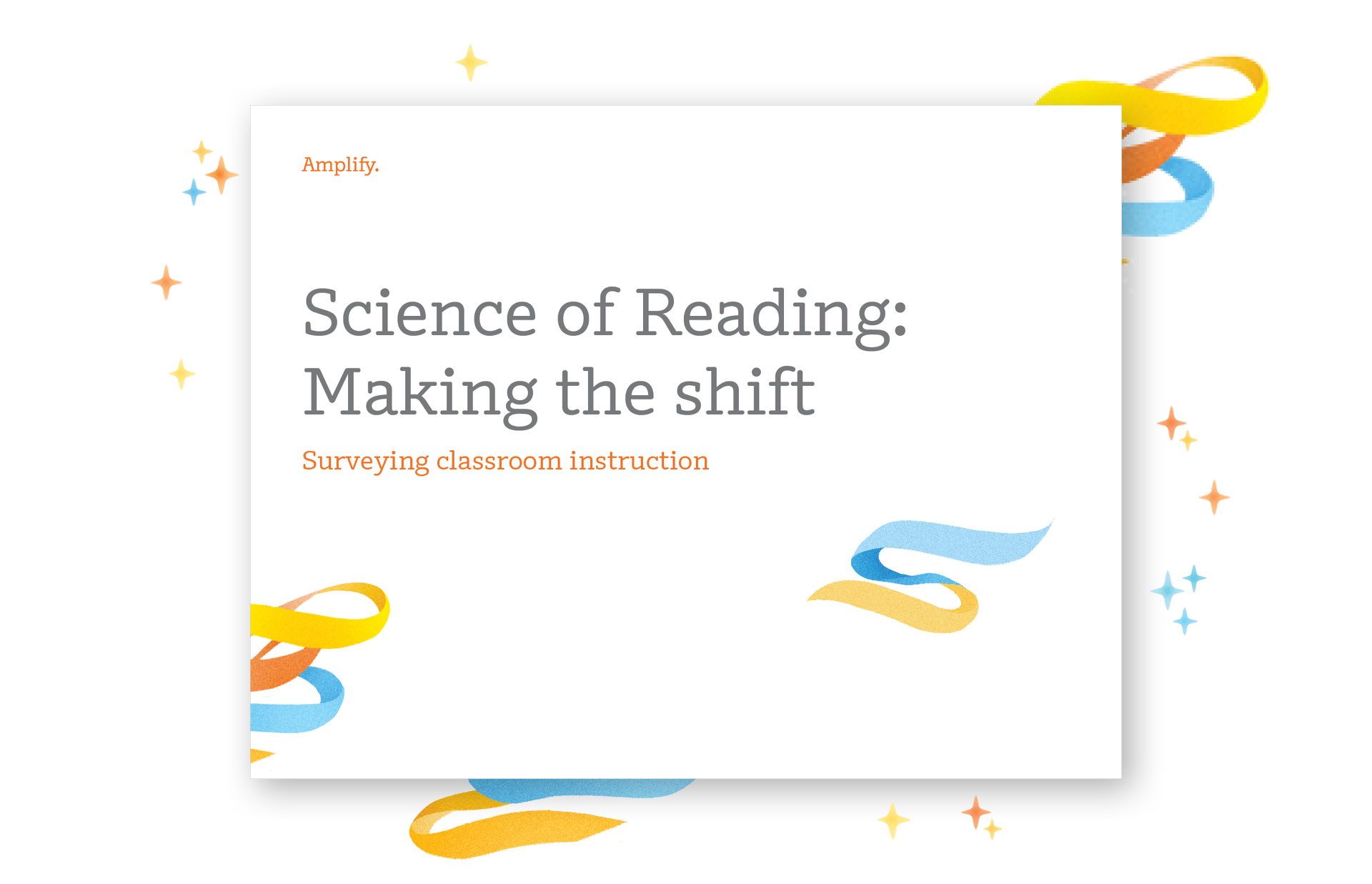
What does classroom instruction look like when it is based on Science of Reading practices? We’ve outlined a Science of Reading action plan to guide your evaluation in our new FREE ebook, Science of Reading: Making the shift.
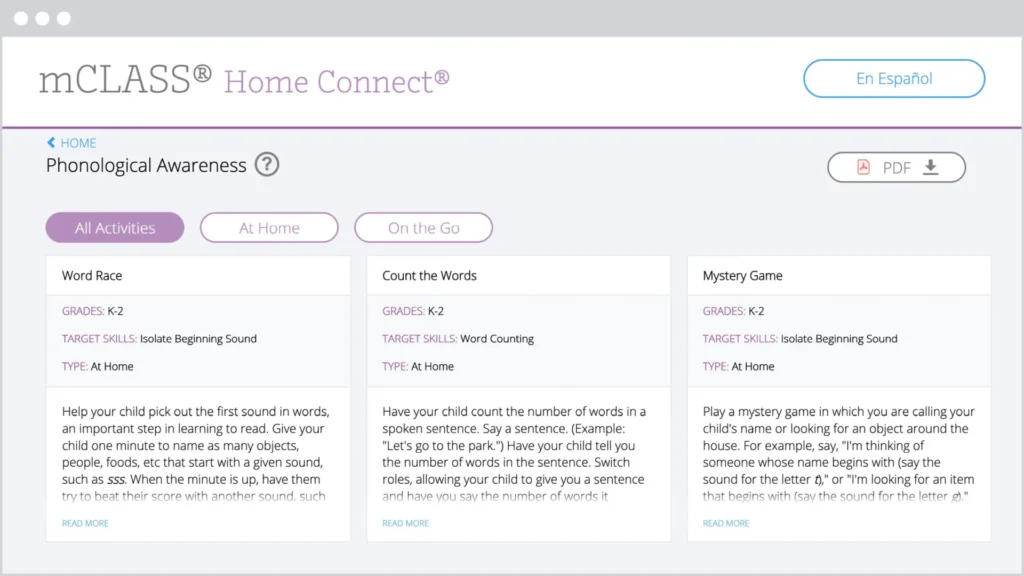
The mCLASS Home Connect website houses literacy resources for parents and caregivers, including at-home lessons organized by skill to help students at home during remote learning. Our mCLASS parent/caregiver letters in English and Spanish ensure that families know how to best support their students.
mCLASS support
Our chat agents are standing by to assist you!
Simply log in at my.amplify.com/login/louisiana and select the orange button in the lower right corner to chat live with our support team.
Important note:
Our support hours are Monday through Friday, 7 a.m. to 6 p.m. CT.
Check out the DIBELS 8 LDOE Help Center for more help at any point during implementation.

Additional Amplify products
Get in touch with us to learn more about bringing other high-quality Amplify programs to your school or district.